
Year 7 Curriculum Overview Summer Term 2026
Teaching and Curriculum at Hampton Court House
Key Contacts
Katy Deacon Vice Principal Academic
skde@hchnet.co.uk
Year 7 Curriculum Overview Summer Term 2026
Katy Deacon Vice Principal Academic
skde@hchnet.co.uk
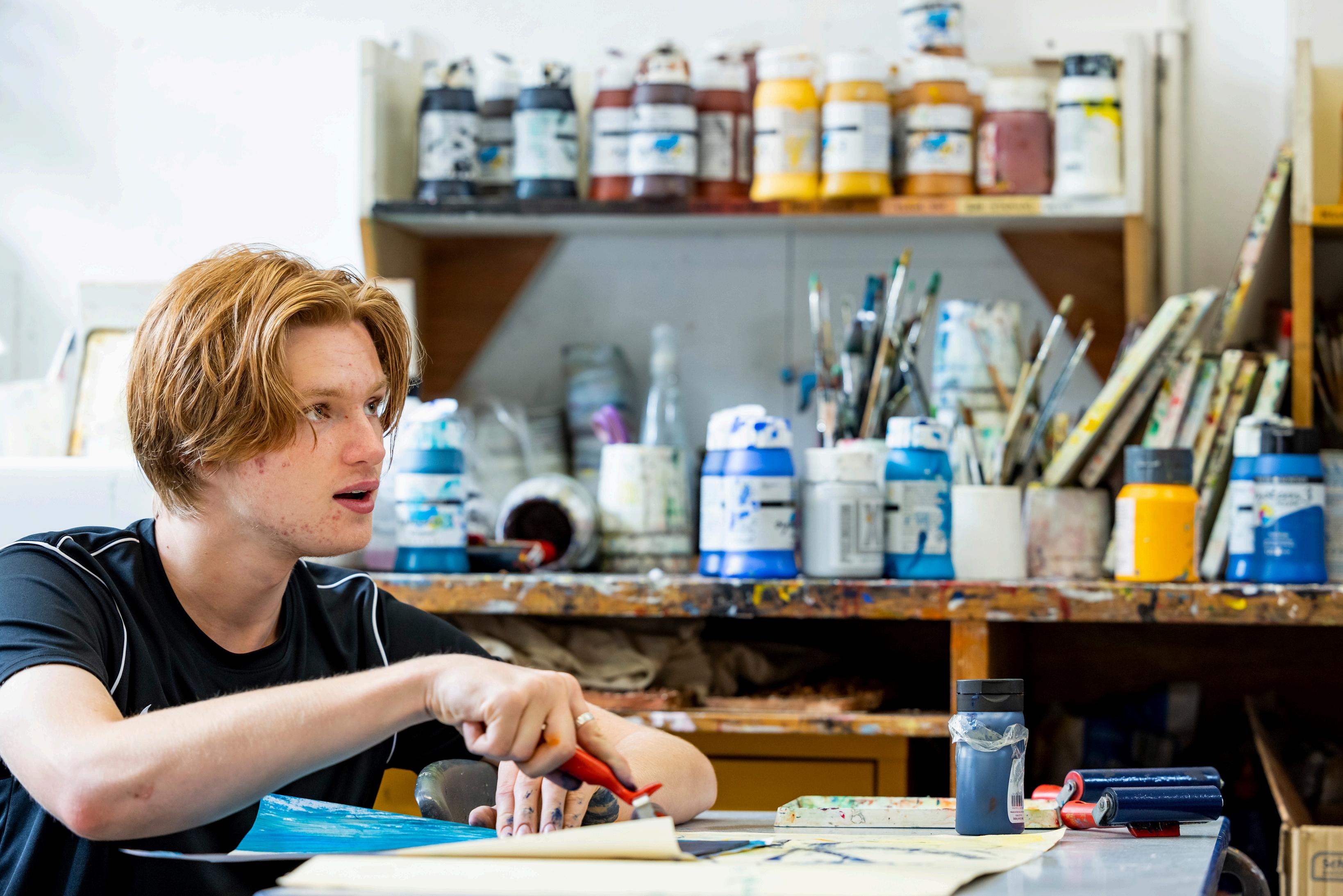
This term the students will create a kinetic sculpture based on the wire mobiles of Alexander Calder
They will learn to use cutting tools and structural materials and will employ basic principles of physics to manipulate mass and length, achieving a delicately balanced structure Students will design and paint the individual elements in their mobile
How it is assessed
Student work is assessed during the lessons with practical help offered when necessary Understanding is assessed gradually because students need to build on their previous knowledge, and quick challenges are introduced to check this Students are also encouraged to self-assess through refining their own work and reflecting on each other's Their memory and understanding of processes are assessed through write ups which they are asked to document in their sketchbooks at the end of each project
Term
Autumn 1
Autumn 2
Spring 1
What are we studying?
One-point, two-point and three-point geometric perspective drawing.
Introduction to colour theory
Mixing glazes and direct mixtures
Using specific colour terms correctly
Making lino prints as a vehicle to explore their understanding of the appearance of colours.
Two-layer lino print
Block 1. creating a visually balanced black and white design
Block 2. creating a colour gradient block Combining the two accurately
This project varies in length depending on the group.
Spring 2 Continuation of Spring 1
Summer 1 A 3D project:
Either a wire and Modroc insect project, based on French sculptor Edouard Martinet’s work
Or kinetic sculpture based on the wire mobiles of Alexander Calder.
The students learn to use tools and structural materials, and with the mobile project they employ basic principles of physics learning to manipulate mass and length to achieve a delicately balanced structure.
Sometimes the students get a chance to work as part of a team contributing to drama productions.
Summer 2 Continuation of Summer 1
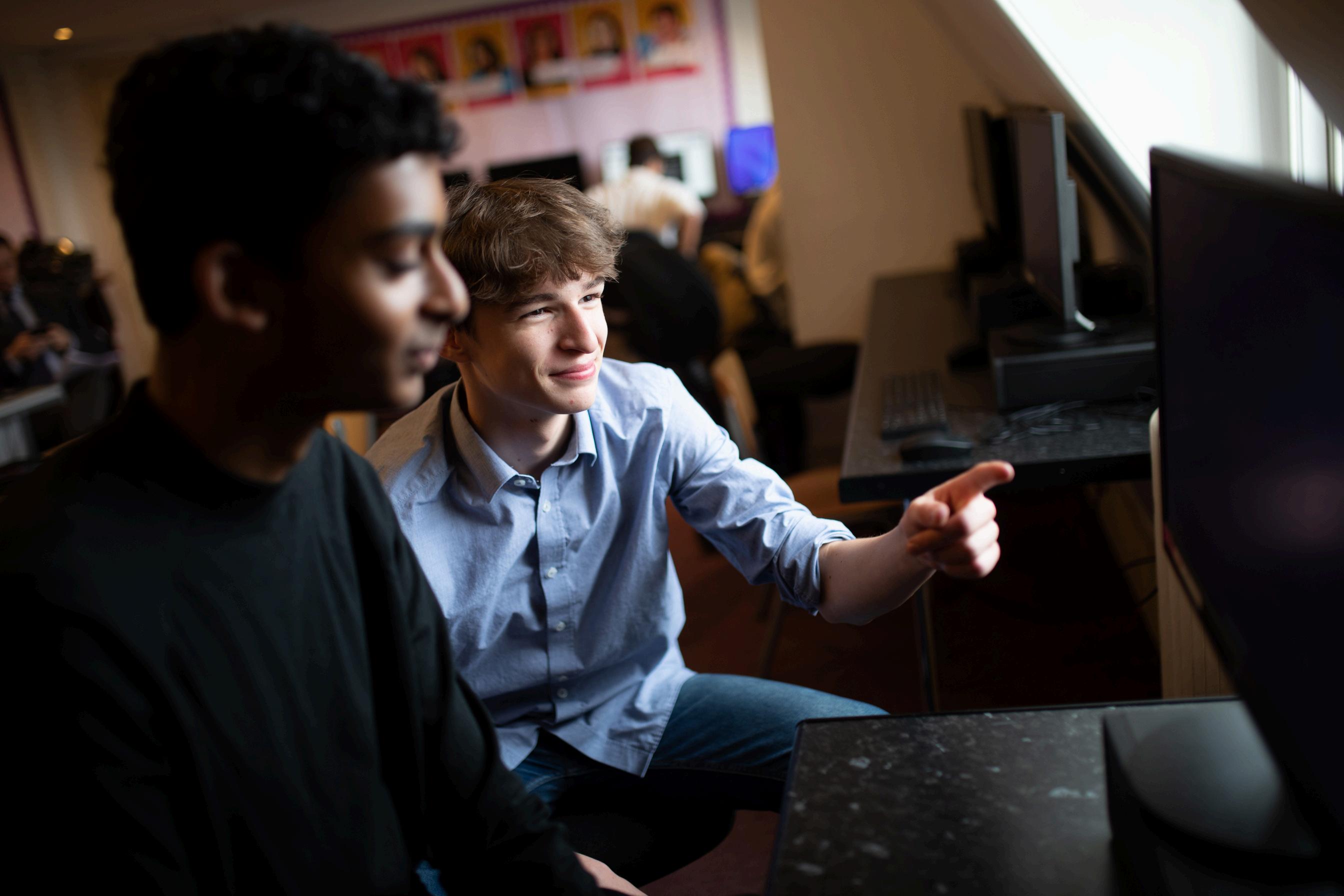
The syllabus in Year 7 includes materials and concepts recommended by the National Centre for Computing Education for Key Stage 3, as well as topics and resources from other established and respected educational organisations. The activities alternate each half-term between predominantly theory topics and then more practical applications. This ensures the students have hands-on experience of early programming concepts, as well as building an understanding of the wide scope and complexity of the subject. In the theory periods, gamified learning will also be used to illustrate and embellish the topics to maintain student engagement, and in the more practical sessions, students will be required to maintain a log of their activities, which will form part of their assessment.
How it will be assessed
Each half term there will be a mini test on the topics covered that half term. These will take place online during normal lessons. At the end of the year there will be an end of year exam covering all the topics from the whole year. This will be during the school’s assessment week. Throughout the year, each student’s written work - completed entirely in Teams/Class Notebook – will be considered in the assessment of their progress.
Term
Autumn 1
Autumn 2
What are we studying?
Using computers safely: After the set-up of students on the school systems, the first few weeks will cover passwords, social networking, data safety, email use, web searches and interpreting search results. Interspersed with these topics, we will be solving algorithmic puzzles online.
As half-term approaches and passes, classes will start looking more closely at algorithms using BBC Microbits, and examining the concepts of input – process - output, including sensors and devices.
Spring 1 In the new year students will be studying what a computer is: hardware and software, processing, CPU and other components, memory, binary, storage.
Spring 2 In the second half of the spring term, classes will be learning HTML and CSS, and creating a website. We will also look at internet search.
Summer 1 After Easter, students will study networks, the internet and the World Wide Web.
Summer 2 As half term approaches and passes, students will start programming using Edublocks with Python in the back-end.
Term
Termly rotation Autumn Spring Summer
Core technical principles
What are we studying?
New and emerging technologies
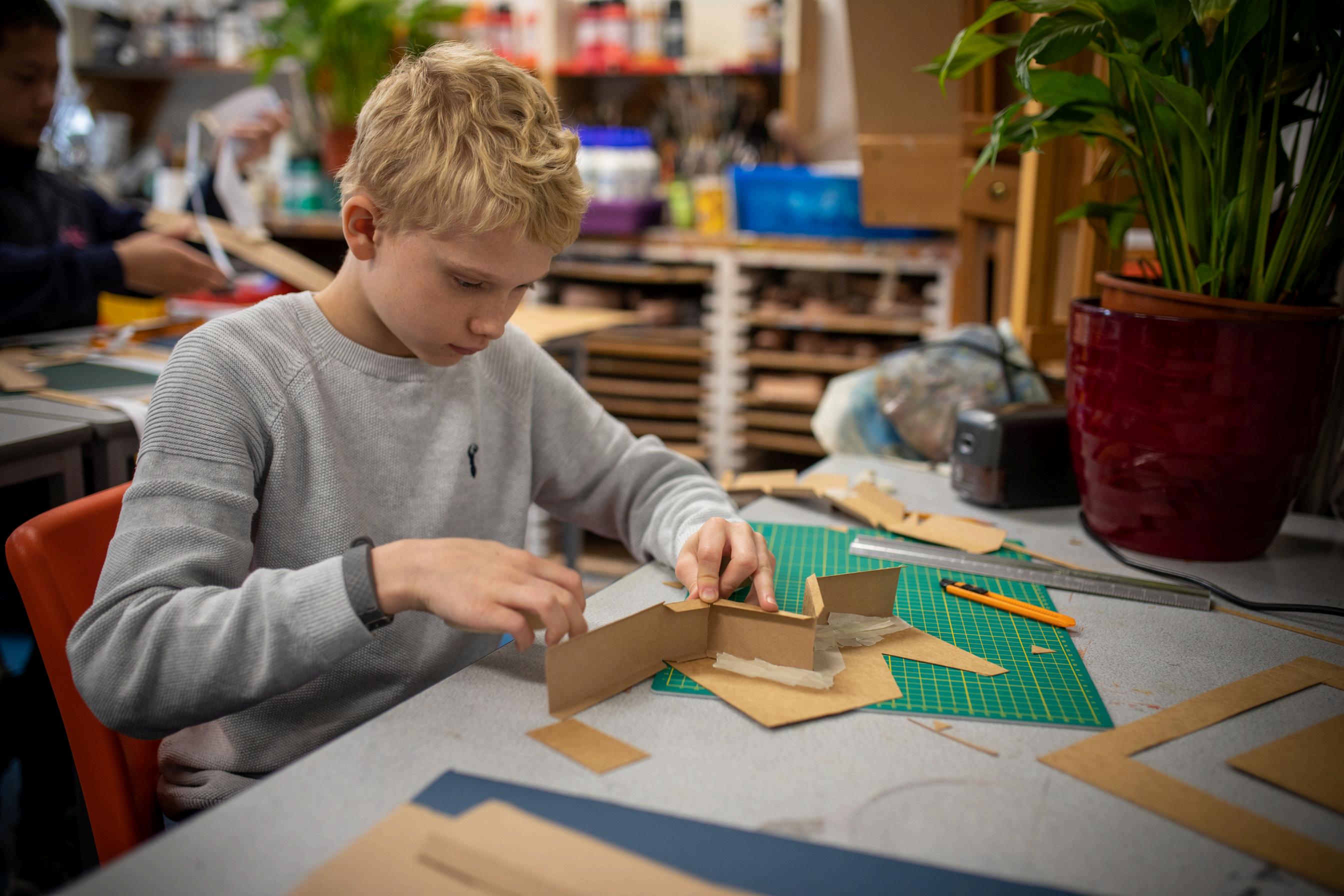
Materials and their working properties.
Energy generation and storage.
Specialist technical principles:
Ecological and social footprint
Using and working with materials
Surface treatments and finishes
Specialist techniques and processes.
Designing and making principles:
Investigation, primary and secondary data
Environmental, social and economic challenges
The work of others
Design strategies
Communication of design ideas
Prototype development
Material management
Specialist tools and equipment
Specialist techniques and processes.
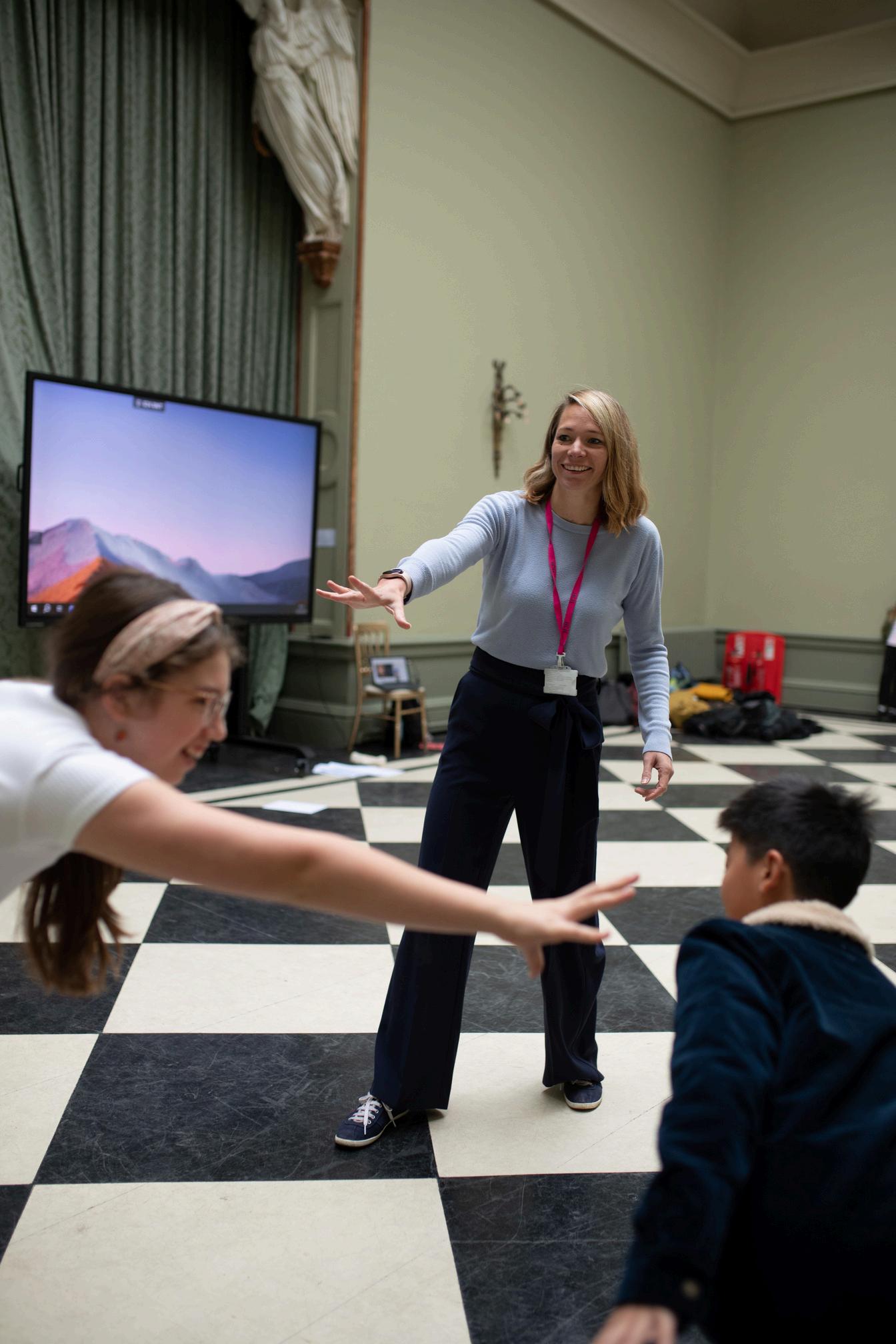
In the Summer term, students begin by exploring character, creativity and ensemble skills through an exciting adaptation of Alice in Wonderland This imaginative text allows them to develop confidence in performance, experiment with voice and movement, and learn the foundations of staging, storytelling, and working effectively as part of a cast By stepping into Wonderland, students build essential skills in collaboration, problem solving and character interpretation, all while experiencing the joy of bringing a classic story to life
After the performance unit, students move on to a contrasting scheme of work based on ‘Stones’, a powerful real life story about two children whose actions (throwing stones from a motorway bridge) had devastating consequences Using this piece of verbatim-inspired drama, students explore how theatre can reflect real events, raise challenging questions, and encourage mature, thoughtful discussion Through Stones, students engage in structured debate and critical thinking, examining themes such as responsibility, peer pressure, moral choice, and the impact of actions on others This helps them to develop not only as performers, but as reflective, empathetic young people with growing awareness of the world around them
How it will be assessed:
Creative ideas: Students are assessed on their creative ideas, which the teacher assesses through observations in class
Performance: Students will perform the adaptation of Alice in Wonderland to an audience
What are we studying?
Time Travel
Stage space
Autumn 1
Autumn 2
Physical skills
Vocal skills
Exploring Wonderland
Getting to know the characters
Spring 1
Summer 1
Understanding the plot of the story
Creating imaginative characters
Performing a play: ‘Alice in Wonderland’
Learning lines and blocking
Performing to a live audience
Creating believable and wellrounded characters
Spring 2
What are we studying?
Time Travel
Improvisation
Mime
Exploring Wonderland
Devising scenes
Ensemble work
Script work
Summer 2 ‘Stones’
Applying drama to social context
Using drama to debate and educate
The Summer term in Year 7 begins with the study of Shakespeare’s London through sources such as articles and letters This unit is conducted in year 7 to underpin the study of Shakespeare’s works that students will undertake throughout their school careers at HCH Through the study of Shakespeare’s London, students will learn about late 16th century/early 17th century London and develop their comprehension skills and transactional writing of articles and letters This will entail working on the correct form and style, as well as learning how to write informatively and persuasively This will lead into a unit where students begin to study Shakespeare’s works; we will use extracts from famous Shakespearean heroes and villains to introduce Shakespeare’s language (which can often be difficult and daunting to begin with!) Students will analyse this language for meaning and, eventually, write their own monologues/soliloquies adopting the style of Shakespeare
How it will be assessed
Summer 1: Shakespeare’s London
Students will need to produce an article based on a theme of Shakespeare’s London Students will be tested on their understanding of the form of an article, their tone, their use of paragraphs, and their vocabulary (such as using ambitious adjectives)
Summer 2: Shakespeare’s Heroes vs. Villains
Students will write short monologues/soliloquies in the style of a Shakespeare hero/villain and perform it to the class
Term
Autumn 1 The Pearl by John Steinbeck
What are we studying?
Autumn 2 Growing Up - fiction and non-fiction
Freedom by Catherine Johnson
Spring 1
A creative writing unit that enables students to improve their own writing craft using figurative language
Students will read the novel in class, examining key description in detail
This novel also draws on key context of the transatlantic slave trade
Term
Spring 2
Summer 1
Summer 2
What are we studying?
Poetry from around the world
Students to study a range of poetry that exposes them to a myriad of different cultures including:
‘Blessing’ by Imtiaz Dharker
‘Night of the Scorpion’ by Nissim Ezekiel
‘Half-Caste’ by John Agard
‘Limbo’ by Edward Kamua Brathwaite ‘Nothing’s Changed’ by Tatamkhulu Afrika
Shakespeare’s London
Students to be introduced to Shakespeare; who he was; how he came to be the playwright he is today
Students will study a range of sources, practise their comprehension, as well as produce different types of transactional writing: articles, letters, etc
Shakespeare’s Heroes vs Villains
Students will study a range of heroes and villains across Shakespeare’s works including:
Hamlet, Hamlet
Lady Macbeth, Macbeth
Juliet, Romeo and Juliet
Iago, Othello
Students will analyse monologues/soliloquies by thinking critically about the deeper meaning of Shakespeare’s language
Students will practise writing and performing monologues/soliloquies, both from Shakespeare’s works and their own writing
Year 7 (Clarisse’s set)
In the Summer Term, students will focus primarily on preparing for the DELF A1/A2 examinations taking place at the end of June. Lessons will develop all four key language skills - listening, speaking, reading and writing, with particular emphasis on speaking and writing. Students will build confidence using the present tense, past tense and near future, while expanding their vocabulary across the key topics required for the exam. Regular practice and targeted support will help them become familiar with the exam format and expectations. Our aim is to ensure every student is fully prepared and able to achieve their very best in this internationally recognised qualification.
Year 7 (Perrine’s set)
We will carry on our work on Tricolore 1 with units 6 and 7. The students will learn to talk about the weather, months and seasons, sports. They will also start using some regular –er verb. We will learn, understand and give information about towns in France. The students will use more adjectives and give directions. At the end of the unit, students should be able to discuss their plans for the weekend as well as describe free-time activities, make plans and talk about what you are doing.
Year 7 (Portia’s set)
Pupils will study and analyse a classic French film. They will review the present tense to describe characters, the future tense to predict what will happen and the perfect past tense to summarise what has happened.
How it will be assessed:
The four skills (reading, writing, listening and speaking) will be alternatively assessed. There will be a test at the end of each unit for all the skills except speaking that will be carried out separately. The speaking assessment usually takes place when the teacher feels the students confident enough. Vocabulary tests will be done on a regular basis.
Term
Autumn 1
Autumn 2
What are we studying?
In Unit 1, the pupils will learn to greet and say goodbye to a French speaking person, they will learn how to tell someone their name and age, they will learn to ask someone how they are and tell them how they are themselves, they will learn to talk about school items and things in the classroom, they will also work on simple classroom instructions.
In Unit 2, we will focus on understanding people saying where they live, say where you live and ask someone where they live, the students will learn the days of the week and use the French alphabet.
In Unit 3, the pupils will learn to talk about their family and home, talk about other people’s homes and families, say who things belong to, describe where things are in a room, read a poem in French.
Term
Spring 1
Spring 2
Summer 1
Summer 2
What are we studying?
In Unit 3, we will learn to talk about our family, say which things belong to us, discuss our family and friends, talk about our homes and describe where things are in a room.
In Unit 4, we will learn about pets, use adjectives to describe things, learn how to ask questions and express opinions, understand and practise descriptions and use some everyday phrases.
In Unit 6, we will talk about the weather forecast, sports and leisure activities.
Students will learn how to present the weather forecast and talk about months and seasons. We will discover the main leisure and sport activities with the verb “jouer”.
In Unit 7, we will learn about a town in France, as well as some vocabulary about the town, understand and give information about a town, ask for and understand directions in town, discuss possible activities in town, talk about the area we live in, make plans and talk about where we are going and understand tourist information.
After the half term pupils will be immersed in the French culture of cinema with project work. We will study a French film, discuss and analyse it using different tenses in French. Finally, pupils will study the vocabulary and structure of a film review then create their own.
Students will be exploring British, European and world history, c.1000-c.1500. Within each of the broad topics listed below, students will investigate a series of enquiry questions, written to pique their interest in the past and provide them a problem to wrestle with, just as historians do.
How it will be assessed
Students will complete in-class assessments, including essay writing, source analysis, knowledge tests, and creative challenges. Essay writing will challenge students to communicate arguments about historical concepts, such as causes or change and continuity. Source analysis will challenge students to critically evaluate materials from the past, explaining what we can learn from those materials and why they are valuable. Knowledge tests are intended to teach students the important skill of revising content, so they are well prepared in techniques that will serve them through to A Level should they wish to pursue it. Creative challenges are designed to push students to represent their historical knowledge and understanding in a way that mimics the application of history in the world today. Assessments will take place each half-term, giving students opportunities to learn, apply, reflect and then practise again at regular intervals.
Autumn 1
Autumn 2
Spring 1
Spring 2
Summer 1
Summer 2
The Big Story of the Medieval Period, 1000-1500 Assessment: How can we improve Ian Mortimer’s Time Traveller’s Guide to the Middle Ages.
Rulers in focus: The Normans Assessment: ‘Arrogant, warlike and very pleased with themselves’: What were the Normans really like? How far do you agree with Morris?
Medieval Beliefs & Power Assessment: Substantive knowledge test.
Medieval Ordinary Lives Assessment: Substantive knowledge test.
Diversity: ‘Medieval Outsiders’ Assessment: Create and explain a museum exhibition to commemorate outsiders in medieval Britain.
World Study: Medieval Africa Assessment: Create and explain a textbook on the golden age in medieval Africa focusing on the Mali Empire.

In the summer term Year, 7 will continue to expand their comprehension and translation skills as we will be exploring the future of regular verbs and all tenses of ‘ esse ’ to be and some 3rd declension nouns, prepositions with ablative and accusative case nouns We will also be exploring adjective and noun agreement with 3rd declension nouns, stories from Roman mythology and life in Roman Britannia
How it will be assessed
Students will be assessed on vocabulary knowledge 20 words per week There will be half termly comprehension and translation tasks to assess their vocabulary and syntactical knowledge
Term
Autumn 1
Autumn 2
What are we studying?
So you really want to learn Latin 1 Chapter 1 and 2
Language
Latin alphabet, punctuation and pronunciation word order and endings verbs: person endings present tense all conjugations nouns: declension, gender, case 1st and 2nd declension nouns
Latin Prep 1 Chapter 3 -4
Translation technique and comprehensionreading for gist the infinitive expressions of time vocabulary derivation
Adjective ending –us/a/um
So you really want to learn Latin Chapter 4 prepositions with the accusative
Neuter nouns
Spring 1
Prepositions with ablative
Adjectives
Agreement of adjectives
Imperfect tense
Imperfect of ‘ sum ’
Culture and Mythology
The Labours of Hercules
The Trojan War
The Travels of Odysseus
The Vindolanda tablets and roman writing
Odysseus returns home
Roman Childhood
Roman Saturnalia
Romulus and Remus
Life in the Roman Army
Term
What are we studying?
Chapter 5
Perfect tense -er adjectives
Perfect tense of sum
Latin Prep 1 Ch 6
2nd conjugation perfects
Personal pronouns
Spring 2
Summer 1
Direct questions (who? Why? What? Where?)
3rd conjugation perfect tense
Latin Prep Chapter 7:
Ordinal numbers
4th conjugation
Irregular perfects
Chapter 8:
Imperfect and Perfect tenses of sum and esse
Chapter 9: subordinate clauses
Chapter 10: Adverbs
Summer 2 Begin Latin to GCSE Book 1
Culture and Mythology
Romulus and Remus
Clodia
Cloelia
Polyphemus and Odysseus
Romulus becomes King and early Rome
Atalanta and the Golden Apple
Myth of Troy and travels of Aeneas
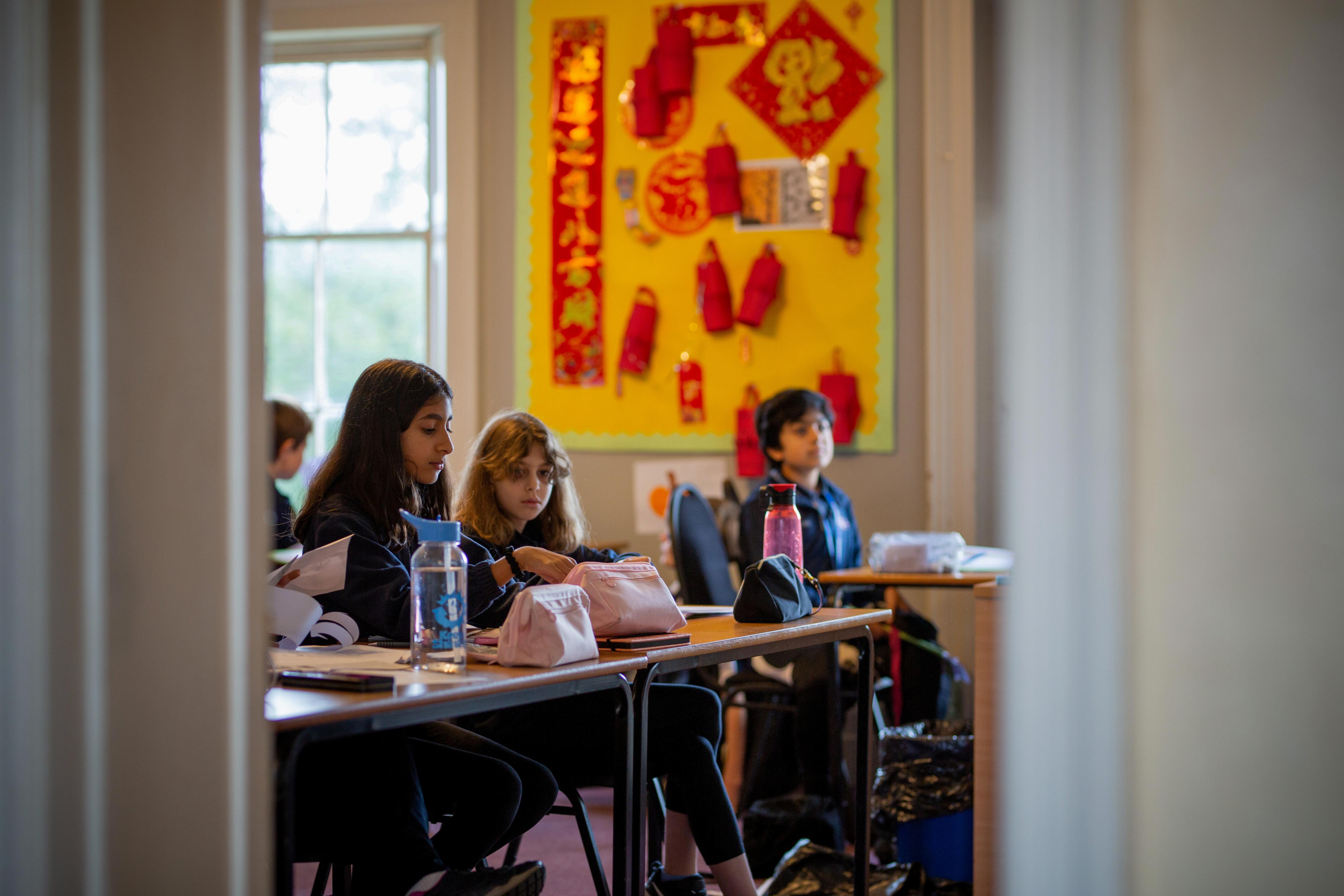
During the Summer term, Year 7 Mandarin students will completing the current school topic before moving on to a new and engaging topic about food and drink. They will also focus on constructing sentences using key sentence structures and explore Chinese characters by learning radicals and their stories. Additionally, students will have the opportunity to learn about and experience Duan Wu Jie (Dragon Boat Festival), exploring its history and traditions, and participating in cultural crafts and storytelling. This term will provide an exciting experience, enhancing both their language skills and cultural understanding.
In addition to having a weekly vocabulary test, students will have an exam after each half term that will include listening, reading, translation, and writing exercises. They will also have an oral exam to familiarise themselves with the format of the final exams.
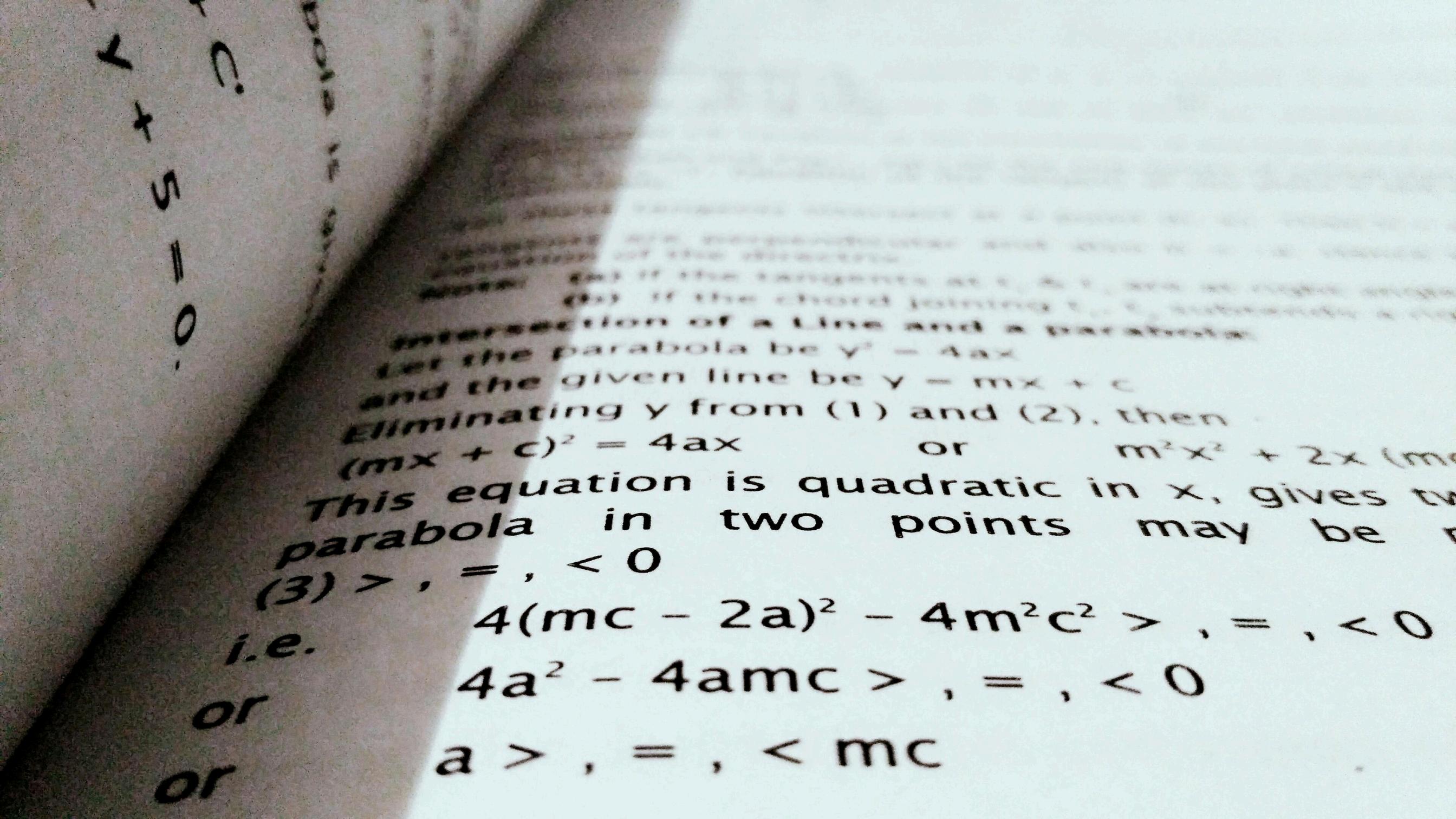
Students will be following the Sparx Maths curriculum – however, due to the attainment of the majority of our students we are now following the Year 8 curriculum This allows us to ensure that homework is perfectly tailored to our lessons in class
The Summer curriculum broadens the topics of study for students with an increased focus on algebra and statistics, in particular:
Handling Data and Statistical Diagrams S
Equations of Lines: finding the equation of a linear function
Inequalities: understanding when inequalities are more suitable than equations and applying inverse operations to solve them
Brackets: understanding the purpose of brackets and how they can be used to help solve equations
Algebraic Fractions: applying prior numerical skills with fractions to algebraic situations
Fractions and Recurring Decimals: knowing that all recurring decimals can be represented by a fraction and how to convert them
Transformations: transforming shapes through translation and reflection only
Finding Unknown Angles: angle in triangle, quadrilaterals, other polygons as well as understanding angles between parallel lines
How it will be assessed:
Students will sit two 45 minute written assessments during Assessment Week in June
Term
What are we studying?
Autumn 1 Number Sense and Calculations
Autumn 2
Spring 1
Spring 2
Summer 1
Expressions and Equations Measures
Perimeter and Area including Circles Coordinates Standard Form
Factors, Multiples and Primes
Venn Diagrams
Nets, Surface Area and Volume of 3D Shapes
Angles in polygons
Transformations of 2D shapes
Linear Graphs
Inequalities, Brackets and Algebraic Fractions
Summer 2
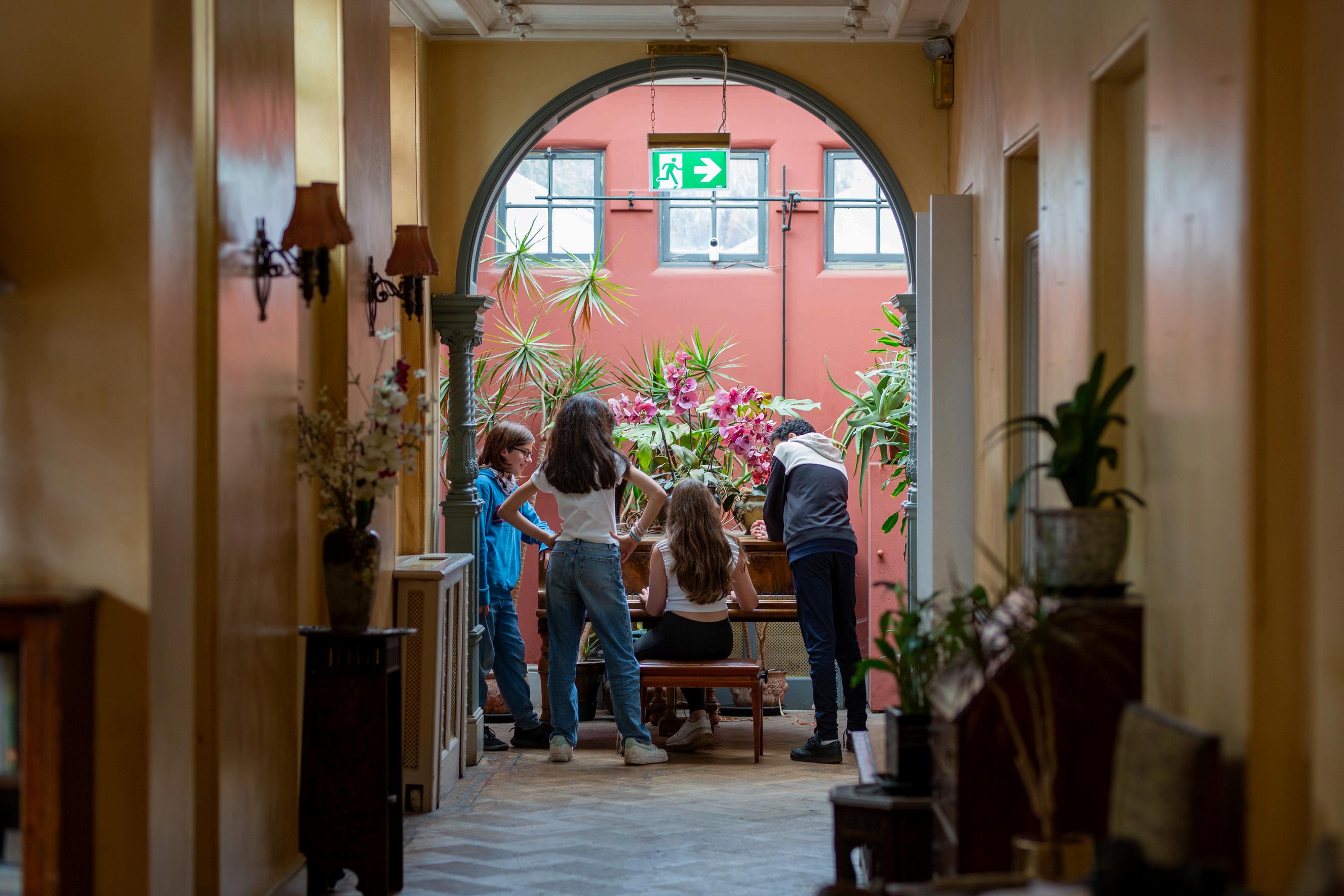
Composing music for animated cartoons.
To introduce students to the principles of composing music for animated cartoons, developing their creativity, understanding of musical storytelling, and ability to use basic composition techniques. Understand the role of music in cartoons. Use musical elements to represent different characters. Understand how tempo, dynamics, and harmony create mood and action. Learn about "Mickey Mousing" (synchronizing music to animation movements). Plan and create a short composition for an animation. Songs for Alice in Wonderland.
How it will be assessed
Formative: Participation in discussions, class exercises, and experimentation.
Summative: Group composition project, self-evaluation, and peer feedback.
Term
Summer 1 and 2
What are we studying?
Environmental Ethics
As the year concludes, we turn to environmental ethics and the question of moral responsibility. Who do our actions impact—friends, neighbors, or people in distant countries? Do we have an obligation to live sustainably, and where should we begin? Students will study Aldo Leopold’s Land Ethic and J. Baird Callicott’s ecocentric perspective, contrasting these with anthropocentrism. We will also consider ecofeminism and ask who suffers most from climate change, linking environmental issues to questions of justice and equality.
Emotions
Toward the end of the term, we will explore emotions and their philosophical significance. Topics include anger, happiness, and the tension between failure and success. We will also examine friendship, considering Plato’s ideas and Nietzsche’s reflections on its deeper meaning.
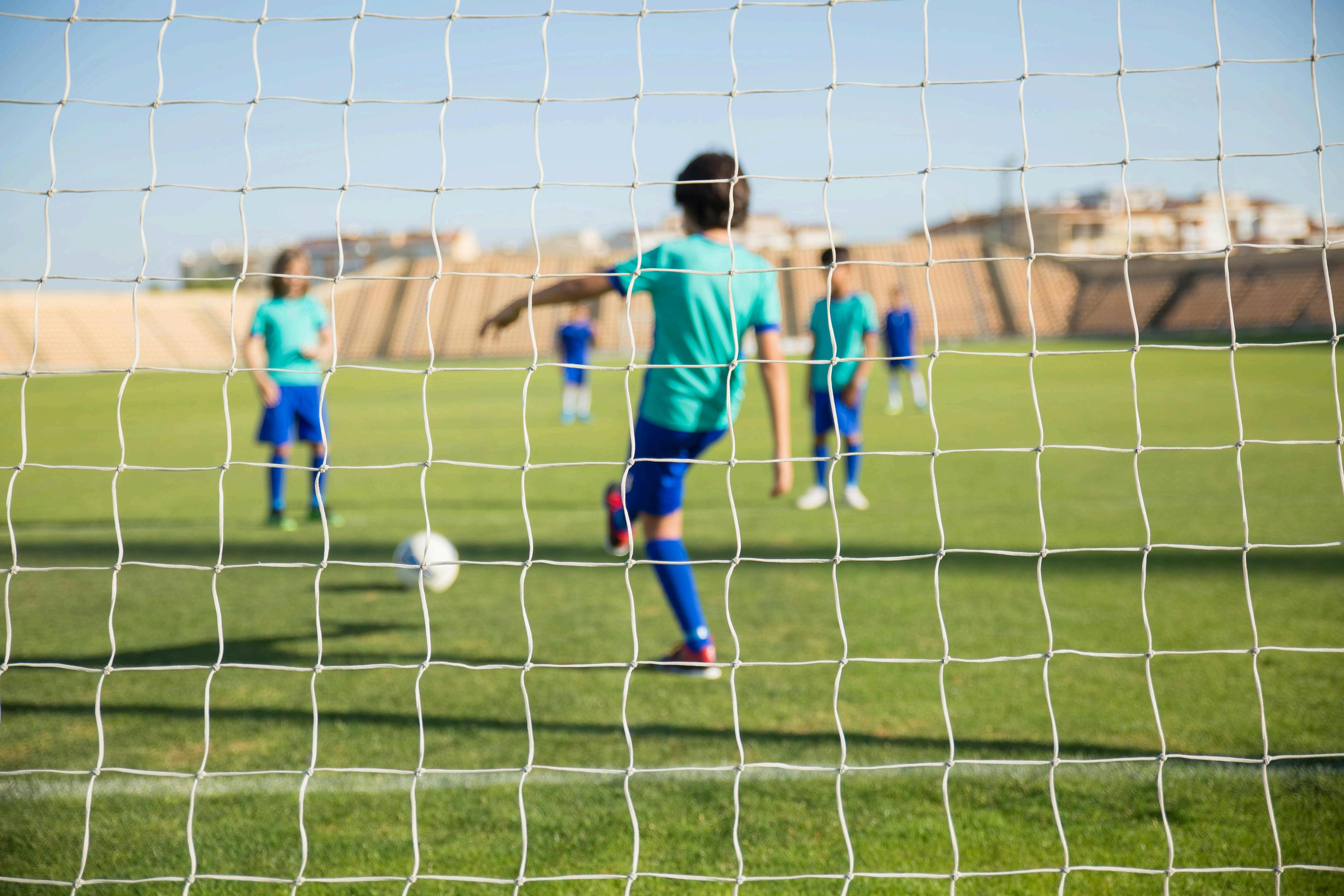
In the summer term, Year 7 will be taught off-site Elmbridge Xcel Leisure Complex and Weir Archer Athletics Centre in Kingston so that they can utilise their athletics facilities. All the lessons will prepare the students to compete at their best level in their houses for sports day at the end of June at the Elmbridge Xcel Leisure Complex. We will practice sprints over varying distances, relays, shot put throw, discus throw, javelin throw, long jump, triple jump and high jump. The students will learn through sports-specific warm-ups, and partner/group work to perfect their technique in the athletic event they will perform in. There will be an emphasis on self-improvement and team support to build a culture of resilience and sportsmanship in line with our ethos at the Hampton Court House. At the on-site lessons, students will play rounders. They will explore the techniques in bowling, batting, fielding and base running through small-sided tasks and gameplay.
How it will be assessed
Speed and Sprinting: Evaluation of acceleration, top speed, and pace maintenance in short sprints.
Endurance and Stamina: Assessment of sustained pacing over long distances and overall cardiovascular fitness.
Strength and Power: Evaluation of muscular strength and explosive power in events like shot put, discus, and jumping.
Technique and Form: Assessment of posture, stride, and efficiency in running, jumping, or throwing for performance and injury prevention.
Batting Technique: Ability to strike the ball, placement, and timing.
Bowling Accuracy: Consistency and effective ball placement by the bowler.
Running and Decision Making: Speed, agility, and smart decisions on the field.
Teamwork and Communication: Collaboration and communication among players.
Term
Autumn 1
Autumn 2
Spring 1
Spring 2
Summer 1
Summer 2
What are we studying?
Football: Passing, shooting, dribbling, heading, goalkeeping and attack vs defence. Netball: Passing, shooting, attack vs defence, positions & conditioned games.
Padel tennis: Rules, service, shots, tactics and tournaments.
Football: Passing, shooting, dribbling, heading, goalkeeping and attack vs defence. Netball: Passing, shooting, attack vs defence, positions & conditioned games.
Padel tennis: Rules, service, shots, tactics and tournaments.
Badminton: grip, serve, shot selection, in game tactics. Golf: putting, driving, mini golf and house tournament.
Table Tennis: Grip, shots, course management and tactics. Fitness: Fitness knowledge, physical level and improving performance.
Athletics: 4 x 100m relay race, 100m race, 200m race, 400m race, 800m race, shot-put throw, javelin throw, discus throw, long jump, triple jump and high jump.
Athletics: 4 x 100m relay race, 100m race, 200m race, 400m race, 800m race, shot-put throw, javelin throw, discus throw, long jump, triple jump and high jump.
All students from Y7 – 11 will focus on two main topics ‘Healthy Body and Healthy Mind’. Each year group will work in a manner appropriate to the year group, exploring age-appropriate ideas and resources.
In summer 1, our PSHE curriculum will focus on cultivating a "Healthy Body," where students will explore the fundamentals of nutrition, exercise, and personal hygiene. Through engaging activities and discussions, they'll learn how to make informed choices about their physical health, understand the importance of a balanced diet, and recognise the benefits of regular physical activity.
Moving into summer 2, the focus will shift to "Healthy Mind." Here, students will delve into topics such as emotional wellbeing, stress management, and the importance of mental health. Interactive lessons will equip them with strategies to maintain a healthy mindset, improve their emotional resilience, and understand the value of mindfulness and positive thinking. This holistic approach aims to empower students with the knowledge and skills to lead balanced, healthy lives both physically and mentally.
We aim to make all PSHE sessions as relevant to the students and their current needs and concerns, therefore out content is changeable, and suggestions and feedback are welcome at any time from students and parents.
How it will be assessed
PSHE lessons are predominantly discussion based, with some written tasks for deeper comprehension and application. At the end of each half term, the students will complete self-reflection sheets for teachers to monitor understanding and adapt future teaching.
What are we studying?
Starting Secondary School Goal Setting
Autumn 1
Spring 1
Summer 1
Resilience Self Esteem Career Interests.
Friendships Family Relationships Falling in Love Positive Relationships.
Healthy Body
Exploring essential nutrition and the benefits of a balanced diet. Engaging in physical activities and understanding their impact on health.
Learning about personal hygiene and its role in maintaining health.
Autumn 2
Spring 2
Summer 2
What are we studying?
An Introduction to Careers and Sspirations Money Management Diversity, Discrimination, Kindness and Tolerance Shopping Ethically.
Puberty Having a Baby My Changing Feelings Periods.
Healthy Mind
Identifying emotions and effective stress management techniques.
Practicing mindfulness and positive thinking to enhance mental wellbeing. Developing strategies for building resilience and emotional strength.
Year 7 Curriculum Overview Y
Summer Term 2026
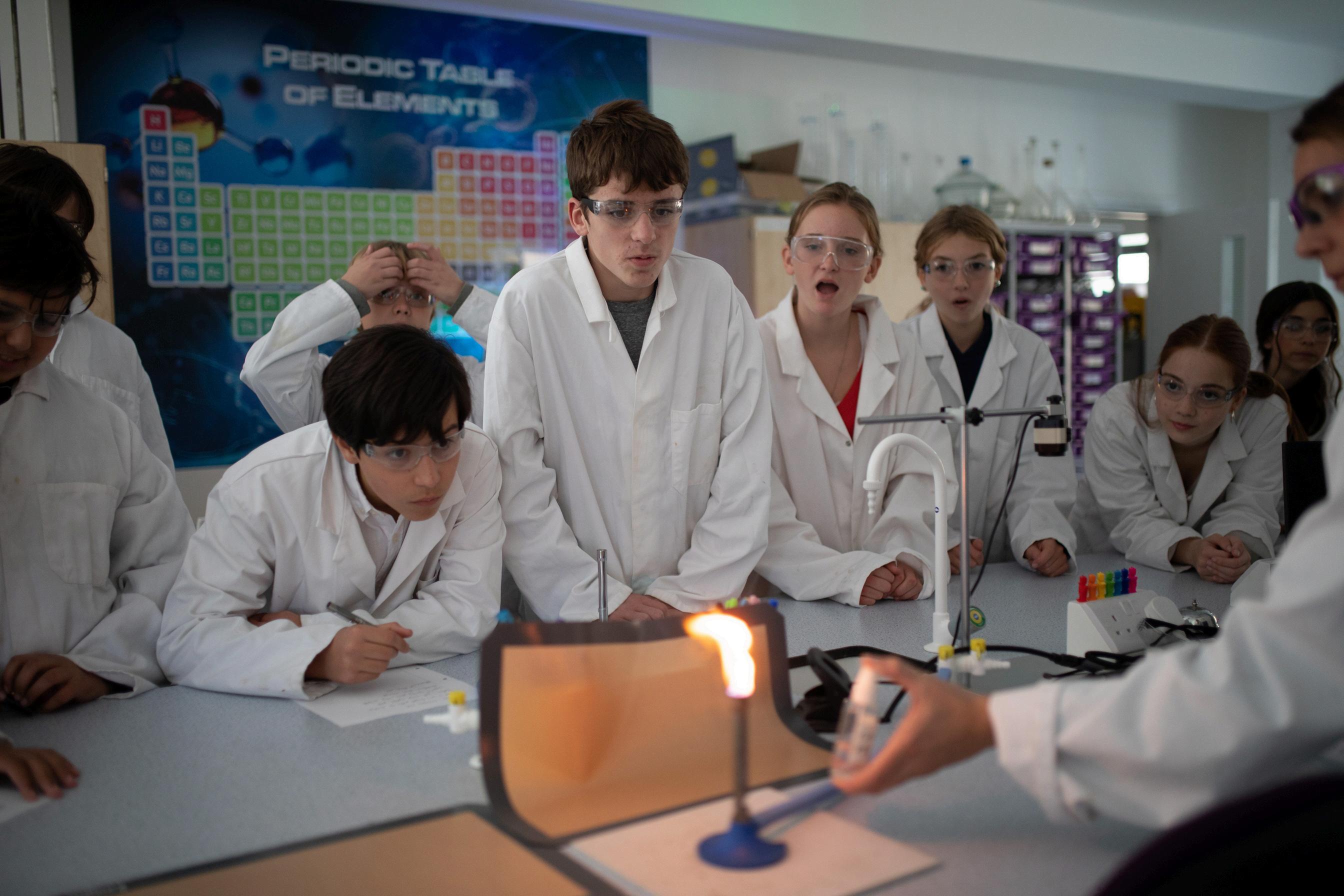
As we move into the final term, Year 7 will continue their studies in Chemistry by continuing with the Acids and Alkali chapter In Biology students will study reproduction and the reproductive organ systems and in physics we will cover the science of sound and introduce how waves move We will also look at space and space science, phases of the moon, seasons of the year and how our planet moves through the solar system
How it will be assessed
Each half term there will be a mini test on the topics covered that half term or term These will take place during normal lessons At the end of the year there will be an end of year exam covering all the topics looked at over the whole year This will be during the school’s assessment week and will be a longer exam
Term
Autumn 1
Autumn 2
Spring 1
Spring 2
What are we studying?
Lab Safety and Lab Equipment
Cells
Cells mini test
Particles Forces Cells, Particles and Forces test
Elements Acids
Elements and Acids test
Body Systems Elements, Acids, and Body Systems test
Summer 1 Waves Waves test
Summer 2
Reproduction Space End of Year Exam
During the last term of the academic year of 2025-26, Year 7 will covered the last topics of the Textbook Viva 1, which include:
Unit 4: Mi familia y mis amigos (My Family and Friends):
In this unit, students will learn how to talk about themselves and the people around them. They will describe their family, friends, and where they live, as well as give details about physical appearance such as hair and eye colour. They will also explore aspects of Spanish culture through topics like carnival traditions.
In terms of grammar, students will be introduced to key foundational structures, including the verbs ser, tener, and estar, as well as possessive adjectives and basic third-person verb forms. They will begin to form simple, accurate sentences to describe themselves and others.
By the end of the unit, students will be able to give a short presentation about themselves and their family, building confidence in speaking and writing in Spanish.
Student will learn to describe their city and the area where they live, as well and to understand the description of different places, including different activities that can be done in a certain place.
They will also learn how to order food and drink in a café, express their opinion about their city and be able to express what plans they have for their weekend and their summer holidays (future tense).
Students will have regular vocabulary tests to guarantee appropriate knowledge and progress, and at the end of each half term they will have a written assessment that will cover reading, listening, grammar, translation and writing.
Term
Autumn 1
Autumn 2
What are we studying?
Introduction to the Spanish-speaking countries and understanding the word order and the masculine, feminine, singular and plural words.
Greeting and introducing yourself. And understanding the verb endings. Learning numbers from 1-31 and learning how to say your age and birthday and other dates.
Introducing the verb tener
Using a variety of question words
Learning colours
Giving basic opinions.
Unit 2: “Mi burbuja” (my bubble)
Counting to 100.
Learn the vocab about the family and using possessive adjectives (my, your, our, etc).
Saying if you have any pets and using describing adjectives.
Describe physical features 9eyes, hair, glasses, etc)
Reinforcement of the verb tener
Introduction to the verbs ser
Describing personalities.
Spring 1
Term
Spring 2
Summer 1
Summer 2
What are we studying? Stream 1
Unit 3: En mi “insti” (at my high school)
For this term, we jump to the last unit on the book because it easier to get it related with what we have learn over the year. Therefore, during HT4 we will learn about
Talking about school subjects, describing teachers, and expression their opinions. Learning about the different areas and classrooms in the school with the verb hay (there is/are).
Talking about their timetable.
Unit 3: MIs pasatiempos (My hobbies)
Learn how to express what they do on their free time.
Talk about sports and hobbies
Talk about the weather
Learn the verbs jugar (to play) and hacer (to do).
Using comparatives
Talking about some Spanish celebrities and athletes.
Unit 4: Mi casa (My house)
Learning about different types of housing, places to live, rooms in the house and furniture in the bedroom.
Introduction to the verb estar (to be) and the difference with the verb ser (to be) Prepositions of place
The conditional.
Unit 5: En mi ciudad (In my city)
Learning to describe what is the area they live in, what places can you find in a city.
Learning to give directions.
Comparing London with a Spanish city. Comparing the city with the countryside Revision of all the grammar learnt.