

Susie Byers
Head of Prep sby@hchnet co uk
Katy Deacon
Vice Principal Academic skde@hchnet co uk
Rob Armiger
Assistant Principal | Director of Studies rwa@hchnet co uk
Imogen Stone
Assistant Principal | Teaching & Learning ist@hchnet co uk
Paul Pearce
Senior Vice Principal | Operations pgp@hchnet co uk
Ancient Maya Civilisation: Pupils will learn about Maya whistles which have been discovered by archaeologists. They will make drawings of different types of whistles and learning new techniques in the use of clay, pupils will make their own whistle. Students will draw the three-dimensional pyramid structure of Kukulkan and create a rainforest setting for their drawing, considering the use of line, tone and shape.
Term
Autumn 1
Autumn 2
What are we studying?
Joseph Cornell: Learning about the life and influences of Joseph Cornell, how he collected ephemera to make art, learning about nostalgia, memories, creating a sense of place. Students will collect items over the summer break and create a work to tell a personal story.
Clay: Pupils will look at the work of Olivia Lomench Gill and Max Ernst. Learning how to prepare different backgrounds on which to draw and drawing in different mediums, pupils will create a series of fantastic beasts. Pupils will learn techniques in hand building to create their own creatures out of clay which will be fired in the kiln.
Spring 1 Japan: Pupils will study the traditions and art of Japan, learn the origins of origami and study the tradition of woodblock printing by looking at the prints of Hokusai.
Spring 2
Summer 1
Summer 2
Japan: Making Koinobori streamers for Children’s Day on 5th May. Pupils will learn about tessellating pattern, specifically fish scale patterns and practise painting on fabric to create their design. Pupils will learn to use a sewing machine to create their Koinobori streamer.
Ancient Maya Civilisation: Clay. Pupils will learn about Maya whistles which have been discovered by archaeologists, they will make drawings of different types of whistles and design their own. Learning new techniques in the use of clay, pupils will make their own whistle.
Ancient Maya Civilisation: Chichen Itza, three-point perspective, learning skills in accuracy, students will draw the three-dimensional pyramid structure of Kukulkan. To create a rainforest setting for their drawing, pupils will make studies of jungle plants, considering the use of line, tone and shape.
We start the Summer Term with a Fiction Unit where we read a range of unusual and inspirational stories by Shaun Tan – these are stories with twists which always stimulate amazing work from the children. Within the texts Year 5 wil explore the range of modal verbs, parenthesis and dialogue. The children will write their own story in the style of Shaun Tan.
The second unit of work is a really thoughful investigation of inspirational speeches, letters, adverts and protest songs. It is a thought provoking unit of study and the children will learn about a variety of historical movements and how language and communication can change points of view and challenge thought. The children will have the opportunity to write their own speeches and present them to an audience.
Just before the half term break, Year 5 will reading a range of motivational poems – looking at aspirations and dreams. The children will be reading poems from the book, What do you want to be?’ by Wilf Merttens.
After half term Year 5 will begin a really interesting unit of work based around Micheal Morpurgo’s book Kensuke's Kingdom. The children will be looking at the styles of writing, use of paragraphs, modal verbs, adverbs and commas. There will be plenty of opportunities for the children to write descriptively and use a range of expanded sentences. We then investigate letter writing, revising conventions, purpose and register and will be looking at a range of historical letters.
Our final unit in Year 5 looks at a range of poetry inspired by the sea. The children will read and write powerful poems about the sea and The Titanic. Poems will be from ‘Sounds of the Sea’ by James Berry and Song of the Seashore by Daphne Lister.
How it will be assessed
Assessment will be through daily marking and feedback. Through discussion and questioning. At the end of each unit the children will be writing in the style of the author or poet they have been reading. There will also be informal assessment of writing, reading and SPaG at the end of each term.
Term
Autumn 1
What are we studying?
Chris Riddell Goth Girl
Through Chris Riddell’s Goth Girl, explore how atmosphere, settings & characters are created. Study adverbs of possibility, commas, relative clauses, dialogue punctuation.
Migration by Mike Unwin and Jenni Desmond
Three amazing texts stimulate children’s reading, writing and discussion of first animal, then human, migration. Writing cohesively and using parentheses form the SPaG element, but children’s own creative work will make this block truly exciting.
Lewis Carrol and Hilaire Belloc poetry
Lewis Carroll's Walrus and the Carpenter and Hilaire Belloc's Cautionary Tales stimulate performance, debate, persuasive writing and poetry writing. Revise adverbs and modal verbs.
Term
Autumn 2
Spring 1
Spring 2
Summer 1
Summer 2
What are we studying?
Rudyard Kipling The Jungle Book and Just So Stories
Explore the charm and challenge of classic fiction with Rudyard Kipling's Jungle Book and Just So Stories. Study dialogue punctuation, relative clauses and commas
Poetry of Lewis Carroll.
An introduction to Shakespeare – Romeo and Juliet
Mr William Shakespeare's Plays, Seven Plays by Marcia Williams
Stories from Shakespeare by Geraldine McCaughrean
Choose from Romeo & Juliet for an in-depth study. Relative clauses & prefixes/suffixes in context of Shakespeare’s new words. Write and perform playscripts.
Reports and Journalism – Hurricane by David Wiesner / Tuesday by David Wiesner
Use Tuesday by David Wiesner to study reports. Write speech, playscripts, speech bubbles, direct and reported speech. Use modal verbs; learn about cohesion. Write newspaper reports. Poems on a theme – Old Possum’s Book of Practical Cats.
Study of short spooky stories – Short! By Kevin Crossley – Holland
Study genre of short stories using Short! by Crossley-Holland. Investigate adverbials and develop use of perfect form to indicate time/cause. Write predictions and short stories.
Argument and Debate – school uniform, detentions and mobile phones- The Steves by Morag Hood
School uniform, detentions, mobile phones or screen time - there’s always an argument! This block lays the groundwork for effective argument and persuasion, written and spoken. Plus grammar: cohesion, paragraphs, commas.
Performance poetry – I like this poem – Kaye Webb
Inspirational short stories by Shaun Tan – Tales from Outer Suburbia by Shaun Tan Inspirational short stories from Shaun Tan, guaranteed to stimulate amazing work. Explore use of modal verbs, parenthesis and dialogue. Write a short story in Shaun Tan-style. Persuasive letters, adverts, protest songs and speeches
Explore persuasive letters, adverts, protest songs and speeches. Study the impact of modal verbs and cohesion through adverbs and conjunctions. Deliver persuasive speeches.
Poetry - Aspirations and dreams – What do you want to be? By Wilf Merttens
Developing higher level language skills – Kensuke's Kingdom
Michael Morpurgo's Kensuke's Kingdom provides inspiration for developing higher level language skills and for cohesion within and between paragraphs, modal verbs/adverbs and commas.
Letter writing – Letters of Note : Correspondence Deserving of a Wider Audience –Compiled by Shaun Usher
Delve into letter-writing, revising conventions, purpose, and register, and analyse fascinating historical texts. Write fan letters, tactful RSVPs and job applications. Study modal verbs, commas, colons and bullet points.
Read and write powerful poems about the sea and the Titanic – Sounds of the Sea by James Berry, Song of the Seashore by Daphne Lister.
In the Summer Term, students will focus primarily on preparing for the DELF Prim A1 examination taking place at the beginning. Lessons will develop all four key language skills - listening, speaking, reading and writing, with particular emphasis on speaking and writing. Students will build confidence using the present tense, past tense and near future Our aim is to ensure every student is fully prepared and able to achieve their very best in this internationally recognised qualification.
Term
What are we studying?
Autumn 1 In unit 0 and 1, the students will introduce themselves and talk about going back to school after the holidays. They will talk about their activities and describe themselves physically. We will talk about countries and nationalities.
Autumn 2 In unit 2, we will talk about directions. We will learn to make suggestions and invitations. We will talk about future projects.
Spring 1 In unit 3, students will talk about their Christmas holidays and presents. We will then learn to purchase in a shop, express possession and learn to understand a recipe.
Spring 2 In unit 4, we will talk about our house and our bedroom. We will introduce the past tense and tell past events.
Summer 1 Students will sit the DELF Prim A1.
Summer 2 In unit 6, we will talk discuss the weather, weather forecast and seasons. We will also find out about future plans. It will also be time to revise what we have studied so far!
Pupils will develop their reading comprehension skills by learning to interpret a text using implicit and explicit clues, with a focus on news stories. In writing, they will practise their creativity by inventing a news story, while expanding their vocabulary through the study of synonyms and the different meanings of a single word. They will continue their grammatical analysis, reinforcing their understanding of sentence structure. In conjugation, they will review the present tense and irregular verbs, while spelling practice will focus on irregular words and word families.
Finally, they will memorise and interpret a poem of their choice from those studied, strengthening their expressive and literary skills.
Students will be asked to write and present one book review this term on the 20th April.
Term
Autumn
Spring
Summer
What are we studying?
Compréhension écrite : extraits de roman et BD, calendrier
Grammaire du verbe : passé-présent-futur, les groupes
Lexique : l’ordre alphabétique, expression du temps
Orthographe : la cédille, a/à, ou/où, les mots invariables
Analyse grammaticale : phrase verbale/nominale, phrase simple/complexe
Ecriture : invention (connecteurs de temps, cohérence et mise en page des paragraphes)
Compréhension écrite : la lettre
Analyse grammaticale (suite)
Grammaire du verbe (suite)
Ecriture : mettre en forme une lettre et compléter une enveloppe
Lexique : les mots particuliers et génériques
Orthographe : les homophones grammaticaux (son/sont, et/est/es), la lettre ‘ g ’ et les mots invariables
Récitation : L’Ile des rêves
Compréhension écrite : Interpréter un texte à l’aide d’indices implicites ou explicites –
Les faits divers
Ecriture : inventer un fait divers
Lexique : les synonymes et les différents sens d’un même mot
Analyse grammaticale (suite)
Conjugaison : révisions du présent et des verbes irréguliers
Orthographe : mots irréguliers et mots de la même famille
Mémoriser et interpréter un poème de son choix parmi ceux étudiés
Sustainable thinking across the curriculum
Autumn 1
Autumn 2
Spring 1
Inquiry Question: How does nature find creative ways to adapt?
Students will learn that protecting local habitats is crucial for maintaining biodiversity and ensuring the health of ecosystems. By understanding the adaptive strategies of nature and actively participating in local conservation efforts, students will gain a deep appreciation for the resilience of life and the importance of protecting our natural world.
How do our eating choices affect our environment?
Students will learn that by making mindful eating choices, reducing food waste through creative habits and inventions, and understanding the life cycle of food and embodied energy that goes into its production, packaging and transportation, we can significantly reduce our environmental impact and contribute to a more sustainable future.
Inquiry Question: How do living things change as they grow?
Pupils will learn about life cycles and develop knowledge about the changes living things (animals including humans and plants) go through as they develop with age. They will learn about how living things evolved and identify changes in matter and materials. Learning about life cycles, the processes of growth and development, and the principles of evolution, students will gain a comprehensive understanding of how living things change over time. These lessons will help them appreciate the complexity and diversity of life on Earth.
Term
Spring 2
Summer 1
Interdependence
Summer 2
What are we studying?
Inquiry Question: What makes ‘me’ become ‘we’?
Pupils will learn about the importance of mental well-being and how humans are naturally social creatures. They will learn about the importance of communities and that these are not exclusive to humans. Communities are a population of species that interact with each other, and they are natural, biologically diverse ecosystems. Keeping these healthy and in balance are important factors to our mental well-being.
Oneness
Inquiry Question: Why is biodiversity important in the environment?
Students will explore and develop an understanding of how biodiversity is important in the environment because it contributes to ecosystem stability and resilience, provides essential ecosystem services, offers genetic resources for innovation and adaptation, has cultural and recreational value, supports economic activities, and enhances resilience to climate change. Protecting and conserving biodiversity is essential for maintaining healthy ecosystems and ensuring the well-being of present and future generations of all living things.
Diversity
Inquiry Question: How do we live different lives on a common ground?
Students will study the diverse ways in which living things coexist and interact within shared environments on the Planet and explore ways in which we can navigate living different lives on common ground.
They will learn about how soil serves as a vital carbon storehouse, playing a crucial role in carbon sequestration, soil health, biodiversity, and ecosystem function. Protecting soil is essential for mitigating climate change, promoting food security, and preserving natural ecosystems.
History focus – The Mayans.
The Maya civilization is a captivating Year 5 history topic, focusing on a non-European society with advanced achievements in writing, astronomy, and agriculture. Children explore daily life, the importance of maize/cacao, religious beliefs, and engineering, often in comparison to the Romans or Egyptians
Geography focus - Climate Change
In Geography the children will Learn about the causes and effects of climate change, including the greenhouse effect, global warming and carbon footprints. Research the impact on plants and animals. Explore how children's rights are being affected and what can be done to help.
Term What are we studying?
Autumn 1
Introduction: geography as a discipline Continents and oceans: retrieval Features of the ocean floor Main threats of the ocean Differences between seas and oceans
Autumn 2 Rivers shaping the land Preventing floods Rivers of the world River visit
Spring 1
Spring 2
Summer 1
History focus: History as a discipline (chronology, archaeology and timeline) Reasons for the decline of the Roman Empire Invasions in Britain The figure of King Arthur Anglo-Saxons settlements Anglo-Saxon laws
Anglo Saxon beliefs and customs Anglo Saxon culture and Art Beowulf and Sutton Hoo Alfred the Great Protection against invaders (Burhs)
History Focus End of The Anglo Saxons The beginning of the Vikings Viking Invasion Viking Boats Viking battles Viking Customs and ways of life
Summer 2
Geography focus - Climate Change What is climate change? Causes of climate change What are the impacts of climate change? People and climate change How can we tackle climate change? Designing a climate – friendly school

Year 5 will begin by looking at Roman towns and travel as well as the life and rights of enslaved people in the family and broader society. In chapters 5 and 6 of Miniums, we will be building on their grammar knowledge from the last term by creating adverbs from adjectives, and beginning to construct sentences in Latin, we will also be performing and translating some plays and dialogues from Latin to English. We will then be finishing off chapter 6 looking at Roman numerals and numbers. There will be two vocabulary quizzes each half term and a progress check at the end of each chapter.
Autumn 1
Spring 1
Life in Vindolanda Minimus Chapter 1: Meet the family
Members of the family and pets
Write your family profile in Latin Myth of Medusa.
Work, work, work
Jobs and roles in society in Roman times
Introduction to present tense verbs
Roman childhood and schooling/Roman writing activity
Romans and Britons: Chapter 5 What was life like before Roman rule?
Meet the Romans: creative writing activity.
Chapter 6: imperative verb forms
Magistra dixit game with imperatives
Summer 1
Life in the roman army
-perform a scene in translation from Plautus’ The Ghost wearing Roman tragic and comic masks.
Autumn 2
Spring 2
Roman Houses and using adjectives
Roman food and dining: create a Roman menu
Animalibus: Describing animals in Latin Myth of Perseus
Saturnalia and Latin seasons greetings cards.
Adverbs
Roman report – what Romans thought of Britons
Off to town: Roman trade and commerce
Life in Eboracum – the forum and trade roots
Plural nouns
Roman numerals
Candidus goes to Verulamium –life for merchants in Britannia.
Summer 2
Myths and monster’s posters: Create your own myth, hero, monster and quest
Roman and Greek theatre
Making theatrical mask.
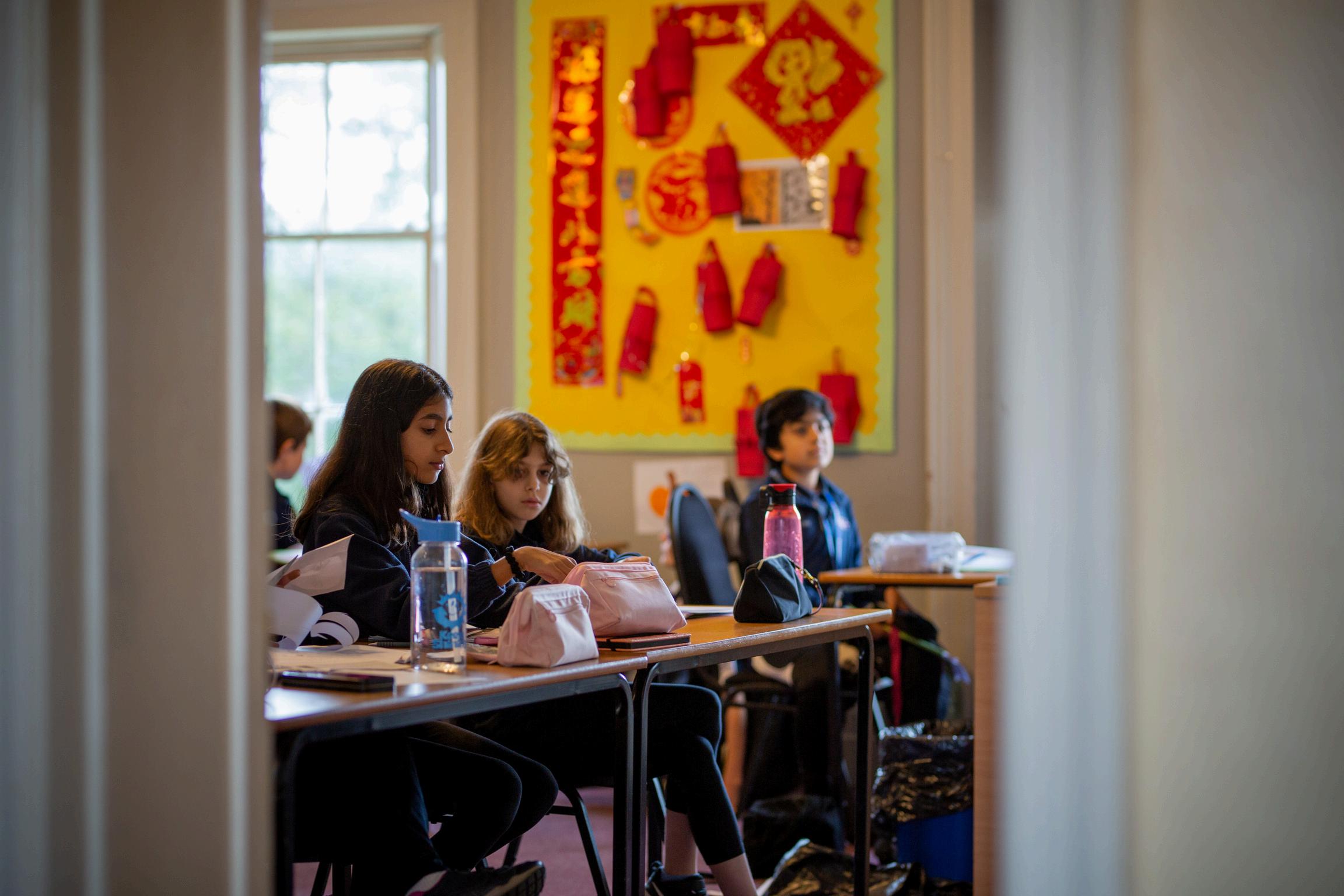
During the Summer term, Year 5 Mandarin students will expand their language skills by learning to talk about time, daily routines, and different means of transport. They will also explore colours through engaging activities, including songs and revision exercises to reinforce their learning. Additionally, students will have the opportunity to learn about and experience Duan Wu Jie (Dragon Boat Festival), discovering its history and traditions while participating in cultural crafts and storytelling. This term promises to be an exciting and enriching experience, helping students build confidence in their language skills while deepening their understanding of Chinese culture.

In the first half-term, the objectives will be:
To find the fraction of an amount with a unit numerator.
To find the fraction of an amount with a remainder as a fraction in its lowest terms.
To find the fraction of an amount with a non-unit numerator.
To write one quantity as a fraction of another.
To find one quantity as a percentage of another.
To find the percentage of an amount.
To solve real life percentage problems.
To use single digit factors to carry out long multiplication.
To use written methods to carry out a long multiplication.
To solve real life long multiplication problems.
To use written methods to carry out a long division.
To solve real life long division problems.
How it will be assessed
In the second half-term, the objectives will be:
To calculate the perimeter of a rectangle.
To calculate the area of a rectangle.
To calculate perimeters and areas of composite shapes.
To solve real-life problems involving areas and perimeters.
To construct 3D shapes using a net.
To calculate the surface area of a cuboid.
To identify the nets of cubes and cuboids.
To calculate the volumes of cuboids.
To solve real-life problems involving volume.
To construct bar charts, pictograms, and frequency graphs (including describing the difference between a bar chart and frequency graph).
To read and construct a line graph.
To read and construct a conversion graph.
To read an analogue clock face.
To convert between days, hours, and minutes.
To convert between 24 and 12-hour clock.
To calculate how long a journey takes.
To read a timetable.
Termly online assessments are completed by the pupils to demonstrate their depth of understanding of the mathematical topics that they have been studying. In addition, informal oral assessment takes place in lessons throughout the term to consolidate and assess depth of understanding.
Term
Autumn 1
Autumn 2
Spring 1
Spring 2
What are we studying?
Roman numerals
Place value
Methods for adding, subtracting, multiplying, and dividing
Factors, multiples, and primes
Angles
Fractions
2-D shapes
Negative numbers and co-ordinates
Translation and reflection
Decimals introduction
Decimals calculations
Comparing decimals, fractions, and percentages
Money and measure
Fractions of quantities
Percentages
Summer 1
Summer 2
Long multiplication
Division methods
Area and Perimeter
3-D shapes
Tables and graphs
Time and timetables
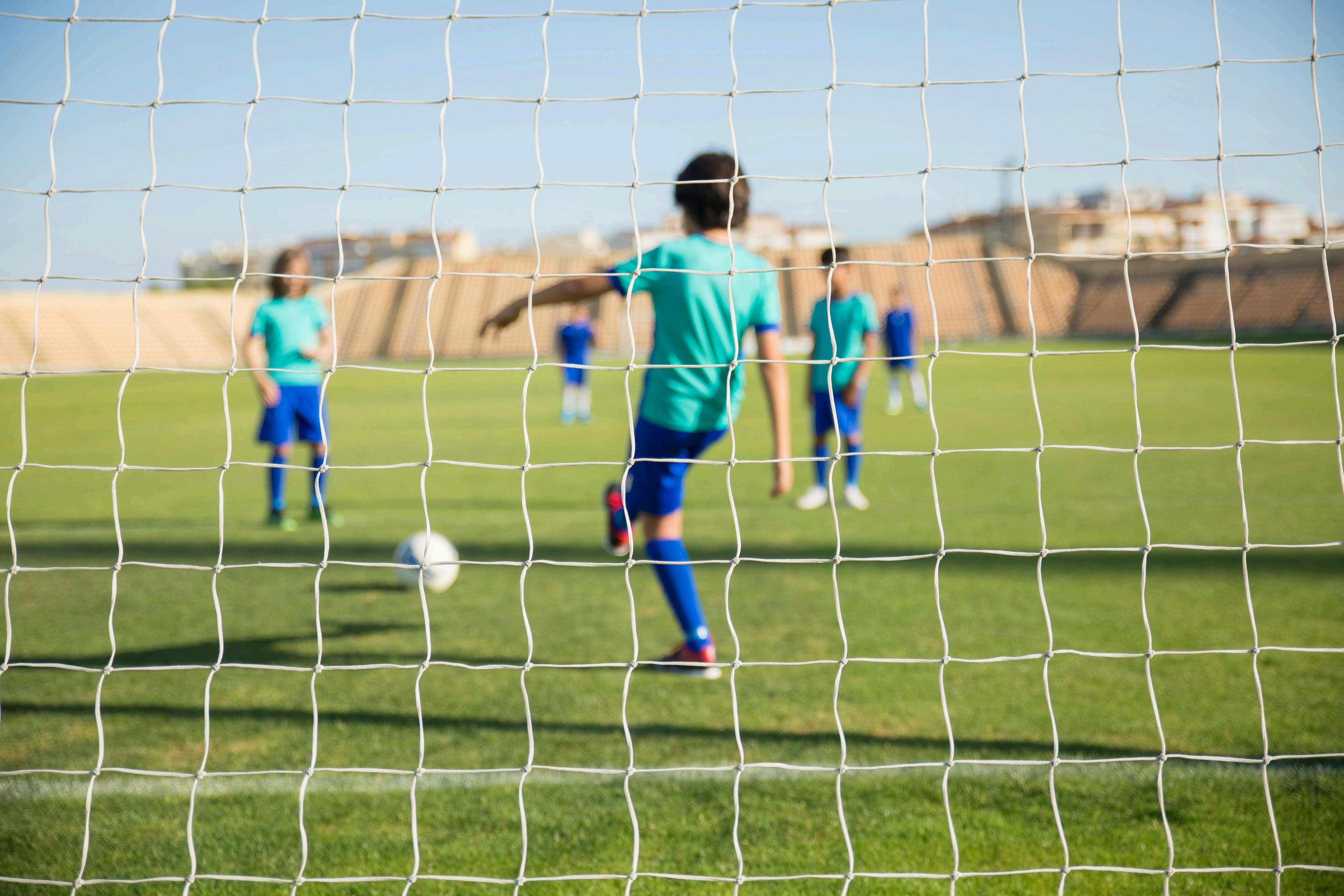
During the Summer Term of 2026, Year 5 students will engage in outdoor activities during their Physical Education (PE) lessons, with a primary focus on improving their athletics skills. This initiative aims to foster enjoyment, participation, and success in athletics, culminating in a Sports Day in the final half term.
Students will be introduced to fundamental techniques for running, jumping, and throwing, along with an understanding of the basic rules governing each event. They will explore the differences between short-distance sprints and longer-distance running, gaining insight into the specific skills required for each. The curriculum will include a combination of individual and team activities, such as relay races.
Additionally, students will participate in cricket, where they will develop essential skills in bowling, batting, and fielding.
The program emphasises the importance of fun in sports and encourages students to adopt an active lifestyle. A key component will be setting and achieving personal goals related to their performance, including improvements in timings and distances. Throughout the lessons, there will be a strong emphasis on competition and fair play.
Autumn 1
Spring 1
Summer 1
Football: passing, shooting, dribbling, conditioned games. Netball: passing, shooting, attack vs defence, positions and conditioned games Games: balance, coordination, agility, stuck in the mud, octopus tag, capture the flag.
Gymnastics: balances, body shapes, travel, jumps and rolls
Table Tennis: serving, rallying, shot selection and rules. Dodgeball: passing, dodging, tactics and attack vs defence.
Cricket: throwing, catching, batting, bowling and fielding Athletics: shuttle relay, 60m sprint, 200m sprint, hurdles, long jump, javelin throw and shot-put throw.
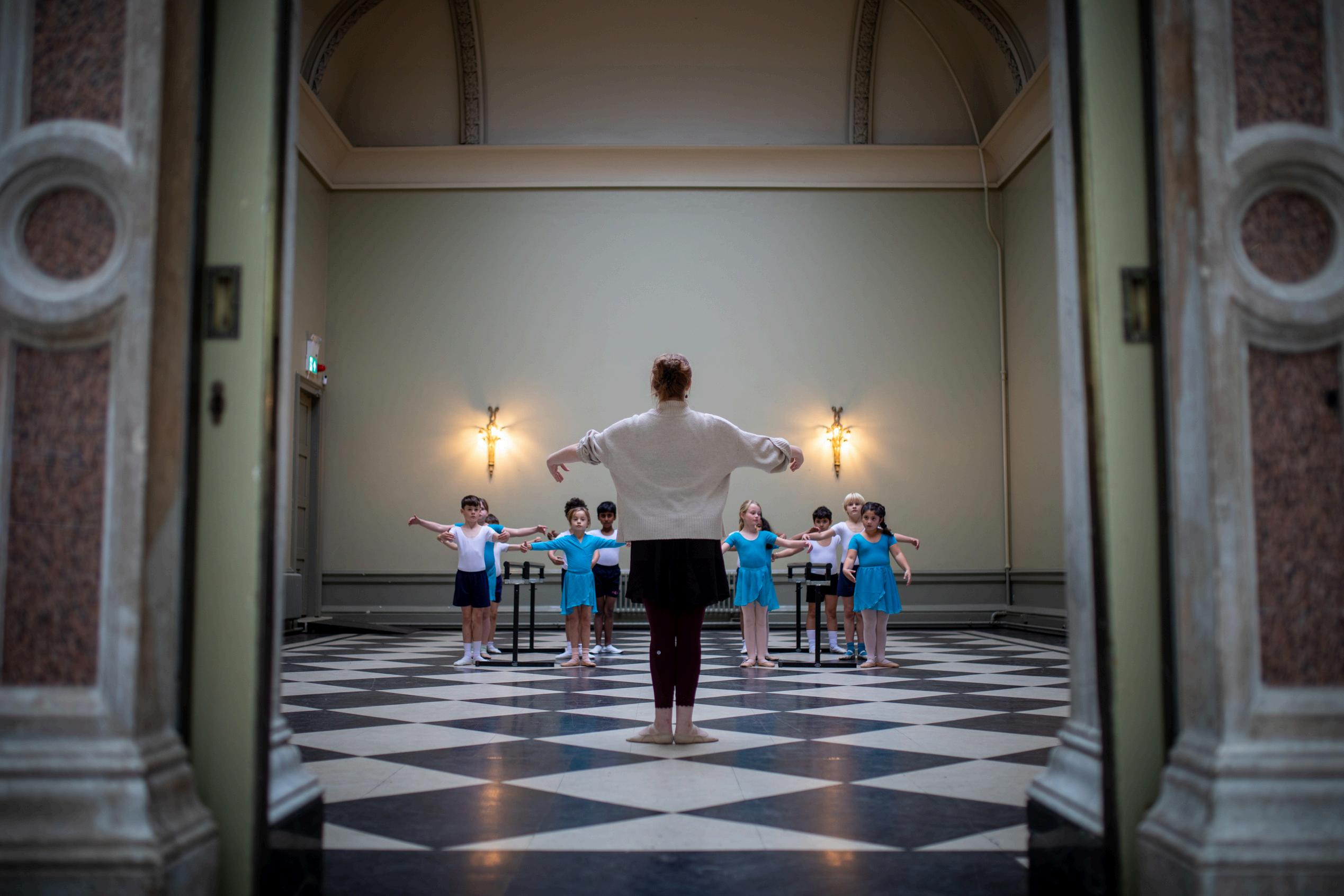
This term, Year 5 students have the exciting opportunity of working on a Musical Which this year will be ‘Aladdin’ performed on Wednesday 20th and Thursday 21st May They will use their Dance, Drama and Music lessons to prepare for this learning about stage presence, blocking, choreography and ensemble work This is a wonderful experience for our year 5 & 6 students who work together on the show By the end of the production, students not only showcase their talents but also forge new friendships and strengthen their sense of belonging within our school community, united in achieving a common goal
In the first half of the summer term, we will continue the topic entitled ‘Changing Me’, all about puberty and growing up.
Once we have completed this topic, we will start our ‘Healthy me’ topic. Children will explore ways to keep minds and bodies healthy and explore things to avoid and things to include we will discuss healthy eating and healthy choices, having a balanced diet and being physically active. We will also look at how to be a good friend and finish with how to deal with difficult situations.
As always, our PSHE is delivered with a mindful approach, giving plenty of time for thinking, discussing and reflecting. The lessons are delivered in an age-appropriate way and all resources are available to parents in advance upon request.
How it will be assessed
PSHE lessons are predominantly discussion based, with some written tasks for deeper comprehension and application.
At the end of each lesson, the students will complete self-reflection sheets for teachers to monitor understanding and adapt future teaching. Teachers keep track of the students’ levels and understanding of the different elements of PSHE across the year.
This term Year 5 will cover Living Things and their Habitats and Animals including Humans:
In this capacity the pupils will be taught the following skills:
To plan different types of experiments.
Identify equipment required for experiment.
Take measurements, using scientific equipment; e.g. measuring cylinder and scales
Record data and results in tables and bar and line graphs, using a ruler and a pencil.
Make predictions, using test results.
Present findings, through graphs, tables evaluations and conclusions.
How it will be assessed
Pupils will be assessed on ½ termly tests to determine understanding and misconceptions. Then in the Summer
Term the pupils will be assessed on the years’ work to evaluate knowledge and understanding.