Assistant Principal | Director of Studies rwa@hchnet co uk
Imogen Stone
Assistant Principal | Teaching & Learning ist@hchnet co uk
Paul Pearce
Senior Vice Principal | Operations pgp@hchnet co uk
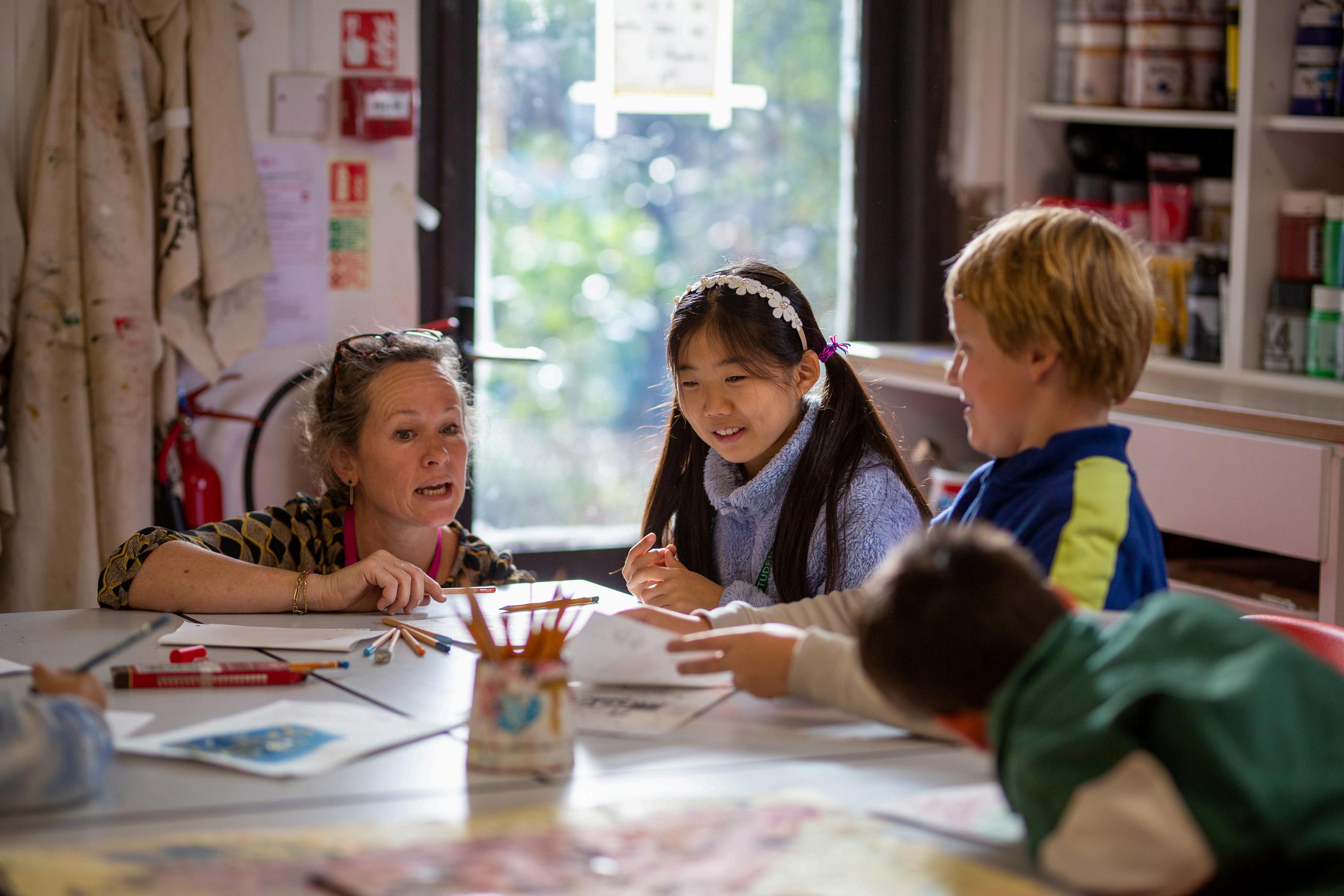
Students will be learning about the wonderful characters created by textile artist Donna Wilson this term In response, they will draw on their imagination and creativity to design and stitch their own soft toy Pupils will work to improve their scissor skills and build on sewing skills, using a simple running stitch to attach the fabric together After half term, the students will learn bookbinding skills and stitch their own sketchbook for use over the summer
Term
Autumn 1
Autumn 2
Spring 1
Spring 2
Summer 1
Summer 2
What are we studying?
Trees: Making art in response to ‘The Tree of Life’, by Gustav Klimt and ‘Surprised! (or Tiger in a Tropical Storm)’, by Henri Rousseau Focusing on pattern, shape, symbolism, collage and drawing skills
Trees continued: Making art in response to the art of Andy Goldsworthy and Piet Mondrian Focusing on temporary art, sculpture, tonal values, pattern and introduction to acrylic paint
Ernest Shackleton: Pupils will read William Grill’s telling of Ernest Shackleton’s expedition to cross the Antarctic, making art in response to the illustrations in the book Building upon drawing skills by looking at new techniques and approaches, introducing mixed media
Clay: Birds Looking at the bird studies of Matt Sewell and John James Audubon, students will learn watercolour techniques to paint different birds Pupils will each make and decorate a clay bird to be fired in the kiln, revisiting pinch pot techniques and expanding on skills with clay modelling and building techniques
Sewing project: Taking inspiration from textile designer Donna Wilson, pupils will design and stitch a soft toy This project aims to develop fine motor skills and revisits mastery of a basic running stitch
Making: Improving on sewing skills, pupils to discover book binding to create a sketchbook for summer
Découverte du Monde (Discovering the World)
DDM is split into discrete subjects in order to cover the wide range of knowledge taught across humanities and sciences. Whilst it is an interlinked curriculum, we ensure that the essential foundation of knowledge needed for the later years of prep in each subject and senior are covered.
History:
In Year 2 this term, we will learn about events behind living memory that are significant nationally or globally: Women’s Day with Amelia Earhart and Joan of Arc, the discovery of a new world with Christopher Columbus. This will help us understand how the lives of others in the past have contributed to our present-day advancements and improvements. We will also learn about significant historical events such as Easter, French Mother’s day and Bastille Day (14th July).
Geography:
We will compare urban and rural spaces and observe the interactions between animals and the environment. We will understand the importance of respecting and protecting the environment as well as thinking of ways to help protect it. We will also think about the people who look after the natural and local environment.
Science:
This term Year 2 will be studying the topic of ‘Animals including humans’ and ‘Plants’. We will notice that animals, including humans have offspring which grow into adults. We will find out about and describe the basic needs of animals. We will understand the development of a duckling in an egg and then how a duckling grows into a duck. We will observe and describe how seeds and bulbs grow into mature plants, know that plants need water, light and suitable growing conditions to stay healthy. We will also discover what is meant by the words ‘dispersal’, ‘pollination’ and ‘seed’ and explain how seeds are dispersed.
Découverte du Monde
English
The children will continue to work through the RWI programme in the morning and complete the child focussed and targeted tasks set by each group leader
Year Two will start the Spring Term by reading and range of stories set in the wild, then we explore a range of nonfiction texts about creatures under the sea and then the children will have fun reading a range of monster themed poems
After half term the children will look at a range of traditional tales from other cultures, diaries and recounts and finish the term by reading a range of humorous poems
How it will be assessed
Assessment will be through daily marking and feedback Through discussion and questioning At the end of each unit the children will be writing in the style of the author or poet they have been reading
There will also be informal assessment of writing, reading and SPaG at the end of each term
Forest School
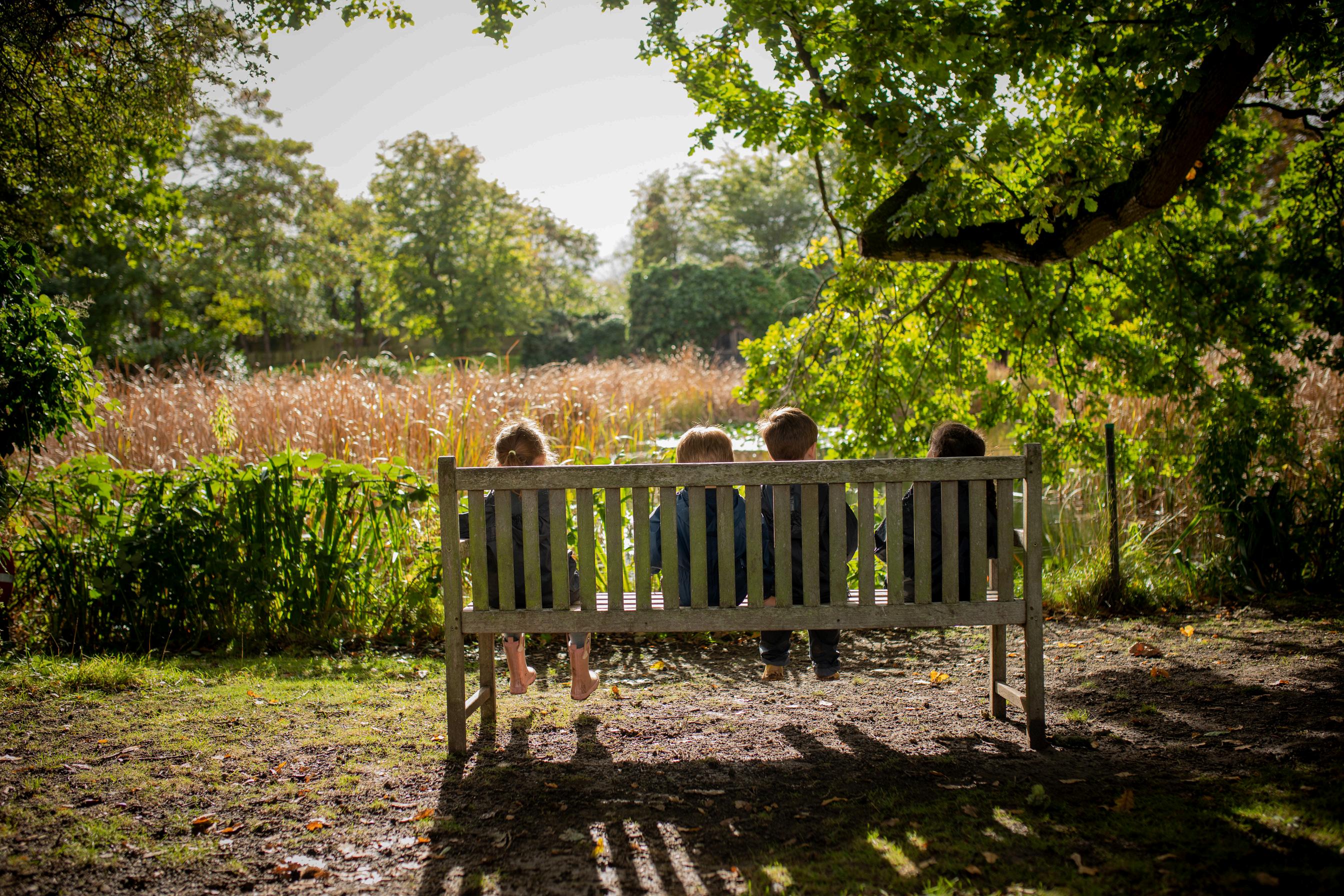
A Summer Forest School Programme fosters confidence and independence through play, discovery, and skill-building The summer term builds on spring’s outdoor learning, offering children opportunities to explore, create, and develop practical skills in nature Activities encourage teamwork, resilience, and environmental awareness through hands-on experiences Safety remains a priority, with sun protection, clear tool-use guidelines, and risk assessments Engaging families through workshops and events enriches this memorable outdoor learning experience
Topics and Activities:
Nature Discovery: Bug hunts, tree ID, and pond dipping
Bushcraft & Shelter Building: Den making, knot-tying, and safe fire lighting
Outdoor Cooking: Campfire recipes
Creative Arts: Leaf pressing, mud painting, and nature weaving
Sensory & Mindfulness: Barefoot walks, quiet sit spots, and nature mandalas
Water Play: Exploring ponds and streams safely
Team Games & Challenges: Obstacle courses, tracking, and hide-and-seek
Storytelling & Imaginative Play: Nature-inspired tales and cloud watching
Term
Autumn 1
Autumn 2
Spring 1
Spring 2
Summer 1
What are we studying?
Safety in the natural environment and taking safe and supervised risks
Observing the changes in weather and in the natural environment for Autumn and Winter
Celebrate Autumn Harvest and Christmas
Building dens and using tools safely
Celebrate Chinese New Year and harvest from community garden to cook a Chinese meal on the open fire
Celebrate National Birdwatching and make bird feeders for winter birds
Fairytales and stories that link to play in the natural environment
Celebrate National Wildlife Day
Observing new changes in the natural environment coming into Spring and planting
Celebrate World Bee Day
Summer 2 Minibeasts, map making and treasure seeking
This term, Year 2 will develop pleasure in reading and understanding by learning how to read and discover new sounds [eil], [oi], using the Alpha's method They will apply phonic knowledge and skills as the route to decoding syllables and simple words During the lesson, the pupils will learn vocabulary about instruments, leisure, sports, activities We will discover some grammar rules, such as the present tense -er verbs using je/tu/il/elle We will also discover some grammar rules, such as the present tense of verb to be and to have We will learn vocabulary about physical description
Term
Autumn 1
Autumn 2
Spring 1
Spring 2
Summer 1
Summer 2
What are we studying?
We will learn the complex sounds [a], [i], [u], [e], [o] We will learn vocabulary about themselves, politeness, instructions, stationery They will also start to use full sentences in French to express their needs To discover how to use a bilingual dictionary to translate and understand simple words
We will learn the sounds [é], [ch], [r], [j] We will learn vocabulary about numbers from 20 to 30, colours, weather, daily routine (entire day) They will discover some grammar rules, such as conjugate the noun to the adjective
We will learn the sounds [an], [on] We will learn vocabulary about animals in the forest, ocean and savanna They will also learn name of countries and their nationalities They will discover the masculine and feminine nouns
We will discover the following new complex sounds [ou], [in] They will also discover singular and plural nouns We will learn vocabulary about professions, workplaces, transports
We will discover the following new complex sounds [oi], [eil] We will learn vocabulary about instruments, leisure, sports, activities We will discover some grammar rules, such as the present tense -er verbs using je/tu/il/elle
We will discover some grammar rules, such as the present tense of verb to be and to have We will learn vocabulary about physical description
Francophonie Culture
In the Summer term, Year 2 will broaden their understanding of French culture by exploring its influence in Belgium We will begin by discovering la fête du 1er mai as celebrated in Belgium, where workers' rights are honoured with parades, festive gatherings, and the gifting of lily-of-the-valley flowers, just like in France
We will explore the history of Belgium, through the battle of Waterloo and its impact on the country We will find out about Belgian music and dance, through the Ghent Festival and the Ommegang Pageant
The term will conclude with a look at le 21 juillet, Belgium’s National Day, where we will explore how the country celebrates with grand parades, fireworks, and festivities, much like le 14 juillet in France By the end of the term, students will have a deeper appreciation of the rich cultural connections between France and Belgium
Maths
In the first half term the pupils will learn about:
Number, Fractions, Money: Count in 2s, 3s, 5s, 10s; multiples of 2, 5, 10
Number, Fractions, Money: Count in fractions; fractions of amounts
Number, Fractions, Money: How to find amounts of money
Addition and Subtraction: Add by partitioning or counting on
Addition and Subtraction: Choose strategies to subtract
Revision: Addition and subtraction revision
Revision: Multiplication, fractions, and time revision
In the second half term the pupils will learn about: Puzzles and Games: Maths games, number puzzles, and logic/shape puzzles
Investigations: Problem solving and investigations
Fractions and Time: Fractions of amounts and counting in fractions
Fractions and Time: Tell digital and analogue time confidently
Number: 2- and 3-digit numbers on a line; round to 10
Number: Place value in 3-digit numbers
How it will be assessed
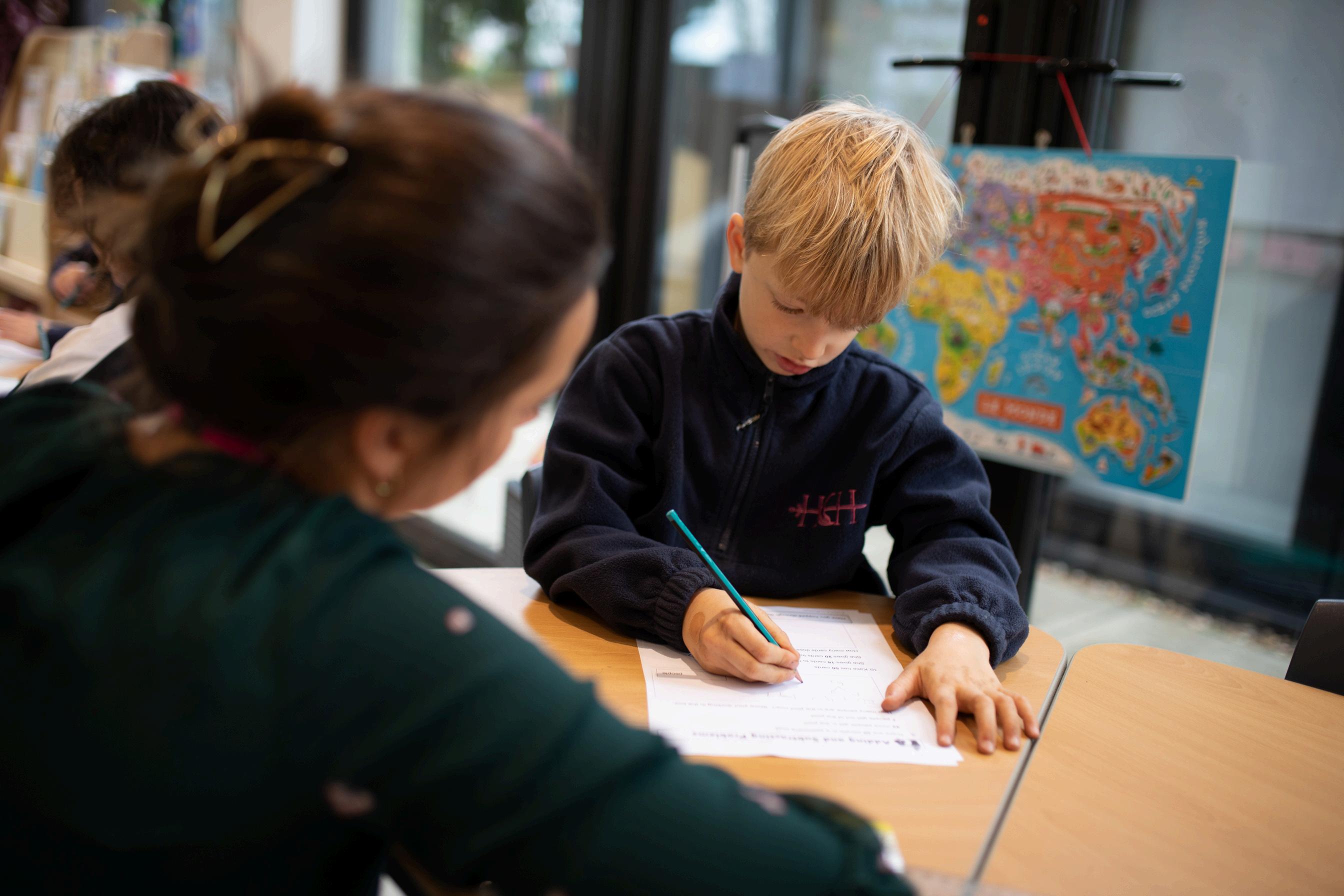
Termly online assessments are completed by the pupils to demonstrate their depth of understanding of the mathematical topics that they have been studying In addition, informal oral assessment takes place in lessons throughout the term to consolidate and assess depth of understanding
What are we studying?
Place Value and Money
Autumn 1
Spring 1
Summer 1
Addition and Subtraction Multiplication and Division
Place Value and Fractions
Addition and Subtraction Multiplication and Division
Number, Fractions, Money Calculation Strategies
Autumn 2
Spring 2
Summer 2
What are we studying?
Measures Addition & Subtraction
Shape and Data
Time Multiplication and Division
Puzzles and Problems
More calculation: Ready for Y3?
Physical Education
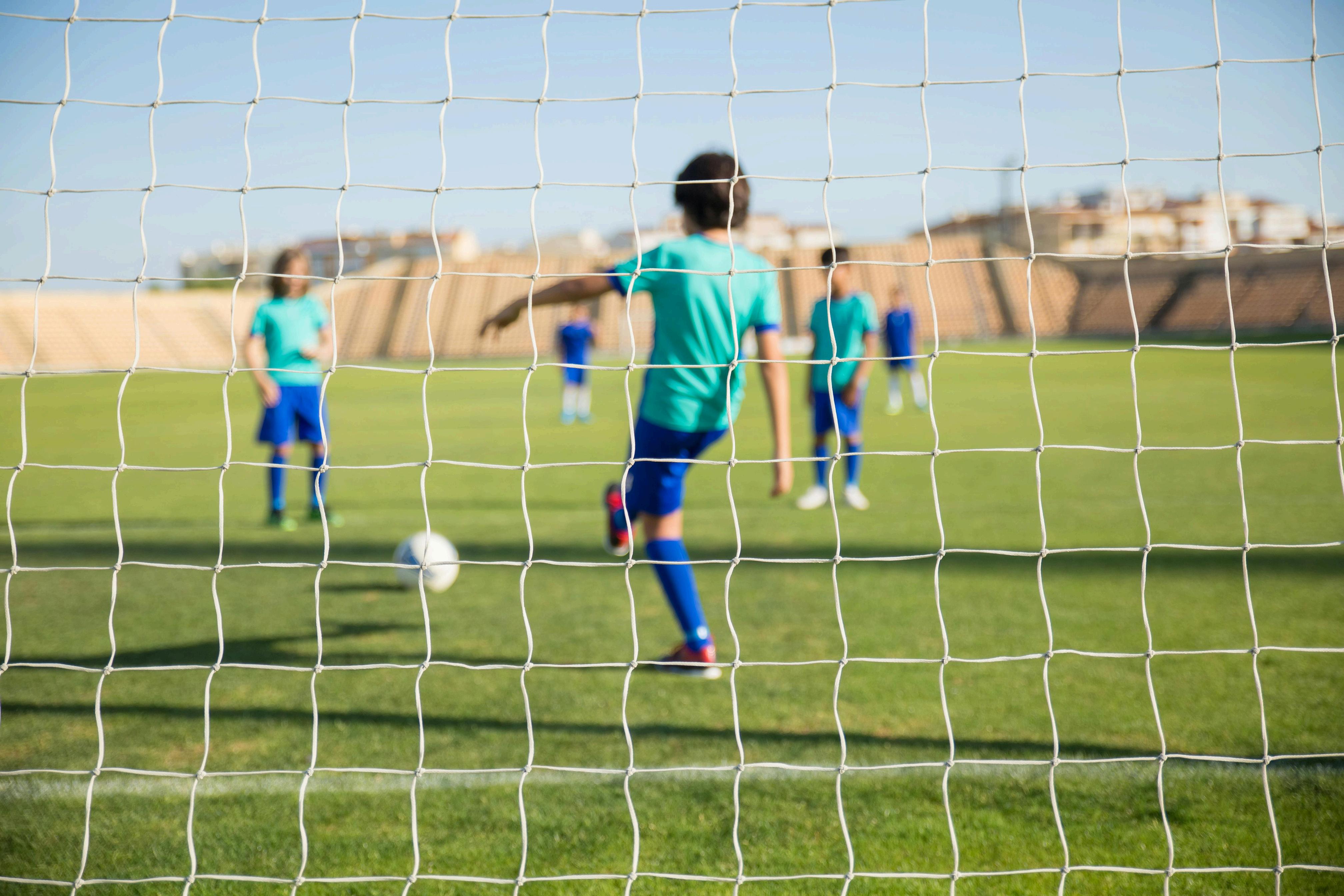
In the Summer Term of 2026, Year 2 students will focus on outdoor activities during Physical Education lessons, specifically aimed at introducing and improving their athletics skills The goal is to encourage enjoyment, participation, and achievement in athletics, culminating in a Sports Day during the latter half of the term
Students will learn techniques for running, jumping, and throwing, as well as the fundamental rules for each competitive event They will explore the differences in skills required for short-distance sprints compared to longer-distance running Instruction will cover both individual skill development and teamwork, illustrated through activities like relay races
Additionally, students will play cricket – learning about the basics of bowling, batting and fielding
As always, children will be encouraged to enjoy sports and maintain an active lifestyle Emphasis will also be placed on the importance of setting and working towards personal goals in terms of timing and throwing distances A spirit of healthy competition and fair play will be actively promoted
Term
Autumn
Spring
Summer
What are we studying?
Football: Passing, shooting, dribbling, conditioned games
Netball: Passing, shooting, attack vs defence, positions and conditioned games
Gymnastics: balances, body shapes, travel, jumps and rolls
Games: balance, coordination, agility, throwing and catching
Cricket: throwing, catching, batting, bowling and fielding
This term students in Year 1 – 4 will be preparing for their showcase on the 2nd July inspired by the world of Beatrix Potter
Throughout the year, there will also be numerous recitals and concerts, providing students with platforms to display their musical abilities and talent
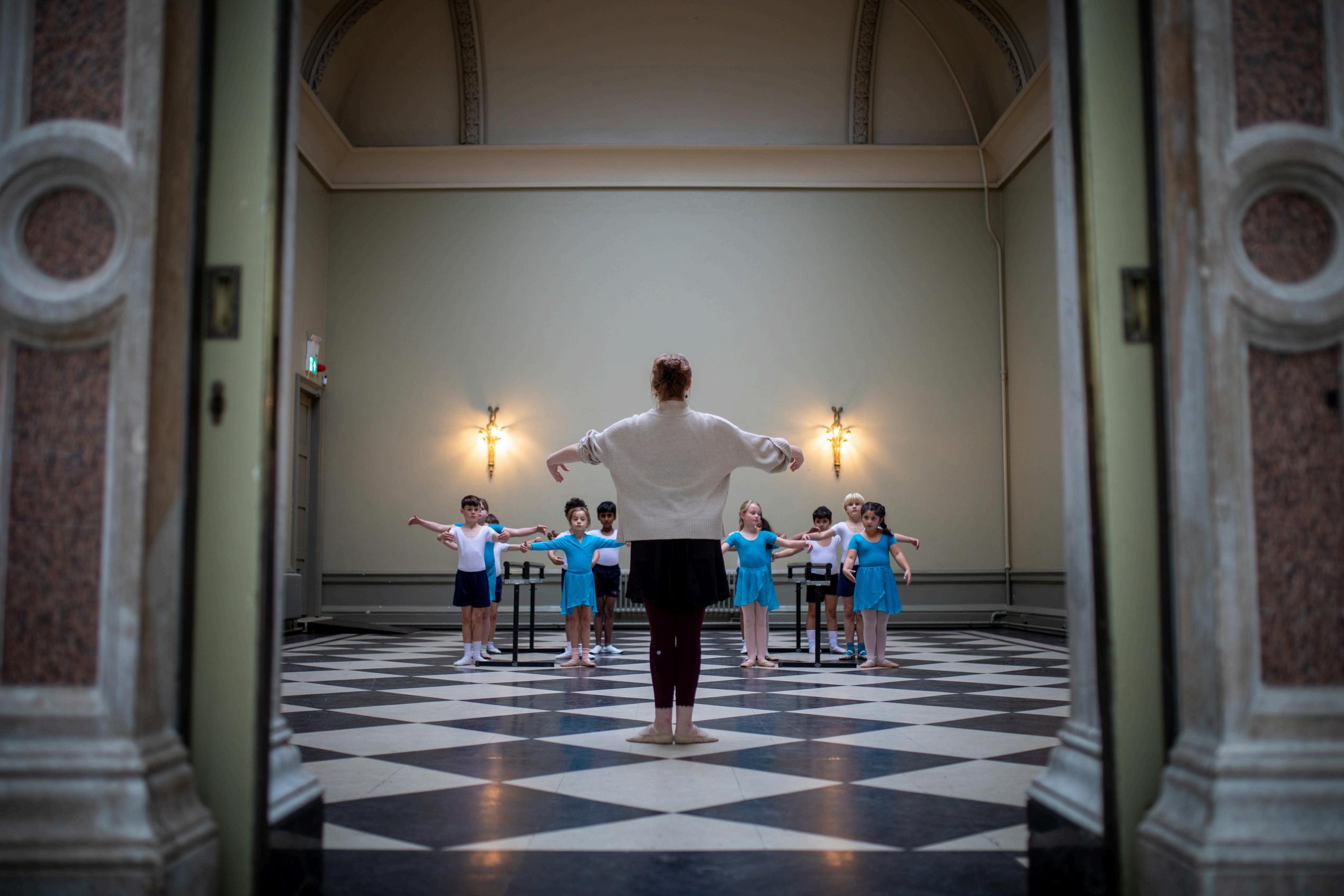
At Hampton Court House, we believe that the performing arts are integral to our school community Therefore, students will actively participate in various performances throughout the year These performances form the backbone of our curriculum We are committed to offering inclusive opportunities that allow every student to showcase their talents
To prepare for these performances students will focus on developing spatial awareness, musicality, vocal, physical, and character skills to enhance their performance abilities They will learn stage craft and understand how to engage an audience
Additionally, we place a strong emphasis on collaborative and creative skills, which are essential for every child's growth Our classes incorporate engaging games and activities designed to foster teamwork, improve peer interaction, and develop the ability to follow directions Students are encouraged to contribute creative suggestions through music, movement, and dialogue, ensuring a well-rounded arts education at Hampton Court House
PSHE (Personal, Social, Health and Economic Education)