The independent news organization at Duke University
MONDAY, JUNE 1, 2026

MONDAY, JUNE 1, 2026
Chron15 seeks to recognize the individuals or groups that define what it means to be a member of the Duke community in 2025 and 2026. This year in particular marked a time of resilience.
The University lost many members through cost-cutting and new immigration policies, while others learned how to continue supporting the community through a rapidly changing higher education environment.
Through it all, the icons, leaders and pioneers nominated by Chronicle readers and selected by a committee of Chronicle staff pushed our community forward, whether through advocacy, athletic achievement, thought-provoking discussion, innovative research or new University programs. These individuals have united us, inspired us and spent their time at Duke making our campus a better place.
There are many more individuals and groups that have made invaluable contributions to this University and its community, though The Chronicle can only name 15 of them. We, and our readers, thank countless more for all they do to make our University a home we can be proud of.
Ella Moore chaired the Chron15 2025-26 committee. She is a Trinity junior and a news editor of The Chronicle’s 122nd volume.
Lena Nguyen
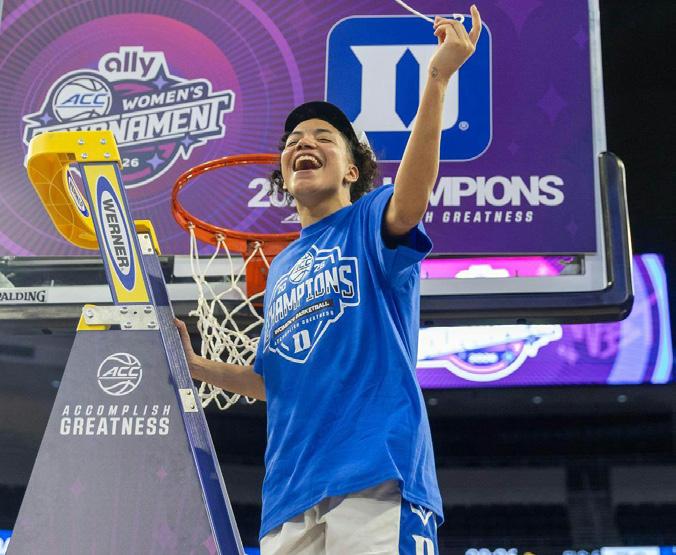
Taina Mair has been the three-year point guard for Duke women’s basketball and was the unquestioned leader of the bunch this year. She led her team to its second straight ACC Tournament win and Elite Eight appearance. Mair’s best came when it mattered most; in the ACC championship against Louisville,
she scored 19 points with a remarkable 12 rebounds, winning the ACC Tournament’s Most Valuable Player award. In the NCAA Tournament’s Sacramento 2 Region, she scored a combined 43 points against LSU and UCLA.
“She’s a winner … She does everything that you would want, and she’s unafraid of the moment as well. So I’m just fortunate enough to coach her,” head coach Kara Lawson said of Mair.
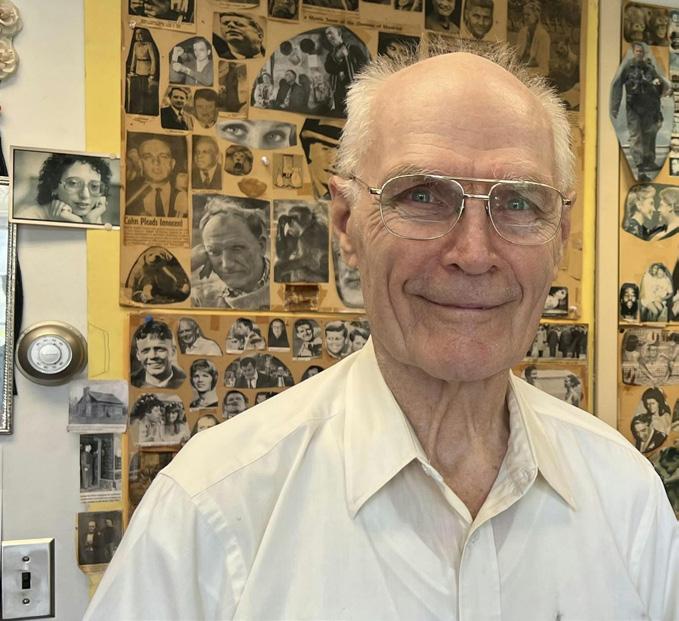
teaching style consisted of lectures and tests rather than the open-table discussions and critical essays English curricula have opted for over the years, yet nothing about the love for literature he instilled in his students felt outdated.
Duke, not just the English department, is losing a foundational member of its community. Students and faculty will sorely miss Victor Strandberg and wish they could learn more from him. And after 60 years, that’s all you can really ask for.
Anabel Howery
-Chronicle Staff Reports
Mair spent three years in Durham, and after a lessened role in the 2024-25 campaign, she often played long, grueling minutes as the sole primary ball handler this year. Lawson and the team frequently singled Mair out as a consistent performer and energy-setter even in the November and December nadir of this season. Mair’s facilitation prowess was evident as she tied Duke legend Chelsea Gray’s record for assists in a single season with 201. As the 14th pick in the 2026 WNBA Draft, Mair was the first Blue Devil selected in the first round since 2018.
Courtesy of Victor Strandberg
When you’ve outlasted five university presidents and built a career longer than many of your colleagues’ entire lives, you become as much a part of the institution's history as anyone else can claim to be. Thus, it’s near-impossible to imagine Duke without Victor Strandberg, but after 60 years, the English professor has taught his final class.
Arriving in Durham in 1966, the Massachusetts native brought to the South his wealth of knowledge on literature of all sorts. Although he certainly had his favorite authors, his ability to passionately and effectively teach everything from the Bhagavad Gita to William Faulkner was what made him such a beloved and cherished instructor. His


Amy Zhang
Transferring to Duke men’s basketball from Syracuse after his sophomore season, Maliq Brown served a twoyear term as the Blue Devils’ premier defensive weapon, developing into a fan favorite for the Duke faithful in the process. The Culpeper, Virginia, native acquired a series of honors during his time in Durham, including ACC Defensive Player of the Year and ACC Sixth Man of the Year during his senior season.
“It’s almost like a different game [Brown] plays,” guard Caleb Foster said of his two-year teammate. “I’ve never played with somebody with such an impact on the team.”
With his calm demeanor and 7-foot wingspan, the 6-foot-9 forward stood as the anchor of the pair of 35-win Blue Devils teams, showing to everyone who watched what it meant to be part of a team.
And in his final game in Cameron Indoor Stadium — senior night against North Carolina — Brown gave Blue Devil fans one last masterclass, recording his highest totals in points and steals in a Duke uniform with 15 and five, respectively, on 6-of-9 shooting across 30 minutes, cementing his legacy as the model role player for Blue Devil basketball. -Chronicle Staff Reports

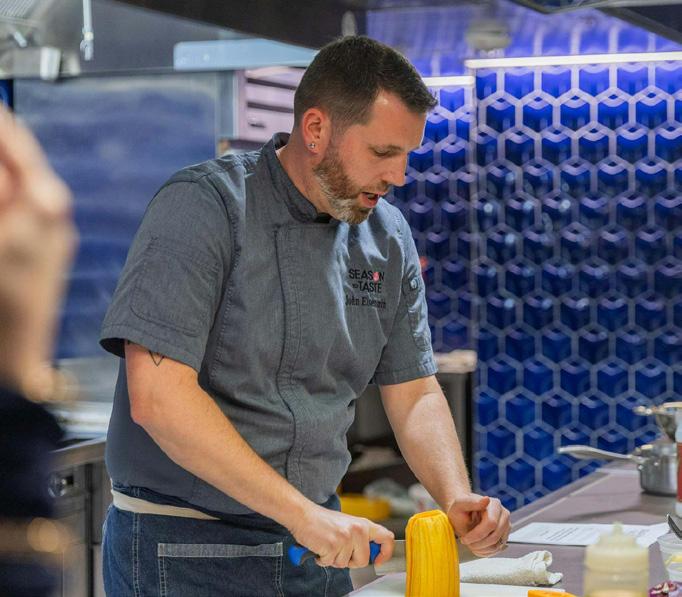
Some spots on campus just have a way of drawing people in. Chef's Kitchen — the rotating restaurant on the second floor of WU — did exactly that this year, and then some.
Home to instant classics like Smashburgers and Don's Classic Subs, the lines that snaked around the second floor became a familiar sight around lunch time, and a reliable sign that something yummy was waiting at the end of them. Students generally didn’t mind the wait and the food was always worth it. The hardworking employees nearly always had to stay beyond the slated closing time of 3 p.m. to finish out the line of students, which they did with grace. The Chronicle is grateful for their diligence and altruism.
Beyond the lunch rush, Chef's Kitchen also hosted cooking classes, giving students a chance to slow down and actually learn something in the kitchen, headed up by Chef John Eisensmith. And unlike a lot of dining options, it never felt like it was unnecessarily gouging your food points. Chef's Kitchen struck a rare balance: delicious, unique food you can’t get anywhere else on campus, fair prices and a buzz around it that made it one of the most talked-about spots on campus this year. Here’s to hoping whatever comes next lives up to the standard it set. Please bring Don’s Classic Subs back.
Staff Reports

Spend a semester studying at the Duke Marine Lab in Beaufort, North Carolina. Experience hands-on learning, small classes, low faculty-to-student ratios and a close-knit residential community. You don’t need to be a marine science major to study at the Duke Marine Lab. Students from all disciplines can immerse themselves at Duke’s coastal campus while fulfilling course requirements through a mix of natural and social science coursework and field experiences.

Courtesy of Jaden Small
In any given year, the signed artists of Small Town Records (STR) may sound like a classic “man walks into a bar joke,” or maybe like a Durham-based Breakfast Club. During a Small Town Records-sponsored performance, you could find a freshman funk-jazz group, a singer-songwriter-physicist or a rapping summer analyst.
Despite Duke not having an official school of music, STR has gifted students a place to perform. Housed in the basement of the Bryan Center, the studentrun record label holds yearly auditions to sign a small-but-mighty selection of student artists. Providing signees with the resources to produce and perform their own music, STR artists can be found opening LDOC, jamming in Coffee House and performing at Devine’s.
The organization also welcomes students beyond the stage. Through STR’s executive team, non-performers gain experience in roles like artist marketing and band management. For more technology-savvy folks, executive positions expand into committees like sound engineering and song production. And for those who love to jam, the record keeps a roster of instrumentalists in their house band, ready to provide back-up to their signed artists.
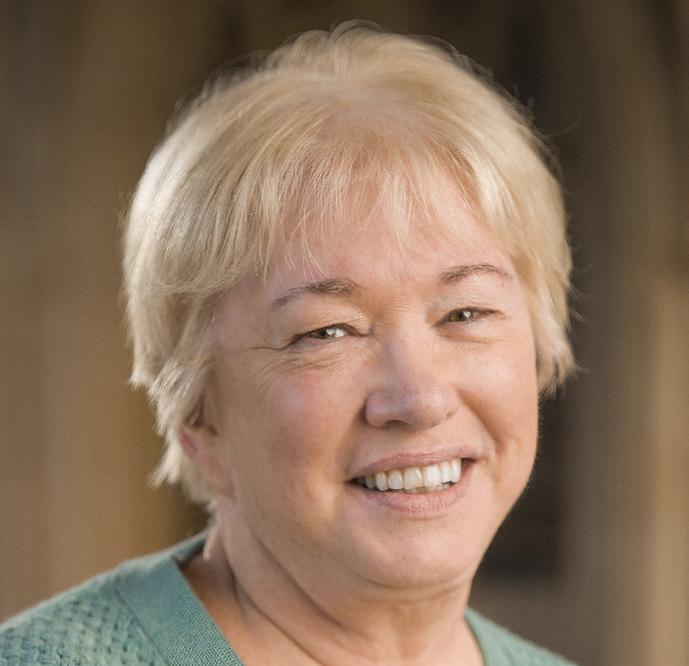
Duke prides itself on being a leading research institution, and no one knows this better than Jennifer Lodge, vice president for research and innovation. She oversees the University’s $1.2 billion annual research portfolio and helps to connect Duke to external partners in research and commercialization.
As the University’s chief research officer, Lodge has helped faculty and staff to navigate federal uncertainty from fro-
zen research grants and canceled funding. When four federal agencies threatened to impose a 15% cap on facilities and administrative (F&A) cost reimbursement — which would have cost Duke to the tune of $194 million annually — Lodge was at the forefront of a national effort to protect funding for overhead expenses.
Lodge served as a subject matter expert on a national team to produce a new research funding model, known as the Fiscal Accountability in Research (FAIR) model, that would improve transparency and help support the actual expenses, direct and indirect, that factor into research. The 26-person team represented a mix of universities, academic medical centers, independent research institutes and the private sector, with backing from 10 national organizations.
Lodge’s contributions have helped to provide Duke with some sense of relief from what had once been identified as the University’s biggest financial concern. Since unveiling the FAIR model in July, it has received support from members of Congress and many in the scientific community.
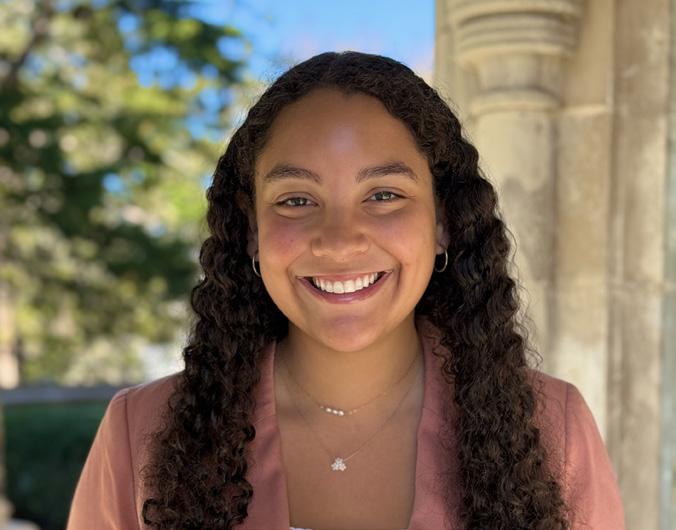
When asked to point to the face of student life at Duke this year, most Blue Devils would likely direct you to Trinity Class of 2026 alumna Kaitlyn Williams. From her position at the helm of several prominent student organizations, Williams has forged countless connections between communities in and around campus in service of her mission to support her peers.
As president of the Duke University Union, the University’s largest student organization that serves as an institutional hub for arts, media and programming, Williams was the engine behind many of the campus events that made the 2025-26 academic year memorable for students. She oversaw the operations of DUU’s 18 committees and helped launch its newest in spring 2025: (DUU)rham, which seeks to help burst the colloquial “Duke bubble.”
Notably, she also served as president of SPIRE Fellows, a program designed to enhance equity in STEM disciplines by supporting students who have historically faced barriers to access and opportunity; Williams’ consistent and empathetic mentorship was widely credited with boosting the program’s success.
Williams will retain her ties to Duke in the coming years — both informally through the many close relationships with faculty, staff and students she has cultivated in her time on campus and formally as the University’s newest undergraduate Young Trustee.

Since 1990, the Duke Human Vaccine Institute has worked to develop vaccines and treatments for some of the world’s most prominent emerging infections. Its state-of-the-art facilities make it one of the leading vaccine institutes in the country and help it to manufacture critical mRNA therapies, vaccines and other cell-based products.
The institute has been home to several groundbreaking advancements in HIV and AIDS research. Over a series of three federally supported projects spanning 21 years, investigators have identified many key characteristics of HIV and begun to develop a series of vaccines that can trigger an antibody response and neutralize the virus as it mutates — an approach that DHVI Director Barton Haynes has described as “brand new” in the fields of immunology and vaccinology.
In spite of the Department of Health and Human Services’ sweeping cuts to HIV research in 2025, DHVI has continued to advance its vaccine development efforts through multiple trials of different vaccine candidates, with plans to pursue alternate funding opportunities in the future.

Duke’s housekeeping staff has faced unprecedented adversity this year due to the University’s cost-cutting initiatives and the Trump administration’s immigration policy.
For Margoth Erazo, a Honduran immigrant and Duke housekeeper for 23 years, her future is in jeopardy after she lost her job following the Trump administration’s revocation of her Temporary Protected Status.
After Duke restructured its University Environmental Services schedules in November, housekeepers were forced to rebid for shifts and building assignments. East Campus Housekeeper
Nahshon Blount called the process a “survival of the fittest game,” where seniority is prioritized. Some staff were left without a fixed schedule and faced random building assignments.
While facing these challenges, the tireless work and resilience of the staff members of Duke housekeeping continue to make campus a safer and cleaner place. In whichever building they are servicing, Duke housekeeping’s 230-plusperson staff has made the student experience more enjoyable.
Cleaning up after gamedays and parties, their work across campus, while sometimes not fully appreciated, is vital to the day-to-day operations of the University. The Chronicle recognizes the staff’s unwavering dedication to their work and flexibility shown this year.
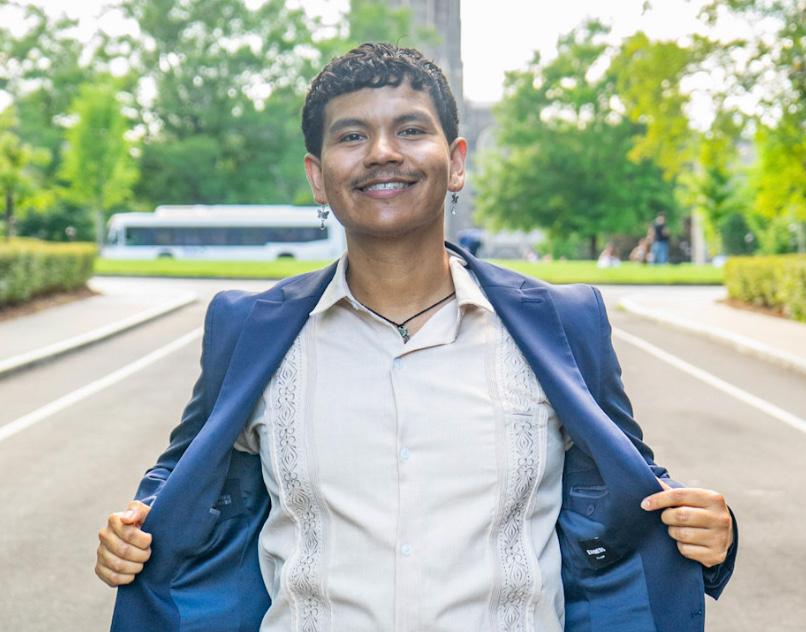
Courtesy of Michael Ramos Michael Ramos, Trinity ‘26, has spent four years at Duke doing what comes naturally to him: showing up for people. A double major in public policy and international comparative studies, Ramos brought the perspective of a “fronterizo” raised in the San DiegoTijuana border as the son of Mexican immigrants to everything he touched on campus.
As co-president and later president of Beyond Borders, he pushed the student advocacy group beyond Duke's walls to build real ties with Durham organizations like Siembra NC and Somos Durham. During the fall Border Patrol raids, he raised awareness on campus about students’ rights and worked within the Durham community to advocate for the protection of Latino individuals and families.
When Luis Juaréz was removed from his bus driver position at Duke due to his Temporary Protected Status ending, Ramos organized a GoFundMe that moved the community to action, raising over $17,000 to help pay for Juaréz’s legal fees.
As a Hart Fellow, he turned his attention to Yaqui indigenous culture and the meaning of home amid displacement, a personal question to him. Ramos has been a consistent champion for first-generation and Latino students throughout his time here, work that earned him the Samuel DuBois Cook Society Undergraduate Student Award and has left a lasting, personal impression on campus advocacy.
-Chronicle Staff Reports
on Page 5
The Hart Leadership Program challenges students to practice the art of leadership in public life. Through academic courses, experiential learning programs, community-based research, and co-curricular initiatives, students develop their own frameworks for leadership and work alongside others toward a common purpose.
A 24-month leadership development program, including two funded summers of community immersion.
Open to freshman and sophomores.
◦ Receive full funding for two summers focused on research and leadership practice
◦ Access the Laidlaw Scholars Global Network
◦ Earn a certificate of ethical leadership from the Oxford Character Project
◦ Participate in retreats, conferences, and colloquiums with other Laidlaw Scholars
Connecting passion for the arts with the study of public policy.
Open to sophomores and juniors.
An intensive year-long experience of community, reflection, academic study, and leadership training.
Open to freshman, sophomores, and juniors.
◦ Understand social problems at the local level through an immersive experience
◦ Relate your personal experiences to systemic social issues through critical reflection
◦ Challenge and reshape your existing mindset to appreciate complexity and to see all sides of an issue
◦ Learn to better adapt yourself to your context, self-purpose and role to enhance your community engagement
Combining the art of civil discourse with leadership, democracy, and public policy.
Open to juniors.
Spend ten months rooted in a new place, participating in deep community engagement + research, and growing as a leader – all while addressing an important social, political, or humanitarian issue.
Open to seniors and recent Duke graduates.
PUBPOL 190FS Leadership in Crisis
Prof. Alexandra Zagbayou
TuTh 10:05AM - 11:20AM
Areas of Knowledge: IJ
PUBPOL 283 Ethics in an Unjust World
Prof. Hy Huynh
MW 1:25PM - 2:40PM
Modes of Inquiry: CCI, EI
Areas of Knowledge: CZ, SS

PUBPOL 307S Voting Rights Lab
Prof. Gunther Peck
MW 4:40PM - 5:55PM
Areas of Knowledge: SS

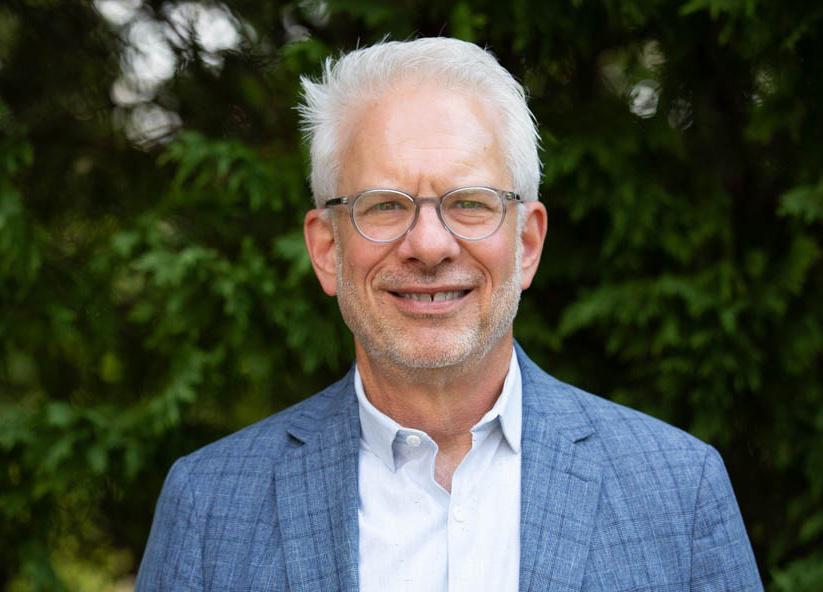
Eric Mlyn
Courtesy of Eric Mlyn
Eric Mlyn, distinguished faculty fellow at the Kenan Institute for Ethics and lecturer at the Sanford School for Public Policy, retired this year. During his over two decades at the University, Mlyn pioneered the Robertson Scholars program, DukeEngage in DC and DukeEngage Gateway, which have since served hundreds of students.
Throughout his time on Duke’s campus, Mlyn has been tirelessly dedicated to expanding his students’ worldview beyond themselves. Because of Mlyn, students have had the opportunity to travel to over 20 different locations in the United States and around the world to participate in community projects such as building the longest bridge in Estwatini, teaching English at refugee schools in South Korea and working to empower youth in Brazil.
Outside of his work connecting students to community engagement, Mlyn has maintained a focus on how higher education can continue to contribute to democracy, whatever its challenges. Through his leadership of projects at the Kenan Institute on Democracy and Higher Education, Mlyn has encouraged students and faculty alike to advance their perspectives on the potential of higher education.
During the spring semester, Mlyn led a “Higher Education at a Crossroads, Reckoning with the Rise of Illiberalism” project, supporting student research into the subject in preparation for a May 2223 conference. Though the spring semester was Mlyn’s last in teaching, he will continue to lead the “Democracy in Peril: Paths to Renewal” Duke Engage in DC program over the next few years.
-Chronicle Staff Reports
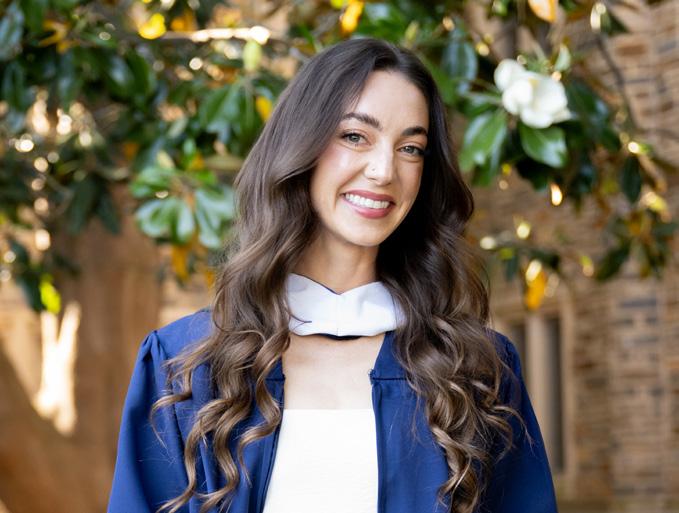
Cassidie Carmen Bates, Sanford ‘26, has made a lasting impact on Duke’s campus by advancing grief-informed support, research and community engagement during her time at the Sanford School of Public Policy in ways that did not previously exist. Recognizing the need for more open and accessible conversations around loss, she launched new grief support initiatives for students, helping bring grief awareness into broader campus dialogue and policy discussions.
She delivered a TEDxDuke Talk focused on the importance of bereavement leave policies being informed by both the lived expertise of grievers and subjectmatter data on how grief affects the brain and body. Cassidie also co-established Duke’s first-ever Grief Panel, bringing together undergraduate, graduate, medical, divinity and other students to share personal experiences of loss and explore how Duke can become a more supportive and grief-aware community.
In addition to her research and advocacy, Cassidie established Duke’s partnership with Grieftastic Inc. and led a campus book talk featuring nationally recognized authors and leaders in the grief space. Through her research, leadership, and community-building efforts, she has created meaningful change at Duke while helping elevate the conversation around grief support in academic settings.
Courtesy of Christopher Coome
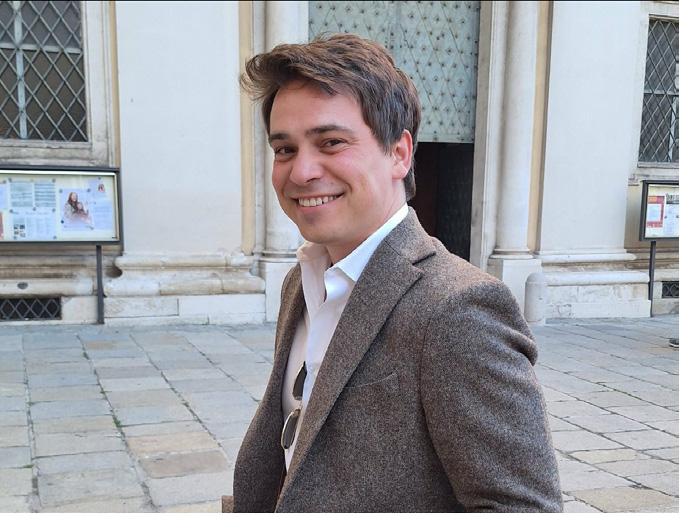
Christopher Coome, a postdoctoral fellow with the Sanford School's Civil Discourse Project and an intellectual historian by trade, is the beating heart of Duke's efforts to combat negative polarization and revitalize serious political discourse.
Arriving on campus in spring 2025, he has spent the lion's share of his time in Durham facilitating dialogues across political differences through civil discourse roundtables and political philosophy seminars. In less than two years, he organized and facilitated over 30 such events, oftentimes supported by both Duke Democrats and College Republicans.
He has taught hundreds of Duke students about everything from the philosophies of Hegel, Diogenes, and Paine to more basic, practical things like "how
Preparing the Next Generation of Strategists
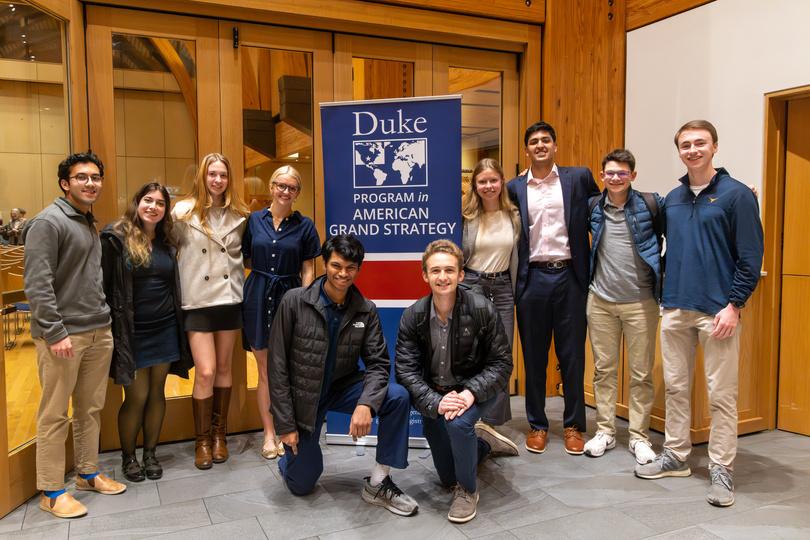
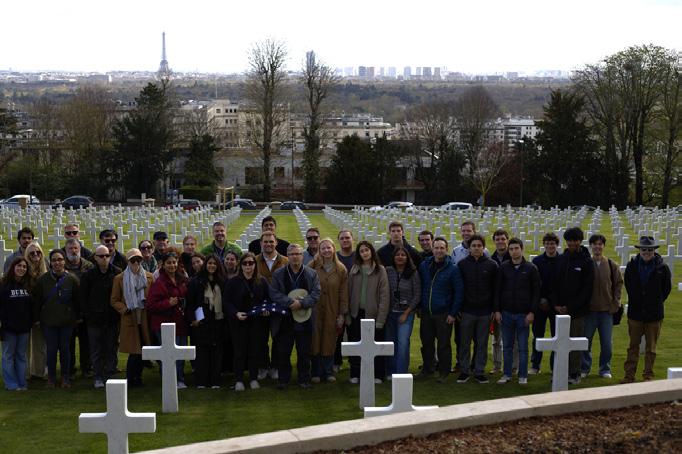
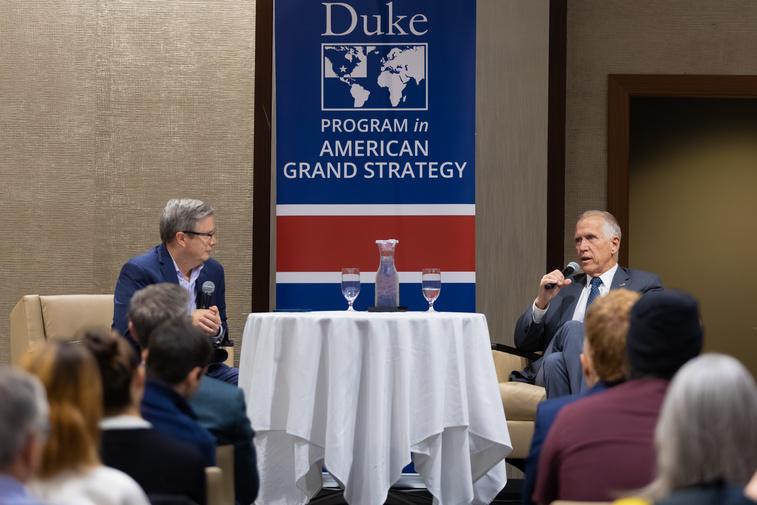
AGS is a co-curricular program dedicated to preparing students for careers in US foreign policy, national security, and related fields. Get involved! Attend events with distinguished policymakers and experts, participate in field trips and staff rides, take courses, and more. Learn more at ags.duke.edu and connect with us on social media
to disagree agreeably with someone." Coome also serves as the faculty advisor for The Lemur: Duke's Big Ideas Magazine, the principal co-sponsor for most Civil Discourse Project events.
When Coome is not working in the Civil Discourse space, he plays an active role in growing the campus' community of intellectual conservativism — a community which was essentially nonexistent before he arrived. In less than two years, Coome has taught a course on the history of conservative political philosophy, supported conservative clubs and led a reading group for the Duke Law Federalist Society.
Coome plans to expand upon his work with the Civil Discourse Project as he teaches the course Public Policy 202S, Political Polarization, in the fall. His most recent book, “The Foundations of Re-Enchantment,” was published in December 2025.
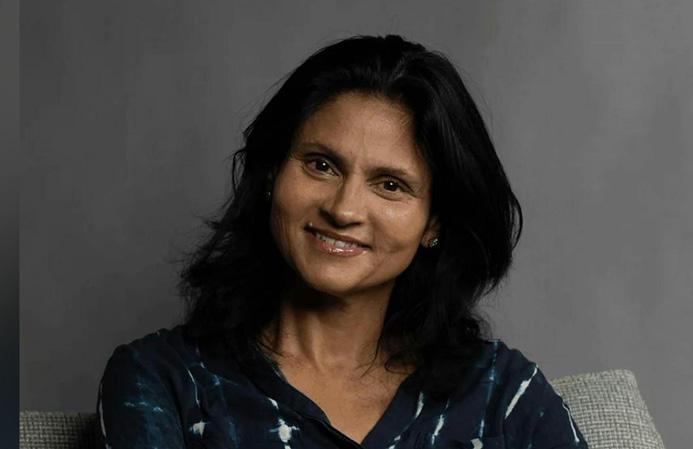
Nimmi Ramanujam has built a career upon standing up for women’s health. Now, she’s being recognized on the national stage for the impact of her work.
Ramanujam is the Robert W. Carr Jr. distinguished professor of biomedical engineering in the Pratt School of Engineering, where she has spent decades researching how to address disparities in outcomes for breast and cervical cancer patients. She is also the founder and director of Duke’s Center for Global Women’s Health Technologies.
Ramanujam has developed technologies that make cervical imaging more affordable and less invasive, helping to improve diagnostic outcomes for women across the globe. In 2024, she received the Department of Defense’s Breast Cancer Research Innovator Award, alongside a $10.4 million grant to support her work on early detection of breast cancer and reducing the burden of care for patients by decreasing the number of required treatment visits.
In February, Ramanujam was elected to the National Academy of Engineering, one of the highest awards given to engineers. She told The Chronicle at the time that she hoped the achievement would bring attention to women’s health research beyond her individual contributions to the field, saying “it’s nice to see that this is being brought to the forefront ... that what we’re doing is considered meaningful and impactful.”
-Chronicle Staff Reports
Courtesy of Duke Today
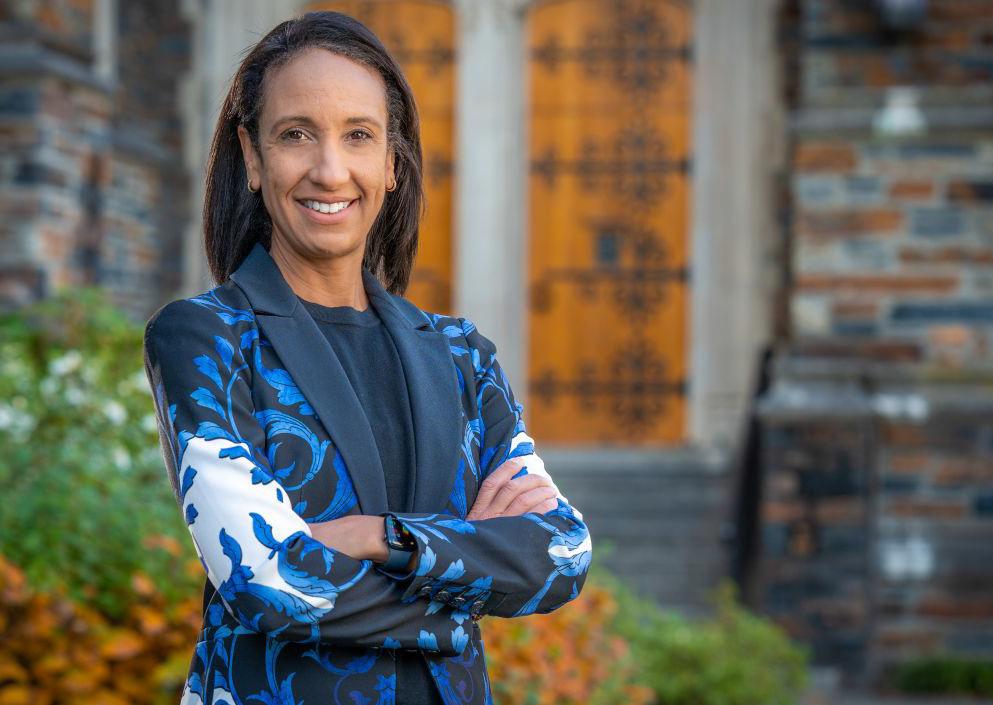
The Chronicle previously spotlighted Nina King as a pioneer after she became the first woman and the first Black person to serve at the helm of Duke’s athletic department. In her past five years as the Blue Devils’ athletic director, King has spearheaded efforts to keep the University’s 27 varsity sports teams competitive in a new landscape of revenue sharing, NIL governance, conference realignment and media rights.
Since assuming her role in May 2021, King has overseen the hiring or promotion of 11 head coaches, including football’s Manny Diaz, baseball’s Corey Muscara, women’s soccer’s Kieran Hall and fencing’s Omar Elgeziry. Duke has won 16 ACC Championships under her leadership, including four during the 2025-26 academic year, and made deep runs in NCAA Tournaments across multiple sports.
With college athletics quickly evolving, Duke has found new sources of revenue,
including a first-of-its-kind streaming deal between the men’s basketball program and Amazon Prime Video. Multiple athletics facilities, including Jack Coombs Field, Taishoff Aquatics Pavilion and the Krzyzewski Center for Athletic Excellence, are midway through significant renovation projects.
“The standard for Duke, if it has this logo on it, is to be excellent in all things,” Diaz said at the 2025 ACC Kickoff. “Nina King has done a phenomenal job of making sure that all of those programs are poised to be successful in the future.”
-Chronicle Staff Reports

By Dylan Halper April 16, 2026
Those who have been missing the baked baguettes and sliced meats of Don’s Classic Subs may be in luck.
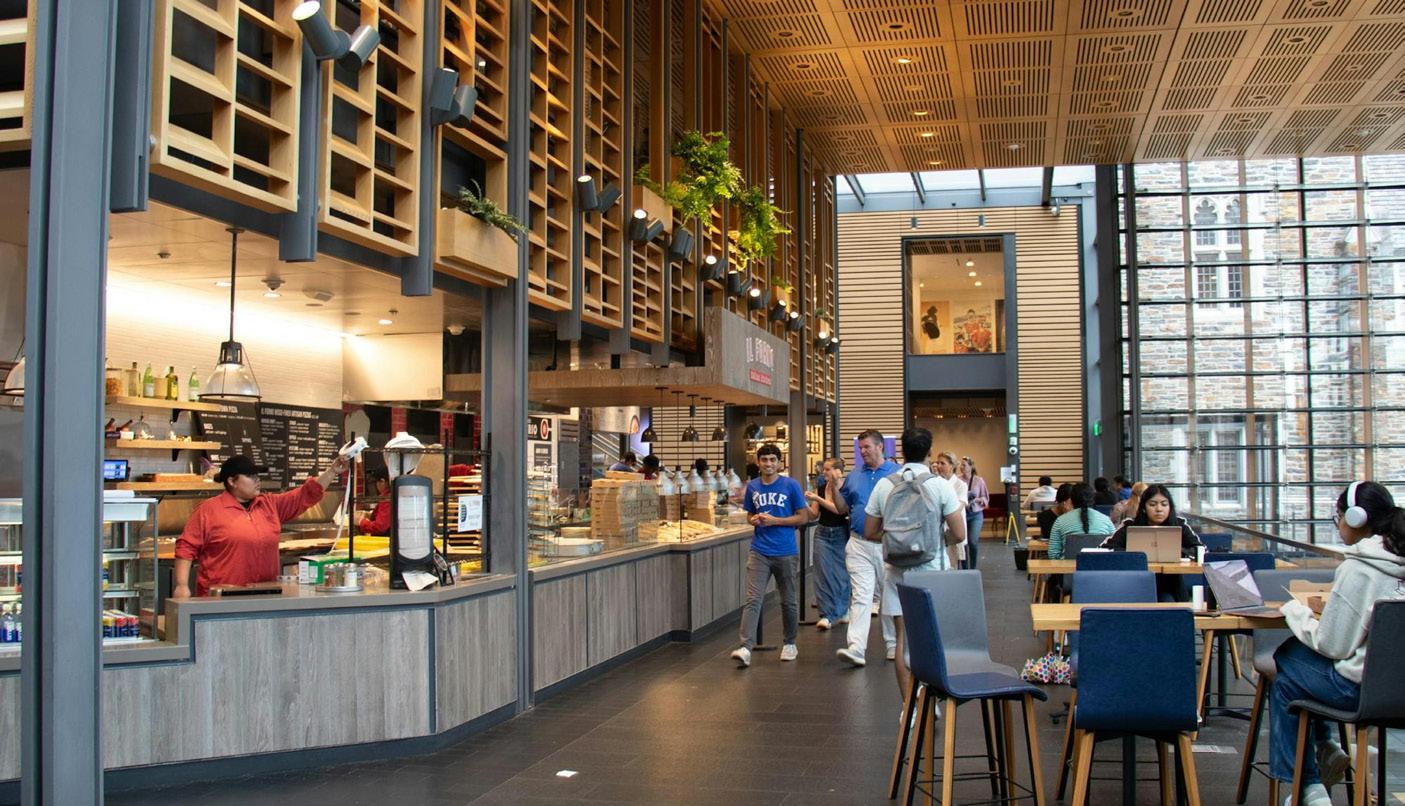
Duke Dining plans to repurpose the existing Tapas section located between Il Forno and Sazón in the Brodhead Center — more commonly known as WU — into a “deli concept,” the office confirmed in a Thursday email to The Chronicle.
Duke Dining did not share the new station’s name or when it would be installed. The office also did not respond when asked whether the new venue would continue to offer items currently sold at the Tapas station, such as empanadas, stuffed arepas and paninis.
“This is not a replacement, but an evolution of the space to better meet student demand,” Duke Dining wrote.
Deli-style offerings were “highly requested” by students, according to the office.
The Chef’s Kitchen on WU’s second floor recently experimented with a deli pop-up, Don’s Classic Subs, which lasted from mid-March until last Friday. The venue offered eight sub sandwiches while also allowing customers to build their own. According to Duke Dining, the pop-up resonated with students and
inspired the office’s decision to expand deli offerings on campus.
“This shift was driven directly by student feedback,” Duke Dining wrote.
“Through surveys, emails, conversations in [Duke University Student Dining Advisory Committee] and insights from recent pop-ups in the Chef’s Kitchen, Duke Dining identified a clear gap on campus for a deli-style offering.”
Duke Dining hinted at the decision on its Instagram story earlier this week, responding to a question about bringing back subs by writing that “good news *may* be coming.”
Although the email did not list specific menu items to be offered by the repurposed station, Duke Dining wrote that the deli will remain under the same operator as Il Forno and Sazón “to maintain consistency in quality and operations.” That operator, Brenen’s Restaurant Group, also operates Enzo’s Pizza Co. in Durham.
“This change reflects a thoughtful use of an existing space to bring in a concept students have been asking for, while continuing to build on the strength of the current dining program, ” Duke Dining wrote.
Want to learn more about Don's Classic Subs?
Scan the QR code to watch Chronicle reporters ask students for reviews of the popular spot.



The Duke Technology Center (DTC) is your on-campus technology solution. Located on the lower level of The University Store in the Bryan Center on Duke’s West Campus, we are your one-stop destination for all things tech-related.
Contact us at dtcorders@duke.edu. Prices, configurations, and availability are subject to change without notice.
Visit oit.duke.edu for your software needs, including Microsoft Office, at no charge.
Purchasing a computer through Duke University Stores provides your student with a loaner during any computer repair service. We work in conjunction with the OIT Help Desk located at The Link in Perkins Library.
Sign up for our Be the First to Know (BTFTK) to stay up-to-date on the most current offerings.







Click on the logos for access to each reservation site.
Use the QR Codes for mobile access. OR visit our site at https://duke.is/DTC
• Access to a loaner device whiles yours is being repaired
• Lowest prices on most current models
• Computers designed to get you through your 4 years at Duke
• Access to on-campus service and support
• Your EDU. Your Choice. Apple, Dell, Lenovo, and Microsoft





By Seyun Park May 11, 2026
After two years of demolition, construction and refurbishment, the Lilly Library renovation has reached its home stretch.
Despite original projections that the East Campus library could open in summer 2026, Duke officials now predict the reopening could be delayed to as late as the spring semester of 2027.
The $64 million project, which started in May 2024, now boasts a fully builtout addition to the library’s west side, making the new building 56,300 square feet — 75% larger than its pre-renovation size. The new library will introduce additional collaborative workspaces, an Innovation CoLab space and a cafe with an outdoor terrace.
The Chronicle was invited on a tour of the unfinished library, led by Project Manager Eddie Hull and Kelley Lawton, head of East Campus libraries.
“The original building was very much designed for solo scholarship study,” Lawton said. “In this building, we're retaining that, but we're also gaining … a lot more variety of spaces than we had before.”
The new Lilly Library Accessing the new Lilly Library will be much easier for first-years, thanks to two new entrances.
One, on the west side of the building closest to Brodie Recreation Center, leads from the outdoor terrace directly into the new cafe, while another on the southwest corner connects to the “backyard” area of East Campus.
The original entrance, facing Baldwin Quad, opens into the new atrium. The skylights above the atrium were refurbished during the project, but not replaced. Many other elements of the original Lilly Library, first constructed in 1927, were also preserved, including the original windows in the Few and Carpenter Reading Rooms.
“We really wanted to try and retain as much of the original as we could, if it was structurally sound,” Hull said. “There’s certainly a magic about being able to say, ‘This is original.’”
The Few and Carpenter Reading Rooms had their ceilings refurbished during the project and will soon be restored to their original Gothic design. The entrance area will also include a space for the Thompson Writing Studio, which currently has locations in Perkins Library and the Bivens Building.
The library’s cafe will be located behind the atrium and main service desk, in the new part of the building. Plans envision the cafe as similar to Perkins’ Von der Heyden Pavilion, along with outdoor seating for 70.
Visitors in search of physical books will no longer find them in Lilly Library’s familiar central stacks — four floors of steel bookshelves squeezed into a three-story building. Instead, the basement of the building will house around 150,000 volumes on new rolling compact shelves.
The basement of the library will also contain many of the 16 new collaborative group study spaces, a classroom and a new testing center for students with accommodations.
Upstairs, the historic Thomas Reading Room, which features much of the library’s Asian art collection, will also be restored to its pre-renovation look. A new balcony will connect Thomas to the other second-floor reading room. In addition, a 75-seat assembly space overlooking the terrace quad will host lectures, seminars and other events.
In total, the expansion and renovation will allow the library to seat 635 people, an increase from 444 pre-renovation. According to Hull, Lilly will serve as a “destination” for students on East Campus.
Next steps
Much of the exterior and shell of the library is now complete, with installation of solar shades on the new glass facade forthcoming.
Inside, though, much remains to be done.
Hull listed painting the ceilings, finishing the flooring and installing the HVAC system, audio/visual wiring, shelving and more as a sampling of work left to be completed.
“You can't do the work I've just described without getting the shell taken care of,” Hull said. “The shell is done. Now, it's just building in the interior to make sure that it's all working right.”
The region that will become the cafe terrace surrounding Lilly currently serves as a construction staging area. The tennis and pickleball courts located behind Lilly also recently closed, with the installation of new tennis courts set to begin this summer.
Hull said the University aims to receive its Certificate of Occupancy for the space in mid-September, which would signify the completion of true construction work. The next few months before opening would then be used to move in furniture and collections as staff settle into the building.



Despite the prolonged timeline, which Hull and Lawton attribute to general construction delays, the duo stressed that the library will be open sometime in the next academic year.
Lawton floated the idea that the library could unofficially open for the December reading period before its inauguration in January 2027; however, she said a hard reopening date would depend on construction progress this summer and early fall.
Until the library reopens, first-years can continue accessing library resources through the Bishop’s House and Music Library on East Campus.

By Claire Chen and Ryan Kilgallen
March 2, 2026 and March 4, 2026
Price secures third term
President Vincent Price will serve a third term as Duke’s president, Board of Trustees Chair Adam Silver announced Monday through a news release. His next five-year term will begin July 1, 2027.
As Duke’s 10th president, Price has led the institution through some of its most decisive moments, from a global COVID-19 pandemic to the University’s 100th birthday and a slew of federal challenges to higher education.
Price began his tenure as president in 2017 and was reappointed to a second five-year term beginning July 2022, of which he is now in his fourth year. In October, the Board of Trustees initiated a standard review of Price’s performance. A committee of trustees and faculty, led by Chair Patty Morton, a trustee, gathered information from their own ranks, students, alumni and external sources to evaluate Price’s record in office.
His strategic vision for the University is built on five pillars: empowering thinkers, transforming teaching and learning, strengthening campus community, forging partnerships and engaging a global network.
In his first term, Price oversaw expansions of Duke’s global footprint, including the launch of Duke Kunshan University’s
undergraduate program in 2018. Two years later he spearheaded the University’s response to the COVID-19 pandemic.
Price also pioneered anti-racism efforts, largely in response to the Black Lives Matter Movement. These included expanding diversity among faculty, improving students’ experiences and engaging with local communities.
At the start of his second term, Price formally announced The Duke Climate Commitment, an initiative that aims to address climate change. It was supported by $36 million in initial gifts and has notably led to Duke becoming carbon neutral in October 2024.
After looking back on Duke’s history during its Centennial celebrations in 2024, Price has sought to kick off an even stronger second century. He launched the Made For This fundraising campaign in February 2025, which prioritizes investment in Duke Sciences and Technology, the undergraduate student experience, Duke Health and the Duke Climate Commitment.
But Price has been faced with a tumultuous year since Trump took office for a second time. The Trump administration has attacked diversity, equity and inclusion initiatives, clawed back federal research funding for universities and slashed Medicaid reimbursement rates. Duke has opted for largely
keeping quiet — a strategy that has seen its criticism.
Alumni, students and community members have called on Price and other institutional leaders to make a public statement to preserve Duke’s values. Price, however, has countered that restraint should not be mistaken for passivity, asserting that no one should feel that “not talking loudly is, in any sense, an indication of complacency.”
Through its membership in the Association of American Universities, Duke has signed on to multiple lawsuits that oppose cuts to research funding. But unlike many of its peers, Duke has not signed on individually. It has complied with some of the Trump administration’s directives to halt DEI, such as by ending its partnership with The Ph.D. Project after the Department of Education investigated the University for “race-exclusionary practices.”
In March 2025, Duke began a costcutting program whose target eventually ballooned to $364 million. The program saw the departure of 644 staff and 82 faculty members through voluntary separation incentives and layoffs.
The cuts too saw some criticisms from faculty governance bodies who say they were not sufficiently consulted before enacting the program.

Duke to raise minimum wage
Duke will raise its minimum wage for eligible employees to $20 per hour beginning July 1, according to a Duke Today announcement.
The change applies to regular employees of the University and health system and contracted employees who work fulltime on campus. Duke’s $16.50 per hour student minimum wage will not be affected by the increase.
Over 4,000 Duke employees will benefit from the raise, and around 9,000 additional staff currently earning around $20 per hour will see further wage increases. Positions under collective bargaining agreements will be eligible for the

By Sarah Diaz February 12, 2026
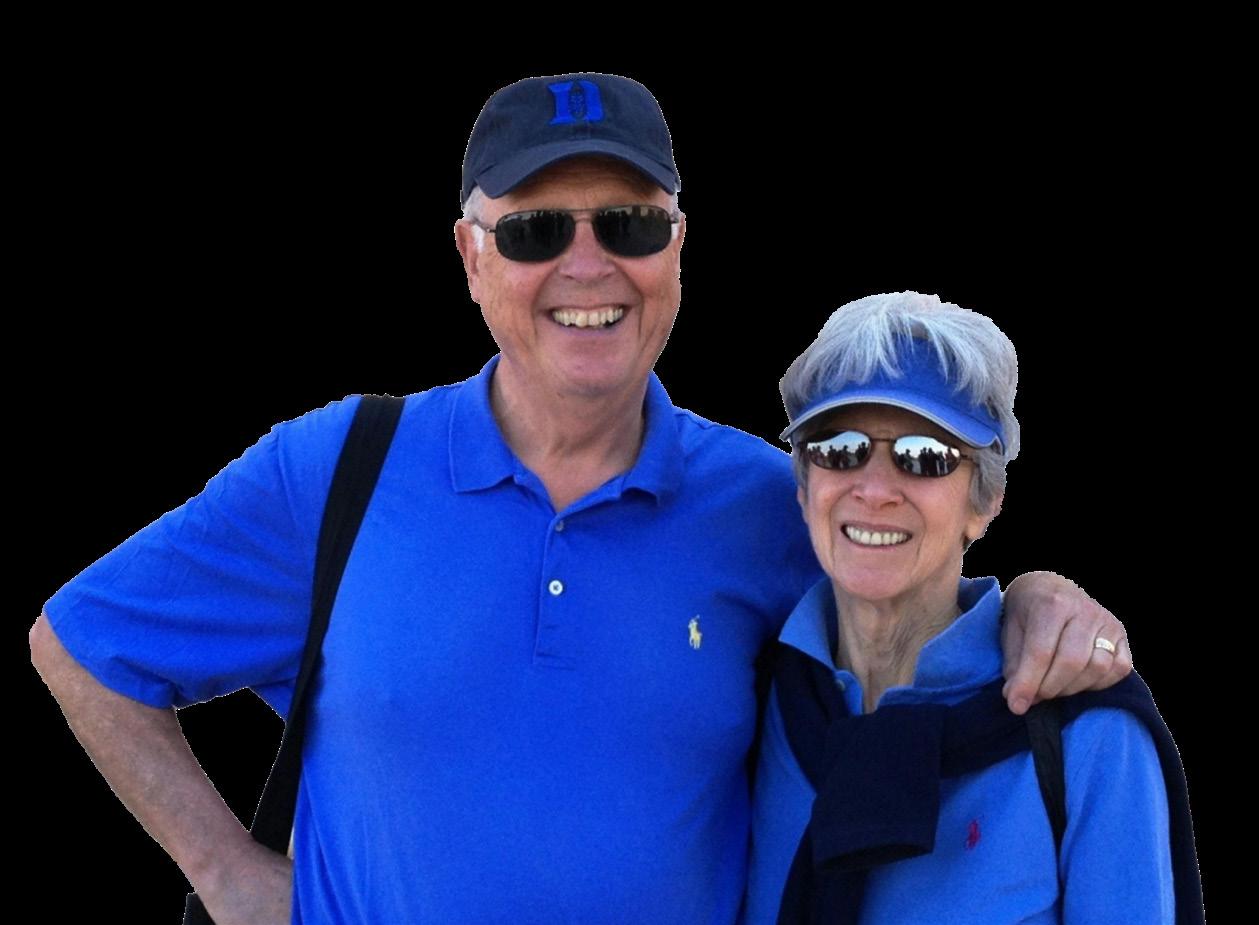
Duke relationships are often formed from late-night study sessions or evenings out at a party. However, for Carol and Eric Meyers, two prominent Duke professors emerita in the field of biblical archaeology, love emerged less conventionally.
The couple met at Wellesley college during Carol’s senior year. As Carol tells it, she was sitting at the visitor’s desk of her dorm when she heard a “wonderful voice” coming from a nearby room. It was a Friday night, and Eric was leading services for the Jewish students in her dorm. It was love at first sight — the couple got married nine weeks later.
As fate would have it, both were selected to participate in a summer symposium in Israel on biblical archaeology before graduate school. This program was competitive and faculty focused; in fact, the couple were the only two students that had been accepted.
“That seemed like a sign that we were meant to be together,” Carol said.
They came to Duke in 1969, when Eric was invited to join the department of religion. Eric said he “absolutely fell in love with the campus and the environment” and he immediately “felt very much at home.” At the time, Carol was still completing her graduate program, but was also promised a job at the University when she finished school.
“[Eric’s] Ph.D. adviser told him … it would be a good first job,” Carol said. Little
did they know, that job would last over 50 years and become not only both their first jobs, but their last ones as well.
At Duke, the Meyers led archaeological expeditions with students from 1970 until 2015. Spending all day working and living with students is something few professors have the ability to do, and Eric described it as “one of our pride and joys.”
“We became best friends literally with hundreds of students,” Eric said.
For the Meyers, excavations were a family affair. Their youngest daughter went on her first dig when she was only six weeks old, and later joined officially when she herself was a student at Duke. On their first expedition with all their children, the Meyers struggled to bring diapers to Israel, which were not easily accessible at the time.
“We had 30 students that summer when she was an infant, and I calculated how many Pampers we would need for six weeks and divided it by 30,” Carol said. “Each student had to bring [extra diapers] in their luggage.”
In 1981, the Meyers made the biggest discovery of their careers, when they unearthed an ancient Torah ark in Israel’s Upper Galilee region, which remains the oldest to this day. The ark is an ornamental chamber in the synagogue that would have housed the Torah scrolls that were the essence of Jewish worship in antiquity. The site had been excavated in the late 1800s,
but archaeologists hadn’t dug deep enough to discover the ark.
The groundbreaking find was made difficult by ultra-Orthodox Jews in the area who attempted to stop their excavation efforts. Because the Meyers allowed women to work on the site and did not regulate their dress, Eric recollected a time when he was summoned before a Rabbinical court and forced to defend the “immodest attire” present at the digs.
According to Eric, they had to “smuggle” the artifact into the department of the antiquities authority in Jerusalem in the middle of the night.
When the couple returned home and submitted a report of their find ings to Duke’s news outlet, they ex pected interest within academic sec tors. Instead, unbeknownst to them, their discovery landed at the per fect cultural moment. That same year, Hollywood had released the Indi ana Jones movie “Raiders of the Lost Ark.”
Their find had nothing to do with the biblical Ark of
the Covenant, but the coincidence was irresistible to reporters. Soon media outlets began celebrating the couple as real-life “Indiana Joneses.”
While visiting New York, the couple was unexpectedly invited to “Good Morning America.” With only “blue jeans and bathing suits” in their carry-ons, they had to make an emergency shopping visit for clothes to wear on the air. The Meyers were later interviewed by People Magazine, who took advantage of the Duke Chapel crypt to stage a photoshoot of them dressed like Indiana Jones and Marion.
The Meyers’ scholarship goes beyond
rector of the doctoral program in religious studies for over 15 years, and he founded the Jewish Studies sity of North Carolina at Chapel Hill.
By Lila Cohen April 5, 2026
Scarlett Chapital was terrified to open her Duke admissions decision, so much so that she delegated the task to her 9-year-old brother as she hid in the attic. It was the last decision she was waiting on, and the acceptance she wanted the most.
Fortunately for the New Orleans native, her brother bore good news; she got in.
Chapital was one of the 2,083 prospective Blue Devils admitted to Duke through its Regular Decision admissions cycle last Tuesday. For them, and the 847 students admitted in December through the Early Decision admissions cycle, the stress of college application season ended on a high note. The overall acceptance rate for the Class of 2030 was around 4.7%, comparable to the Class of 2029.
Although Chapital is not yet committed to Duke, when she heard she was accepted, she was “definitely excited … it was hard to feel much else.”
Josie Harrell, from Pensacola, Fla., also experienced a range of emotions when she was admitted Early Decision to Duke — her “dream school.”
She called her reaction, which was posted on her parents’ Facebook accounts, “embarrassing” but “awesome.”
For Harrell, the first thing that “caught [her] eye” about Duke was the school spirit around basketball. But, the more she looked into the University, the more she fell in love with it.
“Duke definitely shocked me, because when I visited the campus, it was so different from everything else I've seen before,” Harrell said. “It’s just like a mixture of everything.”
Chapital got to see campus when she dropped off her sister, a junior.
“I just really liked the atmosphere there … the space seemed very encouraging and creative,” she said.
Harrell echoed Chapital, praising both the physical environment of Durham and North Carolina as well as the University’s social culture.
“I’ve never met someone from Duke who isn't extremely kind,” Harrell said.
Also accepted through Regular Decision, Dhruv Bhardwaj, from Weston, Fla., was motivated to apply to Duke for slightly different reasons. He thought the University would provide effective
See ACCEPTANCE on PAGE 14
“I just screamed ‘Oh my God!’, jumped up from the seat and started pacing around, confused, but also shocked,” Harrell said. “My brother jumped five feet into the air because he was just excited.”

ACROSS 1. Wallop 5. C.S ____, author and theologian 7. Tennis star Naomi 8. Carries 9. Terminal degs.
1. Rorschach shape
2. Greek author of "The Lion and the Mouse"
3. Area
4. Took the Appalachian Trial, e.g. 6. Attitude
mini mum wage increase as well, pending union agreement.
The University previously raised its minimum wage for regular employees from $17 to $18 per hour in 2024. The minimum wage has grown by over 50% since 2015, when it increased from $10.91 to $12 per hour.
Duke is the largest employer in Durham County and the second-largest private employer in North Carolina. In 2023, 62.4% of Duke’s employees lived in the City of Durham. The city pays a minimum wage of $21.90 per hour to its employees; the state and federal minimum wages are both $7.25 per hour.
The pay increase follows years of pressure from progressive Durham organizations demanding that Duke contribute more to the local community. Durham Rising, a coalition of unions and social justice organizations formed in 2025, has called on the University to raise its minimum wage to a “living wage” of $25 per hour, among other demands. President Vincent Price previously pushed back on Durham Rising’s proposals at an Oct. 16 Academic Council meeting, characterizing them as “calls to just hand them the money.”
$24.35 an hour is Durham’s liveable minimum wage for an adult without any dependents, according to the MIT living wage calculator. $20 per hour is nearly double the University of North Carolina at Chapel Hill’s employee minimum wage of $10.61.
The press release also noted that the University is evaluating “additional investments in its workforce” that will be announced “in the coming weeks.”
Adam Klein, associate vice president for economic development, announced a range of new programs to increase University investments in Durham in October. At the time, he highlighted the recently launched Center for Community-Engaged Scholarship and an economic mobility framework that sets Durhambased goals for hiring, development, purchasing and investment across the University and health system. Klein also stated that Duke would double its hiring of formerly incarcerated Durham residents and deposit around $22 million in community investment funds that support affordable housing and small business growth.
early Jewish and early Christian times. Carol is editing a volume on aging in the ancient Near East, while Eric is working with the American Society of Overseas Research on cultural preservation efforts in Muslimmajority countries. Eric also serves as a cantor at his synagogue and enjoys golfing.
This year, the Meyers are spending Valentine’s Day in Cameron Indoor Stadium, cheering on the Blue Devils with a couple of their former students.
FROM PAGE 13
pre-professional opportunities and emphasize community service.
As someone planning to major in economics, he wanted to go to a university that would prepare him for job recruiting.
“One of the things I really wanted out of the college experience was definitely preparation for the career world really early,” Bhardwaj said.
Watch the Class of 2030 react to their acceptances!

Carol served as director of undergraduate studies of Religious Studies, in addition to working in the Women’s Studies program for over two decades. Much of her writing is on the role of women in the biblical world.
“I don't think there's anyone alive or even deceased who has done what she has done for that field,” Eric said.
Now, the couple is working together to edit a work on the household in biblical and
Similar to Chapital, Duke was Bhardwaj’s last decision to open. The lead-up was “tense” and “climactic.”
Bhardwaj’s mom told him that she had been “calling to the universe that day” and wishing “for something good to happen.”
As Bhardwaj opened his decision surrounded by family on the living room couch, that wish came true.
Duke was “absolutely [his] top choice.”
By Claire Cranford Sept. 9, 2025
Luis Juárez is not afraid. But with his Temporary Protected Status now expired, he is running out of options.
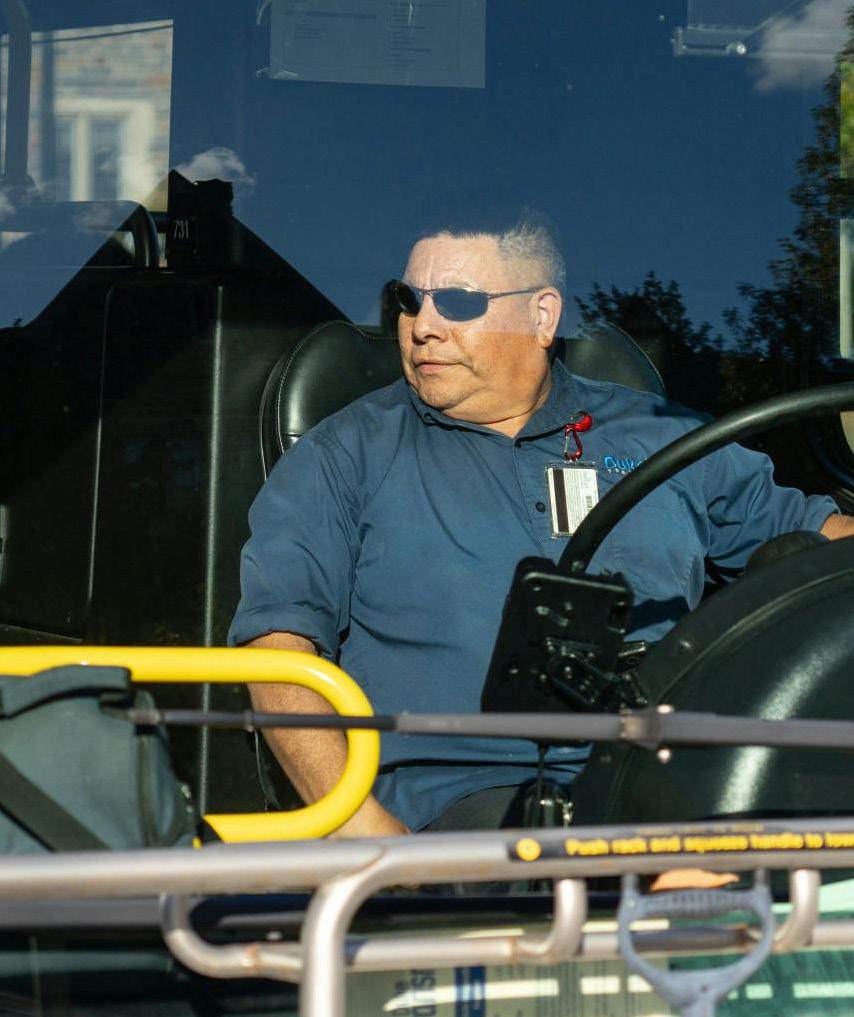
On weekday afternoons, Duke students boarding the C1 “party bus” are greeted not just by a driver, but by a chorus of languages. “Hello. Hola,” Juárez says, always flashing a smile in the rearview mirror.
After nearly two decades driving Duke buses, Juárez has learned to recognize a wide range of student languages and greet them in kind. The party bus is a rolling community — one marked by music, warmth and familiarity.
But starting this week, Juárez is no longer allowed behind the wheel.
Juárez, a Honduran immigrant who has lived and worked in Durham for over 30 years and at Duke for 19, is at risk of deportation after the federal government revoked Temporary Protected Status (TPS) for Honduran nationals effective Sept. 8. The decision stripped him of his legal rights to stay in the U.S. and has left him vulnerable to removal from the only community he’s known in the U.S. for two decades.
“I’ll be alright,” Juárez said. “All the support, all the hundreds and thousands [of people] in support, I don’t feel alone. And God’s with me too. Everywhere I go, God.”
The fight for a visa
While Juárez has drawn support from students and lawmakers, his longtime employer has remained largely quiet. Duke has not sponsored a work visa for him, and Juárez said his other paths to citizenship are limited because he first entered the country without documentation, and TPS was only granted to Hondurans three years after he came to the U.S.
Juárez first visited Duke Visa Services in late July to see if Duke would sponsor an employment-based visa for him, accompanied by a crowd of students there to support him. While he said at the time that he left feeling optimistic, ultimately, Duke said there was nothing it could do for him.
“Mr. Juárez is beloved by many at Duke. Since we learned of the change to his immigration situation, Duke has provided him with significant support and resources. At this stage, the University has done all it can under the law,” a University spokesperson wrote in an Aug. 26 email to The Chronicle.
According to Juárez, though, sponsoring a work visa for him would not have been impossible. But he said Duke only sponsors visas for what he called “high positions.”
“They told me, ‘not qualified.’ You have the bus drivers, the housekeeping — not qualified. You gotta have a high degree, like … scientists or doctors, like that. Then you can apply for a visa,” he explained. “Bus driving, housekeeping, no.”
Duke declined to comment on its policies for awarding work-based visas, but a spokesperson did write in a Monday email to The Chronicle that the University has worked closely with Juárez since learning his TPS would be terminated.
“Sadly, Duke exhausted all its options to support Luis after advocating on his behalf,” the email continued. “We were hopeful for a different ending and we share the sadness felt across our community at this outcome, which is out of our control.”
However, Juárez said he only had a singular meeting with the visa services team and has since heard nothing.
Once it became evident that the path to legally remaining in the U.S. would not be through Duke, Juárez turned to community organizing. That way, his story would reach more people, beyond just those at Duke.
“[Duke] should keep me working. You know, driving this bus,” Juárez said. “It's important too, right?”
Siembra NC, a North Carolina-based advocacy group that supports Latino immigrants, began amplifying Luis’ story. On Aug. 27, it organized a demonstration to support him. Local policymakers, including Durham City Council Member Javiera Caballero, were in attendance — but there is only so much a group of people can do when the issue lies at the federal level.
Eyes on Washington
With a work visa seeming less and less attainable and community support swelling, Juárez turned to politicians — namely, N.C. Republicans — for their help in appealing to President Donald Trump.
On Sept. 4, dozens of students traveled with Juárez to the state capitol building to attend a press conference organized by State Rep. Marcia Morey, D-Durham, and State Rep. Maria Cervania, D-Wake. There, they called on Sens. Thom Tillis and Ted Budd and NCGA House Speaker Destin Hall to ask Trump to grant Juárez Deferred Enforced Departure (DED).
When 50 to 60 Duke students filed into the General Assembly to advocate on Juárez’s behalf, Morey was moved.
“The best advocacy was phenomenal by the number of Duke students who came over by bus with him, who supported him, who spoke about what an amazing person he is,” she said. “Luis is the exact kind of person who should have a deferment, who should be here, as he has contributed to the Durham community.”
The following day, Morey and Cervania sent a joint letter to Tillis and Budd, urging them to intervene. In the letter, the representatives emphasized Juárez’s nearly two decades of service at Duke, his spotless criminal record and his role as “a pillar of the community.”
“We ask that you please help us to advocate for Luis to the Trump Admin. or the State Department. Luis wants to continue working, providing for his family and seeing his students,” Morey and Cervania wrote. “…
This is a tremendous opportunity to reaffirm that documented immigrants do play a role in our economy and community, we support immigrants with no criminal record, and we should expand legal pathways.”
Trump granting DED would not be unprecedented. Just before leaving office in 2021, he granted DED to Venezuelans whose TPS had expired, citing political and humanitarian crises in that country. Morey and other local members argued that Juárez’s case is similar: he’s a longtime resident with no criminal record, who has contributed to his community.
According to Morey, Tillis’ office provided a short response indicating the senator would need to “consult” with an attorney present before commenting further. Budd’s office replied with a longer acknowledgement of Juárez’s case but declined to intervene.
“Given the posture of the Administration toward other categorical parole programs,” the response read, “it is unlikely that Temporary Protected Status will be renewed again for Honduran nationals.” Budd’s office then advised Juárez to seek private legal counsel.
To Morey, those answers fell short.
“We reached out to [both offices]. We got responses today, which said ‘He needs a good immigration lawyer,’” Morey said in a Monday interview. “Well, he already has [one]. And our letter was specifically for their influence with the Trump administration to protect Luis, to protect Hondurans with no criminal records.”
Juárez himself has been measured in describing his disappointment.
“I feel happy here,” he said. “I like to work with the students, with you. I put on music and keep it happy. The students, they like me — I got a lot of people here.”
“[Duke] knows all the support I have,” he continued. “Maybe they will do something for me. The president here, the president of Duke, he knows already. They might do something for me. I don’t know.”
Bigger than himself
Though Juárez is now the face of the immigration fight in Durham, he insists his story represents thousands more — and by putting his name out there, he is incurring an increased risk of deportation.
“He's representing many, many others who are in the same situation he is, and many of those people don't want to be public,” Morey said. “His courage and his commitment [are] admirable.”
Around 72,000 Honduran immigrants in the U.S. are under TPS. The program allowed them to live and work legally but provided no pathway to citizenship. Many, like Juárez, have built lives over the decades, raising families and embedding themselves in their communities.
“Ever since I heard that they were going to take away TPS status, I've been so worried, I couldn't even sleep,” Juárez said at the Aug. 27 rally. “And what I would like to ask for is support in having permitted work status like I have had. I have my house; I have my family.”
The stakes are high. Without action from the Department of Homeland Security or the White House, Hondurans with TPS may be forced to return to a country many barely know, where Juárez says poverty remains widespread.
“This is the only country they've known. They have come from countries where it would be unsafe to go back,” Morey said. “It’s just heartbreaking.”
Juárez’s immediate future depends on whether federal officials choose to intervene — through DED or another form of relief, though it’s unclear what that might be. A GoFundMe for Juárez’s legal fees and immigration lawyer has amassed roughly $12,000 of its $15,000 goal as of Monday night.
Morey said she will continue to press North Carolina’s senators, even as the ultimate decision lies with the Trump administration.
“A person like Luis, anyone who would see his plight would have compassion for him and say he needs to stay in this country,” she said. “He's been just a wonderful employee, a friend of so many, and dedicated to contributing.”
And for Juárez, now is not the time to be afraid.


Scan the QR code to take a ride on Luis' Party Bus:

Scan the QR code to see the many ways you can connect your faith and learning at Duke . BRIDGING FAITH & LEARNING