
The independent student news organization covering Duke since 1905.

The independent student news organization covering Duke since 1905.
Our curriculum will train you to understand the ethical, legal, and social implications of science, medicine, and technology and better prepare you for success in your field. Certificate graduates are eligible for a 50% merit scholarship toward the Duke Master’s in Applied Ethics & Policy.
Science and the Public Certificate
Into STEM but want more than data? Want to delve into how we actually price drugs, deal with climate change, publish research, talk to conspiracy theorists, and regulate gene editing? Check us out!
Digital Intelligence Certificate
Building the next big thing in tech or curious how tech affects society in unexpected ways? Want to explore where innovation aligns - or doesn’t - with humanity’s best interests? Develop your Digital Intelligence! scienceandsociety.duke.edu/dq scienceandsociety.duke.edu/satp

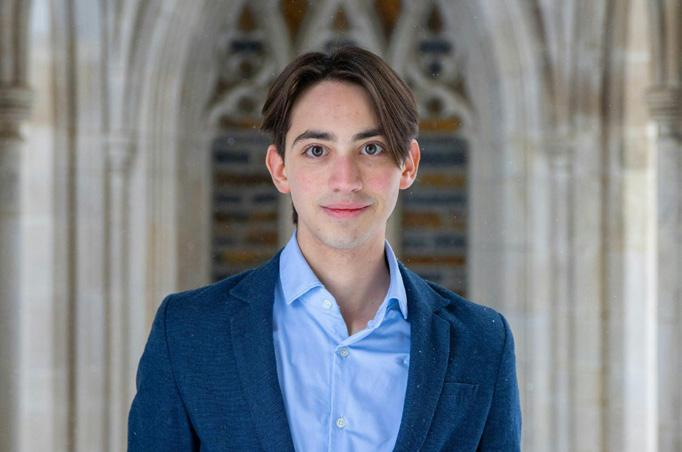
I talk to my friends about The Chronicle a lot — perhaps too much. They get to hear about my back-and-forth emails with administrators, how I decide what stories we are going to run in a given week and my repeated pleas for them to read our reporters’ pieces (most of them do).
But even for my friends, The Chronicle is confusing. They consistently ask me questions about our relationship with the University — “Is The Chronicle part of Duke? Does Duke try to restrict what you publish about them?” — to our physical presence on campus — “How many people are part of The Chronicle? You guys have an office?” — and also how we operate — “Wait, you publish over the summer?”
Although some of the answers to these questions may seem obvious to those of us inside the newsroom, I have come to realize that it is unfair to expect the general public to
understand the ins and outs of The Chronicle, especially in a time when trust in the media is lower than ever. Since beginning my tenure as editor-in-chief a little over a month ago, I have recognized that the onus falls on us to explain who we are and what we do.
So, whether you are a wide-eyed incoming first-year who’s never heard of The Chronicle, a faculty member who has occasionally glanced at our website or an avid alumni reader, you can certainly learn something about how The Chronicle operates.
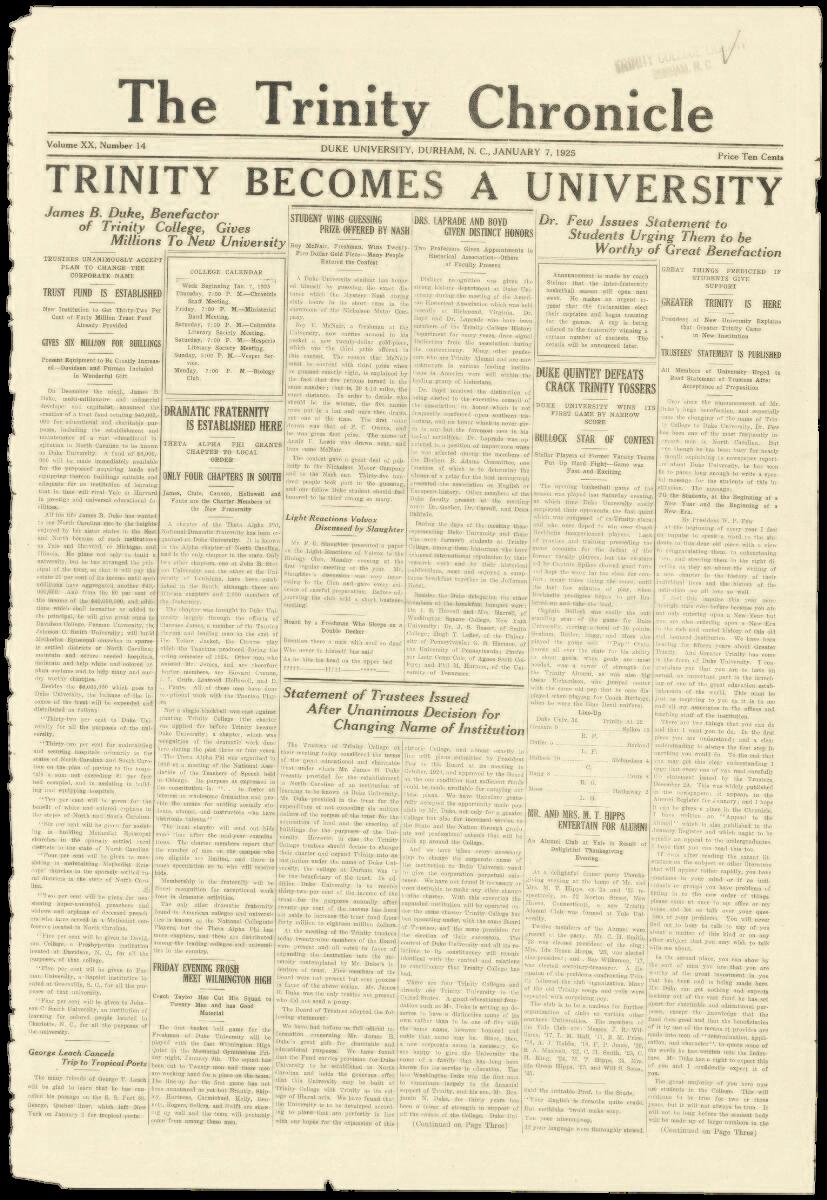
The Chronicle is currently in its 122nd volume, which as we like to say, makes us older than Duke itself. Over the past century, there have been many changes to what we do: There are no more daily prints, and we now have a large presence on Instagram. But, the core of our job remains the same.
According to the Oxford English Dictionary, a chronicle is “a detailed and continuous register of events in order of time; a historical record, especially one in which the facts are narrated without philosophic treatment, or any attempt at literary style.”
To me, this definition encompasses exactly what The Chronicle aims to do. We record the history of Duke and Durham without fear or favor, from the large policy changes to the daily moments of campus life. We write the facts as they are, excluding "philosophic treatment” and “attempt at literary style” (although we do try to ensure our writing is not dry).

CONSIDER CODE+, A TEN-WEEK COCURRICULAR CODING EXPERIENCE THAT PROVIDES VALUABLE HANDS-ON EXPERIENCE. Students participate on small project teams and receive mentorship from IT professionals and graduate students.
Rising sophomores and juniors with little to no experience in tech will gain exposure to industry tools while working with each other, IT leaders at Duke, and industry experts to create a solution for a real-world challenge at Duke or beyond.
Build technical and communications skills to prepare for industry internships.
We are there for the University’s great achievements and also there to hold it accountable when administrators might prefer to keep something out of public view. In 1993, The Chronicle became financially independent from Duke and established itself as a 501(c)(3) nonprofit organization. How are we funded? Partially from readers like you, although we also raise revenue through advertisements and other investments.
Importantly, our independence does not mean we are removed from campus. In fact, you can find us atop a steep staircase on the third floor of the Flowers Building, which is located in between the Brodhead Center and the Chapel. All of our writers, editors, photographers, videographers and graphic designers are students. The editor-in-chief is responsible for all editorial content, a large role for a recently-turned 20-yearold like me, but we hope that knowing the faces behind the news makes it easier for our audience to trust us.
You may be wondering what else we cover. For one, we report extensively on Duke athletics. Our reporters sit courtside in Cameron Indoor Stadium and travel across the country to watch as Blue Devils score baskets and touchdowns. In Flowers and beats’ groupchats, you’ll find students who care about all 27 of Duke’s varsity sports.
The Chronicle also has a recess section for those interested in the arts and culture scene of Duke and Durham; from movie reviews
to features exploring the student artists on campus, we try to capture the artistic pulse of the community.
Those who feel more strongly call our opinion section home. It is our only department that requires applications, but our columnists make compelling arguments about how national politics affects Duke or how to make friends. Anyone is also welcome to submit a guest column, although there are standards that must be met, as decided by the opinion editor.
Finally, if you have no interest in writing or reading whatsoever, our photo and multimedia departments produce stunning pictures, entertaining graphics and newsworthy reels each day.
If you have made it this far, I hope you have learned something about The Chronicle, and for the students reading this, I also hope it’s encouraged you to consider joining.
When I walked into 301 Flowers for the first time, my life was changed forever. Being part of The Chronicle has been the defining part of my Duke experience, and I know it can be for many of you as well. Everyone is welcome to join The Chronicle regardless of major (my predecessor was a Pratt star studying biomedical engineering) or experience. And you don’t have to want to be editor-in-chief to contribute; some of our writers only submit stories every other month.
So, this is my humble plea. Join us. Be there. Help us be Duke’s “historical record.”

GAIN EXPOSURE TO:
• Git
• Python
• Ruby/Ruby on Rails
• HTML
• CSS
• Javascript
• code & Swift
• REST APIs and JSON
• Shibboleth
• OAuth
• SOL
• React
LEARN SKILLS SUCH AS:
• Conducting stakeholder interviews
• Requirements gathering
• Agile development
• Wireframing and prototyping
• Accessibility & UI/UX design
• Presentation skills
• Project and product management

By Staff Reports
The 2025-26 academic year included costcutting in response to federal policy changes, historic wins for the University’s sports teams and the rise of artificial intelligence.
Before students returned to campus, the Trump administration began to target Duke. In May, the federal government terminated $129 million in funding dedicated to HIV vaccine development led by the University. Then, in July, the Trump administration froze $108 million in National Institutes of Health funding to Duke after two federal agencies launched investigations into the University for alleged racial discrimination and violations of the Civil Rights Act.
Alongside pressure from the federal government, Duke spent the summer initiating an array of cost-cutting measures that had been announced in March 2025. Nearly 600 staff members departed the University through a voluntary separation incentive program, with involuntary layoffs soon following.
Campus started to feel different in the fall as the full effects of Duke’s cost-cutting program — which produced $229 million in savings for the fiscal year 2026 budget — started to take root. Subject librarians were quietly laid off and graduate student programs were shuttered.
The academic year also began with a new curriculum for the Class of 2029 in the
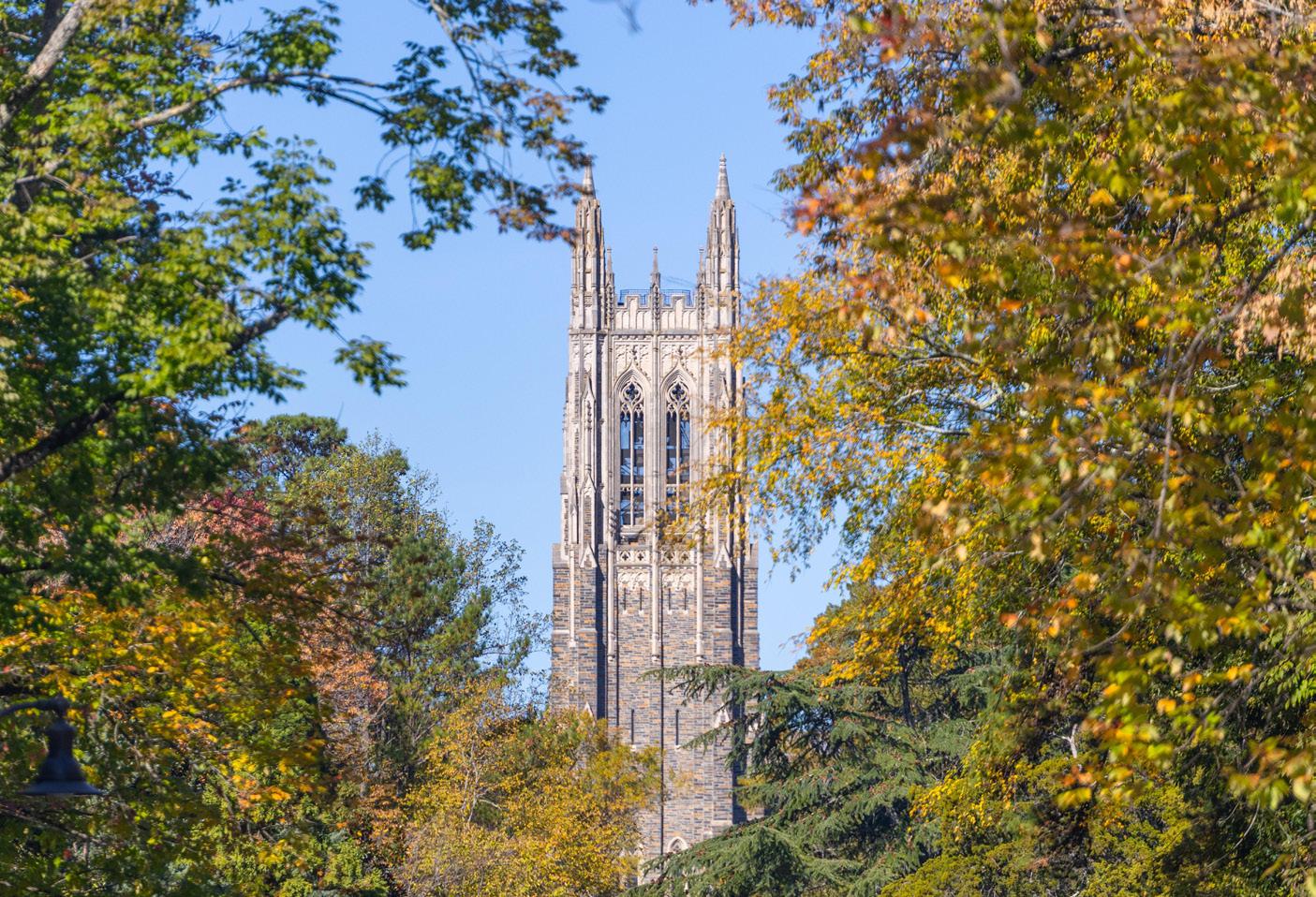
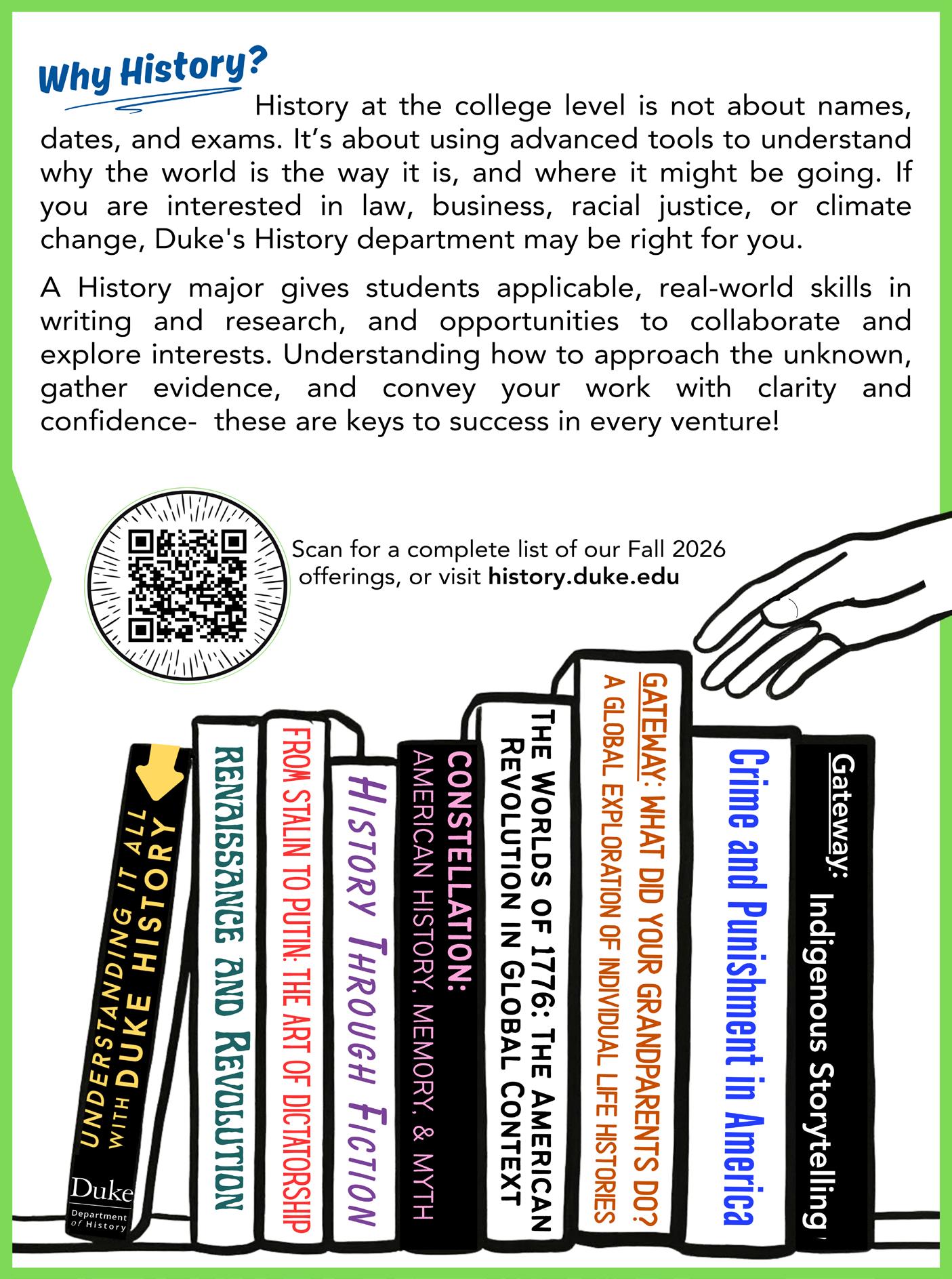
Trinity College of Arts & Sciences, which drew mixed reactions from first-years. The new class had to participate in either the FOCUS program or join a Constellation, a set of three courses exploring an interdisciplinary topic over the course of the academic year.
In November, Durham held its municipal elections, in which Mayor Leonardo Williams and Council Member Chelsea Cook were reelected while newcomers
Matt Kopac and Shanetta Burris defeated incumbents DeDreanna Freeman and MarkAnthony Middleton, respectively, for spots on the council.
The impact of the federal government’s policy changes went far beyond higher education, reaching Duke’s international and immigrant community members. As international students and faculty faced visa delays, beloved C1 driver Luis Juaréz lost his immigration status, had it restored and then
lost it again, prohibiting him from driving his “party bus” across campus. Margoth Erazo, a former University housekeeper, also lost her immigration status and was forced to stop working. Duke Kunshan University, the University’s flagship campus in China, also came under scrutiny, with its future unclear.
Right before Thanksgiving, Border Patrol agents entered Durham, sparking fear among community members and encouraging some students to protest monthly to call on Duke to become a “Fourth Amendment Campus.” In a spring referendum, over 90% of students endorsed the demand.
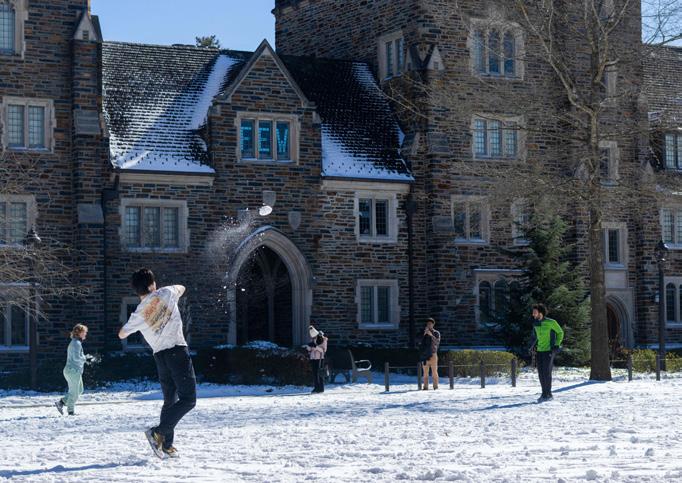
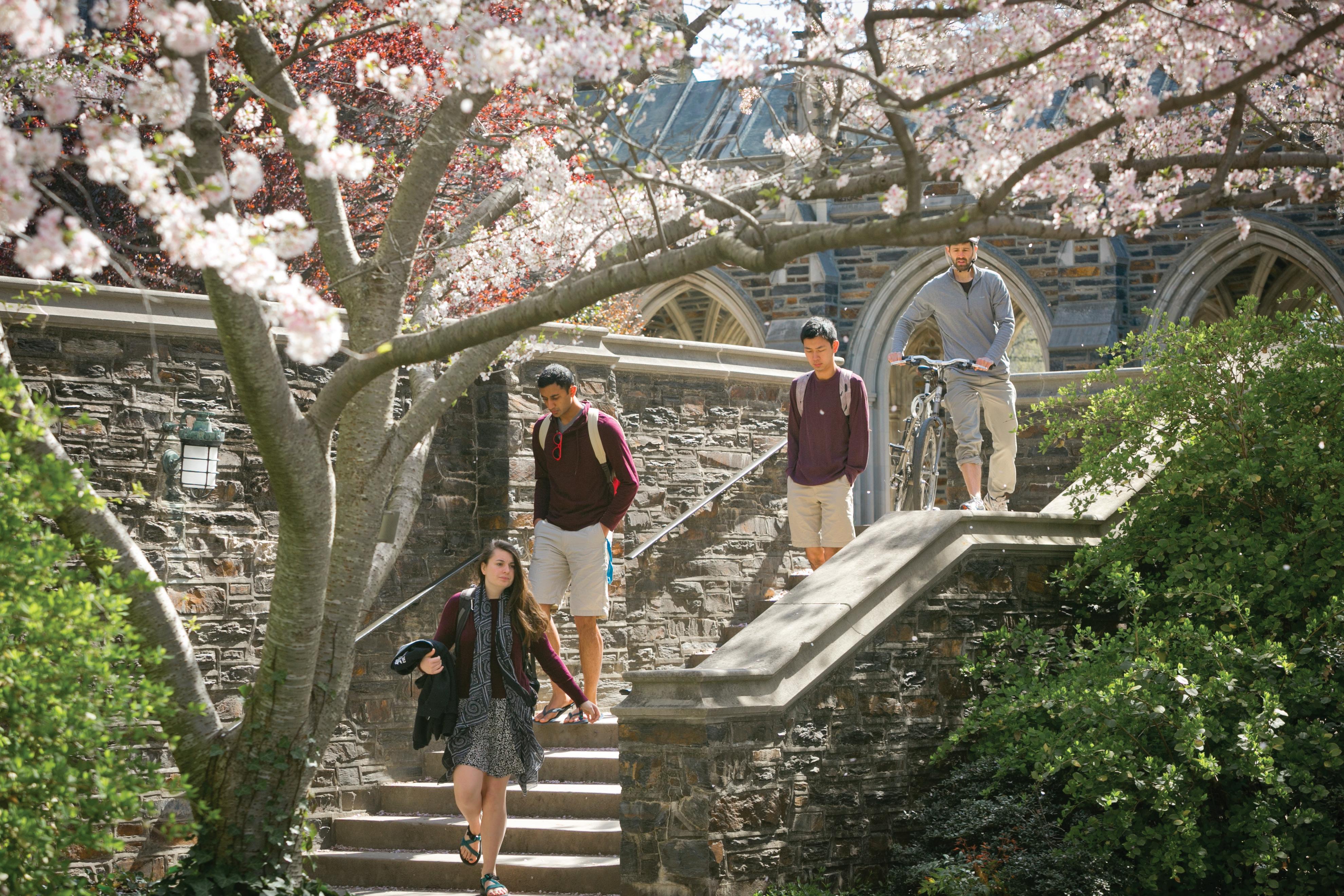
The new semester kicked off with a series of snow days after winter weather swept through North Carolina. Students fanned out across campus to go sledding in the Duke Gardens and partake in frosty fun. As the campus warmed up, community members returned to the Gardens to see the iconic cherry blossoms, breaking visitation records.
In the athletics world, Duke saw many successes during the 2025-26 season. The academic year marked the first in which an ACC school won the men’s basketball, women’s basketball and football conference championships in a single year. Men’s fencing also won the ACC Championship, its third title of all time.
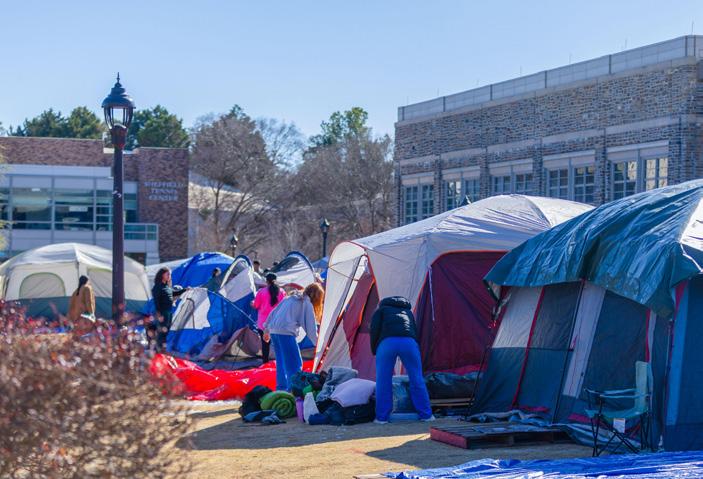
Students camped out for five weeks in Krzyzewskiville to see men’s basketball face North Carolina in Cameron Indoor Stadium. Cameron Crazies also broke the Guinness World Record for the largest knockout game, with 711 participants. The long wait in tents was worth it as the Blue Devils got revenge against their rivals after February’s loss in a buzzer-beater upset to the Tar Heels at the Dean E. Smith Center.
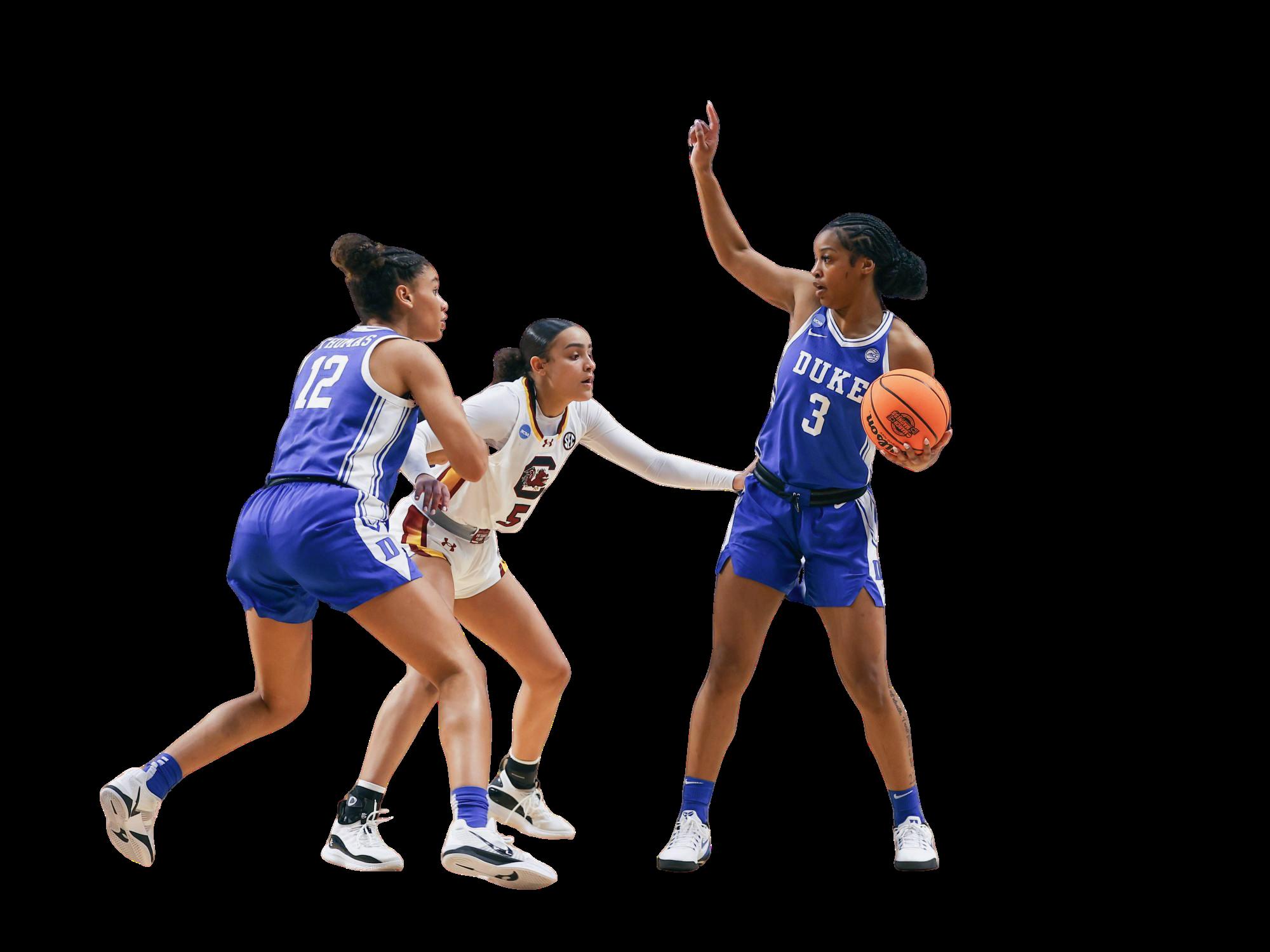
Both men’s and women’s basketball went to the Elite Eight in their NCAA tournaments this year, but lost respective heartbreakers to UConn and UCLA. Football took home the Tony the Tiger Sun Bowl trophy after defeating Arizona State, and head coach Manny Diaz earned a contract extension through 2031.
Two years after the Oct. 7, 2023, Hamas attack on southern Israel, activism around the war quieted down. However, Duke made national headlines for two controversies in this area. In September, comedian Jerry Seinfeld compared the “Free Palestine” movement to the Ku Klux Klan in a surprise appearance on campus. In the spring, Student Affairs initially froze the status of Duke’s Students for Justice in Palestine chapter, then restored it following an initial assessment.
The University tried to capitalize on the expansion of artificial intelligence this year, launching a Provost’s Initiative on AI over the summer that led to a March report discussing how the University can lead on AI. Duke granted all undergraduates unlimited free access to ChatGPT-4o and even developed its own AI model, DukeGPT. Professors found increasingly innovative ways to use AI in the classroom, while the University’s libraries looked to protect their collections against developers.
As the federal government cracked down on diversity, equity and inclusion initiatives across America, particularly in higher education, Duke took notice. It announced a new approach, known as “inclusive excellence.” As part of this transition, the University made changes to key programs, including opening Baldwin Scholars to male applicants and halting the Black Student Alliance Invitational and Latino Student Recruitment Week for admitted students.
Duke slipped to No. 7 in the U.S. News and World Report’s Best National Colleges Ranking. During the admissions cycle, the University saw a 7% decrease in Early Decision applicants and accepted 13.1%. In the Regular Decision round, Duke received
a record high 55,776 applications, admitting 3.7%, resulting in an overall acceptance rate of 4.7% for the Class of 2030.
During the March primary elections, North Carolina voters set up a U.S. Senate race to replace retiring Republican Sen. Thom Tillis, choosing former Democratic Gov. Roy Cooper and Republican Michael Whatley as the nominees. Closer to home, Durham Democratic primary voters narrowly renominated incumbent Rep. Valerie Foushee after a heated challenge from Durham County Commissioner Nida Allam.
Over the course of the year, several new administrators took the helm, including Deborah Rutter, vice provost for the arts; Mary Frances Luce, dean of the Fuqua School of Business; David Zaas, CEO of the Duke University Health System; and JR DeShazo, incoming Joel L. Fleishman dean of the Sanford School of Public Policy.
Among those departing Duke were Dean of Undergraduate Admissions Christoph Guttentag; Colin Duckett, executive vice dean for basic and preclinical science; Ed Balleisen, senior vice provost for interdisciplinary programs and initiatives; and Greg Victory, assistant vice president
of student affairs and Fannie Mitchell, executive director of the Career Center.
The Duke community also lost valued members, including junior Olivia Ayiku, senior Abigail Yohannes and Bradley Simmons, instructor of music and director of the Duke Djembe and Afro-Cuban Ensembles.
The University mourned a number of emerita community members this year, including two deans emerita of the School of Nursing, Marion Broome and Mary Champagne. Others who died this year include Sheridan Johns, professor emeritus of political science; George Christie, James B. Duke professor emeritus of law; Daniel Kaplan, former assistant professor of medicine; Robert Sawyer, founding executive director of the Duke Talent Identification Program; and former Professor of Medicine Robert “Jess” Peter.
In this year’s student elections, junior Angela Chen was chosen to succeed senior Tara Singh as Duke Student Government president. Senior Kaitlyn Williams was selected as the undergraduate Young Trustee.
On the last day of classes, students celebrated with a live concert headlined by Quavo and featuring performances by Slayyyter and WHATMORE.

Explore the world’s biggest environmental challenges through entry-level courses at Duke University’s Nicholas School of the Environment. You don’t need to know your major to begin exploring where science, policy and real-world impact intersect.

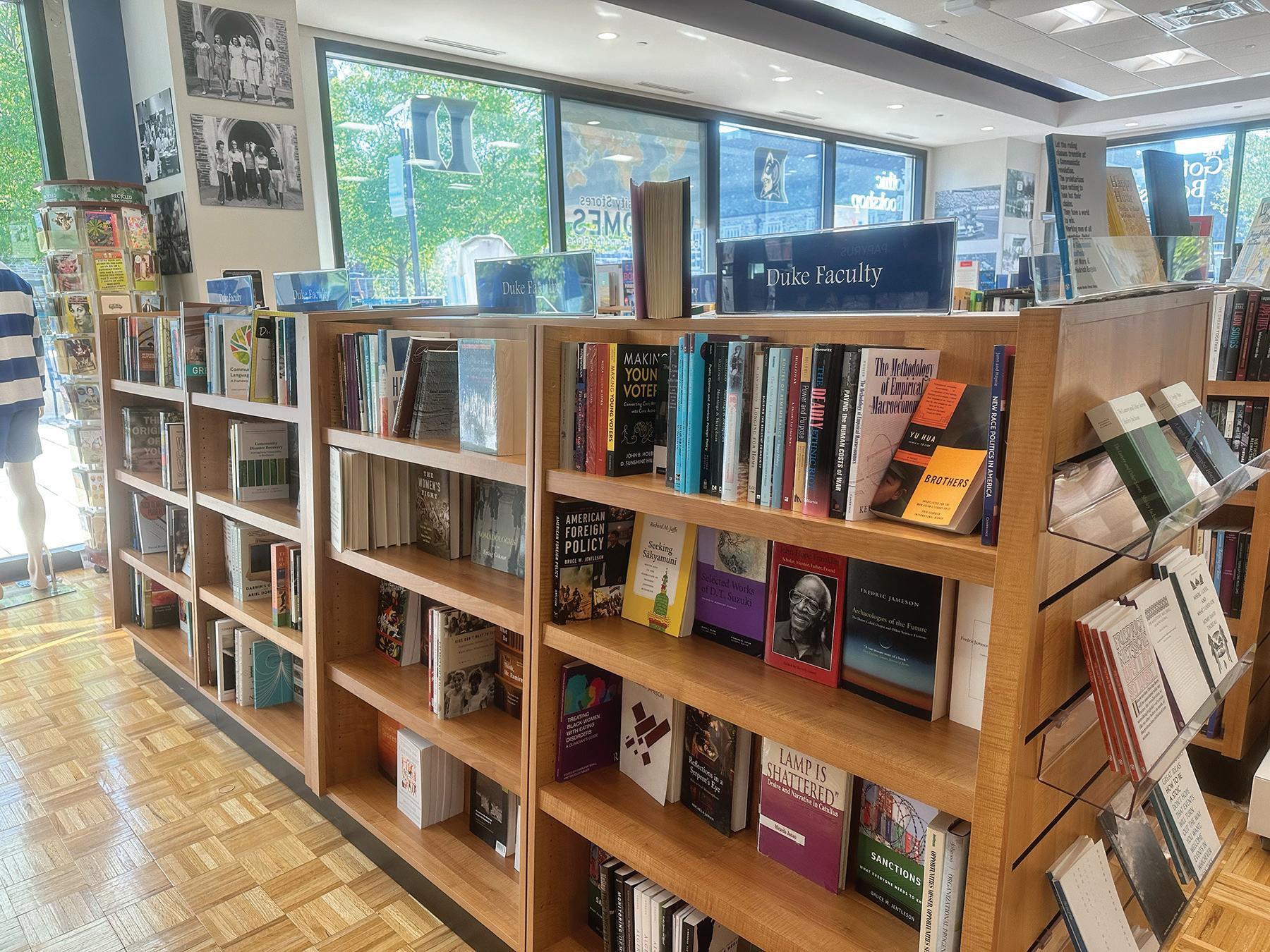
The Gothic Bookshop has been Duke’s independent bookshop since 1956. The shop offers a selection of Duke gift books, books by Duke faculty and alumni, as well as current fiction, non-fiction, scholarly, reference, and general titles to the Duke University community, worldwide. We are also your on-campus source for The Unemployed Philosopher’s Guild, Lifelines, Cognitive Surplus, reading glasses, fun gifts and gift bags, jigsaw puzzles, and a wide range of curated greeting cards. Stop by our store conveniently located on the top level of the Bryan Center, just inside the University Store.
Need to purchase books with department funds? We offer competitive pricing.
Keep your money in the university. Call the Gothic Bookshop first. We accept procurement cards and also provide FREE DELIVERY ON CAMPUS! For details, call 684-3986 or email gothic@duke.edu.
Upper Level of the University Store, Bryan Center, West Campus 919-684-3986 • gothic@duke.edu
Academic Year Store Hours Monday - Friday: 8:30am - 6pm Saturday: 9am - 6pm • Sunday: 11am - 4pm
By Ella Moore
Jan. 23, 2026
The FOCUS and Constellations requirement for Trinity College of Arts & Sciences’ Class of 2029 marked a key change in its curriculum. Previously, first-year students had the choice to voluntarily opt-in to FOCUS but now they are required to either complete FOCUS or pick three courses from a “Constellation” cluster.
For some students, Constellations’ yearlong requirement has placed constraints on their exploration of other courses and their ability to fulfill requirements.
“It can be inconvenient to some people’s curriculum, and people are having to overload,” first-year Annabelle Marsh said.
Constellations run year-round and require participants to take three courses during their first year that pertain to their chosen topic. Constellations students do not live together but participate in at least one experiential activity per semester.
First-year Kate Fludgate who is in the “How do humans and natural systems interact in our complex world?” Constellation acknowledged that many of her peers have expressed frustration with the rigidity the Constellation requirements and core curriculum have caused, preventing them from taking more than one class outside of these frameworks.
But Fludgate shared she had a positive experience with her courses.
“I’ve really loved how having the same group of people in two classes, especially the small writing class I had this semester … was able to bond us really nicely,” Fludgate said. “... A lot of my best friends are in my Constellation now.”
Marsh chose Constellations due to her interest in the “How do sports shape society?” option. She particularly enjoyed her class on Duke basketball, which explored the brand through the lenses of race, media and migration.
“I’ve played sports all my life, so I've been exposed to it,” said Marsh. “But I think learning the ins and outs of what else is involved and the community it brings together was really cool.”
Constellations are generally considered less of a commitment than FOCUS. Under FOCUS, first-years participate in a cluster of two-to-four courses surrounding an academic theme, live with their fellow cohort students in a designated campus dorm and participate in weekly dinners or outings during fall semester.
For some students, FOCUS is still the right option.
Lily Oliver, a first-year participant in the “It’s Not Too Late to Build a Better World” FOCUS, said she appreciated the amount of “hands-on learning” experiences she had with the program, including trips to Duke



Campus Farm and the Duke Gardens, as well as talks from guest speakers.
For Kimberly Samboy, an international first-year student, the FOCUS program was an opportunity for her to get off campus and become more involved with the Durham community by taking part in service learning at a Montessori school near East Campus.
Samboy said she did not have as much information as she would have liked before deciding to pursue a Constellation instead of a FOCUS in its inaugural year. Still, she appreciated having a tangible framework to help her navigate her first year. She said the FOCUS classes prioritized learning over academic rigor and that the professors were knowledgeable on how to help first-year students navigate their first semester.
Unlike Samboy, Nigel Cooper, a participant in the “Free For All: Freedom, Justice, and Citizenship” cluster, felt FOCUS programs had much more rigor than he expected, especially compared to Constellations. He felt the classes could have been “more introductory” to help students ease into their first year.
Students in FOCUS pointed to the living-learning experience as a key benefit over the Constellations program.
Cooper got the opportunity to travel Washington, D.C. and build community within his dorm through his FOCUS program.
“If you want to get a community and make friends, FOCUS out-does Constellations 10 times…” Cooper said. “Everybody who was in my class, we all stayed on the same floor … Most of them are still my friends going into the second semester.”
Samboy also felt that it was convenient for her to interact with fellow first-years and make friends through the program.
The first-year curriculum requirements could make it more stringent to plan some rigorous academic routes like completing a double major and pre-professional requirements. But although that was the case for Cooper, he still felt that first-years reap unique benefits from being exposed to fields in FOCUS and Constellations they otherwise would not encounter.
“If Duke didn’t have a curriculum, most students wouldn’t be able to become exposed to most of the classes Duke has to offer,” Cooper said.
"If Duke didn't have a curriculum, most students wouldn't be able to become exposed to most of the classes Duke has to offer."

By Ana Despa and Sophie Levenson Nov. 21, 2025
A clown stood on the curb outside a Durham elementary school Thursday morning, sporting a green tutu around her neck and a string of little disco balls draped over her shoulders. Cat ears jutted out from a headband she had added to the getup. Her colorful, hand-painted sign read, “KEEP ICE OUT OF DURHAM.”
Next to Ae Bügger, the founder of the local movement Clowns 4 Good, the woman’s outfit looked quite tame: Bügger sported a giant plush banana as a hat, turquoise bananaprint swim shorts, rainbow sneakers and patterned leggings. They juggled neon pink, orange and yellow balls next to the small crowd of parents and community members who had gathered to protest the presence of Customs and Border Protection agents in Durham — especially at schools.
Bügger, 28, said they founded Clowns 4 Good in the last couple of years to bring “joy and silliness and support to make people feel safe and seen and celebrated” at protests and community movements.
“I think anger and despair are incredibly fueling for resistance movements, but joy is sustaining," Bügger said. “It diverts the flood of hopelessness and sadness.”
Since Tuesday morning, when CBP agents were first seen in Durham county, Durham Public Schools has seen a drop in attendance from students, some of whom may be undocumented or have undocumented parents. According to a DPS spokesperson, the overall attendance rate on Tuesday was 79.1%. The average district-wide attendance for DPS in recent years has hovered just under 90%.
In response, Durham residents have communicated, organized and mobilized, voicing their opposition to the presence of immigration enforcement in the community and seeking to reassure vulnerable students that school remains a safe place.
The Durham offshoot of the national campaign Public School Strong has led an organized effort to support families who are afraid of sending their children to school. The group was in the process of reemerging and building its membership base when the reports of Border Patrol agents coming to Raleigh made headlines earlier this week. They sent out a volunteer call to their membership network Monday night, and
by Tuesday evening, they had 1,600 parents and neighbors sign up for membership and information. By Thursday morning, that number had jumped to 2,700, said Katie Barnhill, a core coordinator for the group.
The group has organized cohorts of parents and community members to stand outside schools across the district during drop-off and pick-up times, holding signs of support and serving as neighborhood watchdogs. Volunteers are also forming “walking buses” to escort children to their guardians who are afraid to leave their homes.
“We have seen a few specific instances where volunteers have been in the neighborhood, and because of the relationships that were already in place, parents will see the volunteer groups and have actually sent their kids to school when they hadn't planned to,” Barnhill said. “We have gotten kids in the building that weren't going to be there.”
But Barnhill emphasized that the group could only pull together such a response because of the dedication of the broader Durham community. In fact, Durham Public School Strong had not led the organized effort until Wednesday morning, meaning that Tuesday afternoon’s volunteer coverage during pick-up was an “organic” response to unexpected sightings of Border Patrol agents in Durham earlier that day.
That spirit of support was on full display at Durham School of the Arts (DSA) Thursday morning. As students trudged to their
classrooms before the 8:30 morning bell, energetic volunteers waved and welcomed them to campus. Amy Cleckler, a DSA parent, wore turquoise gloves to fend off the cold. In the folds of her rainbow-colored scarf, a silver whistle glistened.
Carol Bono, standing with Cleckler, had a whistle as well. Both women attended a training this week by Siembra NC, a nonprofit focused on defending undocumented immigrants from federal agents. They learned a whistle code to alert other volunteers if they see unmarked white cars with out-ofstate license plates, which tend to signify the presence of CBP agents, and were taught they have the right to videotape encounters with federal agents.
According to DSA Assistant Principal Charles Carter, between 100 and 200 students have been missing from class this week — or roughly 6% to 12% of its student body, based on estimates from previous years. For Cleckler and Bono, the goal as they stood in the DSA drop-off line was not to encourage scared parents to take their kids back to school before they deemed it safe.
“I wouldn’t want anybody to send their kid to school if they didn’t feel comfortable,” Cleckler said.
Instead, they hoped to send a message to border patrol agents that they were not welcome at schools or in the greater Durham community. The volunteers also said they See IMMIGRATION on PAGe 16
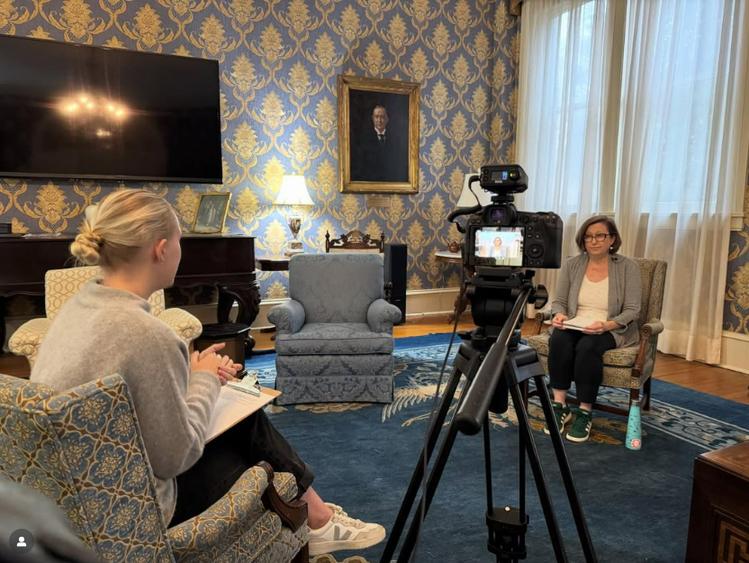
By Seyun
Park April 6, 2026
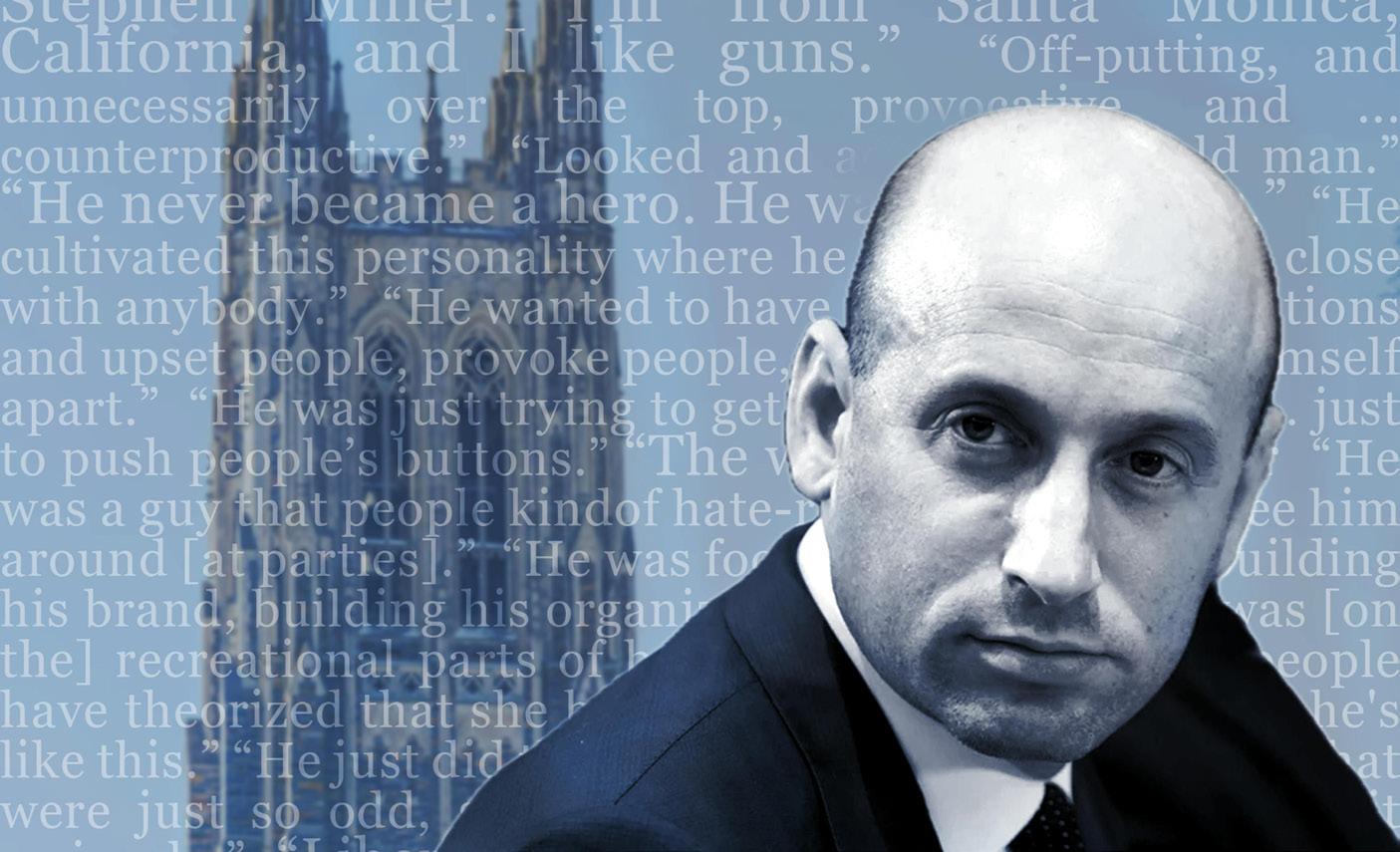
“Hi, I’m Stephen Miller. I’m from Santa Monica, California, and I like guns.”
According to those who met him during freshman orientation, that is how Stephen Miller, Trinity ‘07, made his first introduction at Duke. Miller quickly earned the nickname “Guns,” and his penchant for attracting attention would continue over his Duke career and beyond.
Miller, currently President Donald Trump’s deputy chief of staff for policy, first made headlines in his rise to power as a speechwriter for the president in 2017. In the following decade, Miller’s power and position have only grown, and he now advises Trump on matters ranging from immigration and homeland security to foreign policy and education.
But before Miller, 40, became one of the nation’s most powerful men, he was an 18-year-old student, living in East Campus’ Pegram dorm, writing columns for The Chronicle and leading conservative activism on campus.
Miller’s four years at Duke became a launching point for his political career.
Twenty years later, those who knew Miller remember him as an eccentric and provocative character on campus — ultimately a reflection of the person he would one day become.
‘Libertarian Lounge Lizard’
Miller liked to carry around a sword. An actual, metal sword.
Alongside his sword, Amy Terwilleger, Trinity ‘07, who lived in Pegram during Miller’s first year, recalled him walking around in a “weird, brown bathrobe” and drinking scotch. As a first-year, Miller “looked and acted like an old man,” she recalled.
A common memory of his dormmates is that Miller, who looked old for his age, would buy alcohol for others at their behest. Miller “launched into angry rants” if cashiers tried to card him, according to journalist Jean Guerrero, author of “Hatemonger,” a 2020 biography about Miller.
Reporting by Vanity Fair’s Evgenia Peretz confirmed his first-year habits. Peretz added that Miller liked to smoke Nat Sherman cigarettes — something he would later defend in a Chronicle column — leading Peretz to characterize his “slinking around” as that of a “Libertarian Lounge Lizard.”
“In some ways, he was just a normal 18-year-old kid,” Terwilleger said. “He just did these things and said these things that were just so odd, so off the wall that you didn't take it seriously … like typical kids trying to get attention — they say kind of outrageous things.”
One of Miller’s first-year professors, Hein Goemans, recalled on a podcast earlier this year that Miller told him he wanted to work in the White House one day. Goemans claimed he followed up, asking Miller in his POLSCI 122 class who he would work for, to which Miller replied: “Donald Trump, maybe.” The Chronicle could not independently verify Goemans’ claims, and Goemans declined the Chronicle’s request for comment.
But the most common recollection of Miller’s first-year was his romantic life. Guerrero published Miller’s romantic interest under the pseudonym “Yovana.” Guerrero said Yovana was “romantically involved with
[Miller]” while Terwilleger more bluntly said, “he was hooking up with her for a while, and it was really odd.”
Yovana, who hailed from the southern border town of Eagle Pass, Texas, supposedly held more conservative views, which brought her closer to Miller. Guerrero reported that at the time, Miller was more interested in Yovana than she was in him, and that “she didn’t want people to know she was intimate with Miller.”
“Some people have theorized that she broke his heart, and that’s why he's like this,” said Rebecca, a Pegram resident alongside Miller who requested her last name not be published out of privacy concerns. “But I don’t think that it’s that simple.”
‘A guy that people kind of hate-read’
Beyond Yovana, who moved away after their first year, most who knew Miller struggle to point to specific people as his friends or close confidants.
“You didn’t see him around [at parties],” said Oliver Sherouse, Trinity ‘09 and a fellow conservative columnist for The Chronicle. “He seemed like he was focused a little bit on building his brand, building his organizations, more than he was [on the] recreational parts of being a student.”
Still students certainly knew who he was. Miller made a name for himself on campus through his Chronicle column “Miller Time” and by seemingly trying to anger as many people as possible. His peers admitted that, at times, he certainly succeeded. By the time he was a junior, the brand of Stephen Miller was thriving.
“He was a guy that people kind of hateread,” Sherouse said of Miller’s columns. “They read him, but they read him because they enjoyed being angry about it.”
In October 2005, Miller wrote his second column for The Chronicle titled “Tricky extrapolations,” where he defended radio show host Bill Bennett, who had said one way to reduce crime was to “abort Black babies.” The response was immediate. Over a dozen people submitted letters to the editor in the next few days condemning Miller’s remarks. And that was exactly the kind of response he hoped to get.
“He was just trying to get a rise out of people … just to push people’s buttons,” Terwilleger said.
One of Miller’s editors at The Chronicle, Vol. 101 Editor-in-Chief Seyward Darby, Trinity ‘07, echoed how Miller’s divisiveness led to him never really making friends.
“He cultivated this personality where he didn't want to be close with anybody,” she said. “… He wanted to have really extreme positions and upset people, provoke people and just really set himself apart.”
Darby recalled wanting to have “diversity of viewpoints” at the time Miller was selected to be a columnist, including “at least one more conservative voice amongst the columnists.” But in retrospect, she said, The Chronicle probably should not have published his column.
‘Perversion of justice’
Miller’s most famous Chronicle columns came starting in March 2006, when he sided with the Duke men’s lacrosse players accused of rape. Through multiple columns and appearances on national television networks like “O’Reilly Factor” and “The Nancy Grace Show,” Miller argued that the players deserved a “presumption of innocence.” He also believed that District Attorney Mike Nifong was carrying out a “perversion of justice,” among other opinions.
Miller got his fair share of flak in the form of letters to the editor in The Chronicle throughout the scandal, including from Jamaur Bronner, Trinity ‘10, Alex Cho, Fuqua ‘07 and Samiron Ray, Trinity ‘10.
“He enjoyed those letters where people were like, ‘This is so offensive. I can’t believe you’d say this,’” Darby said.
But ultimately, in this case, Miller emerged as the supposed champion of justice: The charges against the three accused Duke lacrosse players were dropped in April 2007.
In a 2017 interview with The Atlantic, Miller stated that his advocacy for the players was the thing he was “most proud of from his college years.”
Although Miller’s dialogue amid the lacrosse case did not transform him into a campus celebrity, he did gain recognition for leading the charge for the lacrosse players.
“He never became a hero. He was not popular,” Sherouse said. “… But there was a sense of kind of grudging respect among people who didn’t agree with him … at a certain point you had to answer to the guy.”
Darby views it as a critical turning point for Miller.
“I don't think he’s ethically right. But I think that, certainly on the facts of the case, he ended up having argued for the correct side of things,” she said. “And that put him in even better stead with the cohort of pundits that he was being celebrated by.”
‘Unnecessarily over the top’ rhetoric
Although rare, Miller was at times outflanked by conservatives further rightleaning than him. In 2016, Miller rejected ties to white supremacist Richard Spencer, who claimed he had mentored Miller at Duke.
Another activist whom Miller rejected was Strouse Campbell, Trinity ‘07. Campbell was and is a proponent of the controlled demolition conspiracy of the 9/11 attacks. Campbell claimed that he was supposed to debate Miller on the issue in 2007, but Miller pulled out two days before the debate.
“My understanding is that [he] just didn’t want to go on record into the physics of the building collapses, and they were kind of depending on some kind of an emotional type appeal,” Campbell said.
Miller was unequivocal in his condemnation of Campbell in 2007.
“I think that these students disgraced our university,” Miller told The Chronicle at the time. “… The only way you could support such a claim is if you have a deep-seated hatred of America.”
But Miller, who was the executive director of the Duke Conservative Union in his senior year, did not always get along with more moderate fellow conservatives either.
“Even people who might be inclined to agree with him found his rhetoric offputting, and unnecessarily over the top, provocative, and ultimately, for them, it was counterproductive,” said Joe Fore, Trinity ‘07 and then-vice president of academic affairs for Duke Student Government.
Sherouse said that Miller lost him and many other conservatives in another one of his fights: academic freedom. During his sophomore year, Miller founded a chapter of David Horowitz’s group “Students for Academic Freedom,” later inviting Horowitz to speak in March 2006.
Fore worked with many student groups through DSG but said he does not know if anyone else was actually part of Miller’s club, suspecting it may have only existed on paper. Either way, Miller circulated an “academic freedom pledge” to Duke professors, which he claimed would “affirm [the professors’] commitment to students’ intellectual rights and guarantee that their classrooms will not be used as a place for promoting a partisan agenda.” Once again, letters to the editor ensued.
“This narrative that, ‘Oh, [professors are] out to get you, and they’re dangerous, they’re hurting America.’ It struck me as silly,” Sherouse admitted. “… Somewhere along the way, we’ve lost the plot.”
‘He likes the attention’
As one of the country’s most partisan figures, opinions of Miller today differ widely.
Darby called Miller “the worst person [she] ever met.” On the other hand, Adam Zell, Trinity ‘08, said Miller is the “greatest man to come out of Duke since President Nixon.” Zell worked with Miller on the 2006


@ d u k e u n i v e r s i t y s t o r e s


@ d u k e u n i v e r s i t y s t o r e s



B e t h e f i r s t t o k n o w a b o u t n e w a r r i v a l s , s p e c i a l c o l l e c t i o n s , t h e l a t e s t i n t e c h n o l o g y , s a l e s e v e n t s , a n d m o r e .

@ d u k e u n i v s t o r e s h t t p s : / / b i t . l y / 3 U k L k h n

Duke’s most important information, at your fingertips
Find and reserve group study rooms in seconds NEW

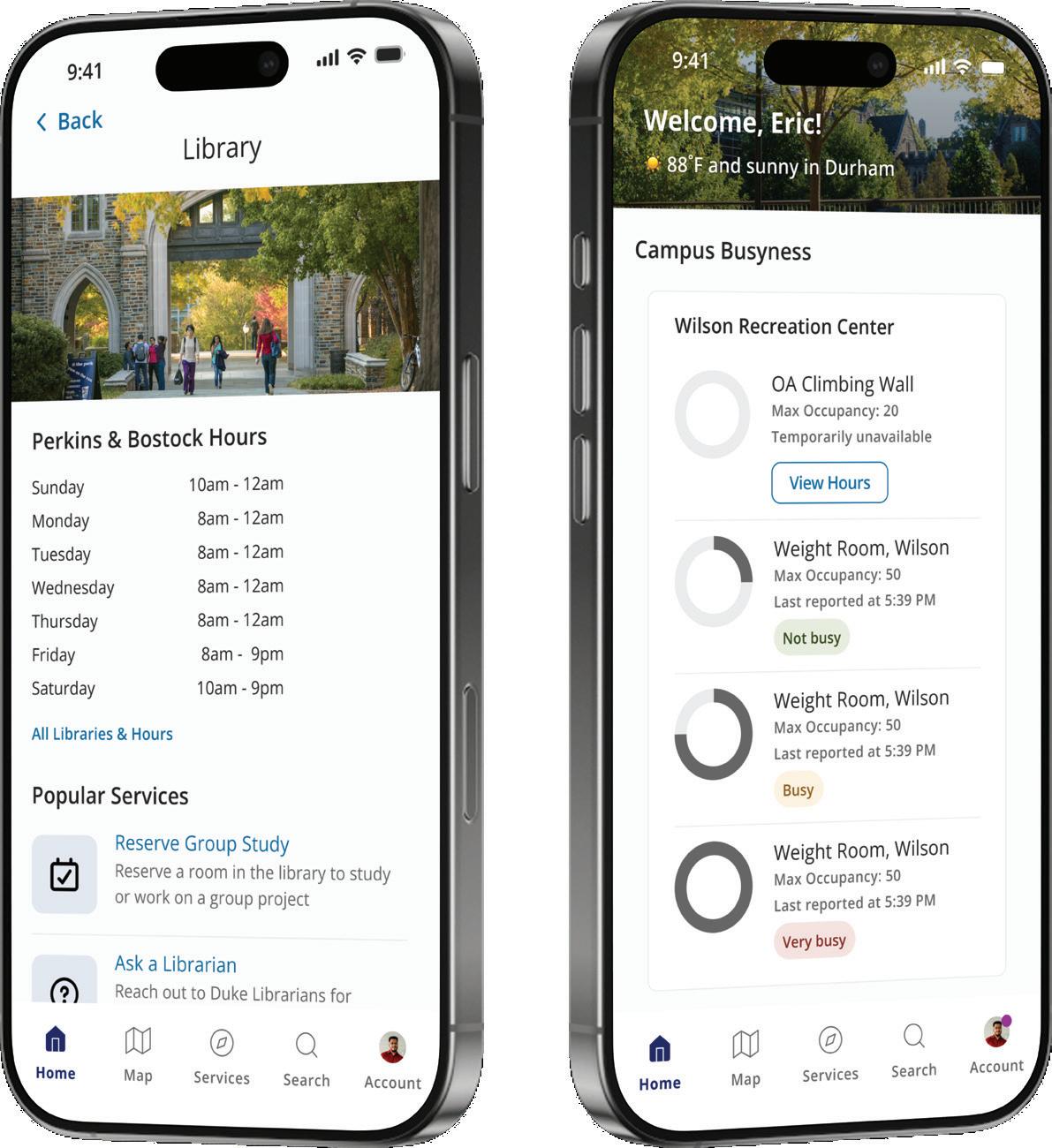


Plus, easy access to campus essentials: maps, transportation, events, dining, and more
Check gym crowds before you go






By Dylan Halper
Jan. 26, 2026
Higher education has become awash in debates over how to regulate students’ use of generative artificial intelligence tools since the launch of OpenAI’s ChatGPT in 2022. However, these conversations often overlook professors’ use of AI to aid with their teaching or to create assignments for their students.
Over the summer, Duke debuted a Provost’s Initiative on AI, which included a partnership with OpenAI to provide all undergraduate students and some faculty, staff and graduate and professional students free unlimited access to ChatGPT's default model. Since then, professors have started to get creative about how to bring generative AI into their classrooms.
“It's just evolving so fast that everyone needs to embrace it on some level,” Lecturer of Biology Lindsay Saunders said.
AI assignments
Eric Green, associate professor of the practice of global health, noticed that students’ level of engagement with assigned reading material has declined in recent years. Although he could have implemented reading quizzes or tests to measure comprehension, Green did not prefer that approach.
Instead, this semester, he created an AI voice agent named “Cameron,” which is trained on the course readings. Green requires his students to have 10-minute conversations with Cameron about the
reading. The AI tool analyzes the transcripts and gives Green anonymized information on what parts of the course students understand well and areas where they need help.
“The goal isn't just to bring AI in. It's trying to meet some identified need: that students haven't in years past been preparing like they had years ago,” Green said.
Professor of Physics Ying Wu took a similar approach this semester, introducing a custom chatbot within ChatGPT trained on his Physics 122, General Physics II, course material. Students can ask the bot for summaries of the week’s key concepts, practice problems or common misconceptions from the material. Importantly for Wu, he was able to constrain the tool to not simply provide answers to students, but instead help them actually learn the concepts.
“The challenge is on the user to maintain [engagement] and ask interesting and thoughtful questions to explore their ranges of understanding,” Wu said. “We shifted learning back to students again.”
To both incentivize his students to use the AI tool and teach them about AI’s shortcomings, Wu requires students to identify three examples of where it was incorrect about a concept and try to prove to the AI that it was wrong. He sees it as a way to encourage students to really "get ahead of the curve" by outsmarting AI.
Although it is still early in the semester, Green and Wu's students have given positive feedback. Wu noted that some of his students have started referring to his chatbot as “my tutor.”
Other professors like Lecturing Fellow in Philosophy Shanna Slank have started requiring students to maintain an “AI log,” where they are expected to write reflections about their interactions with AI tools related to their coursework.
However, for Slank the rollout of required AI usage has not always gone smoothly. A few students said they do not use AI, so she had to offer an alternative assignment. Still, Slank felt it was her responsibility to encourage her students to use the technology.
“This stuff is going to be there when you leave college and when you get a job, and it's very likely that you are going to be interacting with generative AI in whatever career path you choose,” Slank said.
Professors also use AI to help them complete tedious tasks to prepare for class. For instance, Green uses Claude, a large language model developed by Anthropic, to help write in-class examples or exercises.
Saunders relies on AI to polish up letters of recommendation, asking it to help her tighten up the language while maintaining her voice. As a result, she has been able to agree to writing more letters of recommendation than in years past.


Reducing AI “stigma”
Both Saunders and Slank expressed that one goal of introducing AI into their teaching has been to encourage students to be honest about their own AI use in return.
“My sense of my students has been that they're just really apprehensive to talk about [AI], because I think so much of the narrative has been like, ‘AI is destroying higher education,’” Slank said.
Saunders shared that last year, even though she told students that they could use AI for light editing of assignments as long as they cited it, no one admitted that they used AI. She hopes that being transparent about her own use of the software, can reduce the stigma.
“I'm using it too, and I'm not looking down on anybody who's using it in an appropriate way,” Saunders said.
An ongoing debate
Although the Provost’s Initiative on AI includes a pillar of “Teaching with AI,” Duke has largely left it up to departments and individual faculty members to craft their own AI policies.
For some professors, like Green and Wu, the new initiative has been crucial in helping them implement their new AI tools. Others are not ready to bring AI into the classroom.
By Ella Moore
April 9, 2026
For the first time since the 1980s, Duke’s Office of Undergraduate Admissions will not host the Black Student Alliance Invitational. Current students say the decision was made without their input and worry it could hurt Black enrollment.
BSAI introduced prospective first-years to Duke from a Black perspective. Students spent two nights in the East and West Campus dorms, where they were paired with upperclassmen mentors, attended networking events and watched student cultural performances, including an annual stroll show, organized by the historically Black Divine Nine organizations.
Under Student Affairs, Duke's Identity and Cultural Center teams and student organizations will instead run a new "Blue Devil Nights" on April 16 and 17 open to all admitted students.
Unlike BSAI, “Blue Devil Nights” has no overnight component and no programming specific to Black students.
Jenny Wood Crowley, associate vice provost for strategic enrollment management, told The Chronicle in a Thursday email that the decision to pause BSAI was made after a regular review of all University programming to “ensure they align with evolving legal guidance and institutional priorities.”
The pause comes at a time of low Black student enrollment. Just 7% of the incoming Class of 2029 identified as Black or African American, according to Duke’s class profile. Current Black students fear that the number will fall further without BSAI.
For sophomore Clark Easley, BSAI was “one of the best weeks” he had at Duke. The invitational eased some of the trepidation he felt about attending a university with an “elitist” reputation like Duke and made it feel more like a home than a school. Many of his core friends went through the program as well.
“I only committed to Duke because of BSAI,” Cooper said.
Wood Crowley told The Chronicle in her email that Student Affairs “partnered closely” with students to shape this year’s approach to Blue Devil Nights and the broader Blue Devil Days experience. However, student leaders have said that communication on changes to admitted students' events has been limited.
"I cannot undercount the impact BSAI has for recruiting and retaining Black students."
“I cannot undercount the impact BSAI has for recruiting and retaining Black students,” Easley said.
Nigel Cooper, a first-year student, said BSAI was instrumental in his decision to choose Duke over other elite institutions he was accepted into, including the University of Pennsylvania and Stanford University. The upperclassmen support system built through the multi-day BSAI experience was a key perk of attendance.
Other students expressed widespread frustration with the lack of communication on BSAI’s fate for the recent admission cycle. The Black Student Alliance, the principal organization overseeing BSAI, did not have firsthand information from Duke administrators that the program would not take place this year.
“We haven’t had the opportunity to give direct input into the changes that the administration has made,” junior Demetrist Booker said.
Students familiar with administrative communications on BSAI, who asked not to be named after being told not to comment publicly, said that around January, Duke seemed poised to run the invitational as normal. Applications were sent out for BSAI organizers, and students were appointed to positions.
But around late February and early March, students preparing to plan the April event were told BSAI would be changed and their positions as BSAI co-chairs would be renamed to “Impact Ambassadors.”
Some students have speculated that the shift may have been in reaction to the Trump administration’s “Compact for Academic Excellence in Higher Education,” which included multiple tenets on preventing discrimination in all university operations, including admissions.
The change is also reflective of Duke’s reaction to a broader push from the federal government for higher education institutions to roll back DEI programming.
Wood Crowley touted Blue Devil Days, along with the new Blue Devil Nights, as experiences that together “reflect a more comprehensive and student-informed approach to community-building.”
Despite these efforts, Booker worries that removing the overnight component and merging programming with Blue Devil Days won’t add the same depth of experience for students.
“BSAI has been a mechanism for the last 50 years to encourage not just Black students, but all students … by not having, or by significantly changing the programming, students are less inclined to come to the school,” Booker said.

hoped to reassure parents who did decide to let their children attend school, even if they were nervous about it.
“We are here. This is our city, and you can't be doing this to our students and our families,” Bono said.
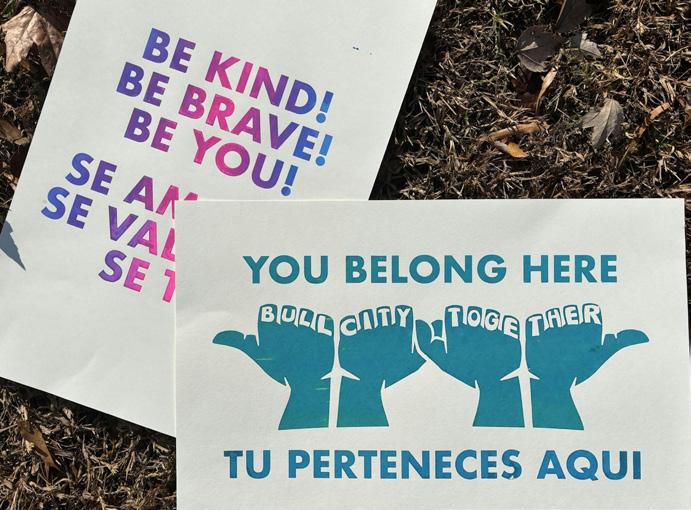
Her sign read, “Welcome! You are safe here,” and repeated the message in Spanish: “Bienvenidos! Aqui te cuidamos.”
In between pick-up and drop-off times, volunteers have been finding other ways to support their neighbors who could be targeted by federal immigration agents.
Parents and community members are helping deliver meals to families who are afraid to go to work or the grocery store, and multiple nonprofits have created threads on Signal, an encrypted messaging platform, to coordinate these volunteer efforts. Durham Public School Strong has also launched a food distribution network to reach families across the city.
Both Cleckler and Bono have found ways to prioritize volunteering despite their jobs. Bono shows up to stand guard in the morning before going to work in the afternoon. Cleckler, a therapist, has moved appointments around to make time for this.
“You live in this country; you have access to public school; but you feel too intimidated by the government's actions to come to school? That’s insane,” Cleckler said, condemning the federal crackdown. “That makes me angry — really angry.”
On her lunch break the other day, Cleckler saw a message in one of the chats being used
to organize and hopped in her car to follow a CBP-operated vehicle. She said there was a line of other Durhamites trailing the van, which had just made three arrests at Beauty World on Avondale Drive.
Cleckler used to work at Duke at the Women’s Center, and she urged students who are able to volunteer their time or money to contribute to Durham’s efforts to fight back against CBP.
For their part, teachers and administrators at Durham public schools are counting all absences as excused for students who aren’t showing up because of their immigration status. An email sent to all DPS families from their respective school principals reaffirmed the district’s mission to “ensure that all students, documented or undocumented, receive the opportunity for a sound basic education.” DPS uses Canvas for all of their assignments — so although absent students can’t video call into class, they can keep up with most of their work from home.
“Our job is to educate kids, and we will continue to educate kids, regardless of what goes on outside,” Carter said.
Teachers and volunteers have been handing out red information cards to ensure everyone knows their rights. Per the DPS email, federal law enforcement officers cannot enter public school buildings without a judicial warrant, and administrators and teachers do not share student information with immigration enforcement.
“We just want to make sure to welcome our kids back,” Carter said. “We miss them, and we just really want them back in school.”
FROM PAGE 11
memorial commission at Duke for the fifth anniversary of 9/11. Guerrero reported that Miller became “so consumed” with the project that he failed to take his LSAT for law school.
But beyond their current-day opinions, most alumni’s memories of Miller, if they had any, are fading. Nobody seems to remember if Miller had a roommate, and if so, who he was.
David Bitner, former president of the Duke Conservative Union, wrote in an email to The Chronicle that, “Whatever insights there were to be had from my twenty-year-old memories have long since been extracted.”
Many professors who knew or taught Miller at the time chose not to comment due to FERPA guidelines on talking about former students. And other students with documented ties to Miller through the Duke Conservative Union have declined to comment.
Some who remember Miller are choosing not to remember him closely.
“They were sick of him in college, and they're definitely sick of him now,” Darby said, who added she now declines most interview requests to talk about Miller. “There’s still a sort of persistent feeling that he likes the attention, so I think people are like, ‘Don't give him oxygen.’”
In 2017, a group of Duke alumni drafted an open letter to Miller, condemning his actions, and organized a fundraising campaign to support the Council on America-Islamic relations, following Miller’s role in Trump’s 2017 “travel ban” to Muslim countries. But efforts like those have since quieted down.
As one of the youngest senior leaders in the Trump administration, Miller’s career in politics is likely far from over. At least for now, he will continue to serve as one of the President’s most loyal advisers.
Miller was recently spotted at Duke’s Sweet 16 game against St. John’s in Washington. His post-graduation relationship with his alma mater has remained murky, as the Trump administration has repeatedly challenged universities like Duke, but old habits die hard: Perhaps his attendance shows Miller still has a soft spot for Duke basketball. In 20 years, other things about Miller have not changed either.
“He still has that same ‘I am never going to back down from any fight at any point. I will never concede anything ever,’” Sherouse said. “That’s what you see now in his role in this administration and … it’s why [Trump and Miller] get along so well.”
Miller did not respond to a request for comment on the assertions made by his peers.
FROM PAGE 14
Instructor of Classical Studies Catharine Judson does not use generative AI at all in her teaching, expressing philosophical objections to it as a “shortcut” for learning. She views it as relatively ineffective, especially in her field of archaeology, which relies on core research and analysis skills such as close reading, bias identification and data synthesis.
“It gets in the way of what I want students to get out of the class,” Judson said.

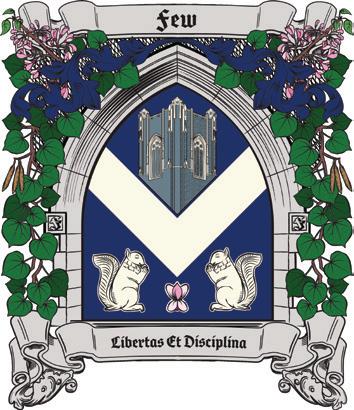

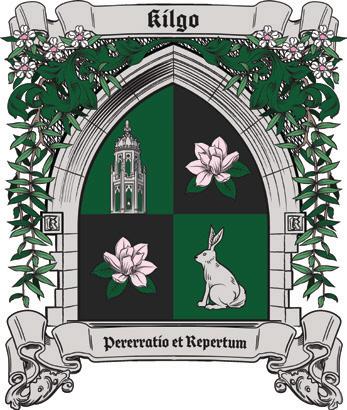
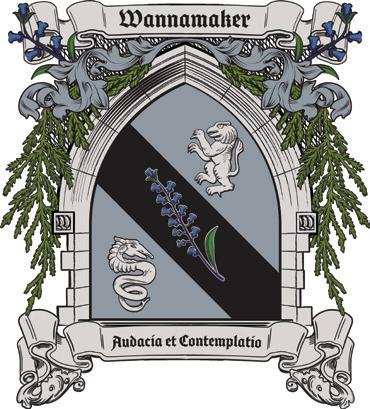
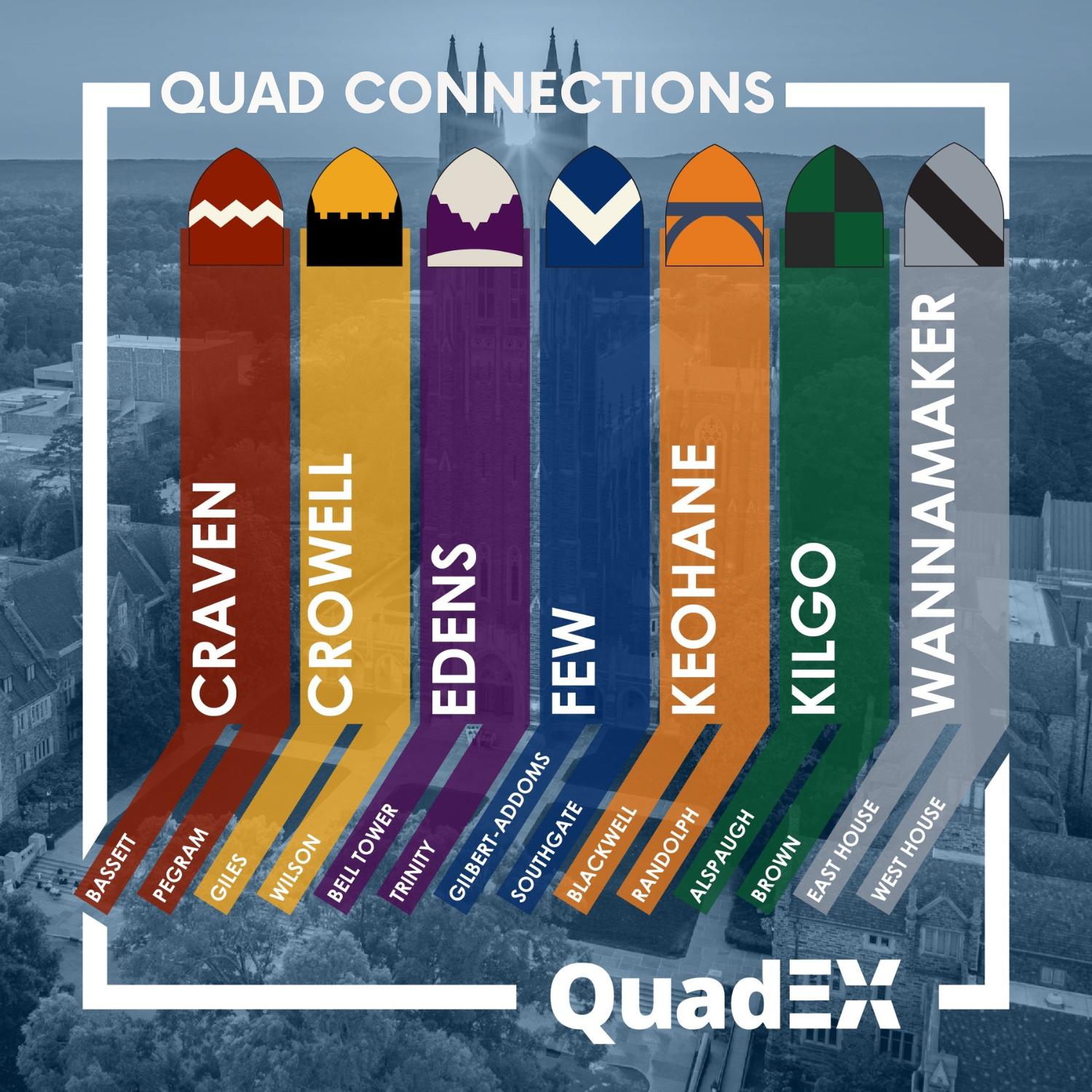
*Dates may be subject to change.
Saturday, August 15: First-Year Move-In East Campus
Friday, August 21:** Upperclass Move-In Swift and West Campuses
**Upperclass move-in continues thru Sunday, August 23 Additional move-in information will be emailed later this summer.

What is my room assignment? Who is my roommate? What are my building/quad amenities? Who is my Residence Coordinator? More questions? Email housing@duke.edu
Returning Students: Interested in building community and shaping traditions in your Quad? Consider joining your Quad Council! Reach out to your Residence Coordinator to learn more.
First-Year Students: You can get involved by joining your House Council. Details on how to connect will be shared in late July.
Housing Assignments: 919-684-4304; housing@duke.edu
Swift (300, 301, SmartHome): 919-684-5813; rlhs-eastswift@duke.edu East Campus: 919-684-5320; eastcampushrl@duke.edu West Campus: 919-684-5486; upperclasscampus@duke.edu

CAMPUS VOICES | APRIL 6, 2026
It physically pains me to write this, but I feel I have no other choice: I’ve come to defend the Daily Tar Heel (DTH).
On April 1, our peer newspaper at the University of North Carolina at Chapel Hill became battered by controversy after publishing a series of satirical pieces in the spirit of April Fools’ Day. One of the satire pieces, titled “Trump orders ALE in Chapel Hill to be replaced with ICE agents,” was met with outrage by the student body, and, alongside two others, titled “UNC brings back DEI - for whites”
and “Hubert Davis rushes to find summer internship,” has ignited UNC into a conflagration of controversy.
Several student groups at UNC posted joint statements on Instagram calling for the satire pieces’ immediate removal from both the DTH website and social media pages. Local outlets like CBS17 and Raleigh News & Observer also disgracefully used their decades of professional reporting experience not to help the DTH navigate a complex situation and stand up for themselves, but to attack a student newspaper by running unhelpful articles further
The Chronicle welcomes submissions in the form of letters to the editor or guest columns. Submissions must include the author’s name, signature, department or class, and for purposes of identification, phone number and local address. Letters should not exceed 325 words; contact the editorial department for information regarding guest columns.
The Chronicle will not publish anonymous or form letters or letters that are promotional in nature. The Chronicle reserves the right to edit letters and guest columns for length, clarity and style and the right to withhold letters based on the discretion of the editorial page editor.
Editor-in-Chief: Dylan Halper
Sports Editor: Alex Min
Managing Editor: Abby DiSalvo
Direct submissions to:
E-mail: chronicleletters@duke.edu
Editorial Page Department
The Chronicle Box 90858, Durham, NC 27708
News Editors: Ella Moore, Claire Cranford, Ryan Kilgallen
Senior Editors: Winston Qian, Ana Despa, Sarah Diaz (spring), Mia Taubenblat (spring)
Photography Editors: Alex Long, Wanyu Zhang
Opinion Editor: Devyn Deschamps
Recess Editor: Olivia Prusky
Multimedia Editors: Jackson Kitts, Dylan Wang
Features Editor: Elle Chavis
Investigations Editor: Lucas Lin
Directors of Staff Development: Ananya Pinnamaneni, Nikhil Sethi
Elections Editor: Max Tendler
Health/Science Editors: Vikram Sambasivan, Ahilan Eraniyan (fall)
Sports Managing Editors: Ryan Hamner, Colton Schwabe
Editors-at-Large: Rebecca Fan, Kate Haver, Aviv Stabinsky, Claire Chen (spring), Annie Eilers (spring)
Data Editor: Amy Zhang
University News Editors: Luca Gragnoli, Seyun Park
Local/National Editors: Lila Cohen, Eileen (Leyuan) Zhang
Features Managing Editors: Lila De Almeida, Leena Mirchandani
Health/Science
Managing Editors: William Gim, Anjali Reddy
Associate News Editors: Sophie Augustine, Jackson Kitts, Tom Sun, Yashraj Vishwakarma, Karly Hairston (spring), Addison Smith (spring)
Blue Zone Editors: Ella Bilu, Lucie Ansell, Brady Cross and Spencer Oshins
Crossword Editor: Jeffrey Broms
Social and Diversity, Equity and Inclusion Chair: Aseel Ibrahim
Recruitment Chair: Madera Longstreet-Lipson
Audience Engagement Directors: Anabel Howery, Michelle Voicu
Senior Reporter: Ava Littman
General Manager: Chrissy Murray
Advertising Manager: Megan Haven
Managing Director: Kyle Fox
Creative Manager: Julie Moore
The Chronicle is published by the Duke Student Publishing Company, Inc., a non-profit corporation independent of Duke University. The opinions expressed in this newspaper are not necessarily those of Duke University, its students, faculty, staff, administration or trustees. Columns, letters and cartoons represent the views of the authors.
To reach the editorial or business staff, you can find contact information on dukechronicle.com. To reach the Advertising / Business Office at 1517 Hull Avenue call 919-684-3811. @ 2026 Duke Student Publishing Company
stirring up tensions, replete with perspectives of students outraged by the articles and featuring not a single one in defense of press freedom.
So great was the resulting backlash that the DTH was forced to take down the ICE piece and publish a hasty, selfpitying public apology statement. The statement reads, “Our intention with an April Fools’ edition was to highlight the medium of satire, one that is grounded in centuries of journalistic tradition of holding structures of power accountable. But we have instead hurt the very communities that we intended to uplift and platform.”
As a columnist at a student paper, I feel an obligation to stand in solidarity with the DTH in what I consider to be a clear-cut case of press freedom intimidation. Regardless of whether you thought the satire was unfunny or distasteful, the fact that an outlet of the free press, let alone a student newspaper, was bullied into self-censoring should concern us all.
The right to publish material which some people may find offensive is one of the most basic and fundamental principles of freedom of the press, and, while the public has the right to be offended by such material and to criticize it, they do not have the right to demand it be taken down.
The First Amendment crucially includes the right of the press to publish controversial material even and especially against an unfavorable public reaction. Real, hard conversations about important social issues are only possible when they are presented in ways which may on occasion make people uncomfortable. That is uncompromisable. How can we ever debate the rightness or wrongness of any idea if it is automatically precensored for the offensiveness it may cause?
This principle applies unconditionally to all published material, not just satire, but I want to give a brief word on satire specifically. The purpose of satire, in my submission, is to portray prominent social problems in so absurd a way as to cause people to reimagine the damaging and insidious effects of such problems which they may be currently overlooking. It is true that, on occasion, this is used to mask hatred and cruelty. The DTH pieces, however, did no such thing.
The ICE article, for example, was obviously not denigrating immigrants or supporting arbitrary and cruel immigration enforcement. In fact, it did the exact opposite by pointing out the mania of the Trump administration’s abuse of authority by using ICE to secrete fear across the country. If one were to actually read the article, they would know that it mocked ICE agents as oafs “lost as to what they should actually be doing” and taking orders from a mentally deranged tyrant.
It is important to remember that the capacity of people to be offended by ideas is inexhaustible. There is always someone who will find something to take issue with when anything is published in print. If the press were to censor itself in order to preemptively spare the potential hurt feelings of every individual, it would never be able to publish anything. The claims of people to be offended must never supersede the right of the public to have access to a free press.
It’s a shame that the DTH retracted a published article and released an apology letter asking forgiveness for things it shouldn’t have to apologize for. But they are not really to blame. They are, after all, a student paper that does not have the resources or bandwidth to engage in lengthy public opinion battles. That is why it is incumbent upon us to honor the unfettered right of the press to publish satire or any other content, short of hate speech or calls to violence, without worrying about being bullied into self-censorship.
Bad satire, it is true, has the right to be criticized as distasteful (though, as far as bad satire goes, the DTH’s was really quite tame, I must say). But the solution to bad speech is not no speech; it is better speech.
The proper point of action for students who may be upset by these articles would be to engage with them directly, through letters to the editor or other forms of written response, not indignant demands that the press retract what it publishes. It is precisely this concept, that certain ideas can be proven as better or more correct than others through vigorous debate and discourse, that progress in society has always been made. And it is the freedom of speech and expression that we have to thank for it.
CAMPUS VOICES | JAN. 18, 2026
Endless hours of polishing my résumé, refreshing Outlook and Gmail 30 times a day, scrolling through the infinite feed of LinkedIn and Handshake postings: searching, applying, refreshing again.
I’ve come to realize these habits aren’t just mine — they’re almost ritualistic among Duke students. As a school deeply ingrained in pre-professionalism and ensuring student success, it is no wonder we fall easily into the rabbit hole of “What will I do this summer?” Or “what am I doing after graduation?”
Even on a campus known for its energy and spirit, Duke students aren’t immune to the constant scrolling, texting and dopamine hits that fill every spare moment. The difference? We’ve found a way to rationalize it — convincing ourselves it’s all in the name of our future.
Lately, my once high motivation for classes has vanished. My interest in the material is still alive; I continue to be challenged in different ways, yet the monotony of the semester has dulled the novelty of learning. So, as any burntout college student does, I distract myself.
These distractions, however, aren’t the socially nourishing ones, like spending time with friends, volunteering or pursuing a hobby, but something far more insidious: I entomb myself in the future.
At a school that almost sacrilegiously worships student outcomes, the LinkedIn obsession at first seemed like a Duke rite of passage. Expanding your network, finding jobs and curating your profile is, in a way, our generation’s introduction to the professional world. Meeting students with shared interests, sharing opportunities — undoubtedly valuable tools.
But somewhere along the way, the purpose shifted. Hitting the mark of 500-plus connections became a form of social currency. Competitive internships and scholarships stopped inspiring celebration and instead provoked a quiet, gnawing question: Why not me?
The cruel engine of social media has always been comparison. And lo and behold, the old adage holds true — comparison is the thief of joy. In many ways, the polished, prolific figures we follow on LinkedIn are simply the professional version of influencers on TikTok and Instagram.
And is that really harmless? Frankly, no.
One night, I caught myself sitting in Perkins Library long after midnight — LinkedIn open, tabs upon tabs of applications half-finished. My coffee was cold, my mind numb. I wasn’t working anymore; I was performing productivity, convincing myself that my anxiety was ambition. The irony wasn’t lost on me: I was sacrificing my present to secure a version of the future that didn’t even exist yet.
Maybe what we call “investing in our future” is really just a way to feel in control. The moment we stop hustling, the stagnation gets uncomfortable. We start to ask questions we can’t answer — What if I fail? What if I’m not enough? It’s easier to search, apply and refresh.
In chasing these future ideals, we risk escaping the very experiences that make us the kind of people worth hiring in the first place. It’s easy to believe that our value lies in credentials, but a university is supposed to shape who we are, not just what we do. The most formative experiences — moments of curiosity, connection, even boredom — are right in front of us. Yet we spend them curating the image of a self we haven’t fully lived into yet.
Maybe that’s the paradox of being a student today: we’ve mastered how to optimize every moment except the present one. We know exactly what we should be doing, and yet we rarely stop long enough to ask why.
So maybe the question isn’t whether we’re investing in our future or avoiding the present. Maybe the two aren’t opposites at all. Maybe the truest investment in our future is learning how to be fully here, right now, before it all becomes another thing we scroll past.
CAMPUS VOICES | OCT. 4, 2025
Duke is undeniably one of the top universities in the world and a leader in life-saving research that boasts billions in endowment. Duke donates millions to charity and flaunts a carefully curated image of community partnership; in 2023, Duke paraded “nearly $24 million” in community contributions. That sounds amazing, yet Duke controls over $787 million in assessed property (about 2% of the county and 3% of the city).
As a nonprofit, most of that is exempt — hence Duke paid $2 million in property taxes in 2024 versus the $11 million they would pay if taxable (and that, even, is a low-end estimate, according to Durham county officials). Duke consistently profits from its historical power and non-profit status. By sheltering its wealth behind nonprofit status, Duke saves millions that would otherwise support Durham’s public schools and other services — profits for the university, and more losses for the city’s poorest residents.
This Duke-Durham gap is not simply a result of Duke’s neglect. Rather, it’s exploitation framed as philanthropy. Duke has crushed Durham for generations by reinforcing redlining, aligning with the Home Owners’ Loan Corporation (HOLC) and sustaining local slave owning dynasties.
In the 19th century, Durham became a hotspot for tobacco farms and slave plantations due to its rich soil, climate and central location. In the 1910s, wealthy white Duke faculty started congregating around what is now East Campus in northwest Durham, away from the poorer minorities who lived primarily in southeastern Durham — the start of the ivory tower.
In 1924-25, the beginning of the creation of Duke’s modern map started with the West Campus land purchases. The university used a shadow real-estate agent, hiding to keep prices low and avoid community backlash against another whiteonly expansion, to quietly assemble roughly 60 properties. J.B. Duke even threatened to move the college to Charlotte if the deals lagged.
Dr. Pauli Murray — a Black scholar and Durham native — described her own hometown as one of “rigid legal segregation.” Starting in 1925, white Durham real estate tycoons, using racist but legal deeds and zoning restrictions, continued to segregate Durham. In 1926, a deed was published for Hope Valley, outlining the rules for the block.
The seventh rule? “The premises shall not be occupied by negroes or persons with negro blood; provided that this shall not be construed to prevent the living upon the premises of any negro servant whose time is employed for domestic purposes by the occupants of the dwelling house, together with the family of such servant” (Bull City
150). So, who lived in this exclusive area, which was later recognized as a first-grade “A” level block by the HOLC in 1937? Durham’s own oligarchy of slave owners; and wealthy white Duke faculty. When federal graders mapped Durham in 1937, an area by the future West Campus scored an A in part for the “presence of physicians” there, while historically Black neighborhoods like Hayti were redlined as “hazardous.”
If you go to Hope Valley today, who will you run into? Duke faculty, still profiting on the racism set forth for them by the Duke faculty 100 years ago, with the help of HOLC and previous slave owners.
These effects continue today; from 2014–2019, Black residents were ~37% of Durham’s population but 69% of jail admissions and 78% of occupied bed-days — disparities rooted in the very lines Duke helped draw a century ago (deed restrictions, redlining and campus land deals) that are still touted as what ‘keeps us safe’ today. Duke’s expansion reinforced the already radical racial exclusion. Whatever the intent, the outcomes cannot be disputed: the records show exclusionary maps, restrictive covenants, tax-sheltered growth and neighborhood displacement.
Twenty-first-century Duke continued to honor open white supremacy for almost two decades: Duke’s East Campus Carr Building honored Julian S. Carr, who infamously bragged in 1913 about whipping a Black woman at a Confederate monument dedication — until trustees removed his name in 2018. If the point was progression, why name the building ‘Classroom Building’? Name it instead for Pauli Murray, Durham’s own black civil-rights lawyer and writer, or another Black Durham historical figure. Say, clearly, what and who you want to represent, rather than just burying your shameful racist past.
Duke does not need to keep hiding from its history. What it needs is to give back what it took from the people of Durham: equitable housing and schools, fair wages and real partnerships with the people it displaced. Duke may not have started the drowning in abuse of Black people and other minorities in North Carolina, but it has been the rope tied to their ankles for the last 100 years. Duke has massive tax exemptions and could easily donate PILOTs to differing aspects of Durham’s economy — housing, DPS, rehabilitation centers, etc. — and pay traditional income tax. Yet they choose not to do so.
Duke, what is more important to you, your endless wallet continuing to expand, or trying to rebuild the community you helped destroy?
LETTER TO THE EDITOR | SEPT. 4, 2025
Duke Beyond Borders, a student organization advocating for justice for immigrants, refugees and asylum-seekers in the United States, stands in firm solidarity with Duke’s immigrant service workers and urges the university to defend their rights in the face of unjust rulings and rhetoric from the federal administration. Our immigrant service workers are not disposable. They are not replaceable. They are essential, beloved members of our community who bring vibrancy and care to our campus and who have built lives and families here in the U.S.
A number of immigrant service workers at Duke are currently on Temporary Protected Status (TPS). TPS is a program permitting migrants of designated nationalities to reside and work lawfully in the US when conditions in their home countries are deemed too dangerous or unstable for return.
Duke’s immigrant service workers do all that they can to ensure students and faculty can live and thrive in a safe, clean and lively space. Beyond their labor, they are often a lifeline for students of immigrant, lower-income and first-generation
backgrounds. They give students of immigrant heritage reminders of home, and are eager to connect across cultural divides. The friendships and connections they make with students are deeply treasured, often spanning across and beyond our university years.
The Department of Homeland Security’s recent termination of TPS for Hondurans and Nicaraguans will place over 75,000 individuals, including members of our University community, at immediate risk of deportation and devastating family separations. The ruling will strip them of work authorization, cruelly uproot them from communities they have spent decades contributing to, and
prompt forcible return to now-unfamiliar countries still reeling from emergent humanitarian needs.
Beyond Borders refuses to stand by as hardworking community members are targeted by the federal government’s agenda and denied the right to live and work safely in the U.S.
Beyond Borders calls upon Duke to take every measure to defend its immigrant service workers, including those on TPS, and honor the service they devote to the university day in and day out.
Duke must stand with its immigrant service workers. Without them, our University could not stand at all.