By: Alizeh A., Derin C., Artyom M., Arnav S., Ada Y.
MPPT in wind turbines - An Introduction to Dynamic Theory and Control Systems
Alizeh A. - Page 4
Basics of Quantum computing and how it can change the world
Artyom M. - Page 8
Bio-Composite Materials: The Future of Construction?
Harman S. - Page 10
How Software Engineering and Wiring Infrastructure Have Developed Finance
Vihaan D. - Page 14
Engines
Rayaan K. - Page 16
How the World’s Biggest Racing Event Evolved through Engineering - Formula 1
Ethan J. - Page 20
Should China’s dominance in Green Engineering be seen as a positive or negative?
Zara M. - Page 23
Swarm Robotics
Yusif A. - Page 26
Anti-Missile Defense Systems
Vihaan A. - Page 29
Healing but upgraded: Machines in Modern Medicine
Amaya R. - Page 32
Notes from editors
The calibre of articles received in this second volume of DC Engineering was outstanding. We are very thankful to all the contributors for the enthusiasm and passion they brought to their work. The quality of writing, analysis, and research have been truly impressive. It is clear that each piece was crafted with care and expertise. We also extend our appreciation to our readers for taking the time to engage with this volume. Whether you flipped through a few pages or read cover to cover, your support means everything.
Building on the foundation of our first volume, we are proud to see this magazine continue to grow, both in the range of topics covered and the depth of ideas explored. We look forward to welcoming you back for our next volume, and to continuing to be a home for DC's engineering community.
Enjoy reading! -
Alizeh A., Derin C., Artyom M., Arnav S., Ada Y.
MPPT in wind turbines - An Introduction to Dynamic
Theory and Control Systems - Alizeh A.
Introduction:
As renewable energy becomes more and more prominent in today’s world, extracting the maximum power from these renewable energy sources is proving to be one of the greatest challenges that engineers are facing.
In terms of wind energy, where variable wind speeds in a variety of climates means consistent power generation is something to be desired, MPPT (Maximum power point tracking) is used, which allows the power extracted from the wind turbines to be optimised with changes in wind speed.
MPPT stems from a part of electrical engineering called dynamic systems theory and automatic control, and it is essential that we understand this element of power and systems to understand how so many of the control feedback loops that exist around us today work.
Dynamical Systems:
Let’s start with the basics- Dynamical systems are systems that change over time. If we consider how we can model things that change over time, it is clear that the way we can model these dynamic systems is through differential equations.
Let’s use the example of a wind turbine to see how this works:
We want to use a differential equation to show that the rotational speed of the blades in a wind turbine (and therefore the power generated) is dependent on the torque applied by the generator.
Using a differential equation, we can model the relationship between the torque and the rotational speed of the wind turbine by using a differential equation.
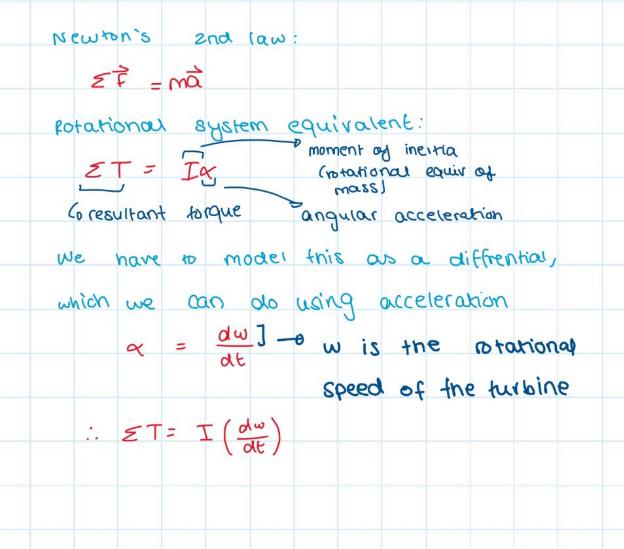
We can do this using Newton’s Second Law, however In rotational systems, torque is the equivalent of force, and we account for the angular acceleration
From this mathematical manipulation, we can see that in this scenario , our input (the torque) caused a change in our output (the rotational speed and therefore the power generated at time t ), and this occurred due to our rule , which was ∑T=Iα. This is essentially what dynamic systems are all about, the system of the wind turbine is dynamic because the power depends on the speed of the blades, which depends on the torque, whilst simultaneously everything depends on time. The system is constantly evolving because wind conditions change, and the turbine must continuously adjust to operate efficiently and extract maximum energy. Now, how does modelling this system as a differential equation enable us to extract the maximum power based on wind speed, like in MPPT?
Control Systems:
This is the work of control systems, and subsequently automatic control. A control system is a group of technological parts used to manipulate manage of control a machine, whilst an automatic control system is one that continuously measures output, compares it to a desired value, and then automatically adjusts its input to reduce the difference- no input required.
For example, a wind turbine should operate at an optimal rotational speed for a given wind speed to maximize power output. To ensure this is the case, the automatic control system will be constantly carrying out a feedback loop. The automatic control system:
1.Checks the desired optimal rotational speed
2.Checks the current rotational speed
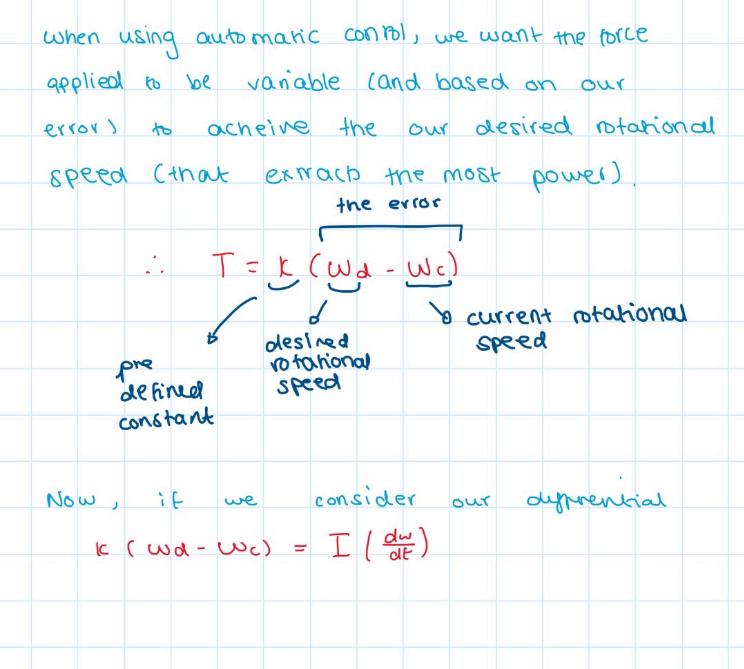
3.Calculates the difference between them (this is known as the error)
4.Uses this error mathematically to make changes in order to achieve the optimal rotational speed and therefore max power generated.
In terms of wind turbines, the changes made would be adjusting torque applied by the generator in order to achieve the optimal rotational speed to achieve the maximum power output for a given wind speed. We know making these changes is possible as we modelled the relationship between the rotational speed of the blade and the torque applied as a differential equation. Therefore, we can see that this automatic control mechanism controls the dynamic system that is the wind turbine. This entire process is known as Maximum Power Point Tracking (MPPT) - a control strategy that ensures the wind turbine operates at the point where it produces the maximum possible power, despite changing wind conditions. Finally, let’s see how these two principles (dynamic systems and automatic control) work together mathematically:
Using this modelling we can see how engineers make sure that the rate of change of rotational speed depends on the error. Therefore, if the turbine is not spinning at the optimal speed, the system adjusts torque. Over time, this allows the system to extract the maximum power, reaching the ‘maximum power point’. Overall, this is due to how the power extracted from the wind depends on wind speed and the power coefficient
Cp which is maximised at a specific rotational speed.
Alizeh A.
References
K. Ogata, Modern Control Engineering, 5th ed. Upper Saddle River, NJ: Prentice Hall, 2010.
(For dynamic systems theory, differential equations, and automatic control fundamentals)
R. C. Dorf and R. H. Bishop, Modern Control Systems, 13th ed. Hoboken, NJ: Pearson, 2017.
(For control systems, feedback loops, and error-based correction)
B. K. Bose, Modern Power Electronics and AC Drives. Upper Saddle River, NJ: Prentice Hall, 2002.
(For MPPT and power electronics in wind energy systems)
M. Stiebler, Wind Energy Systems for Electric Power Generation. Berlin, Germany: Springer, 2008.
(For wind turbine operation, rotational speed, and torque relationships)
F. D. Bianchi, H. De Battista, and R. J. Mantz, Wind Turbine Control Systems: Principles, Modelling and Gain Scheduling Design. London, UK: Springer, 2007.
(For MPPT control strategies and wind turbine modelling)
I. Newton, Philosophiæ Naturalis Principia Mathematica, 1687. (or cite via a Classical Mechanics textbook, e.g.:) H. Goldstein, C. Poole, and J. Safko, Classical Mechanics, 3rd ed. San Francisco, CA: Addison-Wesley, 2002.
(For Newton's Second Law applied to rotational systems)
IRENA, "Renewable Power Generation Costs in 2023," International Renewable Energy Agency, Abu Dhabi, 2024. [Online]. Available: https://www.irena.org
Quantum Computers and How they will change the world
- Artyom M.
We hear a lot in the news about ‘Quantum Computers’, but not a lot of people understand exactly what they are and how they work. From the time they were first theorized by Richard Feynman and Paul Benioff in the early 1980’s, to the time they were first created in 1998, all the way till now, they have undergone incredible progress. Quantum computing can possibly revolutionize all of computing, and bring about a golden age of processing data. It’s been found, that a quantum computer can be exponentially faster than a classical computer! That number is ludicrous, and portrays just how powerful and important these machines are.
So, how exactly does a quantum computer work? First of all, let’s consider a regular computer works. A regular old computer that we all know and love is based on binary values called ‘bits’ which represent either a value of 0 or 1. These bits can represent data and instructions, and are organized into code to allow computers to process things. Well how can we improve upon 0’s and 1’s? Easy, let’s just have both of them at them once!
Think of Schrödinger's cat. Until the box is opened, and it is observed, the cat exists as both dead and alive, in 2 states at once. This type of quantum weirdness is called superposition, where an object (such as a electron) is in 2 different states, such as its velocity or place, each with its own equation describing the probability of being in a specific state. Another necessary quantum property is ‘Entanglement’. This is when two particles, such as a pair of electrons, remain connected in state even across vast distances. A popular metaphor for this is thinking of the particle as a pair of dancers in sync. Even across the stage(distance) by observing one of the dancers doing a spin, you can be sure that the other dancer is also doing the same spin, as they are synchronized. So if a pair of electrons is connected, we can know the correlated state of another particle far away, just by looking at the state of their partner. These principles are utilized within quantum computing, where ‘qubits’ (the quantum equivalent of ‘bits’) can be in multiple states at once. Therefore, these qubits can be either 0, 1, both of them. This means that the qubits can put the information they hold into superposition, creating complex multidimensional computational spaces that represent data in a new way. Think of going through a maze, but instead of following a single path, you can explore all the paths at once, reaching an answer much faster.
To compute something with a quantum computer, scientists have to find a spot in a material where they can control these quantum properties. Using microwaves and magnets they can generate electron spin to entangle qubits Entangled qubits have their states connected, allowing them to work together. As such they become a system and can superpose, like standing waves, where at peaks the waves build up, amplifying probability of the qubit information. At the troughs they cancel out, reducing probability Therefore the amplified outcomes are the highest probability to the computation. Then these qubits are measured, causing the superposition to collapse into a definite state of 0 or 1, giving us a final answer Think of it as finally opening up Shrodingers box, and seeing whether the cat is dead or alive.
How Could they Change the world?
Now that we know how quantum computers work on a basic level, its important to note just how much they could change the world through superior power A large worry about quantum computers has arisen from the Cybersecurity sector A lot of internet security relies on complex mathematical problems that are hard for classical computers to solve. Unfortunately, quantum computers would be able to solve these problems much faster, leading to security risks planet wide, all secured information planet wide could be left vulnerable to decryption. This shows just how powerful these computers are, being able to crack open some of the best online security platform. Another important use to them is their ability to discover and improve drugs and medicine. They could precisely simulate molecule activity, something that classical computers have issues with due to the load. This could speed up drug discovery, improve effectiveness of medicine and even help us better understand diseases and biology. The improvement to healthcare would be substantial, improving billions of lives. One more important use is improving real-world systems such as scheduling, supply chain management and airline scheduling. This would greatly stop congestion, improve efficiency and solve operational problems.
Overall, quantum computers are still too new to be fully functional, largely due to an issue called ‘decoherence’. This is where the qubits lose their superposed quantum state due to any disturbance in the environment. This means they need to be completely isolated to work, making them very complex and expensive to maintain. Even though quantum computing is in its early stages, they will provide an important boost in computing power in the future, making them redefine what is possible to process.
Bio-Composite Materials: The Future of
Construction? - Harman S.
Bio-composite materials are quickly becoming an exciting new development in engineering, driving innovation and promising a sustainable future by combining natural resources to form materials that can rival steel in strength, but what are they? Composite materials are created by combining two different materials together to form a new material with better characteristics. Unlike mixtures, in composites, the individual components remain separate within the final structure. Usually, one component (the binder or matrix) surrounds and supports the other (the reinforcement), which allows for strength and stiffness. This combination allows composite materials to exhibit properties including enhanced strength-to-weight ratios, durability, and customisability for specific applications. Common examples of composites include reinforced concrete (cement matrix with aggregate reinforcement), fibreglass (polymer matrix with glass fibre reinforcement), and even wood (cellulose fibres with lignin reinforcement).
Advantages of bio-composites
The main feature of a bio-composite is its reliance on renewable resources like wood fibres, hemp, bamboo, and other plant-based materials, as reinforcements in a polymer matrix. While this matrix can be either a petroleum-based or bio-based polymer, there is a growing preference towards fully bio-based composites to maximise sustainability. Compared to traditional composites, bio-composites have several advantages that make them very appealing for modern engineering and sustainability. One of the most exciting developments in bio-composite engineering is the development and advancement of ‘self-healing’ materials. Derived from sources such as vegetable oil, cellulose, chitosan, natural rubber, and proteins, this class of material exhibits self-healing through two main ways.
First, the material contains hollow fibers or tiny capsules loaded with healing agents, such as resins. When the composite cracks or gets damaged, these capsules break and release the healing agent into the crack, bonding and restoring strength to the material. The other mode of healing the material is intrinsic healing. This is when the material itself is made from a special biopolymer with dynamic, reversible hydrogen bonds. These can break when the material is under stress, but automatically reform under heat or pressure, thus allowing the material to repair cracks repeatedly, up to a maximum loss in strength of 20%. Capabilities like these not only extend component life but also cut maintenance costs and waste, thus supporting sustainable design.
Additionally, bio-composites have an impressive strength-to-weight ratio, allowing them to compete with synthetic composites while offering reduced carbon footprints and better biodegradability. For example, hemp and flax fibres can exhibit tensile strengths of up to 600 MPa, which is comparable to low-grade steel, but at a fraction of the weight. Moreover, switching from fossil-based composites to bio-composites typically results in greenhouse gas emissions savings of 25-40%, with some studies showing reductions of up to 73% for specific categories such as wood fibre composites.
Applications of bio-composites
There are a lot of applications for bio-composite materials, and the number is growing. In construction, bio-composites are used as sustainable alternatives for panels, insulation, and non-structural cladding, offering lower embodied carbon and longer lifespans. The building and construction segment of the bio-composites market is projected to grow at a CAGR of around 12% through the early 2030s, as products like Fiberon’s Wildwood composite cladding and hemp-lime ‘hempcrete’ walls move from niche use into mainstream specification
The automotive industry uses bio-composites for lightweight interiors and exteriors, contributing to higher fuel efficiency and lower emissions Using bio-composites can greatly reduce vehicle mass, with a US Department of Energy study finding potential mass reductions of 30%, resulting in significant reductions in fuel consumption and greenhouse gas output. The industry is investing accordingly: in 2022, BMW, Volvo, and Porsche collectively invested USD 35.9 million in Bcomp, a Swiss firm that produces flax-fibre composites already used in production cars. Aerospace manufacturers are integrating bio-based composites into aircraft components to reduce weight and improve performance, directly impacting fuel consumption and environmental impact. Renewable energy technology, such as wind turbines, also benefits from bio-composites with enhanced durability and reduced weight. The shift is still in its early stages, glass fibre still dominates today’s blades, but pilot projects are scaling fast: Siemens Gamesa launched the world’s first commercially recyclable offshore wind turbine blade in 2021, and BASF partnered with Suzlon in 2025 to commercialise bio-based epoxy resins for new blade production.
Limitations of bio-composites
Nevertheless, challenges in bio-composite adoption remain. Issues such as moisture sensitivity and production scalability require ongoing research and development. Because of the variation in species and conditions of growth, natural materials like hemp, flax, and wood inherently have inconsistencies in structure, quality, and mechanical properties.
This affects the consistency and predictability of bio-composite materials, with research showing that tensile strength can vary by up to 25% between the same fibre type. Ensuring consistent quality is a necessity for mass production and use in industries requiring reliable specifications, such as construction or aerospace. Another issue is thermal stability. Most bio-composites currently struggle to retain their properties at relatively low temperatures, with some beginning to degrade at 200 degrees Celsius. Furthermore, although bio-composite prices are getting more competitive, they remain 10-20% more expensive than conventional materials, largely due to smaller-scale production. Until producers can harness economies of scale and mass produce, bio-composites will remain less economically viable.
Conclusion
So, are bio-composites really the future of construction? For non-structural applications panels, insulation, cladding, and interior finishes the answer is increasingly yes. Hempcrete walls and flax-fibre cladding products are already in commercial buildings, and the construction segment of the bio-composites market is one of the fastest-growing in the industry. For load-bearing structural roles, biocomposites still trail conventional steel and concrete on cost, thermal stability, and consistency, and they are unlikely to replace them in the near term. But as fibre treatments improve, hybrid composites scale, and bio-based resins mature, the gap is narrowing fast.
Bio-composites probably will not replace traditional construction materials wholesale; instead, they will complement them, taking over the parts of a building where sustainability matters more than ultimate strength. That alone is a substantial shift, and it is one engineers entering the field today will almost certainly help shape. Ultimately, the synergy between scientific research and innovation in industries will be key to unlocking the full potential of bio-composites.
Harman S.
References
Adeniyi, A.G., Onifade, D.V., Ighalo, J.O. and Adeoye, A.S. (2022) ‘A review on the limitations of natural fibres and natural fibre composites with emphasis on tensile strength using coir as a case study’, SN Applied Sciences. https://pmc.ncbi.nlm.nih.gov/articles/PMC9077356/
BIS Research (2023) Bio-Composite Materials Market Size & Trends. https://bisresearch.com/industry-report/bio-composite-materials-market.html
Bos, H.L., Van Den Oever, M.J.A. and Peters, O.C.J.J. (2002) ‘Tensile and compressive properties of flax fibres for natural fibre reinforced composites’, Journal of Materials Science, 37, pp. 1683–1692. https://link.springer.com/article/10.1023/A:1014925621252
Florea, R. et al. (2024) ‘Mechanical Characterization of Flax and Hemp Fibers Cultivated in Romania’, Materials. https://pmc.ncbi.nlm.nih.gov/articles/PMC11477633/
Grand View Research (2025) Biocomposites Market Size & Share | Industry Report, 2033. https://www.grandviewresearch.com/industry-analysis/biocomposites-market
Liu, Y. et al. (2025) ‘Biobased self-healing functional composites and their applications’, Journal of Materials Science: Composites. https://link.springer.com/article/10.1186/s42252025-00065-x
Pickering, K.L., Aruan Efendy, M.G. and Le, T.M. (2016) ‘A review of recent developments in natural fibre composites and their mechanical performance’, Composites Part A: Applied Science and Manufacturing, 83, pp. 98–112.
Thomason, J.L. and Rudeiros-Fernández, J.L. (2021) ‘Thermal degradation behaviour of natural fibres at thermoplastic composite processing temperatures’, Polymer Degradation and Stability. https://www.sciencedirect.com/science/article/abs/pii/S0141391021001142
Tsakalakis, K. et al. (2024) ‘Vegetable-Oil-Loaded Microcapsules for Self-Healing Polyurethane Coatings’, Polymers. https://pmc.ncbi.nlm.nih.gov/articles/PMC12693790/ US Department of Energy (n.d.) Lightweight and Propulsion Materials. https://www.energy.gov/cmei/vehicles/lightweight-and-propulsion-materials
Vidal, R. et al. (2020) ‘The environmental attributes of wood fiber composites with biobased or petroleum-based plastics’, The International Journal of Life Cycle Assessment. https://link.springer.com/article/10.1007/s11367-020-01744-6
Zuiderveen, E.A.R. et al. (2023) ‘The potential of emerging bio-based products to reduce environmental impacts’, Nature Communications. https://www.nature.com/articles/s41467023-43797-9
How Software Engineering and Wiring Infrastructure Have Developed Finance -
Finance has always needed a way to move information fast. In the early days, that meant telegraph wires and telephone lines, which were slow, limited, and unreliable by today’s standards. The real leap came when fibre-optic cables replaced copper wiring.
Fibre optics work by sending pulses of light through glass threads, meaning data travels at nearly the speed of light (Hasbi and Canbay, 2021). Today, these cables connect banks, stock exchanges, and data centres across the world, making it possible for markets to react to news in real time and for money to move across continents in seconds Fast cables alone do not do much, though What makes them powerful is the software sitting on top. Software engineers design the protocols that decide how financial data is packaged, sent, checked for errors, and decoded at the other end. Without these systems, information arriving through a fibre cable would be meaningless noise (Tanenbaum and Wetherall, 2011)
Software turns a raw signal into a confirmed payment, a completed trade, or a balance update The physical and digital layers are inseparable, and neither functions properly without the other.
One of the clearest examples of software and wiring working together is highfrequency trading. Firms place their servers physically inside or directly next to stock exchange data centres, a practice called co-location, to reduce the time it takes for a signal to travel (Aldridge, 2013). Their trading algorithms can execute thousands of orders per second. At that speed, even the physical length of a cable matters, and engineers will choose a shorter route through a data centre if it saves a few nanoseconds. It is a world where the laws of physics and the logic of code are equally important, and optimising one without the other produces no meaningful advantage. Global payment systems follow the same principle. Every time someone taps a card or sends a bank transfer, a vast network of wired and wireless connections links banks, payment processors, and verification systems together. Software engineers design the transaction flow, handling the authorisation, routing, and confirmation, while the physical network carries the data securely between locations (BIS, 2022). The whole process typically completes in seconds, even when money is crossing multiple countries.
What feels effortless to the user is the result of years of careful engineering on both sides. Behind the scenes, financial institutions run enormous data centres packed with servers. These facilities are built for one purpose: to never go offline. They are equipped with backup power systems, industrial cooling, and high-speed internal wiring connecting racks of machines (Uptime Institute, 2023).
A major bank or exchange going down for even a few minutes could cause serious disruption to markets and customers, so everything is built with multiple layers of redundancy. Reliability is not an added feature in financial infrastructure; it is the entire point. Security ties everything together. All the data moving through cables needs to be protected from interception and tampering Software engineers use cryptographic protocols such as Transport Layer Security to scramble financial data so that even if someone intercepts it, they cannot read or alter it (Rescorla, 2018) Security in finance is never just one layer; it is a combination of encrypted software and physically secure hardware working in parallel. Modern finance is the product of fibre-optic infrastructure and software engineering developing side by side. The cables provide the speed and global reach, while the software provides structure, control, and security. Neither works without the other, and together they have built a financial system that operates in real time, around the clock, across the entire world.
Vihaan D.
Engines - Rayaan K.
The engines used by supercars extract incredible amounts of performance out of every single cubic centimetre of space. Using materials, tolerances, and designs to their absolute limits, supercar manufacturers maximize power density, redlines, and throttle response times. In this article, we look at some of the key features of these engines, including the use of exotic lightweight materials, high rev valvetrain designs, turbocharging/hybrid technology, and sound engineering. Through the course of this article, we include relevant technical explainers, and interesting quotes from engineers working on each engine design. We compare engines from manufacturers such as Ferrari, McLaren, Porsche, Lamborghini, and even Koenigsegg.
Power Density and Specific Output
A supercar engine is defined by its power density, which involves having a huge horsepower-to-displacement ratio. The newly designed engine of McLaren W1, for instance, is powered by a twin-turbocharged V8 with 4.0 L displacement and produces an astounding 914 hp at 7,800 rpm, which translates to 230 HP per litre. That said, the 6.5 L engine with 12 cylinders in the Ferrari 812 Competizione generates an equally impressive 819 hp at 9,250 rpm which is126 hp per litre. On the other hand, a Koenigsegg’s twin turbo 5.0 L V8 known as the Jesko Attack produces 1,280 hp when using standard gasoline and is around 256 hp per litre. Comparing this to the power density for a standard family sedan can be estimated to be in the range of 50–100 hp per litre really displays the power output of these cars.
Technical Information - Specific Output (hp/Liter):
Specific output can be defined as the total horsepower generated by an engine per unit of displacement. The greater the value, the more powerful the engine per litre of displacement. While most regular car engines have less than 50 hp/L, supercars often generate 120+ hp/L. The engines also generate their high thermal power density through efficient fuel consumption. The technology that is derived from Formula 1 engines uses very high peak pressures, such as the Aston Martin Valkyrie V12 engine, which achieves 140 bar pressure in the cylinders. As a result, a greater percentage of heat generated from the combustion process is converted to mechanical energy. In summary, the supercar engines have large capacity, efficient breathing, and high revolutions per minute, allowing for even more overall power
Materials and Reducing Weight
Every gram is crucial when chasing more power. Supercars utilize unique materials, some of which are taken from aerospace technologies
Pistons, rods, crankshafts, and engine blocks are manufactured using premium aluminium alloys which are usually forged and then milled with CNC machines, or even titanium and magnesium in the case of rotating assemblies. Forging and then CNC-finishing ensures metal grain flows well and removes flaws. The 812 Competizione model from Ferrari shed 40% of its rod weight by changing from steel to titanium. According to Cosworth, the company's latest hypercar pistons are manufactured using high-end aluminium and have a coating of heat-resistant material to prevent wear. Titanium valves are used in cylinder heads to reduce weight and enable faster RPM, and ceramic-coated exhaust manifolds and turbochargers regulate heat levels. Moreover, carbon fibre and ceramic materials are used to encapsulate the engines. For instance, the mid-engine GT3 RS model of Porsche features carbon fibre material in its mounting parts, thereby ensuring that the weight of the entire car remains at just 1,450 kg, even with its 500+ hp engine. Even components that are not integral to the engine’s function, such as engine covers and intake plenum, are made from lightweight materials. For instance, the 4.0 L twin-turbo W1 motor by McLaren uses carbon fibre material for its intake plenum and magnesium for the engine covers. Some Hypercars such as the Bugatti Bolide are almost entirely carbon fibre, between 70% - 90% of the car, excluding core mechanical parts such as the engine and the suspension.
High Revving Design
To increase the engine’s power, most supercar engines have an ability to rotate much faster than a regular car. For example, Ferrari 6.5 L V12 engine has a max of 9,250 - 9,500 rpm whilst a regular Camry V6 engine has no more than 6,500 rpm. The new McLaren engine, the W1 V8 rotates at a rate of 9,200 rpm, and the Gordon Murray T.50 has the most powerful engine with 3.9 L V12 engine and 12,100 rpm High rotation speeds produce extra power because power = Torque × RPM. At such high rotations, extremely light components and high amounts of balancing is required
One of the key factors of reaching these speeds is light weight components that form the valve train The valvetrain is the system in an internal combustion engine that controls how air and exhaust gases enter and leave the cylinders. Ferrari introduced finger-followers for valves like racing engines on 812’s V12 Instead of traditional tappets, Ferrari uses long levers called followers to minimize valve weight Thus, the maximum rpm of the valve is not dependent on the valve itself but on the load from the camshaft and the engine body.
Turbocharging and Hybrid Systems
Super cars today have engines which utilise turbochargers or hybrid technology to increase their power without raising emissions. Turbochargers compress intake air, which enables more fuel combustion, which increases power without increasing engine capacity. For instance, the Bugatti Chiron Super Sport uses 4 large turbochargers (quad-turbo W16). Each turbo is enormous and built for extreme airflow. The total output is around 1,600 hp and is among the most powerful turbo systems ever in a road car. Similarly, the twin-turbo 5.0 L V8 engine in the Koenigsegg Jesko produces 1,280 hp when using gasoline, whereas E85 raises it to 1,600 hp. Even Lamborghini's famous V12 engine has become outdated in the latest models like the Revuelto, where a twin-turbo V8 engine is coupled with an electric booster.
Hybrid engines provide immediate torque while allowing the engine to operate in more efficient modes. For example, the SF90 Stradale Ferrari has a 4.0 L twinturbo V8 engine with three electric motors to produce 986 hp. Hybrid hypercars from McLaren such as the P1 and W1 rely on battery and motor technology like Kinetic Energy Recovery Systems to make up for low-end torque deficits. Normally, when you brake, that energy is wasted as heat. With KERS, that energy is captured and stored in the battery so when you accelerate, the electric motor instantly kicks in. It gives instant power right away This fills in the gap before the turbo engine “wakes up” This leads to faster acceleration: the W1 reaches 186 mph in 12.7 s because of its immediate torque from 0 to 60.
Technical information - Turbocharger vs. Supercharger:
While both compress more air into the engine, turbos rely on exhaust gases to drive a turbine which is more efficient at high RPM, whereas superchargers are belt-driven therefore lag-free but consume engine power all the time. Supercars tend to use turbos (as seen in McLaren and Koenigsegg models) for maximum efficiency, sometimes employing twin-scroll or variable-geometry designs to ensure quick boost generation, which help the turbo spin up faster at low speed and stay efficient at high speed, reducing lag and improving response.
Engine Sound & Tuning
For supercar fanatics, the exhaust sound of a supercar is nearly as vital as its lap time. Exhaust sound engineering is highly deliberate. According to Ferrari’s CTO, exhaust requirements such as gasoline particulate filters were virtually “going to cancel the high orders, which you need to get that awesome sound,” so the Ferrari engineers added exhaust without mufflers and altered exhausts' shape.
Similarly, McLaren’s W1 designers devoted “a considerable amount of time” finetuning the intake and exhaust design Most importantly, the team highlights “no artificial sound creation”; everything about the engine sound is designed through physical components, not speakers In essence, it is music: Ferrari’s flat-plane V8 and V12 engines sing with numerous harmonics; Lamborghini’s V12 has a soprano bark; even the Porsche boxers flat six-sound crackle when overrun In conclusion, supercars' engine technology represents the pinnacle of automotive engineering Supercars' engines are known for their impressive power-to-weight ratio, light weight, turbocharged technology, or hybrid systems. These supercar manufacturers always make efforts to optimize their car engines to get maximum efficiency and performance. They are precise, highly refined machines that blend science, innovation, and sound into a unique driving experience.
How the world’s biggest racing event evolved through engineering – Formula
1 - Ethan J.
On May 13th, 1950, Silverstone circuit in Northamptonshire made history as the first ever formula 1 race, paving the way for years to come, creating a global phenomenon today with a global fan base of over 800 million people. However, due to the spotlight falling on drivers such as Lewis Hamilton and Max Verstappen not many people fully appreciate the brilliance and complexity of the engineering of the cars that dominate these races with the technological achievements often being overlooked. This article will explore the evolution of Formula 1 car engineering showing how innovation and new technological advancements have completely transformed the sport since 1950
In the 1950’s, F1 was a completely different sport, with the cars being unrecognizable to what they are today. The cars were aluminum bodied, heavy and relied on the power given by the engine which was in front of the driver’s seat. The cars (specifically the Alfa Romeo 158) weighed 709kg and did not obey any aerodynamic laws with its shape being rudimentary and inefficient with there somehow being less regard for safety then the aerodynamics of the car with a seatbelt not being introduced until years after with some drivers actually choosing to jump out of the car rather than being in it when the car crashed. However arguably the biggest contrast to now were the engines used in the races in 1950’s. Although F1 started in 1950 the cars and the engines were designed in 1937 pre-WW2 with the chosen engine being a 1.5 supercharged in-line eight-cylinder engine. The small but powerful engine used a compressor to force more air into the engine resulting in more power. The engine had 8 cylinders where the fuel could be burned while holding up to 200-250 liters of fuel, which was needed as unlike today there were no refueling stops As well as being inefficient and high consumption. This engine produced 350bhp (around a 1/3 of the cars today) of horsepower for the car allowing speeds of up to 290 kmh (180 mph) with the internal combustion engine remaining as the sole power supply of the car from 1950 all the way to 2013. Although this engineering was revolutionary for the time with it leading to captivating races, the F1 cars were characterized by boxy designs with fuel hungry engines prioritizing raw speed over efficiency and aerodynamic laws.
Goodwood- 1950s F1
Between the 1950’s to 1960’s there were some more innovations and changes made to the cars such as the cars becoming more lightweight and becoming rear engined with the homologation of fuel (safety measures) However, it wasn’t until the 1970’s -80’s dubbed the era of aerodynamics where major change occurred Around the late 1960’s wings started to appear on cars but were originally seen as too unsafe However, a British car manufacturer – Lotus, created a more wedge-shaped car dubbed the Lotus 72 which incorporated the rear wing, which helped generate more downforce. This is a force that pushes the car down into the track as it moves helping increase the grip of the tires allowing for better braking, improved stability and a faster speed around corners. This combined with the more aerodynamic wedge shape helped reduce air resistance helping revolutionize the sport with Lotus winning three constructors titles in four years. However, Lotus in 1978 further revolutionized the aerodynamics of the car through ground effect technology where they used the airflow under the car to generate even more downforce, further increasing the overall speed of the car which proved that the aerodynamic shape was just as if not more important than the cars engine.
While the aerodynamic revolution was occurring, Renault were working on more powerful engines and were able to utilize the turbocharged engine in formula 1 where the engine used exhaust gases to spin a turbine which drives a compressor forcing more air into the engine. This led to more power as there was more air to react with the fuel in the engine. Power outputs exploded to over 1000 Bhp in races causing teams like Renault to start to dominate. However, due to turbo lag which is the delay between pressing the accelerator and the turbo engine delivering full power caused by a lack of exhaust flow at low speeds, turbo-charged engines were hard to control and were unpredictable with drivers experiencing a surge in power after a delay This unfortunately led to turbo technology being banned in the late 1980’s with it not re-appearing until 2014
The 1994 San Marino Grand Prix was infamous with it being regarded as the darkest day in Formula one history where Austrian driver Roland Ratzenberger and Brazilian threetime World Champion Ayrton Senna died on the track. This highlighted a huge problem within formula one with safety engineering becoming a central focus for all ongoing research. This led to rule changes and engineering advancements such as better helmets, pit lane speed limits, improved crash structures in the cars including more developed crumple zones. However, the main safety development was the development of carbon fibre survival cells which are the strong protective cockpit structures surrounding the driver which are made of carbon fibre which is a strong but lightweight material designed to absorb and dissipate energy. This showed an important transition in engineering from just the raw power and design of the car to an era where driver safety is the main priority.
China is also a global leader in electric vehicles. However, despite the horrific events that occurred in Monaco, engineering continued to increase the power and performance of Formula 1 cars, taking us to the Hybrid and Data Era kickstarting in 2010 which is still used today. In 2009 the KERS allowed drivers to convert braking energy into additional power which was used as a boost in addition to cars becoming cleaner in design, being taller and narrower and more aerodynamic. Since 2014 F1 started using hybrid engines which were the traditional turbo charged engines combined with an electric motor adding additional power. Engineers designed engines that included highly complex power units that combine a 1.6 litre- turbocharged engine with energy recovery systems. These systems including the MGU-K (A system that recovers braking energy) and the MGU-H (A system that recovers heat energy from exhaust gases) allowed cars to re-use energy that would’ve been wasted and store it in a battery powering a electric motor which improves efficiency significantly while maintaining the 1000 bhp from the engine. This meant that these modern cars can carry much less fuel than older models leading to a lighter load and therefore a faster car Alongside the innovations in power, digital engineering has been essential to performance with each car containing hundreds of sensors monitoring everything which is communicated to engineer’s trackside and back in the factory, allowing for further innovation in the competition. These technological advancements created one of the most scientifically advanced machines on earth, with these modern formula 1 cars being able to reach speeds of 350-370 km/h (217-230 mph). These 1.6L turbocharged hybrid engine provide over 1000 bhp to the 900 kg car allowing it to go from 0-100 km/h in 2.5 seconds.
It is clear that the advancement in F1 was driven by 2 parallel factors, Performance and the need to ensure the safety of the driver. These advancements ensured maximum performance while mitigating risk in one of the world’s most captivating but dangerous sports ever.
Ethan J.
Should China’s dominance in Green Engineering
be seen as a positive or negative? - Zara
M.
Why Green Engineering matters:
The United States Environmental Protection Agency defines green engineering as the design, commercialization, and use of processes and products in ways that reduce pollution, promote sustainability, and minimize risks to human health and the environment without sacrificing economic viability or efficiency. One way we see this applied is through renewable energy technologies such as solar panels and wind turbines, but it also includes the use of biodegradable materials and many other sustainable innovations. As awareness of climate change continues to grow, many countries and industries are moving towards green engineering. Nations are racing to lead this sector because it is expected to be both environmentally important and highly profitable in the years ahead. Today, I believe that the clear leader in many areas of this industry is China.
How China became the leader:
A major reason for China’s position today is long-term government investment and industrial planning. From the early 2000s to the early 2010s, China transitioned from being a net importer of clean-energy products to becoming the world’s largest manufacturer and exporter, as well as the largest investor in renewable energy.
Following the 2008 global financial crisis, China introduced a CNY 4 trillion (approximately US$563 billion) stimulus package to support strategic emerging industries, including renewable energy technologies such as solar panels and wind turbines. Many similar policies and initiatives continued over the following years, helping China expand its manufacturing capacity, improve infrastructure, and strengthen supply chains. This shows that China’s success in green engineering was not accidental, but the result of consistent planning and investment.
Where in specific does China dominate:
Although China is advanced in many different areas, it is especially dominant in several key sectors, including solar energy. China’s share of global manufacturing across all major solar panel production stages exceeds 80%. In addition, the country is home to the world’s ten largest suppliers of solar power manufacturing equipment.
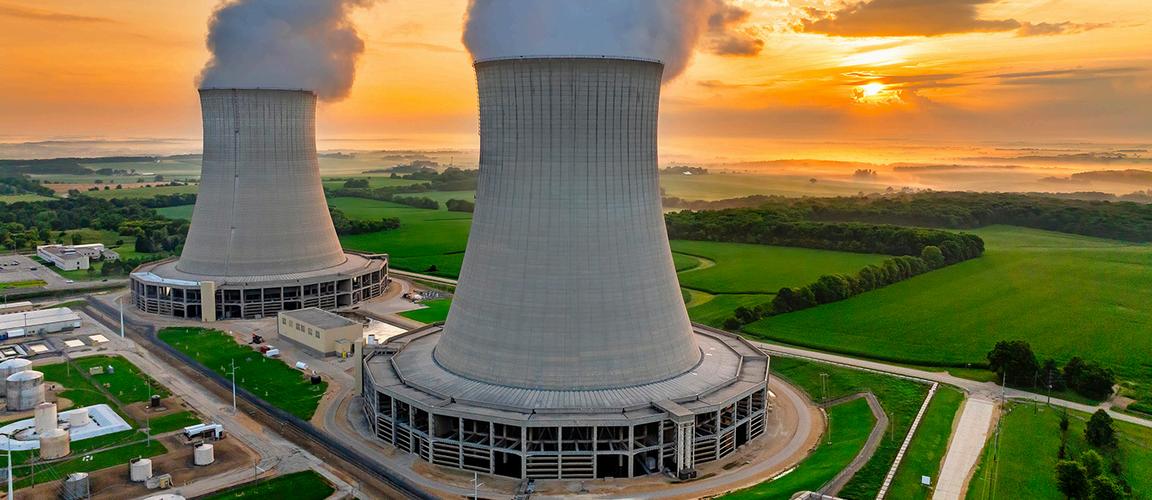
Constellation Energy- Nuclear Energy
In 2025, six of the world’s top ten EV manufacturers were Chinese companies, and China produced more than 60% of electric vehicles worldwide. In cities such as Shenzhen and Shanghai, public transport systems have increasingly adopted electric buses, while nearly half of China’s car sales in 2024 were electric. China also accounted for more than 70% of global EV and EV battery production in 2024. Not only this, but China also has access to many of the raw materials needed for green technologies, as well as the industrial capacity to refine and use them in manufacturing.
Benefits of China’s manufacturing:
China’s dominance in green engineering has brought several benefits to both China and the wider world. Large scale production has helped lower the cost of green technologies globally, making products such as solar panels, batteries, and electric vehicles more affordable. This has made it easier for many countries to adopt cleaner technologies more quickly. China has also demonstrated how renewable technologies can be implemented on a massive scale. Rather than spending years developing systems independently, some countries can adopt existing technologies and infrastructure models. This has supported the rapid global growth of electric vehicles and renewable energy, helping to reduce greenhouse gas emissions.
Risks of China’s manufacturing:
However, there are also disadvantages to relying too heavily on one country. Overdependence on China means that when tariffs or trade restrictions are introduced, as seen during the administration of Donald Trump, countries that depend on Chinese technology may face higher costs or delays in their transition to green energy. Trade disputes can also disrupt supply chains, while political tensions may affect access to important technologies and materials. Shortages of critical resources could slow production worldwide. For this reason, many countries are now trying to diversify their supply chains and invest in their own green industries.
Summary
China’s dominance in green engineering can be viewed as both positive and negative. On one hand, its large scale manufacturing has lowered prices, accelerated innovation, and helped countries adopt these technologies faster. On the other hand, relying too heavily on one nation creates economic and political risks if supply chains are disrupted. disrupted. Overall, China has played a major role in advancing green engineering, but the future may be stronger if leadership and production are shared more widely across the world.
Zara M.
References
About Green Engineering | US EPA. United States Environmental Protection Agency. Available at: US EPA website. China’s Role in Accelerating the Global Energy Transition Through Green Supply Chains and Trade. Research report / PDF.
Executive Summary – Solar PV Global Supply Chains – Analysis. International Energy Agency (IEA). Available at: IEA website.
Deep Dive: China’s Journey to EV Dominance. Contrary Research. Available at: Contrary Research website.
Swarm Robotics - Yusif A.
Robotics is one of the fastest-growing fields in engineering, combining electrical systems, programming and design to create machines capable of performing tasks autonomously or alongside humans. Every year there are a plethora of new robots being created that have progressed the field faster than ever before.
When most people think about robots, they imagine one highly advanced machine doing everything on its own autonomously, an almost humanoid robot or superintelligent AI system. But one of the most interesting areas of robotics I’ve come across takes a completely different approach. Instead of building one complex robot, engineers are now creating systems made up of hundreds of simple robots that work together. This is called Swarm robotics, and I find it fascinating because it completely changes how we think about intelligence in engineering.
Swarm robotics takes a lot of inspiration from pre-existing systems in nature, and are a great example of biomimicry in engineering, particularly in the way animals behave in groups. For example, ants can find the shortest path to food, birds move in coordinated flocks and fish swim in synchronized patterns. Each individual organism follows simple rules, but together they produce complex, intelligent behavior. This idea is known as emergence, and it’s one of the key concepts behind swarm robotics.
What I find especially interesting is how this idea is translated into engineering. In a swarm robotic system, each robot is programmed with a few basic rules, such as avoiding obstacles, staying close to nearby robots, or moving towards a goal. On its own, a single robot doesn’t do anything particularly impressive, kind of like an ant. However, when you scale this up to hundreds of robots, this system starts to behave in a much more sophisticated way. There is no central controller or “brain”, each robot makes individual decisions based on simple local information, which makes the whole system decentralized, every robot has its purpose and does what it needs to do within a larger system. This decentralization is one of the biggest advantages of swarm robotics. In traditional systems, everything depends on a central control unit, so if that fails, the entire system can stop working. In contrast, a swarm is much more fault tolerant. What this means is that if a few robots fail, the rest can continue operating without any major issues, this makes swarm robotics useful in situations where reliability is critical, such as search and rescue operations or space exploration.
Another reason why swarm robotics stands out to me is its scalability. In most engineering systems, improving performance usually means increasing complexity or cost. However, in swarm systems, you can often improve performance simply by adding more robots. Because each robot is relatively simple and inexpensive, this makes the system much more flexible and efficient. A good real-world example of this is how Amazon uses large numbers of robots in its warehouses to move shelves and organize products. Instead of relying on a single advanced machine, they use a coordinated swarm to optimize efficiency.
From an electrical engineering perspective, swarm robotics is also interesting because of the underlying systems involved. Each robot needs to detect its surroundings using sensors, process that information, and communicate with other robots. This involves concepts like signal processing, wireless communication, and embedded systems, which are all key areas in electrical engineering. Designing these systems becomes even more challenging when you scale up to large numbers of robots, because you must deal with issues like interference, latency and power consumption.
The algorithms behind swarm robotics are another reason why I find it so engaging, especially because they link directly to math and computer science. For example, shortest path algorithms are often used to help robots navigate efficiently. These are like the algorithms used in GPS systems, but in swarm robotics they are often implemented in a decentralized way. One of the most interesting examples of this is how ants use pheromone trails to find food. Ants leave chemical signals behind, and other ants are more likely to follow stronger trails. Over time, the shortest path becomes the most popular because it is travelled more frequently. Engineers replicate this idea digitally, allowing robots to “learn” the best paths without being directly programmed with them.
What makes this particularly exciting is that it shows how complex behavior can emerge from simple rules. Instead of programming a robot to solve a problem directly, engineers can design a system where the solution naturally arises from interactions between many robots. This challenges the traditional idea that intelligence must come from complexity. In swarm robotics, intelligence comes from cooperation, an idea that is way more commonly seen in the world around us.
There are already a lot of real-world applications for swarm robotics, which makes it even more interesting.
In search and rescue, swarm robotics can be used to explore dangerous environments, such as collapsed buildings, where it could be too risky for humans to go In agriculture, they can monitor crops and improve efficiency In environmental monitoring, they can collect data over large areas. I also think one of the most exciting future applications that I read about is space exploration Instead of sending one extremely expensive rover, scientists could send a swarm of smaller robots that work together to explore a planet’s surface This would make missions more reliable and potentially much more effective.
References
Brambilla, M., Ferrante, E., Birattari, M. and Dorigo, M. (2013) Swarm robotics: a review from the swarm engineering perspective Swarm Intelligence Journal
Available at: https://link.springer.com/article/10.1007/s11721-012-0075-2
Dias, P.G.F. et al. (2021) Swarm robotics: a review of the latest trends. Sensors. Available at: https://www.mdpi.com/1424-8220/21/6/2062
Tan, Y. and Zheng, Z. (2013) Research advance in swarm robotics. Defence Technology. Available at: https://www.sciencedirect.com/science/article/pii/S221491471300024X
Barca, J.C. and Sekercioglu, Y.A. (2013) Swarm robotics reviewed. Robotica. Available at: https://www.cambridge.org/core/journals/robotica/article/swarmrobotics-reviewed
Hunt, E.R. (2019) Pheromone communication in social insects and its applications to robotics. Available at: https://www.ncbi.nlm.nih.gov/pmc/articles/PMC6894587/ Jevtić, A. and Andina, D. (2007) Swarm intelligence and its applications in swarm robotics. Available at: https://www.researchgate.net/publication/38279720
Ventocilla, E. (2013) Swarm-based area exploration using pheromones and flocking models. Available at: https://www.divaportal.org/smash/get/diva2:676835/FULLTEXT01.pdf
Encyclopaedia Britannica (2024) Swarm intelligence. Available at: https://www.britannica.com/science/swarm-intelligence
Wikipedia (2024) Swarm robotics. Available at: https://en.wikipedia.org/wiki/Swarm robotics
Wikipedia (2024) Swarm behaviour. Available at: https://en.wikipedia.org/wiki/Swarm behaviour
Wikipedia (2024) Ant colony optimization algorithms. Available at: https://en.wikipedia.org/wiki/Ant colony optimization algorithms
Yusif A.
Anti-Missile Defence systems - Vihaan A.
Imagine trying to hit a bullet with a bullet. This is a simple way to understand an antimissile defence system. An anti-missile defence system, AMDS for short, is a system with many components used to neutralise the severe threat that missiles possess. It involves the use of several pieces of complex technology all working together in harmony to first detect the threat, track it and then with perfect timing, destroy it. They are instrumental to protect civilians and infrastructure in a country in an age of precision-guided, missile warfare. This was evident during the recent conflict where UAE’s anti-missile defence system did a stellar job of protecting the country.
AMDS systems are a combination of complex technology involving radars, computers and interceptor missiles which have become more relevant than maintaining a large army in the current age of technology led warfare. The first step in AMDS are the radars; they transmit high frequency radio waves to detect missiles and track them, providing early warnings of a threat. These radio waves are reflected by objects such as missiles, providing crucial information such as the direction, distance and the speed to aid with the interception.
This reflection is caught by a receiver, which uses the time taken for the signal to arrive to calculate the distance and speed after multiple signals, helping predict the path of the missile. An example of this is Lockheed Martin’s TPY-4, which uses a computer-controlled antenna. This data is processed further using advanced computing which helps determine the trajectory and identify the threat. This system also helps with the assessment of the type of projectile (e.g. cruise missile, ballistic missile or drone). The trajectory and the nature of the object is useful to understand the extent of damage in case it is not intercepted. For example, if the missile is projected to land in the sea or an uninhabited area with limited infrastructure there is no point in intercepting it.
Figure 1 - THAAD Missile System Component (CNN)
The next step is the interception, whereby the enemy missile is destroyed. There are two types of interception systems. The more modern interceptors rely on the highspeed impact of the collision to destroy a missile, while in the older models, the antimissile explodes, breaking the missile into pieces.
A real-world example of an AMDS is THAAD system which was successfully deployed by the UAE recently. The THAAD (Terminal High Altitude Area Defence) system is a US missile system made by Lockheed Martin which uses a “hit to kill” technology, using the impact from the speed to thwart a missile. A THAAD unit, which requires 95100 soldiers to operate, consists of 6 launchers with 8 interceptor missiles each and a high-tech radar system. The THAAD is designed for easy mobility and seamless operation, with its launcher being mounted on a truck. This makes it easy to rapidly deploy in case of emergency. The THAAD system uses a highly advanced radar system called the AN/TPY-2 developed by Raytheon which can detect and track targets from up to 3000km away. The actual interceptor missile can reach a speed of Mach 8 (eight times the speed of sound) and has a range of approximately 150200km. The THAAD system boasts an incredible 100% success rate in combat and in testing. In addition to the UAE and the US, the THAAD system is also operated by other countries including South Korea, Saudi Arabia, Israel and Jordan.
Although these systems are incredibly advanced and developed, they still have their limitations. Firstly, intricate systems like these have significant costs which can be more expensive than the missiles/drones. The anti-defence system can therefore be overwhelmed by inexpensive barrage of drones. Secondly, even if one layer or component of the missile system fails, or has a lag in communication, it can result in a failed interception and significant damages. Finally, interception missiles can only go so far before losing control or running out of fuel. This means that each system can only really protect a certain area around it.
Healing but upgraded: Machines in Modern Medicine - Amaya R.
From implants that actively repair broken bones, to robotic systems that assist surgeons in saving lives, and even wearable suits that help people walk again, science fiction is becoming reality when machines transform healthcare. Biomedicine and mechanical engineering are coming together and changing what it means to heal.
Let’s talk about smart implants. Imagine breaking a bone, but instead of taking weeks to heal there is a small device there to help the process. This is the idea behind smart bone implants. These machines are made of shape memory alloys, meaning that they can change shape to better fit their surroundings. Some can even be made with biodegradable materials, which dissolve over time, eliminating the need for a second surgery. Temperature and pressure are detected by mini sensors which are designed to adapt to their surroundings. Some even release medication directly at the injury or use small electrical signals to encourage bone growth, speeding up recovery. They use wireless communication, such as radio frequencies, to give doctors real time updates without needing check up. The non-stop monitoring can help identify issues early, reducing the risk of complications like infections or worsening fractures. This combo of medicine and engineering changes the way injuries are treated, making recovery faster and safer, and more personalised.
Today, surgeons don’t rely on their hands when performing an operation, they use machines that are even steadier and more precise. Advanced robotic systems, such as the Da Vinci Surgical System, are used to perform complex procedures, such as organ removals, heart surgery, and cancer treatments. The surgeon controls every movement from a small console, guiding the extensions which are equipped with medical instruments. These systems can also provide a magnified 3D view inside the body, with the help of a laparoscopic camera, allowing the surgeons to make smaller, more accurate actions. The Da Vinci surgical system even has a feature called Endowrist, where specialised tools mimic the movements of the surgeon’s wrists, allowing for greater agility. Because of this, only small incisions are needed, which means less damage to surrounding tissue, leading to a faster recovery time and overall a better experience for them. Even with the high costs and regular maintenance checks, it makes surgery safer and more effective. As technology continues to evolve, these systems could become even more advanced, improving the way doctors treat patients
While some machines work inside the body and others assist surgeons, there are also machines which support the body from the outside. Human exoskeletons are wearable robotic devices that can help patients stand, walk, and even relearn basic movements after injury or illness. It improves independence for people with paralysis or extreme muscle weaknesses from other illnesses, such as muscular dystrophies and disorders. These mechanical suits can actively assist the body, with built-in motors and sensors; they can be passive as well, with springs and weights. These exoskeletons are used in rehabilitation settings, but also as a part of physiotherapy, helping patients regain strength and coordination over time. Many studies show as well that they improve mental well-being, boosting their confidence and quality of life. However, exoskeletons are still expensive and require lots of training to be effective, and their battery life is not developed enough and can be limited. Even then, they show that machines can work alongside the human body to restore movement and transform lives.
We no longer heal naturally, machines are helping speed up the process. Inside the body, smart implants speed up recovery. With the surgeons in operating rooms, robotic systems enhance precision. And beyond the body, exoskeletons bring lost movement back. Although these technologies all work in different ways, they all combine natural healing processes with machines to help improve lives.
Amaya R.
Thank you
To every contributor who shared their expertise with us for this edition, and to every reader who continues to make this community what it is, thank you. This magazine exists because of you, and we're truly excited for what is next to come for DC’s engineering community.
By: Alizeh A., Derin C., Artyom M., Arnav S., Ada Y.