Examine how your research or project considers human and societal factors to foster inclusive solutions.
The cards outline 20 dimensions that shape access, opportunity, resources, and barriers in different ways for different people.
For each card, consider how the different groups have been addressed, and how your project could expand its reach to include underrepresented groups.
Use all cards or focus on those most relevant to your context.
Note that the cards are not exhaustive; you may add other categories relevant for your purpose.
Representation Prompt Cards
Acknowledgments
The Representation Prompt Cards are designed by DTU AFRI and DTU Skylab.
Categories and content take inspiration from the ‘Academic Wheel of Privilege’ by FORRT (Facilitating Open and Responsible Research).
Icons are from Google Material Icons (via Google Fonts), licensed under the Apache License 2.0.
For more information and references, please scan the QR code or contact sleje@dtu.dk.
Representation Prompt Cards
Theme
Health and Genetics
Appearance
Gender & Sexuality
Socio-economic
Status
Community
Living
Conditions
Prompt Card
Neurodiversity
(Dis)ability
Mental Health
Skin Colour
Body Size
Age
Gender
Sexuality
Wealth
Education
Career
Digital Literacy
Residence Status
Religion
Language
Ethnicity
Care Network
Housing
Area of Settlement
Geography
Representation Prompt Cards
(Dis)ability
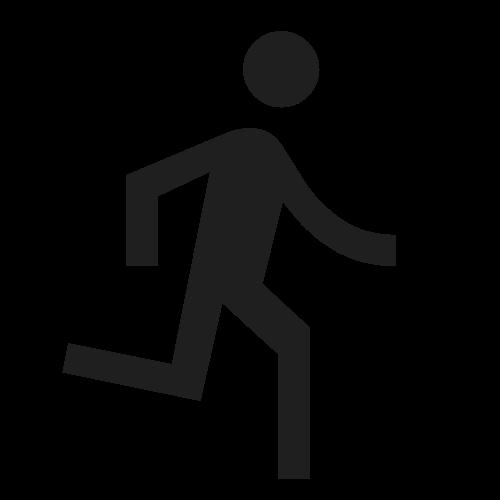
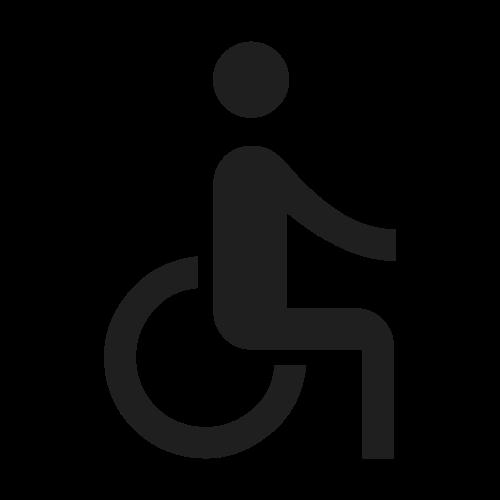
No disability Disability Disability with high support needs
(Dis)ability
Disability refers to the physical, cognitive, and sensory impairments of a person. Around 16% of the global population live with significant disability.
The majority of people with disabilities live in developing regions, where people face greater barriers to health services, adequate infrastructure, employment and social inclusion.
People who live with disabilities are more likely to experience health and social inequities, including reduced access to care and shorter life expectancy.
Sources: WHO, UN
Neurodiversity
Neurotypical Neurodivergent
Neurodivergent with multiple diagnoses
Neurodiversity
Neurodiversity refers to the variation in how human brains develop, process information, and interact with the world. Neurodiversity includes, for example, autism, ADHD, dyslexia, dyspraxia, and Tourette’s syndrome.
It is estimated that 10-20% of the global population are neurodivergent.
Challenges often arise from systems, environments and expectations that are not designed to accommodate different ways of thinking and functioning.
Sources: WHO, Harvard Health Publishing
Mental Health
High mental wellbeing Moderate mental wellbeing
Mental Health
Mental health refers to the state of mental wellbeing that affects a person’s ability to learn, work, realise their potential, and cope with external stressors.
More than 1 billion people globally live with mental health conditions.
An estimated 359 million people worldwide are living with anxiety disorders, and an estimated 280 million people are living with depression.
Approximately 2/3 of the people with depression worldwide do not receive formal mental healthcare.
Sources: WHO
Skin Colour
Light skin tones
Medium skin tones
Dark skin tones
Skin Colour
Skin colour refers to the variation of human skin tone ranging from the darkest brown to the lightest shades. Approximately 80 % of the world’s population are people of colour.
The term ‘race’ is commonly misused, because all human beings are of the same Homo sapiens species and share a 99.9% identical gene pool.
Yet, racial discrimination is one of the most common grounds for unequal treatment and limited opportunities worldwide. For example, facial recognition technologies continue to show higher errors for people of colour.
Sources: BBC, The Guardian, Oxford Academic
Body Size
Smaller bodies
Mid‑size bodies
Larger bodies
Body Size
Body size refers to the physical dimensions of a person, including body build, weight and height.
Approximately 43% of the global adult population falls into BMI categories labelled “overweight” or “obese.”
BMI is used to classify weight ranges, but it is widely criticised for its inaccuracy and for reinforcing narrow definitions of “normal” body size.
BMI was developed nearly 200 years ago, solely based on data from white European men, making it an imprecise model for assessing health across diverse populations.
Sources: WHO, Yale medicine, Abdoli et. al. 2024
Age Adults
Children and adolescents
Older adults
Age
Age refers to the stage of life of a person, which is linked to generational markers, visibility and differences in needs and opportunities.
1 in 4 people alive today is under the age of 15.
12.5% of the world’s population is 60 years or older and has outnumbered children younger than five years.
By 2050, this number is expected to double. The population aged 80+ years is expected to triple, reaching nearly half a billion.
Sources: WHO, Statista
Gender
Cis man
Cis woman
Non-binary or transgender
Gender
Gender and sex are distinct concepts. Sex refers to the biological and physiological characteristics of males and females, such as hormones, reproductive organs, and chromosomes.
Gender is defined as the socially constructed characteristics of women and men, such as norms, roles and relationships of and between women and men. These vary from society to society and changes over time.
“Cis” refers to persons whose gender corresponds with the sex ascribed to them at birth.
Sources: Council of Europe
Sexuality
Heterosexual
Gay and lesbian
Bi-, pan-, asexual, and other LGBTQ+ identities
Sexuality
Sexuality refers to the sexual and romantic attractions, feelings, behaviors, and thoughts of a person.
Globally, around 8% of the global population identifies as LGBTQ+, and 12% report not knowing or unwilling to declare their sexual orientation.
Figures of sexual orientation vary across region, education level and generation.
Discrimination and stigma of sexual minorities remain major global issues, increasing the risks of poor mental health, higher suicide rates and social marginalisation.
Sources: Ipsos
Wealth
Economic elite
Wealth
Wealth refers to a person’s financial means.
Around 3.5 billion people globally live for less than 6.85 US dollars per day.
Approximately 15 % of the world’s population lives in multidimensional poverty, which covers lack of income, access to health services, education, electricity, clean water, cooking fuels.
These populations are also disproportionately affected by climate change.
Sources: UNDP, World Bank
Education
Higher education
Primary or secondary education
No formal education
Education
Education refers to the level of education that a person have been able to access and complete.
Around 1 in 5 of the global population have not received any formal education, and approximately 14% of adults are illiterate.
Globally, 16% of children and youth are not attending school at any level.
Low levels of education restrict participation in civic and political life, and limit access to health and social services, as well as to information and technology.
Sources: UN Stats
Digital Literacy
High digital literacy
Moderate digital literacy
Limited access or experience
Digital Literacy
Digital literacy refers to the degree of access to digital technologies and the ability to use them.
1 in 3 of the world’s population does not have access to internet, and in lowincome countries, fewer than 30% are online.
Still, an average adult person globally spends 6 hours and 38 minutes a day on internet-connected screens.
Denmark is one of the world’s most digitalized countries, yet digital exclusion remain a major challenge, particularly for elders and people with disabilities.
Sources: UN, Comparitech, ITU
Career
position
Career
Career refers to the form and conditions of work through which a person makes their living.
More than 60% of the global workforce make their living in the informal/ unregulated economy, working in low paid jobs such as street vending, unregistered transport services, domestic work, and in the agricultural sector.
Informal workers typically lack legal protection, social security, and access to health services.
Sources: IMF
Religion
Dominant religion
Minority religion
Marginalised or restricted religion
Religion
Religion refers to a person’s religious affiliation and practice, which influences social norms, political structures and community life in different regions. 84% of the global population are religiously affiliated. Christianity, Islam, Hinduism and Buddhism are the four largest religions.
While freedom of religion is a basic human right, people adhering to all other than the formally recognized or dominant religion in a country face faith-based persecution and discrimination across the globe.
Sources: OECD, Pew Research, Amnesty International
Language
Dominant or global language
Learned dominant language
Local language monolingual
Language
Language refers to a person’s first language and level of language proficiency, which play an important role in access to information and technology.
Approximately 80% of the global population does not speak English neither as a native nor as a learned language.
Of the estimated 7000 languages spoken worldwide, about 40 % are endangered, meaning that they are not passed on or used in education or privately.
On average, one language disappears every two weeks.
Sources: Statista, UNESCO
Residence Status
Citizen
Residence Status
Residence status refers to the legal status of a person, determining key factors such as rights, protection, visibility, and access to work, services, and security.
Around 300 million are registered as migrants worldwide. Data on undocumented migrants are by definition unavailable.
As of 2025, an estimated 117.3 million people are forcibly displaced due to conflict, persecution, violence, and human rights violations.
Sources: Eurostats, UN, UNHCR
Care Network
Reliable family and/or group of friends
Care Network
Care network refers to the personal relationships that provide contact and practical, emotional and social support in a person’s daily life.
One indicator of a person’s care network or social connection is whether the person lives alone or with others.
Approximately 28 % of the world’s population are single-person households (and over 40 % in Scandinavia).
1 in 6 people worldwide is affected by social isolation and loneliness, which significantly impacts health and wellbeing, and is linked to more than 871,000 deaths annually.
Sources: WHO, Global Issues
Ethnicity
Majority population
Minority population
Indigenous population
Ethnicity
Ethnicity refers to the shared cultural heritage of populations, which may include common traits, traditions, origin, language, skin colour, or religion.
More than 160 culturally distinct groups originate from Europe alone.
The historical underrepresentation of ethnic minorities, and a lack of systematic data collection in health and medical research, has led to inaccurate results and medications, clinical assessments and medical devices that are not effective across ethnically different groups.
Sources: UNESCO, NSH
Area of Settlement
Highly connected urban area Fringe area Remote or
Area of Settlement
Area of settlement refers to the place of living, shaping local environmental, social, and economic conditions.
Approximately 43% of the world’s population live in rural or remote areas, where depopulation is increasing due to rural-urban migration.
Lack of access to clean water, electricity and infrastructure, as well as education and jobs are major challenges for rural populations across the world.
Sources: World Bank
Geography
High-income countries
Middle-income countries
Low-income countries
Geography
Geography refers to a country’s global or regional location.
Low- or middle-income regions house 84% of the world’s population. Access to resources, infrastructure and economy remains a major challenge in these areas.
The top 10% income-earners of the global population earn more than the remaining 90%, while the poorest half of the global population earn less than 10% of the total global income.
The world’s poorest countries are also the ones most severely impacted by climate change.
Sources: World Inequality Report 2026, World Bank
Housing
Owned housing
Rented housing
Informal housing (e.g. slums or shanty towns)
Housing
Housing refers to the type of dwelling a person lives in.
Over one billion people of the world’s population live in slums or informal settlements in inadequate housing.
These populations often lack basic services, access to security, infrastructure, and education, are not represented in national census, and their children are three times more likely to die before turning 5 years. By 2050 this number is expected to triple.