
www.linkedin.com/showcase/tech4civ/

www.linkedin.com/showcase/tech4civ/
Technology for people is the overall strategy of the Technical University of Denmark (DTU). In 2020, the World University Research Rankings, ranked DTU second in the world (after MIT) and number one in Europe, assessing universities for both impact and excellence, as well as the ability to collaborate internationally with businesses and across disciplines.

The Tech4Civ strategy Tech4Civ is DTU’s vision for ensuring inclusive, democratic, and open societies by empowering citizens to understand and engage in the digital transformation and its impact for society.
Through a novel approach combining research, competence development, scientific advisory, and innovation initiatives, DTU wishes to drive the development of a digital mindset ensuring that contemporary laws and new tech solutions are co-created, based on a sustainable and ethical understanding. With the Tech4Civ strategy, DTU invites all sectors to be part of fostering new ecosystems – where solutions to problems of the future are multi-stakeholder endeavours.
The Tech4Civ research group is established at DTU Compute and supported by a network of international top researchers and leading professionals within the areas of digitalisation, sustainability, leadership, organisational change, and innovation. Our mission is to make research on digital transformation and innovation in public organisations accessible and comprehensive, and to bring it closer to practice by co-creating and transferring knowledge to public and private organisations, inspiring them to take action.
We want to understand how digital competencies can be used to accelerate innovation in public organisations, and to use this knowledge to create methods, programmes, and tools to support the process. We attempt with this report to understand and explain the complex world of cross-border and intergovernmental collaboration. We believe that it is important to undertake this type of research to gain insights into the desired competencies of running this new type of programme. We want to ensure that the lessons learned are shared widely, with the aim to develop a methodology to create future programmes to solve global challenges in a cross-national way.
The research on the Global Scale-Up Programme and the summary findings were presented at COP26, DIGITExpo 2021, the CivTech® Demo Day 2022 and compiled into this report for the benefit of researchers and governments interested in intergovernmental collaboration and businesses interested in participating in future programmes.
The report is introduced with a foreword from the Minister of Business, Trade, Tourism and Enterprise, Ivan McKee MSP, Scottish Government and Alexander Holt, Scottish Government, architect and founder of the Global Scale-Up Programme (GSUP). The report contains an introduction and five chapters: an introduction to the programme, partners, and participating companies, three chosen themes, four stories and ending with the impact of the programme. In the themes, we provide findings from the qualitative interviews, and results from the quantitative surveys held with programme partners and participating companies. In addition, observational studies from being an active participant of the programme are integrated into the findings. Each chapter gives a summary of recommendations.
In chapter one, we address the question of why programme partners and companies participate in the GSUP. Chapter two investigates what it takes to build cross-border governance bodies, including the experiences of developing and building the GSUP as a shared journey among the twelve programme partners. The chapter investigates both the challenges and the potential opportunities and benefits in creating cross-governmental programmes. We attempt to derive some general takeaways and lessons learned, as well as why it is important to have all sectors involved. Chapter three provides an overview of what competencies are needed to drive an intergovernmental scale-up programme like the GSUP. In this chapter, we examine what competencies the different programme partners see as essential for taking part in and driving a programme like the GSUP. We also shed light on the perspectives looking at it from the participating companies point of view.
In chapter four we give the programme partners and participating companies the word, broadening the scope of the report by enriching the experiences of participating and being part of the journey from the point of view of those who lived it. With these stories, we hope to give the reader a glimpse of how it felt to be part of the GSUP as well as give the programme partners and participating companies the opportunity to tell their individual stories.
Chapter five investigates the expectations and impact of the GSUP and summarises the previous chapters looking into how the GSUP can become a blueprint for future cross-border government innovation. Finally, we put things in perspective with words by President of DTU Anders Bjarklev.
The report hereby provides unique insights from the different stakeholders giving a multifaceted view on the programme.
On behalf of DTU Compute, we would like to thank the Scottish Government, all the programme partners and companies that have participated in the many interviews, thereby providing valuable insights into and recommendations on how to accelerate innovation via intergovernmental collaboration and cross-national programmes. A huge thank you to Margaret Hinselwood for sharing the work done on management of the programme retrospectively, our project-assistants Anne-Sofie S. Møller, Mads Weile and Josefine Steinfurth and our graphic illustrator Bjarne Erick. The report sees the light of day, due to everyone's contribution!
Happy readings!
Mie Weile & Jan Madsen


• 69 sessions with policy makers and procurers, investors, academia, and innovators across 10 countries created over 200 introductions in over 102 organisations, including the NASA Open Innovation Team, top researchers in the field of sustainability, ministers of environment and international trade
• Exposure at COP26
• 46 countries tuning in to watch the ministerial attended presentations by the participating companies during COP26
• Winning Apolitical’s Global Public Service Team of the Year 2021 award in the Climate Heroes category
• Profiled in the latest report from the OECD on effective cross-border collaboration (oecd-opsi.org)
• Brasil Mata Viva − $2m deal with another Brazilian State
• The Routing Company − $15m Series A funding from Climate Impact fund
• Scipopulis − contract won with Lithuanian municipality
• Mash Makes − accelerated investment due to exposure on GSUP and COP26

Scotland played host to COP26 in Glasgow in November 2021. We had already been one of the first countries in the world to declare a climate emergency in 2019. The threat from climate change is affecting us all in different ways, be that extreme flooding, heatwaves, rising sea levels, or biodiversity loss.

Minister for Business, Trade, Tourism and Enterprise
Scottish Government
Global crises require global cooperation. Along with our co-chairing of the Under2 Coalition, I was delighted to see Scotland take the lead on this ground-breaking programme pioneering a new approach to collaboration. Action by the public sector, private sector and academia in tackling the climate emergency through innovative technologies is part of the global solution.
I had the pleasure of welcoming the global cohort at the start of the Scale-Up-Safari, opening the first day of presentations at COP26 and hosting our international guests in the Great Hall in Edinburgh Castle. Throughout, the energy and passion from the companies and programme teams in finding ways to address the climate crisis was palpable. I got a sense of the huge effort that went in to delivering this collaborative cross-border programme.
I am pleased to see a sense of those efforts, motivations and methods captured through this insightful report. My thanks to the Technical University of Denmark for their considerable diligence in producing this publication. I look forward to following the journeys of the companies and the programme teams as they play their part in addressing climate change.
With best wishes from Scotland,
Ivan McKee MSP Minister for Business, Trade, Tourism and Enterprise Scottish Government
The Global Scale-Up Programme was a journey of shared challenges and challenging uncertainty, global friendships and shredded nerves, whilst in our own small way helping the planet.
How many times have we sat in meetings with all sorts of good intentions expressed? And how many of those good intentions have been translated into action? And never more so around the existential threat we all face with the climate crisis.

Our CivTech Alliance members felt the urge to leverage their know-how and expertise to move beyond being simply a knowledge network to a collective capability.
Together, our collective of 12 programme partners from ten countries wanted to demonstrate our vision for intergovernmental collaboration - driven by a grassroots mission and compulsion to act. Using the glue of innovation, we brought stakeholders together across borders that wouldn’t otherwise have met - building relationships between governments and
“We felt the urgency to move beyond a knowledge network to one of a collective capability."
Alexander Holt, Founder of CivTech Alliance
creating opportunities for climate scale-ups. This was innovation diplomacy in action.
Our journey was not without pain or challenges! With just months to go before COP26, how could we develop a value
proposition that appealed to both scale-ups and policy makers? What were the legal frameworks by which we could operate across jurisdictions? How could we balance 7 timezones with a difference of 17 hrs over a period of 8 months? We all know how hard it is to schedule events within our own organisations - add in external agencies, industry partners, academia, and investors, and the logistics start to get complicated - then multiply that by 10 countries with different cultures! And more fundamentally, how could we maintain motivation across the 12 programme teams all of whom had day jobs and for whom there was no ministerial mandate to participate?
We did all this and more. And that is because we took a leap of faith and trusted each other. And along the way, we met some amazing companies with ground breaking technologies all of which contribute a piece to the collective puzzle of addressing the climate crisis.
Thanks to companies, the programme teams and the support from the Scottish Government and our strategic partners UNDP, Michelin Scotland Innovation Parc, World Resources Institute, South of Scotland Enterprise Agency and the Connected Places Catapult. Most of all, my sincerest thanks to the core programme team − Catherine Gibson-Poole, Rob Driver, Roger Jones, Lokman Fong, Chloe Purves and Alexander Bouch. None of this would have been possible without you.
Huge thanks to Mie Weile, Jan Madsen, Bjarne Erick, Anne-Sofie Saabye Møller, Josefine Steinfurth and Mads Weile for their enormous efforts putting this report together – one that offers a window into our vision of cross-border collaboration.
Cross-government collaboration has the potential to yield tremendous public value. We have in this report explored how the Global Scale-Up Programme (GSUP) was set up and run. From this, we have derived three key recommendations. The recommendations seek not to give you the final answer, but shed light into some of the areas of importance when navigating the risks and potentials of cross-governmental collaboration.
1 Have a strong why!
• Ensure to have a purpose in which both programme partners and participating companies can see themselves. This is essential when getting people to be part of the programme.
• Create opportunities in which both participating programmes and participating companies gain exposure, enabling them to push their individual agenda.
Technology development calls for involvement
We strongly believe that solving global challenges, like the climate crisis, depends on the development and scaling of technological solutions. The Covid-19 crisis has shown this. However being that “technologies themselves are inherently social embodying values, assumptions and principles of the developers creating them and the social context in which they are developed” ( Wajcman 2018) [1] we belive, there is a need for involving all sectors in the development and scaling of technological solutions and especially governments to take the lead. Introducing the triple helix [2] (the collaborative interaction between the public, private and academic sectors) as a methodology for understanding and further strengthen the position of cross-governmental programmes, gives a model for future programmes to be built upon. By utilising the dynamics of the triple helix, new ecosys tems will emerge enabling faster development, discovery and scaling of green tech solutions. Further, new competencies are developed in a closer collaboration between the sectors, which enables people to take an active part in shaping the future of society.
Policy development should be a multi-stakeholder effort
Throughout the GSUP it has become increasingly clear that enabling companies to scale their green tech solutions e.g., enabling sustainable fishery to take place, saving our planet from overfishing and destruction of the seabed, demands a closer collaboration with government to ensure contemporary laws, which enable sustainable solutions. With programmes like the GSUP, dynamic structures are set for deepening the relationship and collaboration between the sectors, enabling governments to support and be a co-creator of solutions for the future. As pointed out by the World Economic Forum, 2018: “[..] working with innovators to support new market development for their innovations could, in return, encourage innovators to engage pro-actively with policymakers to co-design the governance ecosystem for their inventions”. (WEF, 2018) [3]
• Establish a multi-layered model utilising different layers, e.g. project artefacts, agility, and culture to ensure the dynamics and resilience needed to bring innovation and mitigate risk of failure.
• Cultivate relationships, as this will enable a smoother process when dealing with different local agendas. Further, it enables you to create a shared road for the journey.
• Bring in people with a diverse set of competencies and create space for everyone to bring their competencies to the table. This will mitigate the complexity of running a cross-governmental programme.
• Secure that all eight key competencies are present: Entre-/Intrapreneur, Agile, Technology, Communication, Leadership, Networking, Organising, Public sector knowledge.
• Utilise the experiences and network of everyone involved, thereby broadening the opportunities as well as creating possibilities for discovering new paths not walked before.
Fostering and developing intra preneurial mindsets are needed
Creating new pathways within and between governments have shown to demand a quite substantial degree of courage – from challenging how things normally are done, to pushing the agenda to the highest level, i.e., trusting the vision. This goes for the programme leader as well as the participating programmes. We believe that fostering and developing intrapreneurial mindsets within governments is needed if governments are to solve the problems of the future.
Utilising the exponential development of technologies
The exponential development of technologies holds the promise of solutions to global challenges, however although necessary, technologies by themselves are not sufficient – they have to be adopted and embraced by people from all stakeholders in the society, which requires a common understanding of technologies and a common language to engage
informed discussions about our future. Hence, for transformative acceleration of these advances for society to take place, programmes like the GSUP should be used, fostering interdisciplinary collaboration, enabling innovative solutions to be found in the intersections. The ability to combine and recombine technologies and people and build on existing innovation is core to creating exponential innovations and solutions for the benefit of society.
[1] Wajcman, J. (2018), “Digital technology, work extension and the acceleration society”, German Journal of Human Resource Management, 2018, Vol. 32 (3-4) 168-176
[2] The triple helix was introduced by Henry Etzkowitz and Loet Leydesdorff and illustrates the University-Industry-Government Relations as a laboratory for Knowledge-Based Economic Development.
[3] WEF (2018), Agile Governance Reimagining Policy-making in the Fourth Industrial Revolution, White paper, World Economic Forum, Geneva, https://www3.weforum.org/docs/ WEF_Agile_Governance_Reimagining_Policy-making_4IR_report.pdf
[1] OEDC (2021), Achieving Cross- Border Government Innovation: Governing cross- border challenges, OECD Publishing Paris, https://oecd-opsi.org/ publications/crossborder- governance/
The world is experiencing increased global and complex problems that cannot be solved by one nation or government alone. Further, as highlighted by OECD, 2020c “The ongoing crisis [Covid19] has made two things tremendously clear: the public sector is critical to ensuring the stability and wellbeing of society, and governments can rapidly and radically transform themselves to respond to shifting needs” (OECD,2021:7) [1] . The GSUP sets action behind the words and comes up with one solution on how to work intergovernmental on solving global challenges
The CivTech Alliance was founded in 2020 by the Scottish Government. The mission is to empower global GovTech and Civic Tech innovation programmes to deliver better outcomes for people and communities, helping to navigate, promote challenge-based methodologies, and give governments the confidence to adopt new methods of engagement, procurement, and technology adoption. The Alliance is a
worldwide network of public, private and third sector organisations working across Civic and GovTech sectors, supporting and nurturing an ecosystem, which develops products and services to benefit the lives of citizens’. There is currently 23 members from 16 countries, including Australia, Brazil, the United States, Scotland, Ireland, Denmark, Germany, Estonia, Lithuania, Poland, Spain. Its membership grows on a monthly basis with more partners from around the world interested to join.
The CivTech Alliance COP26 Global Scale-Up Programme joined together 8 governments and 3 academic/not-for-profit institutions across 10 countries to provide a unique access programme. The mission was to source, surface, and scale climate tech solutions for global public applications and create a unique access programme for climate tech companies in the run up to, and during, COP26 in Glasgow in November 2021.
In collaboration with the United Nations Development Program, the World Resources Institute and Michelin Scotland Innovation Parc, three challenges were set aligning to the overarching COP26 goals.
The 3 challenges were centred on the themes of environmental resilience, food wastage and the decarbonisation of transportation.

Environmental Resilience
How can the public and private sector use innovation and collaboration to protect the natural environment and better join up data and technology to help inform decision making on the repurposing of land and protecting the natural environment?

Reducing Food Waste

Decarbonising Transport
How can data and technology help reduce global emissions through the decarbonising and optimal usage of commercial and niche vehicles?
The GSUP consisted of 7 stages.

April-May 2021
Warming up the market (companies/investors) and eliciting early feedback on the proposition.
2021
Via an open call for innovations on solving the three challenges the programme received applications from 67 scale-up tech companies from 14 countries applying to participate in the programme. Participants signed up to the general terms and conditions, and submitted one written application and a video. During the open call three live Q&A engagement sessions were run with 15 people attending on average. Due to summer holidays the initial closing date of 26/07/21 produced only 36 applications from 9 countries. The closing date was therefore extended to 09/08/21.
Aug 2021
The companies were evaluated at a regional level using a pre-set scorecard assessing three primary elements: innovation, market potential and team capability. A total number of 32 companies were shortlisted and invited for an interview.
August 2021
During a 2 week exploration-period the programme partners further investigated the potential of the companies to solve the challenge, in order to make a selection. Further, each of the chosen applicants submitted a needs analysis document outlining their preferences for public sector engagement, the company’s product route map, and their investment journey. The information was used to brief the programme partners in planning the Scale-Up Safari. 18 companies were selected from 9 countries with each region having a quota of up to 5 companies.
The chosen companies took part in a single cohort as part of a 7 week virtual Safari, rotating through each programme partner's region. In the seven-week safari the companies were given the opportunity to meet policy makers, academia, procurers, innovators and investors from each of the regional ecosystems. To enable optimum attendance across the participating time zones, the majority of the sessions were hosted in the afternoon, Central European Time.
The 69 sessions delivered over 200 introductions with the likes of the Nasa Open Innovation Team, the Federal Emergency Management Agency US Gov, NatureScot, Marine Scotland, Telefonica Spain, Bosch Venture Capital Germany, Ignitis Lithuania, Liga Ventures Brazil, and the office of the South Australian Chief Entrepreneur, as well as Ministers in Lithuania, Brazil and Scotland.
During the COP26 Summit, the participating scale-up companies had the opportunity to present their solutions as part of the Scottish Government's official COP26 programme. 16 out of the 18 companies were able to present in person. Over the course of three days, the themed presentations were viewed in 46 countries. In addition, the companies were able to leverage this platform for further business development opportunities as part of the events held within the Blue and Green Zones of COP26. The Demo Week ended with a major networking event in the Great Hall, Edinburgh Castle, hosted by the Scottish Minister for Business, Trade, Tourism & Enterprise, Ivan McKee MSP.
At the time of going to print, the GSUP is still in its field-testing phase. This is where the companies have the opportunity to build on the connections made within the various regional ecosystems and seek to win contracts. The programme has already delivered contracts for companies as well as accelerated investments.


The GSUP brings together multiple countries as collaborative members of the same extended innovation system. The programme draws together leading Govtech and Civic Tech innovation programmes and academic institutions from around the world. With the GSUP the Scottish Government has developed a programme that includes collaboration with partners from outside their usual sphere of engagement.
Initiative-taker
• Scottish Government
Programme partners
• Go2Gov (South Australia Government)
• BrazilLAB (Brazil)
• Ideiagov (Brazil)
• InvestSP (Brazil)
• Accelerate Estonia (Estonia)
• Innolab (Baden Württemberg, Germany)
• GovTech Lab Lithuania (Lithuania)
• GovTech Center (Poland)
• CivTech (Scotland)
• PublicTech Lab IE University (Spain)
• 10x, General Services Administration (USA)
• DTU Compute, The Technical University of Denmark (Denmark)




Programme administration
• Central Team - Scottish Government
Global commitment
As seen on the world map the programme partners spread from Europe to USA and further on to Australia. The programme partners were all part of the CivTech Alliance, and therefore knew each other from this network.
Regional engagement
For the purposes of the initial three stages − market engagement, the open call and sifting − the programme was split according to regions: North America, South America, Europe and Australia. With this, each of the programme partners could utilise the regional innovation and investment networks which they were already part of. Hence, enabling a strong regional promotion of the programme and sourcing of companies to participate as well as limiting the effort of the programme partners.
Environmental Resilience Participating companies
• Eco Panplas (Brazil)
• Eco Wave Power (Sweden/Israel)
• Laboratorium EE (Poland)
• Um Grau e Meio (Brazil)
• Blockchain Triangle (US)
• Brazil Mata Viva (Brazil)
• Foros (Lithuania)
• XDI Systems (Australia)
• Iceni Earth (UK)
Reducing Food Waste Participating companies
• Alpha Protein (Germany)
• Blue Lobster (Denmark)
• TooGoodToGo (Denmark)
• Lemobs (Brazil)
Decarbonizing Transport Participating companies
• Scipopulis (Brazil)
• CHRG Network App (Lithuania)
• Datahood (Lithuania)
• Mash Makes (Denmark)
• The Routing Company (US/UK)


Collective journey
The GSUP embodies a collective journey for heterogeneous groups of innovators, initiators, programme partners and companies across sectors. For the GSUP to be successful, it has required mutual and extensive cooperation and willingness amongst all stakeholder groups.
Source: https://cop26.civtechalliance.org/
We find that:
• 100% of programme partners believe intergovernmental programmes to be a way to further innovative solutions globally
• The majority of programme partners believe it to be important to have a shared purpose as the reason for working together
• There are three primary reasons for companies to participate in the GSUP:
- Expand network globally and acquire contacts
- Access new markets and explore the CivTech climate in various geographies
- Showcase at COP26
• Utilising a multi-layer model in building cross-governmental innovation programmes enables handling intense time pressure and rapidly changing requirements and needs
• Eight key competencies have been identified as being core for the development and success of the GSUP
- Entre/intra-preneur
- Agile
- Technology
- Communication
- Leadership
- Networking
- Organising
- Public sector knowledge
• Running the GSUP has enlarged the network and profile of the programme partners
• The GSUP has enabled the opportunity to push the sustainability and innovation agenda from outside-in

• The GSUP has accelerated the time to go to new markets resulting in contracts and providing new and broader networks to utilise when scaling their solutions
• 83% of companies would recommend a company in their network to participate in the GSUP
1Why take part in the GSUP
“I think it's important that the GSUP is happening because it's something concrete. It is something that we are working together, not just a discussion or something like that. I am very delighted to be part of this movement!”
Programme partner
Felipe Maruyama, IdeiaGov, Brazil
”We saw an opportunity for the startups of our network - Acceleration and Certification Processes. And we saw it as a way to connect us to other programs and stakeholders all over the world, as well as to foreign start-ups and scale-ups.”
Programme partner
Fernando Rabelo, BrazilLAB, Brazil
”It's been a goal of mine to look outside of our programme to see how innovation is happening not only within my own government, but around the world as well. I’ve learned so much from GSUP and that's what keeps me engaged and wanting more from this amazing programme.”
Programme partner
William Cahoe, 10X, USA
”We hope to learn about the companies that are involved. What are the reflections about Estonia, what we're doing right and wrong, and what's more useful for them. Secondly, giving inspiration to the public servants – this was a very interesting exercise for them. This is, I think, the key outcome from the safari sessions. It was also important that I was able to build bridges from my daily work to the policymakers that I depend on.”
Programme partner
Mikk Vainik, Accelerate Estonia, Estonia
“Yes, We Can!”
The majority of partners have joined the GSUP with an ambition to prove that intergovernmental collaboration, as an enabler for innovative solutions on global challenges, is possible. As seen throughout the interviews, the programme partners are very passionate about being part of the GSUP. They see the GSUP as a way to further innovative solutions globally by challenging conventional ways of doing. Many did not go through the bureaucratic system to get approval for being part of the GSUP e.g., not signing the MOU, but committed to the GSUP, spending their spare time to be part of building and delivering the GSUP. Getting experience with and understanding of the key conditions for enhancing cross-border government innovation, is mentioned by many as a further reason to participate.
The GSUP takes a purpose-oriented market-shaping approach, providing a unique access programme to address three global challenges; Environmental Resilience, Reducing Food Waste and Decarbonizing Transport. Many of the programme partners highlight this approach as central for their participation in the programme. With the GSUP, the programme partners take an active role in convening and co-ordinating actors around complex global challenges. With an eight month programme delivery up to COP26, the programme has showcased how setting ambitious and time-bound goals can create cross-governmental collaboration and how mission-oriented innovation can lead to great solutions for the benefit of the world.
Getting knowledge and exposure
Getting knowledge about other innovation programmes around the world is mentioned
as another reason for the programme partners to take part in the GSUP. The GSUP hereby enables the programme partners to get a nuanced picture of the state of the art within innovation as well as an unique insight into what is happening in the global innovation ecosystem. Many of the programme partners mention that choosing to be part of the GSUP is also to gain exposure of their programmes within a national context, creating a push from out-side in.
Building bridges – raising the awareness in governments
When looking at what the Programme Partners hope to get out of the GSUP, many mentioned getting knowledge about the companies and being part of enabling them to scale. Further, getting a closer connection to their own governments and raising the awareness about utilising scale ups to solve governmental problems is highlighted, together with inspiring civil servants to look outside the normal way of working. The GSUP can hereby be said to follow the advice of Mazzucato et. al “If we are to solve such problems [whether reducing inequality, fostering sustainable development, or arresting climate catastrophe], the last four decades have shown, we must embrace an active role for government in creating and shaping new markets – not just in regulating them or intervening when they fail.” (Mazzucato, 2022:14) [1]
Visionary leadership
– “The will to do – the soul to dare” Especially for the central team, the leadership of Alexander Holt is mentioned as a key reason to participate. Having seen his innovative, rule-challenging leadership work before, as well as his ability to draw a vision, are highlighted as strong motivations for joining the central team delivering the GSUP. From the observational studies, the ability to “have the will to do – and the soul to dare” has been a driving force in the co-creation of the GSUP with everyone involved.
[1] Mazzucato, M. et. al (2021), “Public Purpose – Industrial Policy’s Comeback and Government’s Role in Shared Prosperity”, Boston Review
The call for action is now!
The GSUP invokes the productive possibilities of crisis and how a collective response can create possibilities that cannot be achieved by one single actor alone. With the exponential development of technologies, the transformation of business, politics and societies are accelerating in a not previous experienced speed. The programme partners see the GSUP as a possibility of joining forces between academia, private companies, and public organisations to jointly rethink how to solve global challenges – seeing the sustainability issues as not only a condition, but also an opportunity. Through the GSUP, programme partners as well as participating companies, see themselves as taking an active part in shaping the future of society.
With the GSUP, the programme partners are moving from a hierarchical silo structure to a networking delivery. From planning to experimentation and from controlling to empowerment where each stakeholder is seen as a capacity. Strategy and execution occur simultaneously in close interactions, not in clearly laid-out plans (Yeung & Ulrich, 2019) [1] . Like for high-performance, high-growth firms, there is a focus on the outside more than on the inside, on stakeholders more than processes, and acting with agility, even more than perfect accuracy. The programme partners are guided by the mission and informed by their own external orientation and are held together by their common capabilities (see more in chapter 3).
As seen from the quotes and also noted in the observations, the GSUP has been designed and implemented systematically by a very visionary team with far-reaching perspectives. As OECD describes, these kind of cross-border government innovation efforts are limited in number compared to other types of public sector innovation, however they represent tremendous potential for systemic change at scale, not possible through governments acting alone (OECD 2021) [2]
[1] Yeung, A. & Ulrich, D. (2019), “Reinventing the Organization – How Companies Can Deliver Radically Greater Value in Fast-Changing Markets”, Harvard Business Review Press
[2] OEDC (2021), Achieving Cross-Border Government Innovation: Governing cross-border challenges, OECD Publishing Paris, https://oecd-opsi.org/publications/ cross-border-governance/
“We were already looking for contacts all over the world to expand. Especially getting government contacts that can help settling to other countries has high value for us. And that’s why we are involved in this program.”
Company participant
Manuel Schröter, Alpha Protein, Germany
“An opportunity to connect with key decision makers in different countries, so they could see where the need is arising, and then give a heads up to agencies or institutions that collect and distribute data.”
Company participant
Eimantas Matulaitis, Foros, Lithuania
“The major sort of attraction for us was the opportunity to go to COP26 because of the networking opportunity and getting some exposure to investors there. But just to show to the other people as well, about, what we're doing, how exciting this is, and why we are at the forefront of these technologies. What can be done? I mean, if you are using inventions, like you could probably not just slow down but get sooner to the two degree target by 25 years, we can bring that closer, if we are able to scale faster. And I think for us to scale, there is no alternative to GovTech and CivTech. We have to work together to make things happen.”
Company participant
Rohit Nagargoje, MASH Makes, Denmark
From the survey, the participating companies mostly mention the following as the primary reason for participating:
• Expand network globally and getting contacts
• Access new markets and exploring the CivTech climate in various geographies
• Showcase at COP26
Expand network globally and getting contacts
For all companies, getting the right contacts especially within governments is highlighted as essential in the interviews. Getting introductions to people it would otherwise take long time to find and meet with, is mentioned to be of a core reason for the companies to take part in the programme.
Access new markets and exploring the Civtech climate in various geographies
The value of understanding the different opportunities in the countries being visited in the safari is mentioned as central for participating in the programme. Further, getting connections that can help spread the solution and provide a push inside-out is mentioned as central by some of the participants.
From the interviews, getting the ability to display the company solution at COP26, is mentioned as important as it enables contacts and exposure to investors. However just as important is the ability to showcase the superior technological innovation solution, and inspire others to see the potential of being in the forefront of technologies and how this can be part of solving the climate crisis.
Bridging the assimilation gab
The GSUP can be seen as a programme that opens the opportunity to shorten the assimilation gap. The assimilation gap consists of the fact that organisations adjust more quickly than legal and societal institution can. (Kane et al., 2019) [1] . Through the introduction to the governments, companies get the possibility to actively get involved in the co-creation of the needed changes in legislation, get an inside-out push etc., which is highlighted by some of the companies as essential for their possibility to bring their solution to market.
Programme Partners − innovation diffusers
With the GSUP, the programme partners had a central role in taking responsibility for elevating the company participants into the triple helix of their country, as well as guiding them through a path that empowers them to be entrusted. Being that “diffusion investigations show that most individuals do not evaluate an innovation on the basis of scientific studies of its consequences […]. Instead, most people depend mainly upon a subjective evaluation of an innovation that is conveyed to them from other individuals like themselves who have already adopted the innovation” [2]
the role of the programme partners seems not only to be in sharing their network with the participating companies, but they seem to be, more importantly acting as diffusers of innovation. Further investigation into the role of the programme partners as diffusers of innovation would therefore be of significant importance.
Shared journey – enabling organic convergence of ideas opening new opportunities
Via the GSUP, a horizontal, informal process was set. This allowed for the organic convergence of ideas and experiences across borders, leveraging new possibilities that enable new paths. The observational studies showed how the relationship between the programme partners and companies was a progressive, dialectical forth, rather than a hierarchical sequence. This explicit, explorative approach directed a collaboration approach, where it was obvious that it was not about “working with” the participating companies, but about “we work together with them” approach, enabling superior technological innovations to be scaled.
Public purpose – Scotland leading a new way
Often governments tend to look at GovTech in a national or local context. With the GSUP, Scotland has proven how one country can take the lead in leveraging a new governance model to connect and enable collaboration amongst governments, gov-tech programmes, academia and businesses, setting a shared vision on how to tackle global challenges. By this, Scotland can be said to be a a beacon of light in the time of age that calls for collaborative approaches – showing one way for others to follow.
The GSUP has proven how utilising cross-governmental collaboration has the potential to create new marketspaces, enabling government to utilise superior technological innovations to solve global challenges. The programme has demonstrated the need for an over-arching vision that enables the different stakeholders to come together, while simultaneously leaving space for each sector to have their own reason for participation included into the vision. With the vision, the foundation for the success of the programme is built and it is on this foundation that the whole process of the programme plays out.
We find that:
• Building a strong vision that speaks to all participants is highly important
• Leaving space for each sector to have its own reason for participation included into the vision is needed, as it is the core element in creating the needed commitment and engagement to take part in the programme
• Being that each of the sectors have their own distinct reason to participate, the effect and success of the programme is dependent on the synergy with one another
• Having distinct but supportive reasons in participating ensures a shared success for all
• Creating a “we work together”-approach directed at collaboration between all stakeholders, makes it possible to harness the collective efforts of actors usually divided by sectors
• Getting exposure at a world-wide event sets momentum, expands one's network, and drive the purpose to a stronger why
"Through the OECD’s efforts to explore approaches for Achieving Cross-Border Government Innovation, we surfaced nearly 250 compelling examples of new forms of transnational collaboration. Yet, we profiled the CivTech Alliance and the Global Scale-Up Programme because they are unique in the way they demonstrate successful, structured approaches for managing the full innovation lifecycle in a cross-border context—from ideas generation, through experimentation, and scaling up proven cases. We continue to take a keen interest in their progress, as the government teams involved have managed to overcome a variety of challenges that come with working across jurisdictions, cultures, and approaches.
This report provides useful insights into the competencies and conditions required to execute a global innovation programme, which we look forward to integrating into our own work."
Carlos Santiso Head of Division Digital, Innovation and Open Government Public Governance Directorate, OECD

As illustrated, the GSUP can be visualised as a triangle inside the triple helix and hence, represents an emerging new hybrid form of organisation arising from the GSUP. The GSUP hereby utilises the pluralism of the different programme partners, promoting a co-evolution and cross-integration of different knowledge (innovation) modes.
A very central part of the GSUP was to establish the Scale-up Safari™, giving the scale-up companies the possibility to meet the extended ecosystems in the country of each programme partner over a seven-week period. Each programme partner/country developed a two-day online-programme introducing the companies to policymakers and procurement agencies, as well as to academia, and the local innovation and investment ecosystems. An example of the safari for Germany is seen below.
Safari Week Germany - Agenda
27th September 2021
14:30 Welcome
State Ministry and InnoLab_bw
15:00 Getting to know Germany & Baden-Württemberg as a business location
Start-up ecosystem/innovation ecosystem
Baden-Württemberg and Germany; German Trade and Invest; Baden-Württemberg international
16:00 Cluster initiatives in Germany & Baden-Württemberg
ClusterAgentur Baden-Württemberg
28th September 2021
15:00 C1 Environmental Resilience & C2 Food Waste
- Ministries / State agencies Session Ministry of the Environment, Climate and Energy Sector Baden-Württemberg
State Agency for Environmental Technology and Resource Efficiency (UTBW)
BIOPRO Baden-Württemberg
15:45 C3 Decarbonizing Transport
- Ministries / State agencies Session
State Agency for New Mobility Solutions and Automotive (e-mobil BW)
Regional transportation company
Baden-Württemberg (NVBW)
Mobility Center Baden-Württemberg
16:30 Federal elections in Germany: What will change in the area of climate/environment with the next federal government?
Erste Lesung
30th September 2021
16:00 Networking Session: Investors & Entrepreneurs
Robert Bosch Venture Capital GRAZIA EQUITY
Cyber Valley
The “Toblerone” of GSUP safaris showcases the elasticity and flexibility of promoting a co-evolution, co-development, and cospecialisation of triple helixes from the different programme partners. The design of each triple helix was grounded on a needs analysis, enabling the programme partners to find the right contacts for a holistic introduction to the local ecosystem. By leaving it to the individual programme partners to plan the content of their local safari, companies gained both an overall introduction to each country but more importantly, they got to experience the differences in ecosystems, cultures, and people.
The different programme partners utilised their network and contacts to on-board the right people to be involved in the safari. However, building the GSUP safari was not an easy task and it demanded an extended network, good convincing and motivating skills as well as the different sectors to be open minded and prepared to be challenged on their specific specialisations.
–
Having meetings with the different sectors turned out to be of high value for the com-
panies, including the possibility to meet with governments to understand the specific regulatory challenges of the different countries. Even though the safari was time consuming, the value of the more than 200 unique personal contacts is exceptionally high for the companies, in their quest to scale-up globally.
”Persuading and motivating public institutions, finding the right representative to take part was a challenge. Getting government institutions on board needs them to be open minded, to move from their specialisations and to challenge themselves.”
Programme partner Helena Sałasińska-Rogowska, GovTech Poland
"We developed warm relationships talking about common issues and how we could solve them – It gave us a big momentum to develop our business cases and move toward sales and partnerships that are very important for any company, rather than reaching out through cold leads. It’s a novel approach to business development that everyone would benefit enormously.”
Company participant Matas Olendra, Datahood, Lithuania
Looking at the overall structure of the GSUP, it had a project model of 7 stages: Pre-market engagement, open call for innovation, evaluation & sifting, exploration, scale-up safari, COP26 demo, and field testing. Retrospectively and via analysis of the qualitative data, interviews and surveys as well as observational studies, it was an experimental and agile way of working, as well as the culture, which created the foundation for making the GSUP happen!
The Multi-layered figure shows the different layers enabling the success of the GSUP. The ground level shows the seven stages that the GSUP consisted of, and which was the foundation for the programme. The Scottish Government retrospectively reviewed the process, looking at the different stages from a classical project model [1] , layer one. Using this model, the project activities were broken into a linear sequence of phases; Initiation, planning, execution, and closure. From the Scottish report, it is highlighted that especially the phase of planning was lacking due to the extremely tight timescales, leading to most activities being initiated very late in the process. The report states that there is a need for a toolkit of practical materials which would aid control and governance; execution and delivery of GSUP and assist with communicating the structure and approach to interested parties. Using a classical project model only, would however not paint a full picture of the set-up of the programme. Therefore, one more layer has been added in the multi-layered model, agility. From the observational studies, it is clear that many negotiations and renegotiations have taken place throughout the programme development and execution. This has resulted in a very organic and
rapidly evolving process. In the setup of the programme, each region has had weekly calls as well as having individual talks between the programme partners and the central team. Adding an agile layer, therefore enriches the illustration of the process of setting up the programme. The last layer added to the model is culture. Even though culture itself can be described as transparent, it is our view that it represents the core authenticity of the programme and has played an essential role in the success of the GSUP. The strong culture of the GSUP has enabled bridging of the complexity as well as establishing commitment, motivation, and engagement among all partners, enabling a programme to be built in a very short timescale. Partners knew each other from meetings in the CivTech Alliance before the idea to co-create the GSUP. This meant that trust and friendships had already been established and were strengthened even more under the GSUP.
Via the multi-layered model, it is possible to see how the blend of methods has resulted in a pragmatic tailoring of the GSUP, accommodating the organisational/network constraints, governance requirements and the geographical/cultural distribution. The application of the different methods has enabled rapid iterative and incremental development processes, with high levels of communication and programme partner involvement, reinforcing innovation and co-creation as a core element of developing the programme. Further, the application of both agile processes and project plan based artefacts to improve compliance among the partners, has been central to mitigate risk of failure.
The model shows the different identified layers enabling the success of the GSUP
Project artefacts:
Three key categories of project artefacts emerge from the empirical data collected; architecture, programme governance and toolkit of practical material
- The GSUP consisted of an overall architecture of 7 stages. These stages were mainly set by the Scottish Government and were subject to governance by the central team.
- A central team was set-up to govern and coordinate the GSUP. The team consisted of people with previous experience within project governance, administration, and coordination. Some of the team had previously worked together with the programme leader, as well as had experience in tackling some of the challenges when creating and fostering innovation and entrepreneurial change programmes within governments.

- The central team developed and provided an IT-system to handle the application and selection process, the evaluation scheme for selecting companies, and more than 40 key artefacts being a mix of type, intended audience and state of completion, such as communication material and planning documents.
safari was built upon the needs of the scale- up companies, however with consideration of the country specific needs. E.g., the creation of the Brazilian safari required collaboration among three different GovTech partners. The creation of the country specific safaris included all necessary aspects of the ecosystem to provide relevant knowledge and network for each company to scale in this specific country.
- Close collaboration with the scale-up companies to ensure the programme enabled them to scale and support them in this journey. With the continual dialogs the participants were able to help identify, re-define and prioritise requirements throughout the programme.
a friend/family feeling. Due to Covid-19, the programme partners developed a very intimate relationship, seeing each other’s living rooms, meeting kids, husbands and cats – bonding people together in a very informal way.
Agile process:
Three key categories of agile processes emerge from the empirical data collected; Regional weekly meetings and bilateral meetings, a selforganising community of practice team and close interaction with the participating companies, ensuring a strong end-user focus.
- Regional weekly virtual meetings and bilateral meetings – negotiating and renegotiating the planning of activities and content. The meetings ensured frequent and regular feedback on smaller scale development activities. With the meetings, it was possible to identify causes of any regional development delay, such as Danish vacation that hindered submission of applications in the selected period, as well as gaining feedback from partners with regards to any upcoming issues. The on-going process ensured regular scoping and prioritisation of decisions.
- Self-organising community of practice teams to produce the country specific safari. Each
Five key categories of cultural content themes and cultural manifestations emerge from the empirical data collected; Shared vision, holistic and inclusive participation culture, visionary leadership and change maker/innovation culture.
- Shared vision between the programme partners about proving that it was possible to build an international programme with far-reaching impact on solving global challenges. By having a shared vision, the programme partners have been able to positively overcome differences, frustrations, and disagreements.
- Family culture. In the virtual meetings taking time out to have an “around the screen” session including private matters, have created
- Holistic and inclusive participation culture, focusing on embracing diversity as a strength in enabling the programme to succeed. Openly talking about former experiences as well as current frustrations, enabled a collective knowledge and understanding on how to embrace next step and how to take an active part in the process such as discussions of how to choose companies. A scheme of evaluation criteria’s for selecting companies was set, however the individual understanding was discussed and a common selection enabled.
- Authentic visionary leadership shown by the head of programme permeated the GSUP. Taking the lead on having an open and trustful collaboration. Acknowledging the difficulties of being part of building an experimental programme as well as the successes accomplished, making people to see their contribution in the light of success. Continuously articulating the vision and need of everyone.
- Change maker/innovation culture. A cohort of companies going through a collective journey, helping each other and building a strong community of change makers learning from each other, emerged through sharing of experiences, open dialog about solutions as well as inviting each other into the private sphere.
The GSUP can be seen as a networking model [1] – with everyone contributing throughout the duration of the GSUP and with bilateral meetings taking place to discuss and agree on the content and process. Looking into the collected data, a significant enabler of the GSUP has been a high degree of involvement, autonomy and experimentation amongst the programme partners. The agility and feeling of “going into the unknown together” naturally created frustrations, however, being part of an experimental process was also expressed as a strong motivation for being part of the GSUP. i.e., setting up the programme, having regional and separate conversations along the way, creating a shared experience – going on a wild safari, and meeting up at COP26 – in short, Making It Happen!
Being that the GSUP was created along the way not knowing exactly what was going to happen, was a core premise, such as, how many companies would apply, how the safari would look etc. Furthermore, networks give rise to substantial uncertainty about the strategic behaviour of other actors. Hence, trust showed to be a highly important enabler in achieving a successful collaboration, enabling the programme to succeed [2] . Trust can be described as “choosing to risk making something you value vulnerable to another person’s actions” (Feltman,2009:7) [3] . The empirical data shows that this willingness
to expose vulnerability, which is crucial to mitigate the insecurity in the network, was highly driven from the programme leader, by showing up honest and vulnerable as well as constantly illuminating the shared values of the community. Building deep personal and professional relationships and shared understanding amongst the team of partners, where sharing frustrations, having the courage to ask for help and accepting support was a core part of creating a fundamental trust in each other. A shared sense of responsibility, and a relaxed, yet extremely high commitment and flexibility towards working for the success of the GSUP, made many partners invest part of their free time to the shared programme. No numbers or polished PowerPoints were presented as part of motivating the partners during the development of the programme – all were created through open hearts, and the courage to choose action.
Especially, the creation of the safari shows the mixture of autonomy, a shared strategic structure, and an understanding of making an overall impactful safari. The nature of the safari could thus be seen as a boundary object [4] . Creating a common understanding, ensuring reliability across countries and cultures, translating, negotiating, debating, triangulating and simplifying in order to work together was part of enabling a successful safari.
[1] Seeing the GSUP as a networking model highlights the actor’s need of each other, since knowledge is dispersed and the means to achieving interesting (innovative) services is not available to one actor alone. (Koppenjan, J & Klijn, E.-H. (2004), Managing uncertainties in networks, Routledge)
[2] “Trust is not only expected to have a positive effect on cooperating, but is also an important condition for realizing innovation” (Koppenjan, J. & Klijn, E.-H. (2004), Managing uncertainties in networks, Routledge)
[3] Feltman, C. (2009), The Thin Book of Trust: An Essential Primer for Building Trust at Work, Thin Book Publishing
[4] Boundary objects are objects, which are both plastic enough to adapt to local needs and constraints of the several parties employing them, yet robust enough to maintain a common identity across sites. (Star S. L. & Griesemer J. G. (1989), Institutional Ecology, Translations and Boundary Objects: Amateurs and Professionals in Berkley’s museum of Vertebrate Zoology 1907-39, Social Studies of Science. Vol 19.no 3 (Aug 1989) p 387-420)
”A lot of it is really messy… it partly worked, because of the uniqueness of the people who are working on it e.g. Alexander and I. We have a relatively unique background, and also positions. It needs someone who's willing to take risks and be in a relatively senior role in government plus a consultant who can, work incredibly flexibly and has the right experience working together. This was a unique aspect.”
Central Team Robert Driver, GovTech Innovation, Canada
“I wanted to be part of the CivTech Alliance GSUP for 3 reasons. Firstly, while studying at the University of Hull, I was fascinated by the 1992 UNDP Earth Summit taking place in Rio. Unbeknown to me it would have a profound effect on my thinking and career. Secondly, having worked with CivTech Scotland since 2015, I backed Alexander to lead this groundbreaking programme as it perfectly matched his “let’s do this” leadership style. Finally, with COP26 being held in Glasgow, it felt the right thing to do to make a real difference.”
Central Team Roger Jones, Actionable Insight, UK
Changing the way things are done – creating a new paradigm
With the GSUP, a future-oriented outlook and vision has been developed, addressing the current climate challenges and introducing and emphasizing a problem-solving programme interested in scaling sustainable solutions, through cross-border involvement, which brings together innovation, entrepreneurship, and democracy. As shown throughout the themes the GSUP is in itself a rule breaking, non-bureaucratic programme, enabling governments to go beyond border, to work collaboratively on solving global challenges. Hereby, the programme marks a paradigm shift, where the traditional rules of national governance no longer define the playing field, but where a new set of rules are emerged to replace them [1]
Innovation Diplomacy - Securing more than +200 contacts and quicker time to market
The GSUP sets innovation diplomacy into action by using the scaling of new ideas and technologies to build relations between governments, with a focus on delivering shared policy outcomes [2] . The GSUP has enabled sustainable solutions to be spread and companies to gain more than 200 essential contacts, contracts of more than $17 million and quicker time to market in new countries, as well as highlighting the GovTech programmes in each country.
A blueprint for solving global challenges
The GSUP can be seen as one of the governance arrangements with innovative elements, which OECD sees as an enabler of cross-government collaboration assisting in making it more systemic. (OECD 2021) [3] Being that the efforts to establish cooperation between public and private parties from different networks are difficult and methods for encouraging such cooperations are not well developed, (Koppenjan & Klijn, 2004 (90)) [4] the GSUP can be said to provide a unique blueprint for others to be inspired by.
[1] Kuhn, T. S. (2012), The Structure of Scientific Revolutions, 4th edition, The University Of Chicago Press
[2] “Innovation Diplomacy encompasses the concept and practice of bridging distance and other divides (cultural, socio-economic, technological, etc.) with focused and properly targeted initiatives to connect ideas and solutions with markets and investors ready to appreciate them and nurture them to their full potential” in Carayannis E.G. & Campbell D.F.J. (2011), Open Innovation Diplomacy and a 21st Century Fractal Research, Education and Innovation (FREIE) Ecosystem. Building on the Quadruple and Quintuple Helix Innovation Concepts and the “Mode 3” Knowledge Production System, Journal of the Knowledge Economy 2:327–372.
[3] OEDC (2021), Achieving Cross-Border Government Innovation: Governing cross-border challenges, OECD Publishing Paris, https://oecd-opsi.org/publications/ cross-border-governance/
[4] Koppenjan, J. & Klijn, E.-H.(2004), Managing Uncertainties in Networks”, Routledge
With the rapidly changing environment and political scenes around the world, there is a need for programmes that can deliver effective solutions under intense time pressure. The Global Scale-Up Programme has proven to be an effective way to scale up solutions on global challenges and could undoubtedly serve as a blueprint for future programmes searching for solutions of societal challenges. For future programmes, a better project planning is advisable, however, this must not disrupt the cultural and agile aspects which are essential areas of importance for success.
We find that:
• Cooperation between the different sectors in the triple helix appears to be a useful approach for solving complex problems
• Having the right network is important
• Ensure to make a trustful environment utilising culture elements
• Engagement of governments and a clear value proposition of the programme, are highly important to be able to open up the ecosystem – e.g., running a safari
• Having a balance between flexibility and project planning – Understanding the importance of each of the three layers – project planning, agility and culture
• Having a visionary leader enables high commitment, however, having the right support team ensuring delivery along the way is imperative
• Ensuring a culture of openness, family feeling, sharing of frustrations can help overcome individual frustration, differences, and feeling of being lost
Being that the GSUP has a high complexity in setting a new path, bridging different sectors, and being part of creating and driving a programme like the GSUP, calls for a diverse set of competencies as showcased in the figure. However, it is not needed for all members to possess all the necessary skills, but it is needed to bring the required skills together. The observations showed how different team members would contribute with their skills when there was a call/need for it, e.g., in discussions of the criteria for the selection of companies.
Setting challenging questions, being innovative and creative continuously.
Being open, willing to learn, curious and courageous as well as adaptable to change.
Technology
Having a basic understanding of digital technology.
Communication
Communicating with internal as well as external stakeholders using formal and non-formal communication, use of social media.
Setting out a compelling vision and having the courage to go and make something happen, as well as influencing, mapping future risks and mitigating them and building consensus.
Building relationships, being tactful and polite as well as understanding cultural differences and operating in accordance to them, are essential people skills needed.
Organisational skills e.g., project management, time management, report writing skills, proof reading skills, coordinating, planning and organising. Prior experiences with arranging and running events and conferences are valuable.
Knowledge of the public sector, understanding market potentials, and having contacts within governments.
Not in detail
Understand effects of solution
Looking at the answers to the question of whether you as a programme partner need to know digital technologies 'In detail', 'Not in detail' or to 'Understand the effect of the solution', it is evident that understanding the effect of the solution is of most importance with understanding the technologies in detail as less important. Being able to see the perspectives of the solution and putting this into the organisational setting in government connecting the scale-up (Tech solution) with the right contacts are in the interviews, highlighted as central to the role of the programme partner.
From the questionnaire, asking the programme partners and participating companies to rate the three technologies “Deep learning”, “Cyber Security” and “Digital Twin”, gave the results: That programme partners in general have a higher rating than the companies in 'I have not worked with the technology, but understand the technology and its possibilities'. The participating companies have a higher rating than the programme partners in 'I have worked with the technology'.
No knowledge
I have heard about the technology
I have not worked with the technology but understand the technology and its possibilities
I have worked with the technology
Company participants
No knowledge
I have heard about the technology
I have not worked with the technology but understand the technology and its possibilities
with the technolog
Have
Have
Have you in your career been responsible for:
Answers of questionnaires from the programme partners and company participants show that working with digital technology, whether it is development, implementation or development of new digital services, is much bigger in the private sector for companies, which is not surprising. However, with the detail that overall, more programme partners (26% more) have been responsible for development of new services. This being mainly in public sector or public and private sector. Answers from the programme partners and company participants, not surprisingly show that the programme partners have more experience in the public sector on both development and implementation of digital technology. It is especially worth noting, that the experience from the private sector is quite high, giving the programme partners a broad set of experience from different sectors.
It is interesting to see that participating companies are significantly low on having developed and implemeneted digital technologies in public sector. This indicates the importance of the GSUP giving the right contacts, language and understanding of needs in public organisations. This is also mentioned in the interviews with the participating companies.
Entre- & Intrapreneurial mindset and digital mindset
When asking both programme partners and participating companies on what they believe to be the most important competencies for civil servants in the future, their answers can be summarised into having an entrepreneurial, intrapreneurial and digital mindset.
Resilience and creativity
Not being restricted with the bureaucratic limitations, but thinking outside of the box and what is possible, is mentioned by both the programme partners as well as the participating companies. However, achieving this demands resilience and the ability to carry through.
Empathy and risk
Having empathy to understand the problems and best solutions needed and the ability to take risk is as well mentioned as some of the most important competencies.
Experimentation mindset, instead of gatekeeping
Enabling the scale-up companies to gain broad knowledge about both the innovation ecosystem, rules and regulations as well as investment opportunities, is further mentioned as the most important competencies for civil servants in the future. From the responses gathered from the participating companies, it is obvious how the civil servants in the future are seen as stewards in transforming their experiences and competencies, in opening the structure of government. The civil servant thereby becomes the bridging element, ensuring new services are created with the help of the triple helix eco-system.
”Resilience and creativity. Learning how to navigate hierarchy, bureaucracy and rigid/established processes so that civil servants can gain space to do new things and do them differently; at the same time not letting the public purpose fade away.”
partner – Quote from the survey
“Empathy to understand the problems and the best solutions needed. Knowledge and attitude to take risk and implement new solutions for people and better world.”
Participating Company
– Quote from the survey
“Learning and promoting innovation, interacting with research and academic community, analysing complex problems, policymaking, governance, understanding and designing participatory and cooperative mechanisms, developing and delivering complex services to citizens, increasing ethics, building empathy etc.”
Participating Company
– Quote from the survey
Gaining competencies of the future − Cross-sector understanding
From the observational studies, surveys and the interviews, it is evident that the GSUP has enabled a learning environment as well as a better cross-sector understanding, by bringing people together across sectors. By working together, learning about the other sectors pre-knowledge has been an inherently part of the journey.
“In the programme we realised that information of the ecosystem are not obvious and the Scale-Up Companies might know the information, but they don't have access to the head of the departments leading it. So we realised getting to meet public sector department heads is interesting for them.”
Programme partner
Sylvia
Romanelli, InvestSP, Brazil
From creating a shared experience to building a shared language to developing competencies for the future
With the GSUP, current competencies are not only being utilised but competencies for the future are simultaneously being developed. With the demand for public organisations to harness the potential of digital technologies, fostering an entre-/intrapreneurial and digital mindset is needed. Building programmes like the GSUP, can hence be seen as one way to follow the advice from Yeung & Ulrich in the creation of reinventing organisations for the future; “In the world of inevitable and rapid change it is not information that matters but how the information is accessed and applied. [..] The best advice we can offer in this new world of work is this: get out of your comfort zone and ask yourself, what opportunities will the new technologies offer the world and, therefore, me? [..]Surround yourself with people who are different from you. [..] network with geeks who are technologically savvy. Talk to the founders of startups.” (Yeung & Ulrich, 2019:35) [1]
[1] Yeung, A. & Ulrich, D. (2019), “Reinventing the Organization – How
in Fast-Changing Markets”, Harvard Business Review Press
Creating cross-government programmes calls for a broad set of competencies. In the GSUP eight key competencies have been identified as fundamental for the success. Integrating this knowledge into future programmes can offer a useful framework in finding the right stakeholders to engage into the programme team. Further, it has become evident that cross-government programmes can serve as playgrounds for further competence development, ensuing building a shared language, elevating competencies for the future, thereby having the potential of being transformational for the participants (companies as well as programme partners).
We find that:
• creating an environment in which people's different competencies are being shared, not only ensures a collective success but creates an interaction effect that enables development of new competencies amongst the participants
• co-creating the GSUP has created a learning environment in which inter-disciplinary approaches have come together (academia, innovation
programmes, governments and business’) building competencies for the future
• intentional collaboration fosters an open and experimental mindset
• digital technological competencies are found to be a core competence, however the depth of digital experience vary depending on whether you are a programme partner or company participant
In the following chapter, you will meet five people and hear their stories. Two are told from the side of programme partners and two are told from participating companies.
Kamila Gasinska
Strategic Partnerships Lead, GovTech Lab, Lithuania
Aron Hausler
Strategic Projects Manager, Department of Innovation and Skills, Government of South Australia
Christine Hebert & Nima Tisdall Founders of Blue Lobster, Denmark
Alessandra Bellino
Co-Founder of BMV Global Environmental, Brazil
”I’ve
never found anything to be lacking in a blurry canvas. Quite the contrary: you can see many more things in it than in a sharply focused image. A landscape painted with exactness forces you to see a determined number of clearly differentiated trees, while in a blurry canvas you can perceive as many trees as you want. The painting is more open.“
Gerhard Richter [2]
The stories are important as they represent the unique experiences, lessons learned and wisdom gained by each of the four organisations. With these stories, five people have the opportunity to share their personal experiences; why they joined the GSUP and what they got out of it, hereby unfolding the report for a broader understanding of what it takes to make a successful programme like the GSUP.
The stories have the mission of setting a voice to the individual lived story – to give voice to the challenges, the hardship but also the truly transforming moments and the opportunities arising from being part of the GSUP.
Each story thereby has the power to spread lights of nuances [1] into the themes of the report. It is our hope that these stories will expand the experience of the GSUP as well as serve as an inspiration for future programmes.
It's time for the individual people to take the stage!
[1] Using qualitative methods here under narratives and storytelling allows to explore and better understand the complexity of the phenomenon. (Papakitsou, (2020), Qualitative research: Narrative approach in sciences, Dialogues in Clinical Neuroscience & Mental Health, 2020, Volume 3, Issue 1, p. 63-70)
[2] Richter, G. (2020), in interview with Irmeline Lebeer, 1973, Landscape, Hatje Cantz Verlag, Berlin
The idea of creating something bigger that would go beyond our weekly CivTech Alliance calls came up at the end of 2020. Once we understood the potential of our networks and internal capacity, our very informal group of GovTech enthusiasts quickly transformed into one international team with a mission. And that mission was to help technology and startups solve climate challenges, not just locally, but also globally. That’s how the GSUP was born.


At the very beginning, it was extremely difficult to define clear expectations and outcomes, as the process of the programme creation was very experimental. Simultaneously, it was the most interesting and fun part of the programme. Being able to be part of the amazing group of people, who all work towards the same goal, shaping the programme and learning from the partners was a very rewarding experience. Of course, I can’t say the process wasn’t stressful. The time pressure and the lack of budget was an obstacle from the very beginning. But this only fostered our team’s creativity and desire to have an innovative approach to all of this. Often international networks and collaboration are not taken seriously, because the results of such networks are often limited to simple knowledge exchange. We proved that international collaboration is much more – it is experts from different parts of the world, brainstorming ideas and making them come to life together.
Crucially, this programme proved that the public sector can be agile, can experiment and that you don’t need a huge budget and extensive projects to make a difference.
We have demonstrated that a group of enthusiasts from the public sector, NGOs and academia can come together and voluntarily create a programme like this.
"I think it proves the point that it is time to rethink the mindset and ways of working of the public sector and that the change is just around the corner."
That’s why we, the GovTech Lab Lithuania, have been eager and proactive in joining such an initiative. We joined the Global Scale-Up Programme not only because we knew that working with the CivTech Alliance team would be fun, but also because we saw an opportunity to give access to our network to the scale-ups all around the globe, to showcase the innovation potential of Lithuania and great conditions here to scale tech solutions. At the same time, being part of the GSUP opened new possibilities for us as well – such a programme provided us with an opportunity to raise our profile both locally and internationally. We are now considered a strong and trustful partner when talking about successful public sector green tech projects. Finally, on a personal level, GSUP was a great journey that brought more self-confidence, inspired me to engage even more in the new initiatives, proved that everything is possible.
For those still deciding if they should join this kind of initiative, I have just one recommendation – take a leap of faith, risk it and go on this amazing journey.

We are Nima and Christine, the cofounders of Blue Lobster

“Startups
Blue Lobster is a digital procurement tool that enables sustainable fishermen to sell directly to their customers. We have been operating in Denmark and are now in the process of expanding into new regions. Our solution is reliant on working with local governments and ministries because we ensure that every fish that is sold through our platform is reported and counted towards the fishing quotas. We were the first company in Denmark to integrate into the Fishing Ministry’s reporting system, and as we go into new markets, we will need to do similar, country-specific integrations.
have the agility to make decisions and test and implement them quickly, whereas slow-moving governments have the power to make structural changes. We both have a lot to learn and a lot to gain from each other."
We first learned about the CivTech Alliance Global Scale-up Programme when Mie from DTU reached out to us and said it could be a really great opportunity for us. We then had an introductory meeting with Alexander Holt. We could feel that we were a part of
something new and innovative - and that we were coming in at the very beginning stages of this type of explorative, cross-disciplinary thinking. Even though there were so many influential people from different aspects of business and government, we had the feeling that we were all coming together as equals to see what could come out of this type of collaboration.
We hope that this is just the beginning of this type of programme. We recommend any startup that could benefit from governmental collaborations to join the next batch. The Safari can be time-consuming, but we tackled that by having one person take the lead and other team members jumping in where it made sense. Everyone - from the partners to the other startups - has been so open to helping each other out, reaching out to their network and instigating collaborations. We have so much to learn from each other, and we truly believe that collaborating is the fastest, most mutually beneficial way to make positive change. And it's a great way to get introductions to people who you might otherwise have a really hard time getting a hold of!

South Australia is globally recognised as a great place to start and grow innovative businesses. It offers a unique blend of lifestyle, culture and opportunity to create an environment where people and businesses thrive.
I work with a small team within the Office of the South Australian Chief Entrepreneur. Our role is to inspire more people to embrace entrepreneurship, equip them with right mindset, skillset and toolset to succeed, enable their ambitions through a healthy entrepreneurial ecosystem underpinned by business and investment activity and to celebrate their achievements.
We were first introduced to the Global Scale-Up Programme concept through being an active member of the CivTech Alliance, which we joined in 2021. Across the Alliance, we share a common vision of working together to unlock the potential of entrepreneurship and technology to address some of the most pressing challenges facing our world.

The best science today tells us that there are few challenges that are more urgent or serious than the climate emergency facing our planet. And, while South Australia’s economy is relatively small compared with many Alliance members, it is internationally recognised for its pioneering work and progress in decarbonisation and transition to sustainable energy. So, when the opportunity came up to shape and participate in the Global Scale-Up Programme in the lead-up to COP26, we certainly jumped in.
Our goal was to share and learn from other countries and entrepreneurs that are tack-
ing climate change and to showcase a local South Australian climate-related scale-up company, as an example of our state’s own progress and aspirations in addressing climate change to the world at COP26.
Participating in the Programme was inspiring and humbling on many levels. Most notably, the way it catalysed collective action across 10 countries and gave a global voice to 18 small companies that would never normally have that opportunity to showcase their missions and impact to the world.
"Inspiring was how despite the many languages, cultures and priorities were represented across the participants, we were united by a shared desire to scale the think global, act local mindset enabled by the Alliance members."
The COP26 Global Scale-Up Programme proved up the concept and provided a tantalising glimpse of what can be achieved through Innovation Diplomacy.
The Global Scale-Up Programme is true international collaboration, no mandates, just hard work, good will and a shared desire for collective action. I would encourage governments, research institutions and the entrepreneurial community to reach out and explore how they can engage with the Alliance.
On a personal level, I look forward to working with my colleagues in the Alliance and the many stakeholders they represent to build on the success of the 2021 Global Scale-Up Programme to deliver an even better and more impactful programme as we head towards COP27 in Egypt and beyond.

BMV is responsible for the Green Treasure Technology, consisting of guidelines for sustainable policy strategies based on the origination of environmental assets, with the aim of conserving biodiversity and providing ESG certification. Devised as a mechanism to prevent and minimise environmental risks related to the conservation and restoration of natural resources, Green Treasure Technology also acts as an instrument for generating new sources of revenues for the public and private sectors, integrating initiatives that already exist locally.
BMV wanted to be involved and be part of an environment of policymakers and procurers from the ten participating countries. Also, we would bring our solution to the world as a success case by delivering on the climate change theme in order to scale up. BMV group was delighted on its results,
as they were successful in their application to the challenge on Environmental Resilience.
The process was quite straightforward since we were on the same page.
For us was very important since sustainability complexity is something that needs to be on a common understanding, it was very important to see other solutions and to demonstrate our solution which can integrate with other parties.
We didn’t find cons, only pros, the peer-topeer opportunity to governments, investors, and academia.
The dream is to escalate to other various disadvantaged communities, take our solution to the world and consequently make a positive impact on protecting lives on the planet.
"The gain was to establish a relationship with several countries in a single action, through the network resulting from the company's participation."
April: GSUP Kick Off
April 2021

Present/future: Ongoing Follow
November: Company presentation at Cop26
November: Edinburgh Castle Reception
September-October: +200 introductions for the companies
September-October: 7 week safari with 69 engagement sessions across ten countries
August: 18 companies from 9 countries selected
August: 69 company applications
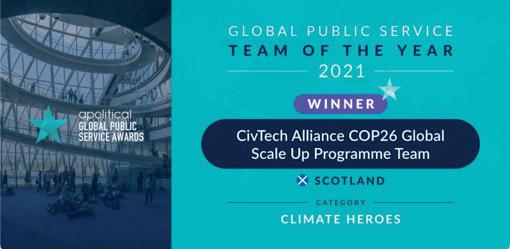


As it was the first time running a GSUP, giving any concrete details on how the programme would turn out was not possible. To ensure balancing the expectations, the programme leader and central team continuously highlighted the programme as being experimental thereby ensuring that all members see themselves as having an active role to play in making the programme a success. The programme partners played a key role in the success of the programme by engaging the local ecosystems in the sourcing of companies and the planning of the safari.
The GSUP has provided companies with more than 200+ contacts, exposure at COP26 as well as funding to scale-up globally. It has further more enabled companies to have direct contact with programme partners and other company participants who can help them find more relevant information and further contacts. For the programme partners, the GSUP has enabled a stronger profiling of their programmes as well as enlarged their network locally and globally.
With these great impacts, the GSUP has proven that it is possible to deliver needed solutions to global problems via a movement having less top-down mandate but bottomup vision!

“Thanks again for the amazing programme you held last week, it was a pleasure to participate and we got really good leads to move forward with projects in Scotland, and other countries.”
Company Participant
Matias Sigal, Eco Wave Power, Israel & Sweden
“The programme has been a great way to prove that intergovernmental collaboration efforts can feed public sector innovation across the world”
Programme Partner
Sofia Silva, PublicTech Lab IE University, Spain


"At
the Technical University of Denmark we strongly believe that all stakeholders need to be engaged to develop the future of our organisations and societies. With the GSUP we see a ground breaking programme that not only gives companies the opportunity to bring their solutions to new markets, but truly has a transformational impact enabling all sectors to be involved in creating and scaling solutions for a better world. We are proud to be part of this programme!"
President of Technical University of Denmark
Anders Overgaard Bjarklev
Mie Weile
Programme Director and PhD-student, DTU Compute
Jan Madsen
Professor, Deputy Director and Section Leader, DTU Compute
The CivTech Alliance
https://www.civtechalliance.org/
The CivTech Alliance Global Scale-up Programme https://cop26.civtechalliance.org/
The world is experiencing an increasing number of global problems that cannot be solved by one nation or government alone. The GSUP gives one answer to how to solve global challenges collectively. It sets out to help scale-up companies by connecting them with investors, academia, ministries, and innovation ecosystems, across countries.
The Global Scale-Up Programme has proven to be an effective way to scale up solutions on global challenges and could undoubtedly serve as a blueprint for future programmes. It has enabled sustainable solutions to be spread and companies to gain more than 200 essential contacts, investments of more than $17 million and quicker time to market in new countries.
A democratic movement for a collaborative future
Taking a broader look on the GSUP – it is not only about scaling solutions or giving scale-up companies contacts – it is in its essence a way of enabling all sectors to shape our future collaboratively. Ensuring democratic, open and inclusive societies and a sustainable future for all!