LUNCH:
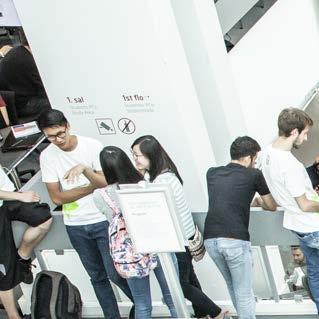
TIME: FROM 12.35 TO 13.35 PLACE: 1ST FLOOR - DTU LIBRARY MENU: SANDWICH

BBQ:

TIME: FROM 12.35 TO 13.35 PLACE: 1ST FLOOR - DTU LIBRARY MENU: SANDWICH
BBQ:
Dear participant,
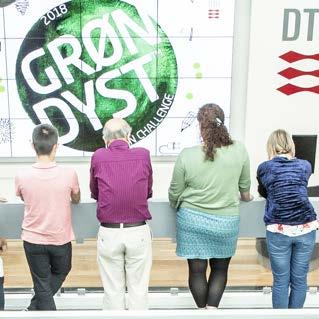
Welcome to DTU and to the Green Challenge (GRØN DYST) Student Conference 2019.
Climate change, deteriorating ecosystems, decreasing biodiversity, poverty, and a continuously growing population are among the global challenges that may have catastrophic implications for humanity. To reverse this development the world needs new and innovative technical solutions, which can change the global market towards a sustainable future.
Sustainability is also one of the key drivers for innovation and for turning ideas into business solutions. Companies today need to develop sustainable operations and products in order to innovate and be successful in the business world of tomorrow. Engineers are becoming increasingly important in contributing to designing sustainable products and services. They play an active role in bridging the gap between innovative ideas and sustainable development strategies.
At DTU, we take our commitments very seriously, which is why the university incorporates sustainability, environmental issues, and climate technology as fundamental aspects in all of our engineering programmes and our research.
Green Challenge promote and incorporate the UN Sustainable Development Goals into the conference. The Sustainable Development Goals are a global call to action to end poverty, protect the planet, and ensure that all people enjoy peace and prosperity.
The Green Challenge Student Conference is an annual and unique opportunity for participating students to present their projects to their peers and professors as well as invited guests and DTU alumni. The projects presented at this conference make a difference and sow seeds for new sustainable start-ups, business ideas and green solutions.
We are delighted that the minister of higher education and science has agreed to open the Green Challenge Student Conference 2019.
Welcome to a day of discovery and eye-opening sustainable solutions.


Marianne Thellersen Senior Vice President - Innovation and Entrepreneurship


Registration 10.00: Welcome by the minister of higher education and science


15.20: Deliberation of the projects

13.35: Judging the projects

15.45: Entertainment by comedian and script writer Brian Mørk



12.35: Lunch

16.15: Award ceremony by Marianne Thellersen, Senior Vice President Innovation and Entrepreneurship assisted by Brian Mørk
17.30: BBQ and Jazz concert in Grønnegården 10.45: Judging the projects

#7
#8
#9
#10
#1
#2 ZERO HUNGER
#4 QUALITY EDUCATION
#5 GENDER EQUALITY
#6 CLEAN WATER AND SANITATION
#7 AFFORDABLE AND CLEAN ENERGY
#8 DECENT WORK AND ECONOMIC GROWTH
#9 INDUSTRY, INNOVATION AND INFRASTRUCTURE
#10 REDUCED INEQUALITIES
#11 SUSTAINABLE CITIES AND COMMUNITIES
#12 RESPONSIBLE CONSUMPTION & PRODUCTION
#13 CLIMATE ACTION
#14 LIFE BELOW WATER
#15 LIFE ON LAND
#16 PEACE AND JUSTICE STRONG INSTITUTIONS
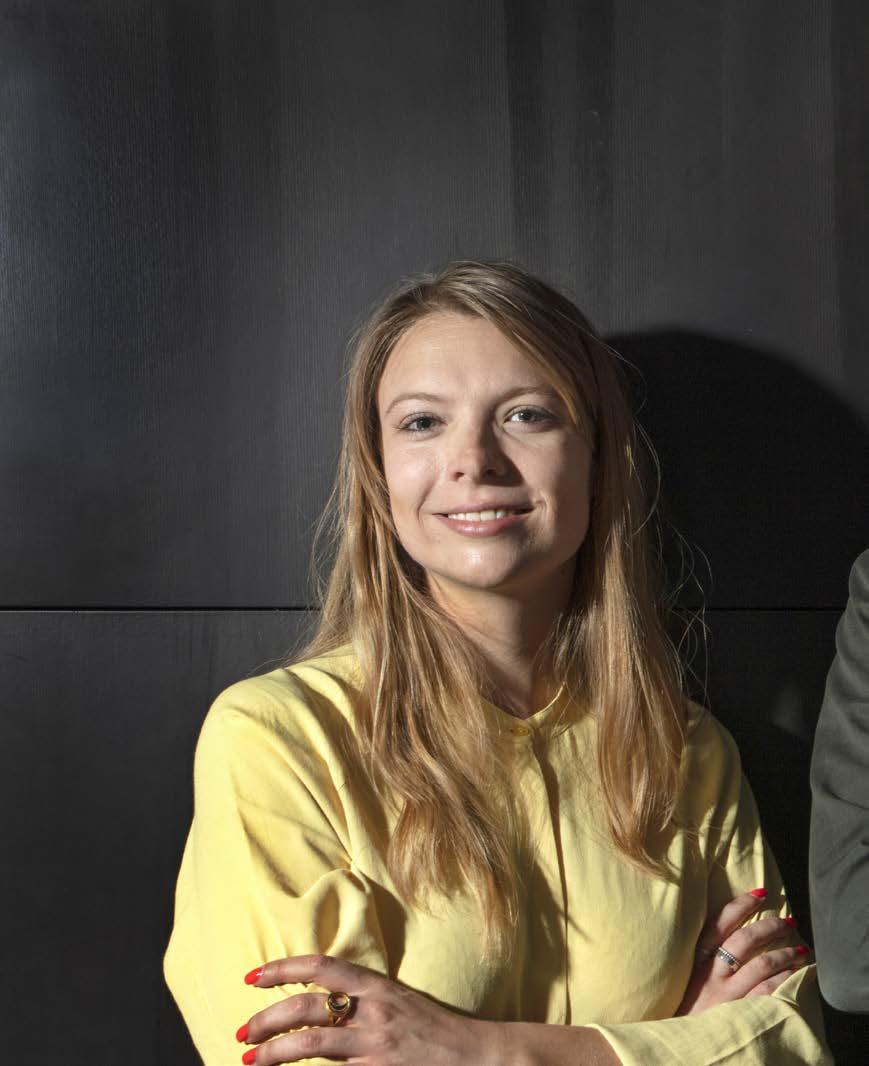
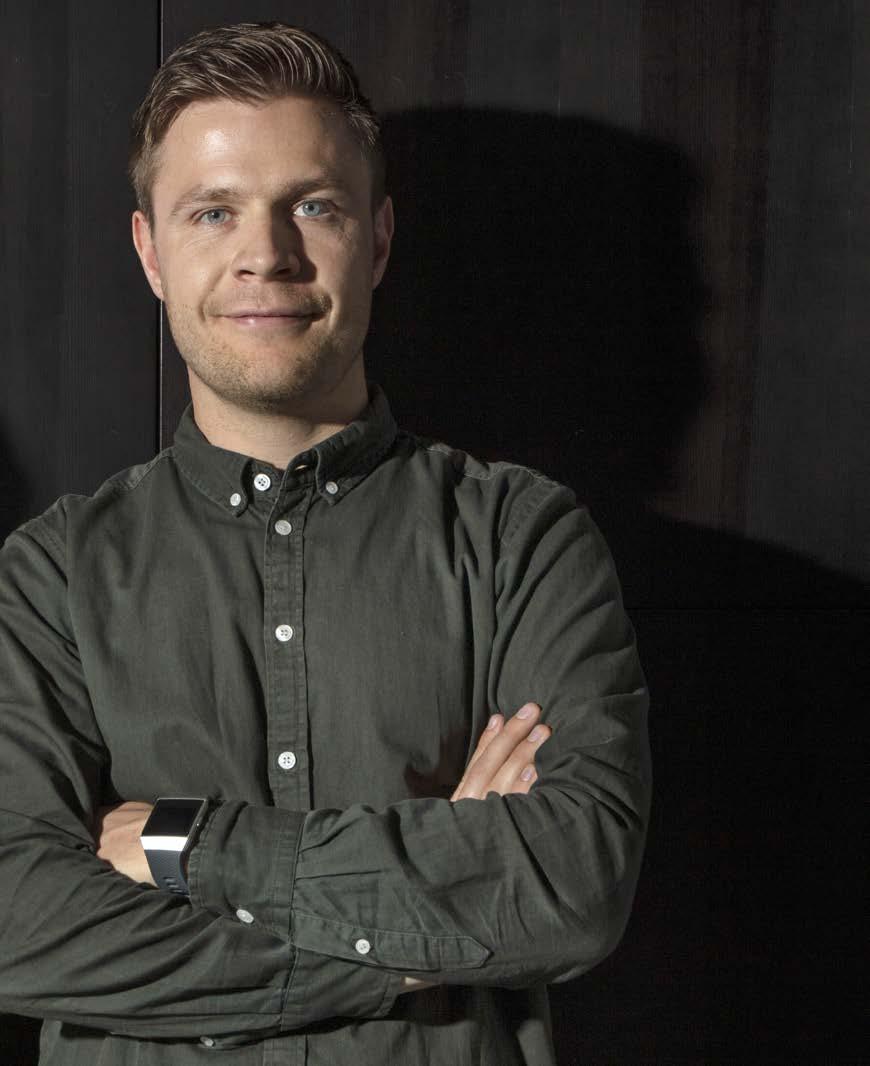
Start-up company has developed a low-tech solution to a critical problem with the desalination of groundwater in developing countries. There is an increasing interest in social and sustainable innovation.
A Danish company is building a desalination plant close to a refugee camp in Kenya, so refugees and inhabitants from the surrounding villages can use the salty water as drinking water. The company still needs to handle the toxic waste product brine, a result of the desalination process. To find a solution, they turned to DTU and a team of five students at HardTech Entrepreneurship.
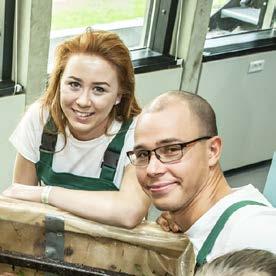
One of them is Anne Sofie Larsen, whose desire to work with social innovation and the UN Sustainable Development Goals was a significant part of her motivation for choosing the HardTech-programme focusing on entrepreneurship.
“I would like to work on a project that can make a difference. Our research showed us that salty groundwater is a large and growing problem in many parts of the world, especially in the climatic zone below the equator. At the coasts, you use wastewater treatment plants to deal with the problem, but this is not possible further inland in a country with virtually no infrastructure. 80 per cent of water drillings result in the water’s content being too salty to be used for drinking. And the Danish company is unable to build a desalination plant before the waste problem has been solved,” she explains.
We will return to the team’s suggested solution. The course is part of the newly established centre DTU Entrepreneurship, which aims to gather DTU’s research and teaching activities with a focus on technological entrepreneurship and boost the start-up ecosystem at DTU.
Mads Rømer Svendsen is employed as project manager at the Centre. He explains that students are showing increasing interest in entrepreneurship with a sustainable focus.
“The project with the desalination plant in Kenya is an example of a classic engineering approach, where you find a tech solution to a specific problem. We will undoubtedly see more of that type of projects in the future. Many students relate to social issues. We will collaborate more with NGOs to bring our knowledge of technology and business development into play in relation to the specific problems the students encounter in the field,” he says.
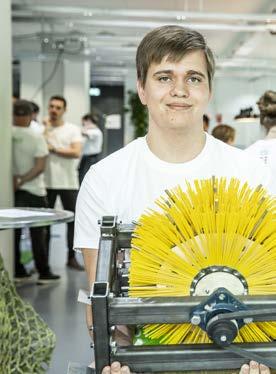
Anne Sofie Larsen and her team were faced with a double challenge. They needed to solve the brine issue while also integrating a sustainable local economy into the solution. They developed a pump, an industrial spray-fan, which pumps the brine through a propeller and out onto e.g. a tarpaulin. The brine then evaporates in the sun and only the salt remains. The pump optimises the evaporation process. The preliminary experiments show that the resulting salt is of such good quality that it can be used in the household.
“Our solution is low-tech and portable. Essentially, we get the waste product for free and turn it into a resource. We have come a long way in our ‘proof of concept’ with the DTU Environment’s support, but the goal of creating sustainable businesses, where the locals can collect, package and sell the salt, is still some distance away,” she says.
Anne Sofie Larsen has, together with another team member, formed the company NoBriner. The objective is to enter into partnerships. If the pilot project is successful, they and the Danish company will apply for funding for a further 120 of their plants, in order to provide clean drinking water and cooking salt for the inhabitants of a Kenyan village.
Anne Sofie Larsen is about to complete her dissertation in Design and Innovation at DTU. While studying, she also works 20 hours a week as a programme manager at the Centre for Entrepreneurship. Her ambition is for the Centre to focus particularly on humanitarian projects over time.
HardTech is a course that takes place over 13 weeks, where the students get access to DTU's prototype facilities, DKK 5,000 for purchasing components as well as access to DTU's experts in the field of entrepreneurship and business development.
Growing urbanization is a key world challenge. A multi-storey vertical garden structure developed by a team of students may be the solution to secure sustainable nutrition and reduce CO 2 emission. The low-tech modular solution developed for protracted refugee communities is now tested in low-income neighbourhoods in Canada.
Mette M. Christensen
Allison Gacad
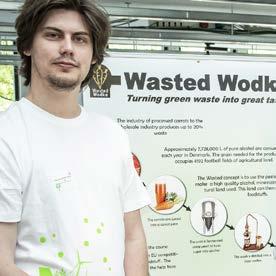
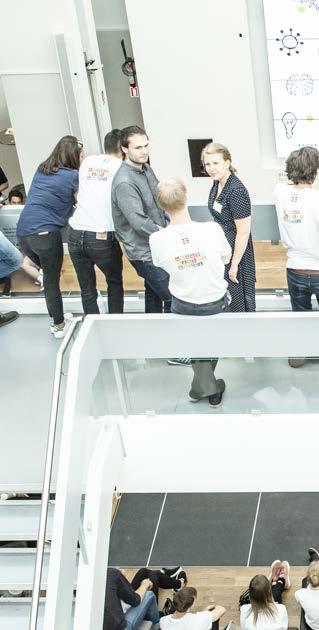
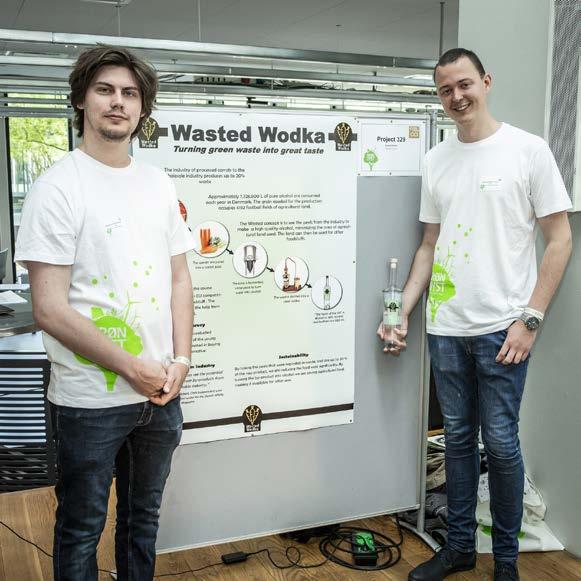
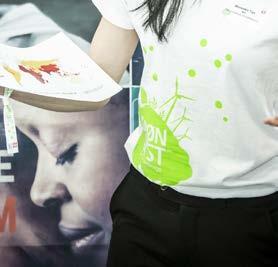
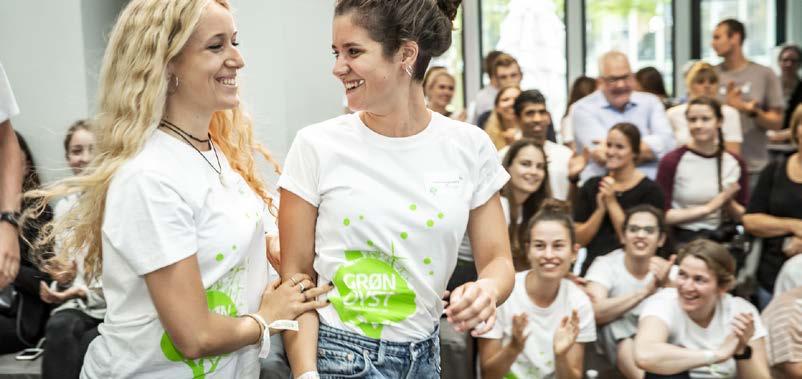
A year ago Allison Gacad found herself in an unfamiliar town outside of Copenhagen, surrounded by young people preparing for one of their biggest moments during their course of education. That day they were all gathered in the library at the Technical University of Denmark wearing their white and green t-shirts with the same goal in mind: to compete for the best sustainable project. Allison had come all the way from British Columbia, Canada, to compete in DTU’s greenest conference, Green Challenge.
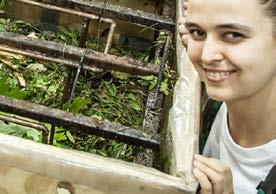
“My project is a multi-storey vertical garden structure for protracted refugee communities – refugees who remain in impermanent, unstable housing situations for long periods of time. The garden structure would
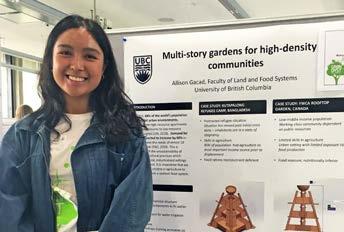
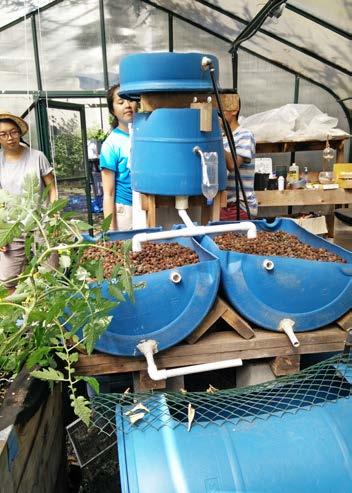
contain modular components, which are designed to grow micronutrient-rich produce to supplement existing food rations. In addition, the produce chosen would be culturally appropriate and support existing refugee skills in agriculture. The motivation was to come up with well-designed, low-cost technology that refugees in these communities can adopt”, Allison explains.
For Allison, the desire is to apply the multi-storey garden in a meaningful way. Since she started on the project she has continually acquired knowledge, taking her closer to this goal. Allison was prior to Green Challenge a finalist in the international World’s Challenge in London, Ontario. With her participation, Allison collaborated, prototyped and consulted with experts across the fields of design, agriculture, and sociology and acquired knowledge to improve her multi-storey garden. But her garden was not yet feasible and with Green Challenge, Allison’s knowledge continued growing.
“The judges’ feedback at Green Challenge really put my project to the test of financial viability and realistic feasibility. As a result, my team has taken the time to pursue individual research and projects before feeling confident enough to circle back and continue with the project”, she says.
Green Challenge altered the direction of the project. Following the conference, Allison’s team recognized that it was essential to develop an even better understanding
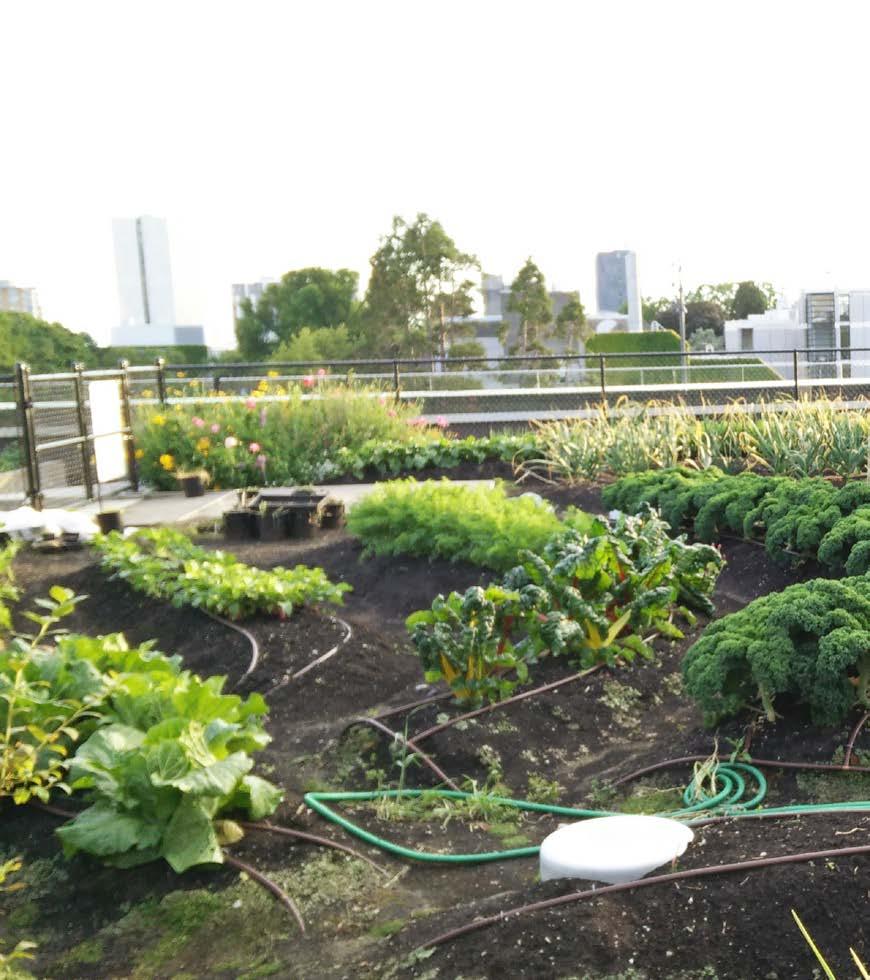
of the contributors to food insecurity in protracted refugee situations:
“I have taken initiative to gain knowledge about alternative methods of sustainable agriculture, particularly those that are low-cost and efficient in settings with limited resources. Over the past school year, I have taken coursework in integrated crop-livestock systems and projects in aquaponics, and currently I am an intern at a hydroponics facility.”
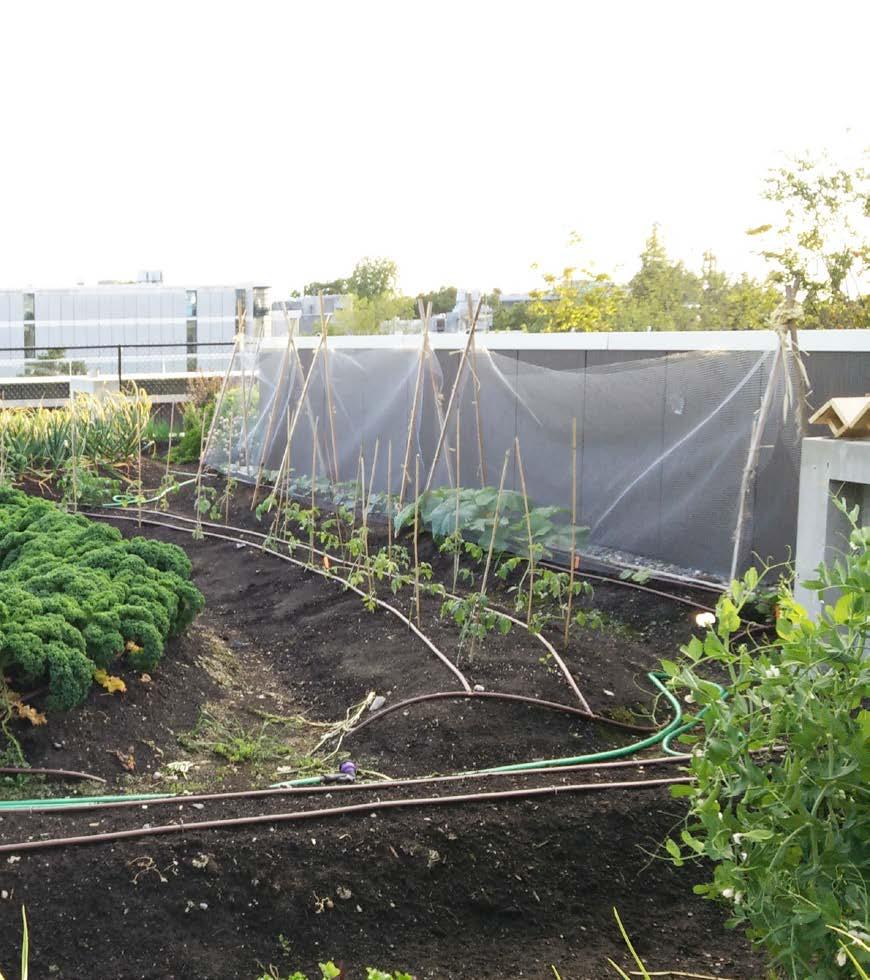
Allison’s desire to apply her multi-storey garden in a meaningful way is still in process, but to grow her garden in refugee communities her knowledge has to grow as well. Allison is today collaborating with a rooftop garden at the University of British Columbia and a low-income urban neighbourhood in Vancouver. Green Challenge has been a steppingstone in Allison’s growing adventure, and we hope soon to see her garden contribute to a better and more sustainable world.




DTU researchers have developed an algorithm that can regulate the power supply for the heating of swimming pools in summer cottages, resulting in reduced carbon emissions. This method can also be used for public swimming pools and refrigerated counters or greenhouses.
Although the coasts and sea water are often close to the summer cottage areas in Denmark, indoor swimming pools are an additional comfort demanded by many visitors all year round.
It is expensive and energy-consuming to heat these pools to about 25–30 degrees Celsius, which is the temperature required for health-related reasons and for general comfort.
There is not much to be done about the power prices for the summer cottage owners and visitors yet. But thanks to an algorithm developed at DTU, the energy flexibility will be utilised and the level of carbon emissions will be reduced by means of a modest investment.
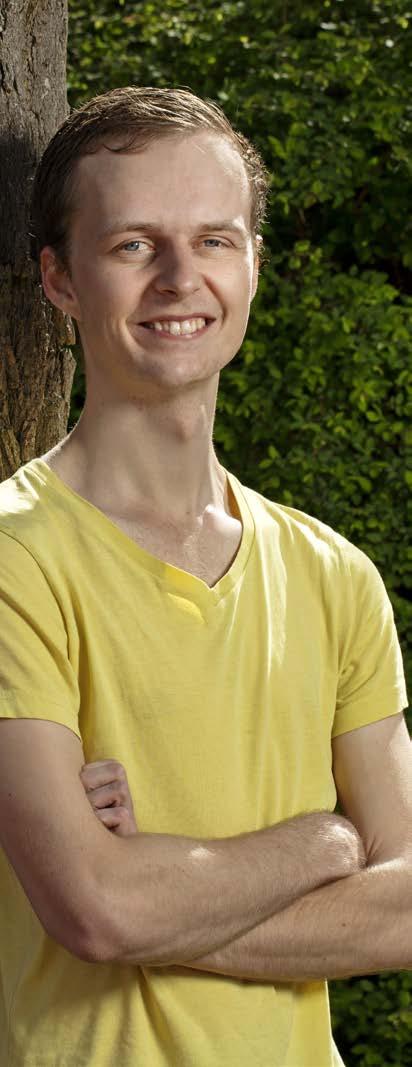
This requires an explanation, and Rune Grønborg Junker, PhD student at DTU Compute, is just the man to deliver it:
“Using the information contained in the energy network, the algorithm continuously predicts how much CO2 is emitted per kilowatt hour in the next 24 hours, thereby also predicting when the carbon emission level is at its lowest. The algorithm will then ensure that power is supplied to the summer cottages—and that their swimming pools will be heated—at times where less energy comes from coal-fired power stations and more green power can be obtained, especially since the share of production created by wind turbines naturally varies,” he explains.
The technology consists of a small box, which is installed in the summer cottage and connected to the main meter, in order to track the power consumption. Its calculations will be made on a server that sends information to the box, which in turn tells the heat pump or electric cartridge to turn on or off. The algorithm works as a kind of price agent, but with carbon emissions in mind instead.
The boxes with the algorithm have been installed in 30 summer cottages during the trial period. There have been
The Danish demo case is part of the research projects smartnet and CITIES, both of which examine the potentials of energy flexibility. The latter sponsors Rune Grønborg Junker’s work. They are both a part of the EU research
different kinds of difficulties, but the basic principle works, says Rune Grønborg Junker.
“Our results show that we can reduce carbon emissions by ten per cent. And the comfort will not suffer from it, as the water temperature only fluctuates very little. The installation does what it needs to do, but we expect to save even more when the algorithm is improved. Just how much is difficult to say, but up to 30 per cent is not impossible,” he says.
One difficulty is that the box communicates via the 3G network, resulting in outages in areas with poor coverage, which is where summer cottages are typically located. In the future, it must communicate through Wi-Fi or be able to store more knowledge and save updates, so that it can remember what to do several hours in advance and therefore won’t be vulnerable in case of a lost connection.
“Through the booking system, the equipment knows when the guests arrive and adjusts the temperature accordingly. It also knows how long it will take to heat the pool and will not turn on until the right moment. This reduction is added to the 10 per cent coming from the energy flexibility,” he says.
The algorithm has the potential to be distributed. The price is roughly the same regardless of how big a subject the equipment must monitor. It could be public swimming pools, for example, and the team behind the equipment is already working on a project with refrigerated counters in supermarkets and a wastewater treatment plant.
“In the future, the power cost may reflect how much CO2 is used to produce a certain amount of electricity. This would give people an additional incentive to use the algorithm. They can save money and benefit the climate at the same time”, says Rune Grønborg Junker.
programme Horizon 2020. When the programme ends, the Danish part carries on in Flexible Energy Denmark and in the collaboration with Novasol, who manages the renting out of holiday homes.
Engineers play an essential role in ensuring sustainable development. Engineers can and must continue contributing towards developing technological solutions and address global challenges.
United Nation has on September 25th 2015 adopted 17 goals to end poverty, protect the planet, and ensure prosperity for all as

part of a new global and sustainable development agenda. Each goal has specific targets to be achieved over the next 15 years.
The 17 Sustainable Development Goals are now incorporated in the framework of Green Challenge, because Green Challenge needs to address global Challenges. Read about each of the 17 SDGs on United Nations website: www.un.org
University
University
Technische Universiteit Eindhoven
Korea Advanced Institute of Science and Technology
1. Is the project well-structured and clearly communicated? Is there a clear thread running throughout the presentation, does the presentation stay within the allotted time frame, is there cohesion between the visual and oral presentation and is the message clear.
2. To what extend is the positive impact on the UN Sustainable Development goals made probable? Which goal or goals does the project refer to? Does the project demonstrate how it impacts the SDG’s?
3. To what extend is the project technically applicable and likely to be realized? Is the project realizable and can it be implemented within a reasonable time frame? How probable is it that the technology can be applied in the desired manner?
4. To what extent is it visionary and/or innovative? Is the project innovative? Are the findings surprising?

Jan B. Lillelund CTO, Executive Architect
IBM

Anne Ehrenreich Member of the Reginal Council Venstre

Axel Grøndahl Kristiansen Deputy Head of Department DTU Diplom

Kurt Engelbrecht Associate Professor DTU Energy

Markus Duus Kristensen Winner of GRØN DYST 2018

Jesper Lomborg Manigoff Vice President 3Shape A/S

Flemming Pless Member of the Reginal Council Socialdemokratiet

Mette Wier Head of Department DTU Management Engineering

Brian Seger Associate Professor DTU Physics

Søren Anton Steffenson President of Polyteknisk Forening

Brian Thomsen Director Dansk Akvakultur

Jacob Wøhler Jørgensen City Councillor, Ballerup Venstre

Per B. Brockhoff Head of Department DTU Compute

Gisle Alberg Vestergaard Associate Professor DTU Health Tech

Andreas Goll Rosseau Vice President of Polyteknisk Forening




Jørgen S. Christensen
CTO
Dansk Energi

Johan Müller
City Councillor, Ballerup Socialdemokratiet

Søren Linderoth Head of Department DTU Energy

Anders Andersen
Associate Professor DTU Physics

Lau Halkier Wandall Coordinator of Academic Affairs, PF

Mads Blumensaat
Cluster Lead
Vestas Wind Systems A/S

Julie Skovsby Member of Parliament Socialdemokratiet

Jörg Hübner Director
DTU Nanolab

Preben Morth Professor
DTU Bioengineering

Asta Trøjgaard Thogersen Coordinator of Social Politics, PF

Jens Brandt Bering
Business Unit Director, Water & Utilities NIRAS A/S

Jan Rytkjær Callesen Member of Parliament Dansk Folkeparti

Claus Hélix-Nielsen Head of Department
DTU Environmental Engineering

Mads Rømer Svendsen
Entrepreneurship Agent
DTU Entrepreneurship

Jacob Grau Thisted Winner of GRØN DYST 2018

Nina Movin CEO
Otto Mønsted


Kåre Harder Olsen
2nd deputy mayor, Ballerup Venstre
Jes Broeng Director
DTU Technology Entrepreneurship
Jeamin Koo
Assistant Professor K-School
Korea Advanced Institute of Science and Techonology
João Antonio Basso Rezende
SDG Ambassador


To be announced Marianne Frederik
Member of the Reginal Council Enhedslisten
Hans Nørgaard Hansen
Head of Department
DTU Mechanical Engineering
Martin Sørensen
Project Consultant
DTU Diplom
Mine Lisberg
Winner of GRØN DYST 2018


Otto L. Frederiksen
Funding administrator
Otto Mønsted
Kim Rockhill
Member of the Reginal Council
Socialdemokratiet
Anne Hauch
Head of Study Board
DTU Energy
Rune Helgesen
Associate Professor
DTU Diplom
Marcus Fruelund Schmidt
Chief Financial Officer, PF

Henrik Toft
Transformation Architect, CTO
IBM

Martin Baden
Member of the Reginal Council Socialdemokratiet

Lars Urheim
Community Manager for LevelUp University of Stavanger

Tiberiu-Gabriel Zsurzsan
Assistant Professor DTU Electrical Engineering

Kirstine Krøyer Rasmussen Coordinator of Internal Matters and PR, PF

Lars Hauge
Executive Vice President
Bridge, Tunnel and Marine Structures, COWI A/S

Laura Kramer Fisker
Consultant Deloitte Consulting

Audrey Soric
Associate Professor Ecole Centrale de Marseille

Sara Grex
Associate Professor DTU Diplom

Elena Olivera Begué SDG Ambassador

Michael Svane
Director, Transportation & Infrastructure
Dansk Industri

Magnus von Dreiager City Councillor, Lyngby-Taarbæk Konservative

Per Goltermann
Head of Study Board DTU Civil Engineering

Gitte Mellemgaard
Associate Professor DTU Diplom

Mikkel Elvebakken Winner of GRØN DYST 2018

Helle Olund Villumsen
Chief Technology Officer DBI Plastics A/S

Niels Høiby
Member of the Reginal Council Liberal Alliance

Eric Rice
Director of the Professional Development Program
John Hopkins University


Günther H.J. Peters
Associate Professor DTU Chemistry
Malene Hovgaard Vested SDG Ambassador

Søren Helmuth Jensen
Senior Vice President, Head of Technical Office Alfa Laval Marine Division

Martin Schepelern
Member of the Reginal Council Alternativet

Lars-Ulrik Aaen Andersen
Head of Department DTU Fotonik

Bastian Epp
Associate Professor DTU Health Tech

Kristoffer Rander
Winner of GRØN DYST 2018


Roger Courage Matthisen
CEO European Diversity Summit
Peter Westermann
Member of the Reginal Council Socialistisk Folkeparti
Pamela Sheff
Director of the center for Leadership Education
John Hopkins University
Michael Deininger
Associate Professor DTU Mechanical Engineering
Anant Atul Visaria
SDG Ambassador

Niels Peter Nørring Director of Environment Landbrug & Fødevarer

Susanne Due Kristensen Member of the Reginal Council Socialdemokratiet

Stijn De Jonge Head of Chemical Engineering Master Programme KU Leuven

Borja Valverde-Perez Assistant Professor DTU Enviroment

Astrid Kjeldgaard Winner of GRØN DYST 2018

Christine Brænder Almstrup
M.Sc., Project Officer, Head of Biotech LIFE

Sofia Osmani Mayor, Lyngby-Taarbæk Konservative


Steve Sung Tae Ahn Director Korea Advanced Institute of Science and Techonology
Massimo Rolle
Associate Professor DTU Enviroment
Mathias Ankjær Winner of GRØN DYST 2018
Peter Ulrik Scheel Owner Scheel Management Consulting
Camilla Bjerg Pedersen
Department Manager, Consultant Vestforbrænding
Martin Widden
Senior Lecturer Engineering Lancaster University
Manuel Pinelo Associate Professor
DTU Chemical Engineering
August Zachariae Winner of GRØN DYST 2018

Tue Johannessen CTO
Amminex A/S

Torben Kjær Member of the Reginal Council Enhedslisten

Lars Bogø Jensen Head of study board
DTU Food

Paul Michael Petersen Professor
DTU Fotonik

Louise Jensen Hamre Winner of GRØN DYST 2018

Anna-Mette Monnelly
Head of Sustainability NCC

Michael Nielsen Cofounder & Partner ForNAV

Laetitia Ouillet
Director of the Strategic Area Energy TU/e

Vassilios Agelidis Professor DTU Electrical Engineering

Ipek Altay Winner of GRØN DYST 2018


Mikkel Leihardt
Debuty Director General Danish Agency for Institutions and Educational Grants
Thomas Schäfer
Executive Vice President og CSO Chr. Hansen
Lasse Engbo Christiansen
Head of study board
DTU Compute
Ole Schultz
Associate Professor DTU Diplom
Amalie Avnborg
Member of PF Acedemic Commitee

Rune Domsten Co-Founder Indesmatech

Mathias Wever Larsen Business Development & Marketing Manager Novozymes

Finn Larsen Senior researcher
DTU Aqua

Søren Juhl Andersen Assistant Professor DTU Wind Energy

Freja Karoline Weber Jørgensen Member of PF Acedemic Commitee

Simon Bull
Digital Specialist McKinsey & Company

John Åge Lazar Managing Director Betech A/S

Jane Hvolbæk Nielsen Head of Department
DTU Physics

Lisbeth M. Ottosen Professor
DTU Civil Engineering


Henrik Wessing Head of Studies
DTU Fotonik
DTU Student
Benjamin Büll Elsholm Member of PF Academic Commitee

Anette Priess Gade Forretningsudvikler innovationlab.dk

Thomas Sture Rasmussen Innovation and strategy developer bib:ballerup

Jacob Berg Associate Professor DTU Wind Energy

Kirsten From Assistant Professor DTU Diplom

Simon Svane Lundorf Member of PF Acedemic Commitee

Line Kolling Management consultant McKinsey & Company

Esben Jørgensen Bager Consultant McKinsey & Company

Nina Bengtsson Member of Ungeklimarådet

Jens Christian Andersen Head of study board
DTU Electrical Engineering

Winnie Edith Svendsen Associate Professor DTU Bioengineering

Vinh Duy Nguyen Member of PF Acedemic Commitee

Editor: Anders Brixen Bojesen
Journalists: Søren Ravnsborg Mette Marie Christensen
Design and production: Step – Move your brand
Photos: Mikal Schlosser
Ulrik M. Nielsen
Allison Gacad DTU photos
event is sponsored by:


Sustainability and climate change are high on the global agenda. Engineers play a central part in a sustainable development of society. Engineers from DTU can and must continue to contribute to the development of technological solutions that respond to the global challenges. Therefore DTU has initiated