



















































Student conference on sustainability, the environment and climate technology.







9.30 – 10.00: Registration

10.00: Welcome by the Minister of Higher Education and Science, Søren Pind





13.35: Judging the projects



15.20 i i wi f Mogens Lykketoft
15.45: Entertainment by stand-up comedian Simon Talbot

15.20: Deliberation of the projects 12.35: Lunch 7.30: 00: e 1 L



16.15: Award Ceremony with former president of the United Nations general assembly


17.30: BBQ and concert in Grønnegården with Danish singer/song writer Soleima 10.45: Judging the projects





Engineers play an essential role in ensuring sustainable development. Engineers can and must continue contributing towards developing technological solutions and address global challenges.
United Nation has on September 25th 2015 adopted 17 goals to end poverty, protect the planet, and ensure prosperity for all as part

of a new global and sustainable development agenda. Each goal has specific targets to be achieved over the next 15 years.
The 17 Sustainable Development Goals are now incorporated in the framework of Green Challenge, because Green Challenge needs to address global Challenges. Read about each of the 17 SDGs on United Nations website: www.un.org



Bachelor course
Project no. 101
K. Ejlste, and G. K. Lindved
DTU Bioengineering, Technical University of Denmark
19% of all energy produced is used for lighting. Cities never sleep and billboards, street lights and shop windows light up 24/7. What if we disrupt classical lighting, one of the rare inventions that has not changed much for more than a ce ntury since Edison’s light bulb?
“The biggest innovations of the 21th-century will be the intersection of biology and technology. A new era is beginning” – Steve Jobs.
We have turned to nature where natural lighting, so called bioluminescence, is a common phenomenon, especially in marine organisms. We have found that the photosynthetic algae Pyrocystis fusiformins and Pyrocystis lunula show promising characteristics for efficient emission of bioluminescence Both species are fast-growing microorganisms that emit blue light when stressed due to production of the enzyme luciferase. This means that during the night they light up using the solar energy they have obtained through photosynthesis during the day. In order to build sustainable cities in the future we need to integrate nature into urban spaces – that is what Living Light is about.
Our vision is for Living Light to replace conventional energy consuming lights in places where “ambient” light is needed: street lights, shop windows, building s and public spaces. Here we believe that the glow from the algae will be sufficient at nighttime. Cost-efficiency is ensured as the algae have limited nutrient needs, are tolerant to varying temperatures and light intensities and are fast-growing. With the possible energy savings in mind this concept can compete on costs with traditional lighting methods. Furthermore, as these lamps rely on sunshine rather than electricity, it is also possible to provide light to places without electricity. In addition to making street lighting sustainable this opportunity to expand the street light network further could also have a positive impact on the frequency of crime and road accidents.
Our product is a sustainable, low-maintenance biological lamp designed to cut energy consumption. We are learning from nature and taking a step towards merging nature and cities closer together. As biotechnology students we believe this combination will be crucial in the future in order to develop our communities in a sustainable way and we see a lot of opportunities in this area. Currently, our algae are 100% natural but if GMO legislation is slackened we see this as a way to enhance natural lighting even further. The possible use of the biomass of the algae should also be taken into consideration as this serves as carbon sink and could be used for production of biofuels.
M. Paul, M. K. Dittmann, K. E. Christensen, B. J. M. Nielsen, and C. L. Madsen
DTU Diplom, Technical University of Denmark
Roskilde Festival is known to be the largest music festival in Northern Europe. Every year each festival participant creates about 23 kilograms of trash during the festival week. This sums up to nearly 2000 tons and it results in volunteers using 17.000 hours on manually cleaning the festival location.
We solve this problem by inciting people to clean up their camps while staying there and thus reducing the amount of hours needed to clean the festival location after the festival has ended. Not only do we help the festival guests to clean up their camp, we also provide them with a comfortable festival chair:
Clean Comfort: Trashboy, is both a trash bag and a comfortable chair in one. Produced in the biodegradable plastic PLA, Polylactide, Trashboy ensures a sustainable chair that keeps the camping area cleaner during the festival week. By encouraging and activating the festival participants to fill up their Trashboy with trash during the festival week, we not only give trash a new value, but also create consciousness about waste management. Furthermore the activation of the festival participants adds social sustainability by promoting both teamwork and a joint interest in a cleaner camp, which is one of Roskilde Festival’s big focus points.
Each Trashboy has the capacity of 10 kilograms of trash, and with a production of 10.000 Trashboys we are able to reduce the amount of hours needed to clean the festival location by 5%. Besides that, a Life Cycle Assessment, LCA, has been done on the Trashboy compared to the normal camping chair. The LCA results showed that the Trashboy derived up to 50% less CO2 than the camping chair. Since the camping chair often gets repurchased by the festival participants due to breakage, the total amount of CO2 can be doubled.
Therefore Trashboy is a multifunctional product creating positive value for both the festival itself and the festival guests.
E.H. Pedersen, C.B. Letting, and K. B. Rasmussen
DTU Diplom, Technical University of Denmark
With a green tailorfit home, you now have the possibility to own a house, that can be scaled up and down, as your needs changes. If you are alone, or a couple, you would be able to live in our basic size home. If you find the need for an extra room or two, you can just order them, as if you were ordering a pizza.
Your own tailor fit design
You can even design your green tailor fit home as you would like it. Simply choose in which sections you would like a window or a door, or maybe just a closed wall for privacy.
Choose if you want to live with the sun as your energy source. If you wish, you can have the roof of your home covered with solar panels. These panels are specially chosen, so that they perfectly fit the roof of the home, is cost effective and with an impressively high energy efficiency. The technical installations of the green tailored fit home are all carefully chosen, so that they are as compact and efficient as possible. Make perfect even better
The green tailored fit home is designed, so that you can fit at battery pack inside it, to go with your solar roof. This gives thereby be way more energy efficient.
The production of the home is designed, so that the building components can be separated and re-cycled. This means, that if you have a damaged, or worn out section of the building, this can be swished out easily, and the materials can be separated.
The green tailored fit home is designed, so that building sections are equal to the standard ainer. This means, that your home can be produced efficiently in a factory, and quickly delivered were you want it. This both serves the environment and keep building costs at a minimum.
D.S. Sevel, E. Vibe-Hastrup, J.D. Leth, J. Hallengreen, and M.M. Lund
DTU Diplom, Technical University of Denmark

INTRODUCTION
For decades’ landmines have caused irreparable damage to societies all over the world. Usually landmines are laid during times of war, but due to the high cost and large effort, the removal of landmines is too much of a challenge. This results in a range of problems such as unusable farming areas, personal injuries and vanishing industries. All this leads to the decay of societies like Angola, Afghanistan and Vietnam. 2000 people are killed or mutilated every month because of landmines. (Danmark mod landminer, u.å., Fakta om landminer). Efforts have been put in by numerous organizations to efficiently remove landmines. Methods include the use of huge flails beating the ground and dogs smelling explosives. Yet, no sustainable solution has been able to overcome the challenge of effectively removing landmines.
The challenge with explosives are the extreme consequences that come with failing to detect them. Landmines are potentially deadly and difficult to detect, which can be devastating for people living in the defiled areas. The challenge with landmines is the diversity of shape, shell and explosives, making it impossible to standardize detection equipment. Therefore, the current price of landmine removal is $300 - $1000 per mine. A price that is unaffordable for already poor societies and therefore paid for by hundreds of organizations.
To help societies back on track, we have developed our Danish Radar Drone consisting of a flying drone with pulse-radar technology. Our drone is able to determine the location of landmines much faster than other technologies. This will potentially aid organizations and private corporations in the removal of millions of landmines worldwide, making the world safer and more social sustainable.
Our solution differentiates from existing solutions by guaranteeing the security of the operating personnel and increasing the location-speed of landmines. Our radar has more than 99.6 % success rate of detecting mines with few false-positive statements. Our drone is superior to standard drones making the location of mines up to two times faster. Altogether our technology will aid social sustainability in mine-contaminated countries. We need to pass some technological barriers. Altogether our drone will eventually help create a sustainable future where companies can expand and vegetables can grow.
N. H. Eliasen, M. Hintze, M. G. Ellefsen, F. Rømming, N. Jacobsen, and R. Riber
DTU Mechanical Engineering, Technical University of Denmark
INTRODUCTION
The offshore wind turbine technology is rapidly improving and results in increasing size to reach the highest possible efficiency. The increasing size challenges todays methods of offshore transportation and installation. structures for sea fastening the blades on board installation vessels are not capable for the next generation of blades due to increased size. The steel structures of today are scrapped after each project. The ambition of this project is to provide a reusable solution - structure and concept - for offshore transport of the upcoming larger blades.
The project is a co-operation with world leading specialist within the offshore windfarm industry Siemens Gamesa.

The final concept is selected from conceptual solutions obtained by product development and design. Mechanical data from installation vessels and the upcoming blades are used for initial structural and mechanical analyses and dimensioning of the concepts. Vessel and quay site inspection, dialogue with craftsmen on board an installation vessel and sparring with leading engineers from Siemens Gamesa has provided essential insight that enables the concept to be realized.
Key points taken in consideration is: reusability, staff safety, installation time, lifting time, optimization of steel structures and avoiding blade damage during lifts and transport.
Two modularized steel frames connected to the blade, one in the root-end and the other in tip-end, follows the blade all the way from factory to installation at wind farm. The modularity and decrease of size per unit makes it reusable. The modules can be stacked three on top and stacks can be placed side by side and thereby consuming as little space as possible on board the installation vessels.
The concept provides a mechanical and logistic solution necessary for efficient installation of future offshore wind farms. The modulization concept of steel structures makes reuse possible and saves materials.
F. K. Brandt, and M. Decara
DTU Diploma, Technical University of Denmark
Most biomass has the potential of being converted into biogas via a microbiological process. This process happens naturally every day in oxygen free environments and in the digestion system of animals.
Biogas is a relatively inexpensive way for societies to reduce greenhouse gas emissions and create energy at the same time. Biogas can be used for transportation, electricity, district heating, cooking, or for resale - and this way biogas can be a good business and good for the environment simultaneously.
One key benefit of biogas as compared to other renewable energy sources - such as wind and sun - is its ability to be stored, making it possible to convert biogas into electricity when the sun and wind are not present. Biogas is a carbon neutral energy source, because the carbon released from burning the biogas is the same carbon that the plants obtained via photosynthesis which would have been released anyway through natural decomposition.
Biogas production in Europe has the potential to replace the total consumption of natural gas in Europe. In Denmark, 0.5% of the energy come from biogas. Natural gas is a fossil fuel and our reserves are estimated to run out in 50 years with the current rate of consumption. One reason why biogas is not being used more than it is now is the difficulties of biomass management and logistics. The transportation of the material to the biogas plant and then later the return of the degassed material to the farmers is costly.
Farmers could harvest the biogas on their farm directly, but the biogas solutions currently on the marked are either very big and costly or small home size plants.
We have developed a biogas plant that fits the needs of midsize farmers and small communities. It is affordable and able to create a revenue of 50.000 DKK in electricity and 25.000 DKK in heat per year in Denmark based on dung from 18 cows or an equivalent biomass. Our biogas plant requires no education to use, no electricity to function, improves fertilizer qualities, keeps scarce resources such as phosphorus inside the farm s ecosystem and requires no installation or construction.
Project no. 107
K.Bae1, M.Cheon2, and H.Park2
1KAIST Electrical Engineering, Korea Advanced Institute of Science and Technology
2KAIST Chemical Engineering, Korea Advanced Institute of Science and Technology
INTRODUCTION
An energy self-sustainable house using ingredients easily found nearby, with a reasonable price and short construction time.
THEORY/ PRODUCT
The project concentrated on two key features. Insulation and heat storage. The idea was to store the heat from the sun in the daytime, and release the heat at nighttime. The wall facing south consisted mostly of double glazed window to insulate the heat flow so that the house can keep the energy. Once the solar energy entered the house, rocks were used for storing the heat. Average of 40cm depth rock foundation was implemented all through the house. Rocks facing the surface were painted black to absorb the heat better. Insulation of the house was achieved by dry sand and self-developed insulation blocks. Insulation blocks were made of large, thin wooden boxes with straw filled inside, acting as insulator as well as load supporting structure.
The core part of the project was the insulation block. Our team went through many tests, varying the block size and the orientation/density of the straw inside the block. We even made a thermal conductivity measuring equipment for the experiments. The results showed thermal conductivity as low as a Styrofoam, a common thermal insulator for modern houses. The design was finalized at Dec 2015, and began construction at Nangi village, Nepal, at Jan 2016, with help from Nepal’s local social activist, Dr. Mahabir Pun. The house was completed at April 2016, and our team visited at Jan 2017 with tests measurements during the winter time. The results showed that the daily average temperature inside the solar passive house was approximately 9 degrees Celsius higher than that of the outside. The total heat loss coefficient is calculated to be 1.13W/m2, with natural ventilation of about 0.02~0.03kg/s.
Other than the numbers, the project proved to be successful in that all villagers loved the house, and all our team members ended up sleeping in the model house during the trip for it was much warmer than other houses.
The total construction cost spent, including labor fee and the furniture inside, was about 2970USD, which is a reasonable price. Considering that the construction was done while there were big protests in Nepal’s southern border, resulting in higher material price, makes the price seem even more reasonable.
In addition to the fact that the house is energy self-sustainable heat wise, the materials used during the construction are all natural resources easily found nearby, which makes the house environment friendly.
The resulting product is a passive solar house, of which it is safe to say, energy selfsustainable, eco-friendly, with a reasonable price and short construction time, which can be implemented at any locations.
E. Hauge, M. Lyck, F. Berthelsen, H. Gunnarstein, and J. Nehm
DTU Mechanical Engineering, Technical University of Denmark
INTRODUCTION
With increasing international focus on transitioning towards green sustainable energy, wind power is one of the more technologically mature alternatives to fossil fuels. Existing offshore foundations i.e. jacket and monopile structures are limited to reasonably shallow water. Floating wind turbines allow for placement in much deeper water further offshore and much greater flexibility of placement than current fixed platform designs. To allow the emerging floating wind turbines to quickly reach a technological maturity that makes the technology applicable and sustainable in full scale, sub-scale tests are required. This coincided with a specific requirement from DTU Wind Energy for a “Mechano -like” building kit that would allow for rapid sub-scale assembly and testing of different floater configurations. The subscale kit is scaled from the 5 MW NREL Reference turbine.
From the offset of dimensioning a full-scale floater for the previously mentioned 5 MW NREL Reference turbine we used Froude scaling when designing our building kit in 1:200 scale. Furthermore, we applied linear wave theory with inputs from Morison’s Equation and basic hydromechanics to model floater motion with wind and wave effects. Finally, we applied a simplified mathematical model including wave and wind forces to aid in dimensioning floaters that adhere to DTU Wind Energy’s specified requirements of maximum and mean turbine tower pitch.
During the design process, we would encounter obstacles and evolving requirements from DTU Wind Energy, that required us to continually revise our original concept. By utilizing current trends in additive manufacturing, we were able to rapidly prototype our evolving concepts. While each iteration of the design required extensive modifications to the solid model and time consuming 3D-printing it much accelerated our developmental phase compared to conventional machining technology.
To test the viability of the building kit we constructed two radically different floater configurations. We elected to construct a Spar and a variation of the Dutch Tri-floater semisubmersible. Preliminary calculations on the two designs look promising and a planned wave/wind-flume test is scheduled early in June 2017.
Using our building kit allows the user to rapidly realize and test their ideas for current and emerging trends in the field of floating wind turbines. DTU Wind Energy will be running a course in August 2017 in which Ph.D.-student will design a floater and apply the building kit to test the validity of their designs.
T. Føns, C. Larsen, M. Larsen, P. Larsen, and M. Torp
DTU Process and innovation, Technical University of Denmark
In a world where physical interaction between human in the western world declines as social media engagement increases. This has caused our people to become lonelier, in Denmark 2015 4,9 percent felt unwanted alone on a daily basis, where most of these are young (1629) or elderly (65+) (Danmarks Statistik, 2015), especially young students have problems with loneliness.
Investigating the problem
Through thorough testing of prototypes and interviews of segments, we have determinate that there is a specific need, and what the different segments need is. Our test was conducted with the fundamental elements of the app. We tested in subway trains in and around Copenhagen, and in different parks in Copenhagen. The content of what was tested was adjusted according to the findings throughout the test process. How do we solve it
Paradoxically we have developed a social media app that focuses on bringing new people together physically, where strangers can meet up one-on-one in public locations, hopefully leading to new acquaintances and potentially friendships. Because the app relies on social interaction it is categorized as a social media, however the interaction taking place on a physical level as opposed to digital like Facebook and Snapchat.
The first time the app is used, users will be required to create an account, thereafter they are able to be matched with other users through our database via their smartphones, with the option of choosing activities The users will also upon matching be confronted with a daily subject or challenge, so that the conversation has an icebreaker.
We app will partner two people using the app through our database, the database we use is from Amazon Web Services, it will recognize people to partner up with within a certain area. They will not be oblivious of the looks of the partner before they are in close proximity, to prevent that the match is based superficial factors.
Competetion
The fact that we are basically creating a social media means that the throw ourselves in competition with social media giants like Facebook and Snapchat. However, out app is focused on physical interaction, which is not true for Facebook and Snapchat. There are however social medias which offers physical interactions, but these operate on a group platform, which means that you have to be a part of a group to interact with other groups.
Danmarks Statistik. (2015). Livskvalitet efter daglighed, tid og hyppighed . Hentet fra Statistikbanken: http://www.statistikbanken.dk/10565
A. C. Bayer, C. B. Haahr, D. V. Davidsen, M. R. Borgmann and W. K. Jørgensen
DTU Diplom, Technical University of Denmark
INTRODUCTION
Currently, many elderly live by themselves, and are at an increased risk of suffering from a heart attack (Danmarks Statistik). The survival rate of a heart attack diminishes by every second, and if there is no one to help survival is unlikely. We aim to save those who are alone when a heart attack occurs. This is enabled through a worn device that can monitor and signal the emergency center and a community of helpers. These helpers are trained and prepared to move out and help those in need. Our primary emphasis is social sustainability.
Every second counts when a heart attack occurs in the private home. Around 4000 people in Denmark are struck by heart attacks outside a hospital. They need urgent help, but the problem is 73% of all these heart attacks happen in the private home, where it’s unlikely to have someone able to help or call for assistance. The chance of survival in these circumstances are almost nonexistent. The Danish Council for revival (Dansk Råd for Genoplivning) advice is to call for help in case of intense chest pains. We see this practice as insufficient. It is common for many to shrug pain off as temporary or the heart attack can be so sudden there is little or no time to call for help.
The device we have developed can measure body vitals, including pulse, and has the ability to call for help when a heart attack strikes. The device calls for the emergency center in cases when people are alone without any aid, and the emergency center can then call the registered helpers, who can be arrive and administer first aid until the ambulance arrives. Results from the Danish heart attack register (Dansk Hjertestopsregister) show that the administration of early life saving CPR has increased from 19.4% in 2001 to 65.8% in 2014. This early help is vital for the survivability rate of a heart attack. Yet almost 40% of heart attacks happens without the vital early life giving CPR. Therefore, there is a need for a device and a service, which can locate a person having a heart attack. Furthermore, a nearby member of the registered helpers, tied to the device through the service, will be notified immediately and can rush to provide life giving CPR until the ambulance arrives. On average, it takes 8:18 minutes for the ambulance to arrive, and in some instances more than twice as long.
The unique value of our product is faster lifesaving CPR in instances where it otherwise wouldn’t be possible, which can save a life.
A. B. Støvring, and O. F. Møller
Copenhagen Business School
The ambition of this project is to build an innovative logistical drone-based system shortening the lead time for medical supplies and assistance between hospital/pharmacy and patients: a lead time that may potentially be vital for citizens’ health and survival. The idea of the project is twofold in protecting citizens: 1) to create a viable solution for citizens living outside the main cities in terms of providing fast delivered pharmaceuticals by drone for those who do not have close access to a 24-hour pharmacy and 2) support lifethreatening situations in which people urgently needs medical equipment with voice instructions to reduce the risk of a fatal outcome. The drone will be sent off simultaneously with an ambulance to supply helping citizens with equipment and instructions to assist the injured individual. Examples of the applicable usage of the drones are as follows:
1. Health: Citizens outside the main cities, especially elderly, is at a disadvantage in comparison to their fellow citizens in the city. They place a great risk on their health by having to wait longer times to receive the necessary medicine.
2. Safety: Citizens with a sudden condition such as a heart attack will receive fast and appropriate help as a drone will be sent off to support and guide “helping citizens” to apply the correct treatment, whilst providing the caretaker(s) with the necessary equipment, such as a defibrillator which can be crucial in the first minutes after the strike. Drones located at the Central Hospital in Copenhagen will be able to reach citizens within Copenhagen in matter of few minutes and often prior to an ambulance.
This innovative logistical system will be carried out in a sustainable manner – both environmentally and socially. The drones will reduce carbon emissions as the medicine will not have to be delivered, nor do the citizens have to transport themselves. However, the emphasis is on the social sustainable impact in which citizens will achieve a higher level of health related security. This project would pose as the first innovative logistical drone system in Denmark to deliver medical attention via an environmentally friendly unmanned aerial vehicle (UAV), ideal for fast delivery.
We would like to put forward a pilot phase operated by the Danish Regions in which each hospital is supplied with drones to deliver fast needed medical attention to citizens. After a successful pilot phase, we would like to commercialize the idea to pharmacies nationwide to transport prescription medicine and other pharmaceuticals for which the customer will pay a fee. The drone will follow a GPS path and the customer will receive a live tracking link.
The technology in terms of UAV is already in place as of today. However, this is a new way to utilize already existing technology. The next steps will be to create the logistics behind this project: Order processing, packaging, service inspections etc. Furthermore, there needs to be established a mobile control station upon approval from the Danish Transport Authority, an agency within the Danish Ministry of Transportation. The authority will have to design a restricted air corridor to ensure no collusion between aircrafts.
Bachelor course
Project no. 113
A. M. Haack1, C. Knudsen 2, R. U. W. Friis1, and S.H. Dam1
1DTU Human life science engineering, Technical University of Denmark
2DTU master thesis student, Technical University of Denmark
INTRODUCTION
Snakebite is one of the biggest health concerns in tropical and subtropical areas of the world, as more than five million people are bitten by venomous snakes every year, more than a hundred thousand die, and four hundred thousand receive amputations.
In many cases of envenoming, the species of the responsible snake remains unknown. This paired with a variable time course of symptom development puts great demands on medical personnel when choosing an appropriate treatment. The decision often has to be made in a matter of minutes to a few hours, based on sparse and inconclusive information, leading to unnecessarily high death rates amongst snakebite victims. Furthermore, amputations due to venom-derived tissue necrosis often leave victims unable to work and thereby to sustain their families. As such, snakebite is not only a health issue, but also has socio-economical consequences. Currently, there is no good method for determining the venom identity.
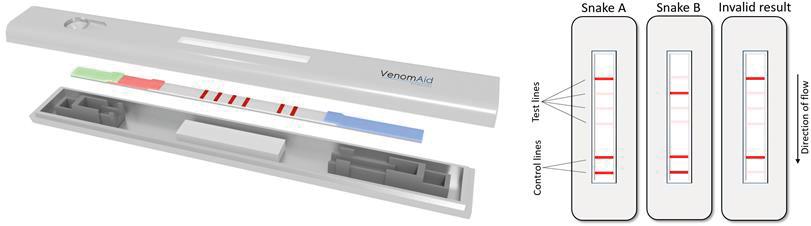
Our project aims at developing a diagnostic tool for identification of venom in blood samples. This snake venom detection kit will be based on a solid phase immunoassay in a lateral flow format. Such a kit will allow for rapid diagnosis (5-15 minutes), specifying not only if envenoming has occurred, but also by which snake. It thus has the potential for becoming an indispensable tool in choosing the correct treatment for snakebite victims. Lateral flow assays rely on labelled antibodies to bind to antigens (e.g. toxins) and in their presence develop a colour change. The principle is already widely used in e.g. pregnancy tests. It will be possible to create assays that test for the presence of venom from snakes endogeneous to selected high-risk areas in sub-Saharan Africa and thus specialise the assays to geographical regions. The test will be able to distinguish between the deadliest families of venomous snakes (vipers and elapids), as well as between genera and species of these. For instance, it will be possible to create an assay distinguishing between species of mamba and cobra, allowing subsequent application of the genus-specific antivenoms.
We are currently producing a prototype of the assay, which we believe has the potential to improve health in tropical and subtropical parts of the world.
A. Madsen, J. Kirkegård, J. Werner, K. Jakobsen, N. Dandanell, and R. Sørensen
DTU Diplom, Technical University of Denmark
INTRODUCTION
One of the biggest losses of resources in Denmark is food waste. A big effort have been done on the side of the retailers, but much less have been done for the consumers. Seven out of ten of the Danes wish to make a difference and help solving this problem (http://www.stopspildafmad.dk/madspildital.html). Therefore, we see a need for a solution and a way for the Danish citizens, to not only reduces food waste, but also to use their own food waste as a resource. With our Food to Fungus plant kit, we provide our customers with the opportunity to reuse their vegetable food waste and grow edible mushrooms.
METHODS
It is commonly known that oyster mushrooms can grow in coffee grounds. Although coffee grounds is possible to use, we have chosen to work with vegetables for two distinct reasons. First, because vegetables are accountable for 45% of food waste in Danish households. Secondly, vegetables have the closest profile of nutrition’s that an oyster mushroom needs. To determine what vegetables are particularly well suited we have performed a range of experiments on some of the most promising vegetables. We have performed experiments on carrots, potatoes, broccoli, iceberg salad, leeks, pointed cabbage, which have all shown positive results. All vegetables were cooked, to remove others breeds of fungus, before we blended them with the mycelium. We had one exception, which was with potatoes, that was not cooked. In some experiments was the vegetables mix with coffee grounds, which was done because it is well known that oyster mushrooms grow well on coffee grounds.
The result is a small difference in the speed, which the mushrooms grow, but the biggest difference is actually the smell during the first few days of the experiments, where the coffee grounds had a positive effect. It is possible to grow the mushrooms on all the vegetables, but especially potatoes and broccoli had great success. Here the edible part of the mushroom grew bigger than at pure coffee grounds.
With the results from the experiments, we have proven that oyster mushrooms can grow on a wide range of vegetables. If we meet our calculated sales numbers we can save the planet for the same CO2 emission as a car, that travels 12.000 km, and that’s only the first year, with rising sales the impact will be even greater. This makes the oyster mushrooms the perfect weapon against food waste. By taking old food and making it to edible food again, we want to change the life cycle of food and how we treat the resources within our food.
A. Mirza, B. Fatahi, E. S. T. Samuelsen, F. C. Nielsen, and K. M. Leiling
DTU Global Business Engineering, Technical University of Denmark
The lack of information and signposting at the s-train stations, regarding available bicycle racks in the carriages for bicycles, can cause passengers (passengers with bicycles) to choose the wrong carriage, where there are no available bicycle racks. The lack of overview can result in passengers choosing other kinds of transportation, for example a car, which is more expensive for most passengers and can lead to the customer (DSB) losing passengers.
We wish to optimize and manage the already existing bicycle racks in the trains, with the final result of giving a better overview and create a better service for the passengers leading the passengers to be more likely to ride their bicycle to the s-train stations instead of taking the bus.
By producing a mechanical sensor and place it in every bicycle rack in the s-trains, the passengers of DSB have the opportunity to obtain information about which bicycle carriages that are available before entering the s-train. The information screens on the platform and the information screens on the outside of the s-train will be updated to inform the passengers where the available spaces are.
We believe that the extra service and the more structured placement in the trains, will increase the numbers of passengers in the scustomers. Furthermore, the increase in passengers in the s-trains will be a factor for the decrease of people driving their car to and from work, with the result of bringing down the carbon dioxide emission.
L. D. Vilain
DTU Diploma, Process and innovation, Technical University of Denmark
The purpose of this paper is to show the environmental benefits of a microfiber filter for washing machines. On a daily basis most people use different kinds of micro plastic products and maybe without even being aware of it. By not being aware of what material the products we use are made of, we risk contributing to fatal environmental problems. There is evidence showing that micro fibres spread in the environment can cause harm to living organisms. Most people can identify with owning some sort of clothes, a washcloth or even a floor mop made out of some sort of micro plastic. A Norwegian study estimates that over 50% of the textiles used were plastic polymer based (Sundt et al. 2014). For the same reason, there is growing market in trying to establish a more sustainable solution for the consumers.
In a report published in 2016 by the World Economic Forum it was stated that, “in 2050 there will be more plastic than fish in the sea” (World Economic Forum et. al., 2016). This is due to the fact that the wastewater treatment plant is not able to filtrate all of the microfibers and some of this wastewater ends up in rivers and oceans after most of the heavy pollution is removed. According to a study released in 2016, on average synthetic fleece jackets release 1,7 grams of microfibers in each wash. If the Danish population were to wash their synthetic fleece jackets once a week that would be estimated 503.880-kilogram microfibers per year solely for the Danish population. The same study stated, that from the microfiber released in cloth washing 40% would still be released into oceans or rivers after having gone through a local wastewater treatment plant. That would mean that out of the 503.880-kilogram microfibers released from cloth washing 302.328-kilogram. would not be caught in the filtration at the wastewater treatment plant but be released into either oceans or floods. The microfibers released into the oceans are then eaten by fish, which have lead to plastic being found in one third of fish caught in Britain. This means that when we wash our clothes and other textiles we are actually contaminating the ocean and it’s wildlife . The micro fiber contaminating the fish ends up back in the food chain, which might eventually make anyone eating these fish sick.
To examine this problem, I have developed a microfiber filter that consumers will be able to install in their washing machine to prevent microfibers from being released into the wastewater. The microfiber filter will mainly be made out of a special mesh that will be able to filter out 90-99% of the microfiber released in each wash. The filter will be detachable/removable so the microfibers can be disposed safely in the thrash rather than in the oceans.
Bachelor course
Project no. 117
A. Larsen, and C. Dengsøe
DTU Bioengineering, Technical University of Denmark
INTRODUCTION
Harmful algae blooms are an increasing problem in aquaculture and especially in recirculation aquaculture systems (RAS). Often algae blooms in RAS are treated with a number of different chemicals (and often at wrong concentrations) with negative effects on the environment. This contradicts the fact that RAS were originally developed to be an environmentally friendly alternative compared to traditional aquaculture and the high doses of chemicals threatens the entire existence of RAS. Therefore, development in environmentally friendly methods for treatment of algae blooms are important.
THEORY
The chemicals used to fight algae blooms are very different. The have different properties including modes of action, therapeutic window, toxicity, half-life and effect on the environment. Therefore, the environment can be spared, if the right chemicals are used at the right dose. An even more environmentally friendly method for fighting algae blooms are to use biological methods. This can be done by taking advantage of the natural ecosystem and use copepods to reduce algae blooms.
RESULTS
The results of this study are suggestions on how to deal with harmful algae blooms in an environmentally friendly way. This includes a ranking of which chemicals one can advantageously use against harmful algae blooms, based on the chemicals effect towards algae and the negative impact it has on the environment. Additionally, the positive effect from copepods on algae blooms have been measured, and a suggestion for a realistic use and implementation of copepods in RAS as an alternative to chemical treatment have been proposed.
CONCLUSION
The conclusion of this study is that the treatment of harmful algae blooms can easily and with few costs be more environmentally friendly.
E. L. Jensen, I. Hajaj, K. E. Laursen, M. B. Lund, and O. Karlsson
DTU Diplom, Technical University of Denmark
Due to the increasing use of bottom trawling and climate changes in Kattegat, the ecosystem and the fish population are on a decrease1. Bottom trawling is resulting in depletion of the fishpopulation and ruining of the ocean-ecosystem. Since 2004, there has been EU-conventions creating fishing quotas every year in the area. Although, the quotas have helped slow down the destruction of ecosystems and populations, there still seems to be a problem in controlling the different elements (such as nutritional salts, oxygen surges and light penetration) causing the events. Furthermore, the methods used today to obtain data and therefrom knowledge about the problem, are resource-demanding and very time-consuming.
With this challenge in mind, we have developed an unmanned underwater vehicle (UUV) named ‘Green Scout’, that can establish an easy way to obtain and deliver the data -samples from the sea-bottom. The UUV will be autonomous and could be executed in Kattegat, where it could be active for a period, in which all the data collected, would be transferred wirelessly to your computer when the it is raised from the water. The ‘Green Scout’ itself is controlled by an autonomous autopilot, but is assisted with a modular system, enabling an add-on technology, which means the UUV can be designed for different purposes. Whether it is going to measure the amount of oxygen in the water, nutritional salts, light-absorption, or use it for photography and mapping of the bottom seascape.
The possibilities are almost infinite through a leasing contract. The corporation will be doing the preparations for putting the UUV in use, its reparation and further improvements for the models through sparring with the customer and technological developments. Our focus will therefore lie in the optimization of the ‘Green Scout’s’ ability as a data-collector. In the past, one would be using a lot of time and resources on deploying the current technology, but through leasing, the customer would be able to deploy our Data-collecting UUV and then we will take care of everything else. So that researchers for example, would be able to spend your valuable research-time on more important endeavors. Alternatively, to being a great timesaver, the UUV would also in conclusion through its development and establishment, be a great force in furthering awareness and enabling the ability to control bigger areas of water and the ecosystem. The environment is on a continuous development and our product would be able to track this process and provide a good overview of what Kattegat might look like in the future, giving us a good chance of adapting to the new reality.
1Miljøministeriet Naturstyrelsen, 15. oktober 2012, Danmarks Havstrategi Basisanalyse, hentet 16/5-17
Project no. 119
A. H. Christensen, F. H. Christensen, K. W. Rasmussen, M. H. Sørensen, and S. B. Mayall
DTU Process & Innovation, Technical University of Denmark
Since the dawn of agriculture, there has been a prominent challenge - the challenge of fighting weeds in the fields. The weeds use a large part of the minerals in the soil, and can even deprive other plants from sunlight. Through research, and in cooperation with a professor and an organic farm, we have established the fact that the current ways of seeding is not accurate enough. This lack of accuracy allows for the thriving of weeds which can be a big problem, especially for the organic farmers. Organic farmers are not allowed to use environmentally damaging pesticides, and as a result of this, they are forced to fight the weeds mechanically, with their good old John Deere tractors. But, what if it was possible to avoid the battle against weeds, and thereby reduce the environmental impact in agriculture and at the same time save the farmer for a lot of time and resources? AgroPrint will make that happen.
AGROPRINT
AgroPrint is a team of five ambitious and driven men, with a wide range of competences, contacts, and a desire for creating a sustainable future through business. AgroPrint is developing a new and innovative way of seeding, which will revolutionize farming, as you know it today. With inspiration from print-technology, we are going to make a driverless seeding-machine, the SeedPrinter1 that will make it possible to sow with extreme precision. SeedPrinter1 will consist of a frame with several columns of pistons, which effectively and precisely will be sowing seeds with a 3-5 cm gap, as the machine moves across the field. Through our work with a professor and through investigating scientific experiments, it has been established that using precision-seeding in a certain diamond shaped pattern, will eliminate most of the living conditions for the weeds1. This is a true gift for the organic farmer, who no longer needs to fight weeds, and because of this, he will save both time and money. Furthermore, the farmer will use less fuel, and is thus making his farm eco-friendlier. The machine can potentially be used by conventional farmers too, saving the earth and people from the use of pesticides. By excluding the fighting of weeds in a regular Danish organic farm with one hundred hectares, the farmer is saving the environment for 1500 kg of CO2. This adds up to 3.329.000 kg of CO2 if you combine the numbers off all organic farms in Denmark. This is only in a small country like Denmark. Imagine the potential on a global scale.
No one so far, have been successful enough with precision seeding, to eliminate the need of fighting weeds. AgroPrint is innovative and futuristic, and by rethinking seeding as it is currently done, we will provide the radically different solution that is needed to create the weed-free agriculture possible.
1 Lars P. Kiær, Lector at Faculty of Science University of Copenhagen
J. Yi, and H. Kim
KAIST,
Korea Advanced Institute of Science and Technology
INTRODUCTION
Many restaurants are struggling to predict demand. Especially, this problem is critical in restaurants that are created first and paid later. If they cannot sell those, they have to throw those away. The social cost of this is more than 500 billion won per year in Korea alone. In actual market research, one franchise spent more than 5% of its sales on false demand forecasts. In addition, in our own interview, 93% of the respondents answered the demand forecasting solution in the restaurant. So we create a demand forecasting engine that restaurant managers can use without knowing math or computers. There is nothing more for the restaurant manager to do. Our forecasting engine works seamlessly with the POS system, and with the app, restaurant managers can easily get forecasting information.
THEORY/METHOD
We use mobile devices to collect visit history data for each individual user. The visit probability can be calculated through this data, we synthesize it and predict how many people come today. We are developing a prediction engine using recommendation algorithm and regression algorithm.
PRODUCT
Currently, our team develops and operates a service that shows a restaurant menu called "Babdaesang" in South Korea. It serves 400 campuses in Korea and has 100,000 users. This service is available through Android, iOS, KakaoTalk, and the slack platform. We use this service to track restaurant visitor visits. Background Wifi automatic check-in technology makes this possible. Even with low power, we can get visit histories of each customers with fairly high accuracy. And, we can collect visit history even if the customer didn’t turn on our app. We enter the collected history data into the forecasting engine. The prediction engine finally outputs how many people will be on each day.

Developing demand prediction engine can reduce waste in restaurants. We can help protecting the environment by reducing food waste. This forecasting engine helps to improve the business situation by helping the restaurant to produce only as much as it needs. Currently, we are developing specialized technology for restaurants that are under special circumstances. It can be extended to other types of restaurants and other industries in the future. If we can track visit history, that's a way to predict demand by our technologies. We plan to expand our business area by partnering with PG companies or food companies having a visiting history.
Bachelor course
Project no. 121
A. Zaree11, C. Z. Svendsen 2, L. L. Jensen3, M. Sejersen3, M. D. Stærmose4 , and O. Ørnfeld-Jensen4
1DTU Civil engineering, Technical University of Denmark
2DTU Mechanical Engineering, Technical University of Denmark
3DTU Health Care Technology, Technical University of Denmark
4DTU Food Safety and Quality, Technical University of Denmark
Abundance, overuse and consumer attitudes lead to food waste in the industrialized countries. Due to the increasing waste of food, 700.000 tonnes of eatable food ends in the garbage each year in Denmark. One of the major food categories that usually ends up as food waste is bread. It is assumed that all of the EU countries throw 3 million tonnes of bread out each year. ‘Det Runde Bord’ is an active player in the fight against food waste They are a non-profit charity organization that distributes food waste by collecting and preparing the food and give it to people in need. Since it is easy to mix different ingredients in a lasagne it becomes the main dish they choose to make from the incoming food. The money they use to buy the pasta sheets comes from donations. The incoming food is often dry and boring bread that cannot be distributed, therefore ‘Det Runde Bord’ has to reject the offered bread and are now looking for new and innovative ways to use it.
With the vision of "no wasted crumbs" and the wish of creating a cheap and sustainable solution, came the idea of making pasta out of the unwanted surplus bread. Figure 1 shows the process were the unwanted surplus bread are converted into pasta dishes.
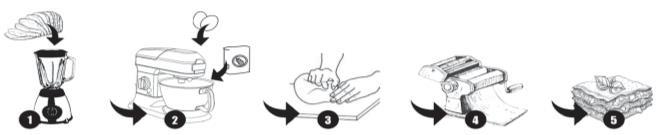
The pasta can be eaten freshly or it can be dried or frozen to achieve a longer shelf life because the water activity will drop to <0,6a w. The durability of the pasta will be the same as normal pasta because there will be added flour and eggs in the recipe to obtain the known texture of conventional pasta. To avoid mycotoxin accumulation in the pasta the bread needs visual inspection for grown mold. By using the bread to produce the pasta the price pr. kg. will be 5,55 DKK, which is app. 50% lower than the price organizations pays for their pasta. The nutritional value in the pasta shows that the pasta made out of surplus bread has a better distribution between fat, protein and carbohydrates compared to conventional pasta.
The next step is to improve the recipe by using Aquafaba instead of eggs to make a more sustainable product. The existing concept will be launched by ‘Det Runde Bord’ and several others have shown interest in the project. With the increased focus on sustainability, selfsufficient and recycling the prospect for the concept seems promising. The dissemination of the sustainable concept could contribute positively to the fight against food waste.
A.
D. Gøricke1, J. V. Offersen1, and L. P. Kristiansen2
1DTU Electrical Engineering, Technical University of Denmark
2DTU Mechanical Engineering, Technical University of Denmark
INTRODUCTION
A major issue, in rural areas with limited supply of water, is the continued watering of plants and agriculture, for food and capital growth. Our project has seeked to find a solution for decreasing the overall water spending, while maintaining or even improving the conditions for proper nutritional absorption and growth in plants, and entirely automating this process. We have created a cheap, reliable and energy-effective solution, using wireless low-energy sensors, sophisticated software algorithms and optimized water storage and depletion.
THEORY
The theory behind the project covers a lot of areas since it required a lot of technical knowledge of not only electrical and software principles, but also mathematical methods, mechanical engineering and biological chemistry. Electrical theory and principles includes basic electrical understanding, wireless communication, voltage regulation, microprocessor fundamentals and electric motors. Theory of differential math and principles of biological chemistry in plants were fundamental for implementing optimized software algorithms. And lastly mechanical theory behind distribution of liquids and proper depletion, was necessary when creating the framework for the watering system.
METHODS
The methods used in this project has primarily revolved around electrical and mathematical principles, but has also involved fundamental mechanical theory and understanding of basic biological chemistry. The integrated software algorithms have been constructed based on mathematically constructing a set of multivariable differential equations and optimizing for the preferred variables. Electrical principles and methods have been used in every aspect of creating the electrical circuit, such as methods of wireless transmission of data, decreasing power consumption and regulating input voltage from unregulated power sources. Mechanical methods were used for equally distributing water across larger areas and when creating the framework holding.
We have succeeded in developing an intelligent water system capable of providing water for an estimated half a hectare of land, completely autonomously. We have estimated the total water savings somewhere around 30-70 percent, dependent on what methods are used for watering. Furthermore, the total production cost of our prototype was only about 35 dollars, with an estimated production cost of 20 dollars, if the product was to be mass produced. We can conclude that the overall cost benefit of the product is very high. The limited use of materials and overall energy efficiency also makes this a very environment friendly product, powered almost entirely by solar power.
Bachelor course Project no. 123
A. S. Hornstrup, M. A. Søgaard, C. J. Jørgensen, and S. K. Boel
DTU
Diplom, Technical University of Denmark
All over the globe cities are expanding like never before. The construction industry effects the globe, because of its hugh demand for energy and materials like sand. Because of the climate changes and the exploitation of sand, the phenomenon of vanishing beaches is an increasing problem all over the world. We have too see sand as a limited resource. Most of the sand is used for the manufacture of concrete which causes 6 percent of the global CO 2 emission. The construction industry has to rethink its methods for sustainability.
THE CHALLENGE
Today bricks and tiles are reused for new building, but the concrete elements can't be reused in that way. The reason for this is the steel reinforcement used to give the concrete the strength it needs. The reinforcement makes it impossible to reuse the elements. It implies when the old buildings have to be removed, the concrete elements are crushed and downcycled into road gravel.
Our solution is to make it possible to disassemble concrete elements, so that the elements can be used again and again in new buildings. The idea has been modulated to the concept it is today while we were visiting construction sites, concrete foundries and several experts in building and construction. Our solution is a way to assemble the concrete wall elements with a steel bracket, that we call a concrete clamp. The clamp is designed so it gives the wall elements the same shear and tensile strength as a regular reinforced concrete wall.
The concrete clamp has the ability to challenge the way the traditional construction industry thinks and to push the industry to a sustainable future. We estimate that a single concrete element with a 200 year lifespan will save the environment 90 gram CO 2 every year.
M. R. Hjorth
DTU Environmental Engineering, Technical University of Denmark
Incomplete ammonium removal in drinking water can mainly be attributed to inefficiency in biological rapid sand filters. Residual ammonium concentrations exceeding the guideline value of 0.05 mg/L are problematic, as it compromises the water quality. Data from Danish water suppliers abstracting more than 350,000 m3 of water per year, proved that ammonium on average exceeded the guideline value in 13.6 percent of all analysis performed in the period 2002-2013; 95 % confidence interval [8.7- data reveal deficiency in ammonium removal from drinking water is a widespread and common problem.
Increased ammonium concentrations in drinking water possess several undesirable properties. Oxygen depletion, microbial aftergrowth in the distribution network, nitrite formation and diminishing effectiveness of chlorine disinfection is among the affected areas of increased ammonium concentrations. In other words, excessive amounts of ammonium in drinking water can affect water taste, microbial population and humane safety. Nitrite in particular possesses a human risk as elevated nitrite concentrations can react with the oxygen carrying protein hemoglobin, to form methemoglobin, which is incapable of facilitating oxygen transport. Excessive amounts of methemoglobin in the blood can result in reduced oxygen saturation and methemoglobinemia otherwise known as Blue Baby syndrome.
Proactive measures capable of facilitating increased ammonium removal rates were deemed necessary, in order to continuously secure safe and pleasant tasting drinking water. Micro-dosing of copper in rapid sand filters was proposed as a method of optimizing the removal efficiency of ammonium. Copper partakes as an essential part of the enzyme Ammonia Monooxygenase (AMO), which facilitates nitrification, i.e. transformation of ammonium to nitrate. Deficiency of copper in the enzyme has proven to be cause of loss of enzyme activity and thus ammonium removal.
Results from incubation experiments with sand taken from a full-scale rapid sand filter and various copper concentrations (0-100 μg/L), showed that micro-dosing of copper has potential to enhance the removal capacity of ammonium. Concentrations as low as 1 μg/L copper were sufficient to cause a significant increase in ammonium removal rate compared to controls; a 153 % increase in efficiency was recovered for a dose of 1μg/L. The applied concentrations of copper were equal to or below regulatory guideline values for copper and thus not a risk of compromising the water quality.
Based on the results, micro-dosing with copper was deemed a valuable tool for achieving higher ammonium removal in waterworks incapable of complying with guideline values. The method is efficient and convenient in terms of implementation and maintenance, and is very cost efficient with an estimated annual copper consumption of <5kg for most waterworks.
Project no. 125
D. W. Langelaan
TU/e Applied Physics, Technical University of Eindhoven
A big challenge in the coming decades is the storage, transportation and application of sustainable energy. Solar, wind and other energy sources will create the energy we need when fossil fuels will not be around. However, the sun does not shine at night, and barely around the arctic. In the summer, there will be more energy than can be used, while in the winter we would like to have that extra energy. Solar panels cannot be directly attached to ships, trains and trucks. That is why the world is going to need new forms of cheap, big scale energy storage. Current energy storage techniques like batteries and hydrogen all have their limitations. Batteries are not scalable enough for trucks, ships, trains, factories and neighborhoods. They are also expensive to build and have a low energy density. Hydrogen is explosive and hard to compress.
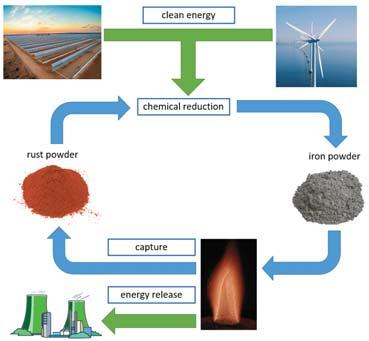
Iron powder is used to store and transport clean energy. This iron powder is used cyclically. As can be seen in Figure 1, the cycle starts with rust. When energy is added to it, this becomes iron powder – in which the energy is then stored. The powder can be stored in a container or transported to the other side of the world. Later, when the iron powder is burned, the energy is released again. With this energy, a neighborhood can be provided with electricity, a train can be powered or a ship can be sailed. When the iron powder is burned, it becomes the rust that we started with. This way, a sustainable cycle is created. A good characteristic of iron is its low price and abundant availability in the world. The energy density of iron is competitive with gasoline, and much better than that of batteries. Compared to gasoline, iron packs the same amount of energy in a lot more weight, but some less space. This years' project is making a proof of concept to demonstrate the ironrust-cycle. The mission for the coming years: realizing the power plant of the future, which uses rust and iron powder.
R. Opris
University of Leeds
INTRODUCTION
The European Megalopolis or the Manchester-Milan Axis, also defined as the “Blue Banana”, is the discontinuous corridor of urbanization in Western Eur ope1. During the Fourth EU–U.S. Transportation Research Symposium conclusion to the topics discussed was the problem of data from climate change models being very rich and not always presented relevant to transport planning, suggesting that conducting research on methods to make climate change data more transport-user friendly could be beneficial. 2
THEORY
When the International Transport Forum released its Transport Outlook 2017, it claimed the transportation sector “will not achieve the international com munity’s climate ambitions” of zero emissions by the year 2050” 3, due to the absence of integrating land-use codes with transportation policies.
METHODS
Literature reviews show how the universe of interactions between adaption and mitigation is perceived quite limited at the moment. Modelling climate change data will primarily2: Model interactions, including cooperation and conflicts between relevant stakeholders including data risk planning and risk management Account for prevailing new technologies and new modes of transport (intelligent transportation systems, automated and autonomous vehicles) and also dependencies between transport networks while developing tools to facilitate cooperation and assist decision makers and stakeholders Impose a dynamic adaption planning as opposed to long-term planning
The review of data given by Data Distribution Centre (DDC) of the Intergovernmental Panel on Climate Change (IPCC) will give a qualified suggestion on how to develop guides and examples for the use of climate science data for different transport planning, design, and operation applications.
REFERENCES
1. Gert-Jan Hospers (2003). "Beyond the Blue Banana? Structural Change in Europe's Geo-Economy" (PDF). Intereconomics 38 (2): 76 85. doi:10.1007/BF03031774
2. Summary of the Fourth EU-U.S. Transportation Research Symposium . (2016). Brussels, Belgium, 2016.
3. ITF Transport Outlook 2017. International Transport Forum, Organization for Economic Co-operation and Development, Paris, 2017; http://www.oecd.org/regional/itf-transport-outlook-2017-9789282108000-en.htm
E. A. Mason
University of East Anglia
With the rising levels of CO2 in our modern world, it has become ever more vital for our future generations to be aware of their contribution to global emissions. I plan to devise an idea for a phone application that tracks CO 2 consumption, perhaps using GPS data to track car/train use and perhaps with an option to monitor dietary choices and therefore the food miles attached to the food.
The theory behind this idea, is that the app can be linked to a wider university database, so that students can compete against each other to win prizes for the lowest CO 2 consumption. The added reward of prizes may drive student engagement and prove to the students that small changes to their lifestyles can make big changes. The students (hopefully) may continue with these habits once they leave university, and if this idea was implemented across many universities, could build a generation that have a greater awareness of their impact on our planet. This idea is a potential method for achieving the ‘Climate Action’ UN Sustainable Development Goal, as it will raise awareness of ways that small measures can contribute globally to reducing our climate impact.
This idea would be delivered via a phone application, which could track CO 2 consumption through perhaps being linked to train or bus pass apps, or through the student inputting their transport methods in. Other variables such as diet, electricity and gas use could also be inputted. As well as low CO2 activities such as walking/cycling, buying local produce, growing your own and tree planting. These methods could be used to reduce the overall CO2 consumption on the individuals app.
The potential results from this idea, could be student-led initiatives to reduce their individual CO2 consumption on the app, such as tree planting or car sharing. The app could also promote student engagement with the university and allow them to feel part of a wider community contributing to lowering CO2 consumption.
M. Kick1, M.-L. Niggemeier1, H. Rasifard2, M. von Coburg1
Hochschule
Weihenstephan-Triesdof University of Applied Science 2Technical University of Munich
What can we expect in terms of a worthwhile life in urban areas? In this day and age, air pollution in cities is steadily rising, the shortage of resources is already affecting our everyday life and people struggle with increasing mobility. Protecting our environment and improving our every-day-life towards more sustainability has become the central mission of our society which already achieved environmental awareness. People, especially the latest generation, want to express their environmental lifestyle and individuality. Furthermore, they want an environmental friendly and flexible mobility.
Based on those requirements our company WOODSTER is developing an electrical driven scooter to help young professionals expressing their lifestyle and sustainability with a unique wooden design. The frame of WOODSTER is entirely made out of sustainable resources and with its electrical drive it contributes to decarbonisation of our environment. With its combination between performance and design WOODSTER is able to meet customer requirements.
The primary target market is Germany as the market potential and purchase power are high. Furthermore, there is a variety of subcontractors and potential partners from the engine and automotive industry. In addition to that, regulatory incentives are pushing the e-mobility sector. We want to achieve a strong customer retention and therefore we engage directly in marketing and distribution of our product.
We are precisely observing the market and our competitors. The e-mobility market is growing with its big innovation potential. Companies in leading positions like Vespa (“Vespa Elettrica Project”) move with the times because they believe in the future domination of emobility in the automotive market. In contrast to its competitors WOODSTER is not only convincing with its drive technology but also with its innovative and unique material usage of flax fibre.
Environmental awareness and innovations in the mobility sector are not only defined as mega trends of our decade but also be carried out in reality. Innovations in these fields face up to the main challenges of our society and are able to improve our every-day life. WOODSTER is going to be part of the emerging e-mobility market and embraces continuous progress.
Founded in 2016, the brand and product were developed by our team, consisting of five people who have successfully worked together over three years in several projects. Through education in university we established competences in sustainability, renewable energy management and informatics. Together we participated in the business plan seminar at UnternehmerTUM GmbH in Munich, strengthening our expertise in business creation to realize our vision. The foundation of WOODSTER is based on our common values and passion believing in a sustainable and innovative world.
Bachelor course Project no. 129
Author 11, Author 21, and Author 32
1B.Eng. Traffic and Transport, Technical University of Denmark
2B.Eng. Architectural Engineering, Technical University of Denmark
All over the world, the majority of people lives in urban areas and urbanization is only increasing. An urban environment provides many advantages as an agglomeration of knowledge, technology, culture and trade with a focused and concentrated supply of housing, work, service and infrastructure. All this come however with some drawbacks. Even when many people lives in dense areas they still have a need for transport and that generates negative effects like congestion, emissions, and accidents.
THEORY
Cities all over the world faces huge challenges related to a growing number of cars leading to increased congestion, air pollution, loss of open landscape and ecosystems. Some of these challenges can be addressed by introducing sustainable urban- and transport planning. Where transport planning traditionally takes its departure in traffic itself, urban planning focuses upon the functionalities of the city and how these interact. Combining these two approaches with a sustainable focus gives new possibilities for integrated planning that leads to more sustainable solutions.
METHODS
Based upon theory and methods for sustainable urban – and transport planning a project with focus upon one of the following themes has been evaluated and a sustainable solution has been proposed. All projects originates in the municipality of Lyngby-Tårbæk.
• Green field development of new urban areas
• Densification of existing urban areas
• Introducing light rail in an urban context
• Promoting bicycling in urban areas
The result of the project is a suggestion for sustainable solution to a specific planning problem within the municipality of Lyngby-Tårbæk. The solution not only addresses sustainability but also comply with planning practice, regulations and plans on both local, regional and nation level.
Author 11, Author 21, and Author 32
1B.Eng. Traffic and Transport, Technical University of Denmark
2B.Eng. Architectural Engineering, Technical University of Denmark
INTRODUCTION
All over the world, the majority of people lives in urban areas and urbanization is only increasing. An urban environment provides many advantages as an agglomeration of knowledge, technology, culture and trade with a focused and concentrated supply of housing, work, service and infrastructure. All this come however with some drawbacks. Even when many people lives in dense areas they still have a need for transport and that generates negative effects like congestion, emissions, and accidents.
THEORY
Cities all over the world faces huge challenges related to a growing number of cars leading to increased congestion, air pollution, loss of open landscape and ecosystems. Some of these challenges can be addressed by introducing sustainable urban- and transport planning. Where transport planning traditionally takes its departure in traffic itself, urban planning focuses upon the functionalities of the city and how these interact. Combining these two approaches with a sustainable focus gives new possibilities for integrated planning that leads to more sustainable solutions.
METHODS
Based upon theory and methods for sustainable urban – and transport planning a project with focus upon one of the following themes has been evaluated and a sustainable solution has been proposed. All projects originates in the municipality of Lyngby-Tårbæk.
• Green field development of new urban areas
• Densification of existing urban areas
• Introducing light rail in an urban context
• Promoting bicycling in urban areas
The result of the project is a suggestion for sustainable solution to a specific planning problem within the municipality of Lyngby-Tårbæk. The solution not only addresses sustainability but also comply with planning practice, regulations and plans on both local, regional and nation level.
Bachelor course Project no. 131
Author 11, Author 21, and Author 32
1B.Eng. Traffic and Transport, Technical University of Denmark
2B.Eng. Architectural Engineering, Technical University of Denmark
All over the world, the majority of people lives in urban areas and urbanization is only increasing. An urban environment provides many advantages as an agglomeration of knowledge, technology, culture and trade with a focused and concentrated supply of housing, work, service and infrastructure. All this come however with some drawbacks. Even when many people lives in dense areas they still have a need for transport and that generates negative effects like congestion, emissions, and accidents.
THEORY
Cities all over the world faces huge challenges related to a growing number of cars leading to increased congestion, air pollution, loss of open landscape and ecosystems. Some of these challenges can be addressed by introducing sustainable urban- and transport planning. Where transport planning traditionally takes its departure in traffic itself, urban planning focuses upon the functionalities of the city and how these interact. Combining these two approaches with a sustainable focus gives new possibilities for integrated planning that leads to more sustainable solutions.
METHODS
Based upon theory and methods for sustainable urban – and transport planning a project with focus upon one of the following themes has been evaluated and a sustainable solution has been proposed. All projects originates in the municipality of Lyngby-Tårbæk.
• Green field development of new urban areas
• Densification of existing urban areas
• Introducing light rail in an urban context
• Promoting bicycling in urban areas
The result of the project is a suggestion for sustainable solution to a specific planning problem within the municipality of Lyngby-Tårbæk. The solution not only addresses sustainability but also comply with planning practice, regulations and plans on both local, regional and nation level.
Author 11, Author 21, and Author 32
1B.Eng. Traffic and Transport, Technical University of Denmark
2B.Eng. Architectural Engineering, Technical University of Denmark
INTRODUCTION
All over the world, the majority of people lives in urban areas and urbanization is only increasing. An urban environment provides many advantages as an agglomeration of knowledge, technology, culture and trade with a focused and concentrated supply of housing, work, service and infrastructure. All this come however with some drawbacks. Even when many people lives in dense areas they still have a need for transport and that generates negative effects like congestion, emissions, and accidents.
THEORY
Cities all over the world faces huge challenges related to a growing number of cars leading to increased congestion, air pollution, loss of open landscape and ecosystems. Some of these challenges can be addressed by introducing sustainable urban- and transport planning. Where transport planning traditionally takes its departure in traffic itself, urban planning focuses upon the functionalities of the city and how these interact. Combining these two approaches with a sustainable focus gives new possibilities for integrated planning that leads to more sustainable solutions.
METHODS
Based upon theory and methods for sustainable urban – and transport planning a project with focus upon one of the following themes has been evaluated and a sustainable solution has been proposed. All projects originates in the municipality of Lyngby-Tårbæk.
• Green field development of new urban areas
• Densification of existing urban areas
• Introducing light rail in an urban context
• Promoting bicycling in urban areas
The result of the project is a suggestion for sustainable solution to a specific planning problem within the municipality of Lyngby-Tårbæk. The solution not only addresses sustainability but also comply with planning practice, regulations and plans on both local, regional and nation level.
Bachelor course
Project no. 133
Author 11, Author 21, and Author 32
1B.Eng. Traffic and Transport, Technical University of Denmark
2B.Eng. Architectural Engineering, Technical University of Denmark
All over the world, the majority of people lives in urban areas and urbanization is only increasing. An urban environment provides many advantages as an agglomeration of knowledge, technology, culture and trade with a focused and concentrated supply of housing, work, service and infrastructure. All this come however with some drawbacks. Even when many people lives in dense areas they still have a need for transport and that generates negative effects like congestion, emissions, and accidents.
THEORY
Cities all over the world faces huge challenges related to a growing number of cars leading to increased congestion, air pollution, loss of open landscape and ecosystems. Some of these challenges can be addressed by introducing sustainable urban- and transport planning. Where transport planning traditionally takes its departure in traffic itself, urban planning focuses upon the functionalities of the city and how these interact. Combining these two approaches with a sustainable focus gives new possibilities for integrated planning that leads to more sustainable solutions.
METHODS
Based upon theory and methods for sustainable urban – and transport planning a project with focus upon one of the following themes has been evaluated and a sustainable solution has been proposed. All projects originates in the municipality of Lyngby-Tårbæk.
• Green field development of new urban areas
• Densification of existing urban areas
• Introducing light rail in an urban context
• Promoting bicycling in urban areas
The result of the project is a suggestion for sustainable solution to a specific planning problem within the municipality of Lyngby-Tårbæk. The solution not only addresses sustainability but also comply with planning practice, regulations and plans on both local, regional and nation level.
Author 11, Author 21, and Author 32
1B.Eng. Traffic and Transport, Technical University of Denmark
2B.Eng. Architectural Engineering, Technical University of Denmark
INTRODUCTION
All over the world, the majority of people lives in urban areas and urbanization is only increasing. An urban environment provides many advantages as an agglomeration of knowledge, technology, culture and trade with a focused and concentrated supply of housing, work, service and infrastructure. All this come however with some drawbacks. Even when many people lives in dense areas they still have a need for transport and that generates negative effects like congestion, emissions, and accidents.
THEORY
Cities all over the world faces huge challenges related to a growing number of cars leading to increased congestion, air pollution, loss of open landscape and ecosystems. Some of these challenges can be addressed by introducing sustainable urban- and transport planning. Where transport planning traditionally takes its departure in traffic itself, urban planning focuses upon the functionalities of the city and how these interact. Combining these two approaches with a sustainable focus gives new possibilities for integrated planning that leads to more sustainable solutions.
METHODS
Based upon theory and methods for sustainable urban – and transport planning a project with focus upon one of the following themes has been evaluated and a sustainable solution has been proposed. All projects originates in the municipality of Lyngby-Tårbæk.
• Green field development of new urban areas
• Densification of existing urban areas
• Introducing light rail in an urban context
• Promoting bicycling in urban areas
The result of the project is a suggestion for sustainable solution to a specific planning problem within the municipality of Lyngby-Tårbæk. The solution not only addresses sustainability but also comply with planning practice, regulations and plans on both local, regional and nation level.
Bachelor course
Project no. 135
Author 11, Author 21, and Author 32
1B.Eng. Traffic and Transport, Technical University of Denmark
2B.Eng. Architectural Engineering, Technical University of Denmark
All over the world, the majority of people lives in urban areas and urbanization is only increasing. An urban environment provides many advantages as an agglomeration of knowledge, technology, culture and trade with a focused and concentrated supply of housing, work, service and infrastructure. All this come however with some drawbacks. Even when many people lives in dense areas they still have a need for transport and that generates negative effects like congestion, emissions, and accidents.
THEORY
Cities all over the world faces huge challenges related to a growing number of cars leading to increased congestion, air pollution, loss of open landscape and ecosystems. Some of these challenges can be addressed by introducing sustainable urban- and transport planning. Where transport planning traditionally takes its departure in traffic itself, urban planning focuses upon the functionalities of the city and how these interact. Combining these two approaches with a sustainable focus gives new possibilities for integrated planning that leads to more sustainable solutions.
METHODS
Based upon theory and methods for sustainable urban – and transport planning a project with focus upon one of the following themes has been evaluated and a sustainable solution has been proposed. All projects originates in the municipality of Lyngby-Tårbæk.
• Green field development of new urban areas
• Densification of existing urban areas
• Introducing light rail in an urban context
• Promoting bicycling in urban areas
The result of the project is a suggestion for sustainable solution to a specific planning problem within the municipality of Lyngby-Tårbæk. The solution not only addresses sustainability but also comply with planning practice, regulations and plans on both local, regional and nation level.
Author 11, Author 21, and Author 32
1B.Eng. Traffic and Transport, Technical University of Denmark
2B.Eng. Architectural Engineering, Technical University of Denmark
INTRODUCTION
All over the world, the majority of people lives in urban areas and urbanization is only increasing. An urban environment provides many advantages as an agglomeration of knowledge, technology, culture and trade with a focused and concentrated supply of housing, work, service and infrastructure. All this come however with some drawbacks. Even when many people lives in dense areas they still have a need for transport and that generates negative effects like congestion, emissions, and accidents.
THEORY
Cities all over the world faces huge challenges related to a growing number of cars leading to increased congestion, air pollution, loss of open landscape and ecosystems. Some of these challenges can be addressed by introducing sustainable urban- and transport planning. Where transport planning traditionally takes its departure in traffic itself, urban planning focuses upon the functionalities of the city and how these interact. Combining these two approaches with a sustainable focus gives new possibilities for integrated planning that leads to more sustainable solutions.
METHODS
Based upon theory and methods for sustainable urban – and transport planning a project with focus upon one of the following themes has been evaluated and a sustainable solution has been proposed. All projects originates in the municipality of Lyngby-Tårbæk.
• Green field development of new urban areas
• Densification of existing urban areas
• Introducing light rail in an urban context
• Promoting bicycling in urban areas
The result of the project is a suggestion for sustainable solution to a specific planning problem within the municipality of Lyngby-Tårbæk. The solution not only addresses sustainability but also comply with planning practice, regulations and plans on both local, regional and nation level.
Bachelor course
Project no. 137
Author 11, Author 21, and Author 32
1B.Eng. Traffic and Transport, Technical University of Denmark
2B.Eng. Architectural Engineering, Technical University of Denmark
All over the world, the majority of people lives in urban areas and urbanization is only increasing. An urban environment provides many advantages as an agglomeration of knowledge, technology, culture and trade with a focused and concentrated supply of housing, work, service and infrastructure. All this come however with some drawbacks. Even when many people lives in dense areas they still have a need for transport and that generates negative effects like congestion, emissions, and accidents.
THEORY
Cities all over the world faces huge challenges related to a growing number of cars leading to increased congestion, air pollution, loss of open landscape and ecosystems. Some of these challenges can be addressed by introducing sustainable urban- and transport planning. Where transport planning traditionally takes its departure in traffic itself, urban planning focuses upon the functionalities of the city and how these interact. Combining these two approaches with a sustainable focus gives new possibilities for integrated planning that leads to more sustainable solutions.
METHODS
Based upon theory and methods for sustainable urban – and transport planning a project with focus upon one of the following themes has been evaluated and a sustainable solution has been proposed. All projects originates in the municipality of Lyngby-Tårbæk.
• Green field development of new urban areas
• Densification of existing urban areas
• Introducing light rail in an urban context
• Promoting bicycling in urban areas
The result of the project is a suggestion for sustainable solution to a specific planning problem within the municipality of Lyngby-Tårbæk. The solution not only addresses sustainability but also comply with planning practice, regulations and plans on both local, regional and nation level.
Author 11, Author 21, and Author 32
1B.Eng. Traffic and Transport, Technical University of Denmark
2B.Eng. Architectural Engineering, Technical University of Denmark
INTRODUCTION
All over the world, the majority of people lives in urban areas and urbanization is only increasing. An urban environment provides many advantages as an agglomeration of knowledge, technology, culture and trade with a focused and concentrated supply of housing, work, service and infrastructure. All this come however with some drawbacks. Even when many people lives in dense areas they still have a need for transport and that generates negative effects like congestion, emissions, and accidents.
THEORY
Cities all over the world faces huge challenges related to a growing number of cars leading to increased congestion, air pollution, loss of open landscape and ecosystems. Some of these challenges can be addressed by introducing sustainable urban- and transport planning. Where transport planning traditionally takes its departure in traffic itself, urban planning focuses upon the functionalities of the city and how these interact. Combining these two approaches with a sustainable focus gives new possibilities for integrated planning that leads to more sustainable solutions.
METHODS
Based upon theory and methods for sustainable urban – and transport planning a project with focus upon one of the following themes has been evaluated and a sustainable solution has been proposed. All projects originates in the municipality of Lyngby-Tårbæk.
• Green field development of new urban areas
• Densification of existing urban areas
• Introducing light rail in an urban context
• Promoting bicycling in urban areas
The result of the project is a suggestion for sustainable solution to a specific planning problem within the municipality of Lyngby-Tårbæk. The solution not only addresses sustainability but also comply with planning practice, regulations and plans on both local, regional and nation level.
Bachelor course Project no. 139
Authors to be determined
DTU Management Engineering, Technical University of Denmark
This project has been part of the course “sustainability in engineering solutions” in the three weeks period in June 2017. The course includes first and foremost an introduction to environmental assessment of products and solutions in their life cycle through the use of simple tools. On this basis methods and tools are presented for the development of environmentally improved products and solutions. These methods and tools are applied in the project work. Through the course social and management aspects of sustainability will be presented.
The group have been working on specific cases identified by the DTU CAS as cases where finding the environmentally best solution is not straight forward. This can for example concern the choice of flooring materials when renewing floors, which type of windows to choose, how to choose insulation materials, how would the optimal fleet of cars be at CAS, or whether they should use one-way cloths rather than reusable cotton cloths etc.
The projects outcomes are: a solution developed considering the three sustainability dimensions: an environmental life check of the alternative solutions, and a plan for implementation of the solution.
J.Hald, S.Winter-Madsen ogT.Hougaard-Jensen
DTU Management Engineering, Technical University of Denmark
We are doing a Roskilde Festival Powered by DTU-Students-project about sustainable building. The project is centered around the TechLab pavilion that houses the DTURoskildeprojects during the festival.
The current pavilion needs to be replaced for the 2018-festival, and our project is about finding the best, most sustainable way of doing that.
Our goal is to recycle as many of the materials from the old pavilion in the construction of new one as we can, so that we can minimize the need for new materials. Another aspect we want to consider is design for disassembly. If the construction is design with that principle in mind, it will last longer, as the assembly and disassembly every year at the festival will have a smaller impact on the lifetime of the materials.
First we will examine the environmental performance of the old pavilion through LCA, and then use that knowledge in the design of the new one. Additionally we thought the project might be used as platform to show off different kinds sustainable building and what that means. A big part of that is also showing that you don’t have to compromise the aesthetics in
order to build sustainably.
To sum up: We want to make a proposal for a more sustainable TechLab Pavilion, and compare that design to the current one to see how much we can lessen the environmental impact of the pavilion by design.
This project runs over two years, and this year is focused on life cycle assessment and sustainable solutions for the pavilion. We will use our knowledge of LCA and building design to create a design proposal for the next pavilion.
At the event we plan on presenting a model of the design proposal as well as posters about the LCA and environmental performance of both the old and the new pavilion.
Bachelor course
Project no. 147
R.Saliu
Engineering Department,Lancaster University
There are 600 million people that live in sub-Saharan Africa that do not currently have access to electricity that stands at 70% of the population of Africa. This in turn has had an effect on the economy and the rate at which the African economy is physically able to grow. iWith 50% of businesses in sub-Saharan Africa lacking electricity something needs to be done soon to allow Africa to grow as a nation and tackle the ever-growing energy crisis that it faces.
Africa is considered the world’s sun continent as it experiences more sunlight than any other continent in the world. The whole continent experiences a longer durationof sunlight than most other places in the world, the sun shines for up to 4,300 hours a year this is 97% iiof the total amount of sunlight that is possible. Despite all of this, Africa is very far behind in the utilisation of this energy. The idea of building a fleet of solar panels in the Sahara is a controversial one for many reasons but the potential it would hold would be astonishing. It was found that if 35,000sq miles iii a plot which is equivalent to the size of Portugal and is just over 1% of the totalspace available of the desert would be able to power the whole world. If the energy that the sun gives was tapped into it could revolutionise Africa for the greater good. It would provide energy to rural areas and provide the chance for Africa’s infrastructure to grow.
The question is however; would this be feasible? The technology for harvesting the sun’s energy already exists, it would be a matter of scaling up to produce meaningful quantities of electricity. This would mean building extensive arrays of mirrors and pipes across hundreds of miles of remote terrain –which would be very expensive. One Engineer Gerry Wolff who heads DESERTEC, an international consortium of solar-power scientists, estimates this cost to be about $59billion (Timecom, 2017). At first glance this seems like a lot of money but there are 54 countries in Africa which works out at just over $1 billion per country, which seems like a more attainable figure. Combined with help from the international community, both financially and with infrastructure this is a very viable plan. With such huge benefits for the environment as well as the people of Africa maybe these extreme changes should be made. It would mean Africa would not produce any carbon emission once the infrastructure has been built, hence removing 311million metric tons iv of carbon emissions from the environment. This would be a massive leap in tackling the global warming crisis and with the infrastructure put into place this could be rolled out to try and provide energy to the rest of the world. With the correct advancements in technology and a global partnership this could one day be possible to remove the need for burning fossil fuels in Africa. The implementation of such an infrastructure would not only tackle the energy crisis faced by so many nations, but would allow for the development of Africa’s economy allowing for many countries to transition being developed countries.
References
i Wwwgovuk. (2017). Wwwgovuk. Retrieved 25 February, 2017, from https://www.gov.uk/government/news/energy-africa-campaign In-text citation: (Wwwgovuk, 2017) ii Wikipediaorg. (2017). Wikipediaorg. Retrieved 25 February, 2017, from https://en.wikipedia.org/wiki/Solar_power_in_Africa In-text citation: (Wikipediaorg, 2017) iiiTimecom. (2017). TIMEcom. Retrieved 25 February, 2017, from http://content.time.com/time/specials/packages/article/0,28804,1872110_1872133_1872141,00.html In-text citation: (Timecom, 2017) iv Oak ridge national laboratory. (2017). Ornlgov. Retrieved 25 February, 2017, from http://cdiac.ornl.gov/trends/emis/tre_afr.html In-text citation: (Oak ridge national laboratory, 2017)
INTRODUCTION
Nur Athirah Azhari1, Moritz Phua1
1Nanyang Technological University
Theadventofindustrializationandsedentarylifestyleshavelargelyspikedthedemandfor anythingfastandefficient.Foodcontainersfrommostvendorsandthedailycaffeinefix haveincreasedtheconsumptionofdisposablecontainersandutensils.Litteringofsuch wasteshaveledtoincreaseddangertowildlifewhichattempttoconsumethemandhas alsoadverselyaffectedtheenvironment.Typically,wastecompaniesresorttoburningof such wastes due to its non-biodegradable nature.
Subsequent associated consequences
The burning of wastes i.e. polystyrene releases toxic fumes such as styrenes and dioxins, which are readily absorbed through the skin and lungs. Athigh levels,these fumes become toxic tothe biological system. Other pollutants such as mercury,polychlorinated biphenyls (PCBs),and furans does notdissipate and remain in the environmentforlong durations.These substances also bio-accumulate in animals,be itin the wild orthose reared for human consumption.
DAWN OF BIODEG(EDIBLE) INNOVATION
Consideringthis,manycompaniessuchasLoliwareandBakeyshavebeensuccessfully launchedtopromotetheirinnovations,namelybiodegradablewaresandcutlerywhichare alsoedible.Thesecharacteristicscatertotwodifferentgoals:first,itattractstheindividual consumerduetoitsnovelty.Second,itpromotestheuseofbiodegradablematerialwhich can be composted naturally over time. Even so, these companies face individual challenges suchastheinabilitytocompetewithlowerpricesofdisposableitemsortheinabilityto attract a loyal target group.
Thesuggested innovation,agourmet-coffeeflavouredcup,combinesthe ideasfromthese biodegr(edible)innovationswithpresentwastethatexistintheagriculturalfield.Cellulosic waste from sugar cane or wheat fields have increased proportionately with the rise in global demandforfood.Duetotheirlowcommercialvalue,thesewastesarerarelyconvertedto otherproductsasidesfrombiofuel.However,acombinationofthesecellulosicwaste (refinedcellulose)andabindersuchasgelatinorcornstarchresultsintheformationofa material that is wood-like, edible and cheap.
Adding of commercial value to such material by tapping on “tumblr trends” and loyal caffeine addicts may potentially convert this cheap material into a marketable product; one used by a widerrangeofindividuals:theyoung,theaged,theenvironmental conscious andthecostconscious from different cultures.
Y. Mahmoud
DTU Diplom
INTRODOCTION
A lot of medicine is wasted every day in hospitals and some people got cupboards full of unnecessary medicine. Huge waste impacts the economy and sustainable environment. So, the basic idea of StockIBeacon is to reduce the stock in hospitals and medical stores to the minimum by only stocking the medicine which is really needed. In this project IBeacon was used for a productive stock in a hospital. Other aspects of project were considered too, business model canvas, economic, social and sustainable environmental factors.
THEORY
The more stock of medicine is directly proportional with more medicine wasted. This project is based on the on some expectations to StockIBeacon, which are simple, and assumes that less is more.
SOLUTION
StockIBeacon is a product that can predict the amount of medicine in real time. Thus, a huge waste of medicine can be avoided. This will have big impact on environment too as demo effect.
CONCLUTION
When the real product is implemented, it can be a very good and optimal solution to reduce the waste.
Project no. 151
N. Francis
TU Delft
PROJECT DESCRIPTION
The power produced by a photovoltaic (PV) panel is related to instantaneous environmental conditions. A change in either irradiance or ambient temperature, for instance, results in an output power that fluctuates over time. Therefore, PV panels are not a stable energy source, posing many challenges as a consequence. A possible solution to cope with these fluctuations is to couple PV panels with energy storage devices. For residential load levels, batteries are part of PV-storage systems because of their maturity, reasonable price, and low maintenance cost. They can provide energy when there is no solar generation or store energy during high PV generation times for later use. We propose a novel integrated device that combines a battery, dc/dc converter, dc/ac micro inverter, and a PV module in one device. This concept might help to reduce the cost of PV systems, in order to compete with other renewable energy technologies, but especially with fossil fuels. PV system costs could be reduced without having to improve the efficiency/cost rate of the PV modules in two ways. First, by reducing the installation cost or second by dropping the cost of the balanceof-system components. That is batteries, converters, inverters, and charge controllers. The installation cost of solar systems is a significant cost in PV-battery systems, accounted for around 21% of the total cost when other soft costs, not related to hardware, are considered. This cost is expected to be reduced by using one integrated device; because usually in a typical PV-battery system, PV panels on the roof are connected to the power electronics and batteries separately inside of the houses. Making the process complex and time-consuming. In case many integrated devices are manufactured, the prices of the non-modular components might decrease, becoming an attractive product for the solar energy market. In order to integrate the components mentioned above at the backside of the PV module, several studies related to thermal management, electric configuration, battery sizing and selection, and energy management system had to be performed.
PROJECT GOALS
Map the exact thermal coefficients of the selected PV module for accurately determining the efficiency of the module.
Understand the thermal behavior of the selected battery technology during charging and discharging.
Build the prototype based on the selected components.
Electrically test the prototype for different load demands.
Measure the temperature change in the components during the functioning of the prototype.
INNOVATIVE ASPECTS
Plug and play solution
Reduction of installation costs
Space saving solutions
Modular approach
Portability
Compliance with existing electrical installations
V. Datsi
Greece
Biomass Energy is the energy, which is contained inside plants and animals. This can include organic matter of all kinds: plants, ani mals, or waste products from organic sources. Organic materials, which are used to produce biomass energy, include forest residues (branches, dead trees, and tree stamps), wood chips, yard clippings and municipal solid waste. This means that wood remains the largest source of biomass energy.
Chlorophyll present in plants absorbs carbon dioxide from the atmosphere and water from the ground through the process of photosynthesis. The same energy is passed to animals when they eat. It is considered to be as a renewable source of energy because carbon dioxide and water are situated in the inside part of plants and animal. Then, these two organic materials are released back to the atmosphere when they are burned. Thus, we can grow more plants and crops in order to create biomass energy.
For biomass energy to be produced, the organic material must undergo biomass conversion process. The different biomass conversion processes, which are available today, include:
1. Combustion
2. Gasification
3. Pyrolysis
4. Bio-digestion
5. Fermentation
All these processes are the necessary steps, which must be taken in order to reach to the main production of sustainable energy. For some time now, the United Nations have been actively working to exploit a new way of producing energy without large exodus of sodium dioxide. In view of the above, it is now considered necessary to make better use of energy class and in a more efficient way towards the community.
As it happens with the energy of the sun and the wind, biomass energy sources are bountiful in supply. Consequently, the biomass energy is widely available. Everyone can find them virtually in every nook and cranny of the world. The fact that it is bountiful in supply means that we may never encounter problems such as the problems, which occur nowadays due to the fossil-based sources of fuel. Nonetheless, it is vital that we maintain the abundance of this natural resource by making responsible use. Moreover, producing biomass energy does not involve heavy capital outlay because it is cheaper compared to fossil fuels. The low cost, resulting from the production of biomass fuel, is passed on to customers. Thus, customer’s energy bills will not depend on aspects such as availability and knee jack decisions of energy production and supply firms. Low biomass cost makes this form of energy attractive to the manufacturers.
Project no. 201
E-bike: The sustainable mode for the city and the economical choice for the user.
C. L. Bernitt
DTU Management, Technical University of Denmark
INTRODUCTION
Cities all over the world are facing transport-related problems with greenhouse gasses, air pollution and traffic congestion. As an alternative to the car, bicycles can solve these issues while also improving the health of the users. Bicycles are not always socially sustainable though, as especially women and older people find cycling too slow or demanding. The ebike offers higher speed and distance with a carbon footprint as low as a normal bicycle’s sustainable footprint. This study investigates the economical sustainability of choosing ebike instead of car, as personal choices like mode of transport is usually based on a personal cost-benefit rather than a responsibility for the climate and air quality.
EMPIRICAL FIELD AND METHOD
100.000 trips by e-bike in the Greater Copenhagen area have been recorded by GPS in the project “Test en el-cykel”, where 1682 car-users tried commuting by e-bike through a period of three months. The travel times and distances of these e-bike trips were then compared with the estimates by Google Maps of driving by car with the same origin, destination and time. The costs of the e-bike and car respectively for each trip were then calculated, including the value of time, the out-of-pocket cost per kilometer and for the e-bike: the negative cost of improving health. As the potential e-bike buyers are likely to keep their car, marginal cost was used for cars, while average cost was used for e-bikes. Machine learning methods were applied to investigate relationships and patterns of trips, where one mode of transport was cheaper than the other. Linear regression showed the correlations, while a decision tree model was developed to predict the cheapest mode of transport of a trip based on circumstances as the time, place, and distance of the trip as well as the age and gender of the user.
Statistics showed that the e-bike was usually the cheaper choice in the most urban areas and for shorter trips. The decision tree model correctly predicted the cheapest choice for 82% of the trips. A sensitivity analysis showed that the percentage of trips being cheapest by either e-bike or car is very dependent on the parameters used to calculate the cost of the trip. For this analysis, where the health benefit of biking was included, the mode share was quite equal. If the official value of life extension by biking was included as well, the e-bike would be the cheapest choice in 99% of the cases. If, on the other hand, the health and life extension benefits of the e-bike were excluded, a car would be cheapest for 91% of the trips.
The prediction model can be used to develop an application for potential e-bike buyers. The individual user should be asked intelligent questions to determine and quantify their preferences. The cost per minute and cost per kilometer for e-bikes and cars respectively should be adjusted for each user, so a person longing for physical exercise is more likely to be advised to use an e-bike, while a person appreciating the comfort of the car is more likely to be recommended the car. This way the application is simply a personally fair tool for the user to calculate the cheapest transportation mode, hopefully increasing awareness of the advantages of choosing the e-bike.
C. M. E. Andersen, and P. K. Ohms
Department of Civil Engineering, Technical University of Denmark
INTRODUCTION
This study focuses on the area of Brøndby Strand and seeks to identify the most environmental friendly technique to carry out a PCB-remediation. This investigation is conducted by comparing four remediation techniques using Urban Metabolism (UM) fused with Life Cycle Assessment (LCA). In addition the results is compared with information regarding cost and efficiency of the four techniques. The methodological goal of our study is to test UM-LCA as a possible decision support tool and discuss ways of applying the method in relation to large-scale refurbishments projects.
METHODS
By combining the UM and LCA methodologies the total environmental impact potentials of the remediation techniques were calculated. To build an inventory for each technique we contacted and interviewed experts and studied existing literature, cases and projects in order to compile information on the practical details of the techniques. The collected inventory data were processed using the product system modelling software Quantis Suite 2.0 (QS2.0) - a simplified tool that calculates environmental impact potentials.
RESULTS AND DISCUSSION
The results obtained from the analysis are presented and the technique with the smallest impact is identified. A comparison between the four techniques is made focusing on the environmental impact. Further it is discussed how possible inventory errors affect the results and if any assumptions should be considered as critical for the final results. The remediation efficiencies of each technique and the cost of each method is considered and compared in order to include the financial aspect of sustainability. Finally, UM-LCA’s ability to work as a tool for decision support is discussed and possible ways of implementing the method in sustainable decision-making is considered.
CONCLUSION
In this study it is found that the most environmental friendly PCB-remediation technique is thermal desorption whereas the technique with the largest environmental impact potential is sand blasting, due to the environmental impacts induced in relation to disposal of the building waste. It is concluded that the UM-LCA method can be applied as a tool for decision support and if economical aspects are incorporated, the UM-LCA approach could be an essential approach for designing sustainable buildings in the future.
O. P. Geyti
DTU Architectural Engineering, Technical University of Denmark
Many people in Canada live off the grid, essentially disconnected from conventional public infrastructure such as electrical networks. For some, it is a choice of lifestyle and for others it is a necessity when living in rural parts of the country. Being off-grid and living selfsufficiently can be very liberating, however this independent lifestyle is not necessarily more sustainable than being connected to the public utilities.
This project presents a concept of affordable and accessible housing for adventure-seeking people who are attracted to the idea of living a more self-sustaining life in the Canadian wilderness. The building structures are carefully designed to suit the client's needs while assuring that the construction is completed in the most efficient and sustainable way. The key feature of the system is to provide an easily assembled, pre-fabricated, module-based structure that requires minimal site disruption of the local surroundings during construction. This is made possible with structural insulated panels (SIP) which are designed to be easily assembled by two people with the use of simple tools. Indoor climate and energy simulations were carried out throughout the project to determine the thermal comfort and energy consumption of the building in order to assure that it meets the building codes. The results are also used to size an adequate renewable energy system (hydro, wind or solar), depending on the most feasible method in regards to the local climate and context. The research includes a lifecycle assessment (LCA) which focuses on the environmental burdens of the building's entire life, including processes and materials for manufacturing, operations and disposal. The LCA investigates the chosen energy system and compares it to a scenario in which the building is theoretically connected to the public utilities. In most cases living off-grid has shown to be less environmental friendly, mainly due to the means of energy storage.
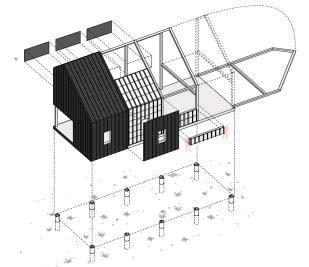
By providing a full-package, prefabricated, module-based home to homeowners they have the confidence to buy a customized ‘build-it-yourself-house’. However, to optimize energy usage, grid-tie systems are, in most cases, the best solution for energy storage and minimizing the overall footprint of the home. While location-dependent, grid-tie systems are a good compromise between the conventional ways of powering a home and being completely energy independent.
Comparison of environmental and health related benefits and disadvantages of external insulation in relation to the composition of the future energy supply
M.Heide
DTU Civil Engineering, Technical University of Denmark
The goal of the thesis is to compare the environmental and health burdens related to production and installation of exterior post insulation materials considering the environmental and health associated impacts that are counteracted by minimising the energy consumption in buildings by post insulation.
The induced environmental impacts are calculated for post insulation of a reference house according to legal requirements for the level of insulation (according to BR15) for four different insulating materials and the impact of changing into energy windows.The induced environmental influence originating from the production of the insulating materials and the windows are compared with the impacts that are avoided by reducing the energy consumption for the reference house, assuming two aspects, that is a static and a dynamic supply of energy in the entire reference period; used for heating the reference house in three different countries, Denmark, Norway and Germany. The impacts are calculated in Quantis SUITE 2.0.
The investigation of the four insulation materials has shown that the emission from flax is far less than the emission from the other insulating materials. Furthermore, the main part of the emission takes place in the production phase. This is setting the stage for a recommendation that producers should focus on improving the production in an environmental perspective.The induced and avoided environmental burdens are compared and it appears that the environment is only accommodated if an energy renovation is made to a limited extent or using materials with a small emission in Norway.If more energy refurbishment measures are done in Norway,the environment will not be accommodated, as the environmental investment that the production of the insulation materials and windows represent, do not meet the effects that are avoided through the energy production by renovating the reference house.The Danish Building Regulations (BR15) is respecting the environment at the moment, but it is expected within the next 20 years that Danish buildings will follow the same tendency as in Norway as a result of the energy supply is becoming less damagingfor the environment.
CONCLUSION
In conclusion,the Danish Building Regulations should lower the energy requirements inthe long term or make demands for building and insulation materials for avoiding induced environmental burdens of materials so that they do not exceed the avoided burdens from energy production. In Germany all refurbishment measure are environmental profitable as the development into a greener energy mix takes longer time than in Denmark.
K. Hagen,
and N. Fiig
DTU Mechanical Engineering, Technical University of Denmark
A quick Google search on ”India plastic pollution” shows visually the unbelievable scope of the problem, which has an urgently and vital need of a solution. While a long-term solution by structural changes and an efficient recycling sector need to be initiated, a fast implementable solution is equally vital, since the structural changes will take time due to political and technological barriers. Our field studies have shown that soft plastic waste, like packaging, is by far the greatest contributor to the plastic pollution in the rural areas, due to its low residual value. Our purpose is therefore to make soft plastic waste a valuable resource by designing a technology, which can transform the otherwise low quality waste into a useful product, which has a local application option.
Our methods include a systematic approach to engineering design and a significant amount of user involvement. Very central to our process is validation through prototyping, since the technological feasibility has been one of our main concerns.
The final concepts consist of a method to use known and locally available cooking techniques for producing roof tiles, kept at a sufficiently low temperature to avoid toxins released during production. (Figure 1) Creating value from the waste will create an incitement for the villagers to change the current unsustainable, disadvantageous waste handling practices. The tiles replace the currently used metal roof plates, making the concept economically viable.
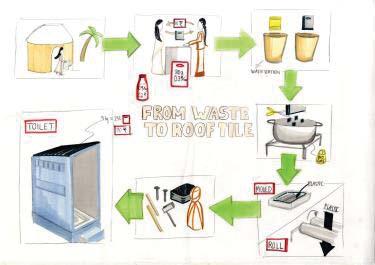
Our mission has been successful, since we have come up with a simple, easy-to-follow method, which by use of only can turn the waste into durant tiles. It is, by our knowledge, the only project, which has succeeded in in producing such a durable product out of the lowquality, soft plastic with so simple means. It can be implemented on a small scale and therefore by the most motivated people, which increases the chance of success. Moreover, the collection system and production methods build on current practices, which also raises it high potential of successful implementation.
J. Nyholm
DTU Architectural Engineering, Technical University of Denmark
INTRODUCTION
Imagine if it was possible to build a house, as easy as building with Lego or assembling an Ikea closet. Modules in standard sizes, which have been prefabricated - using wood from a sustainable forestry - so a large waste of materials is avoided during construction of a house. A module that can be reused in other systems when the house has reached "end of life" as illustrated in figure 1. A house where there is no need for construction workers building for 3 months, but a construction that can be done in 2-3 weeks. A system where it is possible to increase or reduce the size of your own home over time so that it meets the varying wishes for the number of sqm. This could for example be in connection to an extension of the family.
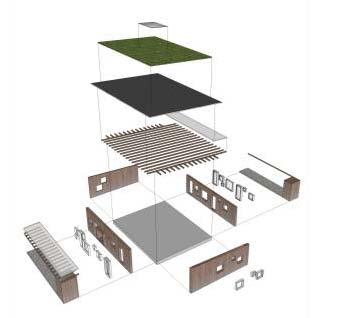
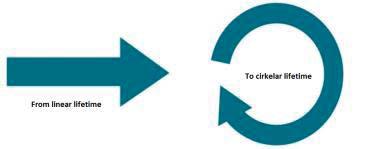
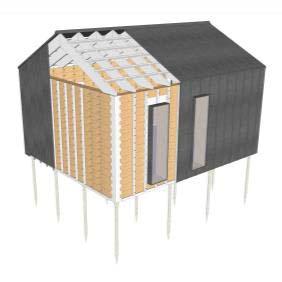
I have used SketchUp to design such a system. The system is made of components easily managed by one or two people, and the use of few and simple tools, which makes it possible to build faster, easier and smarter. The construction is built in a way that makes it possible to reuse the components in other systems when the house it to be demolished, so the materials do not end up in the landfill or just getting crushed and used as roadfill. The materials will go through a recycle- or upcycle-process, and this will results in a smaller amount of resources being, extracted from the earth for new materials. Likewise, the foundation – delivered from Nemtfundament - is made so that it is possible to remove the house, without leaving any traces of construction on site.
The CO2 emissions will decrease, as more people will build with my system, which will also have an impact towards a greener future.
Customers are private people, small businesses and building companies that want to build sustainably, green, smart and cheap with materials offering flexible solutions.
Project no. 207
M. Backen
Department of Mechanical Engineering, Technical University of Denmark
Large scale concentrated solar power (CSP) is usually associated with regions of high solar irradiation and is thus given less attention in the Nordic countries. Nevertheless, decreasing installation costs and continuously maturing of the CSP technology could pave the way for new application areas [1].
In Denmark, recent developments have shown the potential of combining large flat plate collector fields and biomass burners for district heating applications. The biomass burner covers winter heating demand and usually works in combined heat and power generation with e.g. an Organic Rankine Cycle (ORC) unit. The ORC technology replaces steam with an organic working fluid in a conventional Rankine cycle, making it a promising technology in connection with solar applications.
Since ORC technology is in a relatively early stage of market implementation, its use is associated with high upfront investment costs. Accordingly, it is desirable to maximize revenues from electricity production of the ORC unit. This could be achieved by adding CSP collectors to the plant layout, supplying the ORC with heat during the sunny periods of the year [2] [3].
The objective of this project is to identify the optimal design of a hybrid CSP and biomass combustion plant for combined heat and power generation in the climate conditions of northern Europe. As a first step, a dynamic simulation of an existing district heating plant was developed, allowing yearly simulations of the plant performance. Afterwards CSP collectors where added to the plant layout. Results from these simulations form the foundation of a techno-economic feasibility study.
Results of the study include the sizing of the CSP collector field, the annual electricity- and heat production values of the plant and economic considerations such as the payback time of the investment.
[1] IEA (2014). Technology Roadmap Solar Thermal Electricity. International Energy Agency (IEA).
[2] Bengt Perers, Simon Furbo, Zhiyong Tian, Jørn Egelwisse, Federico Bava, and Jianhua Fan (2016). Tårs 10000 m2 CSP + flat plate solar collector plant - cost-performance optimization of the design. Energy Procedia , 91:312-316.
[3] R. Sterrer, S. Schidler, O. Schwandt, P. Franz, and A. Hammerschmid (2014) Theoretical analysis of the combination of CSP with a biomass CHP-plant using ORC-technology in Central Europe. Energy Procedia , 49:1218-1227.
K. V. Graae, and M.B. Pedersen
DTU Physics, Technical University of Denmark
The industrial revolution in the nineteenth century was driven by the invention of the steam engine, the twentieth century was driven by the development of the combustion engine and implementation of the electric grid. In the twenty-first century, we are entering an age of portable electronic devices, used in an ever-expanding number of applications. From the power source of pacemakers, to the future of transportation, batteries are, and will continue to be, at the forefront of our society's development in all areas. A shift towards renewable energy sources goes hand in hand with storage of excess energy, and with a growing electrification of common devices surrounding us in our everyday lives, portable, high power batteries will be instrumental in this development. The number of commercial applications for batteries are thus heavily expanding. To be competitive, companies must reduce manufacturing costs and increase capacity, leading to a search for new materials for the batteries of the future.
With the development of new materials, new challenges arise in the form of different degradation mechanisms. Understanding the ongoing processes and mechanisms on a fundamental level is essential to improve and optimize these new materials. XRD is an extremely useful tool for structural characterization, and obtaining accurate data from cells in operation, i.e. during charge and discharge, would present the opportunity to acquire valuable information about the active material's behavior in different situations.
The relevance of such a system reaches beyond the interest of Haldor Topsøe A/S, as several research groups from universities nationwide where interested when the preliminary results of this work were presented at the Danish Battery Symposium in April 2016, hosted by the Technical University of Denmark in partnership with Haldor Topsøe.
Currently, methods for in situ studies of battery materials are mostly synchrotron based, but scarce and expensive beamtime limits the duration and the frequency of these studies. Developing effective 'in house' in situ methods opens new possibilities for extensive study of battery materials, complimentary to those performed at synchrotrons.
The development of an in situ coin cell method usable in laboratories with a conventional diffractometer has been the focus of this thesis since the hindering parameters of this method are adjustable, consequentially giving it the potential of overcoming the mentioned current limitations. On top of that, it has the additional convenience of the possibility to prepare and test multiple cells before commencing the in situ measurement, ensuring that a steady cycling cell will be analyzed.
Project no. 209
A. M. Hindsholm1, and O. E. Iyore2
1DTU CEN, Technical University of Denmark 2National Research Center for Working Environment
Nanomaterials and nanoparticles are of ever growing scientific interest. Their size gives rise to unique properties with endless potential applications in countless different fields of research. The size properties of nanoparticles, however, also makes them potentially toxic for humans and for the environment and the exact effect of the interaction with biological systems in far from understood.
CEN (Center for Electron Nanoscopy) is an institute at DTU where part of the work involves studying manufactured nanomaterials. The amount of nanomaterial handled at the department at a time is regarded to be in such small amounts, and is handled in a way, which is sufficiently safe, that the risk associated with the exposure is assumed to be insignificant.
The aim of this study is to examine this assumption in order to assess whether additional safety measures are needed at the institute. This is done by collecting aerosol particles, at different sites at CEN, and analyzing their type and size distribution by means of Micro inertial impactor and electron microscopy methods. In addition, a risk assessment for a specific nanomaterial is conducted using the web application NanoSafer.
METHODS
The MINI is a sample collector for the purpose of performing single particle analysis on atmospheric aerosol. A pump sucks the air into the impactor where the particles deposit of movable grids, which can be put into electron microscopes for particle analysis. Electron microscopy is used to analyze the type and sizes of the particles found on the grid. X-ray signals are used to perform a chemical characterization of the elements analyzed.
The results from the particle analysis show that different types of salts and soot make out the main type of particles found at the different sites. Other biological particles and minerals are also found as well as some metals. However, no nanoscale particles, with potential toxic properties, are found. This indicates that the risk associated with the exposure is in fact low as assumed. However, it cannot be confirmed that the it is insignificant since the sample size is not large enough to conclude this with certainty.
M. Braagaard, and M. H. Jensen
DTU Compute, Technical University of Denmark
THE CHALLENGE
A study from WHO1, estimate that 7 million people die every year due to exposure of toxic particles in the air. In Europe air pollution is causing around 467.000 premature deaths. The toxic particles (PM2.5, O3, NOx and SOx) is produced by cars, production facilities, farming and the energy sector. Due to metrological factors, the pollution is often local and accumulate in certain areas, for example near the road and between buildings where people have their daily life.
Despite the severity of the problem, only little data is available – Denmark has less than 20 measure stations - but there are still evidence indicating that problem is increasing in most countries, and the citizens are helpless against this invisible enemy.
We are building a small portable detector, which automatically monitor the air quality near the user. The device stores the amount of toxic particles along with the GPS data and transfer the information to a cloud service. A website visualize the data measured by every detector, which allow all users to automatically plan an alternative walk- or biking route which avoid areas with a high amount of air pollution. When using the optimized routes people will decrease the exposure to the pollutant resulting in improved health.
Though the device might help individuals increasing their lifespan, doing nothing but escaping the pollution is not enough. By collecting and visualizing the data, we create the foundation for politicians, entrepreneurs and others to find and build sustainable solutions for the future.
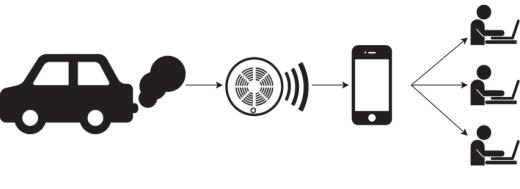
Figure 1: The detector measure the toxic air particles, and sends the data to a server via the user’s smartphone. A website allows everyone to automatically plan alternative walk- or biking routes, avoiding polluted areas.
Air pollution is a huge problem all around the planet and currently not much is being done to reduce the toxic particles. Our device will not decrease the pollution by itself, but it provides a possibility for the individual to improve personal health and increase lifespan. The device is also an important step towards sustainable solutions since it provides essential data for the decision makers.
[1] World Health Organization (2014, March). Burden of disease from Household Air Pollution
Project no. 211
J. Hansen
DTU Bioengineering, Technical University of Denmark
In the 1970s, plastic pollution was first detected in the oceans, however, since then, the rate of plastic entering the marine system has increased dramatically and in 2014, 93-236,000 metric tons of plastic was estimated to have accumulated 1. Due to abiotic processes, plastic fragments into microplastics (<5 mm in diameter). Microplastics are easily ingested by marine wildlife and may have harmful effects 1, 2. Also, they may accumulated in animals used for human consumption. To date, we have no sustainable solution for reducing the input of plastic into the environment. Biodegradation has been suggested and a few studies have indeed demonstrated that microorganisms have the potential to degrade plastic 3
With the assumption that bacterial colonization is the initial step of plastic degradation, the purpose of this project is to assess the potential of marine bacteria to colonize microplastic particles. Also, the genetic potential for plastic degradation by marine bacteria were assessed. The genomes of 67 marine bacterial isolates were analyzed in silico and 21 of these genomes harboured genes with the potential of being involved in plastic degradation. There was no correlation between phylogeny and presence/absence of the genes. The 21 strains were furthermore experimentally evaluated for the ability to form a biofilm on polypropylene (PP) and polystyrene (PS). Most strains formed biofilms on both plastic types, some more than others. A minor preference towards attachment to PP was observed. Two good and one weak biofilm-forming isolates were then tested for their ability to degrade microplastics of four types: PS, PP, polyethylene terephthalate, polyethylene. Besides their genetic potential, no growth was detected under the tested conditions.
To simulate the processes in the environment, the impact of different plastic types and treatments on the level of bacterial colonization was assessed. Microplastic pellets were treated with heat, salt and UV light and exposed to a known bacterial isolate. After incubation, the cell concentration per pellet was determined and only polymer type appeared to affect the level of bacterial colonization. With the vision of isolating plastic-degrading bacteria, , enrichment of natural marine microbiota on different plastic types was evaluated. Seawater from Hellerup harbor was incubated with microplastic pellets for two weeks and currently the diversity of attached bacteria in comparison to the initial natural community is assessed by V4 (16S rRNA gene) amplicon sequencing and analysis.
In concluding, marine bacterial isolates have the genetic potential to degrade plastic and are able to attach to different plastic types. Polymer type influences the level of bacterial attachment and analysis of the bacteria enriched on plastic will hopefully facilitate isolation of microbial plastic degraders in the future.
References
1 Van Sebille E, Wilcox C, Lebreton L, Maximenko N, Hardesty BD, … Law KL (2015) A global inventory of small floating plastic debris. Environ Res Lett 10:124006. doi:10.1088/1748-9326/10/12/124006
2 Foekema EM, Gruijter CD, Mergia MT, Franeker JA, Murk AJ, & Koelmans AA (2013) Plastic in North Sea Fish. Environ Sci Technol, 47(15), 8818-8824. doi:10.1021/es400931b
3 Yoshida S, Hiraga K, Takehana T, TaniguchI I, Yamaji H, … Oda K. (2016) A bacterium that degrades and assimilates poly(ethylene terephthalate). Science, 351(6278), 1196–1199. doi:10.1126/science.aad6359
A. Balidakis, and T. Matsi
AUTh, Aristotle University of Thessaloniki
INTRODUCTION
Natural waters of arid and semiarid regions and waste-waters commonly have high B content. Consequently, their use for irrigation is risky, since B concentrations in irrigation waters higher than 3 mg L-1 can cause adverse effects on most crops (Ayers & Westcot, 1985). However, B can be removed from waters by adsorption on certain substances. Such substance could be the steel-making slag, a by-product of the steel refining process, which is strongly alkaline in reaction (pH 12) and enriched in Ca, Si, Mg and Al oxides (Papastergiadis et al., 2015). In the present study, the adsorptive capacity of the particular slag for B was investigated at a preliminary level.
MATERIALS AND METHODS
Steel-making slag was equilibrated with B solutions (0-100 mg B L-1, as H3BO3) at a rate of 1:50, for 24 h. Then, the equilibrium solutions were analyzed for B by the azomethine-H method, adsorbed B was calculated and the nonlinear Langmuir equation was fitted to the B adsorption data. In addition, pH of the suspensions and equilibrium solutions was measured.
Steel-making slag exhibited high affinity for B. More than 85 % of the added B was adsorbed at B concentrations in the external solution lower than 10 mg L-1. In addition, the maximum capacity of the material for B, according to the Langmuir equation, was 2.4 mg g -1. Similar high values of B adsorption maximum are reported in the literature for Fe and Al hydrous oxides and magnesia (Dionisiou et al., 2006). The high affinity of slag for B was attributed to the strongly alkaline pH of the suspensions during B adsorption (12.2 ± 0.2), due to slag’s alkaline nature. However, within 48 h after the separation of equilibrium solutions from slag, their pH (8.1 ± 0.1) dropped at levels normal for irrigation waters (Ayers & Westcot, 1985).
Steel-making slag seems to be a promising adsorptive material for B removal from waters enriched with B, in the perspective of using them for irrigation. Moreover, the investigation of slag’s adsorptive capacity for other oxy-anions pollutants, except B, is probably worthy.
Ayers, R. S., & Westcot, D. W. (1985). Water quality for agriculture (FAO Irrigation and Drainage Paper 29, Revision 1). Rome: FAO. Dionisiou, N., Matsi, T., & Misopolinos, N. D. (2006). Use of magnesia for boron removal from irrigation water. Journal of Environmental Quality, 35(6), 2222-2228. Papastergiadis, E., Sklari, S., Zouboulis, A., Chasiotis, A., & Samaras, P. (2015). The use of steelmaking slag for sewage sludge stabilization. Desalination & Water Treatment , 55(7), 1697-1702.
Project no. 213
J. W. Jensen
DTU Biosustain, Technical University of Denmark
The shift from traditional chemical synthesis to microbial biosynthesis has lead to new developments in genetic manipulation as a result the amount of microbial strains to screen have increased. The typical method of strain screening is shaken cultures in either shake flasks or microtiter plates. An advantage and limitation of the shaken culture is its simplicity, which under normal conditions only allow for batch cultivations. The batch cultivation is characterized by uncontrolled growth and metabolism as well as varying culture conditions over time. These characteristics affect the overall assessment of the strains to be screened. On the other hand a fed-batch cultivation is characterized by controlled growth and metabolism and relative stable culture conditions over time. Though this method requires extra tubing and pumps for substrate feeding, therefore complicating the setup. A method to enzymatically release the substrate glucose, from a soluble polysaccharide in the cultivation medium, eliminates the need for tubing and pumps to perform a fed-batch cultivation. This allows for a more simple fed-batch cultivation which in turn can be run in large numbers.
The growth of Saccharomyces cerevisiae on the polysaccharide Maltodextrin at pH 6 and 4 were characterized in microtiter plates to obtain growth characteristics In addition, enzyme glucose release rates were found for both pH 6 and 4. Information obtained were applied to determine optimal culture conditions and medium composition for fed-batch cultivation of S. cerevisiae. The medium developed was applied to cultivations to establish growth patterns for varying inoculum size.
When cultivated solely on maltodextrin without enzyme S. cerevisiae was not able to grow indicating that the polysaccharide is fit for the role as substrate for the enzyme. Growth measurements showed fed-batch characteristic for the enzyme-released substrate medium. In addition, two buffers, MES and HEPES, were found to maintain pH around 6 and 4, respectively, without acting toxic toward the organism. Higher inoculum sizes were discovered to decrease or entirely eliminate the initial batch phase of the cultivation.
The optimal culture conditions and medium composition resulted in fed-batch like cultivation characteristics. This was done without the addition of extra tubing or pumps to allow the cultivation to be carried out in a simple microtiter plate. Culture conditions and medium composition could be changed to accommodate different screening settings though a reevaluation might be necessary. In addition, this method of cultivation can be applied to other organisms as long as they cannot directly metabolize maltodextrin.
In the future additional cultivation control may be available in the form of enzyme inhibitors or regulation of the enzyme according to pH optimum.
K. J. Jensen, and E. Bergendorff
DTU Mechanical Engineering, Technical University of Denmark
INTRODUCTION
The massive production, use and disposal of plastic packaging have an increasing negative impact on the environment. Plastic contributes to chemical pollution, CO2-emission, large resource use of oil and pressuring eco-systems. In 2013 was the average generation of packaging 160 kg per person in the EU. Our motivation for this project is based on the opportunity to enhance sustainability in product development, which we try to do by prolonging the life span use of packaging, by directly reusing the existing packaging, which will reduce the environmental footprint.
THEORY
Throughout our project, we have used the 7 step method from “Miljøforbedringer gennem produktudvikling” (McAllone, 2008) as a guideline. Through research on the environmental issues of plastic packaging, we have made a product analysis and environmental profile for the life cycle of packaging. In addition to this, we have created a specification of user need, though interviews with various relevant actors within the network of packaging in Denmark. Through a creative problem solving process, we have walked through many ideas and come up with a final concept through function evaluation and prototyping sessions with users.
METHOD
We have constructed an extern product, which is apple to reseal plastic packaging after first time use by heating and melting the plastic. The product prolong the packaging and the contents lifespan as well as reducing the use of extra components like elastics, clams etc.
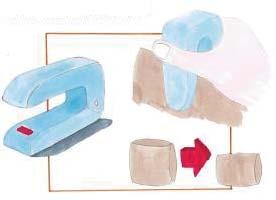
RESULTS
Using the product will have follow positive environmental effect:
- The longer a packaging is reused the less impact the plastic has on the environment because the production effects are distributed over longer time.
- Food waste will be lowered.
- External plastic components will not be necessary. The exact reduced environmental effect will be presented in the pitch.
CONCLUSION
We can conclude that by prolonging packaging and its contents lifespan the environmental impacts are reduced.
Project no. 215
P.M.Nicholson,and L.V. Thaisen
DTU Mechanical Engineering, Technical University of Denmark
PROBLEM DESCRIPTION
Plastic has become our most important material in packaging design, because of its low cost and wide-ranging qualities. It is clear to most, that we are facingsevere challenges including nature pollution,crude oil depletion and carbon emission.
As for today only 3% of households’ plastic waste is recycledin Denmark, and the quality of which is very poor.This means that the recycled plastic has a high rate of impurity, that degenerates it by every loop. Furthermore, plastic films from households are rarely recycled, because the fraction is too contaminated due to multiple layer polymer films.
This project aims to improve the quality of recycled plastic films and thereby making it profitable for the City of Copenhagen to include in the recycling system.
METHOD
By extracting plastic films from 4 tons of plastic waste, more than 1.800 pieces of plastic films were manually divided into 90 categories depending on polymer composition,product categoryandwhether an automatic plastic sorting facility separated the item correct or not. The total data was mapped in various chartsto conclude different categories’ degree of contamination. This was used to make a specific consolidation of the data,to suggest a better system for recycling of plastic films.
During the experiment,we learned that there was a loss to each product category. This is due to the automated sorting machine, thatdoes not recognise all surfaces and therefore send some items to incineration. The following chart shows the potential quantity of plastic resources when 1000 kg is sent through the sorting facility. It is desirable to reclaim a large mass with low degree of impurity, which is the sum of contamination and multiple layers.
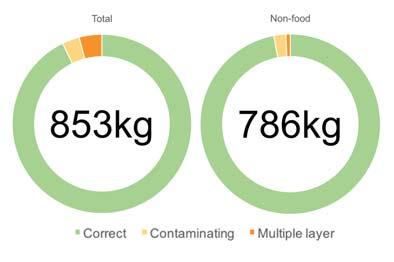
Chart 1Yield and impurityfor total sample and non-foods
By adding the statement “only non-foods” to the plastic film waste bins, the recycled resources will have 2.5 %totalimpurity compared to the 6.2%if food-packagingisaccepted.This means that the improved system, will produce plastic whichin theory can be recycled almost 2.5 times before reaching the same level of impurity.
A. F. Heiberg, and J. E. Pollas
DTU Civil Engineering, Technical University of Denmark
INTRODUCTION
Concrete is the world's most used building material and generates massive waste volumes in the construction industry. In Denmark, recycled concrete is used only as unbound bearings for road constructions whereas it is used to a greater extent in many European countries. Therefore, it is investigated whether this concrete can be recycled to new concrete for new constructions to save CO2, natural resources, and waste.
METHODS AND RESULTS
In this project, it is investigated how the material properties in concrete are affected by adding recycled concrete aggregates. Virgin aggregates are replaced by 4-8 mm and 8-16 mm recycled concrete aggregates. Compressive strength, density, porosity and whether the concrete aggregates are water saturated or not are investigated. Water cement ratio is also tested to see impact.
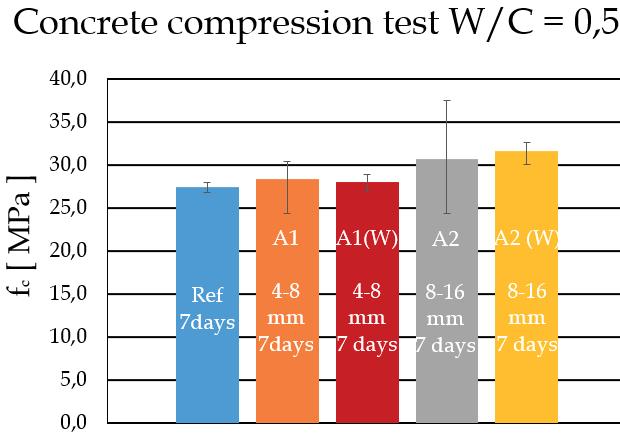
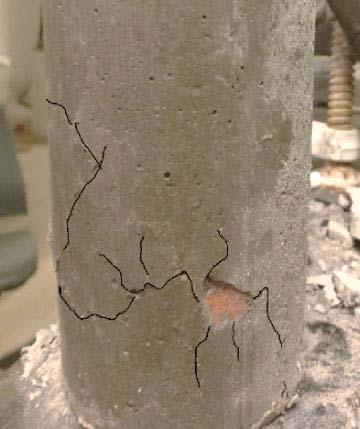
Figure 1 shows a few selected results for the compressive strength of the recycled concrete with water cement ratio of 0.5. It shows that the recycled concrete holds about the same compressive strength as the reference. In general, the results are in line with the references. The standard deviation can be justified by the breaking through clay brick pieces (figure 2). Therefore, the concrete becomes weaker.
CONCLUSION
Based on the results, there is evidence for further research of recycled aggregates in concrete. The results indicate that it can be used for more than unbound bearings for road constructions. Investigations proceeds, clarifying clay bricks effects in recycled concrete, but n o s o l i
M. P. Sørensen
DTU Civil Engineering, Technical University of Denmark
Concrete is one most popular construction materials in the world, which leads to an immense sand consumption. This project seeks to investigate mine tailings as a substitute to regular sand in concrete production. This holds several potential advantages for the climate as well as economical perspectives.
The current practice of disposal of mine tailings, a waste product of mining, is depositing it in either parts of the old mine, on the land surface or on the bottoms of lakes/rivers. If the building industry opens for the potential reuse in concrete, it could save the mining business a large environmental disadvantage.
The largest environmental and economic sinner in concrete is the cement industry. The choice of sand in a concrete has great influence on the properties and economic of the production. One of the most important qualities of sand, in connection with concrete production, is the water holding capacity. If a mine tailing for an example holds 20 liters of water less pr. m3 cement mortar than a sand, it would result in a saving of 10 liters of water in the concrete. At a water-cement ratio of 0.5 this gives a saving of 20 kg’s cement pr. m3 concrete.
The method used to test if mine tailings is a suitable sand replacement, is to do a 25 % replacement, after which the water holding capacity is determined. The water holding capacity isn’t the only thing tested. The mine tailings effect on the strength is tested, along with a few other main parameters of the “sands”
The results so far show, that mine tailing holds some potential in being a sustainable replacement for sand in concrete.
M. L. Pedersen1, and C. Bendtsen2
1DTU Mechanical Engineering and Management, Technical University of Denmark
2DTU Mechanical Engineering and Management, Technical University of Denmark
INTRODUCTION
Plastic is a material that can be used a lot of times, but is often only used once. Plastic can cause great pollution, if handled in an inappropriate way, but can also be a great resource, if handled correctly.
Every year advances are made in recycling plants and technology, but a change in attitude towards plastic is needed to increase the amount of plastic waste entering the waste sector. We believe consumers and companies need tangible examples of the value hidden in their plastic waste to motivate for responsible disposal, preventing it from ending up in nature.
ENVIRONMENTAL AND SOCIAL IMPACT
We will reduce CO2 emissions by recycling plastic waste instead of burning it, but more importantly we will utilize a material found in large quantities, which is mostly unexploited. In time our hope is to influence the attitude towards plastic waste and make consumers and companies recognize it as a resource rather than a burden.
Interior design is a good case for showing that plastic has other qualities than being cheap to produce. By using interior design products as communication media in the storytelling, we want to give the end users a clear picture and understanding of what their own shampoo bottle and meat packaging can become, if handled properly.
METHODS AND RESULTS
Using packaging waste from our own life we have worked on making parts with good surface finish and an intriguing texture expression. We have succeeded in making 12 plastic parts that live up to the standards we have put together, and with these prototypes, we have conducted interviews to investigate how people interpret it. The main points of interest from the interviewees were: the uniqueness of each part
the transparency of the small material loop from waste to new product the visual impression and the tactile feel of the surface other possible applications of this material and production process if we could make a product with some of their own plastic waste
CONCLUSION
From our qualitative research we see a clear tendency, that the presence of a physical object enhances the understanding of the importance of recycling plastic and the vast possibilities that lie in what recycled plastic can be used for. Over next the years, our hope is that our lamp and similar products will influence the common perception of plastic as a valuable material.
Bachelor final
Project no. 219
N. E. Nørgaard, and M. J. Nielsen
DTU Civil Engineering, Technical University of Denmark
Worldwide cement production is about 5% of the total CO2 emissions. Most of the CO2 emitted by concrete during production and carbonation is reabsorbed in concrete through the concrete life. A high but realistic estimate is that under good conditions, concrete will absorb almost 57% of the total CO2 emissions emitted during the actual carbonation phase. Even though the concrete itself absorbs a portion of its carbon dioxide through its life, it does not change the momentum of CO2 emissions. Global cement production, see WBCSD1, has increased by 20% through 1990-2000.
The Danish Technological Institute presented a research survey in collaboration with COWI on "Temadag: Ny viden om sundt og miljørigtig byggeri" on October 5, 2006, which has shown that since the "Grøn Beton" project, completed in 2002, the focus on the use of sewage sludge ash in concrete has increased. Sewage sludge ash production was up to 10,000 tons per year in 2003. Years, of which only about 100 tons of these were used for passive concrete.
The aim of this project is to explore the possibilities of reducing the usage of the core resources of cement and reinforcement steel in concrete walls. A reduction of both these amounts will result in a lowered carrying capacity. The four examined types of wall are reinforced and unreinforced walls, masonry and walls of lightweight concrete. The two last mentioned types are unreinforced as well. For each wall type a different method of calculation according to either Teknisk Ståbi or the Danish national annexes is used. The base of all the calculations is a typical 5 stories residential building.
The basis for comparison is first and foremost a 200 mm thick reinforced wall doubly reinforced with 6xØ8 pr. m. With the reduction of the reinforcement steel in the reinforced walls it is ensured that the walls are still normally reinforced and that they by all means comply with the minimum reinforcement requirements stated by the Eurocodes. The reduction of cement is achieved by replacing it with sewage sludge ash in a 1:1 weight ratio according to the results achieved by (Iskau, Olsen, Andreasen, & Nielsen, 2015).
The different wall types have been examined with an acting load situation as the lowest floor wall with wind load. From these calculations it is concluded that the most resource efficient wall designs include a 50 % replacement of the cement.
From this project it can be concluded that there is a potential of reducing the usage of cement. Furthermore it has been shown that the amount of reinforcement steel in a normally reinforced cross section can be reduced to a minimum yet still comply with the minimum reinforcement requirements stated by Eurocode 2.
F. B. Nielsen, and S. K. Christensen
DTU Mechanical Engineering, Technical University of Denmark
In our households, we produce a lot of different kinds of waste, and h really good at sorting and managing it - in fact, we are seen as one of the greenest countries in the world. But there is one kind of waste that we under no circumstances want to either sort nor manage. This kind of waste we have decided should be transported out of our homes by miles long pipelines, mixed up with precious drinking water and then treated in large energy consuming facilities. Yes, we have to talk about our toilet system.
we also waste a perfectly good source of vital nutrients for our soil, which is in decay. If we want to restore the nutritional circuit between country and city, we have to begin managing our toilet waste in a different and more responsible way.
We have created a concept for a toilet that is independent of a sewage system, it reuses the water from flushes and the organic material is processed in an accelerated compost chamber, and becomes an odorless and safe-to-use soil that can be used locally. The toilet use much more space than an ordinary toilet
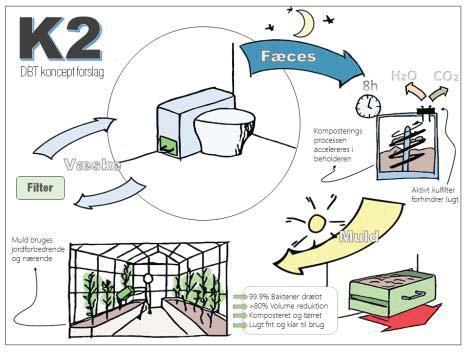
The concept relies on an accelerated compost chamber, where we place the organic material in the most optimal environment, so that the microorganisms can decompose the material. The finished product has a significantly reduced volume, bacteria and pathogens is eliminated and the material is rich on nutrients for organic growth.
If successful, the concept will not only change how we understand and build toilets and sewage systems, it will also change the possibility we have of building sanitary systems in difficult and hostile places. Take a place like Greenland where no treatment is applied to the sewage before disposing it in the oceans, imagine what an impact it would make to their environment, especially knowing that oceans is their primary source of food and resources.
Project no. 221
A. Post
TU/e
Applied Physics, Eindhoven University of Technology
The Living Lab Home team comprises eight highly motivated TU/e Honors students from five different faculties working on the transition to sustainable living. Our mission is to accelerate the energy transition by bringing together partners from the academic and business world to integrate and innovate in the construction environment. We will set a new, higher standard for all homes regarding sustainability, health & comfort and cost that can be achieved with technologies available today: a Living Lab Home.
Our goal is to design and build two demonstration houses on the TU/e campus, next to the Aurora building, in the Spring of 2018. The combination of synergetic technologies is important to ensure the houses are real homes rather than an accumulation of userunfriendly products. We identify four main technologies:
Building-Integrated PV with thermal collection (BIPV-T) (rooftop) Seasonal Thermal Energy Storage (STES) (underneath the home)
A local nano DC-grid
Autonomous control system for climate, security, health & other IoT applications
To ensure these systems are affordable and scalable, an innovative approach to the building process is key. By embracing SlimBouwen®, we bring flexibility, reduction of volume, efficiency and sustainability to the building process. The homes will be designed as turn-key prefab to reduce building costs, creating financial room for sustainable technologies.
The existing building market is slow to adopt innovations, while the impact of the building market is responsible for 36% of CO2 emissions in Europe (BPIE, 2011). The timeconsuming conventional methods rely on bricks and concrete with a large embodied energy, both due to transport and the inherently energy-intensive production methods. Meanwhile, this makes inherently inflexible buildings that can only be demolished at the end of their lifetime. Our design incorporates a steel frame with modular wall/floor/roof units. A steel frame can be precision-manufactured, allowing very precise and faster building. This reduces construction errors and man-hours, with significant savings: up to 25% compared to traditional methods (Lichtenberg, 2005). Our wall units are demountable and modular: demolition costs become residual value while all materials can be separated and recycled. The BIPV-T generates thermal and electrical energy, while increasing efficiency and lifetime of the PV installation (Zulkepli et al., 2016). Hot water is stored in the 50 m3 STES for winter heating and residential use, decreasing the grid-dependency of our homes. A DC grid reduces transformation & transportation losses between PV, appliances and battery storage.
BPIE. (2011). Europe's Buildings under the Microscope. October. Lichtenberg, J. (2005). Slimbouwen. Eindhoven.
Zulkepli et al. (2016). Analysis on the Performance of Copper Indium Gallium Selenide (CIGS) Based Photovoltaic Thermal. EDP Sciences
S. van Vliet, and N. van de Gevel
TU/ecomotive, Technical University of Eindhoven
Lina is an electric city car designed to seat four people. As she weighs just 300 kilograms, she is very efficient. Her little weight is a result of an innovative material which has never been structurally used in a car before: bio-composite. This biological composite is a combination of Flax fibers and a 100% bio-PLA. Two sheets of flax fibers will be pressed around the honeycomb PLA plate to form a composite that is strong enough to create a chassis for Lina, whilst still being very light weight. The result is a supporting chassis which, for 90%, will consist of biological materials.
Car manufacturers are implementing light materials like carbon fiber and aluminum more often. This will result in a lighter and thus more efficient car. Unfortunately, these materials need extreme amounts of energy for manufacturing. In comparison, the embodied energy of carbon fiber is five times greater than the embodied energy of steel, the material which it replaces. The car of the future needs a production method with less embodied energy and carbon dioxide emissions. By using more biological and sustainable materials, TU/ecomotive is showing this view for the future is possible. They call it “Reducing while producing”.
Flax plants can be cultivated locally, excluding the need for extensive transport measures of the main construction material. One more advantage of Flax, it being a plant, is that it will consume carbon dioxide from the air and replaces it with oxygen. Therefore, Lina already starts reducing her emissions while growing.
Lina will use the newest NFC technology to be everybody’s car. A device containing a NFCchip can be granted a key to the car. When the door is unlocked, Lina will recognize which user is getting into the car. Personal settings like music playlists, phone contacts and recent destinations can be loaded in the system right away. Additionally, this technology can be used for future car sharing applications. The car keeps track of driven kilometers and battery usage to determine the costs per user. Car sharing is an upcoming trend in urban areas, which is supported by TU/ecomotive, as it reduces the number of cars needed per inhabitant, and therefore further reduce polluting emissions.
Lina is the world’s first car to be structurally built from bio-composite materials. As a result, she is not only efficient and practical, but also durable from production until she end up at the recycling services. Through the newest NFC technology, Lina can be used for car sharing services and still feel like your own car. To show that these futuristic innovations can be used today, Lina will be tested by the RDW to obtain a Dutch license plate. TU/ecomotive will present their finished concept car in the summer of 2017.
K. Dimitrios, V. Theocharis, and G. Konstandinos
AUTH, Aristotle University of Thessaloniki
ABSTRACT
Pedestrian-related road accident rates in Greece are among the highest in the European Union (E.U.). One of the most crucial factors that contribute to this rate is the insufficient and non-distinguishable signaling in the crossing area, both regarding the driver as well as the pedestrian. We offer a cost effective solution that addresses these problems and provide a proposal on its implementation in Thessaloniki.
We propose the installation of our system in the most precarious crossings (black spots) of our city. Our system consists of two parts, the operational and the energy dependency part. The first part contains the LED lights installation positioned on both ends of the crossing lengthwise and is divided into three stages. At first, the LED lights glow green in tandem with the pedestrian crossing signal turning green. When the signal turns red, in the beginning, the LED lights will pulsate red, and then the system will turn off.
The second part contains the power supply of the system. We suggest it use two solar panels, one on each pavement, and a battery on one side to store the energy. When the sun sets, the system will rely on the saved power. In case the power is insufficient, its operation will be secured by using the city’s power grid via a connection to the nearby traffic signal.
We expect the installation of our system to significantly improve the safety standards of pedestrian crossings. Naturally, this would lead to an increase in the level of comfort that both the pedestrians and the drivers experience and thus constitute an overall increase in the quality of life in our city.
Optimising the potential use of by-products from biofuel production as fertilisers for winter wheat (Triticum aestivum)
E.Pearce
Lancaster Environment Centre, Lancaster University
INTRODUCTION
Bio-fuels are increasingly being used as an alternative to fossil fuels. The combustion of raw plant material to release energy produces by-products which have previously been perceived as waste requiring disposal. At the same time there is increased demand to feed the growing population and concern over the effects of climate change on crop yields. Byproducts of bio-fuel production could be applied as fertilisers and soil conditioners to improve crop growth due to high and potentially complimentary nutrient contents.
METHODS
Different blends of ash and digestate derived from bio-fuel production were applied to soils in which winter wheat (Triticum aestivum) was subsequently grown. Plant biomass, leaf number and tiller number were measured as indicatorsof plant growth. Soil properties measured included soil moisture and pH. Plant nitrogen and carbon content were recorded.
It was found that plants grown in soil treated with fly ash or combinations containing fly ash displayed increased growth compared to untreated controls and plants grown in conventional urea + P fertiliser. Plants grown in digestate treated soil or in blends containing digestate and bottom ash showed little difference to controls and plants grown in conventional fertiliser. Increased soil pH was recorded for treatments containing both types of ash, although it was higher for fly ash than bottom ash. pH may influence the uptake of soil nutrients with consequential effects on plant growth. Little difference was observed between treatments for leaf carbon and nitrogen concentrations.
CONCLUSION
In order to realise the potential for utilisation of bio-fuel by-products trials should be extended to the field and restrictive policy and public perception surrounding their use must be altered. Should this be achieved there is good potential for ash to contribute towards a circular energy and food production economy with reduced waste and pollution and enhanced food security.
Project no. 225
S. Flint
Lancaster University
The development of renewable energy technologies is key in the quest of greenhouse gas abatement. Biomass is organic matter derived from living organisms and is mankind’s oldest energy source. A widespread development of new clean energy technologies basedon biomass is yet to take place. 40% of the earth’s land mass is used for agricultural means producing significant amounts of agricultural waste. The energy from this waste can be harvested through different systems focusing on optimum energy efficiency and the reduction of harmful emissions.
This project develops a small-scale combined heat-power system comprising of a gasifier and a gas turbine combined heat-power system. The system is to be used to generate energy from poultry litter in order to make a farm energy self-sustainable.
Two existing small-scale combined heat-power systems, Aurelia A400 and Keld Energy HiCHP250, are analysed and used as a springboard for the development of a hybrid design.
Gasification is a process through which biomass is converted into a combustible gas mixture through partial oxidation reactions. This syngas is a mixture of carbon monoxide, carbon dioxide, methane and hydrogen, and is used as part of a combustion process in a gasturbine system.
An open gas-turbine cycle is based on a Brayton Cycle and comprises of a compressor, which compresses the working fluid thus increasing the temperature and the pressure, a combustion chamber, in which heat is added to the working fluid, and a turbine which expands the fluid and decreases the temperature and pressure. A shaft connects the compressor and turbine producing a net power output. Components such as intercooling, reheating, recuperation and an Organic Rankine Cycle can be integrated in order to increase the efficiency of the system.
The Aurelia A400 is the leader in its field with an efficiency of >40%, it has a power output of 400kW. The high efficiency of the A400 is attributed to the high turbine inlet temperature of 1077 and the unique two-spool design. The Keld energy HiCHP250 has an efficiency of >32% and incorporates three-way recuperation.
Using Aspen+ software a flow diagram of a combined heat-power system is constructed. The flow diagram designed, comprises of a two-spool gas turbine system, three-way recuperation and intercooling. Air is used as the working fluid and is cooled between the compressors so as to maximise the energy power output of each compressor. The air is split, a part is used as part of the partial oxidation reaction of the biomass within the gasifier and the rest continues to the combustor in which the temperature of the gas is raised to 1077’C before continuing through the turbines generating a net power output of 400kW.
Variables tested are: air-fuel ratio, biomass moisture content, biomass feed rate, gasification temperature, gasifier and combustor heat duty. Efficiencies ranging within 36-40% are achieved depending on the variable inputs.
R. Ng
NTU Electrical and Electronic Engineering, Nanyang Technological University (Singapore)
INTRODUCTION
As its name suggests, the primary purpose of a DC DC converter is to convert one DC voltage level to another. DC DC converters are omnipresent in today’s world – it is found in cellphones, laptop computers, flash photography, tasers, and the list goes on. Without them, while energy can be harvested from wind turbines and solar panels, they cannot be used. This is so as the harvested voltage has to be first up or down converted to a voltage level suited for the device. A perfect DC DC converter is one that is capable of converting DC voltages from one level to another with zero energy loss (i.e. = 100%). This project has successfully designed a DC DC converter that operates at an efficiency of 94%.
THEORY
To put it very simply, the conversion from one DC voltage level to another is possible because of the Law of Conservation of Energy, which states that the output power (POUT) exactly equal to the input power (P IN) in a perfectly conserved system. Since power (P) is the product of Current (I) and Voltage (V), keeping the relationship I IN VIN = IOUT VOUT = Constant in mind, the output voltage VOUT can be simply raised (reduced) by reducing (raising) IOUT. However, in reality, a DC DC converter can be very complex to design because of the compulsory feedback regulation needed to ensure that it is capable of operating under extreme temperature conditions, load and line variations.
Table 1 shows the simulated results of the DC DC converter.
Parameter Specification
Topology Flyback Topology
Transformer size 20 H:2mH
Conduction Mode Discontinuous Conduction Mode
Control Mode Current Mode Control Technology CSM130nm
VIN 5V
30V, 5mA
30V, 5mA
*M=1.00, = 94.34%
*M=0.87, = 72.18%
*M=1.00, = 94.34%
*M=0.87, = 71.80%
PContorller 1.59mW
Stability
Stable across -40 C to 125 C at TT, FF and SS process corners.
*M refers to the coupling coefficient between the primary and secondary coils of the Flyback transformer
Table 1 Achieved specifications
S. Madhavan
Nanyang Technological University, NTU
Mitigation of traffic is imperative for sustainable growth of Urban Cities. Traffic results in serious environmental and economic issues. Collectively the vehicle emissions, such as CO, CO2 and NOx from exhaust results in asthma and other breathing problems, in some cases resulting in pre-mature deaths.
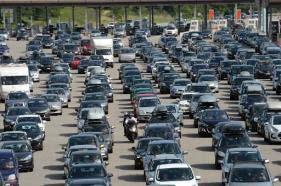
Pressure based routing systems are known to be effective in wireless sensor networks, however rarely applied to transportation systems due to the nature of interactions between vehicles. This project aims to alleviate the traffic congestion by adapting the node pressure concept into the traffic management system. We propose a Multi-Agent System (MAS) with vehicle agents and infrastructure agents, which can collaborate to provide static and dynamic solutions for reducing the urban traffic. In the static solution, the infrastructure agents rely on a reinforcement learning method (Q-learning) to calculate the optimal routes for vehicle agents.
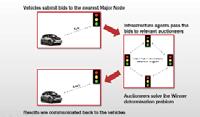
In the dynamic solution, the infrastructure agents dynamically adjust and re-route vehicle agents based on a novel multi-unit combinatorial auctioning system proposed. Extensive experiments on realistic traffic simulation platform have proven our methods, especially the dynamic solution, to achieve significant improvement in the reduction of travel-times for the vehicle agents in comparison to others, thereby reducing fuel consumption and pollution.

M.D.Maso
DTU Environment, Technical University of Denmark
INTRODUCTION
Although reducing GHGemissions is vitally important, impacts of Climate Change are already a serious threat for many countries in the world. When it comes to Climate Change Adaptation, a lot of emphasis isplacedon public entities, while not so much attention ispaid on the key role of private sector. In developing countries, SMEs are highly affected by climate change impacts,however, the adaption of such entities to the changing climate is stymied by many factors, such aslack of information, the small capacityof the company, and the unreliability of the localauthorities. Due to all these circumstances, a toolallowing SMEsto assess their level of exposure to Climate Change impacts and take the necessary countermeasures would greatly help the resilience of the whole nation.In this Special Course, conducted with the support of UNEP-DTU Partnership, I have set the framework for thedevelopment of a comprehensive, easy,and reliable tool, based on tools and guidelines available worldwide and my personal knowledge in the field.
TOOL’S STRUCTURE
1. Risk Assessment. The level of risk is calculated by asking simple questions to the user. In this way, dataon the occurrence of the hazard, and its consequences on different business aspects are obtained, using simple statistical equations.
2. Risk Management. Accordingly to the level of risk calculated in point 1, a predefined number of actions is suggested to the companyusing the ALARP principle. The list of actions includessoft and hard measures.
3. Monitoring. After measures are implemented, the effectivityof such actionsis monitored keeping track of theconsequences of the extreme weather events.
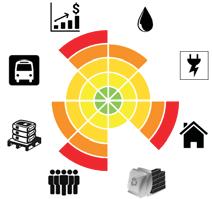
Figure 1.Graph showing the level of riskof a companyfor different business aspects(example).
CONCLUSION
Through theproject, aframework for the development of an interactive tool that SMEscan use was set. As it is now, the toolhasthe characteristics to become more complete and easier, compare to the fewonesalreadyavailable. The next step, for the development and implementation of it, will be to ensurethat the recommended measures are as exhaustive and detailed as possible. Furthermore, it needs to be defined if the tool is going to be available on Excel and/or Online.
C. V. Allsø1, P. O. Frendorf1, C. K. Hermansen1,V. K. Møller1,R. Villebro1 and S. Win2
1DTU Bioengineering, Technical University of Denmark 2 Copenhagen Business School
In 2050, multi-drug resistant microbes areestimated to be a greater killer than cancer.The problemarises, when a microbebecomes resistant to the most common antibiotics. Itis encountered more frequently as a result of a global overuse of antibiotics. Because of this, disease caused by organisms such as the methicillin-resistant Staphylococcus aureus (MRSA) threatensthe people ofthe developed world. Currentdrug discovery processesin the pharmaceutical industry are not fast enough. Research processes are cumbersomeand clinical trials can costs millions of USD, which might all be wasted if the compound is not approved.
Many antibiotic compounds belong to a specific class of natural products called nonribosomal peptides (NRPs). Using existing technologies within genetic engineering, it is possible to rapidly create huge diversity within genes, eg. enzymes producing NRPs, potentially resulting in derived compounds.These natural products can then be detected using cellular assays, which can be developed according to certain markers.
We have devised a platform to rapidly create and detect antibiotic compounds ready for preclinical research.By applying genetic engineeringto selected enzymes producing NRPs, we will be able to create diversefunctional natural products. Coupling this to a novel high throughput screening method of our own design and development, we canrapidly increase the speed of drug discovery from several years to weeks. Furthermore, besides the ability to produce antibiotic compounds, the platform will also be applicable for other high value compounds such as antivirals, anticancer drugs, additivesand pigments.
Figure 1This project aims at making antibiotics available for trials faster than ever before.
Thanks to initial funding, proof-of-concept (POC) is currently in the early stages. We have chosen the bacterial strain that will host the genetic engineering. Furthermore, we have chosen the NRP indigoidine as our first test compound, as this has shown slight antimicrobial effects against some of the pathogenic Vibrio strains. Finally, the screening technology has been designed and will be ready for testing by the end of July. Following POC we expect to apply the platform to several cases before going into business.
E. Takola
AUTH, Aristotle University of Thessaloniki
INTRODUCTION
Agroforestry is a term which refers to systems where woody perennials are deliberately used on the same land-management units as agricultural crops and animals, in some form of spatial arrangement or temporal sequence [1]. These systems have four major components; cropland, trees, grazing animals and soil. Agroforestry dates back to the Neolithic period and even Homer provided descriptions of such landscapes in Odyssey. Olive tree (Olea europaea) is a native Mediterranean species which is cultivated for its olives, oil, timber and forage. In Greece, it is estimated that there are 20,000 ha of silvoarable systems with olive trees [2]. In the Mediterranean region the combination of olive trees, cereals and grazing sheep is very common.
Aim
The aim of this project is to highlight the importance of agroforestry systems as sustainable ecosystems and to maintain the concept justify the argument that they can be considered as a model for optimization of natural resources management. The purpose is to combine traditional practices with modern technology in order to promote sustainability.
THEORY
Agroforestry systems are characterized by high resilience, variability and homeostatic mechanisms. Trees enhance and facilitate crop production, whereas grazing animals reduce interspecific and intraspecific competition. As a result these systems are not vulnerable to threats namely insects, fungi, even climate change. Such systems are very important for the conservation of nature because they enhance soil fertility, reduce erosion, improve water quality, enhance biodiversity, increase aesthetics and sequester carbon.
Agroforestry systems provide numerous ecosystem services while contributing to sustainable production, as well. Indeed, crops and grazing animals produce biomass which can be used as a fuel and therefore minimize the cost of cultivation. However, in each region people should use native species already adapted to the climate conditions. Agroforestry systems constitute an ecologically sustainable alternative to traditional farming and to intensification of agricultural production [3]. It is a model which combines agricultural practices along with nature protection and conservation.
[1] Agroforestry.(2017). Fao.org. Retrieved from www.fao.org/forestry/agroforestry/80338/en/ [2] Eichhorn MP, Paris P, Herzog F, Incoll LD, Liagre F, Mantzanas K, Mayus M, Moreno G, Papanastis VP, Pilbeam DJ, Pisanelli A, Dupraz C (2006) Silvopastoral systems in Europe – past, present and future prospects. Agroforestry Systems 67:29–5
[3] Smith, J., Pearce, B., & Wolfe, M. (2012). A European perspective for developing modern multifunctional agroforestry systems for sustainable intensification. Renewable Agriculture And Food Systems, 27(04), 323-332. http://dx.doi.org/10.1017/s1742170511000597
N.B. Andersen1, F. Haaning2, and M. Schulz3
1DTU Process Innovation, Technical University of Denmark
2DTU Information Technology, Technical University of Denmark
3DTU Engineering Management, Technical University of Denmark
What are the things you share with other people in your life? What makes sharing difficult?
We believe sharing is about exchanging things. Therefore, AirBox is dedicated to helping people to find and access spaces around them, which they can rent and use to exchange things with others easily. By partnering with professional space providers and connecting them to users on our platform, we enable and support sharing everywhere at any time. In this way, AirBox creates flexibility for our customersand generates traffic for our partners. At the same time, the concept promotes the use of resources in an ecosystem instead of investment in property by making shared ownership feasible and beneficial.
Learn more and watch the “Airbox video pitch” on Youtube here:https://goo.gl/7XMGsC
Airbox is a platform-based network, which allows users to access, rent and use the available empty spaces around them to share and exchange things. In the AirBox App, users are able to find an available spaceclose to them, which they can then rent and deposit things inside. Afterwards, they can give access to other users of the AirBox network, so that these get notified and can pick up the item whenever they want. Through the timebased pay-per-use system (hourly), the cost for the users are kept at a reasonable level, while the space provider (SWIP, PostNord, 7-Eleven, Hotel receptions, etc.) earn money from renting empty space.
By making exchange possible within all the situations in our every day life, AirBox prevents consumerism and enforces the sustainable use of resources. Not only do we enable private consumers to carry out more exchanges, we additionally support small-and mediumsize businesses and other sharing platforms tostreamline their logistics and/ or delivery services. Consequently, AirBox makes use of current information technology to empower consumers while reducing traffic and CO2 emissions, and at the same time increases efficiency in consumption by bridging the gap between „giving“ (offer) and „needing“ (demand), which represents an obstacle in sharing economy.
B. Mazzaliand J. Woodley
DTU Chemical and Biochemical Engineering, Technical University of Denmark.
Nowadays biocatalysis is gaining momentum and it is becoming one of the most important component in the toolbox of the process chemist thanksto its potentiality to deliver ‘greener’ chemical syntheses. The purpose of this work is to propose a potential design for biocatalysis in flow, especially using the ene-reductase enzyme. Being able to support the real need of the pharmaceutical companies to stay competitive on the market is an important point which drew up the report. Many are the challenges in this field and, throughout a detailed analysis of pros and cons for biocatalysis, some of them were addressed in order to support the green side of this technology. Sustainability is the main topic described across the article with also an eye on recyclability,safety and innovation. The paper starts with a description of what is biocatalysis alongside a detailed explanation of its role in the pharmaceutical processes. Furthermore, considerations on flow chemistry and biocatalysis in flow are outlined. It is among those lines that the real need for continuous processes reveals to be the main driving force in order to promote flow chemistry upon the already established batch systems in the pharmaceutical processes. This is due to the fact that the pharmaceutical industry must be revisited leveraging on green aspects. Before the final chapter, the focus will be on ene-reductase applications in the pharmaceutical manufacturing, describing the cofactor recycling topic together with a detailed explanation of the ene-reductase bioreduction pathway. A list of what needs to be taken into consideration for further improvements it is also mentioned in the article, conducting the reader to the end of the paper where the design of a potential continuous process for ene-reductase is proposed. Last but not least, an outline of all the potential benefits that the proposal might carry is carefully mapped out.
T. S. Bladt,K. Ciurkot, S. E. Clemmensen, and S.Pjaca
DTU
Bioengineering, Technical University of Denmark
For centuries, mankind has turned to nature in the search for treatments for all kinds of diseases. The use of herbs and plants is still valid this day and age and has resulted in the identification of numerous bioactive compounds in nature due to the consistent search for newand more efficient pharmaceuticals.Important examples are compounds produced in different plant species derived from the amino acid, L-tyrosine, such as mescaline, dopamine and opiates used for treatment of mental disorders, acute cardiovascular conditions and as pain medication, respectively. Traditionally, these pharmaceuticals are produced by either chemical synthesis or extraction from the native producing plant, nevertheless both methods have numerous drawbacks. The chemical synthesis is expensive, and extraction from plants requires both time and space for cultivation. Additionally, extraction often results in low yields, and the cultivation process is vulnerable to uncontrollable factors such as weather and climate. The synthesis of high-valued specialized plant metabolites in microbes is becoming a viable alternative to extraction and chemical synthesis. Using a microbial cell factory will by eliminating the farm-to-factory route and by using renewable raw materials, provide a reliable, sustainable and in the longer run a much cheaper way of producing pharmaceuticals making them better available across the globe.
This project aimedat definingastrategyfor developing a yeast cell factory for production of tyrosine-derived plant pharmaceuticals. Asa proof of concept, the project is based on the production of the compound mescaline, potentially used in treatment of various mental disorders, to present an example of a cheap, reliable and sustainable production.
The development of the cell factory follows the iterative process of the cell factory engineering cycle consisting of four steps -design, construction, characterization and analysis. The design phase consists of the elucidation of the unknown enzymes in the biosynthetic pathway, and modeling of the pathway in the metabolism of the yeast Saccharomyces cerevisiae. For construction of the cell factory, the putative genes encoding the biosynthetic pathway will be integrated into the genome of the yeast strain. The design and construction are then characterized by a small-scale fermentation setup. The final step is to analyze the cell factory using omics-data, which will then allow for optimization of the design, and the circular strategy can then be repeated. Furthermore, the project included an analysis and evaluation of the potential of the proposed strategy as well as the economic feasibility.
Through the four steps of the cell factory engineering cycle, the strategy for development of a yeast cell factory for production of the plant-derived compound mescaline has been proposed in this project. Production of mescaline in S. cerevisiae can be accomplished with the right amount of research, and the technology will also lay the foundation for low-cost production and a sustainable supply of other natural pharmaceuticals as anti-cancer drugs, antibiotics and such.
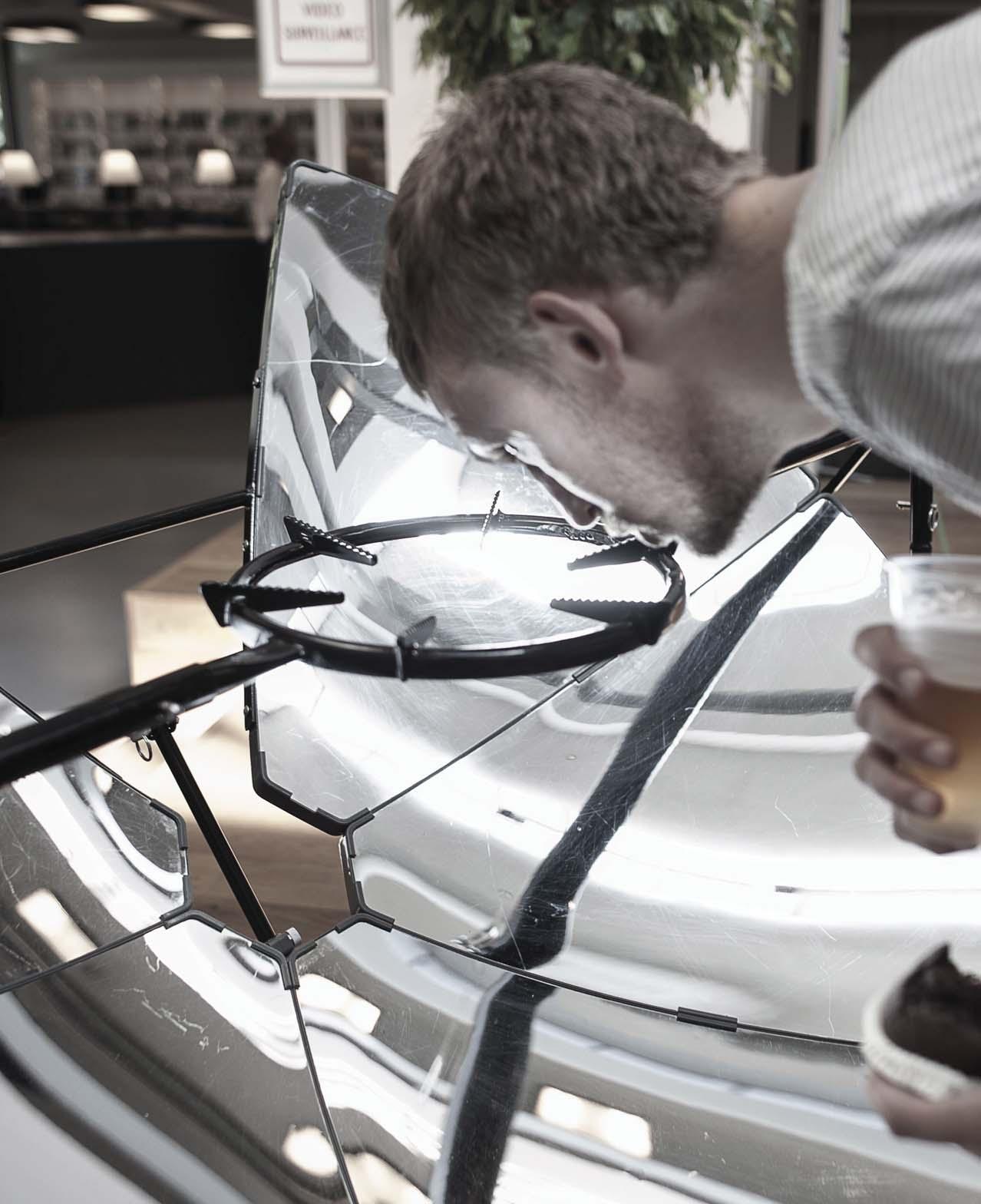
A. F. Schulz, and D. K. Stille
TUM, Technical University of Munich
World wide consumption of meat adds up to approximately 45 kilograms per capita each year. The awareness for problems going hand in hand with meat production, however, is rising, so that many people are beginning to introduce substitutes, such as tofu and seitan, into their diet. These products are an improvement to meat in many ways, but bring along other difficulties. Seitan is made from wheat, whose cultivation requires vast areas of farm land and the use of detrimental herbicides and pesticides. The production of soy, tofu’s main ingredient, is overtaking huge areas in fragile ecosystems, leading to deforestation and threatening biodiversity, water reserve, people and the global climate. Another downside of common meat substitute products is that they are often highly processed and full of artificial ingredients. All these reasons make the search for alternatives highly relevant.
We want to contribute by introducing Chicken of the Woods ( Laetiporus sulphureus , fig. 1 A). This huge edible mushroom resembles chicken in texture and taste. Because of its size, it is possible to cut out big filets, which can be prepared as steaks or escalopes. Despite these striking features, the rare mushroom has never been grown commercially.
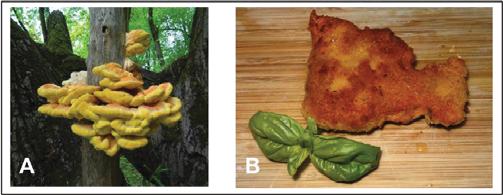
After thorough scientific research we developed a unique production technique. With it we can grow large amounts of mushroom in small incubators, enabling us to produce locally and avoid long transport routes. This is a big advantage compared to tofu, whose main ingredient soybean is produced centrally by big companies and has to be shipped all over the world. In addition, we use only agricultural waste products as substrate, without herbicides or fertiliser. These are reasons why Chicken of the Woods is energy efficient - its production requires very little space and other resources.
Moreover, there is no need for unhealthy flavour enhancers or artificial vitamins, as not only does the mushroom have a fine taste on its own, it also contains many important nutrients. We are the first team ever to introduce Chicken of the Woods to the commercial world. So far, we have successfully cultivated the mushroom mycelium and, as we keep improving our technique, are planning to start full scale production within the next months. We are very excited to present this fantastic mushroom to you in this competition!
D. Schutjens1, G. Massetti2, and S. B. Skaarup3
1Exchange student at DTU, Climate Studies, Wageningen University, The Netherlands
2Cand.merc.IB, Copenhagen Business School, Denmark
3Cand.merc.INT, Copenhagen Business School, Denmark
Introduction
Every year, significant amounts of plastic waste end up in the ocean, which is believed to contain as much as 5.25 trillion pieces of plastic debristhat severely endangers the marine ecosystem.Scientists believe that micro plastics are likely to be much more harmful than discovered so far. Despite imprecise numbers, public estimates calculate that between 500 billion and 3 trillion plastic bags are used every year worldwide. Considering that 30 percent of the plastic debris floating in the ocean is generated from consumers, a significant, yet unquantifiable proportionis expected to be constituted by plastic bags.
Those numbers seem to say that eliminatingplastic bags is the only way out of this. But is it really? The commonly used High Density Polyethylene (HDPE)bags have many characteristics that contribute to a desirable shopping experience: flexible, sturdy and cheap. The alternatives are indeed not as preferable.In an effort to improve the ‘green image’, some shops and supermarkets have implemented the use of paper bags instead. Even though consumers often perceive these to be less harmful to the environment, this is not the case as an LCA will show. Paper bags have a lower functionality and a higher environmental impact. In fact, their production requires ten times as much water, consumes twice as much fossil fuel and contributes six times as much to global warming as plastic bags.Cloth bags, due to their resistance and reusability, are probably the best alternative. However, consumers today are not ready to give up the comfort of buying a new bag every time they shop.
Our proposal wants to develop a system of incentives for consumers to recycle or reuse HDPE bags, without giving up the freedom of buying new bags every time they shop. The method proposed concerns theimplementation of a deposit-return system for plastic bags, like the one already existing in Denmark for bottles and cans. Although the plastic recycled from carrier bags is less serviceable than the one extracted from bottles, it is nonetheless a valuable resource for recyclers. A deposit-return system is proven to be highly effective in increasing recycling rates of the items covered by the scheme. Therefore, we believe that devising an appropriate and economically-soundstructurewould contribute to a more effective recycling system and a decreased environmental impact of plastic bags. The Come Bag should be based on cooperation between producers, re-processors, shops, restaurants, and consumers, and be financed through mandatory membership fees, logistics fees, and collection fees. Our proposal wants to extend the current system -which only covers bottles and cans -to plastic bags, in which every supermarket is obliged to participate. Even if the plastic recycled from carrier bags is less serviceable than the one extracted from bottles, it is still a valuable resource for recyclers. Finally, consumers would be imposed a higher upfront price for their shopping bags, including the deposit that would be given back with the return of the bag.Denmarkwould serve as basefor the pilot project, andthereafterit could be expanded to other countries.
Feasibility of bio-plastics as an alternative to conventional production
N. Venkatesh1, and R.Lopez2
1DTU Chemical Engineering, Technical University of Denmark
2DTU Environmental Engineering, Technical University of Denmark
INTRODUCTION
Bioplastics areper se those that are derived from a renewable source of biomass. Conventional production of plastic relies on chemical products from the refinement processes of petroleum, whereas bioplastics are produced from processing of bioethanol that could be produced from a variety of crops such as sugarcane, corn or sugar beet. Worldwide, important plastic-related enterprises have been showing a great interest in this new production pathway overthe past decade.With an undesired dependence on rapidlydecreasing foreign oil reserves, the alternatives to petroleum based products are worth investigating; moreover, increasing awareness of the general public on climate change (CC) and its forecasted consequences motivates thisshift, as companies understand that a bioplastic product has an inherent added value for which an important share of the consumers is willing to pay. Although, bioplastics usually outperform conventional ones from a lifecycle perspective in terms of their harmfulness towards CC, there is concern on whether bioplastics might overallbe performworse from a holistic sustainability point of view despite being better for CC.In this light, agencies certifying bioplastics must adopt a methodology that ensures that some key metrics such as transportation, use of pesticides, water consumption etc must not only be minimized, but also comply with legislation and outperform the petroleum equivalent
METHODS
To develop a methodology that encompasses the most important metrics,an analysis of the impacts of conventional polyethylene (PE) and bio-polyethylene (BPE) through their whole lifecycle was performed by means of Simapro. The results obtainedalign with previous studies showing that BPE as extracted from sugar cane in Brazilian plantations poses indeed a thread to ecosystems and human health, mainly because of the usage of uncontrolled pesticides and also due to pressure exerted over natural land. On the other hand, an effective reduction of greenhouse gases (GHG) emissionswas observed. However, more significant are the results gathered when comparing different techniques and types of crop to the production of BPE: sugar beet from highly industrialized plantations in the USA that abide with updated legislation on pesticides appeared to be highlyeffective in minimizing the damages done to the local environment at the same time that they reduced GHG emissions compared to PE.
CONCLUSIONS
Plants producing plastic products depend on external plastic sources. On current legislation frameworks, they can obtain bio- labelling by simply certifying that the source is renewable (i.e. crops). Due to a general misconception, products from bioplastics are assumed to be more ecologically sustainable than conventional plastics. As an outcome from this study, it is proposed that a new labelling for bio-products is established, where the bioplastic source is assessed in terms of significant parameters, namely: pesticides use, land use, type of crop, transportation, water stress and waste handling. By doing so, plastic importers could objectively certify the sustainability of their products and current plantations could improve their methods so that damages to the local environment and human health are minimized.
F.T.Hansen, J.Munch,C.Mosbech,
DTU
Mechanical Engineering, Technical University of Denmark
Today manufacturing with fiber composites is a high-risk job and several employees working with the materials have been shown to evolve sicknesses. Furthermore, fiber composite production today requires high skill labor and long manufacturing times.
Laminae based on weaved fibers and thermoplastics is seeing increased research and are showing very promising properties. Using thermoplastic together with fiber reinforcement opens up a world of possibilities in new manufacturing techniques. This is where we come in.
On the idea state we are working with thermoplastic laminates in sheets suited for vacuum molding. The technology will enable car manufactures among others to implement the material directly in their manufacturing without the need for strict epoxy security and the risk of employeesgetting sick.
The new material will be cheap, light weight, safe and very fast to process.
Including recycled thermoplastic in the material as well as biofibers from hemp would create a fully upcycled product as well as ensuring 100% recyclability of the product.
The application of the product would be limited to the span where thermoplastic alone is not strong enough but the epoxy based strength is not fully need such as skins in the transport industry like trains and cars, construction industry in parts like windows and high performance RC vehicles like drones etc.
Utilization ofwastewater generated from sweet potato starch productionfor cultivation of functional strains
C.Wang1,2, C.Zhang1,2, F.Li1,2, X.Sha1,2, Z.Nedaei1,2
1Sino-Danish Center for Educationand Research, Beijing, China
2DTU Chemical Engineering, Technical University of Denmark
INTRODUCTION
Sweet potato (Ipomoea batatas) is one of the most important staple food crops and a major source of starch products in many Asian countries. However, alarge amount of wastewater hasbeen generatedduring the production of starch from sweet potatoes,causing severe environmental problems.On the other hand,the wastewaterfrom the sweet potato starch production possess high contents of nitrogenand phosphorus, which could be used as a source of nutrient-rich substrates for cultivationof functional strains.
METHOD
Analysis of wastewater
Physicochemical properties of wastewater includingCOD (Chemical Oxygen Demand), NO3-N (Ammonia Nitrogen Content), and TP (Total Phosphorus Content) were tested to find out whether itcould provide abundant nutrientsand appropriate environment for the growth of bacterium.
Strain selection
Six kinds of typical plant promoting strains were selected to get incubated in LB (LuriaBertani) substrates at arotation rate of 150 rpm and atemperature of 30 for 24 h. Based on their growth behaviors,two types ofstrains werechosenfor further investigation.
Optimization of culture conditions
To optimizestrain cultivation, the pH of the wastewater was controlled in a range of 6-9. Then the two types of strains mentioned weresterilized,inoculated in the substratesand cultivatedfor 24 h. Same procedures were followed for optimizing thetemperatures and concentrations of wastewater in a range of25-40 and 20%-100%,respectively.
RESULTS
Among the six types of strains tested, Bacillus pumilus and Lysinibacillus fusiformis presented a favourable growth tendency. Optimalgrowth conditions corresponding to Bacillus pumilus were achieved at 30 wastewaterconcentration of 60% and apH of 7, while the optimal conditions for the growth of Lysinibacillus fusiformis were 35 a wastewaterconcentrationof 40% andapH of 8.
L. Brabæk and I.L. Kristensen
DTU Environmental Engineering, Technical University of Denmark
Chlorinated ethenes are a frequent source of contamination in groundwater. Chlorinated ethenes such as perchloroethene (PCE) are denser than water. Therefore, they can sink all the way down an aquifer until they reach a confining layer. This makes chlorinated ethenes very difficult and expensive to remediate. Chlorinated ethenes have a high water solubility and mobility compared with the quality criteria’s for groundwater, which enables them to spread in groundwater. The ability to determine the natural degradation of chlorinated ethenes is therefore of high interest.
In Rødekro, Southern Jutland a former dry-cleaning facility has caused extensive PCE contamination of soil and groundwater. The contaminated groundwater is part of an important drinking water aquifer. In 2006, thermal remediation was performed at the source zone removing 95 % of the PCE. However, there is still a 2km long contaminated plume containing PCE and its degradation products TCE, cDCE and VC. The thermal remediation resulted in a release of dissolved organic matter, which caused a stimulation of the natural degradation.
In cooperation with the Region of Southern Denmark, this project aims to determine the natural degradation of chlorinated ethenes in the plume based on field investigations. The fieldwork was conducted in March and April 2017. Groundwater samples from 26 wells spread throughout the plume were taken.
This project focusses on the results from special analysis of the isotope fractions of carbon and chlorine for PCE and its degradation products. Based on the isotope fractions the amount of each chlorinatedcompound that has been degraded can be determine. These results combined with the hydraulic conductivity along the flow line can determine the natural degradation rate. To obtain the hydraulic conductivities several vacuum slug tests have been conducted along the flow line and over depth. The vacuum slug tests are compared to the results from pump tests conducted by the consulting engineering company Orbicon. project will increase the understanding of the natural degradation in a plume, which is important in assuring clean drinking water and monitoring contamination. It focuses on the variation in isotope fractions along the flow line, and the variations occurring over the depth of the plume. To understand the development in the plumeit includes a comparison with the results from previous years. Furthermore it includes a summary of the other investigations that were conducted in the field including; the concentrations of the chlorinated ethenes, redox conditions and the microbial bacteria and their activity.
REFERENCES
HUNKELER,D.,ABE,Y.,BROHOLD,M.M,JEANNOTTAT,S.,WESTERGAARD,C.,JACOBSEN C.S.,ARAVENA, R.,BJERG,P.L.(2011).ASSESSING CHLORINATEDETHENEDEGRADATION IN A LARGE SCALE CONTAMINANT PLUME BY DUAL CARBON-CHLORINE ISOTOPE ANALYSIS AND QUANTITATIVE PCR.JOURNAL OF CONTAMINANT HYDROLOGY,119,69-79.
Broholm, M. M., Badin, A., Jacobsen, C. S., Hunkeler, D. (2015). Rødekro 2015 –Vurdering af udviklingen i den naturlige nedbrydning i nedstrøms forureningsfane efter kildeoprensning. DTU Miljø 2015.
A. G. Ciobanu1, T. A. Steiner2, and L. Thorup3
1 DTU Compute, Technical University of Denmark
2 DTU Compute, Technical University of Denmark
3 nDTU Mechanical Engineering, Technical University of Denmark
Denmark is a huge exporter of fish -the annual value of exported fishery products is valued at 16.5 billion DKK. Yet, as of now, there are no practical objective methods to assess the quality of fresh fish -the state ofthe art at the moment is manual inspection. This manual inspection fails to discover early stages of alteration caused by improper handling of the fresh fish, which in turn leads to a wrong estimation of the remaining shelf life and as well waste. Fishent solves this problem by providing convenient, unbiased, fair and reliable evidence for fish quality. The core of the solution is a nanofiber sensor technology that can record differences in fish smells far too subtle for the human nose to notice. Fishent uses machine learning algorithms to analyse the sensor data and output a quality label. The solution can be plugged in at any handover point in the fish supply chain, with no requirements to the existing process, which will allow fishermen to get a fair price for their fish and the buyers to get a reliable quality label and estimate of the remaining shelf life of the product they buy. The fish auctions using Fishent can brand themselves for premium quality and fair prices. They can also enforce strict handling guidelines for fishermen and other parts of the production chain to minimise the alteration process, waste and ensure best quality. This value propagates through the entire fish distribution chain.
Project no. 317
N. Croce, F. Delucchi, and G. Ugolini
TU Delft
Food is the basic fuel for human life and it has to be sustainable by definition. Our aim is to bring sustainability on the table of millions of people. The idea is to design a QSR (Quick service restaurant) automated and fully sustainable in all its aspects, from the supply chain, to the food served, to the interior design.
Eeveryday millions of people are eating in resource-consuming and environmentally unfriendly fast-foods. Not only this has bad consequences for people’s health, but, more silently, this habit has a huge severe impact on the planet. Luckily, thousands of millennials are becoming aware of the problem and are trying to shift their diet towards more healthy and sustainable options. Their struggle in finding restaurants or food-places which are aligned to their needs and lifestyle choices made us think about a way to bring to thousands first, and then millions of people the opportunity to fulfil their dietary needs. We are convinced that technology can be significantly of help in reaching our goal, so, we came up with a concept that merges technology with food and aims to make sustainable, healthy food accessible, affordable and widely adopted.
The actual conceptual design involves the use of sustainable materials for the interior design (www.goodhout.com), sustainable packaging of food served, sustainable supply chain and of course an environment-friendly Menu. A mobile robot , which we call the “Smart-Cart” is used to bring the food to the table; orders and payments are handled by a digital platform. The extensive use of technology leads to a streamlining of the processes and a significant cut of labour costs. This allows to allocate more economic resources for higher quality food and transparency of supply chain. We have arranged an agreement with TactileRobots, an Italian startup based in Lecce (www.tactilerobots.com), which will be the supplier of the robotic solution for table food service.
We are currently in the early stage of designing the point of sales, engineer the menu, build the supply chain and develop and test the digital platform. We are also participating in the design process of the “Smart-cart” to better align it to our needs. We will be ready to test a working prototype around fall 2017. It is crucial for us to start spreading the word and attract both customer interest and capital, in order to be able to proceed further in the deployment phase.
Ashish Chawlaand Sai Giridhar
DTUMechanical Engineering,Technical University of Denmark
DTU Management Engineering, Technical University of Denmark
The EU aims to replace at least 80% of electricity meters with smart meters by 2020 and thus accomplish a reduction of 9% greenhouse emissions by doing so. Massive amount of information is provided by the utility smart meters, although this information is useless unless it is not exploited and communicated back to the consumers. Therefore, we come up with a solution thatutilizes the information and engages the targeted audience to achieve a smarter consumption that will benefit not only the consumers but will also be fruitful for the energy suppliers as well as the other sustainable stakeholders involved.
HyggEnergy will be a user-friendly application that gives vital information to its consumer about their utility consumption patterns and behaviors, free of cost. The objective of our product is to encourage an efficient utilization of electricity, space heating and water by actively involving the user. This abstract summarizes the need, technology and the stakeholders included in our service. The application will suggest the user to improve his respective consumption and give him an overview of where does he stand in a group of similar users like him. The tools used for solving the project are open source tools related to machine learning and data analysis. These techniques allow us to perform the grouping of consumers based on their intrinsic characteristics as well as to analyze their consumption patterns based on the readings obtained from the smart meters. Some exclusive features in the application that will inspire the utility user to use the product.
The transition from conventional difficult-to-relate KWh energy units to easy-tocomprehend equivalent energy units like and kilometers biked or beers purchased. Introduction of Energy Leagues where people from the same clusters compete against each other, based on energy consumption, for a certain amount of points or rewards comprising of sustainable products.
The integration of sustainable businesses/products in our project will sponsor prizes/gifts to the users (winners in the Energy Leagues), and simultaneously, advertising their products on our application. In this way, we try to achieve a win-win situation for users, businesses and the environment. The aim of the project is not only to target smart electricity consumption behaviors but also make the consumers aware of their consumption. Also, another objective isto create sustainability partnerships to usher overall green growth.
Value Proposition: Feasibility:
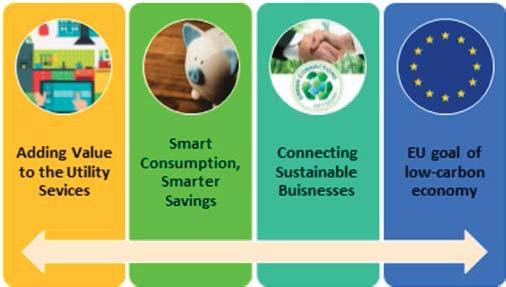
REFERENCES
M. V. Henningand M.H. Engell
DTU Environmental Engineering, Technical University of Denmark
Chlorinated ethenes (CE) have been used since the 1960s in Denmark, where safety precaution has not always been followed, which has led to large contaminations that spread and threat the drinking water. CEsare problematic as they are suspected of carcinogenic effects and the degradation compound vinyl chloride (VC) is confirmed carcinogenic. CEs can however be targetedby bioremediation, which is accelerated by biostimulation and bioaugmentation. Bioremediation is cheap and environmentally friendly compared to other remediation technologies. However, the organohalide-respiring bacteria (OHRB), whichcan degrade the CE, demand specific growth conditionsin relation to redox, pH, geology and temperature. Recent studies have however foundthat the diversity of the bacterial cultures is of much more importance,though more complicated to address. If the growth conditions are lacking or the OHRB are not present, the degradationof CE is incomplete, which can cause accumulation of the confirmed carcinogenic degradation product vinyl chloride (VC).
Biostimulation is the addition of nutrients to a contaminated sitethat provide the electron donor hydrogen to the dechlorination,and bioaugmentation is the addition of the OHRB capable of complete degradation. The last steps of the sequential biodegradation of CEs consist of transformingcis-dichloroethylene (cDCE) to vinyl chloride (VC) and lastly into ethene. These last steps require specific OHRB with genes coding for chloride reductase enzymes, like tceA, vcrA and bvcA, which are present in the bacteria genus Dehalococcoides. Until recently it was believed that Dehalococcoides were the only type of bacteria with genes capable of dechlorination of cDCE andVC. However, research has found a related bacteria genus, Dehalogenimonas, that is able to degrade transdichloroethylene (tDCE) andlaboratory work will determine if it can degrade cDCE and VC as well. This indicates that more bacteria than Dehalococcoides can do the job, but they have not been discovered yet. Since Dehalogenimonas is not the only related bacteria it is quite possible, that many others have genes capable of dechlorination. It is however also known that although Dehalococcoides are present at a contaminated site the CEs are not always degraded, and the reasons are unknown. Likewise degradation of CEs has been confirmed at sites without Dehalococcoides.Studies have also found how diversity and complexity of the bacterial community influencethe biodegradation efficiency and stabilize ecosystems. Therefore diversity in the bacteria culture added would be able to increase the odds of degradation by the Dehalococcoides or other bacteria with similar qualities.
Focuson increasing the diversity in the soil could combine microbiology and macroecology in a new innovative way. The diversity of the microbes could increase the resilience of the ecology both on micro scale in the soil and on macro scale by protecting groundwater resources. Research should be focused on documenting species with genes coding for chloride reductase enzymes and on their growth conditions. This could lead to a new cheap and sustainable remediation technology for chlorinated ethenes.
Hao Zhang1,2, Jiayuan Yu 1,2, Xiaoxi Wu1,2, Anil Kiran1,2
1Sino-Danish Center for Education and Research, Beijing, China
2DTU Chemical Engineering, Technical University of Denmark, Lyngby, Denmark
INTRODUCTION
Food safety is an important topic in our society and refrigerators are the most used method to keep the food fresh, but it is not environmental friendly and it is not available for some occasions like hiking. In this project, we aim to develop a non-electricity consumption and cost-effective green device to keep fruit and vegetables fresh, which can be used by everyone in every place.
THEORY
The idea is to use membrane separation technology to develop a device that can produce a gas containing 4% oxygen and 95% nitrogen. Such a gas environment can inhibit anaerobic respiration of microorganisms, keeping fruit and vegetables fresh.
METHODS
The use of the device is the same as a pump. The nitrogen rich gas produced by the device is pushed intoasealed bag containingfruits and vegetables. The device consists of an artificial gas compressor and a hollow fiber membrane module. The total length is 450mm and the width is 120mm shown in Figure 1. It is designed in five steps including selection of membrane material, membrane module, membrane area, the design of the hollow fiber module and the artificial gas compressor.
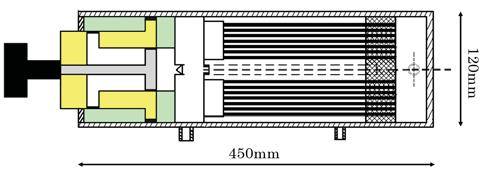
Poly (methyl phenyl) siloxane is selected as membrane material due to its high selectivity and high permeation rate. The hollow fiber membrane module is chosen for its high packing density and low cost. There is done an economic efficiency analysis and it is evaluated by equipment investment, lifetime, depreciation cost, energy consumption, and maintenance costs.
Conclusion
We expect the device has the following advantages: 1) it has a very good fresh-keeping performance; 2) it is small, portable and it does not need electricity; 3) it is does not produce any pollution; 4) it is cheaper than refrigerator and easy to use.
J. H. Ramirezand M. R. Nielsen
DTU Management Engineering, Technical University of Denmark
Today we are experiencing elevated CO2 levels, andgreat damage to the environment, due to theexcessive use of resourcesin human-related activities. Meanwhile, consumerism, accumulation of unnecessary goods, and the creationof superfluous needs is growing. Danes are in the same time becoming more aware of the things they buy, and of how their consumption habits can impact the environment. But they are missing tools to helplimit their impact.
NetRepair is an innovative and unique platforminspired bythe concept of REPAIRING, enhancing all the benefits that this activity can generate not only economical butalsosocial and environmental.
The platform is an online marketplace where Danish consumers can connect to skilled repairers. Onthe one side consumers are helped to give their products a longer lifespan, and on the other side NetRepair helps repairers to reach customers and earn money. On the platform, it is possible for consumers to identify repairers in their neighborhood and see prices and ratings. As a repairer, you can promote your skills, and obtain knowledge of your market. It is free for consumers to use the platform, and repairers pays a monthly fee, depending on sales generated via NetRepair.

Aprototype for mobile devices isdeveloped, which works as a MVP to testthe concept. THE MARKET POTENTIAL
Some of the main findings ontheDanishmarketare; In average, during 2015 a Danish house hold spent 1,260 euros in Repair related activities.
Expenditure in Repair grew from 2013 to 2015, averaging 2.9% per year
The main things repaired (excl.personal transport and dwelling)are: Audiovisual, photographic and information processing equipment; Major tools and equipment and furniture and floor coverings.(which are chosen to be the focus areas for the launch of NetRepair)
Fengxia Chen1,2, Aixiao Fu1,2, Ying Tong1,2, Lina Wang1,2, Jie Xu1,2
1Sino-Danish Center for Education and Research, Beijing, China
2DTU Chemical Engineering, Technical University of Denmark
INTRODUCTION
The prosperity of textile industry increases the challenge of handling and reusing the large amount of wasted clothes comprised mainly of cotton and polyester (PET). In recent years, production of cellulose aerogels from waste clothes has been widely studied. Cellulose aerogels can be applied as the thermal insulation materialsand adsorbent attributing to the low density, low heat conductivity, high porosity and good absorbability. In this project, cellulose aerogels are efficiently producedfrom cotton fibers separated from waste fabric and the adsorption capacity of the produced cellulose aerogels for pigments and oil in water is evaluated.
Methods
The separation of cotton from waste clothes was achieved by the alcoholysis of PET into ethylene terephthalate. The reaction was carried out in ethylene glycol at 170 and catalyzed by zinc acetate (5wt%). Then the cotton fibers were dissolved in ionic liquid, A[mim]Cl, with a concentration of 1%, 1.5%, 2% in 100°C for 1h. Water was used to regenerate the viscous liquid as hydrogel, which was cryodesiccated to obtain aerogels. The by-product of the reaction is bis(2-hydroxyethyl)terephthalate (BHET), which can be further applied in many other areas.
A green process for converting waste clothes into high value-added cellulose aerogelsis provided. The separation efficiency of cotton from polyester/cotton blended fabric has been realized to 100% under an optimal condition, and hydrogels and aerogels are prepared successfully. The performance of the produced aerogels on absorption of methyl red solution has been evaluated.
Furtherworks
As a next step, we will apply aerogel on absorption of other pigments such like Congo red. Besides, modifications of aerogel to expand its capacity for oil-absorbing will be studied.
A. Öberg, C. Sherpa, D. Nygaard, J. Olesen, S. Lassen-Urdahl, T. Trebbien
DTU
Management Engineering, Technical University of Denmark
Products that are used in industries are constantly facing the risk of becoming obsolete. This may be due to changes in the supply chain, higher requirements for products or products become worn out for the application they were first intended for. The project team has been working on a solution for a specific case of 20.000 5-liter plastic containers becoming obsolete. Normally, products like this end up as waste, being sent to incineration or in worst case end up in landfills. The products are made from valuable raw materials extracted from nature and have been through various complex processes to make them the products they are. -All of which contributes to a negative environmental impact.
The project team has been working on the specific case to develop a generic solution to the problem, which can apply for different future cases of obsolete products in industries. This takes the solution to a higher level with a much higher impact that supports the UN Sustainable Development Goal, 12: Responsible Consumption & Production.
The solution was found using an engineering systems design approach. This included applying a holistic perspective throughout the project phases of analyzing the current engineering system, conceptualizing solutions for redesigning a part of the engineering system and evaluating the chosen solution, by testing it in an applied setting.
The project has been conducted in an interdisciplinary collaboration with Novo Nordisk, Danish Refugee Council, The Danish Society of Engineers (IDA) and DTU Skylab and resulted in identification of workshops as a solution to the problem.
The developed solution is a booklet(Figure 1)functioning as a facilitators guide of how to host a workshop. The booklet includes two exercisesthat the project team has developed for utilizing products. This includes the Four Branch Framework, a tool to conceptualize new applications for obsolete products and a stakeholder mapping exercise, for identifying the required partnerships for enabling utilization. The solution aims for industries to realize the value of obsolete products and to keep this value and the highest possible utility life. Thus, acting as an enablerfor saving energy and driving changetowards a circular economy.
J.Magnes
DTUCivilEngineering, Technical University of Denmark
INTRODUCTION
As technology becomes more efficient and accessible, it would seem that energy consumption would decrease. Paradoxically, the total energy consumption increases in many cases or doesn’t decrease as much as expected. This is evident in housing, with increased demands for good indoor climate,big open space, etc. This is not a bad thing in itself, but diminishes the energy saving efforts. Therefore, this project seeks to create design guidelines that will minimizetotal energy consumption in buildings through passive means and behavioral changes while maintaining good indoor climate.
THEORY
Changing people’s behavior by modifying the system cancause major improvements to the holistic design. Substituting the mechanical system with clever passive means can be a big part of the solution.However,the specific behavior of the user is decisive. Nudging the user’s behaviorwith clever integrations can increase the likelihood of proper use and eventually lead to a reduced system.
METHOD
The study uses design methods for behaviorand system integration. Multiple building concepts in the early design phaseare studiedas systemsthat only workin context with a certain behavior. A problem and solution space is iterated and analyzed. The analysis will focus on the energy demand as well as the analytical life qualityand indoor climate.
RESULTS
Specific guidelines will be proposed and potential energy savings will be calculated. It is important to relate the specific numbers with actual behavior and thus make it manageable. Specific behavioral changes will have various benefits and disadvantages that will be enumerated in a SWOT analysis.
CONCLUSION
The guidelinesbroaden the solution space while maintaining a structure. Bydesigning with people’s behaviorin mind, the system can be reduced and the energy consumption minimized drastically.
Project no. 325
J.A. Arnesen1,M.B. Helk2,R. Gurung2
2Copenhagen Business School, 1University of Copenhagen
Introduction:
Our startup founder-Raju who grew up in the Nepalese Himalayas had an inspiration for use of fungus as pest control agent, the idea for which he won at the Startup Pirates Maastricht. PestiCeps is on aboldmission to offera sustainable and effective bio-insecticide solutions against agricultural pests such as aphids. Our product is a combinationof an entomopathogenic fungus and other complementary components that improve the efficacy in insect control. There has also been a high demand in organic products and a rise in health consciousness amongst the end consumers. Bio-insecticides are cost-effective alternatives to synthetic chemical insecticides and they are proven to be effective against a wide variety of pests. They are biodegradable in nature and thus minimize the environmental hazards caused by chemical insecticides. Studies have shown that application of bioinsecticides alongside the regular chemical insecticides improve the yield and crop quality. According to MarketsandMarkets, the global pesticide market is estimated to have a compounded annual growth rate of 17.3% over the period 2015-2020 with the total market value reaching 10.05bn USD by 2020.
Strategy:
Firstly, scientific literature and governmental websites were screened for potential candidate for troublesome insect species. The insect species were evaluated bywhich crops they infest, how large the economic damage is and the current solutions. Selected insect species were investigated for natural fungal predators in the scientific literature. The fungal species were evaluated by their host specificity, effectiveness in killing their host, survival conditions and if the means of cultivating the fungi had been developed. Furthermore, patent databases were searched for relevant patents regarding specific fungi being used as bioinsecticides. This was to ensure thata novel fungal bio-insecticide product could be patented.
Results:
The estimated loss each year because of aphid attacks reaches up to 100 million dollars each year. Today aphids are being controlled by the farmers by the use of conventional insecticides such as chemicals, but also bio-insecticides are being used. However, the bioinsecticides on the market are not specific to aphids and may also affect desired insects such as pollinators.
We have found two fungi species that are specific for aphids, and can potentially be used as an aphid specific bio-insecticide.They are effective and will kill the aphid within four days, which is faster than any other bio-insecticide on the market today. Also, they are naturally occurring so they can be used for organic as well as conventional farmers. There is very little patent coverage of these fungi and no patent regarding their use as a bio-insecticide. So we assume to have sufficient freedom to operate (FTO).
No in vitro cultivation method for the fungus has been established in the scientific literature. We therefore aim to develop a novel, patentable in vitro cultivation method for it Research is needed to develop large-scale productions ofthe fungus and we’ve just been approached by Brightlands Innovation Factory in Limburg, Netherlands to take part in their incubator program to bring this project to life The aim is to develop a final product that may include P. neoaphidis, N. fresenii and complementary components. The final design of the product will consider propagation method and shelf life.
T. Veldt2, M. D. van der Veer1, R. A. Smits1, K. S. Marif2, and F.J. Koppes1
1Offshore Engineering, Delft University of Technology
2Civil Engineering, Delft University of Technology
For most people around the world, it is really easy to walk to the tap and fill their bottle with drinking water. But still for a lot of people it isn’t. Due to climate change and growing cities, water scarcity is becoming one of the futures biggest problems. MSc. student team “ROTEC” is looking for large scale drinking water solutions of the future to give a constant flow of drinking water to local people in a sustainable and environmentally friendly way. ROTEC aims to make coastal areas in tropical regions more self-sustaining and give people the most important factor for human life: Drinking water.
Still a lot of people in the world lack of access to safe drinking water, although the earth is covered by water. But unfortunately, this is salt water. However, it is possible to use the oceans to produce freshwater from saltwater. Nowadays, the most common method to do this, is called reverse osmosis. But, this method still comes with other negative aspects:
- High energy demand, accounts for 0.5% of the global energy consumption. Although, only 0.7% of the drinking water comes from salt water.
- A waste stream with a high salt concentration
- Requires constant energy input, however renewables like wind and solar fluctuate over time.
Our solution is to drive the Reverse Osmosis process with only the use of the temperature difference of the ocean. This process is also called Ocean Thermal Energy Conversion or OTEC. This can be done day and night all year long. By integrating reverse osmosis and OTEC, ROTEC offers a constant drinking water production. Which is independent of external electricity supply. The combination of both techniques, avoids the negative aspects of both of them, concerning CO2-emissions, wastewater flow, scalability and competitiveness with other techniques.

P.F. Christensen1, H.A. Jensen, and S. Aaslet1
1DTU National Food Institute, Technical University of Denmark
Today a lot of foodstuff iswrapped in plastic or other non-degradablewrapping.It isoften inconvenient for the consumers,as they both have to use time to unwrap and throw it out afterwards. Furthermore the Danish households are responsible for 16,000 tons of plastic waste from packing, which corresponds,to approximately 47 % of all packing used in Denmark [1].
This was the basis for the idea to develop an alternative food wrapping that is both more convenient and better for the environment than what is presently on the market.
As the first ideas was to replace the wrapping on bouillon cubes, it also had to be able to be edible and self dissolving, solving both the environmental and convenient issues for the consumers.
Through developmentof the wrappingthe possibilities expanded to not only including food stuff but also wrapping forthings likedisposable cutleryand straws.
The wrapping is produced by seaweed extract, starch and glycerol, all of which makes it completely vegan and non-harmful to consumers.
To get the best possible replacement for plastic, different recipes and components where tried. The thickness of the product, as well as the drying time where also evaluated. When the desired properties wereobtained, thetesting of the products abilities where tested, including:
Dissolving abilities in boiling water
Dissolving abilities in cold water
Melting properties
The testing showed that the film has the ability to contain both cold liquid products like soup, and also fatty products without breaking. When added toboiling waterthe filmdissolvesinto the food, without impacting the taste of thefoodproduct. The film can be melted together, which give the opportunity to use it as packagingmaterial.
The product gives an optimal opportunityto reducewaste from plastic packing that comes from food productiongetsintothe environmentandin the combustion. Not all plastic can be replaced with this product, but a little percenton world basis cango a long way.
[1]plast.dk, “Plastaffaldsmængder fra forskellige sektorer | plast.dk.” [Online].
J. Alkestrup. 1, K.B. Greve1, K.Ø. Lund1and N.K. Jørgensen2
1DTU Mechanical Engineering, Technical University of Denmark
2CBSDepartment of Organization,Copenhagen Business School
PROBLEM
In 2016, Southern Africa experienced the worst drought in 30 years, leaving more than 35 million people facing hunger as crops started to fail.It is estimated that 70% of all water consumed on our planet I used for irrigation[Clay, J. (2004) WorldAgricultureandthe Environment:ACommodity-by-CommodityGuidetoImpactsandPractices].In many developing countries only small water reserves are available, and it is therefore crucial to distribute these quantities in a way that minimizes the usage but keeps the crops growing. Todo so, the farmer needs insights on the water content of his soil. The challenge is that water content varies greatly throughout a field due to different soil compositions.The current solutions for water management are too expensive and not developedfor an off-grid context with poor data connectivity.
SOLUTION &THEORY
In cooperation with Danish Church Aid we have developed a low-cost wireless sensor network that can provide farmers with insights upon the moisture and temperature of their field. The sensor data is analyzed on our cloud solution after whichthe result issent by SMS directly to the local farmer. Based on this information the farmer can irrigate smarter and focus on specific plots of the land. Studies of intelligent water management in western agriculture has shownareduction of water usage in the range of 30-50% while providing an increase of the yield of 10-20%. Our belief is that over time similar results can be achieved for the 1 billion farmers that as of today cannot afford such systems4.[International Fund for Agricultural Development (IFAD), 2011] By utilizing anold, well tested,and robust sensing technology of Gypsum blocks in combination with the novel LoRa(Low Power Long Range) communication we have created an affordable product that bringssmart farming to less developed countries.
Method
To evaluate the impact of the concept a pilot study is to be carried out in mid-June in Zimbabwe in cooperation with Danish Church Aid, Midland State University and local farmers. The funds to realize this pilot project has been granted by “Tranes Fond”.
Conclusion
Based on tests in Denmark, discussions with agricultural experts from the Copenhagen University of Denmark and our continuous dialogue with our partners in Zimbabwe the concept is expected to deliver vast improvements of food safety while reducing thewater usagefrom farming significantly. Preliminary results from the pilot test will be presented at Grøn Dyst.
Master course Project no. 331
Bjartur Jacobsen1,2, Bo Yuan1,2, Frederikke Zilstorff 1,2,andRuru Chen1,2
1Sino-Danish Center forEducationand Research, Beijing, China
2DTUChemical and Biochemical Engineering, Technical University of Denmark
Increasingcarbon dioxide (CO2) concentrationin the atmosphere has beenassociated with climate change and global warming. It is already possible to recover CO2 from large industrial processes (e.g. power plants) with various established technologies. However, these technologies are found to be energy intensive andthestorage of CO2 is expensive. SimultaneousCO2 capture and utilization is therefore considered an optimalsolution to address the industrial CO2 emissions.Biomass is a renewable resource for production of biofuels and chemicals. Conventional biomass is however limited by land usage and productivity,and competes with human and animal need for food. A promising candidatefor biofuel and chemical productionfrom biomassis microalgae, which hashigh photosynthetic ratesandisnot considered human food. Theyallowfor a fast production of biomass as well as a fast bio-fixation of CO2 that can be applied industrially.
Challenges with microalgae production, and themainreason for fewcommercial application today, is however the high capital and production cost that rendersthe technology economically unattractive. The high production cost is mainly due tothelow productivity when using conventional outdoor cultivation ponds –mainly because of limited CO2 supply from the air. A cheap method of enhancing the productivity istherefore to replaceair with elevated CO2 such as flue gas from power plants. Hereby utilizing the CO2 from the fluegas while simultaneously lowering the total CO2 emission from a power plant.The cost of production can further be lowered by using cheapnutrients from waste treatment plants for the cultivation process.In this case study,an algae cultivation facility is placed on Avedøre which already houses CO2 and cheap nutrient sources fromthe Avedøre power plant and BIOFOS waste water treatment plant.The close vicinity of the sources (within 3km) further reducesthe transportation cost. The project is a preliminary study, which focuses on a literature study and calculations based on data from the Avedøre powerplant. The emphasis of the projectis to optimize the algae productioncostbysimultaneously utilisingwaste from Avedørepower plantand BIOFOS Avedøre. The concept is flexible, in the sense that different strains of microalgae can be grown based on the final product demand. Different add-value products can be obtained from different microalgae strains.The economic and environmental feasibility of the concept is demonstrated via a techno economic and life cycle analysis.
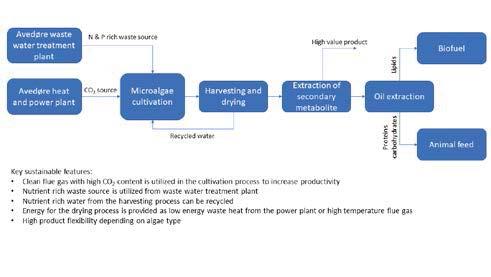
M. Heide, C. Hauervig-Jørgensen, and R.N.Hansen
DTU Civil Engineering, Technical University of Denmark
In order to accommodate more people in the increasing densification of tomorrow's cities a functional but attractive housing solution is key to a livable and sustainable life. On the other hand the demand for resource and GHG-emission reduction is important in today'sbuilding sector. This project’s aimto obtain a solution by developing prefab dwellings with reduced area per person but with smart functional rooms providing flexibility in terms of altering apartment sizes. The solution is a complex with prefab apartments up to three stories with different sizes for respectively 1 person, 2-3people and 4-5 people.
The approach was an integrated design process where functionality, structural system, daylight and passive solar heating were applied in the development of the conceptual design. Along with outdoor terraces for as many apartments as possible the complex of apartments should be inviting in a human scale as part of the integrated process. Since the housing is prefab the apartments are only combined of three standardized blocks so they can fit a single truck alone or combined during transportation.
This standardization makes it simple to construct at the factory, easy to transport and fast to assemble on site. The installations are placed centrally thus two apartments on every floor share the main ducts and units for ventilation and water obtained by placing kitchen and bathroom next to each other. Kitchen and bathroom are omitted on the second floor by connecting every second floor to a first floor which resulted in less need for water pipes. The interior arrangement is varyingthough, to make unique apartments attractive for people to buy. To meet the expectations of environmental sustainability the structural system is made of wood while materials for cladding and interior are compared by using LCA and concrete is only used for point foundation. Furthermore, smart solutions for joints and reuse of materials is a main design goal in order to get a good LCA profile for the house.
The detailed design will be completed in June. The final result should be diverse housing units for different types of families where production is standardized by using prefab modules with flexibility for future functional changes of the apartments. The environmental impact would be reduced as much as possible with smart installation design and LCAevaluated material choice while still providing decent indoor climate and living conditions. By doing prefab production of the houses the cost will be kept low hence making it affordable housing.
A.Dragoumanos
DTU Electrical Engineering, Technical University of Denmark
INTRODUCTION
The main purpose of this electronic device is to control and monitoring the greenhouse environment with high efficiency in order to grow the plants in the suitable condition. The heart of this system is an 8-bit microcontroller from Microchip PIC16F877A which it undertakes to manage all the environmental parameters effectively in order to save energy. This can be succeeded by using two different analog sensors. The first one is a temperature sensor which measure the temperature in degree of Celsius and the second sensor will be an analog humidity sensor which measure the percentage of %RH. Both sensors sense these parameters in real time every second and the results appear in a LCD monitor respectively.
THEORY
Both sensors connect in different pins of microcontroller, the analog to digital converter undertakes to convert the analog voltage values to digital values in order to appear both values in the LCD monitor. The first value in the first line indicates the temperature in degree of Celsius while in the second line it appears the humidity results in %RH. In the LCD, there is a menu which there are different operations. The first-choice check if the relays of this system it works properly. The second operation is to set the minimum and maximum temperature of thermostat. The last choice of menu is the real-time measurements which the temperature ‘C and the humidity %RH appears in the LCD monitor. Moreover, there are three indicator LEDS with different colors (Red, Yellow, Green) which each led provides different output of thermostat. The user can explore in the menu by using the embedded keyboard. There are six buttons which some of them they have double operation in order to use in multiple ways. There are two Relay inputs which we can connect the heat pump and the cooling system. Last but not least the values of temperature and humidity send it wireless to the smartphone in a user-friendly application by using the Bluetooth protocol.
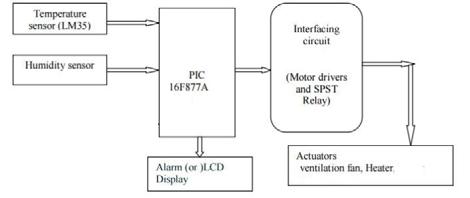
Reference
[1]PIC16F877A. http://ww1.microchip.com/downloads/en/DeviceDoc/39582b.pdf
[2] Temperature sensor. http://www.ti.com/lit/ds/symlink/lm35.pdf
[3] Humidity sensor. https://www.sparkfun.com/datasheets/Sensors/Weather/SEN-09569HIH-4030-datasheet.pdf
N. Aurisano1, G. Bigi1, and F. Erilmi2
1 DTU Environmental Engineering, Technical University of Denmark 2 KU LLM Law,Copenhagen University
Consumers make choices every day and each choice should be an informed decision. The project aims to help consumers move towards informed decision making, since every single person can contribute to reduce human impactson Earth.
The food industry uses different labels to categorize their products (e.g. økologisk, organic, Nordic environmental label), however none of those provide quantitative and exhaustive information of the real environmental costs.The idea is to create an innovative label showing the environmental impacts of the everyday food sold at supermarkets. The label will allow the consumers to consider also the sustainability and the impact on the environment before the purchase.The label will be displayed behind the products, together with the common nutritional values (Kcal, fat, sodium, etc.) and theunit will be represented in USD (e.g. $/Kg, $/L). The usage of “dollars” is based on the fact that this unit is easier to communicate to the consumers and more understandable also for the non-technical audience, creating a real and tangible impact.This newlabel will enable each and every consumer to take further responsibility for theirchoices, empowering anhorizontal engagement of the society at large.
Would your shopping choices be different knowing the effective cost of the product for the environment around you?
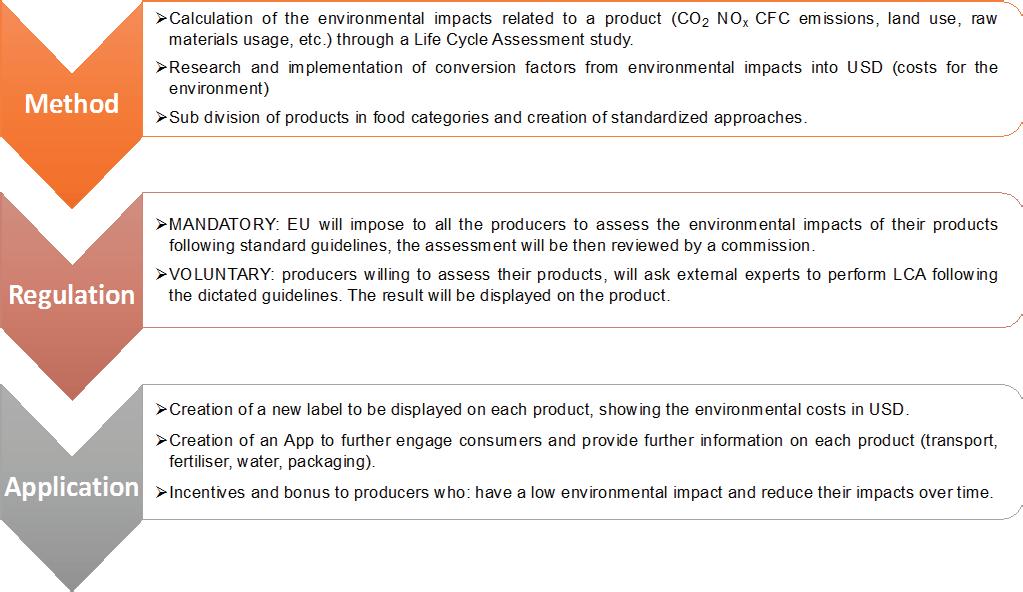
Figure 1: Method, Regulation and future Applicationof the proposed concept.
H.
Peeters1, J. Moll-Elsborg2, L. Christensen3, and R. K. Schlander3
1DTU Chemical Engineering, Technical University of Denmark
2DTU Compute, Technical University of Denmark
3DTU Mechanical Engineering, TechnicalUniversity of Denmark
In 2020,new regulations limiting the maximum SOx content of bunker used in all waters are imposed. Cleaner fuel in the shipping industry will be a massive gain for the environment, but how to enforce the regulations still leaves a question mark. Violating the regulations will bring much lower costto the ship owners, harmthe environment and give an unfair competitive advantage, rewarding the companies that manage to break the rules without detection.
This proposal is a full solution of how to detect violation of the regulations and provide sufficient proof to take action upon the violating vessel. It contains the following three elements:
1.Mount optical sensors on existing commercial vessels to monitor the SOx emissions from other vessels passing by.
2.Collect the data to identify vessels that may be violating the regulations or avoiding detection.
3.Target port state control to the vessels identified in step 2. Extend port state control with a soot sample from thestack. SOx sorbs to sootin the exhaust gases which builds up in the stack providing an image of the vessel’s historic bunker usage. By these means, it will be possible to provide targeted port state control and detain violating vessels.
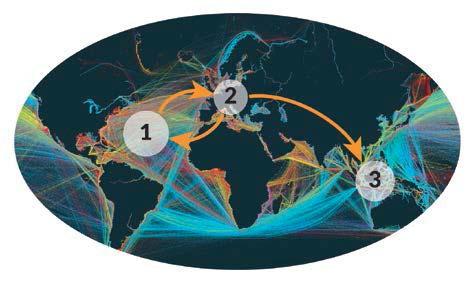
This concept reduces the risk of tampering as each vessel is measured multiple times by other vessels.It reduces the cost by utilising what already exists at high seas and is highly scalable. Most of the required technology is already developedand only requires limited adaption. The economic incentives for ship owners and marine authorities are highas their competitive advantage must be maintained and violation of the regulations minimised.
A.Niedzielska1
1DTU Chemical and Biochemical Engineering, Technical University of Denmark
INTRODUCTION
It is projected that by the 2050, global population will increase by 50%, posing a big challenge for food production, water supplies and waste management. In order to fulfill this gradually rising demand without harming the environmental integrity, it is amust to take the action and improve current agricultural practices. This study is focused on evaluating Membrane Distillation process (MD) as a possible method for recycling water from diluted draw solution coming from Forward Osmosis (FO) process fed with different slurries after Anaerobic Digestion (AD).
THEORY
Forward Osmosis is a separation process, driven by a concentration gradient, causing water transport through semipermeable membranefrom solution of lower concentration referred as a feed (FS) to high concentrated solution referred as a draw solution (DS)). Thus this process results in concentrationFS and dilution of DS. In order to recover water from diluted DS, FOhas to be combined with another separation unit. In membrane distillation (MD) a microporous hydrophobic membrane is used to separate water from a feed solution into a distillate solution by the use of temperature gradient.Recent development in membrane technology showed that combined FO-MD system can be successfully implemented for different water recovery systems.
METHODS
This study evaluates MD process performance, utilizing newly developed polytetrafluoroethylene (PTFE) hydrophobic membranes, with controlled pore size, improved permeability and thinner walls. The aim of the experiments is to find optimal operating conditions and to extract water from the diluted MgCl2 draw solution coming from previous FO experiments, that was fed with different anaerobically digested effluents such as potato starch wastewater, swine and cattle manure as well as synthetic lipids, proteins or sugars and a mixture of these compounds. The quality of recovered water was assessed in terms of TOC, COD, TN and TP content.
CONCLUSION
The addition of MD unit can bevery beneficial for the AD effluent treatment process.MD allows recovering water and recyclingand concentratingdiluted draw solutionafter FO separationwhich significantly improves economical aspects of the technology. Based onthe experimental results,it was concludedthat MD performedthe best, at55°C and at crossflow velocity 0.6 m/s on the feedside, using 20°Cand 0.03 m/s on distillate side. The flux varied betweendifferent experimentsand was within the range of2-3 LMH, with the best achieved results for feed solution using cattle manure. In terms of recovered waterTP and TN results fulfil criteria for drinking water, however COD content in some samples is too high for discharge criteria
Authors
Master course Project no. 339
Chan Zhen Yue, ZCHAN012@e.ntu.edu.sg Gan She Hwa, SGAN002@e.ntu.edu.sg
M. G.
Bay,
K.
Nyland,
I. Skrede, NTNU, Norwegian University of Technology, Norway
Today,morethanonebillionpeoplelackaccesstosafedrinkingwater.Thiscauseswater-relateddiseases, whichforpoorpeopleindevelopingcountriesisthemostcommonreasonfordeath.Waterisalsoimportantfor ensuringfoodsecurity,whereagriculturestandsfor70%ofthewaterconsumption,opposeto10%inhouseholds and20%intheindustry.Withpopulationgrowth,urbanizationandclimatechange,thedemandforwaterin householdsandindustriesareincreasing.Thisleadstostressonourfreshwaterresources,whichconstitutes only2.5%ofthewateronEarth.Outofthisonly1%isavailabletohumanusage.Onesolutionforaddressing waterscarcityandtheincreaseddemandofwaterisdesalinationofseawater.150countriesandover300million peopleusedesalinatedwatertoday.Thisprocessismostlydrivenbyfossilfuels,butthiscontributestothe emission of greenhouse gases.
OceanOasisisanoffshorewaveenergypowereddesalinationplantthatproducesfreshwateranddeliversthis directlytoanonshorestorageunit.Thetechnologyconsistsofanouterandinnerdiscthatutilizestheenergy fromthewavesdirectlybyexploitingtherelativemotionscreatedbythewaves.Waveenergyforcesthree pistonstooscillatevertically,therebypressurizingtheseawaterthroughareverseosmosismembrane.The seawaterispressurizedwithoutgoingviatheproductionofelectricity.Furthermore,therelativemovementand thepistonsystemmakesitpossibletooptimizetheenergyyoucanextractfromeachwaveinabroadfrequency range.Thefreshwaterthatisproducedistransportedtoshorethroughaconnectedwaterhose.Thehosecan thereby be connected to a storage tank that supply the water infrastructure system.
OceanOasiscompetitorsaredesalinationtechnologiesdrivenbyfossilfuels,electricity,solar-andwindenergy. Comparedtootherrenewableenergysources,seawavesprovidethehighestenergydensity.Wavepoweris alsomorepredictableandisconsistentallyeararound.Inaddition,44%oftheEarth’spopulationliveswithin150 kilometersfromthecoast,whichreducesthetransmissionissues.AsmuchasOceanOasiscandeliveralarge amountoffreshwatertoacompetitiveprice.Thepriceis0.5USD/m3,whichis0.3-0.7USD/m3lowerthan today’s solutions, and the amount of fresh water is 5000 m3/day.
Thetechnologyisprotectedbytwopatentsandmodeltestedtoverifytheefficiencyoftheenergyextractionand theaccuracyoftheanalysis.Athird-partyverificationofthefeasibilityoftheconcepthasbeencarriedoutby Marintek/SINTEFandtheconcepthasbeenthesubjectofseveralmasterthesesandwasselectedasthe subjectfortheDNVGLsummerprojectin2014.Allthirdpartieshaveshowngreatbelievesinthe commercialization of this technology.
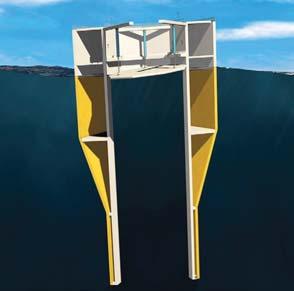
J.C. Hanck, C. Hänel, S. Portman,andJ. Kirkerud
CEMS MIM International Management, Copenhagen Business School
Introduction
Only a few months ago, L’Oréal launched its first natural haircare line to cater on the rising consumer awareness on sustainability anddemand to switch to moresustainable products (Organic Monitor, 2015). Due to its sustainable product features,it isconsidered to be a forerunnerin the natural haircare industry. However, L’Oréal’sHead of CSR Alexandra Palt acknowledgesthat “this is still our biggest challenge –how are we going to make products that have less impact on the environment but that are still bought by consumers?” (Edie, 2013). Hence, L’Oréal faces two significant challenge that also numerous other companies facethat seek to incorporate corporate sustainability. Firstly, while there is a considerably high awareness about sustainability, consumers are often confused about the actual meaningand societal impactof sustainability. Secondly,there is an evidentgap between consumer awareness and the actual willingness to purchase a sustainable product with often a higher price.Therefore, before launchingsustainable products regardless of their industry, the biggest challenge ofall companies today is how to educate consumers on sustainability issues and encourage them to make more sustainable lifestyle choices.
Theory
The project is based on stakeholder theoryand management. Scholarsclaim that companies fail to include a stronger consumer orientation in their stakeholder management and argue that especially for sustainability issues consumer orientation is a prerequisite to contribute to societal change (Ferrel et al., 2010).
Methods
To tackle the two challenges, developed an innovative and pioneering strategic framework based on two pillars:(1) consumer education and (2) collaboration. Itaddresses how companies can overcome the most prevailing sustainable consumption barriers and to do so need to grow the notion of sustainability by engaging in multi-stakeholder alliances [Figure 1].One methodto foster awareness and behavioral change include the development of a Sustainable Product Assessment Tool, which providesconsumers with information on each product’s ecological footprint and the environmental and social impact of the product’s sourcing, production and distribution. This allowsthemto assess the sustainability performance of the product while understanding his or her impact of purchasing such a product. Moreover, websites can provide product information that istailored to distinct consumer education needs and preferences by usingsophisticated means of data analysis.
L’Oréal has acknowledged that incorporating sustainability into organizational processes and launching sustainable products alone is not sufficient. Instead, our company representatives recognized that they need to close the sustainability gap by joining forces and contributing to a wider initiative to foster behavioral change. Using the plethora of collaborative opportunities, strategies and tools synergistically will allow companies to succeed in create positive change, grow awareness and willingness to act upon sustainability.
REFERENCES
Annan, K.(1999). The State of the World’s Children. New York: United Nations Children Fund Ferrell, O. C., Gonzalez-Padron, T. L., Hult, T. M., & Maignan, I. (2010). From market orientation to stakeholder orientation. Journal of Public Policy & Marketing, 29(1), pp. 93–96. Edie Magazine (2016). L'Oréal's biggest challenge is making 'sustainability desirable'. Retrieved May 3, 2015 from https://www.edie.net/news/6/Loreal-challenge-making-sustainable-consumption/ http://www.loreal.ca/en-ca/csr-commitments/sharing-beauty-with-all/our-vision/oursustainability-commitment-for-2020--by-alexandra-palt--director-csr---sustainability Organic Monitor (2015). Natural Trends in the Nordic Haircare Market. Retrieved from Organic Monitor database
Project no. 401
J.S.Pandey1, N.Nazari2, K.Thomsen1,& R.Barati2
1Department ofChemical & Petroleum Engineering, Technical University of Denmark 2Department of Chemical& Petroleum Engineering,University of Kansas
Objective
The purpose of this project is to develop a novel environment-friendly, equipment-friendly low corrosive acidization fluid as an alternative to conventional acids used for deep carbonate reservoirs. As a part of this project, we have compareddissolutionandcorrosion rates of a novel environment-friendly product(FF-01)with15%hydrochloric acid (HCl)and 15% HCl containingcommercial additives(HCl-A); measured at High PressureandHigh Temperature (HPHT) conditions using the Rotating Disk setup.
FF-01 is abiodegradable, non-toxic, non-flammable, earth-friendly, safe and effective acid. As a part of project,50experiments are conducted using a setupwith Indiana limestone core samples.Under mass transfer regime, samples fromacid reactions with carbonateare collected at predetermined intervals.These samples arefurther investigated to measure Ca2+ ion concentration using inductively coupled plasma/ Optical Emission Spectrometry (ICP-OES). This setup is further used to compare the corrosiveness of FF-01, 15% HCl and HCl-A on13-Cr steelcoupons under HPHT conditions(500-2000 psi, 25-80 °C).
Previous research shows that FF-01produces better fracture conductivity by creating efficient itching patterns.FF-01 has lower dissolution rate and shows no corrosion at room temperature. In comparison to 15% HCl, FF-01has ability to generate longer wormhole and develop higher effective permeability.Present research is focused on comparing the dissolution rates of FF-01 with strong acids including 15% HCl and HCl-Aunder HPHT conditions.Results showed that FF01 has comparable dissolution rate to that of HCl-A at pressures above 1500 psi and temperaturesabove 60 C. Corrosion results showed favorable outcomesfor FF-01 in comparison to HCl-A.FF-01 samples did not show any precipitates whereas HCl basedacid systemsprecipitated.Under HPHT conditions, cores in the FF-01 are not fully consumed, and core surface isnon-uniformlyetched whereas cores in HCl-based reactions arefully consumed. pH studiesshowedthat spent HCl has higher pH compare to FF-01.ThismeansFF-01 has slower consumption rate, whichis needed in horizontal wellswhere alonger acid pipe contactis required under HPHT.
Measurementsof mass loss during corrosion experimentsshowedthat FF-01 has comparable mass loss with 15% HCl-Aafter 6 hoursof test under HPHT conditions.
Novel/Additive
FF-01is found to be comparable withHCl-Awhen it comes to reaction/corrosion rates. FF01 is an environment-friendly and equipment-friendly acid. Application of FF-01 will result in additional profits and cost savingsby increasingthe service life of well tubing,decreasing thecorrosion inhibitorconsumption,enhancing the production in acid fracturing, and lowering thecosts of transportation, permits and clearance.
A.K.Reumert1
1DTU Department of Energy conversion and storage, Technical University of Denmark
ABSTRACT
In this work acid distributions in High Temperature Proton Exchange Membrane Fuel Cells has been analysed post operation. An analysis of acid loss from the MEAand the membrane has been performed. An analysis of this loss along the gas channels has been done in this work. This data has been fitted to four proposed geometry in order to identify the diffusivity determined through the mathematics of each proposed solution. These fits are then used to produce future acid distributions based on the data obtained from the analysis and the mathematics fitted to this data.
In this report it has been shown that the geometry described by the Case Hardening scenario is not a valid fit to the data based on the operating conditions.
It has been showed that increased gas flow is not a substantial acid loss mechanism at these operating conditions and time scales and that the primary loss is due to water and its presence at the cathode.
The best model for predicting future acid distributions has been shown to be the Infinite Diffusion Couples geometry with a diffusivity of 5.82 μm/hr with a standard deviation of2.40 μm/hr.
Pier Cesare Rossi
Università di Bologna / DTUManagement Engineering, Technical University of Denmark
INTRODUCTION
Environmental impact has become one of the most relevant issues in liner shipping during the recent years. Maritime shipping is responsible for the 2.7 per cent of the world CO2 emissions, of which 25 per cent is attributable to container ships. This business also produces a significant quantityof Sulphur, a very dangerous substance for human health, especially if it is emitted in areas next to the coast. At the same time, bunker cost represents the biggest portion of the operational cost of a shipping company.
SOLUTION PROPOSED FOR THE PROBLEM
Slow steaming, that simply means decelerating, is a cheap and effective strategy to both deal with the environmental restrictions and to reduce the bunker cost. Moreover, it can be immediately put into practice.Longer transit times allow a reduction in pollutants emission but vessels companies are better offaccommodatingtransit time restriction between portsto make revenues.The final goalof the Liner Shipping Routing and Speed Optimization Problem (LSRSOP)is to optimize the sailing speedof the vessel considering the Emission Control Areas(ECA)and maximum transit times between ports.
HEURISTIC APPROACH:2-STEPS METHOD
Theheuristictechnique is used to obtain a good feasible, but not optimal, solutions. 2-Steps Method:1-Given many rotations, the Speed Optimization Method(SOP)chooses some of them that best minimize the objective function(OF); 2-For each good solution found, the HillClimbing Algorithm proposes a slight different route and the SOP evaluates whether it is better than the first one.The OF can minimize either the operational cost or the pollutions emitted.
BI-OBJECTIVE FUNCTION:USER CUTS (UC)&MAX-FLOW ALGORITHM (MF)
It is possible to achieve an optimal solution of the LSRSOP,with a longer running time, by tighteningthe lower bound using UCand the MFA. The following figure shows 5 optimal solution considering both operationalcost or the pollutions emitted (10 ports).
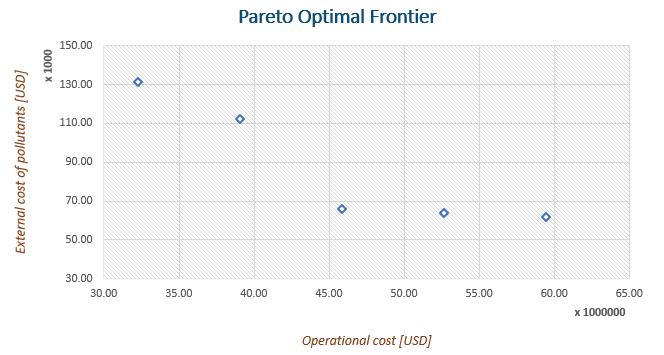
The decision maker will select, from the best available solutions,the strategy to carry out.
Ida Marie Valentin Christiansen
DTU Environment, Technical University of Denmark
MOTIVATION
In 2015 the Danish government adopted a new political initiativecalledFødevare-og Landbrugspakken (‘the Agricultural Package’).The Agricultural Package presentsdifferent practical actions that should help the food industry and benefit the environment.These actions includethe abolishment ofprevious nitrogen mitigation measures such asbuffer zones along the streamand reduced fertilization[Miljø-og Fødevareministeriet, 2015].In order to prevent adeterioration of the aquatic environmentthe Agricultural Package prescribes the implementation of new nitrogen mitigation measures,includingwetlands, mini wetlands, afforestationandcatch crops, which all have the ability to reduce nitrate and protect the water resource[Roelsgaard et al. 2016].The goal is to adopt a more targeted environmental regulation. In order to benefit the most from the new mitigationmeasures and protect the most vulnerable areas there is a need for a method to point outthese areas. Placing a wetland or establishing forestin an area where nitrate is already fully reducedby natural processeshasno effect and will not help to meet the requirementsof the Agricultural Package. Theaim of this project is to develop a hydrogeological model withthe aimof identifying the optimal locationsthe of nitrogen mitigationmeasures.
The chosen study area is the Hagens Møllebækstream,which is locatedon the peninsula of Salling (DK). Using the integrated groundwater modelingsoftware MIKE SHE a detailed hydrogeological model of the Salling area has been developed. This model has the ability to simulate the hydrologicalconditions ofthe areaas well as the transport of nitrate.Using this information itispossible to point out the areasaround Hagens Møllebækresponsible for the largestcontribution of non-reduced nitrate tothestream. Differentindicators havebeen developedfor each of the mitigation measures,stating which conditions must be fulfilled when choosing a proper location(e.g. requirements ofcatchmentsize and type of landscape).Information on the transport of nitratecoupled with theseindicatorsdictate how the measures should be placed along the streamin order to exploit theirfull potential.
RESULTS
The result of the project includesgraphical representationsofwhere to place nitrogen mitigation measures along the Hagens Møllebæk stream. Thelocations were selected based on the outcome of themodel and will setan example of how a hydrological model and selected indicators can helpprioritize the placement of nitrogen mitigation measures.
REFERENCES
Miljø-og Fødevareministeriet (2015). Aftale om Fødevare-og Landbrugspakken, December 22nd 2015.Miljø og Fødevareministeriet.
Roelsgaard, J. S., Vestergaard, C. H., Zacho, S. P., Gertz, F., Wiborg, I. A., Bondgaard, F., Piil, K. and Hvid, S. K. (2006). Virkemiddelkatalog.SEGES Planter & Miljø.
G.-A.Aguilà Calbet
DTU
ManagementEngineering, Technical University of Denmark
Following the EUdirectivesthe railway sector has set its own goalsto reduce CO2 emissions by 50% andenergy consumption by30% in2030 compared to 1990levels [1]. The energyconsumptionof electric railway systemscan be reduced by usingthe regenerative brakingtechnology,whichemploysthe trains’ motorsas electric generators while braking.Theregenerated powerissupplied to the overhead conductor andit iswasted if it is notconsumed simultaneously. Synchronization of accelerating and braking trains is thereforefundamental,resulting inthe Energy-Efficient Train Timetabling Problem (EETTP).
Can theregenerated powerbe usedto reduce the instantaneous peak power demands, which have high costs associated?How much are we willing to deviatefrom theoptimal timetable?What objective is the most important? There is not asimpleanswer to these questions and,therefore,the EETTP must be studied as a Multi-Objective Optimization Problem (MOOP)with the followingopposingobjectives:
Minimizationof the total energy consumption
Minimizationof the instantaneous peak power demands
Reduction of the deviation fromthe operationally optimal train timetable
To take gooddecisions,planners requirea set of solutions representing different trade-offs between objectives. The best possible set of solutions of a MOOP is called the paretooptimal front. Finding it, or evengetting a good approximation, is not trivial[2].
Given a timetable,thresholds on thedeviation from thatare imposed to reduce theEETTP to a bi-objective problem. Two methods are usedand assessedto approximatethe paretooptimal front of the reduced problem.The methodsstudiedare:
A formulation of the EETTP asaResource Leveling Problem
A multi-objective Adaptive Large Neighborhood Search (ALNS) Matheuristic
The results show thatbothlower total energy consumption andlowerinstantaneous peak demands can be achieved by allowing greater timetable deviations. Moreover, timetables minimizingthe total energy consumptioncan lead tohighinstantaneous powerpeaks.
The preliminary results suggest thatthe Resource Leveling formulation is not asuitable methodwhereasthe ALNSapproach showsa greatperformance, generating good approximations to the pareto-optimal front inshort computation times.
[1] UIC (2012). Moving towards sustainable mobility. Paris, France.
[2] Deb, K.(2005). Multi-Objective Optimization.InE.K. Burke. & G. Kendall(Eds.), Search Methodologies (pp. 273-316). New York, NY:Springer Science+Business Media, LLC
Boyan Chen
DTU Environment, Technical University of Denmark
ABSTRACT
Due to the scarcity of water resourceand hugeconsumption of waterin food manufacturing industry, the need of water reusebecomes urgent. One key issue of water reuseisto guarantee reusedwater fulfildrinking water qualityfor the sake of public health.
Conventional methods like HPCandfaecalindicators are long time used and reliablewhile the results can be first be interpreted days after sampling.One more rapid way of assessing microbial contamination is by measurement of adenosine 5’-triphosphate (ATP) concentrations. ATP molecule isanenergy carrier in all living cells which makes it an appropriate indicator for microbial activity.ATP measurement is fast, usually,takes seconds to minutes to get the result, and is suited for online real timemonitoring. However, it can only providegeneralinformation on total microbial activity, not information ontheexistence of specificmicrobe. Even though, results derived from ATP measurement have higher sensitivity compared withtheconventionalmethods.
Extractionof microbial ATP from cellsis the issue. Extraction throughcommercial chemical reagent has been proved effective and reliable while it’s expensive and the environmental impact of itis unclear due to the ingredients are confidential.Furthermore, this reagent caused unexpected precipitation when used in ourmicrofluidicsystem.Thermal lysis had been proposed as an alternative.The procedure of thermal lysis hadbeen optimised through this master project.
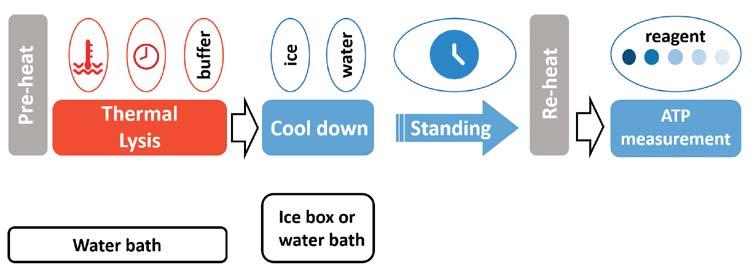
The results suggested that thermal lysis could be used as a substitutionof chemical lysis. Procedure could be optimised. Operation cost could be reduced by decreasing lysis temperature and shortening lysis duration. Further cost saving could be realisedby reagent dilution while some sensitivity will be lost.
R. Andersen
DTU Civil Engineering, Technical University of Denmark
INTRODUCTION
Most of the buildings inthe Swedish Million Homes Programmeare more than40 years old, meaning that major renovationsshould be carried out to optimize the buildings’energy performance and replace outdated building elements. Research hasshown that addinga glass canopy to thebuildingsas a renovation concept can avoid some replacements of the building envelope and reduce the overall energy consumption for the building. This project will try to investigate different renovation concepts that apply a canopy between twobuildings. The project will be based on the EKO-Canopy proposal by White Architects, and includes both building energy simulations and dynamic LCA studies.
Large-scale dynamic energy simulation will investigate the annual energy consumption based on different energy sources. All canopy proposals will be compared with a typical renovation concept from the Swedish Million Homes Programme. The results areused to makeaLife Cycle Assessmentof thedifferentenergy sources with a dynamic Swedish grid mix,which considersthatthe environmental impact from the mix will change over a period of 50 years.Impact from thematerials to thecanopy andthereduced impact fromavoiding typical renovation will be investigated through LCA studies. The increased and reduced environmental impactswill be compared to find a break-even point, where the reduction in environmental impact is larger than the increase inimpact related to the construction of the canopy.
The results from the energy simulation show that a canopy with 4 layer ETFE will have a positive impact in relation to the energy lossbecause the external temperature is raised at allconstructions facing the canopy, which will result in a smaller annual energy lossthrough the building envelope. The LCA studyshows that the environmental impact from the construction of the canopy is a little larger than the reduced impact from renovation materials. There will be an annual reduced impact from the lower energy consumption at the cases with a canopy, which leads to that a break-even point can be found before the end of life of the building.
Project no. 409
C.L. Dahl-Petersenand N. Jaramillo
DTUMechanical Engineering, Technical University of Denmark
Primary beverage packaging (PBP) is a short-lived packaging containing goodswhich goes under the category fast-moving-consumer-goods (FMCG). Characteristic for this type of products is the quick sales, low cost and short shelf life. They are generally sold in large quantities, and are thereby one of the main contributors to waste. In 2012 the total volume of packaging waste in Europe was 82 million tons(Eurostat, 2016). The environmental performance of PBP is linked to several product and market characteristics that are defined in the early design phase. Thus, there is a need for a tool to support the product designers in understanding the links between theproduct and market characteristics and the End-of-Life (EoL) scenarios in order to make environmentally beneficial decisions regarding the design of the product.
Circular economy is an industrial system aimingto avoid waste, and instead collect the products in order to recover products, components or materials. In thiscontext, the use of eco-design methods to consider EoLaspects can make easier to close the products loops (Moreno, De los Rios, Rowe, & Charnley, 2016). When a PBP reaches its EoL the following scenarios are possible: reuse, recycling, composting, incineration landfill and illegal waste. Although in many cases beverage companies define anEoL for the PBP, several factors can provoke adifferent EoL scenario.
Through a theoretical review on PBP, end-of-life concepts and waste management systems, it was found that multiple factors were influencing the end-of-life of PBP and not just factors related to the materials used. A survey and an experiment performed during the project showed that packaging visual and physical design have a significantly influence on consumer waste handling behavior. Thus, the research showed that country of sales and the consumer behavior could trigger end-of-life scenarios unexpected by the designers.
The mentioned factors leaded tothe development of ELPI, an eco-design toolcapableof providing beverage packaging designers with real information about the EoL of their PBPin a certain country. ELPI was developed to be used in early stages of the packaging development process, when more changes can be done without incurring into high costs. ELPI is unique in itsarea of application because of its holistic approach and its consideration of the EoL from a system level. A first functional prototype of the tool has been developed disclosingits potential to be applicable to otherindustries in the branch of FMCG.
Eurostat. (2016). Packaging waste statistics. Eurostat, 2014(April 2015), 17. https://doi.org/10.2785/408702
Moreno, M., De los Rios, C., Rowe, Z., & Charnley, F. (2016). A conceptual framework for circular design. Sustainability (Switzerland), 8(9). https://doi.org/10.3390/su8090937
I.Vaxevani
Copenhagen
Business School
Many believe that energy development,in developing countries can bypass the conventional path and skip to more efficient and environmental friendly technologies. Researchers tend to focus on the economic and technical viability and neglectthe realities,of the daily life of the local communities. Many projects fail because culture and relationships are oversimplified. All factors thatlimit the potential for leapfrogging should be considered such us;economic, social, political and cultural.
The question that this study will focus on is; whether the rural areas of Zambia can leapfrog to an environmental friendly technology, what kind of business model is required to drive this process and whether it can be sustainable for the local community.
The above question will be examined,through the installation of a milking collection center which will utilize electricity coming from solar heaters and abiomass boiler. Attention will not be given to the technology itself but how it can be absorbed and sustained by the local community.
Thereby a business model is proposed, which will involve multiple stakeholders and profit both the entrepreneurs and the local community. The technical, financial and institutional aspects involved, will be reviewed and an assessment framework will be proposedto conclude onwhether leapfrogging is a viable option in rural areas of Zambia.
Peter Alexander Stentoft1, 2
1DTU Environment, Technical University of Denmark
2DTU Compute, Technical University of Denmark
Wastewater treatment plants (WWTP) play a vital role in modern societies. They protect recipients from large nutrient loads and reduce human health risks related to exposure to fecal matter. The power consumption related to wastewater treatment accounts for up to 10% of total domestic power consumption. It is therefore considered a field with great perspectives for optimization. The biochemical processes in the aeration tanks are well described by a number of highly recognized papers. These processes are also well observed as modern WWTPs are fully equipped with sensors, computers and servers that measure, post process and store “big” data. This makes ideal conditions for making good data driven models that predict the future concentrations of nutrients depending on the treatment. By using predictions smart, WWTPs can be intelligent as they automatically adapt to changes in season, biomass, maintenance etc. And it will be possible to prioritize wind energy, and very low effluent concentrations. This means;
- Better treatment
- Cost efficient treatment
- Greener treatment
METHODS
This project focuses on the development and testing of a stochastic model predictive control (SMPC) strategy for wastewater treatment processes. This can be divided into three steps;
1. Stochastic model - we develop a model based on stochastic differential equations, where stoichiometric, kinetic and noise parameters are fitted to online data received from a WWTP.
2. Predictive control - we use the fitted model to predict future concentrations and uncertainty based on some control strategy. This can then be optimized so that we find the cheapest control that satisfies legislation
3. Implementation - The algorithms and related software is tested on a full-scale WWTP located in Nørre Snede, central Jutland, Denmark.
The developed methods predict concentrations 10 minutes ahead within ±3%. When looking 24 hours ahead, the accuracy of predictions is ± 10% which is considered sufficient for making good control. The control optimization finds reliable solutions that comply with legislation and improves costs. On average simulations indicate, that costs related to effluent taxes and power consumption are reduced by 5-15% when using the developed strategy. A larger amount of the power consumption comes from green energy. The online implementation on Nørre Snede WWTP is currently in the test phase, but early qualitative results indicate, that the software works, and that there is a potential for smarter water treatment.
C. B. Schandel, M. Z. Stummann, M. Høj, P. A. Jensen and A. D. Jensen
DTU
Chemical Engineering, Technical University of Denmark
Fast pyrolysis is an established technology used to convert biomass to bio-oil. However, the heating value of bio-oil is approximately half of the heating value for crude oil. This is due to the high water content (~25 wt%) and oxygen content (35-40 wt%) in the bio-oil. Therefore in order to use the bio-oil in conventional fuel application purposes, the oxygen content must be reduced, to below 1 wt%. Further upgrading through catalytic hydrodeoxygenation (HDO) is therefore necessary. However, due to the high oxygen content, rapid deactivation of the catalyst occurs because of coking, which makes the product upgrading difficult. Another approach shown in the present work indicates that using catalytic hydropyrolysis (pyrolysis in hydrogen atmosphere in the presence of a suitable catalyst) instead of conventional fast pyrolysis (using nitrogen atmosphere) can reduce the oxygen content and improve the properties of the bio-oil, making further processing of the bio-oil significantly less complicated. In this process the reactive oxygenates are hydrogenated on the surface of the catalyst before they can react with each other, thus potentially decreasing the coking of the catalyst. A simplified bench scale setup (shown in Figure 1) has been constructed at DTU Chemical Engineering that can continuously convert solid biomass (250 g/hto low oxygen, fuel-gradesustainablebio-oil. The present work includes experiments on both the catalytic hydropyrolysis (reactor operated at 450 oC) and the subsequent HDO upgrading (operated at 370 oC). The thesis work includes varying the operating pressure in the range 15 –35 barg and testing different catalysts in the hydropyrolysis reactor in order to investigate the impact of oil yield and product composition. The product oil yield including C4+ varied from 17 to 23 wt% daf (dry, ash free basis) with an energy recovery of 49 –54wt%. The produced oils are essentially oxygen free and have HHV of approximately 45 MJ/kg. The product oil is a mixture of naphtha and diesel and has potential to be a sustainable liquid fuel that can be integrated in the existing infrastructure.
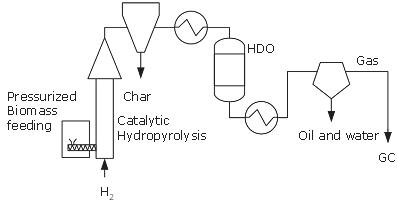
Figure 1. Simplified process diagram including fluid bed catalytic hydropyrolysis reactor, char separation and temperature adjustment, vapor phase HDO reactor, condensation and liquid separation.
C. Kittel
DTU Environment, Technical University of Denmark
The impact of climate change and anthropogenicactivities on river regimes observed over thelast decades, poses important challenges for water resources managers globally. Knowledge about hydrological processes is acrucial step inimplementing integrated water resources management strategies at river basin scale.While hydrologicalmodels can be powerful decision support tools, data requirements greatly constrain their applicabilityin basins with scarce in-situ data.Satellite remote sensingprovidesa unique opportunity to acquire information onimportant components of the land-surface water balanceand bridge this gap.This study exploreshow multi-mission remote sensing can be used to inform a hydrological model of an ungauged Ogooué river basin in Gabon, Africa.
Publicly available and free remote sensing observations are used to parametrize, force, calibrate and validate a hydrological model of the Ogooué. The river is the fourth largest African river basin in terms of discharge; however, there are no previous modelling efforts and only decade-old in-situ observations. The modelling framework consists of a lumped conceptual rainfall-runoff model based on the Budyko framework coupled to a Muskingum routing scheme. The model is forced using two different satellite rainfall-estimates: the Tropical Rainfall Measuring Mission product 3B42 v.7 (TRMM) and the Famine Early Warning System –Rainfall Estimate (FEWS-RFE). The model is calibrated using a multiobjective approach incorporating contributions from historical in-situ discharge observations, GRACE total water storage observations and water height observations fromtwo radar altimetry missions: Jason-2 and Envisat.Awater mask based on high resolution Synthetic Aperture Radar (SAR) imagery from the new European Space Agency (ESA) mission Sentinel-1is used to extract water height observations from drifting ground track altimetry missions, which are used to validate the model.
The hydrologic-hydrodynamic model’s performance is generally in line with the validation criteria of the individual objective function contributionsfor bothprecipitation products.The Root Mean Square Deviation (RMSD) between simulated and observed water amplitudes at virtual stations of 0.91m for the TRMM forced model and 1.15m for the FEWS-RFE forced model. Both precipitation products produced satisfactory results without significant discrepancies. The hydrological model also generally captures total water storage change patterns, although the amplitude of storage change is generally underestimated. The use of new satellite missions, including Sentinel-1 and CryoSat-2, increased the spatial characterization of river stage: the RMSD between simulated river stage and CryoSat-2 relative height is in the order of magnitude of values reported in literature: between 1.06 and 1.22m.
The study shows the potential of using free remote sensingobservationstoinformmodels of poorly gauged river basins. By combining hydrological modelling andmulti-missionremote sensingfrom 10 different satellite missions, new information on an otherwise unstudied basin is obtained.The modelcan be used to assess climatechange scenarios and evaluate hydraulic infrastructure development projects.Knowledge about the basin scale response to different scenarioscan support decision making and improve the reconciliation of development and conservation plans.
cycle assessment and eco-efficiency evaluation for planning of a new urban water system with rainwater use in Nye, Aarhus
INTRODUCTION
MariaFaragò
DTU Environment, Technical University of Denmark
Nye is a new urban development located in Northern Aarhus where the rainwater will be managed locally and above the surface in order to protect from flooding. Moreover, the rainwater will be collected and re-used for non-potable applications, suchas toilet flushing and laundry,instead of normal drinking water. InNye, first phase, a saving of almost 31000 m3/year of groundwateris estimated.The project should be both environmentally and economically sustainable.
METHODS
In this project, four planning alternatives to treat and re-distribute the rainwater in Nyewere assessed and compared in respect toa business as usual scenario (A0-GW). In the business as usual scenario,only groundwater is used to satisfy the water demand for nonpotable applications.
The scenarios with rainwater use are developed as follows:
-Three centralised treatment scenarios involving three different treatment alternatives which collect and treat the rainwater from all the impervious areas. The water is then redistributed through a secondary water supply network;
-A decentralised scenario where the rainwater is collected only from the roof of each property through a rainwater harvesting system (RWH). Each RWH stores the filtered rainwater in underground tanks from where the water is pumped to the households.
The life cycle assessment (LCA) was used to quantify the environmental sustainability of each alternative. LCA is,in fact,a well-established methodology used to assess the environmental performance of anurban water system. Furthermore, in this project,the resultsof the LCA were coupled with a preliminaryeconomic assessment in order to quantify the most eco-efficiency scenario.
The results of the LCA show that the alternatives with rainwater use are more sustainable than the business as usual scenario. In particular, they perform significantly better than A0GWin the freshwater withdrawal impacts. Moreover, the re-use of the rain, which is a softer water than groundwater, leads to decrease in consumption of energy and laundry detergents at thehouseholds’ level. Overall, it could also be concluded that a centralised treatment of the rainwater (where low-energy treatments are involved)is more sustainable in terms of climate change and resource depletion (fossil) than the decentralised scenario. Finally, even though the uncertainty in the data for the economic assessment was higher than the data input used to perform the LCA. However, this study could showthat there is also an economic benefit with the re-use of rain. Thus, improving the overall service value of the urban water system.
Jeppe Svostrup Petersen
Sino-Danish Center for Education and Research, Beijing, DTU Chemical Engineering, Technical University of Denmark,
INTRODUCTION
Under International Maritime Organization new regulations has been introduced in regards to treatment of ballast water in order to reduce the risk of introducing invasive species to new water bodies. With the new regulations, it is mandatory to treat the ballast water in order to make sure any organisms present in the ballast water are eliminated before the water is discharged from the ballast tanks so species isnot spread from one region of the world to another.
THEORY AND METHOD
The ballast water treatment method consist of two active phases. First,the ballast water is pasteurized by heating it to a temperature above 70O Celsius at which it remains for 60 seconds in order eliminate all living organisms present in the water. After the water has been pasteurized it is stripped from oxygen by addition of nitrogen gas, furthermore the presence of the nitrogen gas also insures a turbulent flow, whichinsures that the water in the ballast tank is well mixed and that nodead volumes is presentwithin the tank.In order to optimize the system it has been modelled as a range of differential equations in Matlab which can be used to predict for how long it is needed to treat the ballast water based on the size and geometry of the various ballast tanks. A schematic drawing of the ballast water treatment system can be seen in Figure 1.
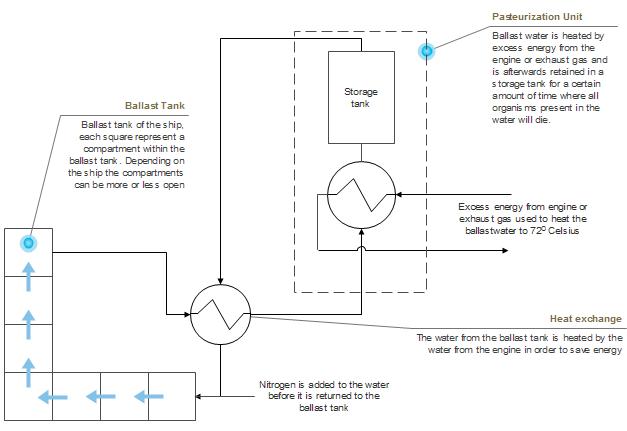
L. S. Skov
DTU Environment, Technical University of Denmark
The sixth objective of the 17 UN Sustainable Development Goals (SDGs) is to ensure availability and sustainable management of water and sanitation. This implies improving water quality by reducing pollution, cuttingthe proportion of untreated wastewater in half and substantially increase water recycling by the year 2030 (Target 6.3). To achieve this goal, knowledge of the qualitative dynamics in combined sewer systems, i.e. pipes that holdboth rain-and wastewater, is required. Untreated sewage from Combined Sewer Overflows (CSO), activated by rain events, contains suspended solids, pathogens, heavy metals, as well as organic and inorganic compounds. Thus, aheavy load of wastewater can have negative impact on the ecosystem in the receiving water body e.g. it can activateoxygen deficit and lead to formation of toxic by-products.To mitigate this, online sensors installed at strategic locations in the sewer network can providecontinuous monitoring of water quality, which enables pollution based real time control(RTC).
The performance of twodifferent on-line sensors(HACH AN-ISE and HACH Solitax) measuring turbidity and ammonium concentration has beeninvestigated when operating under non-ideal conditions. The sensors wereinstalled in situ, i.e. directly in the raw wastewater flow, with a low-budget construction at a CSO structure atÅlebækken in Virum, Denmark. A 14 weeks monitoring campaign, subdivided into threetest phases, was conducted. In Phase A, the on-line sensors weremaintained dailyto establish a baseline (best achievable accuracy). In Phase B, the Standard Operating Procedure (SOP) proposed byAlferes & Chad (2013)forcollecting "good quality data" was followed. In Phase C, a lowmaintenance scenario was simulated with bi-weekly cleaning of the sensors. In parallel with the monitoring campaign, grab samples were collected daily and analyzedin the laboratory to providereference measurements.
The project results indicatethat online monitoring of wastewater with online sensors is feasible upstream in a sewer network. However, because of the harsh environment the sensors are subject to, a properinstallation of the sensors proved to be crucial for thequality of the measurements.Thus,the sensors were oftendisturbedby large solids such as paper. Especially the turbidity measurements were influenced by this. The results from the first test phaseshowthat under optimal maintenance conditions,ammonium concentrations can be measured with good accuracy. In addition, the results fromtestPhase B and Phase C suggest that a less stringent maintenance routine(bi-weekly cleaning)still can provide ammonium measurements of acceptable quality.This allowsfor relaxed on-line sensor maintenance requirements in general and thereby favorsa widerand more cost-effective deployment of on-line water quality sensors in drainage systems.
Alferes, J., & Chad, C. (2013). SOP for working with monEAU stations within the danEAU project. Quebec, Canada: Université Laval.
C. A.L. Petersenand C. M.T.Dragsdahl
DTU Mechanical Engineering, Technical University of Denmark
The aim of this project is to explore whether high-techsolutionscan create more sustainable living conditions for people in refugee camps. We strive to ensure adequate sanitation facilities and healthy surroundings for people who are in a temporary condition of displacement and crisis. This goal is pursued through development of a system-based holistic concept, both improving the life quality for refugees and lifting the work burden for NGOs.
UN estimate 2.4 billionpeople worldwide live without access to improved sanitation facilities. Poor sanitation presents a huge risk to public healthcausing diarrhea and other diseases, which can be deadly, especially for children. In refugee campswhere people live close together,often under poor conditions, this threat is equally imminent. Many people are not aware of the health threats of open defecation or are uneasy with using the common latrines, and might therefore not be motivated to use them. This is especially a problem in emergency situations. Moreover, camps that were established as a temporary solution often turn into long-term residencies. In these situations refugees need and wish for more ownership and responsibility over the sanitation facilities. Resources are often scarce and decisions by camp employees and NGOshave to be made under great time pressure with limited overview of the situation.
The project uses product/service-system theories and approaches to explore and prototype solutions. A final concept is not developed yet, butthegeneral system idea has been formed. For simplicity, the idea can be understood as three systems in one.The refugees participate in a motivational system, which is also the data source for a data collection system used by employees in the camp. The data collected can then be used by NGOs in a collaboration and analytics system. The motivational system must motivate refugees to use the facilities, and maybe acquire their own latrine in the long run. The data collection system enables employees to get a better overview of the situation, and the collaboration and analytics system can enable knowledge sharing and more efficient and effective use of resources.
We believe this project can address and improvegoal 6 “Clean Water and Sanitation”, by striving to ensure better value for money, goal 11 “Sustainable Cities and Communities” by creating better living conditions for refugees and 17“Partnerships for the goals” by encouraging partnerships between companies and NGOs and better collaboration among humanitarian organisations.
The project is still in progress, and is due to be completed before July 23rd 2017.
S. H. Spangsdorf
DTU Energy, Technical University of Denmark
INTRODUCTIONAND MOTIVATION
Wheneverthere is a temperature difference T across a conducting material, electronsstart moving.Thisthermal-to-electrical-energy conversion is the thermoelectric (TE) effect
All processes–natural as well as human-made –produce heatwaste. Sometimesheat is even wasted intentionally,for example a freezertakesheat from the inside and throwsit away to the surroundings. Heat sources are all around us. Just imagine capturing this heat to charge a battery in a mobile phone, wristwatch or electric car.TE elements can increase fuel efficiency of usual consumption engine cars by as much as 3 %[1] –a big jump for present days’ already highly optimized cars.
MAIN ISSUES AND FOCUS
The TEphenomenon will increase the efficiency of the system, simply by wasting less heat. But the efficiency of a TEdevice itself must behigh enough to becost-efficient.Efficiency issuesare known from e.g. solar cellsthat only after decades of research reached proper efficiencies to become commercially viable.
The mainchallengesare low efficiencyand fast degradationof the TE materials. We want highelectrical conductivity (for easy current flow)but poor thermalconductivity (to avoid destroying the temperature difference T as the driving force)and at the same time no cracksduring heating and cooling (thermal cycling), in other words thermal stability.
GOAL AND PURPOSE
Theaim of thismaster project is to design a TEdevice with a new material mix in order to achieve above the magical efficiencyvalue of > 10 %,above which devices are expected to be commercially viable.
The device will be developed forahigh temperaturerangei.e.for extracting heat from a car’sexhaust pipe (reaching around 600 oC) referring it back to the car’s battery.
MATERIALS AND TECHNICAL DETAILS
The material combinationused in this project has never been tried before.The efficiency of newly developed similar material combinations reached = 11.3 % but were unstable. This new combination is expected to overcome this.
[1] M. Kober, C. Ha ¨fele, H.E. Friedrich (2012) 3 International Conference ‘Thermoelectrics goes Automotive (Berlin, November 21–23 2012)
K.N. Jensen1and L.G. Pedersen2
1DTU Civil Engineering, Technical University of Denmark
2DTU ArchitecturalEngineering, Technical University of Denmark
In 2013 680,664 tons concretewaste wereregistered in Denmark and according to Miljøstyrelsen does concrete represent approximately 25% oftheconstruction waste, which makes concrete the largest fraction of construction waste.
Today the official recycle percentageof concrete is approximately 90%. Often is the concrete sorted, demolished,and reused as road fill and in foundation. The reuse of concrete as base layer does not contribute to lowering the CO2 emission. By recycling concrete aggregates for new concrete it is possible to upcycle the concrete waste compared to the use as base layers.
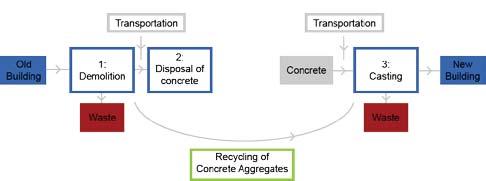
In this project the properties of recycled aggregate concrete(RAC)with recycled concrete aggregates(RCA)in the fraction 4-8 mm and 8-16 mm have been investigated.
To evaluate the influence recycled concrete aggregates has on recycled aggregate concrete, a varying degree of the natural aggregates were substituted by recycled concrete aggregates. RAC cylinders were cast with up to 50 % of the smaller aggregates substituted with RCA and up to 100% of the larger aggregates substituted with RCA.
The properties investigated is the porosity, density, cement content, water content and shrinkage of the RCA while slump (workability) and compressive strength of the RAC have been investigated.
The results show that the recycled aggregate concretewhere the smaller aggregates were replacedhas a slightlyhighercompressive strength than the corresponding references and the same were the case for the larger aggregates. One of the challenging factors that occurred was the poor workability of the concrete and relative big variation in the results, which is shown by the standard deviation. Seen by the results both these problems are met by saturatingthe recycled concrete aggregates.
REFERENCES
Miljøstyrelsen (2015), Udredning af teknologiske muligheder for at genbruge og genanvende beton,
K. A. Haxthausen
DTU Environment, Technical University of Denmark
Denmark,as a member stateof the EU, iscommitted to improve the quality of surface waters, to achieve good water quality by 2027. A large number of Danish lakes are eutrophic, primarily due to release of phosphorous stored in the lake sediments. Successful improvement of water quality requires elimination of external loads of phosphorous, and removal or immobilization of internal sediment loads.Current methods for phosphorous immobilization or removal are dredging, and chemical immobilization by agents such as aluminium salts. These present a number of downsides such as disruption of the lake ecosystem (dredging), need for multiple treatments, weakness to current and pH (Aluminium salts).Proposed in this project is the use of microbial fuel cells for lake sediment remediation, by phosphorous precipitation and immobilization, with the added benefits of oxidation of organic matter, methane emission reductions and power generation.
Microbial fuel cells implemented for sediment remediation, work as a snorkel for sediment microbes. Bringing the electrons to the electron acceptor (oxygen) rather than bringing the electron acceptor to the electrons. An electrode is inserted in the sediment (anode) and another suspended in the water column (cathode). Microbes such as Geobacter are able to grow on or adjacent to the anode, and by transporting electrons to the anode, they oxidize the sediment, consuming organic matter. The oxidization of the sediment, changes the oxidation stages of metals, which consequently bind phosphorous.The project provides proof of concept, and will evolve from laboratory-scale experiments, to in-situ application, and finally up-scale in-situ tests. In the laboratory-scale stage, 56 reactors were operated to test two reactor designs, three sediments, and nine electrode materials. Tests in open reactors enabled close observation of the systems, and measurements of redox, pH and oxygen concentrations. Tests in closed reactors allowed gas chromatography, for analyzing methane and carbon dioxide emissions. From these initial experiments, candidate materials were selected for implementation in in-situ experiments in Søllerød lake. In-situ experiments were carried out using stainless steel electrodes, in a semi-closed experiment environment. Plastic tubes were inserted through the water column, into the sediment, and protruding into the air, creating a sediment, water air column with negligible horizontal movement.
As this abstract is evaluated, resultsfor laboratory and in-situ experiments have been submitted in my MSc. Thesis. Initial results were promising, showing effects on methane emissions and electricity production, proving that microbial fuel cells were successfully operated in lake sediments without proton exchange membrane. This indicates oxidation of sediments, which will result in phosphorous precipitation. The next stage following the project, are up-scales pilot experiments, operated for longer duration than possible within a MSc. Thesis. As well as requiring additional funds.There are several ways this can be achieved, including as a start-up company, PhD study, or collaboration with the public sector or industry partners.
Smart Renewable Hubs: A hybrid concentrated solar power technology for a higher penetration of renewables.
A.Millet
DTU Sustainable Energy, Technical University of Denmark
The European Union has set ambitious targets to reduce the CO2 emissions in the power sector by 2050.Renewable sources such as wind power or PV are reaching competitiveness against traditional fossil fuel based thermal power plants. However, most of the renewable sources have a variable power production which requires back up or storage technologies to ensure grid stability. This master thesis is investigating how Gridsol [1], a smart renewable hub composed of a Concentrated Solar Power (CSP) with thermal energy storage, a gas turbine with biofuel and PV can provide a firm power and be integrated in an island energy system, applying both a technical and an economical perspective.
For several reasons, Crete has been chosen to assess Gridsol: the Greek island has a great potential for renewables (wind and solar power), electricityprices are high and the grid is rather weak and not interconnected with the mainland system.
The analysis starts with the modelling of Crete energy system in 2015 as a reference year with the modelling tool Balmorel [2].Projections are performed until 2050 for parameters like the electricity consumption, technology costs,CO2and fuel price. A reference scenario is built andthe investment module of Balmorel investsin the optimal energy mix with milestones in 2020, 2030, 2040 and 2050. In a second scenario, the smart renewable hub Gridsol is modelled in Balmorel and implemented in Crete. The Gridsol scenario is then compared to the benchmark and the impact on Crete energy system ismeasured in terms of avoided CO2 emissions, social welfare,andrenewable penetration.The competing technologies are compared based on the LCOE.
Gridsol can provide a continuous and flexible power production based on renewables in a large thermal energy storage configuration. The CO2 emissions in Gridsol scenario are lower than in the reference scenario. In 2050, 90 % of the production is ensured by RES (including biomass), compared to 19% in 2015. The result of the feasibility analysis shows that Gridsol could be implemented in Crete by the horizon 2030, participating actively in the grid stability while increasing the share of renewables. However, the competitiveness of Gridsol technology will rely on the cost development of battery technologies.
[1] GRIDSOL Consortium, "GRIDSOL Project Webpage," 2017. [Online]. Available: www.gridsolproject.eu.
[2] H. Ravn et al: Balmorel: A Model for Analyses of the Electricity and CHP Markets in the Baltic Sea Region (2001).
M. Will
DTU Management, Technical University of Denmark
“Whereas air pollution can be mitigated usingnew technologies, city space will remain a scarce resource in the sustainable city”[1]. With rampanturbanization, the urban space becomes a coveted resource which should be intentionally repartitioned. How to measure the space used by differenttransport strategies? Moreover, space distribution has been pointed as a major dimension where urban transportinjustice is apparent[2]. Age, gender, and income levels notably frame mode choices, which in turnhave different space use requirements. Who are the transport space consumers in each transport strategy?
The case-study focusesonthe city ofRajkot, India, in the aftermath of UN Environment’s project“Low-carbon transport in India"[3]which elaboratedLow-carbon Comprehensive Mobility Plans (LCMPs) for several cities.Aspace-time indicator that accounts for both the parking and on-road space-time used is introduced. It buildsupon thetransport model that served to design Rajkot’s LCMP,andassesses the transport space used forthebase year (2011),as well as the four transportdevelopmentscenariosfor year 2031formulated in the LCMP:business as usual (BAU), land-use improvements (LU), land-use improvements combined with provision of infrastructuresfor non-motorized modes (NMT), and the previous configuration joined with a public transport network (PT).
If the transport planning followsthe past trends, the space used for transport is predicted to bethree times higher in 2031 compared to 2011. However, thetransport space use expansioncan be reduced by half,without decreasing the overall mobility, when shifting to low-carbon transport scenarios.Additionally, the space use distribution between modes and thus between population categories is the fairer in the most comprehensive LCMP scenario. This analysis targets urban transport decision-makingsupport by specifyingtwo major cobenefits advocating for LCMPs: one, it frees up space in the city, namely through the reduction of parking, and two, it reduces the inequityin transport space allocation.
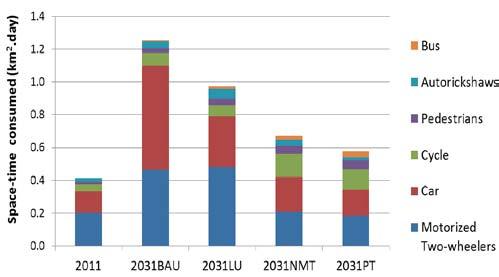
[1] Vlastos, T., Barbopoulos, N., & Milakis, D. (2003). The “ spatial capacity ” approach for a sustainable urban transport planning . The case of Kallithea / Athens, 64 [2]Gössling, S. (2017). Urban transport justice. Journal of Transport Geography, 54 [3]United Nations Environment Programme. (2010). Low Carbon Transport in India. Retrieved May 17, 2017, from http://staging.unep.org/transport/lowcarbon/about.asp
E. Bjerre
DTU
Environment, Technical University of Denmark
MOTIVATION
In the face of increasing climatic changes and anthropogenic impacts the complexity of water resource management is growing. Hydrological models provide an important tool for understanding and quantifying hydrological variability,predicting future hydrological changes and assessing issuessuch as drought and flood risk, water resourcesmanagementand land use changes.Evapotranspiration(ET)is a key process in the hydrological cycle and also very hard to measure. This studyaims at optimizing thespatial pattern ofET in a distributed hydrological model using a soil property map and satellite remote sensing data of vegetation.
METHODOLOGY
Themodel applied in the study is the national water resources model for Denmark(DKmodel) for the subdomain of Southern Jutland. This study presents a modified DK-model where the governing factors for evapotranspiration;Leaf Area Index (LAI), Crop coefficient (Kc) and Root Depth (RD), are replaced with spatially distributed inputs which are parameterized usingclay fraction data and the remote sensing Normalized Difference Vegetation Index (NDVI). The ET pattern is calibrated against a remote sensing derived ET dataset based on the Two-Source Energy Balance (TSEB) model using an innovative objective function for spatial patterns(citation needed).
The study shows that the new parameterization of LAI, Kc and RDadds features to the ET model output that are found in the TSEB ET pattern. In Figure 1 it is seen that the mean monthly ET pattern of the modified DK-model (middle) shows a much higher resemblance to the TSEB dataset (right) compared to the original DK-model (left). The TSEB ET data is useful for pattern calibration, but due to a bias in the data set itis not suitable for calibrating the absolute valuesof ET. The validation of the water balance should be based on discharge observations which have much lower uncertainty.
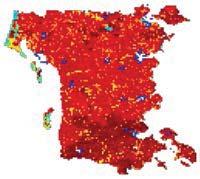
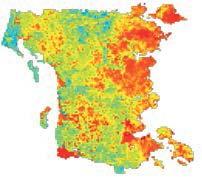
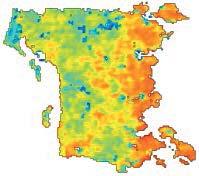
M.S. Psarra1, M.E. Saridaki2
1DTU Environmental Engineering, Technical University of Denmark
2DTU EngineeringManagement, Technical University of Denmark
INTRODUCTION
Although an office building will “consume”about three times its initial capital cost over a 25 year period, an emphasis is still tended to be given only on that.Having a low investment cost in a construction project is often the only priority when presenting the budget of the project, however the assessment of only the construction cost, without any consideration of the lifespan, is considered shortsighted and insufficient. As a result, the running costs of the construction, which entail operation, maintenance and renovation costs, should also be considered on the investments and LCC should be an inseparable part of building design from an early phase.By creating a permanent link between the design model and a cost database, an overview of the LCC can be achieved and the long-term effect of decisions can be evaluated.
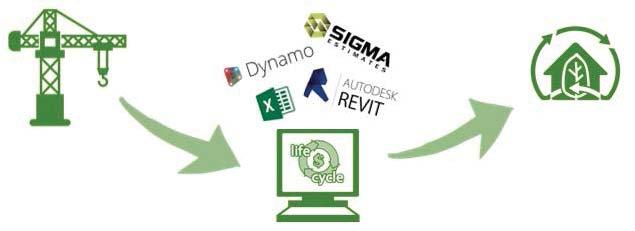
METHOD
In order to achieve accurate LCC calculations of an entire building or individual components, a dynamic modelhas been developed in a Visual Programming Environment. Firstly, the user manually selects the different “works” through the life cycle of the project from a pricedatabase by using a Cost Estimation tool. Then through the model, the LC Costs are calculated after retrieving the quantities of the elements from the Revit Design Model. In order to manage the diverse user-backgrounds, two frameworks have been developed. In the first, a GUI has been created for users with limited-programming background, while the second follows a more automated procedure through programming environment.
The method has been tested in a case study building, where the results show the distribution of elements’ costs through the lifecycle and the effect of different scenarios to the final outcome. This enables the user to experiment between different alternatives and check the effect of the decisions in the whole life-span of the construction. By shifting from the short-term to the long-term effects of cost in decision-making, a new era of sustainable construction which has a considerable impact on all aspects of the triple-bottom line is introduced.
Project no. 425
M. Kühl, N.S. Gudmandsen, and M. Rosenbeck
DTU Civil Engineering, Technical University of Denmark
Various indicators point out that a connection exists between the ambient temperature and the correlated colourtemperature that users prefer for the lit environment. In warm climates, the use of cooler lighting is much more common than in colder climateswhere people use much warmer light sources. Presumably,the use of different colouredlight sources is due to the experience of acooler climate at cooler light sources and the impression of warmth follows a warmer looking light source. With new LED technology,the correlated colour temperature (warm white to cool white) is easily controllable. The goal of the project is to demonstrate how controllable LED lighting can be used to expand the temperature interval that users find comfortable. Thiswill lead to a decrease in the energy consumption of buildings.
The theory behind the project is founded on previous research on coloured light.Through human experiments in controlled environments, it was investigated whether the colour temperature of the lighting hadan influence on the thermal comfort. The test persons were exposed to three different room temperaturesin three different experimentalsessions. Through each session, the intensity of the light was the same, but the correlated colour temperature variedbetween 2700Kand 6300 K. While the test persons were sitting in the room they were asked to fill out questionnaires regarding their thermal perception of the indoor environment and their perception of the lighting and air quality. Furthermore, the concentrationlevelof the test persons wasexamined through a performance test to examine whether the colour temperature of the lighting would have an influence on their concentration level.
The results of the experiments verified the hypothesis that the colour temperature of the lighting has an influence on the human perception of the thermal indoor environment.Thus, the thermal environment appearscooler at a cool colour temperature and warmer at a warm colour temperature of the lighting. The results were only evident and statistically significant when the test persons were exposed to a thermal environment roomtemperature22°C. This result can therefore concludethat the heating of a room can be supplied by warm lighting, andhence the energy consumption used forheating can be minimized. Specifically,the results from the experiments verifies that the temperature of a room that normally is warmed to 22°C can be decreasedby 2°C byonly using warmer colour temperature of the lighting.
The project is conducted as amaster thesis in corporation withSBi, ELFORSK, DTU Department of Photonics Engineering and DTU Department of Civil Engineering.
C. A. Bertram and R. Lundgaard
Bifrost Communication Aps
DTU Mechanical Engineering, Technical University of Denmark
We are living in the Information Age, and a continuously larger part of the world is being connected to the internet. This is a good thing, as connection grants knowledge and this evolveseducation, living standards and safety. What goes unknownis that this growth in connectivityand the expansion of the internet in general, means that internet traffic increases 13% per year. Especially when the next big thing, The Industrial Revolution 4.0 (Internet of Things) breaks through, will we see an acceleration in internet traffic demand. The worldwide energy production cannot keep up;it grows at only ~4% every year. Given the current state of electricity production, the internet related equipment wouldconsume all produced electricity as early as year 2023.
Currentaccess networkfiber technology can carry 1 channel, support 32 clients and reach 10 km, meaning that there have to be a manned and fully equipped central office (CO) for every 20 km. This CO is resource demanding to run, consumes power and leaves a CO2 footprint. ThisDanishtechnology startup has invented a new way of interpreting fiber optical signals. Using existing cables, the capacity and range can be significantly increased by upgrading the transceivers in either end. It utilizes an existing principle, but in a new and cheaper formthan usual. This allows 8 times as many channels through the fiber, 8 times the number of clients (256) and 4 times the reach (40 km). The largest benefit comes from decommissioning ~90% of the central offices (Figure 1 shows the coverage of the new vs. the old). This is estimated to reduce the total power-consumption of the access network by more than 50%. The technology is ready and is currently developed at two fronts; Electrical (chip design) and opto-mechanical.The operational plan spans over a few years with a stepwise market introduction.
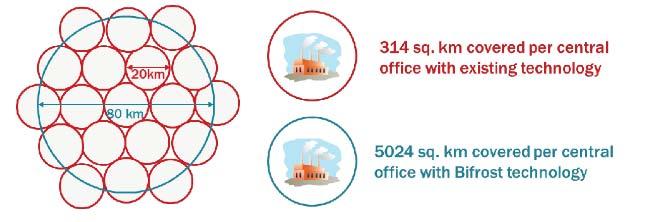
Figure 1Illustration of the geographical benefits using this form of coherent detection in the access network
OPTO-MECHANICAL DEVELOPMENT
This master thesis project deals with the development of a key component within this new form of transceiver; theoptical sub assembly. It is this part which transforms the optical signal into electrical signal and vice versa. It combines different optical components, such as lenses, laser and prisms into a mechanical assembly.This must withstand allmechanical and thermalrequirements from the already issued standards of the next generation internet infrastructure.
Felix Onses
DTU Environment, Technical University of Denmark
Arsenic contamination of groundwater is a problem of enormous relevance worldwide. Drinking water contaminated by arsenic causes serious human health effects. The sources of arsenic are natural reactive minerals that release arsenic upon dissolution in the flowing groundwater. It is crucialto identify and localize these contamination sourcesto implement effective management and mitigation strategies;however,this task is very challenging. The oxidation of reduced minerals such as pyrite and arseno-pyrite is an important mechanism of arsenic release. We perform a detailed study of this process under controlled experimental conditions.
METHODS
The project proposes to image pyriteand As-pyriteinclusions in porous media laboratory experiments based on high-resolution non-invasive sensor measurements of oxygen and pH.An innovative inverse modelling technique, thePrincipal Component Geostatistical Approach (PCGA), has been combined with groundwater flow and reactive transport modelling to identify the location of the reactive inclusions.
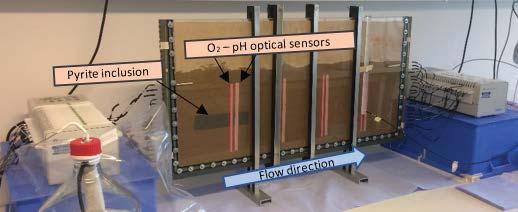
Experiments were performed in 1-D columns and in a quasi 2-D flow-through chamber (Fig. 1). In both setups pyrite oxidation triggered notable changes in the chemistry of the flowing water. The changes in water quality were monitored with conventional sampling and analysis of iron, pH and sulphate at the outlet, and dissolved oxygen and pH were measured inside the porous medium. Thespatially distributed measurementsfrom the non-invasiveO2 and pHsensorswhere used as input data for the inverse modelling to estimate the location of the reactive inclusion.
S. K. Schultz
DTU Environmental Engineering, Technical University of Denmark
INTRODUCTION
The Danish cement factory Aalborg Portland A/S was founded more than 125 years ago and is today the only producer of cement in Denmark. Aalborg Portland is located in Rørdal, in a chalk rich area close to the sea. The chalk that is used for the production of cement is extracted close to the factory, where years of quarrying have created anazure blue lake(later referred to as the chalk lake). Producing such large amounts of cement will inevitably generate considerably large amounts of residues. One of theses residues is called microfiller and is a by-product from thekilns at the factory. Aalborg Portland has made an initiative where microfiller is used to backfillthearea around the chalk lake. This is an ongoing initiative that in time will extend to the entire area. In the future the chalk lake and its surroundingswill thus become a recreational area that will be open for the public to use for sporting and leisureactivities. Microfiller contains a variety of heavy metals such as zinc, lead, cadmium, etc.,which in certain amounts are toxic for the environment as well as humans. These heavy metals may potentially leach into the groundwater as well as into the chalk lake posing a threat to wildlife and people in the area. To ensure that this does not happen,Aalborg Portland must consider different remedialoptions. Planting vegetation in a soil layer above the microfiller can contribute to a reduction of the downward flux of the metals. This type of mitigationis called phytoremediation and is a sustainable and cost-effective remediation technique compared to other methods used for decontamination of soil.In this project investigations aremade to determine the toxicity of microfiller and evaluate to which extent phytoremediation is possible at the Aalborg Portland site.
A variety of methods have been used to assess the potential for phytoremediation at the Aalborg Portland site:
The toxicityof microfilleris determined with a Willow Tree Acute Toxicity Test, which is based onthe inhibition of the transpiration of willow trees. To evaluate the inhibition of the treated tree’s transpiration theNormalized Relative Transpiration (NRT) can be calculated and compares the transpiration of the treated trees with the transpiration of the control trees.
Heavy metal concentrations were measured in the samples from the willow cuttings to determine heavy metal uptake. Furthermore heavy metal concentrations in the dried microfiller were measured, so a comparison could be made. Soil, plant and water samples were taken at Aalborg Portland A/S, which were also analysed for heavy metals.
A plant uptake model is made for each of the metals of interest. The model is used to simulate water balance and metal concentration over several years.
The results of this project will include a recommendation for Aalborg Portland A/S in which the toxicity of microfiller is determined and the potential for phytoremediationwith willow treesis evaluated in terms of leaching and heavy metal uptake.
A. K. Das
HKUST, Hong Kong University of Science and Technology
Built Environment is the utmost importance for the development, progress and subsistence of any Civilization. Over the years, the modern city line form of high rise buildings has become a norm. The city line is also associated with the wealth and development of the region. As a result, in the past few decades a large number of concrete structures with increasing numbers are being built in the world. Concrete structures not only represent a huge investment in terms of materials and energy and they lead to significant environmental impacts. So, particularly for modern metropolitan cities like Hong Kong where land is dearth for either for construction purpose and to dump construction waste in a landfill. As per the LCA done, using Athena Software the environmental impact (energy consumption) of new materials constitutes 70-80% of the total impact in the whole life cycle. With energy intensive materials, the construction industry contribute 19% of total greenhouse gas emission in 2010’s. There is an urgent need to optimize the sustainability and increase the eco friendliness of a structure. The best way to solve the problem is through enhancing the selflife cycle of the structure through optimization of renovation.
The advances in microelectronics and data acquisition devices provide an impetus for the development of sensors for structural health monitoring. Specifically, Acoustic Emission, as unlike other NDT testing methodology, it is a passive detector thus so, not intrusive to the life style of the people. Apart from that, it can provide a direct measure, localization as well as with the developed methodology can provide a damage estimation thus, can predict the repair needs for the structure.
While acoustic emission sensors have been extensively used in many laboratory experiments by researchers around the world, recent developments in structural materials such as special concrete (with lightweight, high strength and/or high ductility) for construction and repair pose a new set of challenges in developing an automatic and reliable acoustic emission monitoring system
The challenges toward implementation of robust acoustic emission technique for monitoring is further complicated by the heterogeneity in the concrete (air pores, fibers), limited knowledge on the materials in the structure (curing condition, composition) as well as access from only one side of the structure (due to difficult site conditions). Those conditions result in scattering and attenuation that would lead to development of shadow region inside the tested structure. Along with these challenges, if the NDT is performed on a structure with dimension in the range of a few wavelengths, the results will be affected by near field effects where the desired signal is camouflaged by vibration especially when the structure is in use. To solve the above problem partly I have developed a robust damage identification mechanism.
Expected Outcome:
As compared to the present method logy of inspection, the automated inspection will be:
a) Optimized effort of workers thus saving cost of time, safer for people
b) On time flaw detection will optimize repair time which elongate the usable life of any structure
c) Around 20% reduction of the greenhouse gases is possible
Apart from that, the sensors can perform as IOT thus, can serve multiple purpose as per the need of the structure.
H. W. Lui, F. L. Y. Lam, and X. Hu HKUST, Hong Kong University of Science and Technology
INTRODUCTION
Most of the time, during the electroplating process, large amount of wastewater that contains numerous kinds of metal ions and toxins is being generated. Limited by its high toxicity and acidity, cost-effective biological wastewater treatments would not be applicable for most of the time. Treatment methods, such as electrochemical precipitation, electrocoagulation and electro dialysis, have been applied for the removal of contaminants in electroplating wastewater. However, limitations and drawbacks like formation of secondary pollutants due to the use of coagulants, remnant of complex ions and organics after removal and recovery of suspending metal ions, are remained to be solved. For such reasons, catalytic wet air oxidation (CWAO) would be an advisable choice for pretreating the electroplating wastewater before the removal and recovery process of metal ions as it is proven to be an effective technology for eliminating organics and reducing both chemical oxygen demand (COD) and total organic carbon (TOC).
EXPERIMENTAL
Copper oxide catalysts, supported on -Al2O3, were prepared by incipient wetness impregnation method using Cu(NO3)2.2.5H2O as precursor. The copper loadings were 5 wt% and 10 wt%. Characteristics of catalysts, such as surface area, pore volume, XRD patterns, were investigated by corresponding measuring instrument.
Instead of using phenol as the model wastewater, real electroplating wastewater was used in our experiments. The TOC of wastewater was measured by corresponding instrument. In a typical batch run, 600ml wastewater and 0.6g ca talysts were charged into a 1L Parr reactor. The oxidation reaction took place at 200 oC, 24.6 bar of oxygen. Samples were taken at different time intervals for TOC measurement.
The TOC of the raw wastewater was measured to be 2521 ppm. The final TOC of the wastewater after 2 hours catalytic wet air oxidation for 5 wt% and 10 wt% copper catalysts were found to be 1862.2 ppm and 495.2 ppm respectively, which indicates the corresponding TOC reduction efficiency of the catalysts are 26.13% and 81.8%. Results confirmed that CWAO with proper Copper/Alumina catalysts is suitable for organics removal of electroplating wastewater. Meanwhile, the catalysts need to be further optimized to improve their performance.
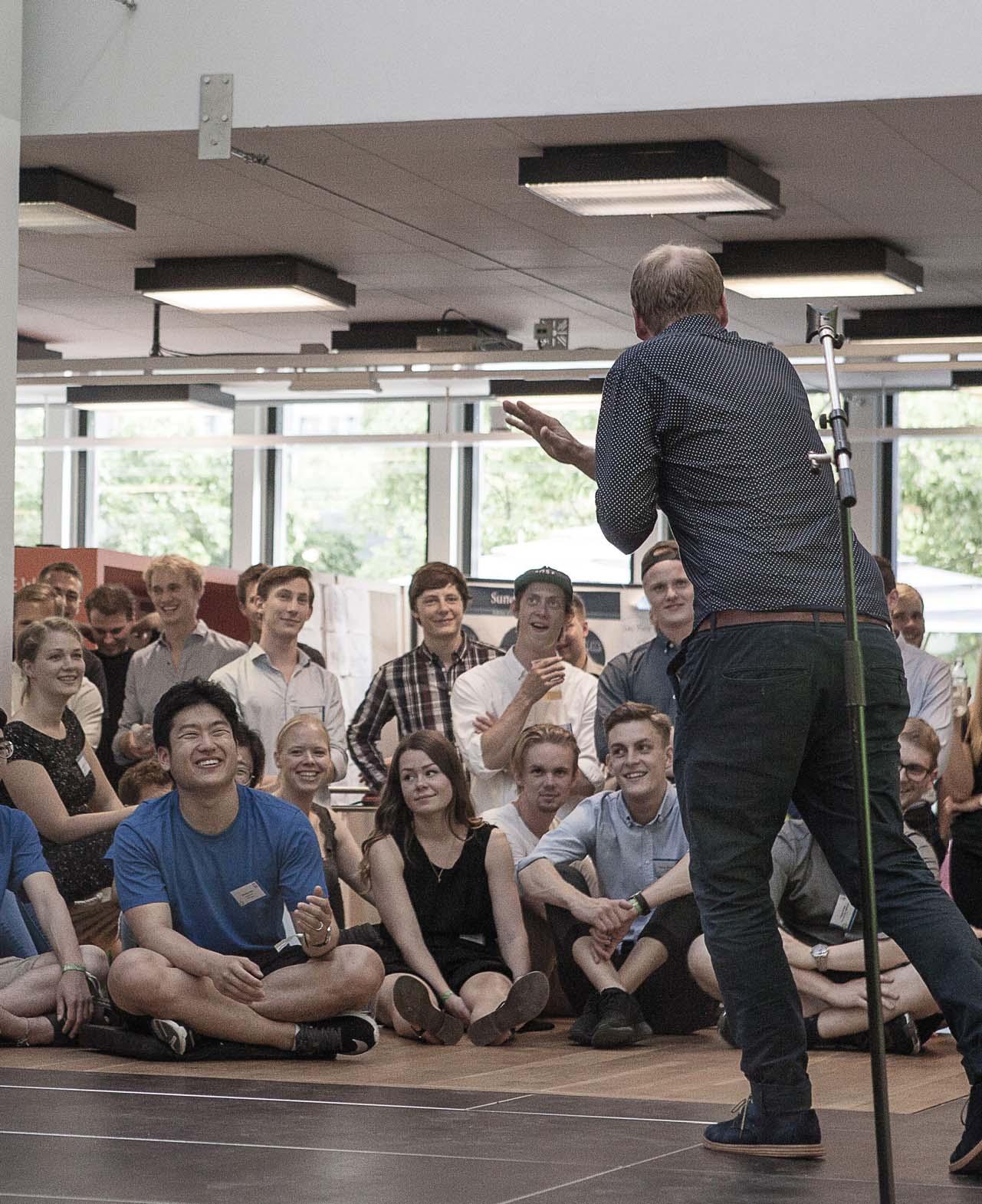
Editor: Bente Rasmussen
Design and Production: Jessica Di Nota
Step-Move your Brand
Photos: Jens Sand Kirk
The event is sponsored by:








Sustainability and climate change are high on the global agenda. Engineers play a central part in a sustainable development of society. Engineers from DTU can and must continue to contribute to the development of technological solutions that respond to the global challenges. Therefore DTU has initiated GRØN DYST.






Technical University of Denmark, Anker Engelunds Vej