FACTS & FIGURES 2026
President’s introduction
Our mission
Research
Rankings
Research facilities
Education
Innovation and entrepreneurship
Scientific advice
Equal opportunities
Taking responsibility
International relations
Organization
Finances and human resources
Campuses and locations
Published: April 2026. Managing editor: Miriam Meister. Facts & Figures. This report is based on DTU’s Annual Report 2025. Rankings as per 15 April 2026. Photos: Bax Lindhardt, Christian Als, Monaco Energy Challenge, Mikal Schlosser, ESA-P. Carril, Paint’R. Design & production: Marianne Tingkov
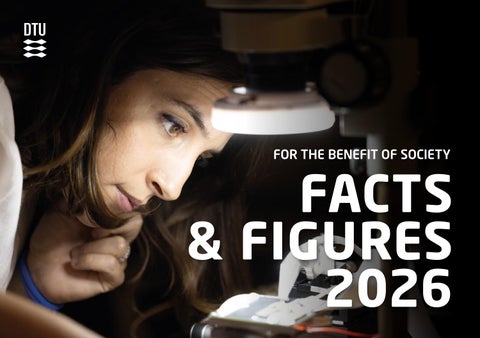
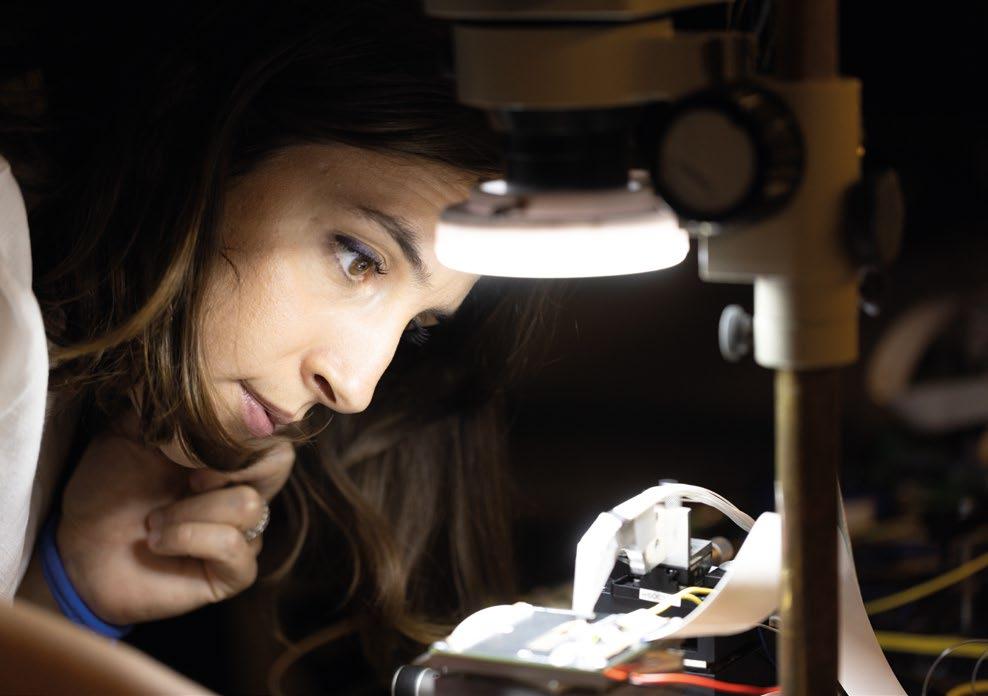
Cover: Assistant Professor Caterina Vigliar (pictured) and her colleagues at DTU Electro are among the few researchers worldwide who can construct crystals with quantum dots that emit photons which go directly to the standard frequency for telecommunications and satellite communications. This results in minimal loss of information, which is an advantage in the development of new quantum chips. Photo: Thomas Steen Sørensen
“PROGRESS DEMANDS BOTH AMBITION AND ACCOUNTABILITY.”
The world is forever evolving, and it is changing at a greater pace than we could have imagined just a few years ago. I believe that with determination, collaboration, and a clear sense of responsibility, we can help to ensure it changes for the better.
DTU may not be the largest of universities, but we are among the very best, and our position as one of Europe’s leading technical universities shows what focused excellence can achieve. We have the talent, the knowledge, and the courage to lead where it matters.
We assume leadership knowing that we stand stronger together. This is why we invest in alliances across the globe with a particular focus on the Nordics and Europe. We aim to build long-term partnerships that can shape a sustainable and resilient future.
It’s fair to say that at DTU, we love technology: We develop it, we teach it, and we use it. But we also insist on a critical perspective, because responsible and ethical development and use of technology warrant open discussions and scrutiny.
Our mission is clear: to develop and create value through the natural and technical sciences for the benefit of society. And because real progress and true innovation thrive on collaboration, we invite you to join us in building a brighter future.

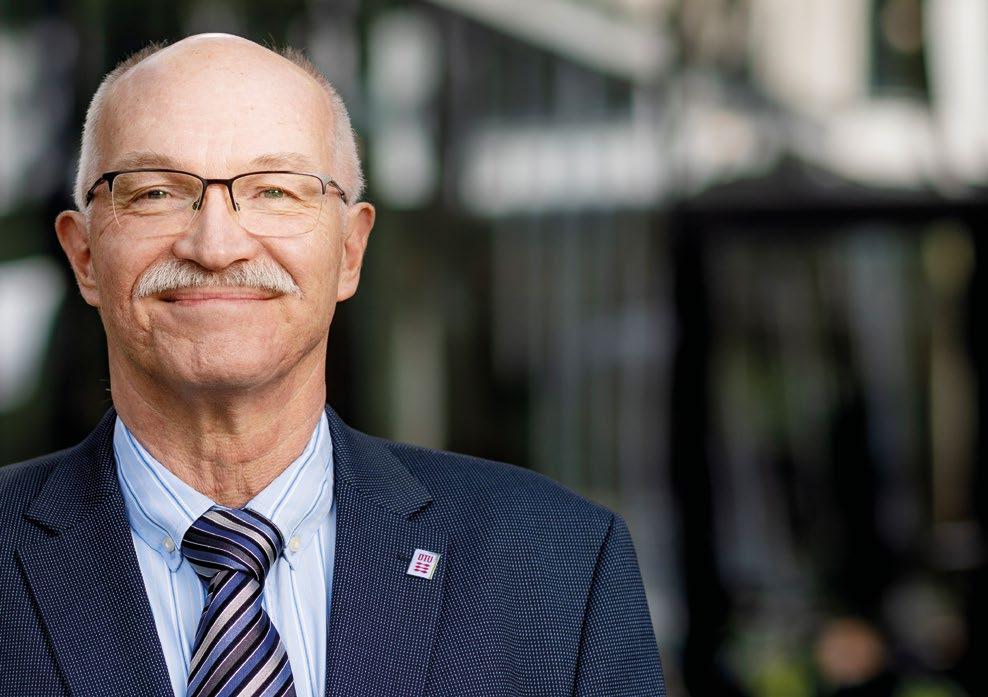
Anders O. Bjarklev, President
OUR MISSION
WE DEVELOP AND CREATE VALUE THROUGH THE TECHNICAL AND NATURAL SCIENCES FOR THE BENEFIT OF SOCIETY
Our world is marked by climate crisis, resource scarcity, environmental challenges, geopolitical instability, and rapid technological transformation. DTU is committed to using its position as one of Europe’s best technical universities to create sustainable solutions to these major societal challenges.
We do this to ensure the technological future of our continent, to educate the engineers who will solve tomorrow’s challenges, and to strengthen science as the foundation of democracy. Our values—innovative thinking, credibility, and commitment—permeate and shape everything we do.
As we push to challenge established truths and think across disciplines, we will stay grounded in scientific rigour, integrity, and openness. By
encouraging different perspectives, backgrounds, and approaches, we strive to strengthen our research, enrich our study programmes, and bolster our solutions.
In 1829, Hans Christian Ørsted—after discovering that electric currents create magnetic fields—took the initiative to establish DTU with a clear mission to develop and create value through the natural and technical sciences for the benefit of society.
Many generations later, DTU continues to pursue a vision for a better world as staff and students collaborate, conduct research, share knowledge, and find innovative solutions.
We invite the world to join us in realizing that vision.
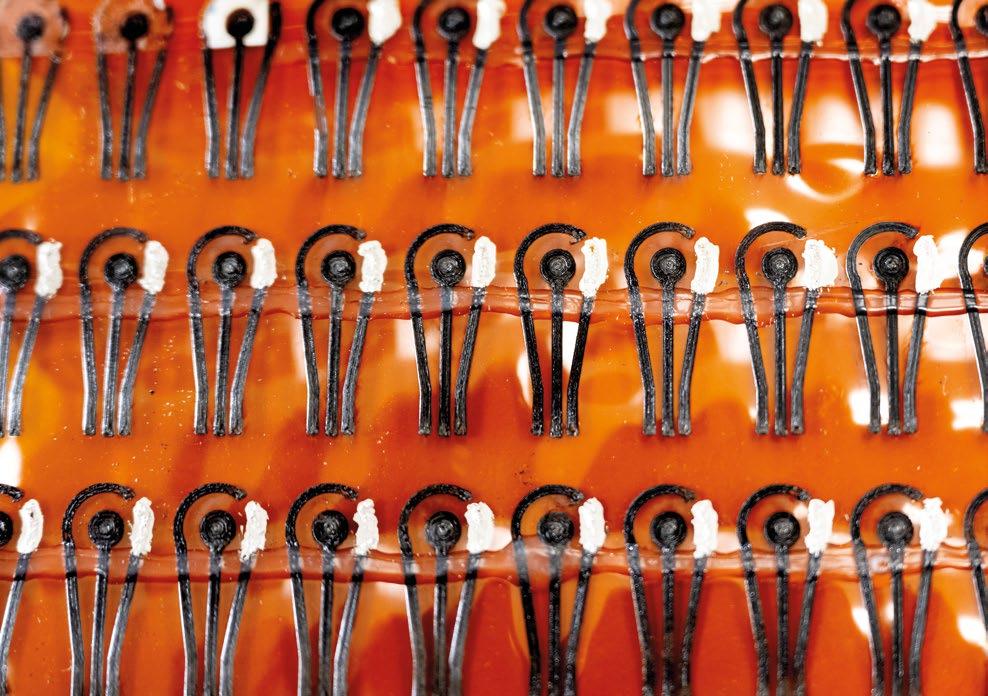
Researchers from DTU and Rigshospitalet have created a rapid test that can guide doctors to the right treatment for patients suffering lifethreatening trauma such as sepsis. It contains sensors (pictured), which yield a result just ten seconds after a few drops of blood are applied to the test. It is the special layers applied to the sensors’ electronic circuit that react to succinic acid, a biomarker contained in patients’ blood.
CUTTING-EDGE RESEARCH PROJECTS AND SELECTED GRANTS
Research is the basis of all our work. We focus on topics that have international impact, can aid the transition to a sustainable society, provide new scientific insight or societal value, and which are able to be commercialized.
Our research environments allow our dedicated staff and skilled students to work across disciplines on cutting-edge projects in collaboration with leading academic, private, and public partners globally.
Innovative ideas
In 2025, an international team lead by DTU developed a broad-spectrum antivenom which covers 17 different African snake species. It has fewer side effects and is cheaper to produce than existing antivenoms. In sub-Saharan Africa, recorded snakebite cases alone result in more than 7,000 deaths and around 10,000 amputations.
Scientists worldwide are rushing to achieve quantum advantage; the moment where a quantum mechanical system outperforms classical computers and algorithms. In an experiment, DTU researchers have used entangled light to learn the noise of a complex photonic quantum system with very few measurements. They did so in about 15 minutes as
opposed to the estimated 20 million years it would take using a classical algorithm. It is the first time the much-sought-after quantum advantage has been proven in a photonic system.
Other DTU researchers have found that certain bifidobacteria in the guts of infants produce a substance (a so-called metabolite) that dampens immune responses to allergens. The researchers have taken out a patent on the use of the metabolite in medicines to prevent and treat allergies and asthma.
Also in 2025, a team from DTU conducted a study that provides consumers with an insight into how the choices we make within the areas of food, consumables, housing and mobility can help sufficiently mitigate the pressure on the environment. The work aims to assist people who are attempting to live in alignment with what the planet can support.
Selected grants
DTU has a strong track record when it comes to securing competitive research funding. As such, in 2021-2025 we received more than EUR 274 million from the EU’s Horizon Europe research and innovation programme. This places DTU in the top four among European universities.
Our researchers received numerous grants via public funding in 2025. These include two prestigious grants from the European Research Council, namely an ERC Consolidator Grant and an ERC Synergy Grant.
Nationally, three DTU researchers received the Sapere Aude DFF Research Leaders Starting Grant from the Independent Research Fund Denmark, giving the promising researchers a chance to lead their own research groups. In addition, two younger researchers received an Elite Research Travel Grants from the Danish Ministry of Higher Education and Science, while one researcher received a DNRF Chair grant from the Danish National Research Foundation
In private funding, the Novo Nordisk Foundation awarded DTU two NNF Challenge Programme grants, two Investigator grants, one NNF NERD grants, and one NNF RECRUIT grant.
From the Lundbeck Foundation, two researchers received an LF Fellow grant aimed at helping them establish their own research groups. Two other promising young researchers secured an LF Ascending Investigator grant to help them establish their careers.
The Villum Foundation distributed four Villum Investigator grants. These provide recognized researchers with funding to explore complex scientific challenges with great societal potential. Four other young and talented researchers received a Villum Young Investigator grant, enabling them to pursue their own ideas and establish their own research groups.
Additionally, the Carlsberg Foundation awarded two Semper Ardens Accelerate and two Semper Ardens Accomplish grants to DTU researchers.
Professor Andreas Hougaard Laustsen-Kiel received an EliteForsk Prize (Elite Research Prize) from the Ministry of Higher Education and Science for his work in antibody technology. He studies toxins from poisonous animals and bacteria and develops e.g. snake bite antivenom.
The prize goes to Denmark’s most talented and distinguished researchers to highlight the recipients as role models. It aims to attract more young students for a career in research and thus fulfil the ambition of making Denmark one of the leading and most competitive knowledge societies in the world.
5,413 publications in 2025 1.54 category normalized citation impact*
73% of publications by DTU researchers are co-published with researchers from institutions outside of Denmark
17% publications in the top 10% most cited
Watch videos
What is absolute sustainability?
dtu.dk/2026profile1
Developing snakebite antivenoms
dtu.dk/2026profile2
*Normalized citation impact: Citation impact (citations per publication) normalized for subject (Web of Science Category), year, and document type. A value of one represents performance on par with the world average. DTU’s citation impact is thus 54 per cent above the world average.
RANKINGS*
EngiRank
EU Ranking
Leiden Ranking Citation
impact indicator (top 10% publications)
All sciences
Leiden Ranking
Collaborative Publications with Industry Indicator
QS World University Ranking
* As of
CELL FACTORIES
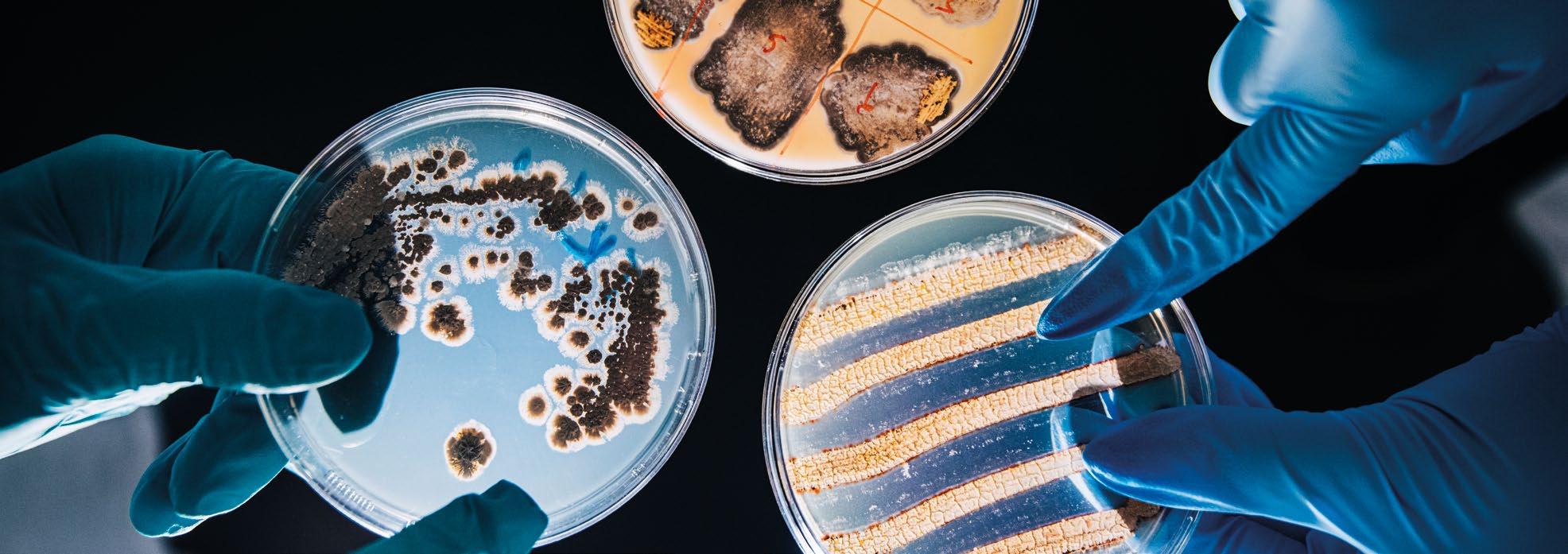
Researchers at DTU are working to speed up the green transition by developing cell factories where genetically engineered bacteria, fungi and yeast cells produce biological alternatives to products that have traditionally been made using petrochemicals.
In 2026, DTU launched BRIGHT, the Novo Nordisk Foundation Biotechnology Research Institute for the Green Transition. Here, top biotechnology experts across DTU will join forces with industry to turn biosolutions into tangible applications.
With a Novo Nordisk Foundation grant of more than EUR 130 million over seven years, BRIGHT will focus on three missions that are crucial to the implementation of the green transition, namely sustainable materials, microbial foods, and microorganisms for climate-neutral agriculture.
CONTROL OVER DATA
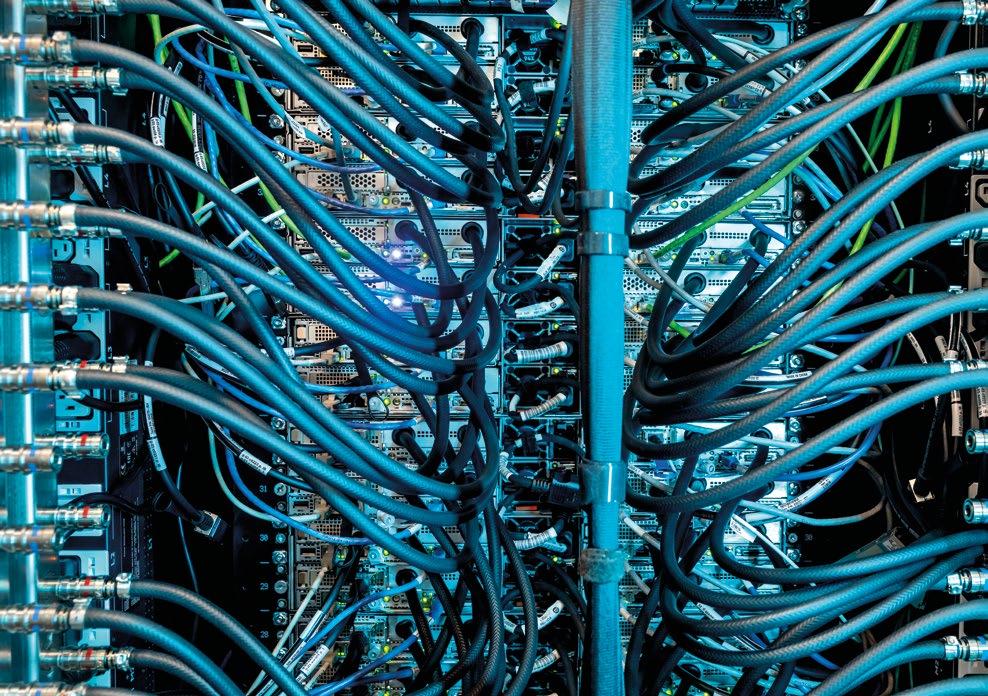
Computerome, with its 50 petabytes of storage capacity, resides in a highsecurity area of DTU Risø Campus and is one of Denmark’s most advanced supercomputers. Users, including DTU’s own researchers, public institutions, and private companies, always have full control over their own data. Computerome can store all of Denmark’s public data.
WORLD-CLASS RESEARCH INFRASTRUCTURE
DTU provides state-of-the-art laboratories and advanced testing environments that support groundbreaking research and foster innovation across a wide range of scientific and technological disciplines.
DTU’s commitment to maintaining world-class research environments is evident in the continual investment in new technologies and facility upgrades, which helps researchers push the boundaries of scientific discovery and enable technological breakthroughs.
This is done with the long game in mind as long-term and at times risky investments are necessary to maintain and expand our strong position and assume high-tech leadership in a time of increasing global competition and geopolitical instability.
We invest heavily because we acknowledge that our research infrastructure is more than buildings and instruments: They connect people across areas of expertise and country borders, and they are the prerequisite for our country and continent’s resilience and technological autonomy.
A wide range
Our research infrastructure facilitates research in areas such as energy, materials science, quantum technology, chemical and biochemical engineering, biotechnology, space technology, robotics, cybersecurity, and artificial intelligence.
Laboratories are equipped with sophisticated instrumentation, including testing environments for renewable energy solutions, clean rooms for nanotechnology, and supercomputers for complex simulations.
The university also features specialized facilities dedicated to acoustics, structural engineering, and medical imaging. This ensures that researchers have access to state-of-the-art resources.
Collaborative approach
A key aspect of DTU’s research excellence lies in a collaborative approach: By partnering with industry leaders, government institutions, and international research organizations, DTU ensures that these facilities are not only used for fundamental research but also contribute to real-world technological advancements.
This synergy between academia, industry, and authorities enables researchers to translate theoretical knowledge into practical applications, addressing and giving advice on global challenges such as climate change, healthcare innovations, and smart infrastructure.
DTU’s facilities are available to industry, enabling companies to develop innovative solutions to challenges, increase productivity and improve business operations.
More information
Research infrastructure at DTU dtu.dk/2026profile3
EDUCATION: STUDY PROGRAMMES
EDUCATING ENGINEERS FOR THE FUTURE
DTU aims to educate engineers and researchers who can apply critical thinking, are creative and can collaborate across disciplines, cultures and sectors. We equip our graduates to be able to drive change with ethical responsibility and navigate complexity with an understanding of the possibilities and consequences that technologies pose for our society.
DTU students study at campuses across Denmark and in Sisimiut, Greenland, and some programmes and courses are also available digitally. Close collaboration with industry ensures that theoretical knowledge is continually connected to real-world challenges, while sustainability, digitalization, and innovation remain central to every learning experience.
Engineering degrees at DTU
DTU offers a wide range of educational pathways.
The 3.5-year Bachelor of Engineering is a practiceoriented and professionally focused programme taught in Danish and built on the CDIO approach— Conceive, Design, Implement, and Operate.
A six- month internship gives students the practical experience needed to step directly into engineering roles.
The 3-year Bachelor of Science in Engineering programme is research - based and taught in Danish, except for the General Engineering programme. It prepares students for master’s-level studies and builds on DTU’s polytechnical foundation: a shared block of courses in mathematics, physics, chemistry, biology and programming, which ensures a common ground. Most courses are enriched with perspectives on sustainability, digitalization, and innovation.
Graduate students can pursue a 2-year Englishlanguage Master of Science in Engineering, where they develop the ability to analyze, synthesize, and evaluate complex engineering systems through advanced, research - based teaching.
DTU also offers a three or four-year Industry Master of Science in Engineering model. It allows students to combine their studies with a part-time engineering job in a company —an arrangement that benefits both students and industry partners.
For those aiming for a research career, DTU’s PhD programmes offer the opportunity to conduct scientific research at an international level. All PhD students follow mandatory interdisciplinary courses, such as sustainability assessment and research communication, and may choose an industrial PhD track in collaboration with a company.
Lifelong learning
DTU supports society’s need for continuous learning by transforming research and expertise into programmes for professionals. Opportunities range from executive and specialized continuing education to part-time diplomas, master’s programmes, flexible learning formats, open online courses, and singlecourse options.
EDUCATION IN FIGURES
34% women enrolled Gender balance:
107 countries Students from
EDUCATION:
STUDENT LIFE
APPLYING KNOWLEDGE TO SOLVE REAL-LIFE PROBLEMS
All DTU’s study programmes are interdisciplinary and designed to promote sustainability, innovation, and an entrepreneurial spirit. Students have handson access to world-class facilities and receive an innovative education where they can apply their theoretical knowledge to solve real-life problems— often in collaboration with industry partners.
Academic learning
Based on cutting-edge scientific knowledge, all teaching, supervision, and course development is carried out by educators who are actively involved in research and innovation. We teach using methods that reflect the way we work—innovation, critical thinking, collaboration, and engagement—all of which shapes our graduates.
Students develop analytical skills through independent study, group work, active participation in discussions, and close collaboration with fellow students and professors.
Amazing study environment
The study environment is vibrant and international, and most students stay after lectures to network, work on their own projects, or take part in one of our many extracurricular activities ranging from badminton and beach volley to ceramics and choir.
DTU attracts students from all around the country and the world. Intro weeks for both undergraduate and graduate programmes ensure that new students are acquainted with the study environment and campuses through academic and social activities.
Valuable graduates
DTU Master of Science in Engineering graduates are heavily represented among those with a long cycle higher education that are employed in the Danish life science sector. Our graduates are highly employable. As an example, they make up 18 percent of this group. The same figure applies to industries involved in the green transition.
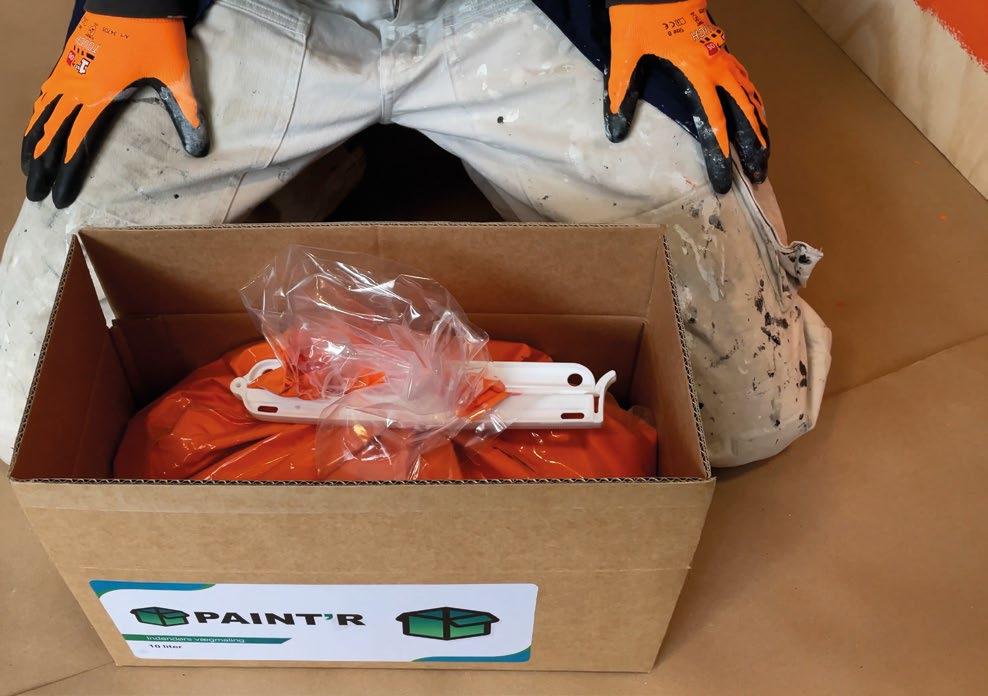
Our master’s graduates also make a big contribution to the Danish economy: Over the course of their working lives, the average graduate constitutes a net gain of more than EUR 2.6 million, which is more than those with a similar length of education across all professions Born in DTU’s Green Entrepreneurship course, a student idea has reimagined paint packaging: a cardboard-box solution that uses only a fraction of the plastic of traditional buckets resulting in big CO2 savings. Of more than 100 professionals who tested the solution, more than 80 per cent preferred it to the classic bucket. The trio has turned their idea into the startup Paint’R.
More information
DTU Blue Dot projects dtu.dk/2026profile4
BRINGING IDEAS AND INVENTIONS INTO THE WORLD
DTU has one of Europe’s strongest innovation and entrepreneurship ecosystems, bringing ideas from classrooms and laboratories into the real world where they create jobs and help solve some of the biggest global challenges.
The ecosystem builds on strong academic environments and a set of key actors that support a coherent and dynamic environment for innovation that helps ideas born from scientific insights to become commercial successes: DTU Entrepreneurship conducts research and education in entrepreneurship, DTU Skylab provides the frameworks and facilities for innovation and startup maturation, DTU Science Park A/S brings together one of Denmark’s most advanced deep -tech communities, and PreSeed Ventures A/S matures pre-scale ups with community, competences and investment.
Student innovation
A key contribution to society is the innovative mindset our students carry into their careers. Innovation and entrepreneurship are integrated into study programmes through mandatory and elective courses—such as the Innovation in Engineering course, which all master’s students take. Students also gain hands- on experience
and industry contacts through projects, events, internships, and student jobs.
Business collaboration
DTU has extensive experience collaborating with companies and organizations through strategic research partnerships, continuing education, student projects, and conferences. Companies value DTU’s collaborative and innovative approach. In 2025, DTU engaged in 1,463 projects with the business community.
Through the DTU Corporate Industrial Partnerships programme, researchers and students work with companies via strategic, interdisciplinary partnerships, career events, and workshops. By the end of 2025, DTU had 25 partnerships with companies including Novo Nordisk, Maersk, and Andel.
Start-ups
Students and staff continue to create start-ups that turn ideas into solutions that benefit society. In 2025, 117 start-ups were incorporated.* Of these 82 were founded by students and 35 by employees.
Since 2000, DTU staff and students have created 1,147 start-ups, 55 per cent of which are still operating (excluding those that have been acquired or merged). In 2025, the three largest companies employed around 1,000 people.
Commercialization
DTU fosters a culture where researchers consider business development from the start of a project, increasing the likelihood that research becomes technology for people. In 2025, researchers notified 99 new inventions and three software notifications. DTU signed 39 new sales, license, and option agreements covering 56 inventions and three pieces of software. By year’s end, the active portfolio totaled 227 commercial agreements.
The sky is the limit
More than 200,000 people visited DTU’s 5,000 m² innovation hub, DTU Skylab, in 2025 and 432 startup cases received coaching or mentoring. In addition, a subset of DTU start-up cases collectively received more than EUR 40 million in soft funding to advance their innovation and business cases.
*Due to methodological changes in reporting DTU Startups, the figures for 2024 and forward are not directly comparable with previous years.
1DTU’s placing on a list from the European Patent Office of the most patent-seeking universities in Europe for 2025.
In 2025, DTU committed to taking innovation success to a new level by launching the new initiative DTU Skyfactory. Here, startups with scale-up potential will embark on a 3–5-year entrepreneurial programme that will take them to a growth stage of international importance. The initiative will help to strengthen Europe’s competitiveness.
Watch videos
Technology Leaving no one Behind dtu.dk/2026profile5
Student start-up of the Year 2025 dtu.dk/2026profile6
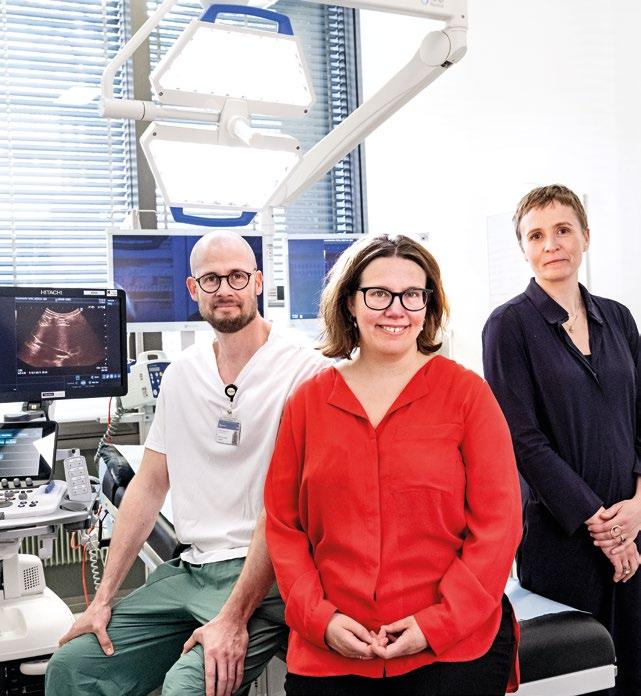
A SAFE START TO LIFE
Spinout company Prenaital, which uses AI models to identify up to 35 per cent more highrisk pregnancies, was founded in 2024 based on a DTU patent. Figures show that with 14 registered spinout companies in 2024, DTU expanded its position as the university in Denmark that incubates most new companies. Pictured from left are Prenaital co-founders Martin G. Tolsgaard, Aasa Feragen and Tanja Danner.
SCIENTIFIC ADVICE
A UNIQUE DANISH MODEL FOR THE BENEFIT OF SOCIETY
To ensure that science underpins decision-making in society, DTU offers scientific advice to public sector authorities, industries, and international institutions.
National scientific advice
At DTU scientific advice is firmly based on synergies between university research and applied research, as well as on an in-depth understanding of sectorspecific challenges, acquired through extensive collaborations with our strategic partners.
DTU has strategic partnerships with Danish authorities on nutrition and food safety, toxicology, aquatic resources, waste management, geodesy, renewable energy, transportation, security, and radioecology.
Our advisory services include complex problem solving, risk characterization for informed standard setting, development of surveillance systems for ongoing risk assessments, and diagnostic capacity for contingency planning and crisis resolution.
DTU offers scientific advice on a wide range of topics including advice on chemical and microbiological food safety, the sustainable utilization of living aquatic resources and transportation
modelling. Such scientific advice often leads to new initiatives or legislation.
In 2025 for example, a Danish ban on the discharge of scrubber water within 22 km of the Danish coast was introduced. Scrubber water is the water used to clean the exhaust gas from ships before it is released into the air.
The ban is based on research from DTU and international studies. It aims to protect the marine environment from the chemical compounds and heavy metals that may be present in scrubber water, which are very harmful to the entire food chain. DTU researchers were among the first in the world to document the damage scrubber water can cause in the aquatic environment.
International scientific advice
A mapping of DTU researchers who provide international advice at EU or global level was completed in 2024. It involves more than 100 experts across a wide range of academic fields.
The University provides scientific advice to international authorities and organizations, such as the European Food Safety Authority, the International Council for the Exploration of the Sea, and the European Commission’s Scientific, Technical and Economic Committee for Fisheries.
Furthermore, DTU serves as EU reference laboratory for Residues of pesticide in cereals and feedstuffs; Processing contaminants in food; Metals and nitrogenous compounds in feed and food; Antimicrobial resistance; and for Fish and crustacean diseases.
Moreover, DTU serves as the FAO Reference Centre for Antimicrobial Resistance and WHO Collaborating Centre for Antimicrobial Resistance in Foodborne Pathogens and Genomics, and for Risks and Benefits of Foods and Diets.
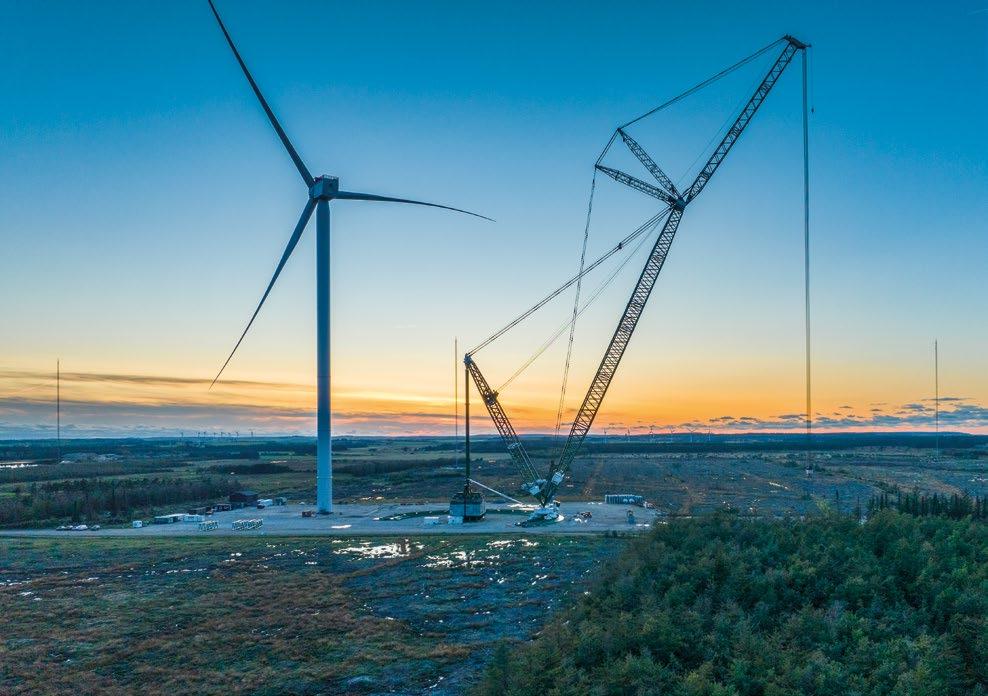
DTU provides scientific advice of a high international standard that supports the green transition of the energy sector and the advancement of renewable energy globally. As a leading knowledge partner, DTU’s experts assist industry and authorities with advice on issues ranging from the optimal location of wind turbine projects to the design of future energy systems.
DTU IS FOR EVERYONE
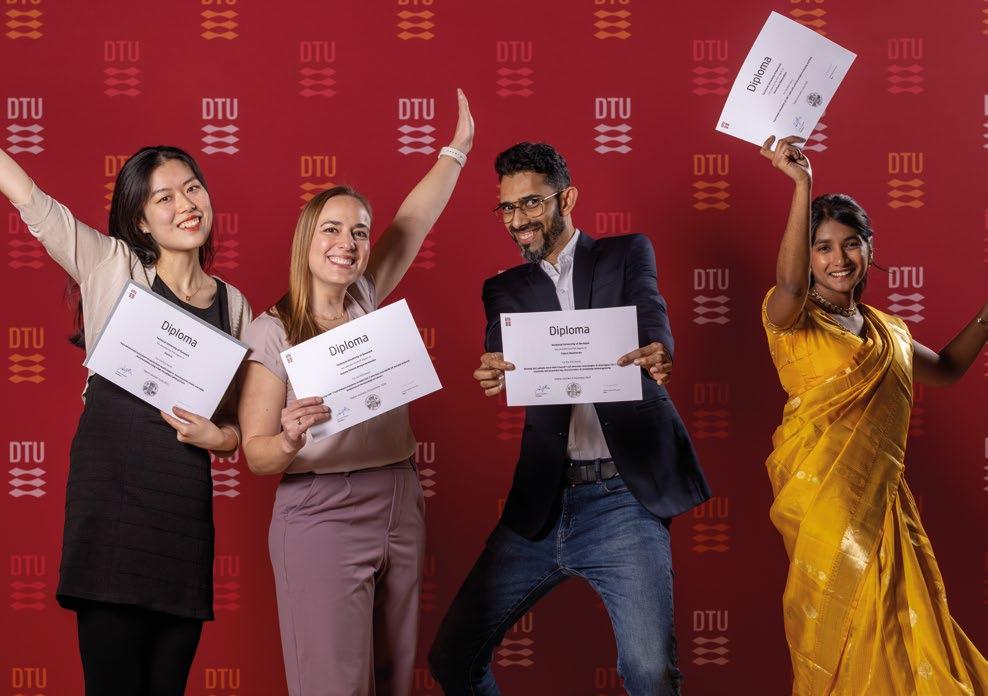
To attract the best talent regardless of gender, ethnicity, physical ability and cognitive differences, DTU works systematically to ensure equal opportunities for all, and the efforts are paying off. 2025 saw the highest proportion of women ever choosing a PhD at DTU. While the overall proportion of female PhD students has remained stable at 35–37 per cent since 2008, 43 per cent of those enrolled in 2025 were women.
EQUAL OPPORTUNITIES
LEAVING NO ONE BEHIND
At DTU, we are committed to advancing diversity, equity, and inclusion (DE&I) as part of our mission to create technology that contributes to a more sustainable, fair, and inclusive world. A diverse community of staff and students, supported by an inclusive environment, strengthens our ability to recognize blind spots and design technology for real and not ideal people.
We work proactively to enhance bias awareness, ensure fair recruitment processes, and address challenges openly. Our DE&I plan outlines our ambitions and guides efforts to create equal opportunities for all, regardless of identity or background. DTU also prioritizes flexible teaching options for students with physical or mental disabilities.
At DTU, we know it is important that young women who dream of a future in engineering have role models to look up to. To ensure that they see DTU as a place where they can grow their knowledge and skills, we have worked to turn the spotlight on some of our many female experts who are leading the way in their fields of research through their professional achievements.
Inclusiveness
DTU engages in long-term DE&I initiatives with
partners beyond the university. A key example is Technology Leaving No One Behind, launched in 2019 by DTU Skylab with the Disabled People’s Organisations Denmark, the Association of Youth with Disabilities, and Bevica Fonden. The initiative integrates accessibility and inclusion into engineering education and practice, pairing students with people with disabilities to co-create solutions grounded in real-world needs.
Over the years, this collaboration has led to inclusive mobility concepts for the Metro, tactile maps for visually impaired users, and a student startup that improves wayfinding for guests with physical and cognitive disabilities.
In 2025, DTU Skylab received the national Diversity Award for its leadership in embedding universal design, accessibility, and inclusion into engineering through the Technology Leaving No One Behind initiative. The jury highlighted DTU Skylab’s work aimed at breaking down barriers. Not by talking about limitations, but by creating solutions that strengthen opportunities for everyone.
DTU’s online open-source ‘Universal Design Guide’ playbook provides thoroughly tested methods and
specific tools through an interactive website to help organize and prepare for inclusive development and workshops. While originally created for DTU students, it has reached 160 countries and been used by universities worldwide since its creation.
Working across geographical boundaries
Through the annual Next Generation initiative, students, young researchers and early-stage entrepreneurs with diverse backgrounds join a threeweek hybrid innovation course and 8-day programme in Copenhagen to turn sustainability challenges into innovative solutions and action. The initiative places an emphasis on participation from universities in Africa, Asia and South America and the challenges faced by these regions.
The 2025 topic was Next Generation Digital Action. One challenge was to find ways to use emerging digital technologies to detect toxins in agricultural crops. This resulted in a low-cost, AI-powered sensor that can be used in agricultural warehouses to detect gas released from fungi. Partners in Kenya label it an innovative way to target major issues with aflatoxin in corn.
TAKING RESPONSIBILITY
COMMITTED TO A RESPONSIBLE FUTURE
By combining cutting edge research with the innovative thinking of our researchers and students, DTU drives the development of new technologies that support the green transition.
Our interdisciplinary approach is one of our greatest strengths, enabling us to create advanced technologies and sustainable solutions with real societal impact. Our sustainability-focused research spans areas such as construction, energy, biosolutions, transport, food, and climate.
Sustainability starts at home
In our eagerness to behave more sustainably, we often—unintentionally—make things worse for our planet, as DTU’s research on rebound effects documents. Rebound effects occur when intended benefits are diminished or canceled out by unforeseen human behaviour.
Therefore, we need to address the strain we place on the planetary boundaries in a holistic way. DTU has committed to letting this perspective guide our sustainability efforts—both in our research and
the way we run the university. We have already launched important initiatives.
Four PhD students are mapping DTU’s own baseline in relation to the pressures our activities are putting on the four planetary boundaries that have already been exceeded. We also integrate rebound effect insights when designing green solutions on campus.
Sustainable green innovation
At DTU we believe that society must continue to develop without putting further pressure on our planet. Therefore, technology must be designed so that it genuinely reduces resource consumption rather than simply making it cheaper to consume more.
DTU has committed to taking a leading role in demonstrating how sustainability and green innovation can strengthen European competitiveness. We will advance green innovation that creates longterm competitive advantages for European industry and business, thereby moving sustainability from good intentions to concrete action.
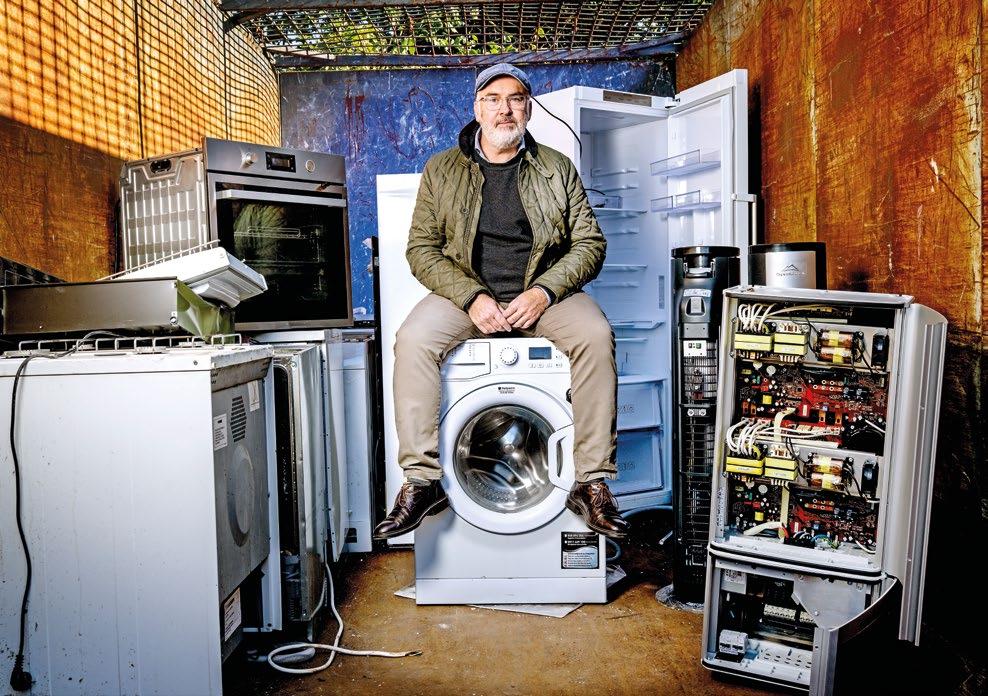
DTU and the Danish Industry Foundation have joined forces to establish Remanufactory—a national competence centre aimed at helping companies turn worn-out products into brand-new business opportunities. The centre, which is headed by Professor Tim C. McAloone (pictured), is the first of its kind in Denmark.
INTERNATIONAL RELATIONS
GLOBAL OUTREACH
Technology is created by innovative researchers who work through global partnerships. At DTU, we identify the best match between researchers, fields, and projects.
Europe is our main priority, but we engage in strategic global collaborations where these strengthen Europe’s position and independence.
Alliances and strategic partnerships
DTU’s network of alliances and strategic partnerships spans research, education, scientific advice, and innovation. Together we promote synergy, quality, impact, and visibility.
One of these is the EuroTech Universities Alliance, where six leading universities of science and technology have a vision that focuses on sustainability, education, and a technologically sovereign and resilient Europe. Our aim is to create a unique environment for international talents to lead a new generation of change agents in research, entrepreneurship, industry and society.
DTU is also part of the Nordic Five Tech strategic alliance, where five leading technical universities in the Nordic region create an extended campus for students and staff to conduct research, share knowledge and follow educational programmes.
DTU also looks to the global job market to attract international resources and talent, and we build on in-depth collaboration and a mutual match in excellence and values.
An international education
Students from more than 100 countries come to study at DTU every year, and we also encourage all our students to spend a semester or two abroad.
An exchange period helps students grow—both academically and personally—and creates networks that will prove invaluable in a future career. Our students have the chance to work and study with the best research universities in the world. We invite students from all over the globe to study at our university, and we offer 32 MSc Eng programmes in English.
Exchange students
Student exchanges between DTU and other universities remain a popular initiative. In total, 859 international exchange students came to study at DTU during the 2024/25 academic year, and 614 DTU students went abroad.
Top ten global exchange partners in 2025*:
Technische Universität München, Germany
Ecole Polytechnique Fédérale de Lausanne, Switzerland
Norwegian University of Science and Technology, Norway
Instituto Tecnológico y de Estudios Superiores de Monterrey, Mexico
Monash University, Australia
Delft University of Technology, the Netherlands
Nanyang Technological University, Singapore
Politecnico di Milano, Italy
Universidad Politécnica de Cataluña, Spain
University of Queensland, Australia
* In terms of volume
115 exchange partners
14 joint international programmes
859 international exchange students came to DTU*
614
DTU students went abroad*
* During the 2024/2025 academic year

SMART SATELLITES
Recordings from ESA’s Proba-3-mission in late 2025 confirm that its satellites can autonomously locate each other across vast distances, navigate into contact with micrometer precision and effectively function as a single instrument. This is possible thanks to AI, advanced star cameras, and navigation developed by researchers at DTU Space over a number of years.
ORGANIZATION
DTU is an independent and self-governed university administered by a Board of Governors and under the leadership of the University President and the Executive Board.
The main tasks are carried out by departments, research centres and affiliated companies.
Support functions
Campus Service
Communications and Media
Finance and Accounting
Human Resources IT Service
Policy and Relations
Research, Advice and Innovation
Study Programmes and Student Affairs
Departments
Boards and councils
Academic Council
Employer Panel
Board of Representatives
Advisory boards
Education committees
Affiliated companies
Bioneer Ltd.
DFM Ltd.
PreSeed Ventures A/S
DTU Science Park Ltd.
DTU Offshore
Danish Offshore Technology
Centre BRIGHT
Novo Nordisk Foundation Biotechnology Research Institute for the Green Transition
DTU Learn for life
Centre for
Lifelong Learning
DTU Nanolab
National Centre for Nano
Fabrication and Characterization
DTU Entrepreneurship Centre for Technology Entrepreneurship Centres
Executive Board
DTU Skylab Innovation Hub


Executive Vice President


D.
Dean of Studies and Student Affairs Senior Vice President
Claus Nielsen University Director Executive Vice President
Vice
National and International Partnerships, Life Long Learning

and Talent Development
Lars
Christoffersen
Camilla Rygaard-Hjalsted Dean of Sustainability, Diversity, Inclusion
Anders O. Bjarklev President Christine Nellemann Provost
Carsten Orth Gaarn-Larsen Senior
President,
Marianne Thellersen Senior Vice President Innovation and Entrepreneurship
HUMAN RESOURCES
6,574
41% are women
Total staff full time equivalent (FTE) 61% have an international background
* Based on data on citizenship
2,529 Researchers and educator full time equivalent (FTE)
1,616 PhD fellows 61% have an international background 43% have an international background
102 nationalities*
2,888 in support functions full time equivalent (FTE)
17% have an international background
71% of all staff are below 50 years of age
46,600
Members in DTU’s alumni network
54% of all alumni have joined the alumni network
CAMPUSES
DTU Lyngby Campus
Located 15 km north of Copenhagen, DTU’s main campus sits on 106 hectares that feature wooded areas, sports fields, inner courtyards, and gardens.
DTU Ballerup Campus
Located 10 km west of Copenhagen, DTU Ballerup Campus is home to many of our BEng students.
DTU Risø Campus
Located 40 km west of Copenhagen, DTU Risø Campus is the site of much of DTU’s groundbreaking research in wind energy technologies.
DTU Hirtshals Campus
Located in one of Denmark’s most important fishing towns, DTU Hirtshals Campus is a hub for research in fisheries and aquaculture and houses two of DTU’s study programmes.
Arctic DTU Sisimiut—Ilinniarfeqarfik Sisimiut
DTU’s campus in Greenland is home to research as well as BEng and MSc Eng students who follow our Arctic study programmes.
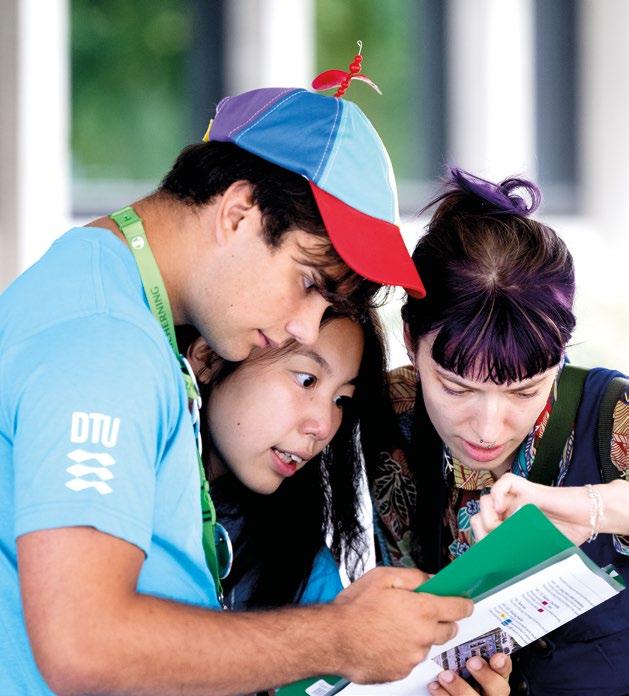
Intro weeks for both undergraduate and graduate programmes ensure that new students are acquainted with the study environment and campuses through academic and social activities.
LOCATIONS
Greenland
Sisimiut
Kalundborg
Lyngby
Femern (Rødby)
Bornholm
Hirtshals
Østerild
Mors
Skive
Høvsøre
Fredericia
Silkeborg
Ballerup
Risø
University of
Anker Engelunds Vej 101
2800 Kgs. Lyngby