DTU’S WORK CULTURE

Commitm e n t ytilibiderC tavonnI i ve thinking


Preface
This DTU’s Work Culture pamphlet is for all DTU employees. Our work culture is defined by the values, traditions, beliefs, interactions, behaviours, and attitudes held by our employees. The pamphlet describes the basis of our work culture. It explains what an employee can expect from DTU, and what is expected from you as an employee.
DTU’s work culture is driven by our strategic objective to rank amongst the top five technical universities in Europe in research, education, innovation, and consultancy. To achieve this ambition, it is crucial that we are able to attract and retain the best employees. All employees must contribute to making
DTU an attractive work place, fostering well-being and professional curiosity. Talent must be cultivated at all levels; at DTU, employees and management have a joint responsibility for on-going employee development.
In addition to this DTU’s Work Culture pamphlet, employees can obtain more information on working life at DTU from the Employee Guide (see DTU Inside). It contains information on employment conditions, guidelines on your working life at DTU, your responsibilities under the code of conduct on research integrity, DTU employee policies, and an overview of the services and options available to you as a DTU employee.
Anders Bjarklev, President

Collaboration at DTU
DTU is an elite technical university and achieves this through collaboration, dialogue, and cooperation. All working relations are based on mutual equality and respect.
DTU has an outstanding and diverse workforce who are driven by a desire to make a difference. DTU’s mission is to develop and create value using the natural sciences and the technical sciences to benefit society, and this often involves
complex issues requiring a multidisciplinary and collaborative approach. Working together requires that you challenge your colleagues constructively and positively and acknowledge their contributions. This requires a welcoming and open approach where solutions are identified and qualified through dialogue between individuals.
As an elite technical university, DTU aims to attract and develop the best talent. DTU provides a clear career path and seeks to develop and foster talent. DTU expects its employees to show mutual respect for one another and to treat each other as equals, irrespective of gender, age, education, ethnic origin, etc.
Each employee is expected to align their own development with DTU’s overall goals. Competences are developed constructively and with respect for colleagues and the workplace.
Innovative thinking
At DTU, innovative thinking is the creation of novel ideas, and a balanced assessment of their consequences.
DTU’s values
Innovative thinking
DTU expects its employees to be creative, reflective, and analytical.
Employees can expect DTU to be a creative space for idea generation. DTU will be positive and open-minded towards new and different ideas, and recognize the uncertain nature of all conclusions
Credibility
At DTU, credibility is the possession of knowledge and insight, an understanding of their limitations, and their clear communication to a target audience.
Credibility
DTU expects its employees to be professional and thorough in their communication.
Employees can expect DTU to support the views expressed by employees, and ensure that they are founded on, and tested by DTU’s world-class academic environments.
Commitment
At DTU, commitment means approaching work with enthusiasm, but also recognizing one’s responsibility as a staff member towards the collective effort
Commitment
DTU expects its employees to work with great professionalism, collegiality, loyalty, and enthusiasm. Employees can expect DTU to have a mutual commitment to the University’s tasks and to ensuring that outcomes are of the highest global standard.
Your manager
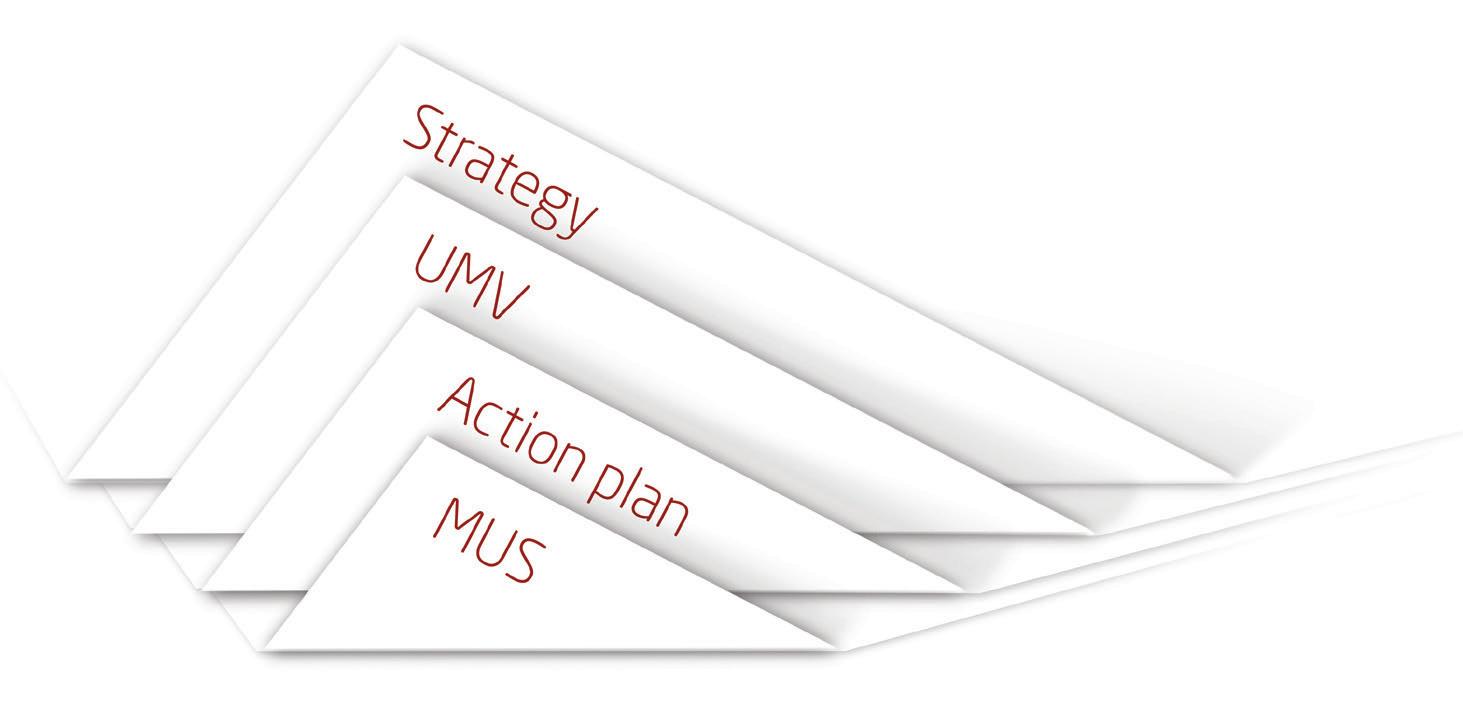
DTU is managed as a line/staff organization with an unbroken chain of command and in which managers have personnel management responsibility for each organizational unit. This means that you only have one immediate superior (also sometimes referred to as your manager). Your immediate superior is the person responsible for conducting your employee development interviews (MUS). The unbroken chain of command (also sometimes referred to as single point of responsibility) does not preclude you from engaging with other parts of DTU’s management, participating in multiple projects, working across the organization, and perhaps having a primary and a secondary supervisor, etc.
DTU is a large network of relevant and mutually rewarding partners who each have their own responsibilities. However, you will often be working with other people and if you are in doubt about how to prioritize, it is important that you share your doubts with your immediate superior.
Explain how you see a situation and what is required to support you.
The management culture at DTU is also characterized by an expectation that you lead upwards. This means that you are responsible for ensuring that your immediate superior is informed about those of your considerations and arrangements that influence your areas of responsibility.
For a more detailed introduction to management at DTU, we recommend that you look at DTU Inside. Here you can read more about management at DTU, including that leadership should be professional at DTU, and that power should be wielded with humility.


DTU is an international university
DTU is an international university with a Scandinavian work culture. Employee relations are characterized by equality, even between a manager and an employee.
This means that you will find that your manager prefers to reach consensus through dialogue. As an employee, you are expected to be involved in decision-making while, of course, respecting that the final decision always lies with the manager.
If you are familiar with Danish culture, DTU’s dialogue-based and cooperative working methods will not be new to you. However, some of our international employees may find this consensus-oriented approach to work puzzling, and perhaps experience it as a lack of management. On the contrary—the consensus-oriented approach is a management style where your input is both expected and valued. At DTU, everyone is expected to participate in dialogue, regardless of their position. Employees are expected to be curious and inquisitive.