2021/22

2021/22
Study programmes and student life at Technical University of Denmark


Dear Student,
DTU is a university where we collaborate across academic disciplines and cultures to create a sustainable future. Our doors are open to our colleagues and students—and to society at large. Our openness is reflected in our excellent research and study programmes, providing students with the freedom to pursue their passions and translate them into technology with global impact.
At DTU, we aim to develop Europe’s best engineering education where students can realize their full potential and master technologies for the benefit of people and society. In response to the global climate challenge and the accelerating depletion of Earth’s resources, we strive for a sustainable future by developing technology for people.
Led by our dedicated faculty, DTU students are allowed hands-on access to world-class facilities. You are also encouraged to work in interdisciplinary programmes and to create your own academic programme that will prepare you for a successful and rewarding career.
Anders O. Bjarklev President

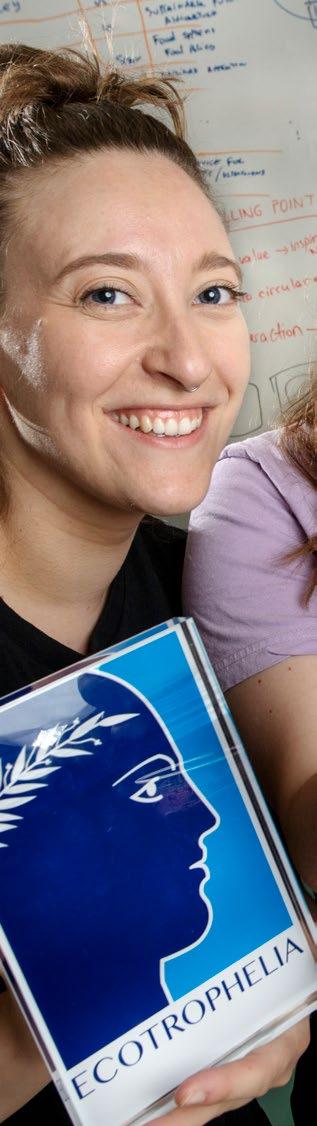

We strive for a sustainable future by developing technology for people.”

Founded in 1829, DTU is one of Denmark’s foremost institutions of higher learning. Through our collaboration with private and public stakeholders, DTU serves as a driving force for welfare and sustainable value creation by generating new discoveries and inventions that benefit society, protect the environment, and improve people’s lives.
Recognized internationally as an elite technical university, we take our role as a leading force within the technical, natural, and life sciences seriously by providing education, research, innovation, scientific advice, and knowledge dissemination at the highest level.
The University attracts leading academics and gifted students from around the world. More than 100 nationa lities are currently represented at DTU, making student life at DTU a truly international experience.
In 2020, DTU enrolled a total of 5,430 new students: 1,239 BEng students, 1,533 BSc Eng students, 2,184 MSc Eng students, and 474 PhD fellows.
Indicator:
Ranking Collaboration Indicator:
* As of 8 June 2021
** The Nordic region consists of Denmark, Sweden, Norway, Finland, and Iceland.
Student satisfaction
93 per cent of the students find that the quality of their study programme is generally high.
In spring 2021, DTU published a student survey. The students generally give a very positive assessment of DTU and the MSc programme: Source:
95 per cent of the students find that the physical framework and environment at DTU is safe.
94 per cent of the students find that the educational environment at DTU is good.
89 per cent of the students find that the educational environment increases their motivation to study.
89 per cent of the students find that they benefit from the programme.
81 per cent of the students find that it is easy to get in touch with their teachers.
Denmark is one of the safest countries in the world and the least corrupt, which may be part of the reason why Danes rate themselves as being among the happiest people on earth year after year. Language proficiency is excellent, and 86 per cent of the population speak English.
DTU has research and test facilities in all parts of Denmark, and in Greenland, including four campuses. The main campus is located in Lyngby just north of Copenhagen—one of Europe’s most popular and progressive capitals.
DTU Lyngby Campus
DTU’s main campus is located 15 km north of Copenhagen. The campus covers a 106-hectare site, and is landscaped with wooded areas, sports fields, inner courtyards, and gardens.
DTU Ballerup Campus
DTU Ballerup Campus is located approximately 10 km west of Copenhagen, and is home to many of our BEng students.
DTU Risø Campus
DTU Risø Campus is located 40 km west of Copenhagen and is the site of much of DTU’s groundbreaking research in wind energy technologies.
Arctic DTU Sisimiut
– Ilinniarfeqarfik Sisimiut
DTU’s campus in Greenland is home to research as well as BEng and MSc Eng students who follow our arctic study programmes.
More information on > dtu.dk/studentguide
All MSc programmes are taught at Lyngby Campus. DTU’s main campus consists of more than 100 buildings on a 106-hectare plain, which is divided into four quadrants—just like points in a coordinate system. The campus is safe and secure, and a site of great natural beauty with wooded areas, sports fields, inner courtyards, and gardens.

DTU Library features several study areas and teamwork rooms.


At DTU, you find several different places to get something to eat. Try one of our street food stalls on campus.
Prospective students and their families are invited to book a free guided tour of DTU Lyngby Campus. Please contact mscadmission@adm.dtu.dk

The main building houses canteens, conference rooms, a bookstore, the reception team, and administrative offices, including the international study guidance office and the President’s office.

At DTU you find several different Friday bars/cafés on campus. Here you can hang out with your fellow students and buy drinks at student prices.

DTU’s International Accommodation Office allocates rooms in DTU’s halls of residence. All rooms are furnished with the most essential furniture. We do our utmost to find accommodation for all students. bdtu.dk
Experience
DTU Lyngby
Campus online
Interactive map
> dtu.dk/360campustour
360 video
> dtu.dk/360tour
DTU’s study programmes are cross-disciplinary, you get hands-on access to world-class facilities, and you engage in project-based assignments where you can apply your theoretical knowledge to solve real-life problems. The University also has a vibrant student life. You can join one of the many clubs and activities, or attend the Friday bars and the many other social events and festive occasions at DTU.


At DTU, we care about the well-being of our students. During the ‘Introduction Week’ you will be introduced to your new buddy. Buddies are DTU students (Danish and international) who have dedicated themselves to giving you a good study start and who will help and assist you throughout your first semester at the University.
As a DTU student you have the opportunity to participate in one of the cross-disciplinary DTU Blue Dot Projects. Among other things, you can work with an eco-car doing 429 km to the litre, a sustainable brewery, an annual robot competition, or synthetic biology as the solution to the challenges within energy, environment, foods, and medicine.
DTU focuses on supporting student innovation and entrepreneurship. At DTU’s innovation hub, DTU Skylab, you can get help to bring business ideas to life, work with innovation projects supplied by the business community, or get feedback on the development of prototypes in connection with courses. You can also follow courses on innovation and entrepreneurship. DTU also offers a MSc programme in Technology Entrepreneurship.

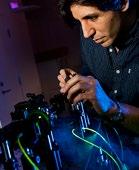

There is a refreshing lack of hierarchy at DTU and student-staff relations are typically less formal than in most other countries. Professors go by their first name and are easily accessible to students. You learn to work individually and in groups, and as a new student, you will discover that everything is open to discussion and every opinion is valued.


Academic activities are based on the latest scientific knowledge as all teaching, supervision, and course development are carried out by educators who are themselves actively involved in research and innovation. Moreover, DTU collaborates closely with industry, benefitting both research and learning activities.


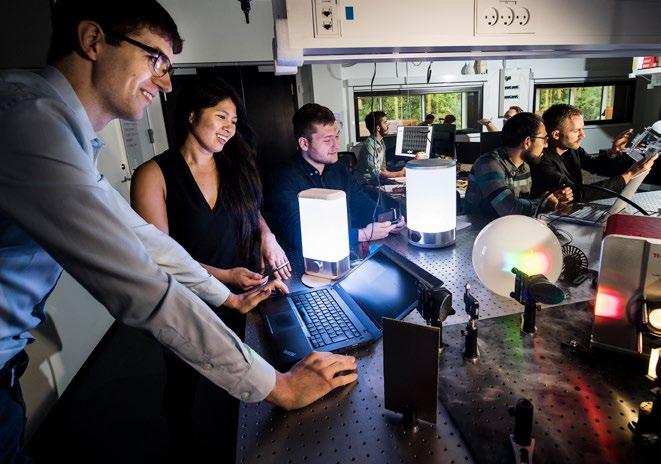
As a DTU student you will have access to numerous teaching and research facilities, ranging from laboratories, workshops, and test halls to wind tunnels, anechoic chambers, and a marine research vessel. Student facilities on DTU Lyngby Campus include all-campus wireless Internet access, student data bars, canteens, a bookshop, and an ultramodern library.
Engineers play an essential role in ensuring a sustainable development. At DTU, all programmes focus on sustainability, climate technology and environment. Held every year, the Green Challenge student conference is a unique opportunity for DTU students to present their projects to the world and compete for the prizes for the best project within various categories.

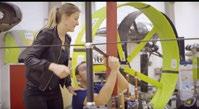
No matter what you are interested in, there is a club for you at DTU. For example, you can join the photo, music, or poker club. If you prefer something more physical, you can use any of DTU’s many indoor and outdoor sports facilities. Among other things, you can dance, climb, or do weight lifting—or you can play football, badminton, or beach volleyball.
DTU has a vibrant student and campus life environment with more than 12.000 students from all over the world.
total students enrolled
12,894 107
student from
countries
Meet four of our students and hear their thoughts on studying at DTU. Anant, Christoffer, Laura, and Mareen have different nationalities and follow different study programmes.
Anant from India
Sustainable Energy
“I find the level of freedom and informal interactions with our professors kind of refreshing”
Laura from Spain
Aquatic Science and Technology
“One of the things that is special about the way you study here is group work. Most of the final assignments are handed in as a group. What’s also special is that you can customize your studies quite a lot and gain skills and competences in different areas you might be interested in”

Christoffer from Denmark Design and Innovation
“I live at the William Demant Dormitory. It’s a great place to live. It’s nice to have all your friends nearby. You are never really alone unless you want to. It’s right next to DTU”

Mareen from Germany
Wind Energy
“The way of studying in Denmark is quite different from my bachelor experience. You’re in close contact with your professors and they really care about helping you out.”
4,834
total students enrolled on DTU’s master’s programmes
24.9
average age at study start on DTU’s master’s programmes
international students enrolled on DTU’s master’s programmes
Gender equality and diversity
Diversity, equal treatment, and equality are founding principals at DTU. We prioritise a study environment that is based on inclusion and recognition for an individual’s talents. We expect all students and employees to work together from the perspective of mutual respect and equal opportunity, regardless of gender, ethnicity, age, sexual orientation, culture, educational background, physical ability, and other personal differences.
Diversity and equality are important prerequisites for DTU to perform groundbreaking research and teaching at the highest level for the benefit of society. As a university, DTU has a responsibility to work continuously toward gender balance in the student body. We work with initiatives to attract more women students and initiatives that ensure the organizational structures support a culture where students feel valued.

After you are admitted to DTU, you have the possibility to be a part of the DTU Student Ambassador Programme – where you can connect with a student currently studying at DTU. You can ask questions about the MSc programme that you are admitted to, about campus life and/or about living in Denmark in general.
See the films about our study programmes
On DTU’s YouTube channel, you can watch a film about each of the MSc programmes.
See all the films at dtu.dk/mscs
media
Get an insight into DTU’s study environment—follow us on social media
Follow us


Since 2016, DTU has offered an international BSc programme in General Engineering, taught exclusively in English.
You will be part of a very diverse and international learning environment where approximately half of the students come from Denmark and the other half from all over the world.
Students work on Design-Build projects—which are practice-oriented, interdisciplinary group projects where you work together on proposing an engineering solution to specific problems from the real world. In short: you will learn to think and work like an engineer.
You will be taught by professors and lecturers who are themselves active researchers, and you will soon find that the student-professor relationship is quite informal. At DTU, all professors go by their first name and are easily accessible to students.
The BSc Eng is a three-year programme with a workload of 180 ECTS points. Graduates obtain the title Bachelor of Science in Engineering.
The programme comprises four categories of courses, which each corresponds to 45 ECTS points: basic natural science, technology core, projects, and professional skill, electives.
Basic Natural Science Courses
45 ECTS points
You cannot solve complex technological problems without knowing the basic natural science disciplines mathematics, physics, chemistry and biology. This course block provides an insight into these disciplines.
Technology Core Courses
45 ECTS points
On the BSc in General Engineering, you specialize in one of the four focus areas: ‘Living Systems’, ‘Cyber Systems’, ‘Cyber Materials’, or ‘Future Energy’.
Projects and Professional Skill Courses
45 ECTS points
You will experience the engineering spirit through Design-Build projects and also
learn to use a range of relevant IT tools. Half-way through, you will undertake your first big project, the specialist project, which is an exercise in how to prepare a project and engage in teamwork. You will also take a course in science theory, before the BSc concludes with a bachelor’s thesis.
45 ECTS points
You have every opportunity to shape your own unique academic profile at DTU. In the block of electives, you choose between several hundred different courses from DTU’s entire course catalogue, allowing you to steer your BSc Eng degree in exactly the direction you want, and in so doing increase the number of options open to you when choosing an MSc Eng programme.


DTU currently offers one BSc programme in General Engineering for international students, where you have the opportunity to choose between four different focus areas.
For more information, please visit > dtu.dk/geneng

Watch video of the study programme: dtu.dk/general-eng
In the first semesters, you are required to take a number of mandatory courses such as mathematics, physics, and chemistry, and you will experience the engineering spirit through Design-Build projects. Then, in the second and third semesters, you select introductory courses for two of the four focus areas that you are most interested in: Living Systems, Cyber Systems, Cyber Materials, and Future Energy—and in the following semesters, you will specialize in one of these areas. In the fifth semester, you have the opportunity to spend a semester at a university abroad, work on a project in collaboration with a company, or specialize further at DTU. In the sixth semester, the programme is concluded with a bachelor’s thesis.
Career prospects
Depending on your choice of specialization, you can apply for admission to a wide range of MSc programmes at DTU or at another university.
The academic level of the BSc Eng programme is advanced. In each individual case, admission will be based on the following criteria:
General admission criteria
Degree In addition to having an upper secondary education leaving exam, you must have specific levels in English, mathematics, physics, and chemistry equivalent to the Danish exams:
English B*
Mathematics A
Physics B and Chemistry B or Physics B and Biotechnology A or Biotechnology A and Geoscience A
*English B must be passed with a minimum grade of 3.0 (on the Danish grading scale).
If your upper secondary education is not an IB, EB or from one of the Nordic countries, you have to prove your English proficiency by taking one of the following English tests:
English language proficiency
Minimum entry levels:
Cambridge Advanced English/Cambridge Proficiency in English 180
TOEFL Internet-based 88
IELTS 6.5
Please note that the language test must not be older than two years on 5 July.
Application deadlines
15 March at 12 noon if you hold an international qualifying exam.
Application fee
Please note that unless you have a residence permit in Denmark, all non-EU/EEA citizens are required to pay EUR 100 before your application is processed.
Tuition fees
Higher education in Denmark is provided free of charge for EU/EEA citizens and for students participating in an exchange programme. All other students have to pay tuition.


All MSc programmes at DTU have an uniquely flexible course structure, offer honours tracks, and are taught exclusively in English. Choose from 32 MSc Eng programmes, a MSc programme in Technology Entrepreneurship, and a wide range of international joint master’s programmes with partner universities.
All our master’s degree programmes are research-based and train students in advanced research methods, teach them to adopt a constructive and critical approach to research findings, and to translate new knowledge into technical solutions.
We encourage all students to take responsibility for planning and executing projects, and to participate actively in discussions in order to develop their critical and analytical skills.
You will soon discover—and learn to appreciate—that every opinion is valued.
To ensure that academic activities are based on the latest scientific knowledge, all teaching, supervision, and course development at DTU is carried out by professors and lecturers who are themselves active researchers.
The relationship between professor and student is quite informal. At DTU, all professors go by their first name and are easily accessible to students.
The MSc is a two-year programme with a workload of 120 ECTS points. Graduates obtain a degree with the title Master of Science in Engineering, expect for MSc in Technology Entrepreneurship where graduates obtain a degree with the title Master of Science.
The programme comprises four categories of courses, which each corresponds to 30 ECTS points: general competences, technological specialization, electives, and master’s thesis.
General Competences
30 ECTS points
Courses fall into the following three categories:
General engineering competences
You learn to combine technology application and development with financial management, management, and organization. Most importantly, you learn how to use your qualifications and technological know-how in a professional and social context.
Synthesis competences
You learn how to define and provide solutions to an open problem. You may be part of a cross-disciplinary team, and will be trained in communication and collaboration.
Normative competences
You learn a set of essential disciplines common to all technical aspects of engineering within a specific field.
Technological Specialization
30 ECTS points
These courses give you the in-depth academic and technological knowledge necessary for obtaining state-of-the-art competences within a specific field of engineering. The course profile depends on your selected study line/focus area.
30 ECTS points
An important aspect of our MSc programmes is the significant number of elective courses. You can pursue your own scientific and professional interests and choose from a variety of different DTU courses.
Master’s Thesis
30 ECTS points
The thesis marks the completion of the MSc programme. The research project is usually carried out at DTU and in many cases in collaboration with one of our many industrial partners. All projects include elements of fundamental research, innovation, and application.


DTU offers master’s programmes in all modern fields of engineering at the University, giving students the widest possible choice. The structure and content of the various programmes reflect DTU’s status as a high-ranking elite university in engineering.
MSc programme
• Technology Entrepreneurship
MSc Eng programmes
• Advanced Materials and Healthcare Engineering
• Applied Chemistry
• Aquatic Science and Technology
• Architectural Engineering
• Autonomous Systems
• Bioinformatics and Systems Biology
• Biomedical Engineering
• Biotechnology
• Business Analytics
• Chemical and Biochemical Engineering
• Civil Engineering
• Communication Technologies and System Design
• Computer Science and Engineering
• Design and Innovation
• Earth and Space Physics and Engineering
• Electrical Engineering
• Engineering Acoustics
• Environmental Engineering
• Food Technology
• Human-Centered Artificial Intelligence
• Industrial Engineering and Management
• Materials and Manufacturing Engineering
• Mathematical Modelling and Computation
• Mechanical Engineering
• Petroleum Engineering
• Pharmaceutical Design and Engineering
• Photonics Engineering
• Physics and Nanotechnology
• Quantitative Biology and Disease Modelling
• Sustainable Energy
• Transport and Logistics
• Wind Energy

International students have the opportunity to enrol in one of DTU’s joint international master’s programmes that we offer in collaboration with a number of acknowledged elite universities from around the globe. For more information, see page 29.
• Arctic Mineral Resources (Nordic Master)
• Cold Climate Engineering (N5T)
• Computer Science and Engineering (KAIST)
• Electrical Engineering (KAIST)
• Electrical and Mechanical Engineering (KAIST)
• Energy Conversion and Storage (TUM)
• Engineering Acoustics (KAIST)

• Environmental Engineering (EPFL)
• Environmental Engineering (N5T)
• Environmental Engineering (TUM)
• European Wind Energy Master
• Innovative Sustainable Energy Engineering (N5T)
• Management (TUM)
• Maritime Engineering (N5T)
• Mechanical Engineering (KAIST)
• Offshore Wind Energy (KAIST)
• Physics and Nanotechnology (TUM)
• Polymer Technology (N5T)
• Security and Cloud Computing (Erasmus Mundus)
• Space and Geodesy (TUM)
• Sustainable Aquaculture (NTNU)
• Sustainable Energy Technology (TU/e)
DTU is part of a collaboration between the eight Danish universities, the Chinese Academy of Sciences (CAS), and the Graduate University of the Chinese Academy of Sciences (UCAS). Students enrolled on a SDC programme will spend two years at the Sino-Danish Center in Beijing in China.
• Chemical and Biochemical Engineering (SDC)
• International Food Quality and Health (SDC)*
• Life Science Engineering and Informatics (SDC)
• Nanoscience and Technology (SDC)*
• Neuroscience and Neuroimaging (SDC)*
• Water and Environment (SDC)*
*Please note that these programmes do not lead to a degree from DTU. Learn more about these programmes
> sdc.university
The
globe indicates that the programme is a joint international master’s programme
and join an Industry Master
DTU offers the opportunity to join an Industry Master of Science in Engineering in all its MSc programmes except Aquatic Science and Technology (cand.polyt.) and Technology Entrepreneurship (cand.tech.).
The Industry Master of Science in Engineering combines work with part-time study to obtain a full MSc degree over a 4-year period.
The prerequisites are similar to the ones that apply to the 2-year-programme but in addition, you must have a job relevant for your studies where you work at least 25 hours a week, or you may be self-employed in a start-up company.
Non-EU/EEA citizens already working in Denmark can apply for the Industry Master of Science in Engineering. It is strongly recommended that applicants first check the rules and impact on the current work permit with the Danish Agency for International Recruitment and Integration.
Learn more about application and conditions > dtu.dk/industry

The cogwheel indicates that you have the opportunity to join an Industry Master of Science in Engineering
As a DTU student you have many opportunities to go abroad during your studies – everything from a semester in Shanghai to a fixed programme in Stockholm is possible. 878 international exchange students joined DTU in 2020, and 830 DTU students went abroad.
Exchange abroad
An exchange stay is the natural choice if you wish to study abroad for 1-2 semesters as a part of your DTU degree. With more than 100 international partner universities across the globe, there are many interesting universities to choose from – some among the best universities in the world.
Joint international master’s programmes
An international joint programme is a great option, if you want to strengthen your academic profile, while at the same time obtaining international experience and knowledge from some of the best universities in the world through a structured programme.
Summer school abroad
Going on summer school abroad may be ideal, if you wish to study abroad for a shorter period of time. This way you can complete 5 to 10 ECTS points over the summer and still experience a different university culture and the international student life.
Self-arranged studies abroad
If you have the time and resources, you also have the opportunity of personally arranging your studies abroad. This may for example be relevant if the university of your choice is not among DTU’s many partner universities.
For more information > studyabroad.dtu.dk/english
Boost your MSc degree and your CV with a stay at one of DTUs partner universities in Scandinavia, Europe, and Asia. DTU has close partnerships with some of the best global technical universities that give you the opportunity to complete a unique international joint master’s programme.
Gain access to elite programmes and benefit from the combined competences, knowledge and facilities of each university. Studying abroad jump-starts your career as employers are always looking for graduates with an international outlook and intercultural competences.
Erasmus+
DTU collaborates on student exchange with approximately 45 European universities within the EU Erasmus programme. DTU is also engaged in the Erasmus Mundus elite master’s programme within Security and Cloud Computing, which allows you to spend one year at DTU and at a partner university to earn a double degree.
The EuroTech Universities Alliance Study at one of the leading technical universities in Europe through the EuroTech Universities Alliance and get access to the complementary strengths of each university. EuroTech consists of École Polytechnique (L’X) in France, École Polytechnique Fédérale de Lausanne (EPFL) in Switzerland, Eindhoven University of Technology (TU/e) in the Netherlands, Technische Universität München (TUM) in Germany, Technion in Israel, and DTU.
DTU offers five 1:1 programmes with TUM, one 1:1 programme with TU/e and one 1:1 programme with EPFL. These programmes allow you to spend one year at the partner
university and one year at DTU to earn a degree from DTU and a certificate from the partner university.
Nordic Master and Nordic Five Tech (N5T)
Get the full Scandinavian experience and access to the Nordic labour market with the Nordic Master’s programmes. The programmes are based on shared Nordic values and strongholds such as a student-oriented learning environment and a green environ mental focus, and utilize the unique strengths of each university. You will receive a Master’s degree from each of the two attended universities. Choose between Aalto University (Aalto) in Finland, Norwegian University of Science and Technology (NTNU) in Norway and Chalmers University (Chalmers), and Royal Institute of Technology (KTH) in Sweden.
Korea Advanced Institute of Science and Technology (KAIST)
Get the chance to study at one of the highest-ranking technical universities in Asia and the leading technical university in Korea and get a unique educational and cultural experience. You spend one year at KAIST and one year at DTU and receive a double degree.
Sino-Danish Center (SDC)
Spend two years in China and study in an inspirational international environment at the Sino-Danish Center in Beijing – a unique collaboration between the eight Danish universities, the Chinese Academy of Sciences (CAS) and the Graduate University of the Chinese Academy of Sciences (UCAS). Choose between six master’s programmes and get a double degree that will prepare you for an international career.
The programme leads to a Master of Science in Technology Entrepreneurship with the Danish title cand.tech.
For more information, please visit > dtu.dk/techno
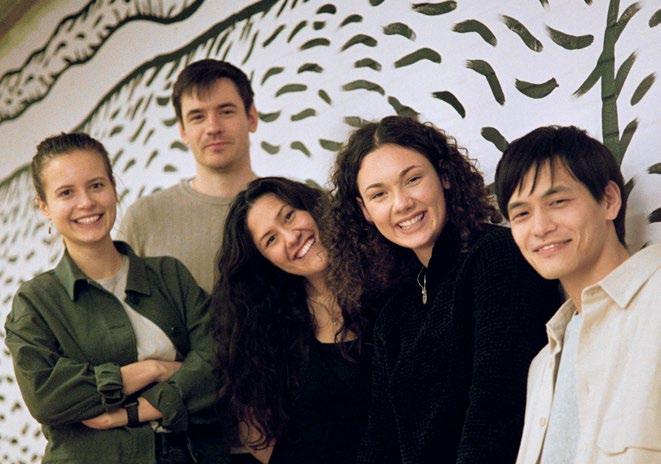
Get a unique opportunity to build your skills as an entrepreneur, and work in diverse teams applying technology for the benefit of people, society, and the world. Join a team and a community in an all-in-one campus fully equipped with world-class research facilities and your own team idea start-up lab.
During this 2-year graduate programme (cand.tech.), you will select and validate ideas, develop technology-based solutions, explore and define your role in a start-up, and experience a semester abroad as a team at a leading entrepreneurship institution. You can bring your own ideas to the table, work with DTU inventions and patents or with ideas from industry or big science facilities.
Career prospects
In this programme, you will accelerate your learning through doing. After graduating, you will be able to bridge market and technology to create social and sustainable impact, and apply innovation processes to any organization. As a graduate, you will either launch your own start-up, become an intrapreneur, innovation manager, or business developer, just to name a few.
General admission criteria
Degree
Language requirements
Applicants interested in MSc in Technology Entrepreneurship should refer to the admission criteria here: dtu.dk/techno
Minimum entry levels:
Cambridge Advanced English/Cambridge English Proficiency 180 TOEFL Internet-based 88 IELTS 6.5
Application deadlines
15 January
1 March
Non-EU/EEA applicants. Please note that all non-EU/EEA applicants are required to pay an application fee.
EU/EEA applicants.
Tuition fees
Higher education in Denmark is provided free of charge for all EU/EEA citizens and for students participating in an exchange programme. All other students have to pay tuition.
Per academic year*
2-year MSc programme*
EUR 15,000
EUR 30,000
You can find more information about tuition fees at dtu.dk/tuitionfee
* Please note that the tuition fees relate to 2021 only and are subject to annual review.
Within the majority of DTU’s MSc Eng programmes, students have the opportunity to choose between different study lines/ focus areas.
For more information, please visit > msc.dtu.dk

Watch video of all study programmes: dtu.dk/mscs

This programme focuses on the design and fabrication of advanced materials for applications within the healthcare sector. This includes engineered solutions for better drug delivery, molecular diagnostics, and materials for healthcare products. These are highly cross-disciplinary fields where the medicinal product is a fusion between advances in chemistry, immunology, molecular biology, and material science.
Career prospects
Because the education focuses on product development, candidates will be very
Focusing on chemical and biological systems at both molecular and nanoscale level, this programme covers advanced courses and projects within the key disciplines of chemistry. Through courses in chemistry, synthesis, and physical chemistry you acquire comprehensive knowledge of the design and production of advanced materials.
Career prospects
This programme has a wide focus and offers a wide variety of courses that provide excellent scope for employment
attractive for the healthcare and medical industry sector. This sector is one of the largest and fastest growing sectors in Denmark. Typical job functions will be within research, development, quality control, and approvals.
Study lines
– Drug Delivery Systems Engineering
– Healthcare Materials Engineering
– Diagnostics Technology Engineering
> dtu.dk/amhceng

in private and public companies, and qualifies you for jobs in the chemical (including catalysts and polymers) and the pharmaceutical industry.
Study lines
– Catalysis and Nanotechnology
– Molecular Physical Chemistry
– Polymer-Engineering
– Protein Chemistry
– Synthesis and Medicinal Chemistry
> dtu.dk/aac
Joint Nordic Five Tech (N5T) programme within the Applied Chemistry MSc
This double degree programme covers innovative polymer technology engineering topics from different perspectives and teaches students the latest technology of plastics, rubbers, and composites—including aspects of nanotechnology. It will provide you with an understanding of properties
and use of polymeric materials, including knowledge and understanding of related environmental aspects, and give you in-depth knowledge on how polymeric materials are built-up from molecular to macroscopic level and the relationship between structure and material properties.
Joint international programme with partner university

Career prospects
Opportunities in manufacturing or research on chemicals, resins, synthetic rubber, artificial fibres, paints, coatings, plastics, etc.
> dtu.dk/polymer
This programme focuses on the sustainable utilization of the aquatic environment and its resources, and the development of sustainable aquaculture production. It centres on fisheries, oceanography, and the management of aquatic resources—and addresses the challenges associated with sustainable fisheries and aquaculture as well as maintenance of healthy ecosystems under changing environments.
Career prospects
The MSc Eng programme provides you with unique interdisciplinary competences
for working with environmental and sustainability issues. These qualifications are in high demand among companies and organizations involved in aquatic resource research, consultancy, and management.
Study lines
– Aquaculture
– Sustainable Fisheries
– Oceanography
> dtu.dk/ast
Joint programme with NTNU within the Aquatic Science and Technology MSc
This double degree programme covers land-based recirculating aquaculture technology and marine technology and offers a unique competence profile that is highly sought for by the aquaculture industry. Students learn about new technologies and practices such as recirculating aquaculture systems, plant-based nutrition and
bio-economy, optimization of feed and use of therapeutants, and new innovative aquaculture products, which can contribute to the development of sustainable aquaculture.
Career prospects
The master programme gives a unique set of competences that are highly asked for
This MSc Eng programme enables you to influence the design of future buildings. Depending on your area of specialization, you can use your extensive knowledge of architecture and other engineering disciplines to integrate the various sub-solutions of a building project into well-functioning units—e.g. components, buildings, technical facilities, or entire districts. Courses are offered in areas such as energy, load-bearing structures, installations, indoor climate, fire safety, acoustics, lighting, urban planning,
consumer behaviour, project management, and building information modelling.
Career prospects
As a MSc in Architectural Engineering, you will be involved in the early project stages of construction, contributing to innovative and optimized building projects.
Study lines
– Construction Design
– Energy & Indoor Climate Design
> dtu.dk/aen

in the aquaculture industry, but also in the consultancy and among environmental authorities.
> dtu.dk/suaq

Autonomous systems are entering our working, urban, and domestic environments. Imagine fleets of smart robots that collaborate in manufacturing facilities, advanced warehouse logistics solutions such as the Amazon warehouses, crew-less cargo ships, smart grids, or interconnected smart home appliances. The MSc in Autonomous Systems equips you to participate in and lead work related to the design and deployment of autonomous systems, exploiting the latest advances in artificial intelligence, big data analysis, digitization, sensing, optimization, information technologies, and systems engineering.
Career prospects
With an MSc in Autonomous Systems, you can pursue a career in various production and service industries in both private and public organizations. For instance, you can have a career as an AI developer, production manager, systems engineer, IT consultant – to mention but a few.
Study lines
This MSc programme contains no predefined study lines or recommended programmes. Instead, you can put together your own study plan and your own tailored profile through your choice of courses.
> dtu.dk/autosys
This MSc Eng programme focuses on the use of computer-based methods and mathematical models to analyse the vast amounts of biological data produced using high-throughput methods. Examples of biological data include DNA and protein sequences, mRNA levels, lists of posttranslational modifications, protein-protein interaction data, and metabolic pathway information. Although computational analysis accounts for a large part of the programme, students also gain a deep understanding of the underlying molecular
biology and the experimental methods used to generate the large volumes of data.
Career prospects
Future career opportunities include management positions or biomedical research at universities or in the biotech and pharmaceutical industries.
Study lines
– Biomedical Bioinformatics
– Infectious Disease Health Informatics
– Bioinformatics Methods in Life Science
> dtu.dk/bsb
Joint programme with SDC within the Bioinformatics and Systems Biology MSc
The programme focuses on large-scale biochemistry, e.g. the study of proteins (proteomics), DNA (genomics), RNA (transcriptomics) and biochemical processes (metabolomics) in living organisms. A largescale and data driven approach to these things are becoming increasingly important for biochemistry research and production, for example in the pharmaceutical and food industries.
The programme leads to an MSc degree in Life Science Engineering and Informatics and a Master of Biochemistry and Molecular Biology/Bioinformatics/Genomics from the University of the Chinese Academy of Sciences.
Career prospects
Graduates are qualified for work in datadriven enterprises of any size, particularly


within the pharmaceutical industry, Biotech, and IT sector. Typical work tasks include analysis of large-scale data, clinical chemistry analysis, large-scale DNA/ RNA sequencing, analytical biochemistry incl. mass spectrometry, quality control, product development and research and development.
> dtu.dk/lifesci
Focusing on the design of future diagnostic and treatment methods at hospitals and in the field, this is an interdisciplinary programme offered by DTU in collaboration with the University of Copenhagen. The programme provides you with in-depth knowledge of the clinical problems facing the modern healthcare sector—enabling you to develop new technological solutions—and covers both engineering and human physiology courses, ranging from the functions of the organs at cell level to modelling physiological processes in the locomotive apparatus.
Career prospects
These include development of measuring methods and equipment, clinical research, testing and maintenance of complex technical installations; product development, test planning, sales, marketing, and service; teaching and research.
Focus areas
– Medical Imaging & Radiation Physics
– Biomedical Signal Processing & Biomedical Instrumentation
– Biomodelling & Transport Phenomena
– Biomechanics & Biomaterials
> dtu.dk/biomed
Sustainable manufacturing of bioproducts as an alternative to chemical production requires engineers with cutting edge competences within biotechnology. This programme provides you with knowledge and skills for mining of genes, exploration of organisms and biomolecules from nature, development of recombinant cell-factories, optimization and running of fermentation processes, purification and quality control of products, and most importantly: innovations within biotechnology.
Career prospects
Job opportunities in the biotech industry within research, development and production, as well as in consultancy firms and in the public sector (research, teaching or governance).
Study lines
– BioSystems Engineering
– Cell factory Engineering
– Protein Engineering
– Fermentation Based BioManufacturing
> dtu.dk/biotech


The MSc Eng in Business Analytics prepares you to work with advanced methods from data science and optimization to solving critical business challenges. You will not only be able to work and manipulate data but, most importantly, you will learn how to transform data to actionable decisions that meet value creation goals. During the course of study, you will work with quantitative methods, such as descriptive statistics, forecasting, clustering, simulation, and optimization as well as qualitative methods for analysing, managing, and implementing data-driven projects in business and society.
Career prospects
MSc Eng graduates from Business Analytics will likely find jobs in banks, large production and service companies, in the transport industry, or in research institutions.
Study lines
– Predictive Analytics
– Prescriptive Analytics
– Analytics in Finance
> dtu.dk/buan
This MSc Eng programme focuses on chemical and biochemical industrial technology and on the commercial and sustainable chemical or biochemical conversion of any kind of raw materials into substances and products required by modern society. Students learn to solve technological problems using chemistry, mathematics, physics, and thermodynamics.
Career prospects
Graduates have the scientific and technological competences to translate concepts of new chemical and biochemical products and processes into a safe and
economically viable production. You may also play a useful role in the practical efforts to remedy environmental problems and reduce the energy consumption of current production activities.
Focus areas
– Chemical and Biochemical Process Technology
– Chemical and Biochemical Product Engineering
– Energy and Environmental Engineering
> dtu.dk/cbe
Joint programme with SDC within the Chemical and Biochemical Engineering MSc
This programme focuses on theoretical, experimental and practical aspects of chemical and biochemical process engineering that are of relevance for the use of biomass and waste as feedstocks and energy sources, replacing fossil resources and fuels. Engineers with an MSc in Chemical and Biochemical Engineering are key figures
in research and development of methods and equipment aimed at commercial and sustainable transformation of biomass based raw materials into fuels and energy.
Career prospects
The master’s programme gives you a solid starting point for contributing to the


development of your society, bringing chemical and biochemical innovation from laboratories to useful production. Graduates are qualified to work in innovation driven enterprises of any size, particularly in the field of bio-based energy.
> dtu.dk/chembio
In order to make future construction projects more exciting, secure and sustainable, this programme focuses on the development, planning, design, construction, and maintenance of buildings and infrastructure. This requires profound knowledge and understanding of a number of different areas, which is why the MSc in Civil Engineering offers a wide range of courses in mechanics, material science, energy technology, heat and mass transfer, fire safety, hydraulics, acoustics, risk assessment, computer modelling and simulation, 3D visualization, communication, and management.
Career prospects
Civil engineers typically find employment in consulting engineering companies, as contractors or manufacturers. Others work for local authorities, public agencies, or educational and research institutions.
Focus areas
– Structural Engineering
– Marine and Coastal Engineering
– Geotechnical Engineering
> dtu.dk/civeng
Joint Nordic master’s programme within Civil Engineering
This unique 2-year master programme, Arctic Mineral Resources, provides an in-depth knowledge of designing mineral production processes and infrastructure in the Arctic environment, of economic and environmental aspects of mining in the Arctic as well as sustainable mine project development. Arctic Mineral Resources addresses the strategic importance – but
also challenges – of the sensitive Arctic environment.
Career prospects
This education provides you with the skills needed to e.g. work with junior mining companies and consultancies (Mineral Entrepreneurship track covering legislative, social, financial and other aspects of mining

projects) or to work for government and authorities with the evaluation of mining projects, permitting procedures and stakeholder involvement (Mineral Resource Management track).
> dtu.dk/amr
Joint Nordic Five Tech (N5T) programme within the Civil Engineering and the Earth and Space Physics and Engineering MScs
The Nordic double degree master’s programme in Cold Climate Engineering is the first comprehensive master’s programme in cold climate engineering in Europe, and gives the students a unique possibility to do field work and projects in Greenland or Svalbard. The main focus of the joint programme is to give you a profound understanding of
how the obtained specializations can be applied in jobs as researchers, consulting or practising engineers in the Arctic.
Career prospects
Graduates are typically employed at consulting, design, surveying and construction companies, mining industry,
oil companies, governmental bodies, or at research institutes and universities that have activities related to the Arctic.
Your role may be that of chief executive, development manager, team manager, consultant, specialist, or researcher.
> dtu.dk/cold

Chromologics produces colourants using sustainable fermentation processes. The technology is more eco-friendly than traditional production, which involves the extraction of dyes from plants or animal substances. The company was founded by researchers from DTU, among others, and increasing demand is driving considerable green market potential for Chromologics.
Communication Technologies and System Design engineers contribute to the development of the technology on which modern society relies. The MSc Eng programme covers areas ranging from advanced component and system design through complex network structures to the development of services and ICT solutions that meet user expectations. Courses include three central, traditional disciplines that—to some extent— share a common technical-scientific basis: component and software design, system development and methods, and applications.
Career prospects
Graduates are qualified to conduct research, development, planning, and analysis tasks in
a number of areas related to communication technologies. The programmes facilitates career oppor tunities in, e.g. the electronics industry, the telecom sector, or in the emerging ‘convergence industry’.
Study lines
– High-speed Communication
– Signal Processing, Coding & Visual Communication
– Mobile/Wireless Communication & Internet of Things
– Communication Software & Cyber Security
– Enabling Technologies for Communication System Design
> dtu.dk/ctsd
Concentrating on the design and use of computing components—both software and hardware—students learn to solve technical problems efficiently and competitively. Pivotal to the programme is the understanding and application of the right abstractions for advanced IT solutions that typically include both existing and future components. Choose from a wide range of courses in software development, safe and secure IT systems, algorithms and logic, knowledge-based systems, and distributed and embedded systems.
Career prospects
Our highly qualified graduates find rewarding careers in a wide range of Danish and inter national companies involved in IT, electronics, and communication.
Study lines
– Artificial Intelligence and Algorithms
– Computer Security
– Digital Systems
– Embedded and Distributed Systems
– Safe and Secure by Design
– Software Engineering
> dtu.dk/cse
Joint programme with KAIST within the Computer Science and Engineering MSc
The double degree programme in Computer Science and Engineering covers safe and secure systems, system integration, distributed and embedded systems, networks, software engineering, algo -
rithms and logic, system-on-chip, and digital systems. The programme gives you the ability to use, develop, and produce IT systems at a high technical level.
Erasmus Mundus programme
Digitalization is taking over most aspects of business and life. While computation relies on distributed data processing and storage, pervasive digitalization goes much further, raising questions regarding security and privacy of data and reliability of
computations on this data. This programme gives you a broad understanding of technologies for mobile and cloud computing, and provides you with the skills to design, build, and evaluate secure computing systems as a computer science professional.


Career prospects
Graduates will typically find employment in a wide variety of companies and organizations that work with IT, electronics, and communcation.
> dtu.dk/comen
Career prospects
Graduates will be able to design and develop the next generations of products and services for the ICT industry as well as financial companies within the fields of information security and systems.
> dtu.dk/secclo
This programme focuses on equipping students with the competences required for carrying out engineering tasks with emphasis on design, which is why courses span both technical-scientific and social science disciplines. The programme aims to develop your creative skills and abilities to analyse the interaction between the user, technology, and company. You will gain knowledge of one or more technical domains and learn to develop concepts and implement innovation processes that are more far-reaching than product and system development.
Career prospects
Career opportunities in fields of innovation as well as design and product development. You can also work as a designer, constructor, system developer, or as a product or development engineer in an industrial company.
Focus areas
– Management of Design & Innovation
– Sustainable Product Service Design
– User Experience & Digital Innovation
> dtu.dk/design
This programme provides you with competences within research and development of satellite, space-, aircraft-, and groundbased measuring methods as well as mathematical and physical models for monitoring, mapping, and exploring largescale physical structures and processes on Earth and in the universe. The focus is on developing, designing, and applying innovative and advanced technological solutions with a view to developing sustainable, advanced solutions for use in, e.g. climate and environmental monitoring, the search for new resources, space exploration, or mapping and navigation on Earth.
Career prospects
Graduates are eligible for positions in areas such as environmental and climate monitoring, mapping, and navigation as well as Earth and space exploration.
Study lines
– Earth and Planetary Physics
– Earth Observation
– Mapping and Navigation
– Space Research
– Space System Engineering
> dtu.dk/earth

Joint Nordic Five Tech (N5T) programme within the Civil Engineering and the Earth and Space Physics and Engineering MScs
The Nordic double degree MSc in Cold Climate Engineering is the first comprehensive master’s programme in cold climate engineering in Europe, and gives the students a unique possibility to do field work and projects in Greenland or Svalbard. The main focus of the joint programme is to give you a profound understanding of
how the obtained specializations can be applied in jobs as researchers, consulting or practising engineers in the Arctic.
Career prospects
Graduates are typically employed at consulting, design, surveying and construction companies, mining industry,
oil companies, governmental bodies, or at research institutes and universities that have activities related to the Arctic. Your role may be that of chief executive, development manager, team manager, consultant, specialist, or researcher.
> dtu.dk/cold
Joint EuroTech programme with TUM within the Earth and Space Physics and Engineering MScs
The 1:1 master’s programme in Space and Geodesy is a two-year intensive exchange master’s programme for students enrolled at either DTU or TUM. You will spend one year at TUM and one year at DTU. The study programme aims at providing the students with state-of-the-art competences within Satellite Geodesy for a wide range of applications. Mapping the Earth gravity field and its changes from
space is key to understand the physical processes of, e.g., the hydrological cycle. Satellite-based positioning is important for accurate navigation. In Rocketry, the focus is on developing space-based technologies.
Career prospects
Studying abroad jump-starts your career as employers are always looking for graduates with an international outlook
and intercultural competencies. Upon graduation, you will be eligible to enter a PhD programme, but you will also be qualified for jobs in the European space industry, developing Copernicus and Galileo, or leading research institutes.
> dtu.dk/spageo
The MSc programme in Electrical Engineering allows you to engage in work at all levels—–including advanced theories, methods, and components for practical systems and applications in, e.g. satellites, robots, and wind turbines. You will learn to understand the theory and apply mathematical methods for designing or analysing problems within a given area.
Career prospects
With an MSc in Electrical Engineering, you can pursue a career in various production companies, for instance in a development
department, in areas such as electric power, audiology, medical electronics, mobile communication, radar technology, or satellite communication.
Study lines
– Acoustics
– Automation and Robot Technology
– Electric Energy Systems
– Space Technology
– Wireless Engineering
– Electronics
> dtu.dk/een
Joint programme with KAIST within the Electrical Engineering MSc
This double degree programmes has three study lines: “Electrical Energy Systems” qualifies you to analyse, design, and operate electric energy systems. “Space Technology” covers several fields such as spacecraft instrumentation, electromagnetic systems, and remote sensing data from satellites and aircrafts. And “Wireless Engineering” focuses on advanced electromagnetic systems for wireless communication technologies.
Joint programme with KAIST within the Electrical Engineering MSc
This double degree programme focuses on acoustics as well as automation and robot technology. Acoustics covers a wide range of topics, including the fundamentals of sound propagation, advanced measurement techniques, and understanding and
modelling of the normal and impaired human hearing system. Automation and robot technology covers topics such as control theory, automation and mobile robotics, including walking robots.

Career prospects
You will be qualified to work within a wide range of areas ranging from power electronics to space technology and electric energy systems.
> dtu.dk/eleng
Career prospects
You will be able to work within a wide range of areas engaged in acoustics, automation and robot technology.
> dtu.dk/elmech
This programme offers an exciting research area focusing on multidisciplinary studies of sound and vibration phenomena. The programme covers a wide range of topics within acoustics—–including the fundamentals of sound propagation, advanced measurement techniques, and understanding and modelling of the normal and impaired human hearing system. The choice of courses ranges from human hearing and reaction to sound, acoustic measurement methods, electroacoustic systems, architectural acoustics, environmental acoustics, and noise and vibration control.
Career prospects
The MSc in Engineering Acoustics provides a good basis for global employment with electrical, audio, and audiology companies, universities and research centres, or consultancy firms specializing in acoustics.
Study lines
– Audio & Transducer Technology
– Human Hearing Science & Perception
– Architectural Acoustics & Design of the Built Environment
– Vibration Control in Sensors, Machinery, Vehicles & Industrial Systems
– Acoustic Signal Processing & Machine Learning
> dtu.dk/ena
Joint programme with KAIST within the Engineering Acoustics MSc
The double degree programme in Engineering Acoustics spans over many topics—–such as human hearing and reaction to sound, acoustic measurement methods, electroacoustic systems, architectural acoustics,
environmental acoustics, and noise and vibration control.
Career prospects
This double degree programme provides a good basis for employment opportunities

within fields such as the hearing aid industry, measuring equipment manufacturers, and with firms of engineering consultants.
> dtu.dk/engac

Focusing on the technical and environmental sciences, this programme aims to provide students with the competences to develop sustainable solutions to complex environmental issues, while also taking into account legal, societal, financial, and resource aspects. You will gain in-depth knowledge of the physical, chemical, and biological processes causing local and global environmental challenges, be involved in experimental projects, and learn about the processes through mathematical models and statistical analysis of data and measurements.
Career prospects
An MSc in Environmental Engineering provides you with many future career options in public administrations, companies, or organizations offering environmental and construction consultancy.
Study lines
– Climate Change – Adaption & Mitigation
– Environmental Chemistry
– Environmental Informatics
– Environmental Management
– Residual Resource Engineering
– Urban Water Engineering
– Water Resources Engineering
> dtu.dk/enviro
Joint EuroTech programme with EPFL within the Environmental Engineering MSc
This 1:1 master’s programme provides students with the competences to develop sustainable solutions to complex environmental issues, while also taking into account legal, societal, financial, and resource aspects.
Career prospects
As a graduate in Environmental Engineering you will be able to design, conduct, and interpret laboratory and field experiments, and quantify the hazards, risks, and uncertainties of environmental problems. Thus, you will be qualified to work within areas such as
Joint Nordic Five Tech (N5T) programme within the Environmental Engineering MSc
The focus of this double degree programme is on some of the most pressing current political issues such as climate change, sustainable generation of energy, management and renewal of aging urban infrastructure, provision of safe drinking water, and contaminated land and waste management. These issues are approached
through interdisciplinary studies, bridging all the sciences and placing them in a social, economic, and legal context.
Career prospects
A major aim of the programme is to prepare the student for a professional career through the integration of professional
Joint EuroTech programme with TUM within the Environmental Engineering MSc
This 1:1 master’s programme provides students with the competences to develop sustainable solutions to complex environmental issues, while also taking into account legal, societal, financial, and resource aspects.
Career prospects
As an Environmental Engineering graduate you will be able to design, conduct, and interpret laboratory and field experiments, and quantify the hazards, risks, and uncer tainties of environmental problems. Thus, you are qualified to work in job functions such as consulting, planning,

consulting, planning, construction, project leadership and analysis, research, teaching, and management. Some of the most typical sectors are within water supply, wastewater and resources, and soil and ground water remediation.
> dtu.dk/env
experience with the double degree programme. This will ultimately increase quality and competitiveness, study motivation and employability.
> dtu.dk/envo
construction, project leadership and analysis, research, teaching, and management. Some of the most typical sectors are within water supply, wastewater and resources and soil and ground water remediation.
> dtu.dk/viro
This MSc Eng programme gives you an understanding of modern food production and extensive knowledge of technologies associated with the production of healthy and safe food. Meeting the challenges related to global market requirements, changing consumer demands, sustainability, social responsibility, and competitiveness requires knowledge in a wide range of areas. The programme provides you with the profound analytical, design, and development skills required to meet these challenges.
Career prospects
The Food Technology programme qualifies you for employment in food companies
and related industries involved in food production, quality, and safety, as well as equipment manufacturing. You may also have the opportunity to engage in public or private research, development, and consultancy in the field of food.
Study lines
This MSc programme contains no predefined study lines or recommended programmes. Instead, you can put together your own study plan and your own tailored profile through your choice of courses.
> dtu.dk/foodtech

In an area characterized by constant change, there is a need for engineers who will not be constrained by new technologies, but rather gain strong technical competences to develop new types of interaction between people and software—which is reflected in connection with game design, personalization of media content, or smartphone apps using sensors to model how we perceive the surrounding environment. This programme provides you with a deep understanding of the underlying digital media technologies and related business aspects.
Career prospects
Career opportunities in a wide range of highly specialized areas—including user experience design, app development, data science, and computer graphics.
Focus areas
– Social Media and Apps
– UX User Experience
– Data Science
– Computer Games
– Computer Graphics
– Healthcare
> dtu.dk/hcai


With the SubReader app, dyslexic and visually impaired persons can have subtitles on movies and TV series read out. The team behind SubReader won the National Startup Competition 2020. In addition to prize money of DKK 100,000, the winners were also invited to the Entrepreneurship World Cup in China.
This MSc Eng programme combines the field of engineering with planning, innovation, and management competences. The courses offered will provide you with both quantitative and qualitative management competences. You will work with mathematical optimization (operations research), simulation, and other quantitative tools together with a number of process tools that are crucial in the context of project management and change management. Additional focus areas include operations management, supply chain management, innovation management, and problem structuring.
Career prospects
Industrial Engineering and Management graduates typically find jobs in private or public sector companies or organizations within project management, consultancy, or development positions in a wide range of areas.
Study lines
– Innovation and Strategic Management
– Management and Analysis of Operations
– Production and Project Management
> dtu.dk/engman

Joint EuroTech programme with TUM within the Industrial Engineering and Management MSc
This 1:1 master’s programme focuses on the interesting interplay between management and engineering by combining strategy and innovation, management science and management disciplines.
Career prospects
As a graduate from this master’s programme you will be qualified to work within consulting, planning, project management, analysis, optimization, analytics, research, teaching, and
The focus in this MSc Eng programme is the application of materials as well as process and production technologies in high-tech products within various fields—–including energy production, the automotive and aeronautical industries, medical devices, and communication. The programme enables you to predict, control, and optimize material properties, and to analyse and optimize the industrial process technologies that are relevant for advanced products at both micro and macro scale.
Career prospects
Graduates have career opportunities in various industrial areas, including energy production and storage, transport, building and construction, (micro)electronics, food production, medical devices, automation and robotics.
Focus areas
– Materials Engineering
– Manufacturing Engineering
> dtu.dk/mme
management to name but a few. Some of the most typical areas are consulting, manufacturing management, logistics, and supply chain in a vast range of sectors.
> dtu.dk/mgm

This MSc Eng programme will provide you with extensive knowledge of applied mathematics and mathematical modelling as well as modern computer equipment and analysis of large data volumes. Mathematics is an integrated part of our everyday lives, and its use will become even more prevalent in the future. There is an ever-increasing demand for mathematical models and methods in, e.g. industrial applications, information technology, financial institutions, energy, government issues, drug development, DNA mapping, and environmental research.
Career prospects
Graduates are qualified for jobs in industry and academia: the IT sector, consulting
engineers and other consultancy firms, the pharmaceutical industry, logistics and development departments, and private and public research institutions.
Focus areas
– Applied Mathematical Analysis
– Cognitive Science and Technology
– Financial Engineering
– Image Analysis and Computer Graphics
– Industrial and Applied Statistics
– Machine Learning and Signal Processing
– Operations Research for Decision Making
– Scientific Computing
– Secure and Reliable Computing
– Stochastic Dynamical Modelling
> dtu.dk/mmc
Aimed at students who want to participate in the development of new and better solutions based on the laws of mechanics, this programme covers systematic engineering design methods within engineering design and product development as well as analysis, numerical simulation, and optimization with focus on the strength of structures, fluid flows, and energy conversion.
Career prospects
Graduates are employed in development and research departments, and are involved in the development of new and better solutions for products, mechanical components, production equipment, and
industrial installations. The focus of the solutions may range from microstructures—–such as parts for hearing aids or mobile phones—–to engines, turbines, wind turbines, ships, and offshore structures.
Focus areas
– Engineering Design and Product Development
– Strength and Dynamics of Structures
– Industrial Fluid Mechanics
– Energy Engineering
– Maritime Engineering
> dtu.dk/edam
Joint Nordic Five Tech (N5T) programme within the Mechanical Engineering MSc
The main focus of this double degree programme is design, construction, and technical operation of ships and offshore structures—–including hydrostatics and stability, hydrodynamics, wave and wind loads, propulsion, and structural analyses.
Career prospects
As a Maritime Engineering graduate, you will typically be employed as a naval architect or offshore engineer by consultancies, design offices, ship owners, ship model basins, maritime administrations, offshore companies,
Joint programme with KAIST within the Mechanical Engineering MSc
This double degree programme covers systematic engineering design methods within engineering design and product development as well as analysis, numerical simulation, and optimization with focus on the strength of structures, fluid flows, and energy conversion. Applied mechanics
is used in many contexts requiring extensive knowledge of physical principles, strength of structures, fluid flows, and energy conversion.
Career prospects
Most graduates are employed in


classification societies, or suppliers of special equipment. Your role may be that of chief executive, development manager, team manager, consultant, specialist, or researcher.
> dtu.dk/mari
development and research departments of industrial companies manufacturing high-tech products, in firms of consulting engineers, or in research institutions.
> dtu.dk/desmech
This MSc Eng programme focuses on the safe, innovative, environmentally sound, and economically viable extraction of oil and natural gas. The programme offers high-level courses in geophysics and rock mechanics, thermodynamic and chemical properties of oil and gases and their flow—–in rocks and pipelines.
Career prospects
The Petroleum Engineering programme enables you to contribute to solving the global challenge of meeting the increased demand for oil and gas. Petroleum
engineers are typically engaged in the projecting of oil or gas production from reservoirs and you will be able to head the development and implementation of new technologies for efficient and sustainable production, or engage in international highlevel research in the field.
Focus areas
– Environment in Petroleum
– Reservoir Engineering
– Reservoir Geophysics
> dtu.dk/petro
Focusing on how to design, develop, and test drugs in line with the methods applied by the pharmaceutical industry, you will acquire a broad range of competences in all areas of pharma, e.g. diagnostics and nanotechnological treatment methods. Aspects relating to documentation, approval, and distribution of drugs—–as well as the legal aspects relating to documentation, approval, and distribution of drugs—–are also included in the programme.
Career prospects
Graduates from Pharmaceutical Design and Engineering are highly attractive to the
pharmaceutical industry, which has been heavily involved in defining the knowledge profile of the MSc Eng programme and thereby the competences of a Pharmaceutical Design and Engineering graduate.
Study lines
This MSc programme contains no predefined study lines or recommended programmes. Instead, you can put together your own study plan and your own tailored profile through your choice of courses.
> dtu.dk/pharma
Focusing on fundamental physics of light and optical components as well as a wide range of applications which are essential to our high-tech society, this programme include courses in basic physics, optical materials and structures. The programme places great emphasis on innovation and future applications of optics and photonics to develop technological solutions to societal challenges—–including quantifying carbon dioxide consumption, improving combustion processes, securing communication against acts of terrorism, measuring food quality, performing better medical procedures, and understanding and controlling diseases.
Career prospects
The MSc in Photonics Engineering qualifies you for employment within high-tech companies, research centres, universities, and the public healthcare sector.
Study lines
– Biophotonics and Sensors
– Components for Optical Communication
– Lasers and Light Sources
– Photonic Materials and Structures
> dtu.dk/photon


This MSc Eng programme centres around physics as the basis of modern technology. The programme covers a wide range of technological, theoretical, and experimental techniques and includes topics such as the development of nanostructured materials with tailor-made electrical, magnetic, optical, mechanical and chemical properties; manufacturing and integration of nano- and micro components in systems design; modelling of complex biological systems; optical data processing and transfer; and the development of technologies for sourcing, storing, and converting sustainable energy—– e.g. fuel cells and hydrogen technology.
Career prospects
Advanced physics skills are applicable in a broad spectrum of areas, but graduates work primarily in the field of research and development in private and public companies.
Study lines
– Biophysics and Fluids
– Nano-scale Materials Physics
– Nanosystems Engineering
– Physics and Nanotechnology for Energy and Sustainability
– Quantum Engineering
– Solid-state Optics and Nanophotonics
> dtu.dk/nano
Joint EuroTech programme with TUM within the Physics and Nanotechnology MSc
This 1:1 master’s programme focuses on physics as the basis of modern technology. The joint programme is based on the interplay between scientific research and technological breakthroughs, covering topics such as nanostructured materials, nano- and micro components in systems design, modelling of complex biological
systems, optical data, and the development of sustainable energy technologies.
Career prospects
The programme covers a wide range of technological, theoretical, and experimental techniques in modern physics. These advanced skills and
This programme, offered in collaboration with the University of Copenhagen, aims to use engineering skills to obtain a better understanding of complex disease biology and prediction of biological responses to various interventions. The programme combines mathematical modelling of healthy and diseased biological systems with pathology, immunology, and pharmacology. Graduates will be able to approach healthy or diseased biological processes with a quantitative and modelling mindset. With the mandatory courses in the programme you will need to have basic training in biology and computer programming to gain access.
Career prospects
Quantitative Biology and Disease Modelling provides you with many future career options in biotechnology, health care, drug development including PK/PD modelling, and research within the life sciences and bioengineering.
Study lines
This MSc programme contains no predefined study lines or recommended programmes. Instead, you can put together your own study plan and your own tailored profile through your choice of courses
> dtu.dk/qubi

competences are applicable in many areas, often related to research and development, but graduates also find jobs in the software and consultancy industries.
> dtu.dk/phynan

DTU is at the cutting edge in Europe when it comes to research in sustainable energy. The MSc Eng programme in Sustainable Energy provides you with qualifications in energy systems with a specialization in one of the sustainable energy technologies. In the coming decades, global energy systems will undergo major changes, and their sustainability will prove to be of the utmost importance— environmentally, economically, and socially. During the course of study, you will acquire extensive expertise in various energy technologies and systems with focus on sustainability.
Career prospects
A degree in Sustainable Energy paves the way for a wide range of career opportunities in the business sector, with public authorities, and in research.
Study lines
– Bio Energy
– Electric Energy Systems
– Energy Conversion and Storage
– Energy Savings
– Energy Systems Analysis
– Solar Energy
– Thermal Energy
– Wind Energy
> dtu.dk/energy
Joint EuroTech programme with TUM within the Sustainable Energy MSc
This 1:1 programme covers various energy technologies focusing on sustainability and renewable energy and offers hands-on experience with energy conversion technologies such as e.g. batteries, fuel cells, electrolysis cells and photovoltaics.
Career prospects
Graduates can be employed for projects in companies developing and producing renewable energy technologies and energy conversion technologies, while others will be engaged in project design and
Joint Nordic Five Tech (N5T) programme within the Sustainable Energy MSc
Focus is on conventional and renewable energy sources like power generation, solar energy, biomass energy, wind power, geothermal power, and energy utilization. You will learn to apply advanced methods to identify, describe, quantify, and find environmentally sustainable solutions to
a diverse range of energy engineering problems. Emphasis is also placed on the innovative and entrepreneurial aspects of the energy society, related to how existing and new efficiency improvement innovations can be brought to market in different countries.
Joint EuroTech programme with TU/e within the Sustainable Energy MSc
This 1:1 programme in Sustainable Energy Technology is an interdisciplinary program covering aspects such as applied physics, electrical engineering, mechanical engineering, chemistry, materials science, chemical engineering and innovation science applied in different sustainable energy technologies. You will get scientific knowledge on and insight into the design, behaviour and performance of different
energy technologies and the integration of these technologies in grids, buildings and society.
Career prospects:
Graduates can have careers in specific sustainable energy technologies and/or implementation such technologies in the energy system. Some Sustainable Energy Technology graduates will be involved

the development and implementation of renewable energy projects for e.g. energy companies.
> dtu.dk/ecas
Career prospects
Upon graduation you will be able to make key decisions which can contribute to solving climate problems. This double degree programme gives you the necessary knowledge to pursue an international career in the ever-growing energy industry.
> dtu.dk/innosus
in development project in companies developing and operating renewable energy technologies while other get engaged research/academia focusing on the further development of and exploration of new sustainable energy technologies or consultancy companies. The 1:1: master is international - and likewise is the labor market for the graduates.
> dtu.dk/set
DTU is one of the few European universities to offer an MSc Eng programme exclusively designed to give you the necessary qualifications to design and manage the advanced transport networks of tomorrow. The programme’s engineering approach to infrastructure includes modelling and computer-based solutions for optimizing transport and logistics. At the same time, you will also obtain knowledge of software technology, data analysis, geo-informatics, statistics, operations research, planning, and management.
Career prospects
Graduates have career opportunities in private and publics sectors, and strong competences in mathematical modelling and computer-based solutions as well as extensive knowledge of traffic, transport, and logistics combined with software technology, data analysis, planning, assessment, and management skills.
Study lines
– Logistics and Transport Optimization
– Transport Planning and Sustainability
– Smart Mobility and Data Science
– Sustainable Supply Chains
DTU is one of the few universities in the world to offer a complete two-year MSc Eng programme in wind energy. This study programme is designed to provide you with the competences to analyse, design, develop, and operate future wind energy systems. You will have access to state-ofthe-art research and technology as well as extensive knowledge of aerodynamics, aeroelasticity, mechanics, grid connection, and electrical engineering. You can choose to specialize in electrical or mechanical engineering within one of five study lines.
Career prospects
As a graduate in Wind Energy, you are qualified for employment in a rapidly expanding international industry and you can contribute to the development of wind turbines as well as design and control of the mechanical and electrical components and systems.
Study lines
– Mechanics and Aerodynamics
– Mechanics of Materials and Structures
– Testing and Measurements
– Electrical Wind Turbine Systems

> dtu.dk/transport

– Electrical Wind Turbine Technology > dtu.dk/wind
Joint programme with TU Delft, NTNU, and Oldenburg University within the Wind Energy MSc
Receive a double master’s degree from two of four leading European universities in the field of wind energy. Students acquire knowledge in both theoretical and applied sciences underlying wind
energy systems in general and the chosen specialization track. The four specialization tracks are: Wind Physics, Rotor Design, Electric Power Systems, and Offshore Engineering.
Joint programme with KAIST within the Wind Energy MSc
This double degree programme offers crossdisciplinary knowledge of a wide range of offshore wind power technologies, and provides you with in-depth knowledge of aerodynamics, aero-elasticity, mechanics, grid connection, power systems, hydrodynamics, offshore structure design, and
wind farm planning, which will qualify you to analyse, design, develop, and operate offshore wind energy systems.
Career prospects
Graduates are qualified to work within a wide range of areas related to the offshore
Career prospects
This MSc prepares graduates for a career in research—–in both industry as well as in academia.
> dtu.dk/euwind
wind energy industry—–such as wind turbine system design and manufacturing, component design of blades and towers, wind turbine operators, or certification bodies such as the DNV GL.
> dtu.dk/offsho

In 2017, two fellow students from Design and Innovation at DTU— Thomas Trebbien and Andreas Leth Brockhoff—came up with the brilliant idea of using fluid to sort plastic waste containing multiple plastic types. Today, they are heading the company Trebo and have developed a patented technology that can make the entire plastics industry more sustainable.
The academic level of the MSc Eng programmes is highly advanced. The academic prerequisites for admission differ for each MSc Eng programme and can be found here:
> studieinformation.dtu.dk/msc
General admission criteria
Degree
Grade point average
English language proficiency*
Bachelor’s degree in Engineering, in Science, or in Natural Science, less than 10 years and obtained at an internationally recognized university.
Approximately 75 per cent of the maximum obtainable grade. Can vary depending on the grading system of the university awarding the bachelor’s degree. Solid skills in mathematics plus basic computer and programming skills.
Minimum entry levels:
Cambridge Advanced English/Cambridge English Proficiency 180
TOEFL Internet-based 88 IELTS 6.5
* Please note that applicants to Nordic5Tech programmes must fulfil the language requirements as specified under each programme here: nordicfivetech.org/studies
Application deadlines
15 January
1 March
Non-EU/EEA applicants and all applicants for our Nordic Five Tech programmes. Please note that all non-EU/EEA applicants are required to pay an application fee.
EU/EEA applicants.
More information on > dtu.dk/admission
Tuition fees
Higher education in Denmark is provided free of charge for all EU/EEA citizens and for students participating in an exchange programme. All other students have to pay tuition.
You can find more information about tuition fees at dtu.dk/tuitionfee
* Please note that the tuition fees relate to 2021 only and are subject to annual review.
Every year, DTU enrols around 500 new PhD students in its research degree programmes within science and technology.
Each PhD student follows an individual programme designed to provide insight and skills in conducting a scientific project according to the highest international standards—including course participation, presentation of research results, teaching, paper writing, and contribution to national and international research collaborations.
A PhD degree from DTU opens the door to a wide variety of attractive career opportunities. When doing a PhD, you will learn to understand complex research problems and to solve research challenges. These skills are not just required in your academic work, but also to a great extent in industrial R&D laboratories and start-up companies. PhDs are usually hired for research positions or positions as analysts and consultants because of their superior analytical capabilities.
To be admitted as a PhD student at DTU, applicants must present evidence of having completed an academically rigorous master’s degree programme with honours. All applicants are assessed by the relevant PhD committee in terms of qualifications in relation to the proposed project.
You can do either a regular PhD or an industrial PhD at DTU.
Learn more about your options on > dtu.dk/phd_uk
The PhD programme consists of
• an independent scientific project
• a study programme corresponding to 30 ECTS
• teaching and dissemination activities corresponding to approx. 3 months
• an external research stay
• a PhD thesis
• a public thesis defence
videos dtu.dk/phds
DTU Career Centre can help you make a successful transition from student to employee. Among the services we offer are workshops, networking events, and drop-in CV feedback.
You can attend workshops on topics such as job seeking, writing targeted job applications and CVs, and how to prepare for a job interview. The workshops will introduce you to techniques, useful tools, and practical advice that you can utilize immediately.
Initiate contact to relevant companies at our networking events where engineers from different companies come and share their experiences and career journeys. You get to ask questions, clarify job wishes and gain insight into career paths in the industrial world.
You are welcome to come by our office in our opening hours to get some quick feedback on your CV or cover letter.
Learn more at
> dtu.dk/careercounselling
> facebook.com/DTUKarrierecenteret
DTU graduates find employment quickly, and their jobs are in direct continuation of their MSc programme.
According to an analysis published by DTU 69 per cent of the international students still live in Denmark after their graduation, and 60 per cent of them are in full-time employment.
Danish and international graduates among MSc graduates
Source: Graduate survey carried out by DAMVAD Analytics in 2018. The survey indicates the employment rate which only includes students available for the labour market.
The students were also asked how their master’s programme and their first job were related.
Source: Graduate survey carried out by DAMVAD Analytics in 2018.
I’m
I’m employed in a fixed-term position
I’m a PhD student
I was employed, but am currently looking for a job
I’m self-employed/employed in an
I was employed, but am currently looking for a job Still living in Denmark (69%)
I’m employed in a fixed-term position
I’m a PhD student
Source: DAMVAD Analytics on the basis of the Danish Ministry of Higher Education and Science’s (UFM) graduate survey for graduates who graduated in the period from 1 Oct. 2015 to 30 Sep. 2017, and who have indicated that they have been or are employed. Survey carried out by DAMVAD Analytics in 2019.
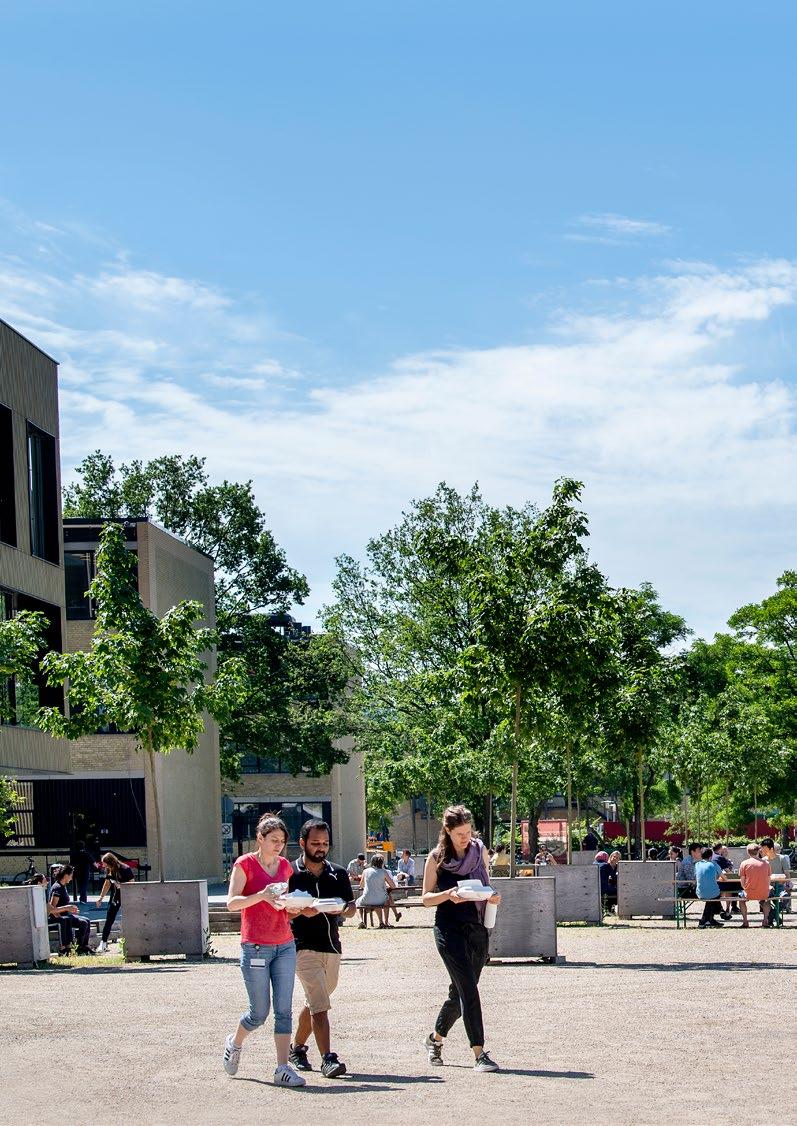
The Danish labour market is internationally known for its ‘flexicurity model’. The concept is a combination of the terms ‘flexibility’ and ‘security’ and refers to a welfare state model that combines social security for all workers with a flexible labour market.
The typical Danish workplace is characterized by a flat management structure and an informal tone of communication. Knowledge-sharing and teamwork
are valued traits, and everybody is expected to pitch in with ideas and opinions. The typical workweek in Denmark is 37 hours, making it one of the shortest in Europe. Employees generally have a fair amount of autonomy and flexibility to organize their workload, as long as deadlines are met in time.
Source: workindenmark.dk
BSc Eng
Please direct any questions about our BSc programme in General Engineering and admission to studvejl@adm.dtu.dk or phone +45 4525 1199
MSc
Please direct any questions about our MSc programmes and admission to mscadmissions@adm.dtu.dk or phone +45 4525 1023
PhD
Please direct any questions about our PhD programme to phd@dtu.dk
Postal address
Office for Study Programmes and Student Affairs
Technical University of Denmark
Anker Engelunds Vej 101 2800 Kgs. Lyngby
Denmark
dtu.dk/english
Follow DTUdk on: