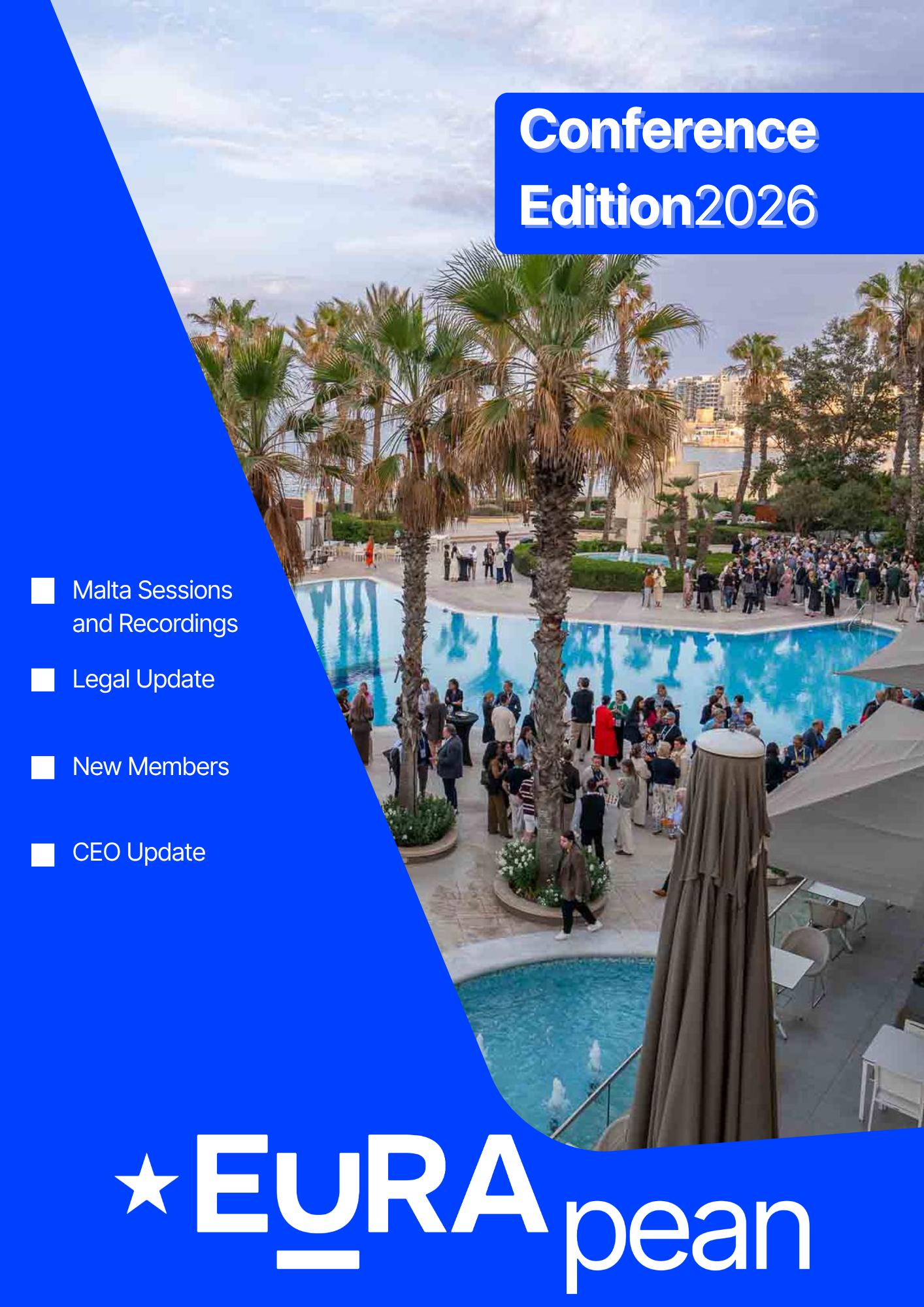
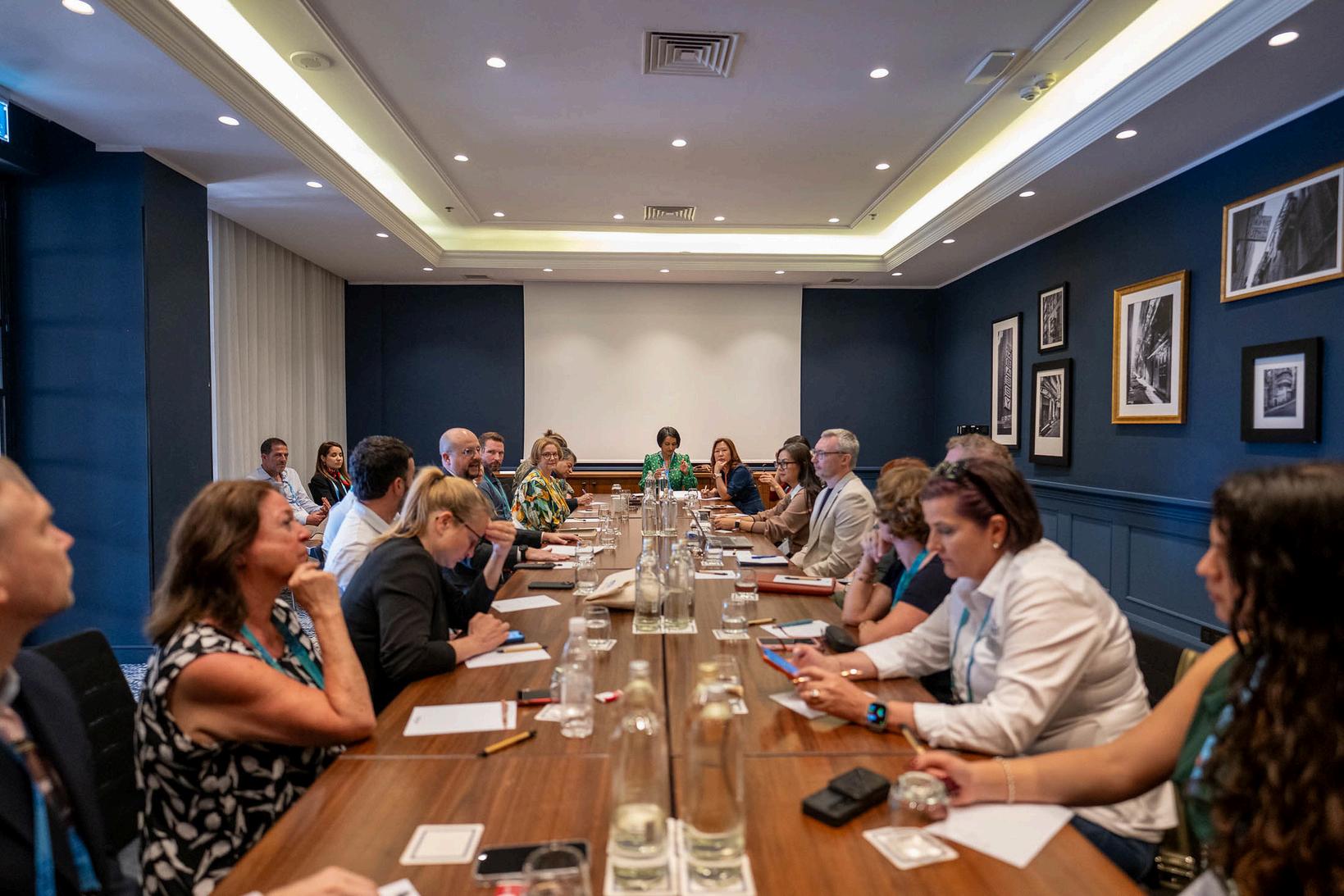
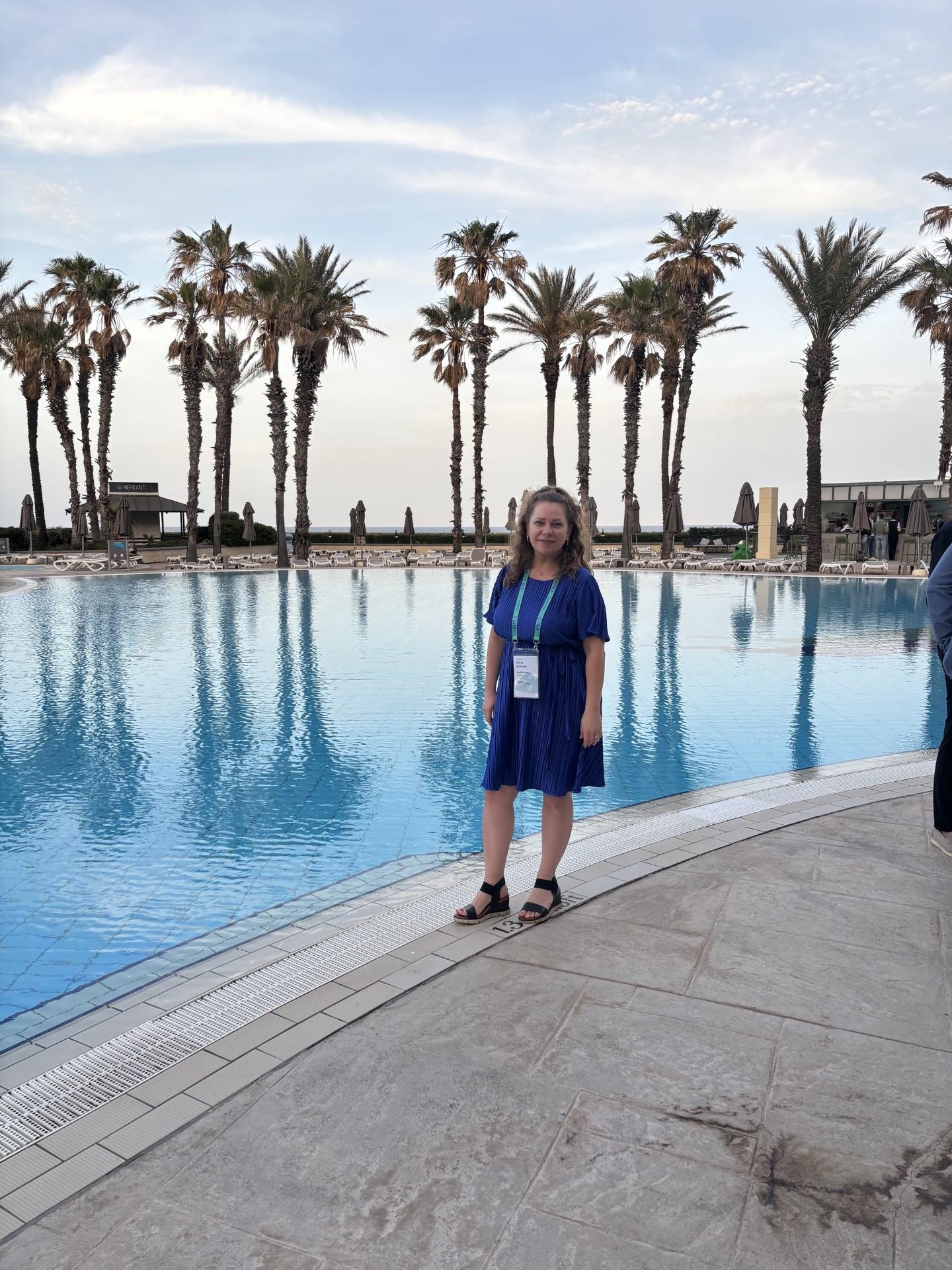
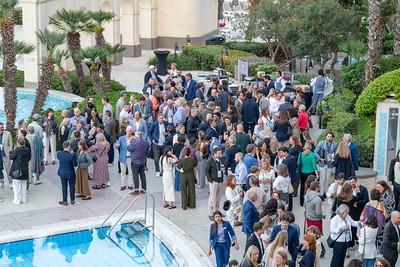
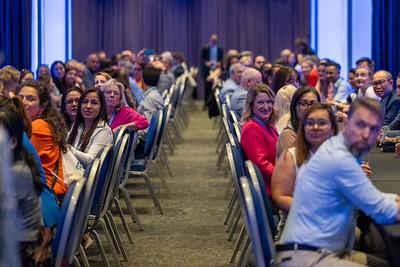
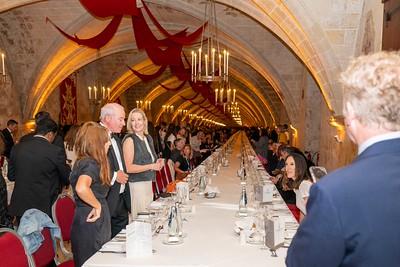
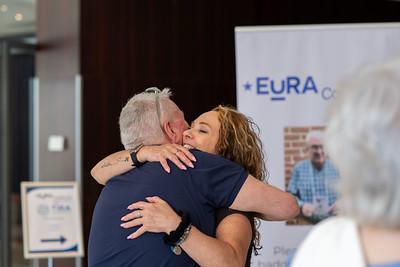
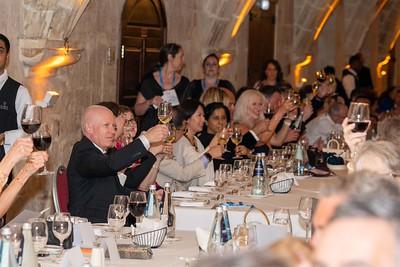
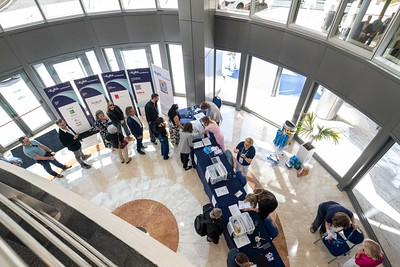
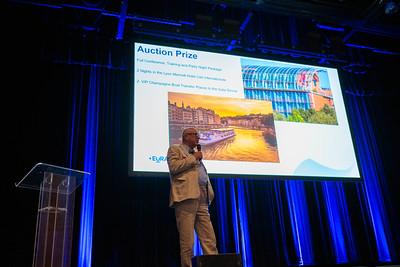
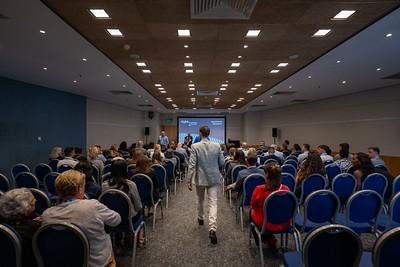
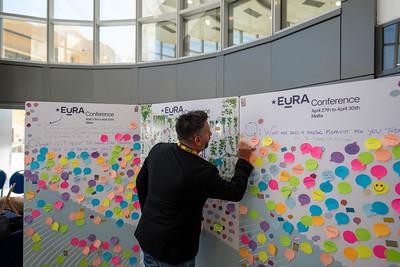
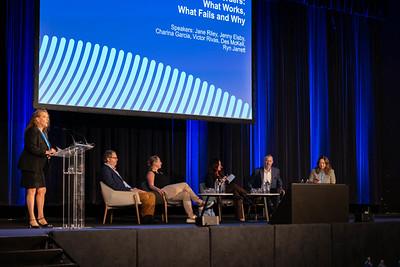
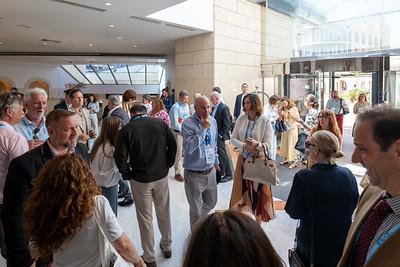
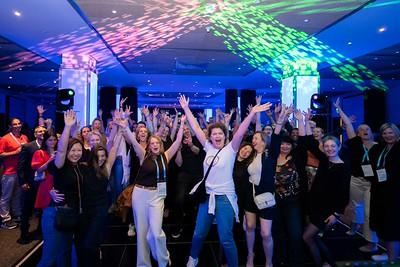
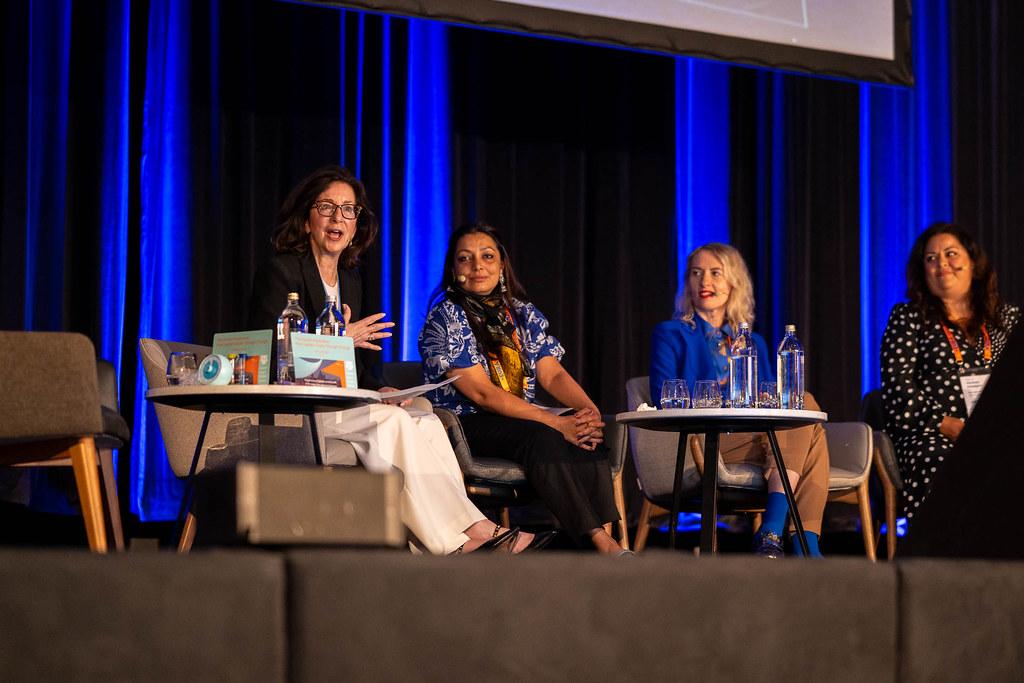
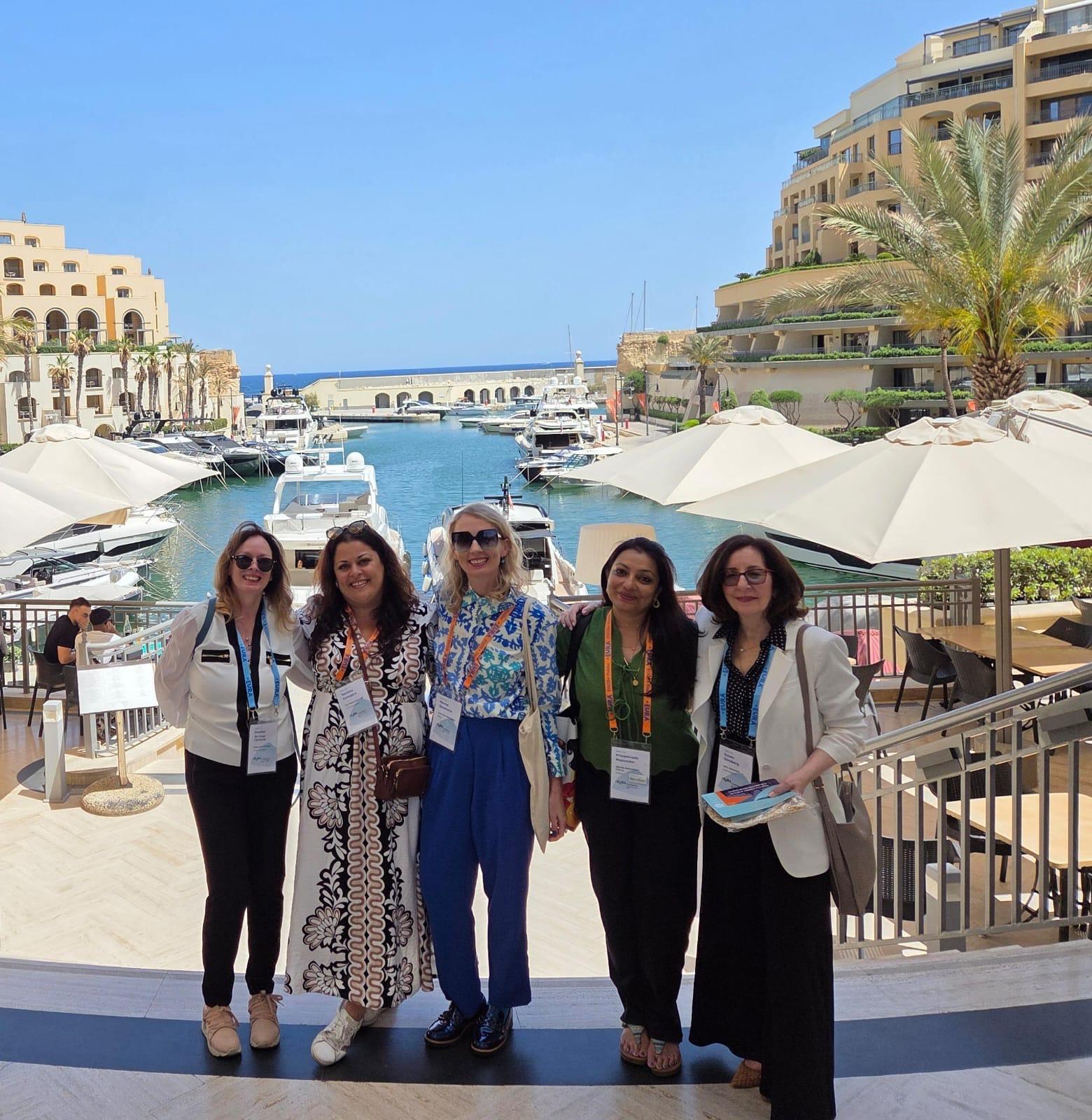
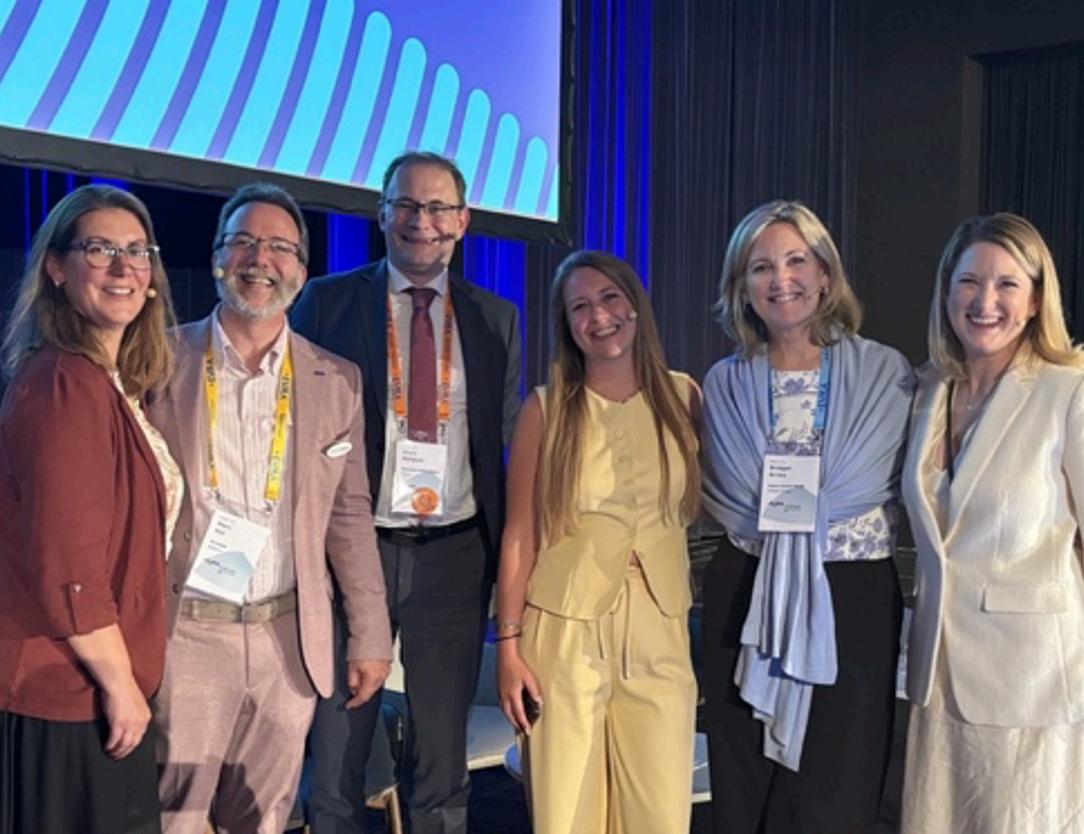
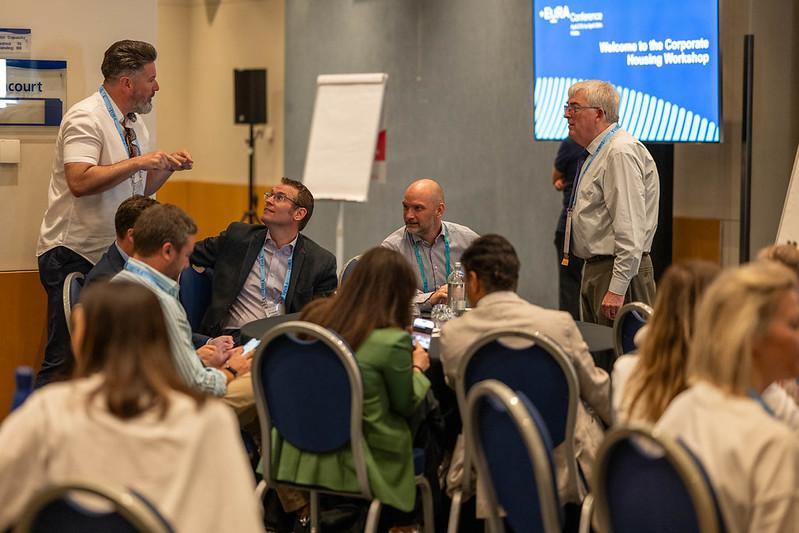
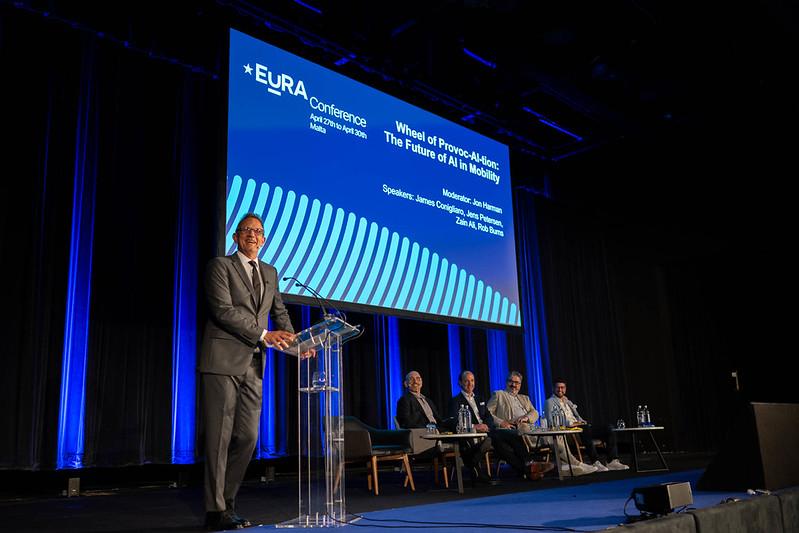
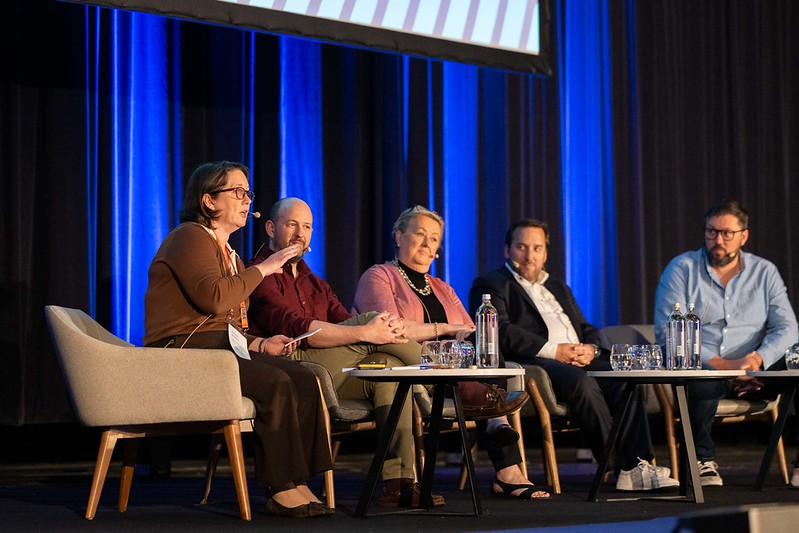
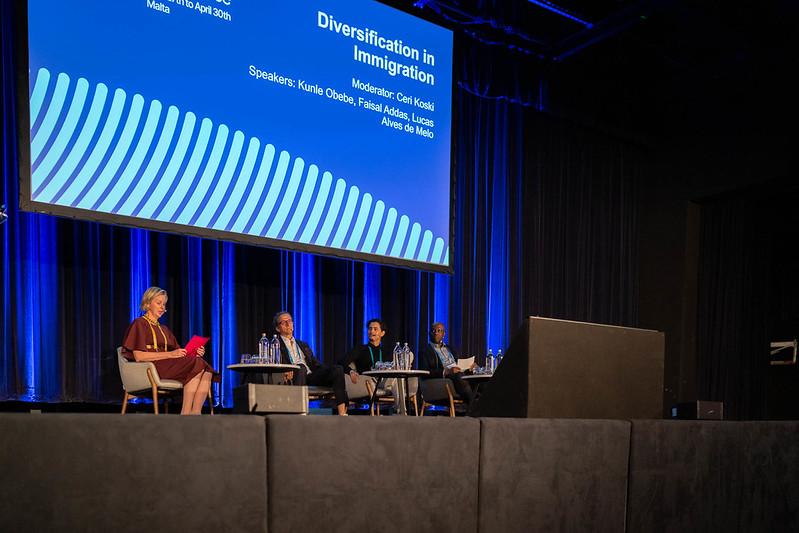
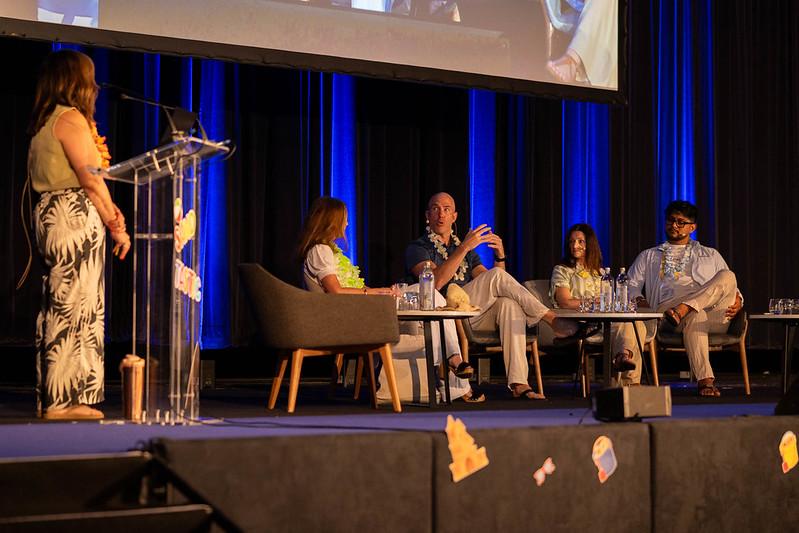
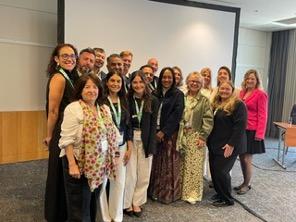
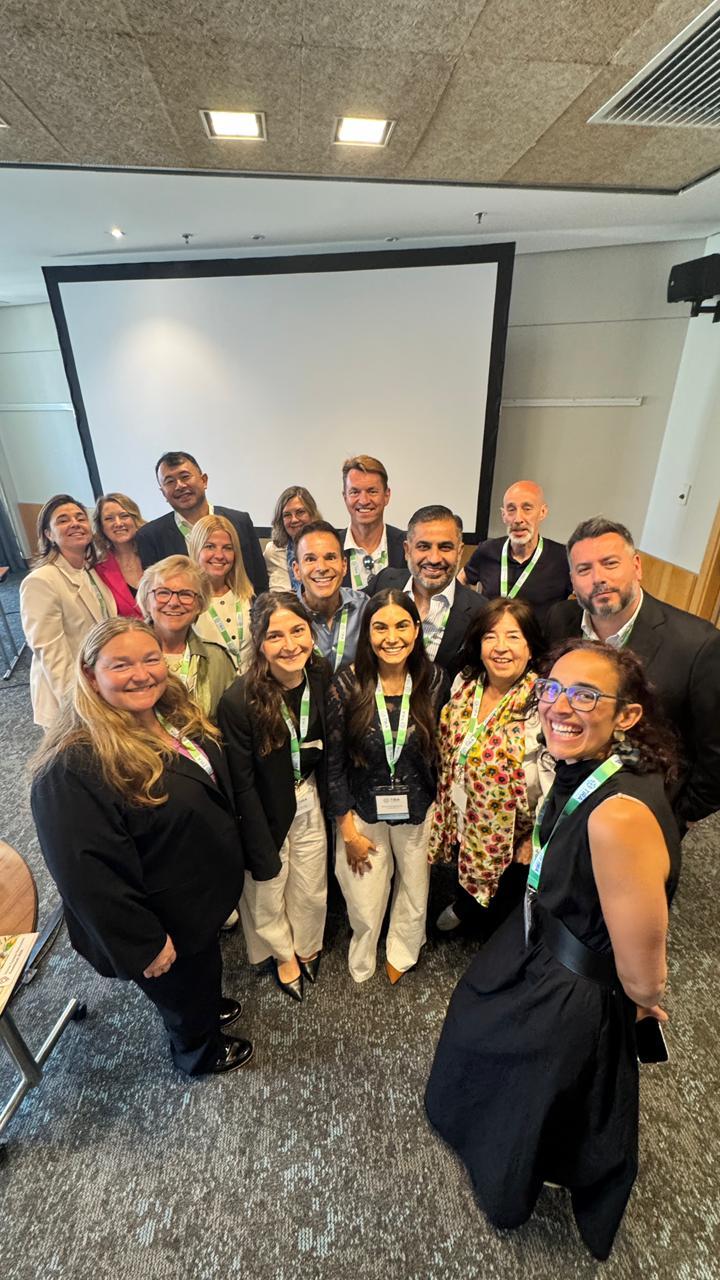
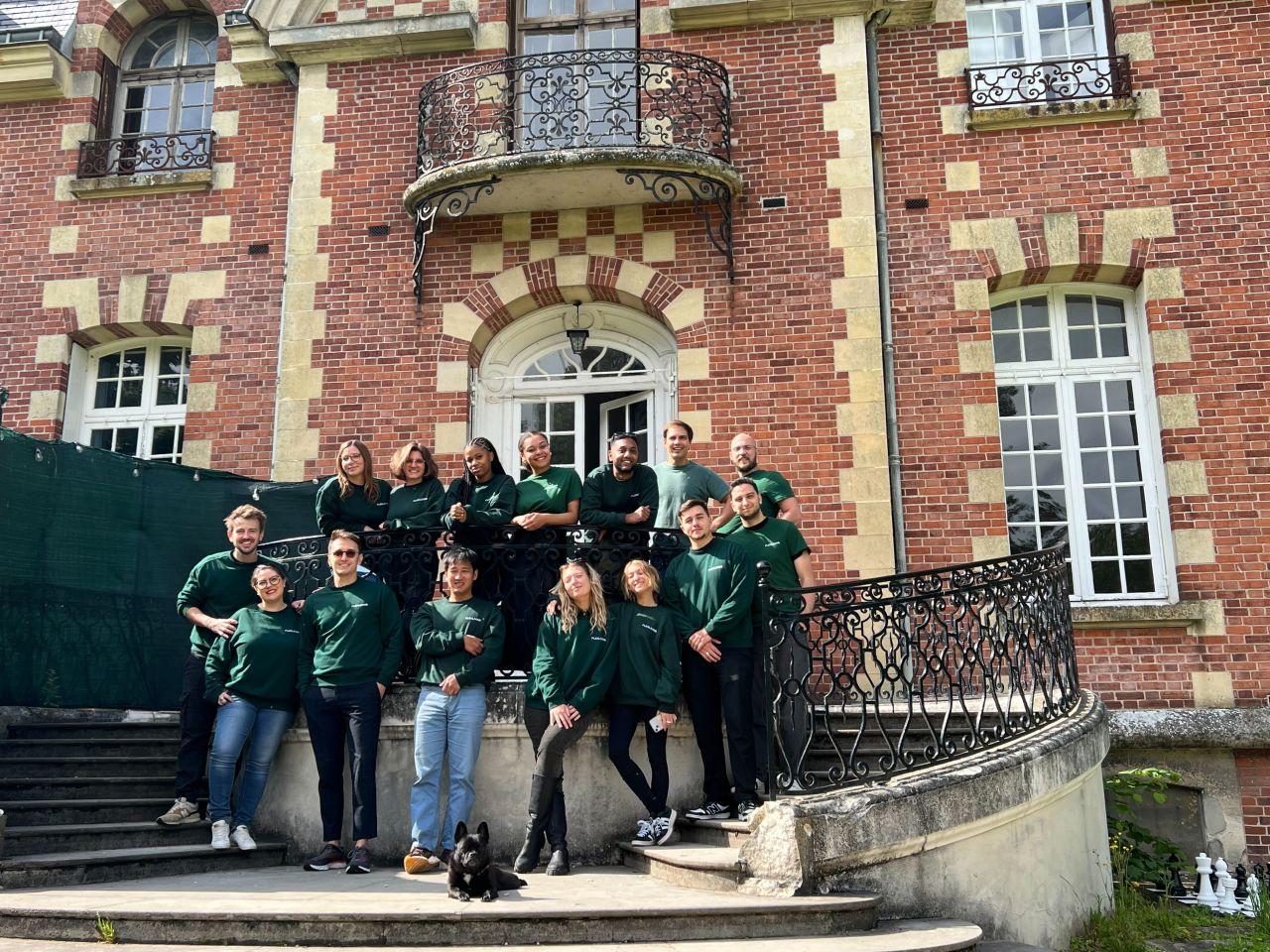
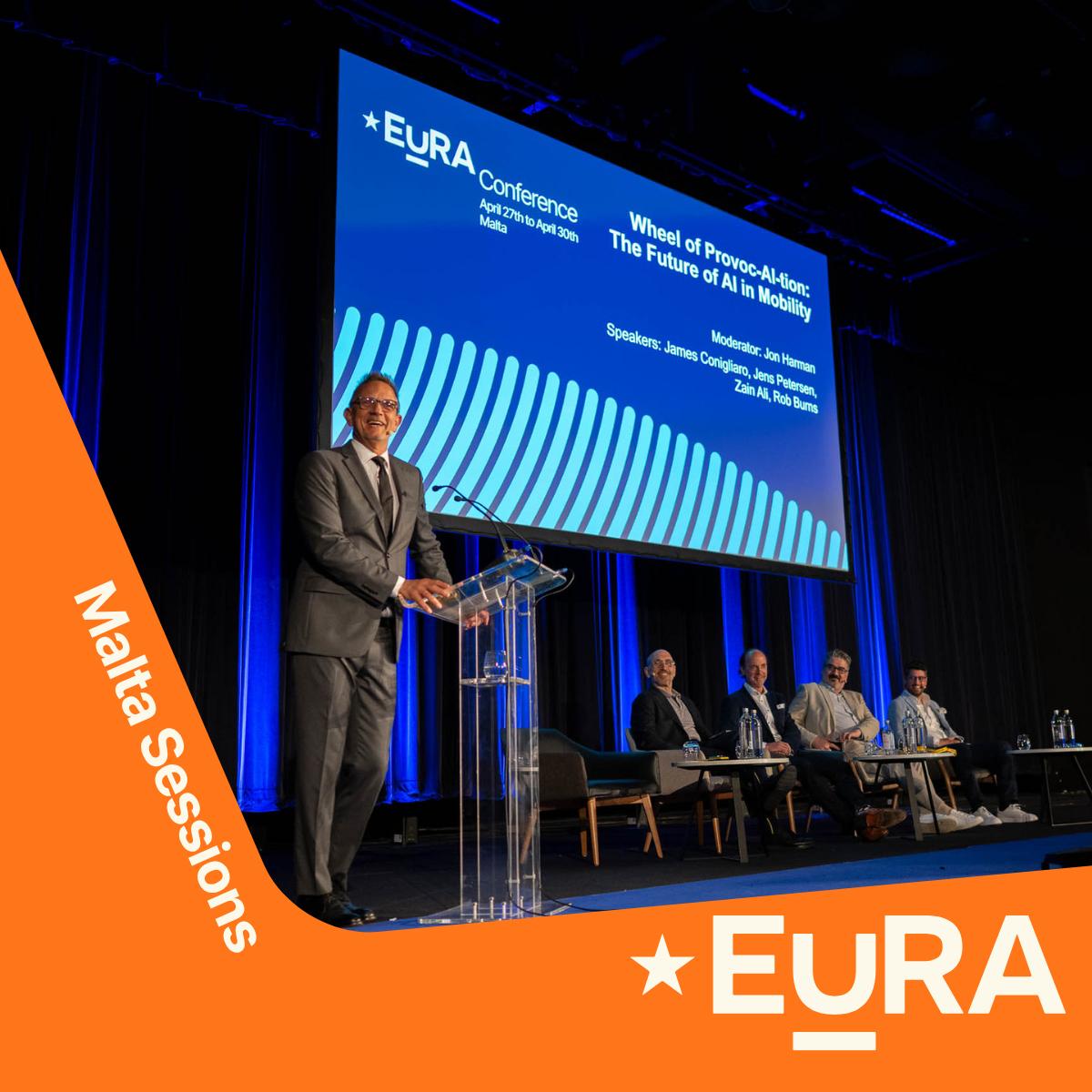
Thanks to everyone who came to Malta for our 2026 International Relocation Congress. We have had some exceptional feedback and we’re all very humbled by the appreciation that you extended to the teams, not just here at EuRA, but to the venues and the Malta Hilton in particular. As most of you know, this was the first time we have repeated an actual venue and we were so pleased that we did.
There’s a huge amount that happens behind the scenes. Each year our generous delegates always ask the team how the preparation has been and tell us what a good job we do. But once we get onsite, it really is primarily in the hands of our venues and destination partners and those teams in Malta were among of the best we’ve used.
On the Thursday before the event began on the Monday, the Hilton called a meeting of all department heads. Not just food and beverage and the meetings and incentives teams. This was everyone. The head chef, head of housekeeping, the front desk team leader, the head of maintenance plus of course our event coordinator the brilliant Daniela. This is very unusual and an exceptional level of customer service which we don’t get in many venues. To feel so supported by the hosts takes a huge amount of stress of us as organisers. Immediately after the meeting a WhatsApp group was created with each team lead at our disposal throughout the conference.
We make a very big effort to be good clients! We know from the years we’ve been running the event, that it ’s the venues who know what they do best and try not to interfere. We ensure that the room layouts for example, stay the same as much as
possible during the event. If a room is cabaret style, we leave it cabaret style. If it ’s theatre, it stays that way. We know that the less pointless work the team have to do in changing room layouts, the more time they have for the important things like tidying rooms and relaying water and clean glasses during breaks. It sounds simple but when there are 800+ people in a hotel, the job of the venues teams is not an easy one.
We are always sent the menus for every lunch, dinner and coffee break and we take the advice from the F&B very seriously. They know what they can do best so with the exception of some tweaking to take dietary requirements into account, we know they will do what they do best if they ’re left with the autonomy to do so. Apparently we are an unusual client in this respect!
Every venue is different and we do a lot of work to try and ensure that within the confines of the spaces we have, we provide networking space, good meeting spaces, conference and panel spaces and we take the feedback seriously. But each city and venue is unique and few give us the flexibility of spaces and the professionalism of the teams at the Malta Hilton and it is they who deserve the biggest credit.
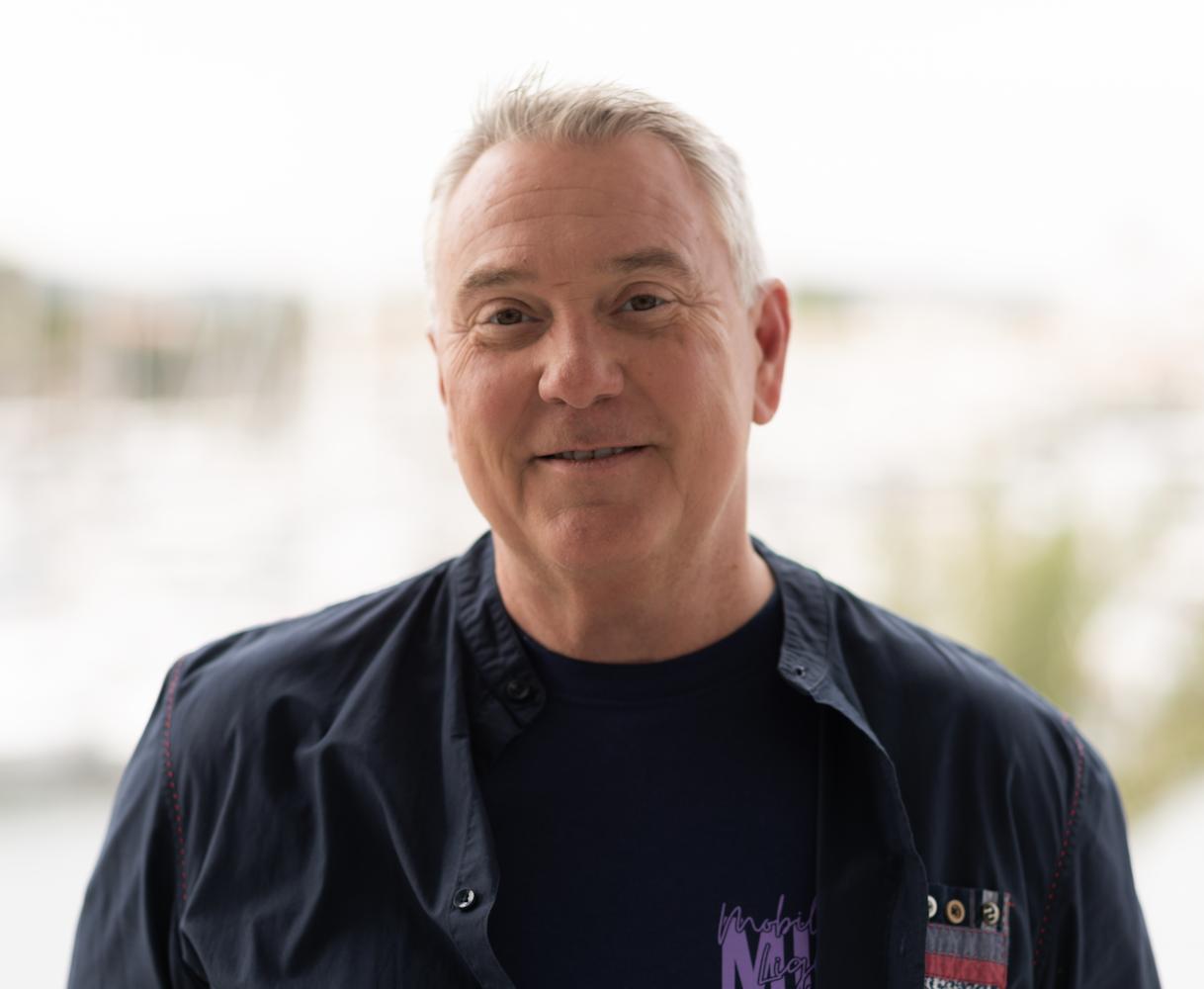
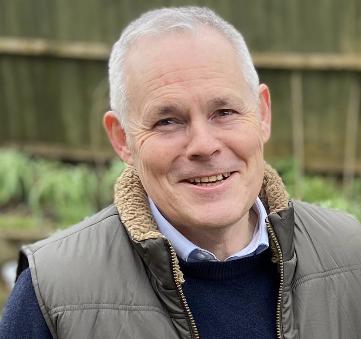
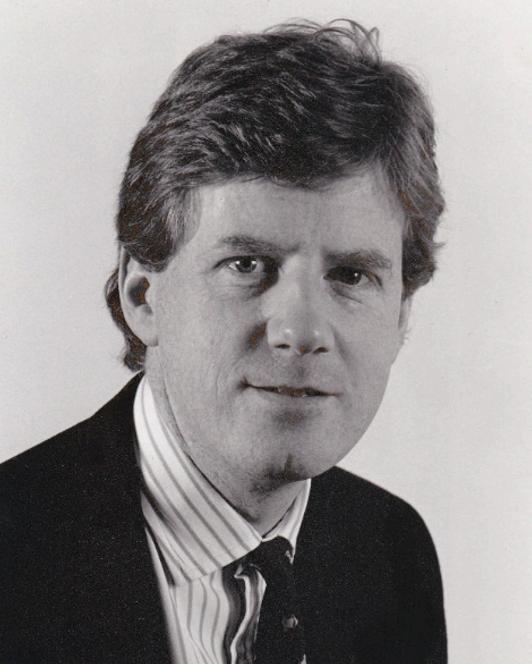
Dom Tidey COO & Managing Editor
EuRA International Relocation Congress 2027 Lyon April 26 - April 29
Contributions on all aspects of mobility are welcomed for publication in The EuRApean. If you are a member of EuRA and would like to contribute news about your company, please get in touch.
Maria Manly, Editorial Consultant maria@eura-relocation.com
Disclaimer:
Opinions expressed in The EuRApean are not necessarily those of the publisher unless otherwise stated. Published by: EuRA Suite 1 Windrush Court, Abingdon Business Park, Oxfordshire OX14 1SY
Letter from the CEO
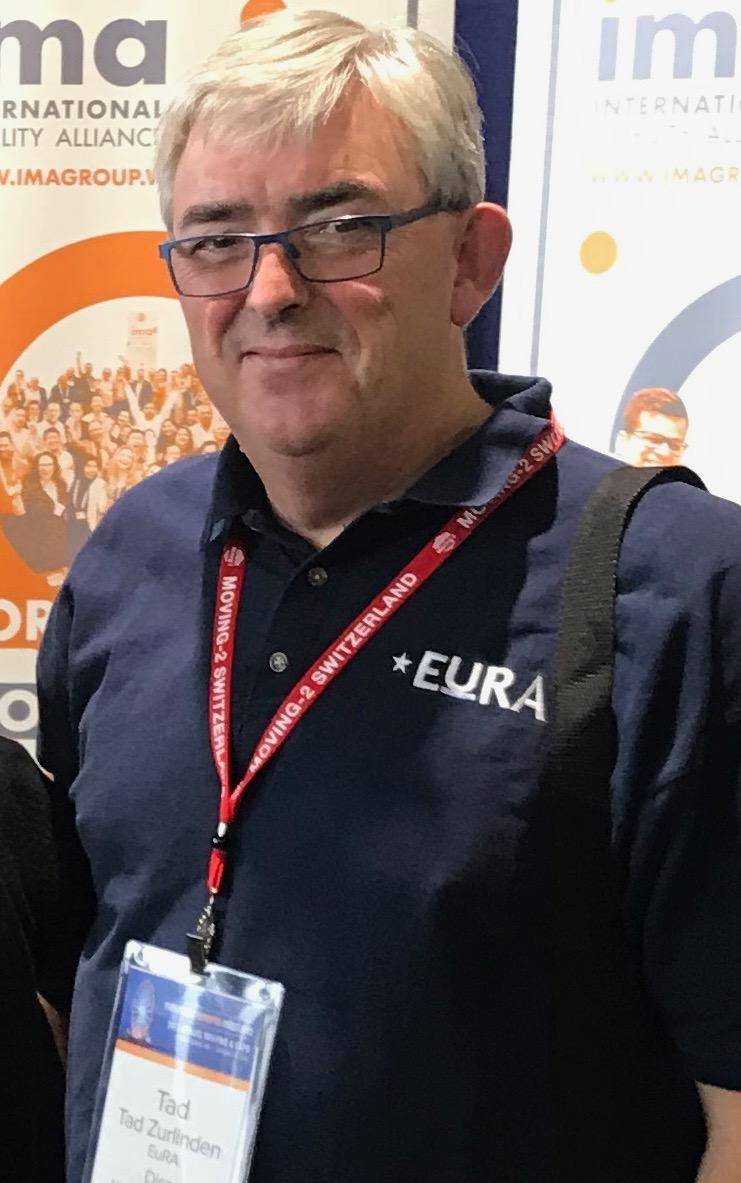
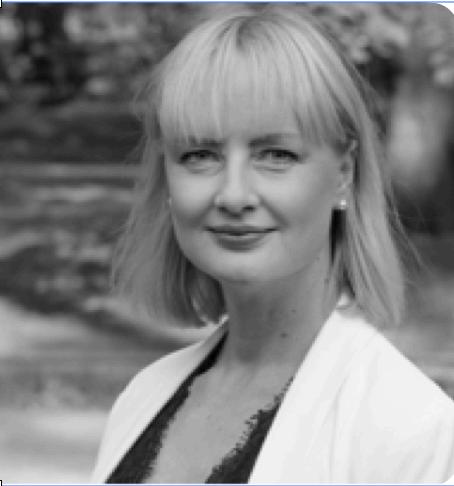
Tad Zurlinden
It was amazing to welcome over 800 people to Malta for our first ever conference in a venue we’ve used before.
We have gone over the feedback that you gave us, both on the sessions and the conference itself, and it has formed the basis of our planning for Lyon 2027. It’s always fascinating to read the evaluations and as always, we get very differing responses to the same questions. Most people loved the event and overall we scored a 4.7 out of 5 which well exceeds our KPI for the event so thank you to everyone who took the time to fill in the evaluations. You can read some of the comments in the article in this edition.
The responses were overwhelmingly favourable and for that we’re all very grateful. It is extremely nice to share with the team how appreciated all their hard work was. However we always get a polar opposite response from a few people to the same topic. Gala dinner
food was fantastic, gala dinner food wasn’t great! Loved the hotel, hotel was too big. Loved the spaces, couldn’t find people. As I’ve written before with such a broad cross section of guests wanting different outcomes from the same event, we have to plan using macros not micros and this means tailoring the event to the majority of the responses we get. Also it’s vital for us to work with our venues and their best skills. As Dom says in his editorial, every venue is specific and we let them guide us as to what will work the best with such a large group.
In Zagreb we had a much smaller venue than normal. In Malta we had a much larger one. In Lyon we are working with both a primary hotel and the adjacent conference spaces. We have themed the conference “Vive La Difference” and will be delivering sessions based on this loose theme.
Gordon Kerr, our Strategic Consultant for Legal who retires this year
DEADLINE! On the 21st of September we will open the conference bookings to members (Premium Members will have a 14 day advance date to book) as well as put out the call for speakers based on our event planning. The 21st will also be the day that sponsorships will open. We will be limiting numbers to 700 for Lyon so please book early. We were sold out by mid October for Malta but due to the ongoing conflict in the Middle East, there were delegates who had to cancel through no fault of their own at the last minute. This meant we were able to give everyone on the waitlist a place. This is very unusual.
The sessions this year were well attended despite maybe not looking like it as we had such a large conference ballroom! For Lyon we will again try to ensure that the programme is relevant as possible for our attendees using the feedback from Malta. My thanks go to all of our speakers, moderators and Igniters who made the programme relevant and compelling. I also want to thank the Research Panellists who presented the data they had collected from members and you can read summaries of those reports in this edition. Thanks also to all the members who took part in this research which gives a clear picture of what members need from EuRA in the future.
One thing that was loud and clear from the data was how vital peer to peer networking and support is to EuRA’s diverse membership. We will be working on ways to support this between the annual conference cycle and one new project just launched is the Peer to Peer Leadership Networking cohorts which you can read more about in this edition. Giles Orr and Nic Rattle our Strategic Consultants for Education will be working on this programme across the coming year. You can register your
Irina Yakimenko, Executive Group Member who completes her term in office this year
interest via the Education pages on the EuRA website.
At the last meeting of the Executive Group, as always happens in June, Simon Robins handed his presidency to our new President Johanna Lennartson. Jeremy Berthoux becomes our Vice President and I look forward to working with them both. We have some exciting new projects for the coming years including a new focus on PR for the work of our members and you can meet our new PR Strategic Consultant Fiona Klomp in an article in this edition.
There are two goodbyes I have to make. Irina Yakimenko has served her maximum term as a member of the Executive Group and June was her last meeting. She has made an invaluable contribution to EuRA, bringing creativity and sharp financial acumen to our association. She has been an active and supportive EG Member and will be missed by us all. She achieved a lot for EuRA during what was a very turbulent few years for her company and her family and has always had a positive outlook and smile for everyone.
Gordon Kerr will be retiring this year as our Strategic Consultant for Legal Matters. Those of you who know Gordon will have appreciated his expertise and calm demeanour that he has brought to EuRA and it’s members over the years. I personally and professionally have worked with Gordon for over 30 years and will miss his advice a great deal. Not only has he steered the members through some tough times (GDPR implementation comes particularly to mind) he has helped EuRA to stay on track with events contracts, disciplinary issues, compliance and most of all always being there. He has found a worthy successor David Gourlay from Morton
Fraser Legal who will take the reins in September and who you will meet via Briefings and at the Lyon Conference.
Two further projects to enhance cooperation and industry collaboration will continue to be a priority for the work of EuRA over the coming years. The Coalition for Associations in Global Mobility will continue to work together to design and deliver new projects to benefit all of our members across the six associations. The local national associations will continue to work together and we hope to create an umbrella under which we can meet to start working in collaboration. The aim of this is to fully understand and disseminate the challenges that occur in individual markets for our industry, track changes as they happen and adapt accordingly. The national associations have a unique perspective on what’s happening in their country especially when it comes to changes in the law. The ARP in the UK recently ran a Briefing for example, on the new Renters Reform Act which drastically changes the landscape of lettings in England. Where other EuRApean countries are revisiting immigration and settlement legislation, this also requires the response of the national associations to ensure their members are also fully compliant with the law. This is something that EuRA as an international association cannot have the same impact.
I was recently at the FIDI conference and they are an interesting organisation in that they have Local Affiliates. These Affiliates act as local or regional associations in themselves, all members of FIDI under that international banner and it will be interesting for us at EuRA to learn more about how that works and whether there is a model that could be adopted by the Coalition for Associations. Any work we can jointly do to better represent all of our members can only be for the good.
We will also continue to focus on our sustainability initiatives and I urge you to take a look at the free carbon calculator which I know is already being successfully used by many members during the RFP process. You can sign up at no cost here.
We were very surprised that we had no candidates to join the Executive Group this year and next year we will have two places available and for the first time, one of them will be reserved for a Supplier Member. It’s very important to me that EuRA represents it’s diverse members and this is a way to ensure that our Supplier Members have a voice in the future direction of EuRA. Look out for the bulletins asking for candidates later this year. Bare in mind all members of the Executive Group must commit to achieving the EGQS during their term. The next edition of the EuRApean in the Autumn will have full details.
Yet again I find myself writing about the geopolitical pressures that our industry is under and the word extraordinary no longer applies. This looks depressingly like a new normal. But as was proven again and again at the Malta Conference, EuRA Members are among the most adaptable companies on the planet. It is a difficult and confusing time for not just our industry but for the corporate world in general. I’ve spoken with members who all say roughly the same thing, many moves are on hold. I’m sure all of you who were in Malta heard the same thing. Another reason why the national associations have such importance is their ability to advise on working practices that affect their members during a slowdown. The ARP for example has a free legal helpline which enables members to seek advice about restructuring staffing patterns, something that is more difficult than in say North America and less difficult than a labour market like France or Belgium. Having the flexibility to reduce and expand teams according to business demand is so important in uncertain times and this is particularly challenging for members in Europe. This is partly why here at EuRA we have tried over many years to keep our team lean and efficient, working with Strategic Consultants on important aspects of our work rather than hiring team members, but this is a luxury many relocation providers don’t have.
Stay positive and looking forward to the next time we can all be together in La Belle France.
Letter from the President and Vice President
Johanna Lennartson | CEO at Nimmersion AB
Jeremy Berthoux | Managing
THANK YOU, MALTA LOOKING AHEAD TO LYON
Dear EuRA Members,
As we reflect on yet another successful EuRA Conference, we would like to extend our sincere thanks to everyone who joined us in Malta. What makes a EuRA conference truly special is not only the venue, the programme, or the destination, it is you. The openness, generosity, and community spirit that our members bring year after year create an atmosphere unlike any other event in our industry. Malta was a wonderful reminder of the strength of our network and the value of coming together to learn, connect, and support one another.
As the newly elected President and Vice President of EuRA, we are honoured to begin this journey together and to serve such an engaged and passionate community.
Following the conference, the Board has carefully reviewed your feedback, and we are delighted to see how positively many aspects of the event were received. The venue, networking opportunities, welcoming atmosphere, and sense of inclusivity were consistently highlighted as key strengths. At the same time, many of you shared valuable suggestions on how we can continue to evolve and improve.
Your feedback is already helping to shape our plans for Lyon 2027. We heard a clear desire for deeper
industry insights, interactive discussions, client perspectives, and real-world applications of emerging topics such as AI. These themes will play an important role as we begin designing next year’s programme.
Planning for Lyon is already underway, and we are excited about the opportunities ahead. Together with the Board, the EuRA team, volunteers, speakers, and members, we will continue working to ensure that EuRA remains the leading platform for learning, collaboration, innovation, and meaningful connections within our industry.
As always, we encourage you to share your ideas, suggest topics, and consider contributing as speakers, moderators, or panellists when opportunities become available in September. The success of EuRA has always been built on the active involvement of its members, and your contributions are invaluable.
Thank you once again for making Malta such a memorable experience. We look forward to building on that success and welcoming you to Lyon in 2027 - Vive la Différence!
Warm regards,
Johanna Lennartson President, EuRA
Jeremy
Berthoux Vice President, EuRA
Letter from the Past President
Simon Robins Business Development Director TTH Curzon
As I write my final President's Letter for The EuRApean, I find myself reflecting on what has been an incredibly rewarding and memorable year. Serving as President of EuRA has been a genuine privilege, and I would like to express my sincere thanks to every member for the trust, support and encouragement you have shown me throughout my term.
EuRA has always been much more than an association. It is a community built on professionalism, friendship, knowledge-sharing and a shared commitment to excellence in our industry. During the past year I have had the opportunity to engage with members across the globe, witness the innovation taking place within our sector, and see first-hand the strength and resilience that continue to define our community.
One of the greatest highlights of my presidency was undoubtedly our recent conference in Malta. What an extraordinary event it proved to be. Bringing together more than 800 delegates from across the international mobility and relocation industry, the conference showcased everything that makes EuRA special: meaningful connections, outstanding educational content, thought-provoking discussions and a spirit of collaboration that continues to set our association apart. The Malta conference was not only exceptionally well attended, but also delivered an inspiring programme of speakers, workshops and networking opportunities that will undoubtedly continue to influence our industry long after the event itself. It was wonderful to see so many familiar faces alongside a significant number of first-time delegates, all contributing to the energy and success of the week. The feedback received has been overwhelmingly positive and is a testament to the tremendous efforts of Tad, Dom, Briony and the EuRA team, The Executive Group, our volunteers, sponsors,
speakers and delegates. To everyone who played a part in making Malta such a success, thank you.
As my term comes to an end, I am delighted to hand over the reins to my Vice President, Johanna Lennartson, who now assumes the role of President of EuRA. Johanna has been an invaluable colleague and trusted partner throughout the past year, and I know she will continue to bring tremendous energy, vision and leadership to the role.
Supporting her as Vice President will be Jeremy Berthoux, whose experience, dedication and commitment to our industry will be a great asset to both Johanna and the association. Together, they form an outstanding leadership team, and I have every confidence that EuRA will continue to thrive, evolve and strengthen under their stewardship.
Thank you for giving me the opportunity to serve as your President. It has been an honour to represent this remarkable community and to contribute, in some small way, to its continued success. While my presidency may be ending, my commitment to EuRA certainly is not, I will continue to be a member of the Executive Board for a further 12 months. and I look forward to supporting the association and its members in the year ahead.
I wish our new President and Vice President every success and look forward to seeing EuRA continue to grow, innovate and lead our industry into the future.
EuRA Global Quality Seal+
You Can Do It With Support at Zero Cost!
Mentors
Our brilliant mentors will help you to schedule your timeline. Help you to start, set deadlines for completion of the chapters of your Quality Manual. When broken into sections, and supported by the mentors, it ’s not nearly as daunting as it may seem! And don’t forget 80+ EuRA Members have done it!
There is no charge!
Partnerships
Members with the Seal work preferentially with other Seal holders when giving outbound work. They know they can reassure their clients of an independently verified benchmark of service delivery.
Premium Membership
All EuRA Members holding the Seal become Premium Members.
This gives access to highly discounted training licences, early booking for events and specific events for Premium Members only.
We are also looking at delivering extra conference sessions just for Premium Members.
Training
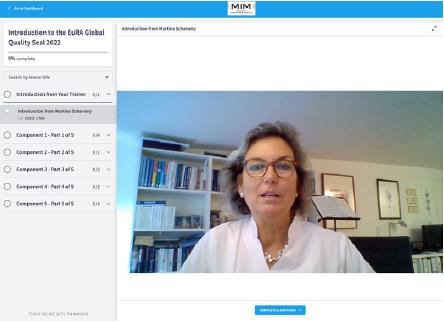
Martina Scharwey our Strategic Consultant and Project Manager has developed a step by step training programme.
Follow her training and your Quality Manual writes itself! Well not entirely you still have to make sure it ’s accurate to your business!
There is no charge!
Staff Development
Over and again successfully qualified members have told us what a difference the Seal makes to the whole team. Everyone knows what they ’re doing and what their benchmarks are for successfully delivering the best services.
Support
At any time during the certification or recertification process, you can rely on the EuRA team for support.
Contact Dom Tidey if you have any questions, if he doesn’t know the answer he will reach out to Martina and our auditors to make sure you have the support that you need.
There is no charge!
EuRA Global Quality Seal+
What our Members are Saying
As part of the annual EGQS Review, we ask Certified Members the question “”What are the benefits of being an EGQS Holder that adds value to you?” These are some of the responses…
Most RFPs require us to provide proof of certain aspects of the EGQS+ standard. Having this all together, audited, in one program, makes it a lot easier to complete such processes.
Stuart McAlister Inter Relocation
KPI and evaluations that match perfectly well with our expectations and needs.
Nadine Rouge Executive Relocations
The EGQS is one of the most prominent and relevant industry standards. Being an EGQS holder gives us a clear edge over non-holders as it strengthens client and customer trust in our services. It also guides and motivates us to consistently maintain the highest quality standards by adhering to well-defined processes.
It makes us better as a company; high quality through established and maintained processes; it makes us think about opportunities and threats and how to embrace them!
Kati Kägi Prime
Potential partners and clients reach out to us based on the EGQS certification.
Cynthia Myrnes Relocation AS
Being an EGQS holder adds significant value to us in several ways:
• Credibility and trust – It provides assurance to our clients and partners that we operate to the highest professional and ethical standards
• Consistency in service delivery – The framework helps us maintain structured processes, which supports reliability and quality across all relocation services
• Continuous improvement – The standard encourages us to regularly review and enhance our operations, ensuring we stay aligned with best practices
• Competitive advantage – Holding the certification differentiates us in the market and strengthens our reputation as a trusted relocation partner
• Global recognition – As the EuRA GQS is internationally acknowledged, it supports our ability to work seamlessly with global clients and partners
• Overall, the certification not only validates the quality of our services but also reinforces our commitment to excellence
Salamiah Abd Latip Pathfinder Relocation Services
Newly Certified and Re-certified
Members
EuRA Global Quality
Members
SIT Relocation - Jun-26
Copenhagen Relocations - Jun-26
Donath Relocation - May-26
Anywr Netherlands - May-26
IOR Global Services - May-26
Altair Global - May-26
Global Relocation Spain - May-26
Executive Relocations France - Mar-26
Nimmersion - Feb-26
Training and Mentoring
Free to all members and fully updated for 2026. This module of five components covers everything you need to know about setting up a process management system. You’ll learn how to build your Quality Manual and how to implement all the required policies to ensure you’re completely compliant for the future. Following these three (free to EuRA Members) modules will simplify the process, led by a true expert in quality management.
When we asked members earlier this year, 65% said they wanted to undertake the process but 70% said the main barrier to undergoing certification was lack of internal resources and time. We have just implemented a Mentoring programme to help members get started and stay on track.
In the coming months we will be delivering live clinics with certified members and our SC Martina Scharwey as well as peer to peer help on LinkedIn. If you have an idea that would help you to get started please let us know, we want to give members as much assistance as possible to join the ranks of our Premium Members.
You Can Do It!
Dom Tidey
It was great to have the chance to speak with members during the Malta Conference about the Seal. This is our opportunity to speak face to face with members who are keen to undertake the process but who maybe don’t know quite where to start.
On the next couple of pages, we outline all the help and assistance that ’s available to members to help them achieve the Seal. This help and advice is available at no cost.
We have three mentors. As part of my role as COO, I am taking on a larger role within the EGQS Project as the Quality Standard Mentor. I have worked on this project since the very start in 2008 and have been part of every annual update to the Quality Standard, the document that forms the backbone of the certification. When approached for the first time, the Quality Standard can seem daunting. It is a 37 page document laying out all off the requirements you need to fulfill to build your Quality Manual. The Quality Manual is the document you will use to prove to the auditor that you have reached all of the requirements that are set out in the Quality
Standard. On the next couple of pages you will see all of the help that is available to you while going through this process for the first time. But our assistance doesn’t end there! When we update the Quality Standard each year in November, we design a whole range of training and Briefings to help already certified members to update their Quality Manual in line with any new requirements. If you are starting out to build your Quality Manual before your first audit and you hit a part of it you don’t understand, reach out to me and I will do my very best to help you to fit that requirement to your company ’s processes.
A good example would be a query I dealt with recently. The EuRA Member was in the middle of their audit and the auditor wasn’t sure about how they were proving the KPI on meeting the response times to enquiries for clients. This KPI is based on a return email or phone call. This EuRA Member has an extensive Client Management System that tracks many parts of its operations, but it doesn’t track email replies. The auditor and
Training Support
The best way to get started with building your Quality Manual is to take the free online training in the EuRA Academy.
Martina Scharwey, the Project Manager for the Seal and the designer of the Quality Standard takes you through each section of the Standard step-bystep. If you follow the six components in the module they act as a road map to building your Quality Manual, the document that will be your evidence of your Quality
the member were not sure how to prove they had met this KPI and I was able to reassure them both that a random sample from the Outlook mail client of a team member was enough to get the information that an email enquiry was replied to within the time frame set out in that KPI. It ’s very often the simple things that can become complex like with anything in life!
We also have two brilliant EGQS Timeframe to Audit mentors who are there to help you to hit the deadlines you decide upon when going through the process of initial certification or re-certification. Åse and Michéle are there to set three meetings with you so they can help you to stay on track as you build your Quality Manual. The process is simple. Contact Maree at the EuRA office and she will send you all the documents you need to start. The Quality Standard and all of the policy templates you need to add into your Quality Manual. You then contact Åse or Michéle and they will set three deadlines;
1. When to complete the EGQS online training and start to build your Quality Manual
2. When to complete the building of the Quality Manual
3. When to arrange for final audit
Just having someone helping to set those goals has proved to an invaluable tool to many members looking to get certified.
Contact us and take advantage of all the help we can give at no charge!
A few explanations;
The Quality Standard - this is the document we will send you which sets out the requirements to build sand evidence your Quality Management System.
The Quality Manual - this is your interpretation of the Quality Standard, built according to your specific company details. You use the format of the Quality Standard and adapt it using your own evidence of KPI’s and your company ’s operations. We provide you with all of the necessary templates for the policies that are requirements of the Quality Standard to evidence things like Health and Safety, Sustainability, Business Continuity etc. All you have to do is adapt them to your specific operations.
Management System.
All you then have to do is create your Quality Manual using the same sectional format as the Quality Standard document.
When we ask members who have undertaken the Seal process for the first time , they tell us the same thing. Once you get started, undertake the training, take advantage of the advice and expertise available, it de-mystifies the process and makes it possible to build a robust and usable quality management system that proves what you already do so brilliantly!
MIM Update July 2026
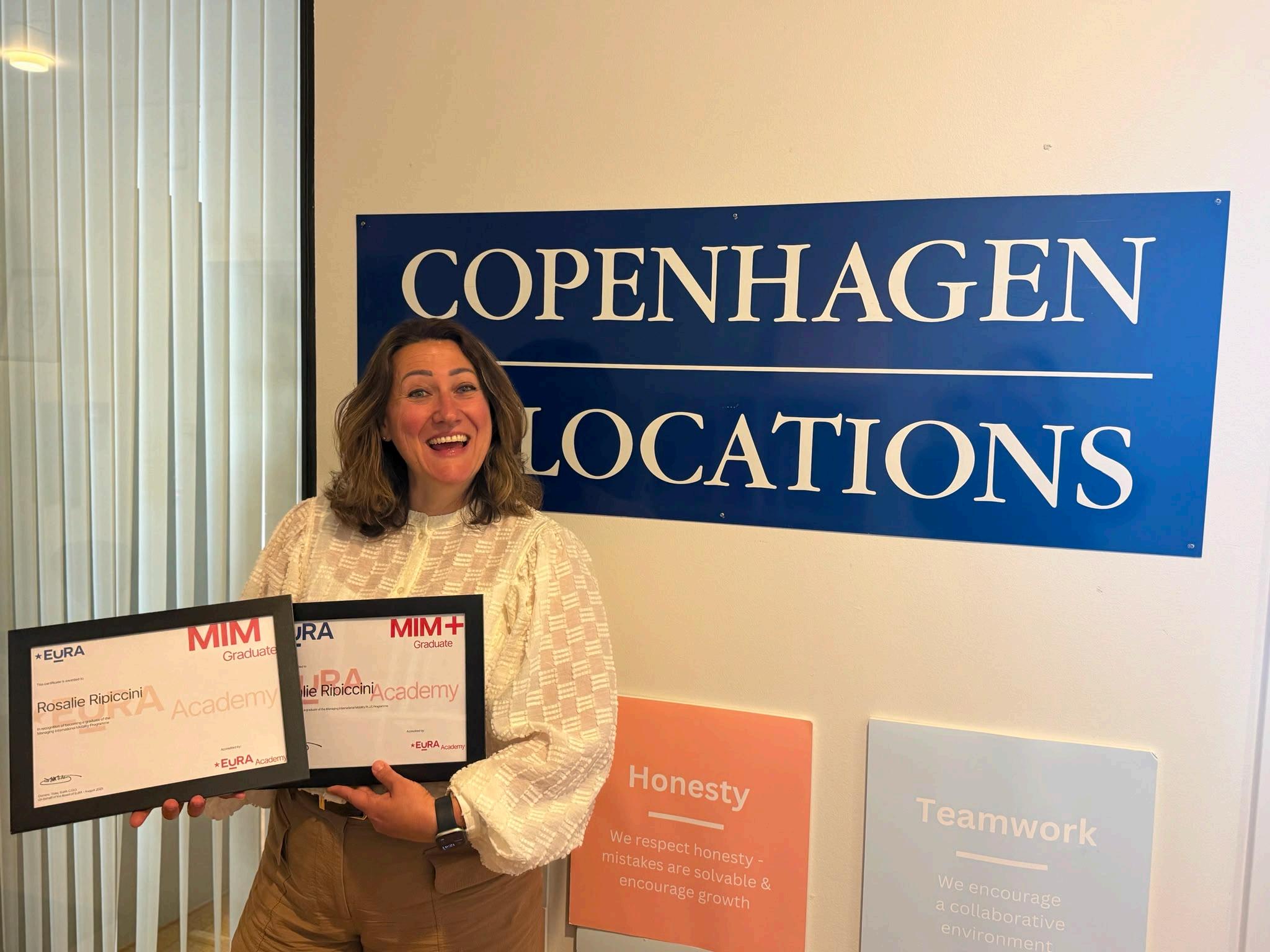
We are always really grateful to get feedback from students studying in the Academy. Rosalie Rippicini Senior Global Mobility Consultant at Copenhagen Relocations recently wrote to Kirsty;
“I am reaching out to inform you that I have finally completed 6 modules (4 MIM modules & 2 extra for MIM+).
I have truly enjoyed this education, and I feel many things make more sense now in my daily work.
Coming Soon Peer to Peer Leadership Networks
Recently we ran a survey about EuRA members' training activities and requirements, which highlighted (amongst other things) a significant interest in seeking guidance and support from industry peers. Senior leadership is often isolating - projecting an outward show of confidence for staff and customers whilst wrestling with difficult and complex issues internally. Dealing with these 'wicked problems' alone can be tough and confidential external perspectives can be a great helpboth professionally and personally.
Even being in industry for more than 4 years now, I can honestly say this training is very beneficial if not essential! Well done on putting together all this material, it must not have been an easy task.”
It ’a always terrific to hear that we’re on the right path with the training content so thanks so much for letting us know!
EuRA will, as part of its refresh of training and support for
the industry, is piloting a new Peer 2 Peer Network to help leaders. We envisage that this will also be a path to gaining the MIM Fellowship designation.
The idea is that over 8, 2 hour sessions spread across a year, professionally moderated by our new education consultants Nic Rattle and Giles Orr, the cohort of leaders will work towards applying knowledge of the bigger issues highlighted by
each participant, developing a close group of confidants. We would ensure that when members sign up, we never have more than one person from a country or market to ensure no conflicts of interest or market sensitivity.
The first test cohort have been working together since November and have all expressed incredibly positive feedback about the experience. That cohort has been;
• Michael Grundell Key Relocations
• Simon Johnston Icon Relocation
• Stuart McAlister Inter Relocation
• Jeremy Berthoux Home Conseil
• Susana Bourne Anywr
They were all in Malta and if you have any questions please reach out to our Strategic Education Consultants Giles and Nic. Below you can find much more information.
A Briefing on the Programme.
A short film explaining the Programme.
We plan to launch the first groups later this year. There will be a charge for taking part in this exciting new project.
You can register your interest now on our website.
New Intercultural Training
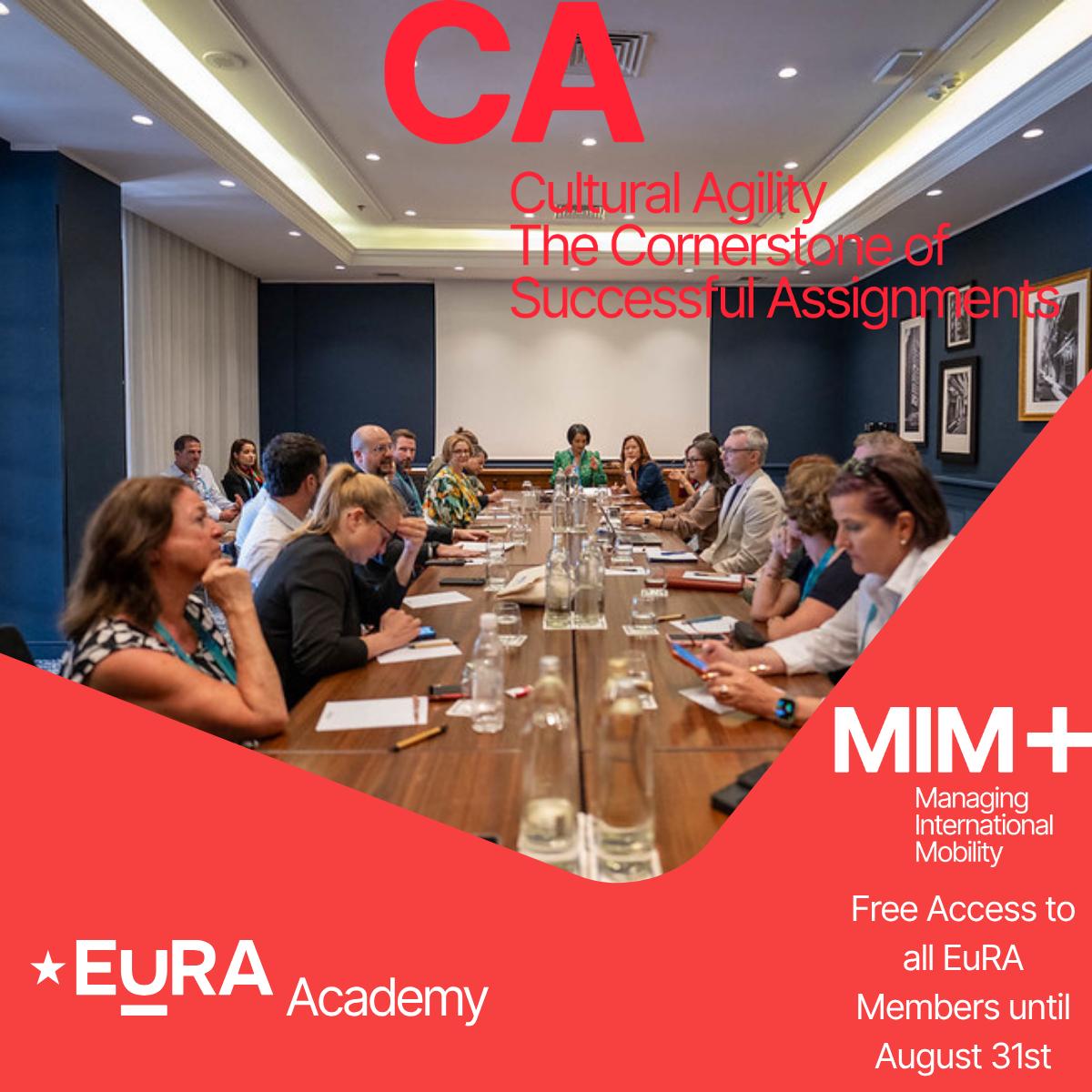
Thanks to a great new partnership with NetExpat, we will be launching an all new MIM Intercultural Training module. This new module is full of great topics and practical advice on how to work with sensitivity and precision across different cultural norms.
“Cultural Agility - The Cornerstone of Successful Expat Assignments” is live and free to all members until September.
Our Primary Trainer Gabi Weglowska will take you
through this fun and essential new programme.
This programme is live and free to all members until August 31st!
Sabine Baerlocher is developing a new MIM+ Module “Cultural Theory and Cognition” taking an in depth look at the research and its application to our industry.
Our Primary Trainer Susan Ginsberg will be updating the module “Collaboration in the New Normal” following the Malta conference where
Collaboration is one of the meta themes. This updated module will be free to all members for the first three months after launch.
Martina Scharwey our Consultant for Quality has updated the “Introduction to the EuRA Global Quality Seal” which is 100% free for all members to certify and gain 50 credits towards MIM and MIM+ certification.
• Guide to Qualifying with EuRA
• Routes to Qualifying Explained
“All Things Legal… July 2026”
Malta legal workshops
In addition to running two legal workshops in Malta, I had the pleasure of moderating a terrific session with the intriguing title:
“The Industry Truth Report: What the Data Says About our Path Forward”. The key takeaways from that session appear elsewhere in The EuRApean, while the main talking points from our legal workshops are summarised below. With my retirement on the near horizon – 30th September to be exact! - this will be my last legal article. So, I’m also grabbing this opportunity to share a few reflections on our unique industry.
1. Where to spend your budget: Legal Compliance, AI and Sustainability myth busters!
In this workshop, I was joined by Dave Carlos, MD of JustOne and Andrew Hopgood, COO of CAP Worldwide for an “argument” about where relocation firms should be prioritising their spending next year!
I kicked off with the case for prioritising legal compliance, starting with the actions required to minimise the risks of GDPR breaches. I recommended reviews of:
• The current flows of personal data coming in and going out of your business, paying particular attention to your crossborder data transfers;
• Your Privacy Notice(s) and Data Protection Policy, and assessing the effectiveness of your staff training around these policies;
• The robustness of your IT security systems – probably your most important spend!
I also suggested that relocation businesses should be paying attention to some wider legal risks, including:
• Are you operating in a country (e.g. UK) where anti-money laundering and sanctions checks now apply to relocation services?
• Could you be “accidentally” breaching competition law by having friendly chats with competitors at the conference? (Hint: never discuss pricing!)
• Do you have “watertight” contracts in place with your suppliers (and are you satisfied that your suppliers would never pay bribes to public officials)?
After posing several questions for the audience on current AI usage and attitudes, Andrew suggested that the key AI considerations for a relocation business should include:
• How does AI fit with your existing processes?
• Does AI use fit within your business culture?
• How does the customer benefit?
• Data and privacy implications
• Requirements for human supervision/ validation
• Business risk and governance
In terms of where to prioritise AI spending, Andrew highlighted:
1. IT Security & IT Security Training (noting the dangers of sophisticated AI as highlighted by the Arup case)
2. Can AI improve customer experience?
3. Where can AI automate repetitive tasks in your business?
4. AIO (AI optimization) and SEO (search engine optimization)
Finally, Dave made an impressive argument for focussing resources on sustainability. After a brief overview of the legislative requirements being imposed on businesses – in all parts of the world – Dave highlighted the sustainability demands of corporate clients and RMCs across their supply chains. Today, client expectations include:
• Evidence of risk analysis
• Sustainability embedded in program design, not just as an add on
• Demonstration of ESG innovation, training, and talent benefits
• Show “best practice” ESG performance, not minimum compliance
But the business objective should go beyond simply responding to external demands. Rather, your sustainability strategy should be about adding value to your business. Dave talked through how a
strategic approach can work in practice and highlighted some of the techniques which can assist a business in assessing which sustainability initiatives will have maximum business impact.
Finally, Dave pointed everyone in the direction of the EuRA and JustOne Sustainability Working Group – please contact Dave or Bryony for further information.
This was a very lively and interactive session, so thanks to everyone who got involved so enthusiastically.
Just one final point from me. It was notable that whatever perspective each speaker was coming from - legal, AI or sustainability – the number one issue across the board was the need to implement strong data security. As often demonstrated across the mobility sector, we may have many different perspectives, but we will usually reach a consensus around the issues that really matter!
2. Getting Paid (On Time!) For Your Services
I was joined for this session by Stuart McAlister, MD of Inter Relocation Group and Michael Grundell, COO of Key Relocation. The theme of this session was summed up in a pre-conference quote from a longstanding EuRA member:
“Within the global mobility space, there’s a topic that is often discussed behind closed doors but rarely addressed openly. Demand for global mobility services has never been higher. Clients expect faster delivery, higher quality, and increasingly competitive pricing. To a degree, that expectation is understandable. But this raises an important question: is it fair for
organisations to demand lower costs, better quality, and shorter turnaround times— while simultaneously imposing payment terms of 45, 60, 90 days, or more?”
We discussed, firstly, several contractual and practical aspects of ensuring that your business is paid on time, including:
• Are your contracts clear on client payment terms (e.g. 30 or 45 days) and interest for late payment?
• Do you insist on a client “float” or prepayment before advancing payments to third parties (e.g. government fees for visas)?
• Do you have in place robust credit control processes?
• Do you carry out any form of due diligence on new clients? – and do you have access to market intelligence about current clients who may be getting into financial difficulties?
We also considered a wide variety of possible responses to slow payment issues:
• Should new partners qualify for credit? Do you require pre-payment from direct clients?
• In what circumstances would you suspend work or at least threaten to do so?
• Would you consider informing the client that you have not been paid by their intermediary service provider?
• Do you have robust internal processes –e.g. address, PO, reference and finance contact identified?
• Is payment behavior tracked and discussed at client review meetings?
It was noted that, since our last session on this topic (at the 2024 conference), EuRA now publishes information on relocation companies whose EuRA memberships have been terminated. This can be valuable information when considering the potential creditworthiness of a new client.
In a similar vein, it was felt that EuRA should consider adopting the EU’s new payment regulation in advance of this coming into law (probably in 2027 or 2028). This proposed regulation is intended to protect small businesses in several ways:
• Maximum payment terms reduced from 60 to 30 days.
• Interest and compensation fees for late payments to be automatic and compulsory.
• EU member states to establish authorities to monitor compliance and issue sanctions.
• Companies to disclose their payment practices (as already required in France and Germany)
Once again, I would like to thank everyone for their active participation in this session and for sharing their practical experiences.
Retirement beckons!
On 2nd August 1976, a nervous young law graduate walked into the imposing offices of an Edinburgh law firm to begin what was then called a “law apprenticeship”. It was the start of an eventful journey which took me from traditional legal work to the creation, a decade later, of a relocation management company, called Morton Fraser Relocation.
With lots of bumps and cultural misunderstandings along the way, our business expanded internationally and I found myself on an amazing learning curve. With the support of enthusiastic colleagues, trusting clients (we specialised in brewers and distillers!), an understanding wife and a supportive bank, I became a passionate advocate for our unique industry.
Many years later, I completed my accidental career cycle by setting up a legal consultancy focussing on the needs of relocation businesses and working with EuRA and its wonderful members. It has been a real joy to work with Tad and Dom and the rest of the great EuRA team. I shall miss you.
One thing I learned early in the relocation business was that a competitor one day may be a partner the next. This may not be completely unique to the relocation world, but it ’s quite unlike the legal world I grew up in. This means that a relocation professional who places more importance on a “quick win” than his or her industry reputation is unlikely to achieve real, longterm success. Our industry rewards a Nelson Mandela more than a Donald Trump. I like that.
So, fifty years on I look back at wonderful friendships; at great times and a few sad times. As for my next project, it will, coincidentally, have a large element of “relocation” about it. I plan to write about my 19th century ancestors who moved from lives as impoverished farm labourers in Ireland and the Scottish Borders to find work in Glasgow factories. With typically up to ten children in tow and facing the prospect of slum housing, this puts today ’s relocation challenges into perspective. But I know that EuRA’s DSP community would have been up for such a challenge … provided of course that (following my advice) they were paid upfront!
And on that legal note, I raise a large glass of Glenfarclas to you, my friends … and sign off.
If you need advice on these or any other legal issues affecting your business, please feel free to contact me.
“All Things Legal” is produced for The EuRApean by Gordon Kerr, EuRA’s Strategic Consultant - Legal Services. Gordon can be contacted at gordonkerr@gklegal.co.uk.
Collaborating in the New Normal, CNN+ Learning Module is being
In today’s fast-moving global environment, collaboration is no longer defined by proximity - it is ned by adaptability, trust, and the ability to work seamlessly across cultures, time zones, Our CNN+ learning module, Collaborating in the New SRG ADVISORY. The CNN+ module ve years ago, and the refreshed CNN+ module will
CNN+ is a dynamic learning module to help professionals and organizations strengthen the human side of performance in an
guidance for professional enrichment and for sharing with their resilient, and high-performing collaboration, where innovation, engagement, meaningful partnerships, and business growth can thrive in the new normal.
Susan R. Ginsberg founded SRG ADVISORY as Managing Principal. She integrates companies’ vision and purpose, advising organizations to transform and create outcomes in a changing world. SRG ADVISORY was founded as a strategic partner to organizations and entrepreneurs worldwide. Drawing from decades of experience leading a diverse portfolio of organizations and industries in global mobility, and formerly in luxury retail. Through a personal approach, she helps leaders cut through complexity, align strategy, and build clear pathways to growth.
She has developed e-learning courses on strategic business development and collaboration for Worldwide ERC ® and the European Relocation Association ( EuRA ) .
There’s an old saying we’ve all heard countless times: “It’s not personal, it’s business.”
For years, the phrase has been used to create distance between professional decisions and human emotion, but I’d like to turn that phrase around.
Where Real Relationships Begin
Over the years, I’ve attended countless conferences and events, including amazing gatherings like the EURA annual get-together. While the industry insights are valuable, the real magic often happens in the conversations between sessions: coffee chats, dinners, airport conversations, and long talks after events officially end. That’s where real relationships begin.
learning who people really are beyond their job titles. After many years working in the global mobility industry, I’ve come to realise something very different: Sometimes the best business decisions happen because they become personal.
And recently, I experienced exactly that.
A Natural Evolution
A month or so ago, I took a stake in CSM and brought the company into the BiCortex Group alongside one of my closest friends, Maximiliano Emanuel Cao. On paper, you could call it a strategic business move. But, while those words are technically correct, they really aren’t very accurate, because they only describe one aspect of the decision.
Yes, conferences help business – that’s undeniable.But the biggest value often comes from something much less measurable, which is the human connection, because you start
This wasn’t a transaction born out of spreadsheets, negotiations, or corporate strategy alone. It was the natural continuation of a relationship built over years of trust,
collaboration, shared experiences, and genuine friendship.
Building Together
Again, Max and I didn’t suddenly decide to work together one day after a single meeting or business pitch. He started out as merely an industry peer. We organised Movers & Shakers global mobility events together. I worked closely with his company, CSM, for many years, sometimes as a client, sometimes as a supplier, and often both at the same time. (Yes, it was as complicated as it sounds.)
But our relationship evolved organically over time through seeing each other at conferences, working on projects together, sharing – and overcoming – challenges, and supporting each other. It started simply, and we built things together long before we officially became business partners.
The Mobility Light Orchestra
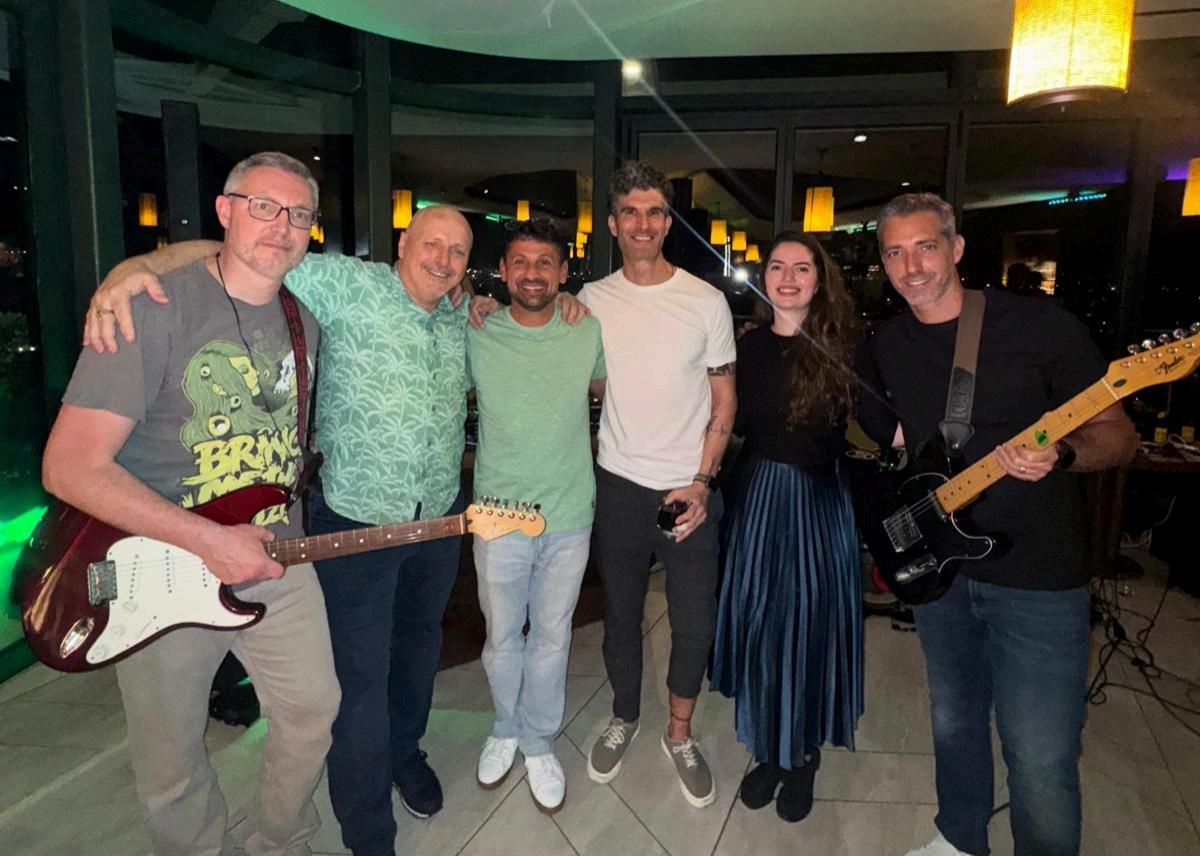
One big addition to my personal life that wouldn’t exist had I not met Max is the Mobility Light Orchestra, the global mobility industry’s very own live band. Max and I worked side by side to bring the band to life.
As we identified and added group members from the industry, the professional relationships stopped feeling purely professional, and it became personal. (You have to admit that there’s something really special about making music together – and it’s even better when you get to sing, dance, and laugh with a room full of your peers!)
Far-Reaching Results
Some of the people I first met through work are now among my closest friends, which is something I never expected when I first entered this industry. What’s even more amazing is when your actual family members meet your work “family members” and it positively affects their lives, too.
This has happened to me multiple times. For instance, several years ago, my teenage son was wanting to have some sort of live-in cultural immersion experience to improve his English. Since I know so many people through my global mobility network, I decided to do a LinkedIn post asking for help finding a good host family.
A Surprising Connection
Incredibly, someone loosely in my network (that I had never met in real life, but who saw me interviewed on Ben Cross’s Love + Relo show) responded that she would be interested in hosting my son. Erin Venable, an American marketing professional who works in the global mobility space, has a son the same age as mine, and she and her family were soon moving to France.
Erin’s family turned out to be a great host for our son! The boys attended French school together, which gave my son the added bonus of getting to improve his French language skills. It also gave him a new best friend!
Now, three years later, our sons are still close. They “see” each other every week in a virtual classroom because they are learning Italian with one of our BiCortex language trainers, and her son comes to visit us in Spain every year on his spring break. Additionally, Erin now helps BiCortex with our marketing! All because of choices made to create real, personal connections instead of just business ones.
An Extended Family
Speaking of extended family, there are numerous other examples of how relationships formed at conferences or in business partnerships have had trickle-down effects into my personal life and the lives of my family members.
One of my favourites is when LuxRelo’s Stéphane Compain and Sandrine LapointeCompain’s daughter was driving from
Luxembourg to Lisbon and needed a place to stay for the night. Our family was delighted to host her, and my kids enjoyed having a big sister for a night!
Holiday + Work = Holiwork
This experience hosting the Compains’ daughter was pre-arranged several weeks earlier, when I was having dinner at their house as a part of my multi-stop “holiwork” summer tour. (I work from my camper van and drive all over different parts of the world to see my clients, peers, and partners, all with the mindset of being on holiday.)
My “holiwork” tours are another great example of how personal lives and business can beautifully come together, not just for me but also for the families of the people I visit. I love this because it’s another way for me to have real-life experiences with the people I do business with, as my kids and their family members are often present. (If you’d like to be one of my “stops” on my next summer tour, let me know!)
The Human Dimension
In all my years of working in this industry, I’ve learned that the strongest business opportunities rarely come from aggressively trying to “do business.” They usually emerge naturally from relationships built without immediate expectations, and that trust compounds over time.
Unlike many industries that can feel purely transactional, global mobility has an incredible human dimension to it. We’re an industry built around people helping people navigate major
life changes. Whether it’s relocation, immigration, language support, destination services, or cultural integration, our work is deeply connected to human experiences, which is probably why the relationships formed tend to run deeper than simple networking.
A “People First” Mentality
Too many people attend conferences with a purely transactional mindset. They focus only on immediate ROI, quick sales opportunities, or collecting business cards. But the real longterm value often comes from approaching these events as opportunities to build authentic relationships.
I try to attend events with a “people-first” mentality, which means I’m focusing on the person as a person, and not as some “business goal to achieve”. Every conversation doesn’t need to lead to a sale, and not every connection needs an immediate purpose.
The Best ROI
Sometimes the most important relationships are the ones that slowly evolve over years without any clear agenda. That’s exactly what happened with Max, with Erin, with Stephane, and the countless other people I’ve become close with that work in the global mobility industry. (There are too many to list, but you know who you are!)
Because of that long, impossible-to-count list of real friends in our industry, I will always continue to prioritise attending global mobility events.
Yes, I enjoy learning about the latest trends, innovation, and strategy, but what keeps bringing me back is the people. After all, you just never know… sometimes the people sitting next to you at a conference today or playing pickle ball (padel ball) with you after a session might become your closest collaborators tomorrow. That’s when business becomes personal in the best possible way.
This past April, I joined the global relocation community at the EuRA conference in Valletta, Malta. Between the keynotes and panel sessions, the conversations that stayed with me were the quieter ones, held with suppliers and relocation management companies over coffee and across dinner tables, about a part of our business that rarely earns a place on the formal agenda: responding to RFPs and standing in front of a shortlist panel.
Five themes surfaced again and again, and what struck me was that none of them concerned service quality. The professionals I spoke with are exceptional at the work itself. The pain sits elsewhere, in the task of proving that capability on paper and in the room.
1. Responding to RFPs can be a full-time role
A strong proposal is demanding of your time, calendar, and resources. It takes hours of writing, coordination, and review, and it takes a level of expertise and confidence that only comes with experience. When a response is rushed, disorganized, or written by someone unsure of what “good” looks like, it shows. Time is rarely the only reason a proposal
underperforms, but it is consistently the heaviest constraint. When the calendar wins, capable suppliers end up submitting work that does not reflect what they can really do.
Why it matters: the bid is often the only version of your firm the evaluator ever sees. If it lacks substance and compliance, or does not lead with value, it becomes difficult to set yourself apart.
2. RFPs are getting more complex
Several suppliers described RFPs that looked nothing like the ones they handled even a few years ago. More strategic questions, tighter compliance requirements, unfamiliar portals, scoring grids, and detailed commercial sections. This is especially true once procurement is in the room. The format and the depth are catching teams off guard, and many are unsure how to manage these components well without expertise in-house.
Why it matters: complexity rewards expertise and preparation. Suppliers who treat each RFP as a scramble will keep losing ground to those who have built a proven system that works.
3. There is no dedicated proposal function
Almost no one I spoke with has a person whose actual job, in-house, is proposal
management. Responses get pulled together by operations, account management, business development, and the occasional executive assistant, all squeezing it in around their day jobs. Ownership is shared, which usually means ownership is unclear. The result is avoidable stress, inconsistent quality, and no single source of truth for proposal content.
Why it matters: shared ownership produces inconsistent submissions. A single point of accountability changes both the quality and stress levels.
4. No one knows what excellence looks like
Many professionals have spent years in mobility, moving between companies, and never once seen a benchmark for a truly strong proposal. They go in blind, repeating habits rather than working to a standard, and then walk away leaving with questions on what they could’ve done differently. Without a reference point, “better” is just a shot in the dark.
Why it matters: you cannot improve toward a target you have never seen. Defining and understanding what excellence looks like in proposal management is the first real step to producing it.
5. Procurement is actively at the table
Procurement involvement has grown sharply. They are the gatekeepers, and they are generalists, which means they ask questions a mobility specialist may not. Suppliers told me about being caught off guard mid-presentation by commercial, governance, and process questions they had not prepared for.
Why it matters: procurement may control whether you advance to the next stage. Speaking their language, and anticipating their questions before the meeting, is now table stakes.
What’s the solution?
The pattern across all five is the same: suppliers are strong at the work and undersupported on the proposal. The fix is not working harder during bid season. It starts with a few deliberate moves: name a clear owner for each response, agree on what a strong submission looks like, build a reusable content library so nothing starts from scratch, and prepare for procurement before the meeting rather than during it.
None of this has to be built alone. Support exists across the industry, from proposal training and templates to peer benchmarking and specialist help that can step in during busy periods or for higher-stakes bids. The right level of support will look different for every supplier. What matters is recognizing that proposal capability is a skill set worth investing in, the same way service delivery is. That is the conversation that needs to continue in our community, because the suppliers who treat the proposal as seriously as the work will be the ones still on shortlists three years from now.
DSP Collaboration & Ecosystem Health Research Report 2026
By Rene Stegmann Relocation Africa & Anna Kavelj
Elite Woodhams Relocation
This is the most comprehensive picture of DSP ecosystem health ever assembled. Combining a 77respondent global survey with two facilitated focus group sessions — one covering Europe and the Americas, one covering Australia, APAC and the UK — the research captures not just what is happening across our sector, but why. The findings are striking, at times uncomfortable, and full of opportunity. Here is what you need to know.
1.The Paradox: High Satisfaction, Low Frequency
Collaboration is working — the problem is it is barely happening. When DSPs do work together, 82% report high satisfaction and 61% rate the quality as good or excellent. Yet nearly half collaborate only a few times a year, and just 14% do so on a weekly or ongoing basis.
The focus groups explained why: the barriers are not experiential — DSPs enjoy collaborating. They are structural. There is no established mechanism for DSP-to-DSP referrals, no shared platform, and no agreed norms. Informal peer exchange thrives naturally. Structured collaboration — joint bids, training, upskilling — requires infrastructure that simply does not yet exist.
"Together, DSPs are powerful — as we realise how common our problems are."
The Co-opetition Dynamic
Both sessions surfaced the defining tension of DSP relationships: you are simultaneously competitors and indispensables. Geographic proximity to a competitor reduces Research: Key Findings for
collaboration; distance increases it. APAC participants confirmed they compete locally but collaborate far more easily internationally.
There is a striking exception: when a shared existential threat appears — regulatory change, market disruption — even local competitors find alignment easier. Collective self-interest, when made visible, can override competitive instinct.
2. The DSP–RMC Relationship: Power, Trust & Structural Tension
No finding generated more discussion — or more emotion — than the DSP–RMC relationship. With 92% of respondents working with RMCs, this relationship sits at the heart of the entire DSP ecosystem. Both the survey and the focus groups describe it as fundamentally asymmetric.
RMCs hold structural advantages: global contract ownership, client relationship control, and fee architecture. DSPs deliver the on-the-ground service that makes the product real. The survey ranked contractual restrictions as the leading barrier to DSP-to-DSP collaboration — ahead of lead protection, privacy standards, trust deficits, and language differences.
"We are not 'work for hire'. If DSPs went on strike, RMCs couldn't operate."
What the Contractual Barriers Actually Look Like
Focus group discussion revealed that 'contractual restrictions' captures a broader set of behaviours than explicit legal clauses alone. Specific practices identified include:
• Restrictions on direct client contact, even where the RMC holds only a global - not localcontract
• No-subcontracting clauses that prohibit outsourcing service delivery to peer DSPs
• “Best pricing” clauses that make fee transparency with peers commercially risky
• Anti-competition clauses that have penalized DSPs for flagging tender opportunities to global partners
Trust: Moderate, Fragile, and Individual-Dependent
Survey data places DSP–RMC trust firmly in the 3–4 range on a five-point scale, with only 10% rating it at the highest level. The focus groups explained this as trust that is responsive but surface-level, often one-directional, and highly dependent on individual contacts rather than organisational norms.
DSPs described being blamed when things go wrong rather than heard; market intelligence they shared being repurposed — including to identify lower-cost alternatives; and dealing predominantly with junior RMC contacts who lack client-facing context.
"Have our back. When things go wrong, listen to the DSP's perspective — don't blame us."
DSPs Are Not Passive
Despite the power imbalance, focus group participants described a range of practical strategies: controlling access to local expertise to make themselves indispensable; pursuing corporate-direct relationships to reduce long-term RMC dependency; building peer networks as early-warning systems for RMC financial instability; and advocating for a unified DSP voice that can engage RMC leadership on fair terms.
"We need a unified voice. Unified as a DSP cohort."
3. Sustainability: Aspiration Ahead of Infrastructure
Sustainability ambition is real. The disengagement is not ideological. Most DSPs expressed genuine belief in the importance of sustainability — particularly its social and governance dimensions — and deep frustration that the commercial environment does not reward it. The challenge is the gap between aspiration and infrastructure. Environmental actions that are low-cost and visible — reducing paper (95%), waste (83%), and travel emissions (70%) — are nearly universal. Actions requiring greater investment — tracking carbon, partnering with eco-suppliers, offering sustainable client options — are significantly less common.
The Policy-to-Reporting Staircase
The most striking sustainability finding is the staircase from policy to reporting: 51% have a policy, 34% have formal targets, and just 26% have formal reporting. This is not a gap in intention. It is a gap in infrastructure, incentive, and support. Creating a policy signals intent
and can satisfy surface-level client requirements. Reporting requires expertise, time, and resource that most DSPs — many of which are small businesses — simply do not have readily available.
"There are no consequences and no urgency. The narrative has gone quiet."
Commercial signals are making this worse, not better. Focus group participants noted that client demand for sustainability credentials has softened, particularly among US-based clients. Two major RMC tenders were cited in which ESG appeared nowhere on the evaluation agenda. EcoVadis and similar certifications were largely adopted for competitive advantage during growth periods — not as expressions of genuine operational change.
"We are not being selected because of certificates — clients only care about price." The sector has good intentions and inadequate infrastructure. The role for EuRA is to provide
a proportionate, SME-scale ESG framework — and to keep sustainability on the agenda before the narrative goes permanently quiet.
4. DEI: Confident Internally, Cautious About the Sector
Nearly half of respondents describe their own organisation's DEI maturity as 'established' — yet 60% assess the broader industry as still in early or developing stages. This gap is significant, and the focus groups explored it honestly.
Participants broadly acknowledged that self-assessments are likely inflated by social desirability — a tendency to rate one's own organisation generously. Several noted that the relocation industry's exposure to international, diverse clients may create a genuine but partial awareness of DEI that does not extend to all internal processes.
"Possibly we think we know, but haven't interrogated it."
The most common DEI activities are inclusive hiring (73%), training and awareness (69%), and supporting local communities (65%). But supplier diversity tracking is a notable weak point — 75% do so minimally or not at all. And the primary barriers — limited resources (60%)
and limited demand (55%) — mirror the sustainability barriers exactly, suggesting a shared structural challenge: DSPs may believe in both agendas but lack the commercial pressure or internal capacity to advance them.
5. Partnership Selection & Ecosystem Quality
Partnership selection in the DSP sector is overwhelmingly relationship-driven. Informal relationships (74%) and EuRA membership (71%) are the two leading criteria, well ahead of formal RFI/RFP processes (39%) or EGQS accreditation (34%). This reflects the trust-based nature of the sector — and the absence of formal matching infrastructure.
EuRA membership is already functioning as a quality signal. 71% check it when selecting a new DSP partner. That is a tangible and underutilised asset. There is a strong case for a structured DSP directory or collaboration platform to formalise and amplify what is already happening informally.
Among the factors measured in partnerships, service quality and responsiveness dominate (96%), followed by pricing (69%). Sustainability (15%) and DEI (12%) are barely visible — consistent with the research-wide finding that commercial signals are not yet rewarding these dimensions.
Europe is the dominant region for DSP collaboration — but this is not simply a function of demographics. Participants pointed to regulatory integration, freedom of movement, shared cultural history, and established associational infrastructure as structural reasons why European DSPs find cross-border collaboration easier. This is an enabling environment, not a higher propensity to collaborate.
Time zones are the primary practical barrier to cross-regional collaboration — far ahead of cultural or language differences, which ranked last despite being frequently mentioned informally. Cultural differences can enrich collaboration; time zones simply make logistics harder.
Non-European DSPs acknowledged that industry networks are technically accessible but practically designed around European schedules and priorities. Webinar and event timing was specifically cited as consistently disadvantaging APAC and other non-European participants. Genuine global inclusion requires structural change, not just nominal access.
7. What the Industry Is Calling For
Both focus groups concluded with a direct discussion of what EuRA and the industry should do. The following priorities reflect the strongest and most consistent threads, ranked by postsession polling:
1. Set Industry Standards (Top priority)
Participants want clarity on what 'collaboration-ready' looks like — in terms of contractual norms, pricing transparency, referral protocols, and DSP–RMC partnership principles. A DSP Code of Conduct or Collaboration Charter was the starting point most frequently proposed.
2. Advocate for DSP Interests
DSPs want a collective voice that can engage RMC leadership on fair contract terms, transparent pricing, and appropriate recognition of local expertise. A unified DSP front was described as a precondition for meaningful structural change.
3. Create More Frequent, Smaller Collaboration Spaces
The annual conference is valued but insufficient. Smaller, more regular forums — regional roundtables, topic-based working groups — would allow trust to develop over time and enable substantive exchange. Once a year is not enough.
4. Support ESG Reporting — Don't Add to the Burden
A DSP-specific ESG framework, proportionate to the scale of typical DSP businesses, was a clear ask. EuRA's role is to help, not to create additional certification burdens. Keeping sustainability as a standing agenda item prevents the narrative from going permanently quiet.
5. Broaden Qualification Recognition
There is frustration that EcoVadis dominates client and RMC requirements while other valid qualifications — including ISO standards and EuRA membership itself — receive less visibility. A clearer, more inclusive qualification directory is needed.
6. Address Europe-Centric Network Design
Structural change to event and webinar scheduling — not just access in principle — is needed to genuinely include non-European DSPs. Several participants from APAC and the Americas felt the industry conversation was happening without them.
The Opportunity
The DSP sector is collaborative in spirit but constrained in practice. It is engaged with sustainability at a surface level but not yet measuring what matters. It is navigating a complex web of RMC relationships that shape how DSPs can work together.
The research identifies a clear appetite for change — and a clear role for EuRA in enabling it: as standard-setter, advocate, convener, and resource provider. The sector is ready. The question is how quickly and consistently the industry can move.
The full consolidated report — integrating all survey and focus group findings — is available to EuRA members. Contact research@eura.org for enquiries.
Feature: By the EDSG Advisory Team
“When Business Becomes Personal”
Beyond the Sticker Price: Decoding International School Fees in Southeast Asia and the Middle East
For global mobility managers and corporate HR professionals, coordinating family relocations to rapidly growing expat hubs across Southeast Asia and the Middle East has never been more complex. As multinational corporations increase investment in regions like Singapore, Dubai, Bangkok, and Riyadh, an increasingly critical—and often volatile—element of the assignee package has come under the microscope: international education.
While the choice of school curriculum (IB, British, or American) remains essential for continuity, a secondary and equally disruptive challenge has emerged: navigating the vast discrepancies in tuition pricing structures and the rising wave of "hidden" education costs across these distinct markets.
The Regional Landscape: Premium vs. Emerging Hubs
Data analyzed across major expat destinations reveals a highly fragmented
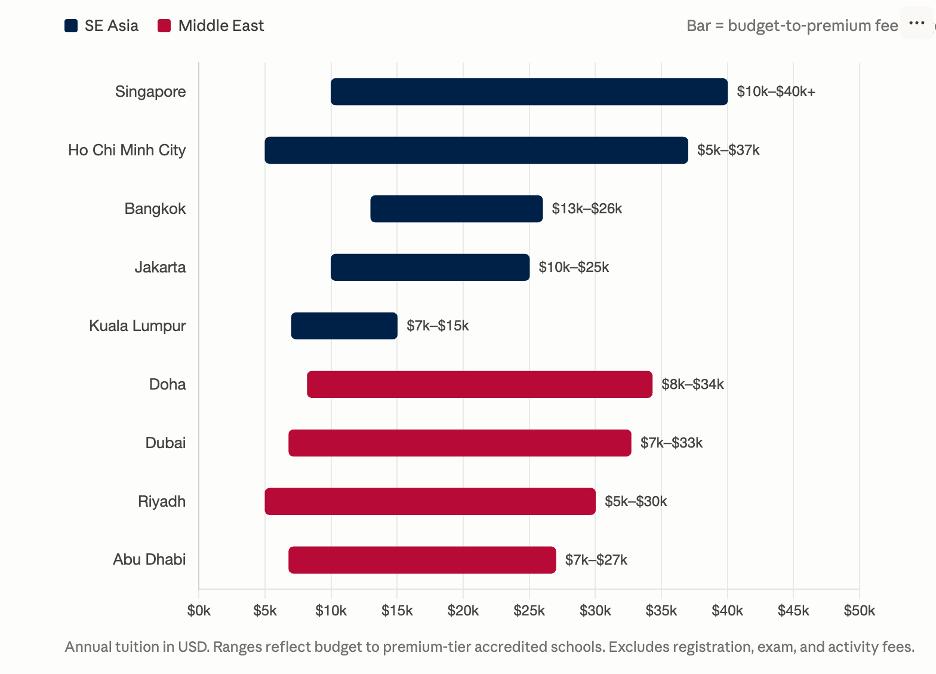
international education market. At the premium end of the spectrum, hubs like Singapore and Dubai consistently rank among the most expensive global landscapes for international schooling. In Singapore, for instance, premium tier schools frequently command between SGD 35,000 to over SGD 50,000+ (approx. USD 26,000 to USD 37,000+) annually for secondary tuition alone. Dubai mirrors this high-cost reality, though regulated by local authorities (like the KHDA) which periodically tie fee hikes to school performance ratings.
Conversely, emerging regional alternatives and neighboring hubs are gaining traction due to cost efficiency:
• The Rise of Cross-Border Schooling: In Southeast Asia, a growing number of corporate families are leveraging geographic proximity. For instance, schools in Johor Bahru (Malaysia) often present a fraction of the cost of neighboring Singapore, while still
offering globally recognized IGCSE, ALevels, or IB diplomas
• Developing Hubs: Emerging corporate destinations like Bangkok, Kuala Lumpur, Ho Chi Minh City, and Riyadh present a highly diverse range of "Value-Driven" and "Mid-Tier" schools. These markets give corporate mobility teams greater flexibility in structuring education allowances without sacrificing academic standards
The 15–25% Shock: Unmasking the "Hidden" Costs
The primary pitfall for global mobility policies is relying solely on base tuition figures. Experience shows that unbudgeted ancillary fees can inflate an education package by an additional 15% to 25% annually.
When building or reviewing corporate relocation budgets, it is critical to look beyond the sticker price and factor in these core structural overheads:
1. One-Time Enrollment Penalties: Capital induction fees, non-refundable registration fees, and application deposits can add anywhere from USD 1,500 to over USD 6,000 per child before day one
2. Annual Capital & Development Levies: Many premium schools charge separate, mandatory yearly maintenance fees (ranging from USD 2,000 to USD 5,000) dedicated to infrastructure and campus expansion
3. The Tech and AI Premium: In modern school environments, digital aid fees, specialized software licenses, and AI-
integrated learning tools are increasingly billed as mandatory, non-tuition extras
4. Ancillary Logistics: Door-to-door school transport, mandatory uniforms, examination fees (especially for IB and IGCSE tracks), and compulsory outdoor education or travel expeditions can silently add thousands to an annual corporate expense report
Strategic Recommendations for the EuRA Community
To mitigate cost overruns and ensure high assignee satisfaction, Destination Service Providers (DSPs) and Relocation Management Companies (RMCs) should counsel corporate clients to shift from reactive budgeting to a proactive, structured framework:
• Implement a 3-Year Forecasting Model: School fees across Southeast Asia and the Middle East historically experience an annual inflation rate of 3% to 5%. Relocation allowances should be built around a multi-year forecast, rather than current-year data
• Audit Policy Inclusions: Corporate mobility policies must explicitly define what is covered. Does the allowance strictly pay for tuition, or does it include capital levies, mandatory tech fees, and daily bus transport? Clarifying this early prevents friction with assignees
• Leverage Local Tiered Alternatives: Encourage corporations to move away from "Premium-only" mentalities. Many mid-tier international schools offer outstanding academic facilities and top-
tier faculty with significantly leaner capital structures, providing an exceptional return on investment
Conclusion
As the landscape of global education continues to evolve rapidly, success in family relocation hinges on hyper-local intelligence. Understanding the nuance behind the numbers ensures that international assignees transition smoothly, allowing corporations to protect their talent investments and thrive in the world's most dynamic markets.
About EDSG
EDSG is a specialized international education advisory and school placement consultancy. Operating across Asia and the Middle East, EDSG provides destination service providers, corporations, and relocating families with independent, data-driven guidance to navigate the global school selection process.
Website: ed-sg.com
Contact: info@ed-sg.com
Whatsapp: +6584995120
“When a Move Succeeds but the Mover Doesn't ”
Addressing the Mental Health Gap in Global Mobility
Every relocation budget has a line for shipping, immigration, and temporary housing. There is almost never a line for the one thing that most reliably determines whether an assignment succeeds or fails: the mental and emotional wellbeing of the assignee and their family. Anxiety, isolation, and identity disruption are not edge cases in global mobility — they are the norm. And the industry's collective silence on the subject is costing companies far more than any unbudgeted line item. Global research consistently identifies personal and family adjustment — not professional underperformance — as the leading cause of early assignment return. A failed assignment, when the full cost of recruitment, relocation, lost productivity, and repatriation is accounted for, can reach three to five times the assignee's annual salary. Yet most mobility programmes still treat emotional wellbeing as a peripheral concern, handled vaguely, funded reluctantly, and addressed only when a crisis has already arrived.
The shipping container arrives on time. The visa clears. And six months later, the assignee requests early return — for reasons that rarely appear on any status report, but are almost always there.
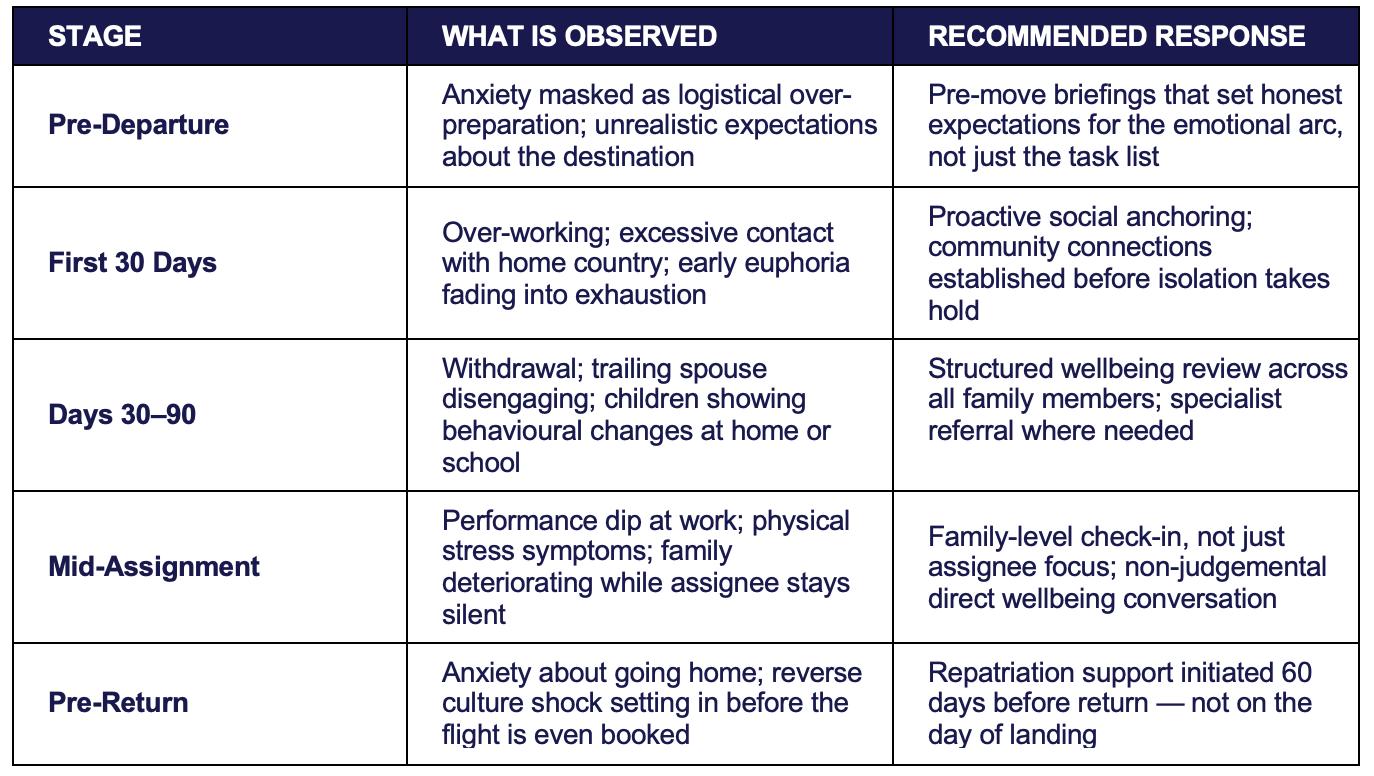
Mental health challenges in relocation do not appear without warning. They follow a broadly predictable arc across the assignment lifecycle and at each stage, there are clear, observable signals that a well-trained relocation consultant can identify and respond to before they escalate:
Effective mental health support in mobility also means ensuring that Employee Assistance Programmes are actively communicated, locally accessible, and culturally appropriate in the host country. It means pre-departure briefings that name the emotional arc of a move honestly, not just the logistics. And it means working with corporate clients to establish clearly that raising a wellbeing concern is not a professional failure. It is information that protects the assignment.
The Budget Line That Changes Everything
The relocation industry does not need to become a mental health provider. It needs to stop treating emotional wellbeing as someone else's responsibility. The assignee's human experience does not pause between visa approval and lease signing. It runs continuously — through every interaction with a consultant, every check-in call, and
What Good Support Actually Looks Like
The most important shift a relocation partner can make is linguistic. Rather than waiting for an assignee to say 'I am struggling,' wellbeing questions should be built into every touchpoint — naturally, conversationally, and without clinical weight. 'How is your energy this week?' 'Has there been a moment recently that felt genuinely good?' These are not assessments. They are invitations that create the psychological safety for an honest answer.
every moment a family sits in an unfamiliar city wondering whether they made the right decision. The assignment nobody budgets for is not going away. But it can be planned for, supported, and navigated, if the industry finds the courage to name it. Because the most important line on any relocation budget is the one that says: this person, and this family, matter beyond the metrics of a successful move.
“The Mindset, Service and Technology Themes That Defined EuRA Malta”
I returned from the EuRA conference in Valletta this past April with 13 key learnings. When I shared them with my network on LinkedIn, the response told me they were worth a closer and more considered look. What follows are the themes that matter most for relocation management companies and the suppliers who support their work around the world, drawn from the sessions and conversations that shaped three days in Malta.
1. The hardest market to manage is the one in your own head
Two of the strongest sessions circled the same truth. One asked whether we are victims of our own circumstances. Another reminded us that the most dangerous market is the one inside our heads. We talk ourselves out of opportunities through assumption, fear, and overthinking, long before any client says no.
Why it matters: in a relationship-driven industry, hesitation is expensive. The opportunity you do not chase and the conversation you do not start cost far more than any market condition. Redirecting energy toward what you can control, the 80/20 idea one speaker raised, is where momentum starts.
2. Clients expect accuracy and speed, so build for both
A recurring theme was that in the age of AI, clients expect solution accuracy and speed together, and certainly not one at the expense of the other. In practice, these two pull in opposite directions. Speed urges you to reuse a generic answer, yet accuracy urges you to start every response from a blank page. Settling for one on a good day leaves a gap a competitor will happily fill.
The firms handling this well balance both, and they do it well. From an RFP response perspective, they are removing the trade-off through preparation: a maintained library of accurate, approved content, clear ownership so nothing waits in a queue, and a quick triage step that decides early how much of a response can be reused and how much needs to be written fresh. Speed then comes from the system, and accuracy comes from the content already being right.
Why it matters: for RMCs and suppliers managing global service delivery, this is an operational design question. Fast but wrong erodes trust. Right but slow loses the deal. The firms that win are building processes that deliver both consistently, not heroically.
3. Clarity is the real sign of expertise
One idea I heard consistently is simplify complexity, for your clients, your team, and yourself. If you cannot explain your process clearly, the process still needs work. This is
the case for getting back to basics. In a field crowded with jargon, the supplier who can explain a complex move in plain language, with a clear scope, a visible process, and an honest view of what could go wrong, will stand out immediately. Clarity is not about saying less. It comes from understanding the work so well that you can make it simple for someone else.
Why it matters: mobility is genuinely complex, with tax, immigration, and compliance layered into many moves. Clients reward you for making it feel manageable. Clarity is what separates a trusted advisor from a vendor.
4. Use technology fully, but keep humans in the loop
The technology conversation in Malta was refreshingly balanced. The advice was to take a hybrid approach and make one platform your single source of truth, then let AI handle the volume while people handle the judgment. AI does the doing, but humans do the verifying and the deciding.
Why it matters: in our industry, a single missed visa date or a wrong figure has real consequences for a relocating employee. Technology gives you speed and scale. The human in the loop protects the relationship and the outcome. Getting that balance right is where the real value sits.
5. Compliance, communication and goals decide who clients engage
Three themes ran consistently through the practical sessions, and each one carries real weight in whether a client stays. Managing each relocation deliverable and risk is foundational work and immigration rarely moves in a straight line, so build your approach around adaptability. Proactive communication, updating clients before they have to ask, is a service standard people remember long after the move is done.
And the simplest habit of all, writing your goals down, genuinely works.
Why it matters: these are the details that decide whether a client renews. They rarely show up in a sales pitch. They show up in how it feels to work with you.
The thread that ties them together
Across mindset, service, technology, and risk, the message from Malta was consistent. The fundamentals win. The teams that get the basics right, with clarity, consistency, and a genuine focus on the client, are the ones this industry will keep choosing.
About the author
Olivia Bahrami is Founder and Owner of The RFP House, a certified women-owned proposal management and global mobility consulting firm based in Canada. We partner with global mobility suppliers and corporations to improve RFP performance and build scalable mobility programs through structured strategy, compliant execution, and practical tools.
Reach Olivia at olivia@therfphouse.com or therfphouse.com
“The African Global Mobility Association”
The African Global Mobility Association (AfGMA) is proud to represent a growing network of relocation, immigration, and global mobility professionals across the continent. As an industry body, AfGMA promotes best practice, collaboration, and professional excellence in an increasingly complex and fast-evolving mobility environment.
Founded by respected industry leaders including Paa Kwesi Hagan, René Stegmann, Kunle Obebe, and Rose Muigai, the Association was established to create a unified African voice within the global mobility sector. Today, under the leadership of Chairperson René Stegmann and the current Executive Committee, AfGMA continues to expand its influence by driving collaboration, knowledge-sharing, and regional alignment across African markets.
As Africa’s role in global workforce mobility grows, the need for practical insight and trusted partnerships has never been greater. AfGMA provides a platform for industry professionals to connect, exchange expertise, and address the unique regulatory, operational, and cultural challenges that define mobility across the continent.
Join Us in Nairobi – 28 July 2026
AfGMA’s flagship upcoming event, the East Africa Mini Summit, will take place in Nairobi, Kenya on 28 July 2026 at Somerset Westview. This in-person gathering brings together mobility, HR, and relocation professionals for an afternoon of high-impact discussion and networking.
The programme is designed to deliver both strategic insight and practical solutions, featuring:
• A high-level fireside chat on navigating risk and opportunity in East African mobility
• Key themes including AfCFTA, regional frameworks (EAC & COMESA), immigration challenges, tax exposure, and compliance risks
• An interactive workshop format with rotating roundtables tackling real-world mobility issues
• Topics such as housing, duty of care, business travel vs assignments, expatriate wellbeing, and integrated tax strategy
The summit concludes with networking drinks followed by a “Movers & Shakers” networking event, creating valuable opportunities to build relationships across the African mobility ecosystem.
Whether you are already operating in Africa or exploring entry into these dynamic markets, this event offers essential insight and meaningful connections to support your success.
AfGMA warmly invites EuRA members and the broader global mobility community to engage with Africa’s evolving mobility landscape and be part of shaping its future. Learn more and register: www.africangma.com
Connecting Africa. Enabling Mobility. Building the Future Together.
“Is relocation ready for its AI moment?”
The numbers are hard to ignore. McKinsey estimates that AI could automate up to 30% of tasks across professional services by 2030. Gartner reports that 80% of HR leaders are already piloting or deploying AI tools. And yet, if you walk the floor at any mobility industry event, the conversation still feels cautious, plenty of curiosity but not enough action. That gap might just be an opportunity.
Where AI can have a substantial impact
Relocation has always been data-rich but insightpoor. Millions of assignees move through hundreds of markets, each with their own unique set of requirements and stress levels, yet most mobility teams are still tracking this in multiple spreadsheets or fragmented portals. The data exists. The problem is that nobody has had the tools to turn it into action. Until now.
Here are three ways in which AI can already make a big impact:
1. Intake and onboarding automation: The average assignee onboarding process involves collecting 40–60 data points across multiple forms, emails, and calls. AI-powered intake tools can reduce that to a single conversational interface, asking the right questions, in the right order, and populating downstream systems automatically. Early adopters are reporting 60–70% reductions in admin time on onboarding alone
2. Housing search: Matching an assignee to suitable housing, whether it’s temporary or permanent, in an unfamiliar city is part logistics, part psychology. AI models trained on assignee profiles, family composition, commute preferences, and budget can surface shortlists in seconds rather than days. A model that processes 500 relocations builds pattern recognition that no single consultant can replicate
3. Early-warning signals: Perhaps the most underrated application- predicting which assignments are at risk before they fail. Research from KPMG suggests failed assignments can cost organisations between €800,000 to €1m, each making early intervention one of the highest-return investments a mobility team can make. AI tools that flag low engagement scores, missed milestones, or housing
instability early can trigger proactive support before small problems become expensive ones
What we're doing at Settly
At Settly, we run a digital destination service platform for companies hiring international talent across some of the key countries in Europe. AI is already embedded in how we work.
Our AI tools help our hosts answer, support, and care for relocating employees, and their employers faster, resulting in cost reductions for our clients For HR teams managing multiple relocations at once, that means time saved through fewer inbound queries whilst optimizing the employee experience, improved time to hire, productivity, and engagement. It also means they can make more impact through datadriven insights.
To be completely honest: AI doesn't replace the human relationships that define great relocation support, and it was never meant to. What it does is clear the path for those relationships to thrive. When consultants aren't buried in admin, (duplicate) reports, and repetitive tasks, they get back what matters most: the time and headspace to truly show up for the people they're supporting. That's where the real difference is made.
The case for moving now
There’s plenty of reasons to move on it now, but here are the two most important ones.
• Data advantages compound. Organisations building AI-enabled relocation processes today are already generating the training data that will make their models significantly better in the upcoming years
• The cost of inaction is measurable. 43% of companies cite operational inefficiency as their top mobility challenge. Finding a solution that’s AI driven helps companies stay competitive
Like any great technology, AI belongs in relocation. The question is therefore whether your business figures it out first, or reads about it in next year's issue.
“Feedback from EuRA Malta 2026”
Overall Score 4.7 out of 5
“Amazing conference! It was great to connect with so many like-minded industry professionals, loved the location, and the gala dinner. It was our first time, and everyone really made an effort to make us feel welcome. Thank you! we look forward to
“Michele was entertaining, engaging, humorous and inspirational! I always appreciate a great closing speaker to leave the conference feeling energized, grateful, and stimulated! “
“EuRA is always amazing in content, how it is run, attendees and general atmosphere. This year was
“Fantastic Location, lots of space meeting space. Excellent hotel, Gala Night was wonderful, party night also good.”
“My only issue was that there were too many delegates. Recommend that EURA limit the # of delegates to 600-700.”
“Unique and most memorable! With 800 plus attendees, caterers were still able to deliver heated food and dishes! The serving procession was more than impressive! Excellent, excellent and a most unique experience for all! Thank you!”
“This was an absolute highlight of the event, night to remember forever- everything was perfect from venue to food to service. I am so happy I experienced this, just WOW.”
“The EuRA Conference in Malta was a fantastic experience. The venue was incredibly comfortable and spacious, creating the perfect environment for both networking and engaging discussions. Everything was very well organized, and the atmosphere made it easy to connect and exchange ideas across the industry. And a special mention to the Gala dinner — an absolutely stunning location. Overall, a very well-executed and highly enjoyable conference — already looking forward to the next one!”
EuRA Malta Quotes
“Great attention to detail. Food at the hotel was stellar.”
“Dear EURA Team, This was my first EURA Conference, and what an incredible beginning it has been! From the moment I arrived in beautiful Malta, I was embraced by warmth, wisdom, and wonderful connections. The days were filled with rich learnings, meaningful conversations, and genuine knowledge sharing. I truly appreciated the openness and collaborative spirit that flowed through every session and discussion. Sharing my experience in the form of a Poem –
EURA Conference 2026 In the heart of the Mediterranean blue, My first EuRA Conference came true.
From the moment I stepped on Maltese shore, A world of warmth and wonder opened its door. Days filled with learning, deep and bright, Knowledge shared in the soft morning light. Meetings that sparked new dreams and ties, Collaborations born before our eyes. We sailed on a boat with the wind in our hair, Networking with laughter, with joy, and with care. Building connections that felt strong and true, Under the golden sun and skies so blue.
As evening arrived and music played sweet, We danced to the rhythms, moved to the beat. Talking, laughing, and sharing our stories, Creating memories filled with glory.
City streets whispered their ancient charms, While new friendships grew in open arms.
Sightseeing, learning, and pure delight Malta made everything feel just right. Thank you, dear EURA, for this gift so grand, For the knowledge, the joy, and the helping hand. I leave inspired, with a grateful heart, Already eager for the next chapter to start.
Thanks to the entire team of EuRA Excellent venue, gala dinner was amazing, solid sessions. The mood of the conference was upbeat and positive.”
“Thank you all at EuRA for organizing such a great event! Feed-back is easy while running a big event like that is not. We are grateful.”
“Fewer delegates. I missed seeing several people. The crowds made it difficult, at times, to see people unless I prearranged a meeting.”
“I have noticed that fewer people are actually attending the sessions, opting to enjoy more networking time. I'm not sure EuRA can fight that evolution, so maybe instead we need to recognize that 700 people won't be joining sessions and host them in smaller rooms. It felt disappointing to deliver a session to a half empty room, and I think instead of forcing people to attend you could change the feel by simply using smaller rooms. I small, packed room would feel better than a huge empty one.”
“I felt sad for Eura as I don’t think too many attendees (me included) visited all presentations as so many meetings booked. A lot of work went into the organisation and I truly appreciate this and I am sorry that I could not attend more educational sessions.”
“This year’s conference was right on target and truly top-notch! The content, sessions, organization, and location were all outstanding. My only recommendation would be to adjust the format of the closing party by moving away from a formal sit-down dinner and instead offering a buffet-style dinner to create a more relaxed and social atmosphere. Thanks again for a memorable personal and professional experience team EuRA!
Full Picture Galleries
“Malta Picture Gallery”
Thank you to the 800+ members and friends who joined us in Malta for this year’s conference. Looking forward to Lyon 2027! #euramalta
Malta Session - The Growth
Imperative
“How Leaders Scale Through Change”
By Heather Cruz Business & Coaching Psychologist - Café Coach Ltd
Against a backdrop of geopolitical uncertainty where change is the only constant, this EuRA session provided compelling insights on how to futureproof strategic growth, collaboration, diversification, and partnerships. The panel amplified the importance of these conference themes by sharing how they as leaders have challenged the status quo by adopting radical solutions to scale through change.
A Radical Lens
Using a rapid fire round to spotlight 3 challenges the panellists were currently facing, a complex picture emerged.
This set the scene for the panel to share real life experiences and align around their own client driven best practice. In turn, this also reflected industry trends towards trust based strategies for sustainable growth. So, ‘what does radical growth look like in today ’s world’ for our panel?
For Marina, “there is no choice - growth is a condition for survival with a need to redefine services, make unconventional
choices to tap into different segments, expanding into an integrated service delivery model.” Priyamvada shared her experience of how to “define value differently by using a non traditional approach aiming for service depth, client retention and creating value.” Susan’s perspective showed radical growth as “bold, non- linear, and by forming unconventional alliances with intentional risks to create new models of impact and revenue, especially relevant to the gig economy.” Vanessa emphasised how “radical growth must strengthen the system rather than stretch it, which
Panellists:
Heather De Cruz-Cornaire
Business & Coaching Psychologist, Café Coach Ltd (Moderator)
Susan Ginsberg Founder, SRG ADVISORY
Priyamvada Majumdar
Head of Global Partnerships, HELMA INTERNATIONAL
Marina Semenova
Managing Partner & CoOwner, Intermark
Vanessa Szmagara
Quality & Supply Chain Director, Icon Relocation
requires a balanced, responsible, sustainable approach.”
A Call to Action - The Growth Imperative
The panel discussion underscored the need to challenge our thinking around traditional growth pathways for diversification, collaboration and partnership strategies. Powerful imagery of a mosaic (Susan), camembert cheese and Kenny Rogers (Priyamvada) evoked a sense of hope and optimism as leaders face the growth imperative as a call to action.
Conclusion:
The EuRA session provided valuable insights on how leaders scale through change radically. By pushing boundaries to challenge the norm, and future-proofing strategic and collaborative growth that is both client-driven and trust-based to create sustainable value.
Malta Session - Associations
“Global, National, Local. Future Success Relies on Engagement at Each Level”
By Sharon Michnay - President at Relo Network Asia
This session's panelists spanned countries and continents to bring “local” into focus during the Malta conference. While global groups such as EuRA provide an invaluable forum for discussing industry-wide challenges, our world is far too diverse to address everything at every level. City, national, and regional laws, norms, and nuances require embedded not-for-profit organizations to address them. Additionally, not every industry member can travel. Local associations fill a need for collaboration and education closer to home. This was the start of an ongoing conversation, and our time was too short. Summarizing each speaker's points would be unfair; instead, I'll share what struck me personally.
Hannah Zentgraf, representing GARP, offered valuable insights into the organization's formation and highlighted the need for cooperation rather than competition. Some issues impact us all, and working together is not only in the collective interest but also required to solve them and move the industry forward.
Marc Hull, representing ABRA, and Albin Porquez, representing FNRP, took a legal approach to associations. ABRA was formed out of necessity in response to legal changes, while FNRP helped members collaborate to lobby the government against harmful changes to relocation policies. Although different, they both demonstrated the power of associations to protect members, improve compliance, and advocate for the mobility industry with governments and agencies. We can do more collectively to
advance our industry and to protect our colleagues than we ever could do individually.
Jo Webb, representing ARP, showcased their member engagement, encouraging community through networking events and a robust communication program. Volunteers are the core of many not-for-profit associations and are essential to doing the work and providing professional development opportunities.
In fact, it was through a local association that I met Bridget Brcka, who shared her experiences supporting several US-based organizations, including CRC and MRC. Bridget shared valuable advice on establishing a local association, emphasizing that while growth requires structure, the initial step simply involves at least two passionate individuals from the mobility industry
Malta Session - Corporate Housing
“Corporate Housing in an Increasingly Complex Geopolitical Environment”
By Briony Horwood - EuRA
The Corporate Housing Workshop returned to Malta, bringing together industry professionals for an interactive and collaborative session focused not only on the challenges facing the sector, but also on the solutions. Once again, the event demonstrated the value of shared learning, open dialogue, and collective problemsolving.
A special thank you to our hosts Beth Hotze and Tracy Hayes (CWS Corporate Housing), Karl Thuge (Nomad Temporary Housing), Bella Nokes (Cityus), Rob Somner (Cheval Collection), James Foice (ASAP), Sam Toribio (Caterina House), Sandra Stynes (Stellar Corporate Housing Ltd.), Thomas Karlsson (Forenom), and Wendy Galati (LivinLocal Furnished Accommodations) — for guiding and encouraging participants throughout the workshop.
The session began with an exploration of the key challenges currently facing the industry. Through a series of live polls and detailed attendee contributions, we gained valuable insight into how these issues are affecting different markets across the sector.
As part of this discussion, we revisited two key questions that were also asked in 2025:
• What is your overall outlook for demand for serviced apartments?
• My view on the future of the serviced apartment industry is:
This has enabled us to begin tracking industry sentiment and identifying emerging trends over time.
Given the current geopolitical climate, it is perhaps unsurprising that the overall outlook for demand in 2026 was viewed as lower than or equal to that of 2025. Despite this, the atmosphere in the room remained positive. That optimism appears justified when comparing temporary housing rates in Q1 2026 against Q1 2025, with the majority of markets showing encouraging performance.
One of the most significant concerns raised was the impact of legislative changes across Europe. With 64% of respondents indicating that they could be affected by upcoming regulatory developments, uncertainty remains around the potential impact on portfolio sizes and market availability. This is undoubtedly a topic that will continue to be explored at the Lyon Conference in 2027.
The four principal challenges identified by attendees were:
• Technology
• Geopolitics
• Legislation
• Inventory Participants then broke into groups to develop practical solutions and strategies to address these issues, reinforcing the industry's commitment to continuous improvement and collaboration.
Suggested approaches ranged from offering more flexible, market-driven solutions and embracing artificial intelligence, to leveraging secondary locations and strengthening communication. Across all discussions, one theme remained consistent: the importance of collaboration — both with clients and with one another — as the industry continues to evolve.
As always, the conversations seemed to end too soon. However, attendees left with renewed energy, stronger connections, and a shared determination to support a resilient and thriving corporate housing industry.
Malta Session - AI
“Wheel of Provoc-AI-tion: The Future of AI Mobility”
By Jon Harman - In8Work
The first session of the last day of EuRA 2026 in Malta was about Artificial Intelligence. While there are still far more questions than answers on the future of this technology, the fact that we’ ve come a long way was evident in the level of AI adoption indicated by the panel members and the audience.
Where two years ago most of us were trying to figure out what AI is, live surveys conducted during our session made it clear that most companies have tested AI waters. While the majority appear to be dipping their toes in the water or taking a short swim in the shallow end of the pool, a few companies have taken the proverbial leap and are doing back flips off the highdive into the deep end.
Of all the panelists, Zain Ali, and his company Centuro Global, best represented the group daring the deep water. Zain spoke about the commitment Centuro has made to harnessing the power of AI to help their immigration business be more effective while also maintaining a customer centric approach. Zain was excited about the results so far, and bullish about the future.
While Zain attributed Centuro’s recent growth to their commitment to AI, he made the point that, in contrast to concerns about AI-related job loss, Centuro is hiring.
Speaking on behalf of Dwellworks (DS, cultural training, corporate housing, property management) President and CEO James Conigliaro stressed the importance of keeping people in the loop. Working with AI has further affirmed Dwellworks’ commitment to building and maintaining a qualified and experienced team. James made the case that, because we are in the business of supporting people through a stressful life change, no matter how powerful AI becomes, our success will always depend on hiring, training, and retaining the best people.
Rob Burns, CEO of IOR (DS, cultural, language) encouraged the leaders in attendance to look for ways to get reluctant team members to engage with AI. The leadership at IOR used a simple exercise to move their team from AI-wary to AI-engaged. At a company event, team members were asked to complete a small project with the assistance of AI. By the end of the exercise, employees had moved from resistant to using AI to being open about exploring how it might help them with their work. Like most companies, IOR is still looking for their best AI use cases, but thanks to a creative solution, the entire team is actively engaged in that conversation.
While his organization is exploring the potential of AI, Jens Petersen of Visumpoint spoke for that group of people standing at the side of the pool with their arms folded, wondering why everyone is in such a hurry to swim. Those would be the AI skeptics. Largely ignored by a main-stream media
eager for eye-grabbing AI headlines, there is a large cadre of qualified critics who, while acknowledging that the technology will have beneficial applications, see an AI industry gobbling up private investment dollars that might support other industries and rushing to build massive data centers with unheard of energy needs, with little regard for, or public discussion of, the growing environmental, economic, and societal costs of this rush to deploy. For Jens, it is a mistake to pursue the business benefits without discussing the known, as well as the potentially unimagined, costs of this revolutionary new technology.
I had a great time getting to know the panelists and hosting the session. In my role as moderator, I kept my opinions to myself. Now that the session is over, I will say that I share some of the same concerns that Jens raised. There is a great deal of hype coming out of the tech world about the potential of these technologies. Most media outlets are reporting on the hype so breathlessly that the skeptics, despite the validity of their concerns, seem like luddite cranks grumbling in the face of natural and inevitable progress. I, for one, don’t think so. I’ll stop there before this turns into a five page opinion piece and say this –Clearly there are still many more questions than answers about the benefits and costs of fully embracing AI. As business leaders, we
owe it to ourselves, our teams, and our customers to continue to learn and to allow what we learn to inform our approach. To help you get started, our panelists recommend the following resources for keeping up with the latest in AI:
AI Simply Explained in 12 Minutes: An easy to understand explanation of how these systems work. Knowing how they work helps you understand their limits and their best uses.
https://www.youtube.com/watch? v=dx_Ruw8vufI
Cal Newport is an MIT educated computer scientist who teaches at Georgetown University in Washington, DC. He also hosts a weekly podcast and he covers AI for The New Yorker magazine. He is an AI optimist and a realist at the same time. He is a good resource for helping you to separate the noise from the news.
https://www.newyorker.com/contributors/calnewport
Cal Newport also releases an “AI Reality Check” episode every Thursday on his podcast, Deep Questions: https:// www.thedeeplife.com/listen/
Steven Bartlett’s podcast, Diary of a CEO is a huge hit. His guests come from many different fields. His episodes on AI have featured a wide range of guests ranging from enthusiasts to skeptics.
https://www.youtube.com/@TheDiaryOfACEO
To watch the full session Please click here
Malta Session - M&A
“M&A: The Conversation We Could Have Continued All Afternoon”
By Aideen Hopkins - Operations Director at
Mergers and acquisitions can often be spoken about in quite polished terms: strategy, valuation, growth, succession, scale. But the most useful conversations are usually the more honest ones — the ones where people are prepared to talk about what really happens before, during and after a deal.
That was very much the spirit of the M&A workshop I hosted at the recent conference. The session brought together a panel with direct and varied experience of sales, mergers, and post-deal integration. What made it so engaging was not just their knowledge, but their candour. They were generous in sharing the lessons they had learned, including the moments where things had not gone to plan.
The discussion moved from the big strategic questions — when is the right time to sell, merge or take investment? into the practical realities that owners sometimes underestimate. How ready is the business really? Are the numbers clear? Is too much knowledge still sitting with the founder? Could the company continue to perform under new ownership? What does the headline value actually mean once structure, timing and conditions are taken into account?
The audience brought real energy to the session. Through polls and questions, it was clear that M&A is no longer a distant or abstract topic for many business owners in our industry. Some are actively thinking about their next step; others are simply trying to understand what preparation might look like. Either way, the level of interest was obvious — so much so that we ran out of time with many questions still to explore.
The second half of the workshop looked beyond completion, which is often
where the harder work begins. The panel spoke openly about the first 100 days, communication, culture, customers and people. A deal may make sense on paper, but value can quickly be lost if employees are unsettled, customers are confused, or integration is handled without care.
For me, the strongest message was that timing will never be perfect, but readiness can be. Whether a business owner plans to sell, merge, take investment or do nothing at all, the disciplines that make a company attractive to a buyer also make it stronger to run: clear reporting, good systems, a capable team, reduced owner dependency and a culture worth protecting.
The feedback after the session was extremely positive, and it was easy to see why. The topic was relevant, the panellists were excellent, and the audience was fully engaged. My sincere thanks go to our wonderful panellists - Damian Aebischer, Wouter Esseldeurs , Åse Löfgren Gunsten, Alex Neale, Bob Rosing, Irene Bunt, José Antonio de Ros and Colum Campion – for sharing their time, experience and honest reflections so generously.
To watch the full sessions please click on the
Malta Session - Immigration
“Diversification & Service Excellence”
By Johanna Lennartson
The Immigration Workshop brought together industry professionals for an engaging and highly interactive discussion around two key themes: Diversification in Immigration and Service Excellence in Immigration.
The session began with a live benchmarking panel on diversification, where participants used Slido to anonymously respond to questions about the forces shaping the future of immigration. Topics included the impact of global economics, geopolitical conditions, technology, compliance, and evolving client expectations. The live responses created dynamic discussions around how providers are adapting their service offerings, introducing contingency planning, expanding incidental services, and balancing technology with increasingly human-centered support.
Following the panel, all attendees participated in an interactive workshop session, exchanging experiences and perspectives on how the industry continues to evolve. The collaborative format encouraged open conversations and practical idea-sharing between providers from different regions and backgrounds. The workshop concluded with a lively panel discussion on Service Excellence in
Immigration. Rather than focusing on buzzwords, the panel explored what excellent service truly means in practice. Discussions covered the challenges of balancing knowledge, speed and client care, where technology and AI genuinely improve the customer experience, and where human involvement remains essential.
An interactive “Service Excellence Bullshit Bingo” element added energy to the session, while reinforcing the importance of authenticity and substance over industry jargon.
Overall, the workshop highlighted both the complexity and the human side of modern immigration services, while creating valuable opportunities for benchmarking, reflection and collaboration across the industry.
To watch the full sessions please click on the links below Immigration P1 Immigration P2
Malta Session - Sandbox
“Why it’s important to Play Nice in the Sandbox ”
By Diana Melbourn - IOR Global Services
What stood out most was the alignment in the room and the collective creation of our “sandbox rules.” Across the audience’s contributions, the message was consistent: strong partnerships are not accidental. They are built through clear boundaries, a healthy mindset, and disciplined habits. The bigger idea underneath it all was even more compelling. The future of work is not just about higher performance. It is about creating environments where performance and humanity can coexist, and where collaboration becomes part of the advantage rather than something to guard against.
Blue: Boundaries. Trust does not hold when people feel exposed. It holds when expectations are clear. The audience reinforced the importance of protecting confidentiality, avoiding oversharing, and setting thoughtful limits on scope, time, and availability.
Simple things matter: knowing when to step away, following the “elevator rule” because you never know who is within earshot, and being clear about what is and is not fair game. Boundaries were not framed as barriers to collaboration. They were framed as what actually makes collaboration sustainable and ethical.
Pink: Mindset. The mindset shift felt just as important as any process or rule. Be present. Stay grounded. Lead with authenticity. Do not confuse someone else’s confidence with a threat to your own. There was a strong rejection of scarcity thinking and a move toward something more open and collaborative. In a relationship-driven industry, people want to work with those who show up as real humans. Vulnerability, when used well, builds trust faster than perfection ever will. Collaboration is not weakness. It reflects a more secure and effective way of working.
Green: Habits. And then there are the unglamorous basics. The things that actually build trust over time. Follow through. Communicate consistently. Finish what you start. Reach out regularly. Ask about their kids, pets, holidays – remember their birthdays. Build relationships intentionally, not just when you need something. There was also a clear call to protect personal energy. Take breaks. Step away often enough to stay sharp. Keep showing up with consistency and care. In a small, interconnected industry, those habits create longterm goodwill and often lead to unexpected opportunity.
The takeaway is clear. Playing nice in the sandbox is not about being passive or agreeable for the sake of it. It is about building the kind of trust, credibility, and resilience that make better outcomes possible for clients, assignees, and each other. In many ways, going back to the simple rules we teach preschoolers
—be kind, share with others, be honest, and clean up your own messes—will take us further in our careers than overpromising ever will. The strongest cultures are the ones learning how to make room for both performance and well-being. And in a small, interconnected industry like global mobility, the people who know how to compete with integrity and collaborate with intention tend to be the ones everyone remembers.
To watch the full session Please click here
Malta Session - Collaboration Beyond Borders
By Jane Riley Director of Strategy and transformation Set4Life Global
Panellists;
Jenny Elsby WHR Global
Charina Garcia WR Immigration
Victor Rivas LARM Group
Des McKell Net Expat
Ryn Jarrett Blueground Furnished Apartments
I was absolutely humbled and thrilled to be a panel moderator for the hot topic of ‘Collaboration Beyond Borders: What Works, What Fails and Why ’ at EuRA 2026. I had one mission: keep six passionate panellists on task and uncover their passions and incredible views on this key topic. Let's just say... they gave me a run for my money!
What unfolded was far more than a panel discussion. It became an honest conversation about what really makes partnerships succeed in our industry.
Spoiler alert: it's not technology.
Yes, we agreed that AI, automation and digital platforms are transforming the way we work, but they aren't replacing the things that matter most. Trust. Communication. Curiosity. Accountability. And sometimes, simply picking up the phone instead of sending another email.
Our incredible panellists shared real experiences rather than polished success stories. They spoke openly about challenges,
difficult conversations and the lessons learned along the way. One theme kept resurfacing: the strongest partnerships are built when things don't go to plan. That's when people lean in, communicate openly and work together to find a solution.
My favourite part? The audience.
The conversation quickly expanded beyond the stage, with delegates sharing their own experiences and perspectives. It was a reminder of what makes the EuRA community so special. We genuinely want to help each other succeed.
If I walked away with one key message, it's this: our industry may move people around the world, but our success still comes down to human connection. Relationships matter. Collaboration matters. And the best outcomes happen when we stop thinking about "us and them" and start thinking about "we."
A huge thank you to our fantastic panellists for their honesty, humour and generosity, and to everyone who joined the conversation.
Because in the end, collaboration isn't just something we do in Global Mobility…It's who we are and what we stand for!
Looking forward to seeing you all in Lyon 2027!
Malta Session - State of the Industry
By Sophie RehbergManaging Director ProfOrg / Empowering Corporate Mobility through Expert Global Relocation
The State of the Industry – a topic that has been a focus since the pandemic. While the session was previously constructed as a traditional panel, this year EuRA choose to trial an interactive approach. The session was moderated by one host and all content was pulled from the audience in a 90min live conversation. Topics included adaptation to geopolitical challenges, economic changes, entrepreneurial decision making and the future of the RMC model. The audience contributed through pre-set questions which were accessible through Slido and while answers were transferred onto the screen in real time, the moderator posed additional queries to the audience.
Data was shared by participants about research on client diversification, RFP processes and ongoing compliance issues. Delegates from the Middle East shared openly about the challenges faced during the current geopolitical environment and managerial decisions made to
support their teams and clients. Immigration Tech and the necessity of continuous technological advancement was highlighted along with the clear need to ensure that companies are sustainable to ensure business continuity in the current uncertainty of the world. It was great to see the audience share openly – the contributions were thought provoking and the session was built solely around the audience.
To watch the full session Please click here
Malta Session - The Industry Truth Report
“What
the Data Says About our Path Forward”
By Gordon Kerr - EuRA Strategic Consultant Legal Services
Every year, research and surveys are carried out which touch on various aspects of the relocation industry. In this session, we looked at what some of these recent surveys and research projects tell us about our industry today and what we should be doing to ensure the success of each of our businesses going forward.
We split the session into 2 parts. Firstly, we looked at what the research tells us about our quality programmes, our education and our sustainability initiatives. In Part 2 we discussed research relating specifically to DSPs and the markets in which DSPs are operating.
Panel 1 comprised EuRA strategic consultants, Martina Scharwey and Giles Orr, along with Dave Carlos, MD of Just One.
Martina explained how feedback on the Global Quality Seal is collected and assessed annually. With an impressive current satisfaction score of 4.8 out of 5, there is clearly a lot going right here … but updates and improvements will continue to be made by Martina!
Using case studies, Dave explained the benefits of embedding sustainability in a relocation business and offered guidance on how a business can be future-proofed. There was also discussion on how we can build on the Bridging the Gap Report that was put out last year by JustOne and the Coalition for Greener Mobility.
Giles discussed the feedback from the recent training survey and summarised the proposed action points. A key finding was that a significant number of EuRA members do not currently participate in EuRA training due to a combination of a) lack of awareness, b) not understanding the benefits and c) lack of formal training plans. A new initiative, launched at the conference, is the Peer 2 Peer shared learning programme. Other initiatives include a new EuRA working group to review opportunities for greater professionalisation, engagement and CPD recognition.
Panel 2 comprised Karen Cygal (Global IQ), Anna Kavelj (Elite Woodhams Relocation), Rene Stegmann (Relocation Africa) and Steve Cryne (CERC).
Karen’s study looked at mobility volumes, spend and policy types across more than 130 destination markets and covered ten years of data. She had two broad conclusions: a) corporate relocations are growing, but domestic moves feature strongly in this growth and the classic long-term expatriate assignment is just one part of a much more diversified picture; and b) this wider repertoire
of move types means DSPs who can serve that range - through genuine peer collaboration - are better positioned.
Anna and Rene were the co-researchers on EuRA’s recent DSP Collaboration study. According to this study, 82% of DSPs were satisfied when they collaborated with peers and 61% rated the quality as good or excellent; yet 49% only do it a few times a year. The survey ranked contractual restrictions as the number one barrier to DSP-to-DSP collaboration - above trust, above language, and above operational capacity. In particular, there is a perception that DSPs are usually discouraged by RMCs, contractually or otherwise, from interactions with other parts of the relocation supply chain.
While DSPs understood that EuRA cannot change the way that the relocation industry is structured – and the challenges that structure creates for DSPs – they were looking to EuRA to ensure that members have the maximum possible opportunities to CONNECT, to EXCHANGE and to SPEAK WITH A SHARED VOICE.
Steve referred to CERC’s 2025 research which highlighted that roughly one in two employees wouldn’t relocate regardless of what support was offered and 78% of respondents said settlement services were an important factor in a decision to move. The conclusion is that people will move when conditions are right; and DSPs are a central part of what makes conditions right.
Steve also spoke of the importance of positioning mobility as a strategic function instead of a transactional, cost-driven function inside organisations.
Our four speakers were asked for one final thought each: what do you want the people in this room to leave with?
Karen: The data is clear - this is a growing, diversifying market. The question is not whether there is room for DSPs to thrive. There is. The question is whether we are organised to capture it.
Anna: What I heard in the focus groups was not frustration. It was appetite. DSPs want to collaborate more, and the ones who do it well feel it immediately in the quality of their work. The only thing missing is more opportunity to make it routine.
Rene: We are more powerful together than we are separately. Not as a threat to anyone, as a fact. And right now, we are not acting like it.
Steve: Mobility is not a logistics function. The sooner the industry stops allowing itself to be framed that way - from the corporate level all the way through the supply chain - the better the outcomes will be for the people at the centre of it all, which is the employee and their family.
Gordon Kerr
Malta Session - Ignite
“When Courage Takes the Stage”
By Michèle Bramstoft - Independent Consultant
When Courage Takes the Stage
There are moments at a conference that live beyond the agenda.
Moments that slip past the business cards, breakout sessions, and ballroom lighting… and land somewhere more human.
IGNITE Malta 2026 was one of those moments.
This year’s EuRA Ignite session also marked something deeply special (especially for me, the public speaking fanatic that I am!): 10 years of Ignite. Fittingly, the journey began in Malta back in 2016, and a decade later, Ignite returned to where its spark was first lit.
Over the years, Ignite has become far more than a speaking platform within EuRA. It has evolved into a space where professionals step beyond titles and timelines to share something real. This year, courage became the main character. Instead of the loud, cinematic kind. It was the quieter version of courage. The kind that appears when confidence flickers, when momentum pushes you sideways, when identity shifts, or when growth places you in rooms that stretch you beyond what feels comfortable.
Our first intrepid speaker, Louise Neal, opened the session with When the Lights Go Out, exploring those moments when clarity fades and resilience quietly begins to form.
Next, Marc Vilar took the audience into Scaling Beyond Business, reflecting on momentum, ambition, and the personal discoveries waiting beyond achievement itself.
In one of the session’s most reflective moments, Andrea Gullickson explored how seemingly invisible choices can alter the course of an entire life.
Anupama Arvind then invited the room inward with Re-igniting Your Inner Child, reminding us that joy, curiosity, and wonder still belong in professional spaces.
Closing the session, Kaylee Carpenter delivered The Emerging Professional’s Playbook, offering a heartfelt reminder that courage, curiosity, and consistency remain essential companions at every stage of growth.
Behind the scenes, the session also carried its own human story.
Three speakers who had initially prepared for the Ignite stage were ultimately unable to join the final lineup. One returned to Argentina to celebrate her father’s 90th birthday, while the other two stepped away due to family circumstances. Their presence was still felt throughout the experience, a reminder that life itself always remains larger than the stage.
And then came one of the most unforgettable moments of the session.
To celebrate a decade of Ignite, Jeremy Berthoux and I invited the audience to stand, take out their phones, switch on their torch lights, and hold them high above the ballroom. In an instant, the room transformed into a constellation. Hundreds of small lights shimmered across the audience as we captured a selfie with the sparkling sea of Ignite behind us.
It was joyful. Emotional. Slightly surreal.
A perfect reflection of what Ignite has always represented: individual lights becoming something brighter together.
But the afternoon still held one final surprise.
At the close of the session, the EuRA Board presented me with the Relocation Excellence Award in recognition of my contribution to EuRA, Ignite, and the relocation industry (I’m still processing this!).
Kaylee mentioned in her Ignite, quietly asking if I truly belonged in that moment.
Maybe that feeling, too, is part of courage. What unfolded in Malta was far more than a speaking session. It was a celebration of growth, humanity, vulnerability, connection, and voice. Five speakers stepped onto the EuRA stage with conviction and heart, and in doing so, reminded the audience of something important:
Courage is contagious
My daughter, Eliana, (my greatest achievement!) who is also a relocation professional & volunteers at EuRA conferences, walked onto the stage to hand me the award. There was something beautifully symbolic in the moment: Eliana, representing the next generation, placing it into my hands. A gentle bridge between what has been… and what is still unfolding.
And then came a film created by Dom Tidey, woven together from short clips of many Ignite speakers I’ve had the privilege to coach throughout the years.
There are few moments in life where honor, pride, gratitude, disbelief, and vulnerability all arrive at once. This was one of them. Somewhere in the middle of it all, there was also the tiniest whisper of imposter syndrome
One person finds the bravery to speak… and suddenly others begin to rediscover their own.
To the EuRA Board (past & present), thank you for believing in Ignite from the beginning and for supporting its evolution over the past decade.
To every audience member who listened deeply, laughed loudly, cried quietly, clapped generously, stood with their lights held high, and showed up POWERFULLY Present… thank you for giving Ignite its heartbeat.
And to every Ignite speaker over the past 10 years, whether live on stage or appearing virtually during the Covid years, thank U for your courage, your trust, your stories, your vulnerability, your scintillating Ignite Spirit, and your willingness to step into the unknown so others could see themselves more clearly.
Ten years later, the flame still burns brightly. To watch the full session Please click here
Members’ News Advertorial
Dwellworks Releases 2025–2026
Sustainability Impact Report, Updating Progress For Global Workforce Mobility And Furnished Accommodations Stakeholders
Dwellworks/Dwellworks Living, the world’s leading provider of destination services and accommodations solutions for corporate global mobility and business travel, today released its 2025–2026 Sustainability Impact Report detailing progress against the priorities that matter most to clients, associates, partners, and investors. The report reflects Dwellworks’ longstanding approach to sustainability as a business discipline, integrated into service delivery, supply chain management, and global operations, to help clients advance duty of care, responsible procurement, and measurable environmental and social outcomes.
“Sustainability shapes how we build a resilient business, one capable of consistently delivering value for our stakeholders while adapting to complex, fast-changing global dynamics,” said James Conigliaro, President & CEO of Dwellworks.
“Expectations are evolving across our industry, and meeting them requires clear standards, transparent reporting, and continuous improvement. We focus on what is most material to our stakeholders and on the capabilities (people, technology, and disciplined execution) that support long-term stability and growth.”
Now in its fifth year of public ESG reporting, Dwellworks has published an annual sustainability impact report since 2021 and continues to earn recognition for leadership in the global travel and workforce mobility ecosystem. Recent honors include Bristol Global Mobility’s Sustainable Supplier of the Year Award and SIRVA’s 2025 Supplier Diversity Award. Dwellworks Executive Chairman Bob Rosing serves on the board of the Corporate Housing Providers Association and is executive sponsor of CHPA’s Sustainability Task Force, helping advance shared standards and practical collaboration across the corporate housing sector. Dwellworks’ carbon reduction goals are certified by the Science Based Targets initiative (SBTi), and the company has earned a Bronze Medal from EcoVadis for sustainability performance. Dwellworks’ sustainability strategy is grounded in investment and innovation across talent development, responsible technology enablement, business process excellence, community engagement, and environmental impact reduction, so clients can rely on consistent service and responsible outcomes at global scale. To access the report and learn more about Dwellworks’ ESG priorities, contact maura.carey@dwellworks.com or visit our ESG webpage.
About Dwellworks:
Dwellworks is the world’s leading provider of accommodation and acclimation support services for the mobile workforce and business travelers. We specialize in global destination services, furnished accommodations for temporary living, and intercultural training as well as property management and real estate services in key US markets. Our clients trust us to deliver personalized high-quality service experiences, powered by innovative technology and supported by our extensive local presence in hundreds of locations worldwide. Through our brands Dwellworks, Dwellworks Living, and Station Cities, we offer a comprehensive range of service options, global reach, local expertise, and passion for the customer service experience.
About Dwellworks Living:
Dwellworks Living is the award-winning global corporate housing solution of Dwellworks, a business-to-business provider of global mobility and business travel services. As a global leader in corporate housing and furnished accommodations solutions, Dwellworks Living is uniquely positioned to meet the temporary living needs of businesses and their employees who are relocating or traveling on short-, medium- or extended-stays. With 80,000 high-quality professionally managed properties in over 125 countries worldwide, Dwellworks Living is the preferred housing solutions partner of many Fortune 1000 and leading relocation management companies. Contact us at dwellworksliving.com to learn more or visit our Properties page to begin a search for global housing accommodations.
To read more click here
IOR Global Services (IOR) Celebrates 12th Consecutive Year of EuRA Global Quality Seal Certification
IOR is proud to announce that it has received its recertification of the EuRA Global Quality Seal. IOR is the only US-based company to hold this prestigious certification. The EuRA Global Quality Seal is based on the ISO-9001 process management model which specifies the processes and Key Performance Indicators (KPIs) that reflect the very highest standards in relocation services. IOR first earned the EuRA Global Quality Seal in 2014 and has held this certification now for 12 consecutive years
“The EuRA Global Quality Seal recertification demonstrates the strength of our processes and the outstanding commitment of our team. By following a continuous improvement management system, IOR provides consistently exceptional quality and service for our clients and customers. It has also helped us achieve a best-in-class Net Promoter Score of 89”, said CEO Rob Burns.
“The IOR team’s unwavering commitment to our clients and customers has earned consistently high satisfaction scores and outstanding feedback”, said Suzy Leinbach, IOR’s Senior Director of Quality and Customer Excellence. “Meeting the high standards to maintain the EuRA Global Quality Seal has enabled up to drive continuous improvement across all aspects of our organization.”
IOR Global Services is a leading provider of global mobility and talent development solutions including Destination Services, Cultural and Language Training designed to advance employee effectiveness across cultures. Our disciplined, high-quality approach provides unrivaled support in relocation services.
The European Relocation Association (EuRA), promotes the value of professionally managed relocation and mobility services for organizations with globally mobile employees, with a focus on advancing industry best practices through its Code of Conduct, training based accreditation, and the EuRA Global Quality Seal.
Flexliving Welcomes Three New Buildings in Paris This Month
Flexliving has expanded its corporate housing offering in Paris. With three new buildings joining its portfolio this month, located in the 10th and 11th arrondissements, the company now operates a total of 550 apartments within Paris intra-muros.
The expansion marks an important milestone for the company and directly benefits the relocation agencies and mobility teams it partners with. The available apartments range from studios to four-bedroom homes, meeting every type of relocation need. With a larger and more diverse inventory, Flexliving can now offer clients far greater choice in terms of location, apartment size and configuration, making it easier to match each assignee with a home that truly fits their needs.
Location has been at the centre of this growth. The new residences are positioned in central, well-connected districts of Paris, close to major business hubs, international schools, train stations and the cultural heart of the city. For relocation professionals, this means being able to place employees where it matters most to them: near their workplace, their children’s education, key transport links or simply the neighbourhoods that suit their family life.
Every apartment remains fully furnished, equipped and ready to live in, with flexible terms and the same dedicated, people-focused service that defines Flexliving. The result is a broader, more flexible catalogue that gives relocation partners the confidence to propose centrally located, ideally situated homes aligned with their clients’ expectations.
This new capacity reinforces Flexliving’s ambition: to be the reference corporate housing partner in Paris for the global mobility community.
Arpin International Group Promotes Derek Lord To Chief Information Security Officer
Arpin International Group is pleased to announce the promotion of Derek Lord to Chief Information Security Officer. In his expanded role, he will continue to lead and strengthen the company’s Information Security and Business Compliance programs.
Derek joined Arpin International Group in 2002 as a Network Administrator. He has deep expertise across all areas of information security, including policy development, risk assessments, regulatory audits, incident response, training, and thirdparty vendor management. In addition to his responsibilities as Director of IT Infrastructure and Operations, Derek is leading a high-performing team within Arpin through a System and Organization Controls (SOC 2) Type II audit. Once completed, this attestation will serve to outwardly demonstrate the company’s commitment to protecting its customers’ data and validate the stringent controls in place.
“Derek has been instrumental in the maturation of the company’s mission-critical functions. He works to continually improve the company’s business continuity programs, reporting against Key Risk Indicators (KRI) to maintain operational effectiveness and strategic alignment across divisions and company vendors. …
To read more click here
Arpin International Group Welcomes Federico Beltran As Director For The LATAM Region
Arpin International Group announces the appointment of Federico Beltran to lead the company’s global sales and business development efforts in the LATAM (Latin America) region.
Beltran assumes this key position at Arpin, playing a central role in driving the company’s growth strategy in LATAM by cultivating strong, lasting customer partnerships and supporting its ongoing success in expanding its regional presence. His acumen in developing and executing partnership strategies aligned with organizational goals, negotiating, and managing collaborations with key stakeholders across diverse industries is exemplary. An analytics-driven leader, Beltran evaluates market trends and performance metrics to continuously refine global mobility strategies and nurture longterm partnerships.
“We welcome Federico to the Arpin team. We were drawn to his talent and expertise in logistics, digital marketing, a keen understanding of the region, and his bent, like us, to be very creative and entrepreneurial. Going back to his very wise grandfather, his family, like ours, has a long tradition of hard work and respect for others,” said President Peter Arpin. …
To read more click here
Arpin International Group Employees, Ronnie Blanchard And Marco Alvarado, Help Build Homes For Families In Peru
Arpin is proud to announce two of its employees Ronnie Blanchard and Marco Alvarado helped build homes for families in Peru, before the 2026 LACMA Convention. Moreover, during the convention, Blanchard was appointed Associate Director of the LACMANext Board of Directors, reflecting the organizations commitment to the future of LACMA.
The 2026 Latin American & Caribbean International Movers Association (LACMA) Convention took place in Lima, Peru, March 8-11, 2026; however, the spirit of giving back and community outreach was on full display two days prior. This year, Arpin International Group employees Ronnie Blanchard and Marco Alvarado joined with 90 moving industry colleagues attending the annual LACMA conference and participated in a meaningful “Building Realities” volunteer project with Techo. Techo is a social responsibility initiative dedicated to constructing sustainable homes for underresourced communities in Latin America.
For two days before the convention, Blanchard, Alvarado, and the other volunteers worked in teams to construct five homes in the Portada del Sol settlement in the San Juan de Miraflores district of Lima, Peru. Arpin International Group staff have participated in four Techo build projects worldwide, with the Peru project being Blanchard’s second build and Alvarado’s …
To read more click here
TIRA Celebrates the New Board of Directors
EuRA conference. Located in the sun-drenched island nation of Board of Directors.
TIRA members were actively engaged throughout the EuRA conference. They were invited to speak on panels and contributed valuable insights aligned with the conference theme on Business Growth, Collaboration, Diversification, and Partnership.
Deborah Loones, TIRA’s Past Chair, introduced the day by inviting members to reflect on three key areas: collaboration within the network, recent updates from their businesses, and the impact of TIRA membership on their businesses and professional enrichment. Their input will serve as a resource to further TIRA’s growth and member value.
The guest speaker was James Sater, Professor and Head of the Department of International Relations at the University of Malta. He was invited to speak with the group about the state of geopolitics and international relocations. Professor Sater is a frequent commentator on Middle East affairs in Malta’s national media.
Then Deborah shared, “I am proud to pass the baton to Karen, with my full support and confidence in her ability to serve as TIRA Chair. I wish her and her board all the best and every success in the year ahead. The world and the global mobility industry are changing rapidly, and TIRA will continue to evolve to enhance member value.”
Karen Cygal, the new Board Chair, introduced the 2026–2027 Board of Directors. This esteemed group reflects our global membership and ecosystem. Please join us in congratulating them.
TIRA’s 2026 – 2027 Board of Directors includes:
• Karen Cygal, Board Chair and CEO of Global IQ
• Gianluca D'Anna, Chair Elect and CEO/Owner of Principal Relocation Company
• Ammar Hussein, Finance Chair and CEO of Hussein –Immigration. Tax. Relocation
• Brenda Levis, Events Chair and President of NYC Navigator
• Sylvie Schmit, Membership Chair and Managing Director of European Relocation Services
• Deborah Loones, Membership Chair, past Board Chair, and Founder/Managing Director of Relocation Belgium
• María Paz Cárdenas, Marketing Chair and CEO of ContactoChile
• Christine Martin, Member at Large, and CEO of EO Mobility Consultancy
• Rohit Kumar, Member at Large and Co-Owner/Co-Founder of IKAN Talent Mobility
• William Titus, Member at Large and CEO of Relo Japan, K.K.
The Board is energized to deliver an agenda that refocuses on growing membership in vital countries, expanding services, deepening collaboration, and enhancing educational opportunities. This includes strengthening member engagement through working groups, developing practical resources and best-practice initiatives, and increasing global visibility through member stories and case studies.
Karen and the Board of Directors will continue to share valuable market information, provide tangible member resources, engage in commercially minded conversations, and speak openly about actionable solutions to shape the everchanging landscape.
She added, “The expanded Board of Directors and I are excited about the year ahead. We have a clear mandate from our members about our refreshed objectives for the coming year. What inspires me most about TIRA is the forward-looking mindset of the network and the shared passion for shaping the future of the mobility landscape. Our members are always exploring new ways to collaborate, innovate, and approach business differently to add value to our clients and partners across borders.”
To learn more about TIRA’s renewed agenda and to consider membership, contact us at info@tiranetwork.com.
Written by Susan Ginsberg, Strategic Partner, and Founder at SRG ADVISORY
PremierDS becomes the first destination provider to earn the EuRA Global Quality Seal
PremierDS and our entire team are proud to have achieved the EuRA Global Quality Seal, becoming the first destination services provider in LATAM to earn it. This accomplishment is more than a certification; it reflects our collective effort and shared commitment to excellence, consistency, accountability, and outstanding client experiences in our operations through exceptional quality management and feedback systems.
This recognition assures our partners and clients that PremierDS operates at the highest international standards and leads the industry in service quality and operational performance. It demonstrates the dedication, collaboration, and passion our teams bring to every relocation and client interaction.
This certification highlights our culture of continuous improvement, responsiveness, and care.
As the mobility industry evolves, we remain committed to raising the standard for destination services in Latin America by delivering trusted expertise, exceptional service, and measurable quality for every partner, client, and assignee we support.
Norman Vargas
Experience & Development
Telephone:+1 954-526-2420 Panama, Panama
Octopus Relocations to be integrated into its parent company, Orphee Beinoglou
Dear Partners and Friends,
We would like to inform you of an important development within our group. Octopus Relocations will be integrated into our parent company, Orphee Beinoglou, with the change taking effect by the end of June 2026. This step reflects our strategic direction to further strengthen our position in destination and immigration services, supported by a broader and more integrated organization. Our commitment to delivering high-quality destination and immigration services remains unchanged and will be further reinforced through this integration. By bringing all services under one unified roof, we aim to ensure improved coordination and a more seamless experience across the entire mobility journey. In parallel, for our international operations in Bulgaria, Romania, Serbia, North Macedonia, Kosovo, and Cyprus— where Octopus maintains a local presence— services will be handled through our ORBIT subsidiaries, further strengthening our regional footprint and service consistency.
Orphee Beinoglou, with over 100 years of presence in the logistics industry, is a leading provider of moving, fine art, and exhibition logistics services, offering strong operational capabilities and an extensive international network.
As part of this transition, destination services will gradually be aligned under the Orphee Beinoglou\ORBIT brands, reflecting the unified structure of our organization, while maintaining the same team, expertise, and service approach you are familiar with today.
Please note that your points of contact will remain unchanged, and the team you currently work with will continue to support you without disruption. As of 1st of July 2026, all services will be invoiced by Orphee Beinoglou\ORBIT, under its VAT registration details.
We remain committed to supporting your business with consistency, reliability, and enhanced capabilities, and we look forward to continuing our collaboration.
New Members
Welcome to Our New Members
Eurofast International (Cyprus) - Supplier Members Cyprus
The Relocation Company International - Upgraded to Full Members France
UNIRISC - Supplier Members USA
Nuvello Real Estate - Supplier Members UAE
ED-SG - Supplier Members Singapore
Flexliving - Supplier Members France
Absolutely French - Supplier Members France
Settly - Full Members Netherlands
Lamares, Capela & Associados - Supplier Members Portugal
Especially Concierge and Relocation Agency - Full Members Greece
Residia Ltd - Supplier Members UK
Reloship - Supplier Members Singapore
Members Who Have Left
Lex Documents
CENTURY 21 Real Estate, LLC
Instant Home Ltd
ARIV - Future Living AG
Axiom Hospitality
Ellis Porter
Cooper & Cooper
Localyze
Sweden Relocators
Globe Properties
The Swiss Moving Company SA
Relocation Support Services Ltd
KeyPro | Furniture Rental
Practical Services
Curzon Absolute Relocation Destination Navigators
Douglas Elliman
Residence Relocation Kft
FINK Mobility
New Member Focus:
“Flexliving”
Flexible, turnkey corporate housing in the heart of Paris
A simpler way to move people into Paris
For companies relocating talent to Paris, the apartment is rarely just an apartment. It is the first thing a new arrival experiences, the base from which a new role, and often a new life, begins. Flexliving was built around that reality: the company provides flexible, fully turnkey housing solutions across Paris, designed to make corporate mobility effortless for the employer and reassuring for the employee.
As a new member of EuRA, Flexliving joins the network as a dedicated corporate housing partner for the French capital, working hand in hand with relocation agencies and mobility teams to take the accommodation challenge off their plate. Everything ready, nothing to handle Flexliving’s promise is simplicity. Every apartment is fully furnished and equipped, ready to live in from day one, with no utilities to set up, no furniture to buy and no waiting. Whether a company needs a single home for a key hire or several units for a wider move, Flexliving tailors each solution to the brief: length of stay, location, budget and the specific expectations of the assignee.
A hyper-central location in the heart of Paris
In Paris, the right address makes all the difference. Flexliving focuses on premium, central locations so that employees live close to what matters to them: their workplace, their children’s school, transport hubs and the everyday life of the city. For a relocation partner, this means
being able to offer clients genuine choice rather than a compromise.
A team that cares about people, not just keys
Behind every booking is a dedicated team focused on employee wellbeing. Relocation is one of the most demanding moments in a professional’s life, and Flexliving sees its
role as easing that transition by being responsive, available and attentive from the first enquiry to the end of the stay. The company measures its success not only by occupancy, but by how settled and supported each resident feels.
A reliable partner for the EuRA network
Flexliving exists to make relocation professionals look good to their clients. By combining flexible terms, prime Parisian addresses and a real commitment to service, the company helps its partners deliver a smooth, highquality arrival experience, every time.
Flexliving looks forward to meeting fellow members across the EuRA community and to becoming a trusted housing partner in Paris.
Flexliving | Corporate Housing in Paris
New Member Focus:
“EDSG”
Introducing EDSG: Transforming Education Advisory in Global Mobility Kingdom
EDSG is proud to announce its official membership into the European Relocation Association (EuRA). As a premier specialist in international school placement and education advisory, joining EuRA represents a major milestone in our mission to support corporate relocation providers, multinational corporations, and relocating families worldwide.
Founded on the belief that a successful family relocation hinges entirely on a smooth transition for the children, EDSG provides objective, expert guidance through the complex landscape of international education. Navigating over 50 different curricula, shifting academic calendars, and highly competitive enrollment pools can be overwhelming for families moving to a new country. ED-SG cuts through the marketing noise to deliver honest, comparative, and deeply personalized school placement strategies.
What We Do: Expert Education Placement
ED-SG ensures that assignees find the absolute "best fit" school matching their child’s unique learning style, language
requirements, neurodiverse needs, and long-term academic goals.
• Complimentary Customized School Shortlisting: Leveraging an extensive, up-to-date regional database to build tailored school recommendations including school availability indicators
• School visit scheduling: Compiling an efficient school visit schedule aligned to your assignees schedule
• End-to-End Application & Tracking: Managing the entire registration pipeline with target schools to ensure seamless communication and higher acceptance rates
• Corporate Relocation Integration: Assisting global mobility agencies and HR teams with group relocations, policy building, and localized educational fee analysis
Our Geographic Footprint
While our roots were established in Singapore's diverse international school market, EDSG offers direct, on-theground intelligence and school advisory across major expat hubs in Asia and the Middle East.
Collaborating with the EuRA Community
By joining the EuRA family, EDSG looks forward to building robust partnerships with destination service providers (DSPs), relocation management companies (RMCs), and corporate mobility professionals. We are eager to offer our specialized education expertise to enrich the relocation packages of your corporate clients.
"Finding the right school requires hyperlocal, first-hand knowledge that takes years to build. At EDSG, we have visited the
campuses we recommend and understand exactly where different types of learners thrive. We are incredibly excited to share this localized expertise with our fellow EuRA members to elevate the global family relocation experience."
— The EDSG Leadership Team
Connect With Us
Are you managing a family relocation or corporate move to Southeast Asia or the Middle East? Let’s collaborate to ensure your assignees experience a seamless academic transition.
Website: https://ed-sg.com/
Singapore Office: +65 8499 5120
UAE Office: +971 58 523 9227
New Member Focus:
“Nuvello Real Estate”
Reimagining Destination Real Estate Through Family-Centred Relocation
As new supplier members of EURA, everyone at Nuvello Real Estate is delighted to introduce ourselves to the global mobility community.
Joining EURA represents more than membership for us. It reflects our commitment to delivering residential real-estate destination service that aligns with the professionalism, consistency and quality standards expected throughout the international mobility industry.
Nuvello was founded in Dubai in 2025 with a simple belief that Real estate should begin with people, not property.
Our CEO, Gemma Contrino, experienced international relocation first-hand when she moved from the United Kingdom to Dubai with her young family. Like many relocating families, she discovered that securing a property was only one part of a much wider set of decisions, including choosing the right school, finding the right community, ensuring the lifestyle suited her family’s wellbeing and understanding how those choices would influence their long-term settlement success. She quickly realised that many of these decisions were made too quickly with limited local insight and facilitated by many disconnected providers.
Those experiences shaped the vision and core principles of Nuvello.
The team at Nuvello combines traditional real estate expertise with a structured Residential Placement Service layer designed specifically to support relocation providers and their clients throughout one of the most complex stages of their journey: finding the right home in the right community. It reflects our belief that Dubai’s future requires a more coordinated, highertouch approach to residential placement. One that starts by focussing on community, family needs and long-term
settlement outcomes.
While our team delivers the full spectrum of Dubai’s real estate market, from rentals, secondary sales and off-plan property, we believe successful relocation requires more than asking, “Which homes are available?” Instead, we begin by asking, “Which community, lifestyle and environment will enable this family to thrive?”
Our Residential Placement Service is designed specifically to support relocation providers and their clients during one of the most operationally complex stages of the relocation journey: the property search. Through community-first matching, guided property orientation and coordinated real estate delivery, we provide a single accountable point of contact throughout the residential search process. This removes the need to manage multiple brokers, duplicate briefings and coordinate complex property viewing itineraries, creating a more efficient, consistent and client-focused experience for both relocation professionals and the families they support.
The result is a higher-touch residential placement service that supports relocation providers and their clients in making better early settlement decisions, leading to stronger long-term outcomes.
As Dubai continues to grow as a major destination for global talent, we increasingly see a common challenge. Many aspects of relocation are expertly managed, yet the residential search phase often remains availability driven, under severe time pressure with highly variable quality standards, involving multiple brokers, duplicated activity and inconsistent experiences. Our role is to integrate seamlessly with relocation providers to deliver a more structured approach that supports both client satisfaction and assignment success.
Our philosophy is guided by the five core values:
• Integrity & Trust
• People First
• Community & Connection
• Excellence Through Expertise
• Innovation & Growth
These values influence every stage of our service delivery, from the first consultation through to move-in and post-settlement support.
We also recognise that successful relocation extends beyond the property search itself. While our primary role remains residential placement, we have developed a network of trusted, value-aligned partners across education, family support and settlement services. This enables us to work collaboratively with destination service providers and relocation professionals, helping clients access specialist support where required while maintaining a coordinated experience throughout the residential placement journey.
Based in Dubai Investment Park, our growing team covers Dubai’s major family-focused communities and supports rental, secondary market and off-plan requirements. However, we view ourselves first and foremost as a destination-side partner, working collaboratively with relocation providers to create more coordinated experiences for internationally mobile employees and their families.
As we begin our EURA journey, we would like to leave the readership with a question: If settlement is the real measure of success, what should the future model look like?
For us, the answer lies not in any single provider, but in stronger collaboration between relocation professionals, destination-side specialists and trusted partners working towards a shared outcome: helping people truly thrive after arrival.
We believe residential real-estate placement has an important coordinating role to play within that future. The property search often
sits at the centre of critical decisions around community, education, lifestyle and long-term integration, creating opportunities for real estate professionals to work more closely with specialist providers and facilitate access to wider support when families need it.
As Dubai continues to attract global talent, we believe the future may belong to organisations that combine specialist expertise, shared values and a more coordinated client experience.
We look forward to contributing to that discussion and building meaningful partnerships throughout the global mobility community.
Paul Hampson Head of Strategic Development
Nuvello Real Estate
+971 56 550 7507
paulhampson@nuvellorealestate.ae
New Member Focus:
“Settly”
A digital-first relocation experience across the Netherlands, Belgium, Germany and the United
A warm hello from Amsterdam
Settly is a digital destination service company supporting companies and their international talent across the Netherlands, Belgium, Germany, and the United Kingdom. As a Founder and CEO, I’m proud to say that joining EuRA marks a milestone we've long anticipated, and we're eager to learn from and collaborate with the partners, providers, and peers who keep mobility moving every day.
Why we built Settly
Before founding Settly, I spent years on both sides of the relocation experience- in HR leadership at global companies like PwC, Uber, and Starbucks, running mobility programmes from the inside, and also as an Expat moving countries myself, multiple times. Wherever I stood, the same pain points kept coming up:
• For companies: the need to reduce cost, no consistent experience across geo’s, duplicate and manual processes, and the need for automation and integrations
• For assignees: there was little focus on experience or digital solutions, too many different people involved, a lack of transparency on when to expect what,
and who to turn to during one of the most stressful chapters of their lives. Those experiences are what drove me and my partner & co-founder to build Settly, a destination service company that combines experienced, on-theground service with the software experience HR and Global Mobility teams and employees are used to in every other part of their lives
How we work
Settly offers end-to-end relocation and destination services - immigration, housing, settling in, tax, shipping, schooling, banking, and healthcare. All delivered through a single platform and a guided assignee application that connects every step of the journey. We work with international employers of all sizes, from fast-growing scale-ups to global enterprises, across our four markets and can also support the other markets through our platform and network of vendors.
Five principles that define the way we work:
• Digital native: all things relocation in one platform, from expense management to vendor communication, data-driven case
management, intuitive design, and no lengthy implementation
• Local expertise: our consultants and partners live and work in the markets we serve. We strongly believe that technology amplifies knowledge; it does not replace it
• Strong vendor network: carefully selected housing, immigration, tax, and language partners across our four core markets. We choose partners who share our commitment to quality and to delivering an experience that every assignee deserves
• End-to-end coverage: every step of the relocation managed in one place, from the first conversation to settling in
• Compliant: We’re dealing with sensitive data and work for companies that consider compliance non-negotiable. Settly is ISO 27001 certified and delivers on compliant expectations every single day
Our mission and our north star
Our mission is straightforward: to offer the best relocation experience and help talent feel at home. Behind every dashboard sits a person navigating a stressful chapter, and we never lose sight of that.
Our north star is not revenue or volume but the experience itself, measured through NPS and CSAT. Across more than 5,000+ relocations, Settly maintains an average score of 9.2 out of 10, a number we are
proud of and hold ourselves accountable to every week.
Looking ahead
European mobility is changing quickly. Market dynamics shift, and employers expect technology, transparency, and access to data, while employees expect consumer-grade experiences and genuine expertise, and regulators expect rigour. No single company can deliver all of that alone.
We look forward to the conversations, partnerships, and collaborations that being part of the EuRA community will bring.
Marieke van Iperen CEO, Settly
http://www.settly.com/
apartments and boutique hotels across Notting Hill, Mayfair, Marylebone and Little Venice.
A Curated
London Stay, Designed Around You
Designed for those seeking a more personal way to experience London, our residences combine the warmth and comfort of home with the style and service of a luxury hotel, ideal for both short and extended stays.
3.5-acre private shared garden, a rare hidden sanctuary in the heart of London.
Our beautifully considered interiors, exceptional locations and attentive service create a true home-away-fromhome experience.
Rooted in our local neighbourhoods, we offer guests an authentic London experience with thoughtfully designed
For relocation enquiries, bookings and preferential rates, please contact sales@living-rooms.co.uk and quote EuRA. www.living-rooms.co.uk
The Feedback Wall
Thanks to everyone who contributed to the first EuRA Conference Feedback Wall in Malta - it captured some great and very positive sentiments so huge thanks to everyone who took part.
Special thanks to Heather de Cruz-Cornaire of Coach Face London for coming up with this great idea and processing the excellent results!
Upcoming Mobility Events
CERC 2026
Fredericton New Brunswick 14-16 September
IAM 2026
San Diego 21-24 October
WERC GWS 2026
Chicago 27-29 October
EuRA USA Reception
Chicago 28 October
ARP UK Conference
Belfast 11-12 November
FNPR Conference France
Marseille 2-3 December
ARP Christmas Lunch
London 5 December
CHPA Annual Conference 2027
Orlando 1-3 February
Fidi Conference 2027
Buenos Aires 11-14 April
EuRA International Relocation Congress 2027
Lyon 26-29 April
YouTube Malta Session Links
Conference Opening
The Industry Truth Report: What the Data says About our Path Forward
State of the Industry
Collaboration Beyond Borders: What Works, What Fails and Why
Immigration Workshop Part 1
Immigration Workshop Part 2
Journey to Mergers and Acquisitions Workshop Panel 1
Journey to Mergers and Acquisitions Workshop Panel 2
Diversification Workshop - Diversify or Die
Wheel of Provoc-AI-tion: The Future of AI in Mobility
The Growth Imperative: How Leaders Scale Through Change
Why it’s Important to Play Nice in the Sandbox
Global, National, Local - The Power of Associations
Ignite
Conference Closing
A Terrific Resource
We have so much great content on our YouTube channel.
For the past decade all the conference sessions that took place in the main plenary theatres have been recorded and uploaded. All of our incredibly popular Ignite sessions are also online.
We have dozens of Briefings going back years covering multiple topics from Legal Guides, Contracts, Mergers & Acquisitions Duty of Care, Sustainability and more.
We also have local guides to our conference locations, some beautiful conference launch films, interviews with members all over the world and a huge memoir of those Covid days when we could only communicate via Zoom!
Please subscribe to our channel. Every subscriber helps to increase global relocation recognition!