Leadership Board of Directors
The Board is focused on creating an inclusive culture in line with DS Smith’s values.
Key strength:
• Wealth of international experience
• Over 8 years’ experience as a chairman
External appointments:
• Gareth is Chairman of Ferguson plc (formerly Wolseley plc) Principal Board Committees
• Remuneration
• Nomination (Chair)
Key strength:
• Clear strategic mindset
• Strong leadership skills
External appointments:
• Miles is a non-Executive Director of Aggreko plc Principal Board Committees
• Nomination
Key strength:
• Strong financial expertise within an international context
• Wealth of experience as CFO in large listed multinationals
External appointments:
None
Principal Board Committees
None
Key strength:
• Strong background in general management and marketing
• Extensive experience of serving on large listed company boards
External appointments:
• Chris is Chairman of Graze, a private equity company
• He is also Chairman of Dr Gerard, a private equity company Principal Board Committees
• Audit
• Nomination
• Remuneration
Key strength:
• Corporate finance expertise
• Extensive audit experience
External appointments:
• Ian is Chief Operating Officer and Group Finance Director of ITV plc Principal Board Committees
• Audit
• Nomination
• Remuneration
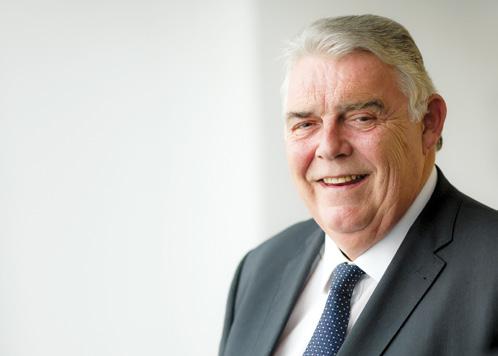
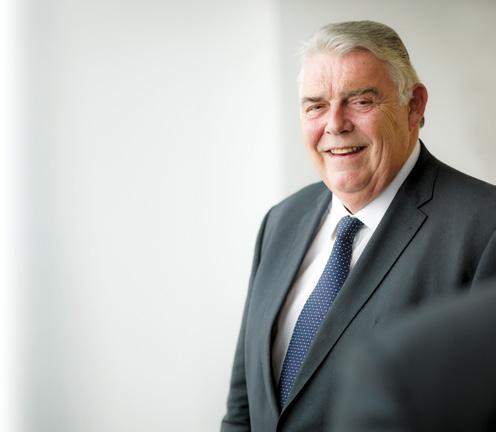
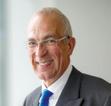
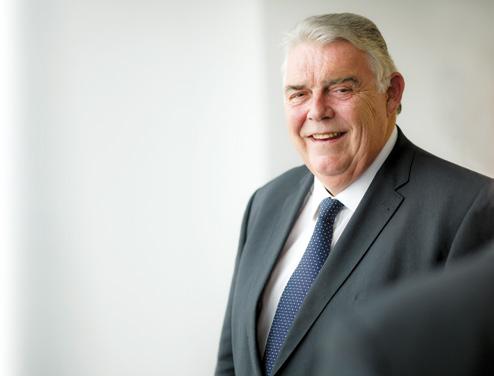
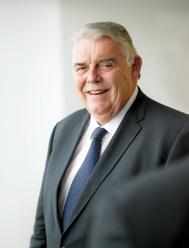
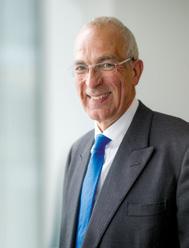
Gareth was appointed to the Board on 1 June 2010 as a non-Executive Director and became the Chairman of the Board on 4 January 2012. He has been Chairman of the Nomination Committee since January 2012.
On 2 April 2018 he stepped down from chairmanship of William Hill PLC. Previously he was Group Chief Executive of Imperial Tobacco Group PLC from its incorporation in 1996 until May 2010.
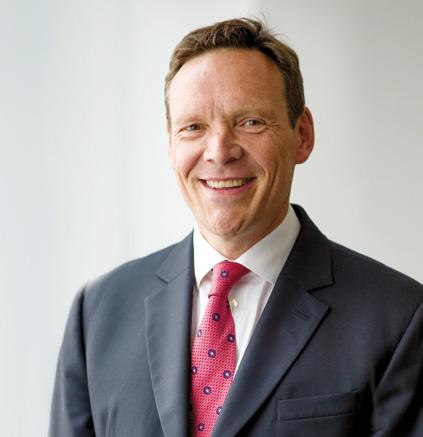
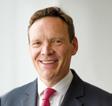
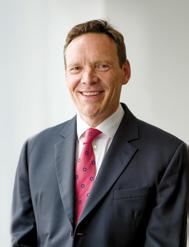
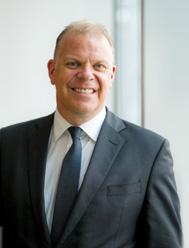
Miles was appointed to the Board on 4 May 2010 as Group Chief Executive.
Following his engineering degree at Bristol University he became a chartered accountant and brings to the Board extensive financial experience. He was previously Chief Executive of McBride plc, having originally joined as its Group Finance Director. He was Senior Independent Director of Poundland Group plc until September 2016.
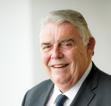
Adrian was appointed to the Board on 24 September 2013 as Group Finance Director.
As the former head of Tax, Treasury and Corporate Finance at Tesco PLC, Adrian has helped DS Smith to significantly build the finance function and deliver strong financial results. As a qualified accountant, and coming from a FTSE background, he has held divisional CFO positions at both AstraZeneca plc and Pilkington plc.
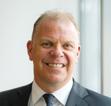
Chris was appointed to the Board on 6 March 2013 as a non-Executive Director. Previously a non-Executive Director for Alliance Boots GmbH for six years and CEO of the Findus Group. Chris has also held executive board positions as the President of the Baby Division of Royal Numico until its acquisition by Danone in 2007. He worked for Diageo for 20 years in various marketing and general management positions, including his final role as global marketing director.
Ian was appointed to the Board on 23 June 2014 as non-Executive Director. He is stepping down from the Board with effect from 28 June 2018.
Prior to his current role with ITV, he was at EMAP plc for 13 years in various senior finance positions including Group Finance Director from 2005-2008. Prior to that he was at Ernst & Young, where he worked in the corporate finance team.
Gareth Davis Chairman Miles Roberts Group Chief Executive
Adrian Marsh Group Finance Director
Chris Britton Non-Executive Director Ian Griffiths Non-Executive Director
Jonathan Nicholls Senior Independent Director
Key strength:
• Extensive experience serving on boards
• Significant external commercial experience
External appointments:
• Jonathan is Chairman of Shaftesbury Plc
• He is also Chairman of Ibstock plc Principal Board Committees
• Audit (Chair)
• Nomination
• Remuneration
Kathleen O’Donovan Non-Executive Director
Key strength:
• Extensive global experience of executive and non-executive roles
• M&A and restructuring experience
External appointments:
• None Principal Board Committees
• Audit
• Nomination
• Remuneration (Chair)
Louise Smalley Non-Executive Director
Key strength:
• Strong HR experience
• Extensive knowledge of people management, rewards and remuneration schemes
External appointments:
• Louise is Group Human Resources Director and an Executive Director of Whitbread PLC Principal Board Committees
• Audit
• Nomination
• Remuneration
Jonathan was appointed to the Board on 1 December 2009 as a non-Executive Director. He was appointed Senior Independent Director in 2012 and became Chairman of the Audit Committee in 2010.
He was previously Group Finance Director of Hanson Plc and, most recently, Group Finance Director of Old Mutual Plc.
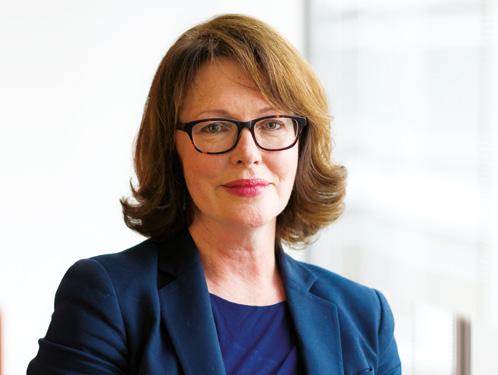
Kathleen O’Donovan was appointed to the Board as a Non-Executive Director on 5 December 2012. Kathleen was appointed Chairman of the Remuneration Committee in September 2013 and is a member of the Audit and Nomination Committees.
She was Senior Independent Director for ARM Holdings plc until December 2015 and chaired their Audit Committee. Kathleen was also previously a non-Executive Director of Trinity Mirror plc, Prudential plc, EMI Group plc, O2 plc and Senior Independent Director of Great Portland Estates plc. She served as a Director on the Court of the Bank of England from 1998 to 2004 and was Chief Financial Officer of BTR plc (subsequently renamed Invensys plc) from 1991 to 2002.
Louise was appointed to the Board on 23 June 2014 as a non-Executive Director.
She has held a number of key HR roles at Whitbread PLC. She previously worked as an HR professional in the oil industry, with BP and Esso Petroleum.
Iain Simm Group General Counsel and Company Secretary
Key strength:
• Legal expertise
• Wealth of experience in assisting boards with legal and governance matters
External appointments:
• None
Iain was appointed Group General Counsel and Company Secretary on 6 June 2016. Previously, he has held General Counsel and Company Secretary roles with BBA Aviation plc and P&O Ports Ltd. He undertook his legal training with Slaughter and May and worked for a number of years in their corporate and commercial division.
Being the best Board that we can be.
Formal evaluation is a valuable tool for improvement.
With internal evaluations having been carried out in each of the last two years, an external evaluation of the Board and its Committees was conducted this year in keeping with the guidance provided under the UK Corporate Governance Code. Clare Chalmers Limited (CCL) was appointed, a specialist consultancy which undertakes no other business for the Company. A formal assessment process was undertaken and the Chairman, together with the Group General Counsel and Company Secretary, provided a comprehensive briefing to CCL.
Observation
The review was conducted from January to April 2018. As part of the process CCL attended and observed a Board meeting and was given access to Board papers for the prior 12 months to enhance CCL’s understanding of how the Board and its Committees operate.
Interviews
Individual interviews were held with each Director and the Group General Counsel and Company Secretary. An interview script was developed to ensure consistency, with bespoke questions to allow for additional information reflecting function, role, tenure and experience.
“Our Board is committed to excellence in corporate governance, but it is how the personalities, competencies and experiences around the table interact with each other that determine the Board’s effectiveness.”
Evaluation and report
CCL found that the DS Smith Board operated to a high standard and worked well and effectively. It had overseen a period of rapid growth over the past five years that had taken the Company into the FTSE 100. CCL noted that the Board benefitted from a stable and long-serving group of directors, led by a highly capable Chairman. The challenge now facing the Board was to recruit new directors who could fill forthcoming vacancies and to ensure that all the Directors and the Board as a whole contributed fully to the Board’s role.
CCL discussed the findings with the Chairman and presented the conclusions to the Board. The Board discussed the key points and agreed an action plan. As with every high performing board, the Directors will continue to look for areas of improvement.
Action plan
Board dynamics and culture
Board and executive succession
Strategic focus
Communication, shareholders and stakeholders
Risk framework
Board Committees
Recommendations
• The Chairman, together with the Group General Counsel and Company Secretary to agree a programme of essential site visits and meetings to be covered as part of induction, plus ongoing site visits for non-Executive Directors on at least an annual basis.
• Nomination Committee to prioritise succession planning, including recruitment, induction and ongoing Director development.
• Non-Executive Directors to consider how best to use the post-meeting session to discuss ways of increasing the level of challenge, particularly on strategy and risk issues.
• Board to consider ways of engaging with the customer perspective.
• Board to explore risk appetite within DS Smith as way of moving from oversight to active engagement on risk.
• Board to consider a more formal structure for the talent review and succession process.
Honest and regular engagement with our shareholders and wider stakeholders is a vital ingredient of building the sustainable business we are so proud to be a part of.
As a company, we recognise that our responsibilities go far beyond delivering excellent returns to our shareholders. For us it is as much about satisfaction and doing the right thing as it is about healthy profits. Our reputation as a Group is founded on always meeting the highest ethical standards. This is evident in the way we engage with our customers, employees, shareholders, suppliers and other stakeholders. The DS Smith Code of Conduct has been created to clarify our ethical position on key topics and enshrines our core values – to be caring, challenging, trusted, responsive and tenacious.
You can read our Code of Conduct in full at http://www.dssmith.com/people/culture/code-of-conduct/
Stakeholder type
people High
How we engage:
1. Health and safety
The safety of our people is our number one priority. We take great pride in our safety record and are pleased with the progress made in reducing our accident frequency rate. Nonetheless, we remain focused on continuing our long-term goal towards a zero accident workplace.
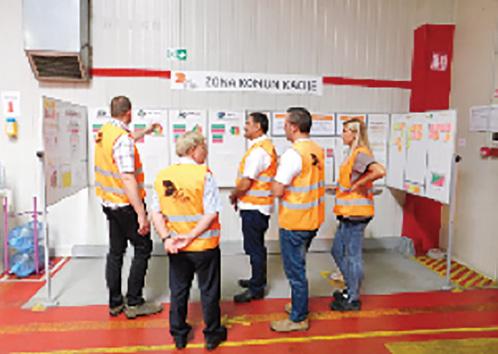
Vision Zero is our step up in terms of health and safety – our vision for a future of zero harm – for anyone who comes to work at, or visits, our sites, offices, warehouses or any of our facilities. We want them to go home safe and healthy every single day.
In order to continue our journey towards zero harm, we need to focus on developing our culture and people’s behaviour and mind-set so that working safely and healthily becomes the norm in our businesses and is integral to the way we do things.
2. Management standards
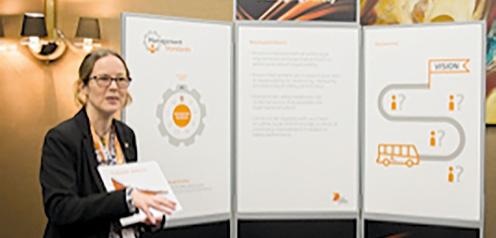
Following feedback from our last employee survey, new ambitions for our business require a shift in how we lead and manage our people. The Management Standards, which were introduced at the beginning of 2018, have been defined to ensure that the organisation can deliver on its Corporate Plan by setting baseline performance expectations for all managers. The nine Management Standards list the key expectations of a common, core and consistent view of what good management looks like for DS Smith, which in turn will empower and engage employees to contribute to a high performing organisation.
Achievements over the last 12 months
• 6.7% (2016/17: 19%) reduction in Accident Frequency Rate.
• 239 (2016/17: 207) sites with zero lost time accidents.
• All nine competencies comprising the Management Standards have been rolled out across the Group.
* Read more about engagement with employees in the People section on page 22.
Stakeholder type
How we engage:
1. Packaging strategists
Our packaging and display strategists, with their cross-industry experience, work in partnership with our customers to deliver results through packaging. We do this by helping them increase sales, lower cost and manage risks.
The challenge is to continue to deliver consistent quality and service, but with the opportunity to improve profitability for our customers through our ability to deliver in six distinct areas:
• Superior customer experience
• Authenticity
• Brand building
• Sustainability
• End-to-end solutions
• A connected world
Achievements over the last 12 months:
• Six new PackRight centres opened in 2017/18 bringing the total to 42 PackRight and Impact Centres throughout Europe.
• Strong organic volume growth in box volumes.
• We have reduced our defect rate (measured in defects-parts-per-million) by 28 per cent.
• Development of “Made2Fit”, an innovation to tackle the e-commerce challenge of an average of 45 per cent void space.
Suppliers
How we engage:
1.
Trading updates and investor meetings
The Board maintains and values regular dialogue with shareholders throughout the year. Formal trading updates are given to the market four times a year. Following the quarterly update, in Q1 and Q3, a conference call is held with shareholders and analysts and after the full-year and interim results a presentation is made to shareholders and analysts. In addition, pre-close trading updates are typically given at around the time of the close of the half and full-year periods.
Throughout the year, meetings and conference calls are organised in the UK, Europe and the US, at which the Group Chief Executive and Group Finance Director meet with investors, either individually or in groups, to discuss Group strategy and performance and respond to any questions raised. These are structured both around the reporting events such as the full-year and half-year results, as part of investor conferences, or ad hoc. The Chairman also meets with investors.
2.
Annual General Meeting (AGM)
In September 2017 we welcomed shareholders to our AGM. It is an annual opportunity for our Board to directly engage with shareholders. Our Group Chief Executive gives a presentation on the performance of the business and our Chairman hosts an insightful Q&A session, encouraging challenging questions and constructive dialogue.
At the AGM in September 2018 we will be seeking to amend our Articles of Association to allow for hybrid AGMs in the future. These are meetings where virtual technology allows those shareholders who cannot attend in person to participate using an app. Making the most of advances in technology like this allows us to engage with more shareholders.
Achievements over the last 12 months:
• June 2017 full-year results presentation, the announcement of the acquisition of Interstate Resources, with an accompanying equity issue, followed by investor meetings.
• December 2017 half-year results presentation and investor meetings.
• Nine investor conferences attended.
• Four quarterly trading updates given to the markets.
• Investor roadshows to London, Edinburgh, Paris, Frankfurt, New York, Boston, Toronto, Atlanta, Chicago and Los Angeles.
How we engage:
1. Opportunities for young people
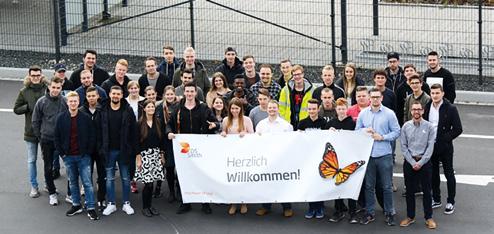
We seek to support future generations through our strategic alliances to reduce youth unemployment. From our apprentice programmes, our work with the Alliance for Youth initiative, our links with local schools and funding of scholarships we aim to help educate young people into work.
2. Charitable foundation
DS Smith seeks to make a positive contribution to our communities and build a reputation as a good neighbour and employer. We encourage our people to feel fulfilled through charity, community and volunteering work. We are proud to support our people, our communities and our customers in their goals to give something back through the DS Smith Charitable Foundation.
Achievements over the last 12 months:
• Inaugural partnership with the EY Foundation on the Smart Futures programme.
• For the past four years we have been supporting Keep Britain Tidy’s Green Flag Award® scheme. This recognises and rewards well managed parks and green spaces, setting the benchmark standard for the management of recreational outdoor spaces across the United Kingdom and around the world.
• £190,000 donated in the last year to local charities who are engaged in improving or conserving the environment or who provide training and educational opportunities.
Stakeholder type
Suppliers Medium
How we engage:
1. Global supplier standards
DS Smith spends approximately €3 billion annually on suppliers and we expect our suppliers to support us in providing the world class quality and service we deliver to our customers on a daily basis.
As a business, we are committed to the highest ethical standards in the way we engage with suppliers. The Global Supplier Standards (GSS) state the minimum requirements and standards imposed on our suppliers in the areas of ethical business practices, code of conduct and social and environmental management. In addition to the general requirements and expectations, the GSS also lay down various product safety and quality assurance requirements and standards. We have conducted a thorough review of our supply chain and identified high-risk suppliers who have signed up to our GSS based on the Ethical Trading Initiative with references to the UK Modern Slavery Act. GSS have become the cornerstone of our supplier on-boarding programme.
Achievements over the last 12 months:
• 65 per cent of our supplier base, representing €1.4 billion spend, have committed to observe our Global Supplier Standards.
Stakeholder type Link to our core values Priority for DS Smith Local communities Medium
Going concern
In considering the going concern basis for preparing the financial statements, the Directors have considered the Company’s objectives and strategy, its risks and uncertainties in achieving its objectives and its review of business performance, which are all set out in the strategic report, operating review and financial review sections of this annual report and accounts. The Group’s liquidity and funding arrangements are described in notes 19 and 20 to the financial statements, as well as in the capital structure and treasury management section of the strategic report. The Directors consider that the Group has significant covenant and liquidity headroom in its borrowing facilities for the foreseeable future.
After reviewing the Company’s expenditure commitments, current financial projections and expected future cash flows (with appropriate sensitivities applied for deterioration in both underlying cashflow and working capital), together with the available cash resources and undrawn committed borrowing facilities, the Directors have considered that adequate resources exist, before any mitigating actions, to continue in operational existence without relying on short term facilities for a period of at least twelve months from the date of approval of this report. Accordingly, the Directors continue to adopt the going concern basis in preparing the financial statements.
Acquisitions and divestments
2017/18 acquisitions and disposals
On 25 August 2017, the Group acquired 80 per cent of the shares of common stock in the capital of Indevco Management Resources, Inc. (IMRI) from Merpas Co. S.à r.l. Together with the 52,474,156 new ordinary shares allotted to Merpas the Group paid £772 million in respect of cash consideration and repayment of IMRI Group’s financial indebtedness. A redemption liability relating to the non-controlling interest of £152 million for the 20 per cent minority stake in IMRI retained by Merpas was recognised at the same time. On fixed dates over the next four years, Merpas can require the Group to acquire some or all of the remaining shares in IMRI on agreed terms under a put option, and on the fifth anniversary of completion, the Group will (unless agreed otherwise) acquire any shares in IMRI that it does not already own.
On 18 October 2017 the Group announced it had entered into an agreement to acquire EcoPack and EcoPaper for an enterprise value of c. €208 million, which completed on 6 March 2018.
These businesses are a leading integrated packaging and paper group in Romania. The acquisition was funded by existing cash
and debt facilities and the issue of 6,492,411 ordinary shares to the seller.
On 4 June 2018 the Company announced the proposed acquisition of Papeles y Cartones de Europa, S.A., known as Europac, a leading western European integrated packaging business. The offer price of €16.80 per Europac share values the entire share capital of Europac at €1,667 million (£1,453 million).
In addition to the acqusitions detailed above the Group also made various business acquisitions, which are not considered material to the Group individually or in aggregate.
2016/17 acquisitions and disposals
In the year ended 30 April 2017, the Group made various business acquisitions, which included the acquisition of two businesses specialising in point of sale and display product and services for in-store marketing, Creo in the UK and Deku-Pack in Denmark, the acquisition of Parish (a US manufacturer and supplier of bag-in-box systems), Gopaca (a corrugated producer in Portugal) and P&I Display (a specialist corrugated display business in Portugal).
These acquisitions were not considered material to the Group individually or in aggregate and were for a total of £71 million (net of cash and cash equivalents). Borrowings acquired from these transactions were £14 million.
Share capital
Details of the issued share capital and the rights and restrictions attached to the shares, together with details of movements in the Company’s issued share capital during the year, are shown in note 23. Following the Placing announced on 29 June 2017, 62,637,363 new ordinary shares were placed at a price of £4.55 pence per share, resulting in total proceeds on issue of £288 million in connection with the acquisition of Interstate Resources. On 29 August 2017 52,474,156 new ordinary shares were allotted to Merpas Co. S.a r.l. in connection with the acquisition of Interstate Resources. On 7 March 2018, 6,492,411 new ordinary shares were allotted to Kameran Financial Limited in connection with the completion of the €208 million acquisition of EcoPack and EcoPaper, Romania. These new shares ranked equally in all respects with the existing ordinary shares. Pursuant to the Company’s employee share option schemes, 1,619,350 ordinary shares of 10 pence each were issued during the year. 49,449 shares pursuant to the Company’s employee share option schemes were issued between 1 May and 17 June 2018 inclusive. The Company has not utilised its authority to make market purchases of 101,451,301 shares granted to it at the 2017 AGM but, in line with market practice, will be seeking to renew such authority at this year’s AGM.
Substantial shareholders
Information provided to the Company pursuant to the Financial Conduct Authority’s (FCA) Disclosure Guidance and Transparency Rules (DTRs) is published on a Regulatory Information Service and on the Company’s website. As at 30 April 2018, the following information has been received, in accordance with DTR5, from holders of notifiable interests in the Company’s issued share capital. Ordinary shares held
The trustee of the Employee Benefit Trust (the Trust), which is used to purchase shares on behalf of the Company as described in note 23, has the power to vote or not vote, at its absolute discretion, in respect of any shares in the Company held unallocated in the Trust. However, in accordance with good practice, the trustee adopts a policy of not voting in respect of such shares.
The trustee has a dividend waiver in place in respect of shares, which are the beneficial property of the Trust.
Dividends
An interim dividend for 2017/18 of 4.9 pence per ordinary share was paid on 1 May 2018 and the Directors recommend a final dividend of 9.8 pence per ordinary share which, together with the interim dividend, increases the total dividend for the year to 14.7 pence per ordinary share (2016/17: 15.2 pence). Subject to approval of shareholders at the AGM to be held on 4 September 2018, the final dividend will be paid on 1 November 2018 to shareholders on the register at the close of business on 5 October 2018 including those to be issued in the rights issue. The 2017/18 interim dividend of 4.9 pence, and prior dividends, will be restated in future accounts to reflect the bonus factor adjustment resulting from the rights issue.
Political donations
No political donations were made during the year ended 30 April 2018 (2016/17: nil). DS Smith has a policy of not making donations to political organisations or independent election candidates or incurring political expenditure anywhere in the world, as defined in the Political Parties, Elections and Referendums Act 2000.
Directors’ and officers’ liability insurance
The Company has purchased and maintains appropriate insurance cover in respect of Directors’ and Officers’ liabilities. The Company has also entered into qualifying third-party indemnity arrangements for the benefit of all its Directors, in a form and scope which comply with the requirements of the Companies Act 2006 (the Act). These indemnities were in force throughout the year and up to the date of this annual report.
Risk governance
The Board retains accountability for establishing and maintaining the Group’s systems of internal control and risk management and for reviewing their effectiveness, but has delegated day-today responsibility to the Audit Committee. These systems are designed to manage, and where possible eliminate, the risk of failure to achieve business objectives and to provide reasonable, but not absolute, assurance against material misstatement or loss. There is an ongoing process for identifying, evaluating and managing the significant risks faced by the Group.
Our risk management framework and the processes we put in place last year are operating well and serve to identify, assess and consider the possible remedies and responses to the principal risks and uncertainties the Group faces. The Group continues to improve the management of its key risks and to hold a strong position to absorb the financial and operational impact should those risks materialise. In doing so, the Board is encouraged by the continuing work across the Group and its divisions, the investments being made in risk management and the growing interest and skills of our employees in this area.
Further details on the Group’s risk management approach and its management and mitigation of each principal risk is set out in the principal risks section on pages 42 to 45. Following the new requirement of the Code to report on the Group’s longer-term solvency and viability, the Group’s viability statement is set out on page 41.
Other disclosures
This Directors’ governance report fulfils the requirements of the directors’ report for the purposes of the Act. The strategic report can be found on pages 2 to 45, and encompasses our corporate social responsibility report.
In line with the Regulations which implement the European Union
(SI 2015/980), a complete list of the Group’s subsidiaries has been included on pages 136 to 140 to comply with s409 of the Act.
We have chosen, in accordance with the Act, to include certain information in our strategic report or financial statements that would otherwise be required to be disclosed in the Directors’ report. This is as follows:
The information that fulfils the requirements of the Corporate Governance Statement for the purposes of the Disclosure Guidance and Transparency Rules can be found on pages 46 to 67, and forms part of the Directors’ report. The 2016 UK Corporate Governance Code can be accessed at www.frc.org.uk
Internal control
The Board has an overall responsibility for the Group’s system of internal control, including financial, operational and compliance controls. The Board is also responsible for the risk management system and for reviewing its effectiveness. Such a system, however, can only be designed to manage rather than to eliminate risk. Therefore it can provide only reasonable and not absolute assurance against material misstatement or loss. We have the necessary procedures in place to ensure that there is an ongoing process for identifying, evaluating and managing the significant risks to the Group. These procedures are in line with Financial Reporting Council guidance and have been in place throughout the year under review and up to the date of the approval of these financial statements. Our risk governance process, including how it is reviewed by the Board, is described in more detail on page 40.
The Board determines the objectives and broad policies of the Group. It meets regularly and there is a schedule of matters which are required to be brought to it for decision. The Board is accountable for, but has delegated to the Audit Committee the responsibility for, establishing a system of internal controls appropriate to the business environments in which the Group operates. Key elements of this system include:
• a clearly defined divisional organisation structure for monitoring the conduct and operations of individual business units;
• clear delegation of authority throughout the Group, starting with the matters reserved for the Board;
• a formal process for ensuring that key risks affecting all the Group’s operations are identified and assessed on a regular basis, together with the controls in place to mitigate those risks. Risk consideration is embedded in decision-making processes. The most significant risks are periodically reported to the Board and considered by it. The risk process is reviewed by the Audit Committee;
• the preparation and review of comprehensive annual divisional and Group budgets and an annual review and approval by the Board of the Corporate Plan;
• the monthly reporting of actual results and their review against budget, forecasts (including bank covenant headroom) and the previous year, with explanations obtained for all significant variances;
• the Operating Framework laying down common control procedures and policies to apply throughout the Group. This includes clearly defined policies for capital expenditure and investment, including appropriate authorisation levels, with larger capital projects, acquisitions and disposals requiring Board approval;
• regular formal meetings between the Group Chief Executive, the Group Finance Director and divisional management to discuss strategic, operational and financial issues; and
• communicating key corporate values through our Code of Conduct to all employees.
Internal Audit
The Group’s Internal Audit function, which is outsourced to KPMG LLP, undertakes regular reviews of the individual businesses’ operations and their systems of internal controls, makes recommendations to improve controls and follows up to ensure that management implements the recommendations made.
The Internal Audit plan is determined on a risk assessment basis and is reviewed and approved by the Audit Committee.
Internal Audit’s findings are reported to Group and divisional business management as well as to the Audit Committee. The Board can confirm that it has carried out an annual review of the overall effectiveness of the Group’s system of internal controls
and risk management procedures, during the year and up to the date of approval of this annual report. This included a process of self-certification by senior divisional management in which they were asked to confirm that their divisions have complied with Group policies and procedures and to report any significant control weaknesses identified during the past year. In addition, it involved reviewing the results of the work of the Group’s Internal Audit function and the risk identification and management processes identified above.
Disclosure of information to the Auditor
Each of the persons who is a Director at the date of the approval of this annual report confirms that:
a) so far as the Director is aware, there is no relevant audit information of which the Company’s Auditor is unaware; and
b) the Director has taken all the steps he/she ought to have taken as a Director in order to make him/herself aware of any relevant audit information and to establish that the Company’s Auditor is aware of that information.
This confirmation is given and should be interpreted in accordance with the provisions of section 418 of the Companies Act 2006.
Deloitte LLP have expressed their willingness to continue in office as Auditor and a resolution to reappoint them will be proposed at the forthcoming AGM.
By order of the Board
Iain Simm
The table below sets out where stakeholders can find information in our strategic report that relates to non-financial matters, as required under the new Non-Financial Reporting Directive requirements.
The Committee supports the Board in its oversight of the control framework across the Group.
“The
Audit Committee’s oversight is central in bringing together risk management and control activities to maintain a strong risk focused culture.”
Key objective of the Audit Committee
To monitor the integrity of the Group’s reporting process and financial management and to ensure that risks are carefully identified and assessed and that sound systems of risk management and internal control are in place.
Key responsibilities
• The accounting principles, policies and practices adopted in the Group’s accounts.
• External financial reporting and associated announcements.
• Managing the appointment, independence, effectiveness and remuneration of the Group’s external Auditor, including the policy on the award of non-audit services.
• Initiating and supervising a competitive tender process for the external audit when next required.
• The resourcing, plans and effectiveness of Internal Audit performed on behalf of the Group by an accountancy firm (currently KPMG LLP), which is independent from the Group’s external Auditor.
• The adequacy and effectiveness of the internal control environment.
• The Group’s risk management processes and performance.
• The establishment and oversight of fraud prevention arrangements and reports under the “Speak Up!” policy.
• The Group’s compliance with the 2014 and the 2016 UK Corporate Governance Code (the Code).
• The provision of advice to the Board on whether the annual report and accounts, when taken as a whole, is fair, balanced and understandable and provides all the necessary information for shareholders to assess the Company’s performance, business model and strategy.
Membership and operation of the Committee
Member
Jonathan
Chris
Ian
Kathleen O’Donovan
Louise Smalley
Membership and operation of the Committee
During the year, the Audit Committee met four times and met privately with the external Auditor after each meeting. In addition to the Audit Committee members, the Chairman, the Group Chief Executive, the Group Finance Director, the Group Financial Controller and representatives from the external Auditor and Internal Audit attended parts of these meetings by invitation.
Meetings of the Committee are scheduled close to the end of the half and full year, as well as before the publication of the associated half and full-year financial reports, so as to ensure the Committee is informed fully and on a timely basis on areas of significant risks and judgement.
The Board is satisfied that Jonathan Nicholls and the members of the Audit Committee have both current and relevant financial experience (as set out on pages 56 to 57) and that the Audit Committee, as a whole, has competence relevant to the sector in which the Company operates.
The Chairman of the Audit Committee held separate private meetings during the year with representatives from Internal Audit, the Group Finance Director and his team and the external Auditor.
The Audit Committee received sufficient, reliable and timely information from management to enable it to fulfil its responsibilities.
Allocation of time
Jonathan Nicholls – Chairman of Audit Committee
Risk management and internal controls
In fulfilling the Committee’s oversight of the risk management and control environment, a number of key activities are undertaken during the year, as well as regular meetings with senior management.
The Audit Committee considered the risk management activities during the year (with discussion including due diligence, management of cultural risk in the integration phase after a new acquisition and brand reputation issues), and reviewed risk reporting to ensure that the balance between risk and opportunity was in keeping with the Group’s risk appetite.
The Committee receives a separate report on any matters raised through “Speak Up!”, the Group’s confidential whistleblowing channel, and any related investigations.
The Committee approved the Group’s annual Internal Audit plan, which was primarily risk-based focusing on the assurance of core processes and projects, as well as overseeing internal compliance activities. During the year, the Committee received regular reports summarising findings from the Internal Audit reviews performed, action plans to address any areas highlighted for improvement and activity summaries from internal compliance teams.
The Audit Committee is satisfied that the Group’s executive compensation arrangements do not prejudice robust controls and good stewardship.
Significant matters considered Issue Review and conclusion
Classification and presentation of adjusting items
Acquisition accounting
Taxation
The Group has continued to deliver programmes to restructure the business to evolve and optimise the operational footprint and the support infrastructure. The costs of these programmes, together with other elements of income and cost (including acquisition costs, integration costs, impairments and gains or losses on business disposals), are classified as adjusting items because of their nature, incidence or size. The Directors believe that such a classification assists in the understanding of the trading and financial results of the Group.
The Audit Committee has reviewed the appropriateness of the income and costs both included in and excluded from adjusting items by challenging and seeking explanations from management. The Audit Committee reviewed reports prepared by management and the external Auditor. This work is a recurring agenda item in all Audit Committee meetings and the Audit Committee has been involved in discussions to confirm that management policy on these items remains appropriate, in particular considering the significant regulator focus on Alternative Performance Measures.
The external Auditor reports on these matters at the half and full year. The Audit Committee is satis fied that the resulting presentation and disclosure is appropriate.
The Group has made significant investments in new acquisitions during the year with consequential accounting considerations including, inter alia, identification and fair values of intangible assets, fair values of other assets and liabilities (including the redemption liability relating to the non-controlling interest arising on acquisition of Interstate Resources) and goodwill arising. The Audit Committee has reviewed the results of the work undertaken in these areas, which has included for certain acquisitions, engagement of external professional advisers on the identification and calculation of fair values of intangible assets. The Audit Committee is satis fied that the accounting and disclosure is appropriate.
The focus by the Committee on taxation during the year considered the high current level of fiscal authority activity, the new Country by Country reporting requirements and the Group’s expansion into new markets. This was in the context of the Group’s overall tax strategy, as well as the significant reduction in rates across territories including the US. Taxation represents a significant cost to the business both in cash and accounting terms and the Group is exposed to differing tax regimes and risks which affect both the carrying values of tax balances (including deferred tax) and the resultant income statement charges. The Audit Committee reviewed the tax charge for the half-year and the full-year, including the underlying tax effect, the appropriateness of and movement in tax provisions recognised and the risks associated with them. The Audit Committee is satis fied that the disclosure is appropriate.
Role of the Committee
The Audit Committee’s role is central to bringing together the Group’s risk management activities and control environment to ensure the integrity of financial reporting and maintaining a strong risk focused culture. The Chairman of the Audit Committee attends the Group’s Annual General Meeting every year and makes himself available for any shareholder questions on the Committee’s remit.
The Committee oversees and reviews the management of risk, financial results and the Group’s internal audit function. The acquisition and integration programmes continue to be a focus, as well as the continued progress of the Group’s optimisation projects. The Committee has also overseen the transition of lead external Audit partner, underway after Ian Waller rotates after the 2017/18 year end.
The UK Corporate Governance Code requires the Board to confirm that the annual report presents a fair, balanced and understandable assessment of the Group’s performance, business model and strategy. Following a request from the Board, the Committee undertook procedures to advise on this matter. In particular, Committee members received an early draft of the annual report during the planning process to enable a review of any areas requiring additional clarity or better balance in the messaging.
In November 2017, the Group received a letter from the Financial Reporting Council (FRC) regarding its 30 April 2017 annual report and accounts. The Audit Committee reviewed the responses drafted and subsequent correspondence with the FRC and the review concluded satisfactorily. The Audit Committee have reviewed the 30 April 2018 annual report and accounts to ensure the observations by the FRC have been addressed.
Significant other activities
During the year the Committee reviewed the updated wording of the Group’s longer-term viability statement, set out on page 41.
In order to do this, they ensured that the model used for scenario and sensitivity testing aligned clearly with the principal risks of the Group, challenged the underlying assumptions used and reviewed the results of the detailed work performed. The Committee was satisfied that the viability statement had been prepared on an appropriate basis and that the statement was justified.
Auditor rotation timeline
Deloitte LLP appointed.
In order to help the Committee continue to meet their responsibilities, training and briefing sessions are organised during the Committee meetings.
During 2017/18, sessions included a briefing on the impact of new accounting standards, Corporate Governance developments and an update on strategy to address evolving legislation such as GDPR and Anti-bribery and Corruption.
External auditors
Pursuant to the terms of the Statutory Audit Services for Large Companies Market Investigation (Mandatory Use of Competitive Tender Process and Audit Committee Responsibilities) Order 2014 (Competition & Markets Authority Order), which was introduced with effect from this year, the Audit Committee is solely responsible for negotiating and agreeing the external Auditor’s fee, the scope of the statutory audit and initiating and supervising a competitive tender process for the external audit where it is appropriate to do so. When a tender is undertaken, the Committee will be responsible for making recommendations to the Board as to the external Auditor’s appointment.
The Audit Committee meets with the external Auditor to determine annually their qualifications, expertise, resources, independence, objectivity and effectiveness. In addition, the performance of the external and internal Audit functions is evaluated as part of the annual cycle.
In order to ensure the independence and objectivity of the Auditor, the Audit Committee maintains and regularly reviews the Auditor Independence Policy which covers services which may be provided by the external Auditor, and permitted fees.
The policy on the supply of non-audit services by the external Auditor is as follows: The Group should not employ the Auditor to provide non-audit services where either the nature of the work or the extent of such services might impair the Auditor’s independence or objectivity. The external Auditor is permitted to undertake some non-audit services, providing it has the skill, competence and integrity to carry out the work in the best interests of the Group, for example, advisory services and due diligence activities associated with potential acquisitions and disposals, and major changes in accounting regulations.
Full competitive tender following which Deloitte was reappointed, as described opposite.
Competitive tender, unless specific circumstances require an earlier tender.
Non-audit services and fees are reported to the Audit Committee twice a year. For guidance, annual non-audit fees payable to the external Auditor following the policy for 2017/18 should not exceed 70 per cent of the annual Group audit fee without prior formal approval by the Audit Committee. During 2017/18, total non-audit fees paid to the external Auditor of £1.5 million were 48 per cent of the annual Group audit fee (2016/17: £0.5 million: 18 per cent). The increase over the previous year was primarily due to the work performed in connection with the acquisition of Interstate Resources. In addition, £8.4 million was paid to other accounting firms for non-audit work, including £1.1 million for work relating to internal Audit (see note 3). EU regulations and other guidance mean that, with effect from the Group’s 2020/21 year, a cap on the ratio of non-audit fees to audit fees paid to the Auditor of 70 per cent has been introduced, which will further restrict the non-audit services permitted.
The Audit Committee receives written confirmation from the external Auditor in relation to any relationships that might have a bearing on their independence, whether they consider themselves independent within the meaning of the UK regulatory and professional requirements and on their quality control processes and ethical standards. On the basis of the Committee’s own review, approval requirements in the non-audit services policy, and the Auditor’s confirmation, the Audit Committee is satisfied with Deloitte’s independence and effectiveness.
Deloitte confirmed that, with one exception, no non-audit services prohibited by the FRC’s Ethical Standard were provided to the Group or parent Company. The one exception was that services relating to payroll were provided to an immaterial overseas subsidiary, which was acquired during the period. The services were provided by an associate of Deloitte France prior to acquisition and continued post acquisition before ceasing within nine months of the acquisition having completed. The overseas subsidiary is audited by a firm that is not part of Deloitte’s network, which acts as a safeguard. In forming their opinion on the Group’s financial statements, Deloitte place no reliance on the work of the subsidiary’s auditor. The number of employees and the payroll charge within this subsidiary are wholly immaterial in the context of the Group figures. The fees for this work amounted to £8,000. Deloitte will not perform this work in the future.
Following investigation and after consideration of the facts highlighted above, the Audit Committee concluded that the provision of these services did not impact upon Deloitte’s integrity, objectivity and independence as Auditor to the Group and parent Company.
The Audit Committee is able to monitor the effectiveness of the external Auditor both through direct assessment and through recurring activities. The Audit Committee Chairman meets with the lead engagement partner regularly and individual Committee members are encouraged to and do meet privately with Deloitte.
External audit fee negotiations are approved by the Audit Committee each year. There are no contractual restrictions on the Group with regard to Deloitte’s appointment.
Deloitte LLP were first appointed as external Auditor to the Group in 2006. In 2013/14, the Company carried out a full competitive tender for the role of Statutory Auditor, following which Deloitte were reappointed. The Committee’s policy is that the role of external Auditor will be put out to tender at least every ten years in line with the applicable rules, or at other times should specific circumstances require this.
The Committee has the current intention to put the external audit out to tender no later than the 2023/24 year end. The Committee has the discretion to accelerate the planned audit tender timeline at any time. The timeline will be kept under review on an annual basis in conjunction with the assessment of the effectiveness of the external audit process and the needs of the Group, including the benefit of stability in the independent oversight provided by the external audit provision, which the Committee considers to be in the best interests of shareholders.
The lead audit partner rotates every five years and Ian Waller, the current lead audit partner, has been in post since 2013/14 and is due to rotate after this 2017/18 year end. A replacement has been identified and has been shadowing to ensure a smooth handover.
The Audit Committee confirms that the Company has complied with the provisions of the Competition & Markets Authority Order with regards to external audit tendering and audit responsibilities throughout its financial year ended 30 April 2018.
Jonathan Nicholls Chairman of the Audit Committee
17 June 2018
We remain committed to ensuring that our policy continues to drive the right behaviours from our executives, who remain completely focused on the delivery of our vision – ‘To be the leading supplier of sustainable packaging solutions’.
Kathleen O’Donovan — Chairman of Remuneration Committee
Dear shareholders
Background
On behalf of the Board, I am pleased to present our Directors’ remuneration report for the year ended 30 April 2018.
Our remuneration policy was approved by shareholders at the Annual General Meeting (AGM) in September 2017 and we are reporting on our implementation under the new policy in the annual report on Directors’ remuneration, which you can find starting on page 71. The annual report on Directors’ remuneration will be presented for approval (which is an advisory vote) at our AGM on 4 September 2018.
Before I get into the detail of my report, I would like to remind shareholders about some achievements against our strategic priorities in the past year under the leadership of our executive team.
Recap on our strategy
To lead the way in sustainability by championing sustainable supply cycle solutions and using materials responsibly through our production processes and beyond.
To delight our customers by delivering outstanding results to them as we increase their sales, reduce their costs and manage their risk.
Our vision is to be the leading supplier of sustainable packaging solutions
To realise the potential of our people by creating a safe environment where every colleague can use and develop their skills and ideas.
To double our size and profitability by driving operational excellence, growing our market share and expanding into new markets.
You can read more detail in the strategic report starting on page 2 but some of the key achievements are summarised below. The business has continued to perform strongly, with adjusted operating profit at £530 million, net debt/EBITDA of 2.2 times and adjusted return on average capital employed of 14.1%.
Key achievements by the business
• Award winning sustainability report and annual report.
• 6,201 tonnes carbon dioxide emissions saved by LED lighting in UK sites in 2017/18.
• Expanding into the US packaging and paper market with the acquisition of Interstate.
• Numerous packaging awards won for our supply cycle solutions.
• Launch of our Management Standards to 3,500 people managers.
• Graduation of the first Paper Technology Apprentices from DS Smith’s paper division’s inaugural three-year apprenticeship programme.
• 239 sites without a lost time accident.
• Entered the FTSE 100 Index.
• Adjusted earnings per share (EPS) increased 9%.
• Total shareholder return (TSR) 628% since 2010.
The landscape for executive pay is continually changing and that, together with the need to build public trust, is a continued theme of the discussions in our meetings. The Committee has oversight of all senior management remuneration and relevant employment matters to ensure that we have the best calibre people, either through promotion or recruitment, and that these leaders are properly incentivised. Your Committee seeks to ensure that the alignment of executive remuneration with both stakeholder interests and business outcomes continues to be effective.
We have recently submitted our first report under the UK gender pay gap regulations, which can be found on our website. Although our gender pay gap is less acute than the UK national average, we recognise that we have work to do. Acting upon the underlying reasons for the gap and reaching a higher standard of diversity is an important area of focus for the business.
As part of our annual decision making cycle we consider how the business has performed and look at forecasts for the year to come. We consider the feedback from both the employee survey and pulse surveys on how employees feel about the quality of our leadership. This would include whether the leadership team continues to demonstrate living our values, how we measure employee performance and if they believe we have the right approach to reward. We review guidance from the government, focus groups and investor bodies and take a holistic view of market practices. We consider whether our remuneration framework continues to motivate our leaders to achieve the Group’s strategic objectives.
We endeavour to provide the proper incentives, suitably aligned, for sustainable high performance from the executive team and we will continue to report on this in a transparent way.
Year under review
The key decisions taken during the year were:
• Finalising the revised remuneration policy for approval by shareholders at the AGM in September 2017.
• Reviewing the salaries of the Group Chief Executive and Group Finance Director, taking into account increases for the wider workforce.
• Setting of the 2017/18 annual bonus targets.
• Setting of the performance criteria for PSP awards granted both in July to the Executive Directors and other senior managers, and in October 2017, to the senior management team of our new North America Paper and Packaging division.
• Measurement of performance criteria for incentive awards vesting in July 2018.
• Approval of the remuneration package for the newly appointed Group Human Resources Director.
• Appointment of new independent adviser PricewaterhouseCoopers LLC.
Kathleen O’Donovan
Chairman
of the Remuneration Committee
17 June 2018
Context of the Committee’s decisions
Our remuneration policy is
specifically built around our strategy
designed to allow us to recruit and retain high calibre leaders who can deliver operational excellence aligned to the Group’s values designed to encourage the right behaviours to deliver long-term and sustainable growth
Key objective of the Remuneration Committee
Our objective is to have a fair, equitable and competitive total reward package that supports our vision; and to ensure the rewards are performance-based and encourage long-term shareholder value creation.
Key responsibilities
• Designing the remuneration policy.
• Implementing the remuneration policy.
• Ensuring the competitiveness of reward.
• Designing the incentive plans.
• Setting incentive targets and determining award levels.
• Overseeing all share awards across the Group.
Members Since
Kathleen O’Donovan (Chair) 2012 Chris Britton 2013
Gareth Davis 2010 Ian Griffiths 2014
Jonathan Nicholls 2009 Louise Smalley 2014
The Group General Counsel and Company Secretary acts as Secretary to the Committee.
Details of individual Directors’ attendance can be found on page 55.
“The Remuneration Committee remains firmly committed to the principle of pay for performance, ensuring that rewards for the senior leadership team are aligned with the experience of long-term shareholders.”
Kathleen O’Donovan
Allocation of time
Strategy: 30%
Annual pay cycle including bonus and LTI targets: 30%
Shareholder consultation and governance: 40%
Remuneration policy
The table below sets out a summary of how the remuneration policy will apply during 2018/19.
Remuneration element
Base salary
Pension
Annual bonus
PSP
Shareholding guidelines
Application of the remuneration policy
• Salaries will be increased by 3% on 1 August 2018 as follows:
• Group Chief Executive £763,250; and
• Group Finance Director £479,600.
• No changes to contribution or cash alternative rates of:
• Group Chief Executive 30%; and
• Group Finance Director 20%.
• No changes to maximum award levels of:
• Group Chief Executive 200%; and
• Group Finance Director 150%.
• Bonus paid half in cash and half in deferred shares, under the deferred share bonus plan (DSBP), with the shares vesting after three years.
• The performance measures for 2018/19 will remain at 50% EBTA and 50% ROACE.
• No changes to maximum award levels of:
• Group Chief Executive 225%; and
• Group Finance Director 175%.
• The performance measures for 2018/19 will remain at EPS, ROACE and relative TSR with equal weighting.
• Two-year post-vesting holding period applies, resulting in a total five-year period from grant.
• Shareholding target remains at 225% of salary for the Group Chief Executive and 175% for the Group Finance Director.
• Actual holding at 30 April 2018 was 1,305% and 249% respectively.
Key objectives of our remuneration policy
The policy aims to deliver a remuneration package that:
• attracts and retains high calibre executive directors and senior managers in a challenging and competitive business environment;
• reduces complexity, delivering an appropriate balance between fixed and variable pay for each Executive Director and the senior management team;
• encourages long-term performance by setting challenging targets linked to sustainable growth;
• is strongly aligned to the achievement of the Group’s objectives and shareholder interests and to the delivery of sustainable value to shareholders; and
• seeks to avoid creating excessive risks in the achievement of performance targets.
2017/18 outcomes
The relative TSR performance for the 2014/15 award was measured against the constituents of the FTSE 250 Industrial Goods and Services Supersector. Awards for 2016/17 and 2017/18 use the broader comparator group of the FTSE 350 in reflection of the growth of the Company and its move into the FTSE 100. Awards vest on a straight-line basis between threshold and maximum performance. For threshold performance 0% and 25% of the maximum award vests for the annual bonus and PSP respectively.
Remuneration policy
This part of the remuneration report sets out the key elements of our Directors’ remuneration policy applicable from 5 September 2017 when the policy was approved by shareholders at the AGM by a vote in favour of 96.2%. The full policy can be found in the 2017 annual report on our website.
Current
remuneration policy*
Element, purpose and link to strategy
Basic salary
To help recruit and retain key senior executives.
To provide a competitive salary relative to comparable companies, in terms of size and complexity.
Operation and performance metrics
Normally reviewed by the Committee annually and fixed for the twelve months commencing 1 August.
The Committee takes into account:
• role, competence and performance;
• average change in broader workforce salary; and
• total organisational salary budgets.
When external benchmarking is used, the comparator groups are chosen having regard to:
• size: market capitalisation, turnover, profits and the number of employees;
• diversity and complexity of the business;
• geographical spread of the business;
• relevance to the paper, plastics and packaging industry; and
• domicile of the Executive Director.
Annual bonus
To incentivise executives to achieve or exceed specific, predetermined objectives during a one-year period.
To reward ongoing delivery and contribution to strategic initiatives.
Deferred proportion of bonus, awarded in shares, provides a retention element and additional alignment of interests with shareholders.
Targets are set annually. The performance measures, targets and weightings may vary from year to year in order to align with the Company’s strategy and goals during the year to which the bonus relates.
Bonus payouts are determined by the Committee after the year end, based on performance against predetermined objectives, at least the majority of which will be financial.
Up to half of the bonus is paid in cash and the balance is deferred into shares.
The deferred bonus shares vest after three years. Dividend equivalents arising over the period between the grant date and the vesting date are paid in cash or shares in respect of the shares which vest.
The annual bonus plans are not contractual and bonuses under the plans are not eligible for inclusion in the calculation of the participating executives’ pension plan arrangements.
Malus and clawback provisions apply to the annual bonus plan and the deferred bonus shares so that individuals are liable to repay/forfeit some or all of their bonus if there is a material misstatement of results, error in calculation, or if there is serious misconduct.
Maximum opportunity
Salaries will normally be increased in line with increases for the workforce in general, unless there has been an increase in the scope, responsibility or complexity of the role, when increases may be higher. Phased higher increases may also be awarded to new Executive Directors who were hired at a discount to the market level to bring salary to the desired mid-market positioning, subject to individual performance.
The aim is to position salaries around the mid-market level, although higher salaries may be paid, if necessary, in cases of external recruitment or retention.
Maximum bonus potential of 200% of base salary, with target bonus being one half of the maximum.
Bonus starts to be earned at the threshold level (below which 0% is payable).
Current maximum potential for each Executive Director is set out in the annual report on remuneration.
Share ownership guidelines
To further align the interests of executives with those of shareholders.
* Unaudited
Executive Directors are expected to build and maintain a shareholding in the Company’s shares as a multiple of their base salary within five years of appointment as an Executive Director (Group Chief Executive 225%, Group Finance Director 175%). To achieve this, Executive Directors are expected to retain at least 50% of shares (net of tax) which vest under the Company’s share plans until the share ownership guidelines are met. Nil cost options which have vested but that the Executive Director has yet to exercise are considered to count towards the shareholding on a notional post-tax basis.
Non-Executive Directors are expected to build and maintain a shareholding that is equivalent to 50% of their annual fee from the Company within two years of their date of appointment.
None
Element, purpose and link to strategy
Performance share plan (PSP)
To incentivise Executive Directors and other senior executives to achieve returns for shareholders over a longer time frame.
To help retain executives and align their interests with shareholders through building a shareholding in the Company.
Operation and performance metrics
Awards of nil-cost options are made annually with vesting dependent on the achievement of performance conditions over the three subsequent years.
Awards will vest, subject to performance, on the third anniversary of grant and will be subject to an additional two-year holding period post vesting, during which time awarded shares may not be sold (other than for tax).
The Committee reviews the quantum of awards annually to ensure that they are in line with market levels and appropriate, given the performance of the individual and the Company.
Vesting of awards would normally be based on:
i. the Company’s total shareholder return performance against a peer group of companies selected by the Committee at the start of the performance period. The vesting scale is median to upper quartile of the group of companies, with nothing vesting for below median performance; and
ii. key financial measures of performance (such as, but not limited to, earnings per share, and return on average capital employed).
Dividend equivalents arising over the period between the grant date and the vesting date are paid in cash or shares in respect of the shares which vest.
Malus and clawback provisions apply to the PSP so that individuals are liable to repay/forfeit some or all of their shares if there is a material misstatement of results, or error in calculation, or if there is serious misconduct.
All Employee Share Plan
Encourages long-term shareholding in the Company.
Pension
To remain competitive in the marketplace and provide income in retirement.
Benefits
To help retain employees and remain competitive in the marketplace.
Executive Directors have the opportunity to participate in the UK or international sharesave plans on the same terms as other eligible employees. There are no performance conditions applicable to awards.
Maximum opportunity
The maximum annual award under the PSP that may be granted to an individual in any financial year is 225% of salary in normal circumstances and 400% of salary in exceptional circumstances, which is limited to buy-out awards under recruitment.
Actual award levels to Executive Directors are set out in the annual report on remuneration.
25% of the relevant part of the award will vest for achieving threshold performance, increasing to full vesting for the achievement of maximum performance.
Non-Executive Directors and Chairman
Attract and retain high performing individuals.
Executive Directors can elect to:
• participate in the Group’s registered defined contribution plan (DC Plan); or
• receive a salary supplement; or
• a combination of the above.
Directors, along with other UK senior executives, receive a car allowance or company car equivalent, income protection insurance, four times life cover, family medical insurance and subsidised gym membership. Additional benefits (including a relocation allowance) may be provided from time to time, where they are in line with market practice.
Any reasonable business related expenses may be reimbursed (including tax thereon, if deemed to be a taxable benefit).
Reviewed annually by the Board (after recommendation by the Committee in respect of the Chairman).
Fee increases, if applicable, are normally effective from 1 August. The Board and, where appropriate, the Committee, considers pay data at comparable companies of similar scale.
The Senior Independent Director and the Chairmen of the Audit and Remuneration Committees receive additional fees.
No eligibility for participation in bonuses, retirement plans or share plans but limited benefits may be delivered in relation to the permanency of their duties as a Director (e.g. hospitality, provision of a mobile phone, iPad/laptop and travel-related expenses). Tax may be reimbursed if these benefits are deemed to be a taxable benefit.
If there is a temporary yet material increase in the time commitments for non-Executive Directors, the Board may pay extra fees on a pro-rata basis to recognise the additional workload.
Consistent with prevailing HMRC limits, currently £500 per month (or local currency equivalent) for the SAYE plan.
Maximum: 30% of base salary (combined cash supplement and DC Plan contribution). Future appointments to the Board would have a maximum of no more than 25% of base salary.
Benefit levels may be increased in line with market levels to ensure they remain competitive and valued by the recipient. However, as the cost of the provision of benefits can vary without any change in the level of provisions, no maximum is predetermined.
No prescribed maximum annual increase.
Details of current fees are set out in the annual report on remuneration.
Aggregate annual fees limited to £1,000,000 by Articles of Association.
Illustration of the remuneration policy for 2018/19
The balance between fixed and variable ‘at risk’ elements of remuneration changes with performance. The Company’s remuneration policy results in a significant proportion of remuneration received by Executive Directors being dependent on Company performance. The application of the total remuneration of the Executive Directors for a minimum, target and maximum performance in 2018/19 is presented in the charts below. These figures are indicative as no adjustment for future share price movement and dividend accrual can have been made.
Miles Roberts
Adrian Marsh
Maximum ( xed remuneration plus maximum annual bonus opportunity plus 100% vesting of performance shares)
Fixed pay: 24% Bonus: 36% PSP: 40%
Minimum ( xed remuneration only, i.e. latest known salary, bene ts and pension) £594,700
Fixed pay: 28% Bonus: 33% PSP: 39%
Target ( xed remuneration plus half of maximum annual bonus opportunity plus 25% vesting at threshold of performance shares)
£429,300
Fixed pay: 46% Bonus: 35% PSP: 19%
Fixed pay: 100%
Annual report on remuneration (audited)
Fixed pay: 51% Bonus: 31% PSP: 18%
Fixed pay: 100%
The table below shows how we have applied the current remuneration policy during 2017/18. It discloses all the elements of remuneration received by the Directors during the year. Full details of the policy can be found in our 2016/17 annual report available on our website.
Single total figure of remuneration for each Director (audited)
1. Taxable benefits in 2017/18 principally include a car allowance of £20,000 for Miles Roberts and £17,500 for Adrian Marsh. Both Directors also receive income protection, life and health cover.
2. The annual bonus is paid 50% in cash and 50% in deferred shares as described in the policy table on page 71.
3. The value of LTIs for 2017/18 represents the estimated value of the 2015 PSP using the average share price for the last three months of the year of £4.89 (the performance period for this award being the three years ending 30 April 2018). The LTIs for 2016/17 were valued in the 2016/17 annual report using the average share price for the last three months of that financial year. This has been restated based on the share price on the actual vesting date now that this share price is known. This also impacts the total figure for the prior year. Note that the SMP was discontinued in 2014 so 2016/17 was the last year that it was included.
4. Miles Roberts receives an annual pension allowance of 30% of basic salary in lieu of membership of the defined contribution scheme. Adrian Marsh is a member of the defined contribution scheme. He contributes up to his annual allowance and the Company contribution is paid as a cash supplement. The annual pension allowances are not pensionable and are not considered to be salary for the purpose of calculating any bonus payment.
Fixed pay
Basic salary
When considering salaries the Committee takes account of a number of factors, with particular focus on the general level of salary increases awarded throughout the Group. The salary review for the UK workforce as a whole was between 1% and 5% (and on average 2.5%). Where relevant, the Committee also considers external market data on salary and total remuneration and the Committee applies judgement when considering such data. The Executive Directors’ salary increase for the 2018 review was 3% (2.5% for 2017).
Fees for non-Executive Directors and the Chairman
The rates for the Chairman’s and non-Executive Directors’ fees are:
Kathleen O’Donovan4
1. The fee increase for 2018 was 3% (2.5% in 2017).
2. Ian Griffiths is stepping down from the Board on 28 June 2018.
3. The amount received in 2017/18 includes payment in respect of Senior Independent Director fee of £7,500 per annum and Chairman of the Audit Committee fee of £11,000 from 1 August 2017. From 1 August 2018 the Chairman of the Audit Committee fee was increased to £13,500 per annum.
4. The amount received in 2017/18 includes payment in respect of Chairman of the Remuneration Committee fee of £11,000 from 1 August 2017. From 1 August 2018 this fee was increased to £13,500 per annum.
Variable pay
The Committee believes it is important that a significant portion of the Executive Directors’ package is performance-related and that the performance conditions support the delivery of the Group’s strategy and the long-term sustainable success of the Company. The remuneration policy encourages long-term performance by setting challenging targets linked to sustainable growth for the variable pay, which consists of the annual bonus and the longer-term PSP. The Remuneration Committee can use discretion to retrospectively adjust the targets, for example after a substantial restructuring, and would disclose and fully explain if it had.
Performance targets
An explanation of the performance conditions for the annual bonus and PSP are set out below.
Total shareholder return (TSR)
TSR is the increase (or decrease) in the value of a notional investment in a share in the Company and each of the companies in the Industrial Goods and Services Supersector within the FTSE 350 Index over the three-year PSP performance period, taking account of share price movement and the value of dividends (which are deemed to be re-invested) over that period.
Adjusted earnings per share (EPS)
Adjusted EPS is disclosed in the Company’s annual report and accounts and is the portion of the Group’s adjusted after tax profit allocated to each outstanding share. Adjusted EPS is an indicator of the underlying performance of the DS Smith Group. The extent to which a PSP award subject to this performance condition vests, depends on the Company’s average adjusted EPS performance over the three financial years prior to vesting.
Adjusted return on average capital employed (ROACE)
ROACE is disclosed in the Company’s annual report and accounts. It is defined as operating profit before amortisation and exceptional items divided by average capital employed and is a measure of the efficiency and profitability of the Company’s assets and investments.
The performance period for the annual bonus is measured over one year. The performance period for the PSP is measured over three years with targets based on the average of the three financial years prior to vesting.
Adjusted earnings before tax and amortisation (EBTA)
EBTA is adjusted earnings before taxation and amortisation after the effect of pension interest but does not include the results of our investments in associates. The performance period for the annual bonus is measured over one year.
Annual bonus (audited)
Bonus earned in 2017/18
The Executive Directors’ targets for the 2017/18 bonus were based on budgeted financial targets set out in the tables below, with annual bonus payments determined by reference to performance over the financial year ended 30 April 2018. Achievement is calculated on a straight-line basis between threshold and target and between target and maximum.
The table below shows the target ranges set, the business outturn and the bonus outcomes achieved.
Targets
Outcomes
1. The targets for threshold and maximum are set -/+5% of the target. There was a reduction in the ROACE target from 15.4% in 2016/17 to 14.7%. This reduction reflected the 2016/17 investment activity in a number of individually small acquisitions in Portugal, Denmark and the UK, which had a dilutive impact overall of 0.9%, taking the baseline to 14.5%. There was therefore an underlying increase in the ROACE target from 2016/17 to 2017/18 of 0.2%.
2. The annual bonus for the financial year 2017/18 will be paid 50% in cash and 50% in deferred shares with a vesting period of three years. The only qualifying condition for the deferred bonus awards to vest is for the Executive Director to remain in the employment of the Company at the vesting date and not serving notice.
Performance is assessed on a constant currency and consistent basis and therefore the actual published results have been restated for bonus purposes using budgeted exchange rates and adjusted for the impact of unbudgeted acquisitions. The policy applied to the latter is to take into account only the upside or downside in earnings versus the acquisition business plan for the period post-acquisition. This ensures that management are only rewarded (or penalised) for business performance above (or below) the business plan which supported the acquisition price.
For the 2017/18 bonus the reported EBTA of £468.1 million has been reduced by £53.9 million to £414.2 million (£44.5 million in relation to the acquisition business plans, thereby only accounting for the performance above the acquisition plans, and £9.4 million to remove the favourable currency effect). Reported ROACE of 14.1% (calculated as £529.5 million EBITA divided by £3,753.2 million capital employed) has been adjusted by 1.2% for the removal of the acquisition business plans (EBITA of £57.2 million and capital employed of £655.6 million) and -0.1% for the favourable currency effect. The resulting 15.2% ROACE is the bonusable outcome and means management are rewarded for outperformance above the acquisition business case.
The improvements in earnings over and above the acquisition business plans, which impacts both EBTA and ROACE, primarily reflects significantly accelerated synergy benefits and cost savings above the Board approved plan for the Interstate Resources acquisition.
The annual bonus plan for the Executive Directors and other senior executives is operated as shown above. Bonus results are determined by the Committee after the year end, based on performance against targets. Bonus awards are measured against the achievement of the Group’s objectives. Maximum bonus opportunity for 2017/18 is shown above for the Executive Directors and is generally between 60% and 110% for the other senior executives.
Implementation for 2018/19
Implemented in line with the policy.
The annual bonus will remain at a maximum opportunity of 200% of salary for the Group Chief Executive and 150% for the Group Finance Director.
It remains based on EBTA and ROACE, each with equal weighting.
In the event of an acquisition in the year, the Committee will assess how the financial performance of the acquired company should be included.
In the opinion of the Committee, the annual bonus measures and targets for 2018/19 are commercially sensitive and accordingly are not disclosed. These will be disclosed next year in the Directors’ remuneration report, so that achievement against those targets will be visible, in retrospect.
Awards vesting based on performance in the three-year period to 2017/18
The PSP award granted on 24 July 2015 is based on performance over the three years to 30 April 2018. The 2015 PSP awards were based on equal weighting of TSR, EPS and ROACE performance conditions. An explanation for these performance conditions is on page 74. The TSR, ROACE and EPS performance conditions attached to these awards and actual performance against these conditions are set out in the table below.
The Committee’s policy is that no adjustments for exchange rate movements are made to EPS or ROACE over the three-year performance period as the Committee feels that these are of a long-term nature and fluctuations are more likely to average out over the three years.
In calculating the average adjusted ROACE for the performance period the Committee reviewed the impact of the acquisitions made during the year. The Committee considered it appropriate to recognise an element of dilutive impact due to the scale of the acquisitions. As a consequence the 2017/18 Group reported ROACE of 14.1% has been adjusted by 0.4% to 14.5% in the calculation of the three-year average.
Performance share plan (PSP) (audited)
TSR, ROACE and EPS performance targets on long-term incentives
1. Measured against the FTSE 250 Industrial Goods and Services Supersector.
Resulting award levels
1. These shares are subject to a two-year holding period.
2. The estimated value of the vested shares is based on the average share price during the three months to 30 April 2018 (£4.89). These shares will vest on the third anniversary of grant on 24 July 2018.
The table on page 78 sets out details of the Executive Directors’ outstanding share awards.
Implementation in 2018/19
In line with the award levels in 2017/18:
• The award to be made in 2018 will be at 225% of salary for the Group Chief Executive and at 175% of salary for the Group Finance Director.
• Shares that vest under the PSP awarded in 2018 to Executive Directors must be retained for a further two years before they can be sold.
• The awards will be granted as nil-cost options.
• The PSP will be subject to three performance measures: relative TSR, three-year average adjusted EPS and three-year average adjusted ROACE, with equal weighting on each element.
Targets may be adjusted by the Committee (for example, to reflect the impact of acquisitions and disposals) to ensure that the conditions achieve their original purpose.
An average adjusted EPS/ROACE for the three years of the performance period will be calculated and compared to the targets below. To deliver against a target which is measured as the average over the performance period requires steady and sustainable growth over the period. The Committee considers that the use of such a target is a more demanding requirement than one which is based only on performance in the final year.
Value of the original awards based on the share price on 24 July 2015 of £3.846 for Miles Roberts and Adrian Marsh. The estimated appreciation value of the vested shares is based on the average share price during the three months to 30 April 2018 (£4.89).
Miles Roberts
2014 PSP awards values (vested in full during 2017/18)
Adrian Marsh
The targets for the 2018 PSP award will be:
All employee share plan
We believe that our Sharesave plan (SAYE) is a valuable way of aligning our employees’ interests with those of our long-term shareholders. Our commitment is to deliver an equal opportunity for all of our employees to participate in a plan that allows them to be engaged with the strategic direction of DS Smith and to share in its financial success.
Awards vest on a straight-line basis between threshold and maximum performance.
1. The comparator group for measurement of relative TSR will be the FTSE 350 Industrial Goods and Services Supersector.
2. Three-year average adjusted EPS, as disclosed in the annual report, over the forthcoming three financial years, commencing with the financial year in which the award is made. Assuming steady growth, this will require the Company to achieve an average compound annual growth in EPS over the three-year period of between 4% and 11%.
3. Three-year average adjusted ROACE over the forthcoming three financial years, commencing with the financial year in which the award is made.
Executive Directors are eligible (along with all employees of the Company and participating subsidiaries of the Group) to participate in the SAYE. Options are granted under the SAYE, which is an HMRC tax-advantaged plan in the UK. Participants contract to save up to the equivalent of £250 per month over a period of three years (two years in the US). The option price is discounted by up to 20% (15% in the US) of the average closing mid-market price of the Group’s shares on the three dealing days prior to invitation (20-day average to the day before grant in France and the mid-market average on the day of grant in the US). In common with most plans of this type, there are no performance conditions applicable to options granted under the SAYE. This Plan will continue on an unchanged basis for 2018/19.
Share ownership guidelines
Executive Directors are required to build a significant shareholding in the Company within five years from the date of their appointment. Non-Executive Directors are required to build up a holding of 50% of their fees in shares within two years of their date of appointment. Current shareholdings are summarised in the following table:
1. Includes the 2015/16 and 2016/17 PSP.
2. Nil cost options which have vested but have yet to be exercised are considered to count towards the shareholding requirement, other than any such shares that correspond to the estimated tax and national insurance contributions.
3. Based on the salary/fee as at 1 August 2017 and a share price of £5.224 (being the closing price on 30 April 2018) multiplied by the current year shareholding.
4. Includes the 2014/15, 2015/16 and 2016/17 deferred bonus shares, the 2014/15 PSP which is due to vest on 24 July 2018 but is not subject to any further performance conditions and the 2016/17 Sharesave.
Failure to meet the minimum shareholding requirement is taken into account when determining eligibility for share-based incentive awards. There have been no changes to the shareholdings set out above between the financial year end and the date of this report.
It is currently intended that any ordinary shares required to fulfil entitlements under the DSBP will be provided by Computershare Trustees (Jersey) Limited (the Trust), which buys shares on the market to do so. The Trust may also be used to fulfil certain entitlements under the PSP and the SAYE (along with new issue shares for other entitlements).
Outstanding share awards
The table below sets out details of Executive Directors’ outstanding share awards, which will vest in future years subject to performance and/or continued service.
Miles Roberts
Adrian Marsh
1. The market price on the date of award was the average price of a DS Smith share for the three trading days preceeding the award. The targets for historical awards granted under PSP are set out below:
1. The awards in 2015 and 2016 are measured against the FTSE 250 Industrial Goods and Services Supersector. The 2017 award is measured against the FTSE 350 Industrial Goods and Services Supersector.
2015, 2016 and 2017 PSP award: one-third based on relative TSR, one-third based on three-year average adjusted EPS and one-third based on three-year average adjusted ROACE. 25% of the award vests for achieving threshold performance, increasing on a straight-line basis to full vesting for maximum performance. Details of the number of shares to vest under the 2015 award are set out on page 76.
Dividend equivalents for the DSBP award in 2015 accrued during the vesting period and are paid in cash shortly after the award vests. Miles Roberts will receive £63,634 and Adrian Marsh will receive £29,262.
External appointments
The Board supports Executive Directors taking up appointments outside the Company to broaden their knowledge and experience. Each Executive Director is permitted to accept one non-Executive appointment (or in exceptional circumstances two appointments) from which they may retain any fee. Any external appointment must not conflict with a Director’s duties and commitments to DS Smith. Miles Roberts was a non-Executive Director of Aggreko plc and retained fees of £61,000 for the year ended 30 April 2018 (he was appointed on 7 March 2017 and retained fees of £9,541 in 2016/17). Adrian Marsh does not currently have any remunerated external appointments.
Notice
period and payment for loss of office
The Committee’s policy is that the notice periods for Executive Directors appointed will not exceed one year. Non-Executive Directors have letters of appointment for a term of three years whereupon they are normally renewed, but generally for no more than three terms in aggregate. The notice period is one month by either the Company or the non-Executive Director. Non-Executive Directors are not eligible for payments on termination. In line with the UK Corporate Governance Code (the Code), all non-Executive Directors are subject to annual re-election by shareholders at the AGM. Their letters of appointment detail the time commitment expected of each non-Executive Director. Both these and the Executive Directors’ service contracts are available for inspection at the registered office during normal business hours and on the date of the AGM.
Gareth Davis Chairman
Date of contract/letter of appointment Expiry
26 April 2016
31 May 2019
Miles Roberts Group Chief Executive 4 May 2010 12 months by either the Director or the Company
Adrian Marsh Group Finance Director
Chris Britton
Ian Griffiths
Jonathan Nicholls
Louise Smalley
24 September 2013
Payments to past Directors or for loss of office (audited)
months by either the Director or the Company
No payments were made to past Executive Directors during the year ended 30 April 2018 (2016/17: Nil). No payments were made in respect of loss of office during the year ended 30 April 2018 (2016/17: Nil).
Statement of change in pay of Group Chief Executive compared with other employees (audited)
2020
The table below shows the change in the Group Chief Executive’s remuneration compared to all full-time equivalent employees based in the UK. The UK employee workforce was chosen as a suitable comparator group as the Group Chief Executive is based in the UK (albeit with a global role and responsibilities) and pay changes across DS Smith may vary widely depending on local market conditions.
Relative importance of spend on pay
The table below shows the expenditure and percentage change in overall spend on employee remuneration and dividends.
1. Total remuneration reflects overall employee costs and includes some exchange rate fluctuation. See financial statements note 6 for further information.
Remuneration of the Group Chief Executive
The table below shows the total remuneration figure for the Group Chief Executive during each of those financial years. The total remuneration figure includes the annual bonus and LTIP awards which vested, based on performance in those years. The annual bonus and LTIP percentages show the payout for each year as a percentage of the maximum available for the financial year.
1. 2009/10 figures relate to the previous Group Chief Executive, Tony Thorne.
2. The 2016/17 figure has been updated to include the actual share price on the date of vesting for the PSP and SMP now that this is known.
Total shareholder return from May 2009
Review of past performance — total shareholder return graph
This graph illustrates the Company’s TSR performance since 1 May 2009, relative to the FTSE 100 Index as well as the FTSE 250 Index. In December 2017 the Company joined the FTSE 100 index from the FTSE 250 Index. As at 30 April 2018 DS Smith ranked 88 by market capitalisation. This graph looks at the value, over the nine years to 30 April 2018, of an initial investment of £100 in DS Smith shares compared with that of £100 invested in both the FTSE 100 and FTSE 250 Index. The other points plotted are the values at intervening financial year ends.
Voting on the remuneration report at the 2017 AGM
At the AGM held in 2017, votes cast by proxy and at the meeting in respect of the Directors’ remuneration were as follows:
1. Votes withheld are not included in the final figures as they are not recognised as a vote in law.
Remuneration Committee governance
The Board is ultimately accountable for executive remuneration and delegates this responsibility to the Committee. The Committee’s principal function is to support the Group’s strategy by ensuring that its delivery is underpinned by the Company’s overall remuneration policy, as described above. It also determines the specific remuneration package, including service contracts and pension arrangements, for each Executive Director and our most senior executives.
All members of the Committee are independent non-Executive Directors. We see this as fundamental in ensuring Executive Directors’ and senior executives’ remuneration is set by people who are independent and have no personal financial interest, other than as shareholders, in the matters discussed. There are no potential conflicts of interest arising from cross–directorships and there is no day-to-day involvement in running the business. The Committee consults with the Group Chief Executive, who may attend meetings of the Committee, although he is not involved in deciding his own remuneration. The Committee is assisted by the Group General Counsel and Company Secretary, the Group Human Resources Director and the Group Head of Reward. No-one is allowed to participate in any matter directly concerning the details of their own remuneration or conditions of service.
During the year under review the Committee appointed PricewaterhouseCoopers LLC (PwC) to provide advice on the remuneration of Executive Directors and other senior executives (advice was previously provided by New Bridge Street (a part of Aon plc)). PwC also provides advice to the Company in connection with the operation of the Company’s share-based incentive plans. Both PwC and New Bridge Street are signatories to the Code of Conduct for remuneration consultants and members of the Remuneration Consultants Group. PwC provided advice to different parts of the Group on tax matters. The teams providing this advice are separate from the Remuneration Committee advisors and there was no conflict. New Bridge Street did not provide any other services to the Group during the year. Aon’s risk solutions business carried out work for our insurance programme for the Group during the year, but otherwise Aon did not provide any other services and there was no conflict. The total fees, excluding VAT, to the Committee during the year were £22,500 in respect of PwC’s services and £25,100 in respect of New Bridge Street. The Committee reviews the appointment of its advisers
regularly and is satisfied that the advice it receives is objective and independent.
This report has been prepared in accordance with the Large and Medium-Sized Companies and Groups (Accounts and Reports) (Amendment) Regulations 2013 and the Listing Rules of the UK Listing Authority. The Board, in conjunction with the Committee, has taken the necessary steps to ensure that the Company complies with the provisions of the Code which relate to Directors’ remuneration. The Committee confirms that throughout the year it has complied with governance rules and best practice provisions.
The Regulations require the Auditor to report to shareholders on the audited information within this report and to state whether, in their opinion, the relevant sections have been prepared in accordance with the Act. The Auditor’s opinion is set out in the Independent Auditor’s report and we have clearly marked the audited sections of the report.
Prior to the 2017 AGM the Committee Chairman engaged with shareholders on the implementation of the remuneration policy. Since the AGM the Committee Chairman has continued to make herself open to engage with shareholders.
The Committee values highly the contribution that shareholder views have on the process of formulating policy decisions. This feedback, together with emerging relevant guidance, was considered by the Committee and formed part of the review of the remuneration policy.
The Company does not formally consult with employees on Executive Directors’ remuneration. However, when setting the remuneration policy for Executive Directors the Committee takes into account the overall approach to reward for, and the pay and employment conditions of other employees in the Group. As part of the development of the proposed policy the Committee also considers the pay structures across the wider workforce.
On behalf of the Board
Kathleen O’Donovan Chairman of the Remuneration Committee
17 June 2018
The Remuneration Committee’s Terms of Reference can be found at www.dssmith.com/investors/corporate-governance/committees/
The Directors are responsible for preparing the annual report and the financial statements in accordance with applicable law and regulations.
Company law requires the Directors to prepare such financial statements for each financial year. Under that law the Directors are required to prepare the Group financial statements in accordance with International Financial Reporting Standards (IFRSs) as adopted by the European Union and Article 4 of the IAS Regulation and have also chosen to prepare the parent Company financial statements in accordance with Financial Reporting Standard 101 Reduced Disclosure Framework. Under company law the Directors must not approve the financial statements unless they are satisfied that they give a true and fair view of the state of affairs of the Company and of the profit or loss of the Company for that period.
In preparing the parent Company financial statements, the Directors are required to:
• select suitable accounting policies and then apply them consistently;
• make judgements and accounting estimates that are reasonable and prudent;
• state whether Financial Reporting Standard 101 Reduced Disclosure Framework has been followed, subject to any material departures disclosed and explained in the financial statements; and
• prepare the financial statements on the going concern basis unless it is inappropriate to presume that the Company will continue in business.
In preparing the Group financial statements, International Accounting Standard 1 requires that Directors:
• properly select and apply accounting policies;
• present information, including accounting policies, in a manner that provides relevant, reliable, comparable and understandable information;
• provide additional disclosures when compliance with the specific requirements in IFRSs is insufficient to enable users to understand the impact of particular transactions, other events and conditions on the entity’s financial position and financial performance; and
• make an assessment of the Company’s ability to continue as a going concern.
The Directors are responsible for keeping adequate accounting records that are sufficient to show and explain the Company’s transactions and disclose with reasonable accuracy at any time the financial position of the Company and enable them to ensure that the financial statements comply with the Companies Act 2006. They are also responsible for safeguarding the assets of the Company and hence for taking reasonable steps for the prevention and detection of fraud and other irregularities.
The Directors are responsible for the maintenance and integrity of the corporate and financial information included on the Company’s website. Legislation in the United Kingdom governing the preparation and dissemination of financial statements may differ from legislation in other jurisdictions.
Directors’ responsibility statement
We confirm that to the best of our knowledge:
• the financial statements, prepared in accordance with the relevant financial reporting framework, give a true and fair view of the assets, liabilities, financial position and profit or loss of the Company and the undertakings included in the consolidation taken as a whole;
• the strategic report includes a fair review of the development and performance of the business and the position of the Company and the undertakings included in the consolidation taken as a whole, together with a description of the principal risks and uncertainties that they face; and
• the annual report and financial statements, taken as a whole, are fair, balanced and understandable and provide the information necessary for shareholders to assess the Company’s position, performance, business model and strategy.
This responsibility statement was approved by the Board of Directors on 17 June 2018 and is signed on its behalf by:
Miles Roberts Group Chief Executive
17 June 2018
Adrian Marsh Group Finance Director
17 June 2018
Report on the audit of the financial statements
Opinion
In our opinion:
• the financial statements give a true and fair view of the state of the Group’s and of the parent Company’s affairs as at 30 April 2018 and of the Group’s profit for the year then ended;
• the Group financial statements have been properly prepared in accordance with International Financial Reporting Standards (IFRSs) as adopted by the European Union;
• the parent Company financial statements have been properly prepared in accordance with United Kingdom Generally Accepted Accounting Practice, including FRS 101 ReducedDisclosureFramework ; and
• the financial statements have been prepared in accordance with the requirements of the Companies Act 2006 and, as regards the Group financial statements, Article 4 of the IAS Regulation.
We have audited the financial statements of DS Smith Plc (the ‘parent Company’) and its subsidiaries (the ‘Group’) which comprise:
• the consolidated income statement;
• the consolidated statement of comprehensive income;
• the consolidated and parent Company balance sheets;
• the consolidated and parent Company statements of changes in equity;
• the consolidated cash flow statement;
• the related notes 1 to 34 to the consolidated financial statements; and
• the related notes 1 to 15 to the parent company financial statements.
The financial reporting framework that has been applied in the preparation of the Group financial statements is applicable law and IFRSs as adopted by the European Union. The financial reporting framework that has been applied in the preparation of the parent Company financial statements is applicable law and United Kingdom Accounting Standards, including FRS 101 ReducedDisclosureFramework(United Kingdom Generally Accepted Accounting Practice).
Basis for opinion
We conducted our audit in accordance with International Standards on Auditing (UK) (ISAs (UK)) and applicable law. Our responsibilities under those standards are further described in the auditor’s responsibilities for the audit of the financial statements section of our report.
We are independent of the Group and the parent Company in accordance with the ethical requirements that are relevant to our audit of the financial statements in the UK, including the FRC’s Ethical Standard as applied to listed public interest entities, and we have fulfilled our other ethical responsibilities in accordance with these requirements. We confirm that, with one exception, no non-audit services prohibited by the FRC’s Ethical Standard were provided to the Group or parent Company. This one exception related to immaterial payroll services provided to an insignificant newly acquired overseas subsidiary not audited by us. These services have ceased. It was concluded in agreement with the Audit Committee that this one exception did not impact upon our integrity, objectivity and independence (see page 67 for further information).
We believe that the audit evidence we have obtained is sufficient and appropriate to provide a basis for our opinion.
Summary of our audit approach
Key audit matters The key audit risks that we identified in the current year were:
• classification and presentation of adjusting items;
• taxation; and
• acquisition accounting.
Within this report, any new key audit matters are identified with and any key audit matters which are the same as the prior year identified with .
Materiality The materiality that we used for the Group financial statements was £18m which was determined on the basis of profit before tax and adjusting items.
Scoping Our full scope audit procedures provided coverage at the Group’s key locations accounting for 59% (2016/17: 55%) of revenue and 63% (2016/17: 55%) of the profit before tax and adjusting items.
Component auditors performed procedures on key audit matters and material balances for other locations that provided coverage over 22% (2016/17: 33%) of revenue and 18% (2016/17: 29%) of the profit before tax and adjusting items.
Together our procedures on key audit matters and material balances covered 81% (2016/17: 88%) of revenue and 81% (2016/17: 84%) of profit before tax and adjusting items.
Significant changes in our approach
During 2017/18 the Group undertook a material acquisition in the US which required management judgement in determining the fair value of intangible assets, goodwill and other assets and liabilities in the opening balance sheet. Therefore, we have identified acquisition accounting as a new key audit matter for the current year.
Conclusions relating to going concern, principal risks and viability statement
Going concern
We have reviewed the Directors’ statement in note 1(a) to the financial statements about whether they considered it appropriate to adopt the going concern basis of accounting in preparing them and their identification of any material uncertainties to the Group’s and Company’s ability to continue to do so over a period of at least twelve months from the date of approval of the financial statements.
We are required to state whether we have anything material to add or draw attention to in relation to that statement required by Listing Rule 9.8.6R(3) and report if the statement is materially inconsistent with our knowledge obtained in the audit.
We confirm that we have nothing to report, add or draw attention to in relation to these matters.
Principal risks and viability statement
Based solely on reading the Directors’ statements and considering whether they were consistent with the knowledge we obtained in the course of the audit, including the knowledge obtained in the evaluation of the Directors’ assessment of the Group’s and the Company’s ability to continue as a going concern, we are required to state whether we have anything material to add or draw attention to in relation to:
• the disclosures on pages 40 -45 that describe the principal risks and explains how they are being managed or mitigated;
• the Directors’ confirmation on page 41 that they have carried out a robust assessment of the principal risks facing the Group, including those that would threaten its business model, future performance, solvency or liquidity; or
• the Directors’ explanation on page 41 as to how they have assessed the prospects of the Group, over what period they have done so and why they consider that period to be appropriate, and their statement as to whether they have a reasonable expectation that the Group will be able to continue in operation and meet its liabilities as they fall due over the period of their assessment, including any related disclosures drawing attention to any necessary qualifications or assumptions.
We are also required to report whether the Directors’ statement relating to the prospects of the Group required by Listing Rule 9.8.6R(3) is materially inconsistent with our knowledge obtained in the audit.
We confirm that we have nothing material to add or draw attention to in respect of these matters.
Key audit matters
Key audit matters are those matters that, in our professional judgement, were of most significance in our audit of the financial statements of the current period and include the most significant assessed risks of material misstatement (whether or not due to fraud) that we identified. These matters included those which had the greatest effect on: the overall audit strategy, the allocation of resources in the audit; and directing the efforts of the engagement team.
These matters were addressed in the context of our audit of the financial statements as a whole, and in forming our opinion thereon, and we do not provide a separate opinion on these matters.
Classification and presentation of adjusting items
Key audit matter description
The presentation and consistency of costs and income within adjusting items in the income statement is a key determinant in the assessment of the quality of the Group’s earnings before adjusting items and also presents the opportunity for management bias in the presentation of results. Management judgement is required in determining whether an item should be presented as adjusting based on the size, nature and incidence of the item. Additionally this is an area that attracts greater scrutiny from the financial reporting regulator. For the year ended 30 April 2018, the Group incurred net adjusting items of £88 million.
Refer to note 4 for details of adjusting items in the year and note 1(x) for management’s policy for identifying adjusting items. The classification and presentation of adjusting items is also considered to be significant matter for the Audit Committee (page 65).
How the scope of our audit responded to the key audit matter
We considered the appropriateness and classification of the items which are included within adjusting items by testing a sample and agreeing them back to supporting documentation.
We have reviewed the appropriateness of the adjusting items recorded in accordance with management’s policy on adjusting items and the latest guidance from the FRC and the European Securities and Markets Authority (ESMA). We have reviewed the quality of adjusted earnings as a result of the impact of the items above.
We reviewed the related disclosure in the Group financial statements and assessed consistency with the prior period and current market best practice.
Key observations
We are satisfied that the amounts classified as adjusting items are in accordance with the Group’s accounting policy and the related disclosure of these items in the financial statements is appropriate.
Taxation
Key audit matter description
The value of the tax provisions recorded in respect of a number of uncertain tax positions require judgement in respect of the likely outcome of negotiations with various tax authorities. Refer to note 1(w) for management’s process for estimating and recording tax provisions and note 7 for further detail in respect to the range of possible outcomes with regards to those uncertain tax positions. How the scope of our audit responded to the key audit matter
We worked with our tax audit specialists, including those in required local jurisdictions, to challenge the estimates and judgements made by management when calculating the income tax payable in each territory and the associated provisions held. Specifically, we have reviewed the correspondence with the taxation authorities in significant locations, as well as reviewing the support or opinions received from external counsel or other advisors where management has utilised such opinions to appraise the likely outcome of technical tax treatments and in assessing the reasonableness of the provisions made.
Key observations
We are satisfied that the assumptions used in calculating the tax charge and recording the associated tax provisions are appropriate.
Acquisition accounting
Key audit matter description
The Group acquired Interstate Resources Inc (“IRI”) during the year for £772m. The judgements used in determining the value of goodwill (£581m) and intangible assets (£258m) and the allocation between these assets could, if performed inaccurately, lead to a material misstatement.
There is significant judgement and complexity involved in the allocation of excess consideration over net assets of the acquiree between the fair value of the intangible assets and remaining goodwill. For the fair value of intangible assets, this includes estimates for growth rates, margins, discount rates and retention rates.
Management must exercise judgement to accurately measure the fair value of the acquired assets and liabilities as at the acquisition date. Note 1(z) to the financial statements discusses this further.
How the scope of our audit responded to the key audit matter
We obtained and reviewed the purchase agreements and performed the procedures to assess whether the transaction has been accounted for appropriately in accordance with IFRS3Businesscombinations .
We have obtained management’s calculations for the accounting for the acquisition and we checked the mathematical accuracy of the acquisition model. We also assessed the adjustments to assets and liabilities in order to bring them to their fair value. We have held discussions with management in order to challenge the completeness of these adjustments and have also corroborated these against independent valuation reports.
In order to assess the accuracy of the acquired intangible assets valuation, we have reviewed the methodology applied in management’s calculation and challenged the assumptions behind the calculation. We have involved our own internal experts to assist in our assessment. We have reviewed the disclosures included within note 30 of the consolidated financial statements.
Key observations
We have satisfied ourselves that the valuation of assets and liabilities associated with these acquisitions is appropriate, that they have been recorded at their fair value and have been disclosed and accounted for appropriately.
Our application of materiality
We define materiality as the magnitude of misstatement in the financial statements that makes it probable that the economic decisions of a reasonably knowledgeable person would be changed or influenced. We use materiality both in planning the scope of our audit work and in evaluating the results of our work.
Based on our professional judgement, we determined materiality for the financial statements as a whole as follows:
Group financial statements
Materiality
Basis for determining materiality
Rationale for the benchmark applied
£18 million (2016/17: £16 million)
Materiality has been determined as approximately 5% of profit before tax and adjusting items. This is consistent with prior year. The materiality equates to less than 1% (2016/17: less than 1%) of revenue from continuing operations and less than 1% (2016/17: less than 1%) of net assets.
We exclude the effect of adjusting items to provide a stable basis for materiality, as these items are expected to be volatile year on year and profit before tax and adjusting items is a key metric for users of the accounts and is consistent with the Group’s internal and external reporting.
Parent Company financial statements
£7 million (2016/17: £8 million)
Parent Company materiality equates to less than 1% (2016/17: less than 1%) of net assets, and is capped at 40% (2016/17: 50%) of Group materiality.
Parent Company’s materiality is determined based on net assets of the Company. The parent Company does not carry out trading activities and therefore net assets are the key metric for the users of the financial statements.
We agreed with the Audit Committee that we would report to the Committee all audit differences in excess of £750,000 (2016/17: £650,000) for the Group, as well as differences below that threshold that, in our view, warranted reporting on qualitative grounds. We also report to the Audit Committee on disclosure matters that we identified when assessing the overall presentation of the financial statements.
An overview of the scope of our audit
Our Group audit was scoped by obtaining an understanding of the Group and its environment, including Group-wide controls, and assessing the risks of material misstatement at the Group level.
Based on that assessment, we focused our Group audit scope primarily on the audit work at twelve components (2016/17: nine) located in the United Kingdom, France, Germany, Italy, the United States, Spain, Austria and Romania. These twelve components represent the principal business units within the Group’s key reportable segments and accordingly provide an appropriate basis for undertaking audit work to address the risks of material misstatement identified above. The Group audit team takes an active part in the conduct of the audits at these components and follows a programme of planned site visits that is designed to ensure that the Senior Statutory Auditor or another senior member of the Group audit team visits each of the full scope components or attends close out meetings on a rotational basis. These components accounted for 59% (2016/17: 55%) of revenue and 63% (2016/17: 55%) of profit before tax and adjusting items.
For the remaining locations within our audit scope, the component auditor performed audit procedures on the key audit matters and material balances and provided reporting to the Senior Statutory Auditor. The Senior Statutory Auditor or another senior member of the Group audit team held discussions with the local audit team in the current year. These remaining locations accounted for 22% (2016/17: 33%) of revenue and 18% (2016/17: 29%) of profit before tax and adjusting items.
Together the procedures provided coverage on key audit matters and material balances covering 81% (2016/17: 88%) of revenue and 81% (2016/17: 84%) of profit before tax and adjusting items.
At the parent entity level we also tested the consolidation process and carried out analytical procedures to confirm our conclusion that there were no significant risks of material misstatement of the aggregated financial information of the remaining components not subject to audit or audit of significant risks and material balances.
Other information
The Directors are responsible for the other information. The other information comprises the information included in the annual report, other than the financial statements and our auditor’s report thereon.
Our opinion on the financial statements does not cover the other information and, except to the extent otherwise explicitly stated in our report, we do not express any form of assurance conclusion thereon.
In connection with our audit of the financial statements, our responsibility is to read the other information and, in doing so, consider whether the other information is materially inconsistent with the financial statements or our knowledge obtained in the audit or otherwise appears to be materially misstated.
If we identify such material inconsistencies or apparent material misstatements, we are required to determine whether there is a material misstatement in the financial statements or a material misstatement of the other information. If, based on the work we have performed, we conclude that there is a material misstatement of this other information, we are required to report that fact.
In this context, matters that we are specifically required to report to you as uncorrected material misstatements of the other information include where we conclude that:
• Fair, balanced and understandable – the statement given by the Directors that they consider the annual report and financial statements taken as a whole is fair, balanced and understandable and provides the information necessary for shareholders to assess the Group’s position and performance, business model and strategy, is materially inconsistent with our knowledge obtained in the audit; or
• Audit Committee reporting – the section describing the work of the Audit Committee does not appropriately address matters communicated by us to the Audit Committee; or
• Directors’ statement of compliance with the UK Corporate Governance Code – the parts of the Directors’ statement required under the Listing Rules relating to the Company’s compliance with the UK Corporate Governance Code containing provisions specified for review by the auditor in accordance with Listing Rule 9.8.10R(2) do not properly disclose a departure from a relevant provision of the UK Corporate Governance Code.
We have nothing to report in respect of these matters.
Responsibilities of Directors
As explained more fully in the Directors’ responsibilities statement, the Directors are responsible for the preparation of the financial statements and for being satisfied that they give a true and fair view, and for such internal control as the Directors determine is necessary to enable the preparation of financial statements that are free from material misstatement, whether due to fraud or error.
In preparing the financial statements, the Directors are responsible for assessing the Group’s and the parent Company’s ability to continue as a going concern, disclosing as applicable, matters related to going concern and using the going concern basis of accounting unless the Directors either intend to liquidate the Group or the parent Company or to cease operations, or have no realistic alternative but to do so.
Auditor’s responsibilities for the audit of the financial statements
Our objectives are to obtain reasonable assurance about whether the financial statements as a whole are free from material misstatement, whether due to fraud or error, and to issue an auditor’s report that includes our opinion. Reasonable assurance is a high level of assurance, but is not a guarantee that an audit conducted in accordance with ISAs (UK) will always detect a material misstatement when it exists. Misstatements can arise from fraud or error and are considered material if, individually or in aggregate, they could reasonably be expected to influence the economic decisions of users taken on the basis of these financial statements.
A further description of our responsibilities for the audit of the financial statements is located on the Financial Reporting Council’s website at: www.frc.org.uk/auditorsresponsibilities.This description forms part of our auditor’s report.
Use of our report
This report is made solely to the Company’s members, as a body, in accordance with Chapter 3 of Part 16 of the Companies Act 2006. Our audit work has been undertaken so that we might state to the Company’s members those matters we are required to state to them in an auditor’s report and for no other purpose. To the fullest extent permitted by law, we do not accept or assume responsibility to anyone other than the Company and the Company’s members as a body, for our audit work, for this report, or for the opinions we have formed.
Report on other legal and regulatory requirements
Opinions on other matters prescribed by the Companies Act 2006
In our opinion the part of the Directors’ remuneration report to be audited has been properly prepared in accordance with the Companies Act 2006.
In our opinion, based on the work undertaken in the course of the audit:
• the information given in the strategic report and the Directors’ report for the financial year for which the financial statements are prepared is consistent with the financial statements; and
• the strategic report and the Directors’ report have been prepared in accordance with applicable legal requirements.
In the light of the knowledge and understanding of the Group and of the parent Company and their environment obtained in the course of the audit, we have not identified any material misstatements in the strategic report or the Directors’ report.
Matters on which we are required to report by exception
Adequacy of explanations received and accounting records
Under the Companies Act 2006 we are required to report to you if, in our opinion:
• we have not received all the information and explanations we require for our audit; or
• adequate accounting records have not been kept by the parent Company, or returns adequate for our audit have not been received from branches not visited by us; or
• the parent Company financial statements are not in agreement with the accounting records and returns.
We have nothing to report in respect of these matters.
Directors’ remuneration
Under the Companies Act 2006 we are also required to report if in our opinion certain disclosures of Directors’ remuneration have not been made or the part of the Directors’ remuneration report to be audited is not in agreement with the accounting records and returns.
We have nothing to report in respect of these matters.
Other matters
Auditor tenure
Following the recommendation of the Audit Committee, we were appointed by the shareholders on 13 October 2006 to audit the financial statements for the year ended 30 April 2007 and subsequent financial periods. Following a competitive tender process, we were reappointed as auditor for the year ended 30 April 2014 and subsequent financial years. The period of total uninterrupted engagement including previous renewals and reappointments of the firm is 12 years, covering the years ended 30 April 2007 to 30 April 2018.
Consistency of the audit report with the additional report to the Audit Committee
Our audit opinion is consistent with the additional report to the Audit Committee we are required to provide in accordance with ISAs (UK).
Ian Waller
(Senior Statutory Auditor) for and on behalf of Deloitte LLP
Statutory Auditor
London, United Kingdom
17 June 2018
activities comprise continuing operations.
Approved by the Board of Directors of DS Smith Plc on 17 June 2018 and signed on its behalf by:
M W Roberts A R T Marsh Director Director
The accompanying notes are an integral part of these consolidated financial statements.
Year ended 30 April 2018
1. Significant accounting policies
(a) Basis of preparation
These financial statements are consolidated financial statements for the Group consisting of DS Smith Plc, a company registered in England and Wales, and all its subsidiaries. The consolidated financial statements have been prepared and approved by the Directors in accordance with International Financial Reporting Standards as adopted by the EU (‘adopted IFRSs’), and with those parts of the Companies Act 2006 applicable to companies reporting under IFRS. The consolidated financial statements are also in compliance with IFRSs as issued by the International Accounting Standards Board (IASB).
The consolidated financial statements are prepared on the historical cost basis with the exception of biological assets, other investments, assets and liabilities of certain financial instruments and employee benefit plans that are stated at their fair value and share-based payments that are stated at their grant date fair value.
The consolidated financial statements have been prepared on a going concern basis as set out on page 61 of the Directors’ report. The Directors consider that adequate resources exist for the Company to continue in operational existence for the foreseeable future.
The preparation of consolidated financial statements requires management to make judgements, estimates and assumptions that affect whether and how policies are applied, and the reported amounts of assets and liabilities, income and expenses. Estimates with a significant risk of material adjustment and critical accounting judgements are discussed in accounting policy 1(z) and 1(aa).
The following new accounting standards, amendments or interpretations have been adopted by the Group as of 1 May 2017:
• Amendments to IAS 12 RecognitionofDeferredTaxAssetsfor UnrealisedLosses ;
• Amendments to IAS 7 DisclosureInitiative ; and
• Annual Improvements to IFRSs 2014-2016 Cycle.
The adoption of these standards, amendments and interpretations has not had a material effect on the results for the year.
The accounting policies set out below have been applied consistently in all periods presented in these consolidated financial statements. The accounting policies have been applied consistently by all Group entities.
(b) Basis of consolidation
(i) Subsidiaries
The financial statements of subsidiaries are included in the consolidated financial statements from the date that control commences until the date that control ceases. Control is achieved when the Group is exposed to, or has rights to, variable returns from its involvement with the entity and has the ability to affect those returns through its power over the entity. Intra-group balances and any unrealised gains and losses or income and expenses arising from intra-group transactions are eliminated in preparing the consolidated financial statements.
(ii) Interests in equity accounted investments
The Group’s interests in equity accounted investments comprise interests in associates and joint ventures. An associate is an entity over which the Group has significant influence, but not control or joint control, over the financial and operating policy decisions of the investment. A joint venture is an entity in which the Group has joint control, whereby the Group has rights to the net assets of the entity, rather than rights to its assets and obligations for its liabilities.
Interests in associates and joint ventures are accounted for using the equity method. They are recognised initially at cost, which includes transaction costs. Subsequent to initial recognition the consolidated financial statements include the Group’s share of the profit or loss and other comprehensive income of equity accounted investments, until the date on which significant influence or joint control ceases.
(iii) Non-controlling interests
Non-controlling interests are shown as a component of equity in the consolidated statement of financial position net of the value of options over interests held by non-controlling interests in the Group’s subsidiaries.
(iv) Business combinations
The acquisition method is used to account for the acquisition of subsidiaries. Identifiable net assets acquired (including intangibles) in a business combination are measured initially at their fair values at the acquisition date.
Where the measurement of the fair value of identifiable net assets acquired is incomplete at the end of the reporting period in which the combination occurs, the Group will report provisional fair values. Final fair values are determined within a year of the acquisition date and applied retrospectively.
The excess of the consideration transferred and the amount of any non-controlling interest over the fair value of the identifiable assets (including intangibles), liabilities and contingent liabilities acquired is recorded as goodwill.
The consideration transferred is measured as the fair value of the assets given, equity instruments issued (if any), and liabilities assumed or incurred at the date of acquisition.
Acquisition related costs are expensed as incurred.
The results of the subsidiaries acquired are included in the consolidated financial statements from the acquisition date.
1. Significant accounting policies continued
(c) Revenue
Revenue comprises the fair value of the sale of goods and services, net of value added tax and other sales taxes, rebates and discounts and after eliminating sales within the Group. Revenue from the sale of goods is recognised when:
• the Group has transferred the significant risks and rewards of ownership to the buyer;
• all significant performance obligations have been met;
• the Group retains neither continuing managerial involvement nor effective control over the goods sold;
• it is probable that the economic benefits associated with the transaction will flow to the Group; and
• the amount of revenue can be measured reliably.
This is typically either when the goods are loaded onto the collection vehicle if the buyer is collecting them, or when the goods are unloaded at the delivery address if the Group is responsible for delivery.
(d) Supplier rebates
The Group receives income from its suppliers, mainly in the form of volume based rebates and early settlement discounts. These are recognised as a reduction in operating costs in the year to which they relate. At the period end, where appropriate, the Group estimates supplier income due from annual agreements for volume rebates.
(e) Government grants
Government grants are recognised in the statement of financial position initially as deferred income when there is reasonable assurance that they will be received and that the Group will comply with the conditions attached to them. Grants that compensate the Group for expenses incurred are offset against the expenses in the same periods in which the expenses are incurred. Grants relating to assets are released to the income statement over the expected useful life of the asset to which they relate on a basis consistent with the depreciation policy. Depreciation is provided on the full cost of the assets before deducting grants.
(f) Dividends
Dividends attributable to the equity holders of the Company paid during the year are recognised directly in equity.
(g) Foreign currency translation
The consolidated financial statements are presented in sterling, which is the Group’s presentational currency. Transactions in foreign currencies are translated into the respective functional currencies of Group companies at the foreign exchange rates ruling at the dates of the transactions. Monetary assets and liabilities denominated in foreign currencies at the reporting date are translated into the functional currency at the foreign exchange rates ruling at that date. Foreign exchange differences arising on translation of monetary assets and liabilities are recognised in the consolidated income statement. Non-monetary assets and liabilities that are measured at historical cost in a foreign currency are translated using the exchange rates at the dates of the transactions.
The assets and liabilities of all the Group entities that have a functional currency other than sterling are translated at the closing exchange rate at the reporting date. Income and expenses for each income statement are translated at average exchange rates (unless this average is not a reasonable approximation of the cumulative effect of the rates prevailing on the transaction dates, in which case income and expenses are translated at the date of the transactions).
On consolidation, exchange differences arising from the translation of the net investment in foreign entities, borrowings, and other financial instruments designated as hedges of such investments, are recognised in the translation reserve. On the disposal of foreign currency entities, the cumulative exchange difference recorded in the translation reserve is taken to the consolidated income statement as part of the gain or loss on disposal.
(h) Intangible assets
(i) Goodwill
The recognition of business combinations requires the excess of the purchase price of acquisitions over the net book value of identifiable assets acquired to be allocated to the assets and liabilities of the acquired entity. The Group makes judgements and estimates in relation to the fair value allocation of the purchase price.
Goodwill is stated at cost less accumulated impairment losses. The useful life of goodwill is considered to be indefinite. Goodwill is allocated to the cash generating units (CGUs), or groups of CGUs, that are expected to benefit from the synergies of the combination and is tested annually for impairment, or more frequently if impairment is indicated.
On disposal of a subsidiary or a jointly controlled entity, the attributable amount of goodwill is included in the determination of the profit or loss recognised in the consolidated income statement.
(ii) Intellectual property
Intellectual property is stated at cost less accumulated amortisation and impairment.
(iii) Computer software
Computer software that is integral to a related item of hardware is included within property, plant and equipment. All other computer software is treated as an intangible asset.
(iv) Customer related
Customer relationships, acquired as part of a business combination, are capitalised separately from goodwill and are carried at cost less accumulated amortisation and impairment.
(v) Other intangible assets
Other intangible assets that are acquired by the Group are carried at cost less accumulated amortisation and impairment.
(vi) Amortisation
Amortisation of intangible assets (excluding goodwill) is charged to the income statement on a straight-line basis over the estimated useful lives of intangible assets, unless such lives are indefinite. Intangible assets (other than goodwill) are amortised from the date they are available for use.
The estimated useful lives are as follows:
years
1. Significant accounting policies continued
(i) Property, plant and equipment
Property, plant and equipment is stated at cost less accumulated depreciation and impairment.
Depreciation is charged to the income statement on a straight-line basis over the estimated useful lives of each item of property, plant and equipment, and major components that are accounted for separately (or in the case of leased assets, the lease period, if shorter). Land is not depreciated.
The estimated useful lives are as follows:
Freehold and long leasehold properties
Plant and equipment, fixtures and fittings (including IT hardware)
Motor vehicles
10-50 years
2-30 years
3-5 years
Gains or losses arising on the sale of surplus property assets are recorded through operating profit before adjusting items.
(j) Other investments
Other investments primarily consist of available for sale investments in unquoted equity securities and restricted cash. Equity securities which are reliably measureable are measured at fair value. The remainder of other investments are carried at cost less any impairment.
(k) Impairment
The carrying amounts of the Group’s assets, including tangible and intangible non-current assets, are reviewed at each reporting date to determine whether there are any indicators of impairment. If any such indicators exist, the asset’s recoverable amount is estimated. Goodwill is tested for impairment annually at the same time, regardless of the presence of an impairment indicator. An impairment loss is recognised whenever the carrying amount of an asset, collection of assets or its CGU exceeds its recoverable amount. Impairment losses are recognised in the income statement.
(i) Cash generating units
For the purposes of property, plant and equipment and other intangibles impairment testing, each operating segment, split by process (e.g. Packaging, Paper, Recycling), is a separate individual CGU. Goodwill impairment testing is carried out based on regional groupings of CGUs as illustrated in note 10, as this is the lowest level at which goodwill is monitored for internal management purposes.
(ii) Calculation of recoverable amount
The recoverable amount of the Group’s assets is calculated as the value-in-use of the CGU to which the assets are attributed or the net selling price, if greater. Value-in-use is calculated by discounting the cash flows expected to be generated by the CGU/group of CGUs being tested for evidence of impairment. This is done using a pre-tax discount rate that reflects the current assessment of the time value of money, and the country-specific risks for which the cash flows have not been adjusted. For an asset that does not generate largely independent cash inflows, the recoverable amount is determined for the CGU to which the asset belongs.
(iii) Reversals of impairment
Impairment losses in respect of goodwill are not reversed. In respect of other assets, an impairment loss is reversed if there has been a change in the estimates used to determine the recoverable amount. An impairment loss is reversed only to the extent that the asset’s carrying amount does not exceed the carrying amount that would have been determined, net of depreciation or amortisation, if no impairment loss had been recognised.
(l) Derivative financial instruments
The Group uses derivative financial instruments, primarily interest rate, currency and commodity swaps, to manage interest rate, currency and commodity risks associated with the Group’s underlying business activities and the financing of these activities. The Group has a policy not to, and does not, undertake any speculative activity in these instruments.
Such derivative financial instruments are initially recognised at fair value on the date on which a derivative contract is entered into and are subsequently remeasured at fair value. Derivatives are carried as assets when the fair value is positive and as liabilities when the fair value is negative.
Derivative financial instruments are accounted for as hedges when designated as hedges at the inception of the contract and when the financial instruments provide an effective hedge of the underlying risk.
For the purpose of hedge accounting, hedges are classified as:
• fair value hedges when hedging the exposure to changes in the fair value of a recognised asset or liability;
• cash flow hedges when hedging exposure to variability in cash flows that is attributable to a particular risk associated with either a statement of financial position item or a highly probable forecast transaction; or
• hedges of the net investment in a foreign entity.
The treatment of gains and losses arising from revaluing derivatives designated as hedging instruments depends on the nature of the hedging relationship as follows:
Fairvaluehedges:the carrying amount of the hedged item is adjusted for gains or losses attributable to the risk being hedged and the derivative is remeasured at fair value. Gains and losses from both the hedged item and the fair value of derivatives are taken to the income statement. The Group discontinues fair value hedge accounting if the hedging instrument expires or is sold, terminated or exercised, the hedge no longer meets the criteria for hedge accounting or the Group revokes the designation.
Cashflowhedges:the effective portion of the gain or loss on the hedging instrument is recognised directly in equity, while the ineffective portion is recognised in the income statement. Amounts taken to equity are transferred to the income statement in the same period during which the hedged transaction affects profit or loss, such as when a forecast sale or purchase occurs. Where the hedged item is the cost of a non-financial asset or liability, the amounts taken to equity are transferred to the initial carrying amount of the non-financial asset or liability.
1. Significant accounting policies continued
(l) Derivative financial instruments continued
If the hedging instrument expires or is sold, terminated or exercised without replacement or roll-over, the hedged transaction ceases to be highly probable, or if its designation as a hedge is revoked, amounts previously recognised in equity remain in equity until the forecast transaction occurs and are transferred to the income statement or to the initial carrying amount of a non-financial asset or liability as above. If a forecast transaction is no longer expected to occur, amounts previously recognised in equity are transferred to the income statement.
Hedgesofnetinvestmentinaforeignentity:the effective portion of the gain or loss on the hedging instrument is recognised directly in equity, while the ineffective portion is recognised in the income statement. Amounts taken to equity are transferred to the income statement when the foreign entity is sold.
Any gains or losses arising from changes in the fair value of all other derivatives are taken to the income statement. These may arise from derivatives for which hedge accounting is not applied because they are not effective as hedging instruments.
The net present value of the expected future payments under options over interests held by non-controlling interests in the Group’s subsidiaries is shown as a financial liability. At the end of each period, the valuation of the liability is reassessed with any changes recognised in profit or loss for the period.
(m) Treasury shares
When share capital recognised as equity is repurchased, the amount of the consideration paid, including directly attributable costs, is recognised as a change in equity. Repurchased shares are classified as treasury shares and are presented as a deduction from total equity.
(n) Trade and other receivables
Trade and other receivables are stated at their cost less impairment provisions.
(o) Inventories
Inventories are stated at the lower of cost and net realisable value. Net realisable value is the estimated selling price in the ordinary course of business, less the estimated costs of completion and selling expenses. The cost of inventories is based on a weighted average cost and includes expenditure incurred in acquiring the inventories and bringing them to their existing location and condition. In the case of manufactured inventories and work in progress, cost includes an appropriate share of overheads based on normal operating capacity.
(p) Biological assets
Biological assets consist of standing timber, measured at fair value less cost to sell. Any change in fair value resulting from both net growth and change in the market value of standing timber is presented in the income statement. The revenue from the sale of standing timber is presented within revenue.
(q) Cash and cash equivalents and restricted cash
Cash and cash equivalents comprise cash balances and call deposits. Bank overdrafts that are repayable on demand and form an integral part of the Group’s cash management are included as a component of cash and cash equivalents for the purpose of the statement of cash flows. Cash and cash equivalents are stated at amortised cost.
Cash subject to contractual restrictions on use by the Group is excluded from cash and cash equivalents in the consolidated financial statements and is presented within other investments in the consolidated statement of financial position. Restricted cash is stated at amortised cost.
(r) Borrowings
Borrowings are recognised initially at fair value, less attributable transaction costs. Subsequent to initial recognition, interest-bearing borrowings are stated at amortised cost unless designated in a fair value hedge relationship, with borrowing costs being accounted for on an accruals basis in the income statement using the effective interest method.
At the reporting date, accrued interest is recorded separately from the associated borrowings within current liabilities.
(s) Employee benefits
(i) Defined contribution schemes
Contributions to defined contribution pension schemes are recognised as an employee benefit expense within personnel expenses in the income statement, as incurred.
(ii) Defined benefit schemes
The Group’s net obligation in respect of defined benefit pension schemes is calculated separately for each scheme by estimating the amount of future benefit that employees have earned in return for their service in the current and prior periods; that benefit is discounted to its present value amount and recognised in the income statement within personnel expenses; a corresponding liability for all future benefits is established on the statement of financial position and the fair value of any schemes’ assets is deducted.
The discount rate is the yield at the reporting date on AA credit rated bonds that have maturity dates approximating to the duration of the schemes’ obligations. The calculation is performed by a qualified actuary using the projected unit method. Actuarial gains and losses are recognised immediately in the statement of comprehensive income.
(iii) Share-based payment transactions
The Group operates equity-settled share-based compensation plans. The fair value of the employee services received in exchange for the grant of the options is recognised within personnel expenses, with a corresponding increase in equity, over the period that the employees unconditionally become entitled to the awards. The fair value of the options granted is measured using a stochastic model, taking into account the terms and conditions upon which the options were granted. The total amount to be expensed over the vesting period is determined by reference to the fair value of the options granted, excluding the impact of any non-market vesting conditions.
At each reporting date, the entity revises its estimates of the number of options that are expected to become exercisable. It recognises the impact of the revision of original estimates, if any, in the income statement, and a corresponding adjustment to equity.
1. Significant accounting policies continued
(t) Provisions
A provision is recognised in the statement of financial position when the Group has a present legal or constructive obligation as a result of a past event, a reliable estimate can be made of the amount of the obligation and it is probable that an outflow of economic benefits will be required to settle the obligation. Provisions are discounted to present value where the effect is material.
(u) Trade and other payables
Trade and other payables are stated at their cost.
(v) Leases
(i) Finance leases
Assets held under finance leases are recognised as assets of the Group at the inception of the lease at the lower of their fair value and the present value of the minimum lease payments. Depreciation on leased assets is charged to the income statement on the same basis as owned assets. Leasing payments are treated as consisting of capital and interest elements and the interest is charged to the income statement so that a constant periodic rate of interest is recognised on the outstanding balance of the liability.
(ii) Operating leases
Operating lease rentals are charged to the income statement on a straight-line basis over the lease term. Any premium or discount on the acquisition of a lease is spread over the life of the lease on a straight-line basis.
(w) Taxation
Income tax on the profit or loss for the year comprises current and deferred tax. Income tax is recognised in profit or loss except to the extent that it relates to items recognised directly in equity or in other comprehensive income.
Current tax is the expected tax payable on the taxable income for the year, using tax rates enacted in each jurisdiction at the reporting date, and any adjustment to tax payable in respect of previous years.
The Group is subject to corporate taxes in a number of different jurisdictions and judgement is required in determining the appropriate provision for transactions where the ultimate tax determination is uncertain. In such circumstances, the Group recognises liabilities for anticipated taxes based on the best information available and where the anticipated liability is both probable and estimable. Such liabilities are classified as current when the Group expects to settle the liability within 12 months with the remainder as non-current. Any interest and penalties accrued are included in income taxes in both the consolidated income statement and the consolidated statement of financial position. Where the final outcome of such matters differs from the amount recorded, any differences may impact the income tax and deferred tax provisions in the period in which the final determination is made.
Deferred tax is provided for using the balance sheet liability method, providing for temporary differences between the carrying amounts of assets and liabilities for financial reporting purposes and the amounts used for taxation purposes. The tax effect of certain temporary differences is not recognised, principally with respect to goodwill; temporary differences arising on the initial recognition of assets or liabilities (other than those arising in a business combination or in a manner that initially impacts accounting or taxable profit); and temporary differences relating to investment in subsidiaries and equity accounted investees to the extent that they will probably not reverse in the foreseeable future and the Group is able to control the reversal of such temporary differences. The amount of deferred tax provided is based on the expected manner of realisation or settlement of the carrying amount of assets and liabilities, using tax rates enacted or substantively enacted at the reporting date.
A deferred tax asset is recognised only to the extent that it is probable that future taxable profits will be available against which the asset can be utilised. Deferred tax assets are reduced to the extent that it is no longer probable that the related tax benefit will be realised.
(x) Adjusting items
Items of income or expenditure that are significant by their nature, size or incidence, and for which separate presentation would assist in the understanding of the trading and financial results of the Group, are classified and disclosed as adjusting items.
Such items include business disposals, restructuring and optimisation, acquisition related and integration costs, and impairments.
(y) Non-GAAP performance measures
In the reporting of financial information, the Group has adopted certain non-GAAP measures of historical or future financial performance, position or cash flows other than those defined or specified under International Financial Reporting Standards (IFRSs).
Non-GAAP measures are either not defined by IFRS or are adjusted IFRS figures, and therefore may not be directly comparable with other companies’ reported non-GAAP measures, including those in the Group’s industry.
Non-GAAP measures should be considered in addition to, and are not intended to be a substitute for, or superior to, IFRS measures.
Details of the Group’s non-GAAP performance measures, including reasons for their use and reconciliations to IFRS figures are included as appropriate in note 32.
1. Significant accounting policies continued
(z) Key sources of estimates
The application of the Group’s accounting policies requires management to make estimates and assumptions. These estimates and assumptions affect the reported assets and liabilities and financial results of the Group. Actual outcomes could differ from the estimates and assumptions used.
The Group’s key sources of estimates are as detailed below.
(i) Taxation
The Group’s tax payable on profits is determined based on tax laws and regulations that apply in each of the numerous jurisdictions in which the Group operates. The Group is required to exercise judgement in determining income tax provisions, along with the recognition of deferred tax assets/liabilities. While the Group aims to ensure that estimates recorded are accurate, the actual amounts could be different from those expected. See note 7 for additional information.
(ii) Acquisitions
Estimates are required to value assets and liabilities acquired in business combinations at fair value and the purchase price is allocated to assets and liabilities based on these fair values.
Determining fair values involves the use of significant estimates and assumptions (including discount rates, asset lives, customer attrition rates and recoverability). The value of intangible assets and property, plant and equipment on acquisition is typically determined by qualified valuation specialists where material.
(aa) Critical accounting judgement
Adjusting items
The Group is required to exercise judgement in applying the adjusting items accounting policy to items of income and expenditure, taking account of their origination, as well as considering similar items in prior years to ensure consistency and appropriate presentation. See note 4 for additional information.
(ab) IFRS standards and interpretations in issue but not yet effective
The International Accounting Standards Board (IASB) and International Financial Reporting Interpretations Committee (IFRIC) have issued new standards and interpretations with an effective date after the date of these financial statements.
International Financial Reporting Standards (IFRS/IAS)
IFRS 15 RevenuefromContractswithCustomers
IFRS 15 replaces IAS 18 Revenueand related interpretations, introducing a single, principles-based approach to the recognition and measurement of revenue from all contracts with customers. The new approach requires identification of performance obligations in a contract and revenue to be recognised when or as those performance obligations are satisfied, as well as additional disclosure.
The Group has substantially completed its review of the requirements of IFRS 15 against existing policy and practice for both timing and amount of revenue recognised, in particular considering dies, tools and moulds, variable consideration, provision of machines to customers, and the agent versus principal criteria, as well as introducing the necessary processes to capture all information required for additional disclosures required under IFRS 15.
The review concluded that timing of revenue recognition was materially consistent with the requirements of IFRS 15. For the majority of the Group’s contracts, the performance obligation is the delivery of goods, which under IFRS 15 would be recognised at a single point of time, on delivery of goods, consistent with the current accounting treatment under IAS 18.
The Group utilises customised dies, tools and moulds in both the Packaging and Plastics businesses in order to fulfil customer orders, which vary considerably in value and treatment in the customer contracts. While some are immaterial in the context of the contract, others are of more significant value and contractually distinct and are therefore considered a separate performance obligation under IFRS 15. Currently revenue from dies, tools and moulds is netted within operating costs, while under IFRS 15 it represents a separate performance obligation and should be included within revenue. In addition to the IFRS 15 adjustment relating to dies, tools and moulds, energy income, historically netted within operating costs while not material, was determined to be more appropriately stated within revenue.
The Group will apply IFRS 15 with effect from 1 May 2018, with full restatement of prior periods to ensure comparability of the consolidated income statement. The impact of applying the changes described above during the year ended 30 April 2018 would have been to increase revenue and increase operating costs by £99 million respectively with no impact on net profit and loss. Other areas identified in the review of IFRS 15 were concluded not to have material differences to current practice.
1. Significant accounting policies continued (ab) IFRS standards and interpretations in issue but not yet effective continued IFRS 9 FinancialInstruments
IFRS 9 will replace IAS 39 FinancialInstruments:RecognitionandMeasurementand concerns the classification, measurement and derecognition of financial assets and financial liabilities, introduces the expected credit loss model for the assessment of impairment of financial assets, introduces new classification and measurement rules for financial assets affecting the Group’s other investments previously classified as available for sale and held at fair value, and changes the hedge accounting requirements.
The Group has determined that all existing effective hedging relationships will continue to qualify for hedge accounting under IFRS 9. The Group currently intends to elect to continue to apply the hedge accounting requirements of IAS 39, as allowed under IFRS 9.
The Group’s other investments previously classified as available for sale under IAS 39 and held at fair value will be designated on transition as fair value through other comprehensive income, after which the Group will record their fair value movements in other comprehensive income.
The Group will adopt the simplified approach to provide for losses on receivables within the scope of IFRS 9. A preliminary assessment based on average credit loss in relation to customers by region has been undertaken and the impact of applying the expected credit loss model has been concluded not to be material considering the quality and short-term nature of the Group’s trade receivables. As the anticipated impact of adopting IFRS 9 is not expected to be material, the Group will not restate prior periods on adoption of IFRS 9.
IFRS 16 Leases
IFRS 16 replaces IAS 17 Leasesand prescribes a single lessee accounting model that requires the recognition of a right of use asset and corresponding liability for all leases with terms over 12 months unless the underlying asset is of low value. The liability is initially measured at the present value of future lease payments for the lease term. Depreciation of right of use assets, and interest on the corresponding lease liabilities are recognised in the income statement over the lease term. In the cash flow statement, the total amount of cash paid is separated into a principal portion (within financing activities) and an interest portion (within operating activities) in the cash flow statement.
On implementation of IFRS 16 there will be a material increase in lease liabilities, along with a corresponding increase in right of use assets within property, plant and equipment. The Group’s most significant leases relate to property and production equipment and the undiscounted commitments under non-cancellable operating leases under IAS 17 are provided in note 28 and total £210m at 30 April 2018.
IFRS 16 will be the most significant of the new accounting standards for the Group. The Group currently expects to adopt the modified retrospective approach using practical expedients available, with a cumulative adjustment to equity at 1 May 2019, and as such will not restate comparatives. During the year, the Group’s transition work focused on collecting data in order to facilitate assessment of accounting impacts and transition options and the transition process will continue in 2018/19. Under the expected transition option, discount rates at 30 April 2019 will be utilised to calculate the transition adjustment and as such expectations of the transition impact will be able to be quantified at that time.
Other standards not yet effective
IFRIC Interpretation 23 UncertaintyoverIncomeTaxTreatmentsclarifies how to apply the recognition and measurement requirements in IAS 12 when there is uncertainty over income tax treatments. In particular, the Interpretation addresses whether uncertain tax treatments should be considered separately or together with one or more other uncertain tax treatments, and addresses the assumptions an entity makes about the examination of tax treatments by taxation authorities. The Group is currently evaluating the impact of the new Interpretation.
The Group does not anticipate that the adoption of the remaining standards and interpretations that are effective for the year ending 30 April 2019 will have a material effect on its financial statements.
Of the standards listed above, all except for IFRIC 23, amendments to IAS 28 and amendments to IAS 19 have been endorsed by the EU.
2. Segment reporting
Operating segments
IFRS 8 OperatingSegmentsrequires operating segments to be identified on the same basis as is used internally for the review of performance and allocation of resources by the Group Chief Executive (who is the Chief Operating Decision Maker as defined by IFRS 8).
The Group’s operations are organised into six segments, five of which cover geographical regions with integrated Packaging and Paper businesses, and Plastics, which is reported separately. These comprise the Group’s reportable segments and their results are regularly reviewed by the Group Chief Executive. The measure of profitability reported to the Group Chief Executive for the purposes of resource allocation and assessment of performance is adjusted operating profit, which is a non-GAAP performance measure, about which further information is provided in note 32.
To accommodate the Group’s acquisition of Interstate Resources in August 2017, an additional operating segment, ‘North America’ has been added for the year ended 30 April 2018.
Segment results include items directly attributable to a segment as well as those that can be allocated on a reasonable basis. Central administration costs are allocated to the individual segments on a consistent basis year on year. All assets and liabilities have been analysed by segment, except for items of a financing nature, taxation balances, employee benefit liabilities and current and non-current asset investments. Debt and associated interest are managed at a Group level and therefore have not been allocated across the segments.
1. Adjusted to exclude amortisation and adjusting items.
2. Segment reporting
continued
1. Adjusted to exclude amortisation and adjusting items.
Geographical areas
In presenting information by geographical area, external revenue is based on the geographical location of customers. Non-current assets are based on the geographical location of assets and exclude investments, deferred tax assets, derivative financial instruments and intangible assets (which are monitored at the operating segment level, not at a country level).
3. Operating profit
Details of adjusting items included in operating profit are set out in note 4.
Operating profit is stated after charging/(crediting) the following:
Fees payable to the Company’s Auditor for audit of the Company’s annual accounts
Fees payable to the Company’s Auditor and their associates for other services:
Non audit fees in 2017/18 include reporting accountant’s fees in respect of the acquisition of Interstate Resources.
Non-audit fees do not include costs in respect of the proposed acquisition of Europac (note 34) which were incurred after the year end and are estimated to be in the region of £1.2m in total.
A description of the work of the Audit Committee is set out in the corporate governance section and includes an explanation of how the external Auditor’s objectivity and independence are safeguarded when non-audit services are provided by the external Auditor.
4. Adjusting items
Items are presented as adjusting in the financial statements where they are significant items of financial performance that the Directors consider should be separately disclosed to assist in the understanding of the trading and financial results of the Group. Such items include business disposals, restructuring and optimisation, acquisition related and integration costs, and impairments. With effect from 1 May 2017, the Group has changed the description of these items from ‘exceptional’ to ‘adjusting’, to better represent their nature.
2017/18
Acquisition related costs of £29m relate to professional advisory, legal and consultancy fees and directly attributable internal salary costs relating to the review of potential deals, and deals completed during the period, including the acquisition of Interstate Resources, DPF Groupe and EcoPack and EcoPaper. Of the total, £14m relates to the acquisition of Interstate Resources, with the most significant components being transaction and sponsor fees, legal costs, and financial and tax due diligence and advice costs. Also included within acquisition costs is £2m for the year end remeasurement of fair value on the redemption liability related to the purchase of Interstate Resources.
Integration costs relate to integration projects underway, primarily to achieve cost synergies from the acquisitions made in the current period and previous financial years (of which Interstate Resources comprises £6m). They include those directly attributable internal salary costs which would otherwise not be incurred.
Other restructuring costs of £17m include reorganisation and restructuring in DCH and Northern Europe (£4m), the UK (£4m) and Plastics (£2m), primarily relating to completion of projects commenced in the previous year.
Other adjusting items of £16m principally relate to significant multi-year European centralisation and optimisation projects, including the development of a Group-wide financial ERP solution, shared service centre and major IT projects. The costs of these programmes extend over several years and as well as adjusting items include capitalisation of intangible assets, particularly in the case of the financial ERP system. Those costs are primarily as a result of the Group’s acquisition activity, which has been focused on businesses where the IT and financial infrastructure is limited.
Finance costs adjusting items relate to financing costs incurred in the acquisition of Interstate Resources of £5m, with the remainder relating to the unwind of the discount on the redemption liability related to the purchase of Interstate Resources.
On 22 December 2017, the US enacted a major tax reform bill, which included, inter alia, the reduction in corporation tax rate from 35% to 21%. The revised rate has been used to revalue net deferred tax liabilities in the US, leading to a credit to profit and loss of £37m to adjusting tax items, of which the most significant element relates to the deferred tax liabilities arising on the recognition of intangibles in business combinations. The remaining £4m debit is an increase in tax provisions in respect of tax risks in acquired businesses.
The current tax credit on adjusting items of £14m in the year ended 30 April 2018 is the tax effect at the local applicable tax rate of adjusting items that are subject to tax. This excludes non-tax deductible deal related advisory fees in relation to acquisitions and disposals.
4. Adjusting items continued 2016/17
Acquisition costs of £7m relate to professional advisory, legal and consultancy fees and directly attributable internal salary costs relating to the review and execution of potential deals, and deals completed during the year, including the acquisition of Creo, Deku-Pack, Gopaca, P&I Display and Parish.
Integration costs relate to integration projects underway to ensure appropriate health and safety standards are operating and to achieve cost synergies from the acquisitions made in the current year and previous financial year. They include those directly attributable internal salary costs which would otherwise not be incurred.
The £26m other restructuring costs include reorganisation and restructuring in DCH and Northern Europe (£11m), the UK (£6m), Western Europe (£4m) and Plastics (£2m).
Other adjusting items of £9m principally relate to infrastructure optimisation and efficiency projects.
The income tax credit on adjusting items includes an increase in tax provisions arising from the acquisition of a business (£1m), and the tax effect at the local applicable tax rate of adjusting items that are subject to tax. The adjusting items in the year give rise to a net income tax effect, with the exception of non-deductible deal related advisory fees in relation to acquisitions and disposals.
5. Finance income and costs
6. Personnel expenses
tax credit on amortisation was £24m (2016/17: £16m).
The reconciliation of the actual tax charge to that at the domestic corporation tax rate is as follows:
The Group’s effective tax rate, excluding amortisation, adjusting items and
(2016/17: 22.0%).
7.
Income tax expense continued
Uncertain tax positions
The Group operates in a complex multinational tax environment and is subject to uncertain tax positions and changes in legislation in the jurisdictions in which it operates. The Group’s uncertain tax positions principally include pricing of cross-border transactions and a limited number of specific transaction related tax risks.
The assessment of uncertain tax positions is based on management’s expectation of the likely outcome of settlements with tax authorities or litigation. The quantification of the risks at any one point in time, especially with respect to transfer pricing, requires a degree of judgement and estimation by management.
Included within the consolidated balance sheet at 30 April 2018 are current tax liabilities of £118m (30 April 2017: £120m) which include a provision of £104m (30 April 2017: £95m) relating to uncertain tax positions. It is possible that amounts paid will be different from the amounts provided and the Group estimates the range of reasonably possible outcomes relating to uncertain tax positions to be from £11m to £142m.
Uncertain tax positions are generally released as statute of limitations end or specific tax enquiries are closed. The Group estimates that transfer pricing provisions of up to £13m could reverse in the next 12 months.
Included within the current tax liabilities is an amount of £21m (30 April 2017: £18m) relating to interest and penalties on uncertain tax positions.
The Group is also monitoring developments in relation to EU State Aid investigations following the EU Commission opening a State Aid investigation into the Group Financing Exemption in the UK’s Controlled Foreign Company regime in October 2017. In line with current UK tax law, the Group applies this regime. Based on its current assessment, the Group does not consider any provision is required in relation to this issue.
Tax on other comprehensive income and equity
8. Earnings per share
Basic earnings per share from continuing operations
earnings per share from continuing operations
The number of shares excludes the weighted average number of the Company’s own shares held as treasury shares during the year of 1m (2016/17: 2m).
Adjusted earnings per share from continuing operations
Adjusted earnings per share is a key performance measure for management long-term remuneration and is widely used by the Group’s shareholders. Adjusted earnings is calculated by adding back the post-tax effects of both amortisation and adjusting items.
Further detail about the use of non-GAAP performance measures, including details of why amortisation is excluded, is given in note 32.
A reconciliation of basic to adjusted earnings per share is as follows:
Add back:
9. Dividends proposed and paid
The interim dividend in respect of 2017/18 of 4.9 pence per share (£53m) was paid after the year end on 1 May 2018. The 2016/17 interim and final dividends were paid during the 2017/18 financial year.
* A final dividend in respect of 2017/18 of 9.8 pence per share has been proposed by the Directors after the reporting date, payable to all shares on the record date, including those to be issued in the rights issue (see note 34(a)).
10. Intangible assets
10. Intangible assets continued
Goodwill
The CGU groups below represent the lowest level at which goodwill is monitored for internal management purposes and are not larger than the operating segments determined in accordance with IFRS 8 OperatingSegments . The carrying values of goodwill are split between the CGU groups as follows:
Goodwill impairment tests – key assumptions and methodology
The Group tests goodwill annually for impairment, or more frequently if there are indications that goodwill may be impaired. The recoverable amounts of the groups of CGUs are determined from value-in-use calculations. No impairment arose in the year ended 30 April 2018 as the recoverable amount of the groups of CGUs, based on value-in-use calculations, exceeded the carrying amounts.
The key assumptions in the value-in-use calculations are:
• the cash flow forecasts have been derived from the most recent Board approved budget for the year ending 30 April 2019 and are based upon past performance, known changes and expectations of current market conditions, taking into account the cyclical nature of the business;
• the sales volume and price assumptions underlying the cash flow forecasts are the Directors’ estimates of likely future changes based upon historic performance and the current economic outlooks for the economies in which the Group operates. These are viewed as the key operating assumptions as they determine the Directors’ approach to margin and cost maintenance;
• the cash flow forecasts for capital expenditure are based upon past experience and include the replacement capital expenditure required to generate the terminal cash flows;
• cash flows beyond the budgeted period (2020 and beyond) have been determined using a long-term growth rate specific to each of the CGU groups based upon external sources such as the International Monetary Fund’s World Economic Outlook Database; and
• the pre-tax adjusted discount rate is derived from the weighted average cost of capital (‘WACC’) for the Group of 9.5% (2016/17: 9.5%). The discount rate is a function of the cost of debt and equity. The cost of equity is largely based upon the risk free rate for 30 year German Bund yields (75% weighting) and 30 year UK gilts (25% weighting), adjusted for the relevant country market risk premium, ranging from 0% to 15.5%, which reflects the increased risk of investing in country specific equities and the relative volatilities of the equity of the Group compared to the market as a whole. This Group rate has been adjusted for the risks inherent in the countries in which the CGU group operates that are not reflected in the cash flow projections.
Key assumptions by CGU
Goodwill impairment tests – sensitivities
The value-in-use is based upon anticipated discounted future cash flows and results in significant headroom across all CGU groups. Whilst the Directors believe the assumptions used are realistic, it is possible that a reduction in the headroom would occur if any of the above key assumptions were adversely changed. Factors which could cause an impairment are:
• significant underperformance relative to the forecast; and
• deteriorations in the economies in which the Group operates.
To support their assertions, the Directors have conducted sensitivity analyses to determine the impact that would result from the above situations. Key sensitivities tested included future growth and discount rates. In these cases, if estimates of future growth were reduced to 0% per annum, or if the estimated discount rates applied to the cash flows were increased by 1%, there would still be adequate headroom to support the carrying value of the assets. Based on this analysis the Directors believe that a reasonably possible change in any of the key assumptions detailed above would not cause the carrying value of CGU groups to exceed their recoverable amounts. Therefore at 30 April 2018 no impairment charge is required against the carrying value of goodwill.
11. Property, plant and equipment
Assets under construction mainly relate to production machines and site improvements being constructed at various sites across the Group.
The Group accounts for its investment in Rubezhansk using the equity method as an associate because the Group has the ability to exercise significant influence over the investment due to the Group’s equity holdings.
The Group has a 40% interest in Philcorr LLC and Philcorr Vineland LLC, and a 48% interest in DCI, acquired as part of the Interstate Resources acquisition. The Group accounts for its investments in Philcorr LLC, Philcorr Vinelands LLC and DCI under the equity method of accounting because the Group has the ability to exercise significant influence over the investments due to the Group’s equity holdings and board representation.
Summary of financial information of associates
The financial information below is for the Group’s associates on a 100% basis for the year ended 31 December.
15. Trade and other receivables
The Group has sold without recourse certain trade receivables and on realisation the receivable is de-recognised and proceeds are presented within operating cash flows.
Concentrations of credit risk with respect to trade receivables are limited due to the Group’s customer base being large and diverse. Management believes there is no further credit risk provision required in excess of the normal provision for bad and doubtful receivables.
16. Trade and other payables
In accordance with government initiatives to allow suppliers to receive payments earlier than contractual payment terms the Group has set up, through third parties, supply chain finance programmes. These allow suppliers to receive, if they choose, an earlier payment whilst the Group continues to pay to the suppliers’ contractual terms. Suppliers are at liberty to use them or not and these arrangements have no cost to the Group and have no effect on trade payable balances or operating cash flows.
Within non-trade payables and accrued expenses is the redemption liability arising on the acquisition of Interstate Resources and relating to a put option held by the seller, as detailed further in note 30. The first exercise date is 1 September 2019 under the contract, and as such the redemption liability is classified within current liabilities.
The liability at 30 April 2018 is recorded at the discounted fair value of the estimated redemption amount, applying a discount rate of 9%, based on the multiple based formula using the forecast results of the Interstate Resources business, as specified in the contract. The movements due to re-measurement in the year ended 30 April 2018 were £2m.
17. Net debt
The movement in net debt is as follows:
Net debt is a non-GAAP measure not defined by IFRS, calculated in accordance with the Group’s banking covenant requirements. Further detail on the use of non-GAAP measures is included in note 32.
Derivative financial instruments above relate to forward foreign exchange contracts, interest rate and cross-currency swaps used to hedge the Group’s borrowings and the ratio of net debt to adjusted EBITDA. The difference between the amounts shown above and the total derivative financial instrument assets and liabilities in the consolidated statement of financial position relates to derivative financial instruments that hedge forecast foreign currency transactions and the Group’s purchases of energy.
Non-cash movements relate to amortisation of fees incurred on debt issuance and new finance leases.
Other deposits are included, as these short-term receivables have the characteristics of net debt.
18. Cash and cash equivalents
(consolidated statement of financial
and cash equivalents (consolidated statement of cash flows)
19. Borrowings
and other loans1
Medium-term notes and other fixed-term debt
€59m euro private placement shelf facility 4.40% coupon August 2018 (52)
€60m euro term loan floating EURIBOR + margin December 2018 (53) –
€60m euro term loan floating EURIBOR + margin January 2019 (53)
€59m euro private placement shelf facility 4.83% coupon August 2020
$380m (30 April 2017: $400m) USD private placement 4.51% weighted average coupon August 2019-20222 –
€150m euro term loan fixed rate 0.6% coupon July 2021
€500m euro medium-term note 2.25% coupon September 2022 –
€750m euro medium-term note 1.38% coupon July 2024
£250m medium-term note 2.88% coupon July 2029
1. Drawings under a short-term bank revolving credit facility and other bank loans.
2. Swapped to fixed rate £150m and fixed rate €158m using cross-currency interest rate swaps.
Borrowings are unsecured and, at 30 April 2018, all measured at amortised cost.
On 26 July 2017, the Group issued two public medium-term notes in the debt capital markets. The two issues were a seven
€750m note and a 12 year 2.88% £250m note.
There have been no breaches of covenants during the year ended 30 April 2018 in relation to the above borrowings.
Of the total borrowing facilities available to the Group, the undrawn committed facilities available at 30 April were as
Changes in liabilities arising from financing activities
Derivative financial instruments related to hedging of financial liabilities (note 17)
Other changes include foreign exchange movements.
Financing cash flows consists of the net amount of proceeds from borrowings, repayment of borrowings, repayment of finance lease obligations and proceeds from settlement of derivative financial instruments in the consolidated statement of cash flows. Proceeds from settlement of derivative financial instruments in the consolidated statement of cash flows relate solely to derivative financial instruments used to hedge the Group’s borrowings and the ratio of net debt to adjusted EBITDA.
19. Borrowings continued
The repayment profile of the Group’s borrowings, after taking into account the effect of cross-currency interest rate swaps and forward foreign exchange contracts, is as follows:
The Group’s borrowings, after taking into account the effect of cross-currency interest rate swaps, and forward foreign exchange contracts are denominated in the following currencies:
At 30 April 2018, 66% of the Group’s borrowings, after taking into account the effect of cross-currency swaps, were denominated in euros in order to hedge the underlying assets of the Group’s European operations (30 April 2017: 80%). Interest rates on floating rate borrowings are based on London Interbank Offered Rate (LIBOR), Euro Interbank Offered Rate (EURIBOR) or base rates.
20. Financial instruments
The Group’s activities expose the Group to a number of key risks which have the potential to affect its ability to achieve its business objectives. A summary of the Group’s key financial risks and the policies and objectives in place to manage these risks is set out in the financial review and Principal risk sections of the strategic report.
The derivative financial instruments set out in this note have been entered into in line with the Group’s risk management objectives. The Group’s treasury policy prohibits entering into speculative transactions.
(a) Carrying amounts and fair values of financial assets and liabilities
Set out below is the accounting classification of the carrying amounts and fair values of all of the Group’s financial assets and liabilities:
The fair value is the amount for which an asset or liability could be exchanged or settled on an arm’s-length basis. For financial instruments carried at fair value, market prices or rates are used to determine fair value where an active market exists. The Group uses forward prices for valuing forward foreign exchange and commodity contracts and uses valuation models with present value calculations based on market yield curves to value note purchase agreements, the medium-term note, cross-currency swaps and interest rate swaps. All derivative financial instruments are shown at fair value in the consolidated statement of financial position.
The Group’s medium-term notes and other fixed-term debt are in effective cash flow and net investment hedges and are therefore held at amortised cost. The fair values of financial assets and liabilities which bear floating rates of interest are estimated to be equivalent to their carrying amounts.
IFRS 7 FinancialInstruments:Disclosuresrequires the classification of fair value measurements using the fair value hierarchy that reflects the significance of the inputs used in making the assessments.
All of the Group’s financial instruments are Level 2 financial instruments in accordance with the fair value hierarchy, meaning although the instruments are not traded in an active market, inputs to fair value are observable for the asset and liability, either directly (i.e. quoted market prices) or indirectly (i.e. derived from prices).
20. Financial instruments continued
(b) Derivative financial instruments
The Group enters into derivative financial instruments, primarily interest rate, foreign exchange and commodity contracts, to manage the risks associated with the Group’s underlying business activities and the financing of these activities. Derivatives designated as eff ective hedging instruments are carried at their fair value.
The assets and liabilities of the Group at 30 April in respect of derivative financial instruments are as follows:
(c) Cash flow, fair value and net investment hedges
(i) Cash flow hedging reserve movements
The following table identifies the movements in the cash flow hedging reserve during the year. All figures are post-tax.
The amounts reclassified to the income statement from the cash flow hedging reserve during the year are reflected in the following items in the income statement:
(ii) Hedges of net investments in foreign operations
The Group holds cross-currency interest rate swap contracts as hedges of long-term investments in foreign subsidiaries. The pre-tax loss on the hedges recognised in equity during the year was £1m (2016/17: loss of £11m). This loss is matched by a similar gain in equity on the retranslation of the hedged foreign subsidiary net assets resulting in a net gain of £nil (2016/17: net gain of £nil) treated as hedge ineffectiveness in the income statement.
20. Financial instruments continued
(d) Risk identification and risk management
(i) Capital management
The Group defines its managed capital as equity, as presented in the consolidated statement of financial position, and net debt (note 17).
The major changes in managed capital levels are as follows: during the year, the Group issued €750m and £250m of new debt under the EMTN programme, and made a significant equity issue with proceeds of £283m, both primarily to raise funds for the Interstate Resources acquisition. Equity was also issued as part of the consideration for both the Interstate Resources and EcoPack/EcoPaper acquisitions. Managed capital is different from capital employed (defined as property, plant and equipment, goodwill and intangible assets, working capital, capital debtors/creditors, provisions, biological assets and assets/liabilities held for sale). Managed capital relates to our sources of funding, whereas adjusted return on average capital employed is our measure of the level of return being generated by the asset base.
The Group funds its operations from the following sources of capital: operating cash flow, borrowings, shareholders’ equity and, where appropriate, disposals of non-core businesses. The Group’s objective is to achieve a capital structure that results in an appropriate cost of capital whilst providing flexibility in short and medium-term funding so as to accommodate significant investments or acquisitions. The Group also aims to maintain a strong balance sheet and to provide continuity of financing by having borrowings with a range of maturities and from a variety of sources.
The Group’s overall treasury objectives are to ensure sufficient funds are available for the Group to carry out its strategy and to manage certain financial risks to which the Group is exposed, as described elsewhere in this note. The Group’s treasury strategy is controlled through the Balance Sheet Committee which meets every two months and includes the Group Finance Director, the Group General Counsel and Company Secretary, the Group Financial Controller and the Group Director of Tax and Treasury. The Group Treasury function operates in accordance with policies and procedures approved by the Board and is controlled by the Group Director of Tax and Treasury. The function arranges funding for the Group, provides a service to operations and implements strategies for financial risk management.
(ii) Market risk
Market risk is the risk that the fair value or future cash flows of a financial instrument fluctuate because of a change in market prices. The Group is exposed to changes in interest rates, foreign currency exchange rates and commodity prices.
Interest rate risk
The Group is exposed to interest rate risk as borrowings are arranged at fixed interest rates, exposing it to fair value risk, and at floating interest rates, exposing it to future cash flow risk. The risk is managed by maintaining a mix of fixed and floating rate borrowings and by the use of interest rate swap contracts which modify the interest payable on the Group’s underlying debt instruments. The Group’s exposures to interest rates on financial assets and financial liabilities are detailed in the liquidity risk management section of this note.
At 30 April 2018, 97% of the Group’s borrowings were at fixed rates of interest (30 April 2017: 78%). The sensitivity analysis below shows the impact on profit and total equity of a 100 basis points rise in market interest rates (representing management’s assessment of the reasonably possible change in interest rates) in all currencies in which the Group had variable-rate borrowings at 30 April 2018.
To calculate the impact on the income statement for the year, the interest rates on all variable-rate external borrowings and cash deposits have been increased by 100 basis points, and the resulting increase in the net interest charge has been adjusted for the effect of the Group’s interest rate derivatives.
20. Financial instruments continued
(d) Risk identification and risk management continued
(ii) Market risk continued
The results are presented before non-controlling interests and tax.
Increase in market interest rates of 100 basis points
Under interest rate swap contracts, the Group agrees to exchange a stream of interest payments calculated on agreed notional principal amounts. At 30 April 2018, losses of £23m (30 April 2017: losses of £21m) net of tax are deferred in equity in respect of cash flow hedges of interest rate risk. These will be reclassified to the income statement in the period in which the hedged item also affects the income statement, which will be during the period to 2022.
Foreign exchange risk
Foreign exchange risk on investments
The Group is exposed to foreign exchange risk arising from net investments in Group entities, the functional currencies of which differ from the Group’s presentational currency, sterling. The Group partly hedges this exposure through borrowings denominated in foreign currencies and through cross-currency swap and forward foreign exchange contracts. Gains and losses for hedges of net investments are recognised in equity.
Foreign exchange risk on borrowings
The Group is exposed to foreign exchange risk on borrowings denominated in foreign currencies. The Group hedges this exposure through cross-currency swaps and forward foreign exchange contracts designated as either cash flow or fair value hedges.
Foreign exchange risk on transactions
Foreign currency transaction risk arises where a business unit makes product sales or purchases in a currency other than its functional currency. Part of this risk is hedged using forward foreign exchange contracts which are designated as cash flow hedges.
At 30 April 2018, losses net of tax deferred in equity in respect of foreign exchange cash flow hedges were £2m (30 April 2017: £nil).
The Group’s main currency exposures are to the euro and US dollar. The following significant exchange rates applied during the year:
The following sensitivity analysis shows the impact on the Group’s results of a 10% strengthening and weakening in the sterling exchange rate against all other currencies representing management’s assessment of the reasonably possible change in foreign exchange rates. The analysis is restricted to financial instruments denominated in a foreign currency and excludes the impact of financial instruments designated as net investment hedges.
Net investment and fair value hedges are excluded as the impact of the foreign exchange movements on these are offset by equal and opposite movements in the hedged items.
The results are presented before non-controlling interests and tax.
20. Financial instruments continued
(d) Risk identification and risk management continued
(ii) Market risk continued Commodity risk
The Group’s main commodity exposures are to changes in gas and electricity prices. This commodity price risk is managed by a combination of physical supply agreements and derivative instruments. At 30 April 2018, gains of £20m net of tax (2016/17: £nil) are deferred in equity in respect of cash flow hedges in accordance with IAS 39 (30 April 2017: losses of £nil). Any gains or losses deferred in equity will be reclassified to the income statement in the period in which the hedged item also affects the income statement, which will occur within three years.
The following table details the Group’s sensitivity to a 10% increase in these prices, which is management’s assessment of the reasonably possible change, on average, over any given year. A decrease of 10% in these prices would produce an opposite effect on equity. As all of the Group’s commodity financial instruments achieve hedge accounting under IAS 39, there is no impact on profit for either year
The results are presented before non-controlling interests and tax.
10% increase in electricity prices
10% increase in gas prices
(iii) Credit risk
Credit risk is the risk that a customer or counterparty to a financial instrument will fail to perform or fail to pay amounts due, causing financial loss to the Group. In the current economic environment, the Group has placed increased emphasis on the management of credit risk. The carrying amount of financial assets at 30 April 2018 was £1,237m and is analysed in note 20(a). This represents the maximum credit risk exposure.
Credit risk on financial instruments held with financial institutions is assessed and managed by reference to the long-term credit ratings assigned to that counterparty by Standard & Poor’s and Moody’s credit rating agencies. There are no significant concentrations of credit risk.
See note 15 for information on credit risk with respect to trade receivables.
(iv) Liquidity risk
Liquidity risk is the risk that the Group, although solvent, will have difficulty in meeting its obligations associated with its financial liabilities as they fall due.
The Group manages its liquidity risk by maintaining a sufficient level of undrawn committed borrowing facilities. At 30 April 2018, the Group had £800m of undrawn committed borrowing facilities (30 April 2017: £705m). The Group mitigates its refinancing risk by raising its debt requirements from a number of different sources with a range of maturities.
The following table is an analysis of the undiscounted contractual maturities of financial liabilities (including the effect of cross-currency interest rate swaps).
At 30 April 2018
20. Financial instruments continued
(d) Risk identification and risk management continued
(iv) Liquidity risk continued
Refer to note 28 for an analysis of the Group’s future operating lease payments and to note 29 for a summary of the Group’s capital commitments.
The following table is an analysis of the undiscounted contractual maturities of derivative financial instruments excluding interest payments and receipts. Where the payable and receivable legs of these derivatives are denominated in foreign currencies, the contractual payments or receipts have been calculated based on exchange rates prevailing at the respective year ends.
Where applicable, interest and foreign exchange rates prevailing at the reporting date are assumed to remain constant over the future contractual maturities.
21. Deferred tax assets and liabilities
Analysis of movements in recognised deferred tax assets and liabilities during the year
At 30 April 2018, deferred tax assets and liabilities were recognised for all taxable temporary differences:
• except where the deferred tax liability arises on goodwill;
• except on initial recognition of an asset or liability in a transaction that is not a business combination and, at the time of the transaction, affects neither the accounting profit nor the taxable profit or loss; and
• in respect of taxable temporary differences associated with investments in subsidiaries and associates, except where the timing of the reversal of temporary differences can be controlled by the Group and it is probable that temporary differences will not reverse in the foreseeable future.
Recognised deferred tax assets and liabilities
Deferred tax assets and liabilities are offset where the Group has a legally enforceable right to do so. The following is the analysis of the deferred tax balances (after offset) for financial reporting purposes:
The deferred tax asset in respect of tax losses at 30 April 2018 includes an asset in the UK of £31m (30 April 2017: £36m). The asset is recognised based on additional interest income that will arise in the UK from the financing of acquisitions. The asset is expected to be fully recovered over the next five years.
The Group has total unrecognised deferred tax assets relating to tax losses of £20m (30 April 2017: £19m). These losses do not expire under current tax legislation. Deferred tax assets have not been recognised in respect of these items because it is not probable that future taxable profit will be available against which the Group can utilise these benefits.
22. Provisions
The restructuring provision includes amounts associated with the site closures and restructuring costs described in note 4. Other provisions mainly relate to environmental and restoration liabilities, indemnities and liabilities related to litigations. The timing of the utilisation of these provisions is uncertain, except where the associated costs are contractual, in which case the provision is utilised over the time period specified in the contract.
23. Capital and reserves
Share capital
Ordinary equity shares of 10 pence each:
allotted, called up and fully paid
During the year ended 30 April 2018, 1,619,350 ordinary shares were issued as a result of exercises of employee share options. A placing on 29 June 2018 connected with the acquisition of Interstate Resources comprised an issue of 62,637,363 ordinary shares. The gross proceeds from issue of share capital were £288m. The related transaction costs amounting to £5m have been netted against proceeds.
Additionally, 52,474,156 ordinary shares were issued to the seller of Interstate Resources, and 6,492,411 ordinary shares were issued to the sellers of EcoPack/EcoPaper during the year.
The net movements in share capital and share premium are disclosed in the consolidated statement of changes in equity.
The holders of ordinary shares are entitled to receive dividends as declared from time to time and are entitled to one vote per share at meetings of the Company. In respect of the Company’s shares that are held by the Group, all rights are suspended until those shares are reissued.
Translation reserve
The translation reserve comprises all foreign exchange differences arising from the translation of the financial statements of foreign operations and the translation of liabilities that hedge the Company’s net investment in a foreign subsidiary.
Hedging reserve
The hedging reserve comprises the effective portion of the cumulative net change in the fair value of cash flow hedging instruments related to hedged transactions that have not yet occurred.
Share premium
The share premium account represents the difference between the issue price and the nominal value of shares issued.
Own shares
The reserve for the Company’s own shares comprises the cost of the Company’s shares held by the Group. The Group operates a General Employee Benefit Trust, which acquires shares in the Company that can be used to satisfy the requirements of the performance share plan and the share matching plan. At 30 April 2018, the Trust held 0.4m shares (30 April 2017: 2.0m shares). The market value of the shares at 30 April 2018 was £2.0m (30 April 2017: £6.7m). Dividends receivable on the shares owned by the Trust have been waived.
Non-controlling interests
The Group has various put options in relation to subsidiaries with non-controlling interests. The Group records a liability at the net present value of the expected future payments, with a corresponding entry against non-controlling interests in respect of the non-controlling shareholders’ put option, measured at fair value. At the end of each period, the valuation of the liability is reassessed with any changes recorded within finance costs through the income statement and then transferred out of retained earnings into non-controlling interests.
Retained earnings
Retained earnings includes a merger relief reserve related to the shares issued in consideration to the sellers of EcoPack/EcoPaper. The closing balance of this reserve is £32m.
24. Employee benefits
Employee benefit schemes
At 30 April 2018, the Group operated a number of employee benefit arrangements for the benefit of its employees throughout the world. The plans are provided through both defined benefit and defined contribution arrangements and their legal status and control vary depending on the conditions and practices in the countries concerned.
Pension scheme trustees and representatives of the Group work with those managing the employee benefit arrangements to monitor the effects on the arrangements of changes in financial markets and the impact of uncertainty in assumptions, and to develop strategies that could mitigate the risks to which these employee benefit schemes expose the Group.
UK schemes
The DS Smith Group Pension Scheme (the ‘Group Scheme’) is a UK funded final salary defined benefit scheme providing pensions and lump sum benefits to members and dependants. The Group Scheme closed to future accrual from 30 April 2011 with pensions calculated based on pensionable salaries up to the point of closure (or the date of leaving the Group Scheme, if earlier). The Group Scheme has a normal retirement age of 65 although some members are able to take their benefits earlier than this. Increases to pensions are affected by changes in the rate of inflation for the majority of members.
The Group Scheme is governed by a Trustee Company (DS Smith Pension Trustees Limited), which is comprised of a Board of Trustee Directors (the ‘Trustee Board’) and is independent of the Group. The Trustee Board is responsible for managing the operation, funding and investment strategy of the Group Scheme.
UK legislation requires the Trustee Board to carry out actuarial funding valuations at least every three years and to target full funding over an appropriate period of time, taking into account the current circumstances of the Group Scheme and the Group on a basis that prudently reflects the risks to which the Group Scheme is exposed (the ‘Technical Provisions’ basis). The most recent funding valuation was carried out as at 30 April 2016, following which a deficit recovery plan was agreed with the Trustee Board on 28 April 2017. The Group has agreed to increase existing cash contributions by 10% per annum, commencing with the current year back-dated to the beginning of the year. The planned contribution for 2016/17 was, therefore, increased from £16m to £17.6m. The contribution for the year ended 30 April 2018 under the plan is £18.3m. The recovery plan is expected to be completed on or around November 2025.
The Trustee Board and the Group have in place a secondary Long-Term Funding Target (the ‘LTFT’), in addition to the statutory funding requirement, the purpose of which is to achieve material additional security for the Group Scheme’s members. The objective of the LTFT is for the Group Scheme to be funded by 30 April 2035 to a level that does not expect to rely on future contributions from the Group.
In order to manage risk, the Group Scheme’s investment strategy is designed to closely align movements in the Group Scheme’s assets to that of its liabilities, whilst maintaining an appropriate level of expected return. To do this, the Scheme has hedged its inflation and interest rate risk exposure on a Technical Provisions basis. To help the Trustee Board to monitor, review and assess investment matters, the Investment and Funding Committee (the ‘IFC’), which consists of representatives from the Trustee Board and the Group, meets on a quarterly basis throughout the year.
The Group Scheme exposes the Group to risks, such as longevity risk, currency risk, inflation risk, interest rate risk and investment risk. As the Group Scheme’s obligation is to provide lifetime pension benefits to members upon retirement, increases in life expectancy will result in an increase in the Group Scheme’s liabilities. Other assumptions used to value the defined benefit obligation are also uncertain.
The largest defined contribution arrangement operated by the Group is in the UK. The UK defined contribution scheme is a trust-based arrangement offering members a range of investments. All assets are held independently from the Group. The Group also operates a small unfunded arrangement in the UK.
24. Employee benefits continued
Overseas schemes
The countries where the Group operates the most significant defined benefit post-retirement arrangements are:
• France – various mandatory retirement indemnities, post-retirement medical plans and jubilee arrangements (benefits paid to employees after completion of a certain number of years of service) the majority of which are determined by the applicable Collective Bargaining Agreement;
• Belgium – liabilities with respect to non-contributory defined benefit and cash balance retirement plans, as well as unfunded jubilee arrangements. The defined benefit plan is closed to new employees, although active members continue to accrue benefits;
• Switzerland – a contributory defined benefit pension scheme providing pensions and lump sum benefits to members and dependants;
• Italy – mandatory end-of-service lump sum benefits in respect of pre-2007 service; and
• Germany – jubilee arrangements and non-contributory defined benefit pension schemes.
In general, local trustees or similar bodies manage the post-retirement and medical plans in accordance with local regulations.
Overseas schemes expose the Group to risks such as longevity risk, currency risk, inflation risk, interest rate risk, investment risk, life expectancy risk and healthcare cost risk. Actions taken by the local regulator, or changes to legislation, could result in stronger local funding requirements for pension schemes, which could affect the Group’s future cash flow.
Movements in the liability for employee benefit plans’ obligations recognised in the consolidated statement of financial position
24. Employee benefits continued Durations and expected payment profile
The following table provides information on the distribution of the timing of expected benefit payments for the Group Scheme:
At 30 April 2018
The weighted average duration for the Group Scheme is 16 years.
The Group made agreed contributions of £20m to the Group Scheme in 2017/18 (2016/17: £16m). The Group’s current best estimate of contributions expected to be made to the Group Scheme in the year ending 30 April 2019 is approximately £19m. A charge over four UK Packaging properties has been made as security for the unfunded arrangement in the UK, the liability for which totals £7m.
Significant actuarial assumptions
Principal actuarial assumptions for the Group Scheme are as follows:
For other overseas arrangements, the weighted average actuarial assumptions are a discount rate of 1.4% (30 April 2017: 1.5%) and an inflation rate of 1.8% (30 April 2017: 1.8%).
Assumptions regarding future mortality experience are set based on actuarial advice and in accordance with the relevant standard mortality tables in each country. For the Group Scheme at 30 April 2018, the mortality base table used is S2PA (year of birth), with CMI 2017 projections with a 1.25% per annum long-term rate of improvement used for future longevity improvement. At 30 April 2017 the mortality base table used was S2PA (year of birth), with CMI 2016 projections with a 1.25% per annum long-term rate of improvement used for future longevity improvement. As part of the Group Scheme actuarial valuation exercise the projected life expectancies were as follows:
Sensitivity analysis
The sensitivity of the liabilities in the Group Scheme to each significant actuarial assumption is summarised in the following table, showing the impact on the defined benefit obligation if each assumption is altered by the amount specified in isolation, whilst assuming that all other variables remain the same. In practice, this approach is not necessarily realistic since some assumptions are related. This sensitivity analysis applies to the defined benefit obligation only and not to the net defined benefit pension liability, the measurement of which depends on a number of factors including the fair value of plan assets.
24. Employee benefits continued
Expense
25. Share-based payment expense
The Group’s share-based payment arrangements are as follows:
(i) A performance share plan (PSP). Awards under the PSP normally become exercisable after three years subject to remaining in service and the satisfaction of performance conditions measured over the three financial years commencing with the year of grant. Awards have been made under the PSP annually since 2008, originally based on the following performance measures, in the proportions shown below:
i. the Company’s total shareholder return (TSR) compared to the constituents of the Industrial Goods and Services Supersector within the FTSE 250;
ii. average adjusted earnings per share (EPS); and
iii. average adjusted return on average capital employed (ROACE).
Awards between 2010 and 2014 are subject to three performance measures:
i. 50% of each award based on a TSR component;
ii. 25% of each award based on average adjusted EPS; and
iii. 25% of each award based on average adjusted ROACE.
Awards made between 2015 and 2016 are subject to three performance measures:
i. 33.3% of each award based on a TSR component;
ii. 33.3% of each award based on average adjusted EPS; and
iii. 33.3% of each award based on average adjusted ROACE.
Awards made in 2017 are subject to either two performance measures, or to three performance measures:
(a) Three performance measures:
i. 33.3% of each award based on a TSR component;
ii. 33.3% of each award based on average adjusted EPS; and
iii. 33.3% of each award based on average adjusted ROACE.
(b) Two performance measures:
i. 50% of each award based on average adjusted EPS; and
ii. 50% of each award based on average adjusted ROACE.
The 2013 and 2014 awards have vested, but have not yet been fully exercised.
(ii) A deferred share bonus plan (DSBP) is operated for Executive Directors and, from 2012/13, for senior executives. Shares awarded under the Plan will vest automatically if the Director or senior executive is still employed by the Company three years after the grant of the award.
The 2012, 2013 and 2014 awards have vested, but have not yet been fully exercised.
25. Share-based payment expense continued
(iii) A share matching plan (SMP) is operated for Executive Directors and senior executives with the first award made in 2012/13. The award will vest after three years subject to remaining in service and the satisfaction of performance conditions measured over the three financial years commencing with the year of grant. The performance conditions of the award are based 50% on average adjusted EPS and 50% on average adjusted ROACE. No further awards under this Plan will be made subsequent to the 2014/15 award granted in July 2014. All awards have vested, and have been fully exercised.
(iv) A long-term incentive plan (LTIP) is operated for selected senior managers with the first award made in 2013/14. The award will vest after three years subject to remaining in service and the satisfaction of performance conditions measured over the three financial years commencing with the year of grant. The performance conditions of the award are based 50% on average adjusted EPS and 50% on average adjusted ROACE. The last award under this Plan was the 2016/17 award granted in July 2016.
(v) An international sharesave plan was introduced in January 2014 with further invitations being made in January 2016, January 2017 and January 2018. All employees of the Company and participating subsidiaries were eligible to participate in this plan. Under this HMRC approved plan, options are granted to participants who have contracted to save up to a maximum of £250 (or local currency equivalent) across all open invitations per month over a period of three years at a discount of up to 20% to the average closing mid-market price of a DS Smith Plc ordinary share on the three dealing days prior to invitation. Options cannot normally be exercised until a minimum of three years has elapsed. In common with most plans of this type there are no performance conditions applicable to options granted under this plan. The provisions of this plan are subject to minor country specific variances. A standard US stock purchase plan, which received shareholder approval at the 2014 AGM, was also introduced in January 2014 and subsequent invitations were made in 2016, 2017 and 2018. US employees of the Group are eligible to participate in this plan. Options are granted to participants who have contracted to save up to $405 per month over a period of two years at a discount of up to 15% to the average closing mid-market price of a DS Smith Plc ordinary share on the day before grant. Options cannot normally be exercised until a minimum of two years has elapsed.
Full details of the awards described in (i), (ii), (iii) and (v) are set out in the Remuneration Committee report.
Options outstanding and exercisable under share arrangements at 30 April 2018 were:
The effect on earnings per share of potentially dilutive shares issuable under share-based payment arrangements is shown in note 8.
Movements in the number of share options outstanding and their related weighted average exercise prices are as follows:
25. Share-based payment expense continued
The average share price of the Company during the financial year was 489.9 pence (2016/17: 409.6 pence).
The fair value of awards granted in the period relates to the PSP and DSBP schemes.
The fair value of the PSP award granted during the year, determined using the stochastic valuation model, was £8m. The significant inputs into the model were: a share price of 478.0p for the PSP at the grant date; the exercise prices shown above; an expected volatility of the share price of 22.51% for Executive Directors and 23.94% for all other participants; the scheme life disclosed above; a risk-free interest rate of 0.47% for Executive Directors and 0.26% for all other participants, and an expected dividend yield of nil. The volatility of share price returns is calculated over the period of time commensurate with the remainder of the performance period immediately prior to the date of grant.
The total charge for the year relating to share-based payments recognised as personnel expenses was £9m (2016/17: £10m).
26.
Adjusted EBITDA, free cash flow, and net debt are non-GAAP measures not defined by IFRS. Further detail on the use of non-GAAP measures is included in note 32.
28. Operating leases
Operating lease payments represent rentals payable by the Group for various properties, machines, vehicles and office equipment.
29. Capital commitments and contingencies
At 30 April 2018, the Group had committed to incur capital expenditure of £56m (30 April 2017: £18m).
The Group is not subject to a material litigation, but has a number of contingent liabilities that arise in the ordinary course of business on behalf of trading subsidiaries including, inter alia, intellectual property disputes and regulatory enquiries in areas such as health and safety, environmental, and anti-trust. No losses are anticipated to arise on these contingent liabilities.
As a result of previous acquisitions, various contingent liabilities were identified and included within provisions, as required by IFRS 3 Business Combinations.Whilst it is difficult to reasonably estimate the ultimate outcome of these claims, the Directors’ best estimate has been updated and included in the closing provision balance at 30 April 2018.
30. Acquisitions and disposals
(a) Acquisition of Interstate Resources
On 29 June 2017, the Group entered into a conditional agreement to acquire an 80% interest in Indevco Management Resources Inc. (IMRI), the owner of Interstate Resources Inc. (Interstate Resources), from Merpas Co. Sàrl. (‘Merpas’), which completed on 25 August 2017.
Interstate Resources is an integrated packaging and paper producer based on the East Coast of the USA. It operates from 19 production sites and has approximately 1,500 employees.
Interstate Resources operates across the entire packaging chain including wood procurement, paper manufacturing, design, packaging manufacturing and customer logistics, with the majority of its customer base for its packaging products being FMCG and food customers.
The acquisition aligns with the global convergence of DS Smith’s customers’ requirements and is expected to create a higher quality, higher margin group with more growth potential.
The acquisition was funded by the issue of a placing on 29 June 2017 of shares in the Company with proceeds net of commissions and expenses of £280m, existing debt facilities, new debt facilities of £400m agreed by the Company on 28 June 2017, and the issue of 52,474,156 ordinary shares to the seller.
In the year ended 30 April 2018, Interstate Resources contributed combined revenue of £379m and adjusted operating profit before amortisation and adjusting items of £62m to the Group’s results. If the acquisition had occurred on 1 May 2017, estimated revenue and adjusted operating profit before amortisation and adjusting items for the combined group would have been £5,954m and £557m respectively.
The following table summarises the consideration paid for the Interstate Resources business and provisional fair value of assets acquired and liabilities assumed:
The fair value of the ordinary shares issued was based on the listed share price of the Company at 25 August 2017 of £4.97 per share.
A detailed exercise has been undertaken to assess the provisional fair values of assets acquired and liabilities assumed, with the use of third party experts where appropriate. The provisional fair values of intangible assets and property, plant and equipment have been assessed by reference to work performed by an independent valuation specialist. The intangible assets acquired as part of the acquisition relate to customer relationships.
30. Acquisitions and disposals continued
(a) Acquisition of Interstate Resources continued
If new information obtained within one year from the acquisition date about facts and circumstances that existed at the acquisition date identifies adjustments to the above amounts, or any additional provisions that existed at the acquisition date, then the acquisition accounting will be revised.
The redemption liability relating to the non-controlling interest of £152m relates to the 20% minority stake in IMRI retained by Merpas. On fixed dates over the next four years, Merpas can require the Group to acquire some or all of the remaining shares in IMRI on agreed terms under a put option, and, on the fifth anniversary of Completion, the Group will (unless agreed otherwise) acquire any shares in IMRI that it does not already own. The Group has concluded that the risks and rewards related to the put option have substantially transferred to the Group as acquirer and, as such, a financial liability has been recognised, with no non-controlling interest recognised in the statement of financial position. The redemption liability is held at discounted fair value, with subsequent movements taken to the income statement; movements due to re-measurement using the multiple based formula as specified in the contract and the unwind of the discount are recorded in adjusting items. The redemption liability is included in trade and other payables in the consolidated statement of financial position (note 16).
Deferred tax is recognised on the temporary timing differences created by the fair value adjustments.
The trade and other receivables comprise gross contractual amounts due of £62m. At the acquisition date, it is estimated that contractual cash flows of £1m will not be collected.
The provisional goodwill balance of £581m arising on the acquisition of Interstate Resources (which is not expected to be tax deductible) includes anticipated synergies from integrating Interstate Resources into the Group, and the skills and technical talent of the Interstate Resources workforce.
(b)
Acquisition of EcoPack/EcoPaper
On 18 October 2017, the Group announced it had entered into an agreement to acquire EcoPack and EcoPaper, (collectively “the Business”) for an enterprise value of c. €208 million, which completed on 6 March 2018.
The Business is a leading integrated packaging and paper group in Romania; family owned for many years. It will significantly enhance the Group’s capacity to serve customers in this high growth region as well as supporting our wider substantial Eastern European presence. The Business includes both high quality packaging assets, focused on the local FMCG market, as well as a new paper machine, built in 2017, that specialises in high quality, light-weight paper, which is particularly well-suited to supporting the Group’s performance packaging solutions.
The acquisition was funded by existing cash and debt facilities and the issue of 6,492,411 ordinary shares to the seller.
In the year ended 30 April 2018, EcoPack/EcoPaper contributed combined revenue of £10m and adjusted operating profit before amortisation and adjusting items of £3m to the Group’s results. If the acquisition had occurred on 1 May 2017, estimated revenue and adjusted operating profit before amortisation and adjusting items for the combined group would have been £5,836m and £538m respectively.
The following table summarises the consideration paid for the EcoPack/EcoPaper business and provisional fair value of assets acquired and liabilities assumed:
30. Acquisitions and disposals continued
(b) Acquisition of EcoPack/EcoPaper continued
The fair value of the ordinary shares issued was based on the listed share price of the Company at 6 March 2018 of £5.06 per share.
The intangible assets acquired as part of the acquisition relate to customer relationships.
Given that the acquisition was completed on 6 March, fair values for assets and liabilities acquired are provisional. If new information obtained within one year from the acquisition date about facts and circumstances that existed at the acquisition date identifies adjustments to the above amounts, or any additional provisions that existed at the acquisition date, then the acquisition accounting will be revised.
Deferred tax is recognised on the temporary timing differences created by the fair value adjustments.
The provisional goodwill balance of £53m arising on the acquisition of EcoPack/EcoPaper (which is not expected to be tax deductible) includes anticipated synergies from integrating EcoPack/EcoPaper into the Group, and the skills and technical talent of the EcoPack/EcoPaper workforce.
(c) Other 2017/18 acquisitions and disposals
In total, during the year ended 30 April 2018, cash consideration for acquisition of subsidiary businesses, net of cash and cash equivalents was £615m, and borrowings acquired were £204m, giving a total impact on net debt from acquisitions of £819m. Apart from the acquisitions of Interstate Resources and EcoPack/EcoPaper, the remaining acquisitions are not material to the Group individually or in aggregate.
(d) 2016/17 acquisitions and disposals
In the year ended 30 April 2017, the Group made various business acquisitions, which included the acquisition of two businesses specialising in point of sale and display product and services for in-store marketing, Creo in the UK and Deku-Pack in Denmark, the acquisition of Parish (a US manufacturer and supplier of bag-in-box systems), Gopaca (a corrugated producer in Portugal) and P&I Display (a specialist corrugated display business in Portugal).
These acquisitions were not considered material to the Group individually or in aggregate and were for a total of £71m (net of cash and cash equivalents). Borrowings acquired from these transactions were £14m.
(e) Acquisition related costs
The Group incurred acquisition related costs of £29m (2016/17: £7m) which primarily related to the acquisition of Interstate Resources as detailed in note 30(a). In addition to the total of £29m which was included in administrative expenses within adjusting items, £5m of costs related to the share placing with existing DS Smith equity holders has been netted against share premium.
31. Related parties
Identity of related parties
In the normal course of business the Group undertakes a wide variety of transactions between its subsidiaries and equity accounted investments.
The key management personnel of the Company comprise the Chairman, Executive Directors and non-Executive Directors. The compensation of key management personnel can be found in the table on page 73 of the Remuneration Committee report. Certain key management personnel also participate in the Group’s share-based incentive programme (note 25). Included within the share-based payment expense, and detailed in the Remuneration Committee report, is a charge of £3m (2016/17: £2m) relating to key management personnel.
Transactions with pension trustees are disclosed in note 24.
Other related party transactions
32. Non-GAAP performance measures
The Group presents reported and adjusted financial information in order to provide shareholders with additional information to further understand the Group’s operational performance and financial position.
The principal adjustments to financial information are made to exclude the effects of adjusting items and amortisation.
Total reported financial information represents the Group’s overall performance and financial position, but can contain significant unusual or non-operational items that may obscure understanding of the key trends and position. These unusual or non-operational items include business disposals, restructuring and optimisation project costs, acquisition-related and integration costs, and impairments. Restructuring and optimisation items treated as adjusting items are major programmes usually spanning more than one year, with uneven impact on the profit and loss for those years affected. Other adjusting items, such as business disposals, impairments, integration and acquisition costs, which are by nature either highly variable and can also have a similar distorting effect. Therefore, the Directors consider that presenting non-GAAP measures which exclude adjusting items enable comparability of the recurring core business, complementing the IFRS measures presented.
Amortisation relates primarily to customer contracts and relationships arising from business combinations. Significant costs are incurred in maintaining, developing and increasing the value of such intangibles, costs which are charged in determining adjusted profit. Exclusion of amortisation remedies this double count as well as providing comparability over the accounting treatment of customer contracts and relationships arising from the acquisition of businesses and those generated internally.
The Group’s key non-GAAP measures are used both internally and externally to evaluate business performance against the Group’s KPIs and banking and debt covenants, as a key constituent of the Group’s planning process, as well as comprising targets against which compensation is determined.
Certain non-GAAP performance measures can be, and are, reconciled to information presented in the financial statements. Other financial key performance measures are calculated using information which is not presented in the financial statements and is based on, for example, average twelve month balances or average exchange rates.
The key non-GAAP performance measures used by the Group and their calculation methods are as follows:
Adjusted operating profit
Adjusted operating profit is operating profit excluding the pre-tax effects of both amortisation and adjusting items. Adjusting items include business disposal gains and losses, restructuring and optimisation costs, acquisition related and integration costs and impairments.
A reconciliation between reported and adjusted operating profit is set out on the face of the consolidated income statement.
Operating profit before adjusting items
A reconciliation between operating profit and operating profit before adjusting items is set out on the face of the consolidated income statement.
Other similar profit measures before adjusting items are quoted, such as profit before income tax and adjusting items, and are directly derived from the consolidated income statement, from which they can be directly reconciled.
Return on sales
Return on sales is adjusted operating profit measured as a percentage of revenue and can be derived directly from the face of the consolidated income statement. Return on sales is used to measure the value we deliver to customers and the Group’s ability to charge for that value.
Adjusted earnings per share
Adjusted earnings per share is basic earnings per share adjusted to exclude the post-tax effects of adjusting items and amortisation. Adjusted earnings per share is a key performance measure for management long-term remuneration and is widely used by the Group’s shareholders.
A reconciliation between basic and adjusted earnings per share is provided in note 8.
32. Non-GAAP performance measures continued
Adjusted return on average capital employed (ROACE)
ROACE is the last 12 months’ adjusted operating profit as a percentage of the average monthly capital employed over the previous 12 month period. Capital employed is the sum of property, plant and equipment, goodwill and intangible assets, working capital, capital debtors/creditors, provisions, biological assets and assets/liabilities held for sale.
Adjusted EBITDA
Earnings before interest, tax, depreciation and amortisation (Adjusted EBITDA) is adjusted operating profit excluding depreciation. A reconciliation from adjusted operating profit to adjusted EBITDA is provided in note 27.
Net debt
Net debt is the measure by which the Group assesses its level of overall indebtedness within its financial position. A split showing the components of net debt is provided in note 17.
Net debt/EBITDA
Net debt/EBITDA is the ratio of net debt to adjusted EBITDA, calculated in accordance with the Group’s banking covenant requirements.
Net debt/EBITDA is considered a key measure of balance sheet strength and financial stability by which the Group assesses its financial position.
In calculating the ratio, net debt is stated at average rates as opposed to closing rates, and adjusted EBITDA is adjusted operating profit before depreciation from the previous 12 month period adjusted for the full year effect of acquisitions and disposals in the period.
Free cash flow is the net movement on debt before cash outflow for adjusting items, dividends paid, acquisition and disposal of subsidiary businesses (including borrowings acquired), and proceeds from issue of share capital.
A reconciliation of free cash flow is set out in note 27.
Cash conversion
Cash conversion is free cash flow, as defined above, adjusted to exclude tax, net interest, growth capital expenditure and pension payments as a percentage of adjusted operating profit and can be derived directly from note 27, other than growth capital expenditure, which is capital expenditure necessary for the development or expansion of the business as follows:
32. Non-GAAP performance measures continued
Average working capital to sales
Average working capital to sales measures the level of investment the Group makes in working capital to conduct its operations. It is measured by comparing the monthly working capital balances for the previous 12 months as a percentage of revenue over the same period. Working capital is the sum of inventories, trade and other receivables, and trade and other payables, excluding capital and acquisition related debtors and creditors.
Constant currency
The Group presents commentary on both reported and constant currency revenue and adjusted operating profit comparatives in order to explain the impact of exchange rates on the Group’s key income statement captions. Constant currency comparatives recalculate the prior period revenue and adjusted operating profit as if they had been generated at the current year exchange rates. The table below shows the calculation:
33. DS Smith Group companies
The Group’s ultimate parent Company is DS Smith Plc.
Group companies are grouped by the countries in which they are incorporated or registered. Unless otherwise noted, the undertakings below are wholly owned and consolidated by DS Smith and the share capital held comprises ordinary or common shares which are held by Group subsidiaries. Principal companies are identified in orange
DS Smith Austria Holdings GmbH 4
DS Smith Packaging Austria Beteiligungsverwaltungs GmbH
DS Smith Packaging Austria GmbH 5
DS Smith Packaging South East GmbH 4 Belgium
DS Smith Packaging Belgium N.V. 7
DS Smith Packaging Marketing N.V 8
DS Smith Plastics Bilzen N.V. 6 Bosnia & Herzegovina
DS
33. DS Smith Group companies continued
Fully owned subsidiaries continued Notes France continued
DS Smith Packaging France 32
DS Smith Packaging Kaypac 55
DS Smith Packaging Larousse 44
DS Smith Packaging Mehun – CIM 43
DS Smith Packaging Nord-Est 33
DS Smith Packaging Normandie 45
DS Smith Packaging Normandie Ondulé 48
DS Smith Packaging Premium 53
DS Smith Packaging Services 35
DS Smith Packaging Sud Est 52
DS Smith Packaging Sud Ouest 53
DS Smith Packaging Systems 34
DS Smith Packaging Tout Embal 49
DS Smith Packaging Velin 50
DS Smith Packaging Vervins 32
DS Smith Paper Coullons 47
DS Smith Paper Kaysersberg 40
DS Smith Plastics France 39
DS Smith Recycling France 37
DS Smith Rivatex 42
Otor Lease 32
Rowlandson France 33
Tecnicartón France 46 Germany
Bretschneider Verpackungen GmbH H, 57
Delta Packaging Services GmbH 64
DS Smith Hamburg Display GmbH 66
DS Smith Packaging Arenshausen Mivepa GmbH 60
DS Smith Packaging Arnstadt GmbH 56
DS Smith Packaging Beteiligungen GmbH 67
DS Smith Packaging Deutschland Stiftung 62
DS Smith Packaging Deutschland Stiftung & Co KG 67
DS Smith Paper Deutschland GmbH 65
DS Smith Pre-Press Services GmbH 63
DS Smith Recycling Deutschland GmbH 61
DS Smith Stange B.V. & Co. KG 67
DS Smith Transport Services GmbH 65
DS Smith Wirth Verpackungen GmbH 59 Rapak GmbH 58 Gibraltar
DS Smith Finco (IRE) Limited 68 Greece
DS Smith Cretan Hellas S.A. 70
DS Smith Hellas S.A. 69 Hong Kong
The Less Packaging Company (Asia) Limited 71 Hungary
DS Smith Omikron Kft. 73
DS Smith Packaging Füzesabony Kft. 72
DS Smith Packaging Hungary Kft. 73 India
DS Smith Products & Services India Private Limited 74
The Less Packaging Company (India) Private Limited 76
Total Marketing Support India Private Limited 75 Ireland
David S. Smith (Ireland) Unlimited Company 77
DS Smith Packaging Ireland Limited 77 Italy
DS Smith Holding Italia SpA 80
DS Smith Packaging Italia SpA 80
DS Smith Paper Italia Srl. 80
DS Smith Recycling Italia Srl 79 Toscana Ondulati SpA D, 78 Japan
Total Marketing Support Japan Ltd 81 Kazakhstan
Total Marketing Support Kazakhstan 82 Latvia
SIA DS Smith Packaging Latvia
Lithuania
UAB DS Smith Packaging Lithuania
(Luxembourg)
DS
DS Smith Re S.A.
Macedonia (the Former Yugoslav Republic of)
DS Smith AD Skopje E, 86 Malaysia
Total Marketing Support (360) Malaysia Sdn. Bhd.
Mexico
Morocco
Tecnicartón Tánger S.a.r.l. AU
David S.
DS
DS
DS
DS
DS
A
C
D
E 81.39% ownership interest
F 80% ownership interest
G 69.788% ownership interest
H 51% ownership interest
I 50% ownership interest
J 49.6% ownership interest
K 48% ownership interest
L 40% ownership interest
M 37.5% ownership interest
N 30% ownership interest
33. DS Smith Group companies continued
Registered offices
1. 350 Euston Road, London, NW1 3AX, UK
2. Avenida Eduardo Madero 1020, 5th floor, Office “B”, The City of Buenos Aires, Argentina
3. Foster Raffan, Level 6, 8 West Street, North Sydney NSW 2060, Australia
4. Friedrichstraße 10, 1010, Wien, Austria
5. Heidestrasse 15, 2433 Margarethen am Moos, Austria
6. Nijverheidsstraat 26, 3740 Bilzen, Belgium
7. New Orleansstraat 100, 9000 Gent, Belgium
8. Leonardo da Vincilaan 2, Corporate Village - Gebouw Gent 1831 MachelenDiegem, Belgium
9. Igmanska bb, Sarajevo, Vogošća, Bosnia and Herzegovina
10. Jovana Dučića br 25 A, Banja Luka, Bosnia and Herzegovina
11. Rua das Fiandeiras 677, Vila Olimpia, Sao Paulo, Brazil
12. Glavinitsa, 4400 Pazardzhik, Bulgaria
13. 3rd Floor, 45 Industrialna Str, Shumen 9700, Bulgaria
14. 215-1673 Carling Avenue, Ottowa ON K2A 1C4, Canada
15. Santa Beatriz, 111. Of 1104. Providencia, Santiago de Chile, Chile
16. Room 05C, 3/F, No. 2 Building, Hongqiao Vanke Center, 988 Shenchang Road, Minhang district, 201107, Shanghai, China
17. R919, 9/F, No. 1788 West Nan Jin Rd, Jing An District, Shanghai, 200040, China
18. Calle 72 , 10-07 Oficina 401, Edificio Liberty Seguros, Bogotá, Colombia
19. Vijenac Salamona Henricha Gutmanna 30, Belišće, Croatia
20. Dravska bb, Koprivnica (Grad Koprivnica), Croatia
21. Kupljensko 75/b, 47220 Vojnic, Croatia
22. Lastovska 5, Zagreb, Croatia
23. Radnička cesta 22, Zagreb, Croatia
24. Julia House, 3 Themistocles Dervis Street, Nicosia, CY-1066, Cyprus
25. Teplická 109, Martiněves, 405 02 Jílové , Czech Republic
26. Zirovnicka 3124, 10600 Praha 10, Czech Republic
27. Åstrupvej 30, 8500 Grenaa, Denmark
28. Nile City Towers, North Tower, 22nd Floor, Cornish EINil, Cairo, 11624, Egypt
29. Pae 24, 11415 Tallinn, Estonia
30. PL 426, 33101 Tampere, Finland
31. 350 Zone Artisanale des Trois Fontaines, 38140 Rives, France
32. 1 Terrasse Bellini, 92800, Puteaux, France
33. 11 route Industrielle, F-68320, Kunheim, France
34. 12 rue Gay Lussac ZI Dijon Chenove, 21300, Chenove, France
35. 143 Avenue Charles de Gaulle, 92521, Neuilly sur Seine Cedex, France
36. 146 Route de Lyon, 67640, Fegersheim, France
37. 2 Rue Vincent Van Gogh, ZAC des Bords de Marne, 93360, Neuilly Plaisance, France
38. 6-8 Boulevard Monge, 69330, Meyzieu, Lyon, France
39. 75 Route de Lapoutroie, 68240, Kaysersberg, France
40. 77 Route de Lapoutroie, 68240, Kaysersberg, France
41. Contoire Hamel, 80500, Mondidier, France
42. Hotel d’Enterprise, Parc d’Activities Tournebride, 44118, La Chevroliere, France
43. Route de Marmagne, 18500, Mehun sur Yevre, France
44. Rue de la Deviniere, B.P. 7, 45510 FR, Tigy, France
45. Saint Amand, 50160, Torigni sur Vire, France
46. 27 Rue du Tennis, 25110, Baume les Dames, France
47. Usine de La Fosse, B.P. No 8, 45720, Coullons, France
48. ZAC Cabourg Village, 14390, Cabourg, France
49. 345 Impasse de Saint-Alban Avenue de Croupillac, 30100 Ales, France
50. ZI La Plaine – Eloyes, 88214, Remiremont, France
51. Zone d’entreprises de la Kruysstraete, B.P. 39, F-59470 Wormhout, France
52. Zone Industrielle du Pré de la Barre, 38440, St-Jean de Bournay, France
53. Zone Industrielle de Châteaubernard, 16102, Cognac, France
54. Zone Industrielle de Kevoasdoue, 29270, Carhaix, France
55. Zone Industrielle, Voiveselles Croisette, 88800, B.P. 37, Vittel, France
56. Bierweg 11, 99310 Arnstadt, Germany
57. Bretschneiderstr. 5, D-08309 Eibenstock, Germany
58. Dortmunder Strasse 6, 67823, Schwetzingen, Germany
59. Ersteiner Strasse 7-9, D79346 Endingen am Kaiserstuhl, Germany
60. Hauptstrasse 80, 37318 Arenshausen, Germany
61. Kufsteiner Strasse 27, 83064 Raubling, Germany
62. Rollnerstrasse 14, D-90408 Nürnberg, Germany
63. Ruhrstrasse 3, 36043 Fulda, Germany
64. Siemensstrasse 8, 50259 Pulheim, Germany
65. Weichertstrasse 7, D-63741 Aschaffenburg, Germany
66. Wilhelm-Bergner, Str.11 e, 21509 Glinde, Germany
67. Zum Fliegerhorst 1312 – 1318, 63526 Erlensee, Germany
68. 5-9 Main Street, Gibraltar
69. PO Box 1010, 57022 Sindos Industrial Area, Thessaloniki, Greece
70. PO Box 90, GR-72200 Ierapetra, Kriti, Greece
71. Units 1607-8, 16th Floor, Citicorp Centre, 17 Whitfield Road, Causeway Bay, Hong Kong
72. Duropack ut. 1, 3390 Füzesabony, Hungary
73. Záhony u. 7, HU-1031 Budapest, Hungary
74. 101-104 Banaji House, Flora Fountain, Fort, Mumbai – 40000, India
75. 2/F, Elegance Tower, Jasola District Centre, Old Mathura Road, New Delhi, 110025, India
76. A-5/30, Basement, Behind Oriental Bank of Commerce, Paschim Vihar, New Delhi, 110063 , India
77. 25/28 North Wall Quay, Dublin 1, Ireland
78. Capannori (Lu) Via del Fanuccio, 126 Cap, 55014 Frazione Marlia, Italy
79. Strada Lanzo 237, cap 10148, Torino (TO), Italy
80. Viale Pasubio N.6, 20154 Milano, Italy
81. Oak Minami-Azabu Building 2F, 3-19-23 Minami-Azabu, Minato-ku, Tokyo, 106-0047, Japan
82. Abay Ave. 52, 8 floor, 802-6 office “Innova Tower” BC, 050008, Almaty, Kazakhstan
83. Hospitāļu iela 23-102, Rīga LV-1013, Latvia
84. Savanoriu ave. 183, 02300 Vilnius, Lithuania
85. 8-10 Avenue de la Gare, L-1610 Luxembourg
86. Zenden Dzemail 1, Skopje 1000, Macedonia (the former Yugoslav Republic of)
87. Unit C-12-4, Level 12, Block C, Megan Avenue II, No. 12 Jalan Yap Kwan Seng, 50450 Kuala Lumpur, Wilayah Persekutuan, Malaysia
88. Av. Paseo de las Palmas No. 800, Int. 2501, Col. Lomas de Chapultepec III Sección, Delegación Miguel Hidalgo, Ciudad de México, C.P. 11000, Mexico
89. Tanger, Zone Franche d’Exportation, ILot 11, Lot 5, Morocco
90. Bedrijvenpark Twente 90, NL-7602 KD Almelo, Netherlands
91. Coldenhovenseweg 130, 6961 EH, Eerbeek, Netherlands
92. Harderwijkerweg 41, 6961 GH, Eerbeek, Netherlands
93. Hermesweg 2, 3771 ND, Barneveld, Netherlands
94. Kanaalweg 8 A, 6961 LW, Eerbeek, Netherlands
95. Wegastraat 2, 5015 BS, Tilburg, Netherlands
96. Building C1, The Gate, 373 Neilson Street, Onehunga, Auckland, New Zealand
97. 3, Ijora- Causeway, Ijora, Lagos, Nigeria
98. Office 408, Level 5, Al Memar Tower, E-11/2, Islamabad, Islamabad Capital Territory (I.C.T.) 44000, Pakistan
99. 25/F Philam Tower, 8767 Paseo de Roxas Avenue, Makati City, 1226, Philippines
100. Ul 17 Stycznia 45 D, 02-146 Warszawa, Poland
101. Águeda (Aveiro), Raso de Paredes 3754-209, Portugal
102. Edificio Opcao Actual, Parque Industrial de Oliveirinha, 3430-414 Carregal do Sal, Portugal
103. Rua Mestra Cecília do Simão, n.º 378 , 3885-593 Esmoriz, Ovar, Portugal
104. Via do Oriente, n.º 18, escritório 4, 1.º piso, Parque das Nações , 1990 514 Lisboa, Portugal
105. Lugar do Espido, Via Norte, Distrito: Porto Concelho: Maia Freguesia: Cidade da Maia, 4470 177 MAIA, Portugal
33. DS Smith Group companies
continued
Registered offices continued
106. No. 46 Fagarasului Street, Ghimbav, Brasov County, Romania
107. No. 18, 13 Decembrie Street, Zarnesti, Brasov County, Romania
108. Calea Torontalului, DN6 kM. 7, Timisoara, Romania
109. Office 405, 7 Dolgorukovskaya Street, Moscow, 127006, Russian Federation
110. Office 9, 35/1 Dmitria Ulianova Street, Moscow 103031, Russian Federation
111. 11000 Beograd, Milorada Jovanovića 14, Serbia
112. 37000 Krusevac, Balkanska 72, Serbia
113. 44 Bulevar Vojvode Stepe, Novi Sad, Serbia
114. Dolné Hony 21/435, Nitra 949 01, Slovakia
115. Námestie baníkov 8/31, 048 01 Roznava, Slovakia
116. Robotnícka 1, Martin, 036 80, Slovakia
117. Cesta prvih borcev 51, 8280 Brestanica, Slovenia
118. 40 Philamere Road, Glenmore, Durban 4001, South Africa
119. Avd. Del Sol 13 Torrejón de Ardoz, 28850 – Madrid, Spain
120. Carretera B.P. 2151 confluencia carretera C15, Sant Pere de Riudevitlles, 08776, Barcelona, Spain
121. Carretera de Daganzo Km 3,450- Poligono Industrial La Peña, Naves F1 a F8, 28806, Alcala de Henares (Madrid), Spain
122. CL Sumoi 46-54 P.I., Clot de Moja, 08734 Olerdola, Barcelona, Spain
123. ctra. Madrid-Barcelona, Km. 28.300, Polig Ind, Fagober, Naves 6 y 7, 28802 Alcala de Henares, Madrid, Spain
124. Parque Industrial Juan Carlos I, C/ Canal Crespo, 13 Almussafes 46440 (Valencia), Spain
125. Polígono Industrial Areta nº 1, parcela 348, calle Altzutzate, nº 46, 31620 Huarte, Navarra, Spain
126. Polígono Industrial A Tomada, parcela 28-33, A Pobra do Caramiñal , 15949 A Coruña, Spain
127. Polígono Industrial O Pousadoiro 4, Parcela 1, 36617 Vilagarcía de Arousa, Pontevedra (Galicia), Spain
128. Box 504, 331 25 Varnamo, Sweden
129. Industriestrasse 11, 4665 Oftringen, Switzerland
130. 1/21 Moo5 Factory G26, TFD Industrial Estate, Tambon Tasa-arn, Amphoe Bangpakong, Chachoengsao Province, Thailand
131. Araptepe Selimpaşa Mah. 5007. Sk. No. 4 Silivri, Istanbul, Turkey
132. Goztepe Merdivenkoy Mah. Bora Sk. No.1 Nida Kule Is Merkezi, Kat 7, Kadikoy, Istanbul, 34732, Turkey
133. 4-5 Floors, 25B,Sagaydachnogo str., Kiev, 04070, Ukraine
134. 67 Mendeleev str., Rubizhne, Lugansk Region, 93006, Ukraine
135. Unit No: I5-PF-39, Detached Retail I5, Plot No: JLT-PH1-RET-I5, Jumeirah Lakes Towers, Dubai, United Arab Emirates
136. Muir Road, Houstoun Industrial Estate, Livingston, West Lothian, EH54 5DR, UK
137. 131W. Commercial Avenue, Moonachie, New Jersey 07074, United States
138. 4328 Federal Drive, STE 105, Greensboro, NC 27410, United States
139. 1300 Wilson Boulevard, Suite 1075, Arlington, VA 22209, United States
140. 2066 South East Avenue, Vineland, NJ 08360, United States
141. 1201 Windham Parkway, Suite D, Romeoville, IL 60446, United States
142. 720 Laurel Street, Reading, PA 19602, United States
143. 903 Woods Road, Cambridge, MD 21613, United States
144. 501 Finnegans Lane, North Brunswick, NJ 08902, United States
145. 128 Crews Drive, Columbia, SC 29210, United States
146. 240 Industrial Avenue East, Lowell, MA 01852, United States
147. 792 Commerce Avenue, New Castle, PA 16101, United States
148. 100 Grace Street, Reading, PA 19611, United States
149. 100 Simplex Drive Core 5, Westminster, MA 01473, United States
150. 2366 Interstate Paper Road, Riceboro, GA 31323, United States
151. 120 T Elmer Cox Road Greeneville, TN 37743, United States
152. 2317 Almond Road, Route 55 Industrial Park, Vineland, NJ 08360, United States
153. 3021 Taylor Drive, Asheboro, NC 27203, United States
154. 70 W. Madison St, Ste 5750, Chicago, Illinois, 60602, United States
155. 9 E. Loockerman Street, Suite 311, Dover, County of Kent, DE 19901, United States
156. 78 2nd Avenue South Lester Prairie, MN 55354, United States
157. 208 Pinnacle Drive, Ste D, Romeoville, IL 60446, United States
158. Corporation Trust Center, 1209 Orange Street, Wilmington, Newcastle, DE 19801, United States
34.
Subsequent events
(a) Acquisition of Papeles y Cartones de Europa, S.A., (Europac)
On 4 June 2018, the Group announced the proposed acquisition of Papeles y Cartones de Europa, S.A. (Europac), a leading western European integrated packaging business, for €1,667m plus acquired cash and debt of €237m.
The acquisition will be funded by a rights issue of c. £1,000m net and a new committed debt facility of €740m.
The acquisition is expected to complete in the last quarter of 2018; completion is subject to certain conditions including approval by the Company’s shareholders and the receipt of regulatory approvals.
An initial accounting and fair value exercise will be conducted shortly after completion.
The following table summarises the financial position of Europac at 31 December 2017 and its profit for the year then ended:
(b) Other subsequent events
On 22 May 2018, the Group announced an agreement to acquire Corrugated Container Corporation, a high-quality corrugated packaging Company in north America. The acquisition is not material to the Group.
There are no further subsequent events after the reporting date which require disclosure.
The Company made a profit for the year of £825m (2016/17: profit of £568m) including the recognition of intra-group dividends.
Approved by the Board of Directors of DS Smith Plc (company registered number 1377658) on 17 June 2018 and signed on its behalf by:
M W Roberts A R T Marsh Director Director
The accompanying notes are an integral part of these financial statements.