
Redefining Packaging for a Changing World
Sustainability Report 2022
2

Sustainability Report 2022
2
Reporting period and scope
This report covers May 2021-April 2022. All our Packaging plants, Paper mills and Recycling depots are a part of Now and Next, our Group-wide global sustainability strategy, and all of our recent acquisitions are included in reported figures.
We have aligned our non-financial and financial reporting periods, so some figures that were previously given on a calendar year basis are restated on a financial year basis. See our basis of preparation in DS Smith ESG Databook 2022 for detailed information on our definitions, scope and methodologies.
DS Smith at a glance
Redefining Packaging for a Changing World
Our strategic goals
To delight our customers
To realise the potential of our people
To lead the way in sustainability
To double our size and profitability
Our values
We have a clear set of values that we expect all our employees to own and live by:
Be caring We take pride in what we do and we care about our customers, our people and the world around us Our Purpose
Be trusted We can always be trusted to deliver our promises
Be challenging We are not afraid to constructively challenge each other and ourselves to find a better way forward
Be responsive We seek new ideas and understanding and are quick to react to opportunities
Be tenacious We get things done
To be the leading supplier of sustainable packaging solutions
Where we operate
Our packaging business operates in four geographic segments, three in Europe and one in North America. Recycling and Paper form an integrated part of our operations.
Smith Annual Report 2022


Policies and other documents
Learn more about our Now and Next sustainability strategy at www.dssmith.com/sustainability/sustainability-strategy DS Smith ESG Databook 2022
This year, we continued to deliver leading performance with our Now and Next Sustainability Strategy, accelerating the transition to the circular economy.
We achieved strong progress in leading ESG ratings throughout the year, strengthening our credentials as a sustainable packaging leader.




29%
reduction in GHG emissions per tonne of production since 2015 and set a
1.5°C
5%
Halved 313m 100% reusable or recyclable packaging achieved this year
reduction in water withdrawal per tonne of production at mills in water stressed areas since 2019/20 and awarded CDP Water Security ’A List’
people engaged on the circular economy and circular lifestyles this year 100% of our sites engaged in community activities this year

science-based target, to reduce Scope 1, 2 and 3 GHG emissions 46% by 2030 compared to 2019 and reach Net Zero GHG emissions by 2050 50% 6% reduction in accident frequency rate this year of our people actively engaged on the circular economy this year
number of water non-conformances with consents to discharge compared to last year units of


100 biodiversity projects launched to enhance nature in our local communities since start of 2020/21
Our Purpose of Redefining Packaging for a Changing World has never been more relevant to our business and society.
As a fully fibre-based packaging business, our integrated Packaging, Paper and Recycling circular operations support our vision to be the leading supplier of sustainable packaging solutions.
As a leading packaging supplier that works with some of the biggest brands in the world, we are well-positioned to transform packaging supply chains through innovative, circular design. This is a crucial part of our customer value proposition, providing a springboard to firmly position DS Smith as an enabler of the circular economy through sustainable packaging solutions, reinforcing our circular business model. Sustainability is at the heart of DS Smith, not only in how we operate our own business but also in how we help our customers to solve their own sustainability challenges.
This year, we saw even greater acceleration in our customers’ aspirations for plastic replacement and carbon reduction, reflecting the acceptance of fibre-based packaging as a sustainable alternative to the hard-torecycle plastics that pollute our planet. Since setting our Now and Next target to replace 1 billion pieces of problem plastic by 2025, we have replaced 313 million units with recyclable alternatives by the end of 2021/22.
“Our engagement with stakeholders on ESG has increased as the interests and requirements of our customers, investors and consumers continues to grow, indicating that we are performing well across every measure, such as in our use of recycled and sustainably sourced materials.”
During 2021/22, the Board approved the significant strategic decision to commit to a science-based target to reduce Scope 1, 2 and 3 GHG emissions 46% by 2030 compared to 2019 and to reach Net Zero GHG emissions by 2050. This ambitious target has been validated by the Science-Based Targets initiative (SBTi) as in line with a 1.5°C trajectory, committing DS Smith to make a critical contribution to limit the worst impacts of climate change.
Throughout the year, our engagement with stakeholders on ESG (Environmental, Social and Governance) has increased significantly, as the interests and requirements of our customers, investors and consumers continues to grow, indicating that we are performing well across every measure, such as in our use of recycled and sustainably sourced materials.
The Board is pleased with the performance of the Group with respect to ESG and sustainability matters and on behalf of the Board I would like to thank everyone for their commitment and hard work.
Geoff Drabble Chair
Every day, we continue to live our Purpose of Redefining Packaging for a Changing World, accelerating the transition to the circular economy and working to realise our vision to be the leading supplier of sustainable packaging solutions.
I was appalled by the invasion of Ukraine and our immediate priority has been the safety of our colleagues, partners and wider stakeholders across the region. Many of our colleagues led fundraising and donation efforts across the globe and we have committed hundreds of thousands of pounds of humanitarian aid in response to this crisis.
At a time of great change in the world, during which we have seen continued strong growth from evolving retail and e-commerce environments, we have deepened our commitment to sustainability and continued to progress our ambitious plans.
Our Now and Next sustainability strategy, focused on the challenges we face today, as well as those that will impact future generations, continues to position DS Smith at the forefront of the packaging industry as we enable our customers to participate in the circular economy.
We achieved our target to manufacture 100 per cent reusable or recyclable packaging, ensuring that new packaging solutions are fit for the circular economy by design and that our customers can help the consumer to recycle, enabling the circular economy at scale.
“In the year that the UK hosted COP26, we announced a 1.5°C science-based target, having already reduced our emissions by 29 per cent per tonne of production since 2015. We achieved our Now and Next target to manufacture 100 per cent reusable or recyclable packaging, enabling the circular economy for our customers at scale.”
We achieved our target to fund 100 biodiversity projects, which will improve nature in our local communities across Europe and North America, ahead of its 2025 deadline. We continued to drive carbon reduction, reducing the emissions intensity of our operations by 5 per cent compared to last year and by 29 per cent per tonne of production compared to 2015.
We increased our scores in five leading ESG ratings, with strong progress made in CDP, DJSI (S&P Global CSA), EcoVadis, MSCI and Sustainalytics throughout 2021, strengthening our credentials as a leader in sustainable packaging. We were placed on the prestigious ’A List’ for protecting water resources, recognising our leadership on corporate environmental ambition and action by CDP, which is widely recognised as the gold standard of corporate environmental transparency.
Sustainability and the circular economy is the energy that drives our business and growth. We remain steadfast in our commitment to improving the world around us, playing an important role in helping brands and the wider society transition to the circular economy.
Miles Roberts Group Chief Executive
Our Purpose
Our Purpose is ‘Redefining Packaging for a Changing World’.
It’s our reason for being. It’s why we exist. It captures the value we bring to all our stakeholders and the wider world. We keep an eye on the future and recognise the changing world in which we operate. Towns, cities and entire populations are rapidly transforming. The growth in digital technology is revolutionising the way we shop, live and work. We expect to purchase products tailored for us, whenever we want them, delivered in a way that fits our busy lifestyles. We want more choice and convenience, but with less impact on the world around us.
As the pace of change in the world accelerates and consumers demand more of the products and services they buy, there is in parallel an expectation that organisations of all kinds must radically reduce their impact on the natural world. And, wherever possible, create a positive impact for people and planet.
This presents huge opportunities for all of us, but also requires new ways of thinking. There’s a need for a new approach to packaging, one that is circular rather than linear, decoupling material consumption from finite natural resources. And a need for strong leadership in our industry. This is what drives us and why we have a shared purpose of Redefining Packaging for a Changing World.
“Our Purpose requires every employee to look outside of the Company and forward, so we understand the context we operate in and the opportunities for the future. Through the pandemic and the tragic events in Ukraine, we have used this external sensing to support our communities and find solutions which have helped many of our stakeholders adapt to challenging circumstances.”
Greg Dawson Director of Corporate Affairs and Sustainability
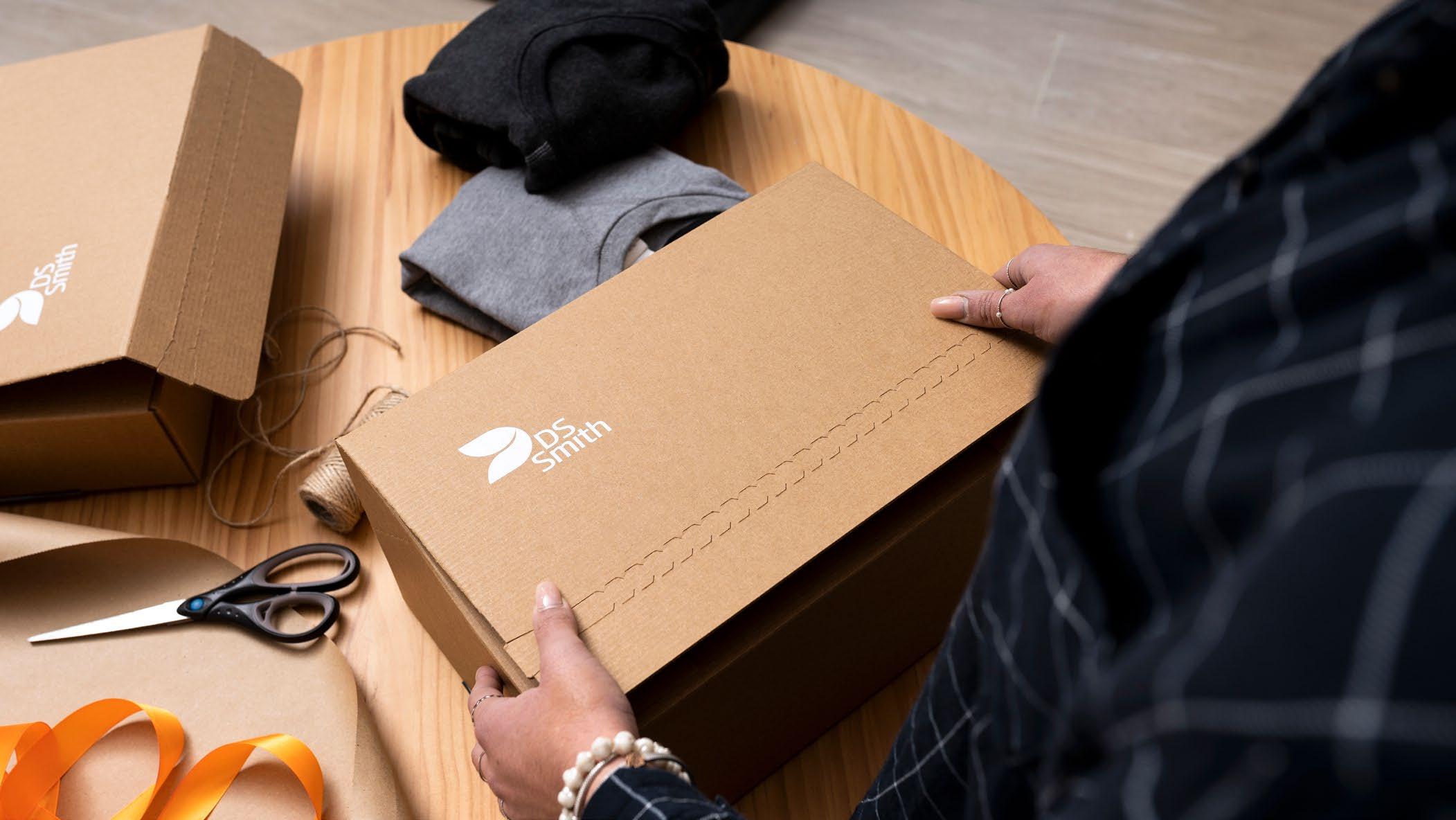
We are a leading global packaging company, specialising in recyclable circular solutions
We are Europe’s largest paper and cardboard recycler, managing c. 6 million tonnes of paper every year, which is more material for recycling than we use to produce the packaging we sell
Green revenues
We are a purely fibre-based packaging business and we are capitalising on the opportunity to help meet our customers’ aspirations for plastic replacement. The vast majority of our activities and therefore our revenues relate to the manufacture and sale of 100 per cent recyclable packaging.
We operate a circular business model, closing the loop for our customers over the entire life cycle
We use 100 per cent recycled or chain of custody certified papers to protect natural resources
We are a Strategic Partner of the Ellen MacArthur Foundation (EMF), the recognised authority on the circular economy
Every day across Europe and North America, we collect waste paper and cardboard for recycling. This provides raw material for our paper mills, where we produce 100 per cent recyclable paper. From this we make packaging, using only 100 per cent recycled or chain of custody certified papers.
This is the journey from one box to another in just 14 days at DS Smith.
Watch Box-to-Box in 14 days
Over the past year, the world around us has changed in ways unseen by many of us before in our lifetimes.
As economies open up from lockdowns and we adapt to living with Covid-19, we have continued to help our many new and existing customers navigate this period of uncertainty through security of supply, quality and innovation, while at the same time prioritising the health, safety and wellbeing of our people.
We were shocked and appalled by the Russian invasion of Ukraine. Our first priority has been the safety of our colleagues, partners and wider stakeholders across the region. Although we do not have direct operations in Russia or Belarus, we worked with our suppliers to suspend our relationships in these countries.
A turbulent macroeconomic environment and inflationary cost pressures have challenged every industry this year.
Through robust hedging, we have been able to successfully navigate surging commodity prices and continue to grow our business whilst maintaining focus on energy efficiency improvements and lowering our greenhouse gas emissions.
As a DS Smith community, many of our colleagues all over the world have come together in response to this humanitarian crisis, from fundraising and donation efforts to direct support of Ukrainian refugees fleeing conflict.
Alongside a backdrop of inflationary cost pressures, managed through successful hedging, long-term paper supply relationships and the excellent work of our procurement team, we are continuing to navigate an uncertain macroeconomic environment whilst delivering our Purpose of Redefining Packaging for a Changing World.
As the events in Ukraine unfolded, we supported the relief effort and our connections to the region.
Following the humanitarian crisis in Ukraine, we made an initial pledge which included a donation to the International Red Cross and allocation to support efforts of sites around the world, from local charitable or product donations or in partnership with our customers to ensure that critical aid can reach the areas it is needed most.
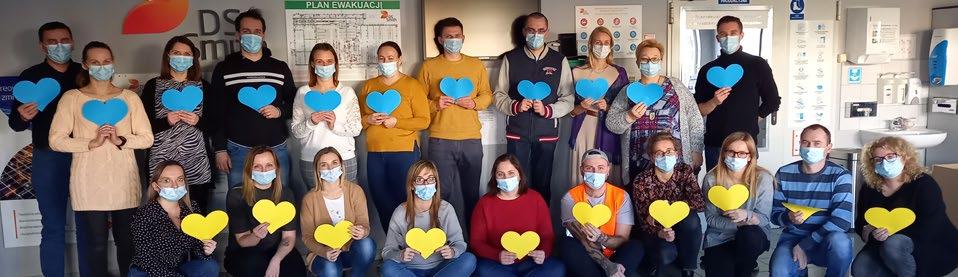
At our Belchatow Packaging plant in Poland, our people organised aid for Ukraine at the very beginning of the conflict. They collected essential supplies and delivered them to their border with Ukraine, standing in solidarity with the people of Ukraine.
The Covid-19 pandemic has continued to shape our lives and its impacts continue to be felt by individuals, communities, businesses and economies around the world. We have continued to prioritise the health and safety of our people, whilst meeting the needs of our customers.
Throughout the global pandemic, we have continued to grow our business, building on our existing customer relationships as well as winning new customers with a focus on the resilient FMCG and e-commerce markets. The pandemic has accelerated our key growth drivers –changing retail channels, including e-commerce and demand for sustainability.
In a turbulent macroeconomic environment, we have remained steadfast in our focus on sustainability and realising the potential of our people.
As we adapt to living with Covid-19, we reflect on how the relationship the consumer has with packaging has changed forever. Accelerated growth in e-commerce over the past couple of years has brought more cardboard into our homes than ever before.
This raises important questions for our customers:
• How do you deliver more to people’s homes, without filling them with excess packaging, and without more vehicles making our cities more congested and polluted?
• How do you keep supply chains operating, with agility and responsiveness, without producing more emissions?
Sustainability and the circular economy have never been more important.
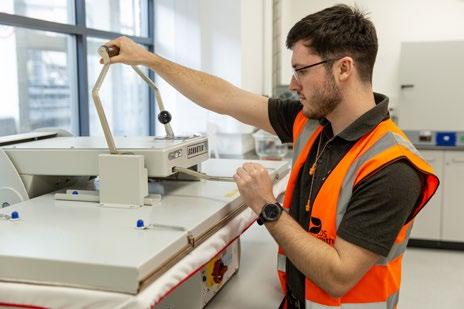
£100 million R&D boost
At the beginning of this year, we announced a £100 million R&D and innovation package to accelerate our work on the circular economy. This new investment over five years includes the creation of a breakthrough technologies hub in the UK, new materials development to replace plastics and a pilot to gauge G-force shock in home delivery packaging.
“How we live our lives is changing fast due to many factors and how we all take care of the environment is a top priority. We are now investing more than in previous years to ensure that we are leading this change and can offer packaging for a rapidly changing world.”
Miles Roberts, Group Chief Executive
This year, we also unveiled our £750,000 state of the art laboratory for researching technologies to enhance the performance and sustainability of fibre-based packaging, including coatings and barrier technology, wet-end chemistries, surface chemistries, re-pulp-ability and recyclability.

Our Now and Next Sustainability Strategy is focused on the sustainability challenges we are facing today, as well as those that will impact future generations.
Closing the loop through better design
Now and Next
Our focus is on:
Protecting natural resources by making the most of every fibre
Reducing waste and pollution through circular solutions
We will continue to: Drive carbon reduction Care for forests and their biodiversity
By 2025, protect forests and enhance biodiversity wherever we operate
Equipping people to lead the transition to a circular economy
By 2030, reduce Scope 1, 2 and 3 GHG emissions by 46 per cent compared to 2019 and reach Net Zero by 2050
Maintain that 100 per cent of in-scope sites are ISO 50001 certified each year
People are the foundation of our success and we prioritise their health, safety and wellbeing and contribute to our communities
We work with customers to design circular packaging solutions that achieve more from less, delivering for rapidly changing consumer lifestyles with minimum impact on the world around us.
By 2023, manufacture 100 per cent reusable or recyclable packaging
By 2025, optimise fibre use for individual supply chains in 100 per cent of our new packaging solutions
By 2025, take one billion pieces of problem plastics off supermarket shelves and work with partners to find solutions for ’hard-to-recycle’ packaging
By 2025, engage 100 per cent of our people on the circular economy
We will work together with partners to develop fully circular strategies, from design to production and supply to recycling, creating positive impact packaging for our changing world.
By 2030, aim for all of our packaging to be recycled or reused and to pilot 20 new business models for improving postconsumer waste quality and recycling rates
By 2030, aim to optimise every fibre for every supply chain
By 2030, aim to use packaging and recycling to enable the circular economy by replacing problem plastics, reducing customer carbon and eliminating consumer packaging waste
By 2030, engage five million people on the circular economy and circular lifestyles
How we contribute to the United Nations Sustainable Development Goals (SDGs)


Responsible Consumption and Production: We keep materials in use for longer, reduce waste and pollution and protect natural resources.
Life on Land: We minimise our use of sustainably sourced fibre, protecting and restoring ecosystems.

Climate Action: We reduce our emissions to combat climate change and its impacts.

Decent Work and Economic Growth: We commit to being a responsible employer, with high ethical, labour and employment standards.
the loop through better design By 2023, manufacture 100% reusable or recyclable packaging
By 2030, aim for all our packaging to be recycled or reused
By 2030, pilot 20 new business models for improving post-consumer waste quality and recycling rates
Reducing waste and pollution By 2025, take 1 billion pieces of problem plastics off supermarket shelves
By 2025, work with partners to find solutions for ‘hard-to-recycle’ packaging
Protecting natural resources By 2025, optimise fibre for individual supply chains in 100% of new packaging solutions
By 2030, aim to optimise every fibre for every supply chain
Maintain FSC® (Forest Stewardship Council®) certification at 100% of our sites
1.
2.
3.
Our world faces significant sustainable development challenges and opportunities. The United Nations Sustainable Development Goals (UN SDGs) define global priorities and aspirations for 2030, presenting an opportunity to put the world on a sustainable path. Governments worldwide have agreed to these goals and now it is time for businesses to act. We have identified the SDGs that we can advance the most, both by minimising negative impacts and maximising positive impacts on people and the planet. We have then estimated our contribution to the goals since their inception in 2015, connecting our business activities and Now and Next sustainability strategy to global priorities.
Greatest contribution to sustainable development
By leading the transition to the circular economy, we contribute to substantially reducing waste generation through prevention, recycling and reuse
>5.5 million tonnes
of cardboard produced in 2021/22 that can be easily recycled contributing to target 12.5
>6 million tonnes of waste paper and cardboard managed for recycling in 2021/22 contributing to target 12.5
>313 million
pieces of problem plastic replaced since 2020/21 contributing to target 12.5
In our circular business, we contribute to sustainably managed forests, combatting climate change and providing decent work for all
>10,000ha
of forest protected by forestry standards each year contributing to target 15.2
Medium contribution to sustainable development
>300,000 tonnes of emissions avoided by driving GHG emissions reduction since 2019/20 contributing to target 13.3
>29,000 people
working in a safe and secure working environment contributing to target 8.8
In our operations, we foster innovation, drive sustainable energy and water management and promote circular economy learning opportunities for all

£100 million
research and development package to deliver innovation over the next five years contributing to target 9.5

>7.4 million MWh energy
generated from renewable fuel sources since 2019/20 contributing to target 7.3

>913,000 m3 water
saved in water stressed regions by efficiency measures since 2019/20 contributing to target 6.4


>2.8 million people
engaged on the circular economy and circular lifestyles since 2020/21 contributing to target 4.7
Least contribution to sustainable development
Although not core to our business activities, we support all of the remaining SDGs and aim to contribute where we can, predominantly through engagement in our local communities


We believe in a better approach to business that aims to gradually decouple material consumption and growth from the consumption of finite natural resources by design.

In this section
Reaching Net Zero through the circular economy
Transforming waste into packaging for the circular economy
Bringing our customers into the circular economy
Building a knowledge ecosystem for the circular economy
Collaborating with world leading experts on the circular economy

The circular economy is a new way of sharing, leasing, reusing, repairing, refurbishing and recycling existing materials and products for as long as possible.
Keep products and materials in use
The circular economy favours activities that preserve value. This means designing for durability, reuse and recycling to keep materials circulating in the economy.
Design out waste and pollution
The circular economy designs out the negative impacts that damage natural systems. This includes greenhouse gases and the pollution of air, land, and water.
The circular economy avoids the use of non-renewable resources and preserves or enhances renewable ones, for instance by managing forests sustainably.
Cardboard packaging works well in the circular economy because it is circular by nature. It is produced from fibres sourced from responsibly managed forests, that can be recycled multiple times over. This keeps materials in use, designs out waste and regenerates and renews nature.
Transforming how we make and use things
In the fight against climate change, we need to look beyond the renewable energy transition to how we make and use the things we enjoy in our everyday lives. Transitioning to the circular economy is an opportunity to do more with what we’ve got. It’s a better model for limiting the impacts of climate change.
Humans are increasingly contributing to climate change by burning fossil fuels to power our linear economy, where natural resources are extracted to manufacture products which are eventually disposed of. The circular economy is an opportunity to transition away from the ‘take, make, dispose’ linear model to a circular model that is based on the principles of designing out waste and pollution, keeping products and materials in use and regenerating natural systems. It offers exciting innovation opportunities that reduce material costs, increase asset utilisation and respond to changing consumer demands.

Keeping materials in use for longer
Transformation can be achieved by keeping materials in use for longer. This reduces the demand for virgin materials, which are vulnerable to climate change, and the emissions associated with their production. Tackling these emissions at source could bring emissions closer to Net Zero, as just less than half of global emissions can only be tackled by radically changing our relationship with the things we consume.
Total global greenhouse gas emission sources
Our commitment to a science-based target
This year, we committed to a 1.5°C science-based target, which has been validated by the Science-Based Targets initiative (SBTi).
Reduce Scope 1, 2 and 3 GHG emissions 46 per cent by 2030 compared to 2019 and to reach Net Zero GHG emissions by 2050. We will encourage 100 per cent of our strategic suppliers to set their own science-based targets by 2027.
This target will keep us, a member of the UN’s Race to Zero initiative, in line with our commitment to reach Net Zero emissions by 2050. We have ambitious growth plans over the coming years as we lead the transition to a circular economy. As part of this, we will work with partners, suppliers, customers and policymakers to collectively tackle climate change through the circular economy.
Learn more about our plans to deliver our science-based target and reach Net Zero GHG emissions by 2050
According to the Ellen MacArthur Foundation, existing renewable energy technologies can only address 55 per cent of global greenhouse gas emissions. The remaining 45 per cent of emissions are a consequence of the way we make and use materials and products.
Completing the Picture: How the Circular Economy Tackles Climate Change
Applying circular thinking to everything we do
Beyond our packaging solutions, we are exploring ways to be more circular throughout our business. For example, we are planning to relocate our Head Office from Euston Road to 1 Paddington Square later in 2022/23. This office will reflect a new way of working for DS Smith, becoming an intentional destination where we choose to work because it motivates and inspires. The building is rated BREEAM ‘Excellent’, a powerful enabler for the circular economy in the construction and real estate sectors. It utilises some of the latest renewable energy technologies, including heat pumps. Our new office space will be used to explore ideas, create, challenge and ensure that everyone feels a part of a dynamic, progressive and sustainable business.
We are primarily a packaging company, supported by upstream paper production and recycled paper collection and sourcing. Our integrated operations work together in tandem as a circular business.
We believe that corrugated packaging is the sustainable replacement to single-use and problem plastic packaging and our circular business serves as the gateway for our customers to the circular economy.
We solely produce fibre-based corrugated board across our three main operations.
Packaging
We are a leading international packaging company, delivering sustainable corrugated packaging solutions and the highest quality service across Europe and North America.
c. 24,000 employees in 30 countries
Paper
We are a leading global manufacturer of sustainable corrugated case material, operating 14 recycled fibre mills, 2 virgin fibre mills and c. 10,000 ha. of forest.
c. 4,000 employees in 11 countries
Recycling
We are Europe’s largest cardboard and paper recycler, managing c. 6 million tonnes of waste per year. We provide integrated recycling and total waste management services.
c. 1,000 employees in 9 countries
In our circular business, we transform various ’capitals’ sustainably and responsibly to create value for all of our stakeholders.
Financial capital
As a FTSE 100 company, we are funded by equity capital from investors, debt from banks and reinvested cash flow.
We support the economy through the products we produce and sell, the goods and services we buy, salaries and taxes we pay and the value we create for our investors.
Human capital
We are passionate about working together safely, sharing ideas and exploring new ways to innovate and delight our customers in a modern, diverse and engaged workforce where everyone has the opportunity to realise their potential.
Intellectual capital
Our business runs on the expertise of not only our people, but also systems and processes that keep us running. From R&D to engineering solutions, our knowledge is used to develop cutting-edge digital and data-driven solutions to respond to the greatest challenges.
Manufactured capital
We recycle wastepaper to produce recycled paper and packaging which is then repeated in a circular loop using the machinery and infrastructure to power this process. We also generate and export electricity from these operations that powers homes and businesses.
Natural capital
We rely on the natural world to provide virgin fibre, sourced from sustainably managed forests to supplement recycled waste that feeds our paper mills. We use water to produce steam and transport fibre throughout our manufacturing processes.
Social capital
The relationships we have with our stakeholders help us achieve our Purpose of Redefining Packaging for a Changing World. We are active in our communities and work with governments and non-governmental organisations to accelerate the transition to the circular economy.
How our circular business creates value for all of our stakeholders
Creating value in forestry and paper manufacturing
• 100 per cent of our papers are recycled or chain of custody certified
• Around 80 per cent of the papers we use are recycled papers
• Three trees are planted for every tree that is harvested in our supply chain
Creating value in pulping and bleaching
• Mono-material and tape-free pack design reduce the contamination and energy consumption of the pulping process
• We are making our paper waste streams more circular
• We use Total Chlorine Free (TCF) processes in all of our paper mills
Creating value in collection and recycling
• We provide total waste management solutions to recycle all segregated wastes
• We have been at the forefront of difficult to recycle waste
• No plastics collected by our Recycling division are exported to Asia
Creating value in distribution
• We delight consumers by eliminating empty space void fill wherever possible
• We optimise box size for most efficient product fill, palletisation and on-shelf efficiency – removing lorries from the road and taking carbon emissions out of supply chains whilst reducing customer cost
Creating value in corrugated manufacturing
• Over 700 designers and innovators create circular packaging
• We optimise fibre through performance paper specifications
• We optimise ink coverage and minimise trim waste
• We help our customers enter the circular economy with circular-ready packaging
Creating value in conversion and packing
• We improve packaging line efficiency with optimised pack designs and real-life testing
• We reduce manual handling through optimised ergonomics
Creating value in retail and use
• Well-designed Shelf-Ready Packaging (SRP) improves the efficiency of transport, storage and replenishment cycles
• Our packaging is reusable or recyclable in domestic or commercial waste streams
• We advise on best practice on-pack sustainability communication
People are becoming more conscious of their impact on the world. No matter what the product is, the first thing people see is the packaging. We help our customers by designing sustainable packaging solutions, achieving their sustainability goals and meeting growing demand for sustainable packaging, bringing our customers into the circular economy.
Circular packaging
We believe that circularity is largely a consequence of the decisions made at the design stage. We view waste and pollution as design flaws, rather than an inevitable consequence of manufacturing. Our cardboard packaging is produced from fibre that is sourced from responsibly managed forests that can be recycled multiple times. By circulating material over and over, we can keep materials in use, design out waste and regenerate natural systems by reducing pressure on forests.
Our packaging value proposition
We are bringing more and more of our customers into the circular economy.
We
our customers generate more sales with the right packaging
We believe that the potential for a material to achieve circularity is determined at the design stage and then put into action by a robust recycling infrastructure to keep waste material flowing as a resource.
Circular Design Principles
Our Circular Design Principles provide our global community of over 700 designers with a framework to stimulate innovation in circular design for our customers.
We protect brands and products
Designers must always ensure that packaging successfully protects its product. Damaged products from poor packaging have an economic and environmental impact
We use no more materials than necessary
Optimised use of packaging materials saves resources and reduces waste
We design for supply cycle efficiency
Our designers drive efficiency by changing the layout of products within boxes for stacking in delivery vehicles
We keep packaging materials in use
We eliminate waste by keeping packaging products in use for as long as possible. We can ‘close the loop’ for customers in 14 days by recycling packaging into new products
We find a better way
We empower our designers to challenge the status quo and support customers in the drive for a circular economy
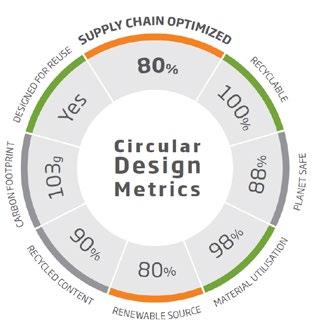
Circular Design Metrics
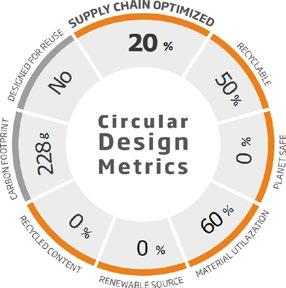
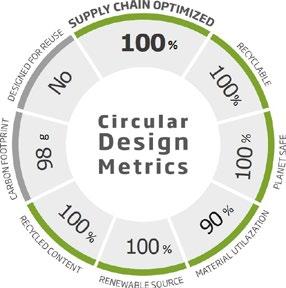
Our Circular Design Metrics make it easy for our customers to compare the sustainability performance of different packaging designs, immediately seeing the impact of different design decisions.
For example, switching from plastic to fibre-based packaging for cherry tomatoes and therefore replacing a problem plastic with fibre-based packaging has a positive effect on many metrics, in particular: renewable source, recyclability, recycled content and planet safe.
“Our Circular Design Metrics show our customers how circular their packaging is right now and quantify opportunities for potential improvement.”
Chris Else Head of Design
This digital approach gives our customers unique insight to develop more circular solutions, supporting their ambitious sustainable packaging and supply chain goals.
Circular Design Metrics to close the loop
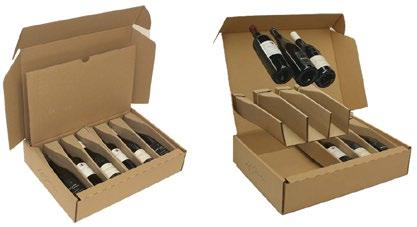
With Laithwaite’s, the UK’s No. 1 destination for buying wine online, we demonstrated a fully traceable closed-loop model for cardboard arriving at their distribution centre. As well as removing plastic, our solution closes the loop on over 1,000 tonnes of cardboard packaging, ensuring materials are kept in the supply cycle for as long as possible.
Before: plastic packaging for cherry tomatoes
After: fibre packaging for cherry tomatoes
of our Designers and Innovators have received training on our Circular Design Principles and Circular Design Metrics.
See how our Designers and Innovators are applying our Circular Design Principles and Circular Design Metrics to make circular packaging on pages 24-25
Transitioning to the circular economy won’t happen overnight, nor will it be delivered by any organisation alone. Brilliant minds need to come together like never before, and we are making change happen by building a dynamic and diverse ecosystem of experts from across our own business, industry, government and beyond.
Promoting the transition to the circular economy
There are three significant policy issues in the EU and UK that are the focus of our participation in public policy development in these core markets:
Governments should provide increased support for lower carbon energy sources, and set out clearer deployment timelines, to enable the paper sector to invest in decarbonisation programmes. This will enable the paper industry to meet its 2030 emission reduction targets and support governments’ broader net zero goals
Reuse
Policymakers’ overall objective should be to deliver the best outcome for the environment. In a circular economy both multi-use and recyclable single-use packaging have a role to play.
To achieve increased recycling targets set out by governments, EPR systems should fund improved recycling infrastructure and separate collection of waste.
Our strategic engagement and advocacy on these three priority policy areas is helping to minimise associated risks and amplify opportunities in these areas for our business.
Participating in the dialogue on policies that impact our and our industry’s transition to a circular economy

“We are a curator of solutions to problems and our relationships help us to go further and faster in solving sustainability challenges.”
Alex Manisty Group Strategy Director
Partnering with our customers to help them to solve their sustainable packaging challenges, by providing solutions that build sustainability into their businesses
Inspiring our local communities and young people to live circular lifestyles, by encouraging new ways of thinking about how we make and use things
Joining forces with leading organisations such as the Ellen MacArthur Foundation to help us drive design and innovation and contribute to the momentum behind change
Transforming how we collaborate across our integrated Packaging, Paper and Recycling operations with innovation teams and digital platforms to find new ways to delight our customers
Collaborating with our suppliers to reduce the impact of our operations, their operations and to expand our offering with new materials, coatings and more
Investors
Selling the circular economy opportunity to our investors and discussing how we are well placed to respond to the changing relationship with packaging
Engaging with our industry and the wider world to help recycle more, waste less and reorganise the linear economy to an economy in which materials are kept in use
Stakeholder Engagement
As we lead society towards the circular economy, we have invited world leading experts on the circular economy from the Ellen MacArthur Foundation into our business to challenge us and to drive our agenda further, for ourselves and for our customers.
Our key areas of collaboration
Innovation
Turbocharging our circular economy design and innovation agenda
Customers
Supporting our customers with their circular economy challenges
Our people
Educating our people with the latest thinking on the circular economy
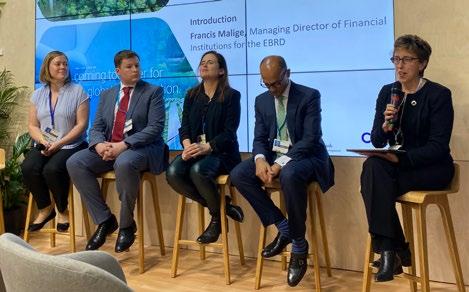
Over the past year, our workstreams continued on innovation, customers and our people. These workstreams continued to develop throughout the year and at COP26, we collaborated with the Foundation at a series of forums to demonstrate the value of closing the loop through better design.
Throughout 2021/22, we continued to bring more of our customers into the circular economy, applying our Circular Design Principles and Circular Design Metrics, which were developed in partnership with the Foundation. We continued to promote Circulytics to our strategic suppliers and maintained our A- score with strong performance on critical enablers for the circular economy, including strategy, innovation, people and skills.
We continued to make breakthrough developments in our sales, marketing and innovation agenda from close collaboration with the Foundation, collaborating with our customers to create the more circular packaging solutions (see examples of these on pages 24-25).
We continued our workstreams to develop new plans and discuss progress made on circular economy engagement, including how we are exposing our people to the latest circular economy-thinking. This has included collaboration with other strategic partners of the Foundation to share challenges, opportunities and learning.
“COP26 was the most significant global climate change conference since the Paris Agreement. Being surrounded by world leaders, government representatives and other businesses at COP26 reinforced the imperative to draw up serious plans and measures for this crucial decade to 2030.”
Wouter van Tol Head of Sustainability, Government and Community Affairs
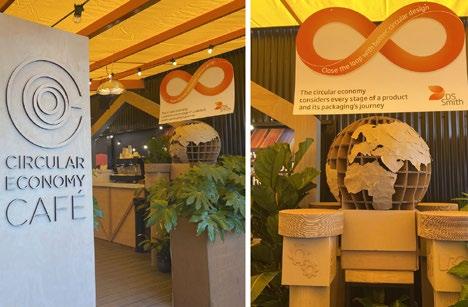
Sustainable packaging installation at the Ellen MacArthur Foundation Café in the New York Times Climate Hub
We produced a fully recyclable installation for the Foundation’s Café at the New York Times Climate Hub. Its purpose was to encourage attendees to stop and think about what sustainable packaging means.
The installation showcased our people holding a box, originating from a tree to demonstrate the natural fibre in our packaging solutions. The globe above the box represented our continued commitment to reduce emissions and care for forests and biodiversity wherever we operate across the world.
Following on from our successful projects with the Foundation, we will next turn our focus towards generating new insights to drive innovation, thought leadership and continued collaboration on circular product design.
Since becoming a Strategic Partner of the Foundation three years ago, DS Smith has shown leadership and inspired others in the area of circular design, circular economy measurement, particularly through the use of the Circulytics measurement tool, and learning.
DS Smith first launched the Circular Design Principles in 2020 and followed this with the introduction of Circular Design Metrics to help companies eliminate waste and pollution, circulate products and materials, and regenerate nature. DS Smith has been an active voice in our Circular Design Leaders group, helping to shape the crucial role of design in the circular economy, and inspiring action from others.
In addition, DS Smith has played an important role in the development of the Foundation’s circular economy performance measurement tool, Circulytics. DS Smith has completed annual assessments and introduced the use of Circulytics to its suppliers. In the area of learning, DS Smith has embedded the circular economy in its core training programmes and trained over 700 of its designers and innovators in circular design methods.
In 2021, DS Smith was very much engaged in shaping the Foundation’s Universal Circular Economy Policy Goals, which provide a framework for governments, cities, and businesses to enable a transition that fosters innovation and decouples growth from finite resource consumption. DS Smith also participated in Innovation Sprint with one of its customers, Mondelez, organised by the Foundation, to develop new packaging solutions.
We are pleased to work with DS Smith as one of our Strategic Partners as the company continues its circular economy journey, raising both its ambition and action levels as it brings circular economy solutions to the market.
Andrew Morlet CEO, Ellen MacArthur Foundation
80% of product impact determined at the design stage (European Commission)
3X planet Earths needed by 2050 to continue consuming resources at today’s levels (UN)
2X increase in global material consumption over the next 40 years (OECD)
In this section
Closing the loop through better design
Reducing waste and pollution
Protecting natural resources
How we’re designing for the circular economy
Why does this matter?
Closing the loop through better design helps to protect finite natural resources by maximising the use of renewable materials and recycled inputs, which contributes to conservation of natural resources.
How does this contribute to the UN SDGs?
Closing the loop through better design contributes to substantially reducing waste generation through prevention, reduction, recycling and reuse.
Now
• By 2023, manufacture 100 per cent reusable or recyclable packaging
Next
• By 2030, pilot 20 new business models for improving post-consumer waste quality and recycling rates
• By 2030, aim for all our packaging to be recycled or reused
• Having achieved our target, maintain compliance with 100 per cent reusable or recyclable packaging as the standard
• Ensure that any new non-fibre material introduced into the business meets this reusable or recyclable standard
• Continue to influence markets and policymakers to improve segregated paper and cardboard recycling
• Utilise data, AI and other innovative technologies to map and track material flows around our circular business
• Pilot collection and recycling solutions for packaging less commonly recycled to understand the viability of recycling it within our own recycling network
The circular economy transforms how materials flow through our economy. As circularity is largely a consequence of design decisions, better design that considers the impacts a product has through its entire life cycle ensures that materials are more likely to be kept in use for as long as possible, lessening demand for virgin materials.
By 2023, manufacture 100 per cent reusable or recyclable packaging
This year, we achieved our target to manufacture 100 per cent reusable or recyclable packaging, with 99.6 per cent (2020/21: 99.2 per cent) of the packaging we manufactured in 2021/22 meeting this standard.
Our target was originally set with a 2025 deadline, which was brought forward to 2023. We now consider this target ‘achieved’ because greater than 99.5 per cent of our packaging volume meets this standard, enabling recyclability in practice and at scale.
This progress has been made by proactively reducing non-fibre materials in our solutions and extensive work on wax, barrier and laminate alternatives that can be recycled. These include wax alternatives, such as our Greencoat® water resistant packaging solution that provides the same performance characteristics as wax coated boxes but is 100 per cent recyclable. Customer appetite for trialling and accepting alternatives has been positive, particularly as they seek recyclability compliance.
Closing the gap through our
For the remaining less than 0.5 per cent that is presently not recyclable either in practice or at scale, such as some barrier coatings and foam, we continue to push for circular alternatives with further trials underway. This year, we established our Group-wide Recyclability Forum, which brings together experts from across Group Research & Development, Recycling, Paper and Packaging to enable a consistent approach to recyclability, addressing issues such as the evolving legislation concerning hard to recycle plastics. This Forum will also engage with external packaging producers, legislators and trade associations to help recycle more and waste less. It will support our role in 4evergreen, the fibre-based industry alliance for the circular economy. As a result, we will be in a stronger position to drive recyclable solutions and address the opportunities facing our industry. The forum will also ensure that all of our manufactured material remains compliant and that any new materials introduced into our solutions are 100 per cent recyclable or reusable.
By 2030, pilot 20 new business models for improving post-consumer waste quality and recycling rates
As our work to ensure that all our packaging is recycled or reused evolves, we are investigating new closed-loop business models that improve recycling rates.
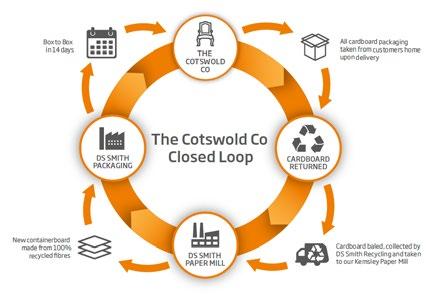
An award-winning closed loop for The Cotswold Co.
Customers of The Cotswold Co. can now take advantage of a packaging removal service whereby all of the cardboard packaging is taken from the customer’s home on delivery. It then returns to our circular system to be turned into recycled paper, which we convert back into cardboard boxes for new customers receiving items from The Cotswold Co.
By 2030, aim for all our packaging to be recycled or reused
Whilst we achieved our ‘Now’ target to manufacture 100% recyclable or reusable packaging, our ‘Next’ target is to design with the aim that all of our packaging is recycled or reused by 2030. Although the European average recycling rate for paper and cardboard is the highest of packaging materials at around 85 per cent (FEFCO), ensuring material continues to be recycled is an opportunity to increase this further. Tackling the c. 15 per cent not presently recycled will reduce our Scope 3 greenhouse gas emissions, which we aim to reduce by 46 per cent by 2030, compared to 2019 on the way to Net Zero GHG emissions by 2050.
The company is now striving for closed-loop certification for all of its cardboard packaging. Our partnership with The Cotswold Co. demonstrates how we can help at every stage of our customer’s sustainability journey.
“Small steps made now can have the biggest impact. Our customers like to play their part and by offering to bring used packaging directly back to us to then recycle into new packaging again and again is a significant step towards a circular economy.”
Jacquie Silvester Head
The
of Sustainability and Improvement at
Cotswold Co.

The solution received the ’Recycling Award’ at the CPI (Confederation of Paper Industries) Paper Industry Gold Awards 2022, with judges commending that the service demonstrates exactly how the circular economy could be mainstreamed.
Information and policies
Circular Design Principles
Circular Design Metrics
See examples of how we have applied our Circular Design Principles and Circular Design Metrics to our sustainable packaging solutions on pages 24-25.
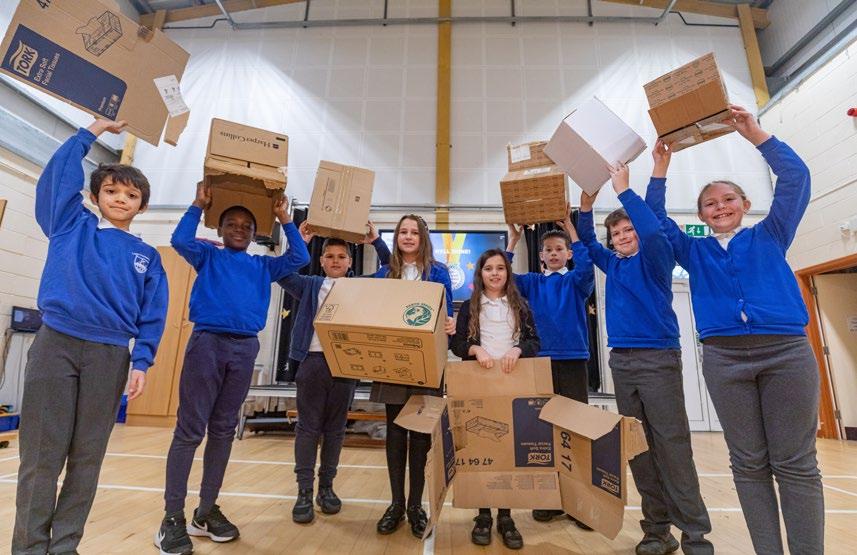
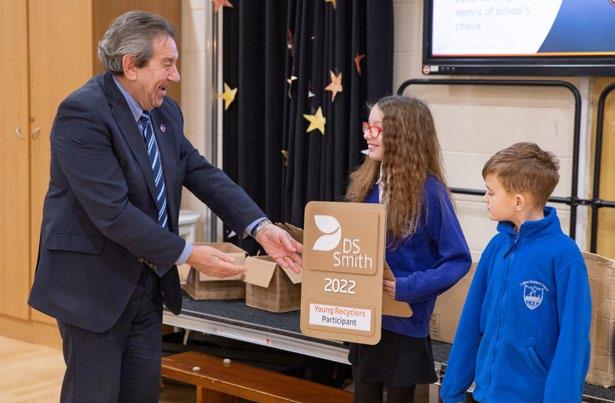
We launched our Young Recyclers scheme to empower future generations to recycle and learn about the importance of circular lifestyles. Over 1,300 pupils collected 1.5 tonnes of cardboard and deposited it in our Zero to Hero recycling boxes installed in five partner schools. Marking the success of the pilot, we hosted an assembly at a primary school, attended by local MP, Gordon Henderson.
“The Young Recyclers pilot has sparked an interest in recycling with the children and truly shown how little steps can make a big difference.”
Michelle Crowe Head of Lower Halstow Primary School
These pilots are demonstrating innovative ways in which we can intercept fibre from the mainstream waste system and establish a segregated stream, turning the last mile of delivery into the first mile of recycling. Initially piloted in the UK, due to its success, this model will be rolled out in Croatia during 2022/23.
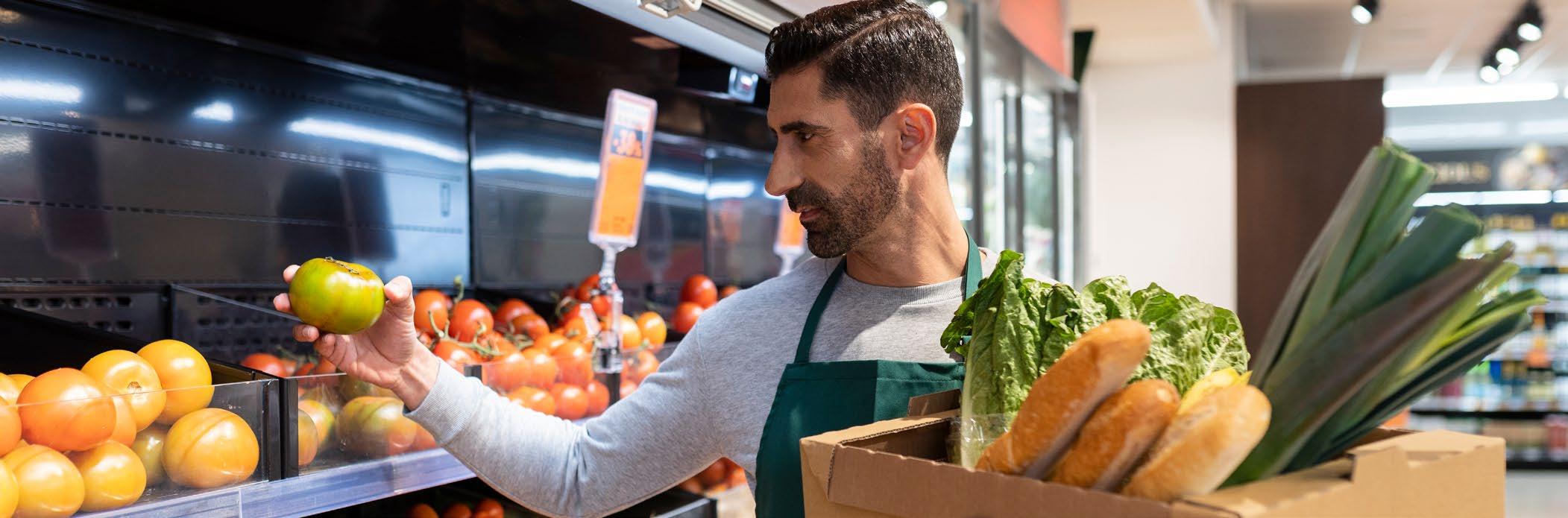
The circular economy utilises waste as a resource which can be circulated by being recycled many times over and over again. By replacing common sources of waste that are hard-to-recyclce, such as single-use plastics, with recyclable cardboard, we can reduce waste and pollution through the circular economy by keeping materials in use for longer.
Why does this matter?
Reducing waste and pollution can limit harm to human health and the environment, as waste and pollution can negatively impact living natural ecosystems.
How does this contribute to the UN SDGs?
Reducing waste and pollution contributes to promoting sustainable consumption and production patterns.
Now
• By 2025, remove 1 billion pieces of problem plastics from supermarket shelves
• By 2025, work with partners to find solutions for ‘hard-to-recycle’ packaging
Next
• By 2030, aim to use packaging and recycling to enable the circular economy by replacing problem plastics, reducing value chain emissions and eliminating consumer packaging waste
• Develop new ways to support our customers to move away from plastic packaging into alternative fibre-based solutions
• Drive new opportunities through our innovation pipeline and capture more replaced units through our measurement tools
• Engage all our regions with our plastic replacement success stories through both internal and external channels to inspire and promote action
• Recruit new partners and develop initiatives to find solutions for hard-to-recycle packaging
By 2025, take 1 billion pieces of problem plastics off supermarket shelves
Our progress to replace 1 billion pieces of problem plastic by 2025 continued at pace this year. By the end of 2021/22, our plastic replacement programme has replaced over 313 million units since 1 May 2020, equating to on average more than 3 million units per week, boosting the recyclability of our customers’ packaging and reducing waste and pollution.
Across all of the regions in which we operate, our designers and innovators have been working tirelessly to find solutions for our customers’ single-use and hard-to-recycle plastic packaging, with more than 1,000 recyclable fibre-based solutions developed for hundreds of thousands of products, from wine boxes to ready-meal trays to shrink wrap and fresh fruit punnets.
Throughout the year, we have experienced strong engagement from our customers on the plastic replacement opportunity, both virtually and in-person at our Impact Centres and PackRight Centres across the world. This has been met with excitement from our Design and Innovation community to develop solutions that address plastic waste and pollution, particularly to protect our oceans.
One of the greatest challenges has been processing large volumes of product data to measure progress towards this target. We have now aligned practices across our regions with great traction to capture, report, and measure plastic replacements.
Plastic replacements are taking a variety of forms, from replacing plastic sealing tape with self-locking cardboard flaps and swapping plastic labels to direct print onto cardboard, to complete elimination of materials such as polystyrene and polyester.
Although in many solutions a complete switch to cardboard can be made, occasionally for some applications, more than just fibre is necessary. We are addressing this challenge through our R&D into alternative fibres (see page 23) so that the additional components required for some applications are recyclable.
Over the next year, we will continue to drive adoption of fibre-based replacements amongst our customers, capitalising on the strong approval rate for cardboard compared to plastic amongst consumers.
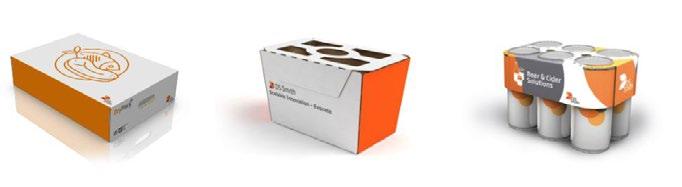
Removing single use plastics for fresh food (from plastic bags to ready meal mouldings).
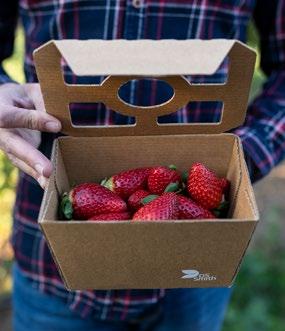
Removing single use plastics for fruit and vegetables (from shrink wrap to trays and punnets).
plastic six pack rings with corrugated tops for cans.
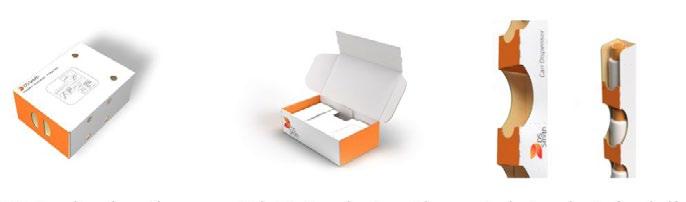
Printing directly on the cardboard instead of using plastic labels.
Substituting plastics with 100% cardboard fillers to protect the packed products.
By 2025, work with partners to find solutions for ‘hard-to-recycle’ packaging
This year, we supported trials of new solutions to increase the recyclability of sandwich packs, which are traditionally hard-to-recycle, due to their barrier properties and plastic content. Working with members of the British Sandwich Association, we contributed fully recyclable solutions which are being trialled across the UK and planned a takeback scheme pilot with retailers.
We continue to steer the wider industry to drive innovation in recyclability, holding key positions in FEFCO, CEPI, CPI, and 4evergreen.
This year, our Strategy Development and Innovation Director for the Recycling division, John Melia, was appointed as Chair of the CPI Recovered Paper Council and a representative in 4evergreen’s steering group.
These collaborative forums provide platforms for the inception of joined-up business models to drive a more sustainable industry that is suited to the circular economy and help us on the journey to all of our packaging being recycled or reused.
Circular Design Principles
Replacing plastic for shelf ready display solutions.
Circular Design Metrics
See examples of how we have applied our Circular Design Principles and Circular Design Metrics to our sustainable packaging solutions on pages 24-25.
Circular Design Metrics
Our Circular Design Metrics offer our customers a way to measure and compare the circularity of different solutions at a glance, helping our customers to select the best solution based on their own sustainability priorities.
We begin by recommending the most innovative solutions and then use data to help our customers choose the optimal design.
For replacing problem plastics and finding solutions for ‘hard-to-recycle’ packaging, the Circular Design Metrics are making the impact of switching from plastic to corrugated easily quantifiable and the benefits visible.
Up-skilling designers and innovators to introduce more customers to the
Circular Design Metrics
This year, we continued to build the Circular Design Metrics into training for our designers, which is included in the core material for induction and training. Additional assets have been created to support new and ongoing projects, including training sessions for designers, sales representatives and customers alike, from slides and briefings to Q&A, ensuring that our design and innovation community are equipped to work with the Circular Design Metrics.
Why does this matter?
Protecting natural resources is crucial to enable sustainable development, ensuring that the finite fresh air, minerals, plants, soil, water and wildlife that we need to survive are conserved for generations to come.
How does this contribute to the UN SDGs?

Protecting natural resources contributes to conservation, restoration and sustainable use of ecosystems and their services, in particular forests.
• By 2025, optimise fibre use for individual supply chains in 100 per cent of new packaging solutions
• By 2030, aim to optimise every fibre for every supply chain
• Continue to adhere to our Circular Design Principles to ensure that we use no more fibre than necessary when designing solutions
• Increase the accuracy of supply chain data capture from our customers to enable us to create the right packaging solutions every time
• Utilise all our design tools to deliver and report on value for our customers through the supply chain
The circular economy supports natural processes, lessening pressure on the finite natural resources that we must protect. In our circular business, we minimise our use of natural resources, such as virgin fibre from forests, by using only recycled fibre where we can.
Percentage of bre use optimised for individual supply chains (%)
By 2025, optimise fibre for individual supply chains in 100 per cent of new packaging solutions
This year, we introduced improved methodology to assess the quality of supply chain data.
We have spent a lot of time throughout the year to implement definitions, guidance, systems, and training to support the implementation of this new methodology, resulting in 26 per cent of all new packaging solutions (2020/21: 23 per cent) now aligned with this new way of working.
By introducing our BSIR (Board Strength Index Requirement) rating for all new packaging solutions, we can quickly identify where there are opportunities to capture more accurate and detailed supply chain data to improve our design solution.
Having greater insight of a supply cycle enables our designers to minimise fibre use, as far as practicable, in a specific supply chain environment to meet those exact performance requirements.
A Supply Chain Optimisation Steering Committee has been set up to review progress and agree actions for our Sales, Marketing and Innovation (SMI) function to drive alignment across all new packaging solutions.
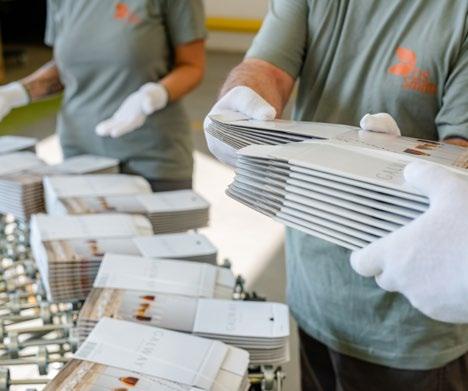

Fibre harvested from the ocean floor
Beyond optimising traditional paper fibres, this year in an industry-first, we conducted initial trials exploring how seaweed fibres may be used as a raw material in a range of packaging solutions, from cartons to paper wraps and cardboard trays.
In particular, seaweed may play a significant role in the purge on plastics by acting as a barrier coating to replace petroleum-based materials used to protect many foodstuffs.
“Seaweed has exciting applications that could become the next generation of sustainable packaging solutions. Our research into alternative fibre sources has the potential to lessen pressure on forests, protecting natural resources.”
Thomas Ferge Paper and Board Development Director
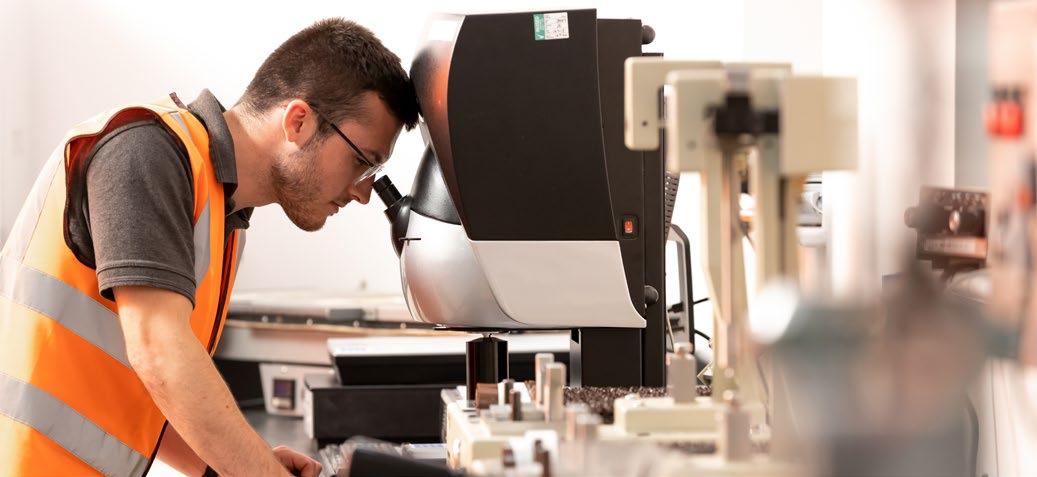
into other alternative fibres
The project is a part of our £100 million Circular Economy R&D programme which is exploring a range of natural fibres.
These include innovative uses of straw, hemp, miscanthus and cotton, as well as from less common sources such as the daisy-flowered cup plant and agricultural waste such as cocoa shell or bagasse – the pulp fibre left over after sugarcane is processed.
By 2030, aim to optimise every fibre for every supply chain
It is our aim that by 2030, every fibre in every supply chain that our packaging touches will have gone through our fibre optimisation process. Clearly the ‘Now’ part of this Now and Next target delivers progress towards the ‘Next’, which is to expand beyond new packaging solutions to every fibre and every supply chain. This will involve scaling our practices which will go even further to protect natural resources.
Maintain FSC certification at 100 per cent of our sites and maintain forest management certification at 100 per cent of our forests
Throughout the year, 100 per cent of our forests maintained their sustainable forest management certification status.
This was a target achieved in 2020/21, confirming that our forests are managed in a way that preserves biodiversity and benefits the lives of employees and local people.
Furthermore, 100 per cent (2020/21: 100 per cent) of our sites maintained FSC chain of custody certification, providing our customers with credible assurance that our packaging materials originate from well-managed forests, controlled sources or reclaimed materials.
Information and policies
Sustainable Forest Management and Fibre Sourcing Policy
CDP Forests response
Our customers tell us that they want to tackle plastic pollution, improve recycling rates and develop circular business models that reduce carbon emissions. We are capitalising on the significant economic benefits of the circular economy by embedding circularity into all of our product development so that the environmental impact of our sustainable packaging solutions is reduced throughout the entire life cycle. Circular design criteria are considered in the development of new products and services so that our customers are ready to compete in a circular economy that is regenerative by nature and sustainable in the long term.
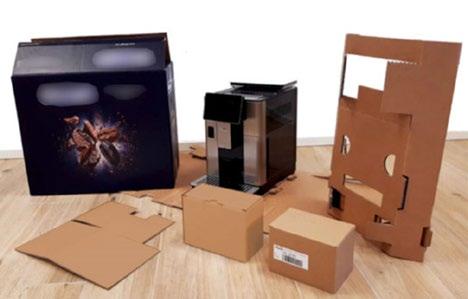
100 per cent recyclable packaging for coffee machines
Applying our Circular Design Principles
We protect brands and products
We use no more materials than necessary
We design for supply cycle efficiency
We keep packaging materials in use
We find a better way
Find out more about our Circular Design Principles
Over 40 per cent of consumers say it is important for their purchases to be packaged in recyclable material, and over 30 per cent have stopped buying from certain brands due to their use of unsustainable packaging.
In response to this growing consumer trend, together with a well-known coffee machine producer, we developed a 100 per cent recyclable packaging solution, replacing foam buffers with recyclable cardboard alternatives.
For the manufacturer, the new solution increased assembly line speeds, being intuitive and easy to use. For the consumer, it offers an improved unpackaging experience and recyclability.
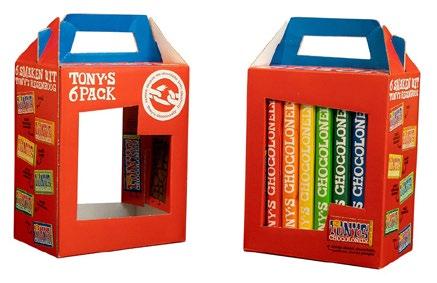
100 per cent recyclable Tony’s Chocolonely six-pack chocolate bar box
The rainbow pack is made entirely from cardboard, contributing to the circular economy since it is recyclable. The box helps Tony’s share their mission of 100 per cent slave-free chocolate on the supermarket shelf.
With no additional packaging materials, this fully recyclable packaging solution offers innovative visibility of the brand’s brightly coloured chocolate assortment, whilst helping the Fairtrade chocolatier transition to circular packaging.
The simple folding and push-in fastener to create the side windows and automatic base means that the packaging can be assembled and filled quickly and easily. The unique and smart design with viewing windows and hollow edges optimises the material used and as it is made of 100 per cent cardboard, shoppers can easily recycle the packaging at home.
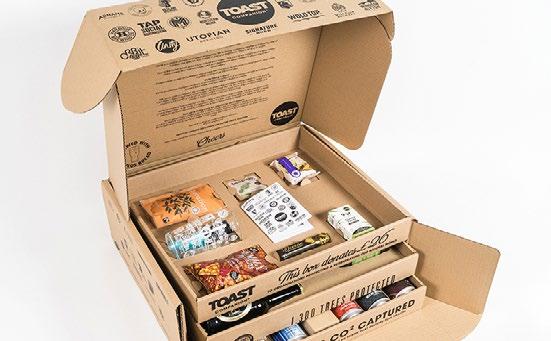
Reducing fibre consumption for Toast
We designed and manufactured a fibre-based solution to support a COP26 initiative led by Toast that highlights the role of food waste in climate change. Only 2,600 Companion Series boxes were made available and these were the first boxes to have been produced using our Circular Design Metrics. This fit-for-purpose sustainable packaging ensures minimum use of fibre through supply chain optimisation, reducing carbon emissions in the e-commerce supply chain.
”We’re incredibly proud to have partnered with Toast Ale on this important initiative to reduce waste, which is a testament to our commitment to supporting the drinks industry with their sustainability targets and accelerating action towards the goals of the Paris Agreement.”
Adam Platts, Director of Sales, Marketing and Innovation (DS
Smith Packaging, UK&I)
Whilst designing a circular product, it is important to consider how the product can be kept in use, including the impacts it will have after it has left our factory. In our circular business, waste paper and cardboard are recycled into new paper from which new circular packaging solutions are made. By being intensely focused on resource efficiency throughout this circular life cycle, we can make improvements to our product that make it more beneficial than less sustainable alternatives. Compared to plastic, cardboard is far more likely to be returned for recycling and we can optimise for logistics in unique supply chains to reduce carbon emissions.
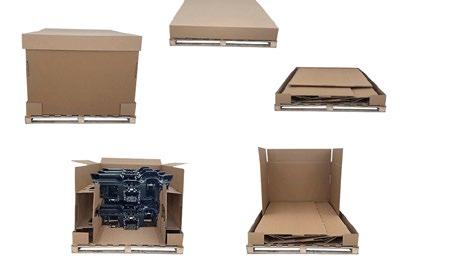
Our industrial packaging specialist developed an ‘ecodesign’ for shipping car dashboards which end up directly on the customers’ assembly line. This solution is innovative in its use of cardboard tabs, which eliminates hard-to-recycle synthetic materials (nylon, polyester and vinyl) found in the previous packaging. This 100 per cent recyclable packaging optimises space by being specifically designed to stack eight dashboards within each shipping unit.
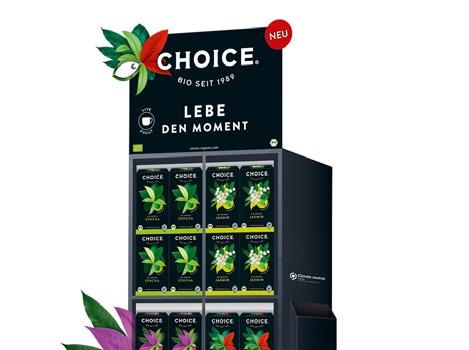
Climate neutral and recyclable YOGI TEA display
We helped YOGI TEA launch their new organic tea brand, CHOICE, to achieve a branded and sustainable cardboard display for the launch of their tea to the German market. The display is a mono-material, 100 per cent recyclable solution to convey the brand identity of a responsible label at the point of sale. It is material-optimised, meaning that it saves natural resources and reduces waste, whilst being completely climate neutral.
Via a printed QR code, shoppers can track the ClimatePartner project used to offset the carbon emissions generated during production. CHOICE chose a project for clean drinking water in India, which offsets an annually validated volume of carbon emissions.
Polystyrene to fibre switch to reduce logistics GHG emissions and cost
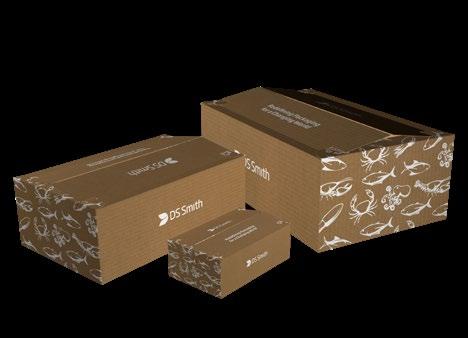
We partnered with Fresco y del Mar, a Galician company selling fish and seafood from the region, to switch from expanded polystyrene to fibre-based packaging. The cardboard solution aligns to Fresco y del Mar’s commitment to respecting nature, marine environments and fair fishing. It keeps the product fresh while also reducing logistics emissions and cost, as 410 empty corrugated boxes can be transported per pallet, compared to 36 expanded polystyrene boxes of the same volume.
“It is motivating to work with a company sharing the same challenges constructively to find the best way forward to a more sustainable future. We share circularity in our DNA.”
Pablo Sueiro Fresco y del Mar
100 per cent recyclable and greater flexibility with cardboard
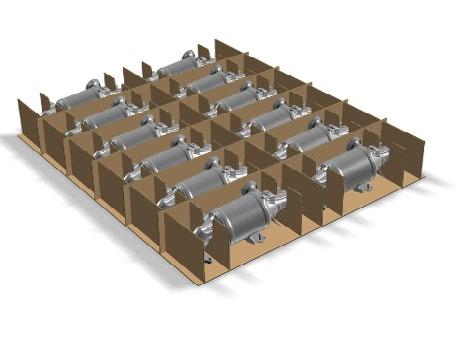
We helped Marelli, a leading supplier to the automotive sector, achieve significant packaging savings and greater flexibility of deliveries for automotive exhaust systems. The cardboard packaging protects the product using a grid and divider design and is made entirely of cardboard, replacing a plastic solution. We supply the product to Marelli using the just in time model, allowing Marelli to eliminate storage needed for the plastic solution it replaces, saving time and reducing cost.
45% of emissions could be addressed through the circular economy (Ellen MacArthur Foundation)
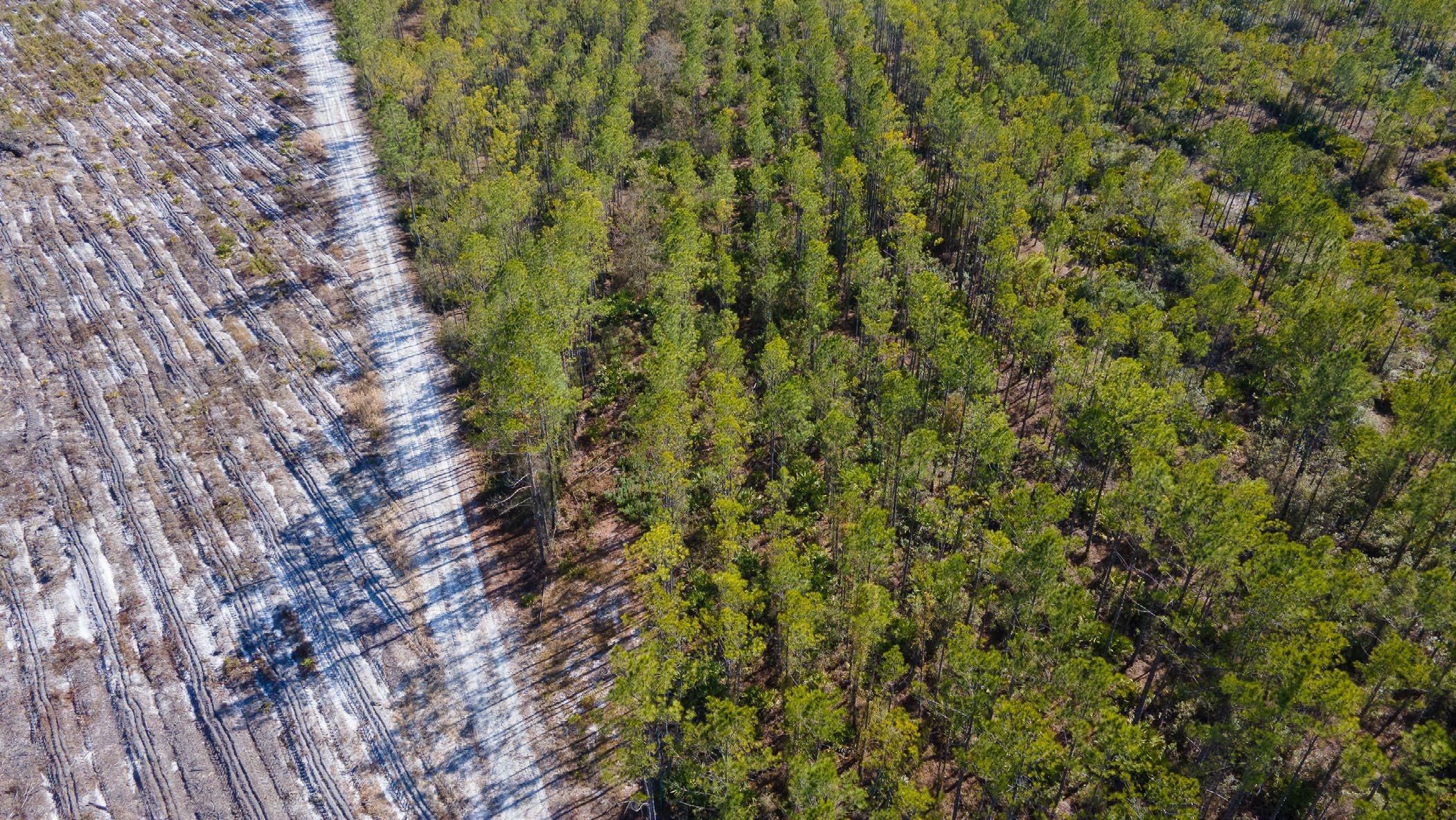
¾ of the world’s life on land can be found in the forest (WWF) 700 million people could be displaced by intense water scarcity by 2030 (UN Water)
In this section
Driving carbon reduction
Reaching Net Zero by 2050
Measuring and improving biodiversity
Managing water responsibly
Sending zero waste to landfill
Why does this matter?
Driving carbon reduction is crucial to reduce the effects of climate change, which has significant impacts on natural ecosystems, air quality and human health.
How does this contribute to the UN SDGs?

Driving carbon reduction strengthens capacity on climate change mitigation, adaptation and impact reduction.
Now
• Set a science-based target of at least 40 per cent per tonne of production by 2030 compared to 20191
• Reduce Scope 1, 2 and 3 GHG emissions 46 per cent by 2030 compared to 20192
• Engage with 100 per cent of our strategic suppliers to encourage them to adopt science-based targets by 20273
• Maintain 100 per cent of our energy consumption is ISO 50001 certified
1. ’Old’ carbon reduction target for the reporting period.
2. ’New’ 1.5°C science-based target, set during the reporting period.
As this is an ’absolute’ reduction target, from next year we will begin reporting progress in ’absolute’ tonnes of CO2e, across all three scopes.
3. Strategic suppliers account for c. 76 per cent of Purchased Goods and Services Scope 3 emissions in the 2019/20 base year.
• Reach Net Zero GHG emissions by 2050
Next steps
• Deliver near-term decarbonisation projects to begin making further progress towards emissions reduction
• Undertake our strategic analysis of decarbonisation opportunities in our Packaging plants
• Continue to drive our energy efficiency programme by maintaining ISO 50001:2018 certification
The circular economy reduces greenhouse gas emissions through increased resource efficiency and by promoting circular use of fuels and energy.
By limiting the production of materials that go to waste, emissions can be cut at source, slowing down the effects of climate change.
Set a science-based target of at least 40 per cent per tonne of production by 2030 compared to 2019
Whilst we undertook the strategic assessment to define our science-based target, we continued to deliver progress in emissions intensity reduction throughout 2021/22, with a Group GHG emissions per tonne of production of 194kg CO2e per tonne of net-saleable production (2020/21: 205kg CO2e/t nsp), a reduction of 5 per cent compared to last year and 9 per cent compared to the 2019/20 base year. This builds on the progress made since the 2015 base year of our previous carbon reduction target, with emissions reduced by 29 per cent per tonne of production over the past seven years.
As we have now completed the process with the Science Based Targets initiative to validate our 1.5°C science-based target, our new target is to reduce Scope 1, 2 and 3 GHG emissions 46 per cent by 2030 compared to 2019 and to reach Net Zero GHG emissions by 2050.
We will begin reporting progress against this new target in 2022/23.
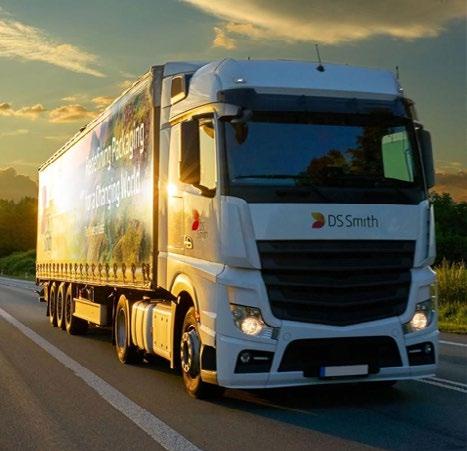
We estimate that around 6 per cent of our emissions arise from the transportation of goods in both our own operations and in our supply chain.
In our green logistics programme, which is part of our new logistics transformation programme, we are focused on three main areas:
• increasing truck-fill
• optimising mileage
• reducing GHG emissions.
We have innovative pilot schemes and programmes in place to green our logistics. For example, we have switched to lower-carbon transportation fuel sources covering journeys in certain regions and we are piloting alternative fuels and electric trucks in other regions.
We are collecting around 8,000 tonnes of used paper and cardboard for recycling annually from Switzerland to our Aschaffenburg Mill in Germany using vehicles powered by LNG (Liquefied Natural Gas). This lower carbon fuel results in c. 8 per cent lesser GHG emissions compared to diesel trucks, removing c. 8,700 tonnes CO2e from our value chain GHG emissions. Although a variety of transportation options were considered for this recycling contract, from rail to electric, LNG proved to be the best solution due to a number of reasons, including cost and environmental benefits. As well as reducing emissions, LNG requires less storage space. For the city of Zurich, one of the most sustainable cities in the world, this solution supports its clear path to a more sustainable future, including its commitment to increase recycling rates and improve air quality.
Given that over 80 per cent of our Scope 1 and 2 GHG emissions arise from our Paper operations, our investments in carbon reduction projects have predominantly focused on our greatest emissions assets, which benefit our Packaging customers as reductions in the carbon footprint of paper feed into the packaging lifecycle.
During the year, the K4 Combined Heat and Power (CHP) plant at Kemsley Mill began delivering steam and electricity to the mill with a c. 7 per cent efficiency improvement compared to its predecessor, decreasing emissions compared to the retired CHP it replaces. Further steam supply to the mill is met by the K3 waste-to-energy plant, delivering a c. 30,000 tonnes CO2e saving compared to the natural gas-powered solution it replaces. At ContoireHamel Mill, the biogas from the anaerobic waste water treatment plant began delivery, removing c. 1,300 tonnes CO2e. Our €7.5 million expansion of the anaerobic waste water treatment facility at Rouen Mill has boosted biogas production to deliver green electricity with an expected c. 2,600 tonnes CO2e saving annually. At Alcolea Mill, stationary steam siphons are beginning to deliver thermal
improvements of around 10 per cent and the vacuum system upgrade at Kemsley Mill is expected to save c. 4,800 tonnes CO2e annually. Projects to increase energy efficiency through measures such as equipment upgrades were implemented at Dueñas Mill, Lucca Mill and Viana Mill during the year. A power agreement (PPA) was introduced to cover a portion of electrical energy demand in Iberia, introducing renewable electricity to our three paper mills, 23 packaging plants and six recycling depots in the region, removing c. 17,000 tonnes CO2e annually.
Carbon reduction projects at our packaging plants
At our Packaging plants, we continued to progress plans for wind and solar power opportunities and electric vehicle charging stations. Our Group-wide LED lighting rollout continued, with almost 38,000 lamps installed at 101 sites, delivering c. 14,000 tonnes CO2e savings per annum.
In 2021/22, we improved our CDP Climate Change score from B to A-, which is a ‘Leadership’ score, demonstrating best practices associated with environmental leadership, such as setting ambitious and meaningful targets.
Maintain that 100 per cent of our energy consumption is ISO 50001 certified We maintained ISO 50001:2018 at 100 per cent of our in-scope sites, a standard maintained since achieving this target in 2019/20, which drives our Group-wide energy management programme. In 2021/22, our Riceboro Mill was our first site in North America to obtain ISO energy management certification as they became incorporated into our Group-wide energy management system this year, improving how we share best practice across our European and North American businesses. Alcolea Mill and Dueñas Mill also completed their certification during the year.
our journey to Net Zero
Over the past year, we delivered the second phase of our ‘Carbon Project’, which involved engaging expert consultants to develop a series of ‘Net Zero Factory’ concepts. This involved modelling growth and investment phasing over 30 years to tackle our greatest emission sources, including detailed analysis on factors such as local biofuel availability, space availability on site and local regulation, permitting and authorisation. The result of this second phase of our Carbon Project informed our decision to commit to a 1.5°C-aligned science-based target, consistent with the ambition required to limit global warming to 1.5°C above pre-industrial levels. This supports the most ambitious goal of the Paris Agreement. For the remainder of the business, including packaging plants and recycling depots, a ‘top down’ assessment was undertaken and for 2022/23, a more detailed analysis is underway.
Our new 1.5°C-aligned science-based target is Reduce Scope 1, 2 and 3 GHG emissions 46 per cent by 2030 compared to 2019 and reach Net Zero GHG emissions by 2050. As we continue to define our roadmap, we will begin reporting progress against our new target next year.
We joined the UN’s Race to Zero campaign to affirm our commitment to reducing emissions across all three scopes in-line with the Paris Agreement, with transparent action plans and robust near-term targets. As a member of Business Ambition for 1.5°C, we are committed to leadership on climate action.

Emissions
Machinery we buy
Emissions
Emissions from disposing of packaging by the consumer
Recycling depots
Emissions from processing material at our depots c. 14,000 tonnes CO2e
Emissions from manufacturing paper from waste and boxes from paper that we sell to other paper and packaging producers
Fuel and energy we buy
Emissions from producing and distributing the fuels and energy we power our business with
400,000 tonnes CO2e
Paper mills
Emissions from producing paper at our mills c. 2.4 million tonnes CO2e
Waste we cannot use Emissions from disposing of waste that we cannot produce packaging from c. 300,000 tonnes CO2e
Emissions from travelling for business purposes
Packaging plants
Emissions
Employee commuting
Emissions
GHG emissions by operation
In 2019/20, our emissions across all three ’scopes’ totalled c. 8.9 million tonnes CO2e. Delivering a 46 per cent reduction by 2030 will result in removing c. 4 million tonnes CO2e across our own operations and our value chain.
Scopes 1 and 2:
2,974,165 tonnes
Driving carbon reduction with the solutions that exist today
Building on our c. 29 per cent reduction in emissions per tonne of production since 2015, we continue to...
- Upgrade inefficient assets, such as old boilers
- Invest in new combined heat and power plants
- Replace fossil fuels with energy from waste
- Purchase electricity from renewable sources
- Drive energy efficiency improvements

8.6m
Scaling up renewable energy sources in a circular economy
The future will depend on securing supply of renewable fuel sources in a low carbon, circular economy...
- Switch from natural gas to low- and zeroemission fuels, such as biogas and biomass
- Transition to a circular economy for renewable energy and materials to cut emissions
Implementing solutions that are still in development today
In the long-term, solutions will be needed to drive complete system transformation to eliminate waste, circulate resources and regenerate nature...
- Use biofuels at scale, including green hydrogen
- Invest in new technologies such as e-boilers
Now and Next targets that reduce life cycle GHG emissions of our packaging solutions:
• All packaging recyclable or reusable by 2023
• All strategic suppliers to set science-based targets by 2027
Now and Next targets that reduce life cycle GHG emissions of our packaging solutions:
• All our packaging to be recycled or reused by 2030
• All our packaging to be optimised for individual supply chains by 2030
• Send zero waste to landfill by 2030
1.7m
Our path to Net Zero is illustrative, and through continuous review, our internal plans, which contain considerably greater detail, will be re-aligned to take advantage of the best-cost options available at the time considering for example, future costs, technology and commodity availability.
High-quality GHG emissions removals, such as technological and natural solutions, will be used to neutralise any limited emissions that cannot be eliminated from 2050 onwards.
Our 1.5°C-aligned science-based target has been validated by the Science Based Targets initiative (SBTi).
Investing in the future
In order to deliver our commitment, we will invest consistently over the next 28 years in our own operations. This includes the adoption of next generation engineering solutions, such as biomethane boiler technology. We will harness self-generated renewable energy sources, such as wind and solar, and power purchasing agreements to accelerate the use of renewable electricity.
Target boundary and reporting
We include 100 per cent of our GHG emissions, across all three scopes covering our global operations, within the target boundary, which includes land-related emissions and removals from bioenergy feedstocks. Progress is reported externally at least annually in the DS Smith Annual Report, DS Smith Sustainability Report and to reputable ESG ratings, such as CDP. The 2019/20 base year has been verified to a limited level of independent assurance and assurance for key metrics is obtained (see page 62).
GHG emissions reduction roadmap
Supporting the delivery of our science-based target is a roadmap of key strategic projects to reduce GHG emissions. This is aligned with our growth strategy and prioritises the greatest sources of GHG emissions, with site-level project planning and performance management in place.
Assumptions
Assumptions made in our plans relate to, for example, discount rates, currency conversion, investment years and technical lifetimes, as well as cost assumptions (e.g. carbon, commodity and offset prices). Forecasts considered the availability of biomass supply, as well as the availability of renewable energy sources to meet the expected energy demands of the business. Fuel options, earliest investment times and future technology solutions have been assumed, in addition to rates of energy efficiency and future product development and growth. Finally, for our supplier engagement target, we assume that c.76 per cent of our emissions covering purchased goods and services are ‘strategic’ suppliers and that these are the suppliers that will be encouraged to set a science-based target by 2027.
There are inevitable challenges and uncertainties relating to our plan, which stem from planning actions far into the future. It is challenging to predict future availability and cost of commodities, as well as the future policy environment. Site space availability, permitting and the impact on site operations, such as increased traffic and site-level production growth, can be difficult to anticipate.
The substantial strategic decision to adopt a 1.5°C-aligned science-based target was approved by the Board and our Group Operating Committee (GOC) in early 2022. Alongside all of our Now and Next sustainability targets, the Health, Safety, Environment and Sustainability (HSES) Committee, chaired by our Group Chief Executive, oversees the execution of our plan to reach Net Zero, ensuring that the business has adequate access to resources to deliver the commitment. Performance is reviewed by Group and Divisional management on a monthly basis.
Our Now and Next sustainability strategy, including our commitment to reach Net Zero GHG emissions by 2050, helps us to differentiate as a circular economy leader. This drives ongoing profitability and cash flow, which are the current performance measures for our incentive plans. The underlying importance of ESG and sustainability, including our response to climate change, continues to be emphasised by the use of a variety of ESG considerations as an underpin to the annual bonus. In 2021/22, the three elements of the ESG underpin were met, including the commitment to carbon reduction in the business, based on science-based targets. For 2022/23, the Remuneration Committee will continue to take into account and report on, amongst other ESG factors, the development of initial plans to achieve the longer-term science-based targets for carbon reduction in the business. For more information, see DS Smith Annual Report 2022, page 102.
In our initial plan, we aimed to use high-quality offsets only as a last resort to balance a maximum of 15 per cent remaining emissions through high-quality natural climate and technological solutions in 2050. Since developing our initial plan, the Net Zero standard allows only up to 10 per cent of remaining emissions to be offset. As the thinking around standards for Net Zero is still at an early stage, we will monitor these developments closely.
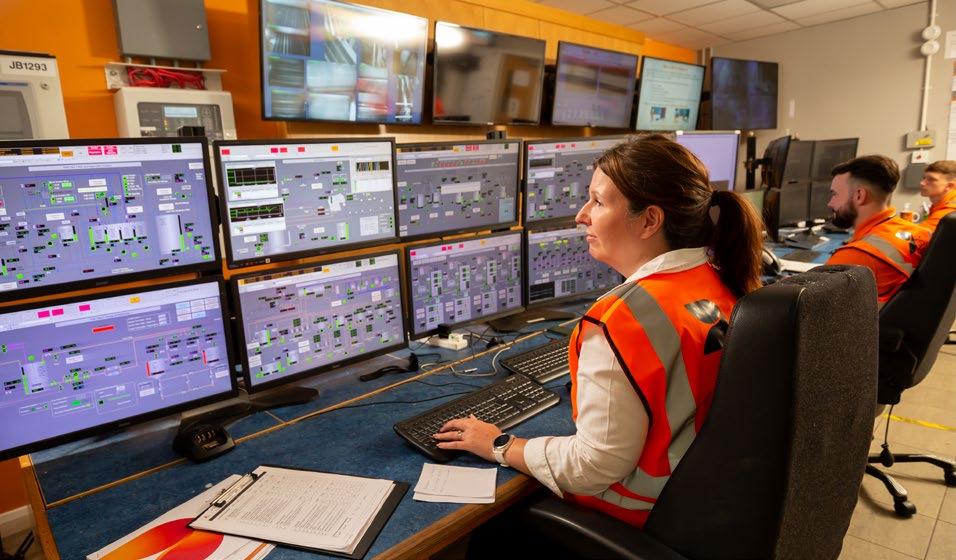
Task Force on Climate-related Financial Disclosures (TCFD)
In DS Smith Annual Report 2022, we report on our climate-related risks and opportunities in accordance with the Task Force on Climate-related Financial Disclosures (TCFD) recommendations.
Our plan to reach Net Zero responds to climate-related risks and opportunities, including:
Increasing spend on carbon taxes
Increasing cost of raw materials or threat to supply
Growth in demand for sustainable packaging
Use of emerging renewable technologies
Increasing likelihood of water stress Increasing resource efficiency
See DS Smith Annual Report 2022, p. 56-60 for our complete TCFD disclosure

The circular economy is regenerative by design, prioritising resource use in the economy over resource extraction from natural systems. By using the same resources over and over again, natural systems can be left to regenerate and biodiverse ecosystems to thrive.
Why does this matter?
Measuring and improving biodiversity is essential to ensure the survival of plant and animal species, genetic diversity and natural ecosystems. Biodiverse natural ecosystems provide clean water and air, contributing towards resource security and human health.
How does this contribute to the UN SDGs?
Measuring and improving biodiversity contributes to reducing the degradation of natural habitats, halting the loss of biodiversity and protecting and preventing the extinction of threatened species
Now
• By 2025, launch 100 biodiversity projects across Europe and North America
• Maintain forest management certification at 100 per cent of our forests Next
• By 2025, measure and improve biodiversity in our own forests
• By 2025, run a biodiversity programme at all of our paper mills
• Develop an action plan following baseline biodiversity findings for our forests in Georgia, USA
• Develop a forward-looking biodiversity roadmap to strengthen our biodiversity commitments and actions
• Support the remainder of our paper mills to establish their biodiversity programmes
This year, we joined forces with the Warnell School of Forestry and Natural Resources at the University of Georgia in North America to determine a baseline for the biodiversity in our forests in Georgia, USA, which includes identifying a methodology to measure biodiversity across our c. 7,000 hectares of forest in North America.
Senior undergraduate students will be identifying the species in our forests through field surveys, ultimately to propose, prioritise and implement actions to improve biodiversity. This is an exciting collaboration that not only intends to lead to biodiversity enhancement, but also offers local students a comprehensive final-year project to apply their learning to a practical, real-world challenge.
Over the past few months, students have created an inventory of potential species through a Geographic Information System (GIS) review of all properties, field surveys and laboratory, computer and literature research. The findings and recommendations from this work will form the basis of our plans to measure and improve the biodiversity of the forest, involving future students.
We are exploring the possibility of extending learnings from this work in Georgia to our forests in Portugal and Spain.
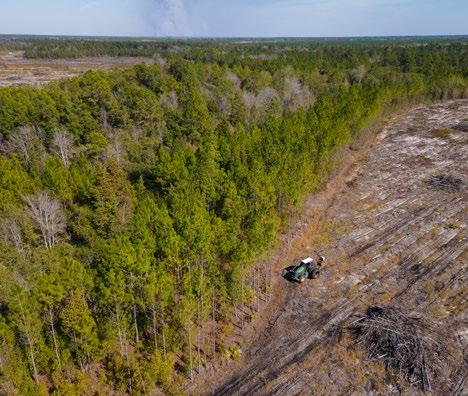
By 2025, launch 100 biodiversity projects across Europe and North America
In over 20 countries, we have launched 100 biodiversity projects (2020/21: 57), meaning that we have achieved our target to launch 100 projects by 2025, three years ahead of plan. Throughout the year, over £187,000 has been given by the DS Smith Charitable Foundation to fund biodiversity projects and programmes, including collaboration with other organisations, such as schools, charities and specialist conservation groups, to amplify our positive impact on biodiversity.
Grants of around £1,000 were awarded, with applications approved depending on geographic spread and expected benefits for biodiversity enhancement, protection or education.
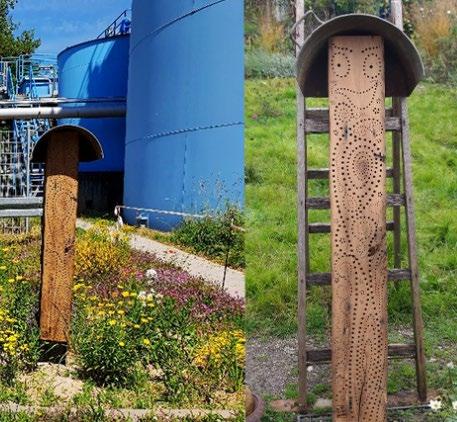
From supporting practical biodiversity projects and lessons with school children in Poland, Croatia, Belgium and Lithuania, to protecting rare and threatened bird species in Austria, rewilding via flower meadows in Switzerland, France and the Czech Republic, and planting fruit trees in Finland, we are pleased that these projects support biodiversity in a myriad of ways.
By 2025, run a biodiversity programme in the local communities of our mills
In 2021/22, 12 (2020/21: three) of our paper mills in total have launched biodiversity programmes, which reflect the implementation of a multi-year biodiversity commitment, comprising a series of projects to support biodiversity on site and in collaboration with their local communities. A further three programmes are in progress.
At Aschaffenburg Mill, biodiversity is being enhanced by creating wildflower meadows, introducing a large selection of native plants and shrubs, installing bird nesting boxes, deadwood and stone structures, and a landscaped area for lizards.
“We have been spearheading initiatives in one of Germany’s greenest regions, and as a result of the dedicated colleagues, biodiversity activities are improving the area around the mill.”
Ulrich Albert MD Aschaffenburg Mill
At Alcolea Mill, the biodiversity programme focuses on protecting the white stork, a bird of local significance and national protection in the National Catalogue of Endangered Species. This has included the installation of two artificial stork nests on poles, six metres high to encourage nesting.
At COP26, attended by our Head of Sustainability, Government and Community Affairs and Director of Corporate Affairs, we announced our membership of the Get Nature Positive campaign, committing to work with more than 70 companies from various industries to help tackle, halt and reverse the loss of biodiversity and to challenge each other to build a nature positive future.
Task Force on Nature-related Financial Disclosures (TNFD)
We are monitoring the development of the TNFD with interest, as an important disclosure framework for organisations to report on and act on evolving nature-related risks. Our work to measure and improve biodiversity will help us begin to understand the integrity of the natural ecosystems within our business.
Information and policies
Sustainable Forest Management and Fibre Sourcing Policy
CDP Forests response

The circular economy principles can be applied not only to physical materials, but also to natural resources, including water. We use water as a resource for carrying and transforming fibre through our operations, with over three quarters of the water we withdraw safely returned to the natural environment to continue the water cycle.
Why does this matter?
Managing water responsibly is important to benefit and respect the needs and priorities of all water users in a locality, in a way that does not harm the natural ecosystem and water cycle.
How does this contribute to the UN SDGs?

Managing water responsibly contributes to improving water quality, efficiency and scarcity, protecting and restoring water ecosystems.
Now
• By 2025, achieve zero non-conformances with consents to discharge
• Maintain a water stress mitigation plan at 100 per cent of our sites in areas at risk of water stress
Next
• By 2030, reduce water withdrawal by 1 per cent per tonne of production per year at mills in areas at risk of water stress compared to 2019
• Implement our new minimum standard for water effluent management to increase effective operation of waste water treatment plants
• Develop near-term projects to decrease water withdrawal at targeted sites within our roadmap
• Continue to maintain water stress mitigation plans at 100 per cent of our sites in areas at risk of water stress
Water withdrawal at paper mills in current or future water stressed areas (m3/t nsp)
Number of non-conformances with consents to discharge
79 21 10
By 2025, achieve zero non-conformances with consents to discharge
In 2021/22, 10 notifications of non-conformance with consents to discharge were received (2020/21: 21), a reduction achieved through stronger water management practices. This includes effective compliance monitoring of volumes, flow rates, discharge contents and proactive maintenance and calibration of equipment. A significant challenge continues relating to inks containing high levels of copper. Some progress has been made in customer acceptance of alternative ’copper-light’ inks, which reduce the demand on waste water treatment plants.
A Group minimum standard for effluent management was developed with plans to implement during 2022/23. The standard sets out requirements to ensure compliant operation of waste water treatment plants and decreasing instances of non-conformance.
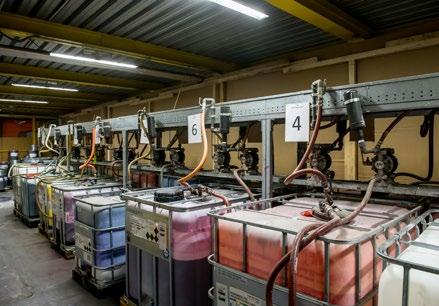
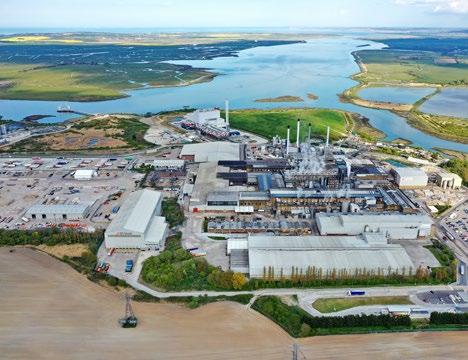
By 2030, reduce water withdrawal by 1 per cent per tonne of production per year at mills in regions at areas of water stress compared to 2019
During the year, we set a new Now and Next sustainability target to decrease water withdrawal 1 per cent per tonne of production per year, every year, to 2030 compared to 2019 at our paper mills located in regions at high or extremely high risk of water stress by 2030.
This was achieved for 2021/22, operating at 8.08 m3/t nsp (2020/21: 8.10 m3/t nsp), which is a 5 per cent decrease compared to the base year (2019/20: 8.48 m3/t nsp), demonstrating progress ahead of target.
Maintain a water stress mitigation plan at 100 per cent of our sites in regions at risk of water stress
At all of our Packaging sites in France, we have applied circular economy thinking to recover and mix leftover inks. As an alternative to discharging leftover ink and instead of buying black ink, our leftover ink becomes a resource by combining inks of various pigments to create a technical black ink for labelling and trademarks. By reusing the leftover inks, we reduce pollutants in our wastewater discharge, particularly the level of metals, which reduces instances of non-conformance and lessens the likelihood of water pollution. Following the success of this for improving wastewater discharge quality, we are exploring application in other regions.
At Pazardzhik Mill, a new water recirculation system has been installed, which has reduced water withdrawal by c. 23 per cent compared to 2019/20. This has been made possible due to installation of a three-stage grid filter within the effluent system to remove contaminants so that recovered water can easily flow back into the process, which now recirculates around 12m3 of water per tonne of production.
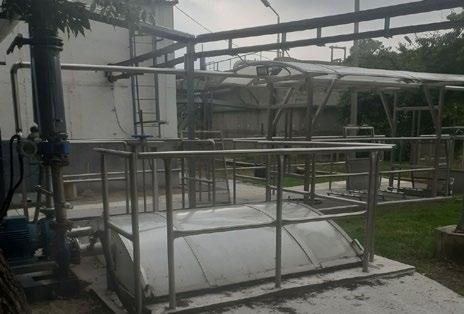
Progress towards this target lessens pressure on natural water resources through water reduction, reuse and recycle opportunities, protecting water as a finite natural resource.
At the beginning of 2021/22, we re-ran our annual WRI Aqueduct assessment of water stress risk to ensure maintenance of water stress mitigation plans at 100 per cent of sites at current or future risk of water stress. This process builds water stress risk mitigation into business continuity planning, requiring regular contact with relevant stakeholders (e.g. the water authority and local community) and reviewing water performance regularly. We continued to evolve our climate scenario analysis for the Task Force on Climate-related Financial Disclosures (TCFD), which incorporates water stress as a long-term climate-related risk. Our exposure to water stress decreased significantly this year, with the worst-case IPCC RCP 8.5°C scenario suggesting that c. 31 per cent (2020/21: c. 36 per cent) of the Group’s total water withdrawal is in regions at risk of water stress, having removed our non-core Dutch paper mill from the analysis, following its disposal during the reporting period. We continue to reduce water withdrawal and therefore lessen our exposure to water stress risk.
Our 2021 CDP Water Security response secured a place on the prestigious ’A List’ for tackling water security, with an ’A’ score for global water stewardship, joining a small number of high-performing companies demonstrating significant action to protect water resources.

Information and policies
Water Stewardship Policy
WRI Aqueduct Water Risk Atlas
CDP Water Security
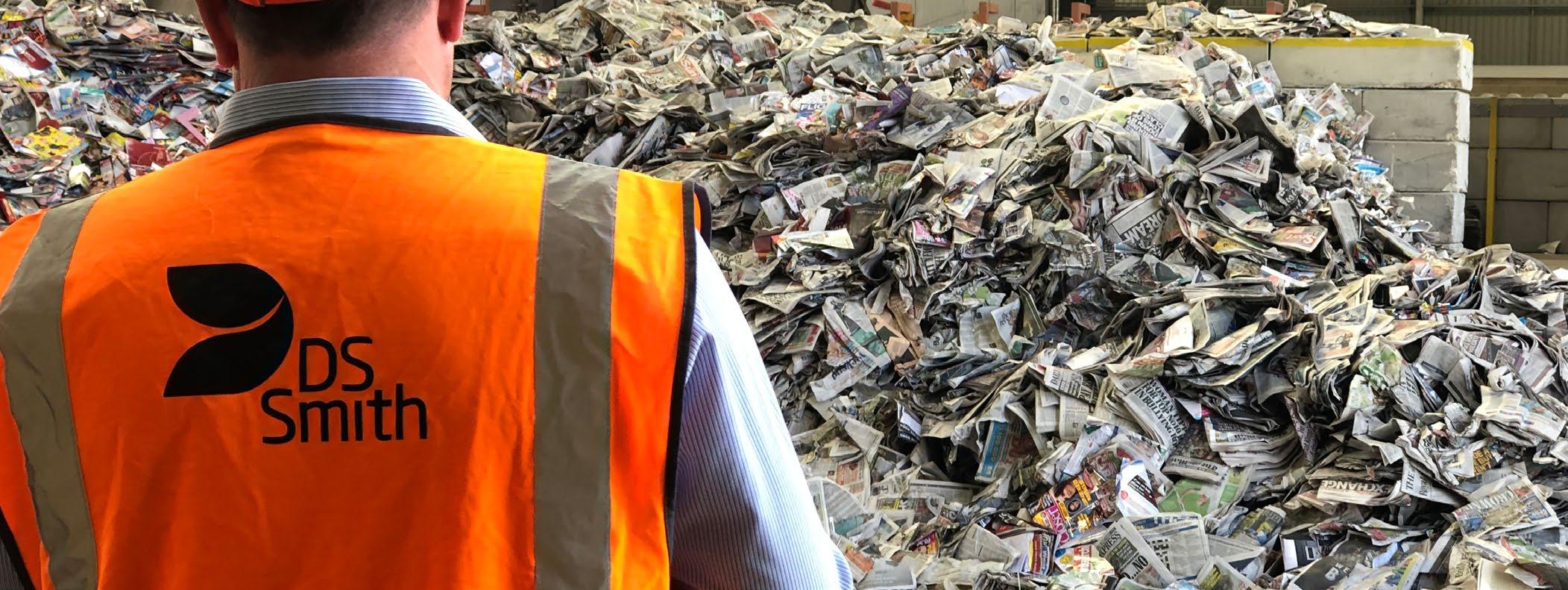
Why does this matter?
Sending zero waste to landfill reduces the impacts of landfill waste, which include effects on the climate, impacting ecosystems and wildlife, as well as human health and well-being.
How does this contribute to the UN SDGs?

Sending zero waste to landfill contributes to substantially reducing waste generation through prevention, reduction, recycling and reuse.
Now and Next
• By 2030, send zero waste to landfill
• Ensure successful start-up of our near-term projects to divert waste from landfill
• Continue to apply circular economy principles in our own operations to find productive uses for the non-fibre rejects that enter our circular business
• Continue to advocate for source-segregated, clean waste streams to lessen the volumes of non-fibre rejects that go to landfill
The circular economy finds beneficial uses for all materials, including the waste that enters our circular business mixed in with used paper and cardboard. Diverting waste from landfill to alternative destinations means that waste is treated as a resource and an opportunity from which to extract value.
waste sent to land ll (tonnes)
In an ideal world, only fibre would enter our circular business, but the reality is that through our recycling operations, non-fibre materials enter our business through poor quality waste streams. These must be removed before papermaking can begin and we continue to reduce waste to landfill with beneficial alternative waste destinations.
In 2021/22, 255,920 tonnes of waste was sent to landfill (2020/21: 258,225). In total, 93 per cent of waste landfilled was landfilled by our Paper division, whilst our Packaging division maintained a 99 per cent landfill diversion rate. Across the Group, 63 per cent of waste was recycled, 11 per cent was used for landspread, 9 per cent was incinerated and 17 per cent was landfilled.
Although progress was made on landfill reduction at some of our sites (c. 12,000 tonnes less compared to 2020/21), increases at other sites for various operational reasons, including increased volumes, have masked this good performance. Furthermore, anticipated reductions were not made this year owing to delays to the expected start-up of some projects. We remain confident in our pipeline of landfill reduction projects.
Landfill reduction projects at our paper mills
At Kemsley Mill, c. 8,000 tonnes of landfill waste will be diverted annually by sending waste previously landfilled to the neighbouring K3 waste-to-energy facility, which has begun to start-up this year. As well as reducing waste to landfill, this facility also produces steam for the mill by generating energy from the waste.
At Alcolea Mill and Belisce Mill, landspread and sludge opportunities are set to divert c. 9,000 tonnes per year and at Dueñas Mill, an alternative use has been identified for c. 11,000 tonnes annually.
Aschaffenburg Mill and Witzenhausen Mill each maintained zero waste to landfill and Coullons Mill and Kaysersberg Mill each achieved zero waste to landfill during the year.
Our UK recycling depots have sent zero waste to landfill since the beginning of 2022. Although we have taken in some non-fibre material, we have been able to find a recycling opportunity for every tonne of waste.
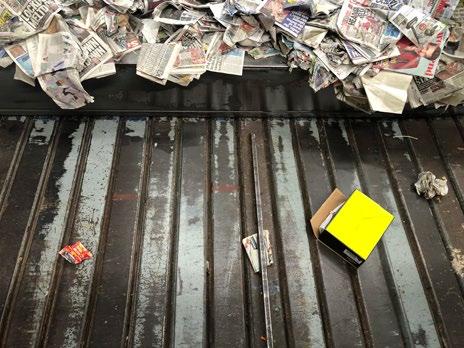
“Our recycling depots have made huge strides in reducing waste to landfill. We have set the challenge to them that we are the Recycling division, not the ‘waste division’, and we should be setting the example. The zero waste to landfill achievement of our UK depots is the most notable, but other countries and depots have made huge improvements too. Our focus over the coming years is to reduce this to zero across all depots ahead of the 2030 target deadline.”
Jonathan Edmunds Recyclability and Sustainability Manager
In Spain and Portugal, waste to landfill has reduced by c. 50 per cent compared to last year and several smaller depots have achieved zero waste to landfill, including Babberich (Benelux), Turin and Casarille (Italy).
Digital and data for improving the quality of paper and cardboard collected for recycling
We have begun to use an AI tool in collaboration with IBM to help to improve the quality of paper and cardboard collected for recycling.
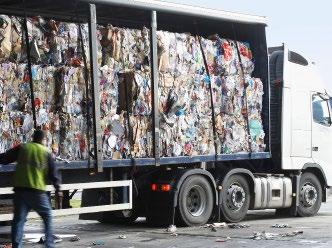
Trialling the technology at our recycling depot in Kemsley, we have invested in new camera technology that uses AI modelling capabilities on IBM Cloud, to assess the grade, quality and origin of the material arriving at the depot. Positioned in the ceiling of the depot, the cameras can identify whether the composition of the loose paper and cardboard meets strict quality guidelines before being sent for baling and recycling. This was achieved by teams from DS Smith and IBM Expert Labs working together to develop an AI model that can compare data from images of the materials with a specific set of criteria. The state-of-the-art innovation improves the efficiency and accuracy of the process, which has traditionally been done using the human eye. The insights drawn from the imagery are used to inform the production process but can also be reported back to suppliers to help improve the quality of the material arriving at the depot.
This technology can help us on our journey to zero waste to landfill, as better-quality material entering the papermaking process results in fewer rejects that are sent to landfill.
Landfill reduction projects at our packaging plants
Decreases in waste sent to landfill were achieved throughout the year through, amongst other things, upgrades to waste water treatment plants and engagement initiatives. For example, a new waste management programme was implemented at our Vineland packaging plant in North America.
This began with identification of the various waste streams throughout the facility, capturing data relating to weights of all waste. The team implemented colour-coded signs to encourage recycling.
Recognised as a model example by our third-party waste auditor, the site reduced the waste it sends to landfill by more than half compared to last year.
In 2021/22, the Paper division continued to develop its roadmap towards achieving zero waste to landfill by 2030, with key projects and milestones in place. As these projects often have carbon, energy and water implications, this roadmap is developed and managed alongside other roadmaps, including our plans to reach Net Zero GHG emissions, for which waste-to-energy plays a role.
During the year, the Recycling division created a roadmap running up to 2030 and in 2022/23, roadmaps will be developed for our Packaging division.
Reducing Scope 3 greenhouse gas emissions
Sending less waste to landfill has the added benefit of reducing the emissions generated by landfill waste as it decomposes, which is captured in our Scope 3 inventory. As we make progress on our zero waste to landfill target, our Scope 3 emissions will reduce as alternative waste destinations, such as recycling, release fewer greenhouse gas emissions into the atmosphere compared to waste left in a landfill.
Information and policies
Zero Waste to Landfill Policy
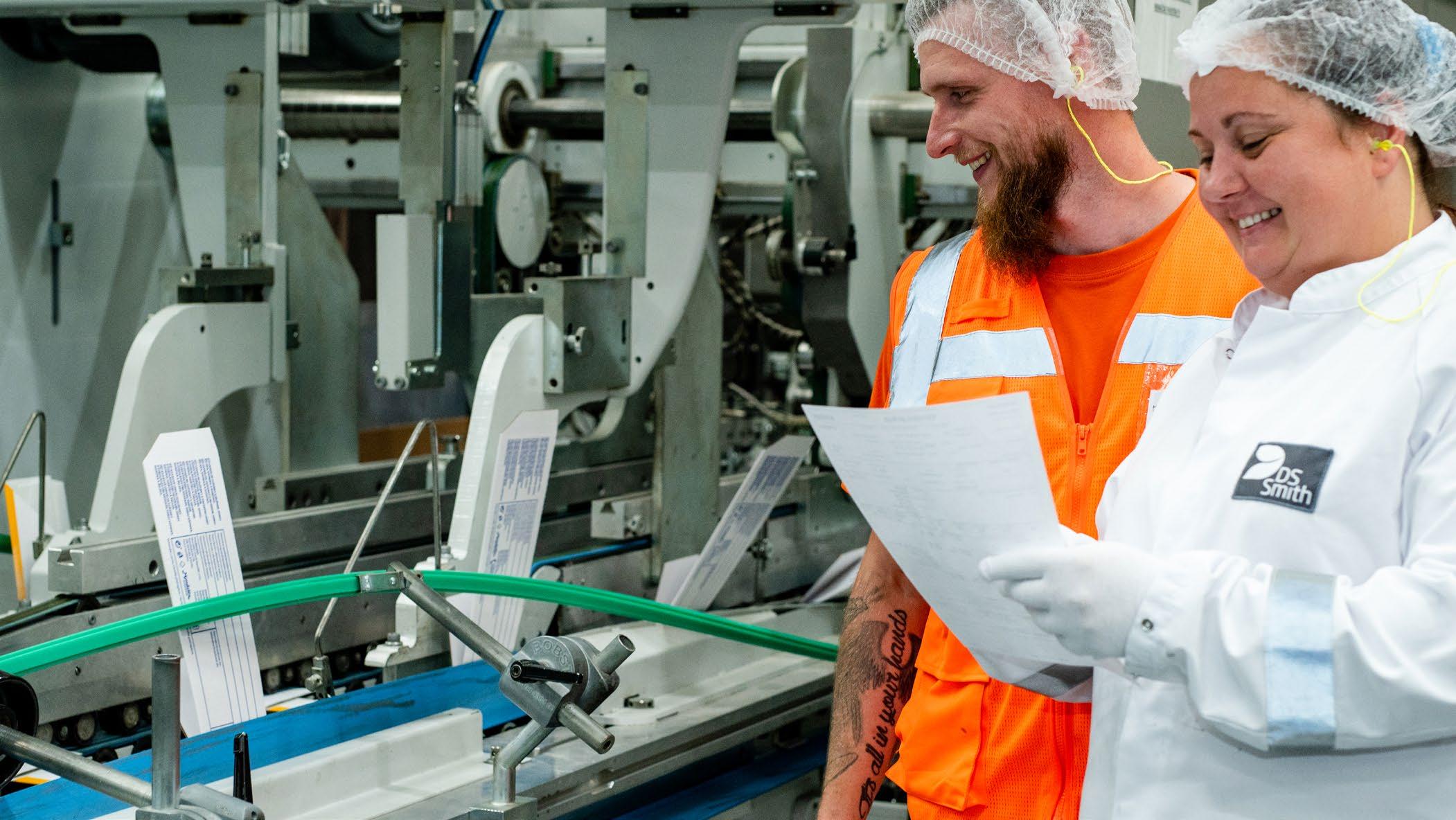
¾ of job seekers evaluate opportunities based on diversity factors (Glassdoor)
2.3m people suffering work-related accidents or illnesses every year (ILO)
3X greater likelihood of high-performing individuals in inclusive organisations (Forbes)
In this section
Equipping people to lead the transition to a circular economy
Health, safety and well-being
Diversity and inclusion
Talent development
Employee engagement
Respecting and promoting human rights
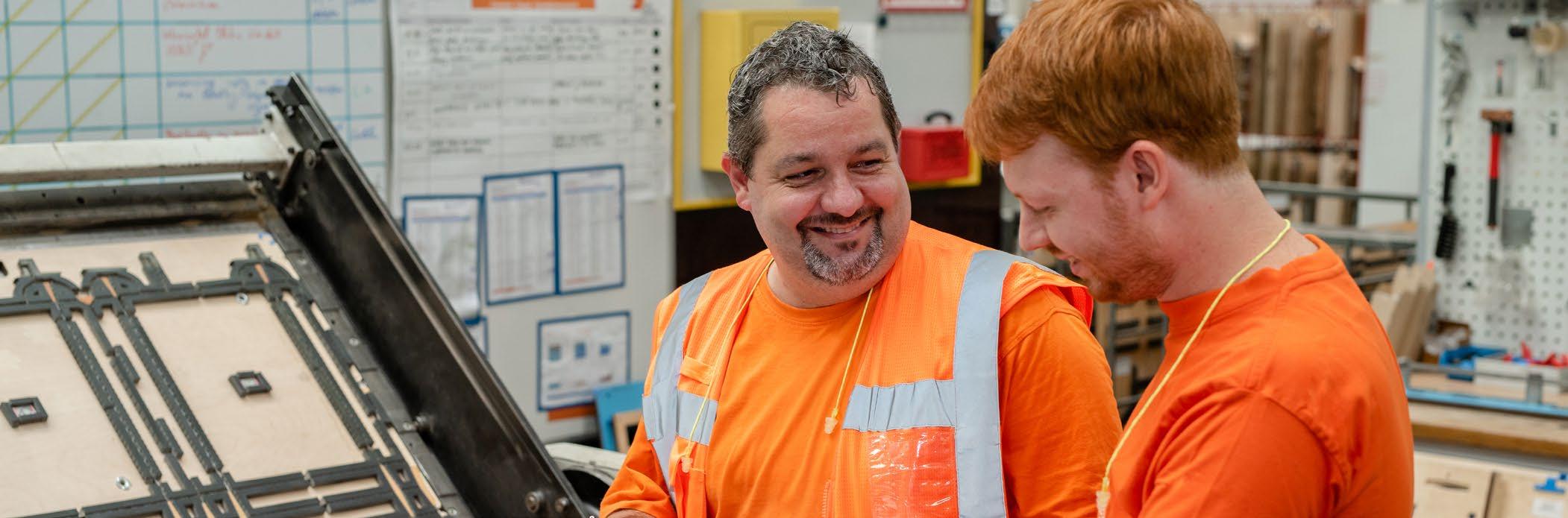
Why does this matter?
Equipping people to lead the transition to the circular economy aids training, employee skills and continued employability of our people. As a large, global employer, we can equip our people with useful knowledge and skills for life, particularly to promote sustainable development.
How does this contribute to the UN SDGs?

Equipping people to lead the transition to the circular economy contributes to promoting sustainable development.
• By 2025, engage 100 per cent of our people on the circular economy
• By 2030, engage 5 million people on the circular economy and circular lifestyles
• Extend our circular economy engagement opportunities to our ‘non-wired’ employees (i.e. those without access to a company laptop)
• Invite the next cohort of Sustainability Champions and senior leaders to join the Circular Economy Masterclass
• Launch our Circular Economy Hub, for our people to access bespoke articles, blogs and other resources related to the circular economy
• Increase the delivery of our Circular Economy Lesson Plan by our people in their local communities
The circular economy calls for radical change to how we consume and produce the things that we enjoy every day. Growing awareness, skills and commitment to action are key to enabling people to own the transition to the circular economy, so that we can all progress further and faster with the confidence, knowledge and skills needed to lead the change.
of our people engaged on the
Number of people engaged on the circular economy and circular lifestyles
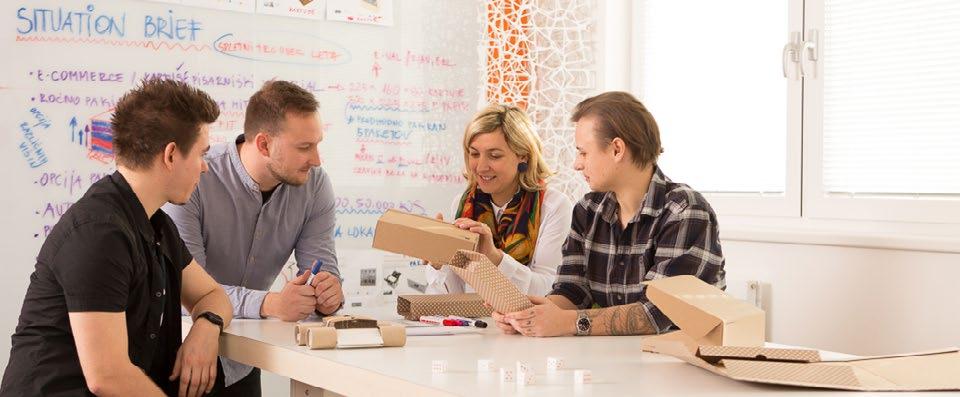
Throughout the year, we immersed our people in circular economy learning and development opportunities, as well as reaching out to our industry, communities and the next generation to promote circular economy and circular lifestyles.
By 2025, engage 100 per cent of our people on the circular economy
This year, we engaged 50 per cent (2020/21: nine per cent) of our people with targeted circular economy engagement campaigns. This reflects engaging all of our ’wired’ audience, meaning those DS Smith colleagues that are provided with a company laptop.
Over 4,400 employees have now completed three bespoke circular economy e-learning modules, created in collaboration with the Ellen MacArthur Foundation. These include the ‘Introduction to the Circular Economy’ module. The modules were translated into eight languages for the community to maximise inclusivity by removing barriers to active engagement. We have added circular economy content to our regular newsletters.
Building on the success of last year, a further cohort attended the Ellen MacArthur Foundation Circular Economy Masterclass, run in collaboration with the University of Exeter. This six-week online course includes live webinar
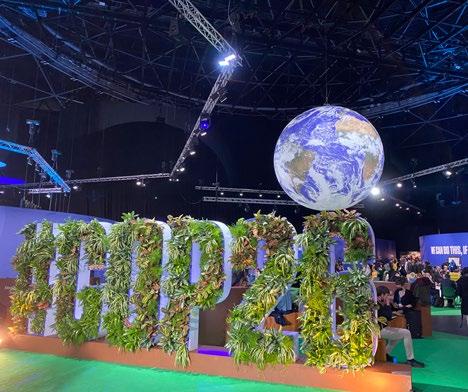
sessions and access to videos, online materials and active discussion forums, enabling our people to go beyond the basics and learn directly from leading circular economy experts from business and academia, as well as case study examples of other businesses. We are further embedding circular economy into our brand and Purpose campaign so that it remains front-and-centre of everything we do.
We continue to extend circular economy engagement opportunities to ultimately reach all of our colleagues, including ‘non-wired’ employees (i.e. those without access to a company laptop) by 2025.
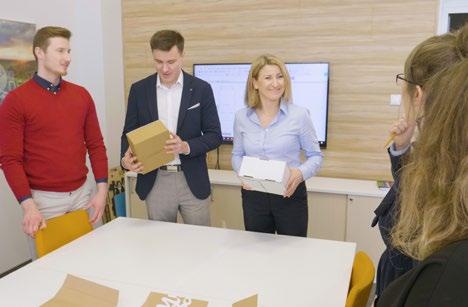
By 2030, engage 5 million people on the circular economy and circular lifestyles
Beyond our own people, we are reaching our industry, communities and the next generation to promote the circular economy and circular lifestyles.
This year, we engaged over 2.3 million people (2020/21: 519,000 people) from all over the world on the circular economy, across various channels, including online content (likes, shares, comments etc.), circular economy videos, report downloads and page views of news articles, blogs or case studies. This brings the cumulative total to over 2.8 million on our journey to engage 5 million people.
At COP26, we launched our circular economy lesson plan, ‘Let’s Go Circular!’, as a free resource for young people aged 11-14 and their teachers to educate them about the circular economy, and how we can all play a part in protecting our planet’s natural resources. Outside of the classroom, we continue to reach the general public through engaging circular economy content, social media and video posts.
We created a two-minute animated video, translated into 11 languages, to explain the principles of the circular economy to adults and children worldwide. The video focused on simple wording with dynamic and colourful animations to bring the circular life of a cardboard box to life in a short but engaging way.
Circular economy learning opportunities
Our work to engage all of our employees on the circular economy has been featured as a University of Exeter case study for research on the circular economy journey of large companies, joining other leaders as an example of a company moving away from the linear economy. We shared our approach to employee engagement on the circular economy through bespoke eLearning modules as best practice with other Strategic Partners of the Ellen MacArthur Foundation.
“As a Strategic Partner, DS Smith has taken a leading approach in using e-Learning to educate its employees about the benefits of transitioning to a circular economy. It is great to see how DS Smith has used the Foundation’s content and resources and integrated them into its training programmes, which have been completed by over 4,000 employees. It is testament to DS Smith’s commitment to increasing circular economy engagement across the company.”
Ilma Stankeviciute, Learning Programme Manager
The Ellen MacArthur Foundation
Ellen MacArthur Foundation Learning Hub
The Exeter Centre for Circular Economy Masterclass
Let’s Go Circular
What is the Circular Economy? Video
Our vision is to provide a working environment and culture where people actively engage and drive health and safety excellence. All employees can influence a reduction in our Accident Frequency Rate (AFR) and through individual ownership, engaged people contribute to a safe workplace. Our campaign focuses on leadership, engagement, processes and culture to achieve our health and safety target of zero harm.
Leadership behaviour is critical to engagement, where engaged leaders positively impact our health and safety employee engagement index. This is the central theme of our health and safety onboarding programme which trains site managers on the behaviours and mindsets required. We introduced leadership-focused safety programmes which helped to create health and safety role models, whilst encouraging and recognising the value of safe behaviours, raising awareness and placing health and safety at the centre of everyday activities. We have seen a 25 per cent increase in leadership-led health and safety activities and an increase in employee engagement. In 2022, we will continue embedding the health and safety leadership behaviours through our local site networks.
Engaged employees proactively identify and eliminate risk, driving a resilient and interdependent culture. We consistently see that when engagement increases, accidents decrease. The health and safety engagement index measures the rate of participation in risk identification and elimination activities. In 2021/22, the index has increased by 50 per cent. In 2022/23, we will continue working through our local site networks to increase health and safety engagement.
Robust health and safety processes are essential for safe working environments. The easing of the travel restrictions worldwide allowed us to return to on-site health and safety auditing which aims to drive continuous improvements and accelerate the implementation of our global health and safety standards such as workplace transport, machine guarding or working at heights.
Our focus on leadership, engagement and processes develops and drives an interdependent safety culture in which every person in the organisation feels responsible for safety and proactively identifies and eliminates risk. We believe that our drive towards Vision Zero has been key in developing a safe and healthy workplace. Despite multiple challenges, not only do we celebrate significant improvements across all divisions, but the overall number of employee accidents and Accident Frequency Rate has reduced by 27 per cent year-on-year to a record low.
In 2022/23, we will continue striving towards our Vision Zero ambition and ensure the health and safety culture is adopted across our business.
We ensure that any chemicals or hazardous substances used in our manufacturing processes are deployed in a manner that minimises risk to people and the environment. Where possible, we are selective in our use of materials, chemicals and substances that may be of human health and/or environmental concern and we substitute or eliminate Substances of Very High Concern (SVHCs) from our manufacturing processes.
We ensure compliance with Regulation EC 1907/2006 on the Registration, Evaluation, Authorization and Restriction of Chemicals as amended (“REACH Regulation”) for all personnel involved in the procurement, storage, handling and use of chemicals. This involves monitoring the candidate list of SVHCs to ensure that additions to the list are evaluated with respect to our products. If substances appear on this list, they are identified, and relevant stakeholders are notified where appropriate.
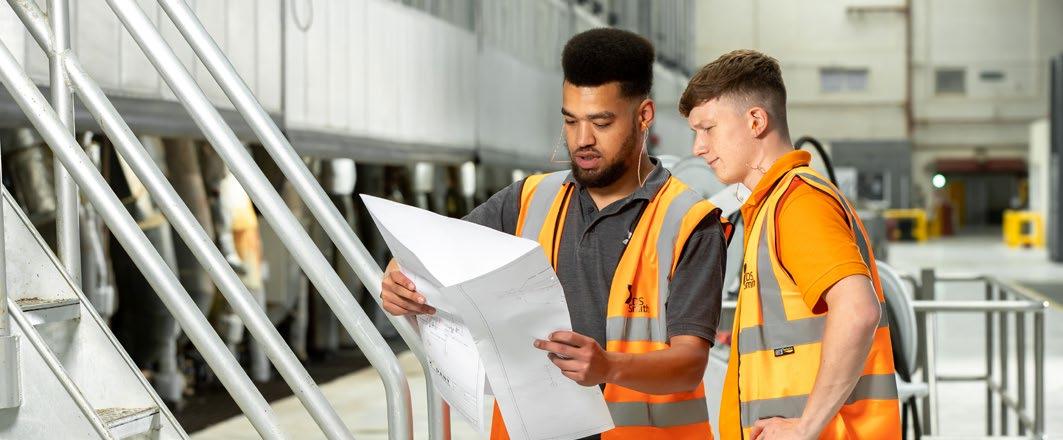
We monitor where, and in what quantity SVHCs are present, their purpose, whether they are part of the Company’s product formulation, and whether they can be substituted or eliminated. Where possible, efforts are made to substitute or eliminate SVHCs.
We have a duty to ensure that all our products achieve legal compliance. Within the packaging industry, the most significant product safety impact is in food packaging. This is of upmost importance to us, with FMCG and consumer goods, including food, comprising the majority of our customer base. We actively follow regulatory initiatives to ensure compliance with laws and standards, work together with our suppliers to select only safe additives and raw materials for our paper mills and packaging sites, manufacture paper and food contact products according to Good Manufacturing Practice (GMP) principles and conduct regular testing of paper purity as part of our compliance schemes. In the Packaging division, our food contact products are risk assessed before production. We would not knowingly produce a product that does not comply with the applicable laws or poses an unacceptable risk to consumers. In 2021/22, we had zero (2020/21: zero) product safetyrelated recalls.
Additional Health and Safety metrics can be found on page 64.
All employees and third parties must adhere to all health and safety policies and procedures at our sites at all times.
We recognise that our people and contractors work in environments which present hazards. We strive to control those hazards through a risk-based approach using a hierarchy of measures and we continuously aim to improve. Our employees are key in ensuring we operate safely and we address any concerns raised openly and promptly.
All of our sites maintain health and safety management systems. These are certified to ISO 45001 or OHSAS 18001 at 33 per cent of our sites, including at eight of our mills.
We provide comprehensive health and safety information, instruction, training and supervision, which 100 per cent of employees and third-parties are required to undertake. We have published a range of Group Minimum Health and Safety standards, covering topics such as chemicals, lifting equipment and spills.
Our sites report safety performance on a monthly basis and all accidents are investigated and the findings circulated throughout the business. Our divisions monitor progress not only on reactive KPIs but also through their audit programmes and other proactive KPIs, such as the health and safety engagement rate. Our long-term target is ‘zero accidents’ and we set our key performance indicators to continue towards that goal.
Wellbeing has long been a priority and recently more so than ever. The pandemic has increased pressure and demands on all of our physical and mental wellbeing. We have developed and promoted a broad set of tools and resources through our networks and external partners to support health and wellbeing. These include toolkits such as wellbeing ideas for remote workers, anxiety management and resilience hints and tips.
Our health and wellbeing framework is designed to build positive health working environments enabling our people to thrive and perform sustainably, focusing on:
• Taking the lead Encouraging everyone to visibly and demonstrably set the example and champion health and wellbeing
• Learning and development Providing knowledge and information to empower people to take ownership of their wellbeing
• Engagement Working together, involving and including all our colleagues to continuously improve health and well-being
• Toolkits Providing best practice tools to inspire and motivate positive and healthy people and workplaces.
Throughout 2021/22, we launched various initiatives to address needs throughout the business. Leadership role modelling has encouraged and inspired employees to care for their own wellbeing. For example, we introduced bitesize training and wellbeing e-Learning, covering topics such as mindfulness, physical and digital workspace, resilience and remote working. In 2022/23, we will continue working with our local site networks encouraging employees to access the resources available to strive towards a consistent approach to health and wellbeing.
Eerbeek Packaging plant launched a pilot in May 2021 to offer employees the opportunity of a regular massage from a qualified masseur. This initiative enables employee access to a voluntary healthcare service and is actively encouraged by team leaders. It reduces physical and stress health risks, ultimately reducing absenteeism and improving employee productivity and engagement.

“The bi-weekly massage is a very welcome moment to relax. This reduces tension in my neck and prevents headaches. The service is well-appreciated and improves my focus.”
Team Manager Maintenance,
Eerbeek
Providing additional healthcare support
Opening up access to quality healthcare services, we offer private healthcare to all of our employees in Poland, provided by Medicover, for both treatment and prevention of mental and physical health issues. Employees are more engaged in their work when they are not worrying about the health and wellbeing of their family and so family members can also benefit from cost-effective private health insurance, significantly improving wellbeing. We support and promote wellbeing by facilitating access to prevention and treatment services and awareness with broad communications and reminders. This initiative enables and empowers our employees to lead full, productive lives, at work and at home, and attracts and retains employees.
In September, employees from our French sites came together for the second consecutive year to participate in Feet Week, a walking challenge to raise funds for the Arthritis Foundation. An average of 11,898 steps per person were made by 42 DS Smith participants over seven days, leading to €1,500 donated to the Arthritis Foundation. Colleagues tracked their steps on their phones to compete as teams to attempt the most activity in one week. Our colleagues walked together during lunchbreaks and before and after work. This initiative encouraged employees to be more physically active and spend more time outdoors, to ultimately support a charitable cause and enhance the mental wellbeing of our employees.
“Feet Week 2021 was a great experience. DS Smith has brought together 11 teams of colleagues not only to support a charitable cause, but also to challenge us to a fun, sporting event and to spend time outdoors. I am looking forward to Feet Week 2022!”
Cédric Renard, Sales & Marketing Director, DS Smith France
See pages 25 to 27 of DS Smith Annual Report 2022 for further health, safety and wellbeing commentary.
A diverse workforce better reflects the communities we operate in and customers we serve, improving our response to local contexts and diverse customer needs. Our engagement survey feedback tells us that employees are more productive and more likely to succeed when they are part of an inclusive workplace, where everyone is valued, respected, engaged and feels safe to be themselves at work. This can lead to improved business performance, giving room for more creativity and innovation. Creating an inclusive culture where employees thrive is core to our Purpose and is key to our continued success.
This year, we launched our diversity and inclusion strategy with three pillars. In the first year of this strategy, we are on a journey to embed our approach across the business. The three pillars of the strategy are:
• Visible leadership Leadership by example,
• Active networks Engaging with our people in a different way to build a sense of inclusion to drive action,
• People processes Policies and procedures that create an environment where people can do their best work.
Every employee has an important role to play in creating a diverse and inclusive workplace culture. By role modelling inclusive behaviours, leaders can help create a workplace where all employees can realise their potential. We launched our inclusive leadership workshop to help leaders take ownership and drive action. We have over 200 leaders who are part of a global, diverse alumni network supporting each other. In October, we launched our Diverse Voices campaign where everyone can share their perspective and experience to help raise awareness of events across the year, e.g., men’s mental health awareness, Black History Month, and International Women’s Day. These stories help
raise awareness of cultural differences, celebrating diversity, and highlighting important issues faced by different groups. In 2022/23, we will embed the inclusive leadership workshops throughout the organisation.
We recognise that real change comes from employees by treating others fairly with respect. We continue making good progress through our Global Diversity and Inclusion Forum, where individuals are committing to driving action personally in 2022/23. Our partnership with the European Works Council (EWC) Diversity and Inclusion Committee is driving significant opportunities to help embed our ambition locally through our site networks.
To raise awareness, build a sense of inclusion and drive action, we mobilised and engaged employees through active networks. We launched our first employee resource groups (ERGs), LGBTQ+ and Allies Network, an Ethnic and Cultural Diversity Network and set up local site networks, for example Kemsley mill’s diversity and inclusion network. As a result of active networks, inclusion events have taken place such as our diversity and inclusion roundtables with external speakers helping employees raise awareness, engage and hear how they can drive action. In 2022/23, we will continue exploring additional ERGs and run local roundtables across the business.
the hiring process which helps address under representation resulting in an improvement of 3 per cent in female hiring for professional roles. We launched the Career Transition Partnership for veterans and in 2022/23, we will explore opportunities to support inclusive employability initiatives.
We recognise that policies turn the open conversations in our active networks into meaningful action to provide opportunities to address inequalities and create an environment where employees can thrive. This year, we made progress to build awareness and embed in business practices our global Equal Opportunities and AntiDiscrimination Policy. We also ensured that business language is non-discriminatory throughout the organisation. In 2022/23, we are working to ensure the policy and training is embedded throughout our site network supported by employee groups such as the EWC.
To attract diverse talents, we refreshed our career site and showcase diverse career journeys. We set targets for gender diverse pipelines in professional roles, senior search and our graduate programme. We track metrics throughout
It continues to be a challenge to attract women into manufacturing, however we are making progress. Targeted recruitment actions resulted in increasing diverse senior leadership hires, with 38 per cent female hire ratio at the senior level and we exceeded gender parity of graduate offers for the second year in a row. We continue to support the acceleration of our female leadership pipeline with mentoring and executive coaching support, and ensuring representation of women in leadership programmes, with 32 female participants across cohorts. In 2021/22, we implemented function talent meetings using gender diversity analytics to understand the diversity profile at every level of the talent pipeline, driving action to ensure transparent conversations and career coaching takes place. In 2022/23, we will scale up the function and across division talent meetings and support the development of female talents through the leadership programmes.
1. Definition of senior management: our four Group Executive Committees and their direct reports.
“Diversity is anything that makes individuals who they are, and inclusion is the way we grow together as a society and how we develop together as a company. It is extremely important to me.”
Stefano Rossi Packaging CEO and Sponsor of
the D&I programme
For more information on gender diversity, including the diversity of our Executive Team, please refer to page 29 of DS Smith Annual Report 2022.
Building ownership through an Inclusive Leadership workshop
Over 200 of our leaders joined an Inclusive Leadership Workshop to discover how to become more inclusive, drive action and to role-model inclusive behaviours.
The workshop led to our ‘this is US’ survey, gathering diversity and inclusion data on our population in UK packaging. This has since led to a commitment to review our policies and to explore family-friendly policies.
Following the workshop, we launched our reverse mentoring pilot scheme, whereby each workshop alumnus was paired with a reverse mentor to learn from colleagues of different backgrounds.
“I shared my experiences of role modelling and appreciated our discussions to break barriers and encourage an inclusive working environment.”
Socky Angel (mentor)
North Cluster Sales Director, Supply Engine (UK)
“It provided a great opportunity to have a conversation about inclusive leadership and areas in which we might be able to improve, giving lots to reflect on.”
Adam Platts (mentee)
Sales Director, Packaging (UK)
We are looking forward to supporting alumni to develop and drive action plans and to scale up the delivery of this workshop through the business in 2022/23.
Everyone plays a part in making DS Smith a more diverse and inclusive place. In order to raise awareness and build inclusion, we are mobilising action through active networks, for example our LGBTQ+ and Allies network.
In June 2021, during International Pride month, we launched our first global diversity and inclusion employee resource group, the LGBTQ+ and Allies Network. The network, with around 50 members and led by a steering committee of 10 Champions, holds meetings on a monthly basis with colleagues from all parts of the business, representing numerous functions, levels, and regions.
It offers a safe space to connect, access support, celebrate diversity, bring ideas, and discuss the issues that matter to the LGBTQ+ community, to ultimately drive change. For example, a glossary of LGBTQ+ terms, shaping the diversity and inclusion agenda and advocating for action.

For Holocaust Memorial Day, we hosted an event with a Holocaust survivor to share the message of how we can create a more tolerant and inclusive society. The event was attended by over 130 of our people on the power of inclusion and raised awareness of the danger of discriminatory environments that gave rise to the Holocaust tragedy.
In 2020/21, we established the DS Smith European Works Council (EWC) D&I committee, providing representation from all European regions in which we operate to join an active D&I network to support initiatives and action.
Throughout the course of 2021/22, we made progress in our people policies and training to build awareness and embed diversity and inclusion into our business practices. This included ensuring that business language is nondiscriminatory, such as the use of ‘Chair’.
Our Equal Opportunities and Anti-Discrimination Policy sets out clear expectations for inclusion and a zero tolerance for discrimination. We launched training modules as part of compliance training to encourage employees to become more mindful of the diversity gap and unconscious bias and to equip them to create a more inclusive workplace, such as cross-cultural communication, leveraging diversity and the role of individuals in achieving diversity and inclusion.
In 2022/23, we are working to ensure that the policy and training is deeply embedded at 100 per cent of our sites by activating local networks and ensuring visibility through translations and compliance training.
Recruitment initiatives
We are striving to improve our diversity mix by opening our recruitment processes, exploring different talent pools by recruiting based on potential, attracting and retaining diverse employees and creating an inclusive workplace that is reflected in our recruitment practices.
This year, we launched recruitment initiatives, including the Career Transition Partnership for veterans. We have taken steps to implement new practices, such as ensuring gender splits for our apprentices and graduates, jobsharing and part-time working opportunities and the launch of a diverse interview panel trial in the UK.
We are in the process of exploring our approach to attracting and supporting new and different talent pools, including ex-offenders and mentorship for workplace returners and those transitioning careers.
Career transition for veterans
In the UK and North America, we are working to become a more inclusive employer for veterans by recognising the skills and experience gained from serving in the armed forces and supporting their transition from the military to the workplace.
In the UK, we post vacancies on a job board exclusive to Service leavers and we have attended careers fairs, where we engaged with job seekers and gave job resources for interviewing, CV, and application support.
In North America, we have built a relationship with a local military base which posts DS Smith vacancies and attended two careers’ fairs for the military bases close to our Atlanta and Lebanon sites.
Graduate programme diversity
This year, we revised our minimum entry requirements for our global graduate programme, removing the 2:1 university degree requirement to provide opportunities to a more diverse pool of talent. By removing this requirement, we are promoting our graduate programme to a wider group of applications and, in turn, creating a more diverse workforce that is representative of society.
Information and policies
Equal Opportunities and Anti-Discrimination Policy Board Diversity and Inclusion Policy UK Gender Pay Reporting
We realise the potential of our people by creating a safe environment in which everyone can use and develop their skills and ideas. The investment we make in developing our people focuses on ensuring that we are providing everyone with the opportunity to learn, grow and flourish, both professionally and personally. By investing in learning interventions which develop our workforce with the right skills for today and for tomorrow, we improve employee satisfaction, engagement and performance. Enhancing the skills of our people enables them to realise their potential and enables us to succeed in an increasingly changing world. Delivering a sustainable, accessible and measurable learning and development proposition, is a key enabler as an employer of choice. As a business with an increasing focus on innovation, sustainability and digitisation, our learning and development portfolio continued to evolve to provide timely, relevant and future-focused skills development.
In 2021/22, we continued to embed quality performance and career development conversations and offer learning and support through a range of modalities, from virtual learning, coaching and mentoring to curated learning modules and personal and professional development programmes.
Learning delivered through e-Learning
Our e-Learning platform gives access to a widening range of bespoke DS Smith content, in addition to thoughtleadership, management skills, personal development and qualification paths.
In 2021/22, we designed and delivered two more circular economy modules, ‘Circular Economy at DS Smith’ and ‘Integrating the Circular Economy into our Customer Value Proposition’, initially for our SMI (Sales, Marketing and Innovation) colleagues, which have been completed by over 4,000 people to date (refer to page 40 for the progress we
are making towards our Now and Next sustainability target, to engage 100 per cent of our people on the circular economy by 2025). Further to this, a seven-module e-Learning course supports the DS Smith Way, our continuous improvement programme. We will continue to add bespoke e-learning, in particular in operational and role specific subjects, to the portfolio during 2022/23.
DS Smith Learning continues to evolve with our e-Learning initiatives supplemented by a series of new 90-minute bite size sessions delivered virtually and aimed at specific development needs, which build on existing skills and reflect new challenges and projects. The Operational Learning Academy is now well-established, using a digital learning platform that provides immersive learning technology to deliver using virtual reality and giving our production teams access to directed high quality upskilling programmes.
After the increase in the number of people accessing e-Learning in 2020/21, this trend has continued in 2021/22, reflecting a shift towards technology and distance learning solutions, the benefits of extended access and the successful delivery of engaging and innovative learning content. In 2022/23, we will continue to open access to learning through technology to our wider workforce and expand the DS Smith Learning portfolio of company-specific upskilling development pathways.
We continued to work with our external partner, Oxford Saïd Business School, and evolved our programmes to reflect new challenges facing our leaders and business. We are also exploring opportunities for development with our diversity and inclusion social mobility working group. We have been analysing data of the communities in which we operate that are classed as deprived, and we have begun engaging with local authorities with the intention of supporting skills training in these communities. This focus on learning is a key part of our ambition to make sure all our people, as well as the communities in which we have a presence, are encouraged and supported with lifelong learning.
Welcoming new talent through our apprenticeship programme
We want to create an environment where every colleague can thrive. Our apprenticeship programme provides young people with career opportunities through upskilling and training. We support our colleagues and communities with a career path, supporting our apprentices to develop lifelong skills and find permanent roles at the end of their placements.
Over 120 colleagues have undertaken and completed an apprenticeship since we launched the programme in 2017. These have been in various disciplines to help develop skills related to leadership and management, continuous improvement, customer service, and finance.
“I enjoyed everything about being an apprentice, learning about how DS Smith runs and playing an important role in the business. It set me up for the next few years of my life.”
James Sherrin, Finance apprenticeship
at the Shared Services Centre in Caerphilly, Wales
Our apprenticeship programme is a valuable way to help newcomers to the business realise their potential and raise awareness of our brand. This scheme engages our employees, creates a more diverse workforce, and upskills employees to meet future needs of the business.
“I never knew what I wanted to do in college, but I thought about engineering because my Dad is an engineer. After a four-year apprenticeship, involving DS Smith and external training, I now work as an electrical engineer at the Launceston site. It was one of the best opportunities that has happened for me.”
Lauren Carlyon, Engineer at Launceston, England
In 2022/23, our focus will be to recruit and develop engineer apprentices, as these are the roles that are most at risk of retirement in the next 10 years.
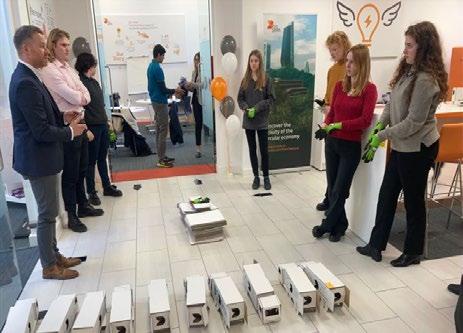
Sponsoring the engineers of the future through our STEM partnership
This year, we continued our partnership with the Arkwright Foundation by awarding four scholarships to promote STEM (Science, Technology, Engineering and Mathematics) careers to students from state-funded schools. Although it has historically been difficult to attract women into our industry, we are determined to make progress.
As a result of our effort to sponsor underrepresented talent and to widen the talent pool of women in STEM, we have increased female representation, achieving an equal gender split in 2021/22.
We held a Connect Day in February at our Fordham Impact Centre and factory to provide an overview of DS Smith and engineering roles in the Company and some practical activities using cardboard.
Our work with the Arkwright Foundation not only allows us to play an active role in student development and provide experience to help them in the future, but we also promote our brand to STEM students to develop a talent pool for our Early Career schemes.
Developing future leaders from within through our Global Leadership Programme and Aspire
In partnership with Oxford Saïd Business School (OSBS), in 2021/22 we ran two development programmes, the Global Leadership Programme, our senior leaders offer with 24 places, and Aspire, aimed at high-performing and highpotential future leaders with 50 places.
Both the Global Leadership Programme and Aspire evolved to reflect the recent changes in our Company, industry and business world. The programmes blend thought leadership theory, exploration and practical application. Our combined external OSBS faculty and internal faculty, comprising members of our Group Operating Committee (GOC) and subject matter experts, collaborate to create a thought leadership experience which leads to benefits for our business.
We launched a CPD (Continuous Professional Development) series with OSBS, which enables access to wider faculty and is open to all of our leaders. For example, ‘New Approaches to Strategy’, explores how to lead strategy post-Covid, beginning with an overview of strategy evolution and the challenges that corporations are now facing.
Our goal is to continuously expand our thinking, grow our talent pool and to develop well-rounded people who will contribute to our future success. We will continue to evolve these programmes to reflect the needs of our business and leaders.
We are committed to improving female representation at all levels. Our improvement in gender representation is encouraging but, to take this further, we need more women in senior positions.
In 2021/22, we created a targeted development offer for high-potential/mid-level female talent who are at or nearing a critical decision point in their careers. This includes both those transitioning into leadership roles, considering their next role and those consolidating their career decisions. To date, 30 women have completed the programme and recommended this to other women as an influential and impactful investment in their development.
With our partners, we built a five-session programme, comprising virtual half-days, which centre on creating a career development coaching circle. With no more than six participants, we provided a space for our audience to explore a range of thought-provoking experiences which act as drivers and blockers in a workplace. As a result, we are building a network of women with a shared experience who can connect, access support, and freely discuss their challenges and successes.
The content has a flexible approach to ensure it meets the objectives of each unique group but broadly explores personal values and drivers, goal setting (both personal and professional) and resources, networks and behavioural skills needed to grow and achieve your goals and personal brand.
We will continue to run more groups during 2022/23 and measure the impact on attracting, retaining, and motivating women in DS Smith. We will progress plans to expand our diversity and inclusion agenda with programmes which focus on other diverse groups.
“Accelerate was an
opportunity
to
connect and learn from the experiences of female colleagues drawn from across the organisation, creating a small network that provided unique insight and connections.”
Shona Inglis Group Head of Internal Communications
Inclusive talent development opportunities for 100 per cent of our employees
In response to our last employee engagement survey, we set a goal to increase access to learning and development opportunities for all employees.
In 2021/22, we launched a ‘Development for All’ project to explore lifelong learning and opportunities to open up our internal learning and development suite and the broader external offer to 100 per cent of our employees.
The pilot initiative, based at two UK sites, explores how we can engage our non-connected community by encouraging them to expand their skills and knowledge and interests. The pilot provides a technological solution which enables access to our e-Learning site and offers personal, professional and technical/work related development together with access to workshops and training events.
Learning pathways have been created which guide learners to materials which are not only bespoke, but also add value in their personal life, such as managing your finances, retirement planning and running a local sports team.
Turn to pages 43 to 44 to learn more about our work to create a more diverse and inclusive workplace.
Employees increasingly want to work for organisations that align with their own values and bring meaning to their everyday lives. By engaging employees, we enable them to identify and feel ownership of our Purpose, which in turn drives productivity, innovation, retention and performance.
Ensuring we fully understand what matters to employees, how we help them thrive and where we need to improve, continue to be fundamental to our engagement strategy.
Our global engagement survey enables us to monitor the engagement of our employees with our business, culture and Purpose. As well as traditional themes such as management practices, communication and personal development, our latest survey was designed to help us better understand areas that we did not ask about previously, such as ethics and inclusion.
The survey enables us to understand how the different issues that drive positive engagement have changed as the world changes. Alongside engagement, we measure and track employee enablement, which is the creation of a working environment in which everyone can do their best work and where their skills and abilities are fully utilised. When employees feel both engaged and enabled (they ‘want to’ and ‘can do’), we see higher levels of productivity.
Our 2021 survey results also show that the topics that are the core of our strategic ambition, such as health and safety, sustainability, diversity and inclusion and customer focus, are also shared by our employees, being the highestranking items in the survey. This survey highlighted increasing demand from employees for additional learning and development. In 2022/23, we will continue to focus on these areas with our learning and development offers, line manager capability development and The Smithies recognition awards.
We continue to discuss the themes of the survey findings with employees through listening groups and our European Works Council and will evolve our listening approach to ensure continuous feedback conversations happen and timely local action is taken. As well as challenges around development, we know the attraction and retention of employees will be critical to our future success. In 2022/23, we will also consolidate our employee feedback to progress our plans and develop a compelling proposition that describes how people can thrive.
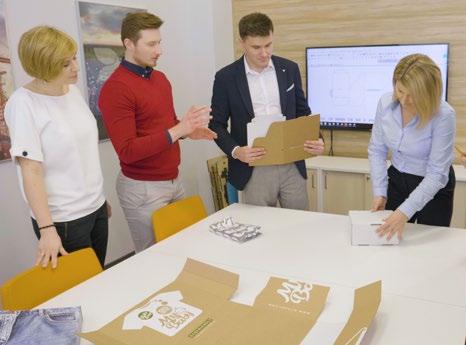
A further opportunity for us to listen to and learn from the views of employees comes from the important partnership with our European Works Council (EWC). The EWC brings together employee representatives from across Europe, engaging them through an effective information and consultation process.
The full council of up to 50 representatives meets with the management team twice a year to share feedback, exchange views and discuss opportunities to improve; an event which is interpreted live to ensure everyone is included and can participate.
In addition the EWC Executive holds monthly meetings with their Regional representatives in order to ensure we have a regular two-way dialogue on employee matters across Europe.
By developing our employee experience, we are attracting and retaining the best individuals to continue to grow and sustain our business in a changing world. In 2021/22, we built on the experience gained from the Covid-19 pandemic to shape new sustainable ways of working. There is a growing need for flexibility in where, when, and how employees work. We have made progress on new ways of working with a renewed focus on and recognition of flexibility, connectedness, and wellbeing, from flexible working hours to working-from-home arrangements, where appropriate.
For example, we have increased flexibility for staff through 24/7 operations at some of our sites. We continue to explore the possibility of expanding the scope and scale of flexible working for more employees, including job sharing initiatives and flexibility of when and how much we work to help balance family and personal commitments. Offering more flexible contracts will help us attract and keep people with varying personal circumstances, both enhancing our talent pool and making us a more inclusive employer. We have also developed our employee value proposition through developing our benefits offered to employees across our countries of operation. For example, in Germany, a cycle to work scheme has been implemented.
Our people have daily challenges at work and at home, including family life. In January, we launched a partnership with Care.com to provide support for our North American employees and families to handle daily challenges at home. Our employees are able to access several platforms, including a Care.com membership, as well as LifeCare Family and LifeMart. As some of the most recognised names in care, these benefits provide access to a large network of trusted care services and qualified care providers at an affordable price, to help with childcare, pet care, support looking after elderly family members, tutoring and housekeeping. Additionally, there are online resources and content, trained Care Specialists, and an online discount programme offering savings on major brands and everyday essentials. By offering access to help for all NAPP employees when needed, we are supporting our employees in all aspects of their lives to create a more engaged workforce that is happier, healthier and committed.
Our employees are significantly engaged on sustainability issues, with 82 per cent of employees agreeing that we are committed to protecting the environment. We continue to embed sustainability internally, such as in our employee value proposition, and make sustainability personally relevant to our people.
After listening to employee requests, in 2021/22 we launched our Electric Vehicle Scheme for UK employees. The scheme is promoted to employees through internal communications, on-site posters and digital screens and distributing employee briefing packs, enabling our people to become sustainability champions and personally involved in sustainability issues.
This not only enables employees to play an individual role in supporting our target to reduce carbon emissions across all three scopes, but it also helps people to find new ways to embrace personal responsibility for climate change. This eliminates the distance between personal and business values which, ultimately, engages our people with our sustainability agenda, enables our people to feel a stronger connection to their workplace, and attracts and retains motivated individuals who believe in our Purpose.
The Smithies
Employees being recognised and valued for their contributions, and how often this occurs, has a huge impact on employee engagement.
We are continually inspired by our employees across the business who excel at what they do and go above and beyond for their colleagues, customers, and communities. To recognise and celebrate our hidden gems at DS Smith, we developed our global recognition programme – The Smithies.
In our second year of this programme, employees are recognised locally on a monthly basis which culminated in a global awards ceremony to announce the top three finalists and winner of each category. This programme celebrates individuals and teams who exemplify the very best of each category. The ceremony encourages and champions outstanding behaviours. Through stories of resilience, responsiveness and innovation, the Smithies celebrates nominees who embody our values and live our Purpose every day.
This year, in October 2021, we presented the ceremony live and it was also broadcast online from multiple locations around the world, the first ceremony of its kind in DS Smith history. We recognised 33 finalists, seven winners, and a special recognition award. More than 1,150 employees tuned in to support their colleagues by watching the live broadcast and others attended more than 50 local events in-person.
In a post-event poll, colleagues rated their overall impression of the event with a score of 8.9, with many describing an even stronger sense of pride in the Company following the ceremony.
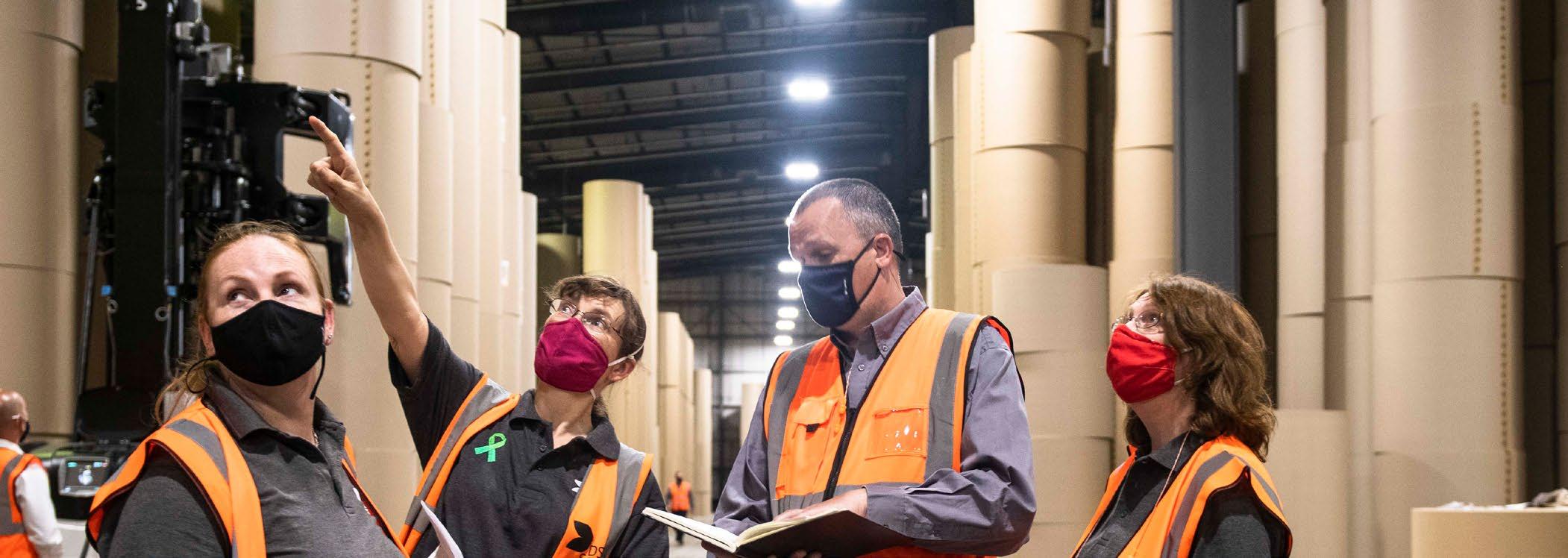
Why is this important?
As a global employer of over 29,000 people, supported by thousands more in our extensive supply chains, we have a responsibility to respect and uphold human rights. We have a zero-tolerance approach to modern slavery both within our Company and in the supply chain, and it is crucial that measures are in place to promote human rights and prevent modern slavery.
How are we contributing to the Sustainable Development Goals?

Protecting labour rights, promoting safe and secure working environments and eradicating modern slavery.
Now
• By 2022, conduct a human rights risk assessment
Next steps
• Establish ongoing risk assessment, data quality and reporting improvement plans to strengthen due diligence
• Embed our new Human Rights Policy into our culture and practices by raising awareness of employees and suppliers
The transition to the circular economy, like any systemic change, must be just and fair, meaning that the benefits are shared widely and support human rights and livelihoods when economies shift. As the circular economy ramps up, the spotlight is placed on sourcing and supply chains, bringing into focus where and how products and materials are made, and by whom. A sustainable circular economy is economically and socially inclusive, treating everybody that makes it work with respect.
Known human rights breaches as a result of our operations, including incidents of violations to the rights of indigenous people
We are committed to conducting business ethically and responsibly and to respecting human rights. The recent global trends have emphasised why human rights matter so much and as a global manufacturer in the paper and packaging industry involved in sourcing, manufacturing and recycling, we have the potential to impact human rights across our organisation and supply chain.
We respect the fundamental human rights of all people, complying with all legal requirements. We are committed to internationally declared human rights and standards, including the UN Guiding Principles on Business and Human Rights and the Universal Declaration of Human Rights, amongst others. This commitment is described in our Code of Conduct, setting the expectations that apply to all our employees, explaining our approach to ethical business practices, human and labour rights and the environment. We have clear values that we expect all our employees to own and live by and we have undertaken a range of measures to strengthen human rights due diligence.
By 2022, conduct a human rights risk assessment
In 2021/22, we achieved our target to conduct a human rights risk assessment, which involved producing a high-level human rights risk and gap assessment to identify, assess and mitigate any potential human rights risk across our operations and supply chain. Delivered by a specialist consultancy, this assessment evaluated a range of data sources from all of our operations and supply chains in all of the countries in which we operate, including employees, third-party contractors, indigenous people and migrant workers, against the requirements of the United Nations (UN) Guiding Principles on Business and Human Rights, which in turn inform the OECD Framework for Responsible Business. This process involved interviews with internal and external stakeholders, as well as document review of more than 30 internal and public documents and analysis of internal datasets and publicly available country risk data.
The assessment concluded that we operate in predominantly low- to medium-risk locations. It identified five salient human rights risks across our operations and supply chain and in specific higher-risk geographies, such as Eastern Europe and North America. These are:
• Forced labour and child labour
• Health and safety
• Wages and working hours
• Freedom of association
• Discrimination
The findings set out opportunities to focus our efforts, enabling an informed roadmap for risk reduction and mitigation and to strengthen and embed human rights due diligence across our business and supply chains.
As an immediate next step, we developed a new Human Rights Policy to manage and mitigate risk across our operations, which can be found on the DS Smith website. The policy outlines our commitments and responsibility to respect human rights. It applies to all DS Smith operations and employees and governs all our business dealings and the conduct of all persons or organisations with whom we contract directly or who we appoint to act on our behalf.
We established a multi-disciplinary Modern Slavery and Human Rights Committee and a Modern Slavery and Human Rights Working Group. The committee reports to our Group Operating Committee (GOC), which is chaired by our Group Chief Executive, thereby strengthening the governance of human rights due diligence. This forum will steer action and monitor progress, focussing on embedding consistent due diligence across the business and into the supply chain. The working group reports to this committee quarterly and is responsible for the delivery of the work on human rights.
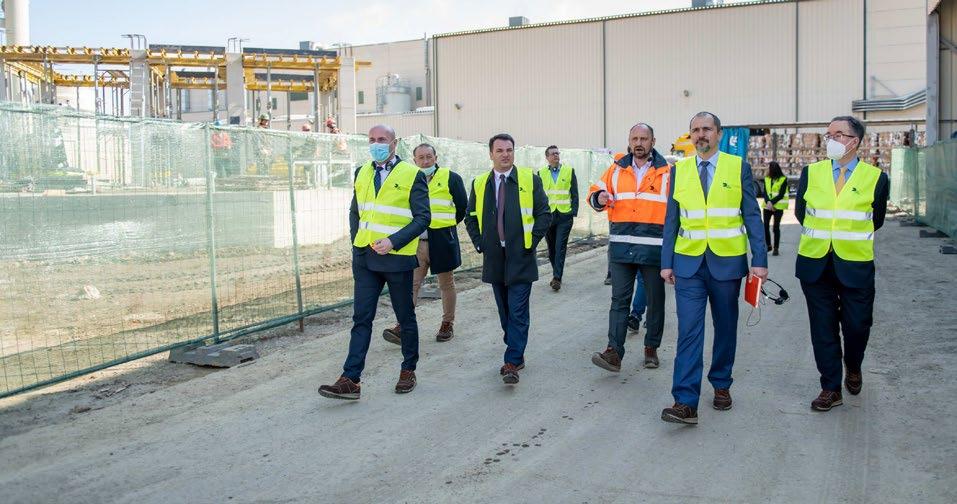
Our Code of Conduct describes expectations that apply to all our employees, providing guidance on our approach to ethical business practices, human and labour rights and the environment. It is made available to employees as part of their induction and has been translated into 27 languages. All employees are encouraged to report suspected misconduct, non-compliance or unethical behaviour.
Health and safety
Health and safety is our top priority and we actively strive for continuous improvement of health and safety in the workplace.
Business practice
It is our policy that all current or potential business partners are treated fairly and equitably.
Human rights
We respect fundamental human rights and we are committed to the principles set out in the United Nations Universal Declaration of Human Rights.
Environment
We are committed to running our business in a responsible and sustainable manner.
Employee relations
We are an equal opportunities employer. We are firmly committed to both the principle and realisation of equal opportunities and our policies are designed to provide such equality.
Personal development
We aim to develop our employees to fulfil their potential. We promote the alignment of the Group’s talent behind the corporate strategy through communication, engagement and effective management.
Working transparently
We are committed to conducting all of our affairs with openness and transparency, subject only to the needs of commercial confidentiality.
Community relations
We seek to develop and maintain good relationships in the local communities in which we operate.
We use SEDEX (Supplier Ethical Data Exchange) to identify human rights risk in our own operations and to manage and improve working conditions in our supply chains. We are committed to 100 per cent of our sites completing the SAQ (Self-Assessment Questionnaire) for annual risk assessments with audits at sites considered to be high-risk based on their location and risk assessment score. This is an external audit, providing assurance of the management of supply chain risk to our customers. Over 90 sites already undertake this audit, covering labour standards, health and safety, environment and business ethics. Throughout the year, there were zero (2020/21: zero) known breaches of human rights as a result of our operations, including incidents of violation to the rights of indigenous people.
Our commitment to respect and promote human rights extends to our suppliers. We seek to establish relationships with businesses that share the same principles and values as ours. Further commentary on human rights due diligence in our supply chain can be found on page 59.
Our salient human rights
The following five human rights risks were identified in our high-level human rights risk and gap assessment.
We have a zero-tolerance approach to forced labour of any kind within the Group and our supply chain. Our Modern Slavery and Human Trafficking Policy ensures we are doing everything in our power to manage the risks of modern slavery in our business and in our supply chain. We do not employ people below the minimum wage at which the applicable local law permits the relevant work type to be undertaken.
Health and safety is a top priority and we strive for continuous improvement to achieve our target of zero harm. We are committed to ensuring that our products and operations are safe and this extends to downstream users of our products, including consumers.
We are committed to treating all employees fairly and honestly regardless of where they work. Where possible we are committed to monitor and take action to reduce excessive working hours, and to support flexible working arrangements.
It is a fundamental right of employees to have the freedom of association and collective bargaining. We recognise and respect the rights which employees have under local and transnational laws, including, where applicable, the right of employees to collective representation and bargaining. Employees will not be subjected to any detriment because of their involvement in legitimate trade union activities. In 2021/22, c. 85 per cent of our global workforce were covered under collective bargaining agreements. Our European Works Council (EWC) provides a forum for information sharing and consultation.
We are committed to promoting equal opportunities in employment and pride ourselves on building a culture free from discrimination, harassment and victimisation at work. We are firmly committed to both the principle and realisation of equal opportunities and our policies are designed to provide such equality. We are opposed to any form of less favourable treatment or discrimination, in no particular order, on the grounds of age, disability, race, religion or belief, sex, sexual orientation, gender reassignment, marriage and civil partnership, pregnancy and maternity or any other characteristic protected by local law. We are also committed to providing a respectful work environment and have a zero-tolerance approach to discrimination. Our employees and contingent workers are required to comply with our Equal Opportunities and Anti-Discrimination Policy at all times.
We comply with the highest responsible and ethical business standards.
Anti-bribery and anti-corruption
We do not tolerate any form of corruption and we are committed to complying with applicable anti-corruption laws in all countries in which we conduct business. All employees are required to report any circumstances that are in breach of our Anti-bribery and Anti-corruption Policy and all employees are required to undertake training on anti-corruption and bribery issues.
We recognise that the act of giving and accepting gifts can be part of building normal business relationships. Some gifts and hospitality can create improper influence and conflicts of interests. Employees are required to report any circumstances which are in breach of our Gifts and Hospitality Policy.
No political donations were made in 2021/22 (2020/21: nil). DS Smith has a policy of not making donations to political organisations or independent election candidates or incurring political expenditure anywhere in the world, as defined in the Political Parties, Elections and Referendums Act 2000.
Our ‘Speak Up!’ policy is communicated to employees in employee handbooks, via our intranet and on notice boards.
It encourages employees to ask for advice or raise their concerns internally about unethical behaviour and explains the various internal channels: reporting via line manager or local HR, internal email address direct to the Company Secretary, ‘Speak Up!’ telephone number or website, or reporting via a local representative of the employee. ‘Speak Up!‘ is available not only to employees, but a range of other third parties. It is supported by an independent, 24/7 telephone number and website that is available in local languages. Confidentiality is maintained throughout the whole process and reasonable steps are taken to ensure that the reporter is not subjected to any retaliation from raising the report.
In 2021/22, 50 (2020/21: 25) reports were received, investigated and resolved through our ‘Speak Up!’ processes, illustrating an increased awareness of the ‘Speak Up!’ programme.
‘Speak Up!’
relating to
Reports relating to alleged
Tax strategy
We aim to manage our tax affairs in a proactive and responsible way. Our Group Tax Strategy outlines the approach we adopt to manage the tax obligations and activities of the Group.
Compliance
Compliance with local, national and international legislation is fundamental to our way of doing business. It is a licence to operate and a condition of trading. Building trust in our stakeholders and protecting our reputation are crucial, as they lead to repeat business and sustainable financial growth. Compliance monitoring and annual training are provided by our legal teams and 100% of our employees and everybody is required to comply with training and monitoring processes.
Human Rights Policy
Modern Slavery Policy
Modern Slavery and Human Trafficking Statement
Code of Conduct
Anti-Bribery and AntiCorruption Policy
Equal Opportunities and Anti-Discrimination Policy
‘Speak Up!’ Policy
Tax policy
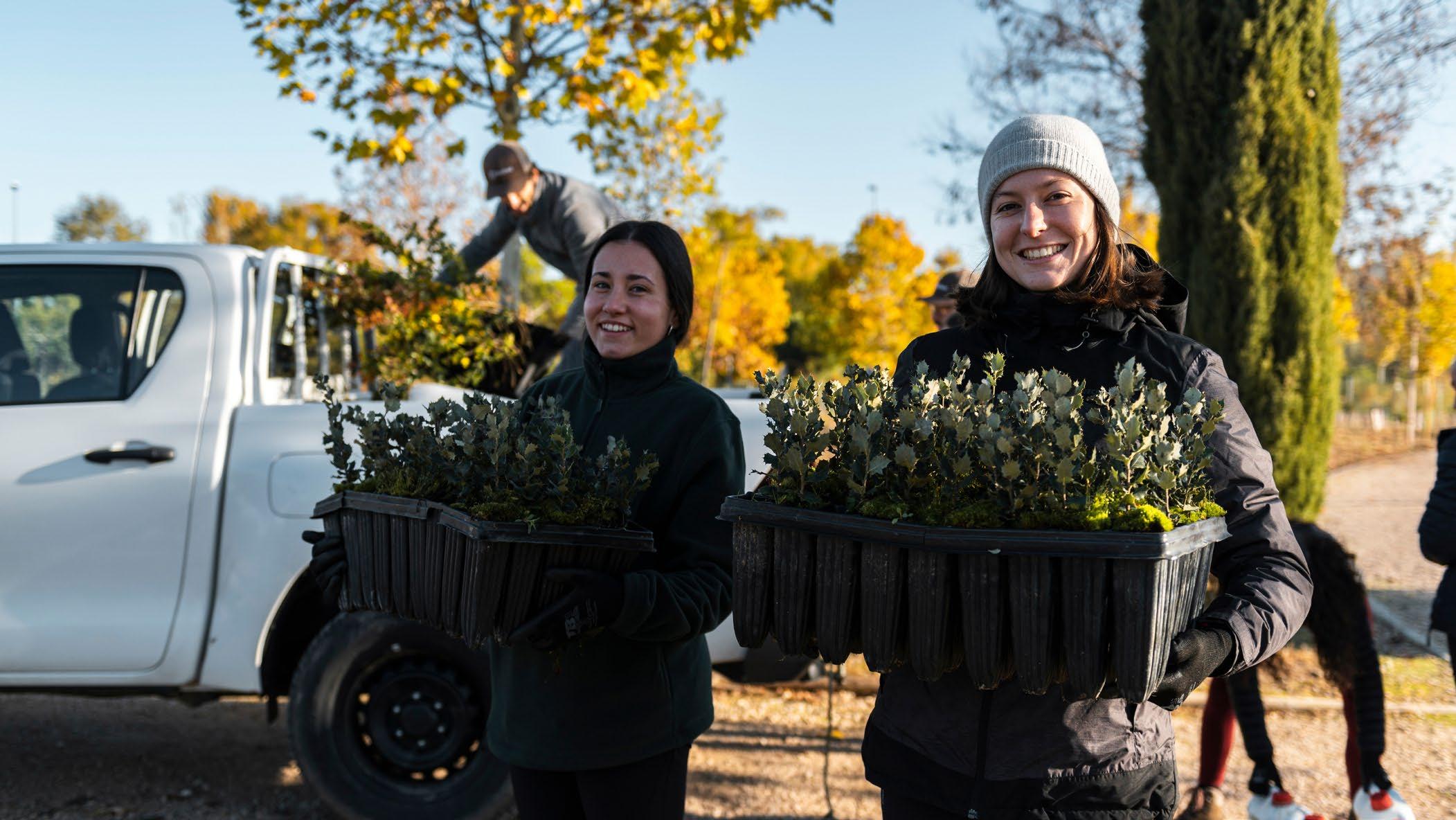
70% believe volunteer work is more likely to boost team morale than happy hours (Deloitte)
53% of under 35s want to volunteer more than they do (City Philanthropy)
of consumer purchasing decisions are influenced by a company’s charitable giving (Mintel) In this section Contributing to our communities Impact
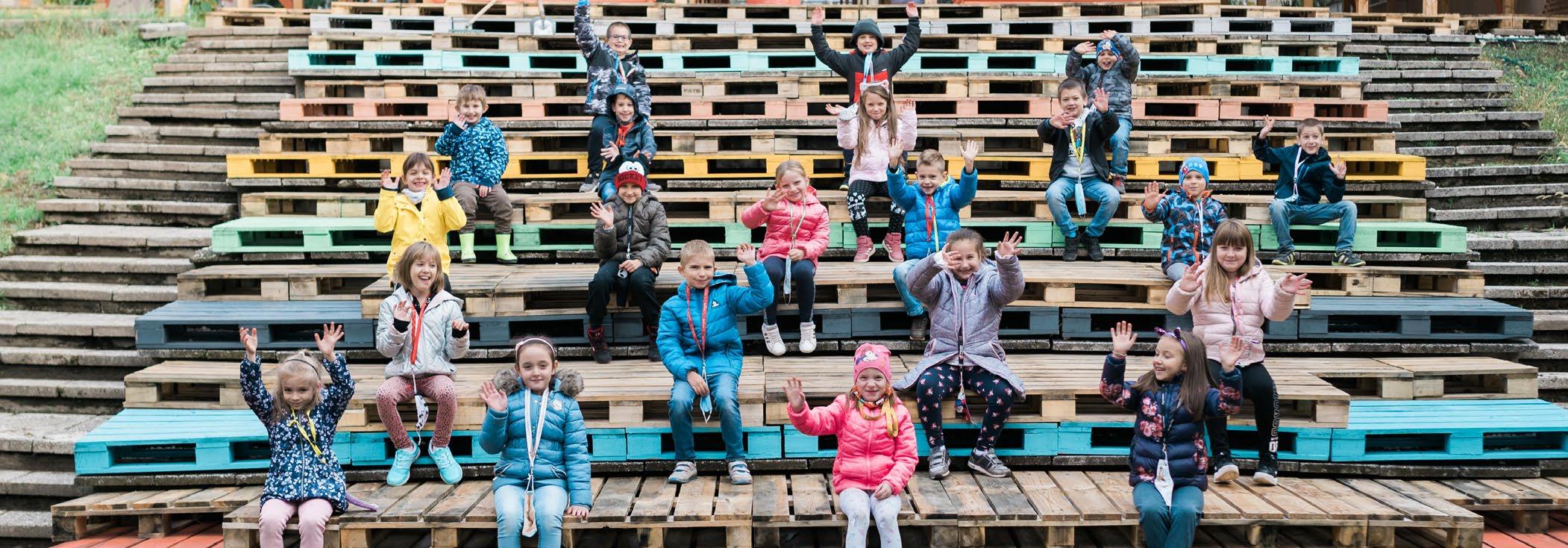
Why does this matter?
Contributing to local communities is a core social responsibility for any organisation. Not only does our Community Programme support local causes and build positive relationships with nearby stakeholder groups, but it also engages and motivates our people.
How does this contribute to the UN SDGs?

Contributing to our communities focuses on inspiring the next generation through circular lifestyles (SDG 4) and protecting our environment through biodiversity projects (SDG 15).
• Maintain that 100 per cent of our sites engage in community activities every year
• Continue to encourage community engagement in line with our biodiversity and circular economy education priority themes
• Deliver bigger and better Group-wide community initiatives that bring all of our colleagues together around a common cause
• Further promote employee volunteering as a means to contributing to our Community Programme
We need to build communities that are based on circular economy principles, which ultimately aim to redefine growth and focus on positive society-wide benefits. The circular economy requires communities to come together like never before, to share resources, ideas and new practices that move everybody in society towards the same, sustainable direction. As we each have a roleto play, engaging our local communities on biodiversity and circular economy education helps to accelerate the transition.
of sites taking part in community activities (%)
Maintain 100 per cent of sites engaged in community activities each year
This year was the third year running in which 100 per cent of our sites with 50 or more full time employees took part in community activities as part of our Group-wide Community Programme, with around half of our sites participating in more than one community activity during the year.
Despite the ongoing Covid-19 restrictions made in-person volunteering more difficult, employees across the business volunteered an estimated over 6,770 hours to support community initiatives. Through our community activities, we have reached a range of people, including charities, schools and local residents, supporting a range of causes, such as offering transport connections to support a zero food waste project in Cornwall, UK, supporting the education of industrial design students through product donation in Brestanica, Slovenia, and building a composting zone and bird and insect nesting boxes in a playground in Vilnius, Lithuania.
Every year we are becoming more ambitious in our community engagement. In 2021/22, we made progress on redirecting our Community Programme priorities to reflect strategic investments in our communities to have the greatest impact possible, providing a return for community and Company. In order to scale our impact and strengthen our focus, we introduced a series of Group-wide initiatives, such as World Cleanup Day and the launch of our Circular Economy Lesson Plan, in 12 languages, to engage young people on circular lifestyles on the International Day of Education. We strengthened our internal network of Community Champions across the world. Our commitment to community engagement has been reinforced in our new Community Engagement and Charitable Giving Policy, finalised in May 2022.
The community projects with the greatest and most positive impact come from the unique, creative ideas in response to the needs of our local communities. The most successful themes of our Community Programme are (but are not limited to) biodiversity and sustainability-related education (such as circular economy).
New Castle
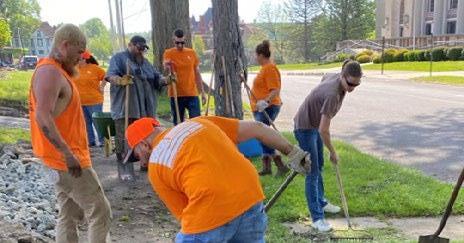
Our New Castle Packaging plant in North America kicked off a public pollinator and historic sample garden project.
Fourteen employees and six community volunteers installed a river rock rain garden, stone walking path and raised flower beds. The garden provides a biodiverse ecosystem for bees, butterflies and hummingbirds, whilst creating educational opportunities for the local community on the topic of urban gardening to enhance biodiversity.

Our Kielce Packaging plant in Poland supported a biodiversity project in Nowiny, a nearby industrial area. Our employees, supported by Dotlenieni Foundation, parents, the local authorities and mayor, prepared the land next to a kindergarten, created a vegetable garden and herbarium, and planted species that improve biodiversity. The project has created a green space for local residents and kindergarten students, encouraging pupils to prepare meals using locally grown vegetables.
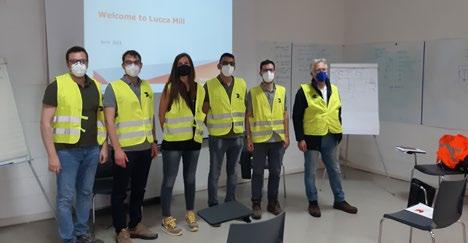
Our Lucca Mill in Italy supported a brand-new degree programme for future papermakers in conjunction with Pisa University and the Italian government. We are supporting this five-year programme with an external teacher and financial support. This includes regular site tours, insights and exposure to our expertise.
“It’s not often that you get to shape the futures of young people in such a way. Ideas and enthusiasm are infectious, and the students have been a breath of fresh air on site.”
Lido Ferri Sustainability Manager at Lucca
Not only has this been a positive example of offering our unique expertise to help educate members of the community, but it will also help to attract future talent to Lucca Mill.
We look forward to continuing our support of the programme next year and to welcoming some of the first graduates into DS Smith in the future.
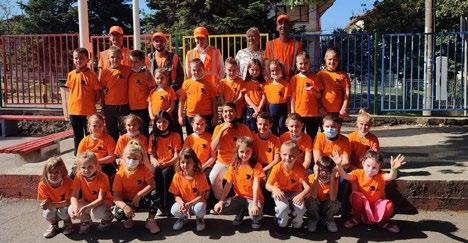
Our Belgrade Recycling Depot in Serbia gave over 150 children a unique glimpse into recycling. Pupils collected over 1.1 tonnes of cardboard and paper waste from their homes and took part in several activities, learning about the circular economy and the journey of a cardboard box. This educated, encouraged and inspired the next generation to think about circularity and recycling habits in their own lives.
“These young students were fully engaged with recycling and sustainability, and kept us on our toes with some fantastic, challenging questions. They were buzzing with ideas of how they can make waste management improvements at their school and at home. It was a pleasure to see the next generation proactively discussing ways to make a difference!”
Dejan Trifunović Director of Legal and General Affairs, Belgrade
Providing our resources to benefit our local communities
Contributing to our communities extends further than our biodiversity and circular economy education priorities. We have been inspired by the kind response of our colleagues and business throughout the pandemic. Whilst we focus our efforts on strategic community engagement, we also acknowledge the importance of supporting local causes.
Our Skopje Packaging plant in North Macedonia organised ‘World of Cardboard’, a project with the local kindergarten to replace all plastic items in the playroom with cardboard alternatives. Thirty children aged 4-5 and their teachers created decorations for their classroom and toys, which they use in their everyday activities, encouraging children to think and learn about recyclable alternatives.
Our Bretagne Packaging plant in France organised a boat regatta with the city of Larmor-Plage. All boats that entered the event were made only from corrugated board sheets supplied by the box plant, and could use only cardboard, glue and non-polluting paint. With regattas organised throughout the day, 45 participating crews, and nearly 600 spectators, DS Smith Packaging Bretagne contributed employee time and product to create a fun-filled community event, demonstrating the reliability and flexibility of our product, even under the most demanding conditions.
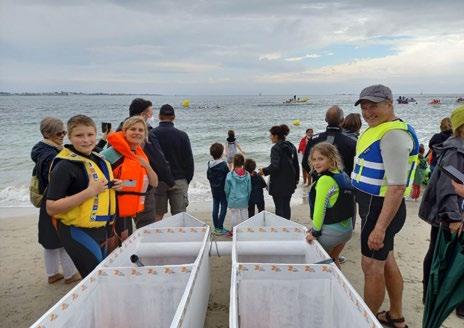
On World Cleanup Day, we invited all of our people and their family and friends to roll up their sleeves to make our local spaces cleaner and greener.
Throughout September, over 300 employees from across the business, along with their families and friends in 17 countries, contributed over 700 employee working hours, equivalent to 95 working days, to collect more than 4.5 tonnes of litter. We picked up litter from beaches, forests, parks, city centres, canals and industrial estates.
By mobilising our employees and communities to act, this initiative had an impact on employee volunteers, people in the community, and the environment, not only making local communities cleaner and greener, but also raising awareness of the global waste crisis and its resulting environmental challenges. It also demonstrated how small actions can unite to make a significant and positive ecological impact and contribute to a greener future.
“World Cleanup Day was a rewarding opportunity for outdoor team-building and, most importantly, we realised that our recycling depot must lead by example through educating others to care for our planet.”
Alessandro
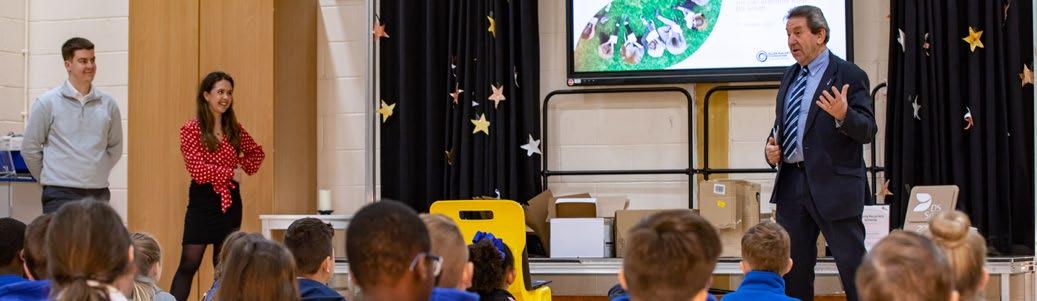
“Let’s Go Circular!” – our free lesson plan to engage people on the circular economy
We aim to engage 5 million young people on the circular economy and circular lifestyles by 2025 and this year, we did more of this than ever before through the launch of our Circular Economy Lesson Plan at COP26 in November.
After identifying that very few circular economy educational resources exist for young people, we used our expertise to develop a lesson plan to engage the next generation, particularly those aged 11 to 14, on the meaning and importance of circularity and the part we can play to protect the planet’s natural resources.
Duarte, Depot Manager, Figueira Download our free Circular Economy Lesson Plan
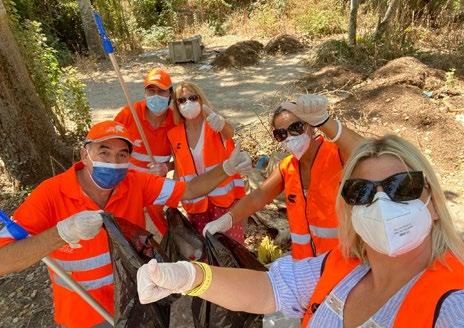
Our Circular Economy Lesson Plan was launched as a free, public resource for anyone to download and use. On the International Day of Education in January, we encouraged our sites to reach out to their local schools across the countries in which we operate to spread the word on the importance of the circular economy.
Translated into 12 languages, we estimate that our Circular Economy Lesson Plan has reached c. 7,500 people and educated them on the circular economy and circular lifestyles.
community impact
There are a range of ways in which we actively contribute to the communities in which we operate through volunteering employee time, making in-kind donations of product or services and providing financial contributions.
We have made progress in measuring our contribution to local communities by aligning our Community Engagement and Charitable Giving Policy with the B4SI Framework, the global standard in measuring and managing social impact for companies.
We have also expanded the metrics we report, and in addition to capturing our financial donations, we are capturing more accurately the time our employees donate to causes within our Community Programme.
We estimate that the value of our community engagement in 2021/22 was around £2.7 million.
Through the DS Smith Charitable Foundation, this year we have funded 29,000 trees to be planted, one tree for each current employee.
These include 4,000 trees in Portugal, 4,000 trees in Essex, 6,000 trees across Pennsylvania, Georgia and Virginia, 5,000 trees in Denmark and 10,000 trees in Romania and consist of a variety of native species that conserve wildlife habitat and support biodiversity
“We’re proud to work with partners dedicated to taking real action for the environment. These reforestation efforts will help to further DS Smith’s dedication to sustainability, mitigating the effects of
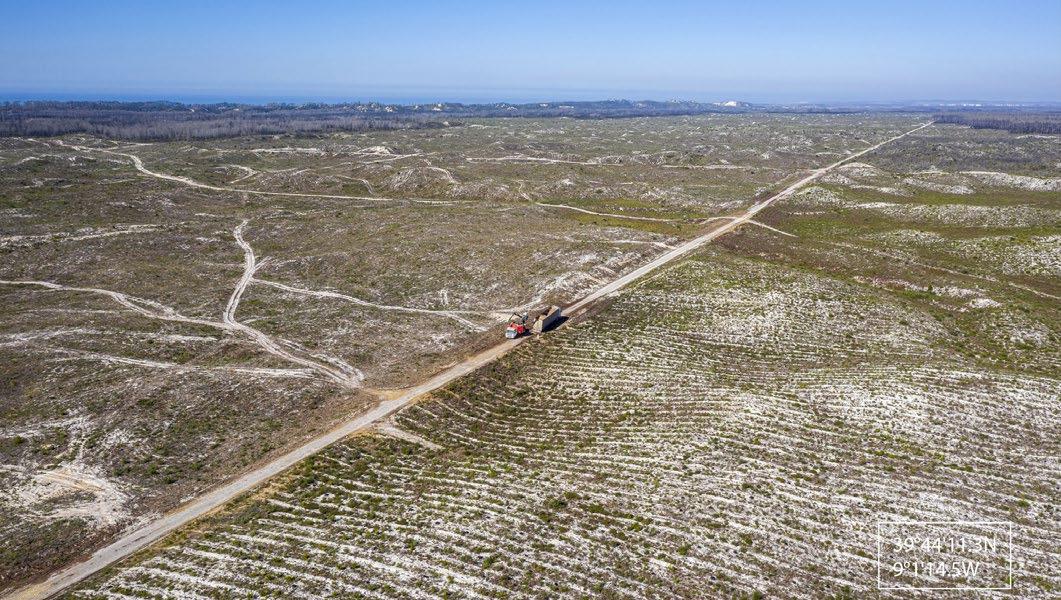
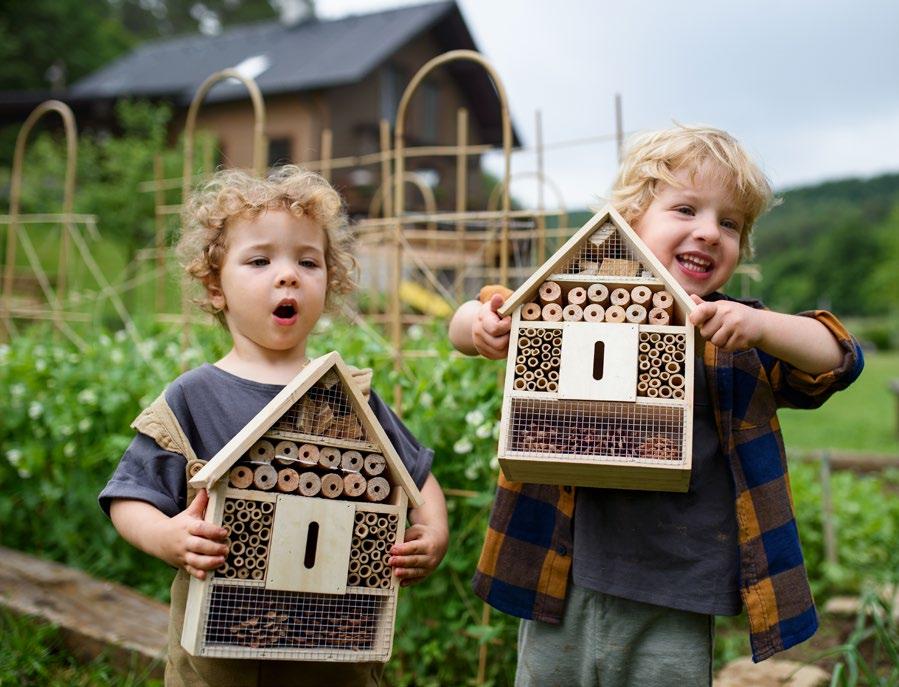
The Foundation, established in 2011, has supported charitable causes and organisations for over ten years.
The Foundation primarily supports charitable causes that are in the local communities of our operations and that align with our primary objectives to protect our environment by conserving and improving biodiversity, and provide educational opportunities, particularly circular economy education and training for future generations.
The Foundation is made up of eight trustees and the secretary. The Small Donations Committee meets quarterly and the Large Donations Committee (joined by a member of our Group
Operating Committee) meets biannually to review and approve funding applications.
This year, the Charitable Foundation has supported over 75 charitable causes, ranging from employee-led projects such as the Hedgehog Rescue Centre ‘Amigos Picudos’ in Portugal, to large causes like donations to the Ellen MacArthur Foundation and sponsoring the partnership with One Tree Planted.
90% of environmental impact in consumerpackaging goods is in the supply chain (McKinsey)
70% of customers consider sustainability when selecting new suppliers and renewing contracts (EcoVadis)
>200 million hectares of forest certified to FSC standards across the world (FSC)
In this section
Sourcing sustainably Circular procurement
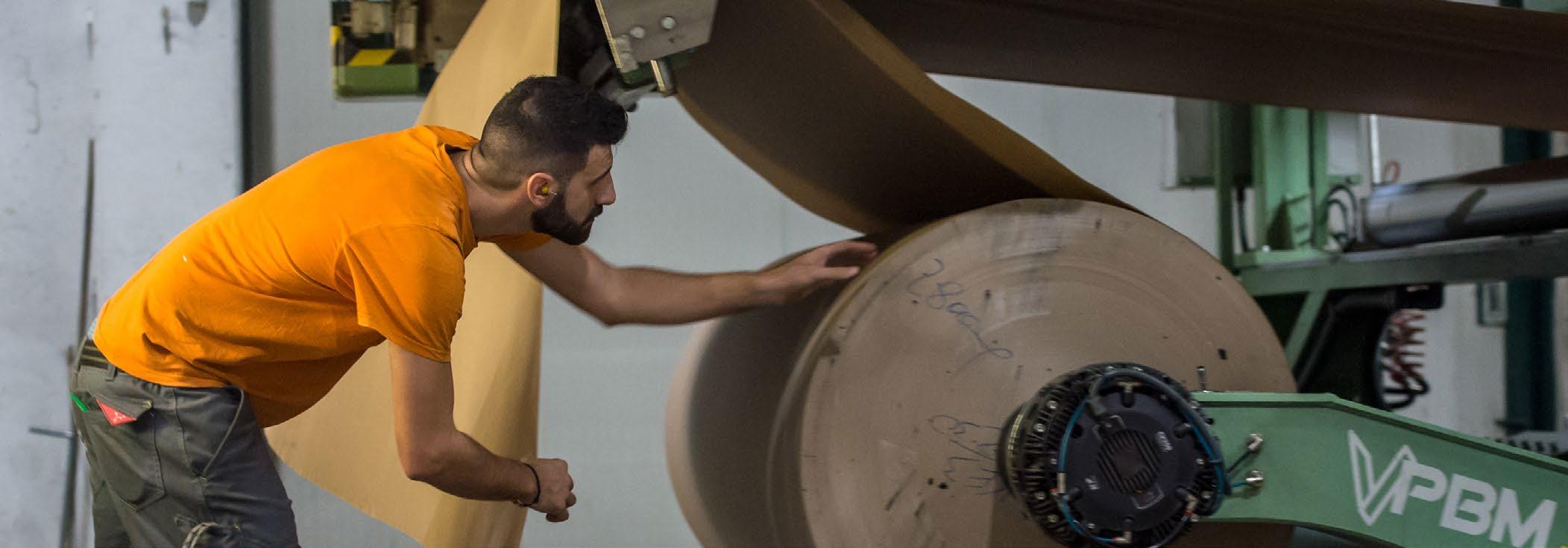
Why does this matter?
Sourcing sustainably prevents and mitigates negative social and environmental impacts in the supply chain. As many of the greatest impacts of many businesses occur in complex global supply chains, supply chain resiliency and sustainability can be improved by collaborating with suppliers through the products and services we buy.
How does this contribute to the UN SDGs?
Sourcing sustainably contributes to protecting labour rights and promoting safe and secure working environments.
Now
• By 2025, ensure 100 per cent of suppliers comply with our sustainability standards
• Maintain that 100 per cent of the papers we use are recycled or chain of custody certified each year
Next
• By 2027, encourage 100 per cent of our strategic suppliers* to set their own science-based targets
• Reduce Scope 1, 2 and 3 GHG emissions 46 per cent by 2030 compared to 2019 and reach Net Zero GHG emissions by 2050
* Strategic suppliers account for c. 76 per cent of Purchased Goods and Services Scope 3 emissions in the 2019/20 base year
• Continue to identify further opportunities for collaboration and engagement with suppliers on the circular economy
• Conduct audits for all of the suppliers we consider high-risk
• Continue to develop our Scope 3 measurement, reporting and engagement
The circular economy can only be delivered if an entire system of suppliers, customers and other parties changes, building a system that makes best possible use of natural resources to benefit business and the whole of society. By promoting the circular economy to our supply chain, for example by sourcing exclusively recycled or chain of custody certified papers, we can reduce the impacts linked to our activities in the supply chain.
By 2025, ensure 100 per cent of suppliers comply with our sustainability standards
In 2021/22, 78 per cent (2020/21: 45 per cent) of our suppliers have agreed to our Global Supplier Standards (GSS), setting high expectations on sustainable and responsible business. Included in the total are 100 per cent of our strategic suppliers that have agreed to the standards.
This year, we translated our GSS document into more languages to make it accessible to our suppliers across the globe and to help them to understand, agree to and comply with our standards. We refined the GSS to ensure that it captures all of the potential issues within our supply chain.
We launched a new Supplier Management Policy, which documents how we assess and engage with our suppliers across a range of topics, including human rights. The policy supports our target for 100 per cent of our suppliers to agree to our GSS, setting out how we aim to reach this ambition, including how we approach supplier engagement more broadly. We are committed to auditing our higher-risk suppliers and to engage in structural collaboration on human rights topics with our key suppliers, including in our Human Rights Policy and Anti-Slavery and Human Trafficking Policy which cover our supply chain as well as our own operations.
We continue to use EcoVadis IQ to apply predictive intelligence to monitor and assess risk and ethical business conduct in our supply chain. This tool enables us to identify suppliers, countries and categories that potentially pose risk and address the risk appropriately. This year we identified all our critical suppliers who will be required to complete an EcoVadis assessment in 2022/23, driving progress and strengthening human rights due diligence throughout the supply chain.
We use EcoVadis to assess supplier sustainability, involving 100 per cent of our strategic suppliers in our programme so far. We proactively share scorecards with suppliers, developing Corrective Action Plans to address weaknesses on environmental, labour, human rights and ethical issues. This provides a clear view of the challenges and opportunities within our supply chain, allowing us to choose not to buy from suppliers whose performance is deemed inadequate.
Achieving a transition to the circular economy means bringing our entire industry with us, including our supply chain. Our position in the circular economy knowledge ecosystem gives us an opportunity and responsibility to make our entire supply chain circular.
In 2021/22, we embarked on a pioneering journey to become the first company to engage their suppliers using Circulytics, a circular economy measurement tool from the Ellen MacArthur Foundation.
We have helped suppliers by influencing their circular economy strategies, developing product innovations to make them more circular and sharing our own training material. This will continue to grow over the next year with projects being set up to bring greater circularity to the entire supply chain.
Turn to page 60 for circular procurement in action.
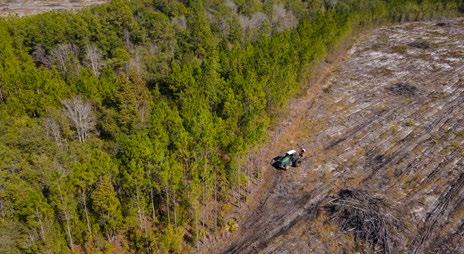
Maintain that 100 per cent of the papers we use are recycled or chain of custody certified each year
We achieved our target to source 100 per cent recycled or chain of custody certified papers in 2019/20 and we have continued to uphold this as a minimum required standard.
This involves challenging paper suppliers to produce chain of custody certification for all papers purchased as a standard business practice. With regular checks in place, we can offer our customers confidence that their packaging is produced using sustainably sourced papers, enabling them to communicate their responsible sourcing credentials and meet their own commitments to zero deforestation.
This year, we undertook a project to develop our Scope 3 inventory to begin more sophisticated value chain GHG emissions reporting. As part of our science-based target, we have committed to engage 100 per cent of our strategic suppliers to set their own science-based targets, which will help to reduce our supply chain emissions. These suppliers make up c. 76 per cent of our 2019/20 GHG emissions for ’purchased goods and services’ in our Scope 3 inventory.
Case study
Circularity takes roots in our Georgia timberlands
As part of our reforestation efforts, in our commercial timberland in southeast Georgia, we plant three seedlings for every tree harvested, which results in half a million seedlings annually. Not only does this support biodiversity, but it also increases stored carbon and supports the transition to the circular economy with renewable, fibrebased solutions.
Learn about this initiative on our Instagram channel
We have introduced a number of our strategic suppliers to Circulytics from the Ellen MacArthur Foundation, the most comprehensive circular economy performance measurement tool available.
Going beyond assessing products and material flows, this company-level tool reveals the extent to which a company has achieved circularity across its entire operations.

Lyreco
We invited Lyreco, one of our strategic suppliers, to undertake a Circulytics assessment. Lyreco are already on their own circular economy journey and were excited to be involved in Circulytics, sharing Circulytics scorecards and identifying opportunities for collaboration.
Isabelle Daubney, International Support Manager and Group Circular Economy Project Leader at Lyreco explains:
“On our circular economy journey, we are committed to evolving our product and service offer by 2025, with a focus on providing a full selection of recycle-ready items, removing packaging that cannot be recycled or re-used, and expanding our range of collection services to keep materials in use. Circularity goes beyond recycling, and as innovation stems from our vendors, manufacturers and partners, we are expanding our selection of products with circular characteristics, such as our remanufactured laser cartridges that DS Smith has been using in a number of their locations across Europe.”
For Lyreco, undertaking their first Circulytics assessment was an insightful experience. It helped Lyreco to identify gaps in their approach and accelerated a change in mindset within their circular economy teams.
“This has true value for Lyreco, not only because of the attitude shift it triggers, but also because it opens the door to new collaborations with DS Smith and others, as well as our own ecosystem of manufacturers, vendors and partners.”
We have since shared key training documents with Lyreco, which are being used to develop the circular economy knowledge of Lyreco’s people.
Furthermore, Lyreco have been working to clearly measure the circularity of products supplied to us, helping us to develop our own circular procurement metrics.
Siegwerk
Siegwerk were another strategic supplier that we invited to Circulytics. Circular economy is a key part of their own business strategy, working to enable circular packaging through inks and coatings.
Earlier this year, we shared and discussed our Circulytics scorecards to see if there were opportunities for collaboration. Ideas were shared, including cross-training of staff, sourcing of products and transparency on the end of life of products.
We shared our training content with Siegwerk and explored how Siegwerk source their own products to identify more circular opportunities with Siegwerk’s products. Furthermore, we discussed how various inks can impact the recycling process and decrease the carbon footprint of the packaging.
The discussions unleashed the potential to organise something greater with Siegwerk to share circular economy ideas and ways to assess and measure the entire supply chain’s circularity. Discussions are ongoing with an innovation workshop planned for later this year.
“Circulytics was a great starting point for our collaboration. It recognised the concrete product innovations and enabling capabilities we have today, as well as opened the door for collaborations with DS Smith on a strategic level, amplifying each other’s strengths.”
Alina Marm Head of Global Sustainability & Circular Economy at Siegwerk
“Circulytics is the most comprehensive circularity measurement tool for companies and as a Strategic Partner of the Foundation, we have been involved from the outset. It provides clear areas for us to continue our circular economy leadership within the packaging industry, while giving us a platform to support our suppliers on their journeys.”
Wouter van Tol Head of Sustainability, Government and Community Affairs at DS Smith DS Smith
We continued to maintain our A- score in Circulytics, placing us as one of the top participants in this holistic circular economy measure. We have top scores in areas of strategy and planning, innovation, people and skills and operations. In particular, we were recognised for achieving our target of sourcing 100 per cent of paper from recycled or certified sustainable sources and our net positive recycling position, meaning that we manage a greater volume of material for recycling every year than the packaging we sell to the market.
We communicate non-financial performance to our stakeholders, across environmental, social and governance topics.
Group greenhouse gas (GHG) emissions
3 GHG emissions
1.
3. t nsp – metric tonnes net saleable production.
* Independent Assurance has been obtained for the metrics marked with an asterisk ‘*’ – see assurance statement opposite. Independent verification to a limited level of assurance for the 2019/20 base year was provided by Bureau Veritas. Energy and fuel
Deloitte have provided independent third-party limited assurance in accordance with the International Standard for Assurance Engagements 3000 (“ISAE 3000”) and Assurance Engagements on Greenhouse Gas Statements (“ISAE 3410”) issued by the International Auditing and Assurance Standards Board (“IAASB”) over the 2021/22 selected information, identified with * in the tables on this page, and other selected information relating to carbon, energy, water, waste and production identified with * within DS Smith Sustainability Report 2022 and DS Smith Annual Report 2022. Deloitte’s full unqualified assurance opinion, which includes details of the selected information assured, can be found on our website at https://www.dssmith.com/sustainability/reporting-hub.
DS Smith ESG Databook 2022, which is available to download from the ESG Reporting Hub on the DS Smith website, contains additional non-financial performance metrics, including country-level carbon, water and waste figures in addition to our basis of preparation, which explains the approach we have taken to prepare and report ESG information
1. Excludes employee turnover owed to divestments.
2. 2020/21 figures restated to remove divestment.
3. Scope: Partial data coverage representing c. 56 per cent of the workforce at this time.
4. Scope: Partial data coverage representing UK employees only at this time.
Business ethics
Sustainable procurement
Management system certifications
1. Sedex Members Ethical Trade Audit (SMETA).
2. Scope: Sites accounting for at least 90 per cent of overall Group energy consumption.
3. Scope: Packaging, Paper and Paper Sourcing sites that trade or manufacture products derived from timber.
4. Scope: Papers purchased through our centralised Paper Sourcing platform.
5. Strategic suppliers comprise c. 76 per cent of our Scope 3 Purchased Goods and Services emissions.
Some historic data may not be given owed to limited coverage.
Paper certifications
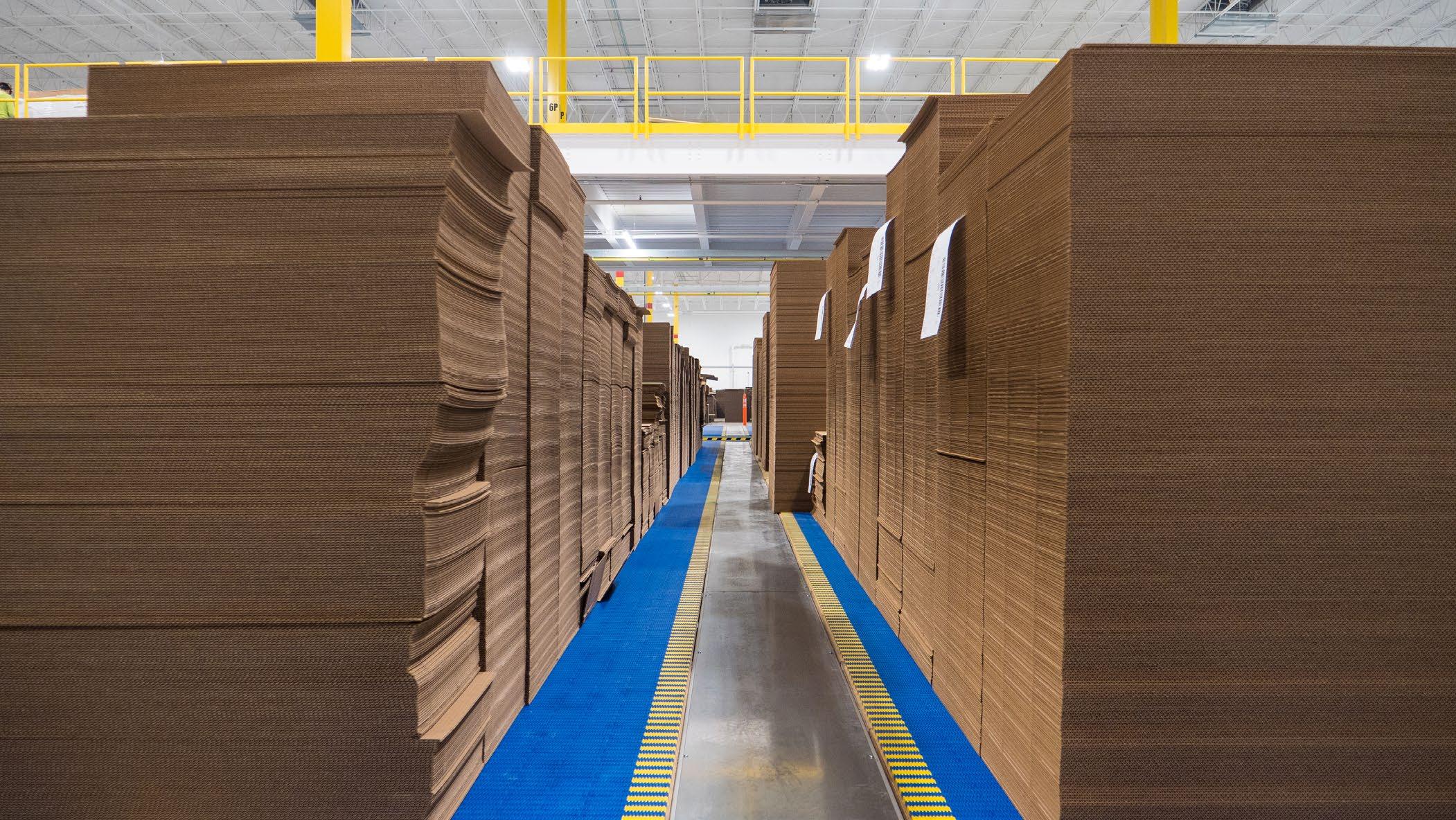
We are committed to being rigorous in our approach to sustainability, engaging with our stakeholders proactively and designing robust governance over our activities.
Stakeholder Who we engage What they tell us
Customers We equip our Sales, Marketing and Innovation teams to be able to support our customers with their sustainability challenges
Investors We engage with many of our largest shareholders, as well as some smaller shareholders, on topical issues of particular interest to them
Driven by consumer trends, customers want to compare product specifications to calculate the environmental impact of packaging, as well as assess our sustainability performance generally
Investors expect to see honest and transparent communication, primarily focused on carbon, forestry and water and the opportunity for DS Smith with sustainability as a growth driver across the packaging industry
Employees We involve colleagues in not only delivering but also making our sustainability plans, drawing on key expertise and skills from across the business both internally and through the European Works Council
Suppliers We focus on engaging our strategic suppliers – those with whom we have long-term, mutually co-operative relationships with mutual commitment and mutual value operational capabilities
Our people want to feel proud of their employer, that their personal values are reflected in their workplace and that they feel like they can make real impact and a difference in their job
Suppliers want to know how they can support us in delivering our sustainability plans through the products and services we purchase from them
What we are doing
• Designing with our Circular Design Principles
• Utilising our Circular Design Metrics
• Responding to sustainability data requests from customers
• Showcasing our latest circular packaging innovations
• Improving our performance in ESG ratings
• Providing analysts with non-financial information
• Equipping our people to lead the way in the circular economy
• Regular employee survey and ‘pulse’ surveys which inform local action plans and sharing of best practice
• Communicating our minimum supplier standards in our Global Supplier Standard, assessing supplier sustainability performance and helping them to improve
• Identifying opportunities to collaborate and work in partnership towards tackling common sustainability challenges
• Introducing suppliers to Circulytics
Regulators and policy makers
• European Commission and Parliament representatives
• Country level government representatives, e.g. UK Government, Members of Parliament, ambassadors
• Policy advisors and researchers
• Local government representatives, e.g. mayors, councillors
The primary focus of regulators and policy makers has been on:
• Covid-19
• Climate
• Brexit
• Plastic packaging
• Waste
• Eco-design
• EPR (Extended Producer Responsibility)
• Meetings with MPs about our local operations about relevant developments, e.g. energy security and supply, raw materials (such as starch) and external events such as the war in Ukraine and the impact on supply chains
• Engaging on climate topics, including COP26 and emissions
• Responding to a range of government consultations, typically through industry associations
Focusing on the issues that matter the most
We regularly assess the materiality of issues to ensure that our priorities remain aligned to those of our stakeholders. An assessment conducted in 2019/20 was used to inform our Now and Next sustainability strategy, focusing on the issues that matter to our stakeholders and where we believe we can have the greatest impact. These were identified through dialogue with investors, customers and suppliers, competitors and peers, colleagues, NGO and pressure groups and regulators.
In this most recent assessment, we found that several downstream issues relating to sustainable consumption of packaging were not well-reflected in our strategy. This led to a much stronger focus in Now and Next, responding to both internal and external stakeholder demand for new circular business models and solutions as a top opportunity and key differentiator.
In 2021/22 and continuing into the new 2022/23 year, we have undertaken a refresh of our materiality assessment to ensure that we are listening and responding to the rapidly changing world around us in our dialogue with our stakeholders so that our priorities remain relevant and meet their expectations.
The findings of our 2019 materiality assessment can be found on the following page, and we will share the findings of our 2022 materiality assessment in DS Smith Sustainability Report 2023.
For more information on our materiality analysis, turn to page 68
Stakeholder Who we engage What they tell us
• Ipsos Mori
What we are doing Media, consultancy and education
• Key financial, business and consumer editors and reporters including CNBC, Reuters, Financial Times and Sunday Times
• YouGov
• University of Leeds and others
Trade associations and industry bodies
• FEFCO (European Federation of Corrugated Board Manufacturers)
• Cepi (Confederation of European Paper Industries)
• EUROPEN (The European Organisation for Packaging and the Environment)
• 4Evergreen
• National trade associations, including:
• CPI (The Confederation of Paper Industries)
• The Packaging Federation
• WRAP (Waste and Resources Action Programme)
• BPF (British Plastics Federation)
• FCCG (Food Contact Coordination Group)
Nongovernmental organisations and charities
• Ellen MacArthur Foundation
• Forest Stewardship Council
• UN Global Compact
• SASB (Sustainability Accounting Standards Board) / the Value Reporting Foundation (VRF)
• NGO partners in various projects
• Organisations related to Covid-19 relief (e.g. food distribution)
• Charities near our sites
• Charities related to the DS Smith Charitable Foundation
Our interactions with media and consultants have been focussed on:
• Science-based targets and Net Zero
• Trends in sustainability, plastic replacement, e-commerce and recycling
Driven by government and policy makers, trade associations have been focused on regulatory developments around:
• Plastic
• Waste
• Recyclability
• Eco-design
• Food contact
• Carbon
• Awareness of the benefits of corrugated
• Implications of the above on product design
• Organisations like the Ellen MacArthur Foundation tell us what we’re doing well and what we could do better in their area of expertise
• SASB sets standards to guide the disclosure of financially material sustainability information to investors
• Charities tell us about local needs and how DS Smith can help drive biodiversity and education for the circular economy
Our campaigns this year focused on:
• Sustainable packaging trends with Ipsos Mori
• ‘Hard to Recycle’
• ’Britain’s creaking recycling system costing UK economy’
Technical experts across our business were involved in the following:
• 4evergreen, a cross-industry initiative to drive the recycling rate of paper products in Europe to 90 per cent by 2030
• Input into legislative processes, e.g. around eco-design for e-commerce packaging
• Food contact matters
• Continuing our strategic partnership with the Ellen MacArthur Foundation
• Offering our expertise on ESG reporting at the SASB Standards Advisory Group (SAG)
• Becoming involved in a variety of local community groups to improve and enhance the communities in which we operate
Increasingly, stakeholders are interested not only in what we do, but how we do it. Strong governance is essential to deliver our Purpose of ‘Redefining Packaging for a Changing World’ and vision of being the leading supplier of sustainable packaging solutions. We are committed to maintaining strong governance, accountability and reporting.
Our people actively contribute to realising our Purpose of Redefining Packaging for a Changing World, moving the Group towards its vision of being the leading supplier of sustainable packaging solutions. In doing so, sustainability is placed at the heart of our business, uniting our functions, divisions, sites and teams across the world. By nurturing respect, care and ownership, empowerment to lead change and a sense of pride in our strong performance, we have created a culture where everybody can contribute diverse ideas that often become shared ways for how we do business.
The United Nations Sustainable Development Goals (SDGs) set a clear agenda for tackling the challenges of our changing world. Throughout this report we have set out in detail how our Purpose, circular business, Now and Next sustainability strategy and sustainable packaging contribute to these goals. Alignment and cooperation internationally are essential to achieving our Purpose and we align with the following international standards:
• United Nations Global Compact
• United Nations Declaration of Human Rights and the Convention on the Rights of the Child
• International Labour Organization Eight Fundamental Conventions
• Organisation for Economic Co-operation and Development Guidelines for Multinational Enterprises.
Following the United Nations Principle 15 of The Rio Declaration on Environment and Development, we apply the precautionary principal to reduce our impact on the environment. This is also applied in our assessment of risk and our approach to data and reporting.
Our culture is led by our leadership, where our Group Operating Committee (GOC), the Group Chief Executive’s management board for leading Group-wide priorities, includes sustainability at the heart of its agenda. Accountability ultimately lies with the Group Chief Executive and sustainability risks, opportunities and strategy are considered by the Board of Directors as core to the Group’s operations. These are reviewed monthly by the Health, Safety, Environment and Sustainability (HSES) Committee. Topics discussed this year included:
• Now and Next progress
• Strategic assessment to achieve Net Zero and adoption of a 1.5°C science-based target
• Circular economy
• Government affairs and policy development
• Community affairs
• Biodiversity projects
• ESG ratings performance
The governance organogram describes the structure of governance in place for sustainability.
In 2021/22, we established a new organisation in Group Finance to lead the production of non-financial reporting. We designed an ESG Reporting Governance Framework to enhance controls relating to non-financial information to govern non-financial information and reporting processes. See our basis of preparation, in DS Smith ESG Databook 2022, for detail about the approach we take to reporting ESG information, including definitions and methodologies.
governance structure
Including related committees, e.g. Audit Committee Receives regular progress updates and approves substantial strategic decisions
Chaired by the Group Executive, this management committee of the Group Operating Committee (GOC) reviews sustainability performance, processes and strategies and monitors compliance with responsibilities and commitments, and approves strategic decisions
Sustainability Leadership Team (SUSLT)
Chaired by the Director of Corporate Affairs, this is a cross-divisional and multi-functional group with Director-level membership from multiple divisions, which leads the delivery of our Now and Next Sustainability Strategy
Group Sustainability, Government and Community Affairs Team (Corporate Affairs)
Led by the Head of Sustainability, Government and Community Affairs, this team partners with the business to deliver Now and Next, furthers our Government affairs agenda and runs our Community Programme
Group ESG Reporting Team (Finance)
Led by the Group Financial Controller, this team produces non-financial information, providing governance and assurance, and partnering with the business to produce insightful ESG (Environmental, Social and Governance) reporting, supporting the business in meeting non-financial reporting commitments
Receives regular progress updates and consulted on decisions related to their areas of oversight
Drives delivery of progress in their respective areas of oversight, e.g. SMI (Sales, Marketing and Innovation), FSC, sustainable procurement
Horizontal collaboration platforms to launch initiatives, progress delivery and resolve challenges, e.g. SBT/Net Zero, circular design, plastic replacement, community engagement
Sites Holds operational -lead responsibility for implementation including HSE (Health, Safety and Environment)
This report has been prepared in accordance with the GRI Standards: Core option. Aligned to the relevant targets of the UN Sustainable Development Goals (SDGs), disclosures can be located in DS Smith Sustainability Report 2022 (‘SR’) or DS Smith Annual Report 2022 (‘AR’).
People
People
People 405: Diversity and equal opportunity
People
Conducting business ethically
Conducting business ethically 408: Child labour
Conducting business ethically
Conducting business ethically 206: Anti-competitive behaviour
For the third year running, we have implemented the Sustainability Accounting Standards Board (SASB) Containers & Packaging industry standard, providing investors with consistent, comparable and reliable ESG information relevant to financial performance and enterprise value. Disclosures can be located directly in the table, with explanation provided on the pages referenced. We continue to monitor the development of the new International Sustainability Standards Board (ISSB), including the transition of SASB’s standards into the ISSB’s standards.
Greenhouse gas emissions
Gross global Scope 1 emissions, percentage covered under emissionslimiting regulations tonnes CO2e; % RT-CP-110a.1 2,023,278*; 79 62
Discussion of long-term and short-term strategy or plan to manage Scope 1 emissions, emissions reduction targets, and an analysis of performance against those targets
Air quality Air emissions of the following pollutants: (1) NOx (excluding N2O), (2) SOx, (3) volatile organic compounds (VOCs), and (4) particulate matter (PM)
Discussion and analysis RT-CP-110a.2 – 27-31
Energy management (1) Total energy consumed, (2) percentage grid electricity, (3) percentage renewable, (4) total self-generated energy MWh; % RT-CP-130a.1
Water management 1) Total water withdrawn, (2) total water consumed, percentage of each in regions with High or Extremely High Baseline Water Stress m3; %
Description of water management risks and discussion of strategies and practices to mitigate those risks
Number of incidents of non-compliance associated with water quality permits, standards, and regulations
and analysis
12; 21; 8,780,198 62
13,604,030*; 31 63
– 34-5
10 34-5
management Amount of hazardous waste generated; percentage recycled
Product safety Number of recalls issued; total units recalled
Discussion of process to identify and manage emerging materials and chemicals of concern
and analysis
Product lifecycle management
Percentage of raw materials from: (1) recycled content, (2) renewable resources, and (3) renewable and recycled content
Revenue from products that are reusable, recyclable and/or compostable
Discussion of strategies to reduce the environmental impact of packaging throughout its lifecycle
Supply chain management Total wood fibre procured, percentage from certified sources
Total aluminium purchased, percentage from certified sources1 Tonnes; %
1. We consider this indicator immaterial as we are a purely fibre-based packaging business.
0; 0 41
* Independent Assurance has been obtained for the metrics marked with an asterisk ‘*’ – see assurance statement on page 62.
DS Smith ESG Databook 2022, which is available to download from our ESG Reporting Hub on the DS Smith website, contains additional non-financial performance metrics, including country-level carbon, water and waste figures in addition to our basis of preparation, which transparently explains the approach we have taken to prepare and report ESG information
1.5°C-aligned the target set out in the Paris Agreement to limit global warming to 1.5°C by 2100 compared to preindustrial levels to avoid the worst impacts of climate change
4evergreen a cross-industry alliance to foster synergies among companies promoting low-carbon and circular fibre-based packaging
AFR (Accident Frequency Rate) the number of lost time accidents per million hours worked
Annual Report a yearly publication to stakeholders, documenting activities and finances in the previous financial year
Biodiversity the variety of plant and animal life in the world or in a particular habitat, a high level of which is usually considered to be important and desirable
Biodiversity programme a series of activities to support biodiversity and indicating a long-term (typically 2-3 years) commitment of a DS Smith paper mill, either at a DS Smith site or in the local community
Biodiversity project a one-off project with a start and end point relating to biodiversity, typically at a DS Smith site or in the local community
Board the Board is comprised of Executive and Non-Executive Directors, who are collectively responsible for overseeing and directing our operations, while monitoring the performance of management on behalf of the shareholders
Business models ways of working, processes and financial models, including technology, consultancy and service offerings
Business travel transportation of employees for business-related activities in vehicles
Carbon intensity per tonne of production the average GHG emissions arising from the manufacture of producing an average tonne of product
CDP a not-for-profit charity that runs the global disclosure system for investors, companies, cities, states and regions to manage their environmental impacts
Cepi (Confederation of European Paper Industries) the European association representing the paper industry
Chain of custody certified papers, minimum controlled wood standard verification that certified materials and products have been checked at every stage of processing. Controlled wood is wood of known origin with a minimum risk of being harvested in an unacceptable way
CHP (Combined Heat and Power Plant) the concurrent production of electrical and thermal energy from a single fuel
Circular business integrated operations that keep products and materials in use, by design, for as long as possible to get the maximum value from them
Circular Design Metrics a pioneering tool from DS Smith that rates and compares the circularity of packaging designs across eight indicators, giving a clear identification of a packaging design’s sustainability performance, and where to focus attention
Circular Design Principles a set of principles, developed by DS Smith in collaboration with the Ellen MacArthur Foundation, which guide designers to develop more circular packaging solutions
Circular economy a systems solution framework that tackles global challenges like climate change, biodiversity loss, waste, and pollution. It is based on three principles, driven by design: eliminate waste and pollution; keep products and materials in use; and regenerate natural systems
Circular economy engagement two-way interaction on topics relating to the circular economy through activities such as eLearning training, newsletters, social media, webinars and other campaigns
Circular lifestyles day-to-day activities that embrace the principles of designing out waste and pollution, keeping products and materials in use and regenerating natural systems
Circulytics the most comprehensive circular economy performance measurement tool, available from the Ellen MacArthur Foundation
Climate change a change in global or regional climate patterns, in particular a change apparent from the mid to late 20th century onwards and attributed largely to the increased levels of atmospheric carbon dioxide produced by the use of fossil fuels
CO2e (Carbon dioxide equivalent) a unit for measuring different greenhouse gasses in a common unit
Community Programme donation of company resources, employee hours and/or goods and services to a local community or charity project that is not-for-profit and supports a cause. This is required of 100 per cent of our sites with 50 or more full time employees.
Consent to discharge permits made available to allow effluents and other water to leave the organisation boundary
CPI (Confederation of Paper Industries) the leading trade association representing the UK’s paper-based industries
DJSI (see also S&P Global)
The Dow Jones Sustainability Indices (DJSI) are a family of best-in-class benchmarks for investors who have recognised that sustainable business practices are critical to generating long-term shareholder value and who wish to reflect their sustainability convictions in their investment portfolios
Downstream transportation and distribution
DS Smith Charitable Foundation
third-party transportation and distribution services after the point of sale not purchased by DS Smith
a charity supporting causes in the local communities of our operations and that align with the primary objectives of protecting our environment and providing educational opportunities
EcoVadis the world’s largest and most trusted provider of business sustainability ratings, creating a global network of more than 90,000 rated companies
Ellen MacArthur Foundation (EMF)
the Ellen MacArthur Foundation works to accelerate the transition to a circular economy, developing and promoting the idea of a circular economy, and working with business, academia, policymakers, and institutions to mobilise systems solutions at scale, globally
Employee commuting transportation of employees between their homes and work sites
End-of-life treatment of sold products the expected waste disposal and treatment of sold products at the end of their life
Energy export process of flowing energy that leaves our organisation boundary to a third party
Energy generation process of producing energy from a primary fuel or energy source
Environmental incident an event or occurrence relating to the natural world owned or operated by third parties, such as aircraft, trains, buses and passenger cars
EPR (Extended Producer Responsibility)
a policy approach under which producers are given a significant responsibility for the treatment or disposal of post-consumer products
ESG (Environmental, Social, Governance) standards relating to sustainability for an organisation’s operations
ESG Databook a yearly publication to stakeholders, documenting non-financial performance in the previous and historic financial years
ESG Rating a measurement of performance on ESG standards
FEFCO European Federation of Corrugated Board Manufacturers, Europe’s corrugated packaging association
Fibre natural cellulose material used to make paper
Fibre optimisation a process in which supply chain data is used to predict and calculate the exact performance requirement of packaging
Forest management certification a mechanism for verifying that a forest is managed responsibly to the requirements of a standard to promote the sustainable management of forests
Fossil fuel a non-renewable energy source formed from decomposition of carbon-based organisms that release carbon dioxide when burned, contributing to climate change
FSC® (Forest Stewardship Council®)
Fuel- and energy-related activities
GHG (greenhouse gas)
an international non-profit that promotes responsible management of the world’s forests. For our FSC certification, we include Packaging, Paper and Paper Sourcing sites that trade or manufacture products derived from timber
production of fuels and energy purchased
a gas that contributes to climate change by absorbing infrared radiation
GOC (Group Operating Committee) the Group Chief Executive’s management board for considering Group-wide initiatives and priorities
Greenhouse Gas Protocol a comprehensive framework to measure greenhouse gas (GHG) emissions
GRI (Global Reporting Initiative)
an international independent standards organisation that helps businesses, governments and other organisations understand and communicate their impacts on issues such as climate change, human rights and corruption
GSS (Global Supplier Standard) a document that communicates the minimum standards that every supplier of materials and/or services to DS Smith is expected to meet Hard-to-recycle packaging packaging that is not presently recycled at scale in common waste streams
HSES (Health, Safety, Environment and Sustainability) Committee
a sub-committee of the GOC for considering Group-wide health, safety, environment and sustainability matters
ISO (International Standards Organisation) an international standard development organisation that publishes standards, e.g. ISO 9001, 14001, 45001, 50001. For our Group-wide ISO 50001:2018 certification, we include sites accounting for at least 90 per cent of overall Group energy consumption
Linear economy an economy in which finite resources are extracted to make products that are used, generally not to their full potential, and then thrown away
LTA (Lost Time Accident) an accident resulting in lost time of one shift or more
LTI (Lost Time Injury) an injury resulting in lost time of one shift or more
Major environmental incident an environmental incident of significant impact reportable to local or national authorities, or potentially resulting in legal prosecution and >£10,000 cost
MSCI (Morgan Stanley Capital International) a global investment research firm with an ESG rating model to identify ESG risks that are most material to a sector and recognise companies managing most significant ESG risks and opportunities relative to industry peers
Net positive recycler an organisation, such as DS Smith, that manages more material for recycling than packaging sold
Net Zero the state of reaching a balance between the amount of greenhouse gas produced and taken out of the atmosphere resulting in no net impact on the climate from greenhouse gas emissions to limit global temperature rise
Net Zero
Transition Plan a time-bound roadmap of decarbonisation activities to reach Net Zero, with defined targets and actions
NGO (Nongovernmental organisation)
a not-for-profit organisation that operates independently of any government
Optimise (packaging solutions) predicting the most effective performance requirement of a packaging solution using supply chain data
Packaging solutions fibre-based packaging products that are designed to address customer and consumer needs and maximise sustainable performance
Paper products fibre-based paper products that are designed to address customer and consumer needs and maximise sustainable performance, made from 100 per cent recycled or chain of custody certified fibres
PEFC (Programme for the Endorsement of Forest Certification)
an international NGO which promotes sustainable forest management through independent third-party certification
Post-consumer waste recovered fibre originated from end-consumer material streams, such as household waste or in back-ofstore collections
Pre-consumer waste recovered fibre originated from manufacturing scrap material streams, such as trimmings and off-cuts
Problem plastics any plastic with a low recycling rate compared to paper and cardboard or not made from renewable resources
Processing of sold products further transformation before use by the end consumer of sold intermediate products by third parties (e.g. other manufacturers)
Production sum of net saleable production (output) from our three main operations: Packaging, Paper and Recycling, that is sold to internal and external customers. This includes Packaging (boxes, sheets and other), Paper reels (and other), Wood products (sold by our Timber business) and recovered fibre and other materials (e.g. glass, metals, plastic and wood) processed and sold through our Recycling depot network
Pulp a lignocellulosic fibrous material used in papermaking that is prepared by separating cellulose fibres from wood
Purchased goods and services upstream activities (i.e. cradle-togate) relating to the production of all tangible and intangible products purchased or acquired
Raw materials basic materials used to manufacture a product, such as pulp or starch
Recovered fibre used fibrous material that is collected for recycling and used again as a raw material for papermaking
Recyclable a material that can be collected, separated or recovered from the waste stream through an established programme; whereby >95 per cent of the total packaging weight is accepted by and processed in paper mills as per CPI recyclability guidelines
Recycled or reused packaging packaging recycled in practice and at scale or packaging designed to accomplish a minimum of two trips or rotations within its life cycle
Recycled paper paper made from recycled materials
Renewable fuel fuels produced from renewable natural resources, such as biogas, biomass and biomethane
Reporting period the span of time the report covers, which in this report is from 1st May 2021 to 30th April 2022
Responsible fibre sourcing an approach to purchasing and supply chains that actively and consciously sources and procures fibre for operations in an ethical, sustainable and socially responsible way, using for example only recycled or chain-ofcustody certified papers
Reusable packaging designed to accomplish a minimum of two trips or rotations within its life cycle
S&P Global see ‘DJSI’
SBT (sciencebased target),
SBTi (ScienceBased Targets initiative)
Scope 1 (direct) GHG emissions
a carbon reduction target that reflects an emissions reduction in line with climate science, as promoted by the SBTi, an NGO which drives ambitious climate action in the private sector
greenhouse gas emissions arising from the combustion of fuels in assets owned by the company (e.g. emissions from owned boilers, furnaces, vehicles, etc)
Scope 2 (indirect) GHG emissions
Scope 3 (indirect) GHG emissions
greenhouse gas emissions arising from the generation of purchased electricity, heat, steam or cooling, which physically occur at the facility where the energy is generated
greenhouse gas emissions arising in the value chain from all other sources as a consequence of our activities but from sources not owned by the company
SFI (Sustainable Forestry Initiative) a sustainability organisation operating in the US and Canada that works to advance sustainability through forest-focused collaboration
SMETA (Sedex Members Ethical Trade Audit)
a social auditing methodology, enabling businesses to assess their site and suppliers to understand working conditions in their supply chain
‘Speak Up!’ an independent confidential process for asking for advice or raising concerns about unethical behaviour
Strategic supplier a long-term, mutually cooperative relationship with mutual commitment where significant and ongoing value is accrued to both parties through operational capabilities
Supplier standards see GSS (Global Supplier Standards)
Sustainability the ability to meet the needs of the present without compromising the ability of future generations to meet their own needs
SUS LT Sustainability Leadership Team
Sustainalytics a global leading ESG research and data firm that rates the sustainability of companies based on ESG performance
T NSP (metric) tonne net saleable production
TCFD (Task Force on Climaterelated Financial Disclosures)
TNFD (Task Force on Nature-related Financial Disclosures)
a framework developed to help public companies and other organisations disclose climate-related risks and opportunities
a nature-related risk-management and disclosure framework
Traded waste waste that is acquired and sold but does not physically enter the boundary of a DS Smith site
Upstream transportation and distribution
third-party transportation and distribution services between tier 1 suppliers and own operations; and outbound transportation services purchased by DS Smith
Virgin fibre natural fibre used to make paper that has not yet been recycled
Vision Zero our campaign to strive towards a workplace without accidents and illness through an approach to prevention that improves the health, safety and wellbeing of employees
Waste collected for recycling used paper and cardboard for recycling that is acquired and physically enters the boundary of a DS Smith site (i.e. excludes ’traded waste’)
Waste generated in operations third-party disposal and treatment of waste from own operations, such as reject non-fibre material that enters our circular business model
Water consumption Total water withdrawals that are not discharged back into the water environment or to a third party
Water discharge Total water effluents and other water leaving the boundary and released into the natural environment
Water efficiency efficiency from which production is realised from water as a natural resource. As a calculation, this is water withdrawal divided by production
Water stress a situation in which the water resources in a region are insufficient for its needs
Water stress mitigation plan a risk management plan to mitigate water stress risk implemented at 100 per cent of our sites identified as at risk of water stress by the WRI Aqueduct Water Risk Atlas tool
Water withdrawal total water withdrawn into the boundary from all sources for any use
Zero harm an approach to occupational safety with the goal of operating a workplace without exposing an individual to injury through the implementation of safe work systems
Zero waste no operational solid waste, excluding waste generated by exceptional projects such as construction or demolition works
We are committed to continuing to develop our Sustainability Report to keep our stakeholders informed about the progress we are making.
The team can be contacted via email at sustainability@dssmith.com.
DS Smith Plc 350 Euston Road London NW1 3AX
Telephone
+44 (0) 20 7756 1800 www.dssmith.com
Keep in touch
@dssmithgroup
DS Smith DS Smith @dssmith.group