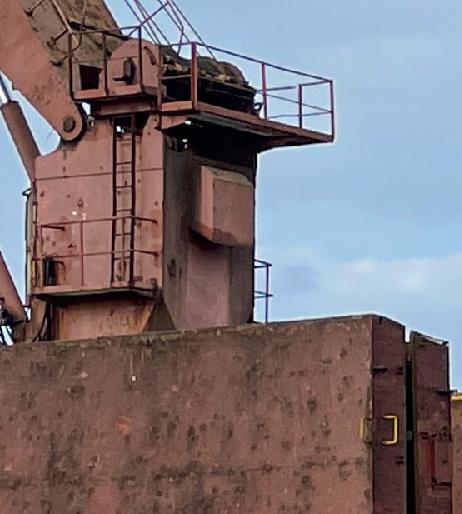
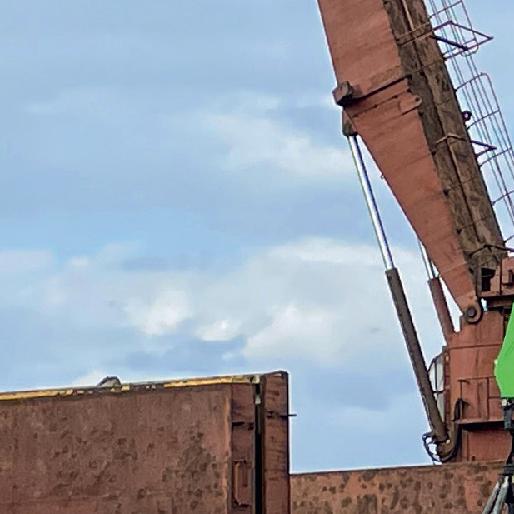
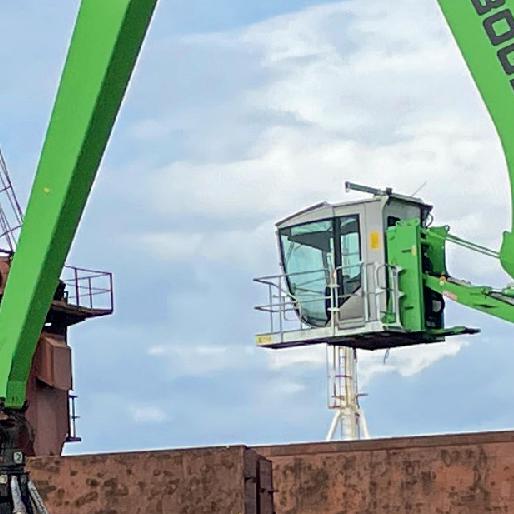
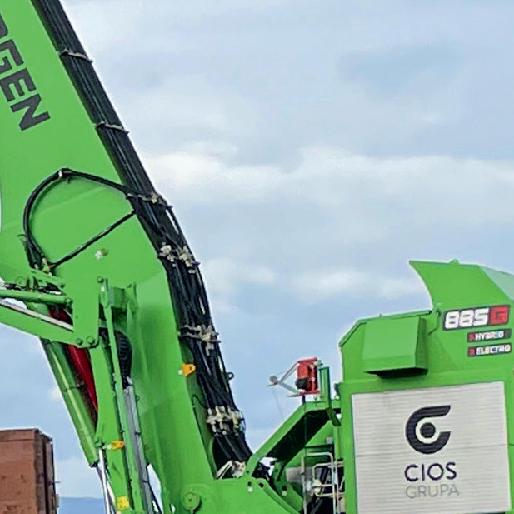
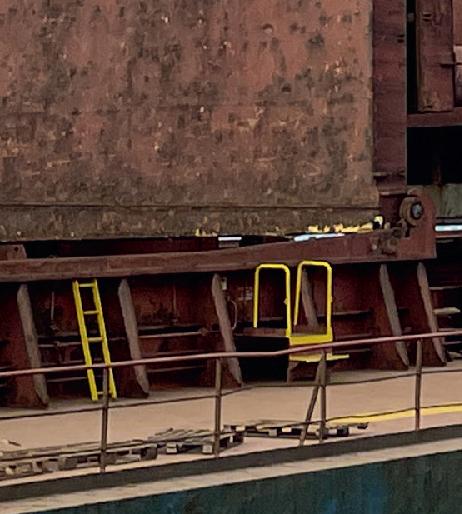
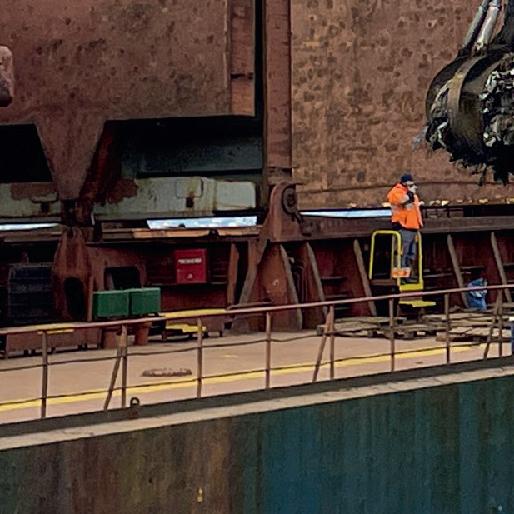
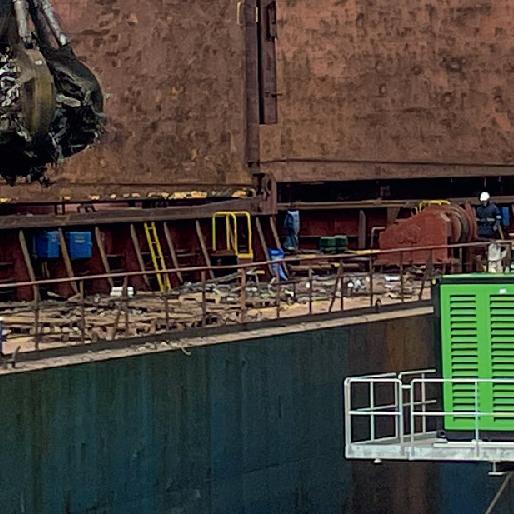
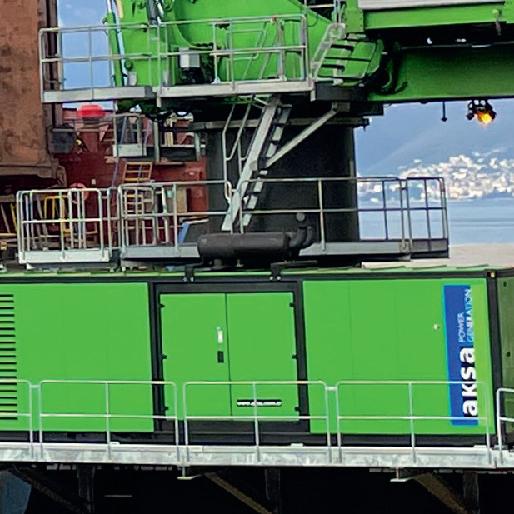
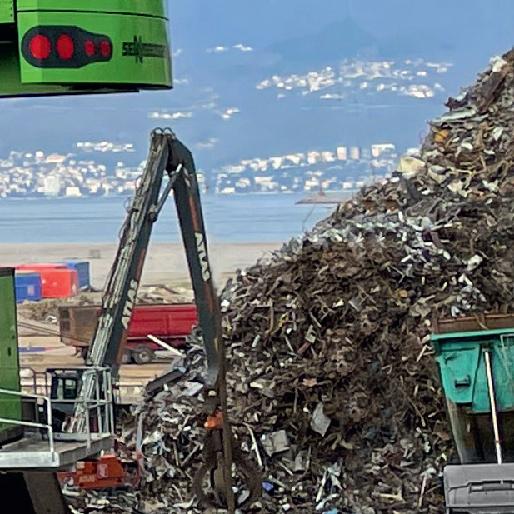
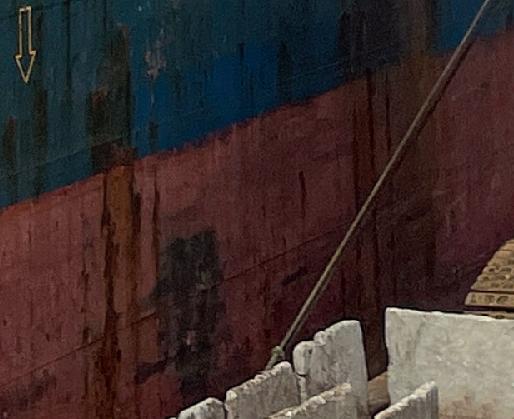
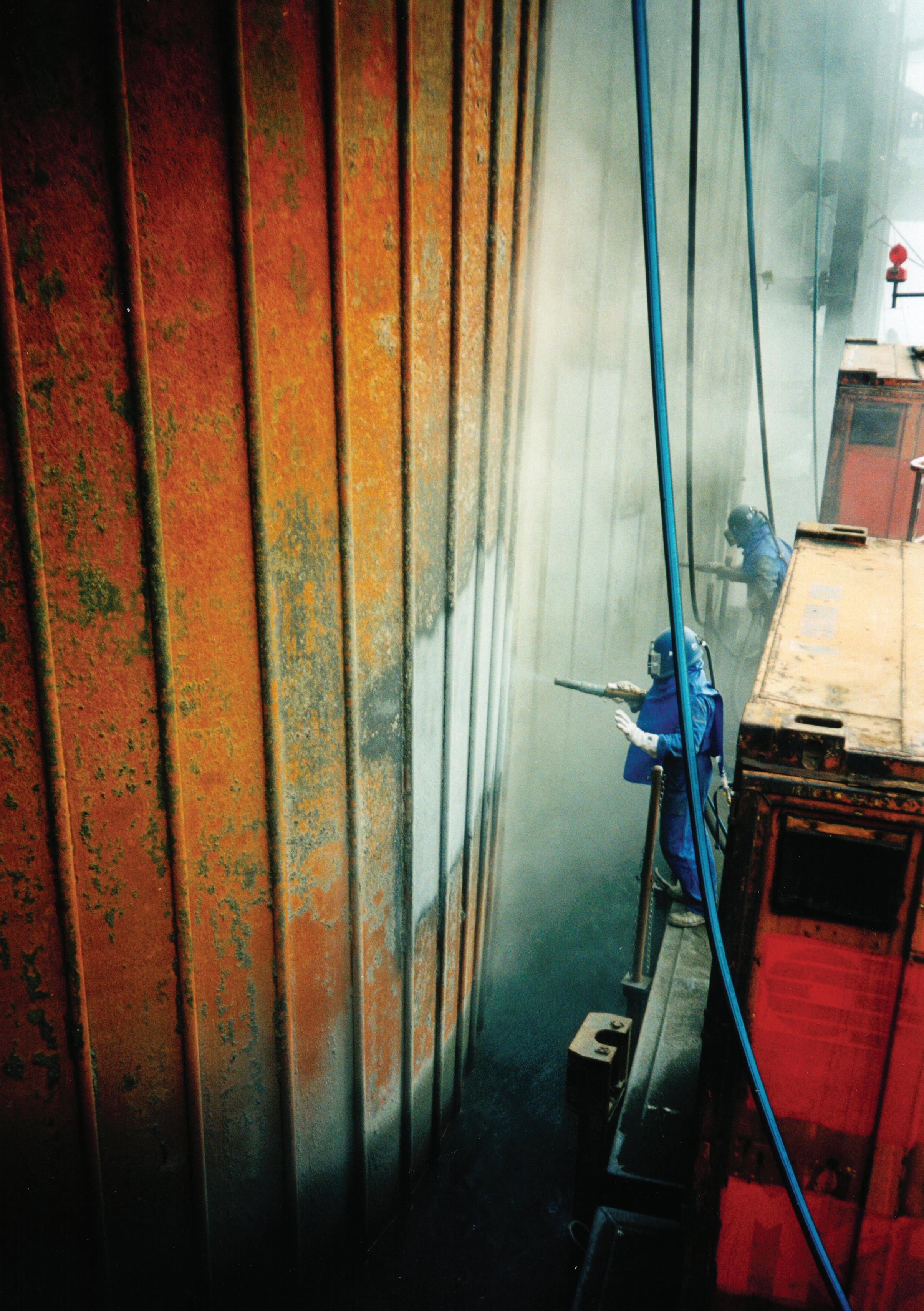
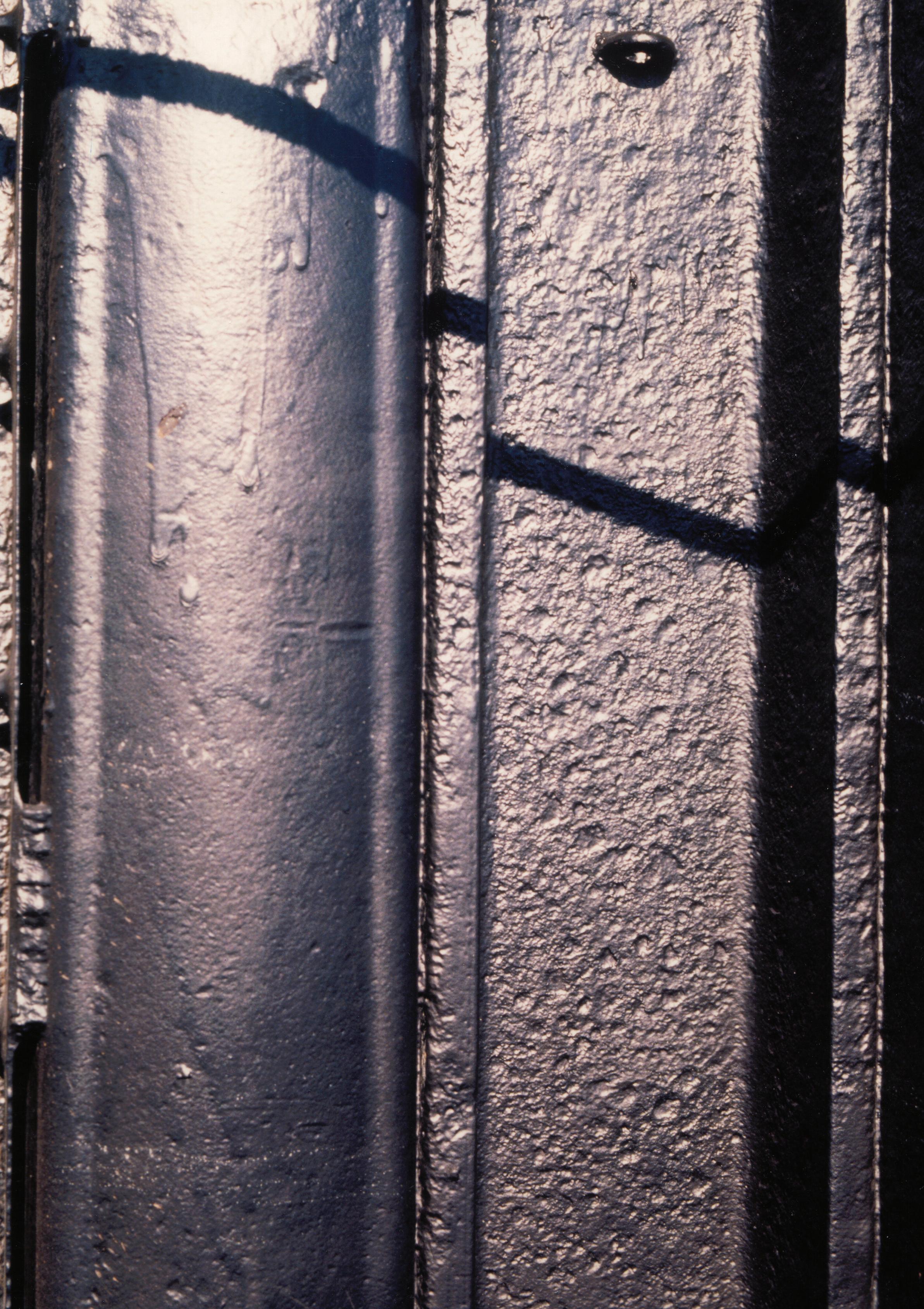
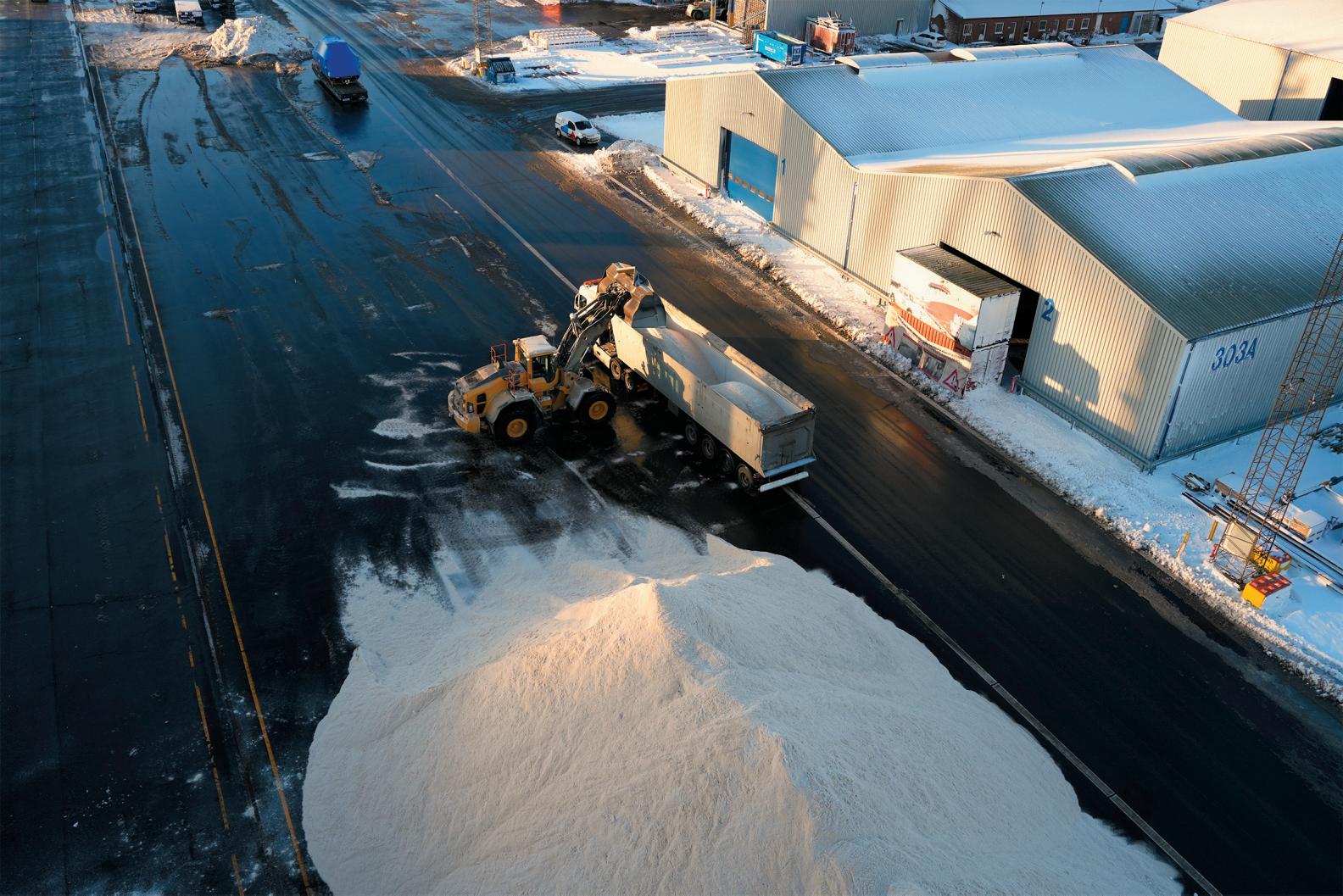
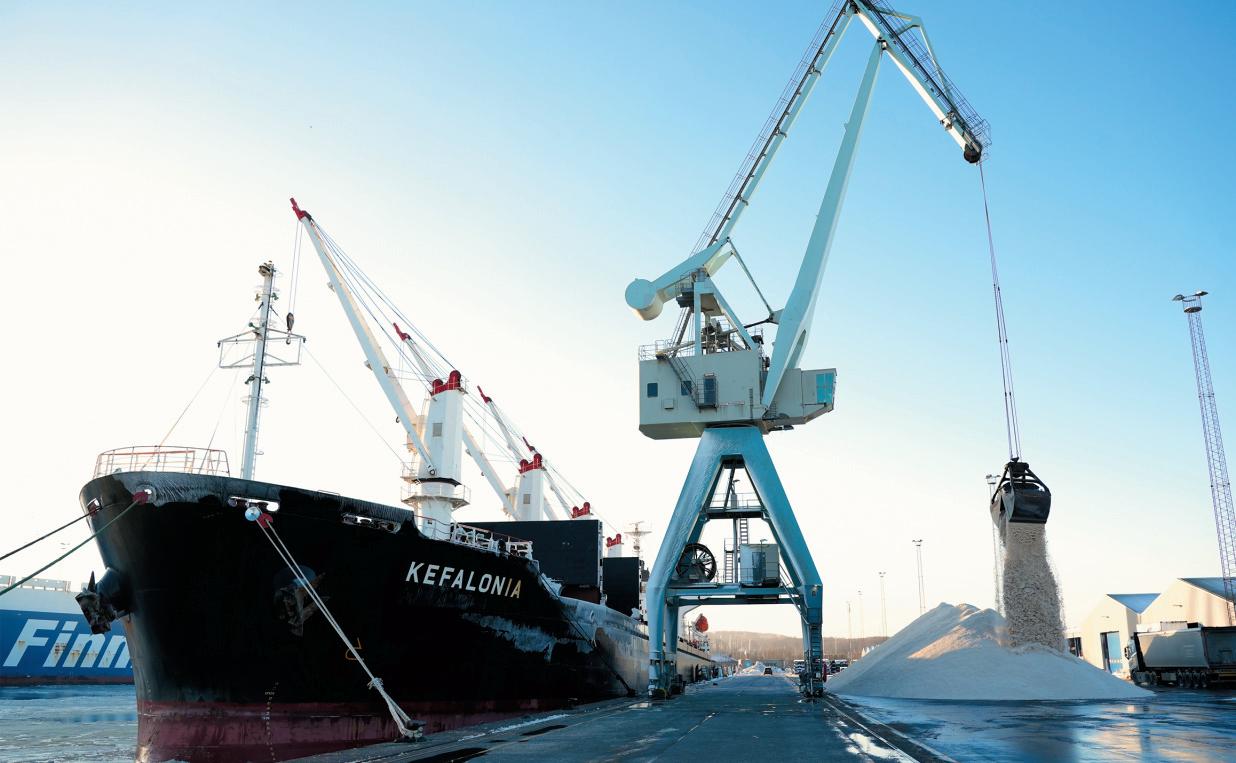
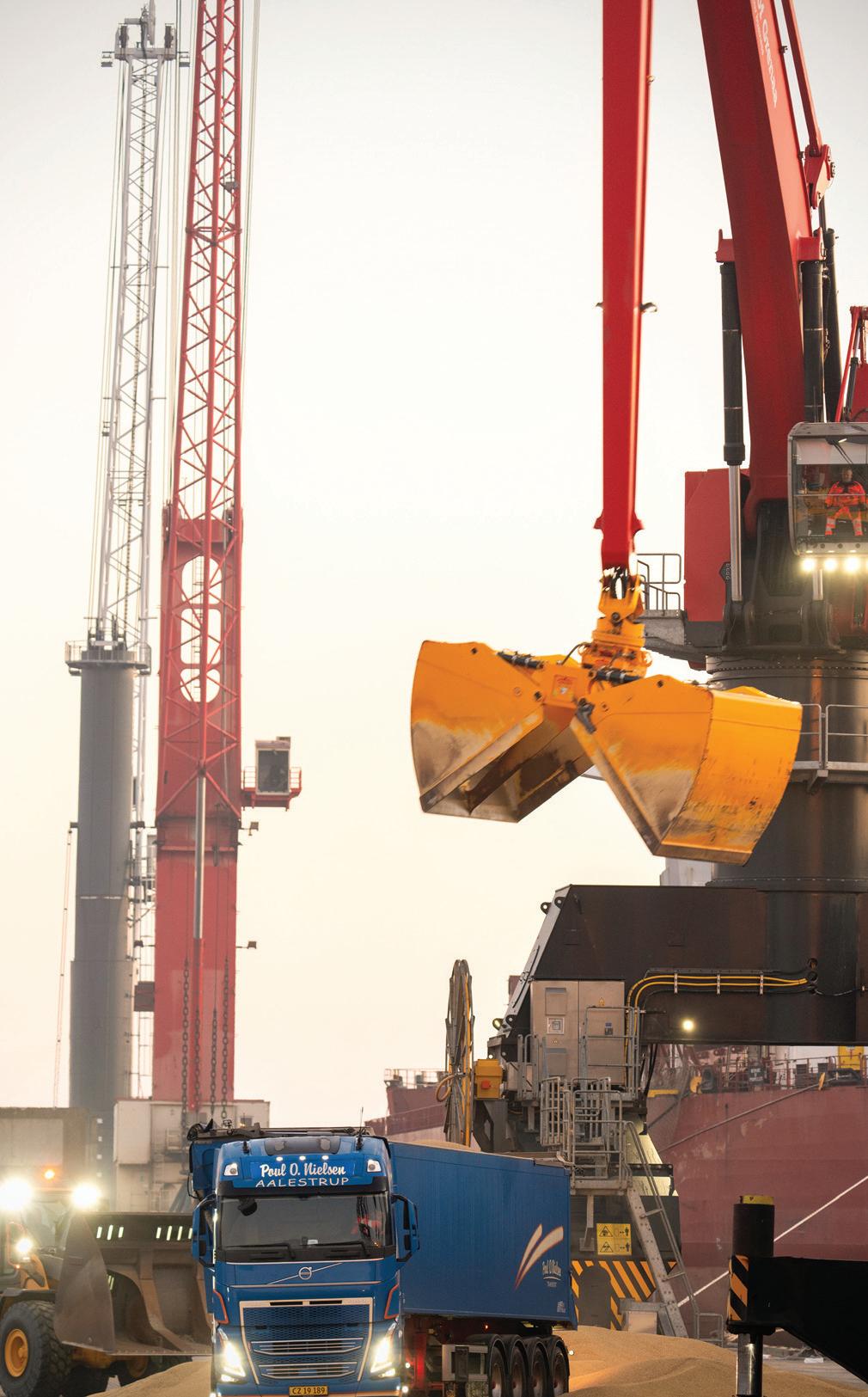
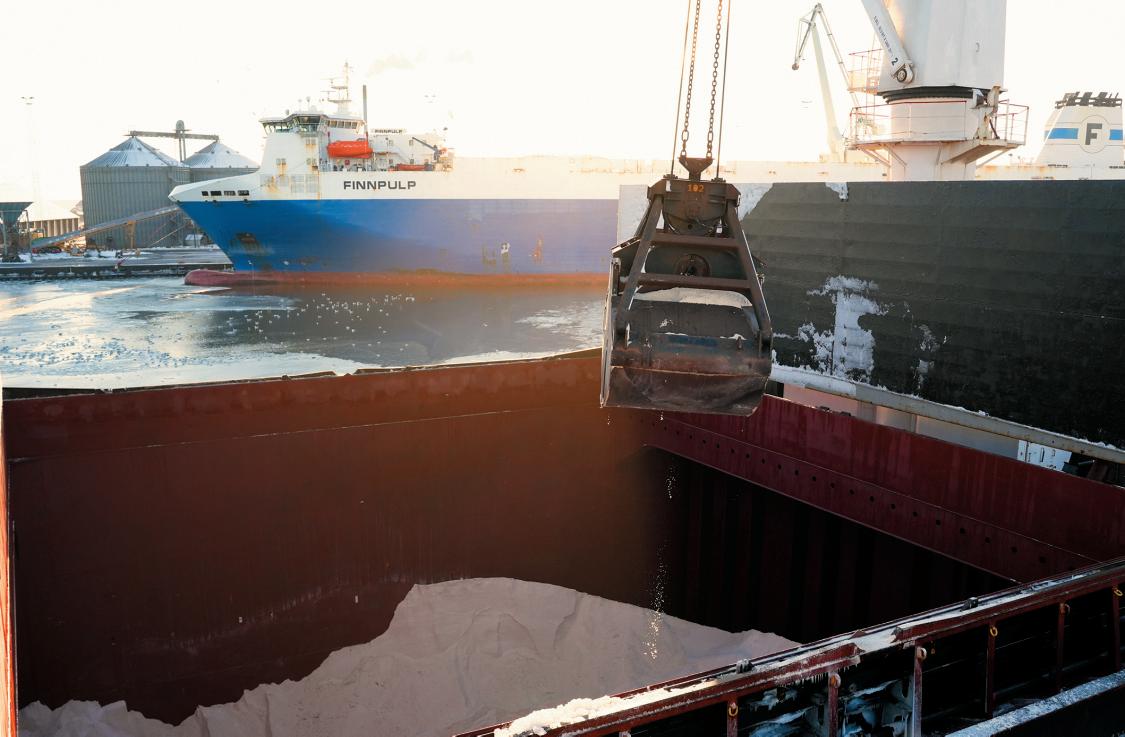
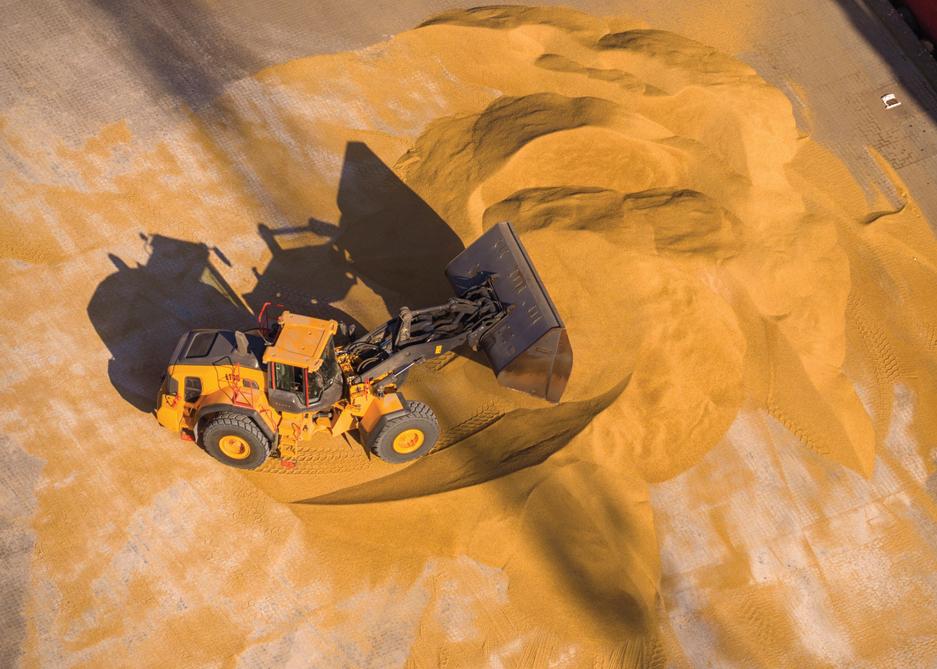
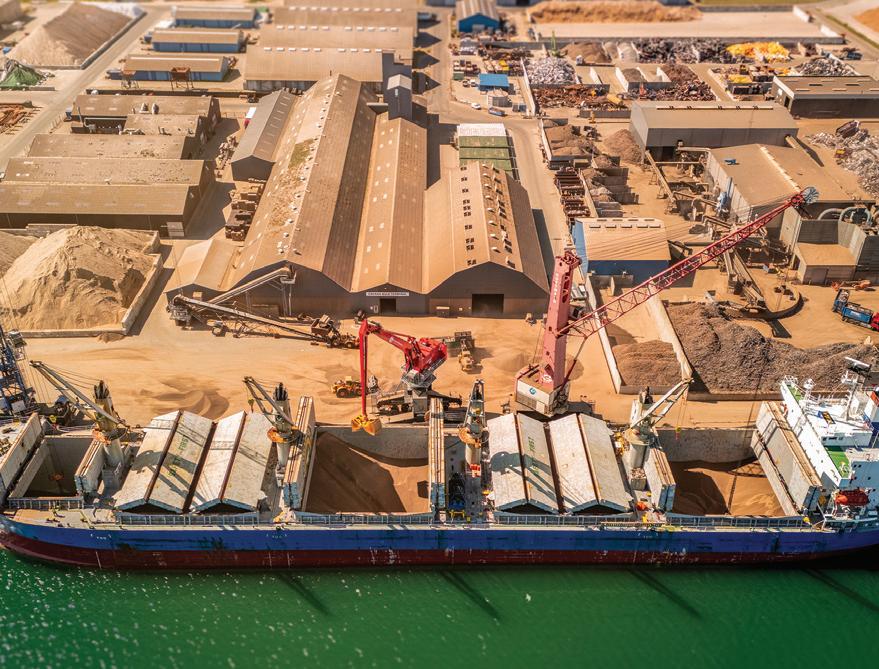
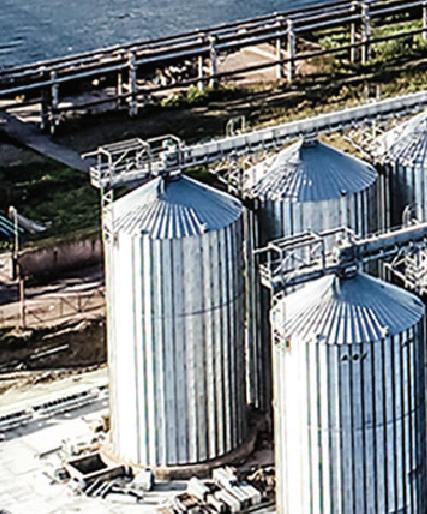
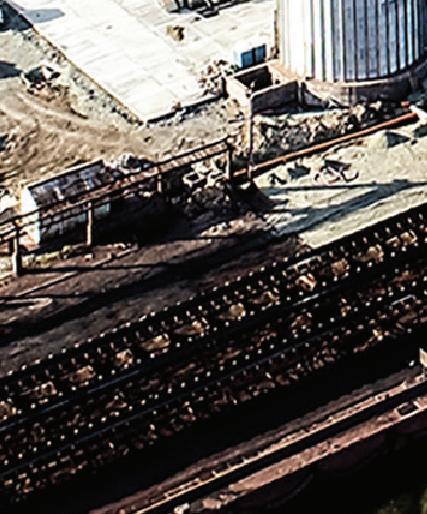
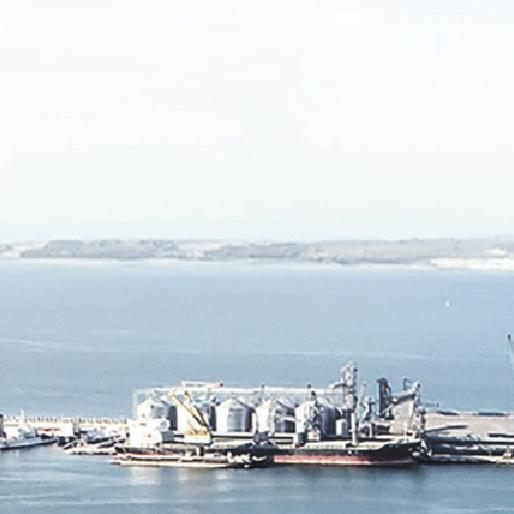
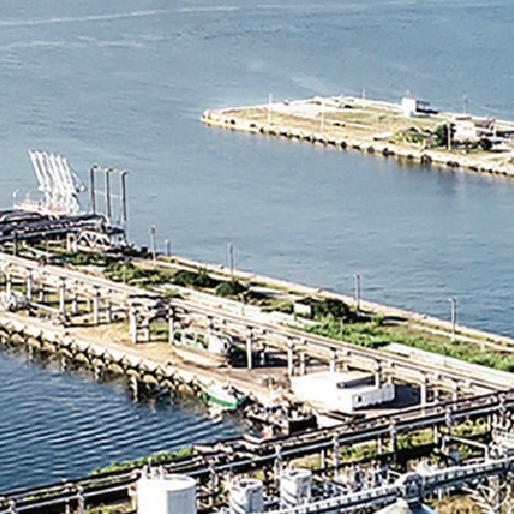
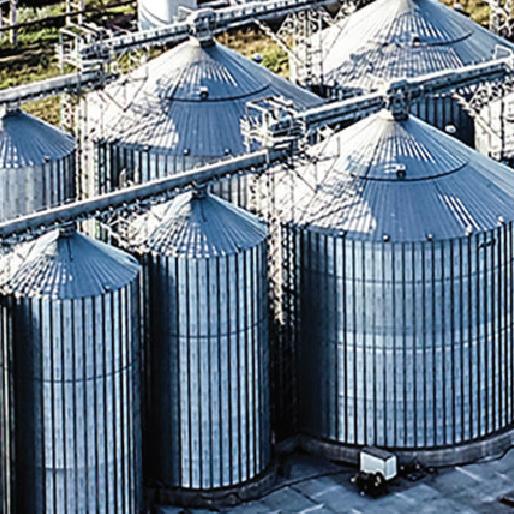
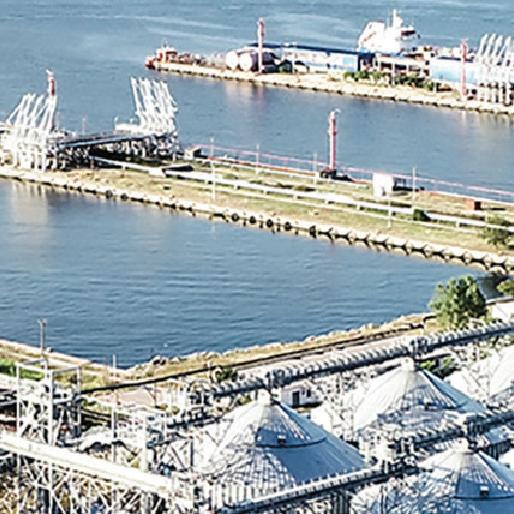
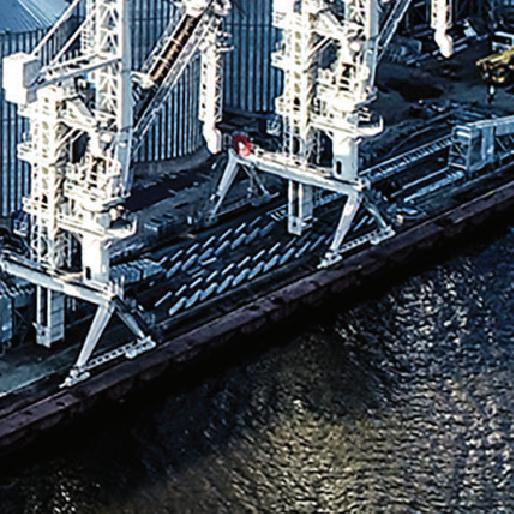
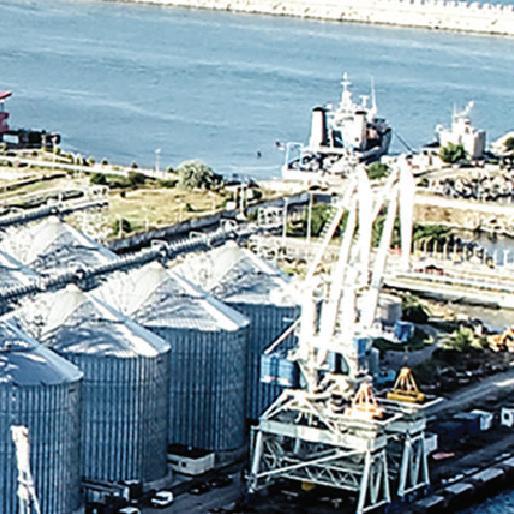
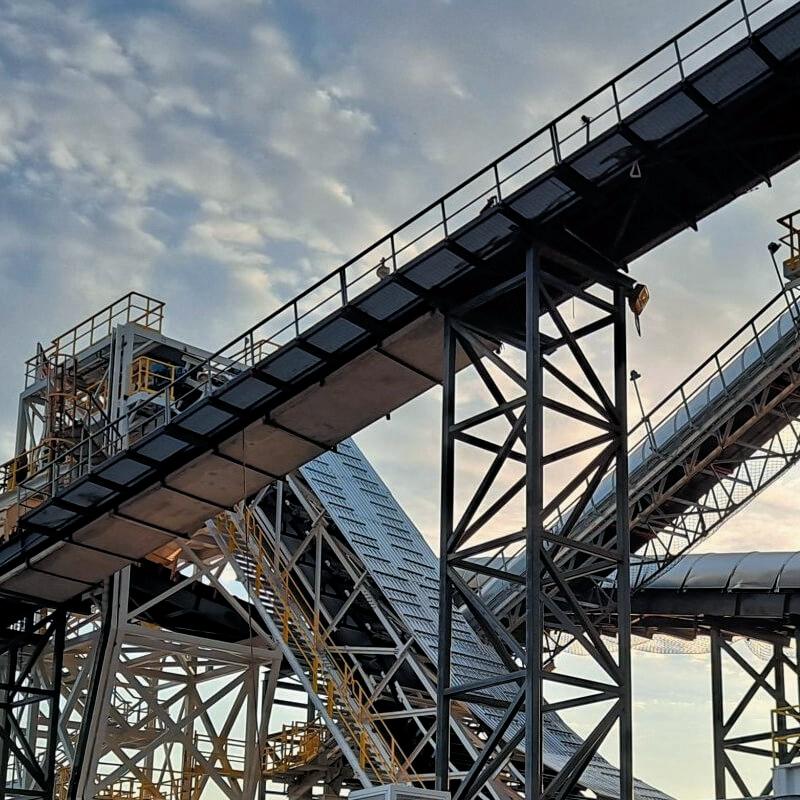
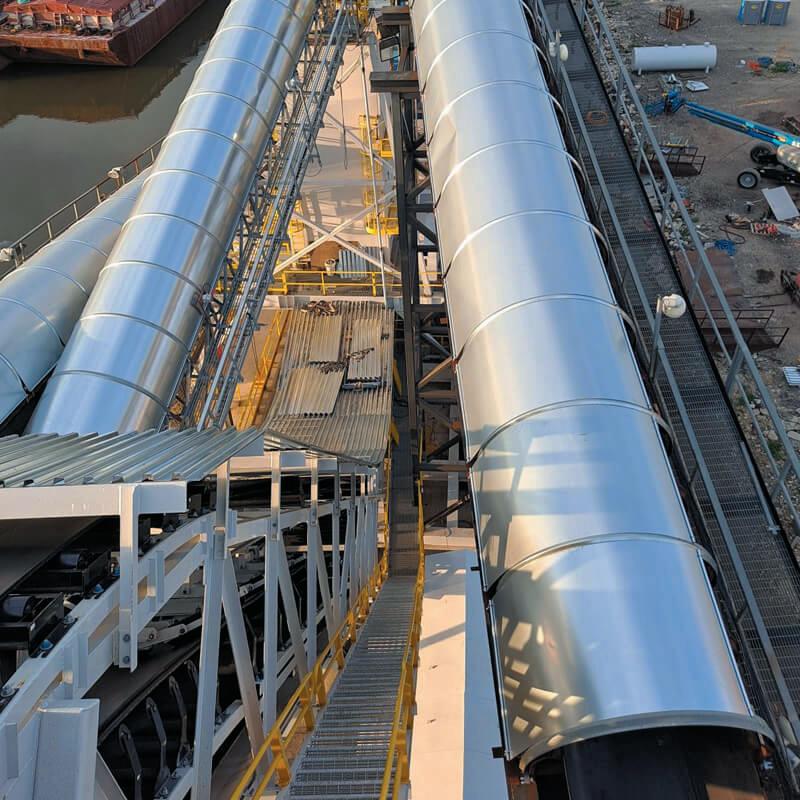
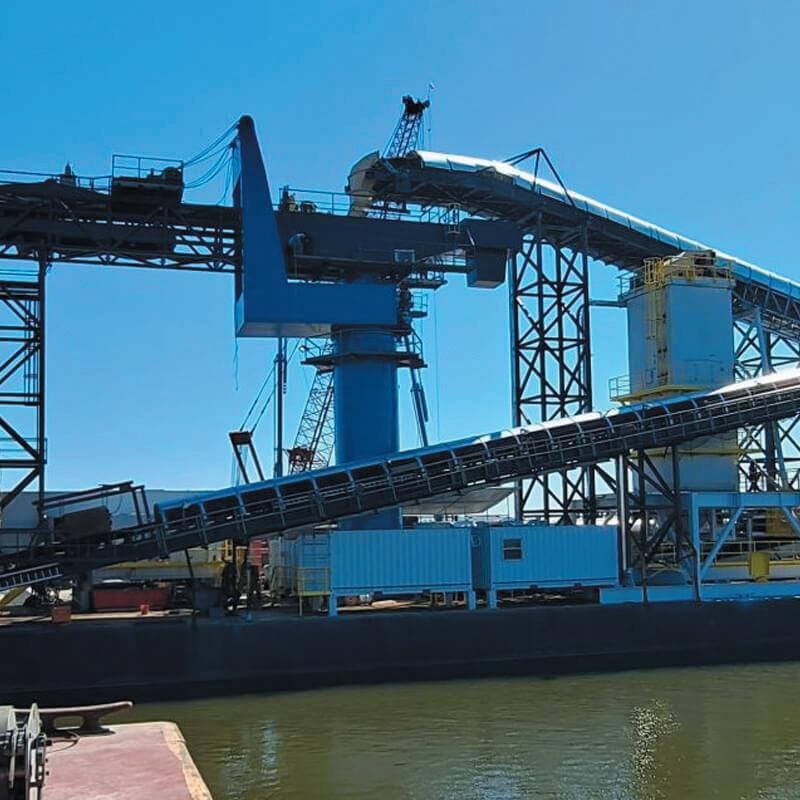
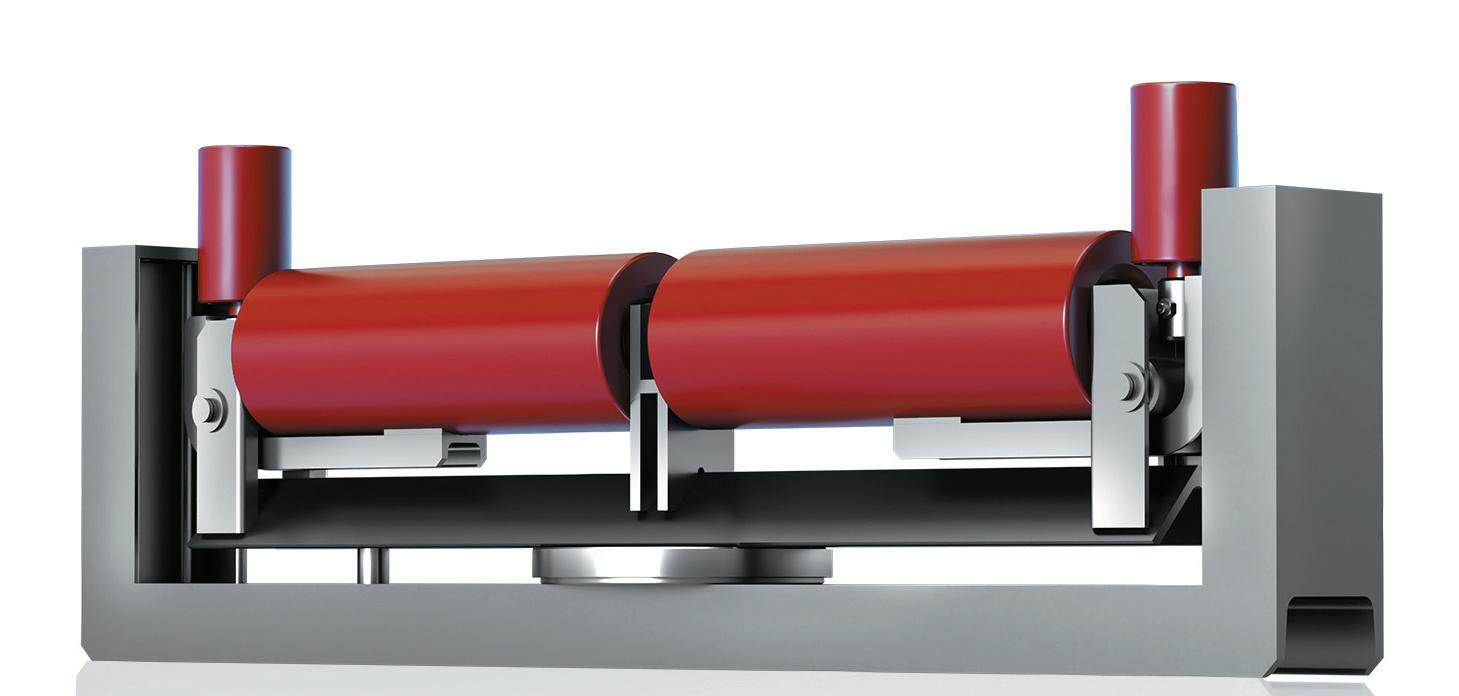
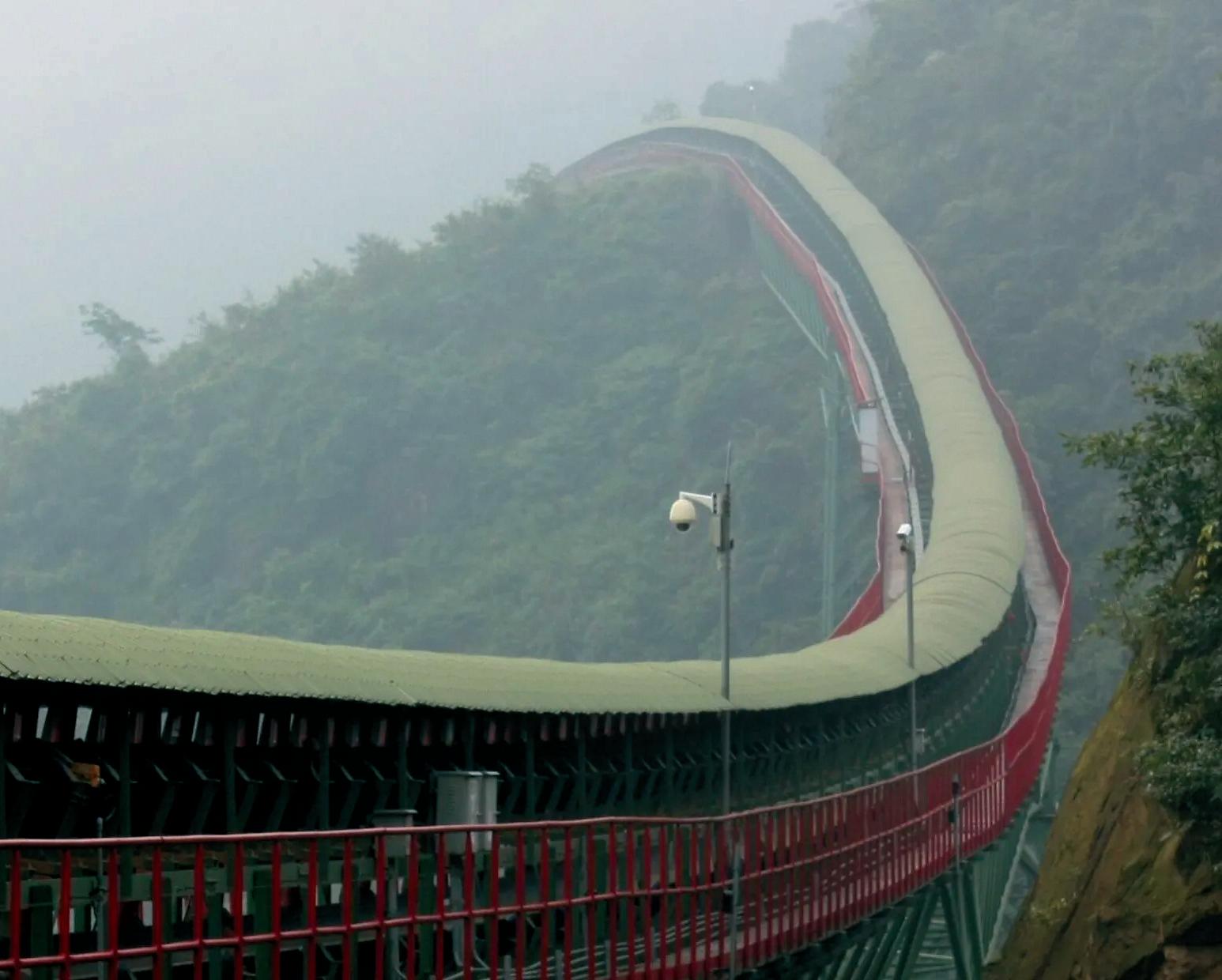
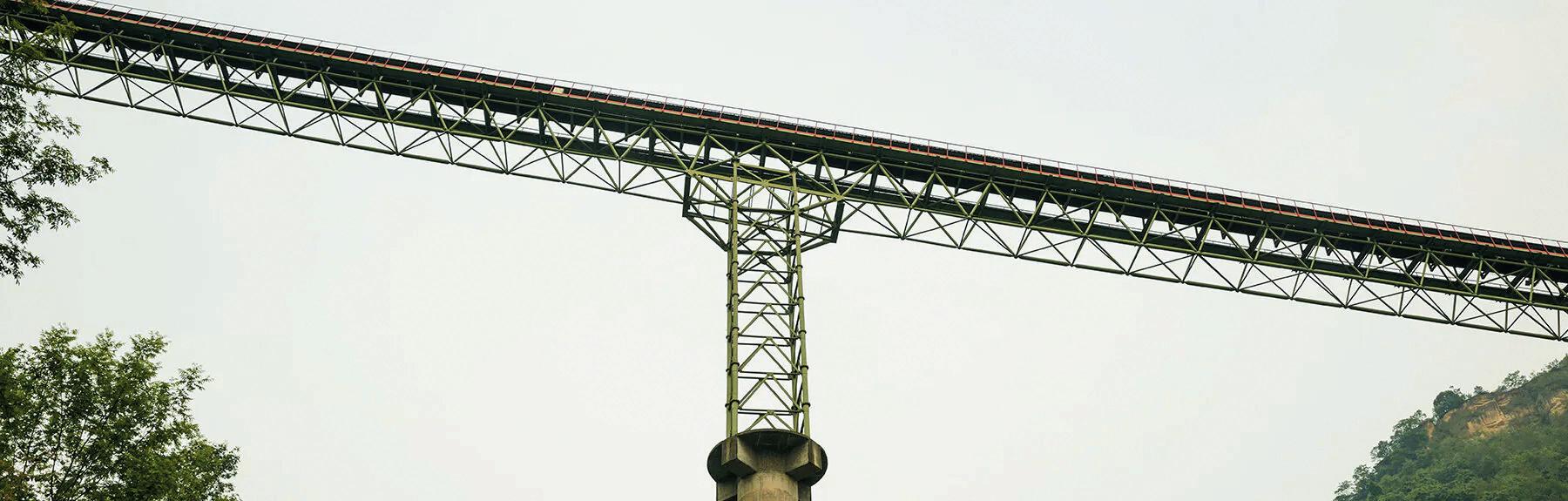
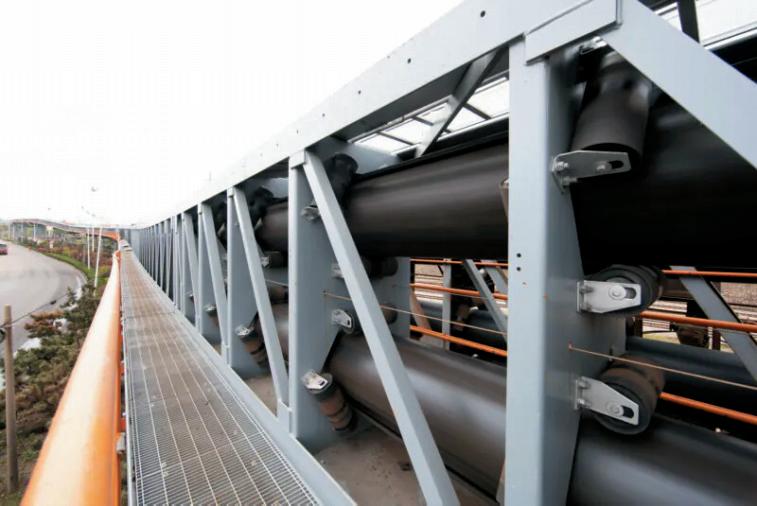
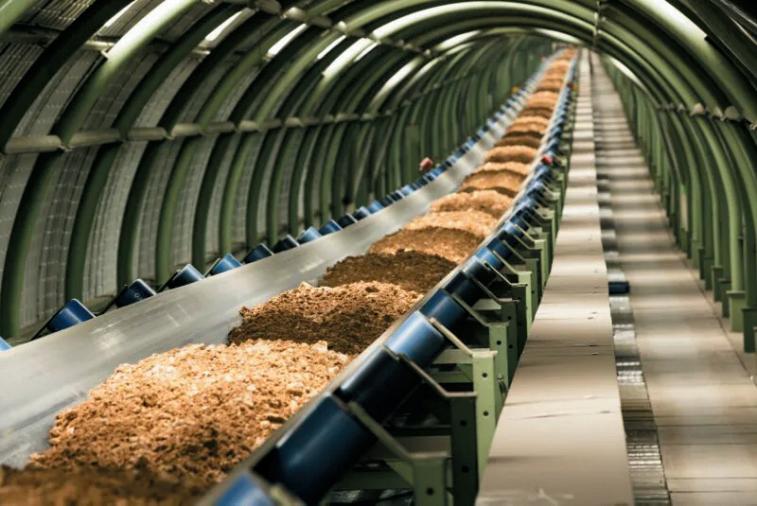
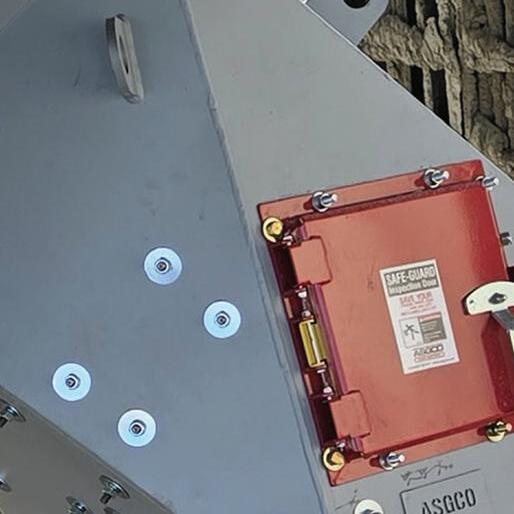
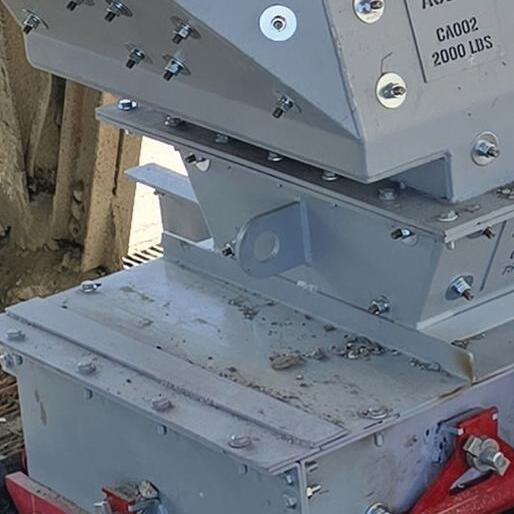
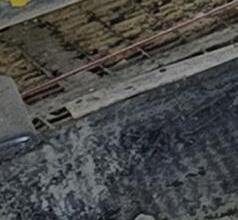
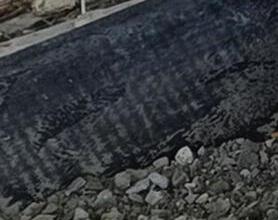
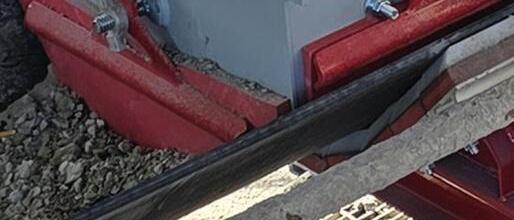
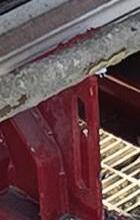
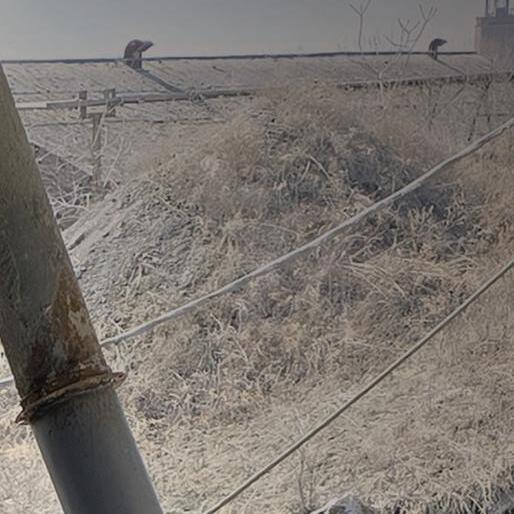
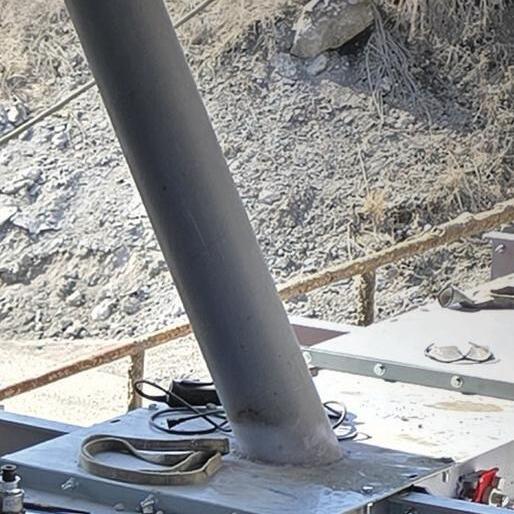
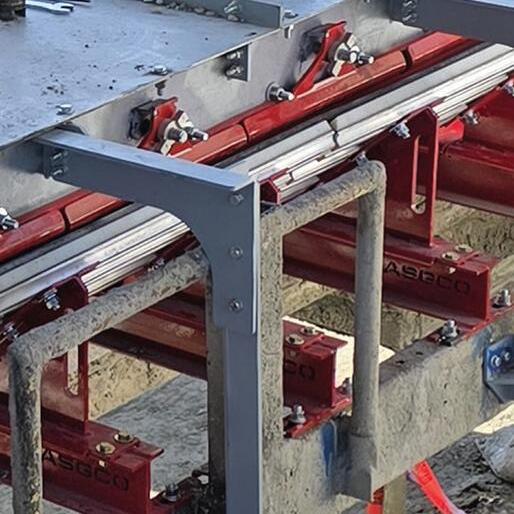
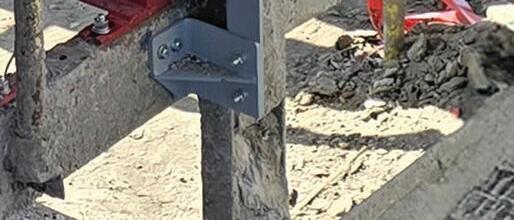
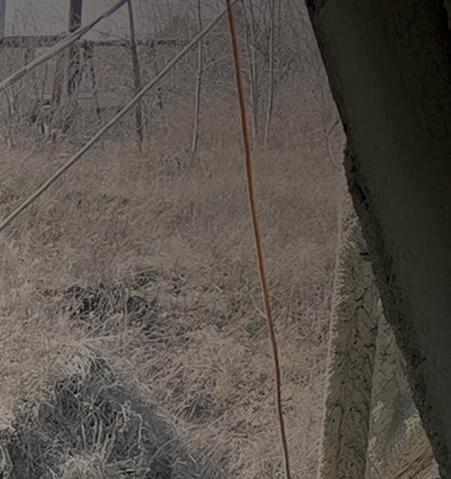
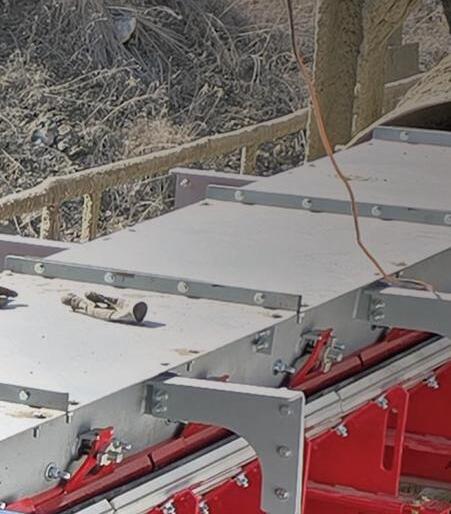
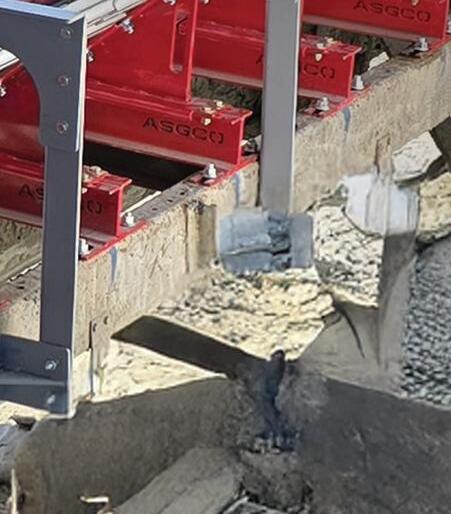
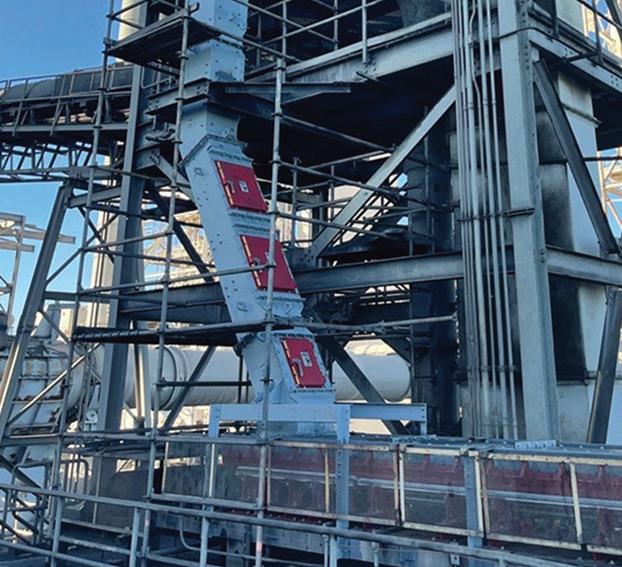
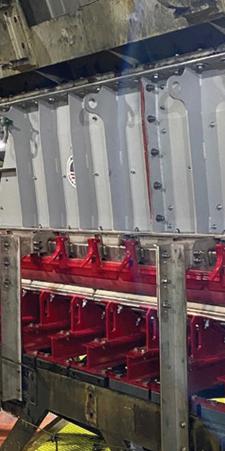
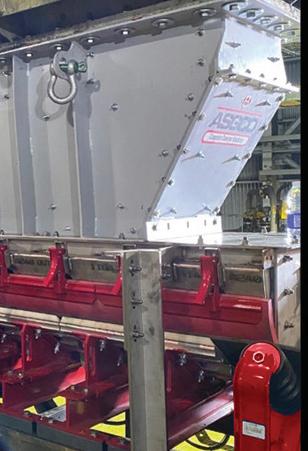
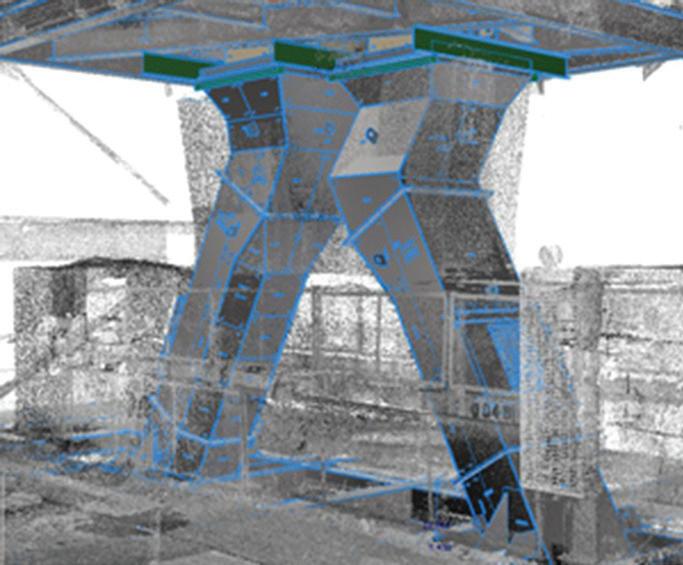
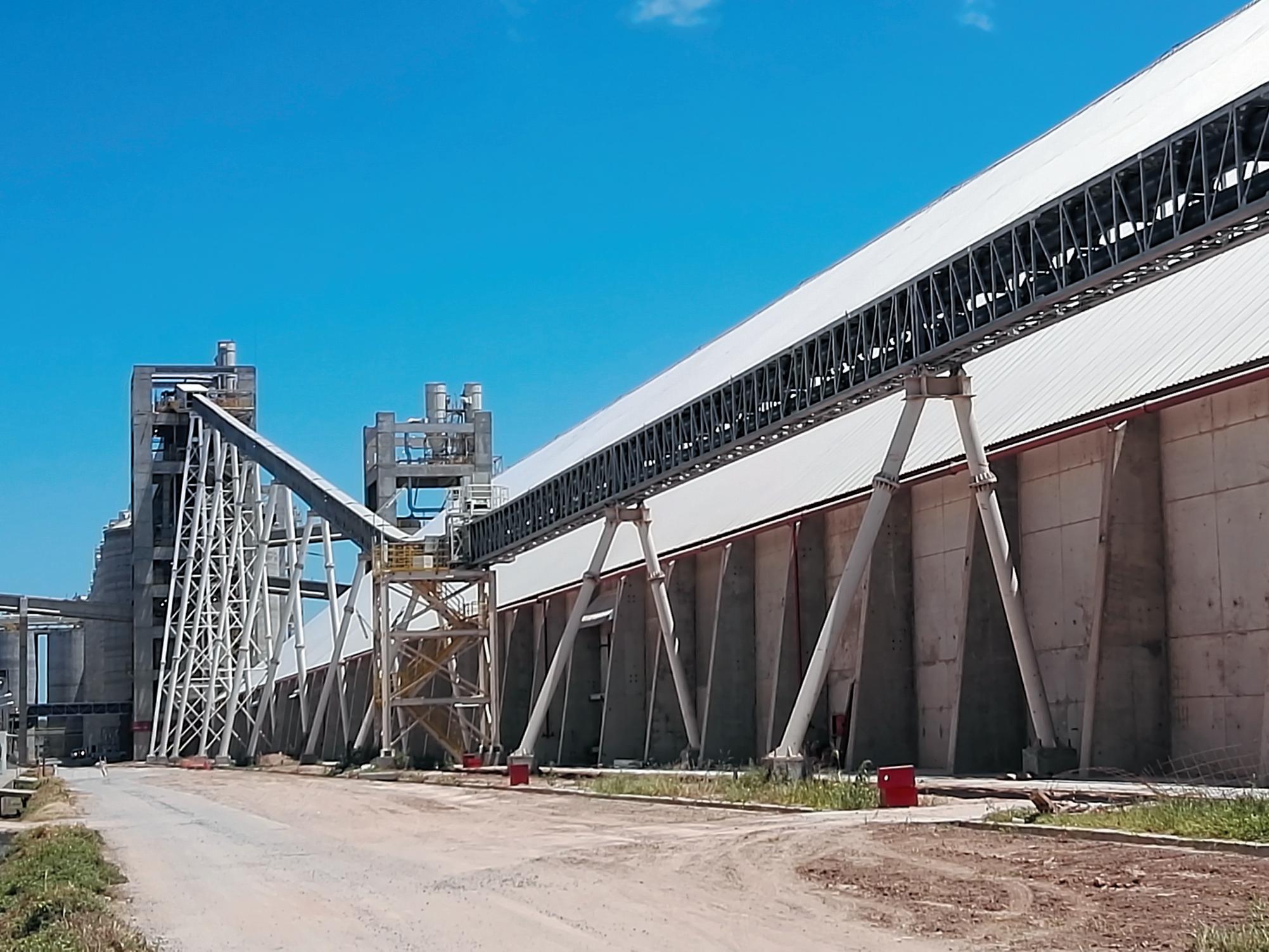
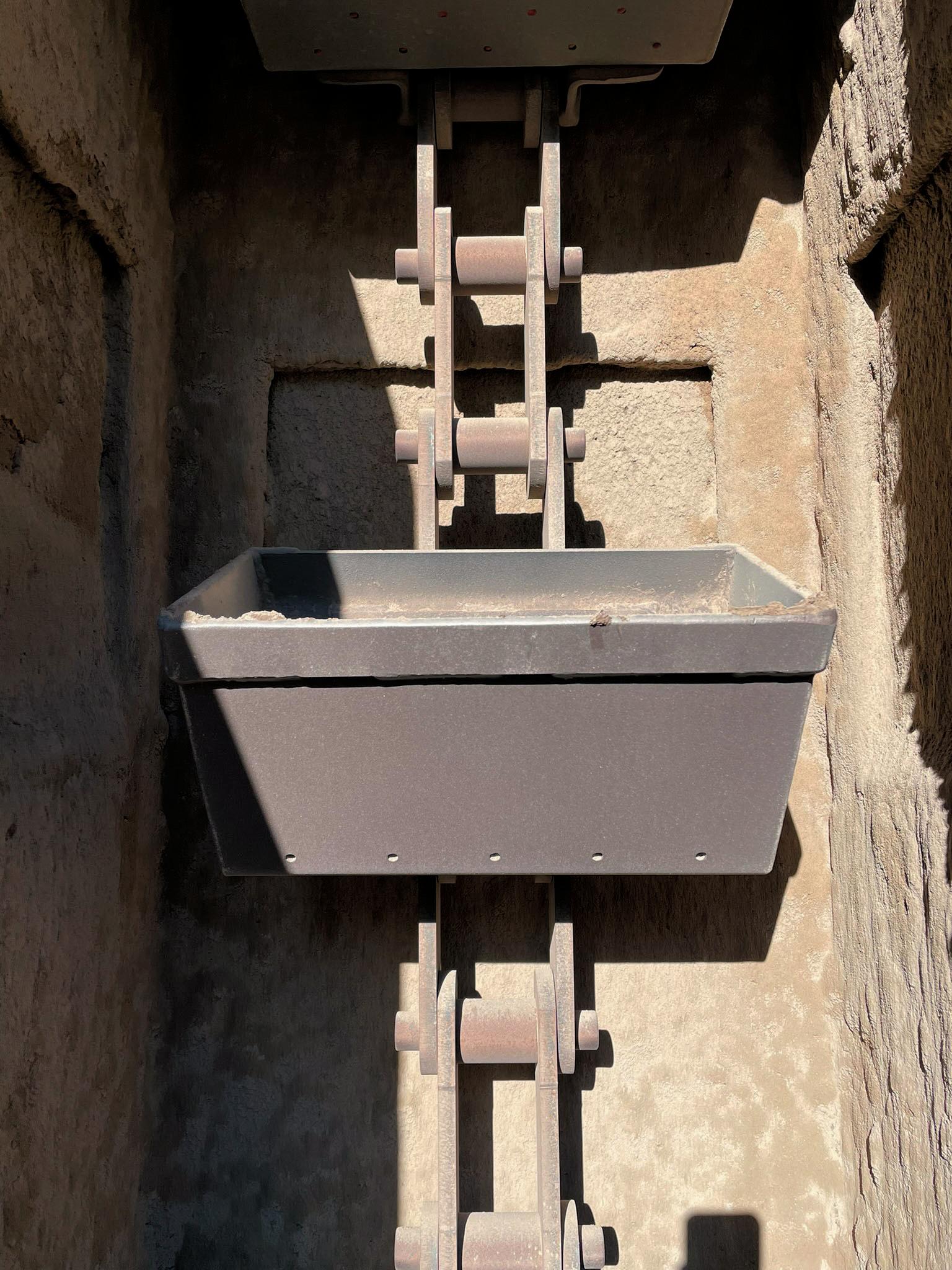
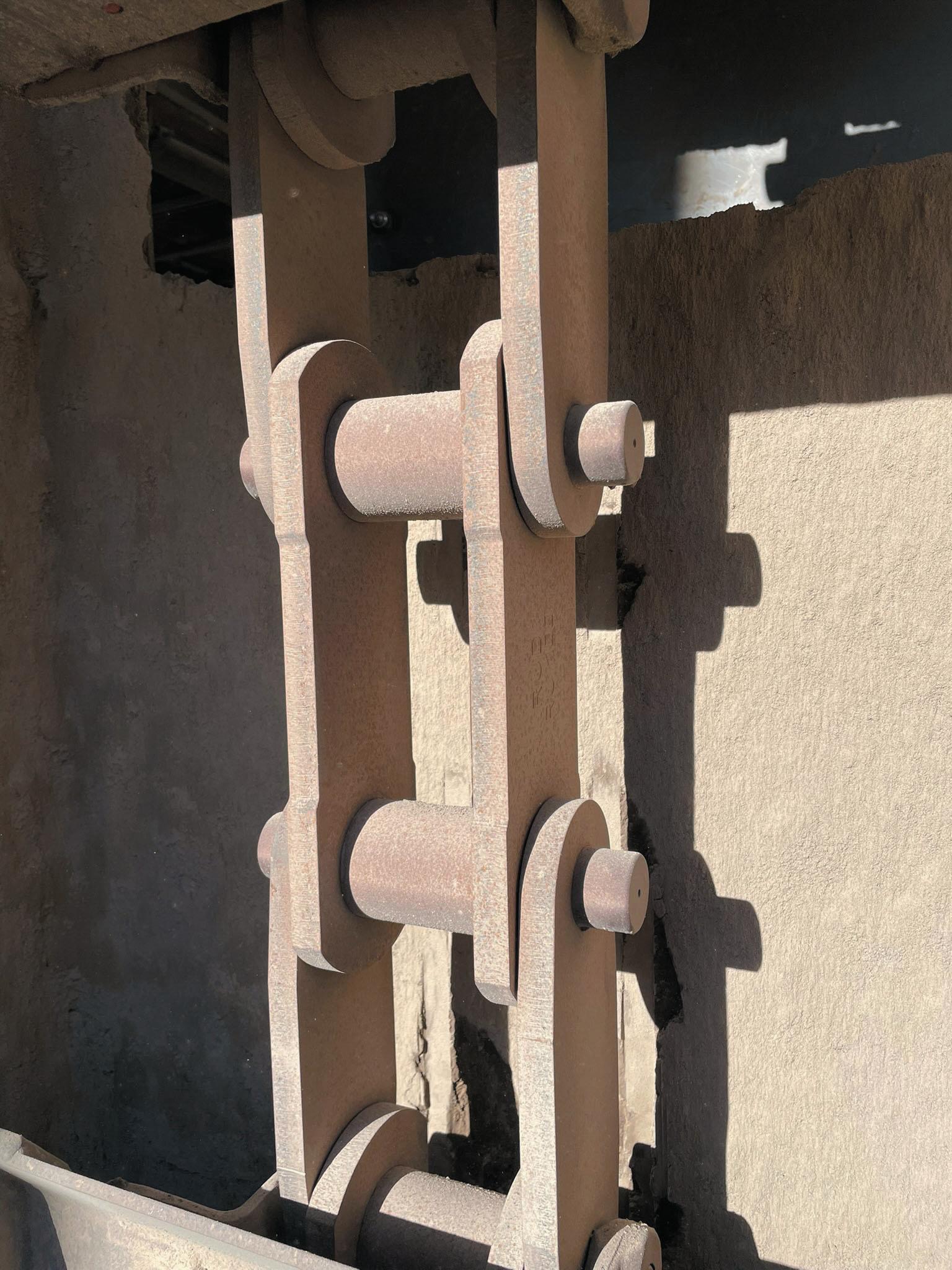
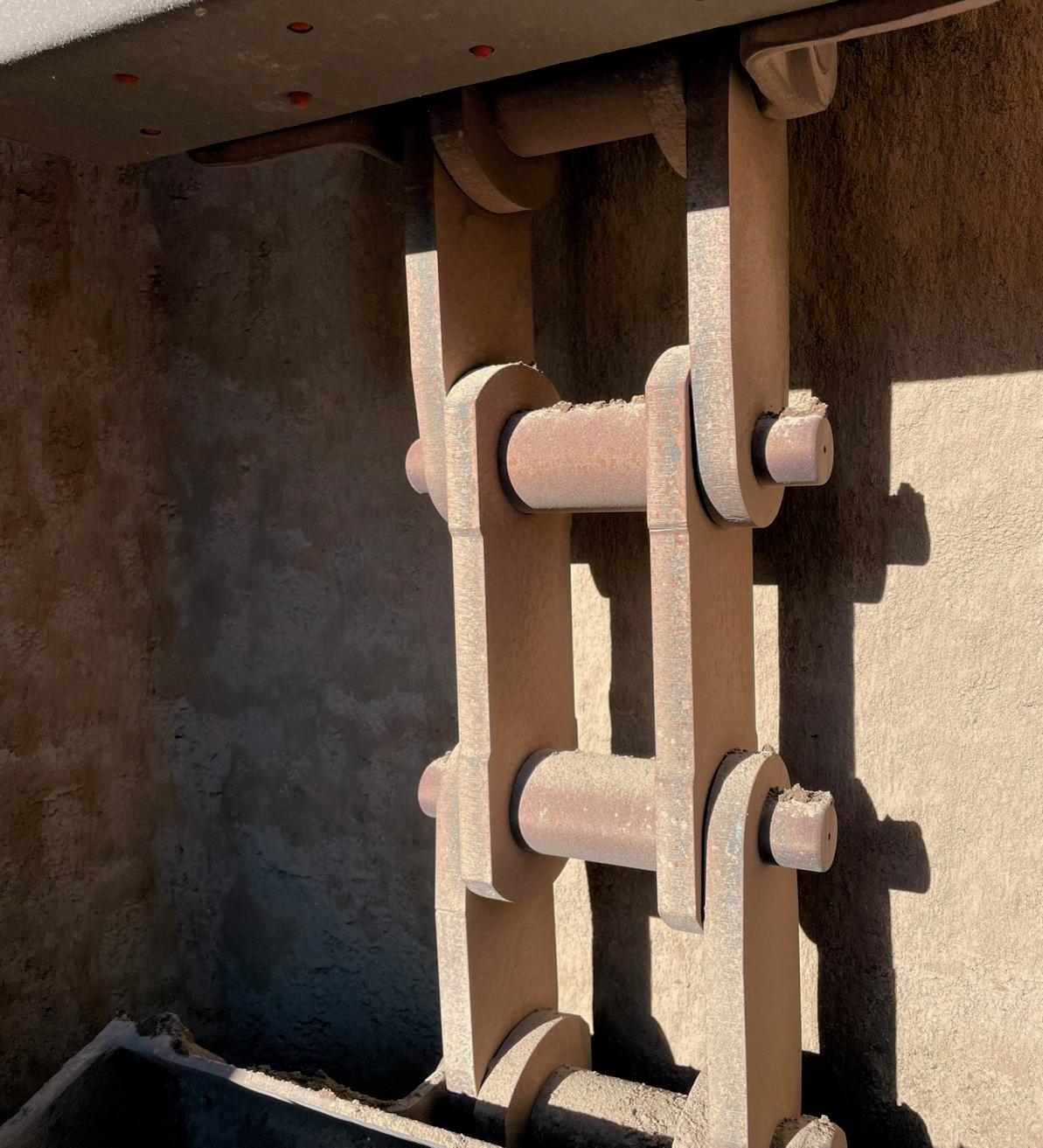
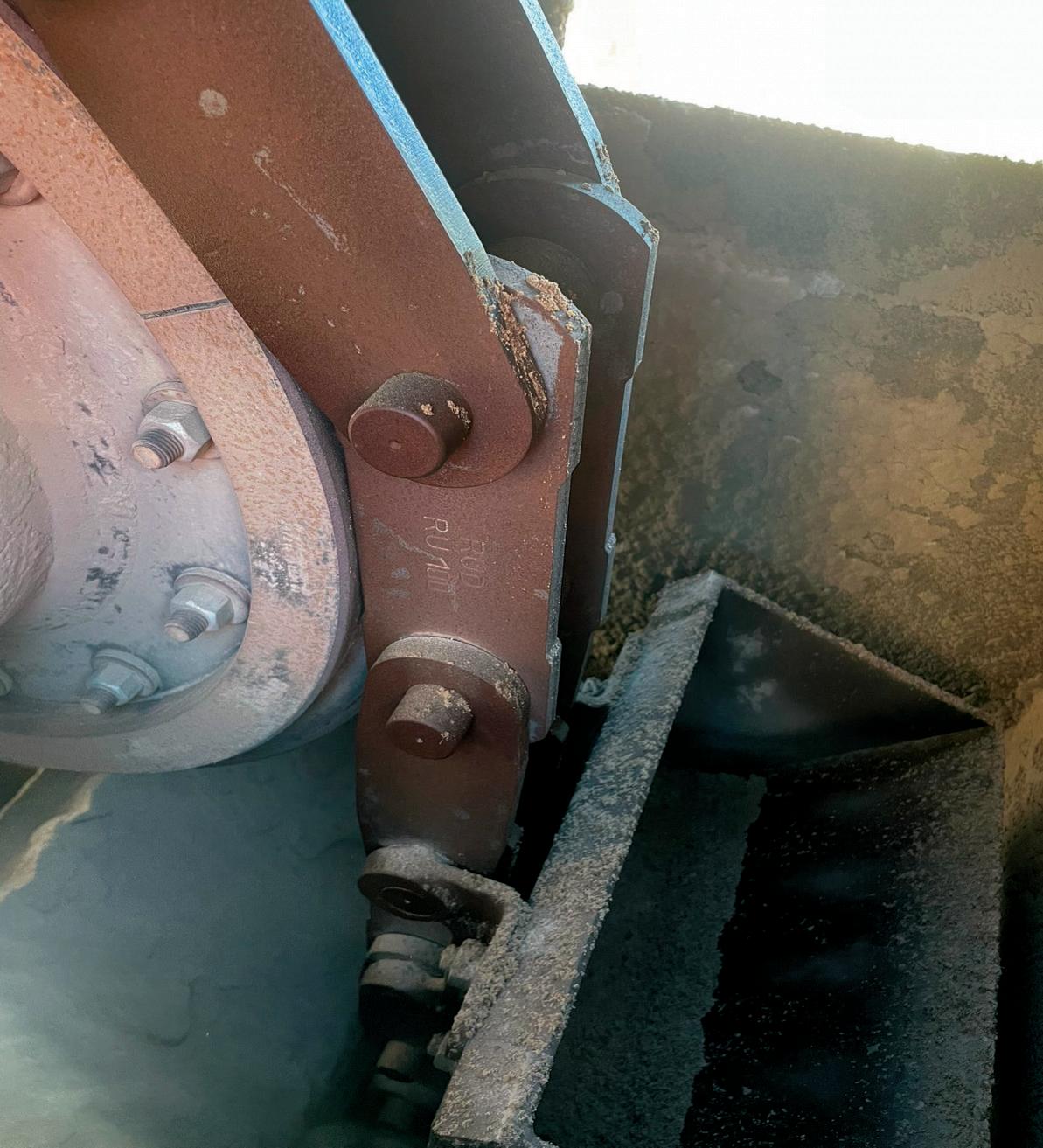
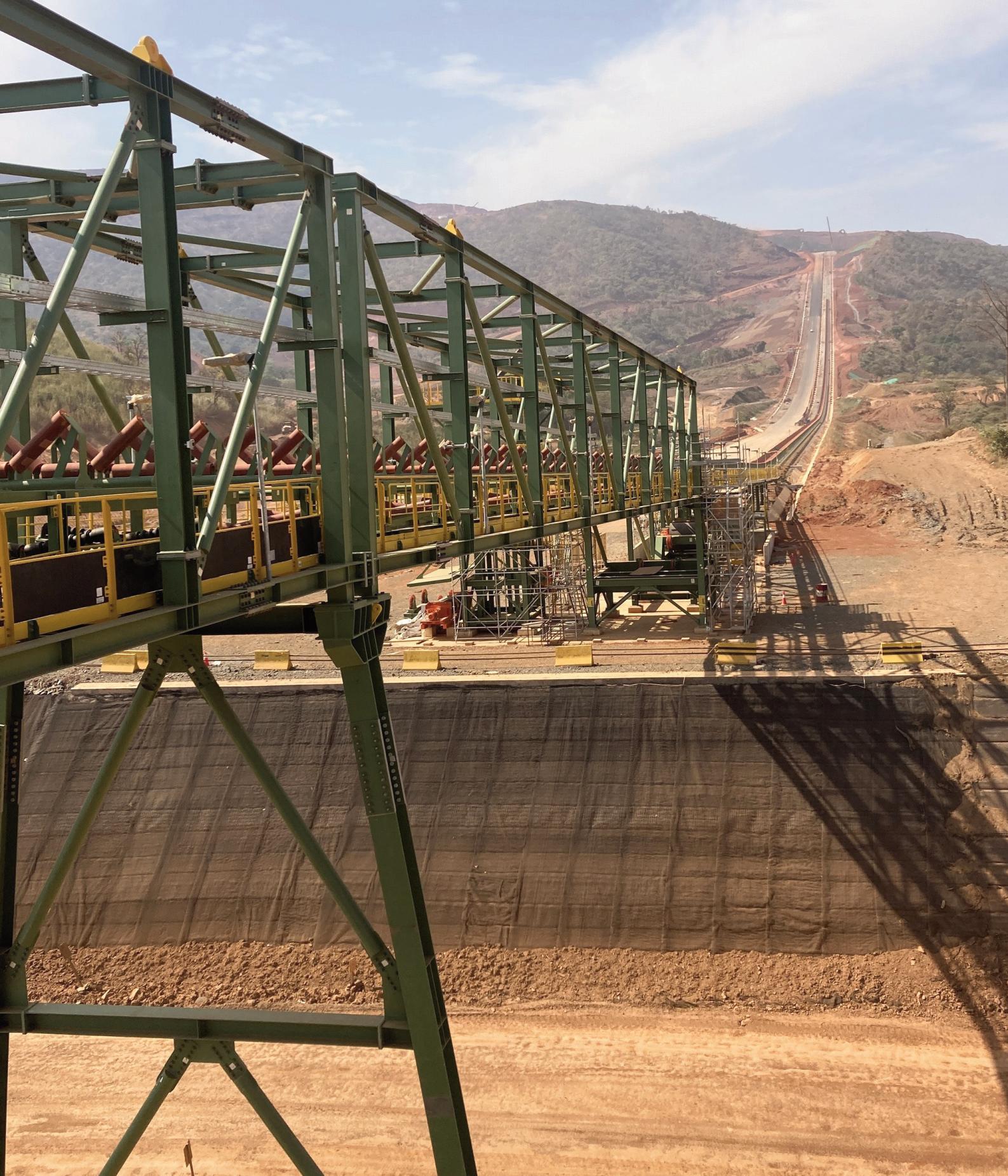
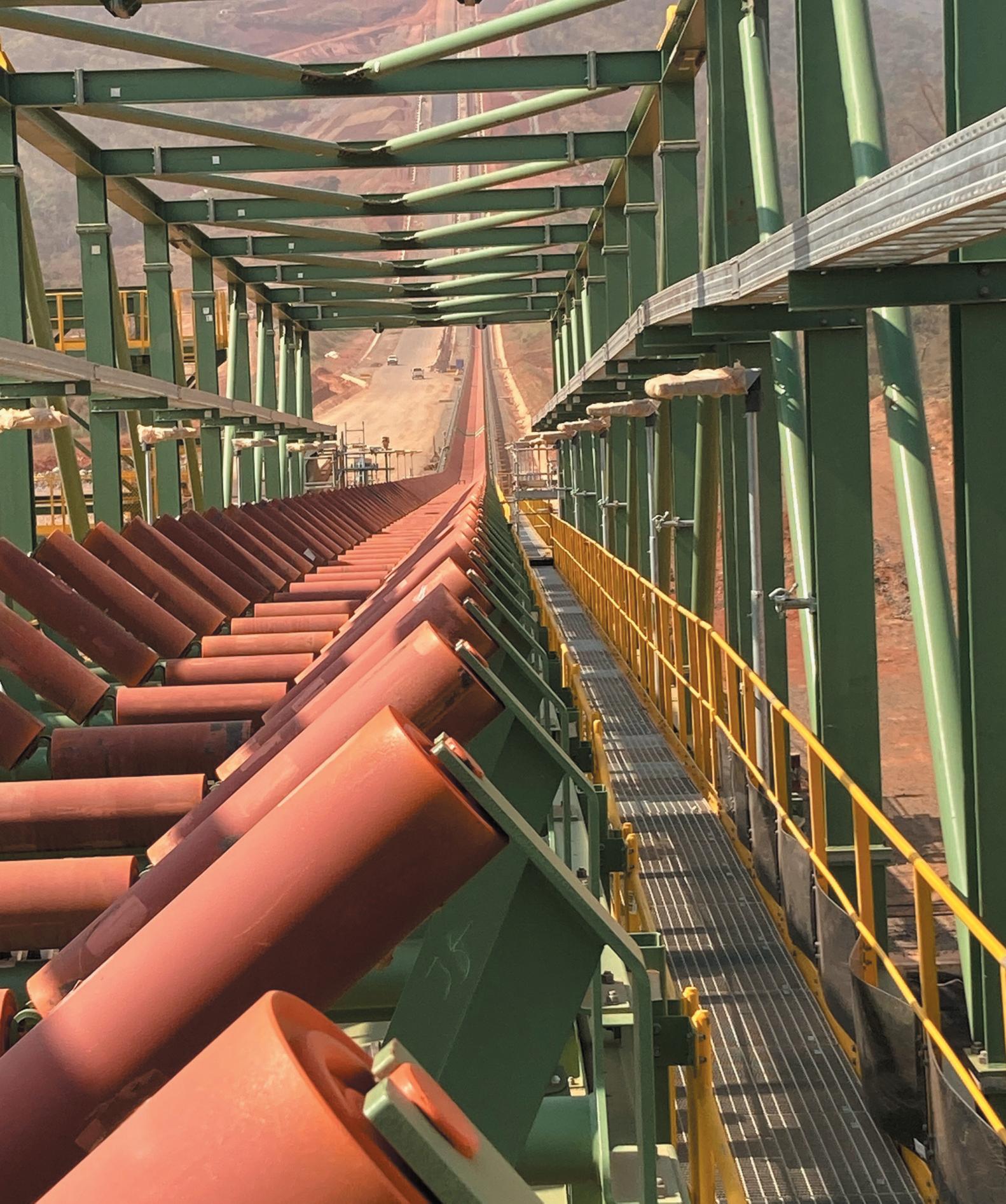
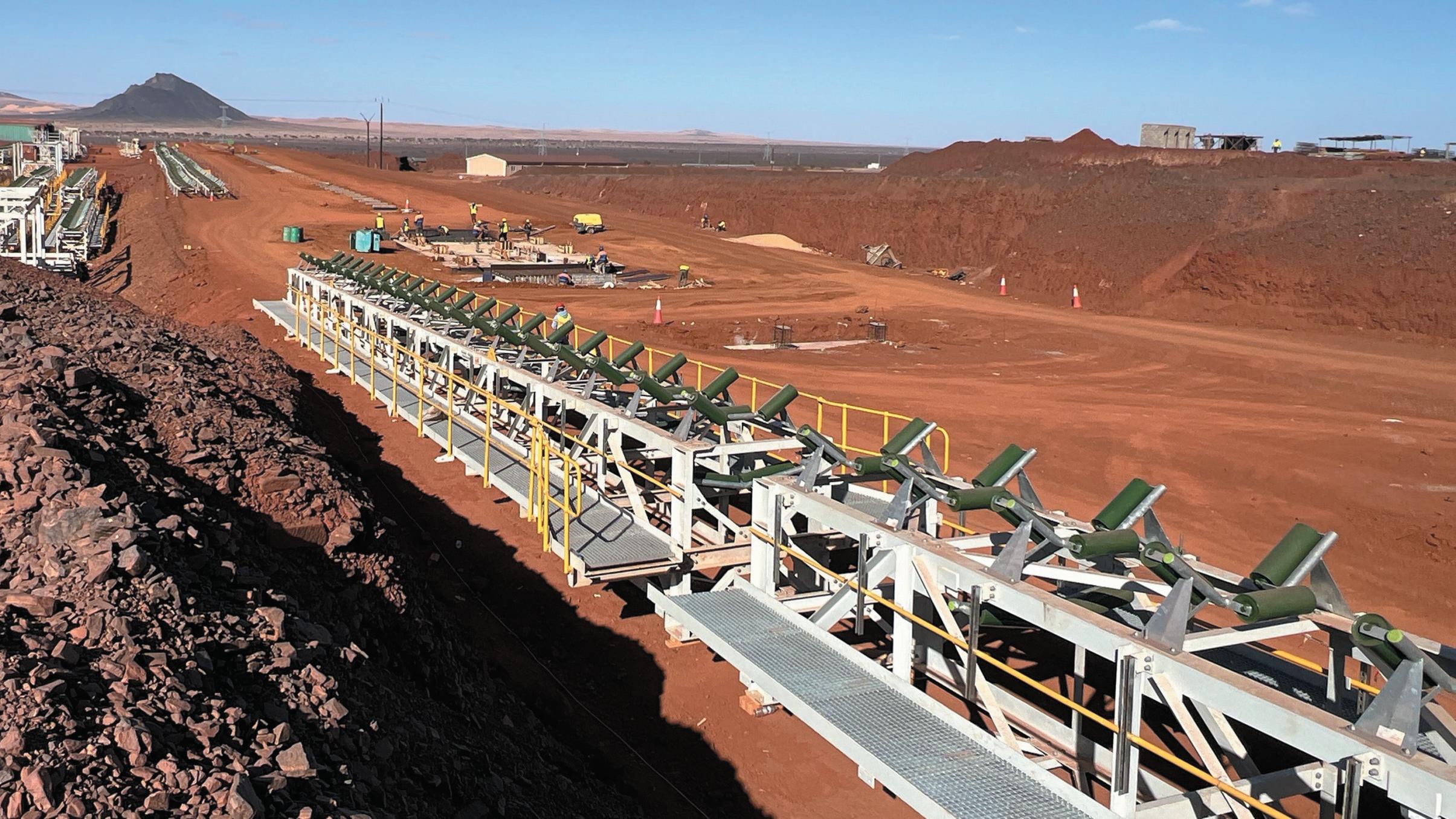
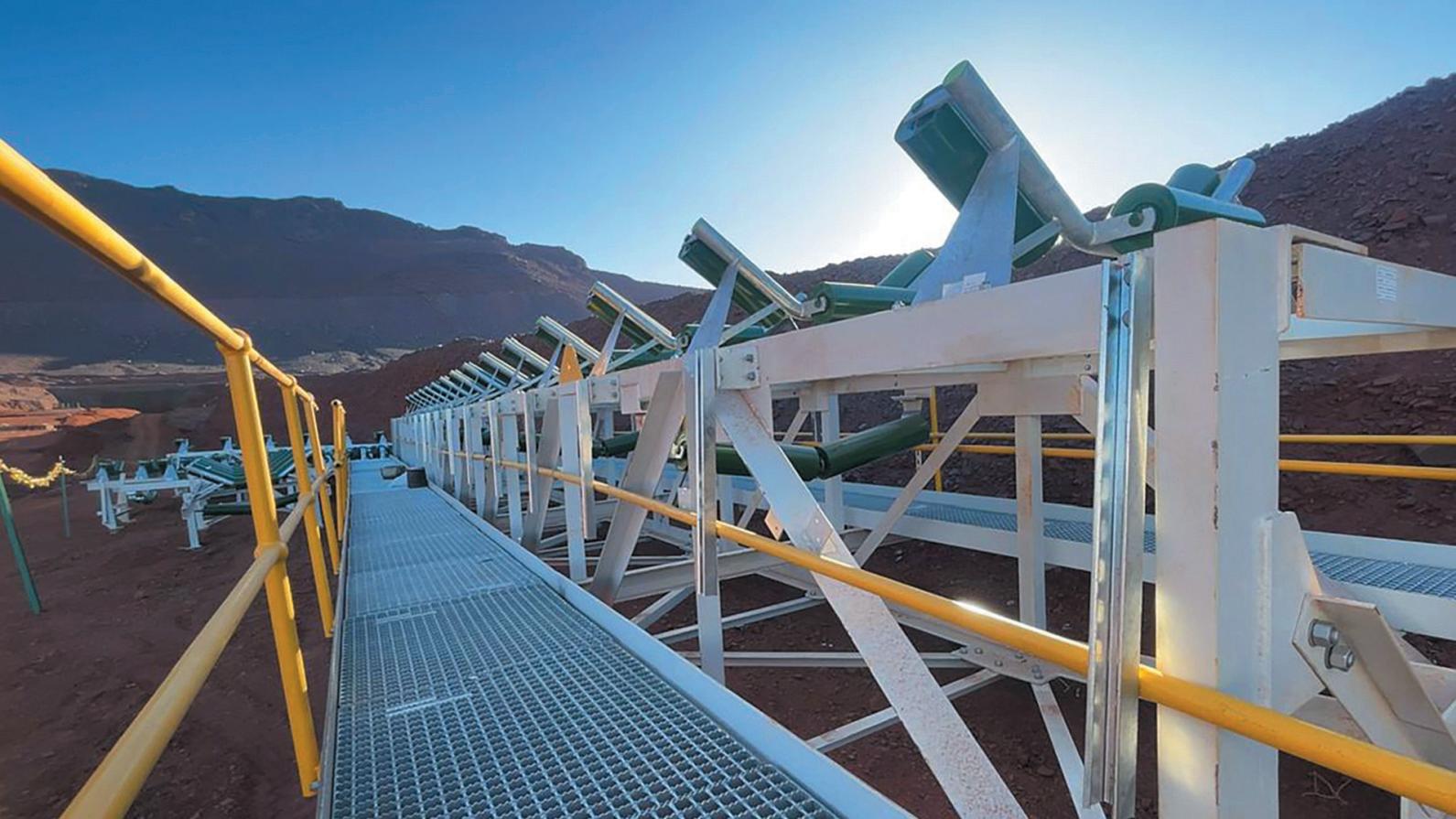
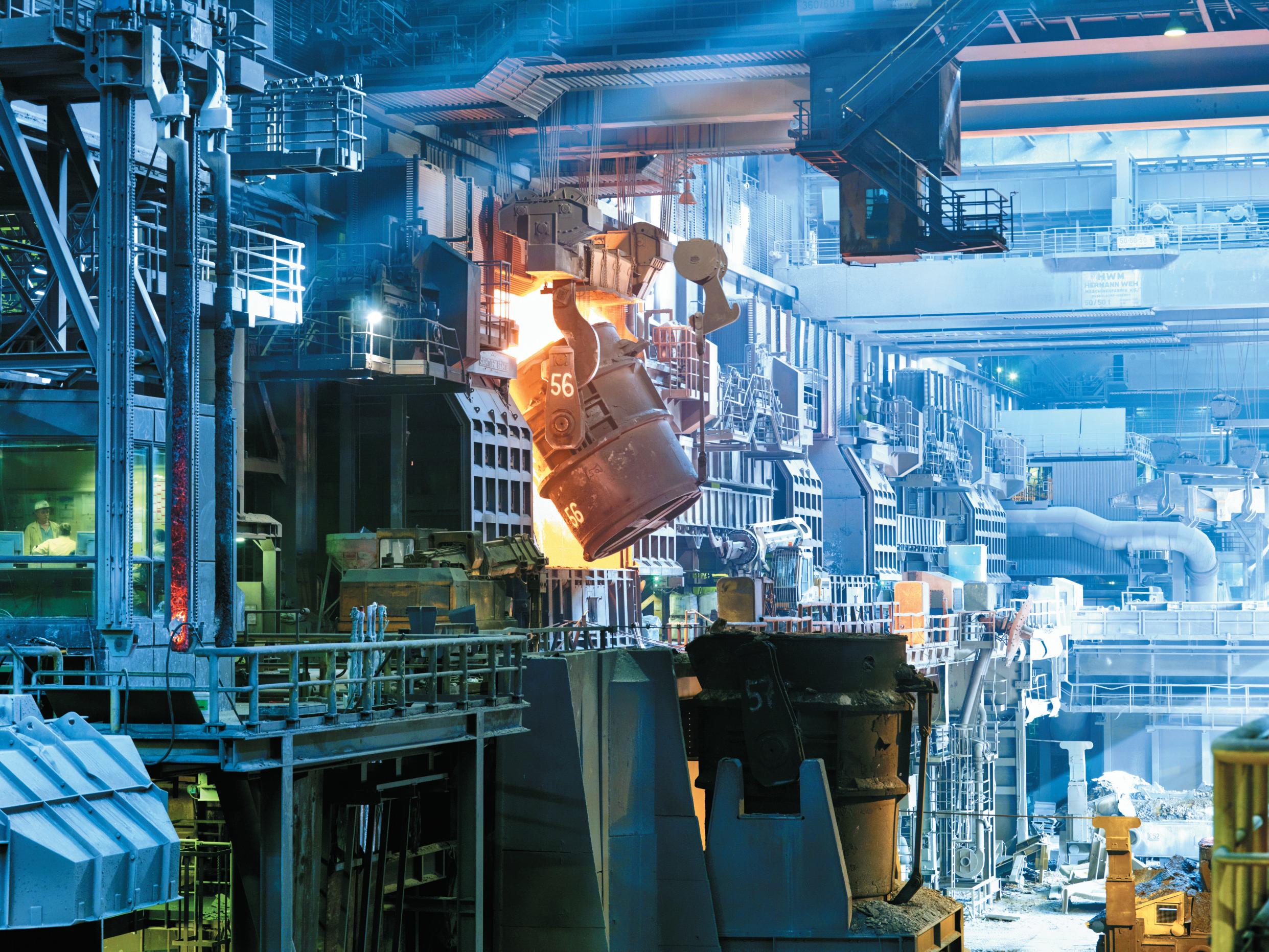
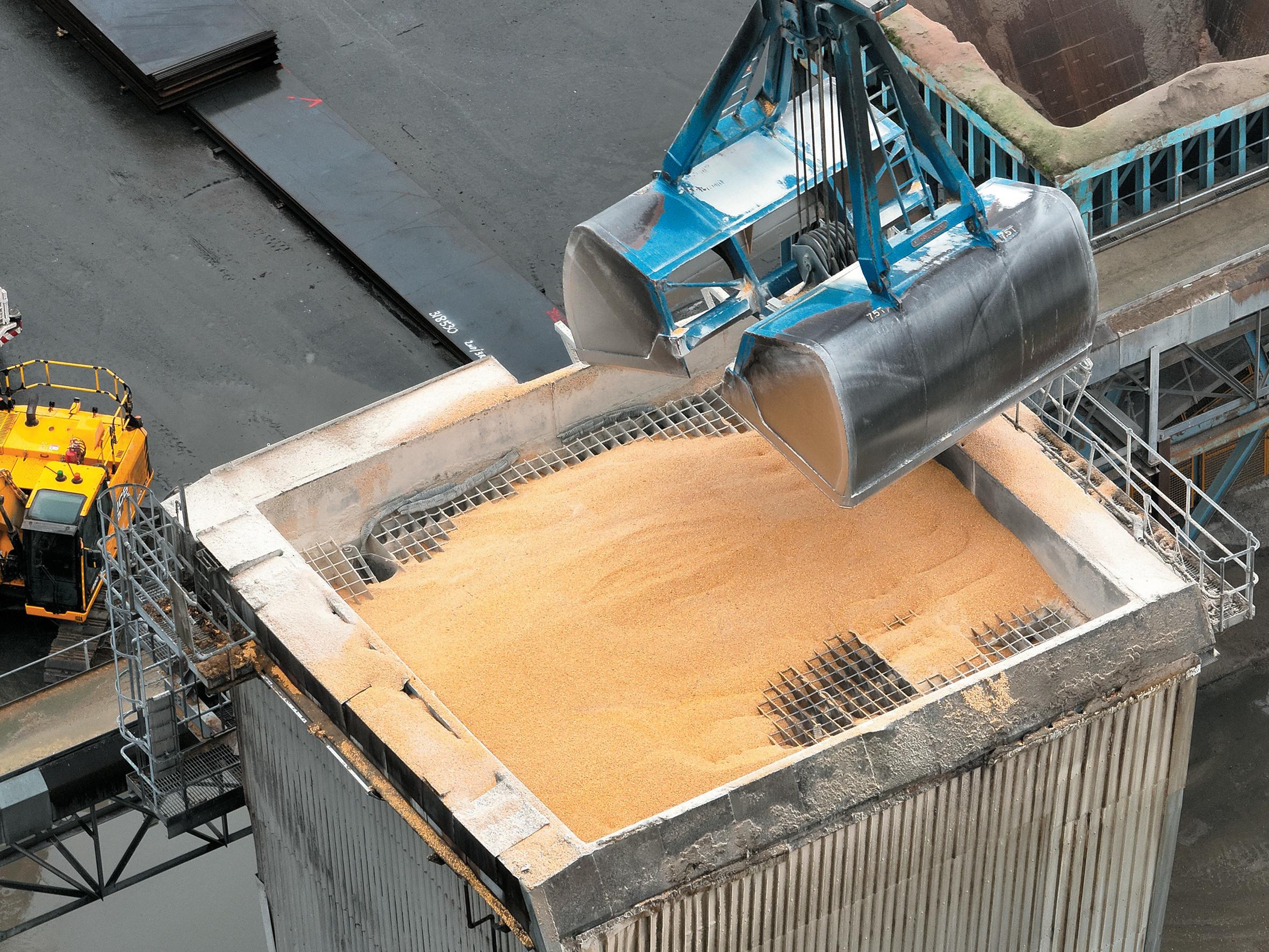
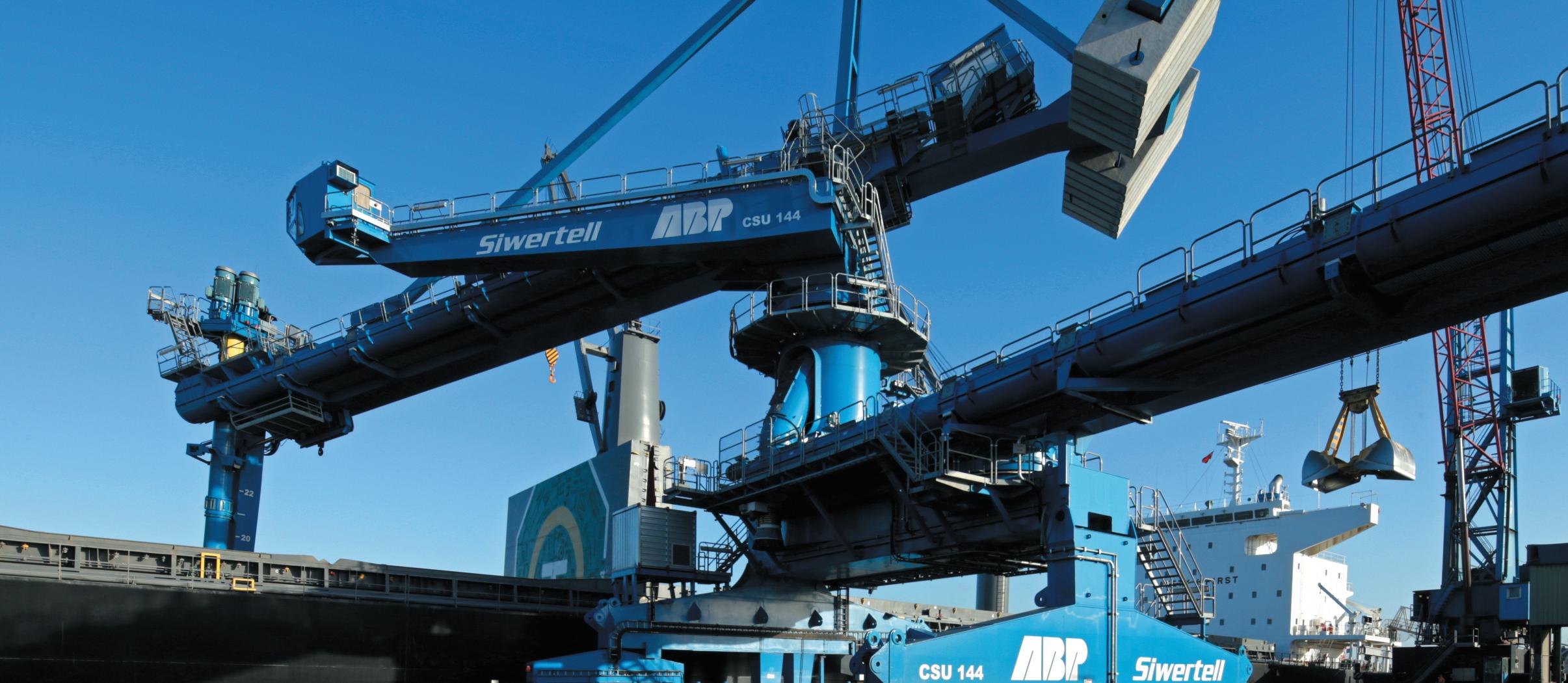
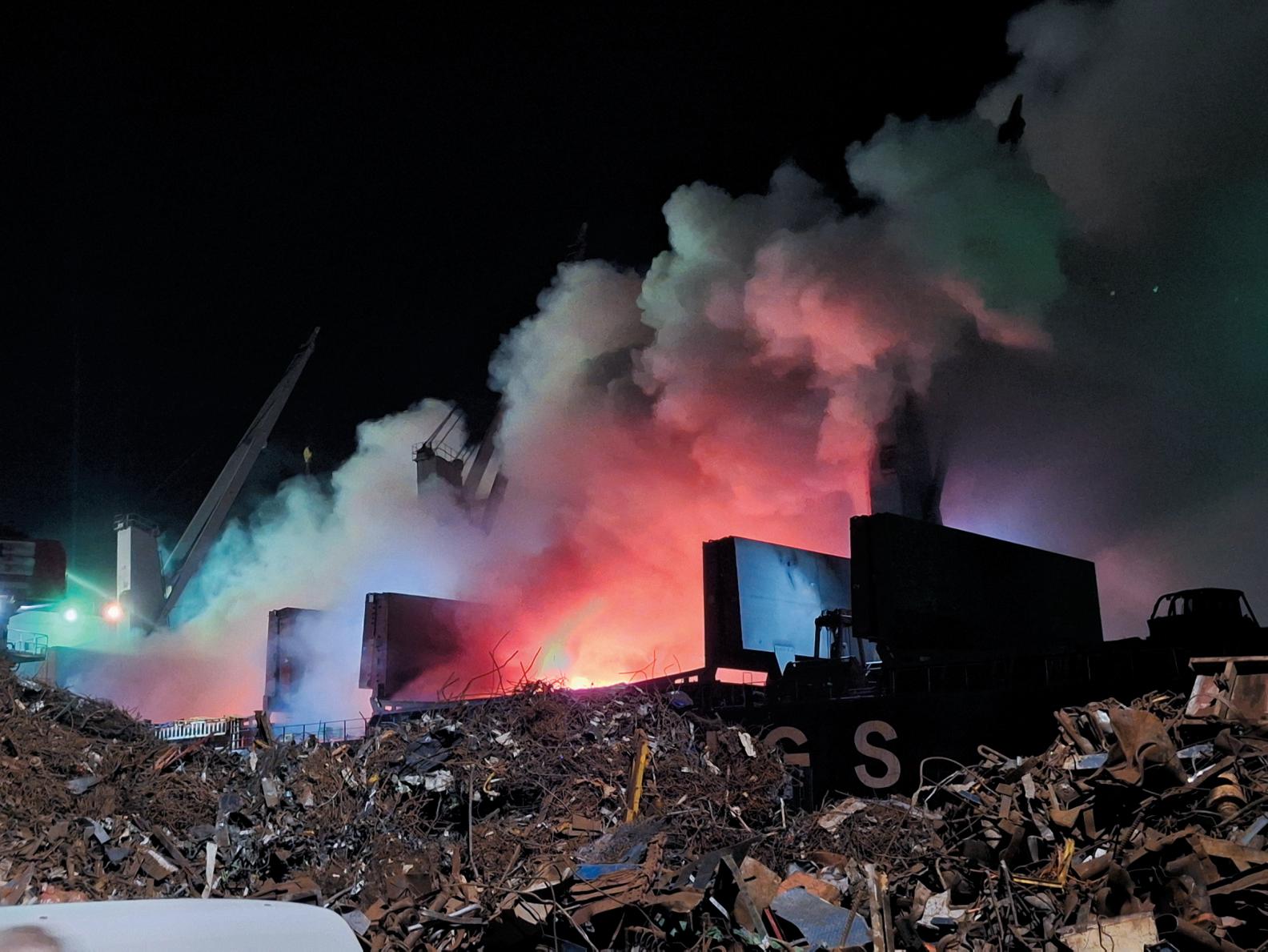
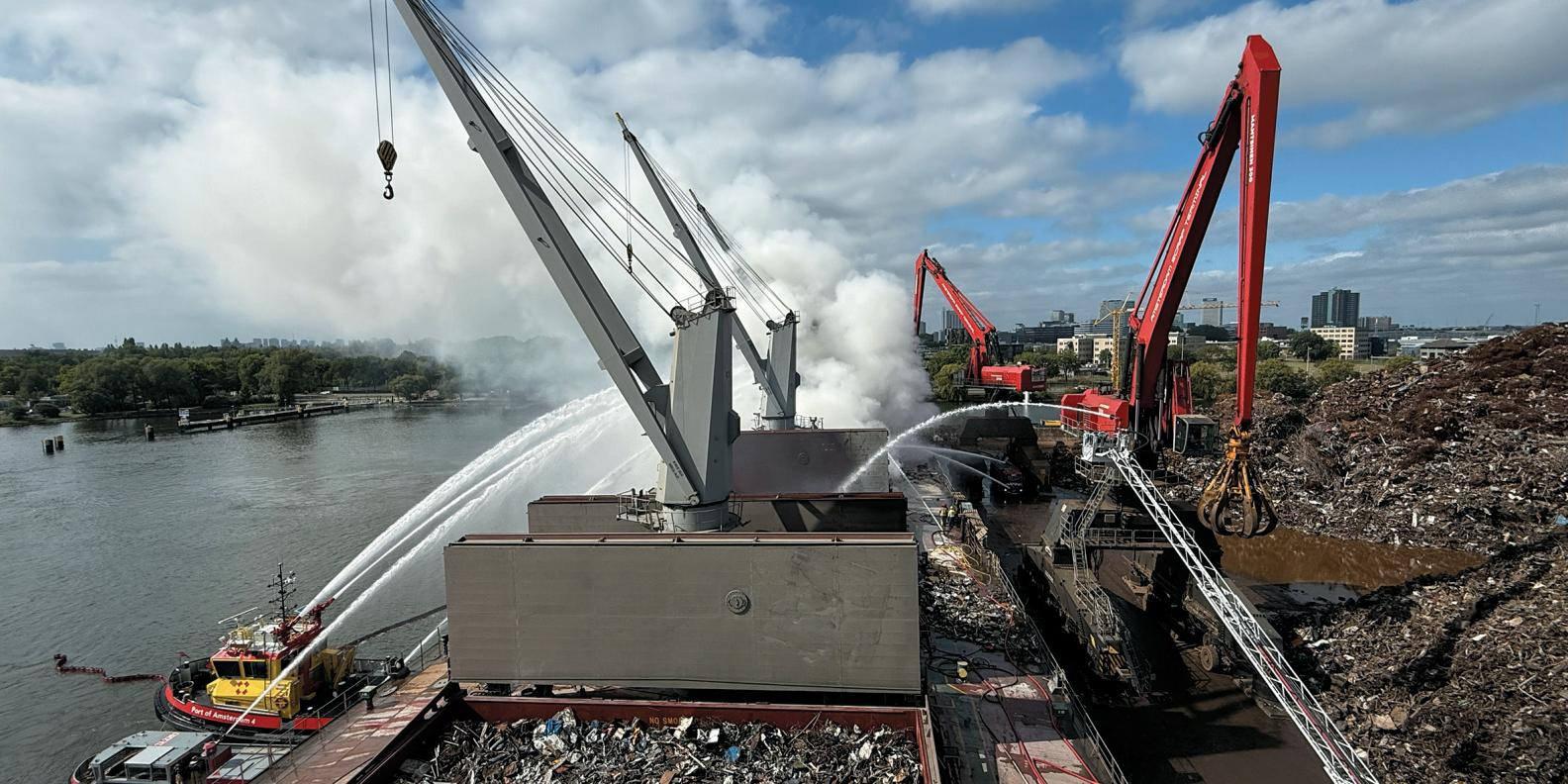
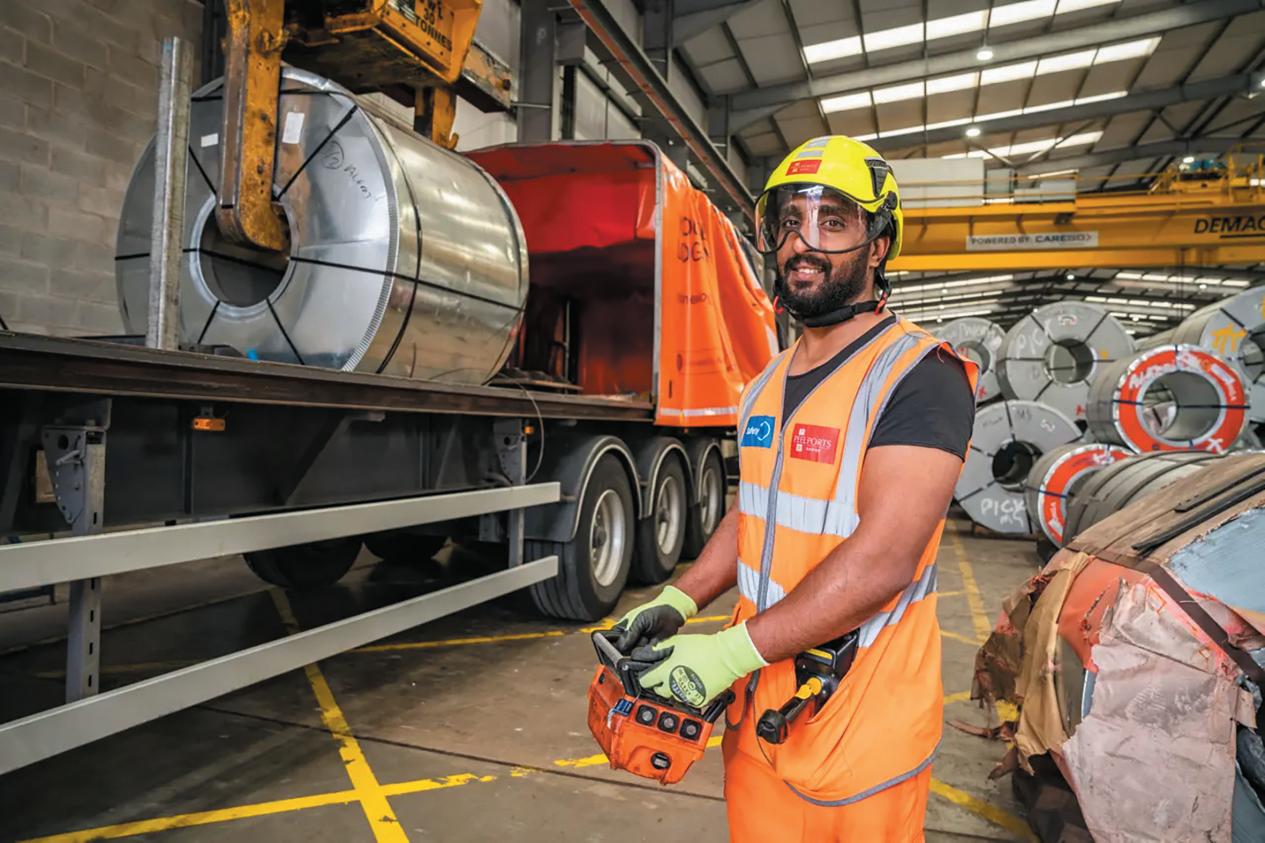
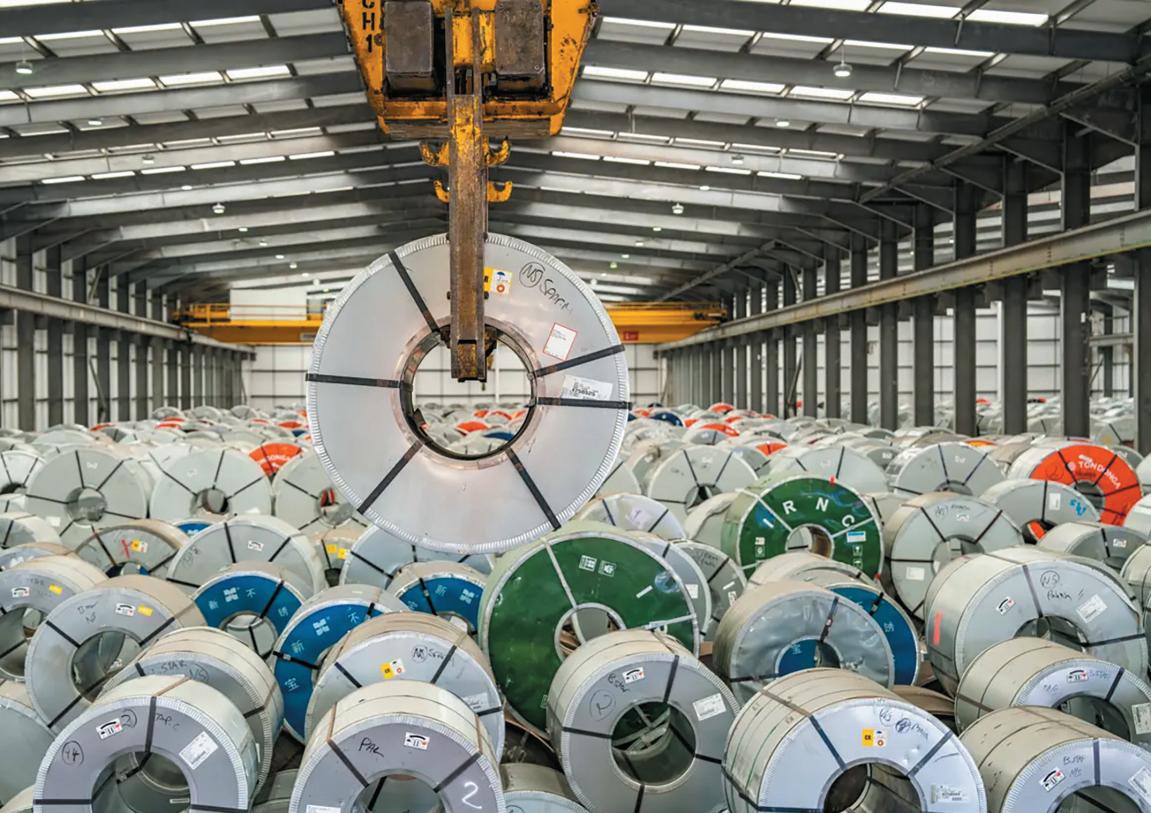
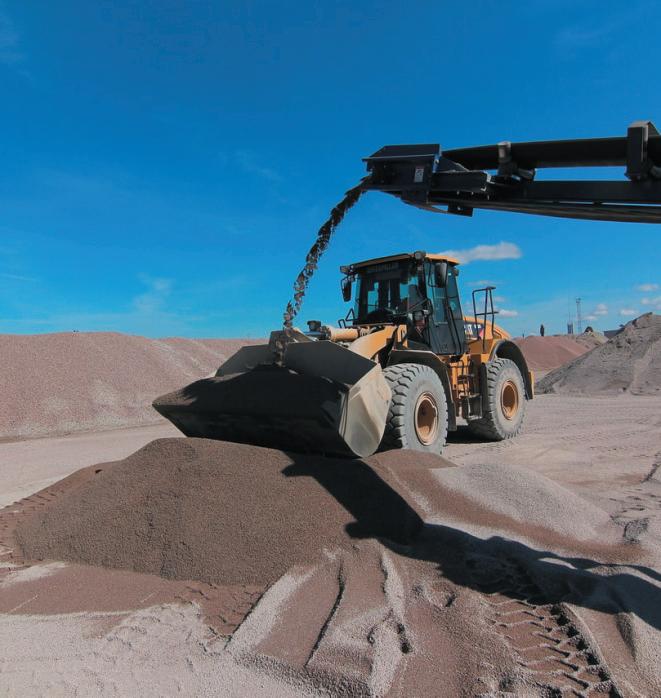
EXPRESSIONISM at its Finest Where was the ARTWORK created?
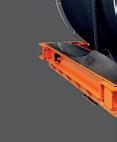
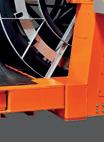
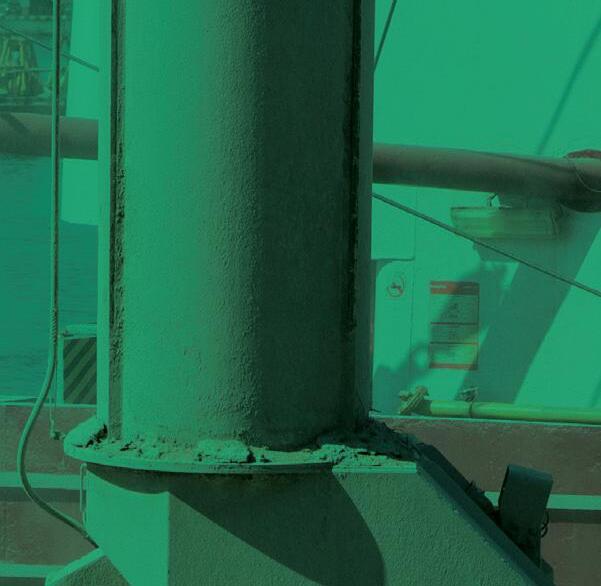
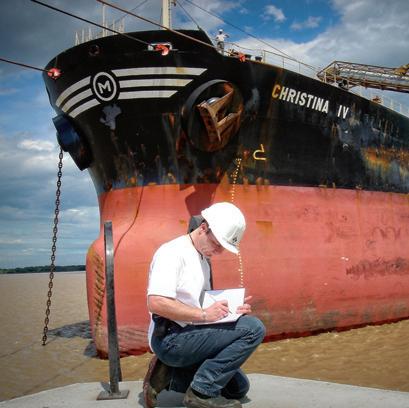
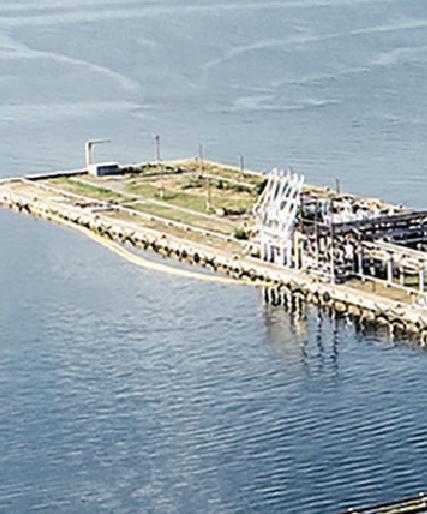
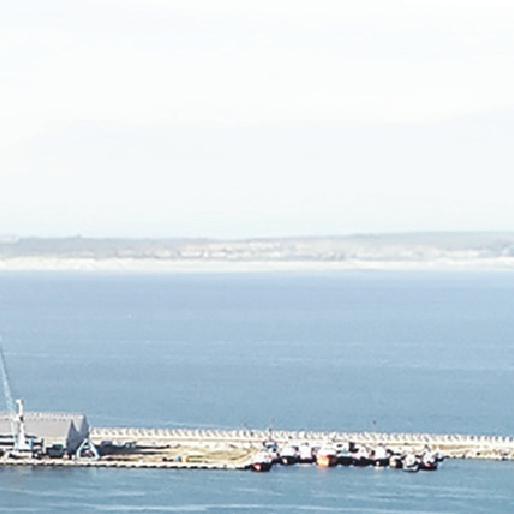
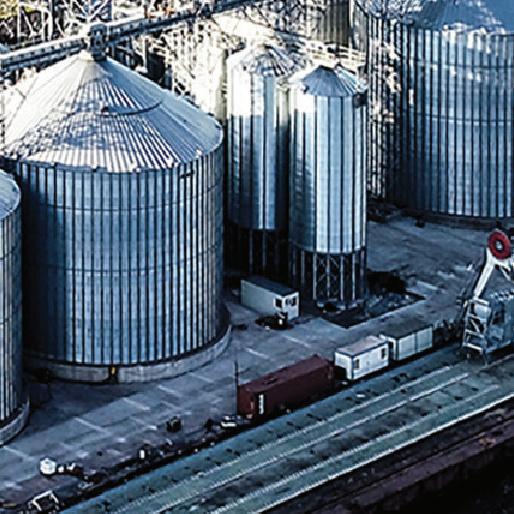
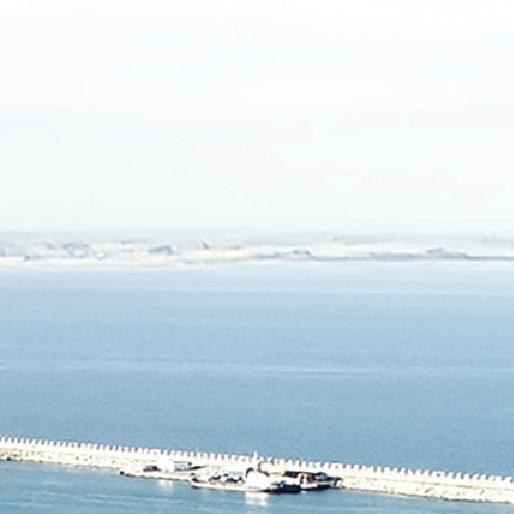
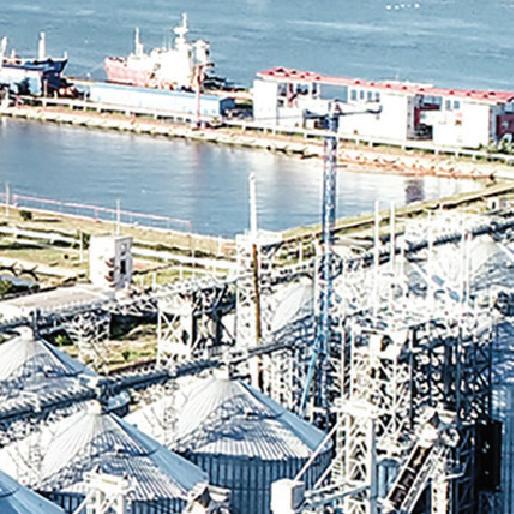
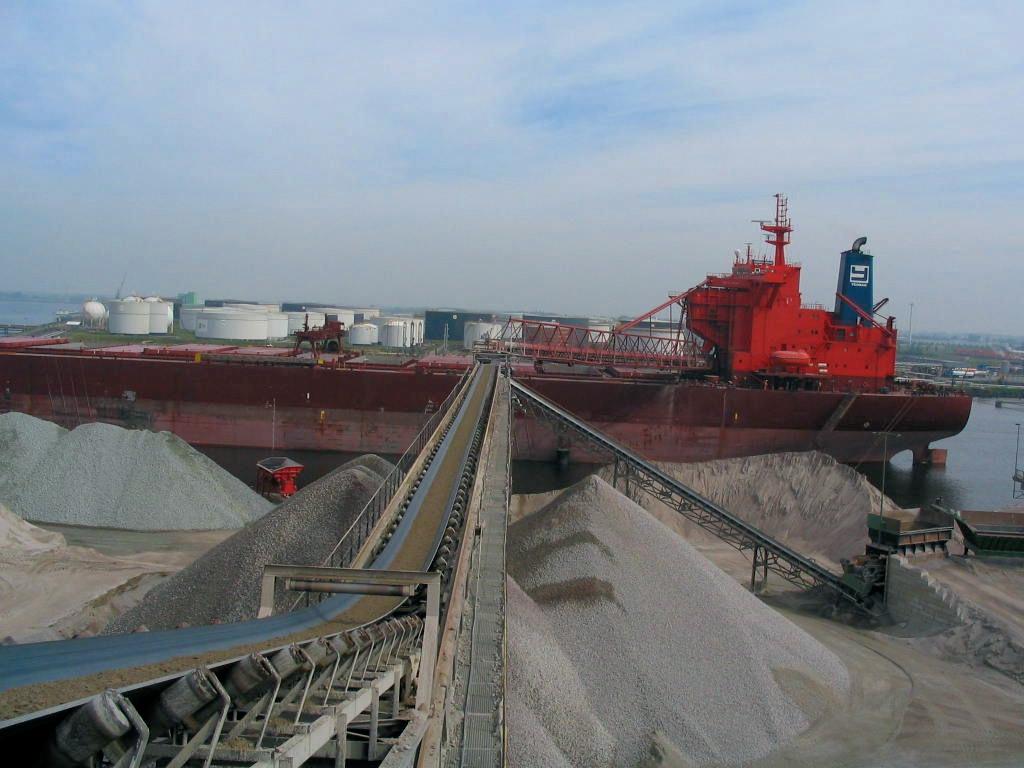
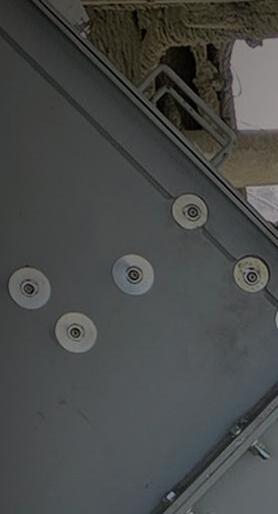
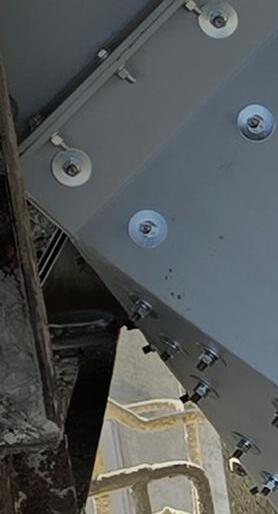
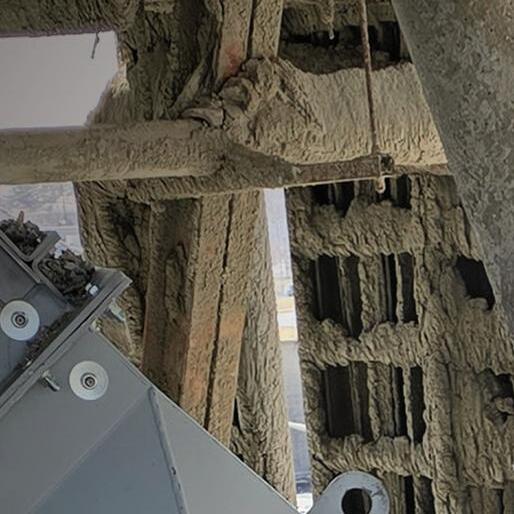
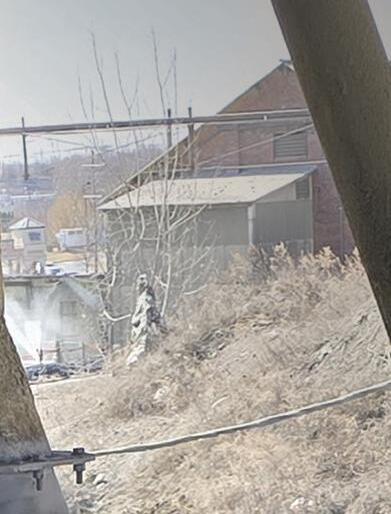
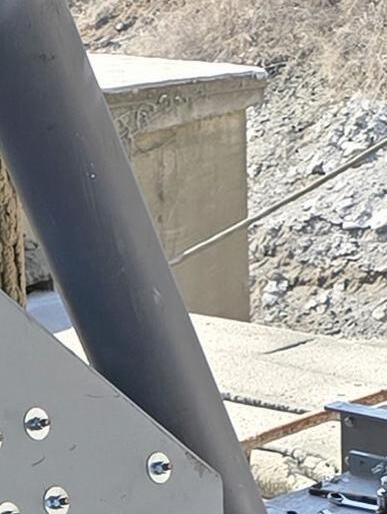
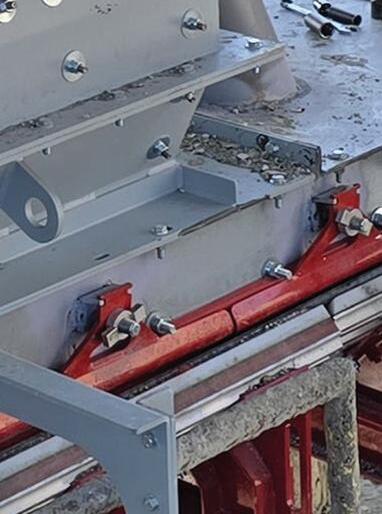
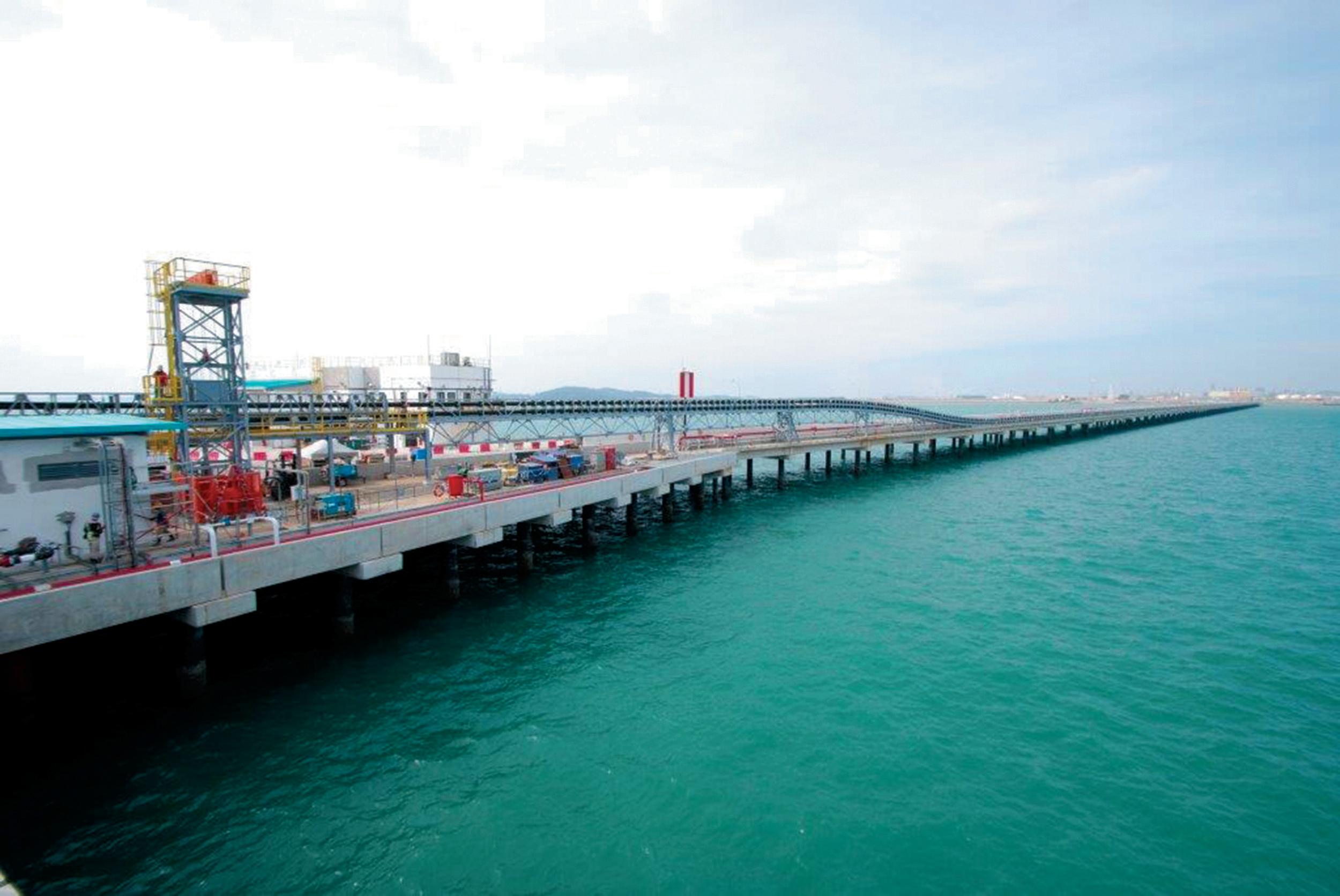
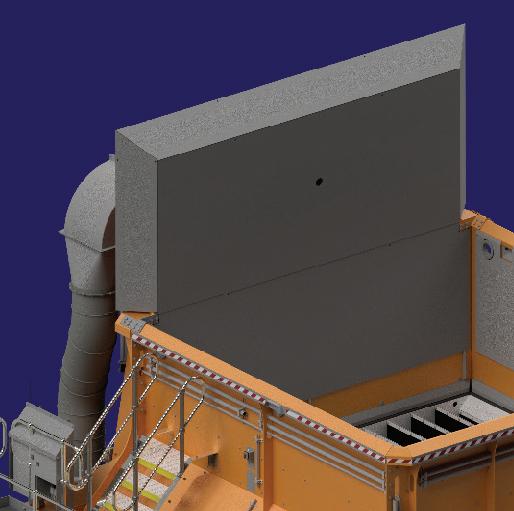
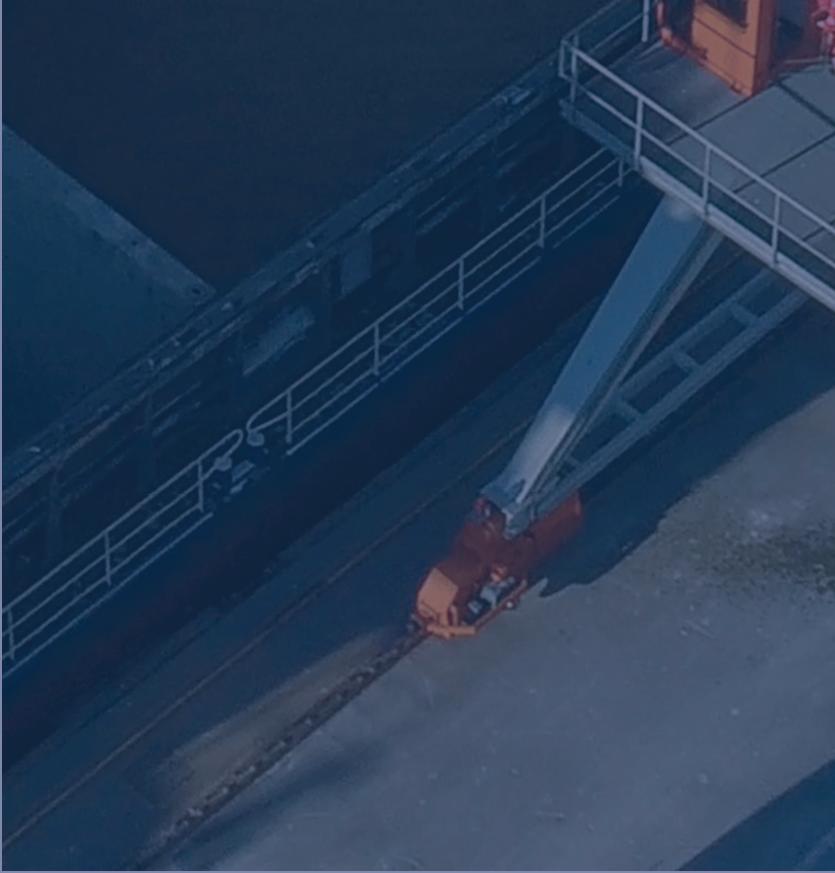
Of course, on a steel object on the French North Sea coast – QUAI DE L’EUROPE, Boulogne-sur-Mer, France.
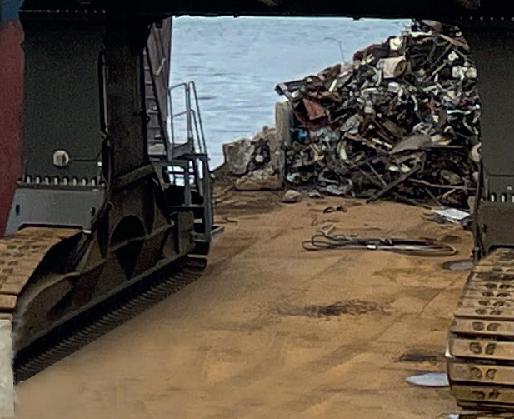
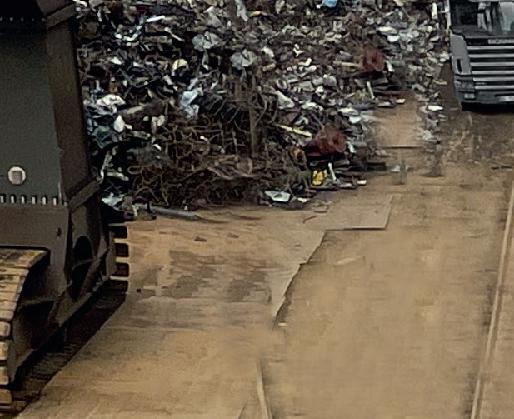
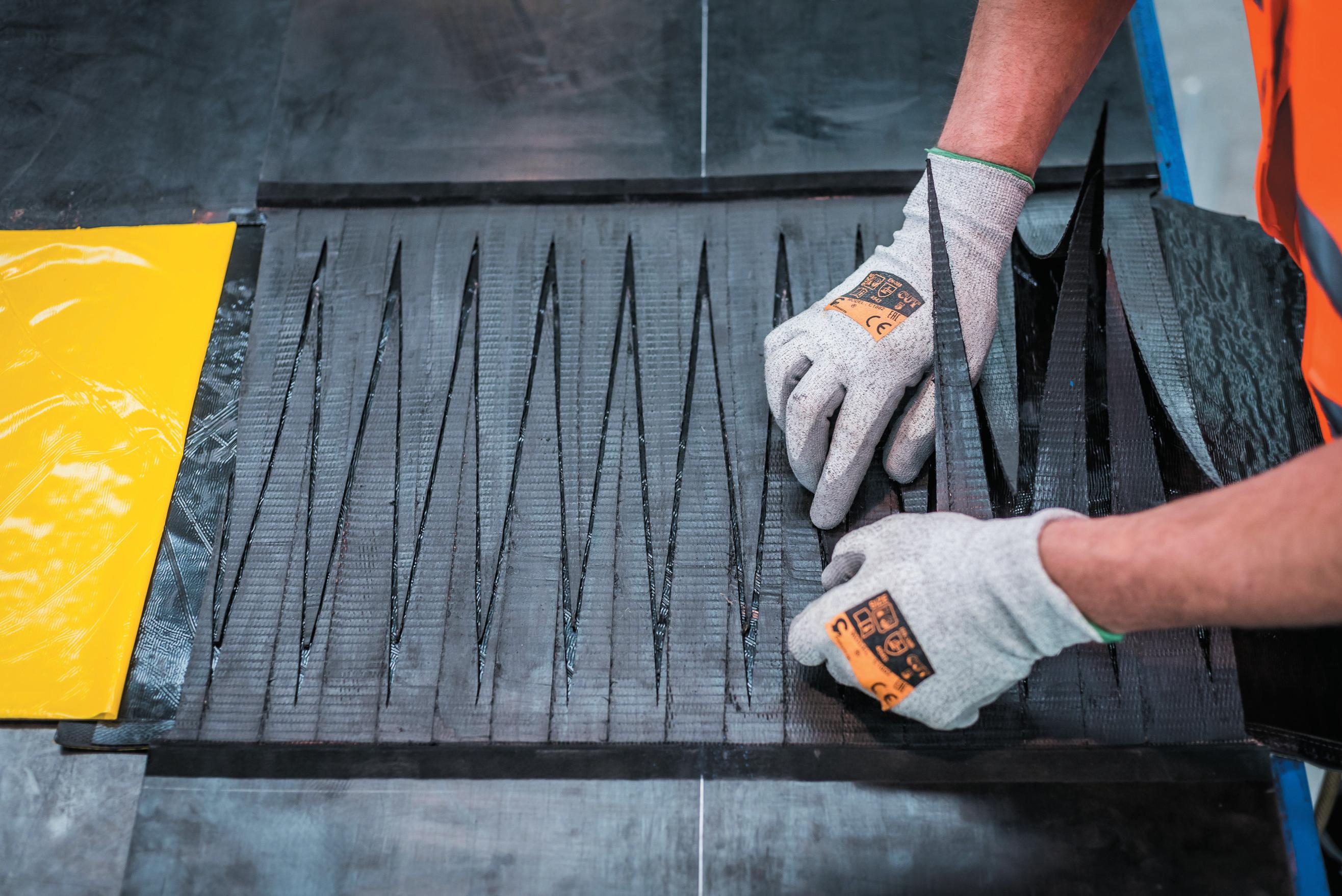
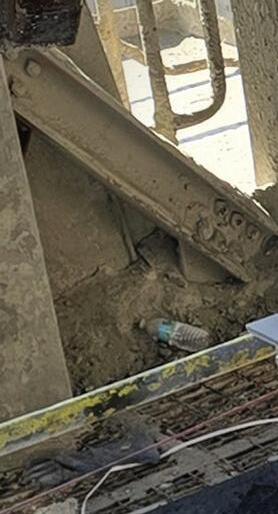
Approximately 9,800m² extremely corroded steel surface had to be renewed, while the tidal range was about 9.2m, effectively and permanently protected to ensure the continued stability of the structure.
For more details see page 20.
o ther inf or fur F encom/885 en.c rmation
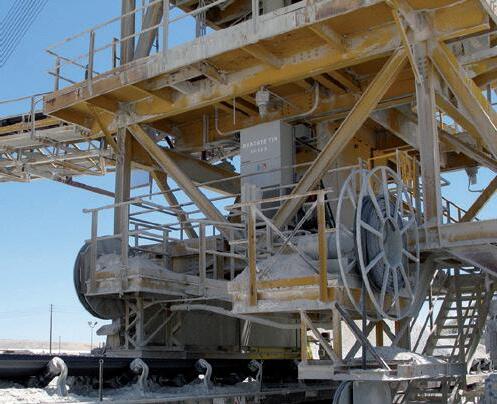
senneboge
o ope asy t e
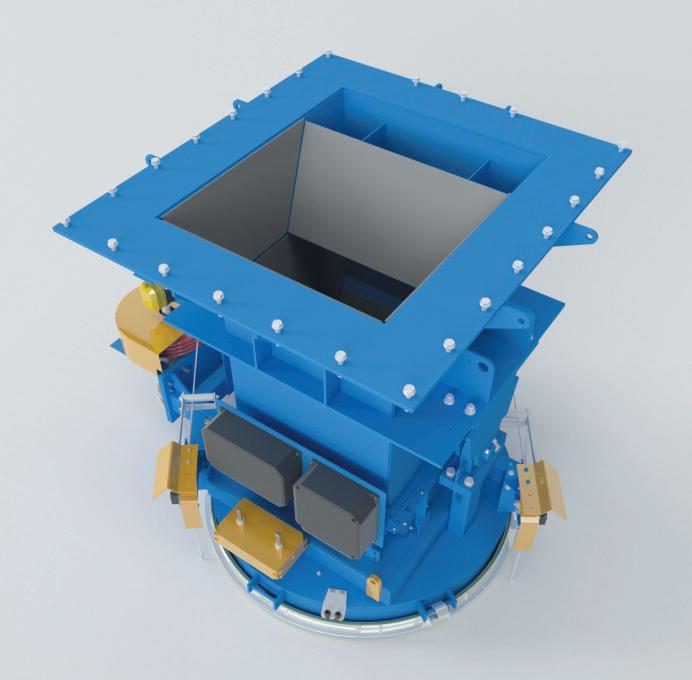
Bulk handl evic eliable in ser ate, r er ortabomf – most c series
Although some elements of commodity import demand are seeing positive influences, others are experiencing restraints. World seaborne dry bulk trade growth in 2026 seems unlikely to achieve an improvement after last year’s sluggish rise.
Currently the broad progress of economic activity among countries influencing dry bulk import demand, an underlying driver, is not showing many signs of accelerating from the trend seen over the past twelve months. Recent authoritative forecasts have suggested the continuation of a fairly flat growth trend. There is an absence of visible potential changes in countries including China, USA, European Union and Japan which could provide a boost for gross domestic product and trade expansion.
GRAIN & SOYA
Contrasting with prospects for some other major commodity segments, the outlook for world grain trade in the current 2025/26 year is favourable. Updated forecasts published by the US Department of Agriculture a few weeks ago pointed to a possible large upturn after the previous year’s reduction. The total (wheat, plus corn and other coarse grains) is estimated to increase by 25mt (million tonnes) or 6% from the 2024/25 volume, reaching 454mt.
About two-thirds of the world growth is expected to reflect higher imports into a range of countries across Asia, as shown in table 1, which is based on a
July/June year for wheat and an October/September year for coarse grains. Larger imports into the Middle East region may also contribute. A recovery in China’s imports, rising by a forecast 10mt from a depressed level to 33mt is predicted despite apparently ample domestic supplies of grain.
COAL
Following last year’s downturn and the generally negative longer term outlook for world seaborne coal trade, expectations for movements during 2026 are muted. While another annual downturn arguably is not an inevitable outcome of current changes among importers, the probability that a further weakening will occur seems quite high.
Among the biggest importers of coal, and especially among those having the greatest propensity for huge annual variations in import volumes, there are no signs of large extra purchases in the year ahead. But uncertainty is focused on China’s role as the top buyer. After the 10% decline in Chinese purchases to 490mt last year, the downwards trend seem likely to continue and, if it is another sizeable reduction, probably will not be offset by additional volumes into other countries.
IRON ORE
Expectations for iron ore trade in the current year reflect cautious views of prospects for steel demand and production in the main raw materials importing countries. Amid signs that
demand from steel-using industries in many areas is likely to be affected by limited or no strengthening of economic activity, production of steel may continue to encounter restraints.
Evident downwards pressure on China’s steel production after last year’s 4% decrease appears set to be sustained. Elsewhere in other countries importing iron ore, positive influences are not prominent. In a group of major buyers, comprised of Japan, South Korea and the European Union plus United Kingdom (15% of global iron ore imports in 2025), growth may be hard to achieve.
MINOR BULKS
Based on tentative calculations, the large and diversified minor bulk commodity segment evidently saw a seaborne trade increase of 3-4% in 2025, benefiting especially from higher volumes of industrial commodities. The positive trend looks set to continue.
BULK CARRIER FLEET
The world fleet of bulk carriers maintained its previous expansion rate in 2025, at 3%, as shown in table 2, the fourth consecutive year of expansion at an almost unchanged pace. Deadweight capacity reached 1,066mt at year-end. In the current twelve months to end-2026, a moderate acceleration could be seen as a result of a 20% increase in newbuilding deliveries, assuming that scrapping remains subdued at a minimal level.
TABLE 2: WORLD BULK CARRIER
Agriculture faces toughest challenge in 2026
The current conflict in the Middle East is sending far-reaching shock waves through global food and agribusiness sectors. The disruption to shipping in the Strait of Hormuz has driven up oil, gas, and refined product prices, with effects cascading through fuel, power, logistics and industrial input costs. The Middle East is a key hub for fertilizers, petrochemical feedstocks, food, agricultural trade and global logistics. The effects being felt throughout the entire value chain, including consumers. The conflict presents a complex, systemic threat with the potential for short-term volatility and long-lasting structural impact on supply chains, pricing and margins across
multiple sectors of the global economy.
The World Trade Organization (WTO) warned that continued conflict in the Middle East could push energy prices higher and further disrupt transport.
Markets are likely to remain volatile, with direction dictated by Middle East developments, energy prices and weather concerns. While strong global competition and demand uncertainty may cap rallies, tightening input economics and geopolitical risk suggest underlying support, leaving markets biased to the upside in the near term.
The Strait of Hormuz remains effectively closed, removing a key transit
route for around 20% of global LNG flows severely restricting supply to global markets. While the focus has been on oil and gas, the risk of commodity-related inflation, linked to agriculture, with the loss of fertilizers is profound. Across the wider region, countries in the Middle East supplied close to 30% of global exports of major fertilizers that move through the Strait of Hormuz. When fertilizer supply is disrupted, the consequences are felt directly in farmers’ fields, and, ultimately in global food availability.
The International Grains Council (IGC) initial forecast for the 2026 wheat crop, based on the planted area and trend yields
Maria Cappuccio
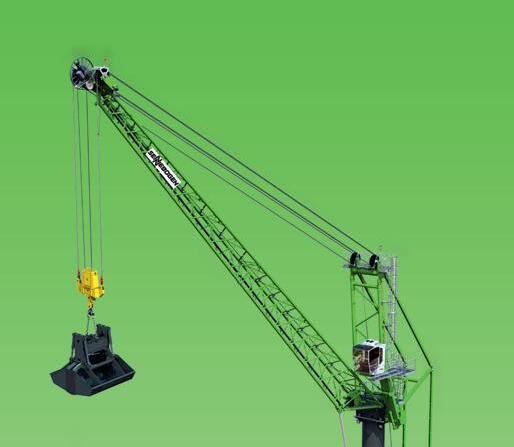
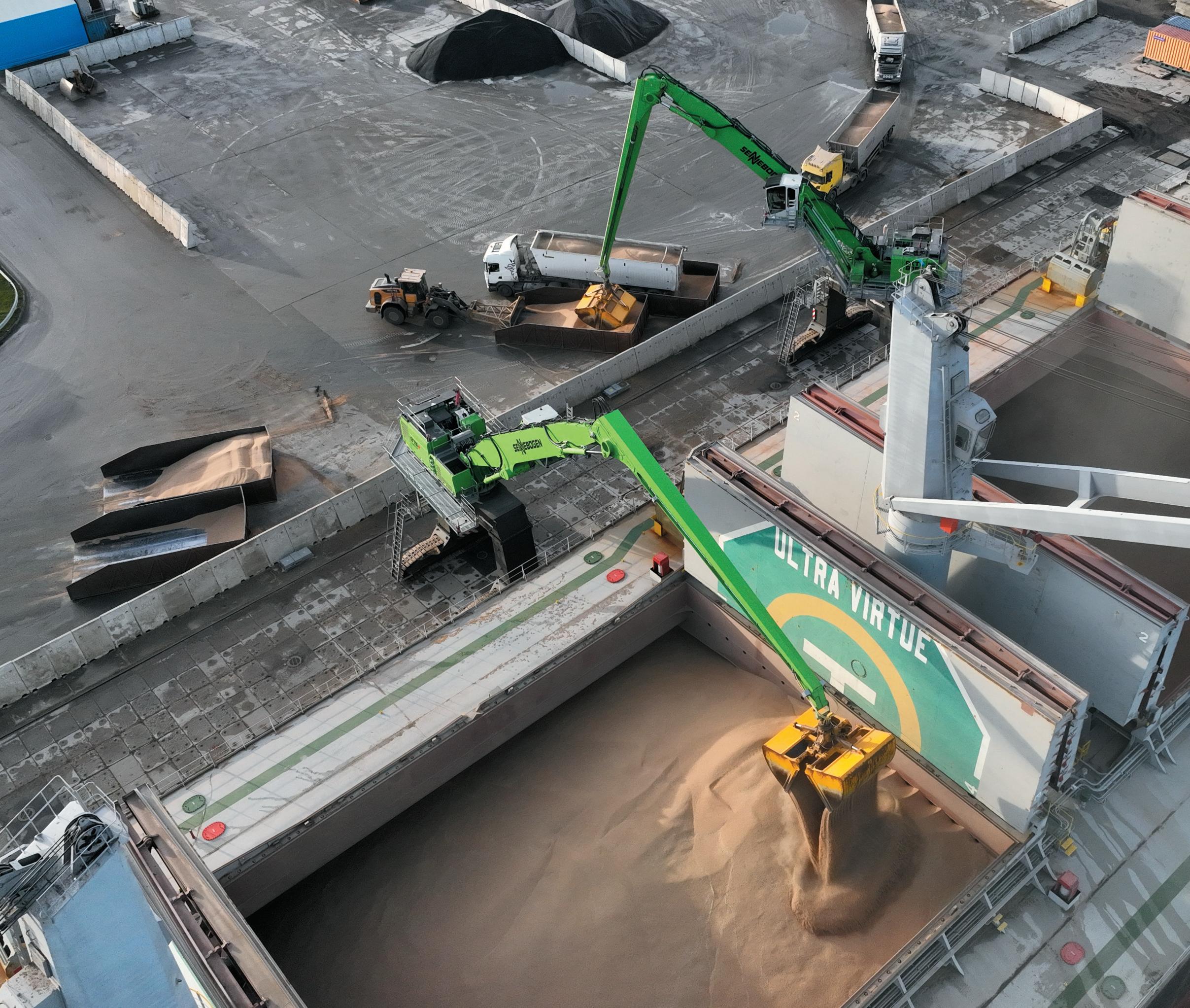
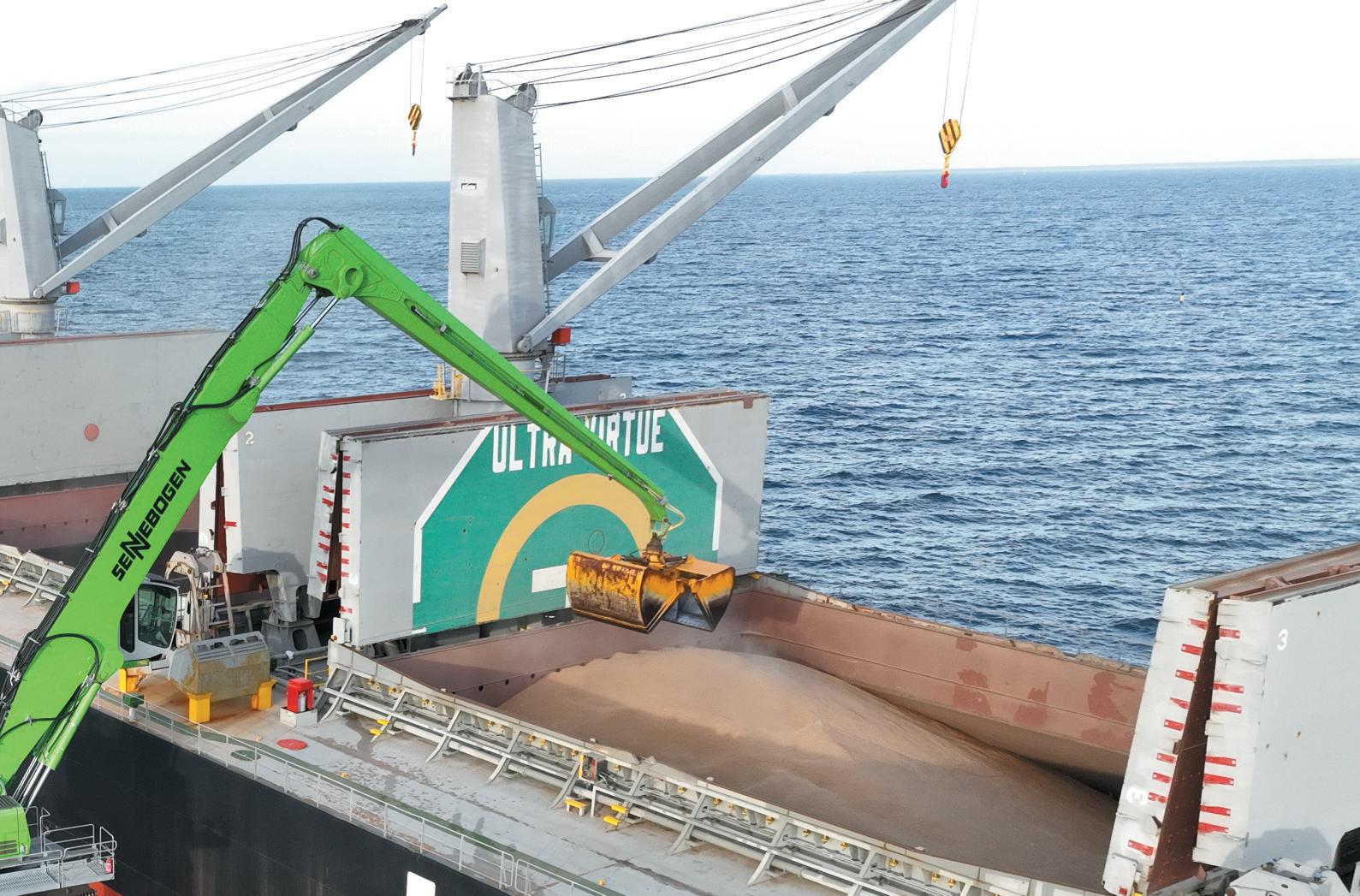
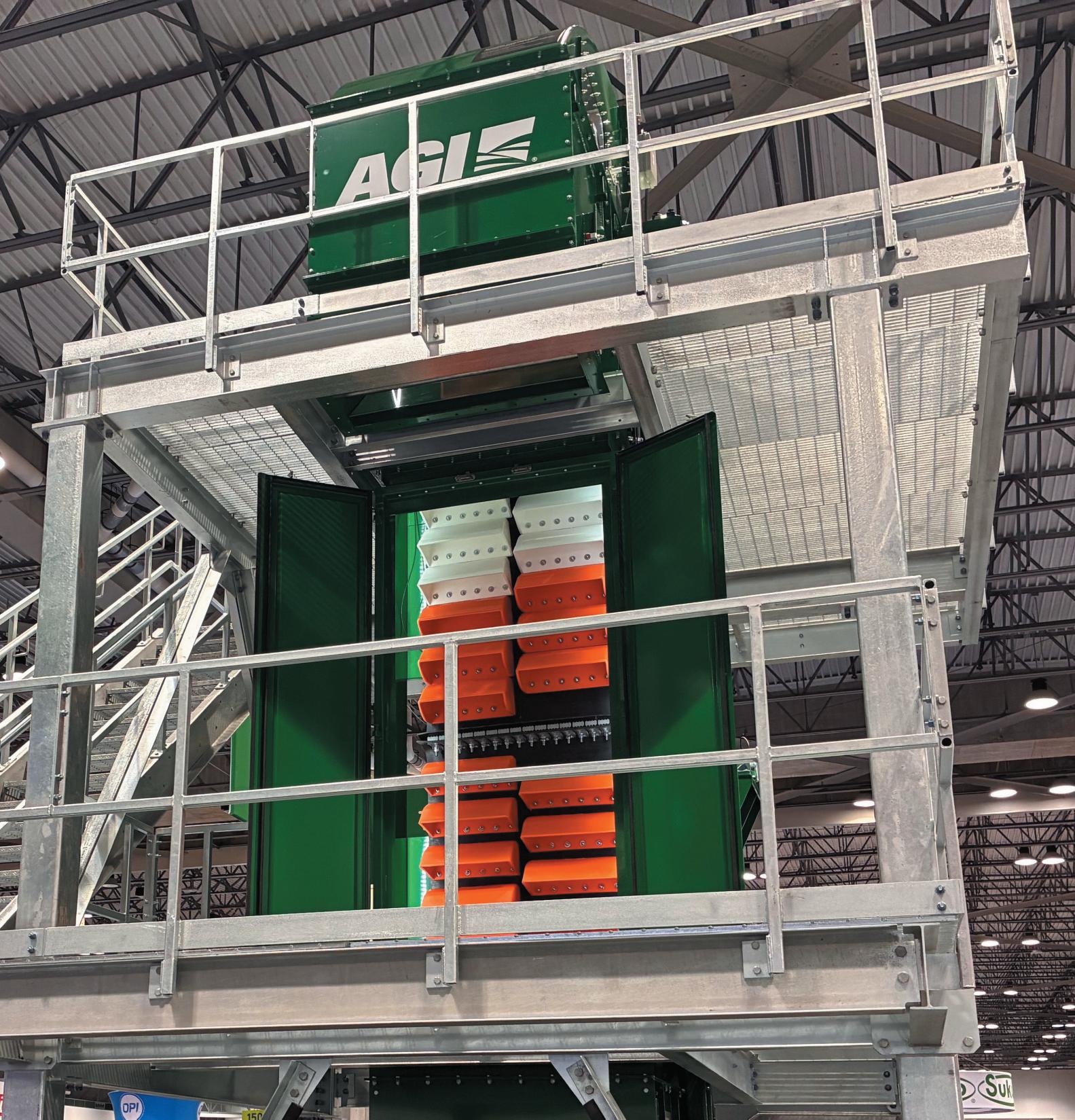
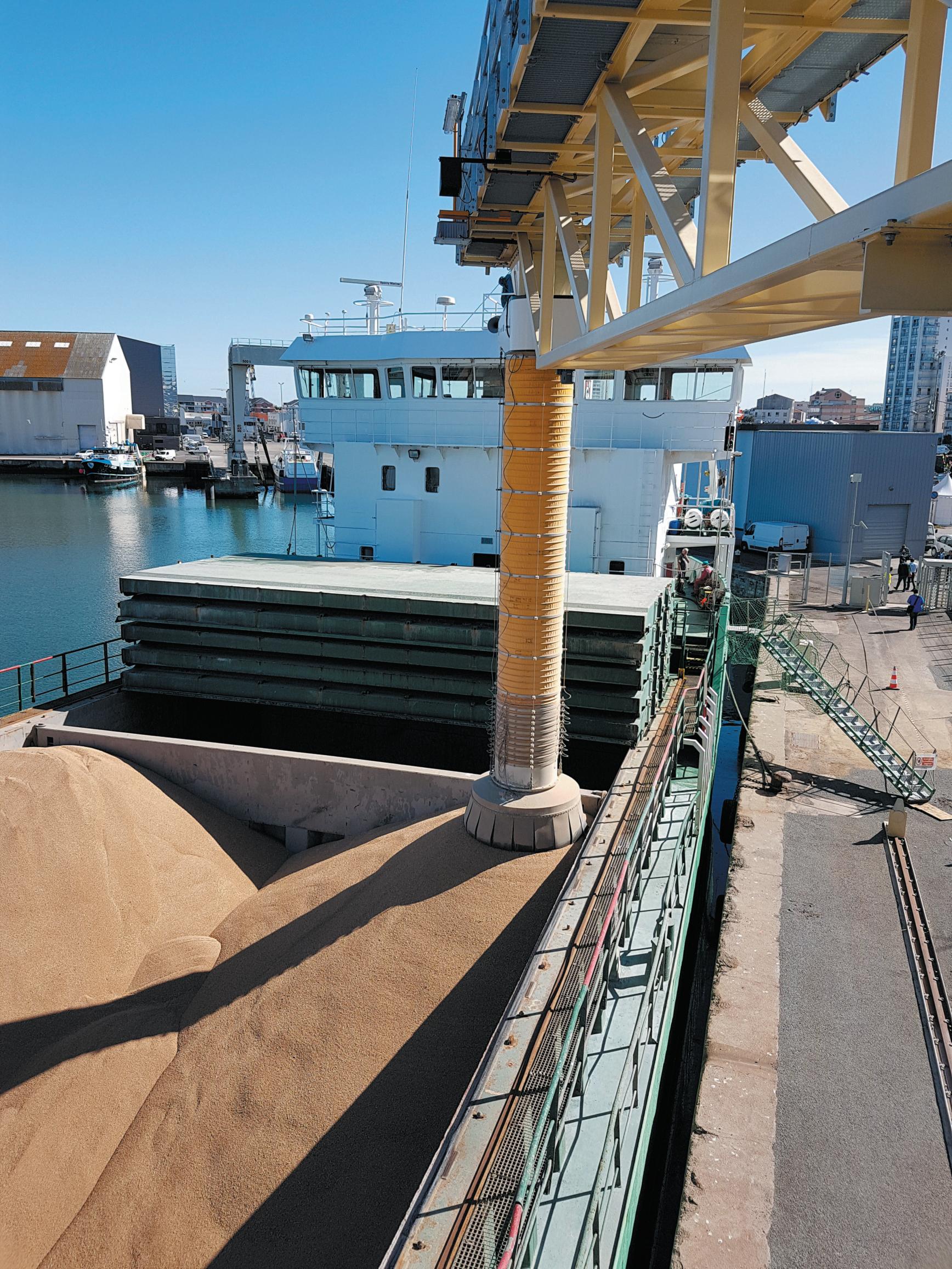
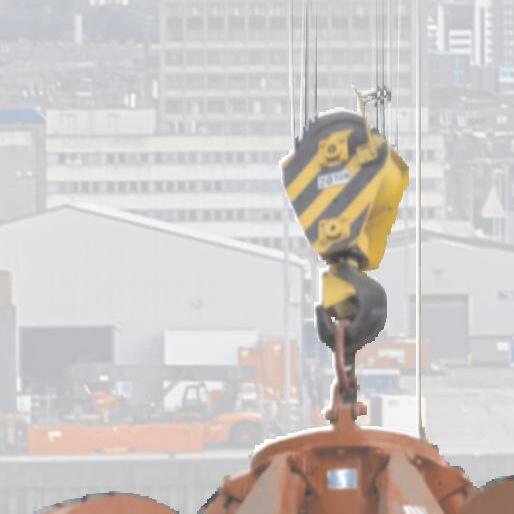
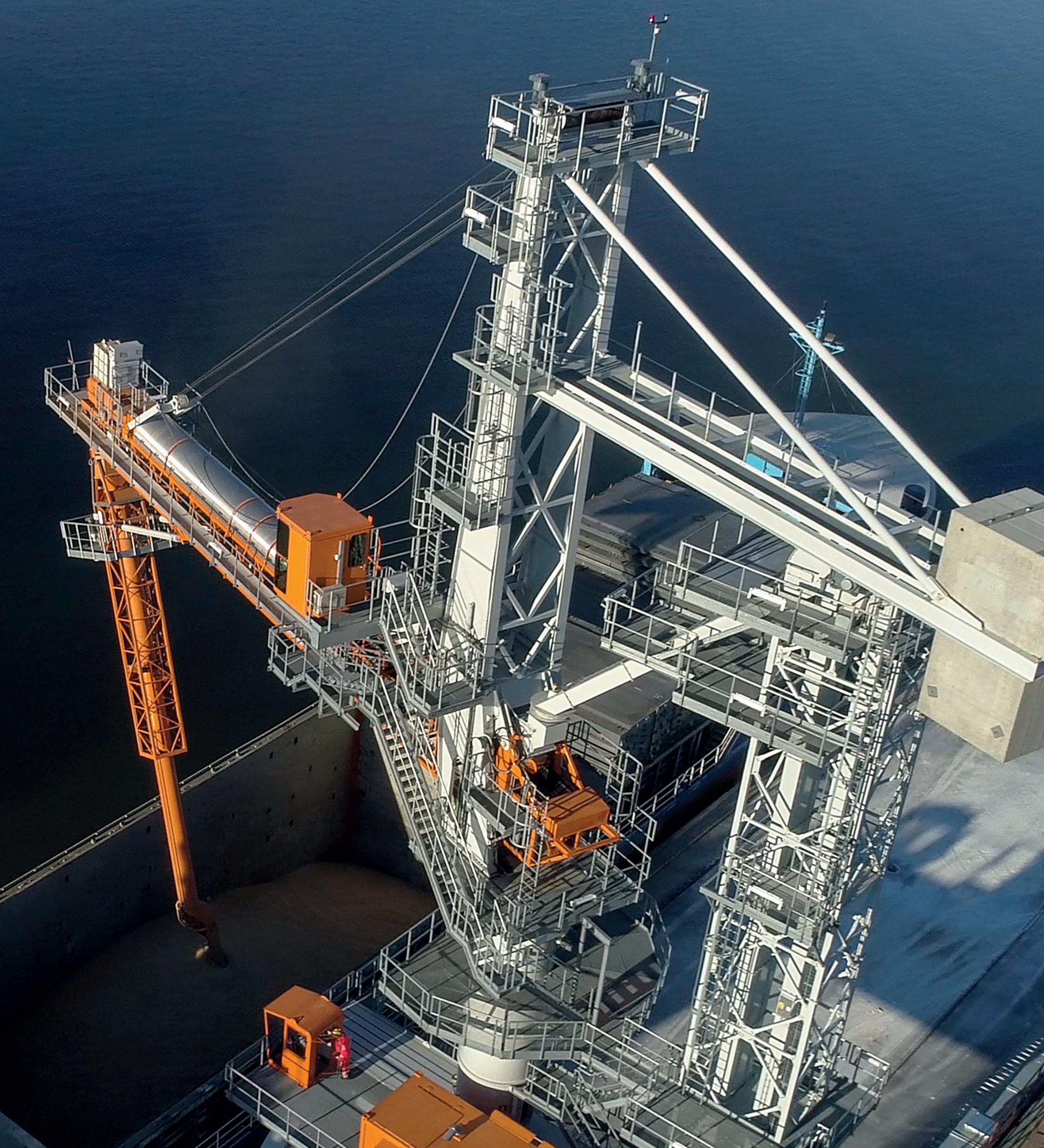
photo: Sennebogen.
Consistent performance in demanding conditions
is 821mt (million tonnes). The fall in wheat output expected to be driven partly by lower crops in major exporting countries.
NORTH AMERICAN PLANTINGS FALL IN 2026
Large stocks and lower prices, to influence US farmers planting decisions for 2026/27. USDA project the US wheat area at 45m/acres in 2026, below last year. US winter wheat plantings are expected to be flat or decline by 2% with output expected to stay above the five-year average. Drought continues to expand across Oklahoma, Texas, Colorado and Nebraska, while North Dakota and Kansas remain generally drought free. An increase in winter wheat sowings c.33m/acres and spring wheat acreage, may possibly replace some soybean plantings. StatsCan forecast Canada’s wheat planted area in 2026/27 at 10.8m/ha (26.7m/acres), below last year but slightly above market expectation of 10.7m/ha.
EU WHEAT PLANTINGS LOWER
Weak wheat prices contributed to a cutback in winter wheat sowings. While eastern and northern parts suffered from cold spells, elsewhere mostly mild and generally favourable weather, is likely to keep yields above average. EU wheat production is forecast at 138mt in 2026. In the UK, a shift away from barley and a rise in the winter wheat area, is showing good early progress – improved yields, support a rise in output to 13.2mt.
HIGH
MOISTURE LEVELS IMPROVE RUSSIA’S WHEAT OUTLOOK
Due to lower expected winterkill, a small increase in Russia’s winter wheat area to 15.8m/ha, spring wheat area 10.7m/ha, lower than last year.
The winter wheat area is supported by high moisture levels, yields c.3.24t/ha. Sovecon recently raised its estimate to 87.6≈ for 2026/27. The winter area expected to remain stable, spring wheat
area to decrease. The revision reflects favourable weather supporting crop development.
UKRAINE WHEAT CROP 25MT IN 2026/27
Despite war-related constraints-reduced cultivated area and labour shortages, early season reports suggest a potential increase better winter crop conditions and favourable sowing rates in some areas.
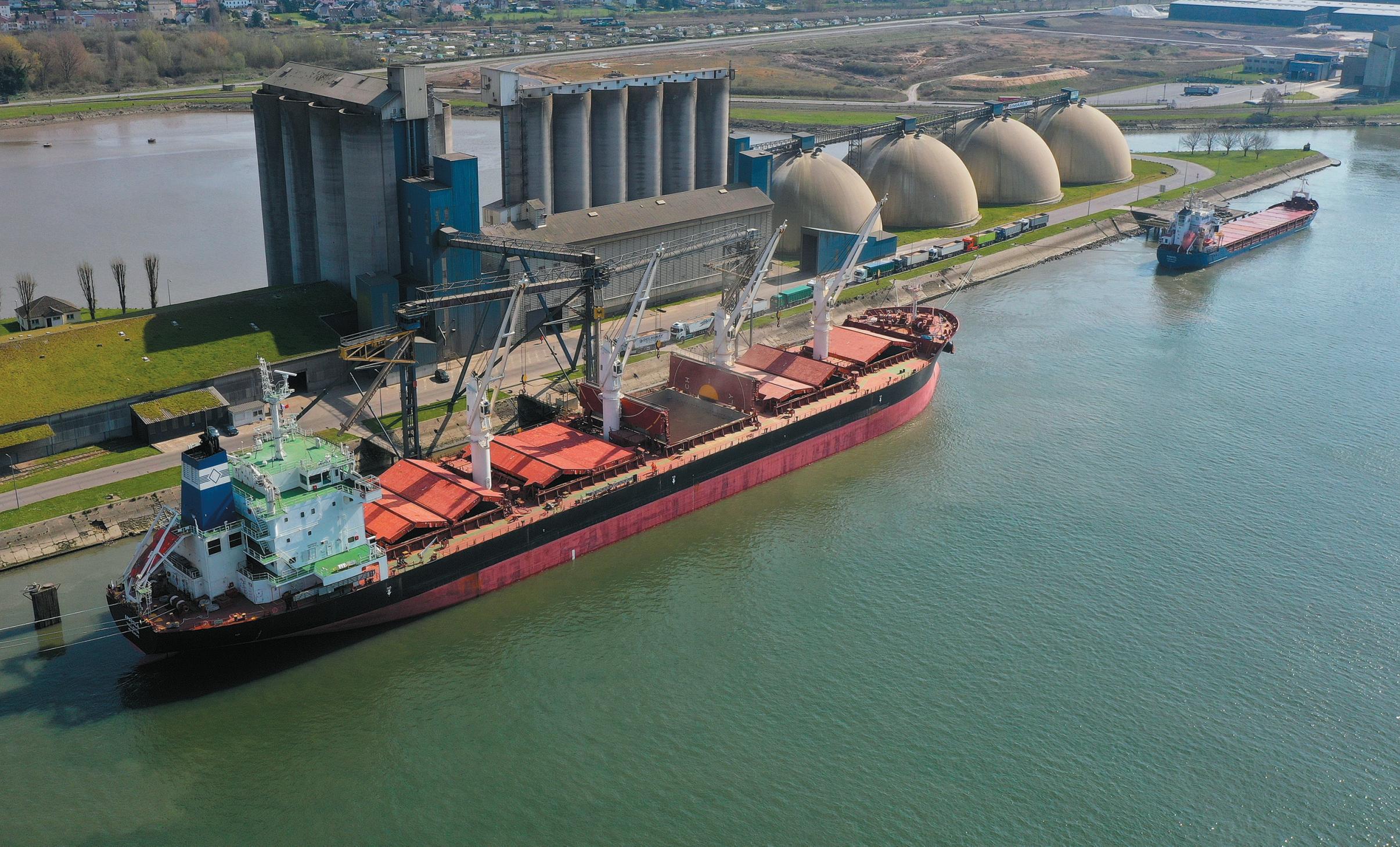
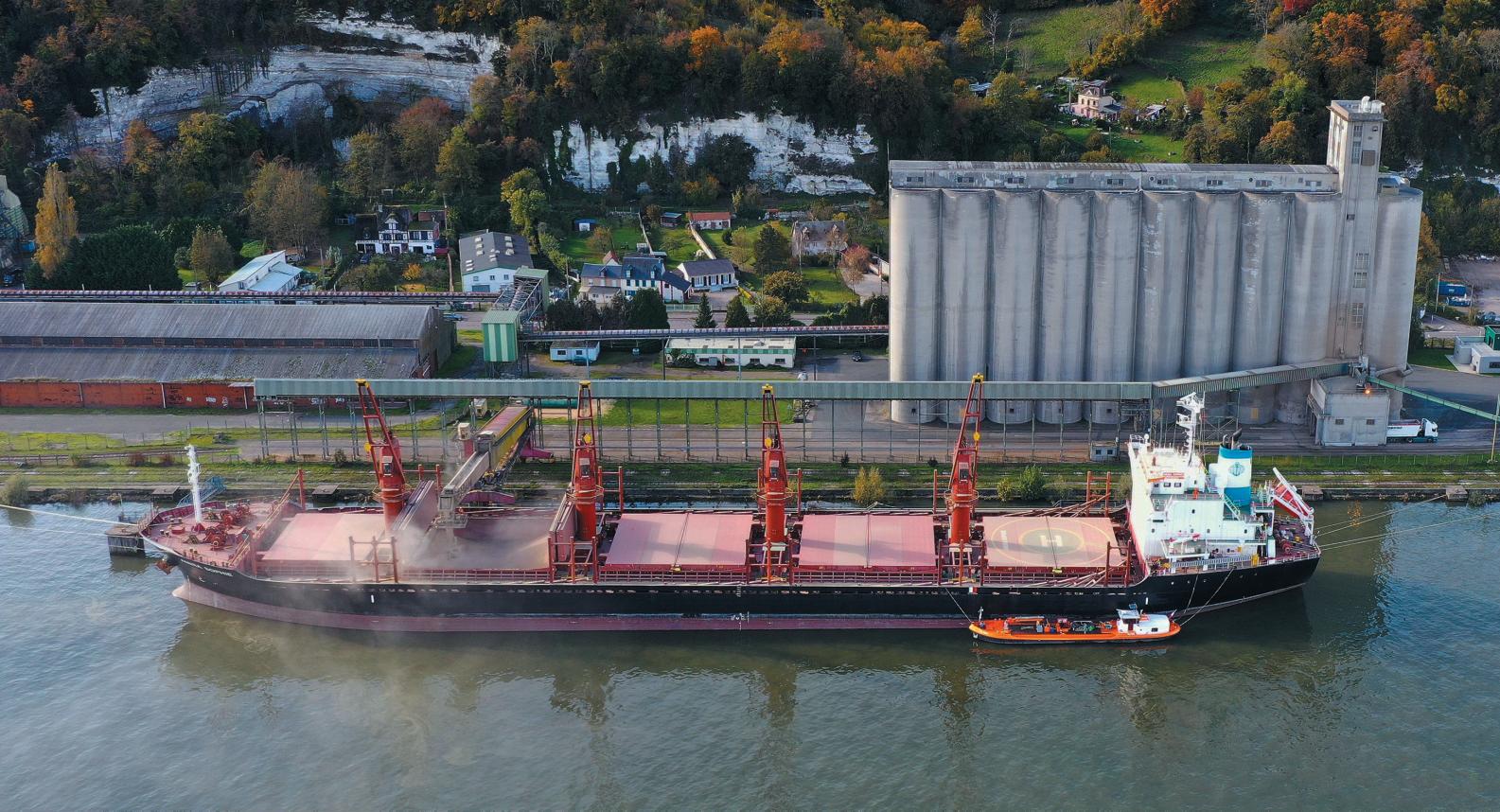
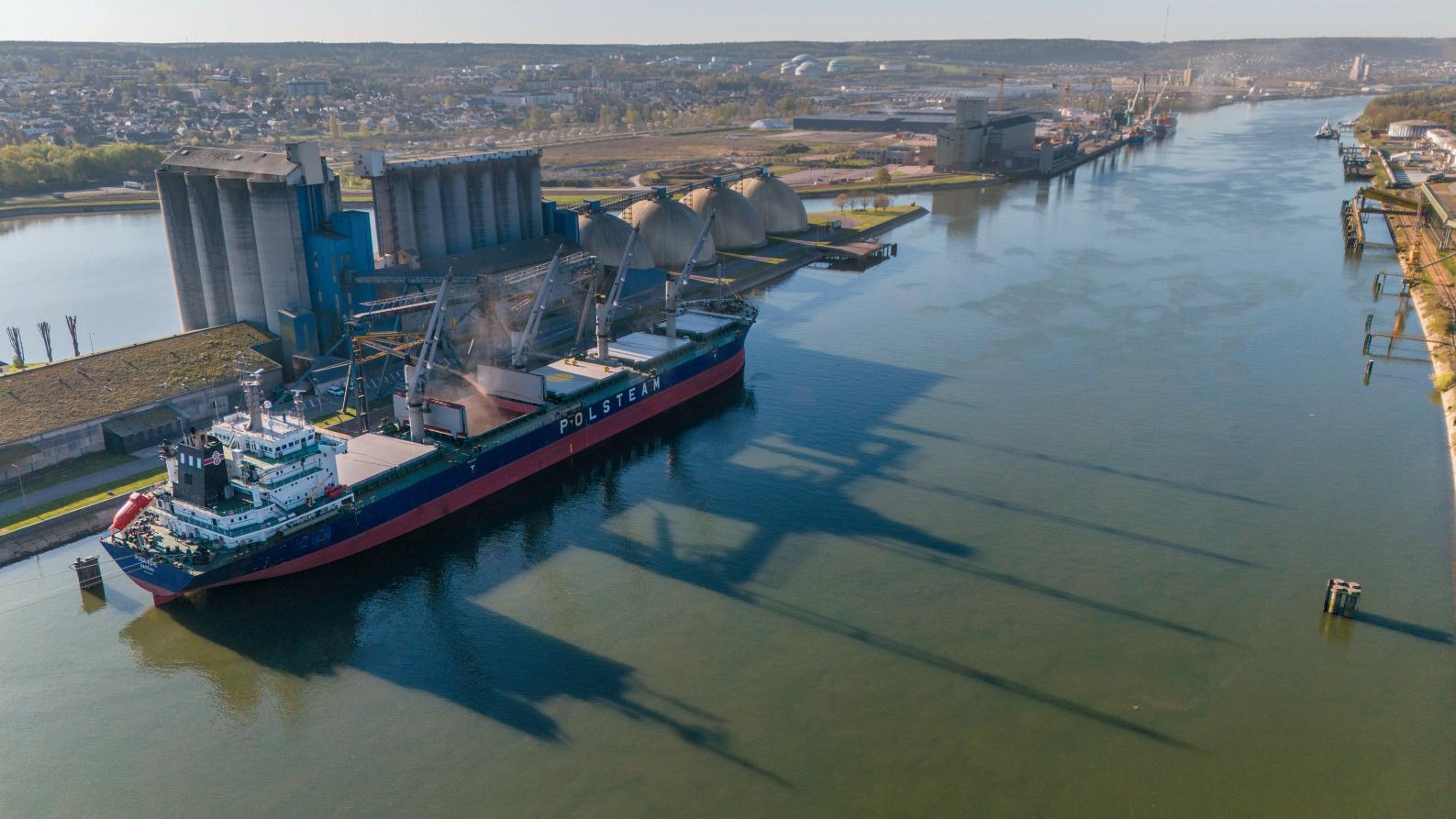
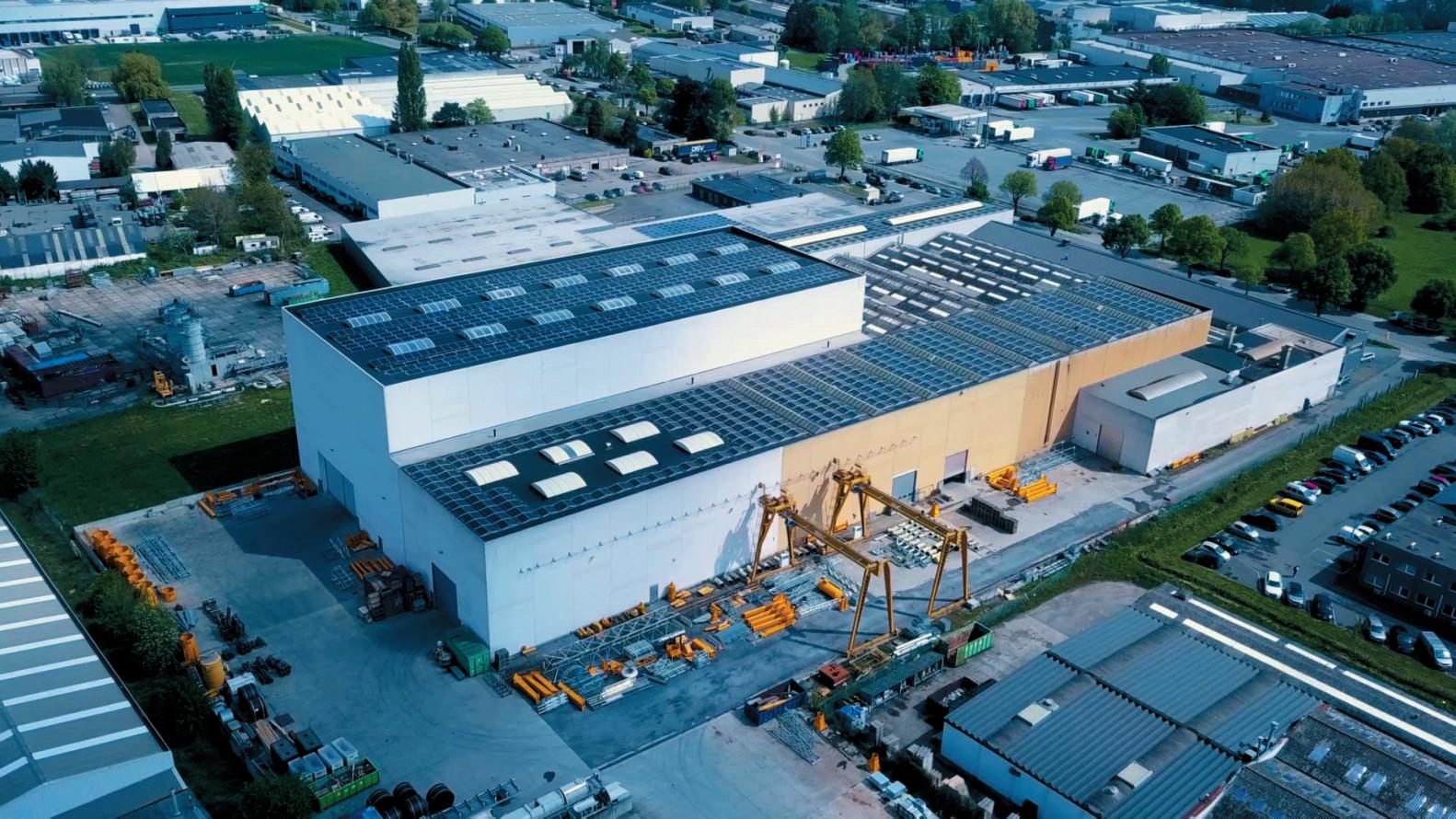
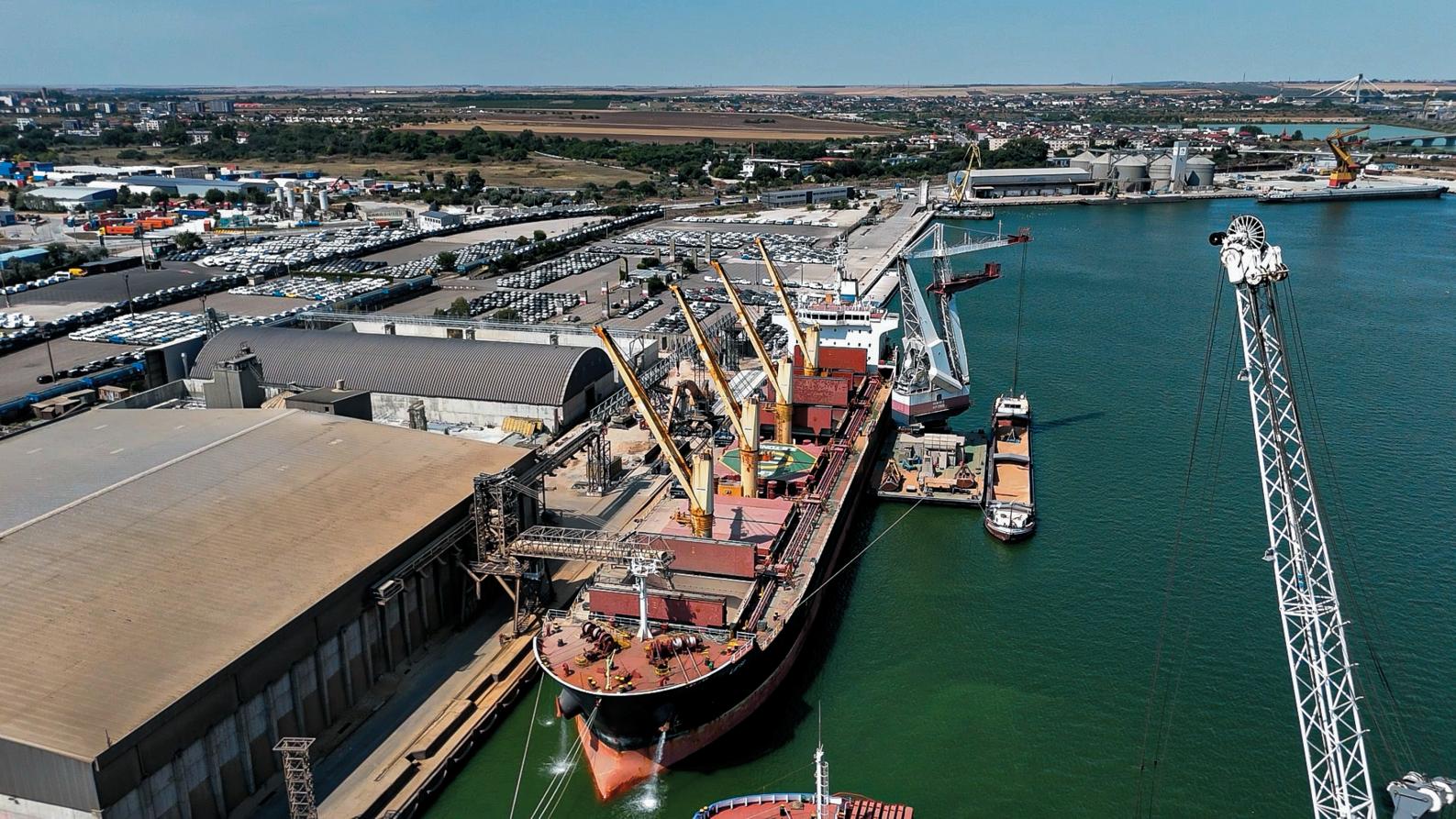
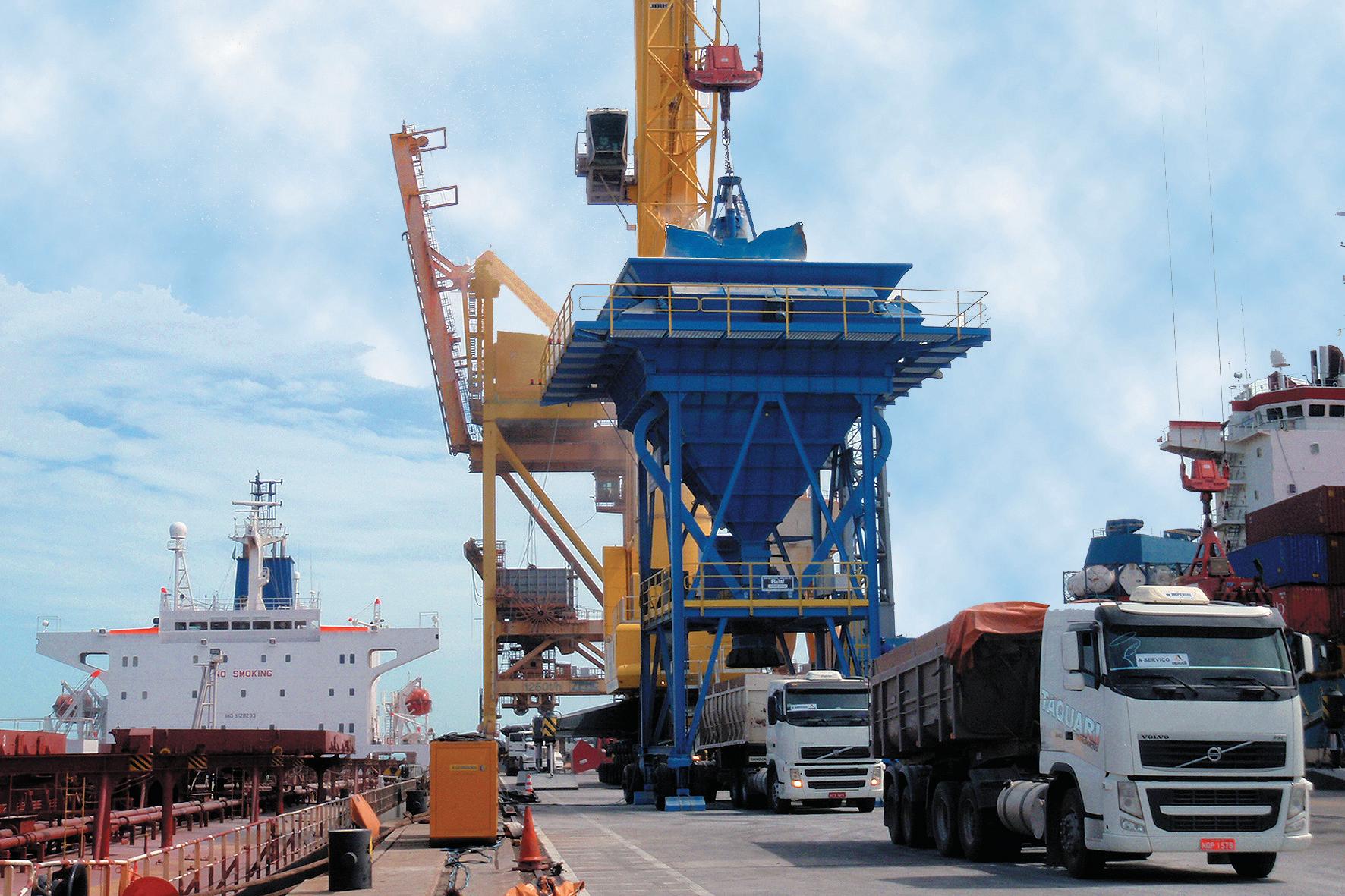
(photo: HAROPA PORT.)
GLOBAL WHEAT PRODUCTION 2022–2026 (MT)
Total winter wheat area sown in 2026 is 4.69-5.2m/ha, significantly below pre-war levels of c.7.4m/ha.
RISKS TO CHINA’S WHEAT YIELDS IN 2026/27
China faces potential risks of declining wheat yields in key producing provinces such as, Henan, Shandong, and Hebei. Current reports suggest yields could fall below the five-year average, which may increase the need for imports in 2026/27.
INDIA-RECORD WHEAT PLANTINGS IN 2026/27
Supported by strong price incentives and government subsidies for inputs, India’s farmers have planted wheat on a record 33.41m/ha. Wheat yields are expected to decline slightly, with production forecast c.120mt in 2026/27.
PAKISTAN WHEAT CROP LOWER IN 2026/27
The combination of drought, geopolitical risks, water scarcity, border conflicts with Afghanistan and government delays in announcing support prices for wheat, created uncertainty for farmers — wheat acreage to fall to 9.1m/ha, with output c.26.7mt in 2026, 2mt below the 2025 crop.
ARGENTINE WHEAT — RETURN TO TREND YIELDS IN 2026
Following a record Argentine wheat harvest of 27mt in 2025, the wheat crop in 2026 is anticipated to return to trend yields. Global wheat prices are expected to remain under pressure through the first half of 2026, due to large supplies.
In Brazil, Safras analyst Elcio Bento said, “Farmers are pulling back on wheat due to economic pressures and weather conditions. The main deterrent is the deterioration between the price of wheat and the cost of inputs, especially nitrogen fertilizers.” Farmers are also concerned about a possible El Niño weather event in the southern region later in the year, where excessive rains may raise the risk of quality issues. Insurance costs, limited credit and financial losses in recent harvests, leads farmers to be more risk averse.
AUSTRALIA WHEAT OUTPUT C .33MT IN 2026/27
A combination of low wheat prices, ample stocks and drier conditions to influence growers’ decisions, whether
Source: IGC, FAO, USDA-Production-mainly harvested Jul-Dec/Local marketing years
to switch from wheat to more profitable crops. This depends on rainfall received between March and the end of Autumn. According to Abares much of South Australia and Victoria are currently experiencing below average root zone soil moisture following consecutive dry years,
whereas parts of central and southern New South Wales in March were considered drought affected.
RISING FEED, FOOD/INDUSTRY USE IN 2025/26
Global wheat crop is forecast at a record
GLOBAL
842mt in 2025/26. Better crops especially in the EU, Argentina, Russia, Canada, India and Australia. Global wheat use is pegged higher at 825mt, led by feed use rising by 9mt to 165mt, with food/industry use rising by 6mt to 659mt, with increases in the EU, India, Russia, Canada and in a number of other countries.
WHEAT TRADE INCREASE TO 222MT IN 2025/26
This is due to a significant increase in wheat imports by Bangladesh 7.4mt, China 6mt, Indonesia 13mt, Iran 3mt and Turkey 7.7mt.
Exports from Russia 43.5mt, Ukraine 13.5mt with Argentine exports raised to 19mt in 2025/26. EU 30.5mt, US 24.5mt and Australia 27mt. Scope for major exporters is improved by reduced crop in Russia last year.
RUSSIAN INTRODUCES TAX ON WHEAT EXPORTS
Export duties on Russian wheat exports were reintroduced in March: 135.4 — rising to 140.9 Rubles/t ($1.70). The Russian Export Quota for 20mt is in place from February 15 – June 30 and includes wheat, meslin, barley, and corn.
AMPLE STOCKS PRESSURE PRICES IN 2026/27
USDA forecast global wheat stocks to rise by 17mt to 277mt (world 152mt China 125mt). Major exporter stocks to rise to 74mt.
WHEAT PRICES TRENDING HIGHER
Russian wheat export prices (FOB) for 12.5% have been trending higher, $238-
Source: USDA -*Argentine, Australia, Brazil, Canada, EU, Russia, Ukraine, US
1The IGC Jan’25 raised China’s corn stocks from 76.2mt to 190.6mt by the end of 2017/18
$240mt FOB driven by demand and increased shipping activity as weather conditions improve. Ukraine’s wheat 11.5%; $237–238mt FOB French wheat $238mt. US HRW $273mt FOB; US SRW $255mt FOB (18 March ‘26). At the same time, the conflict in the Middle East that began on 28 February, have buyers reluctant to commit to purchases, due to rising freight rates and uncertainty in energy markets. Brent oil surged, from c.$60 to $102.89 (18 March). Prices supported by concerns about Iran attacks on key facilities in the Middle East.
FEWER CORN ACRES IN 2026
In February, USDA preliminary forecast for US corn acreage is — 94m/acres in 2026/27, some 5.2m/acres below last season.
FINANCIAL UNCERTAINTY FOR FARMERS
USDA’s Prospective Plantings report is due at the end of March. Global weather patterns, remain a critical factor especially for wheat, rice, coarse grains and oilseed
crops, as are the developments in the war in Iran. For US farmers and those farmers in other countries, will require access to and affordability of fertilizers for this year’s crops.
The timing of the military action in the Middle East has disrupted fertilizer shipments and energy markets just ahead of the spring planting season in the US. The American Farm Bureau’s (AFB) President, Zippy Duvall, warned President Trump, it is a national security issue. Across the country, US farmers head into spring planting, “…while facing one of the toughest economic environments seen in decades.” The AFB represents nearly six million families, warned the Trump Administration that it risks provoking even more financial uncertainty for farmers, if it fails to prioritize the delivery of key fertilizer products.
RECORD COARSE GRAIN OUTPUT
1.59BN/T
IN 2025/26
There has been increased output for corn 1.29bn/t, barley c.154mt and sorghum
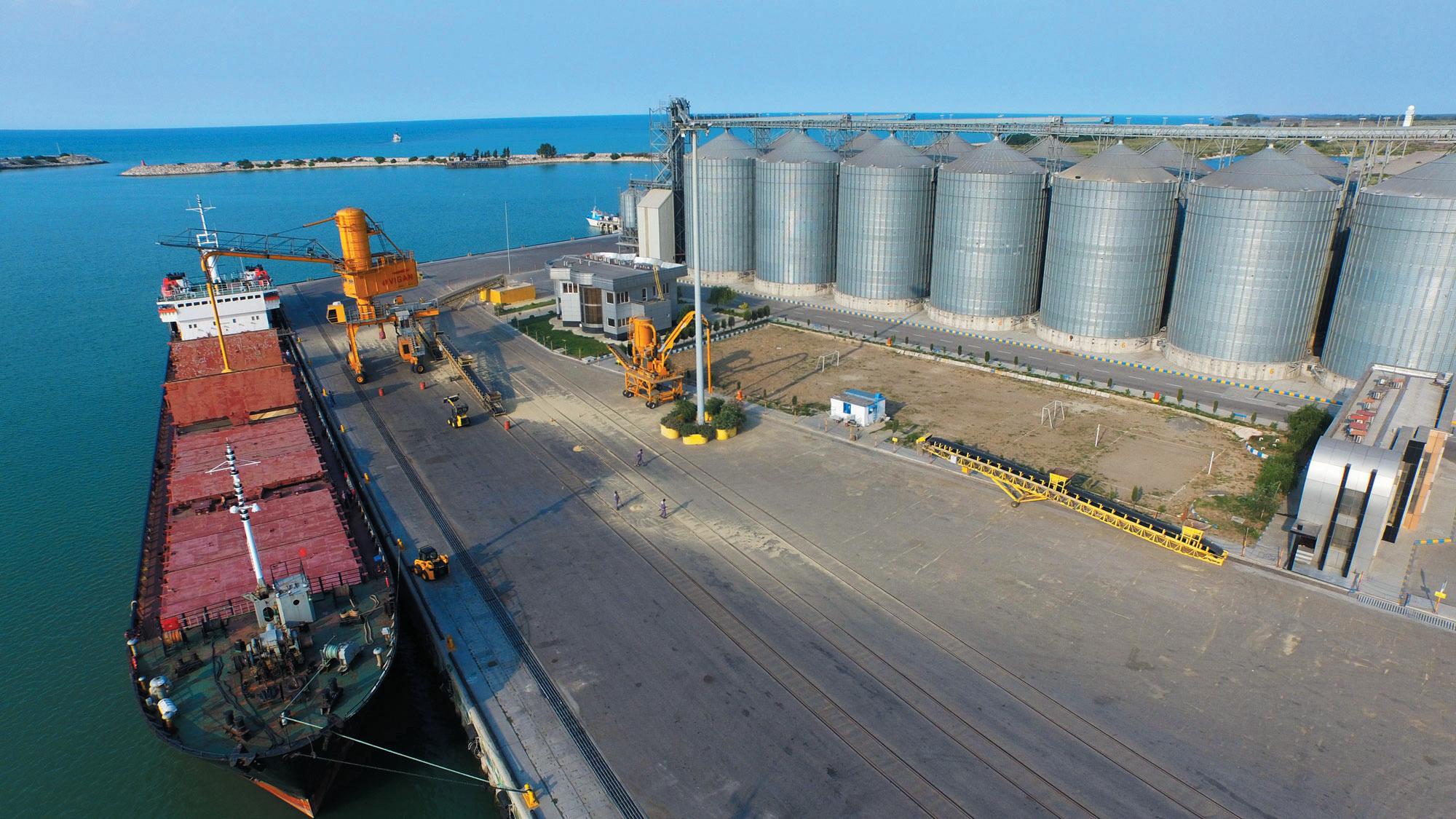
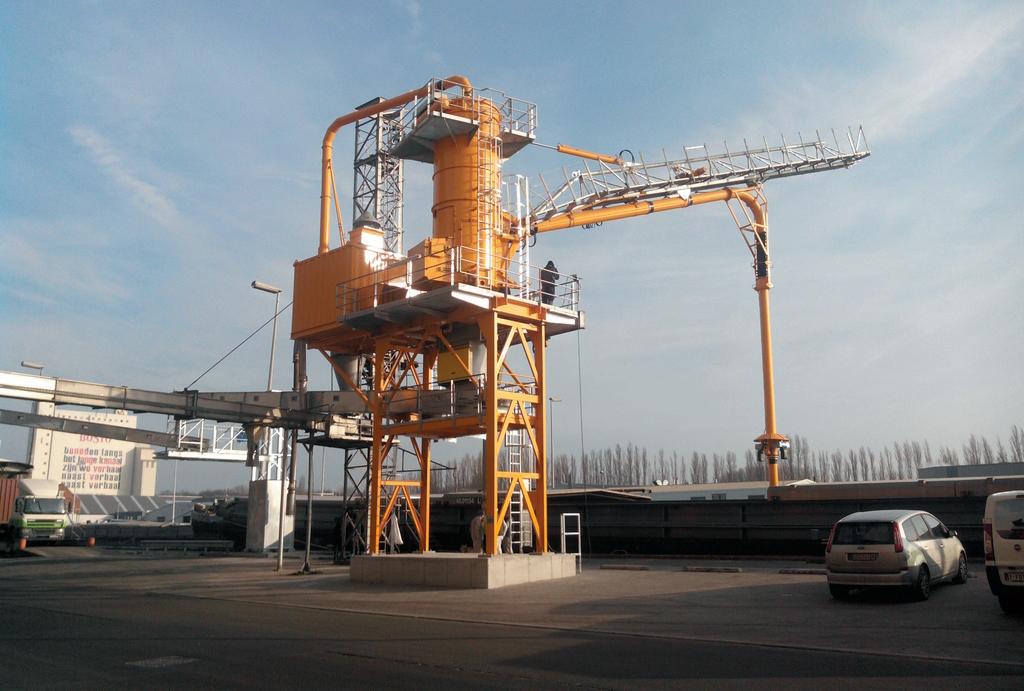
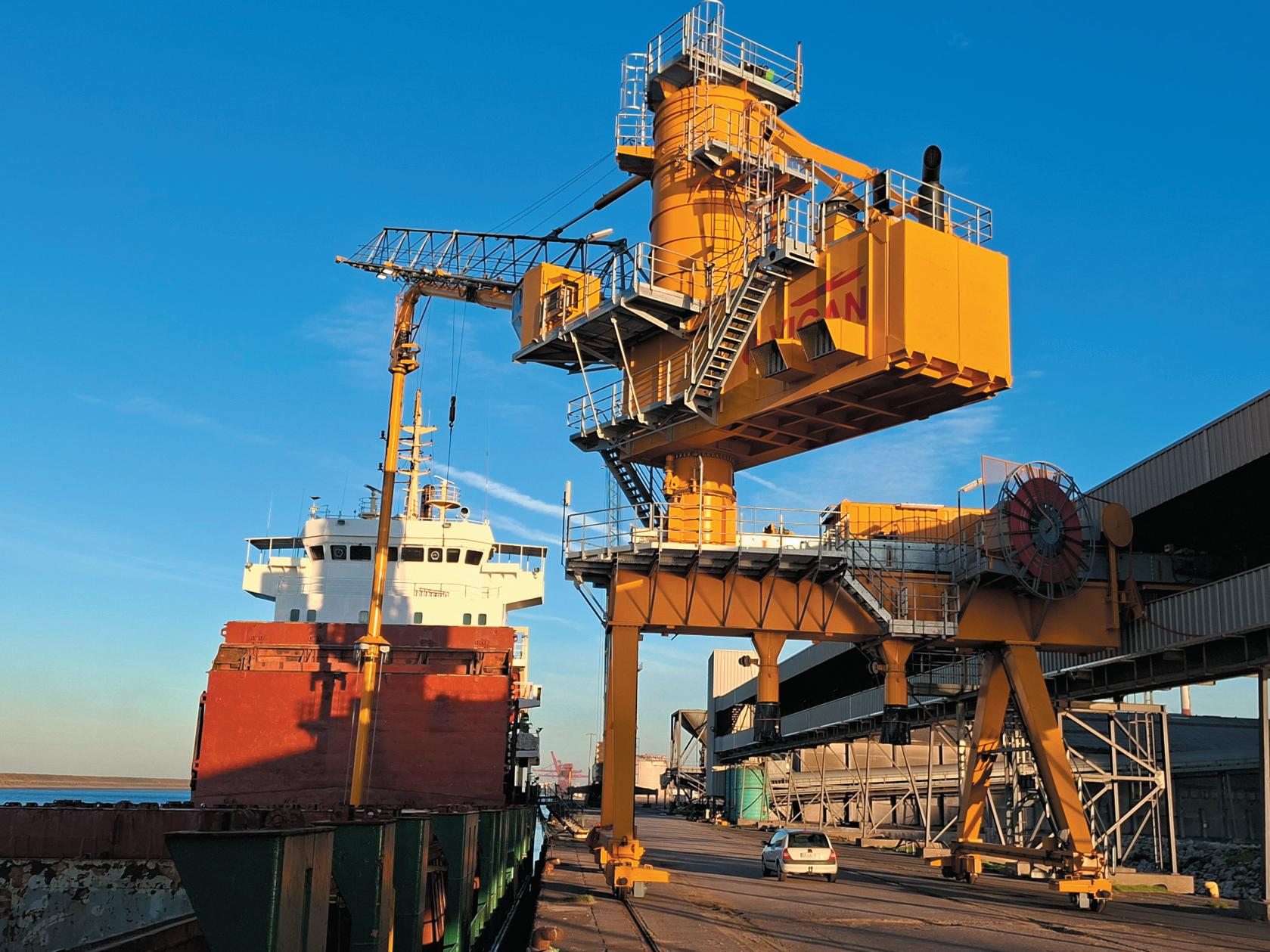
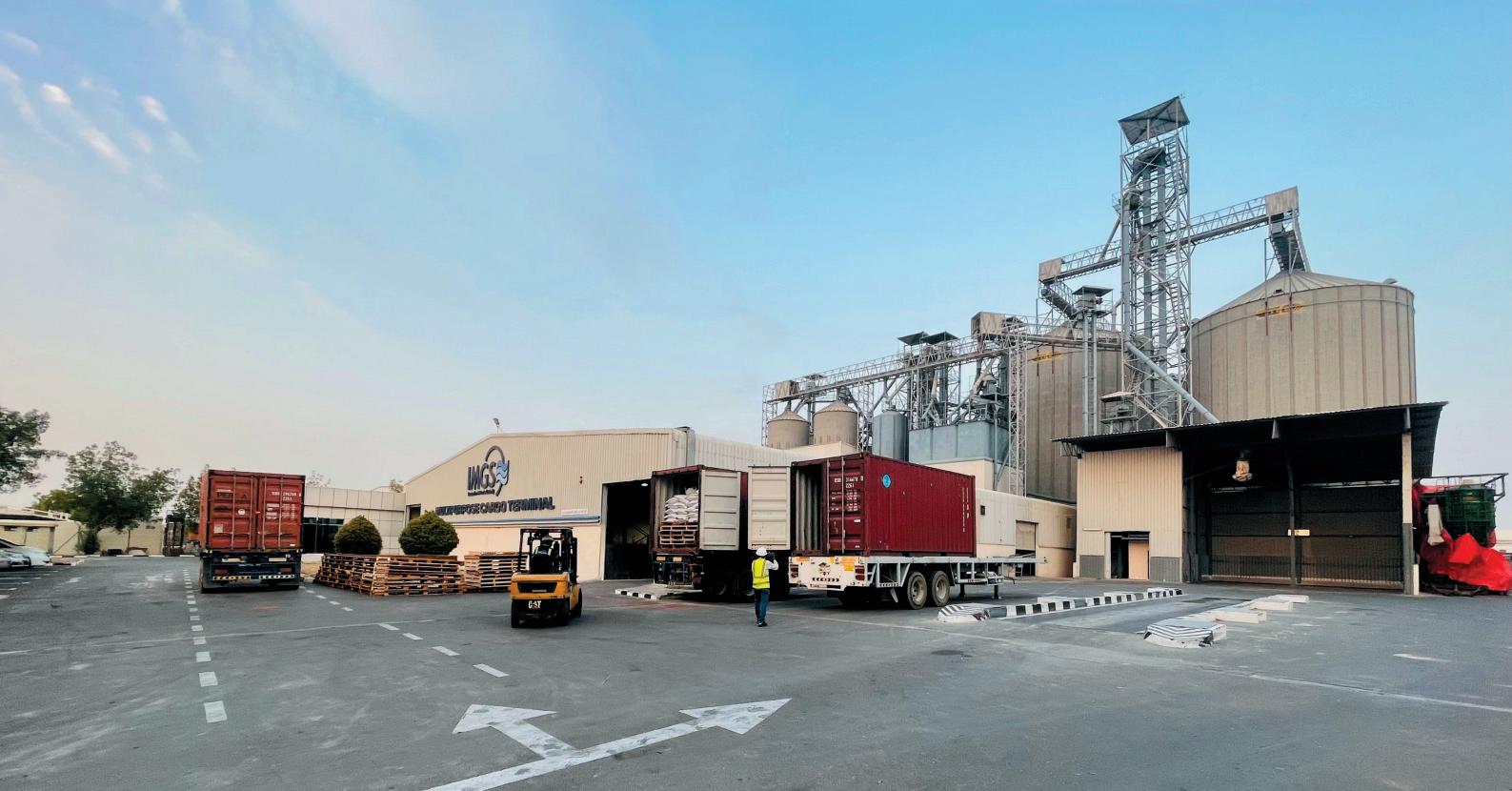
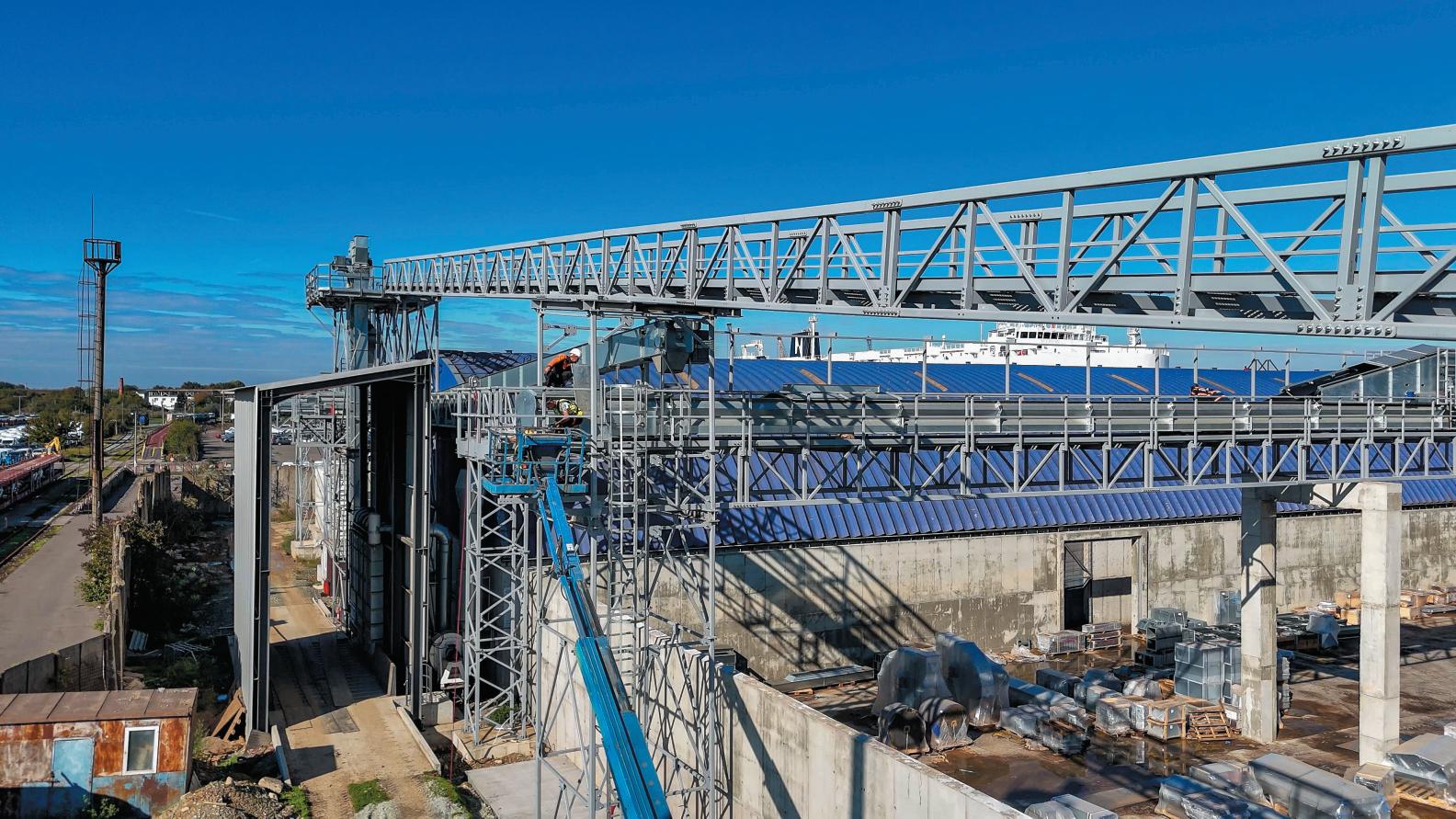
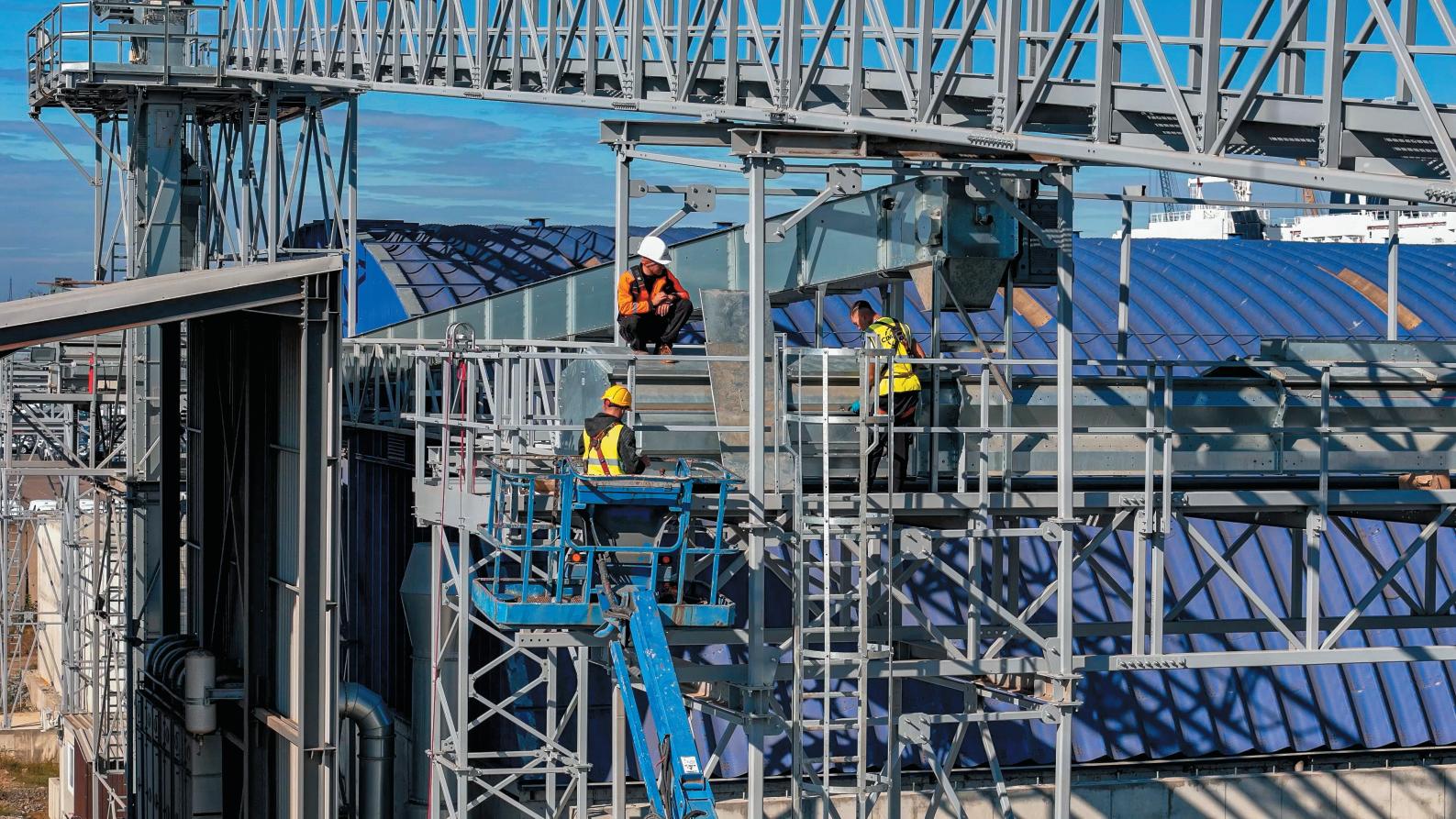
photo: Vigan Engineering.
63mt. US leads with a huge corn crop, with improved outturns in China, Ukraine, Argentina and Mexico, to more than offset smaller crops elsewhere.
RISING USE FOR FEED, FOOD AND BIOFUELS
Global coarse grains use seen rising by 60mt to almost 1.6bn/t in 2025/26. For trade a 14mt increase mainly due to increased exports this year to China 27.5mt and several other countries. Coarse grain stocks at 324mt (World 143mt, China 181mt) by the end of 2025/26.
GLOBAL CORN CROP FORECAST 1.3BN/T IN 2025/26
Record crops in the US, China and rising output in Ukraine, and large crops anticipated in Brazil and Argentina. Global corn production is expected to rise to almost 1.3bn/t in 2025/26. The huge US corn crop of 432mt, due to a higher harvested area and an exceptional increase in yields of 11.7t/ha. China’s record 301mt reflects favourable rainfall in key northeastern provinces and ongoing agronomic improvements. Despite the farming difficulties faced in Ukraine corn output increased to 30.7mt.
RECORD DEMAND 1.3BN/T FOR FEED, FOOD, FUEL
Corn for feed, food and biofuels, is anticipated to rise by 51mt to 1.3bn/t. With use seen rising in the US 335mt China 321mt, Brazil 96mt, Mexico 51.4mt in 2025/26. US corn use is forecast to rise by 4% with strong demand for both feed and industrial use reaching record levels. Feed and increased bio-fuel production in Brazil and in Mexico food, feed and industrial use starch, sweeteners and some biofuel applications.
*Major corn 51 49 56 58 68 exporters stocks
Source: USDA -*Argentine, Brazil, Ukraine, US
ESCALATING PRICES FOR UREA
Favourable rains in Argentina benefitting the corn crop. The Buenos Aires Grain Exchange (BAGE) estimate the corn crop at 57mt, Rosario Exchange 62mt, (USDA52mt). High costs of inputs, versus lower international prices critical for some farmers. Escalating fertilizer prices, with wholesale urea rising some 30% since late February, increasing the cost of production.
STEEP RISE IN BRAZIL’S DOMESTIC PRICES
Brazil’s Centre for Advanced Studies on Applied Economics (Cepea), highlighted the plight of domestic users, struggling with steep price hikes and logistical challenges in the spot market. Domestic corn prices rising on low stocks, strong demand from ethanol, livestock industries and weather uncertainty for Brazil’s second ‘Safrinha’ corn crop. With Brazil’s first crop harvested c.24.85mt, the focus is on the development of the second crop. Conab pegs Brazil’s total corn crop to reach 138.9mt (USDA 132mt) in 2025/26.
SOUTH AFRICA’S PROSPECTS IMPROVE
The corn crop is forecast at 16.5mt in 2025/26. South African corn prices expected to remain under pressure. USDA
forecast exports of 2.1mt in 2025/26 on regional demand especially from Zimbabwe.
RFA PRESS FOR NATIONWIDE ACCESS TO E15
Renewable Fuels Association (RFA) have called on the US Congress to unleash ethanol’s potential in the US market by passing legislation to allow nationwide yearround sales of E15. The Energy Information Administration (EIA) data shows US ethanol production hit a record 16.49bn/gallons in 2025, coupled with record exports 2.186bn/gallons. Rising domestic consumption, reflects continued growth in the number of retail stations offering E15, typically priced at significant discount to regular unleaded gasoline. The US Environmental Protection Agency has granted a waiver to allow summer sales of E15 to continue throughout 2026. The RFA said the news was welcome the action will allow lower-priced E15 to consumers at nearly 5,000 gas stations across the country. The RFA awaits developments in Congress to make E15 sales permanent nationwide beyond 2026.
CHINA’S CORN IMPORTS RISE TO 8MT IN 2025/26
China’s imports rose to 8mt this year with increased imports for Mexico (26mt), EU (19mt) and Vietnam (13.8mt), in 2025/26. Strong exports forecast by the US 82mt, Brazil 42mt, Argentina 33mt; and Ukraine 22mt.
GLOBAL CORN STOCKS LOWER AT 293MT
Large US corn stocks are offset by lower stocks in China, Brazil and Argentina. (World 113mt China 180mt).
HUGE CORN CROP TO PRESSURE PRICES
Global output is projected to reach a new peak, prices are expected to be supported by stronger demand in the US, Mexico and Brazil.
Corn (FOB US PNW) is forecast at
US$207mt in 2025/26.
RISE IN BARLEY OUTPUT DUE TO IMPROVED YIELDS
Global barley production is forecast at 154mt in 2025/26, 11mt higher than last year due to improved yields, despite lower harvested acreage of 44.7/ha. Larger crops in the EU 56mt on improved yields, in Russia 19mt, Australia16mt and Canada 9.7mt.
With global barley use expected to rise to 151.7mt — with an increase in feed use to 104.2mt and 47.5mt for food/industry use.
BARLEY TRADE HIGHER IN 2025/26
Global exports are forecast to rise to 32.5mt. Australia’s exports will rise to 9.1mt, EU 7.6mt, Russia 4mt, Argentina 3.7mt Canada, 2.5mt Ukraine 2.5mt, Kazakhstan 1.7mt, to meet growing demand in China (11mt), Saudia Arabia (4.6mt) and Turkey (1.3mt) for feed/food/industry use.
SORGHUM PRODUCTION RISES TO 63.4
MT IN 2025/26
A notable increase in US crop output of 11mt and Nigeria at 6.5mt, grown for its drought-resistant properties. Exports pegged at 9.8mt, with China’s imports rising to 7.6mt used mainly for feed and spirit distillation.
GLOBAL SUPPLY & DEMAND — MAJOR OILSEEDS
Source: *Brazil and Argentina; USDA/Meal use excl. fishmeal c.5mt
SOYBEANS MAJOR PRODUCERS 2021–2025/26 (MT)
Source: *Brazil and Argentina; USDA
US SOYBEAN ACREAGE IN 2026/27
USDA preliminary forecast for US soybean plantings on 83.8m/acres with yields
MAJOR OILSEEDS &
MEAL
52.5bu/acre, US production 116mt (4.37bn/bu), with output similar to last year. Looking ahead the IGC suggests a record world outturn is tentatively anticipated in 2026/27 and, given heavy availabilities, processing is projected at a new peak, as stocks edge higher.
RAPESEED LEADS RISE IN OUTPUT IN 2025/26
Favourable growing conditions saw growth in global oilseed output expected to rise to 698mt. Soybeans are forecast at 427mt similar to last year, with rising output in all other major oilseeds — rapeseed rising to 95mt, sunflower seed 54mt, cottonseed 41.8mt, groundnut 52mt, palm kernel 21mt and copra 5.8mt.
Global rapeseed output is forecast at
SUPPLY & DEMAND 2025/26 (MT)
USDA: *less than 500,000/t. Meal totals excl. fishmeal
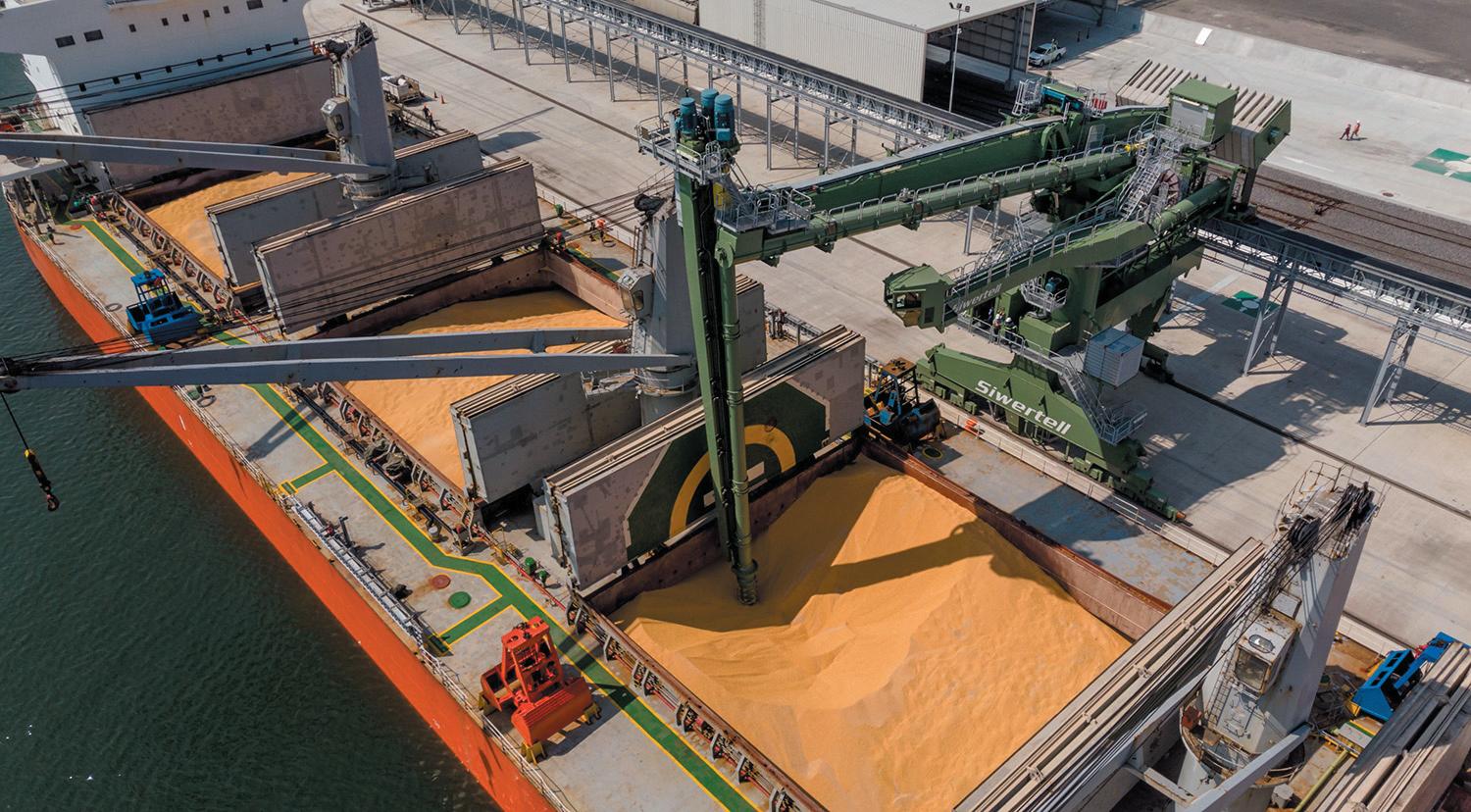
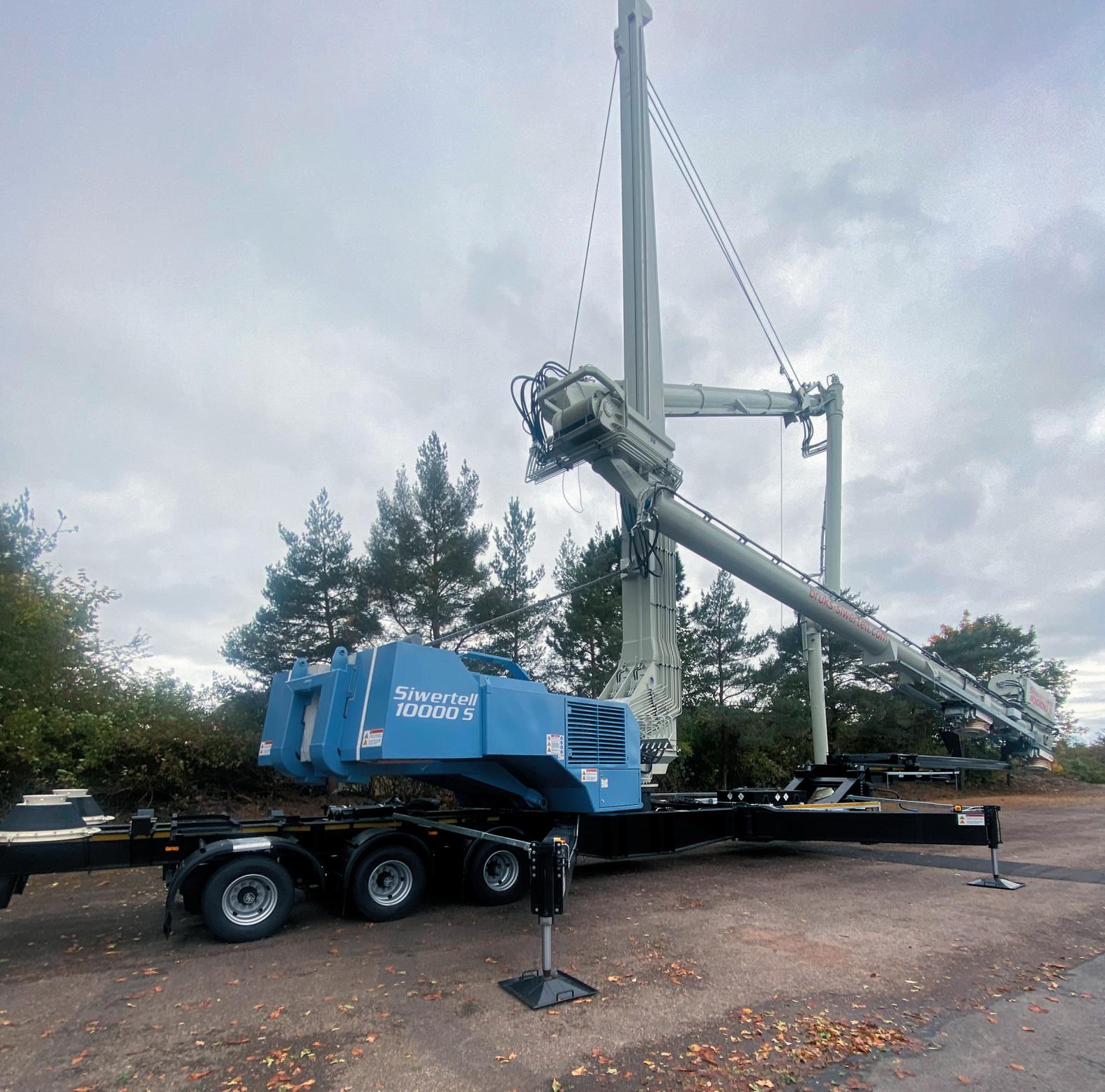
photo: Bruks Siwertell.
95.5mt in 2025/26, reflecting larger crops in the EU, Canada, Australia and in some other countries. Global consumption of rapeseed continues to grow steadily as the use of rapeseed oil for biofuel markets rises especially in the EU and Canada.
SMALL INCREASE IN GLOBAL OILSEED TRADE TO 215MT IN 2025/26
The EU’s imports of Brazilian soybean meal reached a high in 2025, expected to continue in 2026.
Global trade led by soybeans forecast at 187mt, small increase in sunflower seed exports 3mt.
RECORD SOYBEAN OUTPUT FOR SOUTH AMERICA IN
2025/26
Agro-consult forecast for Brazil is that it will harvest a record soybean crop of
SOYBEANS & SOYBEAN MEAL — MAJOR IMPORTERS
USDA: *less than 500,000/t. Meal totals excl. fishmealUSDA: *less than 500,000/t. Meal totals excl. fishmeal
184.7mt (USDA 180mt) in 2025/26.
Recent news suggests Brazil, soybean
estimates are being cut due to drought conditions, with concerns about what this means for the Safrinha crop, Brazil’s second corn crop.
Argentina’s soybean production is set to reach c.48mt in 2025/26 supported by strong early-season conditions despite experiencing some hot, dry weather. Initially, excessive rainfall delayed planting, though recent improvements in soil moisture, have helped boost growth.
CHINA TO IMPORT
C .112MT OF SOYBEANS IN 2025/26
It is the world’s largest meat producer, consumer and importer, facing structural constraints, evolving demand and persistent biosecurity challenges. According to Zengyong Zhu, meat production and consumption will grow moderately with ongoing structural adjustments, shaped notably by pork and rising demand for poultry meat, beef and mutton. Pork will maintain a stable dominant position, while demand and import volume are expected to show a downward trend. Poultry production, consumption and exports will grow rapidly. In contrast, beef and mutton production will grow slowly due to resource constraints, while benefiting from growing consumer preference despite limited supply growth.
GLOBAL OILSEED STOCKS RISE TO 146MT IN 2025/26
With the prospect of a record global oilseed harvest, ending stocks are raised by 4mt in 2025/26 to 146mt (world 98mt China 48mt). Major exporters stocks for Brazil 38mt, Argentina 24mt and US 11mt. US 2Y (Gulf) $464/t (19.3.’26) Argentina (Up River) $436/t FOB (early March 2026) Brazil (Paranagua) $427/t fob (19 Mar ‘26), CBOT Futures Soybeans May contractclosed $$11.161/2bu (20 Mar ‘26).
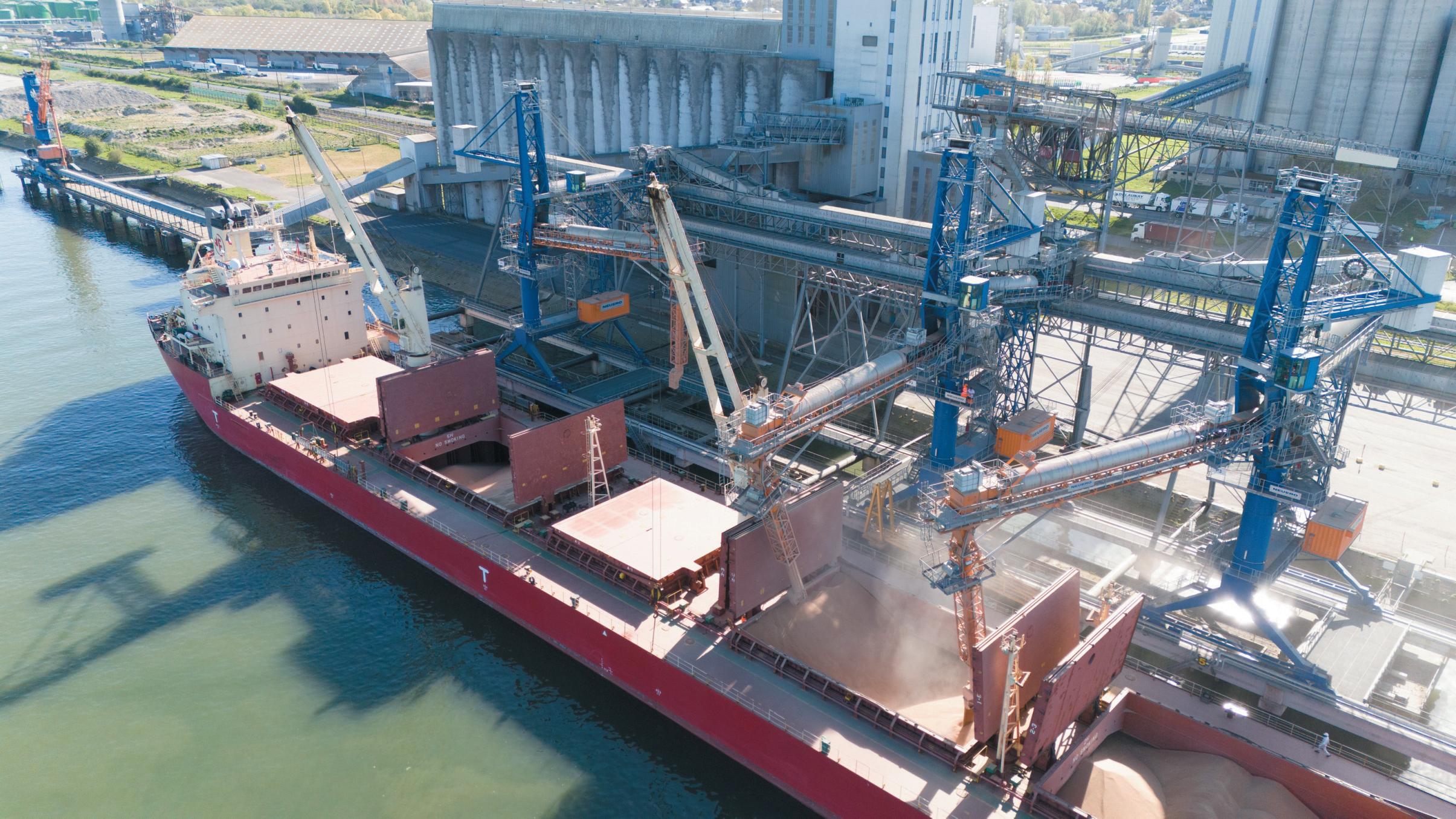
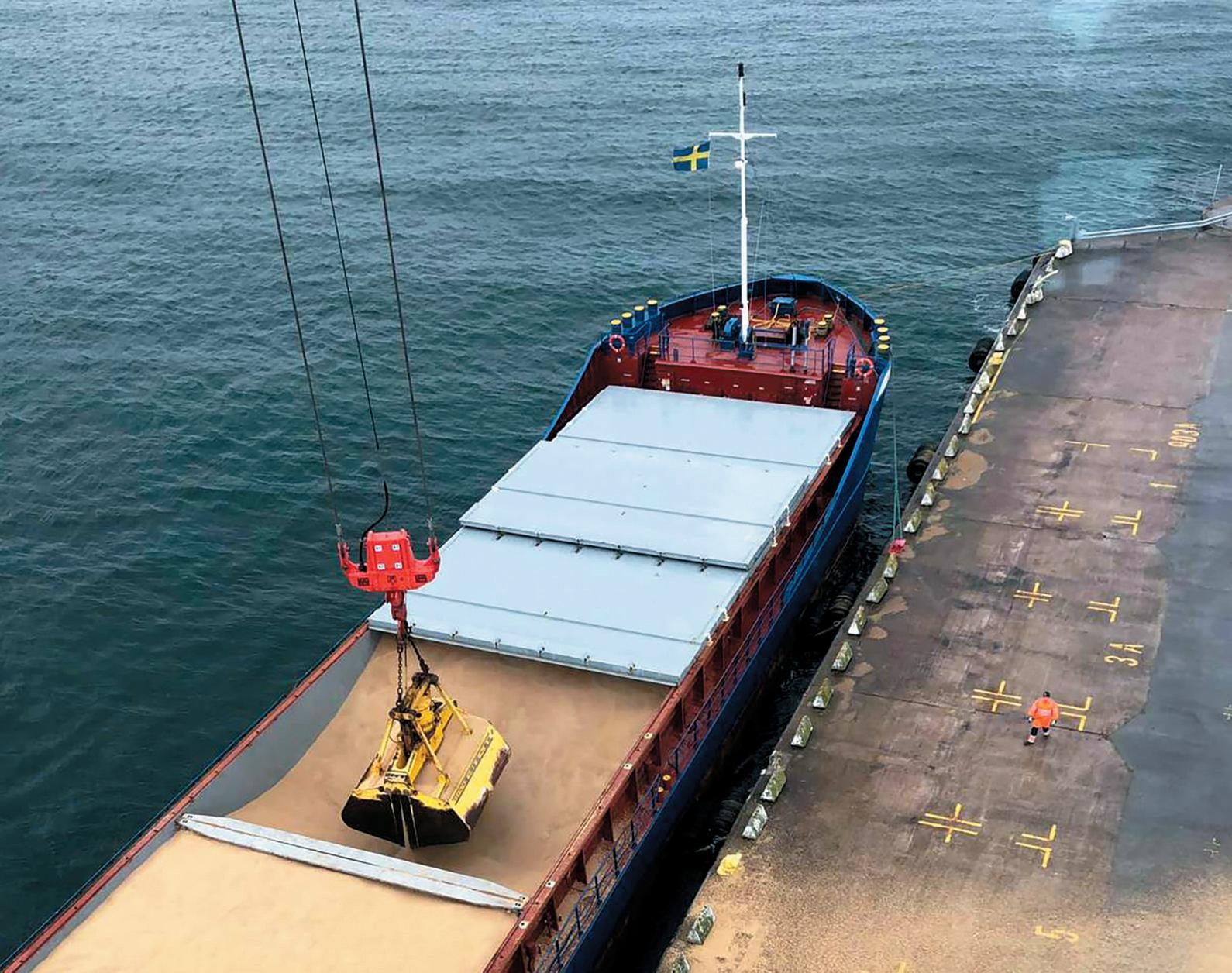
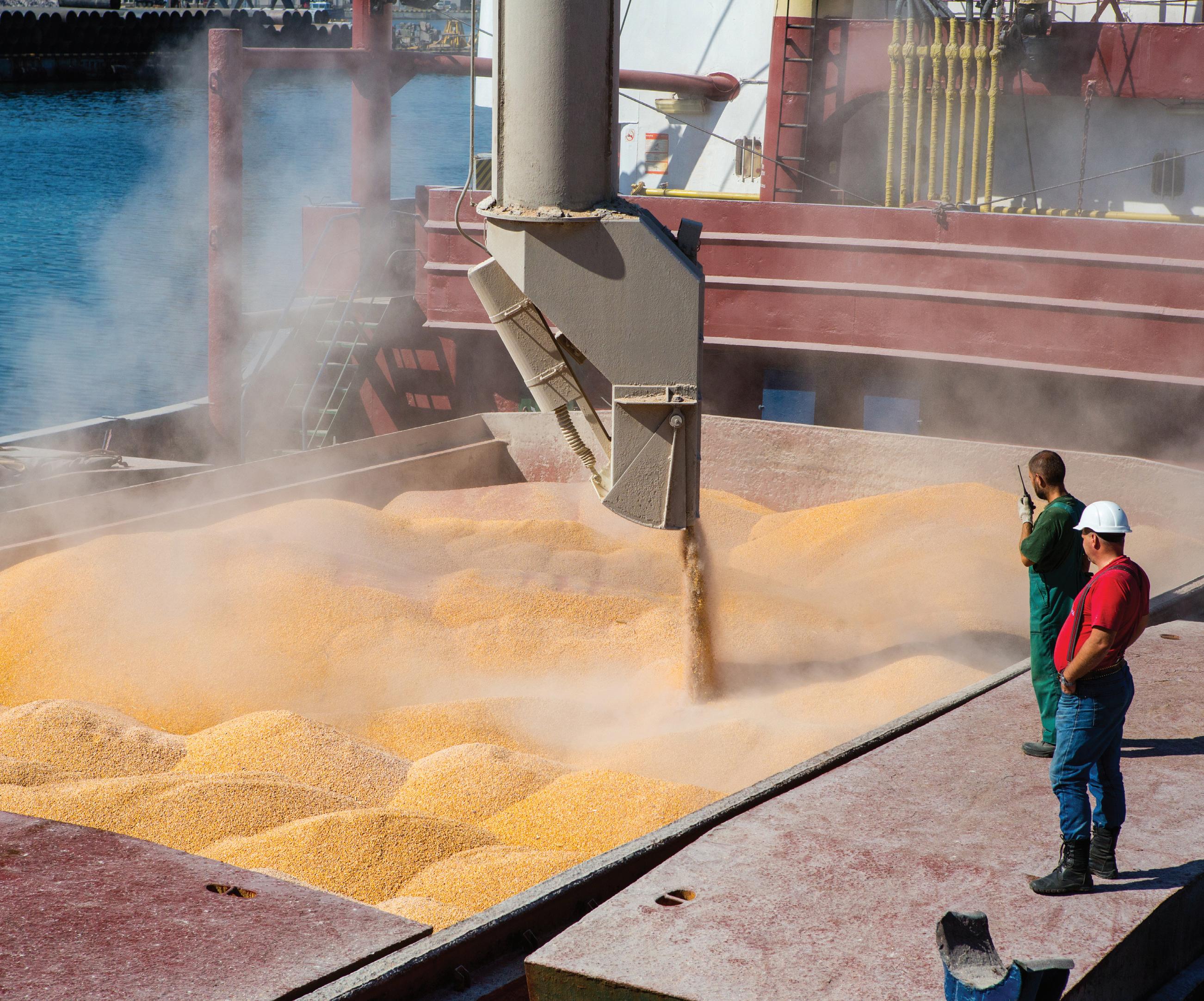
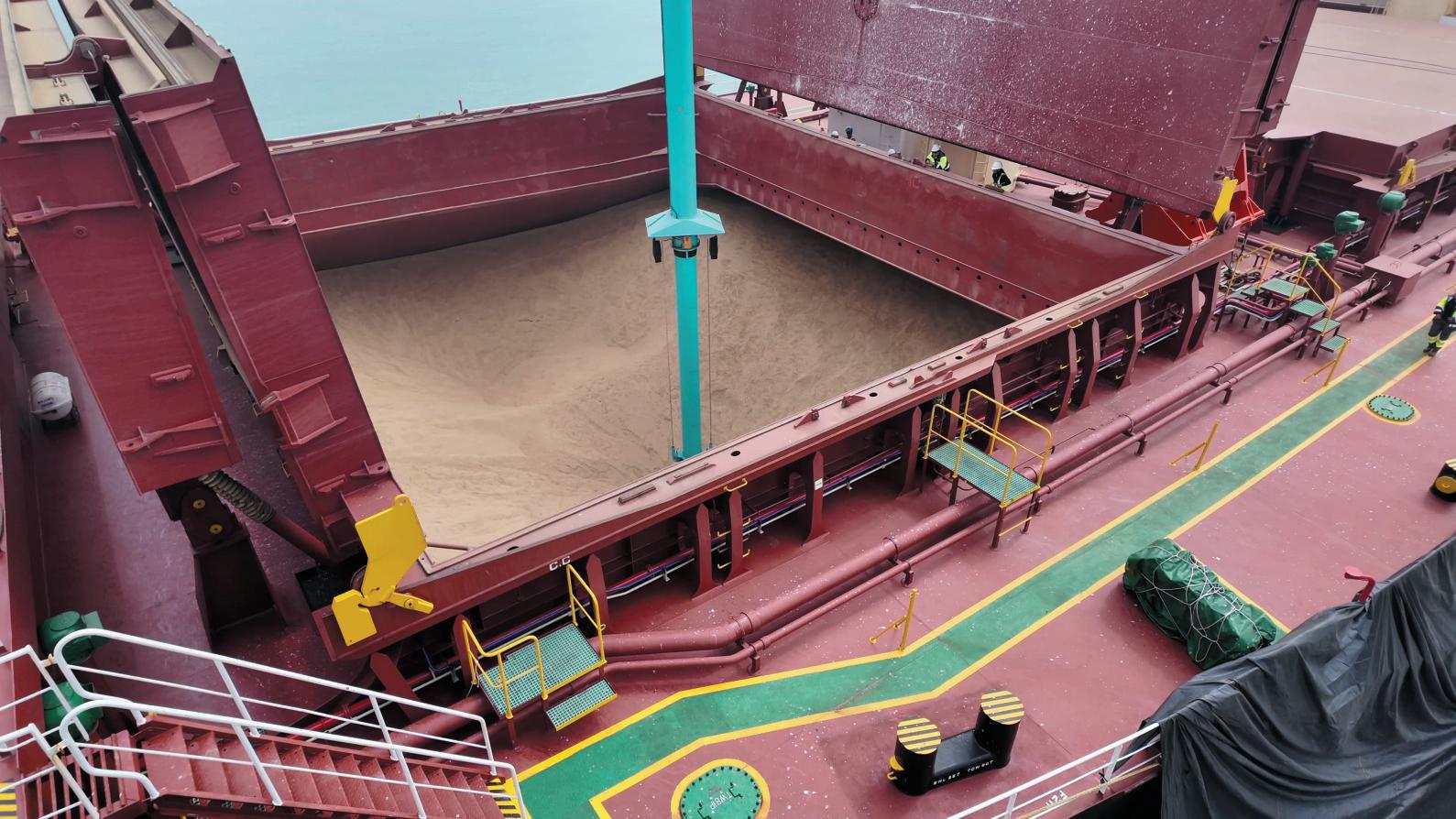
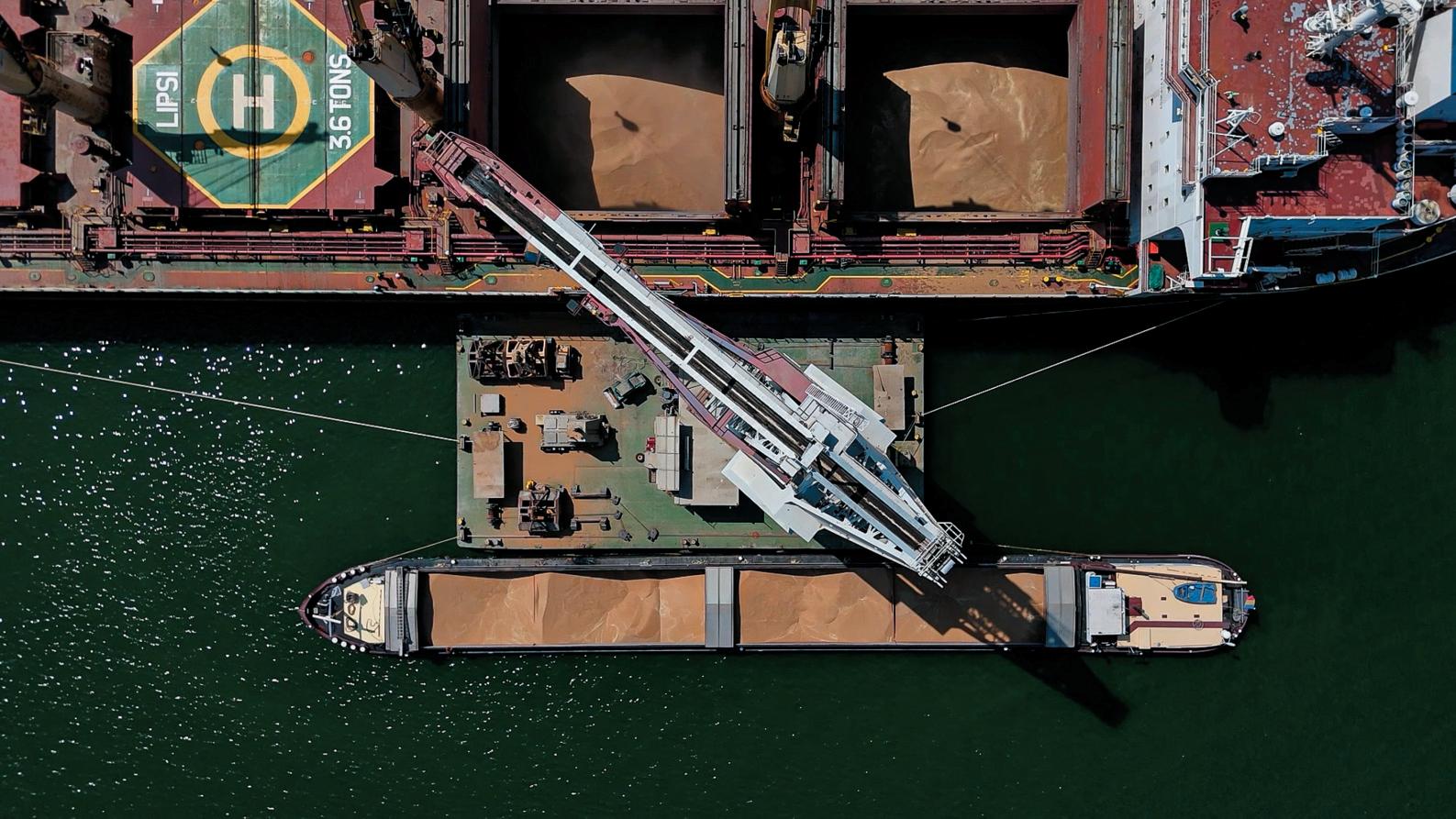
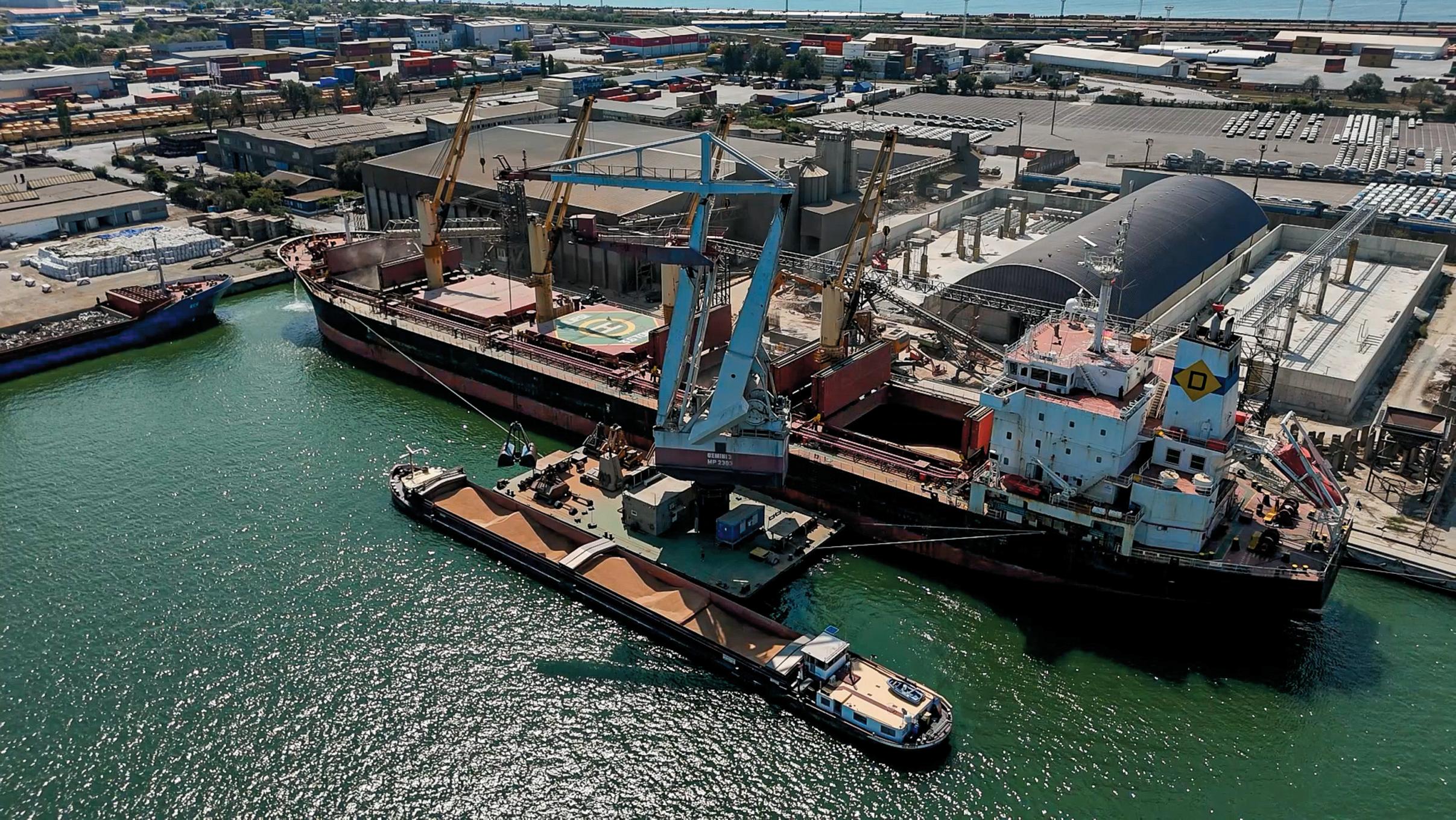
Loading soybeans.
HAROPA PORT, Western European leader in cereal exports
HAROPA PORT is in the top place in Western Europe for maritime exports of cereals. The current good cereal season shows yet again the competitiveness and dynamism of a strategic sector on the Seine axis.
The port of Rouen enjoys a unique geographical location, at the bottom of the estuary and in the heart of agricultural land. Thanks to its location and the expertise of operators, the port of Rouen remains the European leader for the export of French cereals and agricultural products. This agro-industrial hub, close to the main production areas, has a complete range of services and facilities for storage, control, preparation, loading and transport of goods in compliance with buyers’ specifications.
5.6MT OF WHEAT EXPORTED AT THE END OF FEBRUARY 2026
The 2025-2026 cereal season is going well. At the end of February, a total of 5.6mt (millions tonnes) of cereals shipped to the whole world passed through Rouen’s terminals. Since the month of July, the dynamism of exports has not faded over the months. The main products handled in Rouen are soft wheat, malting and fodder barley and, in the last two years, corn has been making a comeback at Rouen’s cereal terminals. Finally, in addition to oilseed flows, for the import and export — and for the production — of biofuels, the range of products now also includes cocoa, peas, field beans, semolina, animal feed, vegetable oils, malt...
While Morocco remains the main destination for wheat exports with nearly 2mt, the current season is characterized by a high diversity of recipient countries. Other exports go to the European Union, West Africa, South and Central America —
represented notably by Mexico — and, to a lesser extent, the countries of the Near and Middle East. Shipments have not slowed down since the beginning of the campaign. This performance should be viewed in relation to the strong global competition resulting from the good harvests this year.
A NEW GRAIN ELEVATOR UNDER CONSTRUCTION
The competitiveness and know-how of operators in Rouen allow for a market
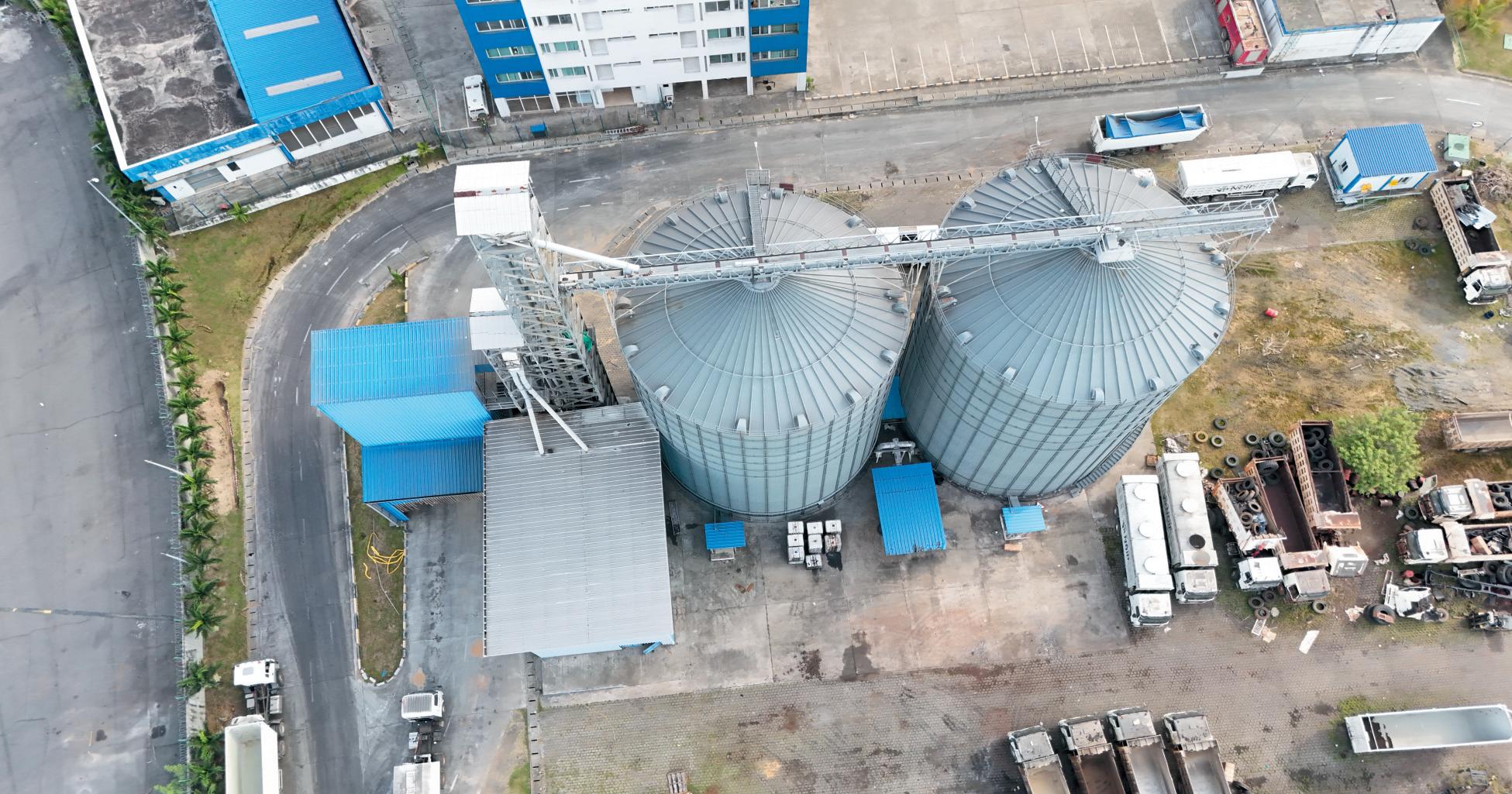
share exceeding 50% for the maritime export of French cereals. The port of Rouen remains active and attractive, the construction of a new cereal silo by Groupe BZ is a perfect example. The new equipment, with a capacity of 55,000 tonnes, will be put into service during the next cereal season. At the same time, HAROPA PORT has modernized and renovated the Petit-Couronne wharf with a new berth of 260m that can accommodate ships with a load draught of 11.30m, compared to 10.60m previously.
Cavotec signs €13 million MoorMaster order in North America
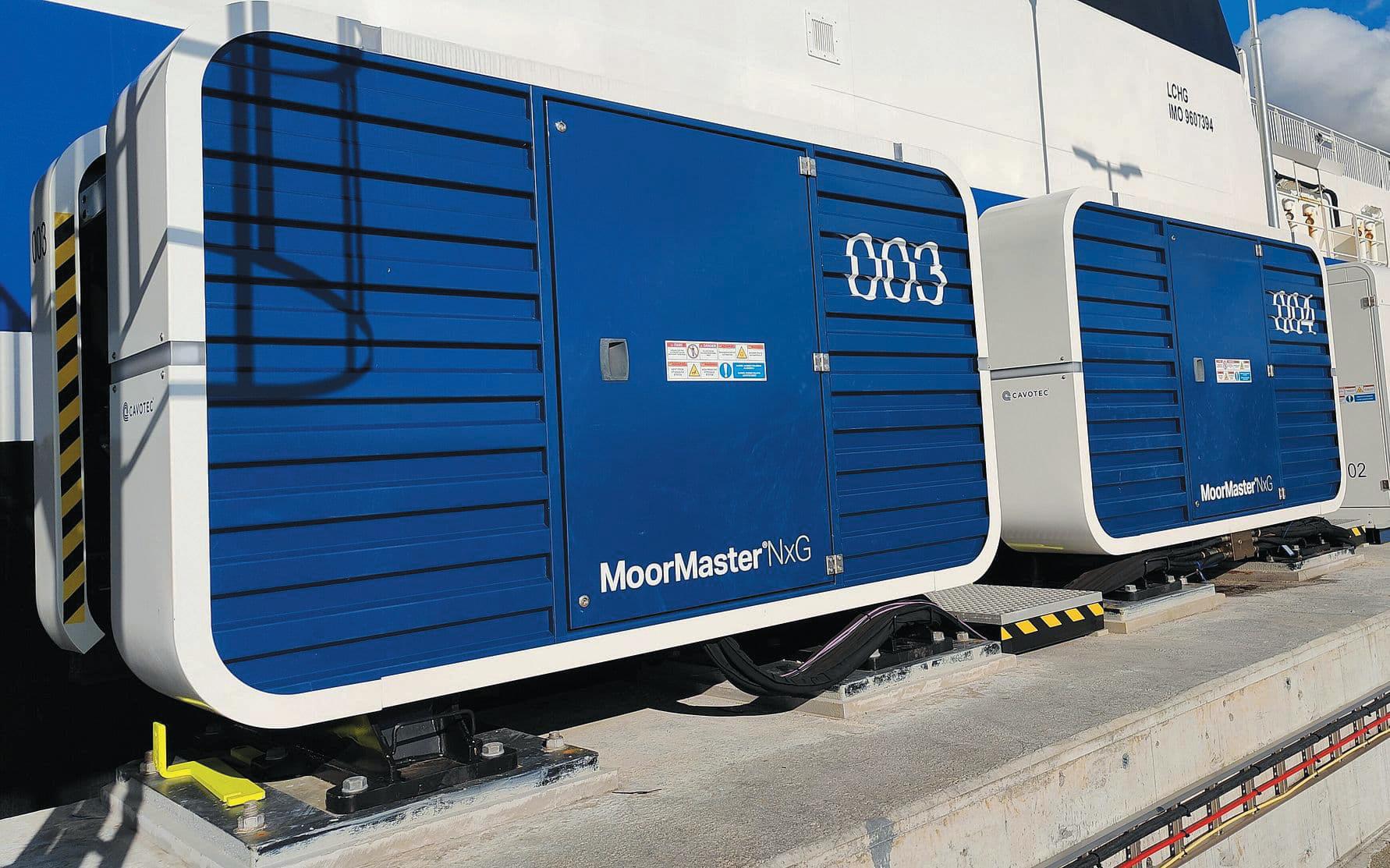
Cavotec has signed an order valued at approximately €13 million for the supply of MoorMaster automated vacuum mooring systems for a special application in North America. Deliveries are scheduled between October 2027 and March 2028.
The MoorMaster systems will help ensure safe, reliable, and efficient vessel operations. Cavotec has over 20 years of experience in automated vacuum mooring and MoorMaster systems increase safety, speed up ship handling, reduce emissions, and help ports and other maritime applications increase capacity.
“We are pleased to have received this order which further strengthens our position as a leading supplier of automated mooring solutions in North America,” said David Pagels, CEO of Cavotec.
ABOUT MOORMASTER
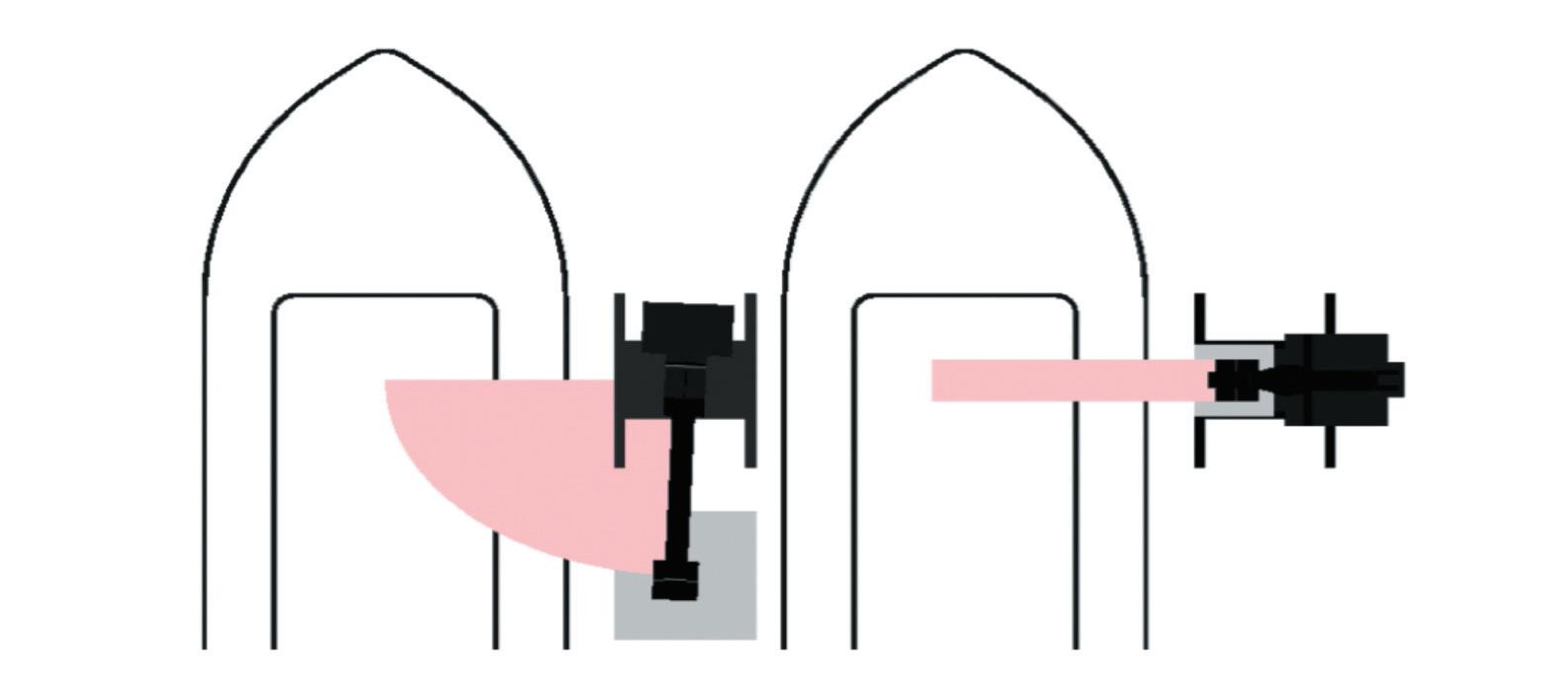
MoorMaster uses automated vacuum pads that extend from shore-mounted units to attach directly to the vessel’s hull. The system then moors the ship to the port in less than 30 seconds — safely, remotely, and without mooring lines.
MoorMaster replaces potentially hazardous mooring lines with automated vacuum pads that secure and release vessels in seconds — at the push of a button. With more than 20 years of proven
performance, MoorMaster® boosts safety, speeds up vessel handling, reduces emissions, and helps ports unlock greater capacity from existing infrastructure.
Compatible with virtually all vessel types and suitable for every kind of terminal, MoorMaster® delivers distinct advantages across the industry. In container terminals, its fast and precise mooring shortens berth occupancy, enhances crane productivity, and supports more reliable vessel scheduling. MoorMaster® ensures rapid, repeatable berthing that enables efficient charging windows and keeps highfrequency services running on time. Terminals benefit from dramatically improved turnaround times, safer passenger operations (for ferries), and greater schedule predictability — even in challenging weather.
REASONS TO CHOOSE MOORMASTER
Improved safety: replaces dangerous v mooring lines with automated vacuum pads, protecting crew and port workers while ensuring reliable vessel hold.
Lower costs & emissions: cuts fuel v use by reducing idling, thruster use, and tugboat assistance during berthing – saving money while lowering CO2, NOx, SOx, and particulate emissions.
Faster turnaround: mooring in just v
30 seconds allows shorter port stays and more efficient scheduling, enabling slower cruising speeds between destinations and lower fuel bills.
Higher productivity: with vessel v motion reduced by up to two orders of magnitude, cargo can be transferred faster and more safely — boosting port productivity by up to 100% in challenging conditions.
Maximized infrastructure: by v attaching to the vessel’s flat hull, MoorMaster allows safe overhang at the quay, letting ports handle larger vessels without costly infrastructure upgrades.
More vessel calls: dramatically v reduced mooring times allow ports to accommodate more ships each day, directly increasing revenue potential.
Proven expertise: with more than v 430 systems installed worldwide, Cavotec’s expert team ensures a smooth transition to vacuum mooring — delivered faster and more costefficiently than ever.
Ongoing support: from planning to v operation, MoorMaster comes with continuous monitoring, predictive maintenance, and Cavotec’s global service network to keep systems running 24/7.
EcoNavis optimizes wind-assisted propulsion with new Flettner rotor technology
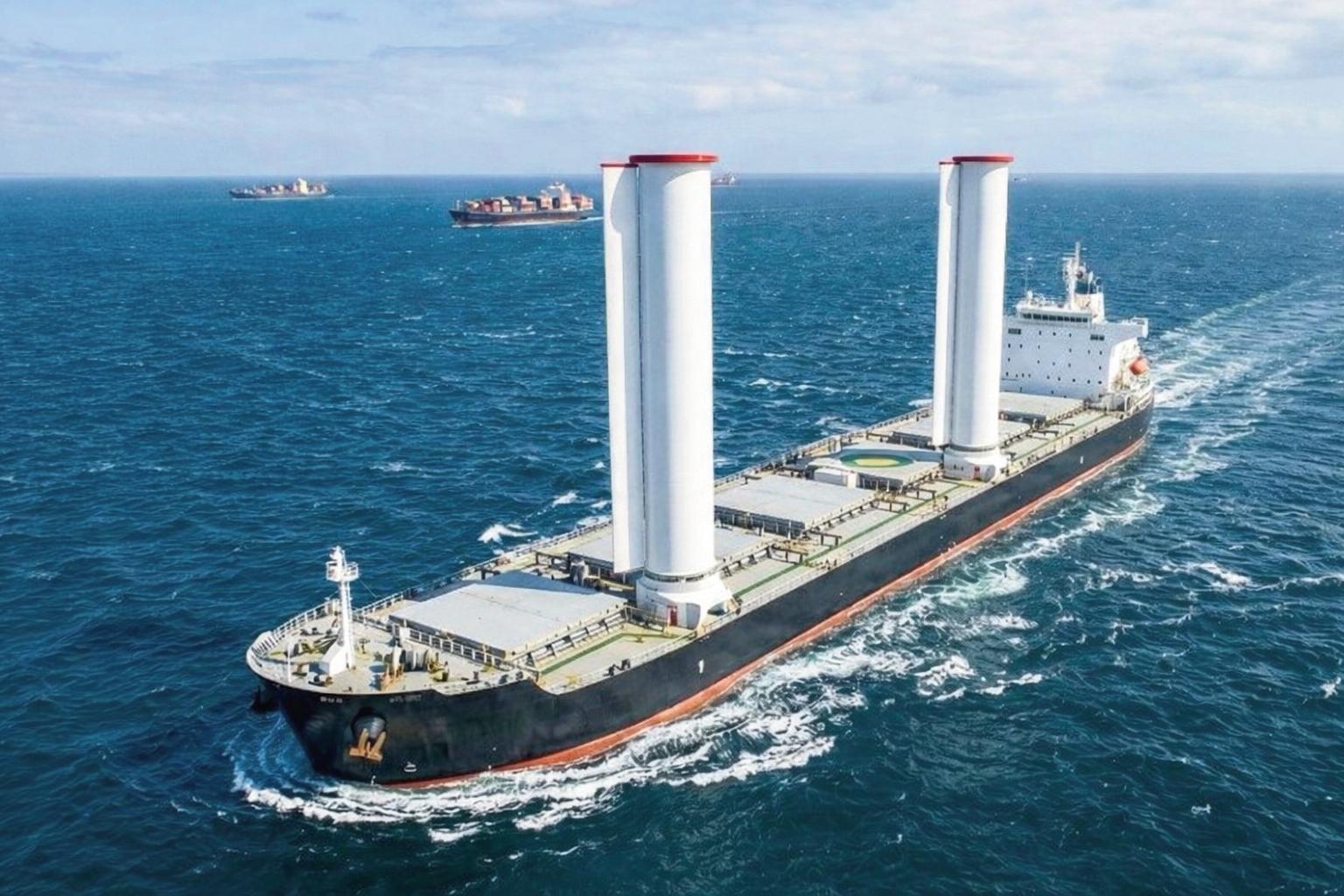
EcoNavis Solutions is developing a next generation wind-assisted propulsion system designed to enhance the performance and commercial viability of Flettner-type rotor sails for deep-sea shipping.
The company’s Eco Rotor Sail introduces a patented tail appendage device designed to increase thrust, reduce power demand, and widen the range of wind angles in which rotor sails can operate efficiently.
Flettner rotors — rotating cylindrical sails first introduced in the 1920s — are enjoying a come back as shipowners seek credible ways to cut fuel consumption and greenhouse gas emissions. But a major deterrent to much wider take-up is performance reliability when the wind direction changes. Anton Flettner’s underlying principle has changed little in more than a century.
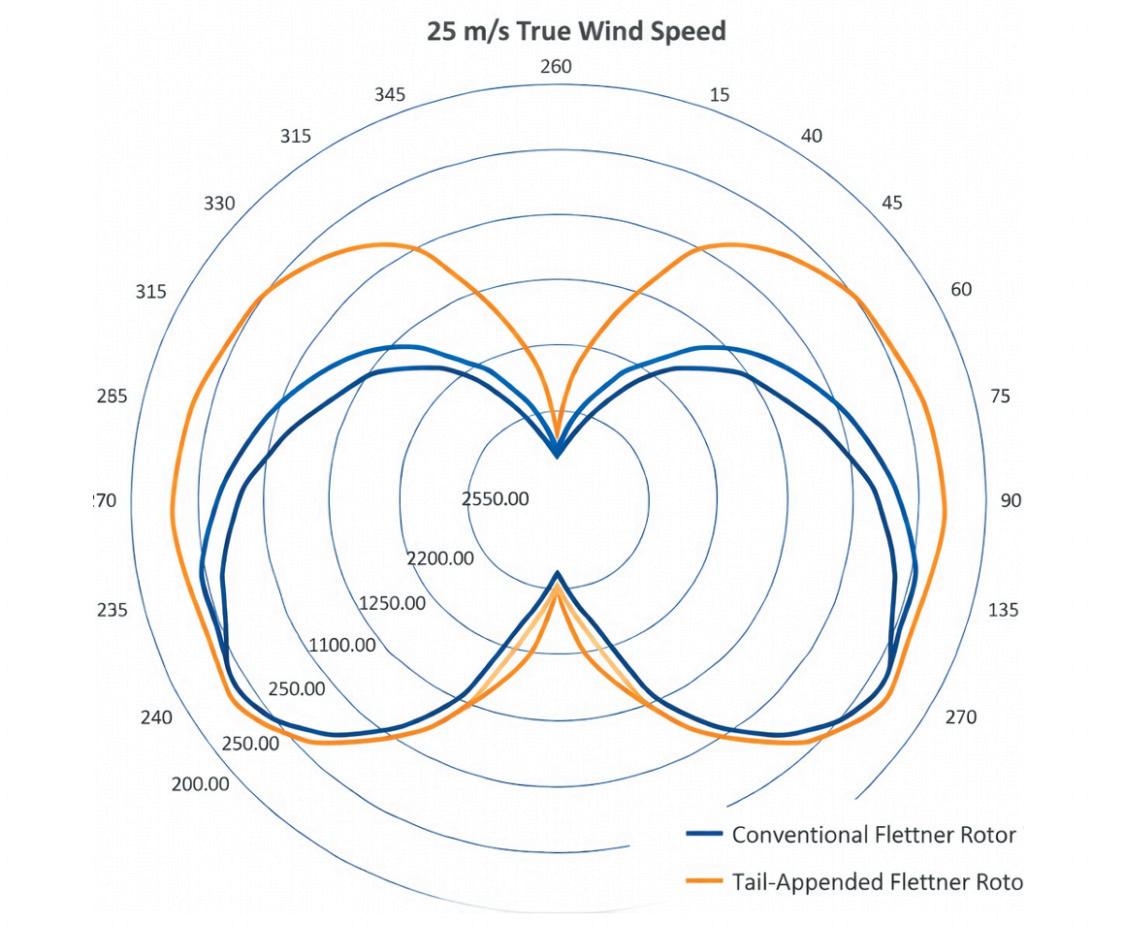
The EcoNavis design, however, essentially broadens the rotor’s effective ‘wind window’ by reshaping the wind flow in the rotor’s wake to deliver higher thrust with lower torque demand.
According to the Glasgow-based innovator, initial simulations indicate an increase in thrust of up to ten per cent alongside a 5% reduction in torque.
The Eco Rotor Sail retains the conventional rotating cylinder but introduces a fixed aerodynamic appendage downstream to stabilize the airflow behind the rotor, reducing losses and allowing the system to continue generating thrust as wind conditions change.
“Flettner rotors already offer one of the highest lift to drag ratios among windassisted devices, with a relatively modest footprint, but the main drawback has been the narrow band of wind angles — typically beam and stern quarter winds,” said EcoNavis CEO and founder Dr Batuhan Aktas. “The Eco Rotor Sail expands the range of wind angles over which the rotor can operate efficiently.”
Aktas said compared to existing rotors, the new design strengthens the case for the technology on larger commercial tonnage. “It offers more energy savings and lower operating costs,” he said.
“By recovering energy that would otherwise be lost and optimizing the flow behind the rotor, we can provide a Flettner rotor design with a greater operational range. This means shipowners can have
greater flexibility in route planning and more consistent performance over a typical trading year, without fundamental changes to vessel operations.
“If you can maintain performance across a wider range of conditions, you change how the technology is used. It becomes something operators can plan around, rather than something that depends on favourable weather,” Aktas said.
Eco Rotor Sail development is backed by a £100,000 research grant from Scottish Enterprise to take the £265,000 project through to validation and demonstration stages. The next phase will move into physical testing.
EcoNavis plans to build a scale model for wind tunnel trials at Politecnico di Milano, Italy, to validate performance and correlate results with simulation data.
Subject to successful validation, a fullscale prototype could be built this year for
shipboard trials as part of an integrated power system.
ABOUT ECONAVIS SOLUTIONS
EcoNavis Solutions is a maritime technology company spun out from the University of Strathclyde in Glasgow, Scotland. The company specializes in advanced propulsion enhancement systems designed to improve fuel efficiency, lower emissions, and help shipowners comply with international regulatory standards. Its flagship product, the Eco Boss Cap, provides retrofit-ready, performanceenhancing technology for commercial vessels. With deep expertise in naval architecture, marine engineering, and environmental performance, EcoNavis Solutions delivers innovative yet commercially viable solutions that support the decarbonization of the global shipping industry.
Cargo ship with rotor sails at sea.
Polar diagram at a 25m/s True Wind Speed comparing a conventional Flettner rotor with the tail-appended Flettner rotor.
Protect Prevent Preserve
Bulker safety & maintenance services
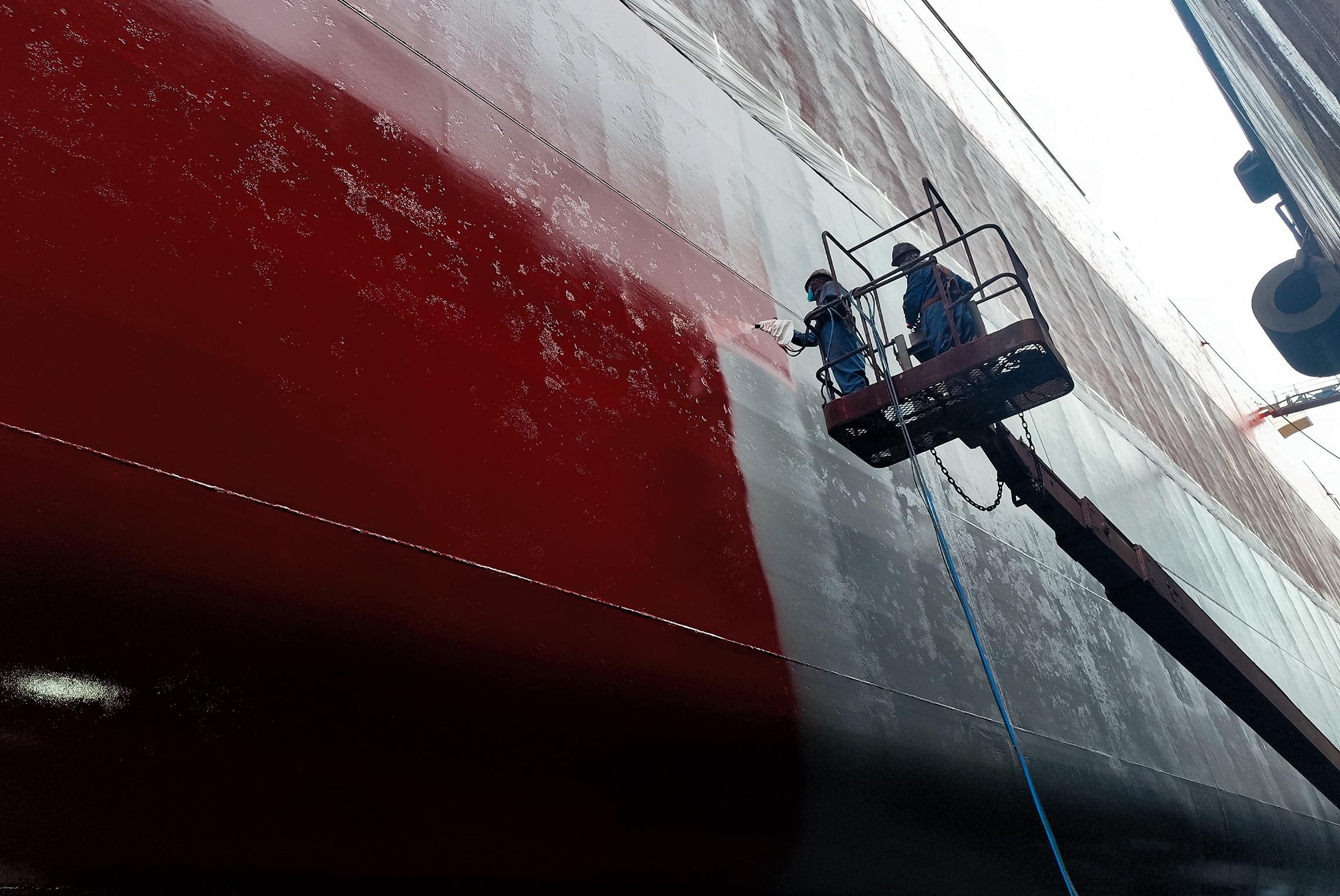
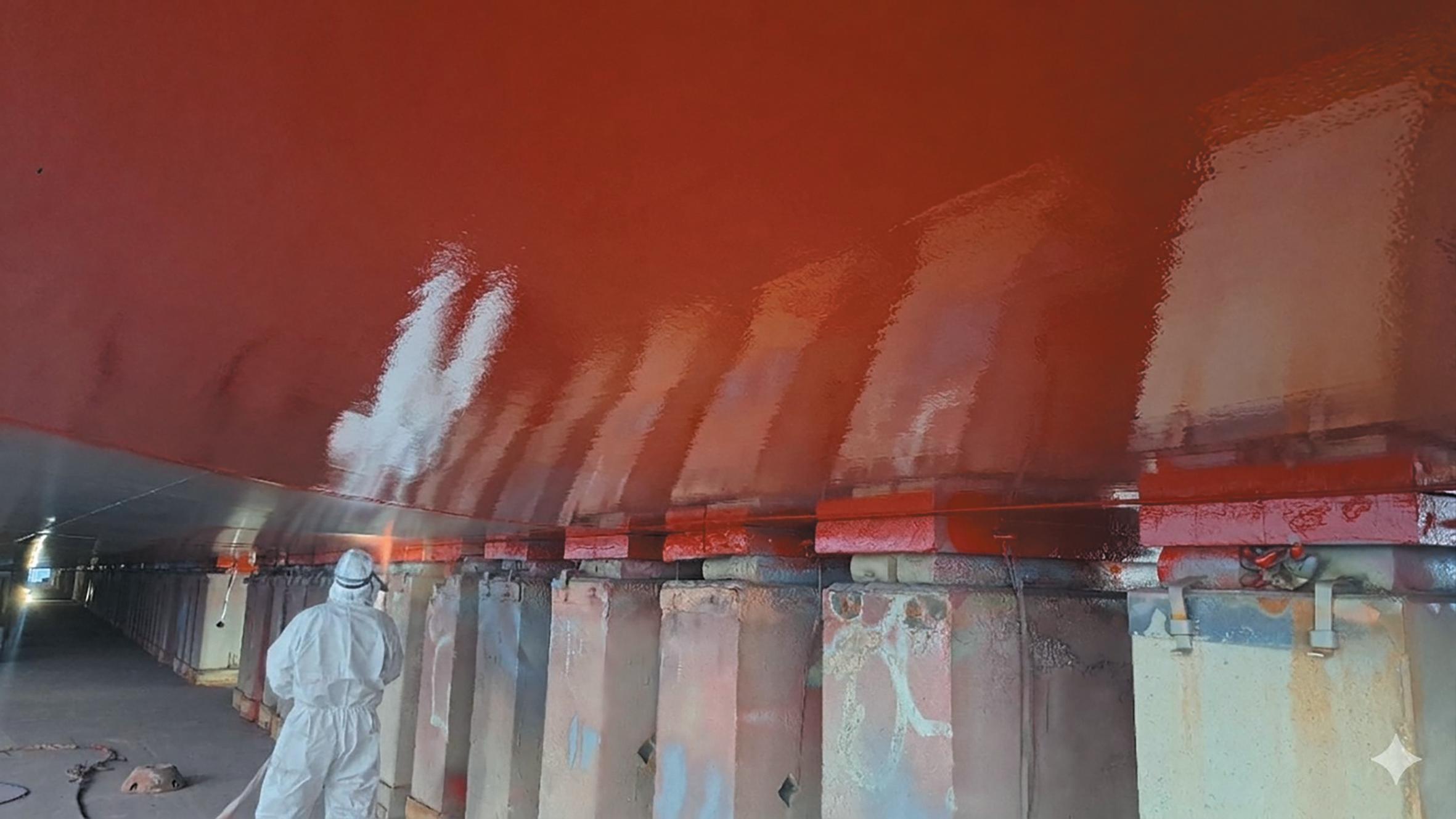
PPG electrostatic application.
Jay Venter
Improving vessel efficiency with PPG’s protective and marine coatings
COMPANY BACKGROUND
PPG’s Protective and Marine Coatings business provides comprehensive hull management solutions to help ship owners and operators achieve maximum vessel efficiency and lifecycle value. Its innovative coating solutions help drive fuel savings and GHG emissions reductions, supporting regulatory compliance with IMO standards and helping minimize the environmental impact of the maritime industry.
Building on its more than 140-year legacy of coatings expertise, PPG combines material science innovation with application technology and digital solutions to deliver measurable performance improvements and long-term return on investment.
STAYING COMPETITIVE
IMO’s strategy to achieve net zero GHG emissions by 2050 requires ship owners to implement continuous performance improvements. Bulk carriers operate in demanding conditions under heavy loads, and hull condition plays a critical role in efficiency and lifecycle maintenance planning. PPG is focused on the development of ultra-low friction hull coatings that significantly reduce drag, lowering engine load and fuel consumption while maintaining speed flexibility.
To best serve the needs of ship owners and operators, PPG has also joined the
RightShip Zero Harm Innovation Partners program. PPG SIGMAGLIDE® 2390 fouling release coating has been approved through the rigorous RightShip product review process and is recognized as a verified coating solution to improve a vessel’s GHG rating. As charterers use vetting processes to choose vessels with the lowest emissions profiles, higher ratings can help increase charterer preference and strengthen ship owners’ commercial positions in an increasingly carbonconscious shipping market.
TOOLS
AND TECHNOLOGIES
PPG Sigmaglide 2390 is the company’s premium biocide-free fouling release coating incorporating HydroReset™ Technology. When immersed in water, the coating forms an ultra-smooth, non-stick surface that marine organisms cannot adhere to, reducing drag. This reduction in friction can lower power consumption by up to 20% and reduce overall GHG emissions by as much as 35%, while allowing vessels to operate at approximately one knot higher speed and remain compliant with CII ratings. Its silicone chemistry prevents leaching and deterioration, enabling a longer service life.
The lifecycle advantages are particularly relevant to bulk vessel owners. A vessel coated with PPG Sigmaglide 2390 can
avoid full blasting and complete topcoat reapplication during its second drydock cycle, eliminating two of the most costly drydock steps. This reduces time in dock, lowers paint consumption and improves overall return on investment.
PPG Sigmaglide 2390 is compatible with electrostatic application. This coating application method improves transfer efficiency and minimizes overspray and waste by guiding negatively charged paint droplets to the grounded metal surface of the vessel. Electrostatic application produces an even, consistent coating thickness across the hull, which is critical for reducing resistance.
The PPG HullNav™ advisory and monitoring digital tool is designed to give ship owners continuous visibility of hull and fleet performance with operating profiles that include metrics like fouling intensity and power consumption. The alert system provides real-time monitoring for improved risk management. Using the data collected, PPG HullNav can provide recommendations to help ship owners and operators achieve efficiency targets.
RECENT PROJECTS
Several bulk carriers have recently improved their EVDI (Existing Vessel Design Index) with PPG Sigmaglide 2390. An Ultramax bulk carrier owner applied
PPG Sigmaglide 2390 at a recent drydock and achieved a verified RightShip GHG Rating improvement from C to B+ with no additional efficiency upgrades. On the RightShip GHG Rating scale, in which A represents the most efficient ships and E represents the least efficient, a B+ rating
puts the Ultramax bulk carrier in the top efficiency tier for its peer group.
The improvement achieved in this case was driven solely by the ultra-low friction surface of PPG Sigmaglide 2390. By improving fuel efficiency and reducing emissions, the coating enables vessels to
enhance their environmental performance while maintaining operational flexibility.The result underscores the growing importance of hull efficiency as one of the most effective tools available for bulk carrier owners working to improve GHG ratings.
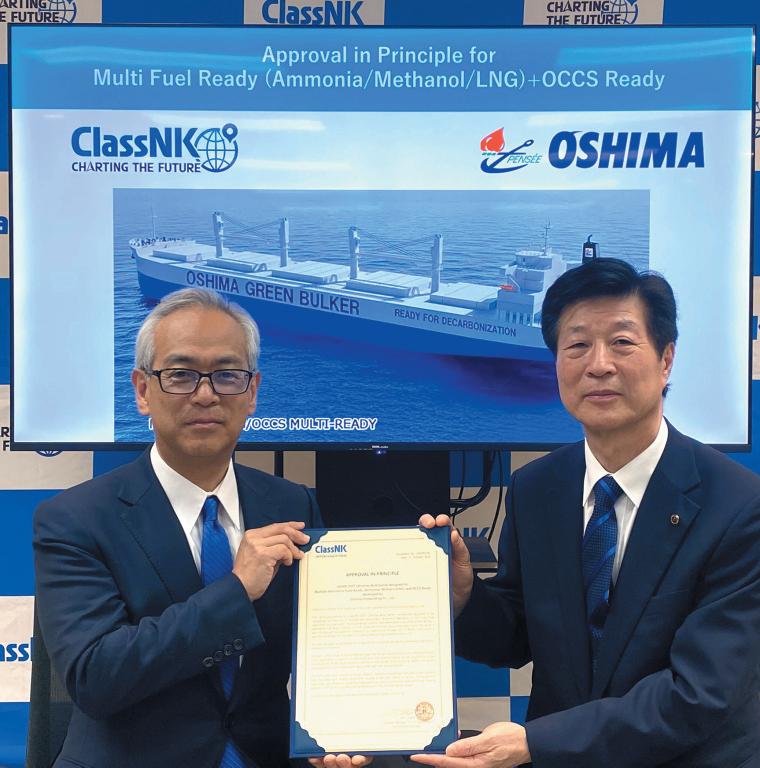
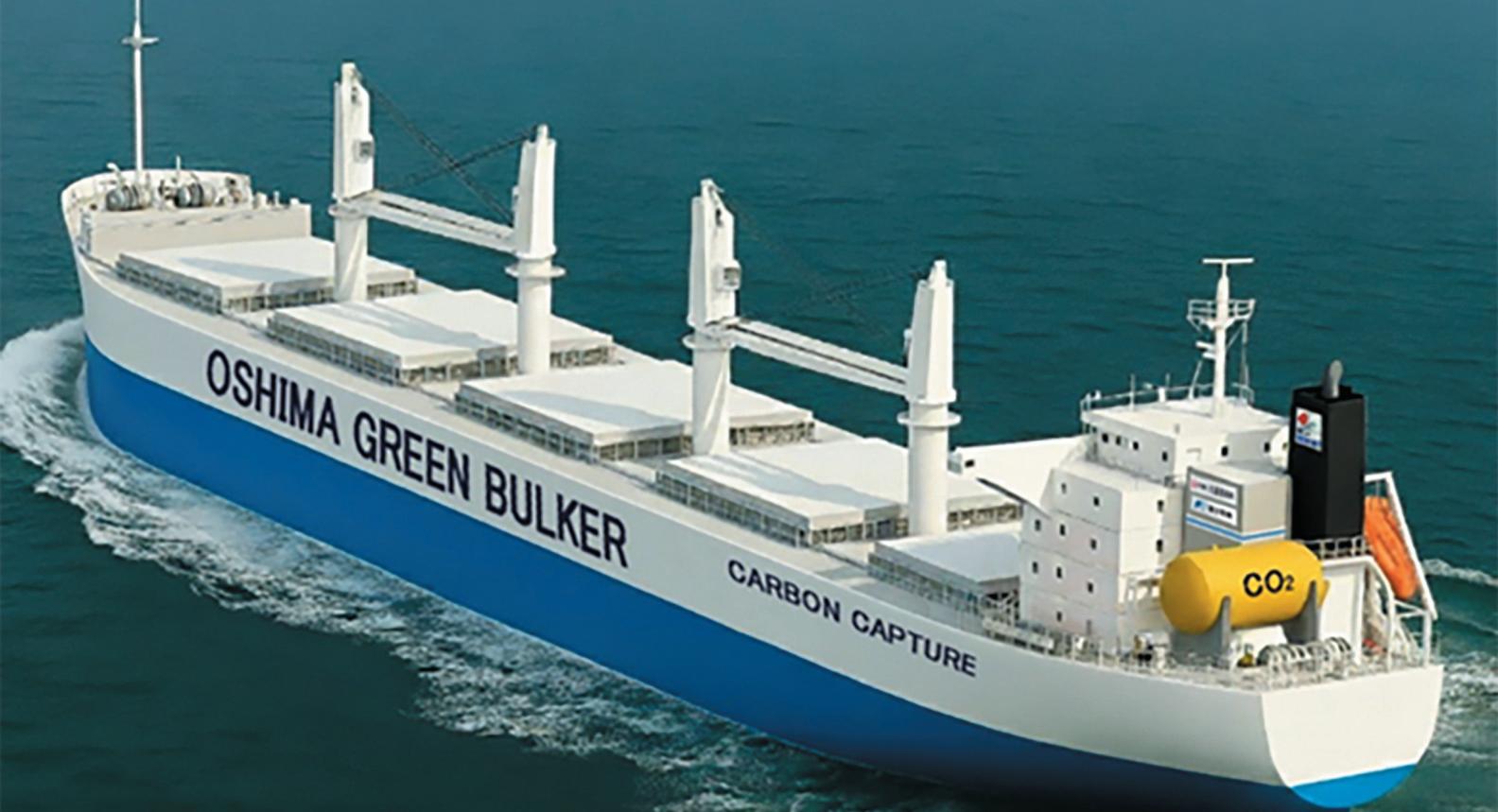
ClassNK issues approval for Multiple Alternative Fuels Ready (Ammonia/ Methanol/LNG) and OCCS Ready Bulk Carrier by Oshima Shipbuilding
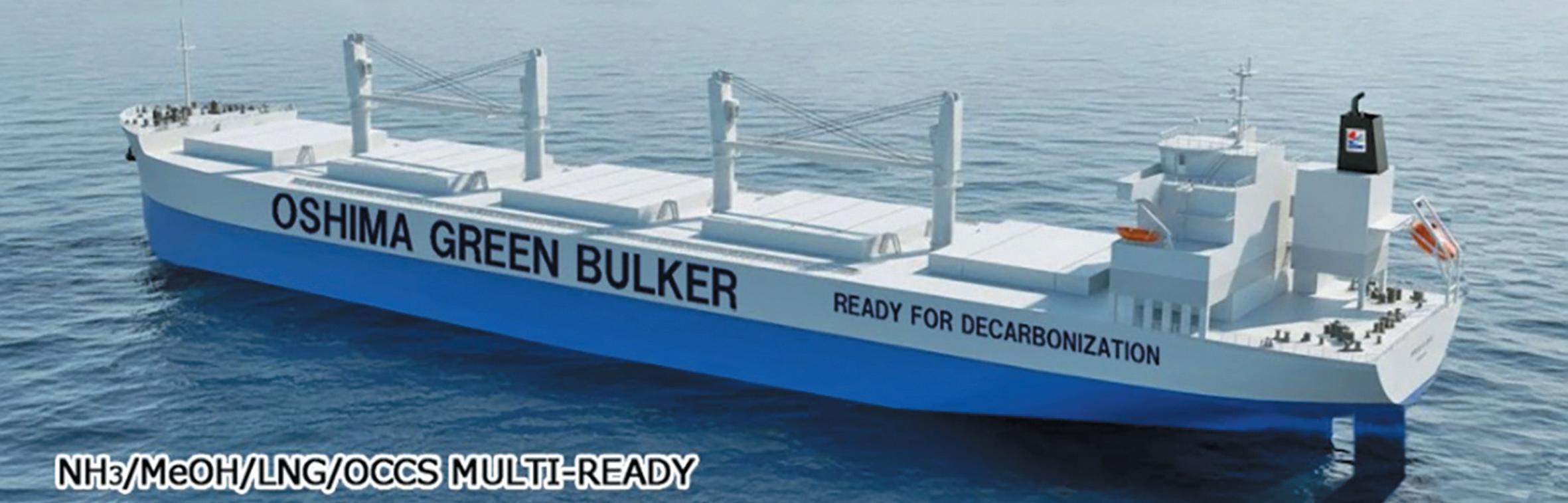
Vessel image (courtesy of Oshima Shipbuilding).
ClassNK has issued approval in principle (AiP) for a concept design of the Multiple Alternative Fuels Ready (Ammonia/ Methanol/LNG) and OCCS Ready Bulk Carrier developed by Oshima Shipbuilding Co., Ltd. The certification confirms the feasibility of the vessel from regulatory and safety perspectives.
ClassNK has published Annex 1 Alternative Fuel Ready (Edition 3.0.1) of the Guidelines for Ships Using Alternative Fuels, which summarizes the requirements for adding class notations to ships (‘Alternative-fuel ready vessels’) that do not use alternative fuels at the time of construction but are designed and partially equipped to accommodate such fuels in the future. Similarly, requirements for a ready notation to onboard CO2 capture and storage systems (OCCS) are included in the Guidelines for Onboard CO2 Capture and Storage Systems (Edition 2.0)
ClassNK reviewed the concept design of the vessel based on above-mentioned guidelines. Upon confirming compliance with the prescribed requirements, ClassNK issued AiP.
ClassNK will continually strive to contribute to advanced decarbonization initiatives through safety assessments and more.
APPROVAL IN PRINCIPLE (AIP)
At the initial stage of designing or before the specific target ship to be implemented is decided, the design is examined based on the existing regulations such as international conventions and ship classification rules, and an Approval in Principle (AiP) is issued as proof of conformity with requirements. It also prevents rework of regulatory aspects in the post-process, shortens the examination time at the time of class
registration, and can be used as a technical basis for external appeal of the design status.
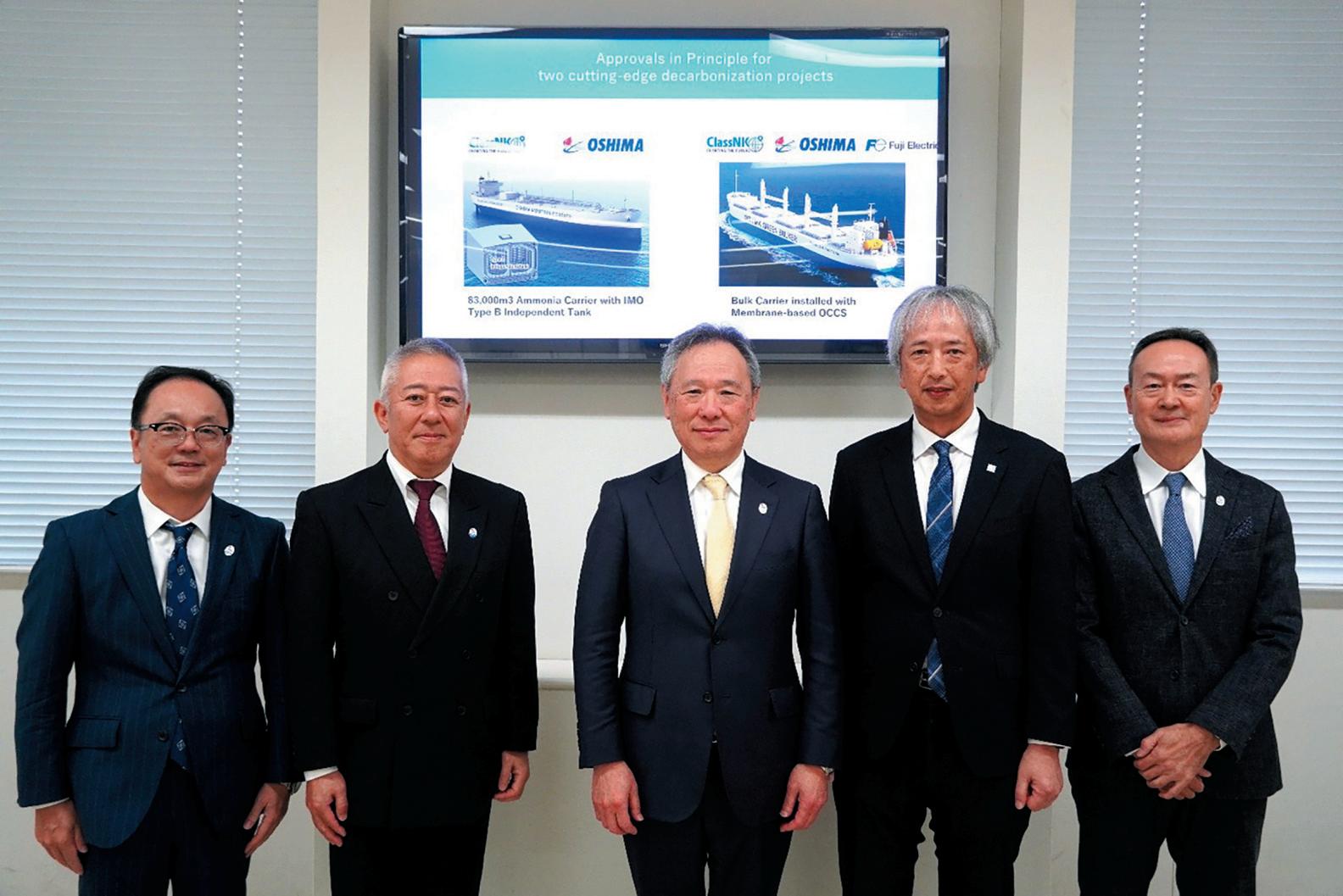
AiP Handover Ceremony, Right: Mr. Junichi Man, Managing Director, Oshima Shipbuilding Left: Mr. Masaki Matsunaga, Executive Vice President, ClassNK.
PPG completes 200th dry docking using electrostatic application
PPG completes 200th drydocking using electrostatic application.
BREAKTHROUGH METHOD DELIVERS SIGNIFICANT SUSTAINABILITY GAINS FOR SHIP OWNERS, YARDS
Earey in March of this year, PPG announced the completion of its 200th vessel dry docking using electrostatic application of marine fouling control coatings, nearly three years after introducing the technique to the global shipping market.
The project was completed on the Stena Britannica, a passenger and roll-on/roll-off cargo vessel operated by Stena Line, one of the world’s largest ferry companies, at the EDR Antwerp shipyard in Belgium. The team applied PPG SIGMAGLIDE® 2390 fouling release coating, a silicone-based, biocide-free solution, using the electrostatic application method.
The application technique uses an electrostatic spray gun to guide coating particles onto a grounded metal surface, delivering even coverage and uniform film layers that help enhance smoothness and fouling control performance. Compared to traditional airless spray methods, electrostatic application improves paint transfer efficiency and significantly reduces overspray, material waste and carbon emissions.
“In an industry that makes up 3% of global greenhouse gas emissions, we take responsibility for our impact on the environment. Our target is to reduce CO2 emissions from our vessels by 30% by 2030, based on a 2019 baseline,” said
Dennis Tetzlaff, chief operating officer, Fleet, at Stena Line. “We are taking substantial steps to drive down our carbon footprint and decrease any negative impact on biodiversity. Collaborating with partners like PPG allows us to adopt solutions that help address global challenges.”
Electrostatic application also offers Scope 3 carbon life cycle savings compared to traditional application methods, since fewer raw materials need to be extracted, manufactured or transported. These reductions are in addition to the operational carbon savings achieved by vessels coated with high-performance, lowfriction solutions such as PPG Sigmaglide 2390 coating, which help ship owners reduce fuel consumption and Scope 1 emissions.
“This 200th electrostatic application milestone demonstrates how industry collaboration can drive real sustainability progress in marine coatings,” said Jan Willem Tegelaar, PPG global marine platform director, Protective and Marine Coatings. “Working with Stena Line from the start of this journey, we have delivered solutions that help shipyards and operators reduce both operational and embodied carbon footprints. With our premium hullcoating technologies, such as the PPG Sigmaglide 2390 coating designed for electrostatic application, PPG is the only marine coatings provider offering both
types of carbon-reduction benefits in one integrated solution.”
STENA LINE
Stena Line is one of Europe's leading ferry companies with approximately 40 vessels and 20 routes in Northern Europe and the Mediterranean, operating 34,700 sailings each year. Stena Line is an important part of the European logistics network and develops new intermodal freight solutions by combining transport by rail, road and sea. Stena Line also plays an important role in tourism in Europe with its extensive passenger operations. The company is family-owned, was founded in 1962 and is headquartered in Gothenburg. Stena Line has 6,550 employees and an annual turnover of 19.6 billion SEK.
ABOUT PPG
At PPG (NYSE:PPG), the company works every day to develop and deliver the paints, coatings and specialty products that its customers have trusted for more than 140 years. Through dedication and creativity, PPG solves its customers’ biggest challenges, collaborating closely to find the right path forward. With headquarters in Pittsburgh, the company operates and innovate in more than 50 countries and reported net sales of $15.9 billion in 2025. PPG serves customers in construction, consumer products, industrial and transportation markets and aftermarkets.
Methanol-ready bulkers: closing the gap between design & daily operations
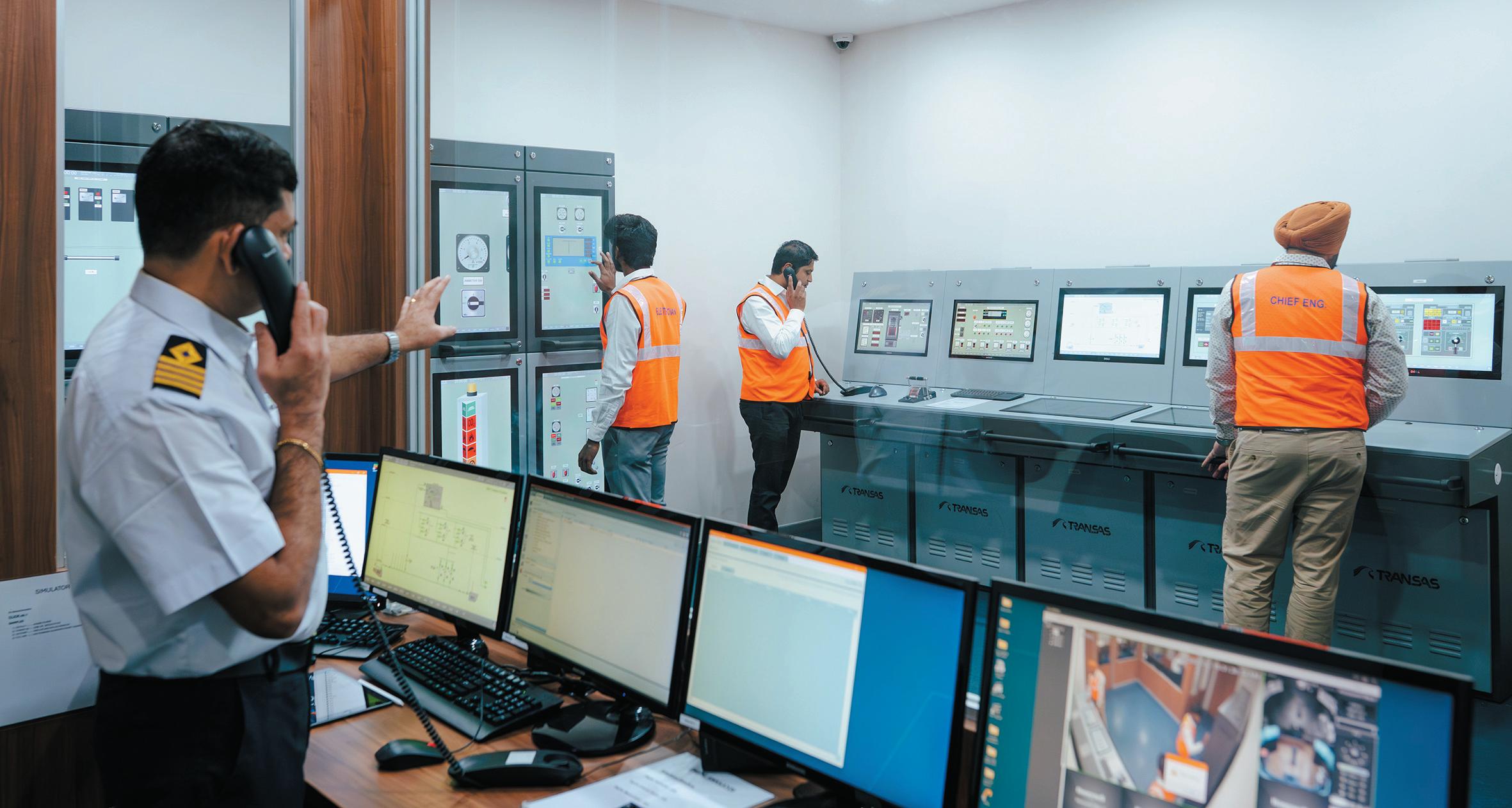
BSM’s Methanol Bunkering Simulator allows trainees to manage real-life scenarios in a safe, risk-free environment.
By 2026, the global methanol-fuelled fleet is projected to exceed 100 vessels, marking a measurable inflection point in the maritime energy transition. What began as early adoption within the container segment is now broadening across vessel classes, with the dry bulk sector emerging as a significant contributor to orderbook growth.
Industry forecasts predict a 640% increase in demand for green methanol for shipping between 2025 and 2027. This growing demand is closely linked to increasing regulatory and market-driven pressure to decarbonize. Although container shipping established early momentum, bulk carrier owners across Asia and Europe are accelerating their own commitments through both newbuild orders for methanol dual-fuel tonnage as well as retrofit programmes.
From a technical perspective, methanol presents several operational advantages including its clean combustion properties, liquid state at ambient temperatures and easy handling compared to cryogenic alternatives. However, technical feasibility does not eliminate operational risk. Methanol’s low flash point, its hard-todetect flame, its toxicity if ingested, inhaled or absorbed, and its special combustion properties require safety precautions that differ significantly from those for conventional heavy fuel oil. These characteristics require adapted fuel systems, improved leak detection, revised firefighting procedures and updated risk assessment protocols. For bulk carriers
operating with small crews and varying trade patterns, competence management becomes a critical control measure.
“Methanol changes the operational profile of a vessel and the investment in dual-fuel engines is only half the equation,” notes Firoze Mirza, Managing Director of Bernhard Schulte Shipmanagement (BSM) in Hong Kong. “If shipowners want to protect their crews, their vessels and their reputation, structured methanol training must begin well before delivery.”
The BSM group which has already five methanol dual-fuel vessels in management, including two bulk carriers, has taken a proactive stance in preparing crews for alternative marine fuels. In collaboration with key industry partners, the ship manager developed a bespoke Methanol Training Curriculum, which is now delivered at scale across its global Maritime Training Centre (MTC) network. The courses address the current absence of formal STCW standards for methanol and similar fuels. They align with emerging IMO guidelines and anticipate future updates to the STCW Convention and IGF Code, ensuring that seafarers are well ahead of the regulatory curve.
One highlight of the training initiative is the Methanol Firefighting Course , which prepares seafarers to handle the unique risks associated with methanol: its nearly invisible flame and lack of smoke when ignited. The course provides hands-on experience in identifying and managing such situations using infrared detection, alcohol-resistant foam, dry chemical
BSM’s Methanol Firefighting Course prepares seafarers to handle the unique risks associated with methanol: its nearly invisible flame and lack of smoke when ignited.
powder, CO2 systems, and water fog.
To further strengthen learning outcomes, BSM launched its first Methanol Bunkering Simulator at the MTC in Kochi, India, in 2025. The simulator replicates a methanol fuel system from bunkering stations to automation, alarms, and emergency shutdown procedures, allowing trainees to manage real-life scenarios in a safe, risk-free environment. Additional simulators will be commissioned in Poland, Ghana and the Philippines, expanding access to this state-of-the-art training.
So far, already more than 200 seafarers have successfully completed BSM’s methanol training programme. The result is a workforce ready to meet the challenges of the maritime energy transition head-on.
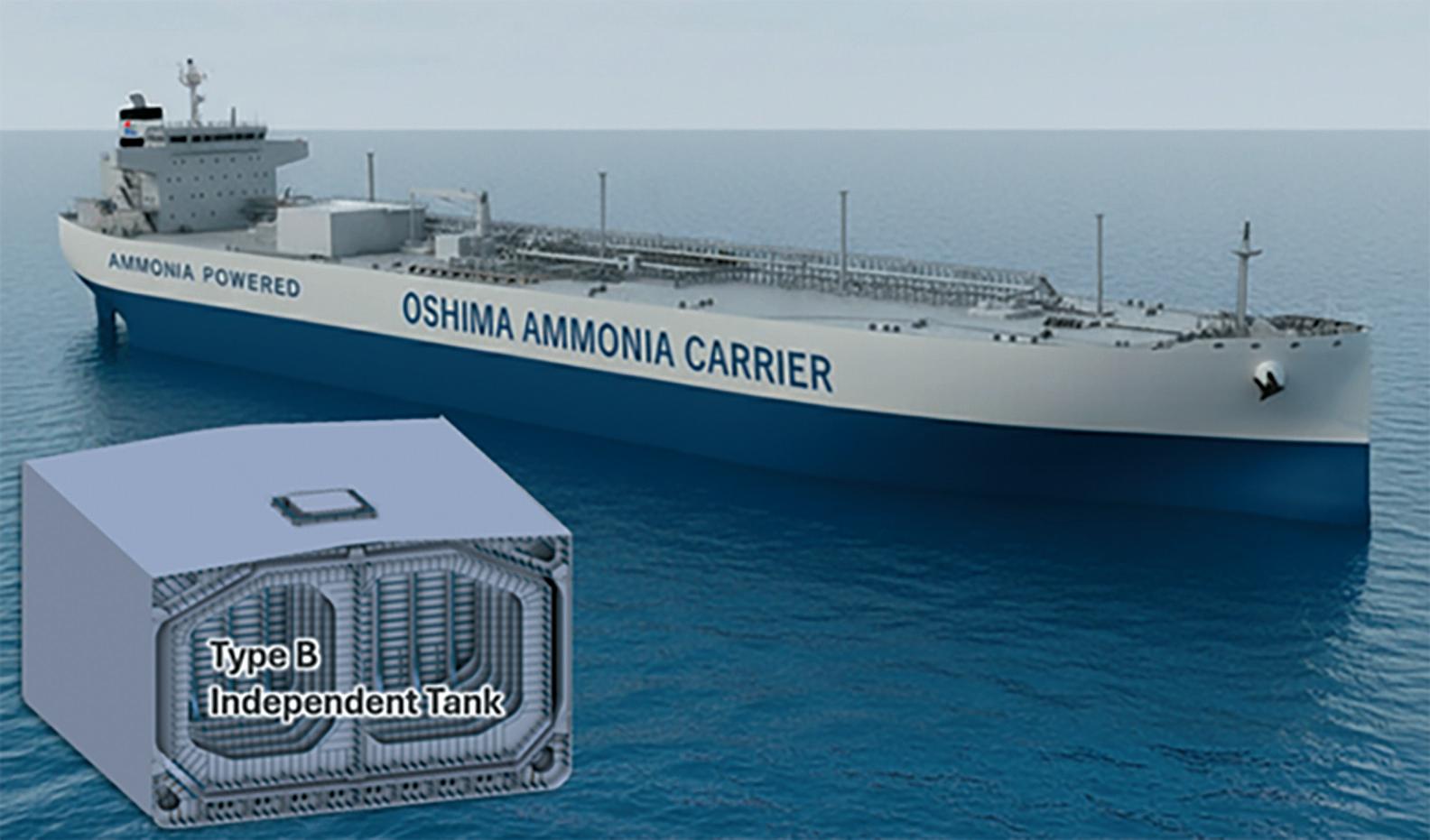
ClassNK issues Approvals in Principle for bulk carrier installed with membrane-based OCCS and 83,000m³ ammonia carrier with IMO Type B tank
ClassNK has issued approvals in principle (AiPs) for the concept designs of Bulk Carrier installed with a Membrane-based Onboard Carbon Capture and Storage System (OCCS) and 83,000m3 Ammonia Carrier with IMO Type B Independent Tank developed by Oshima Shipbuilding Co., Ltd. These AiPs demonstrate its feasibility from regulatory and safety perspectives.
The recipients of the AiPs, as well as the applicable rules and guidelines, are as follows:
BULKER INSTALLED WITH MEMBRANE-BASED OCCS
Recipients: Oshima Shipbuilding Co., Ltd.; Fuji Electric Co., Ltd.
Applicable rules/guidelines:
In October last year, ClassNK published the `Guidelines for Onboard CO2 Capture and Storage System (Edition 2.0)’*1, which, the world’s first to include requirements for OCCS utilizing membrane separation method—an approach that is anticipated to have a lower power demand and smaller installation space than amine absorption. The concept design for this vessel was reviewed in accordance with these guidelines.
83,000M3 AMMONIA CARRIER WITH IMO TYPE B INDEPENDENT TANK
Recipient: Oshima Shipbuilding Co., Ltd.
Applicable rules/guidelines:
The IMO Type B Independent Tank defined in the IGC Code*2 offers advantages in cargo capacity and outfitting efficiency but requires a significantly high level of engineering sophistication compared with other cargo tank types. ClassNK conducted its review of this concept design based on Part N of its `Rules and Guidance for the Survey and Construction of Steel Ships’, which incorporates the IGC Code, along with relevant guidelines.
Following the reviews, ClassNK confirmed that both designs comply with the prescribed requirements and therefore issued the respective AiPs.
ClassNK will continually strive to contribute to advanced decarbonization initiatives through safety assessments and more.
APPROVAL IN PRINCIPLE (AIP)
At the initial stage of designing or before the specific target ship to be implemented is decided, the design is examined based on the existing regulations such as international conventions and ship
classification rules, and an Approval in Principle (AiP) is issued as proof of conformity with requirements. It also prevents rework of regulatory aspects in the post-process, shortens the examination time at the time of class registration, and can be used as a technical basis for external appeal of the design status.
Sources:
*1 Related Press Release (29 October 2025):
ClassNK releases `Guidelines for Onboard CO2 Capture and Storage Systems (Edition 2.0)’ - Worldfirst requirements for onboard CO2 capture systems using membrane separation method
*2 international code for the construction and equipment of ships carrying
liquefied gases
Bulk carrier installed with membranebased OCCS.
83,000m3 ammonia carrier with IMO Type B independent tank.
AiP handover ceremony.
Vessel images courtesy of Oshima Shipbuilding.
What can be done:
- Replace with a new structure?
- Applying a reliable, solid long-term corrosion protection to e ectively and sustainably protect the quay for decades to come?
For such extreme demands, only a PRACTICE-proven SP-PUR system should be considered, which can be applied under extremely high humidity conditions of up to 98% and even on slightly damp steel substrates.
Furthermore, the entire system is to be applied in a wet-on-wet process at a tidal range of 9.2 metres.
Traditional coatings, which can only be applied at up to 80% relative humidity, do not meet the PRACTICAL requirements.
The tried-and-tested working process is defined in detail and carried out by specialist companies.
SP-PUR-TOP-RENOVATION
E ective corrosion protection against exposure to seawater for decades to come.
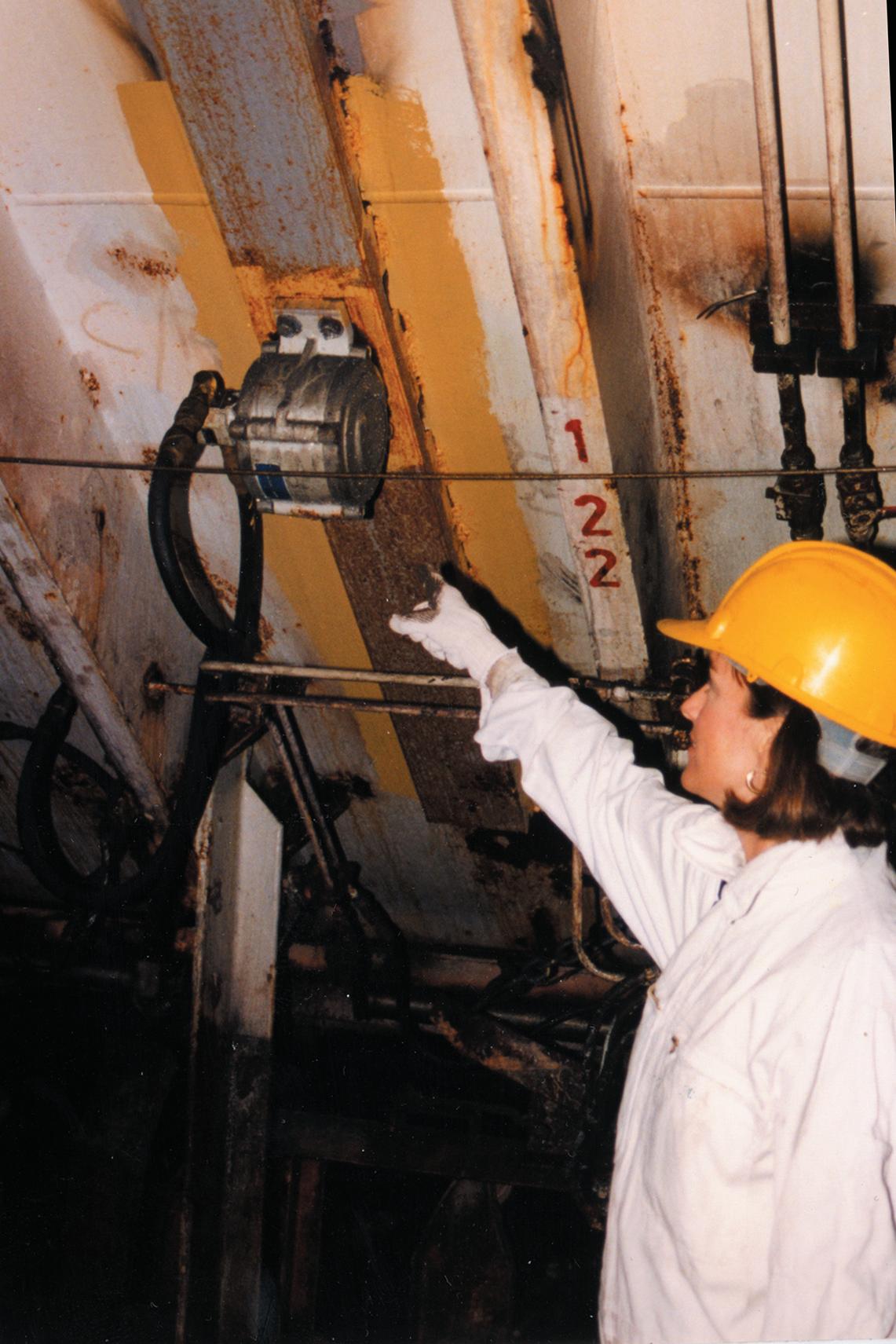
Some sheet piles had to be replaced before the corrosion protection work could begin, as some of them had rusted through to the point of perforation (see left side of photo).
Keeping crews safe and fleets running
By Jyrki Salo, Senior Product Manager – Wärtsilä Marine
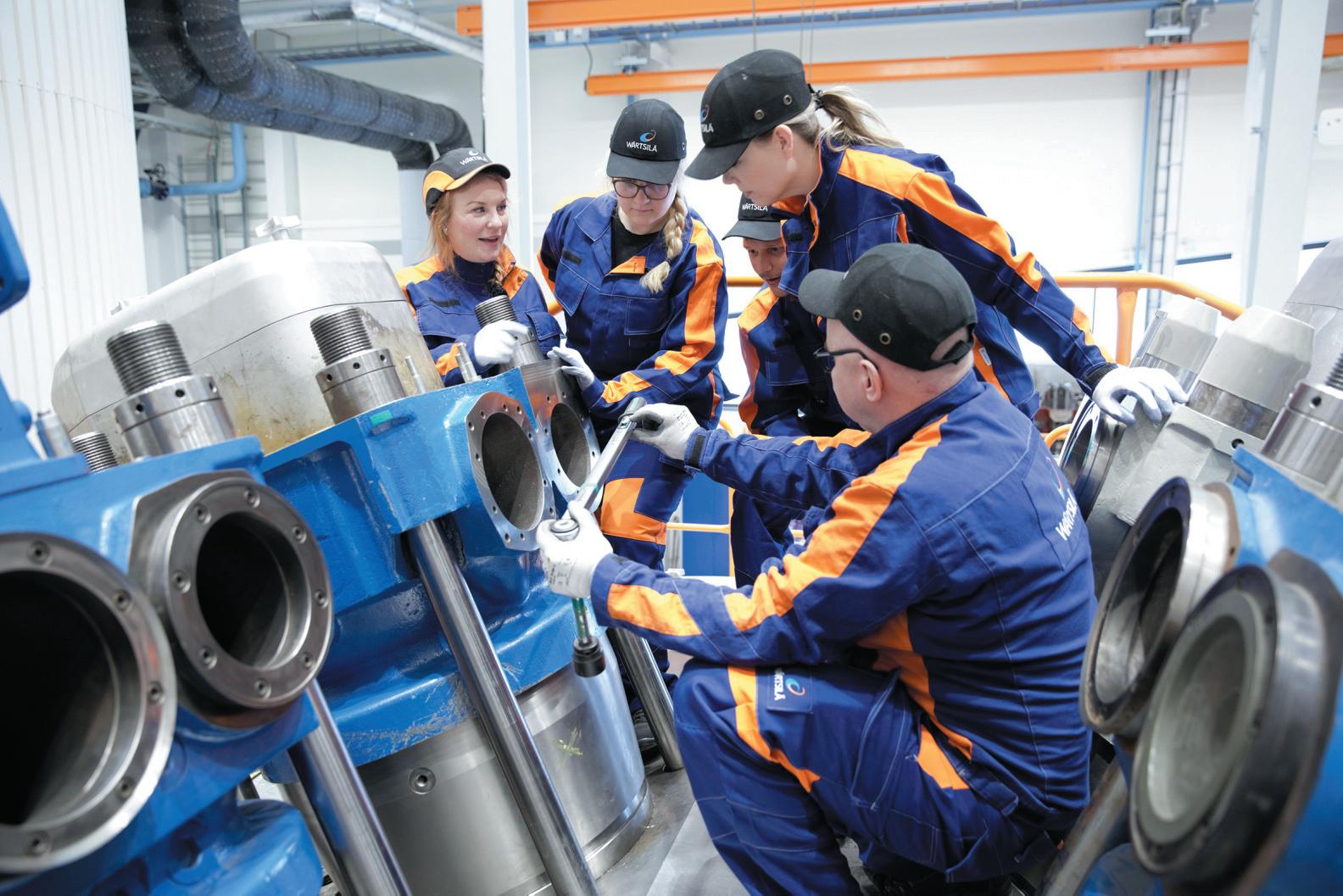
Safety, reliability and operational efficiency are central priorities for dry bulk vessel operators, and Wärtsilä plays a key role in supporting these goals through advanced maintenance solutions, predictive technologies and proactive safety measures. With one of the marine industry’s widest portfolios and a global network of service professionals, the company helps bulk carriers operate safely, sustainably and with minimal downtime across their entire lifecycle.
A central part of keeping crews safe on board dry bulk vessels is ensuring that engine rooms and machinery spaces are protected with reliable, SOLAS compliant insulation and safety measures. Wärtsilä supports operators with a comprehensive suite of solutions designed to maintain safe surface temperatures, reduce exposure to hazardous hot spots, and enhance overall working conditions for crew. Its insulation systems for four-stroke engine rooms are engineered not only for regulatory compliance but also for ease of installation and long-term durability, helping crews move confidently and safely around critical equipment. Wärtsilä SOLAS solutions are considered an engine spare part and are supported in the same way as any other spare part, making it easy for customers to maintain SOLAS compliance over time. These solutions are complemented by detailed engine audits, 3D scanning, and infrared thermography, which allow operators to proactively identify temperature anomalies, update insulation after equipment modifications, and maintain safe environments throughout the vessel’s lifecycle. This combined approach enables bulk carrier operators to go
beyond compliance and adopt a proactive safety culture that protects people, improves maintenance planning, and strengthens operational resilience.
Dry bulk customers can also benefit from our global maintenance and remotesupport infrastructure. Wärtsilä operates ten Land & Sea Academies worldwide where customer crews and service engineers receive hands-on training on engine operation, safety, and maintenance. Every year, these academies deliver courses to thousands of participants globally, reflecting the growing demand for support as digitalization and new fuels become more prominent in maritime operations.
Wärtsilä’s Expertise Centres form another key pillar of safe and efficient vessel operations. These remote-support hubs operate 24/7 to assist crews with technical questions, troubleshooting and performance monitoring. When combined with the company’s presence in 78
countries, bulk carrier operators can receive rapid support whenever and wherever they need it.
Digitalization is playing an increasingly central role in safe maintenance practices. Wärtsilä Expert Insight, Wärtsilä’s predictive maintenance service, uses realtime vessel data and AI enabled diagnostics to detect early signs of performance anomalies in engines and hybrid power systems. By identifying subtle behaviour changes long before they escalate, Expert Insight enables targeted maintenance that prevents failures, reduces the likelihood of fire-risk scenarios, minimizes unscheduled downtime, and optimizes fuel efficiency.
This service works hand in hand with the company’s Expertise Centres, giving its engineers and customers a complete performance picture when responding to operational queries.
Wärtsilä’s Lifecycle Agreements build on these digital capabilities by offering long-term, data-driven maintenance support tailored to the operator’s fleet and commercial priorities. The agreements allow bulk owners to maximize uptime, reduce operating expenditure and ensure compliance with evolving emissions and safety regulations. They also help avoid unnecessary parts replacements and lower fuel consumption — critical considerations as the bulker segment adapts to stricter environmental requirements.
Across all these areas, Wärtsilä’s goal is clear: to support shipowners with safe, reliable and future-proof solutions that enhance crew wellbeing, vessel performance and long-term operational resilience. Wärtsilä remains committed to innovation and to working side-by-side with customers to ensure safe and sustainable dry bulk operations worldwide.
Wärtsilä Land and Sea Academy (WLSA) Training Centre in Vaasa, Finland.
Expertise Centre in Vaasa, Finland.
Digitalizing dry bulk operations
For dry bulk operators, moments of heightened risk are hidden in plain sight, writes Mikko Kuosa, CEO, NAPA. It’s the planned jobs, from maintenance to operational procedures carried out day after day, where co-ordination and execution are key. In fact, an InterManager report found that in the last three decades, more than half of onboard accidents occurred during planned shipboard work.
Adding to the challenges, is an operating environment defined by complexity: increasing regulatory pressure, demanding charter schedules and a workforce managing an expanding set of expectations, as well as ageing fleets, with the average bulk carrier having gone from 8.6 years old in 2018 to nearly 13 years old in 2025*1.
Paper permits, manual checklists and fragmented reporting systems were never designed for this level of operational complexity. When safety processes rely on paperwork, predictable problems emerge missed steps, limited situational awareness across ship and shoreside and delays in decision-making.
The industry is at an inflection point where something must change: a cultural shift where safety, maintenance and operational discipline all converge under one digital umbrella.
REIMAGINING WORKFLOWS USING DIGITAL PERMIT-TO -WORK (PTW) SYSTEMS
At a time of rapid digitalization, traditional, paper-based PtW systems are no longer fit for purpose. A digital PtW system changes the way crew approach hazardous work and can provide a guided workflow where each step must be completed and validated before work begins. This ensures that the correct procedures are followed for the specific task, and the process creates a transparent audit trail from planning to completion. This step-by-step guidance is invaluable for less experienced crew, who can’t rely on institutional knowledge passed down over years and are navigating
complex procedures for the first time.
When permits are visible on a live digital board, coordination also improves. Deck and engine departments can see which operations are underway, and shorebased technical teams gain real-time awareness when high-risk work is taking place onboard. This shared situational awareness elevates maintenance culture; all relevant stakeholders can better see recurring risk patterns and bottlenecks.
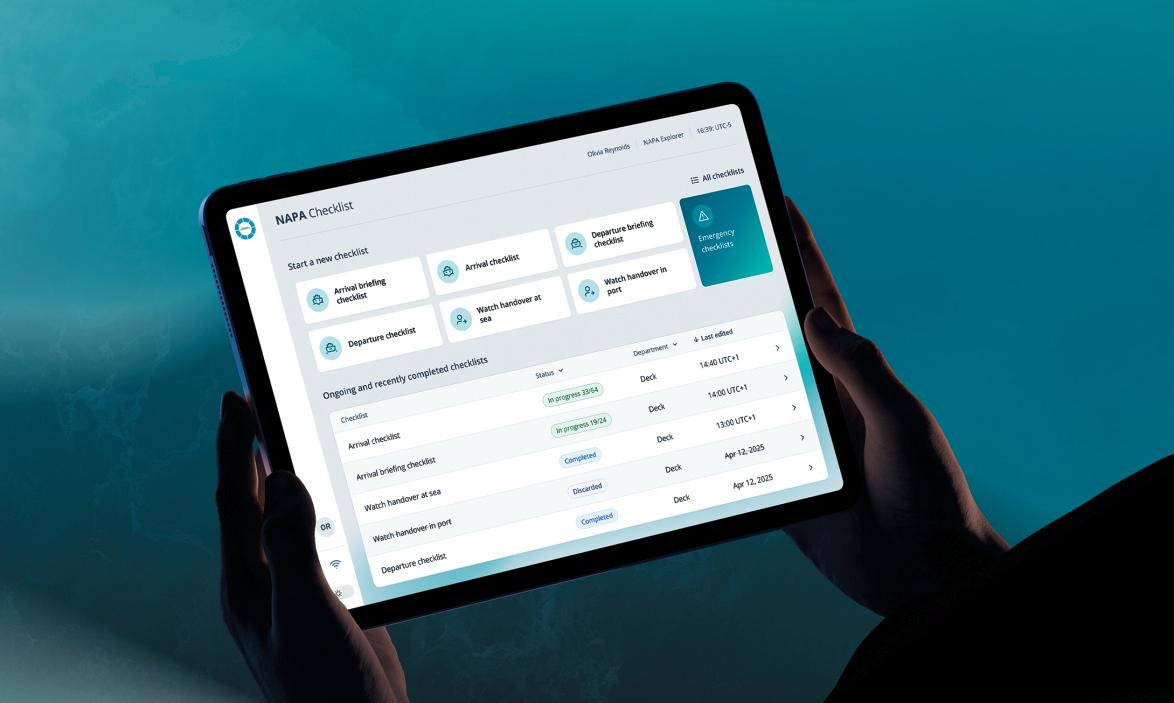
STANDARDIZING EXECUTION THROUGH DIGITAL CHECKLISTS
A lot of safe bulker operation depends on the consistent execution of routine tasks. Arrival and departure procedures, mooring, ballast operation, cargo readiness checks and watch handovers are repeated thousands of times across fleets. These are high-consequence routines where omissions can escalate quickly. But that’s not all crew are responsible for. New environmental regulations, reporting and operational requirements have increased the number of procedures crews must follow.
A recent ISWAN study*2 found that, for 53.8% of seafarers, the introduction of decarbonization related regulations has had a negative impact on their mental wellbeing, with the increased workload of adapting to new technologies and regulatory regimes.
Digital checklists offer a way to alleviate this pressure. Instead of multiple disconnected documents, structured workflows can guide crews through tasks in a consistent format across vessels and fleets. This improves safety by reducing omission risk, accelerating onboarding for new crew and creating a consistent record of how procedures were performed. When checklist outputs automatically feed into logbooks and shore-side dashboards, crews also avoid duplicating work across multiple reporting systems.
Drawing an example from a different
industry sector, tanker operator Anthony Veder reported saving 2,000 hours per vessel per year in administrative time. That is a 14% reduction in crew time spent since implementing digital PtW systems, checklists and electronic logbooks to support crew efficiency, ease reporting and regulatory compliance. These savings give crew time to focus on operational safety.
GIVING SHORE TEAMS THE VISIBILITY THEY NEED
Technical managers and HSQE teams ashore are increasingly under pressure to tackle overdue maintenance and demonstrate consistent safety practices to regulators and charterers. Yet many operators still rely on periodic reports, emails and manual updates to understand what is happening onboard. The result is delayed visibility of emerging risks, less effective support for crews, and slower decision-making when issues arise.
Digital fleet intelligence platforms are beginning to close this gap and facilitate a shift to proactive, continuous risk management. Systems such as NAPA Fleet Intelligence transform onboard actions into fleet-wide operational and safety insights, bridging the ship to shore gap. For bulk carriers when shoreside teams gain a real-time view of fleet safety status, they can monitor high-risk work in progress, track overdue maintenance tasks, monitor recurring technical issues and detect patterns that would otherwise remain hidden in individual vessel reports. This level of transparency reduces blind spots and shortens the time between identifying a risk and evidence-based action.
In 2025, NAPA collaborated with ship owner Kumiai Navigation to deliver comprehensive vessel performance analytics for its fleet of 19 LPG and bulk carriers. The company customized its NAPA Fleet Intelligence dashboard to Kumiai Navigation’s needs, allowing it to accurately evaluate and report on fuel consumption and emissions, and develop a
NAPA Digital Checklist.
deeper understanding of vessel performance using data from noon reports and historical data from the vessels. This data not only helped improve operational efficiency and market competitiveness but, as a result, also supported compliance with CII, EU-ETS, and FuelEU Maritime regulations.
NAVIGATING WEATHER RISKS WITH CLEAR SUPPORT
Operational safety is not limited to onboard tasks and maintenance routines. For bulk carriers on long ocean passages, voyage decisions made in changing weather can have just as much impact on crew safety, vessel condition and schedule reliability.
Bulk carriers routinely undertake long ocean voyages across changing weather conditions which can create serious safety concerns, including cargo shifts and green water load, disrupted schedules and costly repairs.
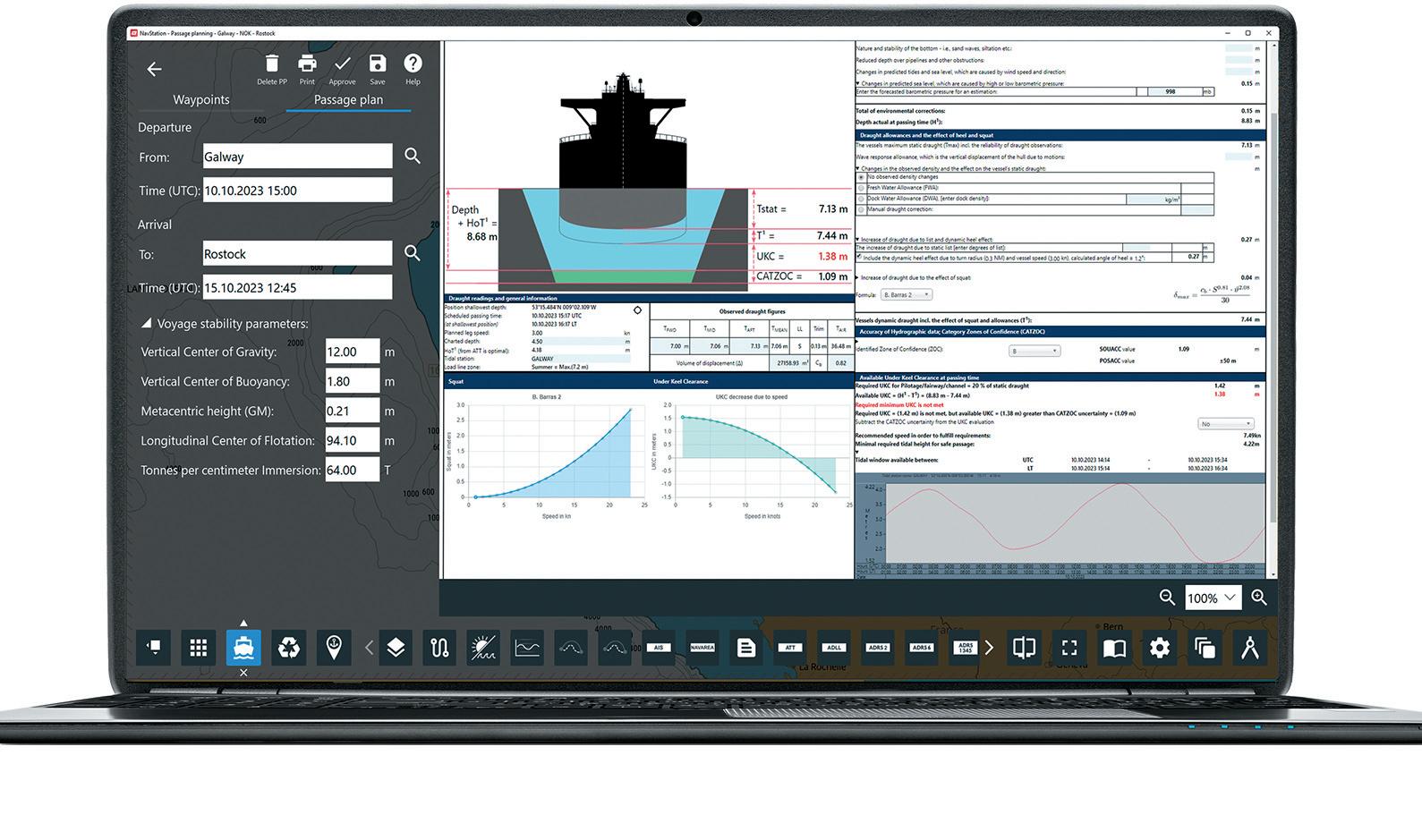
Historically, many ships have relied on standard weather reports and manual route planning. While experienced crews can make effective decisions, these methods can lead to inconsistent safety margins across vessels, limited shore awareness during heavy weather conditions and late course adjustments.
Modern voyage optimization tools offer a more structured approach. NAPA-led studies on bulk carriers operated by
Marubeni Corporation have shown fuel and CO2 reductions of up to 7.3% using voyage optimization and weather routing. The safety value is more significant: improved situational awareness, clearer alignment between vessel and shore and earlier adjustments when conditions deteriorate.
For challenging voyages, operators can also rely on expert oversight through services such as NAPA Expert Route Monitoring, where routing specialists support crews in avoiding severe weather.
Fortius Ship Management also adopted this to plan routes that balance safety, fuel use and scheduling considerations, supported by real-time visibility of weather and vessel performance. For example, on one 25-day voyage across the Atlantic Ocean and Mediterranean, the team provided 16 tailored voyage plans to help the ship’s master navigate developing barometric lows. By fully adopting the optimum plan, the vessel kept on schedule and achieved fuel savings.
Taken individually, digital tools address specific operational challenges, but their true value emerges when they operate in an integrated workflow, creating shared situational awareness across the organization. For bulk operators navigating tighter regulatory scrutiny and rising operational complexity, this means safety is no longer managed through after-the-fact reporting. Instead, it becomes embedded
into how work is planned, executed and monitored.
The outcome is not digitalization for its own sake; it is a safer execution onboard, better support from shore, reduced administrative friction and better-informed decision-making across the fleet.
Sources
[*1] AXSData, August 14, 2015, Why the Global Bulk Carrier Fleet Is Aging Fast. AXS Marine. https://public.axsmarine.com/blog/why-the-globalbulk-carrier-fleet-is-aging-fast
[*2] ISWAN, The impact of maritime decarbonisation on wellbeing: Findings of an ISWAN survey of seafarers and shore-based staff. ISWAN. https://www.iswan.org.uk/wp-content/uploads/Theimpact-of-maritime-decarbonisation-on-wellbeingFindings-of-an-ISWAN-survey-of-seafarers-and-shorebased-staff.pdf
Protecting dry bulk vessels through coating accuracy and impact-resistant epoxies
Dry bulk carriers operate under persistent mechanical stress, writes Kazuaki Masuda, Technology Division Director, Nippon Paint Marine. Each loading cycle exposes holds, unloading tunnels and other surface areas to cargo impact and abrasion, while surfaces are also exposed to chemicals, oils and seawater that can cause corrosion, ultimately leading to structural failure’s. Effective protection is important for preventing damage and reducing maintenance vessel downtime.
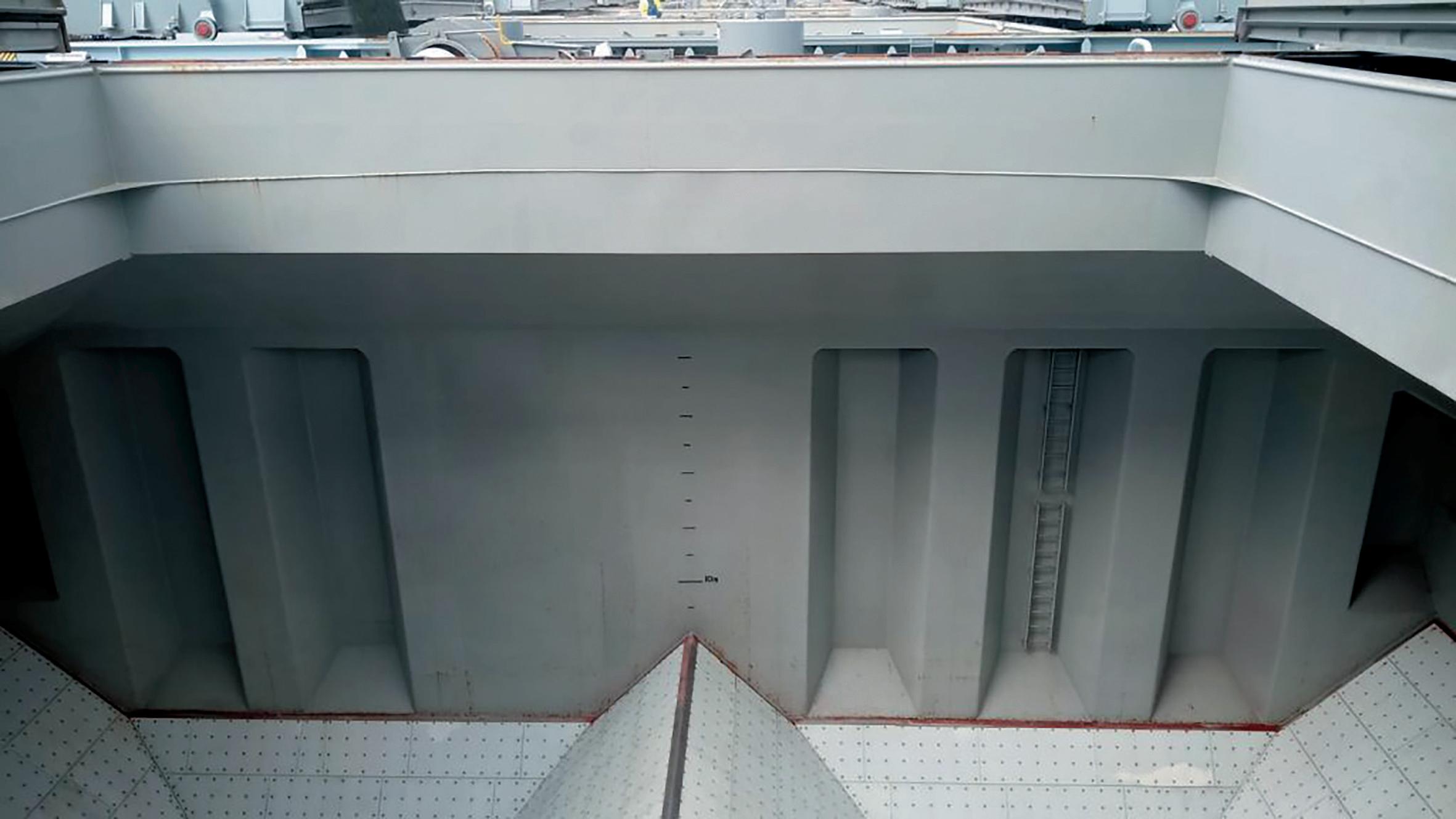
In these environments, heavy-duty epoxies play an important role in maintaining the structural integrity of the steel structures. NEOGUARD is Nippon Paint Marine’s surface-tolerant epoxy coating with high resistance to impact, abrasion and corrosion. Products include NEOGUARD TOUGHNESS, which is designed to withstand the repeated contact generated by grabs, chutes and cargo. Its formulation maintains film
strength under frequent impact to prevent early cracking that often leads to corrosion.
Another product, NEOGUARD 100 GF, which adds glass-flake reinforcement to the formulation, improving abrasion resistance in areas exposed to significant damage caused by wear and tear. NEOGUARD provides a coating system that maintains the integrity of the barrier between cargo and vessel, prolonging the life of holds and tanks, ensuring vessels spend more time at sea and less time in the yard.
PROVEN COATING PERFORMANCE
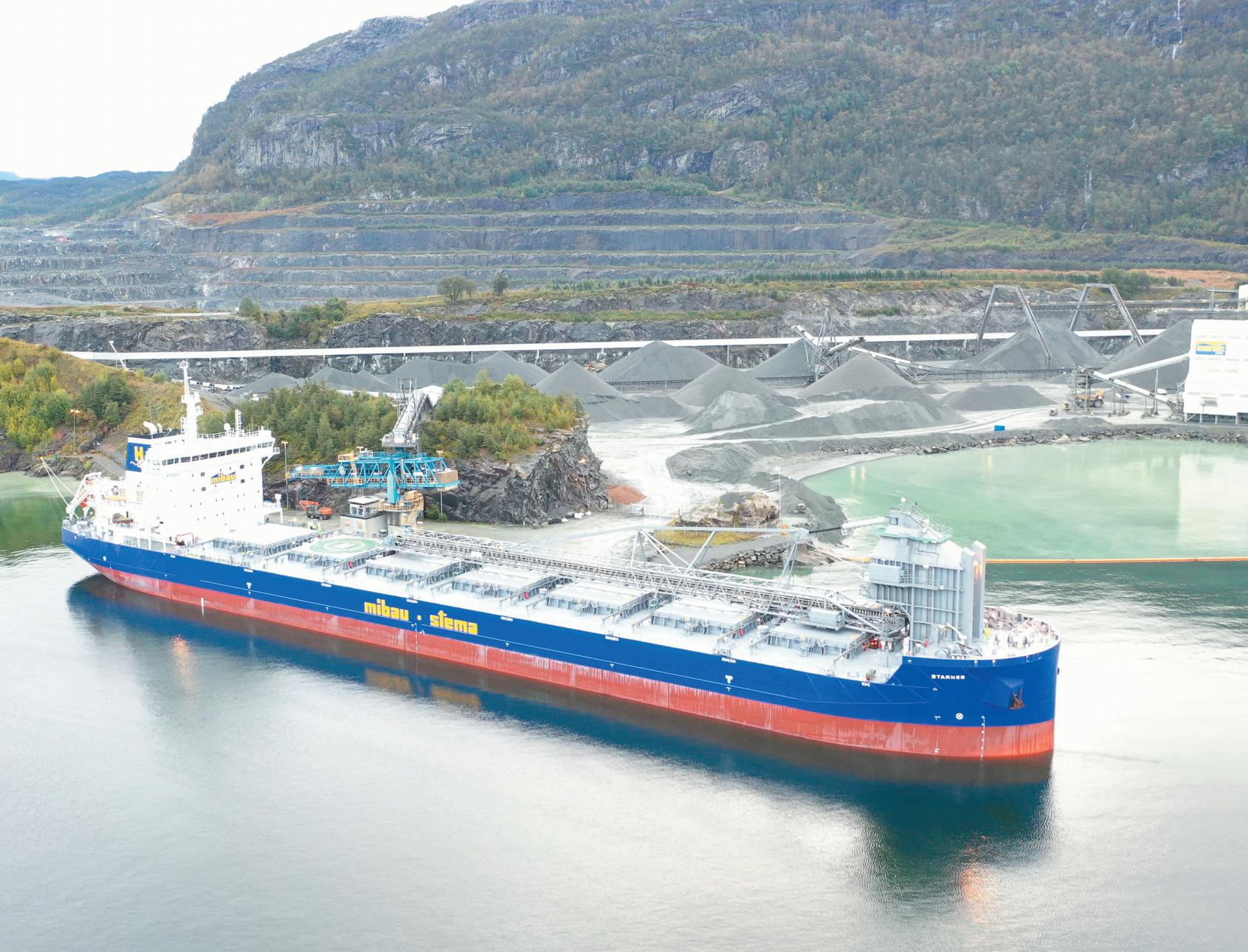
Nippon Paint Marine recently supplied its NEOGUARD coatings to Chengxi Shipyard, where a Hartmann-CSL joint venture was building a new self-unloading bulker, Starnes. The NEOGUARD system was applied to all the vessel’s cargo holds, unloading tunnels and water ballast tanks. NEOGUARD was chosen because of the
five-year dry-dock cycle, which would prevent any remedial work from being carried out in the intervening period. Nippon Paint Marine’s NOA 60 HS coating was also used in the project. Its selfindicating technology makes it easy for applicators to see whether the coating has been applied to the correct thickness.
The Starnes is a 40,000dwt, 190m long vessel. It is one of the longest selfunloaders to join the global fleet and is capable of loading and unloading 5,500 tonnes of crushed stone and aggregate per hour on routes where it operates across Europe. The self-unloading system handles aggregate up to 300mm in size and freeflowing materials with a bulk density of between 1.2 to 3.5t/m3. Feedback from the operators during inspections after two years noted the coating application had exceeded expectations and helped to reduce coating maintenance.
Predictable, reduced maintenance
Mikko Kuosa, CEO, NAPA.
requirements are a critical benefit for drybulk vessel operators. Assured integrity of hold coatings at high-impact points, reduces the complexity of inspection programmes. Robust data on proven performance is important for making informed decisions that will provide the strongest return on investment in coatings.
The proven performance of the NEOGUARD system means maintenance teams can have confidence that they will face fewer unplanned failures and require less contingency in response to unplanned steel repairs. For operators, this confidence in structural reliability supports better cleaning regimes and improved dayto-day operational safety, as cargo integrity is assured and contamination risks are avoided.
APPLICATION ACCURACY
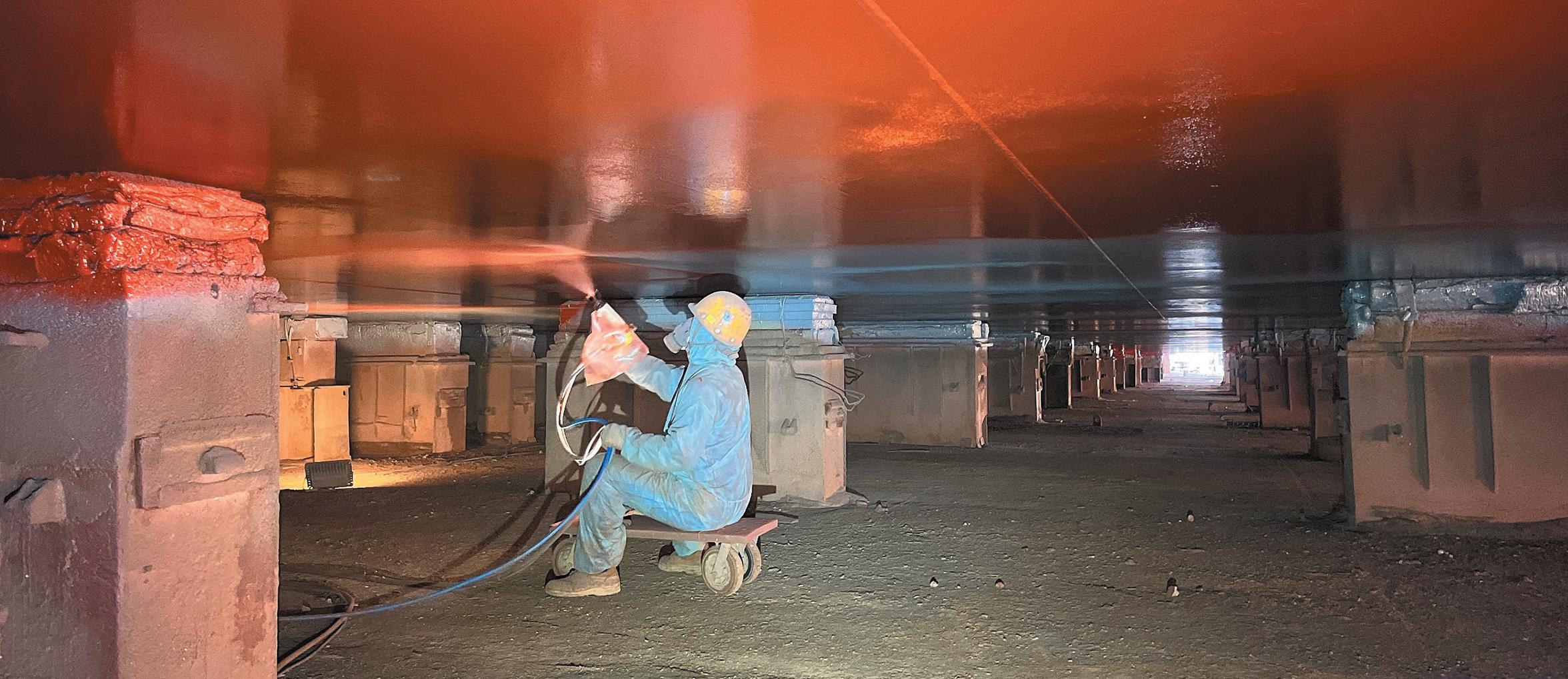
Quick and accurate coatings application during dry-dock is very important for project success and for long-term coating performance. In tunnels, hoppers and internal framing, consistent dry-film thickness can be difficult to achieve in difficult-to-access spaces where surface geometry varies. Low coverage in these areas can cause failure in coatings integrity. Self-indicating epoxies, like NOA, which are used in water ballast tanks and void spaces, reduce misapplication allowing applicators to visually confirm whether sufficient coating thickness has been achieved.
Nippon Paint Marine recognizes the need for more sustainable and efficient coatings systems in the dry-bulk sector and in line with its commitment to delivering innovation to meet its clients’ needs.
Technology and performance monitoring need to be underpinned by expert consultancy. Inspection data, service reports and onboard assessments provide important feedback that helps our experts to work with customers to make coatings choices that align with the cargo and operational profiles of their vessels. This feedback loop also informs product development and while giving shipowners evidence-based assurance of product performance in service, not just laboratory-based test results.
Dry bulk vessels face significant stress during their operating lives. Protective coatings are essential to maintaining the integrity not just of their holds, but also the
structures that support loading and unloading operations and maintain cargo integrity and crew safety. Impact resistance is only one part of delivering a reliable product that ensures this safety. Nippon Paint Marine’s commitment to innovations that also simplify coating application to ensure performance and safety is equally important. Along with expert advice that ensures coatings are tailored to a vessel’s specific operating profile, proven highperformance coatings are essential for ensuring that dry bulk operators are able to manage tight schedules and mixed cargo demands without maintenance disruptions that pose risks to their own competitiveness.
Digital delivery for better bulk carriers
A combination of predictive analytics, oncall remote engineering service and voyage optimization software can help bulk carriers realize 5-10% in verifiable cost savings, according to ABB’s digital experts.
Harsh operating conditions, corrosive materials and cargo dust create specific maintenance challenges for the electric systems on board dry bulk carriers, where loading cycles also impose significant variations in power use. In a notoriously cost-conscious segment of shipping, electrical components must be ruggedized and resilient.
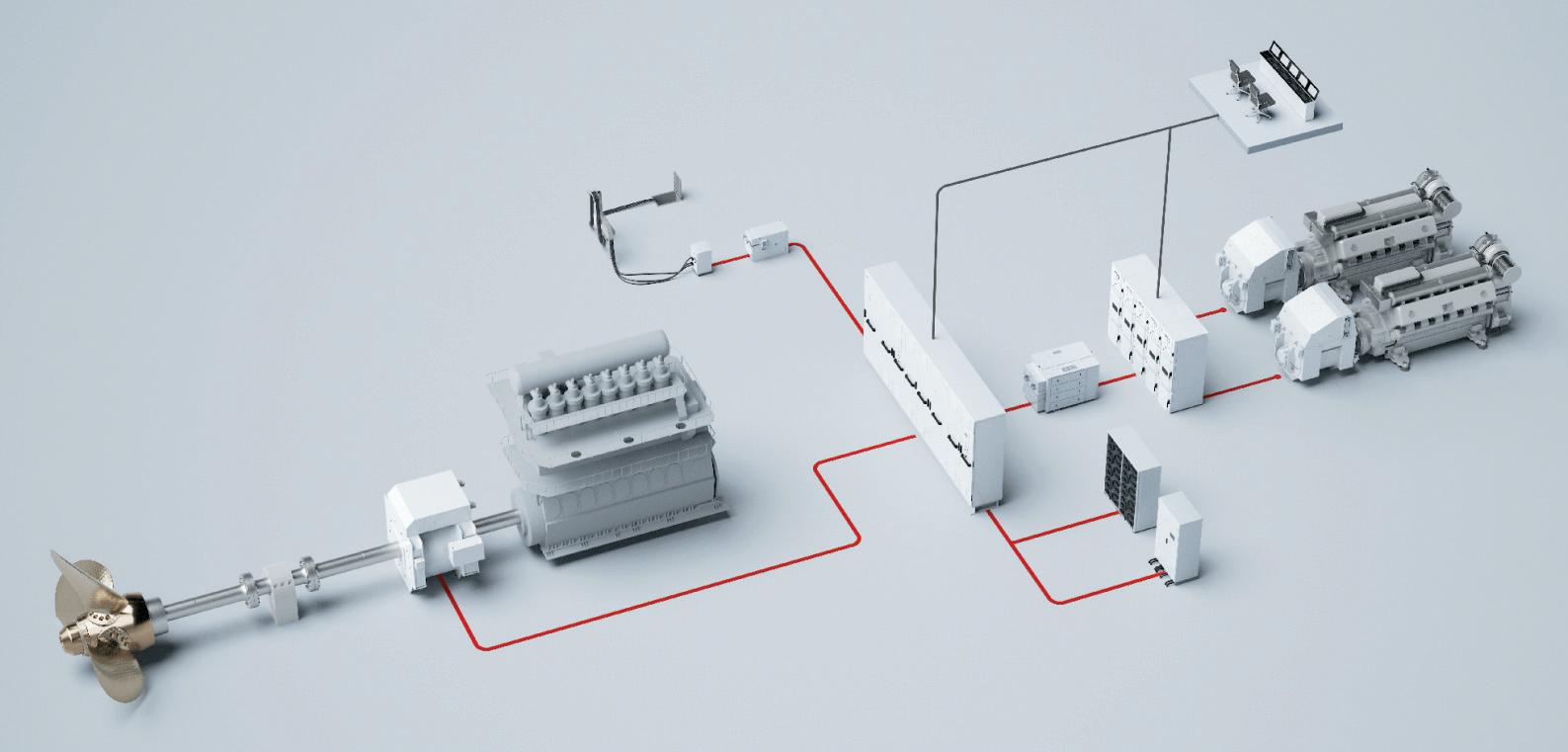
Instantly identified by Azipod® propulsion, and increasingly renowned in the cargo market for its ultra-efficient permanent magnet shaft generator system, ABB is a systems integrator whose electric power, distribution, control, propulsion and automation technology works across the global fleet of ships. Its service and maintenance personnel are the experts the industry turns to for its voltage regulation checks, emergency shutdown testing, thermal imaging inspections — and much else.
When ABB suggests it has sufficiently evolved its digital services portfolio to deliver verifiable cost savings of between five and 10% to tightly costed bulk carrier operations, the evidence is therefore worth considering.
The assertion will be especially interesting to a sector where average vessel age increased from 8.6 to 13.6 years between 2018 and 2025, according to AXS Marine, as owners squeezed value out of assets through volatile but frequently rewarding market cycles.
The developments highlighted the importance of effective vessel maintenance to profitability, according to Osku Kälkäjä, Head of Digital Business, ABB’s Marine & Ports division.
SYSTEMATIC APPROACH
“Beyond propulsion and hotel load, the electric systems on bulk carriers will include multiple cranes, conveyors, and cargo pumps — all of which will require robust power management and condition monitoring over long-distance routes where port opportunities for maintenance are limited,” Kälkäjä says. “Onboard maintenance is critical for cost management, and older components experience higher failure rates and can be harder to replace. The risk of unplanned downtime is higher.”
Monitoring systems performance is also
Osku Kälkäjä, Head of Digital Business, ABB’s Marine & Ports division.
Michael Greavette, Head of Commercial, Vessel & Voyage Performance, ABB’s Marine & Ports division.
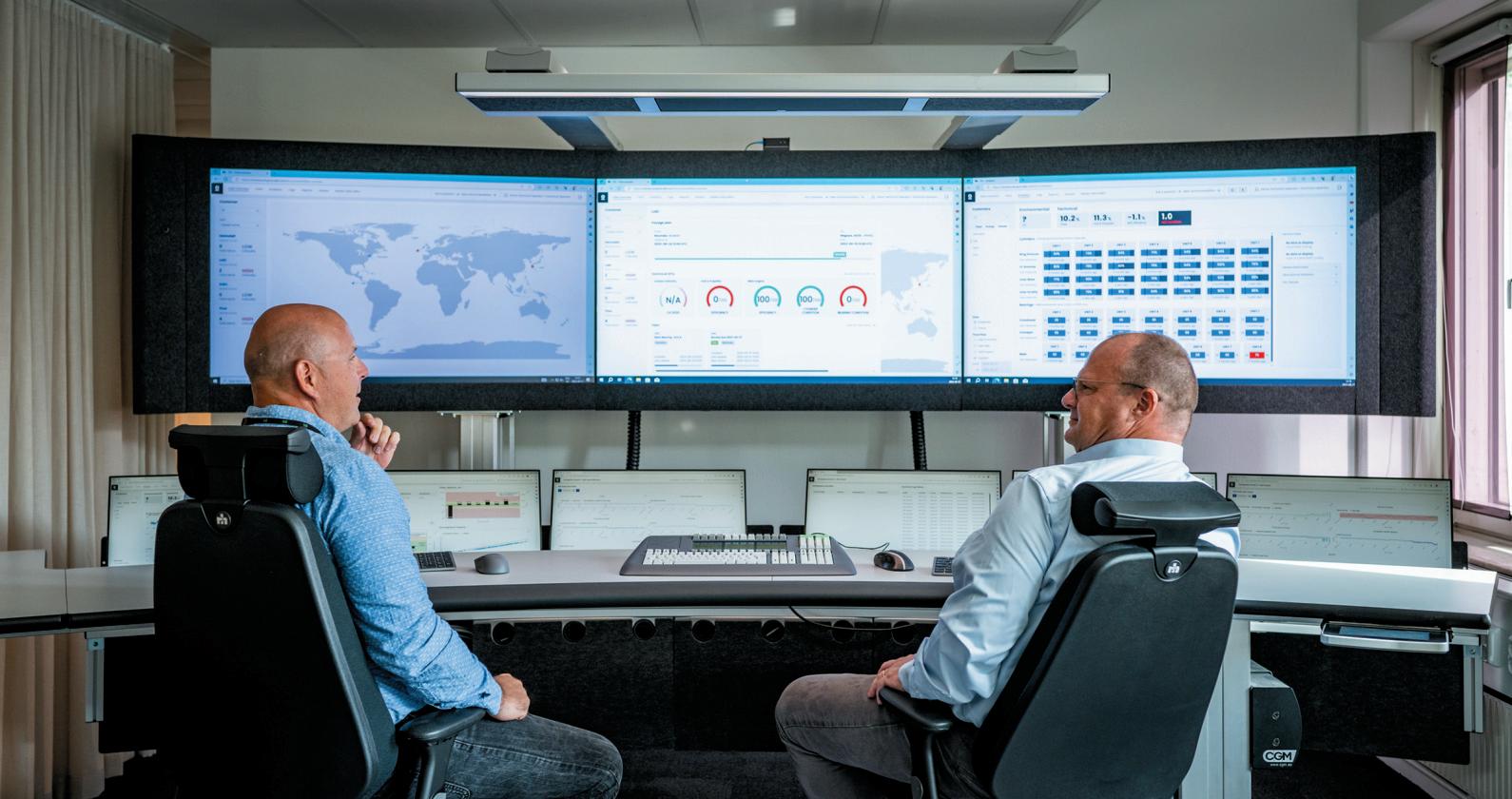
ABB and Wallenius Marine operate the OVERSEA™ Fleet Support Center, in Stockholm as part of their collaboration to help shipping companies improve voyage and technical performance – Image credit ABB.
key for fuel efficiency, which has consequences for costs and a future charter assessment against the Carbon Intensity Index.
In addition to retrofits targeting energy efficiency and safety, maintaining spare parts globally and providing mobile service team capability, Kälkäjä said ABB had been investing in data-driven predictive vessel lifecycle services and 24/7 connectivity to remote engineering expertise to support cost effective asset management.
The focal point for digital services is the ABB Ability™ Marine Fleet Portal, which provides centralized fleet performance monitoring and benchmarking, maintenance planning and spare parts management. Ships installed with conditioning monitoring sensors feed data into ABB’s predictive maintenance software to deliver real-time system health checks, support early and remote diagnostics, and alert ABB’s shore-based experts when troubleshooting intervention.
“Data-driven maintenance decisions help avoid costly port delays, optimize spare parts inventory management and improve documentation for compliance purposes,” said Kälkäjä.
Providing the shore-based engineering expertise to support the data analytics and
empowering those onboard to overcome issues without making unnecessary port visits are ABB Ability™ Collaborative Operations Centers. Multiple COCs on three continents ensure support is available 24/7.
COLLABORATIVE OPERATION
In a further development, ABB has established OVERSEA™ as a joint venture with Wallenius Marine, which Kälkäjä described as a “combined digital solution and fleet-support-center-as-a-service to help ship owners, operators, and managers reduce fuel consumption and emissions, and optimize safety and reliability”.
OVERSEA™ combines ABB’s expertise in ship technologies with fleet management knowledge from Wallenius. It leverages the ABB Genix™ Industrial IoT and AI Suite to collect and analyse condition monitoring data, and decision-making support from shore-based operating and engineering experts at the first OVERSEA™ Fleet Support Center in Stockholm.
“Customers can transform data into actionable insights, enabling them to improve their performance whether for cost, compliance or service-based reasons and sustain that level,” said Kälkäjä. OVERSEA™ users are achieving operational cost savings at the 10% end of
the ABB range, he added, based on around 50 ships signed up so far.
Kälkäjä said OVERSEA™ services were especially effective for fleets of up to 20 vessels, where owners may not have scale for in-house investments. Industry norms suggested a ‘medium-sized’ bulk carrier owner was one controlling 9–14 ships, he added.
Kälkäjä said that, based on experience, ABB nonetheless preferred to offer a range of potential cost savings rather than overpromise, given contrasting ship ages and conditions and varying levels of commitment to digital services by owners. Nor was the potential exhausted, he added, with the acquisition of Födisch Group, a leading developer of advanced measurement and analytical solutions for the energy and industrial sectors likely to feed through to new maritime solutions.
Michael Greavette, Head of Commercial, Vessel & Voyage Performance, ABB’s Marine & Ports division, added that the company’s recent investments in databased vessel routing software also had implications for bulk carrier maintenance costs.
WEATHER SENSITIVE
Greavette explained that while owners have traditionally decided on the technologies deployed on board a bulk carrier, charterers now often have a say. Today, even if owners continue to use noon reports rather than sensor-based data to benchmark vessel performance, time charterers can require use of weather routing software to support navigational decision-making, he pointed out, such as ABB Ability™ Ship Performance Optimization System (SPOS).
Used to uphold safety while optimizing routing for fuel and port turnaround efficiency, these tools also capture cumulative data that can be harvested in smarter maintenance scheduling.
“Charter terms influence speed and routing decisions, which have consequences for how hard propulsion systems
work, vibrations, hull and propeller fouling, and other maintenance-related issues.”
Where ABB’s digital routing services have made greater inroads in the container shipping market, the majority of the 15,000 voyages where owners use shore-based ABB Ability™ Routeguard optimization consultancy services are in the dry bulk
sector, said Greavette.
Factoring weather routing into the mix offers dry bulk carrier owners a straightforward route to create a vessel’s digital twin for maintenance management. Perhaps this is one reason ABB is aligning its Vessel Routing Application Programming Interface (API) with shipbuilders on a nonexclusive basis, including its notable agreement with data analysts Lab021, service integrator ForceTEC Co. Ltd., and South Korea’s Daehan Shipbuilding Co., Ltd., and K Shipbuilding Co. Ltd.
“I have little doubt that SPOS has considerable untapped potential in the dry bulk market, as a Windows-based product that could easily integrate into enhanced decision-making to ensure crew safety, reduce voyage costs and emissions, and support smarter maintenance planning,” said Greavette.
How the latest e-Navigation tools can enable safer sailing
Timo Essers, e-Navigation Director at NAVTOR, explains how digital innovations can help vessels sail into an uncertain future with enhanced safety, compliance and confidence.
Today’s shipping industry is harder to navigate than ever. Constantly changing commercial factors have been joined by rapidly evolving regulatory frameworks, uncertainty over future fuel choices and, as we all know, a geopolitical theatre that lurches from one unpredictable act to another.
Seen as a whole, owners can be excused for thinking they face a ‘perfect storm’.
And, what’s more, one they have to sail straight into.
With limited to zero control over these external factors, shipping companies are left to consider how internal actions can help smooth the safe passage of their fleets.
I’m here to tell you that e-Navigation has a major role to play.
SHOWING THE WAY
NAVTOR is a pioneer in e-Navigation. From a standing start in 2011 the company has grown into the global market leader, with products and services currently finding a home on more than 18,000 vessels worldwide – 37% of them within the Dry Bulk Fleet. NavStation is NAVTOR’s unique e-Navigation platform we call it the ultimate planning tool so I’ll be using that as a benchmark to explain how e-Navigation innovation can unlock huge benefits for both individual vessels and entire fleets.
OPTIMAL AWARENESS
To start, there needs to be recognition that safe operations are intrinsically linked to situational awareness. The more aware you are, of a huge, dynamic and interwoven fabric of factors, the safer you can sail.
Innovations such as NavStation have the power to improve situational awareness throughout the entire planning and execution process.
NavStation does this by automating data processing and seamlessly bringing together all relevant information from trusted layers and sources within a single integrated platform.
Instead of navigators having to manually gather and crosscheck data during the appraisal stage, NavStation consolidates this information and presents it in an intuitive, easy to read voyage plan and
Passage Planning.
report format.
This is a major advantage, because manual appraisal and data collection make it easy to overlook critical information. But by automating the process, NavStation helps ensure that nothing is missed and that safety-critical information is clearly documented and visible. This simple, structured approach also makes voyage execution less error-prone, as relevant data is already validated, clearly listed, and directly linked to the planned route.
Importantly, it also pushes past the traditional constraints of ECDIS, making ongoing voyage planning and execution ‘three dimensional’, taking dynamic factors into account and performing advanced calculations based on detailed vessel data. This supports a more realistic and comprehensive understanding of how vessels behave under varying conditions.
COMPLIANCE WITH CONFIDENCE
The peace of mind an innovation like NavStation can instil is especially important given the ever-greater regulatory scrutiny dry bulk operators face.
Port State Control regimes and vetting schemes such as RightShip, where navigation standards, passage planning quality, and onboard procedures are closely assessed, are increasing in scope and impact. As a result, there is a clear shift toward more structured, consistent, and well documented voyage planning practices.
NavStation supports this development by helping crews and companies demonstrate that passage planning is carried out in a systematic, repeatable, and best practice aligned manner. This directly supports improved PSC outcomes and stronger RightShip performance, where expectations around safe navigation,
planning discipline, and compliance are increasingly well defined.
What is also notable is the growing alignment across industry bodies when it comes to their interpretation of safe navigation. Guidance from organizations such as RightShip, INTERTANKO, OCIMF, and ICS is increasingly converging, reinforcing common expectations around planning quality, documentation, and situational awareness.
Against this backdrop, NavStation is gaining stronger recognition as a platform that supports inspection readiness, compliance confidence, and safer navigation practices, across both ship and shore.
SMOOTHER SAILING
As we’re all aware, there’s very little you can do to impact upon external factors –the trends and developments that, like strong winds, direct movements within the industry. However, as NavStation demonstrates, there’s plenty you can do internally, across single vessels and entire fleets, to optimize safety, predictability and compliance ensuring you sail towards ambitious operational and commercial goals.
That’s the power of e-Navigation in action.
NavStation
Timo Essers, e-Navigation Director at NAVTOR.
The Port of Sept-Îles (PSI), SFP Pointe-Noire and several partners from across the logistics chain gathered at PSI’s multi-user dock to mark the milestone of the 100millionth tonne (mt) of iron ore passing through their facilities.
After being delivered to SFP Pointe-Noire’s facilities over the past few weeks, this 100-millionth tonne was ultimately transshipped on 2 March 2026, aboard the vessel Navios Azimuth for shipment to international markets.
“Reaching this milestone demonstrates the relevance of the Pointe-Noire multiuser complex business model, but above all the strength of collaboration among all workers across the logistics chain. The iron ore market offers promising prospects for the growth of our communities, and this would not be possible without the hard work of every team involved, from the mines to the ships, from Labrador to Quebec,” Alexandra Chouinard, President and CEO of the Port of Sept-Îles said with pride.
the critical and strategic minerals of the Labrador Trough to international markets. We were proud to celebrate this milestone alongside our employees and partners, because it is collectively that we create lasting value for the region and for the economy.”
Echoing this sentiment, Gabriel Striganuk, President and CEO of SFP Pointe-Noire, added: “Surpassing the 100mt mark represents much more than a volume achieved, it reflects ten years of sustained efforts driven by dedicated teams working day and night with commitment and determination. This achievement demonstrates the strength of our logistics chain and illustrates our determination to provide a reliable economic corridor for
ABOUT THE PORT OF SEPT-ÎLES
Equipped with diversified, modern and highly efficient port facilities, the Port of Sept-Îles (PSI) is the leading mineral port in North America and the second-largest port in Canada in terms of shipping volume. A strategic player in the economic development of Eastern Canada, PSI continues to grow around three key pillars: market diversification, the development of
human capital, and a strong commitment to sustainable development and community relations. A pioneer in responsible practices, the port notably established the first environmental monitoring observatory on the St. Lawrence River and created a research chair with Université Laval dedicated to coastal ecosystems and port activities.
ABOUT SFP POINTE-NOIRE
SFP Pointe-Noire is a North Shore limited partnership at the heart of the strategic trade corridor between the Labrador Trough and international markets. A worldclass logistics hub, SFP Pointe-Noire operates rail and port infrastructure that enables the transshipment of iron ore.
Strategically located on the Gulf Coast as a key link to the national transportation network.
NOIP: from vessel to silo, mastering wheat logistics in Gabon
In an environment where food security and logistics performance have become critical challenges in Central Africa, the New Owendo International Port (NOIP) stands out as a key player in the management of bulk agricultural flows in Gabon. Through its handling of wheat, the port demonstrates its ability to combine operational efficiency, technological control, and economic impact.
A DOMINANT PLAYER IN THE LOCAL MARKET
In 2025, NOIP handled 131,787 tonnes of wheat, confirming its central role in supplying the country. This is complemented by 14,302 tonnes of malt and 5,463 tonnes of wheat bran exported, illustrating the diversification of agroindustrial flows managed on the platform.
Today, NOIP handles over 95% of the local wheat import market, making it a critical link in the national supply chain.
BENCHMARK OPERATIONAL PERFORMANCE
NOIP’s performance is driven by an optimized logistics organization and equipment tailored to the specific requirements of dry bulk cargo.
With its two silos of 5,000 tonnes each, the port achieves some of the highest discharge rates in the local market, averaging 4,500 tonnes per day over two shifts.
These performances enable: a significant reduction in vessel v turnaround times; improved operational fluidity; and v enhanced planning reliability for v downstream industrial players.
EFFICIENT VESSEL TURNAROUND MANAGEMENT
For a typical vessel of approximately 10,000 tonnes, NOIP delivers highly competitive turnaround times: less than 48 hours at anchorage v (depending on traffic); and two days of discharge operations. v
This level of efficiency positions NOIP as a strong benchmark in port performance, with a direct impact on reducing logistics costs for importers.
The silos are equipped with SCADA (Supervisory Control and Data Acquisition) systems, enabling: real-time monitoring of storage v conditions; precise control of grain preservation; v and full traceability of cargo flows. v
This approach ensures compliance with quality standards and strengthens the reliability of the logistics chain.
FROM PORT TO INDUSTRY: AN INTEGRATED CHAIN
NOIP’s role extends beyond the quay. The port ensures a seamless transition between maritime operations and the needs of local industries, particularly milling companies. This integration allows for: continuous supply to processing v facilities; reduced risk of stock shortages; and v improved competitiveness for local v operators.
A PLATFORM AT THE HEART OF REGIONAL CHALLENGES
With strong operational performance and growing expertise in agro-industrial flows, NOIP aims to strengthen its position as a leading logistics hub in Central Africa.
The handling of wheat illustrates this ambition: beyond a simple commodity flow, it represents a strategic lever for food security and economic development.
CONCLUSION
By combining significant volumes, strong operational performance, and technological control, NOIP confirms its key role in structuring cereal flows in Gabon. From vessel to silo, the port embodies a modern, reliable, and forwardlooking logistics platform.
t r o p p e o h e t t a i c e r p p e a We W
. u o h y t i k w r o o w y t t i n u
g n i ow ll , a s e i g o l o n h c e e t tiv ova n n r i u d o n e a l p o e r p u e o r hs a t g n e tr r s u O
m a e r t u . O e r fo e r b ve n e a h ly t t n e ci i f f e e r o d m n r a fe a s s o g r e ca ov o m s t u
. p i sh d r tewa l s a t n e m n ro i nv d e n y a t fe a n s s i r e d a e g l n i e o b s l e a l i h s w d e e n n o ti a t r o nsp ra e t n r o b r te a ’ w s r e m to s u r c u t o e e o m y t a y d r ve s e ive tr s
. e o w r d e ith e d n n , a s p to r s eve e n rc e m m o e c n r o b r te Wa
m o c . s l a n i m r e dt e t ia c o s as . w. w w w
Triple digit growth in Manzanillo’s agribulk exports
Imported agribulk traffic at the Mexican Port of Manzanillo rose by more than 231.5% in January 2026.
In January 2025, this traffic amounted to 48,300 tonnes compared to 160,094 tonnes in the first month of the current year.
According to Manzanillo’s National Port
System Administration (Asipona), “This increase reflects the strengthening of the agro-industrial logistics chain and the strategic importance of the port in the national supply chain.”
The increase is across a broad variety of products. These include soya beans, which are used in the production of vegetable oil
and animal feed; oat seeds, intended for human consumption and a key ingredient in the production of plant-based drinks; and also barley, which is an essential ingredient in the production of malt in the brewing industry. Mexico has become one of the world’s leading exporters in this latter sector. Barry Cross
Ership granted new concession at the Port of Tarragona
On 25 February, the board of directors of Tarragona Port Authority awarded a concession to Ership for the construction and subsequent operation of a mechanized system for the horizontal transport of dry bulk via conveyor belts at Aragón Quay. The concession, which lasts for 40 years, encompasses an area of just over 2,249m² on the eastern side of the aforementioned quay. The concessionaire will pay an annual occupancy fee of €14,430 and an annual activity fee of €5,100. Barry Cross
Existing Ership bulk facility at Tarragona.
Construction of new Sagunto dry bulk terminal to begin in May
Construction work on the new dry bulk terminal at the port of Sagunto is slated to begin in May. The new facility will be operated by a consortium consisting of maritime and logistics group Ership, terminal operator Intersagunto and main customer Compañía General de Compras
Agropecuarias (CGCA). The consortium was awarded the administrative concession in September 2025.
The 35-year concession consists of an area of approximately 51,500m² between South Quay 1 and North Quay 2 at the Port of Sagunto, which is administered by
Valencia Port Authority. The future facility, which will have road access via North Quay 2, already has a tarmac surface in place. Along with all existing facilities at the port, it has met compliance guarantees encompassing stringent operational and environmental standards. Barry Cross
Paranaguá improves air quality during bulk handling
In Brazil, the Port of Paranaguá has significantly improved its green credentials by introducing technology to reduce particulate emissions during vessel loading of dry bulk. This consists of telescopic tubes that are fitted with dust suppression hoppers (DSH).
The new system forms part of an overall modernization programme at the ports of Paraná, and is being funded by Portos do Paraná to the tune of $2.3 million.
Luiz Fernando Garcia, executive director of Portos do Paraná, stresses that this type of investment demonstrates that it is possible to produce more; handle more cargo; and, at the same time, care for the environment in a responsible and sustainable manner.
The new equipment reduces the amount of dust being released into the air due to the mechanics of grain flow within the tube. As it passes through the device, the cargo essentially generates a vortex that concentrates the particles, preventing them from dispersing into the air.
Another key advantage is that this technology uses fewer drive motors, so has lower energy consumption. The lack of filters also makes maintenance cheaper and simpler, whilst also eliminating the need for periodic stoppages to replace parts. Productivity gains are therefore a notable feature during bulk handling.
In its first few days of operation, the system has reportedly worked very well and is visibly reducing particulate emissions, thereby improving air quality.
The port began installation of the new technology in December, saving money by doing the work during a designated maintenance period. Barry Cross
Lavna export coal terminal expansion continues
In Russia, the far northern port of Murmansk has put into operation new facilities at the Lavna Coal Handling Complex. These form part of a planned expansion phase. This, in concert with other previously commissioned facilities, has boosted the port's production capacity to 12 million tonnes/year of coal.
According to the State Transport Leasing Company (GTLK), which is responsible for the construction of the port complex and investment management, such a volume represents 67% of the Lavna terminal projected capacity. Recent upgrades are part of the Phase 1.3.1 development, and include construction of a 508m2 transfer station, three conveyor racks with a total length of 145.7m, and a new coal stockpile area. Lavna’s strategic position in the Arctic allows it to export coal via the Northern Sea Route from what are deep-water and all-year-round ice-free facilities.
The first export coal shipment from the Lavna terminal took place in March last year.
Cargo of Every Flavor.
The Baltic Rim
A look
at
bulk
in the Baltic Sea Region
Jay Venter
Dry bulk at the Port of Aarhus: a vital gateway for Danish imports and exports
With nearly three million tonnes of dry bulk handled annually, the Port of Aarhus is an important gateway for agricultural imports. Efficient terminals, growing capacity and strong customer partnerships make the port a vital hub for Danish foreign trade.
The port of Aarhus is the largest commercial port in Denmark. Last year, more than 11mt (million tonnes) of cargo were handled there, and around 2.9mt were dry bulk.
The majority of the dry bulk cargo is
closely linked to the agricultural sector. Of the 2.9mt handled in 2025, approximately 2.2mt were agricultural-related products. These include feed ingredients and other raw materials essential to Denmark’s strong agri-food industry. The remaining dry bulk cargo mainly consists of construction materials, road salt and other minor commodities.
Dry bulk at the Port of Aarhus is mostly import-based. Its largest dry bulk customers are AAK, Danish Agro and DLG. The port holds the most efficient
import terminals in Denmark, and these companies all operate on them. This emphasizes the importance of the port in Danish foreign trade.
In addition, the Port of Aarhus serves as an important link between Denmark and the Baltic region. With regular shipping connections and strong logistics infrastructure, the port functions as a natural gateway for bulk flows between Scandinavia and the Baltic countries, supporting regional trade and supply security.
Over the past decade, warehouse capacity for solid bulk has increased significantly and it is still growing. This continuous investment ensures flexibility for customers and strengthens our ability to handle fluctuating volumes, seasonal peaks, and larger vessel sizes.
Dry bulk at the Port of Aarhus is characterized by long-term customer relationships, essential commodities, and continuous infrastructure investment. Denmark has a long history as one of the world’s leading pork export countries, supplying markets across the world.
The dry bulk capacity of the Port of Aarhus, where large amounts of animal feed are imported, plays a key role in sustaining Denmark’s globally competitive
pork industry.
The dry bulk operators at the Port of Aarhus combine experience, scale and operational efficiency. This ensures stable supply chains for Danish industry and agriculture, while providing international suppliers with reliable access to the Scandinavian market.
Although container shipping often attracts the most public attention, dry bulk remains one of the most stable and strategically important business areas at the Port of Aarhus, forming a vital link between global raw material flows and Danish production, exports and supply chain security.
Handling capabilities: Dry bulk and industrial materials
• Biomass (wood pellets/chips)
• Construction materials and minerals
• Steel scrap and general cargo
• Big bags, logs, steel plates and components
• Key infrastructure: 2.5km total quay length
• Water depth up to 11m (prepared for 15m)
• Heavy-duty reinforced quays
• Up to 50,000m² warehouse capacity
• Purpose-built quay warehouses (1,000–2,000m²)
• Open storage areas available
•
• Short internal transport distances
Port of Grenaa
Tip of Djursland, Denmark's most central deep-water port – known as the 'Gateway to Kattegat'.
Polish ports: summarizing the year 2025
A total of 141mt (million tonnes) of goods were transshipped in Polish ports in 2025, 5mt more than in 2024, writes Krzysztof Gogol, Polish Steamship Company.
A GOOD YEAR FOR THE PORTS OF SZCZECIN AND SWINOUJSCIE
For the ports of Szczecin and Świnoujście, 2025 was a record year in terms of both transshipment volume and financial results. Transshipment reached 34.79mt, a 7.5% increase compared to the previous year. The largest increases were recorded in the turnover of general cargo, bulk cargo, fuels including LNG — and containers. For the first time in the ports’ history, container transshipment exceeded 100,000 TEU.
“This increase is not the result of a oneoff economic recovery. It is the result of ports preparing for more challenging market conditions. We have invested in accessibility, operational efficiency, and cooperation with businesses. Thanks to this, we can not only respond to changes but also actually increase transshipment volumes, while others are still adapting to new conditions,” said Jarosław Siergiej, President of the Szczecin and Świnoujście Seaports Authority, during a special press conference.
Last year, the Port of Szczecin completed investments involving the deepening of the port’s basins and quays to a technical depth of 12.5 metres. Thanks to this investment, the Dębica Canal and the Kashubian Basin can accommodate vessels 230 meters long, with a draught of 10.5 metres and a cargo of up to 50,000 tonnes.
Last year, the largest cargo brought to Szczecin was the Panama-flagged bulk carrier Tokugawa, which carried over 49,000 tonnes of soybean meal.
“2025 was a record year for Polish ports — both in terms of transshipment volumes and financial results. The ports of Szczecin and Ś winouj ś cie played a significant role in this. As a government, we are continuing to invest – in 2026, we will allocate nearly PLN 3 billion for port development, including key investments in Western Pomerania,” said Arkadiusz Marchewka, Secretary of State at the Ministry of Infrastructure.
The year 2025 was a record one for the Port of Świnoujście. The LNG terminal handled 80 gas deliveries. Last year, the first commercial LNG loading took place at the new JETTY 2 quay, built as part of the expansion of the terminal’s handling capacity. In November, LNG fuel was loaded onto a commercial bunker for the first time, which the next day, it bunkered fuel side-by-side onto a ferry at the Świnoujście ferry terminal.
The Szczecin and Świnoujście Seaports Authority ended the year with record net revenue of PLN 415 million. Net profit amounted to PLN 144.5 million.
PORT OF GDANSK REPORTS A 4% INCREASE IN CARGO VOLUME
The Port of Gdańsk ended 2025 with a very good cargo volume. In 2025, a total of 80.4mt of cargo were transshipped at Poland’s largest seaport, representing an increase of almost 4% compared to 2024, when the volume was 77.4mt.
In 2025, a total of 4,394 ships called at the Port of Gdańsk, representing a 4.2% increase year-on-year. The number of commercial vessels reached 3,650, a 2.5% increase over 2024. At the same time, the average GT of commercial vessels increased by 3.8%, indicating that the Port of Gdańsk, by servicing increasingly larger
vessels, is increasing its utilization of its deepwater infrastructure.
The largest group in the Port of Gdańsk’s cargo structure is liquid fuels. In 2025, their transshipment reached 39.6mt (a 0.4% increase compared to the previous year), accounting for 49.3% of the Port of Gdańsk’s total transshipment. Therefore, it remains a key element of its operations and a significant link in the national energy security system. Crude oil transshipment handled by Naftoport amounted to 37.4mt, compared to 36.6mt the previous year, representing the best result in the terminal’s history. Naftoport handled 379 crude oil ships and 84 petroleum product ships, confirming its key role in securing the supply of energy resources to Poland and the region.
The second most important cargo group in 2025 was general cargo, which recorded one of the highest growth rates. Its volume increased from 23.3mt in 2024 to 27.2mt in 2025, an increase of 16.6%. The share of general cargo in total transshipment reached 33.8%, confirming the growing importance of this cargo group for the further development of the port. The Port of Gdansk achieved particularly good results in the container segment, which remains one of the main drivers of its growth. In 2025, almost 2.8 million TEU were transshipped at container terminals, representing a 23% increase compared to the previous year, with 2,766,475 TEU at the Baltic Hub Container Terminal alone. At the same time, the weight of transshipped container cargo increased by 18%, reaching 24mt. These data confirm the dynamic development of the Port of Gdansk as a key link in international maritime trade. In the dry bulk cargo category,
significant variation was observed. Coal transshipment decreased for another consecutive year — by 10.8% compared to 2024, to nearly 7mt. This is half the volume transshipped in 2022. The share of this raw material in the port’s cargo structure was 8.7%, confirming the steadily declining role of coal in Poland’s energy mix.
The situation was different for iron ore, whose transshipment increased by 12%, reaching 326,700 tonnes. The other dry bulk cargo category also saw an 8.5% increase, reaching 3.7mt.
Significant declines were recorded for timber, whose transshipment decreased by a staggering 56.5%, to 31,200 tonnes, as well as grain, where volume decreased by 14.8%, to approximately 2.5mt.
In 2025, a decline in transshipment was also recorded in the Ro-Ro segment. The volume of vehicles handled decreased by 15%, to 118,000 units. Results in the passenger segment, however, were positive. Last year, the Port of Gdansk handled 171,400 passengers, representing a 3.1% increase compared to 2024. These data confirm stable interest in ferry connections and tourist traffic (266 ferry calls, 57 cruise ships).
PORT OF GDYNIA EXCEEDS THE ONE MILLION TEU TRANSSHIPMENT THRESHOLD
The Port of Gdynia handled a total of 25.7mt of cargo in 2025, representing a 4.4% decrease. Compared to 2024. For the first time in its history, the port also exceeded the one million TEU
transshipment threshold, recording a 5.27% year-on-year increase. Simultaneously, the company forecasts a 2.5% increase in net profit compared to the previous year, confirming its stable financial situation.
Achieving record container transshipment levels was possible thanks to, among other things, the launch of new services and changes to the global network of connections. Ships from the new Gemini Cooperation alliance are calling at the Port of Gdynia, and the ONE Polish Shuttle (PLS) service has been operational since February. In December, the Baltic Container Terminal Gdynia also launched a new short sea service, MSC, providing direct connections to the markets of Great Britain, Spain, and Portugal.
Another significant factor supporting growth in the container segment was the commissioning of Turning Basin No. 2, whose widening and deepening enabled it to handle the largest container ships operating in the Baltic Sea, up to 400 meters in length.
Simultaneously, the Port of Gdynia recorded significant growth in the general cargo segment, particularly ro-ro, where transshipment increased by over 18%. This increase was directly related to the expansion of the route network. In November, the Lakeway Link shipping company launched a second unit on the Gdynia-Södertälje route, and in June 2025, Finnlines introduced a regular service connecting Gdynia with Belgium, the
United Kingdom, Spain, and Finland.
In 2025, the Port of Gdynia handled a total of 25.7mt of cargo, a 4.4% decrease compared to 2024. This was due, among other things, to the expansion of the route network. This was due to lower volumes in the coal and coke segments, which in turn was related to the easing of crisis factors that significantly increased demand for energy resources in Poland in 2022–2023 Changes in volumes in individual cargo groups were largely due to market and geopolitical conditions, rather than infrastructure or operational constraints at the port.
In the grain segment, the declines were a result of the market situation. Low global prices for wheat and other grains, also reflected in stock exchange quotations, limited the profitability of exports for Polish producers. As a result, some goods remained in the country, awaiting improved sales conditions. Furthermore, after the reopening of Black Sea ports, Ukraine began routing grain exports through its own terminals, limiting transit through Polish ports. The high transshipment base from 2022–2023 also influenced the results.
The ‘other bulk’ group, which includes, among others, fertilizers, aggregates, chemical products, and selected foodstuffs saw growth. Due to the heterogeneous nature of this group, it is difficult to pinpoint a single dominant factor, but the results confirm the continuing demand for the diverse bulk cargo handled by the port.
Bulk remains an important segment at the Port of Helsingborg
The Port of Helsingborg is located in southern Sweden, in the Öresund region, and benefits from a unique geographical position close to the European continent and major Scandinavian logistics corridors. While the port is primarily known as a container specialist, bulk handling remains an important and stable part of its overall operations.
BULK ACTIVITIES AND COMMODITIES
The Port of Helsingborg’s bulk segment is characterized by flexibility and the ability to adapt to changing market conditions. It handles a variety of dry bulk commodities, primarily linked to the agricultural and energy sectors. A significant share of its bulk volumes consists of grain and other agricultural products. In recent years, strong harvests in Sweden have contributed to high export volumes. The port serves as an important outlet for Swedish grain to
international markets, supported by established infrastructure and long-term customer relationships.
The port also handles energy-related products and other dry bulk commodities, depending on market demand. Volumes in the bulk segment can vary considerably from year to year, as they are influenced by factors such as weather conditions, global commodity prices and developments in the energy market.
The Port of Helsingborg’s bulk operations are conducted with a strong focus on safety, cost efficiency and operational reliability. The segment requires flexibility in planning and resource allocation, as well as close collaboration with customers and logistics partners.
MAJOR CLIENTS
The Port of Helsingborg works with a mix of national and international customers
within agriculture, energy and related industries. Several of its bulk customers operate on long-term agreements, particularly in connection with storage and land lease arrangements within the port area.
The port’s customer base includes established players in the Swedish grain trade and energy sector.
COMPETITIVENESS AND MARKET POSITION
The bulk segment operates in a competitive environment, both nationally and regionally. To remain competitive, it focuses on: maintaining reliable and safe v infrastructure; ensuring cost-efficient operations; v adapting capacity and resources to v market conditions; and investing prudently and in line with v long-term profitability.
The port’s location is a key competitive advantage. Situated close to major road and rail connections, including the E4 and E6 motorways, and with short sea distances to continental Europe, the Port offers efficient connections between sea and land transport.
Although bulk is not its largest segment, it benefits from the Port’s broader development work. Continuous improvements in processes, digitalization and standardization contribute to improved planning, transparency and efficiency across all business areas, including bulk.
RECENT DEVELOPMENTS AND INVESTMENTS
Recent years have been marked by continued modernization of the port’s infrastructure and systems. While much of
the investment focus has been on container operations, several initiatives strengthen the overall operational platform, including bulk activities.
Key developments include: continued digitalization of operational v processes; strengthening of IT infrastructure to v support data-driven decision-making; ongoing maintenance and lifecycle v management of cranes and quay structures; and increased focus on energy efficiency v and electrification of equipment.
The port has reduced its direct emissions significantly over recent years and continues its transition towards electrified machinery where technically and economically feasible. Where electrification is not yet possible, fossil-free
fuels such as HVO100 are used. These efforts contribute to lower climate impact and support its customers’ sustainability ambitions.
Security is another area of increasing importance. As a designated civil protection object under Swedish legislation, the port operates under enhanced security requirements. Investments in physical security, information security and customs facilities contribute to a robust and reliable operating environment for all cargo segments, including bulk.
STRATEGIC DIRECTION
The port’s long-term direction is guided by the port’s long-term strategy. Its vision is to create the port of the future, where efficiency, growth and societal value meet. While it positions itself as a container specialist, the port is committed to operating all business segments in a sustainable and commercially sound manner.
For bulk, this means: operating with cost discipline and risk v awareness; adapting to market-driven volume v fluctuations; supporting customers with reliable v and safe handling; and investing carefully and in line with v long-term earning capacity.
Bulk activities will continue to play a complementary but important role in the port’s portfolio, contributing to diversification and supporting regional industry and exports.
Next generation Siwertell road-mobile unloader for delivery to Albania
Bruks Siwertell has secured an order from R & Z Innovations Sh.pk for a Siwertell 10 000 S NGv2 road-mobile ship unloader. The unit will be installed at the MBM Port terminal in Porto Romano, Durres, Albania.
The operator’s Siwertell 10 000 S roadmobile ship-unloader features a double bellows discharge system and integrated dust filters. It offers a continuous rated capacity of 300tph (tonnes per hour) for handling cement, and can discharge vessels up to 10,000dwt.
According to the customer, the selected model is particularly well suited to its operating procedure and projected cargo volumes. Following a market assessment, the company chose Bruks Siwertell as supplier, considering it the most capable provider of this type of equipment.
The Siwertell 10 000 S NGv2 is specifically designed to ensure efficient and environmentally responsible cement handling. Its fully enclosed screw conveyor system enables dust-free, spill-free operations, safeguarding product quality while protecting the surrounding environment.
Continuous unloading capacity supports rapid vessel turnaround, while the road-mobile design offers high operational flexibility with minimal infrastructure
requirements, delivering a cost-effective solution for bulk cement imports.
This installation marks a regional milestone. R & Z Innovations will become the first operator in Albania to run the
latest upgraded Siwertell 10
The order represents an important step forward in modern, efficient and sustainable bulk handling operations in the country.
Baltic Exchange praises SGX & EEX on successful transfer of Panamax FFAs
SGX and EEX successfully completed the transfer of all open interest in the Baltic Panamax 4TC (P4TC) index to the Panamax 5TC (P5TC) index on 16 January 2026, with the migration executed smoothly and without market disruption. This milestone concludes the transition from the long-established 74,000dwt Panamax vessel specification to the updated 82,500dwt standard.
Throughout 2025, Baltic Exchange worked closely with the Clearing Houses (CCPs) to prepare the industry for this change. This included market forums, direct stakeholder engagement, and the publication of official circulars outlining the transition process and timeline.
Following the successful migration of open interest to the P5TC, the Baltic will cease publishing the P4TC index, with 30 January 2026 set as the final publication day. For many years, the P4TC has been derived from the P5TC through a fixed differential ($1,336), and although it will no longer be published, the Baltic will continue to provide a calculated P4TC value under
licence upon application.
The P5TC superseded the P4TC after the Baltic completed its Panamax vessel review process, raising the standard vessel from 74,000dwt to 82,500dwt, following consultation with the market and in accordance with the criteria set out in the Guide to Market Benchmarks. As an FCAregulated benchmark administrator, Baltic Exchange follows defined regulatory protocols in transitioning from one index to another to ensure transparency, governance, and market continuity.
Peter Blogg, Head of Global Commodities, Business Development at EEX, added, “We see the consolidation of Panamax timecharter average FFA and options open interest under P5TC as a positive step forward for the market. It removes any ambiguity and enables customers to focus on the continued growth of this key sector under the terms of a single index. The successful completion of this transition also sets in place the process for future open interest transfers at EEX.”
Tan Tee Yong, Head of Commodity Derivatives at SGX Commodities, said, “The liquidity switch from P4TC to P5TC marked our first FFA transfer — an industry wide transition delivered through close collaboration across the dry freight ecosystem. SGX worked closely with the market to shape the operational approach, structuring an orderly continuous transition of liquidity, aligning the derivatives markets with the evolving
“This transition brings the derivatives market fully in line with the physical benchmark that has been in place since 2020. We updated the Panamax standard vessel and timecharter average in 2020 to reflect changes in the global fleet makeup and better represent the underlying trade. By discontinuing the outdated P4TC index and working closely with our CCPs to ensure the P5TC is the industry standard, we are ensuring that the physical and paper markets are now trading on the same contract,” said Stephen Aitchison, Senior Freight Market Assessor at Baltic Exchange.
000 S NGv2.
physical benchmarks. We appreciate the strong cooperation from Baltic Exchange, clearing members, interdealer brokers and market participants for their support and active engagement throughout this milestone process.”
With the Panamax migration now complete, the Baltic is managing the planned update to the Capesize sector.
On 2 January 2026, the Baltic formally adopted the 182,000dwt Capesize (BCI182) as the standard Baltic Capesize vessel, replacing the legacy 180,000dwt
specification.
As part of this transition: C5TC(182) has now become the v official Baltic benchmark for the Capesize market.
The derived C5TC(180) will cease v publication on 24 December 2026 and will remain available to market participants under a Licence, ensuring continuity for those requiring legacy data or valuation support.
Baltic Exchange will work closely with SGX and EEX to coordinate the eventual
transfer of open interest from C5TC(180) derivatives to C5TC(182) using a migration mechanism equivalent to the Panamax transition.
These co-ordinated changes across the Panamax and Capesize sectors ensure that Baltic benchmarks continue to reflect the modern fleet, and support the long-term health and transparency of the freight derivatives market. Baltic Exchange remains committed to engaging with all stakeholders as the Capesize transition progresses.
Gothenburg region named Best Logistics Location in the Nordics
The Port of Gothenburg (photo: The Port of Gothenburg).
The Gothenburg region has once again been named the Nordic region’s best logistics location by Swedish industry publication Dagens Logistik . In its motivation, the magazine highlights the Port of Gothenburg as the hub for international imports and exports and a decisive factor behind the region’s strong position as a logistics centre.
“We are pleased with the recognition, which we see as confirmation of the port’s importance and the region’s joint efforts to build a strong and innovative freight hub. The port is central to the region’s role as a logistics location, and over the past year its position has been strengthened both in Sweden and internationally. Not least through an expanded network of shipping services and continued rail development linking the port to inland destinations resulting in record volumes in 2025, increased market shares, and a strengthened role for the port as a hub for Nordic trade with the world,” says Jacob Minnhagen, Senior Market Development Manager at the Port of Gothenburg.
In its justification, Dagens Logistik assessed factors such as the versatility, accessibility and sustainability of logistics infrastructure including roads, railways,
ports, air cargo airports and intermodal terminals. It also considered freight flows to and through the region, conditions for imports and exports, and proximity to population centres and consumer markets. Existing logistics establishments, logistics expertise, labour availability, as well as research and education, were also taken into account.
GROWING INTEREST IN LOGISTICS ESTABLISHMENTS
“We have long maintained close collaboration with Swedavia Landvetter Airport, Business Region Gothenburg and other stakeholders across the region. Together, we are working to further increase our attractiveness for logistics establishments, and we continue to see growing interest both around the port and across the wider region,” says Minnhagen.
The Port of Gothenburg is highlighted in particular as a key logistics hub for the entire Nordic region, central to both imports and exports. It is home to the Nordic region’s largest container port and largest car/RoRo port, as well as an extensive rail network. The port is complemented by strong road, rail and air connections, making it the Nordic region’s
logistics centre.
The ranking has been published for 26 years, with the Gothenburg region named the best logistics location 25 times. Since 2024, Dagens Logistik has expanded the list from Sweden’s best logistics locations to the Nordic region’s best. The Öresund region and the Stockholm region rank second and third this year, followed by Oslo, the Baltics, Helsinki, Jönköping, Bothnian Bay and Central Jutland in Denmark.
ABOUT THE PORT OF GOTHENBURG
The Port of Gothenburg is the largest port in Scandinavia, handling around 20% of Swedish trade and more than half of all container traffic. As a full-service port it connects business to key markets around the world 24/7/365.
The port is committed to safe, efficient and sustainable shipping. Handling energy products, vehicles, ro-ro units, containerized cargo, it plays an important role in supporting streamlined shipping operations and long-term growth in global trade. With over 30 daily rail shuttles, the port also offers direct, reliable and climateneutral connections for intermodal transport across Sweden and Norway.
Bulk Cargo invests €16 million in port terminal superstructure in Szczecin
Visualization of one of the new warehouses that are part of the Bulk Cargo investment project in the port of Szczecin. Credit: Bulk Cargo – Port Szczecin (Rhenus SE & Co. KG).
Bulk Cargo – Port Szczecin, the largest operator in the port of Szczecin, is implementing a comprehensive investment project of strategic importance for the future development of the terminal in Szczecin.
The investment programme includes the modernization and development of the port’s superstructure, including the purchase of a new crane, the modernization of the mobile equipment fleet and the warehouse expansion.
The Rhenus Group, the majority shareholder of Bulk Cargo, is implementing the announced investments in port superstructure, equipment and technologies as announced at the time of the takeover. The Rhenus Group’s comprehensive investment project is worth €16 million, including the modernization and expansion of the port superstructure, the modernization of the mobile equipment fleet and the expansion of storage space. The Bulk Cargo investment project is one of the Rhenus Group’s largest investments in this part of Europe and is a response to the growing expectations of the port services market and the challenges facing the industry. The launch of the investment programme marks the beginning of Rhenus’ extensive investment plan for the Szczecin terminal.
INVESTMENTS FOR THE FUTURE OF THE TERMINAL IN SZCZECIN
Bulk Cargo is the largest operator in the port of Szczecin, handling approximately four million tonnes of cargo annually. The company’s services include the transhipment of bulk and general cargo using specialized equipment, storage, transhipment and port forwarding by inland waterways, road and rail.
The investment project is a key element of Bulk Cargo’s development strategy, which focuses on optimizing cargo structure, improving service quality and increasing the terminal’s long-term competitiveness. The investment programme responds to market needs and includes both the modernization of key infrastructure and the expansion of storage space.
“The modernization programme will ensure that our superstructure complies with current and future market requirements, strengthening the terminal’s readiness for further development. Thanks to these investments, we will improve operational efficiency, increase transhipment rates, ensure process continuity, as well as work safety and ergonomics,” comments Adam Czarnul, Managing Director of Bulk Cargo – Port Szczecin. “Our projects are fully in line with the development plans for the port of Szczecin and are a response to the completed project to deepen the fairway to 12,5m, allowing ships with a draught of up to 11m to be accommodated.”
The largest element of the modernization programme is the purchase of a new crane manufactured by ARDELT with a lifting capacity of up to 65 tonnes, which will replace two obsolete devices that no longer meet modern operating standards. This investment is an important step in the process of modernizing the quay and adapting it to handle larger ships and heavier cargoes.
Replacing the most worn-out handling equipment and purchasing modern mobile machinery, including a heavy forklift, a mobile crane and three tractor units, is another element of the planned improvements.
Bulk Cargo’s investments also include the construction of two new warehouses with a total area of 11,400m², which will increase the terminal’s total storage capacity by 27%. The new facilities have been designed for the storage of general cargo, in particular products requiring flexible and secure storage solutions.
SOLID FOUNDATIONS AND A LONG-TERM BUSINESS PERSPECTIVE
Over the past decades, the port of Szczecin has undergone a significant transformation. Formerly known for transhipping coal and ore for Polish mines, steelworks and coking plants, today it is a multifunctional port specializing in handling general cargo, containers and bulk cargo, becoming an important transhipment hub on the map of Europe.
“When talking about the future, we have to take into account the growing expectations of the market, bearing in mind the challenges that the modern world poses for our industry,” comments Jaros ł aw Siergiej, President of the Management Board of the Seaports of Szczecin and Ś winouj ś cie. “Our contractors’ investments represent real growth and greater efficiency, which is why we are watching Bulk Cargo’s investment programme with interest. Investments are undoubtedly the driving force behind the development of the entire Port of Szczecin.”
The future of the port services industry is marked by increased efficiency, digitalization and compliance with stringent environmental requirements. Among the expectations and trends, the leading ones are automation of operations, modernization of infrastructure and reduction of the carbon footprint.
The Rhenus Group has been operating in Poland and at the port of Szczecin for over 30 years, and in 2024 it became the majority shareholder of Bulk Cargo, thereby committing itself to the further development and modernization of the port’s superstructure. Bulk Cargo’s investment programme is a response to this commitment and a preparation for the
challenges facing the port industry. The overall objective is to strengthen the market position of the terminal in Szczecin in the long term, improve operational efficiency and increase the flexibility of the services offered in response to changing market expectations.
“The Rhenus Group’s investment in the Bulk Cargo modernization project
demonstrates our commitment to cooperation with the Port of Szczecin,” comments Michael de Reese, CEO of Rhenus Port Logistics. “This programme provides a solid foundation for the further development of our services and confirms the company’s long-term approach to modern, sustainable and scalable port superstructure.”
ARDELT delivers new crane system for Bulk Cargo – Port Szczecin and strengthens collaboration with Rhenus
ARDELT looks back on a relationship with the port location of Szczecin that has grown over several decades. The first verifiable crane deliveries to the region date back to the early 1950s. This cooperation was continuously continued and further developed after the founding of Bulk Cargo in 1994.
In total, ARDELT and its predecessor organizations have delivered more than 40 crane systems in the Szczecin region in a wide range of configurations, including more than 20 harbour cranes. The most recent ARDELT delivery to Bulk Cargo took place in 2012 and comprised a crane system with load capacities of 25/40/45t at outreach ranges of 40/26/23m for grab and container handling. In parallel, a close service relationship for the support of the existing installations continues to this day, with a shared focus on availability, operational safety, and long-term asset preservation.
Today, Bulk Cargo is one of the leading multipurpose terminal operators in the ports of Szczecin and Świnoujście. The company handles a wide range of bulk and general cargo, including coal, ore, grain, steel products, timber, and project cargo. With extensive port infrastructure, large storage areas, and multiple quays, Bulk Cargo represents a central operational pillar within the Polish seaport network.
operator solutions and long-term partnerships.
DELIVERY OF A NEW CRANE WITH A LIFTING CAPACITY OF UP TO 63 TONNES
In this context, the integration of Bulk Cargo into the Rhenus Group is also of particular importance.
Rhenus is a strategic partner for ARDELT, with whom close cooperation exists across several port locations. Increasing group-wide alignment of processes, operating assets, and service concepts creates the basis for scalable
With the newly awarded crane system, ARDELT and Bulk Cargo are continuing their collaboration. Already in the early project phase, a jointly coordinated delivery and erection concept was developed in order to minimize the impact on ongoing port operations.
The system follows a pragmatic approach: standardization where it creates efficiency, and customer-specific design where operations require it. At the same time, the crane system is part of a
coordinated operating concept within the Rhenus network. This supports more efficient spare parts management, simplified service processes, and economical operation over the entire lifecycle.
A key feature of the new system is its high multifunctionality. The crane can be flexibly deployed as a bulk handling crane with a mechanical four-rope grab, as a general cargo crane with a swivel hook, as a container crane with a suspended container spreader, or for special handling tasks, for example with an integrated magnet system.
The crane design is based on the latest state of the art, with a strong focus on operational safety, ease of maintenance, and durability. All maintenance-relevant components are designed for good accessibility. For purchased components, only well-known and predominantly European manufacturers are used, with whom ARDELT has maintained deep technical cooperation for decades.
As a fully electrically driven crane system, ARDELT solutions operate with particularly high energy efficiency. By avoiding loss-intensive energy conversions and enabling the recuperation of braking energy, overall energy consumption is further reduced. In this way, the system supports resource-efficient port operations.
With this new project, ARDELT underscores its role as a long-term technology and service partner for highperformance port solutions. At the same time, the close collaboration with Bulk Cargo – Port Szczecin and Rhenus is further deepened, with the shared goal of implementing efficient, robust, and futureproof handling solutions across multiple port locations.
Chilean gateway port boosts its large-vessel capacity with two Generation 6 Konecranes Gottwald ESP.10 mobile harbour cranes
Longstanding Konecranes customer Terminal Puerto Arica S.A. (TPA) has invested in two Konecranes Gottwald ESP.10 mobile harbour cranes, substantially expanding its container and cargo handling capability in northern Chile. The order was booked in Q1 2026 and the cranes are scheduled to be in operation by January 2027.
The Port of Arica plays a key role in container and cargo trade through northern Chile and into Peru and Bolivia. The terminal began its Konecranes fleet development 20 years ago with two Generation 4 Konecranes Gottwald mobile harbour cranes, followed a decade later by a Generation 5 unit. TPA is part of major Latin America terminal operator Neltume Ports, which operates Konecranes Gottwald mobile harbour cranes at several locations.
The two new Generation 6 Konecranes Gottwald ESP.10 mobile harbour cranes at Arica mark the next step in TPA’s fleet development journey. With a maximum outreach of 64 metres, the cranes will now enable the operator to efficiently handle containers on vessels of up to 22 rows. A lifting capacity of 125 tonnes also supports heavy cargo and bulk handling.
“Our investment strategy has always focused on increasing our ability to serve larger vessels, while maintaining flexibility across different cargo types. Konecranes equipment has proven to be extremely reliable over the years. The company’s technical expertise is key in helping us to select the optimal configuration for our next phase of growth,” says Camilo Jobet, CEO of Terminal Puerto Arica S.A.
Both of the new cranes will be equipped with a long tower extension to efficiently serve the large container vessels calling at the port. Lifting devices under the hook can be quickly changed over between several spreader types including rotating ones, as well as electrohydraulic grabs for bulk material handling. Two diesel generator sets will be installed on each crane, allowing single- or dual-engine operation with built-in redundancy.
“Over more than two decades of co-operation, we have supported TPA in steadily strengthening its handling capacity. This latest investment in two ESP.10 cranes — the largest model in the Generation 6 range — underlines the terminal’s commitment to accommodating increas-
A strong focus on customers and commitment to business growth and continuous improvement put Konecranes at the forefront of the material handling industry. This is underpinned by investments in digitalization and technology, plus its work to make material flows more efficient with solutions that support the decarbonization of the economy and advance circularity and safety.
ABOUT KONECRANES
Konecranes is a global expert in material handling solutions, serving a broad range of customers across multiple industries. It consistently sets the industry benchmark, from everyday improvements to the breakthroughs at moments that matter most, because it knows it can always find a safer, more productive and sustainable way. That’s why, with around 16,500 professionals in over 50 countries, Konecranes is trusted every day to lift, handle and move what the world needs. In 2025 Group sales totalled €4.2 billion.
Cleveland Cascades to supply a Cascade Chute for sulphur loading in Greece
Cleveland Cascades will deliver a Cascade Chute to one of its long-term customers with a project featuring a luffing boom Shiploader for a project in Greece.
This project will be one of the company’s smaller 750-sized systems. The Cascade Chute will be designed to load sulphur at 300 tonnes per hour and will be 12 metres at full extension, retracting to approximately 5 metres.
The Cascade Chute will feature GRP cones with UHMWPE liners for abrasion protection and dissipation of static charge. The paintwork will be finished to Marine Standard for corrosion protection along with stainless fixings.
The pivoting head chute will include a locally mounted spool type winch, which will control the Cascade Chute’s vertical movement. The system will feature a full suite of electrical components for safety and automation including, material detection, load monitoring, position sensing, vertical travel limits and slack rope alarms.
Head chute.
Motor Driven Reels
• Monospiral and Level-Wind configurations
• Rugged and dependable magnetic coupler for dusty environments
• Combined power, control and media (water, air, oil, vacuum, other)
• Available with ATEX and SIL 3 certification
Conductix-Wampfler has one critical mission: To keep your bulk material handling operations running 24 / 7 / 365. You need proven, worryfree energy solutions - and Conductix-Wampfler has them. Our systems provide reliable electric power and water to stacker/reclaimers, barge and ship loaders/unloaders, bulk conveyors, tripper systems, and gantry cranes. Conductix-Wampfler systems are rugged, low maintenance, and timetested in tough, dusty environments. All products are backed by the largest sales and service network worldwide!
www.conductix.com
Efficient grain handling
Flexco understands the special challenges of grain industries, and offer solutions to address them: minimizing dust and spillage, preventing explosion risks, and avoiding damage to sensitive grain products.
Flexco solutions and innovations for the grain industry
The global grain industry operates at massive scale, handling essential crops such as wheat, corn, rice, and barley, which collectively contribute more tonnage to the human food supply than any other crop group. In this demanding environment, efficient and safe material handling and product preservation are essential. Flexco, a long-established leader in conveyor belt productivity, offers customized solutions to address the specific challenges of grain processing — minimizing dust and spillage, preventing explosion risks, and avoiding damage to sensitive grain products.
UNDERSTANDING THE GRAIN INDUSTRY’S CHALLENGES
Grain processing involves the continuous
transport of sensitive, dry, and highly flammable bulk materials. Damaged grain reduces product value, and dust accumulation increases the risk of dangerous explosions, especially in silos and handling facilities. Flexco’s product portfolio aims to prevent grain damage, improve product flow, and minimize operational risks. The company’s sparkfree Everdur fasteners, ATEX-approved belt cleaners, and grain-specific solutions address safety and productivity concerns that significantly affect the bottom line.
REDUCING DUST, SPILLAGE AND EXPLOSION RISKS
A key strength of Flexco is its focus on controlling dust and spillage. Its belt
cleaning systems, including EZP1, MSP, H-Type® head scrapers, and the reversible R-Type® and MHS secondary cleaners, help maintain clean, efficient belt surfaces and comply with safety requirements for potentially explosive environments. Cleanrunning belts reduce dust formation at transfer points and minimize grain accumulation under the conveyor, lowering safety risks and maintenance needs. Special Everdur mechanical fasteners also support operational safety in explosive environments. These copper-based fasteners reduce spark potential in areas where fine dust is airborne, helping plant operators strengthen explosion protection strategies at the fastening stage.
Louise Dodds-Ely
PROTECTING PRODUCT QUALITY AND THROUGHPUT
Damaged grain directly affects profitability. Grain processors require conveyor systems capable of high throughput without crushing or degrading the grain. Flexco solutions support efficient transport while preserving grain integrity. Products that fasten, clean, and protect conveyor belts in the loading zone prevent spillage, dusting, and belt slippage, ensuring smooth product flow and allowing operators to maintain high throughput without compromising quality.
MECHANICAL BELT FASTENING SYSTEMS FOR GRAIN APPLICATIONS
Mechanical belt fasteners remain a core Flexco offering for grain processors. These systems allow quick installation or repair of conveyor belts, reducing downtime, a crucial factor in an industry where unplanned breaks can impact drying schedules, storage timelines, and shipping logistics.
The Bolt Solid Plate Fastening System and Rivet Solid Plate Fastening System are widely used due to their durability and ability to withstand the demands of grain transport while maintaining long service life.
ADVANCED SOLUTIONS FOR CONVEYOR BELT CLEANING
Clean, consistent belt performance is essential in grain operations. Flexco’s belt
The special Everdur mechanical belt fasteners reduce spark potential and support operational safety.
cleaning innovations, including cleaners that adapt to the belt surface and reduce carryback, improve system efficiency. Clean belts ensure accurate throughput measurements and prevent crosscontamination between different grain types, which is especially important for processors handling multiple commodities.
INNOVATIONS BEYOND TRADITIONAL CONVEYOR HARDWARE
Flexco continues to expand beyond fasteners and cleaners. Its acquisition of SHG Conveyor Control GmbH strengthened its technological capabilities, adding Rip Prevent+, which now got rebranded as Flexco Elevate® Belt Rip Prevention. The AI-powered system improves efficiency and detects issues early, reducing downtime and lowering contamination risks. Originally developed for mining, it offers significant potential in grain handling through continuous monitoring, predictive maintenance, and early damage detection.
Flexco also provides supporting tools such as the Heavy-Duty Mechanical Belt
The products of Flexco are designed to work together for highest productivity level.
Clean-running belts reduce dust formation at transfer points and minimize grain accumulation under the conveyor, lowering safety risks and maintenance needs, just like here with the reversible R-Type®.
Fastener Selection Calculator. This tool simplifies selecting the right fastener for specific belt conditions, helping grain facilities tailor systems precisely to their applications. These advances enable datadriven decisions that improve reliability and reduce maintenance costs.
A BROAD PORTFOLIO FOR SAFETY AND PRODUCTIVITY
Flexco’s product range extends well beyond fasteners and cleaners. The company offers all components needed for healthy conveyor belt systems, as well as maintenance tools designed to improve technician safety. Belt positioners, trackers, and trainers help reduce mistracking, which is one of the most common causes of belt damage, conveyor wear, and material loss. By ensuring belts stay properly aligned, grain processors can maintain efficient operations and reduce unnecessary wear.
Flexco’s maintenance tools are built with safety in mind, addressing risks associated with mechanical equipment, confined spaces, and airborne dust. Their safety features support easier and safer servicing of conveyor systems.
The digital solutions of Flexco help monitoring the health of the belts, lower unexpected downtime and increase maintenance safety.
The broad portfolio of Flexco can be explored worldwide at tradefairs and also in individual trainings, which can be done online, at Flexco’s or even at the customer’s own site.
COMMITMENT TO LONG-TERM INDUSTRY SUPPORT
With locations in the US, Germany, Australia, China, India, South Africa, and many others, Flexco provides global expertise and support. Its long history, dating back to 1907, reflects a commitment to evolving alongside the industries it serves.
With over 1,800 distributor partners in more than 150 countries, the company is positioned to deliver reliable, highperformance conveyor solutions to grain processors of any size and location.
CONCLUSION
Flexco’s long-standing role in the grain industry is defined by its commitment to innovation, safety, and operational efficiency. From reducing dust and explosion risks to protecting product quality and supporting predictive maintenance, Flexco provides comprehensive tools that meet modern production demands. As the industry evolves with greater focus on safety, automation, and operational precision, Flexco’s solutions remain vital for efficient, reliable, and safe grain handling worldwide.
Experienced Agri Inspectioons
T: +44 (0) 151 525 1488
Reducing maintenance downtime in high capacity grain elevators
DESIGN APPROACH IMPROVES ACCESS, SAFETY, AND MAINTENANCE EFFICIENCY IN MODERN GRAIN HANDLING FACILITIES
Unplanned maintenance downtime remains a persistent challenge for large scale grain handling operations. As facilities are required to move higher volumes through more complex systems, and as labour availability tightens, operators are placing greater emphasis on equipment designs that allow maintenance to be carried out safely and efficiently without interrupting material flow.
AGI has examined how traditional bucket elevator design affects maintenance access, inspection efficiency, and worker safety. At GEAPS Exchange 2026 in Kansas City, Missouri, the company introduced a new bucket elevator that places serviceability at the centre of its design, addressing longstanding access and safety constraints associated with vertical conveying equipment.
DESIGNING FOR SERVICEABILITY IN OPERATING FACILITIES
AGI’s latest bucket elevator has been developed with a clear operational objective: reduce the time and complexity associated with routine inspection, adjustment, and component replacement. Rather than prioritizing capacity or structural scale alone, the design focuses on
a o S t H anagemen in M andling C age H r toringoni d M azar a ioning Air M tondi n
e Cu a y and s yands ienc ic signe om de st y fet y ilitab or dur d f ,
how maintenance tasks are carried out in active facilities, particularly where access limitations and safety requirements can extend service windows.
“Maintenance work in grain elevators is often performed in confined spaces, at height, and under time pressure,” says David Postill, Senior Vice President, North America, AGI. “Design decisions that simplify access and reduce hot work and task complexity can shorten service time and limit the need for extended shutdowns that disrupt facility throughput.”
According to Ashley Gierok, Enterprise Account Manager at AGI, “In practice, routine inspection and maintenance activities often determine when and how a bucket elevator can be taken out of service. Components that are difficult to access, require extensive disassembly, or involve specialized lifting and safety procedures can turn relatively minor work into prolonged outages. “In high throughput facilities, these delays are magnified during peak receiving and shipping periods when operational flexibility is limited,” she notes.
ALIGNING EQUIPMENT DESIGN WITH OPERATIONAL REALITIES
By addressing customers’ maintenance requirements earlier in the design process, the new AGI bucket elevator is intended to better align with how facilities are staffed and operated. “Maintenance work is increasingly carried out by smaller teams working within narrow time windows and under strict safety protocols,” says Gierok. “Reducing physical effort, exposure time, and advance planning for common service tasks can have a direct effect on how efficiently maintenance activities are executed.”
This emphasis on maintenance access reflects a shift in how reliability is addressed in grain handling operations. Rather than relying solely on redundancy or additional capacity to absorb downtime, operators are increasingly focused on minimizing the disruption caused by maintenance itself.
“With the help of our customers, we
identified equipment design improvements that enhance access and provide clear visibility to critical wear points, supporting faster inspections and more proactive maintenance. This helps customers reduce the operational impact of required service work,” Gierok adds.
The approach is particularly relevant for brownfield sites, where space constraints and legacy layouts often limit opportunities to add parallel systems or bypasses. In these environments, improving the serviceability of critical equipment can offer a practical alternative to large scale capital expansion.
MAINTENANCE ACCESS AND STRUCTURAL DESIGN CHANGES
AGI’s new bucket elevator incorporates a series of structural changes intended to simplify service access and reduce exposure to risk. A central design principle is enabling routine inspection and maintenance tasks to be completed from outside the casing wherever possible, reducing reliance on confined space entry.
“Inspection doors and access points have been repositioned to provide faster access to high wear components in the
head section,” says JaMall Wilson, AGI Global Design Manager. “A fully removable front head panel and discharge assembly allow critical service areas to be accessed externally, and in many cases, from ground level, reducing the need for elevated access and helping to shorten preparation time and shorten shutdown durations.”
Maintenance tasks traditionally performed inside the elevator, such as throat plate adjustment, can now be completed externally. In the boot section, removable non load bearing panels and redesigned structural channels support more efficient pulley inspection and replacement. Enhanced inspection trunking with full width access openings on both sides of the casing provides direct access to both sides of the belt, improving inspection accuracy and reducing service time.
Wilson says AGI’s new elevator design also includes a patent-pending guided gravity take-up system, utilizing mast bearings running within a matched Cchannel. The gravity take-up helps maintain consistent belt tension, while take-up rods assist with belt tracking and provide a stable, accessible position for inspection and adjustment.
essionProf b b b ompanies in more than nal c hhhihli ff
V
orldwide w ountries w 110 c d bili ork with becauseourgrabso erstegengrabs e Ve gen grabs, cause our grabs o best productivity. Combining our ext the feedback from our loyal custome materials and unloading situations. W
ooking f L foorincreasedreliability and an extended lifespan? Let us know, b
offerthemthehighestrelia er them the highest relia tensive knowledge and exp ers results in optimized gra We call this ‘Grab Intelligen productivity, lower mainte because together we can m
bilityand y and perience with bs f foorallbulk nce’.
enance costs and ove mountains.
FROM MAINTENANCE TASKS TO LIFECYCLE CONSIDERATIONS
During development, AGI’s engineering team worked closely with operators and maintenance personnel to review common service procedures including belt tracking, liner inspection, drive alignment, and boot cleanout.
This input helped identify tasks that frequently extend shutdown windows or increase exposure to hazardous conditions, and on redesigning those areas to simplify service steps.
The bucket elevator is manufactured in Sioux Falls, South Dakota, and is available in capacities up to 120,000 bushels per hour,
with discharge heights exceeding 250 feet.
Across the grain handling sector, infrastructure investment is increasingly influenced by long-term maintenance considerations. Ageing assets, expanding facility footprints, and fewer available maintenance personnel have raised the operational cost of extended downtime. As a result, operators are placing greater emphasis on equipment designs that clarify service requirements and limit the need for confined space entry.
Newer bucket elevator designs are moving beyond incremental updates, with changes to access architecture and component layout becoming more common.
Tasks that once required ladders, internal platforms, or prolonged shutdowns are being reengineered for external access and standardized service positions. As grain handling facilities continue to increase in size and complexity, maintenance-centred equipment design is becoming more prominent in capital planning decisions.
“Bucket elevators, long assessed primarily on capacity and structural strength, are now also evaluated on how safely and efficiently they can be serviced over their operating life,” says AGI’s Gierok. “For operators, this consideration is closely tied to maintaining consistent throughput in a constrained labour environment.”
VIGAN
Engineering:
ensuring global food security with state-of-the-art technologies and a firm commitment to customer service
While vessels and port terminals coordinate the daily choreography of bulk commodities, most people remain unaware that behind every safely unloaded tonne of grain stands a machine of exceptional precision — and, even more importantly, the engineers who design it. For more than 50 years, VIGAN Engineering has been part of this discreet yet essential ecosystem: the one that enables the global movement of cereals and, by extension, contributes to planetary food stability.
At a time when demographic growth, geopolitical tensions, and environmental expectations strain global logistics, the Belgian company assumes a role few see but everyone depends on: acting as an architect of vital flows, ensuring performance, control, and sustainability at the world’s ports.
A
HUMAN SIZED COMPANY AT THE HEART OF A GLOBAL CHALLENGE
Founded in the 1960s, VIGAN quickly invested in what was then an emerging technology: pneumatic unloading, capable of handling fragile and dusty products with minimal losses. This pioneering stance positioned the company as a global reference in a sector where reliability is not optional — it is foundational to food security.
What differentiates VIGAN is not only technical performance, but an organizational vision built on three strong principles:
1. ENGINEERING SHOULD STAY FULLY IN HOUSE
From first sketch to pre assembly testing, every step is performed internally.
This complete control guarantees uncompromising quality, and consistent technical integrity, in an industry where outsourcing is often the norm.
2. EVERY PORT, EVERY CLIMATE , EVERY REGION DESERVES A UNIQUE MACHINE
No two VIGAN machines are identical. Local constraints such as dust conditions, humidity, noise regulations, quay layout, expected throughput, … all shape customengineered solutions.
3. CUSTOMER SUPPORT IS A LONG TERM COMMITMENT
VIGAN doesn’t just deliver a machine, it delivers continuity. Assembly teams, operator training, maintenance, audits, and
Loading grain at 700tph at Les Sables d’Olonne, France.
Barge unloading at 200tph at Merksem, Belgium.
modernization services ensure that the equipment remains efficient over decades. In a world where many unloaders operate for 30 or even 40 years, this long-term relationship is as crucial as the hardware itself.
MORE THAN JUST SHIP-UNLOADERS
Though widely recognized for its pneumatic ship unloaders, VIGAN’s role in modern port logistics extends across a much broader spectrum. Its expertise includes: shiploaders; v mechanical conveyors; v mobile vacuum units; v bagging and truck loading stations; and v full turnkey grain terminal solutions. v
This end to end approach allows VIGAN to support the entire bulk cargo chain, not just the unloading stage, positioning it as a technical conductor orchestrating the entire operation.
HOW VIGAN SUPPORTS GLOBAL FOOD SECURITY
As geopolitical instability affects cereal flows, ports have become strategic chokepoints in the global food system. In this complex equation, VIGAN’s machines act as essential stabilizers.
Each grain transferred without loss is a grain that becomes food. Through airtight pneumatic handling and optimized airflow systems, VIGAN directly contributes to
reduced losses and dust emissions, an invisible but vital factor when handling millions of tonnes per year.
Ports increasingly coexist with urban areas. By reducing noise, vibration, and dust, VIGAN doesn’t just meet regulations: it helps maintain the social acceptance of port activity and ensures harmonious coexistence between industrial and residential zones.
Advanced turbines, multi stage blowers, smart automation systems, and intelligent electronic controls significantly reduce
power consumption. At a terminal scale, this translates into major savings and a meaningful reduction in carbon footprint.
SMART DESIGN AS AN INDUSTRIAL PHILOSOPHY
While heavy industry often leans toward complexity, VIGAN defends a very different philosophy: remove everything that is unnecessary.
This minimalist, efficiency driven approach results in: reliable machines; v simplified maintenance; and v lower lifetime operating costs. v
It is a form of “low noise engineering” — figuratively and literally — where the performance is discreet, but the impact is everywhere.
A GLOBAL FOOTPRINT
Recent years have reaffirmed VIGAN’s global relevance through major installations: South America: terminal upgrades v that improve productivity while reducing environmental impact. North Africa: high reliability systems v supporting national grain security in harsh climates.
Asia: high capacity solutions adapted v to rapidly growing demand for imported cereals.
Europe: modernization of ageing port v infrastructures with the latest technologies.
VIGAN does not simply supply machinery; it delivers solutions tailored to nationallevel challenges.
VIGAN’S pneumatic NIV600 CSU in Dunkirk, France.
VIGAN’s NIV 800 unloading in Callao, Peru.
HELPING PORTS FEED THE WORLD FASTER AND CLEANER
By 2050, the world population will exceed 9.7 billion. Global grain flows must increase by roughly 50%. Ports, central nodes of the food supply chain, will need to operate faster, cleaner, and more efficiently.
VIGAN is already preparing for this shift, working toward solutions that: increase unloading speed and v reliability; reduce logistics costs; v limit losses and emissions; and v accelerate the modernization and v
automation of terminals.
A DISCREET YET INDISPENSABLE PLAYER
VIGAN is not a media giant. It is a company of engineers, technicians, designers, and field specialists who together make something immense possible: the safe, clean, and continuous movement of the grains that feed the planet.
Through innovation, global presence, and pragmatic, customer focused engineering, VIGAN shows how a discreet company can exert a powerful influence on the stability of global food logistics.
The VIGAN factory in Nivelles, Belgium.
VIGAN’s NIV 800 unloading in Callao, Peru.
When storage becomes strategy: closing the surge gap in importdependent grain markets
A vessel carrying 60,000 tonnes of wheat does not wait for storage expansion approvals. It berths. It discharges. It starts the clock.
Across import-dependent regions — from the Gulf to Africa — 70–90% of staple grains arrive by sea. Strategic reserves are structured. Procurement frameworks are established. Volume is secured.
But resilience is not tested when contracts are signed. It is tested when silos fill. In today’s grain trade, storage is no longer a passive asset. It is strategy.
THE FIRST LINE OF RESILIENCE : SILOS AND WAREHOUSES
Governments and terminal operators have responded to rising import dependency with major investment in permanent covered storage: vertical silo complexes, flat storage systems, and climate-protected warehouses.
These installations form the backbone of national food security systems. Strategically positioned near deep-water ports and inland corridors, they enable controlled intake, structured release, and quality preservation.
Across IMGS Group operated hubs, each infrastructure plays a distinct strategic role:
Jebel Ali Port, Dubai (~200,000 v metric tonnes): a GCC distribution nerve centre linking Asia, Africa, and re-export markets.
Khalifa Port, Abu Dhabi (~35,000 v metric tonnes): an industrial supply anchor built for predictable, controlled intake.
Port Qasim, Pakistan (~80,000 v metric tonnes): a gateway bridging Gulf imports to inland South and Central Asia.
Djibouti Port (~40,000 metric v tonnes): a continental corridor connecting maritime flows to East African demand centres.
Port Sudan (~35,000 metric v tonnes): a continuity node sustaining essential cargo during disruption. Permanent covered storage is the first line
of resilience. It stabilizes baseline demand. But trade does not move on baseline. It moves in waves.
THE SURGE GAP: WHEN VOLUMES OUTRUN CAPACITY
Seasonal wheat campaigns, concentrated feed imports, and urgent procurement cycles compress vessel arrivals into narrow intake windows.
Even well-developed terminals can temporarily approach maximum covered capacity. This is not a structural weakness. It is a structural timing imbalance. When intake velocity exceeds absorption capacity: discharge slows; v berth productivity drops; v congestion risk rises; v
weather exposure becomes critical;
v and demurrage costs escalate. v Regional volatility magnifies this effect. Rerouted cargo, delayed vessels, or emergency imports can push infrastructure beyond its design rhythm.
The question shifts from “How much storage exists?” to “How fast can capacity scale?”
THE FLEXIBLE RESERVE : GROUND SILO STORAGE
Engineered ground silo systems provide that scaling layer. A ground silo is not exposed stockpiling. It is a fully engineered, ground-level, covered bulk storage environment incorporating: compacted, load-bearing preparation; v moisture barrier lining; v structured binding and containment; v weather-resistant protective covering; v and integrated reclaim & dispatch planning. v Deployment is measured in days, not years. Capacity is modular. Location is adjustable. Most importantly, ground silos absorb
Jebel Ali Port, Dubai.
Khalifa Port, Abu Dhabi.
Port Qasim, Pakistan.
pressure without interrupting flow.
IMGS has deployed ground silo systems in response to different surge conditions:
Saudi Arabia (50,000 metric tonnes): v stabilized intake during peak seasonal wheat arrivals, preventing discharge compression.
Abu Dhabi (75,000 metric tonnes): v preserved vessel productivity when flat storage reached saturation.
Djibouti (50,000 metric tonnes): v reinforced a corridor hub where inland distribution timing is critical; and Sudan (50,000 metric tonnes): v provided protected buffer capacity in a high-risk operating environment. In each case, the objective was not to replace silos. It was to protect throughput.
Ground silos did not replace permanent infrastructure. They extended its resilience.
THE STRATEGIC SHIFT: RETHINKING RESERVE INFRASTRUCTURE
Strategic reserves are traditionally measured in months of supply. Operational resilience is measured in hours.
As global grain flows become more concentrated and volatility intensifies, reserve planning must evolve from static capacity models to layered infrastructure strategies.
PERMANENT SILOS PROVIDE STRUCTURAL STABILITY
Ground silos provide adaptive flexibility. Together, they close the gap between reserve ambition and operational reality — because, when the next vessel berths at full discharge rate, resilience will not be defined by paper capacity. It will be defined by how quickly infrastructure can respond. And in an import-dependent world, that response time is what protects stability.
ACHENBACH COVERS FOR CONVEYOR BELTS
• largest variety of covers in the world
• steel, aluminium, stainless steel – the appropriate material at any time
•
• sale of organit Hard-PVC covers made in the EU
ACHENBACH COVERS MADE IN GERMANY
Barge mounted grain handling: Rulmeca teams up with Dos Santos to convert carbon operations to handle grain
In this case study, the client’s end-user operated their barge mounted conveyor system for carbon fuel products and wanted to convert the system to handle grain.
Due to the limited geometry of the existing barge, the owner had a choice between a bucket elevator or a Dos Santos Sandwich Belt conveyor. They chose the 84inch-wide Dos Santos Sandwich Belt system because of its ability to elevate the 2,500 short tonnes per hour material over a short distance, and because of the gentleness of conveying, to limit damage to the grain. Because the system is in a marine environment and handling food product, the client desired a superior sealing system for the conveyor’s idlers for long lasting reliable service. So, they contacted Rulmeca for their idlers for this project.
RETURN SETS ENHANCING BELT CENTRALIZATION, REDUCING WEAR , AND ADAPTING TO HARSH ENVIRONMENTS
OPTIMIZED RETURN BELT CONVEYOR IDLERS
Return belt conveyor idlers are essential components designed to support the empty belt on its return section after the conveyed material has been discharged. Their main function is to maintain belt alignment and ensure smooth motion
along the return path.
Rulmeca engineered configuration consists of one or two rollers arranged in a ‘V’ shape with a 10° inclination, which helps keep the belt centred. Different arrangements are available depending on specific application requirements: fixed sets with plain steel rollers or spacer rings for standard conditions, and suspended garland sets with plain rollers and rings for systems requiring greater flexibility.
How to select the perfect design
When selecting return belt conveyor idlers, several design factors must be carefully considered. Belt width and speed should be chosen based on the material flow rate, as these parameters determine the most suitable transom support and roller series.
Special attention must be given to corrosive or abrasive environments, where protective galvanization treatments should be applied to transoms to ensure durability. Since return rollers contact the dirty side of the belt, they are exposed to residual material buildup, which can cause misalignment or damage. In such cases, using Rulmeca return rollers
with rubber rings can help prevent material adhesion and improve belt tracking stability. For long conveyor systems, specific design adaptations are necessary to maintain belt alignment. On conveyors longer than 300 metres, a double return idler set provides additional support for consistent belt centralization. When adjustment of the belt position is required during operation, the integration of a selfcentreing return idler is recommended. Another effective solution for long conveyors is the 180° belt inversion method between the drive drum and return drum. This technique reverses the belt orientation, positioning the clean side against the return rollers so that they no longer contact the material-carrying surface, reducing material buildup.
MAIN FEATURES
V-return transoms sets: Rulmeca’s v V-return transom sets are designed for long or critical conveyor systems that require precise belt tracking and continuous performance. These sets provide optimal support for the return side of the conveyor belt: the V-shaped roller configuration guides the belt toward the center of the system, minimizing lateral movement and misalignment. This design enhances operational efficiency, ensures high reliability, helps prevent belt misalignment, and reduces the risk of wear
Self-aligning belt effect: self-aligning v belt conveyor idlers automatically correct any belt misalignment during operation, ensuring the conveyor belt remains properly centred along its entire length, even in reversible conveyor systems where the belt direction alternates. This selfcorrecting mechanism allows the idler frame to pivot slightly in response to lateral belt movement, gently steering it back to the correct position,
minimizing belt wear, stress and reducing maintenance costs.
Robust and safe belt conveyor v idlers: return transoms are built with high-strength materials and feature a reinforced design to ensure maximum operational safety and long life of the product. Their primary function is to preserve belt integrity by maintaining proper balance along the return path.
The sturdy construction also enhances system safety by reducing the risk of belt damage or failure during operation. With high load-bearing capacity and resilience to external factors, such as temperature fluctuations these transoms are ideal for long conveyors or critical applications where belt integrity is essential.
Cimbria delivers a new era of safety & performance at Barter Port Terminal
Safety influences every part of agri-food logistics, allowing the entire supply chain to function. It shapes how facilities are designed, how workers interact with machinery, and how products move through the supply chain. Nowhere is this more obvious than in Cimbria’s partnership with Barter Port, where a pilot terminal upgrade project has developed into a larger multi-phase expansion focused as much on worker and environmental protection as on capacity and efficiency.
Barter Port is one of Europe’s leading agricultural terminals, handling grain, seed, meal, and other agricultural products for global markets. The terminal is known for its high-capacity intake, storage and shipping operations, connecting farmers, processors and global buyers. This makes reliability and risk control critical to daily operations and long-term competitiveness.
With multiple storage warehouses, advanced handling systems, and large-scale shipping infrastructure, Barter Port plays a critical role in ensuring that agricultural products move smoothly from production to market. Its operations must meet rigorous standards for safety, quality, and environmental responsibility, making it an ideal partner for Cimbria’s expertise.
LAYING THE FOUNDATION
Cimbria’s collaboration with Barter Port began with a pilot project designed to test and optimize advanced material handling, filtration, and automation systems in a live operational environment and as the
terminal evolved. Its success led to a second, much larger phase, which started in early 2025 and is now approaching completion.
“The partnership between Cimbria and Barter Port has been clear and professional throughout. By following their specifications closely, we delivered a facility that’s safe, reliable and fully aligned with operational needs,” says Mateusz Olejniczak, Cimbria’s Regional Sales Manager for Europe.
CLEANER AIR , SAFER TERMINAL
Safety was considered and integrated into the terminal design from the start. Every system, workflow and process includes safeguarding measures as a natural part of daily operations
Advanced Cimbria dust filtration systems, including spot filters and intake
aspirators, reduce emissions, protect workers in high-exposure areas and lower environmental impact. These systems work alongside ATEX 21 and ATEX 22 compliance to address explosion risks in hazardous grain-dust environments.
“The filtration system is very efficient. It’s engineered to capture dust right at the source — at intake points, transfer stations, and processing machines. By integrating it into Barter Port’s material handling and extracting dust directly where it’s generated, we significantly reduce airborne particles throughout the terminal,” explains Olejniczak.
Minimizing dust and airborne particles also protects Barter Port’s equipment. Machinery stays cleaner, experiences less wear and suffers fewer unwanted breakdowns, which significantly reduces costly downtime. At the same time, these
measures protect the product itself. Controlled handling and stable operating conditions help maintain quality and consistency as they move through the terminal.
AUTOMATION THAT PROTECTS
Meanwhile, automation plays a central role in supporting safe, stable, and reliable operations across Barter Port’s terminal. Cimbria’s automated material handling and control systems manage key process flows and operational parameters, reducing the need for manual intervention in high-risk areas and supporting consistent operating conditions.
“Monitoring of core processing variables such as bearings temperature, material flow and equipment status allows the terminal’s operators to maintain system stability and operational control across the entire processing line,” adds Olejniczak.
Integrated automation also reduces human error by standardizing workflows and process sequences. Material movement, intake operations, and discharge points are coordinated through central control systems, ensuring consistent handling conditions for Barter Port’s grain, seed, and other agricultural products.
By linking automation with filtration and safety-focused system design, the terminal achieves a structure where process control, safety, and product handling are technically integrated, allowing capacity growth without compromising worker safety or operational reliability.
SETTING A BENCHMARK
What began as a pilot project has evolved into a long-term partnership that demonstrates how safety, environmental responsibility, and operational efficiency can be engineered together.
The phased development of Barter Port shows how terminals can grow through structured, system-led expansion rather than fragmented upgrades, allowing safety architecture, automation, and filtration to scale in parallel with capacity.
By planning each stage carefully, Cimbria and Barter Port have been able to integrate risk management, process control, and
regulatory compliance without slowing operational performance or compromising safety.
Cimbria’s work at the terminal sets a benchmark for modern agri-food infrastructure. It shows that expansion does not have to mean compromise: safety, environmental care, and product quality can grow alongside throughput and efficiency.
The terminal now operates with cleaner air, more predictable processes, and lower downtime — benefits that extend from workers to equipment to the products themselves.
“We’re building terminals that work for people and for the business,” Olejniczak concludes.
“That means engineering systems that are safe, scalable, and reliable over time — because that’s what the future of agri-food logistics demands. Long-term partnerships like this allow us to design solutions that are not only high-performing but also resilient and adaptable to changing market needs.”
Grain terminals at a turning point
DIGITAL TRANSFORMATION, AUTOMATION AND INTEGRATED CONTROL
The global grain terminal sector is undergoing a fundamental transformation. Historically defined by silo storage, conveyor networks and seasonal booms, the industry now finds itself at the crossroads of digitalization, automation and integrated operational control. Increasing demand for throughput, tighter quality and compliance requirements, rising labour costs and the continued pressure to reduce emissions and delays are driving terminal operators to rethink how they manage cargo flows from vessel to vessel. In this context, terminal software and automation solutions are no longer optional add-ons. They are central to operational resilience and competitiveness. At the forefront of this evolution is TBA, whose integrated software portfolio and industrial automation services are helping grain terminals unlock new levels of performance.
MACRO TRENDS RESHAPING GRAIN TERMINAL OPERATIONS
Across continents, grain terminals are grappling with a series of significant developments:
1. DIGITALIZATION AS OPERATIONAL BEDROCK
Digital platforms are replacing fragmented manual systems, from silo paperwork to standalone scheduling tools. Terminal Operating Systems (TOS) now serve as the backbone of daily operations, offering realtime visibility across critical functions such as vessel arrival scheduling, truck queues, stock levels, blending and dispatch planning. This shift matters: operators can no longer rely on periodic snapshots or
disconnected spreadsheets for planning. Terminal logistics demand up-to-thesecond coordination of people, equipment, cargo flows, storage and billing information, all within a single digital ecosystem.
2. AUTOMATION OF TERMINAL PROCESSES
Automation, both in hardware and software, is increasingly viewed as a strategic necessity rather than a premium feature. Grain terminals are automating processes such as: weighbridge and vehicle entry control; v conveyor routing and flow control; v stockyard equipment operations; and v remote monitoring and safety v systems.
Automation boosts throughput, manages operations in high-traffic windows, and reduces reliance on manual labour. It also minimizes errors that can lead to costly product contamination or misbilling.
3. DATA-DRIVEN DECISION SUPPORT & PREDICTIVE ANALYTICS
Integration of predictive analytics represents the next evolutionary step. Advanced tools enable terminal planners to forecast vessel arrival times, optimize berthing windows, pre-position equipment and more accurately estimate labour requirements, all based on real-time and historical data rather than intuition. This is particularly valuable in grain logistics, where swift handling can reduce demurrage costs and environmental impact.
4. QUALITY CONTROL AND TRACEABILITY
Grain cargoes vary in quality, moisture content and origin, and crosscontamination can destroy product value. Terminals must demonstrate adherence to
quality standards and maintain traceability from intake through dispatch. Regulators and customers now expect digital audit trails that prove compliance with standards such as TASCC, AIB and other food safety frameworks.
5. WORKFORCE FLEXIBILITY AND REMOTE OPERATIONS
Modern terminals are distributed environments. They require systems that support flexible staffing, mobility across sites and remote supervision. This trend accelerates the need for intuitive interfaces, mobile connectivity and unified operational dashboards.
COMMTRAC — A SINGLE SOURCE OF TRUTH FOR GRAIN TERMINALS
In response to these pressures, TBA’s CommTrac Terminal Operating System (TOS) has developed into a comprehensive platform capable of addressing the grain sector’s most pressing challenges. CommTrac’s core strength lies in its ability to unite previously disconnected operational domains into a single, real-time view.
CommTrac is an integrated, cloud-ready TOS that spans reception, storage allocation, inventory control, discharge and loading progress, finance and customer reporting. It consolidates manual and automated assets on a unified platform, enabling true end-to-end operational control across single or multi-terminal environments.
CommTrac gives terminal managers an up-to-the-minute overview of cargo movements, equipment status and storage levels — from the weighbridge right through to vessel loading. This real-time visibility reduces reliance on siloed data sources, helping operators make faster, more accurate decisions that improve throughput and reduce bottlenecks.
One of the biggest operational risks in grain handling is unintended mixing of product grades. CommTrac’s inventory management modules ensure that product routing decisions — including conveyor pathing and silo allocations — are consistent with quality rules and blending requirements, reducing risk and protecting product value.
Accurate billing depends on precise measurement of cargo flow and storage time. CommTrac automates weighing, stock records and tariff calculations, ensuring that customers are invoiced accurately and that revenue leakage is minimized. More than
just a financial system, this integration supports compliance reporting, traceability and audit readiness, essentials in today’s regulatory climate.
INDUSTRIAL AUTOMATION — BRINGING CONTROL SYSTEMS TO LIFE
While CommTrac provides the digital intelligence backbone, TBA’s Industrial Automation solutions deliver the muscle that makes it operationally real in grain terminals. TBA’s automation offering extends beyond software into equipment control systems, PLC and SCADA integrations, conveyor automation and full process control systems that run in the harshest of terminal environments.
These systems are engineered to: control and synchronize material v handling assets; automate conveyors, stacker- v reclaimers and storage interfaces; provide safety, risk management and v redundancy; and integrate natively with the CommTrac v TOS data layer
This dual approach — software intelligence plus control-level automation — gives
terminal operators a unified framework for both guiding and executing their operations.
For example, automation controllers can execute the conveyor routing decisions made in CommTrac, while real-time process data feeds back into the TOS to update inventory and workflow status. Such feedback loops eliminate human handoffs that often slow operations and introduce errors.
A BRIDGE BETWEEN IT AND OT
Together, CommTrac and TBA’s Industrial Automation capabilities close the traditional divide between Information Technology (IT) and Operational Technology (OT):
IT systems track data, plan activities, v forecast outcomes and provide visibility; and OT systems control actual plant v automation, handling equipment, conveyors and safety systems. Bringing these domains together makes terminals more responsive, reduces latency between decision and execution, and improves operational resilience.
A SMARTER , MORE RESILIENT FUTURE
CommTrac’s very first installation was to manage grain silos for Peel Ports, then known as Mersey Docks and Harbour Company, in Liverpool, UK. Even as the software has grown to manage a multitude of other cargo types (including animal feed, general cargo, coal, iron ore, fertilizers, liquids, and more) grain has remained the product’s key area of expertise.
Peel Ports Group remains a valued user of CommTrac over 25 years later and is in the process of a significant IT project that will see CommTrac even further integrated into the Group’s operations. Other customers benefitting from the system’s grain expertise include Tilbury Grain Terminal (Forth Ports), two locations for Bidvest in South Africa, and Eurosile in Ghent, Belgium.
Grain terminals today face a convergence of operational, commercial and regulatory pressures that demand smarter, more integrated systems. Digitalization, automation and predictive analytics are key enablers of performance and competitiveness.
Ports Group has been a valued user of CommTrac for 25 years.
Peel
Getting grain storage right with Legacy Building Solutions
The right approach to storing grain must consider the commodity’s sensitivity to moisture, temperature swings and handling methods. Protecting its quality and value requires a structure designed specifically around the realities of grain handling, from harvest through distribution.
For many producers, cooperatives and processors, tension fabric buildings have become a highly practical solution for enclosed grain storage. Designed to support flat storage, integrate material handling equipment and optimize traffic flow, modern fabric structures protect product quality while enhancing day-to-day operational efficiency.
RIGID -FRAME DESIGN
Years ago, Legacy Building Solutions became the first company to combine fabric cladding with structural steel I-beam framing, marking a significant advancement for industries that had previously relied on fabric structures with web truss framing. By incorporating rigid-frame design, which is widely accepted within the engineering community, fabric buildings gained a higher level of structural integrity and design flexibility.
Instead of choosing from a limited range of pre-engineered web truss sizes, grain facilities could now always begin with a clean-sheet design. Width, length and height are customized to match required storage volumes, site constraints and material flow. Just as important, rigid-frame construction allowed for long clear spans measuring hundreds of feet, creating massive uninterrupted floor space for flat storage since no interior columns are needed.
For grain operations, this open layout offers distinct advantages over traditional vertical silos. Flat storage increases usable capacity and simplifies access for loaders, tractors and trucks. Product can be placed and moved efficiently, without relying solely on gravity flow. In addition, operators can create separate storage bays within the same structure using precast retaining walls, while still maintaining flexibility for future reconfiguration.
Grain storage facilities depend on conveyors, spouts and other handling components to keep product moving. Rigid-frame fabric buildings can be engineered to support these collateral loads from the outset.
Using finite element analysis, engineers calculate the appropriate I-beam strength to carry suspended conveyors or other overhead systems without overbuilding the entire structure. Suspending equipment from above preserves valuable floor space and keeps traffic lanes open.
The versatility of structural steel framing allows multiple operational zones to exist under one roof. For example, a single building could be laid out with a primary storage area, a drive-through truck lane and a dedicated reclaim section, helping to improve workflow while keeping grain protected from the elements.
VENTILATION AND FABRIC
When storing grain, moisture is a primary concern. Even small increases in humidity can contribute to spoilage, mould growth and reduced feed value. Effective dry storage must reliably keep precipitation out while allowing internal moisture and warm air to escape.
Rigid-frame fabric buildings utilize passive ventilation systems with ridge and soffit vents. As warm, moisture-laden air rises toward the peak, it naturally exits through ridge vents, drawing in cooler air
from below. For grain storage specifically, mechanical aeration systems are typically employed for more active ventilation of the facility, helping to keep fresh air moving along the commodity piles to ensure they stay cool and free of potential moisture damage.
This natural airflow helps manage condensation and maintain a drier interior environment without complex mechanical systems. High roof peaks further enhance this chimney effect, supporting consistent air exchange across large storage areas.
Compared to silos, where it’s much more difficult to regulate temperature, clear-span flat storage buildings make it easier to create a stable environment for grain and byproducts. The controlled interior allows operators to monitor conditions more closely and adjust ventilation strategies as needed.
Fabric cladding also contributes to operational performance. The material’s translucency admits natural daylight, reducing the need for artificial lighting during daytime operations and creating a safer, more comfortable work environment. Modern polyvinyl chloride (PVC) fabric systems, such as Legacy’s ExxoTec PVC, are reinforced with high-strength woven materials and protective coatings. These industrial fabrics are engineered to withstand regional snow and wind loads while providing long service life.
DURABLY BUILT
While grain dust is not as corrosive as materials like fertilizer, protecting the structural frame remains important for
long-term facility durability. Solid steel I-beams eliminate the internal rusting concerns associated with older hollowtube frames, and advanced surface treatments can further extend service life.
Hot-dip galvanizing is a common method for protecting steel components against corrosion in the tension fabric structure industry. While generally effective, it’s important to note that galvanizing will slow down corrosion but not outright prevent it.
The use of epoxy coatings takes corrosion protection to a higher level. Legacy’s standard EpoxxiShield™ frame finishing begins with a 3-mil base layer of zinc and then follows it with an even
thicker coating of epoxy. This epoxy treatment creates an actual barrier that keeps the I-beam frame fully protected against corrosion.
From rigid-frame engineering and integrated equipment support to passive ventilation and expansive flat storage, today’s tension fabric buildings are designed to meet the specific demands of grain handling.
By combining clear-span layouts, reliable moisture control and adaptable configurations under one durable enclosure, these structures help protect grain quality while delivering the operational flexibility and capacity that modern facilities require.
Zero-entry whole grain cleanout: advancing safety, efficiency in modern storage systems
Grain remains one of the most critical commodities in the global dry bulk market, writes Mandi Steffey, Sales Marketing Manager, Laidig Systems, Inc. With worldwide trends pointing to an evolving need for grain storage in key areas around the world, planners and operators working at ports and other sites that handle grain are considering the several factors that go hand in hand with responsible storage: worker and food safety, inventory turnover, and minimizing product loss.
Cranes, conveyors, and pneumatic systems move grain efficiently around a site and into a silo, but the final stage of storage — complete silo cleanout after the product is unloaded by gravity — often remains labour-intensive and hazardous, even in well developed facilities with modern
technology. Addressing these challenges requires a rethinking of common, manual labour practices. As safety expectations rise globally, attention is turning to equipment that ensures complete, controlled discharge automatically and hands-free.
Laidig Systems, Inc. is a US-based designer, manufacturer, and installer of fully customized reclaim systems and silo/dome sweeps. The company’s reclaim systems are typically used for finer particles than whole grains, but its CleanSweep has been designed specifically for whole grains, pellets, and other commodities that are free-flowing or semi-free-flowing. That includes whole soybeans, corn, canola seed, sunflower seed, and more.
There are many “bin sweeps” available from many brands, and each has its own
application and niche where it can excel and contribute to the efficiency of silo cleanout. Many bin sweeps do a great job of final grain cleanout for small-to-mediumsized storage. When a company grows or scales its storage, however, they may not be able to handle the job. What sets the Laidig CleanSweep apart from other brands is its size and industrial capability.
The CleanSweep is engineered from the ground up for large-diameter silos and domes as well as heavy-duty terminal and port applications. It is able to handle silo diameters of up to 61 metres (200 feet) and is uniquely designed to handle the demanding conditions found in major grain handling and export facilities. Its rugged construction, advanced hydraulic drives, and abrasion-resistant components
position it more in line with heavy, industrial applications rather than the typical sweep solutions used for smaller silos at grain elevators, for example.
For industrial and export applications, there is certainly a broader industry shift toward automation in hazardous environments, and the CleanSweep is designed to be completely automated as a true, zero-entry cleanout system. Its design eliminates confined-space entry, exposure to dust and fumigants, and engulfment risk. All serviceable components are located in accessible areas that are isolated under the silo floor and completely separate from the material.
Those who work at grain storage sites are intimately familiar with how unpredictable material can behave, and while the CleanSweep is an automated machine, it is still capable of manual operation when operators need to physically intervene. One such capability is a fully reversible sweep auger, which is able to reverse under upset material conditions and aid in the recovery of material that may become hard-packed after sitting in storage for too long. This gives the user greater control during a material collapse, as well.
Laidig reclaimers and sweeps, including the CleanSweep, are operated via a digital human machine interface and can also be integrated to the operating system of the facility’s choice. Laidig’s interface is capable of showing real-time silo and machine conditions, including sweep auger positioning, pressures, torque, reclaim speed, and many more variables.
In addition, newly developed programming logic can safeguard the equipment by providing alerts directly to the user or control room. This enhances system performance by actively working to minimize auger/advance loads and protect other critical machine components. The result is a significantly improved drivetrain life.
Laidig takes this data feedback much further, however, with an in-house data management system. This system, which can be allowed or disallowed at any facility, communicates and counts faults, among other functions. Using this data, Laidig’s expert engineers and service technicians are able to provide detailed performance summaries. These summaries include tables, charts, and a written play-by-play summary of key equipment performance indicators.
In terms of integration with broader grain handling systems, the CleanSweep compliments several kinds of upstream and downstream equipment, including conveyors, ship loaders, bucket elevators, and grain dryers. Its customization capability and operation flexibility ensure consistent, predictable discharge and compatibility with other parts of a broader system.
Currently, Laidig is working to engineer and build out five 32-metre (105-foot) CleanSweeps for a specific whole soybean cleanout application at a grain facility along the Ohio River in the US. This facility feeds
processing. This is the third such project Laidig has engineered for this customer over the years.
Globally, the CleanSweep is ideal for large grain storage facilities, port/export terminals, and processing facilities that are storing large amounts of whole grains. There has recently been an increasing demand for the CleanSweep’s capability, which is driven by higher storage volume trends, stricter safety regulations, and the ever-increasing pressure for faster turnover.
The future of grain storage cleanout is clear: automation, bigger silos, and stricter safety standards are driving change across the industry. The CleanSweep is built for this future as a zero-entry, fully automated system that keeps large silos flowing, minimizes waste, and most importantly, safeguards employees. In an era of expanding capacity and stricter standards, the CleanSweep delivers safe, reliable, and high-volume cleanout for modern grain facilities.
ABOUT LAIDIG SYSTEMS, INC .
Laidig Systems, Inc. is a US-based manufacturer specializing in bulk material storage and reclaim systems. For more than six decades, the company has engineered heavy-duty automated reclaim equipment for a wide range of industries worldwide.
Laidig’s equipment can be installed into concrete silos, steel silos, domes, and even galvanized bins (with strict requirements). The company focuses on safe, zero-entry storage cleanout solutions designed to improve efficiency, protect workers, and extend equipment life through rugged construction and lifetime technical support.
the beans from the silos into oilseed
Dome Technology completes second dome for Louis Dreyfus Company’s canola processing facility at Yorkton
SECTION 1: EXPANDING CAPACITY AT YORKTON
As global grain markets demand greater efficiency, higher storage capacities, and reliable material handling systems, infrastructure investment remains essential. For more over 50 years, Dome Technology has partnered with leading agricultural processors to deliver engineered bulk storage solutions designed for performance and longevity. Among its repeat customers is Louis Dreyfus Company, a global merchandiser and processor of agricultural goods with operations spanning major grain producing regions.
A recent milestone in this partnership is the completion of a second concrete DomeSilo at Louis Dreyfus Company’s (LDC) canola processing facility in Yorkton, Saskatchewan, Canada. The new DomeSilo, completed in 2024, builds on the success of the original project delivered at the site in 2015 and reflects continued investment in storage capacity to support growing production and export demand.
The original Yorkton DomeSilo was constructed to store approximately 22,500 metric tonnes of canola pellets. Measuring 36.3 metres (119ft) in diameter and 33.2 metres [BB1.1](109ft) in height, the structure was designed to maximize storage volume while maintaining a compact footprint. Dome Technology provided a comprehensive design build solution that included engineering, dome construction, tunnels, and integration of the mechanical reclaim system.
A defining feature of the initial project was its reclaim system, developed in collaboration with Laidig Systems, Inc.. The system incorporated a full radius Model
1566 reclaim screw engineered specifically for the flow characteristics of canola pellets. Installed within a single reclaim
tunnel, the mechanical screw system delivers automated reclaim, supporting consistent discharge rates and dependable operation. The integration of structural and mechanical design allowed the reclaim system to be optimized for both performance and long-term reliability.
The dome’s geometry also enables it to support significant structural loads at the apex, including apex platforms and conveyor systems. This capability is particularly valuable at processing facilities where site constraints require vertical integration of material handling equipment. The reinforced concrete [BB2.1] DomeSilo distributes apex and material loads efficiently while providing protection from environmental exposure, temperature fluctuations, and wind events common in prairie climates.
Reflecting on the original decision to
utilize DomeSilo storage at Yorkton, Louis Dreyfus Company project manager Ross McEllhiney stated, “This is our first time in using concrete domes for this type of storage, and Dome Technology was determined to be the most qualified for this application and location.” Following nearly a decade of successful performance at the site, Louis Dreyfus Company again selected Dome Technology to deliver a second DomeSilo, reinforcing a strong repeat partnership. The additional storage capacity increases operational flexibility and supports higher throughput as market conditions evolve.
SECTION 2: INTEGRATED DESIGN-BUILD EXECUTION
Dome Technology’s competitiveness in the grain handling sector is rooted in its integrated design build methodology. By managing engineering, procurement, and construction under a single contract, the company maintains alignment between structural design, material handling systems, and construction execution. This project execution approach reduces interface risk and supports efficient project delivery in active industrial environments.
During the original Yorkton project, close co-ordination between the owner, design team, and construction personnel allowed adjustments to be implemented efficiently when field conditions or operational refinements required modification. Early integration of mechanical, structural, and geotechnical engineering ensures that each system is tailored to the specific properties of the stored commodity, whether grain, meal, or pellets.
Bradley Bateman, CEO at Dome Technology, remarked, “For nearly four decades we’ve relied on a collaborative approach with companies. They’re in the driver seat, and we help navigate. In every project Dome Technology incorporates innovative technology to maximize storage capacity and system performance with an economical solution.” This collaborative framework continues to guide projects such as the Yorkton expansion.
SECTION 3: ENGINEERING ADVANTAGES OF CONCRETE DOMESILO STORAGE
Concrete DomeSilo structures offer significant advantages in agricultural storage applications. Their circular geometry maximizes usable volume and promotes favourable material flow characteristics. The reinforced concrete structure provides long service life with minimal maintenance requirements compared to traditional storage alternatives. DomeSilos also offer
This Laidig Model 1566 reclaim screw was engineered specifically for the flow characteristics of canola pellets.
inherent structural resilience and can be designed to incorporate explosion relief and integrated conveying systems where required.
Beyond Yorkton, Dome Technology has partnered with Louis Dreyfus Company on additional grain storage projects, including
work at Cahokia, Illinois. These repeat engagements demonstrate the value of combining standardized engineering principles with site specific customization. Each project is engineered to reflect local soil conditions, climate factors, and operational throughput requirements while
maintaining consistent performance standards.
SECTION 4: MEETING THE EVOLVING DEMANDS OF GLOBAL GRAIN MARKETS
As global oilseed and grain markets continue to evolve, processors require storage systems that balance capacity, durability, safety, and cost efficiency. Facilities must operate with minimal downtime while meeting increasingly stringent operational and environmental expectations. Dome Technology continues to invest in engineering innovation and construction methods that enhance constructibility and long-term performance.
The recent completion of the second DomeSilo at the Yorkton facility represents another step in Louis Dreyfus Company’s ongoing infrastructure development and underscores Dome Technology’s role as a long-term partner in the grain handling market. Through collaborative engineering, integrated system design, and proven structural performance, the company continues to deliver storage solutions that support efficient commodity movement from processing plant to global markets.
Optimizing the intake: how Burnley® Baffles are solving the bulk grain dust challenge
GRAIN HANDLING IN A CHANGING BULK MARKET
Grain remains one of the most important commodities in the global dry bulk trade. However, the market is changing. Operators are under increasing pressure to achieve high throughput while also meeting stricter environmental standards and protecting workers’ health. Dust control is now being recognized as a core part of total system design rather than an afterthought. As grain handling facilities increase in scale and automation, airflow management and dust suppression must be engineered into the system from the beginning.
WHERE DUST BEGINS IN GRAIN RECEIVING SYSTEMS
Dust generation in grain facilities most often begins at the receiving stage. Railcar dumpers and truck unloading pits are highintensity transfer points where large volumes of grain are dropped into hoppers in short periods of time.
Mechanical unloading systems rely on gravity discharge and mechanical handling equipment, while pneumatic systems use air pressure to move product. Although the technologies differ, both involve significant air movement. When grain enters a hopper, it displaces the air already inside. That displaced air carries fine dust particles upward and outward into the surrounding environment.
This airborne dust presents serious environmental and occupational health and safety risks. Fine grain dust can contribute
to dust related conditions, combustible dust may present an explosion hazard in confined environments, and uncontrolled dust emissions create compliance challenges.
The engineering issue is straightforward. Relying solely on large dust collection systems without controlling airflow at source often leads to oversized equipment, higher capital costs and increased longterm maintenance.
For this reason, dust suppression must be integrated at the hopper design stage. Managing displaced air during bulk grain
transfer is a fundamental requirement of responsible grain handling.
DUST CONTROL AS CORE INFRASTRUCTURE
Established in 1950, Mideco has built its reputation on providing environmental and personal dust management solutions. As an Australian-owned company with a global presence, Mideco designs systems that protect worker health and reduce environmental impact across bulk handling industries.
Dust related injuries are preventable when managed correctly. Effective engineering controls reduce exposure and improve working conditions. The focus must always be on managing the hazard at its source.
One such engineering solution is Burnley® Baffles. These systems are designed specifically to manage displaced air in bulk unloading applications. When installed across hopper openings, Burnley Baffles enclose the top of the hopper so that as grain falls in and air is forced out, the airflow is captured and directed toward a connected dust collection system.
By containing displaced air at the point of unloading, the volume of air requiring extraction is significantly reduced. This results in improved dust suppression, smaller required dust collectors, lower capital expenditure, and reduced operating and maintenance costs. The system also improves housekeeping and reduces
Truck unloading grain into a road receiving pit.
Burnley® Baffles.
product loss. Each installation is tailored to the specific layout and operational requirements of the site, whether for new infrastructure or retrofitted into existing facilities.
RECENT INDUSTRY APPLICATIONS
The shift toward this integrated engineering approach is already visible in major global infrastructure projects.
In New Caledonia, a newly awarded project this year further demonstrates the growing emphasis on integrated dust
control in grain and agricultural processing facilities. The company operates flour milling, animal feed manufacturing and rice processing facilities in Païta and is a major local supplier of agricultural products. As part of its ongoing operational improvements, the company sought to manage 100% of dust generated during unloading activities.
In Canada, a newly completed installation represents a significant milestone in large-scale bulk handling design. A greenfield railcar dumper project at Roberts Bank in Vancouver, British Columbia forms part of a potash export terminal located within a sensitive marine environment. Preventing fine dust from entering surrounding waters was a critical design requirement from the outset. Mideco began working with the client in 2022 to integrate Burnley Baffles into the overall dust management strategy. The project was delivered in February 2025 following contract award in September 2023. Wet commissioning is scheduled for April 2027.
STAYING COMPETITIVE IN AN EVOLVING MARKET
To remain competitive in an evolving bulk handling market, Mideco actively engages
with industry developments and listens closely to operators facing real-world dust challenges. In February 2026, Mideco attended and exhibited at the Grain Elevator and Processing Society (GEAPS) Exchange 2026 at Kansas City, Missouri. The exhibition provided an opportunity not only to connect with operators, engineers and equipment suppliers, but also to showcase Burnley Baffles to grain industry companies and key decision makers. Presenting the system directly to industry professionals allowed for open discussions about airflow management, hopper design, and regulatory pressures.
CONCLUSION
The future of grain handling systems lies in integrating mechanical performance with environmental responsibility. Ports and inland terminals must be designed to manage airflow as carefully as they manage tons per hour. When displaced air is controlled within the hopper, emissions are reduced, worker health is better protected, and equipment can be optimized.
The operations that will lead the industry are those that understand productivity and environmental protection are not competing priorities. They are, in fact, the same objective.
Burnley® Baffles installation at Roberts Bank in Vancouver, British Columbia for a greenfield railcar dumper for potash terminal.
In it for the long haul
“Time and tide wait for no man”
In the dry bulk handling sector, the cost of ships waiting for a berth or having to stay too long in port because of hold-ups in the loading and unloading process extend well beyond demurrage charges and lost time. They can trigger penalties for late deliveries and cause reputational harm. There are, of course, a myriad of influencing factors and causes, with delays caused by conveyor stoppages regularly cited as being one of them. The causes fall into two categories: the conveyor belt and the conveyor itself. In this special feature for Dry Cargo International , conveyor consultant Robin Cole explains how, in both cases, most unplanned stoppages are entirely avoidable.
The conveyor. You can have the best conveyor belts in the world (which I will
Geoffrey Chaucer. (circa 1335)
Finger splices are far stronger and more reliable and retain a much higher tensile strength (image courtesy of Fenner Dunlop Conveyor Belting).
Louise Dodds-Ely
return to a little later), but stoppages will still occur unless the conveyor, including all its components, are functioning reliably.
The only way to be sure of that is through daily inspection. Regular, preventative maintenance, good quality components and a clean working environment are all key to preventing stoppages and extending conveyor belt life.
Inspection needs to include making sure that any scrapers are correctly adjusted and that any drum linings are in good condition.
One extra consideration for conveyors operating in the open is when replacing worn drum padding, it is best to use
diamond-patterned padding, which is better suited for wet conditions.
Belt tracking is an important factor because a mis-tracked belt can catch on the conveyor framework. Again, cleanliness is important because mis-tracking is often caused by material build-up on the bottom side of the conveyor belt or on drums and pulleys. Tracking and handling problems can also be caused by conveying bulk materials containing oils and resins such as wheat grain or biomass on belts that are insufficiently oil resistant, because when the oils and resins penetrate rubber it causes it to swell, distort and soften, as well as accelerating surface wear.
Another cause of stoppages is the need to repair damage to conveyor belts caused by trapped material. When jammed in parts of the conveyor mechanism or simply lodged between the belt and the drum, even small, sharp stones can puncture the belt cover. Larger objects can penetrate
through to the carcass and, in some cases, cut the belt lengthwise. The first step in reducing the risk is to identify where foreign objects and rogue materials are most likely to become trapped and take preventative measures such as installing skirts or screening.
Waste build-up is also a common cause of damage to idlers and drums, which can lead to collateral belt damage. A significant proportion of belt damage is caused by incorrect installation of auxiliary equipment, damaged, protruding steelwork and components vibrating loose and ultimately becoming detached, all of which can be identified and rectified through regular inspection.
The false economy of ‘good enough’ components. A great many operators choose cheaper, lower-quality components to reduce outlay while some conveyor service providers often prefer to use ‘economy’ components because the profit margins are much higher and the replacement cycles much shorter.
Whatever the reason, placing a higher importance on the headline price of a component rather than its whole life cost is invariably a false economy because the apparent savings are quickly lost in unexpected failures, frequent repairs, and premature replacement. Apart from the conveyor belt itself, the components that most commonly cause stoppage delays are rollers/idlers.
Low-grade bearings and rollers are prone to premature wear and when they fail, they can seize up or disintegrate, causing significant friction that can lead to motor burnout or extremely expensive belt damage, stopping the entire line in its tracks. In all cases, the solution is to only use premium quality rollers. Precisionengineered bearings and robust rollers
On the wrong track –worn drum linings can cause belts to catch on the frame of the conveyor
A mis-tracked belt running to one side on the GTU.
False economy — apparent ‘savings’ are quickly swallowed up by the cost of repairs.
minimize friction and heat, extending their lifespan. They are specifically designed for prolonged use, providing the fundamental reliability needed for high-throughput bulk handling.
The two most common types are made from either steel or nylon, with steel being the most regularly used, but the quality can vary enormously. Steel rollers rollers with high quality seals and bearings are generally the most durable and longer lasting.
Stoppage/reliability problems regarding conveyor belts fall into three categories — carcass related, cover related and splice joint related.
The conveyor belt — carcass related stoppages. The inner carcass is the core of every conveyor belt, tasked with supporting
Not what they are claimed to be — all-polyester fabric helps to achieve the perception of a lower ‘like for like’ price.
the materials being conveyed, and providing inherent characteristics such as tensile strength and elongation (elasticity or ‘stretch’ under tension). There can be enormous differences in the strength and quality of the synthetic fabric used to create the carcass. This is entirely dictated by whether the belt manufacturer is at the ‘quality end’ of the market or the ‘cut-price’ end.
Most rubber multi-ply belts carcasses
use a combination of polyester and nylon (polyamide) synthetic fabrics, referred to as ‘EP’ because it has the best balance of mechanical properties. Unfortunately, an increasingly common deception employed by the unscrupulous manufacturers is to supply belts that have totally polyester (EE) fabric plies while claiming it to be EP (polyester/nylon). This is because polyester costs some 30% less than nylon. As the second highest cost component, using all
‘Cheap’ rollers cause expensive stoppages.
Surface cuts in low grade rubber propagate more quickly and link up with other areas of damage.
polyester fabric helps to achieve the perception of a lower ‘like for like’ price.
Although it may be sufficient to achieve the required tensile strength, the strength under load both longitudinally and transversely can be inconsistent. Rip and tear resistance are also reduced, leading to stoppages to carry out patch and clip repairs and, in more serious cases, inserts or whole belt replacement.
The conveyor belt – cover related problems. The physical properties of the rubber are the single biggest influence on the length of a belt’s operational lifetime and plays a critical role in minimizing the need to intervene and carry out repairs. It is also the primary influence on the price of a conveyor belt because rubber constitutes some 70% of the material volume and up to 50% of the raw material cost, making it the prime target in the manufacturers’ drive to offer irresistible prices that vastly undercut the competition. The primary cause of cover damage is rubber with an inadequate resistance to wear & tear, ripping, cutting and gouging rather than rubber that is engineered to provide the longest possible wear life.
Much also depends on the overall strength of the rubber and its resistance to cut and tear propagation where even a seemingly insignificant area of damage can easily increase in size due to the continuous material loading and the flexing around the drums and pulleys. In time, this links up with another area of damage causing pieces of rubber to be cut out from the surface and becoming yet another reason to stop and carry out running repairs.
Delays caused by splice joint failure. Splice joints are the weakest point of any conveyor belt, and their failures are widely regarded as one of the most common causes of conveyor stoppages. The resulting loss of output means that it is critically important to maximize their strength and long-term durability.
Apart from poor workmanship, joint problems are prevalent in low-grade, imported belting. Within that, the two most common causes are poor adhesion within the belt or between belt and splicing materials, and insufficient elongation of the belt. Having the optimum level of adhesion has an enormous impact on the creation
Insufficient adhesion and/or elongation can cause delamination.
Splice joint problems are a major cause of stoppages.
and ongoing reliability of splice joints. Adhesion levels that are too high can cause significant difficulties and delay when making both hot and cold vulcanized joints.
At the opposite end of the scale, and far more commonplace, is that an inadequate level of adhesion compromises the strength of the joint, the root cause of which is lowgrade raw materials such as polymers, fillers such as carbon black, vulcanizing agents and curatives and poor-quality rubber, which all have a negative impact on adhesion levels. In addition, low elongation can lead to shear stresses that may in turn cause delamination issues.
Improving splice joint reliability. The most common method of making a splice joint is the step splice by removing of one of the layers of fabric plies and overlapping the belt ends and either cold gluing or hot vulcanizing them together. However, a far stronger and more reliable joint is achieved using the finger splice jointing method (see picture on p83), where a zigzag pattern is cut into both sides of the belt ends, creating several interlocking ‘fingers’. These are then aligned, interlocked and finally bonded using a hot vulcanizing press to make a splice that is not only very strong but also very flat, making it almost impossible for the joint to be damaged by scrapers.
Crucially, when the belt is working under load, the finger splice is vastly superior to a stepped splice in terms of resistance to dynamic failure. The superior strength and durability of finger splices therefore reduce stoppages to re-splice.
NO EXCUSE
Avoiding delays caused by conveyor stoppages simply requires a change of mindset because the vast majority can be traced back to the use of components of inadequate quality, made worse by a lack of regular inspection and pre-emptive maintenance. Try explaining that to the ship’s captain who is waiting to depart!
ThHägglundshundder
ctricle An e o a l t t star oom g b tinas m.
he . W emor n. O shake
eds our ne y
le di a sin
It .arhe you sound a than e
ets t s e tha ghan mall c ne s
h lunds T ägg w H n the ne e
ch o mu or s e f tag the s being expectations t’s
. L gctrifyinle sult is e e the r ,
mor t’sTha www fferencecanmakeat
ith s w esonate r r unde
eferenc t a dif n wha ear
asingledi
is Hägglunds e a an mak e c exroth. of R and a br s .c .ha
com hagglunds w
Selecting the right overland conveying technology to improve cement plant operational efficiency
Cement plant operators face economic pressure to reduce operating costs and environmental pressure to reduce emissions, writes the BEUMER Group
While trucks and trains have been the default solution for transporting limestone from the quarry to the plant, modern overland conveying technology provides a viable alternative. How can cement plant operators select the right overland conveying technology for their bulk materials transfer?
Trucks and trains have long been the traditional solutions for bulk materials transportation for cement plant operators. Trains have the advantage of energy efficiency, but they require significant capital investment and are usually only deployed over very long distances. Trains have no route flexibility and do not provide continuous transport.
Truck fleets offer a flexible and scalable approach, which can even be outsourced entirely. However, truck transportation models also have limitations. Diesel-driven trucks have high operational costs due to fuel consumption and regular maintenance requirements. Cement plant operators must also consider the cost of controlling dust when using trucks.
At the same time, trucks have a negative environmental impact. Diesel engines contribute to carbon emissions and generate noise. In addition, material spillage during loading and unloading or en route to the destination contaminates the environment. In contrast, modern cement industry solutions like overland belt conveyors have several advantages, such as the elimination of intermediate transfer points, lower operating costs and lower emissions.
WHAT FACTORS AFFECT THE CHOICE OF CONVEYING TECHNOLOGY?
A comparison of trucking vs conveying shows that modern conveyor technology offers a viable alternative to trucks for cement plant material transfer, given its
All pictures supplied by the BEUMER Group.
ability to improve the plant’s operational efficiency. With this in mind, plant operators should consider the specific parameters of their application so that they can select the best conveying technology for their needs. Factors that may affect this choice include: the required mass of material to v transfer in tonnes per hour; the characteristics of the terrain, v boundary or property lines, areas with restricted access, topography, road or water crossings, and other influencing factors; and the nature of the material, especially v the presence of large lumps, plus any potential environmental protection needed for either the material itself or the surrounding area.
WHAT ARE YOUR OVERLAND CONVEYING TECHNOLOGY OPTIONS?
There are three main single-flight conveying solutions for cement plant materials transfer, each with advantages and disadvantages.
1. CURVED TROUGH BELT CONVEYOR
A curved trough belt conveyor, or troughed belt conveyor is the most common overland conveying solution for cement plants, covering 90% of applications. It has a belt shaped like a trough and can achieve transfer rates up to 14,000tph (tonnes per hour) with single belt lengths up to 15km. Curved trough conveyors can handle large lump sizes and have the capacity to generate power on downhill sections. On the other hand, incline and decline rates are limited to a maximum of 20° and horizontal curves require long radii. Carry and return strands are not enclosed. However, a belt turning station at the destination point ensures that the dirty side of the belt faces upwards on the return, which keeps return idlers clean and prevents dust from falling off the belt.
2. PIPE CONVEYOR
A pipe conveyor has a belt shaped like a tube, giving rise to its alternative name of tube conveyor. This solution can achieve transfer rates up to 6,000tph with single
belt lengths up to 7km. Pipe conveyors can handle steep incline and decline rates of up to 30°. They can also accommodate tight horizontal curves, which makes them ideal for in-plant applications. The versatility of pipe conveyors makes them suitable for several types of material, including, alternative fuels, cement or clinker, ores, limestone and gravel. Both carry and return pipe conveyors are enclosed, which protects the environment from spillage and protects the material from the effects of sun, wind, and rain. Pipe conveyors are best suited for bulk materials with small to medium particle size.
3. U-BELT CONVEYOR
A U-belt conveyor is a combination of the trough and pipe conveyor. The belt is shaped in a U on the carry side and a pipe on the return side. U-belt conveyors have
a maximum transfer rate of 10,000tph. These conveyors can handle tight horizontal curves similar to pipe conveyors, but their incline and decline rate limits are slightly lower than pipe conveyors at 25°. U-belt conveyors are ideally suited for applications without space for a trough belt system or where the material flow is too high for pipe conveyors. This solution can handle a variety of material sizes, including large particles. The carry side of a u-belt conveyor can be equipped with a cover, though the return side is fully enclosed, helping to eliminate spillage on the return.
TAKEAWAY
The cement industry is under increasing global pressure to reduce operating costs and minimize environmental impacts for better operational efficiency. Limestone
transportation using trucks is one key contributor to costs and emissions that cement plant operators can target.
Single-flight conveyors provide plant operators with an opportunity to contribute to decarbonization and the creation of a circular economy by reducing truck use and recovering energy on downhill conveying sections. These modern cement technologies positively impact cost per use across their lifetime.
ASGCO® expands Belt Lifter product line with new 48” to 72” model
The new Belt Lifter Model from ASGCO is designed to safely raise conveyor belts ranging from 48 to 72 inches (1,200 to 1,800mm). Built with the rugged durability and precision engineering customers rely on, this model provides maintenance teams with a dependable solution for safer belt service and component replacement on larger conveyor systems.
The Belt Lifter is engineered for strength and stability, and the unit accommodates a minimum stringer width of 56.50 inches (1,435mm) and a maximum stringer width of 86.5 inches (2,197mm). It weighs 104.00 lb (47.2kg) and features a closed height of 8.5 inches (216mm) with a maximum lift height of 19 inches (482mm). Its compact yet robust frame design allows for secure positioning and consistent performance in demanding industrial environments. ASGCO® Belt Lifters enhance workplace safety by securely elevating the belt, giving maintenance personnel safer access to idlers, rollers, and other conveyor components. The larger belt lifter expands service capabilities for operations in mining, aggregate, cement, and bulk material handling applications.
ABOUT ASGCO®
ASGCO® “Complete Conveyor Solutions,” founded in 1971 and headquartered in Nazareth, PA, USA is a renowned manufacturer, distributor, and service provider of proprietary conveyor equipment and accessories that improve the safety and performance of bulk material handling systems. ASGCO® is a diversified and innovative company with three major divisions that serve specific targets of the material handling industry. The growth of the company over the years is due to recognized improvements in the efficiency, safety, and productivity of its customers’ operations. ASGCO® continues to strive to make the handling of bulk materials more efficient, safer, and more productive.
Sustainable stainless steel solutions from De Regt Conveyor Systems
In ports and bulk handling operations in general, installations are exposed daily to harsh conditions such as moisture, salt, temperature fluctuations, and contact with aggressive or corrosive products. These factors have a direct impact on the lifespan and reliability of machines and steel structures. Traditional structural steel often falls short in these environments, leading to accelerated wear, corrosion, and high maintenance costs. Stainless steel offers a durable and future-proof solution. It is ideally suited for applications such as conveyor belts, telescopic conveyors, stackers, crushers, hoppers, and even complete galleries with multiple
conveying lines and diverter valves. Thanks to its excellent corrosion resistance, installations remain in optimal condition for extended periods — even under the most demanding conditions.
The key advantage of stainless steel lies in its intrinsic protection. Unlike structural steel, which depends on coatings and preservation systems, stainless steel does not need additional treatment to be corrosion resistant. As a result, wear or mechanical impact does not immediately lead to corrosion, significantly increasing reliability and service life.
In addition, stainless steel performs exceptionally well in chemically aggressive environments. Bulk industries frequently handle materials such as salt, fertilizers, minerals, and chemicals that accelerate corrosion. Stainless steel — particularly grades such as 304 and 316 — provides excellent resistance to these conditions, making it highly suitable for maritime environments, coastal areas, and applications within the food industry.
Stainless steel also stands out in terms of hygiene and cleanability. Its smooth surface is easy to clean and prevents the buildup of product residues and bacteria. This is essential when handling sensitive bulk materials and contributes to consistent product quality and compliance with increasingly strict regulations. This makes stainless steel an ideal material for the food (processing) industry.
Where structural steel requires regular inspections, cleaning, and re-coating, stainless steel requires significantly less maintenance. This results in lower maintenance costs, reduced downtime, and higher operational availability.
Furthermore, stainless steel offers a longer service life and higher residual value. Structures maintain their strength and appearance even after years of intensive use. In addition, stainless steel is fully recyclable without loss of quality, supporting sustainable and circular business practices.
De Regt Conveyor Systems has extensive experience in designing and building stainless steel installations. Its engineers understand exactly what to consider when working with stainless steel, including thermal expansion, welding quality, and structural optimization. This expertise results in reliable, efficient, and well-engineered solutions.
De Regt delivers customized solutions tailored to its customers’ processes and environment, executed in stainless steel 304, stainless steel 316, or — if required —specific high-strength materials. Always based on customer requirements, operational demands, and level of exposure to corrosive conditions.
Although the initial investment in stainless steel is higher than that of conventional structural steel, it more than pays off in the long term. Reduced maintenance, extended service life, and increased reliability lead to a significantly lower total cost of ownership.
Choosing stainless steel is not an expense – it is a strategic investment in continuity, reliability, and performance.
Anyone interested in exploring the possibilities of stainless steel installations should contact De Regt, which will translate their challenge into a sustainable solutions.
Superior’s dust control solutions target conveyor transfer zones amid new MSHA standards
As aggregate producers and mine operators prepare for stricter Mine Safety and Health Administration (MSHA) regulations on respirable crystalline silica and airborne dust, Superior Industries spotlights new dust control solutions for conveyor transfer points and load zones. The conveyor manufacturer’s new Adjustable Skirtboard Systems and RockGuard™ Skirting Liners are engineered for flexibility across multiple conveyor configurations, without the need for any custom fabrication.
“Many new conveyors arrive on site with standard OEM skirtboards that simply aren’t long or tall enough for realworld applications,” says Chris Mullen, a conveyor components territory manager for Superior in the Southeast United States. “Because MSHA considers dust control an engineering responsibility of the mine operator, it requires turning what is often an open, uncontrolled environment into a sealed system that manages airflow and dust.”
ENGINEERED FOR CONVEYOR-SPECIFIC ADJUSTABILITY
Superior’s adjustable skirtboards deliver affordable transfer point and load-zone containment, cutting dust, spillage, cleanup, and worker risks. Skirtboard systems are engineered with a modular, adjustable design that allows operators to fine-tune length and height for each conveyor application, while creating a more effective seal along the belt to reduce fugitive dust.
Eliminating the need for custom engineering and costly installation, skirtboard systems are easily adjustable in 3-inch increments. Mounting legs are designed for easy onsite trimming and fitting, which also simplifies installation.
Complementing the skirtboards, Superior’s RockGuard Skirting Liners are designed to contain material within the transfer zone while reducing dust, spillage, and preventing material buildup on the shelf of the liner.
“By combining adjustable skirtboards with RockGuard Liners, producers protect the skirtboard structure itself, extending the life of the entire skirting system while reducing rebuild cycles and long-term maintenance costs,” says Mullen.
For sites where dust levels remain elevated, the modular skirtboard system can be expanded with belt covers, tail enclosures, or a stilling box. The stilling box controls dust mechanically, requiring no water or electrical power, which reduces maintenance demands and avoids moisture-related belt wear. These components can be added at any stage of the conveyor’s lifecycle, giving operators flexibility as site conditions evolve.
DRIVEN BY REGULATORY URGENCY
Since their introduction, Superior’s adjustable skirtboards have seen strong adoption, particularly among producers proactively preparing for MSHA compliance.
“When you see that level of investment, it tells us that producers are taking the new silica regulations seriously — not just because of potential citations, but because of employee safety and long-term operational risk,” he adds.
MSHA citations for silica exposure can carry significant financial penalties, and repeat violations may result in increased inspection frequency. That’s why, for many producers, investing in effective dust control solutions is increasingly viewed as both a compliance strategy and a workforce safety measure.
ABOUT SUPERIOR INDUSTRIES, INC .
Superior Industries is a deeply-rooted, privately-owned American manufacturing company whose products play a pivotal role in production and transportation of ingredients used to build the world’s infrastructure. Specialties include crushing, screening, washing, and conveying systems, alongside comprehensive parts and services that support robust construction aggregates production from Rock Face to Load Out®. Equipped with one million square feet of manufacturing space and more than 100 engineers, Superior is headquartered in Morris, Minnesota, with four additional production facilities in the United States, plus international manufacturing locations in Canada, Brazil, and Asia.
low obstructions within silos, hoppers, chutes, and transfer points lead to costly unplanned downtime, elevated safety risks, and measurable lost throughput.
Martin® Air Cannons generate high-impact force with lower air volume, deploying blasts of compressed air to clear blockages caused by a variety of troublesome materials.
For demanding ports and rail terminals, Martin air can-
Martin® Hurricane Air Cannon
The strongest conveyor belt in North America
FORGING THE FUTURE OF MINING
NORTH AMERICA’S STRONGEST CONVEYOR BELT
POWERS WARRIOR MET’S BLUE CREEK MINE
Sempertrans was selected to provide a groundbreaking conveyor belt solution for Warrior Met’s Blue Creek Mining Project in Alabama, USA. This state-of-the-art longwall mine is expected to be among the lowest-cost producers in the world, with a highly efficient facility and an anticipated annual production capacity of approximately 6mt (million short tons) of premium hard coking coal. The project involved the provision of the strongest conveyor belt in North America, and significantly, the strongest conveyor belt ever produced by Sempertrans to date, addressing critical high-tension requirements within this high-volume slope belt application.
ABOUT WARRIOR MET COAL
Warrior is a US-based, environmentally and socially minded supplier to the global steel industry. It is dedicated entirely to mining non-thermal metallurgical (met) steelmaking coal used as a critical component of steel production by metal manufacturers in Europe, South America and Asia. Warrior is a large-scale, low-cost producer and exporter of premium quality met coal, also known as hard-coking coal (HCC), operating highly efficient longwall operations in its underground mines based in Alabama. The HCC that Warrior produces from the Blue Creek coal seam contains very low sulphur and has strong coking properties. The premium nature of
BLUE CREEK PROJECT IN NUMBERS
The strongest conveyor belt in North America
Client Warrior Met, Blue Creek
Location Alabama, USA
Transported material
Installed belt
Conveyor belt width
Specification
Estimated capital cost (full project)
Belt installation date
Production target
Warrior’s HCC makes it ideally suited as a base feed coal for steel makers.
THE CHALLENGE
Warrior Met’s Blue Creek longwall mine aimed to become one of North America’s most efficient coking coal operations. But to achieve this vision, it needed a conveyor belt capable of: enduring extreme slope tension and v throughput; operating under long-term, high- v capacity loads;
Met Coal
Sempercord™ ST 7500
72” wide
MSHA.FR+
~$1 billion
July 2024
~6mt/year
reducing downtime, carryback, and v spillage; and meeting strict MSHA (Mine Safety and v Health Administration) fire-resistance standards.
THE SEMPERTRANS SOLUTION
Sempertrans responded with a groundbreaking solution. custom ST belting: delivered a v Sempercord™ ST7500 belt; splice innovation: deployed a five- v stage splice design tested and proved prior to installation; and installation expertise: provided v certified splice supervision.
UNMATCHED STRENGTH
ST7700 belt exceeded load and tension requirements.
OPERATIONAL EFFICIENCY
Supports Warrior Met’s cost-efficiency and output targets.
SUMMARY RESULTS
The implementation of the Sempertrans conveyor belt delivered substantial benefits to Warrior Met:
Unprecedented strength & v throughput: the belt was built to handle increased tension and throughput, designed for both current and future operational demands of a high-capacity mine.
Enhanced operational efficiency: the v high-quality design contributes to improvements in overall availability and throughput, supporting the Blue Creek project’s goal of being a lowcost, state-of-the-art operation.
Extended service life: expected v
benefits include lifetime improvements, leading to reduced maintenance and replacement costs.
“A mine with this capacity needed the toughest belt North America has ever seen. Sempertrans delivered — combining innovation, strength, and partnership to redefine performance standards in mining.”
Optimized performance: v other anticipated improvements include less carryback, reduced spillage, minimized mistracking, less wear, and enhanced safety within the conveyor operations. Strong partnership: the project v exemplified a high-quality design achieved through strong partnerships between the end-user, an engineering company, and Sempertrans, including collaboration with ICR for the sale and installation of the belt by
Sempertrans qualified splicers.
This project pushed the limits of conveyor belt engineering — and Sempertrans delivered. From custom splice design to the strongest belt that the company has ever produced, the Sempertrans’ team worked hand-in-hand with Warrior Met to set a new benchmark for performance, safety, and reliability in North American mining.
Martin Engineering introduces conveyor dust control innovations
The global expert in belt conveyor technology, Martin Engineering, introduced the next generation of safe and effective transfer point dust control equipment. After rigorous testing across many applications, the Martin® ApronSeal™ Urethane Skirting, GravitySeal™ SelfAdjusting Urethane Skirting, and the A.I.R. Control™ Dust Curtain outperformed similar products in tackling fugitive dust and spillage. Retrofitted onto existing transfer points, the system uses no energy to control airborne dust. With safety features for fast external servicing, the designs deliver greater performance at a lower operating cost.
“When designing these, our focus was safety, performance, and longevity,” said Bert Erdmann, Global Engineering Manager of Conveyor Products at Martin Engineering. “Compliance and ease of maintenance are top-of-mind for our customers. We’ve discovered that passive dust and spillage control at the point of emission with safe maintenance built in is the most effective and economical method of containment.”
MARTIN® APRONSEAL™ URETHANE SKIRTING
Extending along the length of the skirtboard, this skirting’s unique design provides multiple ‘pieces’ of reliable containment for material fines. A primary strip is shaped to match the trough angle, creating a tight seal. The optional selfadjusting secondary outer flap covers slight variations in the belt’s profile, trapping air and dust.
The ApronSeal™ Urethane Skirting requires only two inches (50mm) of free belt area, and the self-adjusting secondary seal can be easily trimmed to match the available free belt area. Supplied in 60in (1,524mm) strips, it features convenient T-slot end connections for longer chutes. It is designed for external maintenance,
The choice of one- or two-piece ApronSeal™ Urethane Skirting depends on the available space along the belt edge.
Made for belt speeds up to 900fpm (4.5m/s), the 90-durometer urethane is chemical-resistant and low-abrasion — also available in a high-temperature option. With less friction than standard skirting, the ApronSeal™ offers a longer wear life.
GRAVITYSEAL™ SELF-ADJUSTING URETHANE SKIRTING
Using torsion arms that allow the lowfriction urethane skirting to smoothly ride the vertical fluctuations in the belt, GravitySeal™ delivers a reliable skirtboard seal that prevents spillage and reduces dust emissions. The automatic corrections eliminate the need for downtime to adjust the skirting level due to wear.
Featuring a seal and clamp assembly, GravitySeal™ is designed for conveyor speeds up to 1,300fpm (6.5m/s) with minimal free edge space, providing an effective seal with as little as 1.25in (32mm) of free area on each side of the belt.
The unit’s urethane sealing strip is
available in continuous lengths up to 300 feet (91.4m) and provides 2in (51mm) of wear life. Replacement involves quickly and easily removing the linchpins and installing the new pre-punched strip.
A.I.R.
CONTROL™ DUST CURTAIN
Engineered for enclosed conveyor transfer points, these dust-control solutions are modular urethane curtains with handles that allow a single worker to safely adjust or replace them from outside the enclosure. The safety features eliminate the need for confined-space entry and reduce service time to just minutes.
Each unit is a slide-in cartridge with individual urethane flaps that can be machine-cut to match the load’s angle of surcharge. Positioning the curtains close to the material load allows the A.I.R. Control™ Dust Curtain to create controlled recirculation zones. This allows dust particles to agglomerate and settle out, enhancing overall transfer-point performance, significantly reducing respirable and nuisance dust emissions compared to conventional slit-rubber curtains.
DESIGNED FOR SAFETY AND COMPLIANCE
When installed on an existing transfer point, ApronSeal™ Urethane Skirting, GravitySeal™ Self-Adjusting Urethane Skirting, and A.I.R. Control™ Dust Curtains provide a highly effective passive dust control solution. They enhance compliance with air quality and workplace safety regulations without relying on expensive, high-maintenance, power-consuming dust capture systems like HVAC filtration or air
Keep it movinng.
Continuous flow solutions for he
KOCH Solutions designs systems that maintain stea
When reliability is mission-critical, our conveyors de
Operational demands don`t wait - and neither do ou g avy loads and long distances. liver performance you can count on. ady, predictable flow, no matter the terrain, distance or ope r conveyors rating schedule.
GravitySeal™ Self-Adjusting
Urethane Skirting moves up and down with the belt as material shifts, ensuring a sealed environment.
cleaners.
“We’ve found urethane to be a versatile and lasting material that can withstand the rigorous demands of the bulk handling industry,” Erdmann concluded. “Martin has risen to the challenge of stringent dust standards by innovating more efficient and safer solutions.”
ABOUT MARTIN ENGINEERING
Martin Engineering is a global expert in bulk materials handling solutions. For over 80 years, Martin has designed, manufactured
and installed innovative products that make the world’s foundation industries cleaner, safer, and more productive. Based in the USA, the privately owned company has drawn on its unrivalled experience and expertise to help operations improve safety, enhance material flow, reduce spillage and dust, and minimize downtime. With factoryowned facilities in 20 countries, on-theground presence in another 40, and a worldwide service partner network, Martin has built an enviable reputation for high performance products delivered with
The A.I.R. Control™ Dust Curtain slows dust and turbulent air flow through the transfer point.
exceptional technical service and support.
The company’s comprehensive Foundations™ textbooks, learning resources, and training programmes are the global standard for the efficient and effective design, operation, and maintenance of bulk materials handling equipment.
Founded in 1908, Bedeschi stands at the forefront of bulk material handling and transport, pioneering advanced solutions with Italian engineering excellence for over a century. Headquartered in Limena (Padua), Italy, Bedeschi combines tradition and innovation to serve a global clientele in mining, cement, port, and grain industries. The company operates internationally through subsidiaries in Germany, USA, Australia, Chile and Hong Kong, delivering turnkey solutions and cutting-edge equipment designed for performance, reliability, and sustainability.
Bedeschi provides comprehensive machinery for the entire bulk handling process, from quarry extraction and crushing to storage and transfer systems. The company’s range includes crushing units, feeders, stackers, reclaimers, combined bucket wheels, shiploaders and unloaders, train loading and unloading systems, belt and pipe conveyors, as well as transshipment terminals.
Beyond that, the company stands out for the ability to identify the most effective
solution for each customer’s specific needs, delivering equipment that is both technologically advanced and sustainably designed.
INCREASE EFFICIENCY, REDUCE COSTS
Bedeschi’s bulk conveyors serve as a leading example of efficiency and versatility. Long-distance overland systems eliminate the need for truck transport, while ensuring material integrity and preventing spillage. Moreover, flexible conveyor routes with vertical and horizontal curves allow narrow transport corridors, and, as a result, earthworks such as excavations, tunnels, bridges, and other transfer point constructions are drastically reduced. This approach reduces lead times, installation costs and environmental impact.
In terms of speed and maintenance, Bedeschi’s conveyors are ahead of the curve. All materials and components are carefully selected for abrasion resistance and long operating life, ensuring high performance even in the most challenging environments.
Bedeschi’s conveyors are also equipped with Low Rolling Resistance (LRR) belts
which, combined with roller alignment and higher speeds, reduce belt drag, tension, and drive torque. The addition of booster drives further reduces belt tension, especially in long conveyor systems with significant elevation changes along the route.
TOP PERFORMANCE WITH MINIMAL ENVIRONMENTAL IMPACT
A perfect example of how Bedeschi’s advanced conveyor technology delivers great performance is the nearly 5km long overland conveyor project in Morocco for Lafarge Holcim. Bedeschi designed and manufactured a conveyor that connects the quarry to the Lafarge cement plant, traversing mountainous terrain for over 1.5km of its total length and even crossing an ancient river. With a total height difference of 470m along the route, the conveyor handles it seamlessly while maintaining a limestone capacity of 1,250tph (tonnes per hour).
Bulk conveyors are a vital link between storage facilities and ports as well. In marine environments, compliance with anti-pollution regulations is crucial, which
means eliminating spillage and dust emissions. Fully enclosed conveyor systems provide the ideal solution, and the pipe conveyors developed by Bedeschi are particularly effective: in fact, they prevent any spillage and are equipped with advanced dust containment features.
This is exactly what Bedeschi implemented at the Terminal Graneles del Norte (TGN) Port, in the heart of Chile’s mining region. The company provided a 1km pipe conveyor to connect the storage yard to the shiploader on the quay. The system handles copper concentrate from storage to ship without any material dispersion in the surroundings, maintaining a capacity rate of 2,000tph.
Since pipe conveyors are the optimal conveyor technology for containing dust and preventing spillages, they represent the best solution for handling powdery materials that generate significant dust, such as grains. When upgrading its facility, the Argentine company Renova, one of the largest soybean processing companies in Argentina, turned to Bedeschi for the supply of one of the longest pipe conveyors in the country to handle soybeans with the least possible dispersion rate. Bedeschi satisfied the client’s requests by delivering an almost 1km-long pipe conveyor for soybeans with a transport capacity of 1,500tph. This was the first mechanical turnkey project in the Argentine grain handling sector, and it significantly enhanced the facility’s output.
TAILOR-MADE FOR EVERY MATERIAL
The use of high-quality materials and the long-standing engineering expertise make Bedeschi’s approach truly unique. The company oversees each project from the feasibility studies through final commissioning, adopting a tailor-made mindset that prioritizes the client’s needs.
Bedeschi’s pipe conveyor for Renova in Argentina: almost 1 km length and 1,500tph handling capacity for soybeans.
Bedeschi has established a reference list spanning the globe, covering the handling of all types of bulk materials, from limestone and coal to HBI and grains. The presence of on-site experts is ensured via the company’s multiple offices across every continent, supported by an efficient and responsive after-sales service network.
Bedeschi’s overland conveyor in Morocco for Lafarge Holcim cement plant: nearly 5km total length with a capacity of 1,250tph for limestone.
Bedeschi’s pipe conveyor at Terminal Graneles del Norte (TGN) Port, Chile, for handling copper concentrate at 2,000tph.
Innovative conveyor technology for high-performance bucket elevators
RUD EXPANDS ITS RANGE WITH NEW CENTRAL CHAINS
New design and lower weight: these are the advantages of the new central chains from RUD. The central chains are available in several sizes with an integrated or a separate mounting bracket. As a specialist in conveyor technology and with continuous innovation, RUD is expanding its product range for lower nominal sizes. The RUD central chains are suitable for use in high-performance bucket elevators in various industries including cement production.
“Our central chains have been manufactured since 1992, and now we have launched a new variant with a new design and lower weight. We have also extended the nominal sizes and offer the new central chains in two variants,” explains Anne Kühling, Head of Product Management Conveying & Driving at RUD Ketten Rieger & Dietz GmbH u. Co. KG.
CENTRAL CHAINS FOR HIGH-PERFORMANCE BUCKET ELEVATORS
RUD’s central chains are used in highperformance bucket elevators in the conveyor industry. Bucket elevators
RUD is expanding its product portfolio with these chain innovations.
The new generation of RUD central chains is now significantly lighter.
convey cement, limestone, gravel, coal or even rock salt and soda, reliably and efficiently. RUD central chains are a robust means of traction for vertical conveying of powdery, granular, lumpy and high temperature materials.
NEW DESIGN WITH LOW WEIGHT
What’s new about RUD’s central chains is the design and the technology behind them. Their system works in a similar way to a bicycle chain. RUD has completely updated its original process of rotating pins. The reason for this shift is due to the lower weight. The new generation of central chains is now significantly lighter. It works with less deadload and with better performance.
THE MARKET DEMAND
The weight reduction of RUD’s central chains was a result of a worldwide survey done with RUD’s customers and sales partners. “The weight factor was raised by the majority of the respondents. We addressed this issue early enough during the development and hence we were able to design and optimize the chains accordingly,” explains Rupert Wesch, Head of Application Technology Conveying &
new central chains from RUD are used in highperformance bucket elevators.
Driving at RUD Ketten Rieger & Dietz GmbH u. Co. KG.
EFFICIENT CONVERSION
RUD central chains are designed in accordance with VDI 2324 and can be used for bucket elevators in the bulk materials industry. In addition to installing them in new systems, they can also be retrofitted on existing bucket elevators that have round link chains or belts.
Thanks to the expanded range, production and maintenance engineers can now get the most appropriate central chains for their bucket elevator systems. Existing round steel and belt bucket elevators can be converted into highperformance systems with RUD central chains. The big advantage of central chains over round link chains is that they can be run at a higher speed. Original equipment manufacturers also benefit from the RUD portfolio: new bucket elevators can be built narrower and with reduced costs.
EXPANDED RANGE
RUD central chains are available in two variants, with a separate or an integrated mounting bracket.
The central chain with a separate fixing bracket is the RUD solution in size RU 100 which has a breaking force of 1,000kN, a weight of 45.2kg/m and is suitable for bucket widths between 400 and 800mm.
RUD also offers three chain sizes for the central chain with an integrated mounting bracket: RU 40, RU 55 and RU 70. The smallest variant (RU 40) has a breaking force of 400kN and a weight of 20.3kg/m. It is suitable for bucket widths between 200 and 400mm. The RU 55 (breaking force 550kN) and RU 70 (breaking force 700kN) central chains are used for bucket widths between 250 and 240mm and 300 and
The major advantage of central chains over round link chains: they can be run at a higher speed.
630mm respectively. “With this new innovation, we have focused on the lower nominal sizes,” emphasizes Rupert Wesch.
ABOUT RUD
RUD Ketten Rieger & Dietz GmbH u. Co KG, founded in 1875 by Carl Rieger and Friedrich Dietz in the Swabian town of Aalen, generates an annual turnover of over €200 million with more than 1,700 employees in over 120 countries. With
RUD central chains: robust means of traction for vertical conveying of powdery and granular goods.
major offices in Germany, Australia, Brazil, China, India, Romania and the USA in addition to other countries, the familyowned company manufactures sling and lashing components, anti-skid chains, hoist chains, conveyor and drive systems as well as equipment for tool handling. Under the Erlau brand, the long-established German company also manufactures tyre protection chains and equipment for indoor and outdoor use.
For retrofitting or for use in original equipment of bucket elevators: the new central chains from RUD.
DemcoTECH: engineering reliability and productivity from pipe to pocket conveyors
As bulk materials handling operations worldwide push for greater throughput, reliability and sustainability, conveyor technology continues to play a central role in optimizing dry bulk logistics. As a respected supplier in conveyor design and engineering, DemcoTECH is responding to these evolving demands with a comprehensive range of conveyor solutions tailored to diverse materials, capacities and operating environments. With current orders spanning high-capacity pipe conveyors, pocket belt systems and innovative air-supported technology, DemcoTECH’s growing global project
portfolio highlights how flexible, application-specific conveying solutions can deliver both operational efficiency and environmental performance across the full spectrum of dry cargo operations.
“For example,” says DemcoTECH
DemcoTECH
General Manager, Paul van de Vyver, “demand for our environmentally friendly pipe conveyor expertise is gaining traction in the sub-continent where we have signed a long-term agreement with M/s METHODS India to serve the Indian
market and surrounds with specialized conveyor technology.”
In terms of the agreement, DemcoTECH handles the design of the conveyors and M/s Methods India, the detailing, fabrication and installation.
“A current project with M/s Methods involves the design, engineering and supply of three pipe conveyors, 100m, 250m and 760m long, to handle sulphur and rock phosphate, while a recently completed contract was for the upgrade of a 4.6km long pipe conveyor from 600 to 1,000tph [tonnes per hour],” adds van de Vyver. “The conveyors, which handle coal, feature 5 x 450kW drives with belt speeds of up to 5.3m/sec.”
Environmentally friendly enclosed pipe conveyors are an established and efficient technology for conveying commodities, such as coal, cement, sulphur, diamond concentrate and heavy minerals. The pipe conveyor’s ability to negotiate horizontal and vertical curves makes it ideal for navigating difficult routes, while the tubular form of the belt encloses the material, eliminating spillage of product and pollution, and protecting the product from the elements. Transfer points are reduced or eliminated as the pipe conveyor introduces horizontal curves .
DemcoTECH has in-depth experience in supplying pipe conveyors internationally. A complex EPC contract for the sulphur
handling system for the RAPID project in Pengerang, Southern Johor, Malaysia, covered a granular sulphur handling system, which had stringent environmental regulations that had to be adhered to. As a result, DemcoTECH designed advanced features into the sulphur handing system, including a 2.2km-long pipe conveyor system, enabling optimization of the system to reduce the number of transfer points and enhance the plant significantly for the client.
“With the main feature of our system being the pipe conveyor, we actually tested the belt on our in house pipe conveyor test rig to determine and select the specific belt for the specific application,” says van de Vyver.
DemcoTECH has supplied Grindrod with a multi-product covered storage solution for their multi-product import/export terminal at Richards Bay in South Africa. DemcoTECH was responsible for the entire materials handling scope of the terminal project with the bulk materials handling equipment utilized for the overall system including both troughed conveyors and pipe conveyors.
Other leading enclosed conveying solutions offered by DemcoTECH include the air supported AeroConveyor™, which has been in use in many applications over a number of decades, and which conveys
dusty, low bulk density and often products that are difficult to convey .
“The DemcoTECH AeroConveyor™ is an enclosed troughed conveyor which eliminates idlers by supporting the conveyor belt on a cushion of low pressure air,” explains van de Vyver. “Traditionally used over short distances and high inclination angles, the modern AeroConveyor™ offers high capacity conveying at greater belt speeds, over long conveying distances.”
In its most recent AeroConveyor™ project, DemcoTECH is supplying numerous conveyors to a major titanium mining operation in Mozambique.
“Initially, we supplied a 73m DemcoTECH AeroConveyor™ to the client following an assessment of the existing in-plant materials handling equipment, which was not performing as required,” says van de Vyver.
“It was found to be a perfect application for the AeroConveyor™ and based on the success of the installation, the client contracted us to retrofit more AeroConveyors™ in other parts of the plant.”
In addition, DemcoTECH recently supplied pocket belt conveyors for a Malaysian operation as well as designing and engineering the entire process for the sinter/pelletizing plant for Sakura Ferroalloys. The 200tph sinter plant
Pipe conveyor provides environmentally friendly transport of sulphur at the RAPID project, Malaysia.
features 15 troughed conveyors and, due to the requirement for a tight footprint to accommodate the limited available space, a retractable tripper and shuttle conveyor for the travelling tripper feeding the individual sinter pots.
A similar sorter project in Port Shepstone in KwaZulu-Natal, South Africa included the materials handling systems, process plant and water circuit, and included three 40° incline pocket conveyors and four 750mm trough conveyors.
DemcoTECH’s extensive track record in the supply of belt conveyors includes downhill, extendable and inclined systems, while it also supplies a complete range of stacking, shuttle, mobile and grasshopper conveyors and feeders. In line with its total solutions approach, a full range of supporting and auxiliary equipment is provided, including trippers, stackers and load-out equipment.
Underpinning its services are advanced testing and modelling/simulation tools to design fit-forpurpose systems. “Critical elements include determining the chute geometry to give the desired capacity, providing a flow pattern with acceptable characteristics, and thorough design and detailing of the conveyor plant,” says van de Vyver
Offering services from conceptual design through to project completion, DemcoTECH’s project services are tailored to the needs of small to mega contracts. “Our projects demonstrate the flexibility of our services, ranging from providing a shuttle conveyor and installing it during a plant shut of seven days working 24 hour days for a miner in South Africa through to the turnkey project in Malaysia for the prestigious Petronas RAPID project,” adds van de Vyver.
ABOUT DEMCOTECH
DemcoTECH is a specialist bulk materials handling and niche process plant company, offering services from concept design through to project completion to the power generation, cement, mining, metallurgical, manufacturing and port handling industries. Services include conceptual design, feasibility studies, detailed design, engineering, procurement, expediting, construction and commissioning. Plant supplied by DemcoTECH includes troughed conveyors, airsupported conveyors, pipe conveyors, rail-mounted slewing boom stackers, pivot boom conveyors and mobile conveyors.
New sintering plant at Sakura Ferroalloys’ facility in Malaysia (top) features 15 troughed conveyors (below).
From IPCC to overland: engineering conveyors for global mining projects
From a bauxite handling system in India to complex in-pit crushing and conveying (IPCC) installations and long-distance conveyors across Africa and the Americas, TAKRAF Group’s extensive reference list demonstrates how advanced technologies enable safe, efficient and scalable conveying worldwide.
Large-scale conveying projects are placing growing demands on system capacity, reliability and adaptability, while also requiring long-term operational efficiency under increasingly complex operating conditions. As mining operations expand into more remote locations, higher altitudes and geotechnically challenging environments, conveyor systems must deliver not only high throughput but also resilience, flexibility and seamless integration across entire material handling flows.
Recent contract awards to TAKRAF Group reflect this trend, with mining and minerals producers seeking proven partners capable of delivering conveying solutions for demanding applications.
PUSHING THE BOUNDARIES OF CONVEYOR DESIGN
In designing conveying systems for some of the world’s most challenging conditions, TAKRAF Group has been responsible for several industry milestones, including the industry’s most powerful belt conveyor and early applications of advanced gearless drive technology. These developments have supported higher capacities, longer conveying distances and improved energy efficiency in large-scale mining operations, benefits that are reflected in the Group’s projects worldwide.
For example, TAKRAF was responsible for the longest single-flight conveyor system to be installed within India to date. Awarded by Hindalco Industries Ltd., India’s leading producer of copper and aluminium, the project comprised a 2,850tph (tonnes per hour) overland conveyor system transporting bauxite across undulating terrain. Building on this success, TAKRAF was awarded, in 2025, further material handling work by Hindalco, covering the supply and engineering of a complete bauxite handling system. The scope includes a 1,500tph stacking circuit and a 1,200tph reclaiming circuit, together with five in-plant conveyors totalling 2.6km in length. The system also incorporates two apron feeders, two belt feeders and auxiliary equipment.
Installation of overland conveyor at Simandou iron ore complex, Guinea (and below).
In the iron ore sector, TAKRAF Group successfully delivered a supply contract for the F’Derick iron ore mine in Mauritania at the end of 2025. Awarded by SNIM (Société Nationale Industrielle et Minière), the scope included a complex network of conveyors and transfer systems linking the primary and secondary crushing plants to the train loading station. The facility has a maximum processing capacity of 1,500tph and a train loading capacity of 100 wagons per hour.
In Guinea, the Group has played a key role in one of Africa’s largest mining and infrastructure developments at the Simandou iron ore complex. The major supply contract was completed ahead of schedule and includes an integrated IPCC system and an extensive conveyor network comprising 11 conveyors with a combined length of 13km. The associated stockyard system features four balanced machines (stackers and reclaimers) and two train loading stations, supporting ore transport volumes of up to 60mtpa (million tonnes per annum). Installation activities commenced in 2026, supported by TAKRAF Group specialists.
These recent projects build on the Group’s extensive global experience in complex, high-capacity conveying systems stretching back some 100 years. In recent years, in South America, for example, TAKRAF is supplying three advanced conveyors for Minera Collahuasi’s Ujina growth project in Chile, engineered to operate at elevations of up to 4,535m above sea level. In Peru, a 13,200tph conveyor system was designed for
operation at approximately 4,300m above sea level in the Andes, requiring careful consideration of power transmission, belt performance and environmental conditions.
Elsewhere, a 6.6km underground conveyor and radial stacker supplied for a gold mine in Mexico transports 800tph of ore and waste material from underground to surface, accommodating significant elevation changes along its route. In South Africa, conveyor design for a backfilling system needed to accommodate operation on previously backfilled, unstable ground.
CONVEYOR TECHNOLOGIES AND SYSTEM INTEGRATION
As a provider of complete material handling systems, TAKRAF Group delivers troughed belt conveyors that are fully customized for a wide range of applications and engineered for seamless integration into complex installations, including
excavators, crushing plants, IPCC systems, stockyards and port facilities.
A key area of expertise lies in the design of ultra-long conveyors and conveyors incorporating horizontal curves. The latter reduce the number of transfer points and conveyor sections required and results in more economical layouts, lower maintenance requirements and improved system availability. TAKRAF Group’s experience with advanced gearless drive technology further enhances efficiency and reliability, particularly in high-capacity and long-distance applications.
Where environmental performance is critical, tube (pipe) conveyors provide a fully enclosed conveying solution, eliminating mutual contamination between the environment and the conveyed product.
TAKRAF’s in-plant conveyors connect a wide range of equipment, with their design focusing on ease of integration within both
Assembly of conveying system at F’Derick iron ore project, Mauritania (and above).
brownfield and greenfield environments, while allowing for future expansion as capacities and process requirements change.
Complementing these systems are shiftable conveyors, mobile transfer conveyors, belt feeders, feeder conveyors and heavy-duty apron feeders, all designed to support flexible, reliable and efficient bulk material conveying across the full mining value chain. ‘For Mining with Meaning.’
ABOUT TAKRAF GROUP
TAKRAF Group, through its established and well-known brands, TAKRAF and DELKOR, provides innovative technological solutions to the mining and associated industries. It leverages its experience, acquired over three centuries, to provide equipment, systems and services that best satisfy its clients’ mining, comminution, material handling, liquid/solid separation and beneficiation requirements. Owners and operators around the world trust its engineered solutions to lower the total cost of ownership and reduce environmental impact by improving efficiency with safe and reliable equipment. For sustainable solutions backed by expert service, TAKRAF Group is a highly reliable partner.
DRY
Overland conveyor system equipped with gearless drives, Chile.
TAKRAF Group’s ultra-long 19m overland conveyor for transporting bauxite in India.
Conveyor upgrades: reducing risk, increasing uptime, and driving profitability in dry cargo operations
Energy Saving Idlers (ESI) idlers help save energy and increase reliability of the components.
How do dry bulk terminals and ports keep cargo moving when their equipment is aging and the time available for planned maintenance keeps shrinking? Operators are expected to push higher volumes through their systems, do it faster, and maintain strict safety standards — all while working with infrastructure that often wasn’t designed for today’s demands.
One of the clearest examples of this challenge lies in conveyor systems.
“Conveyors may not be the most visible part of a terminal, but they determine its real capacity,” says David Kehler, Senior Product Manager for Material Processing
Metso FIT™ conveyors are flexible and agile, delivering maximum productivity for the most demanding applications. With many combination options and optimized weights, FIT conveyors meet global safety standards and requirements.
and Handling. Conveyors remain the backbone of dry cargo logistics, yet many operators continue to rely on systems that were installed decades ago. As equipment ages, maintenance needs rise, spare parts wear faster, and the risk of unscheduled downtime increases dramatically, directly impacting vessel loading times, ship queues, demurrage charges, and ultimately profit margins.
This is precisely why more operators are turning to strategic conveyor upgrades, targeted retrofits, and high-quality parts supply to extend asset life and unlock new efficiencies. For dry cargo handlers who
cannot afford bottlenecks or breakdowns, the right conveyor modernization strategy can pay dividends immediately.
WHY UPGRADE? THE ECONOMICS OF MODERNIZING LEGACY CONVEYORS
Whether the operation handles iron ore, coal, aggregates, fertilizers, or grains, conveyor reliability is non-negotiable. In an environment where delays can cost tens of thousands per hour — minimizing stoppages is essential to controlling operational costs.
Modern conveyor upgrades offer clear advantages:
Increased throughput without v major capital investment: new components, such as engineered idlers, high efficiency pulleys, or improved wear liners, can increase capacity and reduce friction, allowing existing conveyors to move more material without major structural work.
Reduced maintenance burden: v upgraded sealing systems, improved bearings, and more durable rollers reduce failures and extend maintenance intervals, directly translating to labour savings and better asset availability.
Improved safety and environmental v performance: enhanced belt tracking, better dust control, and improved guarding all reduce risk, an essential priority as regulations tighten across
global dry cargo terminals. Lower total cost of ownership
v (TCO): strategic component replacement allows operators to extend system life and control spending while still achieving modern performance standards.
METSO CONVEYOR UPGRADES: TAILORED SOLUTIONS FOR DRY BULK OPERATIONS
environmental compliance.
PULLEY AND LAGGING RETROFITS
New lagging materials, especially ceramic and composite options, offer superior grip, longer service life, and improved belt tracking. Upgrading critical pulleys can significantly improve system performance without structural changes.
outdated in-plant sections without compromising ongoing operations.
FORESIGHT™: OVERLAND CONVEYORS BUILT FOR SPEED AND RELIABILITY
WEAR PROTECTION AND TRANSFER OPTIMIZATION
Upgraded chute liners, improved impact zones, and optimized flow designs reduce maintenance time and material degradation. In handling markets where product quality matters, such as grains or fertilizers, this is a major advantage.
FAST INSTALLATION, FAST PAYBACK : THE VALUE OF MODULAR CONVEYOR SOLUTIONS
Overland conveyors are increasingly important for linking port stockyards, processing plants, and vessel loading systems. The modularized Foresight™ overland conveyor system is engineered for: simplified logistics; v reduced erection complexity; v faster commissioning; and v high reliability for long-distance, high- v capacity transport.
This allows operators to increase throughput and reduce reliance on haul trucks, cutting operational costs, emissions, and traffic congestion inside the terminal.
v
Metso has long served the mining, port, and aggregates industries with conveyor solutions designed for heavy-duty, highvolume operations. For dry cargo handlers, the company’s conveyor upgrade portfolio addresses the realities of ports and terminals where: downtime windows are short; v conditions are harsh; v equipment often runs continuously; v and reliability is business critical.
IDLER AND ROLLER RETROFITS
Engineered idlers with improved sealing systems extend bearing life and reduce debris ingress, a major cause of roller seizure in bulk ports. Upgraded rollers for high impact zones (such as loading points or transfer chutes) help reduce belt damage and prevent premature failures.
DRIVE SYSTEM IMPROVEMENTS
Replacing outdated motors or gearboxes with modern high efficiency drives reduces energy use and delivers more consistent torque. Metso’s drive upgrade kits are built for fast changeouts, minimizing conveyor stoppage.
ADVANCED BELT CLEANERS AND SCRAPER SYSTEMS
Carryback is one of the most persistent problems in dry cargo conveyors, causing spillage and accelerated wear. Modern scraper systems minimize carryback while reducing cleanup labour and supporting
Metso Foresight™ conveyors have been designed for easier planning, configuration, assessment and quotation, helping you to get your conveyor up and running faster and your return on investment quicker.
While many operations prefer retrofits, some situations call for strategic new-build installations, especially during terminal expansions or when replacing the most outdated sections of material flow makes the most sense. Metso’s FIT™ in plant and Foresight™ overland conveyors were designed with exactly this challenge in mind.
FIT™: MODULAR IN PLANT CONVEYORS FOR RAPID ASSEMBLY
The FIT™ concept uses standardized modules, pre-engineered components, and minimal on-site fabrication. For port or terminal operators, this means: dramatically shorter installation v schedules; easier work planning around shipping v cycles; reduced construction risk; and v improved quality control due to v factory-built elements.
FIT™ conveyors are especially useful when operators need to reroute internal flows, expand storage capacity, or replace
ELIMINATING OPERATIONAL FRICTION IN DRY CARGO HANDLING
Every minute counts in bulk loading. Ship schedules, weather windows, and cargo commitments leave no room for unexpected breakdowns. Conveyor modernization directly supports these operational realities: reduced downtime, keeps vessel v loading on schedule; more reliable parts, reduce emergency v repairs; higher efficiency, lowers energy v consumption; better environmental performance, v supports compliance; and scalable modular solutions, simplify v future expansion
By investing in the right upgrades and retrofits, backed by proven components designed for heavy-duty dry cargo service, operators can sustain higher productivity while reducing long-term costs.
CONVEYOR MODERNIZATION IS ONE OF THE SMARTEST INVESTMENTS
In the competitive world of dry cargo logistics, conveyor performance is a key driver of operational efficiency. Ageing systems do not always need replacement; strategic upgrades, high quality parts, and targeted retrofits can extend life, reduce maintenance, and improve profitability. And when new installations are required, modular systems like Metso’s FIT™ and Foresight™ conveyors offer a faster, more predictable path to increased capacity.
For terminals, ports, and bulk handlers aiming to keep cargo moving with fewer stoppages and greater confidence, conveyor modernization is one of the smartest investments available today.
Engineering predictability into the global dry bulk supply chain
In the global dry cargo industry, the conveyor system is often viewed as a standard commodity. However, for the operators of the world’s busiest ports, mines, and stockyards, the conveyor is the ultimate determinant of operational profitability. As we move into 2026, the industry faces a critical double bind: the necessity to handle record breaking volumes of dry bulk while simultaneously meeting aggressive carbon reduction targets and energy efficiency mandates. Gurtec believes the solution lies in the mechanical foundation of the system. This philosophy is captured in its guiding principle: Gurtec: The Backbone of Your Conveyor.
ENGINEERING FOR THE TERMINAL OF THE FUTURE
Dry cargo handling in maritime and terminal environments is uniquely unforgiving. Salt-laden air, extreme humidity, and the abrasive nature of commodities such as iron ore, coal, and bauxite create a perfect storm for mechanical degradation. Every hour a conveyor stands still at a port is not merely a loss in production; it often triggers massive financial penalties in the form of demurrage costs for waiting vessels.
The foundation of any system must be resilient. Gurtec’s manufacturing philosophy is centred on isolating the conveyor’s most vulnerable points, the bearings, from these relentless external stressors. Its extensive range of rollers and pulleys is defined by specialized sealing
technology. The company’s in-house manufactured labyrinth seals are engineered to create a tortuous path for contaminants, ensuring that premium greased bearings remain uncontaminated throughout their service life. For a port operator, this translates to a significantly lower Total Cost of Ownership by extending the intervals between maintenance shutdowns and reducing the torque required to overcome bearing friction.
COMMODITY AGNOSTIC , PERFORMANCE SPECIFIC
Whether moving grain in South America, potash in Europe, or coal in Asia, Gurtec equipment is designed for universality without sacrificing specification. As a company, it recognizes that dry bulk is a broad spectrum; therefore, its engineering approach is modular. It provides specialized
solutions such as impact rollers for high shock loading zones and belt tracking stations that ensure the belt remains perfectly centred even under variable loads. This precision prevents material spillage, which is often a primary cause of environmental non-compliance and localized safety hazards.
A key focus of Gurtec’s current engineering is the reduction of rotating mass. Through controlled manufacturing processes in Germany, it ensures its rollers have exceptionally low breakaway torque. In a system spanning several kilometres, these marginal gains accumulate into a massive reduction in required drive power. This makes Gurtec a strategic partner for sustainability officers looking for tangible ways to reduce the energy footprint of their logistics chain. This essential underlying efficiency supports every other part of the operation.
THE SENTINEL APPROACH
A true foundation does more than support weight; it must also provide oversight. Operational security in 2026 is increasingly defined by the integration of mechanical hardware with digital awareness. Gurtec is addressing this through the development of specialized monitoring systems, moving away from reactive repairs toward a model of continuous, automated health monitoring.
This shift represents the transition from guesswork to digital certainty. Utilizing 3D optical scanning with sub-millimetre precision, the HX system creates a continuous digital record of the belt’s health. It identifies splice deformations, punctures, and edge wear in real time while the belt is at full operating speed. In a high throughput terminal, the ability to trigger an automated controlled stop before a minor defect becomes a catastrophic belt
tear is the difference between a productive week and a multi-million-dollar disaster.
STAYING COMPETITIVE THROUGH SYSTEM LEVEL THINKING
In a crowded global market, Gurtec maintains its leadership by evolving from a component supplier into a strategic system partner. It does not simply sell rollers; it analyses the complex interaction between the rollers, the pulleys, the stations, and the belt itself. By optimizing the mechanical stability of the entire run, Gurtec reduces harmonic vibrations and rolling resistance.
This system-level thinking allows Gurtec’s clients to achieve their sustainability goals not through green washing, but through the hard physics of reduced power consumption and longer component lifecycles. Gurtec’s close collaboration with Tier 1 global mining and terminal operators allows us to funnel real world operational data directly back into our research and development centre in Germany, ensuring its designs evolve as fast as the industry’s challenges.
GLOBAL REACH WITH GERMAN ROOTS
From its production facility in Schöppenstedt, Germany, Gurtec has supported the global bulk handling industry for over 55 years. Today, it combines this deep engineering legacy with a global supply chain
capable of servicing the most ambitious infrastructure projects across every continent. As the demand for availability and environmental stewardship continues to rise, Gurtec remains dedicated to the
precision and innovation that keep global trade in motion. By strengthening the core of the conveyor, Gurtec ensures its clients can carry the weight of global demand with absolute confidence.
The Eco Hopper in the photograph is available for immediate dispatch, wheeled unit designed to handle cement clinker among other materials.
Special delivery
Mobile hopper technology supporting modern bulk terminals
Flexible, dust-controlled reception systems are helping ports meet environmental requirements while improving bulk cargo handling efficiency.
Grab cranes remain the most widely used method for unloading dry bulk vessels worldwide, particularly in multipurpose ports. At the centre of this operation sits the reception hopper, which performs a critical role in controlling material flow, managing dust emissions, and transferring cargo efficiently into the wider terminal handling system.
While often viewed simply as the interface between grab discharge and ground-level handling, modern hopper systems are now designed as integrated components within the bulk logistics chain. Increasingly, ports require reception hoppers not only to receive cargo from vessels, but also to deliver controlled discharge to trucks, conveyor systems, rail loading infrastructure, or processing
facilities further within the terminal.
Environmental regulation and operational flexibility are key drivers shaping this development.
DUST CONTROL REMAINS A CRITICAL CHALLENGE
The handling of dry bulk materials inevitably generates dust. Every transfer point within the bulk handling chain introduces energy into the material stream, increasing the potential for airborne particles.
As highlighted in a recent industry paper from the Port Equipment Manufacturers Association (PEMA), dust generation is influenced by several operational factors including falling distance, loading rate, environmental conditions, and material characteristics.
“Control of dust generation should therefore be the primary aim when reducing pollution in ports from dry bulk cargo,” says Dan Birkett, Sales Manager –
SAMSON Materials Handling.
Ports located near urban environments face increasing scrutiny regarding airborne emissions. Effective dust capture at the first point of discharge, the reception hopper, therefore, plays an essential role in reducing the environmental impact of bulk cargo operations.
Modern hopper designs address this challenge through enclosed structures, integrated filtration systems, and controlled discharge arrangements that minimize turbulence and particle escape during grab discharge.
FEEDING THE WIDER TERMINAL HANDLING SYSTEM
Beyond dust control, the reception hopper must also deliver consistent and controlled material flow to downstream handling equipment. This function is essential to maintain operational efficiency throughout the terminal.
Depending on the port layout, hopper
Louise Dodds-Ely
discharge may feed: road trucks for inland distribution; v extraction conveyors leading to v stockyards or storage systems; ongoing conveyor networks v transporting materials across the terminal; and rail loading systems or warehouse v intake points.
Recent Eco Hopper installations demonstrate the wide variety of downstream configurations required by modern ports.
In Europe, a hopper delivered was configured for direct truck loading, handling commodities including clinker, limestone, coal and pellets. Meanwhile installations in North America have been integrated with extraction conveyor systems feeding bulk handling operations for materials such as clinker, coke, alumina, fertilizer products and mineral concentrates including zinc, copper and nickel.
Elsewhere, hopper systems have been installed to support larger conveyor-based terminals. Installations in the Southeast Asia will feed ongoing conveyor networks handling coal, while a project in Eastern Europe integrates conveyor and rail loading interfaces for commodities including limestone, bauxite, gypsum, cement clinker and pozzolana.
Further installations in the United
Kingdom demonstrate the flexibility required in multipurpose terminals, with hopper systems handling gypsum, granulated blast furnace slag and animal feed across various downstream conveyor and warehouse loading configurations.
MOBILITY FOR MULTIPURPOSE PORTS
Another important development in hopper design is mobility. Many ports today handle a diverse range of cargoes without longterm single commodity contracts. As a
result, equipment that can be repositioned along the quay provides a significant operational advantage.
Mobile reception hoppers allow operators to optimize berth usage, relocate equipment as cargo flows change, and maximize asset utilization across multiple vessels and handling areas. This flexibility also reduces the need for permanent infrastructure investment, making it particularly attractive for terminals with variable cargo profiles.
Dust filtration |system on SAMSON Eco Hopper.
ENVIRONMENTAL COMPLIANCE DRIVING TECHNOLOGY
Environmental legislation continues to shape equipment selection within bulk terminals. Regulations concerning particulate emissions are becoming increasingly strict in many regions, particularly for ports located close to residential areas.
“Ports will have to address and dramatically improve their pollution footprint as regulations continue to tighten. Particulate pollution is a major health hazard for everyone as recognized by the WHO [World Health Organization,” says Dan Birkett. As a result, equipment capable of capturing and controlling dust emissions at the point of discharge is becoming essential. Reception hoppers equipped with integrated filtration and controlled material flow technologies are now widely regarded as a key part of environmentally compliant bulk handling operations.
INTEGRATED SOLUTIONS WITHIN THE AUMUND GROUP
Advances in hopper technology are also supported by the wider expertise available within the AUMUND Group. Through collaboration between group companies specializing in bulk materials handling, equipment can be designed as part of a
complete handling solution rather than as standalone machinery. This integration allows reception systems, conveying technology and shiploading equipment to be engineered with compatibility and operational efficiency in mind.
RAPID DEPLOYMENT SOLUTION AVAILABLE
While many hopper installations are designed to meet specific project requirements, operators are increasingly seeking equipment that can be delivered within shorter timeframes.
To support this demand, SAMSON Materials Handling currently has an Eco Hopper unit available for immediate dispatch. The unit provides a fully engineered grab reception solution capable of feeding trucks or conveyor systems while incorporating integrated dust control technology. For ports requiring rapid implementation of environmentally controlled bulk unloading operations, this offers an opportunity to deploy proven hopper technology without the extended lead times typically associated with custombuilt equipment.
For further information on SAMSON Eco Hopper solutions or the available unit ready for dispatch, ports and terminal operators are encouraged to contact
SAMSON Materials Handling.
ABOUT SAMSON
SAMSON Materials Handling Ltd, based in Ely, UK, is a key member of the AUMUND Group, specializing in mobile bulk material handling solutions. With over 50 years of experience, SAMSON designs and manufactures flexible, high-performance equipment for ports, terminals, power plants, and industrial applications.
As part of the AUMUND Group, a global leader in conveying and storage technology, SAMSON benefits from an extensive worldwide network. The group includes AUMUND Fördertechnik GmbH, SCHADE Lagertechnik GmbH, ESI Eurosilo, TILEMANN GmbH Chains & Components, AUMUND Group Field Service GmbH, and AUMUND Logistic GmbH. Operating across 20 locations in Asia, Europe, North and South America, and supported by five strategic warehouses, the AUMUND Group delivers innovative and reliable solutions for bulk material handling worldwide.
For further information on SAMSON Eco Hopper solutions or the available unit ready for dispatch, ports and terminal operators are encouraged to contact SAMSON Materials Handling.
Mitigating downtime & hazards from silo & hopper obstructions
A clogged hopper or silo leads to costly unscheduled downtime, erodes safety, and raises the cost of operation, writes Travis Miller– Global Engineering Manager for Flow Aids at Martin Engineering. Material can naturally accumulate in several ways. The prime cause of clogging is moisture, but material size, metal grain, static/magnetic attraction, loading patterns, spout configuration, and long-term settling also contribute. No matter how well the vessel flows initially, bulk material will scratch and wear the inner walls over time, leading to buildup, requiring a flow solution.[Fig.1]
Buildup reduces the vessel’s capacity, while the material’s flow volume generally does not adjust, resulting in clogging and unscheduled downtime. Pressure to quickly resume production can lead to unsafe practices such as confined-space entry, workers striking the outside of the wall with tools, or jabbing at the clog from below. All of these methods potentially end in equipment damage, injury, or fatalities. However, automated methods for material flow management, such as industrial vibration and air cannons, are well-tested preventive measures that mitigate safety issues associated with clogs at production chokepoints.
WHEN GRAVITY IS THE POINT AND THE PROBLEM
Gravity is the primary force driving flow through a hopper or silo. Gravity does not prevent all material from collecting on vertical surfaces, nor does it effectively dislodge material.
As Perry’s Chemical Engineers’ Handbook points out, “To flow, the bulk solid is compressed laterally and expands vertically. As a result, the major principal stresses act horizontally at the centreline. This state of stress is called the passive state. A peak stress, called the switch, occurs at the hopper-cylinder interface.”[2]
to the US, one could surmise that the issue is similar or v worse worldwide, given the lower regulatory standards or lax enforcement in some countries.[3] [Fig.2]
Striking the wall: a common practice of striking the wall v of the vessel with a mallet can put the worker near the system during a dangerous sudden discharge. Pounding the wall can create an uneven surface that supports further buildup.[Fig.3]
Clearing from below: clearing an obstruction from v below using a long tool or a high-pressure air/water wand is dangerous. Like striking the wall, a sudden surge can occur, in fact, that is the point. A worker positioning themselves near the spout is dangerous, but directly under it is inviting a serious workplace incident.
CO2 Blast System: some silos and hoopers include slots v for CO2 Blast System tubes. These are explosive devices that release CO2 at high pressures (~34,000 to ~40,000psi) to fracture obstructions. CO2 Blast System tubes are generally safe when stored and handled properly. However, if the tubes are incorrectly maintained, damaged, or mishandled, they can discharge prematurely or explode. They may damage the vessel over time and are used when a clog occurs, not as a preventative measure.[Fig.3]
EMPLOYING VIBRATION ON SILOS AND HOPPERS
The use of industrial vibrators for material flow management and clog prevention has become a standard. Mounted either
A
Figure
on the vessel wall or on structural support, the vibrators can be powered either pneumatically with compressed air or electrically.
The size and power of the vibrator depend on the size of the vessel, the application, and flow properties of the material. The frequency of vibration best suited to stimulate that material is proportional to particle size. For the most part, the smaller the particle, the better it responds to higher vibration frequencies. The relationship between the vibration amplitude and the bulk material is based on its cohesive (sticking to itself) and/or adhesive (sticking to a surface) properties.
GENERAL RULES FOR APPLYING A VIBRATOR TO A SILO OR HOPPER
:
As particle size increases, the v amplitude required to move the bulk material increases.
Particles that are fine and free-flowing v (low cohesive) tend to respond well to small amplitudes of vibration.
Larger free-flowing particles respond v
better to larger amplitudes.
Sticky particles tend to form solid v masses that respond well to lowfrequency, high-amplitude vibration. The direction of the rotation or the v
stroke of the vibrator’s mass should be in the direction of the desired flow of the material.
To calculate the proper vibration, one must take into account the thickness of the vessel wall, the size of the material, and the material’s bulk weight when settled.[4] [Fig.4–5]
Industrial vibrators are a common, costeffective, and easy-to-retrofit solution for promoting material flow in hoppers and silos. There are limitations of vibration. Vibration is a preventative measure and should be used to mitigate buildup. Although it can loosen a clog, allowing material to build up to the point that it exceeds the vibrator’s effective range can put stress on the vibrator and the vessel. The density and mass of the clog might also exceed the vibrator’s ability to loosen the material, resulting in further compaction. Simply adding the most powerful vibrator may exceed the vessel’s stress limit, so it is essential to use proper calculations to match the application.
A BLAST OF EFFICIENCY WITH AIR CANNONS
Air cannons are pressurized tanks of varying sizes that shoot a powerful blast of air, which dislodges adhered or clogged material to support material flow. Connected to the plant’s compressed air system, a valve fires the cannons using a solenoid or manual mechanism. Air passes through a nozzle and is distributed depending on the shape and direction of the nozzle. It is recommended that the nozzle be pointed toward common collection points in the direction of the flow.
depends on the spout’s size, shape, and the nature of the buildup. Typically, one air cannon can keep 1.5 to 2m2 (15 to 20ft2) of vessel wall free of material. Air cannons with an air volume of 50 litres (1.75ft3) have shown good results in silo and hopper applications. They can be installed at multiple heights around the vessel, providing a timed, sequential approach.
The benefits of air cannons include safety, low long-term cost, and ease of maintenance. Well-designed air cannons have positive firing solenoids to avoid misfires. Since valves are common wear parts, choose cannon designs that place valves at the rear for easy access. Because heated, highly abrasive, or corrosive materials can erode nozzles more quickly, necessitating frequent changes, operators should consider a Y-pipe assembly to enable faster, safer nozzle replacement. [Fig.6]
AUTOMATION TECHNOLOGY TO THE RESCUE
Simple, effective technology should be the goal for activating flow components and monitoring performance. For example, a solenoid box for a matrix of air cannons can be set as far as 200 feet away. This is far enough to safely access and manually fire the system. The system should also be capable of being activated from a central location via logistics software. This is convenient for hoppers and silos mounted
at height or in heavy-weather conditions where material is more likely to clog, and accessibility may be limited.
Some technologies provide flow data while others alert operators to buildup and clogging. These inform new technology about setting automated sequences or the need to manually activate flow equipment. This means maintenance crews do not have to drop everything to address a clog. Once alerted, they take initial measures remotely to resolve the obstruction using automated flow technology and monitor outcomes while completing other essential tasks.
CONCLUSION
Persistent clogging can significantly increase operating costs. To avoid downtime, safety
issues, and increased labour associated with hopper and silo obstructions, installing vibrators or air cannons is a safe, effective, and cost-effective solution. They pay for themselves both in production returns and peace of mind.
RESOURCES
[1] Staff; “A Cement Plant Employee In Namangan Died In A Bunker.” Kun.uz, News of Uzbekistan. Jan, 2026 https://www.youtube.com/watch?v=ytB41h itlBo
[2] Perry, Robert H., Don W. Green, and Mark Z. Southard, editors. Bulk solids flow and hopper design. Perry’s Chemical Engineers’ Handbook. 9th ed. Section
[3] Confined Space Graphic; Sources: Mining Safety and Health Administration (MSHA); National Institute of Occupational Safety and Health (NIOSH); Purdue University’s Agricultural Confined Space Incident Database (PACSID); Bureau of Labor Statistics (BLS). Jan, 2026
[4] Swinderman, R. Todd; Marti, Andrew D.; Goldbeck, Larry J.; Marshall, Daniel; Strebel, Mark G.; Foundations: The Practical Resource for Cleaner, Safer, More Productive Dust & Material Control; 4th Ed; Sec. 2; Ch.9; Pg. 120; Martin Engineering; Worzalla Publishing Company; Stevens Point, Wisconsin 2009. https:// foundations.martin-eng.com/foundations-
4-book-download
ABOUT THE AUTHOR TRAVIS MILLER — GLOBAL ENGINEERING MANAGER FOR FLOW AIDS, MARTIN ENGINEERING
Miller leads Martin’s efforts to advance material flow efficiency and reliability. He began his career at the company in 2004 as a Product Development Engineer and later took on product and design engineering leadership roles, contributing to key innovations and team development. In 2022, he moved into his current global leadership position, where he continues to strengthen product performance and engineering strategy. He holds a Bachelor of Science in Mechanical Engineering from Bradley University.
ABOUT MARTIN ENGINEERING
Martin Engineering is a global expert in bulk
materials handling solutions. For over 80 years, Martin has designed, manufactured and installed innovative products that make the world’s foundation industries cleaner, safer, and more productive. Based in the USA, the privately owned company has drawn on its unrivalled experience and expertise to help operations improve safety, enhance material flow, reduce spillage and dust, and minimize downtime. With factoryowned facilities in 20 countries, on-theground presence in another 40, and a worldwide service partner network, Martin has built an enviable reputation for high performance products delivered with exceptional technical service and support.
The company’s comprehensive Foundations™ textbooks, learning resources, and training programmes are the global standard for the efficient and effective design, operation, and maintenance of bulk materials handling equipment.
Bulk handling hoppers and the critical role of applied vibration technology
In modern dry bulk operations, the hopper is no longer a passive steel structure. It is an engineered control point within the materials handling chain — regulating discharge rates, protecting downstream conveyors, supporting dust management strategies, and maintaining throughput across changing material conditions. At Global Manufacturing, Inc., its role in the hopper market centres on one essential objective: ensuring reliable material flow under real-world operating conditions.
ENABLING HOPPER PERFORMANCE THROUGH APPLIED ENERGY
Global Manufacturing does not fabricate hopper bodies. Instead, it designs and manufactures industrial vibrators and air blaster systems that are integrated into hopper designs by OEMs, engineering firms, shipbuilders, and terminal operators worldwide. It equipment ensures that hopper systems achieve their theoretical capacity in practice.
Hoppers are often designed around ideal flow assumptions. In reality, bulk materials compact, segregate, absorb moisture, and form stable arches or ratholes. Even well-designed hoppers can experience intermittent discharge, reduced reclaim rates, and costly downtime when material behaviour deviates from laboratory expectations. Global Manufacturing’s vibrators and air blasters introduce controlled mechanical energy into the hopper structure, reducing internal friction, breaking cohesive bonds, and promoting stable mass flow.
Global Manufacturing produces a full range of industrial vibrators for hopper applications, including pneumatic rotary
vibrators, electric vibrators, piston vibrators for high-impact use, and hydraulic rotary vibrators within its Design Series. It also manufactures air blaster systems engineered to remove hardened buildup and crusted material from hopper walls.
Global Manufacturing’s hydraulic Design Series units are particularly prominent in large-capacity port and marine hoppers. These vibrators provide controllable frequency and amplitude, making them well-suited for continuous-duty operation in demanding bulk environments. Epoxycoated models are engineered for corrosive environments and commodities such as fertilizer and salt. Air blasters complement vibration systems by
delivering a rapid pulse of compressed air to dislodge buildup — particularly effective in humid, coastal, or high-sulphur operating environments.
BROAD COMMODITY EXPERIENCE ACROSS BULK SECTORS
Global Manufacturing’s equipment supports hopper performance across a wide range of dry bulk commodities, including fertilizers (urea, MAP, DAP, potash, and NPK blends), cement, fly ash, aggregates, coal, petcoke, grain, and industrial minerals.
Each material presents distinct flow challenges. Fertilizer is hygroscopic and prone to caking. Cement and fly ash are cohesive and may fluidize unpredictably. Aggregates can interlock and bridge. Coal compacts during marine transport and long-term storage. Effective hopper vibration strategies must therefore account for bulk density, particle size distribution, moisture content, and hopper geometry. The objective is not simply to ‘shake” the hopper, but to transmit energy efficiently into the material mass to promote consistent discharge without overstressing the structure.
MARKET PRESENCE : MARINE , PORT, AND MOBILE APPLICATIONS
Global Manufacturing’s equipment is specified by leading self-unloading shipbuilders, port terminals, and marine engineering firms worldwide. Its D4.5 hydraulic vibrator is widely integrated into self-unloading vessel hopper systems to
prevent hang-ups and maintain consistent unloading rates under variable cargo conditions.
In the agricultural and concrete sectors, Zimmerman Industries incorporates Global Manufacturing’s Yellow Jacket® piston vibrators into its Zim-Mixer volumetric concrete trucks. These mobile systems rely on dependable flow of cement and aggregates from onboard hoppers, demonstrating the scalability of applied vibration — from compact, mobile equipment to deepwater marine terminals.
Global Manufacturing’s equipment is also used in fertilizer tenders, railcar unloading systems, barge hoppers, and stockyard reclaim systems across global bulk markets.
COMPETING THROUGH ENGINEERING, DURABILITY, AND SERVICEABILITY
The hopper market is increasingly shaped by stricter environmental oversight, higher throughput expectations, and a growing focus on lifecycle cost management. To remain competitive, Global Manufacturing emphasizes four core principles.
First, application engineering support. Proper vibrator selection, placement, and force calculation are critical to achieving mass flow rather than funnel flow. Global Manufacturing works directly with OEM designers and operators to determine optimal mounting strategies that maximize
energy transfer and minimize structural stress.
Second, durability in harsh environments. Corrosionresistant coatings, sealed bearings, and robust housings extend service life in marine and fertilizer applications. Where extreme conditions demand customized solutions, we work collaboratively with clients to develop appropriate configurations.
Third, product range and adaptability. Global Manufacturing’s broad portfolio allows it to match equipment to application requirements, recognizing that certain materials restrict which vibration technologies are appropriate. Hydraulic units, in particular, are valued for their versatility and suitability in large-scale bulk movement.
Fourth, long-term serviceability. Global Manufacturing’s units are engineered for mechanical simplicity. When wear does occur, refurbishment typically involves bearing or motor replacement rather than full unit replacement — supporting lower lifecycle costs and reduced downtime.
RETROFIT DEMAND AND ONGOING ACTIVITY
Recent activity includes continued supply of hydraulic vibrators for new self-unloading vessels, hopper retrofits at port facilities, and refurbishment components for ageing installations or ships. Global Manufacturing is observing increased demand for retrofit solutions in terminals facing higher moisture variability and changing commodity blends. Rather than replacing entire hopper systems, operators are upgrading with strategically mounted vibrators and air
blasters to restore performance.
Global Manufacturing is also seeing replacement demand driven by price volatility and supply chain instability among competing equipment providers. Reliable availability and consistent support remain significant differentiators in the current market.
TECHNICAL DEVELOPMENT AND KNOWLEDGE TRANSFER
Recent technological development has focused on enhanced coating systems for corrosive environments and improved mounting configurations that optimize energy transmission through hopper walls. The emphasis is not on increasing force output alone, but on improving efficiency of vibration transfer into the material mass.
Bracket refinement and structural integration methods are continuously evaluated to ensure effective performance without overstressing hopper plates or supports. This application-driven approach
distinguishes engineered vibration systems from simple bolt-on devices.
Effective installation is not always intuitive. Understanding how and where to mount a vibrator or air blaster requires familiarity with bulk flow behaviour. Global Manufacturing provides complimentary technical guidance to ensure systems perform as intended.
COMPANY BACKGROUND AND INDUSTRY COMMITMENT
Founded in 1973 and headquartered in the United States, Global Manufacturing has specialized exclusively in industrial vibration technology for over five decades. Under the leadership of CEO Catherine Janosky, the company has expanded its presence in marine and bulk handling sectors worldwide. Her direct engagement with terminals and self-unloading vessel operators has reinforced an applicationfirst philosophy grounded in field experience.
HOPPER PERFORMANCE AS A COMPETITIVE ADVANTAGE
As bulk terminals pursue faster vessel turnarounds, higher reclaim rates, and improved environmental performance, hopper reliability has become central to operational success. Industrial vibrators and air blasters are not peripheral accessories; they are performance enablers that convert design capacity into dependable throughput.
Whether handling fertilizer in humid climates, cement in enclosed terminals, or coal aboard marine vessels or railcars, properly engineered applied vibration ensures gravity works as intended. In global bulk supply chains where delays propagate quickly, reliable hopper discharge is not merely operational — it is strategic.
Global Manufacturing remains committed to advancing vibration technologies that keep bulk materials moving efficiently, safely, and predictably.
Mass flow vs funnel flow: why hopper design defines bulk handling performance
Bulk handling hoppers are often viewed primarily as structural components — fabricated equipment designed to receive, buffer, and discharge material. In port terminals and mobile harbour equipment, they are required to provide flexibility, manoeuvrability, and high throughput capacity.
Yet the most critical performance variable is less visible: how the material flows inside the hopper.
At Jenike & Johanson (Jenike), hopper technology is defined not by steelwork, but by flow regime. Whether a hopper operates in mass flow or funnel flow determines discharge reliability, live capacity, segregation behaviour, and longterm stability.
UNDERSTANDING THE TWO FLOW PATTERNS
When a bulk solid is been discharged from a hopper, it follows one of two primary flow patterns: funnel flow or mass flow.
FUNNEL FLOW
In a funnel flow hopper, material flows through a preferential channel, above the active outlet, while material around this channel, and usually along the walls, remains stationary until the level drops (Figure 1). Based on the cohesive strength properties of the material, the preferential flow channel can be emptied out and the material stay stagnant within the hopper.
Typical characteristics of funnel flow
pattern:
first-in, last-out (FILO) behaviour; v stagnant regions; v ratholing potential; v sudden collapse of material; and v increased sifting segregation v consequences.
Funnel flow commonly occurs when the hopper geometry (wall angles are too shallow or wall friction is too high for the material) isn’t designed according to the material properties (cohesive strength and friction with the wall liners).
MASS FLOW
In a mass flow hopper, all material is in motion whenever any material is being withdrawn (Figure 2). The entire contents within the hopper move toward the outlet.
Key characteristics of this flow pattern: first-in, first-out (FIFO) discharge; v uniform discharge and residence time; v no stagnant zones; v predictable flow rates; and v fewer consequences of sifting segregation. v Mass flow is achieved when hopper walls are sufficiently steep and smooth, and the
Figure 1: Funnel flow discharge pattern.
Figure 2: Mass flow discharge pattern.
outlet is sized using measured material properties.
WHY FLOW PATTERN MATTERS
For cohesive, sticky bulk materials such as fertilizers, fine ores, and concentrates, funnel flow frequently leads to operational problems.
REDUCED LIVE CAPACITY
Stagnant zones along the walls can reduce usable storage volume significantly.
RATHOLING AND OBSTRUCTIONS
Cohesive materials may form stable flow channels. When these collapse, discharge becomes erratic and impose safety risks as structural loads may fluctuate.
SEGREGATION
Blended materials can separate under funnel flow conditions, affecting downstream quality control.
Fertilizers are sensitive to moisture, compaction, and time under load. In funnel flow conditions, stagnant regions consolidate under sustained pressure and exposed to environmental conditions, increasing cohesive strength and enhancing particle degradation, making discharge progressively more difficult. Mass flow minimizes these risks by: eliminating stagnant zones; and v
reducing caking and arching potential; v and providing stable discharge rates. v In port operations, this supports consistent feed to conveyors and improved ships turnaround. In production plants, it ensures blending uniformity and reduced rework. Note that a hopper designed for mass flow can only operate in mass flow if the feeder activates the entire contents of the hopper or if the valve below operates fully open, not partially closed. An example can be seen in Figure 3 (left) below, with a belt or apron feeders, a mass flow interface is required between the hopper and the feeder to fully activate the hopper outlet and allow the mass flow pattern in which the hopper was designed for to be developed. When an improperly designed belt or apron feeder interface is installed, preferential flow from the back of the hopper will occur (see right side of Figure 3), and significant flow problems can result. Among other problems it causes, this small preferential flow channel makes flow stoppages due to ratholing and arching far more likely.
WHEN FUNNEL FLOW IS ACCEPTABLE
Funnel flow is not inherently unsuitable. For coarse, free-flowing materials such as certain aggregates, it can be acceptable and may allow for shallower, lower-cost designs. However, for cohesive and moisturesensitive materials like fertilizers, funnel flow often creates higher long-term operating costs than the initial capital savings justify.
Determining the appropriate flow regime requires engineering analysis based on measured material flow properties.
Figure 3: (L) Mass flow transition hopper and belt feeder with proper interface; (R) belt feeder without proper interface.
JENIKE’S ENGINEERING APPROACH
For 60 years, Jenike has focused on bulk solids flow science. Its hopper work spans from port receiving hoppers, truck and rail dump hoppers, warehouses reclaim hoppers, to plant feed systems.
Jenike’s process begins with material characterization, measuring, for example: cohesive strength; v wall friction; v bulk density and compressibility; v permeability; and v segregation potential. v This data is used to define: minimum outlet dimensions to v prevent arching and ratholing; hopper angles required for mass flow; v wall surface specifications to prevent v buildup; and proper interface between hopper and v feeder
This analytical method ensures predictable performance under representative operating conditions, including temperature and humidity variations common in fertilizer terminals.
THE HOPPER AS A PERFORMANCE DRIVER
Hoppers are more than transfer points in the bulk handling chain. Their internal flow regime determines whether the system operates predictably or reactively. While mobility, structural robustness, and dust control are important, reliable internal flow ultimately defines performance.
In fertilizer handling, where cohesion and moisture sensitivity are constant concerns, mass flow is often not optional — it is fundamental to operational reliability.
Hopper solutions for bulk handling from Ardelt Kranbau GmbH
Each type of bulk material has unique properties that are crucial for efficient handling: from its composition and flow behaviour to its density and dust generation during the loading process.
Ardelt Kranbau GmbH, Germany (Ardelt) specializes in the development of crane systems for bulk handling and offers its customers not only crane solutions but also complete systems with separate hoppers. Additionally, it offers an extremely innovative and highly sought-after solution: the integrated hopper into a crane system.
The advantages of this integrated solution are clear. Firstly, the handling capacity is significantly increased. The crane does not require additional rotational movements during the unloading process. Instead, it works exclusively with a luffing and hoisting mechanism, which directly transports the bulk material into the hopper. The semi-automatic unloading into the hopper simplifies the unloading process, resulting in a high unloading rate. This efficient operation saves valuable time, as rotational movements are eliminated. Furthermore, the cranes are protected, as the constant torsion moments generated by rotating during start-up and braking are avoided.
Another benefit of the integrated solution is the ease of control. All relevant hopper functions and elements can be conveniently controlled from the crane operator’s cabin.
Depending on the type of bulk material, Ardelt also offers tailored dust suppression systems, such as Flex-Flaps, air extraction systems (aspiration), air gates, or fog systems. In
collaboration with its reliable partners for dust suppression technologies, Ardelt ensures that the entire unloading process is
environmentally friendly and safe.
A further characteristic of many bulk materials is their abrasiveness. To prevent wear and tear, Ardelt offers replaceable linings for the hopper walls, ensuring long service life and high efficiency.
One specific problem when unloading bulk materials with a grab is the wear of the grab edges. This can cause ‘rattling’ of the bulk material during unloading, which could lead to potential environmental pollution in the harbour basin. To counter this issue and minimize material loss, Ardelt’s integrated hoppers are often equipped with flaps that are lowered over the quay edge when unloading a ship. This prevents water contamination and ensures a clean unloading process.
For customers who handle a variety of bulk materials, Ardelt offers a particularly flexible solution: compact crane systems with two integrated hoppers — the socalled Twin Hopper. This solution can be optimally adapted to the local conditions
and available space. These solutions are ideal when terminal space does not allow for the ‘spread’ of unloading equipment. Thus, cranes with hoppers can be installed in different configurations:
Two hoppers side by side: this v solution is suitable for regular operations when there is sufficient space in one level.
Two hoppers stacked vertically: for v tight space conditions or special requirements, the vertical arrangement of the hoppers can be the optimal solution.
Hoppers for finger piers: in this case, v the hoppers will be installed on opposite sides of crane, allowing ships to be served from both sides of the pier simultaneously.
These flexible solutions from Ardelt ensure efficient and environmentally friendly handling of bulk materials and provide customers with tailored options for various applications in port and industrial environments.
GENMA wins 15-unit order for bulk handling hoppers from overseas client
GENMA has secured an order for 15 units of bulk handling hoppers from an international customer. The equipment will be deployed at port terminals for bulk cargo transfer, working in co-ordination with grab-type ship unloaders to streamline material handling operations.
Designed for safety, durability, and operational flexibility, these GENMA hoppers feature reinforced critical components and wear-resistant materials to withstand high-intensity, continuous operation. The scientifically designed inlet and outlet ensure smooth material flow onto downstream conveying equipment, effectively reducing blockages and spillage while improving overall efficiency.
GENMA is fully committed to the smooth execution of this project, ensuring timely delivery and customer satisfaction.
“A man who stops advertising to save money is like a man who stops a clock to save time”
DRY CARGO international DC i
To find out how you can benefit from advertising in the world’s only monthly dry bulk publication contact Andrew Hucker-Brown on: Tel: +27 31 583 4360 Email: info@dc-int.com
BUTTIMER CASE STUDY: Belfast port ship-unloading and grain storage facilities upgrade
Delivery and assembly of the Buttimer Engineering designed and manufactured Docksolid® New Ship-Unloading Hopper and Conveyor System is now complete and operational with the final commissioning works well under way at Belfast port.
Completed in August 2023, the Docksolid® system provides fully automated crane and hopper operation, with real-time integrated control, reducing cycle time, eliminating cargo spillages, and increasing overall efficiency.
The system provides 1,000tph (tonnes per hour) capacity and facilitates offloading via four different routes and capacity modes.
ABOUT THE CUSTOMER
The customer is part of a diversified group of international commodity trading, storage, agribusiness, and industrial companies. The site is one of the largest grain storage facilities in Europe, discharging commodities directly from ships to storage. The site operation involves unloading bulk cargo ships, using a crane and ‘grab’ discharging to hoppers, that deploy cargo to a network of conveyors transporting the cargo to storage. The 24/7 ship-unloading, and storage operations handles ships from the UK, Europe, the Americas, and Southeast Asia. Further conveyors unload the product from storage, into road wagons for distribution to the market. Much of the existing equipment and infrastructure on site was 1960s technology, with filling and cargo route management being manually controlled in the storage building.
SUMMARY OF PROJECT REQUIREMENTS
Docksolid® loaders are bespoke designed for each client and each application — ensuring they are made to meet the specific environmental requirements, and flow characteristics of the product being handled.
FOR THIS PROJECT THE CUSTOMERS’ REQUIREMENTS
WERE AS FOLLOWS:
Due to the replacement of two existing cranes and their associated smaller hoppers with a single new higher capacity grab crane the customer required a single bespoke design high-capacity rail mounted quayside hopper and integrated cargo handling system. The system required fully automated crane and hopper operation,
with real-time integrated control, reduced cycle time, eliminating cargo spillages, dust suppression, and increasing overall efficiency, by doubling capacity from 500 to 1,000tph, plus facilitating offloading in four different route and volume capacity modes.
THE BUTTIMER ENGINEERING-DEVISED SOLUTION INCLUDED :
Automation of cargo routing from v hopper to storage locations, plus connecting new hopper into both gantry conveyor routes on the berth side of the store.
Creation of a parallel feed system to v both gantry conveyor routes; this parallel feeding requires bespoke hopper geometry with a double conveyor discharge arrangement which is connected to two diverter inlet points at one time.
Upgrading of all conveyors within the v store, to ensure increased throughput, replacing the existing open belt conveyors with enclosed chain and flight conveyors with slides and diverters to the silo bins. All new equipment to use innovative control technologies, digital integrated RADAR probes, and level sensors. Provision of mechanical spot filters on the new conveyors to reduce dust emissions.
The hopper-control systems were v integrated with the overall facility automation system, and equipped with interlocks to ensure the hopper’s
handling equipment does not operate until downstream equipment is confirmed to be running. Pneumatic hopper slides for filling vehicles were controlled remotely by the control system combined with CCTV monitoring, with option for hopper movements to be controlled by site personnel, independent of the control system.
There was a strict requirement that v ongoing site operations are not impacted, and that intake, storage and product discharge operations are fully maintained during the re-fit project. Working space alongside the deepwater berth and within the storage facility was very limited, given the scale of upgrade required.
Extensive discussions with the v customer’s dedicated and experienced project management team throughout the design phase ensured we fully understood their business requirements and that the final solution included the highest EHS and ESG standards expected.
KEY ASPECTS OF BUTTIMER ENGINEERING’S SOLUTION:
The solution offered to the customer by Buttimer Engineering’s team called on the company’s extensive knowledge and four decades experience of design and manufacture of bulk materials handling solutions. There was intensive competition from other bulk handling specialists bidding the project, with Buttimer Engineering’s
innovative use of digital technologies being a key differentiator from the competition, enabling the project to be secured and a unique cutting-edge Buttimer solution be provided.
As some of the existing equipment and entire site infrastructure was based on 1960s technology, the level of detail of building and equipment dimensions required for a project of this scale was limited. This can preclude use of modern design technologies from being used, however Buttimer overcame this challenge by carrying out full 3D scanning of the existing facility to enable the project to benefit from its BIM technology.
Once processed and refined the 3D scan provided a digital baseline to enable Buttimer’s engineers to create a 3D Model using its Solidworks software system. This enabled real-time online input from the customer on finer details and functionality of the hopper machine and grain store upgrade solution.
The combination of the scale of the Hopper Machine required (approximately 180 tonne weight) coupled with the automation and complex operational features required by the customer, did provide many design challenges to be overcome. The confined site location of the machine’s final destination adjacent to the deep-water berth at the port meant that the machine had to be designed narrower than typically used. An innovative structural design using a 12.5t pre-cast concrete counterbalance was required to enable the automated hopper to operate in the confined site and provide the high performance and versatility required. Buttimer Engineering’s energy efficient design utilized low power consumption
drives and motors, it enabled faster cycle times, and hence reduced ship unloading time, providing long-term cost and sustainability advantages to our customer.
During Buttimer Engineering’s early concept and design development evaluation, the tight programme time and requirement not to impede ongoing site operations became a key consideration.
The original grain store used open belt conveyors for the cargo transfer; while being equipped with dust handling cyclone systems, these belts created dust emissions in the upper levels of the store. Buttimer Engineering’s innovative design evaluation resulted in utilization of higher specification, and higher cost, enclosed chain and flight conveyor systems. This was in keeping with the customer’s EHS focus and ensured Buttimer Engineering presented a high quality, energy efficient,
environmentally friendly, and sustainable working environment into the future.
Buttimer Engineering’s BIM design evaluation also resulted in the decision to increase the utilization of its OSM facility (off-site manufacturing), and pre-assembly off-site. Rather than deliver standard-size manufactured components to site for assembly, use of its OSM facility enabled large components of the 180-tonne weight steel hopper machine to be pre-assembled and delivered to Belfast by the company’s heavy lift specialist transport partners.
Pre-assembly provided programming and scheduling advantages, which lead to cost efficiencies and sustainability benefits.
Buttimer Engineering’s location adjacent to the motorway network proved to be advantageous for the OSM approach, however the BIM modelling system was the true enabler of this innovation. The 3D modelling and detail design created in Solidworks was used to ensure that each component manufactured off-site would fit into the site, accurately join to adjacent new components, and provide the overall solution required by Buttimer’s customer.
GLOBAL SOLUTIONS
For wider international markets, Buttimer Engineering operates with its global partner Terex Prostack, who are the bulk materials division of Terex Corporation, a leading global provider of materials handling and processing equipment. The Buttimer Engineering/Terex Prostack offering provides a wider product portfolio of custom-made bulk materials handling and conveying port equipment and the partnership can provide significant advantages to port operators throughout the world.
Spencer Group: the specialist turnkey contractor for when 'plug and play’ solutions just doesn't cut the mustard
Spencer Group carried out the design, installation and commissioning of a ship-to-shore hopper on a suspended quay at the Port of Tilbury.
Engineering specialist Spencer Group has developed a reputation as one of the UK’s leading contractors for the delivery of bespoke bulk handling projects.
Spencer Group, comprising Spencer Rail, Spencer Bridge and Spencer Building & Civils, has a proud 37-year history of engineering value through its multidisciplinary expertise. Port infrastructure projects span its history and remain a cornerstone specialism.
It’s this expansion into multi-disciplinary engineering specialisms that has set Spencer Group apart and made the business perfectly placed to deliver the most complex and bespoke bulk handling projects, when ‘plug and play’ solutions simply don’t fit the bill.
FLAGSHIP PROJECTS ACROSS THE PORTS NETWORK
Spencer Group has extensive experience in bulk materials handling projects across the UK ports network, from the design and build of bulk conveyors, hoppers and rail loading facilities, to associated systems, M&E and control works, upgrading existing infrastructure and the construction of bulk storage sheds and silos.
Among its flagship projects are the design and build of a bespoke aggregates hopper for the Port of Tilbury on the River Thames in Essex, and developing first of their kind biomass loading and unloading facilities on behalf of Drax Power Station.
TILBURY HOPPER
One of the most notable bulk handling projects Spencer Group has carried out is the design, installation and commissioning of a ship-to-shore hopper on a suspended quay at the Port of Tilbury, which has since been used to set new records.
Delivered against a time-critical programme, the project saw Spencer Group create an impressive bespoke bulk handling device at the largest port serving London, to act as the primary link between deep sea vessels and shore conveyors.
Boasting a storage capacity of 120 tonnes, the hopper is capable of travelling the full length of the port’s 60m loading zone on powered bogies and uses twin Skako vibrating feeders with intelligent controls and radar sensors to manage flow.
Able to offload an impressive 4,000tph (tonnes per hour) of large granite stone and other aggregates, the hopper made history after receiving a visit from the Yeoman Bridge, one of the two largest selfdischarging bulk carriers in the world. The Yeoman Bridge is the largest vessel ever to be discharged at the Port of Tilbury, as well as the biggest ship to travel down the River Thames.
Not only did Spencer Group deliver the design, construction and commissioning of the hopper, but the team also carried out strengthening of the existing jetty, rail track works, and design and delivery of temporary works.
BIOMASS RAIL LOADING AND UNLOADING FACILITIES
Spencer Group also delivered two, complex turnkey projects, combining inhouse design, rail and M&E expertise, to deliver continuous biomass unloading and loading facilities for Drax, the UK’s largest power station.
The project included the design and build of loading facilities at the ABP Port of Hull and the Port of Tyne, as well as an unloading facility at Drax Power Station in North Yorkshire.
The bespoke loading facilities were the first of their kind, with advanced power, control and safety systems designed to continuously load biomass onto moving trains destined for the power station.
At the Port of Hull, the highperformance renewable fuel terminal is capable of loading 1,625 tonnes of biomass in under 50 minutes, removing 500 HGV journeys daily from the A63/M62 corridor.
Featuring a slipform silo and 240m of conveyors transporting 600tph via bucket and plate feeders, the system can unload two 25-tonne trucks in just 38 minutes and load a 25-wagon train in only 40 minutes.
The unloading facility at Drax Power Station features 800m of conveyors, two 24,000m³ silos, a subterranean system and extensive civil works, and is capable of unloading six 1,200-tonne trains daily.
Close collaboration and multidisciplinary engineering enabled these
innovative moving-train systems, which have significantly cut loading and unloading times, while protecting existing site utilities.
A SPECIALIST CONTRACTOR FOR SPECIALIST CHALLENGES
What sets Spencer Group apart from other contractors is its ability to engineer and integrate every element of the project, from conception to completion, in-house.
As an extended engineering contractor, Spencer Group has expertise across a broad range of capabilities, including design, civils, M&E, marine engineering, construction and rail, all under one roof, enabling the Spencer team to deliver, manage and monitor every element of these complex bulk handling projects.
By having internal oversite of every element and drawing on years of industry knowledge across various sectors, Spencer Group is able to provide greater time, cost and quality certainty to clients.
Among Spencer Group’s standout capabilities is its specialist rail team, which has over 30 years of experience working across a range of live rail environments. This enables Spencer Group to deliver highly technical and regulated works involving bulk cargo loading and unloading
onto moving trains.
Spencer Group’s internal design team also enables the business to develop bespoke solutions tailored to complex client needs, such as moving components, continuous loading and unloading, varying aggregate sizes and more.
It is this depth of in-house expertise, and the ability to deliver the highest quality across every facet of the project, that continue to define Spencer Group’s status as a go-to contractor for specialist bulk handling works across the UK’s ports.
ABOUT SPENCER GROUP
Founded by Executive Chairman Charlie Spencer OBE in 1989, the entrepreneurial company has its headquarters in Hull, East Yorkshire.
Spencer Group specializes in the design and build of multi-disciplinary engineering projects, working across the UK’s rail network, maintaining suspension and multispan bridges, providing materials handling and bulk storage solutions, and delivering challenging construction schemes.
The multi-disciplinary engineering contractor completed a turnkey project to develop a continuous biomass loading facility at ABP’s Port of Hull, on behalf of Drax Power Station.
Spencer Group has a proud 37-year history of engineering value through its multidisciplinary expertise, with port infrastructure being a cornerstone specialism.
Excess supply keeps steel prices under pressure
The steel industry in China and India is moving in a different direction. While steel production and demand in China continue to fall along with cuts in capacity, India remains the shinning example of the industry recording all round growth at a smart clip.
The world’s two most populous countries China and India are a study in contrast when it concerns steel. The contrast, in many ways stark, will not undergo change in the foreseeable future. First, Chinese steelmaking capacity of between 1.1bn tonnes and 1.15bn tonnes is many times bigger than of India’s 205mt (million tonnes) in 2025. Based on the latest Organisation for Economic Cooperation and Development (OECD) steel report, it is to be inferred that for the growing world surplus capacity impinging on steel prices, the principal culprit remains the gargantuan Chinese steel industry. This is
despite Beijing-mandated phasing out of unviable and environment fouling capacity and new mills allowed to be built strictly on capacity replacement basis. The world is watching how the Chinese resolve to continue to “strictly regulate steel production” and prevent emergence of illegal new capacities will work out.
The main points of the OECD report: First, the global steel capacity for a seventh consecutive year at 2.55bn tonnes at 2025 end, left the surplus capacity at 680mt. Second, planned capacity addition of 109mt in Asia (excluding China) and the Middle East by 2028 will further reinforce the global steel structural overcapacity. Besides capacity, the other areas of contrast between China and India are in production and consumption of steel.
Driven by weak internal demand and official regulations, the Chinese steel production fell 4.4% year-on year to 960.81mt in 2025. This happened to be the
first time since 2020 that China produced less than a billion tonnes of steel. Nobody will hazard a guess as to when again the country’s steel output will reach or surpass the threshold level of a billion tonnes. Chinese production decline in recent years is seen as a managed issue with Beijing addressing overcapacity in the face of fall in domestic demand, poor working of the industry because of low steel prices and growing tariff and nontariff barriers that steel exports face. LangeSteel, a Chinese steel information centre, says steel production in China will continue to fall through 2026, but at a comparatively moderate pace of approximately 3% for same considerations as before.
CHINA WITHOUT AN OPTION
The concern for production staying well ahead of demand and the self-set goal to peak carbon emissions ahead of 2030 and
Kunal Bose
Tata Steel (photo: Gareth Abraham).
achieve carbon neutrality by 2060 leaves China with no option but to restrain steel output. Globally, steel happens to be among the major polluting industries. Steel’s share in the world anthropogenic GHG (greenhouse gas) is up to 9%. In this context, a Wood Mackenzie official says: “While this has triggered production cuts in key provinces like Shandong and Jiangsu, China's massive production infrastructure means the country will remain a dominant force in global supply dynamics despite potential output reductions of 240 million tonnes between 2024 and 2050.” As opposed to China where urban infrastructure is extensive and incredibly strong, India, which remains engaged in building a robust infrastructure to support economic growth, promoting housebuilding on a large scale for different income strata and incentivizing industrial growth is seeing the world’s fastest steel capacity and consumption growth.
Describing India as a bright spot in the global steel industry, the country’s steel secretary Sandeep Poundrik says: “We are the only country in the world where steel consumption is growing at a very high pace. The domestic steel use has risen from about 95mt to 152mt in the past five years, marking a growth of over 50%.” This happened when the Chinese steel demand in 2025, according to World Steel Association (WSA), was projected to fall by
approximately 2%. The WSA forecast shows a “moderation of the downward trend observed since 2021” caused by continuing crisis in the housing market and the country moving away from infrastructure-heavy growth. WSA further says “lingering financial pressures on local governments could constrain infrastructure investments,” slowing steel demand. Demand for steel in an economy of the size of China has got much to do with GDP (gross domestic product) growth and economic priorities. While the economy registered a growth of 5% in 2025 as targeted by Beijing, the point of concern remains the 4.5% growth in the final quarter, slowing from the third quarter’s 4.8% (source: National Bureau of Statistics.)
As the economic headwinds, including the property sector and the associated debt burden, trade tensions and geopolitical unrest continue to affect the Chinese economy, Wood Mackenzie thinks the Chinese steel consumption will fall by an average of 5 to 7mt a year over the next decade. In the process, the analytics and research group says: “China’s share in global steel demand is projected to drop sharply from 49% in 2024 to 31% by 2050. Meanwhile, India and Southeast Asia are emerging as growth powerhouses, with India alone projected to triple its demand, raising its market share from 8% to 21% by 2050.”
BURDEN OF SURPLUS
China will have to contend with its steel industry being left with considerable surplus after meeting the continuously falling domestic demand, affecting the world trade in the commodity. Steel watchers say house starts, which is a major steel demand driver in China, is likely to remain on a downward trend in the current year with the focus shifting to high quality housing development. In that scenario, the construction steel (long products) demand will suffer a further setback.
China has seen one of the fastest rates of urbanization in history with the urbanization rate climbing from 18% in 1978 to nearly 68% by 2024–25 with the urban population now exceeding 920m. Since the national goal is to achieve 70% urbanization, investment in the area has automatically slowed, so also steel use proportionately. Urban renewal is a continuous process, but steel demand intensity here is much lower than that of traditional infrastructure development.
China being the world’s largest manufacturer and exporter of machinery, including hi-tech ones, where large volumes of steel, including specialized steel find application, the steel industry is closely watching what will be in store for the machinery sector and also for it in the forthcoming 15th five-year plan covering
photo: Thyssenkrupp Steel.
the period up to 2030. In any case, Chinese steelmakers are confident that steel consumption of the manufacturing sector will remain robust in 2026 like last year, but this will not be enough to fully compensate for the slowing steel demand in the construction sector. How the manufacturing sector will perform and the level of its demand for steel will, however, be linked heavily to export demand. This is because local market is not expected to show any significant demand improvement linked to tepid household income expectations. A point of concern for China and others is the expanding tariff regime in the US extends to products with high steel content, in particular machinery and equipment. Incidentally, the US is the world’s largest importer of machinery.
Armed with capacity resulting in production much in excess of demand within the country, China has emerged too big an exporter of steel. This is of growing concern to countries which own significant steel capacity, such as the US, the 27member European Union and India. These countries have responded to Chinese steel export salvos with a variety import protective measures, including high tariffs, anti-dumping measures, safeguard duty and quality checks. But then China, being a cost-effective steelmaker and widely believed to be a beneficiary of government incentive, has found a market in the Middle East and Africa, more than compensating for the loss in developed regions. Difficulties in selling in the domestic market in line with production left Chinese mills with no alternative but to raise exports to a record 119.02mt in 2025, up 7.5% over the previous year.
But compulsions to ship out record volumes did not fail Beijing to realize adverse reactions of countries, specially
the ones owning steel capacity, hit by arrivals of subsidized low-cost Chinese steel. This is likely the reason why the Chinese commerce ministry along with the General Administration of Customs introduced end of last year export licensing for certain steel products. Will the directive not limit the flexibility of exports as a market balancing tool and oblige some mills to bring about changes in product mix? Many China watchers believe the combination of “expected another round of production fall, introduction of export licensing and the global market further tightening export flows from China” will curb Chinese steel exports in 2026.
The China-based commodity information provider Mysteel confirms that the 2025 high base and increased trade restrictions will be among the principal reasons for a 4.3% decline in the country’s direct steel exports. At the same time, this year should see China recording a 4% to 5% increase in indirect steel exports driven by solid global appetite for machinery and equipment, automobiles and ships. Incidentally, China is the world’s largest shipbuilder enjoying the crown for more than two decades and a half. The country produces over 56% of global output of ships by deadweight tonnes (DWT).
In the meantime, production discipline and lower cost of two principal raw materials, namely iron ore and metallurgical coal helped the majority of mills reporting to China Iron and Steel Association (CISA) to profitable working. CISA whose members account for 80% to 90% of the country’s steel production says in a report that its member mills made profits of Yuan 96bn ($13.5bn) in the first three quarters of 2025 when operating
revenue fell 2.36%. The fall in operating cost at 3.8% aided profitability. So also the shift in product portfolio in favour of flat products, specially hot-rolled coils, which enjoy fairly stable demand in both domestic and foreign markets. Beijing will continue to support the steel industry so that its working remains profitable. The support will take the form of encouraging “larger, efficient and technologically advanced enterprises. Simultaneously, smaller, polluting and inefficient mills will continue to be axed.” Beijing is also ensuring that the industry migrates to greener production methods, including use of hydrogen metallurgy. The message that goes out from the Chinese authorities is that the steel industry, which is going through a long period of restructuring will remain a vital part of the national economy.
PUSH TO EAF CAPACITY
China, no doubt, is having success in restraining production and capacity management, an important aspect of which is to progressively increase the share of electric arc furnaces (EAF) in the country’s steel production. The rapid promotion of EAF-based steel production will help the country in reducing its unacceptably large share of over 60% of the global steel industry’s greenhouse gas emissions. In the process of making one tonne of finished steel, the carbon emission in China at 2.33 tonnes is considerably higher than the global average of 1.92 tonnes; the country also has the target to become carbon neutral by 2060. Therefore, along with rapidly building EAF capacity, the mills armed with BF-BOF (Blast Furnace – Basic Oxygen Furnace) will have to be comprehensively modernized.
In spite of its leadership of the world steel industry, China does not have much to show when it comes to making the metal using EAFs. In fact, in this segment, the Chinese capacity of about 15% of the industry capacity trails the world average of 31%. Then, the EAF share in Chinese steel production is approximately 10% compared with the world average of 29%. (Presently, the Chinese EAF capacity is approximately 150mt. New capacity being created is 48mt. At the same time, 28mt unviable capacity has been identified for closing down.)
The principal reasons why China has continued to trail EAF capacity and production targets are: (1) Slow pace of capacity building and existence of inefficient EAF capacity of over 20mt. (The positive here, however, is Beijing is not sanctioning any new coal-based steel
photo: Thyssenkrupp Steel.
projects.) (2) Combination of high electricity prices and lower production efficiency compared with the BF-BOF route. (3) Shortages in supply of scrap and then just about 30–35% of that is available to EAFs. A good portion of the scrap availability goes to BF-BOF mills. Year after year, China is not able to achieve the scrap procurement target leading the authorities to offer incentives consumers when they buy new cars and household appliances as replacement of the old ones. If China is to make EAFs play a significant role in decarbonization of the steel industry, then it will have to go about the job of domestic procurement of scrap from all sources in a scientific environment friendly way and at the same time promote scrap imports but with quality checks.
Unlike in China, steel capacity in India is more evenly distributed. Giving the breakup of capacity among three segments, Poundrik says while BF-BOF has 88.5mt, induction arc furnace (IAF) 74mt and EAF 43mt. Going forward when a government policy has given Indian steel industry a capacity target of 300mt by 2030–31, capacity distribution should be in the order of BF-BOF 60% to 65% and EAF and IAF 35% to 40%. While push is given to government and private agencies to step up procurement of quality ferrous scrap from local sources, including shipbreaking yards, India has for a long time remained the world’s largest producer of directreduced iron (DRI). The other feedstocks for EAF and IAF are hot briquetted iron (HBI) and pig iron. Steel production through EAF and IF using scrap cuts carbon emissions by 1.5 metric tonnes per tonne of scrap employed and energy consumption by 75% compared to BF-BOF production route.
TATA STEEL INITIATIVE
Among India’s large steel groups producing steel through BF-BOF, Tata Steel is the first off the blocks to be in the steel recycling business and also in the way of building its maiden 0.75mt plant at Ludhiana in Punjab. The company CEO and MD TV Narendran will use every forum to promote cyclicality in the steel industry. (Tata Steel’s commitment to promote low emission production extends to its foreign shores operations. For example in the UK, it is building a 3.2mt EAF-based steel making facility where once stood a BF-BOF complex. In the Netherlands too, it is seeking ‘tailormade funding and policy support’ to build a DRI-EAF based complex. In Thailand, the company’s entire steel production is EAF based.)
As EAFs will promote recycling, reduce logistical cost, cut carbon emissions, it will help in meeting regional demand in India quickly. In pursuit of its goal to become a net zero emissions group by 2045, Tata Steel will also have EAF units in the west and south of the country. But EAF project location decision will be based on availability of scrap in the area. The reason why Tata Steel or for that matter other major groups such as JSW Steel, the majority government owned SAIL to JSPL have so far confined themselves to using BF-BOF route for making steel is the plentiful local availability of iron ore. But for metallurgical coal, the Indian industry is largely dependent on imports since the limited fuel available locally has very high ash content.
Moreover, as a report by E&Y Parthenon says, India currently meets around 90% of its coking coal demand through imports. But expanded domestic beneficiation, enhanced washed coal capacity output of 15mt, and new supply corridors are aimed at reducing import dependency to under 80% by 2030. The government has launched ‘Mission Coking Coal’ to raise domestic production from 66.8mt of raw coal in 2024 to 140mt 2030. Then again despite holding large reserves of iron ore, the supply of highquality ore from local mines is increasingly falling short of BF-BOF requirements. No wonder, the BF-BOF mills in western and southern India are importing high grades of iron ore mostly from Australia and Brazil. Yet another reason why India should place greater reliance on making scrap-based steelmaking.
In the meantime, there is confidence both in industry and government circles
that the 300mt target set for 2030 will be exceeded by some good margin. Giving an idea of how capacity creating is gathering pace in India, Poundrik said: “In the last five years, we have added more than 50mt capacity. But the country is currently adding annually roughly 20mt capacity… In the next 10 years, we will add at least another 200mt capacity. The investment in the steel sector during that period will be $200bn on the basis of a billion dollar for one tonne capacity.”
Then, among the members of Association of Southeast Asian Nations (ASEAN), Vietnam stands out for rapid steel demand rise and capacity creation. The Vietnamese steel demand is projected to rise from 25mt in 2025 to over 32mt by 2030. Last year, the country raised steel production by 12% year-on-year to a fiveyear high of 24.7mt. Vietnamese steel demand growth is fuelled by infrastructure development and construction. While the industry is now focussing on building facilities for high-value steel products, it is facing growing challenges from imports. VinMetal, part of Vingroup, which is to build a 5mt mill in the first phase to make EV automotive steel and rails shows where the Vietnamese steel industry is heading. According to WorldSteel, steel will continue to meet with rising demand in the Middle East and Saudi, exactly for the reasons obtaining in India and Vietnam and till some years earlier in China. Riyadh is implementing the Saudi Vision 2030 to reduce its dependence on crude oil, whose prices keep on fluctuating by building other robust areas of economic activities, including infrastructure building and construction. All these will need growing
Tata
...thank you for proving our point. Advertising really does work.
To find out how you can benefit from advertising in the world’s only monthly dry bulk publication contact Andrew Hucker-Brown on: T: +27 31 583 4360 E: admin@dc-int.com
volumes of steel. The reconstruction of damaged military bases, seawater filtration plants and pipelines and infrastructure and buildings that will follow the end of war involving the US and Israel on the one hand and Iran on the other will require huge quantities of steel and other metals. Similarly, significant steel demand will be generated as the arms manufacturers in the US, Israel and Iran get engaged in replenishing the destroyed fighter aircraft, thousands of drones and arms and ammunitions.
EUROPEAN TRAVAILS
In his drive to give protection to the US steel industry, President Trump raised the import tariff on the ferrous metal along with aluminium in mid-2025 to an extent that European steel exports to the US collapsed by as much as 30% in the first half of last year. Since the tariff extended to products with a high steel content, in particular machinery and equipment, European manufacturing industry exports, US consumers too suffered a major hit because of price rises. Reacting to the fallout of irrational US tariffs and also the beating the European manufacturing industry is taking from indirect steel imports, particularly from China, European Steel Association (EUROFER) director general Axel Eggert said: “The risk of deindustrialization in Europe has never been more evident than today. The latest
news coming from Germany and eastern and central Europe are only the tip of the iceberg we have been warning about since a decade, and which is now impacting not only steel, but also key value chains such as automotive and wind. The situation is explosive.”
Worldsteel says, steel imports into the EU as part of finished products were up from 96mt in 2014 to 121mt in 2024. At the same time, exports of Chinese steel embedded in manufactured goods reached approximately 143mt in 2025, a 7% to 8% growth over the previous year. Growth in such Chinese exports in the current year will moderate to 4% to 5% to about 150mt. Eggert says: “The key requirements for the EU steel industry to remain in Europe are, firstly, immediate and comprehensive trade action stopping unfair trade practices and global overcapacity being offloaded onto, and destroying the EU steel market.” Then the region needs a waterproof Carbon Border Adjustment Mechanism (CBAM) to prevent steel imports from countries that are found to be circumventing climate protection by owning a few clean mills for exports while “selling dirty steel in the domestic and non-EU markets.”
US STEEL PROGRESS
President Trump might have shocked the rest of the world by his tariff action, but he has started achieving the goal of reviving
the US steel industry, which was unable to withstand competition from Asian producers in particular. Steel production in the country in 2025 rose by 3.1% to 82mt, the improvement happening following tariff hike. In the process, the US became the world’s third largest producer for the first time in over two decades. More importantly, the US steel imports fell last year by 12.6% to 25.24mt, with finished steel imports down 17.1% to 18.66mt. Yet another positive fallout out of the stiff import tariff is the improvement in US steel capacity utilization, which is currently around 76% to 78%.
All the protective steps that the new Administration has taken so far has also resulted in improvement of price competitiveness of US steel. Seeing the prospect of general demand improvement and imports’ share in that falling, the US steel industry is attracting fresh investment from local and foreign companies. The most significant capacity expansion will be heralded by the US Steel and Nippon Steel joint venture. The JV’s $14bn investment will result in doubling steelmaking capacity over five years. Investment will be mainly directed at building EAFs, a new DRI plant and a new electrical steel facility in Alabama. ArcelorMittal has decided to build a new non-grain-oriented electrical steel (NOES) facility in Calvert, Alabama. The unit is designed to annually produce 150,000 tonnes.
photo: Thyssenkrupp Steel.
Unity in Bulk
The shipment is the largest ever the Port of Liverpool has received from ADM.
Jay Venter
The Port of Liverpool welcomes record ADM shipment from the USA
The Port of Liverpool has received its largest ever shipment from ADM, marking another major milestone for the port’s bulk handling capability and its role in supporting the UK’s food and feed supply chains.
The vessel, arriving from New Orleans, USA, measured 229 metres in length and carried over 67,000 metric tonnes of product, making it the largest ADM consignment ever handled at the port.
The shipment included a diverse range of commodities, reflecting the Port of Liverpool’s flexibility in managing complex bulk cargoes. It comprised a mixed agribulk cargo, including maize, high protein soya, soya hull pellets and corn gluten, reflecting the scale and complexity of modern feed and food supply chains and arrived late last month.
Together, these commodities play a vital role in supporting the UK’s agricultural and animal feed sectors.
Handling multiple product types within a single consignment demonstrates the Port of Liverpool’s capability to manage high-volume, varied bulk cargoes efficiently,
while maintaining the segregation, quality control and turnaround times required by customers.
Jonathan Lane, Managing Director, ADM Agriculture Ltd and ADM UK Country Manager, said: “This shipment represents an important milestone for ADM and underscores the strength of our global supply chains. Our partnership with Peel Ports and the Port of Liverpool is integral to our operations and central to our commitment as a dependable supplier of high-quality feedstuffs to the UK Animal Feed Industry.”
With deep-water access, modern discharge infrastructure and strong onward connectivity, the Port of Liverpool continues to support customers in moving high-volume, essential commodities efficiently from ship to market.
Tom Harrison, Group Strategic Accounts Director at Peel Ports Group, said: “Welcoming ADM’s largest ever shipment to the Port of Liverpool underlines the capability of the port and our teams to handle increasingly large and complex bulk cargoes. Our deep-water
access, modern infrastructure and strong onward connectivity enable customers like ADM to move essential goods through the UK supply chain with confidence.”
ABOUT PEEL PORTS GROUP
Peel Ports Group is the UK’s second largest port operator, owning and operating six of the UK’s most important ports (Liverpool, Heysham, Manchester Ship Canal, Medway [Sheerness/Chatham], Clydeport and the Port of East Anglia). It also operates a container terminal in Dublin and owns BG Freight Line, which provides short sea container services between the UK, Ireland and mainland Europe and Peel Ports Logistics, one of the UK’s leading shipping and freight forwarders.
Peel Ports handles approximately 70 million tonnes of cargo every year. 14% of the total UK major ports traffic flows through ports operated by the Group. Headquartered in Liverpool, it employs around 2,000 staff.
Navigating change in the UK dry bulk sector: decarbonization, demand shifts and efficiency
The United Kingdom’s dry bulk sector is undergoing a profound transformation, shaped by shifting commodity flows, infrastructure investment, and an accelerating regulatory push towards decarbonization, writes Marc Pauchet, Global Market Leader for Dry Bulk, Bureau Veritas Marine & Offshore . For classification societies like Bureau Veritas Marine & Offshore (BV), this evolving landscape presents both challenges and opportunities to support clients across the full dry bulk value chain, from ports and terminals to shipowners and cargo stakeholders.
One of the most notable developments is the structural shift in commodity demand. Coal imports, once a cornerstone of UK bulk trade, have declined significantly over the past decade as the country advances its energy transition. While geopolitical disruptions such as tensions affecting energy markets may cause temporary reversals, the long-term trajectory remains downward. In contrast, biomass continues to play a critical role, with major facilities such as Drax Group driving sustained import volumes through key ports, including the Port of Immingham and the Port of Hull.
At the same time, aggregates and agricultural bulks remain resilient. Construction demand is supporting steady growth in aggregates, while grain volumes are stable, albeit exposed to global fertilizer price volatility and supply chain pressures. These dynamics are reinforcing the importance of efficient, flexible, and sustainable logistics solutions.
Port infrastructure is evolving accordingly. Associated British Ports (ABP), the UK’s largest port operator, is investing more than £300 million over six years to modernize its bulk handling capabilities across its network of 21 ports. These
upgrades include higher-capacity electric and hybrid cranes, expanded storage facilities, and rail-connected logistics solutions, as well as greater integration of renewable energy sources such as solar power. Such developments not only enhance operational efficiency but also align port operations with decarbonization objectives.
Rail freight is also playing a growing role in sustainable bulk logistics. A recent longterm agreement between GB Railfreight and Aggregate Industries highlights this trend, covering the movement of more than five million tonnes of aggregates annually. With emissions reductions of up to 76% compared to road transport, rail is becoming an increasingly attractive option for bulk cargo distribution across the UK.
Against this backdrop, environmental regulation is a key driver of change. The introduction of stricter frameworks such as the UK Emissions Trading Scheme, alongside international measures such as the Energy Efficiency Existing Ship Index (EEXI) and Carbon Intensity Indicator (CII), are reshaping operational and investment decisions. Compliance is no longer optional; it is central to competitiveness.
To support this transition, BV is actively working with its customers to implement advanced technologies and verification services. These include digital tools such as VeriSTAR Green for emissions monitoring and performance optimization, as well as advisory services for fleet retrofits and newbuilds to ensure alignment with IMO requirements. Increasingly, shipowners are exploring solutions such as wind propulsion systems, such as rotor sails developed by Norsepower and rigid-sail technologies from BAR Technologies, an area in which the UK is emerging as a hub
of innovation. In parallel, alternative fuel readiness, covering LNG, methanol, and ammonia, is integrated into vessel design, alongside energy efficiency measures such as air lubrication systems, hull performance monitoring, and voyage optimization tools.
Ports, too, are preparing for the next phase of decarbonization through the adoption of shore power which allows vessels to switch off onboard engines while at berth and connect to land-based electricity. This technology is expected to become a standard requirement in the coming years, particularly in environmentally sensitive regions.
Today, the role of class societies with our associated advisory capabilities extends beyond compliance. By combining classification expertise with digital innovation, performance analysis, research and sustainability advisory, we support stakeholders in navigating complexity while maintaining operational performance. Collaboration with port operators, terminal managers, and logistics providers ensures that safety, efficiency, and environmental responsibility remain at the forefront of dry bulk operations.
Marc Pauchet, Global Market Leader for Dry Bulk, Bureau Veritas Marine & Offshore.
Port of Immingham (photo: ABP David Lee Photography).
When scrap catches fire: why marine expertise matters in investigating scrap cargo incidents
Scrap metal is one of the most deceptively volatile cargoes in modern shipping, writes Paddy Rynders – Marine Director at BMT, specialists in fire and incident investigations. Once regarded as low-risk and low-value, the rise of lithium-ion and other types of rechargeable batteries hidden within scrap consignments has turned it into one of the most challenging cargo types for marine insurers, P&I Clubs, vessel owners and crews, and terminals alike.
In recent years, our teams have been called to investigate an increasing number of fires on board vessels carrying scrap metal cargoes, from the ARA region (Amsterdam-Rotterdam-Antwerp) to Turkey and beyond. While every case is unique, the patterns emerging across the industry reveal why these fires are so destructive, so complex to resolve, and so important to understand.
THE HIDDEN IGNITION: BATTERIES AND BEYOND
The most common ignition source in scrap cargoes today is most likely the lithium-ion battery, a small, high-energy device capable of triggering thermal runaway when damaged, crushed or short-circuited. The process is self-perpetuating: heat creates more heat, often igniting nearby combustible foreign materials such as plastics, rubber or residual oils mixed in with the metal.
Yet batteries are not the only culprit. Oxidizing materials such as turnings and shavings can also generate significant heat through rusting or exothermic reactions, particularly when moisture is present. The result can easily be mistaken for harmless steam in the early stages, until it is too late.
HOW FIRES START BEFORE SHIPS EVEN SAIL
One of the striking features of these incidents is that many fires begin while the vessel is still alongside. During the final stages of the loading operations, bulldozers are often lowered into the holds to compact the scrap and trim it underneath the hatch coamings. The crushing and shifting of metal during this process can damage hidden batteries deep in the cargo, creating ignition hotspots that can spread rapidly.
Terminals are well aware of the risk. Some employ visual inspection procedures and impose fines when these types of batteries are found in the consignments of
A scrap metal fire.
the terminals in trucks. Others use infrared monitoring to detect temperature spikes during loading.Yet even with such vigilance, no inspection regime can guarantee battery-free scrap.The sheer scale and variability of cargoes make it virtually impossible to identify every hazard before loading.
THE TRUE COST: BEYOND CARGO DAMAGE
While scrap fires often ‘destroy’ some of the cargo, the major losses are typically structural, affecting the vessel itself and the surrounding environment. In one recent case, tank-top and hull plating of 25 millimetres thick melted completely through, opening a connection between the cargo hold and the port basin. In others, the intense heat has warped hull structures so severely that several dozens of tonnes of steel had to be cropped and replaced.
The extinguishing process adds another layer of complexity. Flooding holds can compromise vessel stability and produce vast volumes of contaminated water containing PFAS and other pollutants. Disposal costs can exceed one to two million dollars per incident, particularly where terminals lack adequate filtration systems.
THE LIMITS OF PREVENTION AND THE VALUE OF INFORMED RESPONSE
The uncomfortable truth is that with current legislation and inspection practices, scrap cargo fires cannot be completely prevented. The global scrap
trade continues to grow, battery use continues to expand, and the controls to keep the two apart are still evolving.
This is why expertise matters, not just in fire investigation but in understanding the marine environment in which these fires occur. A fire on board a vessel is fundamentally different from one in a warehouse or factory. The ship itself becomes part of the event: steel structures deform, tank tops melt, and firefighting actions can affect stability, integrity and pollution control.
Investigators who understand vessel operations, vessel layout and design and cargo behaviour can interpret the evidence in context, distinguishing between rustinduced heating, condensation and true combustion. They can advise on safe firefighting strategies, oxygen reduction techniques such as nitrogen inertion, and practical pathways for the safe disposal of contaminated water.
Without this maritime insight, investigations risk misinterpretation, delay or poor decision-making, all of which can significantly escalate both costs and liabilities.
LESSONS FOR INSURERS, OWNERS AND TERMINALS
The risk profile of scrap metal cargoes has changed. What was once considered a benign bulk trade now carries a real potential for catastrophic fire loss. Charter party and Insurance clauses that prohibit ‘foreign matter’ in cargoes are easily undermined by the reality of how scrap is
scrap delivered at
collected, processed and shipped.
Owners and Charterers should be aware that even a single battery pack can ignite an entire hold, and that once loaded, options for mitigation are limited. Terminals, meanwhile, play a pivotal role in reducing risk through inspection, segregation and proactive monitoring during loading.
WHY MARINE EXPERTISE IS CRUCIAL
When a scrap cargo fire occurs, speed, accuracy and contextual understanding are critical. Engaging specialists who combine fire investigation expertise with practical seafaring and vessel knowledge can make the difference between containment and catastrophe.
Marine fire investigators not only determine ignition sources and fire dynamics, they understand the operational realities of a vessel: how ventilation systems, ballast arrangements or hatch configurations can influence the spread of heat and gases.
A scrap metal marine fire.
This combination of technical and maritime expertise enables swift, informed decisions, saving time, limiting damage and supporting credible recovery and insurance outcomes.
THE PATH FORWARD
Until regulation catches up, with stricter controls on the disposal and transport of lithium batteries, the maritime industry must focus on awareness, readiness and
Peel Ports Group: The heart of Britain
UK STEEL AND METALS NETWORK
As the flagship handling hub in the Peel Ports Heart of Britain Steel network, the Port of Liverpool is a vital gateway for UK steel imports and distribution.
Its strategic west coast location is at the Heart of Britain’s steel processing and stockholding cluster — it provides unrivalled access to both national and international markets, with direct links to major industrial regions.
READY TO POWER THE UK'S INDUSTRIAL CORE
Recently, the Port of Liverpool set a new record in handling over 702,000 tonnes of bulk steel and metals, a testament to growing customer confidence and continuous investment in world-class
informed response. Fires will continue to occur; the difference lies in how they are managed.
Scrap metal fires are not going away. But with the right expertise, investigators and consultants who understand both ships and fire, the marine community can respond faster, more effectively and with greater confidence in protecting assets, people and the environment.
infrastructure.
Port of Liverpool adapts to an ever- v changing market with scale, flexibility, and innovation
Multiple deep-water terminals — v Seaforth & North 3 Canada.
Closest deep-sea terminal to the v Midlands which reduces supply chain costs and landside emissions.
Fully automated handling facility with v automated gantry cranes.
Over 200,000 tonnes of storage v capacity (at any one time).
590,000 sq ft covered warehousing – v
Over 600,000 with the new pop up shedcluster it provides unrivalled access to both national and international markets, with direct links to major industrial regions.
Off Quay storage available. v Bondage storage available v
UNRIVALLED CONNECTIVITY
CONNECTED BY LAND
Excellent road connections via the v M53, M57, M62, M6.
CONNECTED BY RAIL
Direct links to the midlands and the v central belt of Scotland.
Direct rail links to Glasgow and the v Midlands, providing efficient lower carbon transport.
CONNECTED BY SEA
Part of the Irish Sea Hub - Serving v Glasgow, Dublin and Manchester. Linked to the Manchester Ship Canal, v part of a developing green corridor.
Port of Dover Cargo: a modern dry bulk gateway powering UK infrastructure
Opened in 2019, the Port of Dover’s cargo terminal, based at the Western Docks in Dover, brings deep water access, high performance handling and the closest UK approach to mainland Europe together to deliver fast, reliable dry bulk operations.
Its position on the Short Strait keeps sea routes short and minimizes deviation, supporting responsive supply chains for the South-East and the wider UK.
A PRIME HUB OR SATELLITE PORT FOR UK INFRASTRUCTURE
Dover’s geography and surface access deliver genuine hub/satellite advantages: vessels make minimal deviation from main Channel routes, while landside flows connect directly to the A2/M2 and A20/M20 corridors for rapid traction throughout Kent, to London, the Thames Gateway and beyond.
This combination is why the terminal is used for construction aligned cargoes such as aggregates, steel and timber, as well as agribulk.
FACILITIES THAT KEEP BULK MOVING
Port of Dover’s 2 berths offer draughts up to ~10m, and quays extending to ~300m provide straightforward approaches and predictable rotations for bulk and general cargo vessels.
Cargo is handled by a fleet of mobile harbour cranes, including two Liebherr LHM 550 units, rated up to 154 tonnes with 54m outreach, enabling efficient discharge for aggregates and steel beams, with bulk programmes supported by grab discharge working where appropriate.
Quayside storage is available for steel staging, supplemented by additional storage areas within the cargo estate.
Dover accommodates both deep sea and coaster calls, an operating model that suits bulk flows from international origins as well as short sea trades, underpinned by in house teams for pilotage, tugs and terminal operations to keep vessel calls tightly managed.
WORKING WITH CUSTOMERS TO ENABLE GROWTH, AGILITY AND ADAPTATION
Dover’s approach is to co design bespoke solutions with customers so they can scale, pivot and respond to market change.
Aggregates: a long-term, multi-year v partnership with DC Aggregates combines streamlined vessel discharge with on-site storage solutions, maintaining dependable flows of construction materials into Kent and the wider South-East.
DC Aggregates is in a long-term partnership with the Port of Dover.
Steel: a strategic relationship with v Parker Steel focuses on steel beams, with quayside storage available to stage and sequence deliveries efficiently for inland distribution.
Agribulk: Dover has a proven v export pedigree, including grain loadouts from the new terminal and a record season with multiple clients, demonstrating flexible execution when market windows open.
Other: the port is open to and has v experience accommodating other types of dry-bulk cargo including timber, which has seen great success in the past.
DWDR STAGE 3B: 13 HECTARES TO MAGNIFY CAPACITY AND ENABLE BESPOKE SOLUTIONS
As part of the Dover Western Docks Revival (DWDR), Stage 3B has reclaimed ~13 hectares of new port estate. Rather than fixing allocations early, Dover is positioning this phase to
magnify capacity and provide a blank canvas for bespoke solutions that can be shaped with customers as plots are released, keeping options open for greater storage capacities and other port centric logistics as requirements evolve.
SUSTAINABILITY IN OPERATION
Sustainability is embedded in the cargo terminal’s day to day operations. Buildings incorporate solar generation, and the mobile harbour crane fleet runs on Hydrotreated Vegetable Oil (HVO) to cut the carbon intensity of quay work. Since 2007, the Port has achieved a 97% reduction in direct (Scope 1 and 2) emissions and remains on track toward its net zero pathway, with published milestones for direct and indirect emissions.
WHY DOVER FOR DRY BULK
Dover offers a modern terminal since 2019, with deep water berths, mobile harbour crane capability and direct A2/M2 and A20/M20 access in the closest UK location to mainland Europe — a combination that shortens routes, simplifies calls and keeps turnarounds tight.
With established programmes in aggregates, steel and agribulk, and new capacity unlocked by DWDR Stage 3B, the Port of Dover Cargo platform is set to keep UK infrastructure and grain exports moving efficiently and responsibly.
IMO launches global campaign to put maritime “policy into practice”
IMO SECRETARY-GENERAL CALLS FOR GLOBAL APPLICATION OF SAFETY AND ENVIRONMENTAL STANDARDS UNDER 2026-2027 WORLD MARITIME DAY THEME
The International Maritime Organization (IMO) has launched a two-year global initiative to promote the World Maritime Day theme for 2026-2027: ‘From Policy to Practice: Powering Maritime Excellence’.
In a video message marking the launch, IMO Secretary-General Arsenio Dominguez stressed that the global regulatory framework developed by IMO must not merely be adopted in principle, but translated into concrete actions and real-world results that deliver tangible benefits for all.
“When we talk about ‘practice’, we are talking about people. The seafarers on the ship; the people in the port; those managing ship operations, ship recycling workers, port State control officers and flag State administrators,” SecretaryGeneral Dominguez said.
“To make the maritime industry truly sustainable, we must ensure these high standards are felt in every port and on every deck - not selectively, not unevenly, but globally. IMO is committed to powering this transition through technical co-operation and direct support,” he said.
CLOSING THE ENFORCEMENT GAP
IMO’s global framework of maritime conventions, codes and guidelines help to ensure ships operate and trade safely, efficiently and smoothly while protecting the marine environment. The framework is most effective when Member States adopt and implement IMO rules widely and consistently.
However, audits conducted under the IMO Member State Audit Scheme (IMSAS) have found gaps in national laws and enforcement in some countries. Those gaps weaken regulations and increase the risk of noncompliance and unsafe shipping.
To address this challenge, the campaign seeks to support Member States in deepening their understanding of IMO conventions and strengthening their ability to adopt and enforce them at home. The focus will be around nine pillars: Capacity development and v technical cooperation: boosting countries’ capacity to apply IMO rules, through legislative support, enforcement frameworks and training.
Focus on SIDS and LDCs: tailored v legal assistance and technical support
The
for Small Island Developing States (SIDS) and Least Developing Countries (LDCs), recognizing the unique challenges they face, while highlighting achievements.
Safety first through innovation: v translating new safety standards on fuels, automation and digitalization into operational practice through updated training, oversight and risk management.
Regulatory readiness for v decarbonization: equipping States to implement the IMO Strategy on the Reduction of GHG Emissions safely, consistently and in line with operational realities.
Tackling fraudulent ship v registration and maritime fraud: developing practical guidance and strengthening due diligence, transparency and data-sharing to prevent unlawful practices and misuse of national flags.
Audit driven improvement: using v IMSAS audit findings as a basis to address legal and enforcement gaps, prioritizing reforms and enhancing oversight and continuous monitoring. Facilitation, digitalization and v resilience: embedding digital systems, including Maritime Single Windows, into daily port operations to boost efficiency and resilience.
Cybersecurity and maritime v security: integrating cyber risk management into safety management systems, training and port operations to protect global shipping networks. Ocean protection: implementing v IMO environmental instruments (beyond those for GHG emissions), including on plastics, underwater radiated noise, invasive species and ship recycling, through national laws and day-to-day maritime operations.
SUPPORT THE CAMPAIGN
The IMO Secretariat plans to roll out a two-year action plan including events and outreach activities, knowledge products, partnership programmes and social media engagement to promote the theme.
As part of the campaign, IMO Member States and observer organizations are encouraged to organize events and activities throughout the 2026-2027 period and inform the Secretariat of their planned activities. Sharing outcomes and discussions on social media is encouraged, using the hashtags #WorldMaritimeDay and #MaritimePolicytoPractice.
Secretary-General Dominguez urged: “Let us move beyond the conference room and turn our collective decisions into realworld results that benefit everyone. It is time to move decisively from policy to practice.”
2026-2027 World Maritime Day theme 'From Policy to Practice: Powering Maritime Excellence' focuses on translating international rules into action at sea and on shore.
SHIP LOADER SPECIALIST
NEUERO produces the most reliable and high-quality bulk ship loaders worldwide. Environmentally friendly with less dust, less noise and more efficiency | neuero.de/en