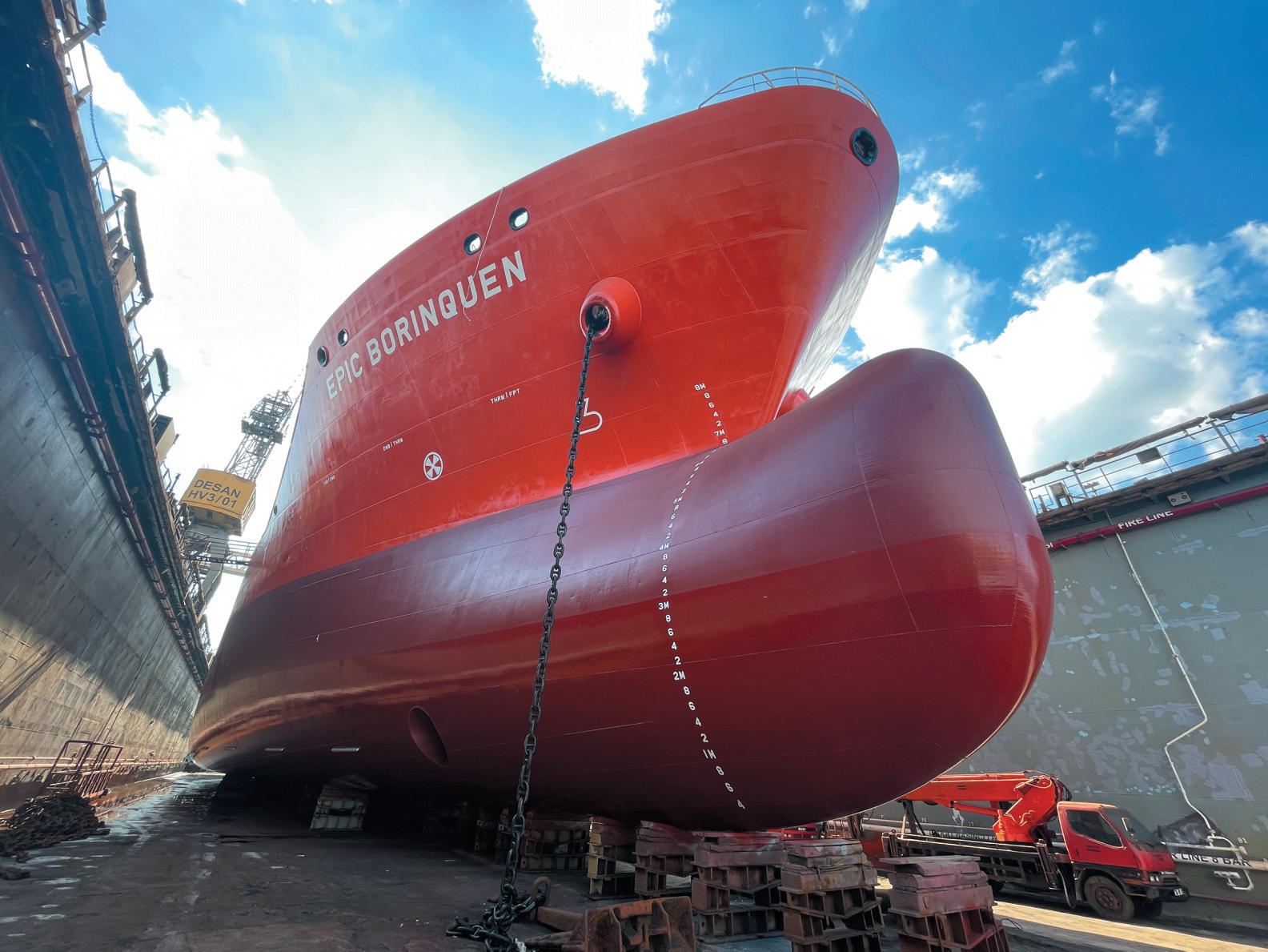
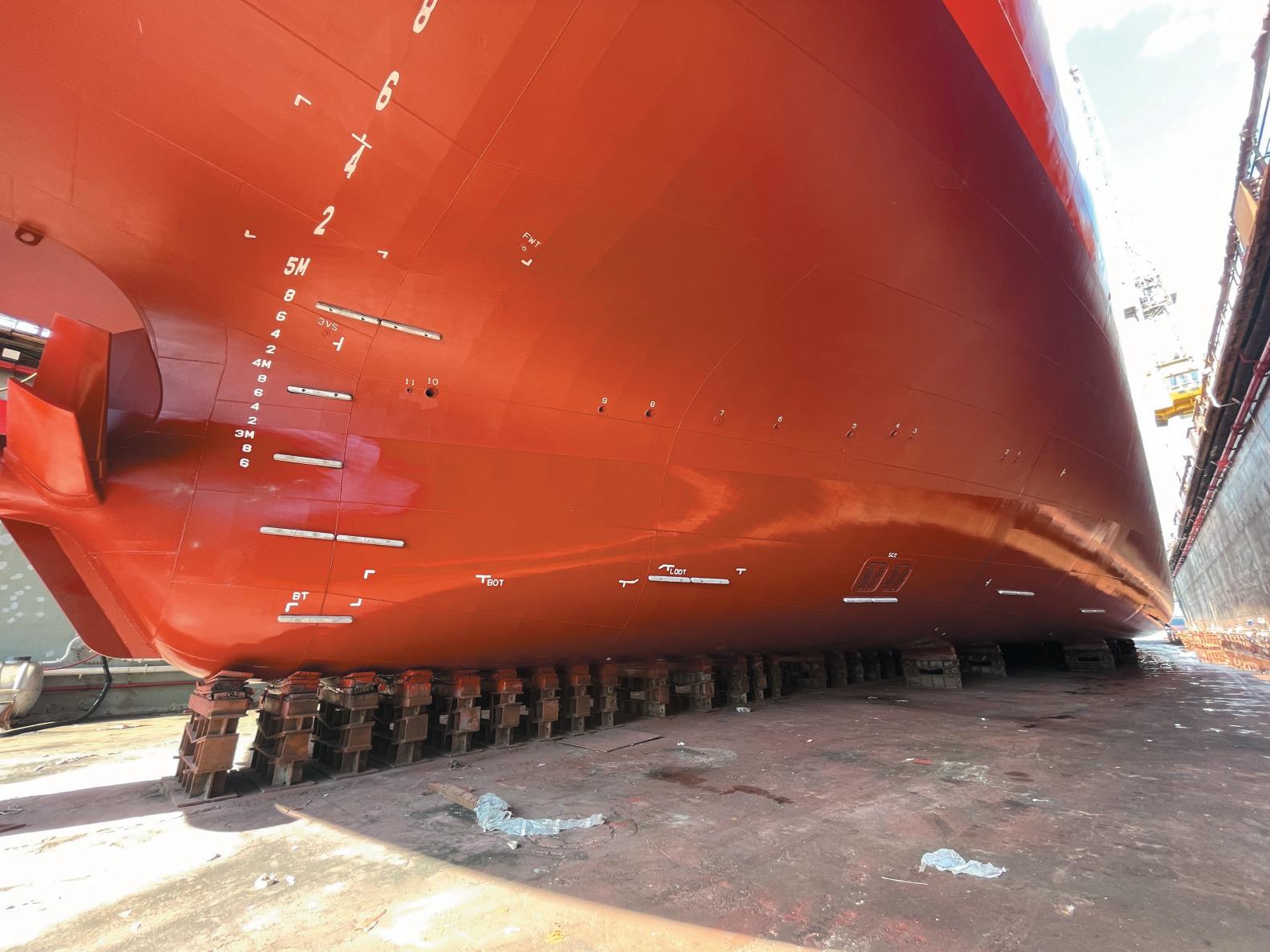
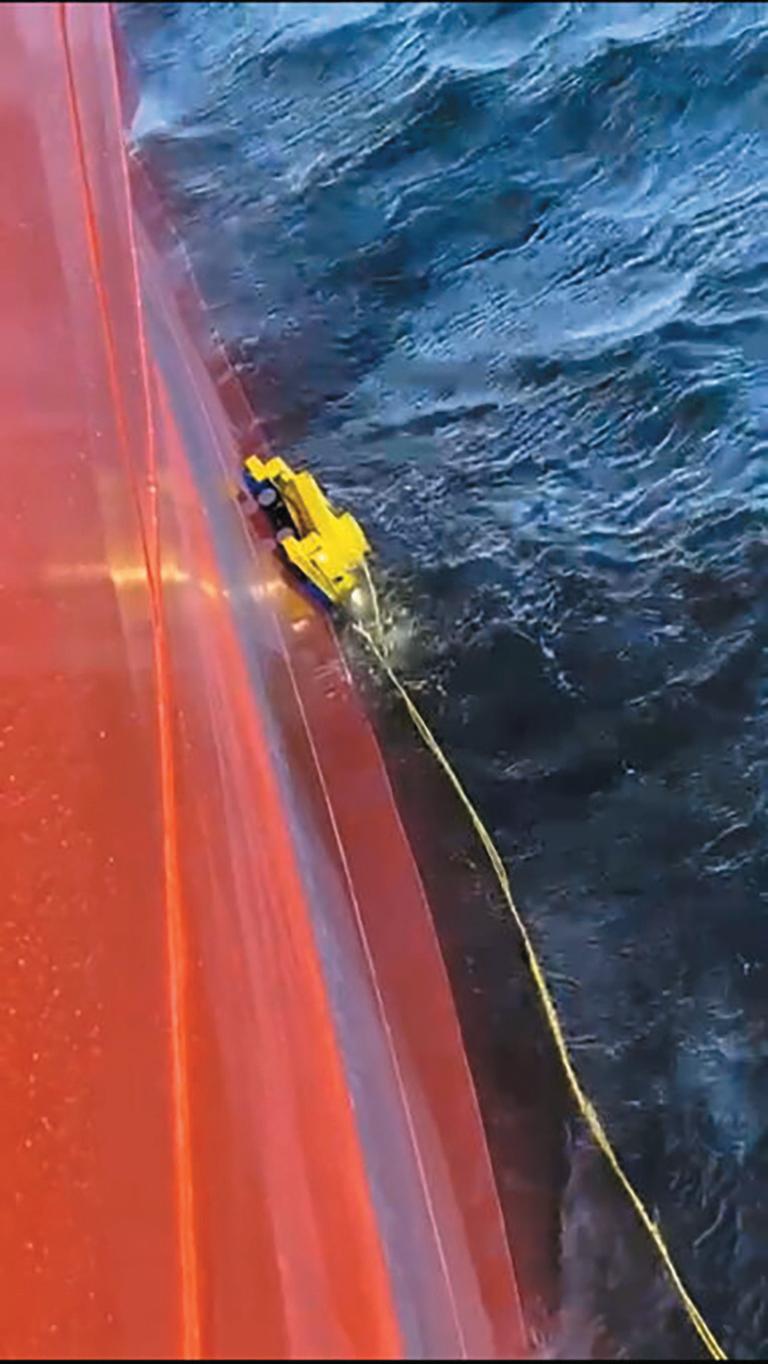
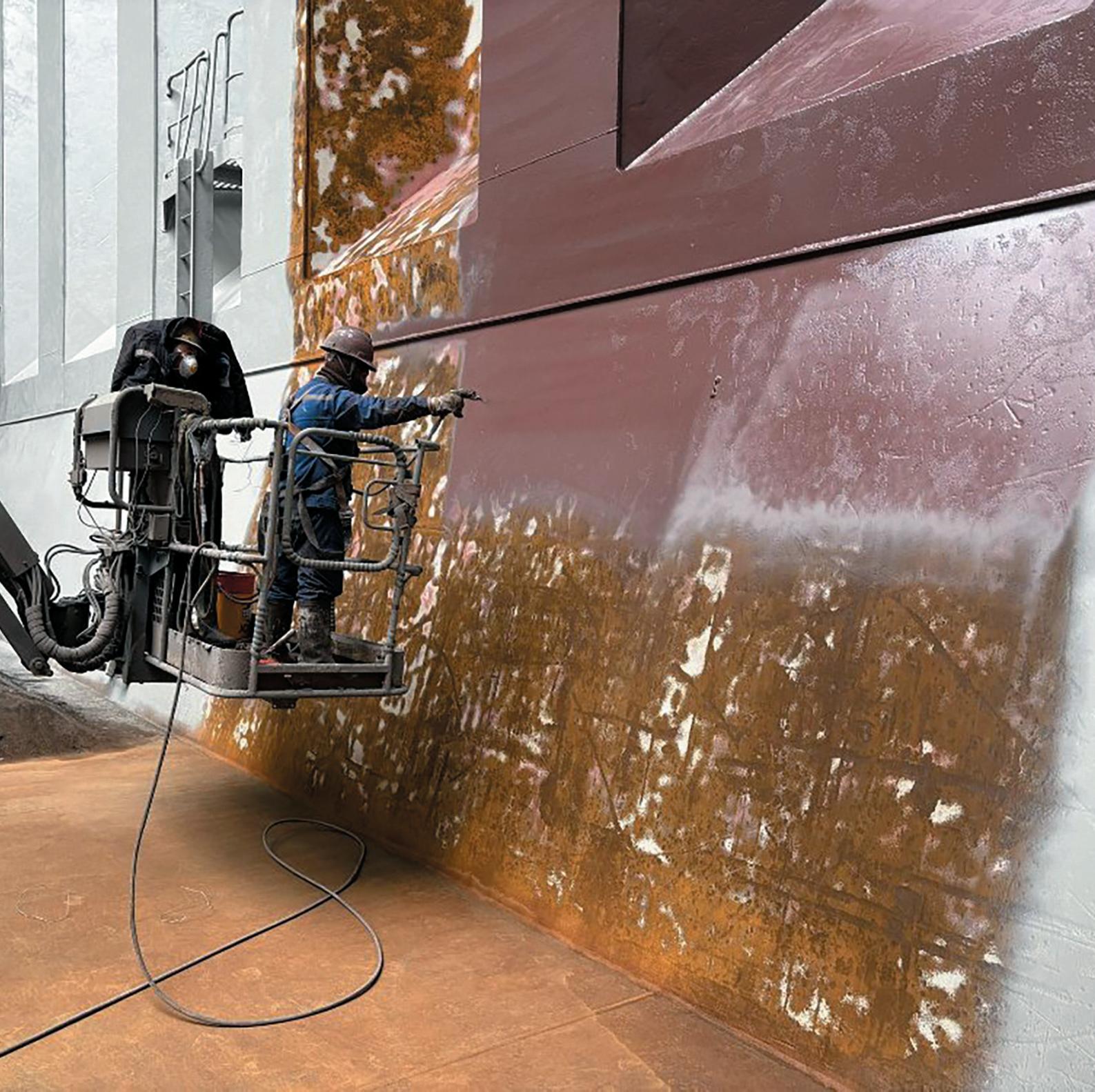
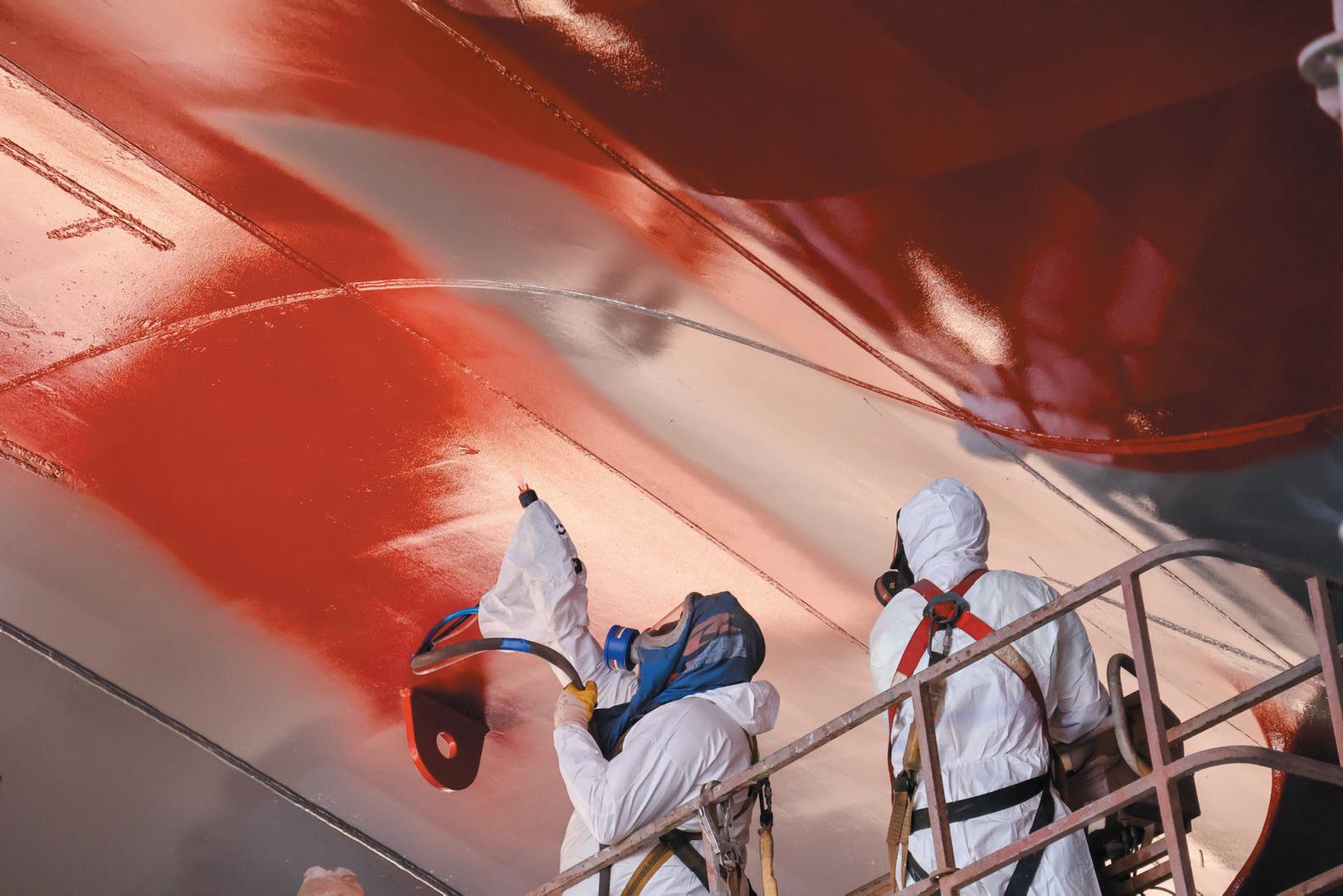
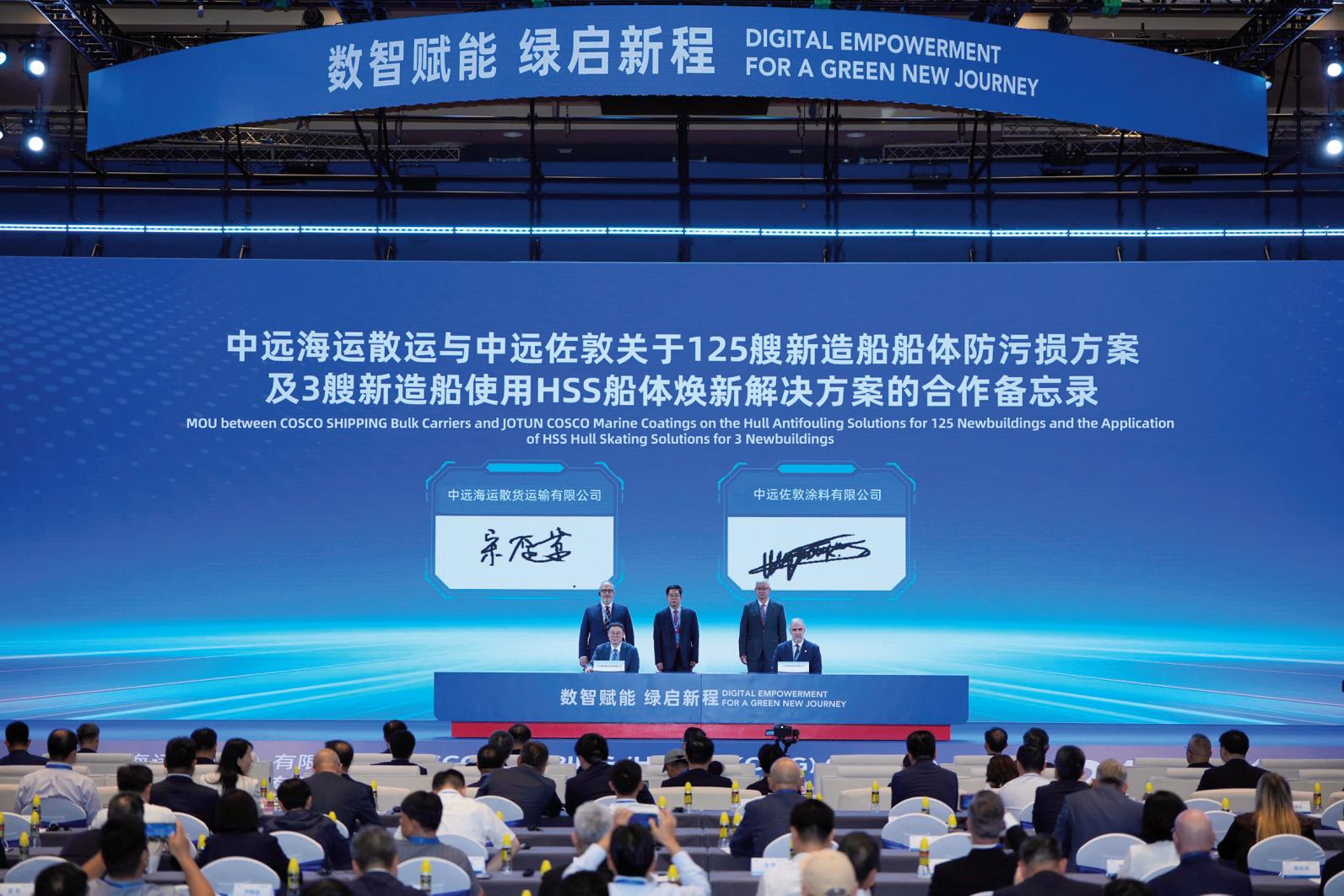
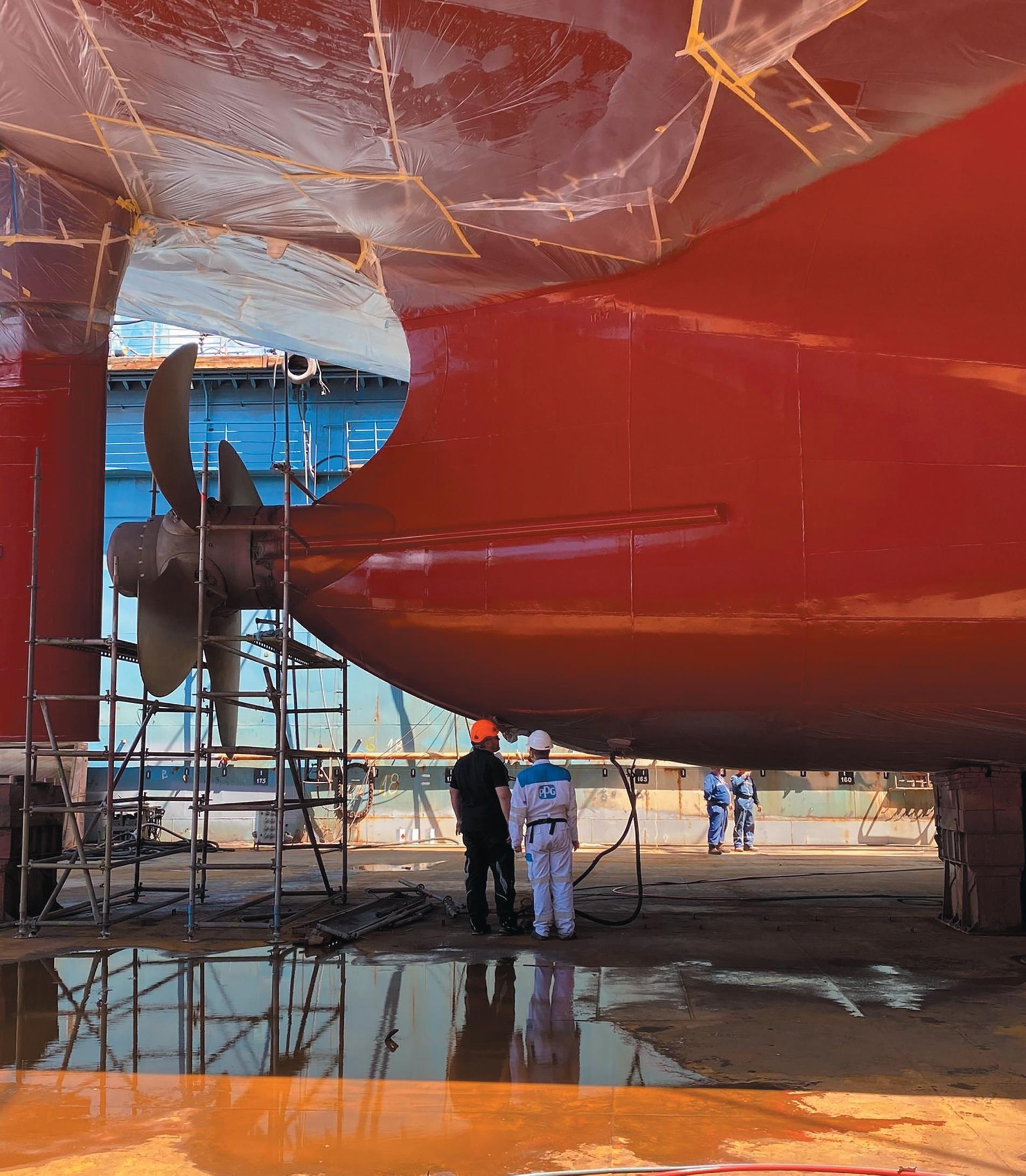
When launched in 2011, Jotun’s Hull Performance Solutions (HPS) disrupted the industry, and shifted the focus from promised to proven performance. Today, we continue to deliver premium products and services as part of the enhanced HPS 2.0 tailored to our customers’ needs.
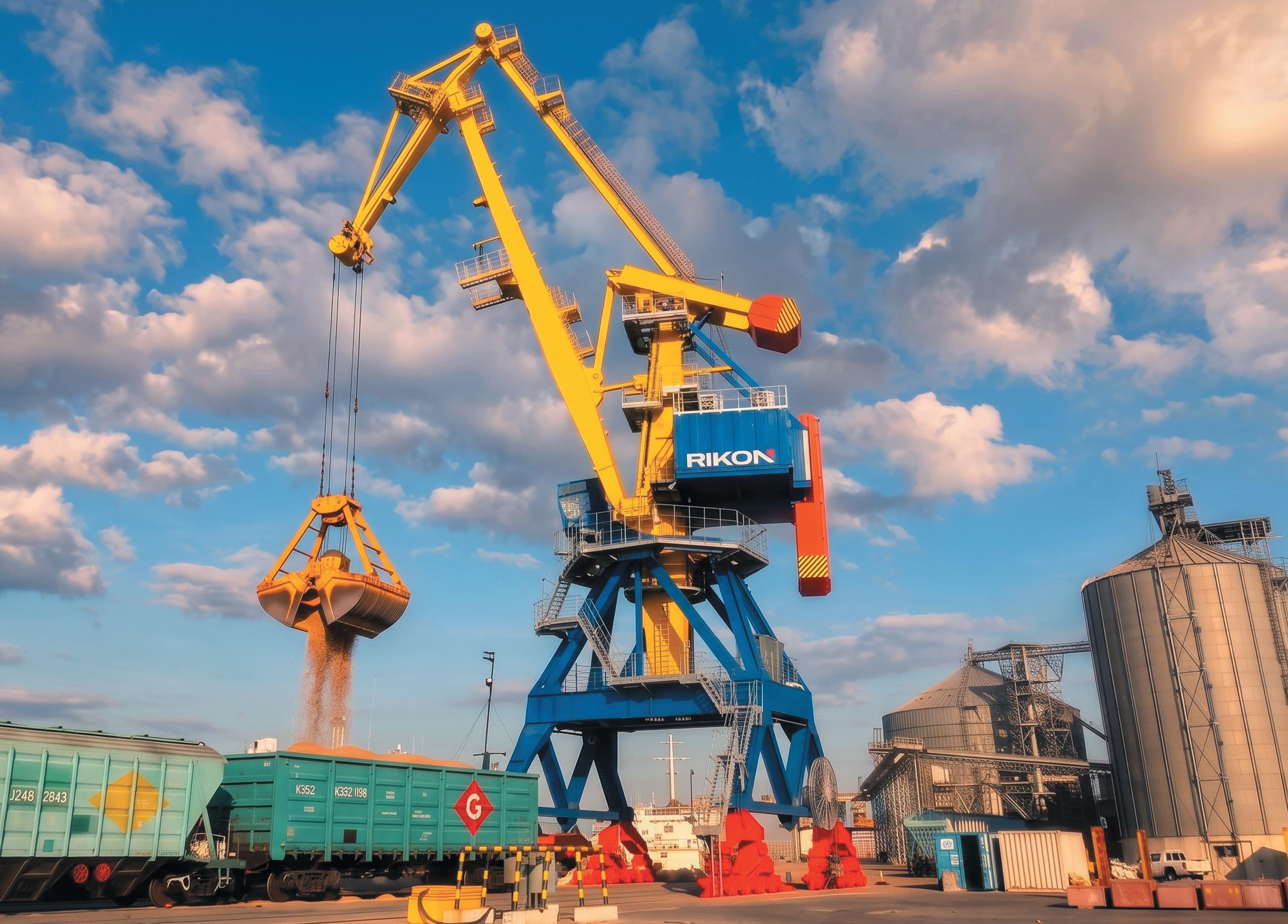
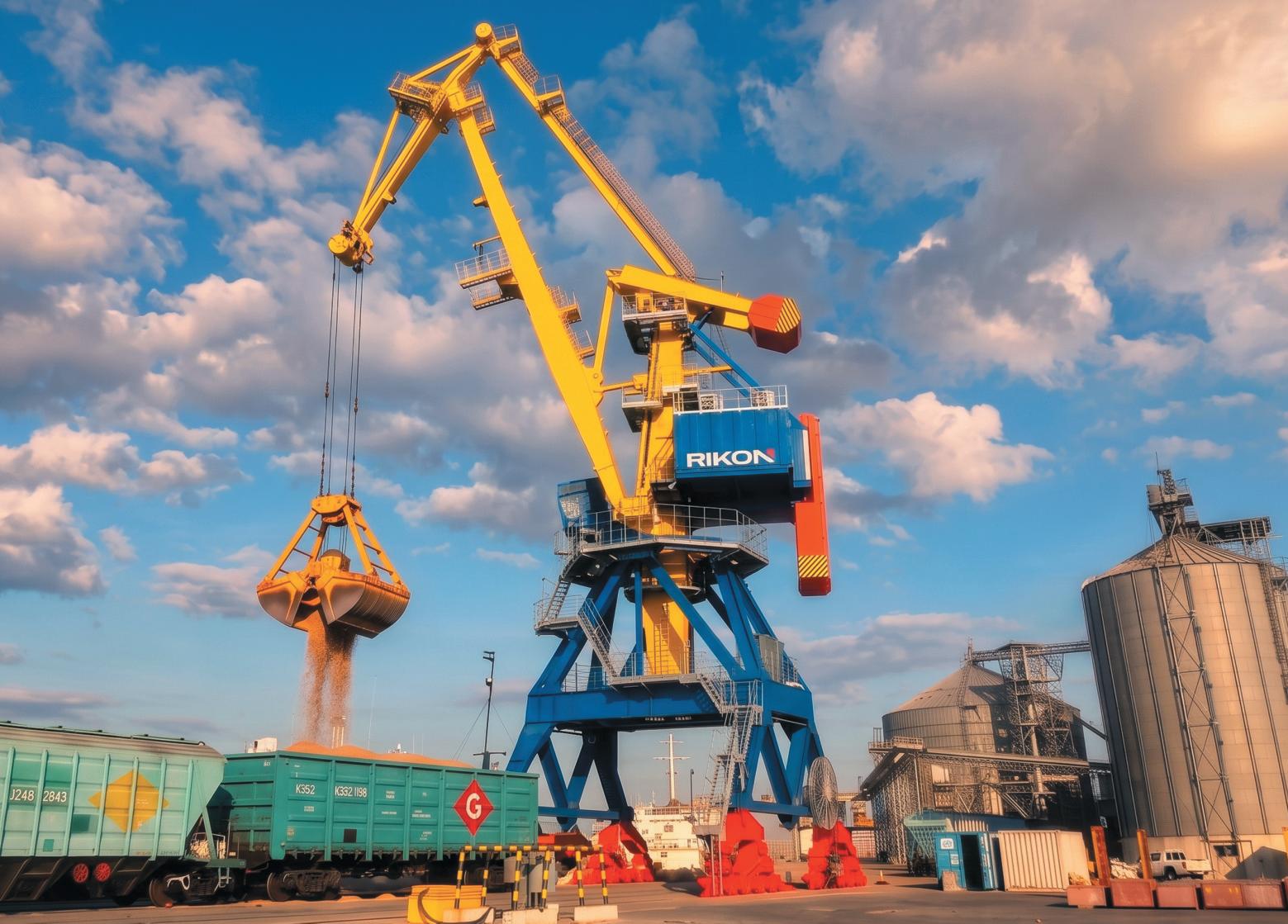
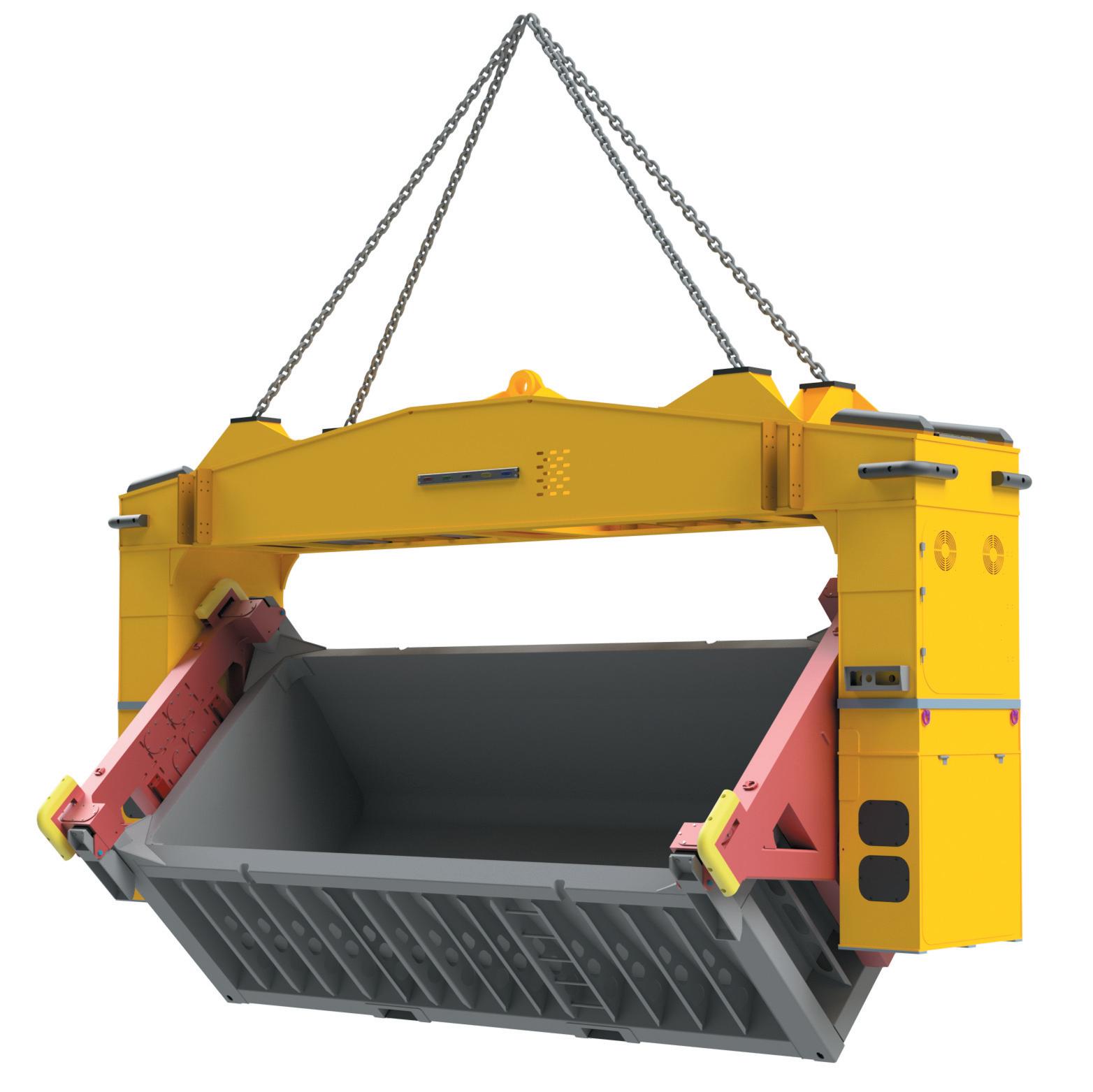
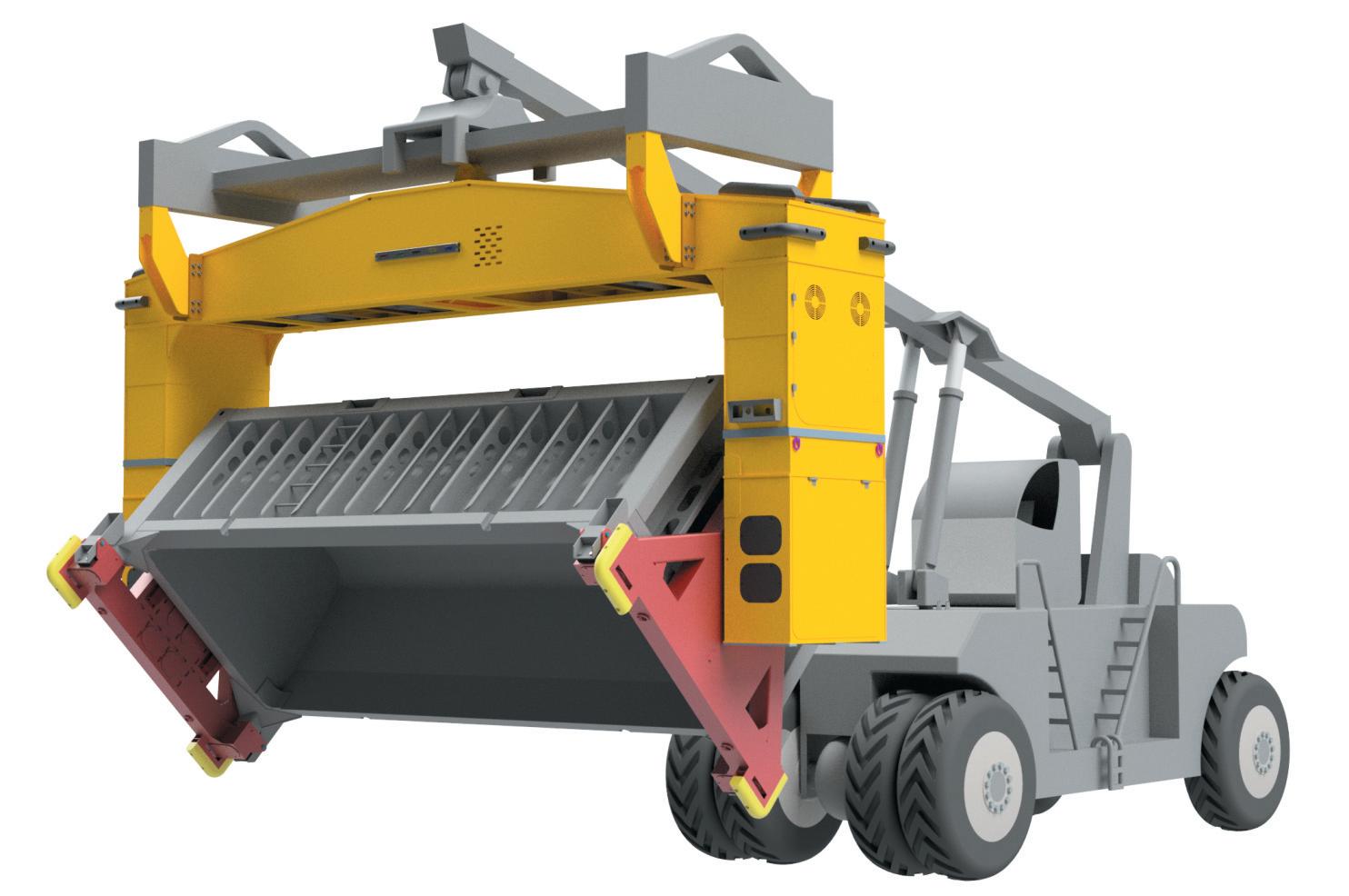
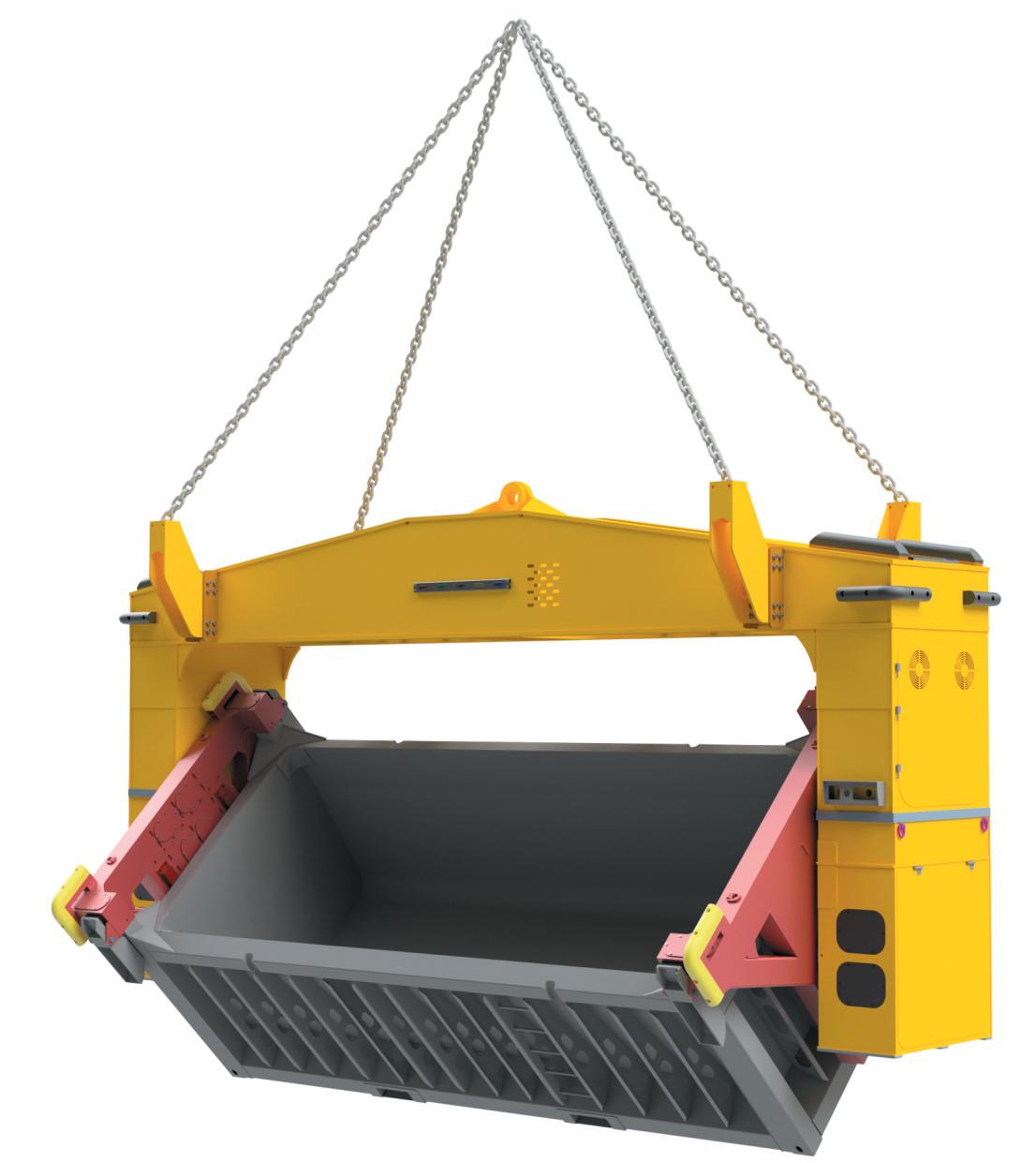
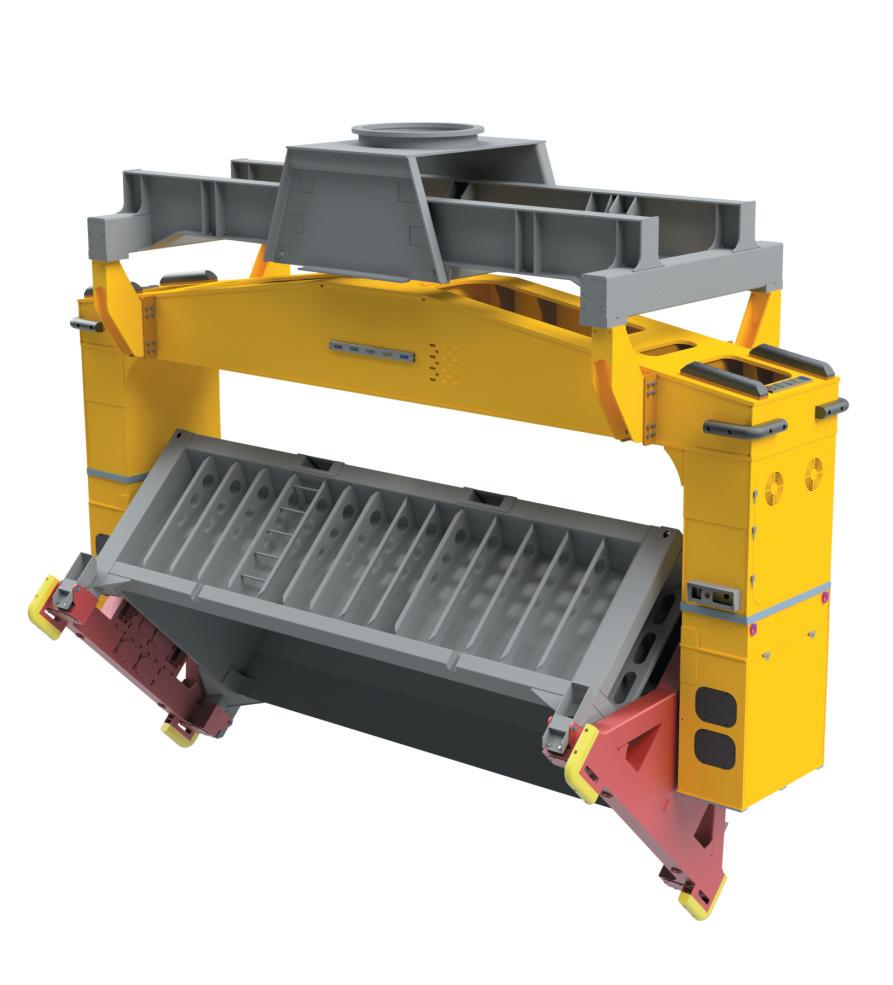
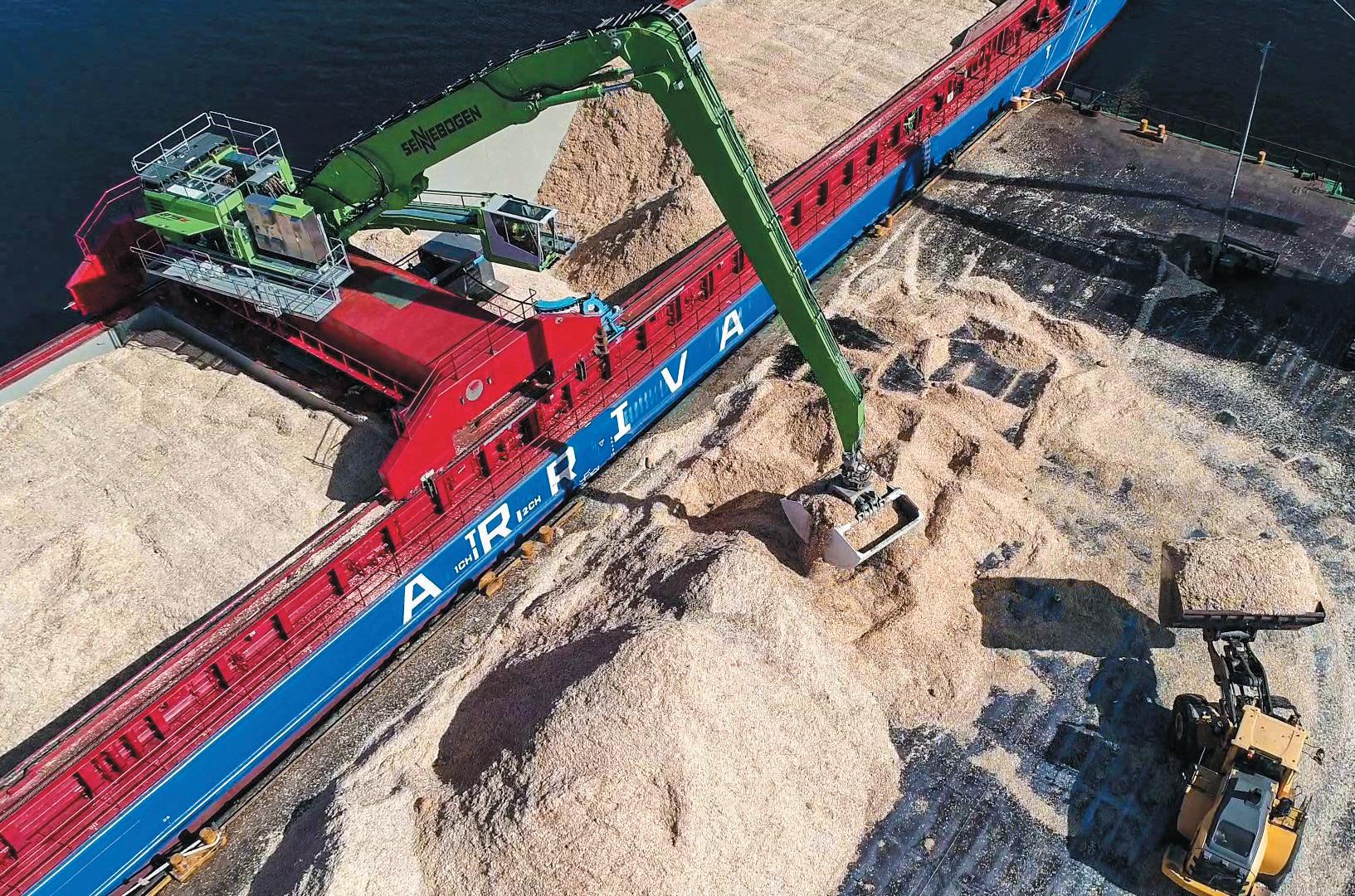
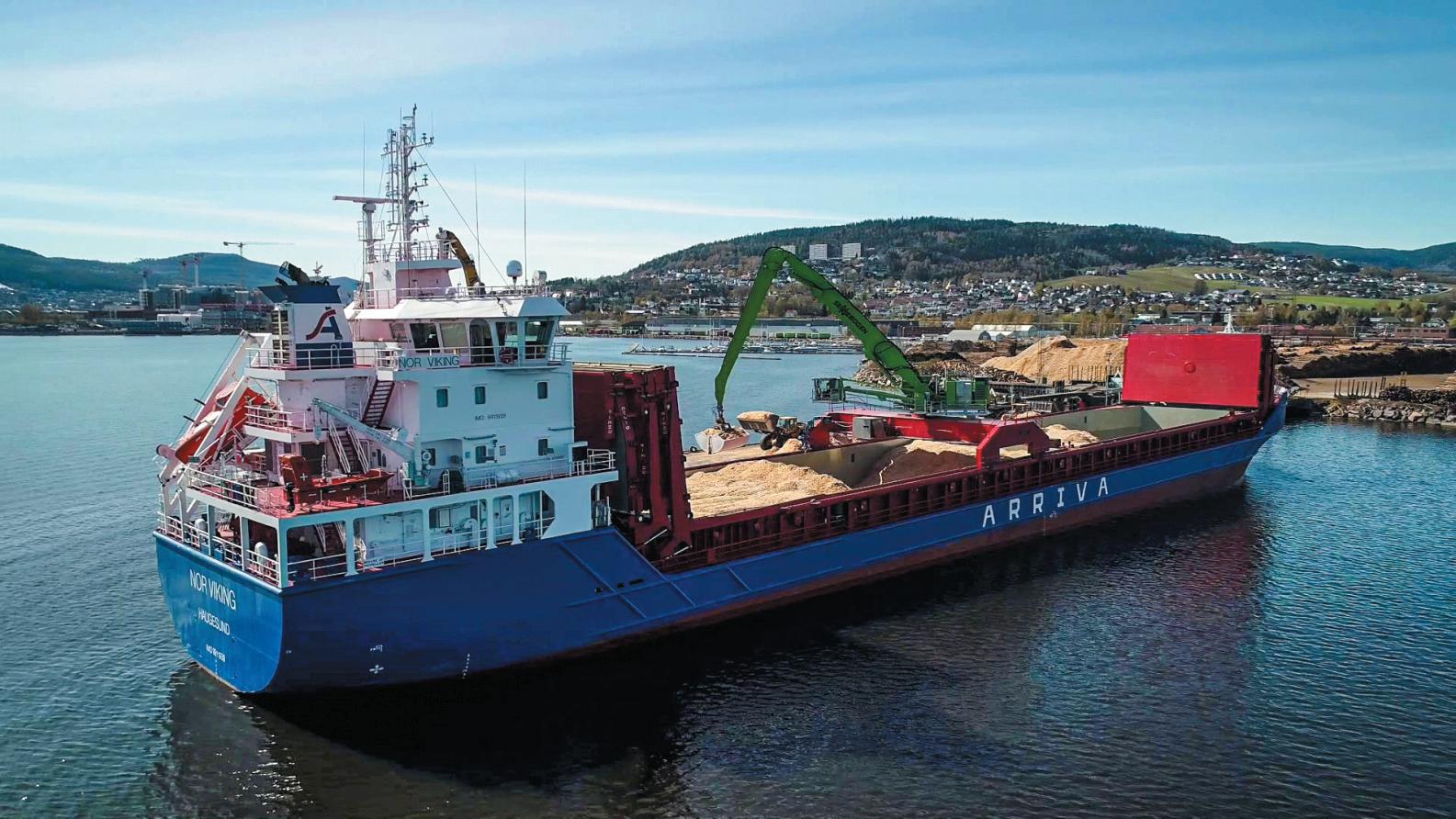
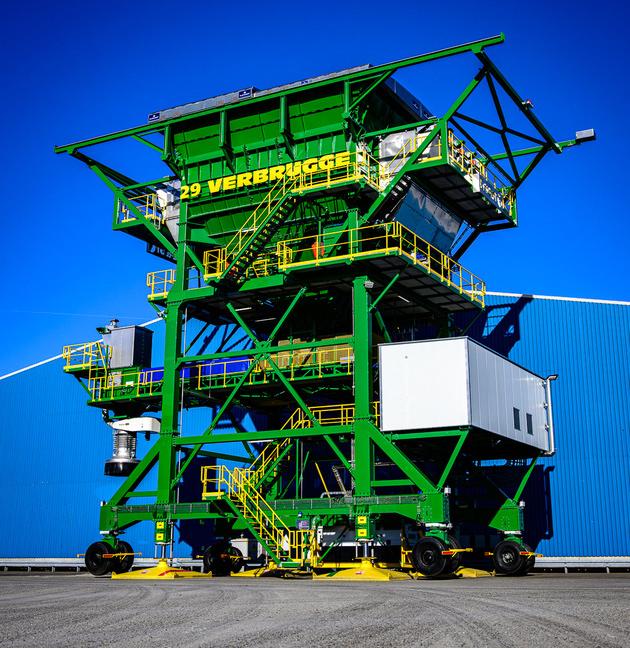
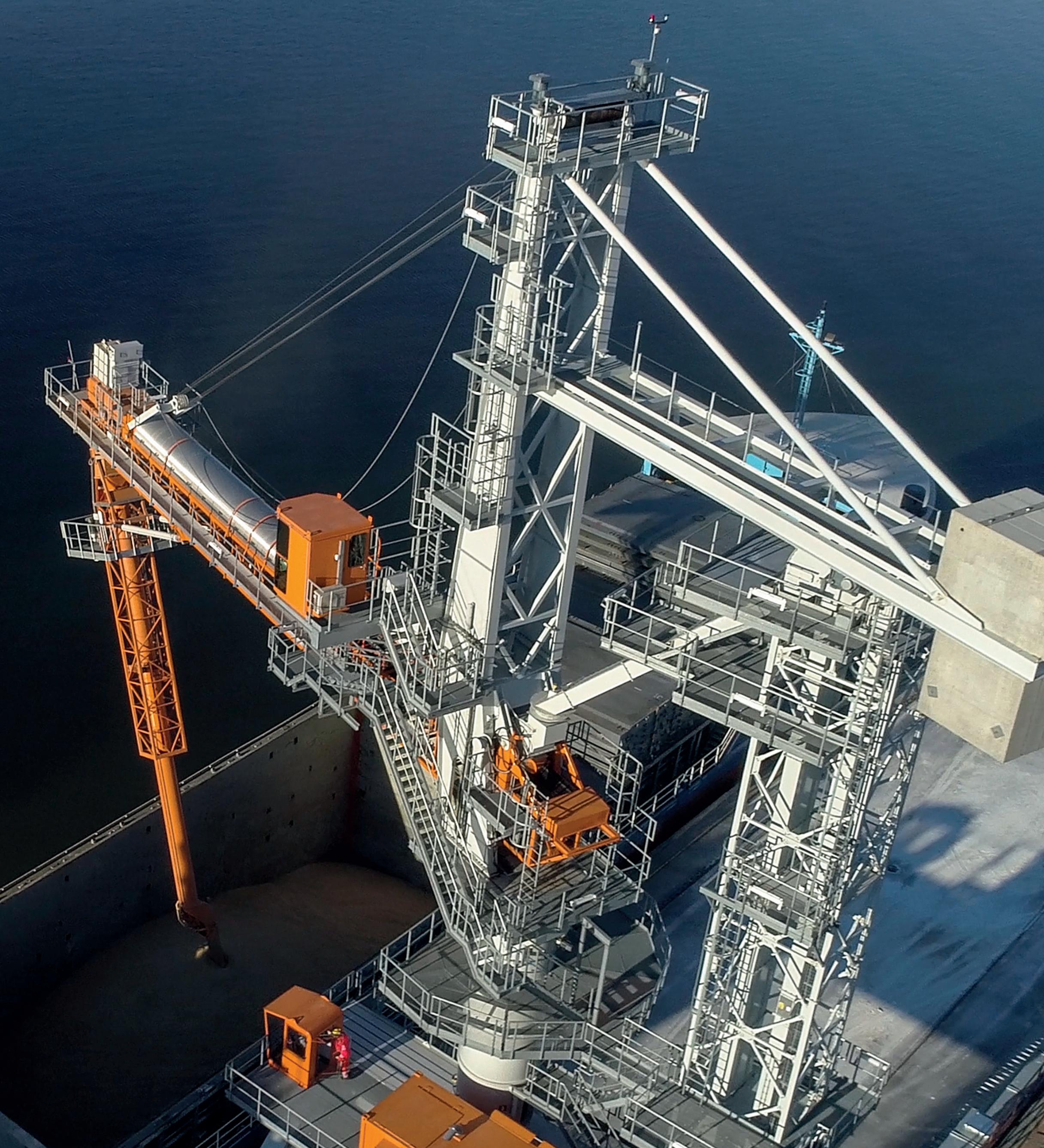
RIKON is a European manufacturer of heavy lifting equipment for global ports and terminals, offering Double Jib / Single Jib Level Luffing cranes, RMG container cranes with Remote Operation (ROS) and full automation (A-RMG), as well as RTG / A-RTG and Mobile Harbour cranes.
sales@rikon.lv www.rikoncranes.com
PUBLISHERS
Jason Chinnock jason@dc-int.com
Andrew Hucker-Brown andrew@dc-int.com
EDITORIAL
Louise Dodds-Ely Editor louise@dc-int.com
Jay Venter Deputy Editor editorial@dc-int.com
Samantha Smith Directories directories@dc-int.com
Bernice van Wyk Office Manager accounts@dc-int.com
Business Publishing International Corporate Park, 11 Sinembe Crescent La Lucia Ridge, South Africa, 4051
Tel: +27 31 583 4360
Fax: +27 31 566 4502
Email: info@dc-int.com
Twitter: twitter.com/drycargomag
HEAD OFFICE
Trade Publishing International Limited Clover House, 24 Drury Road, Colchester, Essex CO2 7UX, UK
Tel: +44 (0)1206 562552
Email: info@dc-int.com
Website: www.drycargomag.com
Twitter: twitter.com/drycargomag
ISSN 1466-3643
Insta: www.instagram.com/drycargointernational
Trade Publishing International Ltd does not guarantee the information contained in Dry Cargo International, nor does it accept responsibility for errors or omissions or their consequences. Opinions expressed herein are not necessarily those of Trade Publishing International Ltd
DRY CARGO international
STEEL RAW MATERIALS TRADE RESTRAINED
Amid ongoing tensions affecting commodity import demand in a number of countries, heightened uncertainty surrounds the outlook.
During 2026 as a whole, a continuation of last year’s slow growth in global seaborne dry bulk trade seems likely based on tentative indications.
Reflecting recent events, expectations for global economic activity this year have been downgraded. Prospects for countries comprising a high proportion of dry bulk import movements suggest restraints on consumer and business spending patterns. Industrial production and related commodity purchases may be affected adversely and, if inflationary pressures and rises in interest rates persist, a period of subdued activity is implied.
IRON ORE
Prospects for steel industry raw materials trades — iron ore and coking coal — indicate that growth during 2026 may be minimal. Volumes imported by most of the main buyers look set to be no higher than or below last year’s levels. But China’s iron ore imports strengthened in the first four months of this year, rising by 30mt (million tonnes) or 8%, to 417mt, providing a positive element.
Steel output data for the January to April 2026 period underlined the trend. Based on World Steel Association calculations, crude steel production in the main iron ore importing countries
was weaker, compared with last year’s same period. In Japan the total declined by 1% while in the European Union and in South Korea 2% reductions were seen. The volume produced in China fell by a larger 4%, emphasizing the constraints affecting domestic steel usage.
COAL
Difficulties in ensuring or envisaging adequate global energy supplies in the past few months, and uncertainties about future availability have renewed the focus on energy security as a top priority in many parts of the world. Despite continuing pressure to cut carbon emissions and raise the contribution of renewable energy sources, the recent problems have revived interest in coal as an immediately available solution.
Whether this re-focusing will have an enduring positive impact on coal trade may be debatable, but some short term consequences seem likely. At the beginning of this year it was suggested that world seaborne coal trade during 2026 as a whole could decline by perhaps 2%, after last year’s 4% fall. Currently, higher imports than expected earlier into some countries in Asia and elsewhere seem likely to assist in preventing or reducing this further reduction.
GRAIN & SOYA
The new 2026/27 grain and soya trade year is approaching and signs point to a
mixed outlook. For wheat, about a third of the total, the marketing years begins on 1 July. For the remainder, corn and other coarse grains, plus soyabeans and meal, the year starts on 1 October. A slight 1% decrease in the overall total may result from a lower grain volume, more than offsetting a higher soya volume.
About half of the forecast 2026/27 downturn in wheat and coarse grains imports reflects lower Middle East imports. The world total in this category (including land movements, but mostly seaborne) is expected to be 14mt or 3% down, at 447mt, according to the latest (May update) figures prepared by the US Department of Agriculture. But a 7mt (3%) soya trade increase to 272mt could be a partial offset.
MINOR BULKS
Additional volumes of minor dry bulk commodities associated with various industrial processes could be limited this year. But expectations for bauxite and alumina suggest that a sizeable increase may be seen, amid China’s buoyant import demand.
BULK CARRIER FLEET
Continued expansion in the handymax (45-69,999 deadweight tons) bulk carrier size group is likely during 2026. Similar newbuilding deliveries and scrapping compared with last year’s volumes (as shown in table 2) is expected to result in the 4% annual fleet growth rate persisting through the current year.
Clarksons (historical data) & *BSA estimates
Coal exporters face a perplexing vista
Downwards pressures affecting coal consumption and imports in many countries are still at the forefront. Yet events this year have resulted in greater ambiguity about the immediate future for world seaborne coal trade and prospects for exporters. After last year’s trade downturn, predictions of a further reduction in 2026 as a whole are now looking more dubious.
A revaluation of coal’s role in the global energy scene has followed the events of recent months. These emphasized how
major disruptions to oil and gas supplies can cause energy shortages or at least potential for such consequences, even when renewable energy supplies are expanding rapidly. Energy security has again become a greater focus of attention for numerous national governments. In some, coal’s advantages as a reliable, economical and readily available fuel source have attracted renewed interest.
Amid a general background of restrained usage, coal is still a vital and sometimes the largest energy source in
many countries and is expected to remain a valuable fuel for an extended period ahead. Nevertheless, while sustained dependence on imported coal supplies is likely to remain a feature of the global market, downwards pressures are set to persist. Coal trade seems unlikely to resume an expansionary trend. But within a declining longer term pattern fluctuations, upwards or downwards from year to year, are foreseeable for a variety of reasons, affecting coal consumption directly or indirectly through variations in supplies
vessel.
Richard Scott, Bulk Shipping Analysis
Built for Continuous Performance
of other energy types.
Among world coal trade forecasts prepared recently, expectations of reversing last year’s decline are not prominent. But another large reduction may be avoided, and a small decrease or flat volume is seen as a more likely outcome. The result envisaged reflects assumptions about availability and prices of global oil and gas supplies over the remainder of this year, surrounded by considerable uncertainties.
ENERGY USE INFLUENCES
Hostilities in the Middle East this year have added to a succession of events around the world in the past few years that disrupted energy demand and supply, with marked effects on coal trade. A global health crisis caused by the coronavirus pandemic, leading to an economic recession was experienced, followed by an energy crisis after Russia’s invasion of Ukraine, and the ensuing inflationary episode. Rising geopolitical tensions and Middle East hostilities reinforced the energy market impacts. Varying repercussions in the coal segment were seen.
Current forecasts of world economic activity can be characterized as more tentative than usual. These point to a generally subdued outlook for most regions and individual countries which are coal importers. Economic growth rates envisaged for 2026, with implications for industries using coal directly or (via electricity consumption) indirectly, are usually below those achieved last year.
According to the latest (early June) estimates prepared by the Organisation for Economic Co-operation and Development, world growth in gross domestic product is likely to be over a half percentage point lower in 2026, at 2.8%, than seen in the previous twelve months. In 2025 and preceding years 3.4% annual growth was seen. This outlook is dependent upon unforeseen events unfolding in the weeks and months ahead, and therefore provides only a guideline on how the trend could evolve.
Focusing on some of the specific forecasts for countries which are major coal importers, a pattern of deceleration is confirmed. China’s GDP growth is expected to experience a continued slowing from 5.0% last year to 4.5% in 2026, accompanied by a much sharper deterioration in India (based on fiscal years) from 7.6% to 6.3%. In Japan and the Eurozone slow increases of 1.1% and 1.4% respectively were seen in 2025. Both are expected to slacken further to below 1% in 2026, to minimal growth rates of 0.6% in
A possibility of additional weakness is clear, amid a wide range of outcomes. One interpretation of these projections is that economic activity probably will act as a restraining influence on consumption of energy this year. Yet consequences are not always obvious, because other influences may modify the impact of any change in the broad pattern of economic activity.
Looking at circumstances in individual countries, coal import demand reflects other developments which are more visible influences on changes in the pace. In particular, varying domestic production of coal (where this factor is relevant) can be influential, especially in China and India, where changes in domestic supplies are often a prominent element determining foreign coal purchases. Another aspect already mentioned is the focus — both longer term and in the short term — on alternative energy sources. Environmental regulations designed to limit or reduce coal burning are a notable feature. The heightened re-emphasis on energy security in numerous countries is also evident.
OVERVIEW OF EXPORT MARKETS
Energy market events this year could lead to a lessening of downwards pressure on global seaborne coal trade, compared with earlier expectations. This change may be enough to reduce substantially or even eliminate entirely a second consecutive year of decline in the total trade volume. A broadly maintained rather than further weakened import demand trend suggests
some benefits for coal exporters around the world. Differing results among suppliers are likely to reflect, as usual, varying circumstance and competitiveness. Some determinants of import demand which have been prominent in recent years are likely to continue to shape the seaborne coal trade outlook. Political decisions in importing countries — often reflecting plans to cut carbon emissions and reduce air pollution — are often visible. While decisions of this type may be foreseeable in principle, the precise timing and the extent of effects are not always predictable, adding impetus to speculation surrounding trade volumes and patterns. Moreover, the ongoing war involving one of the biggest coal exporters, and sanctions imposed in reaction, compound uncertainty about political influences on the coal market.
A reputable forecast of global seaborne coal trade in 2026, published recently suggested that a decline of about 20mt (million tonnes) or 2% could occur, half the 4% reduction to about 1,330mt seen in 2025. Negative changes, in both the steam coal and coking coal segments, seemed likely to reflect pervasive weakness in the main consuming industries’ purchases of coal from foreign suppliers during the current year.
Since then, in the past few weeks, anecdotal evidence has pointed towards imports in some Asian and other countries being boosted during 2026 by higher coal purchases than expected earlier. Shortages of oil and gas energy supplies, even if this
Japan, and 0.8% in Europe.
phase proves temporary, have prompted a re-assessment of coal’s contribution to energy security. This fuel’s role as an economical element, available from a wide range of suppliers around the world, has acquired renewed prominence.
But forecasters’ opinions typically vary, reflecting differing views about uncertainties surrounding the main influences and the magnitude of foreseeable changes. Much uncertainty in particular surrounds international market purchases by China and India, together comprising almost half of world imports. Of smaller magnitude, although still potentially having substantial impacts, is the possibility of any large changes in imports by a wide range of other countries including South Korea, Taiwan, Malaysia, Vietnam and the European Union.
As a broad perspective, potential for supplying countries either individually or together to raise exports during 2026 seems limited but support may be firmer than envisaged before recent events in the wider energy market occurred. Intense competition among exporters probably will be a feature. Direct commercial competition including aspects of availability, quality and price will influence varying success among exporters in achieving results. Governments’ trade policies, especially those affecting imports from Russia that are under sanctions prohibiting purchases in a number of countries, also are likely to be instrumental in shaping trade movements.
In exporting countries domestic influences affect coal production, availability and quality of export supplies. These aspects include the scale, efficiency and profitability of mining activity and output, the type of coal produced, and the proportion absorbed by domestic demand. Production costs and internal transport capacity for moving coal from mines to loading ports and costs involved have an impact on competitiveness and pricing in the international market. Government policy decisions about overall domestic coal resources and output also are also occasionally instrumental in determining export availability.
INDIVIDUAL EXPORTERS OUTLOOK
Major suppliers to the world coal market are included in the accompanying table on p8, showing export totals for 2025 and trends in preceding years. These seven large exporters’ volumes represent over 95% of all world sea trade in coal. Annual changes among individual countries are often large and contrasting, a notable
feature. Another characteristic is how the market is dominated by two countries. Indonesia and Australia contribute over two-thirds of world export supplies.
Indonesia, the top coal exporter, supplying predominantly steam coal, saw a 33mt or 6% fall in its exports in 2025, compared with the preceding year, to 530mt based on these calculations. The total included large quantities of low-grade lignite mainly bought by China for power station use. Signs have suggested a lower total in 2026, especially if China’s import demand continues to weaken. There has been uncertainty also surrounding Indonesia’s coal policy and production quotas, which have seen changes and may be still subject to forthcoming alterations.
The number two exporter, Australia, is a very large supplier of both steam coal and
coking coal. In 2025 the 355mt total was down by about 2%, comprised of 203mt steam coal (57% of the total) and 153mt coking coal (43% of the total). Expectations for the overall volume in 2026 point to a similar volume to that seen last year, amid only limited indications of a substantial change in either of the two segments.
Russia is the third largest supplier to the world market for seaborne coal, selling steam coal grades comprising over twothirds of exports in the past twelve months, and coking coal. Last year’s export total was 165mt, a 3mt (2%) decrease, and the 2026 volume may be similar. But forecasts are largely speculative. Uncertainty surrounds the impact of international sanctions in particular. These have reduced buying by several importers,
** 2025 compared with previous year source: Australian Government Dept of Industry, Science & Resources and BSA calculations
while other importers not imposing sanctions have raised purchases. Russia has the competitive advantages of low-cost, high-quality coal available.
Coal exports from the United States (excluding shipments to Canada, usually seen as ‘internal’ trade movements) were lower last year when the total declined by 13mt (14%), to 80mt. Within this quantity coking coal comprised about 54%. Some calculations point to a fairly stable volume in 2026. The USA has been generally viewed as a price-sensitive swing supplier in world markets, because most production is high-cost compared with many other exporting countries and therefore more vulnerable to competition.
South Africa’s seaborne exports, mainly comprised of steam coal, have remained remarkably stable in the past four years and again totalled 71mt in 2025. The trend in 2026 seems likely to remain quite flat. A feature of past performance has been restrained throughput at the Richards Bay terminal, handling most of the country’s shipments, reflecting various logistical problems encountered in transporting coal from mines to the port.
Exports from Colombia mainly comprise steam coal grades. In 2025 the total was much lower, falling by 10mt (18%) to 46mt, but a revival may unfold this year and some forecasters envisage that the volume could rise to 50mt or more.
Another significant supplier to the world market is Canada, mainly exporting coking coal (about four-fifths of the total volume). Excluding shipments within North America, to the USA, seaborne exports in 2025 were up by about 6% to 37mt and could remain fairly flat after remaining stable in recent years. A relatively minor supplier is Mozambique, exporting 6-7mt annually of coking coal in the past couple of years.
PUZZLES CONFRONT EXPORTERS
Coal exporting countries are still facing an existential threat of an increasingly difficult
global market over the years ahead. This outlook remains intact, despite some signs recently suggesting that further weakening could be delayed, at least temporarily by events in the wider energy market over the past few months.
In numerous countries clear indications of the potential for diminishing import demand are visible, accompanied by only limited expectations of positive developments elsewhere. Last year’s downturn in global seaborne coal trade seemed to be the start of a longer term declining trend. The prospects for another reduction in 2026, confirming the direction of the trend, have faded because of the unforeseen energy crisis and revival of a focus on coal in some countries. Yet even if a reduced volume this year is avoided, the negative background is unchanged.
Changes in the volume of global seaborne coal trade from year-to-year may not always be negative because of changing circumstances in the energy markets of individual importing countries. Nevertheless, the general evolution expected to emerge is a diminishing pattern which is likely to affect most exporters, albeit unevenly. Such a view is based upon the existence of environmental pressures and accompanying regulations, which continue to have profoundly unfavourable implications for coal usage and trade.
Wide application of decarbonization strategies has become firmly entrenched as a vigorous process. Competition from alternative energy sources is growing, especially renewables, with some of these benefiting from falling costs. Moreover, government measures in numerous countries are designed to deter or prevent coal usage in the longer term.
The outlook for coal exporters’ participation in global coal trade during 2026 and into next year partly reflects the background assumptions about the usual range of influences determining import demand. Restraints are likely to be exerted
by economic activity generally, and by energy- and coal-consuming industries in particular. Another conspicuous aspect is the potential for domestic coal output, in the two biggest importing countries, to increase and absorb a larger market share that weakens import purchases.
Attention tends to focus on China as the world’s largest individual importing country which, after last year’s downturn, still comprises well over a quarter of global seaborne coal trade. Two other features also attract attention — huge year-to-year changes both upwards and downwards in import volumes, and the mainly unpredictable nature of these swings. Partly these changes occur because, although massive, imports form a relatively minor part of the Chinese coal market which is mostly supplied by domestic mines. Upwards or downwards movements in domestic coal production, consumption and stocks sometimes have a disproportionate impact on imports. Foreign purchases also partly reflect government policy changes.
Negative pressures are evident among other Asian countries, especially where policy changes weakening coal use are clear or are foreseeable. The outlook often reflects government energy and environmental policies, prioritizing increased use of alternative energy sources. But the pattern is not uniformly negative across Asia, because in several smaller importing countries consumption growth is still evolving, providing opportunities for some coal exporters.
Recent events suggest that some of the weakening momentum being experienced in global coal trade has been alleviated this year and probably into next year as well. Benefits for exporters may be an outcome. Whether that will be enough to prevent another annual decline in world seaborne coal trade during 2026 as a whole is not altogether clear though. The longer term trend is still surrounded by influences likely to exert downwards pressures.
CSL delivers world’s first battery-powered self-unloading bulk carrier to support Adbri Operations
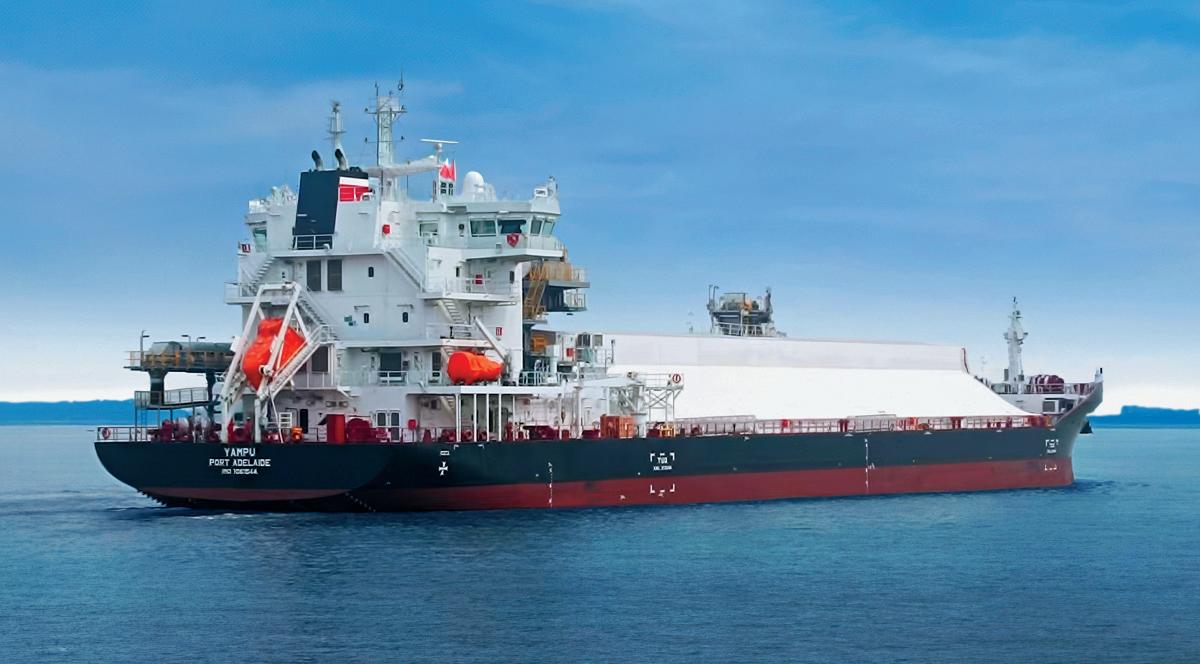
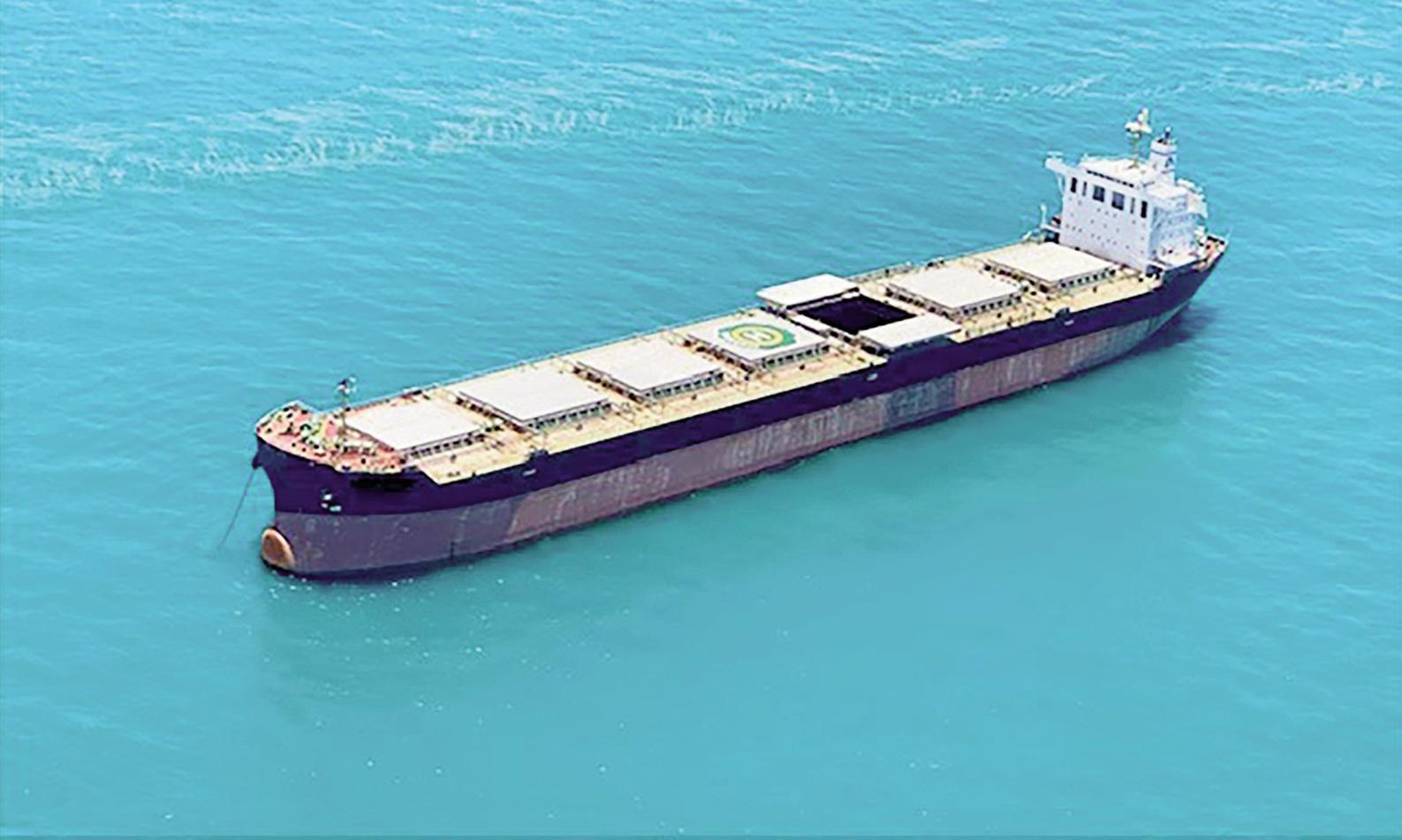
CSL and Adbri have announced the delivery of Yampu, the world’s first battery-powered self-unloading bulk carrier. The vessel was officially delivered at Jiangjiang Nanyang Shipyard on 5 June, and has now departed on its maiden voyage to commence operations for Adbri in Birkenhead, South Australia.
This new purpose-built 11,000dwt limestone carrier represents a major step forward in sustainable marine logistics. Designed to transport approximately 2.7 million tonnes of limestone annually for Adbri — an increase of 35% over its predecessor — Yampu will significantly enhance supply chain efficiency while reducing environmental impact.
Equipped with advanced hybrid propulsion technology, the vessel is expected to reduce diesel consumption by 25% and cut Scope 1 emissions by 40% compared to the ship it replaces. By 2031, Yampu will operate fully on electric power, enabling emissions reductions of more than 90% and setting a new benchmark for lowcarbon bulk shipping.
Owned and operated by CSL and crewed by Australian seafarers, Yampu has been optimized to support a fully integrated limestone supply chain for Adbri. Upon arrival in South Australia, the vessel will play a key role in delivering essential raw materials more reliably, efficiently, and sustainably.
Yampu is the result of a close collaboration between the CSL and Adbri teams, reflecting both companies’ shared commitment to innovation, operational excellence, and the decarbonization of the maritime industry.
bound4blue WINS DNV Type Approval for most powerful installed eSAIL®
bound4blue has received Type Approval Design Certification (TADC) from DNV for its Model 3-24 eSAIL®, the company’s largest and most powerful installed suction sail. The approval confirms the system’s compliance with DNV’s rigorous and wellestablished classification requirements for safety, structural integrity, and design robustness.
bound4blue’s Model 3 range is designed for larger vessels and projects looking to maximize the possible propulsive contribution from wind power. Units range from 24–36m. The Model 3-24 is the first of the new design to be installed, with two units fitted on the DNV classed Klaveness Combination Carriers newbuild Baltazar in April. With an expanded sail surface area and optimized aerodynamic profile, the system maximizes lift generation, enabling shipowners to achieve greater fuel savings and emissions reductions across a wide range of vessel types.
TRUSTED, POWERFUL , SCALABLE
“Achieving Type Approval from DNV for our most advanced installed eSAIL® is an important step forward, both for us and shipowners looking to harness optimal benefits from wind propulsion,” says José Miguel Bermúdez, CEO and co-founder of bound4blue. “Independent validation from a leading classification society like DNV confirms that the technology meets relevant standards for reliability and performance.
“Such class developments are essential for accelerating uptake across the industry. They reduce uncertainty, support acceptance by regulators, insurers and charterers, and give shipowners the basis they need to invest in proven, future-ready solutions. Ultimately, they support the eSAILs® potential as a trusted, scalable tool for decarbonization.”
CLASSIFICATION DELIVERS CONFIDENCE
Commenting on the TADC, Cristina Saenz de Santa Maria, CEO of DNV Maritime, says: “At DNV, we are committed to supporting the maritime industry in navigating the energy transition, and we are pleased to award this Type Approval to bound4blue, as it expands the range of technical solutions available to the industry.”
“We’re now beginning to see the next generation of WAPS units. One of the key enablers of these developments is the parallel evolution of technical standards,
which have been a vital part of building acceptance in the market. This means working closely with technology providers to assess new solutions against independent technical standards, and we look forward to further collaboration in this area.”
MAXIMIZING PERFORMANCE AND COMPLIANCE
Built on bound4blue’s established Model 2 platform, the new 3-24 eSAIL® features a wider chord and increased sail surface area compared to earlier designs. This enables enhanced aerodynamic efficiency and higher propulsion output, while maintaining the system’s ease of integration, with limited additional system complexity, such as tilting mechanisms.
With fully autonomous operation,
eSAILs® utilize boundary layer suction technology, drawing air across an aerodynamically optimized surface to generate propulsive force and reduce main engine fuel consumption and CO2 emissions. This supports both cost reductions and regulatory compliance, including frameworks such as FuelEU Maritime and the EU Emissions Trading System (EU ETS), as well as contributing directly to Carbon Intensity Indicator (CII) ratings and compliance with EEXI requirements.
DRIVING SHIPPING’S ENERGY TRANSITION
As regulations tighten and pressure mounts to reduce emissions, wind propulsion is increasingly used as a solution for both retrofit and newbuild decarbonization strategies.
DSM Shipbrokers
Dry bulk safety: sustaining decades of progress amongst new risks
Marc Pauchet, Global Market Leader for Dry Bulk at Bureau Veritas Marine & Offshore (BV), explores how decades of regulatory reform, technological progress, and industry collaboration have steadily reduced fatalities in the dry bulk sector. However, fresh challenges — including cargo liquefaction, alternative fuels, and geopolitical instability — are set to test these gains and require renewed focus on safety, training, and operational resilience.
Dry bulk shipping has seen remarkable improvements in safety over the past four decades, with the sector experiencing a significant drop in fatal accidents. This positive trend has been driven by stronger regulation, advances in vessel design, enhanced crew training, and evolving classification standards championed by organizations such as BV. Between 1980 and 1999, there were 107 fatal accidents, which resulted in 1,128 fatalities. Since 2000, this has fallen to 76 accidents and 455 fatalities. While any loss of life is unacceptable, the overall trend clearly demonstrates meaningful and sustained progress.
This improvement is even more notable when viewed against the growth of the global bulk carrier fleet. From more than 4,500 vessels over 20,000dwt in 2000, the fleet has expanded to over 12,000 by 2024, with transported volumes more than doubling. To assess safety performance consistently over time, the industry increasingly relies on the ‘shipyear’ metric, which normalizes fatalities relative to the size of the fleet under consideration. By this measure, the reduction in fatal incidents is even more significant, confirming that safety gains reflect genuine long-term advances rather than simple changes in fleet scale.
A series of regulatory and technical milestones underpin this progress. The
introduction of the Code of Practice for the Safe Loading and Unloading of Bulk Carriers (BLU Code) in 1997 and SOLAS Chapter XII enhanced loading practices and structural safety requirements. Later, the Common Structural Rules established by the International Association of Classification Societies (IACS) created consistent standards for vessel strength, fatigue assessments over a vessel’s lifespan, corrosion protection and standardized cargo loading and ballasting conditions. These developments have substantially reduced structural failures and operational shortcomings. Technological innovation has further bolstered safety through the widespread adoption of electronic navigation systems, satellite positioning, integrated bridge systems, and improved distress communications. These systems have reduced navigational accidents and strengthened emergency responses; by the late 2010s, fatality rates across major vessel categories had reached historic lows.
However, the 2010–2019 period revealed a concerning exception. Cargo liquefaction, previously a marginal risk, accounted for nearly 90% of dry bulk fatalities during that decade. Liquefaction occurs when moisture-sensitive cargo behaves like a liquid as its moisture content exceeds safe limits and vessel motion reduces its shear strength, causing rapid stability loss. Nickel ore shipments, particularly from Indonesia, were strongly linked to this spike, driven by rising demand from stainless steel production and battery manufacturing. Indonesian export restrictions helped reduce incidents, but the hazard remains. Recent casualties highlight the need for rigorous cargo testing, careful handling, and continued crew vigilance.
Looking forward, two major challenges are reshaping the industry’s safety landscape. First is the transition to
Dry bulk shipping has seen remarkable improvements in safety over the past four
decades.
Marc Pauchet, Global Market Leader for Dry Bulk at Bureau Veritas Marine & Offshore (BV).
alternative fuels such as ammonia, methanol, and hydrogen. While essential to meeting decarbonization goals, these fuels introduce new technical risks and operational complexities. Classification societies, such as BV, are developing new rules and guidance to support this transition, but operational experience and training frameworks tailored to these fuels remain limited.
Second, growing geopolitical instability exposes vessels and crews to heightened threats from armed conflict, missile strikes, and security incidents. Once rare, warrelated losses are becoming an increasingly material concern.
Overall, the dry bulk sector is safer today than ever before, thanks to decades of collaboration between regulators, operators, and classification societies. However, sustaining this progress demands continued vigilance, investment in crew training, and adaptation to emerging risks. As the industry navigates decarbonization and geopolitical uncertainty, organizations like BV will play a vital role in ensuring that safety standards keep pace with a rapidly changing landscape. The progress achieved is substantial, but the challenge now lies in maintaining this momentum amidst an increasingly complex operational environment.
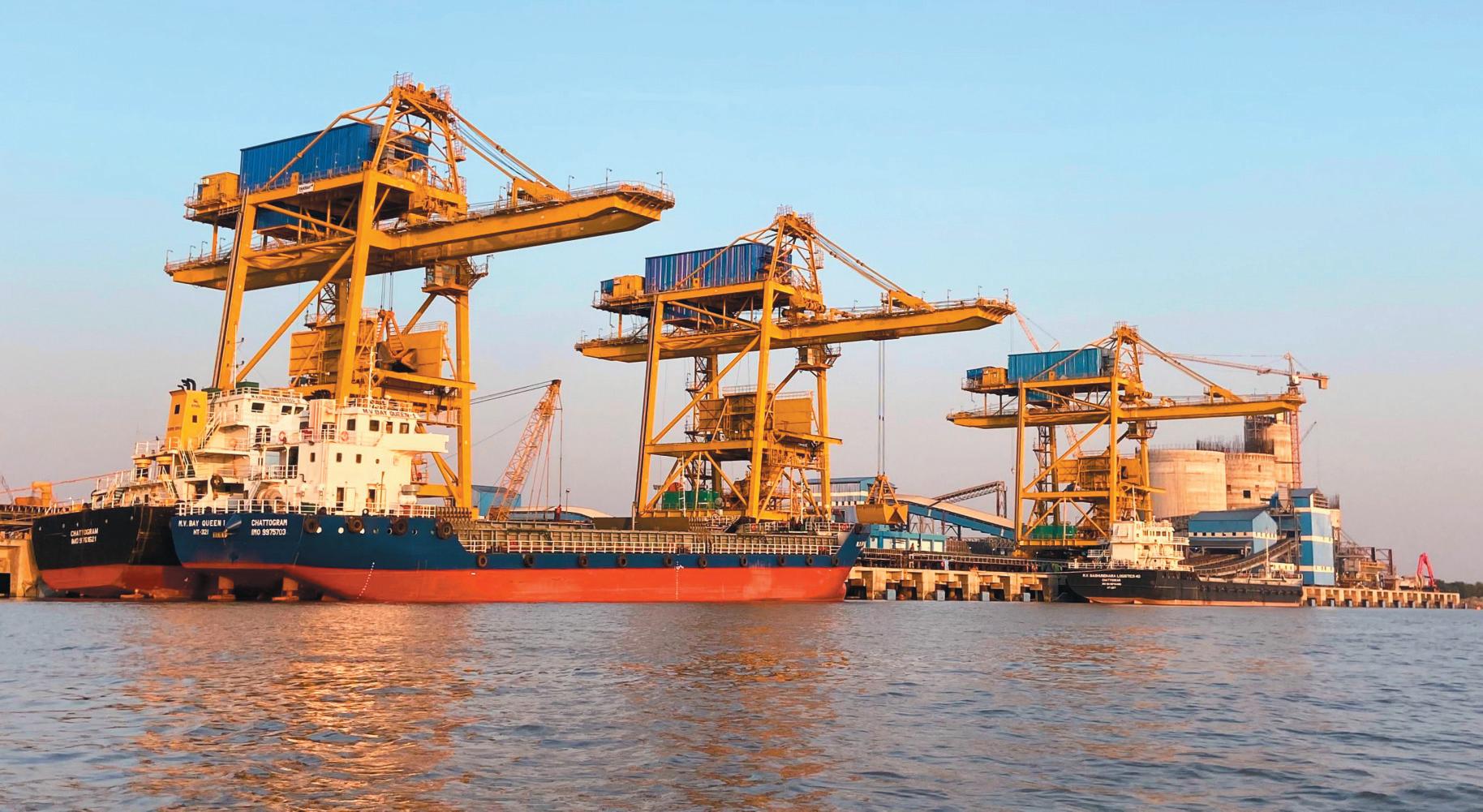
GENMA completes shipment of three large grab ship-unloaders
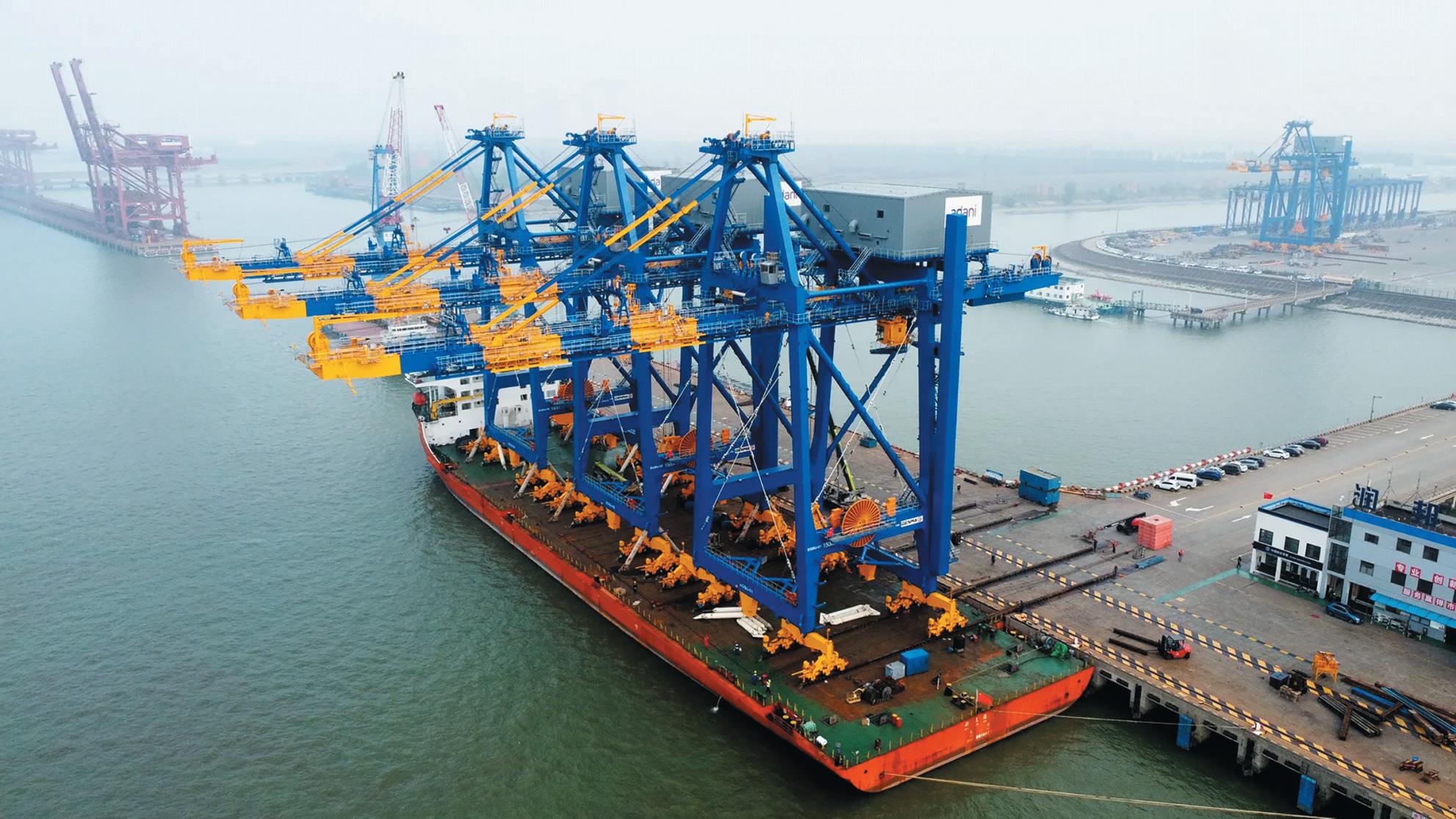
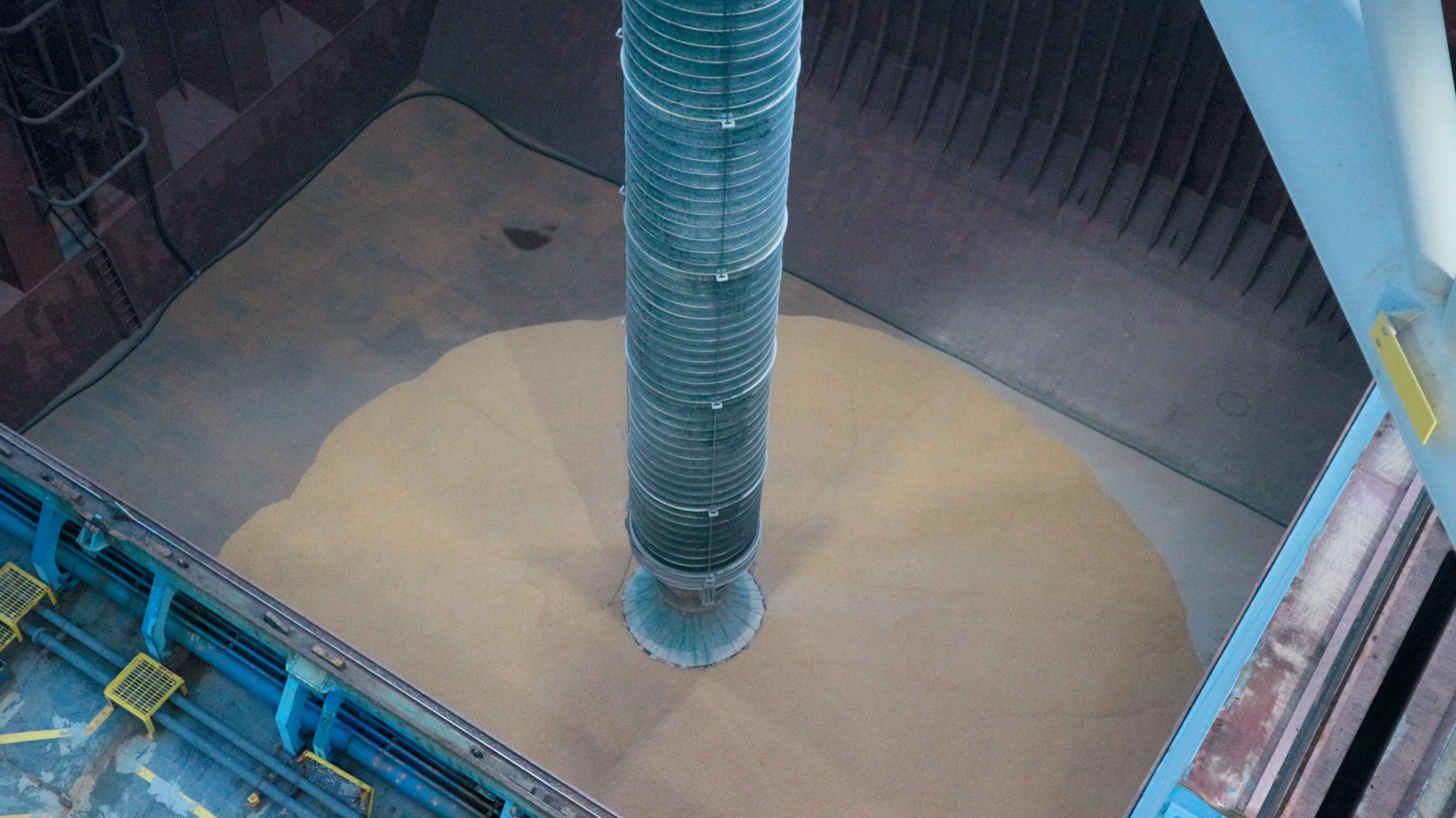
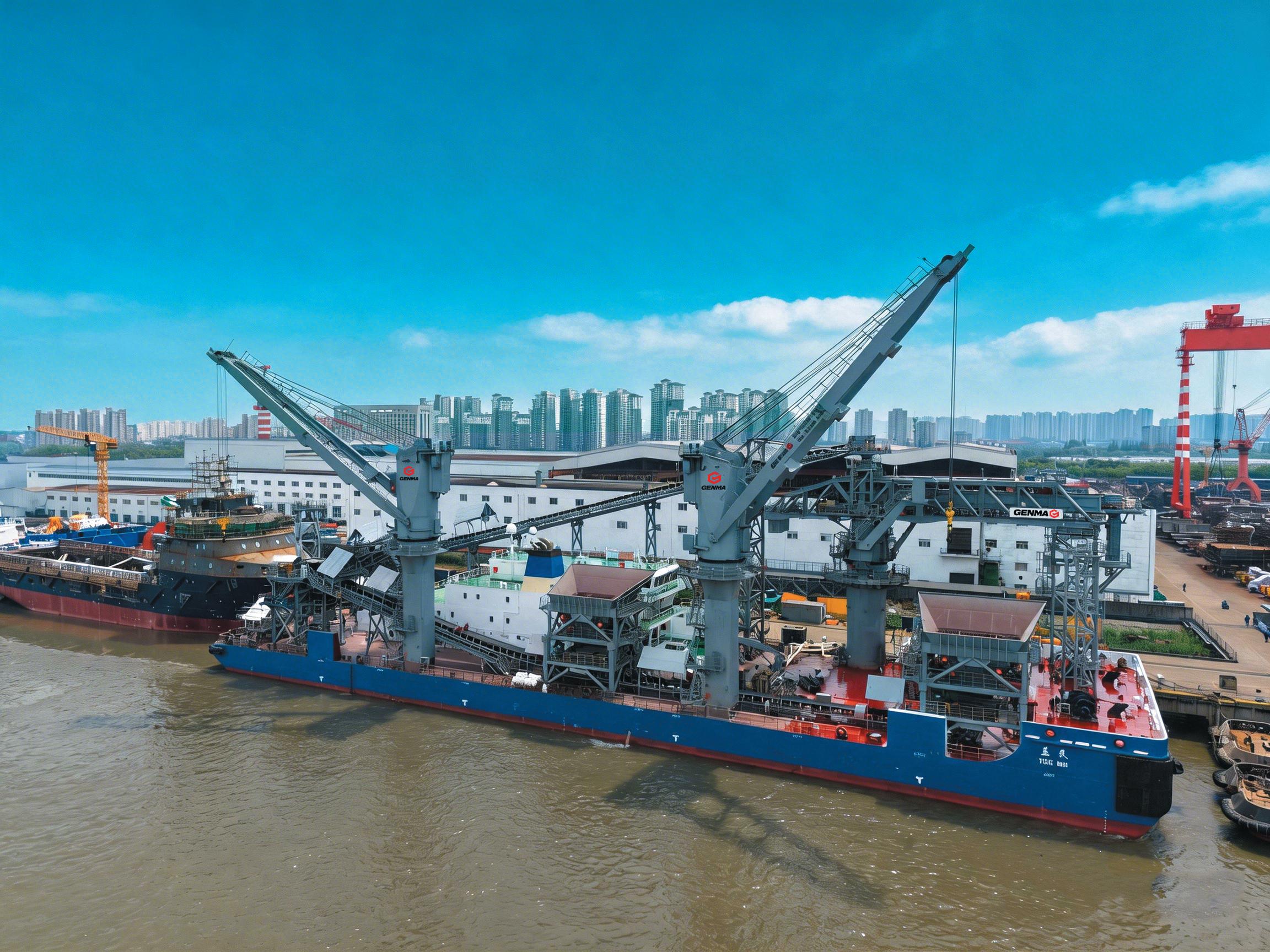
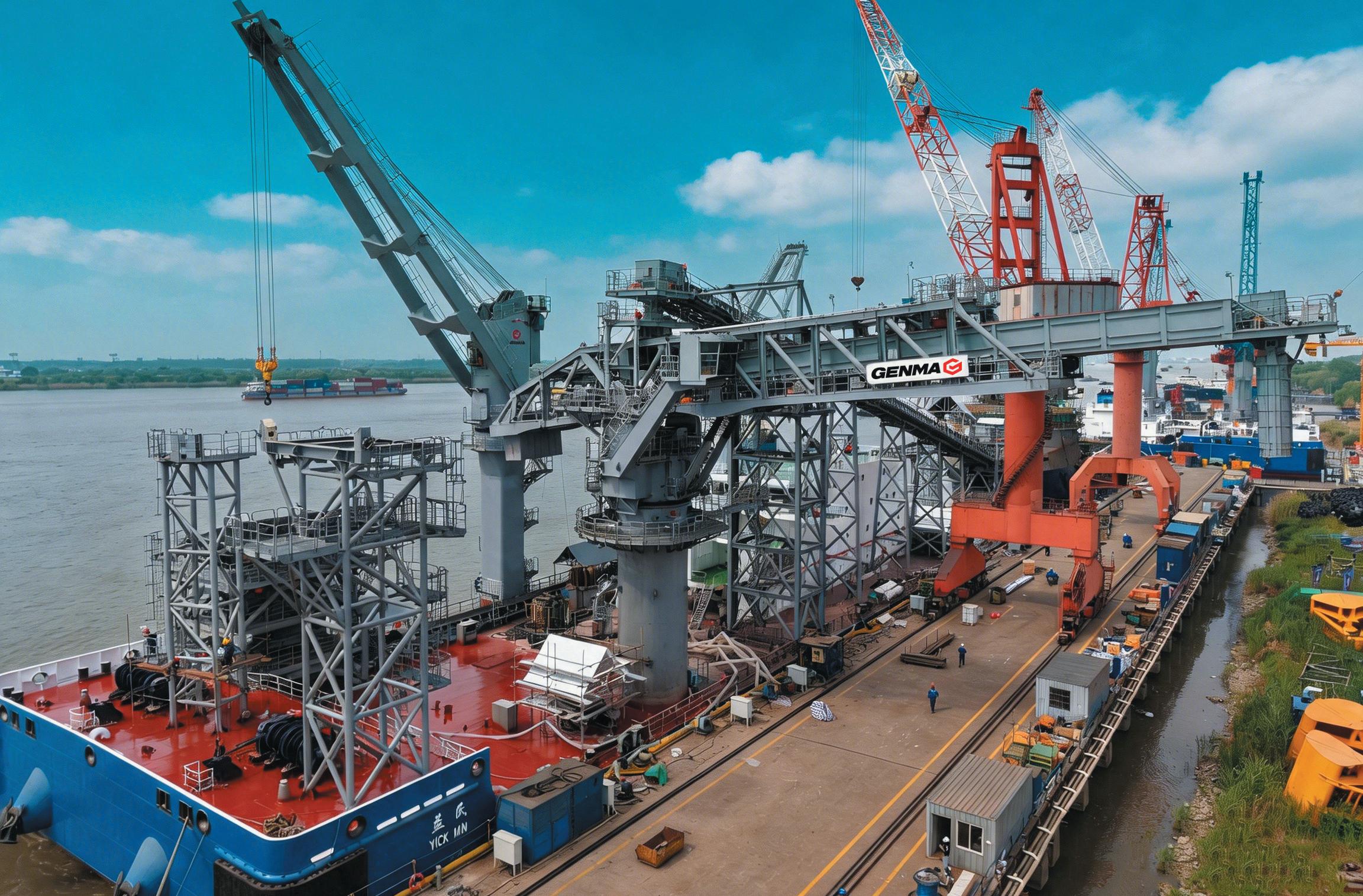
GENMA recently shipped three large grab ship-unloaders from Taicang Runhe Port (RHP Port) in China, destined for a key customer in India to enhance bulk cargo handling efficiency at their port.
These three units are part of a 14-unit order secured by GENMA last July, which includes 12 1,500tph (tonnes per hour) and two 2,000tph grab ship -unloaders.
All equipment is manufactured by Nantong Rainbow Heavy Machineries. This shipment marks a solid step forward in delivering the full order.
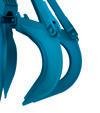
GENMA’s grab ship-unloaders feature a dual-mode ‘grab + hook’ operation. In grab mode, they efficiently handle coal, ore, and other bulk materials for vessels from 70,000 to 240,000dwt. In hook mode, they can easily lift steel plates, pipes, and general
cargo. The units also support reverse loading using the grab to load cargo from the yard onto ships, or even container flipping for rapid loading making them truly multi-purpose. The 2,000tph models, designed specifically for high-efficiency unloading of coal and iron ore, come with auto-positioning and synchronized hoisting for precise, stable,
and energy-saving operation.
GENMA has previously supplied multiple grab ship-unloaders and mobile harbor cranes to the same customer, building a strong long-term partnership. GENMA remains committed to delivering the remaining units with the same high quality, driving continuous value for its customer’s port operations.
GENMA recently shipped three large grab ship-unloaders from RHP Port.
Beyond the surface the evolving science of marine coatings
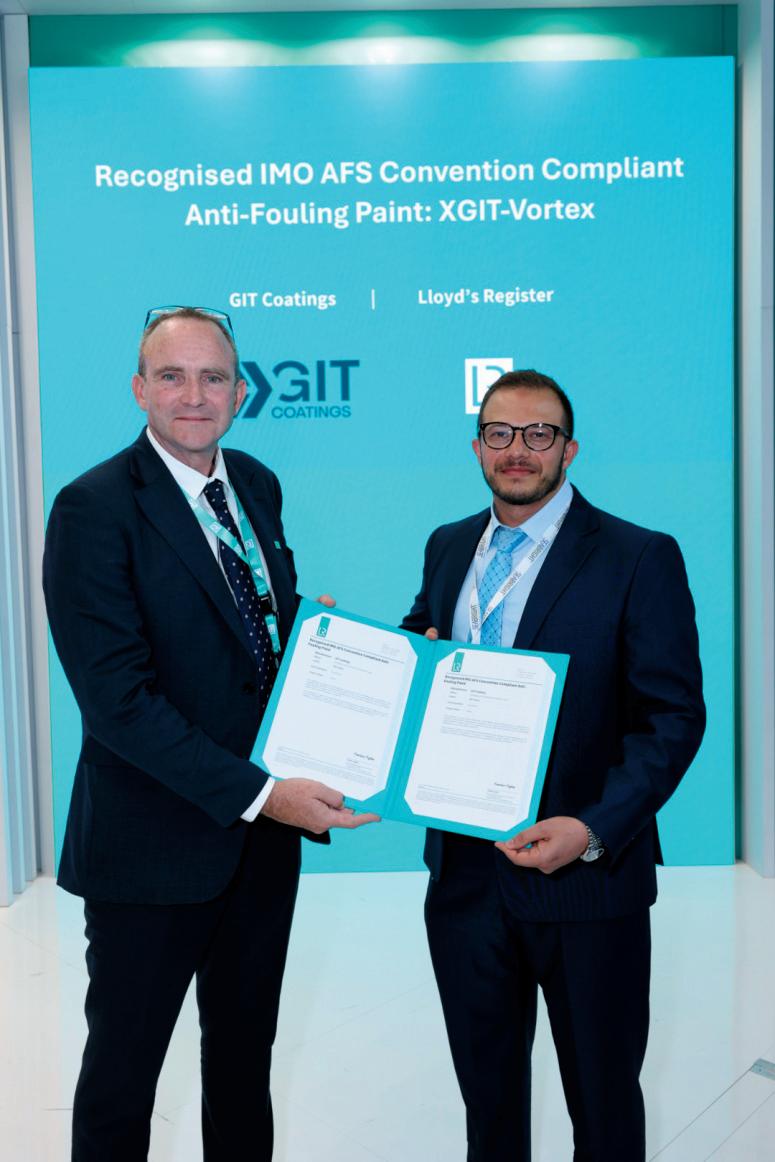
GIT Coatings officially launched XGITVORTEX™, its next-generation graphenebased propeller coating system, during Posidonia 2026 alongside Lloyd’s Register at the LR x GIT Coatings Client Type Approval Ceremony.
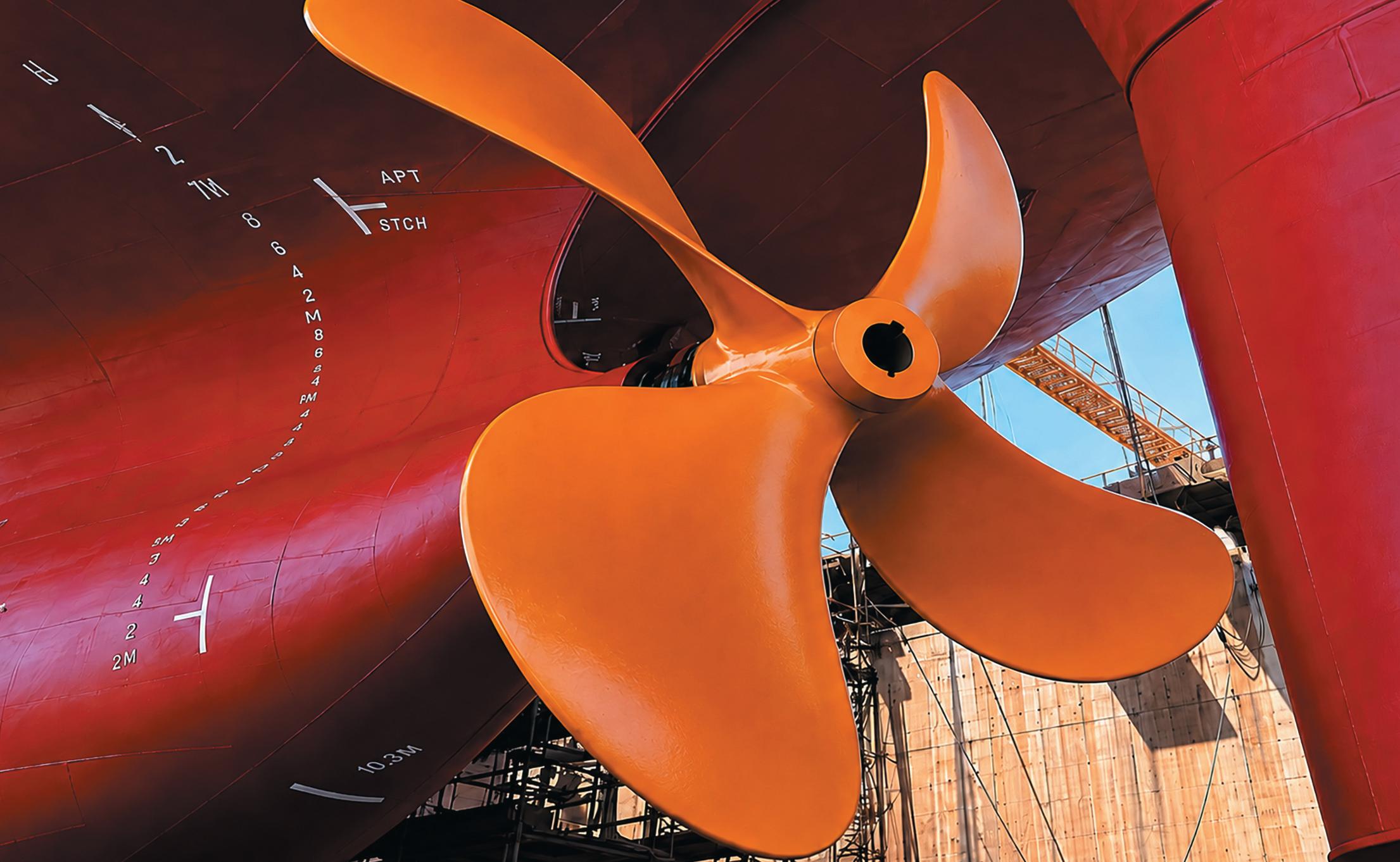
XGIT-VORTEX™ was introduced as the next evolution of GIT Coatings’ propeller coating technology, designed to help shipowners move beyond propeller polishing as a periodic recovery measure and toward long-term performance retention. The system is engineered to address the main limitations of current approaches: fouling build-up between polishing events, cavitation-related coating damage, and loss of propeller smoothness over the drydock cycle.
Powered by GIT’s Amphiphilic Graphene Nanonetwork (AGN) technology, XGIT-VORTEX™ is a dedicated three-layer propeller coating system. The foul-release topcoat helps deter fouling attachment for a cleaner propeller over time, while the reinforced mid-coat acts as the system’s structural layer, helping absorb cavitation stress and reduce coating damage at blade edges and tips. Together, the system is designed to support stronger coating integrity, longterm smoothness retention, and more stable propeller performance over the drydock cycle.
Key performance characteristics
include: up to 5% fuel savings; v deters fouling attachment to help v keep propellers cleaner over time; reinforced mid-coat helps resist v cavitation stress for stronger coating integrity over time; low-friction surface designed to help v maintain propeller smoothness over the drydock cycle; and performance guarantee available.
v As shipowners increasingly focus on lifecycle efficiency and emissions performance, propulsion optimization is becoming a critical component of operational strategy. Propeller efficiency remains one of the most immediate operational levers for reducing fuel consumption, emissions, and maintenance costs across commercial fleets.
Propeller condition directly influences fuel consumption, CII performance, EU ETS exposure, and overall operating cost. With XGIT-VORTEX™, vessel operators can move beyond reactive polishing and support more stable propeller performance through a more durable and reliable propeller coating system engineered for the drydock cycle.
The event featured Mo AlGermozi, Chief Executive Officer of GIT Coatings, and Andy McKeran, Chief Growth Officer of Lloyd’s Register, and brought together shipowners, operators, industry
stakeholders, and clients from across the global maritime sector.
“XGIT-VORTEX™ reflects the next step in our mission to deliver sustainable, high-performance coating technologies for the global maritime industry,” said Mo AlGermozi. “As shipowners continue prioritizing efficiency, emissions reduction, and operational flexibility, the industry is
A concept image of XGIT-VORTEX combining in-field coating imagery with generated application content.
Mo AlGermozi, CEO at GIT Coatings, receives type approval certificate from Andy McKeran, Chief Growth Officer of Lloyd’s Register at Posidonia 2026.
Jay Venter
increasingly shifting toward technologies designed around long-term performance, sustainability, and measurable operational value.”
Held at the Lloyd’s Register stand during Posidonia 2026, the ceremony marked another milestone in the evolution of vessel performance technologies and highlighted growing industry momentum toward sustainable, high-performance coating systems designed to support operational efficiency and decarbonization goals.
The launch follows Lloyd’s Register’s recent type approval of GIT Coatings’
next-generation graphene-based hull coating, XGIT-FORCE™, further strengthening the collaboration between LR and GIT Coatings around innovation and technical assurance in advanced marine coating technologies.
McKeran commented, “The maritime sector continues to seek innovative technologies capable of supporting both operational efficiency and sustainability goals. It was great to join GIT Coatings at Posidonia as the company introduced its latest advancement in graphene-based marine coating technology.”
GIT Coatings has now surpassed approximately 600 vessel and propeller coating applications globally since 2022, supporting shipowners and operators across tanker, bulker, and broader commercial shipping segments.
Visitors attending Posidonia 2026 had the opportunity to meet with representatives from GIT Coatings and Lloyd’s Register to discuss proactive hull and propeller performance management strategies and the role of graphene-based coating technologies in supporting maritime decarbonization objectives.
BW Epic Kosan expands use of GIT Coatings following 6% out-of-dock fuel savings and maintained hull performance
Five LPG gas carriers coated to date (one more in dry dock) as partnership validates how biocide-free graphene coatings, proactive cleaning and advisory support can work together as a managed hull performance system.
BW Epic Kosan (BWEK), an expert in LPG, petrochemicals and speciality gas transportation, has partnered with GIT Coatings to advance proactive hull management across selected vessels in its LPG fleet, with five LPG gas carriers coated to date (one more in dry dock) using GIT’s biocide-free graphene-based hull coating technology.
The partnership follows strong results from BWEK’s adoption of GIT’s hard foulrelease coating, proactive cleaning using onboard robotic cleaning technology and dedicated advisory support. A case study presented earlier this year at HullPIC –2026 followed one LPG carrier through more than 12 months of commercial operation, documenting both the out-ofdock performance gain and the ability to maintain a clean hull during service.
As BWEK continues to scale the approach, coating durability and cleanability remain central to making proactive hull management viable in operation. GIT Coatings has received Lloyd’s Register Enhanced Type Approval, validating that the coating maintains its performance after repeated cleaning.
“This collaboration is a strong example of how a new hull performance model can be validated and improved through real fleet operation,” said Mo AlGermozi, CEO of GIT Coatings. “BWEK has been a highly engaged partner throughout the process, and their operational feedback has helped us further optimize both the coating technology and the service model around
it. Together, we have shown that proactive hull management can move beyond theory and become a managed operational process.”
FROM COATING APPLICATION TO MANAGED HULL PERFORMANCE
The results were achieved through more than coating application alone. GIT’s proactive hull management advisory service combines vessel-specific planning, fouling-risk monitoring, inspection and performance reviews, cleaning recommendations, support with port approvals and continuous operational follow-up, including regular review meetings with BWEK and the cleaning technology partner.
Rather than relying on reactive hull cleaning after performance loss has occurred, proactive hull management focuses on planned inspections and
removal of early-stage slime before more resistant fouling develops. This supports fuel efficiency and lower emissions to air, while reducing the environmental impact to water associated with aggressive reactive cleaning of biocidal self-polishing antifouling coatings.
Through the collaboration, BWEK and GIT demonstrated a practical way to manage hull condition during service, with regular visibility of hull condition and clearer planning around when and where action is needed. This supports BWEK’s focus on fuel efficiency, emissions reduction and operational predictability, while also reflecting the growing importance of hull performance in relation to fuel costs, CII and charterparty expectations.
“Our focus is on practical technologies and operational measures that support vessel efficiency and environmental
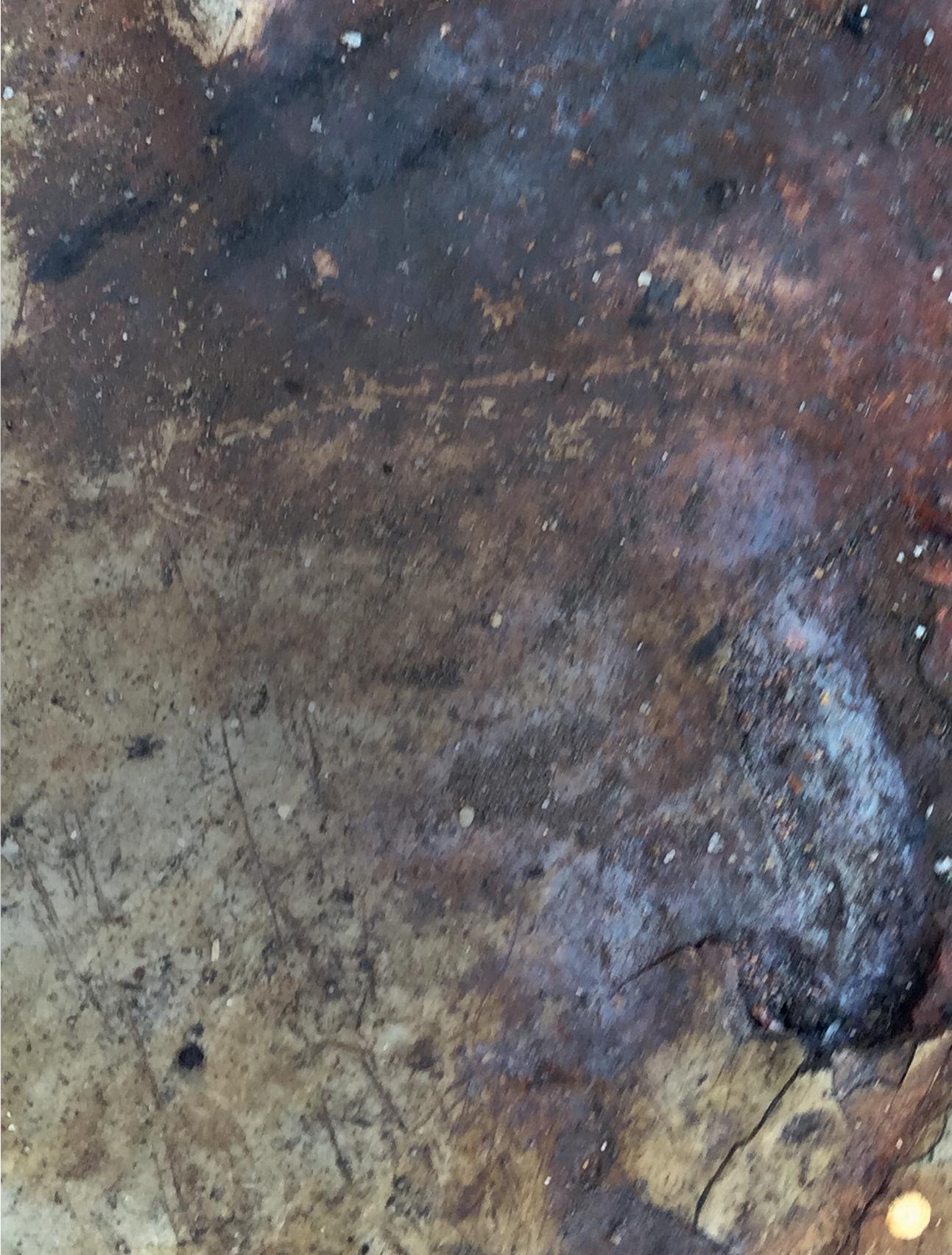
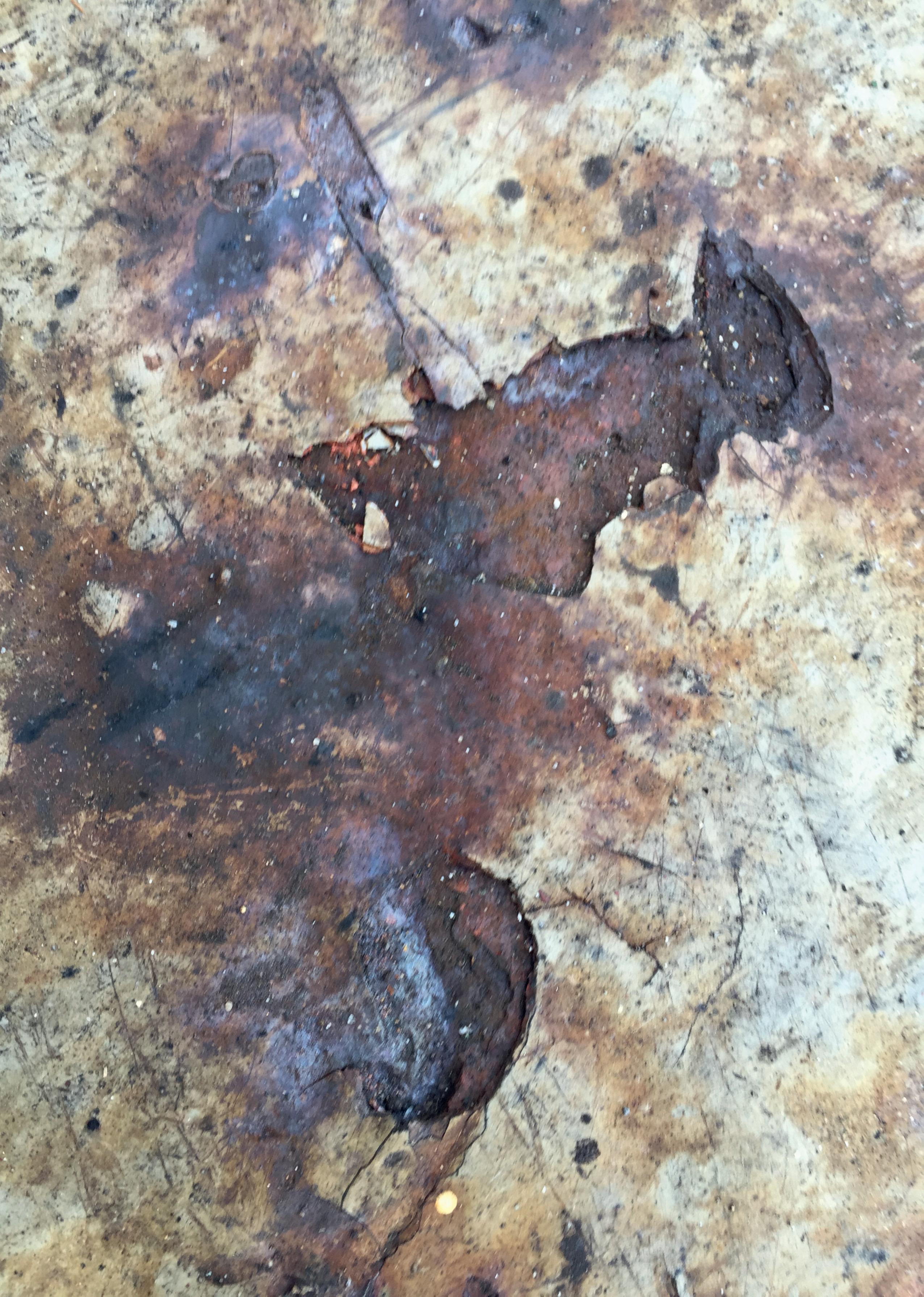
Tank tops, cargo holds, ship decks, loading ramps should not look like this –even after years of practice impact.
However, repair yards are delighted to find such poor corrosion protection. It all must be stripped off again, which means more business.
Then, if possible, the next cheap epoxy system is applied. Being brittle and will require further repairs after a relatively short period of use.
That’s good news for the repair yards, but not for the shipping companies.
www.steelpaint.com
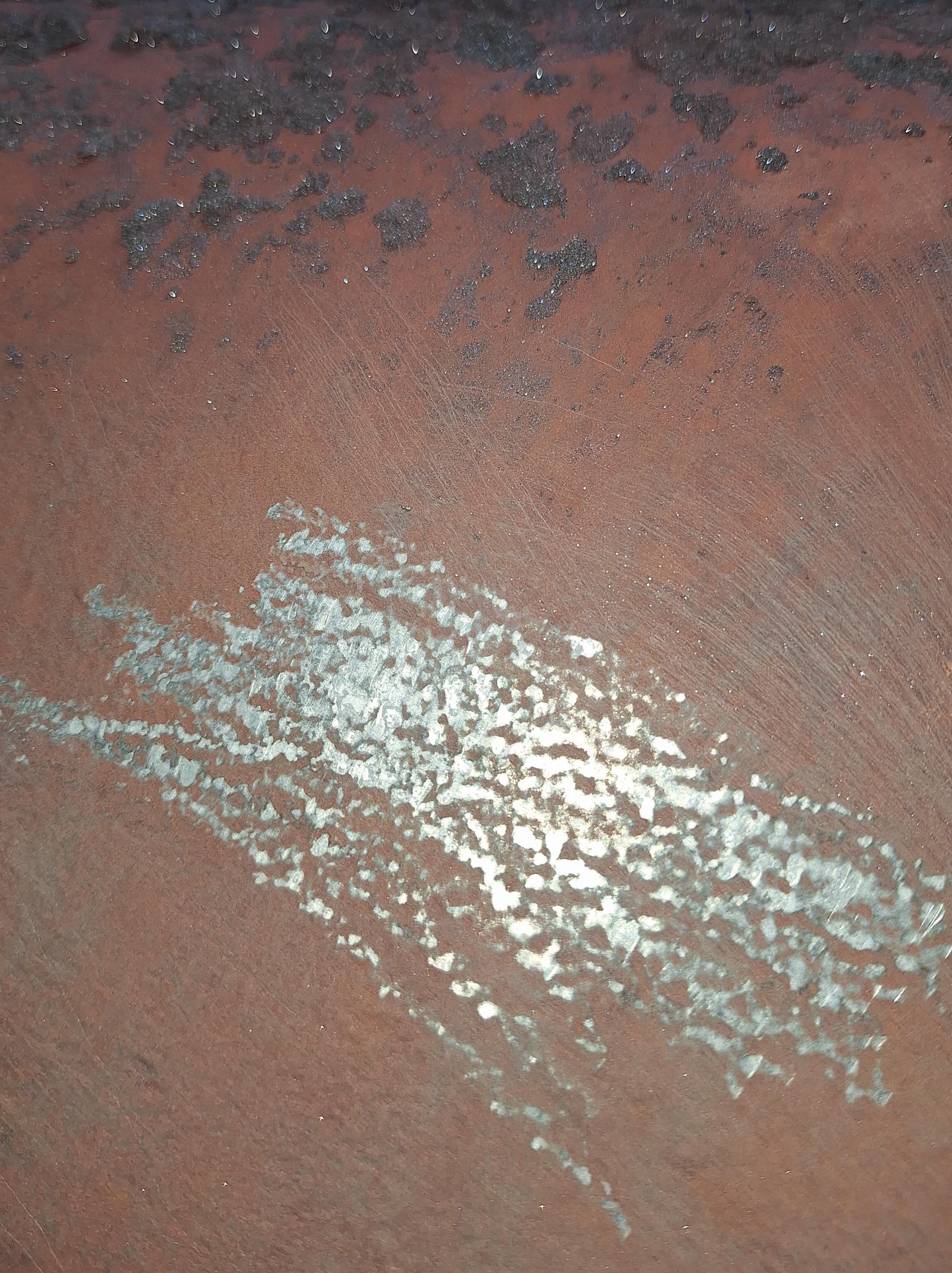
Using a – relatively expensive – tough-elastic SP polyurethane ZINCING system in shipyards creates a robust, long-lasting barrier against corrosion. Even after years of intense mechanical stress and/or exposure to UV radiation, this extremely toughelastic, cathodic corrosion protection never needs to be fully stripped off.
Light sweep blasting or high-pressure hydrojetting is sufficient to prepare the surface for the next ZINC coating or any other durable topcoat.
The ZINCING base remains intact. It may be possible to eliminate up to two maintenance cycles in the shipyards before mechanical damages need to be repaired.
In the long term, costly anti-corrosion repair work in shipyards will be minimised or even eliminated for a certain period. This saves the ship owners money.
performance,” said BWEK CEO Jakob Bode. “This collaboration with GIT Coatings has allowed us to evaluate a more proactive approach to hull performance management. The value goes beyond the coating itself; it is shown in the system around it and the collaboration required to make it work in daily operations.”
FROM LOW HULL ROUGHNESS TO MAINTAINED PERFORMANCE OVER TIME
Following application, the vessel in the case study achieved extremely low average hull roughness (60–70µm). This contributed to an out-of-dock power gain of approximately 6% compared to the previous coating system. Over the following year, inspection footage showed the vessel remained free of hard fouling, with early-stage fouling removed before it developed further and no visible coating damage observed after each cleaning event.
Building on the operational learnings from these vessels, BWEK has also adopted GIT’s next-generation XGITFORCE™ coating, developed with improved static antifouling performance and enhanced mechanical durability. The system is designed to support longer cleaning intervals and better resistance to reactive cleaning when required, while continuing to enable proactive hull management strategies. In 2026 the first vessel which was coated with XGIT-FORCE™ showed an average hull roughness of 38 μm which is extremely low roughness compared to industry standard.
VALIDATING A NEW HULL PERFORMANCE MODEL IN REAL FLEET OPERATION
The collaboration forms part of BWEK’s broader commitment to evaluating practical solutions that support operational efficiency, emissions reduction and environmental performance across its fleet.
ABOUT BWEK
BW Epic Kosan Ltd. owns and operates the world’s largest fleet of smaller gas carriers providing seaborne services for the transportation of liquefied petroleum gas, petrochemicals and other speciality gases. The company controls a fleet of 48 vessels which serve the international supply chains of leading oil majors and commodity traders throughout Asia, Europe, Africa, and the Americas. The company has significant commercial and technical capability across pressurized, semi-refrigerated, refrigerated gas and petrochemical transportation, and aims to deliver customers the best solution for their transportation needs,
along with leading service and operational standards. The company is headquartered in Singapore, with Copenhagen as a regional office alongside teams in Manila and Tokyo.
ABOUT GIT COATINGS
GIT Coatings develops and manufactures advanced graphene-based marine coatings for the global shipping industry. Headquartered and manufactured in Canada with stock points globally, the company provides sustainable, biocidefree, hard foul-release coatings designed to work together with proactive hull management and advisory support to help vessels enhance performance during service.
GIT Coatings’ patented technology replaces traditional toxic marine coatings
with harder, smoother coating systems that resist fouling through physical surface properties, free of biocides. Its solutions are used across global commercial fleets on hulls and propellers, helping shipowners and operators maintain smoother surfaces, improve efficiency, and reduce overall energy demand.
The company integrates coating technology with data-driven advisory services, proactive hull management, and ongoing performance support to help customers monitor, maintain, and optimize vessel performance over time.
Since 2022, GIT Coatings has completed more than 600 vessel applications globally and has received independent validation from Lloyd’s Register.
Building on the operational learnings from these vessels, BWEK has also adopted GIT’s next-generation XGIT-FORCE™ coating, developed with improved static antifouling performance and enhanced mechanical durability. The system is designed to support longer cleaning intervals and better resistance to reactive cleaning when required, while continuing to enable proactive hull management strategies. In 2026 the first vessel which was coated with XGIT-FORCE™ showed an average hull roughness of 38μm which is extremely low roughness compared to industry standard.
Steelpaint completes trial coating on MUR Shipping bulker
Steelpaint GmbH, the German manufacturer of high-performance singlecomponent moisture cure polyurethane (MCPU) coatings, has completed a test coating on MUR Shipping’s 63,000dwt bulk carrier African Bari Bird
The project marks a first reference for the company’s advanced Stelpant system on an Indian-managed vessel and represents a significant step forward in the company’s strategy to penetrate one of the world's most active bulk carrier markets.
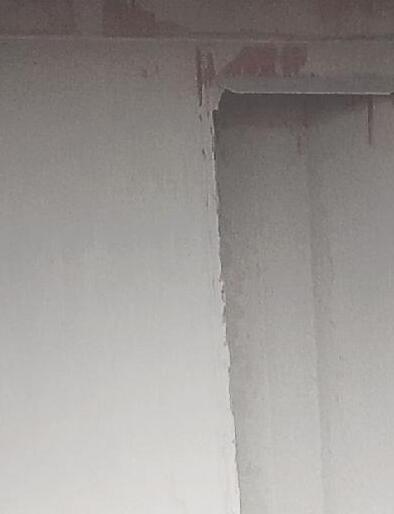
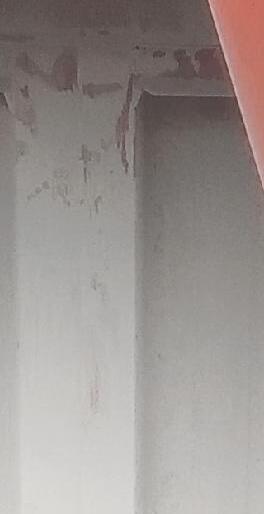
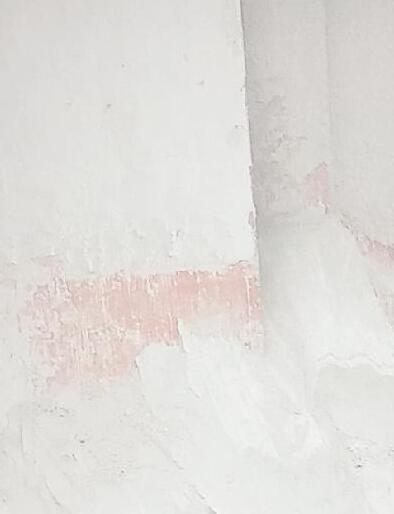
Coatings work was carried out at China’s Zeme Shipyard during a scheduled drydocking in December, with trial coats applied to a cargo hold forward hatch coaming, corrugated bulkhead, lower stool and tank top.
According to Li Yinlong, the General Manager of Steelpaint China, MUR Shipping’s decision to trial the Stelpant system reflects the sector-wide challenge of keeping cargo holds protected against a relentless cycle of abrasion and corrosion that conventional coatings struggle to withstand.
“A pre-docking inspection of No.3 cargo hold recorded substantial degradation. Corrosion rates were about 30% on the hatch coaming, 60% on bulkheads, 80% on the lower stool and the tank top protection had gone completely. 100% corrosion combined with pitting,” said Li.
Before Stelpant could be applied, all test areas were blasted to SA2 using copper slag abrasive and washed down with freshwater at 150 bar.
“The coatings team at the Zeme Shipyard, working with Steelpaint for the first time, handled the preparation very well indeed,” said Li. “Steelpaint cargo hold coatings do not require specific surface treatment and the yard was hugely impressed with the coating’s ease of application.”
The MCPU applied to hatch coamings and bulkheads comprised a reddish Stelpant-PU-Zinc primer at 100μm DFT, followed by Stelpant-PU-Combination300 a micaceous iron oxide topcoat at 150μm DFT. Lower stools and tank tops were coated with Stelpant-PU-Zinc at 125μm DFT followed by Stelpant-PU-Zinc in grey at 125μm DFT.
The No.3 hold was back in service within 24 hours.
Steelpaint Director Frank Müller said: “Cargo hold maintenance is one of the most significant ongoing costs for a bulk carrier operator. MUR wanted to put the
Steelpant system through its paces properly, across the areas that take the hardest punishment."
MUR Shipping's 63-vessel fleet carries metals, minerals, agricultural products and specialist project cargoes, such as wind turbine components.
“Our first cargo hold trial with an Indian-operated bulk carrier represents a meaningful milestone for Steelpaint,” furthered Müller.
“It not only validates our technical approach in demanding marine environments but also gives us an authentic reference point as we engage with Indian shipowners, yards and technical decisionmakers. Our aim is to support operators as they invest in fleet resilience and maintenance optimization, aligned with India’s expanding maritime infrastructure and trade growth.”
India’s maritime sector is undergoing transformative growth, with significant investment commitments and policy reforms aimed at modernizing ports, fleet capacity, shipbuilding and supply chains as part of the government’s Maritime India Vision.
Steelpaint’s Stelpant MCPU system is designed for high abrasion environments and is tolerant of elevated humidity levels, with application possible at relative humidity levels of up to 98%.
Unlike conventional multi-component epoxy systems, the corrosion protection technology removes mixing variability and enables rapid overcoating, reducing downtime risk during tightly scheduled drydockings.
First performance indications are expected within six months. A full evaluation across all trial areas should follow within the year, with the typical next step being application across a vessels complete cargo holds before any fleetwide rollout is considered.
ABOUT STEELPAINT GMBH
For more than 40 years, Steelpaint has enhanced the life and durability of heavyindustry facilities, particularly in the maritime sectors. Thanks to onecomponent polyurethane resins, the Germany-headquartered company’s special high-tech coatings have raised the technological bar in corrosion resistance, offering impressive benefits over conventional epoxy coatings solutions.
Steelpaint is a subsidiary of the coatings company Emil Harrasser, founded in Kitzingen, Germany in 1890. Its products are used widely in port and offshore facilities, sheet pilings, internal and external linings, tanks, bridges, and ship structures. They can be used in combination with cathodic protection.
African Bari Bird trials a Stelpant coat.
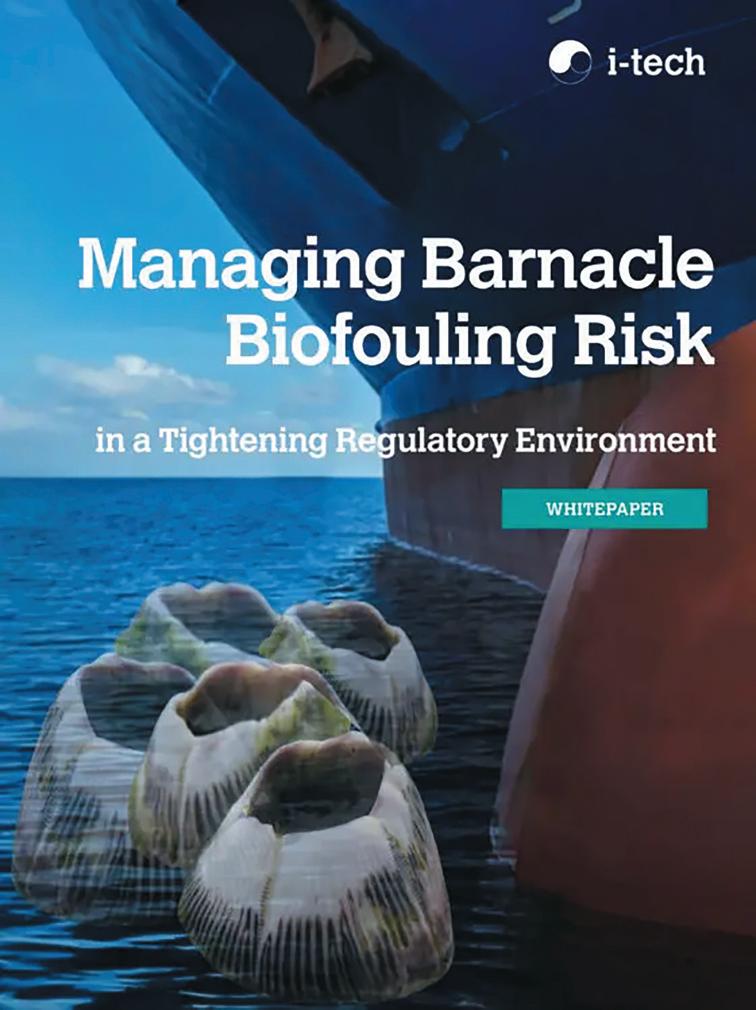
New whitepaper highlights rising barnacle biofouling risk for ship operators as regulations tighten
Swedish antifouling technology company, I-Tech AB, has published a new industry whitepaper offering shipowners, operators, and technical managers a data-driven guide to understanding, assessing, and mitigating the growing operational and commercial risks posed by barnacle biofouling.
Drawing on extensive independent analysis of hull condition data by the Safinah Group, alongside key findings from leading academic and industry studies, the whitepaper reveals how, where, and why barnacle fouling develops across the global fleet and how coating choice influences risk. It also provides practical strategies to help ship owners manage risk, protect vessel efficiency, and maintain compliance with evolving biofouling and decarbonization regulations.
GROWING RISK IN A TIGHTENING REGULATORY LANDSCAPE
As international biofouling management regulation moves steadily towards mandatory enforcement, and the number and stringency of regionally enforced mandatory rules increase, the new whitepaper — Managing Barnacle Biofouling Risk in a Tightening Regulatory Environment — provides the perfect tool for ship operators to act on controlling barnacle fouling below the waterline.
Barnacles are widely recognized as one of the most commercially damaging forms of marine biofouling. This is due to their strong adhesion to hull surfaces and their significant impact on hydrodynamic drag, which reduces vessel efficiency, increases fuel consumption, undermines decarbonization efforts, threatens regulatory compliance, and negatively affects longterm profitability.
According to one academic study referenced in the whitepaper, as little as 10% barnacle coverage on an underwater hull may require up to 36% more shaft power to maintain speed, driving higher fuel consumption, greenhouse gas emissions, and voyage costs.
However, successful prevention of barnacle fouling on the hull yields multiple significant benefits for ship operators. Maintaining clean hulls is one of the few vessel efficiency measures capable of delivering immediate commercial and regulatory benefits across several environmental regulatory frameworks simultaneously. This includes Carbon Intensity Indicator (CII) ratings, and, for
vessels operating in the European Union (EU), cleaner hulls reduce exposure to Emission Trading Scheme (EU ETS) and FuelEU Maritime costs, without any changes to propulsion systems, technology use or fuel choices.
COATING CHOICE AS A CRITICAL RISK FACTOR
Building on earlier studies published by I-Tech that seek to quantify barnacle fouling across the global fleet, this latest whitepaper places a new spotlight on the role of antifouling coating selection in determining barnacle fouling risk.
Through independent analysis of hull condition data from the drydock inspections comparing the two principal coating technologies used across the global fleet, self-polishing copolymer coatings and foul-release systems, the report concludes that coating technology choice has a significant influence on both the severity and variability of barnacle attachment. The findings in the whitepaper indicate that coating grade and suitability for the vessel's operational profile are critical to long-term performance.
The whitepaper contains one of the most extensive independent reviews of barnacle fouling prevalence to date, published by I-Tech in 2025, wherein the analysis of hull condition for 686 vessels inspected in drydock over a ten-year period confirmed that more than one in three vessels entered drydock with barnacles covering more than 10% of the hull, while nearly one in five exceeded 20% coverage.
“Coating selection should no longer be viewed as a periodic purchasing decision based primarily on drydock budget,” says Per Svensson, Sales Director at I-Tech. “It needs to be treated as part of mainstream efficiency management with barnacle fouling specifically in mind. The wrong coating for the wrong operating profile, or a change in a vessel’s operating profile, can lock in years of avoidable fuel loss, higher emissions, and additional maintenance intervention.”
INNOVATIONS UNVEILED : BARNACLE FOULING AND FOUL RELEASE COATINGS.
Findings in the new whitepaper shows that ships with foul-release coating systems, who are dependent on biofouling removal by motion and regular ship activity to perform, can become vulnerable to barnacle settlement during prolonged idle
I-Tech AB’s new whitepaper, ‘Managing Barnacle Biofouling Risk in a Tightening Regulatory Environment’.
periods, extended warm-water exposure and low-speed operation, particularly in areas where the coating surface has suffered mechanical damage.
Alongside conventional coating comparisons, the whitepaper presents findings from testing an experimental foulrelease coating system incorporating Selektope®, I-Tech’s barnacle-repelling active ingredient. The results demonstrate strong resistance to barnacle settlement — even when coating surfaces are mechanically damaged — highlighting a potential new direction in antifouling technology that combines foul-release functionality with targeted prevention of hard fouling.
INCREASING EXPOSURE FROM OPERATIONAL AND ENVIRONMENTAL TRENDS
Beyond coating performance, the report identifies broader operational and environmental trends that are intensifying barnacle biofouling exposure across the shipping industry.
Low-speed steaming, longer idle periods, anchorage congestion, and warmwater trading routes continue to create more favourable conditions for barnacle attachment, particularly for tankers and bulk carriers.
As unplanned idling during operations has increased in recent years coating selection has become even more complex, as it must account for extended and unpredictable idle periods during normal operations. Climate change is also
highlighted as a major risk multiplier, with rising sea temperatures accelerating barnacle growth rates, extending fouling seasons and expanding high-risk regions into new geographical areas.
The whitepaper concludes that since barnacle removal remains costly, disruptive, and potentially damaging to coating systems, prevention offers the most sustainable and commercially effective solution.
Recommendations suggest that coating selection, idle-time management and awareness of high-risk fouling conditions must now be fully integrated into both technical and commercial decision-making as regulatory pressure increases globally.
DOWNLOAD THE WHITEPAPER
Managing Barnacle Biofouling Risk in a Tightening Regulatory Environment is available for download under the Knowledge Hub section on the Selektope®, website.
ABOUT I-TECH AB
I-Tech is a biotechnology company that has developed the product Selektope®, an active agent that prevents barnacle attachment on submerged surfaces such as ship hulls, but also other marine installations. By increasing the resistance to barnacle growth in marine paint systems (e.g., antifouling coatings), fuel and maintenance costs are reduced. I-Tech has obtained the necessary regulatory
approvals for Selektope® and has several of the world's largest manufacturers of marine antifouling coatings as customers.
ABOUT SELEKTOPE®
Selektope® introduces, for the first time, a pharmacological mode of action to combat barnacle settlement. By temporarily stimulating the octopamine receptor, the barnacle larvae’s swimming behaviour is activated, and the organisms are deterred from the hull. These ground-breaking discoveries enable unrivalled power at exceptionally low concentrations, yet within the limits of rigorous risk assessments. Selektope® is an organic, nonmetal compound with efficacy proven at 0.1% w/w.
Jotun continues to secure DNV verification for speed loss performance
Jotun, the global manufacturer of marine coatings, announced new speed loss verifications for selected hull performance products and solutions. Carried out by DNV based on ISO 19030 methodology and in-service operational data, the independent verifications add new documented speed loss results across Jotun’s hull performance portfolio.
The latest additions include speed loss data for SeaQuantum Pro U and the SeaQuantum III- and S-series, alongside the recently announced results for Hull Skating Solutions (HSS). Together with earlier results for SeaQuantum X200 and the company’s previously announced avoided CO2 emissions figures for 2025, this means Jotun now has documented speed loss results across a broader share of its hull performance portfolio.
“Transparency is fundamental to building trust in our industry,” said Morten Sten Johansen, Global Category Director for Hull Performance at Jotun. “For many years, performance claims have been difficult to compare. Through this work, we aim to bring clarity to our customers’ decision-making.”
The speed loss verifications follow established ISO 19030 methodologies and
are based on in-service operational data from a representative range of vessels.
Jotun’s portfolio now consists of a broad range of products and solutions that are verified using this methodology, including:
SeaQuantum III/S-series with an v average of 1.8% speed loss.
SeaQuantum Pro U with an average of v 2.5% speed loss.
“Being able to validate the performance of these products is important for us, as they are relevant for many owners and operators in various trades and operations,” said Habibe Escobar, Global Category Manager Hull Performance in Jotun. “As with all our hull performance products and solutions, the analysis follows ISO 19030 methodology with one year as the reference period.”
EARLIER VERIFIED
PRODUCTS AND SOLUTIONS
INCLUDE :
SeaQuantum X200 with an average of v 1.0% speed loss.
Hull Skating Solutions (HSS), with v assessments indicating no measurable speed loss and an “always clean hull”.
“These verifications are based on standardized methodologies and a
structured assessment of in-service operational data,” said Olav Rognebakke, Head of Section Hydrodynamics and Stability at DNV.
“By applying ISO 19030 principles and independently assessing data quality and representativeness, we provide trusted and consistent verification of vessel performance, giving owners and the wider industry greater confidence in the realworld impact of these solutions.”
Earlier this year, Jotun published verified figures for total avoided CO2 emissions from vessels coated with Jotun products in 2025, further linking hull performance to measurable environmental impact.
“Last year our customers avoided 11.8 million tonnes of CO2 emissions through the use of our hull performance products and solutions. By combining speed loss data across our portfolio with avoided emissions figures, we are able to translate performance into operational outcomes such as lower emissions and fuel saving,” said Morten Sten Johansen in Jotun. “We think making decisions based on real evidence is fair for our customers, and we will continue to develop products and solutions that will make a difference for the industry.”
Jotun HSS’ “always clean hull” verified by DNV
Jotun’s Hull Skating Solutions (HSS) has received independent verifications from DNV, confirming that vessels maintained clean hulls, with no measurable speed loss during the period reviewed.
The independent verification confirms no measurable speed loss and an always clean hull under real operating conditions. Based on a combined assessment of physical in-water inspections and verified performance monitoring in line with ISO 19030, the verification confirms that hulls protected with HSS remain effectively free from fouling throughout the observation period.
The verification represents a significant milestone for hull performance management, providing independent, thirdparty confirmation that continuous hull cleanliness can be achieved and sustained in operation — and that this cleanliness translates directly into maintained vessel speed.
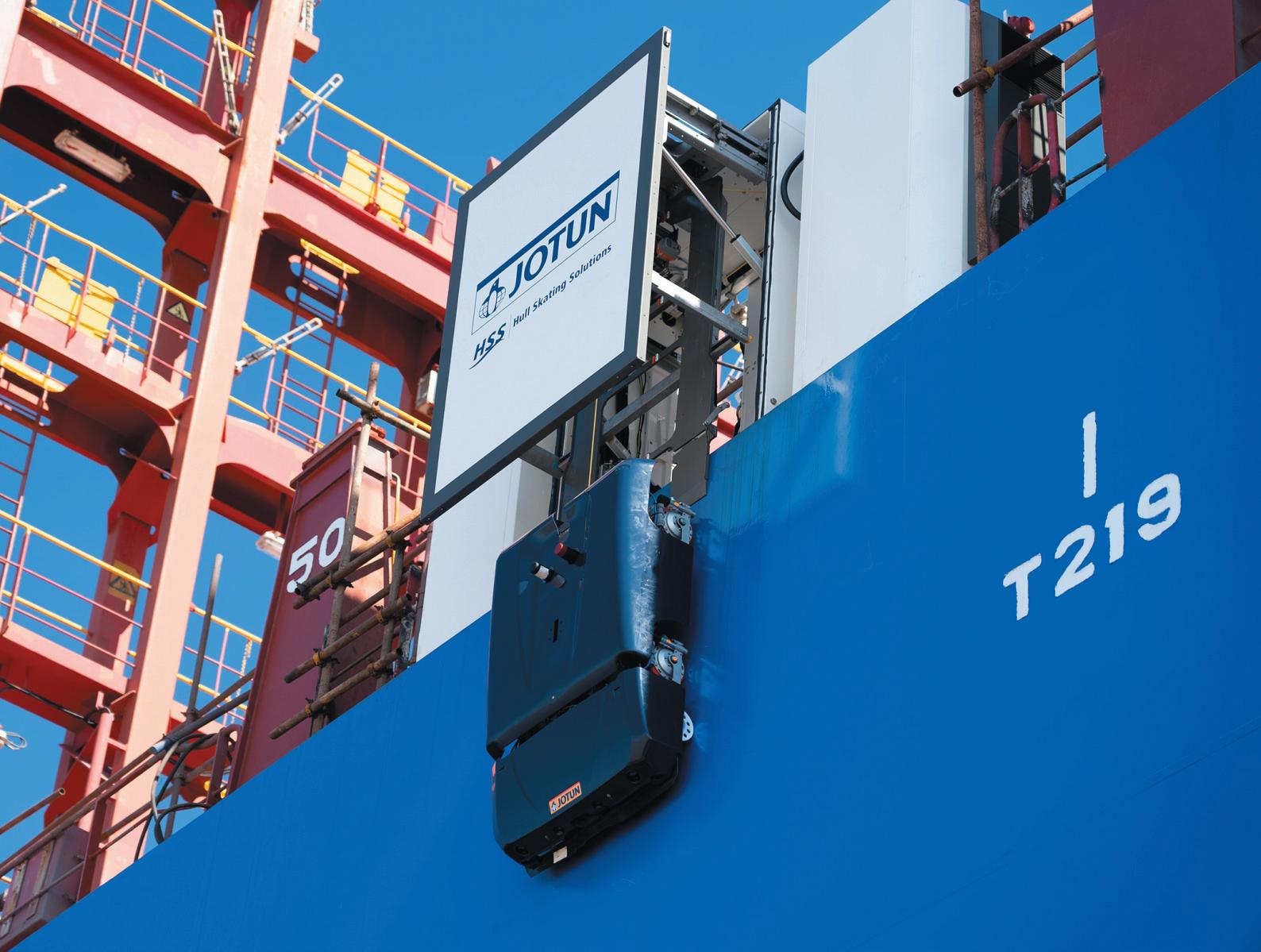
“Our HSS, including our robotic hull cleaner The HullSkater, was designed to deliver an always clean hull and today we are thrilled to announce that the findings mark the first time this has been independently verified under real-world operating conditions,” said Helle Vines Ertsås, Global Category Manager for HSS at Jotun.
The verification is grounded in physical inspection data from in-water inspections carried out across a sample of 33 vessels. These inspections consistently confirmed the absence of fouling, providing direct evidence that the hulls remained in a clean condition throughout the assessed period.
In parallel with the physical inspections, DNV assessed performance monitoring data from 12 vessels operating under HSS. The analysis showed no measurable speed loss, using an average of 3.5 years of inservice data, including a one-year reference period as per ISO 19030. This confirms that the verified clean hull condition is not only visible through inspections but also reflected in vessel performance data.
“DNV’s role has been to independently assess the inspection and performance data from vessels operating with Hull Skating Solutions. The analysis confirmed that the hulls remained clean throughout the review period and that no measurable loss of speed occurred. This provides Jotun with third-party verification that the solution performed as intended under real operating conditions,” explained Olav Rognebakke, Head of Section Hydrodynamics and Stability at DNV.
HSS is Jotun’s proactive hull cleaning solution designed to prevent fouling from developing in the first place.
“Using the robotic HullSkater to inspect and proactively clean the underwater hull, early-stage fouling is removed before it can attach and grow, and that keeps the hull in a clean condition while the vessel remains in operation. The HullSkater works in harmony with a dedicated high-performance coating, SeaQuantum Skate, approved and recognized as compatible with the HullSkater. The solution is also backed up by proactive condition monitoring and technical service,” Vines Ertsås said.
Hull fouling has historically been managed through periodic drydocking and reactive cleaning.
“This verification demonstrates that proactive, continuous hull maintenance through HSS can prevent fouling from developing in the first place,” said Morten Sten Johansen, Global Category Director for Hull Performance at Jotun.
With this verification, HSS establishes a new reference point for what constitutes a
clean hull in practice. Rather than relying on assumptions or indirect indicators, hull condition and performance are verified through documented inspections and ISOaligned performance data.
“Credible speed loss data matters. Without it, operators face operational and regulatory risk, and fleet decarbonization plans can be built on the wrong assumptions. Independent verification, like through DNV, is how we turn claims into documented performance. Ensuring real environmental effect for the industry, the ocean and the planet is important elements in our Clean shipping commitment,” said Johansen.
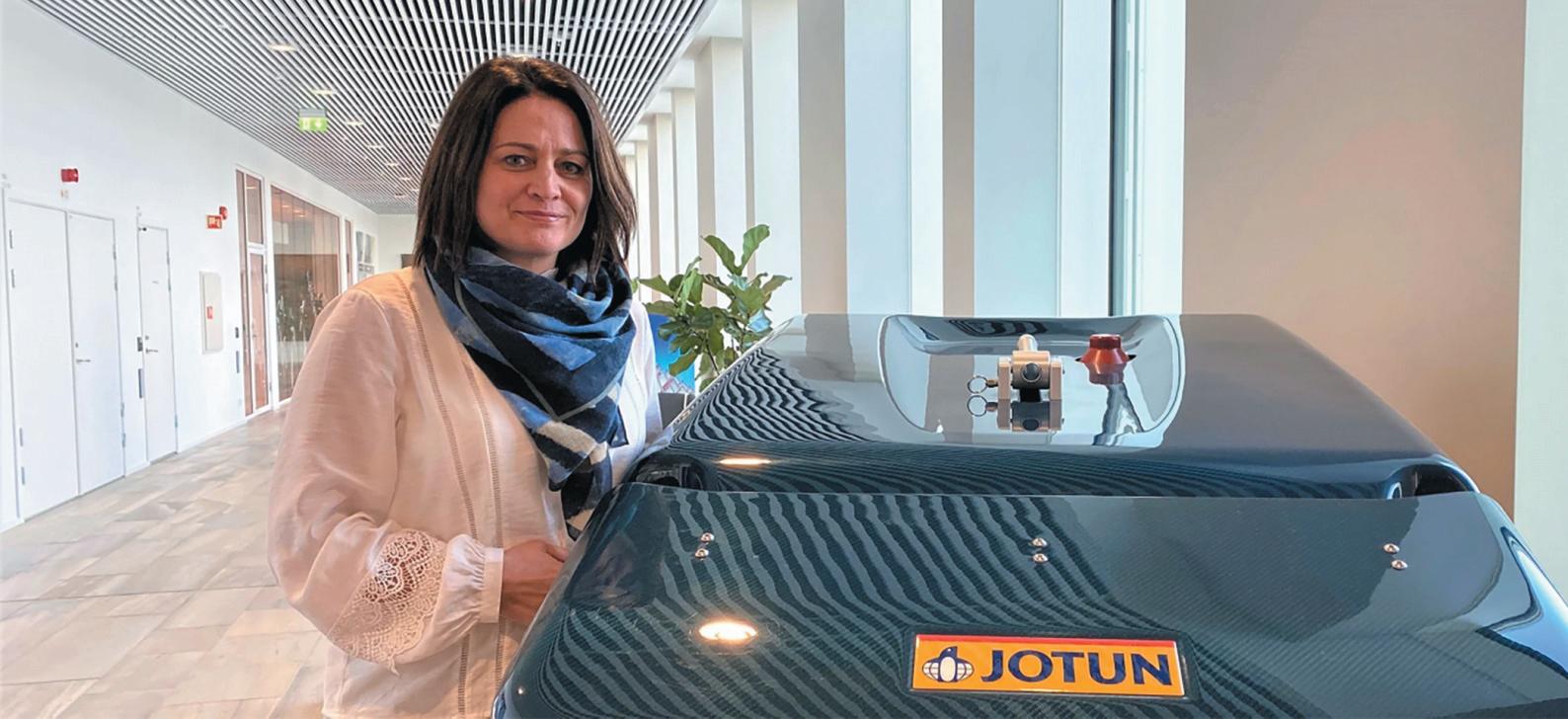
Helle Vines Ertsås, Global Category Manager for HSS, Jotun.
Morten Sten Johansen, Global Category Director for Hull Performance at Jotun.
Jotun’s HSS, including its robotic hull cleaner The HullSkater, received independent verifications from DNV.
Driving efficiency through smarter coating choices
With the global bulker rapidly aging, choosing the right coating solution is becoming the key to unlocking a vessel’s true potential, writes Chris Birkert, Global Marine Segment Manager, Akzo Marine.
Many ship operators are facing a littleknown challenge that is directly affecting fleet management. The average age of bulker vessels has risen from around 8 years in 2018 to nearly 13 years in 2025, with vessels over 16 years old now accounting for 29% of the total fleet. At the same time, bulk carrier deliveries are expected to hit a six-year high in 2026, putting renewed downward pressure on earnings.
Against this backdrop, operators are asking how they can improve efficiency and sustain performance from ageing tonnage without over-investing in vessels with limited remaining commercial life.
The answer lies in coatings. For bulk carrier owners and operators, selecting the right protective and performance coating system across the hull, ballast tanks, and cargo holds is not a secondary concern; it is a smart, high-return strategy to improve vessel performance, enhance sustainability, and extend asset earnings potential.
THE TRUE COST OF HULL FOULING
Considering first the hull, fouling remains one of the most significant drag factors on vessel efficiency, directly increasing fuel consumption and, increasingly, emissions compliance costs. Off-hire costs for a typical bulk carrier range from $10,000 to $25,000 per day, making every unplanned maintenance event an expensive proposition. But the financial case for highperforming hull coatings extends well beyond avoiding downtime.
With the EU Emissions Trading System now in force, and the IMO Net-Zero Framework still on the horizon, greenhouse gas emissions carry an increasingly direct financial cost. For bulkers with significant EU exposure, annual carbon levies can exceed $2 million when using a realistic EU Allowance price of €80-95 per t/CO2 per tonne of CO2. A clean, low-friction hull that reduces fuel burn is therefore not simply an environmental aspiration; it is a meaningful OPEX lever. Poor CII ratings can also restrict operators ability to attract premium charterers or force slower steaming, eroding competitive positioning.
Biocide-free silicone hull coatings have long been the gold standard for antifouling performance, but their complexity and
cost have historically kept them out of reach for many bulker operators. Intersleek® 2120 changes that calculus bringing silicone technology to a broader segment of the global fleet, combining proven high performance with significantly lower scheme complexity at a competitive price point that is well suited to the economics of older tonnage.
There are clear commercial benefits, as hulls treated with biocide-free silicone coatings can be faster, easier, and cheaper to clean than those protected by conventional antifouling systems. For a very large crude carrier, switching to a silicone system can reduce hull cleaning time from 18 hours to just ten hours, a reduction with real operational value for vessels operating on tight loading and discharge schedules. For bulk carriers frequently calling at Australian ports, where strict biosecurity regulations mandate rigorous hull inspection and cleaning, this efficiency advantage is particularly compelling.
Importantly, the reduced application complexity of Intersleek 2120 also means lower lifecycle costs. Schemes that avoid the need for full re-blasts at each docking, or that do not require specialized application equipment, translate directly into fewer days in dock and reduced yard expenditure, a critical consideration when a routine bulker drydock can cost up to $3–4 million.
A WHOLE-VESSEL APPROACH
Of course, there is more to the vessel than the hull, and the complexities of trading patterns, operating speeds, idle times, and routes all mean that what works for one vessel will not automatically work for another. For older bulkers in particular, the coating decision should never be made in isolation. As vessels age, the integrity of cargo holds becomes increasingly critical; protecting against abrasion, impact, and corrosion to maintain both cargo quality and structural condition. Equally, effective ballast tank coating provides essential protection against reverse impact damage. For ballast tank repair, Interbond® 808 exemplifies the kind of robust, proven solution ship owners depend on to protect critical assets and ensure long-term integrity.
Similarly, Interzone® 954GF provides a proven solution for cargo hold protection, engineered to withstand the demands of repeated loading cycles. By maintaining coating integrity and reducing wear, it helps
extend service intervals, minimize drydock frequency and lower long-term maintenance costs.
Crucially, addressing cargo holds and ballast tanks alongside hull coating during a single docking event can also deliver significant savings in both paint and application costs, reducing the overall financial burden of each maintenance cycle.
DATA-DRIVEN DECISION MAKING
Selecting the right coating system for a specific vessel demands a clear understanding of how each option will perform against that vessel’s unique operational profile. This is where Intertrac® Vision plays a pivotal role. This digital tool allows operators and their coating advisors to evaluate and compare coating options based on actual trading data, simulating fuel consumption, emissions performance, and total cost outcomes across a vessels service life.
For fleet managers weighing the investment case for upgrading to a higherperforming hull coating system, Intertrac Vision provides the evidence base needed to make a confident, commercially grounded decision. It also supports the broader principle that not every vessel needs the very top-end premium system. What matters is matching the right solution to a vessels actual trading reality and financial profile.
The total cost equation for marine coatings is far wider than many bulker operators appreciate. Off-hire costs, drydock fees, in-water cleaning logistics, fuel consumption, emissions levies, and CII performance all feed into a single, interconnected financial picture. Getting the balance of capital expenditure and performance right, guided by vessel-specific data and expert advice, is what separates operators who merely maintain their fleets from those who actively optimize them.
For an ageing bulker fleet navigating tightening regulatory requirements and increasingly margin-conscious markets, the message is clear: the right coatings, applied intelligently and informed by performance data, are among the most cost-effective investments available.
Chris Birkert, Global Marine Segment Manager, Akzo Marine.
PPG white paper highlights benefits of electrostatic coating application
NOVEL METHOD IMPROVES TRANSFER EFFICIENCY, HELPS REDUCE ENVIRONMENTAL IMPACT
PPG (NYSE: PPG) announced early in June 2026 the publication of a white paper, Electrostatic Application of Marine Hull Coatings , detailing how this advanced application technology can help ship owners and operators improve efficiency and reduce environmental impact.
Electrostatic application works by negatively charging paint particles at the spray gun nozzle while the substrate is grounded, causing the coating to be attracted to the surface like a magnet. Compared with traditional spraying, the process improves transfer efficiency and reduces overspray, resulting in a more uniform coating application. In one case study, the EDR Antwerp shipyard reported a 40% reduction in overspray.
“Electrostatic application is a breakthrough process innovation that, combined with our chemistry innovation, delivers improved productivity and sustainability for our shipyard customers,” said Jan Willem Tegelaar, PPG global platform director, marine coatings. “It has already revolutionized the automotive and aerospace industries; building on this cross-industry expertise, we have adapted the technology and developed compatible fouling control coatings to save time and reduce waste without disrupting existing workflows for marine vessels.”
The process supports reduced waste and Scope 3 carbon lifecycle savings compared to traditional application methods, as significant reduction in paint consumption means fewer raw materials need to be extracted, manufactured or transported. These reductions are in addition to the operational carbon savings
achieved by vessels coated with lowfriction solutions, which can help ship owners reduce Scope 1 emissions.
“Electrostatic application is just one piece of the puzzle. Combined with advanced hull coating performance, it contributes to a more effective sustainability solution,” said Joanna van Helmond, PPG product development director, marine fouling control, Protective and Marine Coatings.
“Friction caused by biofouling can account for 50% of a ship’s total drag*1, leading to higher fuel consumption. By applying solutions such as PPG SIGMAGLIDE® 2390 coating electrostatically, we can create a smoother, glossier film that reduces hydrodynamic resistance. This in turn leads to lower fuel consumption and greenhouse gas (GHG) emissions.”
Topics covered in the white paper include:
the history of electrostatic spray v
‘Corrosion Handbook’ expanded and updated
The Corrosion Handbook for Shipowners and Operators The use of special coatings to protect ships from corrosion has grown and become Corrosion Protection and Ship Hull
Performance The key to ending corrosion and improving performance in ships
WHAT’S NEW?
The old and new titles say it all. What began as a practical manual devoted entirely to the protection of ships from corrosion by the use of special coatings, has been expanded to also embrace improving ship hull performance through the use of the correct hull coating and its proper maintenance.
The original Corrosion Handbook has proved very popular. Subsea Industries received thousands of requests for the book and ran out of copies. Because it had to reprint, it decided to overhaul the content and add to it its knowledge of and success in the field of ship hull performance through coatings and coating maintenance. This is quite extensive.
SHIP HULL PERFORMANCE SYSTEM
In the late 1990s, Subsea Industries developed a performance-based coating system which has several properties that are unique in the industry:
PPG issues white paper exploring how electrostatic application supports operational efficiency throughout the shipping industry.
technology and how it works; operational advantages of v electrostatic application for shipyards and owners; and the role of hull coatings in supporting v the International Maritime Organization (IMO) decarbonization goals and improving vessel efficiency. In addition, PPG will present its 360° approach to marine coatings, including lowfriction hull coatings, electrostatic application and digital tools, at the Posidonia International Shipping Exhibition (Stand 3.104) under the theme Reach New Horizons of Sustainability and Performance.
The white paper is available for download on PPG’s website.
Source:
1) Youngrong Kim, Refik Ozyurt, Underestimated penalty of hull fouling: A scenario-based analysis of GHG emissions from global shipping, Applied Ocean Research, Volume 165, 2025, https://doi.org/10.1016/j.apor.2025.104870.
THE COATING
1) is applied to the hull and running gear once and lasts the life of the ship.
2) is completely non-toxic to the marine environment.
3) can be cleaned and any degree of fouling can be removed in or out of the water without any harm to the coating or to the marine environment.
To describe this coating system and its advantages, accompanied by case studies and comparisons to other hull coatings, an entire section has been added to the book: PART II COATING SYSTEMS: SHIP HULL PROTECTION AND PERFORMANCE.
This new part of the book goes into details of the problems that a ship hull coating system must solve and offers tried and tested solutions to these problems.
THE PROBLEM
The effects of a rough ship hull on the ship’s speed, fuel efficiency and manoeuvrability have long been known. Studies have been carried out by competent scientists and engineers and the effects of a rough hull coating and marine fouling have been quantified and described. As discussed in the book, hull friction can be greatly increased by rough paint and/or biofouling.
What has been lacking is a solution to these problems which is not harmful to the marine environment. For a while, TBT was used to prevent fouling — and was very effective. Unfortunately, it also was very effective in poisoning, maiming, causing sex changes in and killing marine life far and wide that had nothing to do with the ship’s hull or its efficiency. It was eventually banned but its destructive effects are still
with us today.
When TBT was banned, the ship hull coatings industry developed alternatives which work on the same principle but are considered less deadly in their effects on non-target species. Copper, zinc and other metals, combined with a cocktail of biocides were sanctioned by the authorities and are in widespread use. An alternative system based on silicone was also developed, designed to create a slippery surface that fouling would not attach to or, if it did, would easily be washed off. Unfortunately this alternative was often also quite toxic to the marine environment, as well as being soft and easily damaged. Both solutions have major drawbacks and are certainly not fully effective. Might they be based on an entirely wrong premise?
THE SOLUTION
Subsea Industries introduced a solution to the problem which is based on an entirely different basic principle. If you own a car and you want it to be clean, you clean it!
The paint has to be of a type which will not be damaged by the cleaning. And you need to be willing to put in the time and effort required to clean the car.
So with ship hull performance. If you want a clean, smooth hull, rather than a chemical solution, the simpler approach is to clean the hull.
CORROSION PROTECTION and SHIP HULL PERFORMANCE gives a detailed breakdown of the system along with case studies of successful application.
REQUEST A FREE COPY OF THE BOOK
As with the CORROSION HANDBOOK , CORROSION PROTECTION and SHIP HULL PERFORMANCE is available on request at no charge. To receive a copy, one can email Subsea Industries with your full name and postal address as well as your company or organization and your position. A digital version is also available. Readers of one of the earlier editions of the Corrosion Handbook who would like the updated and expanded book, can write to request it.
Jotun COSCO Marine Coatings (JCMC) participated in the Global Partners Conference held by COSCO SHIPPING (Hong Kong) Co., Ltd. and COSCO Shipping (Hainan) Co., Ltd. in Boao, Hainan on June 26, bringing together industry partners to exchange insights on sustainable shipping and hull performance. During the conference, JCMC signed a memorandum of co-operation with COSCO SHIPPING Bulk, covering 125 newbuilding bulk carriers.
The agreement marks a further step in strengthening the long-term partnership between the two parties.
The collaboration focuses on enhancing vessel efficiency through advanced hull performance solutions, supporting Jotun’s Clean Shipping Commitment to cut carbon emissions, protect biodiversity and preserve fuel.
Under the agreement, the fleet will be equipped with high-performance antifouling coating systems designed to reduce resistance, optimize fuel consumption and contribute to lower emissions and reduced environmental risk.
Selected vessels will further be evaluated for the application of Hull Skating Solutions (HSS), depending on operational conditions, as part of a broader effort to deliver continuous improvements
in energy efficiency and environmental performance.
Commenting on the agreement, Nikos Markakis, General Manager of JCMC, said: “This agreement represents an important milestone in our long-standing cooperation. By continuously enhancing our hull performance solutions and services, we aim to support our customers in improving fleet efficiency and progressing their decarbonization ambitions.”
Song Hourong, General Manager of the
Technology & Innovation Division at COSCO SHIPPING Bulk, added: “This cooperation will further enhance the environmental performance and operational efficiency of our newbuilding fleet, supporting the sustainable development of the shipping industry.”
The cooperation aligns closely with COSCO SHIPPING Bulk’s low-carbon development roadmap and demonstrates a shared commitment to advancing more efficient and sustainable shipping operations.
Dutch coverage
Since the commercial introduction of ESTA for marine applications, more than 275 vessels have been coated using the technology.
The Dutch origins of electrostatic application for marine coatings
Over the last two years, demand for the transportation of critical raw materials has led to expanding global trade routes for dry bulk vessels, writes Bert Adema, Business Development Manager ESTA, PPG Protective & Marine Coatings. At the same time, regulations from the EU and the International Maritime Organization (IMO) are driving owners and operators to reduce emissions and improve vessel efficiency over the coming decades. With fuel costs also rising, technologies that can reduce operational waste while supporting improved vessel performance have become a top priority.
The Netherlands has long been a centre for maritime innovation, and it plays an important role in the adoption of new coating application technologies designed to improve efficiency across the shipping industry.
PPG’s Protective and Marine Coatings business develops hull coating technologies and solutions that help ship owners reduce emissions and lower life cycle maintenance
costs. Building on more than 70 years of experience with electrostatic spraying technology in the automotive and aerospace sectors, PPG introduced electrostatic application (ESTA) to the marine coatings industry in 2023 with two compatible fouling control coatings. The technique has gained momentum for routine hull maintenance operations and continues to grow in new applications.
ESTA works by negatively charging coating particles at the spray gun nozzle while the vessel substrate is grounded. The charged particles are attracted to the steel surface, which increases transfer efficiency and reduces overspray. While electrostatic spraying has been widely used in industrial applications since the 1950s, its use with marine coatings represents a significant step forward for shipyard operations.
PPG began testing ESTA for marine applications in the Netherlands. A Dutch team was developing a hydrogen-powered sailing vessel. The project leader approached PPG to determine the feasibility of using ESTA to apply a friction-
reducing hull coating in order to reduce material consumption and waste. Working closely with a small Dutch shipyard, PPG conducted early field trials that laid the groundwork for a broader development program that has since expanded to shipyards around the world.
Since the commercial introduction of ESTA for marine applications, more than 275 vessels have been coated using the technology. Shipyards and vessel operators report overspray reductions of up to 50% compared to traditional airless spraying, while also benefiting from reduced masking requirements, faster cleanup and less airborne material on applicators’ masks and clothing.
The technology has been successfully deployed on a variety of vessel types in multiple regions. At EDR Antwerp Shipyard, ESTA was used during the drydocking of the RoRo passenger vessel Stena Transporter, operated by Stena Line. By applying PPG SIGMAGLIDE® 2390 fouling release coating electrostatically, the yard achieved a 40% reduction in overspray
Jay Venter
with improved application precision.
Dynacom Tankers Management Ltd. selected PPG coatings applied by electrostatic spray technology for the crude oil tanker Karolos during drydocking at Skaramangas Shipyard, marking the first use of ESTA in Greece. In China, PPG completed an ESTA project on the 287metre bulk carrier Colossus at CUD Weihai Shipyard Co. Ltd., applying PPG NEXEON™ 810 antifouling coating and PPG SIGMAGLIDE® 2390 fouling release coating to improve hull performance and
increase fuel efficiency.
Additional coatings for drydock and new builds, including PPG SIGMADUR™ 1800 topcoat and PPG SIGMAFAST™ 210HS primer and topcoat, can also be used with ESTA technology.
PPG applies a comprehensive approach to vessel efficiency that incorporates advanced hull coating technologies and digital performance tools such as the PPG HullNav™ advisory and monitoring platform.
Together, low-friction hull coatings,
ESTA technology and digital monitoring solutions provide shipowners with a 360° vessel efficiency strategy to meet the demanding operational and environmental requirements of maritime shipping.
Bert Adema is a PPG Business Development Manager, ESTA, for Protective & Marine Coatings. With more than 20 years in the marine coatings sector, he focuses on driving innovative application technologies and helping shipyards and owners optimize coating performance.
From fragmented maritime processes to a single source of truth
The maritime supply chain is a complex ecosystem involving terminals, operators, logistics providers, planners, operations teams, and finance departments. Each plays a critical role, yet many organizations struggle with one common challenge: disconnected processes and fragmented information.
In practice, operational delays, cost discrepancies, billing disputes, and reporting inconsistencies rarely originate from a single department. They are often the result of information gaps between planning, operations, and finance, making it difficult to maintain control and make informed decisions.
This challenge becomes particularly visible in finance. Managing finance within a terminal or maritime operation is not complex simply because of accounting requirements. The real challenge lies in continuously reconciling operational reality with contractual agreements and financial rules across multiple systems, often in near real time. Finance teams are constantly balancing different data sources, validating operational measurements, resolving
discrepancies, and ensuring a transparent audit trail.
As a result, organizations face critical questions every day:
Which data source should be v considered authoritative?
How should operational and financial v differences be managed?
When is intervention required? v How can adjustments remain v transparent and auditable?
The answers depend on the organization concerned. No two maritime businesses operate in exactly the same way. Contract structures, cargo flows, customer requirements, and operational processes vary significantly from one terminal, operator, or logistics provider to another.
That is why Ultimate Maritime Logistics takes a consultative approach.
The company helps organizations create a single source of truth across the entire business with Flex Maritime Logistics, our industry-specific ERP solution built on Microsoft Dynamics 365 F&O. Rather than treating planning,
operations, and finance as separate domains, Flex Maritime Logistics connects them through one integrated platform. This enables organizations to standardize where possible, adapt where necessary, and gain visibility across the entire operational and financial chain.
By capturing information once at the source, embedding business rules throughout processes, and providing organization-wide reporting from a single dataset, maritime organizations can achieve greater control, predictability, and operational efficiency. The result is more than software. It is the ability to make better decisions, improve collaboration, reduce manual reconciliation, and maintain confidence in the data that drives a business.
With more than 20 years of maritime expertise, Ultimate Maritime Logistics understands both the operational realities and the strategic objectives of the industry. The company knows where standardization creates value and where flexibility is essential. Together, it designs integrated solutions that fit customers’
organization and support sustainable growth.
Ultimate Maritime Logistics believes in long-term partnership. Combining its maritime expertise and technology with the customer’s operational knowledge enables it to continuously improve processes, increase efficiency, and create lasting business value.
KEY OFFERINGS AND ACTIVITIES FROM ULTIMATE MARITIME LOGISTICS:
Logistics software solutions: the v company provides end-to-end logistic(s) software that cover the movement of goods by sea, land or train including freight forwarding, warehousing, and distribution.
Technology integration: by utilizing v platforms like D365 F&O, Ultimate Maritime Logistics offers integrated solutions that help streamline complex processes, improve planning, and enhance operational visibility.
Consulting services: Ultimate v Maritime Logistics offers consulting to help maritime companies identify inefficiencies and implement best practices solutions for logistics and supply chain management.
Role-specific solutions: Ultimate v Maritime Logistics offers solutions for the needs of various roles within the industry, such as logistics coordinators, supply chain managers,
and compliance officers.
Compliance and risk management: v assist companies in navigating regulatory requirements, end to end real-time data and ensuring compliance within the maritime logistics sector.
S OLUTIONS OFFERED BY U LTIMATE M ARITIME LOGISTICS:
Integrated operations: seamlessly v connect various logistics processes — from procurement to delivery — ensuring everyone is on the same page.
Real-time data insights: access v critical data and analytics to make informed decisions quickly, enhancing operational efficiency.
Better planning logistic operations: v optimize route planning, inventory management, and scheduling to ensure timely deliveries and efficient use of resources.
Resource management: optimize v resource allocation and scheduling to ensure timely operations and costeffectiveness.
Customizable workflows: tailor v workflows to meet the unique demands of maritime logistics, accommodating specific roles and responsibilities.
Inventory management: optimize v inventory levels for shipping
containers and equipment, ensuring timely availability.
Project management: Handle large- v scale logistics projects with tools that enable planning, execution, and monitoring.
HR management: simplify workforce v management, from recruitment to payroll, ensuring customers have the right talent in place to meet operational demands.
Asset Management (EAM): monitor v and manage assets effectively, maximizing utilization and minimizing downtime through real-time tracking and maintenance scheduling.
Financial management: integrate v financial processes for better budgeting, forecasting, and cost control, enabling informed decisionmaking.
Role optimization: define and v optimize roles within the customer’s organization, ensuring that each team member has clear responsibilities and access to the tools they need to succeed.
Customer relationship manage- v ment: enhance customer service by providing up-to-date information about shipments and logistics. Enhanced collaboration: improve v communication across teams and stakeholders, facilitating better co-ordination and customer service.
Starck International invests in new agri-terminal at North Sea Port
North Sea Port welcomes a new investment in Vlissingen. Starck International is developing the Quarleskade into a strategic hub for agricultural commodities in northwestern Europe.
This will enable North Sea Port to strengthen its position as a bulk port and logistics hub.
Starck has acquired the warehouses and terminal facilities on the Quarleskade in Vlissingen. In addition, Starck is entering into a long-term lease with North Sea Port for a further six hectares of land. “With the development of the terminal, which covers a total of 14 hectares, we are strengthening our position in international trade, storage and logistics for agricultural bulk flows,” said Vincent Allertz, CEO of Starck International.
CONCENTRATION OF CARGO FLOWS IN VLISSINGEN
Starck International is a trading company in the (livestock) feed sector and forms part
of the Italian Borsari Group. The company is already active in the port area as the owner of Feijter-Granen in Sas van Gent.
With the expansion in Vlissingen involving a new terminal, Starck is focusing on further growth and optimization of its logistics chain.
Starck has a substantial cargo portfolio under its own management, which is currently still handled via various ports. The company aims to consolidate these cargo flows at a single additional, new location in Vlissingen and organize them more efficiently through its own operations. The activities focus primarily on the storage, transshipment and distribution of residual flows from food production, which are processed in a circular manner into animal feed. In addition, Starck trades in various raw materials intended for, among other things, the compound feed and fermentation industries. The investment will create several dozen new jobs.
“The investment by Starck in a new
agricultural terminal fits well with North Sea Port as a port for bulk and logistics activities,” said Cas König, CEO of North Sea Port. “This contributes to the creation of additional jobs and the further economic development of the port and the region, as well as strengthening European autonomy for agricultural raw materials.”
RAPID START-UP AND SCOPE FOR GROWTH
A key advantage of the site is that Starck can become operational in the very near future. Operations can start in the coming months in the existing warehouses on the former site of Bulk Terminal Zeeland (BTZ), where BOW Terminals is now based. This fulfils the planned activities that BOW intended to carry out on this part of its site. In addition, Starck is taking an additional six hectares of land on a longterm lease from North Sea Port. Combined with a future 50-metre quay extension, this land expansion provides the necessary capacity to ensure the company’s continued growth.
essionProf b b b ompanies in more than nal c hhhihli ff
V
orldwide w
ountries w 110 c d bili ork with becauseourgrabso erstegengrabs e Ve gen grabs, cause our grabs o best productivity. Combining our ext the feedback from our loyal custome materials and unloading situations. W
offerthemthehighestrelia er them the highest relia tensive knowledge and exp ers results in optimized gra We call this ‘Grab Intelligen
ooking f L foorincreasedreliability and an extended lifespan? Let us know, b
bilityand y and perience with bs f foorallbulk nce’.
productivity, lower mainte because together we can m
enance costs and ove mountains.
De Regt Conveyor Systems: custom solutions in bulk handling
From its headquarters in Biervliet, in the southwest of the Netherlands, De Regt Conveyor Systems designs and builds custom-made solutions for the bulk handling industry. Installations such as unloading hoppers, mobile conveyor systems, shiploaders, crushers and dust reduction systems are supplied to customers around the world across a wide range of industries.
All engineering activities are carried out in-house by the company’s own engineering department, while production and assembly take place in its dedicated workshop facilities. By maintaining close co-operation with customers throughout the entire design process and scheduling regular consultation meetings, every installation is fully tailored to the customer’s operational requirements and preferences.
With more than 35 years of experience in bulk handling, recycling, construction materials and the food industry, De Regt Conveyor Systems has built extensive technical expertise and practical knowhow. De Regt-designed installations are operating worldwide. In addition to projects in the Netherlands, Belgium, Germany and France, installations have also been delivered to customers in Asia, North and South America, Scandinavia and Australia.
No two projects are the same. Installations and processed materials differ per application, making customer-specific engineering the company standard. Supported by a dedicated team of engineers, De Regt Conveyor Systems is able to develop a suitable solution for every technical challenge. Depending on the application, installations are manufactured in stainless steel,
high-strength materials or standard structural steel.
The company’s services extend far beyond delivery alone. Customers can also rely on De Regt Conveyor Systems for installation, maintenance and the supply of spare parts.
The company’s expertise in tailor-made and customer-focused solutions is clearly demonstrated in the following recently completed projects.
SAND UNLOADING SYSTEM FOR A DREDGING VESSEL
For Van Ouwerkerk B.V., a customer active in sand dredging, De Regt Conveyor Systems designed and installed a complete conveyor system on a vessel that was converted from container transport into a sand dredging vessel.
Using a receiving hopper and three conveyor belts, dry sand can be efficiently unloaded ashore. The final conveyor has a reach of 35 metres, is hydraulically height adjustable and mounted on a slewing ring, allowing unloading in virtually any desired position.
Following the successful commissioning of the first installation, the customer ordered a second similar system several years later. The installation has a capacity of 1,500tph (tonnes per hour).
MOBILE ECO -HOPPER
De Regt Conveyor Systems recently completed the delivery of a second mobile eco-hopper. This hydraulic driven mobile hopper enables low-dust ship unloading of bulk materials.
The machine is suitable for truck loading operations and can also be connected to both mobile and fixed
TSHD de Zeeburg unloading sand.
conveyor systems. To minimize dust emissions, the hopper is equipped with several dust suppression features, including a wind screen, flip-flap grid, loading chute and a air filter system with nine filter units. Collected residual dust is returned to the hopper through an airlock and two screw conveyors.
To improve the flow of difficult materials, the inside of the hopper is coated with PU lining and equipped with four air cannons. The installation offers a handling capacity between 1,000–1,500tph.
De Regt conveyor systems upgraded an existing tower structure with a diverter valve, new conveyor and a mobile shiploader.
SHIPLOADER FOR WOOD PELLETS
For the expansion of wood pellet handling operations, De Regt Conveyor Systems upgraded an existing tower structure with a diverter valve and new conveying systems.
Through a newly installed quay conveyor of approximately 160 metres and a rail-mounted shiploader, vessels can be loaded with wood pellets at a capacity of approximately 600tph.
To reduce dust emissions, several dust filters were installed and the shiploader outlet was fitted with a DRH hopper. Conveyor chutes inside the tower are
Mobile eco-hopper.
lined with ceramic tiles, while wearsensitive areas are protected with Hardox wear plates to guarantee a long service life.
The installation is operated from a modern and ergonomically designed cabin mounted on the shiploader.
INSTALLATION FOR PACKAGING FERTILIZERS
For a customer specialized in fertilizer processing and packaging, De Regt Conveyor Systems supplied a complete bagging installation for filling both big bags and 20kg packaging units.
The dual production line is equipped with two receiving hoppers including weighing systems and two conveyor belts
for filling the silos. From the storage hoppers, the product is then transported to the filling stations.
Both production lines have a capacity of 150tph. Due to the characteristics of the processed products, the installation was manufactured in stainless steel and the hoppers were fitted with durable PU lining.
MOBILE CONVEYORS
Large in both flexibility and performance. These mobile telescopic conveyors are ideally suited for loading and unloading vessels or filling storage warehouses.
With a reach of 36 metres, a discharge height of 13 metres and a capacity of
1,000tph, these machines offer exceptional versatility. All three wheels are hydraulically driven, allowing easy manoeuvrability even in confined spaces.
I NSTALLATION FOR THE RECOVERY OF VALUABLE RAW
MATERIALS FROM WASTE STREAMS
Recovering reusable materials from waste streams is becoming increasingly important within modern industry. For a customer active in this sector, De Regt Conveyor Systems designed, manufactured and assembled a complete tailor-made installation in South America.
The installation consists of a receiving hopper, multiple conveyor systems and a crusher. In addition, all required platforms, stairways and walkways were supplied to ensure safe and efficient operation.
TECHNICAL EXPERTIZE FOR EVERY CHALLENGE
Every project comes with its own technical challenges and operational requirements. Thanks to decades of experience across various industries, De Regt Conveyor Systems is able to deliver efficient, reliable and customer-focused solutions — fully tailored to the specific needs of each client.
For a customer specialized in fertilizer processing, De Regt Conveyor Systems supplied a complete bagging installation for filling both big bags and 20kg packaging units.
Mobile telescopic conveyors are ideally suited for loading and unloading vessels or filling storage warehouses.
De Regt Conveyor Systems designed, manufactured and assembled a complete tailor-made installation in South America, consisting of a receiving hopper, multiple conveyor systems and a crusher.
Throughput in the port of Rotterdam remains stable,
with a slight decline of 0.7%
INCREASE IN OIL , OIL PRODUCTS AND CONTAINERS IN THE FIRST QUARTER OF 2026
Throughput at the port of Rotterdam fell slightly by 0.7% in the first quarter of 2026 compared with the same period last year. Throughput in the first three months of this year stood at 103.0mt (million tonnes), compared with 103.7mt in the first quarter of 2025. The decline is mainly due to a reduction in the throughput of agribulk, coal, other liquid bulk and breakbulk. The throughput of iron ore and scrap metal, other dry bulk, crude oil, mineral oil products, LNG and containers (TEU) increased. The closure of the Strait of Hormuz has severely disrupted the global energy system. Rotterdam was dependent on countries in the Persian Gulf for 10% of its crude oil throughput and 14% of its oil product throughput. The impact of the closure of the Strait of Hormuz on throughput in Rotterdam is barely visible in the first-quarter figures.
Boudewijn Siemons, CEO of Port of Rotterdam Authority: “Throughput at the port of Rotterdam remained largely stable in the first quarter of 2026, despite growing geopolitical tensions. The closure of the Strait of Hormuz highlights just how vulnerable global energy flows are; the effects of this were only marginally apparent in the first quarter and may become more pronounced in the second quarter. At the same time, the growth in oil, oil products and containers shows that Rotterdam remains resilient as a European energy and logistics hub.”
DRY BULK
In the first quarter, throughput in the dry bulk segment fell by 4.3%. The biggest decline (20.9%) was in the throughput of agribulk. This decline is largely a return to normal levels, as last year saw a temporary increase in volumes shipped via Rotterdam. Coal throughput fell by 9.8% compared with the first quarter of 2025. This was mainly due to a decline in the throughput of energy coal following exceptionally high production levels in 2025. In the first quarter of 2026, production returned to its usual level. The volume of iron ore and scrap metal throughput increased by 5.3% compared with last year. This growth is in line with the slight upturn in German steel production in the first quarter. German electrosteel production rose by 2.5% in early 2026. Scrap exports via Rotterdam
Botlek Rotterdam (photo: Martens Multimedia).
were slightly lower. The throughput of other dry bulk also showed an increase, rising by 4.6% compared with 2025. This growth was driven by increased demand for construction and industrial raw materials.
LIQUID BULK
The throughput of liquid bulk rose by 2.2% in the first three months of this year.
CONTAINERS AND BREAKBULK
Container throughput is 0.3% higher in TEU than in the first quarter of 2025. Volumes are lower than expected due to an update to the Terminal Operating System at one of the major container terminals. Throughput in tonnes fell by 3.2%. This is due to the sharp 14% rise in exports of empty containers, particularly to Asia.
IMPACT OF STRAIT OF HORMUZ CLOSURE
In total, 19mt (4.4%) of Rotterdam’s total annual throughput relates to countries in the Persian Gulf. This mainly comprises crude oil from Iraq and Saudi Arabia, kerosene from Kuwait, fuel oil from Saudi Arabia and gas oil/diesel from Qatar. LNG from Qatar does not come to Rotterdam.
Around two-thirds of the LNG throughput in Rotterdam comes from the United States.
Asia is more dependent on imports of crude oil and petroleum products from the Middle East than Europe. The blockade of the Strait of Hormuz led to rising prices for oil products in Asia immediately after it began. This increase was greater than in Europe due to the greater reliance on the Middle East. Due to higher prices in Asia, at least five tankers that were en route to Rotterdam have changed course to head for Asia. The consequences of this will contribute to lower inflows in the second quarter.
Imports of oil products from the Middle East will also be reflected in the figures for the second quarter, given the shipping time from that region. As the refineries in Rotterdam are operating at full capacity, this could lead to increased exports.
For the container sector, the impact of the closure of the Strait of Hormuz is limited. Direct container traffic to and from the Middle East accounts for 1.2% of the total volume. The indirect effects of the war on the container sector could have a much greater impact through economic downturn and falling purchasing power.
Wattlab: Solar Flatrack brings practical decarbonization to dry bulk shipping
As the dry bulk shipping industry faces growing pressure to reduce emissions while maintaining commercial competitiveness, Dutch maritime technology company Wattlab is demonstrating that decarbonization does not always require a change of fuel. Sometimes it simply requires making better use of the space already available on board.
Founded in Rotterdam in 2017, Wattlab develops solar power systems specifically for commercial vessels. The company first gained recognition through its solar hatch covers for inland shipping and later achieved a Guinness World Record for the world’s largest solar-powered inland vessel installation. Building on nearly a decade of experience in maritime solar integration, Wattlab is now focused on the international dry bulk market with its Solar Flatrack solution.
The Solar Flatrack is a modular, container-sized solar unit that can be installed directly on deck using standard container securing points. The system converts unused deck space into a source of clean electricity that can be used by the vessel’s onboard electrical network. By reducing the load on auxiliary generators, the technology lowers fuel consumption, CO2 emissions and operating costs.
What makes the Solar Flatrack particularly attractive for bulk carrier operators is that it has been specifically engineered around the realities of cargo operations. Unlike many renewable energy solutions that can interfere with vessel utilization, the Solar Flatrack is designed to preserve operational flexibility. The units can be installed without structural modifications to the vessel and can be stacked when deck cargo operations require the space.
“Shipowners are looking for solutions that reduce fuel consumption without affecting the way their vessels operate,” says Bo Salet, CEO of Wattlab. “Our goal has always been to make sustainability financially attractive. The Solar Flatrack generates savings every day the sun shines, without changing cargo operations, trading patterns or vessel availability.”
A major milestone was achieved with the installation aboard the Vertom Tula, a Dutch coaster operated by Vertom Group. The vessel was equipped with 44 Solar Flatracks, creating a solar installation with a total capacity of 79.2kWp. The project demonstrated not only the technical feasibility of large-scale maritime solar
power but also the practicality of the concept during real-world cargo operations. The installation is expected to save approximately 20 tonnes of fuel and around 60 tonnes of CO2 emissions annually.
The success of the Vertom project has paved the way for larger deployments. Earlier this year, Norwegian shipowner Berge Rederi selected Wattlab’s Solar Flatrack technology for its vessel Froan. The installation will comprise 96 Solar Flatracks with a combined capacity of approximately 173kWp, making it one of the largest solar power systems ever installed on a seagoing commercial vessel.
While fuel savings remain the primary driver for adoption, the business case has become even stronger due to evolving environmental regulations. European shipowners increasingly face costs associated with FuelEU Maritime and the EU Emissions Trading System (EU ETS), while carbon intensity metrics such as CII are becoming increasingly important for vessel competitiveness and long-term asset value.
For many operators, solar energy offers an attractive complement to other decarbonization technologies. Unlike alternative fuels, solar installations do not require changes to bunkering infrastructure. Unlike batteries, solar panels generate energy rather than store it. And unlike wind-assisted propulsion, solar systems operate continuously without affecting vessel routing or cargo handling procedures.
To remain competitive in a rapidly evolving market, Wattlab focuses on delivering solutions that are both technically robust and economically viable. Independent studies performed by Dutch research organization TNO have validated the energy yield and business case of the company’s maritime solar systems. Depending on vessel type, operating profile and fuel prices, payback periods can typically range between three and five years.
Looking ahead, Wattlab sees significant opportunities within the dry bulk sector. Bulk carriers often possess large areas of unused deck space that can be converted into productive energy-generating assets. As environmental regulations continue to tighten and fuel costs remain a critical concern, the company believes solar power will become a standard component of future vessel energy systems.
For shipowners seeking practical and
The ‘Vertom Tula’ is the first sea-going vessel equipped with Wattlab’s solar system.
proven ways to reduce emissions today, the Solar Flatrack demonstrates that meaningful fuel savings can already be achieved using existing technology. By transforming unused deck space into a reliable source of renewable energy, Wattlab is helping dry bulk operators improve both their environmental performance and their bottom line.
ABOUT WATTLAB
Founded in 2017, Wattlab is a Dutch maritime energy technology company dedicated to helping vessels reduce fuel consumption and emissions. The company develops practical onboard energy solutions that improve efficiency while remaining easy to install and operate.
Its flagship product for inland shipping is WEstack, a standardized battery system that can be installed in a single day and enables vessel operators to dramatically reduce generator running hours, fuel consumption, noise, emissions, and maintenance costs. The system offers a cost-effective and scalable alternative to traditional custom-built battery installations.
Alongside its inland shipping activities, Wattlab also develops the Solar Flatrack for seagoing vessels, demonstrating the company’s broad expertize in maritime energy systems. Wattlab’s technologies are currently deployed on more than 30 vessels worldwide.
Wattlab has received international recognition for its innovations. In 2024, the company contributed to the world’s largest solar panel installation on an inland vessel, earning a Guinness World Record aboard the Helios. In 2025, Wattlab received the Environmental Protection Award from the International Bulk Journal (IBJ) in recognition of its contribution to reducing emissions in the maritime sector.
How Netherlands-based Fenner Dunlop Conveyor Belting is using its long-established culture of innovation and product quality to overcome the challenges posed by imports from
By Jan Willems
EUROPEAN MANUFACTURERS — THE PRIME TARGET
The market for industrial conveyor belts has always been competitive but recent years have seen mind-boggling price differences between belts that are claimed to be of an identical specification. This battle for market share is dominated by manufacturers in South and East Asia, primarily China. As with so many other industries before them, such as steel to name but one, their strategy is to saturate the market and squeeze competitors out of business by selling at prices which, especially for European-based belt manufacturers, are simply unachievable.
Consequently, many European conveyor belt manufacturers who have tried to fight a price war have disappeared, leaving less than a handful of big brand players such as Fenner Dunlop, which is owned by Michelin Group, still operating in full.
BUCKING THE TREND
So, why are Fenner Dunlop continuing to thrive in the face of such competition? The answer, it appears, is a very long history (more than 100 years) of a true commitment to the quality and longevity of their products and the constant search for further improvement. Sales & Marketing Director, Andries Smilda, has been with the company for more than 40 years. “This company had a quality culture long before I was born. From the beginning, the
South and East Asia
management clearly had a policy of winning and retaining business by providing top quality products that, because they lasted so long, were also very good value for money. They were also great innovators and improvers. I’m proud to say that that is the primary reason why we continue to win market share despite the crazy prices of the manufacturers in Asia and elsewhere. There is always a market for quality.”
THE PROOF OF THE PUDDING
It is fair to say that Fenner Dunlop’s reputation within the world of conveyor belt users is one of grudging respect and an acceptance that its belts are seen as the benchmark for all others. Indeed, field surveys and laboratory testing consistently confirm that the company’s belts continue to run successfully for between 300 to 500% longer than the majority of their competitors, especially non-European versions. Understandably, Fenner Dunlop argues that such differences in operational lifetime and a far fewer stoppages for repairs more than compensates for competitor prices that can be as much as 50% lower.
The fact that it also regularly encounters blatant cases of counterfeiting, forgery and misrepresentation is perhaps the ultimate testimony to Fenner Dunlop’s reputation for excellence. Some unscrupulous organizations claim to own Fenner Dunlop while some claim to manufacture on behalf of the company or that they are approved re-sellers of Fenner Dunlop ‘Made in The Netherlands’ conveyor belts.
To be fair, Fenner Dunlop is also regarded as being ‘expensive’, especially when compared to the prices on offer for imported belts. However, when talking to Fenner Dunlop employees, throughout the company, they all say the same things —
“The difference in price reflects the difference in quality” and “Price is what you pay but the cost is what you spend,” which demonstrates a clear belief in the company’s ‘lowest lifetime cost’ ethos.
HOW COST- CUTTING IMPACTS ON MEDIUM TO LONG-TERM VALUE
Conveyor belts have to meet many challenging demands so they must all be produced using a very precise recipe of ingredients and production disciplines, all of which influence performance, durability and longevity. The most basic demands are resistance to abrasive wear and the degrading effects on the rubber caused by ground level ozone (O3) and ultraviolet light.
Having no resistance to ozone and UV exposure significantly reduces operational lifetime.
Because raw materials alone can represent more than 60% of the cost of producing a conveyor belt, several cost (price) cutting practices are employed by those who use low price as their prime weapon. This includes the routine use of unregulated, low-grade raw materials, the use of bulking agents and large proportions of recycled scrap rubber of highly questionable origin. Even more damaging is the substitution of essential polymers such as carbon black with low-grade versions and often the total omission) of key ingredients such as antioxidants essential to resisting premature rubber degradation.
These methods, plus others related to the fabrics used in the carcass for example, allow unscrupulous manufacturers to massively undercut the prices of those at the quality end of the market. At the same time, it explains why such stark differences in price and quality exist.
STAYING AHEAD USING INNOVATION.
As legendary actress Lauren Bacall famously once said, “Standing still is the
Most European belt manufacturers have been squeezed out of business by low-priced Asian imports.
False economy: low-price, poor quality conveyor belts are destined for an early grave.
fastest way of moving backwards in a rapidly changing world”. The evidence that Fenner Dunlop agrees with that sentiment is indisputable thanks to a long track record of innovation.
The basic construction of rubber conveyor belts has not fundamentally changed since 1905 when multi-layered conveyor belts made from cotton and rubber were first introduced. Since those early days, both the rubber and the cotton have been replaced by much stronger synthetic versions. During that time, Dunlop has been at the forefront of rubber technology, developing compounds that defied all previous expectations in every respect. However, the multi-layered structure remained unchanged along with the principle that the heavier the application, the more layers that are needed.
Until, that is, Fenner Dunlop engineers introduced a radical change of thinking based on the fact that the greatest influence on the strength and other essential physical properties of a conveyor belt is the design and quality of the ply material used to create the carcass. Since the hugely successful introduction of its single and dual-ply UsFlex belt more than two decades ago, the company continued to develop the concept by taking advantage of having its own fabric weaving facility in the USA where it has developed a range of unique super-strength fabrics for single-ply belts (Ultra X and Nova X) and the longer
X Series belts are able to replace standard multi-ply specification belts as high as 1250/4.
established single and dual-ply UsFlex constructions using the umbrella brand name, the X Series.
WHY ARE SINGLE- AND DUAL-PLY BELTS THE FUTURE?
The two prime reasons why Fenner Dunlop, both in Europe and North America, invested in the development of single- and dual-ply belts are that Ultra X, Nova X and UsFlex are far tougher and more resilient than conventional multi-ply belting.
The belts possess a longitudinal rip resistance that is more than five times greater than multi-ply belts of equivalent
rating and up to three times greater impact resistance compared to conventional belting. “Since we introduced Ultra X, more than 200,000m of belts have been sold to a wide range of customers and industries and, without exception, with totally positive experiences,” explains Smilda proudly.
Although Fenner Dunlop still manufactures a big range of conventional multi-ply and steel cord belting, the company’s management certainly regards the X Series single-ply and dual-ply belts as the future of industrial conveying belting. Given the evidence, the future seems to have already arrived!
Fenner Dunlop
EXEN GLOBAL B.V.: commercial and technical management of dry cargo vessels
EXEN Global is an integrated shipping group headquartered in Rijswijk, the Netherlands, with decades of experience in international maritime transportation. The company specializes in the commercial and technical management of dry cargo vessels operating in both deep-sea and short-sea trades. EXEN Global conducts its shipping activities through its subsidiaries, including Trim Ship Management B.V., Eksen Chartering & Transport Ltd. Co., Glory Ship Management, and Inka Crew Management.
EXEN Global is engaged in the transportation of a wide range of dry bulk and breakbulk commodities as well as project cargo, utilizing a fleet of 21 vessels comprising two Handysize bulk carriers, one MPP (Multi-Purpose) and 18 general cargo vessels ranging from 1,723 to 37,495dwt, capable of serving in both major ports and smaller terminals. This versatile fleet supports flexibility in cargo intake, vessel deployment and port accessibility.
Driven by a strong commitment to safety, operational efficiency, regulatory compliance, and customer-oriented service, EXEN Global consistently provides reliable and efficient cargo transportation solutions to clients across the global shipping industry. Operating in a highly competitive and volatile shipping environment, EXEN Global places strong emphasis on transparency, operational flexibility, and long-term strategic partnerships.
EXEN Global works to minimize operational costs while maintaining high service reliability and reducing environmental impact through advanced voyage planning, route optimization, fuelefficiency management, and effective vessel utilization. Close co-ordination between commercial and operational teams ensures schedule integrity, cargo safety, and optimized voyage performance.
DRY BULK CARGO HANDLING
Efficient cargo handling operations are essential to maintaining vessel productivity, cargo integrity, and commercial performance. The company’s experienced maritime professionals work in close coordination with all stakeholders to ensure the smooth execution of voyages and cargo operations.
Particular emphasis is placed on cargo care, stowage optimization, cargo segregation, weight distribution, and adherence to cargo-specific handling
requirements in accordance with international regulations, industry best practices, and charter party obligations as well as specific requirements made by shippers, charterers and/or receivers.
Comprehensive operational planning, continuous supervision, and effective communication with all stakeholders contribute to minimizing cargo claims, reducing port delays, and maintaining operational efficiency throughout each voyage. The company also maintains strict compliance with IMO regulations, port and flag state requirements, safety procedures, and environmental standards.
COMMERCIAL PARTNERSHIPS AND CLIENT NETWORK
EXEN Global collaborates with international clients operating within commodity trading, industrial manufacturing, agriculture, steel production, construction materials, energy, and logistics sectors. Long-term relationships and repeat co-operation remain central to the company’s commercial strategy. By maintaining a solution-oriented and responsive approach, EXEN Global has developed a reputation for reliability, operational flexibility, and consistent service quality within the dry cargo shipping sector.
The company recognizes that every and each client, cargo and voyage require a
different operational approach. By combining technical expertise and knowledge, market intelligence, quality fleet management, and an experienced workforce, EXEN Global continues to strengthen its position as a trusted carrier.
MAINTAINING COMPETITIVENESS IN A CHALLENGING MARKET
The dry bulk shipping industry continues to face freight market volatility, shifting global trade flows, stricter environmental regulations, rising operating costs and growing expectations around sustainability and efficiency. To remain competitive, EXEN Global focuses on operational optimization, technical standards, digitalization, people development and disciplined market intelligence.
A key part of this approach is close market monitoring. EXEN Global follows global supply and demand developments, commodity flows, regional trade patterns, macroeconomic indicators and geopolitical changes that may affect shipping demand, freight levels and vessel deployment. Alongside its internal knowledge, the company receives external consultancy support for global market research, supplydemand analysis, economic developments and geopolitical risk assessment.
Regular market analysis meetings are held monthly, bringing together commercial, operational and management
perspectives. These meetings review freight movements, cargo demand, fleet supply, regional opportunities, port developments, bunker costs, regulatory changes and geopolitical risks. The outcome supports strategic decisions at board and senior management level, particularly around vessel positioning, chartering strategy, risk management, fleet planning and long-term partnerships.
This structured approach helps EXEN Global remain proactive rather than reactive. By continuously assessing market signals and risk factors, the company can respond quickly to changing cargo demand, freight conditions and regional trade patterns. This agility is especially important in coaster and Handysize operations, where timing, local knowledge and flexibility are critical.
Operational performance is another priority. Proactive technical management, preventive maintenance, and monitoring of fuel consumption, engine efficiency, voyage performance and machinery condition help improve efficiency while supporting cost control and regulatory compliance.
Commercial flexibility also remains one of EXEN Global’s core strengths. Its ability to adapt to changing cargo requirements, port conditions and market volatility helps maintain strong relationships with charterers, shippers and trading counterparties. Continuous training of seafarers and shore-based personnel further supports safety culture, technical competence and service quality.
TECHNOLOGY AND DIGITAL INNOVATION
Digital transformation is also playing an increasingly important role in shipping, EXEN Global actively follows developments in maritime technology and integrates practical digital solutions that improve operational transparency, efficiency, and performance monitoring.
The company utilizes modern voyage planning systems, fleet monitoring tools, and digital reporting platforms to support decision-making and operational performance analysis. These technologies assist in fuel optimization, route planning, weather monitoring, and predictive maintenance planning.
EXEN Global also continuously monitors developments related to emissions reduction technologies, fuelefficiency improvements, vessel performance analytics, and regulatory compliance frameworks such as IMO and EU maritime regulations.
The company recognizes that technology alone is not sufficient without
operational expertise and practical implementation. Therefore, digital systems are integrated alongside experienced human oversight to ensure effective operational execution and decisionmaking.
LOOKING AHEAD
As global trade patterns continue to evolve, the role of flexible and reliable dry cargo operators remains essential. EXEN Global aims to strengthen its presence in the dry bulk and general cargo markets by building partnerships, improving efficiency, and adapting to industry developments.
In a market shaped by uncertainty, EXEN Global sees resilience, transparency, market awareness and adaptability as essential qualities. Through maritime expertise, operational reliability, technical competence and customer-oriented service, EXEN Global is well positioned to meet the present and future demands of dry cargo shipping.
Verstegen Grabs — celebrating 75 years of consistently building trusted grabs
Verstegen Grabs, Dutch manufacturer of rope operated mechanical grabs, is celebrating 75 years of building grabs this year.
YEAR-ROUND CELEBRATIONS
In June 2026, in celebration of its 75th anniversary, the company treated its employees, relations, and partners to a special afternoon on and around the Maasvlakte.
The event started with a tour of Marcor Stevedoring B.V.’s terminal in the Port of Rotterdam, where Verstegen’s grabs work daily in a fast-paced, hands-on environment. From there, the tour continued onto the water, sailing past the port activity of the Maasvlakte, while enjoying good food. The afternoon ended at one of Rotterdam’s most iconic views: the Erasmusbrug.
More celebrations to come: on Saturday 19 September,Verstegen will be opening its
doors for its Open House; for family, friends, neighbours, and everyone curious about the world of Verstegen Grabs. This will be a unique chance to take a look behind the scenes of our family business.
ABOUT VERSTEGEN GRABS
Verstegen Grabs started operations in 1951, when Jan Verstegen took over a small forge in the village of Vreeswijk and started building small buckets and grabs for the local market. After his death, his son Gerrit took over and continued with the same vision: to build reliable, durable grabs that operators could trust.
Seventy-five years later, that same spirit still guides the company. From its modern facilities in Nieuwegein, Verstegen grabs now serve ports in more than 115 countries around the world a growth built not on shortcuts, but on dedication, long-term thinking, and respect for the craft.
DCi
Photos by Bram van Oosterhout.
San Nicolás — Argentina’s hub for fertilizer
In Argentina, the Port of San Nicolás has established itself as both the country's principal fertilizer import and warehousing hub, states Cecilia Comerio, president of the San Nicolás Port Management Consortium. In part, this has been achieved because of the port’s distinct management model, which is unique from that of other public ports. Unlike other consortia, the Port of San Nicolás undertakes all its own
operational activities rather than outsourcing them to private terminals.
According to the port’s president, having a shared public/private model gives the port sound resource management. Over the years, it has also diversified into warehousing, unloading, and inland logistics, which in part compensate for the limited available berthing space. Those operators seeking flexibility in service provision are
therefore attracted to San Nicolás. However, what makes the port particularly attractive is its ability to receive fully laden ocean-going vessels. These drop off fertilizer consignments in the port, then handle shipments of grain further north in Santa Fe province, significantly reducing costs for the private sector.
The port’s role as Argentina’s main fertilizer storage centre grew out of the transfer of port management in the 1990s to the provinces, allowing the private sector to invest locally to meet their own strategic aims. From San Nicolás, fertilizer finds its way by barge to Paraguay, southern Brazil, and Bolivia, and also by rail to Mendoza, Tucumán, and other raillinked inland destinations. The petroleumderived fertilizer is imported from Russia, China, the United States, and Africa.
Barry Cross
Port of San Diego approves new bulk sugar import facility
The Port of San Diego Board of Port Commissioners has approved an Option to Lease Agreement and authorized a Coastal Development Permit (CDP) that aims to bring a new bulk sugar facility to the Tenth Avenue Marine Terminal (TAMT). California Sugar Equipment, LLC proposes to build a Zucarmex sugarhandling and storage facility that would allow for up to 280,000 metric tonnes of raw sugar to be imported into San Diego each year. The proposed project supports both the port’s economic development efforts and its clean air goals.
want from our maritime business partners,” said Chair Ann Moore, Port of San Diego Board of Port Commissioners. “Our neighbouring communities deserve projects like this that align with our priorities to improve air quality while also supporting our economy. It’s what we envisioned when we developed our Maritime Clean Air Strategy, and this is proof that it can be done.”
sustainable future for the San Diego community.”
ABOUT THE PORT OF SAN DIEGO
The Port of San Diego serves the people of California as a specially created district, balancing multiple uses on 34 miles along San Diego Bay spanning five cities. Collecting no tax dollars, the Port manages a diverse portfolio to generate revenues that support vital public services and amenities.
“This proposed project is another Port first! Zucarmex would be the first to use only electric trucks in its operations, making our terminal not only more efficient, but also more modern and sustainable. It is exactly what we
“This lease agreement marks a transformative milestone for Zucarmex and the Port of San Diego,” said Richard Eastment, owners representative, Zucarmex, LLC/California Sugar Equipment LLC. “We are proud to lead by example as early adopters of clean energy and zero-emission technologies, delivering a facility that not only serves our business goals but also meaningfully contributes to a cleaner, more
The Port champions Maritime, Waterfront Development, Public Safety, Experiences and Environment, all focused on enriching the relationship people and businesses have with our dynamic waterfront. From cargo and cruise terminals to hotels and restaurants, from marinas to museums, from 23 public parks to countless events, the Port contributes to the region’s prosperity and remarkable way of life on a daily basis.
The Port of San Nicolás in Argentina.
Cemex, Port Tampa Bay and Mayor Castor complete $36m terminal expansion to support regional growth
On 28 May, Cemex US and Port Tampa Bay, joined by Tampa Mayor Jane Castor, celebrated the opening of the newly expanded Cemex Aggregate Terminal at Port Tampa Bay. The expansion, supported by a $29 million Cemex investment and a $7 million Florida Department of Transportation grant, significantly increases the terminal’s capacity to receive, store and distribute the aggregates used in concrete, asphalt and construction projects across the region.
The expanded terminal moves aggregates from Newfoundland, Canada, into Tampa Bay through Port Tampa Bay’s deepwater berths, with a conveying system sized to move 5,000 tonnes of material per hour from ship to storage. Cemex expects the terminal to handle approximately 1.5 million tonnes of aggregates per year, depending on shipping conditions.
Local builders, contractors and public agencies will have reliable access to the aggregates that go into concrete, asphalt and infrastructure work across Tampa Bay. The expanded terminal strengthens regional supply chains, supports affordability and helps ensure that the materials used to build housing, schools, hospitals and essential infrastructure remain available at predictable costs.
“The completion of our Aggregate Terminal at Port Tampa Bay strengthens Cemex’s ability to serve one of Florida’s fastest-growing regions with the essential materials needed to build and maintain critical infrastructure — from roads and schools to hospitals and housing,” said Jesus Gonzalez, President of Cemex US. “By improving supply reliability, we help
keep projects on schedule and support cost stability for families, businesses and communities. We are proud to deepen our partnership with Port Tampa Bay and appreciate the support of the Florida Department of Transportation in making this investment possible.”
With this expansion, the site becomes the only Cemex location in Florida bringing together an aggregate terminal, a cement terminal and a ready-mix concrete plant in one strategic location. The expansion is one of several investments strengthening Florida’s construction supply chain, complementing state and federal initiatives that include Florida’s Construction Aggregate Program and Port Tampa Bay’s Vision 2030 master plan.
Tampa Mayor Jane Castor said the expansion supports the construction and infrastructure needs of a growing city.
“Tampa is one of the fastest-growing cities in America, and that growth requires reliable access to the materials that build our roads, schools, hospitals and housing. This expansion at Port Tampa Bay helps keep construction costs in check and supports the affordability our families and businesses depend on,” Mayor Castor said.
Paul Anderson, President and CEO of Port Tampa Bay, said the expansion underscores the Port’s role as an economic engine for the region.
“Port Tampa Bay is proud to support Cemex’s growing operations and the broader Tampa Bay economy. This expansion demonstrates the power of partnership and the role our deepwater port plays in keeping Florida’s supply chain efficient, resilient and ready for the region’s
continued growth,” Anderson said.
ABOUT CEMEX
Cemex is a multinational construction materials company focused on building a better future for communities worldwide. The company produces and markets cement, ready-mix concrete, aggregates, and related construction materials such as admixtures and mortars, enabling meaningful construction projects across its markets.
Through customer-centric solutions, operational excellence, and continuous innovation, Cemex delivers highperformance materials that meet the industry’s evolving needs. With a workforce of around 40,000 people worldwide, Cemex provides reliable, sustainable, and high-quality products and services, partnering with its customers to deliver solutions that create long-term value.
ABOUT PORT TAMPA BAY
Port Tampa Bay is a leading economic engine for Florida, generating approximately $34 billion in annual economic impact and supporting more than 192,000 jobs. As Florida’s largest seaport by tonnage, acreage and cargo throughput, the port spans more than 5,000 acres of industrially zoned land with deepwater access.
Strategically located on Florida’s west coast, Port Tampa Bay serves as a critical gateway for global trade and travel, with efficient access to the state’s largest consumer market and the broader Southeast.
AV Dawson, owner and operator of the Port of Middlesbrough in the UK, has strengthened its position in the dry bulk market by enhancing its specialist handling capa bilities and increasing the range of bulk commod ities moving through the port.
As a key multimodal logistics hub on the River Tees in the North of England, the Port of Middlesbrough handles a range of cargo types including dry bulk, breakbulk and project cargo and products for the renewable energy sector. The port is now focusing more on the dry bulk sector, handling over 200,000 tonnes in the last 12 months.
The Teesside port is handling growing volumes of a variety of cargo types including ferrous sulphate, polyhalite, petroleum coke, salt and other industrial bulk products. This diversification reflects increasing customer demand for ports that can safely, efficiently and reliably manage high-volume, specialist bulk materials within integrated supply chains.
Sustained investment in end-to-end bulk infrastructure continues to drive this growth, ensuring the port remains flexible and responsive to both inbound and outbound bulk trades. Through its dedicated dry bulk facility, the port provides a specialist environment designed for the safe handling, storage and onward distribution of cargo.
As part of its ongoing investment programme, it is enhancing its dry bulk capabilities with the construction of a new rail unloading facility. This will be capable of handling a wide range of bulk aggregates, with a throughput of up to 500 tonnes per hour.
Located adjacent to the port and immediately next to Middlesbrough Goods Yard, it provides a comprehensive multimodal solution for bulk cargo. The facility offers large-scale storage capacity for thousands of tonnes of product, provides weather-protected warehouse space for sensitive materials, operates advanced filtering and separation systems
and maintains an on-site weighbridge to ensure precise weight management. Direct rail connectivity enables efficient onward distribution and supports customers’ lowcarbon logistics objectives.
The port is also home to a rail-linked canopy, enabling reliable, all-weather rail operations and ensuring loading and discharge can continue uninterrupted in adverse conditions. The 100-metre structure protects bulk materials from moisture and contamination, helping to maintain cargo quality while improving operational efficiency and turnaround times. This covered environment provides customers with a dependable, year-round rail solution that supports sustainable, lowcarbon freight movements.
To deliver faster, safer and more efficient bulk handling for customers, the port has invested in DockSolid grab pits positioned directly on the quayside. These weatherproof, mobile pits are used to load cargo efficiently into vessels, reducing handling steps, minimizing product loss and protecting sensitive materials from the elements. By positioning the pits close to the vessel, customers benefit from quicker loading rates, reduced turnaround times, improved cargo integrity and increased throughput, helping keep operations on schedule and costs under control.
To underpin rising volumes and an increasingly diverse commodity mix, the
A recent ship docking in at the Port of Middlesbrough, carrying ferrous sulphate.
port also operates a wide fleet of modern bulk-handling plant and equipment. This includes high-capacity cranes, capable of handling up to 3,000 tonnes per crane per day, fitted with multiple grab types, alongside forklifts and specialist machinery. Together, these assets are designed to handle a broad range of dry bulk products safely, efficiently and at scale.
Port of Middlesbrough General Manager, Richard Hodgson said: “Our continued focus in the bulk cargo sector reflects both the scale of our investment and the confidence customers have in the Port of Middlesbrough as a long-term bulk handling partner. We’ve focused on building capability, from quayside discharge through to storage and multimodal distribution. This way, customers know their cargo is handled efficiently, safely and have complete peace of mind.”
Richard added: “Bulk cargo is a core strength of the Port of Middlesbrough. By expanding the range of bulk materials we handle and by investing in specialist infrastructure like the bulk handling facility, rail canopy and the Dock Solids, we’ve created a more flexible, sustainable and competitive bulk port for customers across the UK and international supply chains.”
ABOUT THE PORT OF MIDDLESBROUGH
Located on the River Tees in North East
England, AV Dawson’s Port of Middlesbrough provides a multi-modal freight logistics service across a number of sectors including energy and renewables, construction, agriculture and automotive.
The 120-acre facility boasts deep-water berths, market-specific rail terminals including a container park and climatecontrolled metals hub, all supported by its road transport fleet.
AV Dawson Limited, the Teesside
business which owns and operates the Port of Middlesbrough, is a thirdgeneration family business with an 80-year track record in logistics. The AV Dawson Group also includes specialist ships agency, Cockfield Knight; road haulage business, AV Dawson Transport; and logistics company, AVD Industrial and Port Services. With a local workforce of 200 people, the AV Dawson Group is dedicated to the development and improvement of its
employees and the community in which it operates.
AV Dawson continues to invest in its Middlesbrough port facility, supporting its customers and positioning the business for future growth. It has recently completed a three-year £10m master plan which included the construction of a renewable energy plant, a new head office and developments to the port’s quayside to accommodate larger vessels.
Lisbon concessions at dry bulk facilities
In Portugal, the Port Authority of LisbonSetúbal has awarded Iberol – Sociedade Ibérica de Biocombustíveis e Oleaginosas exclusive rights to operate on two quays at the Alhandra Food Bulk Terminal, which is located at Vila Franca de Xira.
The downstream concession at Quinta da Figueira is for 40 years while the upstream quay at Quinta da Hortinha will be operated over a ten-year period.
The Iberol project envisions modernizing the terminals’ infrastructure, strengthening their
operational capacity, and promoting more sustainable solutions for handling and storing agribulk raw materials.
Among the various projects, of note is the renovation of the Quinta da Figueira dock, because this involves structural reinforcement of the infrastructure as well as the installation of new unloading equipment, which will enable a floating crane capable of handling up to 600 tonnes per hour to be deployed.
Storage capacity is to be boosted by more than 50,000 tonnes, involving the
construction of both new warehouses and silos, as well as the introduction of automated handling systems.
Existing silos are also to be automated, with the introduction of temperature and humidity control systems and ventilation, as well as the optimization of unloading processes.
A 1,159kWp solar array is also planned to provide the electricity needed to power the new equipment and a future logistics center and associated industrial unit. Barry Cross
Hybrid system makes the SENNEBOGEN
With a reach of 17 metres, the 830 G Hybrid can easily reach low-lying material in the ship’s hold.
At the Port of Amsterdam, the loading and unloading of inland waterway vessels is an integral part of day-to-day operations at Verhoeks Overslag. The company organizes comprehensive handling and transport solutions for bulk and general cargo such as sand, gravel and cellulose — always with the aim of providing customers with a seamless and reliable service.To meet these requirements, Verhoeks Overslag relies on the SENNEBOGEN 830 G with hybrid system – designed for high-performance port operations.
EFFICIENT MATERIAL HANDLING WITH A 17-METRE REACH
Two or three ships have to be unloaded at
this site every week. This requires fast, consistent workflows. With a reach of 17 metres and a cycle time of just 17 seconds, the handling machine ensures a constant flow of material.
It is particularly when unloading inland waterway vessels that the crucial interplay between reach and power becomes apparent. The boom must reach deep into the hull to fully access the material without losing any power in the process.
HYBRID SYSTEM FOR MORE LIFTING CAPACITY
A key feature is the third hybrid cylinder. The system stores energy as the boom is lowered and uses it to lift the equipment
when the boom is raised. This advanced Green Hybrid energy recovery system is a new addition to this class of machinery and is now available as an optional extra on the 830 G. This ensures that performance remains consistent even at great depths — a clear advantage in port operations.
“We chose this machine because of the third hybrid cylinder. The system ensures that we can reach the ship’s floor with ease, even with a fully loaded bucket. We have additional lifting capacity when raising weights. This enables us to achieve a high handling capacity per hour,” says André Verhoeks, owner of Verhoeks Overslag.
The system ensures consistently efficient handling, particularly with materials
830 G suitable for port operations
such as sand and gravel, which are packed tightly in the ship’s hold.
SIGNIFICANT SAVINGS IN DAY-TO -DAY OPERATIONS
In addition to performance, costeffectiveness also plays an important role. Compared to existing machines, there is a clear difference in fuel consumption:
“Our fuel consumption per tonne is around 10% lower than that of our previous machines.”
This saving has a direct impact on operating costs, particularly in the case of regularly recurring cargo-handling processes such as those in Amsterdam.
CAB WITH AN EXCELLENT VIEW OF THE WORK AREA
Another key focus is the driver’s cab. The cab of the 830 G offers plenty of space and a significantly improved view of the working area.
“The material handler is very comfortable. The cab is spacious and the visibility is really good. That’s important to us.”
The removal of steel struts from the driver’s field of vision, along with larger
Efficient handling of sand and gravel with consistently short work cycles.
front and side windows, further improves visibility. The display on the 830 in the G-Series can also be customized:
“The display can be adjusted so that every driver can set their ideal viewing angle. This makes day-to-day work more comfortable.”
RELIABILITY IN PORT OPERATIONS
In day-to-day operations, it is not just individual performance figures that matter, but the overall package comprising technology, service and reliability.
“SENNEBOGEN delivers top performance. The material handlers are robustly built and reliable, and the service both from the manufacturer and the dealer is excellent.”
For Verhoeks Overslag, that is precisely what matters — a material handling machine that delivers consistent performance and integrates seamlessly into the port’s operations.
NOLA Terminal NOLA Terminal
building scalable infrastructure for the future of bulk and bagged cement handling
As US demand for imported cement continues to grow, NOLA Terminal is strategically positioned along the lower Mississippi River to deliver a next generation logistics platform designed to meet this demand with flexibility, scalability, and longterm vision.
Located at Mile Post 59 in Plaquemines Parish, Louisiana, NOLA Terminal spans approximately 153 acres of prime riverfront property. The project has evolved into a multi-purpose terminal
capable of supporting a diverse range of cargoes, including dry bulk commodities such as imported cement. As a greenfield development, NOLA Terminal is not constrained by legacy infrastructure, allowing for a fully customized, build to suit approach tailored to partner needs. The terminal’s development plan includes a wide array of storage and material handling solutions designed specifically for bulk construction materials. These include outdoor storage for products such as
cement super sacks, as well as enclosed infrastructure like silos, domes, and warehouses for materials requiring environmental protection.
A key advantage of the site is its direct waterfront access. With multiple planned vessel berths, NOLA Terminal is designed to accommodate several ships simultaneously, improving throughput efficiency and minimizing vessel wait times. The facility benefits from no draft restrictions beyond those of the
Mississippi River itself, enabling it to handle any vessel capable of navigating the river system.
This capability positions NOLA Terminal as a compelling logistics hub for construction materials supporting major regional developments, including projects such as the Venture Global LNG expansion and Gulf Stream LNG, among others. The terminal has already demonstrated its operational capabilities through participation in the original Plaquemines Parish Venture Global LNG project, where it handled and stored vessel shipments of cement super sacks and multiple grades of limestone. Additionally, the terminal supported logistics for on location concrete batch plants.
Within the context of imported cement logistics, these capabilities translate into meaningful operational advantages. The ability to efficiently stage, store, and distribute materials at scale combined with faster vessel turnaround can reduce overall supply chain costs and enhance reliability for both producers and offtakers.
While still in its development phase, NOLA Terminal’s design incorporates modern handling systems aligned with industry best practices. Its emphasis on modular, scalable infrastructure ensures the facility can meet immediate project needs while supporting future expansion as demand increases.
Equally significant is the terminal’s location within one of the world’s most critical logistics corridors. The lower Mississippi River serves as a vital artery for bulk material transport, connecting inland construction markets with global import channels. NOLA Terminal’s position in Plaquemines Parish places it closer to the Gulf of Mexico than many upriver facilities, offering potential transit time advantages for ocean-going vessels.
The project is being developed in close co-ordination with the Port of
Plaquemines, an emerging and forwardlooking port authority dedicated to supporting industrial growth in the region. This collaboration reflects a shared commitment to building modern infrastructure capable of adapting to evolving trade patterns. NOLA Terminal’s ability to deliver customized solutions is expected to be a key differentiator in securing long-term agreements.
Looking ahead, NOLA Terminal aims to become a critical link in the bulk cement and construction materials supply chain by bridging production with demand through efficient, scalable infrastructure.
By combining strategic location, greenfield flexibility, and a commitment to adaptable design, NOLA Terminal is well positioned to support the next generation of bulk commodity logistics.
Its expansion into bulk handling represents a natural evolution of its broader vision to develop a dynamic, multipurpose terminal capable of meeting changing market needs while enabling longterm growth for its partners. DCi
Martin Engineering launches world first
The global expert in bulk material handling solutions, Martin Engineering, has launched a transformative digital system that unlocks opportunities to maximize the efficiency, reliability and performance of industrial air cannons.
The N2® Air Cannon Intelligence (ACI) System gives operators of cement plants and other large-scale, high-temperature facilities unprecedented insight into how their air cannons are performing — enabling entire installations to be optimized like never before.
Part of Martin’s N2® Enhanced remote monitoring portfolio, ACI represents the biggest technological advancement since air cannons were first introduced by Martin Engineering over half a century ago to improve material flow through raw mills, preheaters, kiln feeds, coolers, silos, chutes and other process vessels.
Developed at Martin’s Center for Innovation in Neponset, Illinois, N2® ACI has been refined during two years of realworld trials with leading cement producers in the USA as well as Brazil, France, Turkey and the UK. These test installations have helped Martin’s R&D team to fine-tune the platform’s monitoring algorithms, ensuring useability and demonstrable operational benefits in the most demanding industrial settings.
In major bulk processing plants, arrays of air cannons provide carefully sequenced blasts of compressed air to dislodge material clinging to the inner walls of process vessels — especially important for fine, sticky, moisture-rich feedstocks and fuels. Industrial operations like cement plants can have well over a hundred cannons throughout the process. But the enclosed nature of such vessels means that in the past it has been virtually impossible to know if air cannons are performing as expected to keep the inner walls clear of buildups – unless each is inspected manually during a full plant shutdown.
Now, with N2® ACI operators have access to continuous monitoring and detailed performance analytics through a secure web-based dashboard and mobile interface. Fitted to each air cannon on a plant, the ACI sensor measures firing characteristics from which underlying problems can be diagnosed. That means maintenance issues can be fixed before they result in unscheduled downtime and, crucially, air cannon arrays can be modified for optimum performance.
Brad Pronschinske, Global Air Cannon Product Manager for Martin Engineering
said: “Air cannons have been around for more than 50 years, but until now there has been no reliable way for plant operators to understand how effectively they are actually performing as a sequence.
“With ACI we’re not just trying to tell plant operators whether a cannon fired or not. We’re helping them operate more efficiently by interpreting data from the sensors so they can improve system performance, for example by adjusting firing sequences and improving installation positioning, as well as better manage preventive maintenance. Potential problems can be identified earlier, reducing unnecessary downtime and helping maintenance teams make smart decisions to optimize their systems.”
methods often require maintenance personnel to manually trigger systems while visually observing pressure gauges. However, partial nozzle blockages and performance degradation can go unnoticed for long periods, resulting in reduced effectiveness, excessive compressed air and energy consumption, and increased risk of production interruptions.
Customer trials have also demonstrated important safety benefits. By reducing the need for manual inspections and emergency cleanout procedures, the system helps minimize worker exposure to hazardous environments, confined spaces and high-temperature process areas. Reports from customer evaluations also highlighted reductions in manual water jetting, fewer emergency interventions and
N2® Air Cannon Intelligence System
improved understanding of when maintenance is genuinely required.
The system operates through wireless battery-powered nodes mounted directly to air cannons, communicating via longrange radio frequency to a single cellular gateway capable of supporting more than 1,000 sensors across a site. Because ACI operates independently of plant wi-fi or control networks, installation can typically be completed without requiring a plant shutdown.
Martin says the platform is also designed to support longterm reliability and optimization strategies by maintaining detailed historical records for every monitored cannon, including service events, firing trends and component performance data.
Pronschinske added: “Many customers simply don’t have the time or resources to continuously monitor air cannon performance. ACI gives them actionable information automatically, helping
maintenance teams focus attention where it’s actually needed to keep critical material flow systems operating reliably. By turning traditional air cannons into intelligent, connected assets, plants can move from reactive maintenance to proactive performance management.
“ACI also gives maintenance teams early visibility into cannon performance, allowing them to identify inefficiencies, improve
firing sequences and address possible problems before they impact production. The technology helps facilities operate more reliably and efficiently, while reducing wasted labour, compressed air consumption and unnecessary wear on critical equipment across demanding bulk material handling applications. Ultimately ACI helps optimize process flow, reduce costly unplanned downtime and improve workplace safety by limiting the need for manual inspections.
The N2® ACI System will be introduced throughout the Martin network over the coming months and years, with further installations already under way.
ABOUT MARTIN ENGINEERING
Martin Engineering is a global expert in bulk materials handling solutions. For over 80 years, Martin has designed, manufactured and installed innovative products that make the world’s foundation industries cleaner, safer, and more productive. Based in the USA, the privately owned company has drawn on its unrivalled experience and expertise to help operations improve safety, enhance material flow, reduce spillage and dust, and minimize downtime. With factory-owned facilities in 20 countries, on-the-ground presence in another 40, and a worldwide service partner network, Martin has built an enviable reputation for high performance products delivered with exceptional technical service and support. The company’s comprehensive Foundations ™ textbooks, learning resources, and training programmes are the global standard for the efficient and effective design, operation, and maintenance of bulk materials handling equipment.
The N2® ACI system is easily retrofitted to Martin® air cannons (Hurricane, Typhoon, Tornado, XHV, and Passport valve cannons).
Martin’s N2® Air Cannon Intelligence System provides detailed performance data enabling operators to make smart decisions to optimize the flow of materials.
One transmitter, every machine: how Tele Radio’s
Wireless control is now central to safe, productive cargo handling. With its new PAQ platform, Tele Radio is offering terminal operators and equipment integrators a single, future-proofed system that can run an entire fleet of cranes and material-handling machines — while keeping downtime to a minimum.
Across dry bulk terminals, the wireless remote control has become almost as fundamental to daily operation as the crane itself. Whether the operator is working an overhead travelling crane, a mobile harbour crane, a grab, a ship-loader, or a stockyard machine, radio control allows them to take up the safest available position. Clear of moving loads, falling materials, and airborne dust — while retaining precise command of the equipment. In an environment where reliability and uptime ultimately determine throughput, the unit in the operator’s hand is a piece of critical infrastructure.
It is against this backdrop that Tele Radio has introduced its PAQ line, a new generation of hand transmitters and receivers built on a single hardware and software platform. Rather than a one-off product, PAQ is conceived as a configurable system: operators and integrators can mix and match transmitters and receivers, program them to a specific duty, and reconfigure them as requirements change. For companies that handle dry cargo, and
for the dealers and system integrators that equip them, the practical value falls into three areas: flexibility, uptime, and safety.
ONE PLATFORM ACROSS THE FLEET
A typical terminal runs machines of different types, ages, and manufacturers. PAQ’s mix-and-match architecture means a single family of transmitters can operate across an entire fleet, with options such as tandem or crane-to-crane control for moving long or heavy loads with two machines in unison. Because the platform is backward compatible with Tele Radio’s existing Panther and TEQ Line receivers, operators can introduce new transmitters without rewiring or replacing the receivers
already fitted to their cranes. This allows for a phased, low-cost migration rather than a wholesale changeover.
That flexibility also reshapes the economics of spare parts. “The added value of the new PAQ line is that we can keep a limited stock of products on the shelf and still offer an even broader range of solutions to our customers,” explains Christophe Bontinck, general manager at OHIS, a Belgian total-care provider for internal transport and lifting systems and customer of Tele Radio. OHIS already put PAQ to work in the field. Tasks that once demanded a separate, higher-specification product line can now be met from the same compact, ergonomic transmitter that operators already know.
DESIGNED TO KEEP MACHINES UP AND RUNNING WITH THE FIELDMANAGER™ APP
For terminal managers, the most persuasive argument is continuity of operation. “A standstill really means a loss of money,” says Bontinck. “The crane is often indispensable to production; once you have it, you cannot do without it.” PAQ is engineered for that reality. The hand transmitters carry IP65/66 protection and a shock-resistant housing made for the dust, vibration, and rough handling of an industrial yard, while the FieldManager™ smartphone app allows settings to be configured, shared, and updated, and firmware refreshed, without specialist intervention on site.
The same app turns the controller into a source of operating data. Information such as running hours, relay activations, and feedback messages can be read out and logged, giving operators the basis for condition-based maintenance and helping them act before an unplanned failure halts a machine. Where earlier controllers simply transmitted commands, PAQ also feeds information back — to the maintenance
PAQ line keeps dry bulk handling moving
team and, through its LEDs and optional display, to the operator at the controls.
One illustration comes from OHIS’s work at steel processor JSV metalen, based in Balen, Belgium, which runs four overhead cranes. JSV metalen wanted a single compact transmitter able to operate two cranes simultaneously — something its previous compact unit could not do — without surrendering the ergonomic feel its operators valued. Using PAQ’s entrylevel OmniPAQ 8, OHIS delivered exactly that, programming and installing the system with minimal interruption to production. All four cranes are now set to run from a single controller.
SAFETY BUILT INTO THE ARCHITECTURE
Dry cargo handling is heavily regulated, and PAQ is built to keep pace. Every transmitter carries an independently certified stop function to PLe, Cat 4, and SIL 3 safety level, and separates radio communications, plugins and, safety functions across dedicated processors. This way, customer-specific software can never compromise the controller’s vital functions. An acceleration sensor provides tilt and fall
detection, while RFID user permissions ensure that only authorized, trained personnel can operate a machine — and create a record of who used it and when.
“The new PAQ line offers a suite of solutions in a single pack,” concludes Bontinck. “We can use it to operate a standard crane, a tandem crane, or a special application that requires communication between multiple receivers at the same time.” For operators weighing how to modernize an ageing fleet of controllers without halting the quay, that blend of
familiarity, flexibility, and forward compatibility is likely to resonate.
ABOUT TELE RADIO
Tele Radio is a specialist in safe wireless and radio remote control, with some seven decades of experience in the field and part of the Allgon group. Its systems are used worldwide — with local offices in more than 25 countries — across lifting, industrial, mobile, and marine applications, and the company is certified to ISO 9001 and ISO 14001. The PAQ line is available now.
MTECK Cranes: reliability, innovation and sustainability in one lift
In a world where sustainability and efficiency are becoming increasingly important, MTECK Cranes positions itself as a forward-thinking expert within the international crane industry. With many years of experience and extensive technical expertise, MTECK develops high-quality bulk handling cranes that excel in reliability, performance, and durability.
MTECK’s cranes distinguish themselves through their fully electric design, significantly reducing emissions and energy consumption while contributing to a
cleaner and more sustainable future for the industry. In addition, the systems are engineered with a strong focus on maintenance-free operation, ensuring minimal downtime and maximum operational continuity for customers worldwide.
Quality is at the core of MTECK’s philosophy. Through innovative engineering, robust construction, and the use of premium components, MTECK cranes are recognized as some of the highest-quality solutions in their field. This
combination of sustainability, reliability, and technological innovation makes MTECK Cranes a trusted partner for companies investing in the future of bulk handling and industrial logistics.
With extensive experience in the crane industry, MTECK possesses the expertise required to successfully deliver complex projects around the globe. The company is fully prepared to represent the bulk industry with modern, efficient, and sustainable handling solutions tailored to the demands of today and tomorrow.
MTECK Cranes stands for powerful engineering, innovation, and long-term partnership — delivering solutions that move industries forward.
Negrini at Breakbulk Europe 2006: an outstanding success
Major grab manufacturer Negrini S.r.l. recently participated in the Breakbulk Europe 2026 — the world’s leading exhibition for the project cargo and breakbulk logistics sector. The company’s experience at the event was overwhelmingly positive.
Breakbulk Europe 2026 served as a key strategic showcase. It provided the Negrini brand with top-tier international visibility and confirmed its prominent role in the ports and logistics landscape.
RECORD NUMBERS AND FUTURE SYNERGIES
The three days of the exhibition featured a fast pace and an extraordinary turnout of qualified operators. Negrini is thrilled with both the quantity and the excellent quality of the business contacts gathered. These connections pave the way for promising development opportunities.
Negrini extends its sincere thanks to all the clients, long-standing partners, and new visitors who stopped by its stand. The great interest shown in its services fills Negrini with pride and lays the foundation for solid future collaborations.
Negrini looks forward to next year, ready to turn these new dialogues into concrete projects.
ABOUT NEGRINI
Negrini S.r.l. is an Italian company founded in the 1960s that designs, produces, and assembles equipment for bulk material handling, such as polyp grab buckets, clamshell buckets, diaphragms, and special carpentry constructions. It has grown into a respected Italian manufacturer serving over 60 countries, focusing on tailor-made solutions, high quality, and continuous innovation using advanced technologies like CAD-CAM and 3D CAD. The company emphasizes certified quality, close technical collaboration with customers, and sustainability, reducing environmental impact through efficient processes and eco-friendly materials, particularly for port, maritime, and excavation sectors.
MTECK CRANES
CUSTOM, DURABLE, RELIABLE AND ECO-FRIENDLY
With over 30 years of experience, we are the best address for new-build and maintenance of your dredging and/or transhipment crane.
Exciting news for June 2026: Rotainers®
Container Rotation Systems (CRS) has released its Dual Powered, HYBRID Rotainers® to the global market, responding to the demand from the containerized bulk handling (CBH) industry.
The company’s clients now have the versatility of utilizing both electric and diesel engine power plants within the same Rotainer®
This innovation allows for a seamless transition from an electric crane to a nonelectric crane in just minutes. There’s no longer a need for separate diesel and electric container rotators at the same site; one unit can cater to both. The 2026 Rotainer® Eurospec MH42 is compatible with ship-toshore cranes, mobile harbour cranes (powered or unpowered), and reachstackers.
now feature optional HYBRID drives
This patent-pending system utilizes a single electric management system combined with two power systems to alternate hydraulic pumps. To simplify connections, all new 2026 Rotainer® MH42s come equipped with CRS’s innovative 12-volt, second-generation remote control and full hard wiring for joystick integration. CRS election smarts manage the active operating systems.
Field mileage indicates that CRS Rotainers® have an impressive life cycle of up to 20 years, making the option of dualpowered container rotation a future-proof solution for any CBH application.
ABOUT CRS
Australian company Container Rotation Systems (CRS) is renowned for its container-emptying system, which offers an
efficient solution to the problem of unloading bulk from containers.
This is a concept that is gaining in popularity worldwide, and is in use internationally handling cargoes of vastly different properties, from alumina to coal. The company remains very active, with its concept becoming ever better known.
Metso receives repeat order to replace and modernize railcar dumper in Asia Pacific
Metso has been awarded a repeat order for the replacement and modernization of a railcar dumper for a mining customer in Asia Pacific. Metso’s scope of delivery includes a new fully assembled dumper cage with major upgrades to increase throughput, improve maintainability, and reduce spillage. This order marks the second received from the customer, with the first currently progressing through its delivery phase.
The order value is over €10 million, and it is booked in the Minerals segment’s first quarter 2026 order received.
“Metso previously upgraded the customer’s first railcar dumper line and has maintained their railcar handling system for many years, so we are very pleased to be selected again to modernize their second dumper line,” says Kai Rönnberg, Vice President, Sales and Service. “This repeat order reflects the customer’s trust in Metso’s railcar dumping technology and our long-term partnership.”
“Metso’s solution enables customers to access leading market technology, enhance operational safety, reduce environmental impact, and benefit from best-in-class aftermarket services for their material handling equipment. The solution supports our customer in achieving their production targets with the highest levels of reliability, ensuring long-term, sustainable performance,” says Sushanta Dutta, Vice President, Bulk Material Handling.
COMPREHENSIVE BULK MATERIAL HANDLING
EXPERTISE
Metso has a rich history in railcar dumpers; its equipment has been a global benchmark in dumper design since the
supporting efficient and reliable unloading of materials in mining and port operations. Backed by over a century of expertise and more than 8,000 bulk material handling installations globally, Metso stands at the forefront of the bulk material handling industry. Through the recent acquisition of MRA Automation, Metso continues to strengthen its bulk material handling offering, expanding its capabilities in automation, system integration and Life Cycle Services
Metso offers comprehensive before and after sales support, ensuring customer satisfaction throughout the lifespan of their equipment, regardless of their location.
The OEM has a large service footprint in Asia Pacific and globally, with its service centres strategically located close to customers to provide timely support.
Railcar dumpers are a key part of Metso’s bulk material handling offering. If you’re
...then so, very probably, are your customers!
ABOUT METSO
Metso is a frontrunner in sustainable technologies, end-to-end solutions and services for the aggregates, minerals processing and metals refining industries globally. The company improves its customers’ energy and water efficiency, increases their productivity, and reduces environmental risks with its product and service expertise. Metso is a partner for positive change.
Metso is headquartered in Espoo, Finland. At the end of 2025 Metso had close to 18,000 employees in around 50 countries, and sales in 2025 were about €5.3 billion. Metso is listed on the Nasdaq Helsinki.
To find out how you can benefit from advertising in the world’s only monthly dry bulk publication contact Andrew Hucker-Brown on T: +27 31 583 4360 E: info@dc-int.com
Cimbria appoints Lars Dithmer as New President,
marking a bold
step in the company’s global growth strategy
Cimbria, a global expert in providing advanced solutions for the industrial processing, cleaning, optical sorting and handling of bulk products in the grain, seed, and food industries, has appointed Lars Dithmer as its new President.
“Lars is a proven global leader with a strong track record of driving growth, building high-performing teams, and delivering customer-focused innovation,” said Jacob Thomas, CEO of Grain & Protein Technologies (GPT). “His international experience, strategic mindset, and passion for operational success make him the right leader to guide Cimbria through its next chapter of growth and strengthen its position as a leading global brand.”
Thomas added, “Cimbria plays a critical role in GPT’s long-term growth strategy. We are committed to investing in the business, expanding our global reach, and delivering even greater value to customers worldwide. Lars’ leadership will help accelerate that vision while building on Cimbria’s strong heritage and reputation for excellence.”
Dithmer brings nearly two decades of international leadership experience from Alfa Laval, where he most recently served as President of the Food Systems Business Unit. His career has taken him across Europe and Asia, including several years in India as Managing Director. He has led large organizations through transformation delivering strong commercial results, and worked at the intersection of strategy, operations, business development, and acquisitions.
“Cimbria has a remarkable legacy and global footprint,” explained Dithmer. “The company has deep expertise, strong customer relationships and a portfolio that
truly stands out. I am excited to help elevate Cimbria’s visibility and strengthen its position in the markets where we can make the biggest impact.”
Cimbria’s equipment is used by global seed producers, grain handlers, food and coffee processors, and industrial companies to protect the value, quality, and integrity of their products. With a portfolio that includes cleaning and treating machines, material handling, dryers, optical sorters, and complete turnkey solutions, the company is recognized for delivering reliability, efficiency, and consistently high performance.
Dithmer sees significant opportunity to build on this foundation, particularly in regions where demand for Cimbria’s advanced solutions and service offerings continues to rise.
“Europe remains a core region for us, and we see strong opportunities to deepen our presence and expand our partnerships,” he said. “North America is another important market where Cimbria’s technology and expertise can create real
value. Markets such as Brazil, which is one of the world’s most influential agricultural hubs, represent exciting long-term potential for us. We will leverage the strong footprint that GPT already has in these markets.”
Dithmer also highlighted the growing importance of investing in automation and smart features in seed processing to simplify the work of operators and elevate overall plant performance, especially as regulatory expectations around purity, safety and traceability continue to evolve.
As he looks ahead, Dithmer is clear that Cimbria’s future success will be defined by the value it delivers to customers.
“Our customers must always come first. Everything we do must strengthen their ability to run efficient, predictable, and highperforming operations,” he explained, concluding: “Cimbria has such a strong foundation, and I am committed to ensuring that every customer feels that strength behind them. That’s what I want us to build. I am delighted to lead the next chapter of Cimbria’s success.”
SENNEBOGEN self-discharger
A durable, seawater-resistant coating protects all components of the material handler from corrosion and ensures a long service life in harsh offshore conditions.
Arriva Shipping from Ølen, Norway, has been operating a highly specialized fleet of modern cargo vessels for more than 50 years. The family-owned company is now a key provider of bulk and log transport services throughout Northern Europe. Eight self-discharger vessels with a capacity of up to 8,000dwt ensure maximum
flexibility for customers from a wide range of industries. The Nor Viking is the largest vessel in the fleet to date, equipped with a SENNEBOGEN 875 E material handler.
WHAT IS A SELF-DISCHARGER?
A self-discharger, also known as a selfunloader, is a cargo vessel fitted with an
integrated material handler that enables fully independent loading and unloading of cargo. The material handler is typically mounted on a movable gantry above the cargo holds, allowing it to reach every area of the vessel. This eliminates the need for quay-side cranes, significantly reducing costs and enabling calls at smaller ports with limited material handling infrastructure.
Installing a material handler on board places high technical demands: structural integration into the ship’s v framework to ensure maximum safety; robust design with offshore-grade v coatings on all surfaces to prevent saltwater corrosion; long reach and high lifting capacity to v load and unload between cargo holds and the pier without assistance from other machines; and energy-efficient technology to operate v reliably on the vessel’s onboard power supply.
MATERIAL HANDLER INTEGRATED INTO THE VESSEL STRUCTURE
Since the Nor Viking entered service in 2022, a SENNEBOGEN 875 E material handler has taken over self-discharging operations for the vessel’s approximately 11,500m³ cargo holds. To efficiently reach every area of the holds, the upper-carriage of the material handler is mounted on a movable gantry that can travel between the hatch openings.
For the operator, the Skylift cab elevation system provides optimal visibility. The cab can be continuously raised and lowered, ensuring a perfect view of the cargo holds and the pier area.
ROBUST, LOW MAINTENANCE TECHNOLOGY
The SENNEBOGEN 875 E is powered by an efficient 390kW electric motor supplied by the vessel’s onboard electrical system. Eliminating the diesel engine provides key advantages: significantly extended maintenance v intervals; reduced service workload; v quiet and low-emission operation; and v no time-consuming refuelling v Operating efficiency is further enhanced by the Green Hybrid energy recovery system, which reduces operating costs by up to 30%.
26-METRE REACH
With a reach of 26 metres, the SENNEBOGEN 875 E can reach even the deepest and most difficult-to-access areas of the cargo holds, guaranteeing autonomous material handling on the Nor Viking. In addition to the clamshell grab for handling bulk materials, the machine can be flexibly switched between a timber grab
and other attachments, depending on the customer’s material requirements.
Based on its positive experience, Arriva Shipping has already ordered two additional self-discharging vessels of the same design — both also equipped with a SENNEBOGEN 875 E. The shipowner is supported by SENNEBOGEN’s Norwegian sales and service partner, Volvo Maskin, which ensures technical co-ordination, service, and long-term support.
ABOUT SENNEBOGEN
As one of the world’s foremost manufacturers of material handling machines and crane technology, SENNEBOGEN offers a broad portfolio of solutions for bulk material handling applications in ports, steel plants, inland terminals and industrial operations worldwide.
Its machines are used for handling coal, iron ore, aggregates, scrap, forest products, and other dry bulk materials in continuous
heavy-duty operation.
Particularly in port and terminal applications, customers increasingly focus on:
high throughput performance; v low operating costs; v energy efficiency; v low-emission operation; and v long service life and reliability. v To meet these requirements, SENNEBOGEN provides diesel, hybrid and fully electric machine concepts.
Especially in stationary and maritime applications, electrically powered material handlers are becoming increasingly important due to reduced maintenance requirements, lower operating costs and emission-free operation on site.
In addition to the Arriva Shipping project, SENNEBOGEN machines are currently operating in numerous international bulk handling and port applications worldwide.
12,000tph TAKRAF Shiploader being transported to the Port of Nouadhibou, Mauritania.
Smarter bulk loading
TAKRAF Group: engineering modern shiploading systems
Environmental compliance and operational efficiency are increasingly being achieved through engineering rather than compromise, with TAKRAF shiploading systems enabling ports to sustain high loading rates while reducing emissions and improving loading accuracy.
Shiploading systems sit at a critical junction in the dry bulk supply chain, with the machines being asked to do more than simply transfer material from quay to cargo hold. Today’s systems must deliver high throughput, precise control, environmental protection and reliability in some of the harshest operating environments found in industry.
Across global ports and export terminals, these pressures are driving a shift away from standardized equipment toward highly engineered, project-specific shiploading solutions. Drawing on decades of experience in bulk material handling and large-scale project execution, TAKRAF Group supports this trend with tailored shiploading systems designed to meet the specific requirements of each application.
HIGH CAPACITY AND OPERATIONAL FLEXIBILITY
Designed for medium- to high-capacity applications, TAKRAF Shiploaders, both fixed and rail-mounted, are engineered to handle high throughputs while accommodating a broad spectrum of vessel sizes. Key to this capability is a design philosophy that allows shiploaders to be tailored precisely to client and site requirements, including berth layout, outreach, material properties, loading rates, vessel type, local and environmental regulations and budgetary limitations.
The Group’s portfolio includes luffing, slewing and travelling shiploaders, while adjustable boom configurations, variablespeed conveyors and telescopic or cascade-type loading chutes enable accurate material placement within vessel holds.
This flexibility is particularly important for multi-commodity terminals, where shiploaders must efficiently handle materials with varying bulk densities, flow characteristics and dust behaviour.
In addition to shiploading systems, TAKRAF’s grab-type ship-unloaders provide a high degree of operational flexibility, handling a wide range of bulk materials as well as selected general cargo and containerized loads.
ADVANCED DUST CONTROL
Environmental performance is a defining factor in modern shiploader design, particularly as ports face increasingly stringent regulations and heightened community scrutiny. TAKRAF Group integrates a range of dust mitigation technologies into its shiploading systems, helping operators achieve compliance while protecting both personnel and the surrounding environment.
These measures include enclosed conveyors, transfer point sealing and advanced loading chutes and, where required, TAKRAF Shiploaders can also be equipped with dust extraction or suppression systems.
AUTOMATION AND OPERATOR SAFETY
Automated systems are in increasing
Louise Dodds-Ely
demand, with the need for efficient material handling and improved safety driving adoption of these advanced technologies. These include special functions for visualizing material distribution within loading holds and for collision avoidance, as well as predictive maintenance features.
TAKRAF Group has installations globally that incorporate this technology, with its offering incorporating various levels of automation depending on customer needs. For example, collision avoidance systems can operate on several levels, from delivering visual and audio alarms to actively slowing down the machine’s movement speed as the vessel approaches, to full automation, making it possible to move the operator away from high-risk areas.
PROVEN PROJECT EXECUTION
TAKRAF Group’s shiploading expertise is underpinned by a strong track record of successful project delivery for major ports and bulk terminals around the world. From concept development and detailed engineering through to manufacturing, erection and commissioning, the Group offers a complete lifecycle approach to shiploader projects.
This capability has been recognized through the award of numerous large-scale contracts, including shiploaders for highcapacity export terminals and complex brownfield upgrades where integration with existing infrastructure is critical.
The Group’s latest award was a major contract from PT Freeport Indonesia (PTFI) for a TAKRAF Shiploader to service its copper concentrate export facilities. Other installations are to be found at locations across the globe from a South African port where a 3,500tph (tonnes per hour) multi-purpose loader incorporates three interchangeable discharge chutes for
TAKRAF Shiploader delivered fully assembled from the fabricator to a large export terminal in Asia.
different commodities, to Asia where a 3,500tph shiploader withstands temperatures from –42 °C to +39 °C. Delivered fully assembled, this latter project, completed before the imposition of sanctions, highlighted the increasing requirement from clients for completely assembled and tested machines supplied in one piece to the port of destination.
A 6,000tph rail-mounted shiploader delivered to a limestone export facility in Mexico introduced significant improvements over an existing 30-year-old
installation, including increased capacity, upgraded variable frequency drive controls, improved redundancy and enhanced maintenance and safety features.
TAKRAF Group also supplied a 12,000tph travelling, luffing and shuttling shiploader, along with the associated conveying system, to the Port of Nouadhibou in Mauritania for Société Nationale Industrielle et Minière. The delivery of this fully assembled unit to a remote location highlighted the growing preference for pre-assembled solutions that reduce installation time and project risk.
LOOKING AHEAD
As the dry bulk sector continues to evolve, shiploading systems are taking on an increasingly strategic role in balancing productivity, sustainability and operational resilience. TAKRAF Group’s continued focus on engineering innovation and environmentally responsible design enables operators to achieve high performance while preparing for future operational and regulatory demands.
For Mining with Meaning.
TAKRAF Shiploader in Playa del Carmen, Mexico.
Three TAKRAF grab-type Ship Unloaders, Bangladesh.
Loading capacity meets reliability: up to 2,000tph with VIGAN
1,500tph VIGAN loader installed in Constanta, Romania.
Founded in 1968, VIGAN is a Belgian manufacturer with a global reputation for advanced shiploading and unloading expertise. Known for the quality and reliability of its products, VIGAN is supported by a team dedicated to precision and innovation.
VIGAN differentiates itself through advanced automation systems. While remaining cautious about unnecessary gadgets, the equipment integrates smart, robust automation that ensures optimized operation, seamless control, and adaptability to the most demanding working conditions.
VIGAN’s commitment to continuous improvement and customer satisfaction has led it to diversify its range, making it a onestop solution for various port needs: Loaders: adaptable for bulk products v and various vessel sizes, VIGAN’s loaders achieve mechanical loading capacities up to 2,000tph (tonnes per hour).
Grain pumps: compact and mobile, v these pumps are designed for rapid deployment, with capacities of up to 250tph (tonnes per hour).
Pneumatic and mechanical ship- v unloaders: available in fixed and mobile versions, these unloaders reach capacities up to 1,000tph (tonnes per hour), with mechanical options capable of handling 1,500tph.
Terminals: VIGAN offers turnkey v terminal solutions, including ship-
unloading/loading, storage, and bagging operations.
All metallic structures are manufactured from alloyed steels provided by a sister company, ensuring that VIGAN’s production remains rooted in Belgium. Local manufacturing guarantees rigorous quality
support, underscoring the company’s commitment to excellence.
In recent years, VIGAN has doubled its production capacity, enhancing its facility in response to growing demand. This expansion reflects VIGAN’s dedication to long-term customer relationships, with
700tph VIGAN shiploader operating in Kazakhstan.
40 years ago. All operations are conducted on its 12,000m2 site, where close collaboration between sales, engineering, manufacturing, and customer service teams ensures efficiency and streamlined communication. Each machine is preassembled in Nivelles, reducing on-site assembly times, precision and ensuring timely delivery.
VIGAN exports 99% of its equipment, with emerging markets primarily in rapidly growing regions. The company’s expertise in emissions-reducing technology aligns with global environmental priorities, creating new market opportunities.
Like Belgian beer and chocolate, VIGAN’s equipment is renowned worldwide, serving as a testament to Belgian quality and craftsmanship. The company has fostered strong partnerships with key players internationally and domestically.
AGRIBULK EXPERTISE
Agribulk markets are evolving at an unprecedented pace. Driven by shifting food consumption patterns in growing populations and changing geopolitical dynamics, both importing and exporting countries are rethinking their strategies. Brazil has emerged as the leading soybean meal (SBM) exporter in recent years, with production continuing to climb. Russia, too, has reshaped the global wheat trade, becoming the top exporter in 2023 with nearly 32 million tonnes — surpassing Australia, Canada, and the United States.
In Latin America, Argentina remains a key player, primarily exporting wheat and SBM. However, its export volumes fluctuate significantly due to climatic variability and economic instability. With a landmass of 2.78 million square kilometres, Argentina’s crop-growing regions span approximately 380,000 square kilometres — twelve times the size of Belgium. Yet, the
country faces a persistent logistical mismatch: the main agricultural zones are not aligned with its strategic export hubs. This disconnect presents a compelling opportunity for innovation in agrobulk logistics.
Smaller-scale loading and unloading systems for barges navigating upstream rivers could be a game-changer. These barges would then transfer cargo to agrobulk terminals or larger sea-going vessels, streamlining the supply chain. Argentina is not alone in facing these challenges. Brazil, Russia, and Ukraine are also exploring new logistics solutions to bridge the gap between production and export.
The issue is no longer just about placing loaders where they’re needed — it’s about developing integrated systems that ensure agricultural bulk commodities reach their final destinations efficiently and sustainably.
VIGAN: ENGINEERING SOLUTIONS FOR A CHANGING MARKET
As global agribulk dynamics shift, companies like VIGAN are stepping up to meet the moment. With over five decades of experience,VIGAN has built a reputation for delivering high-performance bulk handling equipment tailored to the evolving needs of the industry. Based in Nivelles, Belgium, and part of the VAN DE WIELE Group, VIGAN specializes in designing and manufacturing advanced equipment such as ship-unloaders, loaders, and mobile pneumatic conveyors. Its central European location facilitates worldwide shipping and enhances VIGAN’s connectivity with topquality suppliers across the region.
VIGAN’s systems are engineered for versatility, reliability, and efficiency. They handle a wide range of bulk commodities — from grains, cereals, and oilseeds to fertilizers and chemicals — making them indispensable across agricultural and industrial sectors. With over 1,500 machines operating worldwide, VIGAN’s presence in ports and terminals is a testament to its global reach and trusted performance. What sets VIGAN apart is its commitment to innovation. The company invests heavily in research and development to enhance the efficiency, safety, and environmental sustainability of its equipment. Recent advancements include the use of high-durability alloys, smart electronics for reduced energy consumption and advanced automation, as well as ergonomic operator cabins that improve visibility and comfort. These innovations ensure that VIGAN remains at the forefront of bulk handling technology.
Loading grain with a VIGAN 700tph shiploader at Les Sables d’Olonne, France.
700tph VIGAN shiploader in Kazakhstan.
TAILORED SOLUTIONS FOR COMPLEX CHALLENGES
In today’s agribulk landscape, one-size-fitsall solutions are no longer viable. VIGAN understands this and works closely with clients to develop customized equipment that meets specific operational requirements. Whether it’s adapting to unique site configurations, accommodating different vessel sizes, or integrating dust management systems, VIGAN’s engineering team delivers solutions that are both practical and forward-thinking.
For example, VIGAN’s shiploaders are renowned for their robust construction and advanced automation features. Capable of handling up to 2,000tph, these machines enable fast and cost-effective cargo operations. Features like adjustable boom lengths and various specialized loading spouts ensure efficient, dust-free loading — critical for maintaining environmental standards and operational safety.
READY FOR ANYTHING
Whether it’s through smaller-scale equipment for inland waterways or highcapacity systems for major ports, VIGAN’s solutions are designed to meet the challenges of today and the opportunities of tomorrow.
700tph VIGAN shiploader at Les Sables d’Olonne, France.
How Superior’s mobile shiploading conveyor can improve port efficiency, reduce operating costs, and simplify bulk material handling
Woodville Pellets of Port Arthur, Texas, USA, is benefiting from the operational advantages of its self-contained Ship Loading TeleStacker® Conveyor from Superior Industries. Designed to improve vessel loading efficiency while reducing maintenance and operating costs, the mobile conveyor system helps the facility move approximately 30,000 tonnes of wood pellets each month for export to the United Kingdom.
Unlike traditional ship loading systems that rely on fixed infrastructure, this selfpowered TeleStacker® Conveyor delivers exceptional mobility, allowing operators to load multiple vessel hatches without repositioning the ship.
Key highlights from this operation include:
Self-contained mobility: powered by v an onboard diesel engine, the conveyor can travel forward, backward, side-to-side, and radially without requiring external power or support systems.
Efficient ship loading:the conveyor’s v manoeuvrability allows operators to access multiple cargo holds while minimizing vessel movement and loading delays.
High-capacity material handling: v featuring a 170-foot conveyor length and 48-inch belt width, the system is designed to efficiently load bulk materials at high production rates.
Motor Driven Reels
• Monospiral and Level-Wind configurations
• Rugged and dependable magnetic coupler for dusty environments
• Combined power, control and media (water, air, oil, vacuum, other)
• Available with ATEX and SIL 3 certification
Conductix-Wampfler has one critical mission: To keep your bulk material handling operations running 24 / 7 / 365. You need proven, worryfree energy solutions - and Conductix-Wampfler has them. Our systems provide reliable electric power and water to stacker/reclaimers, barge and ship loaders/unloaders, bulk conveyors, tripper systems, and gantry cranes. Conductix-Wampfler systems are rugged, low maintenance, and timetested in tough, dusty environments. All products are backed by the largest sales and service network worldwide!
www.conductix.com
Automated loading chute: integrated v sensors continuously monitor pile height and automatically adjust the loading chute position, reducing operator workload and improving loading accuracy.
Dust control technology: a built-in v dust collection system helps minimize airborne material and improve environmental compliance during loading operations.
Reduced maintenance & operating v costs: the independent design eliminates the need for external rail systems, grids, or additional support infrastructure, simplifying maintenance and lowering overall operating expenses.
Ideal for bulk export facilities: v perfect for handling wood pellets, biomass, aggregates, minerals, fertilizer, grain, and other bulk commodities.
The TeleStacker® Conveyor continues to
set the standard for mobile shiploading solutions by combining flexibility, automation, environmental control, and high-capacity performance in a single machine.
Josh Jordan, Production Engineer at Woodville Pellets, is very impressed with the system. He says, “It’s fully mobile, selfpowered, with a diesel engine on the back so that we can drive it around. Being able to move in basically any direction that we want has been instrumental for us to load four or five hatches without even having to move the ship. We make wood pellets at our plant in Woodville,Texas which is about 60 miles north of the port. We put them in our silos here and we load ourselves up when we ship about 30 tonnes a month. Everything we make goes over to the UK; they burn it and generate electricity there.
“It’s a 170 feet long by a 48 inch wide belt, I think it has the capacity to go up to 1,100 tonnes.”
With environmental issues always an important part of any decision, Jordan adds, “Another really good selling point for us was the built-in dust collector that we have. It is fantastic, basically the only dust emissions we have is what’s coming directly out of the hatch, so the chute is a significant improvement over what we had before. It has sensors on the bottom of the skirt, and when the wood pellet pile builds up, it tilts those sensors out and automatically raises the chute for us so when we’re loading a ship we pretty much just keep the chute right in the middle of the hatch, build up that pile, the chute brings itself up when the sensors are tripped and then it’s mostly just let it go until we’re ready to trim. It just makes a lot more sense for us to get one unit that can move independently and not require a grid around it to move around. That in itself makes it cheaper and easier for us to work on and maintain.”
Superior Industries designs and manufactures innovative crushing, screening, washing, conveying, stockpiling, and ship loading equipment that helps producers move material more efficiently around the world.
ABOUT SUPERIOR INDUSTRIES
From Rock Face to Load Out®, Superior’s manufactured products help produce key ingredients that form our world’s infrastructure. This innovative crushing, screening, washing, and conveying equipment moves and processes minerals used to build roads, hospitals, utilities and other fundamental systems. The company’s spirited culture encourages bold ideas, which consistently create new opportunities for our employees, communities, dealers, vendors, and investors.
Efficient bulk truck loading: how screw conveyors bridge the gap between production and transport
In many process industries, internal transport often receives the most attention when optimizing material handling. However, the final step of loading bulk materials into silo trucks is just as critical. Inefficient loading can lead to delays, dust emissions, safety risks and unnecessary operational costs. As production volumes increase and logistics become more dynamic, the demand for flexible and reliable loading solutions continues to grow. One technology that has proven its value in this area is screw conveying.
FROM INTERNAL TRANSPORT TO OUTBOUND LOGISTICS
Screw conveyors are widely used for controlled and enclosed transport of bulk materials such as powders, granules and flakes. Their ability to move product in a dust-tight and continuous way makes them particularly suitable for integration into production lines.
These same characteristics also make screw conveying highly effective for loading operations. Instead of relying on pneumatic systems or gravity-fed installations, screwbased loaders offer a mechanical and controlled method to transfer bulk material directly into silo trucks.
This is especially relevant in situations where bulk materials are not stored in silos, but supplied in big bags, sacks, containers or even loose form. In such
cases, flexibility at the loading stage becomes essential.
A PRACTICAL APPROACH: MOBILE BULK TRUCK LOADING
A good example of this application is the use of mobile bulk truck loaders, such as the Dino bulk truck loader by Van Beek. These units are designed to bridge the gap between various forms of bulk supply and efficient bulk truck loading.
The principle is straightforward. Material is fed into a hopper, either manually, by forklift or via upstream equipment. A screw conveyor then transports the material upwards and discharges it into the silo truck through a loading spout connected to the manhole.
This creates a continuous and controlled flow, independent of the original packaging or supply method.
Because the system is mechanical, it offers several advantages. Product degradation can be minimized, energy consumption remains relatively low, and the process is less sensitive to variations in material properties. With capacities reaching up to 80m³ per hour, such systems can load a standard silo truck within 30 minutes.
HANDLING A WIDE RANGE OF MATERIAL PROPERTIES
One of the main challenges in bulk loading is the diversity of material behaviour. Powders may be cohesive or free-flowing,
granulates may vary in density, and some products are abrasive or sensitive to degradation.
Screw-based loading systems can be adapted to these variations through design choices such as screw geometry, rotational speed and hopper configuration. This makes them suitable for a wide range of industries, including food, chemicals and recycling.
In practice this means that the same loading principle can be applied to very different materials, maintaining control over flow and minimizing dust emissions.
FOCUS ON SAFETY AND DUST CONTROL
Bulk loading is often associated with dust formation and operator exposure, particularly when dealing with fine or hazardous materials. Mechanical loading systems can be equipped with features such as loading bellows, filtration units and enclosed transfer points to mitigate these risks.
In addition, compliance with safety standards and regulations (such as CE and, where applicable, ATEX) is essential. Proper system design ensures that operators can perform loading activities safely, often with limited manual intervention.
FLEXIBILITY IN DYNAMIC PRODUCTION ENVIRONMENTS
Modern production environments are rarely static. Product changes, varying batch sizes and shifting logistics require equipment that can adapt quickly. Bulk truck loaders offer a high degree of flexibility. They can be positioned where needed, used for different products and integrated into existing setups without major infrastructure changes. This makes them particularly valuable for companies that handle multiple product streams or operate in facilities without fixed loading installations.
SPECIALIST KNOWLEDGE BEHIND PRACTICAL SOLUTIONS
Van Beek, manufacturer of the Dino bulk truck loader, focuses exclusively on screwbased solutions and has built up extensive experience in designing and manufacturing screw conveyors, screw heat exchangers and bulk truck loaders for a wide range of industries.
This level of specialization enables a deep understanding of material behaviour and process requirements, which is essential when translating a relatively simple conveying principle into reliable, application-specific loading systems.
BALANCING SIMPLICITY & PERFORMANCE
One of the strengths of screw conveying technology lies in its relative simplicity. With a limited number of moving parts and a well-understood operating principle, screw-based systems are known for their reliability and ease of maintenance.
At the same time, modern implementations incorporate practical features such as easy cleaning, modular options and application-specific configurations. This balance between simplicity and adaptability is key to achieving consistent performance in demanding industrial environments.
CONCLUSION
Efficient bulk truck loading is an often under-estimated factor in overall process performance. By applying screw conveying technology to this final step, companies can achieve a controlled, flexible and relatively low-maintenance solution.
Mobile bulk truck loaders show how a well-established transport principle can be successfully extended beyond internal conveying to support outbound logistics. In doing so, they help bridge the gap between production and transport, an increasingly important link in modern process industries.
Mastering mass flow: advanced bulk grain loading solutions by Cleveland Cascades
In 2018, Cleveland Cascades supplied three identical cascade shiploader systems to load grains in New Orleans, USA, with an expected material throughput per annum of 3.4 million metric tonnes. This required a robust loading solution. A drum winch, installed on the customer’s shiploader and sourced by Cleveland Cascades facilitates the extension and retraction of the system. Cleveland Cascades Ltd 1700 GRP cones are used and feature ceramic tiles as a wear liner, which eliminates the need for a static earthing system to be installed to the cone stack.
Cleveland Cascades Ltd located in Thornaby, UK, has been in operation since 1992; it has developed its Cascade Chute System for over three decades. At present, Cleveland Cascades has over 700 operational systems working in bulk handling worldwide.
The cascade chute is a specialist loading system designed to control the flow of bulk materials in mass flow; this is a single stream of material moving in high volume at very low velocity through the chute. Mass flow reduces the liberation of dust and the low velocity down the cascade virtually eliminates the movement of dust-laden air within the surrounding shroud. The shroud is fitted to the outer of the cascade chute and eliminates the adverse effects of side winds.
It is understood throughout the bulk handling industry that cement-based materials can be challenging to handle and have the potential to create large amounts of dust during loading.
The cascade system is designed to control, limit and contain the dust created whilst loading bulk materials. The
Cleveland Cascades systems are also designed to protect product quality by minimizing product degradation through the promotion of mass material flow as described above.
FOCUSING ON GRAIN
The first grain system to be supplied by Cleveland Cascades Ltd was in 1997. Over 60 systems have been designed and supplied since then for applications involving loading grains. The system types include Cascade and both Freefall variations for which Cleveland Cascades supplies either telescopic cones or tubes. The uses for the systems range from large shiploaders to smaller dedicated vehicle/ tanker loaders.
A major consideration for systems loading grains is the hazardous area requirements. It is extremely important that these are understood from the off-set and that the components selected are approved for use by a notified or certified body. This is respective of the customers’ requirements and also the final destination of the system, as these will determine the
project approvals to be satisfied whilst also identifying the applicable standards and regulations.
There are a variety of Cleveland Cascades Systems in use globally loading a variety of organic materials. Some examples of Cleveland Cascades Systems loading grains are:
CC339
Supplied back in 2000, this system has been operating for over 20 years loading grains at Bristol Ports in the UK. During this time the system has seen extensive use and the fact that it is still operating today is testament to the quality of the systems which Cleveland Cascades Ltd supplies.
The system’s end-user reached out to Cleveland Cascades Ltd for support in updating the electrical system installed to ensure compliance with current ATEX regulations. This work was carried out with regards to the original system provided, and not for the shiploader as a whole.
Following an initial site survey visit, the scope of work was determined. Modifications to the electrical layout of the system were proposed whilst notifying the customer which equipment would have to be replaced. ATEX zoning and safe areas were identified and agreed upon during the visit allowing Cleveland Cascades Ltd to source the correct equipment.
A further site visit allowed the works to be completed and verified by one of Cleveland Cascades Ltd CompEx certified commissioning engineers before cold commissioning could take place to ensure that the system was back operational and ready to load again.
CC767
This system is a cascade shiploader specified for loading grain and was supplied in 2013 to Derince Port, Turkey. The fully extended length of the system is 18m with an operational retracted length of 3.8m.
The selected cone size for the project was Cleveland Cascades Ltd 1500 GRP cones featuring 6mm thickness UHMW PE liners. These cones have a volumetric throughput capacity of 2,000m3/hr surpassing the 1,470m3/hr requirements of the customer for the given material specification and feed rate. By selecting a cone with a higher volumetric throughput capacity for the project, it is possible to
allow for material surges which may occur. With this in mind, the volumetric throughput is expected to increase to 1,765m3/hr should the shiploader experience a surge in material.
Due to the liner selection and hazardous area requirements, an anti-static system had to be installed to the cones. This is done in the form of static earthing straps being attached between each of the cones, the top strap is then connected to the head chute with the bottom strap being connected to the carrier. This provides an earthing path for the static charge to dissipate during loading operations.
The system was provided with two alternative outlets, these being a heavy rubber skirted outlet and a rotating trimmer spout. These serve unique purposes with the skirt being used for loading in vertical piles, by maintaining contact with the material pile the quality of the product is maintained whilst suppressing any dust generated. Installing the trimmer spout provides the opportunity to reach the further corners of a ships hatch utilizing the available loading space more efficiently.
C896 – 898
Three identical cascade shiploader systems were supplied in 2018 by Cleveland Cascades Ltd to load grains in New Orleans, USA. The expected material throughput per annum was declared as 3.4 million metric tonnes. Because of the large quantities of material to be loaded through the system, it was of utmost importance to provide a robust loading solution.
A drum winch sourced by Cleveland
Cascades facilitates the extension and retraction of the system, this is installed on the customer’s shiploader. In a fully extended state, the system reaches 39.6m long with a retracted length being either 9.0m or 11.6m, depending upon the attachment installed at the outlet, these being a skirt or trimmer spout respectively.
Cleveland Cascades Ltd 1700 GRP cones are used and feature ceramic tiles as a wear liner, the advantage here is that the wear resistance properties are suited to the abrasive nature of the fast, free flowing abrasive material. The selection of ceramic tiles also eliminates the need for a static earthing system to be installed to the cone stack.
Due to the varying product densities the system was setup such that all of the products could be loaded at acceptable rates. The volumetric capacity of the 1700 cones is 2,800m3/hr and it was advised by Cleveland Cascades that the best results would be achieved at a volumetric throughput of up to 2,600m3/hr.
Both a skirt and trimmer spout were included in the original supply for the system. Following a commissioning trip by Cleveland Cascades Ltd engineers it was expressed that loading operations had to cease during any rainfall. The solution of implementing hatch chargers was proposed and subsequently designed and supplied to fit the existing system with all the necessary electrical equipment required for implementation to the shiploader PLC. This allowed loading to continue to during adverse weather conditions and reduced the downtime which had previously been experienced.
GENMA’s ‘Floating Transfer Station’ is heading to Africa for major projects
A GENMA marine transshipment system — which includes a high-tech shiploader — has just completed commissioning. Soon, it will sail to West Africa to support local mineral exports.
SO, WHAT EXACTLY IS A TRANSSHIPMENT SYSTEM?
Transshipment systems solve a global headache: big ships can’t get into shallowwater ports.
Take Guinea’s Boffa port — a 300,000-
tonne ore carrier can’t dock there. The solution? Small barges load minerals at the pier, sail to deeper water, and transfer the cargo to the big vessel via the transshipment system. No need for the big ship to enter port.
This GENMA system includes: two deck cranes, two large hoppers, one belt conveyor, and one shiploader. How it works: cranes grab ore from the barge and drop it into hoppers; the hoppers feed the conveyor; the conveyor moves the material to the ship loader, which loads it steadily into the large vessel’s hold.
WHAT MAKES THIS SYSTEM STAND OUT?
1. FAST, PRECISE , AND CALM AT SEA
The cranes use stepless speed control — smooth acceleration and braking. Even with heavy loads, operators can make millimetre-level adjustments for accurate, spill-free landing. The box-type boom stays stable under load, minimizing ship movement. The large hoppers handle high discharge rates, keeping the conveyor fed without interruption.
2. BUILT FOR HARSH MARINE CONDITIONS
Saltwater corrosion is tough on equipment.
GENMA’s cranes are designed to the highest offshore standards: key components are sealed inside, plus multi-layer anticorrosion coating. A low centre of gravity and light weight improve stability in heavy seas — a stable equipment means faster, safer operations.
The shiploader adapts to constant movement between floating vessels (tides, waves). Its telescopic chute and luffing boom ensure material lands smoothly with minimal breakage, regardless of how the two vessels shift.
3. EASY MAINTENANCE — WITH GENMA’S LOCAL SUPPORT IN AFRICA
The worst fear on site: a breakdown with no spare parts or technicians nearby, causing months of downtime.
GENMA has thought ahead. The equipment is designed for easy service: integrated hydraulic power units mean
fewer pipes and leak points; key joints are self-lubricating; a standard diagnostic port quickly identifies issues.
More reassuring: GENMA already has service centres and spare parts warehouses in Tangier (Morocco) and Mombasa (Kenya). The Boffa (Guinea) warehouse is nearly ready and will open mid-year. Plus, long-term field service engineers are stationed locally. Any problem — fast response, parts on hand.
ALL SYSTEMS TESTED, READY TO GO Every motor, sensor, and control system on this GENMA transhipment system has passed individual and integrated testing. Commissioning is complete.
Next stop: West Africa. There, it will become the most reliable, hardworking bulk cargo transfer tool that GENMA’s customers have — helping them get the job done efficiently, voyage after voyage.
QUARRY MINING LLC designs and manufactures bulk handling equipment in the United Arab Emirates, in full compliance with European standards. It adheres to the same safety standards and features that are expected from European equipment. Quarry Mining LLC (QM) is certified for quality management with the ISO Certificate 9001:2008 and for environmental management with the ISO Certificate 14001:2004 from the German Technical Inspection Association TÜV Rhineland/ Germany. These certifications include the continuous integration of all upgrades. Located in the United Arab Emirates, QM can supply high-quality plants and equipment at very competitive prices.
Being in the bulk handling industry for more than 20 years, Quarry Mining has recently reached a new milestone in its history of designing, manufacturing, installing and commissioning of bulk handling equipment by delivering a
3,000tph (tonnes per hour) shiploader for aggregates. Satisfying the latest environmental standards, highly efficient operation and lowest energy consumption, the machine supplied is not only a success for Quarry Mining but is also a game-changer for the end-user.
With a total own weight of more than 650 tonnes, it’s a massive build machine. The shiploader moves along the berth on rails, pulling the tripper car with the feed conveyor. The loading boom can be lifted up and down and the loader can swivel — with the loading equipment — to reach every corner of the bulk carrier. At the end of the loading boom, a cascade chute is installed, allowing the material to be loaded with nearly no degradation during the filling process. Especially for high quality products, such as e.x. steel grades, degradation is a major quality aspect for materials processed with bulk handling systems. The speed and way of transferring
the material between various items of equipment and loading steps is key to maintain the quality of the product — and ultimately the price which can be achieved. However, more important are the environmental aspects of reducing dust development to nearly zero by using a dedusting system for transfer points, encapsulation and clever implementation of natural physical effects.
The unit is supplied by a massive double cable reel to provide power and communication from the shore to the moving machine. The latest state-of-the-art PLC system will ensure single-person operation and a nearly fully automated loading process.
Once the loader is brought into position, the cascade chute is lowered and, when the loading process has started, the cascade chute will do its job automatically by moving up based on the actual filling level. Storing the position of various
hatches allows the operator to position the shiploader with just two tips, and continue the loading operation.
CCTV system continuously shows all important points of the loading process to the operator and loading facility manager. Enabling the client to handle and load three thousand tonnes per hour has reduced the berthing time dramatically, compared to grab loading operation. However, the shiploader can only deliver what it gets from the feeding system. Therefore, a highly efficient and highly available feeding system is required. As stock capacities are very expensive, the material loaded is brought in
just in time. A four dipping point truck unloading system supplied by Quarry Mining ensures continuous supply of material directly from the truck to the shiploader. Only a small amount of material is stored in so-called buffer silos to compensate for short time material shortage.
The system automatically determines the amount of material coming from the truck unloading system and will add material from the silos to the feeding belt via vibration feeders to ensure feed continues to the shiploader, ultimately keeping the loading time as short as possible.
Throughout, the shiploader supplied by QM successfully demonstrates that the latest technologies are enabling end-users to improve efficiency, environmental aspects and commercial aspects at the same time. Bulk handling is not just moving bulk material from left to right; there is so much more to be considered. Success can only be achieved with expert engineering from beginning to end, experience, and constant thinking and rethinking of all aspects of such a machine. Having the enduser always on board adds really value and makes Quarry Minings projects successful.
To find out how you can benefit from advertising in the world’s only monthly dry bulk publication contact Andrew Hucker-Brown on Tel: +27 31 583 4360
Faster and more efficient coal handling
E-Crane: redefining coal handling across bulk terminals cleaner operations on land and at sea
From riverside jetties in Sumatra to opensea transshipment points off Kalimantan, E-Crane’s equilibrium crane technology is setting new benchmarks in coal handling efficiency.
E-Crane Worldwide believes the simplest solution is usually the best one. Headquartered in Belgium, E-Crane designs and manufactures heavy-duty material handlers built around what it calls the equilibrium principle, a concept that fundamentally changes what a crane can do for handling operations.
Unlike conventional cranes that rely on a fixed counterweight, E-Crane’s counterweight is mechanically linked to the stick, creating a four-bar mechanism that continuously balances the total weight of the steel structure along with half of the operational load. As the lifting radius changes, the shift in load moment is automatically equalized by the moving counterweight. The result is a machine that stays in near-perfect balance throughout its entire working range, something no fixedcounterweight crane can match.
The commercial implications for E-Crane’s clients are considerable. Because the crane’s balance compensates for everything except the payload, far less
energy is needed to drive the machine through its duty cycle. E-Crane consistently delivers energy savings of up to 40% compared to conventional rope cranes, a figure that has proved decisive in tender after tender.
E-CRANE’S PRODUCT RANGE
E-Crane’s lineup spans seven upper series — the 700B, 1000C, 1500C, 1800C, 2000C, 3000C, and 4000C — each configurable with undercarriages for fixed, mobile or floating versions. The company supplies hydraulic clamshell grabs ranging from a few cubic metres up to 45m³ (60yd³), covering coal, aggregates, grain, fertilizer, scrap, and dredging material. E-Cranes serve port terminals, power utilities, mining operations, midstream transshipment and more, across Europe, the Americas and Asia.
SECURING CAPTIVE POWER : E-CRANE’S WORK FOR APICAL
E-Crane’s recent installation at Apical Group’s SDS 2 coal jetty in Dumai, Sumatra demonstrates what its technology delivers at the riverine terminal end of the market. Apical is one of Indonesia’s largest palm oil exporters, operating an integrated refinery
Louise Dodds-Ely
in Dumai processing crude palm oil into edible oils, specialty fats, and biodiesel for domestic and international markets. Keeping that refinery running requires a reliable coal supply for its captive power plant, and that is exactly the problem that E-Crane was asked to solve.
In April 2024, E-Crane successfully commissioned two 700B Series E-Cranes at the SDS 2 jetty. The dual-crane configuration enables efficient unloading of 8,000-tonne barges without requiring barge shifting, with a combined unloading rate exceeding 700tph (tonnes per hour). Each crane operates independently with its own dedicated hopper, feeding conveyors that run directly to the coal stockpile. The model deployed features a fixed pedestal, a 31.7-metre reach, an 11.9-tonne lift capacity, and a 4.0m³ hydraulic clamshell grab, driven by a 132kW power unit.
The project was executed by E-Crane’s local team based in Balikpapan, Kalimantan, in close co-ordination with Apical’s appointed contractor. E-Crane also delivered comprehensive operator and technical training on site. The company’s regional presence is not an afterthought; it is a core part of what it offers. In remote locations where downtime is costly and
qualified service engineers are hard to find, having E-Crane experts on the ground makes a measurable difference.
PUSHING THE LIMITS OFFSHORE : KENCANA MURIA JAYA
E-Crane’s work for Kencana Muria Jaya (KMJ) shows what its technology can do in far more demanding open-water conditions. KMJ first deployed one of its cranes at the Muara Berau outer anchorage in East Kalimantan, loading coal into Panamax and Capesize vessels from barges. The results quickly demonstrated a critical advantage of E-Crane’s balanced design: floating E-Cranes operate comfortably in wave heights of up to 2.5 metres, while rope cranes in the same area must cease operations at 1.5 metres. That extra metre of tolerance means more productive hours and fewer costly weather delays.
Following several years of successful operation, KMJ ordered a second identical floating E-Crane. Both crane barges were built in Batam and towed to their operating position in Kalimantan. Equipped with a 22m³ clamshell grab and a 30-tonne lift capacity, the machines have achieved daily throughput rates exceeding 25,000 tonnes. KMJ put it simply: “E-Crane gives us a distinct competitive advantage, faster cycle times, more stable operation, lower fuel consumption and less coal spillage.”
WHY CLIENTS CHOOSE E-CRANE
E-Crane’s balanced design delivers reduced maintenance requirements and longer component life as a direct result of the
lower structural stress on the support structure, alongside smoother, quieter operation that reduces wear over the machine’s working life. Combined with the company’s regional service capability in Southeast Asia and its commitment to on-site training, E-Crane is built to support its clients long after commissioning. This commitment is reflected in ECrane’s growing pipeline: it will shortly be commissioning two floating E-Cranes for an Indonesian client, further expanding its footprint in one of the world’s most active coal handling markets.
What really counts in bulk handling is not the first hour, but the performance of the crane after 40,000 working hours or two million working cycles.
Powerring Ene .rgy Built to Perfo
Reliable systems for heavy load
s and long conveying distances.
Coal handling places extreme demands on equipme
KOCH Solutions delivers engineered systems desig
– even under the toughest operating conditions
Designed to perform under pressure:
Robustconstructionforabrasivematerials
High-capacity conveying and handling
Reliable operation in harsh environments
Reduced downtime through engineered reliab
nt, from abrasive materials to nonstop operation cycles.
ned for durability, efficiency and predictable performance
ility
TMSA’s coal handling and transportation system supports energy generation in Brazil
ABOUT TMSA
Founded in 1966 in Porto Alegre, southern Brazil, TMSA has built a solid trajectory driven by innovation, engineering excellence, and complex project delivery.
Now, with 60 years of experience, the company is recognized as one of the foremost suppliers of bulk material handling systems in Latin America and with growing global reach.
Its portfolio includes: shiploaders and barge loaders; v
belt, pipe, and chain conveyors; v apron and belt feeders; v environmental control systems; v automation and electro-centres; v integrated plants; and v integrated EPC (Engineering, v Procurement and Construction) solutions
TMSA serves multiple industries such as agribusiness, mining, energy, fertilizers, and ports, offering complete systems — from design and manufacturing to assembly and
lifecycle services. The company has also strengthened its position in digitalization, predictive maintenance, and retrofit solutions, aligning with Industry 4.0 practices.
COAL HANDLING PROJECT – PAMPA SUL THERMOELECTRIC PLANT
One of TMSA’s flagship projects is the coal handling and transportation system for the Pampa Sul Thermoelectric Power Plant, located in Candiota, Rio Grande do Sul.
With an investment of approximately R$ 2.5 billion and a generation capacity of 345MW, the plant remains a relevant energy asset contributing to the Brazilian power grid. A key differentiator of the project is the adoption of circulating fluidized bed (CFB) technology, which allows more efficient combustion of local coal with lower emission levels compared to conventional coal plants, reinforcing environmental compliance.
TRANSPORTATION SYSTEM OVERVIEW
TMSA delivered a turnkey system for coal transport from the mine to the plant’s storage yard, over approximately 4.17 km.
Key technical characteristics: material: mineral coal; v transport system: pipe conveyor v (tubular belt conveyor — TBT); capacity: 550tph (tonnes per hour); v
length: 4.17km; v belt speed: 1.99m/s; and v yard system: conveyor with tripper v and transfer tower.
The adoption of a pipe conveyor was critical due to environmental and topographical constraints. This technology allows the belt to form a closed tube, preventing spillage, and protecting the material from external conditions.
ENVIRONMENTAL AND OPERATIONAL CHALLENGES
The conveyor route crosses environmentally sensitive areas, including inhabited zones and preservation regions. Main challenges included: minimizing noise pollution; v reducing visual impact; and v protecting fauna, flora, soil, and water v resources.
ENGINEERING SOLUTIONS IMPLEMENTED
To meet strict environmental and operational requirements, TMSA implemented several advanced solutions: ENVIRONMENTAL PROTECTION fully enclosed pipe conveyor to v eliminate material spillage; structural design adapted to sensitive v terrain; strategic crossing points to allow v wildlife movement; and colour adaptation of structures to v reduce visual impact.
NOISE REDUCTION
acoustic shielding systems; and v side enclosures along the conveyor v route.
AUTOMATION AND DIGITAL MONITORING
fully automated control system v integrated with plant operations; monitoring via vibration and v temperature sensors; high-definition camera system along v the entire conveyor; and medium-voltage drives with load v sharing for energy efficiency
ENERGY EFFICIENCY
autonomous lighting system with solar v panels and energy storage, eliminating the need for external cabling.
CONTINUOUS INNOVATION AND MARKET POSITION
In today’s increasingly competitive environment, TMSA continues to invest heavily in: research and development; v digital solutions and remote v monitoring; productivity optimization and cost v reduction; and sustainability and ESG[ Environmental, v Social, and Governance]-aligned engineering
The company also maintains a strong customer-centric approach, offering:
feasibility studies; v engineering consulting; and v lifecycle services and long-term v maintenance contracts.
KEY MARKET SEGMENTS SERVED
TMSA’s solutions are widely applied across: port terminals (grain and bulk export); v mining operations; v thermoelectric power plants; v steel industry; v cement plants; and v vegetable oil processing units. v
SELECTED PROJECTS IN COAL HANDLING
Recent and relevant implementations include: pipe conveyors at Pecém; v coal handling systems at Itaqui power v plant; integrated systems at Pecém I & II; v coal logistics at Alunorte; and v barge loading systems in Charqueadas. v
CONCLUSION
The Pampa Sul project remains a benchmark for efficient, environmentally responsible coal logistics in Brazil. With six decades of experience, TMSA continues to evolve by integrating advanced engineering, sustainability, and digital technologies, positioning itself as a strategic partner for large-scale bulk handling projects in both domestic and international markets.
RIKON cranes: efficient bulk handling for ports and terminals
Bulk cargo moves a large share of global trade — coal, ores, sugar, sand, stone, and wood chips all travel from extraction sites to processing plants. That journey often starts at the quay. How quickly and cleanly you unload a ship affects everything downstream.
Unloading vessels and moving cargo smoothly is demanding work. Cranes sit at the centre of it. The right crane cuts cycle time, energy use, maintenance, and environmental risk. The wrong one adds cost for years.
RIKON builds fully electric, railmounted double-jib level-luffing cranes for grab unloading and related port work. Below is what that means for buyers — and why major ports choose them.
BUILT FOR BULK — AND BUILT TO ADAPT
RIKON’s RPS cranes are designed so the grab can move efficiently along the hold with controlled, level motion. With the right modes and attachments, they handle bulk, general, and containerized cargo — useful when commodity mix shifts.
RIKON also supplies turn-key packages with matched grabs and hoppers, so the system is engineered as one solution.
THROUGHPUT RANGE :
Model RPS-300
Capacity 400tph (tonnes per hour)
Up to RPS-1600 1,600tph
Standard models cover a wide band; custom builds scale capacity to the customer’s layout and commodity. Cranes run in semi-automatic mode. RIKON is also capable of supplying the ‘kangaroo’ type of cranes, which feature a built-in hopper in the gantry.
Ports handling coal and other bulk often cite versatility, energy efficiency, and easier maintenance of RIKON cranes. Optional dust protection walls and dedusting filters help limit dust during handling —
important for regulators, neighbours, and workforce conditions.
A SPECIALIST WITH A LONG TRACK RECORD
RIKON traces its roots to 1954; the modern company has operated since 1991. For 35 years, its core product has been the double-jib level-luffing crane — not a side line, but the main focus.
Reference sites include the Port of Marseille, Riga, Brest, and Isdemir, among others. Long-term operation at these hubs reflects judgments made on uptime and total cost.
PROVEN PARTS, TRANSPARENT SOURCING
Roughly 90% of components come from Germany and France. RIKON names actual manufacturers on the equipment and provides a spare parts list, so ports can buy from OEMs, regional dealers, or other approved channels.
Drives and controls use serial products from suppliers such as Siemens, Flender, Sibre, and Conductix — supporting shorter lead times and stock availability. For operations and finance, that means less risk when something fails at peak season.
FULLY ELECTRIC : LOWER LIFE- CYCLE COST
RIKON cranes are fully electric — no hydraulics. Seaport experience shows hydraulic bulk cranes often carry higher operating and maintenance costs: more fluid, filters, and rope wear; specialized hydraulic skills; and typically higher power demand.
Electric drive means fewer leak points, more predictable maintenance, and no hydraulic oil on the quay — better for compliance and people working nearby.
Energy recuperation returns braking energy to the port network or the crane system instead of wasting it in resistors. AIassisted collision avoidance and IoT structural health monitoring support safety and planned maintenance in busy terminals.
Priority: RIKON answer
Throughput: 400–1,600tph; custom options
Flexibility: bulk, general, containerized with right setup
Running cost: electric drive; energy recuperation
Spares & maintenance: standard components; transparent sourcing
Environment: no hydraulic leaks; optional dust control
Execution: in-house install and commissioning
RIKON has developed its own remoteoperation system for gantry cranes, RROS, allowing operators to manage cranes from their offices. Use of RROS cuts health and safety risks in challenging environments, like bulk coal handling.
SAFETY FIRST
RIKON electric cranes lower fire and environmental risks in coal handling — and remove the danger of hydraulic oil spills which may bond with coal dust.
Moving bulk cargo almost always kicks up dust. RIKON designs its systems to keep that to a minimum. RIKON cranes can be fitted with dust screens and dust filters to contain dust on site and clean the air where needed.
ONE PARTNER THROUGH HANDOVER
RIKON performs installation and commissioning in-house — no outsourced handover. That tightens schedule control, reduces interface disputes on site, and speeds the path to first production shift.
International references include Grand Port of Marseille, Port of Brest, MadridVicálvaro Intermodal Terminal, Riga Central Terminal (five cranes), Port of Brcko where RIKON cranes handle coal alongside other bulk cargo, Isdemir Port, port of Safi in Morocco, and Port of Batumi — where cranes have operated since 2013, with further deliveries reflecting continued confidence.
RIKON cranes move bulk off ships efficiently, reliably, and with lower longterm cost than many hydraulic alternatives. The right question is not only capital price — it is tonnes per hour, energy per tonne, downtime, spares, and compliance over the life of the asset. RIKON’s customers involved in coal handling prefer this equipment for its versatility and safety.
Dome construction yields ultimate control of coal storage
For coal producers, power generators, and port operators managing large inventories, degraded calorific value, spontaneous combustion, and runaway dust events carry real financial and safety consequences. Coal has never been an easy material to store. Exposure to wind, rain, and temperature fluctuations can reduce fuel quality, increase handling challenges, and create safety risks that impact both operations and profitability.
As coal facilities face growing pressure to improve inventory management, reduce dust emissions, and maintain cleaner, more efficient storage yards, many operators are reevaluating traditional open stockpiles. For those weighing their options, the question is no longer whether storage can be improved, but how. Dome Technology’s DomeSilo provides an answer that goes beyond simple containment, delivering a fully enclosed storage solution designed to control the variables that make coal one of the industry’s most challenging bulk materials to manage.
ENCLOSURE THAT ACTUALLY SOLVES THE PROBLEM
Open stockpiles and conventional covered storage structures are increasingly inadequate responses to environmental scrutiny. They reduce dust migration to some degree but rarely eliminate it, and they do little to address runoff or the
oxidation that degrades product value over time. A DomeSilo is a different proposition entirely.
The steel-reinforced concrete shell provides a fully sealed enclosure, preventing fugitive dust from escaping the storage environment and stopping stormwater from contacting the pile. For port operators facing community pressure or permit conditions tied to air quality and water management, that distinction matters.
The same sealed shell preserves product quality. Moisture cannot penetrate the concrete, protecting the coal’s calorific value from entry to reclaim. The shell’s insulated construction, comprising polyurethane foam insulation and concrete applied via the shotcrete method, moderates internal temperature fluctuations and prevents the condensation cycle that migrates moisture into the pile. Environmental compliance and product protection are delivered by the same structure.
Dome Technology has delivered at this scale internationally. At the Menkequing Coal Mine in China, a DomeSilo was constructed specifically for large-volume
mine-site storage, integrating a full chevron hopper reclaim system directly into the structure. The project demonstrated that the DomeSilo’s enclosed design scales to meet demanding operational requirements without trading away the safety and handling advantages that define the platform.
FIRE SAFETY AND INTERNAL ENVIRONMENTAL CONTROLS
Enclosing coal introduces its own risks that a well-designed structure must manage. Combustion, deflagration, and dust accumulation require deliberate engineering responses, not afterthoughts.
The DomeSilo’s concrete shell is non-
combustible and limits available oxygen through its airtight construction.
Proprietary explosion panels in the apex, built from a geodesic steel lattice covered with PVC fabric, are engineered to yield under deflagration pressure, safely redirecting energy away from personnel and equipment. The truss-free interior eliminates the ledges and horizontal beam surfaces where coal dust accumulates in conventional structures, substantially reducing the risk of secondary explosions.
Active detection reinforces the passive design. Over-belt infrared scanners identify hot spots in incoming material before it enters storage. Linear heat cables along conveyor systems monitor for anomalies and trigger shutdowns before a localized issue escalates.
Because the DomeSilo is completely sealed and airtight, by sealing off the top
and bottom of the storage structure, pump in nitrogen, and drop the oxygen level until the coal pile is essentially inert. For a product prone to spontaneous combustion, that’s the kind of protection a traditional silo just can’t give you.
RECLAIM WITHOUT RISK
Enclosing coal creates value only if the product can be efficiently and safely recovered. Dome Technology’s chevron hopper reclaim systems, built directly into the DomeSilo’s foundation, allow product to flow by gravity alone, eliminating mechanical equipment inside the structure and removing the need for personnel to enter the storage environment during normal operations.
The geometry enforces first-in, first-out reclaim, a critical feature for coal types prone to spontaneous combustion. Dome
Technology engineers model each installation’s specific coal characteristics to determine minimum flow angles and optimize the number of reclaim tunnels, balancing throughput efficiency against construction cost. That engineering rigor translates directly to lower capital expenditure and higher operational reliability.
CAPACITY WITHOUT COMPROMISE
The DomeSilo offers more than protection from the elements. It creates a controlled storage environment that helps preserve coal quality, minimize dust emissions, reduce fire and deflagration risks, and support efficient material handling at scale. For operators seeking to improve both performance and reliability, it represents a comprehensive solution to the challenges associated with coal storage.
High-vibration screen media from MAJOR transforms anthracite coal screening in Sweden
An anthracite coal screening operation in Sweden faced persistent challenges during the autumn and winter months, when increased moisture levels severely impacted screening performance.
The operation used woven square mesh made with stainless steel wire. Woven wire screen media is rigid and relies on the vibration of the screen box for material movement. The static movement of the
screen limit vibration to 800–900 cycles per minute, which hinders the screen media from achieving adequate throughput. As moisture levels rose, the plant experienced severe blinding and clogging. These conditions resulted in frequent shutdowns to manually clean clogged screen decks and increased maintenance and replacement costs. It also resulted in less throughput and more inconsistent material separation.
The result meant each screen media panel only lasting one-to-three months.
The screen media experts at MAJOR recommended switching from woven square mesh to FLEX-MAT D Series Tensioned screen media. The high-vibration screen media bonds independent wires with polyurethane strips to increase screening action with vibrations between 6,000–10,000 cycles per minute, up to 13
times greater than traditional media options. Tensioned screen media also features specialized opening sizes to meet an operations’ specifications easily.
The Swedish operation agreed to place FLEX-MAT D Series on all three decks of the screen box. This change eliminated blinding and clogging issue, ensuring continuous operation without frequent cleanings. It also helped extend the wear life of each deck. The top deck wear life exceeded one year while the bottom deck averaged six months. The improved operational efficiency reduced overall downtime and increased efficiency in the long run.
Overall, MAJOR helped the operation address the root cause of blinding and pegging in its screening operation. Instead of focusing on reactive maintenance, the coal plant transitioned to a screen media option that resulted in continuous, reliable production.
ABOUT MAJOR
MAJOR is an innovative global manufacturer of wire screens for the aggregate, mining and recycling industries. FLEX-MAT®, the company’s renowned line of distinctive lime-green high vibration
screens made with OPTIMUMWIRE®. “The longest-lasting wire” sets the standard in lowering cost of production per tonne by dramatically increasing throughput and wear life while eliminating blinding and pegging. MAJOR masters wire quality, screen manufacturing and the screening
process, and provides on-site screening performance assessment and training seminars on screen maintenance and screening efficiency to help producers increase their screening performance and profitability. MAJOR is a Haver & Boecker company.
Fast vessel clearance at the deep sea port: handling coal and other cargoes
In the north of Turkey, around 15km east of the city of Samsun, lies the largest deep-sea port on the Turkish Black Sea coast. The iron and steel producer Yesilyurt Demir Çelik has been operating its own port at this location since 2005, serving as a logistics hub for the handling of bulk materials and various general cargo between Turkey, the Caucasus and Central Asia. Over the past two decades, the port has faced steadily increasing demands, which could only be met thanks to a powerful and reliable material handling fleet.
YESILYURT DEEP-SEA PORT
The 210,000m2 site near the city of Samsun houses three piers with depths of up to 20 metres. This enables Yesilyurt to handle particularly large container ships and bulk carriers — a key factor in its continuous growth over the past two decades.
GROWING DEMAND
Since its founding in 2005, the demands placed on the deep-sea port have steadily increased. Rising demand for scrap steel and bulk materials made faster vessel handling essential. While production capacities at the steel plant continued to expand, vessel sizes also grew. This required the continuous development of the machine fleet.
DEVELOPMENT OF THE SENNEBOGEN FLEET
“We started with the SENNEBOGEN 835, later adding 870 material handlers and 880 EQ balancers,” recalls port manager Salih
The 880 EQ-Balancer from Yesilyurt has been in service since 2007 and has logged over 100,000 operating hours since then.
The four 870 E material handlers are efficient all-rounders for Yesilyurt – handling everything from various bulk materials at the pier to loading scrap within the port area.
The Port of Yeşilyurt has steadily increased its handling volume in recent years. The 13 SENNEBOGEN material handlers play a key role in achieving this.
Cengiz when looking back at the initial developments. Cengiz has been site manager from the very beginning and has played a key role in all investment decisions.
FOR VERSATILE MATERIAL HANDLING: SENNEBOGEN 835 MATERIAL HANDLERS
Everything began in 2005 with two SENNEBOGEN 835 material handlers. Since then, these machines have taken on lighter duties in scrap handling on site or the unloading of smaller vessels with a reach of up to 20 metres.
FOR DEMANDING MATERIAL HANDLING: SENNEBOGEN 870 MATERIAL HANDLERS
Shortly after commissioning the compact
material handlers, the first 870 machines followed. With their powerful electric motors and a reach of 27 metres, they are ideally suited for demanding handling operations across a wide range of applications. The latest 870 E material handlers are equipped with the SENNEBOGEN Green Hybrid energy recovery system, which stores boom movements via an additional hydraulic cylinder and makes this energy available again during the next lifting cycle. This can reduce operating costs by up to 30%.
FOR LARGE VESSELS WITH DEEP CARGO HOLDS: SENNEBOGEN 880 EQ-BALANCER
For particularly large vessels with deep cargo holds, three SENNEBOGEN 880 EQ balancers with a reach of 35 metres were added. Compared to conventional material handlers, balancers feature a counterweight at the rear of the machine that is directly
The Port of Yeşilyurt has steadily increased its handling volume in recent years. The 13 SENNEBOGEN material handlers play a key role in achieving this.
boom movements, operating costs can be significantly reduced.
FOR HEAVIEST BREAK BULK AND BULK CARGO : SENNEBOGEN 895 E MATERIAL HANDLER
“As demand for even higher handling
opted for the SENNEBOGEN 895 E,” explains Cengiz. The green port giant, equipped with a 500kW electric motor and a reach of 40 metres, handles the heaviest general and bulk cargo and is expected to further increase the deep-sea port’s throughput in the future.
The newly acquired SENNEBOGEN 895 E handles the heaviest bulk and breakbulk cargo and is expected to further increase the port’s annual throughput in the future.
DURABILITY OF SENNEBOGEN MATERIAL HANDLERS
The durability of SENNEBOGEN material handlers at Yesilyurt is particularly impressive. All 13 machines acquired to date are still in operation. Even the material handlers delivered back in 2005 are still regularly used at the deep-sea port. One of the 880 EQ balancers has already logged over 100,000 operating hours, underlining the high value of the robust design as well as the corrosion-resistant coatings on the upper and undercarriage and all hydraulic components.
RELIABLE SUPPORT
In addition to the durable design, the SENNEBOGEN service and sales partner plays a crucial role in ensuring high availability. “Forsen knows our machines, and they know our workflow. Whenever we need something, they are there. This reliable partnership is a key reason why we rely on SENNEBOGEN machines,” emphasizes Cengiz. Since 2005, Forsen has supported every phase of the port’s fleet development – from the first new machine and its installation through to ongoing maintenance, inspections and emergency repairs.
Conveying coal – no soft options
A common generalization within the dry bulk handling industry is that coal is not particularly abrasive or destructive, writes Jan Willems. Indeed, this view is shared by most in the conveyor belt industry itself. As a consequence, insufficient attention (and investment) is often paid to the type and quality of rubber conveyor belts needed to handle it. Generalizations also seem to exist regarding fire safety and the level of risk posed by coal. In both cases, the reality is that the level of wear and the level of fire risk very much depend on the type of coal being conveyed.
WEAR AND TEAR
Different types of coal vary significantly in how abrasive they are. Each type of coal causes distinct wear and damage patterns on rubber conveyor belts. The primary damage mechanisms include surface abrasion, cutting, gouging, and chemical degradation.
The abrasiveness of coal is largely determined not by the carbon itself, but by the hard impurities and mineral matter trapped within the coal, specifically quartz and pyrite, which can both be harder than steel. The main factors that make a specific type of coal more abrasive include:
Quartz and pyrite content: these are v the primary minerals that cause the most aggressive abrasive wear on conveyor belts and conveyor equipment.
Ash content: higher-ash coals typically v display a higher Abrasivity Index (AI), as more ash generally corresponds to a higher concentration of abrasive minerals.
Excluded minerals: minerals that are v released and exposed during the
pulverization process cause significantly more abrasive damage than ‘included’ minerals that remain locked safely inside the carbon matrix. Coal rank (anthracite vs. v bituminous): although higher-ranking coals such as anthracite are harder, coal rank alone is not a reliable indicator of abrasiveness. Lower-rank coals such as bituminous and lignite can cause equal or greater wear depending on their mineral content. Belt surface wear is caused by fine, abrasive particles that scour the belt cover, especially at the loading and unloading stations when the particles are effectively accelerated across the belt surface. creating a steady thinning of the rubber over time. It is important to bear in mind that the ability of a belt cover to withstand
The abrasiveness of coal is largely determined by the impurities and mineral matter trapped within it.
wear is not due to its ‘abrasion resistance’ alone because much also depends on the cover rubber’s overall strength and its resistance to cutting and gouging caused by sharp lumps of hard coal (such as anthracite*) strike the belt surface at transfer points, puncturing and slicing into the rubber surface. In belts made using low-grade, ‘cheap’ rubber, this damage will quickly spread and link up with other areas of damage. Consequently, small pieces of rubber are effectively cut out from the surface rather than being simply worn thinner.
Scraper wear occurs when highly abrasive coal fines become trapped under belt cleaners and scrapers, acting like sandpaper, scoring grooves in the center of the belt. Chemical degradation of the conveyor belt is caused by high-sulphur coals** that create acidic runoff when under moist and oxidizing conditions. This chemically attacks the rubber compound, causing it to harden, crack, or soften. This reaction is even more pronounced in belts with low grade rubber that is not resistant to the effects of ground level ozone and ultraviolet light. Finally, tracking issues can also be influenced by coal type such as lignite*** for example.
*Anthracite: high hardness and sharp fractures cause severe gouging, cutting, and rapid wear.
**Bituminous: moderate abrasiveness causes standard surface wear, but high sulphur content risks chemical cover degradation.
*** Lignite: typical low physical abrasion due to softness, but high moisture and clay content cause material buildup, leading to belt tracking issues and edge wear.
PRICE — AVOID THE SOFT OPTION
Wear and tear takes place over time but yet again, the actual length of time depends on the quality and durability of the rubber covers. Imported belts can be as much as 50% lower in price compared to the leading quality brands in Europe, such as Netherlands-based Fenner Dunlop. Field surveys and laboratory testing consistently confirm that their belts will outlast as many as five lower quality ‘competitively priced’ belts, which compensates the difference in price many times over.
DIFFERENT COAL TYPES = DIFFERENT FIRE RISKS
Different types of coal also have vastly different levels of fire risk, primarily driven by their propensity for spontaneous combustion during storage and transport. Contrary to logical expectation, lowerquality, lower-rank coals such as lignite and sub-bituminous often present a higher risk of spontaneous combustion and therefore pose a significantly higher immediate fire risk than higher quality coals such as bituminous and anthracite.
KEY FACTORS DETERMINING FIRE RISK
Coal rank and carbon content: v lower-rank coals (lignite) have less fixed carbon and are highly chemically reactive. They absorb oxygen rapidly at ambient temperatures, initiating an exothermic (heat-generating) oxidation reaction that can quickly accelerate into an open fire
Moisture and volatiles: low-rank v coals contain high inherent moisture and volatile matter. When stored in large stockpiles, the evaporation and condensation of this internal moisture
ISO 340 measures the time taken to self-extinguish.
can trigger an exothermic (energy transfer) chemical response.
Friability (breakability): softer coals v create dust more easily, causing an enormous cumulative surface area for oxygen interaction, while simultaneously acting as an insulation blanket that traps heat inside the pile.
Pyrite content: the presence of iron v pyrites (FeS2) significantly amplifies fire hazards. Pyrite oxidizes rapidly in the presence of air and moisture, releasing a large amount of localized heat that serves as an ignition trigger for the
surrounding coal.
A BRIEF GUIDE TO FIRE-RESISTANT BELTS.
The basic definition of fire-resistant belting is that it will not continue to burn without an external fire source. The ability to ‘resist’ fire is achieved by using special chemicals and additives within the rubber compound. Once vulcanized rubber has been ignited it emits gases that effectively suffocate (extinguish) the fire by starving the flames of oxygen.
EN 12882 Category 1. EN 12882 is the most basic classification and demands that the belt is anti-static. This means that the belt meets the primary requirement for use in ATEX 114 (Directive 2014/34/EU) classified zones if necessary, such as those that may contain coal dust.
EN 12882 CLASS 2A AND CLASS 2B
The basis of most tests within EN 12882 for belting fire resistance is EN ISO 340, which measures the amount of time which a sample of belt takes to self-extinguish when the source of ignition is removed. These standards make the distinction between fire resistance with covers, which is Class 2A (also referred to as K grade) and fire resistance with and without covers, which is Class 2B (also referred to as S grade). The relevance of ‘with and without covers’ is primarily because the rubber skim layers between the synthetic plies protect what is essentially the most
Coals such as lignite pose a significantly higher fire risk.
flammable part of the belt. The rubber skim material therefore needs to be equally fire resistant as the outer covers. Unfortunately, manufacturers who want to achieve a more competitive price often use rubber skims that are not sufficiently fire resistant.
For the majority of bulk material handling ‘open air’ applications, EN 12882 Class 2A (K grade) or Class 2B (S grade) levels of fire resistance would be perfectly adequate. The best way to decide between Class 2A and Class 2B is to consider the type of coal being carried. If the type is unknown or unpredictable then the safest option is to choose Class 2B.
EN 12882 CLASS 4A
Class 4A involves a more severe fire test according to EN 12881-1 method A, C or D in addition to EN ISO 340 testing. This increased level of fire safety is necessary when conveying coal with a particularly high level of flammable dust found in biomass can be ignited by static electricity created by abrasion within the conveyor system because the source only requires ignition energy as low as 17mJ for ignition to take place.
Although the use of covered conveyors minimizes this risk, the risk to human life is heightened in enclosed environments because burning rubber belts release thick toxic smoke that contains cyanide, carbon monoxide, sulphur dioxide, and products of butadiene and styrene. EN 12882 Class 4A is therefore usually also the best choice for conveyors operating in closed or covered conditions.
Optimizing the coal supply chain: how RETTAR’s 3D volumetric technology is transforming bulk inventory management
COMPANY PROFILE AND CORE MISSION
Established for 19 years as an innovator in advanced industrial sensing and automation, RETTAR was founded by a pioneering team from the Institute of Automation at Tsinghua University. Today, the company has developed into a prominent specialist in volume management solutions for bulk solids, serving heavy industries across more than 20 countries. Guided by the core corporate philosophy of ‘No More Climbing’, RETTAR focuses on a clear operational mission: eliminating the highrisk, hazardous manual tasks historically associated with bulk inventory tracking, and transforming challenging material stockpiles into highly precise, actionable assets for corporate supply chains.
Class 4A involves a more severe fire test according to EN 12881-1 method A, C or D.
TECHNOLOGICAL ADVANCES IN CHALLENGING ENVIRONMENTS
Coal handling environments present some of the most demanding operational conditions in the dry bulk sector. Traditional inventory methods frequently rely on single-point sensors or acoustic devices. These technologies often struggle with irregular material surfaces and can experience operational disruptions in highdust or heavy-fog conditions, limiting their effectiveness for comprehensive volume management.
To address these limitations, RETTAR has introduced the 3DPro2300 Radar Scanner. This system utilizes advanced Frequency Modulated Continuous Wave (FMCW) radar signals designed to penetrate dense airborne dust and steam. Crucially for the hazardous coal sector, the equipment carries full ATEX certification, ensuring compliant operational safety in explosive dust atmospheres. The 3DPro2300 executes rapid, 180°×360° omnidirectional scans of entire silos or enclosed yards, generating up to 16,200 precise data points to map the material surface.
Rather than offering a generic ‘digital twin’, RETTAR’s solution focuses specifically on true 3D volumetric reconstruction. By applying proprietary algorithms to the raw 3D point cloud data, the accompanying Pro Inventory Software maps surface peaks, valleys, and sidewall buildup. This method delivers a high volume accuracy of up to 98%, providing financial, procurement, and logistics teams with reliable transparency regarding their physical inventory.
APPLICATIONS ACROSS THE COAL LIFECYCLE
Within the coal handling and storage infrastructure, RETTAR’s volume management technology is deployed across critical nodes:
Storage silos: providing continuous v volumetric tracking to assist in preventing overfills and managing material structural blockages in power generation and coal processing facilities.
Stockyards and ports: automating v inventory reconciliation at large port terminals and blending yards, enabling regular volume calculations in rugged outdoor or indoor conditions.
DRIVING EFFICIENCY THROUGH CLOUD INTELLIGENCE
In a highly competitive market, RETTAR distinguishes itself by combining robust field reliability with advanced data integration. While the sensors are
engineered to withstand extreme temperatures up to 200°C and carry robust IP68 ratings, the company’s solutions have established a proven track record of six years of maintenance-free operation in complex coal stockpiles and silos worldwide.
A key competitive advantage lies in the integration of cloud-based intelligence. The 3D volumetric data is transmitted directly to the secure RETTAR Cloud Platform, allowing corporate headquarters, supply chain managers, and site operators to access real-time inventory metrics remotely on multiple devices. This cloud infrastructure enables automated multi-site data aggregation, predictive consumption analytics, and direct API integration into existing enterprise resource planning (ERP) and scheduling systems. The resulting data flow improves administrative decisionmaking efficiency, allowing organizations to transition from reactive purchasing to datadriven resource scheduling based on verified volume metrics.
PROVEN FIELD PERFORMANCE AND INDUSTRY RECOGNITION
This data-centric approach has earned the trust of over 8,000 customers spanning the mining, metallurgy, cement, and power generation sectors. RETTAR’s commit-
ment to technical excellence has been recognized through multiple industry innovation awards, celebrating breakthroughs across key sectors such as the coking and process industries.
In recent contract completions, RETTAR successfully automated multiple large-scale coal storage yard operations for prominent coal mining groups and port terminals. By replacing hazardous manual surveys with continuous 3D volume scanning and automated cloud reporting, these sites reduced their inventory variance to under 3% and significantly lowered operational maintenance costs. Furthermore, on-site safety teams reported a measured reduction in highaltitude silo-climbing incidents, fulfilling a primary operational safety mandate for modern bulk-handling facilities.
CONCLUSION
As the dry bulk industry accelerates its transition toward digital automation and rigorous safety protocols, the practice of relying on estimated coal volumes is being replaced by precision engineering. RETTAR continues to develop solutions for harsh industrial environments, ensuring that volume management accuracy, cloudenabled efficiency, and worker safety remain fully aligned.
Rulmeca: high-reliability conveying for demanding coal operations
CONVEYOR BELT DRIVES FOR MINERAL PROCESSING
Rulmeca is a major manufacturer of bulk material handling components, with extensive experience in designing conveyor solutions for demanding industrial environments. Its product range includes rollers, transoms, pulleys, motorized pulleys, covers, cleaners, and accessories required to build complete conveyor belt systems.
Thanks to its expertise, Rulmeca provides reliable technical support and recommends the most suitable solutions for each specific application. Its conveyor belt drives for mineral processing are engineered to ensure efficient and continuous material flow, even in challenging operating conditions.
Rulmeca solutions are used throughout every stage of the process, from the initial extraction and transportation of raw materials to the production of refined, market-ready products, ensuring efficiency across all intermediate phases.
CONVEYOR BELT DRIVES FOR MINING APPLICATIONS
Mining environments place exceptional demands on conveyor systems. Conveyor belt drives for mining must withstand heavy loads, continuous operation, and exposure to highly abrasive materials such as coal,
lignite, gold, and copper.
In these conditions, components must be strong, safe, and designed for long-term durability. Rulmeca solutions are built to resist wear, ensuring reliable performance in both underground and open-air environments.
The quality and durability of Rulmeca’s components guarantee consistent operation across a wide range of temperatures and environmental conditions. This makes the company a trusted partner for companies seeking high-performance solutions for both mineral processing and mining applications.
Rulmeca also supports the upgrading
and modernization of existing systems, helping industries meet the growing demand for raw materials with more efficient and flexible handling solutions. Conveyor belt systems remain one of the most practical, reliable, and cost-effective methods for bulk material transport.
CASE STUDIES
CINTASA — DESIGN AND MANUFACTURE OF CONVEYOR SYSTEMS
The main activity of Cintasa centres around the engineering, production and installation of handling, transport and warehousing element systems.
The company’s wide range of conveyors is based on diverse systems such as belts, rollers, chains, metal plates, buckets, etc. Moreover, they incorporate distinct auxiliary elements in their installations, which could be: galleries, silos, hoppers, structures, etc. This specialization in the field of conveyors and in all its variants for 50 years has given Cintasa the necessary experience to be able to offer the client the best solution to each requirement.
Solution
There are many reasons why Rulmeca is a reference provider for Cintasa. Both Cintasa and Rulmeca are family businesses, which means they share values and interests that go beyond the business and in which the personal relationship is also essential to be able to deal confidently with the issues that concern them and that they can share. Beyond sharing values and principles, Rulmeca is a collaborator that has allowed Cintasa to evolve in improving the quality of its products. Rulmeca’s quality is widely recognized worldwide, and all of Cintasa’s clients (engineering, cement, chemical sector …) perceive it. The relationship between both companies goes
Rulmeca is a reference provider for Cintasa.
back many years; they have celebrated successes, they maintain fluid communication and trust is mutual both in the products and in the people who are part of both companies. Cintasa mainly consumes rollers of different types and sizes since their projects are designed to measure. Within the range of rollers, Cintasa mainly uses the PSV, MPS, impact, and return series, both smooth and scraper and cleaner; they also use guide and garland rollers. Sometimes it uses drum motors.
Benefits
The main advantage provided by Rulmeca products is their quality, which meets the standards Cintasa has established for its products and the recognition among its customers. It is vital that Cintasa positions itself as a quality manufacturer, and Rulmeca plays a fundamental role in this. Rulmeca products have helped Cintasa to evolve in the design of the products and in improving quality. Cintasa is very satisfied with Rulmeca products, but above all, with the human capital that forms part of it. Immediacy in delivery and adjusted prices are also valued. In Cintasa’s evolution to new projects that imply more responsibility, it wants Rulmeca’s experience to be able to support and help it to achieve its objectives.
COLD ROLLERS FOR COOL CALCULATORS
Tests carried out by Chilean conveyor technology specialist Tecnología en Transporte (TTM) have shown that precision rollers from German manufacturer Rulmeca are much better suited for heavy-duty conveyors in the bulk materials handling industry than simple rollers from the local competitor, writes Jens
Hagenau, Product and Export Manager BULK at Rulmeca Germany GmbH
At first glance, there appears to be nothing remarkable. All rollers for bulk material conveyor belts are round, made of steel and mostly painted red in the heavyduty sector. The shaft axis offset is also standardized to a large extent. So, judging from external appearance, one roller looks very much like the other. One may have a superior paint finish, the other may be delivered with better packaging. But for many users, a conveyor belt roller is just a conveyor belt roller. Any metal engineer will be able to handle the technical assemble and the required investment is minor, considering the unit price. As rollers are often priced by weight, the current steel price frequently plays a greater role in price negotiations than the quality, which is the actual key to ensuring that bulk material conveyors operate reliably and with minimum maintenance costs for many years.
The differences in quality are immense, as conveyor technology specialist TTM revealed through extensive tests on a belt system used by a Chilean company that conveys crushed limestone for cement production. Featuring an impressive 11,385 rollers to allow freest possible conveyor
belt movement, the test object provided a lot of measurement points. Over a period of 188 days, the temperatures of almost 15% of the used rollers were analysed, comparing rollers from different manufacturers with identical physical footprint.
Throughout this extensive test period, all Rulmeca’s cold rollers in use measured below 50°C and on average 30°C, which means they were in a satisfactory condition at all times. Over the same period, 3.2% of the local competitor’s rollers needed replacing, with 286 reaching alarming temperatures between 80°C and 130°C, and 50 in a dangerous state with temperatures above 130°C. Over an entire year, the projected failure rate would have been 6.06%. Bearing in mind that each of these rollers represents a high to extremely high fire risk, it would have been statistically necessary to change almost two rollers every day (exactly 1.78 per day). Quality rollers such as those from Rulmeca, on the other hand, would have required neither replacement nor maintenance costs.Since these tests, the use of Rulmeca rollers has become mandatory for the staff maintaining the conveyor system. And with good reason. In view of the complexity of the plant, and the fact that it fulfils businesscritical functions which require high availability, running the comparatively high risk of a roller failure and the associated fire hazard was no longer acceptable.
What’s the manufacturing secret?
The high availability, long service life and lower failure rates of precision rollers are achieved through the use of significantly higher quality bearings, precision steel tubes for the shafts and — depending on the required reliability and smoothness — dynamically balanced rollers. Such highquality rollers for bulk material conveyor systems run much more smoothly and with less wear. They continue to operate with high reliability even under the most extreme environmental conditions also thanks to their hermetically sealed design, which uses carefully selected materials. The sealing system that protects the roller bearings is of particularly great importance in this context. Just how significant this is
Cintasa uses rollers of different types and sizes, as well as garland rollers.
TTM in Chile uses Rulmeca precision rollers.
can easily be seen from the immense dust deposits on the rollers of the Chilean conveyor.
The technical secret behind the imperviousness of the Rulmeca rollers lies in the use of multiple labyrinth seals. In such seals, the path that ingress has to travel before it can seep in is extended, which considerably increases resistance. This extension is usually achieved by interlocking tooth-shaped elements on the rotary shaft with those on the stationary housing, a process also known as ‘crimping’. Simple rubber seals, on the other hand, are not acceptable in dusty environments, as they wear out quickly and lose their sealing effect.
But the bearing behind the seal must also be optimally protected. Finding the ideal lubrication is not easy and requires experience: Too little lubrication causes heat and wear, while too much lubrication leads to resistance, heat and wear, which can damage the seals. However, in case of the competitive solution, it was impossible to provide the optimum level of lubrication during the tests because the competitor’s roller design would not have supported more intensive lubrication.
Another common mistake is using metal for the bearing cages. When bearings are faulty, this can get hot and eventually cause
sparks that can lead to a fire. To avoid this, Rulmeca uses mostly polyamide cages; they simply disintegrate when damage occurs, offering protection against overheating and fire by default. Ultimately, roller concentricity is also a key parameter. The concentricity error should not exceed 0.2mm TIR/FIM (Total Indicator Reading /Full Indicator Movement) and should be balanced dynamically, which requires precision-made tubes as well as balanced rollers.
Such high-quality production methods naturally come at a cost, which is reflected in the purchase price. However, what ultimately counts is not the purchase price but the total cost of ownership (CAPEX vs. OPEX). If high availability is businesscritical because any downtime costs serious money, the decision for quality is certainly easy. But even if system failures are not so critical to the company, the short MTBF of the simple rollers quickly contributes to the amortization of an investment in quality rollers since complex conveyor technology must provide a long service life. When the higher maintenance costs, as well as energy savings from lower resistances, are added, an investment in high-quality rollers on average pays for itself after just 8 months. Since such generic calculations invite contradiction, Rulmeca helps customers work out the comparative calculations for their specific project. If necessary, Rulmeca is even offering in-house load testing so users and
system manufacturers can be absolutely sure that they are making the right investment decision. After all, the quality of a conveyor roller is measurable - and this applies also to smaller installations than the huge one in Chile.
DSI SANDWICH BELT HIGH ANGLE CONVEYOR
The conveyor drive area of the Sandwich Belt high angle conveyor is restricted.
Therefore, DSI chose two model 320H Rulmeca Motorized Pulleys, each with a 5.5HP electric motor and 76fpm nominal belt speed on a 380v/3ph/50Hz power supply, to drive the two Sandwich Belts. Providing the belt tension required to move the load from the discharge point, each RMP was outfitted with a counter clockwise mechanical backstop to prevent material dropping when the motor is deenergized.
Solution
Rulmeca worked with DSI engineers from the start of the design process to verify that two compact model 320 Rulmeca Motorized Pulleys, controlled by loadsharing VFDs, would be the best fit for the application while providing adequate power to move the required material handling rate specified by SNF Coagulants.
Benefits
Key factors in the selection of Rulmeca Motorized Pulleys were: compact size; light weight; high reliability; safety of personnel; and ease of maintenance.
DSI chose two 320H Rulmeca Motorized Pulleys for its Sandwich Belt high-angle conveyor (and above).
Hard-wearing conveyor belts and components
Conveyor belt disposal – a forgotten cost
In buying decisions, it is often common to focus solely on the purchase price of a product or service, writes Jan Willems. As a result of the dramatic impact of market saturation in the past twenty years by manufacturers in South and East Asia, predominantly China, this criterion certainly applies also to rubber conveyor belts.
However, the initial cost represents only a fraction of the total spending over the belt’s lifecycle Unmeasured or ‘incidental’ expenditure that does not form part of the cost calculation can turn what appears to be an economical choice into an extremely expensive one.
A QUESTION OF PERSPECTIVE
Especially for those who may not be familiar with the day-to-day practicality and technology of rubber industrial conveyor belts, the differences in selling price, performance and longevity of conveyor belts of apparently the same specification can be dramatic Belts imported from Asia can be as much as 50% lower in price compared to leading-quality brands in Europe such as Fenner Dunlop in the Netherlands and Contitech in Germany In Fenner Dunlop’s case for example, field surveys and laboratory testing consistently confirm it is not unusual for their belts continue to run with little or no problem
for up to 500% longer than the vast majority of their competitors, especially non-European versions
Or, to put it another way, one goodquality belt can outlast as many as five lower-quality ‘competitively priced’ belts Understandably, Fenner Dunlop argues that such differences in operational lifetime more than compensate for the lower prices of its competitors when compared on the basis of TCO (total cost of ownership) methodology
EASILY FORGOTTEN
When adding to the price paid for a replacement conveyor belt, the most
common costs of a belt’s operational life cycle are the removal of the old belt and the fitting of the new one; ongoing emergency repair and maintenance costs and the hugely expensive lost production (downtime) costs caused by those unscheduled stoppages However, even advocates of TCO often tend to forget the final outlay caused by a belt replacement, which is the disposal of the used belt To be fair, it is not always easy to calculate the cost because of variables such as size/weight, location, handling and transportation plus the ultimate choice of recycling or waste disposal Nevertheless, it needs to be done because market research indicates that the collection and
Good quality costs less – one good-quality belt can outlast as many as five lower-quality ‘competitively priced’ belts.
recycling/disposal costs of a belt with an estimated total weight of approximately 4 tons, would typically be in the range of €400 to €1,200 for processing/recycling plus transportation and loading costs, depending on location and accessibility
LONG-TERM IMPACT.
The amount of redundant conveyor belting being recycled is extremely small. There are numerous reasons for this Recycling the rubber covers of conveyor belts is a slow, complicated and expensive process while there is barely any demand for the inner synthetic plies or steel cords The reality is that under foreseeable market circumstances, recycling industrial conveyor
belts is both ecologically and economically problematic Consequently, countless thousands of tonnes of rubber, polyester, nylon and associated chemicals go to landfill
Especially in countries such as the UK, landfill charges are extremely high, so the temptation is simply to pile them up on an unused piece of land on site Here, the cost then moves from monetary to environmental. This is because more than 80% of conveyor belts used in Europe are not subject to EU regulations designed to protect humans, wildlife and the environment in the form of REACH (Registration, Evaluation and Authorisation of Chemical substances) regulation EC 1907/2006 and EU Regulation No 2019/1021 Persistent Organic Pollutants (POP’s).
From an environmental perspective, it is also worth bearing in mind that using and disposing of three or more low-grade conveyor belts rather than one high-quality belt is a terrible waste of the Earth’s oil resources because the raw materials used to manufacture rubber conveyor belts are almost exclusively synthetic materials derived from oil Indeed, oil constitutes some 45% of a typical conveyor belt.
MULTIPLYING THE COSTS.
When measured in isolation, the incidental costs relating to a single conveyor belt, including the cost of disposal may not seem a particularly huge but with short life ‘economy’ belts the costs are typically incurred three or more times compared to using a longer-lasting, high quality belt so it is certainly worthwhile making this argument in a CAPEX application to senior management to justify making TCO the primary selection criteria rather than price.
For nearly 60 years, safe and efficient, interruption-free conveying and handling of dry bulk, especially coal, has been the mission of Kiepe.Industry. In March 2026, a new chapter was started with integration into the steute Group.
CORE COMPETENCE : ENSURING SAFETY AND PRODUCTIVITY IN BULK CONVEYING PROCESSES
Since the late 1960s, Kiepe.Industry has been developing innovative solutions for monitoring and controlling conveyor belt systems in the demanding world of the bulk material industry. While the products have changed, the core application branch has remained the same, as have the goals that are achieved with the company’s products: minimizing downtime, optimizing processes, and sustainably increasing operational safety.
This specialization pays off: with more than 80,000km of equipped conveyor belts worldwide and customers representing the ‘Who’s Who’ of the conveyor technology and coal mining industries. And the portfolio has been continuously enhanced.
PULL ROPE EMERGENCY STOP SWITCHES
From start on, pull rope emergency stop switches were (and are) a core product group of Kiepe.Industry. Their concept: a pull of the rope — and the conveyor comes to a safety-related standstill. The portfolio comprises a complete line-up of heavy duty pull rope switches for safety applications, compliant with national and international regulations like Machinery Directive 2006/42/EU (Machinery regulation [EU]), EN (IEC) 60949-5-5. It also considers EN 620 requirements as well as the design specification for E-Stop switches with latching function EN ISO 13850.
Some of the product lines are very compact, others were designed for maximum rope lengths as long as 200 meters. All of them are very robust because they were designed from scratch for heavy-duty applications with dust, mechanical stress, humidity and high day/ night temperature differences.
BELT MISALIGNMENT SWITCHES
They are a proven means to ensure an interruption-free conveyor operation. A roller element detects a misalignment of the conveyor belt and gives a signal to the operator with the aim of preventing the conveyor from losing material or coming to a standstill. With at least two switching
points, a signal can be used for a prewarning. Several product lines ensure perfect adaptability to the individual application case.
LIMIT SWITCHES
The heavy duty switches of the lines HER, REL, SLR and VG can be used to monitor the end position of moving machine parts in coal- and steel-producing conveying or processing systems. They have a robust housing and can be equipped with up to four positively actuated changeover contacts with snap action function. With at least two adjustable switching points, one signal can be used for a pre-warning.
MISALIGNMENT SWITCHES FOR BUCKET ELEVATORS
A misalignment of bucket elevators can be measured with Kiepe.industry’s SWB systems. They protect the belts and bucket elevator walls from damage or destruction in the event of misalignment and are mounted in pairs on mounting plates outside the bucket elevator at critical points on special mounting plates. .
PULSE TRANSDUCERS FOR SPEED MONITORING
The pulse transducers DK and EOG operate without contact and are used to detect the speed of, for example, a belt drive, under severe conditions. When
overspeed or underspeed occur, a signal can be sent — via Kiepe’s speed monitor EDW — to the operator’s control system.
PULSE TRANSDUCERS WITH INTEGRATED SPEED MONITORS
The SWE electronic speed monitor is used for underspeed monitoring, slip monitoring and standstill monitoring, especially in harsh ‘on-site operation’. The opto-electronic pulse transducer, the speed evaluation relay and the power supply unit are combined into a single unit in the compact device.
SYSTEMS FOR BELT MONITORING
In large conveyor plants, impending belt damages are not always noticed. The Kiepe belt wear monitor type BLS® enables typical belt damages (steel ropes standing off, torn belt edges, defective splices…) to be detected at an early stage. In these cases, an electrical signal is sent to a central control, operation or maintenance software
ATEX- COMPLIANT HEAVY-DUTY SWITCHGEAR
Many of the above-mentioned control and safety devices are available in explosionproof variants, which comply with ATEX II2D and II3D for the environment with combustible conductive dust, e.g. flour, sugar or coal dust in processing plants and mills. Those devices comply with
international regulations like ATEX Directive 2014/34/EU and IECEx in accordance with IEC 60079-31; Equipment dust ignition protection by enclosure ‘t’ for Zone 21 and 22.
A SYSTEMS APPROACH
The product survey shows that Kiepe.Industry can offer a broad range of switching, control and safety devices to the coal industry, in other words: a ‘one-stop shop’ solution for manufacturers and operators of conveying and processing systems. All product lines are ‘made in Germany’ and specifically designed for use under extreme conditions, ensuring control and safety of conveying processes and helping to reduce operational risks.
MARCH 2026: A NEW CHAPTER
In March 2026, a new chapter in the history of Kiepe.Industry began: the company was acquired by steute Technologies, a Germanbased portfolio company of global investment firm Battery Ventures. Very similar to Kiepe.Industry, steute has been supplying products for conveyor and bulk handling applications around the world for years, engineered and built in Germany. With Kiepe.Industry being a new member of the steute family, the joint companies can now offer customers and partners a broader range of products built for harsh and extremely demanding environments.
Engineering conveyors for scale, distance and reliability
Advances in bulk conveyor design are reshaping dry bulk operations, with TAKRAF Group playing a central role in supporting operators respond to changing operational demands.
In large-scale bulk handling operations, conveyors sit at the centre of production strategy. Their performance increasingly determines throughput, energy consumption, environmental impact, maintenance requirements and overall cost competitiveness. As mines expand, haul distances lengthen and sustainability pressures intensify, conveying systems are being engineered as long-life infrastructure rather than auxiliary equipment.
This shift is evident in the way modern conveyor projects are conceived, requiring solutions that are technically robust and operationally flexible.
Few suppliers have been as closely involved in this transition as TAKRAF Group, whose conveyor portfolio reflects the changing priorities of the global mining and bulk materials sector. Over several
decades, the Group has contributed to some of the industry’s most technically ambitious conveying projects, including high-capacity overland systems operating at extreme altitude and power levels.
REDEFINING DRIVE SYSTEMS
One of the most significant developments in conveyor drive philosophy is to apply
direct-drive solutions in place of traditional gearbox-based systems. TAKRAF’s Gearless Conveyor Drive (GCD) concept, developed together with ABB, removes the gearbox entirely, connecting a slow-speed synchronous motor directly to the conveyor pulley. This results in a simpler mechanical arrangement with fewer wear components and reduced maintenance.
TAKRAF Group’s gearless-drive conveyor system at Chuquicamata, Chile.
This approach has particular value in applications where access is difficult or extended downtime is economically unsustainable. Gearless drives also deliver efficiency gains by eliminating gearbox losses and maintaining high motor efficiency across a broad load range. For conveyors that operate continuously but not always at full capacity, this contributes to lower overall energy consumption and reduced thermal stress, an advantage in both underground installations and high temperature environments.
IPCC STRATEGIES
Drive technology is only one part of a broader system rethink across the industry. Another innovative approach is In-Pit Crushing and Conveying (IPCC) strategies that replace truck haulage with conveyors at the earliest possible stage of material handling. By positioning crushers closer to the mining face and transferring material directly onto conveyors, operators can significantly reduce diesel use, tyre consumption and haul road maintenance, while also lowering emissions and improving site safety.
The advantages of this approach are illustrated by TAKRAF Group’s involvement in the Simandou iron ore project, one of the largest unexploited high-grade iron ore deposits. The project combines multiple inpit crushing systems, long distance conveying, stockyard operations and rail loading infrastructure. Central to the layout is a technically demanding downhill conveyor linking secondary crushing to the stockyard. The state-of-the-art material
Installation of overland conveyor at Simandou iron ore complex, Guinea.
A downhill conveyor links secondary crushing to the stockyard at the Simandou mine in Guinea.
handling system features automation, robust safety features and scalable infrastructure that enhance operational stability, minimize downtime and support long-term cost efficiency and safety.
ROUTE OPTIMIZATION AND HORIZONTAL CURVE DESIGN
In modern mining operations, physical conveyor layout has also become a critical design factor. As projects increasingly encounter space constraints, environmental concerns and challenging topography, route optimization has taken on new importance. TAKRAF Group has addressed this by developing extensive expertise in horizontal curve technology for troughed belt conveyors, allowing systems to follow natural terrain contours.
The use of horizontal curves, typically with radii ranging from several hundred metres to several kilometres, can substantially reduce the number of conveyor flights required along a route. Fewer transfer points not only lower capital and operating costs but also improve availability by reducing spillage, dust generation and maintenance. These benefits are especially pronounced on long overland conveyors operating continuously.
Utilizing its expertise in horizontal curves and ultra long conveyors, TAKRAF Group designed a 19km overland conveyor
system for the Utkal Alumina Project in India. With a capacity of 2,850tph (tonnes per hour), the conveyor descends approximately 250m along its route and incorporates dozens of crossings.
EXTREME AND UNSTABLE ENVIRONMENTS
Geography is one of the defining challenges for modern conveyor engineering. High altitude sites mean reduced air density, extreme temperature variations and uneven terrain, affecting mechanical and electrical components and the conveyor structure. TAKRAF Group has delivered systems operating above 4,000m elevation, including installations in Chile and Peru.
In other projects, underground and steep incline applications presented different constraints. In Mexico, a 6.6km underground conveyor system transports ore and waste material from below ground to surface stockpiles, combining downhill and uphill sections within a single route and managing a vertical differential of approximately 66m.
In a South African backfill project, ground stability presented challenges. TAKRAF Group provided engineering support for an extendable conveyor designed to operate in areas subject to ground settlement. The system incorporates a tail drive station equipped with a jacking mechanism that allows height
and level adjustment as conditions change, ensuring continued alignment and safe operation over time.
Together, these projects demonstrate how bulk conveyor projects have become highly customized engineering solutions, tailored to site-specific demands, rather than standardized equipment selections. While TAKRAF Group’s long history of innovation and engineering expertise are a key strength, its proven technologies from feeders and apron conveyors to overland belt conveyors will also continue to play an important role in supporting bulk handling operations meet future demands.
For Mining with Meaning.
ABOUT TAKRAF GROUP
TAKRAF Group, through its established and well-known brands, TAKRAF and DELKOR, provides innovative technological solutions to the mining and associated industries. It leverages its experience, acquired over three centuries, to provide equipment, systems and services that best satisfy its clients’ mining, comminution, material handling, liquid/solid separation and beneficiation requirements. Owners and operators around the world trust its engineered solutions to lower the total cost of ownership and reduce environmental impact by improving efficiency with safe and reliable equipment.
At 19km, this TAKRAF overland conveyor system for the Greenfields Utkal Alumina Project is the longest single flight conveyor system to be installed within Indian territory to date.
Rulmeca: anti-corrosion conveyor components for ports and offshore plants
Rulmeca specializes in the production of bulk material handling components for conveyor systems, including rollers, pulleys, transoms, covers, cleaners, and a wide range of accessories. Thanks to the competence and technical expertise, Rulmeca supports customers in selecting the most suitable solutions based on application requirements, terrain conditions and environmental factors.
In port operations and offshore plants, selecting reliable anti-corrosion material handling components for ports is essential. These environments are characterized by exposure to salt water, humidity, and highly variable weather conditions, increasing significantly the risk of corrosion.
Conveyor systems in these applications are used to handle a wide range of bulk materials during import and export operations. Ensuring durability and longterm performance is critical, especially where equipment is constantly exposed to marine conditions.
CONVEYOR COMPONENTS DESIGNED FOR MARINE AND OFFSHORE ENVIRONMENTS
In ports and offshore installations, corrosion resistance is one of the most important factors in component selection. Rulmeca offers a wide range of conveyor solutions designed to perform in harsh maritime environments.
Rulmeca’s material handling components are engineered to withstand exposure to salt, humidity, and aggressive weather conditions. Depending on the application, solutions may include stainless steel components, protective coatings, and advanced galvanizing processes to enhance resistance and extend service life.
These solutions ensure consistent performance in demanding port logistics and offshore operations even in the most corrosive environments, reducing wear and
minimizing maintenance needs.
CASE STUDIES
BARGE MOUNTED GRAIN HANDLING
The client’s end-user in the USA operated their barge mounted conveyor system for carbon fuel products and wanted to convert the system for handling grain.
Due to the limited geometry of the existing barge, the owner had a choice between a bucket elevator or a Dos Santos Sandwich Belt conveyor. The client chose the 84-inch-wide Dos Santos Sandwich Belt system because of its ability to elevate the 2,500stph (short tonnes per hour) material
Barge-mounted grain handling with help from Rulmeca.
over a short distance, and because of the gentleness of conveying, to limit damage to the grain. Because the system is in a marine environment and handling food product, the client desired a superior sealing system for the conveyor’s idlers for long lasting reliable service. It therefore contacted Rulmeca for the idlers for this project.
Solution
With the ultimate objective that the belt gently sandwich and convey the material within the geometry restrictions of the conversion, the client chose Rulmeca idlers sets and custom rollers to suit their unique
carrying and hold-down frame requirements. Timing of the project dictated supply chain challenges that needed to be overcome, as the initially requested CEMA E7 rolls were not readily available to meet the project schedule. Rulmeca partnered with Dos Santos to design and supply foot spacers to compensate and match the client’s desired belt line, and Rulmeca was able to substitute CEMA E 6-inch diameter rolls to effectively match the performance needs of the system within the project schedule.
Benefits
Rulmeca’s PSV sealing system provides superior, long-lasting and reliable sealing of the idler bearings in harsh environments including saltwater port application.
BEDESCHI TERMINAL FOR KERNEL , UKRAINE
In 2018, Bedeschi supplied a new grain terminal to Kernel LLC in Ukraine.
The loading system comprises two lines. Each is composed of a travelling shiploader mounted on rails and equipped with a tripper conveyor to elevate the material to the loader boom. The tripper is fed by a dock conveyor, which extends for 300m and is positioned parallel to the parked vessel. After a single hold of the ship is filled, the loader is moved to the next operating zone travelling at a rate of approximately 40 metres per minute. The loading capacity for each line is equal to 2,200tph (tonnes per hour) and each shiploader is designed to satisfy the required loading capacity permitted for each wheel on the exiting rails installed on the pier.
Solution
A new terminal for cereals handling and all correlated problems, such as explosion risks and very dusty environment. PSV rollers are particularly suited to conveyors that operate in ATEX environment and very difficult conditions in general, where working loads are high and yet, despite these characteristics, they require minimal maintenance.
Benefits
PSV rollers completely cancel ATEX environment risks because of their 100% antistatic properties. PSV rollers fully matched the target of operation effectiveness and duration reliability.
NORD GABON FLOATING TRANSFER STATION PROJECT
The company Sammi specializes in the design and manufacture of solutions and
Bedeschi used Rulmeca’s PSV rollers in the new grain terminal it supplied to Kernel LLC in Ukraine in 2018.
systems for bulk material handling in Italy and abroad.
The project involved the design and construction of a turnkey system installed on a Floating Transfer Station (FTS) to handle dry bulk materials.
The handling solution consists of two receiving hoppers (fed by two grab cranes), respectively, placed on the port side of the FTS. From each of the two hoppers, the product is extracted by means of two belt feeders (1,500tph capacity each) and conveyed into a collecting belt conveyor (2,500tph capacity) placed longitudinally on the port side of the FTS, and, from here, onto across belt conveyor (2,500tph capacity) installed at the stern of the FTS. Then, the material is conveyed to a longitudinal conveyor (2,500tph capacity) installed on the starboard side of the FTS, which transfers the material to a shiploader boom conveyor (2,500tph capacity) fitted on the starboard side of the FTS. All shiploader functions including, but not limited to: boom luffing, boom slewing, shuttle extraction, discharge chute rotation and trim, dozer winch. Belt feeders have provision (i.e. support beams bolted type) for the future installation of load cells in order to monitor the product flow extracted from each hopper. On the first belt conveyor a belt scale is installed for the purpose of monitoring of material flow. The operation of conveyor system is done from a cargo control room located in the wheelhouse on the bridge deck. All equipment (constituting the conveyor system) have the possibility to be operated from a main pulpit included in the cargo control room or from a local control station close to the drive unit for maintenance purpose.
Solution
Possibility of installing high-performance solutions for heavy duty application in extreme environmental aggressiveness.
Benefits
The collaboration with Rulmeca gave the customer the possibility to choose among a wide range of products to find the best that suited its needs.
Nord Gabon floating transfer station.
Positioning conveyor belt cleaners for optimal performance
The battle against dust and carryback on the belt return of conveyor systems seems like a never-ending struggle, writes R. Todd Swinderman, P.E. / President Emeritus / Martin Engineering / Past President of CEMA. The location and number of belt cleaners needed for production volume and application are directly linked to safety, emissions, and operating costs. A common design issue is determining the optimal locations for belt cleaners. Structural, spatial, and safe-access considerations can pose limitations. The configuration of discharge chutes and the installation of a dribble chute to capture extra discharge may also need to be factored into the design. This article will discuss design calculations for the placement of secondary cleaners [see Fig. 1].
CEMA RECOMMENDATIONS ON PLACEMENT AND POSITIONING
The Conveyor Equipment Manufacturers Association (CEMA) defines the secondary position as the space between the head pulley and the snub pulley on the return run of the belt [see Fig.2]. Unfortunately, structural designs often result in a very short section of belt surface between the head pulley and the snub pulley, which is the ideal location for many secondary cleaner designs. This limited distance leaves little room for belt cleaners in the secondary position, which is further complicated by the space needed for a dribble chute. Additionally, designers often place work platforms based on major components, overlooking access for belt cleaner inspection or maintenance. Belt cleaners typically require more attention than major components to ensure system efficiency because the blades are wear components that must be maintained at optimal cleaning pressures.
DESIGN AND INSTALLATION CONSIDERATIONS
There are many simple options designers should consider: Is the drive pulley wrap angle really v needed or are you just applying it from habit? A common default wrap is 210 degrees, created by the position of the snub pulley. The gap between the head pulley and snub pulley is an ideal location for a secondary cleaner, but the combination of pulley diameters and wrap angle may make mounting a secondary cleaner difficult and maintenance nearly impossible. We recommend utilizing an updated
2: proper placement depends on several factors, with the main being the pulley diameter.
engineering design programme that uses either the DIN or CEMA methods for calculating accurate tension values and the required wrap angle, Ø
Consider using a larger diameter v head pulley: choosing a head pulley based on the minimum diameter may seem like it saves money, however, MSHA reports that up to 85% of maintenance problems are due to fugitive materials, which increase costs for cleanup, labour, and equipment replacement.[1] A larger head pulley can allow the installation of two cleaners in the primary position and enough snub pulley space for one or two cleaners in the secondary position, significantly reducing the amount of fugitive material [see Fig.3]. Place a priority on ergonomic access v to the belt cleaners: maintenance
personnel can spend up to a third of their time simply gaining access to equipment. Designing access to seldom-inspected or -maintained components based on minimum walkway codes increases costs. Consider structures and work platforms that facilitate belt cleaner inspection and maintenance. Consider using motorized drive v pulleys: motorized pulleys offer energy advantages and weight savings and open up space for belt cleaner installation and maintenance. Since all rotating components (including the main bearings) are located inside the pulley, the external stub shafts need minimal space to be mounted to the structure.
Consider professionally trained v installation: belt cleaners must be mounted accurately, typically within a
Figure
few millimetres, to operate optimally and reduce the risk of damaging the belt. Partnering with the belt cleaner supplier guarantees proper installation with minimal adjustments and ensures that the new chute maintains a clean, professional appearance.
CALCULATING THE ADEQUATE BELT TENSION
A critical design requirement is to determine the amount of wrap around the drive pulley necessary to ensure adequate torque conversion from the drive into belt tension sufficient to move the belt without slipping. It is interesting to note that the fundamental relationship describing this transfer does not depend on the pulley diameter, but rather on the coefficient of friction, μ, between the belt and pulley, the wrap angle, Ø, and the belt tensions required to prevent slip. [Fig. 4]
SECONDARY BELT CLEANER LOCATION
GEOMETRY
Assumption: Top and bottom runs of the conveyor belt (X) are parallel entering head pulley and leaving snub pulley [see ‘Variables’ box and Fig. 5].
Some secondary cleaners must be installed at least 50mm from the point where the belt leaves the head pulley, so this offset should also be considered if needed. Additionally, the X dimension must
Variables
Figure 3: larger than minimum head pulley diameter for adequate belt cleaning with two primaries and one secondary cleaner.
Figure 4.
be verified against the idler dimensions to ensure sufficient installation space [see Fig. 6].
A similar analysis of the placement of precleaners indicates that with a 1,200mm diameter head pulley, two primary cleaners can be installed alongside a secondary cleaner. The inclusion of tertiary cleaners is possible, but may not be necessary if two precleaners and a secondary are mounted on the head pulley.
CONCLUSION
A belt cleaner system should be properly specified, designed and installed to gain the direct and indirect long-term cost benefits of reduced fugitive material, but compliance is an issue as well. OSHA, 1926.1412(d)(1) and MSHA 75.362 state, “A competent person must begin a visual inspection prior to each shift the equipment will be used, which must be completed before or during that shift”[2]. Safe access with adequate space for installation, maintenance and inspection is critical to supporting longer system life and a lower cost of operation.
ABOUT THE AUTHOR
R. TODD SWINDERMAN, PRESIDENT EMERITUS, MARTIN ENGINEERING
R. Todd Swinderman earned his B.S. from the University of Illinois, joining Martin Engineering’s Conveyor Products division in 1979 and subsequently serving as V.P. and General Manager, President, CEO and Chief Technology Officer. Swinderman has authored dozens of articles and papers, presenting at conferences and customer
[2] Occupational Safety and Health Administration (OSHA), “§ 1926.1412 Inspections”, Dec, 2023. https://www.ecfr.gov/current/title-29/subtitleB/chapter-XVII/part-1926/subpart-CC/section1926.1412
facilities around the world and holding more than 140 active patents. He served as President of the Conveyor Equipment Manufacturers’ Association (CEMA) was the editor of CEMA’s 6th and 7th editions of Belt Conveyors for Bulk Materials, The Design Guide for Belt Conveyors. Swinderman is active on several CEMA committees including Chair of the Bulk Safety Committee and is a member of the ASME B20 committee on conveyor safety which set US conveyor safety standards. Swinderman retired from Martin Engineering to establish his own engineering firm, currently serving the company as an independent consultant.
ABOUT MARTIN ENGINEERING
Martin Engineering is a global expert in bulk materials handling solutions. For over 80 years, Martin has designed, manufactured
and installed innovative products that make the world’s foundation industries cleaner, safer, and more productive. Based in the USA, the privately owned company has drawn on its unrivalled experience and expertise to help operations improve safety, enhance material flow, reduce spillage and dust, and minimize downtime. With factory-owned facilities in 20 countries, on-the-ground presence in another 40, and a worldwide service partner network, Martin has built an enviable reputation for high performance products delivered with exceptional technical service and support. The company’s comprehensive Foundations ™ textbooks, learning resources, and training programs are the global standard for the efficient and effective design, operation, and maintenance of bulk materials handling equipment.
Figure 5.
Figure 6: secondary mounting space example.
Conquering vibration and oscillation: Hüebner Giessen FGHJ 5 encoders in action on conveyor systems
Johannes Hübner Giessen specializes in developing high-quality, robust encoder systems and powerful drive technologies designed to withstand extreme, harsh operating conditions. Its engineering serves as a backbone for heavy industry, ensuring high plant availability and advancing functional safety standards.
Key offerings include: Intelligent encoders: programmable v systems that support automation, Industry 4.0 integration, and predictive maintenance.
Tailor-made solutions: custom- v engineered products ‘Made in Germany’ built on years of heavyindustry experience.
Global service: worldwide support to v ensure long-term operational success and minimize downtime.
Target markets: Hübner Giessen focuses on high-stakes, heavy-duty sectors of which it has deep domain expertise, including: steel and rolling mills; v underground and open-cast mining; v harbour and crane technology; and v traffic, marine engineering, and the oil v & gas industry
Hübner Giessen supports bulk conveying operations with some of its solutions. The case study below is just one illustration of the company’s solutions in the field.
Defying the most adverse conditions in mining operations to ensure reliable speed control: direct hollow shaft attachment to the v motor shaft;
optimum compensation for oscillation v and shock loads; insulated attachment with hybrid v bearings and customized torque bracket; and effectively avoid destructive shaft v currents.
TASK
Conveyor belt components in particular must be able to permanently withstand the
powerful effects of oscillation and vibration. These result from both the length of the conveyor system and/or the material being transported. Other causes can be traced back to the design of the drive station, the drive solutions, transfer points, the condition of the belts and similar reasons.
The inverter-controlled drives can cause shaft currents that place a heavy strain on the bearings of the encoder system and even destroy them over time. Then there are external factors such as dust, dirt and moisture as well as extreme temperature fluctuations depending on the time of day, and extreme cold or heat depending on the region where the conveyor system is installed.
THE HÜBNER GIESSEN SOLUTION
To ensure optimum compensation for the extreme oscillation and vibration loads, Hübner Giessen recommended fitting hollow-shaft encoders in conjunction with torque brackets. The heavy duty encoder FGHJ 5 has hybrid bearings; when fitted in combination with the insulated torque bracket and, if required, an insulated adapter shaft, they can effectively prevent the negative influence of shaft currents on the service life of the encoders.
In line with requirements, it is possible to augment the incremental encoders with an overspeed switch integrated in the second terminal box to guarantee additional protection against overspeeds and underspeeds and safeguard special safety-related functions.
Products used include the FGHJ 5 Incremental hollow shaft encoders with insulation, and torque brackets — all provided with engineering support.
Martin Engineering acquires CVT, expanding conveyor products portfolio
The global expert in bulk material handling solutions, Martin Engineering, has announced the acquisition of ConveyorTech Pty Ltd* (CVT) of Australia, expanding its worldwide portfolio of conveyor belt cleaners and components.
Acquiring CVT gives Martin’s global product range an unprecedented boost, offering mine operators and materials processors the widest variety of conveyor belt cleaners of any supplier. This includes many popular non-urethane designs not previously available from Martin — making the firm a ‘one-stop-shop’ for belt cleaners and components.
With a history of product innovation, CVT holds the IP, designs and specifications for a vast array of tried-and-tested conveyor components that Martin is now introducing to its customers, starting with heavy-duty primary and secondary belt cleaners with tungsten-tipped blades engineered for the most demanding mining applications.
Bert Erdmann, Martin Engineering’s Global Engineering Manager for Conveyor Products said: “This deal represents one of our most significant strategic expansions of the last decade. The CVT product range is a smart fit for Martin, with designs that complement the existing portfolio of highperformance belt cleaners and conveyor products we’re renowned for. Now more than ever, whatever the industry, whatever the application and whatever the handling challenge, Martin has a solution to help customers reduce carryback, minimize maintenance and improve safety.”
In a complementary move, Rory Summerford, who has worked closely with CVT, has joined Martin Engineering to oversee the integration of the new product range and grow the business in collaboration with Martin’s business units around the world. With 30 years of experience supporting major mine operators and material producers, Summerford has extensive expertise in conveyor systems and bulk handling solutions. He commented: “The CVT product range brings proven designs and rugged construction that closely align with Martin’s long-held commitment to safety, efficiency and operational excellence. It’s putting the premium Martin brand behind a range of products that the firm hasn’t
* ConveyorTech Pty Ltd* Australian Securities & Investments Commission, registration ABN 69 619 906 937 (not to be confused with Conveyor Technologies Pty Ltd, registration ABN 20 145 830 646)
Rory Summerford has joined Martin Engineering to oversee the global integration of the CVT range.
Martin® H1 Primary Belt Cleaner.
previously marketed, allowing us to offer spare parts and wear parts to existing installations. I’m delighted to be leading this product line as we integrate it into the Martin portfolio and deliver even greater value to our customers.”
Because many mine operators prefer nonurethane conveyor belt cleaners, the acquisition of CVT allows Martin to supply some of the more popular, fully interchangeable designs already on the market, enhancing them to improve durability and longevity, and carrying with them Martin’s ‘problem solved’ guarantee.
The first models Martin is bringing to market are the Martin® H1 Primary Belt Cleaner and Martin® P2 and R2 Secondary Belt Cleaners: Martin® H1 Primary Belt Cleaner: this v cleaner features abrasion-resistant tungsten carbide tips, making it one of the most costefficient cleaning solutions in the industry. It is suitable for most material types and highly effective on abrasive materials and highspeed conveyor belts.
Martin® P2 Secondary Belt Cleaner: this v secondary/tertiary cleaner, available with three different tungsten carbide tips, offers high performance by effectively removing abrasive materials from high-speed conveyor belts. It is designed to remove leftover fines, reducing spillage and airborne dust emissions.
Martin® R2 Secondary Belt Cleaner: suitable for reversing belts, trippers, and shuttles, the R2 is a secondary/ tertiary cleaner v featuring tungsten carbide-tips. It offers the same robust performance in rough bulk-handling environments as the P2. Martin’s integration of CVT involves applying its design standards, manufacturing capabilities and global distribution network to ensure consistent product availability, performance and aftersales support. Among the first countries to gain access to the new products are Australia, Brazil, Canada, China, India, Mexico, USA and parts of Europe.
With the addition of CVT products in its existing line-up, Martin Engineering’s customers have access to the broadest spectrum of belt cleaning systems, the widest application coverage, the shortest lead times and access to the greatest global supply chain footprint of any belt cleaning supplier.
ABOUT MARTIN ENGINEERING
Martin Engineering is a global expert in bulk materials handling solutions. For over 80 years, Martin has designed, manufactured and installed innovative products that make the world’s foundation industries cleaner, safer, and more productive. Based in the USA, the privately owned company has drawn on its unrivalled experience and expertise to help operations improve safety, enhance material flow, reduce spillage and dust, and minimize downtime. With factory-owned facilities in 20 countries, on-theground presence in another 40, and a worldwide service partner network, Martin has built an enviable reputation for high performance products delivered with exceptional technical service and support. The company’s comprehensive Foundations™ textbooks, learning resources, and training programs are the global standard for the efficient and effective design, operation, and maintenance of bulk materials handling equipment.
Martin® R2 Secondary Belt Cleaner.
Stokman: reliability that keeps bulk moving
For operators in the bulk handling industry, reliability is everything. Unplanned downtime, maintenance interruptions and conveyor failures can lead to major production losses, safety risks and high operational costs. That is why companies worldwide rely on the expertise and products of Machinefabriek Stokman, the
Dutch specialist in conveyor rollers, drums and bulk handling systems.
Founded in 1922, Stokman has built a strong international reputation as a manufacturer of premium-quality conveyor components for medium and heavy-duty applications. From its modern production facility in Raamsdonksveer, the
Netherlands, the family-owned company designs and manufactures conveyor rollers, conveyor drums and complete bulk handling solutions for some of the most demanding industries in the world.
Today, Stokman products are used in ports, mining operations, power plants, steel mills, offshore applications, sand and gravel terminals, maritime self-unloaders and process industries where operational continuity is critical. In these environments, equipment must perform flawlessly under extreme conditions — day after day, year after year.
ENGINEERED FOR MAXIMUM RELIABILITY
Stokman conveyor rollers are specifically developed for applications where downtime is not an option. Every roller is engineered and produced in-house using certified materials and advanced CNC machining technology. The company combines decades of practical experience with continuous investment in automation, robotics and production technology to guarantee consistent quality and precision.
Several technical features distinguish Stokman rollers from standard market alternatives:
t port and terminal facilities transporting bulk material, uncontrolled dust escaping from any conveyor transfer point erodes processing yields, accelerates wear on conveyor components, and creates compliance challenges tied to worker exposure and emissions control.
Martin’s easy-to-install Modular Transfer Point Kits — available in multiple
Integrated within these enclosures, impact and slider cradles absorb energy belt’s path. Martin’s multiple skirting options then seal gaps at the belt–enclosure interface, preventing fugitive material from escaping.
ApronSeal™Skirting
Skirtboard Liner
Modular Transfer Point Kit
Impact Cradle
Robust 4mm wall thickness for v extended wear resistance and long operational life.
Heavy-duty cast steel bearing housings v that are significantly stronger than conventional deep-drawn steel housings.
High-quality bearings combined with v advanced sealing systems and unique labyrinth constructions.
Internal preservation treatment to v protect against corrosion.
Designs optimized for harsh v environments involving moisture, dust, abrasive materials and intensive operation.
This combination results in conveyor rollers with exceptionally long service life, low maintenance requirements and high operational reliability. The focus is not on offering the lowest purchase price, but on delivering the lowest total cost of ownership throughout the lifetime of the installation.
For customers handling coal, iron ore, granite, biomass or sand, reliability directly translates into productivity. A Stokman roller is designed to keep installations running smoothly, minimizing the risk of unexpected shutdowns and costly interruptions.
MORE THAN ROLLERS: HIGHPERFORMANCE CONVEYOR DRUMS
Alongside its roller programme, Stokman also manufactures high-quality conveyor drums and pulleys for bulk handling systems worldwide. These drums play a crucial role in guiding, tensioning and driving conveyor belts efficiently and safely.
Stokman supplies tailor-made drive drums, bend pulleys, tension drums and
other pulley solutions engineered to customer specifications. Diameter, shaft construction, lagging type and material selection are fully customized to the application and operating environment.
The company’s conveyor drums are designed for maximum durability and performance in heavy-duty industrial conditions. Careful attention is given to welding quality, shell construction, balancing, rubber lagging and dimensional precision to ensure smooth and reliable operation throughout the entire system lifecycle.
By combining premium materials with precision manufacturing, Stokman drums help customers reduce maintenance costs, improve belt performance and increase overall plant availability.
A LONG-TERM PARTNER IN BULK HANDLING
What sets Stokman apart is its role as a long-term engineering partner rather than simply a component supplier. The company supports customers throughout the entire process — from engineering and manufacturing to installation, inspection and maintenance.
With more than 100 years of experience in bulk handling systems, Stokman understands that continuity is essential. Every solution is therefore developed with durability, future expansion and operational efficiency in mind.
The company remains committed to sustainable production practices. Conveyor rollers are fully recyclable, while wear-resistant materials and optimized designs contribute to longer service intervals and lower environmental impact.
For companies operating in demanding bulk handling environments, Stokman represents a reliable investment in continuity, productivity and peace of mind.
‘Keep your bulk moving’ is more than a slogan — it is the philosophy behind every Stokman roller and drum
Feeding and conveying system for recycled material at Saint-Gobain
A CUSTOM-ENGINEERED PROJECT
DEVELOPED IN CLOSE COLLABORATION WITH TECHNOLOGY PARTNERS
The challenge: Saint-Gobain aimed to v significantly increase the supply of recycled gypsum boards to production. This capacity increase had to be realized within the existing infrastructure, without major structural modifications, while maintaining a stable and reliable material flow.
The plan: Lybover resolutely opted v for customization, starting from a thorough analysis of the existing situation. In close collaboration with technology partners, a solution was developed that is both technically robust and financially feasible. By combining smartly — reusing where possible and investing where necessary — a concept was created that perfectly matched Saint-Gobain’s real needs.
The execution: at the core of the v installation is a SAMSON feeder that converts batch input into a continuous material flow. Dust generation is addressed not only at this point but throughout the process at every discharge location. Tailor-made conveyor belts, real-time weighing, and effective removal of ferrometals ensure a stable and controlled process. Thanks to an accurate 3D scan and the reuse of existing platforms, the new installation could be seamlessly integrated into the existing facility. The result is an efficient, future-proof solution.
THE LYBOVER WAY
Saint-Gobain faced a clear challenge: significantly increase the capacity of feeding recycled gypsum boards into production, without completely overhauling the existing infrastructure.
Lybover addressed this challenge by strongly focusing on customization and close co-operation with technology partners. After a thorough analysis of the existing situation and an inspiring site visit with AUMUND, an alternative approach was jointly explored that was both technically and financially viable. By intelligently reusing what was still suitable and investing selectively in new components, the project was optimally aligned with the client’s actual needs. “We had already explored several scenarios ourselves, but we were looking for a
The SAMSON feeder lies at the heart of Lybover’s installation for Saint-Gobain.
partner who could translate our ideas into a robust, workable solution within our budget,” recalls Jeroen van Soelen, Project Engineer at Saint-Gobain.
At the heart of the new installation is the SAMSON feeder. This component efficiently converts batch feeding into a continuous material flow. The SAMSON feeder is also equipped with a dust hood and an integrated dedusting unit, effectively addressing dust generation. In addition, decentralized dust extraction was implemented throughout the process at each discharge point.
The existing conveyor belts were replaced with tailor-made versions, perfectly adapted to the higher throughput capacity. An advanced weighing unit provides real-time insight into the supplied material. Ferromagnetic contamination in the recyclate, such as nails and screws, is effectively removed by an overband magnet from technology partner Steinert — a solution that proved to be the most effective based on extensive testing.
“It was important for us that all process steps were seamlessly aligned,” explains Cowdy Samyn, Sales Engineer Projects at Lybover BULK. “By working closely with our partners from the start and actively
involving the customer in the design process, we were able to act quickly and deliver a solution that is not only technically strong, but also practical and safe to use.”
“We deliberately chose a solution that is not only technically robust, but also remains financially feasible for the client. By combining and optimizing intelligently, we were able to make the difference,” said –Cowdy Samyn, Sales Engineer Projects, Lybover BULK.
The combination of an accurate 3D scan
and the reuse of existing platforms ensured that the new installation could be perfectly integrated into the existing hall, with minimal modifications and maximum efficiency. The result is impressive: a reliable, future-proof line that enables SaintGobain to accelerate its sustainability objectives. The collaboration between all parties is valued highly on both sides. “Lybover understood our needs and translated them into a solution that works. The result speaks for itself,” the customer concludes with satisfaction.
Designing integrated conveyor solutions for complex dry bulk applications
In today’s dry bulk handling operations, system availability, throughput and lifecycle reliability are increasingly defined by how effectively conveyor systems are engineered as integrated elements within complete plant projects.
“At DemcoTECH, we understand that conveyors must do much more than move material — they must integrate seamlessly with every element of a plant’s design to optimize flow, reduce downtime and future-proof operations,” says Paul van de Vyver, DemcoTECH General Manager.
This philosophy is reflected in DemcoTECH’s broad portfolio of projects across multiple commodities and regions.
A recent example is the supply of 15 troughed belt conveyors as part of the design and engineering of a new 200tph (tonnes per hour) sintering plant at Sakura Ferroalloys’ facility in Malaysia. The project followed the successful execution of a similar, smaller sinter plant for Cato Ridge Alloys in South Africa.
“In both cases, tight site constraints required innovative conveyor arrangements,” van de Vyver notes. “The use of travelling trippers with retractable shuttle conveyors to feed individual sinter pots provided the necessary flexibility while maintaining throughput and operational reliability.”
DemcoTECH’s conveyor expertise has also been applied to large-scale export and distribution infrastructure. In Malaysia, the company completed the materials handling design and engineering for Vale’s regional iron ore distribution centre in Southeast Asia. The facility includes an 11mt (million tonne) stockyard with blending and sampling systems, stockyard machines, ship loading and unloading equipment, and
conveyors rated at up to 10,500tph.
Also in Malaysia, DemcoTECH delivered an EPC contract for the sulphur handling system at the RAPID project in Southern Johor. The granular sulphur handling system was subject to stringent environmental requirements, leading to the incorporation of advanced features including a 2.2km multi-curved pipe
conveyor. The pipe conveyor reduced the number of transfer points, prevented environmental contamination with the ocean on the jetty and enhanced overall system reliability.
“We also designed a pipe conveyor for a gold and silver operation In Papua New Guinea, providing an environmentally friendly solution for transporting ore
Conveyors under construction, forming part of the Sakura Ferroalloys plant, Malaysia.
Sakura Ferroalloys 200tph sintering plant.
Fifteen troughed belt conveyors were supplied for the plant at Sakura Ferroalloys’ facility.
After cooling, the sinter cake is transported to the crusher and screening station where the sized sinter and return fines are separated, Sakura Ferroalloys, Malaysia (and below).
through pristine jungle. The pipe conveyor was required to have multiple curves given the jungle environment, as well as elevated gantries to allow animals to pass underneath,” says van de Vyver.
Demand for DemcoTECH’s pipe conveyor expertise is also gaining traction in the sub-continent where the company has a long-term agreement with M/s Methods India to serve the Indian market and surrounds with specialized conveyor technology. A current project with M/s Methods involves the design, engineering and supply of three pipe conveyors, while a recently completed contract was for the upgrade of a 4.6km long pipe conveyor.
In the Americas, DemcoTECH delivered a fast-track materials handling system for a bauxite project in Guyana. The system comprised five conveyors with the innovative layout reducing the number of transfer points while improving stockpiling flexibility and storage efficiency.
European experience includes the design of a bulk cargo import terminal for coal and iron ore at Ploce, Croatia, under contract to Ivicom Consulting. The scope covered a conveyor system required to handle both materials interchangeably and
accommodate the differing flow characteristics.
DemcoTECH’s African footprint spans mining, metals, cement and port infrastructure. Projects range from a 500tph conveyor system at the Syama Gold Mine in Mali to a materials handling system for the sulphuric acid plant for Freeport-McMoRan Copper & Gold’s copper/cobalt project at the Tenke Fungurume site in the DRC.
“The head end of the luffing conveyor that forms part of the latter system can be raised on a pivot for maintenance of the storage tanks’ internals,” adds van de Vyver.
In Angola, the company supplied a 150tph pneumatic conveying system for cement transport at Nova Cimangola’s milling plant in Luanda, designed to follow a complex route within an existing brownfields environment.
The company’s enclosed conveying solutions also include the unique DemcoTECH AeroConveyor™, which eliminates idlers by supporting the conveyor belt on a cushion of low pressure air. Most recently, AeroConveyors have been supplied to a major titanium mining operation in Mozambique.
“Our projects in Lesotho have
highlighted our ability to design conveyors for high altitude, undulating terrain and extreme temperatures,” says van de Vyver. “These projects include tailings disposal systems for the Liqhobong Diamond Mine and for the second diamond treatment plant at Letšeng Mine.”
In South Africa, projects include, for Grindrod, materials handling for their multi-product import/export terminal at Richards Bay, using both troughed conveyors and pipe conveyors, and a mobile ship offloading and warehouse distribution system for their fertilizer storage facility at Maydon Wharf in Durban. The latter system comprises four mobile grasshopper conveyors, a retracting boom conveyor and reversible shuttle conveyors.
For the metals industry, a series of troughed conveyors with transfer houses, from the tipplers to a new stockpile, was part of a project for the manganese export facility at Assmang’s Cato Ridge Alloys plant in KwaZulu-Natal, while DemcoTECH also supplied an elevated shuttle conveyor for Kumba Iron Ore’s Sishen Mine in Kathu.
Using its expertise in designing materials handling systems for high-temperature conditions, DemcoTECH delivered a new 40,000t clinker silo feed and discharge system at NPC Cimpor’s Simuma Plant. The scope included the installation of an Aumund pan conveyor for silo feeding, together with two DemcoTECHengineered reclaim belt conveyors fitted with fire-resistant belting.
“Across all regions, our focus remains on delivering bulk handling conveyor systems that are engineered for the specific site conditions and client requirements,” van de Vyver concludes. “Whether supplied as standalone units or as part of a complete plant, conveyors must support operational efficiency, environmental performance and long-term reliability.”
ABOUT DEMCOTECH
DemcoTECH is a specialist bulk materials handling and niche process plant company, offering services from concept design through to project completion to the power generation, cement, mining, metallurgical, manufacturing and port handling industries. Services include conceptual design, feasibility studies, detailed design, engineering, procurement, expediting, construction and commissioning.
Plant supplied by DemcoTECH includes troughed conveyors, air-supported conveyors, pipe conveyors, rail-mounted slewing boom stackers, pivot boom conveyors and mobile conveyors.
Powering lithium processing with engineered conveyor solutions
systems for a major lithium processing facility expansion in Western Australia.
Kinder Australia was engaged to provide engineered conveyor components across multiple conveyor systems, supporting the continuous handling of crushed ore within
600–1,500mm and belt speeds between 0.3– 2m/s.
The project formed part of a broader processing facility expansion, delivered in collaboration with an external engineering company responsible for overall plant and
conveyor system design. This required a ordinated approach to ensure seamless integration between Kinder’s rotating equipment and the broader conveyor and structural design.
VALUES DELIVERED
Kinder’s engineered conveyor solution delivered operational value to across
several key areas:
High-quality, compliant delivery: all v pulleys and idlers were designed and manufactured in accordance with AS/NZS and ISO standards, ensuring compliance with project specifications and operational requirements.
Structured engineering process: a v clearly defined workflow — from design calculations through to drafting, manufacturing, and quality assurance — ensured accuracy, traceability, and consistency throughout the project lifecycle.
Collaborative & adaptive approach: v close coordination with the external engineering company ensured alignment between component design, conveyor layouts, and system requirements, reducing interface risks. Reliable, fit-for-purpose design: v engineering designs were tailored to suit varying conveyor configurations and operating conditions, ensuring long-term reliability under continuous duty.
Engineered for Reliability in a v Demanding Lithium Processing Environment.
ENGINEERING COLLABORATION
Collaboration between Kinder and the external engineering company was central to the successful delivery of this project. With responsibilities split between conveyor system design and component supply, continuous communication and alignment were essential throughout all project phases. Kinder worked closely with the external engineering team to: Align pulley and idler designs with v overall conveyor system parameters and layout constraints. Ensure compatibility between v component specifications and the broader system design requirements. Validate design data and operating v conditions to ensure optimal component selection and performance.
Identify and resolve potential interface v issues early in the design phase, minimizing the risk of rework during manufacturing and installation. Internally, Kinder’s engineering, drafting, quality, and project management teams operated in parallel to support this collaborative approach. Engineering calculations, drafting, and approvals progressed simultaneously, enabling efficient turnaround while maintaining strict quality control. Project management provided a critical link between all
stakeholders, coordinating commercial, technical, and logistical aspects — including purchase orders, shipping, Material Data Records (MDR), and Inspection Test Plans (ITP) — ensuring alignment with overall project timelines.
SOLUTIONS DELIVERED
K-Conveyor Pulleys (drive & non- v drive): custom-engineered non magnetic load zone solutions to suit load requirements, with optimized shaft sizing, bearing selection, and locking assemblies.
K-Idler Frames (retractable): v designed for maintainability and performance, supporting efficient belt tracking and reduced downtime.
K-Shield Dynamax® Impact Belt v Support System: engineered to absorb impact energy at loading zones, protecting conveyor belts and improving system longevity.
Non-Magnetic Load Zone Solutions: v specialized non-magnetic load zone components, including support and skirting systems, were incorporated to meet lithium processing requirements. These solutions help minimize contamination risk,maintain material integrity, and ensure effective sealing and support in critical transfer zones.
In addition, Kinder delivered: detailed pulley and idler design v
calculations; full manufacturing drawings using v SolidWorks; and impact belt support system drawings. v
RESULTS & COMMERCIAL OUTCOMES
Kinder successfully delivered a total of 76 pulleys along with associated idlers and impact belt support systems, meeting all specifications and quality requirements. All components underwent rigorous inspection processes, including dimensional verification, surface finish checks, and tolerance validation prior to delivery.
The collaborative engineering approach ensured alignment across all project stakeholders, supporting a smooth transition from design through to manufacturing and delivery. Early co-ordination with the external engineering company reduced design conflicts and minimized installation risk on site. From a commercial perspective, Kinder’s integrated and co-operative delivery model helped maintain project timelines, reduce rework, and improve overall project efficiency.
This project reinforces Kinder’s capability to deliver high-quality, engineered conveyor solutions through effective collaboration within multidisciplinary project environments — supporting reliable performance in demanding, continuous-processing operations. DCi
Choking the chain
Understanding the role of wind fence fabric in dust control controlling dust from coal, grain, cement and other bulk commodities
Industrial stockyards, ports, rail yards, and bulk material handling environments have long used a range of systems for dust suppression, writes Claire Cowie of WeatherSolve Structures Inc . Fogging cannons, surfactants, and foam-based covers are a few examples of these methods. Known for their ‘set it and forget it’ nature, wind fences are increasingly becoming a mainstay in industrial dust control. Wind fences are considered a versatile and impactful dust mitigation strategy for many reasons. They can be a stand-alone system or can optimize and integrate with multiple other dust control strategies. Wind fences have proven effectiveness to reduce wind and dust without the need for costly consumables. As the old adage says: ‘A penny saved is a penny earned’.
While we often discuss wind fences in terms of height, length, and layout, the
more niche characteristics of a wind fence play a critical role and can directly affect performance. Of these niche characteristics, material or fabric used to construct wind fence panels is a key consideration. Many of you in industry may be familiar with how a wind fence works. For those less familiar, here is quick rundown. Wind fences are porous barrier that controls the amount of air that flows through the fences thus creating a calmed environment (called the sheltered zone) on the windward side of the fence. Dependent on wind direction, they can function both as an: Upwind fence: a fence that is v relatively perpendicular to incoming winds creates a protected or ‘shelter’ zone that is around eight to ten times the height of the fence that reduces dust uptake and allows already airborne dust to settle.
Downwind fence: a fence that is v relatively perpendicular to outgoing winds to act as a ‘catch fence’ and allows dust to settle in the sheltered area in front of the fence. How a wind fence works may sound simple enough, but the configuration of wind fence fabric used on many fences can have a significant impact on performance, structural loads, and dust capture. Understanding this impact begins with knowing how dust actually behaves.
Most dust on a site is actually very close to the ground. Larger dust particles tend to bounce along the ground while other particles are lifted into the air and transported for a short distance or a longer distance depending on factors such as density, size, and shape. Studies have shown that 90% of dust is within 1m of ground level.
Louise Dodds-Ely
Road mobile ship unloaders
ecla age & r Stor
Conveyunits im
uck loading Tr y units hip loaders S
So, how does this information apply to dust control and wind fence design?
Some wind fences on the market are installed pole to pole with tensioned fabric that typically creates a significant gap between the wind fence fabric and the ground. Pole to pole fabric fences do not go all the way to the ground. This creates two issues:
The unsupported fabric tends to move v around which increases the risk of abrasion and connection issues.
A gap allows dust that hits the fence v and falls down to be blown under the fence resulting in less efficient downwind dust control.
WeatherSolve wind fence systems take these issues into consideration. The company’s expertise with onsite dust fate, transport, and aerodynamics manifests itself in the design and engineering of its wind fences. The solution? Supported fabric between pole spans and lower more solid fabric panels. This means that a WeatherSolve wind fence goes almost all the way to the ground. Using a more solid fabric on the lower panels (lower aerodynamic porosity) optimizes dust control by reducing the amount of dust that passes through the fence.
For added protection, a flap can be incorporated into the bottom panels of the fence to provide a seal like effect which further prevents dust from being transported off site.
Having a more solid fabric on the lower panels of a wind fence makes good sense when it comes to dust control. However, lower aerodynamic porosity for the entire fence means greater structural loads on
supporting poles. WeatherSolve has a solution that also introduces additional benefits. The solution is a “graded porosity” approach to wind fences. Graded porosity is much like an ombre or gradient effect. Denser at one end and less dense at the other. In other words, lower porosity fabrics are used on the lower panels and higher porosity fabrics are used on the higher parts of the fence. This is advantageous for multiple reasons:
The fabric that is higher on the fence v is more porous so it exerts less leverage on the poles which leads to cost savings on the poles.
The higher porosity fabric on the v upper part of the wind fence reduces downstream turbulence as the transition zone is less abrupt These benefits are of particular importance on perimeter fences around stockpile areas covering tens of hectares and a kilometre
or two long. An upwind fence is important, but it primarily protects the first 200m or so (depending on the height and topography). The downwind fence is critical as it is catching the dust from the rest of the pile — i.e. distances as far as a kilometre away.
It is clear that the performance of a wind fence lies in the finer engineering details. Each of these details contributes to how a wind fence system performs in realworld operating conditions. Understanding a portion of wind fence fabric configuration and application highlights an important point: successful dust suppression is not simply about placing a barrier in the path of the wind. It is about understanding how wind and dust behave, and implementing a solution that will work with those behaviours and not against them. A WeatherSolve wind fence system does just that.
Keeping bulk operations dust free with Wuvio’s technologies
THE PERSISTENT CHALLENGE OF DUST IN DRY BULK OPERATIONS
Dust-free operations and storage of bulk goods remain among of the most pressing challenges for ports, steel mills, mining sites, and large industrial storage areas. Wind exposure, combined with vast open stockpiles of coal, ores, sand, and biomass, creates ideal conditions for dust emissions that can travel far beyond site boundaries.
These emissions affect air quality, worker safety, equipment performance, and regulatory compliance. Traditional dust control methods — primarily water spraying — are increasingly inadequate for modern environmental and operational standards.
WHY WATER ISN’T ENOUGH ANYMORE
For decades, water has been the default solution for dust suppression. But water has no binding properties, evaporates quickly, and requires continuous reapplication. This makes it a short lived, labour-intensive, and resource-heavy approach.
In an era of rising environmental expectations and water use restrictions, operators need a more efficient, sustainable, and long lasting solution.
CRUST FORMING AGENTS: A SMARTER , CLEANER ALTERNATIVE
Wuvio’s crust forming technologies offer a modern, high performance solution to dust emissions. By forming a thin, durable layer over the surface of bulk materials, these products lock the top layer in place and prevent wind erosion.
ECOCRUST S: THE IDEAL SOLUTION FOR COAL AND MINERAL HANDLING
EcoCrust S is engineered for heavy duty environments and delivers measurable, long-lasting results: more than 90% dust reduction; v up to 80% water savings compared to v traditional spraying; crust durability up to six months; and v resistant to harsh weather including v wind, rain, hail, and snow.
EcoCrust S can also be produced in white
or green, creating a visible signal that dust control measures are in place — reassuring employees, regulators, and nearby communities.
READY TO USE SOLUTIONS FOR FAST, EFFICIENT APPLICATION
Dry bulk operators demand solutions that are effective yet simple to deploy. Wuvio designed EcoCrust S to meet those expectations.
FLEXIBLE PREPARATION OPTIONS
prepared on site using a dedicated v mixing installation; or or delivered ready to use for v immediate application.
The mixture is applied as a thin spray layer using a water cannon mounted on a mobile
spraying trolley. As it dries, it forms a strong, uniform crust that adheres tightly to the material beneath.
FREKO CRUST: THE TRANSPARENT ALTERNATIVE
For sites requiring a colourless finish, Wuvio offers Freko Crust, a transparent crust former with the same binding and protective properties. Freko Crust contains no fibres and can be applied with a standard mobile spray gun.
Both products are 100% biodegradable, non toxic, and safe for aquatic environments, ensuring compliance with strict environmental regulations.
TAILORED PROTECTION FOR EVERY STORAGE SCENARIO
The lifespan and strength of the crust can
be customized to match operational needs. Whether a stockpile remains untouched for weeks or must withstand months of exposure, Wuvio adjusts application ratios to ensure optimal performance.
Operational benefits include: up to 90% reduction in product loss during storage or v transport; cleaner, safer working environments; v improved compliance with environmental standards; and v reduced downtime caused by dust related issues.
v
ADVANTAGES OF
WUVIO’S
CRUST FORMING TECHNOLOGIES
crust durability up to six months; v >90% dust reduction; v >80% water savings; v easy, fast preparation and application; v 90% reduction in product loss; v fully biodegradable and environmentally safe; and v suitable for coal, ores, sand, biomass, and other dry bulk v materials.
ABOUT WUVIO
Founded in 2007 in the Netherlands, Wuvio operates with a clear mission:
“A clean and healthy environment for all.”
The company believes dust control should be simple, cost effective, and environmentally responsible. Every dust challenge is unique, which is why Wuvio’s experts work closely with clients to analyse site specific conditions and design tailored solutions that balance operational efficiency with ecological stewardship.
Wuvio develops and manufactures a full range of biodegradable dust control technologies, including: crust forming agents; v dry foams for normal and high temperature applications; v road dust suppressants; and v binders and humidifiers.
v Its clients include leading dry bulk terminals, recyclers, mining and metals companies, civil engineering contractors, logistics firms, energy producers, and biomass handlers.
With Wuvio, operators gain access to the most economical, effective, and environmentally conscious dust control solutions available today — all while preserving cargo quality and improving site performance.
Geometrica: designed to contain dust
Fugitive dust continues to be one of the biggest challenges in bulk material handling operations. Across mining, cement, ports, and energy facilities, exposed stockpiles generate airborne particles that impact safety, environmental compliance, operational efficiency, and nearby communities.
As environmental regulations become increasingly strict worldwide, industries are searching for long-term solutions that help reduce dust emissions while protecting materials and maintaining productivity.
Traditional mitigation methods such as water sprays, foams, and wind barriers may provide temporary control, but they often require continuous maintenance, large water consumption, and recurring operational costs. In dry climates, highwind regions, or large-scale operations, these methods may become difficult to sustain efficiently over time.
For many facilities, enclosed storage is becoming a more practical and reliable approach.
ENCLOSED STORAGE FOR BULK MATERIALS
For more than 30 years, Geometrica has specialized in the design and construction of long-span domes and space frame structures for industrial and bulk storage applications worldwide. With projects completed in more than 40 countries across five continents, the company has developed enclosed storage solutions for materials such as coal, clinker, limestone, copper concentrate, fertilizers, and ores.
n M e
dazar t H anagemen t andling Condi H
toringMoni agean ioning Air M
By covering stockpiles, enclosed storage systems help contain fugitive dust directly at the source while simultaneously protecting materials from rain, wind, runoff, and contamination. This helps facilities improve housekeeping conditions, reduce material loss, and support cleaner and safer operating environments.
Unlike open stockpiles, enclosed structures help minimize environmental exposure by containing dust generated during material handling activities, thereby protecting surrounding communities and nearby infrastructure.
DESIGNED FOR OPERATIONAL EFFICIENCY
One of the main advantages of Geometrica’s structures is the ability to cover large stockpiles without internal columns. This clear-span configuration maximizes usable storage capacity while allowing conveyors, reclaimers, stackers, and other bulk handling equipment to continue operating efficiently inside the structure. The company’s proprietary Freedome® technology combines lightweight geometry with high structural efficiency, allowing large-span domes to perform in demanding industrial environments. Structures are designed for regions exposed to high winds, seismic activity, tropical climates, corrosive conditions, and heavy snow loads.
Protecting stockpiles from weather exposure also helps maintain more stable material handling conditions throughout the year. In industries such as mining and cement, controlling moisture exposure can help reduce material deterioration and support more reliable downstream processing conditions.
SIMPLIFYING INSTALLATION IN DEMANDING ENVIRONMENTS
Construction efficiency and installation safety are also important considerations in industrial projects, particularly in remote mining regions and active operating facilities.
Geometrica’s Lifting Tower system allows large-span structures to be assembled at ground level and progressively elevated during construction. This approach virtually eliminates work at height during structural assembly. It also helps reduce crane dependency, improve installation efficiency, and support faster project execution for large-scale enclosed storage systems.
SUPPORTING INDUSTRIAL OPERATIONS
WORLDWIDE
Geometrica’s enclosed storage solutions have been implemented across a wide
range of industries and operating conditions worldwide. From coastal terminals and cement facilities to remote mining operations in high-altitude environments, enclosed storage continues to become an increasingly important part of modern bulk material handling infrastructure.
operational reliability, covered storage systems play a growing role in helping facilities reduce dust emissions, protect materials, and maintain cleaner operating conditions.
With adaptable designs, long-span capabilities, and certifications including ISO 9001:2015, ISO 3834, ISO 45001, and EN 1090 for CE marking compliance, Geometrica continues supporting bulk handling operations in demanding industrial environments worldwide.
Long-span domes also provide flexibility for future operational growth. Their adaptable geometry allows structures to be configured for different stockpile layouts, equipment arrangements, and site conditions, making them suitable for a wide range of bulk material applications.
As industries continue to prioritize environmental performance and
Industrial operations today require solutions that not only support productivity, but also help facilities adapt to evolving environmental expectations and operational demands. Enclosed storage systems help operators maintain cleaner sites, improve material protection, and reduce exposure to wind, moisture, and dust-related challenges throughout the year.
PREDICT FAILURES IN ADVANCE
MiniPak Pro dust suppression system from Benetech
AUTOMATED DUST SUPPRESSION FOR CONVEYOR SYSTEMS
The MiniPak Pro dust suppression system delivers precise, automated dust control during conveying operations. The system applies a carefully controlled mixture of water and concentrated dust suppression agents directly onto conveyed material to prevent dust particles from becoming airborne.
Automated controls use conveyor running signals and material-on-belt sensors to ensure accurate application only when material is present, helping reduce unnecessary water usage and operating costs while maintaining consistent dust suppression performance.
MiniPak Pro is ideal for stationary conveyor applications where reliable dust control is critical to operational efficiency, worker safety, and regulatory compliance.
SELF- CONTAINED, LOW-MAINTENANCE DESIGN
MiniPak Pro features a self-contained stainless steel mechanical enclosure that houses all major system components, including water and chemical control piping. Integrated solution piping routes the dust suppressant directly to spray manifolds for streamlined installation and dependable long-term operation.
The durable enclosure and lowmaintenance design help protect system components in harsh operating environments while reducing maintenance downtime and simplifying service access.
SYSTEM COMPONENTS INCLUDE
stainless steel mechanical enclosure; v integrated water and chemical control v piping; spray manifolds and solution delivery v piping; automated controls and monitoring v systems; and NEMA 4 control panel v
ENVIRONMENTALLY SAFE DUST SUPPRESSION TECHNOLOGY
MiniPak Pro utilizes environmentally safe, non-toxic, non-hazardous, non-corrosive, and biodegradable dust suppression agents to effectively control airborne dust without compromising worker safety or equipment performance.
The system minimizes water usage while maximizing dust suppression efficiency, making it a cost-effective solution for controlling fugitive dust and silica dust in industrial material handling operations.
FEATURES & BENEFITS OF THE MINIPAK PRO DUST SUPPRESSION SYSTEM
Features automated conveyor and material v sensing controls; self-contained stainless steel enclosure; v integrated piping and spray manifold v system; NEMA 4 control panel; v low-maintenance mechanical design; v and minimal water consumption. v
Benefits reliable airborne dust and silica dust v control; improved workplace safety and visibility; v reduced fugitive dust emissions; v
consistent and precise dust v suppressant application; long-term, cost-effective operation; v and simplified installation and maintenance. v
APPLICATIONS
MiniPak Pro is designed for stationary dust suppression applications across a wide range of bulk material handling industries, including: aggregate; v mining; v coal handling; v cement; v power generation; v ports and terminals; and v industrial processing facilities. v
TYPICAL APPLICATIONS INCLUDE : conveyor transfer points; v conveyor belts; v load zones; v material handling systems; and v processing operations v
OPERATION
The MiniPak Pro combines water and concentrated dust suppression agents to create a spray that is applied directly to conveyed material, preventing airborne dust during conveying operations.
It is designed to effectively control airborne silica dust and other fugitive dust generated during material handling processes.
The system uses conveyor running signals and material-on-belt sensors to automatically control dust suppressant application.
The MiniPak Pro is designed to minimize water usage while maintaining effective dust suppression performance.
MiniPak Pro is commonly used in aggregate, mining, coal handling, cement, power generation, and industrial material handling operations.
The hidden cost of moving dirty air
WHY PREVENTING DUST BECOMING
AIRBORNE IS OFTEN MORE EFFECTIVE THAN TRYING TO REMOVE IT AFTERWARDS
For decades, industrial dust control has largely centred around one objective: capture airborne dust and remove it from the workplace, writes Andrew Carter. In many applications this approach works extremely well. Local Exhaust Ventilation (LEV) remains the preferred engineering solution wherever a process can be fully enclosed and dust can be extracted directly at source.
However, today’s dry bulk handling facilities present a very different challenge.
Ports, ship-unloaders, storage terminals, transfer towers, conveyors, hoppers, crushers, screen houses and bulk storage buildings are often large open structures where dust is generated from numerous locations simultaneously. Complete enclosure is frequently impractical, and, once fine dust becomes airborne, it can migrate throughout the building long before it reaches an extraction point.
This distinction is becoming increasingly important as operators face growing pressure to improve air quality, protect employees from respirable dust, reduce housekeeping costs and minimize emissions beyond the site boundary.
DUST MOVES FASTER THAN MOST PEOPLE REALIZE
Every transfer point creates turbulence. Every conveyor discharge. Every loading chute. Every grab discharge. Every vehicle movement. Even opening large access doors changes air movement throughout a building.
These constantly changing air currents transport fine dust far beyond the point where it was originally generated. The smallest particles can remain suspended for long periods, travelling considerable distances before eventually settling.
The issue therefore is not simply how much dust is generated, but how far it is allowed to travel.
EXTRACTION HAS AN IMPORTANT ROLE
Where dust can be completely enclosed within a machine or process, LEV systems remain highly effective. Problems arise where large open spaces make complete enclosure impossible. In these situations extraction systems often have to move very large volumes of contaminated air. While the dust may eventually reach the filters, it has frequently travelled through occupied working areas first, increasing
energy consumption and maintenance while leaving airborne dust within the building.
PREVENTING DUST BECOMING AIRBORNE
An alternative engineering approach is to prevent dust entering the atmosphere in the first place.
Ultra-fine atomized fog is introduced directly into the dust generation zone where microscopic droplets collide with freshly generated dust particles. The particles gain weight and fall back into the material stream before migrating around the building.
Unlike conventional water sprays, correctly engineered ultra-fine fog remains suspended long enough to intercept the finest airborne dust without soaking stock, machinery or floors.
MODERN DUST CONTROL REQUIRES A DIFFERENT MINDSET
The objective should no longer be simply removing dust from the atmosphere. The objective should be preventing dust from becoming airborne at all.
For operators handling coal, clinker, fertilizer, sulphur, grain, biomass, cement, ores, minerals or recycled materials, reducing dust migration at the point of generation can provide cleaner working environments, improved visibility, reduced housekeeping and lower maintenance costs.
ENGINEERING THE RIGHT SOLUTION
No single dust suppression technology is suitable for every application. Water sprays, fog cannons, rotary atomizers, extraction systems and ultra-fine fog each have applications where they perform well. The key is understanding the material, the way dust is generated and how air moves through the building before selecting the most appropriate engineering solution.
For more than fifty years, Mist-Air has specialized in designing engineered dust suppression systems that prevent dust becoming airborne within large industrial buildings. Every installation is individually designed around the customer’s process, whether handling dry bulk materials at ports, recycling facilities, power stations, brick works, quarries or manufacturing plants.
As environmental expectations continue to rise and attention increasingly focuses on employee health, the most effective dust control strategy may not be moving contaminated air more efficiently.
It may simply be stopping the dust from becoming airborne in the first place.
ABOUT THE AUTHOR
Andrew Carter is Managing Director of Mist-Air Dust Suppression Ltd, which has designed, manufactured and installed industrial dust suppression systems for more than 50 years, with over 6,000 installations worldwide.
mist-air®’s commercial dry fog system effectively kills dust at source. The system suppresses airborne dust without adding any weight to the products, keeping products, floors, machinery and personnel completely dry. Guaranteed!
l Storage buildings l Ports l Recycling l Quarries
Custom-made dust suppression systems from the Raring Corp
For four decades, The Raring Corporation (TRC) has established itself as a premier custom-made equipment manufacturer specializing in industrial dust control, writes Gonzalo Campos Canessa. Headquartered in Washington, USA, TRC dedicates its operations to the design, manufacture, and maintenance of advanced dust suppression systems. Rather than offering a standard product line, TRC utilizes a highly adaptive engineering approach. The company tailors every project to fit unique site conditions, specific client requests, varying technical specifications, and advanced automation requirements. By doing so, TRC ensures industrial clients achieve optimal operational efficiency and meet rigorous environmental regulations and standards.
One of the defining hallmarks of TRC’s engineering methodology is its ability to adapt equipment to highly specific site layouts. Before implementing a system, TRC conducts a comprehensive analysis of the project, material properties, and operational/technical demands. This rigorous site evaluation allows TRC to custom-design solutions, such as its proprietary Agglomerative Dust Suppression (ADS™) Dry Fog systems, for diverse environments ranging from subfreezing facilities to hot, arid climates. At state-of-the-art mining operations all over the world, TRC engineered a system specifically tailored for a primary crusher building where heavy trucks generated massive dust clouds. In India, TRC collaborated with local licensee F. Harley to design a customized containment and suppression system for a track hopper, altering work practices to facilitate the safe, simultaneous unloading of eight train wagons.
TRC’s agility is profoundly demonstrated by its responsiveness to unique client requests and its commitment to rapid prototyping. When a client identifies an unconventional dust control challenge, TRC’s research and development programme engages in direct collaboration to conceptualize, test, and refine a purposebuilt solution. A notable example is the development of ‘The Road Sprayer’ for its distributor in Chile (Southblu) looking to control dust on remote mining roads inaccessible to regular water trucks. TRC brainstormed a conceptual design, built a standalone prototype capable of storing and dosing chemical dust suppressants, and engineered it to be light and short enough to mount on a standard pickup truck. After initial field testing, TRC utilized the
distributor’s feedback to implement further modifications, delivering a highly successful, custom-built mobile suppression unit tailored to the site’s constraints.
To meet the nuanced needs of bulk material handling, TRC seamlessly integrates diverse technologies and precise specifications into its customized equipment. The core technology relies on specially designed FP series acoustic nozzles, utilizing compressed air to fracture water into micro-droplets under 30
microns. Because these droplets match the size of respirable dust, they agglomerate and settle airborne particles without excessively wetting the material.
Recognizing that active dust suppression requires effective containment, TRC routinely integrates passive dust control technologies. The company collaborates with specialized partners, combining ADS™ Dry Fog systems with Weathersolve windfences at unloading hoppers to maintain necessary fog retention time. For
shiploading operations, TRC integrates its customized spray rings with PEBCO telescopic chutes to effectively contain dust within ship bunkers. Furthermore, TRC customizes its systems to meet rigorous safety specifications, providing completely pneumatic, explosion-proof suppression systems for hazardous coal handling environments where electrical sparks must be avoided.
As industrial operations increasingly prioritize efficiency, TRC has successfully integrated sophisticated automation capabilities into its custom equipment. The ADS™ Dry Fog systems can be highly automated; for instance, at any truck dump, the fogging system is tied to controls that trigger operation only when a truck approaches, dumps, or when the loaded
conveyor is running. This smart automation optimizes resource use and minimizes unnecessary continuous operation.
TRC has also automated its crucial water conditioning infrastructure, recognizing that clean water is critical to preventing acoustic nozzle clogs. To solve varying site water qualities, TRC developed the RARINGFIL, a standalone, fully automatic backwash filtration system. The RARINGFIL autonomously runs its own cleaning cycle based on differential pressure set-points to prevent scaling. This automated filter can also be customized with insulation and heating components for continuous, reliable operation in extreme freezing conditions.
Ultimately, TRC’s custom equipment serves to protect the environment and
safeguard the health of industrial workers across the globe. Traditional dust control measures often create secondary environmental problems such as excessive mud, slipping hazards, and complex runoff management. By contrast, TRC’s customized ADS™ Dry Fog systems use only a fraction of the water, no by-product while capturing airborne particulate matter. TRC’s equipment dramatically improves workplace visibility and eliminates the severe breathing hazards associated with fugitive industrial dust. The custom implementation of Dry Fog systems has even yielded unexpected environmental benefits, such as neutralizing and suppressing noxious sulphur odours through chemical reactions or encapsulation at the molecular level.
Through 40 years of consistent innovation, The Raring Corporation has proven that effective dust control cannot be mass-produced. By meticulously adapting to individual site constraints, listening to specific client requests, integrating complementary technologies, engineering to exact specifications, and deploying smart automation, TRC provides industrial clients with state-of-the art equipment that definitively resolves fugitive dust challenges. As environmental regulations continue to tighten worldwide, TRC’s custom-engineered solutions remain an essential asset for ensuring safe, clean, and highly compliant material handling operations.
Seamless Antipodean tonnage
Major upgrade under way at CBH Group’s Mingenew receival site
Work is progressing at a major upgrade of CBH Group’s Mingenew receival site, installing permanent storage capacity and improving receival efficiency to better support growers across the Geraldton Zone.
Mingenew is the largest upcountry receival site in Area 2 and plays a critical role in servicing local growers and supporting the accumulation of grain into CBH’s export supply chain.
Once complete, the project will construct 270,000 tonnes of storage and increase the site’s total capacity to 710,000 tonnes, helping replace lower-spec storage and ensuring the site can continue to service growers in the Mingenew catchment.
WHAT’S INCLUDED IN THE UPGRADE?
THE MINGENEW PROJECT INCLUDES: construction of seven open bulkhead v
storages, delivering an 270,000 tonnes of capacity;
two new 500 tonne per hour auger v pit and conveyor loading systems to service the new permanent storage; replacement of an existing sample hut v with a dual spear Type 11 sample hut, increasing available spears from two to three; and Improved drainage, mains power v enabling works and site amenities.
SUPPORTING GROWERS DURING HARVEST
The upgrade will deliver practical benefits for growers by improving site efficiency and increasing reliable permanent storage capacity.
With more permanent capacity on site, the project will help reduce reliance on lower-spec storage and harvest-only workarounds, while upgraded fixed inloading equipment and improved
sampling infrastructure will help reduce cycle times.
“For growers, that means greater confidence the site can continue to perform during larger and faster harvests, helping reduce delays and minimize standing crop risk at peak times,” Geraldton Zone Manager Colette Newton said.
STRENGTHENING THE GERALDTON NETWORK
CBH Head of Network Planning Nelson Aylmore said the investment would strengthen grower service outcomes while supporting the long-term performance of the Geraldton Zone network.
“Mingenew is a critical site in our Geraldton Zone network, and this investment is about ensuring we can continue to support growers with reliable, efficient receival capacity now and into the
Jay Venter
future,” Aylmore said.
“By installing permanent storage, upgrading in-loading equipment and improving sampling and traffic flow, this project will help make harvest more efficient for growers while also strengthening the performance of the wider network.”
“This investment supports our Path to 2033 Strategy by ensuring our network keeps pace with production and continues to provide reliable and efficient service for growers.”
ABOUT THE CBH GROUP
The CBH Group is Australia’s largest co-
operative and a leader in the Australian grain industry, with operations extending along the value chain from fertilizer to grain storage, handling, transport, marketing and processing.
The CBH Group consists of three core business activities: Operations (storage and handling), Marketing & Trading, and Fertiliser.
In Operations, CBH has a network of more than 100 grain receival sites across Western Australia and four export port terminals. It owns a state-of-the-art rail fleet dedicated to the most efficient transfer of grain from our receival sites to the port terminals.
The co-operative’s Marketing & Trading arm is the leading grain acquirer in Western Australia, Australia’s largest grain exporter, and has operations in eastern Australia, as well as offices in Hong Kong and Tokyo.
CBH Fertiliser began operations in 2015, with the aim to provide Western Australian growers with greater price transparency in the granular fertilizer market. Initially operating with a limited product range, the product offering has since expanded with the addition of liquid fertilizers in 2021.
CBH Group also has investments across the grain value chain.
Beyond compliance: How Australia’s dry bulk sector is embracing intelligence-led risk management
Australia’s dry bulk export sector plays a critical role in global trade, writes Sachin Singh, Executive Director of Customer Value & Solutions at RightShip. As one of the world’s largest exporters of iron ore, coal and grain, Australia’s ports and maritime supply chains help keep commodity markets moving and support industries around the world.
As the supply chains become increasingly interconnected, ports, charterers, ship managers and shipowners are facing a common challenge: how to identify and manage risk before it becomes operational disruption.
A recent propulsion failure involving a bulk carrier approaching a major Australian export port highlighted how quickly an operational issue can impact vessel schedules, port operations and broader supply chain performance. While such incidents remain relatively uncommon, they reinforce an important reality: in today’s interconnected maritime environment, effective risk management increasingly depends on identifying potential vulnerabilities before vessels arrive at port.
Against this backdrop, the industry is increasingly moving beyond traditional compliance-based approaches towards more intelligence-led models of risk management.
FROM COMPLIANCE TO INTELLIGENCE
Historically, the industry has relied heavily on inspections, certifications and point-intime compliance assessments when evaluating vessel suitability and risk. While these remain important, they provide only part of the picture.
Today’s maritime ecosystem generates
vast amounts of operational, technical and performance data. The challenge is no longer access to information, but the ability to translate that information into meaningful insights that support better decision-making at the right time.
This shift is particularly relevant in Australia, where some of the world’s busiest bulk export ports handle significant vessel traffic through constrained waterways and highly coordinated logistics networks. In these environments, even relatively minor operational issues can have wider consequences across the supply chain. This vulnerability is particularly pronounced in the dry bulk sector; RightShip data reveals that bulk carriers carry a Port State Control (PSC) detention ratio of 4.69 — compared to 1.15 for oil tankers and just 0.38 for LNG carriers, highlighting the greater likelihood of operational disruptions that can delay cargo movements, impact port efficiency and create costly knock-on effects across the wider supply chain.
As a result, stakeholders are increasingly looking beyond traditional compliance measures towards intelligenceled approaches that help identify potential risks earlier and support more proactive risk management.
TURNING DATA INTO BETTER DECISIONS
The stakes are high. Maritime risk is not a niche concern confined to operational teams; it has significant commercial implications across the global supply chain. The marine insurance market alone was valued at more than US$33 billion in 2024 and is projected to grow to nearly US$47 billion by 2032, reflecting the scale of investment dedicated to managing
maritime risk and providing assurance. As a result, organizations are increasingly focused on ensuring that vessel-related decisions are supported by reliable, transparent and consistent information.
Vessel vetting plays an important role in this process. Rather than treating every vessel the same, vetting helps stakeholders manage vessel risk through a structured review of operational, technical and performance-related information. By combining data with maritime expertise, it enables charterers, ports and terminals to focus attention where additional scrutiny may be required and make more informed decisions before a vessel is fixed or enters a critical operating environment.
Alongside vessel vetting, organizations are also looking for ways to improve the consistency, transparency and efficiency of broader marine assurance processes. As assurance requirements become more complex, digital workflows are helping centralize information, streamline collaboration and provide greater visibility across the collection, review and management of risk-related information.
Together, these approaches help transform fragmented data into actionable insights, enabling stakeholders to make decisions with greater confidence while supporting more efficient, transparent and consistent risk management workflows.
SCALING RISK MANAGEMENT THROUGH TECHNOLOGY AND AUTOMATION
As the volume of maritime data continues to grow, many organizations face a second challenge: managing risk efficiently and consistently at scale.
Across the industry, assurance processes often involve multiple
stakeholders, large volumes of documentation and repeated information requests. While these activities remain important, they can become increasingly difficult to manage as transaction volumes grow.
Technology, automation and AI are helping organizations move from manual processes towards more scalable approaches to risk management. By screening data against predefined risk criteria and centralizing risk-related information, digital platforms can help stakeholders focus their attention where it matters most.
Rather than spending valuable time gathering documents, chasing information or reviewing routine cases, teams can focus on investigating higher-risk scenarios and making informed decisions. This improves consistency, reduces administrative burden and helps organizations apply their risk frameworks more effectively across dayto-day operations.
The result is not simply greater efficiency. It is the ability to scale assurance processes without compromising oversight, enabling organizations to manage increasing activity levels while maintaining confidence in their risk management decisions.
COLLABORATION ACROSS THE MARITIME ECOSYSTEM
No individual organization can transform
maritime safety alone. True intelligence-led risk management depends entirely on a connected ecosystem in which data and standards flow seamlessly across the supply chain.
This need for greater collaboration is reinforced by industry research. The RightShip report, From Pledges to Practice, found that nearly 80% of maritime stakeholders do not have a clear understanding of what good looks like when it comes to safety performance. Without shared benchmarks and consistent expectations, organizations are left to interpret and manage risk differently, creating inefficiencies and blind spots across the industry.
In response, industry stakeholders are increasingly working together to drive greater standardization and transparency. One example is the framework introduced by Pilbara Ports for vessels calling at Port Hedland, which aims to create a more consistent approach to vessel readiness and risk management across terminals.
In support of these requirements, RightShip has updated its vessel vetting criteria for vessels calling at Pilbara Ports terminals and can conduct Pilbara Portsspecific machinery inspections for vessels that meet the authority’s trigger criteria.
Beyond supporting this initiative, RightShip is focused on helping connect the maritime ecosystem through shared intelligence, common standards and digital
workflows. By enabling stakeholders to access, manage and exchange risk-related information through a more streamlined and transparent process, RightShip helps reduce duplication, improve coordination and support more consistent approaches to risk management across the supply chain. As operational complexity continues to grow, these collaborative approaches will become increasingly important in supporting safer and more resilient maritime operations.
LOOKING AHEAD
Australia’s dry bulk sector continues to play a critical role in global trade, but the operating environment is becoming increasingly complex. Expectations around safety, transparency, operational performance and resilience continue to grow.
Meeting these expectations will require more than compliance alone. It will require a combination of risk intelligence, effective assurance processes, enabling technologies and industry collaboration.
The organizations best positioned for the future will be those that can turn information into action, identify risks earlier and embed better decision-making into everyday operations. By combining data, expertise, technology and collaboration, the maritime industry can continue building safer, smarter and more resilient dry bulk supply chain.
Weather, rail and infrastructure: operational pressures at Australian coal export ports
With coal exports continuing to form a key component of the global steelmaking supply chain, operational disruptions at Australian load ports can have far-reaching impacts on vessel scheduling, cargo availability and delivery programmes. Drawing on decades of experience supporting international cargo movements for prominent Steelmakers, CITA Logistics Pty Ltd examines the factors influencing export reliability and operational performance along Australia’s eastern seaboard.
A GLOBAL PERSPECTIVE ON COAL LOGISTICS
For several decades, CITA Logistics Pty Ltd has acted as the commercial agent for Steelmakers, monitoring operational conditions and coordinating logistical aspects of coal shipments from Australia’s major export terminals.
The company’s activities extend beyond Australia. CITA Logistics LLC,
incorporated in America, has operated an agency in Norfolk, Virginia for many years, supporting coal logistics throughout the Americas, including export movements from the United States and Colombia. From this base, the company assists in
coordinating coal procurement logistics for Steelmakers across the Atlantic basin.
The Norfolk office also hosts a laboratory specializing in coal quality testing, providing analytical services to support cargo verification and quality
assessment. This combination of operational logistics and technical expertise enables the company to assist clients throughout the supply chain, from cargo sourcing through to vessel loading.
Maintaining operational involvement across both Atlantic and Pacific coal trades provides valuable insight into the logistical, environmental and infrastructure challenges affecting global bulk commodity exports.
“Coal exports operate within a highly interconnected supply chain. Weather, rail infrastructure, terminal capacity and port procedures all influence whether vessels load within planned schedules,” notes the local Manager of CITA Logistics Pty Ltd, Ms Julie Forster. “Reliable operational information remains essential for effective voyage planning and supply chain management.”
AUSTRALIA’S KEY COAL EXPORT TERMINALS
Australia’s eastern seaboard hosts some of the world’s largest and most efficient coal export facilities.
Major Queensland terminals include Dalrymple Bay Coal Terminal, Hay Point Coal Terminal and Abbot Point Coal Terminal. Further south, the Port of Newcastle remains one of the world’s largest coal export hubs, while significant export capacity is also provided by facilities including the RG Tanna Coal Terminal at Gladstone.
These terminals handle substantial volumes of metallurgical and thermal coal destined for steelmaking and energy markets across Asia, Europe and other international destinations.
WEATHER AND SUPPLY CHAIN DISRUPTIONS
Coal loading operations along Australia’s eastern seaboard continue to be influenced by environmental conditions and infrastructure constraints. While Australian export terminals are among the most advanced bulk handling facilities globally, weather events and logistical disruptions can still affect operations.
Cyclones remain a key operational
consideration, particularly for Queensland export ports. Severe weather systems can result in temporary port closures, restrictions on vessel movements, suspension of pilotage services and evacuation of offshore anchorages. Following major weather events, reopening may require navigational assessments and safety inspections before normal shipping operations resume.
Flooding in coal-producing regions can also affect supply chains. Heavy rainfall across Queensland and New South Wales mining areas such as in early 2026 may impact mine production, haulage operations and rail performance, reducing coal deliveries to terminals and affecting planned vessel loading sequences.
Terminal operations can also be influenced by short-term weather conditions. High winds, lightning activity or other safety-related factors may require shiploading activities to be temporarily suspended until conditions improve.
Rail infrastructure remains a critical link between mines and export terminals. Track maintenance, operational restrictions, ballast wash outs or unexpected incidents can reduce the flow of coal to port, affecting stockpile levels and vessel scheduling.
VESSEL NOMINATION & PORT PROCEDURES
Successful vessel nomination at Australian coal terminals requires careful management of technical, commercial and procedural requirements that may vary between ports.
Key considerations include: draught calculations, which depend on v channel depth, berth restrictions, tidal conditions and terminal requirements; port nomination deadlines, where v failure to meet required documentation or scheduling milestones may affect vessel sequencing; Notice of Readiness (NOR) v acceptance, which can differ depending on arrival date, contractual considerations, quarantine require-
ments and port procedures; and immigration, customs and biosecurity v requirements, which require accurate and timely documentation before vessel arrival.
A detailed understanding of these requirements is essential in managing vessel schedules, minimizing avoidable delays and ensuring efficient cargo operations.
TRACKING EXPORT PERFORMANCE
In addition to supporting specific cargo movements, CITA Logistics Pty Ltd maintains operational awareness of developments affecting coal exports from Australian terminals.
This includes observing broader market conditions, vessel movements, scheduling patterns and factors that may influence supply chain coordination.
Maintaining visibility across these operational trends assists in supporting effective planning, communication and decision-making throughout the coal export chain.
Australia’s coal export industry continues to operate within a complex environment where weather, infrastructure performance and global demand patterns interact.
Despite periodic disruptions from severe weather, flooding, rail constraints and operational pressures, Australia’s export system continues to demonstrate resilience. Modern terminal facilities, established rail networks and experienced supply chain participants enable operators to respond effectively and maintain reliable export flows.
For shipowners, operators, charterers and cargo interests, access to accurate and timely operational intelligence remains essential. Continuous monitoring of weather conditions, infrastructure status and port procedures continues to play a critical role in managing vessel schedules and supporting the efficient movement of coal to global markets.
The Port of Newcastle remains one of the world’s largest coal export hubs.
SHIP LOADER SPECIALIST
NEUERO produces the most reliable and high-quality bulk ship loaders worldwide. Environmentally friendly with less dust, less noise and more efficiency | neuero.de/en