Global Cement Trades Cement Handling & Storage Scandinavia FEATURES DRY CARGO international DC i ISSUE NO. 279 MAY 2024 WWW.DRYCARGOMAG.COM The world’s leading and only monthly magazine for the dry bulk industry Software & Automation Pneumatic Bulk Handling Equipment
Cleveland Cascades Ltd
Global leader in bespoke dry bulk loading chutes

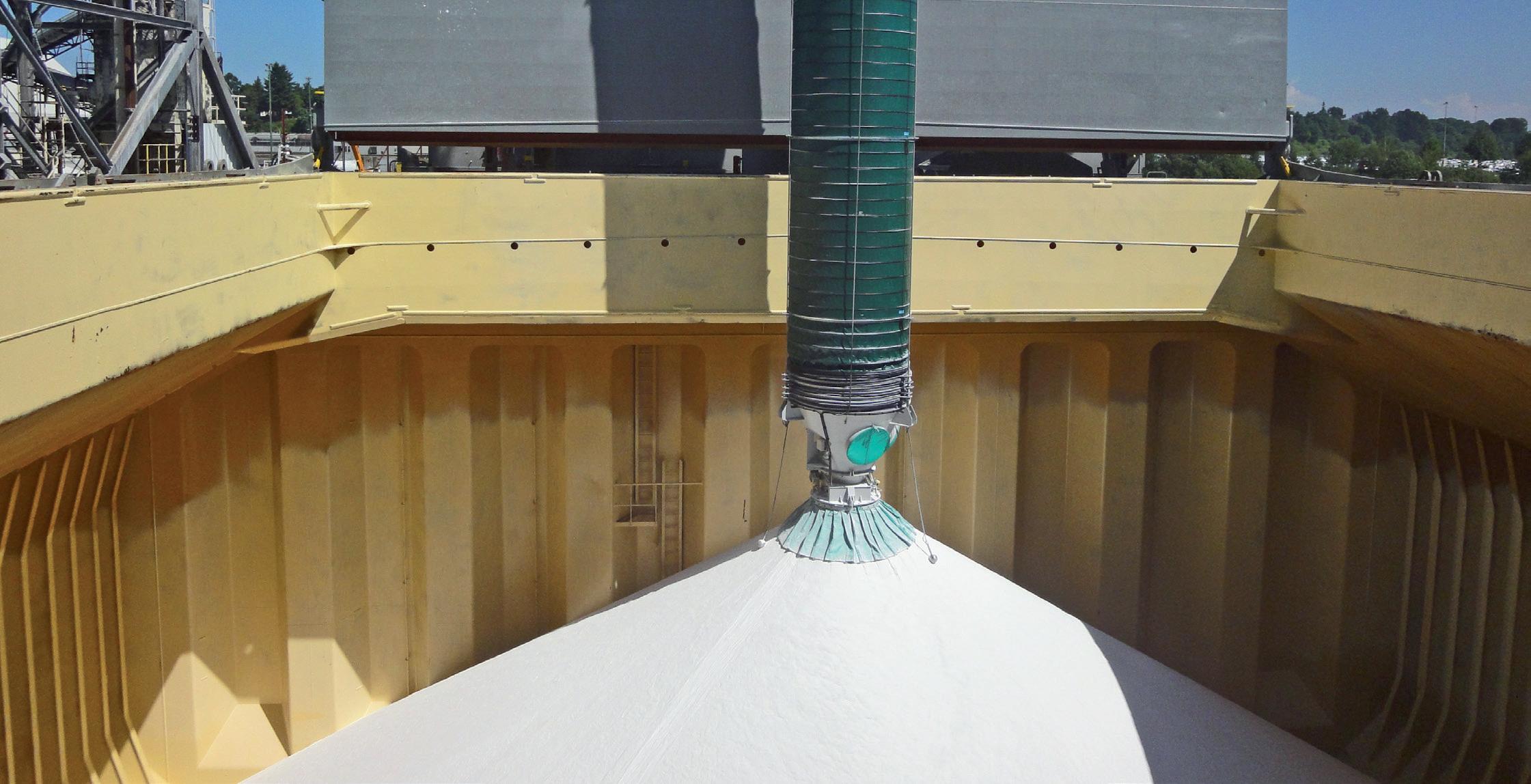
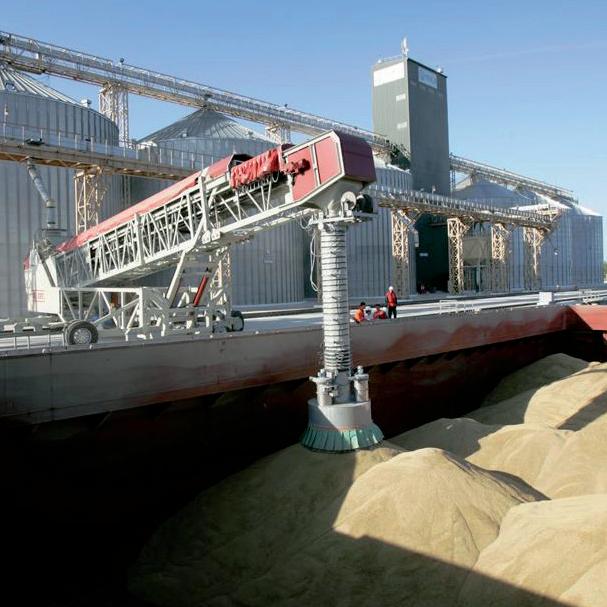
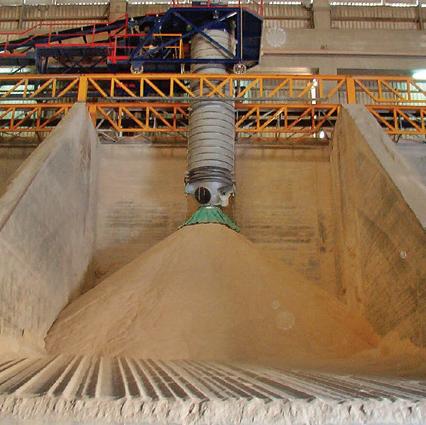
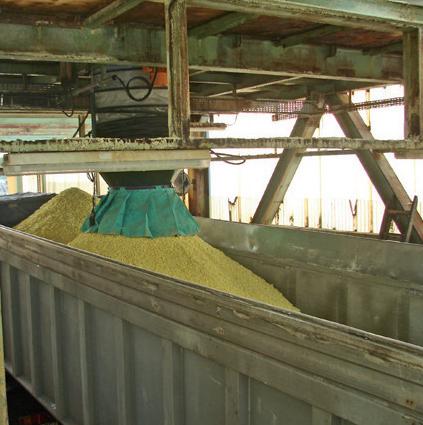
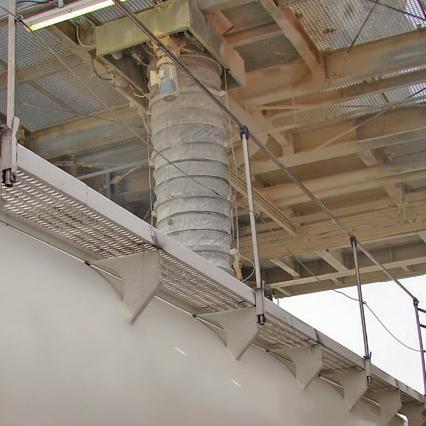
Cleveland Cascades are Specialists in the design and manufacture of bespoke dry bulk loading chutes.
Our bespoke solutions are designed to meet each customer’s specific requirements from a tool kit of proven components, utilising the expertise of a team of specialist in house design engineers.
We lead the loading chute industry & set the standard for dust emissions and environmental pollution control in dry bulk handling.
Our worldwide reputation is built on high quality, well-engineered, robust, high performance chutes, backed up by excellent customer service and global lifetime product support.
Contact Cleveland Cascades Ltd Unit 22, Dukesway, Teesside Industrial Estate, Thornaby, Stockton-on-Tees, Cleveland, TS17 9LT, United Kingdom Tel: +44 1642 753260 | Fax: +44 1642 753270
E-mail: enquiries@clevelandcascades.co.uk | Website: www.clevelandcascades.co.uk




 Ship Loaders
Silo Loaders
Truck Loaders
Tanker Loaders
DCi
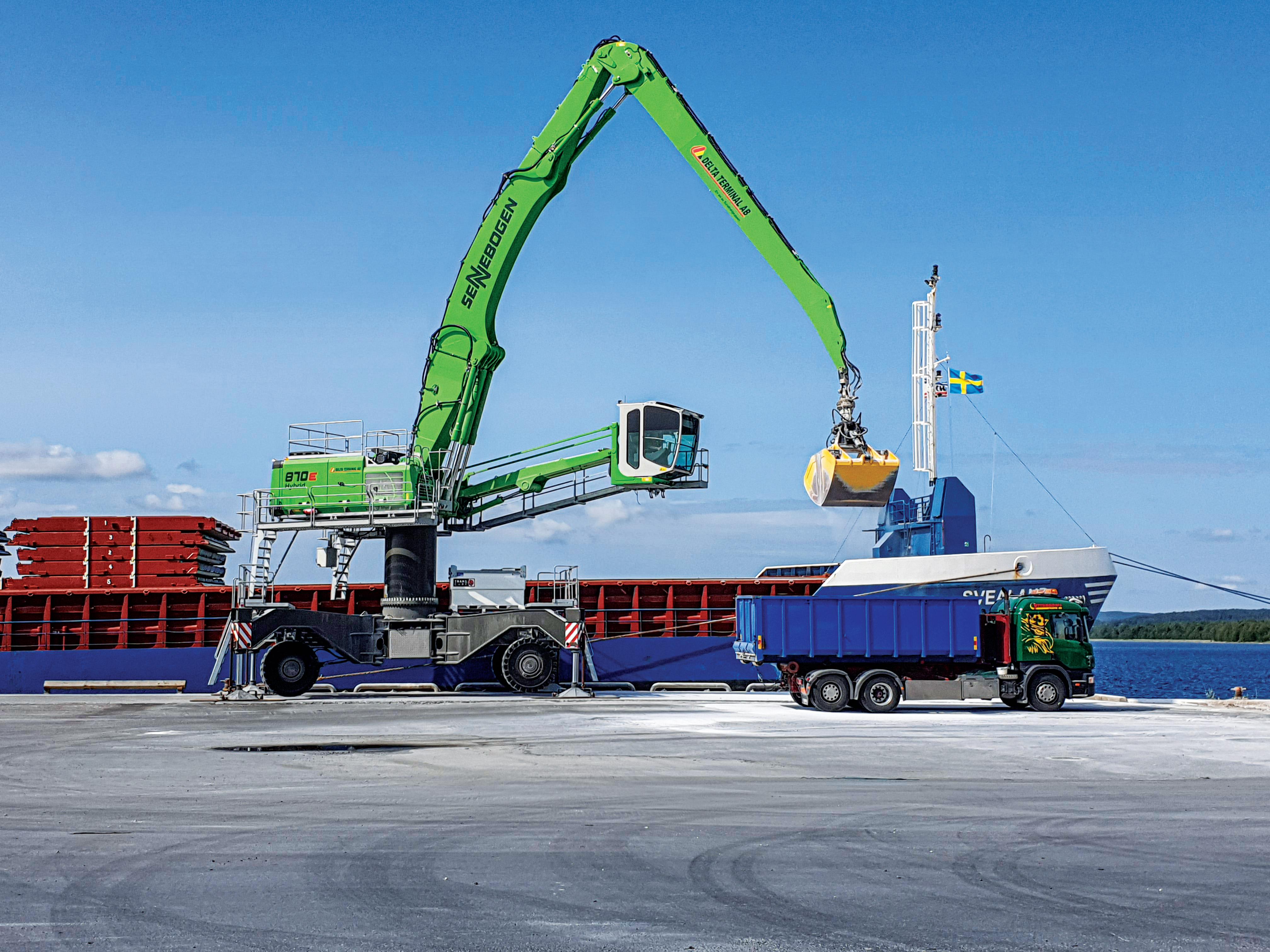
Perfect view of the ship’s
SENNEBOGEN Maschinenfabrik GmbH
Sennebogenstraße 10 D-94315 Straubing, Germany
T: +49 9421 540-0 E: info@sennebogen.com W: www.sennebogen.com
PUBLISHERS
Jason Chinnock jason@dc-int.com
Andrew Hucker-Brown andrew@dc-int.com
EDITORIAL
Louise Dodds-Ely Editor louise@dc-int.com
Jay Venter Deputy Editor editorial@dc-int.com
Samantha Smith Directories directories@dc-int.com
Bernice van Wyk Office Manager accounts@dc-int.com
SALES
Matthew Currin Senior Sales sales2@dc-int.com Executive
Zack Venter Advertisement Sales sales@dc-int.com Executive
CORRESPONDENTS
Brazil Patrick Knight India Kunal Bose
Europe Barry Cross
UK Maria Cappuccio
UK Michael King UK Richard Scott
ADMINISTRATIVE OFFICE
Business Publishing International Corporate Park, 11 Sinembe Crescent La Lucia Ridge, South Africa, 4051
Tel: +27 31 583 4360
Fax: +27 31 566 4502
Email: info@dc-int.com
Twitter: twitter.com/drycargomag
HEAD OFFICE
Trade Publishing International Limited Clover House, 24 Drury Road, Colchester, Essex CO2 7UX, UK
Tel: +44 (0)1206 562552
Email: info@dc-int.com
Website: www.drycargomag.com
Twitter: twitter.com/drycargomag ISSN 1466-3643
Insta: www.instagram.com/drycargointernational
Trade


TRADE & COMMODITIES Coal trade faces hurdles 2 Indian coal imports slow down 4 CEMENT TRADES: INDIA GROWS BUT EXCESS CAPACITY HURTS CHINA 6 SHIPPING & TRANSPORT Associated Terminals’ Management Group acquisition of S.H. Bell Company 13 Wind Challenger-equipped ‘Shofu Maru’ achieves fuel savings of 17% 13 Intermarine launches Intermarine Bulk Carriers and expands fleet by two vessels 14 PORTS, TERMINALS & LOGISTICS Great Yarmouth sets sights on aggregate growth 16 Uruguay implements new EU import regulations early 17 Port of Dover Cargo Terminal’s final delivery of windblown timber for the season 18 CIMBRIA’S PORT TERMINAL PROJECTS IN POLAND: INCREASING CUSTOMER EFFICIENCY AND CAPACITY 19 REGIONAL REPORT SCANDI-BULK: REGIONAL DEVELOPMENTS IN SCANDINAVIAN PORTS, SYSTEMS AND EQUIPMENT 22 ENGINEERING & EQUIPMENT CRS automatic lid system streamlines containerized bulk handling operations 31 Two Konecranes Gottwald Generation 6 MHCs expand capacity at SeaPort Manatee 32 New 26-tonne recycling material handler: SENNEBOGEN 826 G-Series 34 BIGGING UP BIOMASS: NO LET-UP IN POPULARITY OF BIOMASS CARGOES 43 CLEARING THE AIR: ENVIRONMENTAL BULK HANDLING 64 FIRM FOUNDATIONS: CEMENT HANDLING SYSTEMS TAKE CENTRE STAGE 81 GET WITH THE PROGRAM: KEEPING UP WITH SOFTWARE & AUTOMATION TECHNOLOGIES 115 STRIKING A BLOW FOR PNEUMATIC BULK HANDLING EQUIPMENT 125 featuring... WWW.DRYCARGOMAG.COM MAY 2024 issue
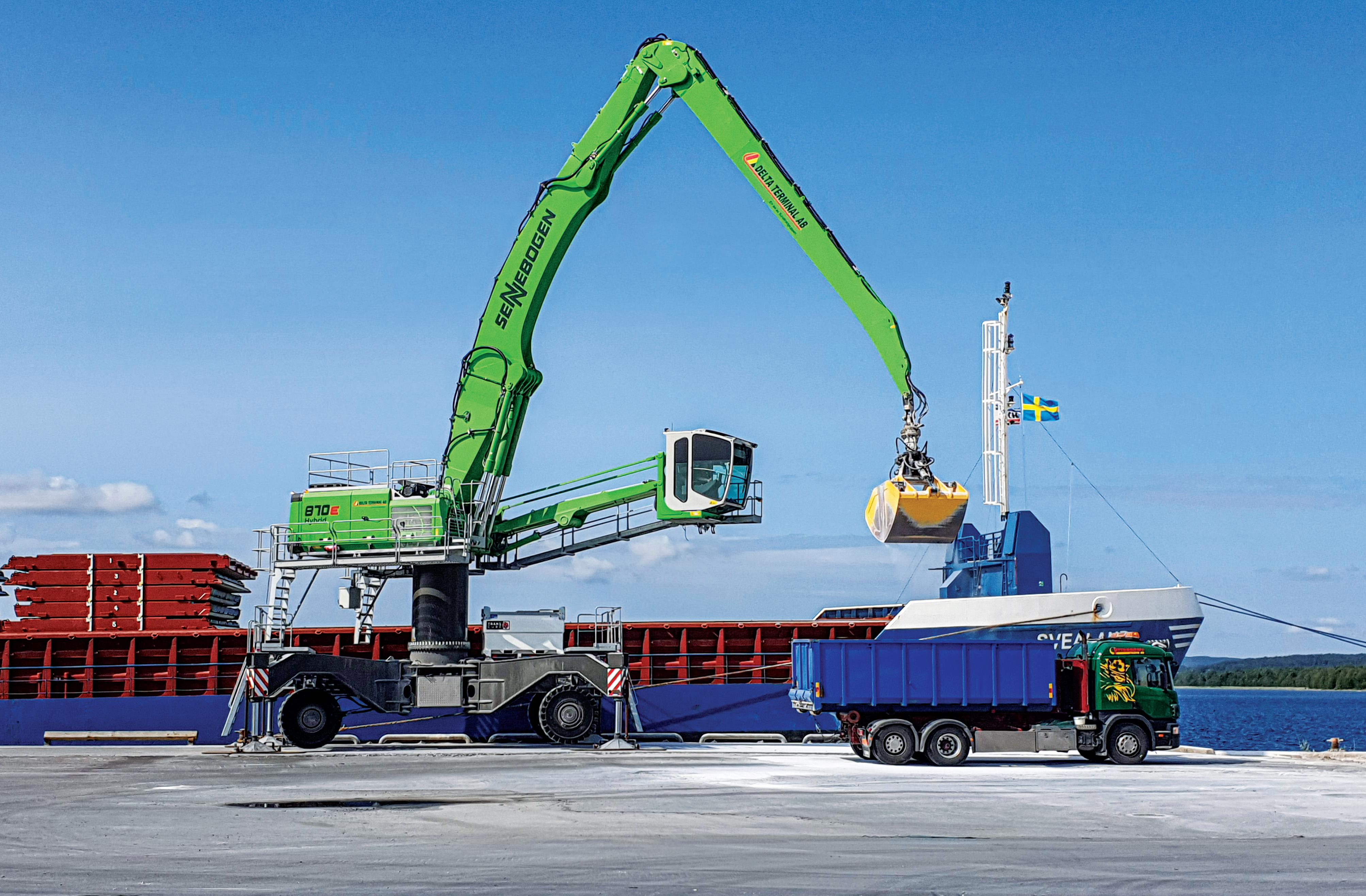
hull and the truck’s loading area in the port of Söråker, Sweden thanks to the flexible 870 SENNEBOGEN E Hybrid material handler.
Dry Cargo International,
does it
responsibility for errors
omissions
their consequences.
herein are not
those of Trade Publishing International Ltd
© Trade Publishing Int’l Ltd 2024 CONTENTS 1 MAY 2024 DCi www.drycargomag.com
CARGO international DC i
Publishing International Ltd does not guarantee the information contained in
nor
accept
or
or
Opinions expressed
necessarily
DRY
Coal trade faces hurdles
Although influences affecting commodity import demand positively in some countries have been evident in the past few months, it remains unclear whether the pattern is sustainable. Prospects for global dry bulk trade growth in 2024 as a whole still appear to be constrained.
Recent assessments confirm previous ideas of limited prospects for an improved rate of progress in the world economy. The latest (mid April) International Monetary Fund forecast suggests that global growth in gross domestic product during 2024 may be no higher than last year’s 3.2%. Europe and the USA may strengthen, but China and Japan could see a slackening pace. While this background provides only one pointer for dry bulk trade, it is a further indication of possible restraints. .
COAL
The coal segment is a particular focus for uncertainty about the global dry bulk trade outlook. Last year China’s huge upturn in seaborne coal imports contributed 70% of the entire world increase in all dry bulk trade. Despite a strong performance in the first quarter of 2024 a downturn, perhaps sizeable in China’s coal purchases during the remaining months seems quite likely.
A forecast by analysts at the Australian Government Department of Industry prepared a month ago showed a fall of 71mt (million tonnes) or 16% in China’s 2024 coal imports, to 365mt
(including some land movements but mostly seaborne). Reduced volumes on this scale could be difficult to offset with any growth emerging elsewhere among coal importers. Some other forecasters are not so pessimistic.
IRON ORE
Conversely, steel demand estimates provide a more solid foundation for steel industry raw materials trades — iron ore and coking coal — during the current year. In its short range outlook published last month, the World Steel Association suggested that steel demand in China and Japan could remain flat in 2024, accompanied by a marginal decrease in South Korea and growth in Europe.
Looking at figures for crude steel production in the first quarter of this year, a generally negative trend has prevailed. WSA data shows China’s steel output declining by 2% compared with the same period of last year, to 256.6mt. Output in both Japan and the European Union was 1% lower at 21.5mt and 33.0mt respectively, while South Korea saw a 2% decrease to 16.2mt.
GRAIN & SOYA
World trade in wheat plus corn and other coarse grains is expected to strengthen in the current 2023/24 trade year ending third quarter 2024. From later in 2024 onwards prospects are still hazy, awaiting clarification of the likely outcome of summer domestic harvests
in northern hemisphere importing countries.
Updated estimates published by the US Department of Agriculture last month showed the world grain trade total rising by 18mt (4%) in 2023/24, reaching 441mt. These volumes are mostly seaborne. The wheat trade year ends in June while for coarse grains the yearend is September. Imports into east and south east Asia are expected to be the main supporting influence, together with higher volumes into North Africa, partly offset by a lower EU total.
MINOR BULKS
In the ‘agricultural bulks’ sub-category of the minor bulks segment, potential for growth in 2024 is evident. This group includes various oilseeds and meals, rice, sugar and fertilizers, totalling about 190mt last year. An upturn in soyameal movements, comprising about a third of the category, is expected to contribute.
BULK CARRIER FLEET
Among bulk carrier groups, Capesize tonnage (statistically defined as 100,000 deadweight tonnes and larger — including Newcastlemaxes and ore carriers) forms almost two-fifths of the entire world fleet. After growing by 10m dwt (2.5%) in 2023 to 394m dwt at endyear, predictions of lower newbuilding deliveries and higher scrapping may result in a slower growth rate below 2% during the current year.
by Richard Scott, Bulk
BULK CARRIER TRADE & FLEET OUTLOOK 2 MAY 2024 DCi www.drycargomag.com
Shipping Analysis, Tel: +44 (0)12 7722 5784; Fax: +44 (0)12 7722 5784; e-mail: bulkshipan@aol.com 2018 2019 2020 2021 2022 2023* Japan 128.8 125.8 118.5 124.3 126.8 113.0 South Korea 115.9 111.9 96.1 97.6 97.5 93.0 Taiwan 57.0 58.1 54.6 56.3 52.3 49.0 China 197.7 216.0 193.4 241.7 197.6 315.0 India 175.9 192.3 167.5 136.0 171.0 185.0 Total of above 675.3 704.1 630.1 655.9 645.2 755.0 source: various
BSA estimates *BSA estimate TABLE 1: STEAM COAL IMPORTS IN KEY ASIAN COUNTRIES (MILLION TONNES) 2018 2019 2020 2021 2022 2023* newbuilding deliveries 14.3 19.0 25.1 19.0 10.3 10.7 scrapping (sales) 3.1 5.9 11.4 3.4 2.9 1.0 losses 0.0 0.0 0.5 0.0 0.0 0.0 plus/minus adjustments -0.1 0.0 0.0 0.0 0.1 0.0 Fleet at end of year 335.0 348.1 361.3 376.9 384.4 394.1 % change from previous year-end +3.4 +3.9 +3.8 +4.3 +2.0 +2.5 source:
data)
BSA estimates *BSA estimates
&
Clarksons (historical
&
(MILLION DEADWEIGHT TONNES)
TABLE 2: CAPESIZE (100,000 DWT & OVER) BULK CARRIER
FLEET
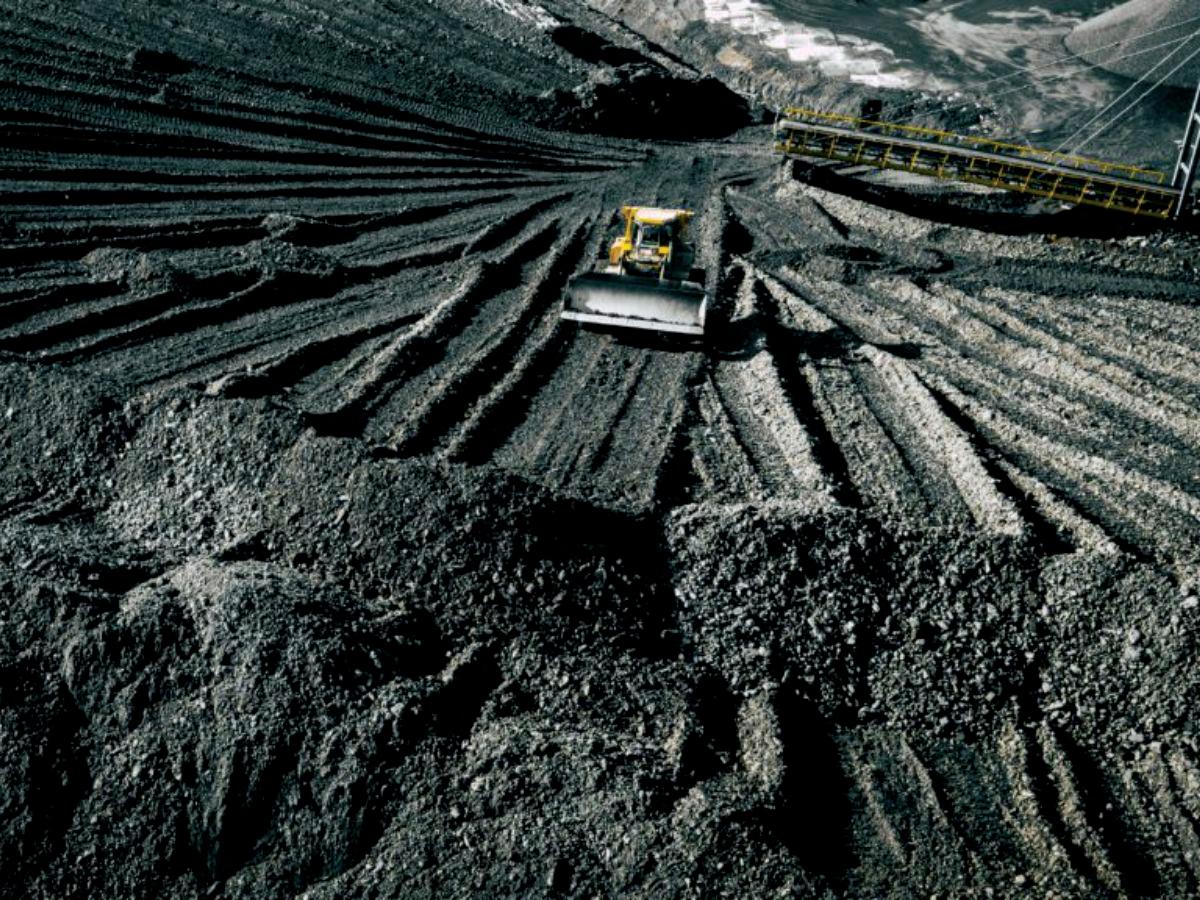
In the ten months between April 2023 and January 2024, coal imports into India rose to 212 million tonnes.
The breakdown for January 2024 showed that, of total imports, non-coking coal totalled 12.10mt (million tonnes), compared to 10.01mt in January 2023. As for coking coal imports, these reached 4.50mt, slightly down on the 4.74mt reported for January 2023.
A local expert on the coal market conceded that demand for imported coal in India has weakened in early 2024, the trend continuing through the first three months of the year, which he attributed to the ample availability of domestic coal at mine pitheads and at thermal power plants.
However, coal imports in January 2024 compared to January 2023 showed growth of 16%, rising from 16.97mt to 19.81mt. This was reflected in traffic across all ports handling coal in India, which in January this year reported total coal traffic of 19.81mt compared to 16.97mt. Overall, the country saw a 1.65% increase in coal imports. Barry Cross
Tata Steel invests in Port Talbot — but shuts furnaces
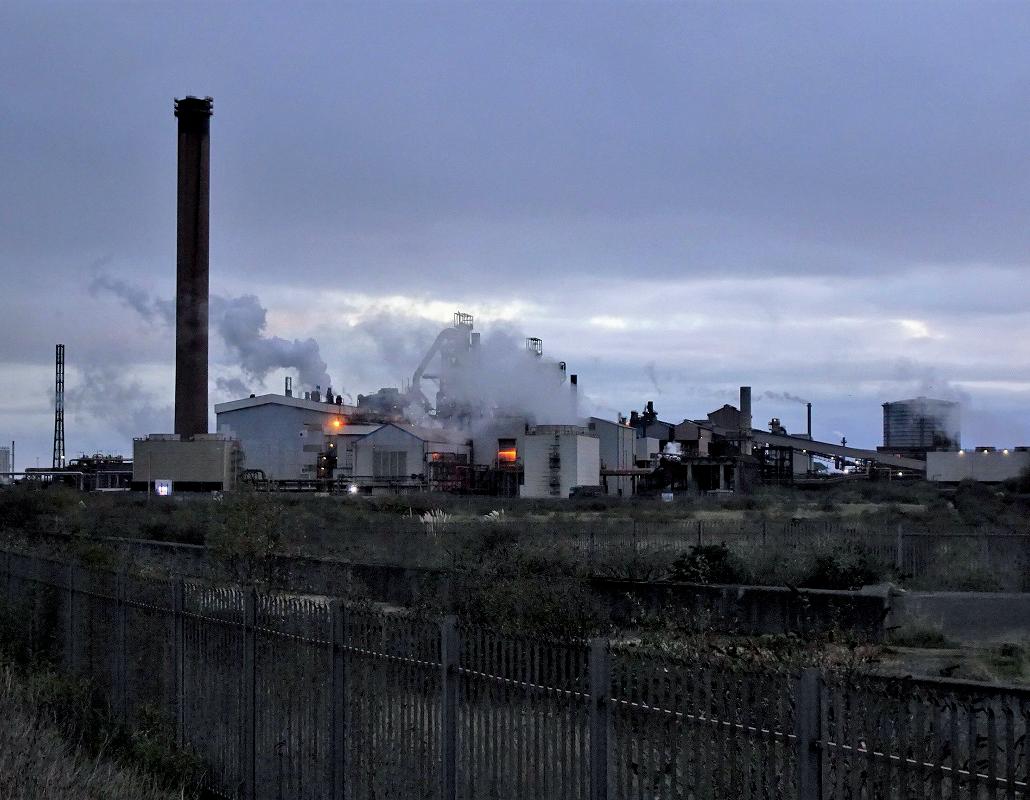
Tata Steel is investing significant sums in the UK’s beleaguered Port Talbot steel plant. It will build a new Electric Arc Furnace (EAF), but at the same time will be closing two blast furnaces before the end of this year.
“We will proceed with [the] proposal to shut down heavy-end assets this year, and set up EAF by 2027. This is a difficult period of change for our people... With respect to EAF, we will place equipment orders by September 2024 and have signed the agreement with UK National Grid securing high voltage connection, which will be available on schedule. We have as part of discussions with the unions, offered the best ever package of support for affected employees in Tata Steel UK. We have agreed to final terms of proposed grant package with the UK government to support the £1.25 billion investment,” said Tata Steel’s management.
TRADES & COMMODITIES 4 MAY 2024 DCi NEWS www.drycargomag.com
Cement trades
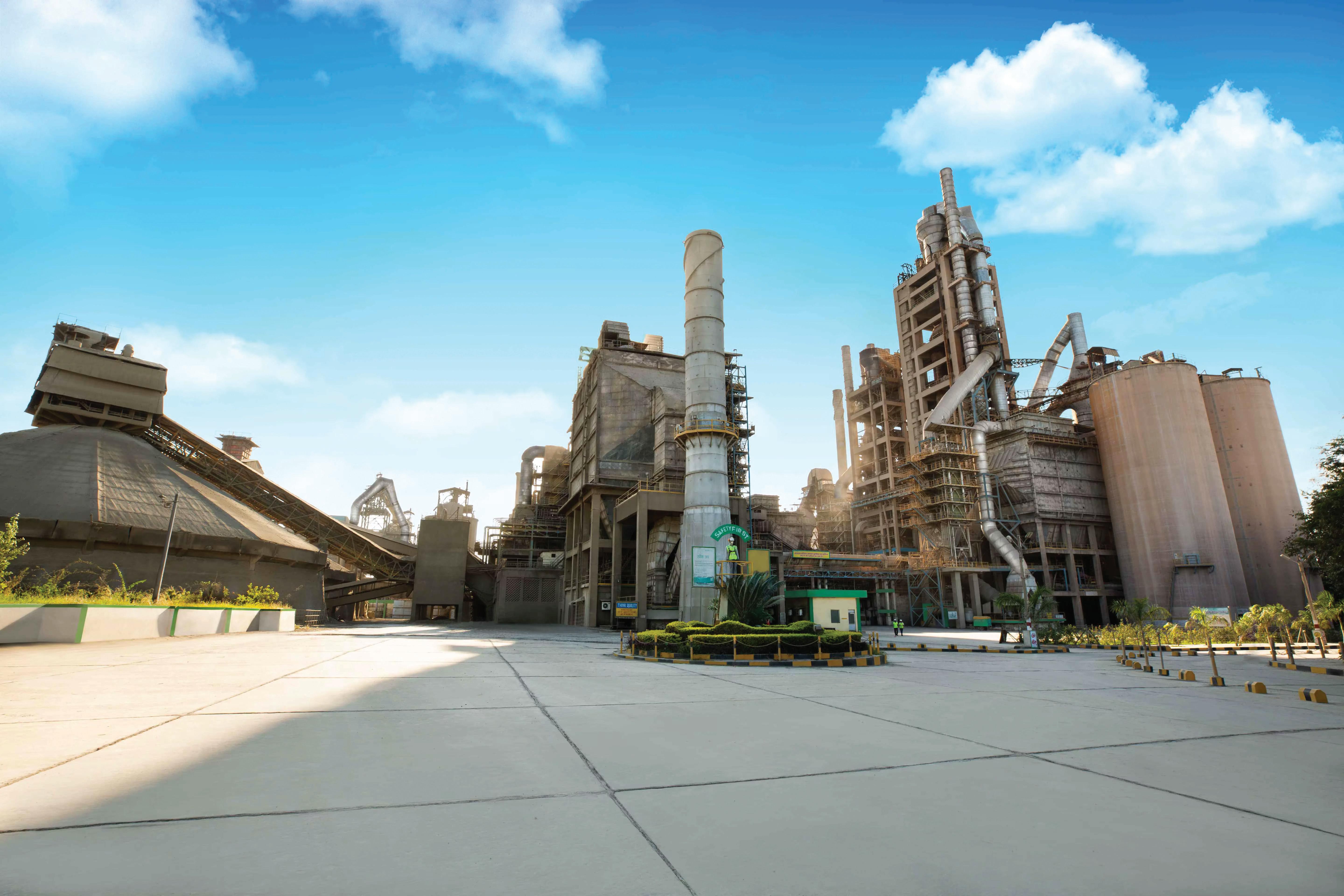
China still has a lot to do to reorganize its cement industry. Besides giving another shot to M&A (mergers and acquisitions), the country must rapidly shed the remaining inefficient capacity. In contrast, growing demand is leading to fast cement capacity expansion in India.
Like in so many other industries, China dwarfs all other cement producing countries in capacity and production. And that is not going to change any time in future either. India, the other Asian nation endowed with rich limestone deposits spread in various parts of the country, may be trailing China by a long margin in capacity, number of manufacturers and output, but it remains the most attractive destination for cement makers. This is because unlike in its neighbour in the north, the leading Indian cement groups — from UltraTech Cement (the largest in the
India grows but excess capacity hurts China
industry with capacity of 146.2mt [million tonnes] and growing all the time) to Adani, the majority shareholder of Ambuja and ACC (combined capacity to rise to 140mt by 2028 from the present 79mt) and Dalmia Bharat (capacity close to 45mt across 15 cement plants and grinding units) — are all operating at high capacity, earning good profits and remaining engaged in capacity growth through organic and inorganic routes. Indian Bureau of Mines says the country has limestone deposits of 2,03,224mt, including reserves of 16,336mt (8%) and resources of 1,86,889mt (92%). Thereby, the industry is assured of easy supply of basic raw material for decades.
CHINA CAPACITY OVERHANG
Compare this with the cement scene in China where humongous capacity of approximately 3.8bn tonnes has proved to
be a burden both economically and environmentally. As the world has seen in the case of steel in particular, in cement too China has the burden of inefficient, environment-damaging and less-thanoptimum capacity resting with a large number of units. The phenomenon is particularly visible in Shandong province, which Beijing has targeted for radical reorganization of the industry and shutting down of units. The country’s commitment to progressively phasing out surplus cement capacity is underlined by reference to the subject in the 14th five-year plan (2021–25). This is alongside setting the ambitious target to reduce CO2 intensity by 18% by 2025, and also create conditions for peak carbon emissions by 2030. As a major follow-up to the introduction of regulations in 2018 limiting creation of new cement capacity, Beijing further tightened
TRADE & COMMODITIES 6 MAY 2024 DCi
www.drycargomag.com
Kunal Bose
restrictions in December 2020 requiring of producers to retire 1.5 tonnes of outdated capacity for every tonne of new capacity creation in non-environmentally sensitive areas — instead of scrapping 1.25 tonnes as stipulated earlier.
The net effect will be continuous capacity reduction, improved demandsupply balance and, it is hoped, better earnings for cement makers. But why is the China focus on cleaning up Shandong province? According to International Cement Review (ICR), a leading industry research group, Shandong being a leading cement production centre with much too much capacity, the province proved the natural target for capacity deactivating. Faithful implementation of the plan — there are quite a few instances of provincial bosses going their own way and not honouring the central directive — will see scaling back of national capacity. After Shandong sees the dismantling of clinkers with capacity of less than 2,500 tonnes per day (TPD), the ones with somewhat higher capacity will either be forced to stop production or be merged. ICR has come to know capacity elimination operation “will result in the shutdown of around 35 clinker production lines and 182 grinding units” in the eastern coastal province.
HOLCIM PRIORITIES
The intriguing thing about India is even while the cement demand is growing at a
healthy rate and new capacity is built all the time, why did the world’s largest cement maker Holcim quit the country in September 2022 after having a resounding success with the two acquired entities Ambuja Cement and ACC over 17 years? But India was one of the many markets that the Swiss multinational quit, including Brazil, Northern Ireland, Russia, Zimbabwe, Indonesia, Malaysia, Vietnam and the Philippines to focus on speciality building solutions, high-end energy efficient renovations and core markets. The exits and simultaneous acquisitions of companies engaged in eco-friendly solutions and products happened for Holcim in recent times. Cash proceeds from divestiture — India exit got Holcim $6.4bn — while strengthening Holcim’s balance sheet helped it at the same time to fund new acquisitions. All that Holcim is doing of late is part of the group “strategy 2025; accelerating green growth.” The Holcim announced goal is to become the “global leader in innovative and sustainable building solutions.”
With the exit of Holcim, India is left with only one foreign cement entity — HeidelbergCement India, a subsidiary of Germany’s HeidelbergCement. Like Holcim, HeidelbergCement started operation in India in 2006 by way of acquisition of businesses of Mysore Cement and Cochin Cement and also forming a joint venture with Indorama
India is left with only one foreign cement entity — HeidelbergCement India, a subsidiary of Germany’s HeidelbergCement.
Cement. Ten years later, the German subsidiary acquired the cement business of Italcementi further broadening its India portfolio. What began on a modest scale of 2.3mt has now a respectable capacity of 14mt resting on four integrated mills and a similar number of grinding units. Armed with fairly strong brands, HeidelbergCement sells its cement in 12 of 28 Indian states. Holcim’s withdrawal came as a disappointment for New Delhi, which wants foreign direct investment in an industry of strategic interest for infrastructure and housing development.
Moreover, the presence of global leaders such as Holcim and HeidelbergCement ensures technology transfers, leading to carbon neutrality goal. Take HeidelbergCement AG, which is continuously investing in technologies relating to carbon capture and storage (CCS), low carbon concrete products and hydrogen as fuel. In India, the company subsidiary is staying in the industry forefront to use growing volumes of renewable green energy to progressively bring down emission levels in cement making. The subsidiary’s 5 megawatt solar power plant at the limestone mining centre at Damoh in Madhya Pradesh will lead to CO2 savings of 225,000 tonnes over the standard life of the unit.
INDIA CAPACITY CONSOLIDATION
DCI inquiries with industry officials and sector analysts point to further capacity
TRADE & COMMODITIES 8 MAY 2024 DCi www.drycargomag.com


















Theultimatecoombination atio in port oper om or uncompr f The ultimate co n ety ised saf








































.de afik deeg r Coupl es,Brak oupl Componen lingsa lings and er - (G (Ge Haig Auf der Stüc emsen erland Br SIBRE Sieg 35708 ermany) e 1 - 5 k GmbH sibre.d@oinf e.de.sibr e | www
consolidation happening in India with over half a dozen leading groups remaining in the hunt for integrated mills and clinker and grinding units in the south (still the country’s most fragmented capacity centre), the east, north and central regions. Take UltraTech Cement, whose capacity is double that of the second-largest Adani group; the company has achieved the pinnacle height in capacity terms, largely by way of acquisitions that started with the takeover of the country’s leading engineering and construction group Larsen & Toubro’s cement business in June 2013. Since then, UltraTech has bought JP group’s cement plants, Binani Cement, cement business of Century Textiles and Kesoram Cement. “Acquisitions bring challenges of integrating, culturally and operationally of new units with the mother organization. And then there are also issues of exploring possibilities of capacity expansion, inducting new advanced technologies, lower energy consumption and reduce carbon emissions,” says an official of Cement Manufacturers Association (CMA).
The prime objective of capacity consolidation is to gain pricing power, secure synergies leading to improvement in operational efficiency and therefore, cost reduction and moving greater volumes to the market under established brands. Companies leading the acquisition charge are able automatically to raise their market share. A good way to judge how acquisitions are proving to be value accretive for participating companies and their shareholders is to see if working results have improved and share prices are
up following addition of new capacity through takeovers.
Indian cement company shares have become pricey with PE ratio of 42.18 for UltraTech and 37.14 for Ambuja and 37.37 for Shree Cement. Crisil Market Intelligence & Analytics says in a recent report that high energy (power and fuel) in the last two financial years (April to March) made operations unviable for the relatively small outfits making them targets for acquisitions for large groups. But since then there has been a 13% to 15% reduction in power and fuel costs bringing some relief to cement makers unable to arrest fall in product prices because of subdued demand and company focus on gaining market share. IIFL research says: “Cement prices have been on a declining trend since November 2023 and in 2023/24 fourth quarter average price was down 5.5%, quarter on quarter basis. Prices fell across regions with steepest decline seen in the west followed by the east and the south. The least affected was central and north India.”
BEIJING NUDGE
China has cement capacity of around 3.5bn tonnes (source China Cement Big Data Research Institute) in which the industry leader China National Building Material (CNBM) Group alone has a share of 515mt while the second-largest player Anhui Conch has capacity of around 370mt. Combination of excess capacity, price weakness resulting from demand squeeze in the real estate sector, unhealthy competition and fall in profit margins have
kept the condition ideal for mergers and acquisitions leading to consolidation of Chinese cement industry. Then there is a constant nudge from Beijing, worried about cement’s share in carbon emissions and economic burden that overcapacity entails, for deep capacity reorganization. CNBM, a state undertaking, that itself merged into it another public sector unit China National Materials Group in 2016, is undergoing deep reorganization for some time going beyond cement to rearrangement of production equipment development and manufacturing operations.
CNBM chairman Zhou Yuxian says the Group being the industry leader it has the responsibility of becoming the role model in addressing the problem of national cement overcapacity. In the meantime, to counter setback in domestic cement sales and profits, CNBM is doing two other things besides cement reorganization: (i) Beefing up international business, including exploring opportunities that may be available in China’s much trumpeted Belt & Road infrastructure programme. (ii) Expand new materials business that includes carbon fibre, glass fibre and materials for lithium-ion batteries. The industry’s No. 2 Anhui Conch Cement must have bought over a dozen cement companies since 2022 and it still remains on the hunt for more.
BBMG, the third in the pecking order is also a participant in capacity consolidation. “What is happening in cement by way of capacity consolidation and reorganization is a reflection of what Beijing has done with steel, but with greater force and success,”
TRADE & COMMODITIES 10 MAY 2024 DCi www.drycargomag.com
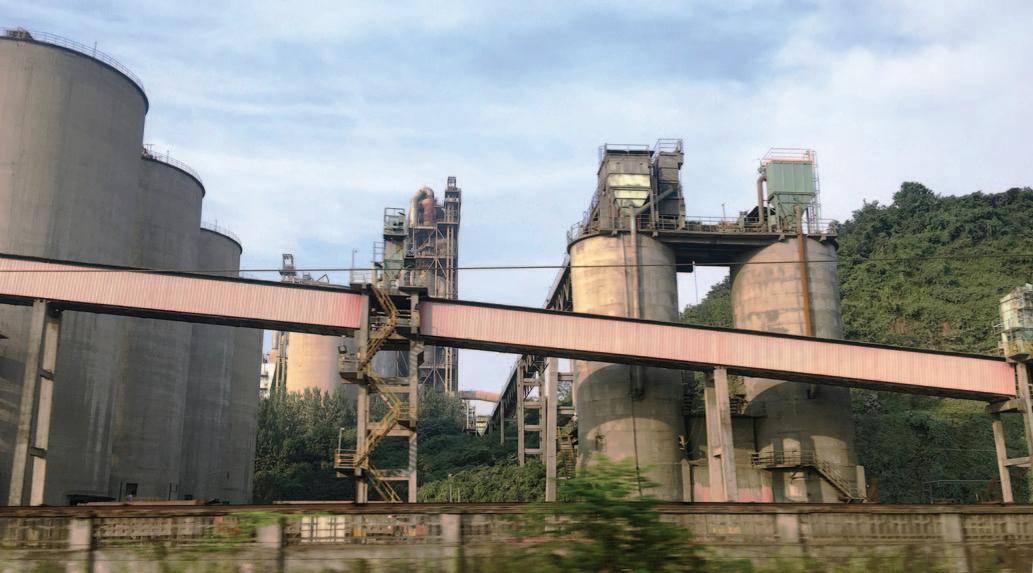
Anhui Conch cement factory in China.
says an industry observer.
There is consensus among analysts that the combination of continued distress of the real estate sector and the likely slower growth in infrastructure development to be caused by difficult fund allotment condition at the province level based on falling revenues from land sales will continue to hurt cement makers in the current year. In this context, Fitch Ratings says: “Chinese cement demand likely to remain weak in 2024 due to distress in the property sector, but producers' margins may stabilize… We expect cement capacity in China to decrease in 2024, driven by exits of smaller, unprofitable producers. In the medium term, the government’s policy on capacity control and decarbonization of the sector will further reduce capacity.” Cement makers took a hit as China’s real estate development fell 10% year-on-year to $1.53 trillion in 2023.
STORMS & CHALLENGES
CNBM chairman has described the past year as one of “storms and challenges” when the industry saw its profits eroded by as much as 50% to $4.42bn, the lowest since the mid-2000s. As for CNBM Group, the 2023 revenue fall was 10% to $29bn while profits suffered a 52% setback to $534m. All this could not have been otherwise since the industry, according to CNBM president Wei Rushan, had to endure “insufficient demand, weakening expectations and weakening off-peak season characteristics.” Moreover, the twin problems of surpluses with demand flattening and high costs remained. Revenue rises of Anhui Conch were on account of growth in trading activities but sales of cement were down. In a weak price situation, company profits nosedived 33% to $1.48bn. Expectedly, smaller companies in general fared badly in terms of sales volume and profits. The 2024 outlook for the industry is not encouraging either with cement prices refusing to move north. In fact, cement prices in China during the final week of March were down nearly 1% compared identical period in 2023.
The situation is already bad. But, according to CCA, this will become worse if there is a “price war, either nationally or regionally.” It wants the industry to accept that the “new normal” is cement demand fall on the back of slowdown in infrastructure development. A way has to be found to resolve the supply side problem and that requires production discipline and excess capacity shedding. The industry already has manufacturing
presence overseas by way of ownership of cement mills and CCA says cement companies should further explore opportunities abroad for growth. In the meantime, China’s National Bureau of Statistics has released data of cement production in 2023, which fell 4.5% to 2.02bn tonnes from 2.11bn tonnes in 2022. China cement production may stabilize around 2bn tonnes, but that also will leave surpluses in the system having a bearish impact on prices.
What is not to be missed is that 2023 saw a slower rate of output fall compared to the 10.4% decline in 2022 over 2021. In spite of production fall, China accounts for nearly half of 2023 global cement output of 4.1bn tonnes. India and Vietnam are the next two largest cement producers in the world. The woes of Chinese property sector by way of home price falls, bloated debts and slow new starts has unavoidably spilled over to cement companies. The worst sufferer in the process is the Hong Kong listed China Tianrui Group Cement with production capacity close to 60mt, which on April 10 found its market capitalization fell 99% in one swoop forcing the stock exchange to suspend trading.
INDIAN EXPANSION
In sharp contrast to the Chinese scene, the Indian industry in expansion mode commissioned 119mt of new capacity in the past five years to make a total of 595mt, says RK Sharma, director general of Federation of Mineral Industries. This is not all. As Crisil says, the Indian industry is to add another 150–160mt-capacity over the next five years. “The growth through both organic and inorganic routes is to meet demand surge for the binding material from the housing and infrastructure sectors.” There is also the competition among
industry leaders to wrest a bigger share of the growing market by having more capacity. According to Crisil, large groups are likely to commission up to 55% of new capacity.
Even while there is weakening of cement prices in recent months, Crisil is hopeful that in spite of the “largest in a decade” capacity expansion, “cement prices are expected to stay stable with utilization rate in 70% to 75% range.” Some industry officials, however, say privately a fallout of aggressive capacity expansion will be “intense competition” among producing companies in most markets denying them the option to raise prices. To add to their difficulties, cement demand from the real estate sector, accounting for 55% of total use of the commodity, has remained weak. No wonder, the average Indian cement price fell by 1% in 2023/24. The impact of the price fall was, however, largely negated by raw materials (coal and pet coke) prices decline and higher sales volume.
EUROPE’S TECHNOLOGY MARCH
The forward looking cement industry in Europe where capacity is largely concentrated but where also exist several medium- and small-sized independent units remains at the forefront of using cuttingedge technology, says Sharma. The industry there is projected to grow at a CAGR (compound annual growth rate) of 1.9% between 2023 and 2028 to reach a volume of 202.83mt. The growth, according to Dublin-based research group Research & Markets, will happen on the back of rising construction and infrastructure activities across Europe. In elaboration, it says as the European Union remains committed to strengthening all infrastructure segments from transportation to water management and every country in the region is
TRADE & COMMODITIES 11 MAY 2024 DCi www.drycargomag.com
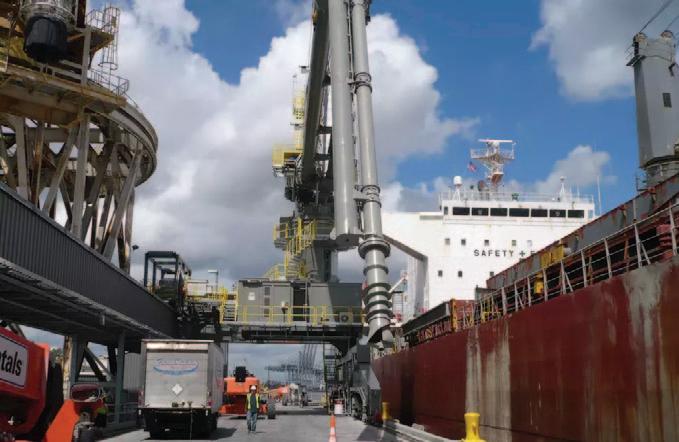
Bruks Siwertell cement unloader.
expanding residential, including affordable housing and non-residential commercial construction, cement demand will get a boost. Another report says, the continent’s cement industry registered a CAGR of 2.1% between 2018 and 2022 and attained a volume of 181.17mt.
GREEN CEMENT
At the same time, European cement users are showing a distinct preference for green cement for use in eco-friendly structures to bring down harmful emission, says Sharma. Emphasis on manufacturing green cement is largely because of growing pressure from environmentalist groups and user community committed to sustainable construction practices.
Green cement is made from waste materials such as recycled concrete, slag, quarrying and mining waste and power plant refuses. Besides environmental considerations, green cement is finding increasing use in Europe as it is found to have better “crack and corrosion resistance, freezing and thawing resistance, sulphate attack resistance and minimal chloride permeability” than conventional cement. Cement has the unenviable reputation of being among the worst polluters. The industry is responsible for emitting approximately 7% of annual global greenhouse emissions. The prime reason is cement production is overly dependent on coal-fired electricity. Each tonne of cement produced using such power typically releases 0.6 tonne of carbon in the air.
Cement’s environment disturbing quotient further increases because of high levels of pollution associated with
limestone mining. In the available circumstances, the European industry is setting the example for the rest in the world by raising the use of renewable biofuels, install carbon capture and storage (CCS) and reuse waste heat to generate electricity.
Now, as part of decarbonization of cement making, Holcim has begun the use of hydrogen as an alternative fuel. In fact, cement makers both in China and India taking the lead from their European counterparts are doing things to become carbon neutral at some point. To cite a specific example, China’s Anhui Conch is following the path of Holcim in using more and more biomass fuel to progressive lower emissions involved in cement making. The company’s first biomass plant commissioned in late 2020 with capacity to extract energy from 300,000 tonnes of plant material a year. When run on full capacity, the plant will make use of 75,000 tonnes of coal redundant, thereby eliminating 200,000 tonnes of carbon emissions. Anhui Conch, which has a target to cut emission density by 6% over five years to 2025 is now building a larger biomass plant.
THE AMERICAS
The UK-based consulting IA Cement has forecast a US demand rise of around 3% in the current year as a “challenging housing market is expected to be offset by volumes from the $1.5 trillion infrastructure bill ramp up, with spending peaking in the period 2024–26.” Housing starts in the US have remained muted with mortgage rates staying high and the existing house owners
are not to give up the advantage of purchases made earlier with low-cost mortgages, says Sharma. The US industry, with 2022 capacity of 119mt and a further 6.2mt from grinding units, found its clinker production dipping to about 77mt from 80mt a year before. Capacity fell more than 7mt in 2020. Underutilization of capacity has grown in the face of consumption rising steadily over a decade to 120mt in 2023. The trade is showing a distinct preference for competitively priced cement of foreign origin.
Cement demand in Latin America in 2024 present a mixed bag, with consumption likely to improve modestly. Mexico and Brazil will see demand growing while the November election victory for the TV celebrity turned politician Javier Milei has catapulted South America's second-largest economy Argentina into an unpredictable future. Economic uncertainty will inevitably have a negative bearing on Argentinian cement demand. In the meantime, high rates of inflation in Colombia has forced the central bank to peg interest rates uncommonly high. This, however, restricts housing demand and construction (including government funded infrastructure building) activities paring cement demand.
MENA
Blessed with rich deposits of limestone, countries in the Middle East and North Africa have built large cement making capacity, but now with overcapacity and pressure on prices dogging the industry. The two leading producers in the region are Egypt (2022 production 92mt) and Saudi Arabia (85mt). The next in the pegging order is UAE with 45mt of production. The combined capacity of MENA region was 430mt. Saudi Arabia leads in cement use (62mt), followed by Egypt (50mt), Iraq (31mt) and Algeria (24mt). What does the oversupply scene forebode for the region? First, a price war among producers will continue for long limiting their income and second, the smaller producing countries will find it extremely challenging to build new capacity. DCi
TRADE & COMMODITIES 12 MAY 2024 DCi www.drycargomag.com
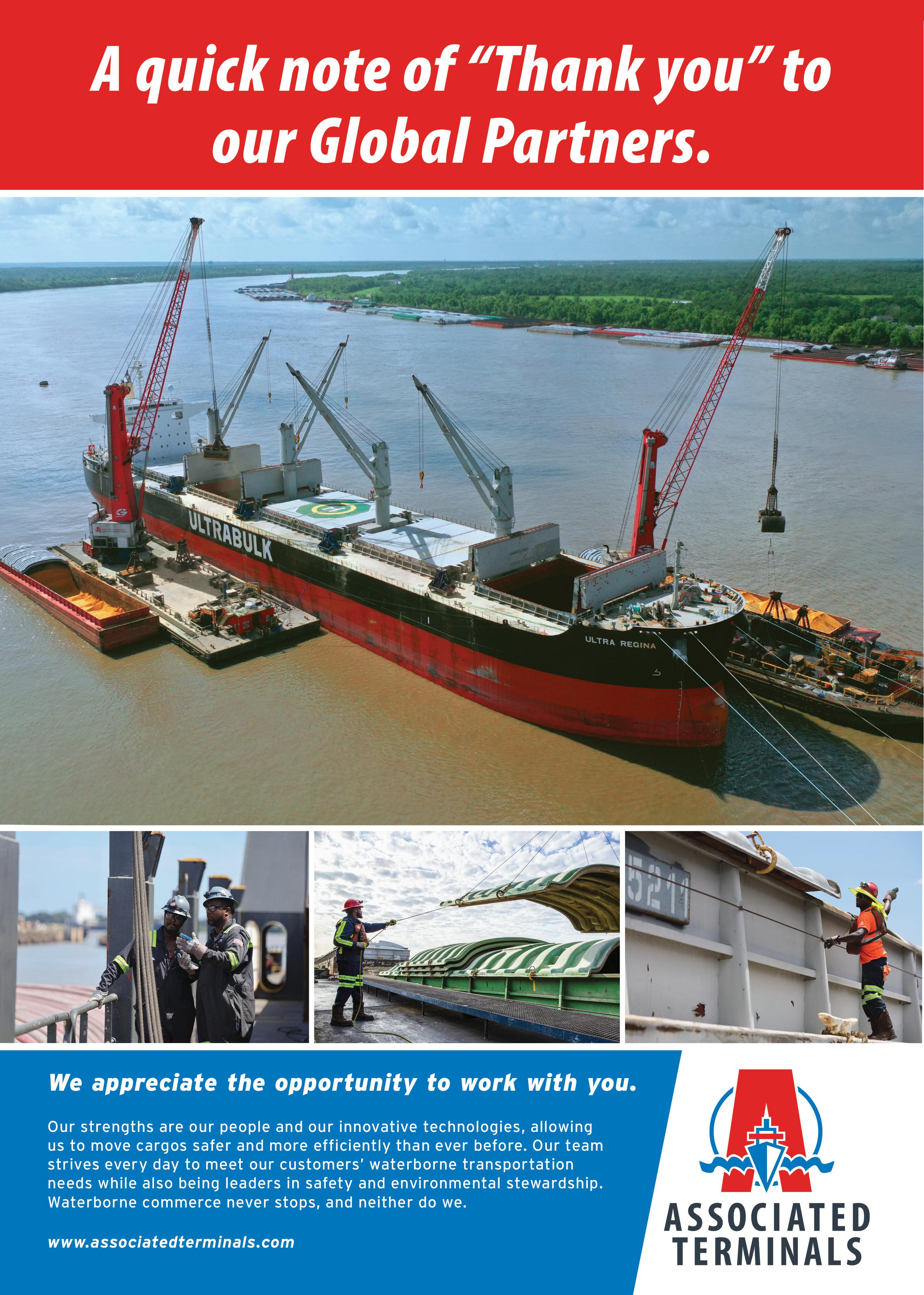
Associated Terminals’ Management Group announces acquisition of S.H. Bell Company
Associated Terminals, a major provider of stevedoring and marine services, has announced that its management group has purchased S.H. Bell Company and its subsidiaries.
S.H. Bell will continue to operate independently in its existing trade and under its well-recognized name, and the existing management team will remain in place to manage day-to-day operations under the terms of the agreement. S.H. Bell is a well-respected name in the global supply chain that provides handling, storage, processing, packaging and recordkeeping services for a diverse customer base, including logistics services such as drayage and truck transportation. This strategic move will create greater synergies and service offerings for Associated Terminals and S.H. Bell, by connecting and expanding operations, locations, and destinations.
Todd Fuller, President of Associated Terminals, stated, “We are thrilled to welcome S.H. Bell into our existing group
of companies. This acquisition is a testament to our commitment to growth and excellence in serving our customers, with a dedication to efficiency and streamlining the movement of cargo to its final destination.
John Bell and Adam Bell, and their team members, have always had our admiration. We share cultures where we believe that every team member plays a pivotal role in our organization and our customers deserve the highest level of customer service. This acquisition allows us to optimize our operations and provide endto-end solutions for our customers.”
John Bell, President of S.H. Bell, echoed these sentiments, saying, “Joining forces with Associated Terminals management presents exciting opportunities. We look forward to leveraging our combined expertise and cultural alignment to deliver unparalleled service and value.”
ABOUT ASSOCIATED TERMINALS
Associated Terminals is a leading provider
of stevedoring, marine, and logistics services, specializing in bulk cargo handling across the Gulf Coast and beyond. With a focus on safety, efficiency, and customer satisfaction, Associated Terminals delivers customized solutions to meet the unique needs of each client.
The company’s comprehensive capabilities enable seamless cargo transfers and efficient supply chain management.
ABOUT S.H. BELL
S.H. Bell is a renowned name in the warehousing and transportation industry, offering a wide range of cargo handling services in the upper Ohio River Valley, Chicago, and Baltimore regions. Founded in 1933, with a 91-year history of excellence and a commitment to service quality, S.H. Bell has built a strong reputation as a trusted partner for handling and storage of various metals, minerals, and semi-finished industrial materials. Fairmount Partners served as the financial advisors to S.H. Bell pursuant to this transaction.
‘Shofu Maru’, world’s first Wind Challenger-equipped
coal carrier, achieves fuel savings of 17%
Mitsui O.S.K. Lines, Ltd. (MOL; President & CEO: Takeshi Hashimoto) has announced that its owned and operated Shofu Maru1, the world’s first coal carrier equipped with the Wind Challenger hard sail wind propulsion system, has completed a total of seven round-trip voyages to Japan, mainly from Australia, Indonesia, North America, as a dedicated coal transport vessel for Tohoku Electric Power Co., Inc.
Over the course of about 18 months since the Shofu Maru’s delivery in October 2022, MOL has measured the performance of the Wind Challenger continuously on actual voyages, and confirmed that the Wind Challenger sail2 reduced daily fuel consumption by up to 17%, and by 5% to 8% per voyage on average, as announced before3.
The Wind Challenger-equipped coal carrier Shofu Maru under way with the sail in operation.
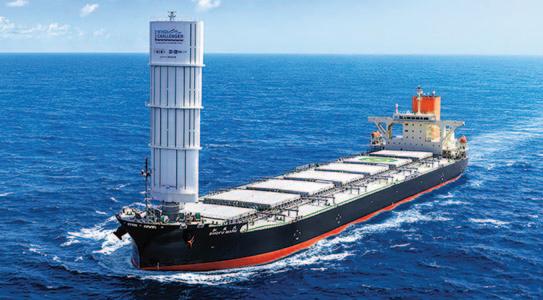
The Wind Challenger-equipped coal carrier Shofu Maru under way with the sail in operation MOL has set the target of achieving net-zero greenhouse gas (GHG) emissions by 2050 in the “MOL Group Environmental Vision 2.2.” Among the main actions to achieve this target is the ‘introduction of further energy-saving technologies’, and the group plans to launch 25 vessels equipped with the Wind Challenger by 2030, increasing to 80 by 2035.
The MOL Group has accumulated extensive operational technologies through the safe management and efficient operation of an environmentally friendly fleet that combines wind propulsion technology, such as the Wind Challenger. The MOL group will continue to advance its utilization of natural energy while ensuring safety, not only to reduce GHG emissions from its own activities but also to contribute to the decarbonization of society as a whole.
(1) For the delivery and overview of the vessel, please refer to the October 7, 2022, press release: “Delivery of Shofu Maru, World’s First Cargo Vessel equipped with ‘Wind Challenger’ Hard Sail.”
(2) The status in which the Wind Challenger sails are operated in automatic control mode is defined as “in operation.” Even when in operation, the Wind Challenger is not producing thrust in the event of a headwind. The effect of fuel savings during operation depends largely on the wind conditions encountered by the vessel.
(3) The effect of fuel savings is calculated using a method verified by Lloyd’s Register of Shipping (headquartered in the U.K.).
13 SHIPPING & TRANSPORT MAY 2024 DCi NEWS www.drycargomag.com
Intermarine launches Intermarine Bulk Carriers and expands fleet by two vessels
Intermarine has thrived since its full integration into the SAL-Intermarine Group a year and a half ago. Specialized in liner services and project cargo, the company has built an excellent reputation as a leading, high-quality MPP operator in the global breakbulk industry. Now, Intermarine is expanding its portfolio to offer bulk shipping services under the new Intermarine Bulk Carriers brand. Intermarine is also expanding its fleet with two additional F300 vessels. The new fleet will consist of a total of 30 units.
The newly founded Intermarine Bulk Carriers will commercially manage Harren Group’s bulk carriers — a total of six units with a combined deadweight of 350,000 tonnes. From now on, Intermarine will offer MPP vessels as well as ECO OHBS Handysize bulk tonnage. Intermarine’s bulk experts will also act as commercial managers for the group’s larger 76,000dwt to 95,000dwt bulkers. These vessels are suitable for transporting wind blades on deck, for example.
“This move puts Intermarine in a bigger and better position. The synergies between MPP and bulk tonnage will take us to a new level,” says Intermarine President Richard Seeg.
“Intermarine will further strengthen its product portfolio by merging all MPP and bulk forces. Customers will benefit from greater choices and better, more efficient solutions,” explains Intermarine CEO Svend Andersen. COO Lars Rassmussen adds: “The expansion will open up completely new markets and customer groups for Intermarine. This is a perfect complement — a win-win situation for our customers and for us.”
The Intermarine Bulk Carriers management team consists of Dr Martin Harren (CEO Harren Group), Lars Rasmussen (COO Intermarine), Capt. Joachim Zeppenfeld (MD Intermarine Bulk Carriers) and Jan-Philipp Rauno (MD Intermarine Bulk Carriers).
Jan-Philipp Rauno stresses: “The new structures give us ideal access to the market. And Intermarine also benefits from the existing networks of our bulker colleagues. The combination of MPP and bulk tonnage opens up new cargo options, especially on Handysize vessels.”
Cooperation partner Laurens Govers, Director Chartering & Projects at the JSI Alliance (the commercial joint venture between Jumbo Shipping, SAL Heavy Lift and Intermarine), is thrilled about Intermarine’s positive development: “The
fact that Intermarine is making such dynamic progress as part of the alliance is good for all partners. After all, the technologically complex vessels also need access to the MPP markets. Strong partners are the basis for a strong JSI Alliance.”
In addition to establishing Intermarine Bulk Carriers, Intermarine is pleased to announce two more new MPP entrants: Industrial Ursula and Industrial Katharina, two optimized second-hand F300 vessels. “Each ship is equipped with two very reliable 150-tonne NMF cranes and a very robust MAK main engine — two real workhorses that are in top condition and complement our fleet perfectly,” says Joachim Zeppenfeld. The final takeover of Industrial Ursula and Industrial Katharina will take place in summer 2024.
SAL Heavy Lift and Intermarine are united in the SAL-Intermarine Group, which represents all Harren Group heavy lift and MPP activities. SAL Heavy Lift and Intermarine are also members of the JSI Alliance. Together, Jumbo, SAL Heavy Lift and Intermarine control a joint fleet of 65 vessels.
CEO Dr Martin Harren explains Harren Group’s heavy lift and MPP strategy: “The bottom line is always the same: as the SALIntermarine Group, we always want to offer our customers the highest quality and the widest possible range of services. As such, our clients also benefit from SAL’s fleet expansion of five new Orca vessels and the expansion of MPP and bulk tonnage at Intermarine. Our vessels are consistently present in all relevant heavy lift and MPP markets around the globe, which is important for our international customers. The absolute fleet size isn’t
really critical. After all, everything in life is relative. What matters most, however, is our ability to offer our customers maximum flexibility. Because flexibility is particularly noticeable when it’s not available.”
ABOUT THE SAL-INTERMARINE GROUP
SAL Heavy Lift and Intermarine are part of the SAL-Intermarine Group, which represents all MPP and heavy lift activities of the Harren Group. Furthermore, SAL Heavy Lift and Intermarine are members of the JSI Alliance: Together with Jumbo, the three shipping companies offer the market 65 state-of-the-art vessels — from compact MPP tonnage to ultra-strong heavy lift ships with combined crane capacities of up to 3,000 tonnes each.
SAL Heavy Lift has been the benchmark in the super heavy lift segment for over 40 years. The German shipping company provides customers with top-class maritime engineering and offers maritime transport concepts for complex cargoes. In addition to the classic heavy lift sector, this also includes sophisticated flo-flo and ro-ro solutions with shipping company-owned tonnage.
Intermarine has been providing the most reliable liner services in the Americas for 30 years. Today, the company is one of the world’s leading high-quality MPP providers, also active in Asia and Europe. The team has the industry knowledge and technical expertise to provide the best solutions for its customers’ unique and changing transportation requirements. Through unmatched staff and active fleet management, Intermarine has the assets to provide long-term solutions for its customers’ supply chain needs.
SHIPPING & TRANSPORT 14 MAY 2024 DCi NEWS www.drycargomag.com
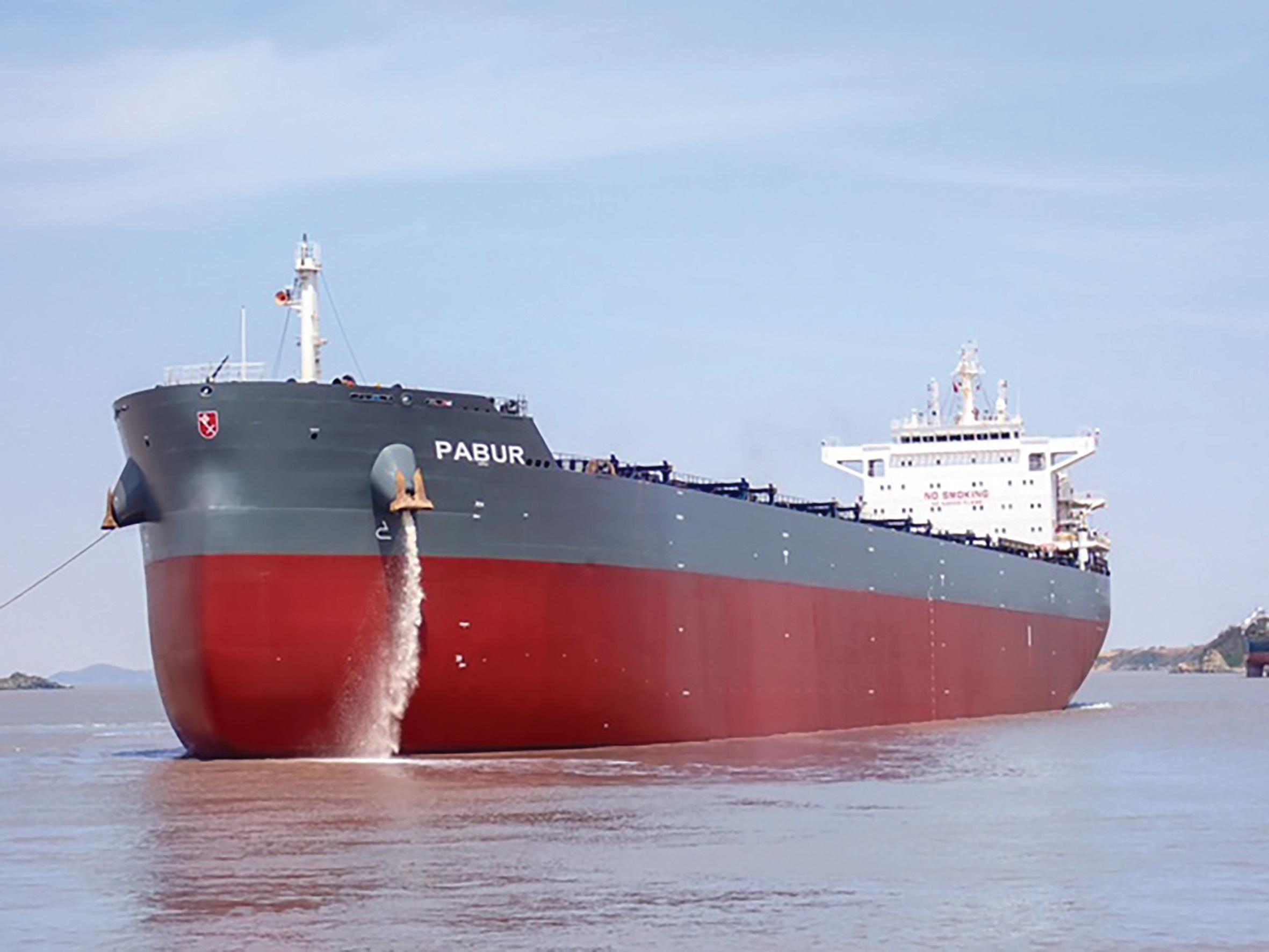
Pabur in Zhoushan Island China.
Port passes 1,000,000 tonne mark v Record year driven by construction demand v
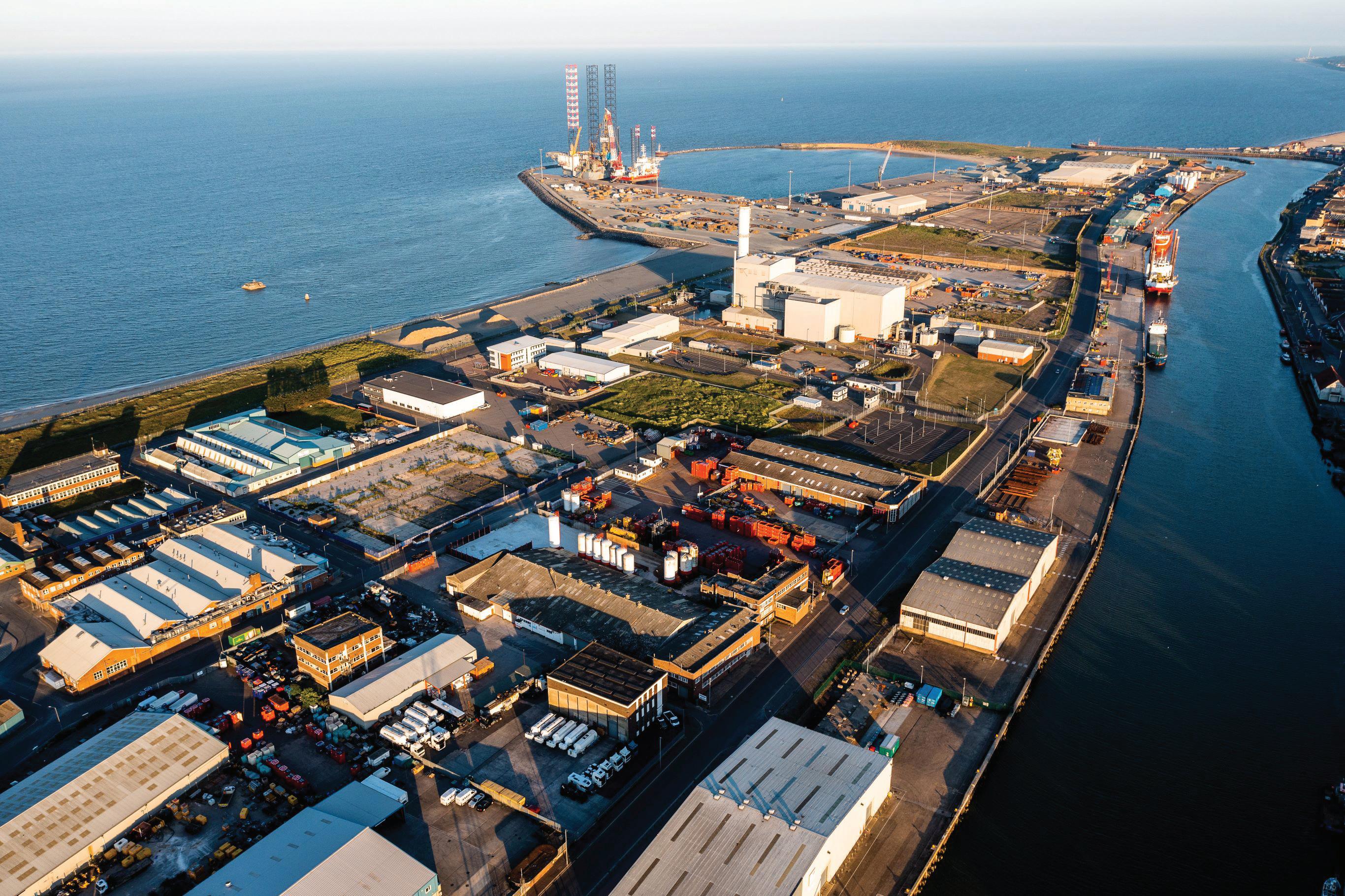
The construction of the Sizewell C nuclear power station in Suffolk has provided a major boost to the port of Great Yarmouth in the UK. The deep-water harbour has attracted aggregate suppliers providing raw materials for the building works and is eyeing the potential for more.
Last year the port welcomed its largest-ever vessel discharging 55,000 tonnes of material destinated for use across the East coast, including Sizewell C. Now, the continued increase in volume this year is giving confidence that this could be an important ongoing commodity for the port.
The latest ship to visit discharged a further 44,000 tonnes of cargo from the Aggregate Industries’ Glensanda quarry in the Highlands, making the last twelve months one of the busiest in the port’s history. It also helped to deliver a record year for any one single commodity handled through the new Great Yarmouth Outer Harbour, passing the 1,000,000 tonne mark.
As well as Sizewell C, aggregates are going towards upgrades of the road network and development of offshore windfarms.
Richard Goffin of Peel Ports said: “What we’ve proven in the last year is that we can handle the largest class of aggregate vessels, providing another route for companies involved in the thriving southeast construction sector. The work we’ve done with firms for Sizewell C has opened up other conversations with potential customers about supporting their needs.”

Joanne Beales of Aggregate Industries added: “The depth of water at Great Yarmouth is one of the major attractions because there aren’t many places that our largest ships can dock at, especially with the facilities and team that we need to fulfil our customers’ orders. Ours is an industry with very tight margins so we have to work with operators such as Peel Ports that really understand what we need and can deliver on their promises.”
PORTS & TERMINALS 16 MAY 2024 DCi NEWS www.drycargomag.com
In Uruguay, the government’s Ministry of Livestock, Agriculture and Fisheries of Uruguay (MGAP) has confirmed that the first ever shipment of woodchip has been made to the EU using new regulations. The shipment, which went to Portugal, is said to have conformed with the requirements established under a new European Union (EU) initiative covering deforestation-free products.
The same regulation also applies to beef and soybean imports. However, Uruguay is, to some respects, ahead of the curve, since the new regulations will only come into force as of 31 December this year.
The consignment sent from Uruguay was therefore very much a pilot to
Navios Logistics optimistic over future at
Nueva Palmira
South America’s Navios Logistics believes that it is possible that the Brazilian Corumbá river port, in Mato Grosso do Sul state, could more than double its iron ore shipments through Uruguay. However, this relies on the Paraguay-Paraná Waterway maintaining sufficient draught to allow inland waterway vessels to reach the Port of Nueva Palmira.
Navios Logistics says it could transport between 8–10mt (million tonnes) through its mineral storage and transshipment facilities at Nueva Palmira in 2024. In 2023, it shipped 4.1mt through this route.
To show its confidence in its Uruguayan operations, the company plans to invest around US$300 million over the next decade to expand its existing operations at Nueva Palmira. There, it currently handles grains, minerals and liquids, and is additionally building terminals at the Port of Montevideo.
The key inland artery in the region — the Paraguay-Paraná river system — connects Paraguay, Brazil, Argentina, Uruguay and Bolivia, handling consignments of soy, beef and iron ore bound for global markets. Despite high demand, frequent recent droughts have reduced water levels, often forcing barge convoys to operate at reduced capacity. Barry Cross
demonstrate to interested importers that the country is able to meet all terms and conditions that will eventually apply.
The new regulation makes it incumbent on suppliers to demonstrate that products destined for the EU come from areas free of deforestation.
Furthermore, there has to be complete traceability of all products shipped, from their initial production phase until their arrival at the container or final shipment point.
That Uruguay can demonstrate it is able to comply with the regulations is key, given that beef, soy and wood are all major exports.
As part of the first shipment, the MGAP
established a geo-referencing and geolocation process around the establishments from which the wood for the shipment of chips was to be taken. In addition, it evaluated that no deforestation had taken place in the source areas from 2020 onwards. It brought in external consultants to guarantee its compliance with the regulations. Of note is that the General Forestry Directorate of the MGAP, with the support of the Uruguayan Agency for International Cooperation (AUCI), has since 2023, adhered to a public certification system that ensures the sustainable management of the country's native woodland.
Barry Cross
























PORTS & TERMINALS NEWS easIncr eloc sing V city er th marketandlow er be impact than ev e effi Long Beach mor Ourinvestmentsinr e cost of doing business. e working to speed We’r efore. viro ciently and with less en ough th go thr railwillmovecar go to car onmental t of e Por
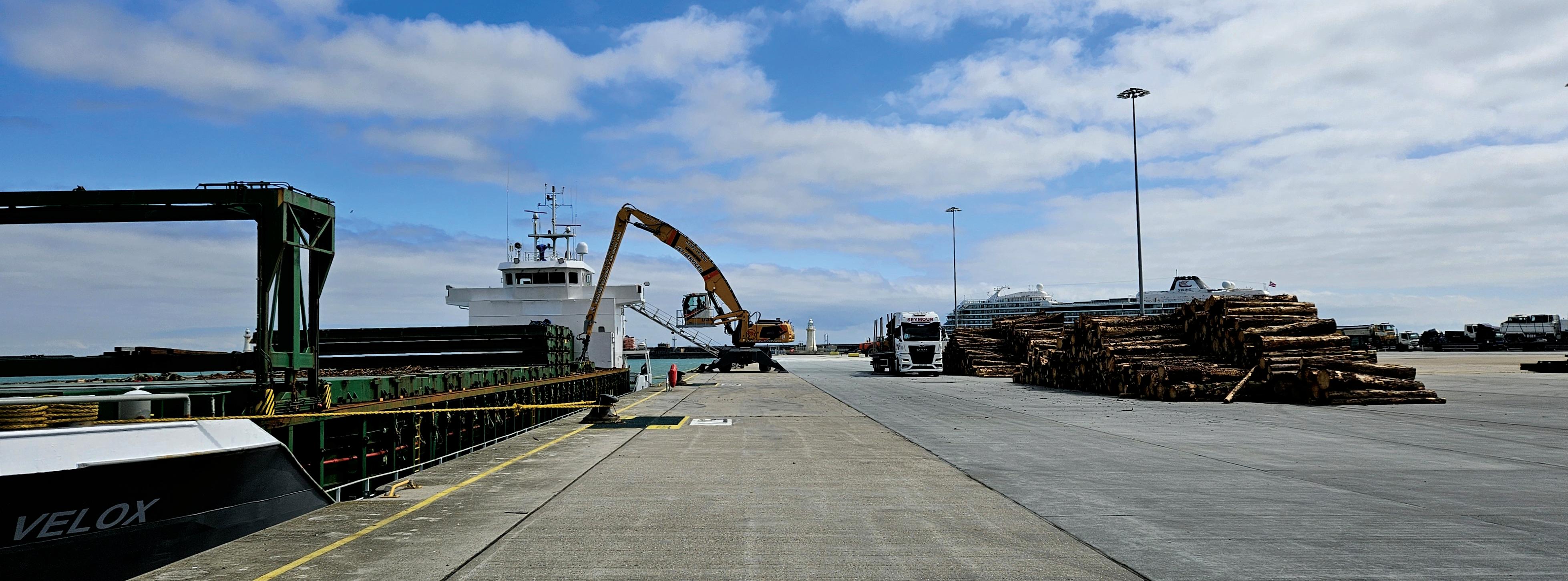
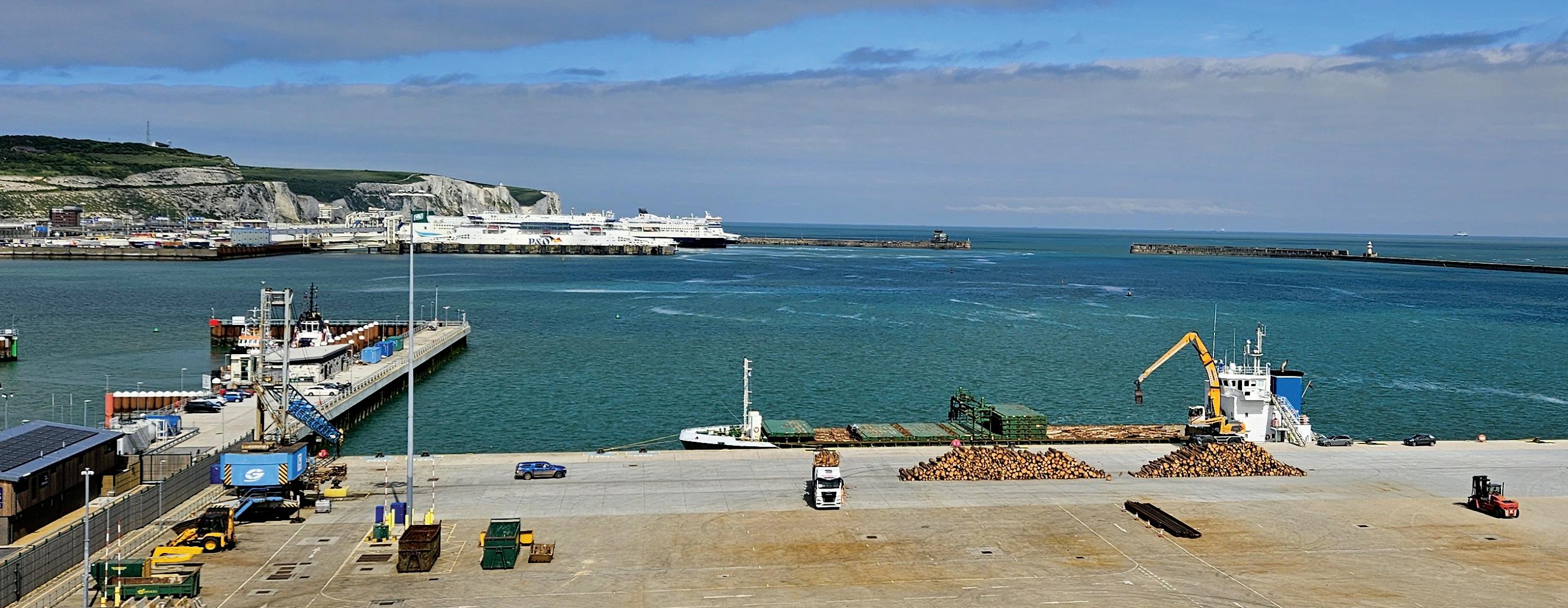
The Port of Dover Cargo Terminal has received its last timber vessel call for the season, continuing to support its partnership with Euroforest, the UK’s largest independent provider of timber harvesting.
The timber is largely comprised of natural wind blow, from Storm Arwen in 2021, and is transported from Aberdeen via coaster vessel to the Port of Dover where it arrives two days later.
Each 2,500-tonne shipment removes the need for long-distance haulage, which saves the equivalent of 57,000 miles, offering vast carbon savings in keeping with the Port of Dover Cargo Terminal’s green eco-lens credentials using solar power, HVO fuelled vehicles and a fleet of EV equipment. The deliveries for 2024 demonstrate an increase of 38%, over the 2023 period.
The timber carried by the monthly service is collected and transported to Kent Renewable Energy Ltd at Discovery Park, 13 miles from the Port of Dover, in Sandwich.
Euroforest began a monthly vessel call into the Port of Dover last year, boasting huge carbon savings and securing rapid transit to the primary customer. The partnership continues to strengthen the
coastal shipping links at the Port and the sustainability credentials of domestic shipping. The port offers multiple berthing options and a wealth of in-house expertise, including Port of Dover Harbour Masters, Pilots and Tugs that facilitate exceptional speed to berth, accessibility and a ‘one family’ port approach.
KRE is a combined heat and power plant that opened in 2018 and generates over 27MW of green energy every year — enough to supply 50,000 homes and save over 100,000 tonnes of CO2, the equivalent of one million flight tickets to Paris.
Emma Whelan, Business Development Manager at the Port of Dover, said: “I am delighted that Euroforest and The Port of Dover Cargo Ltd has forged such a successful partnership, feeding into the local green economy, and playing our part in driving down CO2 emissions, providing economy-of-scale answers, and reasserting our ability to continuously deliver customer-centric solutions. I look forward to welcoming Euroforest back later in the year and building on the excellent relationship we have enjoyed to date.”
Ben Manterfield, General Manager for Euroforest, said: “We are proud of the development of this productive partnership
with the Port of Dover’s Cargo business and their support in making this end-to-end sustainable service a great success. With much of the material transported being from material available following the natural wind blow from Storm Arwen in November 2021, the environmental credentials of this transit are incredibly strong. From our suppliers in Aberdeenshire to Sandwich in Kent, with minimal road miles attached, Euroforest is delighted to support the UK renewable energy market via this greener mode of transport to power stations in the South.”
ABOUT PORT OF DOVER
The Port of Dover is the busiest international ferry port in the UK, with two million cars and 11 million passengers passing through the Port every year. Dover also processes 2.4 million trucks per year, more than all other UK ports. In total, the Port of Dover deals with £144bn of trade in goods each year, and 33% of the UK’s trade with the EU, supporting businesses across the nation.
With a cargo business handling fresh produce, containers, project cargo, general cargo, grain and Ro-Ro traffic operating from a state-of-the-art terminal next to the world’s busiest shipping lane and on the quickest sea route to Europe, Dover is building for the future.
The Port of Dover holds ambitious net zero targets, placing it at the vanguard of decarbonization within the UK ports industry. The Port’s focus on sustainability is driving it forward, enabling the team to keep the Port of Dover at the heart of international trade and tourism, and contributing value as a key gateway, employer, business and community partner.
PORTS & TERMINALS 18 MAY 2024 DCi NEWS www.drycargomag.com
Cimbria’s port terminal projects in Poland

In a quite classic business such as grain and seed storage and handling, two keywords are pivotal: efficiency and capacity. With customized and flexible solutions, Cimbria supports their customers’ needs for reliability and high pace while increasing conveying and storage capacity including safe and gentle handling of crops to keep loss at a minimum. Cimbria is currently working on two large capacity grain port terminal projects in Poland.
Time is essential in the port terminal business. So, the more efficient the transportation of raw material such as grain, wheat, and barley can be, the better. As one of the strongest players in this field, Cimbria is proactively approaching customers regarding complete port terminal solutions, where both transportation and storage of grain and other crops are central elements in the customer requests. This happens at the same time as transportation routes for grain and seed are being restructured due to changes in the world markets with increasing demands from places like the Black Sea region, Egypt, the Middle East, Kazakhstan, and Brazil.
“We experience a global market pull
for full scope supply of port terminal solutions. The demand for safe handling of bigger volumes of crops such as grain, wheat, and barley and high speed in loading and unloading as well as high storage capacity is an overall trend. Today we experience a high level of interest in heavy duty handling equipment with capacities of 1,000–1,500tph [tonnes per hour], which is almost the double of the average capacity request just a few years ago,” explains Thomas Mohr, Sales Director Grain EME and Africa in Cimbria, and continues: “Customers come to us because
they prefer to deal with a one-stop-shop solution provider who can deliver turnkey projects on time. And with the most efficient and reliable storage and transportation solutions, we can secure that the raw materials keep their value and quality throughout the value chain.”
One of the important and growing markets for Cimbria is Poland and currently Cimbria is working on two major port terminal projects there. One is for HES Gdynia Bulk Terminal in Port of Gdynia in the north-east of Poland. HES is expanding the current grain terminal
PORTS & TERMINALS 19 MAY 2024 DCi
www.drycargomag.com
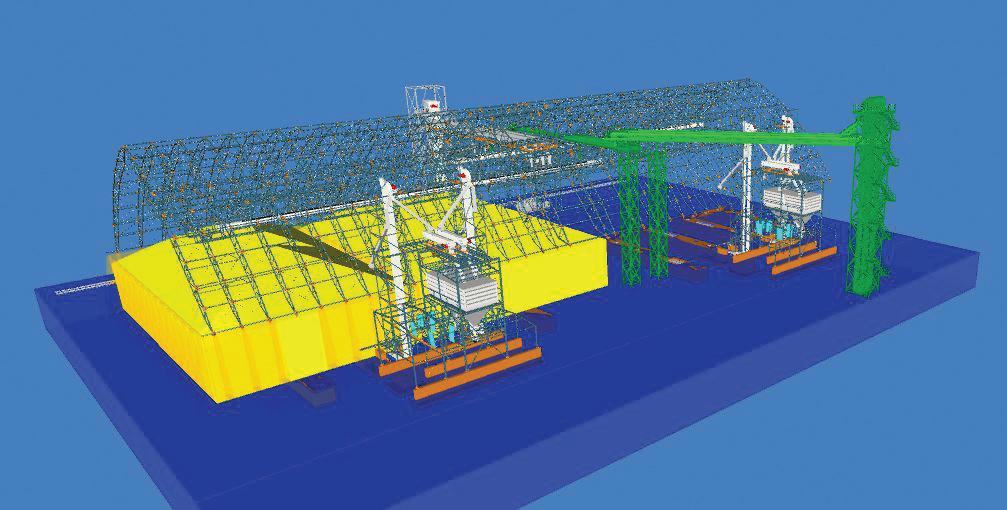
Schematics for project at HES Gdynia Bulk Terminal.
Construction under way at HES Gdynia Bulk Terminal.
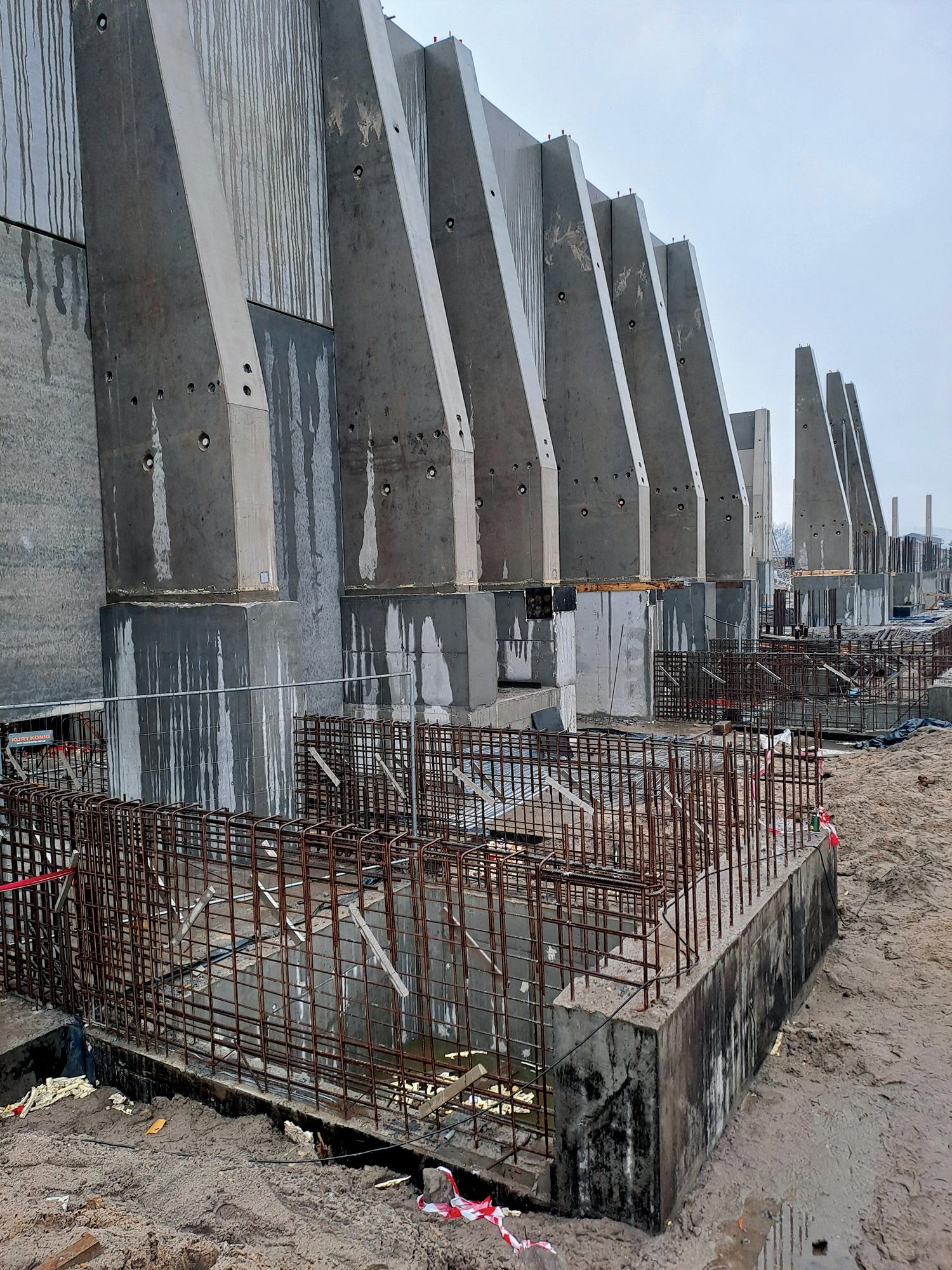
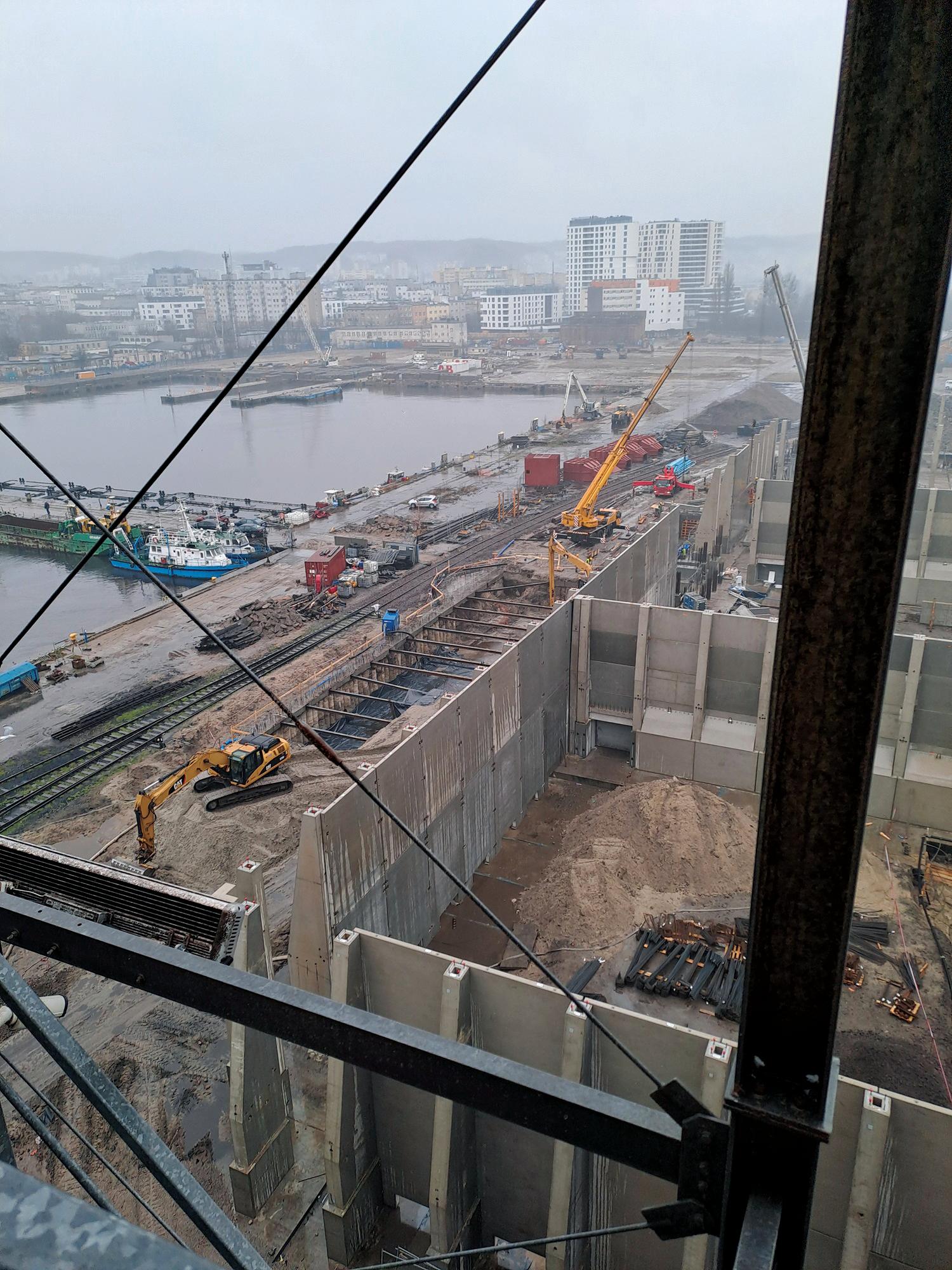
intake capacity with 1,000tph and expanding with a new flat storage with a capacity of 64,000 tonnes.
“Cimbria delivered equipment for the bulk terminal in Gdynia in 2016 and we are happy to have a satisfied customer returning for an expansion of the facility. A part of the new project is a customized intake system with weighing bridges significantly speeding up the unloading process, including also our Moduflex dustfree loading chutes and an underground discharging system and movable and reversible conveyors ensuring a very
flexible and adaptable solution. This ensures a larger capacity and a more efficient receiving and shipping of grain via Panama ships. A flat storage facility is future-proofing the warehouse, so it can be used for both grain and soya meal storage,” says Mateusz Olejniczak, Manager Cluster Sales Lead in Cimbria Poland.
“The solution from Cimbria has been designed in close collaboration with us, and our long-term relation helped to deliver
PORTS & TERMINALS 20 MAY 2024 DCi www.drycargomag.com
the most effective solutions for our project. The new warehouse conveyors and handling equipment will contribute to a more efficient handling process. After completion, HES Gdynia will be able to offer higher level of quality, safety, and capabilities, providing much-needed space for such a supply constrained agricultural market, underpinning the terminal as the reliable logistic grain partner for our customers,” says Sonia Florczuk, Commercial Director at HES Gdynia Bulk Terminal.
Another Polish project is for Szczecin Bulk Terminal in Stettin in the western part of Poland. Similar to the development in Gdynia, this project is also an extension of an existing plant, that Cimbria has delivered handling equipment to in 2017. For the new project, Cimbria is delivering four silos with a total capacity of almost 28,000 tons and a shiploading line with an intake capacity of 1,000tph.
“We are installing large amounts of extra storage capacity in a very narrow space, so we have put a lot of effort into the customization of the solution to match the specific needs and conditions. Furthermore, the silos are equipped with our intelligent temperature monitoring system that automatically manages and monitors grain temperatures 24/7 and warns in case of any hot spots. The system is an important part of maintaining high quality of the grain and preventing product loss and downtime,” says Olejniczak.
“We are glad to be collaborating with Cimbria on this plant extension. Our fully automated silos and transshipment system
Schematics for project at Szczecin Bulk Terminal in Stettin in western Poland.
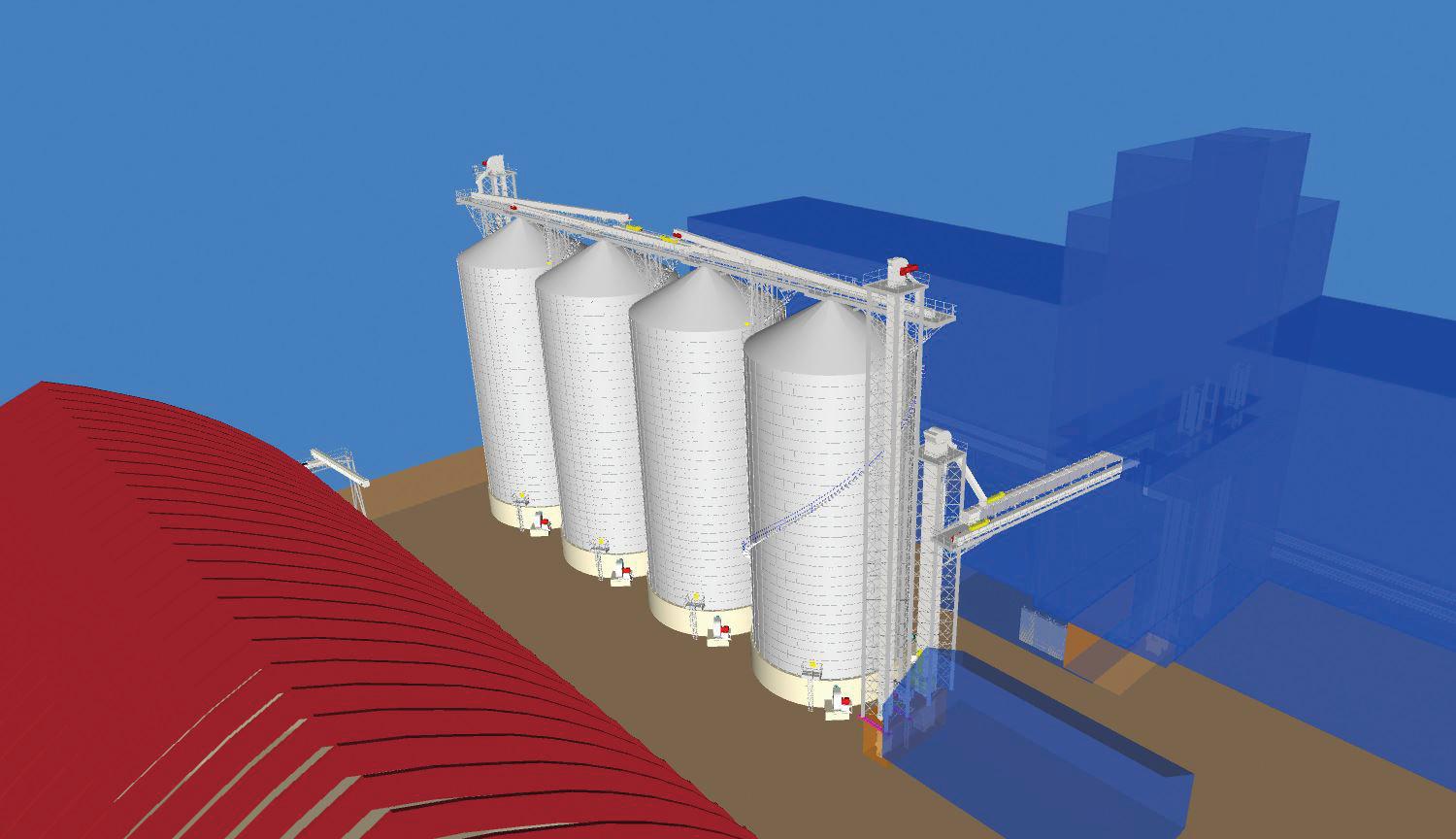
allow us to offer both import and export handling to our customers, and with even more storage capacity we continue supporting the global food market by meeting the increased demand for secure and efficient storage and transportation of grain,” says Rafal Rozanski, Terminal Manager at Szczecin Bulk Terminal.
Both port terminal projects in Gdynia and Stettin are ATEX certified. The Gdynia project is expected to be completed by Q4, 2024, and the project in Stettin will be finalized by 2024-2025.
“The Polish projects both matches very well our overall aim to support global food security and food supply with a growing world population to feed,” adds Mohr.
ABOUT CIMBRIA A/S
Cimbria is a world leader in industrial processing, handling, and storage of cereals and seeds as well as animal feed, food, and
other bulk products. Cimbria works closely with its customers to design, manufacture, install, and service customized solutions, individual machines, and complete turnkey systems. Cimbria is a global brand owned by AGCO Group.
ABOUT AGCO
AGCO is a global designer, manufacturer and distributor of agricultural machinery and precision ag technology. AGCO delivers value to farmers and OEM customers through its differentiated brand portfolio including core brands like Fendt®, GSI®, Massey Ferguson®, PTx and Valtra® AGCO’s full line of equipment, smart farming solutions and services helps farmers sustainably feed our world.
Founded in 1990 and headquartered in Duluth, Georgia, USA, AGCO had net sales of approximately $14.4 billion in 2023.
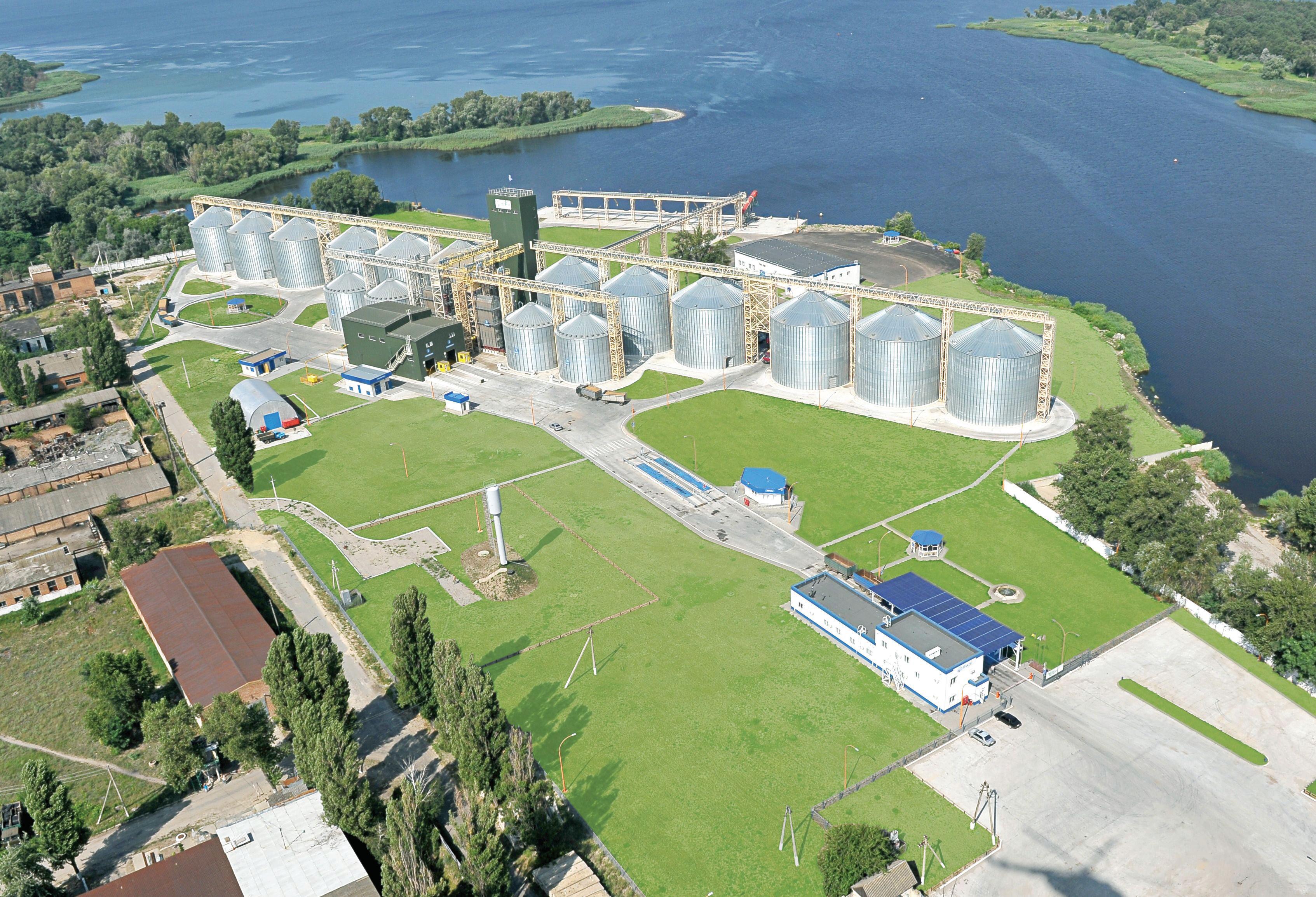
Cimbria works closely with its customers to design, manufacture, install, and service customized solutions, individual machines, and complete turnkey systems.
PORTS & TERMINALS 21 MAY 2024 DCi www.drycargomag.com
DCi
Scandi-bulk regional developments in Scandinavian ports, systems and equipment

Can AI enable more sustainable shipping? Unique research project aims
to cut 20% of vessel emissions
Norwegian maritime technology company NAVTOR has set its sights on slashing the energy consumption, emissions and OPEX of bulk fleets. Together with its partners in the unique GASS (Green AI for Sustainable Shipping) project, the company is looking to unleash the power of machine learning to accelerate shipping towards ambitious green goals. Read on for a taste of the future…
Bjørn Åge Hjøllo believes there’s no time to waste.
The Chief Sustainability Officer at Norway’s NAVTOR is addressing the fact that we’re currently “way behind the curve” when it comes to shipping’s stated objective of halving GHG emissions by 2030. Rather than exclusively focusing on future fuels and technology hurdles we should, he argues, look at what can be done now, with what we already have in place.
“And the inefficient use of energy is low-hanging fruit here,” he states, “contributing greatly to the 1.2 GT of CO2 equivalents our industry releases every
year. However, with better data capture, analysis and overall utilization — rather than relying on the sparse data and the simplified assumptions employed today — we can tackle that head on, with really powerful results.”
Just how powerful becomes quickly evident: “We believe it’s a realistic goal to say that an advanced AI solution can help
cut vessel energy consumption by 20%,” he states, adding: “And that’s exactly what GASS aims to do.”
DECARBONIZING DATA
GASS is a three-year research project backed by the Norwegian Government and focused on what Hjøllo terms “the data-driven decarbonization of the shipping industry.”
Led by NAVTOR, the initiative is a partnership with Grieg Star, Maritime CleanTech, Scandinavian Reach Technologies (ScanReach), Simula Research Laboratory, SinOceanic Shipping, and Sustainable Energy/SIVA, with support from the Norwegian Research Council, Innovation Norway, and SIVA. Funding of NOK 44 million (over US$4 million) is now approved and in place.


Playing on one another’s domain expertise and industry networks, the group aims to develop a solution over the next two years before rolling it out for testing on seven vessels in 2026. A release onto NAVTOR’s established e-Navigation and performance ‘digital
REGIONAL REPORT 22 MAY 2024 DCi www.drycargomag.com
Bjørn Åge Hjøllo, Chief Sustainability Officer, NAVTOR.

ecosystem’ will follow.
As this ecosystem currently serves over 18,000 vessels with innovative products and services, that should make quite a splash.
But before we dive into that, what exactly will the GASS end-product do?
Hjøllo is eager to elucidate.
TWIN POWER
“Dry bulk is an incredibly important, and relevant, segment here,” he says. “If you think about today’s state of play there are no systematic data-driven solutions for improving energy efficiency onboard your ships. It’s our aim to change that.”
The process starts, he continues, with the capture of granular information from a “a very wide range of high frequency data.”
He explains: “So, we aim to capture and integrate precision data from vessel operations and exact operating environments — combining MetOcean condition and forecast data, AIS data, and a whole range of reporting and performance data gathered in real-time, all the time, from sensors.
“That can span anything ranging from propellor information to engine RPMs, navigational data, speed and so on.”
This ‘building material’ is then used to create digital twins of specific vessels. These virtual ships are empowered by AI and machine learning to demonstrate optimal real-time fuel consumption sailing in the exact conditions, locations and with the same operational parameters as their physical siblings. The result of this is that if the real-world asset is failing to keep pace with its twin, then the rich data stream can be instantly analysed to pinpoint why.
“Maybe there’s a problem with hull fouling,” he notes, “or an issue with the
trim of the vessel, or perhaps the auxiliary engine has been used in a congested area and it’s still operating when there’s no need.
“With much richer, real-time data than ever before, we can unlock up to the minute awareness and performance analytics that enable dynamic voyage optimization — as opposed to today’s ‘static’ standard — and allow onshore teams and onboard crews to address issues/deviations from plans as they actually happen.
“That would open up a whole new world of efficiency.”
Not to mention compliance.
STAYING AHEAD
As every owner and operator knows, the regulatory landscape is evolving. And fast.
Last year saw the introduction of reporting in line with IMO’s Operational Carbon Intensity Indicator (CII), whereby all ships (above 400GT) have to target a 2% annual CII reduction... or pay the price. This year brought the EU’s Emission Trading System (ETS) to shipping, regulating ship operators to pay for GHG emissions during voyages to, from and between European Economic Area (EEA) ports (with a step-by-step roll-out to 2026). And, without looking too far ahead, next year marks the advent of FuelEU Maritime, introducing increasingly stringent limits on the CO2 intensity of the energy used by vessels.
“This is really just the tip of the iceberg,” Hjøllo stresses, “with further international regulations, not to mention national legislation, developing all the time.
“With this is mind, it not only makes sense from an environmental and commercial perspective for companies to
do what they can to decarbonize operations, but also from a regulatory stance. There’s a very clear message being sent to the industry here, so it pays to stay ahead of the curve whenever you can and look at operations holistically.
“Addressing energy consumption with a smart shipping solution can be a key piece of the puzzle.”
SCALING UP BENEFITS
Mention of the AI abbreviation can be as negatively loaded as it is positive these days, but Hjøllo dismisses this with a nod to both NAVTOR’s cyber-secure ecosystem, the industry-standing of the partners, and the unequivocally affirmative ambition of the project.
The results, he adds, will speak for themselves, returning to the scale of the NAVTOR customer base.
“We serve roughly one-third of the world fleet relevant to our services,” he comments. “At the moment that’s over 18,000 vessels but, with the way the business is growing, we’d expect those numbers to be even higher when the GASS solution is ready for roll-out through that network.
“So, even at today’s numbers, if we can help cut GHG emissions (and remember that also means consumption and costs) on over 30% of the fleet by 20% that equates to more than a 5% reduction in emissions for the entire shipping industry. That’s the power of digital innovation here.”
This, as a quick calculation confirms, adds up to over 60,000,000 tonnes of CO2 equivalent per year.
Making it clear why, as Hjøllo said at the outset, there’s simply no time to waste.
So, we’d better let him get back to work…
REGIONAL REPORT 23 MAY 2024 DCi www.drycargomag.com
A clean sweep with CLIIN Robotics Cargo Hold Robot
ABOUT CLIIN ROBOTICS
At CLIIN Robotics, innovation drives its solutions for industry challenges. The company specializes in cutting-edge magnetic robots designed to climb ferromagnetic surfaces, thereby expanding accessibility and efficiency. CLIIN Robotics’ mission is to provide versatile robotic solutions that prioritize safety and sustainability in diverse environments.
CLIIN Robotics focuses on revolutionizing cargo hold and storage tank
cleaning, offering remote-operable robots that enhance safety and environmental responsibility. CLIIN Robotics’ vision is to contribute to the sustainability of heavy industries such as shipping and oil & gas, benefiting present and future generations worldwide.
With a team experienced in shipping, vessel coating, and high-tech industries, CLIIN Robotics is committed to principles aligned with the UN Sustainable Development Goals. It collaborates closely
with its clients to provide practical solutions while embracing diversity, simplicity, and the importance of human interface.
CLIIN will take an important role in the future of robotics, where magnetic technology reshapes industry practices.
CARGO HOLD ROBOT (CHR)
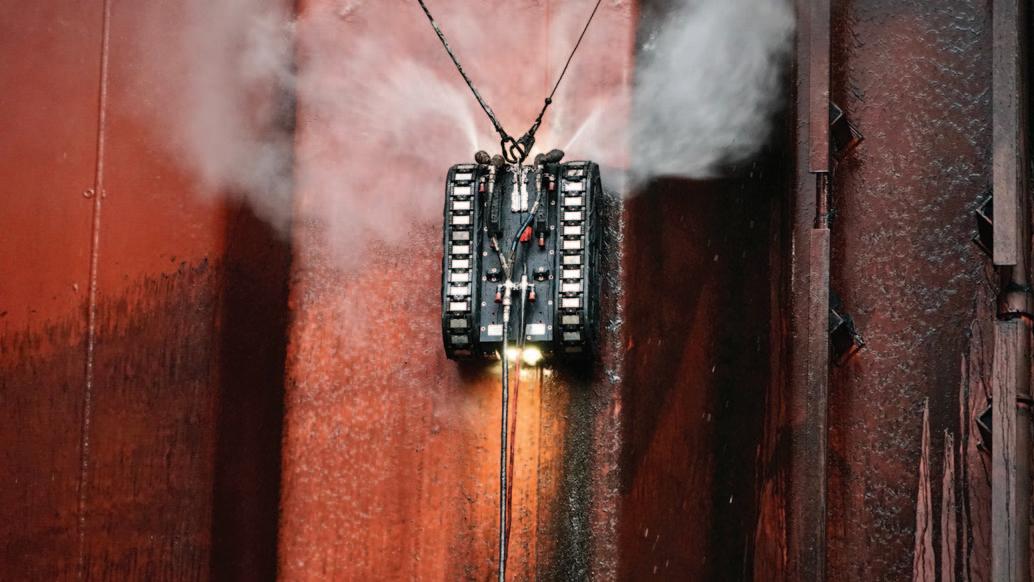
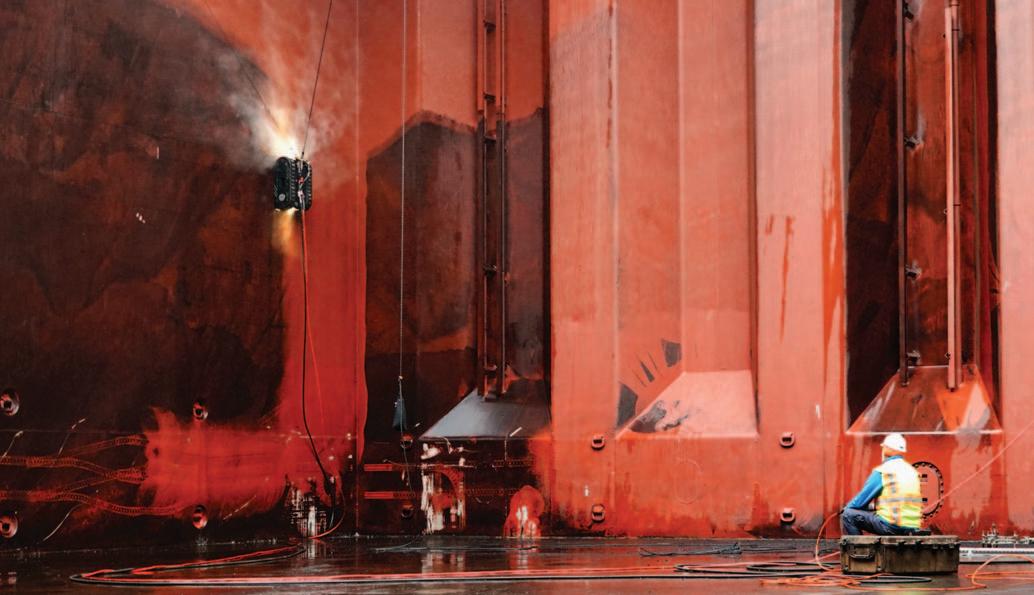
The CLIIN Cargo Hold Robot (CHR) transforms cargo hold cleaning for shipping companies, ship owners, and service
REGIONAL REPORT 24 MAY 2024 DCi www.drycargomag.com
providers. Whether permanently installed or deployed from port facilities, the CHR streamlines operations by simplifying the cleaning process and reducing environmental impact. Equipped with customized cleaning tools and magnetic belts, the CHR ensures thorough cleansing, meeting industry standards.
Operable remotely from ground level, the CHR prioritizes crew safety by eliminating the need for workers to navigate heights during cleaning. Its efficient operation requires a small team, reducing labor intensity and enhancing overall efficiency. This innovative solution optimizes vessel turnaround times, increases cargo intake, and offers value to industry stakeholders.
FEATURES OF THE CARGO HOLD CLEANING ROBOT
Efficient cleaning — reduced v
turnaround time: the CHR cleans a Handysize Cargo Hold in three to six hours, replacing the conventional fourstep process with a single freshwater method, cutting cleaning time by 50%.
Enhanced cleaning standard — v improved compliance: providing direct access to challenging areas in the cargo hold, the CHR ensures thorough cleaning, improving the likelihood of regulatory approval. Environmental sustainability – v chemical-free operation: utilizing high-pressure fresh water, the CHR eliminates the need for chemicals, promoting environmental sustainability. Reduced water usage – minimized v waste: CHR cleaning minimizes water usage, generating significantly less cleaning water and sludge compared
to conventional methods, reducing environmental impact and operational costs.
Ground-level operation — crew v safety: operated remotely from the ground, the CHR eliminates the need for crew members to work at heights, prioritizing safety.
User-friendly control — streamlined v operations: with simple controls, the CHR enables a small team to manage the cleaning process efficiently, without extensive training or specialized equipment.
In conclusion, CLIIN Robotics offers practical and sustainable solutions for bulk handling challenges. With the CHR, CLIIN Robotics redefines industry standards, prioritizing safety, efficiency, and environmental responsibility.
Developments at Port of Karmsund in Norway include new Border Inspection Post and land reclamation plans to improve
Port of Karmsund is situated on the West coast of Norway. The port is Western Norway’s largest traffic port and operates in the segments of cargo, cruise, fishery, renewables, real estate, offshore & subsea, aviation and project cargo.
At its cargo terminal, the port recently opened a new Border Inspection Post (BIP).
KARMSUND BULK TERMINAL AS
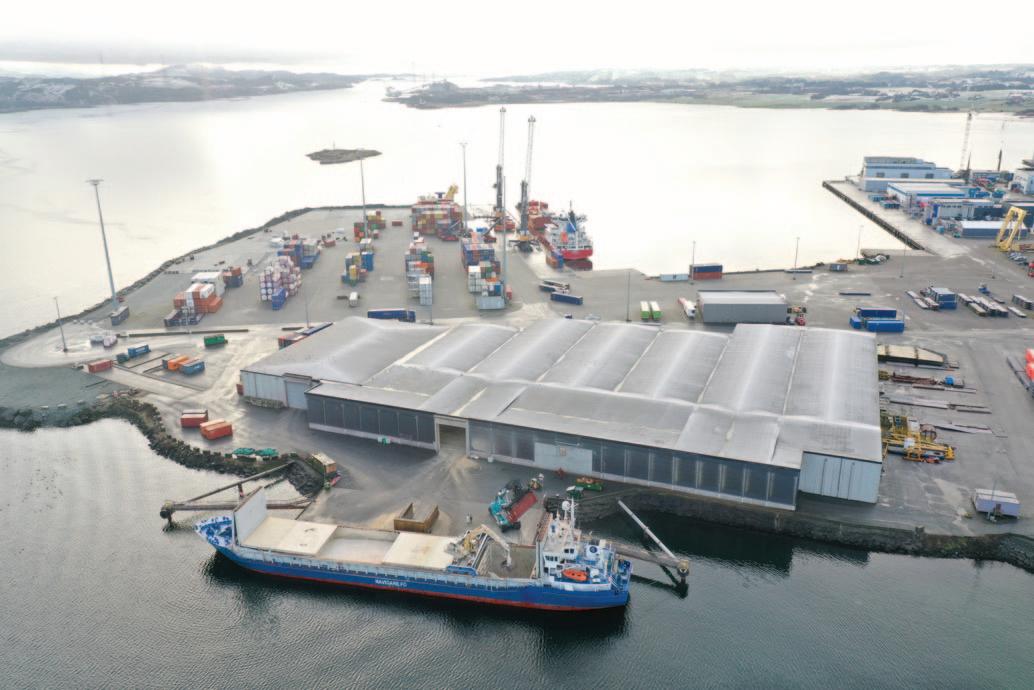
The Cargo Terminal boasts one of the largest flat warehouses in Norway dedicated to bulk, Karmsund Bulk Terminal (KBT). Karmsund Bulk Terminal operates a bulk warehouse of 15,000m2
KBT mainly uses Hitachi wheel loaders supplied by Nasta for unloading and loading stored goods in bulk. With this equipment,
storage
the terminal loads and unloads ships at a rate of 600tph (tonnes per hour) and 250tph for bulk and big bags respectively. In 2023 the terminal handled more than 300,000 tonnes for its largest customer Biomar, and almost 10,000 tonnes of bulk in big bags for Yara. KBT is aiming for even better results this year.
KBTs biggest partners in logistics are
REGIONAL REPORT 25 MAY 2024 DCi www.drycargomag.com
KTM Shipping and Navigare Shipping & Logistics, which transport and handle everything that KBT delivers.
“We have a strong collaboration with Port of Karmsund, which has provided our own quay and development opportunities for 10,000–15,000m2 of additional space in the future, so that our warehouse can grow to both existing customers and new opportunities for bulk in our region and all of Scandinavia.
“Karmsund Bulk Terminal is still considering several cargo handling options including the all-weather plastic hall solution, but due to increasing local requirements other solutions are also to be considered such as mobile screw unloader from Bruks Siwertell,” says KBT’s CEO, Krists Freijs
BORDER INSPECTION POST (BIP)
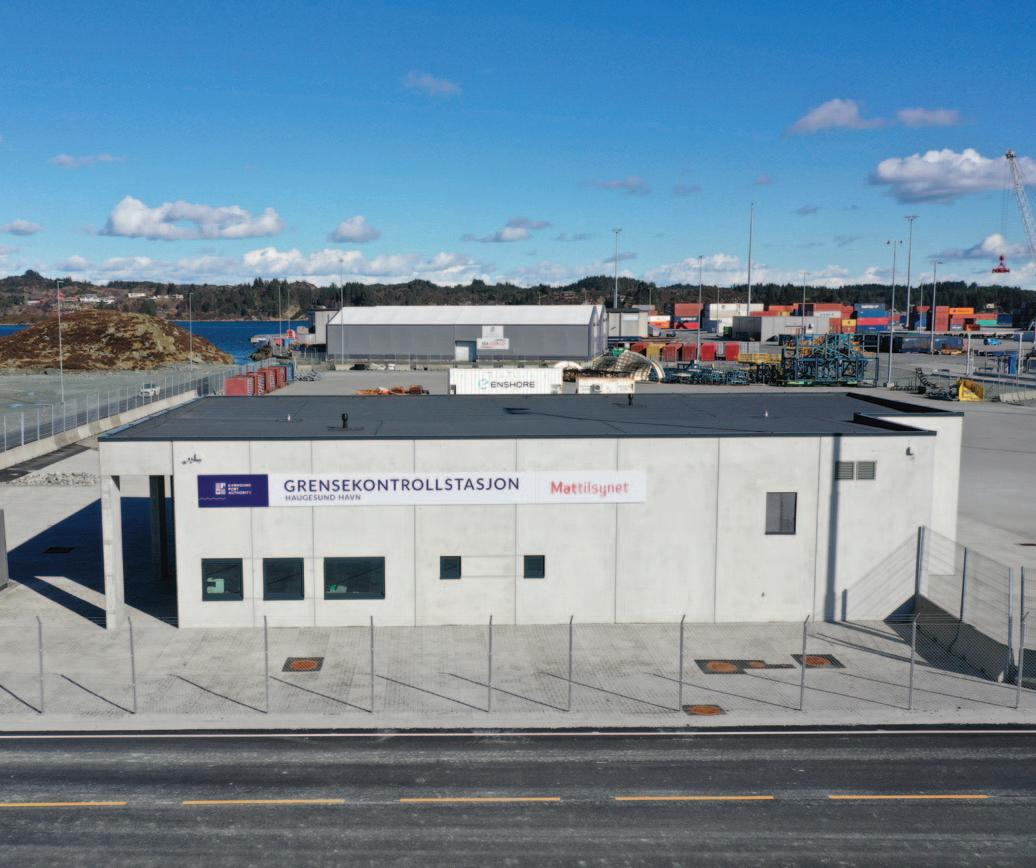
Port of Karmsund, in collaboration with the Norwegian Food Safety Authority, opened a new veterinary Border Inspection Post (BIP) in 2023 at Haugesund Cargo Terminals, Husøy.
The control station is the first and only BIP in Norway that is approved to conduct
inspections of goods in big bags, and was already in 2023, the one that received the largest volume in Norway. Furthermore, the station is the only full-scale border control outside the Oslofjord, therefore it is also a highly anticipated establishment for future business opportunity for all regions between Egersund and Kirkenes. It has already been proven that this establishment has contributed to more efficient and sustainable logistics operations.
The BIP is located within the secure ISPS area at Haugesund Cargo Terminals Husøy. The station is in close proximity to the container terminal, the roll on-roll off terminal, the general cargo terminal and the dry bulk terminal. The Norwegian Food Safety Authority BIP at Husøy is fully equipped to process an ample range of goods subject to inspection, as listed below:
POA HC NT-T (2), POA NHC NT-T (2), PNAO-HC (food)-NT-T (2), PNAONHC (feed)-NT-T (2) and PNAO NHC (other) – NT-T (2).
Port of Karmsund is continuously working together with customers and the
Norwegian Food safety Authority to expand the categories according to customer’s needs.
EXTENSION
PLANS AT PORT OF KARMSUND’S CARGO
TERMINAL
At Haugesund Cargo Terminals, Husøy, Port of Karmsund is carrying out the largest port development project in Norwegian history. The project includes two types of developments: an industrial area, and a terminal area.
A 150-acre industrial area is already regulated for industry and provides space for the process industry as well as storage area both outdoors and indoors, and the port is now working to regulate an additional 100 acres.
The new 65 acres terminal area will provide establishment opportunities for players in need of transhipment or bulk storage on the quayside. Six million tonnes of stone will be filled into the sea, to reclaim new land for the terminal. The plan is to be completed in the beginning of 2026.
The project also includes an additional 1,600m of quay front.
REGIONAL REPORT 26 MAY 2024 DCi www.drycargomag.com
Port of Karmsund’s new Border Inspection Post.
Positive results from proactive hull cleaning on bulkers challenge reactive thinking of industry
Proactive cleaning of a ship’s hull has demonstrated significant gains in emissions and efficiency performance through analysis and testing focused on the bulker segment, challenging conventional industry wisdom on reactive hull cleaning as more shipowners realize the commercial benefits.
Much of the shipping industry remains reliant on reactive hull cleaning to combat marine biofouling that causes viscous drag between the hull and water, requiring more engine power to maintain speed and thereby increasing both fuel consumption and GHG emissions. Such cleaning is typically carried out either in port or dry dock.
The impact of biofouling on hull performance is well documented, with the IMO stating in its GloFouling study that a 0.5mm slime layer covering up to 50% of a hull surface could trigger an increase in emissions of 25% — or as much as 60% with a light layer of barnacles — dependent on ship characteristics and speed.
However, the relative effectiveness of reactive versus proactive hull cleaning is now up for debate amid mounting pressure for the industry to clean up its environmental act, driven by regulation such as CII and the EU ETS that mean higher emissions will also incur increased costs.
FUEL OVERCONSUMPTION WITH REACTIVE CLEANING
Maritime green technology consultancy Njord’s Technical Director Steen Jacobsen told a recent webinar highlighting robotic hull cleaning technologies that there is still a fuel overconsumption of 10–16% even with diligent reactive hull cleaning practices on a regular basis, based on his earlier experience working with a major container shipping line. This reflects a typical overconsumption threshold of 15% before hull cleaning is carried out that is applicable on most vessel performance systems.
There is a further environmental impact with reactive cleaning as it leads to transport of invasive species, while the use of powerful cleaning machinery can damage hull coatings and result in discharges of harmful biocides used in these coatings.
Conversely, proactive cleaning of a ship’s hull — or hull grooming, as it is
sometimes called — is being developed as a preventative method to ensure the hull is maintained in a smooth and fouling-free condition. By addressing slime through gentle and frequent cleaning before it becomes macro-organisms, there is no transport of invasive species or excessive discharge of material that occurs during cleaning, according to a research paper from the Center for Corrosion and Biofouling Control (CCBC) at the US’ Florida Institute of Technology.
“By implementing a solution for proactive cleaning that allows crew to perform frequent cleaning, addressing fouling at an early stage, overconsumption
One
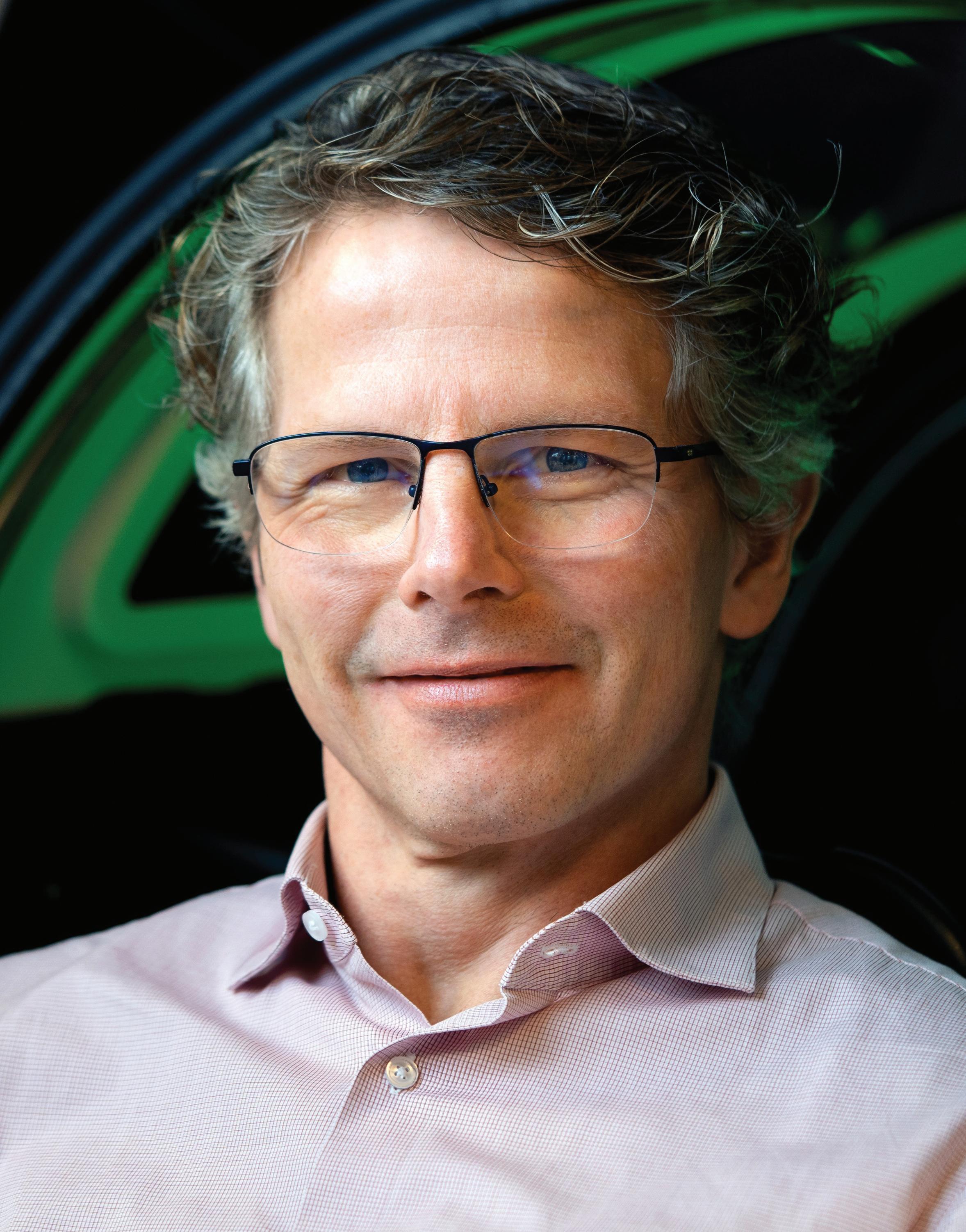

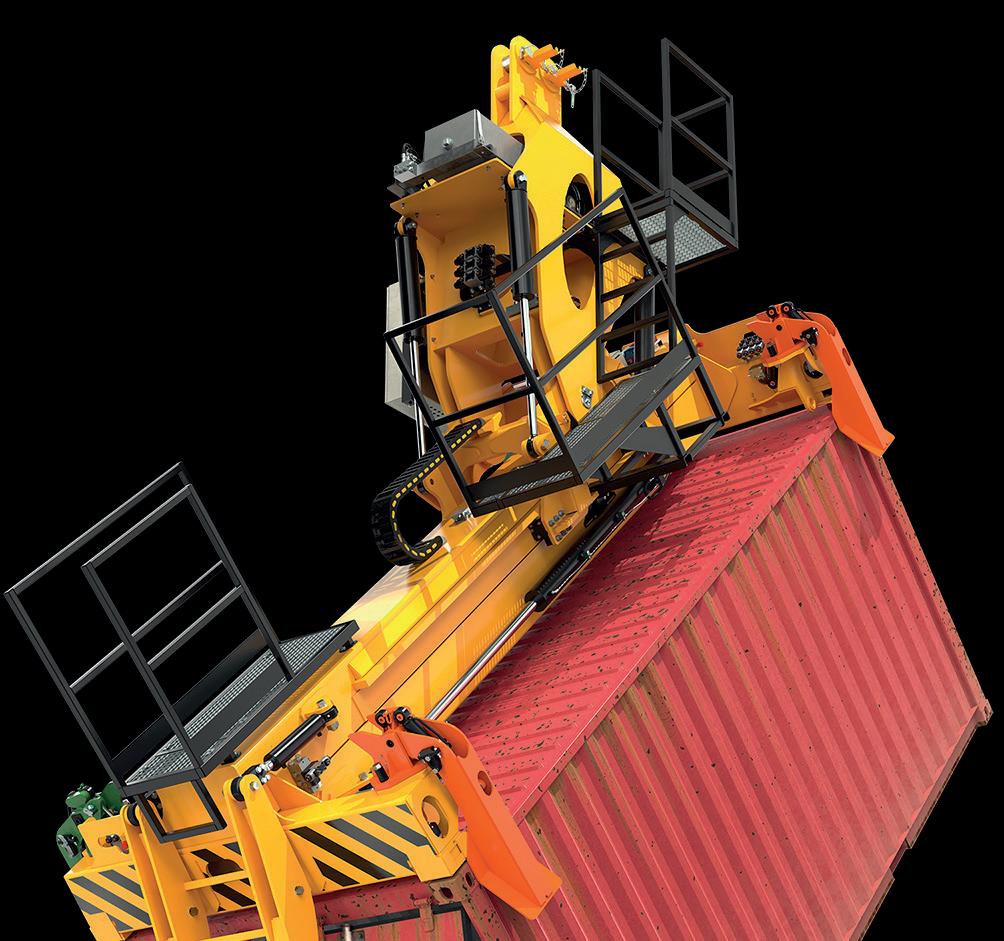
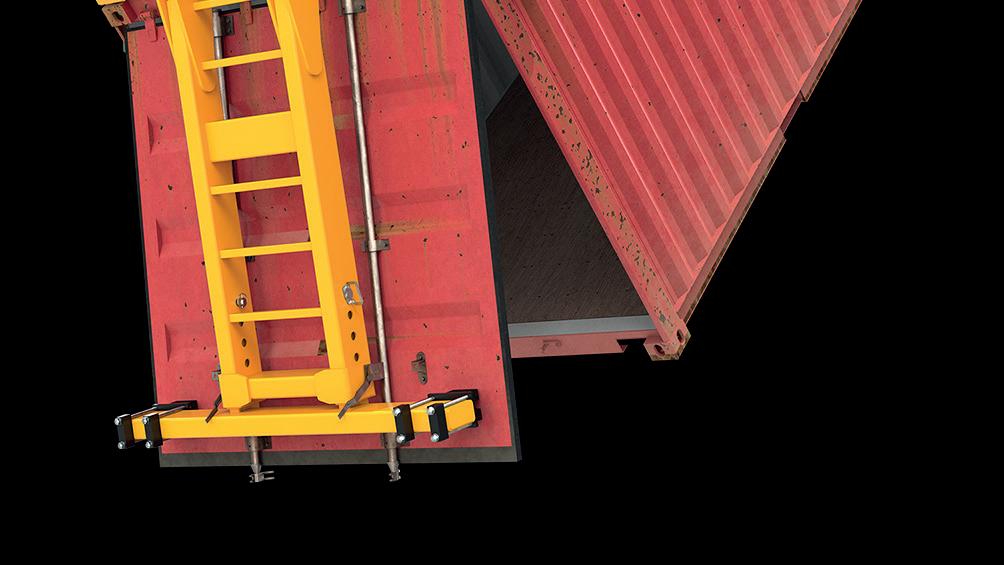
of our
hard-working spreaders
Dedicated crane spreader with tilting function for bulk material handling. Meet the rest of the team at elme.com
REGIONAL REPORT
3200T | Tilting Crane Spreader
Shipshave CEO Aage Hoejmark (photo: Shipshave).
is reduced and the hull can be maintained in optimal condition to cut costs and minimize the environmental impact,” says Aage Hoejmark, CEO of Norwegian technology developer Shipshave that has developed the ITCH (In-Transit Cleaning of Hull) semi-autonomous hull cleaning tool now in use on around 100 vessels across the bulk and other segments.
GAINS FROM REAL-LIFE OPERATIONS
Bulker and tanker operator Klaveness Combination Carriers (KCC), which was the first to pilot the ITCH, has confirmed improvements in fuel efficiency of between 2–5% from use of the hull-cleaning robot. This mirrors the experience of other Shipshave clients that have piloted the technology, with some even reporting numbers above 10% after the initial campaign.
The ITCH, deployed by the crew from a portable winch mounted on the forecastle deck, swipes up and down the hull underwater using soft brushes to smoothly remove biofouling during a voyage. This also saves time on port turnarounds, with no need for port authority clearances, and avoids offhire deviations to carry out hull cleaning.
To address industry concerns over the impact of frequent cleaning on the antifouling coating, Shipshave recently released the results from a lab test that indicated the integrity of hull coatings remains intact. This result corresponds with the findings of research at the CCBC.
Shipshave has calculated that proactive in-transit grooming can result in a net fuel saving of 10% and 50% reduction in EU ETS costs with lower overconsumption versus reactive cleaning.
An earlier fuel consumption assessment carried out by DNV on a 200m bulk carrier affirmed a power reduction of 10% from partial cleaning of the hull using the ITCH, based on a comparative analysis of speed-power data from two voyage legs performed before and after cleaning.
According to Shipshave, the ITCH can clean between 80-90% of the parallel/ vertical area of a Handysize bulker’s hull during sailing in a five-hour operation, with typical opex of less than $250 per cleaning.
COMPARATIVE ANALYSIS OF ANTI-FOULING STRATEGIES
Through real-life operating experience with the ITCH, Shipshave supports the research by the IMO, which has assessed that hull biofouling management can reduce emissions by 5–25%.
A comparative analysis carried out for

the GloFouling study sought to determine the impact of different biofouling management strategies on fuel consumption and emissions for a bulk carrier over a five-year period of operations.
The study showed that regular proactive hull cleaning of a bulk carrier — initially after 18 months and then every six months — over the five-year period resulted in a fuel saving of 10,000 tonnes versus a do-nothing strategy reliant solely on coatings, and 4,000 tonnes versus reactive cleaning.
But even the so-called proactive approach in this study is deemed to yield a fuel consumption that is more than 10% higher than the ideal state. This performance gap can be closed with increased frequency of cleaning, maintaining a clean hull and thus avoiding significant deterioration in hull/vessel performance, according to Hoejmark.
‘LOW-HANGING FRUIT’
Innovative low-cost and accessible technologies like Shipshave’s ITCH, of
which the second upgraded iteration has recently been launched, are therefore shifting the paradigm in terms of hull performance by offering ‘low-hanging fruit’ for emission reductions, he says. Therefore, he believes the potential for efficiencies in this area cannot be ignored, with a relatively rapid return on investment within months, even as the bulker segment makes heavy investments in low-carbon technologies such as wind-assisted propulsion, as well as digital solutions with data analytics to optimize voyage operations, to meet the demands of a green regime.
“Proactive hull cleaning is of course also relevant with wind-assisted propulsion as it can be used to further optimize vessel performance,” Hoejmark points out.
And he concludes: “This is an opportunity to take a total cost and emissions perspective encompassing hull cleaning solutions, paint manufacturers, shipowners and charterers so we can optimize vessel operations with minimal emissions to both air and water.”
REGIONAL REPORT 28 MAY 2024 DCi www.drycargomag.com
Shipshave’s the ITCH in action (photo: Shipshave).
Port of Grenaa’s Strategic Importance as a HUB Harbor
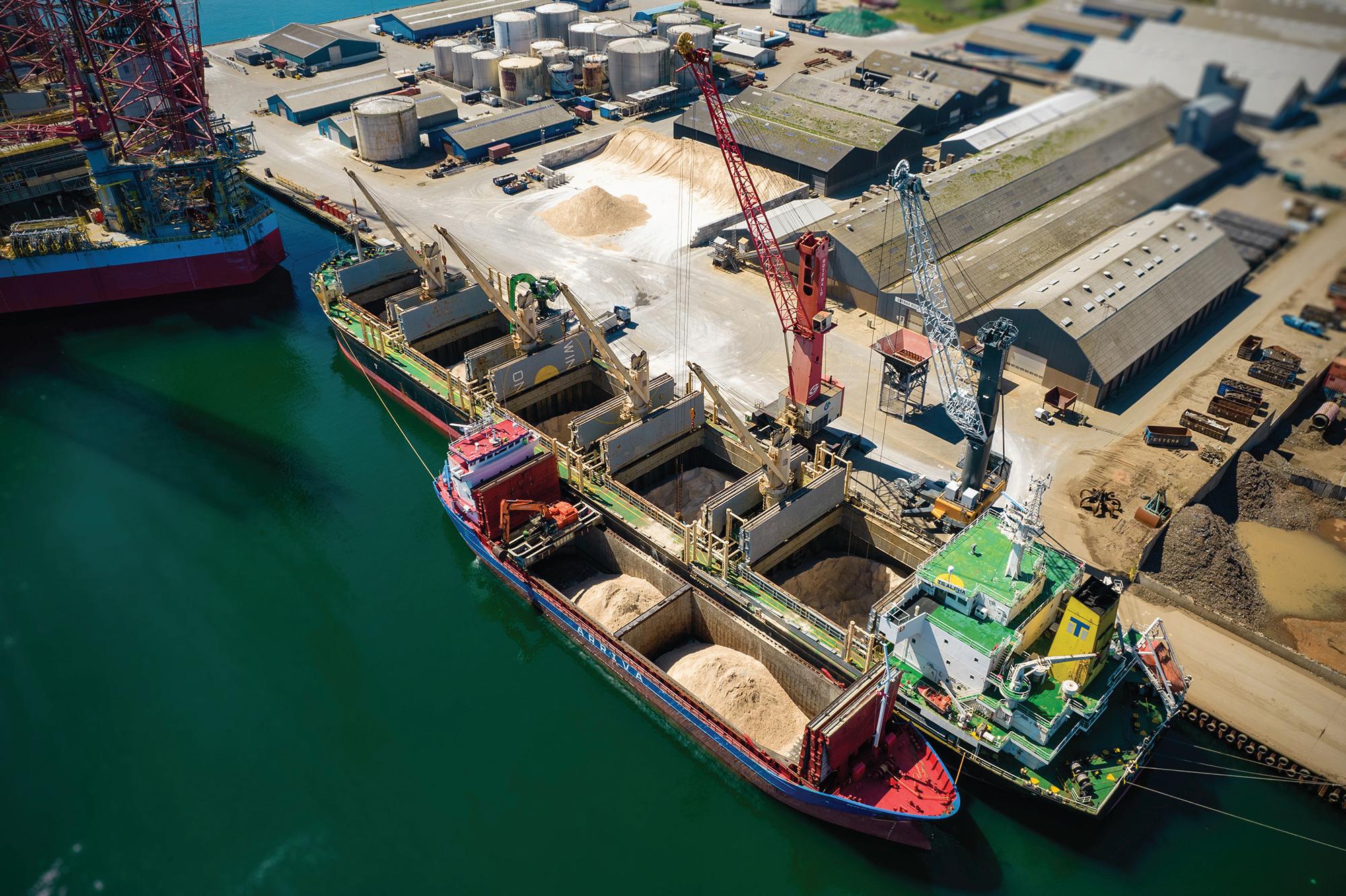
Situated at the core of Denmark, Port of Grenaa stands as a central gateway to the Kattegat, serving as a pivotal hub for the Northern Europe’s industrial and commercial sectors. With its deep-water capabilities, it catalyzes economic growth by facilitating efficient transport and handling of diverse cargos for partners across industries.
INVESTING IN INFRASTRUCTURE AND INNOVATION
To enhance its bulk operation capabilities, Port of Grenaa has procured state-of-theart equipment such as the Mantsinen 300DEMG crane designed explicitly for bulk operations. This strategic investment underlines the port’s dedication to optimizing its bulk handling capacity while
boosting efficiency in handling diverse raw materials like sand, gravel, stone, salt and gypsum — essential resources for construction projects within regions.
EXPANSION PLANS AND COLLABORATIVE VENTURES
In line with future market demands, plans are under way to expand Port of Grenaa’s
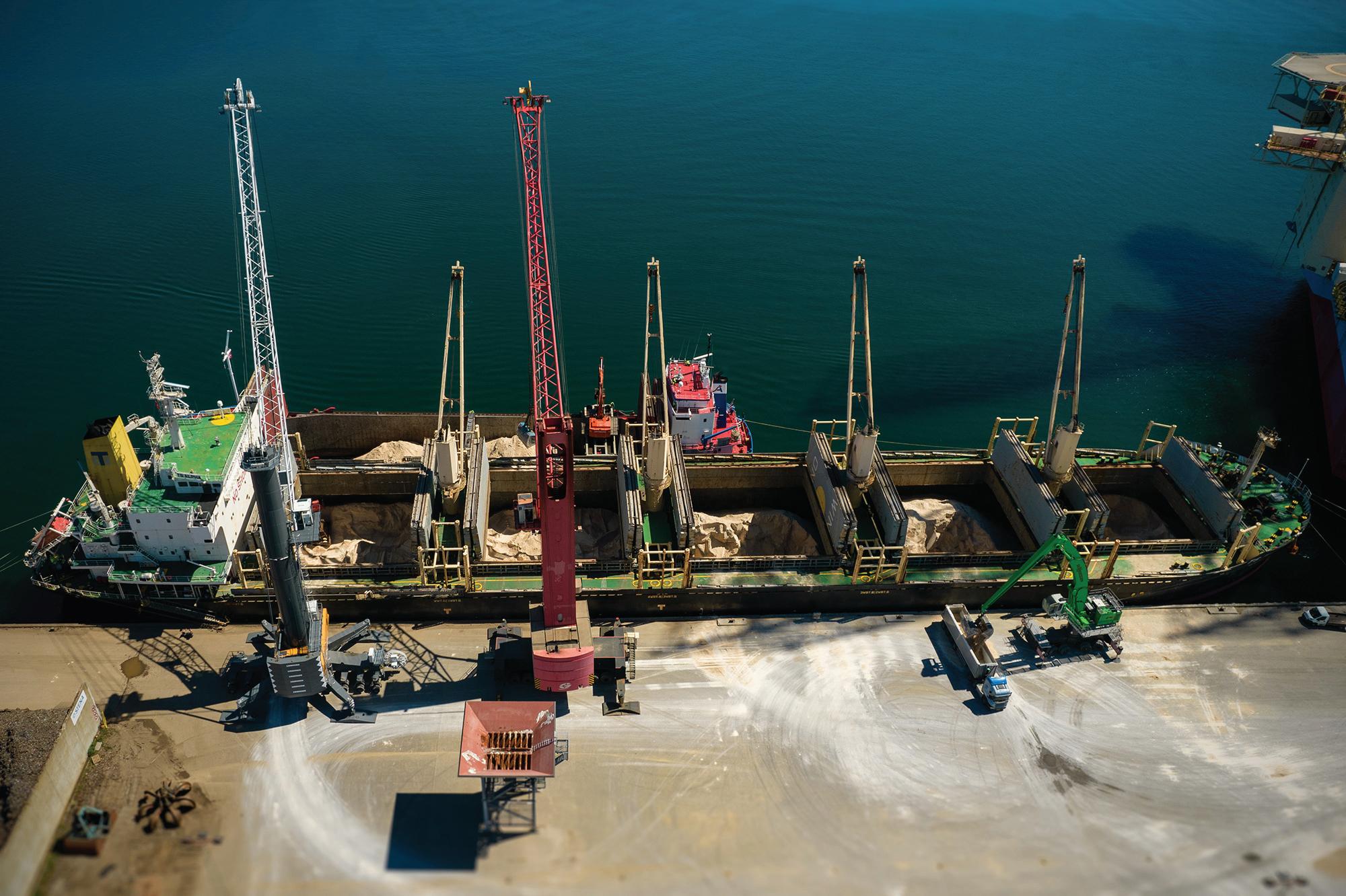
REGIONAL REPORT 29 MAY 2024 DCi www.drycargomag.com
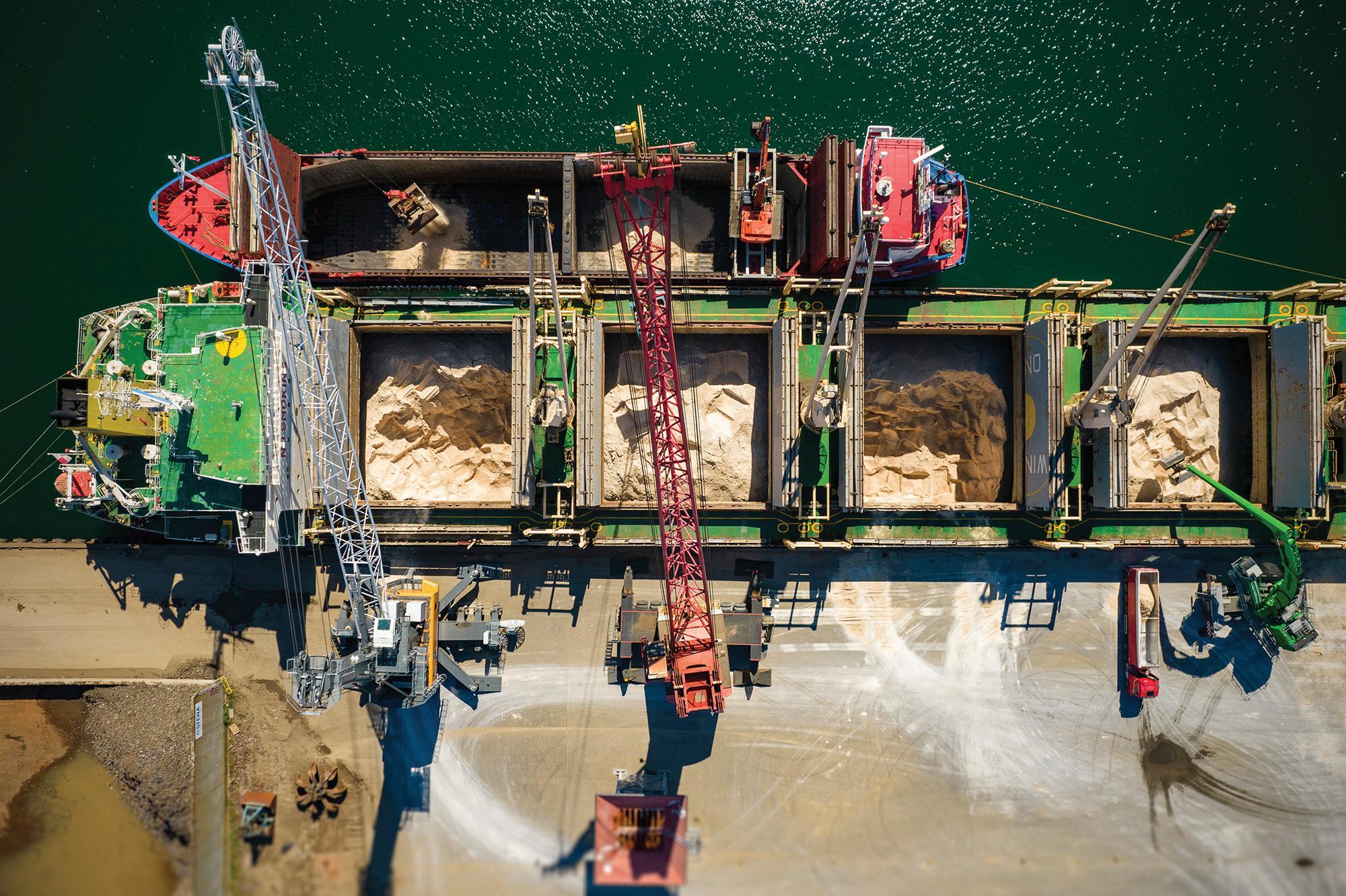
bulk handling capacity by constructing additional halls dedicated to various production activities between now and 2024/25. Furthermore, efforts are being made to enhance its existing methanol facility — a testament to the port’s responsiveness towards evolving trends in industry practices. In this endeavour, Port of Grenaa has entered into strategic collaborations with industry players like Stena Recycling through joint investments targeting improvements in handling equipment facilities areas further demonstrating its commitment to innovation and sustainability across all operations.
ABOUT PORT OF GRENAA
As one of Denmark’s major industrial and commercial ports, Port of Grenaa efficiently handles cargo from land to water for the benefit of businesses and society.
The port has many years of experience in flexible and efficient handling of bulk cargo, which is why it can always find the best solution for its customers’ projects. Its fleet has several different types of cranes, which means that it always uses the best solution for the individual task and can therefore efficiently unload and load the goods. Bulk cargo can be stored safely in the port's open areas or under cover in warehouses, depending on need. Whether
the cargo arrives by ship or truck, Port of Grenaa has modern facilities and specialized equipment to load and unload efficiently.
The largest Danish bulk cargo companies already use Port of Grenaa for shipping, transport and storage of bulk cargo. The port offers large quayside areas — paved and unpaved — and there is scope for further expansion. Port of Grenaa has up to 11 metres of water depth and access conditions are adapted to heavy traffic. Its giant hopper, which is used for unloading bulk dry goods, reduces wastage. The hopper opening is 90.5m2 and the total volume is no less than 130m3 DCi
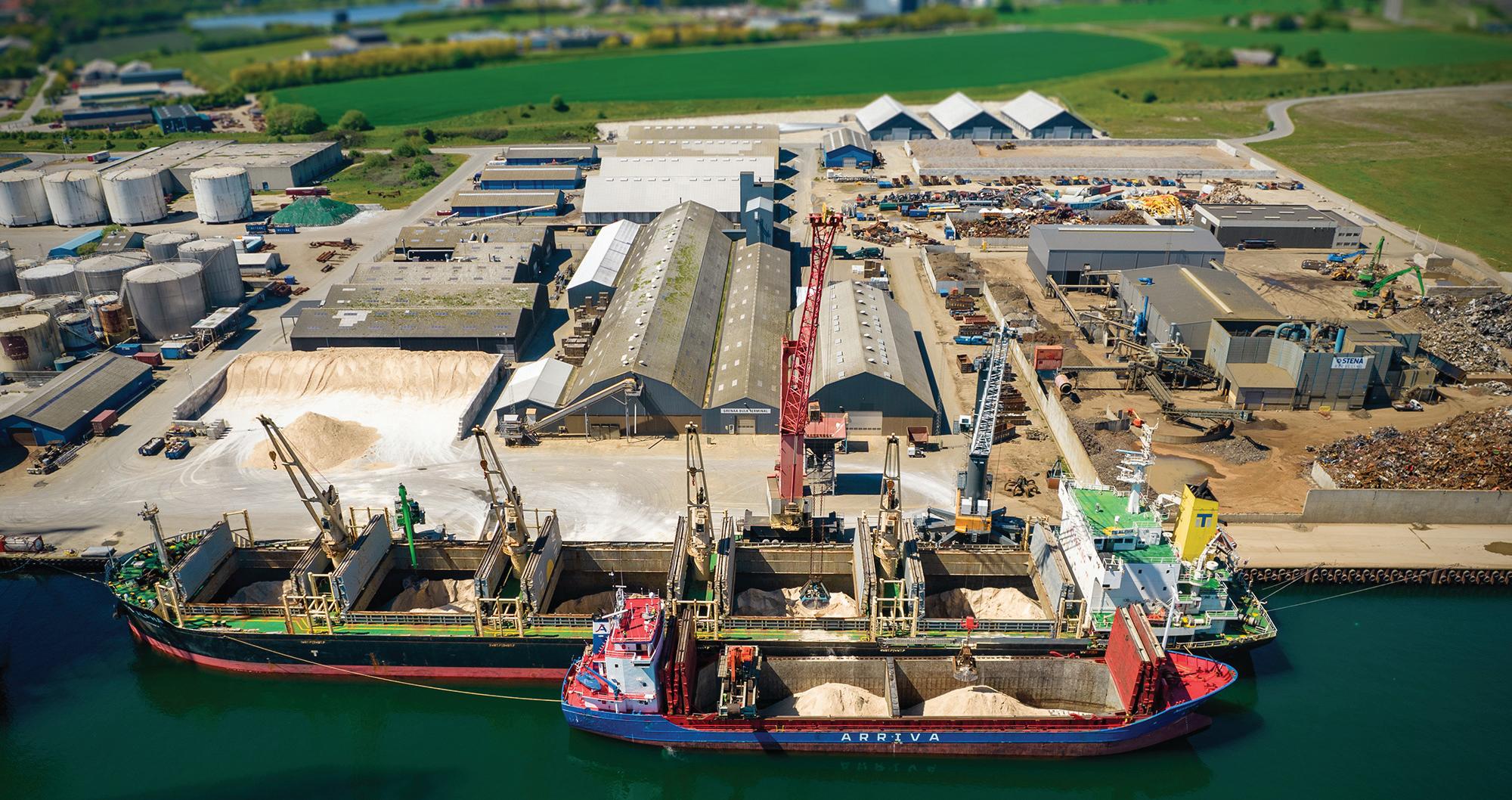
REGIONAL REPORT 30 MAY 2024 DCi www.drycargomag.com
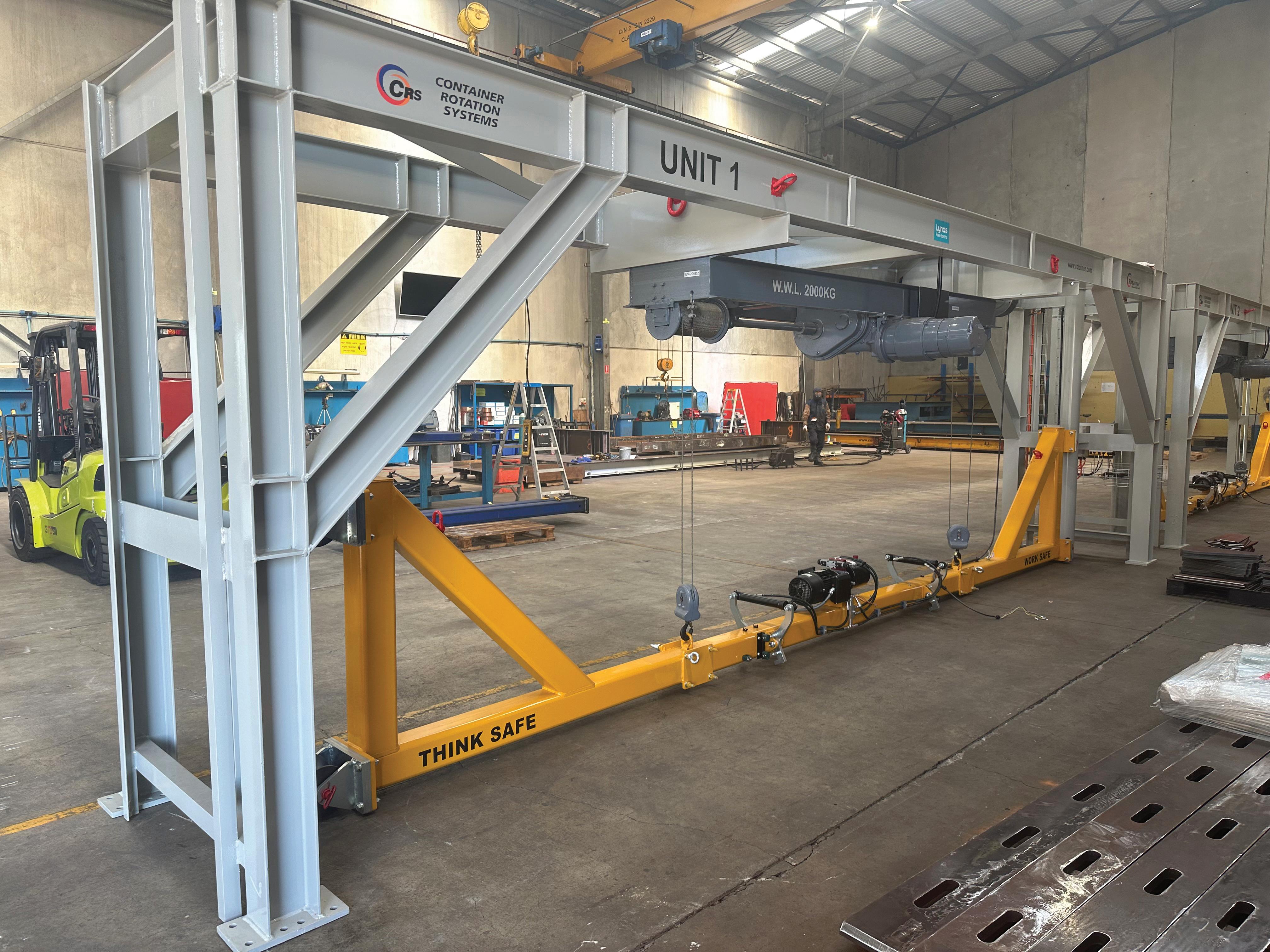
In 2009, Container Rotation Systems Pty Ltd (CRS) introduced Australia’s first 360° container rotator, trademarked Rotainer®, which was commissioned for D.P. World, Port Adelaide, Australia. CRS is based in Sydney, Australia
Initially, the primary role of the Rotainer® was loading parcels of approximately 70,000 tonnes of DSO iron ore for IMX Resources. Automated lid lifting following not long after, for copper concentrate applications.
Since then, CRS has continued to enhanced its systems and has built a client base which sees its products successfully operating in ten countries around the world, from the extreme temperatures of Central Africa to the arduous conditions of Northern Canada.
CRS is a one-stop solution for rotational, containerized bulk handling
equipment, and continues to add innovative products to it portfolio.
PUTTING A LID ON IT
The latest addition to the CRS stable is a stand-alone, electronically managed, static, lid removal and replacement system.
This unit is designed to be installed at the processing plant where containers have be loaded in a fully contained, environmentally safe manner.
A container is placed in the lid lifting station, its lid is removed, the container is filled and weighed to reach the design gross weight required, the lid is replaced and the container is then moved to a marshalling area or direct to transport logistics
This static unit is a modulated system completely manufactured in CRS’s Western Sydney, state-of-the-art facility. It is a pre-
DSM Shipbrokers

tested plug and play design — users should just fit it to its mount pads, power up and it is ready to work.
Having universal mounting points means that they are easily accommodated. Installation can be free-standing on support legs, or it is possible to mount the assembly on the surrounding building structure.
Operationally, the CRS’s ‘Smarts’ team can set up many variations of electronic management, data logging and it can include CRS’s ‘RRM’ Rotainer remote monitoring software for 24/7 back-up and support services.
The system in the picture is a dual installation whereby two containers can be worked at the same time. This innovative system will be heading to project in Western Australia and is expected to be operation in Q3, 2024.





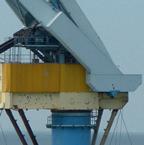

















ENGINEERING & EQUIPMENT NEWS
•floating bulk handling cranes •new floating lemniscate cranes WWW.SHIPTRADE.NLNETHERLANDS Lemniscate cranes for bulk transshipments new and used. High output at low costs, built for proven long lifecycle and 24/7/365 operations.
Florida’s SeaPort Manatee orders two Konecranes Gottwald
Generation 6 mobile harbour cranes to expand capacity
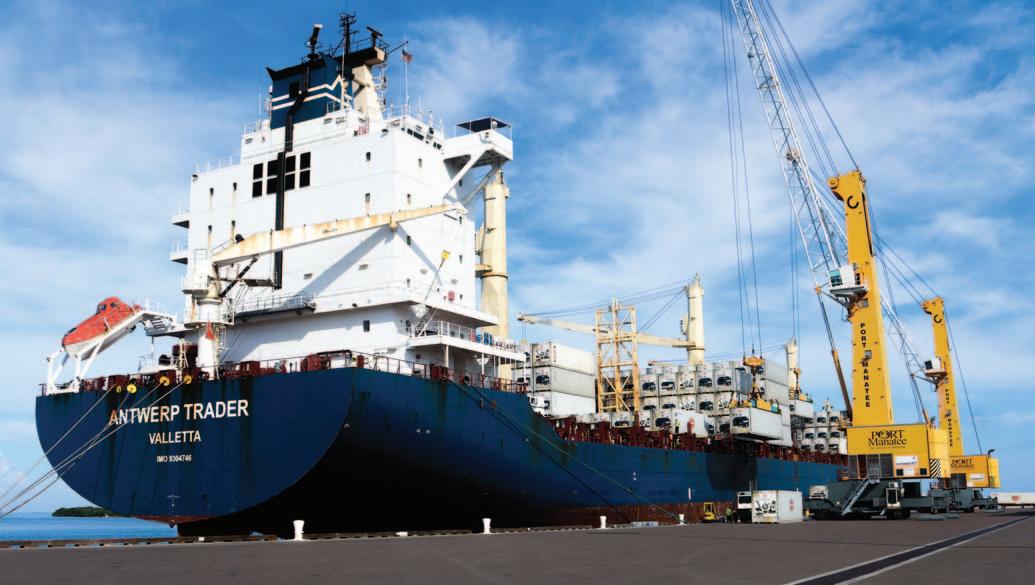
SeaPort Manatee will bring extra capacity to container and general cargo handling at its operations in Tampa Bay, Florida with two Konecranes Gottwald ESP.7 mobile harbour cranes. After it ordered the first crane in Q1 2024, the port quickly decided to take a second optional crane at the beginning of Q2 to keep up with fastgrowing demand. Both cranes will be delivered by the end of the year.
SeaPort Manatee, the closest U.S. deepwater seaport to the expanded Panama Canal, is investing in new equipment to manage anticipated strong growth in container and general cargo traffic. With four Konecranes mobile harbour cranes already on site, the port ordered two more that will offer the ability to run both with electricity from the harbor main, meaning a significant reduction in emissions and a higher efficiency.
“These two new Konecranes Gottwald mobile harbour cranes will not only help SeaPort Manatee accommodate its growing container business, but their electric drive design will also contribute to the port’s strong commitment to reducing emissions. Both the Florida Department of Transportation and the port’s loyal customers appreciate this dedication to sustainability and the entire community will benefit,” said Carlos Buqueras, SeaPort Manatee’s executive director.
“We’ve been proud to work with
SeaPort Manatee over the last two decades as they’ve cemented a key role in the economy of Florida. This order is a good example of the interest our Generation 6 cranes are developing across the market with their high performance, outstanding reliability and impressive eco-efficiency,” says Alan Garcia, Sales Director, Port Solutions, Konecranes.
The order is for two Konecranes Gottwald ESP.7 mobile harbour cranes, with a working radius of up to 51m and a maximum capacity of 125 tonnes to serve container ships up to post-Panamax class. Strong lifting capacity curves, improved handling rates and a high classification ensure a long service life. When connected to the harbor mains by cable reel, it eliminates local exhaust emissions and collects lowering and braking energy in ultracapacitors. For unplugged operation, the crane is powered by a smart hybrid drive combining a fuel-optimized diesel generator with the ultracapacitors that provide additional power for heavy lifts.
For deeper insights, SeaPort Manatee will use TRUCONNECT® remote monitoring to collect usage data, which is sent via secure mobile connection to the ‘yourKONECRANES’ customer portal. There users get a full overview of their Konecranes equipment, with detailed information about fuel consumption, carbon emissions and handling performance.
POWERED BY ECOLIFTING
This contract is part of Ecolifting™, Konecranes’ vision to increase its handprint — meaning the beneficial environmental impact that can be achieved with our product and service portfolio — while reducing customers’ carbon footprints. From eco-optimizing diesel drives, to hybridization and fully-electrified fleets, we will continue to do more with less.
A strong focus on customers and commitment to business growth and continuous improvement make Konecranes a material handling industry leader.
This is underpinned by investments in digitalization and technology, plus the company’s work to make material flows more efficient with solutions that decarbonize the economy and advance circularity and safety.
ABOUT KONECRANES
Konecranes is a global leader in material handling solutions, serving a broad range of customers across multiple industries. It consistently sets the industry benchmark, from everyday improvements to the breakthroughs at moments that matter most, because it knows it can always find a safer, more productive and sustainable way. That’s why, with around 16,600 professionals in over 50 countries, Konecranes is trusted every day to lift, handle and move what the world needs. In 2023, Group sales totalled €4.0 billion.
ENGINEERING & EQUIPMENT 32 MAY 2024 DCi NEWS www.drycargomag.com
New 26-tonne recycling material handler: SENNEBOGEN 826 G-Series
SENNEBOGEN material handlers have been shaping the machine landscape in waste recycling for years. Now the introduction of the powerful and versatile 826 G-series expands the product portfolio and sets new standards in efficiency and reliability.
OPTIMAL SOLUTION FOR WASTE RECYCLING APPLICATIONS
The new 826 G-series machine is the latest addition to the SENNEBOGEN recycling family. With an impressive reach of 13 metres and an operating weight of 26 to 28 tonnes, depending on the equipment variant, the machine is the ideal solution for waste recycling, scrap, and timber applications. Robust components and intelligent machine design ensure that the machine retains its value over the long term, even during demanding continuous operation in challenging working environments such as extreme weather, heat, or high dust levels. A large system performance paired with further optimized hydraulics also ensures outstanding efficiency.
DELICATE
SORTING WORK AT THE RECYCLING OR SCRAP YARD
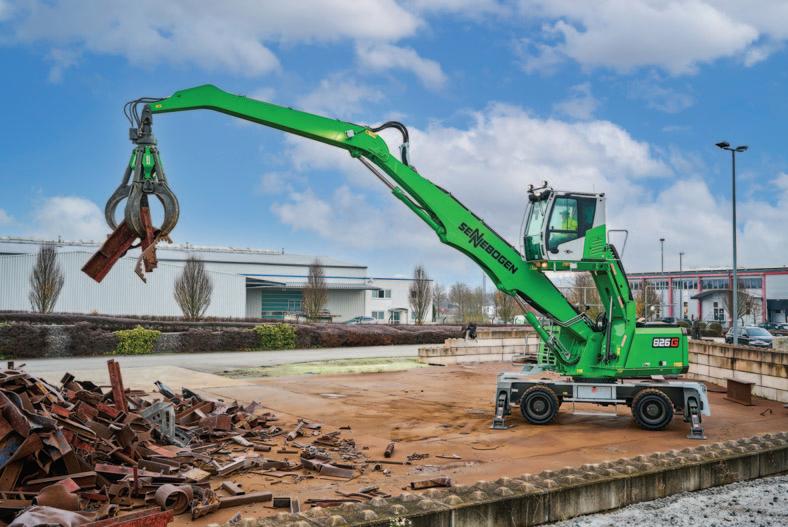
magnet — the new machine can be used to implement a wide variety of applicationspecific solutions. Thanks to sophisticated, state-of-the-art technology and the consistently further developed machine concept, the 826 G, another representative of the 6th machine generation, impresses with its excellent response behaviour and makes sensitive sorting work in the recycling or scrap yard child’s play.
IMPROVED VISIBILITY AND SAFETY
Whether loading or sorting — the new 826 G proves to be a universal all-rounder in the recycling or scrap yard with its wide range of different equipment options. The five undercarriage variants are also particularly versatile in this machine class. In addition, the modular system offers a wide variety of solutions, whether with orange peel, clamshell, sorting grab or
The new cab elevation not only provides the driver with a great deal more viewing height for maximum safety and visibility. Thanks to its extremely robust design, the Maxcab, which can be raised by 2.8 metres, also guarantees smooth and fatigue-free work, even when driving at high speeds. The spacious cab is designed to meet the needs of the driver — comfortable, roomy and with well thought-out details. The panoramic window provides an overview
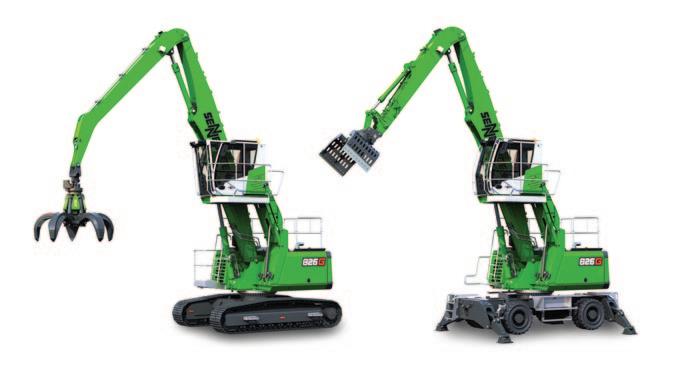
The newly developed SENNEBOGEN 826 G impresses with increased performance and lower fuel consumption.
The new 826 G scores with a reach of 13 metres in both scrap handling and waste recycling.
of the entire working area and ensures maximum safety when loading and maneuvering. In addition, cameras and numerous other safety features ensure optimum protection for people, the surroundings and the machine and get them safely through the day.
ENVIRONMENTALLY FRIENDLY AND ECONOMICAL HANDLING
The new model lifts an impressive 4.2 tonnes at a reach of 10.5 metres and can handle a correspondingly large amount of material per work cycle with its robust equipment. Equipped with a 127kW Stage V diesel engine, the state-of-the-art machine is particularly environmentally friendly and economical.
EASY MAINTENANCE AND SERVICE
The new maintenance concept of the 826 G-series offers clearer and simplified access to service points such as the central lubrication system and the tanks, making day-to-day maintenance easier. The central electrical distributors and electronic modules also make maintenance and service easier and are protected from environmental influences thanks to the large E-box. Other technological innovations also ensure that the overall service intervals have been extended once again.
WORLD PREMIERE AT IFAT 2024
The new 826 G-Series machine celebrated its world premiere at IFAT 2024 and was a real highlight at the 400m2 SENNEBOGEN stand.
ENGINEERING & EQUIPMENT 34 MAY 2024 DCi NEWS www.drycargomag.com



















essionProf b b b ompanies in more than nal c hhhihli ff
V
erstegengrabs e Ve gen grabs, cause our grabs o best productivity. Combining our ext the feedback from our loyal custome materials and unloading situations. W



orldwide w
ountries w 110 c d bili ork with becauseourgrabso
offerthemthehighestrelia er them the highest relia tensive knowledge and exp ers results in optimized gra We call this ‘Grab Intelligen
ooking f L foorincreasedreliability and an extended lifespan? Let us know, b

bilityand y and perience with bs f foorallbulk nce’.
productivity, lower mainte because together we can m
enance costs and ove mountains.












NET . VER S TE G E N . WWW MOU N T M S LET ’ M W T AIN S VE MO
Innovative revolving container technology coming to DP World Fraser Surrey
DP World and New Gold Inc. have announced the signing of a long-term agreement to facilitate the export of copper concentrate through DP World Fraser Surrey using rotating containers.
DP World (Canada) Inc. has announced the signing of a long-term agreement with New Gold Inc. facilitating the export of copper concentrate through DP World Fraser Surrey using rotating containers — a specialized revolving head technology.
New Gold is excited to be partnering with DP World Fraser Surrey, a world class marine terminal and Intermodal Solutions Group (ISG). New Gold will be the first mining company in North America to use the ISG rotating containers system, from mine to vessel. New Gold recognizes that keeping bulk products contained, from mine to ship, will benefit the environment and
significantly reduce or eliminate risk of dust loss that comes with bulk handling.
DP World Fraser Surrey will be the first marine terminal in Western Canada to begin exporting dry bulk cargo by using rotating containers. This revolutionary new export method will begin an era of exporting dry bulk commodities in a more environmentally responsible manner. This method allows fully sealed containers to be rotated 180° within the hold of the vessel to unload the contents rather than using the traditional bulk shiploader. A mobile dust suppression unit is fitted around the rim of each vessel hatch emitting water mist to mitigate dust levels.
As a result, there is no product damage or loss and the risk of environmental contamination during transport and loading is dramatically reduced.
In addition to concentrates, the
container rotating technology can be used with sulphur, wood pellets, fertilizer and grains.
DP World (Canada) Inc. CEO & GM, Maksim Mihic, noted: “I am delighted to partner with New Gold Inc. to enable trade in a more efficient way, and with significant environmental benefits. The rotating container is an innovative solution that will improve the competitiveness of Canadian exports in the global markets.”
DP World’s continued investment into Fraser Surrey has created a world class marine terminal. The agreement with New Gold and the startup of this model for exporting cargo forms a new standard in marine shipping, enabling smarter trade and creating a better future for all.
The new operation at the DP World Fraser Surrey marine terminal is expected to begin in early 2022.
Dry bulk handlers set to benefit from scalable, next-generation service support
Bruks Siwertell has launched new, nextgeneration planned service agreements, which offer customers some of the most significant advances in service support seen on the dry bulk handling market. Operators who use Siwertell shipunloaders, shiploaders, conveying systems and terminal operations can now access this scalable agreement, which can be customized, tailored and combined to achieve optimal operational and maintenance strategies.
“Our service agreements for bulk handling equipment allow an operator to focus on their core business, while benefiting from maintenance budget predictability, effective planning and scheduling, lower service costs and peace of mind, resting in the knowledge that an original equipment manufacturer (OEM) expert is on hand if needed,” says Daniel Frostberg, Service Director, Bruks Siwertell.
“These new service agreements allow customers and partners to truly tailor the services that we offer to their desired levels of service support,” Frostberg continues.
Bruks Siwertell’s next-generation
service agreements for dry bulk handling equipment comprise seven key areas: inspections; maintenance; remote assistance; Siwertell Smartview; spare parts management; training and education; and operational management. Within each of these, customers can choose the depth of support that they require.
“This ensures a double benefit, customers do not pay for something that they do not need, and also, by ensuring that agreements are highly tailored, customers profit from cost-effective maintenance strategies that maintain assets in peak condition,” he adds.
With the rapid and growing introduction of new digital technologies, operators can also benefit from the
introduction of remote diagnostics and support within these new agreements. This remote support, accessed via a number of methods from phone to video calls, makes a global network of dry bulk handling experts rapidly available for problemsolving suggestions and guidance.
Other digital advances encompassed in these next-generation agreements are scheduled for launch shortly and include remote connection to the equipment’s programmable logic controller (PLC) for easy troubleshooting, and Siwertell Smartview, which is a cloud-based industrial Internet of things (IIoT) system. It is planned for phased integration into Siwertell dry bulk handling technology and can monitor real-time operational parameters such as tonnes of material handled.
“Customers are at the heart of our business, and a key part of our commitment to them is ensuring that we offer global, through-life support, so that when we are needed, we respond. This responsiveness is now enhanced through these nextgeneration agreements; customers benefit from support on their terms,” concludes Frostberg.
ENGINEERING & EQUIPMENT 36 MAY 2024 DCi NEWS www.drycargomag.com
Cleveland Cascades Ltd
Global leader in bespoke dry bulk loading chutes
Cleveland Cascades are Specialists in the design and manufacture of bespoke dry bulk loading chutes.
Our bespoke solutions are designed to meet each customer’s specific requirements from a tool kit of proven components, utilising the expertise of a team of specialist in house design engineers.
We lead the loading chute industry & set the standard for dust emissions and environmental pollution control in dry bulk handling.
Our worldwide reputation is built on high quality, well-engineered, robust, high performance chutes, backed up by excellent customer service and global lifetime product support.
Contact Cleveland Cascades Ltd Unit 22, Dukesway, Teesside Industrial Estate, Thornaby, Stockton-on-Tees, Cleveland, TS17 9LT, United Kingdom Tel: +44 1642 753260 | Fax: +44 1642 753270
E-mail: enquiries@clevelandcascades.co.uk | Website: www.clevelandcascades.co.uk
Ship Loaders
Silo Loaders
Truck Loaders
Tanker Loaders
Conveyor belt selection —
how
choosing the right type of belt edge can avoid unnecessary cost and delay
CONVEYING ADVICE
When requesting a quotation for a conveyor belt, over-specifying the type of belt edge can have an enormous impact on belt costs, repairs, maintenance and lost production. Despite the enormous advances in technology and the types of materials used to manufacture rubber multi-ply conveyor belts, many conveyor operators and their buying departments seem to retain outdated beliefs. Although there are only three basic types of belt edge, the importance of which type to use is often underrated.
Moulded edges: many years ago, moulded edges were the standard because cotton was used as the reinforcing fabric in multi-ply belts. A moulded edge (fully covered in rubber) was therefore essential to prevent moisture penetrating the cotton fabric and causing it to rot. However, since the introduction of synthetic ply fabrics using polyester and polyamide, this problem effectively no longer exists.
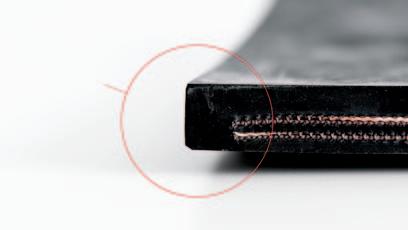
Moulded edges can only be created when a belt is manufactured to an exact width. During the calendaring* of the belt, a small strip of unreinforced rubber is attached to the side of the carcass. This becomes an integral part of the belt during the vulcanizing process, creating between 5mm to 15mm of unreinforced rubber on the belt edge. Moulded edges do not provide any structural advantage and can be susceptible to damage if the belt wanders off-track for any reason.
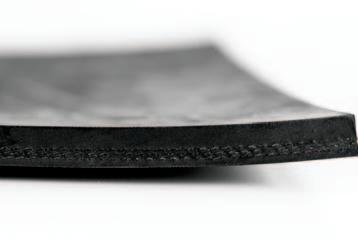
Sealed edges: the most often used type of belt edge is the ‘cut & sealed edge’ or simply ‘sealed edge’. To maximize efficiency of production and minimize cost and environmental impact, these standard width stock belts are usually made as wide as the manufacturing machinery will allow. These are known as ‘slabs’, which are then cut and sealed to create a variety of narrower widths. For example, 400m of 2,200mm-wide belt would be manufactured and then be slit (cut) to produce 400m of 1,000mm-wide belt and 400m of 1,200mm-wide. This is why vast majority of rubber multi-ply belting held in stock by manufacturers, distributors and traders has sealed edges.
At Fenner Dunlop, the sealed edges are automatically created during the slitting process using special cutting knives that rotate at an extremely high speed. The heat created by the friction of the rotating knives melts the carcass fibres and a small amount of the rubber on the edge of the belt, creating a very effective seal.
Having a sealed edge means that moisture is prevented from being drawn into the carcass from the edge by capillary forces. Although the synthetic fibre plies are hardly affected, moisture can ultimately cause vulcanizing problems when making splice joints. Having a sealed edge also enables a belt to be used in very wet conditions and makes it better suited to long-term storage outdoors. For these reasons, the use of unsealed (raw) cut belt edges, which are produced using conventional cutting knives, is not recommended.

Steelcord and steel reinforced belts: in the case of steelcord and steel reinforced ply belting, it is necessary to use moulded edges to prevent moisture penetrating the carcass and corroding the steel. In Fenner Dunlop, all steel cord belts are made to order and manufactured to a specific set of specifications that fully embed the steel cords so for these reasons they are always supplied with moulded edges. Multi-ply belts that are ‘made to order,’ usually those with specialized cover grades such as fire resistant for example, or simply in a non-standard width requested by the customer, will automatically have full moulded edges.
Avoiding unnecessary cost and delay: specifying moulded edges when they are not entirely necessary can have a very negative impact on the you price because, as previously explained, manufacturers need to make belts at the optimum width and length for cost and environmental efficiency. Having a belt be made to order rather than supplied from stock (especially for lengths shorter than 200m/full roll) significantly increases the price and the delivery lead time.
Les Williams
(* Calendaring - when fabric plies and rubber is passed through a series of rollers to flatten, smooth and integrate the two materials).
ENGINEERING & EQUIPMENT 38 MAY 2024 DCi NEWS www.drycargomag.com
Sealed edge.
Unsealed (raw) cut belt edge.
Full moulded edge.
Elevating operations to the next level...
... with BEDESCHI Services Solutions
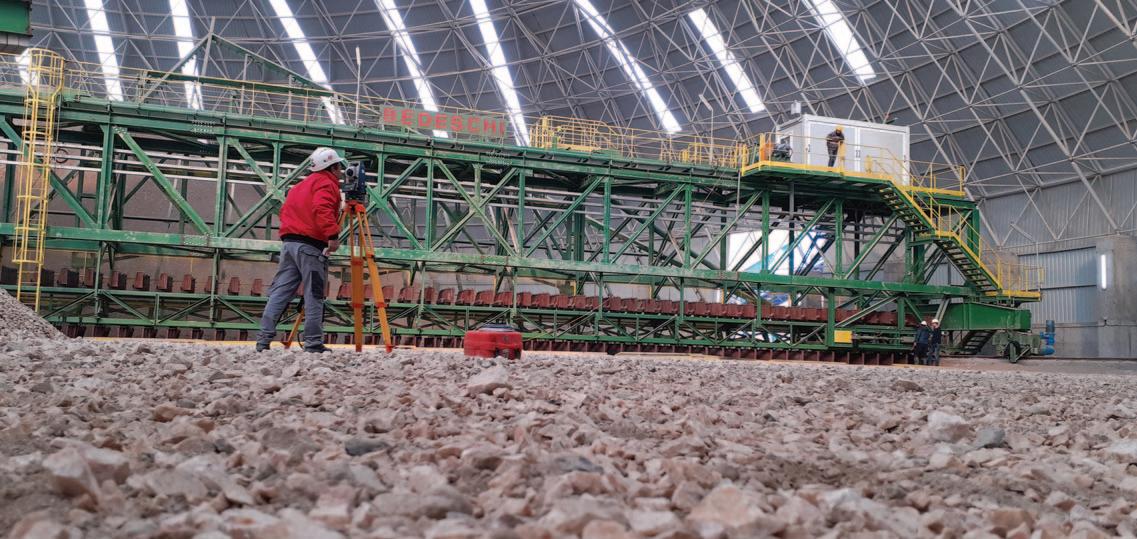
The focus on sustainability plays an increasingly important role within Italian bulk handling equipment manufacturer BEDESCHI. For more than a century, the company has been in the material handling business, a business that will continue to strengthen its already stringent sustainability standards. In this respect, BEDESCHI keeps ahead in the market by drawing up cyclical sustainability reports and implementing respective company policies. BEDESCHI implements best practices to make a difference first by focusing on pollution reduction, investments in R&D, and realization of modern and eco-friendly equipment. Part of the company’s strategy to promote green behaviour is to encourage customers to recycle equipment or add features and solutions to boost their ecological balance sheet, offering comprehensive services for all types of equipment, including those from other manufacturers.
UNLOCKING THE FUTURE : TURNING CHALLENGES INTO OPPORTUNITIES
Companies like BEDESCHI face the usual challenges in mining and materials handling
operations in the harsh environments in which they take place — factors to be considered include wear and tear, and keeping up with continously changing world trends. Therefore, in the dynamic landscape of mining and materials handling, the permanent evolution of the related equipment is inevitable. BEDESCHI thrives on navigating these shifts, and continuously adapts its product portfolio, turning these challenges into opportunities for its customers’ growth.
ADAPTING EQUIPMENT TO CHANGING ENVIRONMENT: UPGRADES
As coal terminals seek alternatives to diversify their operations, BEDESCHI has shown itself to be a reliable partner, offering tailored solutions to adapt existing systems to new commodities and capabilities. Specializing in the adaptation of equipment to handle a variety of materials beyond coal, the company opens up a world of opportunities for terminal operators.
Through meticulously engineered studies and expertly executed upgrade projects, BEDESCHI ensures that clients’
machinery is ready to master handling different materials. From varying densities and grain sizes to material-specific behaviours like flow dynamics, stickiness, and moisture content, BEDESCHI’s solutions are finely tuned to accommodate the unique characteristics of each material. The scope of BEDESCHI’s expertise involves adapting balanced mobile equipment like shiploaders, unloaders, stackers and all kinds of reclaimers to the new requirements born from newly handled commodities or operating patterns.
Also, the downstream equipment with all its material transfers is taken into consideration to establish a sound holistic picture for customers’ future operations. BEDESCHI’s expert team has also commonly been involved in increasing the capacity of any operation. The company has the know-how to explore the maximum performance that customers can get out of their machines and systems, always considering their role in the overall process. Capacity upgrades of all or selected machinery in the process may serve this challenge as well as adapting the
ENGINEERING & EQUIPMENT 39 MAY 2024 DCi
www.drycargomag.com
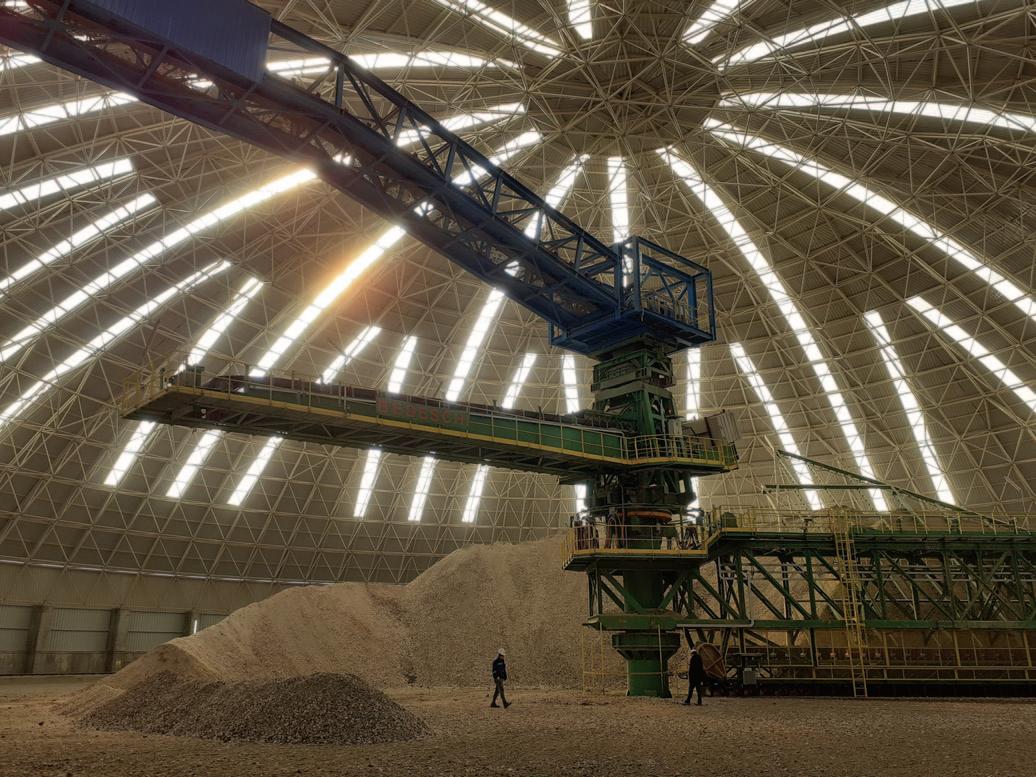
geometry of e.g. shiploaders or unloaders — as well as optimizing operation patterns of systems or identified equipment thereof.
BEDESCHI also offers upgrades to shorten maintenance shutdowns or have the system running more reliably with less unexpected downtime due to adding automation features; it also offers a thorough assessment of facilities and operations after these works have taken place.
Operating systems at enhanced efficiency, not only positively influences the production, but also enhances the ecological footprint. Switching operations to bio-degradable fluids or reducing consumables to produce less waste, safety
upgrades and the like do help customers reach their ESG (environmental, social, and governance) targets.
GETTING THE MOST OUT OF IT: EQUIPMENT ONLY LIVES TWICE
In an era where longevity has not only a price, but where an ESG tag and sustainability are paramount, BEDESCHI offers anti-ageing treatments for customers’ equipment — effectively recycling machines or relevant portions thereof. After thoroughly inspecting the equipment, retrofitting structural, mechanical, and electrical systems ensures machinery remains at the forefront of
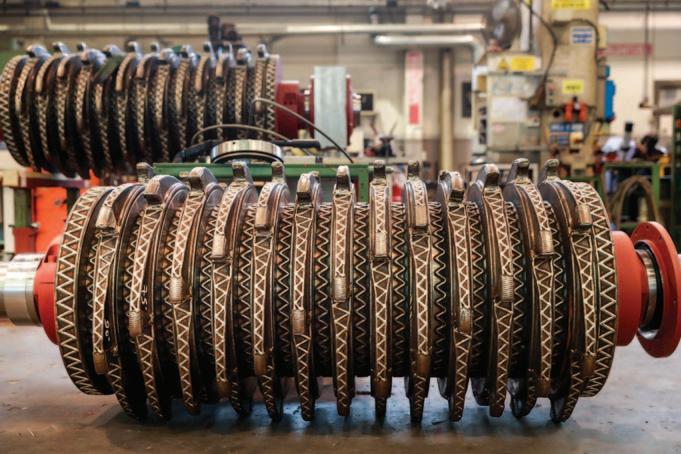
efficiency and reliability. BEDESCHI’s services here range from a simple exchange of major components like a slew bearing up to a fully fledged overhaul of the loadbearing steel structures or the electrical and automation system.
BEDESCHI believes in maximizing the value of existing assets. Apart from the aforementioned minor to sometimes major repairs to retrofit the equipment, it also offers comprehensive studies determining the remaining operational lifetime under different operating conditions given. Advanced engineering know-how, combined with a qualified assessment, followed by an engineering study, determines what treatment the equipment requires in order to extend its lifetime up to a demanded period — for example, overhaul, modification, etc.
BEDESCHI can give a second life to existing equipment: upgrades often outshine investing in new equipment in terms of capital to be invested and come with a lot of benefits to suit actual operation and maintenance since the machinery and its components are known to the operation and maintenance teams. Also, shutdown periods in many cases are shorter compared to those in which new equipment or new infrastructures need to be installed, making the entire business case for lifetime elongations attractive.
With its skills for lifetime extension and a meticulous approach to upgrades and
ENGINEERING & EQUIPMENT 40 MAY 2024 DCi www.drycargomag.com
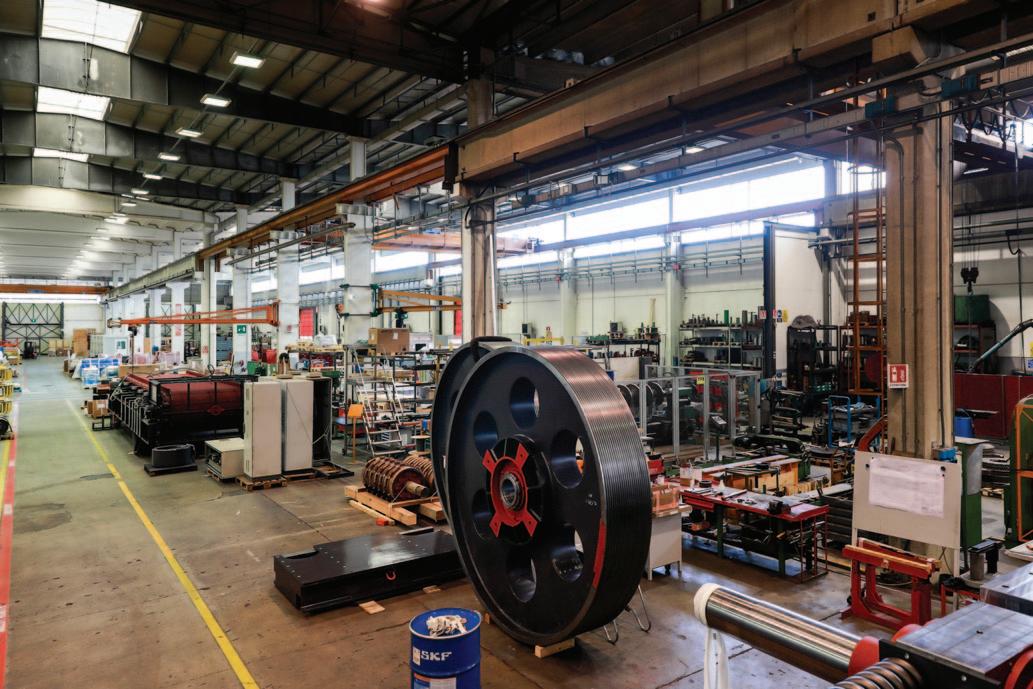
retrofits, BEDESCHI ensures its customers’ equipment reaches its full potential.
BEYOND UPGRADES:
BEDESCHI IS A PARTNER EVERY STEP ON THE WAY
Operational activities inevitably lead to wear and tear, necessitating the replacement of parts, components, and assemblies.
BEDESCHI’s Spare Part division offers a diverse selection of premium spare parts and packages for machinery, regardless of its OEM. With access to its own manufacturing facilities, the company can promptly provide a comprehensive range of spare parts.
BEDESCHI Field Services can maintain optimal equipment condition. Its skilled technicians meticulously assess clients’ assets, collaboratively planning with its support teams to ensure timely and quality execution. Detailed reports, featuring engineered recommendations, serve as the foundation for retrofitting initiatives, which BEDESCHI’s team is eager to implement.
BEDESCHI is an Italian company with a global footprint, experienced in raw material handling, container logistics, and the delivery of turn-key plants to produce bricks and tiles.
Established by Guglielmo Bedeschi in
1908 as a brick manufacturing firm, the company is now a global leader in material handling with more than 350 employees, of which more than 250 are engineers, offices allocated globally and two workshops: one in Italy and one in Australia. The company works on a turn-key and tailor-made basis so BEDESCHI can meet customers’ demands and comply with all required standards. It is experienced in handling any raw materials and additives from quarry extraction to storage, including crushing units, apron feeders, stackers and reclaimers, combined bucket wheels, shiploaders, and belt and pipe conveyors. DCi
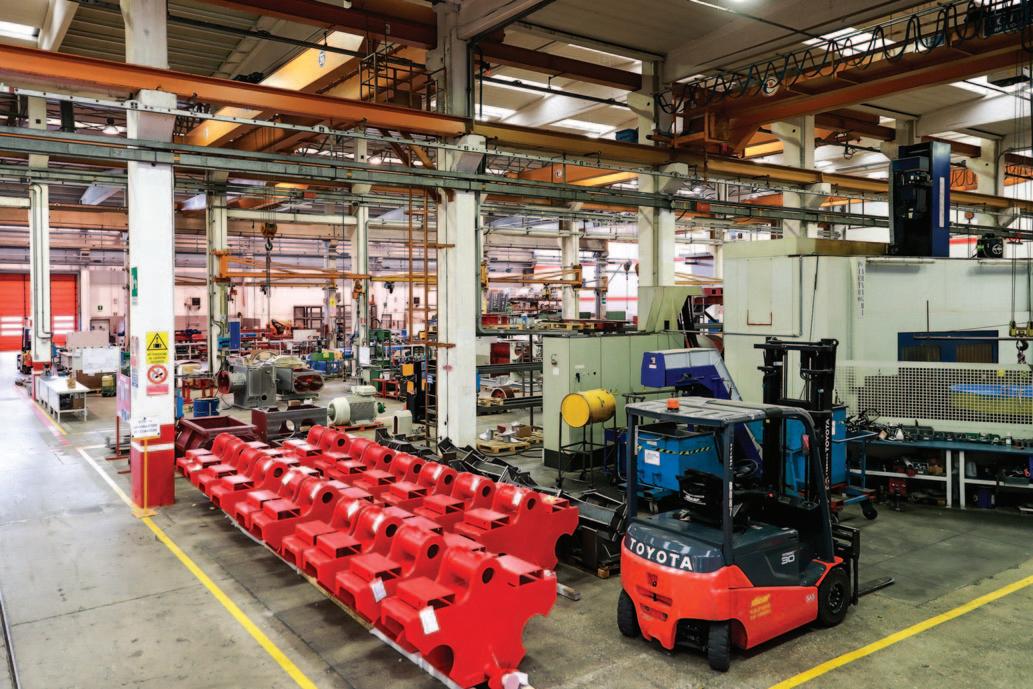
ENGINEERING & EQUIPMENT 41 MAY 2024 DCi www.drycargomag.com

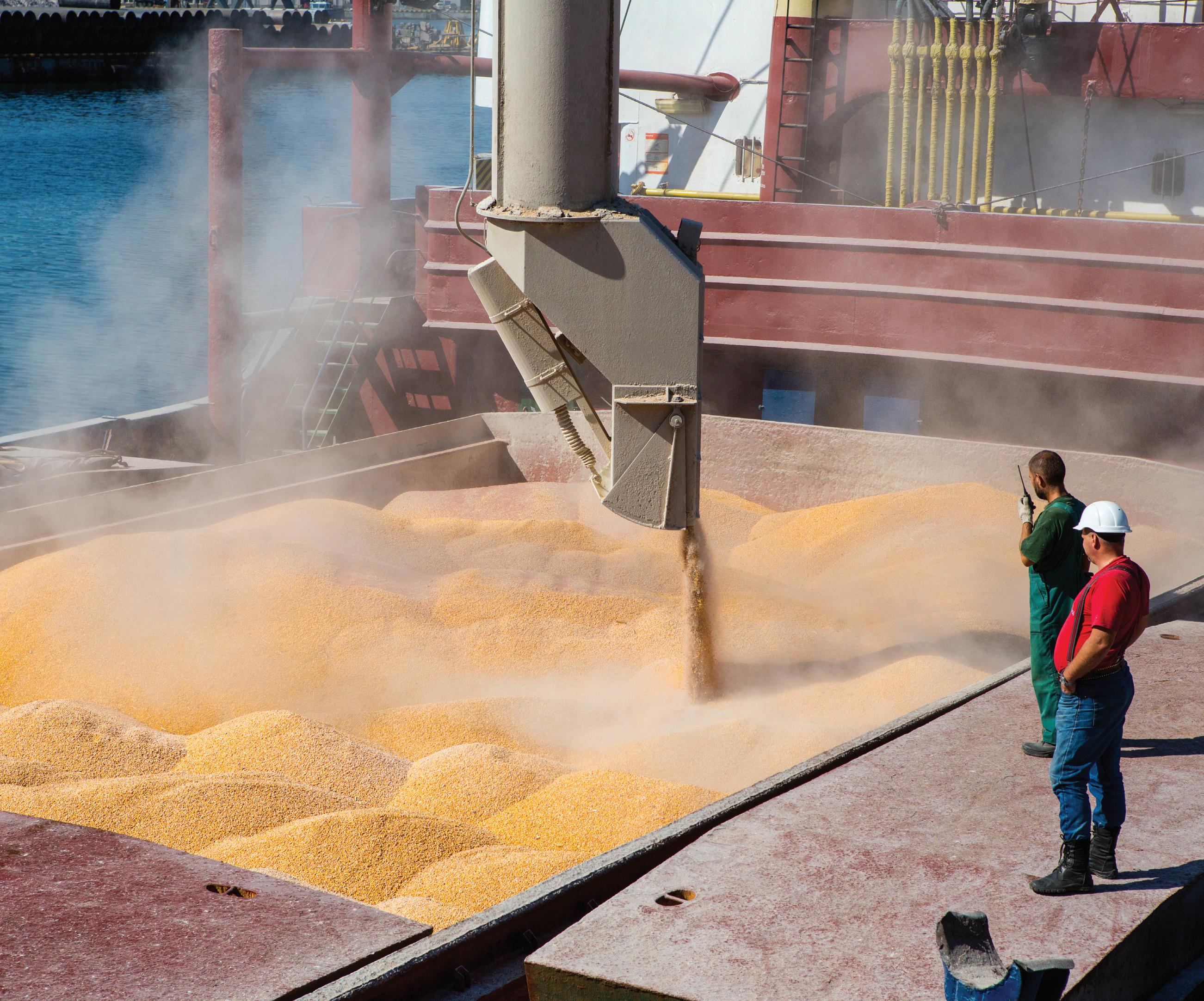
Experienced Agri Inspectio
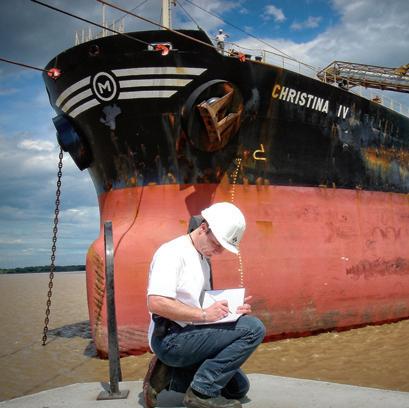
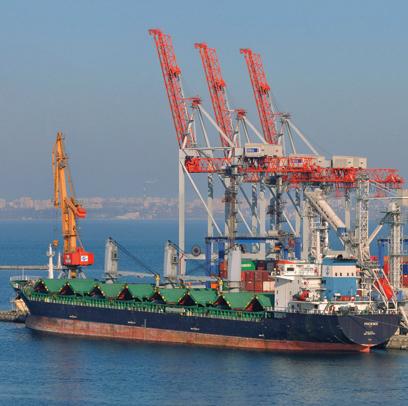
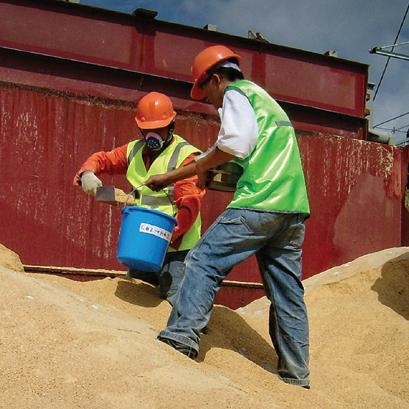
21 Sefton Business Park, Aintree, Liverpool, Merseyside L30 1RD United K
T: +44 (0) 151 525 1488
E: glenn.forbes@alexstewartagriculture.c and analytical services
UK Italy BalticStates s • Belgium • y • Spain • K •
Ukraine ons Baltic States BelgiumI
Y Yoour glo d obal network of ins lili e.com Kingdom com spection www.alexstewartagriculture
Bigging up biomass
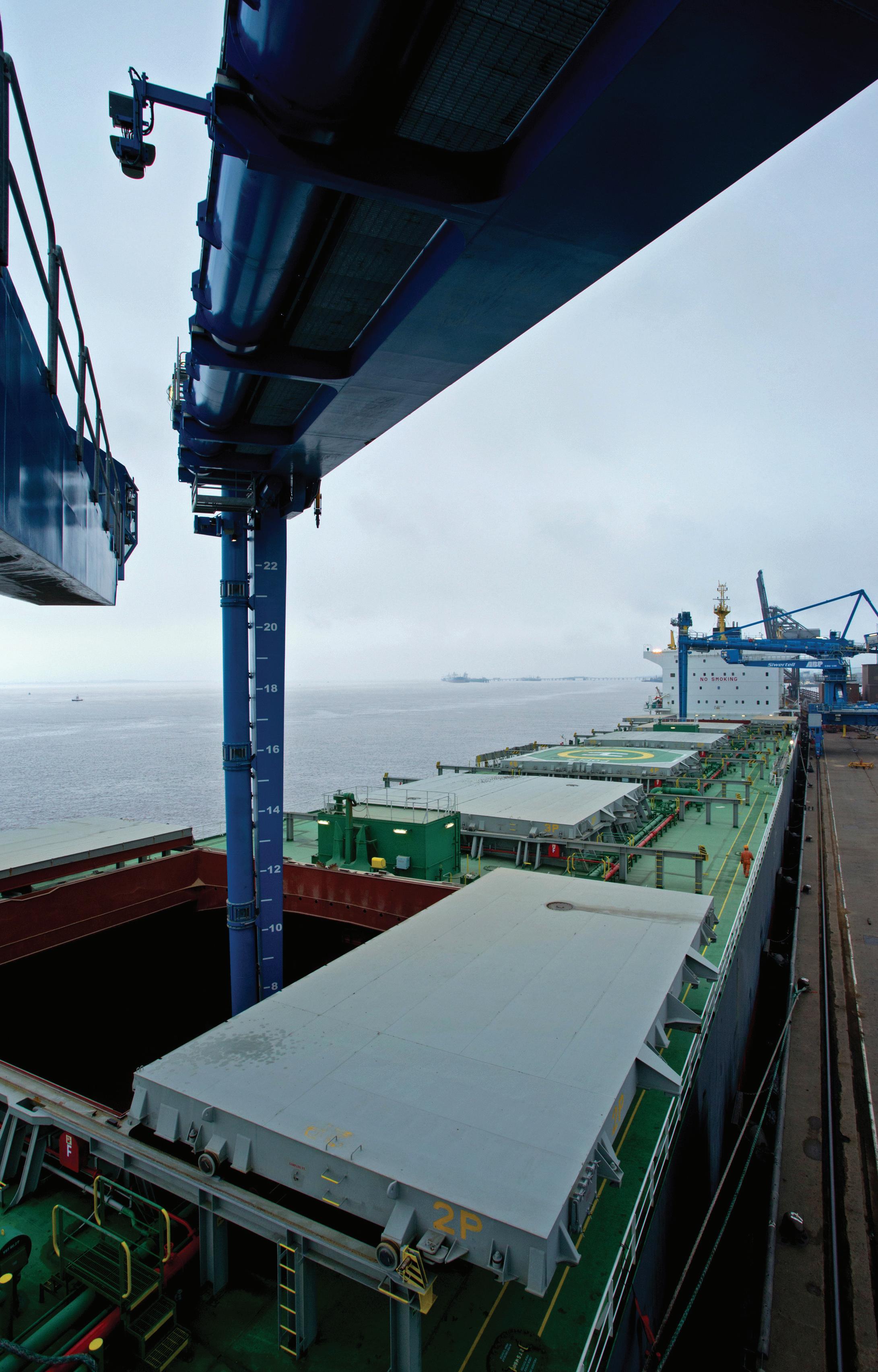
The UK’s Port of Immingham helping to power the nation
Associated British Port’s (ABP) Port of Immingham is the leading UK port specializing in the latest facilities and equipment to store and handle biomass.
The team at the state-of-the-art Immingham Renewable Fuels Terminal (IRFT) works closely with customers to
offer safe, efficient, and cost-effective handling of cargoes.
IRFT has the latest leading-edge handling and storage solutions and is Europe’s largest biomass handling facility bringing in the bulk energy cargo (wood pellets) to fuel the UK’s leading power plants. Up to 200,000 tonnes of wood pellets can be discharged and stored in eight silos. The facility can handle 6mt (million tonnes) per year with two dedicated Bruks Siwertell continuous ship-unloaders, and fully automated enclosed conveyors
ENGINEERING & EQUIPMENT 43 MAY 2024 DCi
www.drycargomag.com
popularity
cargoes
no let-up in
of biomass
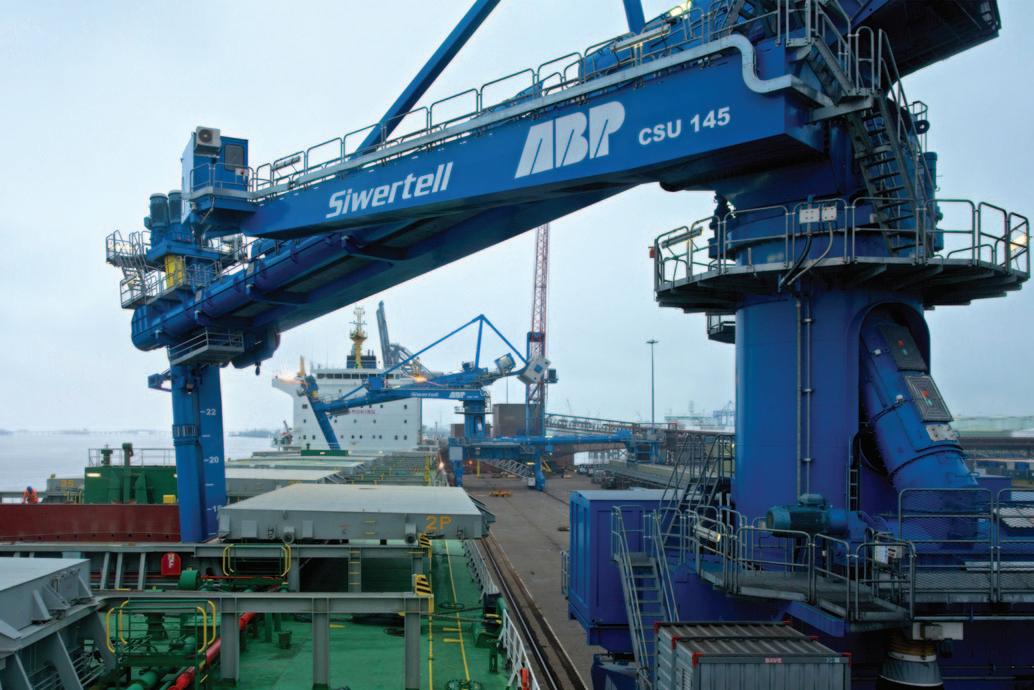
which transport the biomass to the silos for storage. A reclaim system efficiently delivers high volumes of cargo for onward transit by rail.
A total of £150 million has been invested into facilities and equipment at the terminal to ensure it is at the forefront of technology.
The team at IRFT is focused on the continuous improvement of the operation and is always implementing new ways of
working that improve the Health and Safety of all terminal users, and the efficiency and productivity of the terminal’s operations.
ABP can offer tailor-made facilities to meet customers’ needs and solutions through continued investment.
The port, located on the Humber Estuary, can also handle some of the largest vessels in the world at the Humber International Terminal (HIT), which is ABP’s largest terminal. It benefits from excellent road and
rail connectivity to the rest of the UK.
The Port of Immingham in the Humber Estuary is one of the UK’s largest port by tonnage, handling around 50mt of cargo every year. The deep-water port is a critical link in the supply chain for energy production. Its prime location connects it to Europe and the rest of the world and helps power the nation and helps to cement the Humber as the ‘UK’s Energy Estuary.’
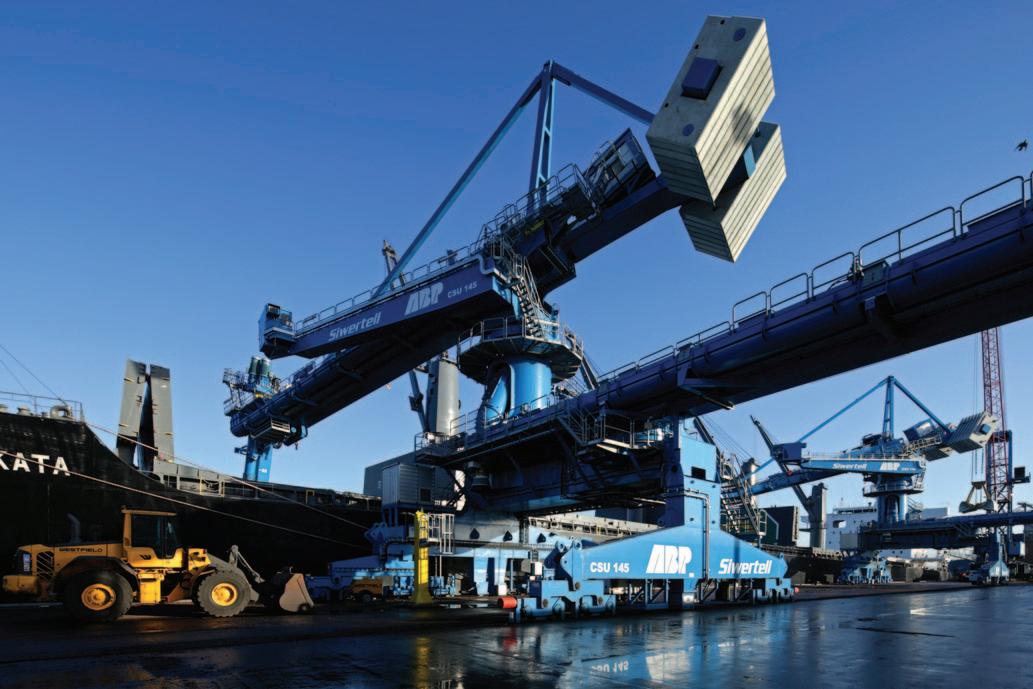
ENGINEERING & EQUIPMENT 44 MAY 2024 DCi www.drycargomag.com



Motor Driven Reels
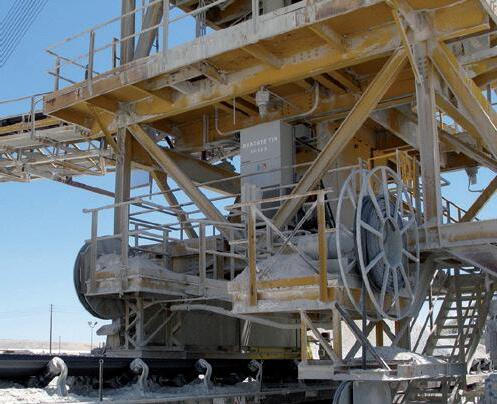
• Monospiral and Level-Wind configurations
• Rugged and dependable magnetic coupler for dusty environments



Cable Festoon
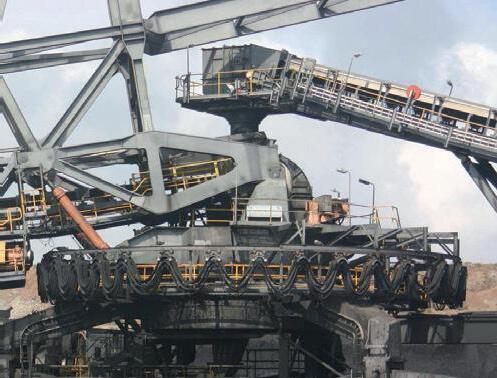
• Corrosion-resistant, long-life rollers; precision sealed bearings
• Systems customized for the application
• Preassembled option, for easy installation
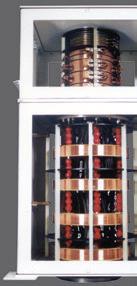


Slip Rings
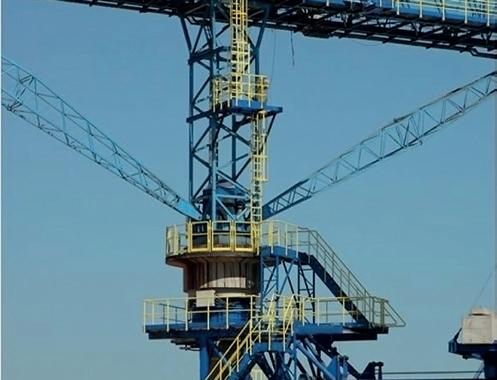
• Allow infinite rotation

• Combined power, control and media (water, air, oil, vacuum, other)
• Available with ATEX and SIL 3 certification
Rugged Energy & Data Transmission Systems
Conductix-Wampfler has one critical mission: To keep your bulk material handling operations running 24 / 7 / 365. You need proven, worryfree energy solutions - and Conductix-Wampfler has them. Our systems provide reliable electric power and water to stacker/reclaimers, barge and ship loaders/unloaders, bulk conveyors, tripper systems, and gantry cranes. Conductix-Wampfler systems are rugged, low maintenance, and timetested in tough, dusty environments. All products are backed by the largest sales and service network worldwide!
www.conductix.com
Biomass handling projects carried out by SAMMI
Italian company SAMMI has considerable expertise in the bulk handling equipment industry, boasting over 50 years of experience in a range of industrial applications, including biomass handling.
One recent notable contract for SAMMI in the biomass arena is detailed below. The table on pxx details other biomass contracts carried out by SAMMI. For more details on SAMMI, please see ‘SAMMI reports on recent cement/clinker handling operations’ on p98 of this issue.
BIOMASS
PLANT — STOCKYARD, BUCKET ELEVATORS, SIDEWALL CONVEYOR
Engineering, supply and assembly of carpentries and machines for receiving, classification, storage and refining biomass plant. The project is characterized by the supply of two circular metal silos with a net useful volume of 500m3, with flat bottom and mechanized rotating extraction system.
The customer for this system is Europrogetti S.r.l., and the end-user is Unicalce Lecco S.p.a. in Italy. The works were carried out in 2014–2015.
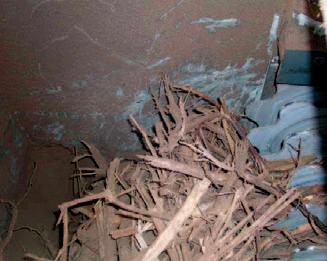
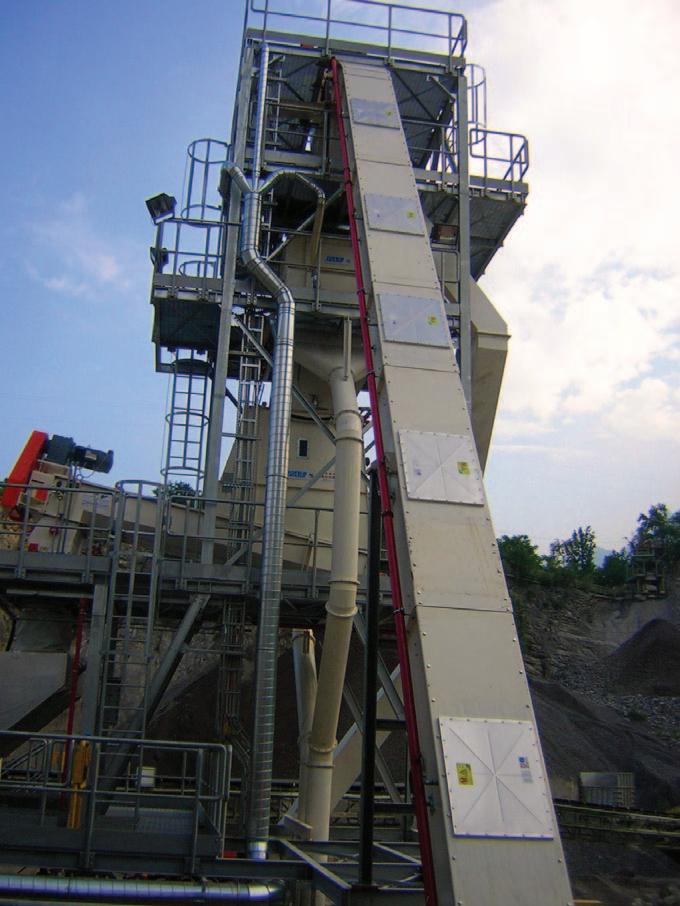
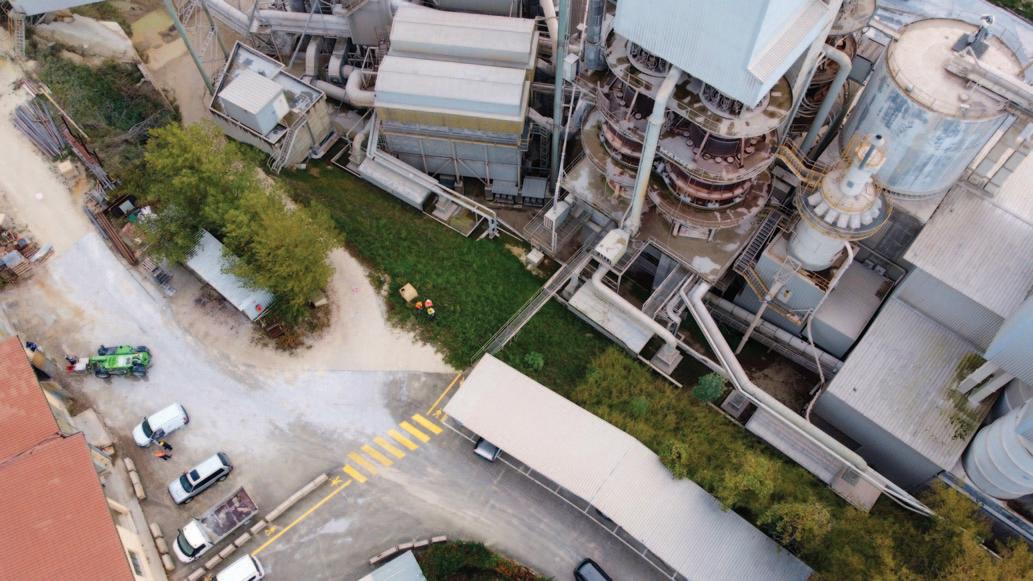
ENGINEERING & EQUIPMENT 46 MAY 2024 DCi www.drycargomag.com
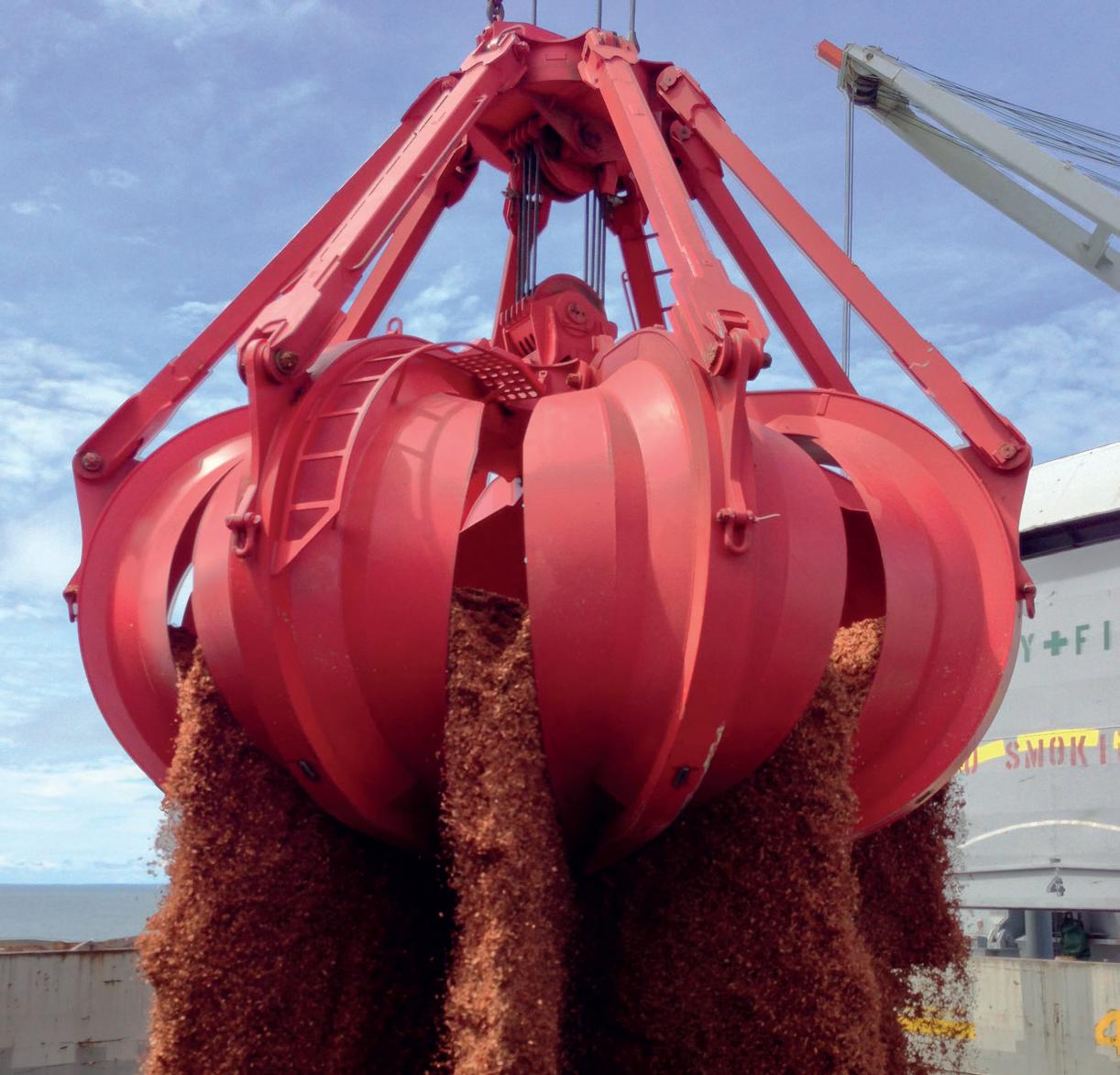

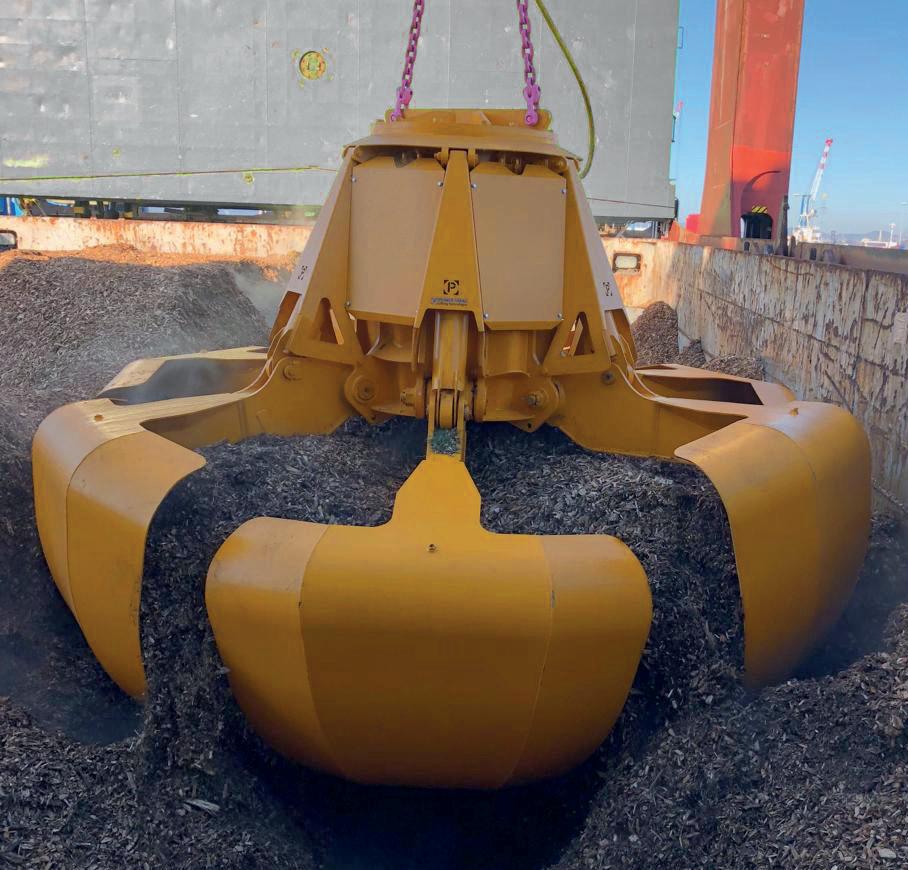

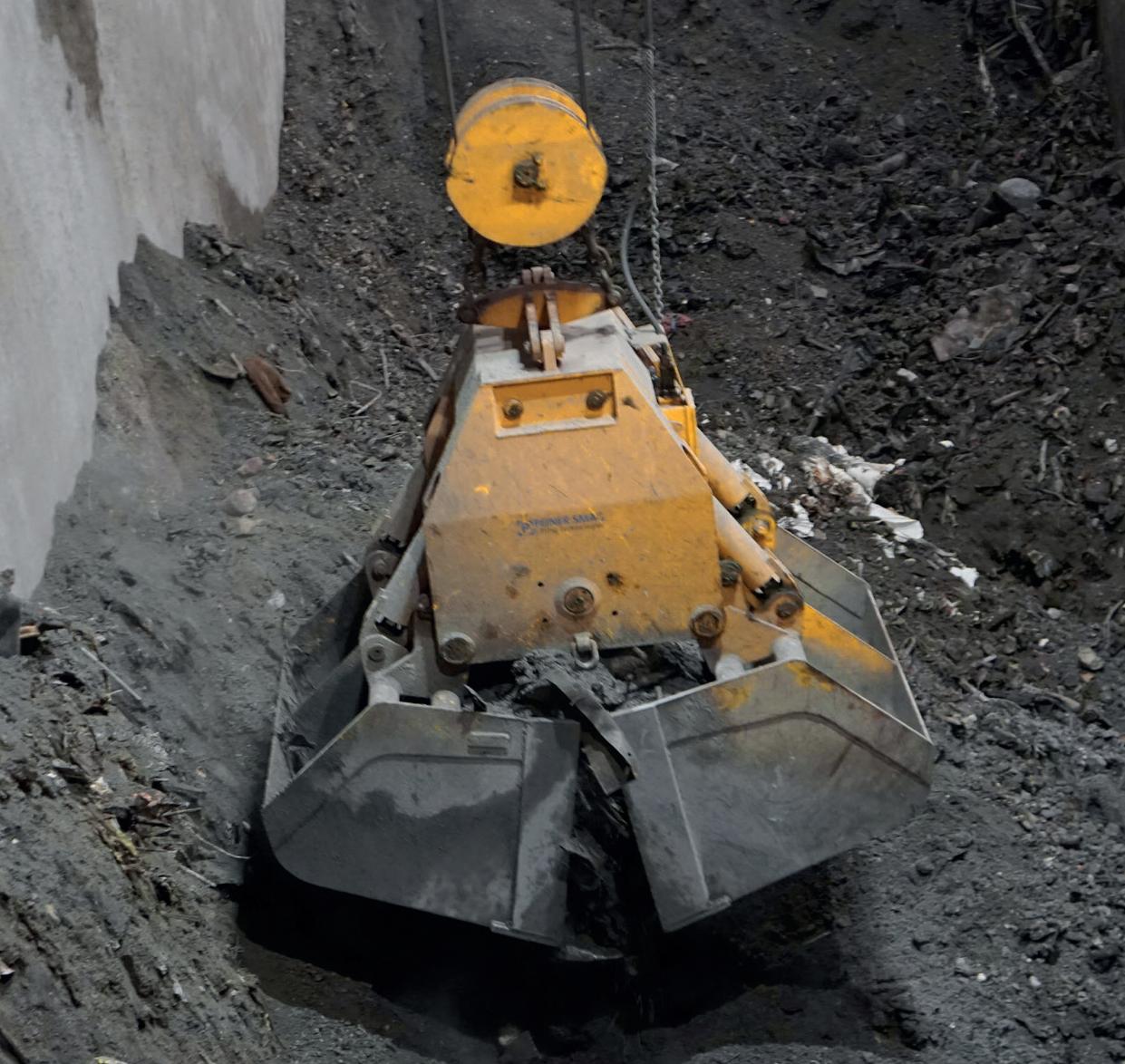




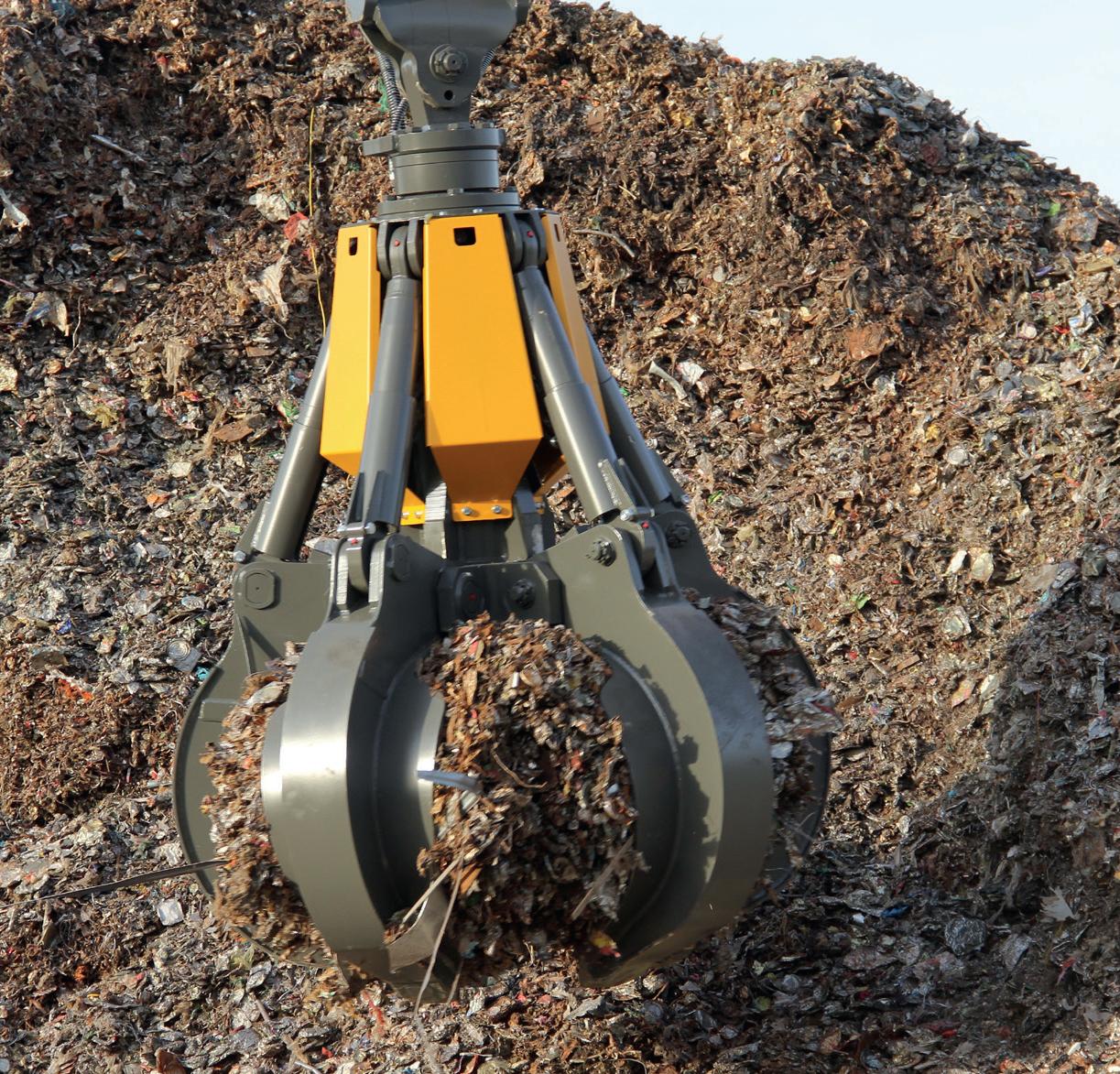










Biomass H Disc Handling So cover Prove olutions n T G Lifting MA ER S NPEI Technologiies GmbH www.peiner-sm 7 302 64 1- +49 534 T: 2 Windmühlenbergstr. g g 382 sales-g .coom mag -grabs@peiner-smag E: Germ , 9 Salzgitter 25 -22,20 .comg many
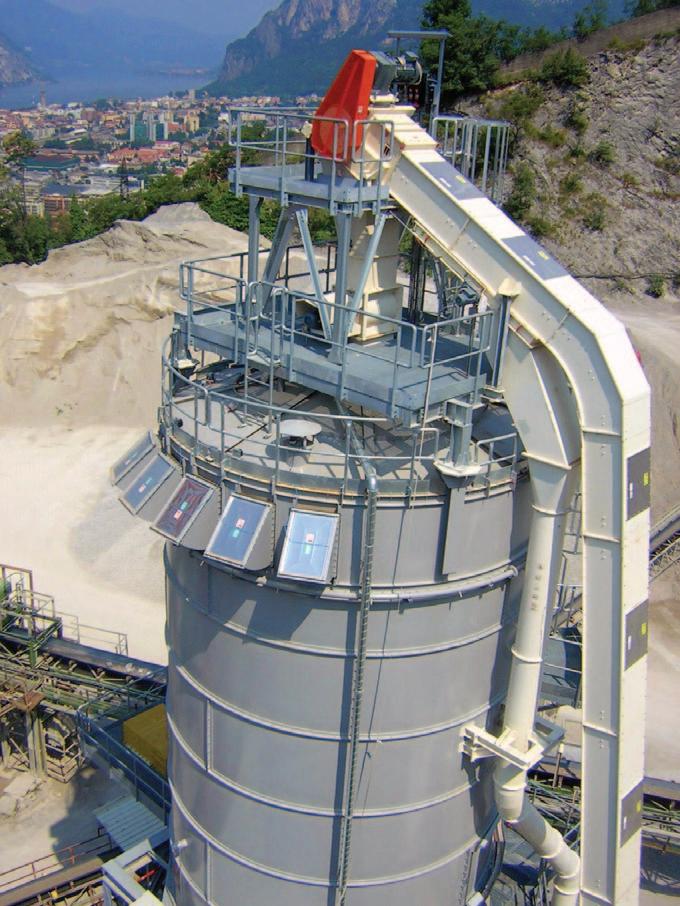
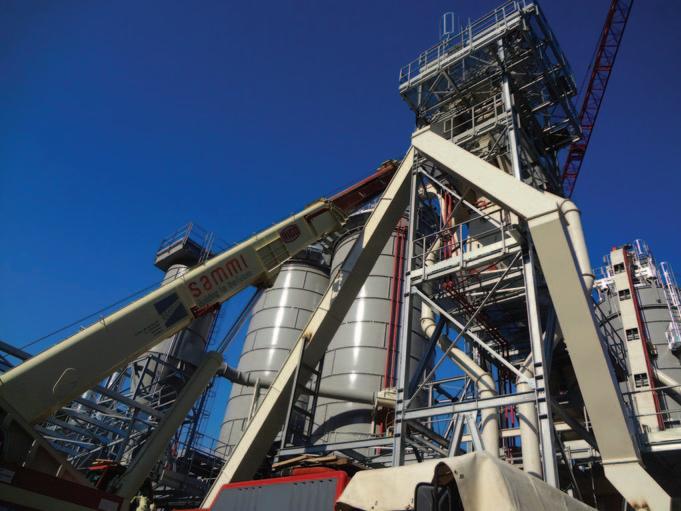
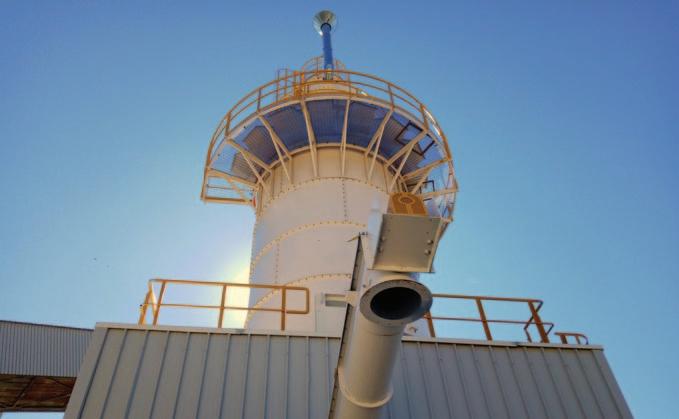
Year: 2004
Customer: Tecnocentro
S.p.A. – Bioter S.r.l. (ex Printer S.r.l.)
Site description: Handling system for biomass power plant
Material handled: Wood chips; pine needles; agricultural biomass System capacity: 500tph
Conveyor solution: Belt conveyor
650mm x 22m; intermediate storage hopper screw conveyor; belt conveyor 650mm x 12m
Year: 2006
Customer: Tecnocentro
S.p.A. – Bioter S.r.l. (ex Printer S.r.l.)
Site description: Handling system for dry plant and stockpiling
Material handled: Wood chips
System capacity: 1,000tph
Conveyor solution: Feed hopper, belt feeder 1,000mm x 11m belt conveyor, 650mm x 19m belt conveyor 650mm x 21m
Year: 2012
Customer: Unicalce S.p.A.
Site description: Handling and dosing system to the lime kiln
Material handled: Virgin and recovered wood biomass System capacity: 1,000tph
Conveyor solution: Pneumatic conveying system, intermediate storage silos
Year: 2014
Customer: Unicalce S.p.A.
Site description: Handling and dosing system to the lime kiln
Material handled: Virgin and recovered wood biomass System capacity: 1,000tph
Conveyor solution: Pneumatic conveying system, intermediate storage silos
Year: 2022
Customer: Unicalce S.p.A.
Site description: Handling and dosing system to the lime kiln Material handled: Virgin and recovered wood biomass System capacity: 1,000tph
Conveyor solution: Pneumatic conveying system, intermediate storage silos
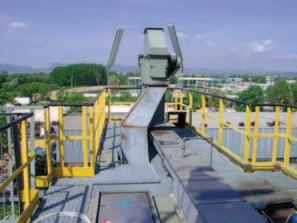
ENGINEERING & EQUIPMENT 48 MAY 2024 DCi www.drycargomag.com
BIOMASS HANDLING PROJECTS
SAMMI
MegaDome fabric buildings: ideal for storing biomass cargoes
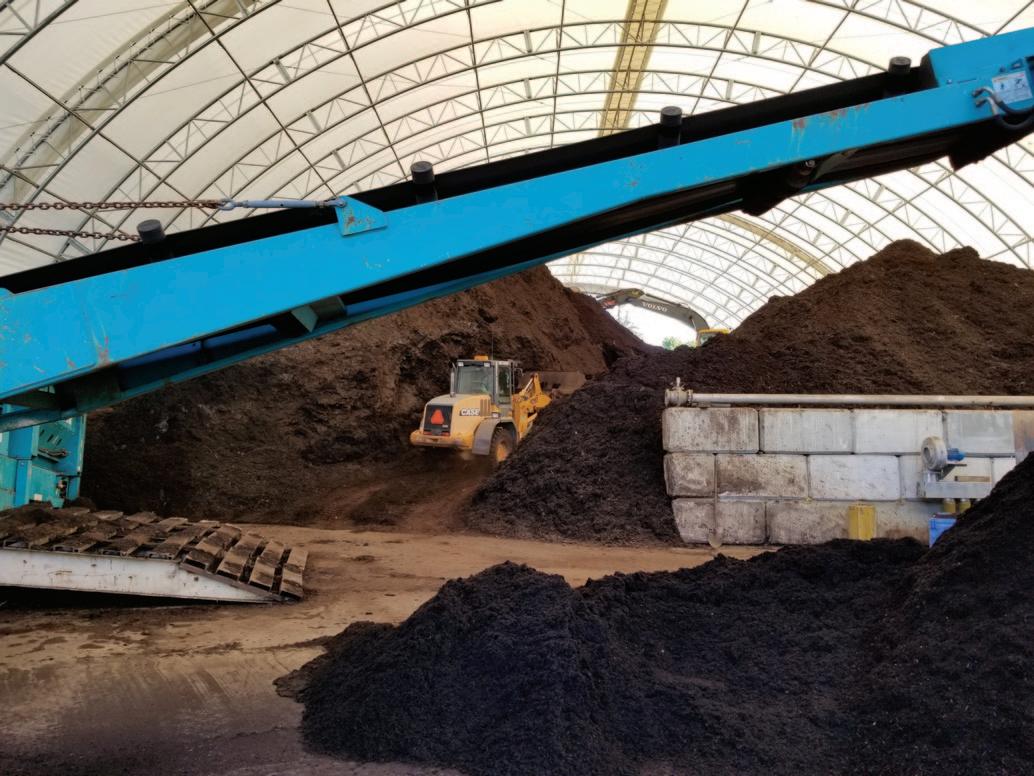
INTRODUCTION
The practice of composting is an age-old tradition that has been honed over millennia. Originating in ancient civilizations, it involves a sophisticated biological process that decomposes organic by-products into simpler substances. As described by Godden (1986), composting is a biological transformation that not only breaks down various organic materials but also incorporates an oxidative and thermophilic process. The end products of this process include carbon dioxide (CO2) and a stabilized substance known as mature compost. Initially, the organic waste undergoes colonization and transformation by a series of dynamic microbial populations, each playing a crucial role in
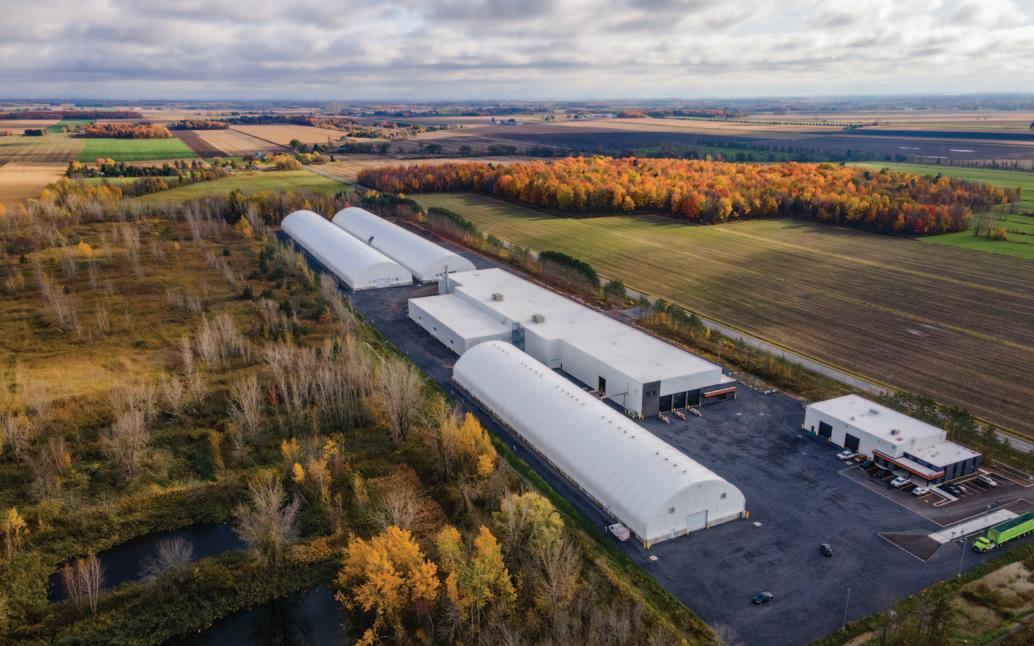
ENGINEERING & EQUIPMENT 49 MAY 2024 DCi www.drycargomag.com
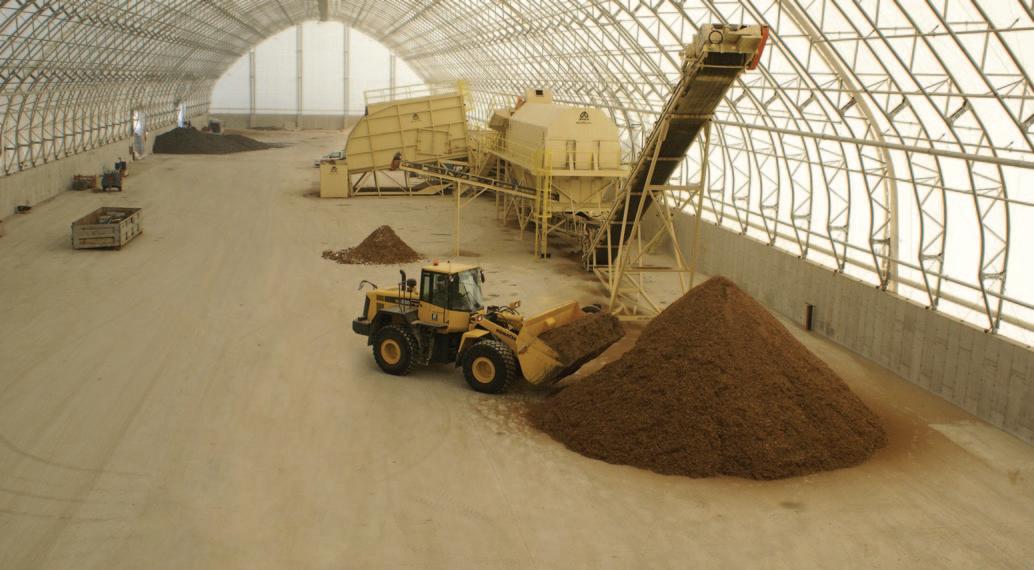
the progression from raw material to usable compost.
UNDERSTANDING THE COMPOSTING PROCESS
Composting unfolds in a sequence of four primary phases, each crucial for transforming organic matter into nutrientrich soil amendment:
Mesophilic phase: this initial stage v involves moderate temperatures where diverse micro-organisms begin the decomposition process.
Thermophilic phase: temperatures v rise significantly, accelerating decomposition and killing pathogenic organisms.
Cooling phase: after the intense v activity of the thermophilic phase, the
compost begins to cool, allowing for the reactivation of mesophilic organisms.
Maturation phase: the final stage v where the compost stabilizes and matures, becoming suitable for agricultural use.
These phases are further segmented into a fermentation period (covering the mesophilic and thermophilic phases) lasting about 2.5 months, and a maturation period (spanning the thermophilic and cooling phases) which can last from 3.5 to six months.
TEMPERATURE DYNAMICS IN COMPOSTING
According to research by Leclerc (2001), the temperature within a composting pile is a vital indicator of microbial activity and
overall compost health. The temperature evolution is a response to the biological processes occurring within the pile, particularly the heat generated by microbial metabolism. This thermal profile is critical for optimizing the composting process, ensuring rapid decomposition while preventing the survival of harmful pathogens.
MECHANISMS OF HEAT AND MATTER TRANSFER
The dynamics of heat and matter transfer within a compost pile are complex. As detailed by Bach et al. (1987), heat is primarily generated through microbial degradation, which can be supplemented by mechanical means such as forced air transfer. Conversely, heat loss can occur
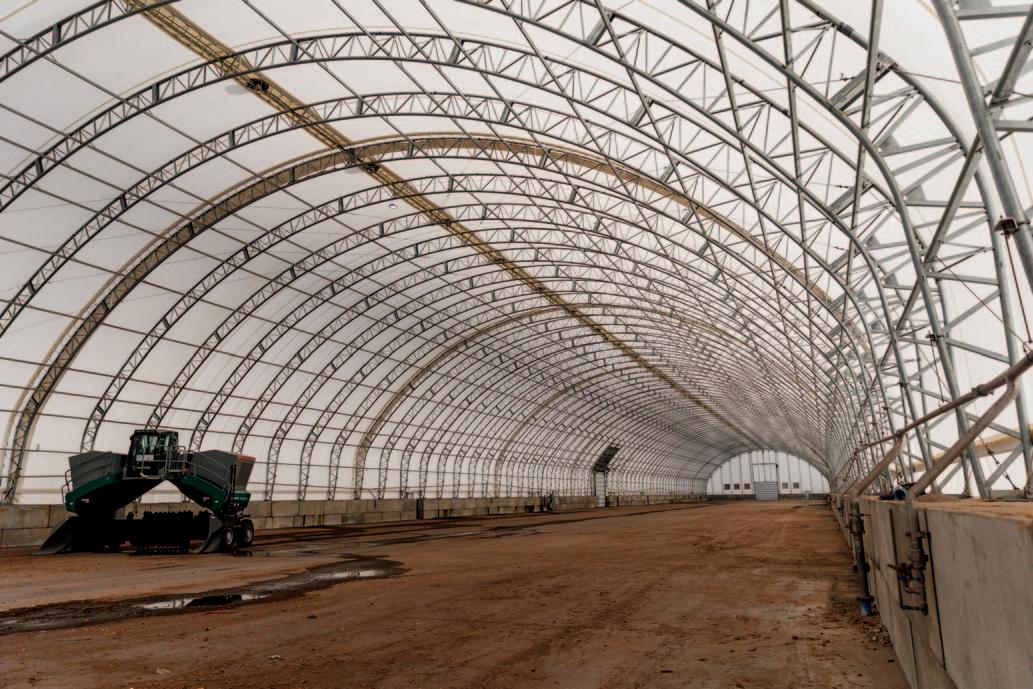
ENGINEERING & EQUIPMENT 50 MAY 2024 DCi www.drycargomag.com

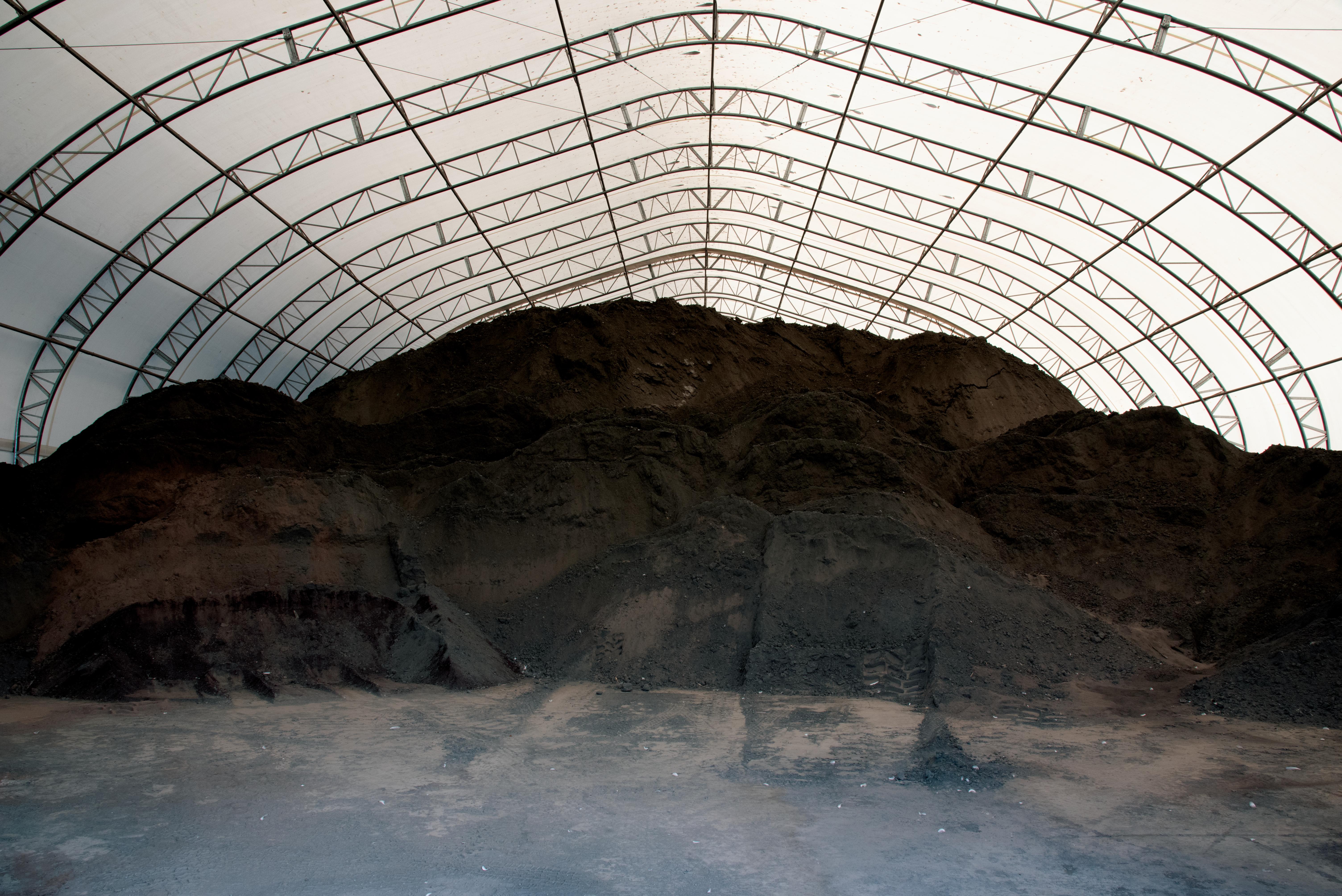
through several mechanisms: vaporization of water, conduction across the compost’s surface, and air transfer within the pile itself. Understanding these processes is essential for managing a composting operation efficiently.
ADDRESSING HETEROGENEITY IN COMPOSTING
The representation of composting phases as neatly divided stages is an idealized vision. In reality, as Fermor (1993) pointed out, a compost pile is a heterogeneous medium with varying exchange surfaces, temperature zones, and moisture levels. To reduce this heterogeneity and promote efficient biodegradation, periodic turning (aeration), watering, and screening of the compost are necessary during the fermentation period. These actions help maintain optimal conditions throughout the composting process.
ADVANTAGES OF A MEGADOME FABRIC BUILDINGS FOR COMPOSTING
Fabric buildings provide an ideal environment for large-scale composting operations. They offer significant volume for the movement and operation of machinery and the handling of materials. The architectural design, typically featuring wide spans without central posts, allows for uninterrupted space that is highly beneficial for operational logistics. Additionally, the economical aspects of fabric buildings make them an attractive alternative to more traditional, rigid structures.
STRUCTURAL BENEFITS AND
ENVIRONMENTAL COMPLIANCE
The structural materials used in fabric buildings, such as hot dip galvanized steel, offer enhanced durability and resistance to the harsh conditions typically found within composting environments. Selecting the correct type of cover material is also
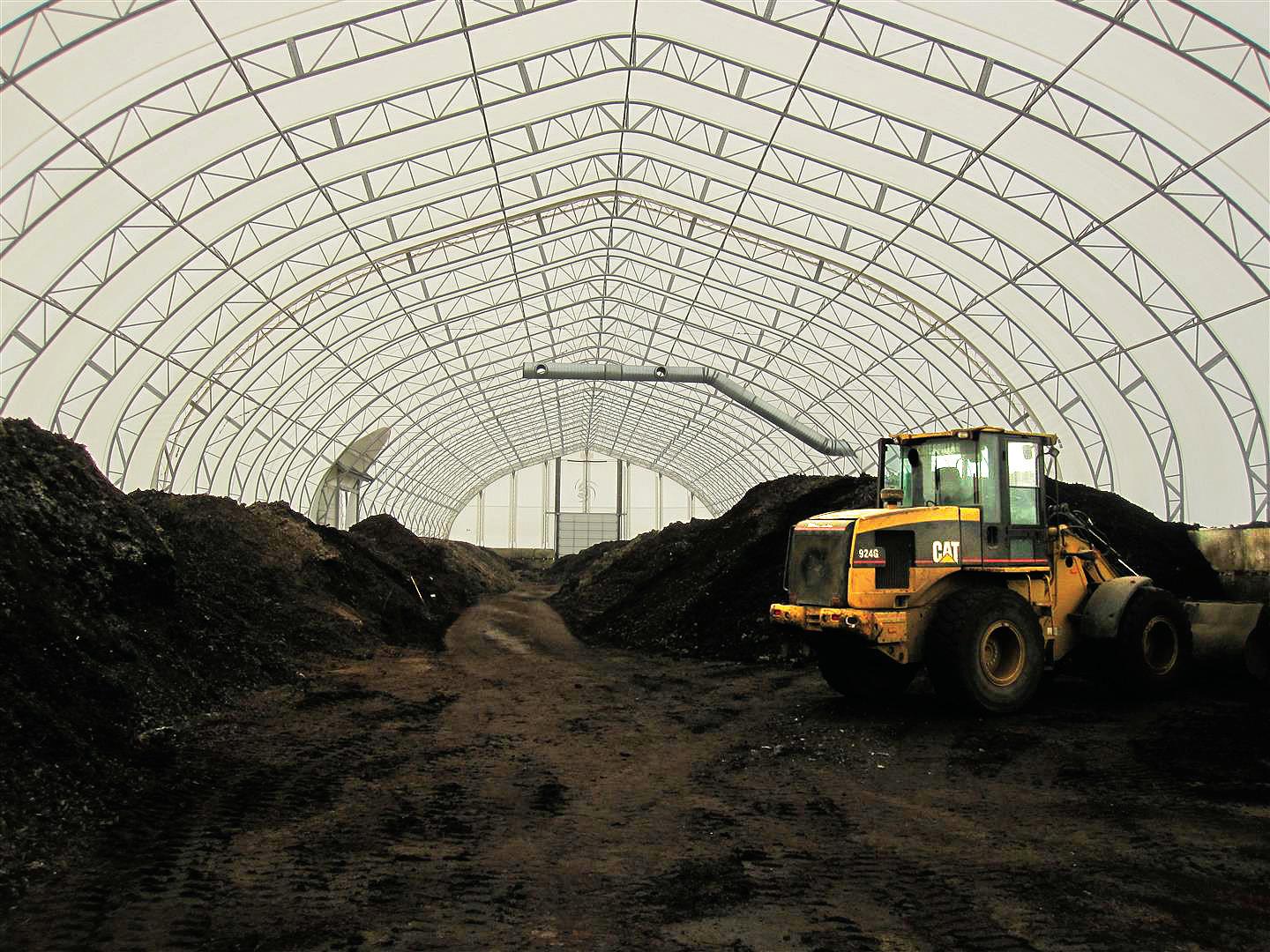
crucial to ensure longevity and reduce the need for frequent replacements. Furthermore, fabric buildings are equipped with specialized ventilation systems, including air extractors and climate control technologies, which are essential for maintaining an ideal composting climate.
REGULATORY COMPLIANCE AND ENVIRONMENTAL PROTECTION
In line with environmental regulations, composting operations must effectively manage both leachate and gas emissions before they are released into the environment.
Fabric buildings like those provided by MegaDome offer enclosed spaces that facilitate the capture and treatment of these emissions, thereby minimizing environmental impact and enhancing odor control. This containment is particularly crucial in densely populated or environmentally sensitive areas.
CONCLUSION
Fabric buildings are not only practical for storing machinery and raw materials but also provide a controlled environment crucial for the effective management of all composting stages. Their robust construction and versatile design make them invaluable in the composting industry. For organizations looking to implement or upgrade their composting facilities, consulting with experts who have a proven track record in fabric building solutions is essential for achieving the best outcomes in composting efficiency and environmental compliance.
ENGINEERING & EQUIPMENT 52 MAY 2024 DCi www.drycargomag.com
Sustainable conversion of an RWE coal-fired power plant with Loibl conveyor systems
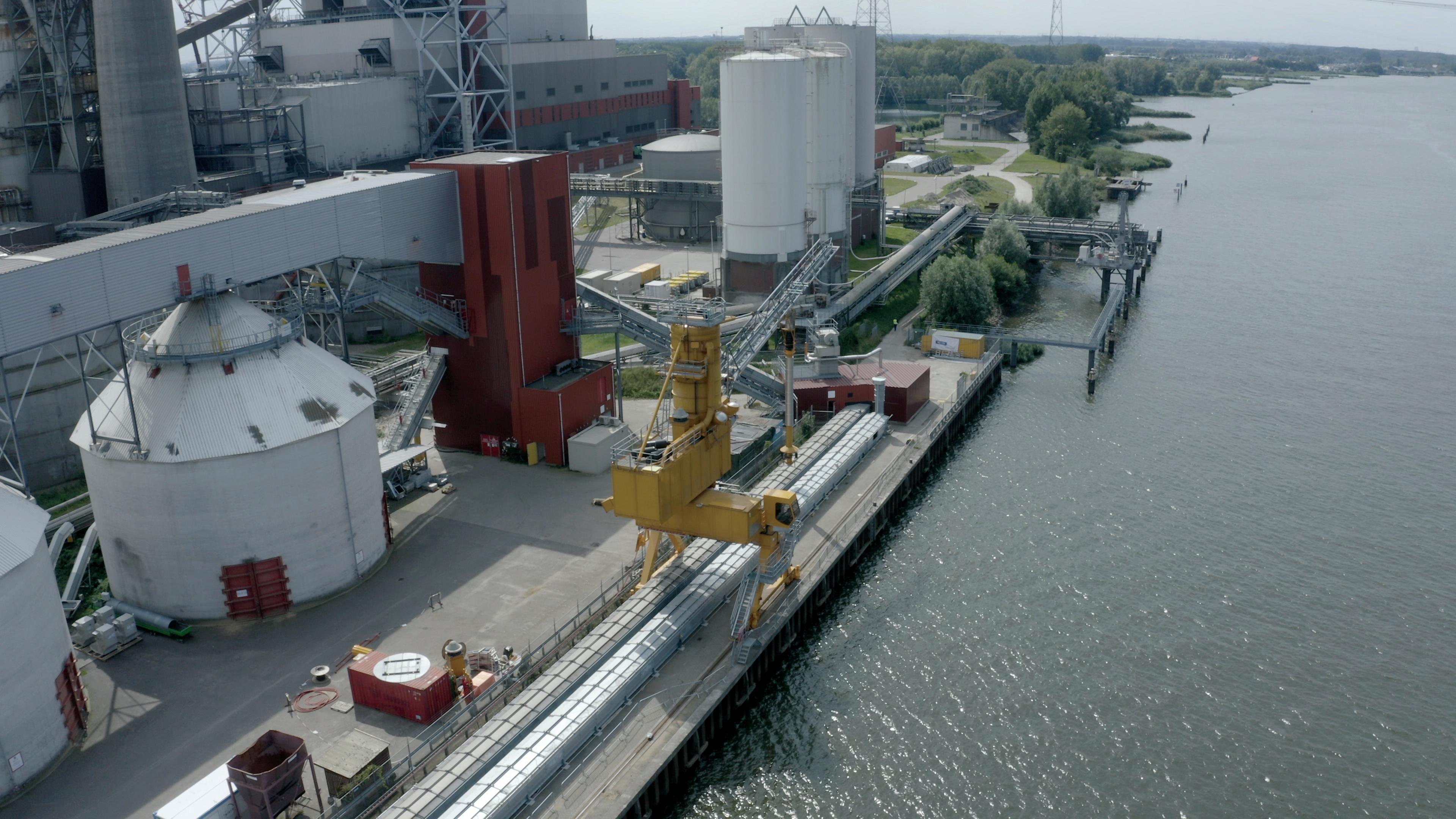
PELLETS ARE TURNED INTO ENERGY – WITH INTELLIGENT CONVEYING SOLUTIONS FROM LOIBL
Construction and demolition timber may contain various foreign bodies, such as ferrous and non-ferrous metal parts having a negative impact on the conveying circuit. Scrap wood, especially, requires various measures to remove particles and foreign bodies adversely affecting a continuous fuel supply. Loibl has extensive experience in developing solutions for these challenges. In order to avoid damages the company has integrated appropriate sieves and metal separators in the Amercentrale. Special attention was given to the compliance with all requirements of explosion and fire protection as well as the directives and noise protection regulations for equipment intended for use in explosive atmospheres (ATEX).
The wood pellets are supplied to the port of the power plant by inland vessels. Pneumatic ship-unloaders suck the material to be conveyed from the interior and have it drop onto completely enclosed troughed belt conveyors. This suction method represents an effective, time-saving, costefficient and clean alternative to gripper unloading. In addition, the sensitive wood pellets are protected against wind and rain. Loibl’s troughed belt conveyor has a belt width of 1,400mm and a length of 185m. Using so-called ‘automatic cover opening devices’ allows a relatively dust-free loading
of the enclosed conveyor. This automatic device opens the conveyor at the loading points and closes it again. Cleaning devices underneath the troughed belt conveyor prevent dust deposits which must be avoided due to the high explosion hazard of the pellet dust. This provides an effective dust removal and explosion protection. Besides the automatic cover opening this is a unique and necessary device which has been built according to the fire safety regulations and ATEX directives.
Every Loibl conveyor has been encapsulated and for explosion protection reasons provided with extra heavy-duty sidewalls. The flat belts are antistatic, extremely resistant to abrasion, oil and grease as well as flame retardant. All conveyors are equipped with special
detectors for surroundings with fire and explosion hazard as well as with appropriate extinguishing systems. If an explosion is detected extinguishing agent is blown in, suppressing the explosion in its earliest stages and its spreading is prevented. Fire extinguishing systems installed into containers, which are located along the conveyors ensure a safe and quick extinguishing of the conveying lines.
After having transported the wood pellets through the troughed belt conveyors from the port, it goes on to four storage silos in encapsulated trough chain conveyors. Every trough chain conveyor has a capacity of 800 tonnes per hour. Overall, the material is transported over a distance of almost 840m. The pellets are stored temporarily in the storage silos
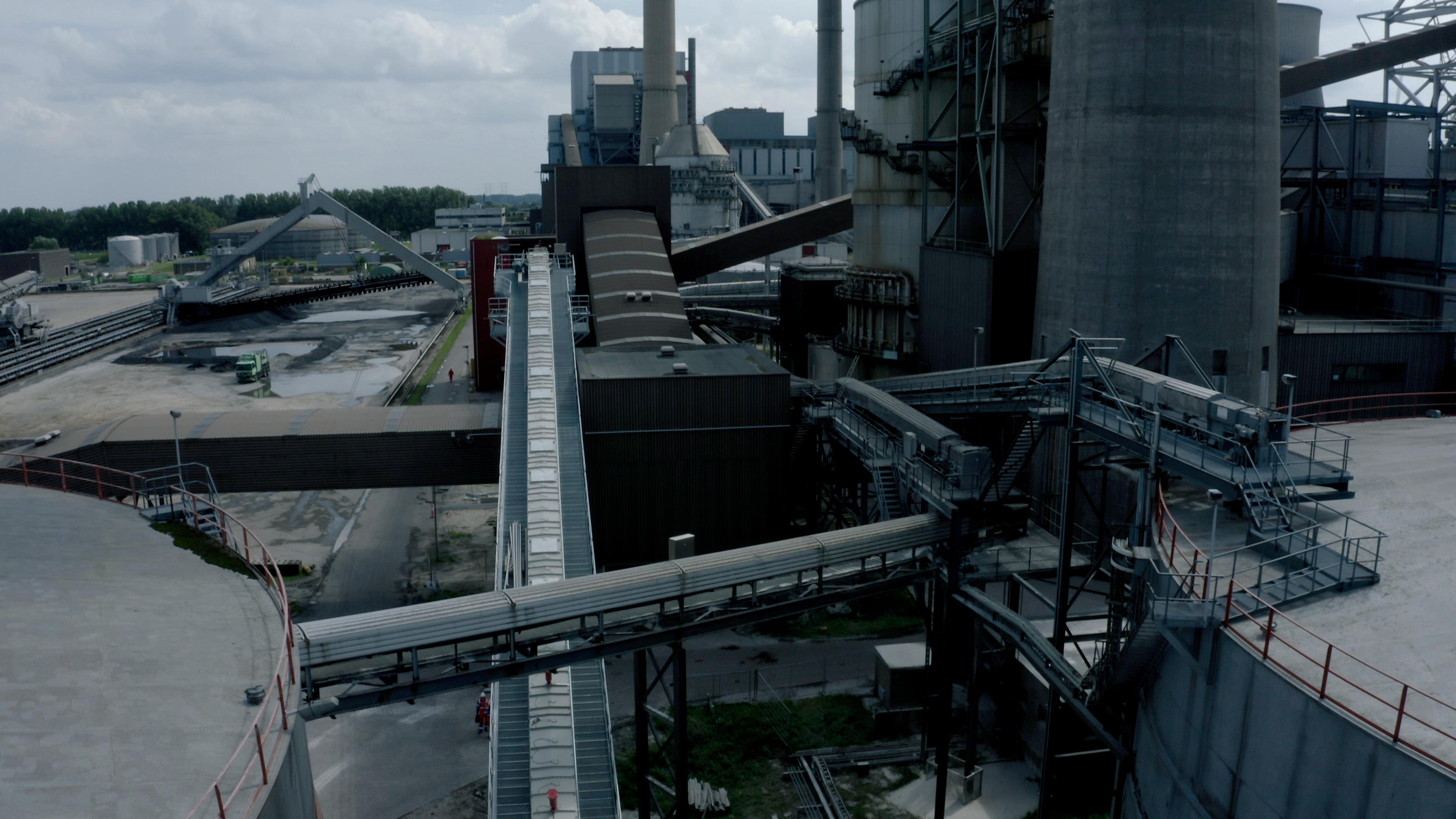
ENGINEERING & EQUIPMENT 54 MAY 2024 DCi www.drycargomag.com























YOU ARE RUNNING A TIGHT SHIP Now let’s tell the world. DCi To find out how you can benefit from advertising in the world’s only monthly dry bulk publication contact Andrew Hucker-Brown on: T: +27 31 583 4360 E: info@dc-int.com W: www.drycargomag.com
before they are continued to be transported to the boiler firing. In addition to the comprehensive steel structures refurbishment and construction work, Loibl has extensively refurbished a silo and equipped it with a silo screw reclaimer which transfers the pellets into trough chain conveyors distributing the material over a total length of approximately 500m to several tubular screw conveyors. Through the screws the pellets enter into the storage bin. From there they are fed into the mills where they are pulverized and blown into the boiler for combustion.
Numerous flat slide gates as well as various accessories, such as dust filter systems, complete the scope of supply.
LOIBL’S SCOPE OF SUPPLY AND SERVICES
Detailed engineering for material v transport from the quay to the mills in the power plant.
Manufacture in Straubing, Bavaria. v Complete conveying technology v essentially consisting of: trough chain conveyors, troughed belt conveyors, tubular screw conveyors, silo screw reclaimer, flat slide gates, mechanically and pneumatically operated, filter units.
Refurbishment of a silo. v Engineering and supply of the v complete, very extensive fire and explosion protection technology along the conveying line.
Delivery of all components. v Complete steel structure. v Erection on site including training, v commissioning and trial operation
THE EU HAS AMBITIOUS CLIMATE GOALS
Until 2020 the Member States shall source 20% of their energy needs from renewables. Until 2035 this share should
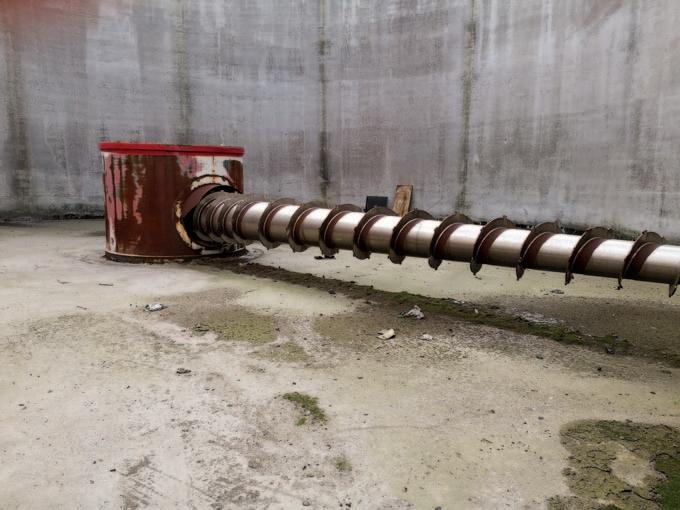
be increased to 35%. Other EU countries go even further. In particular, the Netherlands want to withdraw completely from coal-fired electricity until 2030. Government subsidies serve as an incentive to push the retrofitting of coal-fired power plants or the building of new biomass-fired power plants. Both are major challenges for the operators. Loibl provides the necessary expertise in rapid and effective solutions. Long-established company, Loibl, is specialized in retrofitting, refurbishing and performance improvement of power plants. In a to-date unique project Loibl has retrofitted the Amercentrale Power Plant in the Netherlands to biomass transport for the RWE Energy Group from Essen/Germany in the period from 2016 to 2019.
LOIBL AND RWE – A VERY LONG SUCCESS STORY
Loibl and RWE have been working successfully for many years. Retrofitting of
Amercentrale is the largest project so far with the energy giant. Located at the river Amer near to the city of Geertruidenberg is one of biggest cogeneration plant in the Netherlands. The plant has been in operation since 1993 and generates 600MW electricity as well as 350MW heat. Optimization and maintenance of the power plant was a major consideration for RWE in terms of long-term profitability and economic efficiency. To keep the output volume, the switchover took place gradually using the co-firing method. A mix of fossil and regenerative fuels is fired simultaneously. In addition to hard coal and waste wood, mainly wood pellets are used, which derive from sustainable forestry. Loibl’s state-of-the-art biomass transport system has been especially adapted to the specific characteristics of these partially polluted and rather homogenous, i.e. ‘flowable’, materials. In this way, the power plant can be changed completely to a CO2 neutral energy production until 2025.
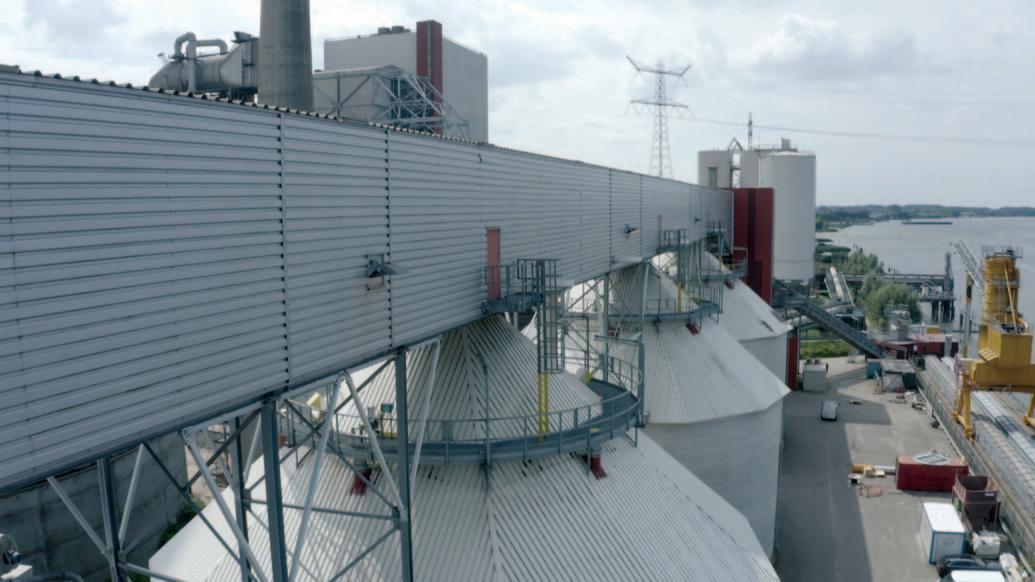
ENGINEERING & EQUIPMENT 57 MAY 2024 DCi www.drycargomag.com
Prado steel silos revolutionize storage of wood pellets and biomass, promoting quality, safety, and sustainability
Biomass and wood pellets play a pivotal role in new trends towards energy independence and sustainability. Derived from organic materials such as wood or agricultural residues, biomass serves as a renewable energy source which can be sustainably produced and replenished. Biomass pellets offer a convenient and efficient fuel source for heating homes, generating electricity, and powering industrial processes.
Energy generated from biomass has also proven to be a key factor in the promotion of waste reduction and recycling, turning organic waste materials that would otherwise end up in landfills, into valuable energy sources, while contributing to reduce environmental pollution and greenhouse gas emissions, and underpinning energy security for resourcedependent countries. On top of this, by utilizing agricultural residues, forestry byproducts, and organic waste streams to produce biomass energy, societies also give new opportunities for development of forestry and rural economies.
For the full development of biomassfuelled energy generation, companies have made strides to solve some of the major challenges that the storage and handling of these fuels pose. To keep biomass readily available for energy generation and in prime conditions, Prado Silos of Spain has become a major spearhead in the development of new technologies to provide safe, secure and competitive solutions.
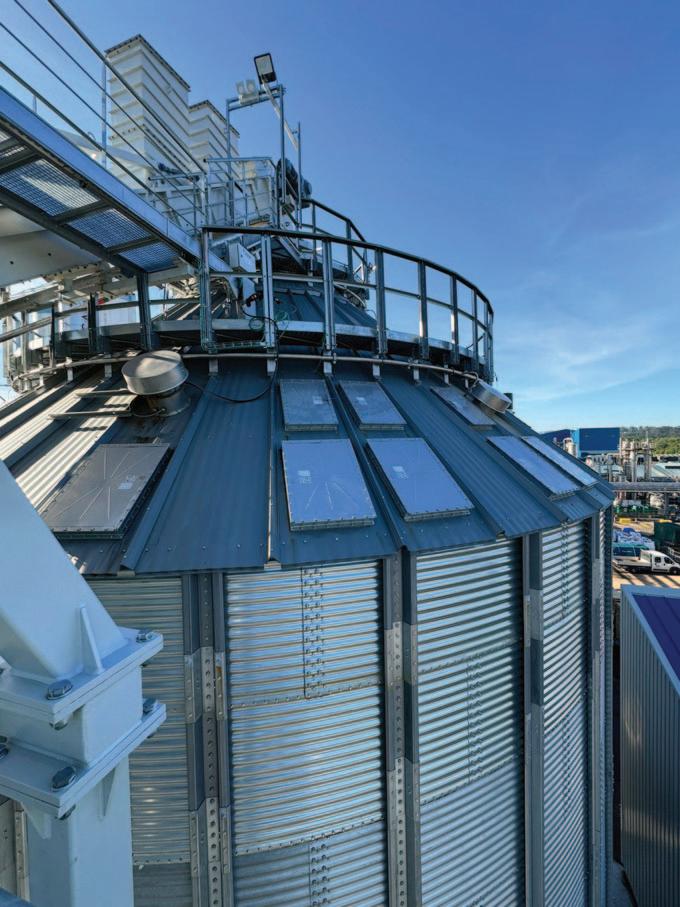
Having a ready and reliable stock of material is key to the success of this new energy. Silo storage bridges the gap between peak biomass production periods and energy demand, ensuring a reliable and continuous supply of feedstock for energy generation.
Prado Silos’ steel solutions provide the storage capacity that trading facilities, energy plants and pellet manufacturers require to move, keep and preserve large quantities of biomass and pellets in good
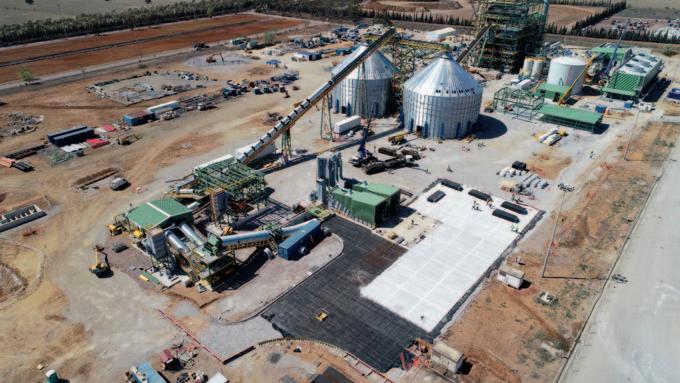
conditions. The steel silo is by far the most reliable, value-for-money solution to keep pellets in good shape, and thanks to the collaboration with major developers, Prado Silos has developed some of the best solutions to supply state-of-the-art storage for pellets manufacturers and address the major concerns of the industry.
With their robust construction and advanced technology, steel silos represent a paradigm shift in the storage industry, heralding a new era of efficiency and environmental stewardship.
Steel silos present an unparalleled ability to safeguard the integrity of stored wood pellets and biomass. Traditional storage methods often fall short in protecting these valuable resources from moisture, pests, and deterioration. However, steel silos provide a fortress-like defence against external elements, ensuring that the stored materials remain pristine and
ENGINEERING & EQUIPMENT 58 MAY 2024 DCi www.drycargomag.com
unadulterated. With a controlled environment maintained within its walls, the risk of spoilage is virtually eliminated, guaranteeing consistent quality and purity.
The application of aeration systems derived from the grain handling industry adds to the arsenal of techniques to preserve the moisture in check and avoid spoilage. Excessive moisture can lead to decay, mould growth, and spontaneous combustion, reducing the energy value and efficacy of the biomass. Silos provide for the right drying and moisture control, which are essential to preserve the quality of biomass feedstocks and prevent degradation, biological activity or pest infestation.
All this serves to guarantee biomass combustion performance and efficiency, preserving the calorific value, combustion stability, and emissions characteristics of biomass fuels. Optimal storage practices are essential to maintain the quality and consistency of biomass feedstocks, ensuring optimal combustion performance and energy efficiency in biomass-fired boilers and power plants.
More importantly, steel silos provide the safest conditions for plants and operators. Safety concerns have long plagued conventional storage facilities, where the risk of accidents and hazards looms large. From manual handling injuries to fire hazards, the dangers associated with outdated storage methods pose a significant threat to both workers and property. In contrast, steel silos prioritize safety as a paramount concern, incorporating state-of-the-art safety features and protocols.
In collaboration with its partners, Prado Silos has developed a series of improvements to the steel silo design to enhance the resistance and protection of plants and workers, especially against fire and explosion hazards. Some silo projects already have fire-extinguishing devices to water down any fire that may start in a silo — which requires a closer look at the additional loads on the roof and cylinder that the system and wet materials will exert.
Likewise, Prado has deployed speciallydesigned biomass silos equipped with venting panels on the roof to release pressure in the event of an explosion, following norms EN14491 and NFPA 68:2007.
In conclusion, the benefits of storing wood pellets and biomass in steel silos are manifold, ranging from quality protection and safety to easy handling and sustainability. As the world grapples with
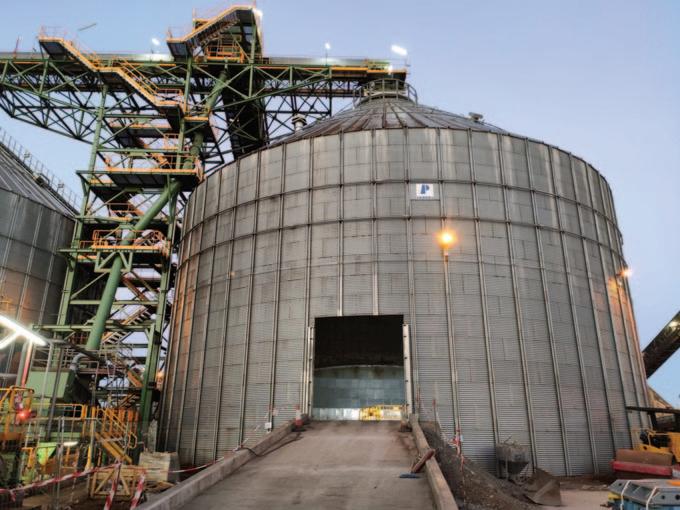
the challenges of a rapidly evolving landscape, steel silos offer a beacon of hope and a blueprint for a more efficient, safer, and sustainable future. By embracing this
storage solution, industries can not only optimize their operations but also contribute to a healthier planet and a brighter tomorrow.
ENGINEERING & EQUIPMENT 59 MAY 2024 DCi www.drycargomag.com
innovative
Northport Biomass Logistics Hub: a catalyst for sustainable growth
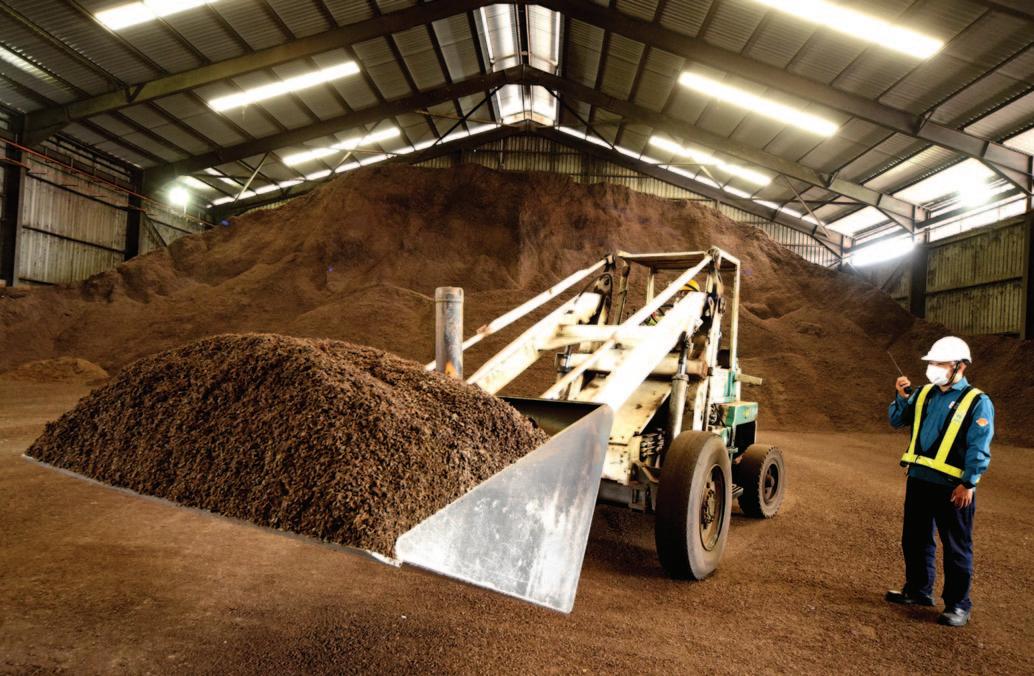
In the realm of sustainable development, the Biomass Logistics Hub at the Southpoint terminal in Port Klang emerged as a strategic initiative, driving economic progress while championing environmental stewardship in Malaysia. This initiative by Northport (Malaysia) Bhd (‘Northport’), a member of MMC Group, represents a concerted effort to harness the vast potential of the biomass industry, ushering in a new era of sustainable practices and economic resilience. The initiative was also part of Northport’s strategy to revitalize its Southpoint terminal, a 123-year-old port terminal facility handling various types of bulk cargo.
The Biomass Logistics Hub represents a comprehensive strategy aimed at optimizing resource utilization and fostering industry collaboration. Its inception dated back to April 2018 with the signing of a Memorandum of Understanding (MoU), which brought together key stakeholders including Northport, Cenergi Sea Sdn Bhd, Bioenergy Machinery Sdn Bhd, and Environmental Preservation and Innovation Centre Sdn Bhd. This collaborative framework laid the foundation for a centralized dedicated processing facility at Southpoint, designed to handle various types of biomass materials such as palm kernel shell, palm pellets, woodchips, wood pellets, and other
biomass variants.
The hub’s performance since then showcased a remarkable trajectory of growth and innovation. Starting with just three primary players — namely Tien Chung, ES Ng Holding, and Tropical Timber — the hub experienced exponential expansion, with total handled volumes increasing from 16,551 metric tonnes in 2015 to 464,013 metric tonnes by 2023. Significant contributors to this surge included industry players such as Ovol New Energy Sdn Bhd and Bio Eneco Sdn Bhd, who are exporting biomass materials mainly to Japan and Thailand, thus highlighting the hub’s crucial role in driving
sectoral growth. Additionally, it is worth to highlight that all the prominent industry players within Southpoint have been certified with Green Gold Label (GGL), an international certification programme for sustainable biomass.
At the heart of the hub’s operational efficiency are cutting-edge handling mechanisms, including clamshell grabs, loading bins, and ship’s cranes. A significant boost in the capacity of grabs used by Southpoint, from 9m3 to 14m3 since 2020, translated into tangible improvements in productivity and efficiency for Northport. Additionally, strategic investments by Ovol New Energy Sdn Bhd with the installation
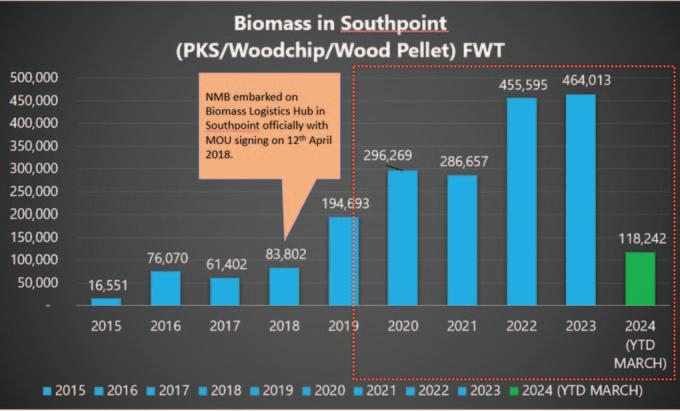
ENGINEERING & EQUIPMENT 60 MAY 2024 DCi www.drycargomag.com
Biomass Logistics Hub operations at Southpoint.
of drying systems at Warehouse A1 led to operational efficiencies and value creation by helping to reduce moisture and contaminants.
The hub’s strategic integration into Northport’s logistics framework resulted in significant advantages. An important milestone was reached in 2020 with the approval from the Port Klang Authority (‘PKA’) to facilitate palm kernel shell shipments at Wharf 2, originally designated for liquid cargo. This strategic adjustment not only doubled loading capacities to accommodate vessels carrying payloads of up to 20,000 metric tonnes but also opened up new avenues for customercentric services and enhanced logistical flexibility. To date, Northport has successfully handled two vessels with payloads of 20,000 metric tonnes and 22,000 metric tonnes, along with eight vessels exceeding the default capacity of 10,000 metric tonnes, showcasing its commitment to meeting and exceeding market demands.
In addition to enhancing its operational capabilities in Southpoint, Northport’s collaboration with PKE Sdn Bhd at Wharf 15 at its Northport Terminal resulted in substantial productivity gains. Through a strategic long-term partnership and a RM17 million investment by PKE, its handling productivity improved from 200tph (tonnes per hour) to 281tph on average. Currently, PKE handles 452,000 metric tonnes per annum from its full handling capacity of one million tonnes per annum. This synergistic alliance served as a prime example of the hub’s role as a catalyst for industry-wide efficiencies and value creation.
Beyond traditional biomass handling, Northport’s adoption of innovative solutions extended to exporting woodchip via containers, highlighting a holistic approach to optimizing resource utilization and combating climate change by exporting greener feedstock for power generation in a cost-effective manner. Looking ahead, Northport remains steadfast in its commitment to continuous improvement, with ongoing initiatives focused on enhancing warehouse structures for expanded storage capacities and optimizing tenancy arrangements to maximize cargo storage efficiency.
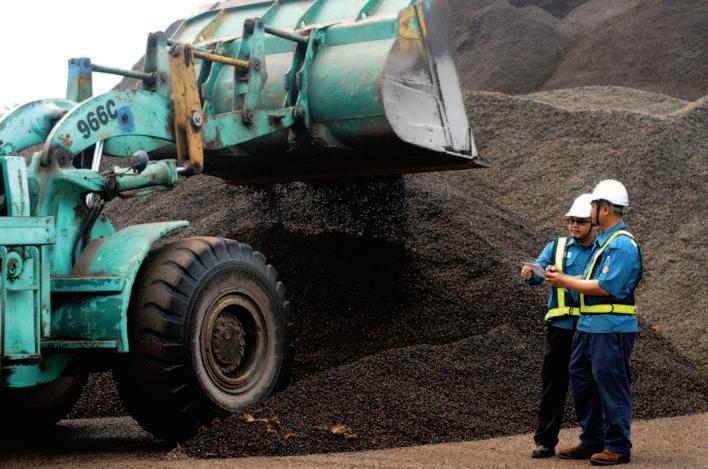
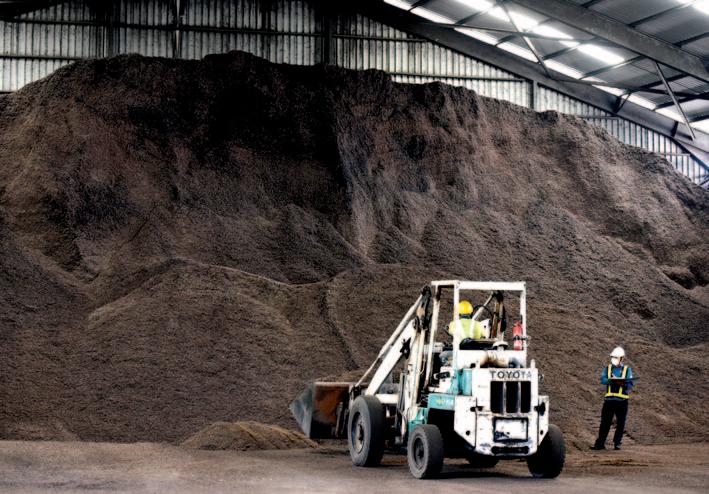
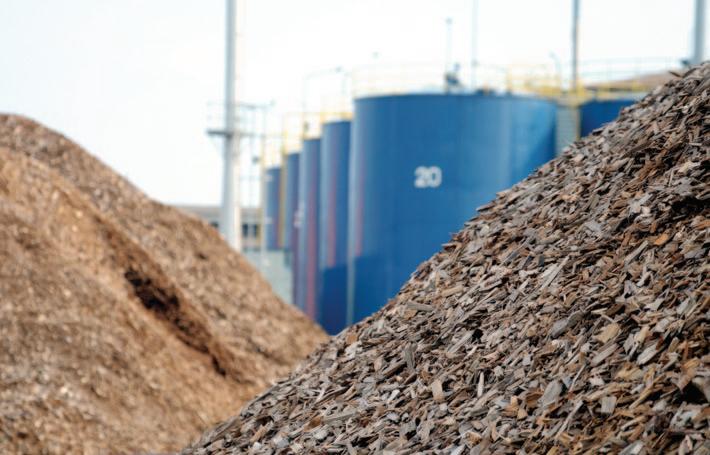
In conclusion, Northport’s Biomass Logistics Hub stands as a testament to Malaysia’s commitment to sustainable development and economic resilience. By leveraging cuttingedge technologies, fostering strategic partnerships, and embracing a holistic approach to resource management, Northport’s Biomass Logistics Hub serves as a blueprint for sustainable growth and industry leadership in the dynamic landscape of biomass logistics.
ENGINEERING & EQUIPMENT 61 MAY 2024 DCi www.drycargomag.com
Loibl Förderanlagen adds new conveyor line to wood recycling wood plant
Loibl Förderanlagen GmbH specializes in resource-saving conveyor technology for the recycling industry. Its innovative processing systems are used in waste processing plants, where they enable efficient mechanical processing of industrial and commercial waste. They reliably sort the contained raw materials for further recycling.
Conveyor systems from Loibl are characterized by their high reliability and flexibility. They are able to precisely separate recyclable materials according to different compositions and fractions. By using state-of-the-art technology, Loibl guarantees effective and economical processing of recyclable materials.
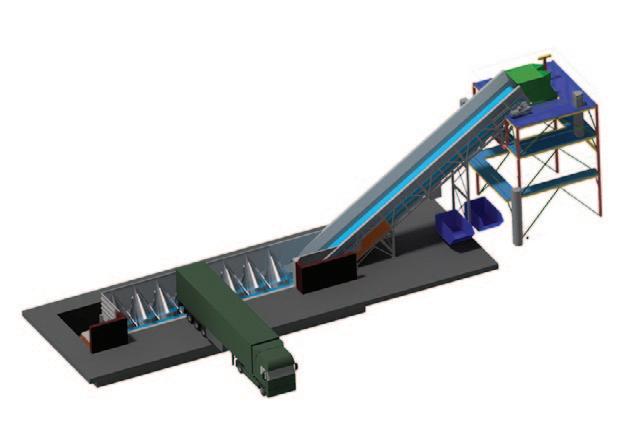
Loibl attaches great importance to sustainability and environmental protection. Its conveyor systems are optimized to conserve resources and reduce the amount of waste. With its resource-saving conveyor technology, Loibl actively contributes to the circular economy and supports the implementation of a green future.
Loibl’s experienced team of experts is always on hand to develop tailor-made solutions for customers’ individual requirements. It offers comprehensive advice as well as reliable and punctual implementation of projects.
CASE STUDY – LOIBL FÖRDERANLAGEN GMBH’S PAN CONVEYOR RECEIVES AND TRANSPORTS RECYCLED WOOD
Location: Luxembourg
Project period: November 2022 to September 2023
Conveyed material: waste wood
At the customer’s plant in Luxembourg, recycled wood-based materials are fed back into the production process at the processing plant. A new hall was built in 2023 to expand the existing plant. The pan conveyor by Loibl is connected to the new hall and is used to receive and transport recycled wood. As the waste wood is delivered by truck and unloaded directly onto the pan conveyor, the design had to be particularly sturdy and durable.
Pan conveyor with character: the delivered pan conveyor has a length of 41 metres. The generous apron width of two metres makes it easier to pick up the unloaded waste wood. The pan conveyor is equipped with an automatic lubrication unit to reduce wear and extend the service life of the conveyor chain. The conveying capacity is 110 tonnes per hour.
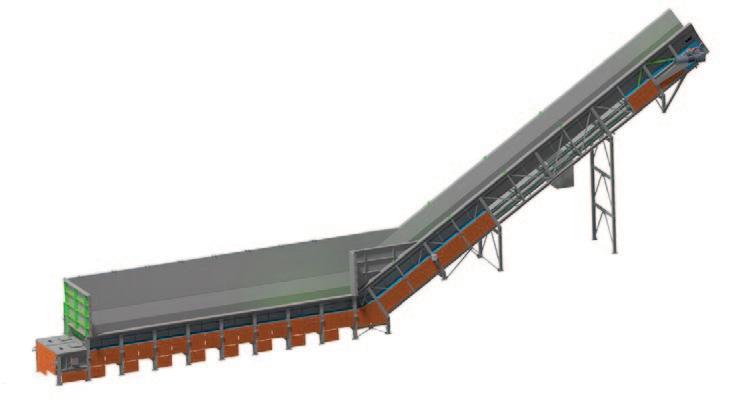
Unloading recycled wood can generate dust, which can have a negative impact on the environment and employees. The pan conveyor is therefore equipped with a water spraying system to minimize dust formation during the unloading and transport process. The side access guard is divided into two parts and can be easily opened when the apron feeder is at a standstill. This allows easy access for cleaning and maintenance work.
ENGINEERING & EQUIPMENT 62 MAY 2024 DCi www.drycargomag.com
UPM establishes sustainable wood delivery option for its Leuna biorefinery, partnering with DB Cargo
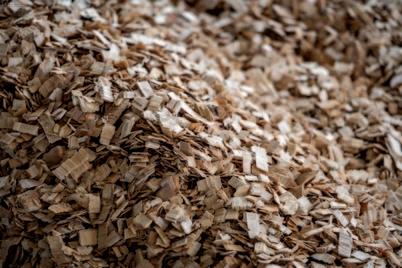
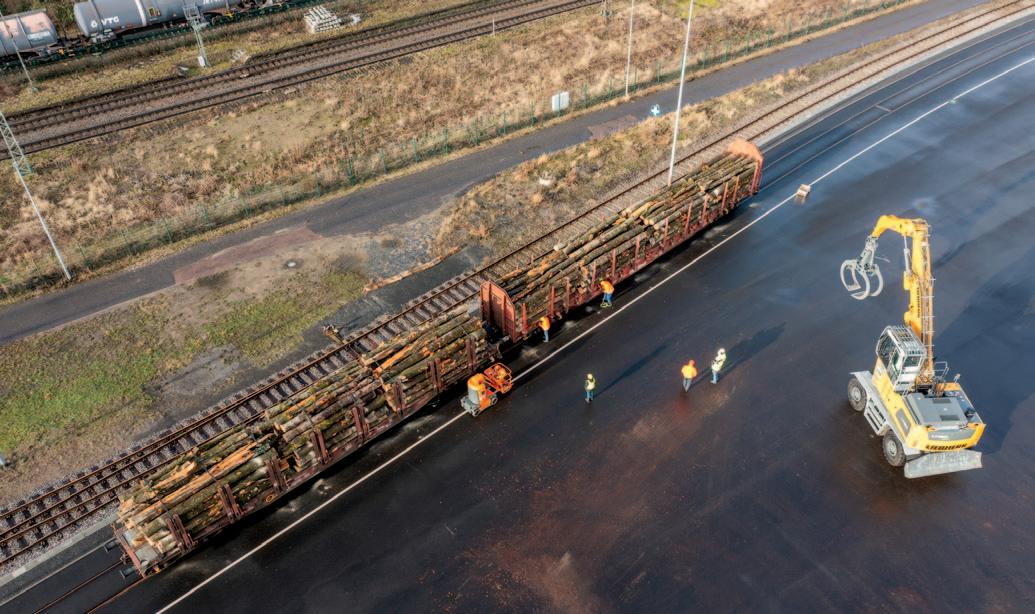
UPM Biochemicals has announced another important milestone in the development of the world’s first biorefinery in Leuna, Germany. In partnership with DB Cargo, the first deliveries of wood have now been made to Leuna by rail, establishing and testing the direct rail link to the Leuna operations’ wood yard.
This will enable UPM to transport wood sustainably and to strengthen local supply chains, increasing the security of supply with critical raw materials. DB Cargo, specialists in the sustainable and climatefriendlier transport of goods, is a longstanding partner for timber transportation in the rail sector and has been handling UPM’s paper and pulp freight for several years.
“We are excited to welcome the first rail-based wood transports at our newly established wood yard in Leuna,” said Andreas Meggendorfer, Director Supply Chain & Sourcing at UPM Biochemicals. “We will offer fully sustainable renewable chemicals with a significantly better CO2 footprint compared to fossil alternatives. It is paramount that we work on strategies to continuously optimize the environmental performance of our products further. Using rail as a transport mode does exactly that. And by partnering with DB Cargo, we can now rely on a well-known and capable rail logistics partner and have built a resilient and sustainable wood logistics
setup for our biorefinery in Leuna.”
“UPM and DB Cargo have been linked by a successful partnership for rail-based inbound logistics of timber for many years. We are therefore very pleased to now be an important supply chain partner for UPM at the new biorefinery in Leuna,” said Thorsten Wartenpfuhl, SVP Sales Consumer Goods, Pulp & Paper, Timber at DB Cargo.
It is worth mentioning, that wood handling and processing activities have started as part of the commissioning and start-up work for the biorefinery. The first wood chips made of wood from sustainably managed regional forests have been produced, confirming the overall progress made on-site.
UPM is investing €1,180 million to build the world’s first industrial scale biorefinery in Leuna that will convert sustainably sourced, certified hardwood into next generation biochemicals — enabling the vital shift away from fossil-based to renewable materials across a wide range of industries. The Leuna biorefinery is part of a broader growth area, UPM Biorefining, that is scaling refineries to produce a variety of renewable fuels and chemicals made from sustainable biomass.
UPM BIOCHEMICALS
UPM Biochemicals offers innovative, sustainable and competitive wood-based
biochemicals for replacing fossil-based raw materials and helping to improve the environmental performance in various applications. End-use segments for renewable glycols include textiles, PET bottles, packaging, coolants, composites, pharmaceuticals, cosmetics and detergents. Lignin-based Renewable Functional Fillers (RFF) offer a sustainable alternative to carbon black and precipitated silica in a broad range of rubber and plastic applications. UPM is building an industrial scale biorefinery in Leuna, Germany to convert solid wood into next generation biochemicals. UPM Biochemicals is accelerating the transition to a circular bioeconomy — where renewable feedstocks, sustainable production and sustainable consumption are the new normal.
ABOUT UPM
UPM delivers renewable and responsible solutions and innovate for a future beyond fossils across six business areas: UPM Fibres, UPM Energy, UPM Raflatac, UPM Specialty Papers, UPM Communication Papers and UPM Plywood. As the industry leader in responsibility, UPM is committed to the UN Business Ambition for 1.5°C and the science-based targets to mitigate climate change. It employs 16,600 people worldwide and annual sales are approximately €10.5 billion.
ENGINEERING & EQUIPMENT 63 MAY 2024 DCi www.drycargomag.com
The first deliveries of wood have now been made to the Leuna biorefinery by rail, in partnership with DB Cargo (photos: UPM).
DCi
The first wood chips at the Leuna biorefinery have been produced as part of the start of commissioning.
Dust control at the transfer point lowers visibility and air quality and fouls every surface and piece of equipment.
Copyright © Martin Engineering 2024
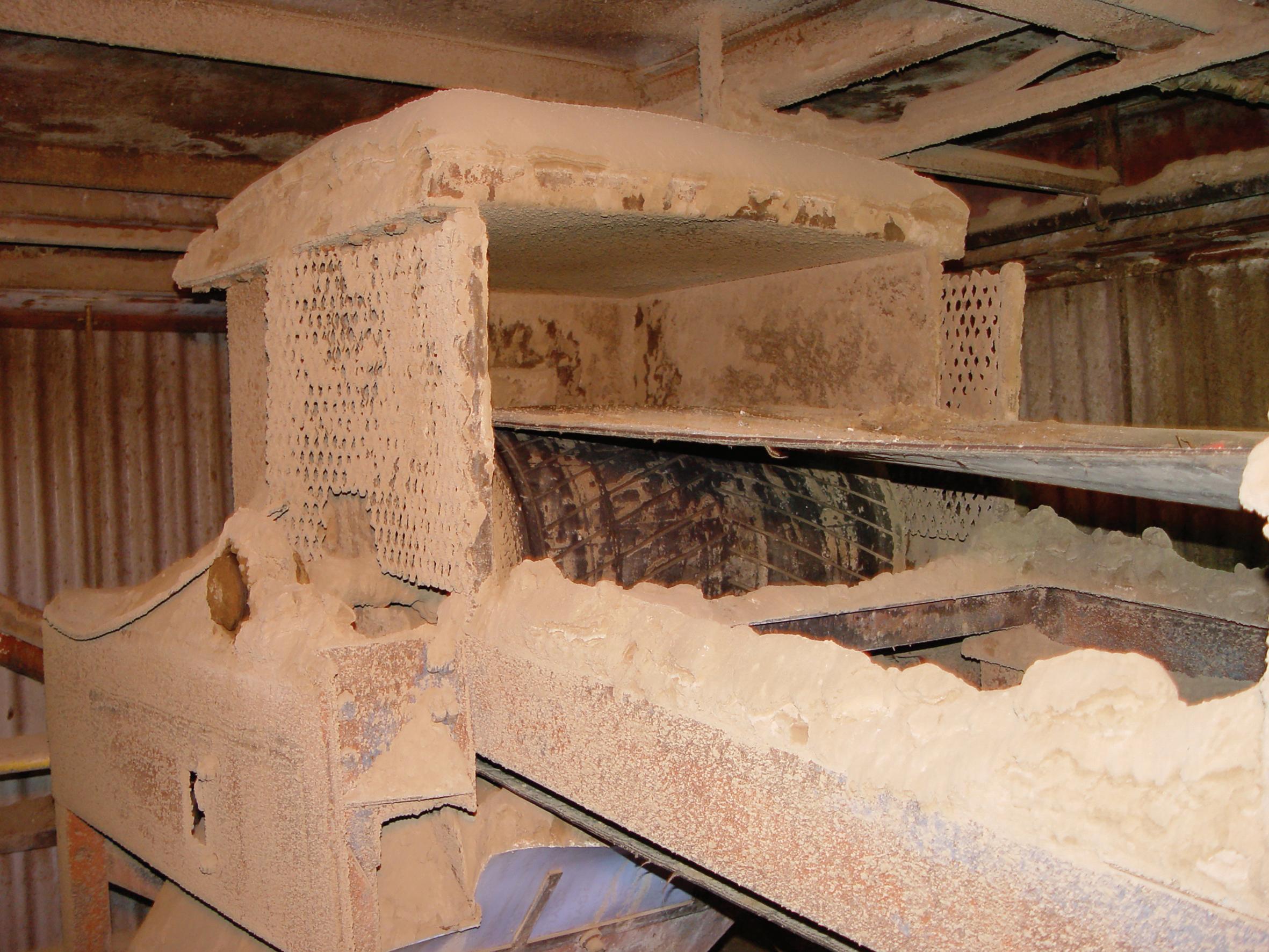
Martin
Clearing the air


Engineering helps control dust emissions at conveyor transfer points
INTERVIEWEE :
DANIEL MARSHALL , PROCESS ENGINEER , MARTIN ENGINEERING
INTRODUCTION
How many individual belt conveyor belts does your bulk commodity touch before reaching the final production phase where it no longer sheds dust? For a limestone quarry connected to a cement plant, that might be around one to ten. For a coal mine delivering product to a faraway power plant, from extraction to the furnace, using a truck, rail and port terminal transport system, it could be up to 100 conveyors.
Regardless of how many conveyors the material experiences, each time it is transferred, there is a potential for hazardous dust emissions creating serious workplace air quality issues that could result in compliance violations. Moreover, fugitive dust can foul moving parts such as machinery and rollers, leading to excessive maintenance and raising the cost of operation.
Regulatory agencies worldwide cite dust as the major source of chronic illness and reduced mortality among workers particularly respirable crystalline silica (RCS) dust. In response, Martin
Engineering’s Center for Innovation is constantly observing bulk handling operations and rethinking old designs to improve safety, production and efficiency.
The goal is to reduce dust, spillage and carryback resulting in more compliant operations that are safer to maintain and
last longer with a calculable return on investment.
Q - WHO ARE YOUR MAJOR CLIENTS?
Our products are present in nearly every bulk handling operation that uses belt conveyors across the globe, from cement
The revolutionary Martin® CleanScrape® extends equipment life over standard blades and eliminates the need for retensioning.
Copyright © Martin Engineering 2024
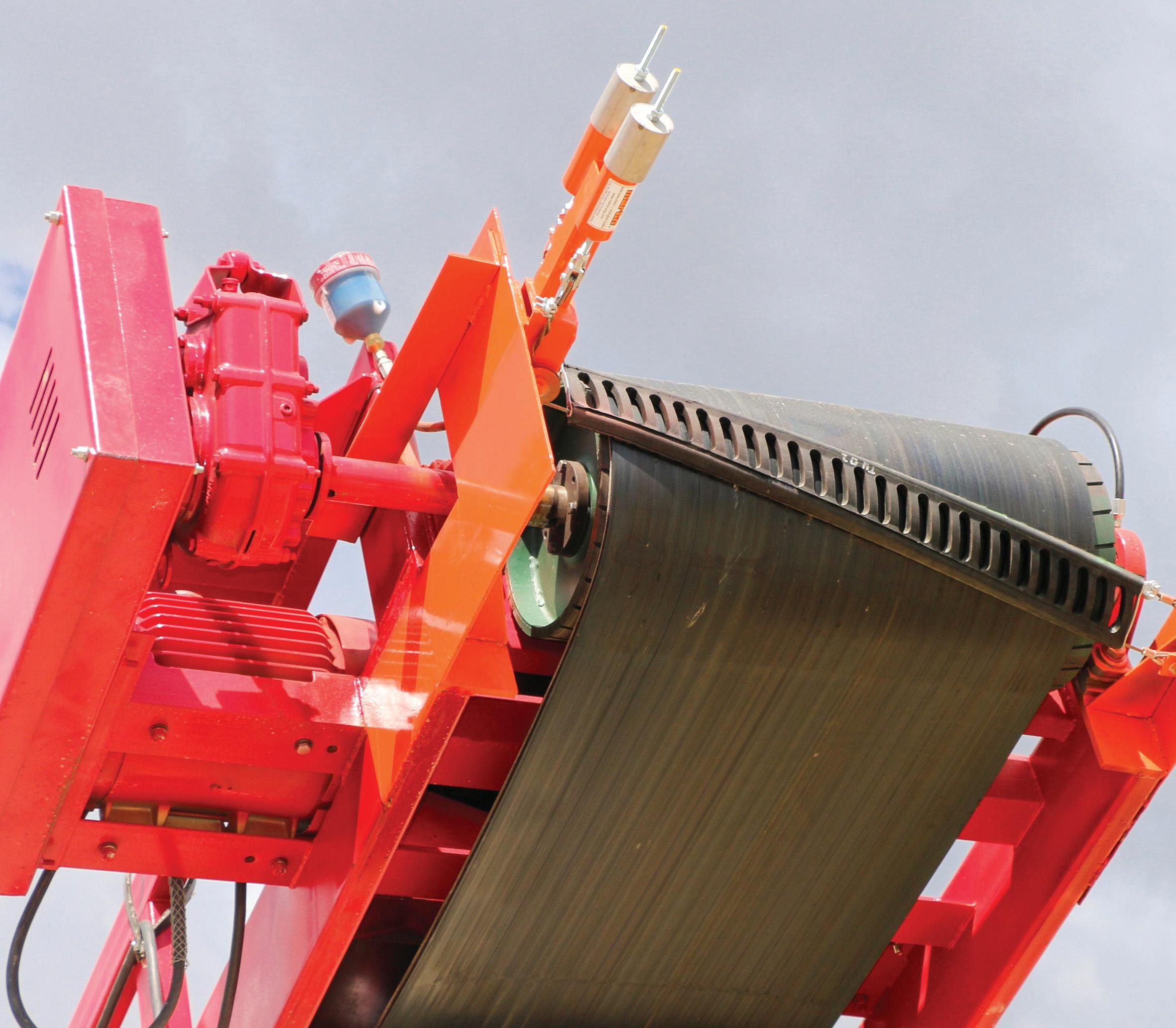
ENGINEERING & EQUIPMENT 64 MAY 2024 DCi www.drycargomag.com
Jay Venter
The Modular Transfer Point is equipped with accessories for proper sealing to control dust.
Copyright © Martin Engineering 2024
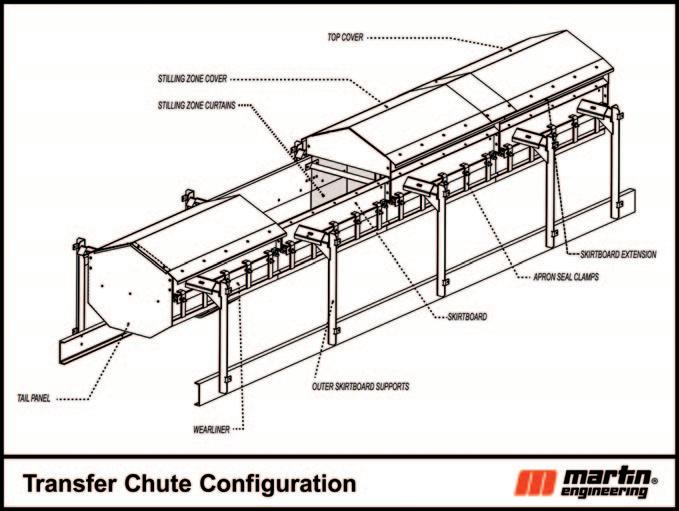
production to mines to ports. Many major ports and terminals use Martin Engineering conveyor belt cleaners. Maritime conveyor systems can loom stories above the dock to reach the cargo bays of some of the largest river- and ocean-faring vessels. The height along with windy conditions makes proper belt cleaning essential so to avoid carryback.
If not properly cleaned by primary and secondary cleaners, dust and fines clinging to the belt or lodged in cracks and divots can fall along the return belt path. When conveyors are up high, these dust emissions can travel for long distances past the site line and reduce the air quality for neighbours and local communities. s Issues with carryback from elevated systems
aren’t limited to just maritime. Tall conveyors are also found in silo loading, cement towers, and raw material storage. By matching the correct cleaner to the properties of the application, dust from carryback can be drastically reduced.
Q – HOW IS MARTIN ENGINEERING REMAINING COMPETITIVE IN THE MARKET?
Innovation and customer service. This year the company is not only celebrating its 80th year, but also 50 years of the invention of the air cannon, which significantly improved material flow and workplace safety by mitigating clogs in traditional bulk handling choke points like cement preheaters, silos, hoppers and bins. We offer the most extensive and
comprehensive conveyor safety training programs in the industry. Many of our business units also offer service contracts that ensure trained and experienced experts perform maintenance and installations in a safe and compliant manner.
Innovations in dust mitigation technology are a priority for us. In 2023, Martin introduced the Modular Transfer Point Kit designed to reduce dust emissions at conveyor transfer points. Being modular allows it to economically grow with the changing production demands. Acting as an engineering control for dust emissions, the enclosure is accompanied by several belt sealing modernizations, such as the Martin® Apronseal™ Skirting, the Martin® External Wear Liner, Martin® Dust Curtains and the Martin® Tail Sealing Box.
Q – WHAT ARE SOME KEY TAKEAWAYS YOU WOULD LIKE READERS TO KNOW ABOUT DUST EMISSIONS?
Martin Engineering has, from its inception, been laser focused on workplace safety. The company’s introduction of the first industrial vibrator kept workers from having to go through the extremely dangerous task of manually clearing clogs. Martin designers have since ensured that every new component introduced to the market fulfills a safety need. Dust emissions are no exception with the introduction of the Martin® Conveyor Cradle Systems which eliminate dust emitting gaps associated with standard idlers.
The obvious detriment caused by particulate emissions is to the health of
ENGINEERING & EQUIPMENT 65 MAY 2024 DCi www.drycargomag.com
Engineering
Martin® Cradles ensure a tight skirting seal and are linked by transition idlers for efficient low dust operation. Copyright © Martin
2024
workers and the surrounding community, however, there are several other associated workplace hazards. Cleanup can often expose workers to a moving conveyor belt, leading to incidental contact and entrapment injuries. Dust can also cause rolling and mechanical components to seize or break. General air quality and visibility from dust is an ongoing issue for many operations. Dust obscures lighting, covers safety signage and limits supervisors’ abilities to perform ongoing inspections of system health. Reducing dust emissions limits maintenance time and worker exposure to the system, as well as lowers the cost of operation from both a labor and equipment replacement standpoint.
The key to stopping excessive dust emissions is recognizing the causes. Martin Engineering experts are trained to identify factors in the system design and application that can lead to dust violations and offer economical solutions.
ABOUT MARTIN ENGINEERING
Martin Engineering has been a global innovator in the bulk material handling
industry for more than 80 years, developing new solutions to common problems and participating in industry organizations to improve safety and productivity. The company’s series of Foundations books is an internationally recognized resource for safety, maintenance and operations training — with more than 22,000 print copies in circulation around the world. The 500+ page reference books are available in several languages and have been downloaded thousands of times as free PDFs from the Martin website. Martin Engineering products, sales, service and training are available from 17 factory-
owned facilities worldwide, with wholly owned business units in Australia, Brazil, China, Colombia, France, Germany, India, Indonesia, Italy, Malaysia, Mexico, Peru, Spain, South Africa, Turkey, the USA and UK. The firm employs more than 1,000 people, approximately 400 of whom hold advanced degrees.
About the Author
Marshall, Process Engineer, Martin Engineering.

Daniel Marshall received his Bachelor of Science degree in Mechanical Engineering from Northern Arizona University. With nearly 20 years at Martin Engineering, Dan has been instrumental in the development and promotion of multiple belt conveyor products. He is widely known for his work in dust suppression and considered a leading expert in this area. A prolific writer, Dan has published over two dozen articles covering various topics for the belt conveyor industry; he has presented at more than fifteen conferences and is sought after for his expertise and advice. He was also one of the principal authors of Martin’s FOUNDATIONS™ The Practical Resource for Cleaner, Safer, and More Productive Dust & Material Control, Fourth Edition, widely used as one of the main learning textbooks for conveyor operation and maintenance.
Klaipėda Port receives PERS certificate — and joins the club of the most environmentally friendly ports
Klaipėda Port is the first port in the Baltic States and one of the 35 ports in Europe to be certified under the Port Environmental Review System (PERS). A certificate confirming that Klaipėda Port can be called an environmentally friendly port was officially awarded at the annual event of the European Sea Ports Organisation in Paris, which took place on 25–26 April.
“An environmentally and humanfriendly port: from vision to action. That’s what I would call our sustainability journey of recent years. In 2020, we ignited the conversation about creating a green port, encouraging companies operating within the port to join us. Today, we are not only spearheading compelling and innovative projects in digitalization, environmental initiatives, and energy transformation, but also witnessing investments from the port’s stevedoring companies towards implementing emission reduction projects. The award of this certificate to the Klaipėda Port proves that we are taking firm steps on our sustainability journey. Now we have to work to keep it, because this document is not just a nice piece of paper,” said Algis Latakas, Director General of the Klaipėda State Seaport Authority.
The implementation of the port environmental review system started in
2023, with the setting of objectives, targets and environmental performance indicators, an assessment of compliance with legal requirements, and a performance improvement plan. The set indicators will now become the benchmark against which the port’s progress in reducing the environmental impact of its operations and achieving climate neutrality will be measured in two years’ time.
“The PERS certificate commits us to long-term sustainable development and to playing an active role in reducing our environmental impact. Our key environmental performance indicators include reductions in greenhouse gas (GHG) emissions, air emissions from ship movements and cargo transport, energy consumption, and the number of environmental incidents in port areas. There are 34 such indicators in total,” said Aist ė Kubili ū t ė , Environmental Coordinator at the Klaipėda State Seaport Authority.
The certification documents were assessed by Lloyd’s Register Quality Assurance (LRQA). Their conclusion is that the Klaip ė da Port environmental strategy meets the requirements of the PERS and provides for the reduction of the negative impacts of the port’s activities
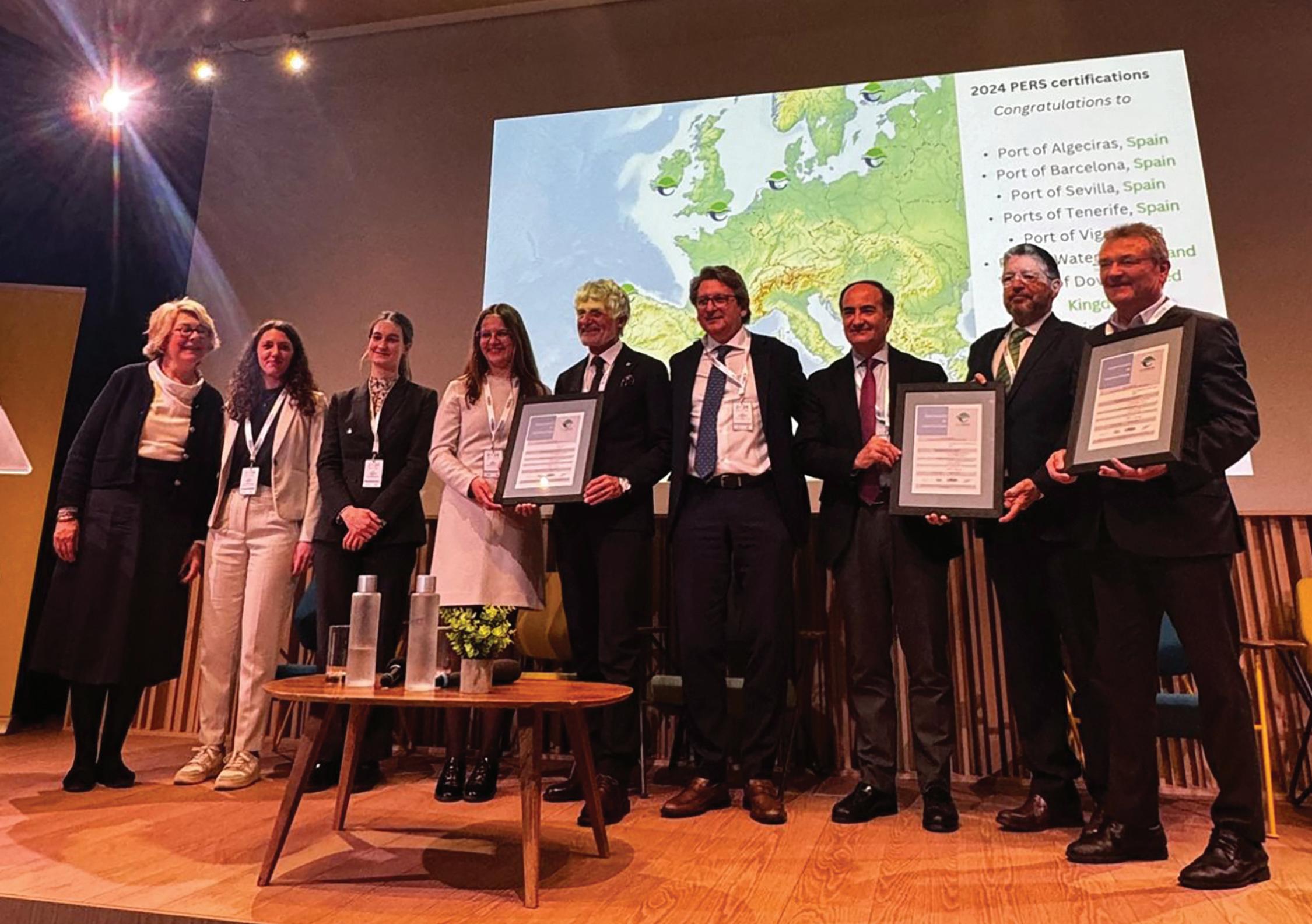
through the implementation and application of best management practices and the latest technologies, with a preference for renewable energy sources and energy-efficient technologies. According to the certification company, the Klaip ė da Port is committed to the principles of the circular economy.
PERS (Port Environmental Review System) is the only environmental management standard for seaports. It is based on ESPO (European Sea ports Organisation) policy guidelines and a tailormade scheme to help ports comply with legislation, develop sustainable port activities, protect the environment, improve public health and tackle climate challenges. ESPO has prepared guidelines for the implementation of a port environmental management system.
The certificate is issued for two years.
ENGINEERING & EQUIPMENT 66 MAY 2024 DCi www.drycargomag.com
Daniel
Clean Shipping Commitment

The need to improve sustainability in the shipping industry is accelerating. The global industry must cut carbon emissions, protect marine biodiversity and leverage the use of data for smarter decision-making.
With nearly 100 years of experience of charting through unknown waters, Jotun is committed to continuously innovate and develop advanced products and solutions designed to protect biodiversity and cut carbon emissions to support global sustainability ambitions and achieve cleaner operations for all industry players. A clean hull ensures cleaner operations.
HULL PERFORMANCE jotun.com
Pro-Zone™ enclosed load zone conveyor systems
ADVANCED
CONTAINMENT AND DUST CONTROL SOLUTION FOR CONVEYED BULK MATERIAL PRODUCTS
ASCGO’s PRO-ZONE™ is a ‘skirt-less’, fully self-contained system comprised of ASCGO’s Slide-N-Roll beds with its removable, ‘slide-out’ steel side supports with UHMW bars and easily removable center rolls. Walls, internal sealing system, dust curtains, back plate and flat lids completely enclose the entire system.
DESIGN FEATURES
ASCGO’s PRO-ZONE™ is environmentally friendly due to significant reduction of airborne and fugitive dust. Increased productivity and longer conveyor belt life is achieved because the completely sealed load zone helps eliminate material turbulence and conveyor belt cover abrasion.
Maintenance costs are lowered by having a ‘skirt-less’, fully contained system that needs no adjustments of metal skirtboards or rubber skirting. The system’s modular design can be installed in any combination of 4ft (1,200mm) or 5ft (1,500mm) lengths to completely cover load zone area. Quickly removable lids, slide-out side sections and removable center rolls aid in the installation and maintenance of the system. The PRO-ZONE™ is completely engineered, designed, fabricated and stocked in the USA.
OPTIMIZES SEALING
Load zone chute inlet: the load zone v chute inlet allows the product to be discharged onto the belt by tying into the existing chute flange.
Dust curtain: the front dust curtain v slows down dust velocity without obstructing the passage of larger granular material along the conveyor. Its can be fitted to all types of Pro-Zone™ lids and is mounted to the specially fitted flat lid.
Back plate: the back plate forms a v seal at the back of the Pro-Zone™. Not suitable for two-way belts.
Internal liner options: the walls are v designed to hold ASGCO® Urethane Canoe Liners or AR400 Liners and Dura-Seal™ Skirting, to prevent material spillage and dust.
Idler roller: removable centre rolls v ensure ease of access and total safety.
The Pro-Zone™ Systems are available in 4ft with two cross beam support and 5ft
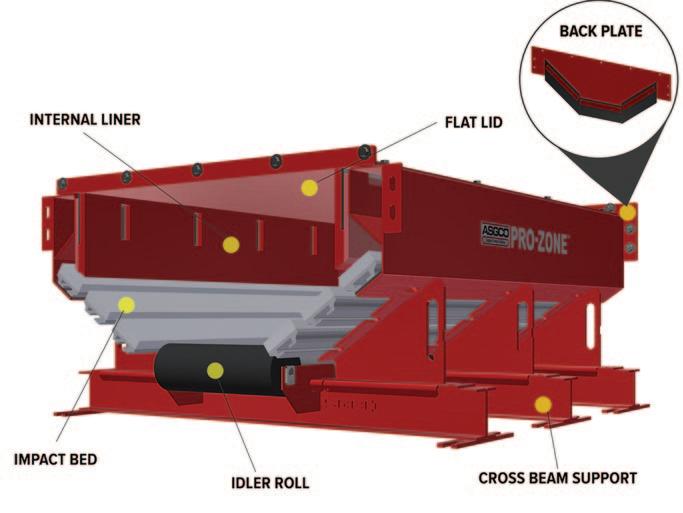
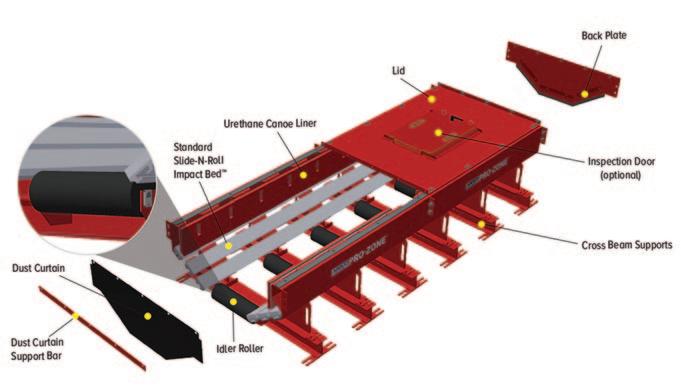
with three cross beam support with optional inspection door. They can be custom made to meet desired goals. Accessories – optional load zone chute, dust curtain, black plate, internal liner, Tru-Trainer belt tracking idler, optional chute inspection doors, V-Plow XD™ and Safe-Guard™ return idler guard.
PRODUCT SPECIFICATIONS
Applications – underground mining, v coal fired power plant, hard rock mining, steel mills, iron ore, metals (copper/gold), aggregate, mineral (phosphate, potash, salt) mining, sand & gravel, redi-mix and asphalt, cement, wood processing recycling; Pro-Zone™ Systems — can be v custom made to meet desire goal; 4ft (1,200mm) & 5ft (1,500mm) section available; Trough Angle — available in 20°, 35° v and 45°.
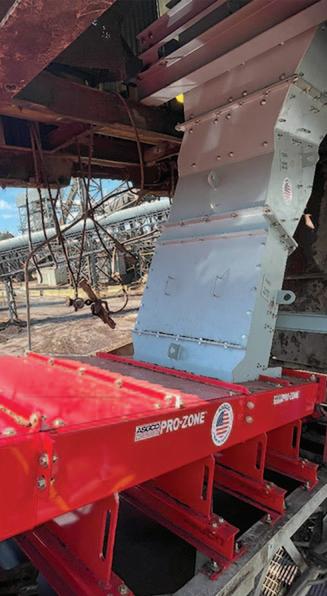
ENGINEERING & EQUIPMENT 68 MAY 2024 DCi www.drycargomag.com
DSI mining case study: DSI Sandwich conveyor for magnetite
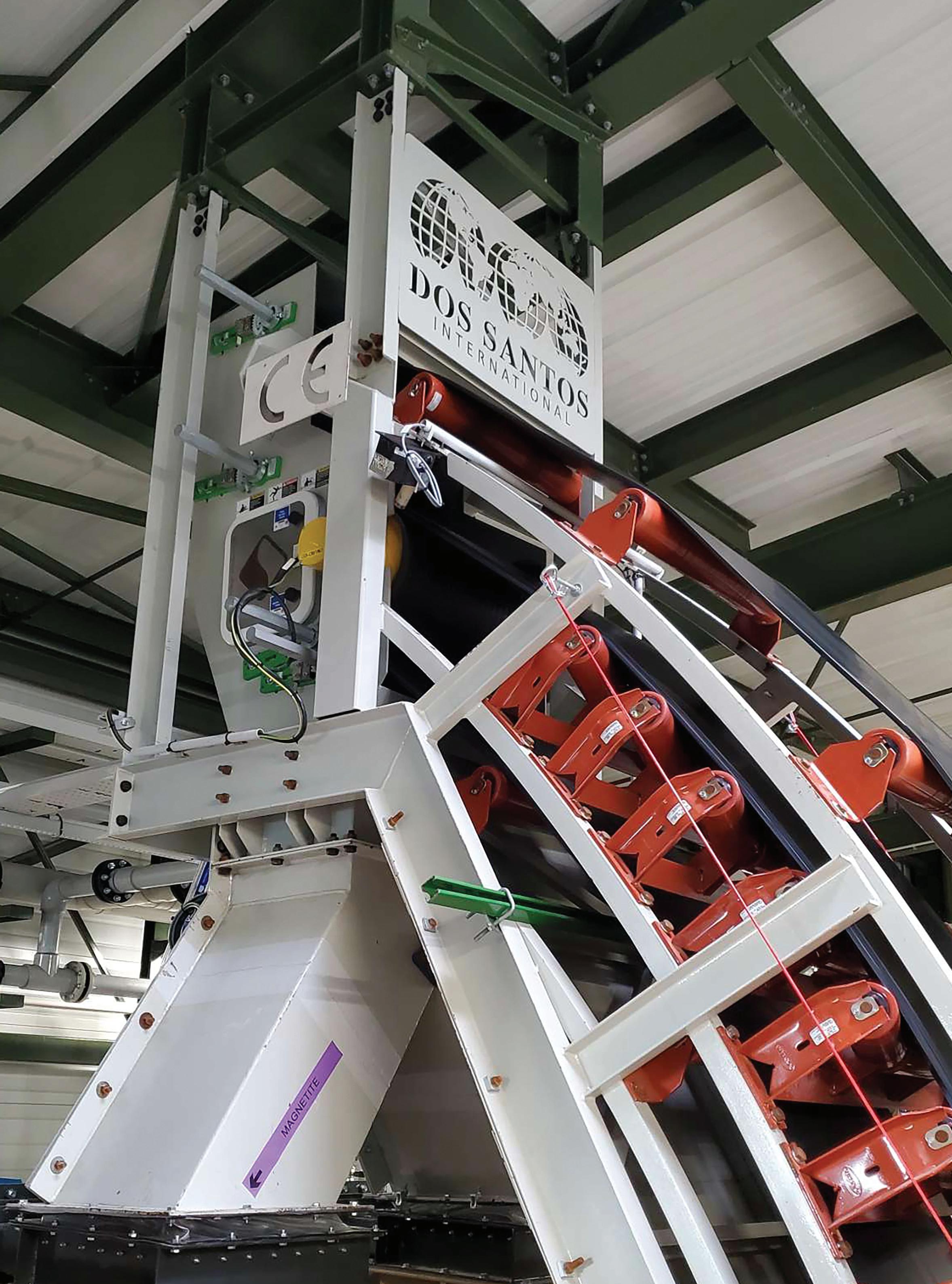
CHALLENGE :
(1) ELEVATE MAGNETITE TO TWO TANKS. (2) RECEIVE MATERIAL DIRECTLY FROM A HOPPER , RATHER THAN FROM A FEEDER WITH A METERED FLOW.
SOLUTION: The combination of the Sandwich Belt high angle conveyor in a vertical arrangement, functioning as a self-feeder, and a hopper in which four tonnes of material can be loaded for transfer to the two tanks.
Dos Santos International has supplied its Sandwich Belt high angle conveyor to SNF Coagulants for a plant expansion in St Avold, France.
With its long-term strategy focused on innovation and investment, SNF chose the DSI Sandwich Belt high angle conveyor solution, along with DSI’s innovative approach to maintain a high level of R&D expenditure along with continual investment in improving and expanding its production sites. SNF now accounts for almost half of all global polyacrylamide production, which underscores the effectiveness of its innovation and investment policy.
SNF is a privately held, specialty chemical company based in the RhôneAlpes region of France, with a longstanding presence on every continent. With 21 production sites in Europe, Asia, Australia, and America, and with a production capacity of 1,235,000 tonnes, SNF has the largest polyacrylamide production capacity in the world.
The DSI Sandwich Belt conveyor for SNF Saint Avold elevates magnetite for the process at a rate up to 30tph (tonnes per hour), and draws the material from a hopper, which was also supplied and designed by DSI.
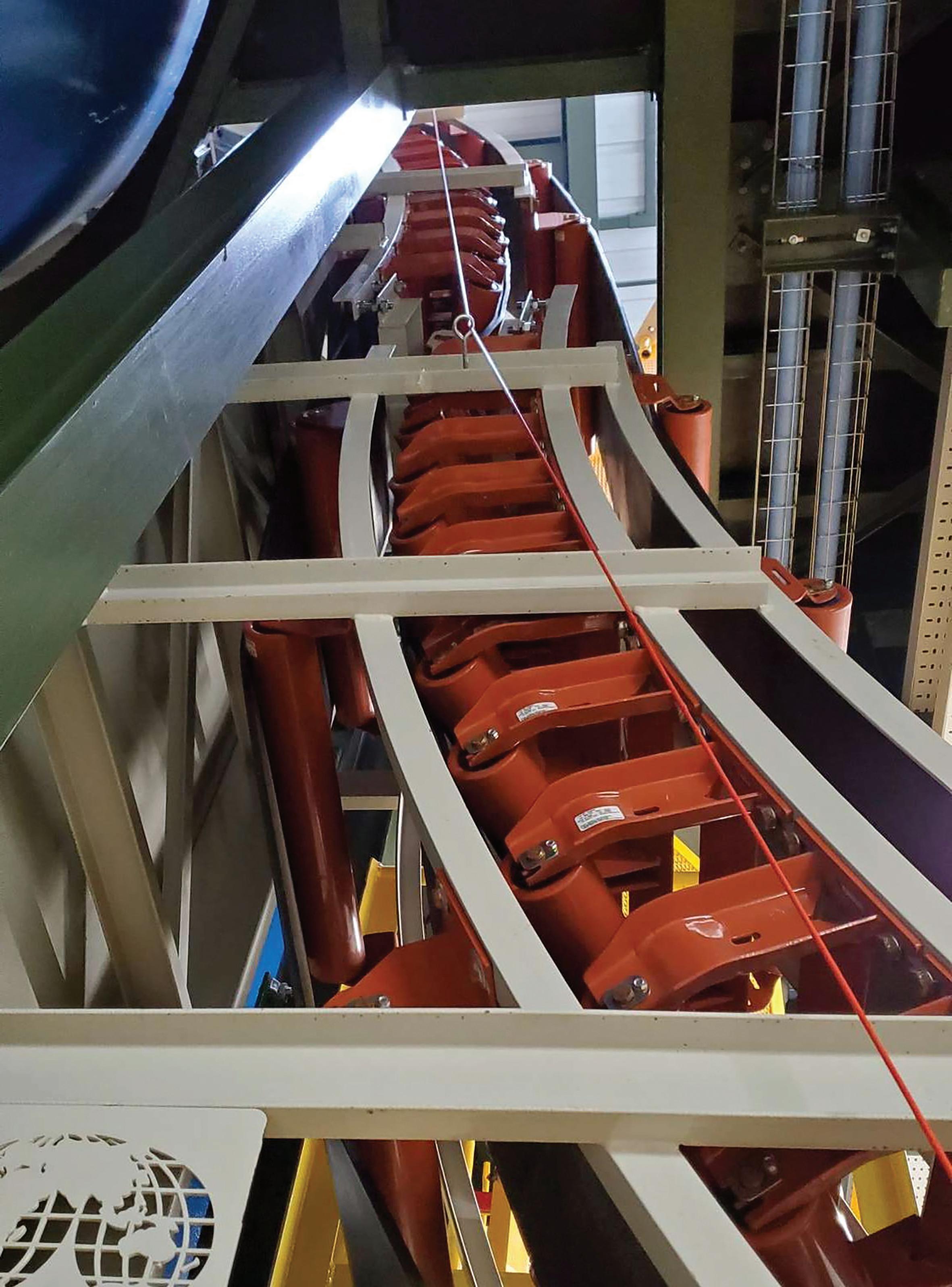
The material is elevated 8.8m where it is discharged into one of two tanks. The direction of the material is achieved by a bifurcated chute, also designed and supplied by DSI.
As a leader in manufacturing and processing water-soluble polymers (based on polyacrylamide), SNF has developed a range of more than 1,000 products that
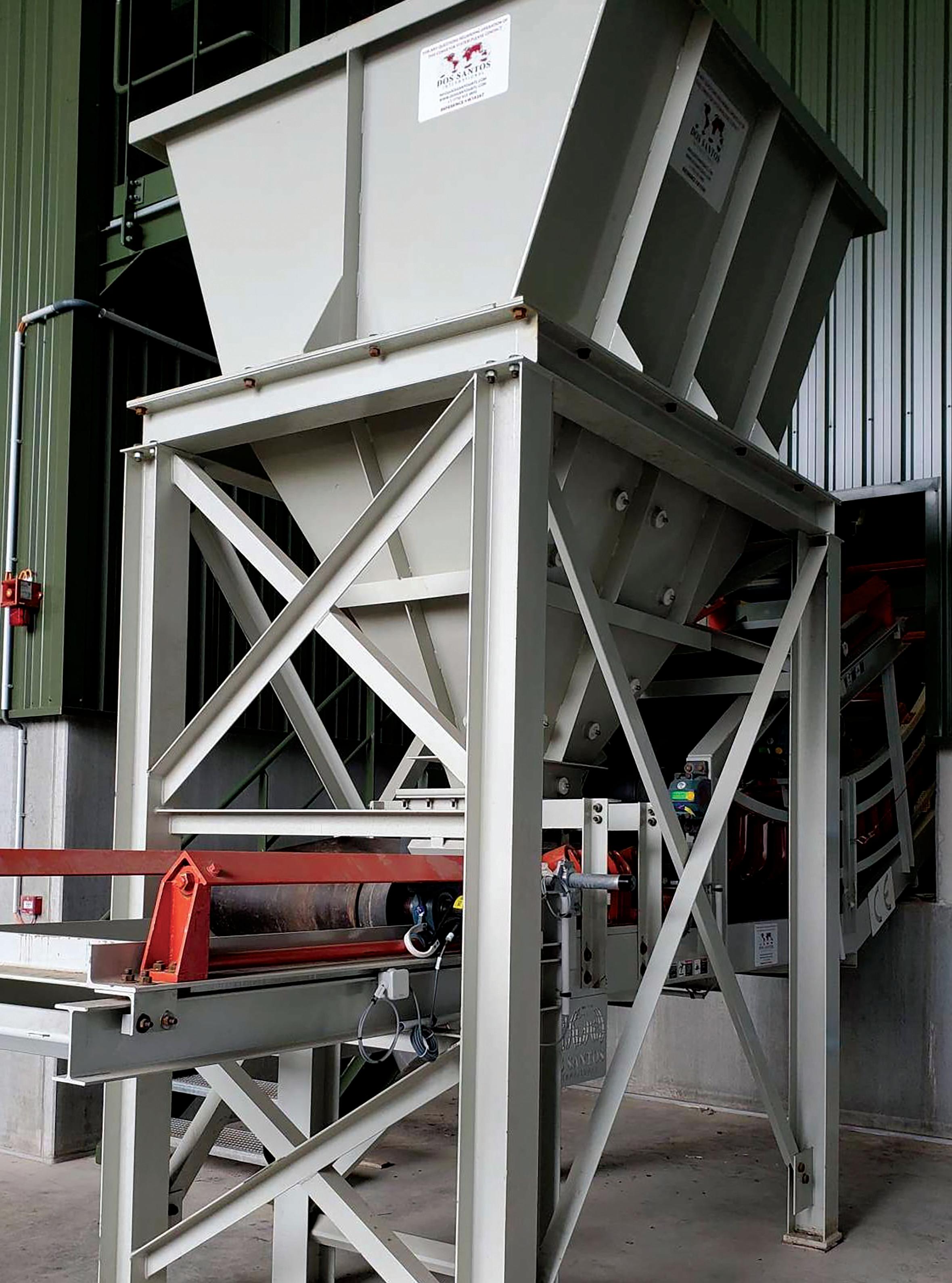
help preserve our natural resources, encourage recycling, and improve efficiencies of industrial processes. Its polymers are used in all markets where water is present: drinking water production, wastewater treatment, sludge dewatering, oil and gas extraction, mining, agriculture, and the manufacture of paper, textiles, and cosmetic formulations.
DSI SANDWICH BELT HIGH ANGLE CONVEYORS IN HARMONY WITH THE ENVIRONMENT
Various industries have utilized Sandwich Belt conveyors. Even before the increased awareness for environmental compliance, Sandwich Belt conveyors provided the following benefits with their natural capabilities:
Conformity to landscape: Conform to irregular (steep and undulating) paths to blend in with the surrounding environment. This feature precludes the need for many transfer points which are a common source of spillage and fugitive dust.
Compact arrangements: By virtue of their high capacity, high angle and adaptable profile features, Sandwich conveyors facilitate the most compact arrangements of any materials handling system, minimizing disturbances of the environment.
Minimizing excavation disturbance of the sub-surface: Sandwich Belt conveyors allow the most direct haulage path from deep open pit mines and from underground excavation projects. A high capacity, high lift system can most certainly handle the severe haulage requirements.
One such system conveyed hard primary crushed rock (250mm minus) along the steep mine wall, directly out of the pit. This substantially reduced the truck haulage requirements of that mine, displacing ten, 240-tonne trucks from the severest of haulage duties (the slow, high power, continuous climb to the surface).
As important as it is to eliminate the associated pollution and accident potential, minimizing of total excavation for the ore recovered is also important. The Sandwich Belt system requires no additional excavation. Conventional conveyors, though nearly equally efficient to the Sandwich belt conveyor, do require additional excavation and/or additional transfer points because of the limited slope capability.
Reduction in real estate and spatial volume: In plants, they use the least real estate and displace the least spatial volume in 3-D space. Because Sandwich conveyors can be housed in a facility, they will require the least amount of wall and roof surface. For heated facilities in cold climates, they offer the least heat escape, thus the lowest heating cost.
Creating a power source: A downhill Sandwich conveyor system can operate regeneratively, thereby feeding power to the grid, becoming a power source.
ENGINEERING & EQUIPMENT 70 MAY 2024 DCi www.drycargomag.com
The DSI Sandwich conveyor elevates 30tph of magnetite at a 90 degree angle.
Hopper designed by Dos Santos International.
TBA Group partners with Awake.AI
TBA Group has partnered with Awake.AI to integrate industry-leading vessel ETA predictions into the CommTrac,TBA’s bulk terminal operating system. If you are already using CommTrac, you can now get significant reductions in waiting times, turnaround times and emissions instantly.
Using machine learning algorithms, Awake.AI’s predictive ETA provides realtime predictions on vessel voyages, enabling port operators and logistics providers to optimize their operations and reduce costs. Predictive ETAs accurate estimated times of arrivals reduce uncertainty in arrival times, leading to better planning and reduced costs for importers and exporters. Users can trust the estimated time of arrival provided by Predictive ETA, which increases reliability and reduces the need for contingency planning. Additionally, Predictive ETA provides a competitive advantage for terminal operators, allowing for better decision-making and increased efficiency.
Predictive ETA’s global coverage enables automated monitoring and visibility of future arrivals up to several weeks ahead for oceangoing vessels, providing a significant advantage over traditional estimated time of arrival predictions, which are often inaccurate and unreliable. By utilizing Predictive ETA, users can achieve concrete savings by reducing costs and increasing efficiency. Additionally, Predictive ETA can help users achieve their ESG metrics by reducing environmental emissions and vessel turnaround times.
CommTrac is used in 36 bulk terminals, in countries including the UK, Canada, South Africa, Brazil and Mozambique, and has revolutionized the operation of bulk ports over it’s 20-year history. The
software is used to manage the transport of animal feed, grain, coal, general breakbulk and more, and the system is being constantly refined, developed and improved, often in direct collaboration with its userbase.
Just last month at TBA’s User Group Conference (UGC), delegates were involved in an in-depth roadmap workshop, discussing new features and how they would like to see CommTrac develop. “One of the main reasons for CommTrac’s success is that we have always listened to our users,” said David Trueman, Managing Director of TBA Doncaster. “From the very first release over 20 years ago, we’ve always known that the software could only be the success we wanted if it provided the functionality that our users genuinely needed and functioned in a way that made their operation more efficient.”
Awake.AI’s CEO, Karno Tenovuo, was also a guest speaker at the UGC and demonstrated what the system has to offer and how it works. “The system allows up to 80% more accurate predictions using
machine learning models,” explained Tenovuo. “This can lead to up to 27% cost savings for the terminal operator and big benefits to the environment too.”
One of the big advantages CommTrac offers its users is the ability to increase and improve their understanding about their bulk operation. By having all the terminal’s data in a single place, and integrating with all areas of the port, CommTrac can present the right data at the right time. Awake.AI is the latest of many third-party applications that CommTrac has integrated with over the years to further enhance the insights the system can provide.
ABOUT AWAKE .AI
Awake.AI is a Finnish optimization platform company whose solutions are focused on developing customized AI/ML models to optimize cargo flow through the ports, reduce waiting times and emissions. Awake’s AI-driven Logistics Platform is developed to bring together all maritime actors at sea, ports and land, making port operations more efficient, safe and sustainable.
ABOUT TBA GROUP
Serving global port, terminal and warehousing markets, TBA’s software and services optimize operations and automation. The company has deployed its software globally to over 120 customer sites and delivered in excess of 1,500 projects.
Steeped in heritage, dating back to 1976, TBA Group consists of UK Centres in Doncaster & Leicester with local representatives in North, South America and Oceania. TBA Group is part of Konecranes Group.
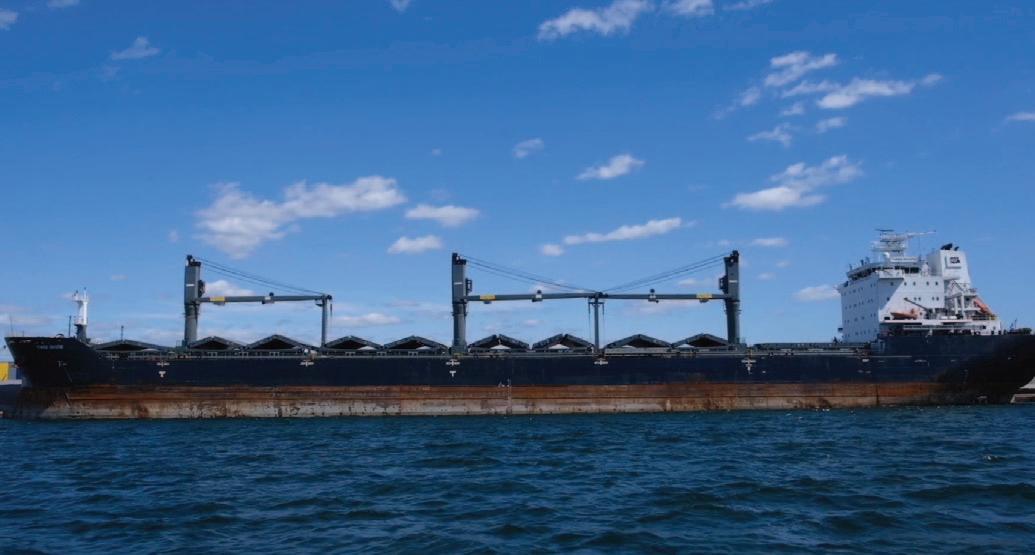
ENGINEERING & EQUIPMENT 71 MAY 2024 DCi www.drycargomag.com
David Trueman, Managing Director of TBA Doncaster & Karno Tenovuo, CEO, Awake.AI.
Bedeschi wins repeat order for four new eco-hoppers in Ghana
In 2023, Bedeschi supplied Takoradi Port in Ghana with a tailor-made plant that revolutionized the whole terminal management system.
The order for the 2023 multipurpose material handling system commissioned consisted of approximately 3km of belt conveyors, two A-frame type shiploaders, and an eco-hopper.
This year, Bedeschi has been chosen again to supply four new eco-hoppers to the same terminal, a clear indication of the success of the previously supplied unit.
The machines are engineered to prevent dust emission, and to receive different type of products to give maximum flexibility to the terminal, in import.
The picture shows the existing 2023 eco-hopper installed at the terminal.
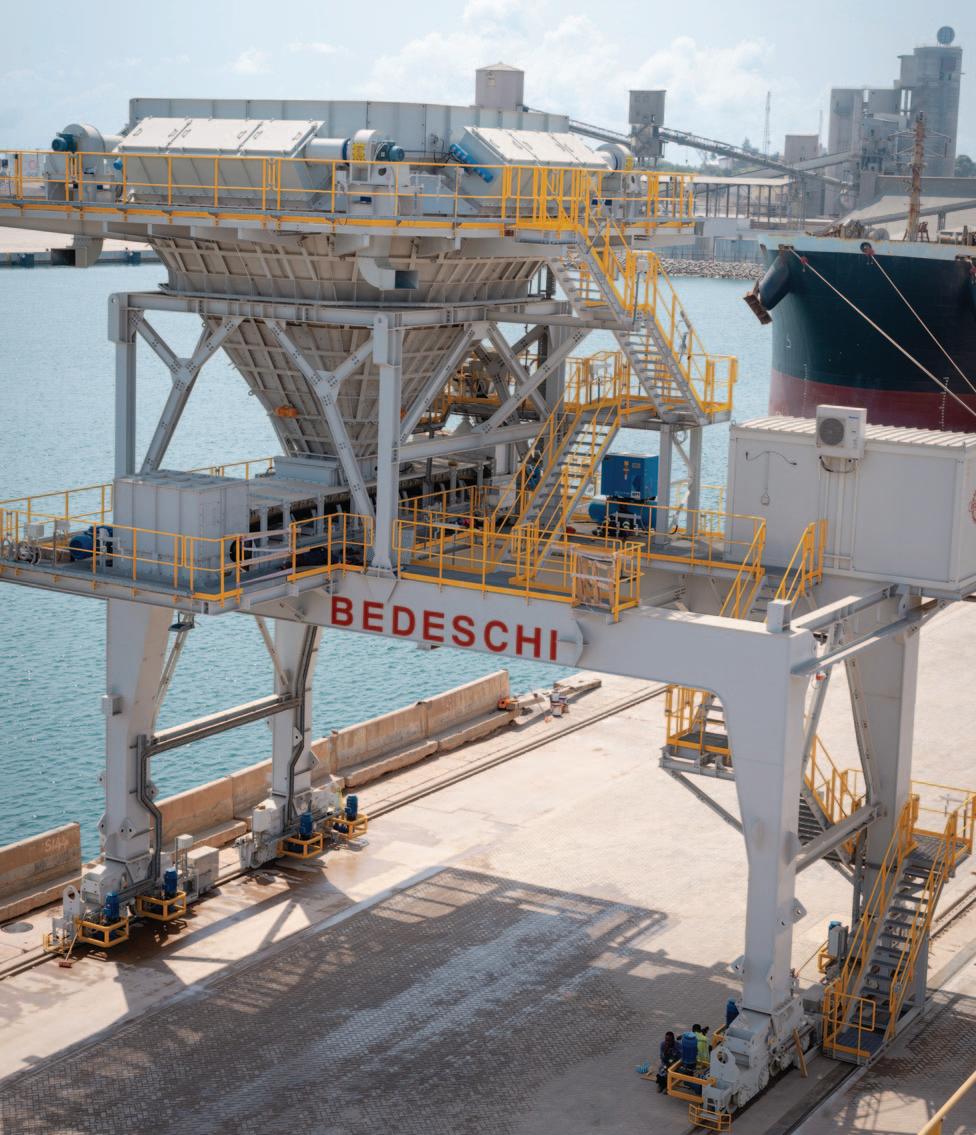
ENGINEERING & EQUIPMENT 72 MAY 2024 DCi www.drycargomag.com
The Raring Corporation’s dust suppression systems and environmental bulk handling
WHAT DO WE UNDERSTAND WITH THE FOLLOWING PHRASE : ENVIRONMENTAL BULK HANDLING?
Bulk handling is present in every industry that processes bulk materials, writes Gonzalo Campos Canessa, The Raring Corporation, CEO.
It helps any industry that uses bulk materials to move these raw materials around their facilities to create a product or to ship the bulk materials somewhere else. Environmental refers to the environment in which we live, and the impact humans have on it. Based on this, Environmental Bulk Handling should refer to the act of handling bulk materials in an environmentally friendly manner. Bulk handling is not environmentally sound unless:
1. There was a way to work in an enclosed vacuum environment, or 2. We have always been able to handle bulk materials with their moisture content equal to the Dust extinction Moisture (DEM).
Since both of these are ideal conditions, difficult to implement and probably very expensive to build outside of a laboratory, the need to implement effective active dust control systems becomes critical. TRC’s dust suppression systems, with some exceptions, are typically used by its customers to control dust problems within the crushing plant, i.e. between the truck dump at the primary crusher and the
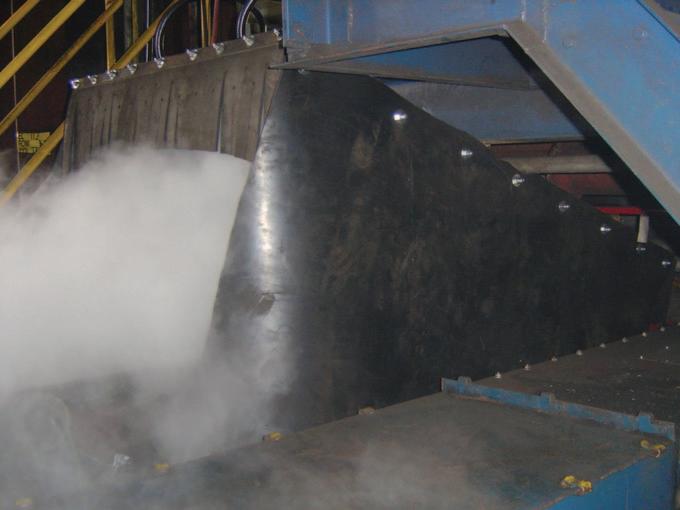
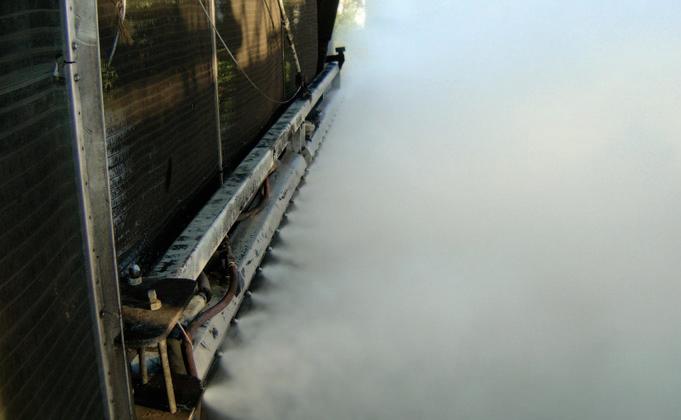
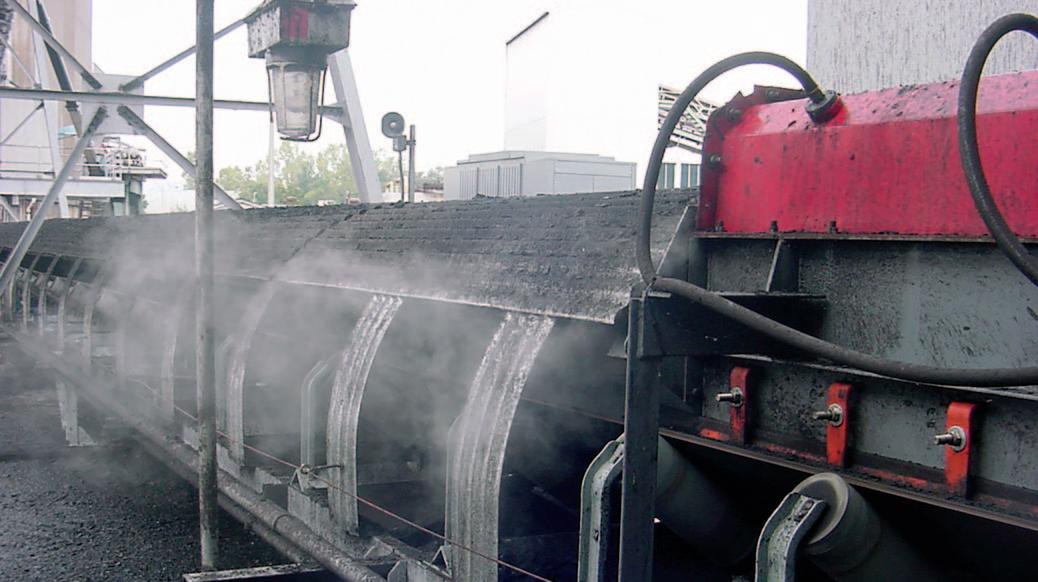
ENGINEERING & EQUIPMENT 73 MAY 2024 DCi www.drycargomag.com
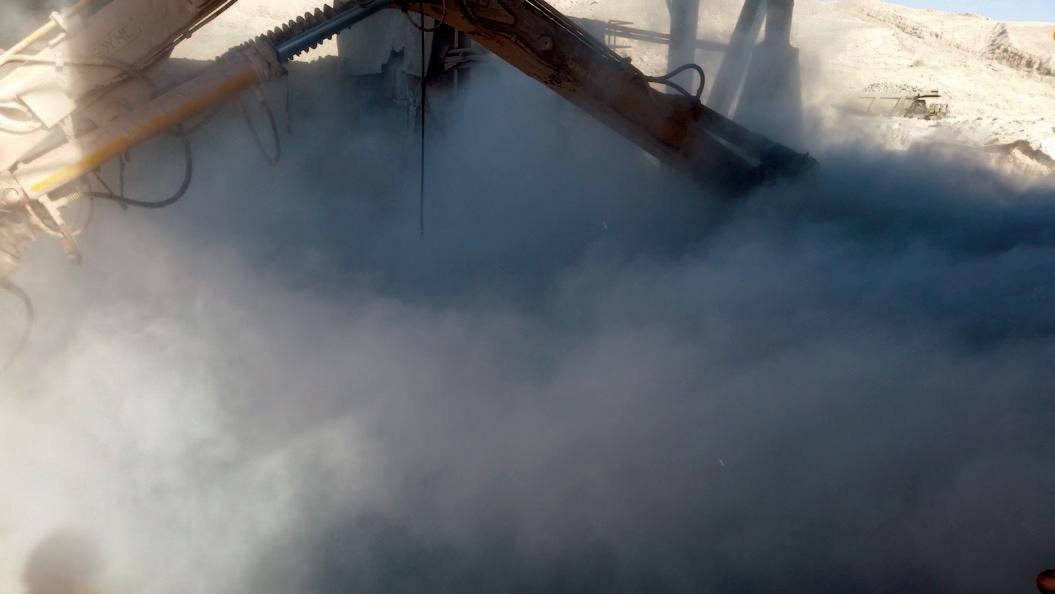
stockpile or the mills, within a mine site.
Now the question is, what is an active dust control system? Active dust control systems refer to those dust control strategies that require energy to operate; and by this definition TRC’s ADSTM Dust Suppression Systems (DSS) fall into this category. In order to implement environmental bulk handling in bulk handling processing plants, our ADSTM Dust Suppression Systems must address two main factors to control dust problems and protect the environment and workers’ health: The first one is the fact that dust control takes place in imperfectly enclosed environments, and the second factor is the moisture content of the bulk materials, which happens to be very different from the ideal DEM level.
By implementing the ADSTM Dust Suppression Systems, it will be possible to project microscopic water droplets, generated by TRC sonic nozzles. TRC’s FP nozzles shatter water and combine it with compressed air to create an artificial fog that agglomerates and settles down dust particles at the source. This process uses minimal water, no chemicals, and does not create any by-product. Agglomeration occurs in a controlled environment and does not allow the dust to escape the enclosed volume.
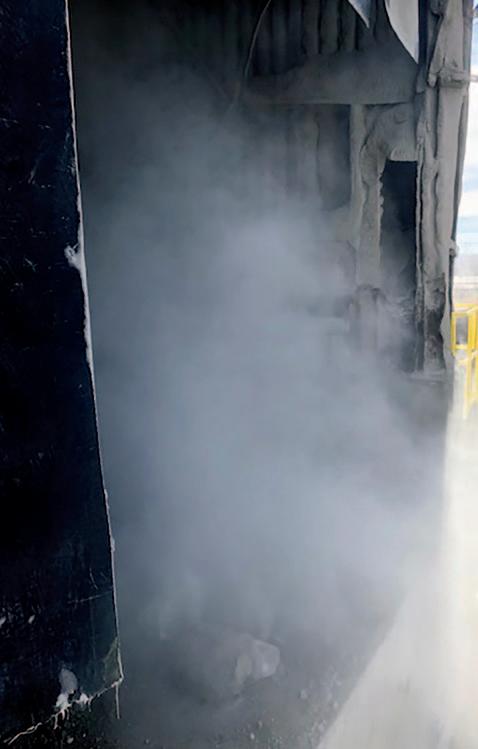
When measuring the efficiency of dust suppression systems, it is very important to keep the above concepts in mind. Dust control is composed of two parts: the passive and the active dust control. With this definition, TRC must measure the efficiency of its dust suppression systems by measuring the difference between the
dust escaping from the controlled volume WITHOUT dust suppression and the volume of dust escaping from the enclosed area WITH dust suppression system in operation. This means that it does not matter how much airborne dust is inside a hat or conveyor belt cover, or how much dust is inside a primary crushing truck unloading containment building (or stilling shed), the most important thing is to minimize the amount of dust escaping from the contained volume. When this is achieved, the dust suppression system is effective and efficient. In this example both the stilling shed, and the hat are just as important as the fog system when it comes to dust control.
As I mentioned earlier in this article, we try to create operating conditions that are close to ideal for controlling dust problems and determining the efficiency of the dust suppression system. When measuring, we need to create a broader control environment to measure and isolate other sources of dust and wind gusts that may affect our results. The challenge is to create controlled volumes that are close enough to ideal conditions to help us get representative measurements and results. When properly implemented, TRC’s Dust Suppression System is the right alternative for controlling dust in bulk handling operations.
ENGINEERING & EQUIPMENT 74 MAY 2024 DCi www.drycargomag.com
ScrapeTec Trading: More than 30 years of know-how in materials handling technology solutions
SCRAPETEC TRADING TURNS ITS IDEAS INTO REALITY AND CREATE INNOVATIVE AND SOLUTION - ORIENTED PRODUCTS FOR CONVEYOR PLANTS OF BULK MATERIALS
Based on more than three decades of know-how in the area of materials handling technology, ScrapeTec has been analysing critical points in conveyor systems and developing new cost-efficient solutions for improvement and optimization. With this innovation strategy the company has been creating unique products like the AirScrape, DustScrape and SpeedScrape. Its new developments are economic and easy to assemble but allow a significant prevention of dust formation, spill and a more careful and efficient belt cleaning at critical sections along the conveyor route and transfer points.
To optimize the use, ScrapeTec offers individual advice for planning and implementation of projects. In this way its customers receive solutions that are exactly meeting their requirements. For the customer it means cost reduction, longevity, increase of safety, reduction of breakdown risks and thus sustainability when operating their conveyor system.
ScrapeTec is continuously working on new ideas that it wants to launch onto the market in the near future. But already today everyone can profit from the results of its developments.
Constant challenges in bulk material handling, from efficient material movement to reducing environmental impacts, drive the need for innovative solutions. Scrapetec Trading plays a significant role in this context, offering innovative and patented products for conveyor systems. This article provides insights into key aspects of Scrapetec Trading and its endeavours to revolutionize the global bulk handling market.
CUSTOMERS AND GEOGRAPHIC PRESENCE
Scrapetec Trading serves entrepreneurs operating conveyor systems, successfully catering to customers in North and South America, Australia, Indonesia, Malaysia, India, as well as the Middle East, including the United Arab Emirates and Oman. The company’s high expansion in these regions underscores the growing acceptance and demand for Scrapetec Trading’s products.
VERSATILE AREAS OF APPLICATION
Scrapetec Trading’s conveyor systems are not limited to a specific industry. The
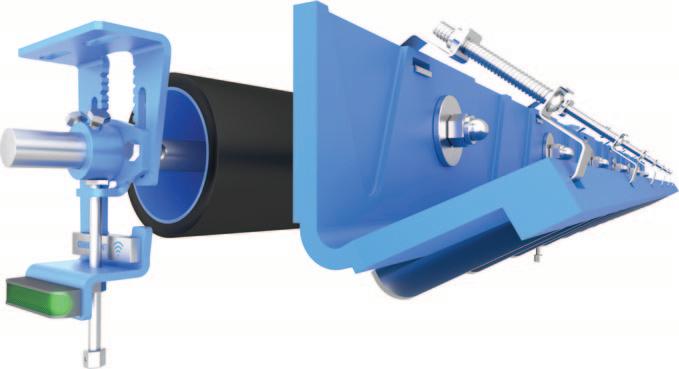
AirScrape® is a side skirt sealing system for belt conveyors.
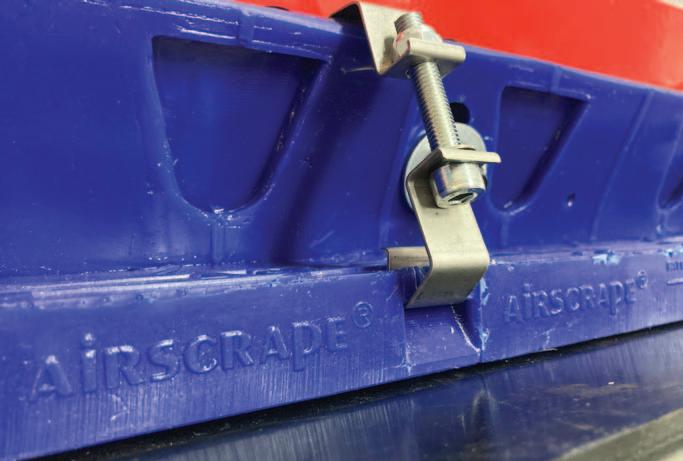
patented technology ensures smooth operations with various materials, including coal, grain, cement, ore and sugar. A significant advantage lies in the wear resistance of the products, translating to extended lifespan and reduced maintenance costs for users.
FOCUS ON ENVIRONMENTAL PROTECTION AND OCCUPATIONAL SAFETY
Actively promoting environmental and occupational safety, Scrapetec Trading integrates dust avoidance technologies. The reduction of dust not only contributes to the safety of the working environment but also aligns with global requirements to minimize environmental impacts.
INNOVATIVE E-PRIME TRACKER
A leading product in development at Scrapetec Trading is the E-Prime Tracker. Going beyond simple correction of conveyor misalignment, this system provides insightful information about the conveyor belt’s condition. While still in the
development phase, this advanced technology promises to revolutionize conveyor system monitoring.
RESEARCH AND DEVELOPMENT WITH DUSTSCRAPE
The company is deeply committed to research and development, particularly with DustScrape. Careful testing of suitable filter fabric qualities for products is under way. These efforts underscore Scrapetec Trading’s commitment to the highest product quality and reliability.
COMPETITIVE ADVANTAGES
To remain competitive, Scrapetec Trading relies on unique patented products. The focus on maintenance-free and wearresistant solutions positions the company as a leader in the industry. Ongoing research and development, coupled with the ability to easily retrofit existing systems, emphasize Scrapetec Trading’s commitment to long-term success and customer satisfaction.
ENGINEERING & EQUIPMENT 75 MAY 2024 DCi www.drycargomag.com
ScrapeTec’s AirScrape and E-Prime Tracker.
Environmental sustainability in bulk material handling: Weba Chute Systems’ innovations and market competitiveness
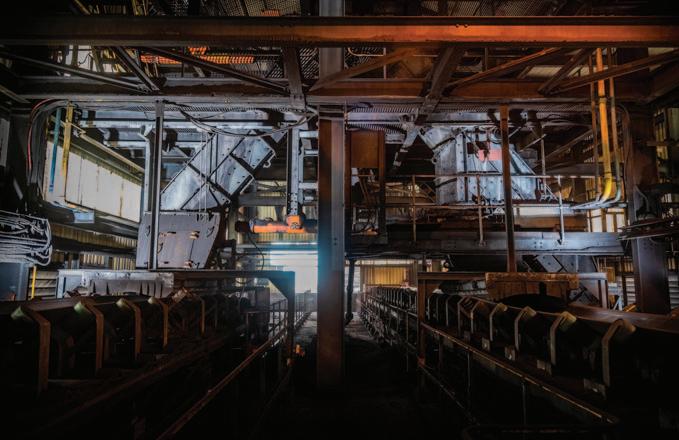
As industries worldwide grapple with the challenges of minimizing harmful emissions and maximizing operational efficiency, Weba Chute Systems stands at the forefront of innovation, driving transformative change in the handling of dry bulk commodities.
At the core of Weba’s commitment to environmental stewardship lies a dedication to pioneering technologies that not only enhance operational efficiency but also mitigate environmental impact. The recent unveiling of Weba’s automated monitoring system represents a paradigm shift in chute maintenance practices. Equipped with sophisticated printed circuit boards (PCBs) affixed to Quick Release Lips (QRL), this system provides real-time insights into chute conditions, empowering operators to optimize maintenance schedules, reduce downtime, and enhance workplace safety.
Mark Baller, Weba Chute Systems’ managing director, underscores the pivotal role of chute design optimization in mitigating dust emissions. Drawing on decades of experience, Baller emphasizes that between 50% to 80% of dust-related issues can be effectively addressed through meticulous chute system design and equipment positioning. By prioritizing the prevention of dust generation at its source, Weba’s innovative chute designs offer a holistic solution to environmental concerns while simultaneously improving operational efficiency and productivity.
Baller’s insights shed light on the limitations of traditional approaches to dust control, which often rely heavily on suppression and extraction systems. He argues that while such systems play a role
in mitigating dust emissions, their efficacy is inherently limited without addressing the root causes of dust generation. By focusing on material flow optimization and minimizing uncontrolled velocity and impact, Weba’s chute systems not only reduce dust emissions but also enhance equipment longevity and operational reliability.
Central to Weba’s competitive edge in the market is its unwavering commitment to technological advancement and innovation. The integration of wireless capabilities into its monitoring systems exemplifies Weba’s proactive approach to staying ahead of industry trends and customer needs. By continuously refining its products and services, Weba Chute Systems remains at the forefront of environmental sustainability in bulk material handling.
In an era where environmental consciousness is paramount, Weba’s innovations resonate deeply with industries seeking to align their operations with sustainable practices. By offering comprehensive solutions that address both
environmental and operational challenges, Weba Chute Systems sets a new standard for excellence in bulk material handling.
Looking ahead, Weba Chute Systems remains steadfast in its commitment to driving environmental sustainability and operational excellence. Through ongoing research and development initiatives, strategic partnerships, and a relentless pursuit of innovation, Weba will continue to redefine the boundaries of what is possible in bulk material handling, setting the stage for a more sustainable and prosperous future for industries worldwide.
Weba Chute Systems’ extensive experience, technical expertise, and broad applications knowledge have positioned it as a leader in the industry. Utilizing sophisticated 3D computer software and verified customer data, Weba’s highly skilled personnel design custom solutions tailored to each transfer point’s specific requirements. Quality manufacture forms an integral part of the process, with performance guarantees provided to ensure optimal operational performance.
ENGINEERING & EQUIPMENT 76 MAY 2024 DCi www.drycargomag.com
Systems manager performing dust tests at coal mine.
A bifurcated transfer chute at a coal mine.
Elastomer screen linings: The sustainable solution for bulk material processing
TIP TOP Jörns, a REMA TIP TOP AG company, offers customers throughout Europe sustainable solutions for their screening media requirements with products from the REMASCREEN range. In this interview, Managing Director Matthias Klem explains the advantages of the customer-specific production of screen media made of elastomer materials.
Mr Klem, TIP TOP Jörns positions itself on the screening media market through its handcrafted character. This clearly sets you apart from standard products. What characterizes your strategy?
MK: The very specific know-how of our experts is the reason why REMASCREEN is known and valued in the market as a real problem solver for screening technology requirements. For us, the handcrafted character means competent advice and, above all, the customized production of screen linings in conjunction with our comprehensive services.
Screen linings are at the heart of many industrial processes. In this highly competitive environment, customers are quality-conscious but at the same time cost-sensitive. Can the longer service life and process optimization offered by REMASCREEN screen linings compensate for the higher cost of the individualized product?
MK: In today’s world, decision-makers are looking for a solution that is both economical and sustainable in the long term. This is exactly where we excel. With precision, efficiency and reliability, REMASCREEN proves to be a particularly advantageous alternative to standard products made of steel or cast polyurethane. And that is just what our customers expect. Steel products often have a number of material-related disadvantages, such as short service life, blockages and high cleaning and maintenance costs. Customers can avoid all of these problems by using customized REMASCREEN screen linings.
You claim that elastomer screen linings offer cost benefits for the company. How quickly does a switch to REMASCREEN pay for itself? Can you provide best practices that make these benefits tangible in a nutshell?
MK: In a cement factory in Denmark, the investment in REMASCREEN screen linings has paid for itself in just seven months thanks to significantly reduced maintenance costs. Chalk slurry is screened there using crushed flint. Wire
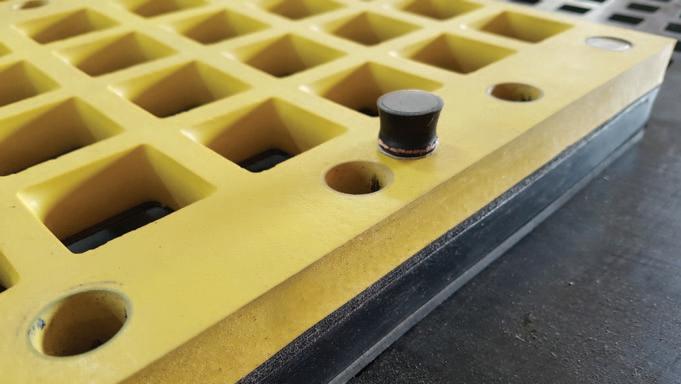
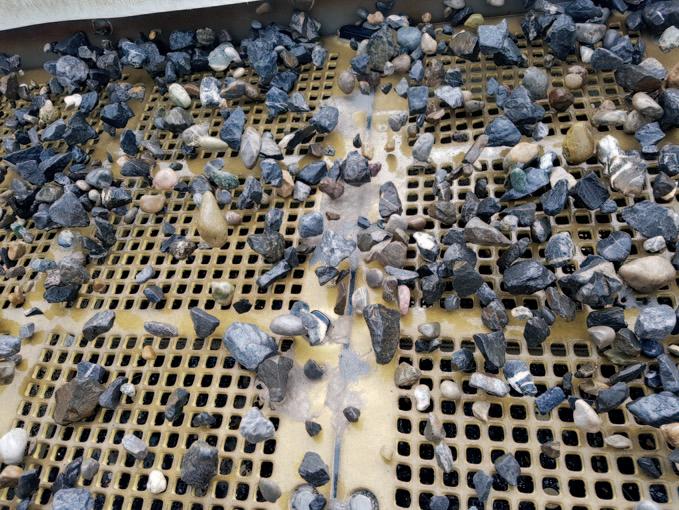
screens only had a service life of three to four days with this extremely demanding material. In addition, up to 65% of the material was clogging the work process. So far, 417 working hours per year have been spent on screen changes alone. We have optimized new custom-made screen frames and fitted them with longitudinal tensioners made of highly hydrolysisresistant PU. The result is an almost 100% permanently open screen surface and a service life of more than one year. This reduces the time required for screen changes to just 36 hours per year.
You produce a wide range of screening media for the heavy and hard rock industry, the sand and gravel sector, recycling, slag processing and the food industry. Which internal processes do you employ to ensure that you meet the needs of such different industries and their specific requirements?
MK: This business is still a niche, but one
in which we are a technological leader and very successful. The in-depth analysis and advice provided by our experts, combined with our high level of material and manufacturing expertise, creates a tailormade, individual solution. We deliver what the customer really needs in a quality that a standard screen cannot offer. We work together with our customers to define the effect they want to achieve. We then plan and implement the individual solution that best reflects all of the relevant parameters. We are convinced of the high quality of the results, which is why we offer our customers guarantees as well as trial use and return policies for our screen linings.
Industrial production processes are highly sensitive. Failures of individual components such as screening machines have to be avoided because they jeopardize the smooth operation of the entire system. How fast and flexibly can TIP TOP Jörns respond to customer requests with the
ENGINEERING & EQUIPMENT 77 MAY 2024 DCi www.drycargomag.com
Remaline35 flat-iron-frame.
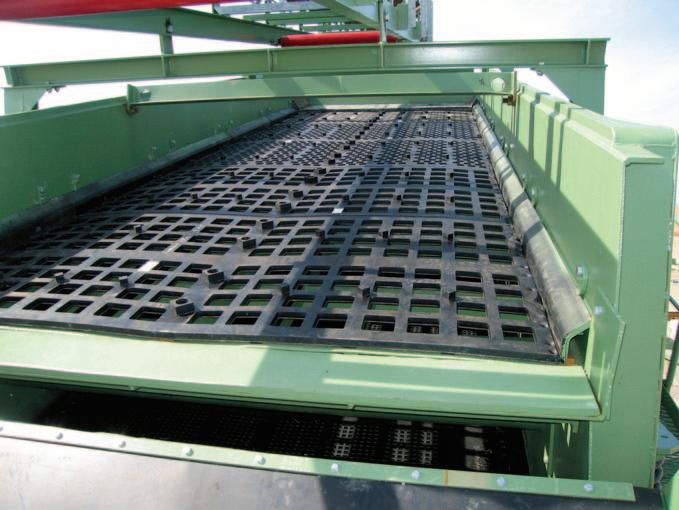
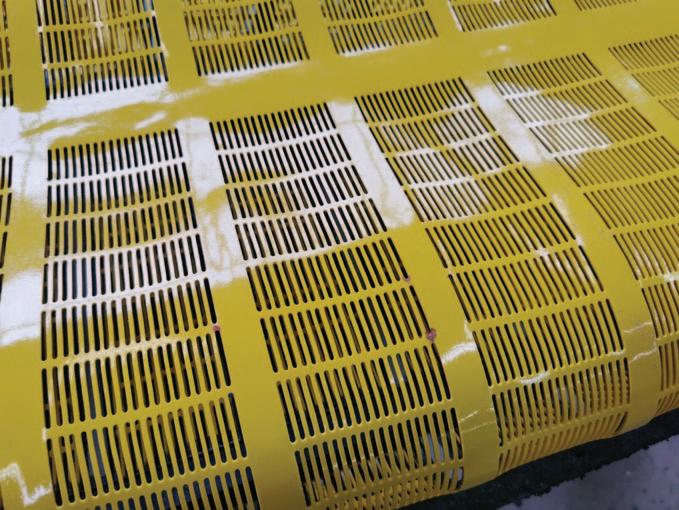
individualized production?
MK: We maintain a very large stock and have the right material for every task in the form of rolls or sheets. In production, we have around 2,000 punching tools for over 550 different hole sizes and shapes - from 0.4 to 200 millimetres in size. All this enables minimized delivery times of three to four weeks for new products, and even less in emergency cases. In general, our screens have a long service life with reliably predictable replacement intervals, which largely prevents short-term downtime.
REMA TIP TOP is a traditional rubber manufacturer. The comprehensive materials expertise within the Group is therefore combined with the know-how in the planning and production of screening media that TIP TOP Jörns has built up over decades. Is this the decisive advantage that ensures the superior performance of REMASCREEN?
MK: First of all, we can confirm that our highly wear-resistant elastomeric materials have a better service life and grain separation when screened because they are particularly resistant to abrasion and have very good additional properties, such as high tear resistance. Hardness grades of 30, 50 and 60 Shore A are possible for rubber and up to 90 Shore A for polyurethane. The special structure with different fabrics is designed for low elongation. At the same time, the high level of vibration of the flexible material with optimum hole shapes leads to a pronounced self-cleaning effect and measurably increased screening efficiency. In addition, there is a noise reduction of up to 20 dB compared to steel screens, which reduces noise protection costs. The ease of installation and maintenance also reduces maintenance costs. We deliberately use these strengths of the material in our tailor-made solutions for
excellent performance.
You started your career at TIP TOP Jörns in Allendorf-Somplar in 1991 and have since experienced the development of the screen media market first-hand. After holding various positions, you took over responsibility as Managing Director four years ago. In your opinion, which criterion is decisive for the success of REMASCREEN?
MK: Our company in Somplar has been around for over 50 years. At the end of the 1960s, rubber was still quite exotic as a screening material. I am proud that our team has been able to establish itself as a supplier of individual screening solutions for the bulk goods industry for decades. With our unique expertise and experience in screening media made of elastomer materials, we have succeeded in continuously optimizing solutions for our customers.
ABOUT REMA TIP TOP
REMA TIP TOP is a globally operating system provider of services and products in the field of conveying and treatment technology as well as tyre repair. The company has a global service network and offers a wide range of rubber products, linings and coatings for both the industrial and automotive sectors. Over almost a hundred years, the company has built up unique expertise in materials development and industrial services and is active in the belting, material processing, surface protection and automotive sectors. At the end of the 2022 financial year, REMA TIP TOP generated sales of about more than €1.3 billion. Worldwide the company has 8,000 employees and has more than 190 subsidiaries and associated companies — including well-known brands such as Dunlop Belting Products South Africa and Asplit.

ENGINEERING & EQUIPMENT 79 MAY 2024 DCi www.drycargomag.com
Side-tensioned screen deck.
End-tensioned screen deck.
DCi
Matthias Klem, Managing Director, TIP TOP Jörns.
Firm foundations



Efficiency boosters: RBL REI conveyors in cement making
RBL REI HAS THE SOLUTION FOR ITS CUSTOMERS’ EXTRA MILES
Cement is everywhere, from tall buildings to neighbourhood sidewalks, and making it requires a smooth operation behind the scenes. Enter conveyors, the silent workforce of cement plants, quietly moving materials around to keep things running smoothly. These conveyor belts are key players in making cement production faster, safer, greener and have been around for a long time.
Moving stuff around is a big part of making cement. Conveyors do this heavy lifting job, carting materials like limestone, clay, shale, and gypsum from where they’re
dug up to where they’re processed. This saves a lot of time and stops spills or dirt messing things up
Cement-making isn’t exactly great for the planet, but conveyors do their bit to help. They use less energy and produce fewer emissions compared to other ways of moving stuff around. Plus, modern
conveyor belts are designed to be super efficient, using less power and fewer materials to get the job done.
As cement plants are historically built near deposits, the depletion of reserves prompts exploration for new deposits or relocation decisions. Here, the choice between transporting materials or building
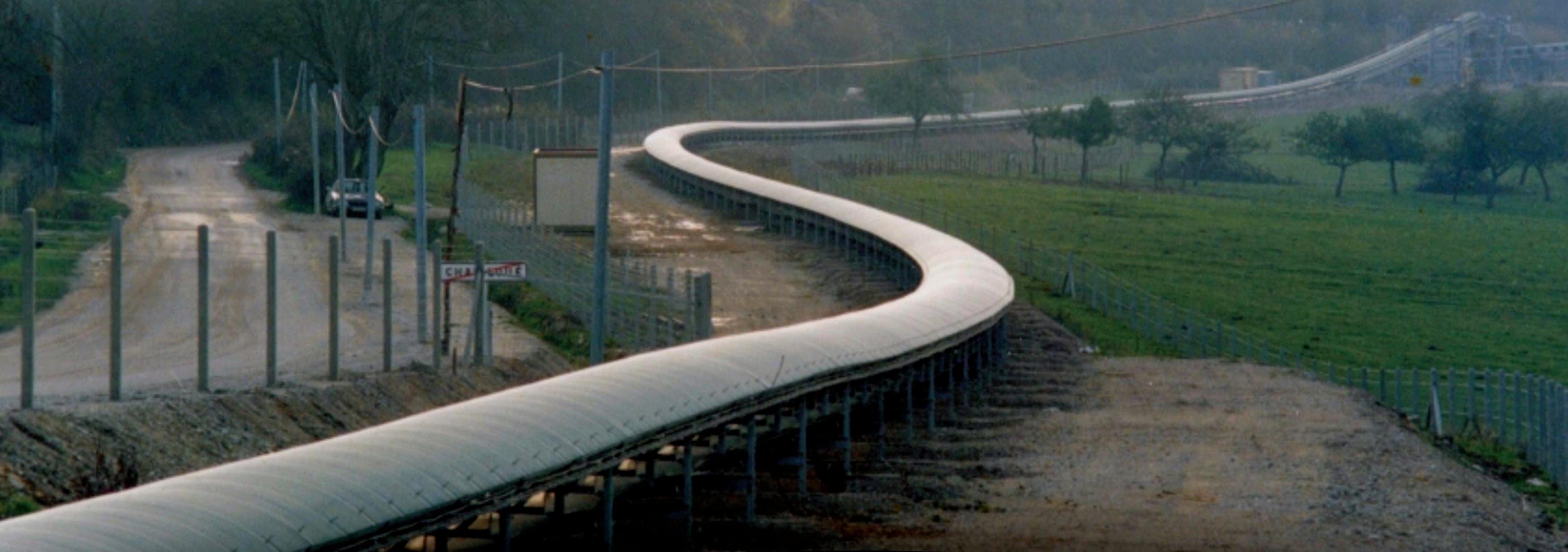
ENGINEERING & EQUIPMENT 81 MAY 2024 DCi
www.drycargomag.com
Picture 1 (& 2 inset): this 40km conveying system in China seamlessly connects the quarry to the cement factory, and comprises two 40km-long, 2,500tph conveyors.
Picture 2.
Louise Dodds-Ely
Picture 3 (& 4, below): this 1.8km-long conveyor system, in the south east of France, connects a quarry to the cement plant, through a protected area for biodiversity. It is rated at 1,200tph, 4.5m/s.
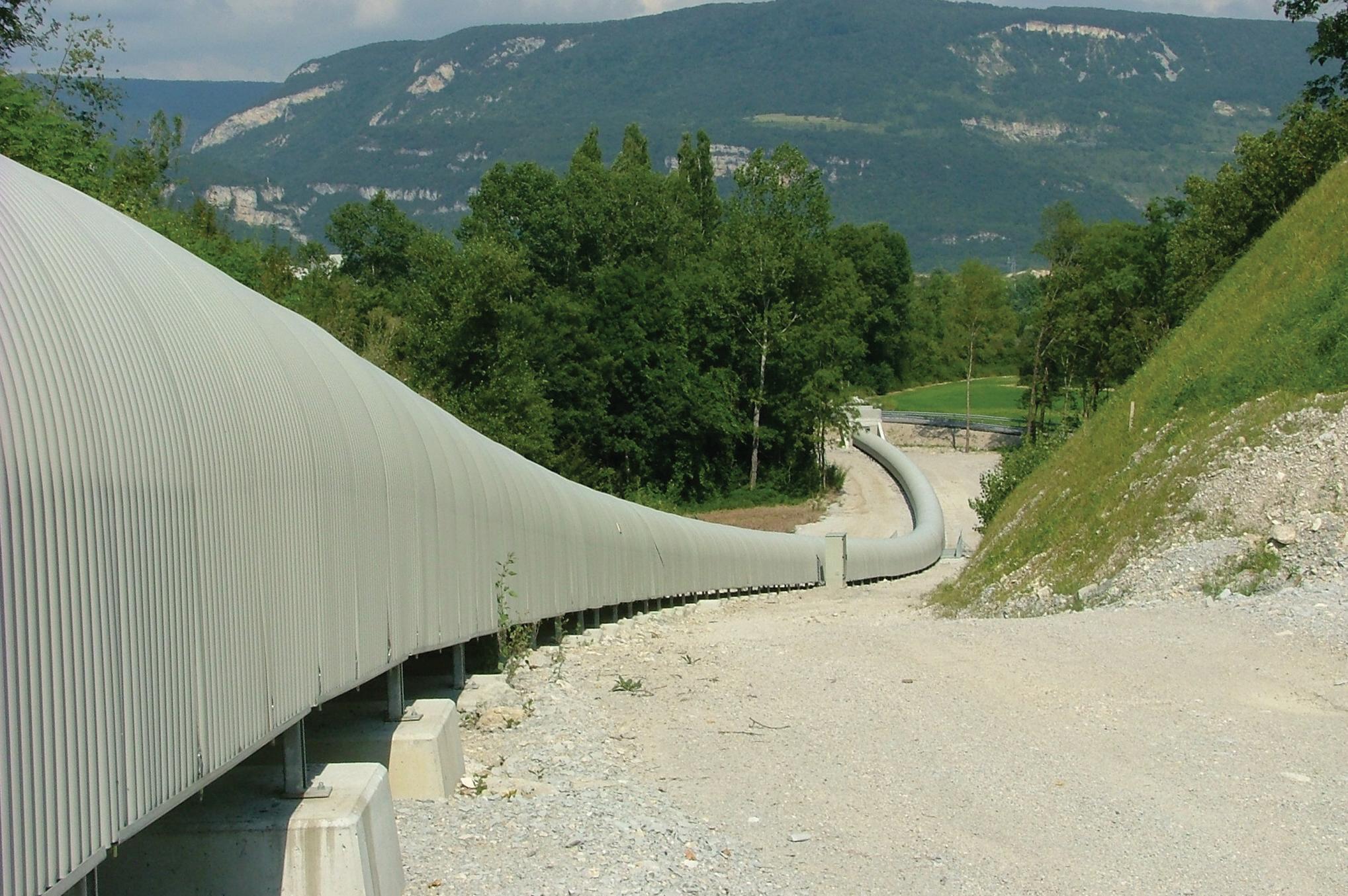
a new factory arises. Overland conveyors emerge as the most practical and costeffective solution for long distances from the quarry to the plant. These conveyors traverse varied terrain and can span great distances, efficiently transporting materials with minimal environmental impact and operational costs.
When it comes to brown field projects, curved OverLand Conveyors (OLCs) also come into play, offering a specific solution for existing plants. These conveyors are designed to navigate around existing structures and equipment, optimizing space and minimizing disruption during installation. Their flexibility and adaptability make them invaluable in retrofitting older plants for improved efficiency and sustainability.
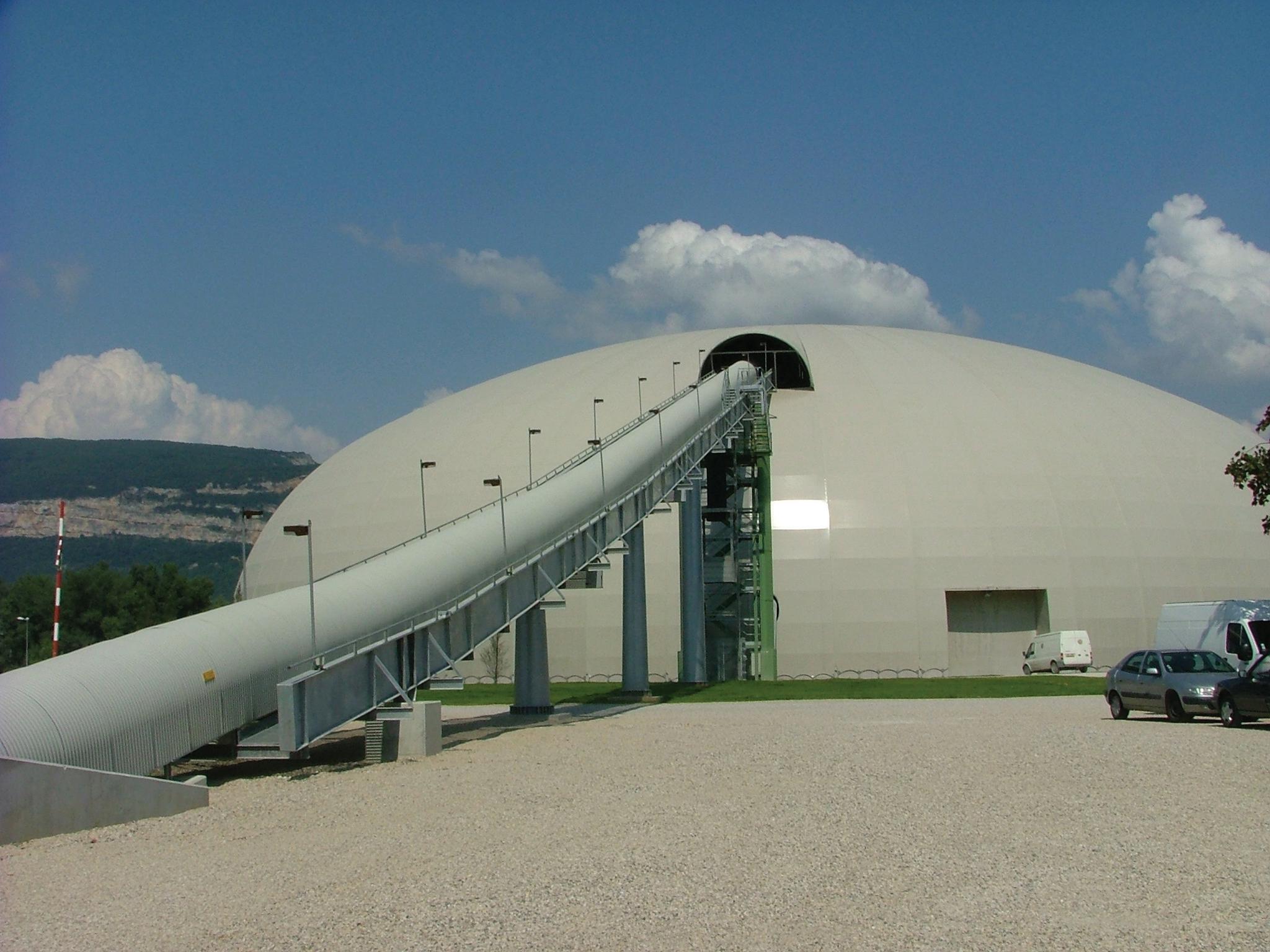
5: A 1.5km-long conveyor system at a cement plant in Mexico, is rated at 1,400tph, 4m/s. It transports limestone from the quarry to the cement plant, including two curved conveyors to avoid transfer points.
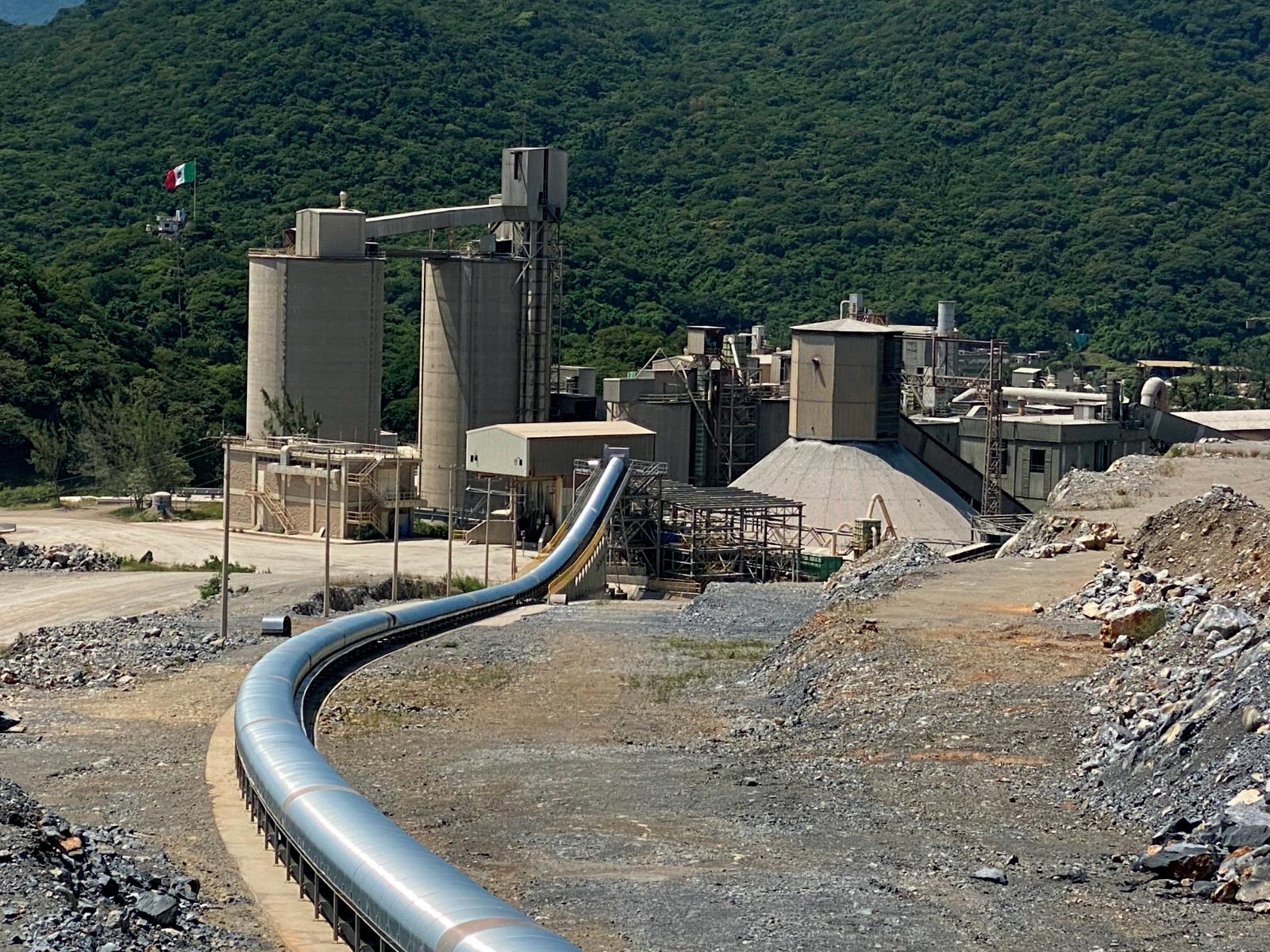
As cement making evolves, so do conveyors. They’re getting greener, smarter, and more automated. Think using renewable energy, fancy tech to keep an eye on things, and clever computer programs to use resources better. Conveyors are the unsung champion of cement making, quietly making sure everything runs like clockwork. From digging up raw materials to packaging the final product, they keep the show on the road, making cement production faster, greener, and safer. And as things change, they’ll keep evolving to make sure cement making stays efficient and ecofriendly.
RBL REI specializes in intricate curved conveying systems and has a vast pool of expertise and a workforce capable of
ENGINEERING & EQUIPMENT 82 MAY 2024 DCi www.drycargomag.com
Picture 4.
Picture
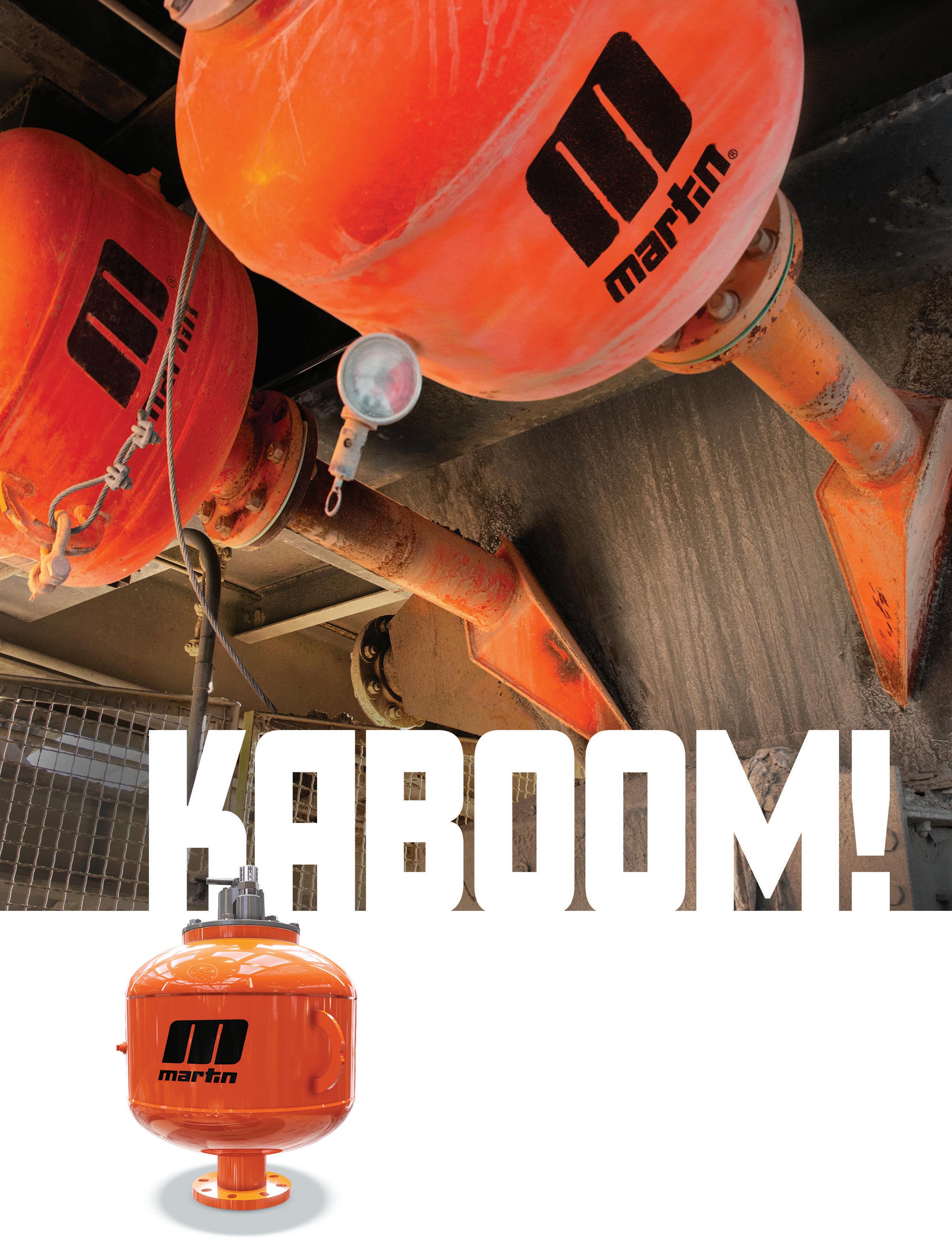
When bulk material stops moving due to accumulation or obstruction, you have some serious and costly problems: unscheduled downtime, potential injuries, lost production, and diminished profits.
Martin®Air Cannons are the best way to clear buildup, simplify maintenance and ensure continuous flow. Our cannons feature innovative valve designs that deliver more power with less air volume — highly effective with challenging wet and sticky materials.
Don’t get jammed up. Martin delivers solutions to your material flow problems so you can maintain throughput, improve safety and reduce your operating costs.
Martin® Hurricane Air Cannon




























Road mobile ship unloaders







ecla age & r Stor





Conveyunits im






uck loading Tr y units hip loaders S









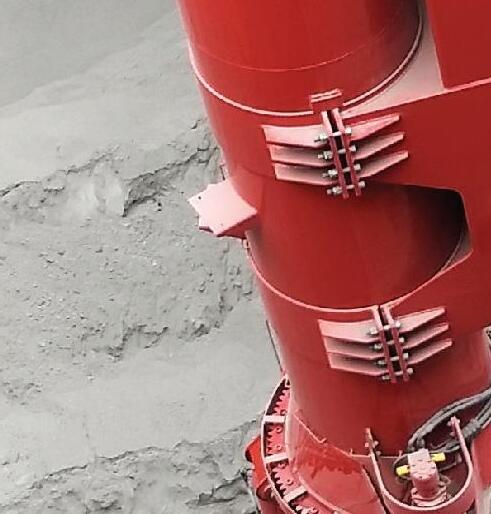



he a T o er t nsw y
buulk handlling questions
hip unloaders S
WWWW.VAANAALS .V STBULKHANDLING.COM M
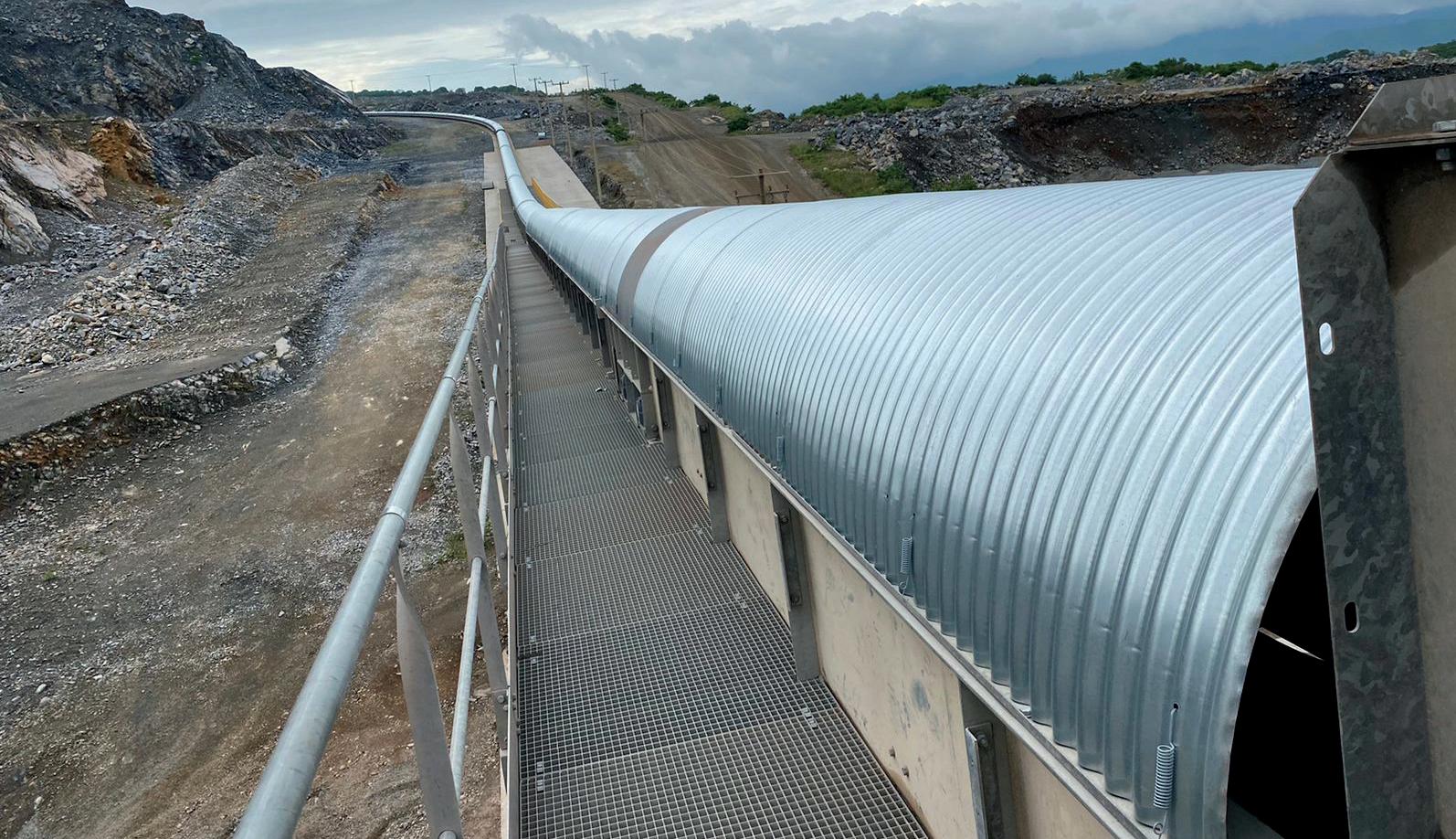
designing and engineering solutions for a sustainable future. RBL REI’s worldwide installations include: Running smoothly since 2014, this v 40km conveying system in China seamlessly connects the quarry to the cement factory (see pictures 1 & 2). The system comprises two 40km-long conveyors, both rated at 500tph (tonnes per hour) and 5m/s (metres per second).
An installation (see pictures 3 & v 4), located in the south east of France connects a quarry to the cement plant, through a Natura 2000 area (European protected area for biodiversity), hence imposing some strict environmental criteria. The 1.8km-long conveyor system is rated at 1,200tph, 4.5m/s.
A 1.5km-long conveyor, delivered v to a cement plant in Mexico, is rated at 1,400tph, 4m/s (see pictures 5 & 6). This installation comprises a set of conveyors spanning a total length of 1.5km for transporting limestone from the quarry to the cement plant, including two curved conveyors to avoid transfer points. The provided installation also includes a conveyor for transporting petroleum coke over 1km, featuring an S-shaped trajectory and tight radii to eliminate transfer points within the cement plant (thus reducing emissions of petroleum coke dust associated with handling). Commissioning is scheduled for the first half of 2024.






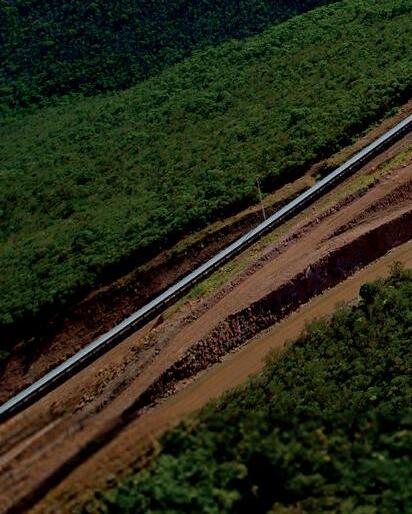












ENGINEERING & EQUIPMENT
/ k St PRODUCTS onveyor elt c B Curvedconveyor aper-ReclaimerScr acker Loading / Hopper or on ed c TOGET FUT OUR ENGIN HER TURE EER ommissioning ei-france.com elt specialist distances ng ystem ading S Unlo Design, Manufacturing, Supply, C contact@rblr conveyor b Lo
Picture 6: This 1.5km-long, 1,400tph conveyor system at a cement plant in Mexico also includes a conveyor for transporting petroleum coke over 1km.
Cement: controlling material at transfer points
Conveyor belts form a critical part of the network that moves bulk materials through any process. Yet every time there’s a transfer from one piece of equipment to the next there’s also a risk of materials escaping. The root causes are not always obvious, but with the right expertise solutions can always be found, according to the team at Martin Engineering.
Fugitive material — whether spilling on the deck, clogging the process or pumping into the air — presents multiple health and safety risks. For a start, spillage increases the risk of localized slips, trips and falls whilst exposure to airborne dust can pose long-term health risks.
But if spillage is left to accumulate, it will start interfering with production, from conveyor belt mistracking and seized components to structural issues and total process failure. That introduces a whole new level of safety risk, because discharge and transfer points often seem to be in difficult-to-access places, and sending in workers to clean up manually is unfortunately still the norm.
That can mean exposing people to confined spaces or working at height, not to mention the risks of stored energy, entrapment, falling materials, manual handling and so on. Worse still, despite what we know about the importance of energy isolation through LOTOTO (Lock Out, Tag Out, Try Out) production pressures can mean clean-ups are allowed to take place whilst equipment is still running — and experience shows that can have catastrophic consequences and cause life-changing injuries.
To address these challenges, conveyor
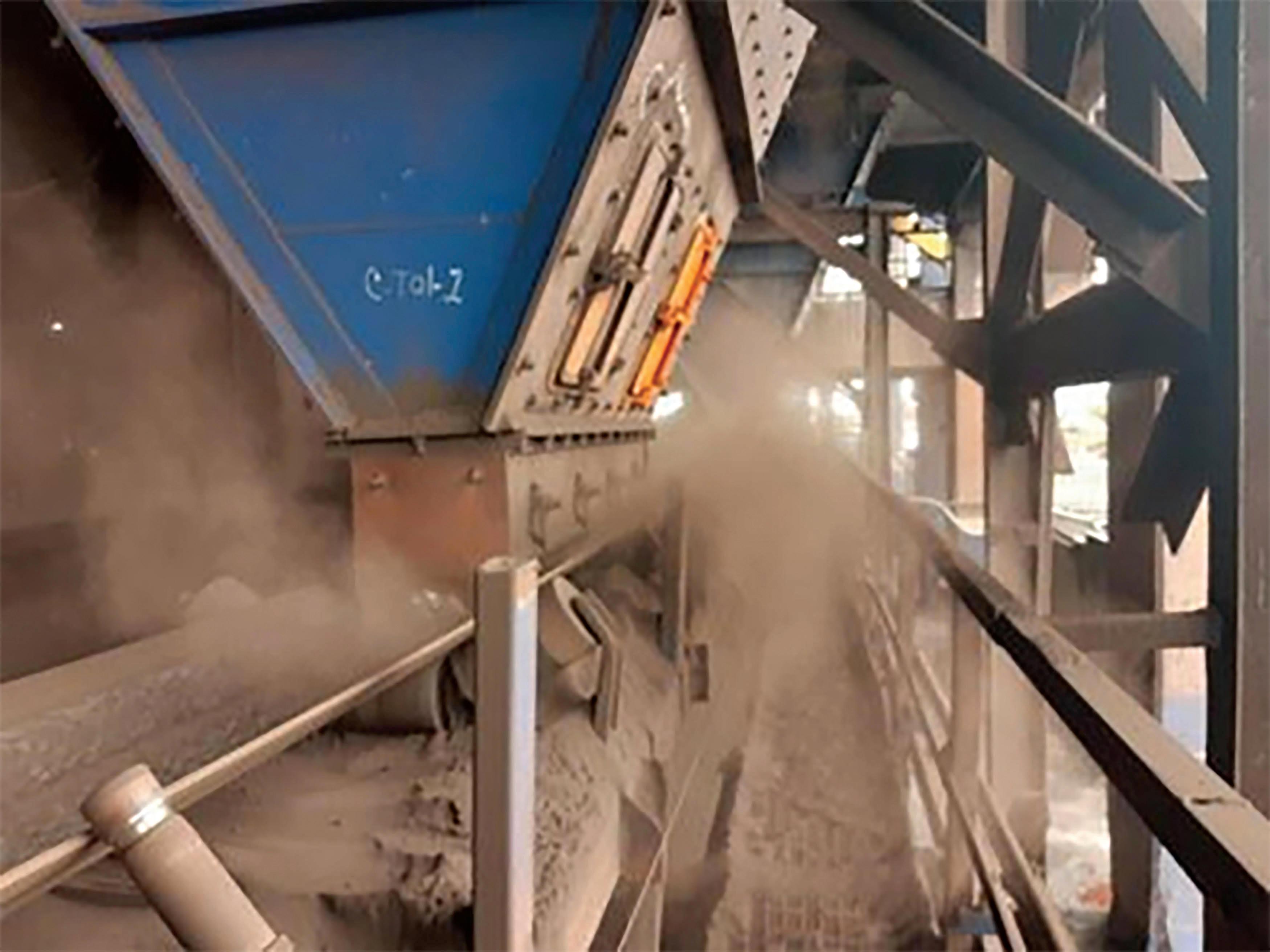
Dust accumulation on rolling components can cause abrasive damage and premature failure (all pictures ©Martin Engineering 2024).
SKIRTBOARD
EXTERNAL WEARLINER
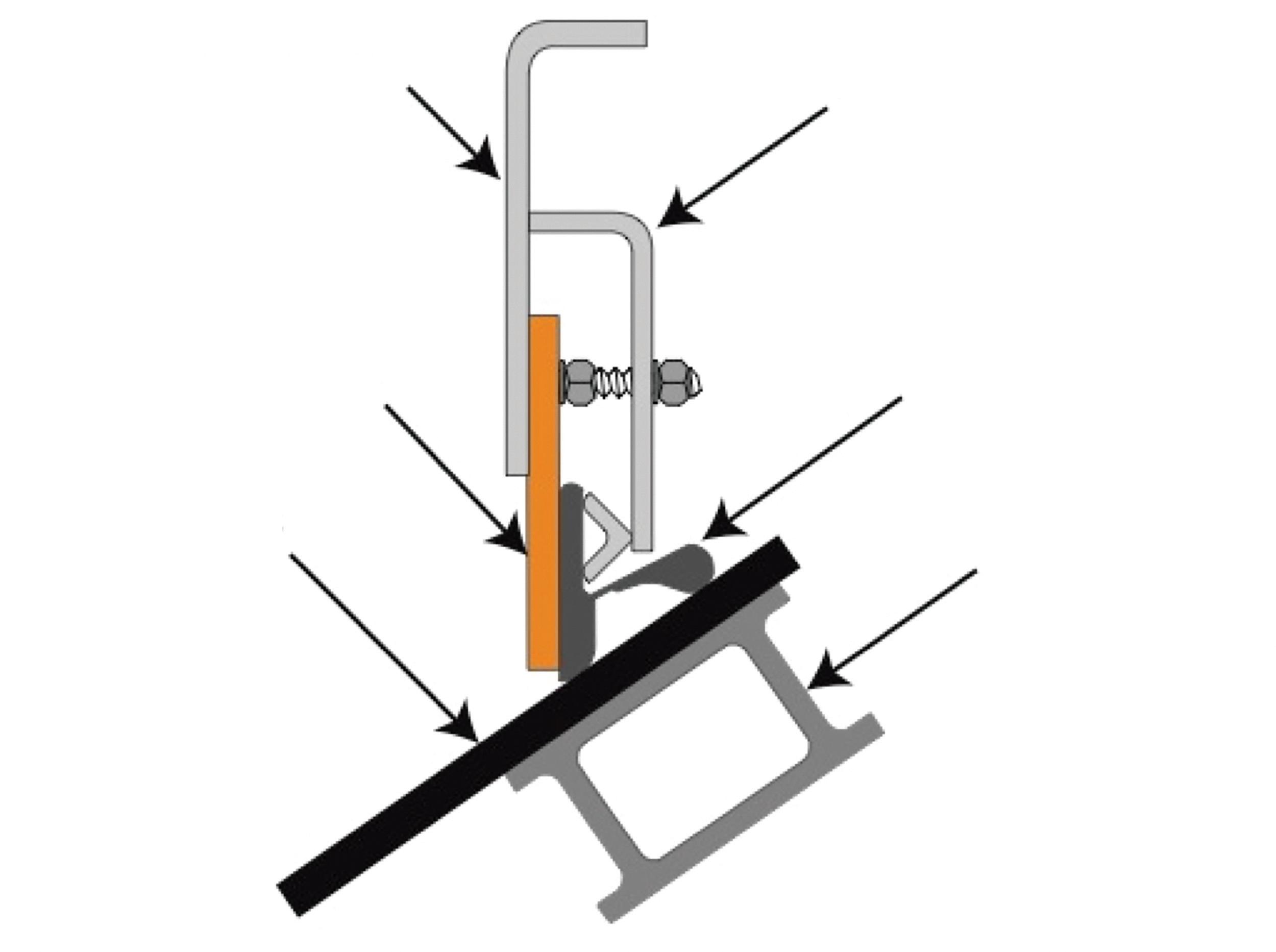
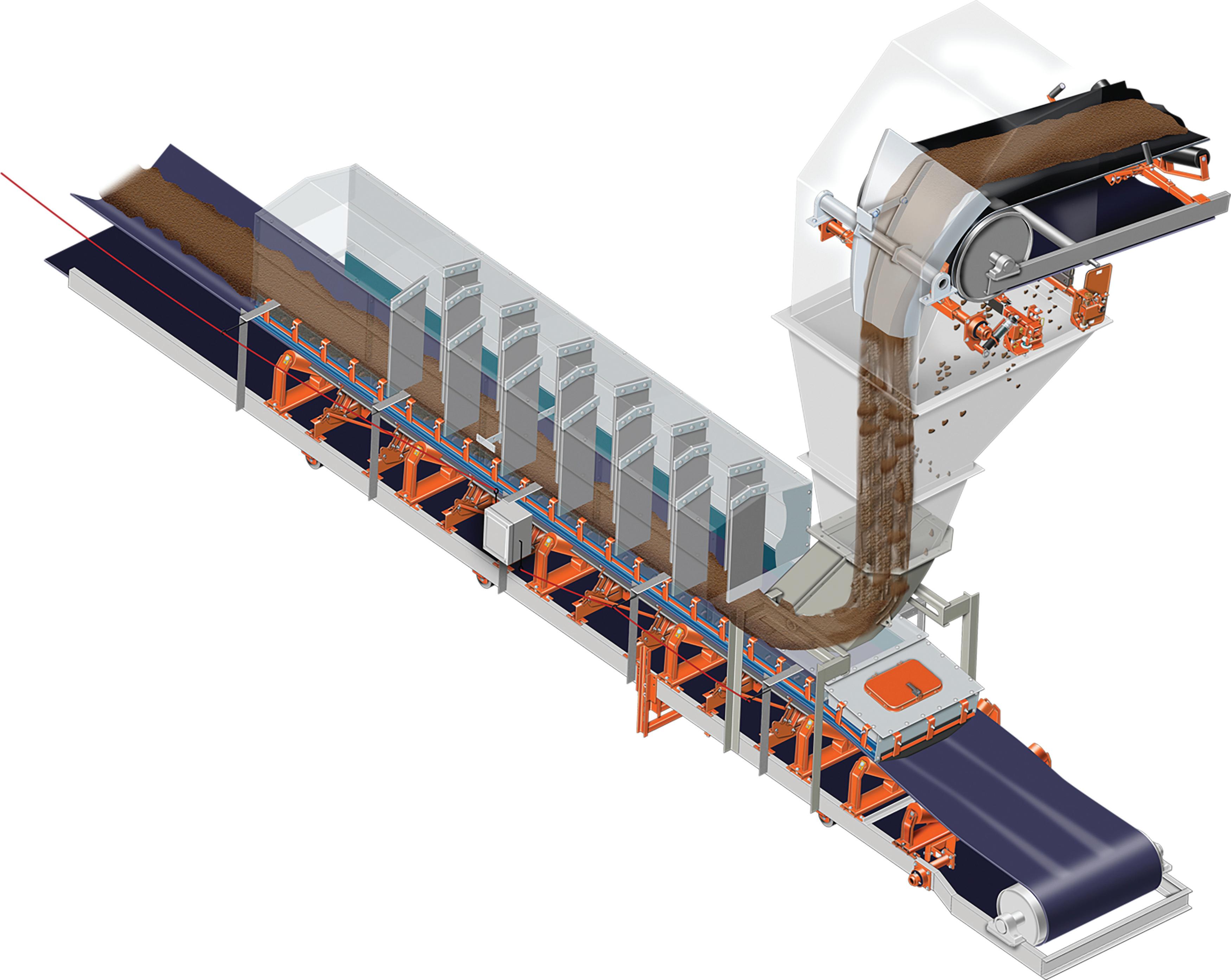
Figure 2: Components such as wear liners and skirt board seals reduce fugitive materials and clean-up hazards.
equipment manufacturers have sought to design innovative components and solutions that can prevent fugitive dust and spillage from conveyors and transfer points.
TRANSFER POINTS: KEEPING MATERIAL IN ITS PLACE
Daniel Marshall, Product Engineer at Martin Engineering says: “When tonnes of bulk material hit a moving conveyor belt, three things happen: fines scatter in random directions, cargo shifts and dust becomes airborne. The impact creates turbulent air pressure inside the chute that seeks to escape from any gap it can find, carrying dust and fines with it.
“A properly designed enclosure will manage bulk solids, allow cargo to settle in the centre of the belt and contain most of
ENGINEERING & EQUIPMENT 86 MAY 2024 DCi www.drycargomag.com
Figure 1: Modern transfer design eases the transition, reducing dust, spillage and belt damage.
BELT CLAMP
SEAL BELT
SELF ADJUSTING
SUPPORT
the dust inside a settling zone enclosure. If left uncontained, fugitive material in the form of dust and fine particle spillage will increase labor costs for clean-up, foul equipment, potentially encapsulate the belt and pose a serious safety hazard.
“Problems such as improper belt support, badly sealed chutes, damaged idlers and uneven cargo distribution all result in spillage and belt mistracking, contributing to increased costs for maintenance and clean-up, and high potential for injury.”
But is doesn’t have to be this way.
Well-designed conveyor loading zones are crucial in keeping walkways clear from spillage and dust emissions under control, allowing for hazard-free manual inspections and maintenance.
“Reduced workplace injuries and fatalities is a positive trend, but there are still predictable and preventable injuries happening,” said Marshall. “The goal of our philosophy is to help bulk handlers achieve the greatest amount of production at the lowest cost of operation and, most important of all, keeping workers safe and healthy while they go about their everyday tasks.
“We aim to accomplish that with a holistic, whole-process approach which involves raising awareness of the root causes through extensive training for production and maintenance teams, combined with innovative, safety-conscious equipment design based on decades of experience solving issues.”
TRANSFER POINTS: SEALED CHUTE COMPOSITION
A well-designed loading zone typically consists of a combination of components:
Polyurethane belt cleaner blades are essential to prevent carryback, spillage and build-up beneath conveyors.
An enclosed transfer chute long v enough to give dust and fines time to settle.
A heavy-duty belt support system to v absorb impact, protect the belt and handle rapidly shifting heavy material. Closely spaced idlers to reduce sag in v the belt that allows gaps where fines can escape and to ease material disruption from bouncing.
Externally adjustable or self-adjusting v skirting that’s able to contain fine particles and adapts to fluctuations in the belt plane. [Fig.2]
Easily serviced external wear liners v that can be inspected and changed from outside the chute without confined space entry.
Dust curtains set strategically v throughout the enclosure to control airflow and help settle dust.
Dust bags or mounted air cleaners to v collect tiny, highly active particles. A sealed tail box to protect the tail v
This mandrel-mounted belt cleaner is engineered to be accessed safely and replaced by a single worker.
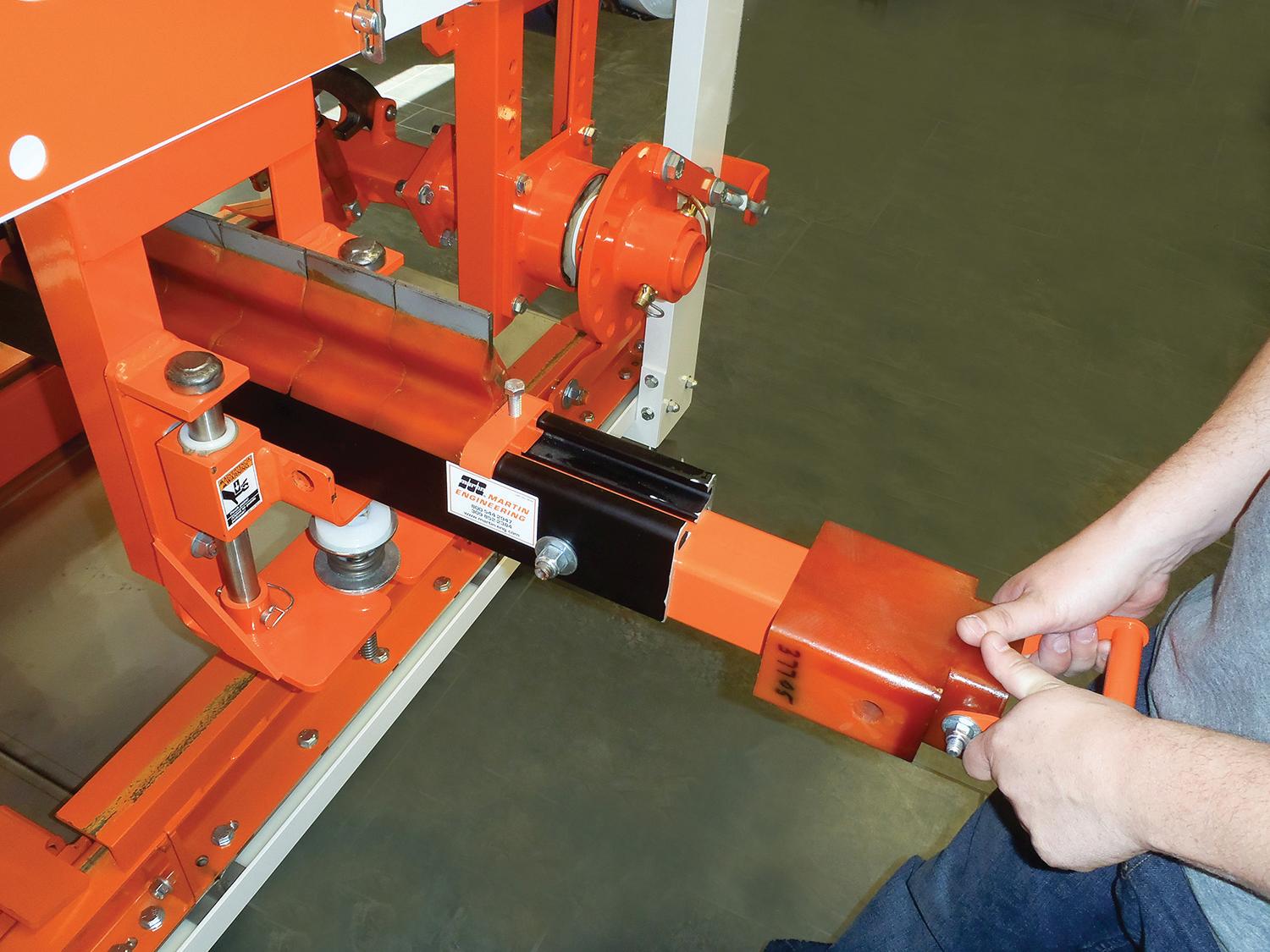
pulley from the backflow of fines, dust and spillage.
Exit curtains to prevent fugitive dust v from escaping from the end of the chute.
CONVEYOR DISCHARGE : KEEPING THE BELT CLEAN
Conveyors are among the most dynamic and hazardous machinery in any processing plant. Manually inspecting and maintaining each component of a conveyor belt system across a wide area can be time-consuming, labour-intensive and, crucially, involves significant exposure to risk.
Primary and secondary conveyor belt cleaners play a critical role in ensuring belts are kept clean and in preventing material carryback, spillage and build-up after the point of discharge. But to be effective, belt cleaner blades must be in constant contact with the belt at the right tension. And it’s the inspection, servicing, retensioning and replacement of belt cleaners that can give rise to transfer point health and safety risks.
To meet the demands for greater safety and improved production, manufacturers like Martin Engineering have introduced belt cleaner designs that are not only engineered for safer operation and servicing, but also reduce maintenance time and resource. Here we cover three examples of systems that reduce exposure to risk and improve maintenance safety.
SLIDE-IN, SLIDE- OUT BELT CLEANERS
Martin Engineering has designed a family of heavy-duty conveyor belt cleaners that allow the blade cartridge to be slid away from the belt for safe access. The system enables all servicing to take place outside of the chute, reducing the risk of injuries associated with moving machinery — manual handling, confined spaces and difficult access — and keeps workers away
ENGINEERING & EQUIPMENT 88 MAY 2024 DCi www.drycargomag.com
(Fig.1)

materials you move. With our compact Hägglunds direct drive systems, you can adapt easily to the job at hand, taking advantage of full torque at an infinite range of speeds. And should an overload try to stop you, the drives’ low moment of inertia and quick response will keep your machines protected. We’ll support you too, with an agile global network and smart connectivity to bring you peace of mind. Driven to the core.
Hägglunds is a brand of Rexroth. www.hagglunds.com
CleanScrape is a unique belt cleaner that forms a 3-D curve beneath the discharge that conforms to the pulley’s shape.
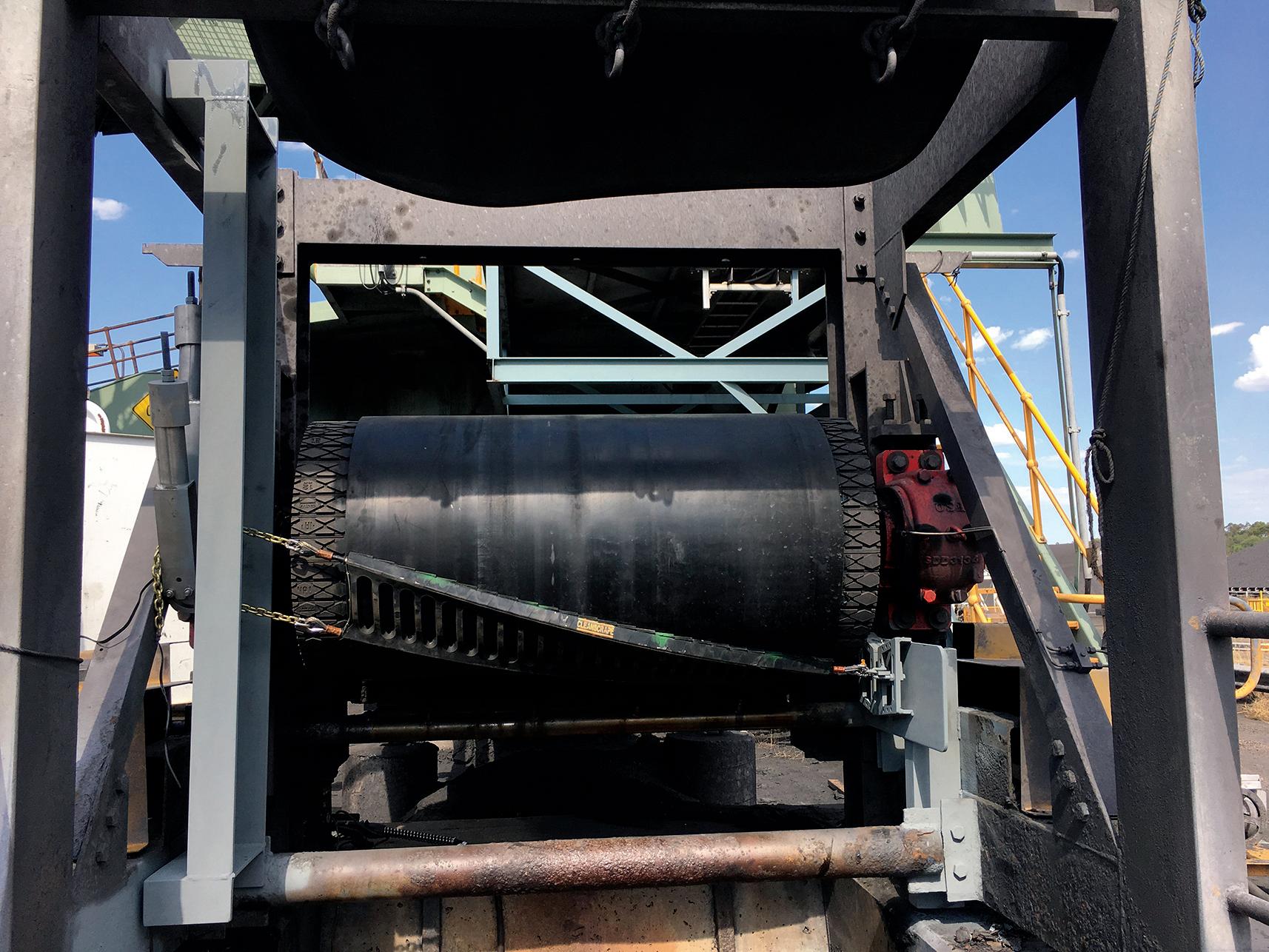
from harm while servicing belt cleaners. The design also enables blades to be serviced and replaced by a single worker in a fraction of the time of a typical blade replacement task.
The same slide-out technology has been applied to impact cradle designs. The systems are engineered so operators can work on the equipment safely, without breaking the plane of motion. External servicing reduces confined space entry and eliminates reach-in maintenance, while facilitating faster replacement. The result is greater safety and efficiency, with less downtime.
REVOLUTIONARY BELT CLEANER DESIGN
One way to reduce exposure to risk during maintenance, and ensure exceptional belt cleaning performance at the same time, is a revolutionary belt cleaner design that doesn’t use a urethane blade at all. CleanScrape is equipped with tungsten carbide tips that delivers extended service life, low belt wear, significantly reduced maintenance and improved safety.
Unlike conventional belt cleaners that are mounted horizontally across the belt plane, this unique cleaner is installed diagonally across the discharge pulley, forming a three-dimensional curve beneath the discharge area that moulds to the
Figure 3: Hierarchy of controls — remote monitoring with N2 delivers optimum control of risk by eliminating exposure before it can occur.
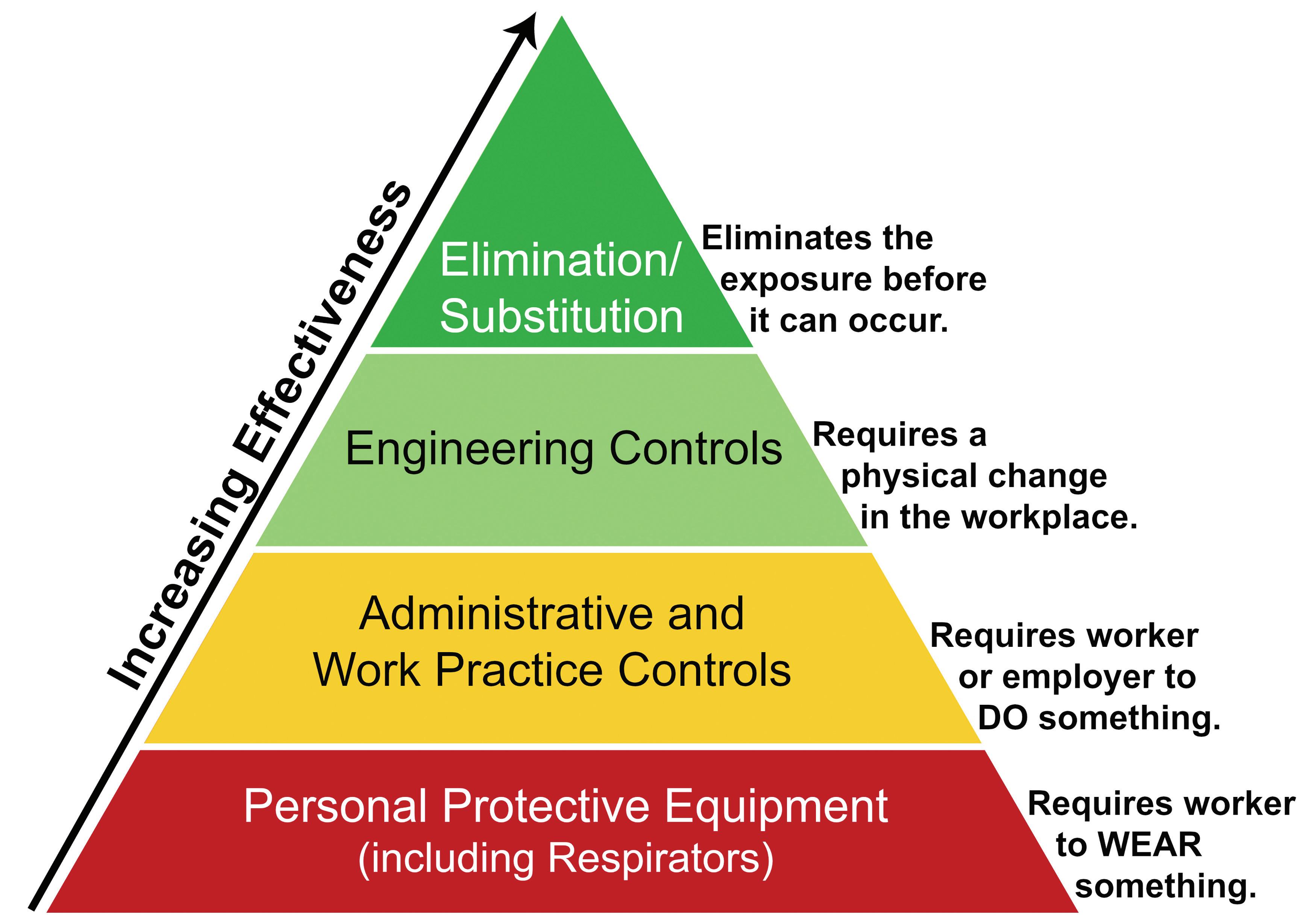
pulley’s shape. This novel approach has been so effective that, in many operations, it has rendered some crucial secondary belt cleaners redundant, saving further on belt cleaning costs and service time.
REMOTE MONITORING IS THE NEXT GENERATION
Until recently the only way for maintenance contractors and in-house teams to identify what servicing was needed was to physically go to each belt cleaner location, taking all the necessary steps to address the hazards involved in inspection. Because of the level of exposure — even to simply inspect belt cleaners — there’s been a growing need to find a way to make this common, but time consuming, task safer and more efficient.
“The number of inspection visits — and therefore the exposure to risk — can be significantly reduced by allowing service technicians to monitor the condition of each belt cleaner remotely, rather than having to physically visit each one,” says Dave Harasym, Martin Engineering UK Branch Manager.
“The smart thing about this kind of innovation is that it goes straight in at the top of the health and safety ‘hierarchy of controls’ eliminating needless inspection visits and significantly reducing the interaction between people and conveyors. (Fig. 3) Technicians only need to visit conveyors when the system shows that a belt cleaner
ENGINEERING & EQUIPMENT 90 MAY 2024 DCi www.drycargomag.com
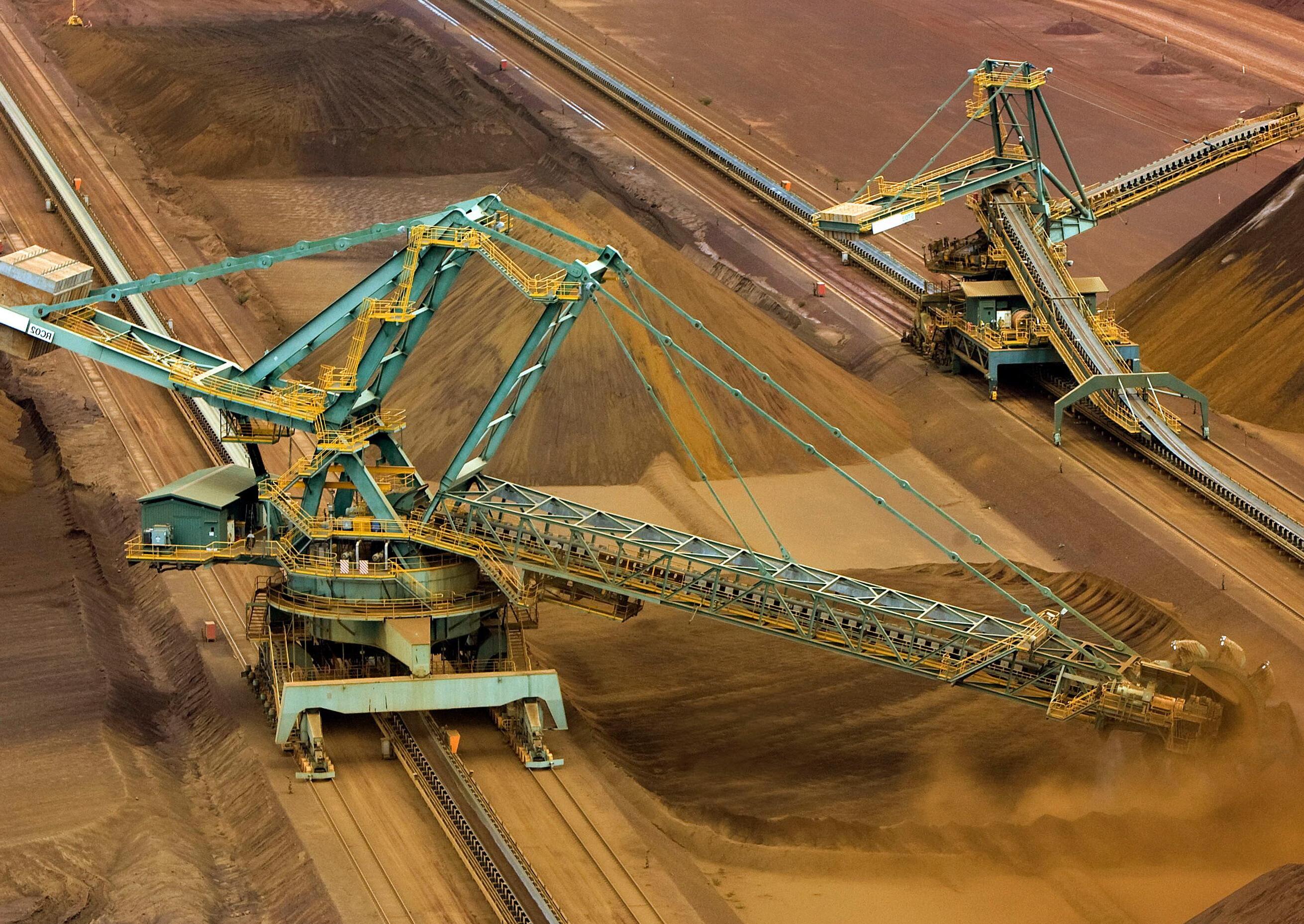
Groundbreaking Solutions
KOCH Solutions stands at the vanguard of material handling, driving progress with over three centuries of combined expertise and a global portfolio boasting 10,000 projects. At KOCH Solutions, we are redefining material handling excellence with our advanced stockyard systems. Meticulously engineered to cater to the dynamic demands of high-capacity operations, our solutions stand out for their modular innovation and seamless integration into existing workflows. Crafted from a blend of tried-and-tested components, each system we devise is a testament to our commitment to tailor-made efficiency. We don't just provide equipment; we deliver comprehensive, turnkey solutions that resonate with your unique specifications, ensuring operational effectiveness paired with economical investment and operating costs. Our ethos is to forge a path of progress in material handling that aligns with your vision of growth and efficiency.
KOCH Solutions GmbH | Karl-Koch-Str. 1 | 66787 Wadgassen Germany
Tel: +49 6834 470 0 | Email: info@koch-solutions.com www.koch-solutions.com
Comprehensive
Delivery
Dedicated Service Performance delivered
Planning | Precision Manufacturing | Streamlined
|
needs attention, often this can be planned for an already scheduled shutdown.”
The result is a remote monitoring system that tracks the condition of each blade. It features a position indicator — a polyurethane collar embedded with a wireless sensor unit — fitted to each primary belt cleaner. The sensor unit transmits data on blade wear life to a central on-site ‘gateway’ device which sends the information to the cloud. From there users can access belt cleaner condition data in one place on an easy-to-use mobile app or desktop dashboard which predicts the retensioning cycle for each belt cleaner and indicates when servicing should be scheduled or performed immediately.
“It’s the ideal solution, especially for large-scale cement plants which have numerous difficult-to-access belt conveyors distributed over a large production site. The next generation of innovation to make bulk materials processing safer and more efficient is here.”
END -TO -END KNOWLEDGE IS KEY
There are innovative products and solutions capable of addressing virtually every incidence of spillage, build-up and dust in bulk material handling. But
overhauling a single problematic conveyor discharge or transfer point can sometimes exacerbate fugitive material problems elsewhere in the system. When safety has been sacrificed in the design for a lower price, it is difficult to go back and redesign a system for to achieve optimum health and safety standards.
There is a huge return on spending a little extra at the outset to design a clean, safe system, especially if the investment has been signed off with the expectation of the ability to increase production volumes! That’s why Martin Engineering advocates a holistic approach, working alongside cement production and maintenance teams around the world to conduct comprehensive end-to-end assessments of entire cement plants and their constituent phases.
A total process review with all parties is the best way to reveal the true causes of spillages, build-ups and blockages to ensure that the right solutions can be devised and implemented. It also helps plant teams to gain knowledge and expertise to continuously improve and maintain their plants to the highest standards – not just in terms of health and safety, but also productivity and profitability.
The second part of this feature will take
a look at the risks and the remedies of materials sticking to refractory walls and the inside of hoppers, bins and silos.
ABOUT MARTIN ENGINEERING
Martin Engineering has been a global innovator in the bulk material handling industry for more than 75 years, developing new solutions to common problems and participating in industry organizations to improve safety and productivity. The company’s series of Foundations books is an internationally recognized resource for safety, maintenance and operations training — with more than 22,000 print copies in circulation around the world. The 500+ page reference books are available in several languages and have been downloaded thousands of times as free PDFs from the Martin website. Martin Engineering products, sales, service and training are available from 16 factoryowned facilities worldwide, with whollyowned business units in Australia, Brazil, China, Colombia, France, Germany, India, Indonesia, Italy, Mexico, Peru, Spain, South Africa, Turkey, the USA and UK. The firm employs more than 1,000 people, approximately 400 of whom hold advanced degrees.
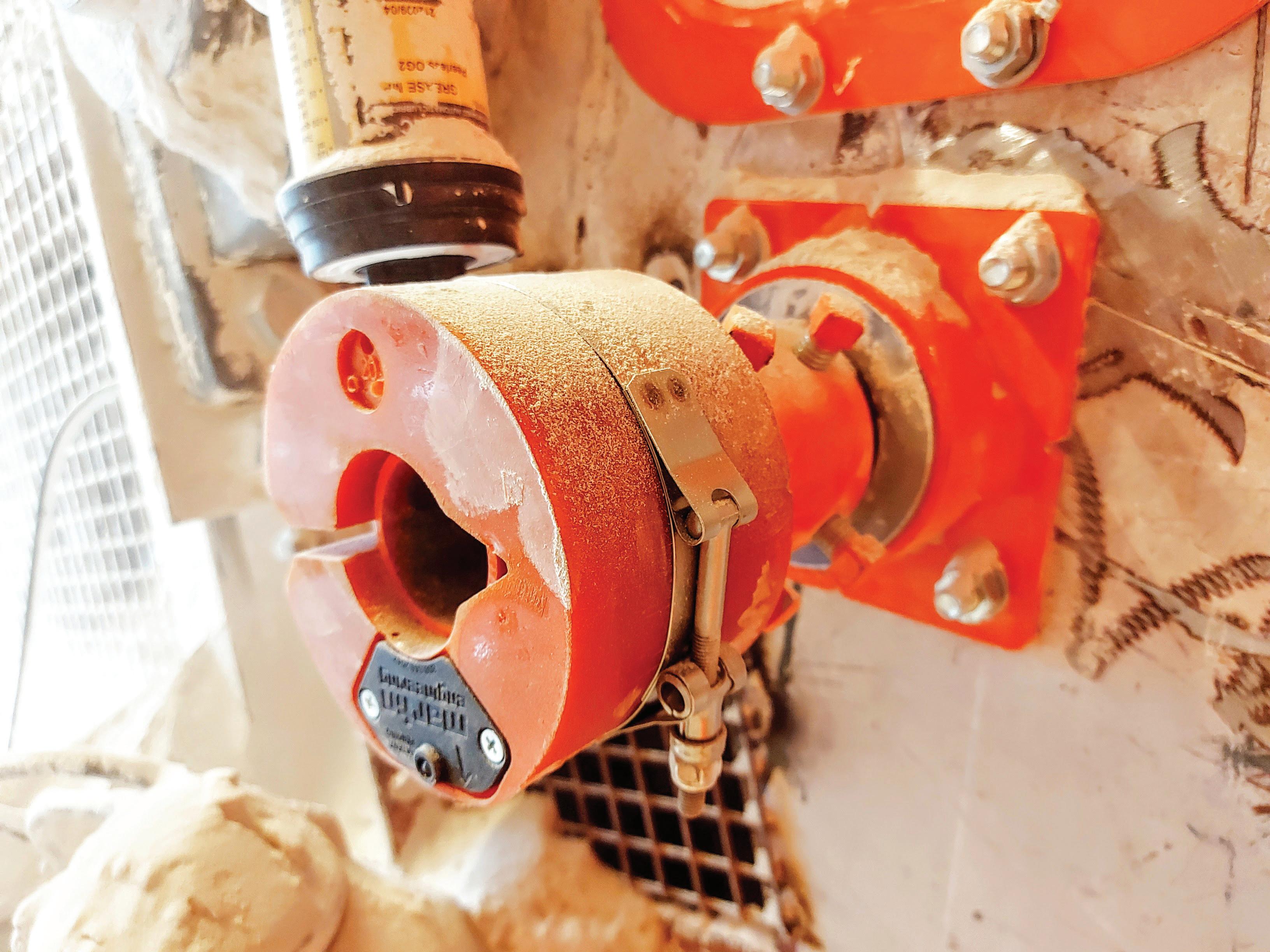
The N2® Position Indicator is a polyurethane collar embedded with a sensor unit that fits onto the end of the belt cleaner mainframe.
ENGINEERING & EQUIPMENT 92 MAY 2024 DCi www.drycargomag.com


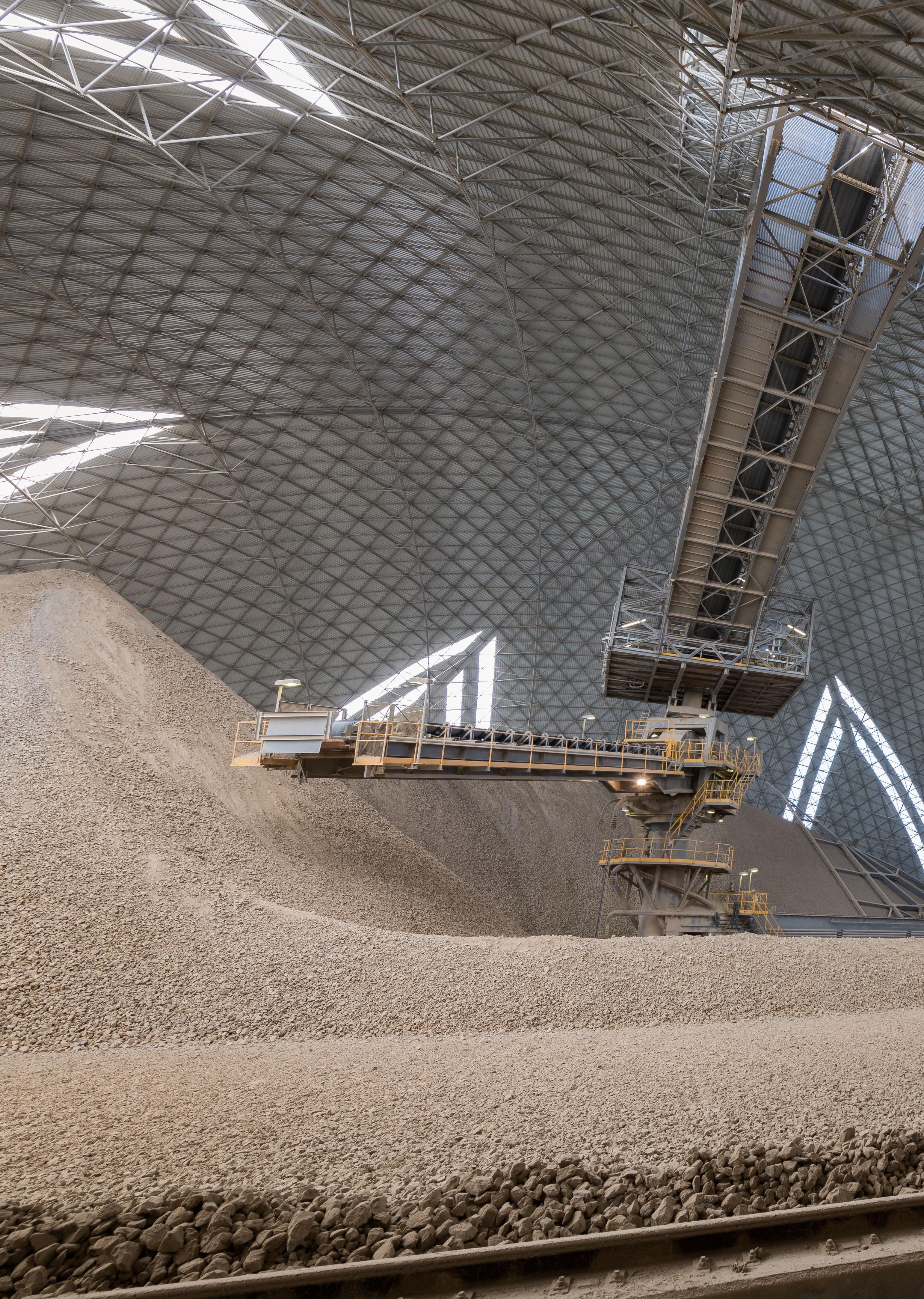










Scrapetec participates in 2024 IEEE-IAS/PCA Cement Conference
Scrapetec was a participant at the 2024 IEEE-IAS/PCA Cement Conference, which took place in Denver, USA, at the end of April.
The company presented its innovative DustScrape study aiming at efficiency and sustainability in the cement industry. The conference gave Scrapetec an exciting opportunity to showcase its latest and greatest innovations.
Scrapetec is proud of its work with its ground-breaking DustScrape study. Through this revolutionary approach, it has designed a solution to dramatically lower the capacities of dust extraction plants. The innovative system offers a significant reduction in maintenance work and a major cut down in power consumption.
Scrapetec is fully committed to addressing critical issues like CO2
reduction and sustainability. It is constantly striving to devise efficient and sustainable solutions that prioritize these key areas.
The Cement Conference was a fantastic opportunity for Scraptec’s experts to engage directly with customers, and to explain more about its trailblazing developments and their implications for the future of the cement industry.
Efficient cement handling at Steypustöðin using Dino bulk truck loaders
This company has helped put the Icelandic construction sector on the map: Steypustöðin concrete producers, which has been in operation since 1947. It was unthinkable that the Russia–Ukraine war would reduce production. Raw material flows on hold? Steypustöðin does things differently!
From pipes to prefabricated elements and wet concrete: Steypustöðin in Reykjavik makes these. Buildings, bridges and roads are built with it. This has been happening in Iceland for a long time, albeit a little later than in the rest of Europe. A daring investment in a large plant closed the ‘concrete gap’ between this island and the European mainland.
IMPORTING DRY BULK GOODS
Cement, one of the raw material ingredients of concrete, had always been imported by Steypustöðin from neighbouring Denmark. That was until the war in Ukraine resulted in raw material shortages on the European market. Cement became a scarce (bulk) commodity. “I had never experienced a shortage of this magnitude before,” says Kai Westphal, who has been with Steypustöðin since early 2000.
LOADING CEMENT POWDER IN BIG BAGS
Due to the cement shortage in its own region, Steypustöðin decided to import cement from Turkey. This was supplied in big bags, for which Steypustöðin’s logistics did not have the facilities. Says Westphal: “We had to find a solution for the automated loading of big bags into bulk trucks.”
A SMART CHOICE : DINO BULK TRUCK LOADERS
Large-capacity bulk truck loaders seemed the perfect solution for the job. However, the average delivery time of 22 weeks for a new loading system was too long. An online auction solved the problem. Steypustöðin purchased a second-hand
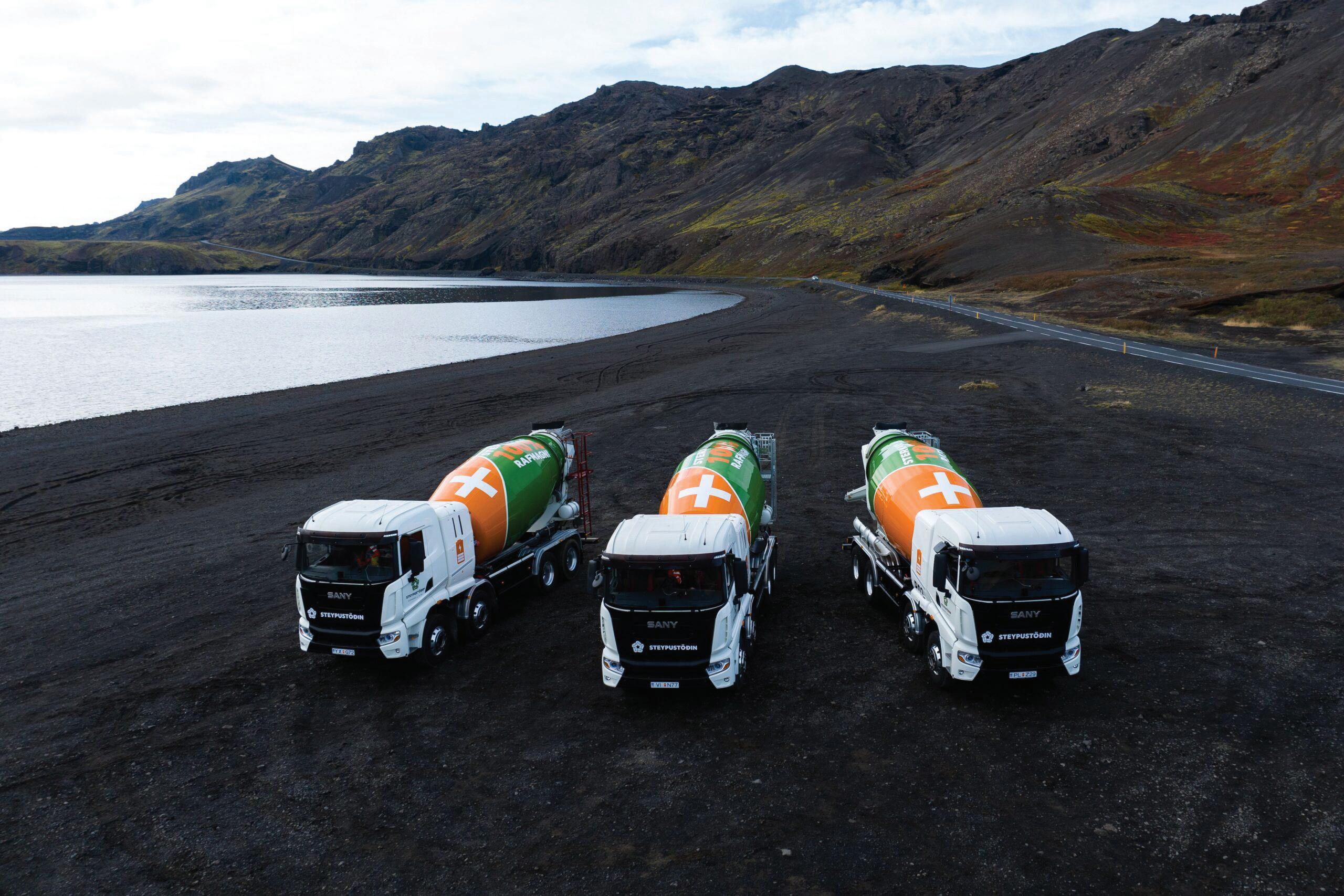
bulk truck loader. Says Westphal: “I heard through the grapevine that Dino bulk truck loaders are of excellent quality and that Van Beek is a worldwide supplier of screw conveyors. That’s why we decided to buy this second-hand Dino.”
CUSTOMIZED UNLOADING SOLUTIONS
As this was a standard version of the Dino bulk truck loader, modifications were required. For example, more buffer volume in the inlet hopper was needed and low dust was also required. This was not a problem. Van Beek provided an additional extension rim, a lid and an unloading plate. This enabled the shipment of cement powder for Steypustöðin to be quick, safe and efficient.
VAN BEEK AS A RELIABLE SUPPLIER
One bulk truck loader was barely capable of handling the daily supply of 280 tonnes of cement for the production of 800m3 of concrete per day. A second bulk truck loader was urgently required. The Icelandic concrete producer considered Van Beek to be the logical choice to supply its new bulk truck loader. This was because “we were equally pleased with our first Dino and Van
Beek’s high level of service,” Westphal explains.
THE DINO BULK TRUCK LOADER FOR CEMENT
Roel Kneepkens, ‘Mr Bulk Truck Loader’ at Van Beek, explains the features of the Dino DS400 Cement to us: “The inlet hopper is fitted with a cross cutter to cut open the big bag. This means the fork lift truck driver does not need to leave the fork lift truck to cut open the big bag, but can immediately fetch the next big bag. A Dino Cement has a capacity of 80m3/hour, which is twice the capacity of the standard Dino. If the flow behaviour of the product co-operates in this, the bulk truck can be filled within a very short time (from 30 minutes per bulk truck).”
WORLDWIDE DELIVERY OF BULK TRUCKS
With this version of the Dino bulk truck loader, Steypustöðin immediately benefits from the best possible loading capacity, ease of working and fast loading. Dino’s can be delivered anywhere in the world, shipping is easy using a sea container. Also, Dino’s are optionally available for different voltages worldwide.
ENGINEERING & EQUIPMENT 94 MAY 2024 DCi www.drycargomag.com
Dino







Rulmeca dual-drive motorized pulleys integral to belt conveyor system upgrade at Buzzi Unicem USA
Cement plants, shipping terminals, mines and a variety of other bulk materials handling facilities have incorporated Rulmeca motorized pulleys into plant upgrades for more than 60 years.
In 2016, Rulmeca shipped more than 11,000 motorized pulleys to destinations on every continent. This article describes how the Buzzi Unicem USA Pryor, Oklahoma cement plant modified a ‘dual drive’ motorized pulley system on its reclaim tunnel conveyor to optimize the continuous online analysis of material chemistry in the raw mix proportioning area.
ORIGINAL INSTALLATION
Buzzi Unicem USA upgraded its 550ft-long tunnel reclaim conveyor in 2009 to solve operational problems. These problems included production delays (due to inadequate power to start the conveyor under full load), severe belt bounce during ‘empty belt’ start-up, and occasional tunnel flooding due to a high water table and heavy rains.
The reclaim tunnel conveyor moves high calcium limestone from the covered bulk storage area to the ball mills while additional ingredients were also added to the mills.
Buzzi Unicem USA selected Rulmeca motorized pulleys in a dual drive configuration for the tunnel reclaim conveyor upgrade primarily because it had good experience with smaller Rulmeca motorized pulleys elsewhere at the plant. The product’s hermetic seal was particularly important to plant personnel because they were concerned about high calcium limestone abrasiveness and occasional tunnel flooding.
Rulmeca motorized pulleys increase system reliability, lower maintenance expense, improve personnel safety, save space, and reduce power consumption because they enclose all drive components within an oil-filled and hermetically sealed pulley shell.
Since each motorized pulley encloses its motor and gearbox within a pulley shell, it eliminates redundant parts. Therefore, motorized pulleys are lighter than exposed drive systems because exposed systems require motors and gearboxes to be protected within separate cast iron or steel enclosures. Furthermore, the internal drivetrain acts like a deep beam, resisting deflection in a lightweight package and
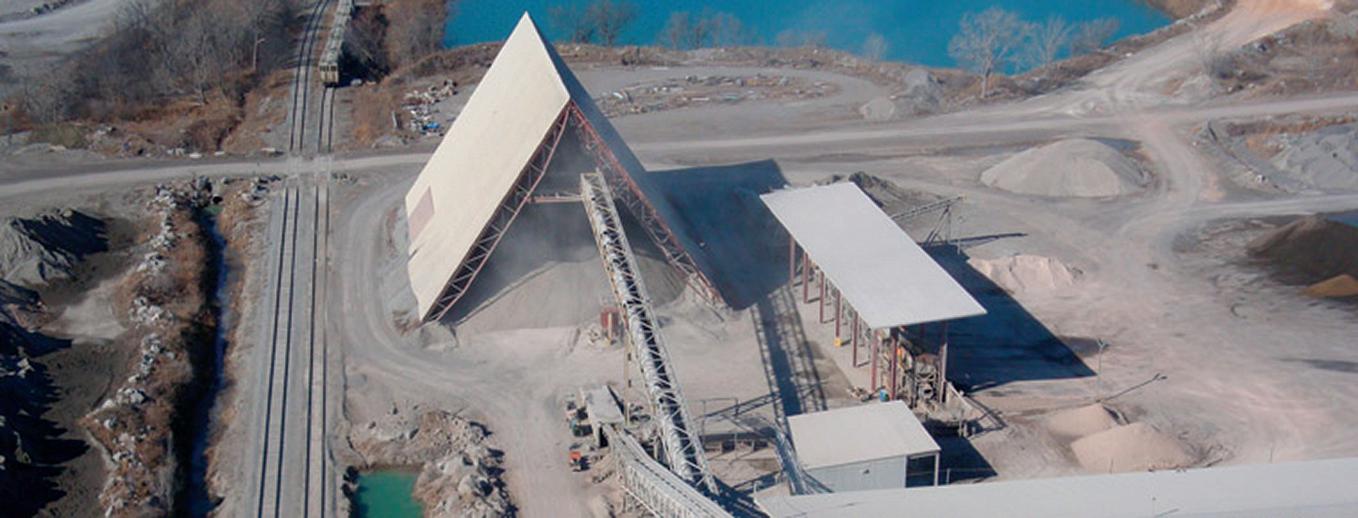
eliminating the need for a heavy ‘through shaft’.
Buzzi Unicem USA’s original reclaim tunnel drive consisted of a 75HP motor coupled to a pedestal-mounted gear reducer which was coupled to a live-shaft lagged drive pulley with external pillow block bearings. Starting the empty conveyor from the head pulley caused severe belt bounce (up to four feet) in the conveyor concave curve area at the tunnel exit due to high tension in the belt’s carrying strand.
Two 50HP model 630H motorized pulleys were installed in the head and tail positions. Only one shift was needed to install the two motorized pulleys thanks to the pulleys’ light weight and ease of alignment. Time-consuming drive component alignment was unnecessary because all drive components are internal and pre-aligned.
With a start-up torque of 200%, the twin 50HP drive system eliminated the problem of inadequate power at start up. Since the two drives provided a total of 360° of belt wrap instead of 180°, the slack side tension requirement was reduced. Therefore, energizing the head and tail drives simultaneously eliminated belt bounce when starting an empty belt. Additionally, the dual drive system dramatically extended belt life.
Originally concerned that the tail pulley drive would be inundated during occasional tunnel flooding conditions, plant personnel reported that the motorized pulley has performed well for more than seven years in spite of repeated tunnel flooding. This proves that the hermetic seal has stood the test of time.
A flux vector VFD drives each motorized pulley. They were originally programmed to drive the conveyor at 60Hz. At that time, the reclaim conveyor, fed by six belt feeders, moved ‘high calcium’ hard rock and a mixture of other ingredients at 500tph (tonnes per hour) at
PROJECT SPECIFICATIONS
Client: Buzzi Unicem USA
Application: cement, quarries and tunnelling
Division: bulk
Conveying material: limestone
Project location: USA
Customer type: end-user
a nominal belt speed of 384fpm (feet per minute) during 10% of the available production time.
PLANT PROCESS IMPROVEMENT
Three years after the installation of the new reclaim tunnel conveyor drives, Buzzi Unicem USA revised the process to include the installation of an online cross belt x-ray analyser and a raw material handling system that included six bins and associated weigh feeders, enabling the plant to improve product quality.
Materials including low calcium rock, bottom ash, bauxite, and iron ore were transferred from six hoppers and combined with high calcium limestone from the bulk storage shed on the reclaim tunnel conveyor and analysed by an online cross belt x-ray analyser. The analyser sends a signal to a PLC to adjust feed rates for all materials as needed to achieve the desired chemistry.
The two objectives necessary for this revision were: (1) to increase the period of time during which material was transferred from the raw storage area to ball mills and (2) increase the material bed depth to improve the performance of the X-ray analyser.
Since a control algorithm adjusts the feed rate to the hoppers every five minutes, Buzzi Unicem USA decided to decrease the reclaim tunnel conveyor flow rate and increase the time during which the conveyor was working. Flow rate decreased from 500–600tph to 75–200tph
ENGINEERING & EQUIPMENT 96 MAY 2024 DCi www.drycargomag.com
and operating time was increased from 10% to 80% of available production time. Average flow rate is currently 80tph. In other words, rather than moving 500 tonnes in less than one hour while the X-ray analyser made nine chemistry adjustments, the plant now moves 500 tonnes in approximately six hours, enabling the X-ray to make more than 75 adjustments. By decreasing belt speed from 384fpm to 244fpm, material bed depth is increased 38% at 150tph and 29% at 80tph.
In addition to the general decrease in reclaim tunnel throughput, the raw material PLC was programmed to adjust throughput from 75tph to 200tph, as needed. The reclaim tunnel belt speed as well as the speed of each of the six hopper feeder belts are controlled by the PLC as guided by the ‘decisions’ of the online cross belt x-ray analyser.
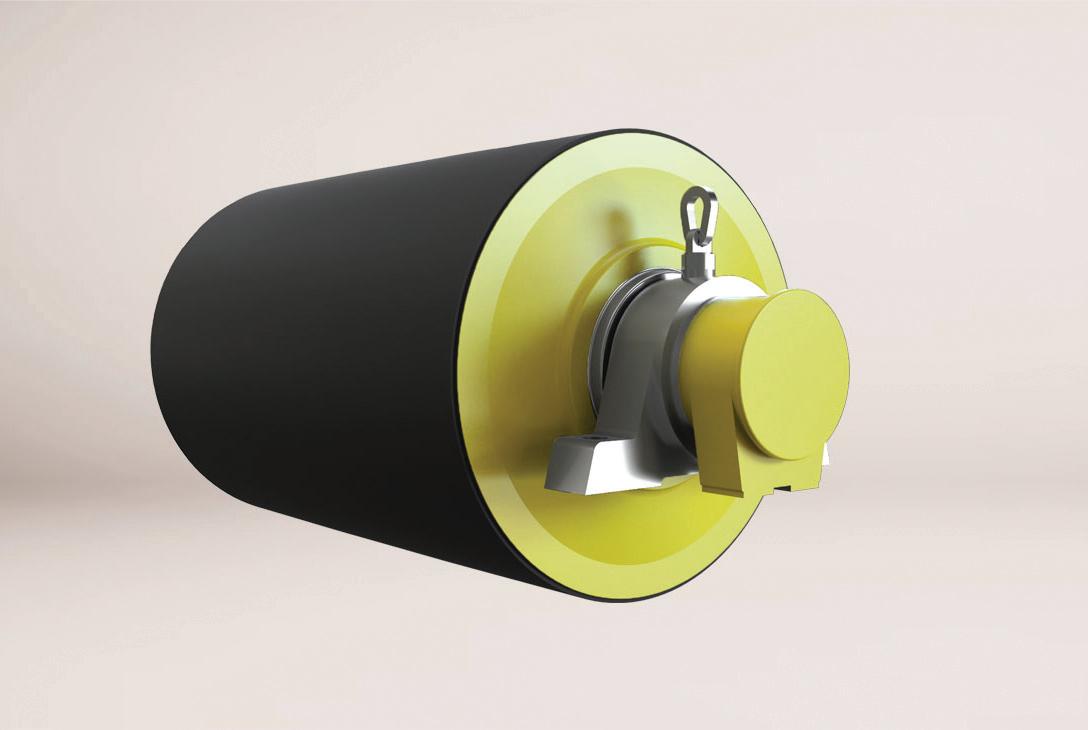
Since the reclaim tunnel conveyor is fed by six belt feeders and the conveyor is driven by two VFDs, the changes in flow rate and belt speed were simple. The feed rate from the six feeders was reduced while the power supply frequency to the two motorized pulleys was reduced from 60Hz to 38.1Hz (reducing the reclaim tunnel belt speed from 384fpm to 244fpm.)
During a February 2016 visit, the two 50HP motorized pulleys moved raw material mix at 244fpm. The motorized pulley motors were drawing 28.5 amps at the head and 36.3 amps at the tail, respectively, while moving at 149tph. Since full load amps of each motor is 57 amps, the drive system has more than enough installed power.
CONCLUSION
The Buzzi Unicem USA experience is typical. Many international major bulk materials handling facilities have taken advantage of the versatility of Rulmeca motorized pulleys, revising how they are employed, as necessary, to adapt to changing plant operating conditions. The growing use of VFDs has made ac squirrel cage induction motors more flexible while offering higher levels of control and protection.
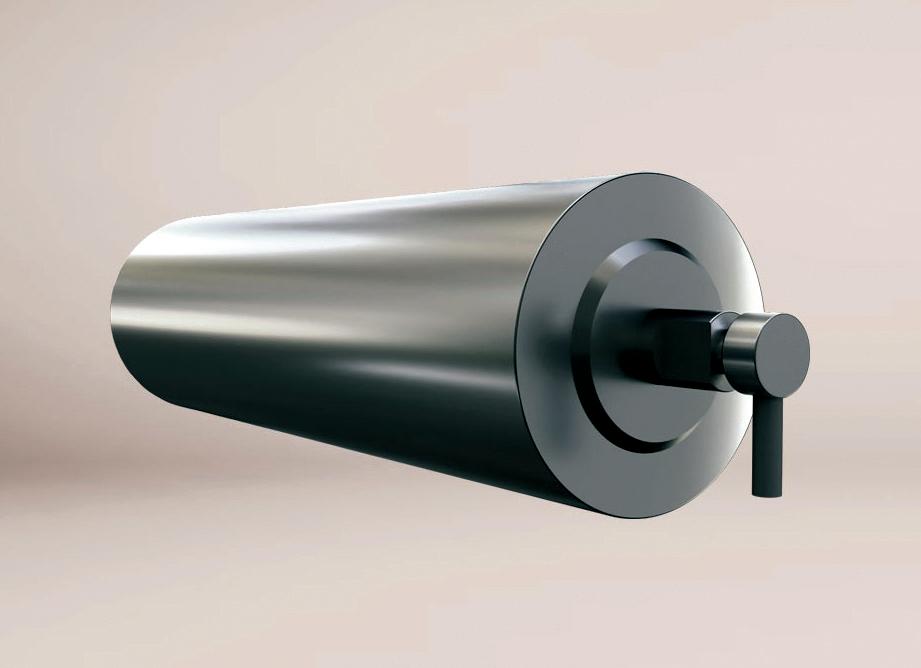
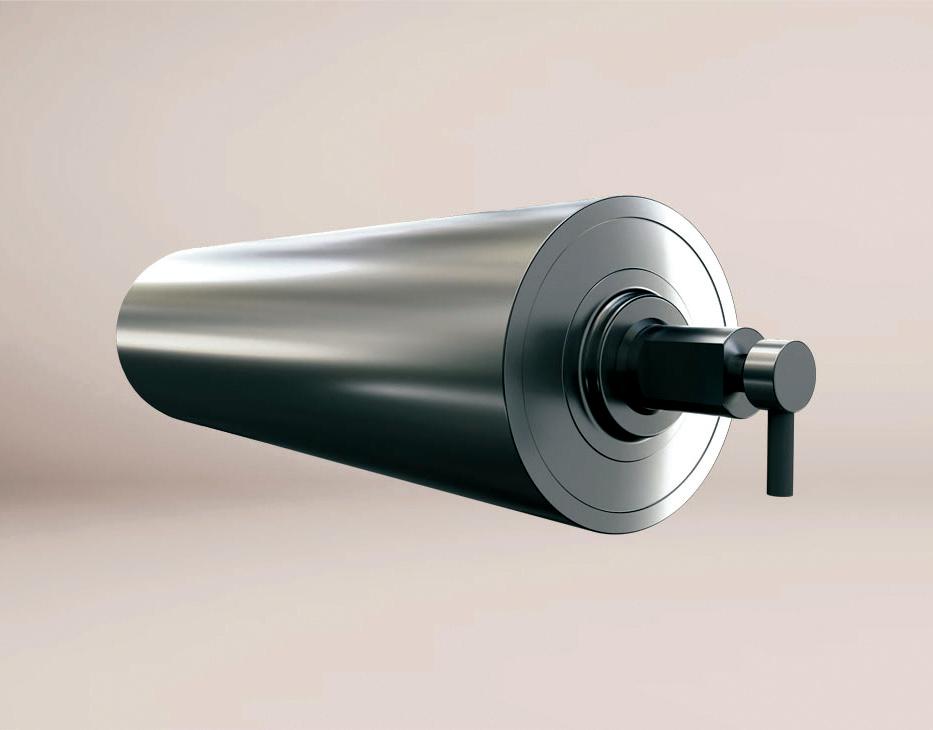




















ENGINEERING & EQUIPMENT
The best bulk truck loader in the world www.dinobulktruckloader.com Motorized pulley 1000H & 1000HD.
pulley 138LS.
pulley 165LS.
Motorized
Motorized
SAMMI reports on recent cement/clinker handling operations
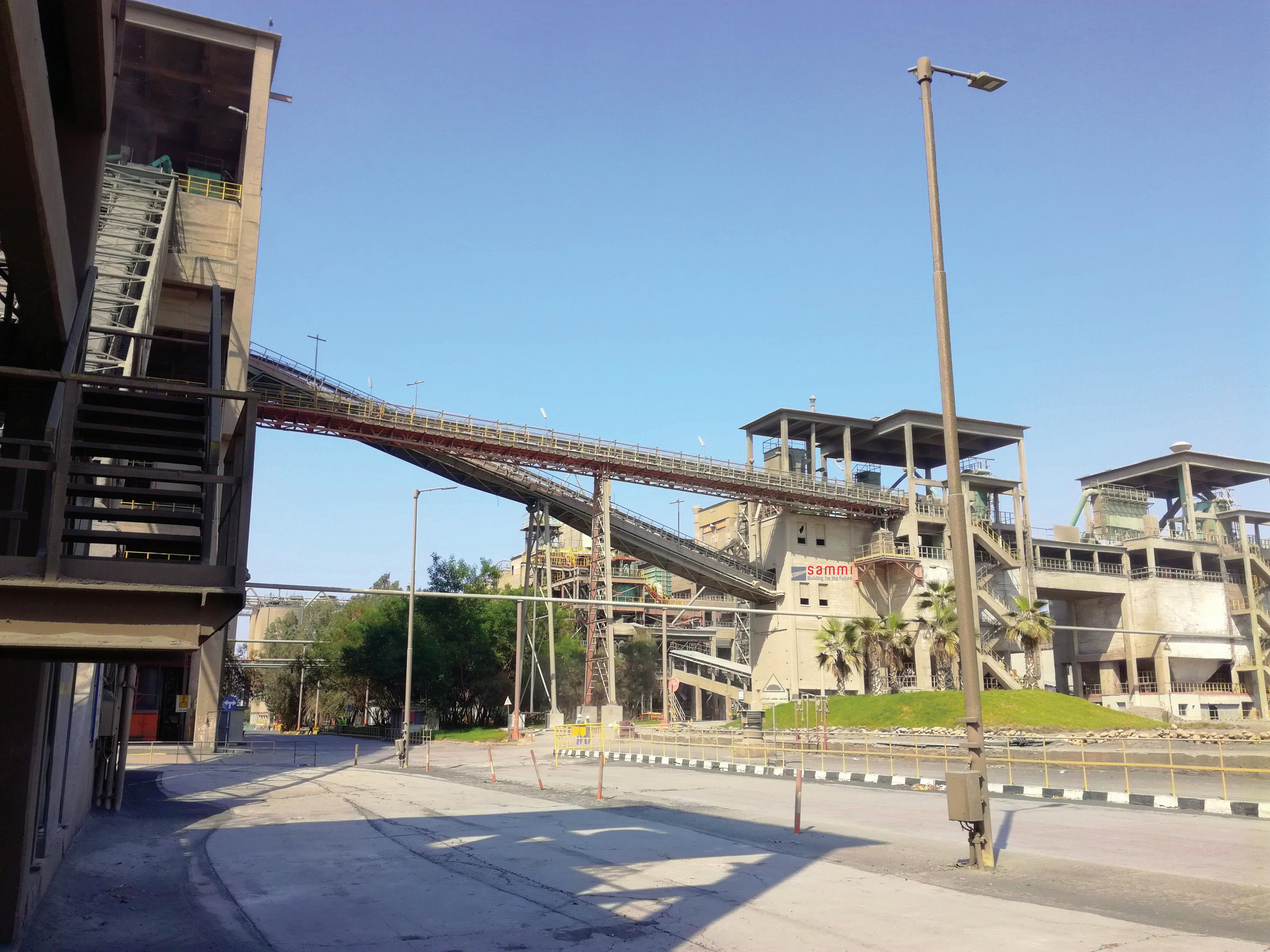
Italian company SAMMI has considerable expertise in the bulk handling equipment industry, boasting over 50 years of experience in a range of industrial applications.
The company, located across its two production sites in Umbria, the green heart
of Italy, has a team of approximately 70 direct collaborators. It has a consolidated turnover exceeding €15 million, and provides comprehensive support, from engineering and construction to the commissioning of turnkey bulk material handling installations.
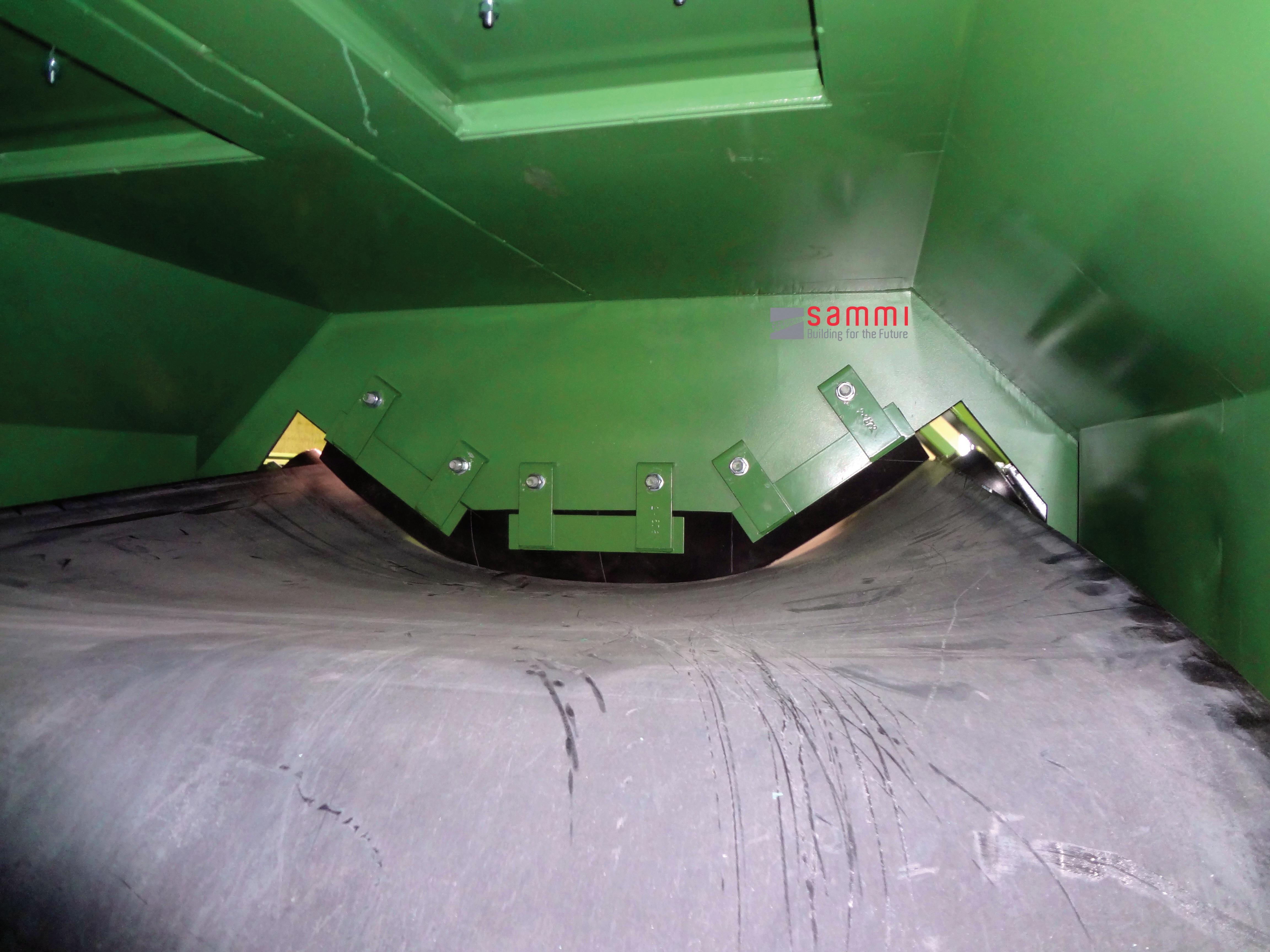
SAMMI specializes in developing tailormade solutions, both for the construction of new plants and the revamping of existing ones.
Its goal is to ensure that its clients achieve the maximum return on investment in the shortest possible time, minimizing plant downtime and impacts on maintenance and spare parts activities. SAMMI aims to be recognized as a leader in industrial engineering, delivering high-value solutions and services while striving to be a beacon of excellence, passion, and social responsibility.
The company is committed to building a sustainable and customer-oriented Group, which is currently composed of SAMMI S.r.l. and CCM Engineering S.r.l.u., based on innovation, integrity, and respect for people. SAMMI’s focus is on creating longterm value for customers, collaborators, business partners, and the communities in which we operate.
SAMMI has great expertise in cement and clinker handling systems.
BRIDGE BELT CONVEYOR SYSTEM
One of SAMMI’s recent notable projects is a bridge belt conveyor system, which will
ENGINEERING & EQUIPMENT 98 MAY 2024 DCi www.drycargomag.com




VISIT US AT
TOC EUROPE BOOTH J52 JUNE 11 – 13 · ROTTERDAM, NETHERLANDS


transport clinker at continuous working temperatures of 200°, with peaks of 300°C. The bulk density of the clinker handled is 1.3t/m3.
The plant operates 24 hours a day, and the system is automatic and unattended, without supervision.
The noise emissions of the equipment are <80dB (A) at 1.5 m on permanent working place.
Other details of the project include:
SUPPLY VOLTAGE
Power: 3 x 400V – 50Hz +/- 10%
Instruments and controls: 230 VAC/24 VDC
REFERENCE STANDARD
Structure: 10012/88 law 1086/71
DPCM 3274/2005 and updating DM 14.01.2008 Testo
Unico Sulle Norme
Tecniche sulle Costruzioni
DIN if necessary
Mechanisms: UNI-CNR, ISO, DIN related to specific equipment
The gear units must be calculated for FS 1.5
Minimum according to AGMA
Electric: CEI – VDE – Law 186/68
Electric motor: IEC
Safety standard: directive CEE 89/391, 89/106, 89/392, 91/368 and next modifications
“Testo Unico sulla Sicurezza” D.lgs 81/08 Requirements for local authorities, requirements VVFF
MATERIAL
Metal sheet: S 275 JR
Profiles & beams: Fe 360B – Fe 430B
Shaft: C40 bon/38 NiCrMo
4 bon
Bolts: Class 8.8 zinc-coated
Location: Lomas de Chapultepec, Mexico
End user: Buzzi Unicem
Description: belt conveyors equipped with spillage chains, belt extractors for clinker handling
Start/end: 2014/2015
Location: Egypt
End user: Cemex
Description: belt conveyor on bridge structure for clinker transportation at high temperature
Start/end: 2013/2013
Location: Fos Sur Mer (Marseille), France
End user: Lafarge
Description: clinker and additives transport line 2008 2008
Location: Nord Broyage (Dunkerque), France
End user: Lafarge
Description: clinker transport line
Start/end: 2008/2008
Location: Ravenna, Italy
End user: Micron
Description: grey cement and chalk crushing plant
Start/end: 2008/2008
Location: Augusta (Syracuse), Italy
End user: Buzzi Unicem
Description: bridge conveyor with spillage chain for cement transport to silo ‘Claudius Peters’ No.12
Start/end: 2007/2007
Location: Manfredonia (BA), Italy
End user: Colacem
Description: 150tph belt with scraper chains for clinker and sulphur transport
Start/end: 2006/2006
Location: Spain
End user: Undisclosed
Description: cementing plant complete with hopper and loading undisclosed
Start/end: 2004/2004
Location: Ravenna, Italy
End user: Micron
Description: fluidized conveying system for cement grinding lines
Start/end: 2004/2004
Location: Ravenna, Italy
End user: Micron
Description: complete plant for cement receiving line
Start/end: 2003/2004 SAMMI
ENGINEERING & EQUIPMENT 100 MAY 2024 DCi www.drycargomag.com
CEMENT/CLINKER HANDLING PROJECTS
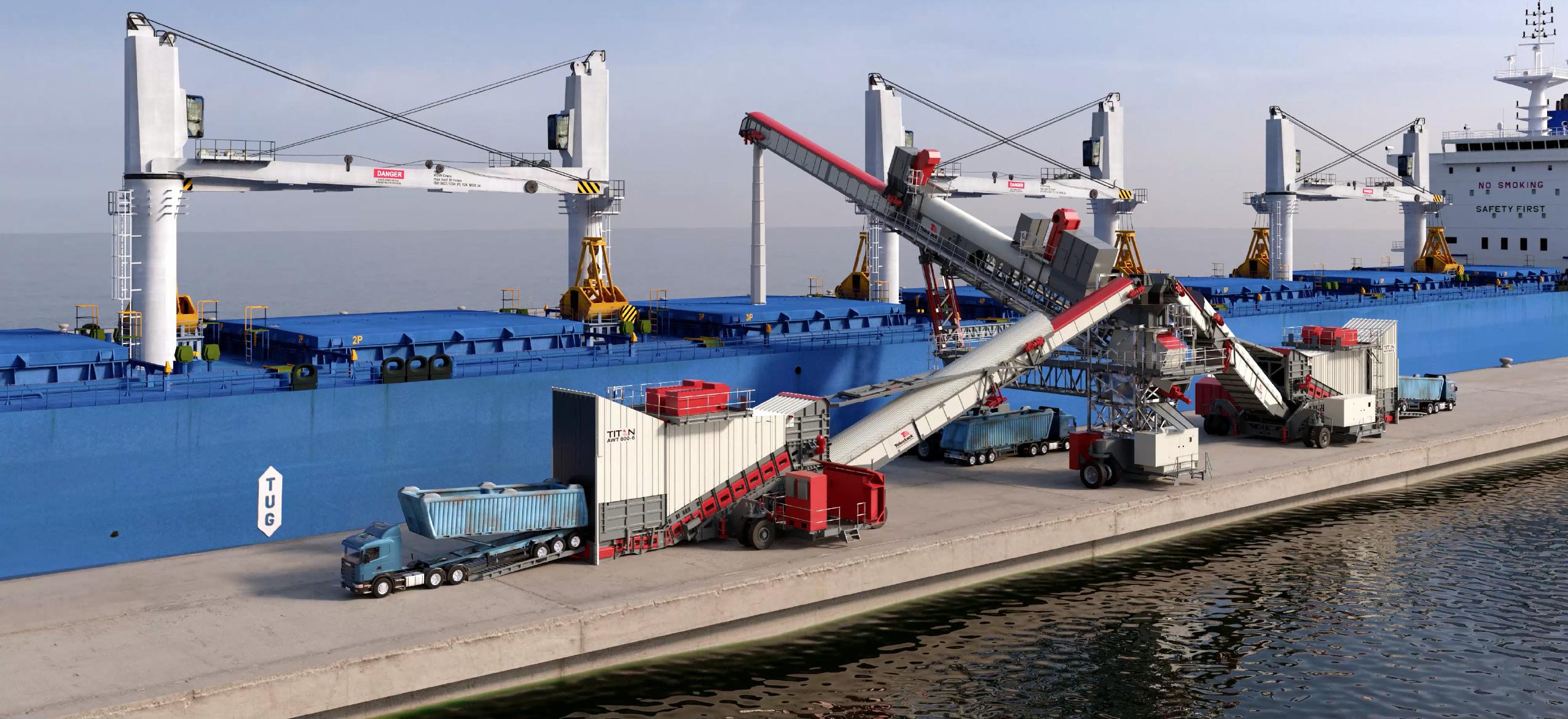
TRUC
CK SHIP
INDOUT IND OUT





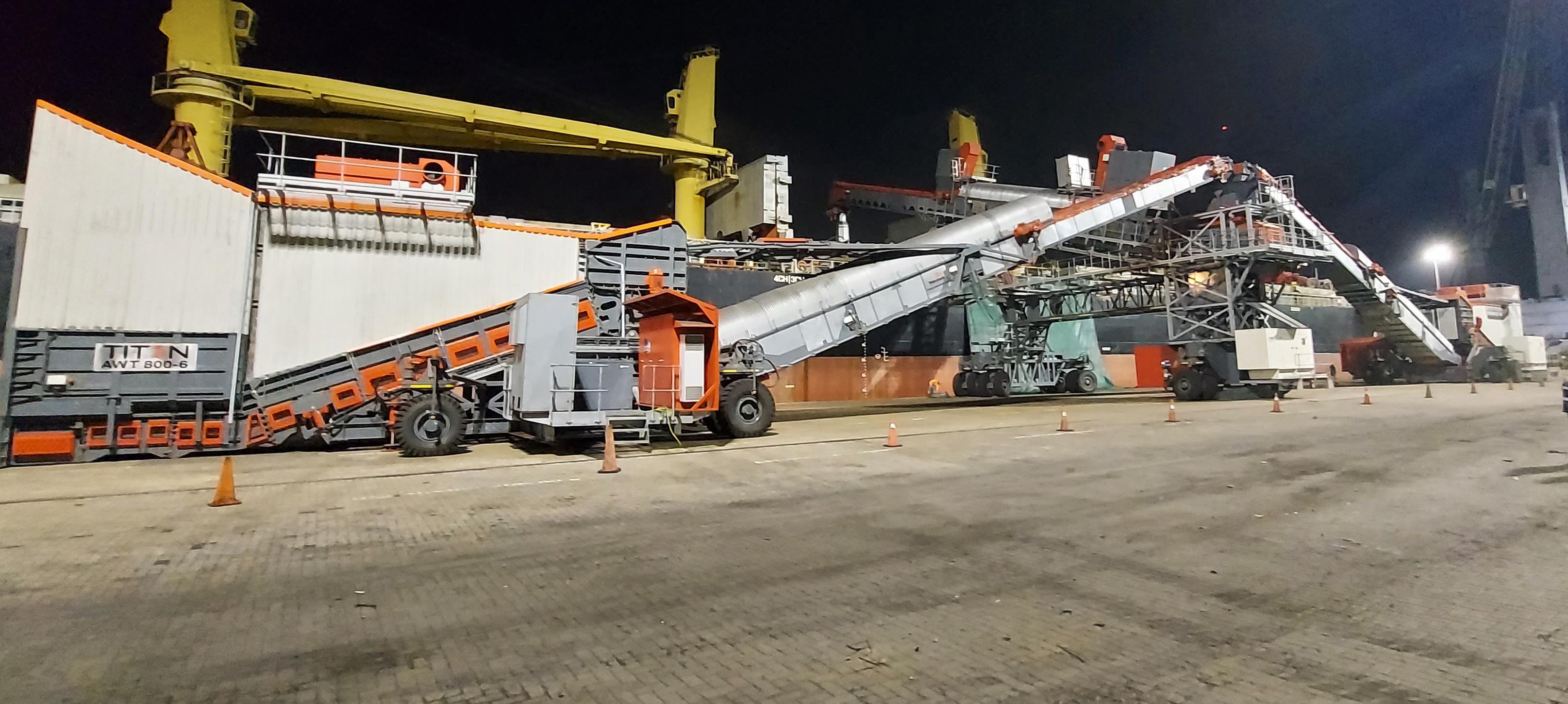
ator A intr
oncurr elar
er Telestack w reecommissionedby their custo install a TB 42 All Wheel Travel (AWT) high Titan dual-feed AWT 800-6 Bulk Reception of commodities. The rooduction of the AW W shiploading system has transformed the given to oper rss, not only in terms of sp loading rates) but also the agility achieve operate and mov rgge scale shiploaders reent jet ty/docks.
mer to design, build and h rise shiploader and x2 n feeder to load a range WT reect “truck to ship” flexibilit raapidit y eed (achieved by faster ed through the ability to within the limited space
y and r dir

F
MORE
VISIT US A AT T BOOTH D12 www.telestack.com m #MOVINGTO MOBILE
(except the need for high-strength bolts 10.9)
Wear-resistant : non foreseen coatings
Anti-block non foreseen coating:
General characteristics, scope of supply and sub-contractors:
Bearings: SKF heavy duty with v labyrinth seals
Electric motors: SEW Eurodrive v
Supports: SKF series SN v
Pull-wire emergency switch: Thermo v Ramsey
Speed switch: Telemecanique v Schneider
Misalignment switch: Thermo v Ramsey
Rollers: RULMECA v
Rubber belts: SIG, minimum factor v 1/10 of tensile strength
Service Factor AGMA: 1.5 calculated v on absorbed power
Pulleys: shaft assembled with self- v centring locking rings
Loading area: naked rollers pitch v 300mm
Loading/unloading chutes: provided v with upper closure.
SUPPLY SPECIFICATION
One bridge belt conveyor TN 1,000x68m
Characteristics: Belt width: 1,000mm v Length: 68m v
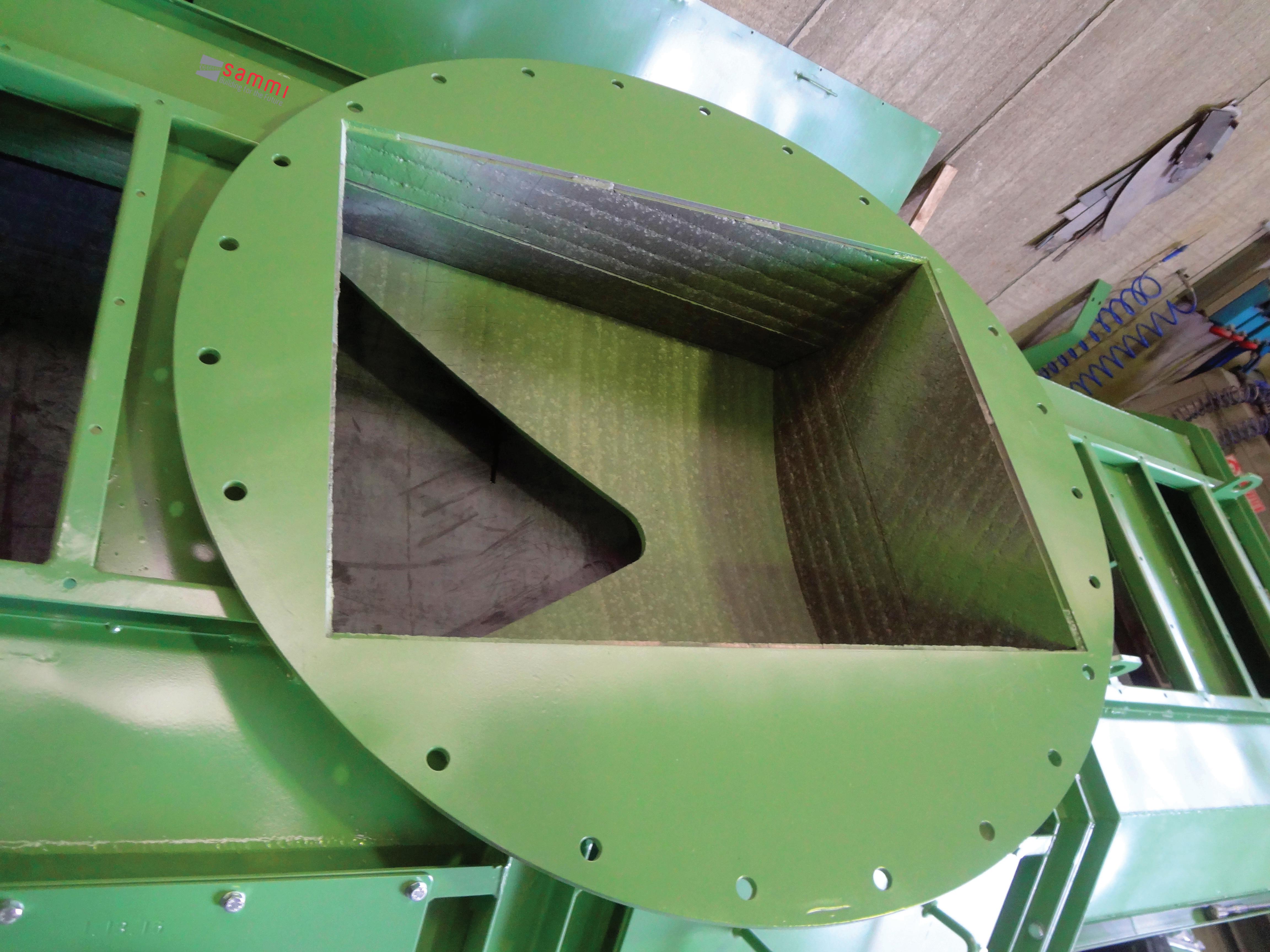
Capacity: 450tph v Material: clinker v Specific weight: 1,300Kg/m3 v Size: 0–50mm v Difference of level: –2.79m circa v Speed: 1.258 m/s approx. v Estimated life: 30,000 hours v Service Factor: 1.5 minimum v
Driving headboard:
Geared motor (orthogonal axes) with reducer type SEW type KA87 with coupling, electric motor (self-braking) speed 1,450r/min with power of 7.50kW with inverter, B5, four poles 400/50Hz, IP55,
CL.F, IE2, max power consumption of 4.65kW approx. Motor pulley diameter. 504mm, rubber lined with hardness 60SH for with diamonds pattern, thickness 10mm. Support structure headboard in sections profiles and steel sheet. Cleaner device: BELLE BANNE type H.
Tail unit
Support structure tail unit sections profiles and steel sheet. Idler pulley diameter. 402mm, naked. Cleaner device: V-plough type plus adjustable rubber skirt for the internal part.
Supports and bearings
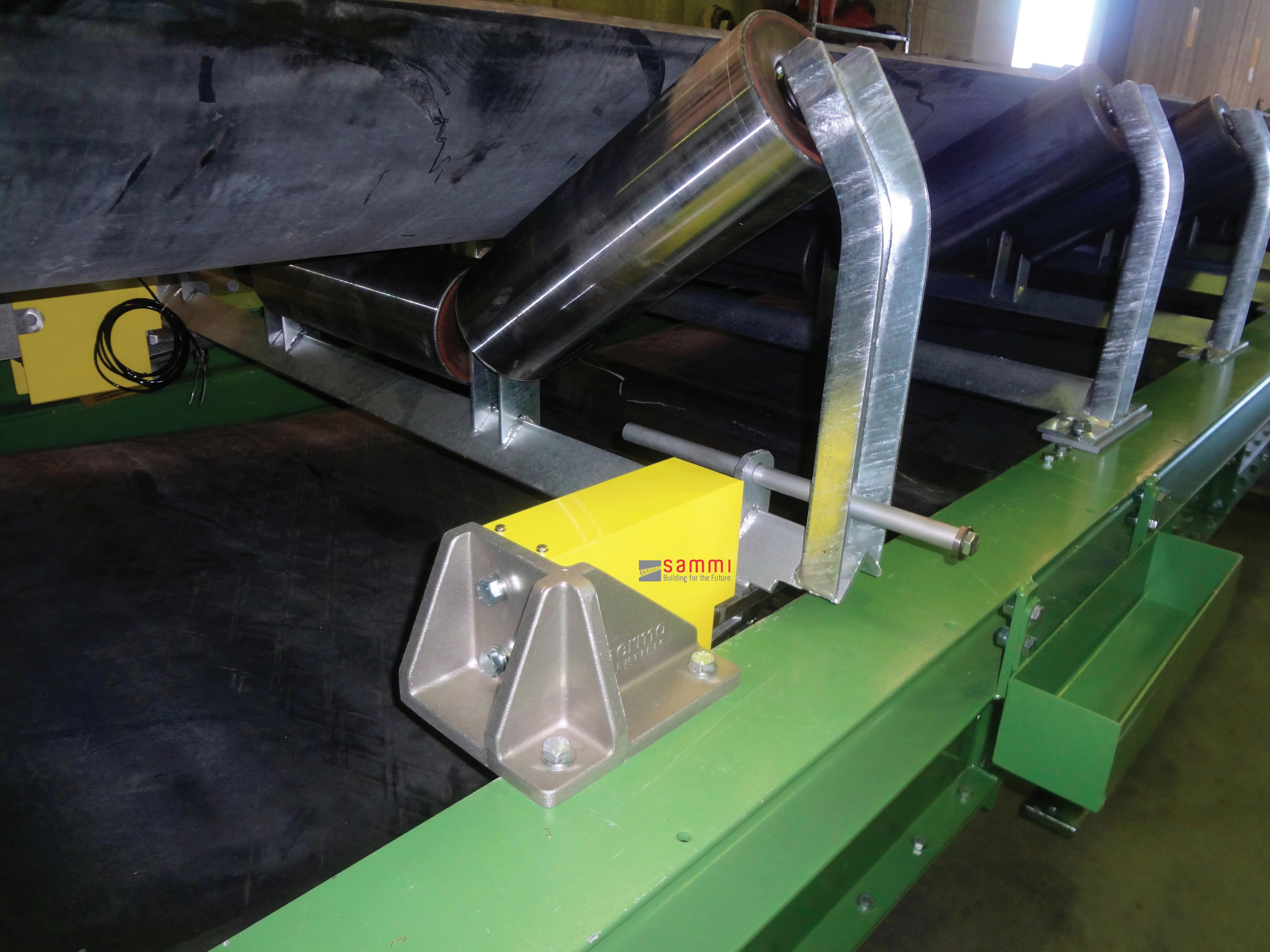
ENGINEERING & EQUIPMENT 102 MAY 2024 DCi www.drycargomag.com
Self-aligning roller bearings for heavy duty SNH brand SKF complete with grease fittings and ‘Rilsan’ pipes to bring the lubrication points in areas easily maintainable.
Pulley
Shaft in high quality steel, with arrow max 1/2000. Shaft assembled with self-centreing locking rings.
Conveyor frame
Lattice steel structure H= 800 mm with “L” profiles 80x80x8 mm. Maximum span 16 metres in modular sections bolted.
Take-up device:
Counterweight system complete with a fabricated structure, ropes, pulleys, ballast box, safety nets, etc. ...
Rubber belt
Width: 1,000mm v
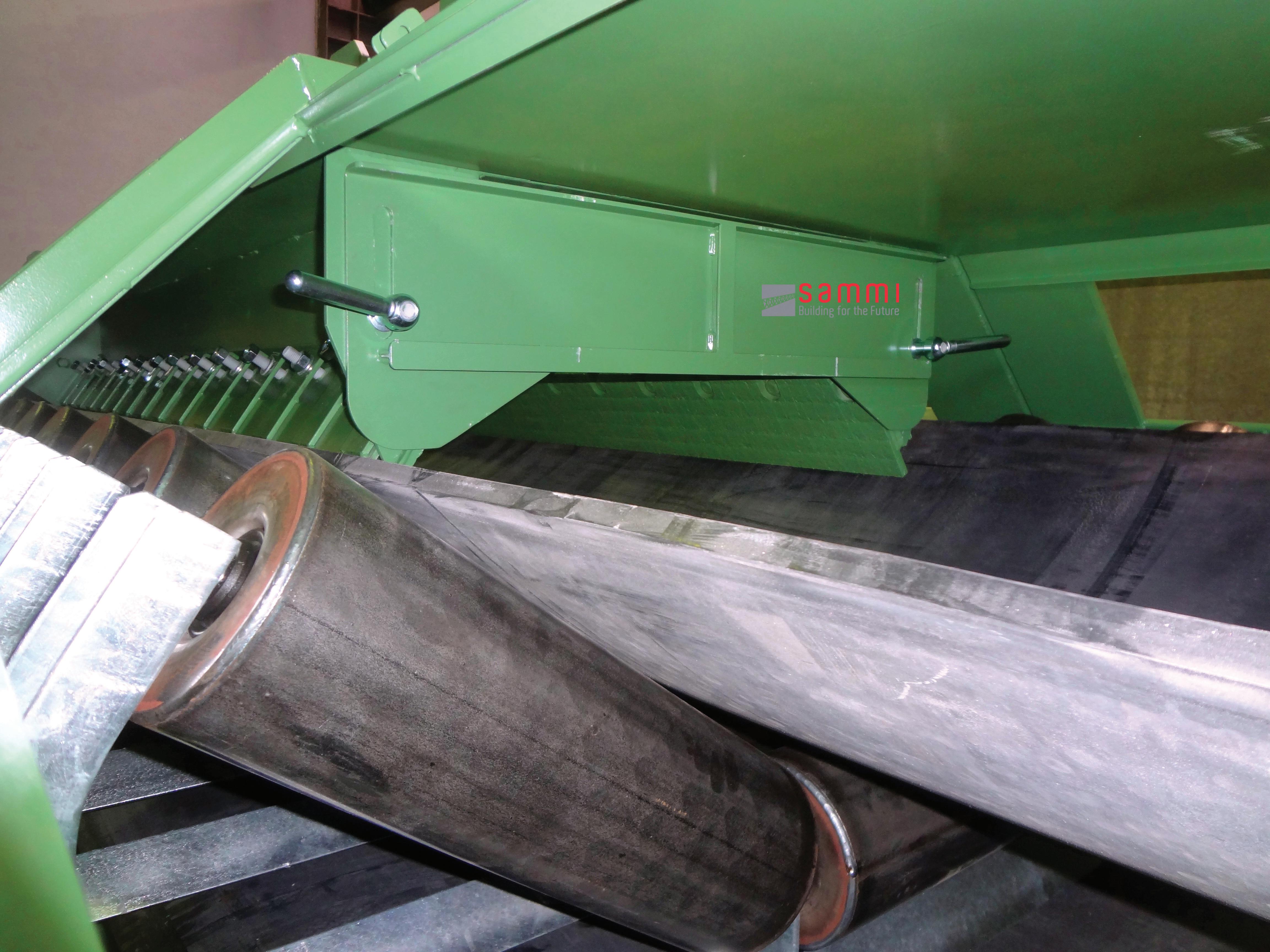
Smooth type: TEXTER 400/3 8+4 TX, v designed to resist with coarse materials at a maximum working temperature of 200°C with peaks of 300°C.
Thickness: 14.50mm approx. v Length: ≈143m open ring v
Rollers
Carrying idlers: No. 67 idlers, triple rollers troughed belts, 35°, heavy-duty rolls diameter 108mm and length 388mm, spacing 1,000mm. Return idlers: No. 23 idlers, single roll idlers, heavy-duty rolls diameter 108mm, spacing 3,000mm. Impact idlers: n°8 naked station, 300mm spacing distributed under the loading point.
Vertical guide rollers in the required amount.
Accessories
Protection rotating parts.
Loading wall L = 3m carbon steel thickness
5mm, complete with rubber loading skirt and top closure to avoid spillage.
N ° 01 drive/tail unit top cover made in sheet steel. Thickness 4mm.
N° 1 speed switch mod. XS6 Schneider Telemecanique brand.
N° 4 pull-wire emergency switch mod. 60.31F brand Ramsey (No. 2 on each side).
N° 2 couple misalignment switch mod. 60.30F brand Ramsey.
Inverter (loose)
Pre-complete assembly of drive/tail head and counterweight system.
Some of SAMMI’s other recent projects are listed in the table on p48.
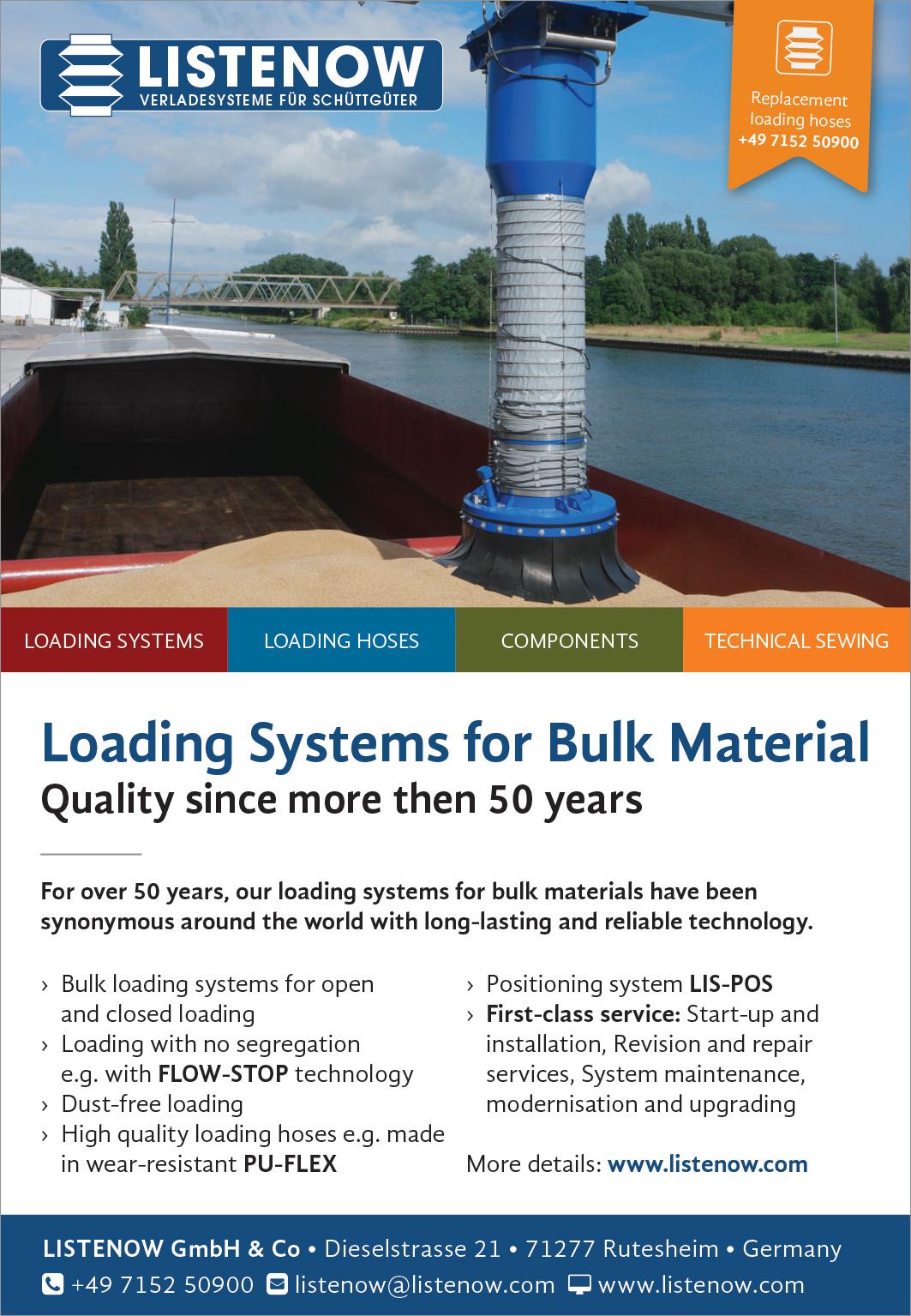
ENGINEERING & EQUIPMENT
Efficient silo refurbishment with REMAPUR-75 from REMA TIP TOP
SUSTAINABLE OPERATION OF THE MULTI- CHAMBER SYSTEM ENABLED FOR ANOTHER 20 YEARS
Fast, safe, cost-effective, sustainable — REMAPUR-75 proved to be a superior solution for the refurbishment of a mixing silo at RUF Baustoffe, a company which produces precast concrete elements.
Thanks to the sprayable wear protection, the experts from REMA TIP TOP overhauled the worn multi-chamber silo system in just three and a half weeks for a continued service life of up to 20 years.
These kinds of projects, which are ‘Made in Germany’, show how the construction industry is getting ready for the future.
“Without the REMA TIP TOP solution, we would no longer be able to operate the mixing silo to our production requirements in the short term. We would have had to replace it with a new building,” explains Karl Ruf, owner of RUF Baustoffe in Wassertrudingen, Germany. “This partnership underlines how crucial
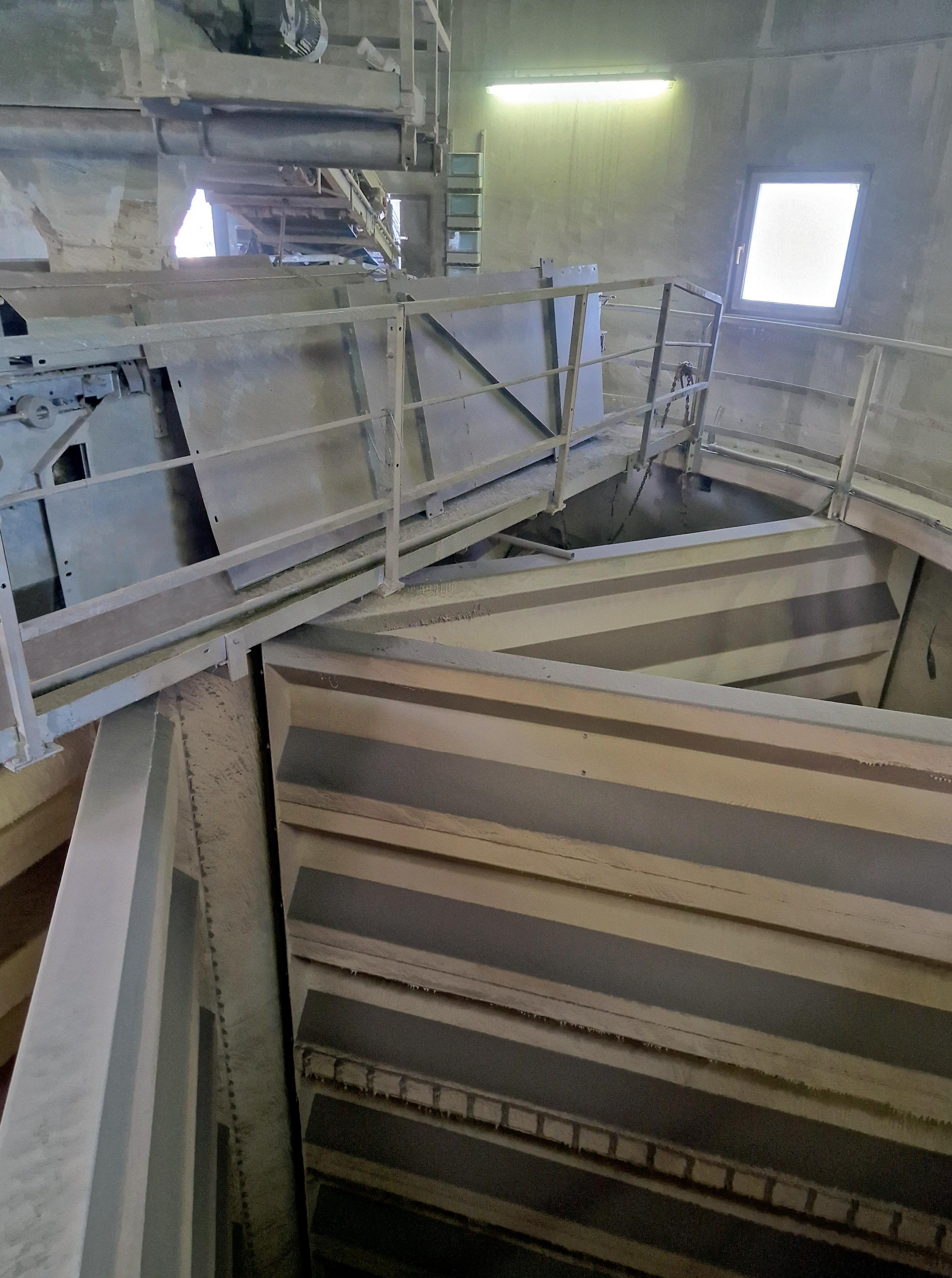
ENGINEERING & EQUIPMENT 104 MAY 2024 DCi www.drycargomag.com
Finished chamber with REMAPUR-75.
innovative solutions and technical expertise are for efficiency, sustainability and profitability in the construction industry.”
With developments in surface technology, REMA TIP TOP is improving the wear and surface protection of heavily used equipment. “An important aspect of our technology is sprayable wear protection, which has proven to be an effective method of extending the service life of components and machines,” explains Peter Jansen, Head of Surface Technology OFT at REMA TIP TOP West in Kamen, Germany. The highly elastic polyurea-based coating material offers high resistance to wear, abrasion, corrosion, chemical attacks and other damaging influences.
State-of-the-art technology and a strong focus on quality assurance characterize the tailor-made solutions offered by RUF Baustoffe. Prefabricated components, which only need to be assembled on site, enable cost-saving construction. The high-quality, individual concrete parts are computer-controlled and produced in their specialized plants. A long-term loss of capacity would be difficult to compensate for.
This was the challenging situation when a multi-chamber silo at the RUF site in Wassertrudingen showed signs of wear and tear and rust. As a sustainable alternative to expensive and lengthy new construction, the company was looking for a partner with the expertise and technology to safely refurbish the silo while keeping the downtime of the entire production process to a minimum. After the search for a qualified refurbisher had initially been unsuccessful, REMA TIP TOP came into play. The expert from Kamen took on the difficult challenge and offered RUF Baustoffe a comprehensive, efficient solution from a single source.
REMA TIP TOP planned the entire renovation, mobilized specialized partners for the sheet metal and steel work and finally applied its advanced PU spray coating. REMAPUR-75 enabled the multi-chamber silo to be renovated quickly and completely in just three and a half weeks. The REMA TIP TOP experts treat 1,500 square metres of surface with 15,000kg of spray coating. The strengths of the PU material include: seamless application, adaptability to different surfaces, adaptable physical properties, fast curing and high durability.
REMA TIP TOP offered its customer a reliable solution and minimized production downtime during the renovation phase. In addition, the PU coating ensures a significant reduction in cleaning and maintenance costs in the long term and promises to extend the service life of the silo by up to 20 years.
ABOUT REMA TIP TOP
REMA TIP TOP is a globally operating system provider of services and products in the field of conveying and treatment technology as well as tyre repair. The company has a global service network and offers a wide range of rubber products, linings and coatings for both the industrial and automotive sectors. Over almost 100 years, the company has built up unique expertise in materials development and industrial services and is active in the belting, material processing, surface protection and automotive sectors. At the end of the 2022 financial year, REMA TIP TOP generated sales of about more than €1.3 billion. Worldwide the company employs 8,000 employees and has more than 190 subsidiaries and associated companies — including wellknown brands such as Dunlop Belting Products South Africa and Asplit.
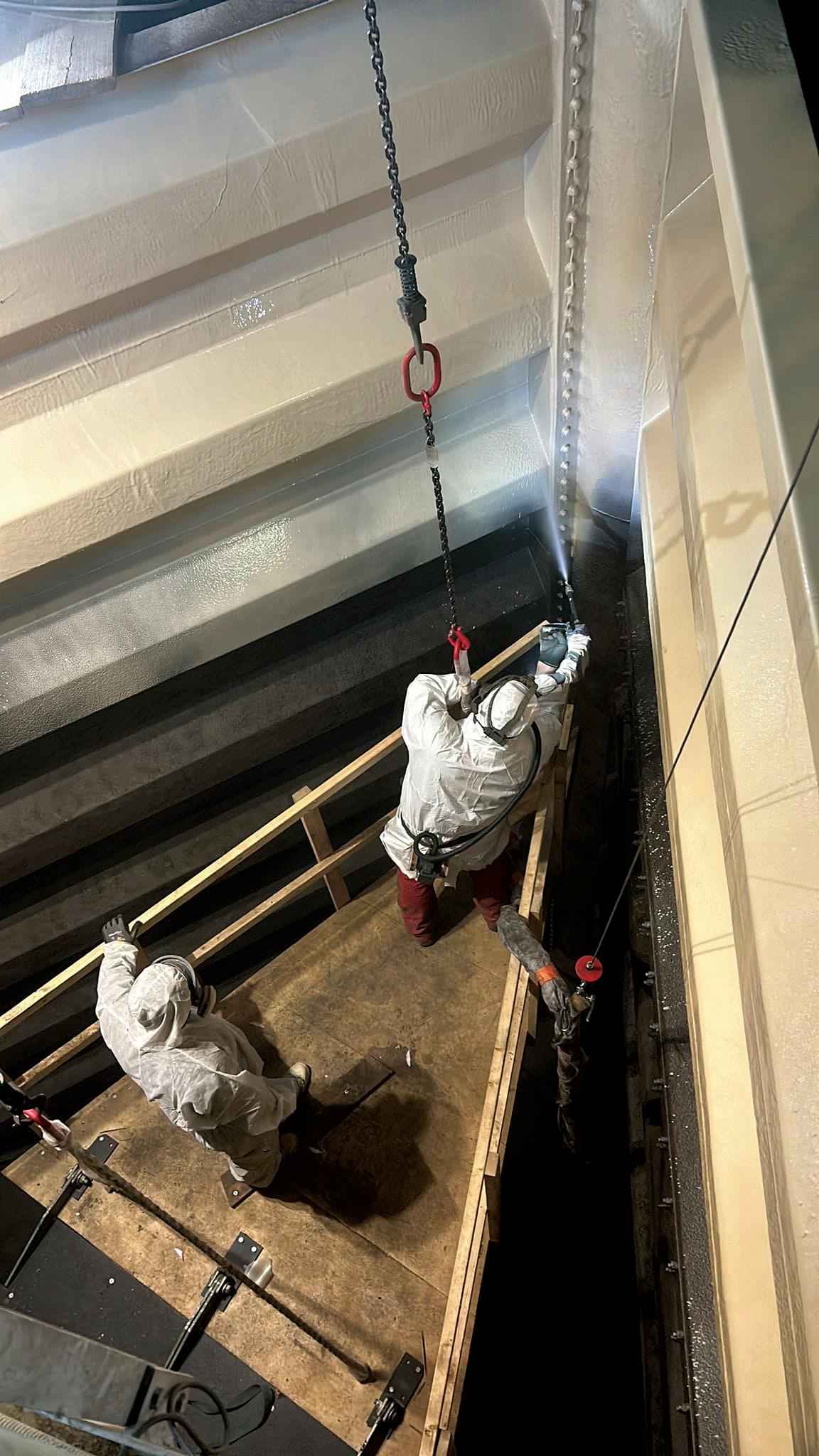

Dust Suppression
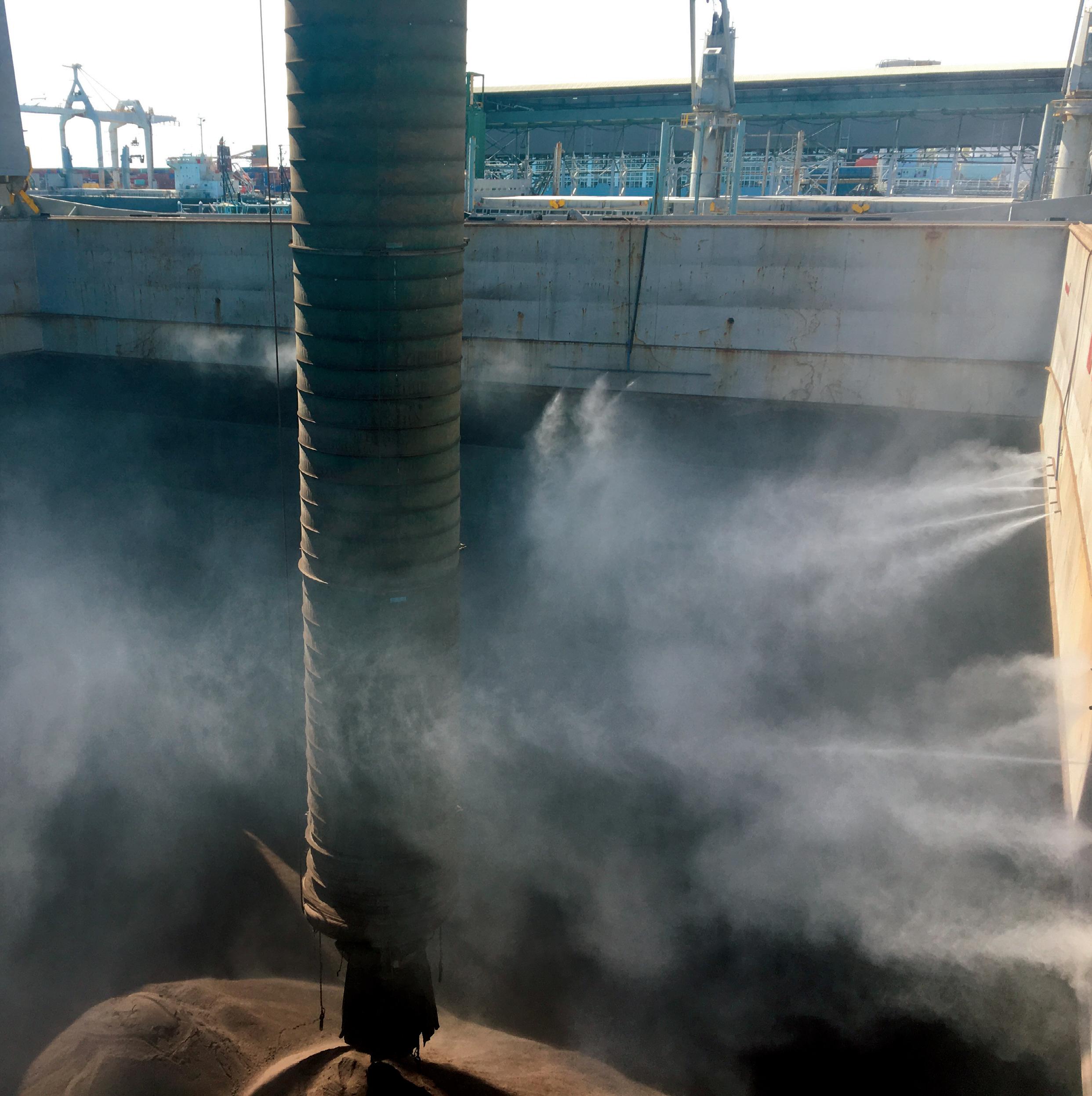
ENGINEERING & EQUIPMENT
REMAPUR-75 applied in multichamber.
Web: www.bluewatermisting.com E-mail: sales@bluewatermisting.com
HATCH – SHIP LOADER – HOPPER – SHED
Tough materials to tackle tough operating conditions: conveyor belts by Continental
Continental offers comprehensive, high-performance conveyor belt systems worldwide, with a wide range of products for cement and aggregate applications.
The extremely tough operating conditions that prevail in the cement industry mean that a variety of demands are placed upon the conveyor belts used. Thanks to Continental’s many years of experience in this special field as well as its deep material competence and broad R&D footprint, the company from Germany can offer complete solutions for all phases of cement production. The range of products and services includes textile and steel cord conveyor belts, special purpose conveyor belts, service materials, digital solutions and all related service activities.
Conveyor belts installed at the start of cement production must be able to perform in extreme conditions.

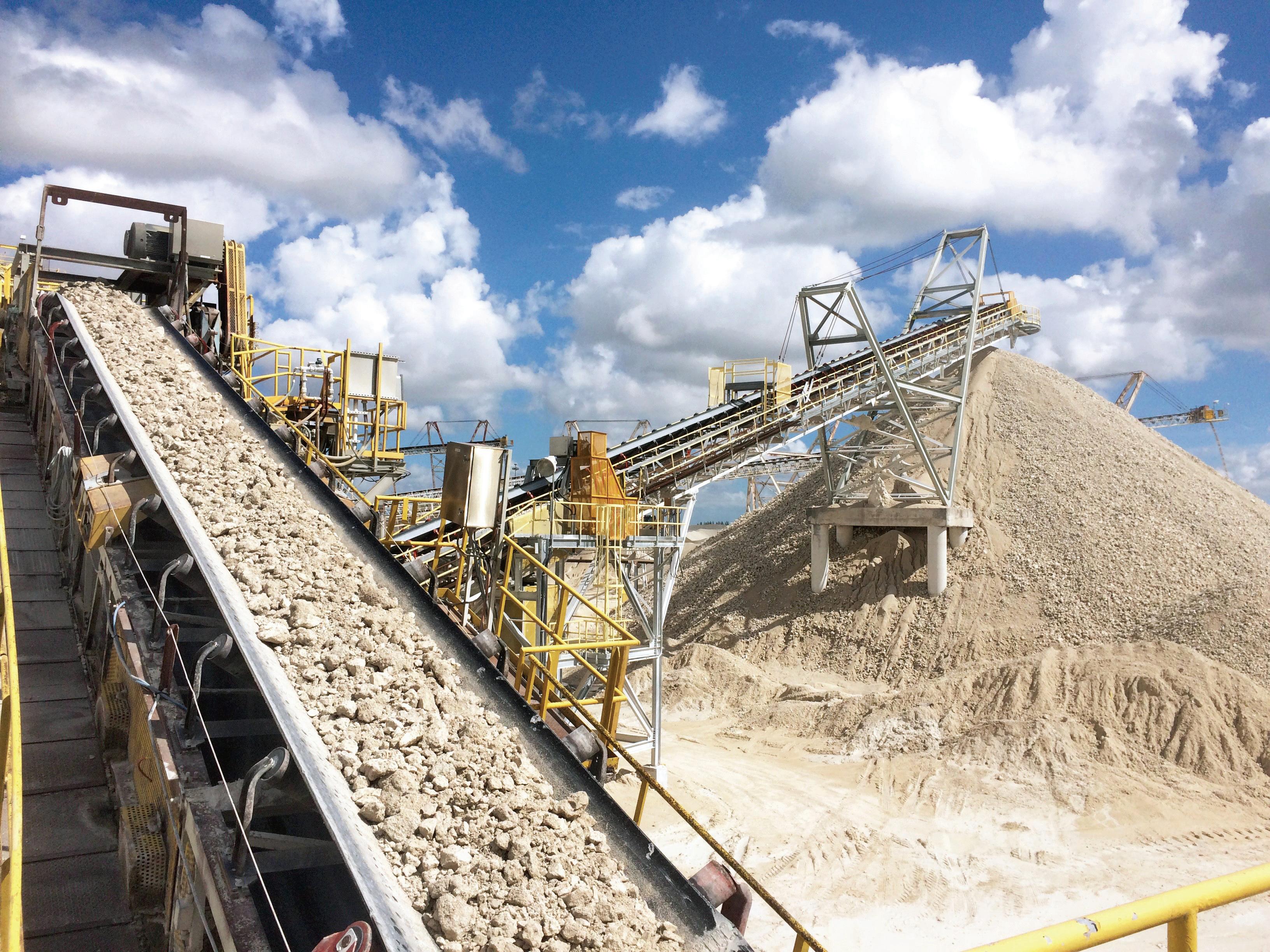
A JOURNEY THROUGH THE CEMENT PRODUCTION PROCESS WITH CONTINENTAL CONVEYING SOLUTIONS
Quarry and moving materials: the conveyor belts installed at the start of cement production must be able to perform in extreme conditions. After the limestone blocks have been crushed, they are carried by a conveyor belt to their next destination. Loading point impact damage can be a major cause of belt failure at this point. This is where belts must be capable of handling heavy impacts and heavy lump weights. Continental’s Fortress XP and Conti Titan textile belts are designed specifically to handle this kind of heavy impact and wear conditions. These rugged, fabric-reinforced conveyor belts withstand high-abuse applications, delivering up to three times longer life. The special fabric designs of these belts enable high transverse tear strength and minimize tears that result from material punctures.
The crushed limestone is in the next step transported with conveyor belts which have to cover long distances. Continental’s Flexsteel steelcord belts are designed to deliver high-tension capabilities to allow for extremely long centres, exceptionally high lifts and multiple horizontal curves.
ContiPipe conveyor belts are another alternative for transporting crushed
limestone. The conveyor belt is equipped with fabric or steel cable tension members. At the loading point, the belt is troughed, and the materials are fed onto the belt in the conventional manner. The enclosed design of this conveyor belt prevents dust and dirt from escaping and protects the materials from rain, snow and wind.
In-plant transportation: during the cement production process, especially, the problem of caking and contamination of the conveyor belt cover occurs more frequently. Continental’s innovative ContiClean rubber compound is helping to prevent materials, like cement, from sticking to belts and keeping the conveyor system profitable and running while reducing cleaning costs and extending the belt lifetime.
Burning process – clinker burning: during the burning process in a cement plant, energy sources such as coal and oil are used to generate energy. In conventional conveyor belts, the cover absorbs the liquids, and this means the conveyor belt may swell after some time. Continental’s Gold belt qualities offers different levels of oil resistance (Classic, Plus and Extreme), dependent of the material conveyed, for this stage of production.
Another environment-friendly solution to transport bulk materials is Continental’s Sicon conveyor belt, which consists of
highly flexible rubber capable of forming a pear-shaped bag. As the profiles are arranged above one another, the belt is closed to form a dust-tight bag. Sicon conveyor moves material over demanding topographical conditions and can negotiate 180° curves with a radius of less than one metre.
After the burning process: Continental’s Solar-Shield belt qualities (Classic, Plus and Extreme) offer different levels of heatresistance. Solar-Shield Extreme is the company’s best solution for hot clinker as the covers are ultra-heat-resistant and able to withstand peak temperatures up to 400°C, thus guaranteeing protection of the belt’s tension member.
Packaging and storing: in a vertical conveying configuration, Flexowell corrugated sidewall belts have an extremely low space requirement. Flexowell belts are flexible in a longitudinal direction while still featuring high transverse rigidity, which is required for steep and vertical application.
IT’S NOT A PRODUCT, IT’S A SOLUTION FOR A CHALLENGE
In recent years, Continental has been making fast-paced steps towards becoming a full-service and a solutions supplier to the cement and clinker industry, instead of focusing on products only. This includes
ENGINEERING & EQUIPMENT 106 MAY 2024 DCi www.drycargomag.com
planning and commissioning, technical advice, training, digital monitoring, and on-site maintenance. All of these designed to increase longevity, prevent workflow interruptions and thus increase efficiency of a conveyor operation.
In this course, Continental has in recent years acquired the Swedish companies Backes Transportbandservice (2022), Vulk & Montage (2022), Norr Vulk AB (2022) and Vertech (2023). In Sweden, Continental offers an innovative pay-per-tonne model which includes predictive maintenance, process analytics, or several innovative surveillance methods. Here, Continental is not paid for a product, but rewarded for keeping the conveying process running.
PROTECTING THE ENVIRONMENT: WITH BETTER PRODUCTS THANKS TO MATERIAL COMPETENCE
Continental’s corporate philosophy is to act in an environmentally friendly and quality conscious way. The company has introduced its ambitious comprehensive sustainability goals in 2020 focusing on the four pillars carbon neutrality, emissions-free industries, circular economy, responsible value-chain. In this context the Continental material experts across the globe continually work to optimize products by developing energy-optimized and environmentally friendly conveyor belts. One example for this is Continental’s Eco Series of unique, energy-optimized rubber compounds. By reducing rolling resistance caused by indentation on the conveyor the energy required for raw material transport is reduced by up to 30%.
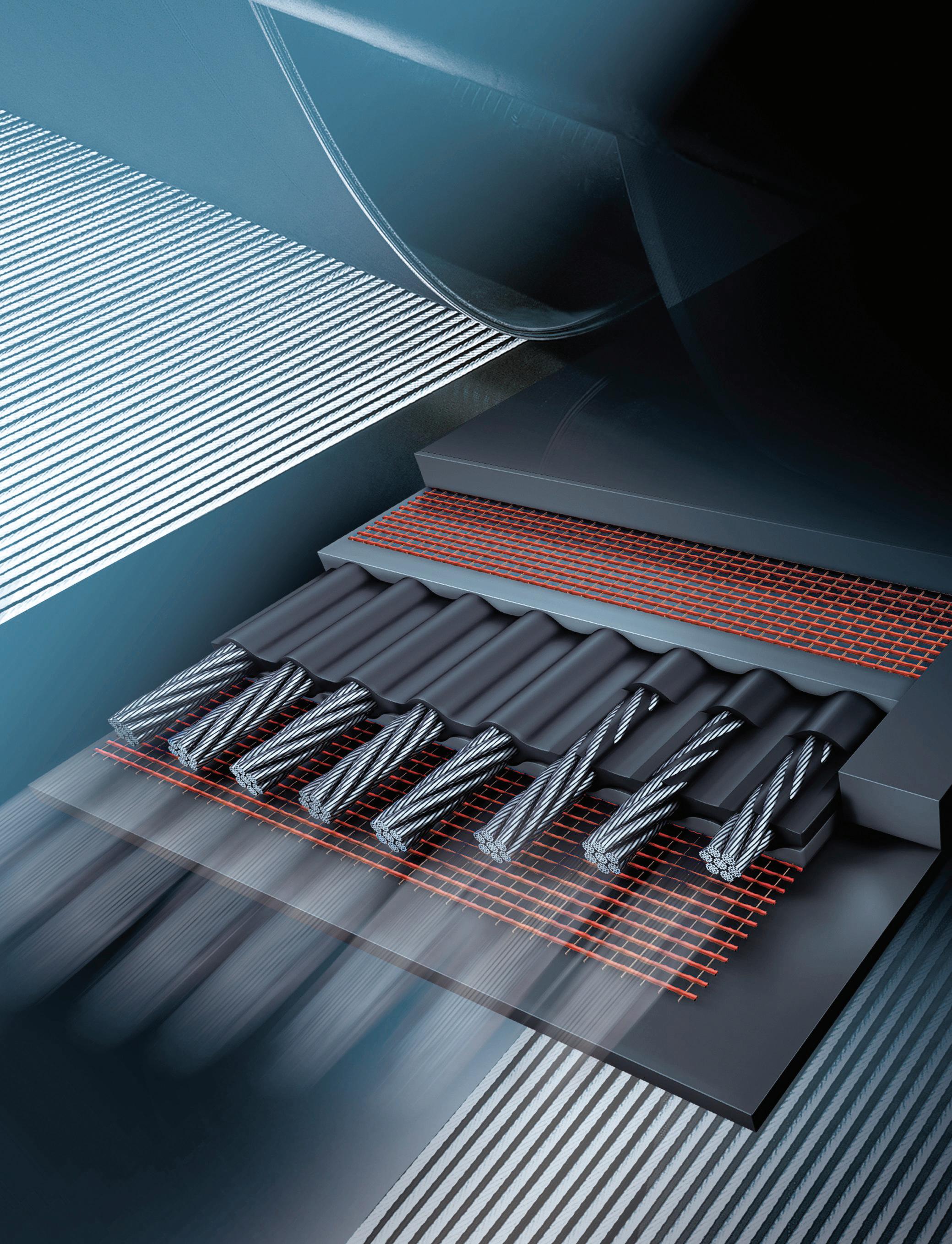

ENGINEERING & EQUIPMENT
Flexteel steelcord belts are designed to deliver hightension capabilities.
ContiClean: one solution, numerous advantages
Keeping material from sticking to belts is vital to keeping operations profitable. The image shows a comparison between Continental ContiClean and a conventional belt without a non-stick solution (left).
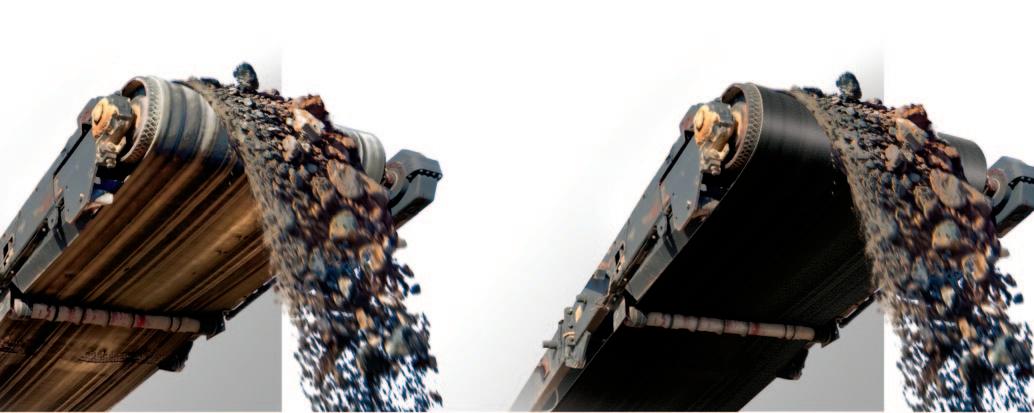
ContiTech offers a non-stick solution that helps prevent material from sticking to belts and thus solves several problems at once. What benefits does it provide? Who can profit from this? What are customers’ experiences with this product?
Dispersion of particles into the environment, carryback on the conveyor return run, costs for cleaning belts: Wherever material is transported on conveyors, there are many areas with room for improvement. “With ContiClean, we provide solutions enabling superior material release characteristics for everything from cement to limestone,” says Chris Marchant, Global Product Manager at ContiTech. “These ready-to-use conveyor belts not only help customers reduce the costs associated with cleaning belts and systems, they can also prevent belt damage and improve safety outcomes.”
THE FINER THE MATERIAL …
ContiClean is especially useful for companies that transport very fine material, as Marchant explains: “The finer the material, the greater the difficulty with release when transferring it from one conveyor system to the next. Since the base material after mining, crushing and additives is a fine powder, ContiClean provides a useful solution especially for customers operating in the cement sector. If the system happens to be completely exposed and it rains, it is even more difficult to remove the damp or wet powder.”
INCREASING DEMAND AND SUSTAINABILITY AWARENESS
Given the strong growth in demand expected for cement and concrete, increased sustainability, efficiency, safety and profitability will play an important role in
the coming years. According to current forecasts, demand will increase by an average of 2–3% per year, mainly due to increasing urbanization and investments in infrastructure. Based on these expectations, cement consumption will have almost doubled by 2050 compared to today.
“ContiClean supports the production of cement and other materials in being more sustainable through a reduction of dustborne air emissions, pollution and waste,” Marchant continues. “In addition to increased efficiency, the positive impact on the environment is of course a feature that helps companies operating in the cement industry reach their sustainability goals. Especially as the awareness for this topic is increasing.”
Standard belt covers and scraper systems may not provide sufficient material release, which can then lead to many adverse effects for production. “Adverse effects resulting from carryback issues include material buildup on pulleys, idlers and belt covers,” explains Marchant. “Any one of these issues can lead to increased cover abrasion, belt alignment problems, belt or system damage and significant increases in the cost for cleanup. All of these contribute to safety and environmental hazards.”
With ContiClean, customers can benefit from increased material transfer, reduced material buildup on pulleys and idlers, increased belt cover and scraper life, reduced maintenance and safety issues, less downtime for maintenance issues, lower operating costs, increased profitability — the list of benefits is a long one.
CARRYBACK ISSUE REDUCED BY 95%
The feedback ContiTech receives from its customers is consistently positive, as
Marchant points out: “ContiClean is a global solution, with all regions reporting favourable customer feedback. A system installed at a cement plant located in the USA, for example, reduced their carryback issue by 95%. Another reported reducing their material buildup on the walkway below by 75%. The operator at this plant is incredibly happy with the results. Prior to the introduction of ContiClean, this was a major issue for this site.”
Another customer in Chile that conveys material with sulphuric acid reported a serious problem with material accumulating throughout the system structure. “The customer’s previous experience with a competitor solution was unsuccessful,” says Marchant. “ContiClean’s non-stick release characteristic is present throughout the carry side cover thickness. For this customer, we helped them not only to overcome their material accumulation issue but also to double their conveyor belt service life.”
BENEFITS IN LINE WITH CONTINENTAL’S SUSTAINABILITY AMBITION
The benefits of ContiClean for customers are also in line with the most important strategic goals established by Continental. By 2050 at the latest, the technology company and its supplier partners strive for carbon neutrality along the entire value chain.
Alongside emission-free mobility and industry, circular economy, and responsible value chain, carbon neutrality is one of four major pillars we are building on today and will continue to build on in the future,” emphasizes Marchant. “With these efforts, we are following our sustainability ambition — providing the framework to turn change into opportunities.”
ENGINEERING & EQUIPMENT 108 MAY 2024 DCi www.drycargomag.com
AIRCHOC® air cannon prevents production stoppages due to material build-up in cement plants
The AIRCHOC® patented device has been designed by STANDARD INDUSTRIE International to eliminate flow problems occurring in bins, silos, hoppers and chutes through bridging, rat-holing and dead stock.
A volume of accumulated compressedair, from 9 to 400 litres, according to the type of AIRCHOC®, is instantly discharged through a large outlet pipe or nozzle directly connected to the storage unit.
The diameter, design & the quality of them are especially determined to insure a full efficiency, depending of the area to be cured and the action desired (blading sweeping or pushing blasting).
The result of this impact into the material corresponds to a shock-wave due to the sudden release of the compressed air. In this way, the AIRCHOC® acts directly on the material, thus avoiding any damage to the structure.
STANDARD INDUSTRIE proposes a wide tailor-made range of AIRCHOC®. A clever combination of mechanisms and pressure vessels enables STANDARD INDUSTRIE to recommend bespoke and personalized solutions to any of build-up or clogging problems in cement plants, all along the different phases of the process of production
AIRCHOC® AIR CANNON BENEFITS
Over the years, many industries have successfully replaced manual cleaning with this patented method: the AIRCHOC®.
Manual cleaning (long rods poking, compressed air tools, air lances, hi-pressure water spray…) requires qualified personnel and high levels of supervision and can involve a loss of production (necessary to shut down the process of production for some operation). This type of human intervention is both difficult and DANGEROUS and can cause serious or even fatal accidents.
In addition, to the undoubted efficiency
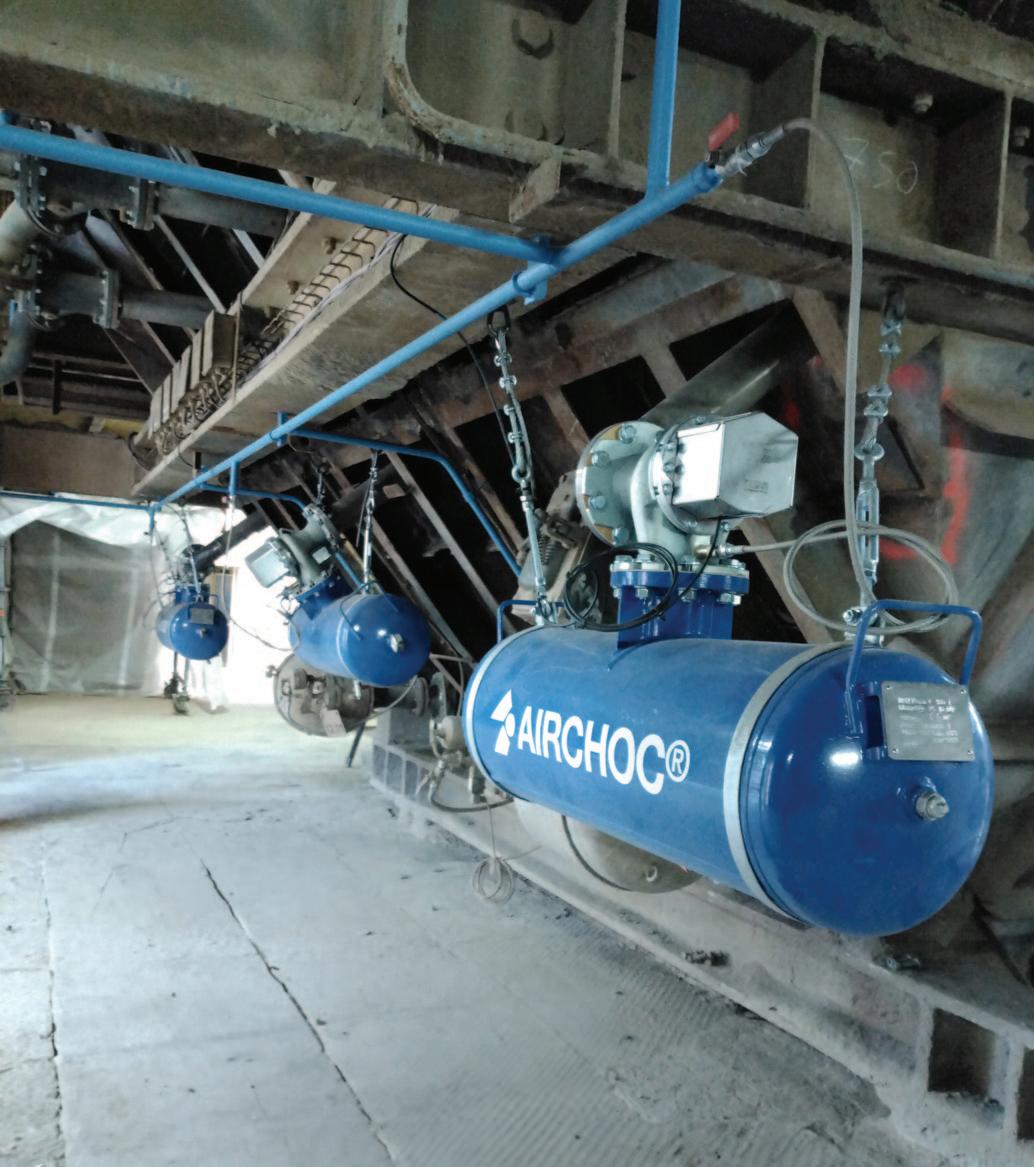
ENGINEERING & EQUIPMENT 109 MAY 2024 DCi www.drycargomag.com
AIRCHOC® 6 on the kiln inlet at CIMALUX.
of the AIRCHOC®, it also offers the following advantages:
Ensures the automatic and effective v declogging of the structure without interrupting the production process. Eliminates the risk of feeding v restrictions, blockages and production downtime proportionally to the installed equipment. Safety of the principle. v Ensures a fast return on investment. v
The AIRCHOC® air cannon can be applied to various locations in a process, any time clogging or build-ups appear.
Examples of air cannon applications include:
In the batch house where raw v materials are mixed, AIRCHOC® air cannons can be installed in bulk material silos.
Specific silos or hoppers containing v outlets can also be equipped with the AIRCHOC® declogging devices in order to help material flow.
Another unexpected location where v AIRCHOC® can be used is in smoke treatment plants and smoke evacuation, where treated gas can clog — an easy way to get rid of the soft build ups is to blow air on a regular basis. This regular planned air blasting removes the dust and avoid formation of harder build-ups which could lead to total blockage. This is a smart soft easy and preventative solution against the worst.
In the furnace, AIRCHOC®s can be v found on the hopper, feed chute and furnace arches.
In the cement process, the raw mill materials travel initially by the preheater (warmed of the raw cement) & precalciner (carbonate decomposition) before being sent into the kiln for the manufacturing of clinker.
The problem is often at the preheater tower’s level (kiln inlet, smoke chamber,
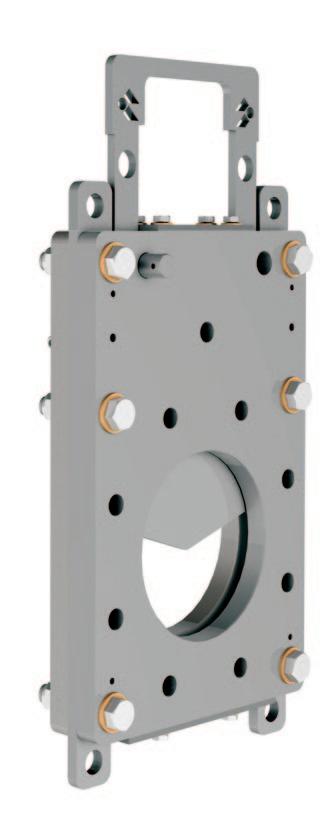
riser, cyclone…) where the material clogging started.
In addition to the chemical composition of the flue gases, temperature changes add to the creation of concretions in the tower. All reduction of volume due to the accumulation of clogging will altered the production process.
The temperature around the tower area can reach 900°C (1,652°F) and the maintenance interventions can last several hours.
A manual isolator allows the user to intervene at any time on the AIRCHOC®, whether the plant is shut down or running. When the system is in operation, its
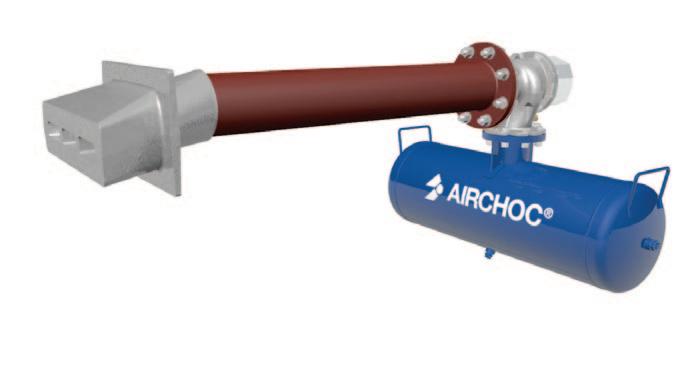
pneumatic version also prevents product from rising up into the AIRCHOC® — even when the system is under pressure. The hatch position is naturally closed. Opening is triggered by the shot. Re-closing is instantaneous after firing.
Thus this clogging leads to a loss of productivity but also to an increased risk for the maintenance staff.
In addition, if a concretion comes loose and blocks an area it will consequently cause a breakdown which could cost the plant several million dollars.
CASE STUDY: CEMENT PLANT IN LUXEMBOURG
PROBLEM: The plant is burning more and more alternative fuels. As a result, the build-ups at the kiln inlet are more numerous. The existing cleaning solution is no longer suitable. The current air cannons are insufficient in number and their positioning does not allow an optimal cleaning efficiency. The customer has therefore resorted to manual ringing. The customer is also looking for a new partner for the supply of air cannons. The customer wants a turnkey project including air cannons, blow pipes and nozzles.
SOLUTION: The Standard Industrie’s technical team installed five AIRCHOC® 6 air cannons and five refractory nozzles and blow pipes blocks on the kiln inlet.
RESULTS: The new AIRCHOC® 6 offers two major advantages:
More than 10% higher impact force v than the previous version AIRCHOC® 5, indispensable in areas of heavy concretion and clogging (quantity and quality). Zoning is possible for different impact forces. Has the same impact force as v AIRCHOC® 5 at 1 bar lower operating pressure for energy and cost savings (depending on use and compressor capacity).
The new AIRCHOC® 6 requires fewer replacements of spare parts. Replacing the quick exhaust valve with a pilot valve offers two advantages: Significantly reduced maintenance. v Valves are greased for life and cannot be replaced unless broken. The air circuit to the exhaust is direct, v which generates greater firing force. Larger cross-sections for greater v power.
Whatever the type of air cannon, dry and lubricated air is essential to ensure longevity and maintain equipment performance. Isolator, for
ENGINEERING & EQUIPMENT 110 MAY 2024 DCi www.drycargomag.com
safe maintenance of air cannons.
AIRCHOC® 6 + blow pipe + nozzle for cooler.
Taking the heat: Glideclean® conveyor belt cleaner from Kinder Australia Pty
Ltd for high-temperature cargoes including cement
Conveying extremely hightemperature material has always been a challenging feat.
Operations such as asphalt and cement manufacturers (handling materials limestone and clinker) as well as smelters can see their conveyed material raise to temperatures of up to 250°C. Adhered material carryback is often difficult to effectively scrape when the heat is high.
Kinder Australia has the innovative solution — a highly efficient industry-first.
K-Glideclean® is Kinder’s cutting-edge conveyor belt cleaner engineered to excel in high-temperature environments of up to 250°C continuous operation.
Building on the success of Kinder’s K-Glideshield® proprietary high-speed/ highcapacity impact bars, K-Glideclean® belt cleaner innovation offers temperature resistance and seamless installation on belts with mechanical fasteners or connections. It cleans effectively without harming the belt.
K-Glideclean® utilizes the same K-Glideshield® proven composite material with a low coefficient of friction, with a remarkable 40% reduction compared to UHMWPE and other materials. Additionally, it features good thermal conductivity to efficiently dissipate surface heat, certified fire resistance, and high chemical resistance for superior performance in challenging industrial environments.
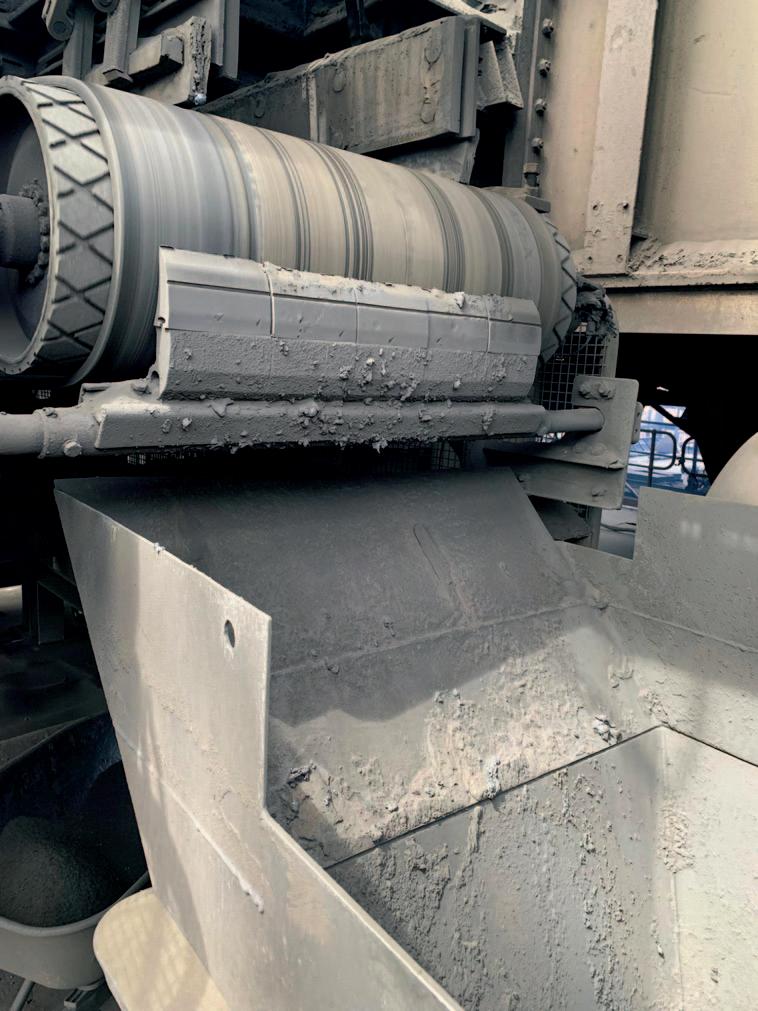
When it comes to alternative belt cleaner blade materials, K-Glideclean® is the superior choice.
X Tungsten: while Tungsten offers longevity and high-temperature resistance, its aggressive nature makes it unsuitable for belts with clips, mechanical fasteners, or worn surfaces. K-Glideclean® combines temperature resistance with belt-friendly performance, ensuring effective cleaning without risking damage to the belt.
X Polyurethane: preferred for its forgiving nature, Polyurethane is ideal for belts with mechanical fasteners or worn surfaces. However, its temperature resistance is
limited compared to K-Glideclean®. With a maximum temperature resistance of 125°C, Polyurethane falls short in hightemperature applications where K-Glideclean® excels.
THE K-GLIDECLEAN® INNOVATION STORY
K-Glideclean® was designed by Kinder’s engineering team in response to a mining/metallurgy client’s difficult situation handling the extraction, processing, and smelting of copper ore. Due to the high temperature environment, the existing Tungsten H-Type belt cleaners conducted the ambient heat from the furnace and subsequently damaged the conveyor belt. These blades consistently melted within 1 day of installation, requiring the conveyor
to be shut down and a full set of blades changed.
Since the development and installation of K-Glideclean® the Maintenance Teams couldn’t be happier with the result.
K-Glideclean® installation delivered a remarkable 804% increase in scraper life –from 177 hours to approximately 1,600 hours.
If high temperature material is melting your conveyor cleaning blades away, look to Kinder Australia’s engineered solution that will survive the high temperature and work effectively with your existing clips and mechanical fasteners. K-Glideclean® offers exceptional durability and heat resistance, ensuring reliable performance even in the most demanding environments.
ENGINEERING & EQUIPMENT 111 MAY 2024 DCi www.drycargomag.com
Transforming bulk material loading with VALS
Located in Springhill, Kansas, USA, a new option in Vortex Loading Solutions is helping reshape the landscape of dry bulk material handling. The introduction of the Vortex Automated Loading System (VALS) marks a new era in the efficiency and effectiveness of handling crucial materials like cement. This article explores the implementation of VALS at the Springhill terminal, delving into the components and the advantages it brings to bulk material loading.
UNVEILING THE MECHANICS OF VALS
Vortex Automated Loading System (VALS), an innovative solution from Vortex aimed at optimizing the loading operations of dry bulk solids. By harnessing the powerful features of Vortex Loading equipment, this forward-thinking system simplifies the loading procedure, reduces material spillage, controls dust emissions effectively, cuts down labor expenses, and boosts overall process efficiency.
SYSTEM OVERVIEW
The Vortex Automated Loading System’s main objective is to enable the smooth and accurate loading of dry bulk materials into truck hatches. The system operates through the integration of several key components: Vortex camera and PLC system, Vortex loading spouts, in-line filters, and positioners. Working in unison, these parts provide a sanitary, precise, and reliable loading solution that meets the most stringent industry safety and
SPRINGHILL EQUIPMENT OVERVIEW
v Aero Flow Troughs (not pictured)
v Vortex® Aero-Bin Bottoms™
v Vortex® Aero-Slide™ drum valve used for metering material flow.
v Vortex® Aero-Slide™ gate valves allow for material shutoff.
v Vortex® Aero-Slide™ conveyors
v Vortex® inline filtration unit
v Vortex® spout positioner
v Vortex® loading spout (enclosed loading model)
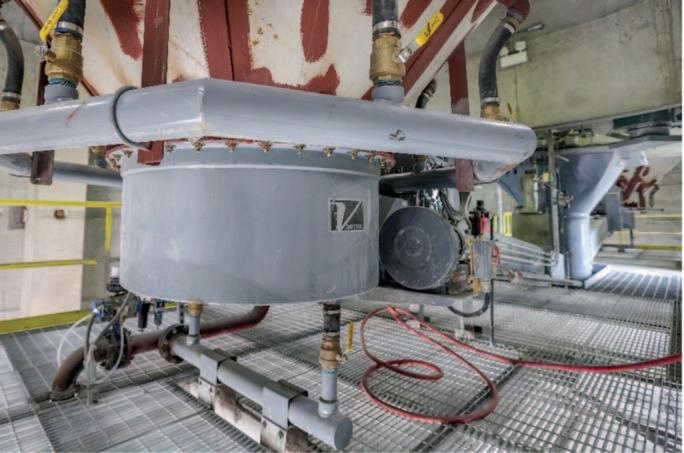
performance standards.
AUTOMATED LOADING
Automated loading takes over the loading process, eliminating the need for labor usually employed to place the spout within the truck. This task is achieved by utilizing cameras and imagery to automatically position the spout scavenger into the truck hatch. Once the truck driver parks on the scale and positions the hatch in the target area displayed on the screen, they can stay in the truck while the automated loading system conducts the loading operation.
CAMERA AND PLC SYSTEM
The Vortex Camera system, together with a PLC (Programmable Logic Controller),
identifies the hatch and directs the Vortex positioner and loading spout to properly seat into the vessel hatch being loaded. The VALS system ensures consistency in loading times, with control operated by the PLC rather than human interference. Each container loading is programmed to have a consistent pattern by the PLC. This certainty means every time the system is triggered, it follows the same process, free from distractions that usually occur in manned operations.
LOADING SPOUTS
Loading spouts are engineered to handle a variety of dry bulk materials, offering versatility to different loading applications. They feature cone-in-cone stacking
Vortex® Aero-Slide™ drum valve used for metering material flow.
ENGINEERING & EQUIPMENT 112 MAY 2024 DCi www.drycargomag.com
Vortex® Aero-Bin Bottoms™.
technology for smooth extensions and retractions while keeping containment of material and dust control. The outer sleeve material options offer durability and resistance to wear, ensuring longer lifespan and lower maintenance needs.
Equipment details
Retractable loading spout: the spout v is the device that is lowered down and seats into the vessel hatch that is being loaded.
o Self-sealing discharge: this device is located at the bottom of the retractable loading spout and seals the bottom of the loading spout off while it is retracted out of the vessel hatch eliminating material particles from falling on top of the vessel while the spout is retracting up.
IN-LINE FILTERS
In-line filters serve a vital role in curbing fugitive dust emissions during loading. These filters trap dust-laden air, separate dust particles, and reintroduce the filtered dust into the load. The Vortex In-line Filtration System’s compact design allows for easy installation in restricted spaces, with the vertical mounting of filter cartridges ensuring optimal performance and prolonged lifespan.
Equipment details
The inline compact filter unit is v designed to remove all fluidization and displaced air from the vessel during loading, while simultaneously returning any collected dust back into the vessel.
POSITIONERS
Positioners are critical system components, capable of automatically seating the spout into the hatch, ensuring accurate positioning of the loading spout above the
truck hatch. The Vortex dual-axis positioners enable precise and smooth motion along X and Y axes, allowing the system to optimally align with the loading vessel hatch. This feature substantially
ENGINEERING & EQUIPMENT 113 MAY 2024 DCi www.drycargomag.com
Vortex® inline filtration unit.
Vortex® Aero-Slide™ conveyors.
Vortex® Aero-Slide™ gate valves allow for material shutoff.
lessens material spillage and guarantees a safe, efficient loading process.
ADDITIONAL EQUIPMENT
Aero-troughs, aero-slides, bin bottoms, shut off valves, and flow control valves are examples of equipment often used in loading operations. While not always necessary for automated loading, in many instances, they can be programmed into the automated system to further enhance the capabilities and efficiency.
Equipment details
Positive displacement blower is used v to fluidize the aero-troughs and bin bottom at a higher pressure of air based on the silo dimension and material load on the media.
The aero-troughs and bin bottoms v are designed to fluidize the material, enabling it to flow smoothly out of the silos. This design effectively prevents ratholing, a common issue where material compacts against the silo and hopper walls, severely restricting material flow.
Aero-slide maintenance: a manual v valve is attached to the lower side outlet of the bin. This valve is designed to be closed to facilitate maintenance on equipment located downstream. Flow control valve: features an aero v slide drum valve, which receives a 4–20Ma signal to adjust the valve positioner. This allows for precise control over the material flow rate. Product transportation: utilizes an v aero-slide conveyor to efficiently transport the product from a silo to the centrally located loading machinery.
SYSTEM FEATURES
VALS can operate under various lighting and weather conditions and is compatible with most location-specific software. Vortex also provides technical support during installation and start-up. The system eliminates the need for direct contact between employees and equipment during the loading process, thus reducing potential safety incidents. Truck drivers can stay within their vehicles while VALS swiftly loads the material. Since it’s automated, there’s no need for multiple employees to be present for material loading. Labour concerns and costs become more manageable with VALS, and fewer employees involved means less human error and a more streamlined loading process.
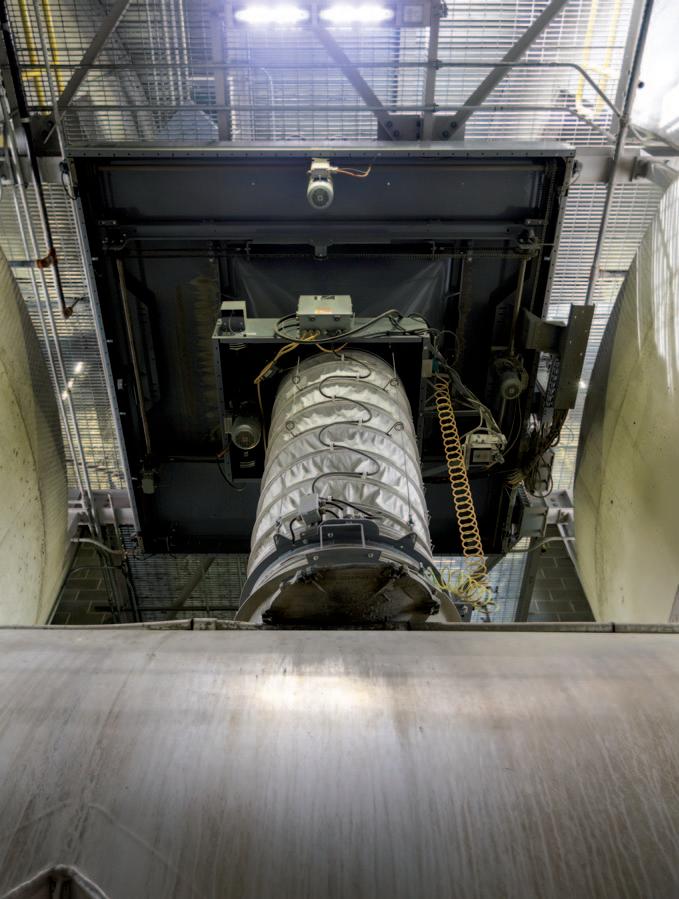
SPOTLIGHT ON SPRINGHILL
The Springhill terminal stands as a testament, where the VALS system facilitates 24/7 loading across two lanes, with an impressive loading rate of 500 tonnes per hour. The terminal is equipped with four silos, each boasting a capacity of 2500 short tons. These silos are integrated with additional Vortex components like aero-troughs, bin bottoms with an aeroslide side outlet, and a positive displacement blower, enhancing the system’s overall functionality.
The aero-slide conveyors facilitate the smooth transportation of products, while inline compact filters efficiently reclaim any air displaced during the process, highlighting the system’s commitment to environmental compliance and operational safety.
At the heart of the VALS configuration, the dual direction positioner plays a critical role in precisely maneuvering the loading spout over the truck hatch. Innovations such as the retractable loading spout equipped with a self-sealing discharge ensure that every truck is loaded with extreme accuracy, minimizing spillage and maximizing efficiency.
ACHIEVEMENTS AND OUTCOMES IN SPRINGHILL
Since its launch in early 2023, the terminal’s equipment, under the VALS system, has consistently outperformed expectations, loading multiple trucks daily with speed and efficiency. This technological marvel has had a significant impact on operations — drastically reducing loading times to under seven minutes per truck, which marks a leap forward when compared to the more time-consuming traditional methods previously employed.
The VALS system demonstrates adherence to the highest industry standards, providing operational reliability, meticulous attention to detail, and a direct approach to tackling sector-specific challenges such as labour shortages, safety, and environmental sustainability through its method for loading dry bulk solids. Its successful implementation at the Springhill terminal marks a new advancement for Vortex in material handling technology, representing more than just a system — it’s a leap into the future of innovation, efficiency, and sustainability in the field, setting a precedent that could shape the industry for years to come.
ENGINEERING & EQUIPMENT 114 MAY 2024 DCi www.drycargomag.com
Vortex® spout positioner.
DCi
Vortex® loading spout (enclosed loading model)
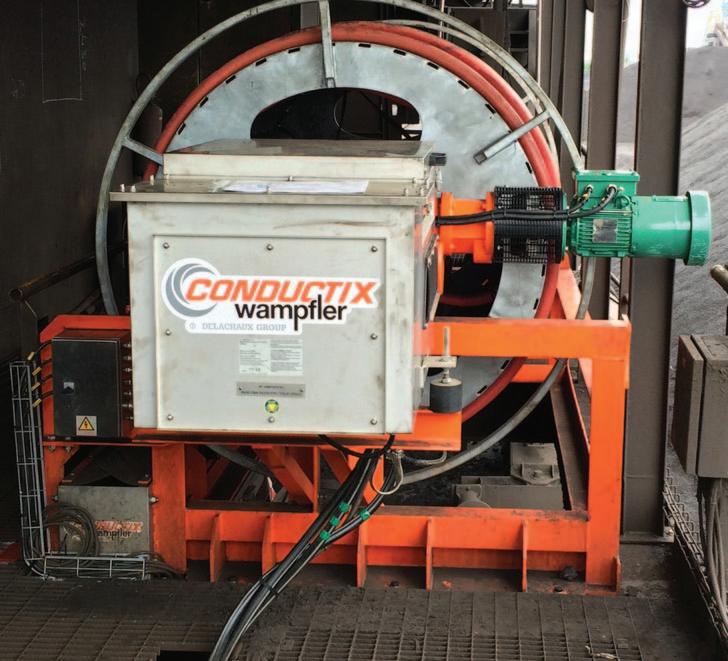
Get with the program
Keeping up with software & automation technologies
Jay Venter
Choosing the right connection to enable IIoT in bulk handling facilities
In the ever-evolving world of bulk material handling, operators are increasingly turning to the Industrial Internet of Things (IIoT) to upgrade their plants. Their primary objectives? Performance monitoring, remote control, and automation to enhance safety, improve working conditions, and boost efficiency. However, as they embark on this digital transformation, cybersecurity becomes paramount, protecting operations from potential threats. Effective IIoT solutions hinge on cloud-based devices to authenticate sensors and ensure data integrity, ideally leveraging a hybrid edgecloud platform.
Connecting IIoT devices to the cloud presents several options, each with unique benefits:
4G LTE/5G: The radio frequency v networks such as 4G LTE / 5G are widely used, the speed can reach 10Gbps and the installation cost of an access point is among the lowest of all solutions thanks to the wireless transmission. However, antennas need to be installed for complete coverage, which requires both civil works and a high performance fibre optic backbone network.
Ethernet: Ethernet requires a copper v wire connection and offers speeds up to 1Gbps. However, copper wires act as an antenna, collecting EM radiation and converting it to electricity (EM interference), making this medium susceptible to electromagnetic
interference. Using shielded cable minimizes this problem, but EMC (electromagnetic compliance) remains a concern.
Fiber optics: As fibre optics are made v of glass, they are non-conductive and therefore safe in all electromagnetic environments. They can be safely used around electrical transmission lines, as well as in high RF and magnetic fields such as radar beams and high power industrial environments. The fibre optic networks allow long distance connection with transmission speed exceeding 100s Gbps, large bandwidth capability, lowest latency in response time of any media, immunity to electromagnetic interference.
Integrating advanced communication systems into older machinery can be challenging, as these machines weren’t designed for such technology. However, companies like Conductix-Wampfler can deliver tailor-made upgrades. Ludovic Phan, Global Service Director at ConductixWampfler, outlines a common approach: “In a stockyard or port all the heavy equipment is typically powered by highvoltage cables due to their immense energy needs. Therefore, they can be seamlessly equipped with direct fiber connections using composite cables that carry high voltage, fibre, and optional lowvoltage electrical bus.”
With an extensive portfolio of power and data transmission systems, Phan and
his team provide not only components, but also engineering and retrofit services to support the bulk handling industry’s digital transition. “We go to great lengths to tailor data transmission equipment to each customer’s machine and facilitate its integration. For example, we conduct onsite dimensional surveys to complete the engineering work before issuing ‘as-built’ drawings, taking into account any local constraints,” explains Phan.
“Take, for instance, slewing stacker/ reclaimers or shiploaders and unloaders. They usually have central slip rings installed in the main axis of their rotating systems. So we assess the exact requirements and constraints on site and equip them with special TFO (Transmitter Fiber Optic) cables for limited rotation types, such as when you can only rotate up to 900°, or unlimited rotation optical joints in other cases. We’ll help you find the best solution, and if you need something custom made, we can engineer it for you!”
As the bulk handling industry continues to evolve, the integration of IIoT solutions will play a crucial role in driving efficiency, safety, and modernization. With the expertise of companies like ConductixWampfler, operators can overcome the challenges posed by legacy machines and fully embrace the digital future . The journey towards a more automated, secure, and efficient operation is well under way, promising significant advancements and benefits for the industry.
ENGINEERING & EQUIPMENT 115 MAY 2024 DCi www.drycargomag.com
A successful User Group Conference for TBA Group

In the fast-moving world of software development, it’s crucial to ensure regular and quality communication between developers and users. This is especially true in the world of terminal operating system (TOS) development, where a bulk terminal’s everyday operations are intrinsically linked to the functionality of the TOS in use.
The developer behind CommTrac, TBA Group, has long been aware of just how important this continuous communication is. They held their very first User Group Conference (UGC) back in 2012, when the Doncaster-based division responsible for CommTrac was part of Demag Cranes. They were a regular fixture in the calendar until the coronavirus pandemic in 2020, but, as was the case for in-person events around the world, holding a UGC became impossible.
So, it was with great excitement that UGC 2024 was announced last autumn. Because of the fantastic feedback it had prompted at the last conference in 2019, the decision was made to return to Mercedes Benz World in Surrey, UK. As well as offering high quality facilities and accommodation, the venue is just half an hour from Heathrow, making it easily accessible for CommTrac’s numerous overseas users.
In addition to CommTrac, TBA also offers a container TOS for small- to medium-sized terminals, as well as a
warehouse management system. The conference was therefore divided into workstreams focused on these three core product areas, in order to give all of TBA’s customers a highly relevant and personalized experience.
In total, 35 CommTrac users made the trip, representing customers including ABP, Peel Ports, PD Ports, Port of Tilbury, the Bristol Port Company and pxFairport, plus overseas visitors from South African operator Bidvest, Cornelder in Mozambique, and Cargill Agricola in Brazil.
The 11 sessions on the Bulk TOS stream included talks on every aspect of CommTrac and its application in the bulk cargo sector. TBA Doncaster’s Director of Software Development, Chris Hicks, kicked things off with an update on the world of CommTrac, highlighting how much things have changed since 2019, both in terms of the CommTrac product, but also the structure, size and aspirations of the business.
“While we’re ambitious and we want to have more go-lives year on year, we also want to offer a fully rounded, professional service,” explained Hicks. “What I am really pleased about is how much our new people have brought in new ideas. We’re continuing to grow and expect to have 67 staff dedicated to CommTrac by the end of the year.”
Hicks revealed the ambitious software development roadmap for the rest of
2024, which includes: a re-write of the front-end offering an improved user experience and more efficient workflows; the creation of an API to allow customers and partners to more easily integrate with CommTrac; bringing automated testing to the whole product; enhanced dashboards; and expanded berth planning functionality to include allocation and planning of equipment.
Hicks also highlighted the company’s ISO 27001 certification, which was achieved last July. “We continue to invest and improve in both our product security and our secure development lifecycle.”
As important as new features and product development are, one of the things that matters most to CommTrac’s users is its reliability. As such, a rigorous and reliable testing process is paramount. TBA Doncaster’s Business Solution Manager, Glynn Thomas, gave a detailed explanation of how the CommTrac testing approach has been refined and improved and their adoption of automated testing. “100% of CommTrac testing via automation isn’t realistic, but we aim to be somewhere between 80–90%, with edge cases continuing to be manually tested.”
A new project currently in development will see TBA’s bulk and container TOS teams collaborating to integrate the two software products like never before. The project, for Verbrugge International terminals, requires the speciality of the two
ENGINEERING & EQUIPMENT 116 MAY 2024 DCi www.drycargomag.com
TBA’s Sue Grocott and Phil Godfrey with Bito Paulo of Cornelder de Moçambique.
TBA Doncaster’s Director of Software Development, Chris Hicks.
TBA Group’s Managing Directors, David Trueman (left) and Andrew McKaig (right).
Dhesigen Moodley and Denzel Govender of South African Bulk Terminals and Sandile Sishi of Bulk Connections with TBA Doncaster’s Business Solution Manager, Glynn Thomas.
systems as well as a single user experience for operations. Details about the project and the planned approach were presented by CommTrac Product Owner, Brad Hinchliffe, and Richard Arthur, Chief Product Owner of Autostore, TBA’s container TOS. They explained the timescales for the project and the unique ways in which it will allow them to deploy the best of both worlds to meet the customer’s complex needs.
CommTrac’s largest customer is Associated British Ports (ABP), which uses the software in eight of its bulk terminals at ports around the UK. TBA invited ABP’s IT Solutions Port Systems CoE Lead, Rich Labib, to speak about ABP’s experiences of CommTrac.
His commitment to the platform was underlined by ABP’s aim to deploy CommTrac to even more of their ports, pointing to the four implementations that were already planned. “CommTrac will also be extended within existing ports so that there is a wider coverage of operations supported,” said Labib. “Whilst we work to extend our footprint of CommTrac we will also be looking to make changes to simplify processes and increase the value we get from technology.”
TBA’s recent project with Southern Ports in Australia required a completely new Berth Planning tool to meet the customer’s needs and provide a basis for
future planning functionality. Business Analyst, Tom Whittaker, gave an in-depth analysis of this project, the increased functionality of which has now become part of the latest version of CommTrac. The terminal operates a multi-user berth, accommodating various shipping companies and multiple sheds containing different commodities. These sheds are connected via a communal conveyor system leading to the berth which has a single shiploader. The system faces challenges related to throughput, scheduling conflicts, and resource allocation, which hinder its efficiency and overall productivity.
“While not every CommTrac installation will need to handle multiple users sharing a conveyor system and berth,” explained Whittaker, “we have built Berth Planning in a way that it can add value for all our customers.”
The bulk stream’s second guest speaker was Karno Tenovuo, CEO of Awake.AI, with whom TBA has recently collaborated to integrate their artificial intelligence powered vessel ETA service into CommTrac. The benefits of knowing a more precise arrival time for cargo vessels are obvious, both in terms of reducing vessel turnaround times and reducing CO2 emissions. Explained Karno: “Awake.AI allows up to 80% more accurate predictions using machine learning models.
This can lead to up to 27% cost savings for the terminal operator.”
The final session of the day was focused on the future CommTrac roadmap. As Managing Director of TBA Doncaster, David Trueman, put it, “One of the main reasons for CommTrac’s success is that we have always listened to our users. From the very first release over 20 years ago, we’ve always known that the software could only be the success we wanted if it provided the functionality that our users genuinely needed and functioned in a way that made their operation more efficient.”
The workshop session generated some lively discussions, and the team collected some useful and insightful feedback, particularly in the areas of labour planning, forecasting, natural language navigation, yard optimization and stockpile sizing.
“I’m delighted with how the UGC has gone,” said Trueman. “The turnout has been amazing, with customers flying in from Brazil, Mozambique and South Africa, as well as all parts of the UK. I’m hugely proud of the team and the effort that’s gone into the presentations, case studies and the workshop. Video calls are great, but you can’t beat sitting face-to-face with our users in the same room, understanding their challenges and, crucially, how CommTrac can help them achieve their goals.”
NAVTOR: made to measure monitoring — how to unlock the desired performance level
One size does not fit all. For an organization to get the vessel and fleet performance it needs, monitoring solutions must be tailored in accordance with individual demands. But how? NAVTOR’s Tor Håkon Svanes introduces a customized approach to enhanced awareness, control and results.
Håkon Svanes explains the new concept — user-driven passive monitoring. He reassures us that it is more exciting than it sounds.
STANDARD ISSUES
At present, fleet management and monitoring solutions are configured to let the user know when defined things happen. Users receive a notification and decide whether to act upon it.
That’s great, but who decides what those things are? Is that particular notification needed at that particular time? And what about the business-critical performance parameters that aren’t

covered by standard system settings and notifications?
Sometimes it can seem like a solution is customized in accordance with what the supplier believes, rather than what the user’s shoreside teams actually need.
NavFleet 2.0 rewrites the rules on this, putting the user firmly in control.
GET SET, GO
The latest release of NavFleet, NAVTOR’s
advanced fleet performance platform, creates a new monitoring reality. The customization of notifications is central, giving users the power to set parameters relevant to them.
So, for example, if the user wants to set geographical limits on routes, ensuring ships don’t sail into areas that the user defines, this is easily achieved — with notifications that help to keep vessels in check.
If the user wants to set weather restrictions (spanning everything from wind speeds to tsunami warnings), or check fuels are switched at the right times to ensure compliance, or be notified of route deviations, or when vessel A in the fleet reaches an exact location, no problem.
The user sets the parameters that are applicable to his business and operational requirements.
NEED TO KNOW
And of course, this means that the user can
ENGINEERING & EQUIPMENT 118 MAY 2024 DCi www.drycargomag.com
Tor Håkon Svanes.
also limit notifications rather than be overwhelmed. So, if the user does not want to be ‘pinged’ every time a vessel deviates from course by one nautical mile, he can set a parameter that reflects his concerns — “vessel B is sailing here, so as long as any deviations are under five miles, we’ll meet relevant targets.”
The system also makes it possible for the user to keep cargo owners, charter parties or any other relevant stakeholders up to speed too. By adding external emails to the system, they can be provided with ‘daily digests’ of performance and reports tailored to deliver the trust, transparency and compliance desired in modern maritime relationships.
FLEET FOCUS
The truly ‘passive’ nature of the monitoring comes into play with NavFleet 2.0’s ability to keep the user constantly connected, as shown in the ‘operations room’ functionality.
Here the system — which can be switched to full screen mode and hide menus for a ‘cleaner’ interface — stays logged in, constantly refreshing fleet data every 20 minutes (with monitoring views updated every minute), showing progress in relation to maps, plans, detailed event logs, emissions and CII ratings, and other key business needs.
If the user only wants to keep a close eye on select vessels, then these can be chosen as desired, delivering more granular levels of detail to fine-tune performance. And if the monitoring teams change, with, for example, new shifts or offices coming online, it’s simple to gain instant insights into recent operations, read updates from colleagues, pinpoint potential vessel issues, and decide where to allocate time and resources for the day ahead.
With NavFleet 2.0 fleet performance and monitoring isn’t just user-friendly, it’s user-made-to-measure.
Siemens to sell Innomotics to KPS Capital Partners
The Managing Board and Supervisory Board of Siemens AG have approved the sale of Innomotics — a world-leading electric motors and large drives company –to KPS Capital Partners, LP (KPS). The contracting parties have signed a corresponding agreement. The purchase price (enterprise value) is €3.5 billion. The sale to KPS is expected to close in the first half of fiscal 2025 and is subject to customary foreign-investment and merger control approvals.
“By selling Innomotics to KPS, I am pleased that we have made further significant progress in optimizing our portfolio. The search for the best new owner has been successful,” said Ralf P. Thomas, Chief Financial Officer of Siemens AG. “This decision gives customers and the people who work at Innomotics clarity and paves Innomotics’ way to extensive opportunities for further successful business development. In the future, Siemens and its shareholders will benefit even more from combining the real and the digital worlds.”
In November 2022, Siemens decided to combine its businesses for large drives and electric motors under one roof and set them up independently, outside the core business of Siemens AG. Since then, the carve-out has been successfully implemented as planned. Since this agreement, which is beneficial for all parties involved, offers an even faster track to clarity for a successful future, Siemens
UNIQUE BENEFITS
NavFleet 2.0 also features main engine fuel tables for detailed vessel consumption insights, revised vessel information tabs (allowing for text updates that can be read by all shoreside users), weather play-ahead along track, and updated, new portal and user layers (with the ability to draw layers in maps, compatible with NavStation).
More detailed port insights are also unlocked with seven-day port weather forecasts, detailed port overviews, and port lists where the user can add favourites and input relevant information.
In the maritime technology niche, NAVTOR believes this level of customization and functionality in fleet performance monitoring and management is unique. It’s something that, in NAVTOR’s constant discussions with customers, has been top of the wish list for some time.
And, with NavStation 2.0, it’s here, made to measure for the evolving needs of the industry.

decided not to further pursue the preparations for a public listing of Innomotics that had been announced in November 2023.
The positive responses from customers and the market, as well as the growth of Innomotics during the carve-out, underline Innomotics’ strong positioning as a leading supplier of large drives and motors capable of addressing its customers’ most demanding technical requirements. The future setup with KPS as the new owner offers Innomotics’ business the best framework conditions for sustainable and growth-oriented development.
“The partnership with KPS will support Innomotics in further expanding our
extensive track record of successful technological innovation and of providing our customers with world-class products, solutions and services,” said Michael Reichle, Chief Executive Officer of Innomotics.
“We look forward to working closely together with KPS and our talented people as we continue to deliver significant value for our customers around the world and enhance Innomotics’ strong technological leadership. Innomotics will continue to benefit from strong growth potential driven by the sustainability-oriented demand for highly efficient electrification and energy consumption in industry and society.”
ENGINEERING & EQUIPMENT 119 MAY 2024 DCi www.drycargomag.com
Portwise uses its expertise to make a positive impact
Logistics is vital to our prosperity and wellbeing. When the various links in the logistic chain are under pressure it makes the total system vulnerable. The way all links are connected creates great interdependence and inefficiency. There are a lot of efficiency gains to be made in global logistics. That’s where Portwise comes in.
ABOUT PORTWISE
Portwise was founded in 1996 as part of TBA Group and has been independent since 2022. It is a consultancy and simulation firm for logistics in ports, terminals and warehouses. Portwise stands for progress and impact; it works missiondriven and helps transform logistics to become future and planet proof. The company does this with a mindset of curiosity and creativity, together as a team and with its clients and other stakeholders in the logistic chain. It uses its state-of-theart models, expertise, and skills to make a positive impact on business, people, and planet.
CONCEPTUAL DESIGN & PLANNING BULK TERMINALS
In its design practice, Portwise combines extensive bulk material handling, logistical and operational knowledge with the latest simulation tools to create a design with an optimal balance between performance, cost and capacity. As an essential link for commodity trades, bulk terminal development projects are strategically important with often high investments and long-time horizons. Bulk terminals face many questions that need an answer when progressing from initial ideas to a solid conceptual design.
To stay competitive and attractive, terminals need to have a solid plan aimed towards the future. Portwise has assisted bulk and general cargo terminals around the world in their decision-making processes concerning their terminals’ resources and capacity/service demand. In addition to the industry expertise, Portwise is the architects that designs a performance-driven terminal. With its advanced design and assessment tools –tailored for the customer’s bulk operations – the company ensures the customer’s terminal objectives are being met and proved for future trends.
With ever-emerging technologies, there are many ways to realize a terminal. Portwise navigates through the various options and assess them with proven digital tools: dynamic simulation models,
validated financial models, detailed concept drawings and accurate 3D models. The result is a robust conceptual design for the bulk terminal which meets short- and longterm objectives aligning with the expected trajectory of the terminal.
9 TIPS THAT HELPS MAXIMIZING PRODUCTIVITY AND THROUGHPUT OF A BULK TERMINAL
Bulk terminals face numerous questions that require answers when progressing from initial ideas to a solid conceptual design. Performance levels need to be achieved but will depend on different bulk terminal layouts and handling systems.
In Portwise’s design practice, it combines extensive bulk material handling, logistical, and operational knowledge with the latest simulation tools to create a design with an optimal balance between performance, cost, and capacity. As an essential link for commodity trades, bulk terminal development projects are strategically important with often high investments and long-term horizons.
However, it only takes up to a couple of weeks to simulate a spectrum of design and operational settings for a bulk terminal, so what is the secret behind it that helps to save millions of pounds annually by maximizing both productivity and throughput?
PORTWISE’S DEDICATED TEAM OF MODELLING EXPERTS SHARES 9 TIPS:
1. To the point, while accurate: The actual operation of a bulk terminal is often complex, with a huge list of interconnected factors, including bulk material properties, design selections and operation strategies. By designing a systematic simulation plan, important factors can be sieved to be analysed separately.
2. Good for now, good for future: Be Robust, flexible, and adaptive by using a holistic, iterative and interactive design approach, no matter if it is a greenfield or brownfield project. What if predicted volume share of bulk commodities is not as expected? How to comply with future climate regulations? What are benefits of investing on new automation and digitalization technologies on labour, productivity or flexibility?
3. An integrated approach prevents critical errors: Even with proper
design and operational decisions, a single operational bottleneck (e.g., improper way to utilize quay cranes) creates delay in the whole terminal operation, like pieces of dominoes that fall one after another. An integrated terminal simulation, utilized by experienced consultants, assists operators in preventing such bottlenecks.
4. No over-investment because of conservative choices: For example, if a Cape Size operation happens rarely, and most vessels are in Panamax class, simulation helps to choose just the right equipment specifications that give the optimum overall productivity.
5. Comprehensive data-driven dynamic analysis: Berth, storage, and horizontal transport can be analysed simultaneously, even by including maintenance plan, work schedule, dynamic weather conditions,
6. Select the greener option: Simulation is not just about productivity and throughput, but energy consumption, emissions, dust and noise pollutions can be analysed between different design and operation options to select a green option.
7. To validate design and operational plans: It is always convenient to see the virtual operation in 2D or 3D, when discussing simulated design and operational plans.
8 Not limited to blue sky scenarios: Major break-downs and emergency procedures can be simulated as well to create safe back-up strategies.
9 Possibility for asking more questions: What if in 5 years, we need to handle material B, instead of A? What if we use double-lane hoppers rather than normal ones? What if we upgrade our cranes or grabs? Hmmm … simulation consultants will give the answers.
END -TO -END ADVICE FOR DESIGN & PLANNING BULK TERMINALS
At Portwise the company has an expert team of bulk analysts who work with and maintain Portwise’ inhouse bulk models and tools.
Its advice covers insights for investment and development plans, such as spatial requirements, operational efficiency, storage management, pros and cons of various terminal handling systems, to equipment utilization rate.
ENGINEERING & EQUIPMENT 120 MAY 2024 DCi www.drycargomag.com
Bruks Siwertell’s new radar-based anti-collision system enables safer, faster dry bulk unloading operations
Bruks Siwertell has launched new digital advances designed to enhance the safety and efficiency of dry bulk handling operations. They are available as optional extras on new and existing large-scale Siwertell ship unloaders and loaders.
Included in this latest package of developments is a radar-based anticollision system, which enables supervised, semi-automatic unloading and a further option of digital hatch visualization. Bruks Siwertell already offers a laser-based anticollision system, which also has the option for semi-automatic unloading.
“We are developing systems on a continual basis,” says Krister Holmberg, Manager Electrical Systems, Bruks Siwertell. “Digital advances are offering new levels of operational insight, and safety improvements, including the efficiency advantages of being able to run the ship unloader or loader in a semi-automatic mode when our anti-collision systems are in use.
“Unloading and loading operations should always be supervised, at all times, but when the anti-collision system is activated, the PLC is able to take control of the movements and follow a pre-defined sequence, which can enhance the efficiency of the operation. To be able to use this function, on a ship unloader for example, the program for automatic reduction of the speed on the travelling, slewing and pendulum must be activated,” Holmberg explains.
The radar-based system uses technology from a third-party company. It has extensive experience in the development of industrial radar applications and extends this expertise to original equipment manufacturers (OEMs) by providing interface options.
The use of radar offers some distinct advantages in dry bulk handling. Even in challenging environmental conditions such as dust, fog, and snow, it is able to provide a very effective mechanism for digital image generation.
With the radar-based anti-collision system, along with the option for datagenerated hatch visualization, it is possible to see the hatch and the material inside, with top, side, and overall views available.
The operator can also see the distances in metres to the hatch coaming and the depth of the bulk material in the hold, making it much easier to make operational decisions in either manual or semi-automatic modes.
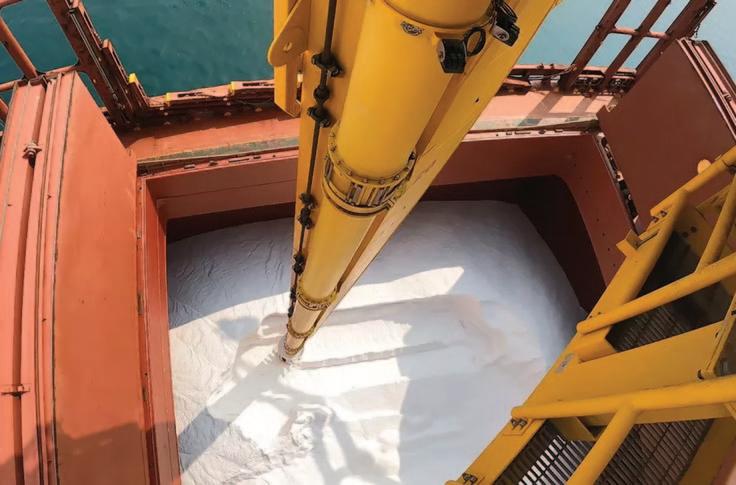
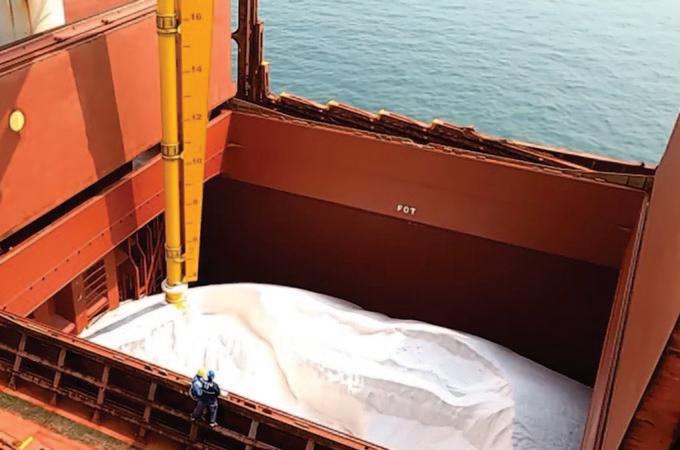
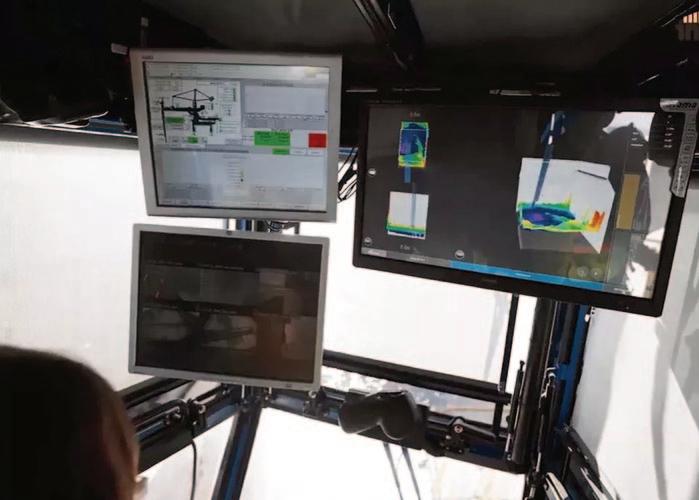
ENGINEERING & EQUIPMENT 121 MAY 2024 DCi www.drycargomag.com
Bruks Siwertell unloading salt.
Bruks Siwertell anti-collision system.
With the radar-based anti-collision system, along with the option for data-generated hatch visualization, it is possible to see the hatch and the material inside, with top, side, and overall views available.
Tenova’s SafeForPorts set to transform port operations
This pioneering initiative will leverage VR and AI to revolutionize port operations prioritizing safety in port environments
Tenova has won a call for proposals issued by the Istituto Italiano di Tecnologia (IIT) under the banner of RAISE (Robotics and AI for Socio-economic Empowerment). SafeForPorts is a new project focused on implementing key Industry 4.0 technologies to create smart and sustainable ports.
It aims to revolutionize machine operators safety and enhance port operations efficiency through an innovative solution that combines training and assisted maintenance to address crucial needs in port areas.
SafeForPorts aims to develop a comprehensive solution for remote training of operators and on-field assistance for operating and maintaining bucket ship unloaders, a rail-mounted mobile unit typically installed on port docks. Operators will access the VR simulator through headsets, while remote assistance will be improved using Computer Vision algorithms to process structured photographic material.
Developed in Tenova’s virtual laboratory in Genoa, the VR prototype will include a workstation-cabin with handheld controls to simulate the machine’s 3D operational environment. This system will enhance the laboratory model by integrating interactive elements and refining operational logic for full virtual operational capability.
This integrated approach will enable operators to systematically perform maintenance workflows while using handsfree head-mounted wearable devices. These workflows include capturing critical images and providing inputs for algorithms to generate reports on system
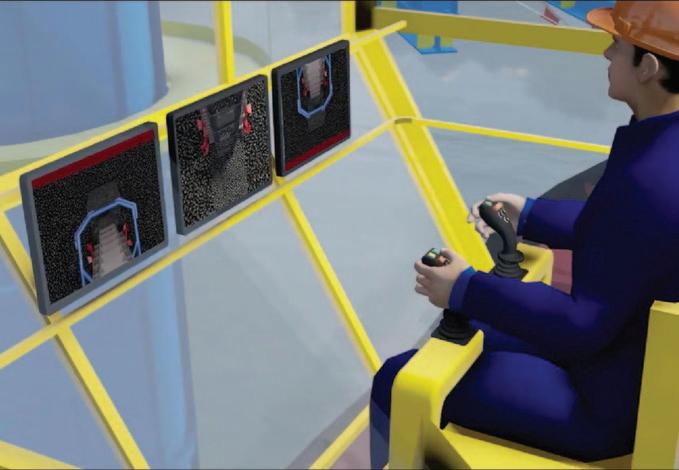
degradation. Additionally, Tenova envisions the possibility of creating a Digital Twin to manage cargo hold procedures on the ship during unmanned operation.
Aligned with the objectives of the RAISE initiative, SafeForPorts contributes to the implementation of robotics and AI systems for managing port traffic, thereby advancing intelligent solutions in the maritime industry. This project, developed in partnership with technology providers Prosoft Intesys and InformAmuse, is implemented under the National Recovery and Resilience Plan, Mission 4 funded by the European Union – NextGenerationEU, highlighting its significance in driving innovation and safety within the maritime sector.
“SafeForPorts holds strategic significance for Tenova, not just in terms of business but also for actively contributing to the development of new technologies and the design of increasingly intelligent, optimized processes for smart and
sustainable ports. This project testifies our commitment to prioritizing and enhancing a core value at Tenova: safety. As we embark on this initiative, we recognize it as a catalyst for innovation and a cornerstone toward shaping the future with new possibilities and perspectives.” says Silvio Leoni, Tenova Executive Vice-President Material Handling.
ABOUT TENOVA
Tenova, a Techint Group company, is a worldwide partner for sustainable, innovative, and reliable solutions in the metals and — also through the well-known TAKRAF and DELKOR brands — in the mining industries. Tenova leverages a workforce of over 2,400 forward-thinking professionals located in 18 countries across five continents, who design technologies and develop services that help companies reduce costs, save energy, limit environmental impact, and improve working conditions.
Arinto: Addressing port and terminal congestion challenges
Port and terminal congestion present significant operational challenges for bulk commodity markets. Predicting incoming vessel traffic is often difficult, and vessel ETAs from various sources are frequently unreliable or inaccurate. Additionally, vessels are incentivized to arrive as early as possible due to contractual obligations under voyage charters, the most common form of contract for bulk commodities transported by ship. These factors lead to operational inefficiencies in vessel arrival planning and result in ships waiting at anchorage for extended periods before
berthing. This also causes unnecessary emissions from maritime transport and incurs extensive extra costs for all parties, which could otherwise be avoided.
Arinto has developed a software suite to address these challenges by both improving lineup visibility and overcoming contractual barriers. Its terminal solution allows operators to monitor all incoming vessels in real-time and obtain accurate ETA information at one glance. The system serves as a reliable, single source of truth for vessel ETAs. With calendar integration and alerts, bulk terminals can identify and
proactively manage future berthing conflicts and bottlenecks. Instead of manually checking and monitoring vessel ETAs through emails, spreadsheets, PDFs, and phone calls, the Arinto terminal solution provides a comprehensive dashboard with a straightforward overview. This system maximizes the utilization of resources such as equipment and personnel by enabling optimal resource allocation with a longer and more trackable planning horizon. Throughput can also be increased by smartly arranging incoming vessels. As a result, customer satisfaction is
ENGINEERING & EQUIPMENT 122 MAY 2024 DCi www.drycargomag.com
improved as the system enhances collaboration and coordination.
Key components of the solution include data input, vessel tracking and alerts plus analytics. Data input is fully automated, requiring no IT resources or projects to implement. Arinto can connect to any data source, whether it is an API, ERP system, spreadsheet, PDF, or a daily email stating the current lineup. The system automatically reads and structures the data. Vessel tracking provides accurate, real-time position analysis and ETA predictions, allowing operators to compare stated ETAs with realistic ones based on the vessel’s current position, distance to destination, and average speed. Lastly, alerts and analytics provide decisionmakers with tools for improved operations. The system automatically detects future congestion and berthing conflicts, alerting users well in advance. Its self-learning algorithm continuously
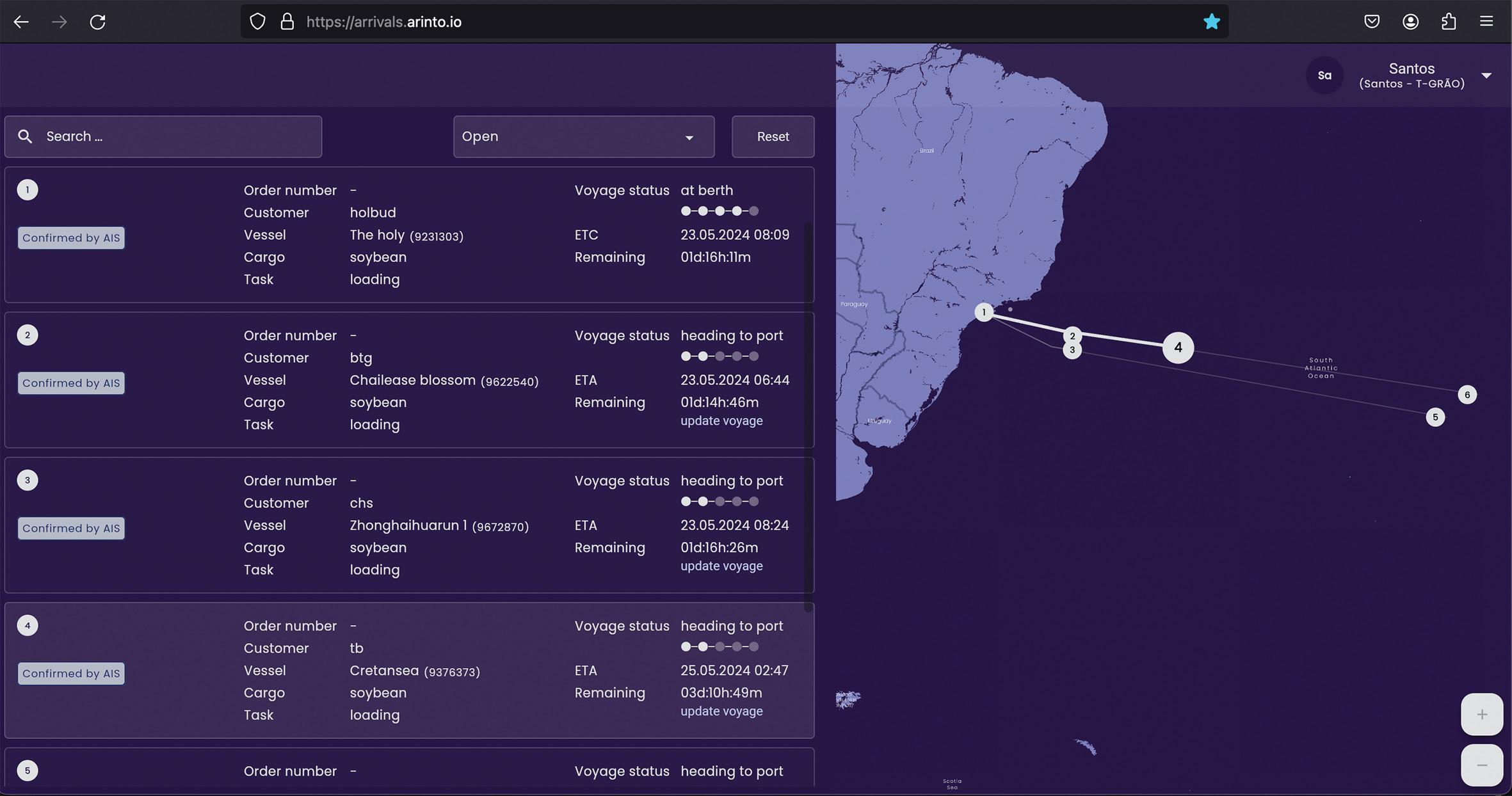
improves to offer more accurate timestamp predictions such as ETB, ETC, and ETD.
The biggest differentiating factor of the Arinto suite is its module to align vessel owners and charterers contractually. Often, the due despatch clause and fuel savings from a slowdown are less than potential demurrage fees, preventing vessels from adjusting speed. Arinto’s ALIGN module helps owners and charterers simulate different arrival
scenarios to find the ideal outcome, leading to a commercial and operational win-win for both parties and making the BIMCO JIT clause actionable.
To benchmark current terminal berth pre-planning operations, Arinto is conducting a digital berth management index in 2024. Industry leaders are invited to share their experience and contribute to a worldwide benchmark about how vessel arrivals are currently planned and organized digitally.



















































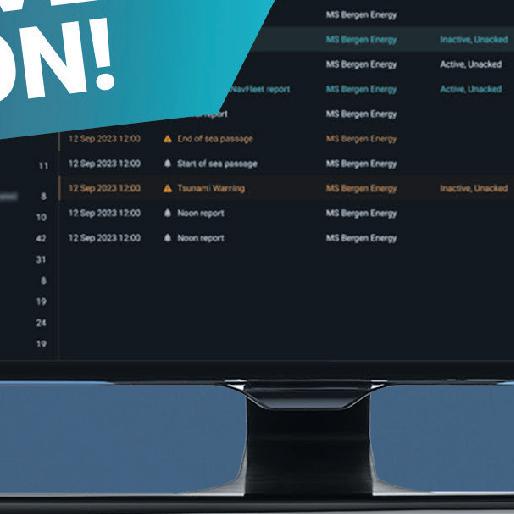

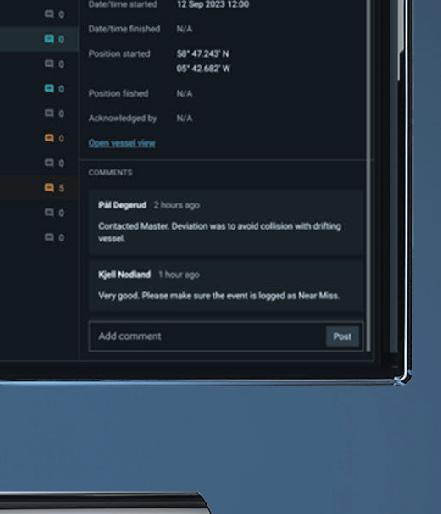
































































ENGINEERING & EQUIPMENT
mode a vFleet creates Na oimpr costs, Reduce alsh al sh t otTo al that ecosystem digital ern, ve insights, enhance safety ations ip oper i multip by ation llows collabor emissions. and minimise formplat ple navtorr..com PERFORMANCE •VO Y O YAAGE MONITORING •EMMISSION &COMPLIANCE E
Introducing the Innomotics Yardmaster
As companies strive to meet humanity’s growing demand for materials while reducing their environmental impact, running operations as efficiently and productively as possible has become a key imperative.
True to its promise to provide Reliable Motion for a Better Tomorrow, Innomotics offers a range of innovative solutions that seek to meet these challenges head-on, using automation, electrification, and digitalization.
Innomotics’ customers include major players in the mining, cement, and energy industries. A major bottleneck in all these businesses is how to handle efficiently the huge volumes of raw materials as they move from mine to processing plant to port and then to the final customer.
Innomotics’ answer is its Innomotics Yardmaster solution which provides operators and planners with extensive knowledge about their stockyard inventory in real-time so that they can
make the best decisions possible.
Whether handling iron ore, coal or copper concentrates, this solution combines automated machine operation and real-time monitoring of inventory.
Material is monitored from the time it arrives in the stockpile whether from the mine directly or from a ship or train. As material makes its way from the conveyor to the stacker, the system tracks its position, quantity, and quality. This information is presented to the planner in the form of three-dimensional model of the stockyard, helping him or her to better visualize the challenges and options before them.
In addition, the system includes the Advanced Stockyard Planning (ASP) application which uses algorithms and realtime data integration to help planners to schedule and optimize movements with the stockyard based on operational objectives.
The system assesses possible
alternatives and uses real-time responsiveness to fluctuating conditions to ensure that the proposed plans are both efficient and feasible.
For example, as a vessel approaches the quay for unloading, the system will prompt the planner to make sure that there is sufficient crane and storage capacity available for its cargo and that it is unloaded in such a way that does not jeopardize the ship’s stability.
The Innomotics Yardmaster is built on more than two decades of experience in developing automated stockyards since the first such driverless system was installed at the Bexbach power plant in Saarland, Germany. Since then, the company has gone to install more than sixty such machines across Europe, Africa, and Asia.
In recent years, Innomotics has deployed the technology at steel plants in China and Italy, phosphate mines in Morocco and a coal mine in South Africa.
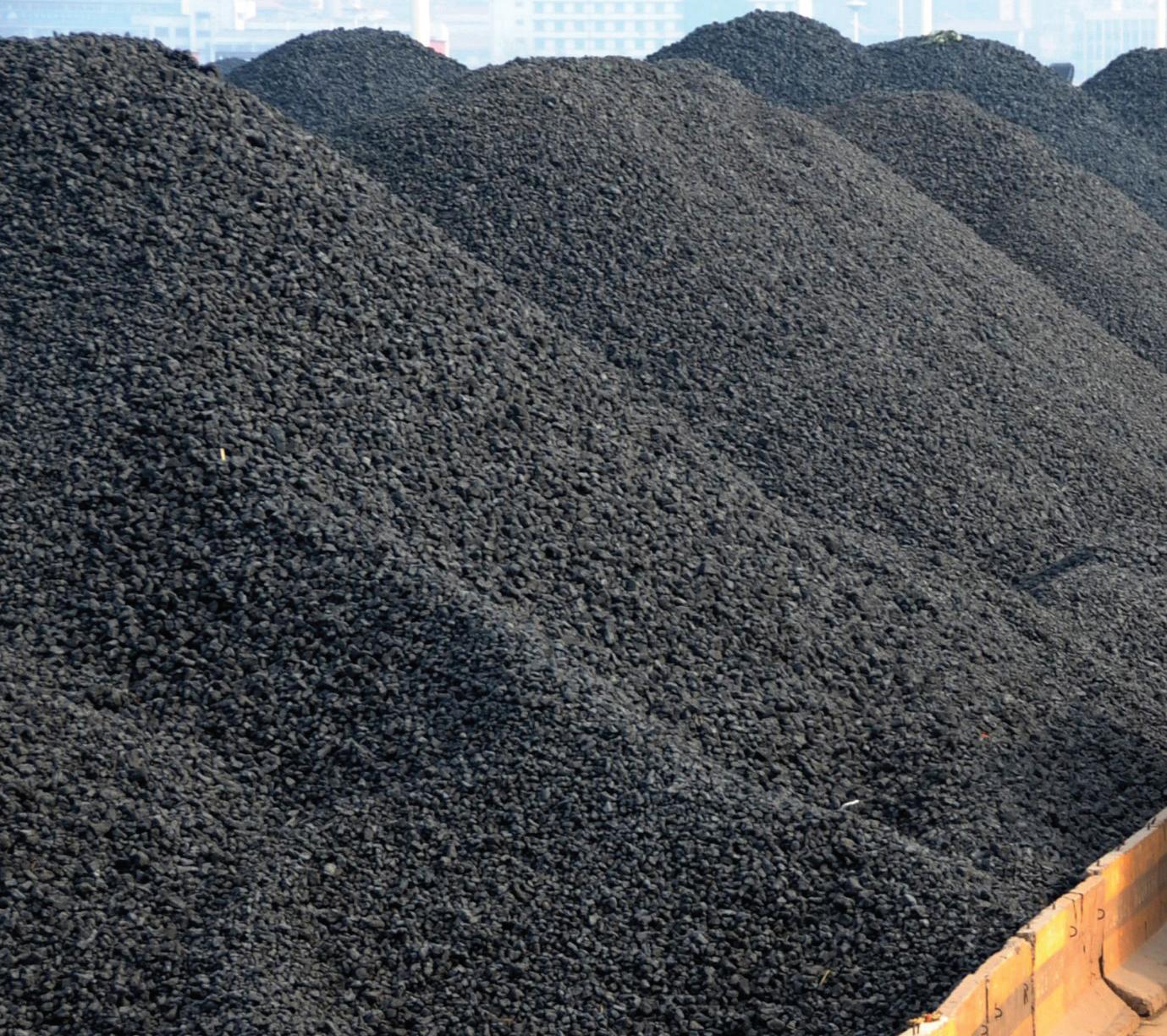
ENGINEERING & EQUIPMENT 124 MAY 2024 DCi www.drycargomag.com
DCi
Striking a blow...
for pneumatic bulk handling equipment
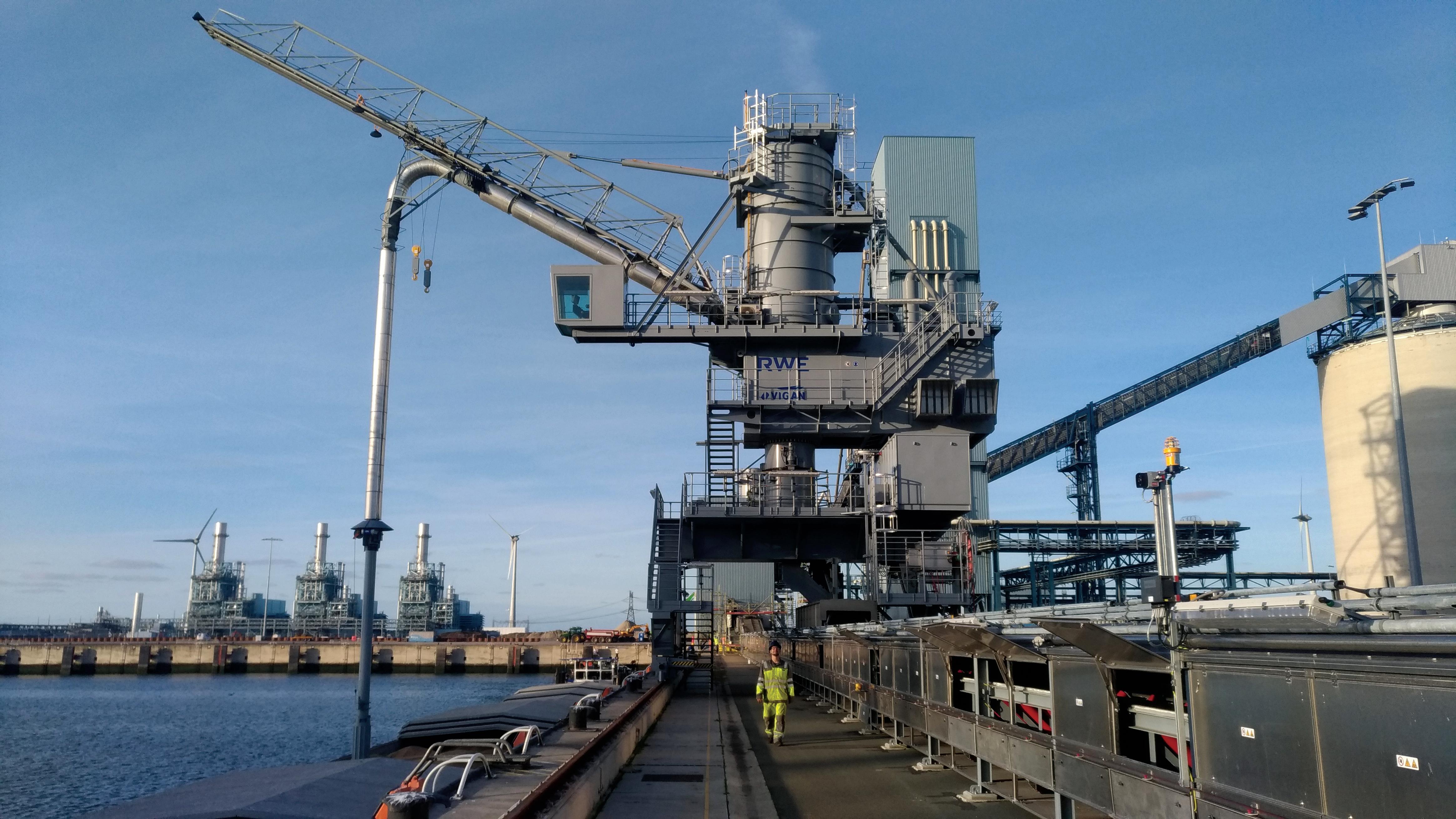
VIGAN: pioneer in environmentally conscious bulk handling
Based in Nivelles, Belgium, VIGAN Engineering S.A. stands as a prominent figure in the bulk handling industry, boasting over 55 years of pioneering expertise. Renowned for its provision of handling solutions for dry bulk products, particularly focusing on agricultural commodities like cereals, the company has solidified its reputation as a reliable equipment provider. VIGAN’s extensive product portfolio includes grain pumps, pneumatic ship-unloaders, and turnkey solutions for complete port terminals. With an impressive 99% of its business exported, VIGAN has a strong global presence, with its equipment installed in ports around the world.
VIGAN’s commitment to innovation and customer satisfaction sets it apart in the industry. The company offers a range of equipment tailored to specific port requirements.
Grain pumps: VIGAN’s grain pumps v are mobile and compact, designed for quick deployment across various sites. They are increasingly efficient, with
outputs reaching up to 250tph (tonnes per hour).
Pneumatic and mechanical ship- v unloaders: VIGAN’s unloaders are commonly seen in port environments, available in fixed and mobile variants. They are powered by diesel generators or cable reels, with capacities ranging up to 800tph, and mechanical unloaders can achieve up to 1,500tph.
Loaders: VIGAN’s loaders offer v versatility for bulk products, tailored for various vessels including large or small barges. The loading is mechanical, with capacities up to 2,000tph.
Terminals: VIGAN provides turnkey v projects for port terminals, including ship unloading/loading, storage facilities, and bagging operations.
VIGAN’s steadfast commitment to ensuring customer satisfaction is evident in its ongoing efforts to adapt to evolving needs. As customer expectations evolve to
include improved performance, energy efficiency, reduced noise, and simplified maintenance, VIGAN remains resolute in embracing these challenges and providing optimal solutions.
Environmental considerations have become paramount in recent project development. VIGAN has effectively curtailed power consumption by integrating multi-stage turbo blowers and inverter technology into its pneumatic unloaders. These innovations enable automatic power adjustment based on demand, resulting in more efficient energy utilization.
Given that port equipment often operates in urban areas or near environmentally sensitive zones with stringent noise ordinances, VIGAN has risen to the challenge of engineering bulk handling machinery that adheres to rigorous noise standards. Leveraging meticulous calculations, research, and onsite evaluations, VIGAN has cultivated specialized proficiency in devising noise abatement solutions for various
ENGINEERING & EQUIPMENT 125 MAY 2024 DCi
www.drycargomag.com
NIV500 CSU for wood pellets in the Netherlands.
Louise Dodds-Ely
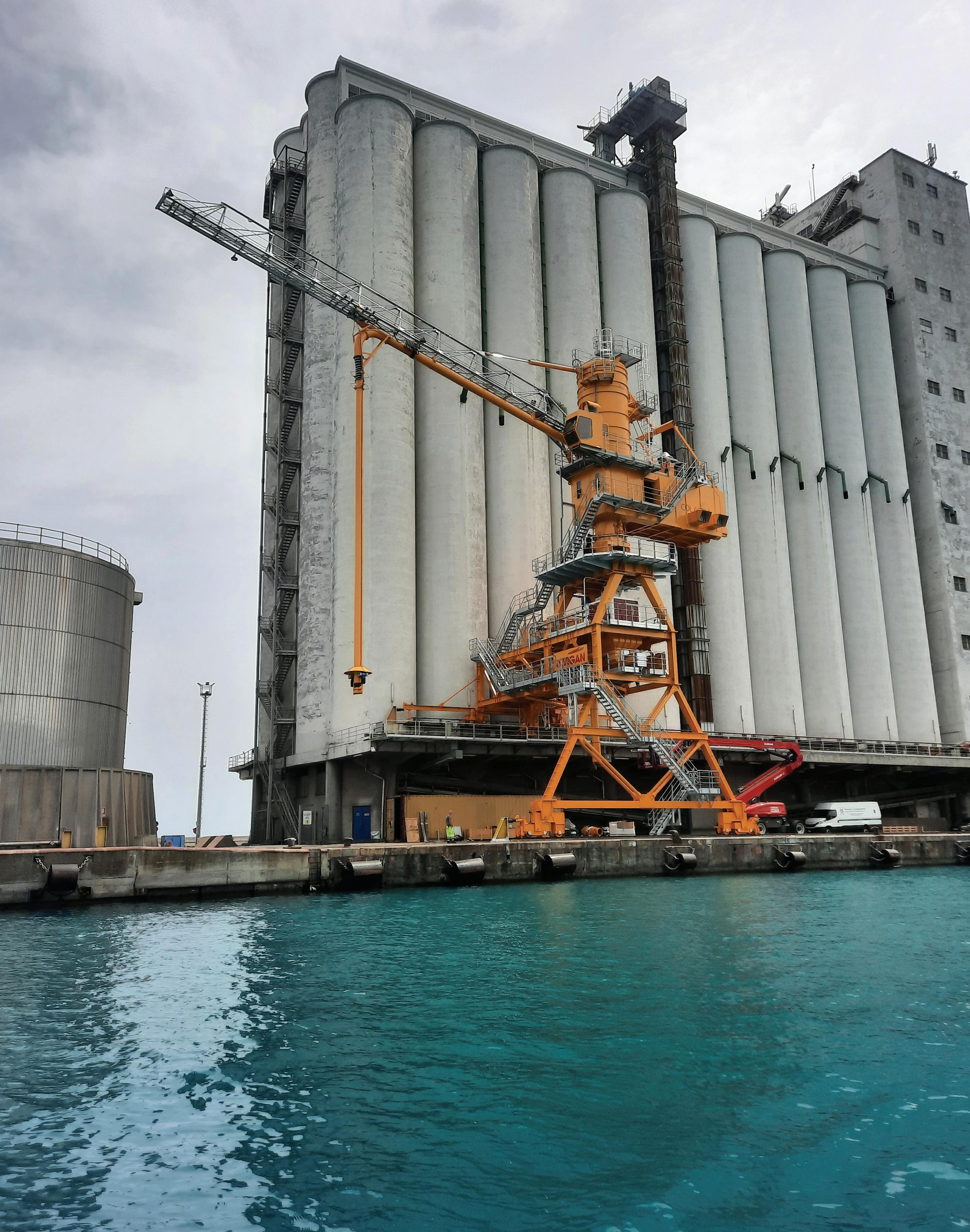
components, including turbo sets, machine enclosures, and suction ducts. This expertise ensures compliance with noise regulations without compromising operational efficacy.
Furthermore, VIGAN’s pneumatic suction technology serves to minimize dust emissions. Employing closed-circuit systems with overpressure filters, these mechanisms effectively contain dust, reducing emissions to approximately 3mg/m³.
Additionally, VIGAN’s current trajectory
underscores a preference for pneumatic machinery endowed with increasingly substantial unloading capacities.
VIGAN stands at the forefront of innovation once again, securing a landmark contract with SOSIPO for the installation of the world’s second pneumatic unloader boasting an impressive discharging capacity of 800 tonnes per hour. The decision to invest in a second 800tph pneumatic unloader underscores SOSIPO’s unwavering trust in VIGAN’s engineering prowess. This latest endeavour marks the
fourth VIGAN gantry to grace the port of Casablanca under SOSIPO’s management, reaffirming Morocco’s position as a global reference in the field.
Also recognizing the escalating demand for larger and more efficient grain intake near the capital, the port of Callao, Peru recently granted VIGAN the contract for two NIV800 machines. With a combined nominal capacity of 1,600tph, this represents the highest pneumatic unloading capacity at a single site in Latin America, rivalling the world record set in Morocco by SOSIPO.
ENGINEERING & EQUIPMENT 126 MAY 2024 DCi www.drycargomag.com
NIV400 CSU in
Italy.
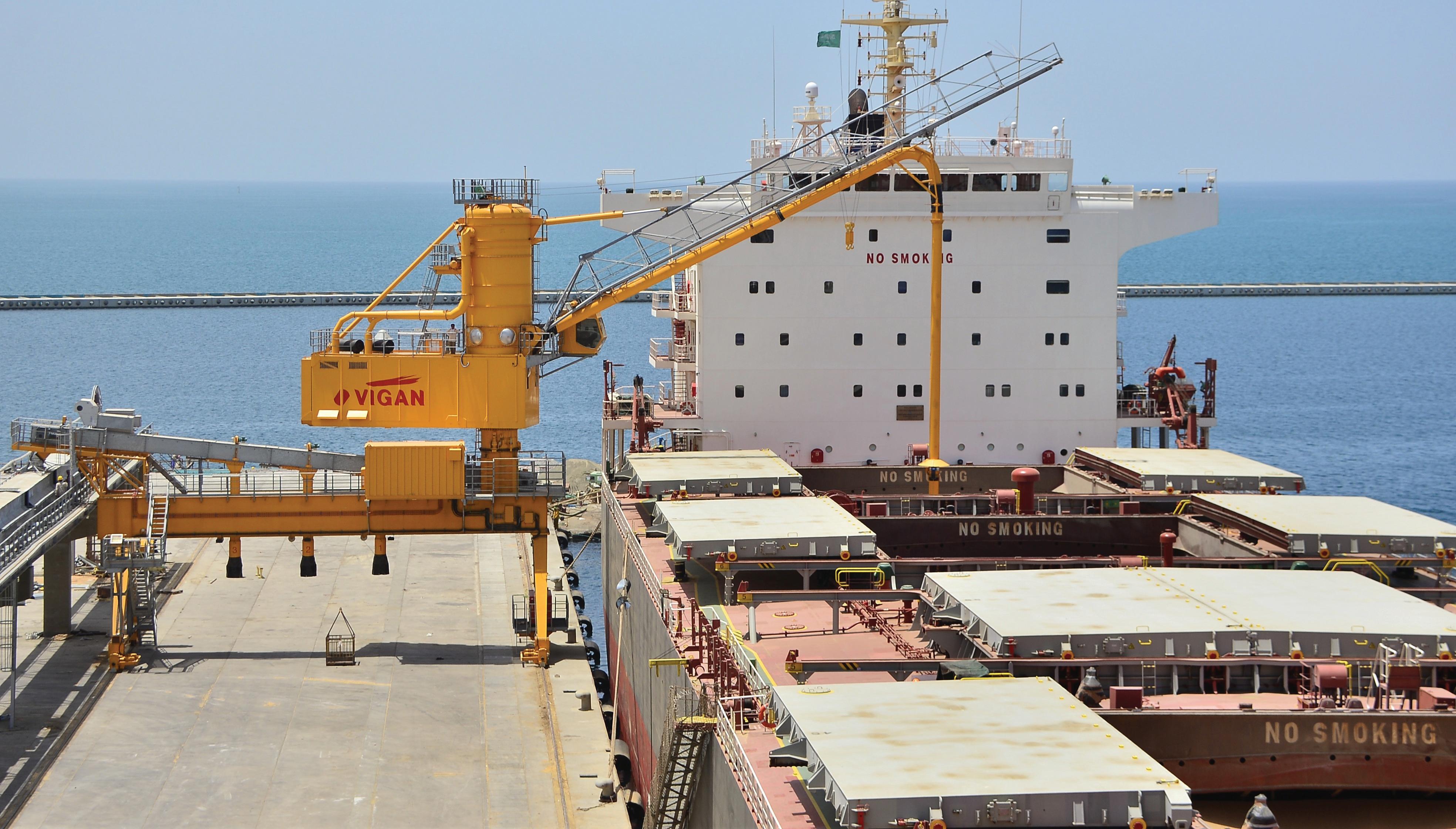
Furthermore, just recently, VIGAN received an order in the port of Ulsan, Korea, for another continuous pneumatic unloader (CSU) capable of handling this huge throughput of 800tph of grain — the first ever 800tph pneumatic CSU in Asia. This equipment will replace an old mechanical unloader. This achievement further solidifies VIGAN’s position as a leader in innovative cargo handling solutions across the globe.
VIGAN, boasting a legacy spanning five decades, distinguishes itself as a pioneer in the design, manufacture, and assembly of cutting-edge machinery. The company’s vertical integration approach ensures complete control over every aspect of
operations, from initial design and calculation to shipping. In contrast to competitors heavily relying on subcontractors, VIGAN maintains a meticulous and hands-on process.
VIGAN’s commitment to delivering topnotch machinery is exemplified by its practice of pre-assembling and rigorously testing each machine in our factory. This meticulous care, from the initial design phase to commissioning, has been a cornerstone of VIGAN’s success.
While embracing new technologies, VIGAN remains cautious about the potential interference of sophisticated electronics in machine availability. The company prioritizes durability and
availability to prevent the machine’s unavailability when needed the most. VIGAN stays vigilant, implementing new technologies only when proven durable and easy to use.
An exemplary demonstration of this dedication lies in the establishment of a specialized department solely focused on the design and production of electronic and electrical components. From essential electrical panels to intricate wiring systems, VIGAN’s unique feature sets it apart as the industry’s sole player with such a dedicated department. Since its inception, this department has experienced continuous growth, a testament to VIGAN’s unwavering pursuit of improvement. Fully
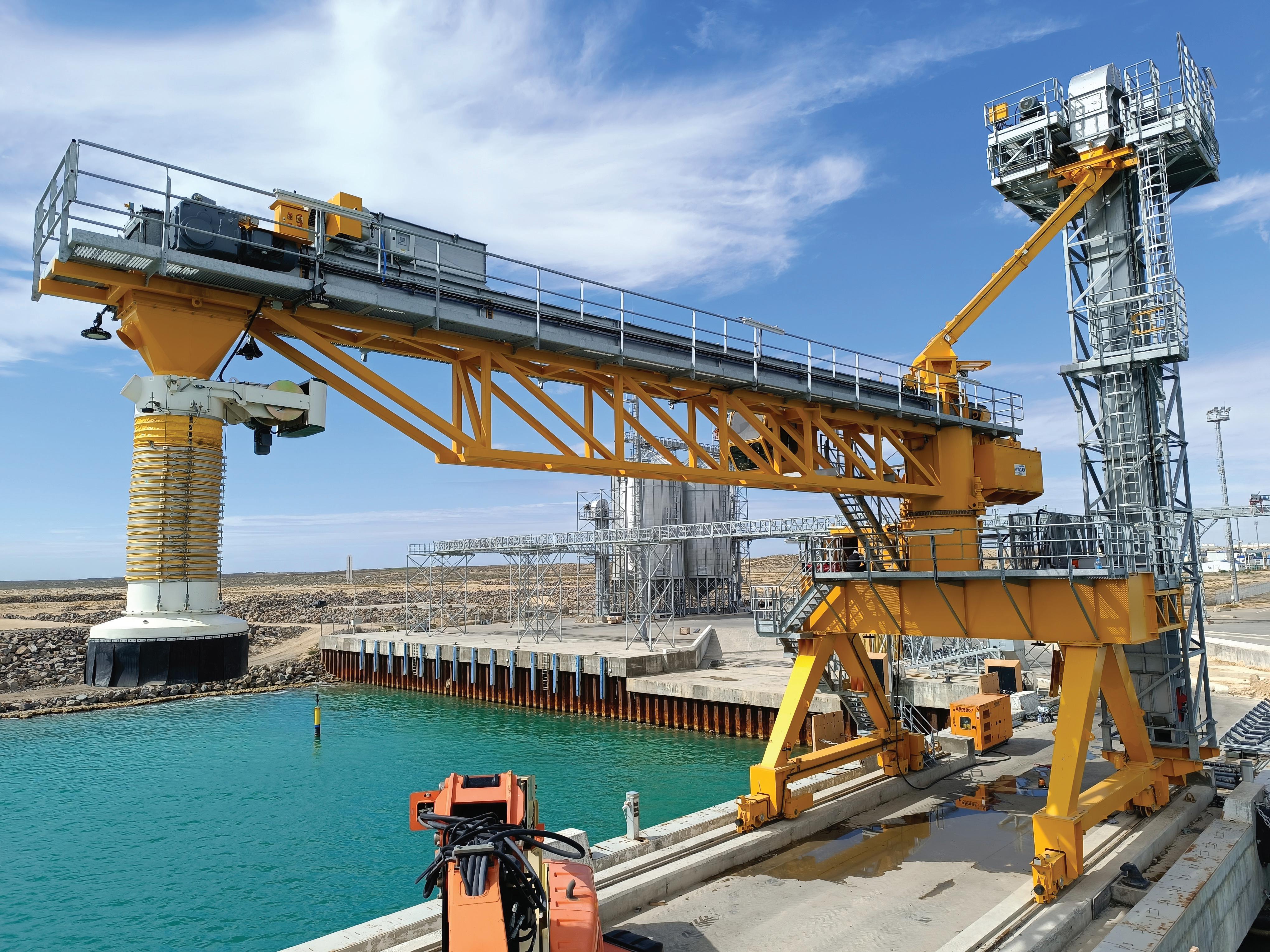
ENGINEERING & EQUIPMENT 128 MAY 2024 DCi www.drycargomag.com
700tph VIGAN shiploader in Kazakhstan.
VIGAN NIV600 CSU in Saudi Arabia.
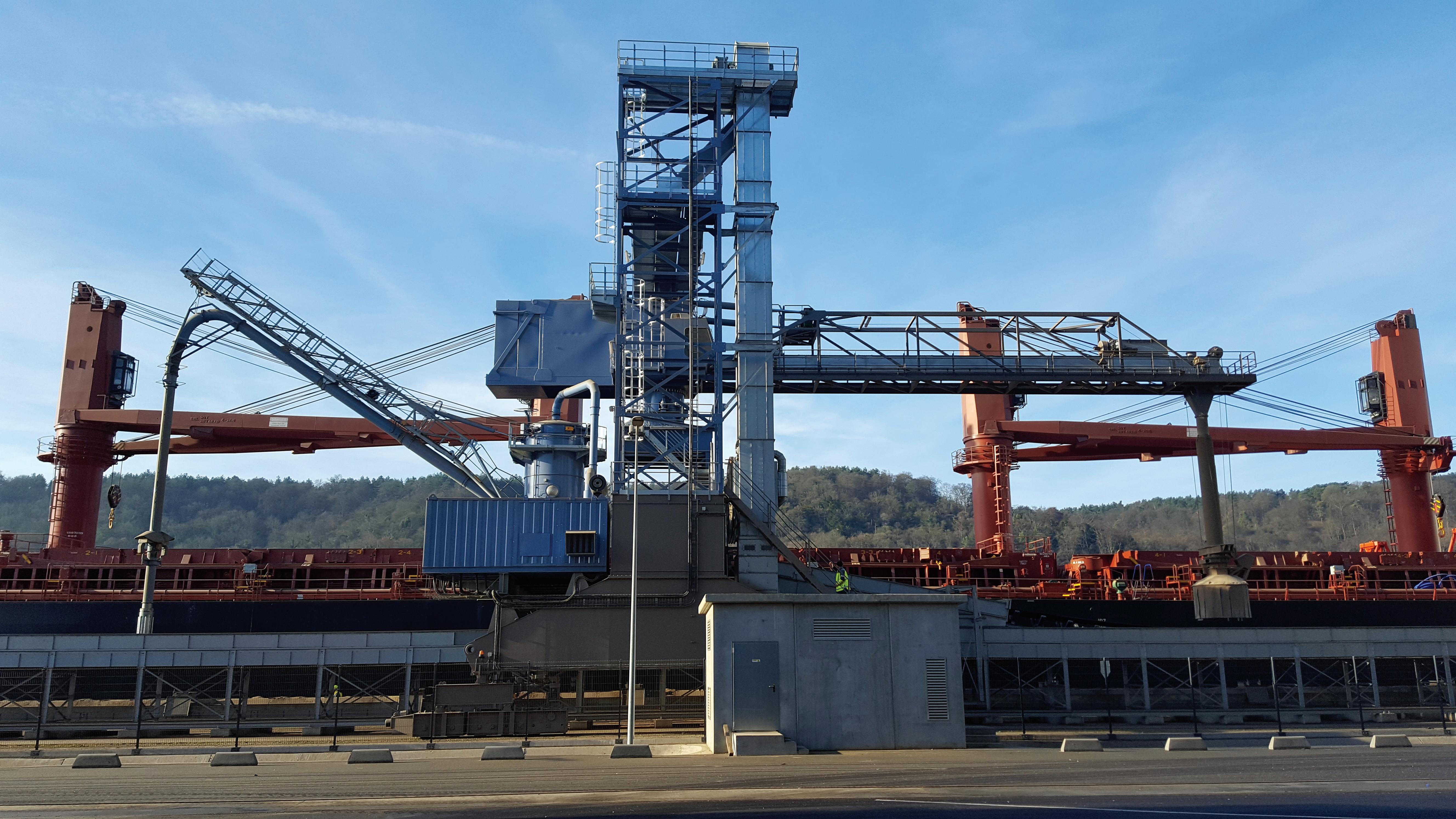
integrated within the company, this department ensures in-depth expertise in the design and manufacturing of highquality electrical and electronic components, thereby ensuring the reliability and outstanding performance of Vigan Engineering’s agricultural bulk material equipment.
As VIGAN introduces a new generation of CSUs with increased capacity, the
company emphasizes the importance of maintaining durability and availability.
Upscaling machine size involves addressing multiple parameters, including turbine size, piping diameters, air-lock sizes... VIGAN has successfully solved these challenges in the near past, showcasing its ability to adapt to evolving industry needs.
With over 50 years of solid experience and adherence to strict European
ECO HOPPER DUST FREE
PORT OPERATION
standards, VIGAN stands as a reliable and innovative leader in the field. The company’s unwavering dedication to innovation, precision, and reliability has propelled it to the forefront of the industry.
As VIGAN continues to push boundaries in pneumatic cargo handling, the recent projects reaffirm its commitment to providing cutting-edge solutions that meet the evolving needs of the industry.
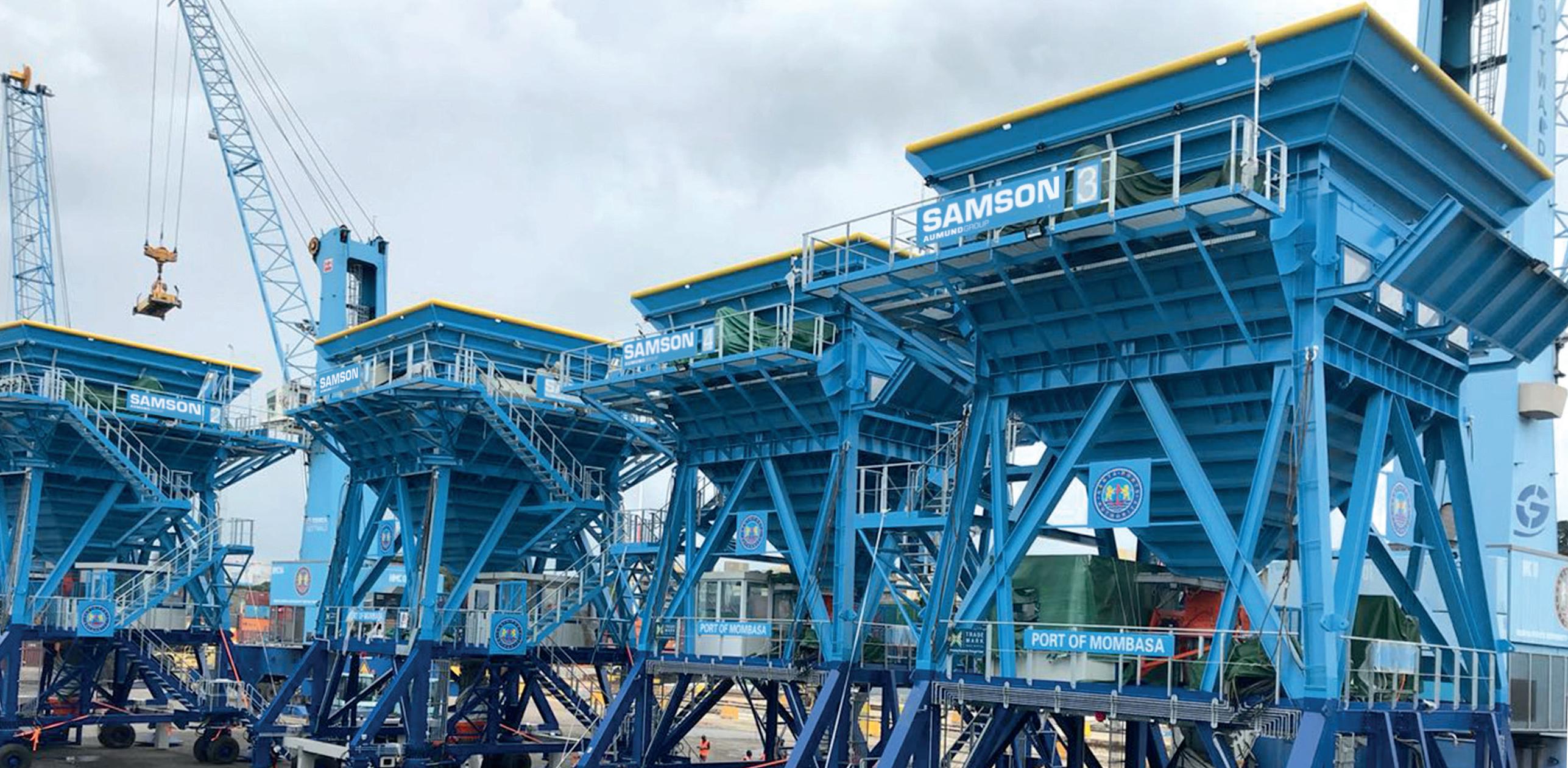
• Economical and ecological sensitive solution
• Handles a wide range of bulk materials
• Various mobility and discharge options
• Turn your Hopper into a SAMSON Eco Hopper
• Worldwide service and support guaranteed
ENGINEERING & EQUIPMENT
WE CONVEY QUALITY sales@samson-mh.com www.samson-mh.com
1,000tph VIGAN shiploader.
Lion Bulk Handling supplies pneumatic ship and barge unloaders for vessels of up to 40,000dwt

Enhancing port efficiency: a deep dive into KOVAKO® and KINTEC™ pneumatic ship and barge unloaders for vessels up to 40,000dwt. In the bustling world of maritime dry bulk conveying, efficiency is the name of the game. Ports around the globe are constantly seeking innovative solutions to streamline their operations, maximize throughput, and minimize turnaround times. At the heart of this quest for efficiency lie pneumatic ship- and bargeunloaders, conveying millions of tonnes of dry bulk materials, such as cement, fly-ash, white cement, and alumina. Among the leading players in this arena are KOVAKO and KINTEC, renowned for their cutting-edge technology and superb performance for vessels up to 40,000dwt.
UNVEILING
KOVAKO® AND KINTEC™:
PIONEERS IN PNEUMATIC SHIP-UNLOADING
KOVAKO® — THE ORIGINAL PNEUMATIC SHIPAND BARGE-UNLOADER
With decades of experience under its belt, KOVAKO® has earned a reputation as a trailblazer in pneumatic ship-unloading solutions. Its systems are designed to handle a diverse range of bulk materials. KOVAKO ship-unloaders are offered in three standard models that match optimal unloading capacity with typical vessel sizes — eliminating added costs associated with custom design. They are available as either diesel or electric-powered and in multiple configurations — making it easy to match a

KOVAKO ship-unloader model to any terminal application.
Lion Bulk Handling is an authorized supplier of (FLSmidth Cement) Kovako ship and barge unloaders.
KINTEC™
— CUSTOMIZED UNLOADING SOLUTIONS
In ship- and barge-unloading, KINTEC™ is a leading provider of pneumatic conveying solutions. Leveraging advanced engineering and state-of-the-art technology, KINTEC’s systems are engineered to handle the unique challenges of ship and barge unloading operations with precision and
efficiency. From river ports to coastal terminals, KINTEC’s solutions empower ports to handle bulk cargo with ease, regardless of the vessel size.
KINTEC is committed to innovation and reliability, delivering solutions that optimize port efficiency while minimizing environmental impact.
KINTEC™ is a Lion Bulk Handling brand.
KEY FEATURES AND ADVANTAGES
High-capacity handling: KOVAKO v and KINTEC pneumatic unloaders are
ENGINEERING & EQUIPMENT 130 MAY 2024 DCi www.drycargomag.com
capable of handling vast quantities of bulk materials, facilitating rapid unloading of vessels of up to 40,000dwt. This high-capacity handling ensures swift turnaround times, minimizing berthing delays and optimizing port throughput.
Material handling: one of the v standout features of KOVAKO and KINTEC unloaders is their ability to handle delicate bulk materials with care.
Versatility and adaptability: from v the type of bulk material to the specifications of the vessel, KOVAKO and KINTEC unloaders are highly versatile and adaptable. Their designs allow seamless integration into existing port infrastructure, while customizable configurations cater to specific operational requirements.
Efficient dust control: dust emissions v pose a significant challenge in bulk
handling operations, impacting worker safety and environmental compliance.
KOVAKO and KINTEC unloaders are equipped with advanced dust control systems, mitigating airborne particles and ensuring a safe and clean working environment.
DRIVING EFFICIENCY AND SUSTAINABILITY
The deployment of KOVAKO and KINTEC pneumatic ship- and barge-unloaders represents a paradigm shift in port operations, driving efficiency, sustainability, and competitiveness. By streamlining the unloading process, minimizing material losses, and reducing environmental footprint, these systems are instrumental in shaping the future of maritime dry bulk handling logistics.
CONCLUSION
In an era defined by rapid globalization and increasing trade volumes, ports play a
pivotal role as gateways of commerce. The adoption of advanced pneumatic ship- and barge-unloaders from industry experts like KOVAKO and KINTEC is not just a strategic investment; it’s a commitment to excellence, innovation, and sustainable growth.
As ports continue to evolve and expand, embracing these cutting-edge solutions will be essential for staying ahead of the curve and unlocking new levels of efficiency and competitiveness.
LION BULK HANDLING SOLUTIONS
In conclusion, investing in efficient bulk handling systems is paramount for businesses looking to streamline their operations and maximize productivity. Whether in the manufacturing, cement, offshore or maritime industry, optimizing material handling processes can lead to significant cost savings and improved efficiency.
Lion Bulk Handling delivers a recommissioned Kovako pneumatic ship-unloader for the US market
LION BULK HANDLING DELIVERS A KOVAKO PNEUMATIC SHIP-UNLOADER FOR THE US MARKET
Lion Bulk Handling has shared some exciting news with Dry Cargo International: a second-hand KOVAKO® ship-to-silo unloader is now back in action at a cement terminal in the USA. In cement conveying, efficiency is critical. Every step in the supply chain, from loading to unloading, is crucial in ensuring dry bulk material reach their destination swiftly and seamlessly.
Lion Bulk Handling, a prominent provider of innovative material handling solutions, recently delivered a Kovako pneumatic ship-unloader to one of its valued customers.
After a remarkable transformation, this unloader has been upgraded with a stateof-the-art automation system and converted from a road-mobile to a barge-
mounted configuration. Therefore, this pneumatic ship-unloader is used to unload cement from river barges. Pneumatic unloading ensures that the area where the machine is operational stays dust-free, protecting the environment.
But that’s not all — meticulous tuning and tweaking have ensured peak performance. Plus, the crew has undergone comprehensive training to operate the equipment precisely and safely.
It’s truly a proud moment to witness this revitalized unloader re-commissioned with its new owner, marking a significant milestone for the local area. This project exemplifies innovation and adaptability, demonstrating how existing assets can be upgraded and repurposed to meet evolving needs.
Lion is the official distributor and representative of FLSmidth Cement

Kovako and is a respected partner in pneumatic, dust-free material conveying for land-based and maritime applications.
If you’re reading
...then so, very probably, are your customers! To find out how you can benefit from advertising in the world’s only monthly dry bulk publication contact Andrew Hucker-Brown on Tel: +27 31 583 4360
ENGINEERING & EQUIPMENT
DRY CARG O international DC i TM
this....
Van Aalst state-of-the-art equipment boast latest pneumatic technology
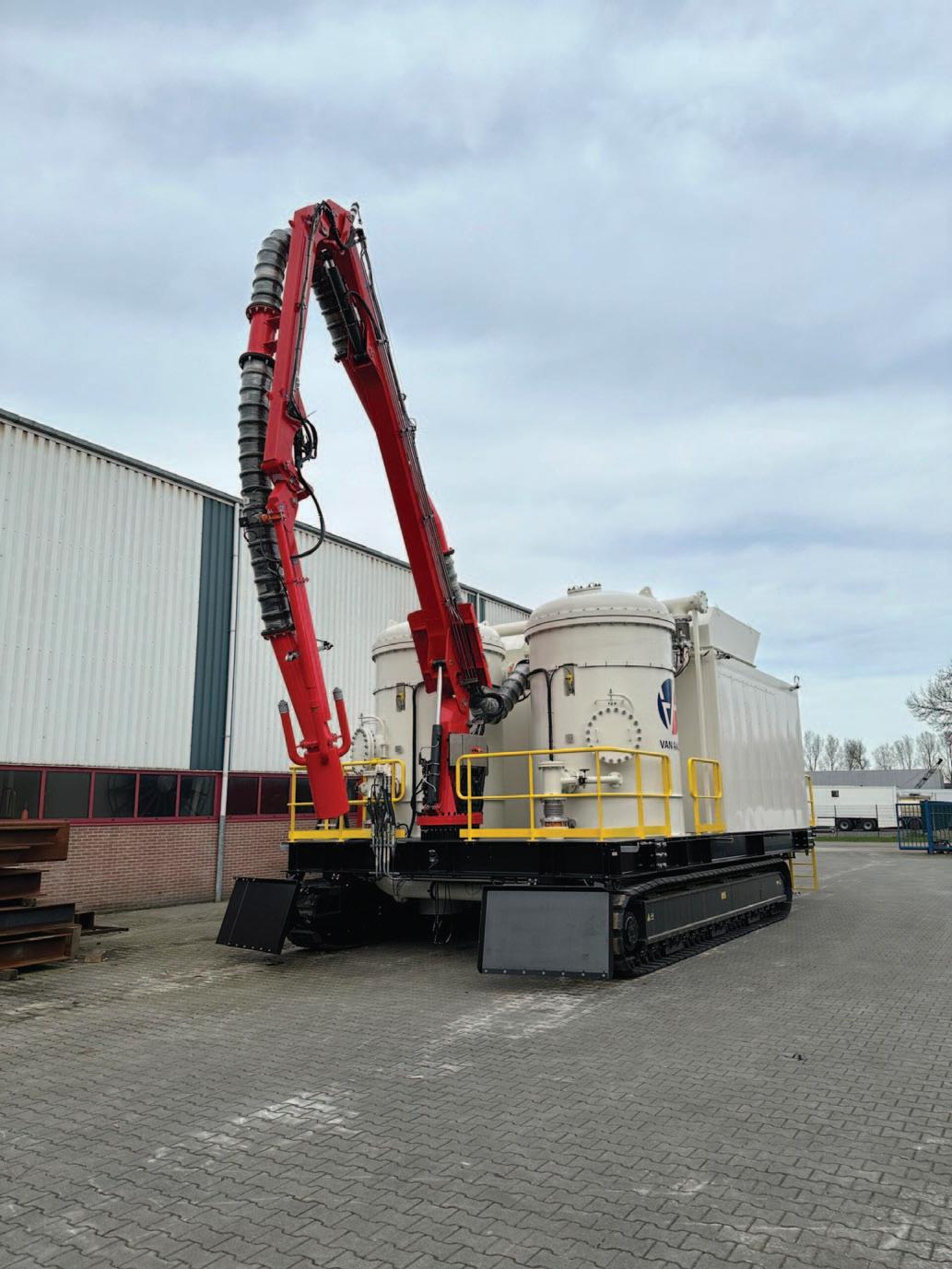
Van Aalst Bulk Handling is a flexible organization, which offers tailor-made solutions for loading, unloading and pneumatic conveying projects. Van Aalst Bulk Handling provides complete design,
equipment manufacturing and supply. The company has a prominent position in the market of dry bulk handling of dusty abrasive powders. Van Aalst Bulk Handling’s long experience guarantees state-of-the-art
solutions based upon proven technology. It delivers pneumatic ship-unloaders, road mobile ship-unloaders, shiploading installations, and storage facilities worldwide.
ENGINEERING & EQUIPMENT 132 MAY 2024 DCi www.drycargomag.com
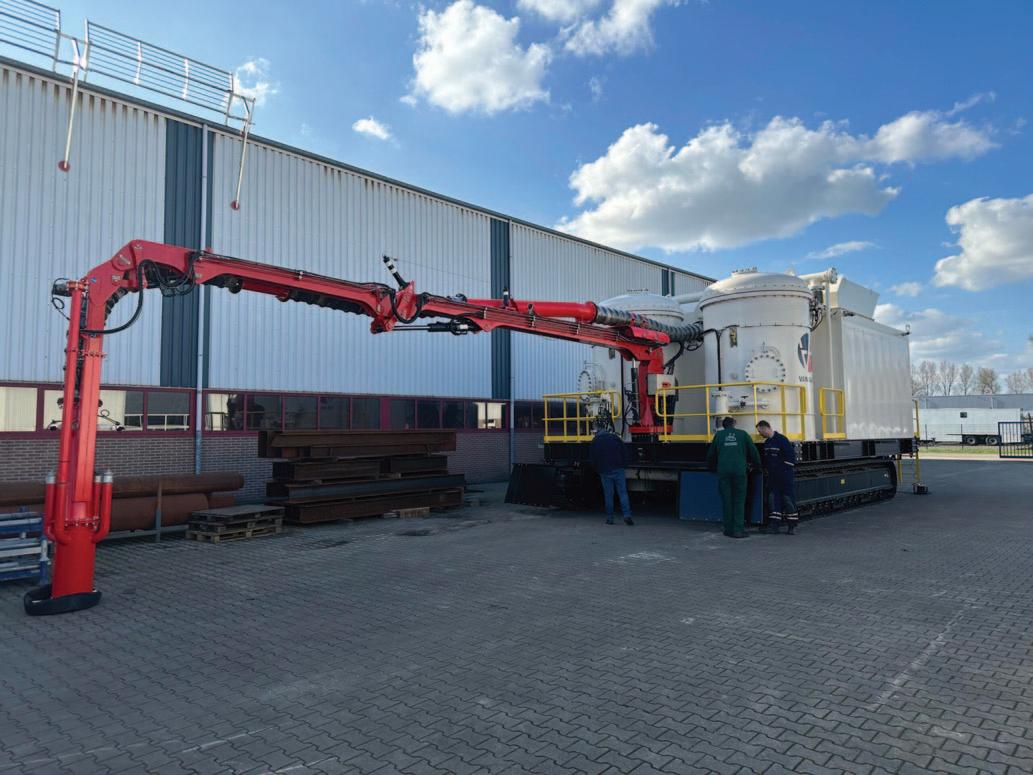
VAN AALST RECLAIM UNIT FOR ARGOS USA
This machine will be used to reclaim cement from a flat storage building with discharging it at a rate of 200 tonnes per hour to day silos. The machine is remotely controlled from outside the warehouse, so no people need to be present inside the warehouse.
In addition to a much healthier working environment, this approach also provides many safety benefits. The machine is electrically driven and, because it drives and steers on steel tracks, it has greatly reduced ground loads. The cement is sucked up with a long reach manipulator arm and simultaneously discharged to the day silo where it is loaded into trucks or rail wagons. The unit can also be used to unload cement barges from the quay. The steel tracks provide excellent weight distribution so that the unit can function on poor surfaces too. DCi
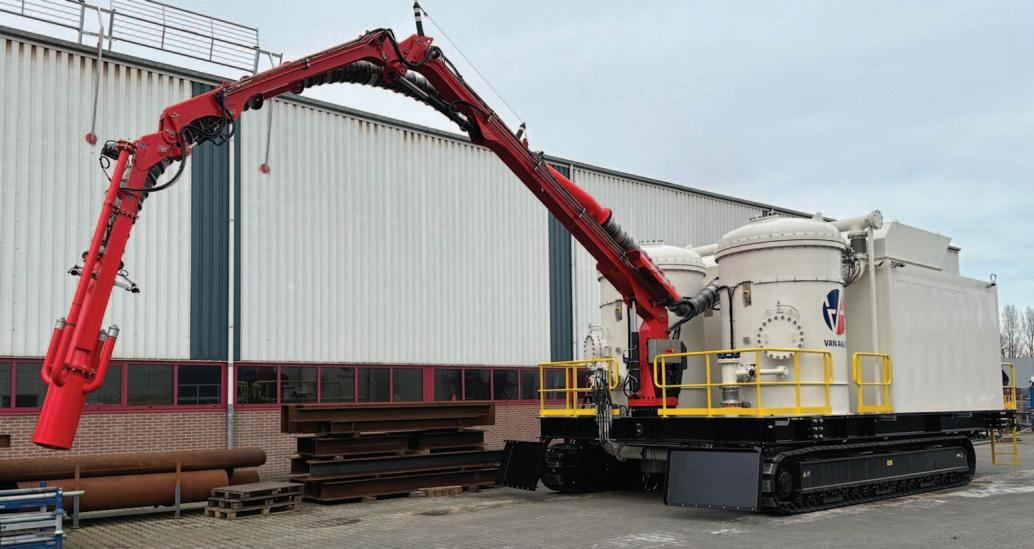
ENGINEERING & EQUIPMENT 133 MAY 2024 DCi www.drycargomag.com
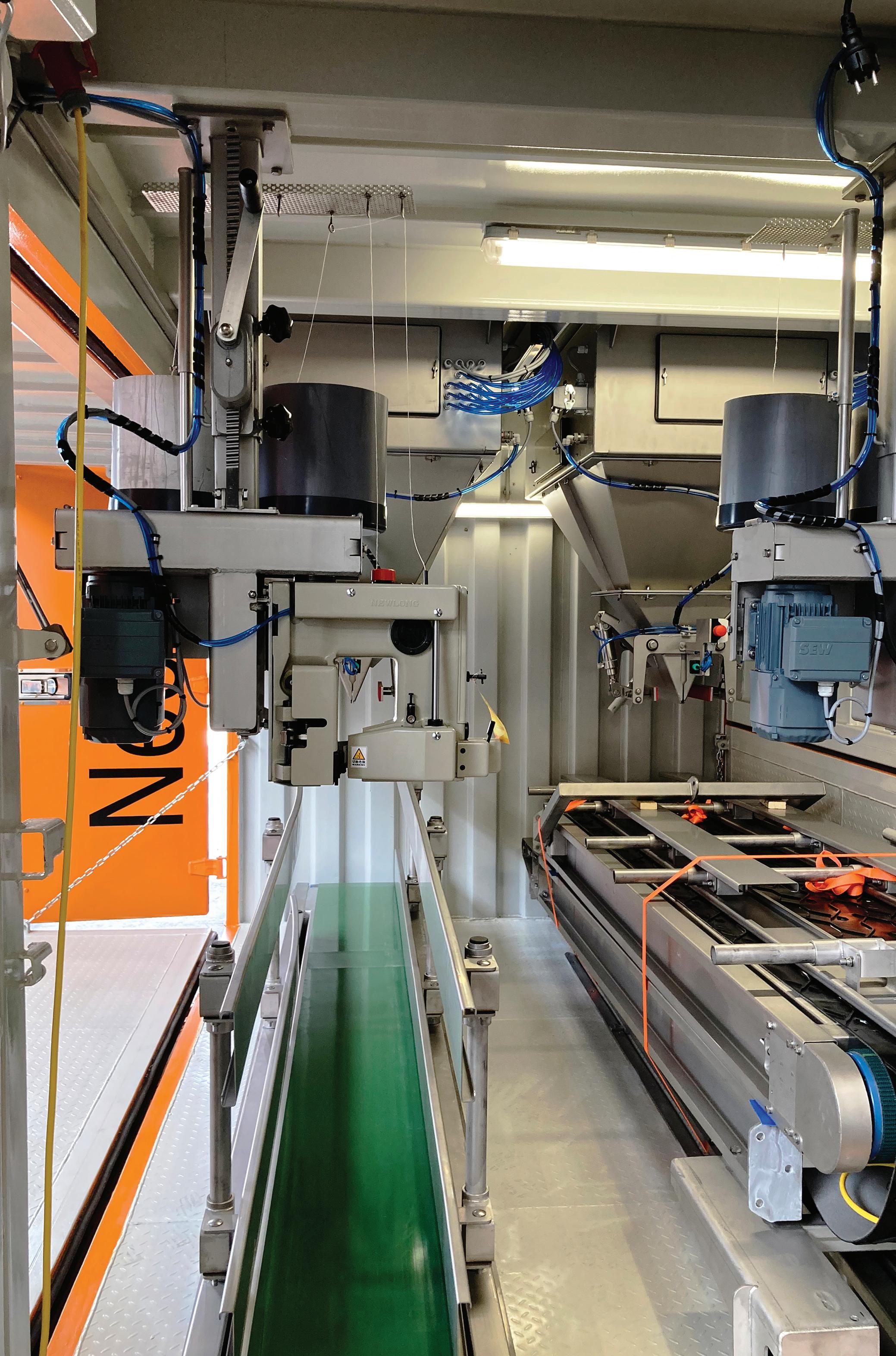
Big bag bonanza
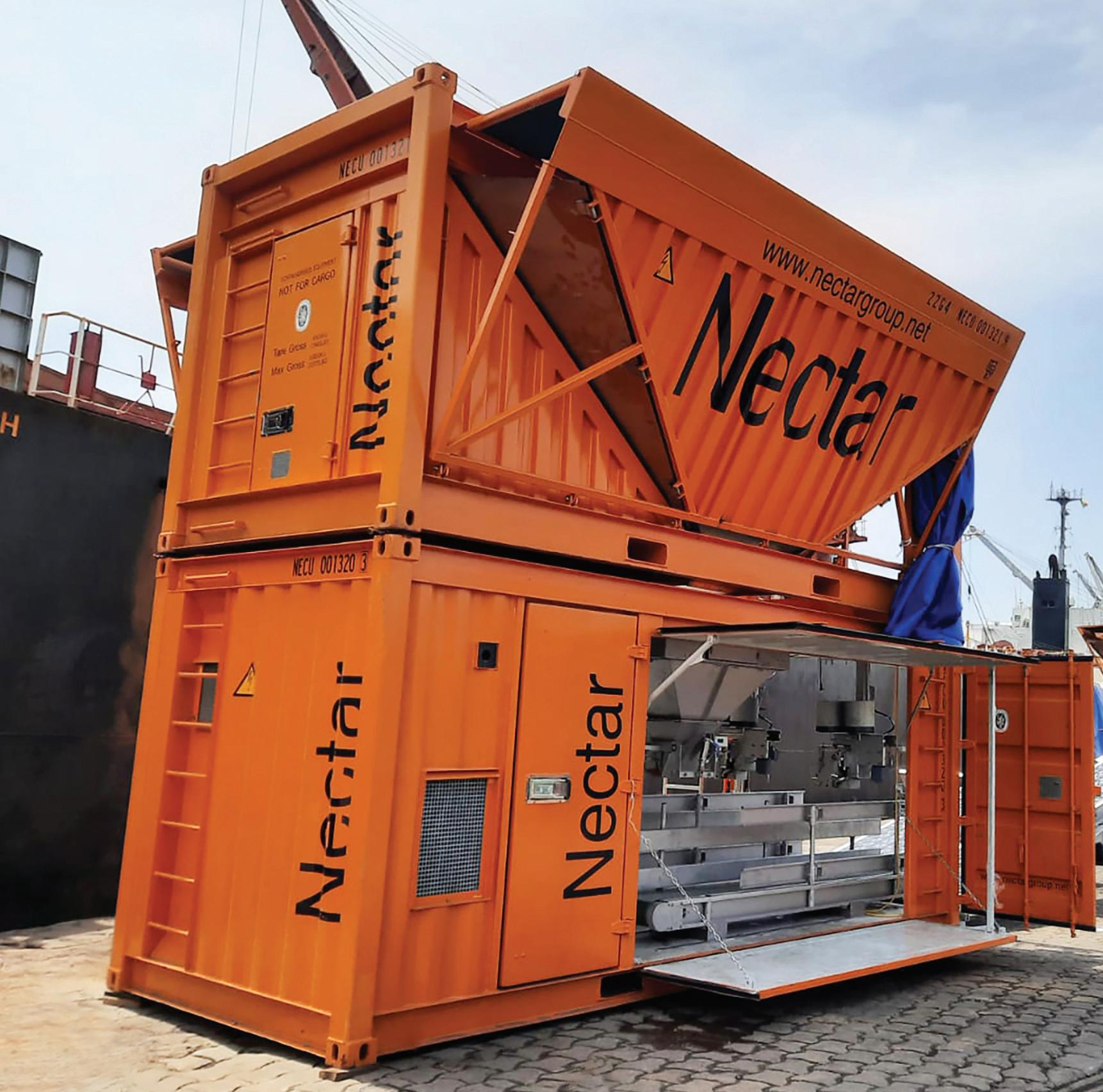
Nectar Group – offering Africa dependable port equipment & mobile bagging services
THE SUCCESS OF COMPAC™ MOBILE BAGGING ACROSS
AFRICA
Nectar Group has been the partner of choice for port operators, authorities, shippers and clients for over 50 years. Since the first operation in Assab, Ethiopia discharged fertilizer using MOPACK™ “the world’s first mobile bagging system”, the Nectar team has delivered projects in some of the most challenging environments.
Decades later, Nectar continues to be the ‘change’ in the mobile bagging sector. The Group’s award-winning COMPAC™ mobile bagging equipment has been proven to perform under the most diverse operational conditions consistently.
Designed to balance environmental protection, with speed and accuracy, these bulk handling units deliver profitability for customers to achieve operational advantages through market-leading
technology and reliability. Few elements in business are more important than daily operating costs, and COMPAC™ continues to deliver long-term benefits.
COMPAC™ EQUIPMENT FEATURES: INCREASED OPERATIONAL OUTPUT
Ideal for dry, free flowing, non-bridging v commodities; Accurate digital weighting system up v to +/- 0.5% precision; Single or double bagging lines; v Available in M 10–100kg or XL v 500–1.5mt bags; 140 metric tonnes per hour design v capacity per bagging unit; Dutch Weights & Measures-certified; v IEC regulated electrical components; v Digital, easy to use interface v electronic weighing; Self-contained in standard 20 or 10ft v shipping containers;
Fully customizable with additional v options;
Self-contained units with enclosed v weighing and dosing system; Height adjustable stitcher column to v easily swap between different bag weights/sizes; Separate lockable control room for v crucial components (generator, electrical panel, compressor); Triple loadcell weighing system, with v two weigh bunkers per line; and Engineered and designed with over 50 v years of operational experience in Africa.
The COMPACTM is designed to offer exceptional manoeuvrability whether shunting between berths, warehouses or transported to new locations. Shipping from country to country is made easy due to its standardized dimensions allowing
BREAKBULK & BAGGING 135 MAY 2024 DCi www.drycargomag.com
Jay Venter
logistics via conventional container handling equipment.
Alongside significant savings in operational costs, Nectar’s build quality is designed with the highest-grade materials to withstand all dynamic loads — as well as the wear and tear of busy bulk terminals. Constructed of heavy gauge shot blasted SA2.5 steel and coated with a unique blend of epoxy primers and finished with a distinctive orange polyurethane marine grade paint to protect against corrosive commodities and adverse weather conditions.
Nectar’s global team collaborate with clients, to ensure their project receives the right solution, fit-for-purpose mobile bagging equipment for all port operations and facilities. With Nectar’s reliable freight forwarders, equipment can be sent to any port destination in the world as a complete door-to-door service.
COMPREHENSIVE COVERAGE ACROSS AFRICA
Nectar Group has been a long-standing major player in Africa, with over five decades of experience, local knowledge, and regional coverage. The company’s locally bred experience is backed by a global team and a footprint across 26 nations, making Nectar uniquely placed to provide tailored port and mobile bagging services to client’s specific requirements and commercial activities.
The Group has vast experience across all regions of Africa, from Algeria in the North to Namibia in the South and Eritrea in the East. The company holds an exceptional collection of operations in
numerous countries and ports on the continent and continues to support clients with project and logistical challenges by leveraging strong strategic relationships, robust equipment, and dedicated technicians.
Nectar manages and operates Nectar Sierra Leone Bulk Terminal. Sierra Leone’s primary multi-user bulk and breakbulk port offers discharging, bulk handling, warehousing, mobile bagging, equipment maintenance and logistics.
Nectar Mozambique delivers a full spectrum of comprehensive maintenance services for Beira Terminal including all container, mobile bagging, and bulk handling equipment. The technicians monitor and service the equipment, taking pre-emptive or remedial actions to ensure guaranteed levels of availability and the highest standard of efficiency. In addition to maintenance capabilities, Nectar’s local teams provide consultancy and procurement of parts from global suppliers, ensuring minimum downtime.
A NEW BERTH HAS BEEN ADDED TO NECTAR SIERRA LEONE BULK TERMINAL (NSBT)
At the QEII Terminal in Freetown, Nectar Group and NSBT are pleased to announce the opening of a new third berth later this year.
The berth is a critical piece of infrastructure which will facilitate a larger class of vessel size to call at the Freetown terminal, accommodating vessels of 225 metres and 11.5 metres operational draught.
The Port of Freetown is the principal
commercial port in Sierra Leone and is the most important entry gate for trade and commerce in the country.
NSBT is responsible for all bulk & breakbulk operations including project cargo from unloading vessels to storing cargo in the port’s extensive warehousing facilities.
In addition to the recent port expansion program, NSBT offers enhanced port and facility security, international best practices, maintenance and skilled personnel.
The terminal’s commitment to investing in infrastructure, comprehensive training programmes, and efficient port services has proven to be instrumental in attracting renowned global players. The third berth’s capacity to accommodate large vessels opens new avenues for trade, strengthens the logistics network, and propels Sierra Leone’s economic growth.
SPOT BAGGING SERVICES WITH COMPAC™
Nectar Group continues to be a forerunner in mobile bagging and dry bulk cargo handling across Africa. Spot bagging services are offered by Nectar on a vesselby-vessel basis. Rental contracts are backed by Nectar’s dedicated World Wide Bagging team, featuring the efficient COMPAC™ M140 bagging units, ready for quick deployment. This service is widely accessible from its locations in Africa.
Nectar Group is committed to optimizing port processes with efficient dry bulk cargo handling and driving positive change in African ports and across the logistics chain and network.
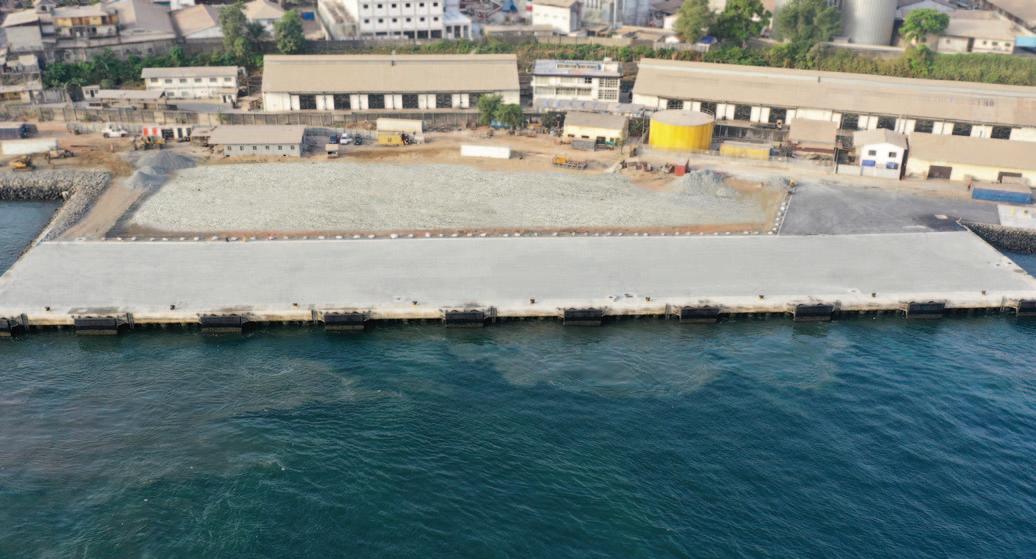
BREAKBULK & BAGGING 136 MAY 2024 DCi www.drycargomag.com
Bag & Bulk Handling: revolutionizing bagging and blending systems
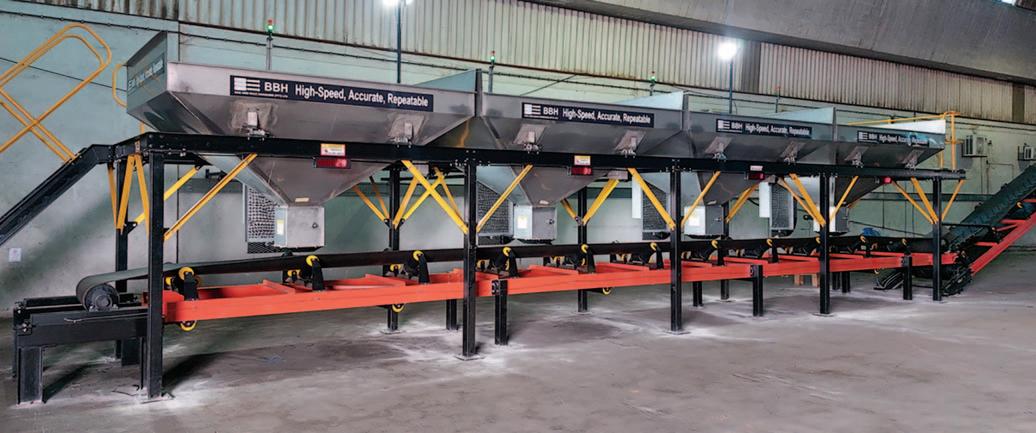
Bag & Bulk Handling, a company based in Durban, South Africa, has emerged as a prominent figure in the industrial manufacturing sector, particularly in the field of bagging and blending systems. Founded in 1999, the company has quickly established itself as a standout player, driven by its commitment to reliability, innovation, and customer satisfaction.
The company’s success can be attributed to its founder’s background in mechanical engineering and a deep passion for the industry. This strong foundation led to the development of Bag & Bulk Handling’s first bagging machine, setting the stage for its journey towards transforming the bagging and blending sector. Since then, the company has expanded its product range to include blending machines, conveyors, scales, and other accessories, all known for their exceptional performance and customization options.
One of Bag & Bulk Handling’s key strengths is its ability to tailor its systems to meet the specific needs of its clients. The company’s versatile products and services can handle a wide range of materials and production capacities, ensuring that clients have access to cutting-edge bagging and blending technology. By focusing on customer satisfaction, competitive pricing, and continuous innovation, Bag & Bulk Handling has solidified its position as a preferred supplier in the industry.
Financially, Bag & Bulk Handling remains strong, thanks to its value-added services, competitive positioning, and focus on innovation. The company’s effective management of assets and controlled liabilities position it for sustainable growth as it expands its reach and enhances its offerings. With a dedicated team of 15 employees committed to delivering
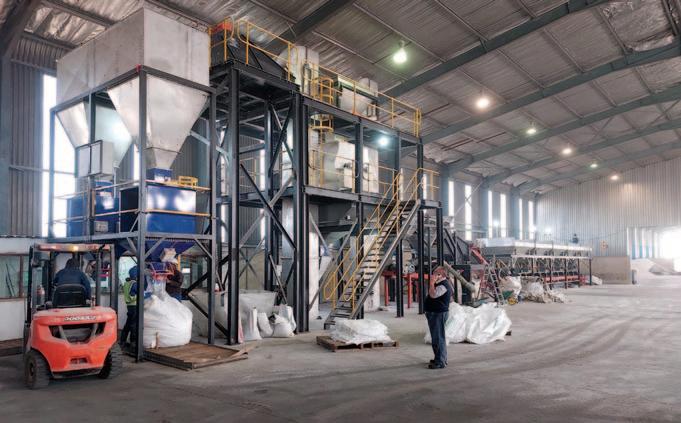
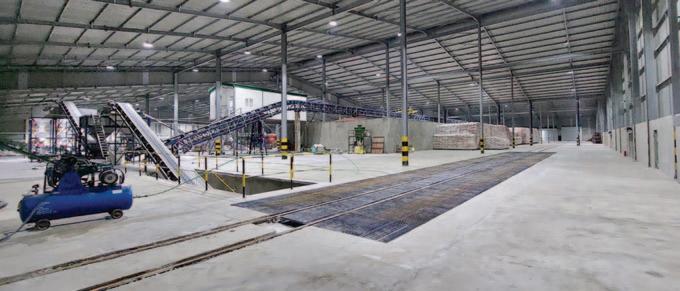
excellence, Bag & Bulk Handling is wellequipped to achieve long-term success in the bagging and blending industry.
Bag & Bulk Handling’s footprint covers Southern and greater Africa with clients in KwaZulu-Natal, Gauteng Province, Western Cape, Kenya, Malawi, Zambia, Seychelles and Mozambique. Bag & Bulk Handling has also opened its holding company that assists it in areas and markets they are knowledgeable about with the help of key role-players in each sector.
In conclusion, Bag & Bulk Handling’s unwavering commitment to excellence, innovation, and customer satisfaction has propelled it to the forefront of the bagging and blending sector. By delivering superior products and services, the company has earned a reputation for reliability and innovation. As Bag & Bulk Handling continues to progress and innovate, its mission to revolutionize bagging and blending systems remains unwavering, paving the way for a prosperous future in the industrial manufacturing market.
BREAKBULK & BAGGING 137 MAY 2024 DCi www.drycargomag.com
Innovative one-tonne mobile bagging solution
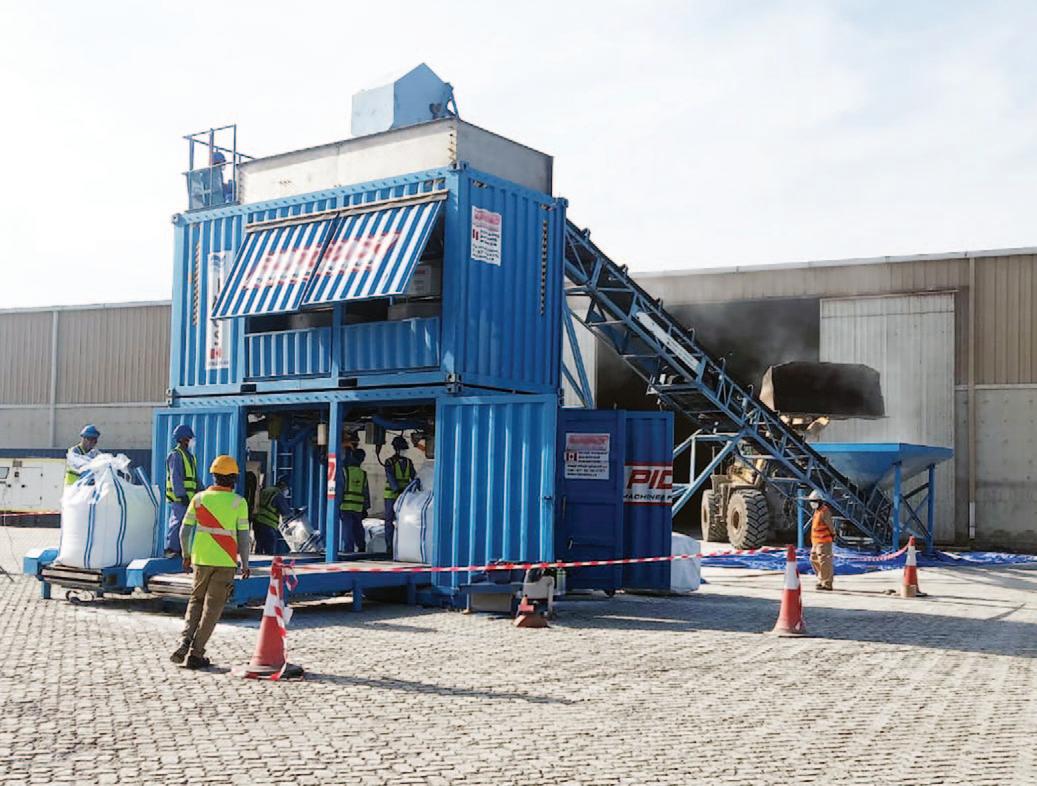
Potash isn’t your average fertilizer; it’s a fundamental pillar of modern agriculture and industry. With a global market projected to reach US$29,760.0 million by 2027, staying ahead of the curve is crucial for efficient bagging operations.
IMGS Group leads the industry in handling potash with unparalleled attention to detail and safety. Its team ensures that white or pink potash arrives in optimal condition through meticulous loading, bagging, and storage processes.
IMGS Group’s turnkey mobile bagging solution stands out as the only one in the market capable of one-tonne bagging. With flexible cargo loading options, precision, and rapid setup, they can handle potash anywhere and, in any manner, imaginable. Whether discharging from grabs, unloading from trucks, extracting from ships, or directly from a silo, the group is equipped to tackle every challenge.
If a one-tonne bag exceeds the client’s requirements, IMGS Group offers tailored solutions from 15kg to 100kg bags. Its double bagging lines and dual truck-loading conveyors can double bagging and distribution yield, showcasing the power of innovation in agri-logistics.
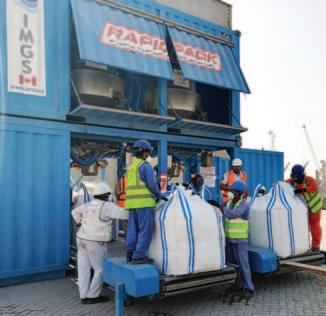
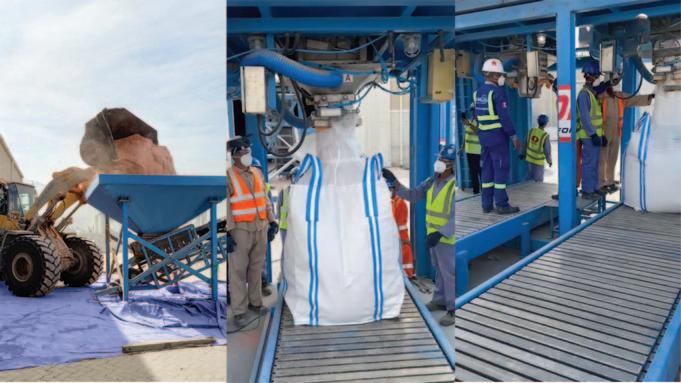
BREAKBULK & BAGGING 138 MAY 2024 DCi www.drycargomag.com
Sand, sun and bagging fun – IMGS turnkey mobile bagging solutions
IMGS’ latest mission underscores the growing importance of bagging sand in disaster preparedness and construction projects across South Asia.
The sand bagging market is booming due to the rise in natural disasters like floods, hurricanes, and tsunamis. Governments, construction firms, and disaster relief agencies are turning to sand bagging to protect property and infrastructure during emergencies.
Unlike IMGS’ typical quayside operations, the company successfully executed this project right on the beachfront, showcasing its ability to adapt to unique environments and project requirements.
Thanks to its turnkey high-speed mobile solutions, IMGS revolutionized sand bagging. It cut down the turnaround time, making sure each bag of sand is perfectly weighed and sealed, no matter if it’s a small one (15–100kg) for local jobs or a hefty bulk bag (1–1.5 tonnes) for large-scale operations.
Bagging sand is no joke. It’s a versatile

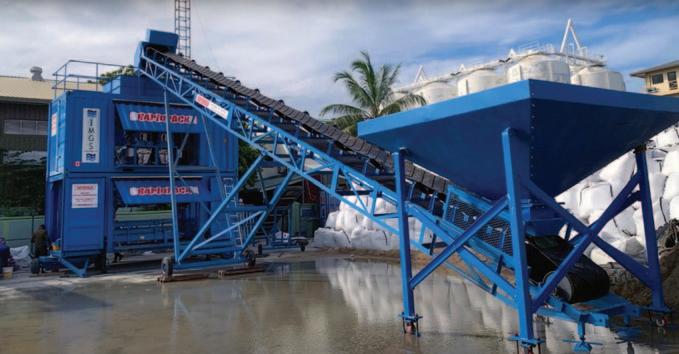
Clean powder filling without residue
Greif-Velox, the packaging machine manufacturer, has developed a patented solution called ‘PureVacSpout’ to eliminate dust residues on filling spouts, preventing contamination of valve bags or pallets.
After each filling operation in valve bag filling systems and the removal of the filled bag, excess product often remains on the filling spout. This product residue can lead to contamination, resulting in high cleaning and complaint costs as well as reputational damage.
The new ‘PureVacSpout’ spout aspiration technology from Greif-Velox offers a solution to this problem: A suction mechanism moving over the filling spout ensures thorough cleaning each time.
MOBILITY FOR ENHANCED CLEANLINESS
Thanks to the system’s mobility, the suction occurs directly at the filling spout, keeping it completely clean, as well as preventing the bags from getting contaminated. The suction moves over the filling spout after the bag filling process has been completed without disrupting the overall filling operation. This ensures that only clean bags are palletized, and the spout is pneumatically cleaned for the next filling. This patented principle is compatible with vacuum packers like the Greif-Velox VeloVac.
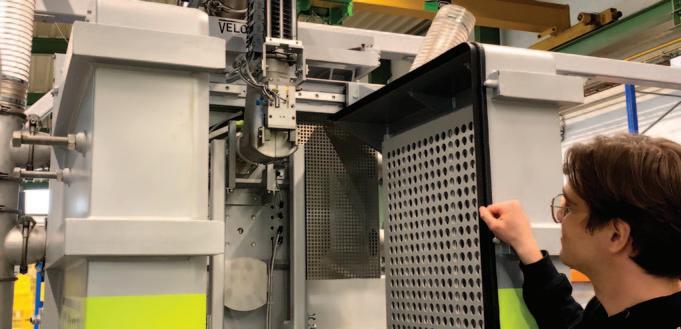
HIGH WORK AND PRODUCT SAFETY WITHOUT PRODUCT LOSS
The spout aspiration technology not only reduces cleaning costs by capturing escaping dust, but also protects workers by removing potentially harmful particles from the work environment. Additionally, ‘PureVacSpout’ supports precise product usage by preventing product residues on the spout, as well as returning the collected material to the filling process. This minimizes material loss and prevents crosscontamination during product changes. Sebastian Pohl, Managing Director of GreifVelox, points out: “By completely eliminating dust residues, users achieve
clean powder filling without contaminated bags or pallets, leading to higher customer satisfaction.”
Below: The spout aspiration PureVacSpout in the open state. Copyright Greif-Velox.
BREAKBULK & BAGGING 139 MAY 2024 DCi www.drycargomag.com
tool used for flood control, erosion protection, and even military fortifications — helping to shield communities and valuable assets.
IMGS’ mobile bagging solutions can handle dry bulk and high-moisture content materials alike, providing unmatched flexibility for all sand bagging needs.
The spout aspiration “PureVacSpout” (enclosing the spout here) effectively removes product residues from the spout after the filling process. Copyright Greif-Velox.
PAYPER addresses the challenges of bagging fertilizers
The global demand for fertilizers is increasing, driven by a rapidly growing population. Meeting this demand requires an intensified approach to agricultural production, where fertilizers play an important role. However, the fertilizer industry’s unique challenges demand careful consideration, especially when it comes to packaging. PAYPER, a designer and manufacturer of machinery for weighing, bagging and palletizing solutions, established in Lleida (Catalonia, Spain) in 1973, understands the complexities involved and offers specialized bagging equipment designed to address the corrosive and dusty nature of fertilizers.
One key challenge is the hygroscopic nature of fertilizers, whether in granulate or powder form. Managing moisture becomes crucial, adding an extra layer of complexity to packaging machinery and environmental conditions. Ensuring that the filled bag maintains its nominal weight and appearance throughout its entire lifecycle, from storage to transportation and delivery, is a priority for fertilizer manufacturers. When initiating a bagging and palletizing project, factors like preferred bagging technology, bag size and material, and total hourly output must be carefully considered, all while adhering to local and international regulations.
BAGGING AND PALLETIZING SOLUTIONS
For five decades, PAYPER has been present in the fertilizer sector, providing dosing and weighing systems, bagging machines, and palletizers. Its journey has been a collaborative one with its customers, resulting in the development of modern, robust, and user-friendly equipment tailored specifically for the fertilizer industry. At PAYPER, the company specializes in solutions that adapt to each customer’s unique needs.
PAYPER’s commitment to excellence is evident in its anti-corrosion measures and dust emission controls incorporated into its bagging systems, addressing the challenges posed by corrosive and dusty fertilizers. PAYPER’s installations are adaptable, offering reliable cleaning systems to prevent cross-contamination for clients handling various products. At PAYPER, the company tirelessly explores and provides optimal solutions for every project.
ROBUST AND USER-FRIENDLY BAGGING
SOLUTIONS
Open mouth bagging machines — up v to 1,800 bags/h
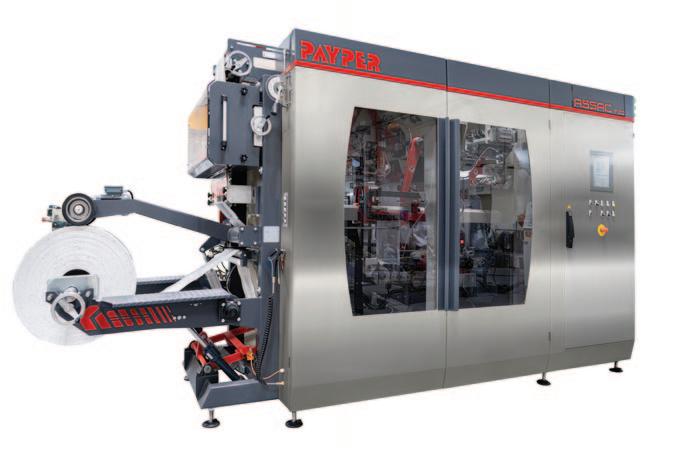
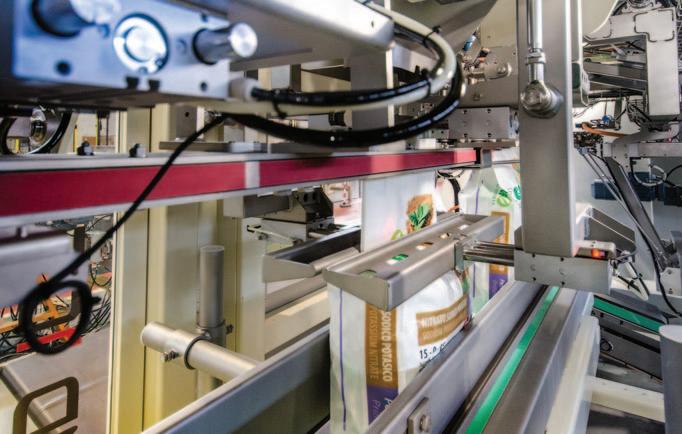
FFS bagging machines – up to 2,600 v bags/h
Valve bagging machines – up to 2,000 v bags/h
Big-Bag filling machines – up to 100 v Big bags/h
MATCHING PALLETIZING AND OVERPACKING SYSTEMS
Choosing the right machinery for a complete fertilizer bagging line is of great importance. PAYPER ensures a seamless match, offering corresponding palletizers and overpacking systems with bags/hour rates tailored to each bagging system: Robotic palletizer v Low-level infeed palletizers v High-level infeed palletizers v Stretch-wrapper or stretch-hooder to v maintain a stable pallet load and protect the bags from dust and humidity.
ABOUT PAYPER
With a global presence with eight
subsidiaries and a wide agents’ network, PAYPER offers exceptional customer service and support. Its extensive experience and ability to design complete bagging lines tailored to specific needs, make PAYPER a trusted partner for companies seeking efficient, reliable, and future-proof bagging, palletizing, and overwrapping solutions.

BREAKBULK & BAGGING 140 MAY 2024 DCi www.drycargomag.com
PAYPER presents new high-speed bagging line
PAYPER Complete High Speed bagging lineFFS - Palletizer - Stretch Hood.

PAYPER, a Spanish company established in 1973, boasts a rich heritage in designing and manufacturing machinery for the dry bulk handling industry. The company offers a comprehensive range of equipment, from individual machines to complete lines, encompassing dosing, weighing, bagging, palletizing, and overwrapping. Its solutions cater to diverse industries, with successful installations in over 80 countries across sectors like mining, building materials, chemicals, fertilizers, food, and pet food.
High-performance bag filling. The FFS bagging system forms, fills and seals bags from a continuous tubular reel of plastic. The FFS bagger is an efficient solution for bagging all types of granulates. The ASSAC U20, excel in output capacity, precision, and reliability. The U20 offers impressive bagging speeds of up to 2,600 bags per hour. The ASSAC series stands out for its compact and heavy-duty design with easy access for cleaning and maintenance. They can be customized with different features: Automatic reel changeover, to ensure v continuous production during the change of the roll film
ATEX certification for equipment v working in explosive environments
Corner sealing systems, for perfectly v brick shaped bags
Hygienic design for the food and v chemical industries
Anti-corrosion configuration for v handling corrosive and abrasive products
Movable platform allowing easy v movement underneath a silo battery
HIGH-SPEED PALLETIZER
Push palletizers are very fast, allowing high production capacities. In addition to creating fully square pallets with high stability: the front and side pusher system
forms the layers at right angles; then, for extra stability, each layer is compressed against the previous layer. The new HLP-280 model is a robust row push-type palletizer designed for valve and FFS bags, capable of handling up to 2,800 bags per hour. It offers versatility with various layer pattern options.
WRAPPING AND HOODING SYSTEMS
PAYPER’s end-of-line solutions for highspeed production lines include stretch hooding and rotary ring wrapping machines. These systems offer faster wrapping speeds, total load protection and top-quality finish. The outcome is a finalized pallet with impeccable shielding against dust UV rays and humidity all set for demanding handling like transportation and storage.
BAGGING SOLUTIONS FOR EVERY NEED
PAYPER’s bagging equipment portfolio furthermore addresses other types of bags: Open mouth bagging, for a wide range of bag types and closing systems; air packers for valve bags for powdery and finely granulated products; filling stations with a high level of automation for Big Bags and Octabins for all kinds of bulk goods.
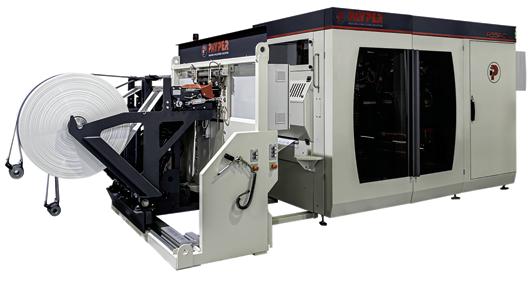
DIGITALIZATION WITH PULSAR
PAYPER’s commitment to technological innovation ensures their equipment remains at the forefront of the industry. A key part of this advancement is PULSAR, their cloud-based, digital solution designed to optimize production and service.
With a global presence with eight subsidiaries and a wide agents’ network, PAYPER offers exceptional customer service and support. The company’s extensive experience and ability to design complete lines tailored to specific needs, along with PULSAR’s digital management, make PAYPER a trusted partner for companies seeking efficient, reliable, and future-proof bagging, palletizing, and overwrapping solutions.
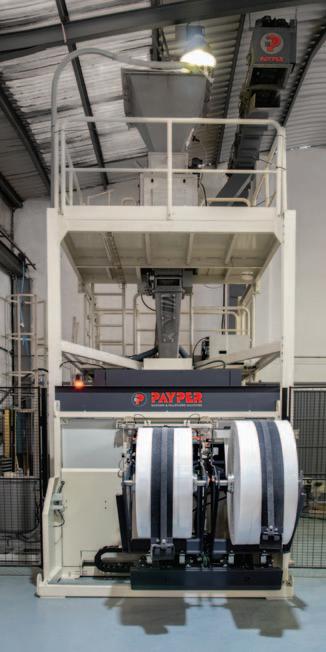
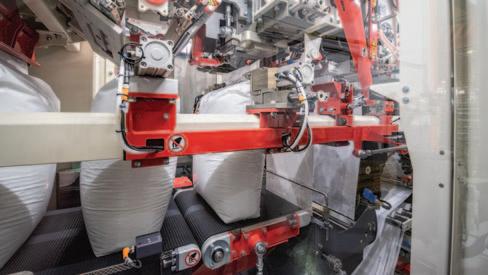
BREAKBULK & BAGGING 141 MAY 2024 DCi www.drycargomag.com
PAYPER High Speed High Infeed Palletizer HLP280.
PAYPER FFS ASSAC-U20 with Double-roll-film.
PAYPER - High Speed FFS ASSAC-U20.
PAYPER High Speed FFS ASSACU20 with Double-reel.
Bagging results with optimized bags
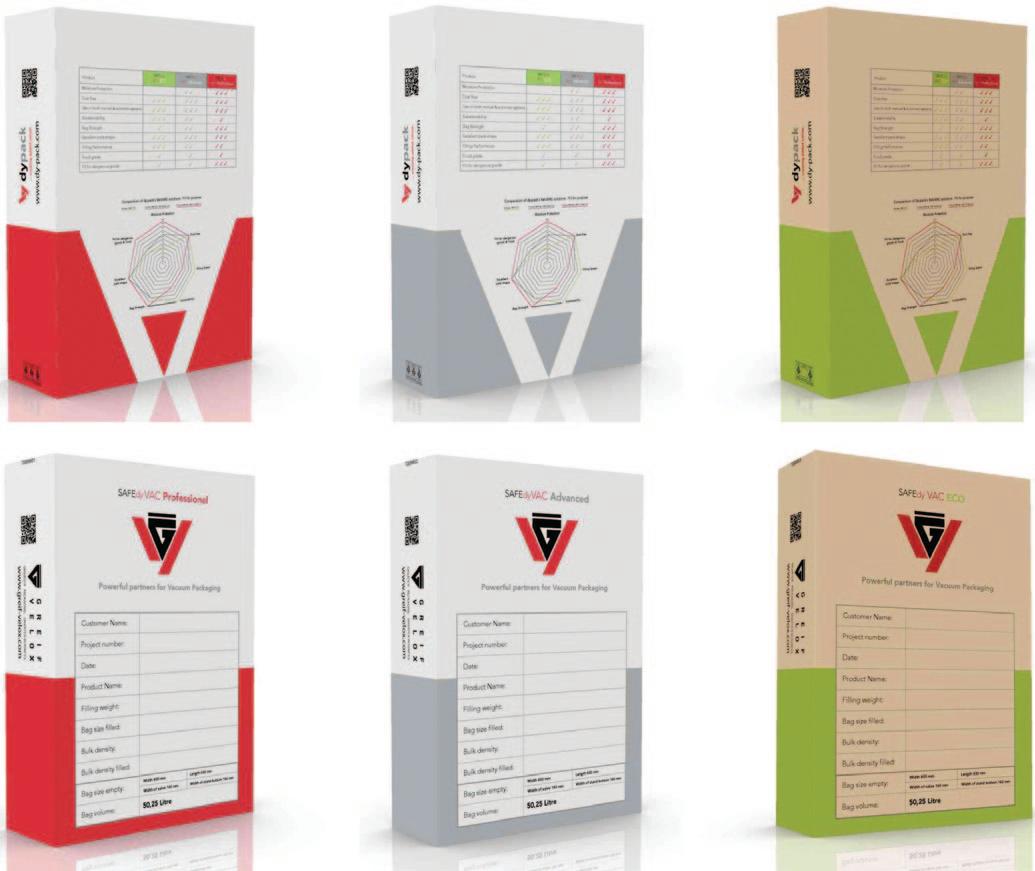
SAFEDyVac: three bag versions for the bagging of various ultra-light powders.
Perfect containers, packaging lines and product: when these three components are matched perfectly with the product to be filled, customers get a bagging result that sets new standards for cleanliness, weight accuracy, filling performance and compaction. Packaging machinery manufacturer Greif-Velox and paper sack manufacturer dy-pack — both globally recognized in their respective markets — have combined their expertise precisely to this end.
Together they have developed three optimized bag types under the name ‘SAFEDyVac’ to create savings and higher end-customer satisfaction for users bagging ultra-fine powders with VeloVac vacuum technology.
The packaging outcome of a bagging line can only be as good as the container it is used to fill — and vice versa. Both GreifVelox and dy-pack design their products with a focus on maximizing customer value. With VeloVac, Greif-Velox offers
users bagging ultra-light powders (such as carbon black for battery manufacturing or silica for hygiene products) a vacuum technology that compacts and fills so cleanly that users can save up to 75% on storage and logistics, among other benefits. For maximum efficiency, using a container that is optimized for the line and the product in question is essential: a paper valve bag delivers both sufficient venting during filling and the required product protection. Together, Greif-Velox and dypack have now closed this gap in vacuum bagging at the interface between the line and the container.
DUST-FREE BAGGING LEADING TO VISIBLY CLEAN PALLETS
The two companies have developed three bag versions for the bagging of various ultra-light powders: the SAFEDyVac ECO, the SAFEDyVac Advanced and the SAFEDyVac Professional.
These bags optimally cover segment-
SAFEDyVac Professional is equipped with optimum moisture protection and special venting technology for the bagging of battery grade carbon black.
BREAKBULK & BAGGING 142 MAY 2024 DCi www.drycargomag.com
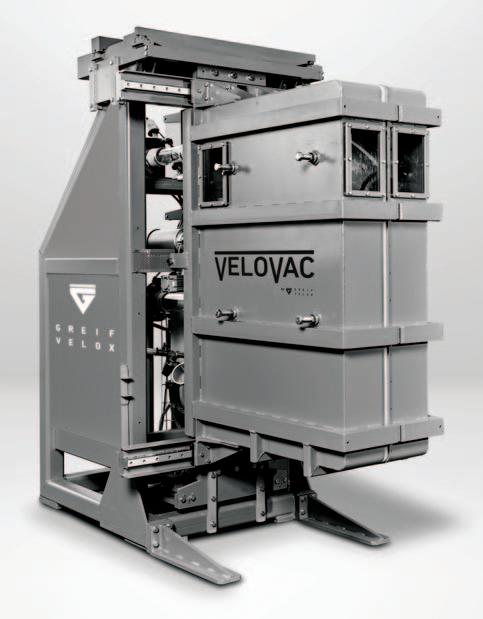
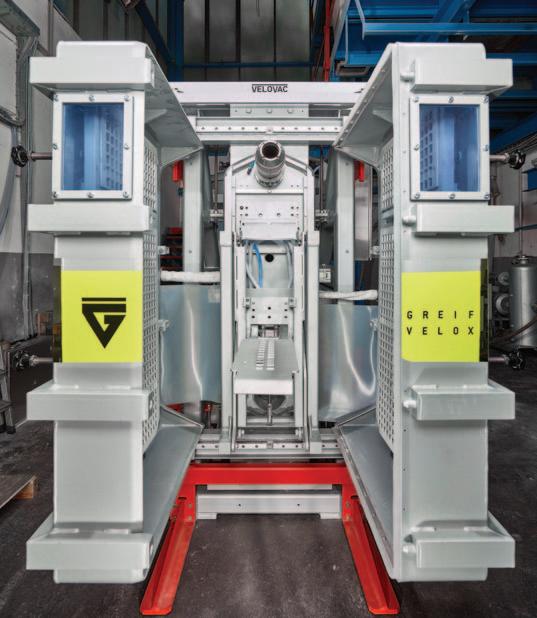
Greif-Velox’ vacuum packer VeloVac for ultra-light powders compacts and fills so cleanly that users can save up to 75 percent on storage and logistics.
specific requirements for product protection and performance. Should a customer have additional requirements, such as hazardous goods approval, the manufacturers also offer bespoke customer solutions.
For example, to meet the stringent requirements and purity regulations for bagging lamp black for battery manufacture, the SAFEDyVac Professional is equipped with optimum moisture protection and special venting technology. The SAFEDyVac ECO is ideal for customers who need sustainable, completely recyclable packaging. Bagging outcomes are optimized as a result of these new packaging developments as the line and the container are precisely matched to individual customer products. All bags ensure a dust-free and clean pallet appearance with bags that are optimally compacted and dimensionally stable.
LEANER DEVELOPMENT AND VALIDATION PROCESS
Defining three standard bag dimensions for conducting bagging trials creates significant benefits for users. First, the development process is leaner — the time required to determine optimum bag dimensions for product packaging during trials is cut in half. Second, the results are comparable, enabling more precise statements to be made about bagging behaviour. This leaner development and validation process costs an average of 30% less than the typical expenditure. Using standard, in-stock materials also means better availability of the containers required.
LOWER LOGISTICS COSTS THROUGH OPTIMIZED PACKAGING DESIGN
Not only are the paper packaging, development and validation process significantly improved with SAFEDyVac, both companies have gone one step further – the final packaging concept is optimized for the maximum possible product quantity and packing size. Using Greif-Velox’s VeloVac already condenses the product so much that customers save up to 75 percent on storage and logistics costs as compared to conventional processes. Optimization work on the packaging concept now means that available container space is fully utilized without leading to chafing damage. Using available container space efficiently not only reduces customers’ storage and transport costs, but also benefits the environment by reducing their carbon footprint.
BETTER FILLING ACCURACY, FILLING PERFORMANCE , SUSTAINABILITY AND CLEANLINESS
“In this partnership, we’re able to not only develop bags tailored to the line, but also perfectly match our lines to the container,” says Sebastian Pohl, CEO at Greif-Velox. “There’s never been anything like this before,” Bernd Lamers, Customer Service Manager at dy-pack adds: “This concentration of expertise in the development of efficient equipment and intelligent packaging design offers clearly-measurable benefits to our customers in terms of filling accuracy, filling performance, sustainability and cleanliness.”
ABOUT GREIF-VELOX
One of the oldest documented companies in the world, Greif-Velox builds on 1,000 years of history. Monks founded the Greifen-Mühle (‘Greifen’ Mill) in 1100, and through bagging grain built what has turned into centuries of practical experience in efficient bagging, filling, and palletizing. Ernst Mahlkuch, who patented the first calibratable automatic bagging scale, opened the factory GREIF-Werke in 1938, which designed and built innovative palletizer robots, bagging machines, and filling lines.
Today, Greif-Velox is the expert in manufacturing efficient packaging technology, offering fully integrated bagging and filling machines for both solids and liquids.

BREAKBULK & BAGGING 143 MAY 2024 DCi www.drycargomag.com
Sebastian Pohl,CEO of Greif-Velox.
Thank you
...for proving us right. Advertising really does work.
To find out how you can benefit from advertising in the world’s only monthly dry bulk publication contact: Andrew Hucker-Brown on Tel: +27 31 583 4360
DRY CARG O international DC i TM
Another COMPAC M140 mobile bagging machine is ready for delivery
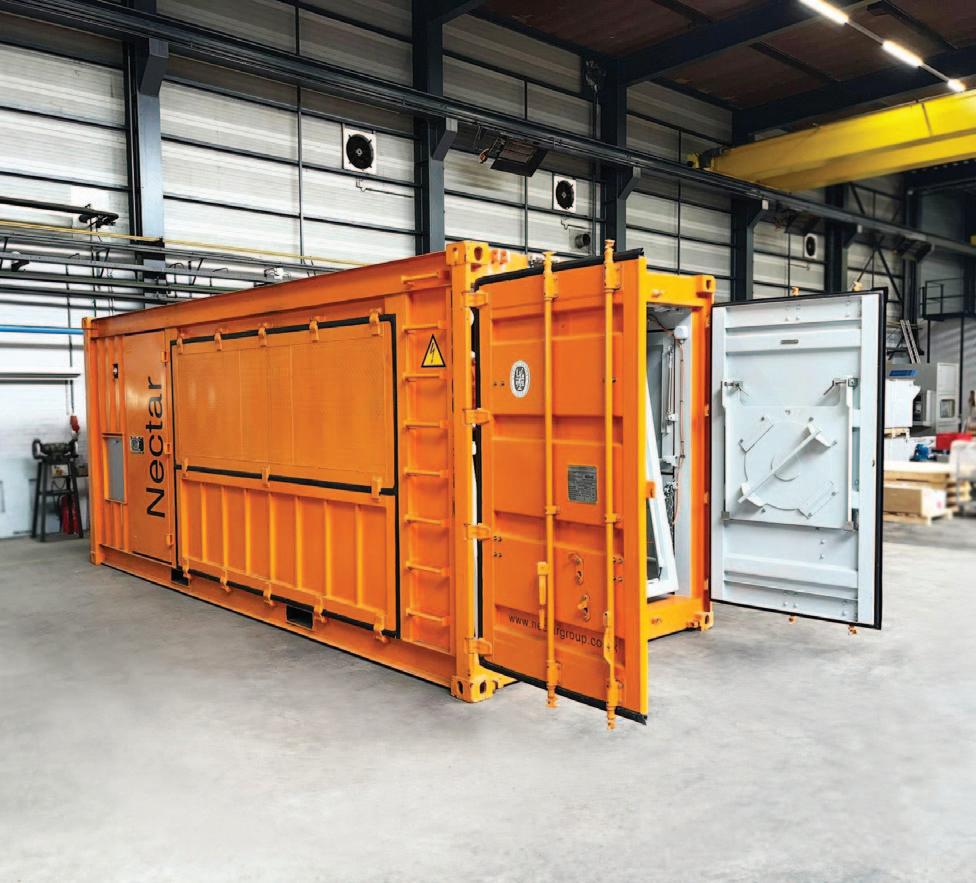
Mobile bagging systems are a tremendous benefit to the bulk handling industry, and are ideal for use at a busy port.
Nectar Group has recently commissioned and delivered another COMPAC M140 bagging unit. The company’s popular COMPAC M140 offers proven agility, durability, and efficiency. The robust machinery provides superb weight accuracy to ensure precision loading and time-efficient handling. The COMPAC range is ideal for dry, freeflowing, non-bridging commodities.
DISCHARGING FLEXIBILITY FOR BUSY TERMINALS quayside — direct cargo discharging v from vessels; port warehouse operations; v inland storage and distribution v depots; blending plant facilities; and v commodity storage silos. v
single or double bagging lines, v running independently; NMi – dutch weights and measures v certified; and fully customizable with additional v options.
COMPAC M140 KEY FEATURES: ideal for dry, free-flowering non- v bridging commodities; accurate digital weighing system – v precision performance (±0.5%); 140 metric tonnes per hour design v capacity per bagging unit; self contained in standard 20ft v shipping containers; high speed bagging with 10-110kg v bag options;
Nectar understands that customers and clients, require secure and time-efficient handling, keeping control of costs at all times. The company offers a full range of bulk handling equipment including, hoppers, grabs, bagging machines and steel wire ropes.
Backed by over 50 years of global experience, Nectar Group is a worldclass terminal operator, cargo handling specialist and port service provider.
BREAKBULK & BAGGING 145 MAY 2024 DCi www.drycargomag.com
DCi

DRY CARGO international
INDEX OF ADVERTISERS Company Page Company Page Navtor AS 123 Neuero Industrietechnik GmbH Inside Back Cover ORTS GmbH Maschinenfabrik 51 PEINER SMAG Lifting Technologies GmbH 47 Port of Long Beach 17 RAM Lifting Technologies 69 RBL REI 85 RULMECA HOLDING S.P.A. 95 SAMSON Materials Handling Ltd (AUMUND Group) 129 SENNEBOGEN Maschinenfabrik GmbH Front Cover SIBRE - Siegerland Bremsen GmbH 9 St. Lawrence Seaway Management Corporation 5 Starlinger & Co. Gesellschaft m.b.H. 134 Steelpaint GmbH Back Cover Telestack Limited 101 Tenova S.p.A. 117 Terex Deutschland GmbH 99 Van Aalst Bulk Handling BV 84 Van Beek 97 Verstegen Grijpers BV 35 Vigan 127 Alex Stewart International Corporation Ltd 42 Associated Terminals LLC 15 Bedeschi SpA 55 Blue Water Misting 105 Cimbria A/S 107 Cleveland Cascades Limited Inside Front Cover, 37 Conductix-Wampfler GmbH 45 CRS - Container Rotation Systems Pty Ltd 3 DCL, Incorporated 80 DSM Shipbrokers / Shiptrade 31 E-Crane Worldwide 7 ELME Spreader AB 27 Gambarotta Gschwendt Srl 53 Geometrica Inc 93 Hägglunds 89 Italgru S.r.l. 33 Jotun Performance Coatings 67 KOCH Solutions GmbH 91 Lion Bulk Handling b.v. 87 Listenow GmbH & Co. 103 Martin Engineering 83 www.drycargomag.com
DC i FREE ACCESS to up-to-date news affecting the dry bulk and breakbulk industries FREE ACCESS to over 200 digital issues of Dry Cargo International magazine FREE ACCESS to the DCi online archive search utility FREE ACCESS to DCi’s unrivalled global market coverage The world’s leading and only monthly magazine for the dry bulk industry
SHIP LOADER SPECIALIST
NEUERO produces the most reliable and high-quality bulk ship loaders worldwide. Environmentally friendly with less dust, less noise and more efficiency | neuero.de/en




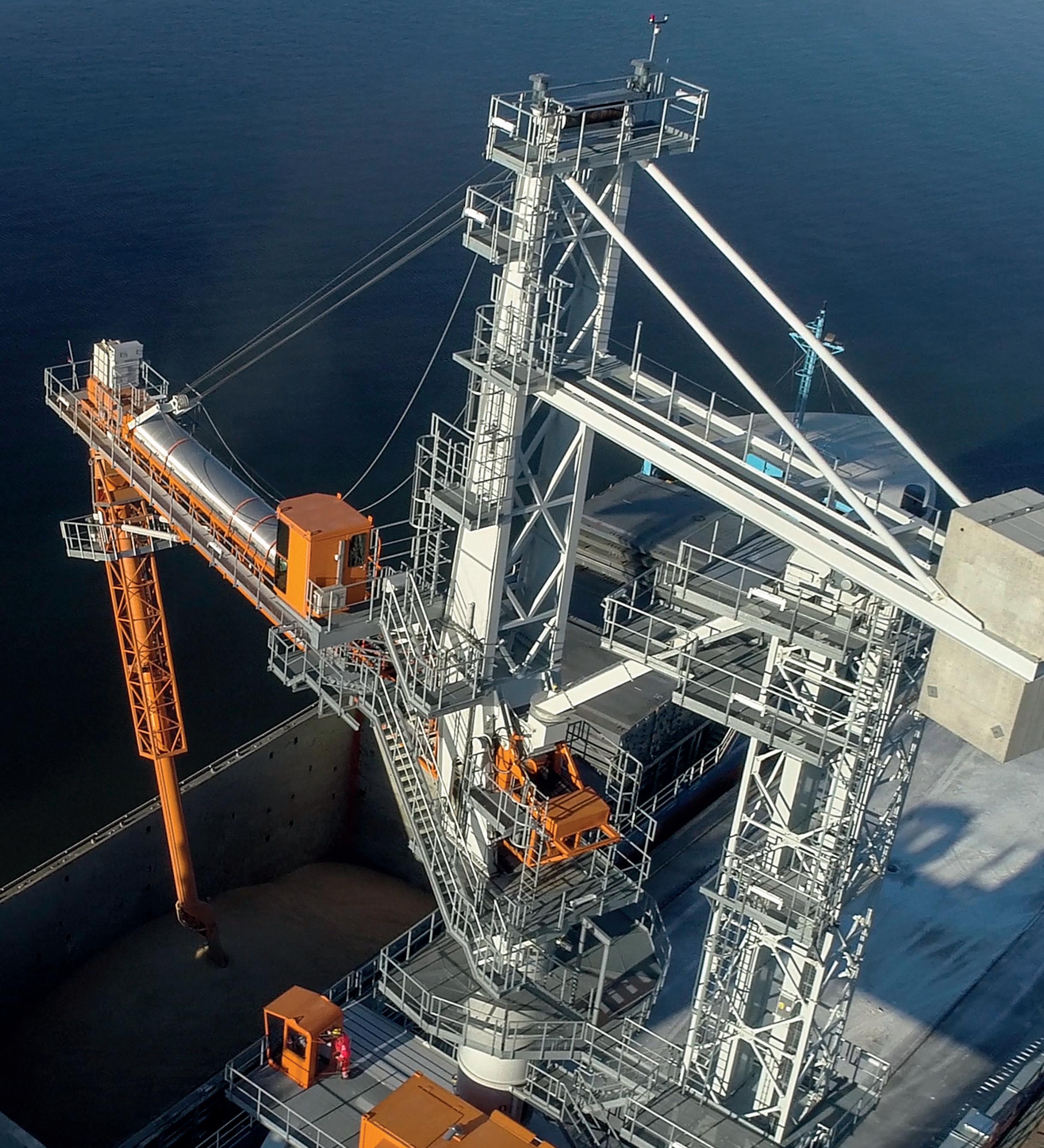














 Carl Oldendorff
Shipyard Chongming, Shanghai, China
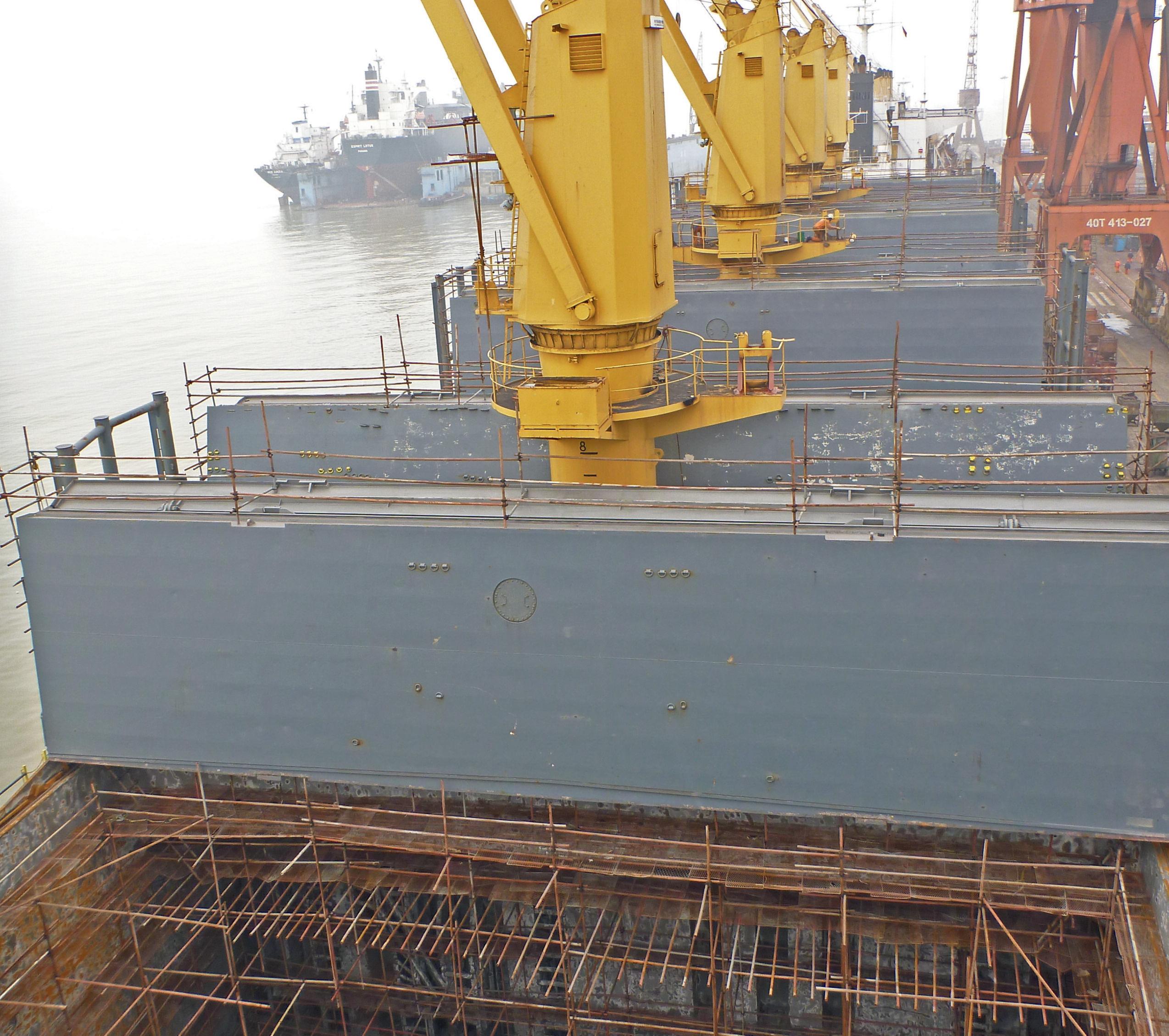
SP-ZINCING CARGO HOLDS AND HATCH COVERS
With the kind permission of
Epic Susak, Singapore
SP-ZINCING + 2-C-PUR UV
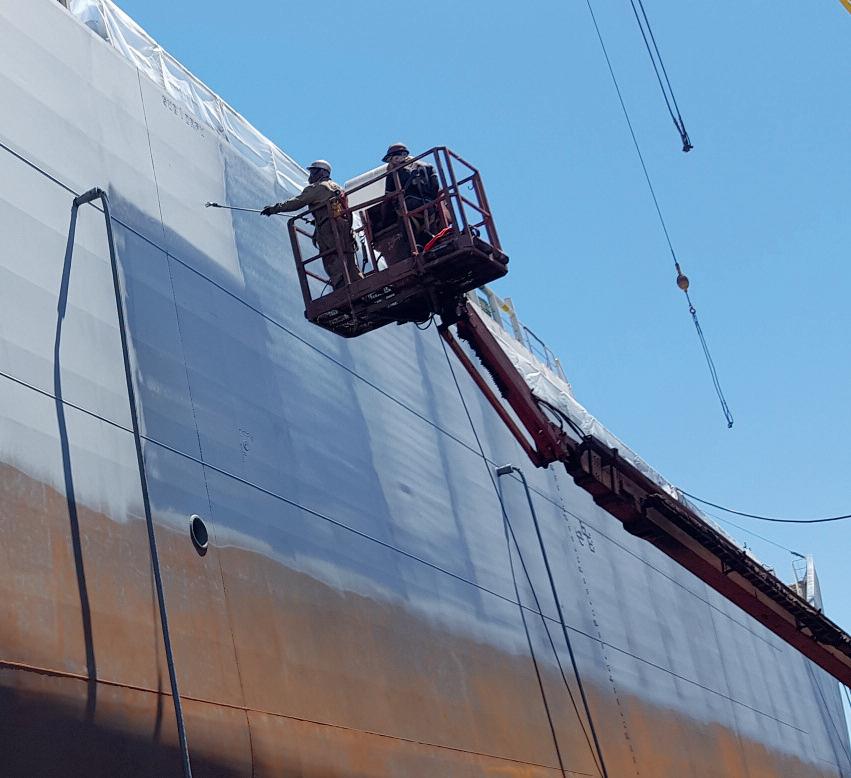
Zincing
Surface Blasting Sa 2.5
SP-ZINCING of Cargo Holds and Ship Bottoms
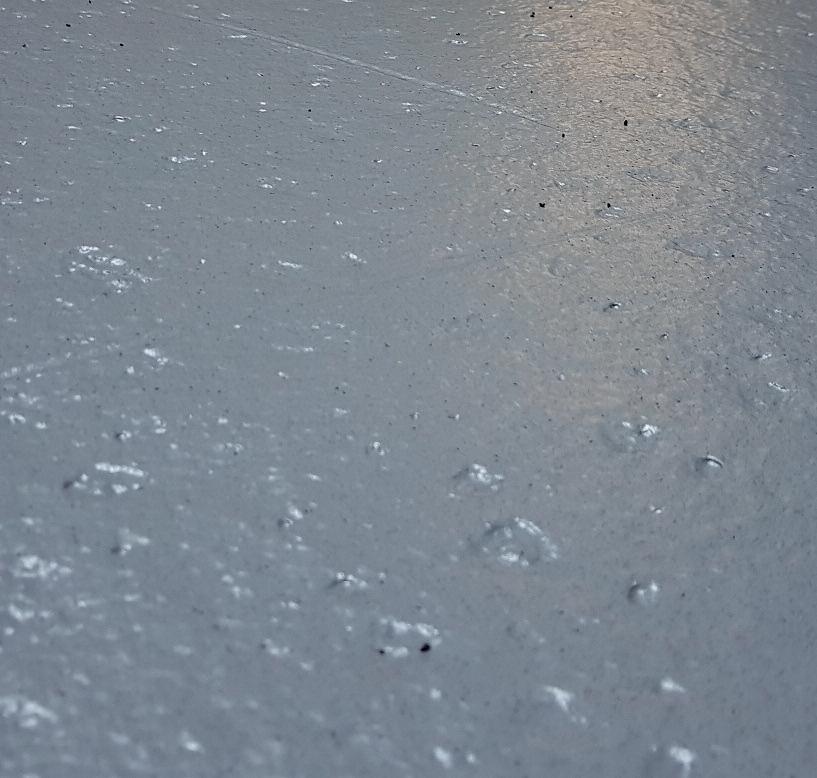
for Bulk Carriers with Cathodic Protection
There are persuasive reasons - WHY - some major international shipowners continue to use the STEELPAINT-ZINC system for highly stressed ship floors and holds, preferring it to conventional epoxy systems.
It is the superior protection of ZINC that convinces them and postpones further maintenance work in the long term. This saves considerable costs.
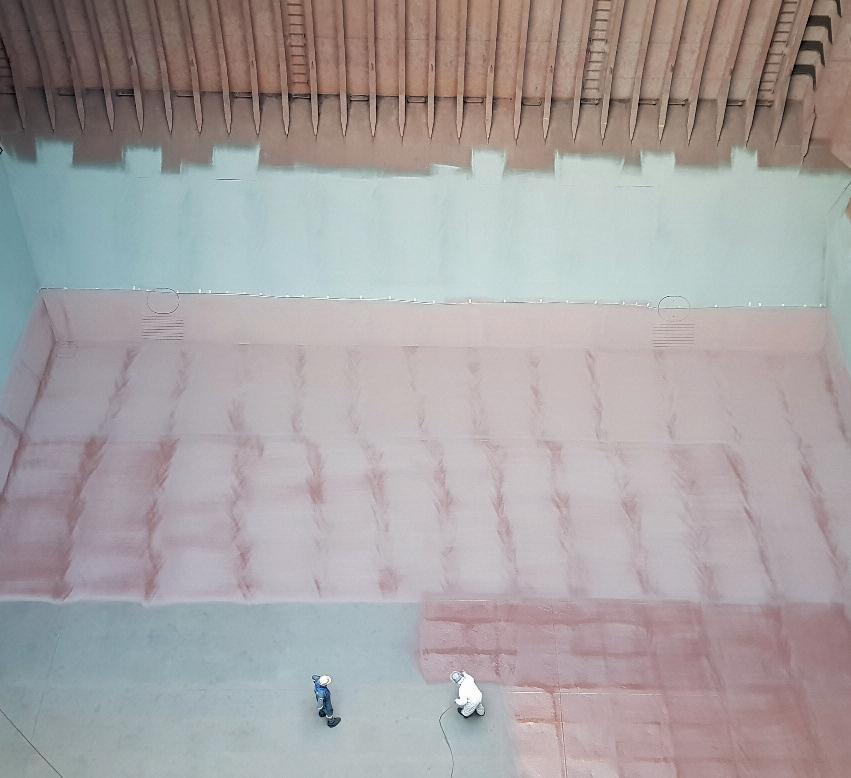
SP-ZINCING Application in grey / reddish
Steelpaint GmbH · PO Box 231 · 97305 Kitzingen · Germany Am Dreistock 9 · 97318 Kitzingen · Germany phone +49 (0)9321 3704-0 · fax +49 (0)9321 3704-40 www.steelpaint.com · Email: mail@steelpaint.com
OLDENDORFF CARRIERS
