
Growing Together in North River Manatee County
Shaping a Shared Future
PREPARED BY THE HARWOOD INSTITUTE FOR PUBLIC INNOVATION IN PARTNERSHIP WITH BISHOP-PARKER FOUNDATION AND THE PATTERSON FOUNDATION BY RICHARD
C. HARWOOD
AND MICHAEL PRIHODA

The Harwood Institute for Public Innovation
4915 St. Elmo Avenue, Suite 402
Bethesda, MD 20814
phone 301-656-3669
email info@theharwoodinstitute.org web theharwoodinstitute.org
The Harwood Institute for Public Innovation is a nonprofit, nonpartisan organization that equips people, organizations, communities, and networks with the tools to bridge divides, build capacity, and tackle shared challenges. The Harwood Institute’s work is rooted in a philosophy of Civic Faith and the practice of Turning Outward.
Founded in 1988, the Institute’s approach has spread to all 50 states across the U.S. and 40 countries around the world.
Bishop-Parker Foundation 1101 6th Avenue West, Suite 218 Bradenton, FL 34205
phone 941-877-7731
email info@bishopparkerfoundation.org web bishopparkerfoundation.org
Bishop-Parker Foundation, inspired by the philanthropic legacy of our founders, partners with nonprofit and public organizations to strengthen Manatee County for current and future generations. Grounded in our values of community building, kindness, and stewardship, we invest in collaborative efforts that reflect the voices of the community and honor our founders’ legacy.
The Patterson Foundation 2 N. Tamiami Trail, Suite 206 Sarasota, FL 34236
phone 941-952-1413
email ccoryea@thepattersonfoundation.org web thepattersonfoundation.org
The Patterson Foundation is a fully endowed charitable entity strengthening people, organizations, and communities in ways that foster wide participation around shared quality-of-life aspirations. Through its Aspirations to Actions initiative, The Patterson Foundation has engaged The Harwood Institute since 2012 to encourage communities in Charlotte, DeSoto, Manatee, and Sarasota Counties to turn outward, discover shared aspirations, and transform them into meaningful action.
Scan for more information about the initiative in North River Manatee County.
Growing Together in North River Manatee County: Shaping a Shared Future was prepared by The Harwood Institute for Public Innovation in partnership with Bishop-Parker Foundation and The Patterson Foundation
Written by Richard C. Harwood and Michael Prihoda
Research by Magaly Cobian, John Conroy, Maritza Coscarelli, Oluwagbemiga
Dasylva, Joe Krushinsky, Liz London, Kris Nelson, Florence Rogers, and David Seleb
Edited by John Conroy
Assisted by Lucas Powers
Community engagement led by Cheri Coryea and Amber Lamerson with support from Evelyn Almodovar (UnidosNow), Reggie Bellamy (Palmetto Youth Center), Beth Bostrom (First United Methodist Church of Palmetto), Karina Burck, Alicia Chalmers, Kevin Chapman (School District of Manatee County), John Conroy, Erika Coon, Oluwagbemiga Dasylva, Alicia Exantus, Caleb Francios (First Biblical Baptist Church of Palmetto), Pam Hawn (Hope 4 Communities), Carrie Miley, Shalia Moore-Hayes, Sherry Oehler, David Picchietti, Lucas Powers, Lyndsey Smith, Monique Thornton, and Sandra Vega-Picchietti
Community conversation hosts and partners include Bishop-Parker Foundation, Blackstone Park, Bradenton Yacht Club, Duette Fire Department, Fifth Third Bank (North River Ranch), First Biblical Baptist Church of Palmetto, First United Methodist Church (Palmetto), Fort Hamer Park, Forza Child Development Center (Parrish), Macedonia Missionary Baptist Church (Rubonia), Palmetto Boys & Girls Club, Palmetto High School, Palmetto Youth Center, Parrish Community High School, Popi’s Place IV (Ellenton), Virgil Mills Elementary School.
Design by Dresden Branding & Design
Photography by Alelouya TV; Andrea Bartman; Thomas Bender, Herald-Tribune; Ashley Cana Photography, Oaktree Community Outreach, Inc.; Cheri Coryea; Farmhouse Animal & Nature Sanctuary; Carla Favorite, Palmetto Historical Park; Christi Halye, Pace Center for Girls; Manatee County Fair; Manatee River Youth Sailing; Oyster River Ecology; Parrish Playworks, Inc.; Dale Smith Photography; Take Stock in Children of Manatee County; and Melinda Zarzycki-Harris
©2026 The Harwood Institute for Public Innovation, Bishop-Parker Foundation and The Patterson Foundation
No part of this report may be reproduced in any form or by electronic or mechanical means, including storage and retrieval systems, without written permission from the copyright owners.
Letter from Bishop-Parker Foundation and The Patterson Foundation
Dear Community Partners,
North River Manatee County is a diverse set of communities, including Duette, Ellenton, Memphis, Parrish, Palmetto, Rubonia, Snead Island, and Terra Ceia. These communities have been shaped by growth, an expanded sense of connection, and a shared desire to build a strong future.
Over the past several months, BishopParker Foundation and The Patterson Foundation, in partnership with The Harwood Institute for Public Innovation, invested time meeting with and listening to residents and leaders across the region. What we heard in those conversations was meaningful and is reflected in this report.
What stands out most is the strong sense of community already in place across the region. Residents share a deep sense of care for one another, a willingness to step up, and a genuine commitment to a future that works for everyone, along with a desire for a shared sense of identity. At the same time, growth is creating new pressures on infrastructure, housing, and the social fabric, and the systems that support people have not kept pace.
This is a pivotal moment.
The future of North River Manatee County will be shaped by how the community responds, by how people come together, build relationships, and take shared responsibility for creating a communityled vision for what comes next.
This report reflects the community’s aspirations and challenges today and is intended to support and illuminate the work ahead. It is meant to spark ongoing conversations, strengthen connections, and help guide action across the region.
We are grateful to all who shared their time, experiences, and perspectives. Your voices are at the heart of this work and will shape what comes next, building on the strong foundation already in place.
We look forward to continuing alongside you.
Warmly,
Wendy Deming CEO, Bishop-Parker Foundation
Debra Jacobs President and CEO, The Patterson Foundation
Preface
North River Manatee County is a great place to live. Newcomers keep moving in and long-time residents can’t imagine living anywhere else. Yet the area is dealing with an array of challenges and is now facing a fundamental choice: Will the community further fragment amid the pressures of growth and change or come together to shape a shared future?
Communities have the ability to shape their own futures. But not all communities grab hold of this opportunity. The pull of the status quo creates a kind of inertia. Various conversations and actions may take place, but they may not address the issues that truly matter to people and the need to work together in more productive ways.
When you listen to the voices of North River Manatee County, it’s clear people want to figure out how to work together in new ways to move forward. In a time of growing national division, this community yearns to overcome its fragmentation and shape its own future. This report doesn’t prescribe specific solutions to meet particular challenges. Instead, it seeks to illuminate a path forward that enables people across the community to see and hear one another, generate shared purpose, and discover a more productive way to move forward together.
During my nearly 40 years of doing this work, I have seen what it takes for communities to move forward. Here’s the thing: New initiatives and programs may be necessary, but they are not sufficient. They cannot be our sole focus. In fact, in North River Manatee County, the community is growing and changing faster than people can keep up. The area’s civic capacities—the relationships, networks, leaders and organizations, and norms for working together—have not grown sufficiently in turn.
Thus, the central task for North River Manatee County is to grow its civic capacities to enable the community to effectively come together and take shared action that grows and spreads over time.
Our country desperately needs more examples of communities coming together to forge a common future, especially amid people’s real differences. Here in North River Manatee County, the opportunity is ripe to build on the good while creating a new trajectory of hope.
Now is the time for the community to grow together in order to shape a shared future.
Richard C. Harwood President and Founder, The Harwood Institute
A Guide to this Report
In 2025, Bishop-Parker Foundation and The Patterson Foundation began discussions with The Harwood Institute for Public Innovation about how to help strengthen the North River Manatee County community. As a down payment on this work, the two foundations asked The Harwood Institute to help them learn more about the community by identifying strengths to build on and things to address moving forward. This report, Growing Together in North River Manatee County, presents what we found. This report is only the beginning.
Later in 2026, The Harwood Institute will partner with both foundations to launch a multi-year initiative to engage community leaders and residents who wish to develop new ways to work together to address local challenges.
This report is not intended to be a scorecard on the community; nor does it prescribe specific solutions for moving forward. Instead, it is intended for the community to better understand how people across North River Manatee County see and experience life in the community, and to offer key areas
for strengthening civic culture so the community itself can come together to determine how best to move forward.
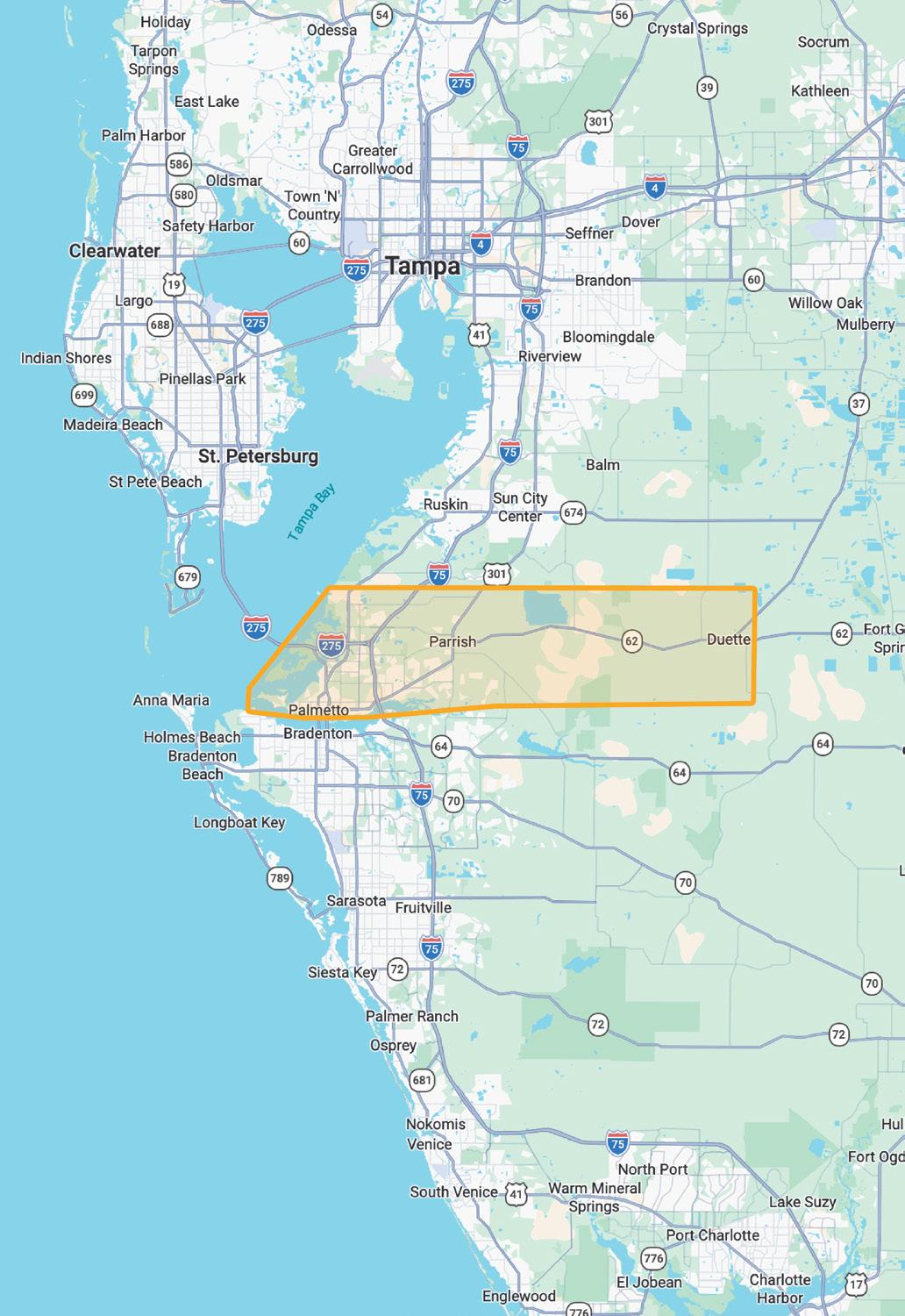
Over a six-month period, The Harwood Institute undertook a series of 18 conversations with residents from different areas of North River Manatee County, including a conversation with high school students (see the map graphic for the geographic region covered). Each conversation was held with cross-sections of an average of 15 people.
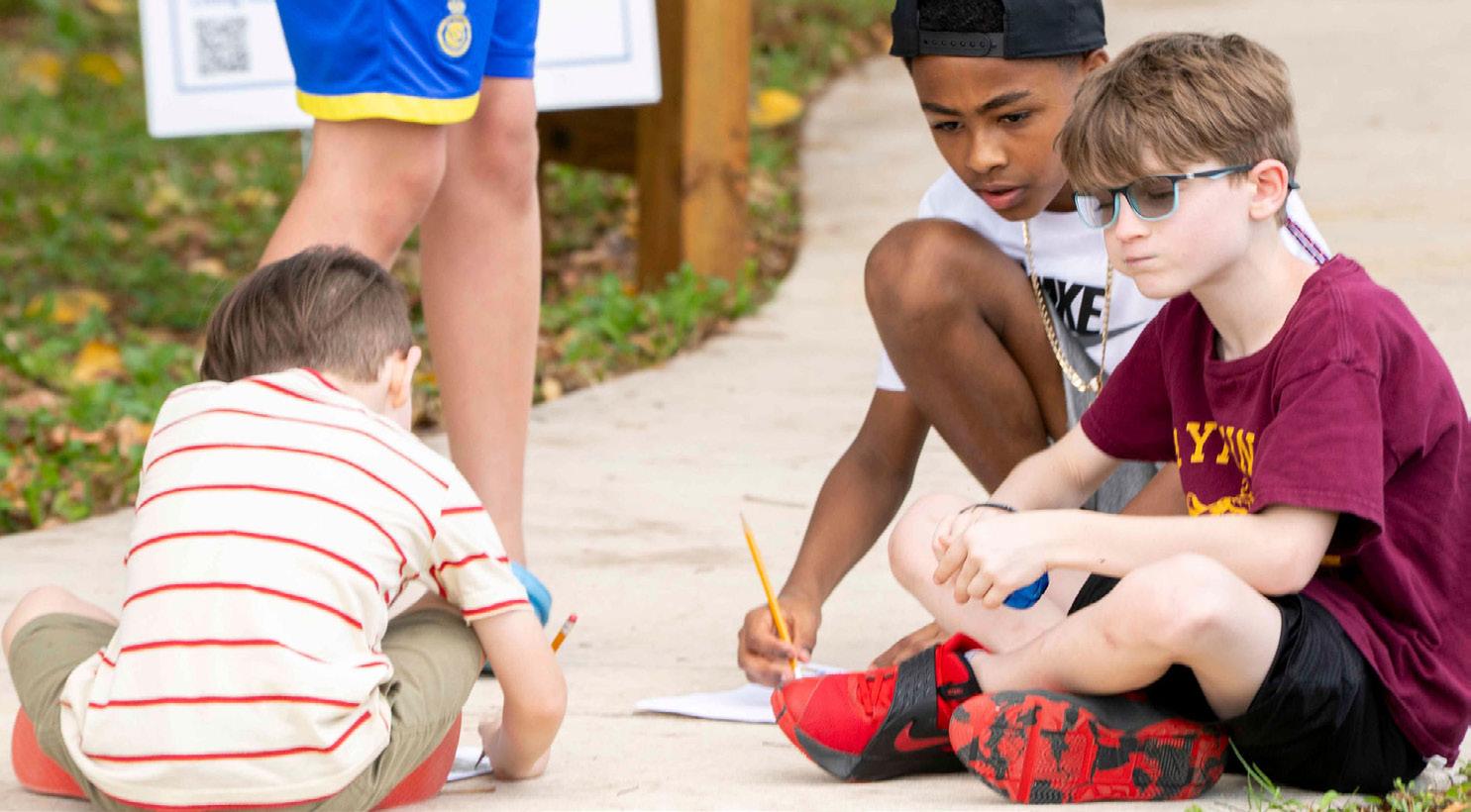
In addition, The Harwood Institute conducted 36 in-depth interviews with community leaders, which included elected officials and leaders from nonprofits, neighborhoods, education, religious institutions, healthcare, business, and other areas. There is one additional point to be made about how the report was done: Each individual quote was selected only if it represented larger patterns found in the research. The selected quotes come from across all of The Harwood Institute’s interviews and conversations.
Here are the sections of the report that follow:
Introduction — This section provides an overview of the report. In it, we outline four main themes that emerged from the conversations and interviews in North River Manatee County.
Our Voices — In this section, you will hear people in North River Manatee County describe how they see and experience the community and share their hopes and concerns about the future.
North River Manatee County’s Public Capital — This section is a snapshot and analysis of the fundamental structures, networks, and norms of North River Manatee County through the lens of The Harwood Institute’s Public Capital Framework. This snapshot reflects what it takes for a community to work together effectively. It was developed through the Institute’s research and on-the-ground work in communities in all 50 US states.
Building the Community’s Civic Strength — This section lays out key recommendations for North River Manatee County to invest in and develop its civic capacities alongside the steps the community can take to catalyze and grow efforts that build trust and a sense of possibility and hope.
Introduction
People love living in North River Manatee County. They enjoy the family-friendly vibe, great schools, sense of personal safety, unique and diverse communities, and beautiful weather. Lifelong residents can’t imagine living anywhere else and newcomers keep moving in, making this community one of the fastest-growing areas in all of Florida.
But amid a period of rapid growth and change, people’s concerns are rising. Indeed, the community is growing and changing faster than anyone can keep up.
One Palmetto resident wondered, “Who are we? What do we want to be? How do we get there from where we are
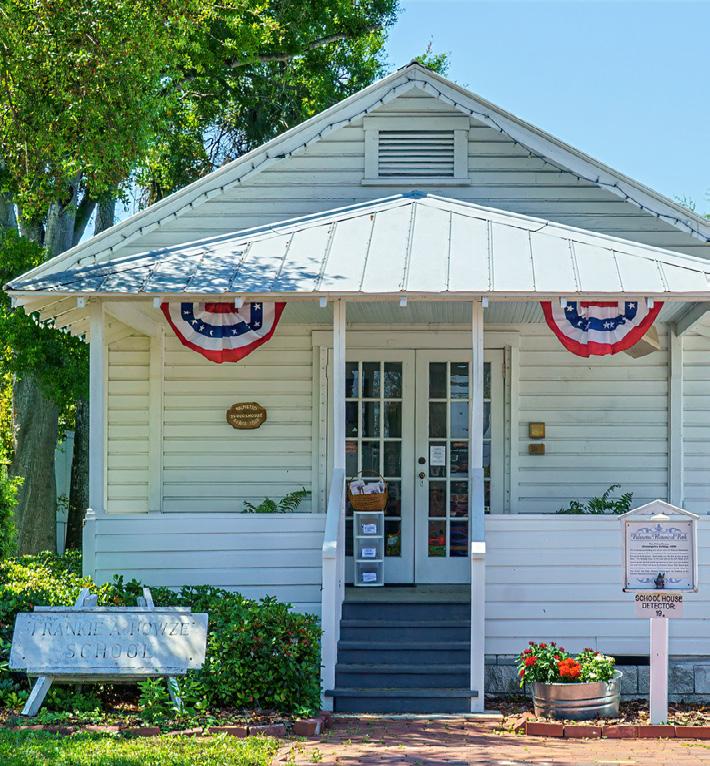
Today, North River Manatee County faces a fundamental choice:
Will the community further fragment amid the pressures of growth and change or come together to shape a shared future?
now without losing what we’ve had?” Important questions are increasingly being asked about the future. Will what really matters to people be a bigger part of the conversation moving forward? Will some parts of the community be left out or left behind? Can the community continue growing without sacrificing the good things people love about living here?
Today, North River Manatee County faces a fundamental choice: Will the community further fragment amid the pressures of growth and change or come together to shape a shared future?
Where the Community Stands
Listen to the voices of residents and leaders and it’s clear people care about and want to support one another. One Duette resident said, “If there’s an issue you have, you can count on your neighbor to help you out.”
Yet frustrations and concerns are rising. Traffic is worsening. Infrastructure is lagging. People are separating from one another. Social cohesion is strained. People worry the community they love is going to become one they no longer recognize.
“Unless we come together, it’s going to be tough to overcome our different challenges and issues,” one nonprofit leader noted. “We have to come together and find a way to connect. Then we can move forward.”
Central to this task is strengthening the area’s civic culture—how people interact, work together, and get things done. Currently, the community’s civic culture is being outstripped. But rather than ignore this challenge, the people of North River Manatee County want to deal with it head-on by coming together and shaping a shared future.
We held interviews and conversations with residents, leaders, youth, and people throughout North River Manatee
County. They collectively revealed four overarching themes, each of which need concerted attention and action:
– People want a stronger sense of community. Throughout conversations, people noted how they tend to stay in their own areas, with many feeling a sense of disconnection, separation, and even isolation. Others spoke of how the community lacks central gathering places for people to get out of their silos and subdivisions to connect with one another. Rapid growth is only further fragmenting people. Amid all this, residents yearn for a greater sense of community and deeper connections with one another. Developing this stronger sense of community is foundational to people’s ability to move forward together.
– Healthier public discourse is key. Complaints and frustrations mark local discourse with national divisiveness only making matters worse. Indeed, it’s increasingly hard for people to talk to one another. Public discussions too often force people to “pick a side.” Within the limited spaces for discussion that do exist, engagement is thin. Thus, there is a need for more spaces where more productive community discussion can occur. For this to happen, people will need to develop stronger habits of seeing and hearing
Residents yearn for a greater sense of community and deeper connections with one another. Developing this stronger sense of community is foundational to people’s ability to move forward together.
one another, working through tensions, and taking action together. Without such engagement, it will be nearly impossible for the community to shape a shared, sustainable future together.
– The community needs more leaders of all types who are turned outward. Residents feel disconnected from elected county leaders and don’t feel their concerns are heard. While some point to local leaders they do trust—especially in churches, schools, and civic associations—they name relatively few leaders overall and generally feel they have nowhere to turn to address the community’s deepening challenges. Community leaders themselves admit they are stretched thin, running around “putting out fires,” and too often work in silos rather than together. Overall, the community needs more leaders—and more leaders of all types who are
turned outward to the community—in order to move forward effectively.
– More shared action must be taken. Many organizations and leaders compete over limited resources rather than work together and relatively few entities effectively catalyze action or help the community marshal its shared resources. Still, people take great pride in how the community has stepped up to respond to past crises. The key is how to harness that ethic of shared action outside of disasters. There is a widespread desire to do just that. But no one entity, organization, group, or leader can do this alone. They must work together. Importantly, residents must step forward too and make community a truly shared responsibility. For this to happen, North River Manatee County needs to develop stronger norms for working together and include more perspectives in decision-making.
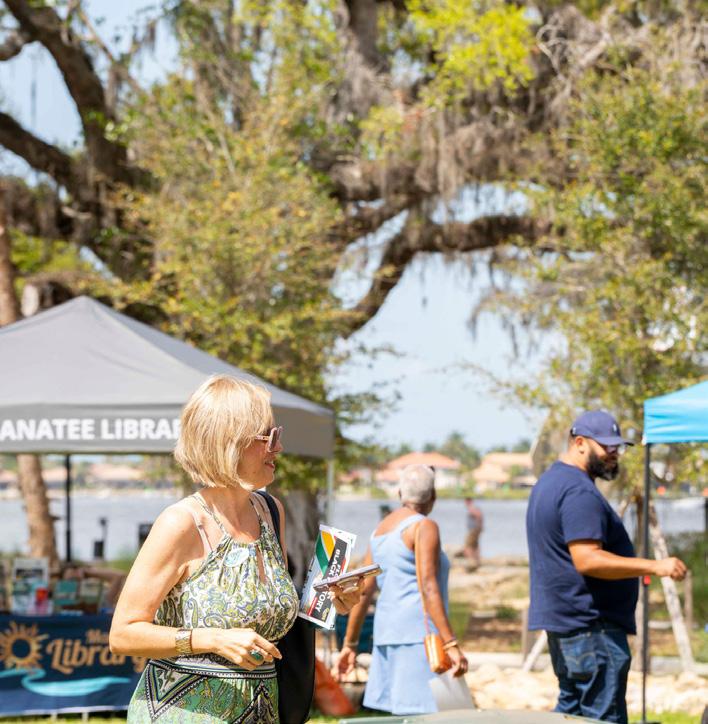
In one of the conversations we held, a Parrish resident said, “I think we all want the same thing. Everyone around the table, it’s a shared vision.” But, they wondered, “How do we get there?”
Which Path Will We Take?
For a community to be healthy and thrive, growth must come in many forms, especially over time. This includes developing the civic capacities needed to engage with hard issues, various tensions and challenges, and opportunities that come with rapid population growth. Real, concerted action is needed for a community to better shape its own future rather than be a bystander—or even victim—to the changes it is experiencing. If North River Manatee County wants to take the hopeful path, it must consider these questions:
– How does the community build on the good things that are happening?
– How can it ensure that all people are included and that people do not get left out or left behind?
– What will it take to strengthen the civic capacities of the community and to catalyze and support more shared action?
– How can action be taken that honors the past while seizing new opportunities for the community to grow together ?
There is no clear-cut way forward. Yet people want to deal more openly and directly with the underlying tensions holding them back. This requires work.
Moving Forward, Together
Residents and leaders alike want North River Manatee County to grow its civic culture and thrive while addressing the pressing challenges that face the community.
But not all actions will effectively move a community forward. Over nearly 40 years, The Harwood Institute has learned that it’s at this very juncture that people must face reality if they are to create a new trajectory of hope.
Too often, those seeking positive change reflexively embrace old habits. We choose a path of comprehensive, highly
coordinated plans, where we attempt to bring as many people and groups together as possible. Such efforts often fade away or fail outright due to the unwillingness or inability of many groups to work together.
What’s more, too many community efforts do not truly know, or choose to ignore, what really matters to people.
We gravitate toward a one-size-fitsall approach, often imported from a different community with a different history and needs. Solutions are imposed upon communities, leaving change undelivered and people feeling that they’ve lost control over their own lives and futures. There is a failure to understand and account for the community’s context.
At the root of such approaches is an assumption that communities need to be “fixed”—as if people and communities are seeking to have someone fix them. As if the persistent challenges reflected in this report can somehow be easily solved.
Communities move forward and thrive by growing themselves. They unleash a chain reaction that begins with small actions and expands over time. Such actions, when they are strategic, address the community’s fault lines and needs and honor people’s shared aspirations. They are designed with the explicit intention to strengthen the community’s
Residents and leaders alike want North River Manatee County to grow its civic culture and thrive while addressing the pressing challenges that face the community.
civic culture: the relationships, norms, leaders, organizations, and networks that enable a community to work together effectively. Taken together, these expanding actions strengthen the community’s civic confidence and belief in itself. Indeed, as communities grow together, a sense of possibility and hope grows, too.
Such hope is not based on wishful thinking; nor is it a false hope, made of unrealistic expectations or utopian visions. What is needed is authentic hope—a hope built upon realistic promises and concrete actions taken and emerging over time.
Now, North River Manatee County has the opportunity to answer this call to engage. When it does, it can begin to grow together and shape its own future. ��
Our Voices
Listen to the voices of people who make North River Manatee County their home. You’ll hear many people express their affection for the community, while also believing the area faces significant challenges that are holding the community back. As you listen to these voices, you can sense people’s aspirations for the community to come together to work through its challenges and build a stronger community. What follows is a series of themes that emerged from our conversations with residents and interviews with leaders from all across North River Manatee County. Keep in mind that each individual quote was selected only if it represented larger patterns found in the research.
A Great Place to Live
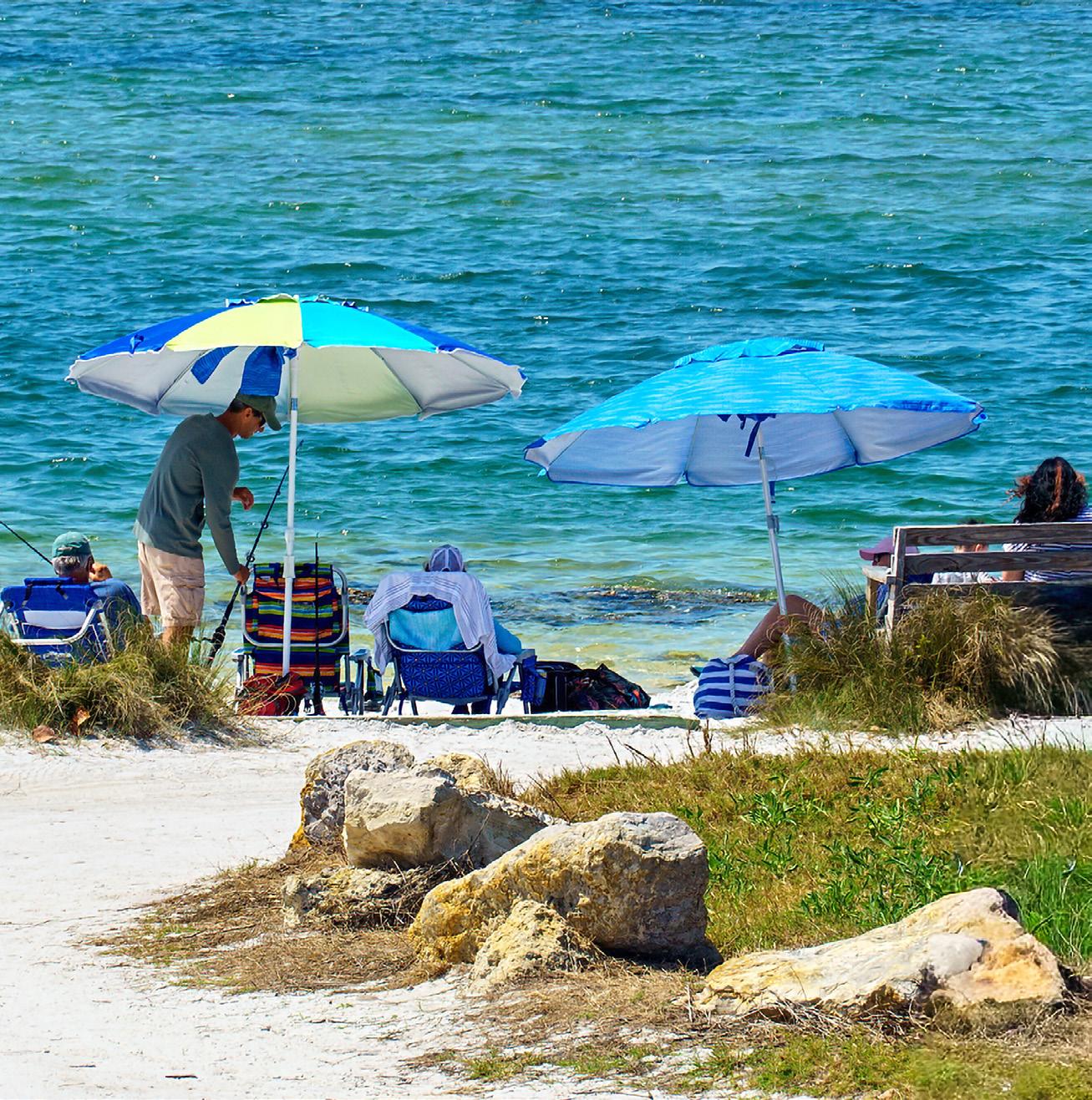
“We have the climate, we have the land, we have the sea, the river, and they all come together. They’re what made this place so attractive to come and work,” said a Palmetto resident. Indeed, the area’s climate and geography are beloved by locals. Many stay active playing sports, engaging in outdoor activities, or enjoying the area’s numerous parks and beaches. “It’s just a beautiful, beautiful place to live,” one faith leader said.
“It’s just a beautiful, beautiful place to live.”
The community’s central location between larger metropolitan areas to the north and south is also a major perk for long-time residents and newcomers alike. “I can work down in Bradenton and my husband can work up in Tampa and it’s a good central location that works for us,” said one Parrish resident.
People also love the people here because, “Everyone’s very friendly,” according to a Palmetto resident. Many especially appreciate the area’s “strong family-first vibe.” One Parrish resident expanded on that, saying, “Everyone cares about their loved ones and neighbors. The people that you know in your neighborhood, there’s that sense of community, that sense of shared desire.”
People across North River Manatee County are supportive too, which is especially appreciated by newcomers like one who settled in Parrish. “When we first came down to look for a place, we went to Miami and that area and it was so much like New York. We just couldn’t face it,” they said. “So we came
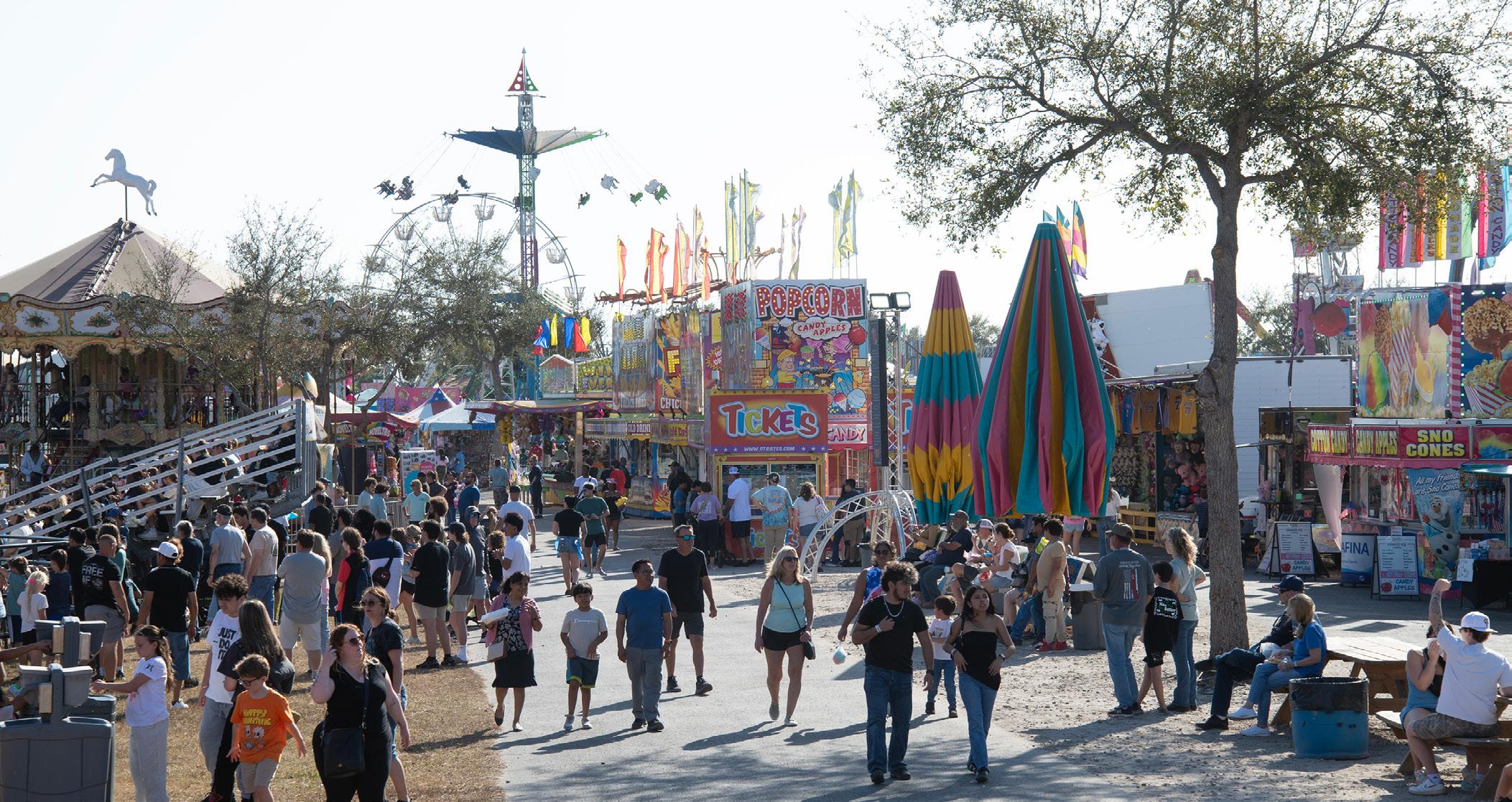
this way and the people here are so nice, giving, helpful.” People’s willingness to give and help each other is especially prominent in times of crisis. “When a hurricane hits this area, you find a great willingness to help the neighbor down the street,” one faith leader said.
Safety is another reason people love the community. “I’ve never felt unsafe,” a Palmetto resident said. Another added, “I feel like people feel safe to be themselves and walk the streets.” What’s more, the desire for a “safe, family neighborhood” is a common reason people move to the area. As a Parrish resident said, that desire “seems to be an underlying ethic I’ve identified from anyone I’ve met, regardless of if they have kids or not.”
People Cherish the Diversity of Places and People
The different communities dotting North River Manatee County are unique and valued by residents for their “truly deep history.” Palmetto is situated on the Manatee River and beloved for its “small town feel.” Memphis and Rubonia are part of Palmetto proper, yet distinct unto themselves. “Rubonia is like a family,” according to residents there, who describe the area as a place with a real “togetherness.” Just east of Palmetto along the river lies Ellenton, where “a lot of young families are moving,” which brings “an energized atmosphere” to a traditionally quiet area.
“We have a very welcoming community because of all our diversity.”
Much of North River Manatee County’s growth is focused in the Parrish area. Described as an historically “easygoing” place, many see it as “up and coming” as it transitions from a “rural community into an urban community.” Meanwhile, some 20 miles east of Parrish sits Duette, which is much less developed and described as “peaceful,” “quiet,” and “a very self-sufficient community.” Head back west until you hit the bay and you’ll find Terra Ceia, nestled amid the Terra Ceia Preserve State Park, and Snead Island, which people note is one of the most “tight-knit” communities around.
“We’ve really become a melting pot,” one Ellenton resident noted. People across conversations highlighted the community’s wide diversity, like this Palmetto resident, who said, “It’s a wonderful mixture. Ages. Races. Neighborhoods. Everybody’s from everywhere. Not just north and south, they’re from islands and other places out of the country and all, but a great mixture.” Moreover, this diversity of people isn’t just seen, it’s appreciated and cherished. A Haitian resident noted, “The subdivision where I live, you’ve got people from [all different]
backgrounds. When I was growing up, most communities that we would live in, we’d be the only Black family. But that has really changed.” A Palmetto youth added to that by saying, “We have a very welcoming community because of all our diversity. I don’t think one part of Palmetto is similar to the next. It all looks very different, and I love that.”
Conflicted Feelings About Growth
People in North River Manatee County are conflicted about growth, seeing both benefits and major challenges. One Parrish resident said, “When I first moved here it was, ‘I wish we would get this.’ Well, now we’re getting it. And everyone’s like, ‘It’s too much.’” A Palmetto resident offered a similar sentiment: “We enjoy some of the conveniences that development brings. But the traffic and everything else that comes with it is frustrating.” The idea that growth is spinning out of control is widely expressed. “Growth is exploding and it’s not really what we signed up for,” noted a Parrish resident. “We came because it was a beautiful rural area.”
For many long-time residents, these conflicted feelings about growth are tinged with a sense of loss. One rural resident outside Parrish said, “All the growth that’s coming in, it’s so busy, so loud, and I miss the quiet.” A Palmetto resident said, “I moved here a long time ago and I greatly miss the smallness of it.” Many people mourn a growing sense of unfamiliarity, like the community they love is slipping away. In Palmetto, a longtime resident described how this plays out for them in everyday life: “You may bump your grocery cart into someone and it’s going to be a friendly exchange. The difference is now you don’t know who that person is. You don’t know who they’re related to, you know nothing about that person.”
People across the community say there’s no way to stop the growth entirely or, as some residents said, put things “back in the box.” But people feel it’s growing and changing faster than they can keep up. “We have to slow down on growth and put in the infrastructure if it’s going to continue to work out,” a resident in the Parrish area said. Meanwhile, one
high school student called for finding a better “balance.” They explained, “We are urbanizing too quickly. Yes, growth is good, but when it happens at an expanded rate, like it is over here, it can negatively impact the community.”
Key Issues
During community conversations and leader interviews across all parts of North River Manatee County, people expressed a common set of pressing concerns. While some action is already being taken to address these areas, what’s clear is that deep challenges persist. Moving forward, organizations, leaders, and residents will need to come together in new ways to better address what matters to people.
GETTING AROUND
“The traffic is crazy” was a common refrain across conversations. Congested roads are putting intense strain on people’s commutes and lives, with numerous people telling stories of drives that used to take just 5-10 minutes now
“We enjoy some of the conveniences that development brings. But the traffic and everything else that comes with it is frustrating.”
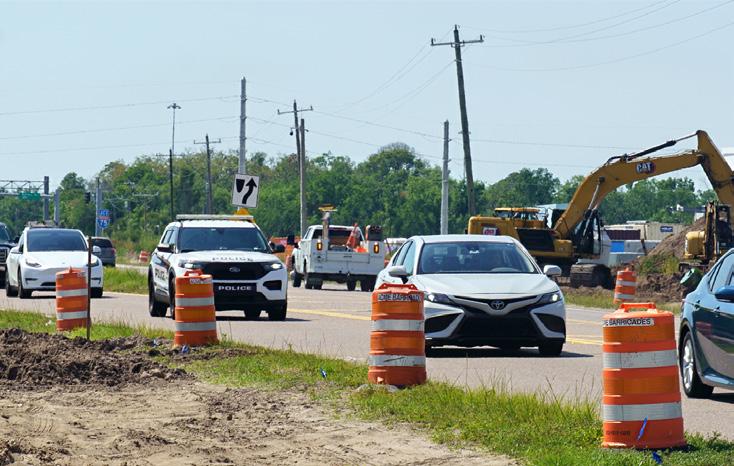
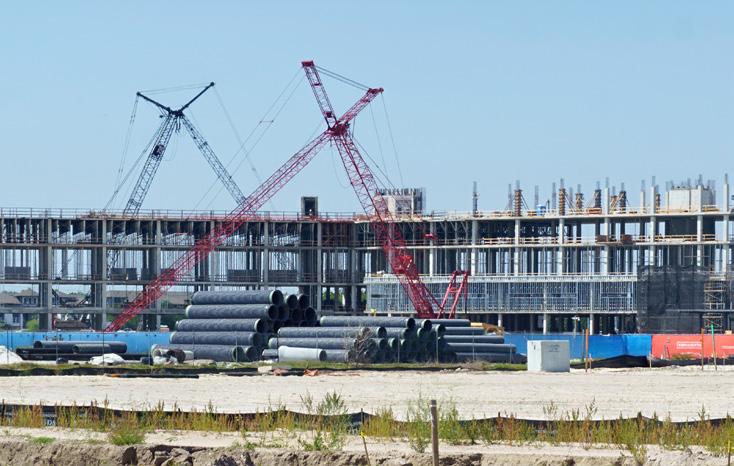
stretching to 20 or 30 minutes or longer due to traffic, constant construction, and an increase in accidents resulting from both. For example, one youth shared, “I leave my house at 6:30 to get to school by 7:30. The traffic to get to school, it’s gotten worse over the years.” The traffic issue is intensified by the fact that many people who live in North River Manatee County work outside of the area, with Parrish especially seen by many as “a bedroom community.” One Palmetto resident noted, “Crossing the river is a problem. Getting back home can take people an hour or an hour and a half.”
Yet most are stuck driving if they want to get around. “Public transportation is very limited,” said a Palmetto resident. A local pastor added, “We don’t have great transportation. It’s not a walkable community. It’s not like you can walk somewhere if you’d like.” The lack of transportation options sometimes stops people from accessing needed resources. “A lot of programming is available to people who are lower income,” a Palmetto resident said,
“But it’s a very far distance for them to travel without transportation to utilize those programs.”
INFRASTRUCTURE
One Parrish resident described the community’s predicament as, “Way too much building, not enough infrastructure to support it.” Roads, sidewalks, utilities, sewer, water treatment, and more are all seen as not keeping up with the area’s rapid growth. Roads not built to accommodate such high levels of traffic are a particular concern. One Parrish resident said, “I feel like almost every day there’s an accident.”
“Better infrastructure is probably a shared goal. No matter if you want the community to grow more or not.”
People see infrastructure upgrades happening unevenly across the area. “The only infrastructure that’s being put in is being put in by the developers that build these gated communities,” said a Palmetto resident. “If you’re not in our community, you don’t have it… That means it’s really piecemeal.” Of special concern in older neighborhoods is flood prevention. Some areas aren’t receiving the updates they need. Other times, new development can leave longstanding communities at higher risk. “My concern is we need to have drainage,” a Rubonia resident explained. “It used to be going under the road. When they came and put the new road in, they closed it up. That means every time we get a lot of water, it backs up.”
Despite these uneven impacts, a Palmetto resident felt the need for improved infrastructure had become such a shared pain point that it could easily unite people across the community. “Better infrastructure is probably a shared goal,” they said. “No matter if you want the community to grow more or not.”
HOUSING
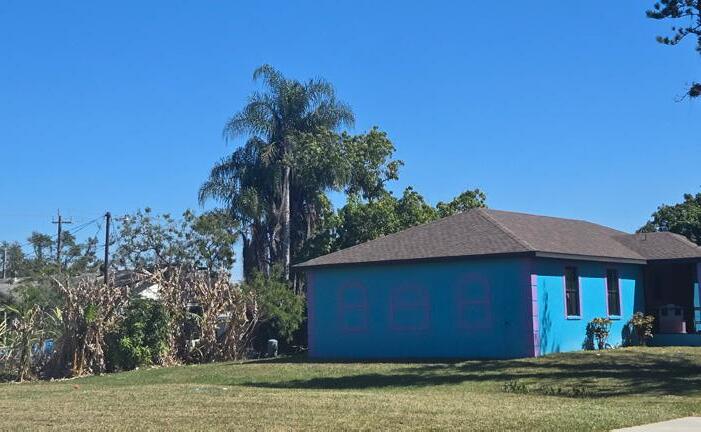
While some mention housing is more affordable in North River Manatee County compared to Sarasota, Tampa, or even Bradenton, it remains a major challenge for the community for both homeowners and renters. “Housing definitely is an issue,” one faith leader noted. “But not even for the lowest of our lowest families. It’s hitting all across the board.”
Some see important action being taken to develop affordable housing in the community. But, “there’s a wait list on every single one of those communities,” another faith leader said. A Palmetto resident echoed that: “We don’t have available housing for low-income people in the community.”
Amid the broader housing affordability crisis, homelessness is getting worse, with not enough being done to meet people’s needs. One Palmetto resident who volunteers with a local organization serving the homeless said, “The hardest thing for us right now is the number of families. We’re talking about single mothers with children sleeping in their cars.” That resonated with a faith leader who works to bring awareness to the issue of child homelessness. “The upper class does not understand the needs of the homeless or that we even have homeless,” they said.
People’s needs are growing because “salaries are not catching up to the prices of things.”
PEOPLE STRUGGLING
Some people in North River Manatee County are struggling to make ends meet. “Young people are not making enough to afford to pay $2,300 a month for rent, a car payment, car insurance, groceries… People in general are struggling,” said a Palmetto resident.
According to a Palmetto resident, people’s needs “are growing” because “salaries are not catching up to the prices of things.” Meanwhile, a resident in a Spanish-language conversation said, “I’ve lived here all my life. I love Palmetto. I want to stay and work, but the money I make is not enough to live on.” Indeed, few high-wage jobs exist in the area. One Palmetto resident said, “Being such a small town, there are fewer jobs for people.” Another resident in Parrish called for “bringing in an industry that is sustainable and provides higher income jobs.”
These financial struggles are especially felt by the elderly and families. “There are many neighborhoods of elderly people who are hungry or don’t have the resources they need,” a Palmetto resident said. In addition, a Haitian
resident spoke to how a lack of childcare complicates things for many families: “There’s a lot of people who come here and live in this community who’d like to work but they’re not able to because the cost of childcare is so expensive.”
On top of economic challenges, residents of color struggle with experiences of prejudice and racism. An African American resident said, “There are things that we have dealt with in our lives because of complexion.” Another noted prejudice happens “either intentionally or unintentionally, but we’re the ones that feel it.” Meanwhile, a Latino resident in Palmetto explained how the national political climate intensifies things for their community: “No matter that some have legal status, they’ve had problems. So people are afraid, terrified. That’s a real big problem here.”
Amid these wider challenges, some people also find themselves struggling in the wake of recent natural disasters.
“I moved to Parrish a couple years ago after my house flooded from one of the hurricanes,” one youth related. “We had to get out of there.” The Rubonia area in
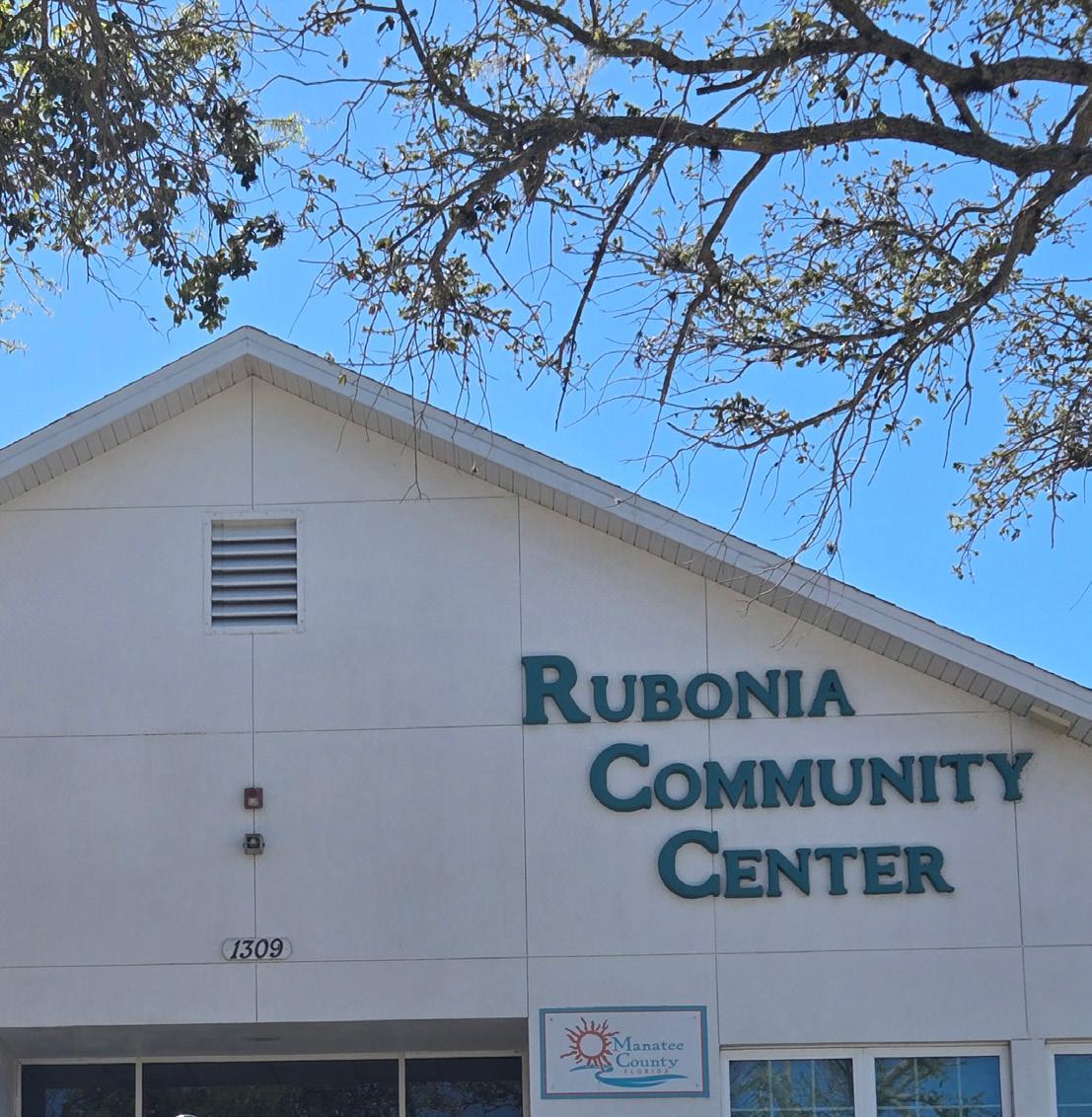
particular “got hit really hard” according to residents there. “We need help. But what we got was, ‘You got to get out,’” a Rubonia resident explained. “No way I’m going to get out. I’ve been here all my life, and I’ll do what I can to try to get back in my home.”
A Yearning for a Stronger Sense of Community
North River Manatee County is made up of a series of unique towns with their own local flavor and flair. But rapid growth
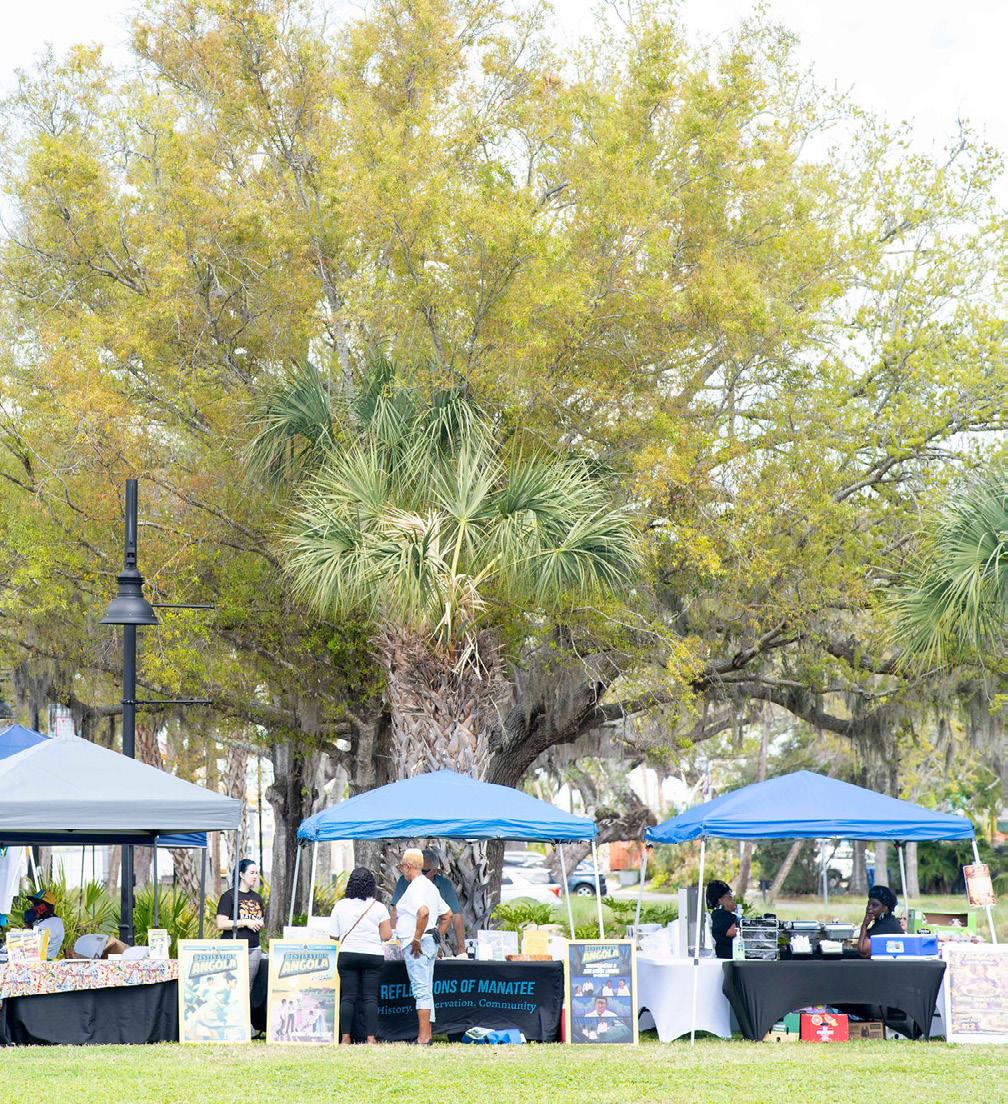
and change are driving separation and fragmentation. Increasingly, few bonds connect people beyond their hyper-local community or subdivision, let alone the different parts of the larger area. As one Hispanic resident in Palmetto explained, “When the community started to grow, it also started to divide because you have these small subdivisions and you don’t have that sense of community because they are separated.”
This has led to a feeling that the different communities in North River Manatee County are each an “island.” Indeed,
Many people feel they live in “silos” or “little pockets.”
“There needs to be a bigger sense of community.”
many people feel they live in “silos” or “little pockets.” This is especially true around Parrish, where the growth is most intense. One leader was referring to Parrish when they said, “There’s no real central feeling of the community itself. There are all these little pockets.”
Some who live in subdivisions or gated communities mention finding community there. The downside is, according to a Parrish resident, that, “There’s so many different planned communities. Everybody’s in their own bubble.”
The upshot of all this is a lack of social cohesion and weak sense of place. Further complicating things is that long-time residents and newcomers often “have a different view of what they want the community to be,” according to a Parrish resident. This “different view” often comes down to how fully someone embraces growth. One Palmetto resident noted, “We’ve got [common] problems. I don’t think we all have common goals.” And a rural resident outside Parrish concurred, saying, “The community is fragmented. I don’t think there’s any common purpose, [but] there’s so many things that need to be addressed.”
People do want to come together and address the community’s challenges in a new way. But many feel stuck, even turned inward. “During COVID, everybody turned more inward doing their own thing,” a Palmetto resident said. “It’s never gotten back to where people are thinking outward beyond their immediate family, their immediate needs. There needs to be a bigger sense of community.”
The good news is, “There’s certainly a desire for [community],” according to a Parrish resident, even if many don’t know how to get started. To that end, another Parrish resident recommended how people might begin to create a stronger sense of community: “Start small!” they said. “If you’re involved in your kids’ school, start there. Or if you’re involved in your church, then start there.”
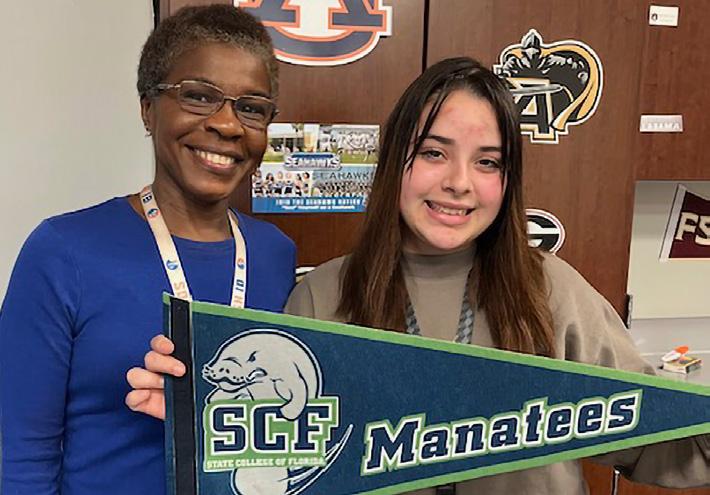
Providing more support and opportunities for youth is a widely-held aspiration in the community.
Youth are a Rallying Point
Many people in North River Manatee County, including youth themselves, spoke positively about local schools. But young people depend on more than just what happens within schools for success in life. This is where residents see gaps they want to address. Thinking about how kids spend their time outside of school, a Palmetto resident said, “If your kids are in organized sports they have something to do. But outside of being in organized sports, what are the kids supposed to do?”
People laud the work of local organizations like the Boys & Girls Club of Manatee County, Palmetto Youth Center, and UnidosNow. Many youth also highlighted school-based programs like JROTC and Future Farmers of America that help them develop academically and personally. One high school student said, “I’ve been given unlimited opportunities and been able to grow tremendously because of them.” But more is needed to better support the community’s youth.
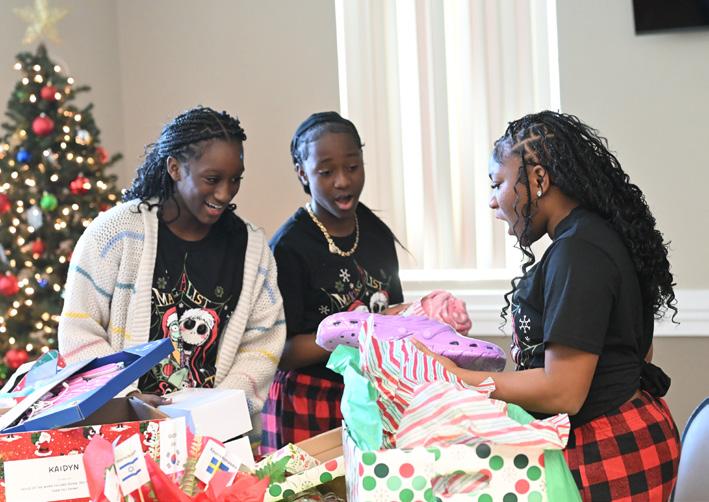
Without concerted action, some worry the community will lose its next generation of leaders because youth won’t want to stay in the area. “It’s a big deal to have a community that supports and values young people and their opinions and puts them in leadership positions,” one Hispanic parent said. “Today, we have [future] leaders, but they’re leaving the community.”
A Palmetto resident added, “Stuff isn’t here [for youth]. You have to go elsewhere. I don’t want that to be the case forever.”
Still, providing more support and opportunities for youth is a widely-held aspiration in the community. “I would guess 90% of people would share that goal,” said a Palmetto resident. Various residents said signs of progress
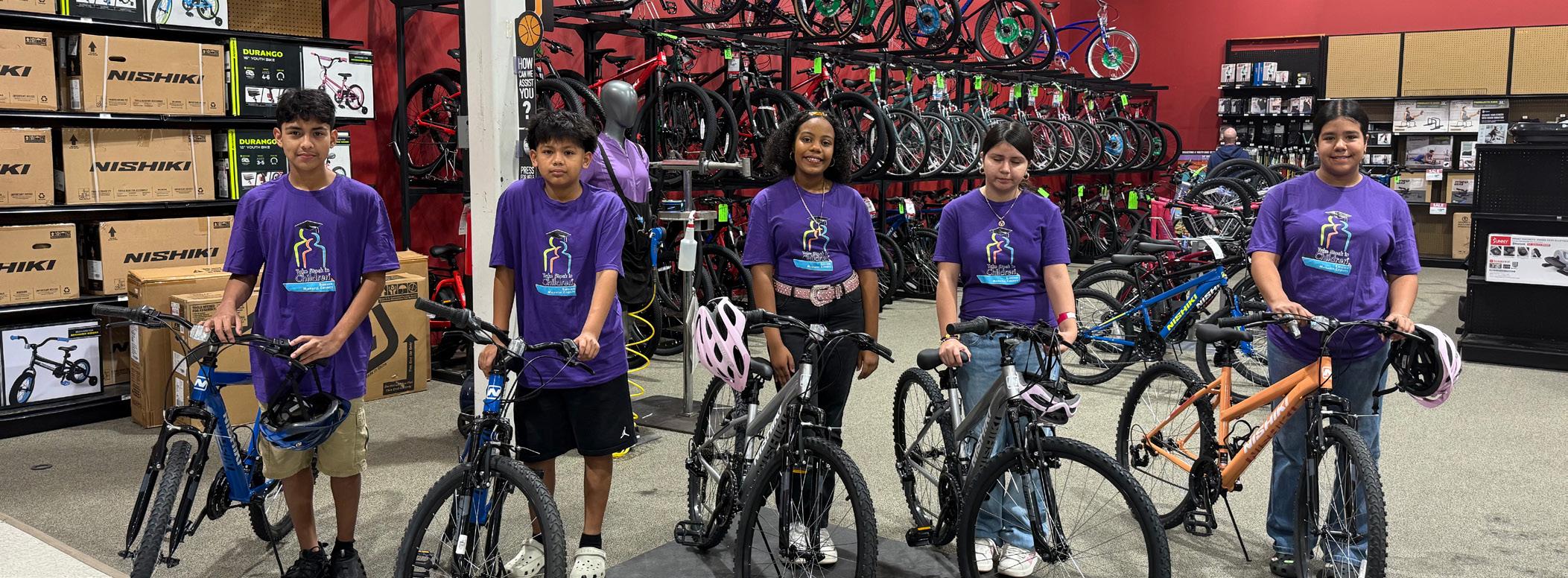
would be, “More opportunities for youth,” and “Having opportunities for kids to think ahead about the future.”
Indeed, this area of shared purpose is ripe for the community to build upon moving forward.
Nobody to Turn To
“There really is a sense of urgency in this community for things to get done,” one Parrish resident said. The problem, for many residents, is twofold.
First, many don’t feel that elected county leaders are responsive to their needs. This sentiment is widely shared. “I think they do care but money talks, and there’s so many things they want to develop but they also don’t take into consideration what the repercussions are going to be afterward,” a Parrish resident said. The idea that official leaders are unresponsive to residents’ needs is especially prevalent in particular areas. One Duette resident said, “We take care
of ourselves because the county is not prepared to do that.” Talking about the Memphis and Rubonia areas, meanwhile, one leader said, “Those areas are often overlooked for improvements. They’re concerned that they won’t be listened to once again because they’ve been promised things by local government and they haven’t been delivered.”
Second, in the absence of responsive elected leaders at the county level, people aren’t sure where to turn to address the deeper challenges facing the community. This is compounded by much of the area being unincorporated and without more local elected officials.
People aren’t sure where to turn to address the deeper challenges facing the community.
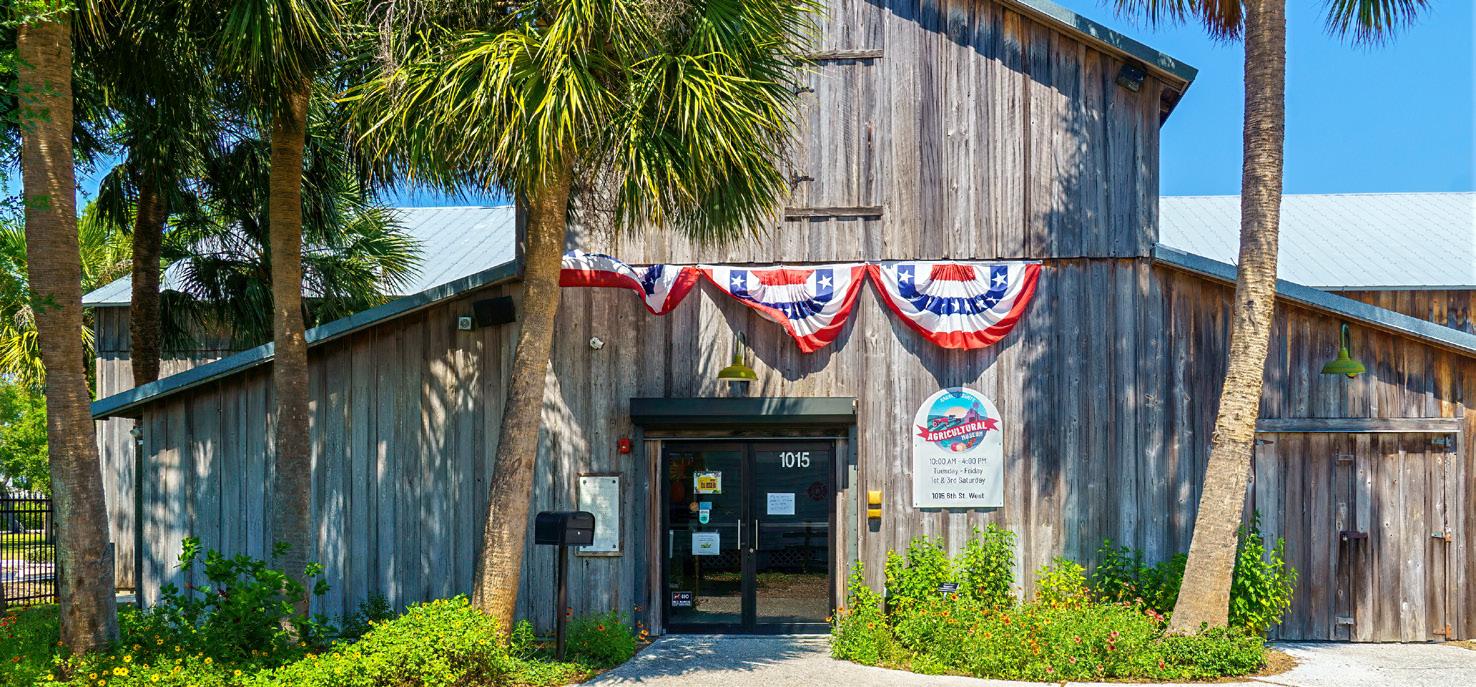
As one leader said, “We don’t have the leadership that we need within our community.” The solution? “Leaders have to be created,” said a Parrish resident. “They’ve got to be created with an intentional pipeline.”
In the meantime, people are calling out for more current leaders to better have the community in their line of sight and work together in more productive ways. On the former point, a Palmetto resident said, “Some leaders have never put themselves in the shoes of some people within the community. They [need to] come out and put the other shoe on the other foot to really understand what people need or are wanting.” Another Palmetto resident spoke to the latter: “It’s like we’ve got
all these machines with dead batteries. You need a jumpstart to get it all working together again.”
“We all want the same thing,” a Parrish resident claimed. “We just don’t know it until we sit around the table and learn from each other. What’s going to bring us together?” People across North River Manatee County are looking for more leaders of all types to engage with that question before it’s too late. Will they step forward?
We Need to Come Together
The community is fragmented. Disconnects exist between elected leaders and residents and between different parts of the community.
“We should be more focused on common goals that we can achieve together. Because I think we do have people that want to work together.”
And many people feel disconnected, isolated, or lacking a sense of place. Yet there remains a widespread sense of hope that the community can do better and be better. “We should be more focused on common goals that we can achieve together,” one faith leader said. “Because I think we do have people that want to work together.”
As a first step, one Parrish resident called for the community to “get back to the fundamentals of getting to know your neighbors. Because I think that’s when you start to realize, ‘Oh, hey, if we work together, we can get this done.’” A Palmetto resident built on that idea when they said: “That sense of community will activate people to get engaged more within the community to solve the problems that affect the masses.” Meanwhile, some leaders believe working together in a new way could unleash an important chain reaction. “People have to lay down their silos and work together more,” a faith leader said. “I think the more people see us doing that and being successful doing it, they want to embrace it more and more.”
Rather than being defeatist about the future, many remain optimistic. That’s because, according to this Parrish resident, “There seems to be people that want to try to make the community better.” That will require more people— from all backgrounds and parts of the community—to engage in a new way.
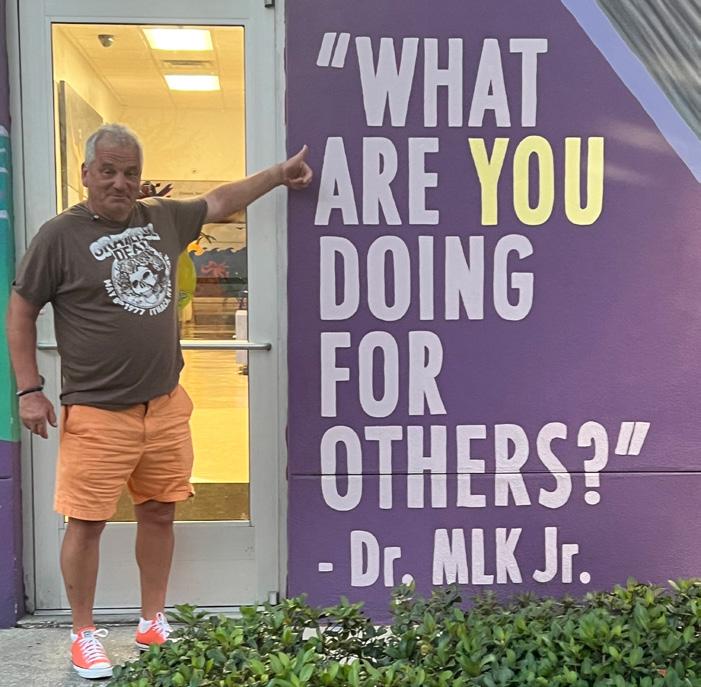
“That’s where the solutions are at,” said a Palmetto resident, “once people are engaged.” Meanwhile, one leader felt, “You give people a reason to get together, you give them a process where they can participate, and natural leaders will evolve. More people will step forward.”
Still, the community is not “in it together.” Not yet. But when asked to share a motto for the kind of community they aspire to live in, residents across the area consistently said things like, “United.” “We are stronger together.” “Better together.” And, “Let’s all come together.”
Appetite alone is not enough, however. It’s time for more people to answer the simple call issued by one Palmetto resident: “We can do better.” To do better looks like stepping forward to strengthen civic culture by building together. As this leader said, “We are on the ground floor of building a community and that sometimes takes generations. In the meantime, we do what we can to make it a better place.” ��
North River Manatee County’s Public Capital
The Harwood Institute’s research and on-the-ground initiatives in communities across the US and elsewhere suggest that for a community to work effectively, it needs a web of fundamental structures, networks, and norms. “Public capital” is what we call this rich, complex system. Nine factors make up The Harwood Institute’s definition of public capital, each of which a community can actively develop.
In this section, we offer a close look at North River Manatee County through the lens of public capital. This framework should be thought of as a touchstone— not a scorecard—for understanding the current conditions of the community and how to strengthen it so it can tackle its challenges and create a greater sense of possibility and hope.
While trying to picture how public capital works, keep in mind an ecosystem that exists right outside your door—or put more simply, think about how our air, water, land, and habitat interact daily. On their own, each of these factors seems quite simple and isolated at times. Indeed, each is often talked about as an independent element. Yet what makes an ecosystem work is not only the robustness of each element, but the healthy relationships between and among them. Public capital operates in much the same way. The nine factors are both independent and highly interdependent. It is the rich, complex interaction between them that makes a community work.
Public Capital
An Abundance of Social Gatherings — that enable people to learn about what is happening in the community and begin to develop a sense of mutual trust.
Organized Spaces for Interaction — where people can come together to learn about, discuss, and often act on common challenges. These spaces help a community begin to identify and tap resources to address concerns.
Catalytic Organizations — that help engage people in public life spur discussion on community challenges and marshal a community’s resources to move ahead. These organizations help lay the foundation for community action, but do not act as the driving force.
Safe Havens for Decision Makers — where a community’s leaders can deliberate and work through community concerns in “unofficial,” candid discussions.
Strong, Diverse Leadership — that extends to all layers of a community, understands the concerns of the community as a whole, and serves as a connector among individuals and organizations throughout the community.
Informal Networks & Links — that connect various individuals, groups, organizations, and institutions together to create the cross-fertilization effect of experiences, knowledge, and resources. People carry and spread ideas, messages, and community norms from place to place.
Conscious Community Discussion — where a community has ample opportunity to think about and sort through its public concerns before taking action. People play an active role in helping decide how the community should act.
Community Norms for Public Life — that help guide how people act individually, interact, and work together. These norms set the standards and tone for people’s engagement.
A Shared Purpose for the Community — that sends an explicit message about the community’s aspirations and helps reinforce that everyone is headed toward a common goal.
An Abundance of Social Gatherings
An Abundance of Social Gathering Places—that enable people to learn about what is happening in the community and begin to develop a sense of mutual trust. These are usually seedbeds of trust, though they can also be ways in which people stay within their own circles.
WHAT’S GOING ON
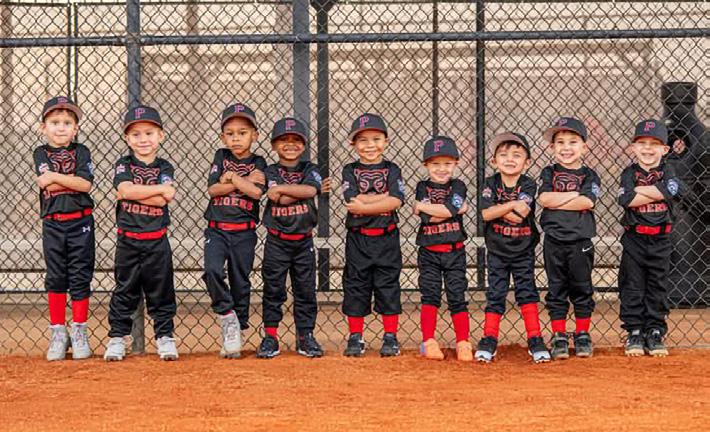
Youth sports bring people together. “Youth sports is huge,” mentioned a leader. “Probably one of the best melting pots in my opinion.” Many others echoed that sentiment. “All the sports [bring people together]. Little league, football, basketball, baseball, all types of sports,” one Palmetto resident explained. A Parrish resident noted, “You meet a lot of your friends in your community through sports.” High school football games in particular are a popular gathering spot. “You come to Harley Stadium on a Friday night to watch the Tigers, everybody from every part of the city is there,” one leader said.
Parks and other outdoor activities are cherished. Local parks are a popular gathering spot for people across the area, including Parrish Community Park, Sutton Park, Lincoln Park, Blackstone Park, Buffalo Creek Park, Fort Hamer Park, and others. For example, talking
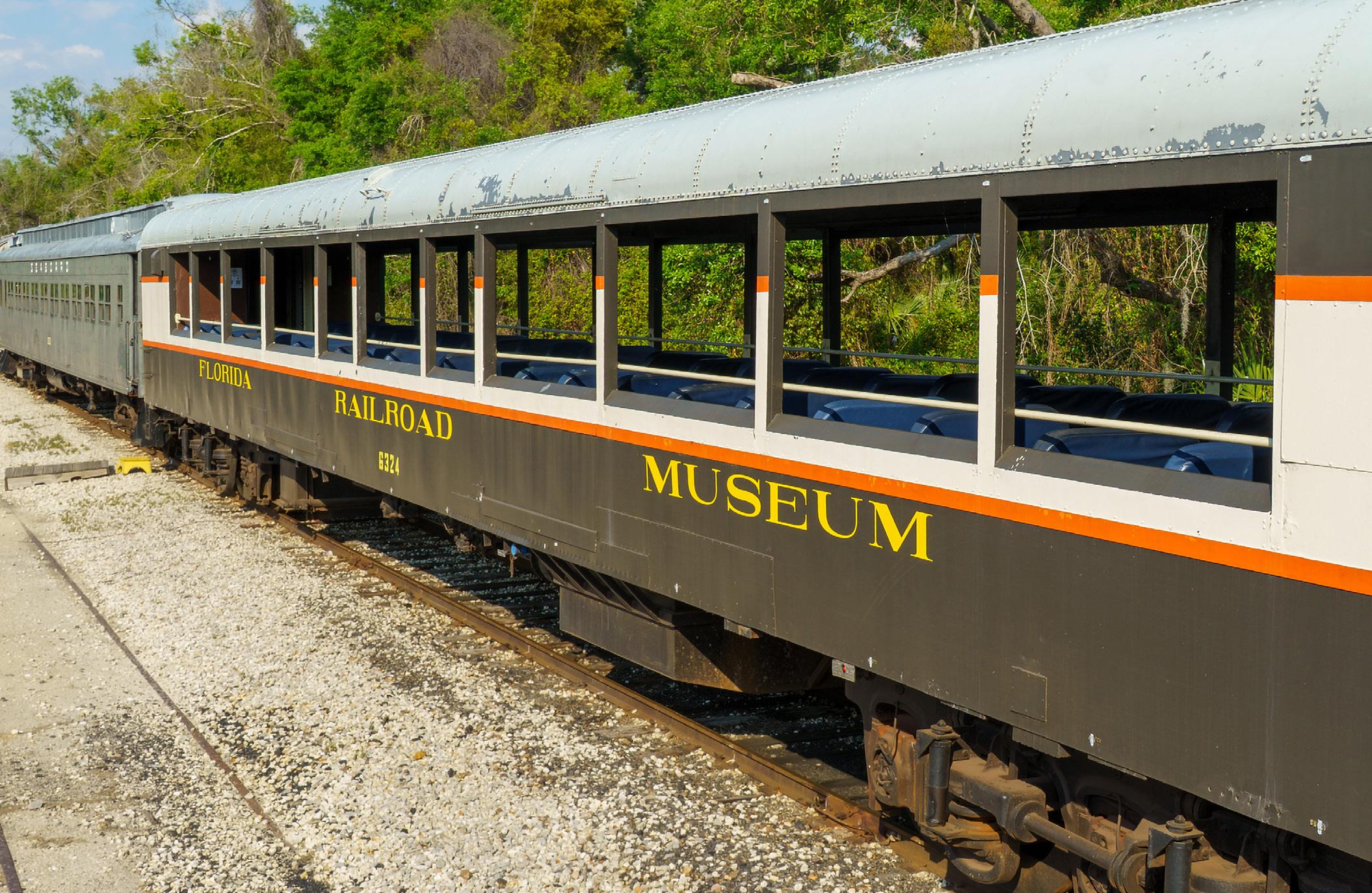
about Lincoln Park, one leader said, “When I come down here on weekends, the parking lot is always full. There’s the soccer field, the football field, there’s a pool and splash pad and all that. The community gets together there.” People love the Florida Railroad Museum in Parrish. And “Palmetto is great at having parades and outdoor events,” a leader said, naming the 4th of July Parade and DeSoto Children’s Parade as particular standouts. Another leader noted, “There’s a lot of pride in the county fair.” The MLK Day Festival was also repeatedly mentioned as a yearly highlight.
Churches provide important social gathering places. “Churches are where people are gathering,” one leader
“Youth sports is huge. Probably one of the best melting pots in my opinion.”
said. Another emphasized, “There are a lot of people who are members of churches and participate heavily in them.” Notably, gathering at churches extends beyond formal Sunday services.
A Palmetto resident said, “We have a lot of activities in Palmetto [with] the churches.” Someone in Duette mentioned, “Conversations out here usually happen on Sunday afternoon with a big gathering at the church and fellowship afterwards.” Local churches are especially viewed as community hubs among Black, Haitian, and Latino communities. For example, one leader noted, “particularly in Rubonia and Memphis, the Black churches are the community keepers.”
Food is a connector. From local restaurants and farmer’s markets to grocery stores and major festivals, food brings people together in North River Manatee County. “Popi’s Place is where we have conversations,” one leader named, among numerous others who mentioned the local chain. Ferraro’s Italian Grille was also highlighted by many and noted as “very involved” in sponsoring youth sports and other community activities. More broadly, another leader said, “Restaurants are a common gathering place for groups to meet for lunch or coffee.” Various leaders meanwhile named Latino markets and grocery stores as “trusted places where people feel safe” and farmers markets in the area as “a
wonderful place for people to gather.” Food truck rallies and the annual Parrish Civic Association Chili Cookoff are also major connectors.
People want community centers and more places to gather. A leader captured an overarching sentiment when they said, “We need a town center. We need a place to call home where we can bring our community together.” This desire for community centers came up in most resident conversations. One Palmetto resident said, “We don’t have any kind of building that we need for the community. There needs to be a building.” Beyond just community centers, people want more gathering options across North River Manatee County generally. One Parrish resident said, “People are hungry for stuff to do that they don’t have to drive very far for.” Some people emphasize how the lack of places to gather affects youth in particular. A Palmetto resident noted, “There’s not a place where kids can go and connect.”
WHAT LIES BEHIND
People live in siloed pockets. A Parrish resident explained, “These are very siloed communities. I bet you people in Parrish don’t even know people in Rubonia.” A leader concurred, noting, “People mostly stay in their own areas.” Even within local areas, people say things are siloed. One Parrish resident
described things like this: “Within all the different subdivisions and gated communities, those people interact all the time. It’s getting them out of the community that is almost impossible.”
Another resident in Palmetto said, “For our community specifically, it’s just so new and there’s so many people coming here that they stick to their little bubble.”
Some residents feel isolated. While many people find some sense of community in their area, others feel entirely “isolated.” One Palmetto resident explained, “It’s not uncommon for people to live next door to each other one, two, three years and not even have a neighbor’s phone number.” There’s a sense that this isolation has grown over the years, a trend only accelerated by COVID. One Parrish resident said, “I’ve been here for 23 years and I’ve seen the dynamics of the community change over time. We are not social people. We don’t know our neighbors that well.” Some also believe the area’s rapid growth exacerbates this sense of isolation, including a resident just outside of Parrish who said, “I do feel like there’s a lot of isolation that at least I’ve experienced. We don’t even know the names of the people who live to the left and right.” One leader felt newcomers are especially prone to isolation due to “no established venues or ways to invite newcomers to become part of the fabric of the community.”
Organized Spaces for Interaction
Organized Spaces for Interaction— where people can come together to learn about, discuss, and often act on community challenges. These spaces help a community begin to identify and tap existing resources to address common concerns.
WHAT’S GOING ON
Spaces exist to address challenges, but are county-wide. A Parrish resident noted that the Manatee Chamber of Commerce hosts committee meetings for the whole county “on topics like traffic, redevelopment, technology.” The Chamber also supports business growth in Manatee County by hosting various efforts and spaces, including one that is well-attended by “city leaders, county leaders, the port authority, local college, medical institutions, and the economic development corporation,” according to a leader. Beyond the Chamber, one
leader noted regular meetings among city and municipal leaders from across the county focused on discussing “mutual problems” related to growth like “infrastructure needs, water treatment, sewage treatment capacity.”
Meanwhile, elected and appointed officials, per one leader, “meet regularly to discuss” the area’s infrastructure needs. Another leader noted how “the mayors, commissioners, first responders, and school district leaders in Manatee County meet and address certain topics,” which sometimes touches on growth-related issues. While people view these spaces as important, most are county-wide and do not sufficiently address the challenges particular to North River Manatee County.
Some spaces exist to address other important issues. Various entities convene spaces focused on education, community safety, healthcare, and food security. According to one leader, the Parrish discussion group convened by Bishop-Parker Foundation has “tried to bring together stakeholders from the community, from the K-12 system, from higher education” to talk about different areas of need. Manatee Bridging the Gap has a history of holding spaces to “create active dialogue between law enforcement and the minority community,” per a second leader. Law enforcement leaders themselves come together in a monthly space “to discuss issues of mutual concern and ways that we can help each other by leveraging resources,” according to a
third leader. Yet another leader spoke to the importance of the Manatee Health Alliance: “It’s about 200 community partners who do the community health improvement plan every three years and work on those issues in between.” Finally, the Manatee Food Security Network regularly convenes food banks and pantries, human services, healthcare, and local government to discuss resources and address challenges across the county.
Some residents meet to discuss issues that matter to them. A small number of organized spaces exist for residents to come together to discuss challenges and issues. For example, a Rubonia resident mentioned, “We have the Rubonia Community Association. That’s where we sit down and talk about the things we need.” In Duette, “We have a meeting once a month to discuss what’s going on with the community,” said a resident there. And the Parrish Civic Association “hosts speakers every month talking about issues that are impacting the community,” explained a leader. Another leader mentioned a space organized by a church for families in the public education system “to talk about a specific issue tied to the area’s explosive growth.” However, what’s not clear is the extent to which these spaces lead to action to address the challenges people discuss in them.
WHAT LIES BEHIND
Residents say they are unrepresented in leader spaces. Many residents believe decisions are made by leaders in spaces without their voices represented. “So many decisions are made by committees. There’s not really any other viewpoints heard,” a Parrish resident believed. Another Parrish resident said, “We don’t think [leaders] care. We don’t see them. We don’t hear them at events.”
Some, like this leader, don’t think leader spaces are a full “representation of the community.” They explained, “Spaces should be diverse in many different elements. Especially in Palmetto, you’ve got so many Blacks and Latinos, and how often do we see them represented?”
Another leader spoke more generally, saying, “Some [leaders] are very limited in their scope of community.” A Parrish resident ultimately reflected a common feeling among residents when they said, “I don’t think leaders are aware of a lot of issues.”
Many residents believe decisions are made by leaders in spaces without their voices represented.
Residents feel their input doesn’t matter. A Parrish resident shared, “I went to some meetings and was pretty much put in my place by the professionals in charge that, ‘Hey, we really don’t value your opinion.’” One Palmetto resident related a similar experience: “We have the Community Redevelopment Agency meetings but sometimes it feels like the decisions are already made before we get there.” Many community leaders understand why residents feel their input doesn’t matter. One admitted, “It’s clear decisions are going to be made without considering people’s input.” Another leader provided an example that they feel has led to a sense of “betrayal” among many residents in the community: “A couple years ago there was a big wetland vote coming up. The community showed up. Hardly anybody wanted it. Commissioners voted for it anyway. People felt like leaders let them down.”
There’s too much inaction on important issues. “It’s hard to move anything forward. Nothing gets done,” one leader said. According to leaders and residents, inaction persists for two main reasons. First, the lack of “an action plan.” One Parrish resident said, “I would like for there to be a very clear actionable plan that we can go out into the community and execute against.” A leader offered an example where work isn’t moving as a result: “Here we are in
2025 and we are still not one step closer to any transportation solutions than we were back in 2014.” Second, inaction is also the result of leadership turnover. A Parrish resident noted, “In the 14 years I’ve lived in Manatee County, the county board has turned over again and again. It has left a lot of inconsistency in terms of how quickly action can be taken.” A leader spoke to one example of how this played out with an initiative they were involved in. “We get a ‘Neighborhood Action Plan’ done and then the county commissioner loses her seat. The next commissioner comes out, says, ‘What are you talking about?’ We put a lot of work into that. But because of ego and semantics or whatever, nothing ever happened to it.”
Action that does occur is often fragmented. One Parrish resident described the area as a “shoddy grandma quilt.” They explained: “Everybody’s got a patch. All these developers, they’re trying to put this together and it’s really not aligned. There’s just really not a lot of integration.” Many others reflected on the ways they see action related to growth fragmenting the community. A Palmetto resident decried that, “It seems like it’s just, ‘Build houses and we’ll update the infrastructure afterwards.’ It’s an afterthought. It’s nuts.” A leader concurred, saying, “We don’t have the infrastructure, we don’t have consistent
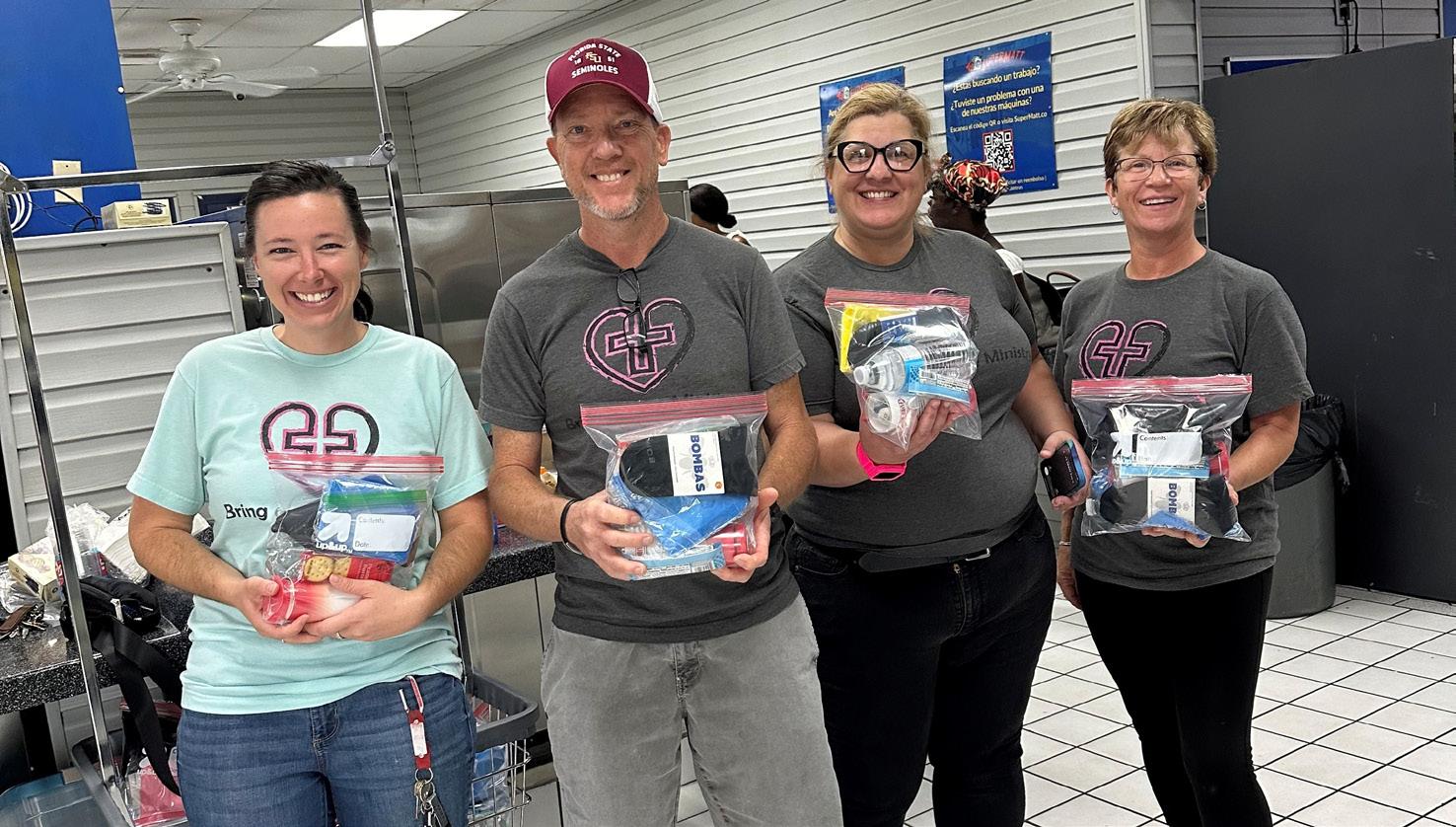
zoning… it’s just a hodgepodge.”
Meanwhile, one Parrish resident voiced a common concern that some leaders fail to keep the bigger picture in sight. They described them as thinking, “‘Oh, that’ll look good over there.’” The issue? “They don’t think about the rest of the traffic, the people, the houses, all those other things that come along with it.”
Catalytic Organizations
Catalytic Organizations—that help engage people in public life, spur discussion on community challenges and marshal a community’s resources to move forward. These organizations help lay the foundation for community action, but do not always act as the driving force.
WHAT’S GOING ON
Churches play a key role in the community. Many people say that church communities are “a huge force” and lead by providing things like food banks and homeless shelters. “There’s a lot of churches out there doing good things and I applaud them,” shared a Palmetto resident. Importantly, people see churches being intentional about providing support to those beyond their congregations. For example, one faith leader noted, “I’m a member of the church council. We look at how we can help the neighborhood, not just the people in the pews.” Churches are also lauded for their quick support and action following natural disasters. One leader said, “The churches in particular activated around the hurricanes. It was
really phenomenal, selfless work to meet the most basic needs of people who were struggling.”
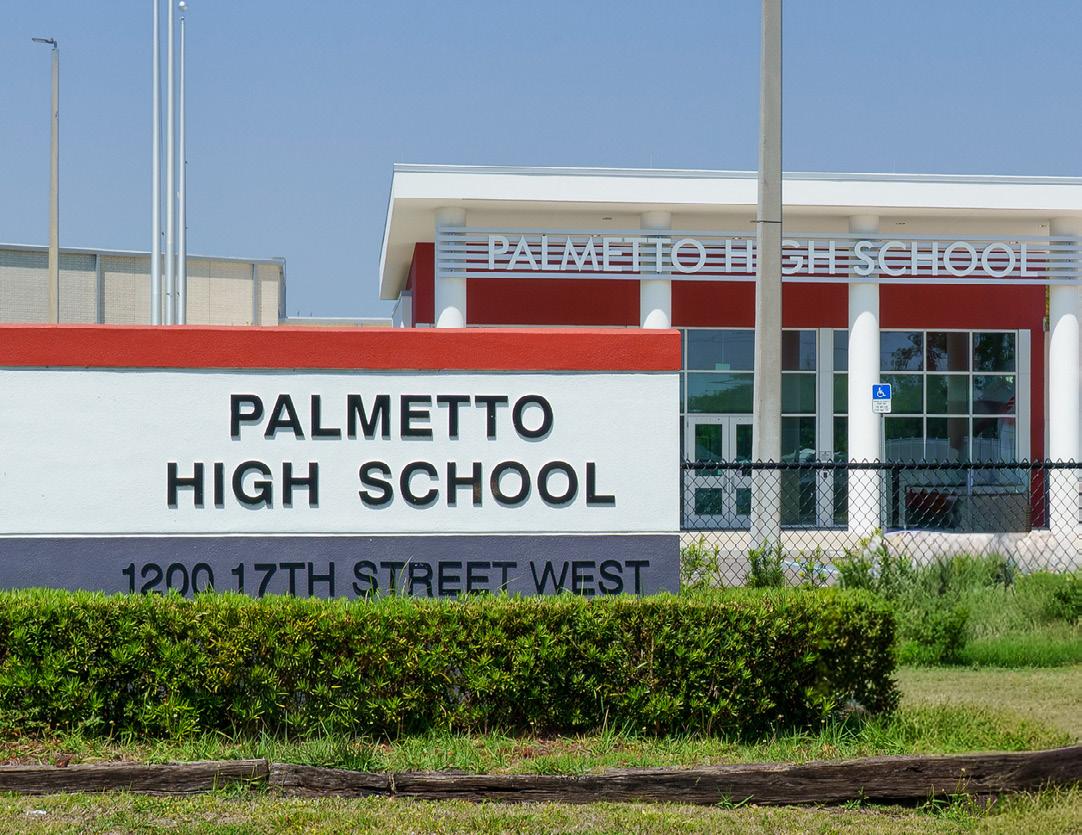
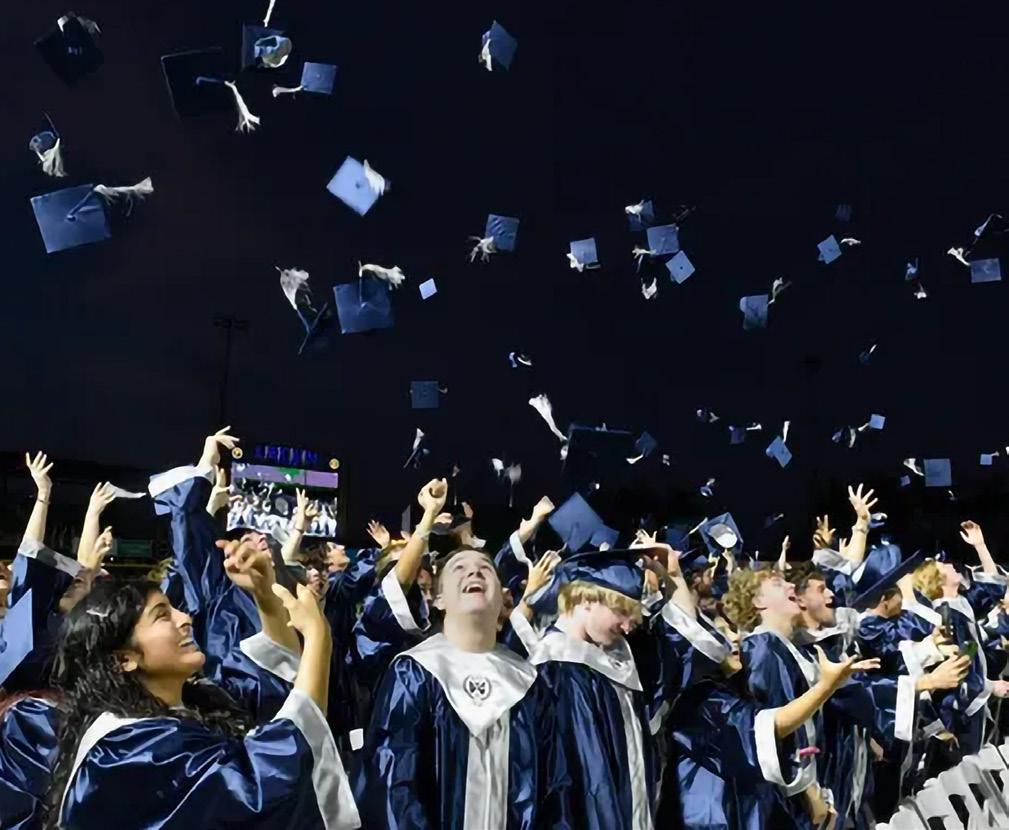
Schools are points of pride in the community. People across North River Manatee County see both the school district and their local schools as vital to community life. “The school district does an exceptional job trying to reach the student and the parent. They go above and beyond,” one leader said. A Palmetto mom shared, “When I walk the halls of Palmetto High as a volunteer, as a mom, it is such a cool school. [Between] the teachers there, and the students, it’s the coolest feeling in that school. It’s like a whole other vibe you’ll never see.” The youth we spoke with share similar sentiments. Palmetto High School students described “a really supportive school staff” and “a very tight-knit school and community.” A Parrish student felt, “I don’t have to worry about what teachers I’m going to
get next year, because they’re all gonna be great and they’re all gonna help me through everything.” School events— sports, parades, back-to-school nights, and more—also bring people together and are a source of pride.
The Manatee Chamber of Commerce convenes leaders and drives connection. Leaders across the community speak highly of the Chamber, variously describing it as “a facilitator of organizations to get together,” “very active and very much a voice,” and “dedicated to small businesses.”
The Chamber is widely viewed as a “driver of connection, education, and information” through its work serving the whole county through programs like Leadership Manatee, its annual Small Business Awards, and its 40 Under 40 Young Professionals group. One leader noted how the Chamber’s annual retreat is “a great place for leaders to gather, brainstorm, and work together.” In
addition, the Chamber holds an annual focus group for North River Manatee County members. Another leader summed up the Chamber’s impact by saying, “They do a phenomenal job keeping people’s interest in what is affecting us as a community.”
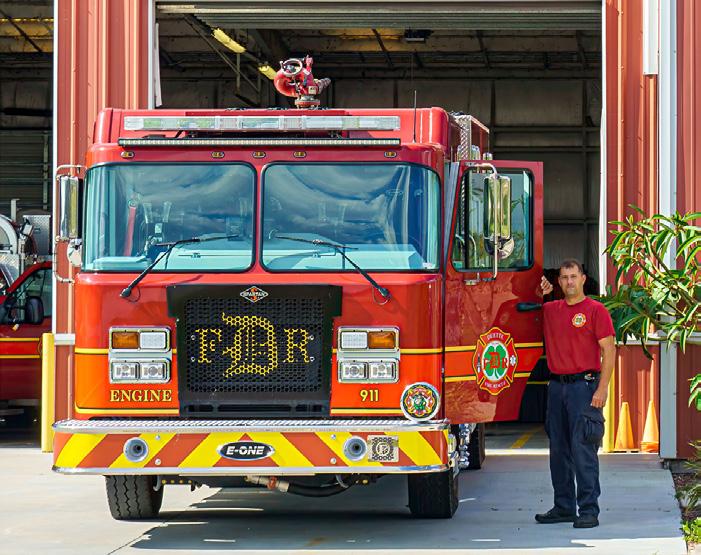
People highlight good local organizations. In every part of North River Manatee County, people readily point to local organizations that they trust and respect. In Parrish, that includes the Parrish Civic Association, which catalyzed the creation of a free newspaper to “keep people informed” and Parrish Playworks. In Palmetto and Rubonia, people highlight the Palmetto Youth Center, the Boys & Girls Club of Manatee County, and the Palmetto Main Street Group. Rubonia residents also look to the local community association. In Duette, the local fire station “represents the spirit of Duette.” Local libraries, Feeding Empty Little Tummies, Turning Points, the Women’s Resource Center, Manatee County Habitat for Humanity, the Manatee County Food Bank, and Meals on Wheels PLUS of Manatee are also all respected in the community.
Foundations are key community players. “Our local foundations are really good at bringing partners together,” a leader shared. The Bishop-Parker Foundation, The Patterson Foundation, and the Manatee Community Foundation are all recognized as supporting or leading important work in North River Manatee County. “They’re pushing for initiatives to work together and for everybody to get on the same page as to what our goal is as a community,” one Ellenton resident said. Others highlighted particular programs offered by local funders. One leader mentioned The Patterson Foundation’s “remake learning days” and their impact on early childhood education in the area. Meanwhile, a Palmetto educator shared, “The Manatee Education Foundation
“Our local foundations are really good at bringing partners together.”
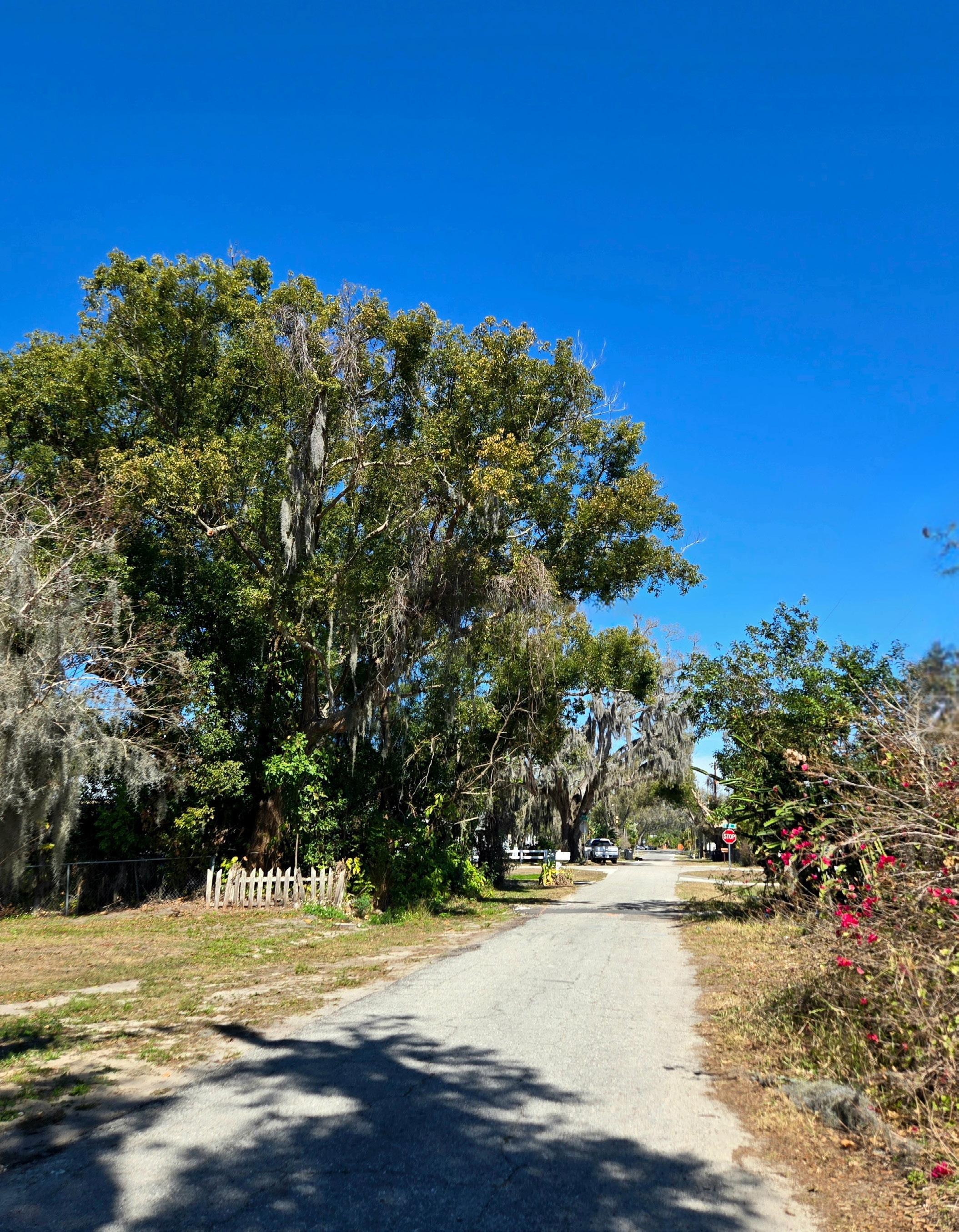
“With the growth, the community resources did not grow. They’re the same as they’ve always been.”
works really hard to provide grants to teachers and they also help at the district level.”
WHAT LIES BEHIND
Community resources have not grown with the community. “I like the services that we offer families, it’s just they’re overloaded, there aren’t enough to go around,” one faith leader said. A Palmetto resident shared a similar concern, saying, “With the growth, the community resources did not grow. They’re the same as they’ve always been.” Some feel this lack of resources is due to the area being a so-called “nonprofit desert.” As one Parrish resident noted, “There’s maybe four nonprofits that are based out of [North River Manatee County]. It’s like a desert once you get there.” That’s something people want to address. Others, including this Palmetto resident, feel Manatee County proper could do more to support the area: “The thing that’s starting to concern me is it seems that the county doesn’t provide as much service north of the river.”
Addressing deeper issues is a challenge. Talking about the nonprofits that do exist, an Ellenton resident felt, “It’s always like they’re serving one little piece of the community. There isn’t really one that’s addressing the larger issues.” When asked during a conversation what different groups were doing to address deeper issues in the area, a Palmetto resident was candid: “There aren’t any projects like that.” But there’s a real sense of urgency from residents for more leaders and organizations to step forward to address these deeper challenges. Another Palmetto resident said, “Some things need to be addressed and really need to be addressed immediately because the cost of living is crazy, insurance is not under control… there’s a lot of things.”
People widely agree there’s a need—and, just as importantly, a desire —for more shared action.
There is a need for more shared action. “If only we had a way to pull people together,” wondered one leader. Others echoed that refrain. Another leader noted, “There’s a lot of siloed nonprofits. It’s not like, ‘Let’s form this one initiative for the community as a whole.’ It’s like, ‘I got this, you got that, we’ll just stay in our lanes.’” A second Palmetto resident believed this lack of shared action stems from “so many little organizations having competing goals.” Some new efforts seek to coordinate efforts and get groups working together in new ways. For example, one faith leader pointed to a newly-created platform called Unite Us that provides a “hub where we can refer a family, they can press the link, and choose out of all the agencies, ‘I need help with this, this, or this.’” Others highlighted how Community Organizations Active in Disaster—commonly referred to as COAD—and the Latino Collaborative try to spark collaboration in the region. Still, people widely agree there’s a need— and, just as importantly, a desire —for more shared action. “I do think there’s a desire and an ability [for shared action] if people can wrap their heads around a goal,” said one faith leader.
Organizations struggle with financial constraints. One reason people say organizations focus on short-term needs and struggle to work together is a lack of resources. A leader offered this example: “The Boys & Girls Club of Manatee
County and the YMCA knew there was an opportunity for a partnership to come north of the river. They did a study, talked to funders and community partners… Everybody said, ‘Yes, there’s a need, we’re in for collaboration. But we don’t have any money to give you.’ So it fell apart.” Financial constraints are felt within organizations across the community. “The number one thing we struggle with is finances,” said one nonprofit leader. Meanwhile, a faith leader felt, “We could serve so much more if money wasn’t an issue.” During a conversation at Virgil Mills Elementary School outside Parrish, participants offered rapid-fire answers to the financial predicament of many nonprofits. “Too small a town, they’re too competitive,” one said. A second noted, “There’s only so much money to go around.” And a third concluded: “Everybody’s pretty much on their own.”
Safe Havens for Decision-Makers
Safe Havens for Decision-Makers—here a community’s leaders can deliberate and work through community concerns in “unofficial,” candid discussions.
WHAT’S GOING ON
A few safe havens exist among small groups of leaders. “We have a lot of parking lot conversations,” one leader said. After formal meetings, they added,
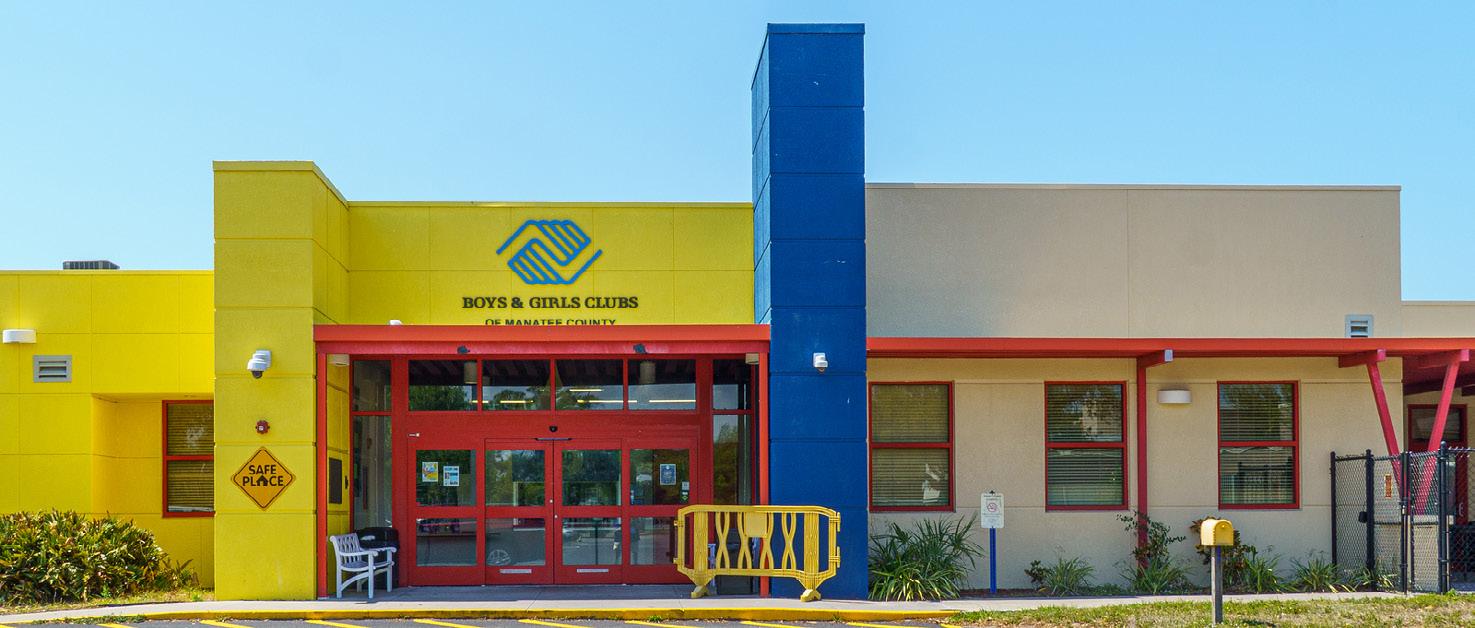
“Those parking lots are a safe haven for all of us, but it’s very informal.” Other leaders noted finding space for candid conversations in church or backyard barbecues. Some small groups of leaders have even developed ongoing safe havens, either in-person or using technology. One education leader noted how she and other education leaders in the area developed “a group chat” to stay in touch over text. Meanwhile, an executive-level leader said they value an unofficial meeting they attend where “it’s typically just CEO level kind of people, there’s no media there; that allows everyone to have open, candid conversations.”
Most leaders connect one-on-one. Leaders frequently mentioned relying on individual touchpoints with other leaders. For some, that just means a phone call to their contact list. “Anything I need is in my cell phone. Whatever problem I got, I got somebody to talk to,” one leader said. Another said, “A lot of leaders in Manatee County know each other. They’ve all got each other on speed dial.” Others prefer to connect
in person over coffee or lunch at a local restaurant. “Most of my meetings, when I want to chat about something, I’m meeting them for lunch,” explained a leader.
WHAT LIES BEHIND
Leaders who have safe havens value them. Speaking to the importance of those “parking lot conversations,” a faith leader said, “The meeting after the meeting is always the most important meeting.” Another leader highlighted how “a lot of work gets done at the golf courses” because they and other leaders value them as places for unofficial meetings. While leaders who have safe havens clearly invest in them, access is uneven. Like one leader said, “Safe havens could be very helpful to most of my colleagues running organizations, be it for-profit or nonprofit. But it feels harder than it ever has for some of those spaces given the insanity of public discourse.”
Many leaders don’t feel safe speaking candidly. Even among leaders who feel they have access to one or more
safe havens, fear and a lack of safety in speaking openly is common. An executive director of a local nonprofit said, “I don’t feel safe saying anything outside of my organization. I watch what I say. I don’t ever feel safe showing my true opinions.” Some go so far as to say they don’t believe there are any true safe havens in the community right now because of “the climate that’s been created.” “You don’t know who’s listening to our conversation or what they’re going to do to intentionally misinterpret or twist what you and I are talking about,” explained a leader. Still, many think it is “fundamental” to have more safe spaces for conversation. But, one leader noted, “It has to be somewhere where we can really say what we feel without fear of repercussions.”
Strong, Diverse Leadership
Strong, Diverse Leadership—that extends to all layers of a community, understands the concerns of the community as a whole, and serves as a connector among individuals and organizations throughout the community.
WHAT’S GOING ON
A few leaders are frequently named by both leaders and residents. During leader interviews and resident conversations, a handful of leaders in different parts of North River Manatee
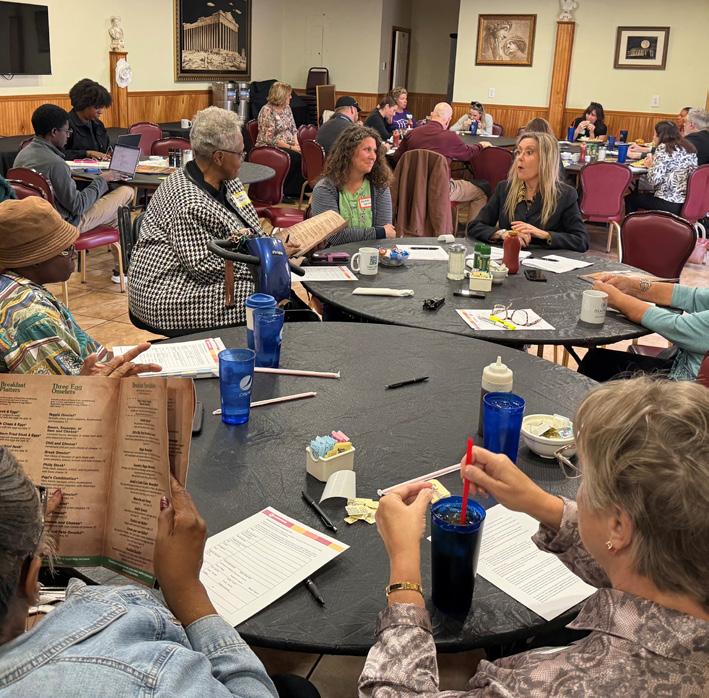
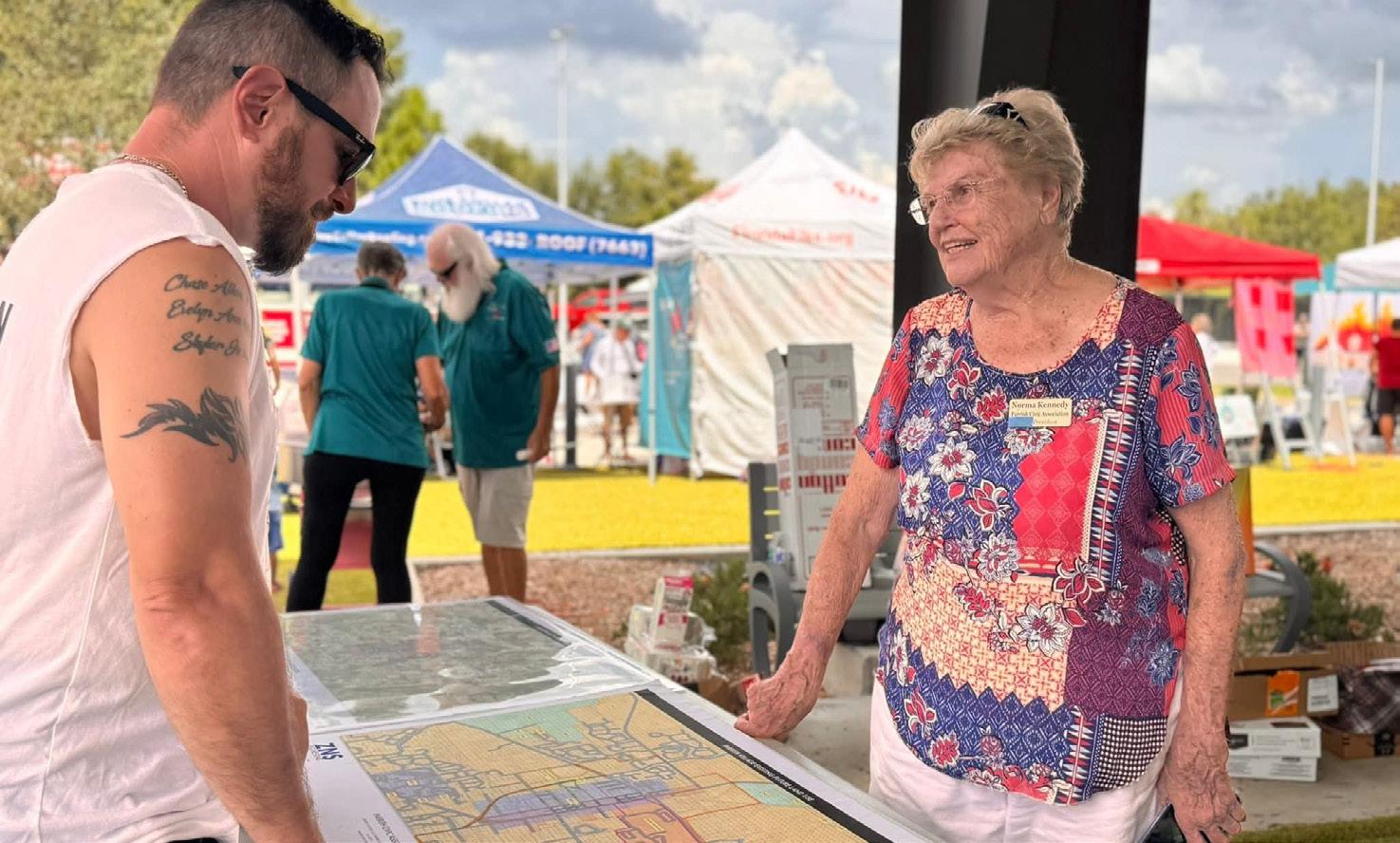
County earned repeated mentions. From Palmetto, it was Mayor Dan West, who one leader described as “very active in moving forward the city of Palmetto, making sure citizens have what they need.” From the Parrish area, it was Norma Kennedy who used to lead the Parrish Civic Association, Tami Vaughan who edits the Parrish Village Newspaper, and Cheri Coryea, a former county administrator who now works at The Patterson Foundation. From the Rubonia area of Palmetto, Louis Goff and Reggie Bellamy are recognized as leaders who bring people together and support youth. Other leaders repeatedly mentioned include Sheriff Rick Wells, who “has a true heart for this community,” and various education leaders, including Omar Edwards and Kevin Chapman from the Manatee County School District because they “really care.”
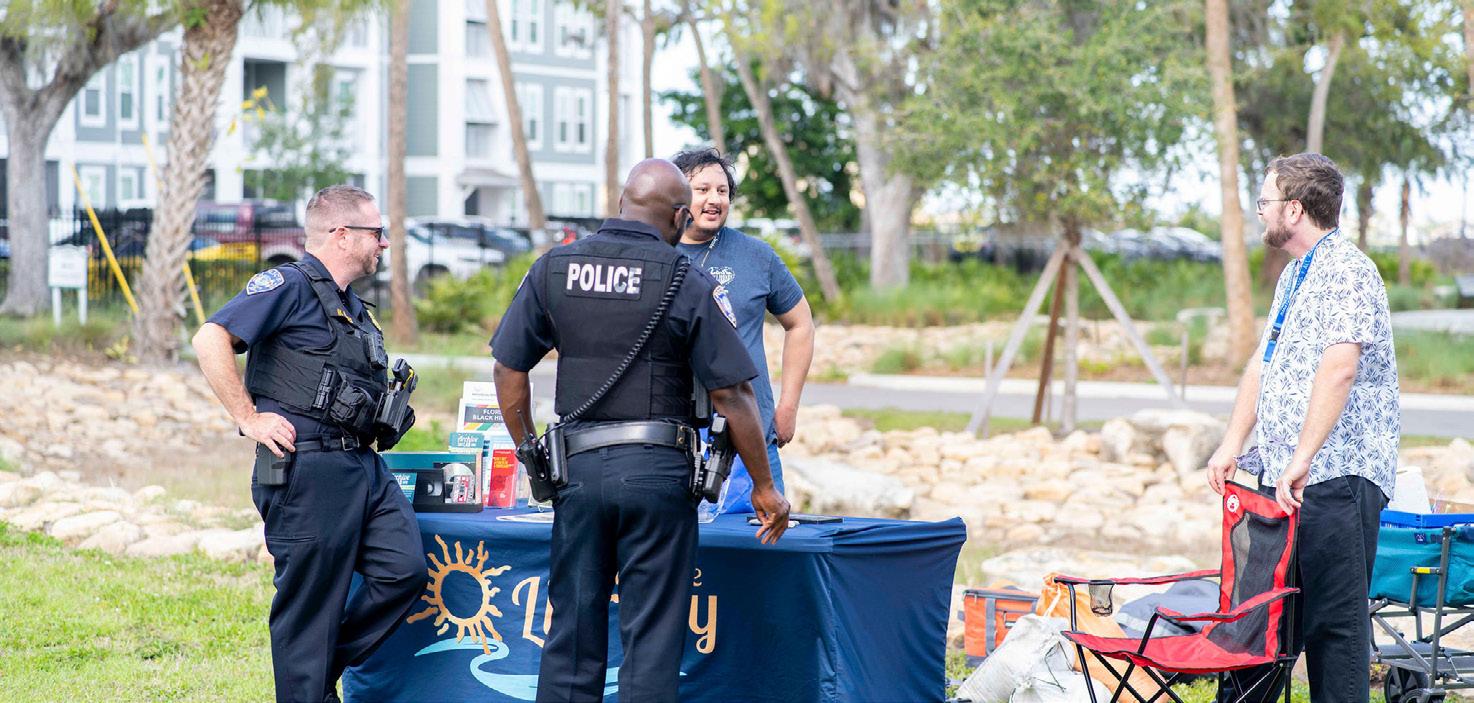
Residents primarily name trusted local leaders. Most leaders that residents named were local leaders they personally know from schools, churches, or local law enforcement. Regarding education leaders, one Parrish resident highlighted the principal of their local elementary school, saying, “She does a great job at community.” Meanwhile, the first example one Palmetto resident gave of someone they see as a leader was, “The church lady. She’s the one who organizes the food drive and makes sure everyone’s okay.” Others praised local law enforcement officers or first responders for providing important community leadership. “In our Palmetto police department,” a resident shared, “they care about our community.” And a Duette resident highlighted, “The fire station is always here for everyone.”
Many residents feel neglected by elected county leaders. People across the community expressed sentiments akin to this Parrish resident, who said, “We’re kind of the forgotten children on this side of the river.” Someone
in Palmetto echoed that, saying, “Politically, our community is ignored.”
The same was heard in Rubonia, where a resident said, “The county doesn’t even know where Rubonia is on the map until we start screaming.” And Duette too, where a resident said, “The county could care less about us out here. We have to take care of ourselves.” As for the root cause of this neglect, many people feel past and current elected county leaders aren’t in tune with what matters to them. A retired Palmetto resident felt, “They’re in their own sphere. I just don’t feel any of them really care.” A Palmetto resident reinforced that sentiment: “They’re all for themselves or more big business or whoever’s supporting them the most. They’ve forgotten about the people they’re supposed to be representing.”
The community needs more leaders of all types. Existing community leaders are stretched thin and stuck “putting out fires” in the words of one Palmetto resident. Fears that existing leaders will burn out are on the rise.
“There’s just a few [leaders] and we’re
burning them up,” one leader named. “We’re putting too much on them.”
People offer various explanations for why more new leaders have yet to step up. In Palmetto, a resident believed, “It’s not so much a lack of desire to help or take the lead, but rather family or personal circumstances that prevent it.” Meanwhile, a leader felt it was “a matter of tapping people and inviting them. That doesn’t get done enough.” Residents of color spoke to a need for more leaders who look like them. One Haitian resident said their success “stemmed from seeing people who look like me do it.” One Latino resident in Palmetto spoke highly of an existing program, UnidosNow, that seeks to equip the next generation of Latino leaders. “The problem is,” they
said, “that the community isn’t offering enough options for these leaders, so they leave.”
WHAT LIES BEHIND
There’s a disconnect between elected leaders and residents. One Duette resident summed up a common sentiment when they said, “Our elected leaders are out of touch.” A Parrish
“There’s a big disconnect on what is important to the people that live here and the people representing us.”
resident expanded by saying, “There’s a big disconnect on what is important to the people that live here and the people representing us.” In Rubonia, one resident felt, “Elected leaders only come around when they want a vote or when there’s a flood.” Some leaders agree with residents, with one naming, “[Elected] leadership is not as sensitive to certain areas and certain issues.”
Others see things differently, with one leader noting, “They all, whether it’s the elected officials or the unofficial leaders, are trying to address the needs they hear about. I don’t know any of them who are in it for their own agenda.” Still, it’s clear this disconnect exists and frustrates both residents and leaders.
Residents want more leaders to have their interests at heart amid rapid change. A Palmetto resident described what it would take for leaders of all kinds to understand what matters to residents. “You have to know what the issues are by having visited people in the community,” they said. “You go out and hear what everybody’s saying. From that, you get down into what the issues really are and then you figure out a way to solve them.” Growth is a particular area of concern for residents because “the area is growing faster than we can keep up,” a Parrish resident said. “That’s the problem. Leaders aren’t three years behind, they’re 50 years behind.” One leader concurred, saying, “There’s a lack of future planning. We don’t have a lot
of forward thinkers in public positions.” Now, residents are calling on more leaders of all kinds to step forward and help shape a shared future together. As one Parrish resident said, “You’re never gonna go back to what it once was. What we’ve got to do is try to figure out how we want our community to grow.”
Leaders of all kinds need to work together more and better. As to why this doesn’t happen, “It’s not a lack of resources,” said one faith leader. “We’re not communicating with one another and we’re not working toward common goals.” Another leader emphasized, “By sharing and helping each other, we can do more and be a force for good in our community.” Some leaders feel the missing piece to get more of them working together is “somebody in the middle to coordinate efforts instead of everybody being in their own silo.” People do point to past moments where leaders worked together, especially in times of crisis. “Crises bring about a different willingness to work together over differences in a much faster way,” noted one faith leader. But silos typically prevail. “You’ve got little pockets [of leaders] everywhere working their little tails off,” a Palmetto resident said. “You could change the world if you’d work together.”
People are looking for leaders who engage, listen, and serve. A Palmetto resident said they trust leaders who
“I think that power within the community doesn’t come from politicians. It comes from the people who volunteer to work on a problem.”
engage with “transparency, honesty, and integrity.” Meanwhile, one leader said they value leaders who “will listen to a challenge but won’t let it set them back. They’ll keep trying.” Others appreciate leaders who are “focused, humble, and committed to doing what’s right for the community.” While leaders with these attributes exist, people are calling on more of them from all walks of life to step forward. As one Palmetto resident explained, “I think that power within the community doesn’t come from politicians. It comes from the people who volunteer to work on a problem.”
Informal Networks and Links
Informal Networks and Links—that connect various individuals, groups, organizations, and institutions together to create a cross-fertilization effect of experiences, knowledge, and resources. People carry and spread ideas, messages, and community norms from place to place.
WHAT’S GOING ON
Strong business networks exist. The Manatee Chamber of Commerce fosters a strong business network that spans the entire county. One leader explained, “The network that stretches the most in terms of everyone intertwining into each other is the Chamber. Pretty much everybody’s involved in the Chamber.” Leaders especially appreciate the opportunities the Chamber provides to network across sectors. “I was at a Chamber meeting recently. There were people I’ve never sat at a table with before, industries we don’t cross paths with ever.” Another important business network grew out of the Parrish Civic Association when they launched the Parrish Area Business Alliance to “[convene] a group of business owners north of the river to include Ellenton, Palmetto, and all these other communities,” explained a Parrish resident. Importantly, these business networks also help spread information throughout the community. “In the case of larger employers, if they want to get
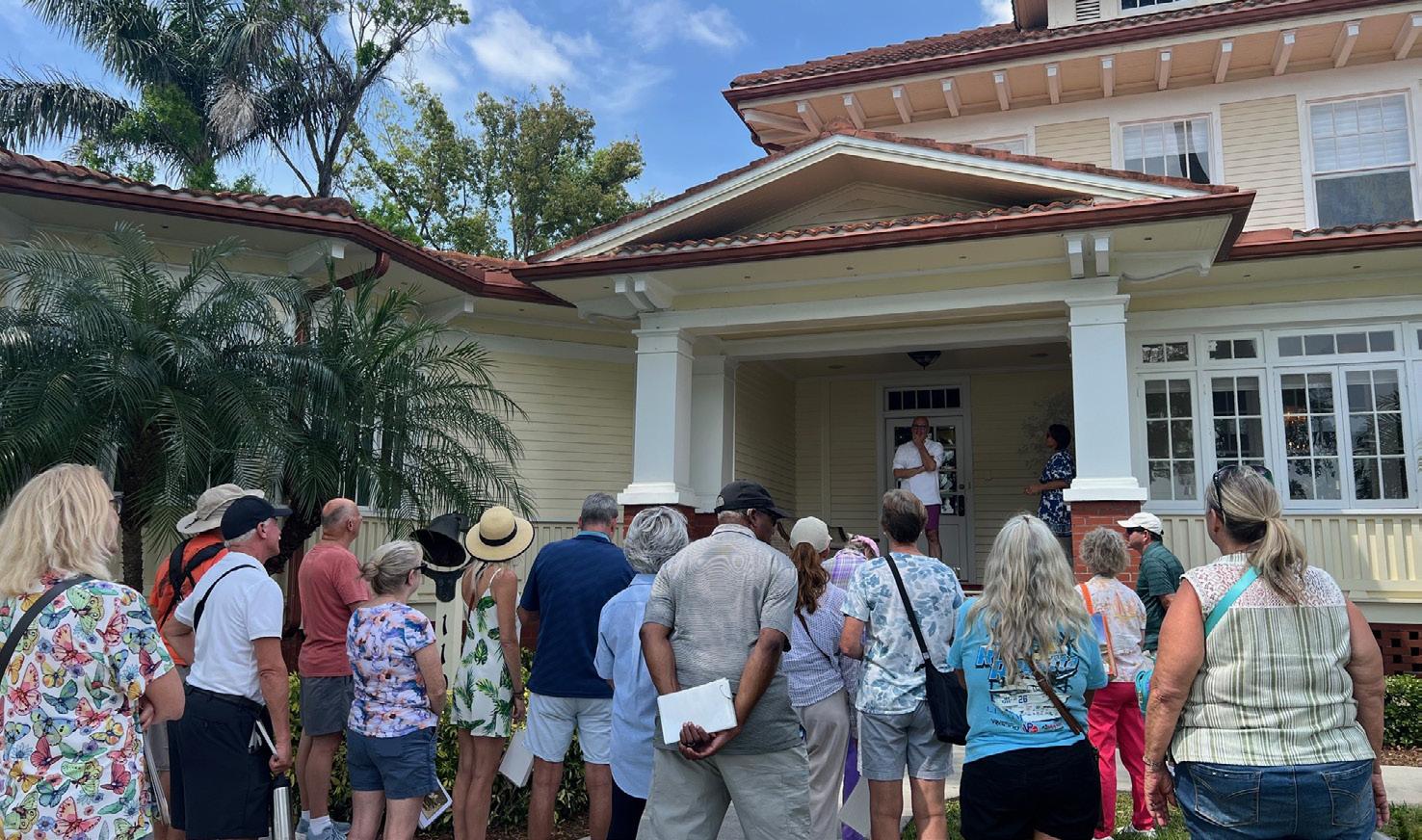
the word out about something, they can reach thousands of people,” noted one leader.
Civic groups foster critical networks.
Particular areas have unique civic groups that are seen by many as critical networks that activate people. In Parrish, it’s the Parrish Civic Association.
“They are really good at organizing community events and working with businesses and residents,” one leader said. In Palmetto, it’s the Palmetto Downtown Main Street nonprofit, which
works to build “a coalition of people who are talking about what they want to see happening within our downtown corridor,” according to another leader. Referring to Kiwanis and Rotary Clubs in the area, one leader said, “I know those service organizations are active and engaged and have historically invested in the community.” People also named the Rubonia Community Association, Duette Civic Association, the League of Women Voters, and the NAACP as important civic networks in the community.
Civic groups are seen by many as critical networks that activate people.
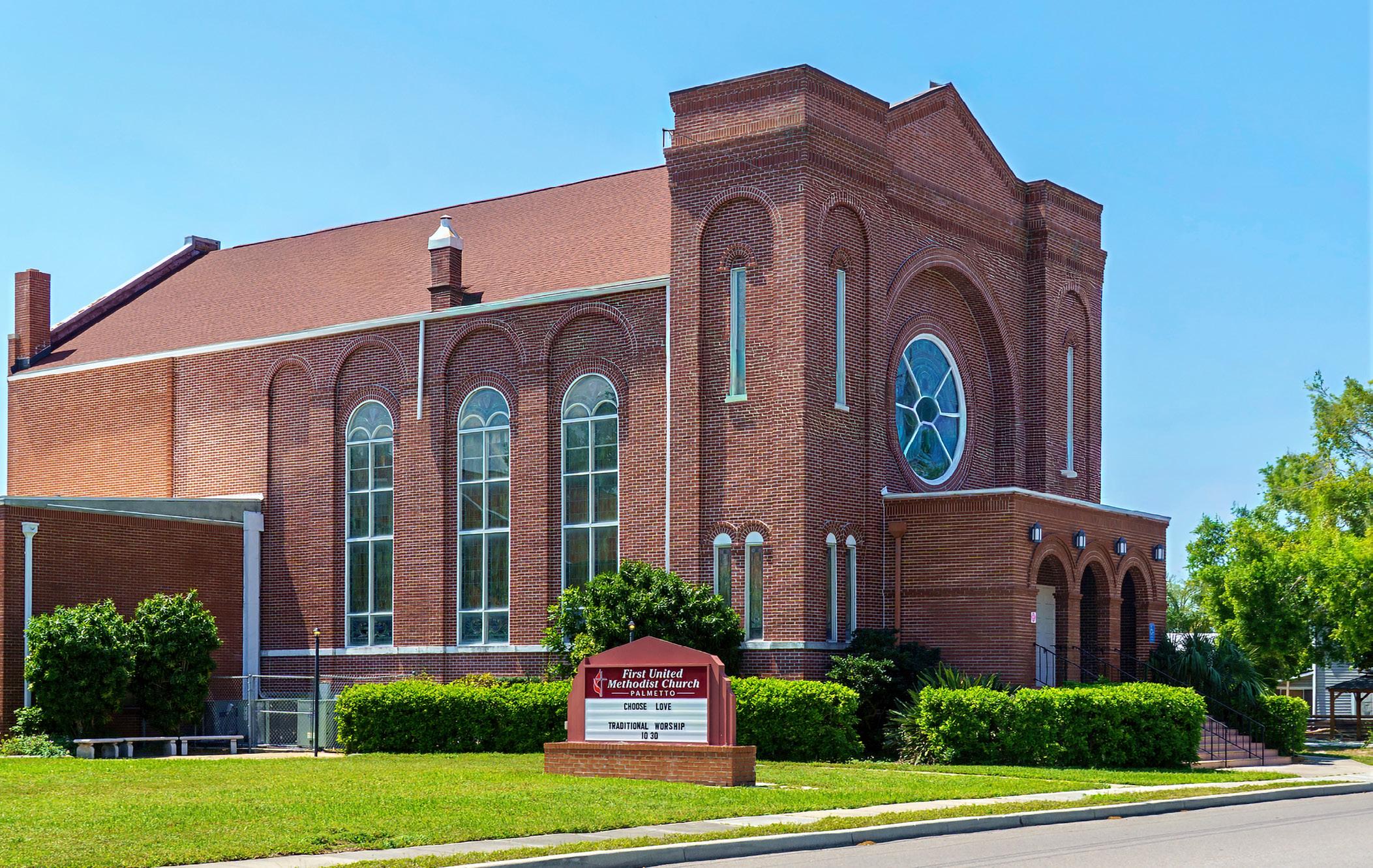
Faith networks are active. Many churches provide small groups and opportunities for networking and engagement outside of Sunday services.
This Parrish resident highlighted their local Methodist church, saying, “They have all kinds of clubs and stuff that’s happening.” Meanwhile, multiple leaders noted the crucial role churches play in spreading information. One said, “That’s how we hear about a lot of things, in church. If we get announcements into churches, we can make the community more aware.” While these networks are primarily contained to single congregations, some efforts to create
networks across congregational lines— especially at the faith leader level—have emerged in recent years, including through Christian Care Alliance, Ministers for Justice, and the Council of Hispanic Pastors.
Information flows through Facebook.
In one community conversation at Fifth Third Bank in Parrish, residents were asked, “How do people get involved with issues that matter to them around here?” Multiple participants jumped in to respond at the same time: “Facebook.”
In another conversation with faith leaders, one person noted how they
“To better move forward together, the community needs to open things up and expand beyond this ‘main circle’ of leaders.”
found out about the event: “Facebook is how I got here.” Facebook, and sometimes other social platforms like Nextdoor, enable information to flow throughout the community. Sometimes that’s broadly, per an Ellenton resident who shared, “Facebook is how you get invited to meetings and you get to hear about different things that are proposed.” Other times, “People join different groups within Facebook,” a Parrish resident explained. “A lot of HOAs will have a group so they can communicate concerns throughout the neighborhood.” Still, not everyone uses Facebook or knows where to look to stay in the know.
WHAT LIES BEHIND
There’s a “main circle” of leaders who populate major networks. “Everyone’s a member of the same Kiwanis, the same Chamber, the [same] Economic Development Council,” noted one leader. “Everyone sits on the same boards together. We’re all friends.” Another leader named a series of other leaders in the community they trust
before concluding, “All the people that I mentioned know each other. They serve together pretty regularly on one project or another.” A third leader rattled off different civic events and fundraisers they might attend. At each one, “It really is the same people,” they concluded. “You always see the same faces at the same events.” To better move forward together, the community needs to open things up and expand beyond this “main circle.”
Networks can be hard to break into.
Speaking to the challenges people experience trying to get involved in various networks, a Palmetto resident said, “Learning about where those spaces are is hard unless you know a person who knows a person.” On top of that, a leader named, “a lack of communication between [newcomers] who want what we’re blessed to have and those who see what we have not existing any longer” as another barrier for people looking to get involved in networks. Compounding these challenges is the
fact that many people feel local networks can be insular. “It’s like high school,” one Palmetto resident said. “There’s cliques.”
Networks are siloed. In thinking about whether or not networks in the community frequently overlap, one leader said, “They’re probably all siloed from each other.” Another leader echoed that, noting, “We’re disjointed. The word doesn’t get out to the right people.” For one resident, these silos were a result of people not always seeing the need to take a larger view of the community. “We stay in our lane,” they said, whether that was within a network at church or a local school. Some feel these silos persist because “there’s not really opportunity to connect,” per a Palmetto resident. They continued, “You’ve got these pockets, but nobody’s talking to each other.”
Conscious Community Discussion
Conscious Community Discussion— where a community has ample opportunity to think about and sort through its public concerns before taking action. People play an active role in helping decide how the community should act.
WHAT’S GOING ON
Many spaces are not intended for real conversation. When asked where people get together to discuss community issues, many people pointed to local government meetings as their best example. For instance, one leader responded to the question by saying, “I don’t really feel too confident in this answer, but I know the county commissioners hold public information sessions.” Another leader noted opportunities for public discussion are “mostly through government meetings” where people are “giving public comment or, if you’re an elected official, speaking from the dais.” And a Parrish resident felt, “The only way to voice your concern is to go to a commissioner meeting.” Yet these forums operate with a formal structure and allow only brief windows for public comment rather than real discussion. As one Palmetto resident said, “A county commissioner can’t talk to you about your concerns at a meeting.”
A few examples of productive conversation exist. Outside of government meetings, people named only a few existing spaces for active community discussion. One leader in Palmetto noted, “We have town hall meetings where we talk about what’s coming in the future and what Palmetto’s going to look like in 10, 20 years down the road.” Meanwhile,
another leader described how “the Parrish Civic Association has hosted a number of forums related to the challenges and opportunities in Parrish.”
A third leader pointed to a new series called Conversations Across the Aisle that was created to tackle “broader issues” in the community. And a Parrish resident recalled a discussion with “200 people at the Parrish United Methodist Church to talk about stormwater.” While these spaces are valued, it’s clear that examples of productive conversation are few and far between. Some people feel they lack spaces entirely, like a Duette resident who said, “We don’t have a place to go and just talk about what we need.”
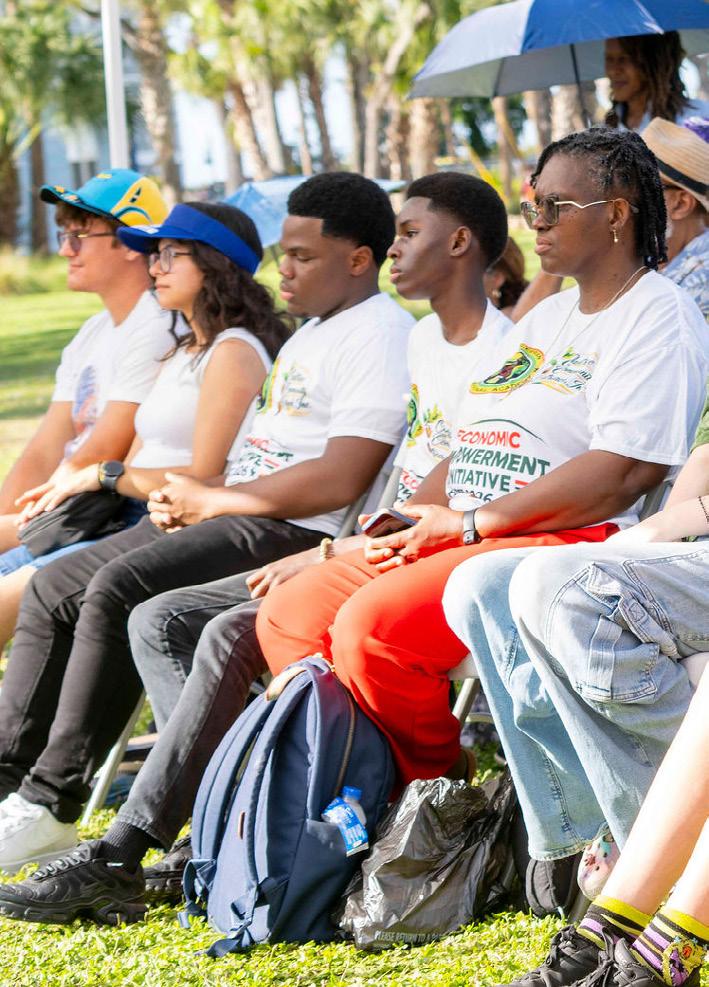
“People are tired of just having conversations and not seeing results.”
Engagement is thin. Thinking about the relatively few spaces for discussion that do exist, a leader voiced a common refrain: “Nobody shows up.” Another leader who supports Parrish Civic Association events noted, “Attendance should be a lot higher than it is.” Why don’t people show up? A resident who lives near the Terra Ceia Preserve said, “I’m just going to say it. A lot of people think, ‘It’s not my concern.’” A Palmetto resident echoed that but went a step farther: “I don’t think there’s enough people in the community that care enough to do more than complain.” Others believe “people are tired of just having conversations and not seeing results.” Some even related stories about spaces fizzling out despite people’s best efforts to generate interest. One leader offered this anecdote: “I inherited [a conversation series] and tried to keep it going monthly. I sent physical invites and email invites but nobody came. Eventually, I was like, ‘If y’all don’t want it, fine. If people decide they want it again, that’s cool.’ But people have to show up and do something with it.”
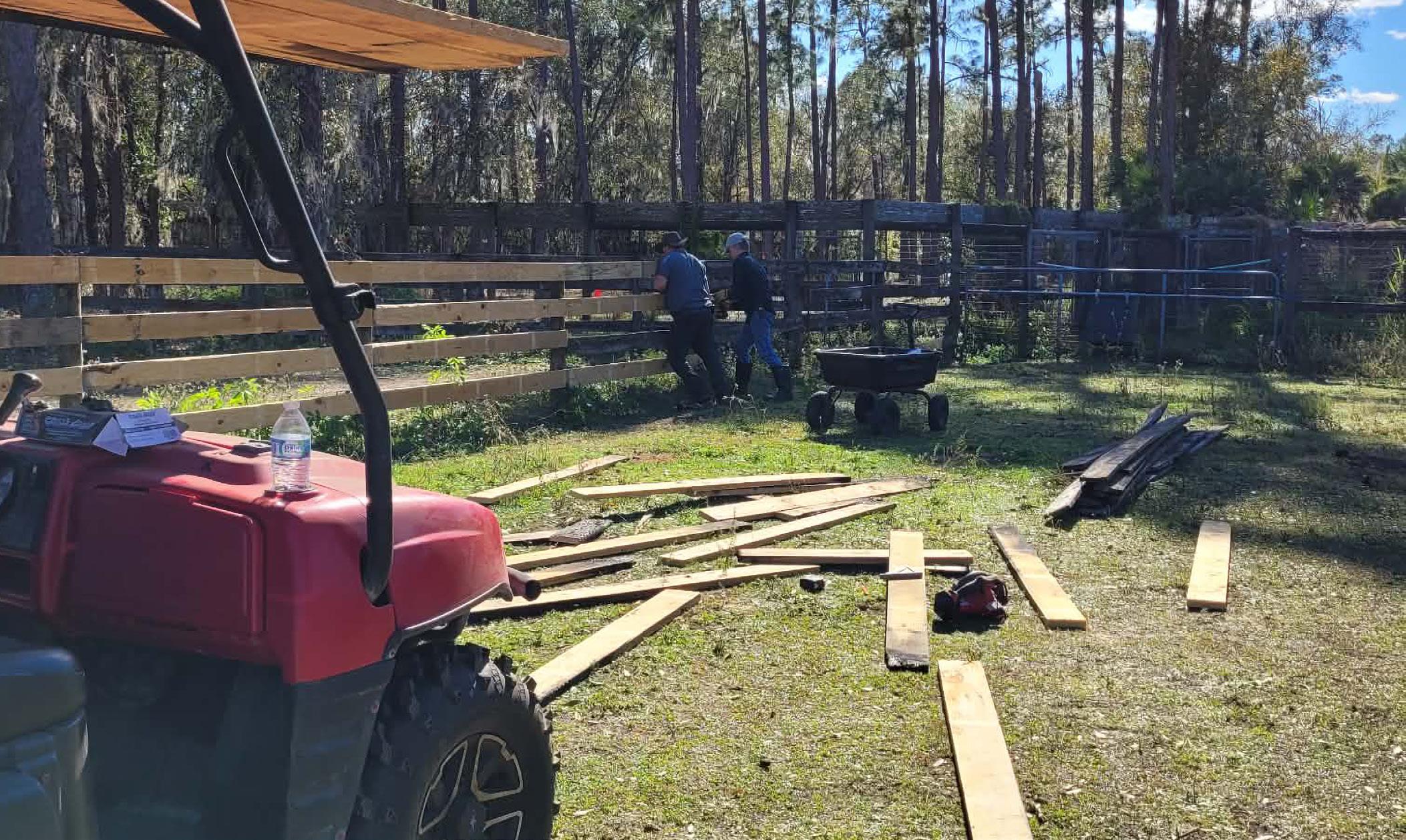
People primarily engage when there’s a controversy. One leader captured the prevailing attitude in the community by saying, “When there is something that starts affecting me, then I get up off the couch and I go to a meeting.” This sentiment came up time and again, with a Palmetto resident saying, “If it’s not directly related to their family or commute, then I don’t think it’s an overall issue for someone.” Speaking to what they’ve seen play out in their local HOA meetings, a Parrish resident noted, “The only time I find people are around is when they’re angry about something.” One leader noted how people’s tendency to engage primarily in
response to controversy or being upset can derail conversations. They said, “A lot of times conversations get bogged down with, ‘I don’t care what you do just as long as it’s not next to my house.’”
Politics and divisiveness fill conversations. People widely report the toxicity and divisiveness of national politics has seeped into the community’s public discourse. As one leader said, “Look at our national mood and how divisive we are and how intolerant. At public meetings, a vocal few tends to drown out those that may be more timid about expressing their views publicly.”
“It’s become toxic,” another leader shared. “It makes it difficult to have
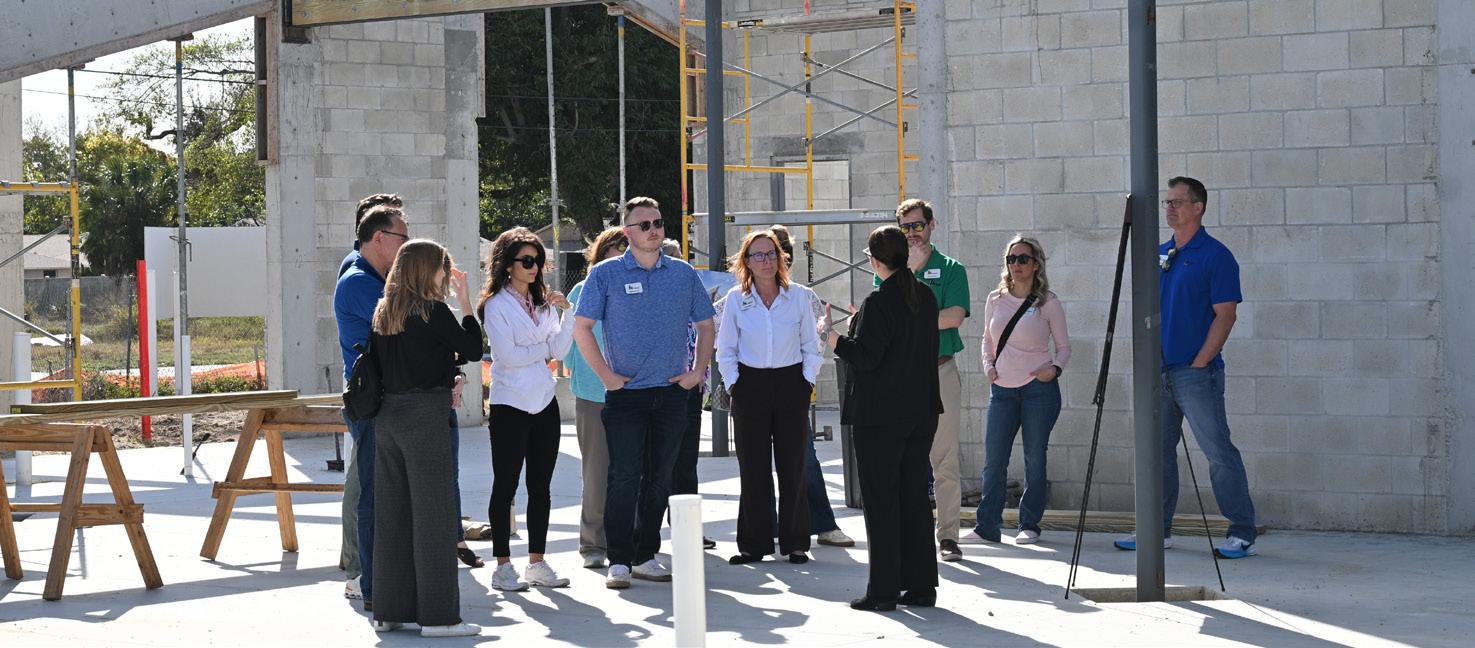
honest conversations when people walk into a room immediately saying, ‘I hate you.’” A Palmetto resident used an example from their HOA meetings as a lens into the community’s divides: “When we all come together, everyone’s very divided,” they said. Yet another leader felt the “politicization” of every issue is ultimately “gobbling up everyone’s time because we fight for right and wrong instead of a win-win.”
WHAT LIES BEHIND
Many residents feel neglected and ignored. “The developers are saying, ‘This is a vision that we have,’ but they’re leaving the people out of it,” one Palmetto resident said. Indeed, residents across the community feel like they are living at the whims of growth whether they like it or not. “People are always willing to talk. But people are just tired of having conversations and not seeing results,” one leader noted. Meanwhile,
Spaces for productive discussion are viewed as essential by many to moving forward together.
residents from less affluent parts of the community say they have experienced disinvestment and a lack of support. For example, one Rubonia resident said, “We are a very small community, a lovely community. But when you don’t have anyone to give you the help that you need, that hurts.”
Survival and time pressures keep people from engaging. One leader mapped out the kind of thinking they see regularly: “‘I got to get home, I got to feed my kids. To stop for an hour and have a nonproductive meeting that’s not going to help me today? I got to get
to tomorrow.’ Therefore, the reluctance to participate.” Another leader, talking about county commissioner meetings, said, “People are not going to show up” because “they’re in survival mode.”
Others, like one Haitian resident, think “time” is another important factor in why more people don’t engage. They said, “Some of us have to do two or three jobs to pay the bills, take care of family. It’s not because we don’t care to get involved, but we don’t have the time.”
This time barrier is partially a result of how long it takes to get around North River Manatee County. As this Parrish resident said, “It’s way harder to be involved in the community when you’re spending that much time on the road.”
Some people do not feel safe expressing their opinion. The desire for more productive conversations is tempered by many believing it is “unsafe sharing opinions publicly” due to the “racial and political divide in our county,” in the words of a Palmetto resident. One leader explained, “When you meet new people or you’re in an event, you’re afraid to say things or share ideas because you don’t know where the other person’s coming from.”
Fear of “repercussions” for speaking up is widespread, especially among Latino residents who worry about being outspoken given the larger political environment. As one community
advocate said, “You could give Hispanic residents a million dollars. They won’t go to the events I organize because of fear.”
Residents and leaders believe more productive discussion is needed. “We need spaces where politics are not allowed,” one leader said. Time and again, people expressed a desire for the community to “talk more” and for leaders to “go back to hearing the community’s perspective about what is needed to move forward.” Indeed, spaces for productive discussion are viewed as essential by many to moving forward together. One Palmetto resident said, “I think you come up with much better solutions when you bring more people together.” Another in Palmetto felt, “Nothing we as a community want to do happens if we don’t use words to make it happen.”
Community Norms for Public Life
Community Norms for Public Life—that help guide how people act individually, interact, and work together. These norms set the standards and tone for civic engagement.
WHAT’S GOING ON
People help each other in times of need. When they see a particular need or receive a direct ask from someone they trust, people come together to help
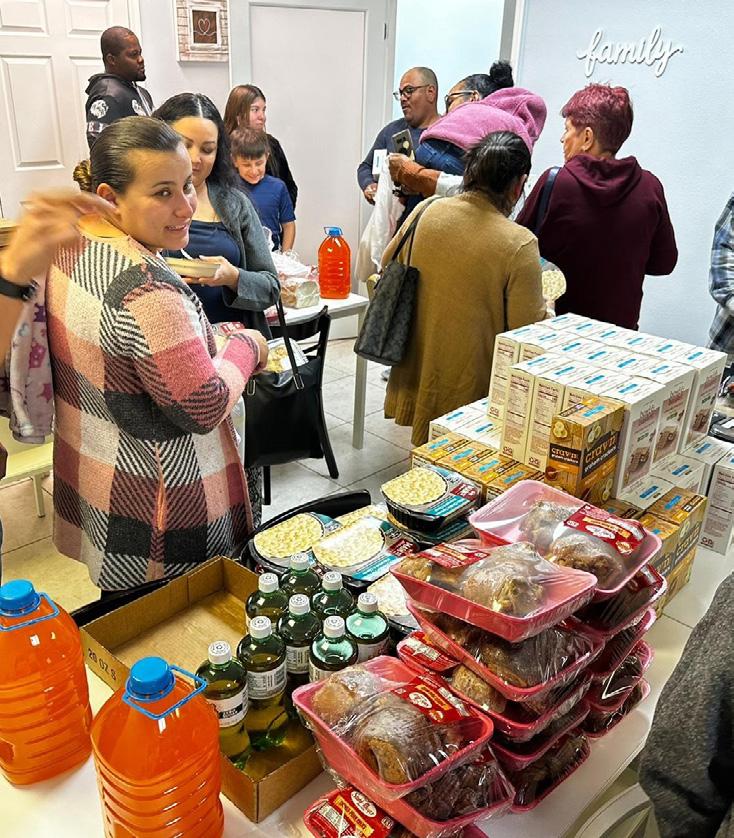
each other. Churches especially activate people. One Palmetto resident was thinking of their church when they said, “They work with homeless people. They do food banks. They do Serve Saturday projects. They fix up people’s homes. They clean up yards. They do services for elderly people.” Many noted this ethic is strongest in crisis moments. “When the hurricane hit, we had people all working together throughout the community, helping clean up people’s yards, getting things back together,” related a leader. Another noted, “People really pulled together for the hurricane. That’s what gives me hope. If they have a reason, they’ll do it again.”
Everyday survival is the focus for many people. One leader said, “More than half are living paycheck to paycheck.
‘Can we make our mortgage payment? Can we make our rent payment?’ Just that constant level of stress.” Another leader emphasized, “It’s a survival mode kind of living.” As noted earlier, the cost of housing is a common concern. One Duette resident said, “The cost of houses has gotten so expensive. There’s no way a family can afford to buy a house and raise their children.” Being in survival mode makes it hard for some to engage in community life. “Some of the reasons people are not participating are cost of living, trying to make ends meet, maybe they have multiple jobs,” one Palmetto resident explained. “They just haven’t been able to find the time.”
“Complaints” and “politics” drive public discourse. People often congregate “so they can all complain
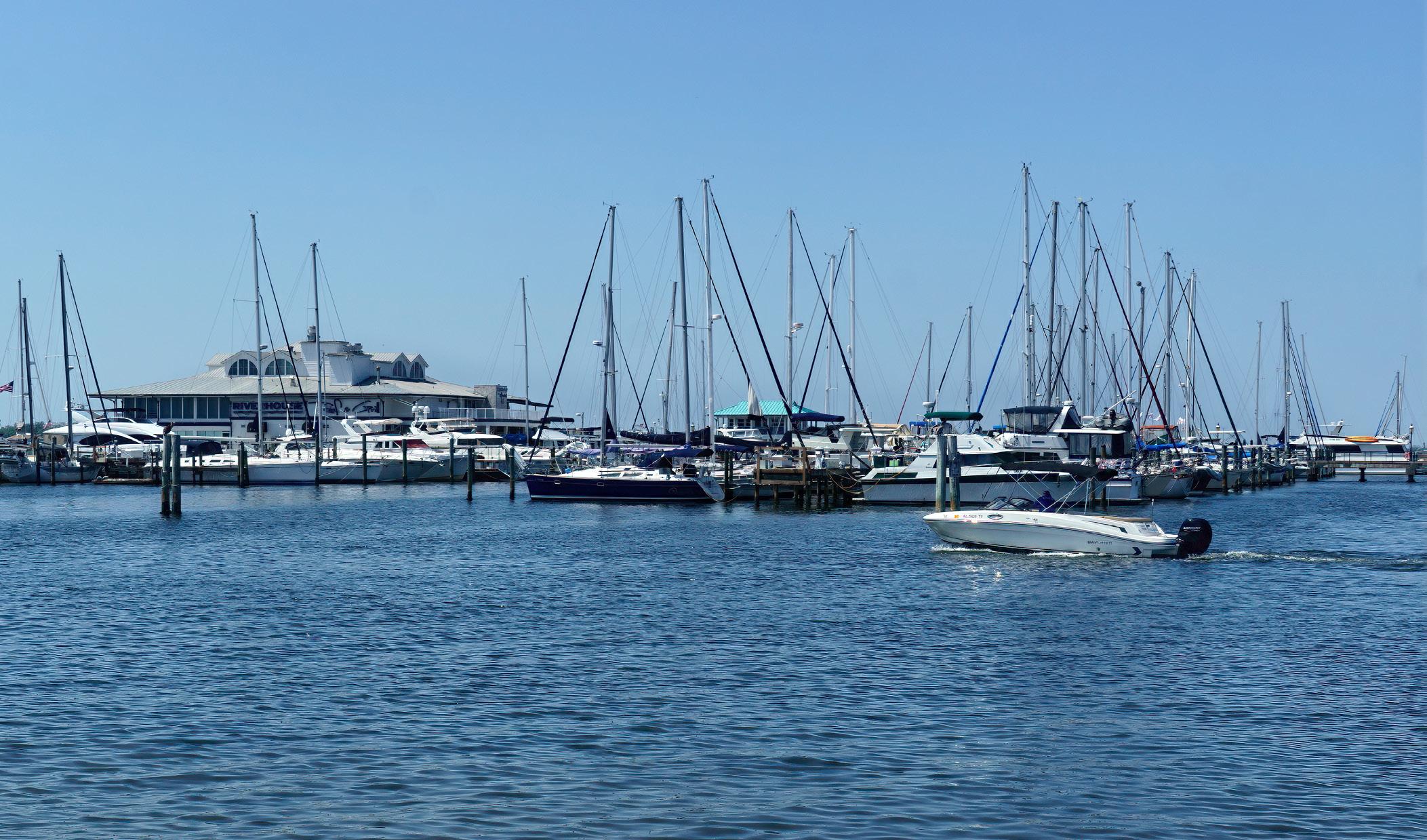
and commiserate” noted a leader.
Some feel complaints are taking over public discourse because, “People need to express that frustration and those complaints first before we can even get to aspirations,” according to a Parrish resident. “You’ve got to be heard.”
When complaints don’t stymy discussion, politics does. “The divisiveness in our country has seeped so far into everyday life that people have lost the skills to talk to people who think differently than they do,” one leader said. Discourse often forces people “to pick a side.”
That led one leader to reflect on an important question: “How can we make
these political lines more blurred so we can see community issues and not ‘sided’ issues?”
The community works in siloed ways.
The tendency for the community to work in “silos” is seen throughout this report and is occurring on multiple levels. It’s happening across individual communities and neighborhoods. One leader said, “The community is very siloed. I don’t know that there have been a lot of efforts to bring the whole community together north of the river.”
It’s also taking place between different organizations, networks, and groups.
An Ellenton resident said, “There’s a lot of small nonprofits looking for the
There’s not enough working together. But that’s crucial for the community to strengthen its civic culture.
same grants and the same resources, but they’re all siloed where it’s not all towards the same goal.” This silo effect shows up yet again between and among leaders themselves. “They’re working on their own goals. If people are getting together to work on shared goals, it hasn’t made it to my ears,” one leader related. Ultimately, there’s not enough working together. But that’s crucial for the community to strengthen its civic culture.
WHAT LIES BEHIND
Some people keep their heads down. According to one leader, “Some folks have hunkered down and said, ‘Okay, I can accept this the way it is.’” This tendency among people was also captured by a Palmetto resident who said: “What people do is get in the car, go where you got to go, come home, and live with the blinds drawn.” Some feel COVID accelerated this, including another Palmetto resident who said, “People are afraid. We’re living through a crisis of loneliness left by the pandemic.” And as quoted earlier in this report, a Palmetto resident built on that by saying, “During COVID, everybody turned more inward doing their own
thing. It’s never gotten back to where people are thinking outward beyond their immediate family, their immediate needs. There needs to be a bigger sense of community.”
Frustration is building. “Frustration is up and hope is down,” a Palmetto resident said, before concluding, “It can be paralyzing, it can prevent progress.” There are numerous sources for this growing frustration. Rapid growth that feels out of control. People not having the resources they need. Residents feeling unseen and unheard. Congestion on the roads. Negative public discourse. Indeed, these frustrations are beginning to permeate people’s lives in North River Manatee County. “There’s a lot of frustration,” a Palmetto resident said. “You feel you have no control.” And a Palmetto resident lifted up a common
“Frustration is up and hope is down. It can be paralyzing, it can prevent progress.”
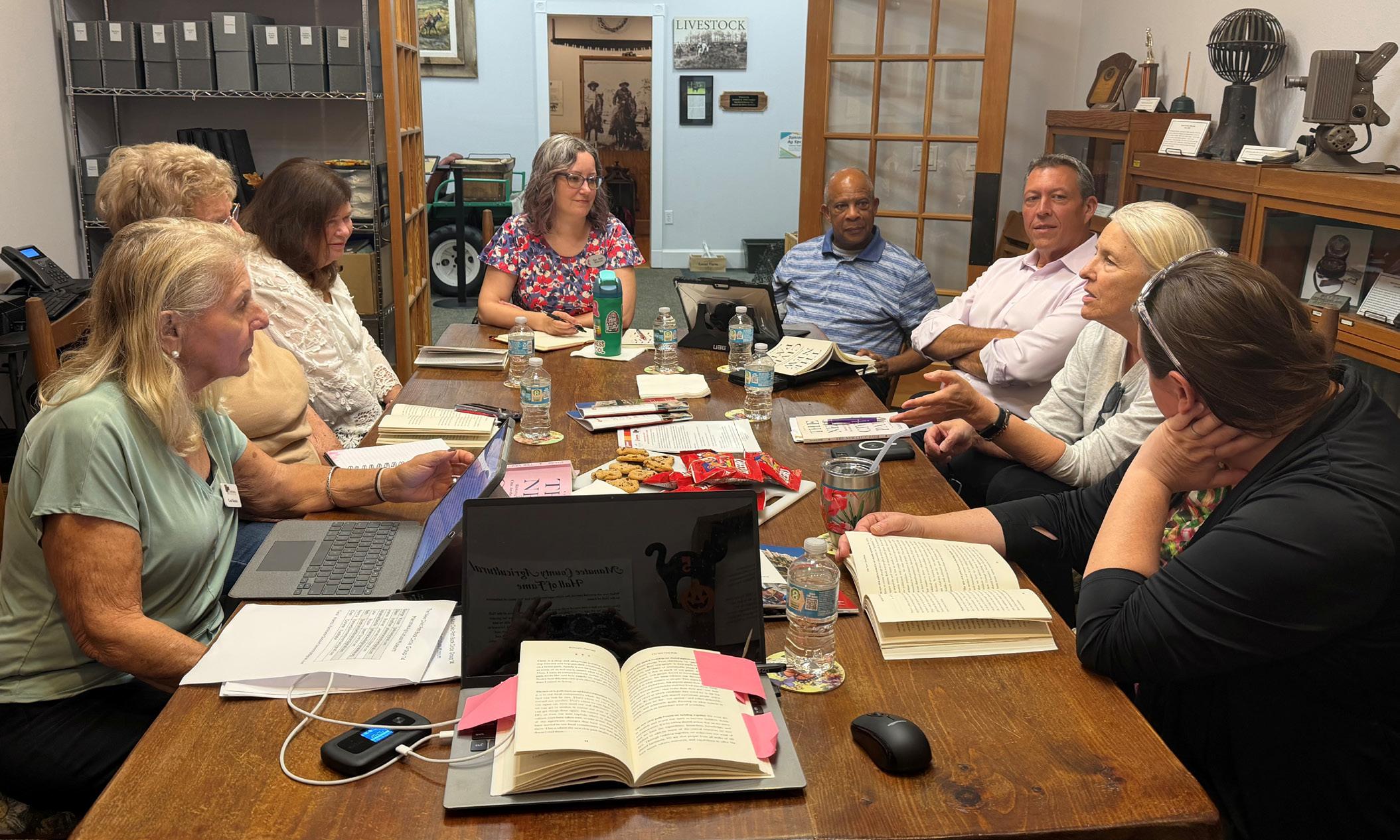
refrain: “It’s just so frustrating because it’s like no one is hearing our cries for help.”
Opportunities for productive conversations are scarce. When asked about signs of progress, various residents said, “Having more voices at the table,” “Connection through communication,” “More people engaged in conversation,” and “If someone started to listen to us.” But, one Palmetto resident asked, “How do we start the conversation?” While some examples of community discussion exist, productive conversation is rare. During one community conversation at a Fifth Third Bank location outside Parrish, one
resident put a fine point on it: “There’s no place to have conversations like this.” People are looking urgently for more opportunities. Like a Palmetto resident mentioned earlier in this report, “I think you come up with much better solutions when you bring more people together.”
“I think you come up with much better solutions when you bring more people together.”
Today, residents and leaders are calling for the community to work together in new ways.
The community needs to develop stronger ways to work together.
“There’s not a lot of pulling together,” one leader said. “What you see is an issue arises, people are upset, they rally for that one particular issue, then they’ll kind of just go their separate ways.” People widely identify that working in silos, unproductive public discourse, and the fraught political environment, among other things, all negatively impact the community’s ability to work together. For example, one leader said, “Unfortunately, politics can get in the way. I think there’s just a choice to not work with people because of the perception of how they’ve aligned themselves politically.”
Another leader put it simply: “There’s very little collaboration, as much as we try.” That led a third leader to say an important sign of progress would be to see “a collaboration among all these different organizations, coming together, working together.” Today, residents and leaders are calling for the community to work together in new ways. As a Palmetto resident said, “We are stronger together.”
A Shared Purpose for the Community
A Shared Purpose for the Community— that sends an explicit message about the community’s aspirations and helps reinforce that everyone is headed toward a common goal.
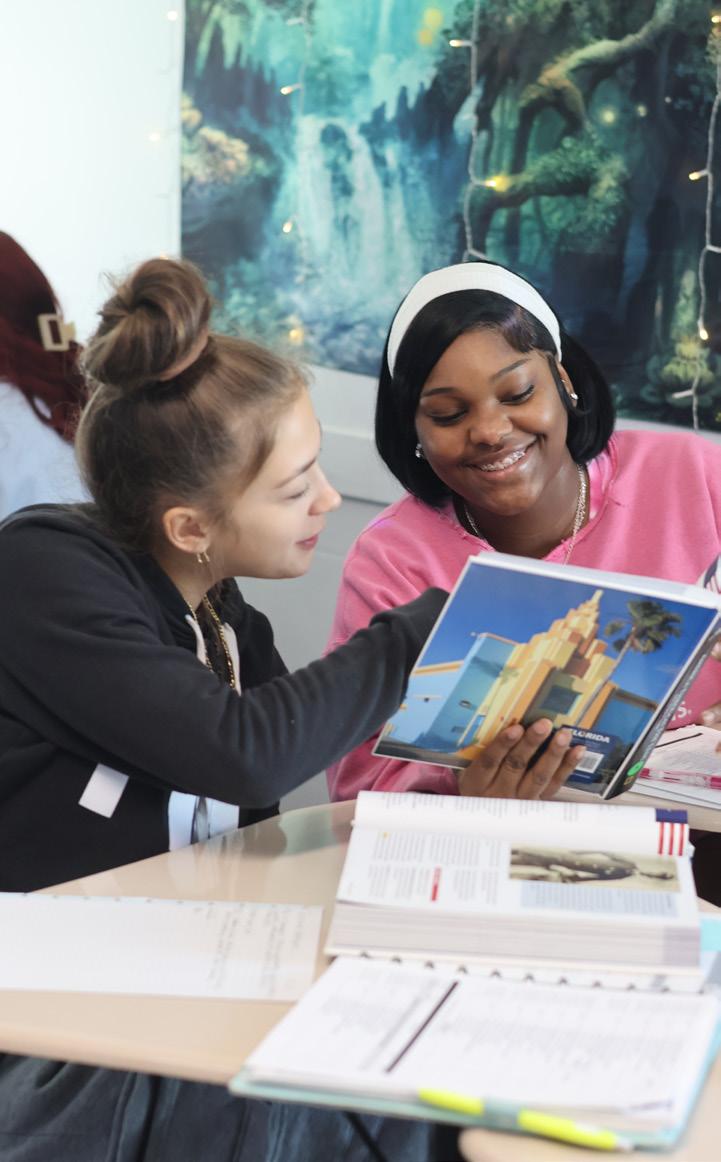
WHAT’S GOING ON
Residents yearn for a sense of control amid growth and change. “Growth exploded out of control. Another 4,000 home community is being built right next door to us,” said a Parrish resident. “It’s not really what we signed up for.” Indeed, many feel the community is growing and changing at a bewildering pace. Another resident who lives just outside Parrish noted, “Every day something else is opening or happening or getting torn down. It’s hard to keep up.” Residents understand there’s no going back. Many simply seek a stronger “balance” that
allows for a greater sense of control, like this youth quoted earlier saying, “Yes, growth is good, but when it happens at an expanded rate, like it is over here, it can negatively impact the community.”
People want a stronger sense of community. As noted earlier in the report, the different communities of North River Manatee County are “all siloed from each other.” Within these silos, many people experience a sense of isolation. One Parrish resident noted, “I live in a huge neighborhood, but that’s not a community. There’s really nothing to draw people into being a community.” A Palmetto resident echoed that: “There’s not a lot of options for connecting.” Some put this down to a lack of central gathering places, like one Parrish resident who said, “We need libraries, we need theaters, we need community centers.” Regardless of the reason, people widely aspire to build a stronger sense of community with one another. Toward that end, a Palmetto resident wondered,
People widely aspire to build a stronger sense of community with one another.
“How does one create community?” They answered, “With time and opportunities. It’s not one talk. It’s two, it’s ten.”
People will rally around youth. Doing more to support youth is an area many believe could galvanize people across North River Manatee County. “I would guess 90% of people would share that goal,” said one Palmetto resident quoted previously. Indeed, providing more opportunities for youth is a key rallying point that emerged across all conversations. That’s because, right now, “There’s not a lot for kids to do in the area,” said a Parrish resident. An Ellenton resident agreed, saying, “There’s really nothing that kids need to stay on this side of the river and not have to travel so far.” But the need extends beyond social activities into things like workforce development and leadership. A Latino resident in Palmetto shared, “I have four children and they’re all open to being elsewhere, because they can’t find opportunities [for work] here. There aren’t any.” People want to do more to support youth because, as this Palmetto resident believed, “If we empower our young people as leaders in the community, then our community will change.”
The community needs to “come together” and work with a common purpose. As one nonprofit leader noted in the introduction, “Unless we come together, it’s going to be tough to overcome our different challenges and
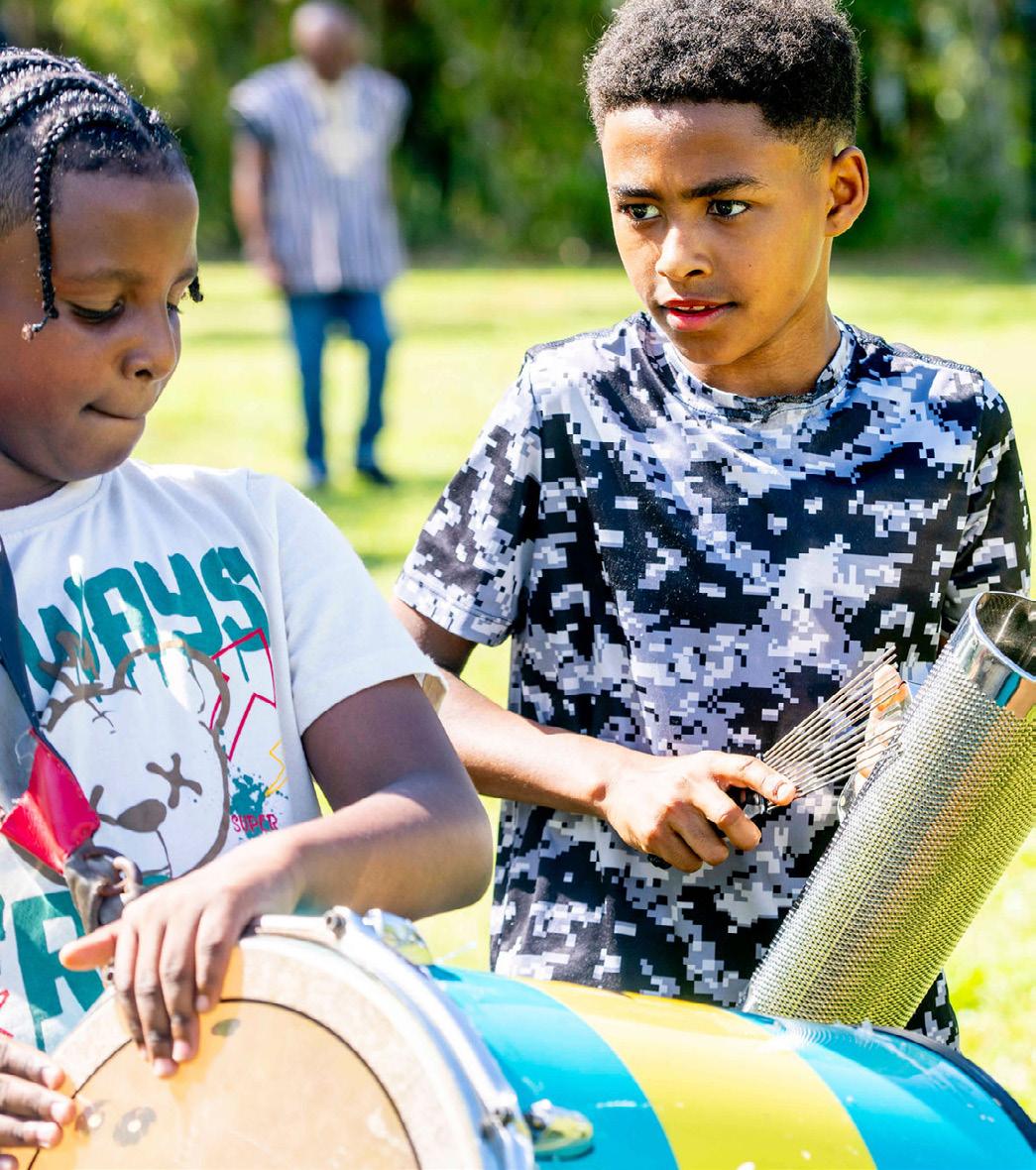
Providing more opportunities for youth is a key rallying point that emerged across all conversations.
issues. We have to come together and find a way to connect. Then we can move forward.” Indeed, residents in all parts of the community shared this sentiment.
One Parrish resident explained: “We’re all like, ‘Let’s get something going on here.’ We care. We want to make the community better.” People name a host
of reasons for why the community has yet to come together—being stuck in survival mode, not having time to engage, a sense that their voice doesn’t matter, and the divisiveness of public discourse, among other things. Yet one Palmetto resident was undeterred. “If people can spend time together and communicate with each other, we find that we have much more in common than we realize,” they said. “Then you find common ground and people will be engaged in common solutions.” Many see this as necessary to deal with the area’s challenges head-on “We can do more together and be a force for good in our community,” said a faith leader. “I want to be a force for good. I want to be a difference maker. I want to leave my community better than I found it.”
WHAT LIES BEHIND
Many people feel fragmented and isolated. “Every community is an island,” a resident who lives outside Parrish said. What’s more, within these “islands,” a Palmetto resident felt, “We’re living through a crisis of loneliness. When we emerged from the pandemic, we reached the point where we’re alone.” Another
Palmetto resident felt this was a particular challenge for newcomers: “Coming here, it’s harder to establish the closeness that you would’ve felt in a little town.” This fragmentation and isolation is impeding a sense of shared purpose. “We see commitments to some parts [of the community] and a lack of commitment to other parts,” said a leader.
Many residents feel a lack of agency. One leader felt this lack of agency stems from the fact that, “A certain number of people make the decisions and they’re going to do what they want to do.” A Palmetto resident echoed this sentiment, saying: “No one is holding them accountable, and there’s no transparency.” Some people believe getting involved won’t make a difference. “People feel powerless because of what they have observed in their own backyard,” said a Parrish resident. “People don’t get involved because there’s a sense that nothing will happen.” This has led many residents to disengage entirely. “Residents don’t feel like they’re being heard. They feel like nothing they say is going to make a difference,” an Palmetto resident said. “So why bother?”
“We can do more together and be a force for good in our community.”
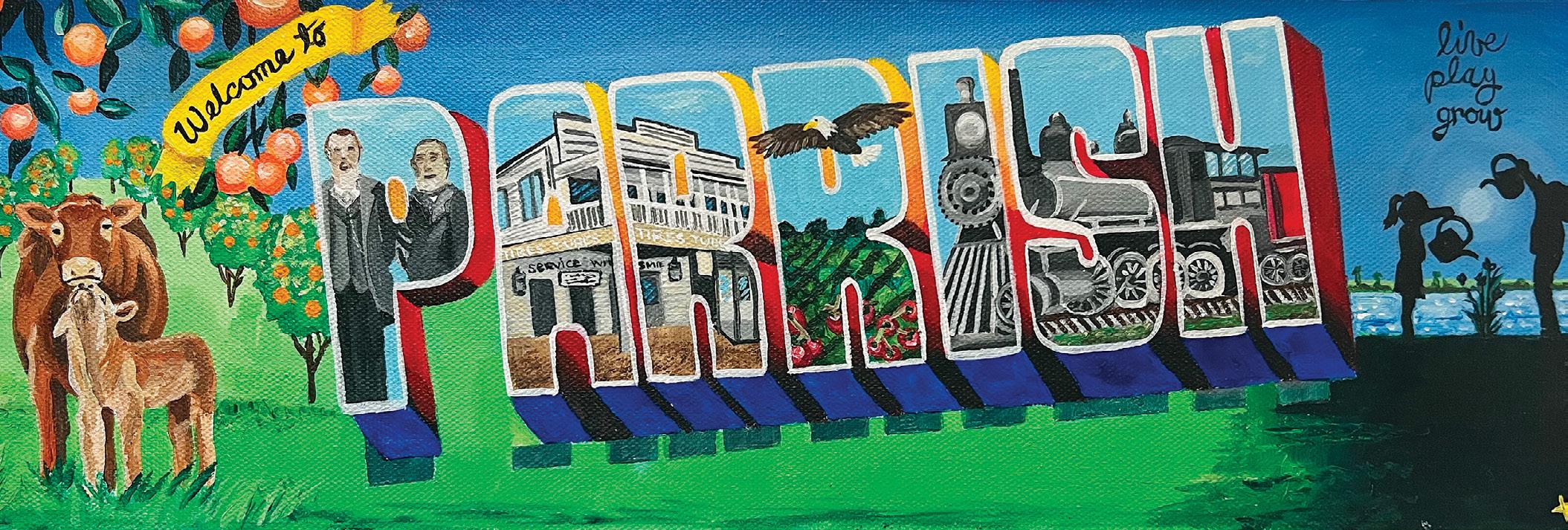
A lack of access to information stops people from engaging. “There’s no real communication, there’s no big source telling everybody what’s going to happen. So it may be happening, I’m not going to know about it,” one Palmetto resident related. Some go so far as to call the area an “information desert,” though there are some notable information sources that exist, like the Parrish Civic Association’s newspaper, The Parrish Village News. Still, another Palmetto resident felt, “Nobody’s getting information unless you run in certain circles.” Many people feel more community members would be involved and engaged if they had better access to information. “We’re finding it very difficult to be fully informed,” another Palmetto resident explained. “I might find out the week after that there was this wonderful thing going on in Parrish and I’ll be like, ‘Oh, I would’ve gone to that.’”
Leadership is needed to galvanize the community. Among current leaders in the community, “There’s a lot of following their own agenda,” according to one leader. The antidote? “Somebody who has in front of them what everybody is doing in this community. Someone who can see everything that’s going on, and then can then make those connections,” said another leader. Responding to what they felt was necessary to move the community forward, a Palmetto resident said, “I think you just need better leadership. You need leaders that can communicate to a group and bring them all along together.” Currently, the community needs more people to step up, broaden the existing pool of leaders, and help move things forward with a stronger sense of shared purpose. ��
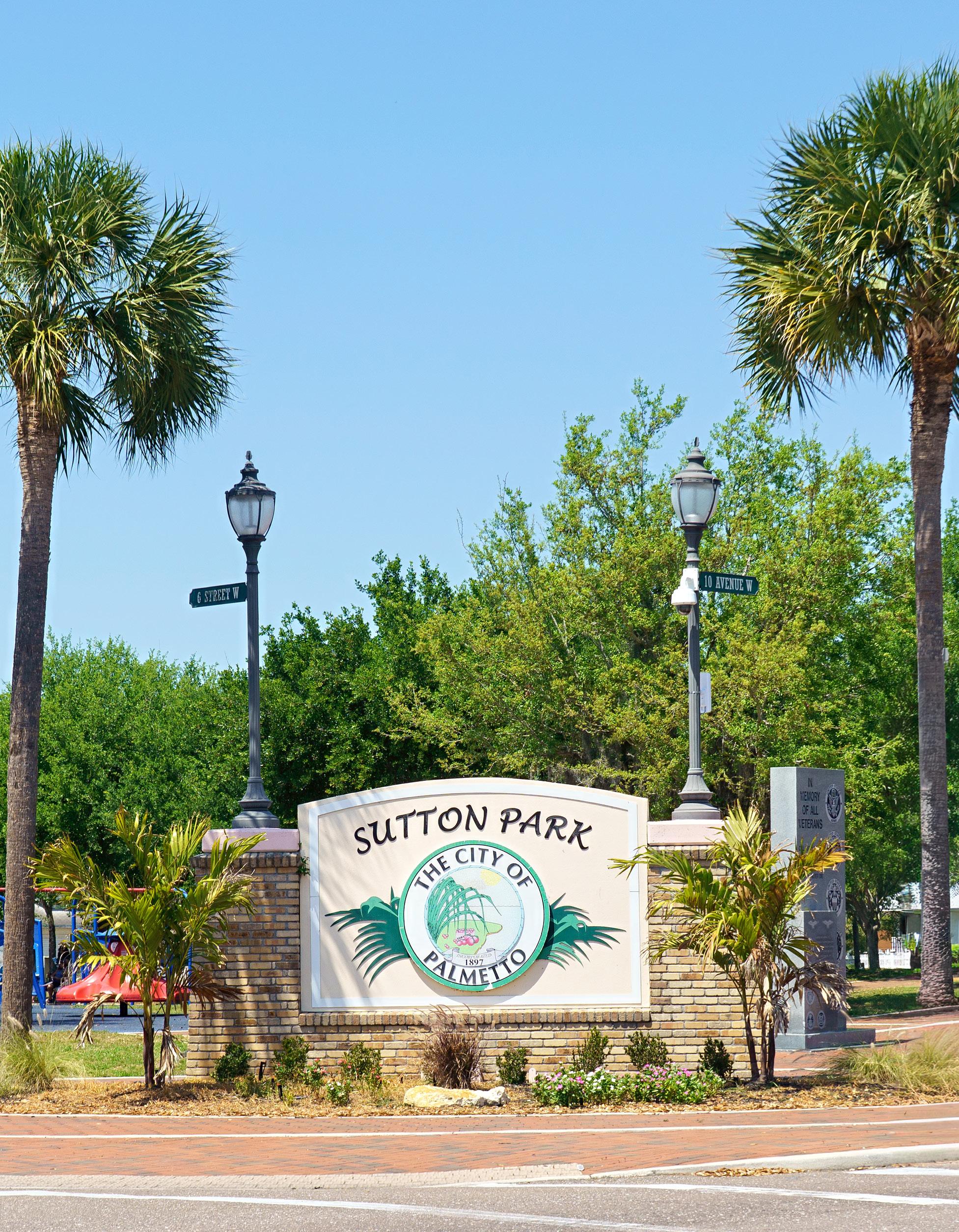
Building the Community’s Civic Strength
North River Manatee County is a great place to live. It’s growing and changing for a variety of reasons. But its civic culture hasn’t kept pace. This report, Growing Together in North River Manatee County, is about how the community can come together, strengthen its civic culture, and ultimately cultivate a sense of authentic hope for a better future.
Let’s be clear: there’s a difference between false hope and authentic hope. False hope is rooted in wishful thinking and setting unrealistic expectations that fail to deliver results. But when people see real action being taken on issues that matter to them, authentic hope grows. And as people work together and see meaningful progress, civic faith is renewed and a more positive narrative begins to take root, grow, and spread.
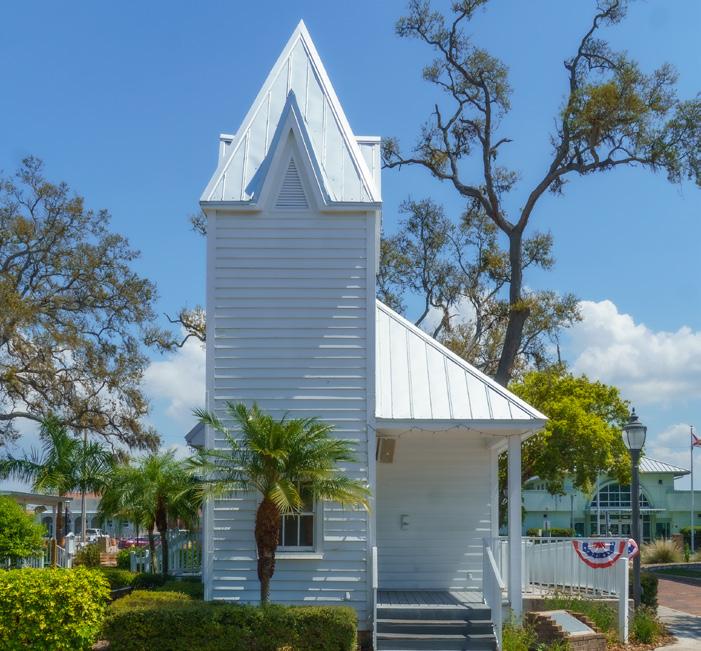
In order to move forward, North River Manatee County must grow its civic capacities and pay attention to how change happens. This section outlines critical levers for accomplishing each. Doing one without the other will continue to fragment the community. Challenges will mount. Frustration will deepen. Hope for a better future will diminish.
In
order to move forward, North River Manatee County must grow its civic capacities and pay attention
to how change happens.
None of that is inevitable. Indeed, North River Manatee County has many strengths and assets to build on as it seeks to move forward.
Yet if people are really going to grow together —and begin to more deeply address the pressing challenges facing the community—it is essential for the community to create a new trajectory of hope. That starts with growing civic capacities and paying attention to how change happens.
Growing Civic Capacities
North River Manatee County must invest in and develop its civic capacities. Otherwise, the community will remain stuck amid competing forces, tension, and negative public discourse. In short, the community will be unable to get on a more hopeful path.
These civic capacities cannot be developed by one entity; no single organization, leader, or group can do this alone. Nor can simply launching new or expanding existing strategies, programs, and initiatives be the answer. Communities need stronger civic capacities to effectively move forward. Nothing can replace these.
The good news is that building North River Manatee County’s civic strength is actionable, doable, and achievable. Here are six areas for the community to focus on:
– Invest in ways for people to create community together. People across North River Manatee County say they want more ways to gather, connect, and build community with one another. Indeed, many specifically point to a lack of community centers and other central gathering places as an important issue—for both the area overall and their part of the community. North River Manatee County must create more ways by which people can forge connections and build a stronger sense of community.
– Create more spaces where leaders and residents can authentically engage. Throughout this report, residents and leaders alike said more productive conversations are needed—and more places are needed where these conversations can occur. Too many people don’t feel seen and heard, and existing spaces are often bogged down by complaints and politics. People need more opportunities to articulate their shared aspirations for moving forward and work through the underlying tensions and trade-offs that come with differing views. North River Manatee County must invest in developing more spaces for residents to engage and where residents and leaders can engage one another in authentic ways.
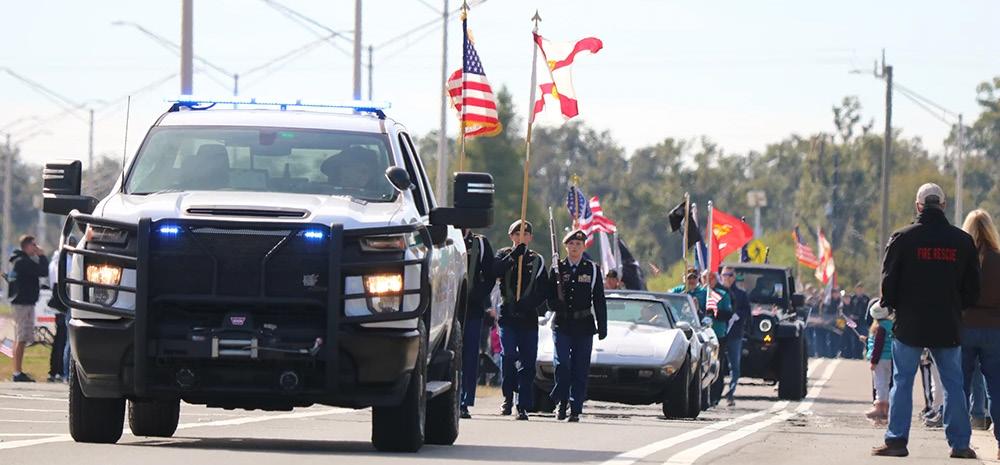
– Develop more “turned outward” leaders. North River Manatee County needs more leaders of all types who have the community in their line of sight and focus on the shared aspirations and concerns of residents. Leaders must also take people’s differing views into greater account in their decision-making. This is critical to rebuilding a stronger sense of trust and connection between the community and its leaders. North River Manatee County must cultivate existing leaders and develop new ones in various sectors who are turned outward toward the community and each other.
– Build more catalytic, boundaryspanning organizations and groups. Many different organizations and groups are appreciated for the work they do in the community. Their work should be supported. So too should the handful of organizations that are laying the foundation for shared action. Yet leaders and residents
both indicate there are not enough catalytic organizations and groups whose mission is to spur discussions on community challenges, work to marshal shared resources, and catalyze action. All communities need such entities. North River Manatee County must build more groups and organizations with the capabilities to be catalytic.
– Strengthen norms for working together. People across North River Manatee County name pressing issues that the community needs to address. Yet people describe the community as a place that struggles to address its deeper issues due to a weak sense of shared purpose, a tendency to work in silos, and negative public discourse. North River Manatee County must develop new norms that focus on building strong working relationships, creating space for hard conversations, and figuring out stronger ways to work together and take shared action.
– Foster a stronger sense of shared purpose. People love living in North River Manatee County. And people across the community frequently name shared aspirations, including a stronger sense of community and more opportunities for youth, among other things. Yet people do not currently feel “in it together.” To grow together, the people of North River Manatee County must first come together. Then people can cultivate a stronger sense of shared purpose around people’s real aspirations. This is what’s required for more shared action and a healthier community.
How Change Happens
Communities that are fragmented yet seek to shape their own future must find ways to create a new trajectory of hope, with growing momentum and everexpanding civic confidence. Coming together to take actionable, doable, and achievable steps forward is critical. Then, it is possible to unleash a chain reaction
of actions and ripple effects that grows over time and spreads like a positive contagion. Through these actions, shared purpose emerges.
Make no mistake: none of this happens all at once. There is no quick fix. Change only happens over time. Here are five important guideposts for how change can happen as North River Manatee County seeks to grow together:
– Focus on areas that are ripe for making progress. When communities are siloed or fragmented, they often seek to solve the biggest, most complex issues through comprehensive plans. Yet at this stage, what is most critical is building civic confidence that addressing people’s concerns is possible and that different organizations and groups can work together in more productive ways. Efforts should focus on issues that are ripe for action, where the possibility— indeed, the probability—for creating momentum is high. This can include
hard, critical issues like affordable housing or infrastructure. But the initial emphasis must be placed on creating wins. These wins may come in areas like creating a stronger sense of community or more opportunities for youth. Starting too big, or taking on too much, will cause efforts to collapse under their own weight. As noted throughout this report, actions that are already in motion can and should serve as a foundation for making real progress.
– Demonstrate concrete action, however small. Residents in North River Manatee County don’t believe that the issues they care about most will be addressed by leaders, especially elected county leaders. They do not believe elected leaders are hearing their concerns, and feel as if they have nowhere else to turn amid the community’s growing challenges. Taking real, concrete actions that address residents’ concerns are a down payment on creating a new trajectory of hope. It is also a requirement for generating lasting trust. For now, such actions can be small. What matters
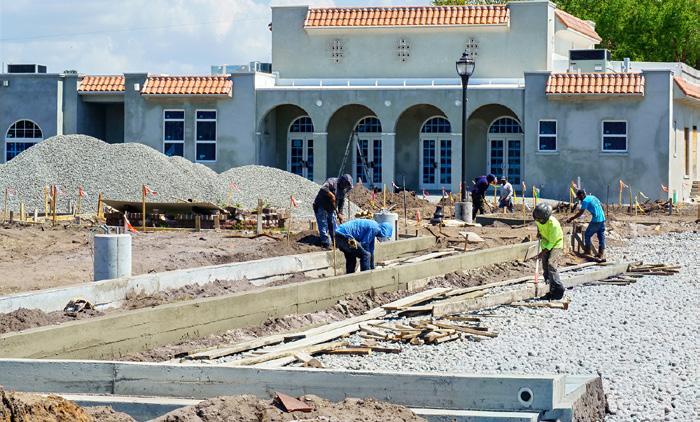
most is that action occurs and that additional actions grow from there. This will demand disciplined, vigilant follow-up from conversations and meetings. Silence, or further inaction, only confirms people’s lack of trust.
– Build together, not apart. People develop trust and a sense of possibility when they build together. This can take many forms—from innovating new ways to address common problems to coming together amid real differences to meet the basic needs of the community. Make no mistake: building together is not about simply activating more volunteerism. It is about forging new, common efforts that go beyond one-off service projects to deeply address ongoing issues that matter to people. Nothing replaces discovering the innate capabilities and shared humanity of other people. This effort should begin with those who are ready and willing to engage and grow through a series of intentional steps. At each turn, people must be open to discovering new partners and contributors who want to be a part of growing together.
– Make the invisible visible. Civic confidence and belief grow from people seeing that progress is possible. Yet too often, the progress that is being made remains invisible to the wider community. Sometimes it is even obscured from those who are
“Unless we come together, it’s going to be tough to overcome our different challenges and issues. We have to come together and find a way to connect. Then we can move forward.”
helping to create the progress. Making the invisible visible enables people to see that progress is possible and that it’s happening. This requires intentional efforts to identify where progress is already happening in the community and where new actions are being taken. Then, it means lifting up and spreading those stories. One caution: Overstating results or glossing over challenges will undermine authentic hope.
– Be prepared for resistance and actively address tension. Making progress will not magically eliminate disagreements, quench complaints, or allay everyone’s concerns. In fact, making progress might even intensify disagreement in the short-term. Those who seek to come together and move North River Manatee County forward in a new way must prepare themselves for such resistance. Tension must be named and addressed, even though full consensus is not the goal. The work ahead is difficult. Finding allies for support and persevering through resistance are both imperative.
The Path Forward
North River Manatee County is at a critical moment in its history. Simply staying on the current path—where the community is growing and changing at a rapid clip and people feel left out and left behind—will only deepen mistrust and disengagement.
Recall the nonprofit leader quoted in the introduction, who said, “Unless we come together, it’s going to be tough to overcome our different challenges and issues. We have to come together and find a way to connect. Then we can move forward.” North River Manatee County can come together and choose an alternate path, one that creates a new trajectory of hope. The investments highlighted here are key to the community’s ability to do so.
What’s more, the solutions are right here in the community. North River Manatee County has the ability, the resources, and the people to shape its own future. Now is the time to come together.