How Kitchen Cabinet Water Damages and What to Do
A slow drip under the sink can ruin a cabinet long before water reaches the kitchen floor. Leaking supply lines, dishwasher connections, refrigerator lines, spills, and humid air all create kitchen cabinet water damage that spreads through seams and unfinished edges.
Quick action protects more than appearance. Water can swell panels, loosen joints, feed mold, and turn a small repair into a cabinet replacement. Dr. Cabinet can assess damaged cabinetry, but the first priority is always finding and stopping the moisture source.
How to Spot Kitchen Cabinet Water Damage Early
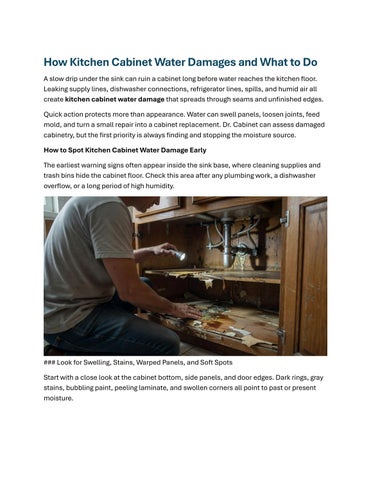
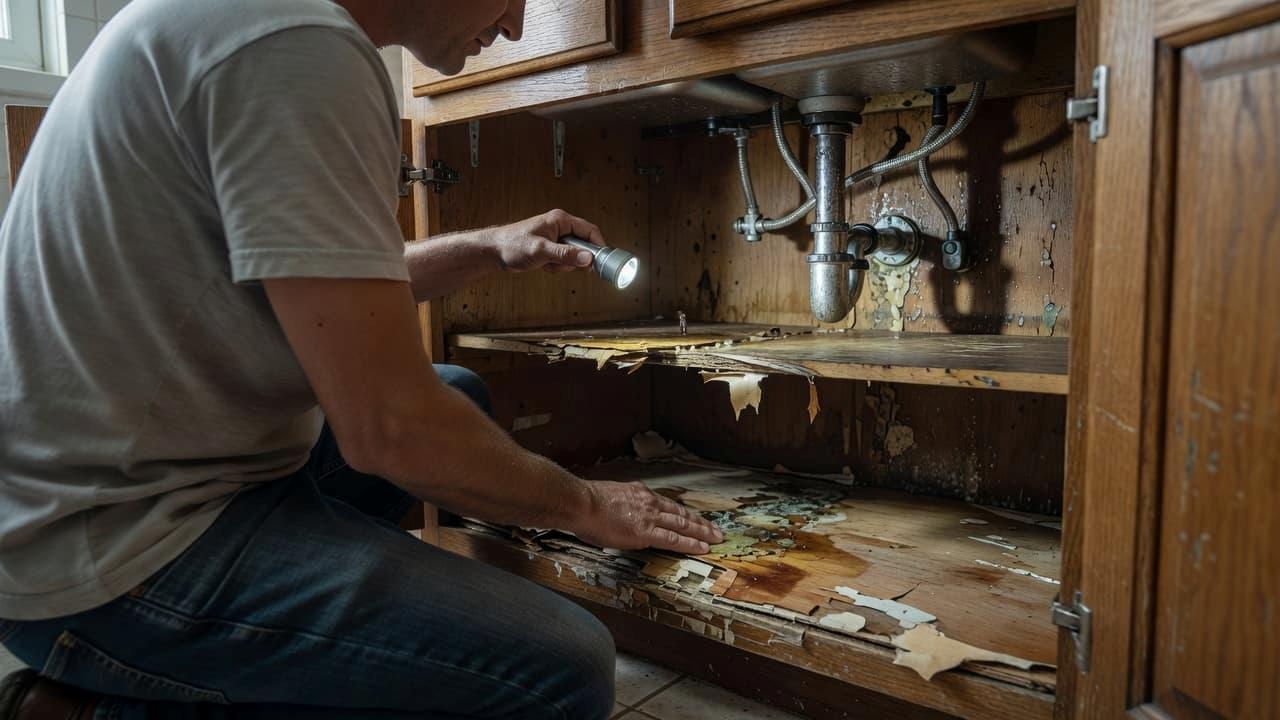
The earliest warning signs often appear inside the sink base, where cleaning supplies and trash bins hide the cabinet floor. Check this area after any plumbing work, a dishwasher overflow, or a long period of high humidity.
### Look for Swelling, Stains, Warped Panels, and Soft Spots
Start with a close look at the cabinet bottom, side panels, and door edges. Dark rings, gray stains, bubbling paint, peeling laminate, and swollen corners all point to past or present moisture.
Run a hand along the lower edges of the cabinet. A firm surface is a good sign. However, a spongy, rough, or raised area means the panel has absorbed water. Particleboard often expands into a lumpy surface that does not return to its original shape.
Check around plumbing cutouts, especially where drainpipes and supply lines pass through the back panel. Also inspect the cabinet beside the dishwasher, the toe kick near the floor, and any shelf below a small appliance.
Doors may begin rubbing against each other when a cabinet box shifts. Loose hinges, crooked drawer fronts, and warped shelves can also signal that moisture has weakened the structure.
Know When Moisture Could Mean Mold or Structural Damage
A musty odor deserves attention even when the surface looks dry. Moisture can stay trapped behind the cabinet back, under a false bottom, or inside insulation around plumbing pipes.
Visible mold, damp insulation, crumbling particleboard, and blackened wood require a prompt assessment. Don't sand, scrape, or paint over widespread mold. Disturbing it can spread spores through the kitchen.
A cabinet can look dry on the outside while moisture remains inside its joints, base, or wallfacing panels.
The material, the length of exposure, and the leak location all affect the repair plan. A brief spill on sealed plywood may leave a light stain. A months-long leak under an MDF sink base can weaken the entire cabinet box.
How to Repair Kitchen Cabinet Water Damage Safely
Repairs start only after the leak stops. Trying to patch kitchen cabinet water damage while pipes still drip is like putting a bandage over a cut that hasn't stopped bleeding.
First, shut off the water supply if the leak comes from a supply line, valve, disposal, or drain connection. Then remove standing water with towels, empty the cabinet, and take out wet liners, paper products, and stored items.
Stop the Leak and Dry the Cabinet Completely
Repair the plumbing source before treating the wood or panel material. A plumber may need to replace a worn shutoff valve, supply hose, drain gasket, dishwasher connection, or garbage disposal seal.
After the leak is fixed, use absorbent towels and gentle airflow. Open doors and windows when weather permits, and aim a fan across the cabinet opening. A dehumidifier can help in a closed kitchen or humid apartment.
Avoid blasting the cabinet with high heat. Space heaters and heat guns can warp wood, loosen veneer, and damage painted finishes. Drying takes time, especially when water seeped below the cabinet bottom or behind the back panel.
Hidden moisture may call for a professional moisture reading. Sanding, gluing, painting, or reinstalling hardware before the cabinet dries can trap water and cause the repair to fail.

Repair Small Stains, Loose Joints, and Hardware
Once the cabinet is fully dry, inspect each damaged area in good light. A light surface stain on solid wood or plywood may respond to careful sanding with fine-grit paper. Clean off dust before applying a matching stain, paint, or clear protective finish.
Use wood filler for small chips, dents, or shallow gaps. Let it cure, sand it flush, and test paint or stain in an inconspicuous area first. Finish matching is often harder than the repair itself, especially on older cabinets with sun-faded doors.
Loose face-frame joints may respond to carpenter's glue, clamps, and properly placed screws. For stripped hinge holes, wood glue and short wood slivers or toothpicks can create new material for the screw to grip.
Replace hinges, drawer slides, and pulls when corrosion or looseness prevents a secure fit. This small step can make a repaired cabinet feel stable again.
Choose Between Repairing and Replacing the Cabinet Parts
Solid wood and plywood often tolerate limited water exposure when you dry them quickly. Their surfaces can be sanded, refinished, re-glued, or fitted with a new bottom panel.
MDF and particleboard react differently. Once heavily soaked, they can swell, crumble, and lose their ability to hold screws. In those cases, a patch may hide the problem without restoring strength.
A targeted repair is often possible. A cabinet professional may replace a damaged shelf, door, side panel, sink-base bottom, or toe kick instead of removing the whole kitchen. For serious kitchen cabinet water damage, replacement of one cabinet box may be the safer choice.
What Does Kitchen Cabinet Water Damage Repair Cost?
Costs depend on what water reached and how long it stayed there. Dr. Cabinet reports that water-damaged cabinet repairs commonly fall between $150 and $500 when the issue is limited and the affected parts remain salvageable.
Broader cabinet repair estimates often run about $120 to $600 for labor and materials. Those figures are planning ranges, not guaranteed quotes. A simple stain repair costs far less than rebuilding a swollen sink base or replacing custom panels.
The Main Factors That Change Your Repair Estimate
A written estimate should separate plumbing work, drying, cabinet repair, refinishing, and replacement parts. That breakdown helps you see whether the cabinet issue is cosmetic or structural.
The final cost changes with the source of the leak, affected area, cabinet material, drying time, and mold risk. Finish type matters too, since matching a glazed, stained, lacquered, or custom-painted door takes more labor than a basic paint touch-up.
Hardware, number of damaged cabinets, access under the sink, and the need for customsized panels can also raise the total. If water reached flooring, drywall, or adjacent cabinetry, the scope grows quickly.
When Repair Costs Less Than Replacing the Whole Kitchen
Repairing a cabinet bottom, replacing a door, or refinishing a stained face frame often costs less than a full kitchen replacement. It also avoids removing usable cabinets and disrupting countertops, plumbing, and appliances.
Replacement makes more sense when several cabinet boxes have swollen, softened, or pulled away from the wall. It may also be the practical route when mold is widespread or matching parts are no longer available.
DIY Fixes or Professional Cabinet Restoration: Which Is Right for You?
Small surface issues may be manageable at home, but kitchen cabinet water damage can become structural faster than it appears. The right choice depends on whether the material is fully dry, firm, and free of mold.
Small Repairs You May Be Able to Handle Yourself
Homeowners can often handle a small spill, a loose hinge screw, or a light stain after the cabinet dries. Use gloves, keep the room ventilated, and work slowly around plumbing.
Suitable tasks include:
• Drying a minor spill with towels and airflow
• Tightening secure hardware and adjusting doors
• Cleaning a surface stain and applying wood filler to small flaws
• Touching up paint after the material is completely dry
Do not paint over damp panels. Paint may cover discoloration for a while, but trapped moisture can peel the finish and weaken the cabinet beneath it.
Signs You Should Call a Cabinet Repair Specialist
Call for help when panels feel soft or crumbly, odors remain after drying, or mold appears. Swollen MDF, damaged plumbing cutouts, loose cabinet boxes, and widespread warped doors also need a closer inspection.
Repeated moisture is another warning sign. If the damage returns after you dry the area, a hidden leak or condensation issue may still be active. A cabinet specialist can determine whether to restore surfaces, replace individual parts, or rebuild the affected box.
Prevent Future Water Damage Around Kitchen Cabinets
A repaired cabinet needs protection from the next small leak. During routine cleaning, open the sink base and look for dampness around drains, shutoff valves, and the cabinet floor.
Check Common Leak Points Before They Cause Trouble
Inspect sink drains, supply lines, garbage disposals, dishwasher hoses, refrigerator water lines, and countertop seams. Look for corrosion, drips, swollen edges, or a damp paper towel placed beneath fittings.
Use plumber-approved fittings and replace worn hoses before they fail. A leak alarm inside the sink base can also alert you to water before it reaches the cabinet panels.
Wipe spills promptly, keep kitchen ventilation working, and avoid harsh cleaners that strip or dull cabinet finishes. Sealed edges around sink cutouts and cabinet bottoms provide an added barrier against kitchen cabinet water damage.
Get a Cabinet Repair Estimate From Dr. Cabinet
Homeowners, commercial property managers, restaurants, offices, and apartment buildings in New York, New Jersey, and nearby areas can request an assessment from Dr. Cabinet. Repairs are prioritized whenever practical, with options for restoration, refinishing, refacing, hardware work, and custom replacement parts.
Call 201-212-5477 or email infodrcabinet@gmail.com for a consultation or estimate.
Protect the Cabinets You Can Still Save
Stop the leak, remove water, dry the cabinet fully, and check for hidden damage before starting any cosmetic repair. The cabinet material and its structural condition should guide the decision to repair or replace.
Early assessment can preserve usable cabinetry and prevent mold or larger repair bills. For professional help, contact Dr. Cabinet at 201-212-5477 or infodrcabinet@gmail.com.