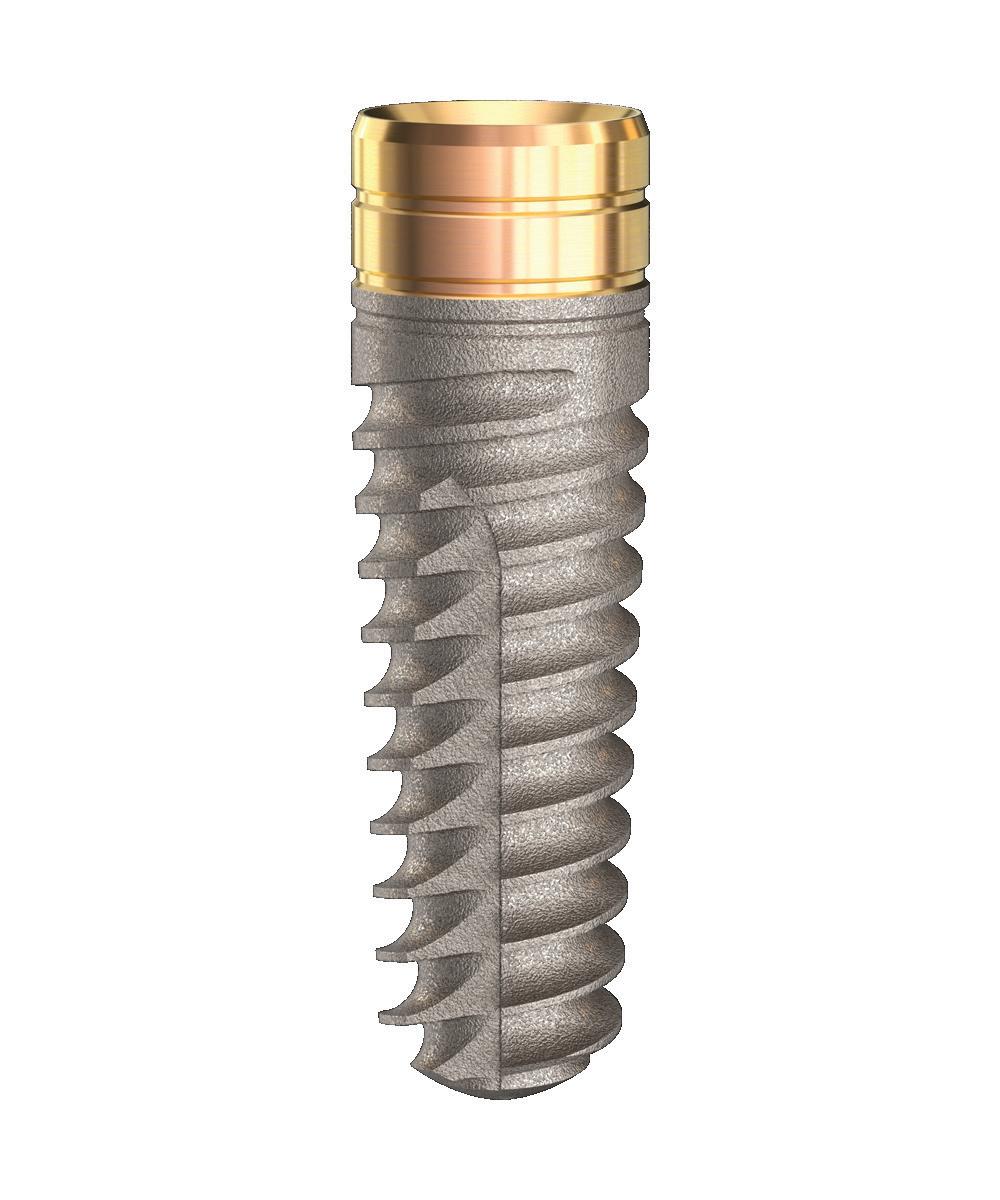
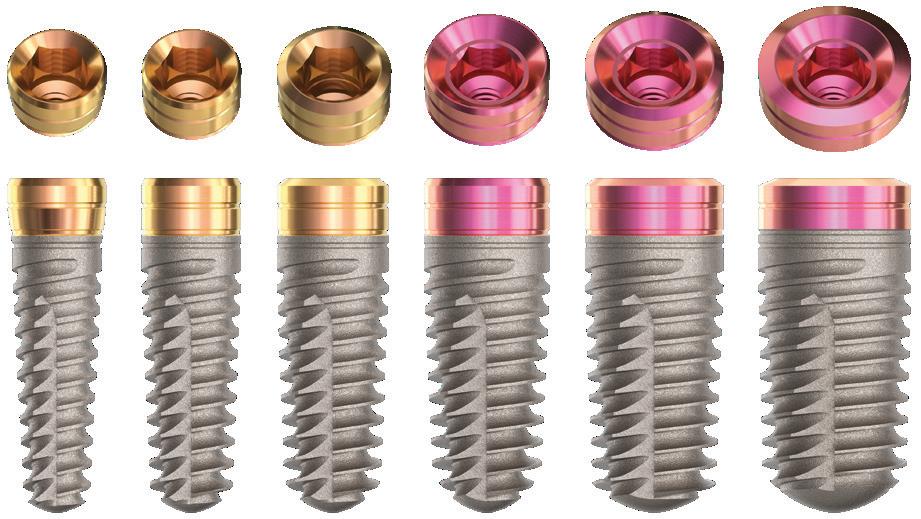
Industry Standard 45° lead-in Conical Connection (Niznick US Patent #4,960,381) maximizes wall thickness on narrow implants
Two Platform Diameters (3.5mmD & 4.5mmD) optimize emergence profile
1mm added to the standard lengths provides vertical flexibility for placement in uneven ridges and extraction sockets
GEN 5+ TM
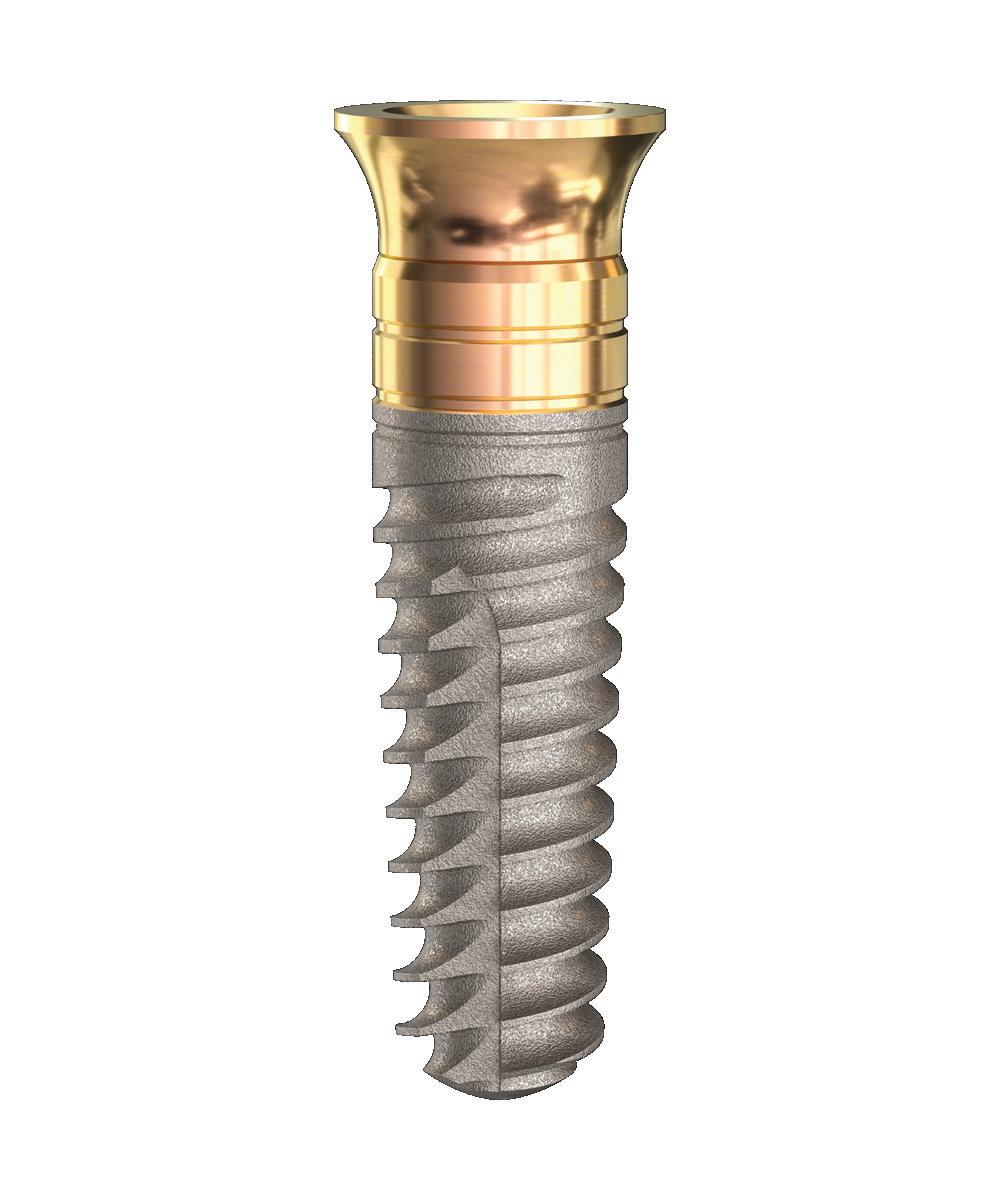
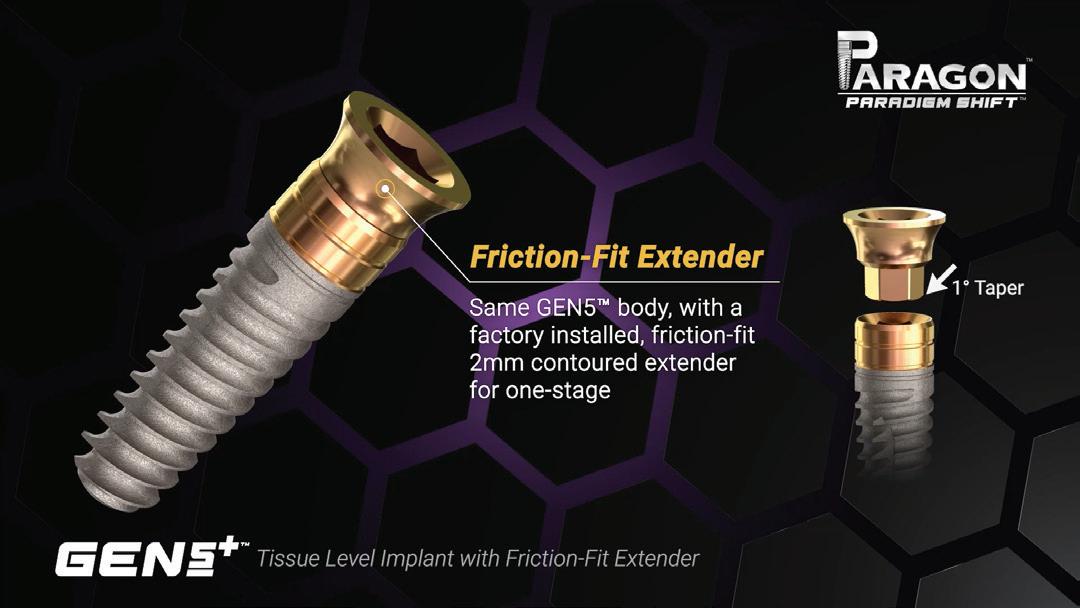
Detachable 2mm friction-fit extender for 1-Stage Surgery, simplifies restorative procedures by elevating platform
Extender can be removed to allow prosthetic connection to the implant platform for esthetics if tissue recedes
Attachment of application specific prosthetic screws converts platform to standard MUA or a variety of other abutment options
NIZPLANT TM
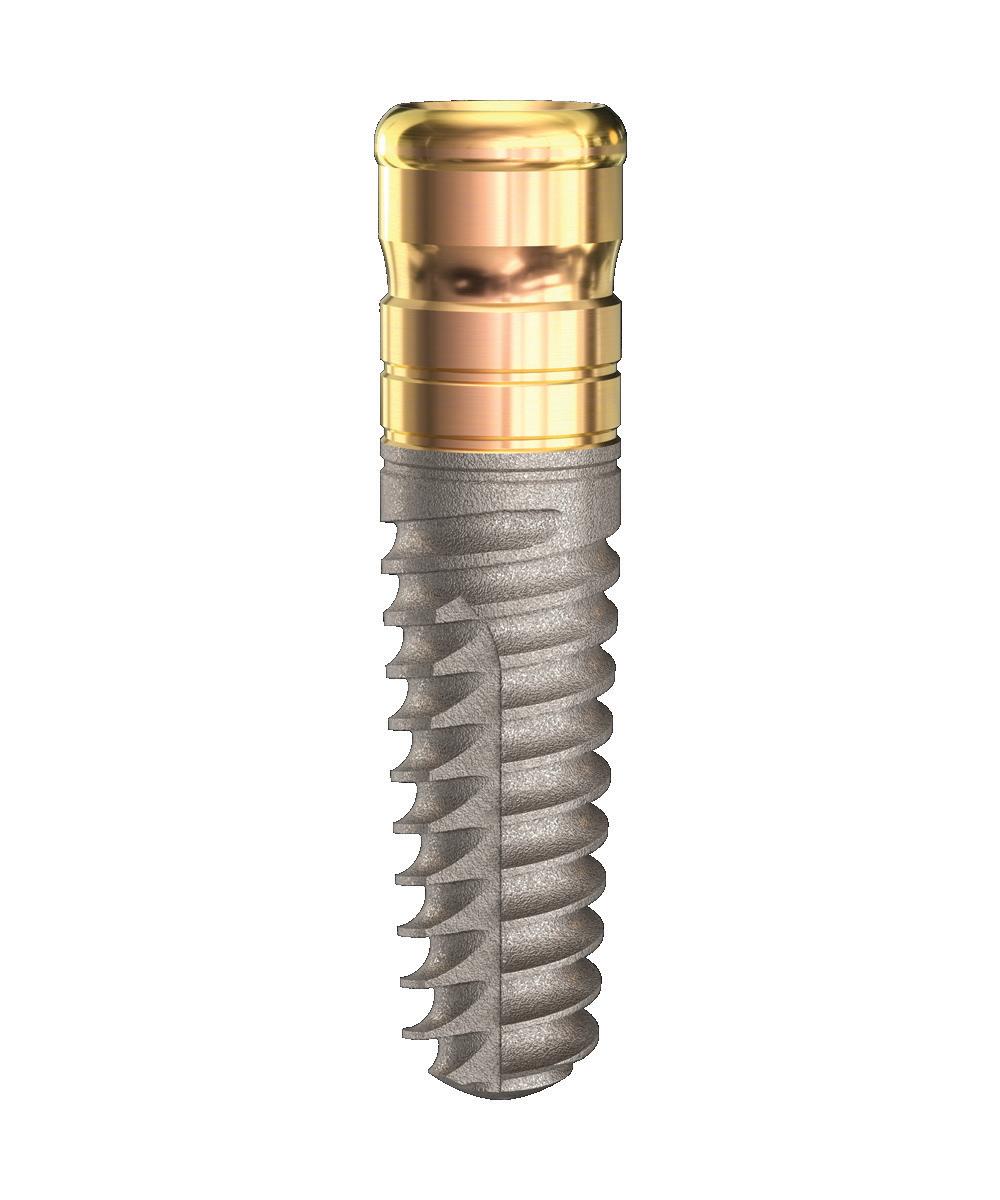
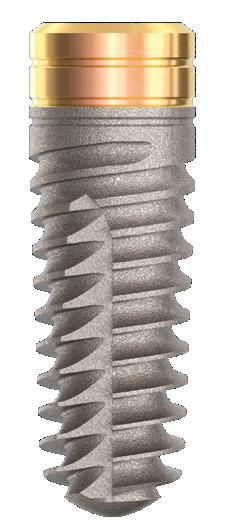
1-piece implant with a dual-function platform that allows it to be used to initially retain an overdenture, and then be converted to a full-arch fixed restoration
2mm extender for height ranges 1-5mm
NizPlant™ has a 45° lead-in bevel, internal hex, and internal threads for attachment of a fixed full-arch hybrid restoration
SHIFT™ in Implant Design
Controversies in Implant Dentistry - Hybrid Implant Surfaces
Gerald Niznick, DMD, MSD
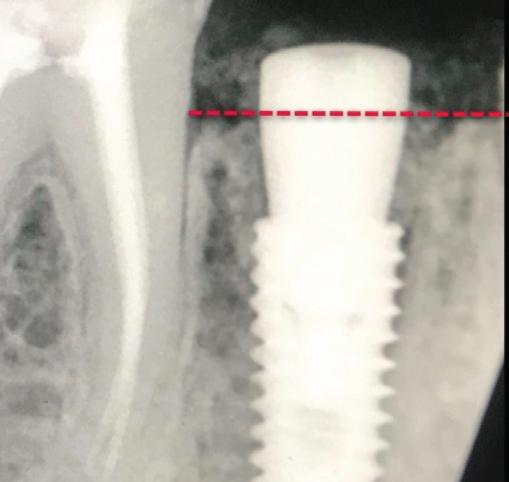
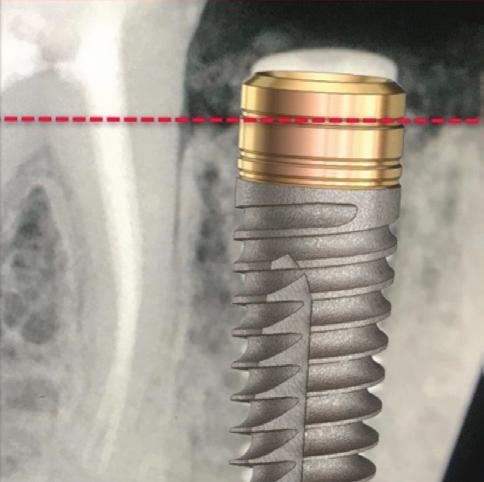
Many of the popular implant designs carry the textured surface and threads to the top of the implant, often requiring sub-crestal placement to minimize exposure of the rough surface to the soft tissue. Research¹ has proven that rough surfaces, exposed to soft tissue, will contribute to peri-implantitis. Research² further proves that routine scaling of rough surfaces results in particles of titanium in the soft tissue that can contribute to inflammation. Studies³ show that placing the implant sub-crestal reduces initial stability. Another study4 showed there was more bone loss with sub-crestal vs supra-crestal placement, which would be expected because bone will not osseointegrate above the implant-abutment junction. An important reason for designing an implant with a machined neck is that most ridges are uneven, so placing the implant level with the highest point on the ridge will require bone grafting to cover the exposed rough surface.
Immediate placement of implants into extraction sockets routinely requires bone grafting with inevitable resorption. By designing the implant with a 2mm machined neck, the need for bone grafting will be greatly reduced.
While it is well documented that initial bone loss will be less with a rough surface, this only amounts to about 0.3mm-0.5mm difference. This is insignificant considering that having a labial plate less than 1mm in width can result in up to 2mm of bone loss. Experienced clinicians understand that placement of implants in extraction sockets may further contributes to bone loss. Uncovering implants placed sub-crestal can also potentially require an additional surgical step of removing bone over the cover screw. Attaching a flared abutment to a submerged implant can necessitate additional bone removal as well. All these additional steps can be avoided by simply placing the implant level with or 1mm above the crest of the ridge.
These facts dictate that the neck of the implant should be machined for 2mm coronally with ideal placement having 1mm exposed above the height of the ridge. This will distance the implant-abutment junction above the bone, minimizing the effect of any micro-leakage or bacteria in the crevice. It will also allow a 1mm zone for soft tissue adhesion above the crest that will not be disturbed by removing and re-attaching healing collars, transfers and abutments. Any bone loss will expose the smooth neck originally sub-crestal, potentially minimizing the risk of peri-implantitis.
1. Periimplantitis and Implant Body Roughness: A Systematic Review of Literature IMPLANT DENTISTRY / VOLUME 27, NUMBER 6 2018
3. Effect of Implant Length and insertion Depth on Primary Stability JOMI: Volume 38, Number 12, 2023
4. Influence of Implant Placement Depth…on Crestal Bone Stability. International Journal of Periodontics and Restorative Dentistry. Vol. 41, No 3, 19
Controversies in Implant Dentistry - Implant-Abutment Connections
Gerald Niznick, DMD, MSD
There are over 150 dental implant companies worldwide offering a wide variety of implant- abutment connections. In 1986 Core-Vent Corporation introduced the Screw-Vent implant with the first internal conical connection (Niznick Patent #4,960,381). This patent became the cornerstone for future implant designs in the industry. The Screw-Vent’s connection included a 45° lead-in bevel above an internal hex, but the patent covered any degree of bevel and any wrench-engaging surface. That patent expired in October 2007 and in 2008, NobelBiocare® launched the NobelActive™ implant with a 78 degree lead-in bevel and internal hex. Steeper lead-in bevels thin the walls, which can lead to fractures in narrow diameter implants, and deepen the internal hex, which can preclude making a 6mm long implant. While these are the two most copied internal connections today, a wide variety of other conical connections have emerged on the market in an effort to differentiate a company’s implants.
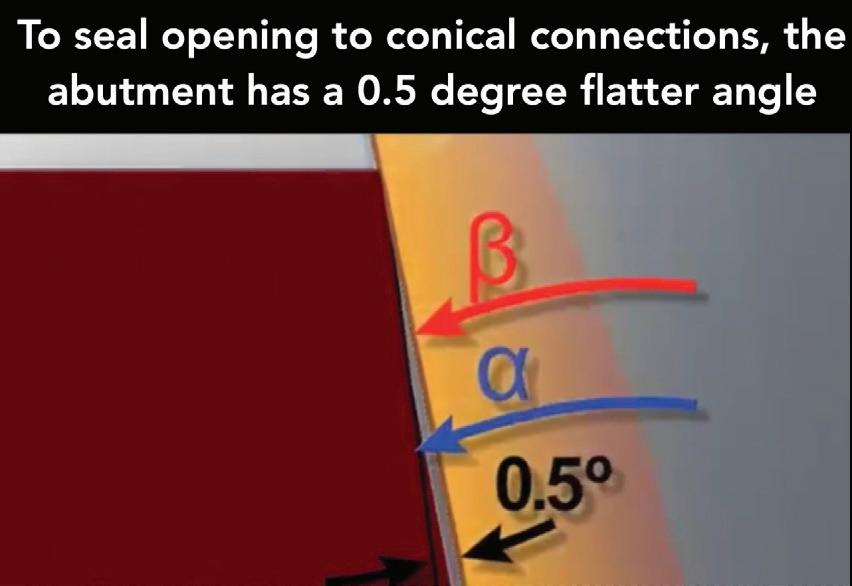
A conical connection achieves a seal at the opening of the internal shaft by having the mating angle of the abutment approximately 1/2° less as measured from the vertical axis of the implant. Because of this fact, a lead-in bevel steeper than 45° offers no significant advantage for seal or stability. A study (J Oral Implantol (2021) 47 (6): 485–490) comparing 3-year post loading outcomes of implants with 45° vs 78° lead-in bevels from the same manufacturer concluded: “no statistically significant differences in marginal bone remodeling or complications (including implant/prosthesis failure) 3-years after loading.”
In 1994, a patent was issued on an interference fit connection (Niznick Patent #5,334,024) created by tapering the male hex of the abutment 1 degree, requiring 10-30Ncm of torque to the fixation screw to fully seat the abutment. This design feature has been incorporated into the extender attached to the GEN5™ implant to create GEN5+™, forming a permanent connection that can only be separated with a retrieval screw. The extender functions as a healing collar and a standard MUA by attaching a prosthetic screw.
Straumann’s implant systems include 6 different angled lead-in bevels with the steeper bevels achieving a friction-fit connection that requires a retrieval tool to separate.
1. Straumann’s “Nuvo™” implant with standard 45° lead-in bevel
2. Neodent’s new “Helix Short” implant with a 45° lead-in bevel
3. Neodent® “Grand Morse®” connection with a 74° lead-in bevel (Note: A Morse Taper is 88.5-89.0 degrees)
4. Straumann’s “CrossFit” connection with a 75° lead-in bevel
5. Straumann’s “synOcta®” connection with a 82° lead-in bevel
6. Straumann’s “TorcFit™” BLX/TLX connection with a 83° lead-in bevel
A number of implant systems, including Straumann’s iExcel and Neodent’s GM Implants offer, offer only one connection diameter that compromises emergence profile.