8 Home
My Network
Jobs
Messaging
Notifications
Edit article View stats View post
https://www.DrChrisStout.org/
A Practical Approach to Living a Life in Full Dr. Chris Stout
LinkedIn Top Voice | Best Selling Author | Adventurer | Startup Whisperer | (Accidental) Humanitarian | APA's "Rockstar"… August 22, 2025
"A healthy man wants a thousand things; a sick man only wants one." Confucius. As you may know if you are familiar with my work in its various forms, it’s my passion to help others live better, fuller lives. It started out professionally after grad school and getting my license to practice as a clinical psychologist. That has evolved and grown into a website, aptly titled “A Life in Full” and a companion podcast, Living a Life in Full. The show is pretty popular with a 4M+ aggregated audience reach with top rankings by Goodpods and ListenNotes as we head into our 9th Season. And there are also my monthly newsletters, as a LinkedIn Top Voice, Tools for Change and via Substack, Living a Life in Full - Tools Edition. All of which, including my nonprofit, Center for Global Initiatives, are always free, all the time. Another thing all this has in common is an empirical, scientific basis. I have done a great deal of research and writing over the years on clinical outcomes and evidence-based practice, as well as served on the faculties of the Medical Schools of both Northwestern and the University of Illinois, Chicago. I note this here as I want to set a context and foundation for the seriousness that I take in publicly sharing health and wellness information. (And see my caveat at the end of this piece as well.)
Me
For Business
Learning
But before I get into the science behind what this article is about, I first want to also provide a personal, transparent context of what I have done and learned. How I practice what I preach, as it were. I hope to bring a level of credibility via the scientific literature, with a practical, actionable way for you to experiment in living your life in full, the goal being improved healthspan, longevity, and performance. Here goes…
Obese and named Stout I was the kid who always was picked last to be on a team, if at all. No wonder, as I had pretty much no athletic ability. At age 12, I was considered obese (BMI = 33), which, considering my last name was kind of a bummer then, and served as a bully-magnet as well. I wore orthopedic shoes to correct a number of knee and foot issues, and I did not even have a bike – my understandably over-protective single, working mom feared it would be much too dangerous for a little boy in urban Dallas. And with no dad around, there was also no playing catch or the like, either. At age 13, with much indebtedness to puberty, I realized things had to change. I began to pay attention to what I ate and how I exercised. I got into running (finally being able to swap my despised Tarso Shoes for my first pair of Keds). I started looking at macro-nutrients and calories. I stopped binging on sweets and cookies. And in what was a bit too fast of a time (three months) I lost 64 pounds.
Granted, this may have been a bit of borderline eating disorder, but things normalized as I got older. Nevertheless, I remained active and ate primarily
a vegetarian diet for the subsequent few decades. And I got more physically active. A lot.
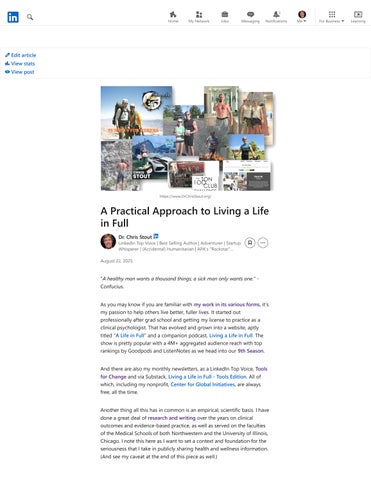
Making Up for Lost Time I’m proud of what I’ve been able to accomplish since those boyhood days of bench warming – alpinism, multiple stair climbing events, deep see dives, lifting – bar/dumb/kettlebell, sandbag workouts, 100 Ton Club, criterium racing and century rides, Cross-Fit-ish WODs (The Murph, Operation Red Wings, etc.), lots of running events and ultras, rucking, competitive motorsports (automobile and motorcycle), my beloved “Weirdo Challenges,” and as of late, coming in 4th in Mr. Fitness and Health Competition, and first serving as a Brand Ambassador and now a Sponsored Athlete for Hammer Nutrition. (For all the details, be sure to read my Life List).
Even though I ate a healthy vegetarian diet, I also seemed to dose a fair amount of ibuprofen, or what is often called “Vitamin I” by athletes. I then heard that a vegan diet helped with reducing inflammation, and since 2015 when I became vegan-curious, I bet I have taken ibuprofen less than 10 times, if that.
Be a Verb. So that’s me. But, how about us? What about the confusion that accompanies the headlines about eggs, or keto, or paleo, or butter, or…?
Allow me to address this with some snips from my LinkedIn Top Voice piece entitled How to Protect Yourself from Fad Science.
Digital Commonwealth Boston Public Library, no known copyright or use restrictions
So what’s the deal with eggs and fat and salt and…? Are they good or are they trying to kill me? Well, like most things, the answer is the ultimate in unsatisfying—it depends. We like to have things clear, specific and definitive. Easy to understand and readily meme-able. So, when something we like to eat that was formerly considered a sin is now reported to be a blessing, then we feel we have the proof for what we knew all along and we feel vindicated, stamped with the Good Housekeeping Seal of Science. But we also have to go beyond the headline, or subject line as it were. For example, an eye catching, click-baiting title that has made the rounds was “How Dad’s Stresses Get Passed Along to Offspring.” But the less seen subtitle that didn’t come along for the ride around the inter-webs was “Mouse studies show tiny intercellular pods convey to sperm a legacy of a father’s hard knocks in life.” Mice? Yup. Nevertheless, I must say that it’s a good article and it does relate back to us Homo Sapiens. And I also have to admit that I would likely not have clicked on the original article, titled “Transgenerational epigenetic programming via sperm microRNA recapitulates effects of paternal stress.” (Note: In my original piece, I also go to town on the nefarious practice that has come about in the last decade known as “predatory journals” or “predatory open-access publishing” and how those “studies have poisoned the well of legitimate scientific publishing for us all. And I also site my reason for going bananas on other wacky claims like Goop’s notorious vaginal Jade and Rose Quartz eggs or coffee colonics. Indeed, and thankfully, many of Goop’s current experts have been criticized for not having a scientific basis for medicinal claims that their $66 vaginal eggs can “balance hormones, regulate menstrual cycles, prevent uterine prolapse, and increase bladder control.” That cost them $145,000 in fines, by the way.)
Let’s take a look at Science Not all treatments work the same in all people, if they did the world would not need NSAIDs in addition to aspirin. Ditto that for exercise, diet, learning, and most anything else, except for maybe math. We’re complex beings to which one size fits few. It’s more amazing to me to see something that generalizes to an N greater than one. Ideas evolve and legitimate studies can be in conflict with other studies, without any shenanigans or ethical issues afoot. But the sheer volume of published articles makes it difficult for academics, practitioners and students to keep up on the literature, let alone the lay public. To help mitigate the perpetuation of Fool-Me-Once Syndrome, I thought it may be of help to provide some tips as to ways in which you can know what to look for in order to ferret the reality versus hooey. Many may not have the inclination to read deeper into a piece or posting, let alone go looking for the original article or study, but if you have read this far, I suspect there is a better than average chance that you are the kind of person that would like to know what the red flags are, as well as the herrings. Tip-o-the-hat and homage to Atul Gawande’s influential book “The Checklist Manifesto.” Readers of this space will recall my past shout-out to Dr. G and his work and my passion for lists. What follows are a few of my tips that may be of help: 1. Is the journal for real and high quality? First off, is the journal legitimate? You can look here for suspicious journals. If the journal is fine, then see what its Impact Factor is. Impact Factor is “a measure of the frequency with which the average article in a journal has been cited in a particular year. It is used to measure the importance or rank of a journal by calculating the times its articles are cited” as my University notes. There are additional tools like Eigenfactor, SCImago Journal Rank (SJR), and Scopus. All of these and more are detailed here. 2. Is the authority for real? Healthcare practitioners have to have licenses in order to practice, and the majority of healthcare researchers and scientists are part of an established university, research, or corporate entity. Anyone that is a licensed healthcare provider or proper academic researcher will thus be super easy to find out about via Google or Google Scholar. In most things, but especially in healthcare, education, training, qualifications/licensure, and experience really, really do matter. In fact, speaking of Google Scholar, they have some spiffy metrics vis-à-vis one’s scholarly productivity and impact. Here’s a sampler of mine noting h index and i10 index scores:
Along these lines, a group of physicians started #VerifyHealthcare, on Instagram to promote transparency there. Thomas Jefferson University Hospitals' Chief Medical Social Media Officer Austin Chiang, MD, MPH, started the campaign because of a growing trend on Instagram where healthcare professionals provide health information or advice without disclosing their professional qualifications. Any and all healthcare providers are welcome as well as “medical students who are forthcoming with their student status.” 3. Is it pseudoscience or is there an evidence-base? Again, Google Scholar can help with researching the scientific literature on a topic, but do keep in mind it can be tricky to sort out if something is innovative and new (sometimes referred to as a promising practice) as it hasn’t been around long enough to gather an evidence base. I wrote about this in my Evidence Based Practice textbook. I'm also a fan of Consensus.app, an AI-powered search engine that helps users find and understand information from scientific research papers by summarizing key findings, identifying areas of agreement or disagreement, and generating reports from the research. Great searchable websites include QuackWatch, Examine.com, and American Council on Science and Health. In fact, the ACSH produced this handy graphic to generally evaluate various popular publications for their evidence-based approach to scientific and medical journalism.
Taking a Look Under the Hood I’m a fan of, albeit not a user, of Function Health, recognized as one of the TIME100 Most Influential Companies 2025. So there’s that.
I like them not only for their tech, but for the level of comprehensiveness in their screenings. Here they are: HEART Apolipoprotein B (ApoB), Cholesterol / HDL Ratio, HDL Cholesterol, HDL Large, LDL Cholesterol, LDL Medium, LDL Particle Number, LDL Pattern, LDL Peak Size, LDL Small, Lipoprotein (a), Lipoprotein Fractionation, Non-HDL Cholesterol, Total Cholesterol, Triglycerides, THYROID Iodine, Selenium, Thyroglobulin Antibodies (TgAb), Thyroid Peroxidase Antibodies (TPO), Thyroid-Stimulating Hormone (TSH), Thyroxine (T4) Free, Triiodothyronine (T3) Free, CANCER Galleri Multi-Cancer Detection Test, AUTOIMMUNITY Antinuclear Antibodies (ANA) Pattern, Antinuclear Antibodies (ANA) Screen, Antinuclear Antibodies (ANA) Titer, Celiac Disease (Comprehensive Panel), Rheumatoid Factor, IMMUNE REGULATION High-Sensitivity C-Reactive Protein (hsCRP), White Blood Cell Count (WBC), Neutrophils, Lymphocytes, Monocytes, Eosinophils, Basophils, FEMALE HEALTH Anti-Mullerian Hormone, Estradiol (E2), Follicle Stimulating Hormone (FSH), Luteinizing Hormone (LH), Prolactin, MALE HEALTH DHEA-Sulfate, Estradiol (E2), Follicle Stimulating Hormone (FSH), Luteinizing Hormone (LH), Prostate Specific Antigen (PSA), Testosterone, STRESS & AGING Cortisol, DHEA Sulfate, Biological Age, METABOLIC Adiponectin, Glucose, Hemoglobin A1c (HbA1c), Insulin, Leptin, Uric Acid, NUTRIENTS Arachidonic Acid/EPA Ratio, Copper, Ferritin, Homocysteine, Iron, Iron % Saturation, Iron Binding Capacity (TIBC), Magnesium, Methylmalonic Acid (MMA), Omega 3 Total, Omega 3: EPA+DPA+DHA, Omega 6 Total, Omega 6: Arachidonic Acid, Omega 6: Linoleic Acid, Omega 6/Omega 3 Ratio, Selenium, Vitamin D, Zinc, LIVER Alanine Transaminase (ALT), Albumin, Alkaline Phosphatase (ALP), Aspartate Transaminase (AST), Gamma-glutamyl Transferase (GGT), Total Bilirubin, Total Protein, KIDNEYS Albumin (Microalbumin) - Urine, Blood Urea Nitrogen (BUN), BUN / Creatinine Ratio, Calcium, Carbon Dioxide, Chloride, Creatinine, Estimated Glomerular Filtration Rate (eGFR), Globulin, Potassium, Sodium, PANCREAS Amylase, Lipase, HEAVY METALS Aluminum, Arsenic, Lead, Mercury, ELECTROLYTES Calcium, Magnesium, RBC, Sodium, BLOOD ABO Group and Rhesus (Rh) Factor, Hematocrit, Hemoglobin, Mean Corpuscular Hemoglobin (MCH), Mean Corpuscular Hemoglobin Concentration (MCHC), Mean Corpuscular Volume (MCV), Mean Platelet Volume (MPV), Platelet Count, Red Blood Cell (RBC) Count, Red Cell Distribution Width (RDW), URINE Albumin - Urine (Microalbumin), Appearance, Bacteria, Bilirubin, Clarity, Color, Glucose, Hyaline Casts, Ketones, Leukocytes, Nitrite, Occult Blood, pH, Protein, Red Blood Cell, Specific Gravity, Squamous Epithelial Cells, White Blood Cell (WBC), Yeast, LYME Lyme Disease Antibodies, ALZHEIMER'S RISK Apolipoprotein E (ApoE) Genotype,
ALLERGIES Food Allergy Profile (IgE), Indoor & Outdoor Allergy Profile (IgE), SEXUAL HEALTH Chlamydia, Gonorrhea, Herpes Simplex Virus 1 & 2, HIV, Human Papillomavirus (HPV), Syphilis (RPR), SEXUAL HEALTH Chlamydia, Gonorrhea, Herpes Simplex Virus 1 & 2, HIV, Syphilis (RPR), and BIOLOGICAL AGE (a caveat). I, personally, have used this as a guide to ask my primary healthcare provider about adding certain tests to my annual physical, in combination with what Peter Attia, MD, longevity and performance brainiac recommends for his “Top Five Lab Tests:” Lp(a)-P (or Lp[a] mass is a reasonable approximation), APOE genotype, LDL-P (or ApoB), OGTT with insulin measurements, and ALT. Ultra-nerd note: You may also find it of interest, once you get your levels/results back, to undertint them in context with your healthcare provider, vis-à-vis the set of numbers next to the result called a “reference range.” Please refer to this discussion as to better understand what reference range is and whether it indicates the optimal range for health. That is, each individual lab can establish their own reference range by calculating the range of values (after excluding the highest and lowest values) among a sample of “healthy” patients from within the population the lab serves. Since each lab can create its own reference range, these ranges can differ between labs and geographic regions. Differences in patient population, operating conditions, sample collection, criteria for “healthy” individuals, and environmental conditions can cause variation in reference ranges. Reference ranges can even change within an individual lab over time through re-assessment of their normal testing population. Point being, you could expect that ranges for West Virginians may be quite different from Coloradans. You can also discuss with your provider or phlebotomist as well.
Diving Deeper than Blood Let’s take a look at your DNA, but before we dig into your genome, a disclaimer: Advice is a tricky business. Most of it may NOT work for you. Not because it is incorrect, but because it may be incorrect for you. Please note, everything may be different for everybody. While we share a lot genetically, we do not share the same biology, biome, motivation, drives, proclivities, strengths, weaknesses, needs, problems, risk factors, protective factors, goals, fears, experiences, situations, traumas, victories, you get the picture. So bottom-line, measure what you want, measure what matters, and experiment. I saw a guy in my first marathon smoking a cigar. Nevertheless, I don’t think I will be puffing a Cuban on my next workout. Repeat after me: We are all (very) different. Now, here we go.
If 23andMe had a baby with Examine.com then Dr. Rhonda Patrick would deliver “Found My Fitness.” Dr. Patrick is amazingly brilliant; she scours the literature for relevant and properly done studies similar to the folks at Examine, but what is really cool is that you can upload your 23andMe data and she will share what studies are relevant to YOUR specific genomic data. I did use Rhonda's Genetic Tool, and I have also used Promethease. Both are a $5 bargain. Promethease runs your genomic data against a whopper database called SNPedia. It is a wiki for human genetics with more than 57,000 published gene polymorphisms. Using it provides information about your propensity for and against certain diseases. It uses the data on specific Single-Nucleotide Polymorphisms (SNPs) within your genome. Its comprehensiveness is both a blessing and a curse in that the findings are overwhelming to review, and is like many genetic findings, puzzlingly contradictory. I found Rhonda’s Genetic Tool, to be much smaller, but more useful. Indeed, she notes “The report represents the genes I think are most interesting with regard to my focus which is maintenance of healthspan. In some cases, some polymorphisms may have more obvious lifestyle intervention implications… in other cases, it might just be because it's a gene variation that interests me and I want to tell you about it. In all cases, however, they are picked by me and reflect my personal exploration of this growing field. In this sense, it is a living report that might be worth re-running periodically to see my latest revisions and possible corrections!” Thank you, Rhonda.
Why Do I Care? You may think, “I really don’t care if I am prone to wet ear wax,” or “I really do not want to know what possible disease will take me out in a quartercentury from now.” I get that. What I think is actionably helpful is the ability to personalize your nutrition. This is the brave new world of nutrigenomics, or the interaction of your genetics with how you metabolize what you eat. Dr. Patrick is the real-deal on this topic. Some SNPs are associated with folate metabolism, or vitamin B12 absorption, or other biological processing of other vitamins and nutrients. For example, if you have a variation in FUT2 gene, you may have increased or decreased absorption of vitamin B12. If absorption is the problem, then you’d learn that the literature has found that taking your vitamin B12 from under your tongue instead of swallowing it will do the trick and you will absorb it properly. Some folks with a MTHFR variant do not properly process B vitamin supplements and need to take “…B vitamins in the active forms (5 methyl tetrahydrofolate, methyl-cobalamin, pyridoxal 5-phosphate, riboflavin 5-phosphate) along with other methylation pathway intermediates...” I think just knowing this information is incredibly meaningful to our health and fitness. Again, thank you Rhonda.
So, What’s the Plan? In a prior LinkedIn Top Voice article of mine, entitled What You Need to Know to have an Optimized Healthspan, I do a deep dive (with plenty of links) into: Diet (some of my favorite vegan resources) and the environmental and ethical aspects covered in documentaries such as Forks over Knives, Cowspiracy, Fed UP, Hungry for Change, Food, Inc., Fat, Sick & Nearly Dead, and Vegucated which offer perspectives on what we eat and how it affects our health, performance, and longevity.
It also covers Supplements, Microbiome, Mindfulness, Meditation and Gratitude, Workouts, Breathwork, Cold Exposure, Heat Stress, Ketosis, Time Restricted Eating, Poop-Doping (I sh*t you not), and Sleep.
OK, OK, TL;DR I get it, this is a lot. So, let me tell you what I do – keeping in mind my prior caution regarding the limits of generalizability of advice. Use the following to inform what you may want to try on for size and be sure to track your results. And as Tim Ferriss says "the personal is the universal" but also keep in mind advice is hard to always generalize.
What I have Done Annual blood and urine testing. Annual physical. A CT calcium score (also known as a coronary artery calcium scan) is a non-invasive imaging test that measures the amount of calcium deposits in the coronary arteries. Colonoscopy (fun!). 2x/year dental cleanings and checkups. Every other year I have a vision exam. Low dose CT Lung Screening Exam (lung cancer in never-smokers is the 7th leading cause of cancer death in the US). DEXA Scan. (Sorry, but in keeping with my HIPAA privacy, I’ll not be sharing results publicly, but let’s just say all’s well.)
My General Routine To summarize the above even further, this may help in the real-world: Diet – vegan, unprocessed as much as possible, whole grains, raw as possible, minimal sugars as possible. Lots of coffee; a 12 cup pot a day. My genetic testing indicated I metabolize it quickly and I really do, no jitters or issues of getting to sleep if I’m still drinking it at dinner time. When it’s decreased, due to travel, for example, no rebound headaches or problems. Even being vegan doesn’t guarantee I eat enough greens every day, so as insurance, I take Hammer Nutrition’s Greens at the start of every day. And I’ve become a big fan of Hammer’s creatine as an athletic vegan as well (20 mg/day, split between AM and PM doses). I take a spoonful of inulin every day. It’s a pre-biotic that is actually sweet and can be sprinkled on or mixed in just about anything that you’d like a
wee bit sweeter, and a spoonful is satisfying to cut a sweet craving if need be. I drink lemon water everyday with meals and when thirsty. It can aid digestion, boost immunity, and potentially help with weight managementn. It may also play a role in preventing kidney stones and promoting heart health. It contains small amounts of potassium, which supports hydration and muscle function, but its impact on body alkalinity is minimal. I don’t drink much alcohol. And as a rule, never with my children or others, as I like to keep my wits about me and be a good role model. Instead, I am a fan of dealcoholized wine and alcohol-free whisky that Monday makes, and any zero-alcohol beer, but I’m not much of a beer drinker to begin with.
Supplements DHA, 200mg/day, Methylated B-Complex & C, 1 tab/day (=1/2 dose), CoQ10, 200mg/day, Magnesium Glycinate Lysinate, 200 mg/day, Milk Thistle 4:1 Extract, 1000mg/day, Zinc, 50mg/day, 20% Acetic Acid Apple Cider Vinegar Capsules with Mother and Cayenne Pepper, 2,010mg/day, 1 -2 teaspoons Inulin/day, Vitamin D3 2000 IU/day in winter, DHEA, 100mg/day, Multivitamin includes Ginko, green coffee, saw palmetto, echinacea, octacosanal extracts, PRN electrolytes depending on my workouts, racing, heat, etc., BCAAs: L-Lucine, L-Isoleucine, L-Valine, 10g/day, 60+ grams soy protein/day
Meds None!
Workouts, Competitions, and Challenges GoRuck, MTNTOUGH, and CrossFit Tribute WODs with rucking, sandbag, pull up bar, body weight, running, and kettle bell workouts. I also do a combo/hybrid of HIIT, Chris Heria for abs, P90X, Beast Body, and yoga. Road and gravel biking and distance challenges. I do grip work as Peter Attia, MD, emphasizes its importance, suggesting it's a key marker for physical function, a predictor of lifespan, and serves as a proxy for overall strength, reflecting overall muscle mass and function, and preventing age-related decline. So, I do body weight hangs while doing breath work as a warmup and spine de-kinker. Next, 5 sets of 5 reps of pull-ups. Next, hang as long as I can via a fingertip hold (like on a campus rung, but on a chin-up
bar). And I end with 3 sets of 30+ second isometric, close grip chinup holds. To spice things up I do a number of Weirdo Challenges. Along those lines, I like to do tribute/hero challenges such as The Murph, Mission 22, Ruck for Research, Operation Red Wings, 9/11 Heros Run, etc. I founded Summits for Others as a mountaineering approach to fundraising for charitable causes, and thus far summited three of the world’s Seven Summits as well as Mt. Whitney (tallest in 49 states), Mt. Rainier, Yosemite’s Half-Dome, Pikes Peak, and Adam’s Peak (Sri Lanka).
Lifestyle and Family Everyone in my immediate family are serious about health and fitness. We’re a Vinn Diagram of running, lifting, hiking, team sports, group classes, you name it. According to Natalia Mehlman Petrzela, there’s a magical place where parents and teenage children all get along: the gym.
I even built an indoor climbing wall for my son and daughter when they were little - complete with quickdraws, harnesses, and the ability to ropeup and be belayed along with campus rungs and a peg board for training.
Tools: I use a Bosu Balance Ball to augment various calisthenics and body weight exercises with instability for more core activation. Every evening, especially after too much time at my computer, I faithfully lie for 2 minutes on my Backbridge Back and Spine Stretcher to decompress and crack my spine. Too many climbs in too tight boots, compounded by a lot of miles running has caused my toes to try to bond together. So, every evening I wear Correct Toes and have instant relief and the joy that comes from separating my toes out (apologies for that image). I’m a big fan of the SlackBlock, a balance trainer that helps improve strength, stability, and power in the feet, ankles, and hips. It's used by professional athletes and Division 1 teams, of which I belong to neither. I had Wim Hoff on my podcast and while I no longer do his breathwork, in favor of resistance breathing (see next), I continue to be a fan of cold exposure, especially when paired with heat exposure, also see below. Breathing, it’s one of my problem areas (long story), so I use the O2 Trainer that regulates air intake and improves muscle oxygen efficiency during exercise. It was designed by Bas Rutten to increase inspiratory muscle endurance. I also love my Suunto watch. It has a great companion app for nerding out on metrics, plus has a great battery life, can run my phone’s audio, etc.
I use the free version of Zero, to keep track and help motivate me in doing a daily >18 hiur intermittent fast/time restricted eating routine. My wife and I use the ChiliPad sleep system, and it’s wonderful. Big fan of saunas (30-45 minutes at 175+ degrees Fahrenheit). There is a growing, peer reviewed literature in support of heat stress’ benefit to longevity and athletic performance as delivered via sauna use. Here is a great resource. One really needs to have a physician’s clearance before experimenting with heat as it seems that longer duration at higher temperatures is the secret sauce in its effectiveness, but there are obviously risks more so for some folks. Be safe and smart. Here are some of my best fitness resources:
Going Too Far As Paracelsus warned, "The dose makes the poison." And there can be pretty humorous spoofs of rich folks hiring “Blood Boys,” or (the sorta odd) Brian Johnson’s desire to stop aging by spending ~$2M are year to do so, or even Tim “Mr. Optimized” Ferriss’s cautionary tale that he’s not living the Tim Ferriss Lifestyle. Nooo! And then there is Orthorexia Nervosa. It’s a thing. That is, despite a focus on healthy eating, orthorexia nervosa is perhaps best summarized as an obsession with healthy eating with associated restrictive behaviors. However, the attempt to attain optimum health through attention to diet may lead to malnourishment, loss of relationships, and poor quality of life. (Somebody tell Brian Johnson that.)
Results? Redefining the Dad-Bod Well, today I’m 66, 6’1’ and weigh 20 pounds less than when I was 12 and 5’6” and I’m healthy and fit by all the metrics I’ve been espousing herein. Here’s what I look like:
66 years old, 162 pounds
80/20 To Jump Start Things A final tip-‘o-the-hat to Dr. Rhonda Patrick and her work. Here are her biggest bangs-for-the-buck to have a healthy lifestyle: 1. Eliminate refined sugar from your diet to the greatest extent possible. 2. Practice time-restricted eating and eat generally in accordance with your circadian rhythm. 3. Do everything in your power to maximize vegetable intake, possibly using a micro-nutrient smoothie method as a way to jump-start the habit. 4. Enlist your physician in helping you monitor your vitamin D blood status and then attempting to titrate your dose to an above 30 ng/ml range, possibly trying to land between 40 and 60 ng/ml. 5. Try to get some form of meaningfully vigorous cardiovascular exercise, at least 30 minutes, a few times per week. 6. Get bright blue light during the day, as early as possible, and avoid that same blue light as much as you can in the evenings. Easy-peasy.
Inspire, Not Require
My last point, as you know, I never really ran as a boy, so having someone just tell me to go run or workout would have just embarrassed me or made me mad and/or resentful, not inspired to be like them (with apologies to Jesse Itzler for what he had to go thru with David Goggins). Cut yourself some slack when you’re not well or injured. Realize that it may be hard to keep up good habits when traveling. Don’t let a periodic cheat day to splurge become the norm. But, do work to have what’s healthy become a habit or automatic. #
#
#
If you'd like to learn more or connect, please do, just click here. You can join my email list to keep in touch. You can check out more tools and my podcast, Living a Life in Full. Listen Spotify, Apple Podcasts, Overcast, SoundCloud, YouTube Podcasts, Pandora, iHeartRADIO, and pretty much anywhere you listen to podcasts, or download here. It’s like a gym membership for your brain. Here are the show notes. And be sure to click here for a free subscription to join 157,000 other subscribers to our monthly LinkedIn Newsletter, Tools for Change.
Disclaimer, even though I know my readers are very smart, I nevertheless have to say that this article does not provide medical, nutritional, rehabilitative, psychological, legal, financial, healthcare, or any other form of professional advice. No doctor-patient relationship is formed. This is for educational purposes only.. Please click here for all FTC Disclosures and Fair Use. As I have said elsewhere, don’t be a knucklehead. And you may also enjoy some these related LinkedIn Top Voice articles of mine as well: Weirdo Challenges (an Alternative to Resolutions) Technology Trends in Healthcare and Medicine: Will 2019 Be Different? Commoditization, Retailization and Something (Much) Worse in Medicine and Healthcare Fits and Starts: Predicting the (Very) Near Future of Technology and Behavioral Healthcare Why I think 2018 will (Finally) be the Tipping Point for Medicine and Technology
Healthcare Innovation: Are there really Medical Unicorns? Can (or Should) We Guarantee Medical Outcomes? A Cure for What Ails Healthcare's Benchmarking Ills? Why Global Health Matters Can A Blockchain Approach Cure Healthcare Security's Ills? Why Medicine is Poised for a (Big) Change Is This the Future of Medicine? (Part 5) Bringing Evidence into Practice, In a Big Way (Part 4) Can Big Data Make Medicine Better? (Part 3) Building Better Healthcare (Part 2) Is Technology the Cure for Medicine’s Ills? (Part 1) Access to Healthcare is a US Problem, Too Identity and Personal Transformation - Life Lists, Audits and Resumes Epic Ideas for 2020: Revolution over Resolutions Living a Life in Full: Revolution over Resolutions 2.0 The Ethical Alpinist: Grace in the Mountains over Glory on Social Media 52 Ways to Change the World A Career (and Life) in a Box Building a “Portfolio Career” Special Edition: Open-Sourcing Humanitarian Intervention The Be a Verb Manifesto It’s like a TED talk for Mentoring If I Were 22: To the Class of 2016 (and '17 and my daughter) What Inspires Me: Blueprinting A Life in Full What Happens When Pursuing Your Goals Goes Wrong (And What To Do About It)
Dear Graduates, Now Is the Time to Mess Up Why I'd Rather Lose My Phone Than My To-Do List Productivity Hacks: Have Impossible To-Do Lists Ask Yourself: 'How Long Have I Got?' Summits For Others Consortium for Humanitarian Intervention A New Tool for the Humanitarian Emergency Medical Kit Special Edition: Open-Sourcing Humanitarian Intervention My Best Mistake: Becoming an Accidental Humanitarian When It Only Takes a Few Pennies to Save a Life, Here's What I Start Asking Myself State of Philanthropy: Finding Hope Among the 'Disaster' of Humanitarian Aid Opportunities to Create Change like Never Before Cool Tools for Humanitarians Why Global Health Needs its Own "Huff Post" DIY Humanitarianism Philanthropy for the Rest of Us: Changing the World for 73-Cents a Life Creative Destruction in Philanthropy? A Picture is Worth a Thousand Words, but a Naming Opportunity.... What You Need to Know to have an Optimized Healthspan: Bio-hacking for Beginners If I Were 22: To the Class of 2016 (and '17 and my daughter) What Inspires Me: Blueprinting A Life in Full What Happens When Pursuing Your Goals Goes Wrong (And What To Do About It) Dear Graduates, Now Is the Time to Mess Up Why I'd Rather Lose My Phone Than My To-Do List
Productivity Hacks: Have Impossible To-Do Lists Ask Yourself: 'How Long Have I Got?'
Comments 21 · 6 comments · 1 repost Like
Comment
Share
Add a comment… Most recent
Dr. Chris Stout
Author LinkedIn Top Voice | Best Selling Author | Adventurer | Startup Whisper…
4mo
Philip Adu, PhD thanks for the share! Like ·
1
Reply · 1 reply
444 impressions
• 1st Founder | Author | Methodology Expert | Empowering Researche…
Philip Adu, PhD
4mo
Dr. Chris Stout You’re welcome!! Like
Reply
• 1st Chief Executive Officer at San Jose Behavioral Health
Steve Vanderpoel
4mo
Very impressive and inspirational. Like ·
1
Reply · 1 reply
Dr. Chris Stout
Author LinkedIn Top Voice | Best Selling Author | Adventurer | Startup W…
4mo
Thanks Steve Vanderpoel, thank means a lot to me. Like
Reply
12 impressions
• 3rd+ Polymath | Research & Data Enthusiast | Finding Unexpected Connectio…
Samuel Abe
4mo
Thank you for your labor of love, Sir Like ·
1
Reply · 1 reply
Dr. Chris Stout
Author LinkedIn Top Voice | Best Selling Author | Adventurer | Startup W…
4mo
Thanks Samuel Abe Like
Reply
19 impressions
Dr. Chris Stout LinkedIn Top Voice | Best Selling Author | Adventurer | Startup Whisperer | (Accidental) Humanitarian | APA's "Rockstar" Psychologist | Éminence Grise