Downside School underwent a full ISI inspection in April 2026 and successfully met all Independent School Standards across all areas:
• Leadership and Management, and Governance
• Quality of Education, Training and Recreation
• Pupils’ Physical and Mental Health and Emotional Wellbeing
• Pupils’ Social and Economic Education and Contribution to Society
• Safeguarding
This document is a summary of the key findings. The full report can be found at www.downside.co.uk/about-us/reports-reviews
The inspection was conducted under ISI’s current framework, which differs significantly from previous inspection models. Rather than focusing solely on compliance with regulations, inspectors seek to understand how effectively a school is delivering its stated aims and the extent to which pupils benefit from their educational experience. During their time at Downside, inspectors spent considerable time speaking with pupils, staff, governors and leaders. They observed lessons, visited boarding houses, attended activities, reviewed documentation and explored the day to day life of the School.
The inspection considered the quality of pupils’ experiences across academic, pastoral, boarding and co curricular provision and evaluated how effectively the School’s values and aims are reflected in practice. I am pleased to say that all standards were met
The report recognises many strengths of the School and reflects the commitment shown every day by our pupils and staff. It acknowledges the quality of relationships across the community, the opportunities available to pupils and the way in which the School seeks to support the development of the whole person. Centred on Christ as a leading Catholic school, these priorities bring our core Benedictine values directly into daily school life. Inspections inevitably provide an opportunity for reflection as well as affirmation. We welcome this process and remain committed to continuous improvement in all aspects of school life. The inspection report will help inform the next stage of our development as we continue to strengthen the educational experience we offer to every pupil. My sincere thanks go to all those who contributed to the inspection process. I am particularly grateful to parents for completing the inspection questionnaire and for the support you continue to show the School. The views of parents, pupils and staff form an important part of the inspection process and help inspectors gain a fuller understanding of the School.
would also like to thank our staff, whose dedication, professionalism and care for our pupils were evident throughout the inspection, and our governors for their ongoing support, challenge and guidance.
The report provides an opportunity to celebrate what is distinctive about Downside whilst maintaining our focus on the future. We look forward to building on these strengths as we continue our mission of helping young people flourish in faith, learning and character.
MIKE RANDALL Interim Head
Leaders consistently promote the school’s values, which place clear emphasis on teaching and learning, humility, personal discipline, reverence, active listening and service to others.
LEADERSHIP AND MANAGEMENT, AND GOVERNANCE
Governors check that leaders implement appropriate policies and procedures so that the Standards are met consistently.
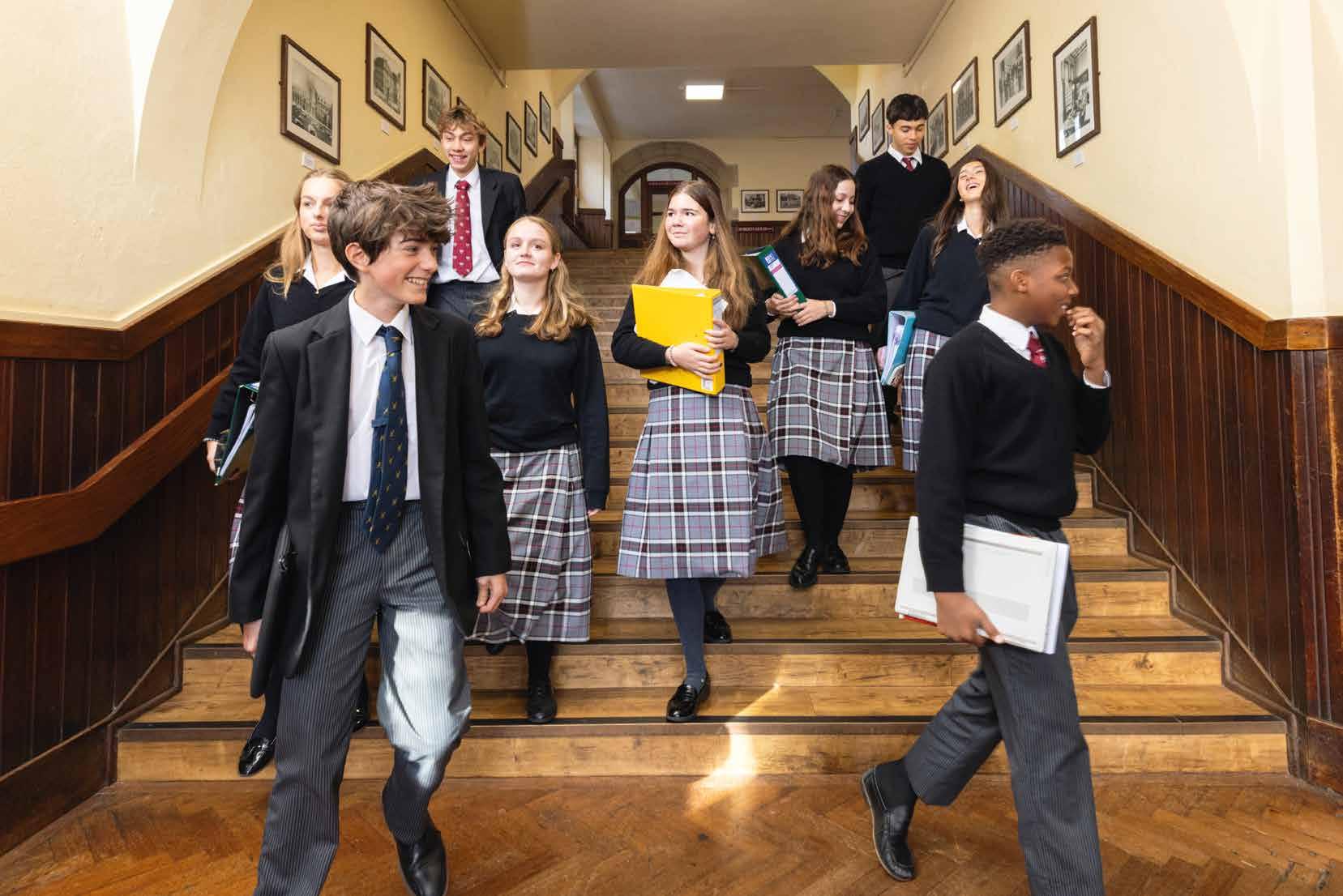
Leaders successfully promote a positive, reflective and purposeful culture shaped by the school’s Benedictine values. As a result, pupils behave courteously, listen respectfully to others and reflect thoughtfully on the non-material aspects of life.
Leaders demonstrate a deep commitment to inclusion.
Leaders prioritise pupils’ wellbeing in their decision-making.
Leaders are ambitious for the success of the school.
Pupils feel supported and uphold high standards of mutual respect and personal conduct.
Leaders understand potential risks to pupils’ welfare and put in place suitable measures to manage them.
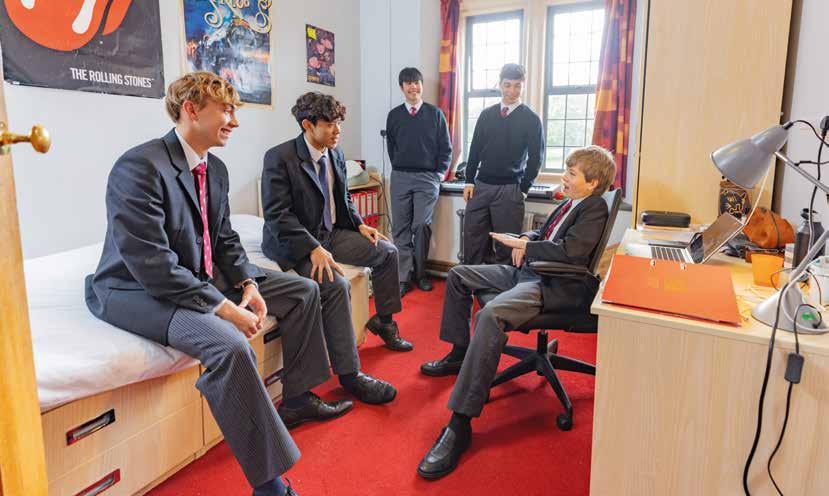
Boarders feel supported and benefit from a well-ordered boarding environment.
Leaders evaluate the school’s provision rigorously, identifying priorities for improvement.
Leaders maintain a broad, flexible and balanced curriculum.
The well-balanced curriculum includes a broad range of subjects, including GCSE, A-level and BTEC courses.
Leaders modify the established curriculum where possible so that it takes account of pupils’ interests.
QUALITY OF EDUCATION, TRAINING AND RECREATION
Staff give helpful feedback on pupils’ work and provide tailored support for pupils who require it. Pupils make good progress from their assessed starting-points, as indicated by their achievement in GCSE, A-level and BTEC examinations.
The school has effective systems for assessing pupils’ progress.
Leaders organise a stimulating programme of weekend activities for boarders, including visits to Bath, cinema trips, pony trekking, bowling and other sporting pursuits.
Teachers are highly knowledgeable. They use a wide range of good-quality resources to stimulate pupils in their learning. Leaders accurately identify and address the needs of pupils who speak English as an additional language (EAL) with specialist, targeted support.
The school provides a rich programme of recreational activity, including during boarding time, to develop pupils’ skills and interests.
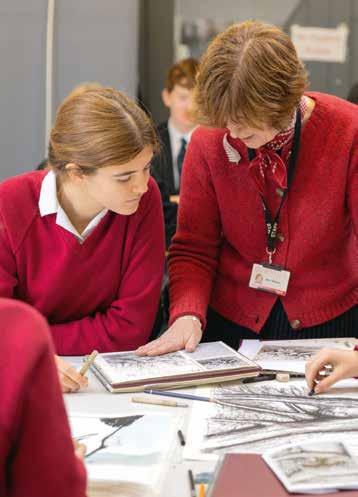
A broad range of activities deepens pupils’ aesthetic awareness, including in design and technology and art.
Pupils uphold high standards of conduct, supported by a suitable behaviour policy.
The school premises, including boarding houses, are well maintained.
Leaders make pupils’ mental health and emotional wellbeing a priority. They ensure that pupils receive a high level of care.
PUPILS’ PHYSICAL AND MENTAL HEALTH AND EMOTIONAL WELLBEING
Leaders prioritise pupils’ pastoral care and implement systems to help pupils feel well supported, develop selfesteem and grow in confidence.
The personal, social, health and economic education (PSHE) and relationships and sex education (RSE) programmes support pupils in developing self-esteem, establishing positive relationships and maintaining a healthy, balanced lifestyle.
The well-structured PSHE programme helps pupils to develop practical strategies for managing their wellbeing.
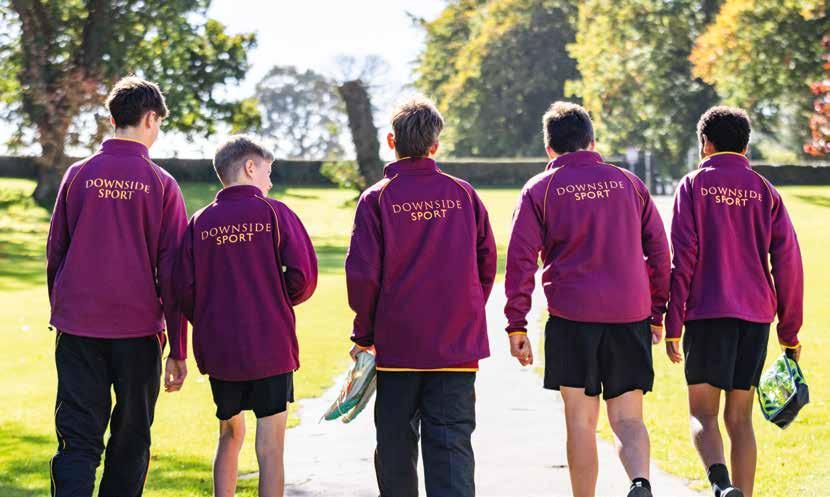
Prefects contribute positively to school life by promoting good behaviour, supporting their peers and modelling mature conduct for younger pupils. An inclusive and extensive co-curricular programme of team and individual sports further develops pupils’ agility, tactical awareness and movement skills.
Leaders promote pupils’ fitness and physical health through a carefully structured and well-resourced physical education (PE) programme.
Pupils are well informed about how to access help promptly from adults when they require it.
Leaders ensure that pupils learn to respect and value people from different backgrounds, cultures and religions, in keeping with the Benedictine philosophy of loving others for who they are.
Pupils extend their understanding of their broader social obligations by volunteering in the local community.
PUPILS’ SOCIAL AND ECONOMIC EDUCATION AND CONTRIBUTION TO SOCIETY
The school encourages pupils to develop a high level of social responsibility, reflecting the Benedictine imperative to serve others.
Older pupils help new pupils settle into school life.
Leaders prepare pupils effectively for life in British society.
The school provides effective economic and careers education.
Leaders provide meaningful opportunities for pupils to learn about a range of cultural and religious traditions. Pupils learn to recognise how people may differ from each other. As a result, pupils show high levels of tolerance and interact respectfully with their peers.
Pupils develop a high level of social awareness through opportunities to serve other members of the school community.
Through the curriculum, pupils learn about British values, democratic processes and the role of Parliament and the courts.
Staff refer concerns about pupils’ welfare promptly to designated safeguarding leaders.
Governors provide rigorous oversight of the school’s safeguarding procedures.
Records relating to safeguarding are thorough.
Governors place safeguarding at the centre of their oversight.
Leaders maintain robust systems to safeguard pupils.
Staff at all levels receive suitable training in safeguarding practice.