


















































rugs - lighting - accessories
interior design - wall art
accent furniture & more
editor Myles Dannhausen Jr.
copy editor
Sam Watson
creative director
Katie Hohmann
design associate Renee Puccini
sales director
Jess Farley
sales managers
Stephen Grutzmacher, Claudia Rudzinski
courier
The Paper Boy, LLC
distribution experts
Todd Jahnke, Dan Farrell, Kevin Lawell, Daulton Buckingham
office manager
Ben Pothast
public notiices & digital content coordinator Kait Shanks
chief technology officer
Nate Bell
contributors
Remy Carmichael, Craig Charles, Brennan Christianson, Myles Dannhausen Jr., Anders Erickson, Jess Farley, Tom Groenfeldt, Michael Hayes, Katie Hohmann, Azusa Inaba, Ellie Johnson, Betsy Lecy, Charlotte Lukes, John Mielke, Kevin O’Donnell, Dan Powers, Craig Sterrett, Sam Watson
publisher David Eliot
owners
David Eliot and Myles Dannhausen Jr.
Door County Living, Inc. 8142 Hwy 57, Baileys Harbor, WI 54202 920.839.2120
info@doorcountyliving.com doorcountypulse.com
Volume 24 Issue 2
35,000 copies (17,047 mailed)
Door County Living, celebrating the culture and lifestyle of the Door peninsula, is published five times annually by Peninsula Publishing & Distribution, Inc., 8142 Hwy 57, Baileys Harbor, WI 54202.
To order a subscription, please mail a check for $25 to Door County Living, 8142 Hwy 57, Baileys Harbor, WI 54202. If you would like to advertise, please visit doorcountymarketing.com.
© 2026 Peninsula Publishing & Distribution, Inc. All rights reserved. Door County Living is a Peninsula Publishing & Distribution, Inc. company. Locally owned. Locally minded.
The Seed-eaters
Birds you might see at your feeders
Corey Geiger pens odes to rural life
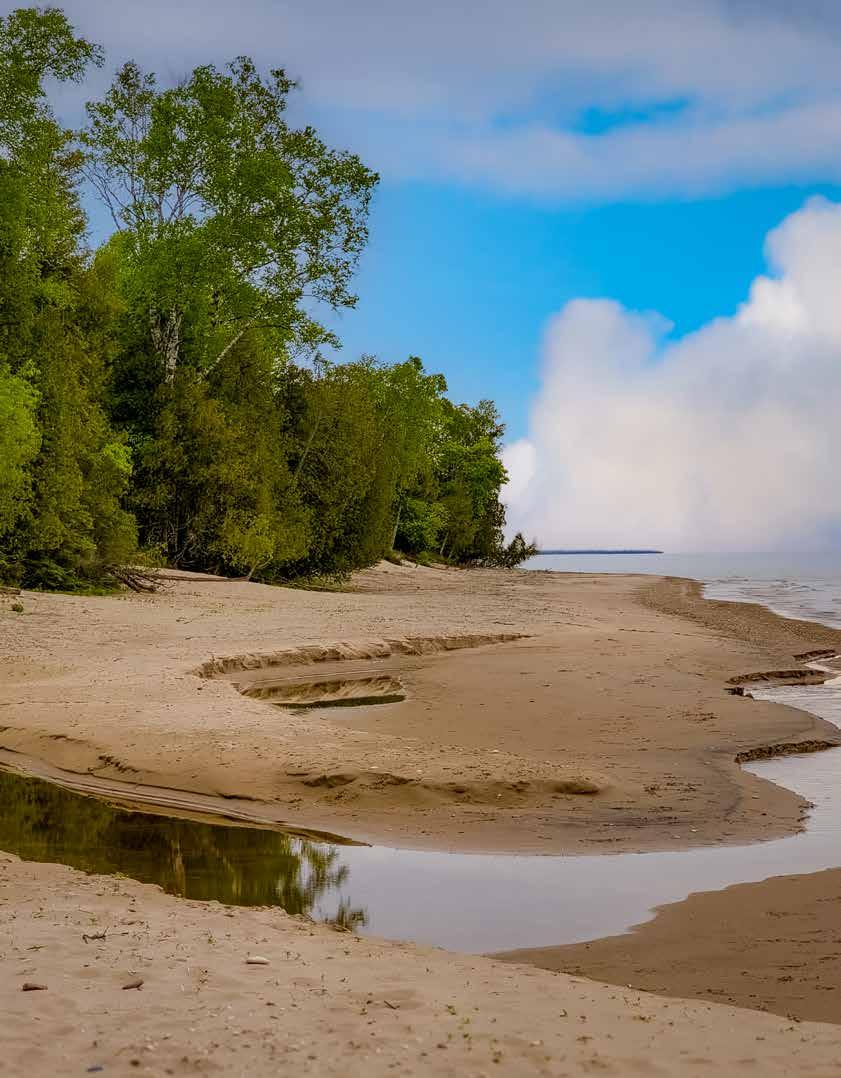
Family and Folk-Inspired Nuptials
All In on Ledge
Three wineries are leading the way in taking Wisconsin vino beyond sweet berries
The Moment It Clicks A chance encounter changed the future of musician Ricardo Castañeda
Ghost Courses
Had events fallen differently, the local golf scene would look much different
Exploring the remote beaches of the Door
the Pace The family and creature-friendly ethos of
The Mystery of Death’s Door Brennan Christianson digs into the origin stories of the dangerous passage that gave the peninsula its name
The Land Snails of the
One Formula, Three Classics














REMY CARMICHAEL is a photographer from Baileys Harbor, where she can often be found in the lake or chasing light with her camera.
CRAIG CHARLES has spent his life wandering amid the cliffs, woodlands and waters of the peninsula. He is the author of Exploring Door County and a retired teacher and a founding board member of Door County Trails.
BRENNAN CHRISTIANSON is the collections coordinator of the Door County Maritime Museum and Lighthouse Preservation Society Inc., where he has organized the collection and researched the history of the county for five years.
Writer and editor MYLES DANNHAUSEN JR. has been searching out stories for Door County Living since 2005. He lives outside Sister Bay with his wife and three children.
ANDERS ERICKSON is a Gibraltar High School graduate who has honed his cocktail knowledge behind the bar in Chicago for more than 20 years. He lives in Baileys Harbor with his wife, Azusa Inaba.
JESS FARLEY lives in Jacksonport with her son and dogs, Berndette and Elwood Blues. Feeding friends and family feeds her soul.
TOM GROENFELDT of Sturgeon Bay writes about financial technology for Forbes.com and The Financial Brand in addition to writing profiles of Door County artists for the Peninsula Pulse
MICHAEL HAYES is a writer, journalist and marketing entrepreneur transitioning to a full-time Door County resident.








KATIE HOHMANN is the creative director of the Peninsula Pulse and Door County Living. Her time outside the office is spent painting, paddleboarding and laughing in good company.
ELLIE JOHNSON is a graphic designer for the Peninsula Pulse. When she’s not designing, she can be found in the pool, out on a run or spending time with friends.
BETSY LECY is a journalism student at Northwestern University. A Gibraltar High School graduate and marathon finisher, she calls Fish Creek home.
Since the passing of her husband, Roy, in 2016, CHARLOTTE LUKES writes to fulfill his mission to help educate and inspire readers to learn, care for and protect our native species and the natural world.
JOHN MIELKE wrote for the University of Wisconsin-Parkside and at Fortune 500 companies. He and his wife, Patti, live on Rileys Bay and enjoy all Door County has to offer.
KEVIN O’DONNELL is an award-winning author and professional photographer, a YouTube creator and storyteller who lives in Clay Banks.
DAN POWERS is a founding member of Door County Published Authors Collective and author of two novels: How Long A Shadow and Stienboek
Outdoor enthusiast CRAIG STERRETT of Egg Harbor has more than three decades of journalism experience and a passion for the links.
SAM WATSON is an editorial assistant for the Peninsula Pulse. The UW-Madison grad lives in Baileys Harbor with her spouse and three cats – Desmond, Penny and Kermit.
I’m now that guy.
I never thought it would happen, though I have realized in recent years that I’m more of a drive-the-speed limit guy than the guy who racked up stacks of tickets and warnings in my youth. But on the drive up Highway 57 last week with my wife and kids, I slowed down to point out a deer and a couple of large herons.
My three children are six and younger, and I revel in the excitement they show when we spot deer, cows, horses or big birds in fields as we drive or bike around the peninsula. I was still driving slow and looking at birds when my wife gave me a “Myles” in that unmistakable, mildly annoyed/embarrassed tone.
“I think that truck behind you would like us to speed up,” she said.
She was right. I was still going 35 miles per hour in a 55 zone. Not too many years ago, this would have driven me nuts. I might have sped past someone doing this to me, gesturing angrily as I did. I wouldn’t have been wrong, and the jacked-up truck behind me wouldn’t have been wrong to honk or flail at me either.
But now, I also don’t mind slowing down. The last two days, my sixyear-old was able to bike the full two miles with me to summer camp at the Northern Door Children’s Center. We pass the neighbor’s llamas and ring the bike bell; we spot turkeys in the field of the old Logerquist Farm; and he shouts as we pass a rabbit. Then he nearly bears off the road when he spots a groundhog among the plants of a surely frustrated gardener on Maple Drive.
Had we been driving, we almost surely wouldn’t have noticed some of these animals, or the dead snake he wanted to scoop up to inspect. Slowing down opens your eyes, though I’m sure a few cars were pretty frustrated to get stuck behind us on the bike as well.
I also get frustrated, but with each year, I find myself trying to give those drivers the benefit of the doubt. Maybe that grandma has a toddler in the back seat that wants to see a heron. Maybe that cyclist is a grandfather trying to get exercise or a mom with a broken-down car who needs to get to work. Or maybe that driver is just going slow, taking in the scenery and enjoying the sunset.
One could do much worse, and it seems a rather odd thing to get worked up about.
We all feel rushed, squeezed for every second of every day. But those few seconds aren’t going to make or break our days. And it wouldn’t hurt most of us to slow down and see what others overlook on the side of the road, like we did on bikes or in the back seat of a car when we discovered Door County for the first time.

– Myles Dannhausen Jr.

AND DONATE TO PROTECT
AND DONATE TO PROTECT DOOR COUNTY’S STATE PARKS
DOOR COUNTY’S STATE PARKS
We asked, and you’re answering. Through the Door County State Parks Challenge, generous donations are making a big impact.
We asked, and you’re answering. Through the Door County State Parks Challenge, generous donations are making a big impact.
When you become a Guardian of the Greens, your donation doubles through a special parks challenge grant initiative. With $500,000 already committed, your gift can help boost the total impact to $750,000. All funds will be used to enhance our beloved state parks, and you can choose which State Park Friends’ group you’d like to support.
When you become a Guardian of the Greens, your donation doubles through a special parks challenge grant initiative. With $500,000 already committed, your gift can help boost the total impact to $750,000. All funds will be used to enhance our beloved state parks, and you can choose which State Park Friends’ group you’d like to support.
To learn more about how these funds are being used and to make a donation, scan the QR code or visit doorcounty.com/donate.
To learn more about how these funds are being used and to make a donation, scan the QR code or visit doorcounty.com/donate.

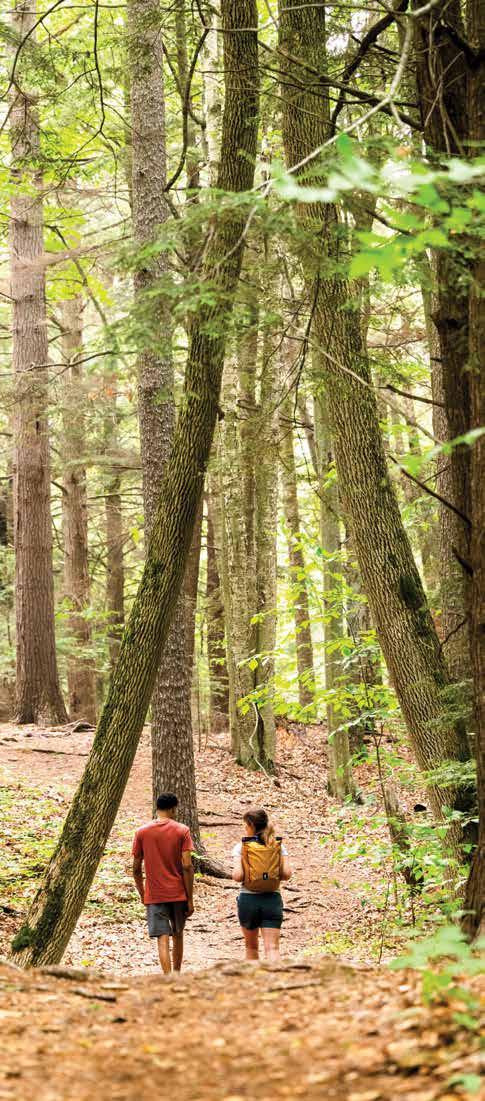
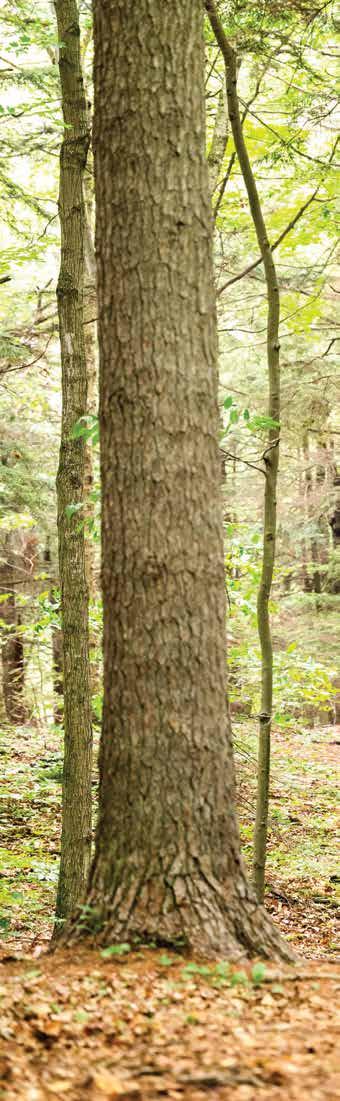
See how your generous donations will be used, and which parks are fully funded.
See how your generous donations will be used, and which parks are fully funded.
The Friends of Potawatomi State Park and park staff seek to update the old ski hill overlook near the Eastern Terminus of the Ice Age Trail by adding an open-air park shelter and improved parking.
The Friends of Potawatomi State Park and park staff seek to update the old ski hill overlook near the Eastern Terminus of the Ice Age Trail by adding an open-air park shelter and improved parking.
The Friends of Rock Island State Park are enhancing access to the upper great lawn with the addition of a new ramp and retaining walls that will serve as amphitheater seating.
The Friends of Rock Island State Park are enhancing access to the upper great lawn with the addition of a new ramp and retaining walls that will serve as amphitheater seating.
The Friends of Whitefish Dunes State Park, alongside park staff and Tribal partners, are renovating the Nature Center exhibits to better reflect the area’s Indigenous heritage and connection to the land.
The Friends of Whitefish Dunes State Park, alongside park staff and Tribal partners, are renovating the Nature Center exhibits to better reflect the area’s Indigenous heritage and connection to the land.
Challenge Complete! The Friends of Peninsula State Park announced the completion of the first phase of the new mountain bike trail system.
Challenge Complete! The Friends of Peninsula State Park announced the completion of the first phase of the new mountain bike trail system.
Challenge complete! Newport Wilderness Society, the Friends Group of Newport State Park, is using the funds raised to enhance the park’s dark-sky viewing area, improving accessibility and the overall visitor experience.
Challenge complete! Newport Wilderness Society, the Friends Group of Newport State Park, is using the funds raised to enhance the park’s dark-sky viewing area, improving accessibility and the overall visitor experience.


Shop locally with
Quality Pre- Owned Sales & Service Shop a wide range of reliable used vehicles, including a big selection of pre-owned Ford models. We also service all makes and models, including Fords! Shop locally with
Shop locally with
Family owned for over 100 years
Family owned for over 100 years
Family owned for over 100 years
HEISER CHEVROLET GMC
Built for Work , Weekends & Roadtrips Vehicles for your daily commute, or powerful trucks and SUVs to tow your boat , we sell and service Chevy and GMC vehicles for every Door County Drive.
HEISER AUTOMAXX CENTER



HEISER CHRYSLER DODGE JEEP RAM
HEISER CHRYSLER DODGE JEEP RAM
Your Adventure Starts Here
Your Adventure Starts Here
Whether you’re heading off-road, up north or across town, CDJR vehicles deliver capability, comfort and confidence for every season
Whether you’re heading off-road, up north or across town, CDJR vehicles deliver capability, comfort and confidence for every season

by MICHAEL HAYES
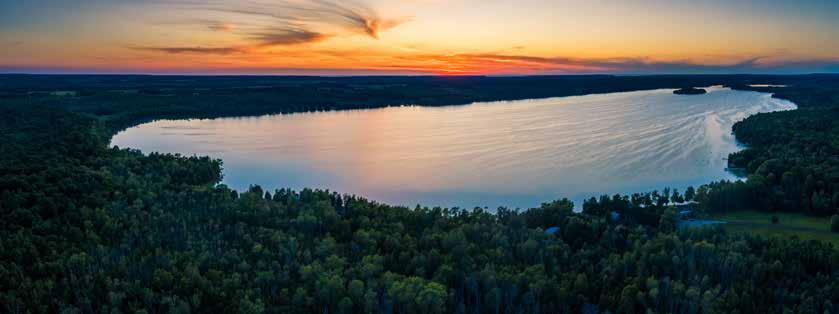
You can excuse the early settlers, indigenous peoples and cartographers for choosing simple, practical names for Wisconsin’s 15,000 lakes. Who had time for the poetic, or the whimsical, when crops needed harvesting and logs needed splitting? Is it any wonder the leading lake name in Wisconsin is Mud (116), followed by Bass (82) and then Long Lake (59)?
All of which makes the curious case of Kangaroo Lake, Door County’s largest inland lake just south of Baileys Harbor, even more intriguing. Not only is it the only Kangaroo Lake in Wisconsin, it is the largest of only two in all the United States. The Kangaroo, best known of Australia’s marsupials, was anything but a household name in the United States when the body of water named Kangaroo Lake first began appearing on various maps of Door County in the 1800s. A Kangaroo didn’t take its first giant leap on American soil until 1852, and another was reported to have escaped from a traveling show in California in 1859. It seems improbable that the Scandinavian, German and Irish families that first settled in the area would even have heard of this exotic creature, let alone laid eyes on one.
Common wisdom holds that the name must have originated from the lake’s
Kangaroo-shaped coastline. The resemblance won’t be apparent when you pull it up on Google maps. Yes, the northern end of the lake appears headlike, and the pudgy eastern shore has what appears to be stubby arms and pouch-like belly. Missing are the legs, giant feet and tail, left unformed when the glaciers that created it retreated about 5,000 years ago.
Researching the origins of this outlier name took me to the Wisconsin repository of local knowledge: the Coyote Roadhouse, home of the “Kanga” Reuben and longtime proprietor Carrie Graybill, who admits that tracking down how Kangaroo Lake got its name has proven elusive. “I don’t know if it’s credible or not, but what I’ve heard is that the Indians had been calling it ‘Kangaroo’ before the settlers arrived, before maps – but how is that possible?” she asked. “They couldn’t have heard of the Kangaroo so that’s not it.”
In Hjalmar R. Holand’s History of Door County, Wisconsin, The County Beautiful, published in 1917, he cites a U.S. Surveyor General’s 1836 map of Baileys Harbor that identified the lake as Cangaroo. Holand suggested that this imaginative cartographer was first to name the lake because of its topographic Kangaroo shape. But dig a little deeper. The name Cangaroo first begins appearing on nautical maps as early as 1825 – before most in the western world had even heard of the
mythical creature. The most plausible theory? That Cangaroo was the phonetic English interpretation of a word from the local indigenous people’s lexicon used to describe the lake. What the word meant in the languages of the Potawatomi or Menominee, the tribes most likely living in the area in the early 1800s, has been lost in antiquity.
One thing seems clear: that the indigenous peoples of either Door County, or the Guugu Yimidhirr, an Australian indigenous people who coined the name ‘Gangurru’ to describe the big, bouncing marsupial, were responsible for the name Kangaroo Lake.



DIANE TAILLON, OWNER/BROKER (920) 421-3272
diane@arborcrowneproperties.com

DIANE TAILLON, OWNER/BROKER (920) 421-3272
diane@arborcrowneproperties.com
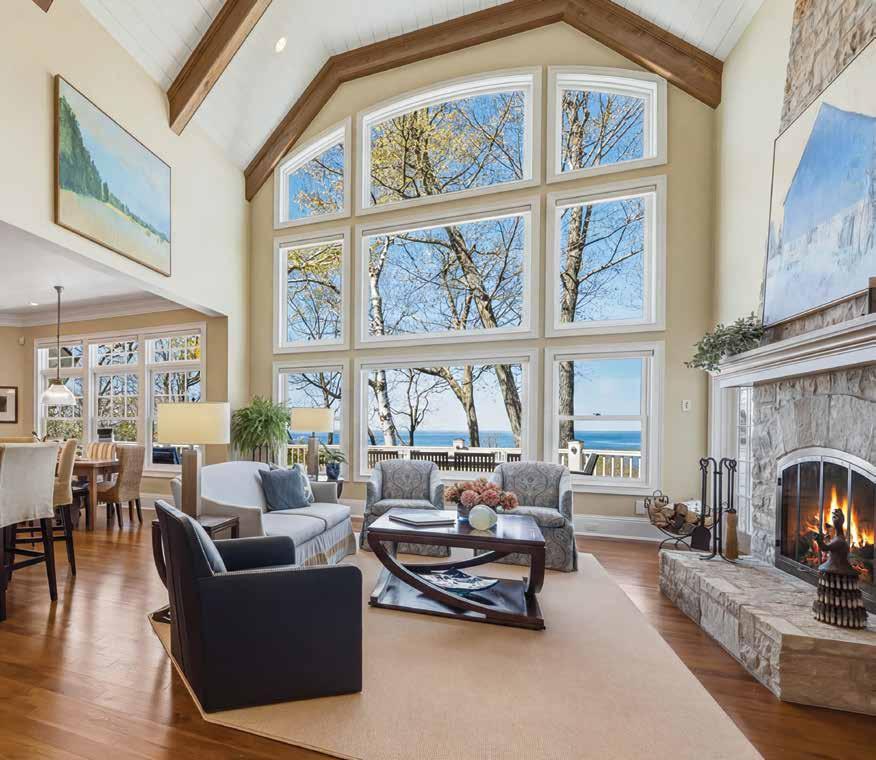
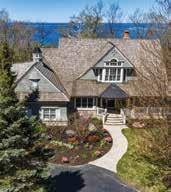
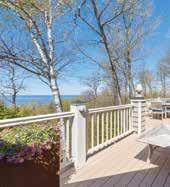
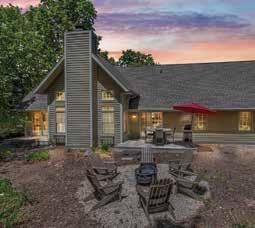
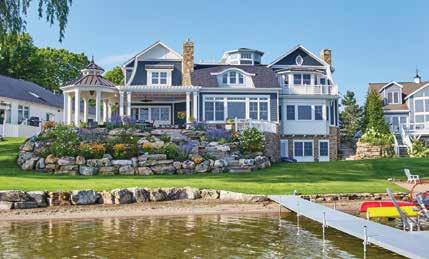
Meticulously designed and beautifully custom built, this private 5-acre bluff-top property is a once-in-a-generation legacy estate – just minutes from fashionable Fish Creek. Features include a two-story turret, large wrap around porch, oversized deck, cupola, and London-style clay pot chimney. Contact Diane for a personal tour.
Meticulously designed and beautifully custom built, this private 5-acre bluff-top property is a once-in-a-generation legacy estate – just minutes from fashionable Fish Creek.

9135 Gibraltar Bluff Road | Fish Creek, WI 54212 | $3,487,000 5 Acres | 4 Bedrooms | 6 Baths | 5,226 Sq Ft arborcrowneproperties.com Located off the lobby of the Hillside Waterfront Hotel, Ephraim
Features include a two-story turret, large wrap around porch, oversized deck, cupola, and London-style clay pot chimney. Contact Diane for a personal tour.


by MYLES DANNHAUSEN JR.
Someday, the drama will be a distant memory.
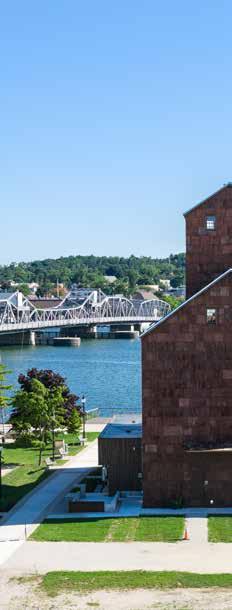
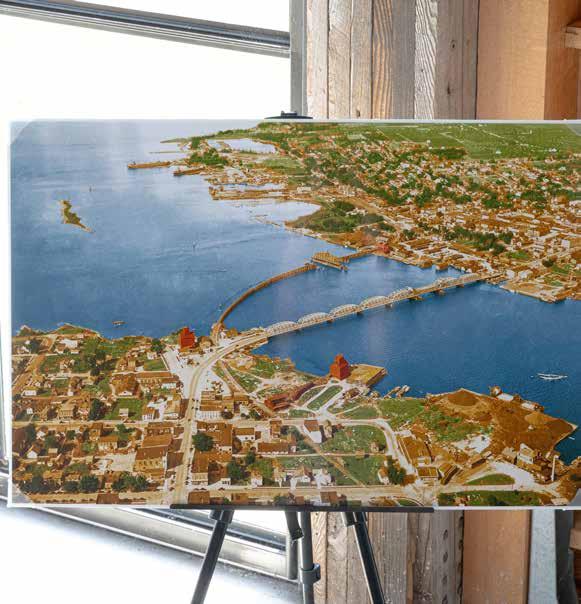
A new arrival to Sturgeon Bay will walk along the west waterfront promenade, past the Tug John Purves and the Door County Maritime Museum, and come upon the Door County Granary. Struck by the sight of the rust-colored facade
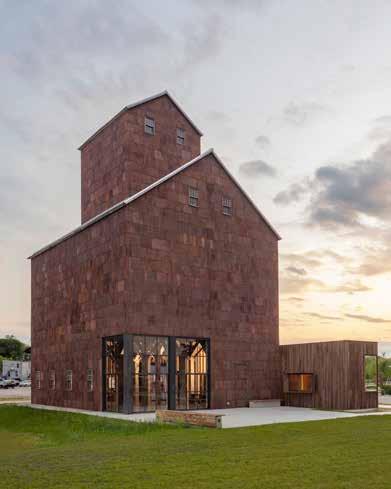
A celebration of the 125th anniversary of the granary is planned to coincide with Sturgeon Bay’s Harvest Fest weekend, Sept. 18-20, 2026.
Photo courtesy of LA DALLMAN Architects.
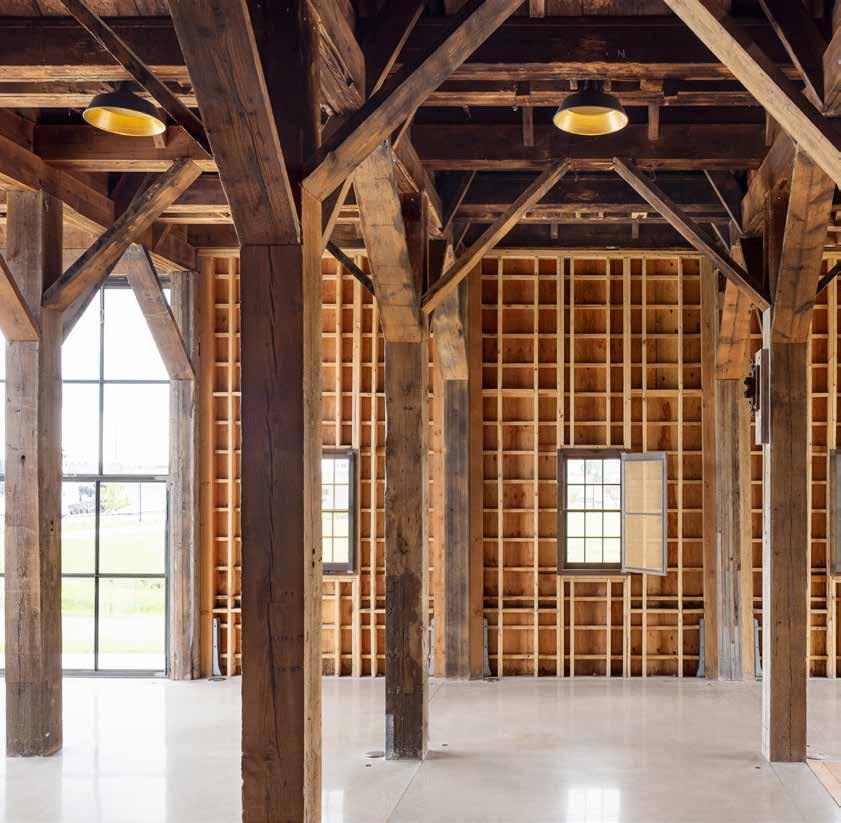
and corner of tall windows, they’ll walk inside, look up and inevitably ask –what is this place?
They won’t know that the city tried to tear it down or that the building was the lightning rod in a decade-long fight over the future of the city that pitted neighbor against neighbor.
The granary’s restoration was aided in part by a $3.3 million USDA (United States Department of Agriculture) Rural Development Community Facilities Grant, $3.175 million from individual donors and about $500,000 in other grants.
Instead, they’ll be struck by the questions raised by this symbol of agricultural history on the waterfront.
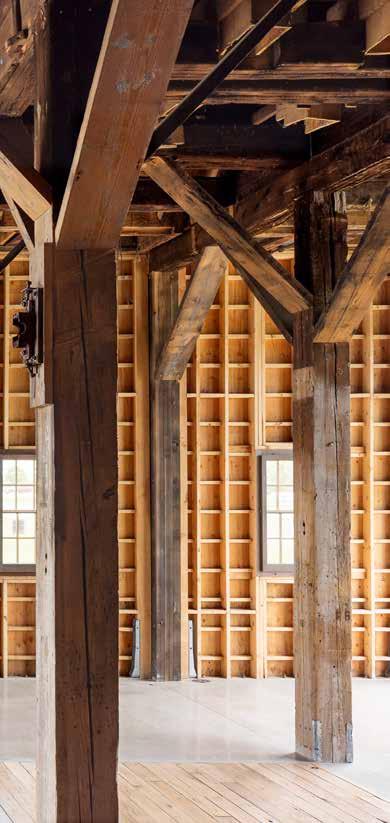
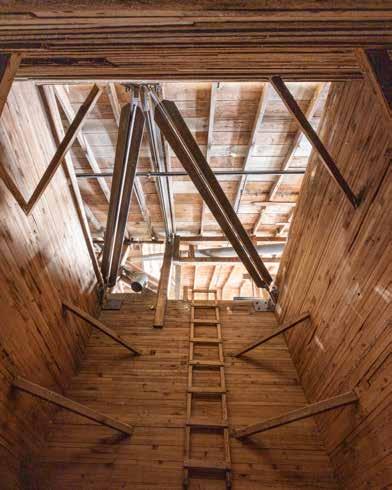
The Door County Granary reopened on Sept. 21, 2024, when the second phase of restoration allowed visitors to enter the first floor and get a glimpse of grain
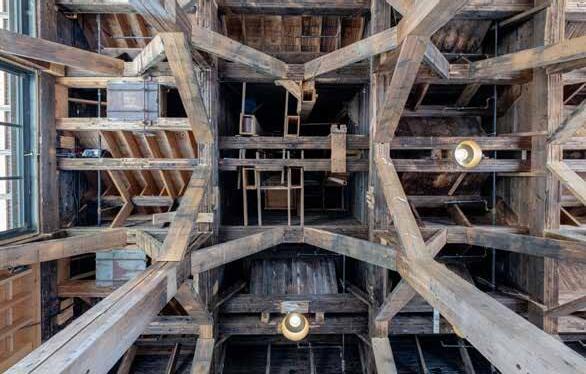
From inside the granary, one can look straight up into the system that would distribute grain from the upper bins. Photo by
Built: 1901, as the Teweles and Brandeis Granary
Reopened: 2024
Height: 75 feet
Hours: 10 am to 3 pm, Wednesday through Sunday
Address: 72 E. Locust Court in Sturgeon Bay
The granary offers guided tours and about 20 free programs throughout the summer. It is also available to rent for private functions and events.
The granary was constructed with more than 125,000 board feet of lumber.
“The mills were as much a social gathering as they were a business transaction.”
– Don Rudolph, farmer and historian
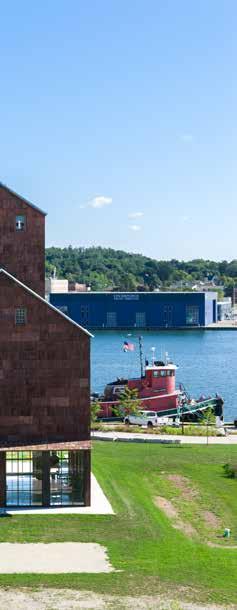
bins that were once filled with feed for local farmers. The place that once served as a social hub for the farming community became one once again. In its first full season in 2025, the free museum welcomed more than 8,000 visitors from May through October.
Nicole Matson, executive director of the Sturgeon Bay Historical Society, said the space is fulfilling all the expectations of its founding team.
“I think the visionaries were really spot-on that this would be a great public space,” Matson said. “Just as it always was when the farmers gathered.”
Those visionaries included Kelly Catarozoli, Laurel Hauser, Christie Weber, Beth Renstrom and Kelly Avenson, who fought to save the structure from the wrecking ball. James Dallman of LA DALLMAN Architects and Jeffrey Beane of Beane Engineering brought their ideas to life. Where some saw a blight on the waterfront, this group saw a vital piece of the community’s history that still had a story to tell.
“Everybody knows the cherries and the cherry train, but there was so much more agricultural history here,” Matson said.
The county’s last granary closed in 2025, but these structures were once part of what made a town in rural America – a church, a bar, a school and a granary. They were found in Sister Bay, Egg Harbor, Baileys Harbor, Sevastopol, Maplewood, Rosiere, Forestville, Brussels, Sturgeon Bay. But few people under 50 know the days when granaries were a centerpiece, a social hub.
Someday, the granary won’t be a symbol of one side or the other, but a symbol of the city as a whole, like the steel bridge, 3rd Avenue and the Maritime Tower. The stories of a city’s history will outlast the fight to save them.
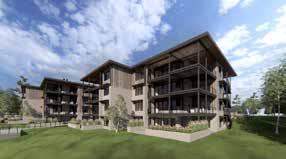
LUXURY CONDOMINIUM HOMES
7965 WI-42
Egg Harbor, WI 54209
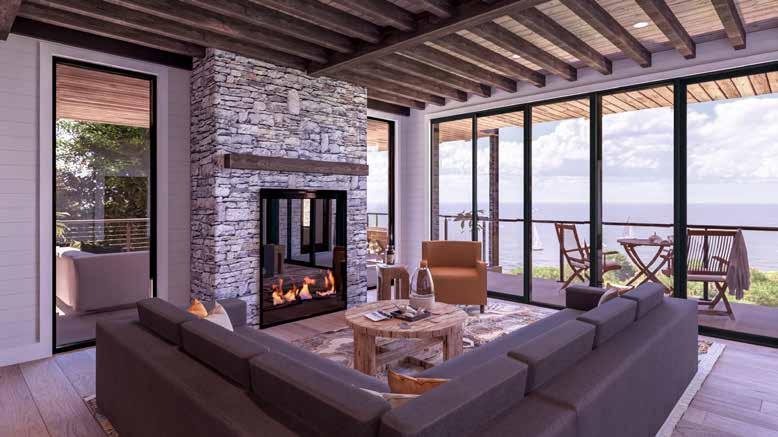
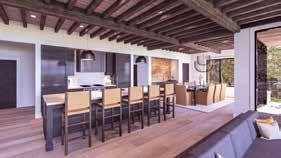
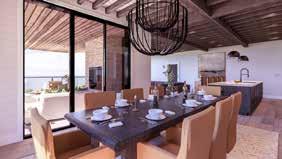
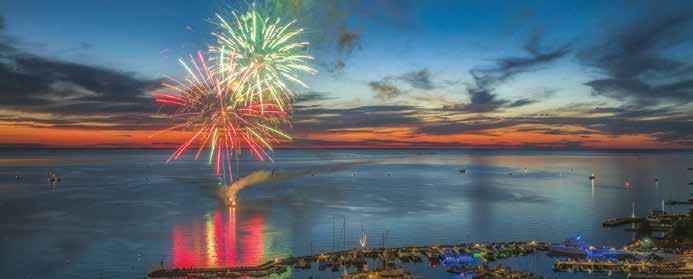
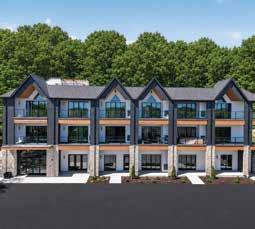
The Escarpment is Door County’s premier luxury residential development, featuring 16 private condominium homes. Each property offers pristine water views, spacious open-concept floor plans, expansive windows, Sub-Zero appliances, and Kohler fixtures. Private outdoor living spaces showcase the serene property, highlighted by a cliffside infinity swimming pool. Residents enjoy low-maintenance living with beautifully landscaped grounds and underground parking with storage. All units are single level layouts with elevator access on each floor. Perfectly situated in downtown Egg Harbor, enjoy strolling to the beach, marina, nearby shops, restaurants, and more!

by ELEANOR CORBIN
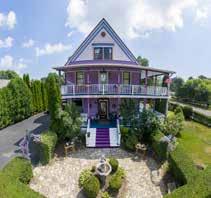
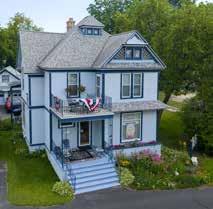
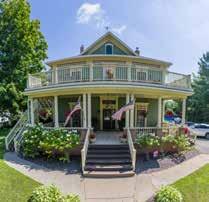
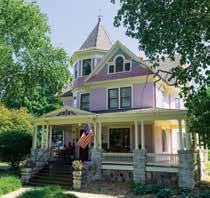
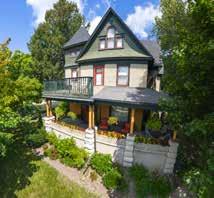
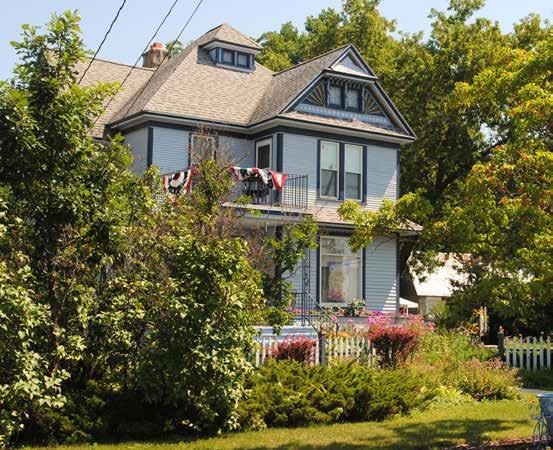
Dotted amidst downtown Sturgeon Bay neighborhoods are five brightly colored, historic homes nestled among beautiful gardens.
The homes have been transformed into bed and breakfasts, unique lodgings that provide intimate, personable stays tucked into treelined neighborhood streets where guests create connections with their hosts.
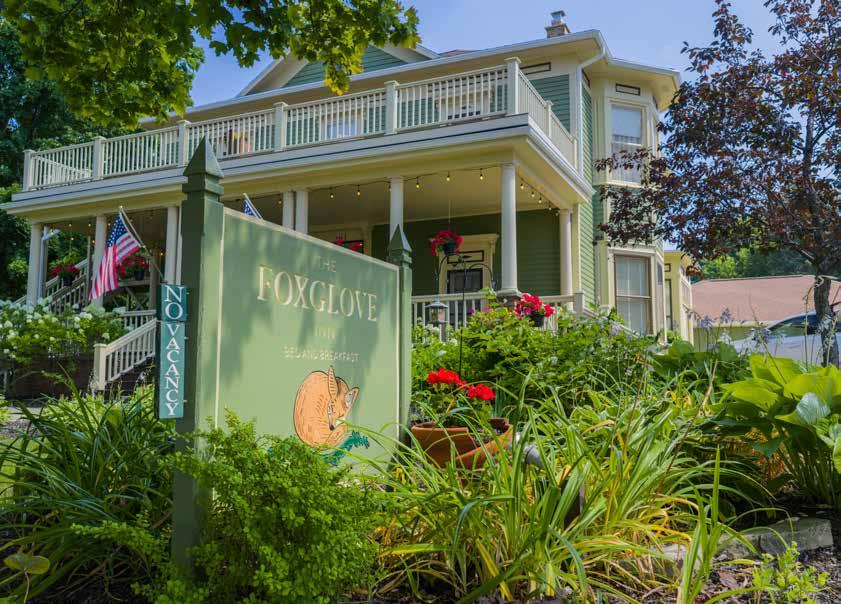
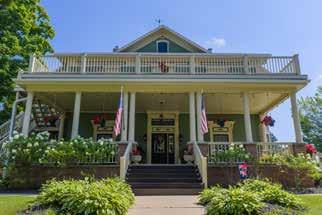
The Foxglove Inn
344 N. 3rd Ave.
Built: 1877
Breakfast in bed is on the menu every morning at the Foxglove Inn.
With seven suites and no common areas, innkeepers Allana and Gabriel Gonzalez have curated an experience for those looking for a bit more alone time.
“We give the people their privacy,” Gabriel said. “That’s one of the reasons why people like coming and staying here.”
The couple purchased the property in 2022 after they saw a for sale sign on the building during a visit to Door County and thought, “maybe we could do that,” Allana said.
“And here we are,” Gabriel added.
The Foxglove Inn is located in the historic house of Thomas Smith of the Leathem Smith Quarry. Over the years, the building has served as a single-family home and an inn.
Now, the two-story Victorian home is fully refurbished and open year-round, with a welcoming exterior and wraparound patio.
Garden Gate
434 N. 3rd Ave
Built: 1910
Innkeeper Robin Vallow’s journey to Door County started at an aspiring innkeepers’ seminar in Milwaukee. When Sandy Hoffa, owner of the former Grey Goose Inn in Sturgeon Bay, sent a letter to students seeking temporary help for her bed and breakfast, Vallow eagerly accepted.
During her month in Door County, Vallow came across the building she now owns.
“It was meant for me to be here,” she said. “I’ve been here 25 years and I still love it.”
Garden Gate Bed and Breakfast occupies a fourbedroom house originally built as the family home of Norwegian immigrant John Falk, who built several of the historic buildings in Sturgeon Bay’s downtown.
Vallow’s passion for her work can be seen in the B&B’s elaborate backyard garden.
“I am happy doing what I love right here in my own yard, with this beautiful scenery and all these wonderful guests who walk through my doors,” she said. “I can’t find something that’s going to make me happier.”
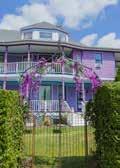
Pembrooke Inn
410 N. 4th Ave
Built: 1886
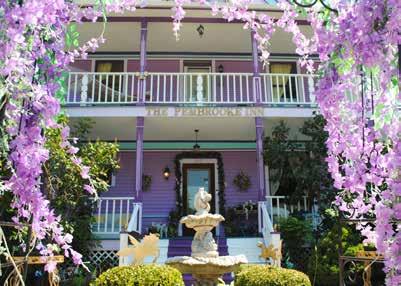
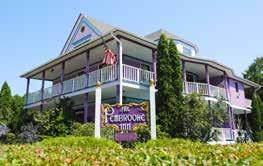
The Pembrooke Inn, in all its purple glory, is hard to miss. The paint job features seven colors in total, the number traditionally used in Victorian architecture, according to innkeepers Brett Goetsch and Carla Morgan.
The eye-catching exterior in their favorite color drew the couple to the home in the first place.
“We came up, saw it [the house] was purple,” Goetsch said – and that was that.
“We bought it that day,” Morgan said.
The three-story house was first built as the family home of Joseph Wolter, who founded Sturgeon Bay Shipbuilding and later served as mayor of Sturgeon Bay. Goetsch and Morgan have maintained much of the building’s history, retaining family photos and the original oak paneling in the foyer.
As a result, staying at the Pembrooke is like “stepping back in time,” Morgan said.
The inn was largely renovated by the property’s previous owner, Paul Billings, who named it after a small town in London, where he is from. Goetsch and Morgan have kept up the theme with suites named after other places in England, like Essex and Kensington, and common areas featuring the occasional Union Jack.
Scofeld House
908 Michigan St.
Built: 1902
Innkeepers Janet and Karl Bethke estimate that over half of the people who stay at the Scofield House bed and breakfast are returning guests.
“There’s a lot of people who like to come and see us, and they keep coming,” Karl said.
“We greet them as friends,” Janet said.
Perhaps it’s the Bethkes’ friendly faces and welcoming conversations that bring people back, or perhaps it’s the elaborate breakfasts they cook each morning. The menu alternates daily between sweets, like pancakes and scones, and savory options, like quiche and frittata.
“It’s been a lot of fun for me to work with Janet on breakfast and work on recipes that really taste good,” Karl said.
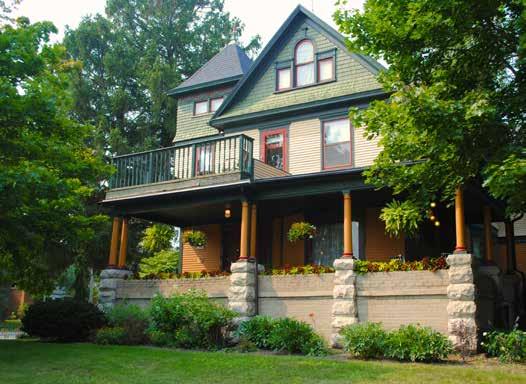
The name Scofield comes from the house’s original inhabitants, Bert and Augusta Scofield, who built it as a family home. Bert Scofield owned a hardware company in town and served as the mayor of Sturgeon Bay and the president of the Chamber of Commerce at various points.
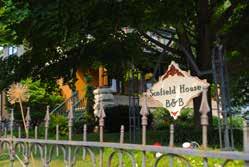
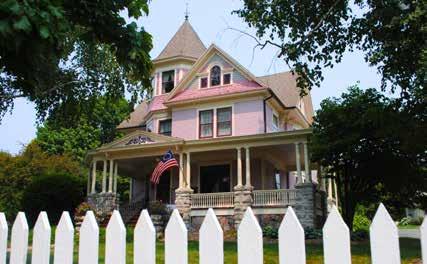
White Lace Inn 16 N. 5th Ave.
Built: 1903 (main house)
The White Lace Inn is the longest-running bed and breakfast in downtown Sturgeon Bay, having opened its doors in 1982. Some guests have been vacationing there for decades, according to innkeepers Bonnie and Dennis Statz.
“There are folks, 40 years, they’ve been coming here,” Dennis said.
The Statzes were living in Indianapolis, Indiana when they decided to shake things up. Dennis left his job as an engineer and the two began searching for a historic inn to take under their wing.
They searched several states for the perfect spot, settling in Sturgeon Bay in part for its extensive history.
Unlike many bed and breakfasts which are contained within one building, the White Lace Inn occupies four turn-of-the-century homes right next to one another, the earliest of which was built in the 1860s.
The second house acquired – the garden house – was moved onto the property from its original location, where the other three houses were already near each other.
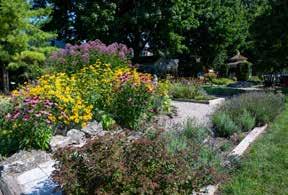
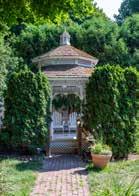
Connecting the buildings is a meticulously landscaped yard with benches, picket fences and a gazebo.

by KEVIN O’DONNELL
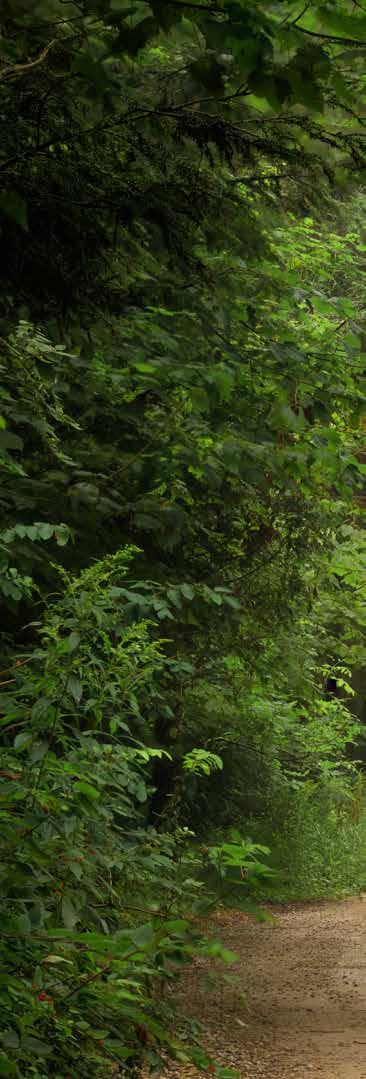
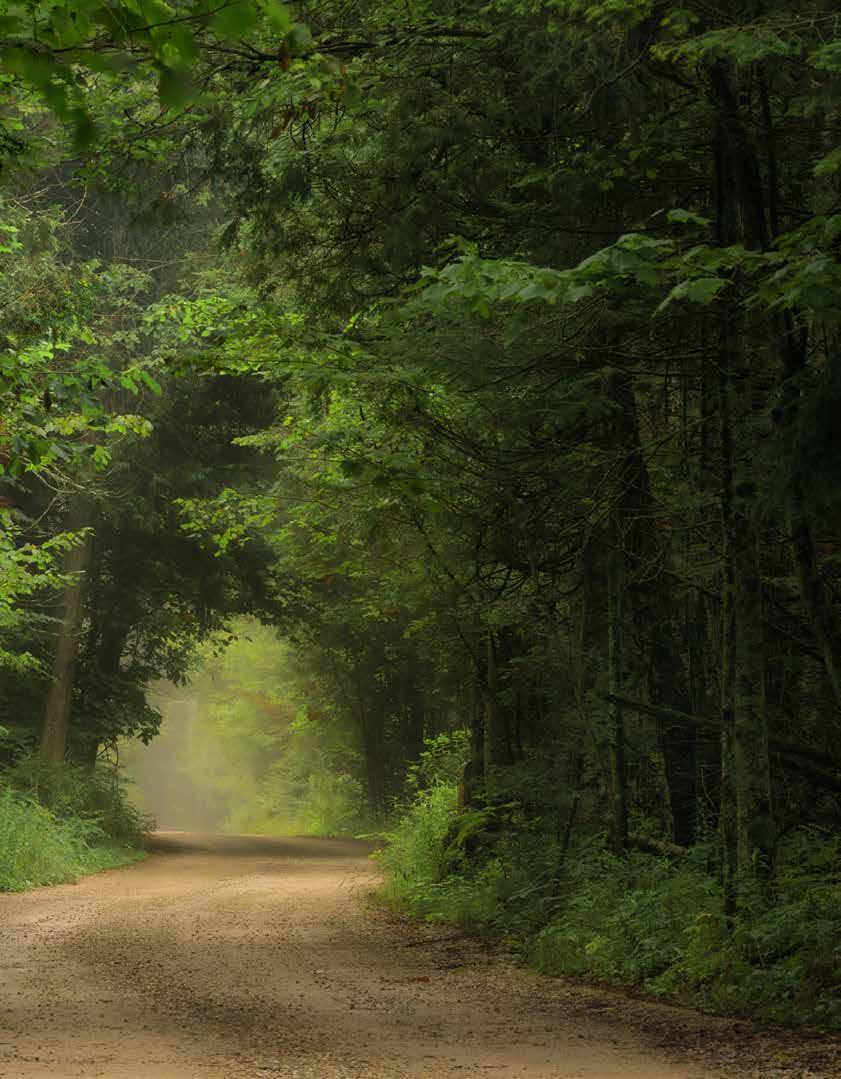
It lies cloaked beneath a natural arbor: a dark, serpentine corridor performing a delicate dance along the ridges and swales on the shores of Lake Michigan in southern Door County. It doesn’t appear to lead anywhere special. But its location and topography are precisely why it has been spared the hand of man.
Like Rome’s Appian Way – and perhaps as ancient – it is a portal to another time and well-worn over the last two millennia. Even without knowing its hallowed history, walking its mile alerts one’s senses to its significance. Its primitiveness is palpable and immediate and so unlike the less remarkable gravel lanes found atop the escarpment: the newly minted, the bulldozed and graded varieties in State Parks, land trusts, private communities and estates.
Unlike the other 98% of it that runs the length of the county, this mile-long relic – barely broad enough to accommodate the width of a single car – has, miraculously, never been paved. Absent utility poles and roadsigns, culverts and cottages, it remains an isolated lane in a procession of pathways that once connected native settlements like beads on a necklace. From its northern terminus near the tip of the peninsula, this passage descended – a femoral artery – fanning out to various points throughout present day Wisconsin.
Archaeological records confirm it was likely in use from the time of the Middle Woodland and Mississippian Cultures (200 B.C.-1500 A.D.).
Artifacts excavated from throughout the county at North Bay, Hein’s Creek and Whitefish Bay – place names familiar to the peninsula’s
occupants today – all lie along portions of this trail.
It stands to reason that more recent Pre-Colombian tribes of the Oneota Culture probably made use of it too, as did 17th-century French missionaries, trappers and explorers. Robert La Salle documented wintering along a ravine three miles to the south. In a park bearing his name at that site, these words embossed on a commemorative bronze plaque were added in 1930:
“Storm driven and without food, in October 1679 Robert LaSalle with fourteen men, on a voyage to explore the interior of America,
landed at this place. Expecting hostile Indians he erected a barricade.
But instead of war, the native peoples brought provisions and saved his life.”
Two hundred years after LaSalle, commerce flourished precisely where I took this photograph – once the settlement of Horn’s Pier. In those days, leathery, grim-faced jacks in lumber camps stripped these clay banks of their timber clear to the ground. Chiseled men on weary schooners crowded gunwale-to-gunwale and stem-to-stern aside makeshift piers awaiting vast cargoes of building material to deliver to the lake’s burgeoning 18th-century perimeter cities and towns.
I cherish this stretch of what many would consider nothingness; where the hypnotic mantra of the adjacent lake casts its spell and the timelessness of the road gives rise to an ensemble of ghosts within its mist – the mingling of their ancient voices swirling among the fetch of the waves. It is that story I have set out to capture, standing not on the road but enveloped in its antiquity. Or as celebrated Door County author Norbert Blei once remarked: “within it.”
Rain approaches. Songbirds pause. The woods grow dim – thick with the dewy scent of cedar. The fog, in slow-motion cadence, rises and falls – like the chest of a sleeping giant. I set the aperture on my camera wide to highlight the softness of the day, the edges of the leaves and the subtle glow of the lateafternoon light diffused through the trees. I compress the scene, placing the shadowy bend of the lane near the center of the frame, an invitation to the viewer’s eye and curiosity as to what secrets the road may yet confess. Gently activating the shutter, I am once again reminded of what Norbert Blei had to say about the threat to the county’s original roads:
“I have placed my faith in this gravel road for it has a life, a history, and a language all its own and speaks to me in summer green, autumn gold, and winter white.”
This essay was originally published in Kevin O’Donnell’s book, Behind the Door: Profiles of A Peninsula, available at kevinodonnell.photography.





























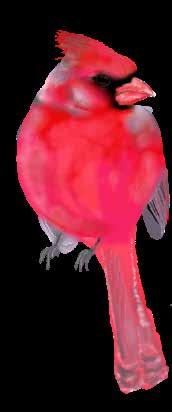
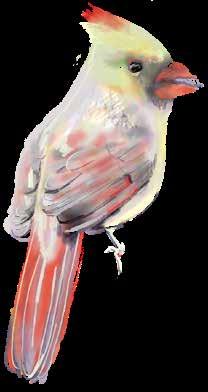
The female cardinal has mostly brown plumage except for her red crest and subdued red in her
by CHARLOTTE LUKES
illustration by KATIE HOHMANN
Many common bird species visiting our feeders are seed-eaters. That includes buntings, cardinals and grosbeaks as well as finches. All have heavy coneshaped beaks, which work well to crack the shells of seeds.
Most people who feed birds enjoy seeing the cardinals in their yards. These brilliant scarlet birds are non-migratory, remaining here all year.
When my late husband, Roy, and I lived in The Ridges’ Upper Range Light, we would turn out the kitchen lights at dusk in the winter and sit by the windows overlooking the bird feeders. During late November of 1975, with a good coating of snow on everything, we counted 20 cardinals, 12 males and 8 females, all there at the same time at dusk, getting their supper before retiring into the evergreen trees for the night.
We thought this record number was the result of a very good breeding season. Many of them may have been the young hatched the past summer.
Northern cardinals have one of the longest nesting seasons of any bird except the mourning dove. Both species can begin their breeding season as early as March and continue until September.
Nearly 44 years ago, we moved into our new house, which is built on high ground in a deciduous woodland. Our feeders were placed so that we could see the birds from our second-floor dining area, but no cardinals would come to them. The habitat was too open with very few conifer trees.
We planted 500 spruce trees a year after buying the property, and about 20 years later, we had an occasional cardinal grace our yard. It was still too open for them to nest here, but a couple did find the feeders in winter.
Grosbeaks have the perfect name, meaning large beak. Roy was a federally licensed bird bander for many years. When a grosbeak caught his finger in its beak, it would not let go!
The edges of grosbeak bills are razorsharp and overlap slightly like scissors. That makes them perfect at slicing into sunflower seeds to extract the tasty kernel inside.
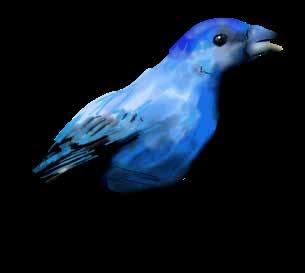
Grosbeak species include the blue, black-headed, evening, pine and rosebreasted. The blue grosbeak nests throughout the South, up into the Dakotas and down to Mexico.
It is entirely blue with black feathers surrounding the beak and brown wing bars. Our indigo bunting looks similar but is an inch shorter with a smaller bill, no black around the beak and no wing bars.
We saw a black-headed grosbeak while visiting Teddy Roosevelt National Park in North Dakota. They breed throughout the West into Canada and Mexico.
This bird eats monarch butterflies in the Mexican forests, despite the butterfly being poisonous to most other creatures. Grosbeaks eat them in eight-day cycles to give them time to eliminate the toxins.
Evening and pine grosbeaks are sometimes visitors to our area in winter and nest in conifers to the north. Roy
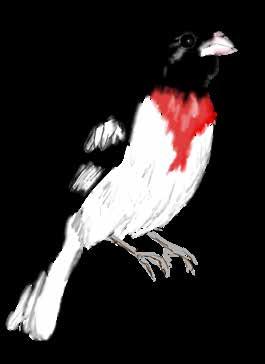
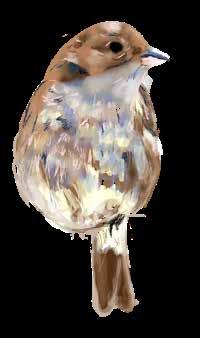
An “after second year” male rose-breasted grosbeak has an entirely
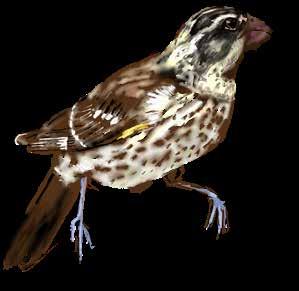
This is a female rosebreasted grosbeak, with brown and white plumage and a yellow feather sticking out from under her wing.
and I saw evening grosbeaks in the Upper Peninsula of Michigan in July one year. Pine grosbeaks are circumpolar and breed almost up to the Arctic.
Male buntings, bluebirds and blue jays actually have no blue pigment in their feathers. Instead, there are special structures in their feathers that reflect blue light to our eyes. If you find a blue feather molted from one of these birds, hold it up towards the sun, and you will see that it is actually a gray-black color.
Our favorite is the rose-breasted grosbeak. It has nested in my woodland every summer that I’ve lived here. Its musical song is a delight to hear in the trees around the front yard.
I look forward to seeing the first male on the feeder in spring. My record of arrival dates runs from April 27 to May 6.
There may be a dozen grosbeaks eating together on the platform feeders during the first two weeks of May. Then most leave to find nesting territories, and I’ll see only about three pairs here for the rest of the summer.
When Roy banded the rose-breasted grosbeaks, it was easy to tell the sex of the immature birds. Once rosebreasted grosbeaks fledge, they all appear like the female with mostly brown and white plumage.
However, if you see the underside of the wing, you can tell male from female. The male has pink feathers, and the female has yellow feathers.
One unusual summer bird related to the cardinal group is the dickcissel. It nests in the southern half of Wisconsin and occasionally may breed in Door County.
They favor grasslands, and we’ve seen them in some of the fallow fields in the central part of the county. When it’s warmer than normal, we can find them in several meadows up here.
Years ago, we had a huge fenced-in vegetable garden in the field west of our home. We planted a patch of raspberry bushes, and the female indigo bunting chose to build her nest in them.
The gorgeous male buntings sing as they sit at the top of the highest
tree. They have no blue pigment in their feathers, just like bluebirds and blue jays. Instead, there are special structures in their feathers that reflect blue light to our eyes. If you find a blue feather molted from one of these birds, hold it up towards the sun, and you will see that it is actually a gray-black color.
One bunting which we enjoyed seeing in Florida was the painted bunting. Look it up in your field guide or online, and you may agree that this bird’s colors look like it was designed by a committee.
We had an immature male painted bunting fly into our garage one November day when we were cutting and stacking firewood. I took a photo of it before Roy released it, and it still stands as a November record in Wisconsin’s bird list.
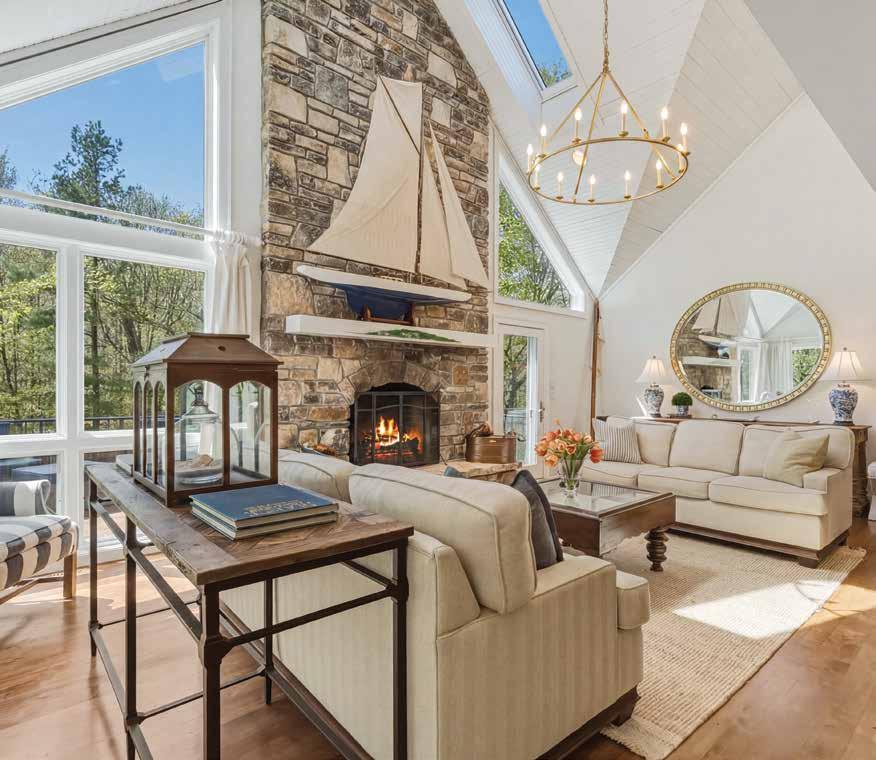
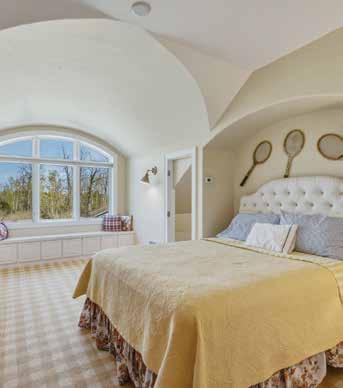
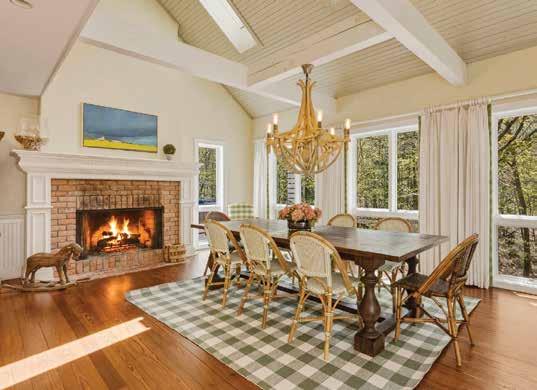
10525 Stock Lane | Ephraim, WI 54211 | $2,497,000 5 Acres | 5 Bedrooms | 5 Baths | 5,176 Sq Ft
DIANE TAILLON, OWNER/BROKER (920) 421-3272
DIANE TAILLON, OWNER/BROKER (920) 421-3272
diane@arborcrowneproperties.com
diane@arborcrowneproperties.com
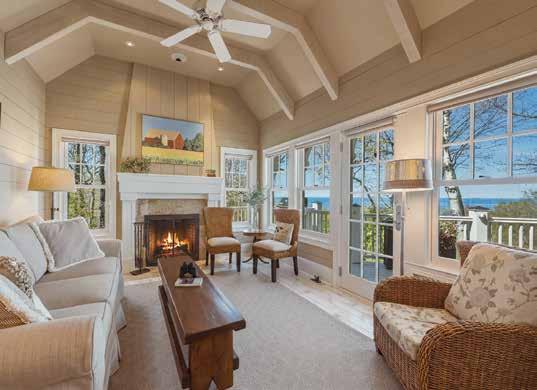
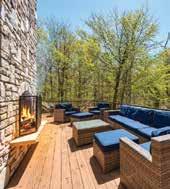
Relax in Hamptons style in this meticulously maintained cedar and stone residence that is professionally decorated and designed for effortless entertaining.
Relax in Hamptons style in this meticulously maintained cedar and stone residence that is professionally decorated and designed for effortless entertaining.
Furnished, turnkey, and centrally located – this property include an 1800s settlers cabin and an elite rental history. Contact Diane for a private showing.
Furnished, turnkey, and centrally located – this property include an 1800s settlers cabin and an elite rental history. Contact Diane for a private showing.
arborcrowneproperties.com
Located off the lobby of the Hillside Waterfront Hotel, Ephraim
Located off the lobby of the Hillside Waterfront Hotel, Ephraim
A Family & Folk-Art-Inspired Celebration on the Bay

Amagazine on stands now!
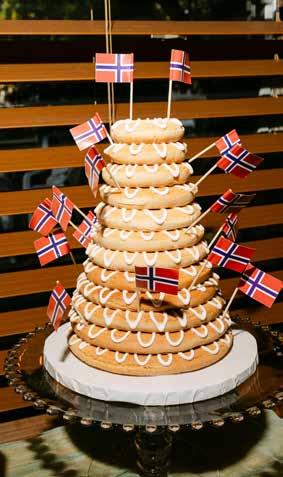
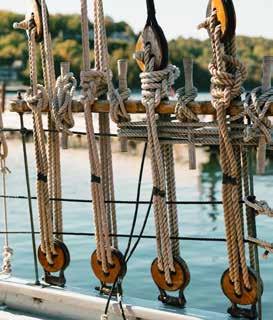
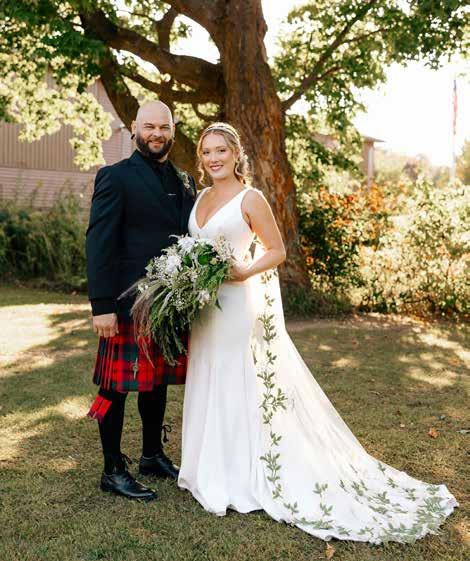
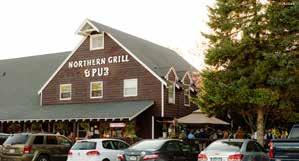
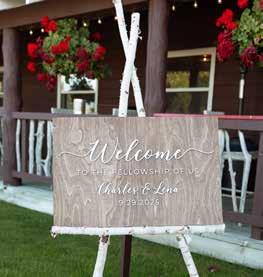
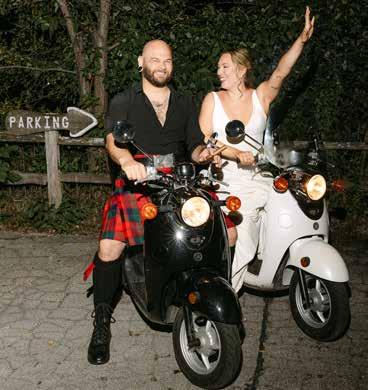
pair of locally rooted hospitality experts, Lena and Charlie, tied the knot in a true -to-form Door County way: saying “I do” aboard a sailboat in Sister Bay and reciting their personal vows atop Al Johnson’s grassy roof. “We knew we wanted a wedding that was deeply rooted in our heritage and Door County,” said Lena. “Charlie’s dad was the Gibraltar band teacher for many years and my maternal grandparents owned Sister Bay Cafe and paternal grandparents own Bayside Tavern. My parents, Ron and Lisa, own Northern Grill and Charlie and I are working on taking it over.”
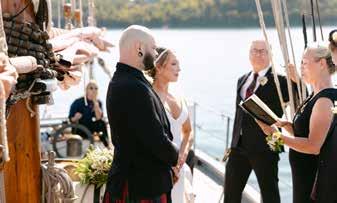
Once planning began (after Lena popped the question to Charlie) they agreed on everything from location to the tone of the event, but being so ingrained in the community made it hard to make decisions. “Once we met with Rachel (of Pink Door Events) and brought her on board, it was smooth sailing.” When asked why she would recommend getting married in Door County, Lena said “because it offers natural beauty without pretense, space to slow down and a deep sense of meaning. Getting married here isn’t about spectacle. It’s about honoring place, people and a life rooted in something real.”
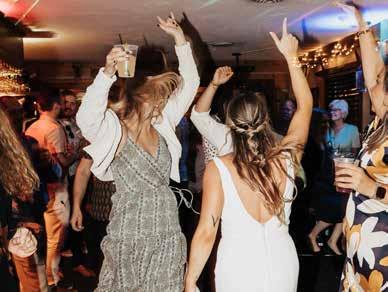
The couple wanted a Lord of the Rings inspired, earthy and warm theme to the event. “It helped having the reception at Northern Grill because we both love it there so much,” said Lena. “It’s warm and welcoming and we wantd the guests to feel that.”
“A fun moment was taking our mopeds to our apartment which was only a street down from our reception venue and we changed our shoes, cuddled our cat for a moment and just took a second to be alone,” said Lena. “It was so nice to be able to do that.”
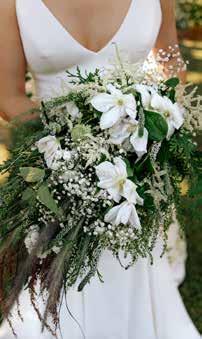
“Keep it simple! Door County has plenty of beauty and magic to propel your whole wedding. You don’t need to stress about the little details because the location is enough,” said Lena.
The ceremony ended with a handfasting ceremony which is a tradition where a couple’s hands are bound together with cords or ribbons during their wedding ceremony to symbolize their union, commitment and the joining of their lives and families.
VENUE: Sail Door County, Northern Grill & Pub
PHOTOGRAPHY: Roost & Harbor Photography
PLANNER: Rachel at Pink Door Events
CATERING: Brad Lindenberg & Isaiah Erickson
HAIR & MAKEUP: Blush Bridal
FLORALS: Flora Special Occasion Flowers
MUSIC: DJ Brawny



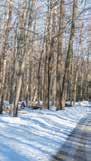


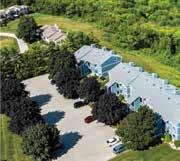

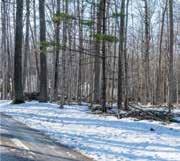


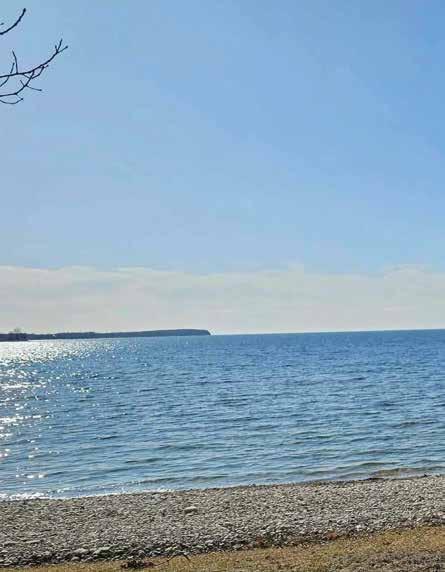
These beaches offer beauty and adventure
Many exhale the moment they pass the Welcome to Door County sign. Others don’t feel that sense of relaxation until they cross the bridge or get on the ferry. And for some, even Death’s Door isn’t removed enough; only a journey to the most remote of the peninsula’s many beaches will achieve that final stage of R&R.
Here are some of the best spots for a tucked-away beach day.
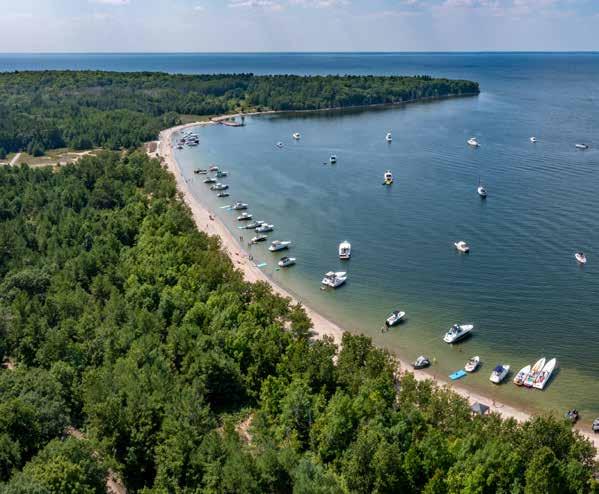
North Beach
Chambers Island
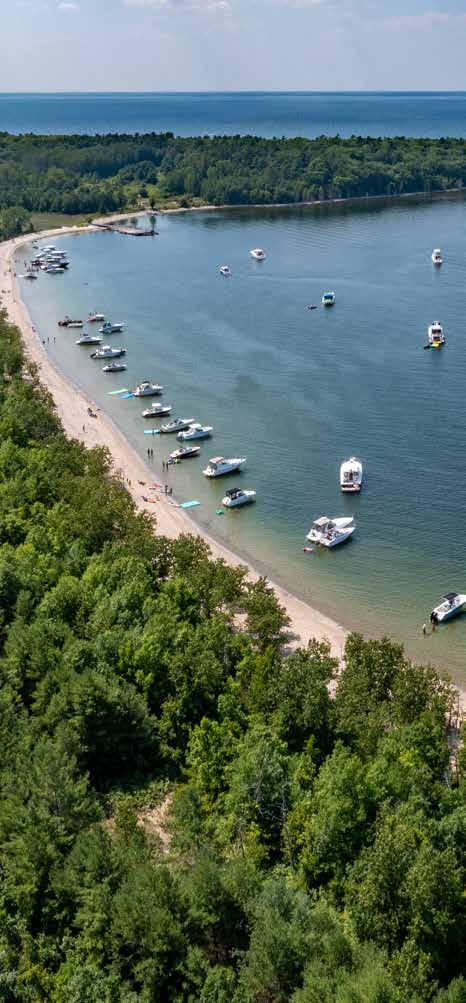
Technically, only a short stretch of the beach on the north end of Chambers Island is public, but on a July Saturday, you’d never know it as a regatta of boats drop anchor off the shore. Some venture the 7 miles or so from Fish Creek to avoid the summer crowds; others travel the 11 miles from Marinette to find them. An afternoon relaxing here will have you dreaming about island life.
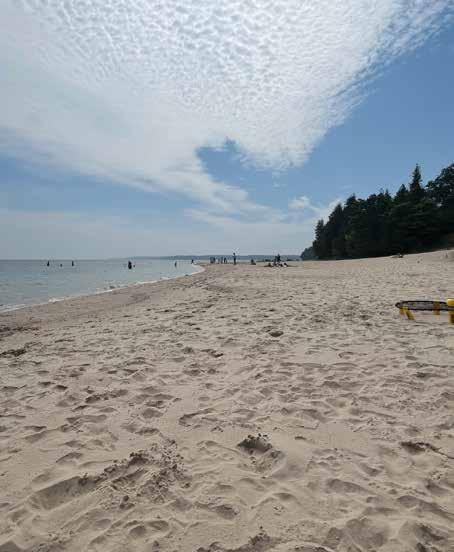
Rock Island Beach
Rock Island State Park
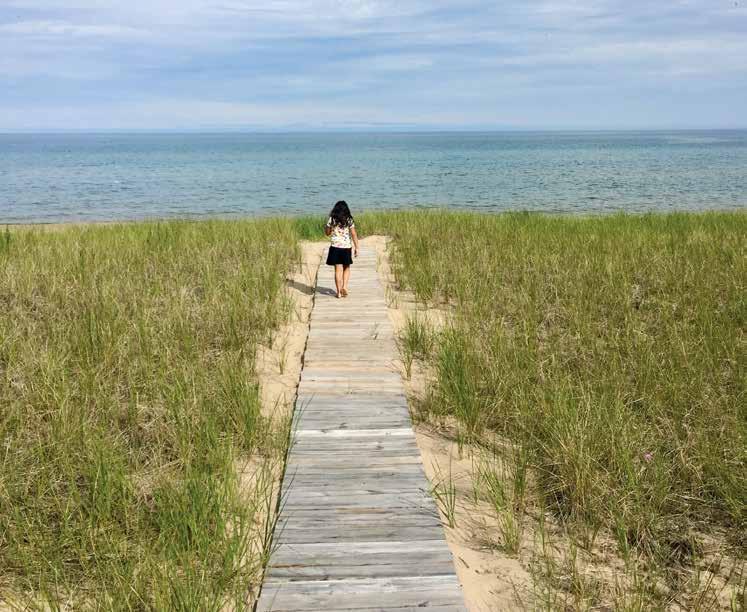
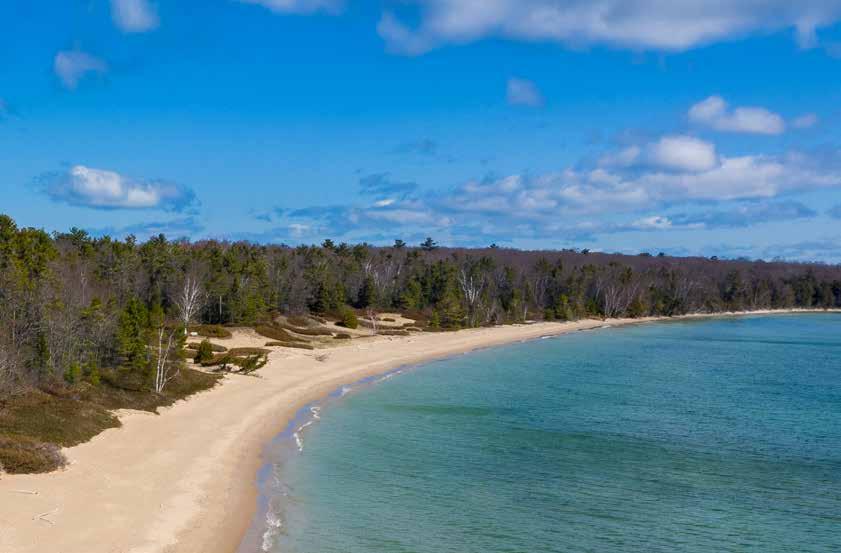
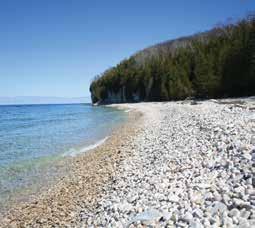
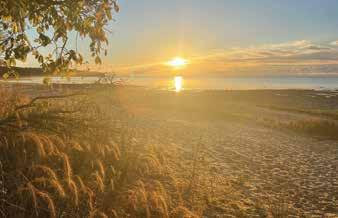
It takes two ferry rides just to get to Rock Island. Once there, you’ll have to hike across the island to the north side to get to the most remote beach of them all. It’s a journey, but one with a stunning reward. A mostly empty, half-mile stretch of sand stretches out before you, and the seemingly endless waters of Lake Michigan could easily trick you into thinking you’re on the Atlantic Coast.
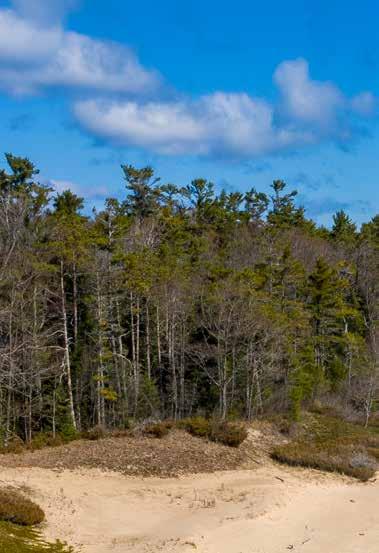
Newport State Park
This 1.5-mile stretch of sand beach at the northern end of Newport State Park offers plenty of space to get away, even on its busiest days. When lake levels are low, the beach doubles in size, leaving plenty of room to laze an afternoon away with water as far as the eye can see. And unlike other remote beaches, the only boating traffic you’re likely to see here is lakers or commercial fishing boats far into the distance.
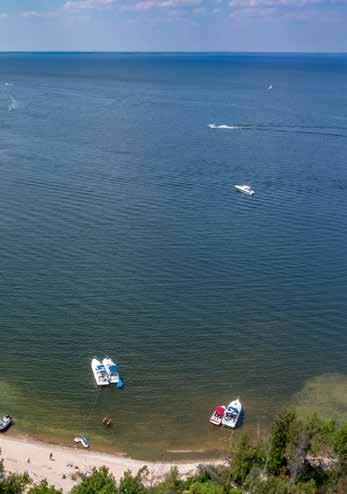
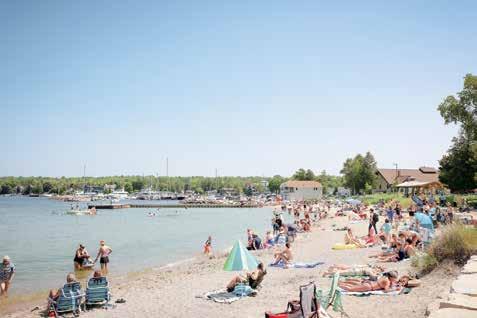
Feel free to skip the rocks at Schoolhouse Beach – just don’t try to take them with you.
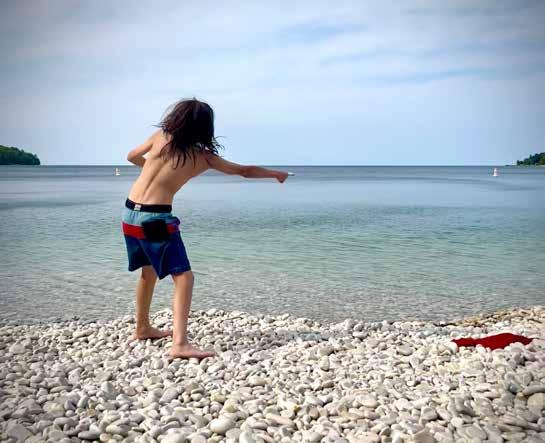
No longer a secret, Schoolhouse Beach is a horseshoe of smooth stones and cool waters on the north end of Washington Island. It’s a great morning recovery tool if you spent a little too much time at Nelsen’s Hall or Middle Bar the night before, and a must-dip for many mainlanders making the trek across Death’s Door. Just don’t try to walk off with any of the stones –the infraction can earn you a $250 fine and the scorn of the Islanders.
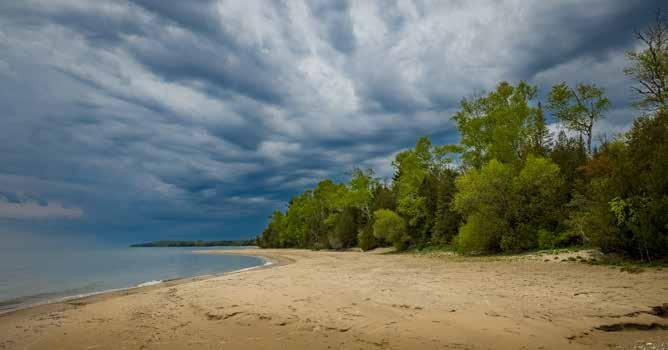
For those who venture to Southern Door, a little-known stretch of pristine sand beach at the end of Hornspier Road is known to locals as Paradise Beach. Visitors drive past Clay Banks with nary a thought (and residents like it that way), but you won’t regret checking out this beach on the lakeside that’s part of several preserved shoreline areas between Algoma and the Sturgeon Bay Ship Canal.



ach summer, hundreds of top high school musicians from around the Midwest and the country come together at a former dairy farm outside of Egg Harbor.
There, at Birch Creek Music Performance Center, students commit to a musical immersion program that challenges them, inspires them and ultimately gives them clarity in their study of music.
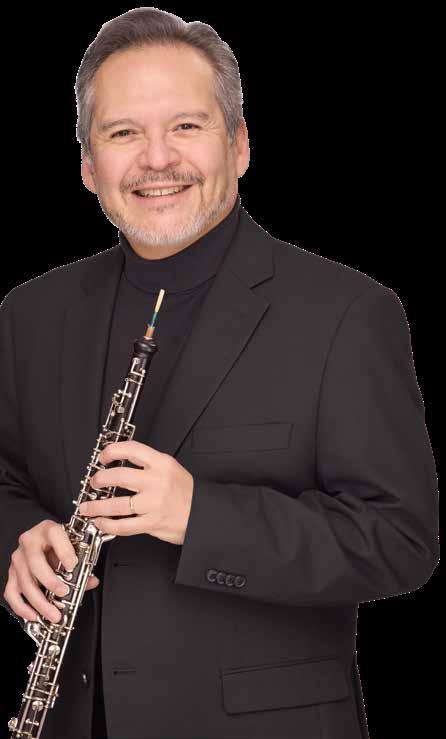
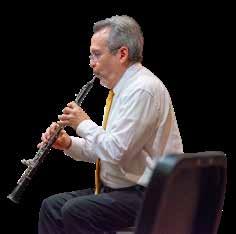
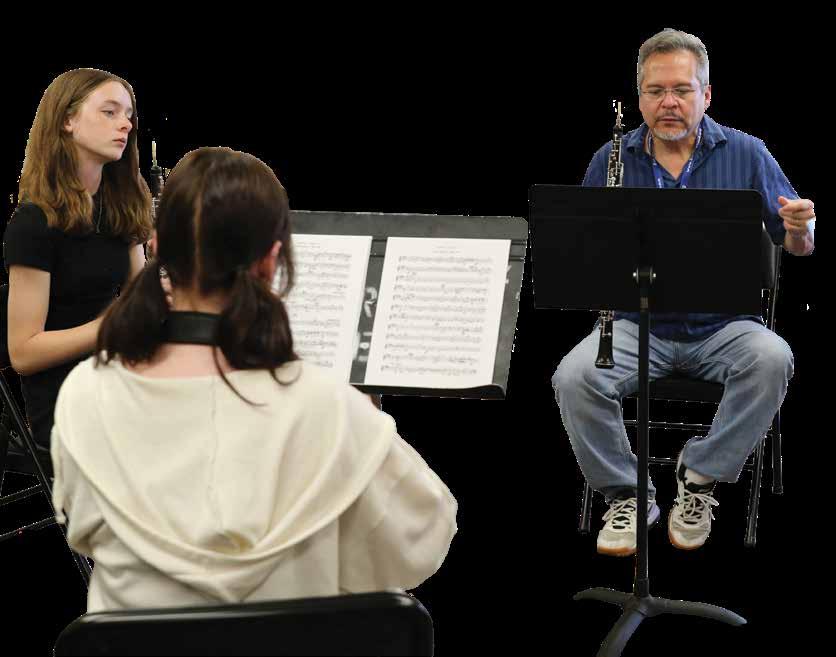
“Each day is a full day of music, a full day of instruction,” said Ricardo Castañeda, who has returned to Birch Creek as a performer and instructor for 29 years and has served as symphony program director since 2001.
The instruction Castañeda provides leads to performances in parks and venues around the peninsula, and in the Birch Creek barn, where students play beside professional musicians and get a glimpse of what a career as a musician entails.
By the end of two weeks, students often realize music as a career is not for them – or, they realize that they can’t imagine doing anything else.
Castañeda, who serves on the faculty of Northern Illinois and Benedictine universities, knows better than anyone that the path to a future in music can be cleared in many different ways. Castañeda started studying oboe when he was 7 years old, growing up in El Salvador.
“I was given the opportunity to listen to all the instruments of the orchestra at the music school I was attending,” he said. “And for some reason, the oboe just spoke to me. The moment I heard the oboe, I knew I wanted to play it.”
He felt pulled toward music from that moment on. But life in El Salvador in the 1970s and 1980s was a time of violence and crime. Castañeda’s parents sent him to a summer music program in Mexico City, where he met Ray Still, a professor from Northwestern University in Evanston, Illinois.
“He told me that if at some point you would like to come and study with
me, let me know,” Castañeda said. “This was a passing comment, and of course, I went back to El Salvador, but it was the beginning.”
A year later, back at the program in Mexico City, the professor told Castañeda the offer was still open, and this time, he took him up on it. A year of study turned into a bachelor’s degree, then a master’s. Castañeda
“Not everybody who comes to Birch Creek becomes a professional musician, but they all leave this place with an enhanced love of music, and in some cases, with a more clear vision of what they want to do with their lives.”
But it
ago. That











2 Billy Dave Sherman & The Hedge Hog Republic @
The Zabrecky Hour @
JT Nero
Cristina Vane Trio @
Salsa Social @
Big Richard & Genevieve Heyward
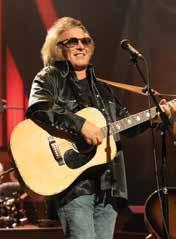
BoDeans 24 The Wood Brothers w/ Luke Tyler Shelton 29 Don McLean

AUGUST
2 Hollywood Nights – the Bob Seger Experience
4-22 Peninsula Music Festival
16 Screening of ‘Hundreds of Beavers’ @ 23 G. Love & Special Sauce w/ Todd Carey
24-28 23 Skidoo & Secret Agency: Rhyme Writing Residency
25 I'm With Her
SEPTEMBER
4 Happy Together 2026 11 Valerie June
ShoutHouse 25 Pegasis @
OCTOBER
9 The War & Treaty 20 Curious George: The Golden Meatball 23 Eric Lewis & Josh Harty @
18 Black Violin
11 Gunhild Carling – Sweden’s Queen of Swing 19 & 20 Booker T. & BBQ: We Three Springs Performs In The Christmas Spirit & Other Soul Favorites @ @ At The Cramer Exchange
by BETSY LECY
photos by REMY CARMICHAEL
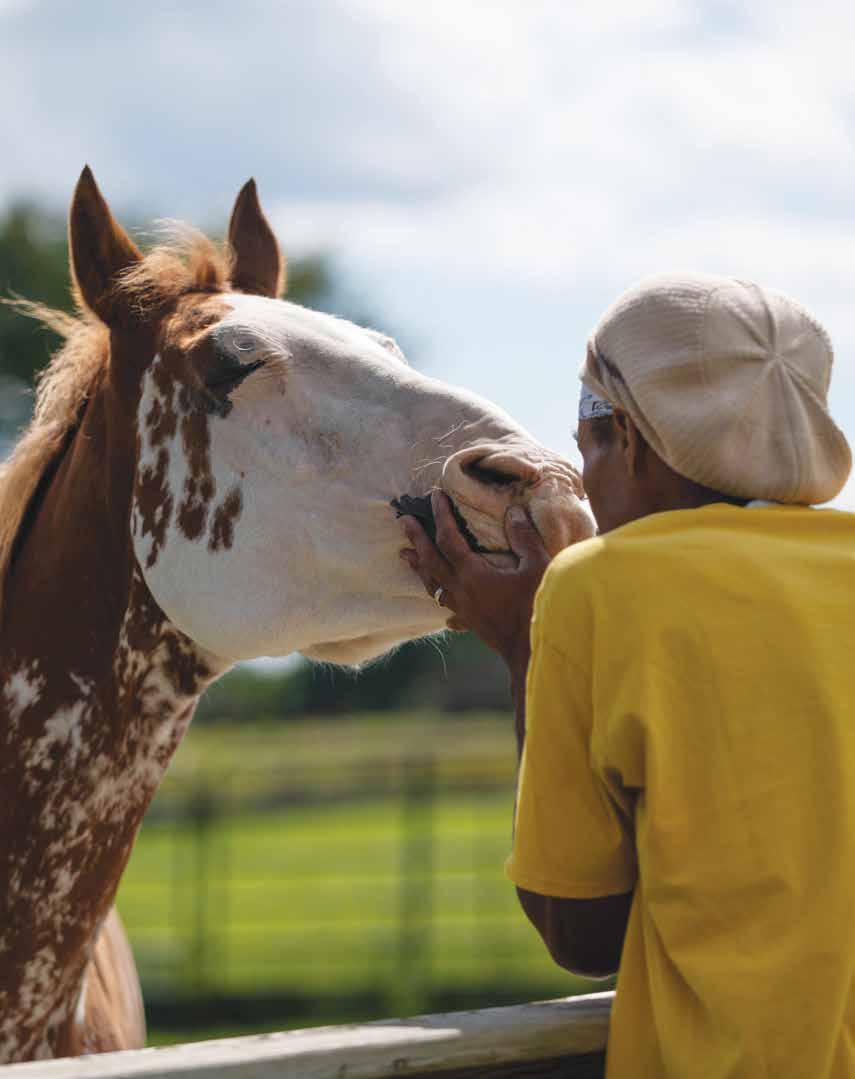
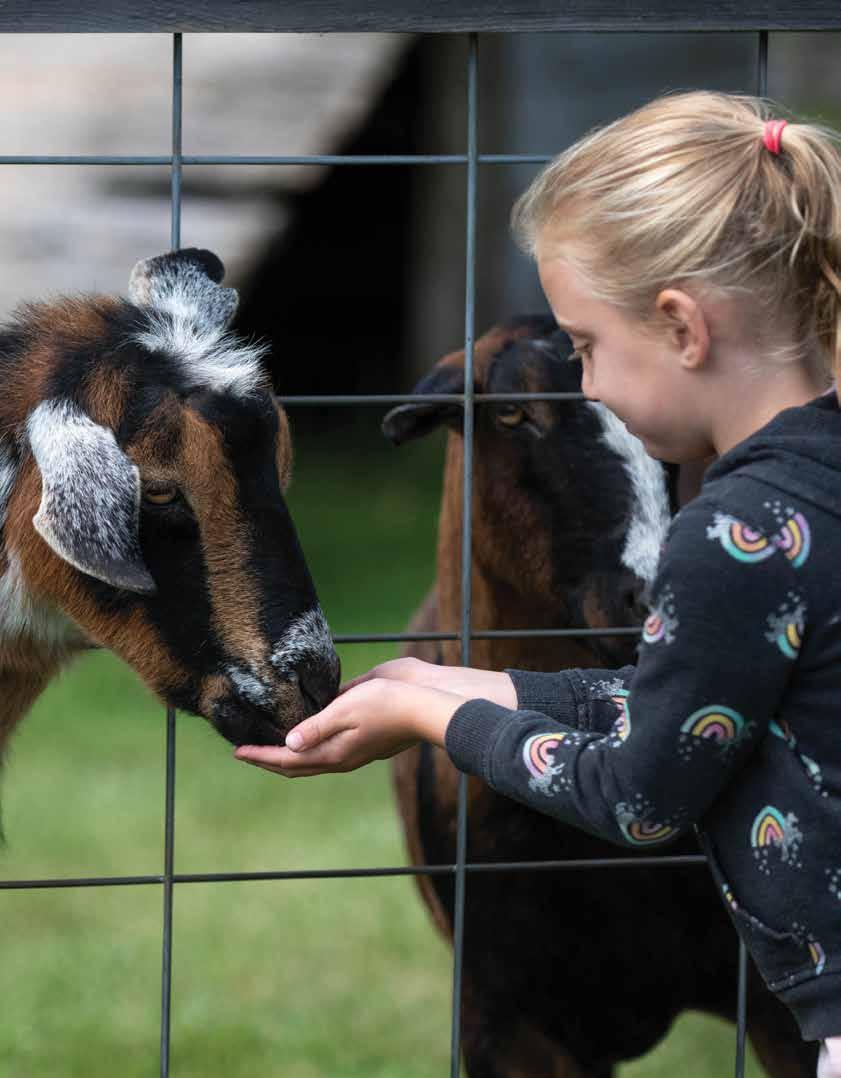
At 3:30 pm, when Plum Loco Animal Farm closes, the pens open and owner Jeremie Pascascio walks ahead of the sheep, goats, Shetland ponies, donkeys, and miniature and full-size horses as they return to their regular pasture.
The animals know the routine after a day of greeting visitors and snacking on carrots and multi-grain feed. There’s no chaos, no prodding, no coaxing – just a farmer and his parade moving
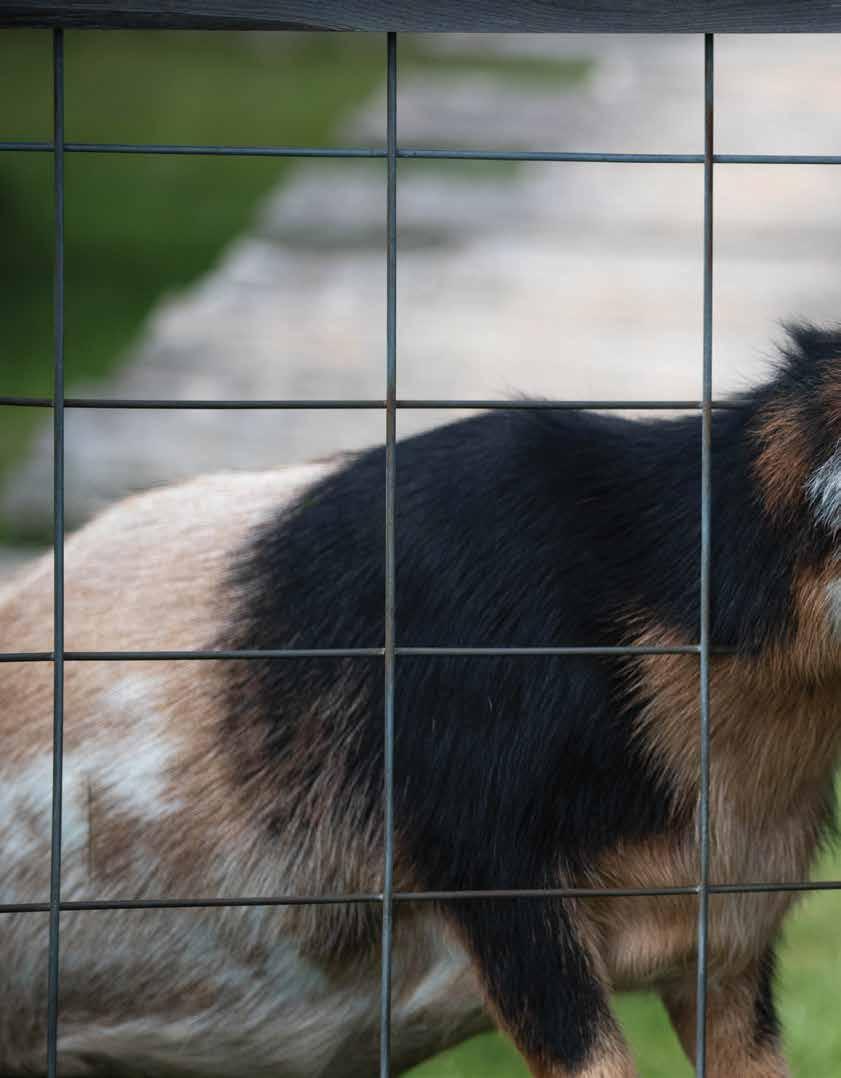
together in rhythm, a scene that defines Plum Loco.
For nearly 20 years, Jeremie and his wife, Linda Steiner Pascascio, have shaped the Egg Harbor farm into a sanctuary where animals set the pace and children learn through interaction rather than control.
The empathetic philosophy on the farm is one Linda has always had. As a child, her parents encouraged her to take horseback riding lessons, but she refused. She had no interest in getting on their back and holding a leather strap that ran through the horse’s mouth.
“I wouldn’t want that done to me,” she said. “It didn’t feel right.”
That conviction carried into her academic life. Linda earned an M.A. and a Ph.D. in Applied Social Psychology, with a special interest in social justice. Her studies dealt with matters of sexism, racism and other areas of human oppression – principles that extend naturally to the animal world, Linda said.
“We do not consider our animals livestock in any stretch of the imagination,” she said. “They are animals, in general, but to me, they are individual, sentient beings worthy of value and respect.”
Linda was living in the Chicago area when she met Jeremie, who immigrated from Belize. His aunt was her neighbor, and he and Linda became close friends before their relationship turned romantic.
In 1999, Linda introduced Jeremie to the peninsula. One fall afternoon, while the two wandered through a small petting zoo in Sister Bay, Jeremie suggested that they start a similar operation. At the time, Linda was searching for
academic positions in rural areas, finding a position as an adjunct professor of psychology at the University of Wisconsin-Green Bay.
But Jeremie’s casual suggestion had planted a seed. Linda and Jeremie soon decided to relocate from Chicago to Door County to establish an animal sanctuary.
When Linda began telling her fellow university professors that she was leaving to build an animal farm, they thought the idea was insane.
“I kept getting, ‘Are you crazy?’” she said. “Instead of calling me Dr. Steiner, they would call me Dr. Doolittle, and it was a big joke.”
Linda and Jeremie have embraced these labels, though.
“That’s how we came up with the name,” Linda said. “It just seemed to work.”





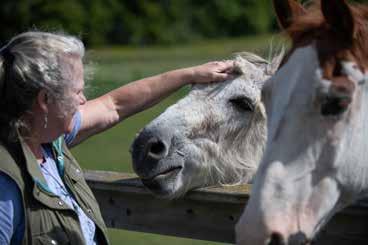
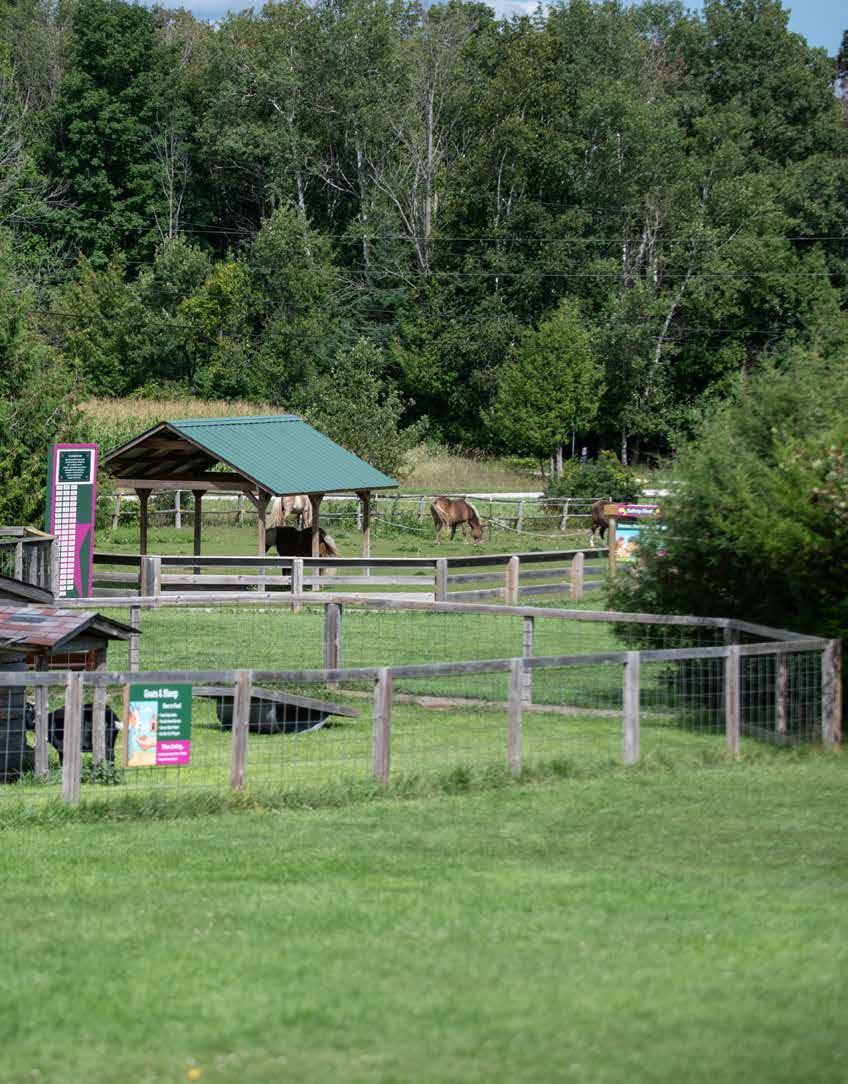
Surrounded by 40 acres of farmland on all sides, the property that is now Plum Loco is unassuming, with wooden fencing, working silos and a pole barn. When Linda and Jeremie purchased the former dairy farm, it was still very much a blank slate.
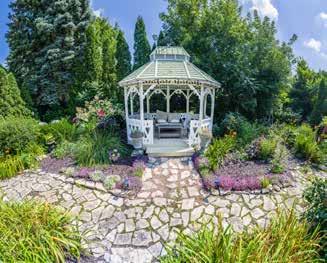
All of the construction fell to Jeremie, who taught himself through experimentation and common sense. The first structure he ever built was a gazebo that still stands by the play pen. A newer gazebo, also built by Jeremie, stands close by.
“I love the meaning of those two things sitting there together,” he said. “It’s actually cool to see how far I’ve come.”
Jeremie credits much of his progress to the animals themselves. When he was building fences or other structures, if the animals broke them or escaped their pens, he took it as a lesson.
“They showed me where I need to better myself,” he said.
As the physical space took shape, Linda and Jeremie began transporting animals from another petting zoo.
During business hours, each breed is sectioned off into its own pen. Each animal has a plaque explaining their name, breed and background. In another part of the property, a memorial board displays the names of animals that have passed away, commemorating their lives and years spent at the sanctuary.
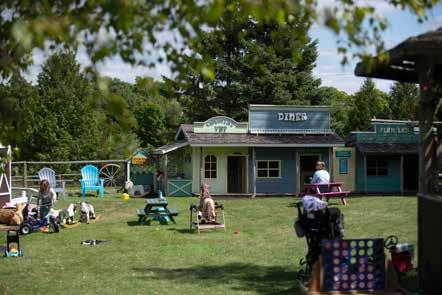
Plum Loco’s stated mission is “to provide our animal family with a safe and loving home for the duration of their life spans.”
To meet that goal, the owners only bring in animals they can fully care for, most of












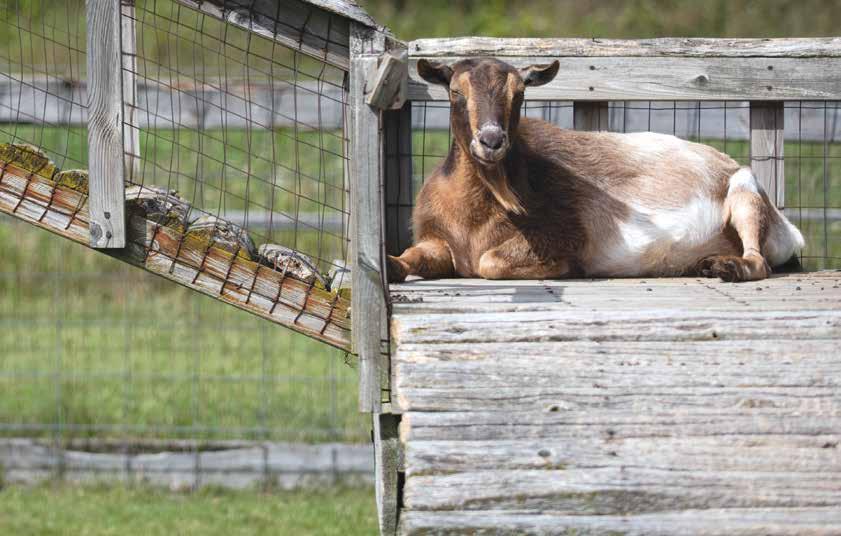
which are rescued or surrendered. For instance, their vet had a goat with a broken ankle that was going to be euthanized because she could no longer be milked, but she came to Plum Loco instead.
“Our ethics is to communicate and to teach that animal lives matter, that they are worthy of respect, that we can learn things from them, that you have
to make a commitment to their life, and that they have more than a utilitarian value,” Linda said.
Although ethically caring for the animals and running the farm requires immense effort, the dynamic between Linda and Jeremie makes it possible. Linda brings the structure and commitment, while Jeremie describes himself as a “right-brained” artist.
“She dreams it, I build it,” he said. Even with their different strengths, they share the same objective: a commitment to animal welfare.
“We had the heart,” Jeremie said. “Let’s take them in and do our best to give them a good home.”






























































by CRAIG CHARLES
The tiny land snails that cling to Door County’s Niagara Escarpment have outlived the woolly mammoths and mastodons that roamed this landscape more than 10,000 years ago.
Surviving sheets of glacial ice, these minute mollusks found a suitable home in the cracks and crevices of the resistant dolomite limestone cliffs. Fanned by cool, moist winds and refrigerated by the moss-covered talus of rock shed from cliffs high above, these glacial refugees continue to cling to life in specific microclimates unique to the Niagara Escarpment.
It wasn’t until the mid 1990s that Jeffrey Clark Nekola, Ph.D., then an assistant biology professor at the University of Wisconsin-Green Bay, began his groundbreaking fieldwork leading students in surveying this unique population of Door peninsula shell dwellers.
Funded by a $2,000 grant from the Wisconsin Nature Society, Nekola’s early research brought worldwide attention to Door County’s land snails. Nekola remains a globally recognized gastropod, or mollusk, expert, currently serving as a botany professor in the Czech Republic.
Contacted enroute to conduct field research in Labrador, Canada, Clark downplayed his early research, saying, “That was a long time ago, and many of the species concepts and conservation status for the included species (especially for rare ones) have been totally revised.”
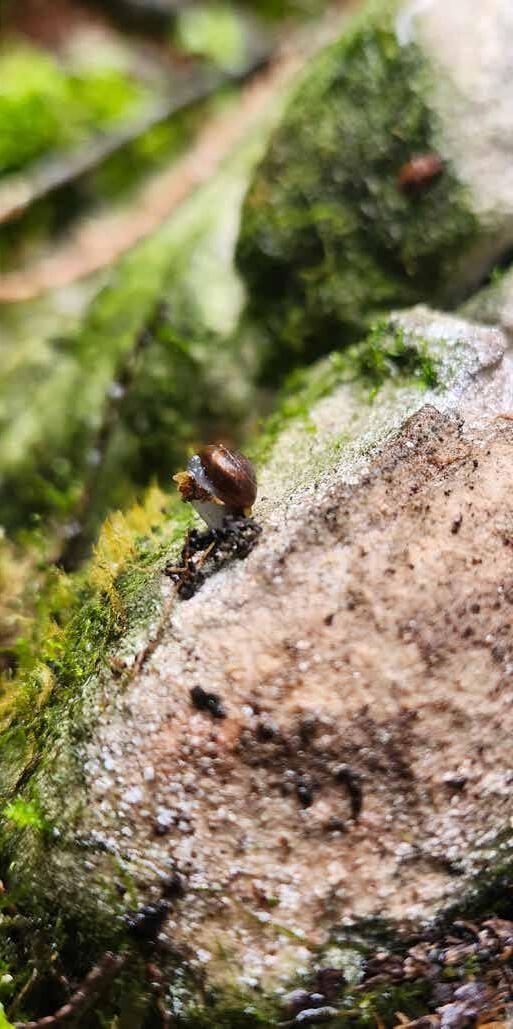
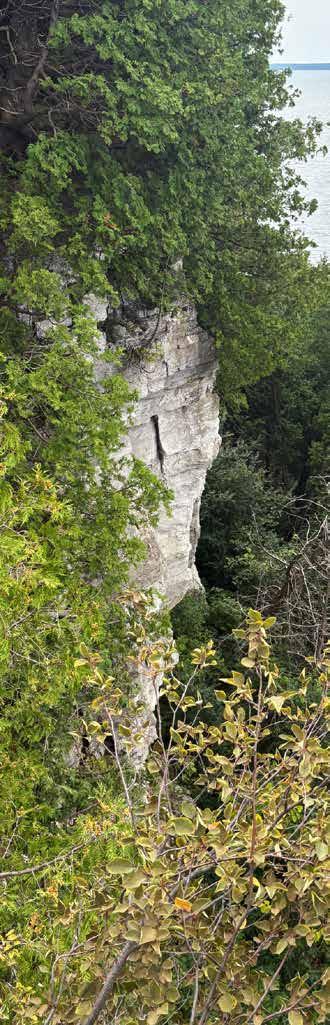
Still, it was Nekola’s early fieldwork that revealed that the Niagara Escarpment harbors an impressive number of land snails that are among the rarest on Earth.
Overlooking the expansive waters of Green Bay from the densely forested rock terrace of Ellison Bluff, visitors stand above the home of 26 species of land snails, including “five rare species and two glacial relict species,” according to the Wisconsin Department of Natural Resources (DNR).
Anchored by the Niagara Escarpment, this impressive rock formation separates the waters of Green Bay from Lake Michigan, forming the limestone backbone of the Door peninsula. Now protected as the 174-acre Ellison Bluff County Park, the headland rises 200 feet above the waters of Green Bay, supporting a rocky talus slope that harbors not only a unique snail population but also a population of mature white cedar trees, with at least one specimen estimated to be over 250 years old.
The magnificent view from Ellison Bluff opens a window to the geologic era that provided a path for the snails of the escarpment to crawl from the Ice Age to the present on a trail of continental glacial ice fueled by a fluctuating climate.
Over two million years ago, during the Earth’s Ice Age or Pleistocene period, large continental ice sheets advanced and retreated several times. After the last of these periods, approximately 10,000 years ago, the landscape that now includes Door County and the Niagara Escarpment was an arctic, tundra-like microclimate dominated by an alder and cedar landscape. This topography provided habitat for megafauna, including mastodons and woolly mammoths, as well as the land snails that persist today.
Gradually, the tundra was claimed by the pine and mixed hardwood forests of modern times, leading to
Prominent since the Ice Age, the imposing Niagara Escarpment of the Door Peninsula serves as a pivotal refuge for extraordinary terrestrial gastropods – land snails – including a pair of rare, diminutive, ice age survivors: Henersonia occulta and Vertigo hubrichti.
Today, these miniature mollusks risk being crushed beneath the footsteps of unknowing hikers, baked by the removal of the forest canopy that shades them, or displaced by rock talus scrubbed from the base of cliffs in the interest of golf course greens.
But what value is there in protecting these remaining remnants of an age long gone?
For snail researcher Eric North, the answer is both philosophical and practical. “We can frame the question in terms of economic impact, the value to science, or even what humans feel in the presence of diverse and wondrous places, since protecting the snails also safeguards the habitat that provides them a home,” North said. “Site protection is all-encompassing. Snails benefit, but so do the unique lichens, mosses, ferns and all the other critters that are integral to the whole. ”
The specific conditions these woodland snails require are met in Door County, where the cool winds of Lake Michigan fan the cliffs and bluffs of north-facing ridges to provide the unique “niche” microhabitats that have protected the land mollusks of the peninsula for thousands of years.
North, who studied under famed gastropod specialist Jeffrey C. Nekola, said the snails are similar to many other species protected by the Endangered Species Act since they exist only within a narrow specific set of environmental conditions. In Door County, the conditions include a bedrock of limestone and calcareous substrate soil shaded by a heavy canopy of white cedar overstory. Air cooled by the waters of Green Bay helps refrigerate the space sandwiched within the layers of rock talus at the base of the escarpment’s limestone cliffs, permitting the snails to thrive.
The question of preserving the gastropods of Door County’s Niagara Escarpment goes beyond science and becomes a matter of historical preservation, North said. By saving these minute mollusks, we preserve not only our past, but also our future, as we continue to share the landscape with a tiny shell of the Ice Age crawling beside us.

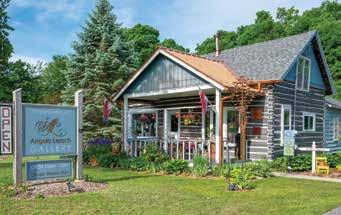
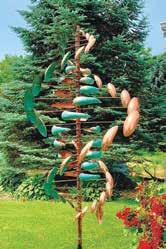
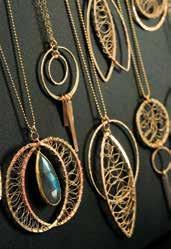
Fine Line Designs Gallery and Sculpture Garden features original paintings, glass, jewelry, sculpture, ceramics, custom wood furnishings, and fiber art rich in color and texture. Stroll our 2-acre landscaped sculpture garden and find works in bronze, stone, metal, ceramic, copper, and stainless steel. Unique, collectible artworks and original gifts are found indoors and out.
Open Daily at 10am • May–October • Limited Winter Weekends 10376 Hwy 42 at Ephraim’s north end • 920-854-4343

the extinction of the megafauna but permitting relic snails to persevere within microclimates of the escarpment. Enhanced by the cool, moist climatic effects brought by the waters of Lake Michigan, these microhabitats still exist on the limestone precipice today, serving as the last stronghold for these rare relics of the Ice Age to thrive.
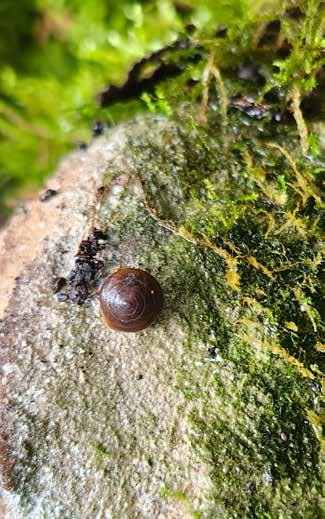
Appropriate for Door County, the Cherrystone drop land snail is one of the globally scarce mollusks found on the peninsula. Scientifically known as the Hendersonia occulta, and christened due to its resemblance in both size and shape to a cherry pit, this gastropod can be found in the thin calcium-rich soil of the north-facing Niagara Escarpment slopes just outside the Village of Egg Harbor.
Here, in 2023, the sale of five escarpment homesites triggered the donation of an 8.3-acre DNR conservation easement, permitting the sale of the bluff lots and clearing of strategic waterfront “viewing” windows, but restricting further development. This conservation easement has been accepted by the Wisconsin Natural Resources Board, but at time of writing, it has yet to be finalized by the DNR, according finelinedesignsgallery.com

to Chad Fradett, an environmental consultant hired by the property’s owner, Alpine Resort.
Explaining the unique geography of the site, DNR District Ecologist Joshua Martinez said the snails thrive in the cool shade and specific soil makeup of the bluff’s dolomite and limestone outcroppings. This specific and unique geology prevents the snails from losing moisture and drying out in a process known as desiccation.
Martinez describes the snails as an “umbrella” species, meaning preserving their habitat will also protect the migrating songbirds, distinctive raptors, and rare and endangered plants that also depend on the unique landscape the escarpment provides.
The preservation of the Niagara Escarpment has long focused on the aesthetic appeal of forested bluffs, white cliffs, rugged landscapes and inspiring vistas rising from the waters of Lake Michigan and Green Bay. Now, science has added a new dimension to the importance of preserving this dramatic rock ridge, not only for ourselves, but also for our tiny, ancient, cliffside neighbors –neighbors who connect us to the land of the woolly mammoths at the glacially slow pace of a land snail.
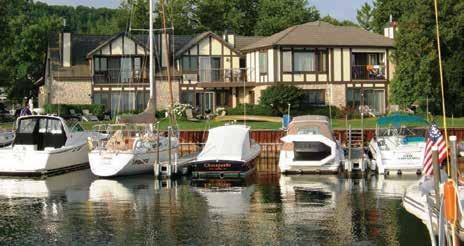
Perhapsthe best view in all of Door County. Relax on the water in historic Fish Creek all year long. Enjoy the warmth and charm of an antique-filled Tudor guest house. Create an intimate dining experience in our fully appointed kitchens or unwind in your spacious living room with a crackling fire in the fieldstone fireplace. Create your own distinct Door County memories. www.harborguesthouse.com
920-868-2284 • 888-868-2284 info@harborguesthouse.com 9484 Spruce St., Fish Creek, WI 54212
•

YOU’LL NEVER get BORED !
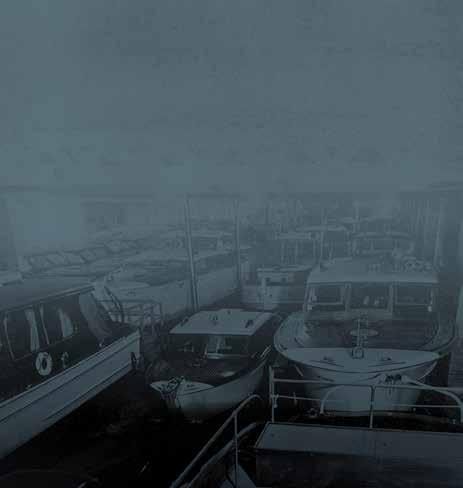
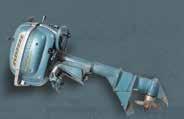
Fascinated by boats and what powers them? Dive into the world of marine engines at the Door County Maritime Museum! From innovative designs to manufacturing, we showcase the incredible technology behind watercraft of all kinds. Whether you’re a lifelong enthusiast or just curious, there’s something here for everyone. Plan your visit today—there’s a whole world to explore, and boredom doesn’t stand a chance!
Discover us in








July 4
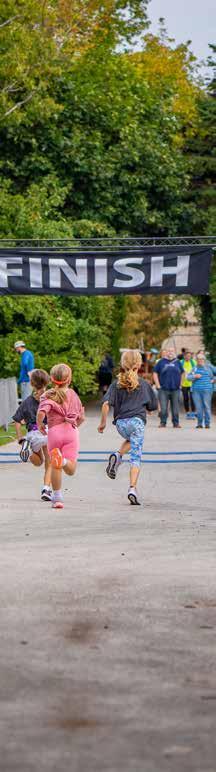
Hairpin Run, Fish Creek 5K run/walk to kick off the 4th of July celebration. Door County’s largest 5K run benefits Friends of Gibraltar. hairpinrun.com
July 10
Belgian Days Run, Brussels 2-mile, 4-mile run/walk.
July 17
Washington Island Rec Run, Washington Island 10K, 5K, and 2K walk/ run moslingreccenter.org/events
Aug. 15
Shanty Days 5K, kids run, Algoma 5K run/walk, kids superhero fun run visitalgomawi.com/5K-run-walk
Sept. 26
Hey Hey 5K, Baileys Harbor 5K fun run in Baileys Harbor that starts and ends at the Door County Brewing Co. taproom. Get great swag, including a free beer and an awesome shirt! heyhey5K.com
Oct. 3
Whether you’re looking for competition or camaraderie, there’s a race for all tastes on the peninsula. You can also take on the challenge of the Run the Door race series by visiting rundoorcounty.com to enter to earn points for each race you participate in.
Door CANcer Run/Walk, Sevastopol 2-mile and 4-mile run. doorcancer.com/runwalk/
Oct. 10
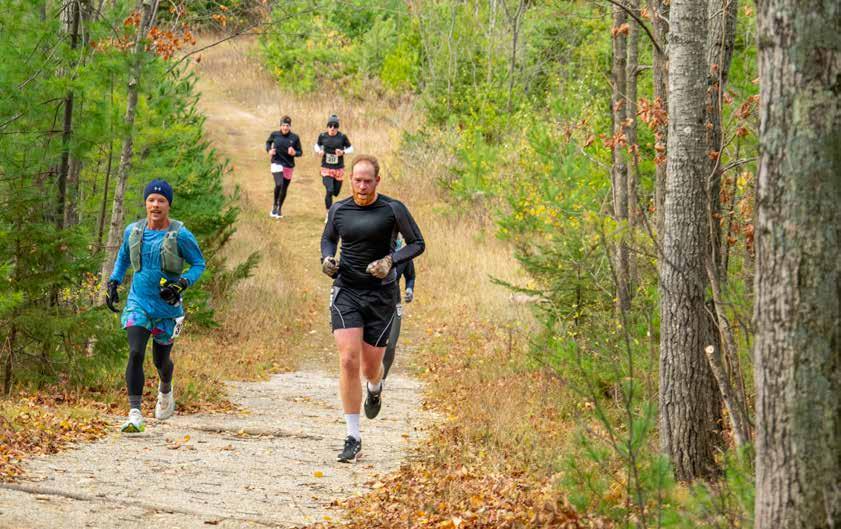
Potawatomi State Park Run Wild, Sturgeon Bay Quarter marathon, 5K run/walk, and 1/3-mile Smokey Bear Run www.runwild.org/run-wild
Oct. 17
HELP in Motion Trail Run, Sturgeon Bay 10K and 5K runsignup.com/Race/WI/SturgeonBay/ HELPInMotionTrailRun
Oct. 24
Fall 50, Gills Rock to Sturgeon Bay 50-mile solo and relay run from the tip of the peninsula at Gills Rock to the base at Sawyer Park in Sturgeon Bay. Includes prizes for best team name and costume, and a huge post-race party with pizza and beer. fall50.com
Nov. 7
Pen Park Trails Fest, Fish Creek Third edition of a new running experience featuring a 14K and 30K course in Peninsula State Park. penparktrailsfest.com
Nov. 28
One Barrel 2.62 Run, Egg Harbor
A 2.62-mile run on White Cliff Road with a post-run party in the taproom. All runners get a One Barrel Run knit hat and a beer at the finish line! onebarrelrun.com
Dec. 5
Northern Door YMCA Ugly Sweater Run, Fish Creek 5K fun run/ walk.
May 1, 2027
Door County Half Marathon and Nicolet Bay 5K, Peninsula State Park, Fish Creek 13.1-mile run, 5K
Hailed as one of the best runs in the Midwest, runners enjoy a closed USATF-certified road course that takes you along the shore, through the woods, and atop the bluffs of Peninsula State Park. Finish with music, beer and friends at Nicolet Bay. doorcountyhalfmarathon.com
by TOM GROENFELDT and photos by PAUL HAAN
The corner of Madison Avenue and Oak Street on Sturgeon Bay’s west side may be developing into an arts hub.
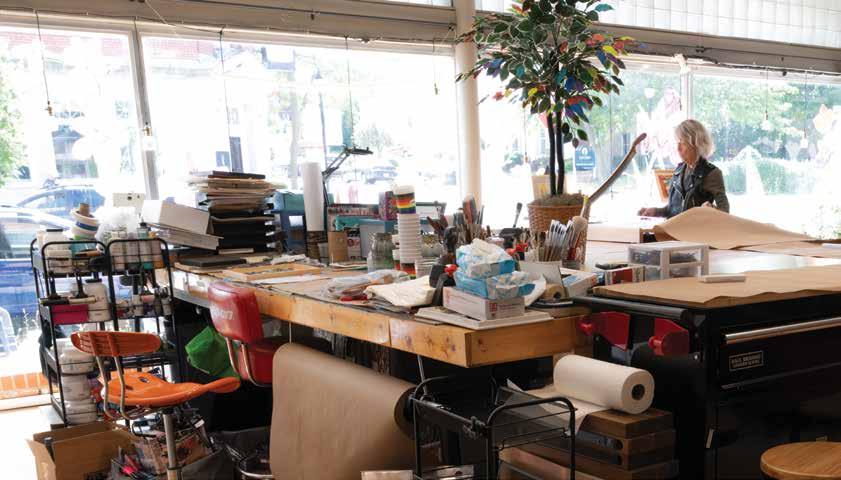
For the last five years the 1898 L.M. Washburn building on the northeast corner has been the home of ARTicipation, an active gallery, creative work space and intimate performance venue developed by Claudia Scimeca, a painter and artistic entrepreneur who has a demonstrated skill for finding and
befriending talented creatives in visual arts, music and theater.
The gallery represents more than 20 painters, photographers, fabric artists, and the abstract paintings of Scimeca. On almost every Saturday it buzzes with people learning a creative practice – mandala dot painting one week, wet felting another, cold wax and oil painting, creative mending, watercolors, pen and ink drawing, iPhone photography – the list goes on.
The classes are typically two to three hours for about $50, including supplies.
“They are not intended to make you the next Van Gogh,” Scimeca said. “My vision is to help people open up their inner creativity and have a good time.”
At the core of the space is The Magic Table which is about 12 feet square and has space for up to 12 people.
“The most important place in this building is this table,” explained
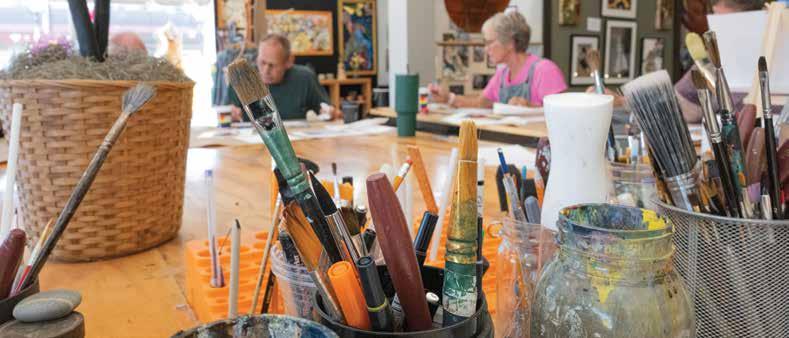
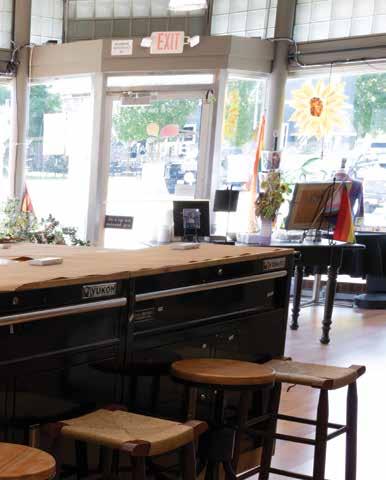
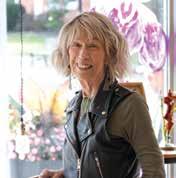
Scimeca. “This is where the magic happens. Sometimes workshops start out real quiet. A lot of times people don’t know each other, but by the end of three hours, they’re each other’s besties.”
Nicole Herbst, whose students at Sturgeon Bay High School regularly win significant scholarships to leading art schools in the Midwest, said ARTicipation welcomes all levels of artistic skill.
“What is unique about what Claudia has brought is that she is extremely welcoming and thinks anybody can be an artist,” Herbst said. “She avoids elitism, appreciates the instructors and supports them with supplies, and the space is almost too good to be true.”
The gallery is part of a growing west side scene that includes artists Brian Pier and Jodi Rose Gonzales. Get
“I think today people are looking for experiences more than things.”
– Claudia Scimeca
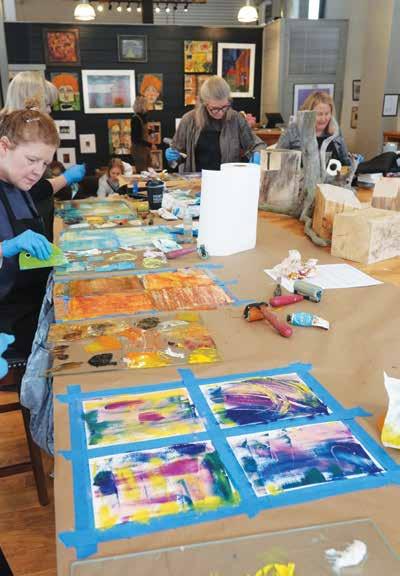
Real Cafe shows work by Kandy Otto and Richard Helland, and The Naked Sheep Yarn shop has regular knitting meetups. Herbst has taught classes at ARTicipation once or twice a month for the last two years. The classes are on Saturdays, relatively inexpensive, and the Sturgeon Bay location attracts locals and people from Green Bay and the Fox Valley.
Scimeca said many people today are more interested in getting interesting experiences than in getting more things. Classes and events are loosely structured to permit interaction among participants.
Workshops generate pleasure for participants once they get over the need for perfection, she said.
“Once you get rid of that, absolute joy is available to you. You can have a really good time,” Scimeca said. “It’s going to
be meditative and calming and soothing.”
She wants the gallery to be a combination of a place to experiment at making art, a place for talented artists to show their work, and a performance venue. Scimeca has hosted music, political presentations, writing programs and live radio dramas. The space brings a different energy to the programs.
“The gallery creates an intimacy before and after an event that allows people to mingle and socialize,” Scimeca said.
She also supports local nonprofits and community programs, including Open Door Pride’s celebration in June.
“Claudia is just always open – she’s the anti-gallery gallerist, no attitude,” said Cathy Grier, chair and founder of Open Door Pride. “She’s an artist, an artist full of wonderment.”




























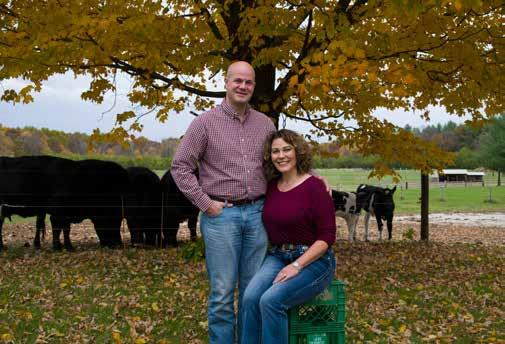
Corey Geiger doesn’t need to wear his heart on his sleeve; it’s apparent enough in his voice and his passions.
I’d order the latter way: family, farming and rural history. All three form the beating heart of his two books, On a Wisconsin Family Farm: Historic Tales of Character, Community and Culture (2021), and The Wisconsin Farm They Built (2023).
We met at the perfect spot to discuss literature, the Write On, Door County center in Juddville. On this occasion, the sleeve I referred to was part of Corey’s Harley-Davidson leather jacket, which I immediately noticed as he entered.
Glancing outside, his 2005 Softail Deluxe Harley gleamed in reflected
sunlight. Not exactly what one pictures when conjuring the image of a farm boy from Manitowoc County, and since 2023, the lead dairy economist for CoBank, one of the largest private providers of credit to the U.S. rural economy.
It wasn’t my only surprise. I also learned that Corey has appeared on Family Feud, and he and his wife, Krista Knigge, had won top amateur honors in their division at the national finals of the Fred Astaire Cross Country Dance Competition.
A couple of summers ago, Corey and I spent a blustery Saturday together selling books (and hoping our tent didn’t blow away) at the Sister Bay Arts Festival. It was there that I first heard him talk about his family and farm, which he features in his books. His pride in and passion about both
were obvious. Now, hearing the details and background stories, I found myself agreeing with what I’d read a WBAY interviewer had said about Corey: that he’s “like an encyclopedia when it comes to the farm’s history.”
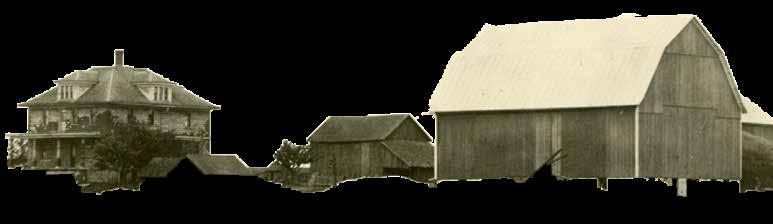
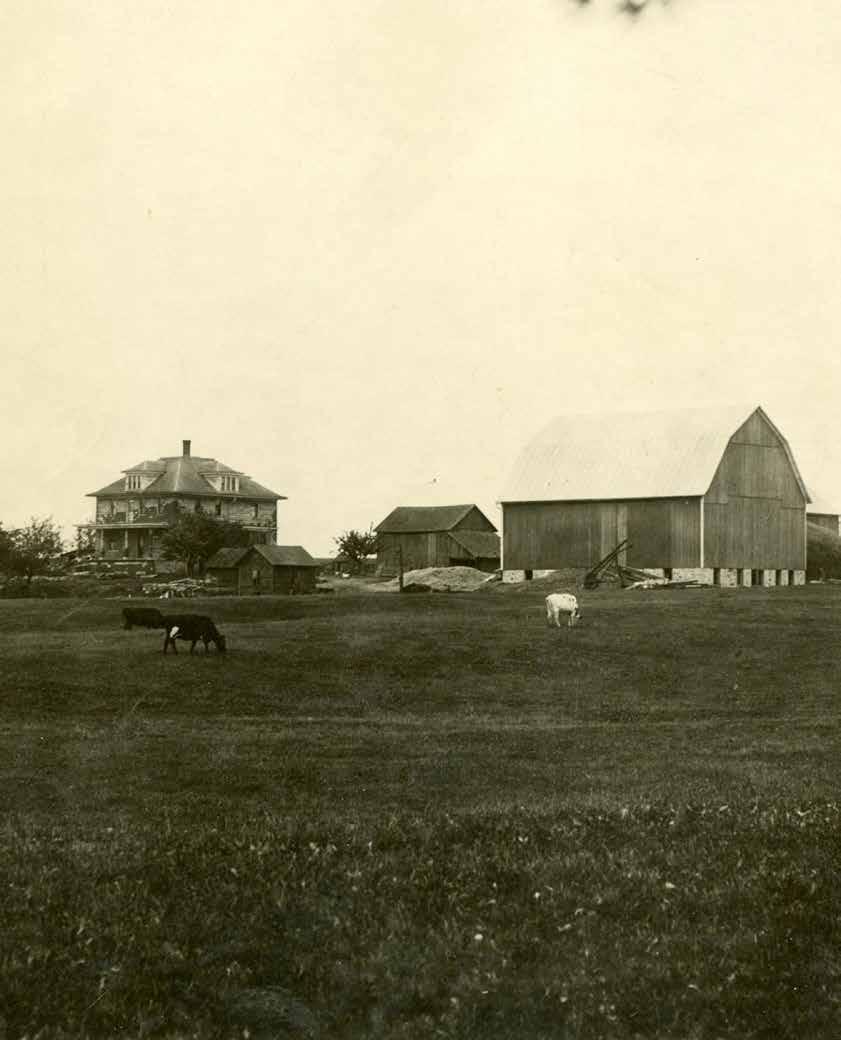
Corey grew up on his family’s dairy farm outside of Reedsville in northeast Wisconsin. He is the sixth generation on the property, which he and his mother still own.
As a boy at family gatherings, while the other kids played outside, he preferred to listen to the adults tell stories about the relatives, local characters and events that made up their world. Corey refers to himself as a sponge with a near-photographic memory. He absorbed the stories, and they became an integral part of who he is and how he sees himself. Although his career has taken him around the country and
the world, meeting with customers and speaking at industry events, he is still a Wisconsin farm boy at heart.
In 1995, nearing graduation from the University of Wisconsin-Madison with double majors in agricultural economics and dairy science, Corey was hired by Hoard’s Dairyman as an associate editor. The journal (begun in 1885 by Wisconsin’s 16th governor, William D. Hoard) is a leading dairy publication with a mission to “supply dairy farmers and their advisers from North America and around the world with practical, factual information to assist in all facets of their dairy businesses.” Corey loved the work and the collegial environment where he honed his writing and editing skills, eventually becoming the managing editor in 2013.
When his grandparents reached their 80s, he decided to adopt a more journalistic approach to collecting their stories. He had questions and wanted to connect the dots on some things. A stickler for accuracy, he’d become an avid researcher, which is evident in the details that create authenticity and context in his books. Commenting on his family research, Corey found, with his maternal grandmother, that “her memory was usually spot on.”
The stories and research culminated for Corey in 2018, when David Nordby, the editor of the local Brillion News, agreed to let him write 20 weekly columns for the paper, under the title Homesteader’s Hope. Corey’s ability to describe local history, the family farming community and the essence of the people and culture proved to be popular – so much
so that the original 20-week column eventually grew to 99 weeks.
“The magic of Corey’s writing is that while it educates people on previous eras, you don’t have to know the history and characters to become enthralled in his writing,” Nordby wrote.
Covid, Door County and a chance to write long
An active dairy farm doesn’t allow for much time off, but the Geigers would take occasional day trips to Door County to pick cherries, always having to be home in time to milk the cows.
These experiences in the county stuck with Corey. In December 2020, as the country grappled with the COVID-19 pandemic, Corey and his wife, Krista, purchased and eventually refurbished a house in Ephraim. Unable to travel, which was part of his job, Corey made good use of the extra time by rereading his previous articles and creating, sticky note by sticky note, outlines that would form the basis of his two books.
As the focus and structure of the first book took shape and Corey began writing, Krista researched publishers and helped create a marketing plan. Just two years later, his second book followed, and he plans to write a third about the family and farm’s history during the world wars.
In the preface of his first book, On a Wisconsin Family Farm, Corey writes,
“To be candid, I grew up with this book […] it just wasn’t written yet.”
As I talked with Corey, I came to understand what he meant. The book celebrates in words and pictures his family’s farming history from the late 1800s through the 1930s.
Corey’s second book, The Wisconsin Farm They Built, spans much of the 20th century, telling the story of his maternal grandparents, with a foreword by Jerry Apps, the well-known rural Wisconsin historian, writer and PBS storyteller. In 34 chapters (just over 200 pages), liberally illustrated with photos, many from the author’s own collection, the reader is taken on a journey rich in the details gathered through family interviews and the author’s own research.
Corey’s storytelling embraces the past, the tragedies and joys that many faced in building the family farms of Wisconsin. He bestows upon his family the love and admiration many of us might wish we could provide for our own ancestors if we had Corey’s energy and talent. In doing so, we, the readers, gain insight into 20th-century rural Wisconsin – a subject Corey knows well and loves.
Corey Geiger’s books are published by The History Press (Charleston, South Carolina). In Door County, they, along with the work of many local authors, are available at bookstores and various other venues.

























by JOHN MIELKE
If you’re one of the millions of people who enjoy a glass of wine, you’re likely familiar with signage at the market directing you to various wine styles: Cabernet, Chardonnay, Pinot Noir, Riesling and others.
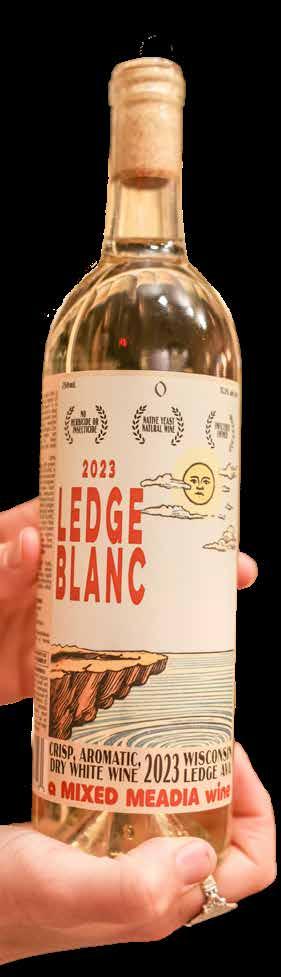
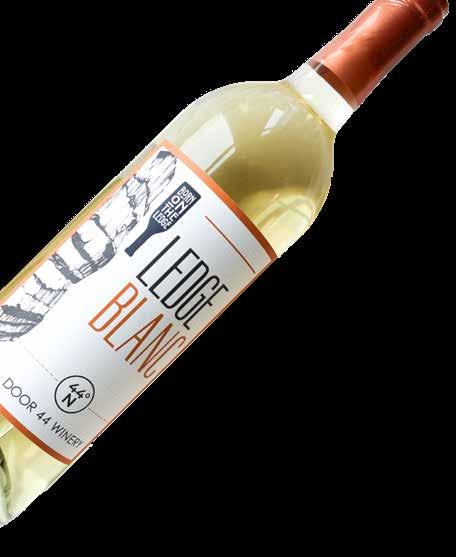
If a group of local wine makers has anything to say about it, a new sign may soon direct you to Ledge Blanc – a crisp, aromatic white wine produced from hybrid grapes grown right here in Door County.
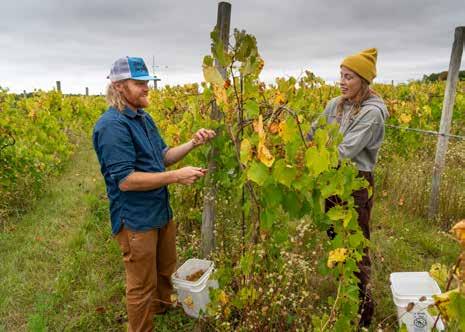
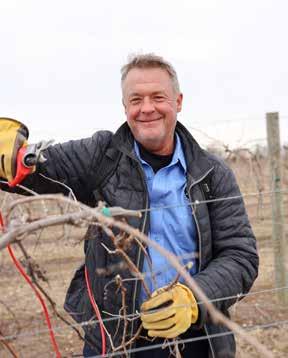
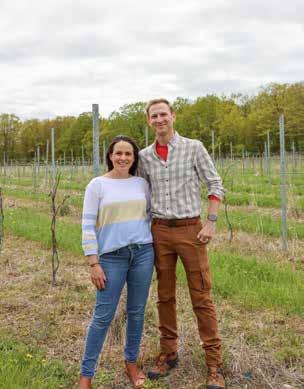
Winemakers Eric Gale at Anchored Roots, Steve Johnson at Parallel 44 and Allan Hyland at Mixed Meadia are already known for quality wines made from a variety of grapes grown in Wisconsin. Now they’re leading a project they hope results in a new respect and place at the table for Wisconsin wines.
“We’re all excited to kind of work together on a project that will hopefully help elevate Wisconsin wine in general, but especially this part of the state,” Gale said. “After Steve and Allan and I sat down and really started to talk about ideas for this, we said, ‘Alright, what do
we do best?’ Definitely, it’s this crisp, aromatic, white-wine style.”
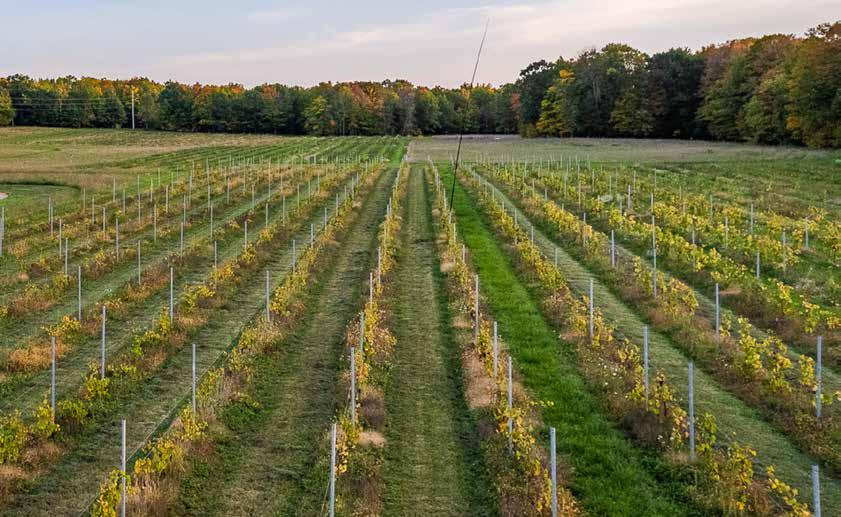
For more than 20 years, Johnson has been crafting award-winning wines from varietals grown throughout the Wisconsin Ledge American Viticultural Area (AVA). AVAs are recognized by the U.S. federal government as grapegrowing regions. The Wisconsin Ledge AVA, with more than 400 acres of vineyards, stretches from the tip of Door County along the Niagara Escarpment to just north of Milwaukee.

Door County has at its geographic foundation dolomite with light, shallow soils. It’s no coincidence that global wine regions like Burgundy, Champagne, Loire Valley and Northern Italy all have dolomite or limestone as their bedrock.
“Here in North America, you follow that [Niagara] Escarpment to the Ontario Peninsula – big wine growing area there – and over to New York into the Finger Lakes,” Hyland said. “Same piece of rock.”
The waters of Lake Michigan and Green Bay deliver cooler springs and moderate falls, creating a slower growing season where certain hybrid grapes thrive.

Steve Johnson of Parallel
has a long-term vision for the elevation of Ledge Blanc. “It may not happen in my lifetime, but it will happen.”
Amaya Atucha, professor and chair of the Department of Agroecosystem Sciences at the University of WisconsinMadison, said the Door County climate is more suitable for the grapes used to produce white wine.
“Door County has a ton of positive things for growing these grapes,” Atucha said. “But one of the disadvantages is that, overall, the growing season is shorter.”
Even the color of the grape, which is important in red-wine production, can be influenced by a shorter growing season.
“You need to have a substantial amount of sunlight, and you need to have a growing season that is long enough to develop those color compounds,” Atucha said.
In other words, the Ledge Blanc project is playing to the area’s strengths, honing its ability to consistently produce high-quality grapes that result in a crisp, aromatic style of white wine.
In the wine world, it’s important to have a signature style.
“That’s how people come to know wine,” Johnson said. “I say, ‘Cabernet
Sauvignon,’ you think Napa Valley. Bordeaux is its own region. Chianti is its own region.”
The idea for the Ledge Blanc project actually got its start about 10 years ago, when Johnson and Hyland attended a wine conference in Nebraska.
One of the conference presentations featured winemakers from Nova Scotia – a region relatively new to the wine industry – who developed Tidal Bay, a varietal blend from locally grown grapes. They explained how each vintner (wine producer) creates their own adaptation, and the wine is judged and rated by wine reviewers, giving consumers confidence that they are purchasing a quality product. The winemakers involved also encourage enthusiasts to visit other wineries and explore different interpretations of Tidal Bay.
The Ledge Blanc project follows a similar strategy. The wine is a blend of varietals grown locally and judged by an independent review committee. Each winery can put its own spin on the style.
“It’s what we’re succeeding at already,” Hyland said. “Ledge Blanc, before we even put a name on it, existed in many of these wineries.” Besides adding the
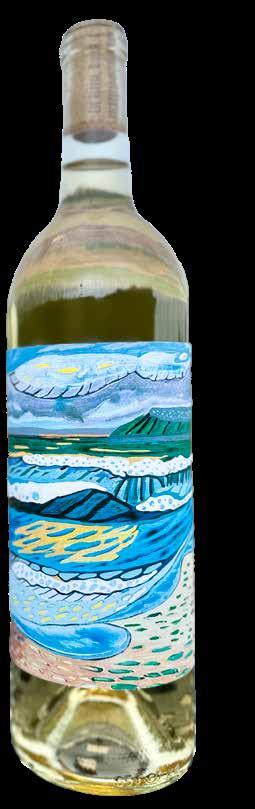
quality standard, a goal of the Ledge Blanc project is to help raise awareness of Door County wine. From a marketing perspective, the title makes it easier for consumers to understand what Door County vintners are trying to achieve with grapes grown locally.
To be labeled Ledge Blanc, the wine must be made from at least 55 percent


of Frontenac Blanc, Frontenac Gris, Itasca, La Crescent and St. Pepin hybrid grapes. The remainder can be any other white hybrid variety grown in the Wisconsin Ledge AVA.
Of course, the average consumer doesn’t have to think about these specifics. At Anchored Roots, Gale likes to direct the conversation to “style” rather than specific grapes.
“If you tell consumers, ‘it’s an aromatic, crisp white, it’s refreshing,’ if you start talking styles, it makes a lot more sense to people,” Gale said.
Four of the five required hybrids in Ledge Blanc, among others used throughout the northern United States, were bred and developed by the University of Minnesota. The wine world has Elmer Swenson, a farmer from Osceola, Wisconsin, to thank for St. Pepin.
Breeding hybrid cultivars for coldclimate regions brings unique challenges, said Soon Li Teh, grape breeding director and extension specialist in the Department of Horticultural Science at the University of Minnesota.

The winemakers behind the Ledge Blanc project hope other wineries join them in the pursuit of a new calling card for Wisconsin wine, but for now, three wineries are leading the charge.

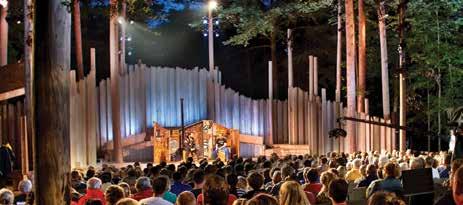













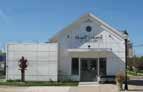



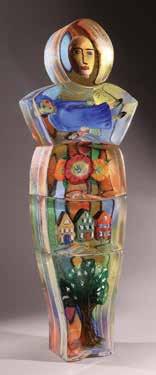















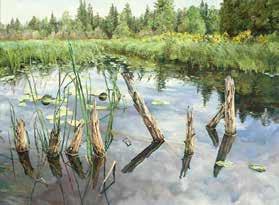



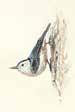
One hurdle is the number of frostfree days per year in Wisconsin and Minnesota, 140 to 170, compared to a year-round environment that is virtually frost-free in grape-growing regions of California.
“Species that are cold-tolerant tend to have unfavorable fruit quality traits such as small clusters, acidic berries, and off-flavor notes,” Teh said.“Combining cold tolerance with excellent fruit quality characteristics has been the overarching goal of the University of Minnesota grapebreeding program.”
Another challenge is disease pressure.
“Hot and humid conditions are conducive to various diseases and pests, such as downy mildew, black rot, anthracnose and Phomopsis,” Teh said. “Most of these are nonissues in California.”
Gale, Hyland and Johnson are using their combined grape-growing and wine-producing experience to go all in on Ledge Blanc. Yet the success of this Door County groundto-glass project may bring certain supply challenges.
Johnson estimates that if wineries on the Wisconsin Ledge AVA went 100% Wisconsin Ledge AVA-produced wines, there would not be enough vineyards to support that shift.
Convincing farmers throughout the Wisconsin Ledge AVA to devote more acreage to hybrid grapes to meet a projected future demand is challenging – but pioneer businesses are always faced with challenges. Johnson is working on a book titled Be Your Own Pioneer.
“It’s part anecdotal, part philosophical, part about being an entrepreneur, quite a bit about what this experience has been, growing grapes and making wine in a place no one thought was possible,” he said. “I want this place to succeed. I want to be, when I’m long gone, be able to look back from another existence and say, ‘Yes, this place did make it.’ I still haven’t figured out what that is, but it kind of gets me out of bed every morning.”






The vanished, barely-there and never-there courses
by CRAIG STERRETT
Call them ghost courses.
Old brochures, aerial photos of forest clearings and unusual mounds on hotel grounds are all that’s left of several golf courses that vanished, barely existed or never got past the planning stages.
Eventually, nature will overtake physical evidence of these missing links, but they still spark questions about what might have been.
Greg “Fuzzy” Sunstrom held his phone and pointed to a 1938 U.S. Geological Survey photo showing remnants of greens and tees in a clearing between the north shore of Chambers Island and the north edge of Mackaysee Lake.
Sunstrom never met anyone who golfed the “temporary course” that was built in the early 1920s by a group of investors who wanted to build a bigger resort course in the middle of the island while creating an “exclusive colony” with large lots for summer mansions for the wealthy. Lighthouse keeper Mary Ann Blahnik said she only met one person who played the nine-hole course, and that person, Paul Guenzel, died in 1996.
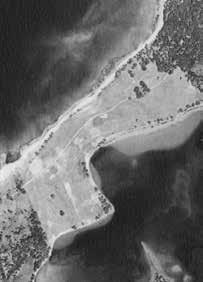
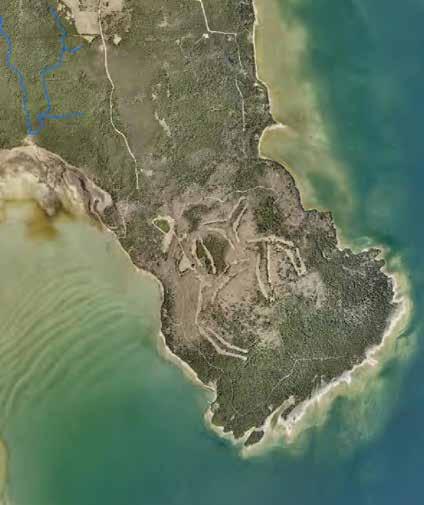
An aerial image from the Door County GIS map shows well-defined fairways for the Marshall’s Point Pine Ledges golf course, which was never completed.
Marshall’s Point
U.S. Geological Survey photos from the 1970s show outlines of 18 fairways on Marshall’s Point near the north tip of North Bay. Trees have since begun to grow into the course that never opened.
In the early 1960s, Peter Mero hired crews to clear rocks, cut timber and shape fairways and greens surrounded by woods. He hired E. Lawrence Packard, a renowned Michigan-based architect whose designs include many of the holes at Peninsula State Park and Copperhead at Innisbrook in Florida.
Mero completed plans for a 100-room luxury hotel and was in the middle of building the Pine Ledges course and greens when the state shut him down. Hotelier Fred Anderson recalled that, year after year, the Wisconsin Department of Resources found multiple reasons to deny permits, ranging from not allowing Mero to move soil from east of Sister Bay to requiring preservation of rare boreal forest and breeding areas for birds.
However, Sunstrom and his brother, Gene, had great times on the site of the old course. As teens, the Sunstroms often boated to the island and pitched their tent on a small, flat spot at the edge of Mackaysee Lake. That smooth ground, either a tee or a green, also served as a great spot for catching bluegill, sunfish and bass.
“It was perfect,” Sunstrom said of the site.
and the north shoreline of Chambers Island.
The state emphasized that then-endangered cormorants utilized the area, Anderson said, though Mero’s lawyers argued that neither cormorants nor many other listed birds had nesting sites there. Mero gave up after the state issued an adverse Environmental Impact Statement and stifling restrictions.
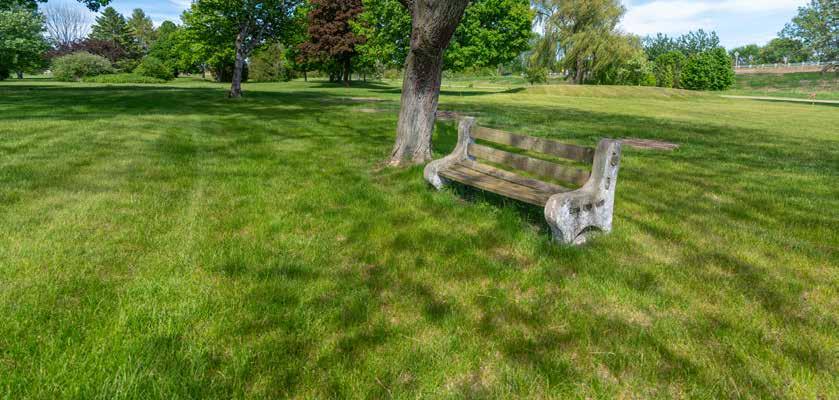
Motorists crossing the waters of Sturgeon Bay can look toward the Lodge at Leathem Smith and see a mound with a semicircular bunker cut into one corner. That former green serves as the only physical reminder of a course that was severed by the 1978 construction of the Bayview Bridge and highway bypass around Sturgeon Bay.
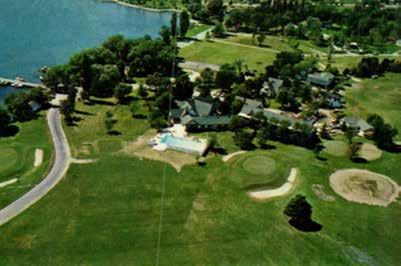
Some golfers in their 80s or 90s remember playing the links at Leathem Smith Lodge when Sturgeon Bay had no course other than those nine holes. The site got its first golf course after members of the Door County Chamber of Commerce, led by Leathem Smith, emphasized that the county needed a golf course and hotel to build up the tourism business, according to 1921 Door County News reports. Members formed a committee, sold $30,000 in “subscriptions” and opened Door County Country Club, with the first 2,200-yard track designed by William “Bim” Lovekin, who also designed a few of Peninsula State Park’s first modern holes, circa 1924.
Through the years, the nine holes and lodge carried many names, including Commodore Hotel, Hotel Lucerne and Leathem Smith Lodge. They were redesigned and expanded to 2,900 yards in 1931 by architects Langford and Moreau.
“Everybody played it. It was so nice to have,” avid golfer Mary Aiken said. One day in her early teens, she played 72 holes – eight times walking nine holes with friends, by herself and with tourists. “I had to call my dad to come get me. I couldn’t ride my bike home.”
Aiken and Eugene Jacobs, 93, still have the course route memorized, including the sixth fairway that bordered the bay’s shore, but they have no memory of one feature Langford and Moreau drew in their 1931 redesign. The designers called for a floating tee on a boat or barge for the seventh hole, the Door County News reported.
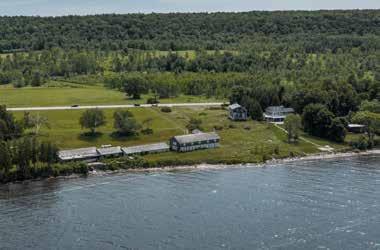
The late John Hutter, the owner of the large, nowghostly Chateau Hutter Resort property on the peninsula’s western shore, advertised the year-round resort as though its ski hill and rope tow and its seaside course rivaled facilities at Sun Valley, Idaho.
Local golfers like Eugene Jacobs thought the terrain near the bay and leading up toward the bluffs could have accommodated a great golf course if a good designer did the work at Chateau Hutter. Instead, Hutter designed and built it himself.
“He did some ridiculous things,” Jacobs said, recalling one U-shaped par-five hole.
A thick stand of trees separates a tee and green that were only about 100 to 120 yards apart. The hole required a tee shot toward the bay, a 100- to 120-yard shot to the second dogleg and a wedge or 9-iron to the green.
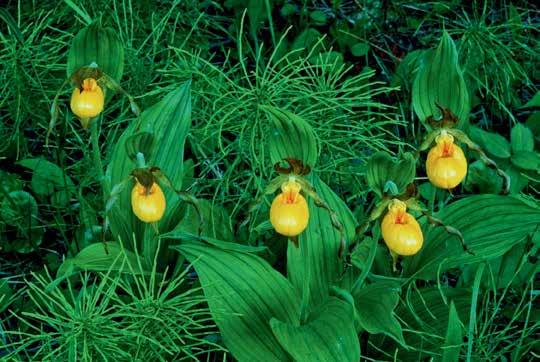
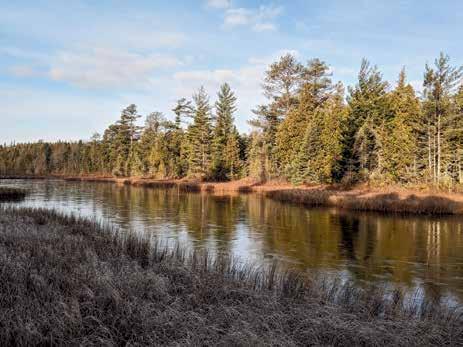






On April 14, 1916, the Door County Democrat reported that Horse Shoe Bay Country Club would have golf links, tennis courts, a baseball field, “billiards, bathing and all comforts.”
That course was never built. But that May, the Door County Advocate reported that the United Fruit Growers had consulted Thomas Bendelow of Chicago (who’s sometimes called the Johnny Appleseed of Golf because of the hundreds of courses he designed) to plan a course at Horseshoe Bay.
Nine decades passed before Horseshoe Bay had a course – the pristine and private Horseshoe Bay Golf Club on the bluff above the farm. Area golfers and businessmen remember other courses that died before construction began.
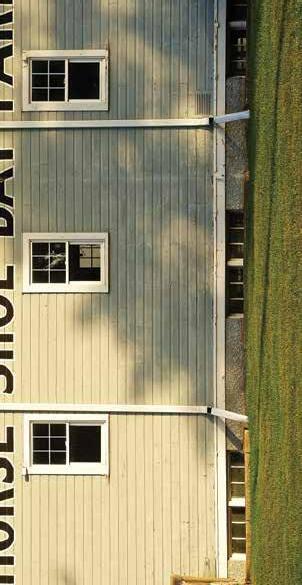
Investors – including the late Peter Trenchard, a PGA (Professional Golfers’ Association) rules official and owner of the now-closed nine-hole Bay Ridge Golf Course at Sister Bay – planned a golf course east of Sister Bay near Woodcrest Road, Sunstrom and Anderson said. Trenchard’s group was unable to complete the land purchases they needed to make it happen, Anderson recalled.
In the 1980s, a group of investors planned, then gave up on a golf course on undeveloped land east of the Village of Fish Creek. Beef cattle farmer Ron Merkle said that property stretched southward and eastward from behind his farm south of County F to the secluded Winding Road. He could not recall why construction never began.
“All of a sudden, it dropped,” Merkle said. He said that the property floods severely every spring. “I could not see how they could do it, because there’s so much wetland back there.”
Whitefsh Bay Links
A Chicago investor purchased land near Jacksonport, intending to build a course, the Door County Advocate reported in 1926. In 1928, a Door County News editorial encouraging construction of a course to boost tourism to Washington Island also said a course was planned near Whitefish Bay, near the modern-day Hitching Post restaurant and the ghost town of Voseville.

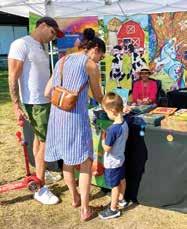
Join us at Write On for writing and reading events for all.
Everyone has a story to tell...and whatever your skill level, our summer classes can help you express yourself in a poem or memoir, or retell your story as fiction.

While you’re here, discover our Writer’s Walk — 59 acres of trails that are the quiet spirit of Write On, Door County.
You’ll find a world of words online at
Our online Events Calendar has details and more.
July 18 | 8am-12pm | Martin Park | Sturgeon Bay Books for all ages by members of the Door County Authors Collective will be for sale by the authors in a street fair setting.
August 6 | 5:30 - 9pm / Kress Pavilion / Egg Harbor
Join us for a special evening featuring novelist Lan Samantha Chang, author of the award-winning novel The Family Chao.

September 17-19 | Washington Island Register now for this popular annual event featuring five award-winning authors over three days of workshops, panels, readings, and more at picturesque island locations.
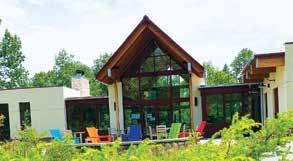








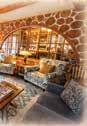







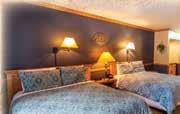



























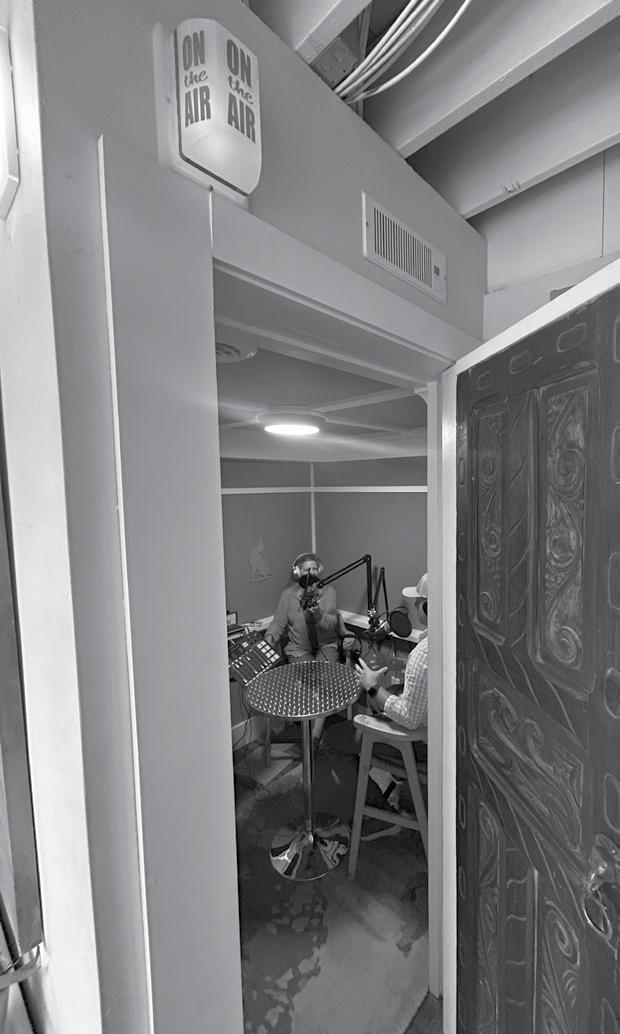





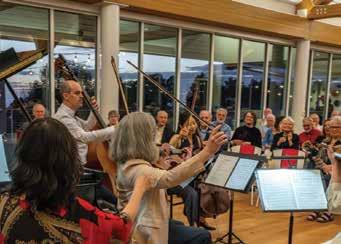
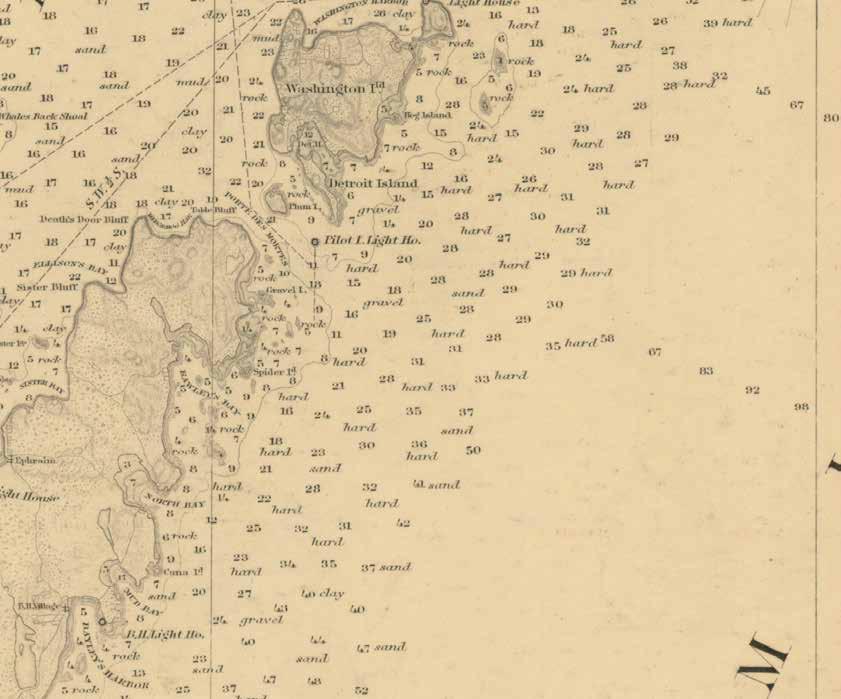
by BRENNAN CHRISTIANSON
Between the tip of the Door peninsula and the shore of Plum Island lies a body of water known as the Porte Des Morts Passage, or Death’s Door. Records of this name date back to at least the 1720s, but its origin is a mystery to this day.
Death’s Door passage connects Lake Michigan to Green Bay. Today, it is crossed daily by the ferry that takes people to and from Washington Island. Before the construction of the Sturgeon Bay Ship Canal in 1881, Death’s Door was the most trafficked shipping route in the state of Wisconsin, bringing goods from Green Bay to Milwaukee and Chicago. In the time of the fur trade, natives and Frenchmen alike traveled through Death’s Door to transport trade goods to Green Bay and furs to New France.
But prior to that, when the naming of Death’s Door could have taken place, there were two major tribes who lived around Green Bay: The Ho-Chunk and the Menominee.
Before European contact, the Ho-Chunk lived on Green Bay’s eastern shores, while the Menominee were situated along the western shores, thus giving both tribes dominance over Green Bay and the Fox River valley, according to historian Patrick Jung.
One of the first Frenchmen to enter Green Bay was Jean Nicolet, a translator, diplomat, lay missionary and
trader. His purpose in the area was to secure peace between the Huron tribe, who were allies of the French, and the Ho-Chunk.
When Nicolet arrived in either 1633 or 1634, he was met by several thousand natives from several Indian nations. After negotiating a truce between the Ho-Chunk and the Hurons, Nicolet left the area and headed back to Canada.
The French would not be back in the area for nearly 20 years. When they returned, the Ho-Chunk, once a powerful tribe of over 20,000 members, had been reduced to only 600. The Menominee did not seem to do much better, with one account claiming they had fewer than 200 members.
The area’s demographics were in flux at the time. An influx of Native Americans from the current state of Michigan had flooded into the area, fleeing west from the oncoming invasion of the powerful Haudenosaunee.
Over 10 different tribes fled to the Green Bay area, including the Potawatomi, Sauks and Meskwakis. This created a new dynamic with three different language families –Algonquin, Siouan and Iroquoian –over a dozen tribes, and a population of 15,000 to 20,000 people all within three days’ travel to Green Bay.
This new influx of different peoples created two main changes: conflict over limited space and resources, and a new social order based on defensive villages. Because many tribes were depopulated
by disease and war, and a common enemy (the Haudenosaunee) appeared, many native groups came together to form multi-ethnic villages made up of several different tribes.
This context lays the groundwork for exploring the source of the name Death’s Door. The earliest recorded account of the name comes from a journal entry by the French Jesuit missionary Emmanuel Crespel in 1728, author Conan Bryant Eaton claims in Death’s Door: In Pursuit of a Legend.
Crespel was sent along with a French military expedition in 1728, traveling to the Fox Valley region. He mentions passing through Death’s Door on Aug. 14, rather offhandedly stating, “As we were doubling Cap la Mort (Death’s Door) [sic], which is about five leagues across, we encountered a gust of wind, which drove ashore several canoes that were unable to double a point in order to obtain shelter; they were broken by the shock; and were obliged to distribute among the other canoes the men who, by the greatest good fortune in the world, had all escaped from the danger.”
The next known account about the passage was written in 1817 by Willard Keyes about his voyage from Vermont to Wisconsin, which was published by the Wisconsin Historical Society in 1920. He writes, “August 11th, pass ‘Point De Mort’ (Point of Death) [sic] so called from the many Indian canoes wrecked there in attempting to pass the point which is perpendicular – rocks rising out of the water.”
That same year, Samuel A. Storrow, a judge advocate stationed in Wisconsin between 1816 and 1820, wrote a letter to one Major General Jacob Brown, in which he describes Death’s Door. His mention of the passage is only a sentence long: “Leaving this beautiful island (Washington Island), we reached, on the 16th, the southerly cape of Green Bay, Port Des Morts [sic], so called from the destruction at this place of a number of the Potowotomies.”
Each of these three mentions takes the name of Death’s Door as a given, implying that neither Crespel, Keyes nor Storrow was responsible for the naming. Due to the private nature of these accounts, none of these sources had reason to be embellished, thus making their accounts more or less trustworthy.
It wasn’t until later accounts that stories of what led to the name appear. In 1831, Indian agent Samuel Stambaugh, who wrote of a trade party killed when they were caught in a storm.
Michigan State Geologist Douglass Houghton passed through the passage on his way to the Upper Peninsula in 1839, writing, “Passage Des Morts [sic], or Death’s Door, is reputed to take its name from a war party of Indians, in canoes, having been driven against the bold and lofty cliffs, in a severe storm. All except 3 or 4 are said to have perished.”
Over time, various accounts described different versions of such calamitous events, but none cited primary sources. The most famous account of the Death’s Door legend comes from historian Hjalmar Holand, who wrote about it in his 1917 book, Door County, Wisconsin, The County Beautiful.
Holand’s story is the longest and most in-depth of the three narratives and is far more embellished (and, therefore, more suspect).
Holand starts with the Ho-Chunk (though he refers to them as the Winnebago), who he claims came from Mexico and invaded the Door peninsula, which was inhabited by the Potawatomi. Holand describes the Potawatomi
as “the most affable and generous of Wisconsin tribes.”
The Ho-Chunk received a more frightening description, characterized as “the only tribe in Wisconsin that used horses, and they were the fiercest of warriors. They were very perfidious (untrustworthy), superstitious and insolent, and not only took the scalps of their enemies, but devoured their bodies at their feasts.”
Though the Potawatomi were willing to share the land with the Ho-Chunk, the Ho-Chunk instead chose to chase the Potawatomi off onto Washington Island, according to Holand. But the Ho-Chunk were not satisfied and would not rest until they wiped out the Potawatomi.
The Potawatomi decided to counterattack during a night raid, but spies sent out to light signal fires for a safe landing were captured. Two were burned at the stake, while a third revealed the plan, and the Ho-Chunk decided to act on this information.
As a large storm was brewing, preventing the Potawatomi from retreating, the HoChunk lit a fire in the wrong spot, and the Potawatomi were dashed against the rocky shore of the Door peninsula. The Ho-Chunk sent their own war party to Washington Island to finish off the Potawatomi, but they did not fare any better, and their canoes were destroyed in the storm. The Ho-Chunk took this as a sign to never cross the passage that was then known as the “Door of Death.”
The assertion that the Ho-Chunk invaded the indigenous Potawatomi can be easily disregarded. When Jean Nicolet arrived in the early 1630s, the Ho-Chunk were the dominant power in the Green Bay area. The Potawatomi themselves did not even arrive in Door County until the 1650s and 1660s. By that time, the Ho-Chunk had been reduced to a small fraction of their former might, only a few hundred in number. By the time the two tribes interacted with each other, both tribes were in desperate states and could not inflict great damage on each other.
Another issue is that some of Holand’s sources contradict each other. Stambaugh talked about a trading party that got destroyed while resting in Death’s Door, and Storrow mentioned that some Potawatomi died while crossing the passage, but Brink had quite a different account – one similar to Holand’s, except for a few minor changes.
The most telling difference is that Brink’s account did not mention which tribes were involved, only that a tribe of 300 natives was wiped out in a failed surprise attack. And Brink’s reliability is questionable, according to historian Patrick Jung.
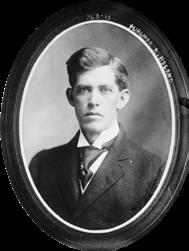
“One quote by Brink indicates he not only did not know any Indian languages, but that he also had a superficial and ethnocentric view of their culture; not uncommon traits for the early Anglo-American who first came to the western Great Lakes,” Jung said.
Though Holand tries to cite his sources for the legend, some of those sources are questionable. He cites Jonathan Carver’s Travels through the Interior Parts of North America 1766-1768, the account of Samuel A. Storrow, the account of Samuel Stambaugh, and an account from one Captain Brink, who was a government engineer who surveyed Door County in 1834.
This is supported by a separate account written by Brink, where he claims that, when attending a wedding, he had no idea what the Natives were saying, what their dances meant or generally what was happening. It is also unclear where Brink’s source comes from.
Holand might have also taken information from the account of Nicolas Perrot, a Frenchman who wrote many accounts about seventeenth-century Wisconsin. He described the Ho-Chunk





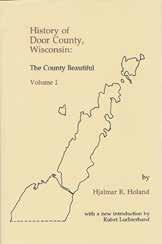
and how they lost their power during the 20 years of French absence in the area, writing “despite all these misfortunes, they (Ho-Chunk) sent a party of five hundred warriors against the Outagamis (another name for the Meskwaki or Fox), who dwelt on the other shore of the lake; but all those men perished while making that journey, by a tempest which arose.”
The sources that Holand used all talk about Death’s Door, but the details vary wildly. Two sources do not mention a tribe, while one mentions the Potawatomi, but does not say why they were passing through the area. If Holand did use Perrot, which included the Ho-Chunk and their fleet being wiped out in a storm, it would be inaccurate due to not mentioning where this event took place, and that it was against the Meskwakis, not the Potawatomi.
“Clearly, what Holand did was synthesize the information he had from Storrow, Stambaugh and Perrot and changed some of the facts so they fit into the framework provided by Brink’s account,” Jung said.




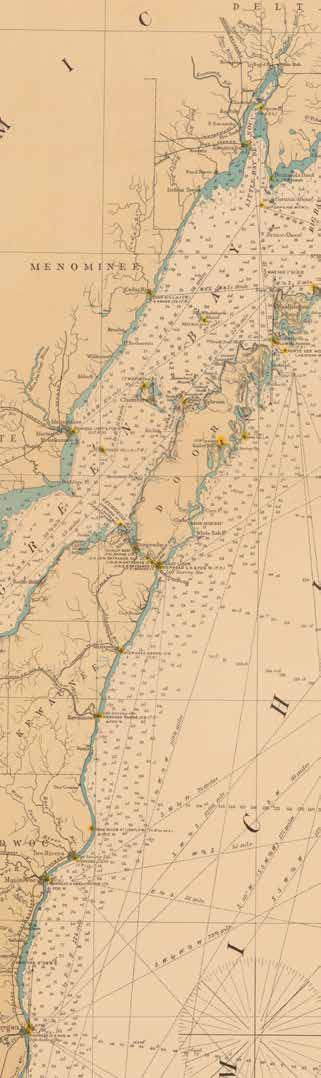
Regardless of which account has the most credibility, all have a major flaw: they discuss each tribe as if it were a homogeneous nation, rather than part of the heterogeneous village structure that was found in seventeenthcentury Wisconsin. Conflicts would have involved several villages, each with multiple clans and tribes allied against one another; the fight wouldn’t have been as straightforward as one tribe versus the other, as Holand described.
The short answer is we do not really know. One possibility is that the passage got its name before European involvement and Jean Nicolet’s mission in the early 1630s. In that case, only oral tradition could provide an account.
Another possibility is that the Ho-Chunk were wiped out along Death’s Door sometime in the early to mid-seventeenth century, most likely between Nicolet’s mission to the Ho-Chunk and Perrot’s travels to Wisconsin about 20 to 30 years later. Perrot wrote that the tribe was reduced from 6,000 to 1,500. Furthermore, the tribe lost additional hundreds during a storm. If the Ho-Chunk were involved with the naming of Death’s Door, it would probably have been during a military expedition at this time.
Another possibility is that a group of Potawatomidominated villages was wiped out in a storm along Death’s Door sometime in the mid-sixteenth to early seventeenth century. This event would have most likely been a trade mission for weapons heading towards Michigan or even Montreal. The tribes of Wisconsin were not willing to move in large caravans of traders all the way to Montreal except during times of peace, which would allow safer travel.
This could have taken place between the 1660s and the 1670s, when there was a break in the fighting between the many tribes of Wisconsin and the Haudenosaunee, providing a
window for the Potawatomi to travel between Door County and Montreal. Another possible time would be between 1701, when the Iroquois wars concluded, and 1728, when Emmanuel Crespel reported the name.
After the wars ended, Detroit became a prominent trade destination for about a decade. In 1712, Michilimackinac (Mackinaw Island) became the dominant trade destination for Natives in Wisconsin. Thus, if a trade caravan of predominantly Potawatomi were to head to Montreal, it likely would have taken place between the 1660s and 1670s; if the caravan was heading to Detroit, it likely would have done so between 1701 and 1711; and if the caravan was heading to Michilimackinac, it likely would have done so between 1712 and 1728.
These dates place the caravans before the first written account of Crespel in 1728, placing the Potawatomi in the Door County area during the correct time period and giving them motivation to travel east to trade fur for weapons. Although it cannot be known definitively, this is the most likely scenario for the origins of the name Death’s Door.
We must learn as a society to accept that there are some things we will never know, despite claims to the contrary, and that is fine. Sometimes, it is just as good to dispel incorrect claims, as it is to prove correct claims.
A version of this article was originally published in Voyageur magazine.
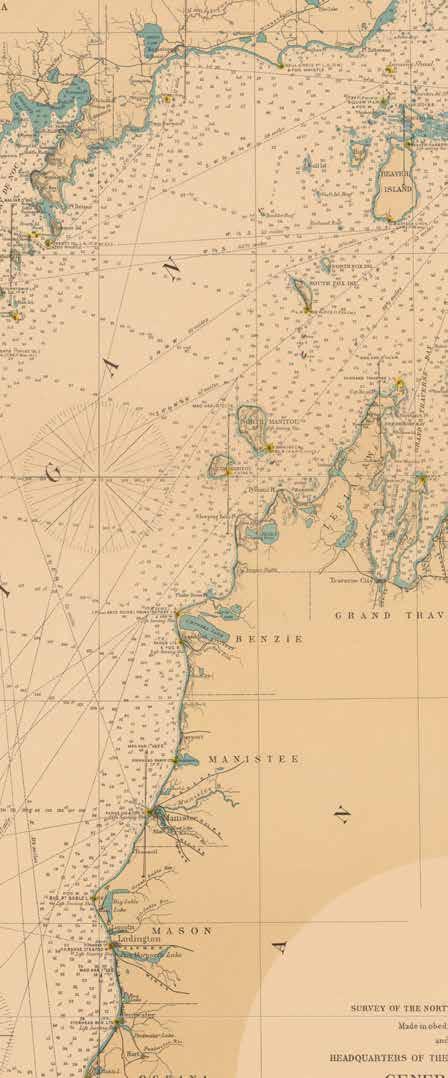
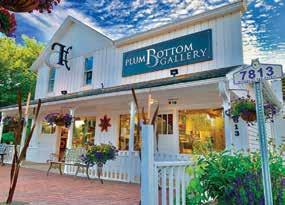






20TH ANNUAL GALA
Saturday July 11 from 3 PM - 7 PM Plum Bottom Road
Featured Artists include Kinga Vnuk, Trisha Spice, and more
PLUM BOTTOM GALLERY ANNUAL DEMO DAY
Saturday, August 22 from 11 AM - 2 PM Plum Bottom Road
Featuring Tom Maakestad, Keary Kautzer, and Mark Price, Stephanie Lord
JEWELRY SHOWCASE
Saturday, October 10 - Sunday October 11 from 11 AM - 2 PM Fish Creek
Open Year Round –4999 Plum Bottom Rd, Egg Harbor 7813 State Hwy 42, Egg Harbor 4175 Main St, Fish Creek 231 N. 3rd Avenue, Sturgeon Bay


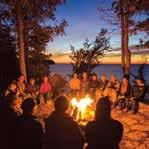




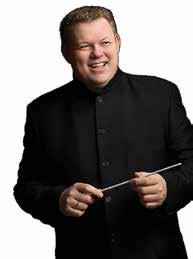


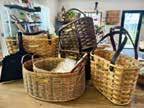
Bibliography
Notes: special thanks to Dr. Patrick J. Jung for helping me with the research.
1. Brink, John. John Brink, “An Old Government Surveyor Some of his Experiences in Wisconsin in the Thirties with Indians and Wild Beasts – How Lake Geneva Got its Name.” Milwaukee Sentinel, Jan. 29, 1899.
2. Crespel, Emmanuel. De Lingery’s Expedition against the Foxes, 1728. In Report and Collections of the State Historical Society of Wisconsin for The Years of 1883, 1884, and 1885, Volume 10, 47-53 Madison: Democrat Printing Company, 1888.
3. Eaton, Conan Bryant. Death’s Door the Pursuit
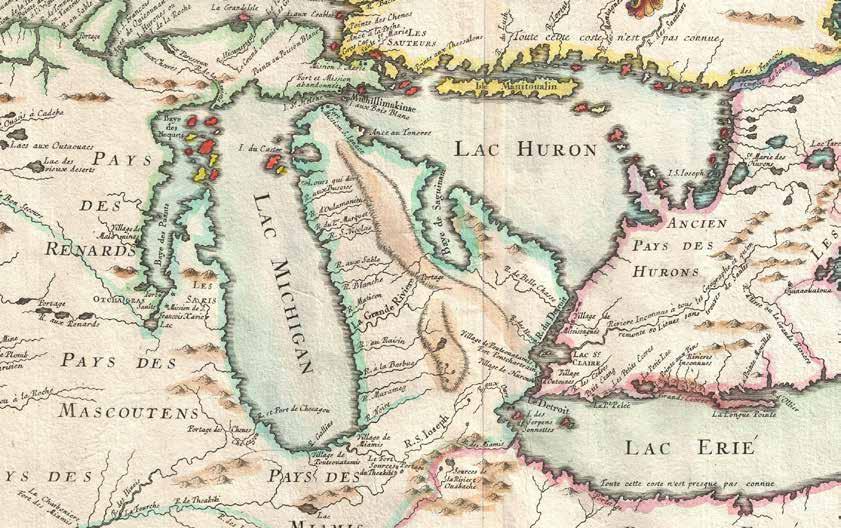
of a Legend 4th edition Washington Island, Jackson Harbor Press, 4th edition. 1996
4. Fixico, Donald L. “The Alliance of the Three Fires in Trade and War, 1630-1812.” Michigan Historical Review, Vol. 20, No. 2, American Indians (Fall, 1994): 1-23
5. Fox, George R. “Indian Remains on Washington Island.” Wisconsin
Archeologist 13 (January 1915): 157-175.
6. Holand, Hjalmar. History of Door County, Wisconsin: The County Beautiful. Vol. 1. Chicago SJ. Clarke Publishing, 1917.
7. Jung, Patrick. The Misunderstood Mission of Jean Nicolet Uncovering the Story of the 1634 Journey. Madison, Wisconsin
Historical Society Press, 2018.
8. Jung, Patrick. email to Author, July 6, 2021.
9. Keyes, Willard. “A Journal of Life in Wisconsin One Hundred Years Ago Kept by Willard Keyes of Newfane, Vermont.” The Wisconsin Magazine of History, Vol. 3, No. 3 (March 1920): 339-363.
10. La Potherie, Charles Le Roy, Bacqueville de. “History of the Savage peoples who are Allies of New France (Chapters I-VII).” In The Indian Tribes of Upper Mississippi Valley and the Region of the Great Lakes. Vol. 1, Emma H Blair, ed., pp 273-372. Cleveland: Arthur H. Clark Company, 1911.
11. Martin, Charles I. History of Door County, Wisconsin Sturgeon Bay, Wis.: Expositor Print Job, 1881.
12. Stambaugh, Samuel. “Report on the Quality and condition of Wisconsin Territory, 1831.” In Collections of the State Historical Society of Wisconsin. Vol. 15, Reuben Gold Thwaites, ed., pp 399438. Madison: State Historical Society of Wisconsin, 1900.
13. Storrow, Samuel A. “The North-West in 1817: A contemporary Letter.” In Collections of the State Historical Society of Wisconsin. Vol. 6, Lyman C. Draper, ed., pp 154-187. Madison: State Historical Society of Wisconsin, 1908.
14. White, Richard. The Middle Ground Indians, Empires, and Republics in the Great Lakes Region, 16501815, 20th anniversary edition. New York, Cambridge University Press, 2011.

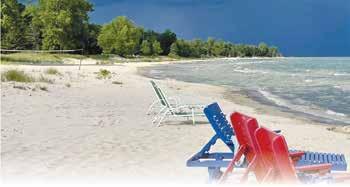
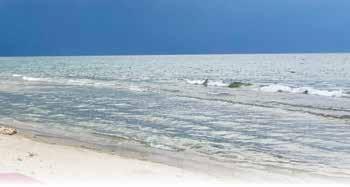





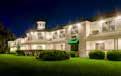
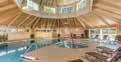


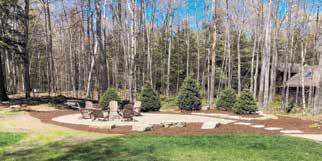
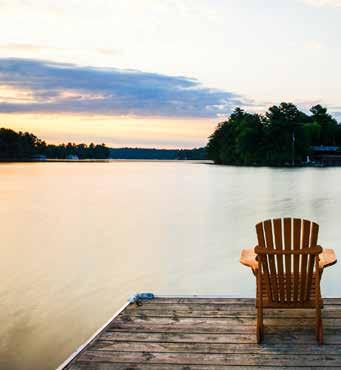













by ANDERS ERICKSON
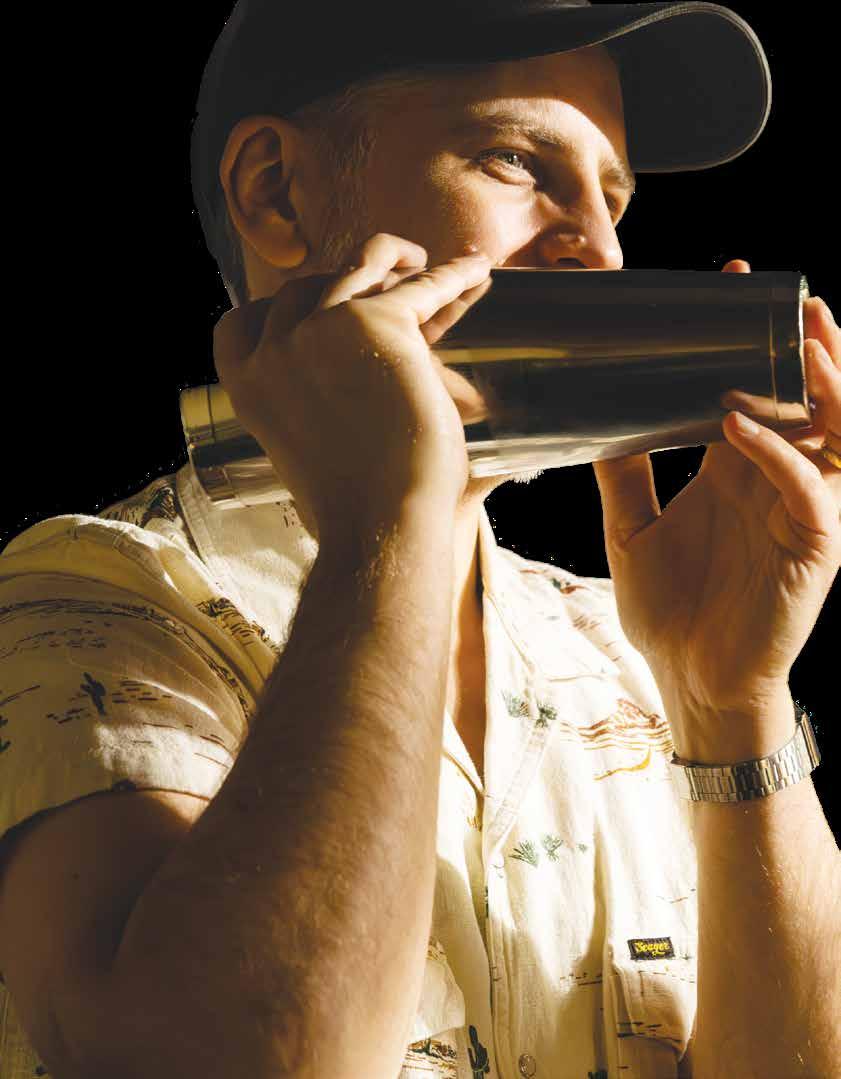
Classic cocktails aren’t complicated. They’re just good at hiding how simple they really are.
Many favorites follow clear formulas, and once you recognize a pattern, the recipes feel less like rules and more like variations. The Sidecar, margarita and Pegu Club may look like entirely different cocktails, but they’re built on the same idea: a base spirit, fresh citrus and orange liqueur. Learn one, and you’ve essentially learned all three.
Small adjustments define each drink’s personality. A sugared rim softens the Sidecar, salt sharpens the margarita and bitters give the Pegu Club added depth.
Orange liqueur is the constant across these cocktails, balancing citrus and giving the drinks weight. Orange liqueurs range from lighter triple secs to richer curaçaos. All will work, but I recommend curaçao for these recipes.
The Sidecar was the drink that first pulled me down the cocktail rabbit hole. It was the first time I’d had a drink made with freshly squeezed citrus rather than sour mix, which was still common behind many bars at the time.
The difference was immediately evident; instead of tasting sweet and dull, it felt fresh and alive. It was a small change, but it reframed how I thought about balance.
The cocktail is built with just three ingredients. Brandy – typically cognac –forms the backbone, while fresh lemon
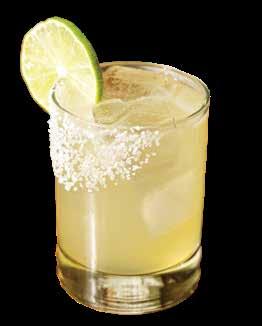
Like the others, the Pegu Club follows a familiar structure: spirit, citrus and orange liqueur, with the addition of bitters setting it apart. Rather than softening or sharpening the drink, bitters add depth. A couple of dashes bring a gentle bitterness and aromatic complexity without throwing off the balance.
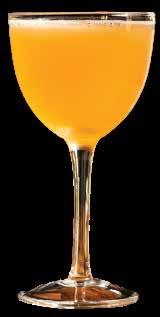
Of the three, the Pegu Club feels the most refined. It shows how small changes can fine-tune a familiar formula. Once you understand the structure, drinks like this appear intentional rather than intimidating.
and refreshing. A sugared rim isn’t strictly necessary, but it softens the edges of the drink and makes it a little more playful.
Recipe
• 1.5 oz (45 ml) cognac
• 1 oz (30 ml) orange curaçao
• ½ oz (15 ml) fresh lemon juice
• Lemon wedge and white sugar for rim
Sugar the edge of a chilled cocktail glass and put in freezer. Shake all ingredients with ice, then double-strain into the prepped glass. Garnish with a lemon wedge
The margarita is often misunderstood as a simple party drink. It follows the same structure as the Sidecar, but the finishing touch changes everything. Where sugar softens the Sidecar, salt sharpens the margarita. It’s the same formula, pushed in a different direction.
A little salt goes a long way, which is why I like to salt only half the rim of the glass. It gives you the option to sip with or without it and experience how dramatically it changes the drink.
2 dashes Angostura bitters
Shake all ingredients with ice, then double-strain into a chilled cocktail glass.
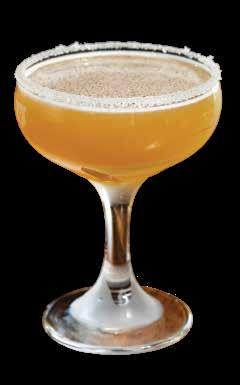
Recipe
• 2 oz (60 ml) blanco or reposado tequila
• 1 oz (30 ml) orange curaçao
• 1 oz (30 ml) fresh lime juice
• Lime wheel and salt for rim
Salt the rim of a double old-fashioned glass. Add ice. In a shaking tin, add all ingredients and shake with ice. Strain into the salted glass. Garnish with a lime wheel.
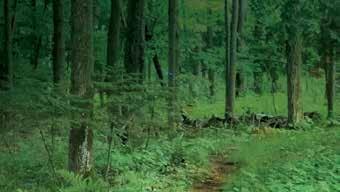
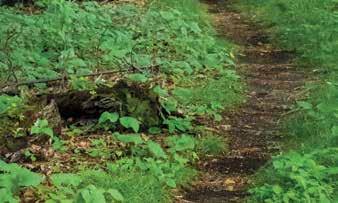
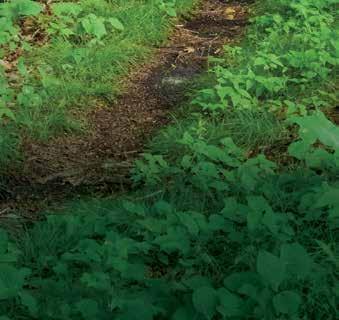

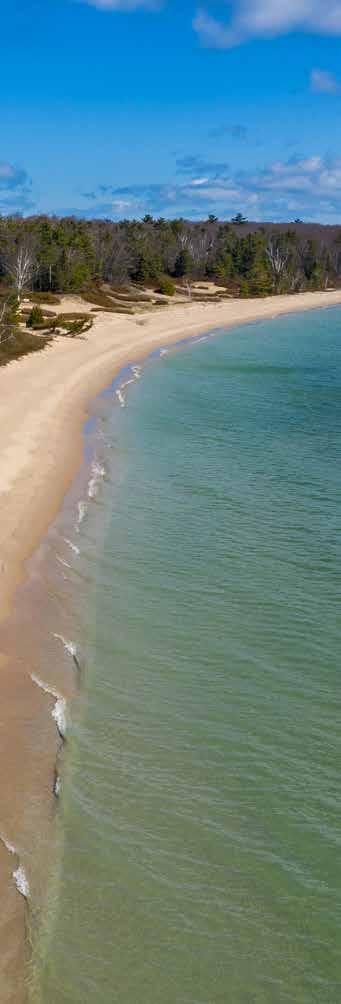




by JESS FARLEY and photos
by REMY CARMICHAEL
Succotash is simply a medley of vegetables sautéed to create a light, one-pan meal.
This dish was handed down from the Native Americans. The original incarnation was a combination of corn and lima beans with other vegetables added in when available. I love that this contains two of the three sister crops of Native American agriculture, the only omission being squash. This shows that succotash was historically a summer dish, prepared during the bountiful months of the warm season.
My modern-day adaptation was inspired by summer bounty as well. I use what I have available, corn or no corn. There is no wrong answer when it comes to a vegetable sauté.
This recipe is a great chance to use fresh local produce. Do you have a farmer friend? Do you know when and where to hit up the farm markets dotting the peninsula? Do you tend to a garden of your own? Locally grown heirloom varieties of vegetables will sing in your kitchen and dance in your mouth. Flavor explosion in three, two, one, kapow!
Each year leading up to the growing season, I have the
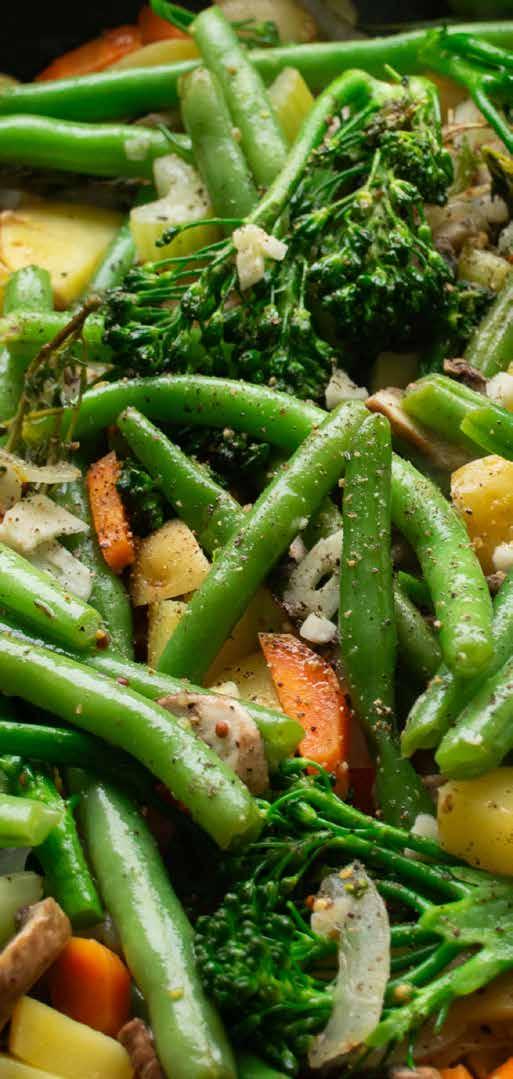
best intentions of growing a big garden. Life and my bad sandy soil continue to spoil my plans. But through these years, I have somehow managed to keep up with my herb garden – rosemary, sage, thyme, dill, basil, cilantro, tarragon.
One of my favorite warmweather traditions is simply walking outside in the middle of my evening meal prep to pinch off a little bit of this or that to incorporate into whatever I am cooking at the moment. This small act tends to ground me, a moment of calm in my busy day. I push the pause button for a moment to tune into the breeze and give thanks. I recommend all culinary
aficionados grow a small herb garden. Herbs make life better.
Speaking of herbs, always incorporate plenty in your cooking, especially during the bountiful summer season. Fresh herbs add bold flavors, making something good taste divine.
Succotash can be served as a vegetable-forward dish or paired with your favorite grilled protein –chicken, fish or a marinated skewer of shrimp. This light summer meal is complemented perfectly with a glass of crisp white wine or rosé, or a light, cold beer. Bon appétit.
“Your kitchen is no different than your garage. Stock it with all the proper tools; set yourself up with the best. This makes cooking fun and so much easier.”
– JESS FARLEY
Serves 4
• 4-5 small golden potatoes, sliced small
• Small head of broccoli or broccolini, small florets
• ½ lb green beans, whole, ends removed
• 2 medium carrots, sliced small
• 2 celery stalks, sliced small
• 3-4 mushrooms, sliced (use chanterelles if they are in season)
• 1 small onion, diced
• 3-4 garlic cloves, smashed
• 1 medium tomato, chopped, or pint of cherry tomatoes, whole
• Lots of fresh herbs – thyme, parsley, basil, rosemary – stems removed, chopped or ripped
• Fresh lemon
• 1 pint chicken or veggie stock (I make it regularly to have available, frozen or jarred in the fridge)
• Olive oil
• 2 Tbsp butter
• White wine
• Salt and pepper to taste
You will need a large sauté pan with a lid. Heat your pan to medium-high heat. Add the oil and butter. Add the potatoes, onions and garlic. Sauté for 3-4 minutes, stirring constantly. The high heat will release the aromatics in the alliums.
Add a splash of white wine and a pinch of salt to deglaze the pan and add layers of flavor into the potatoes. Add the carrots, beans, broccoli and celery. Continue to sauté for an additional 5 minutes or until you notice the veggies starting to sweat. Add a third of the stock; keep stirring and adding more stock every few minutes. Continue this until the potatoes are tender and cooked through. You should use the full pint of stock in this process.
The tomatoes can be added close to the end; the goal is to soften them, not cook them to the point they turn to sauce. Add the herbs, salt and pepper, and a squeeze of fresh lemon juice to brighten up the dish. Turn off the heat and cover the pan.
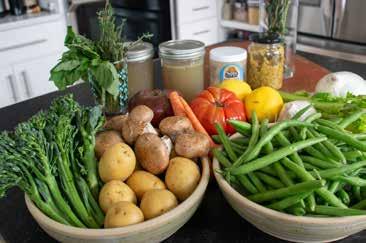
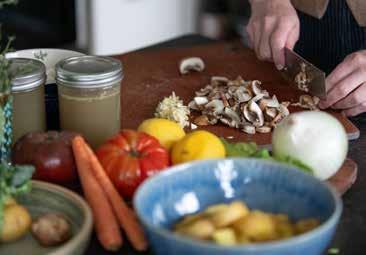
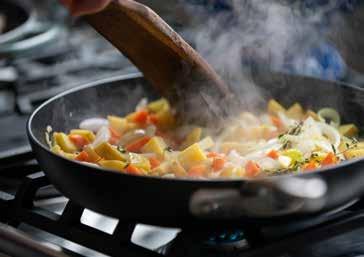
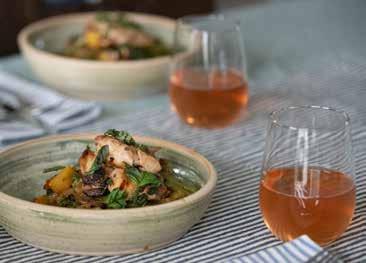

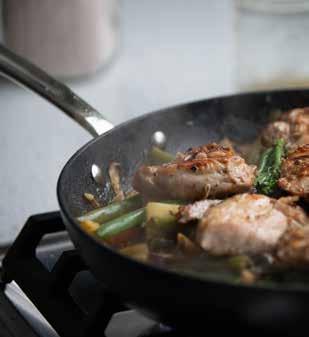
Grill salmon, brush with olive oil and a pinch of coarse ground salt. Grill for 6 to 8 minutes, skin side down. Flip and finish for a couple of minutes. Remove from the heat and finish with a squeeze of lemon and fresh cracked pepper.
Although I did not incorporate corn into this recipe, I recommend doing so if it is available to you. If you say yes to the corn, be mindful not to overcook it. Simply cut the kernels fresh off the cob. Add the corn to the sauté minutes before serving your dish. Give it a good stir and let it sit for a couple of minutes before plating. Proceed with the recipe by adding the fresh herbs and a squeeze of lemon to brighten the dish. The corn will be very lightly cooked, creating sweet little pops of flavor as you work your way through dinner.
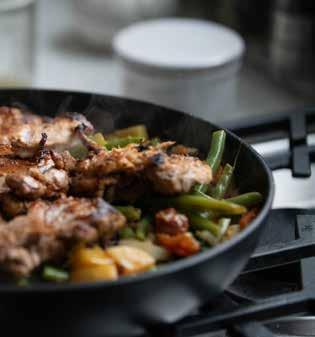
• 4-6 chicken thighs
• 1 Tbsp olive oil
• 1 Tbsp balsamic vinegar
• 1 tsp dijon mustard
• 1 tsp honey
• Pinch of salt
Marinate the chicken thighs for at least one hour in the marinade mixture before grilling. Grill the chicken for 10 to 15 minutes per side, depending on the thickness of the meat. Chicken is done when it reaches 170° F.
• 20 large, peeled, tail-on raw shrimp
• 1 Tbsp olive oil
• ½ lemon, juiced
• 1 clove garlic, chopped
• Handful of chopped herbs –parsley, thyme – stems removed
• Drizzle of honey
Marinate shrimp for 1 hour in marinade mixture. While the shrimp are marinating, soak your wooden skewers. Skewer 5 shrimp on each skewer. Grill over medium-high heat for 2 to 3 minutes per side. They are finished when they turn pink and opaque. Do not overcook or they will get rubbery













































FRIDAY - TUESDAY
8 AM - 2 PM

920.854.3284 | bluebeareb.com


DAILY
4:30 - 9 PM


920.633.4014 | dellaportadc.com


DAILY 12 - 10 PM


920.264.0895 | lapiazzadc.com


Homemade breads & pastries
Craft cocktails & coffee drinks
Extensive gluten-free & vegan options

Open year-round









Seasonal menus based on local farm-fresh produce


100% wood-fired Nepolitan pizza


Curated all-Italian wine list


Open year-round





Vertical Herb Garden


100% wood-fired Neapolitan pizza
Oyster & Spritz Apertivo Hour

Extensive selection of Italian wine, liqueurs, & digestivi


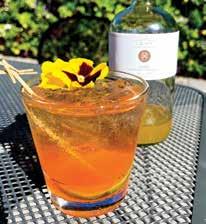
THREE UNIQUE RESTAURANTS, ONE GREAT LOCATION 12029, HWY 42, Ellison Bay, WI, 54210
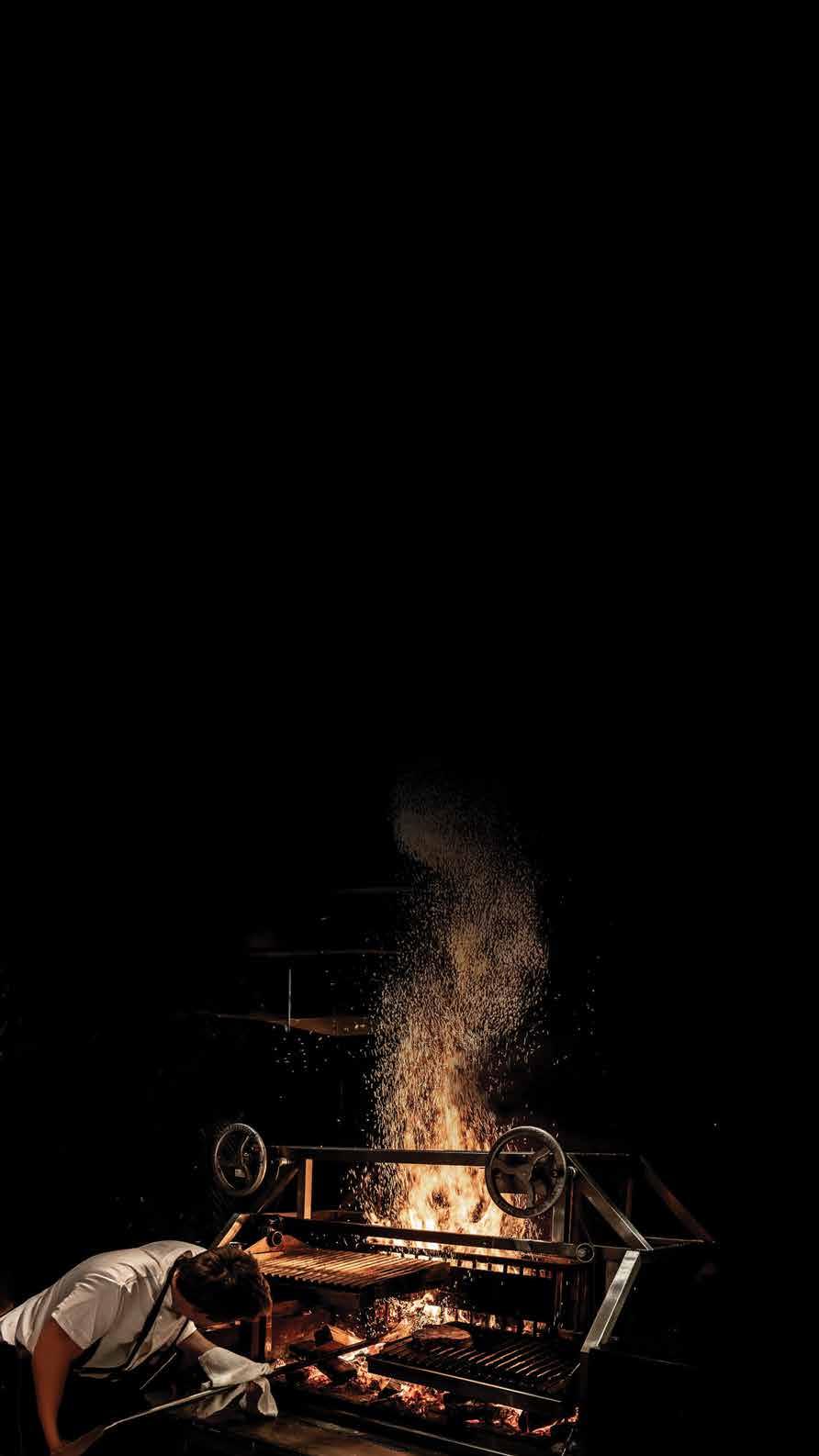
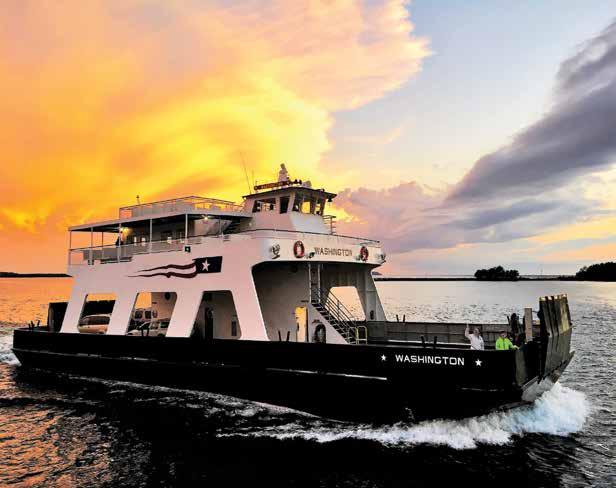
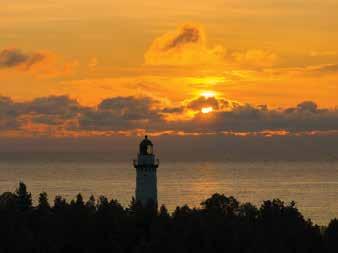
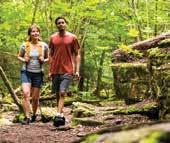
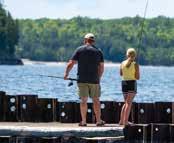
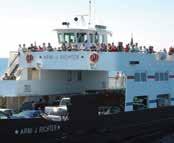
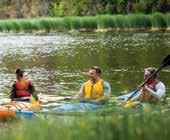

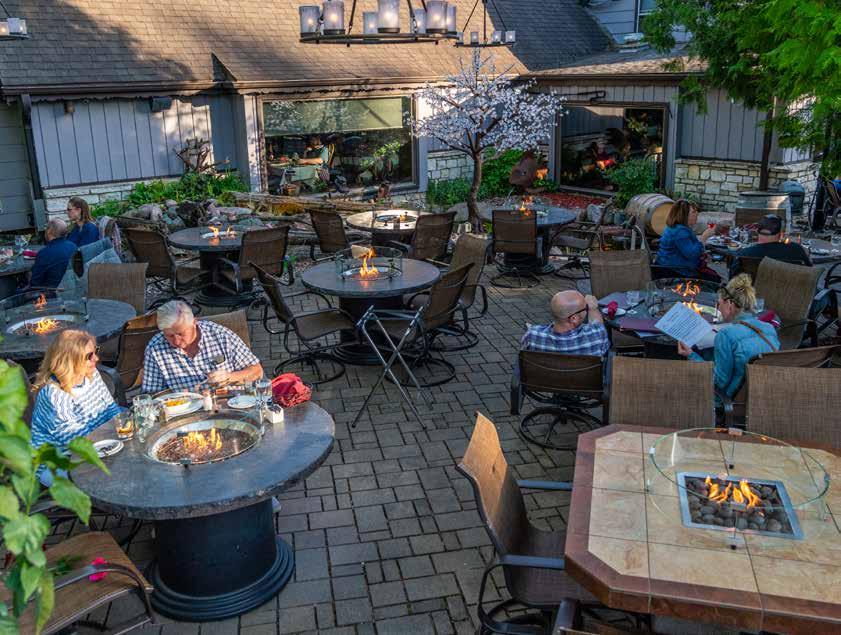
by MYLES DANNHAUSEN JR.
Randy Daubner created a problem at The English Inn, the Fish Creek restaurant he has owned for 21 years.
Shortly after he took over, he and his then-wife Lisa began building a patio near the entrance to give diners waiting for a table a place to have a drink outside. Pretty soon, those diners were willing to wait to eat outside, even when tables were available inside what had long been an upscale supper club dining room.
“It got so busy, I just kept building,” Daubner said. “We added more tables, more plantings, more fires and lighting.”
During a spring visit to the restaurant, a landscaper was finding places for dozens more bushes and trees for the patio, which now has space for 150 diners.
The multi-level patio vibe is both light and cozy, with nooks for tables nestled around a fountain and koi pond built by WaterScape Designs. It’s lined with hundreds of flowers, trees and bushes. Diners still enjoy the restaurant’s old fashioneds, Manhattans and classic dishes like Beef Wellington and prime
rib, but now in the glow of the 40 fires that light and warm tables and draw attention to a restaurant that could otherwise be overlooked.
Before the outdoor expansion,“the parking lot was large and tired, there was no lighting, and people thought the place was closed,” Daubner said.
A massive metal sculpture of a dragonfly on one end of the parking lot and a knight on horseback on the other side now assures that the restaurant can’t be missed.
It’s a much different face from the inside of this longtime county landmark. Once home to The Parkway restaurant, it became The English Inn when Pete and Dort Kortes bought it in 1964. A drawbridge guides diners over the koi pond at the front door, where they open the wooden doors to the dim lowlight of the bar and lounge, a throwback to another era. The ceiling sits low above the bar that seems to hug you as you enter and prepares you for a dining room unlike any other around.
Around the bar you find a hulking stone fireplace on the north wall and customcrafted metal chandeliers overhead; stained-glass partitions and dining nooks
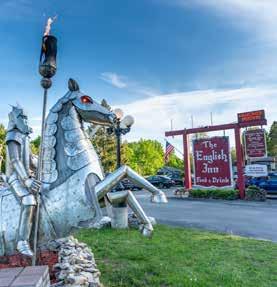
are framed by bulky wooden beams. It all comes together to create a vibe that’s part English pub and part Knights of the Round Table just a little north of Fish Creek on state Highway 42.
“This was all Dort’s vision,” Daubner said. “These are still her original wooden chairs. They don’t make them like this anymore.”
It’s a dining room made for the cool nights of winter, and a patio perfect for the warm nights of summer.
The English Inn is located at 3713 Hwy 42 in Fish Creek.

















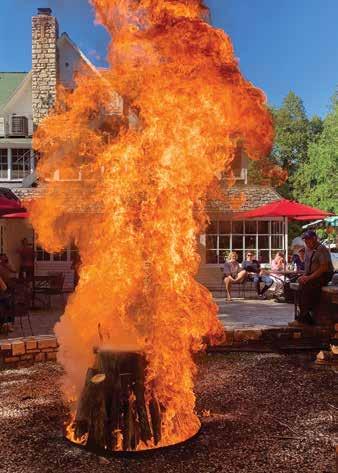












Key
Full bar
Beer and wine only
Outdoor seating available
Kids’ menu available
Offering breakfast
Offering lunch
Offering dinner
*Price range based on average dinner entrée (if available) B L D
Reservations accepted
Open during winter (hours may vary)
BAILEYS HARBOR
AC Tap 9322 Hwy 57 (920) 839-2426
L D J T
Baileys 57 7998 Hwy 57 (920) 839-2114
B L T
Chives Restaurant 8041 Hwy 57 (920) 839-2000
L D T ( Cornerstone Pub & Restaurant 8123 Hwy 57 (920) 839-9001
B L D J T {
Coyote Roadhouse 3026 Cty E (920) 839-9192
L D J T {
Located on the shore of Kangaroo Lake offering a full-service bar, appetizers, lunch and dessert selections in a casual and comfortable setting. Children’s menu available. Family friendly.
DCBC Eats 8099 Hwy 57 (920) 239-8181
L D
Gatsby’s Grille 7680 HWY 57 (920) 560-0103
L D J (


Restaurants are listed in alphabetical order by town. Information is subject to change. Contact individual restaurants for hours of operation. Inclusion in this directory should not be considered an unqualified endorsement by Door County Living. Restaurants are encouraged to email us with up-to-date information at info@doorcountyliving.com.
Harbor Fish Market & Grille 8080 Hwy 57 (920) 839-9999
B L D J { ( T
A full-service restaurant in the heart of Baileys Harbor. Distinctive waterfront dining with a casual upscale vibe. Seasonal, pet-friendly garden seating.
Harbor Market Grocery 8024 Hwy 57 (902) 473-0199
L D T
Inland Door County 8085 Hwy 57 (920) 717-6116
L D JT
PC Junction
Corner of A and E (920) 839-2048
L J { Pizza Czar
Corner of A and E (920) 839-2048
D J {
Roost + Banter 8093 Hwy 57 (920) 839-0060
B L {T
Located on the corner of 57 and Howard, Roost + Banter offers
a full coffee and Rishi tea menu with breakfast sandwiches and bagels. Our lunch has sandwiches, salads, and soups with vegan and gluten free options available. Indoor and outdoor seating with a great view, Open daily year round.
Sway Brewery & Bakery 2434 Cty F (920) 241-2562
B L D { T
The Blue Ox 8051 Hwy 57 (920) 839-2271
L D { The Thirsty Cow Taphouse 7899 Cty A (920) 839-9991
L D T
Top Deck Restaurant & Bar 1420 Pine Dr. (920) 839-2331
B D J { ( Vino! Vino! at Stone’s Throw Winery 3382 Cty E (920) 839-9760
L D T Vino! Vino! Is a
contemporary Tuscan wine bar and tapas experience. Join us for great wine and fresh food in an atmosphere of friendly, casual elegance.
Chaudoir’s Dock 10863 Cty N (920) 493-7075
L D {
Gilmo’s Bar & Bistro Wavepoint Marina Resort, 3600 Cty CC (920) 824-5440
L D J T { ( Idlewild Pub & Grill 4146 Golf Valley Dr. (920) 743-3334
L D { Joe Rouer’s Bar E1098 Cty X (920) 866-2585
L D T { Rouer’s Grand Slam 9710 School Road (920) 493-6556
L D Rouer’s Roadhouse 8649 Cty C (920) 824-5100



L D Sawyer Harbor Pub & Grill
36963 Cty M (920) 493-6558
L D T
Sunset On Riley’s Point 6952 Cty M (920) 824-5130
D J T { The Belgian Delight 1100 Cty C (920) 825-1111
B L D (
Carlsville Roadhouse 5790 Hwy 42 (920) 743-4966
L D T Door County Coffee Co. 5773 Hwy 42 (920) 743-8930
B L J T { Rusty Tractor 6216 Hwy 42 (920) 743-8704
B Wild Man Pizza 5781 Hwy 42 (920) 868-0953
L D





Morning, day or night Bayside Tavern , The Bayside Shop and Bayside Coffee serves up Summer vibes!
Gather with family and friends at the historic Bayside Tavern, named “Wisconsin’s Best Small Town Bar” and enjoy our full bar, “Smilen” Bob’s Famous Chili, made-to-order pizzas, burgers, sandwiches, and our popular Friday Fish Fry.
Enjoy a casual stroll through our charming cottage shops and discover a collection of books, handbags, jewelry, home goods, baby gifts and our own branded apparel at The Bayside Shop.

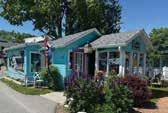
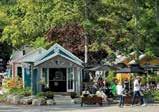
Bayside Coffee, Fish Creek’s only waterfront cafe, serves up hot drinks, fresh baked goods, breakfast sandwiches and salads. Soak up the sun and view with your favorite drink.
Bayside Tavern, The Bayside Shop and Bayside Coffee located in downtown Fish Creek, Door County, WI
baysidetavern.com | 920.868.3441
Big Easy Bagel & Beignet
7755 Hwy 42 (920) 868-9600
B L T {
Burton’s on the Green 7670 Horseshoe Bay Road (920) 868-3000 ext. 4
L D J
Burton’s on the Green is Alpine Resort’s golf course clubhouse restaurant offering delicious cuisine crafted by the culinary team of Burton’s on the Bay. Burton’s on the Green is open year-round, serving breakfast, lunch and dinner. Hours of operation change with the season. Visit alpineresort. com or call for restaurant hours.
Casey’s BBQ & Smokehouse 7855 Hwy 42 (920) 868-3038
L D J T
Cupola Cafe 7838 Hwy 42 (920) 868-2233
B L T
Ember at The Landmark 7643 Hillside Rd (920) 868-5162
L D {
Fika Bakery & Cafe 4614 Harbor School Rd (920) 868-5105
B L {
Fireside Restaurant 7755 Hwy 42 (920) 868-4800
D J T
Greens N Grains Deli 7821 Hwy 42 (920) 868-9999
B L J { The Greens N Grains Deli features a selection of vegetarian, vegan, gluten-free and raw-food cuisine. The deli also features a juice bar with freshly pressed veggie juices, fruit smoothies, a healthful bakery, tea bar and organic coffees.
Log Den
6626 Hwy 42 (920) 868-3888
L D J T { ( MacReady Artisan Bread Company 7828 Hwy 42 (920) 868-2233
L D J T {
Mezzanine 7821 Horseshoe Bay Road (920) 786-7698
B L D
Pizza Bros 4633 Market St. (920) 868-5257
L D { Salute Wine and Beer Lounge 7778 Hwy 42 (920) 868-3247 T {
Shipwrecked Brew Pub 7791 Hwy 42 (920) 868-2767
L D J T {
Stone Hedge Golf and Pub 4320 Cty E (920) 868-1861
L D The Orchards at Egg Harbor 8125 Heritage Lake Road (920) 868-2483
L J { Village Cafe 7918 Hwy 42 (920) 868-3342
B L J { Villaggio’s Steak House 4655 Cty E (920) 890-2190
D J (
ELLISON BAY
Blue Bear 12029 Hwy 42 (920) 854-3284
B L D
Featuring a locally sourced menu created from scratch in our kitchen. Offering an extensive selection of both gluten-free and vegan options. Full bar with craft cocktails, local beers, sustainably sourced wine and specialty coffee drinks.
Brew Coffee 12002 Hwy 42 (920) 421-2739
B L T { Della Porta 12029 Hwy 42 (920) 854-9400
D Authentic southern Italian cuisine. With 20 years of experience cooking in the finest restaurants, our chef is excited to present their vision to you and all our guests. We refuse to compromise on quality in our restaurant. That’s why we source our fresh ingredients from local farmers markets. No matter what time of year, you can be
sure you’re eating the best of the season.
The Ellison Inn Lounge 11934 Hwy 42 (920) 868-2928
B L D La Piazza 12029 Hwy 42 (920) 264-0895
L D
An outdoor Italian wine bar. Stop for a drink, stay for the food! A selection of Italian small plates including great gluten-free & vegan options – until 10 pm. Plus wood-fired Pizza Napoletana and desserts. Over 48 Italian wines, from Northern Italia to the southern islands of Sicilia & Sardegna we have a wine for you to enjoy, all estate grown. And, of course, signature cocktails and beer.
Mink River Basin 12010 Hwy 42 (920) 854-2250
B L D J T { (
Osteria Tre Tassi 11976 Mink River Road
D T ( White Pine Supper Club 11934 Hwy 42 (920) 854-3196
D (
Anatolia 9922 Water Street, Unit 7 (920) 633-4011
L D
Bad Moravian 3055 Church St.
D T
Chef’s Hat 3063 Church St. (920) 854-2034
B L D J T { ( Cultured 2570 Cty Q (920) 512-3821
B L T
Good Eggs 9820 Brookside Ln (920) 854-6621
B L {
Klaud’s Kitchen 10420 Water Street (920) 854-3005
B L D J { La Sirena 9996 Pioneer Ln (920) 854-3232
D J {T(
Old Post Office
Restaurant 10040 Hwy 42 (920) 854-4034
B D J { (
Prince of Pierogi
9922 Water St, Unit 6 (920) 421-8619
L D {
Peninsula State Park Clubhouse Restaurant 9890 Shore Road (920) 854-5791
B L Red Barn Biscuit Company
10426 N Water St B { Sip 10326 N. Water St. (920) 857-5602
B L D T {
Summer Kitchen 10425 Water St. (920) 854-2131
B L D J { ( Located between Ephraim and Sister Bay, Door County’s only garden restaurant, Summer Kitchen, is open every day for breakfast, lunch and dinner. Well known for its soup bar and homemade pies- in addition to the extensive menuSummer Kitchen also serves authentic Mexican food.
Sunset Harbor Grill
10018 Water St. (920) 854-6565
B L D J
Wilson’s Restaurant 9990 Water St. (920) 854-2041
L D J {
FISH CREEK
Alexander’s of Door County 3667 Hwy 42 (920) 868-3532
D J T { ( Backroads Deli 3903 Hwy 42
L J
Barringer’s Restaurant
1 N. Spruce St. (920) 868-5445
L D { T ( Bayside Coffee The Shops at the Bayside (920) 495-8338
B L J Fish Creek’s only waterfront cafe. Beautifully situated across the street from the town dock. Outdoor seating with a view. Featuring piping hot or iced Colectivo coffee, espresso
drinks and Rishi teas, breakfast and lunch sandwiches, salads and bakery. Open May-August.
Bayside Tavern
4160 Main St. (920) 868-3441
L D J T
For an unpredictably great time, visit Fish Creek’s favorite tavern. Serving cocktails, beer and our famous Bayside Coffee. Our shortorder menu features hearty house-made soups, sandwiches, burgers, housemade pizza, Friday fish fry and Smilen Bob’s chili. Open daily year-round!
CUT
4135 Main St. (920) 333-8813
B L D T( CUT isn’t just a restaurant; it’s a statement. A bold, multi-level dining and event destination where fire fuels every flavor and experience. From high energy
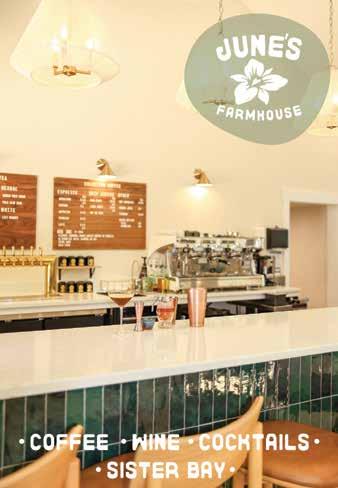
lounges to seductive dining spaces, every detail is designed to impress. We cut through the ordinary to create an experience that lingers, a space that captivates, and a fire that never fades.
English Inn
3713 Hwy 42 (920) 868-3076
D J T ( Fish Creek Market 4164 Main St. (920) 868-3351
L Hill Street 4149 Main St. (920) 868-5282
L D T
Julie’s Park Cafe & Motel
4020 Hwy 42 (920) 868-2999
B L J { (
Kettle Black Fish Boil 4158 Main St. (920) 868-5215
D ( Loft 4170 Main St. (920) 868-5242
L D J {
Not Licked Yet 4054 Hwy 42 (920) 868-2617
L D {
Pelletier’s Restaurant Founder’s Square (920) 868-3313
B L D J { ( Shiny Moon Café 4164 Main St.
B L T
The Cherry Hut 8813 Hwy 42 (920) 868-4450
L D J { Welcker’s Lounge 4192 Main St. (920) 868-5037
B L D ( White Gull Inn 4225 Main St. (920) 868-3517
B L D J T ( Serving breakfast, including the famous cherry stuffed French toast as featured on Good Morning America, as well as a full menu daily. Featuring fish boils in the summer, fall and select winter nights, along with candlelight dinners. Reservations recommended for dinner.
Wild Tomato Wood-Fired Pizza & Grille 4023 Hwy 42 (920) 868-3095
L D J T {
The Bullpen 213 W. Main St., #9691 (920) 856-6199
L D T
The Hen House Bar & Grill 131 W. Main St. (920) 856-6950
L D T
Shoreline Restaurant 12747 Hwy 42 (920) 854-2950
D (
JACKSONPORT
Island Fever Rum Bar & Grill Cty V and Hwy 57 (920) 823-2700
L D J T {
Little Bit of Coffee 6332 Hwy 57 (920) 823-2408
B D Located in Jacksonport at
























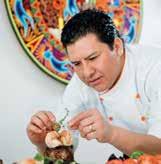
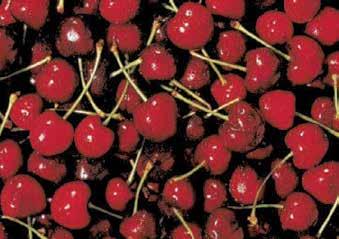
the Square Rigger Lodge, you will find us serving delicious coffee, quiche and baked goods. Serving small plates Tuesday and Thursday night. Come for the coffee and linger for the great water view!
Scotty’s Grub + Pub 6269 Hwy 57 (920) 818-0178
L D
Wally’s Weenie Wagon 6313 Hwy 57 (920) 493-3016
B L D {
SISTER BAY
Al Johnson’s Swedish Restaurant 10698 N. Bay Shore Dr. (920) 854-2626
B L D J T
Base Camp Door County 10740 N Bay Shore Dr. (920) 421-0733
B L




Boathouse on the Bay 10716 N. Bay Shore Dr. (920) 854-3223
L D J {
Carroll House 2445 S. Bay Shore Dr. (920) 854-7997
B L J CHOP 2345 Mill Road (920) 854-2700
D J T { (
Door County Creamery 10653 Bay Shore Dr.
Dovetail Bar & Grill 10282 Hwy 57 (920) 421-4035
L D J
Fat Belly 10621 N. Highland Rd (920) 854-3500
L D { Goose & Twigs Coffee Shop 2322 Mill Road (920) 854-3212
B L {
Happy Coffee 10678 S. Bay Shore Dr., Building 2 T {
Husby’s Food and Spirits 10641 N. Bay Shore Dr. (920) 854-2624 J T { Juicy Burgers 10635 N. Bay Shore (920) 365-2748
June’s Farmhouse 2450 S Bay Shore Dr
Intersection of Hwys 42 and 57 (920) 854-8111 T { (













vMcEvoy’s Culinaria & Catering
2602 S. Bay Shore Dr. (920) 854-8029
L D T { Northern Grill & Pizza 10573 Country Walk Dr. (920) 854-9590
L D J { One Star Burger & Dogs 10440 Orchard Drive
L D Pasta Vino 10571 Country Walk Dr. (920) 633-4037
D Rad House Cafe 10580 Country Walk Ln Unit 10.
B L J { Savor Barbeque & Taphouse 10663 N. Bay Shore (920) 365-2748
L D { Sister Bay Bowl 10640 N. Bay Shore Dr. (920) 854-2841
L D J T
Famous for its Friday-night perch fry and its prime rib, this throwback to yesteryear is located
in the heart of Sister Bay, open yearround. Featuring a full dining room, grill and bar, plus Northern Door’s only bowling alley. Stabbur Beer Garden at Al Johnson’s 10698 Bay Shore Dr. (920) 421-4740
L D { Sub Express at Sister Bay Mobil 2579 S. Bay Shore Dr. (920) 854-6700
B L D J T { The Cleat 10961 Hwy 42 (920) 854-3200
L D J T
The Waterfront 10947 Hwy 42 (920) 854-5491
D (
Thyme Restaurant + Catering 10339 Hwy 57 (920) 421-5112
L D { J T ( Thyme Market 10588 Country Walk Dr #16 (920) 633-4012
L D T
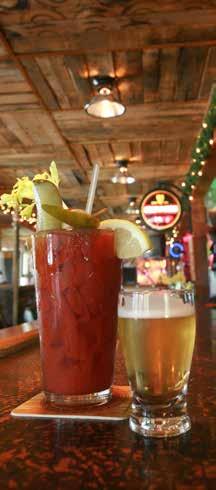
Wild Tomato WoodFired Pizza & Grille 10677 N. Bay Shore Dr. (920) 854-4685
L D J T { ZaZa’s Pizzeria 10553 Country Walk Dr. (920) 854-3142
L D
5th and Jefferson Café
232 N. 5th Ave. (920) 746-1719
B L D { Betsy Ross Family Restaurant
239 Green Bay Road (920) 743-811
B L D Birmingham’s 4709 N. Bay Shore Dr. (920) 743-5215
L D J T
Blue Front Café
86 W. Maple St. (920) 743-9218
B L J T (
Brick Lot Pub & Grill
253 N. 3rd Ave. (920) 743-9339
L D J T
Brygga Plates & Pours
107 N. 1st St. (920) 746-0700
B L D J T{(
Cedar Crossing Restaurant & Bar
336 Louisiana St. (920) 743-4200
B L D J T ( Chaser’s Sports Bar & Grill 1217 N. 14th Ave. (920) 743-6997
Cherry Lanes Arcade Bar 127 N. 4th Ave. (920) 818-0093
D Corner Café 113 N. 3rd Ave. (920) 743-1991
B L J T ( Crate — Sushi & Seafood
136 N. 3rd Ave. (920) 818-1333
D T { ( Door County Fire Company 38 S. 3rd Ave. (920) 818-0625
L D J T
Door County Sandbox 1023 Egg Harbor Road (920) 818-0134
L D
Drömhus 611 Jefferson St. (608) 333-4553
B L D T {
Drömhus is a warm, inviting wine bar and eatery rooted in community, offering thoughtfully crafted food, curated wines, and a welcoming space for connection, music, and conversation.
Bākhus, its sister bakery, brings the same spirit to life through slowmade breads, seasonal pastries, and simple, highquality ingredients. Together, they create a destination that blends Europeaninspired charm with Midwestern heart, where locals and visitors gather to savor, celebrate, and feel at home. Every detail reflects care, creativity, and a deep love for community and craft. They are not just places to eat and drink, but experiences that
nourish connection, creativity, and belonging.
Elmo’s Woodfired Pizza
143 N. 4th Ave. (920) 818-0408
L D T
Fatzo’s 46 Green Bay Road (920) 743-6300
L D J T { Get Real Café
43 S. Madison Ave. (920) 818-1455
B L D
Gloria’s Authentic Mexican Restaurant 23 W. Oak St. (920) 818-1733
L D J T Greystone Castle 8 N. Madison Ave. (920) 743-9923
L D J T
Hidden Bridge Pub 2049 Cty S (920) 743-4807
D Hoffman’s Red Room
66 S. 3rd Ave. (920) 743-3913
L D T
Kick Coffee
148 N. 3rd Ave. (920) 746-1122
B L T {
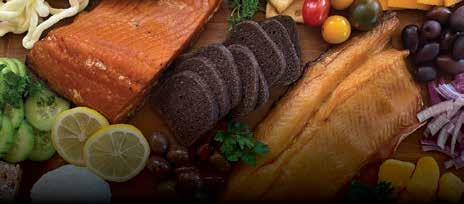

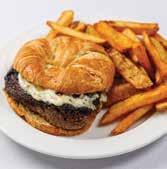
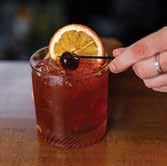
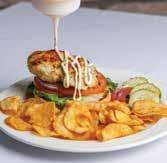
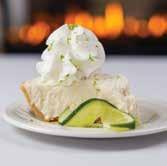
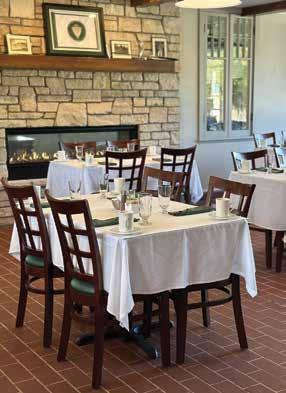

THURs-Sat: noon-7 sun-wed: noon-6
Kinara Urban Eatery 25 N. Madison Ave. (920) 743-8772
L D T
Kitty O’Reilly’s Irish Pub
59 E. Oak St. (920) 743-7441
L D J T { Lodge at Leathem Smith
1640 Memorial Dr. (920) 743-5555
L D J T { ( Lolo’s
231 Michigan St.
B L T Melt Bistro
2189 Cty DK (920) 825-7272
B L T { Mill Supper Club 4128 Hwy 42/57 N. (920) 743-5044
D J T
Morning Glory by the Bay
306 S. 3rd Ave. (920) 818-0711
B L Morning Glory Restaurant 7502 Hwy 42 (920) 743-5355
B L J Nightingale Supper Club 1541 Egg Harbor Road (920) 743-5593
D J T
With a rich history dating back to the earliest 20th century, join us for dining, classic vibes, and great tunes.
Old Mexico
901 Egg Harbor Road (920) 818-1500
L D J T {
Poh’s Corner Pub 164 N. 3rd Ave. (920) 743-3938
L D T
Prince of Pierogi 846 Egg Harbor Road
L D
PTY’s Kitchen
50 S. 3rd Ave. (920) 818-1300
L D T
Samuelson’s Creek Pub & Grill
1009 S. Oxford Ave. (920) 743-3295
L D J T ( Scaturo’s Café 19 Green Bay Road (920) 746-8727
B L J T { (
Sonny’s Italian Kitchen & Pizzeria
129 N. Madison Ave. (920) 743-2300
L D J T ( Sunrise Food & Drinks 1463 Egg Harbor Road (920) 818-0157
B L T
Sturgeon Bay Yacht Club
600 Nautical Dr. (920) 743-6934
L D ( The Gnoshery 23 N. 3rd Ave. (920) 818-0727
B L D TJ
The Gnoshery is the county’s premier board game cafe. Filled with fun, games and great “Gnoshables” –
food and drink that make your experience a truly memorable one!
Trattoria Dal Santo
147 N. 3rd Ave. (920) 743-6100
D T (
Waterfront Mary’s Bar & Grill
3662 N. Duluth Ave. (920) 743-3690
L D J T { West Side Commons 26 E. Oak St. (920) 818-0372
L D T
Donny’s Glidden Lodge Restaurant 4670 Glidden Dr. (920) 746-9460
D J T { (
Institute Saloon 4599 Hwy 57 (920) 743-1919
L D T The Hitching Post 4849 Glidden Dr. (920) 818-1114
B L D J (
Valmy Happy Hour 4418 Whitefish Bay Road (920) 743-6236
L D J T
Albatross Drive-In 777 Main Road (920) 847-2203
L D {
Karly’s Bar and Dance Hall 1265 Main Road (920) 847-2655
$$ L D J T { (
Hotel Washington 354 Range Line Road (920) 847-3010
D T { (
Island Pizza
At the ferry dock (920) 847-3222
L D
Jackson Harbor Soup 1904 Indian Point Road (920) 847-2589
L {
KK Fiske Restaurant 1177 Main Road (920) 847-2121
$ B L D T
Le Café and The Distillery at Fragrant Isle Lavender Farm 1350 Airport Road (920) 847-2950
B L { Nelsen’s Hall Bitters Pub 1201 Main Road (920) 847-2496
L D T {
Red Cup Coffee House 1885 Detroit Harbor Road (920) 847-3304
B L Sailor’s Pub 1475 South Shore Dr. (920) 847-2105
D { ( The Point Grille 164 Green Bay Road (920) 421-3663
L D

Backbone instagram.com/ backbonefoodtruck
Carjacks Patty Wagon facebook.com/ carjackspattywagon
Caspian Shwarma instagram.com/ caspianshawarma
Chives’ Food Truck Court chivesfoodtruck.com Fat Food Truck www.fatbellybowls.com/ Jolly Street Pizza facebook.com/jollysstreetpizza
LoLo’s Food Truck www.lolosfoodtruck. com/food-truck
Mauricio’s mauriciosdoco.com
Nicolet Beach Food Trucks www.nicoletbeach. com/foodtrucks
Papa B’s facebook.com/ PapaBsFoodTruck
Pinky Promise Coffee Food Truck wwwpinkypromisecoffee.com/ Savor Barbeque facebook.com/savorbbqco
Sergio’s sergiosmexicanfood.com
Sloppy Hog BBQ
Soukup’s Country Grill & Custard facebook.com/ soukupscountrygrill&custard
Wally’s Weenie Wagon Doorcountyweenie wagon.com
Taqueria Neri www.taquerianeri.com/ The Purple Yum www.facebook. com/jmjsbakery 888 Cheese & Co. 888cheeseandco.com


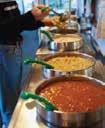
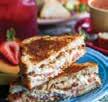

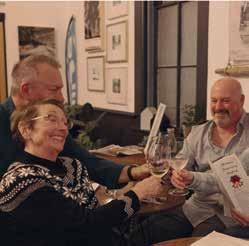




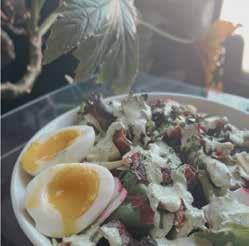

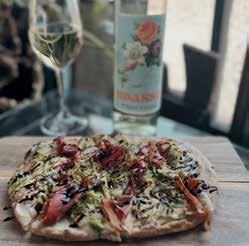




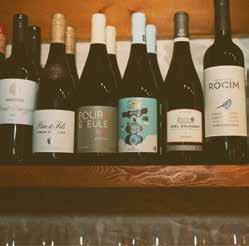
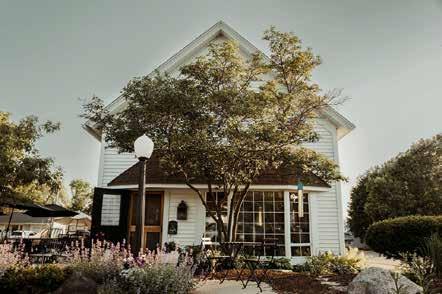
Drömhus and Bākhus

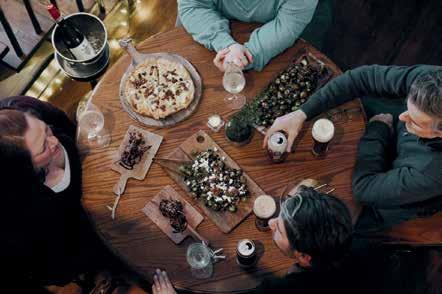
Drömhus and Bākhus blend Scandinavian charm with handcrafted food, curated wines and bakery delights— an experience meant to be savored, shared, and remembered.
Drömhus and Bākhus blend Scandinavian charm with handcrafted food, curated wines and bakery delights— an experience meant to be savored, shared, and remembered.
Drömhus and Bākhus blend Scandinavian charm with handcrafted food, curated wines and bakery delights— an experience meant to be savored, shared, and remembered.