(Ebook) Cambridge IGCSE and O Level History Workbook 2C - Depth Study: the United States, 1919-41 2nd Edition by Benjamin Harrison ISBN 9781398375147, 9781398375048, 1398375144, 1398375047
(Ebook) The Landscape of Utopia : Writings on Everyday Life, Taste, Democracy, and Design by Tim Waterman ISBN 9780367759155, 9781003164593, 9781000538427, 9781000538496, 9780367759209, 0367759152, 1003164595, 0367759209, 1000538427
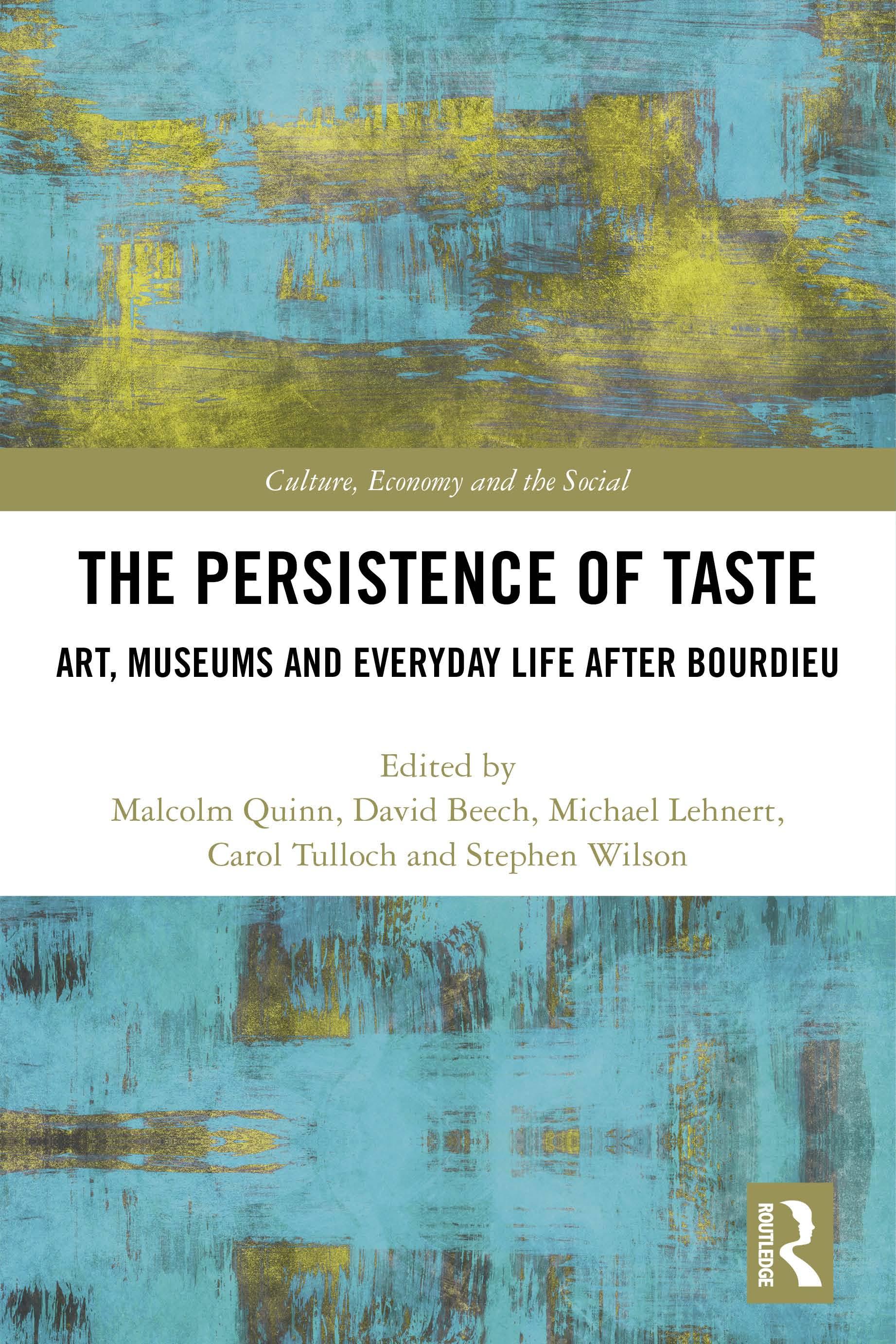
This book offers an interdisciplinary analysis of the social practice of taste, with reference to the legacy of Pierre Bourdieu’s sociology of taste. For the first time, this book unites sociologists with artists and art educators, art historians, design historians, curators, art theorists and cultural historians, who engage with the practice of taste as this relates to encounters with art, engagements with cultural institutions and the practices of everyday life in national and transnational contexts.
The volume is divided into four sections. The first section on ‘Taste and art’, shows how art practice was drawn into the sphere of ‘good taste’, contrasting this with a postconceptualist critique that offers a challenge to the social functions of good taste through an encounter with art. The next section on ‘Taste making and the museum’ examines the changing social dynamics propelling museums beyond the terms of a universal language of taste. The third section of the book, ‘Taste after Bourdieu in Japan’ offers a case study of the challenges to the cross-cultural transmission and local reproduction of ‘good taste’. The final section on ‘Taste, the home and everyday life’ juxtaposes the analysis of the reproduction of inequality and alienation through taste, with arguments on how the legacy of ideas of ‘good taste’ have extended the possibilities of experience and sharpened our consciousness of identity.
This is the first book to bring together arts practitioners and theorists with sociologists and others to examine the legacy of Pierre Bourdieu’s sociology of taste. It engages with the opportunities and problems involved in understanding the social value and the cultural dispositions of taste ‘after Bourdieu’, at a moment when the practice of taste is being radically changed by the expansion of cultural choices and the use of impersonal algorithms as a solution.
Malcolm Quinn is Professor of Cultural and Political History, Associate Dean of Research and Director of Camberwell, Chelsea, Wimbledon Graduate School, University of the Arts London.
Dave Beech is Professor of Art at Valand Academy, University of Gothenburg, Sweden.
Michael Lehnert is an international relations scholar and cultural manager, and is currently a Director of the Palestine Exploration Fund, the world’s oldest scientific organisation dedicated to the archaeology, history and geography of the Levant.
Carol Tulloch is Professor of Dress, Diaspora and Transnationalism at University of the Arts London, where she is based at Chelsea College of Arts and a member of TrAIN.
Stephen Wilson is a writer, practitioner and theorist who programmes, curates and lectures in contemporary art and is currently a Senior Lecturer and Postgraduate Theory Coordinator at Chelsea College of Art, University of the Arts London.
Culture, Economy and the Social
A new series from CRESC – the ESRC Centre for Research on Socio-cultural Change
The Culture, Economy and the Social series is committed to innovative contemporary, comparative and historical work on the relations between social, cultural and economic change. It publishes empirically based research that is theoretically informed, that critically examines the ways in which social, cultural and economic change is framed and made visible, and that is attentive to perspectives that tend to be ignored or side-lined by grand theorising or epochal accounts of social change. The series addresses the diverse manifestations of contemporary capitalism, and considers the various ways in which the ‘social’, ‘the cultural’ and ‘the economic’ are apprehended as tangible sites of value and practice. It is explicitly comparative, publishing books that work across disciplinary perspectives, cross-culturally, or across different historical periods.
The series is actively engaged in the analysis of the different theoretical traditions that have contributed to the development of the ‘cultural turn’ with a view to clarifying where these approaches converge and where they diverge on a particular issue. It is equally concerned to explore the new critical agendas emerging from current critiques of the cultural turn: those associated with the descriptive turn for example. Our commitment to interdisciplinarity thus aims at enriching theoretical and methodological discussion, building awareness of the common ground that has emerged in the past decade, and thinking through what is at stake in those approaches that resist integration to a common analytical model.
Editors
Professor Tony Bennett, Social and Cultural Theory, University of Western Sydney; Professor Penny Harvey, Anthropology, Manchester University; Professor Kevin Hetherington, Geography, Open University
Editorial Advisory Board
Andrew Barry, University of Oxford; Michel Callon, Ecole des Mines de Paris; Dipesh Chakrabarty, The University of Chicago; Mike Crang, University of Durham; Tim Dant, Lancaster University; Jean-Louis Fabiani, Ecoles de Hautes Etudes en Sciences Sociales; Antoine Hennion, Paris Institute of Technology; Eric Hirsch,
Brunel University; John Law, The Open University; Randy Martin, New York University; Timothy Mitchell, Columbia University; Rolland Munro, Keele University; Andrew Pickering, University of Exeter; Mary Poovey, New York University; Hugh Willmott, University of Cardiff; Sharon Zukin, Brooklyn College City University New York/Graduate School, City University of New York
Infrastructures and Social Complexity
A Companion
Edited by Penny Harvey, Casper Bruun Jensen and Atsuro Morita
Speculative Research
The Lure of Possible Futures
Edited by Alex Wilkie, Martin Savransky and Marsha Rosegarten
Markets and the Arts of Attachment
Edited by Franck Cochoy, Joe Deville and Liz McFall
The Known Economy
Romantics, Rationalists, and the Making of a World Scale
Colin Danby
Unpacking IKEA
Swedish Design for the Purchasing Masses
Pauline Garvey
Film Criticism as a Cultural Institution
Crisis and Continuity from the 20th to the 21st Century
Huw Walmsley- Evans
A World Laid Waste?
Responding to the Social, Cultural and Political Consequences of Globalisation
Edited by Francis Dodsworth and Antonia Walford
The Persistence of Taste
Art, Museums and Everyday Life after Bourdieu
Edited by Malcolm Quinn, David Beech, Michael Lehnert, Carol Tulloch and Stephen Wilson
For a full list of titles in this series, please visit www.routledge.com/CRESC/ book-series/CRESC.
The Persistence of Taste
Art, Museums and Everyday Life after Bourdieu
Edited by Malcolm Quinn, David Beech, Michael Lehnert, Carol Tulloch and Stephen Wilson
First published 2018 by Routledge
2 Park Square, Milton Park, Abingdon, Oxon OX14 4RN and by Routledge 711 Third Avenue, New York, NY 10017
The right of Malcolm Quinn, David Beech, Michael Lehnert, Carol Tulloch and Stephen Wilson to be identified as the authors of the editorial matter, and of the authors for their individual chapters, has been asserted in accordance with sections 77 and 78 of the Copyright, Designs and Patents Act 1988.
All rights reserved. No part of this book may be reprinted or reproduced or utilised in any form or by any electronic, mechanical, or other means, now known or hereafter invented, including photocopying and recording, or in any information storage or retrieval system, without permission in writing from the publishers.
Trademark notice : Product or corporate names may be trademarks or registered trademarks, and are used only for identification and explanation without intent to infringe.
British Library Cataloguing- in-Publication Data
A catalogue record for this book is available from the British Library Library of Congress Cataloging- in-Publication Data
Names: Quinn, Malcolm, 1963– editor.
Title: The persistence of taste: art, museums, and everyday life after Bourdieu / edited by Malcolm Quinn, David Beech, Michael Lehnert, Carol Tulloch, and Stephen Wilson.
Description: 1 [edition]. | New York : Routledge, 2018. | Series: Culture, economy, and the social | Includes bibliographical references and index.
Identifiers: LCCN 2018004607| ISBN 9781138670983 (hardcover: alk. paper) | ISBN 9781315617299 (ebook: alk. paper)
Subjects: LCSH: Aesthetics–Social aspects. | Art and society. | Bourdieu, Pierre, 1930–2002.
13.3 Photograph of kuroda’s painting half covered at the Sixth Hakubakai exhibition (1901) 212
13.4 Images from Kaze to ki no uta 215
13.5 Ryûdai Takano, Ore to with KJ#2 (2007), photograph, and woven material (2014) 217
14.1 Talking with Girl Teacher, Gyaru-sensei transmits her worldly wisdom to an ‘18-year-old dry-cleaning shop assistant’ 227
14.2 The Chairman of the Revolutionary League of Unwanted Men, Mark Waters, in his new take on ‘geba style’, or the helmet-protected student demo wear of the 1960s, 2013 228
14.3 Loligoth shoes in an ostentatious and perhaps pseudo-Rococo style, 2010
14.4 Unladylike squatting by kogyaru girls on the street in kichijoji, Tokyo, summer 1998
21.2 Le Corbusier, LC4 Chaise Longue, 1928–1930 335
10.1
Contributors
Dave Beech is an artist in the Freee art collective and is Professor at Valand Academy, University of Gothenburg. His book Art and Value (Brill 2015) was shortlisted for the Isaac and Tamara Deutscher Prize. He has written widely on the politics of art, including The Philistine Controversy (Verso, 2002, co-authored with John Roberts) as well as editing a special edition of Third Text 16:4 (Art, Politics, Resistance?) and co-editing a special issue on Biennales for Art and the Public Sphere journal. He has also contributed to debates on participation and art’s publics, in books such as In Search of Art’s New Publics and Curating and the Educational Turn, as well as being a founding editor of the journal Art and the Public Sphere (Intellect Publishing, from 2011).
Tony Bennett is Research Professor in Social and Cultural Theory in the Institute for Culture and Society at the University of Western Sydney. He is a member of the Australian Academy of the Humanities and of the Academy of the Social Sciences in the Uk. His main books include Formalism and Marxism (1979), Bond and Beyond: The Political Career of a Popular Hero (1987, with Janet Woollacott), Outside Literature (1991), The Birth of the Museum (1995), Culture: A Reformer’s Science (1998), Pasts Beyond Memory: Evolution, Museums, Colonialism (2004) and Making Culture, Changing Society (2013). He is also a co-author of Accounting for Tastes: Australian Everyday Cultures (1999) and Culture, Class, Distinction (2009).
Sonia Boyce is an artist, Professor and Principal Investigator of the AHRC funded research project ‘Black Art and Modernism’. Between 1996 and 2002, as a Post-Doctoral Fellow at the University of East London, she was a Director of AAVAA (the African and Asian Visual Artists Archive), managing a Research Centre on the work of contemporary artists of African and Asian descent working in the Uk. In 2007, along with David A. Bailey and Ian Baucom, she jointly received the History of British Art Book Prize (USA) for the edited volume Shades of Black: Assembling Black Art in 1980s Britain, published by Duke University Press in collaboration with Iniva and AAVAA, and in the same year received an MBE in the Queen’s Birthday Honours List. Between 2008 and 2011, she completed an AHRC Research
Fellowship on the ephemeral nature of collaborative practice in art at the Centre for Drawing, Wimbledon College of Art and Design, University of the Arts London, with a concluding project ‘The Future is Social’ (2011) and in 2016, she became a Royal Academician.
Maxine Leeds Craig is Professor in the Gender, Sexuality and Women’s Studies program at the University of California, Davis where she is affiliated with the Cultural Studies, Performance Studies and Sociology graduate groups. She received her doctorate in Sociology from UC Berkeley. Her research investigates processes of gender and racial formation in everyday embodied practices. Her book Sorry I Don’t Dance: Why Men Refuse to Move (Oxford, 2014) was awarded the 2014 Best Publication by the American Sociological Association’s section on Body and Embodiment. Her first book, Ain’t I a Beauty Queen? Black Women, Beauty, and the Politics of Race was awarded Best Book of 2002 on the Political History of Ethnic and Racial Minorities in the US by the Race, Ethnicity, and Politics Section of the American Political Science Association.
Penelope Curtis is the Director of the Museum Calouste Gulbenkian –Fundação Calouste Gulbenkian in Lisbon, Portugal. She was previously Director of Tate Britain in London where she led and curated its extensive rehang. Prior to that, she was Director of the Henry Moore Institute in Leeds, Uk. She has written widely on twentieth-century British sculpture, on European art and architecture of the inter-war years, and on contemporary sculptors including Gerard Byrne, Richard Deacon, Isa Genzken, Barbara Hepworth and Thomas Schütte. Her most recent publication is the Tate Britain Companion: A Guide to British Art (2014).
Modesto Gayo is currently Associate Professor at Universidad Diego Portales, Santiago, Chile. He was a Research Fellow at CRESC and the Department of Sociology at the University of Manchester while working on the Cultural Capital and Social Exclusion project (2003–2006). His areas of interest are: cultural inequalities and social reproduction, middle-class theories and theories on nationalism. He has researched extensively about cultural capital in United kingdom, South America, particularly in Chile, and recently in Australia. He is a joint author of Culture, Class, Distinction (Routledge, 2009) with T. Bennett, M. Savage, E. Silva, A. Warde and D. Wright.
Denise Gigante is Professor of English at Stanford University and has written extensively on the subject of taste. Her book, Taste: A Literary History (yale UP, 2005) studies the relation between aesthetic and gustatory taste. Her edited anthology, Gusto: Essential Writings in Nineteenth-Century Gastronomy (Routledge, 2005), which collects (and translates) gastronomical essays and images from France and England, includes an introduction theorizing the genre as a development of the discourse of aesthetic taste. She has also edited ‘Romantic Gastronomies’, a special issue of Romantic Circles Praxis
Contributors xv (Jan. 2007). Her current book on taste in relation to the formation of private libraries, The Book Madness: A Story of Book Collectors in America, is contracted to be published by Harvard University Press.
Paul Goodwin is Director of the Research Centre for Transnational Arts, Identity and Nation (TrAIN) at University of the Arts London where he is also Professor of Transnational Curating and UAL Chair of Contemporary Art and Urbanism based at Chelsea College of Arts. He previously held the posts of Curator of Cross Cultural Programmes in the Learning Department (2007–2010) and Curator of Contemporary Art (2010–2012) in the Curatorial Department of Tate Britain.
Laurie Hanquinet is Senior Lecturer at the Department of Sociology at The University of york. Her main fields of interest are sociology of culture and art. Her publications focus on cultural institutions, socio-cultural inequalities and urban dynamics of cultural participation. She is the author of the book Du musée aux pratiques culturelles (Editions de l’Université de Bruxelles, 2014) and the editor of the Routledge International Handbook of the Sociology of Art and Culture (2016) with Mike Savage.
Yuko Hasegawa is Artistic Director of the Museum of Contemporary Art, Tokyo (2016–present) and Professor of Graduate School of Global Arts, Tokyo University of the Arts (2016–present). She was previously Chief Curator and Founding Artistic Director (1999–2006) of the 21st Century Museum of Contemporary Art, kanazawa and Chief Curator of the Museum of Contemporary Art, Tokyo (2006–2016). She is currently Artistic Director of Inujima Art House Project (2011–present). Selected Exhibitions include: Tokyo Art Meeting VI ‘TOKYO’ – Sensing the Cultural Magma of the Metropolis (MOT, 2015–2016), Trans-Cool Tokyo – Contemporary Japanese Art from MOT Collection (2011–2012), Liquid Crystal Futures: 11 Contemporary Japanese Photography (Edinburgh, 1994–1996), Atsuko Tanaka – The Art of Connecting (IkON Gallery/MOT, 2012). Curated international biennales include: the 11th Sharjah Biennial, Venice, São Paulo, Shanghai, Istanbul and Seoul. She was a member of the Asian Art Advisory Board at the Solomon R. Guggenheim Museum (2008–2012). Among numerous publications include Modern Women: Women Artists at the Museum of Modern Art (Museum of Modern Art, 2010).
Ben Highmore is Professor of Cultural Studies at the University of Sussex. His most recent books are Culture: Key Ideas in Media and Cultural Studies (Routledge, 2016) and The Great Indoors: At Home in the Modern British House (Profile Books, 2014). His book The Art of Brutalism: Rescuing Hope from Catastrophe in 1950s Britain is forthcoming from yale University Press.
Mark Hutchinson is an artist, writer and curator. He has previously exhibited at Collective Gallery, Edinburgh, ICA London, Chisenhale Gallery and BANk. Curatorial projects have taken place at the Chisenhale Gallery,
Djanology Gallery, Nottingham and London Print Studio. His writing includes ‘Everybody Lies: The Ethics of Social Practice’ for Art and the Public Sphere (Vol. 4, 1–2, 2015) and ‘Dada Contra Art History’ for Dada/Surrealism (20) 2015.
Susan B. Kaiser is Interim Dean of Humanities, Arts and Cultural Studies, and Professor of Gender, Sexuality and Women’s Studies, and Textiles and Clothing, at the University of California at Davis. She is the author of The Social Psychology of Clothing: Symbolic Appearances in Context (Fairchild, 2nd edition 1997), Fashion and Cultural Studies (Berg, 2012) and over 100 articles in academic journals ranging from Clothing and Textiles Research Journal, Fashion Theory, Cultural Studies, Symbolic Interaction and Sociological Inquiry to the Journal of Consumer Culture. She is a Fellow and Past President of the International Textile and Apparel Association and an Associate Editor of Fashion, Style and Popular Culture. Her current research focuses on fashion theory in conversation with feminist cultural studies, themes of place/space in the production-distribution-consumption of fashion, and (re)constructions of masculinity through style and fashion.
Sharon Kinsella’s research focuses on the cultural language and political symbolism of both mass media and mass cultural production and subcultural forms and reactions since the early 1990s. Her earlier work looked at cuteness and infantilism as rebellion; the educational and class sociology behind the institutional and commercial transformation and expansion of manga for adult men; otaku subculture and censorship; and Lolita complex subculture. Her book Schoolgirls, Money and Rebellion in Japan (Routledge, 2014), incorporates research on the interplay between girls street styles and male journalism, and cult formations around girls, carried out in fieldwork and interviews over a protracted period of time from the late 1990s to the 2010s. She has a DPhil in Sociology from the University of Oxford and has worked in the US (yale and MIT) and in universities in the Uk (Oxford, Cambridge and Manchester).
Dirk vom Lehn is Reader in Organisational Sociology in the king’s Business School at king’s College London. His video-based research explores the interplay of technology and social interaction in different domains, including museums and galleries. It examines how tools/technologies and objects/ artefacts are embedded within social interaction, and the related sensemaking and aesthetic assessment of works of art. Dirk vom Lehn has published extensively in German and English, most recently Harold Garfinkel: The Creation and Development of Ethnomethodology (Routledge, 2014).
Michael Lehnert studied marketing, business administration, and social and political theory in Freiburg, Newcastle and Edinburgh, and for a PhD in international relations at the LSE. He was also on the editorial board of Millennium, LSE’s journal of international studies. He has worked in the
private sector, at London Business School, for the EHRC and with the World Economic Forum. He joined the British Museum to conduct institutional innovation, income generation and cultural diplomacy projects for its Director, Neil MacGregor. After a similar role held for the Pro-Vice-Chancellor of Camberwell, Chelsea and Wimbledon Colleges of Arts at the University of the Arts London, he is currently a director of the Palestine Exploration Fund (PEF ), spearheading its reorganization, endowment and move to a new building in East London’s new cultural hub.
Michael McMillan is a playwright, artist-curator and scholar of Vincentian migrant parentage. Recent plays include: a new translation of Bertolt Brecht’s The Good Person of Sezuan (Trenchtown) (2010 and 2012), Master Juba (2006), Babel Junction (2006). Books include: The Black Boy Pub and Other Stories (1997), The Front Room: Migrant Aesthetics in the Home (2009). Curatorial work includes: The West Indian Front Room (2005–2006), The Beauty Shop (2008), I Miss My Mum’s Cooking (Who More Sci-Fi Than Us, 2012), The Waiting Room (Stories and Journeys, 2012), My Hair: Black Hair Culture, Style and Politics (Origins of the Afro Comb, 2013), Doing Nothing is Not an Option (2015), No Colour Bar: Black British Art in Action 1960–1990 (2015–2016), Rockers, Soulheads and Lovers: Sound Systems back in da Day (2015–2016). The Front Room ‘Inna Joburg’ (FADA gallery, 2016). He is Research Associate at the Visual Identities in Art and Design Research Centre (VIAD) of the University of Johannesburg, South Africa, as well as an Associate Lecturer in Cultural and Historical Studies at London College of Fashion, University of the Arts London.
Peter Osborne is Professor of Modern European Philosophy and Director of the Centre for Research in Modern European Philosophy (CRMEP), kingston University London, and a longtime editor of the journal Radical Philosophy. His books include The Politics of Time: Modernity and Avant-Garde (Verso, 1995; 2011), Philosophy in Cultural Theory (Routledge, 2000), Conceptual Art (Phaidon, 2002), Marx (Granta Books, 2005) and, most recently, Anywhere or Not at All: Philosophy of Contemporary Art (Verso, 2013).
Malcolm Quinn is Professor of Cultural and Political History, Associate Dean of Research and Director of Camberwell, Chelsea, Wimbledon Graduate School, University of the Arts London. His current research focuses on the issue of prejudice in taste in the thought of Jeremy Bentham and David Hume. He has written about the politics of taste in the development of state-funded art education for the journals History of European Ideas, International Journal of Art and Design Education, Journal of Visual Arts Practice and Revue d’études Benthamiennes. His book Utilitarianism and the Art School in Nineteenth-Century Britain (Pickering and Chatto) was published in 2012.
Gill Saunders is Senior Curator of Prints in the Word and Image Department of the Victoria & Albert Museum, and an Honorary Member of the Printmakers
Council. Her publications include Prints Now: Directions and Definitions (V&A, 2006; with Rosie Miles), and Recording Britain (V&A, 2011), a series of essays on twentieth-century and contemporary representations of the English landscape. She co-curated Walls Are Talking (2010), an exhibition of wallpapers by contemporary artists, at the Whitworth Art Gallery, Manchester, and Surface Noise (2011), a show of innovative contemporary printmaking at the Jerwood Space, London. In 2012 she devised Street Art: from the Victoria & Albert Museum, London, and Libya which toured to Tripoli and Benghazi, and she curated two recent V&A Uk touring exhibitions: Modern Masters in Print: Matisse, Picasso, Dali and Warhol and Recording Britain. Her most recent books are In Black and White: prints from Africa and the Diaspora (co-authored with Zoe Whitley, V&A, 2013) and Bawden, Ravilious and the Artists of Great Bardfield (co-edited with Malcolm yorke, V&A, 2015). She writes, lectures and broadcasts regularly on twentiethcentury and contemporary art.
Penny Sparke is Professor of Design History and Director of the Modern Interiors Research Centre at kingston University, London. Since 1975, she has worked in the field of late nineteenth- and twentieth-century Design History. She has lectured, curated and been published widely in this field both in the Uk and overseas. In addition to her numerous articles and book chapters her single authored books include: An Introduction to Design and Culture, 1900 to the present (Allen and Unwin, 1986, 2004, 2013), Japanese Design (Michael Joseph, 1986), Design in Context (Bloomsbury, 1987), Italian Design (Thames and Hudson, 1988), As Long As It’s Pink: The Sexual Politics of Taste (Pandora, 1995, 2010), Elsie de Wolfe and the Birth of Modern interior Decoration (Acanthus Press, 2005), The Modern Interior (Reaktion Books, 2008). A special interest has been the meaning of design within the context of consumption and its relationship with gender and identity; from the mid1990s she has focused her attention on the subject of the interior. She is an Honorary Senior Fellow of the Royal College of Art.
Carol Tulloch is a writer and curator based at Chelsea College of Arts, the Chelsea, Camberwell, Wimbledon Graduate School and V&A Fellow at the Victoria and Albert Museum, as well as a member of Transnational Art, Identity and Nation Research Centre. Her recent work includes the monograph The Birth of Cool: Style Narratives of the African Diaspora (2016), coeditor and co-curator of Syd Shelton: Rock Against Racism (2015), ‘Dress and the African Diaspora’ a special issue of Fashion Theory, Journal of Dress, Body and Culture (editor, 2010) which included her article ‘Style-Fashion-Dress: From Black to Post-black’ (2010). She was the Principal Investigator of the Dress and the African Diaspora Network.
Toshio Watanabe studied at the Universities of Sophia (in Tokyo), Tokyo, London and Basel, where he completed his PhD. He is Professor of History
of Art and Design at Chelsea College of Arts, Research Centre for Transnational Arts, Identity and Nation (TrAIN), University of the Arts London and Professor for Japanese Arts and Cultural Heritage, Sainsbury Institute for the Study of Japanese Arts and Cultures (SISJAC), University of East Anglia (both part-time). Current research interests include: the modern Japanese garden in transnational context; historiography of Japanese art history; Japonisme, especially 1920s–1950s. Publications include High Victorian Japonisme (1991), Japan and Britain: An Aesthetic Dialogue 1850–1930 (1991) and Ruskin in Japan 1890–1940: Nature for Art, Art for Life, (1997). He was chair of the Association of Art Historians (1998–2001); member of the Tate Britain Council (2002–2005); Director of the Research Centre for Transnational Art, Identity and Nation (TrAIN), UAL (2004–2015); President of the Japan Art History Forum (2005–2011); Vice President of Comité international d’histoire de l’art (2010–2016); and, currently, chair of the Advisory Board, Tate Research Centre: Asia (2016–present).
Ken Wilder is an artist and writer. He is Reader in Spatial Design at Chelsea College of Arts, University of the Arts London. Having previously studied architecture, Wilder now makes site-responsive sculptural installations. He has exhibited in the Uk and Germany, and has had articles published in prominent film and aesthetics journals, including Filmwaves, Moving Image Review and Art Journal, the British Journal of Aesthetics, Estetika, Architecture and Culture and Image & Narrative. Wilder had a chapter published on the Freee Art Collective in the book Manifesto Now! (2013), and was included within the phenomenology section of Bloomsbury’s major anthology Painting: Critical and Primary Souces (2015).
Stephen Wilson is a writer, practitioner and theorist who programmes, curates and lectures in contemporary art and is currently a Senior Lecturer and Postgraduate Theory Coordinator at Chelsea College of Art, University of the Arts, London. He is editing three new volumes: Memories of the Future – On Countervision, The Persistence of Taste: Art, Museums and Everyday Life After Bourdieu and Where Theory Belongs, based on a series of lectures and conversations held at London’s Institute of Contemporary Arts.
Acknowledgements
The editors would like to offer particular thanks to our editorial assistant Gabriele Grigorjeva, who worked with efficiency, good humour and patience to bring this book to completion. Thanks are also due to Wendy Short, who was the events co-ordinator for the conference ‘Taste After Bourdieu’ (Chelsea College of Arts, 15 and 16 May 2014) from which this book has developed, as well as Laura Lanceley and Claire Mokrauer-Madden, who assisted with the organization of the conference. We would also like to thank Alyson Claffey and Gerhard Boomgaarden at Routledge, who have supported and guided us throughout the publication process. The editors would also like to thank all of the authors from a range of disciplines who have so skillfully illuminated the historical development and current condition of the social practice of taste. Malcolm Quinn would like to thank Dr Marsha Bradfield for her incisive comments on a draft of his introduction.
Michael Lehnert would like to thank Jan Stuart, Richard Blurton and Shobita Punja for the thought-provoking discussions about the nature of museums while negotiating and creating the original British Museum’s India Museum Leadership Training programme. Thanks also to Jonathan Tubb and John Curtis for the continuing trust, and to Vivian Davies who introduced me to those who mattered with the words ‘He’s one of us.’ Dankeschön to Neil MacGregor for the life lessons, and Martin Roth for showing me that ‘Zivilcourage’ can also mean ‘de s’en aller’. Eternal gratitude to Paul Walker, mentor and role model, one of the many loved-ones of mine who tragically passed away well before their time while I was working on this publication: I won’t forget. In the same vein immense gratitude to Helmut, Marie und Martin for everything. And to my partner Elisabeth kelan, for standing by me at all times.
Carol Tulloch would like to thank Oriana Baddeley, organiser of the panel ‘Remembrance of things past’, and delegates at the ‘Im/Material: Encounters within the Creative Arts Archive’ (Chelsea College of Arts 13–14 May 2016), where Carol discussed ideas for her contributory chapter in this book. Carol would also like to thank Jo Melvin and Donald Smith for discussions that helped expand her thinking on collections and archives. Thanks to Syd Shelton for taking photographs included here, gratis, and for reading numerous drafts.
Acknowledgements xxi
Stephen Wilson would like to thank João Penalva for his patience, generous discussions and overall insights in preparation for this contribution. In addition, Simon Lee Gallery in London for kindly lending material to support this process; Vanda Playford for her exceptional views on taste; and Rune Steenberg Reyhe for helping him understand Japan at the Weatherhead East Asian Institute, Columbia University where he wrote most of this text during his sabbatical.
Introduction
Taste, hierarchy and social value after Bourdieu
Malcolm Quinn
Their sensibilities, their tastes and their position propelled them towards things they had never known. They paid attention to the way others dressed; they noticed the furniture, the knick-knacks and the ties displayed in shop windows; they mused on estate agents’ advertisements.… They felt no surprise, or almost none, at the fact that they thought about almost nothing else.
(Georges Perec, Things: A Story of the Sixties 1990 [1965])
This book offers an interdisciplinary analysis of taste in the wake of Pierre Bourdieu’s sociology of taste.1 It addresses the historical development and contemporary relevance of the socially distributed value conferred by taste. Accordingly, the contributors to this book engage with the practice of taste as this relates to encounters with art, engagements with cultural institutions and the practices of everyday life in national and transnational contexts. As our title ‘The Persistence of Taste’ suggests, this book does not claim a new cultural position ‘beyond taste’ or ‘after taste’ (Kleinmann et al. 2012). And while the contributors to this book make extensive reference to Bourdieu’s discussions of the arts and the relationship of art and taste, they do not ‘take Bourdieu’s ideas … and apply them to a range of art fields’ (Grenfell and Hardy 2007: 1). Our primary concern is with the opportunities and problems involved in understanding the social value and the cultural dispositions of taste ‘After Bourdieu’. The contributors to this book see the contradictions that are inherent in the persistence of the social value created by taste as the most important matter to address.
This publication has developed from the two-day conference ‘Taste After Bourdieu’, which was held at Chelsea College of Arts, University of the Arts London, in May 2014.2 Hosting an interdisciplinary conference on Bourdieu in an arts educational context raised an important question regarding the analysis of taste in the wake of Bourdieu, namely, what role do those who work in the arts have in this analysis? When the artist Grayson Perry delivered the first of four 2013 Reith Lectures for the BBC with the title ‘Democracy Has Bad Taste’,3 arts practitioners were given a new kind of platform in debates on taste.
However, aside from the immediate consideration of whether or not artists gain access to these debates, and with reference to discourse on taste ‘After Bourdieu’, what requires further explanation is precisely how those who are involved in the arts contribute to the analysis of taste. This book unites artists and art educators with curators, sociologists, art theorists, art historians, design historians and cultural historians with the common aim of developing rigorous and relevant ways to approach the practice of taste. We have used the opportunities afforded by this interdisciplinary perspective to open up particular dialogues on taste, such as the conversation between the artist Sonia Boyce and the curator Gill Saunders on the subject of tastes in wallpaper in Part IV of our book, which deals with ‘Taste, the Home and Everyday Life’. We have also invited leaders of cultural institutions, such as Penelope Curtis and Yuko Hasegawa, to provide accounts of taste that show, first, how the practice of taste is understood within the contemporary museum and, second, how that understanding differs in distinct cultural contexts. Our interdisciplinary structure is also used to disclose methodological issues; in the first part of the book, contributions from the fields of philosophy and literature are used to reveal contemporary and historical distinctions between the practice of taste and the practice of art. However, it is important to add that bringing more disciplines to bear on the study of taste does not necessarily deliver a better account of it. Nor is it useful to declare that the sociology of taste offers a narrow perspective that should be complemented by other disciplines such as design history or art history in order to add breadth and richness to an analysis. To find out what the analysis of taste after Bourdieu actually entails, we need to begin with the demands that Bourdieu placed on us when he defined taste as a set of cultural practices through which individuals account for and evaluate each other, with the aim of laying claim to and legitimising a social position, thereby producing forms of symbolic domination.
Taste after Bourdieu
The question of how symbolic domination is produced through a socially distributed practice of taste has been the most prominent feature of the debates that have followed Bourdieu’s Distinction: A Social Critique of the Judgement of Taste (Bourdieu 1984) as is emphasised in this book in chapters by Tony Bennett and Modesto Gayo and Laurie Hanquinet. Distinction was based on surveys conducted in France in 1963 and 1967–68, using an initial group of 692 persons that was later developed into accounts of 1,217 social ‘types’ (e.g. ‘grand bourgeois’, university teachers, nurses, male executives). It was first published as La Distinction, Critique sociale du jugement in 1979, drawing on an earlier publication ‘Anatomie du Goût’ in Actes de la Recherche en Sciences Sociales, by Bourdieu and Monique de Saint Martin (1976). In a recent account of the genesis of Distinction, Monique de Saint Martin has observed that, while ‘Anatomie du Goût’ had explored taste as the assessment of various qualities
(the quality of an interior, the quality of meals, qualities desired in friends) Bourdieu did not retain this focus in Distinction:
[A]ll that is kept from the survey on taste are the names of the painters, the musical works and the singers preferred, that is, the questions that best revealed the differences and oppositions between classes and fractions of classes. Bourdieu seems to have slightly lost confidence in the survey on taste, and the indicators taken from other surveys become more visible.
(De Saint Martin 2015: 21)
It would be wrong to assume from this statement that Bourdieu reduced a sophisticated analysis of tastes to a simple homology of class distinctions and individual preferences. What was presented in Distinction was an entirely new way of analysing taste according to the relationship between cultural capital (the capacity of dominant groups to impose standards of evaluation in taste), habitus (the embodied attitudes and dispositions that generate a shared practice of taste) and field (the social sites or zones that set parameters for the practice of taste). These categories are used to establish an understanding of symbolic domination and the formation of elites. Bourdieu’s work continues to be important to debates in the social sciences and the humanities, largely because he has provided compelling explanations of how social order is maintained through an acceptance of existing cultural hierarchies, which establish sets of dispositions and attitudes through which perceptions of the world are organised. In Distinction, for example, Bourdieu argues that someone with a strong cultural background but relatively weak educational ability is able to confuse the painter Bernard Buffet with the painter Jean Dubuffet while hiding his ignorance under ‘an inspired pose’ (Bourdieu: 1984: 84). On these terms, it is habitus, not preference, that reinforces social differentiation. However, the key question to be asked is how Bourdieu’s methodological innovation in conducting a sociological analysis of taste ‘without qualities’ engages with taste as an existing, and persisting, social practice.
Recent sociological commentary on Bourdieu has followed the route taken by Bourdieu himself after Distinction, in emphasising the importance of attention to specific fields of cultural production such as art and the infrastructures that support them, such as galleries and museums. In their introductory chapter to the Routledge International Handbook of the Sociology of Art and Culture (2016), Laurie Hanquinet and Mike Savage claim that too much energy has been spent on pursuing the broader contextual and social critique of culture. Instead, they advocate a more dialectical relation between fields of culture and the social field in general. They argue that ‘This handbook aims to show that cultural sociology as an external social critique only – focusing on the social patterning of specific tastes and practices or the social construction of the arts – has now reached its limit’ (Hanquinet and Savage 2016: 13). On the other hand, in The Routledge Companion to Bourdieu’s Distinction (2015), Annick Prieur and Mike Savage
indicate why a general critique of the social practice of taste might still be necessary. Prieur and Savage say that ‘compared with the society analysed by Bourdieu in Distinction (1984), the number of possible aesthetic choices has expanded enormously in Western Societies today’ (Prieur and Savage 2015: 307). When they add that ‘the privileged may relate to this proliferation of choices in particularly “discerning” ways’ they suggest that culture itself is used as an active frame of reference within the activity of making taste. Prieur and Savage’s comments are made against the background of a post-Bourdieusian debate on how the tastes of high-status cultural ‘omnivores’ relate to those of low-status ‘univores’ (Peterson and Kern 1996; Hazir and Warde 2016; Lizardo and Skiles 2016). As Prieur and Savage suggest, an important issue when looking at class distinctions is whether and how practices of taste construct class distinctions through their general attitudes towards cultural choice. The social ambition of the omnivore may not be to ‘see everything aesthetically’ (that is, as form rather than function) – instead, she may be seeking a greater measure of control than someone else over the sphere of choice. In this regard, it is worth noting that individual tastemakers and ‘curators’ of tastes are now seen to be more important than ever in the face of the expansion of cultural choices and the use of impersonal algorithms as a solution (Bhaskar 2016). The contemporary confrontation of the tastemaker and the algorithm is the latest manifestation of the relationship between the problems of free choice in the world of goods and the opportunity to develop social practices that encounter these problems. From Joseph Addison’s essay on taste in The Spectator in 1712 (Addison 1818 [1712]), that compares the ability to assess subtle flavours in tea to the ability to discern quality in literature, to David Hume’s assertion, in his essay ‘Of The Standard of Taste’ in 1757 (Hume 2008 [1757]), that preferring the works of John Ogilby to those of John Milton would indicate a fault in perception equivalent to mistaking a molehill for a mountain, and on to J.S. Mill’s account of ‘intellectual taste’ and his famous remark that ‘it is better to be Socrates dissatisfied than a fool satisfied’ (Mill, 1863: 14) in his essay on Utilitarianism of 1863, we can see an increasing refinement of the description of taste, to the point where it becomes identified with a capacity for impartial judgment that can work across the entire social field, over and above a preference for one thing over another. The main reason that J.S. Mill tells us that it is better to be Socrates dissatisfied than the fool satisfied, is not primarily because Socrates prefers different and better things to the fool, but because Mill believes that only Socrates can evaluate whatever it is that the fool is satisfied with. A consciousness of distinctions between good taste and bad taste is made manifest through a claim on a socially responsible act of self-representation within the domain of free choice, which sacrifices individual gratification in the name of better judgement. In this way, middle-class omnivorousness paradoxically demonstrates power over choice, rather than being an indication that someone is wallowing in the mire of consumption. In an address to taste ‘After Bourdieu’, this issue is further clarified by understanding the difference between, first, a
conception of taste as a means to establish a social hierarchy and, second, the historical transformation of social hierarchy by bourgeois taste.
The transformation of social hierarchy by taste
In eighteenth-century Europe, the power and influence of the landed aristocracy began to cede ground to a drive for social mobility that was expressed through culture and defined by taste. The development of taste as a distinct practice with a broadly social character allowed an emergent middle class to separate the esteem that we pay someone because of their character from the esteem that is due to a social rank or title. From this perspective, we defer to the character that is demonstrated in good taste because it is evidence of an ability to develop autonomy and self-determination within the world of goods, whereas accidents of noble birth and the vagaries of possession offer no such guarantee. The autonomy promised by taste is achieved by knowing the difference between what is loved by an individual and what is esteemed by everyone. This achievement is still demonstrated when we use the phrase ‘guilty pleasure’4 to describe a situation in which we find ourselves enjoying a film, a television programme or a piece of music that we think others may not hold in high regard. There is a contradiction involved in feeling guilty about your pleasures, because expressing the difference between abandonment and self-control is the basis of good taste.5 Nonetheless, the ‘payoff ’ of the historical transformation of social hierarchy by taste is that it has placed culture at the centre of social life and (as is emblematised by my epigraph from Georges Perec’s Things) has given us the chance to seek self-determination and enhanced social status within it. It has also been argued that this has marginalised the social value of art. Giorgio Agamben has commented that the appearance of the person of taste in European society ‘does not correspond, as we might have expected, to the spirit’s more receptive attitude towards art or even to an increased interest in art’ (Agamben 1999: 14). The elevated ambition to trade selfish love for social esteem ties the identity of the person of taste to the world of goods and means that the work of art becomes merely an occasion for him to practice his good taste. This suggests a perspective on taste that Bourdieu does not allow for, namely a historical occlusion of art by taste that is not reducible to a commodification of art. Here it is useful to turn to the analysis of taste offered by Jean-Jacques Rousseau in the 1750s. Rousseau’s description of how taste operates is expressed in the image of a theatrical spectacle in which a crowd of spectators insists on finding agreeable and pleasant forms in everything, and complain when they don’t find them: ‘I never attend a presentation of a Comedy of Molière without admiring the delicacy of the spectators. A word that is a little loose, an expression that is coarse rather than obscene, everything wounds their chaste ears’ (Rousseau 1992 [1752] 122n). Here the ‘coarseness’ of Molière is defined by the judgement of his audience that he has failed to make his work agreeable to them, not by Bourdieu’s opposition between ordinary and ‘facile’ pleasures and the pure pleasures of the
aesthetic. A paradox that Rousseau draws our attention to is that the tyranny of taste ensures that it is only the non-artists, the ‘wounded’ spectators of Molière’s comedies, who have the power to create taste.
This also suggests a different understanding of the position that Immanuel Kant occupies within debates on the development and progress of bourgeois taste than the one that is offered by Pierre Bourdieu. Bourdieu argued that in Kant ‘The antithesis between culture and bodily pleasure (or nature) is rooted in the opposition between the cultivated bourgeoisie and the people’ (Bourdieu 1984: 492). However, rather than establishing a class difference based on a distinction between the agreeable that merely gratifies and the beautiful that pleases without interest, Kant can be seen to warn against the ambition to trade unselfconscious love for the esteem that accrues to good taste. In The Critique of Judgment, Kant avers that there is no nobility of character to be found in the idealistic pleasures of ‘moral taste’, which can only offer an illusion of free choice in the face of overwhelming need, moral necessity or the possibility of genuine aesthetic freedom (Kant 1952 [1790]: 50). Yet it is precisely this apparent opportunity to exercise a free, autonomous and responsible choice between what is loved by an individual and what is esteemed by all that confers social value on the person of taste. Taste, in other words, is what makes becoming socially mobile the responsible and the civilised thing to do. It does not simply create a representation of social value or define our place in a hierarchy. Rather, taste creates value through a ‘socially responsible’ act of self-representation.
Pierre Bourdieu’s socioanalysis of taste
Bourdieu’s emphasis on the efficiency of mechanisms of social reproduction and domination has attracted criticism, notably from Jacques Rancière. Rancière examines Bourdieu’s claim that aesthetic separation ignores ‘the sociological law that accords to each class of society the judgments of taste corresponding to their ethos’ (Rancière 2009: 6), and argues that this claim protects the privileges of the sociologist, who preserves ‘a distinction between those who are destined to know and those who are destined to provide the objects of knowledge’ (ibid.: 16). This question of methodological ‘privileges’ also relates to Bourdieu’s assertion that ‘Sociology is rarely more akin to social psychoanalysis than when it confronts an object like taste’ (Bourdieu 1984: 3).
Bourdieu’s analysis of taste, in common with his other work, is built on his ingenuity in founding analytical rigour on the limits of a theory of practice, rather than on its opportunities. From this point of view, for example, the resources required to build a theory of art practice are implicit within the practice of art itself. Bourdieu thought that aesthetic experience, which he defines as the objective separation that is constitutive of art, can only be studied and become fully ‘objectified’ in a theory of artistic actions that takes account of what these actions require to assume social meaning as art. There is no ‘object of study’, strictly speaking, but rather a moment in which a social practice is
objectified. For Bourdieu, artists, designers and curators are all ‘taste workers’ in one way or another. This means that the possibility of their being included in an analysis of taste, or of conducting this analysis, is dependent on an assessment of how they already contribute to the formation of taste, while allowing for the fact that their practices can also be defined according to the conditions set by the cultural fields of art, design or curation.
For this reason, what has attracted those who work in the arts to Bourdieusian sociology, and what has sometimes repelled them from it, is the manner in which Bourdieu appears as the uncanny double of the practitioner, less as the theorist of their work, as an art historian or a philosopher might be, than as someone who seems to occupy the position of their practice in social space, offering a reflexive but impersonal version of themselves enmeshed in the mechanisms of symbolic domination. Like the psychoanalyst whose task is not to apply her own knowledge, but to bring to light a knowledge that the analysand does not know that he knows, the Bourdieusian sociologist conducts a ‘socioanalysis’ of cultural practices (Bourdieu quoted in Wacquant 1989: 3 and in Bourdieu and Chartier [1988] 2015: 21) in order to reveal their social being (see also Steinmetz 2013). The subjects of Bourdieu’s analysis ‘know the social world better than the theoreticians’ because, to some extent, they can follow the logic of their own practice in a way that the theoretician cannot. At the same time ‘they do not really know it and the scientists work consists in making explicit this practical knowledge, in accordance with its own articulations’ (Bourdieu 1991: 252). This suggests a certain asymmetry in the interdisciplinary analysis of taste, because of the privilege it gives to the cultural practitioner over the cultural theorist and to the Bourdieusian sociologist over them both. This privilege concerns the objectification that Bourdieu believes is necessary to conduct an analysis of taste. The analysis can only proceed by doing away with the separation of judgements of aesthetic quality from consumer preference that are promoted by theorists of art and defended by practitioners of art, in order to uncover the universal dimension of what Bourdieu calls the ‘intelligible relations’ of cultural choice. The ‘barbarous reintegration of aesthetic consumption into the world of ordinary consumption’ is the foundation of Bourdieu’s analysis of taste:
The science of taste and of cultural consumption begins with a transgression that is in no way aesthetic: it has to abolish the sacred frontier which makes legitimate culture a separate universe, in order to discover the intelligible relations which unite apparently incommensurable ‘choices’, such as preferences in music and food, painting and sport, literature and hairstyle. This barbarous reintegration of aesthetic consumption into the world of ordinary consumption abolishes the opposition, which has been the basis of high aesthetics since Kant, between the ‘taste of sense’ and the ‘taste of reflection’, and between facile pleasure, pleasure reduced to a pleasure of the senses, and pure pleasure, pleasure purified of pleasure,
which is predisposed to become a symbol of moral excellence and a measure of the capacity for sublimation which defines the truly human man.
(Bourdieu 1984: xxix)
It is crucial to note that in the passage quoted above, and in line with his approach to the theory of practice, Bourdieu does not make taste the direct object of his investigation. Instead he analyses it obliquely, through the failure of a philosophical theory of taste to encounter a moment of objectification, or reintegration, that the practitioner lives through as the social logic of their practice and which the socioanalyst uses to reveal the totality of symbolic domination. In his preface to The Rules of Art, Bourdieu makes the claim that ‘Renouncing the angelic belief in a pure interest in pure form is the price we must pay for understanding the logic [of the social universe]’ (Bourdieu 1996: xviii). Nonetheless, he argued that there was ‘no way out of the game of culture’ that had been built on the separation of aesthetic judgements and personal preferences (Bourdieu 1984: 4). An objective view of your own stake in this game, and that of others, depends on tracing the routes through which distinctions of taste are achieved, and social positions secured: ‘culture is not what one is but what one has, or rather, what one has become’ (Bourdieu 1993: 234).
In his published dialogues with the artist Hans Haacke, Bourdieu credits Haacke with an artistic practice that is also ‘a critical analysis of the art world and the very conditions of artistic production … your quasi-sociological reflections are fully integrated into your artistic work’ (Bourdieu and Haacke 1995: 1). Here Bourdieu affirms that what he calls ‘work as a critical artist’ is defined by the difference between, on the one hand, analysing the conditions of art practice and their role in producing social relations of taste and, on the other hand, contributing to those same social relations of taste by finding new ways to practice art. However, the possibility of an artist occupying a ‘socioanalytical’ position on their own practice that will reveal their position in the game of culture is undermined, in Bourdieu’s view, by the tendency of cultural producers to ‘impose their own variant of the dominant world-view as the only legitimate one’ (Bourdieu 1980: 285).
One way to approach the question of how to conduct an analysis of taste ‘After Bourdieu’ is to reconsider how the relationships between the theorist, the practitioner and the socioanalyst that I have outlined above, position taste as an object of investigation. In Bourdieu’s Distinction, taste appears by means of an operation in which the objectification of Kantian aesthetic theory discloses knowledge about how the practice of taste contributes to forms of symbolic domination. Here the aesthetic philosophy of taste is what allows the practitioner of taste to see their activity as personal, rather than social, whereas the socioanalysis of taste reveals the place of this activity in a social hierarchy. In Distinction, for example, Bourdieu selects a quote from a thirty-year old philosophy teacher who opines that ‘If I contemplate a painting by Poussin or read a
Platonic dialogue, that doesn’t imply that I am depriving anyone’ (Bourdieu 1984: 225). In Bourdieu’s terms, only the socioanalyst can make the necessary connection between the preconscious habitus of this philosophy teacher (the missing link between his preferences for Plato and Poussin and the objective structures of social domination that they reproduce) and his conscious assessment that these preferences are the expression of the universal aesthetic freedom of all human beings, which is fundamentally opposed to the actual social exclusivity imposed by the vulgar monetary value of things. In Bourdieu’s view, what prevents the philosophy teacher from making the link between his preconscious habitus and his conscious statements is ‘the opposition, which has been the basis of high aesthetics since Kant, between the “taste of sense” and the “taste of reflection” ’.
However, there is a different relationship between theory, practice and analysis that would name the conscious statement of the philosophy teacher, rather than his preconscious habitus, as the true locus of symbolic domination. The philosophy teacher’s view that he is ‘not depriving anyone’ is what at once connects him, as the citizen of a democracy, to everyone who would like to enjoy themselves in their own way, while at the same time separating him from all those people who cannot tell the difference between those socially esteemed forms of pleasure that are the evidence of autonomy and self-control (Plato, Poussin), and the pathological pleasures that are the product of unselfconscious love. The development of these attitudes is exemplified in David Hume’s notion of ‘The Standard of Taste’6 (1757) and is demonstrated, as has been indicated, in his distinction between two men of letters – the cultural ‘mountain’ of the poet John Milton and the cultural ‘molehill’ of the writer and impresario John Ogilby:
Whoever would assert an equality of genius and elegance between OGILBY and MILTON … would be thought to defend no less an extravagance, than if he had maintained a mole-hill to be as high as TENERIFFE, or a pond as extensive as the ocean.
(Hume 2008 [1757]: 137)
The important social distinction that Hume is making here is not primarily between those people who prefer Milton and others who prefer Ogilby. It is between those people whose pleasures are obtained from self-control and the development of an individual cultural destiny and those people whose lack of perspective and undisciplined approach to obtaining pleasure might lead them to choose an inferior cultural product. Hume’s practice of taste offers an opportunity to ‘see past yourself ’ that is intended to develop personal autonomy and an ability to tell vice from virtue. This is expressed in Hume’s aversion to the ‘rough heroes’ of Homer’s Iliad, which leads him to declare that, on the grounds of taste, ‘whatever indulgence we may give the writer on account of his prejudices, we cannot prevail on ourselves to enter into his sentiments, or bear an affection to characters which we plainly discover to be blameable’ (ibid.: 152).
The persistence of taste
David Hume showed how the notion of ‘good taste’ solved a particular problem that we encounter within the world of goods. As we traverse the highways and byways of commerce, we cannot pretend that our happiness does not depend in some way on the products that surround us. We are not monks in a monastery or gurus on a mountain in Tibet. On the other hand, we do not want our happiness to depend on these objects. So how do we walk this tightrope? The answer is that we indicate that we are not dependent on these objects by making our choice of some objects rather than others say something good about us. In this way, taste and discrimination make us the guarantors of our own happiness. Since the eighteenth century, a sense of taste and discrimination has enabled us to believe that we can live within commercial society while trusting ourselves before we trust the brands, products and services that surround us. In the twenty-first century, this wish for self-determination through taste still persists, along with the conflict between individual love and social esteem that defines it. However, it can also be argued that the social importance of ‘the person of taste’ within the world of goods may be diminishing, as governments and the cultural institutions that they fund offer less and less support for the humanist bargain and the liberal democratic political settlements that have sustained the link between taste and civilisation. Accordingly, the contributors to this book reveal the complexity of forces that must be taken into account when we engage with the legacy of the transformation of social hierarchy by taste and its place in contemporary life.
Part I of the book, which is edited with an introduction by Dave Beech, focuses on the relationship between taste and art in the wake of Bourdieu. It offers two distinct, but related, approaches to Bourdieu’s account of the relationship of art and taste. The first approach, exemplified in chapters by Dave Beech and Denise Gigante, focuses on the limitations of Bourdieu’s account of bourgeois culture and the transformational character of the bourgeois revolution in taste. As Beech puts it, this transformation ‘appropriated aristocratic culture in unprecedented bourgeois forms’. The second approach, in chapters by Mark Hutchinson, Peter Osborne and Ken Wilder, looks at how the subject of taste appears and disappears through the historical transformation of art.
In the opening chapter of this part, Beech argues that, paradoxically, there is an absence of a developed theory of bourgeois taste in Bourdieu, while also indicating that Bourdieu’s sociological study of culture and its concepts of distinction, habitus, cultural capital and symbolic violence have provided a widely accepted framework for understanding the place of art in culture. This suggests that some work is required to disentangle the persistence of Bourdieusian tools and methods for cultural analysis from an inquiry into the persistence (or otherwise) of a social settlement between art and bourgeois taste. In her chapter, Gigante shows, first, how art is included within the practice of taste as an ‘art of consumption’ that provides a superior vantage point in the world of goods, but
she also shows how taste ‘transgresses the very distinctions it makes possible’. In Gigante’s description of the self-consciously dog-eared and shabby library of Charles Lamb, she notes that Lamb prized an edition of Milton stained with tobacco and cheese. Here the collective esteem for Milton that was highlighted by David Hume as the benchmark of good taste is overtaken by a pathological connoisseurship of material and bodily traces.
Peter Osborne tacks in a different direction. He argues, first, that Bourdieu’s writing demonstrates an increasingly sophisticated understanding of art, which in the 1980s had ‘moved on from his opinion poll reception aesthetics of the 1960s and 1970s’ to a more detailed understanding of the histories of practice within fields of cultural production. However, Osborne also argues that Bourdieu’s analytical frameworks never kept pace with the importance of a shift in the historical ontology of art from the pure aesthetic to a postconceptual condition of art. In this postconceptual condition, Osborne contends, the Bourdieusian question of how art contributes to the formation of a social subject of taste is irrelevant. What matters instead is how the artwork articulates the relationship between the aesthetic and the conceptual in the historical formation of art. In his chapter, Mark Hutchinson argues that, for Bourdieu, the field of art is homogeneous, is annexed to Bourdieu’s description of bourgeois hegemony and functions in the same way – in terms of taste, distinction and the cultural capital of the participants – regardless of any properties of the art that circulates within it. In opposing this view, Hutchinson introduces the figure of the ‘antispectator’, whose fidelity to art is the expression of an opposition to those engagements with art that are forged in the marriage of art and culture. The role of the spectator and the specific implications of Bourdieu’s legacy for the practitioner of contemporary art are also addressed in Ken Wilder’s chapter. Wilder uses Wolfgang Iser’s aesthetics of reception to address what he sees as Bourdieu’s essentially modernist view of the autonomy of the artist as disclosed through the mastery of modes of representation. Wilder also refers to Peter Osborne’s analysis of postconceptual art in order to introduce the notion of the ‘configurational encounter’ as the staging of communicative relations that enable a dialectical relationship to be established between what belongs to art and what belongs to the practice of taste. Wilder suggests a shift from Bourdieu’s notion of the aesthetic as a form of social orientation towards a subject position that, rather than being subsumed within distinctions of taste, critically reflects upon our bodily orientation towards the situation that the artwork opens up. Such a situation, Wilder argues, rejects personal autonomy in favour of a situated encounter in social space and historical time. If contemporary art raises the question of what belongs to art and what belongs to taste, the contemporary museum is the place in which this division is actualised and experienced. In the following Part II of the book dealing with ‘Taste making and the museum’, which is edited with an introduction and chapter by Michael Lehnert, Lehnert argues that we should foreground the role of taste making activity within museums. Comparing the Bourdieusian view of
the museum with the theories of Niklas Luhmann and wider debates in organisational theory and practice, Lehnert argues that leadership in the museum should involve a conscious and reflective engagement with the relationship between taste making as the activity of selecting and displaying what is deemed worthy of preservation, and the historical evolution of taste as the ability to discriminate and criticize without recourse to absolute principles. In her chapter, Penelope Curtis argues that the contemporary museum, if it is understood as a public agora rather than as the focus of an all-embracing narrative, can revive an older gustatory and experiential understanding of taste. In Curtis’s view, the museum of art is a library of options or a menu of possibilities, in which our taste is not so much formed and directed but instead is explored, tested and conceived. Dirk vom Lehn’s chapter, which offers a close analysis of the dialogue of two women in front of Rembrandt’s painting of Hendrickje Stoffels, shows how displays of taste through assessments of works of art are directed towards the organisation of the interaction between persons. Vom Lehn notes that in the dialogue of these two women, displays of taste and assessments of the painting play a relatively minor part in the interaction. However, even if taste is not overtly displayed as social hierarchy, this does not mean that taste is not at work. The decision by these two women to enter the museum and the manner in which they engage with the painting by Rembrandt offer an intimate and revealing disclosure of the social pleasures that are specific to the practice of taste. These pleasures are to be found in dialogue with others about how we manage our individual cultural destinies. The parameters of this dialogue are established by the decision of ‘Jo and Paula’ to enter the museum and look at a Rembrandt, in other words through their socially significant decision to adopt a disciplined approach to seeking pleasure in the world of goods.
It is instructive to read vom Lehn’s use of empirical data in the analysis of taste alongside the empirically focused contributions from Tony Bennett and Modesto Gayo and Laurie Hanquinet. Bennett and Gayo provide a robust defence of the importance of Bourdieu’s assessment of cultural capital, particularly as this pertains to the assumption that free entry to museums makes culture accessible to all. Vom Lehn, Bennett and Gayo all concur in the view that the decision to enter and engage with a museum collection is determined by education and class position. However, vom Lehn focuses on the differences between a ‘taste regime’ (what Bennett in his chapter calls ‘the aesthetic codes that inform the appreciation of consecrated forms of art’) and a situated encounter that uses the museum as a site for the search for agreeable forms. Nonetheless, Bennett and Gayo argue that empirical evidence shows that what remains valid in Bourdieu’s analysis is that participation in the experiences offered by art institutions, as well as the confidence necessary to express judgements of taste within them, are correlated with the inherited cultural capital of parental educational qualifications, cultural capital acquired through one’s own level of education, and class position. Laurie Hanquinet also addresses the question of why ‘the love of art’ may not be available to all, through a close reading of Bourdieu’s
concept of cultural capital as well as her empirical research on museum visitors and cultural participation. She discusses the importance of seeing cultural capital as offering the means to ‘consume a painting’. Hanquinet argues that cultural capital is based on the idea of accumulation of resources (a notion that Dave Beech and Mark Hutchinson both see as contradictory) but that it has been overlooked that this accumulation was, in Bourdieu’s mind, led by distinct aesthetic principles. Hanquinet claims that this can be updated to include ‘emerging cultural capital’ that is applicable to a broader range of cultural classifications, while being no less linked to forms of symbolic domination. In his chapter, Paul Goodwin offers a counterpoint to Penelope Curtis, in a deliberately ‘confessional’ account of how the wish to embrace cultural diversity in a national museum such as Tate Britain is affected by the legacy of aesthetic modernism in the management of the collection. Goodwin claims that the persistence of this legacy both undermines the rhetoric of ‘post-taste’ in contemporary museology and makes globalisation into a marketing strategy. As an alternative, he proposes a ‘recalcitrant’ curatorship that works against hierarchies of taste.
Part III, ‘Taste after Bourdieu in Japan’, which is edited with an introduction by Stephen Wilson, differs from other sections of this book in offering a casestudy of the relevance of Bourdieu’s analysis of taste in a particular cultural context. In his opening chapter, Stephen Wilson emphasizes the importance of a focus on the transnational in a discussion of two artworks by João Penalva, a contemporary Portuguese artist who has travelled in Japan and has lived and practiced his art in London. Wilson claims that Penalva’s images at once configure the terms that Bourdieu uses to establish a consecration of art and culture, while on the other hand disrupting the ground such instituted and networked histories lean on, thereby suggesting new lines of cultural inquiry. The following chapter by Toshio Watanabe is concerned with the cross-cultural transmission of concepts of taste between Europe and Japan in the early twentieth century, through a discussion of the scandal that surrounded the display of a nude painting by the artist Seiki Kuroda. Watanabe uses this incident as the basis for an analysis of historical changes in the socio-spatial aspects of distinctions between good taste and obscenity in a Japanese context. He points out that the source of the scandal in the case of Seiki Kuroda was the display of his nude to a wider public at the Domestic Industrial Exposition in Kyoto. The key aspect of the censorship, Watanabe argues, was not whether the painting was regarded as intrinsically obscene, but whether it was open to the public gaze. Watanabe points out that this tension between artistic value and public exposure in Japanese culture continues into the present. He offers an account of why the British Museum exhibition ‘Shunga: sex and pleasure in Japanese art’ of 2013 was not matched by a similar exhibition in a public museum in Japan. In her chapter, Yuko Hasegawa offers a counterpoint to Watanabe’s treatment of censorship, in her account of the deliberate transgression of the moral order of good taste in the work of the artists Nobuyoshi Araki, Makoto Aida and Fuyuko Matsui. Hasegawa discusses how the work of these artists requires the viewer to