COMPUTERSCIENCESOCIETY



Computer Science Society
Computer Science & STEM Magazine
Dear Reader,
We are delighted to release the Computer Science Society's 2025/2026 edition of ENIGMA. This edition showcases the excellent and highquality work of our Habs community, with contributions from students across all year groups. With articles ranging from Linux and AI to Algorithmic Bias and personalised medicine, take your pick and dive into some incredibly detailed and impressive pieces.
ENIGMA would not have been possible without the hard work of Habs's Computer Science Committee, and of course, everyone who took the time to contribute the outstanding articles this magazine features. Based on feedback from last year's edition, we have introduced word searches, crosswords and quizzes, alongside a brand new Spotlight section celebrating technology pioneers. This edition took over 100 hours to organise and edit- we hope you find it worth every page.
Yours computationally,

Kayan Shah Editor-in-Chief, ENIGMA Habs Computer Science Committee




Introduction
Contents
AI Panorama
Crossword 1
How can we deal with algorithmic bias and opacity?
Wordsearch 1

The Future of Personalised Medicine using Digital Twins
Crossword 2 Linux - The Undisputed King of Everything but the Desktop Wordsearch 2
Crossword 4
Flow Networks and The Correct Way to Buy Milk From the Store
Computer Hardware Quiz Organ transplants and 3D Printed Tissues
Wordsearch 4
Understanding Binary: Will AI take responsibility of Binary
Crossword 5

Cat Theory
Wordsearch 5
Spotlight
Programming Basics Quiz
Challenge Answers
Computer Science Quiz Answers
Computer Science Jokes
Thank you


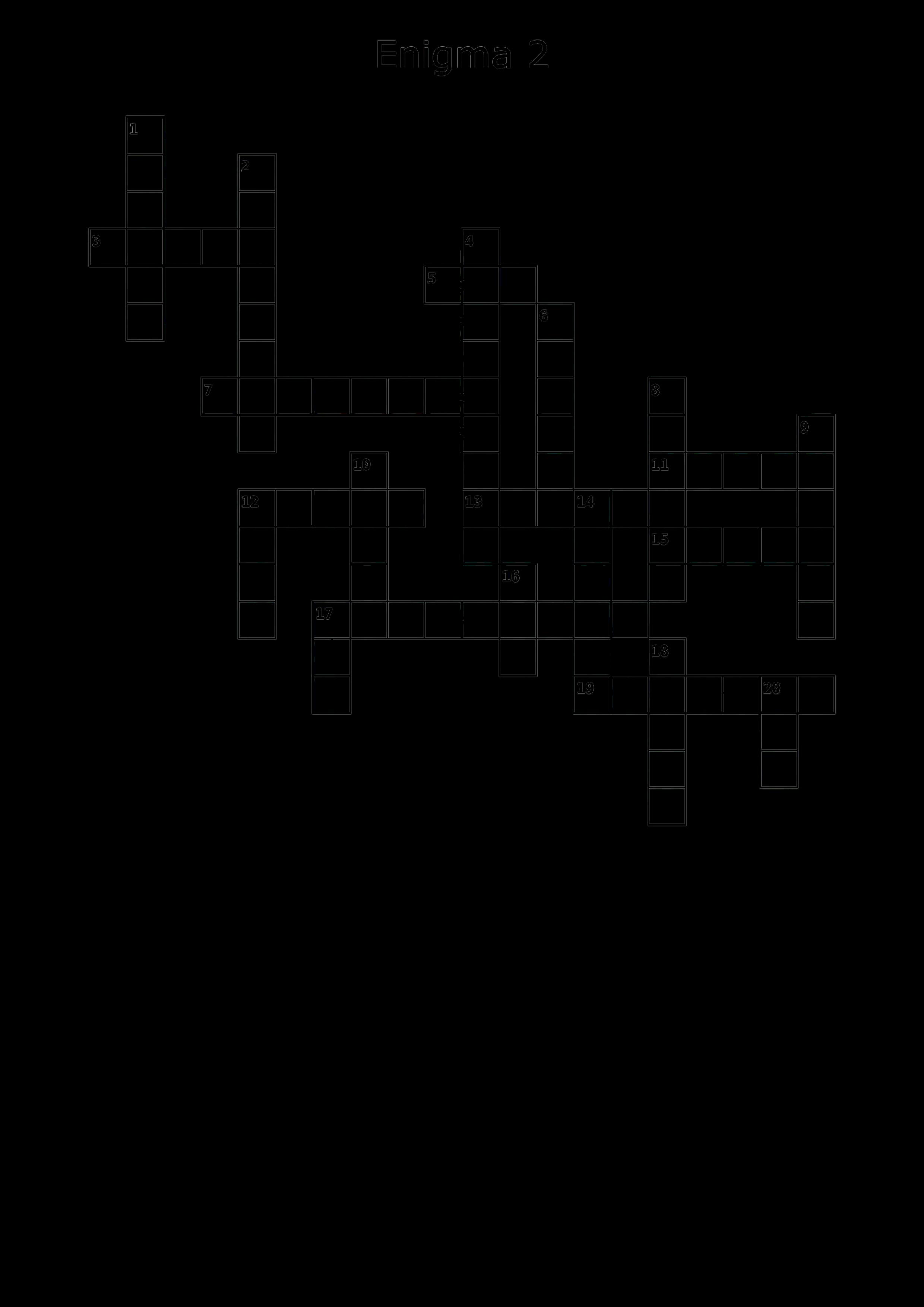
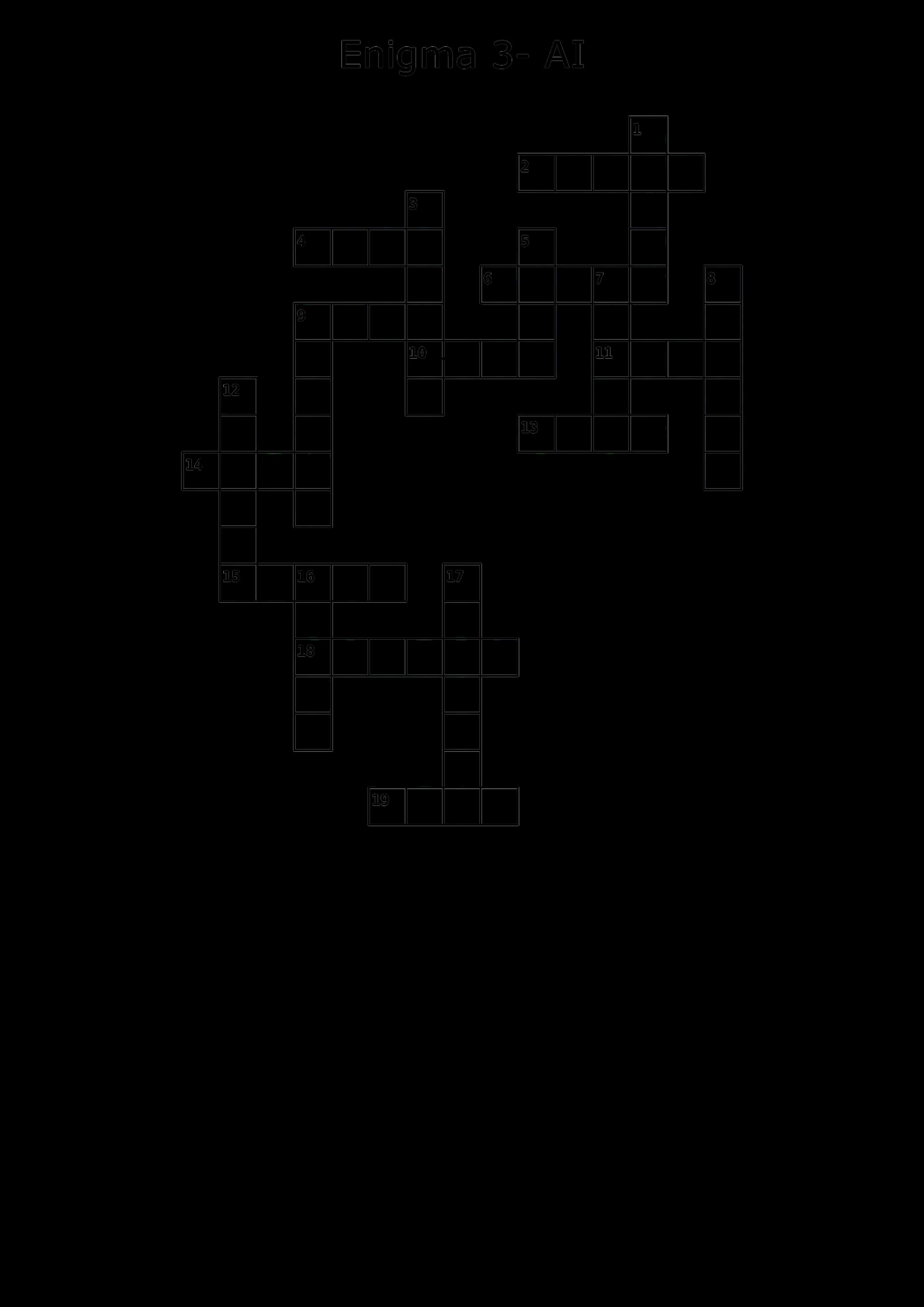
One of the new features in this edition of ENIGMA is the introduction of puzzles, such as crosswords, wordsearches and quizzes, starting with the one below:
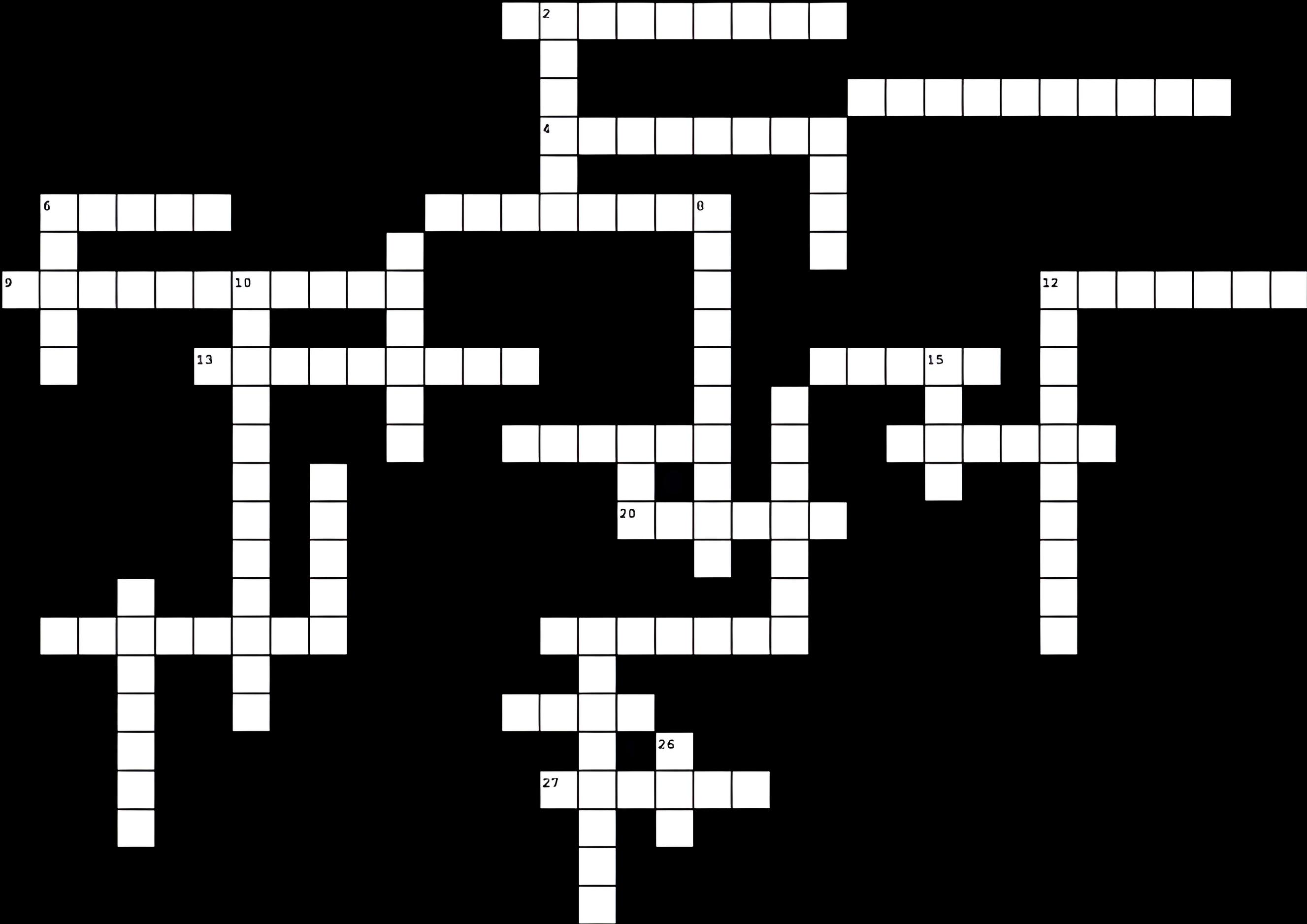
Across
1 The clarity or detail of an image or measurement (10)
3 The spreading of waves around obstacles (11)
4 A symbol that stores a changing value (8)
5 A quantity with magnitude but no direction (6)
7 Acceptable range of variation (9)
9 The process of calculating or processing data (11)
11 Force applied over a given area (8)
13 How often something occurs per unit of time (9)
14 The rules for writing code correctly (6)
18 Variants of an element with different numbers of neutrons (7)
19.A data type with only true or false values (7)
20.A small unit of data sent over a network (6)

2.A computer that provides data or services to others (6)
3 To find and fix errors in code or systems (5)
6 Remote storage and computing over the internet (5)
7 A line that touches a curve at one point (7)
8.The ratio of useful output to total input (10)
10 The study of air flow around objects (13)
12 The bending of light as it passes through materials (10)
14 Balanced proportions on opposite sides of an object (8)
15.The smallest unit of an element (4)
16 A structure that repeats instructions until a condition is met (4)
17 The SI unit of force (6)
21.A security system that blocks unauthorised network access (8)
23 One repetition of a process or loop (9)
24 Speed in a given direction (8)
25.Evidence that a statement or theory is true (5)
27 A number system using only 0s and 1s (6)
22 A step-by-step procedure for solving a problem (9)
26 Computer-aided design software (3)
The majority of ML systems currently rely on probabilistic architecture, with the Transformer architecture introduced by Google in the infamous research paper "Attention Is All You Need" These systems essentially reproduce and regurgitate patterns found in their training data, inadvertently containing biases depending on the content of the training data. Most ML systems including frontier AI systems such as ChatGPT Gemini 2 0, and Claude 3 5 Sonnet all utilise training data directly from the Internet As the Internet is not a validated source, there is no way to check that the information is true – this begins to pose a significant problem to the majority of AI systems They're being taught on incorrect data and, as such, can produce incorrect responses. This culmination can influence the AI system outputs, re-enforcing current social stereotypes and marginalising underrepresented views In an experiment, as detailed in Figure 1, I investigated which jobs, according to image generators, were more or less likely for men and women to do This clearly conveyed how the AI assigns typical gender roles to certain job occupations, resulting in profound gender bias By running this experiment, I noticed that gender differences, on some roles, were becoming significantly more pronounced: to the extent that it even started producing sexualised photos of people if they specify that they are a woman On the other hand, if they say they are a man, the photos typically displayed confident and proud men in highpaying jobs such as aerospace engineers
nother way algorithmic bias can arise is due to the programmers themselves These programmers, usually accidentally, could implement unconscious bias in the programming of these AI systems: whether this arises in the design of the algorithm itself,
Valbuena et al (2022) states that, "a known design flaw of the pulse oximeter is that patients with darker skin (compared with lighter skin) are more likely to experience occult hypoxemia" This is a type of blood oxygen deficiency which is more prominent in people with darker skin colour When tested on patients with darker skin, it gave mostly incorrect readings as the product has been predominantly calibrated on white males More often than not the resulting biases of ML systems are unintended however, some corporations and organisations do aim to combat this issue much more prominently than others. A vital issue especially for the future, is the usage and collection of public data As every ML and generative AI system, like ChatGPT, relies on vast datasets cumulating to petabytes of data, data is a resource of the utmost importance for the future. However, it is concerning to note that many large corporations unknowingly collect user data and additionally make it very difficult for users to deny permissions to collect and store such data
A common real-world application of algorithms is in hiring applications, where ML systems are used to select CVs to determine who would be most applicable for that role Unfortunately, women and those from deprived backgrounds suffer huge consequences as such ML systems can reject these demographics, even if they are suitable, if they have been trained on predominantly stereotypically male CVs This not only has short-term impact of denying people an opportunity they may deserve but also has detrimental long-term implications such as limiting access to certain professions and effectively getting 'stuck' in a cycle of low-income. Therefore, hindering the advancement of an egalitarian society – whilst this is, of course, unintended it is still crucial to consider the ethical aspects of algorithmic bias and the potential it has in society to re-enforce societal stereotypes. A potential way to solve this could be curating a diversified dataset which represents marginalised minorities more equitably – thereby reducing the prevalence of algorithmic bias and reducing the likelihood of its arrival
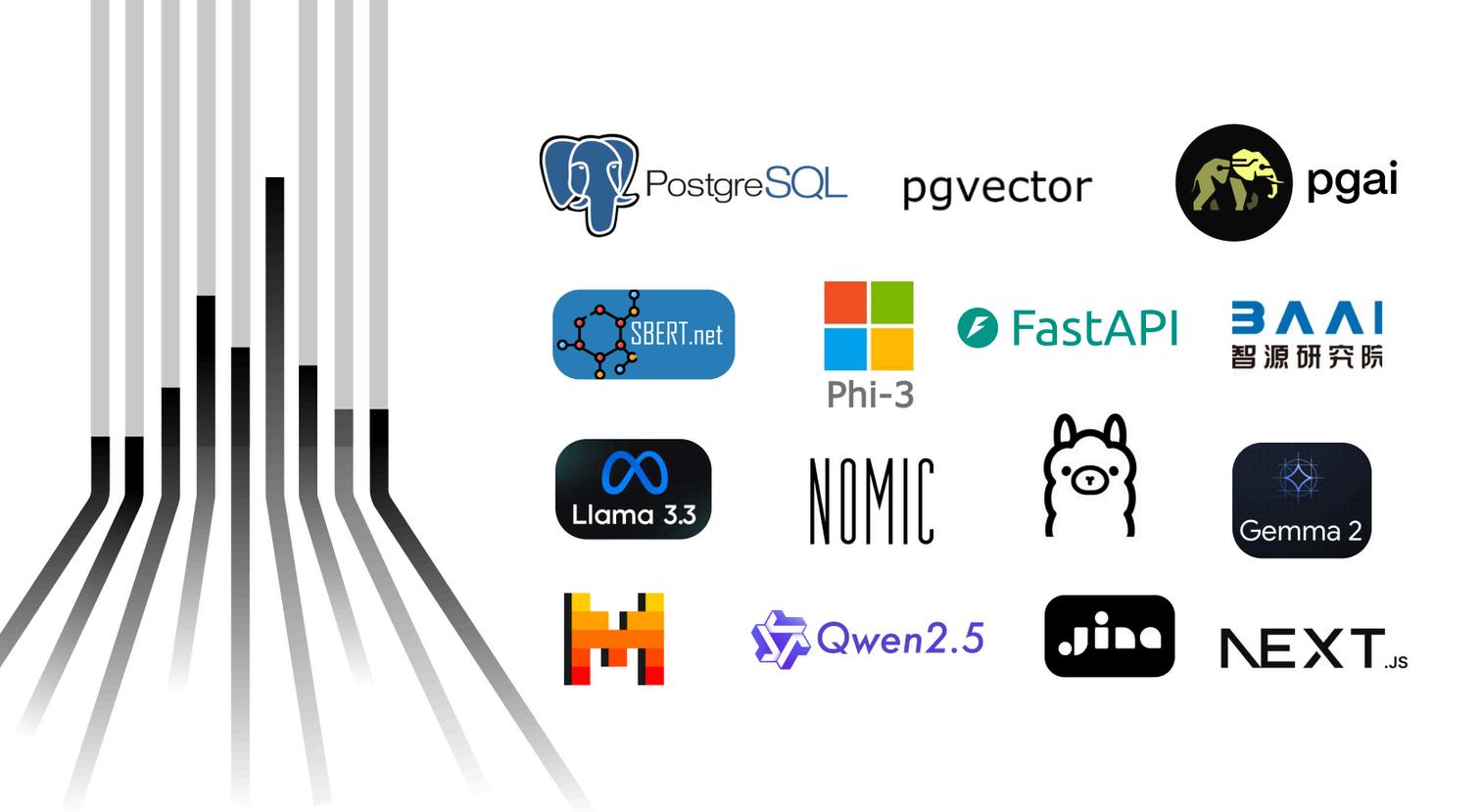
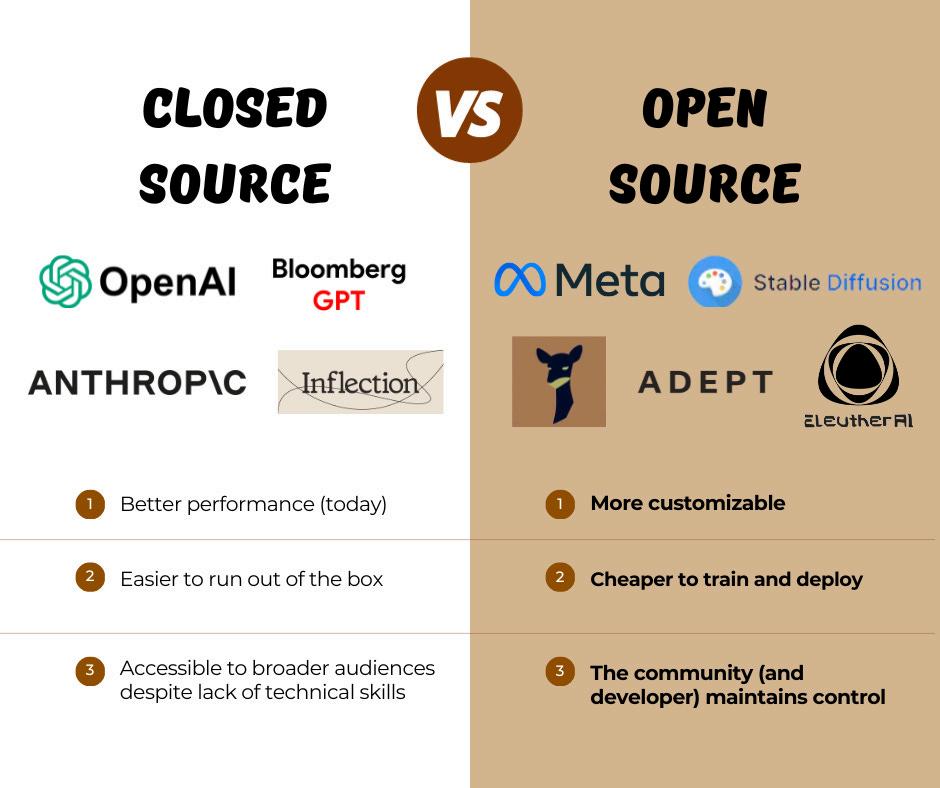
The growing divide between open and closedsource AI development presents us with valuable insights into what could transform into a potential solution for algorithmic bias and opacity Over the last few months, two Chinese companies have released incredibly impressive AI models trained at a fraction of the cost to OpenAI's o1 DeepSeek, the famed AI system developed by High-Flyer, a company specialising in quantitative trading, represents a promising example of the competency and tremendous success of opensource AI development DeepSeek's model architecture and training methods are both publicly available and clearly outlined in the extensive research papers they publicly published.
This transparency not only enables developers all around the world to experiment with it but enables them to suggest improvements and adaptations for different applications When combined with the digitised world we live in, open-source AI transcends into a powerful tool democratising AI access and principles for all – although, it also temporarily caused NVIDIA's market cap to reduce by $598 billion, the largest ever stock marked decreased in 24 hours, vividly illustrating the severe economic disruption that increased transparency can cultivate
Comparatively, other AI systems are extremely closedsource choosing instead to gatekeep their training practises and architectural decisions A key examples of an AI system, which is closed-source and facing legal action, is Perplexity They've established a prominent AI-powered search engine which many flock to for all related inquiries. Perplexity is primarily closed-source and does not disclose its training data nor the internal architecture of its models Additionally, Perplexity has a search dataset of over a billion searches, a key and valuable source of highquality data As such, it is clear why Perplexity intend to keep this private. However, Perplexity's most pressing issue is associated with its data usage; in October 2024, Perplexity was sued by Don Jones and the New York Post for their usage of data from the NYT (New York Times) without their consent The blatant disregard for the rights of data clearly demonstrates not only the need for regulatory framework associated with the usage of data but also the need for opacity from large corporations Opacity, in itself, fundamentally exacerbates amplifies societal biases through the limited distribution of knowledge and data Some have raised concerns that large MNCs are effectively 'gate-keeping' the higher quality research and knowledge, thereby withholding key AI knowledge and therefore stifling innovation globally
This is only further amplified by the insidious nature of feedback loops, influencing future data collection and resulting in a self-perpetuating cycle of discrimination, particularly detrimental in areas like hiring and criminal justice

FRAMEWORKS understand how it reaches its conclusion Comparatively, traceability stresses the importance of such an AI system to explain how it reached that output, effectively a trail from its input to the output The EU AI Act references both of these and does aim to tackle it; however, other frameworks need to explicitly address each
Whilst the EU AI Act campaigns for a fair, but innovative AI – it is vital to note that overly comprehensive regulations could stifle innovation and effectively regulating algorithmic 'gaming' remains a practical challenge On the other hand, private sector frameworks also offer valuable components, emphasising the importance of ethical AI, however such frameworks are difficult to enforce worldwide Future regulatory approaches should strengthen a focus on both traceability and transparency as the basis of regulation, whilst developing a system that incorporates public opinion into the rapid public deployment of AI, ultimately ensuring equitable AI development for all
We currently stand at a precipice – the path we are currently on, while paved with the promise of innovation, carries a significant risk of veering into a dystopian future Algorithmic bias and opacity carry an increasingly significant risk in our current world state, the choices we make today and the regulatory framework we develop and implement will be the deciding factor dictating whether AI becomes a catalyst for progress, or a tool of oppression. The future of AI is not solely in the hands of developers and researchers. Through regulatory frameworks that incorporate public opinion and diversified datasets representing marginalised minorities equitably, we can begin to have a say in how AI progresses We all have a collective responsibility, as humans, to mitigate its risks for future generations – let us ensure we do it right
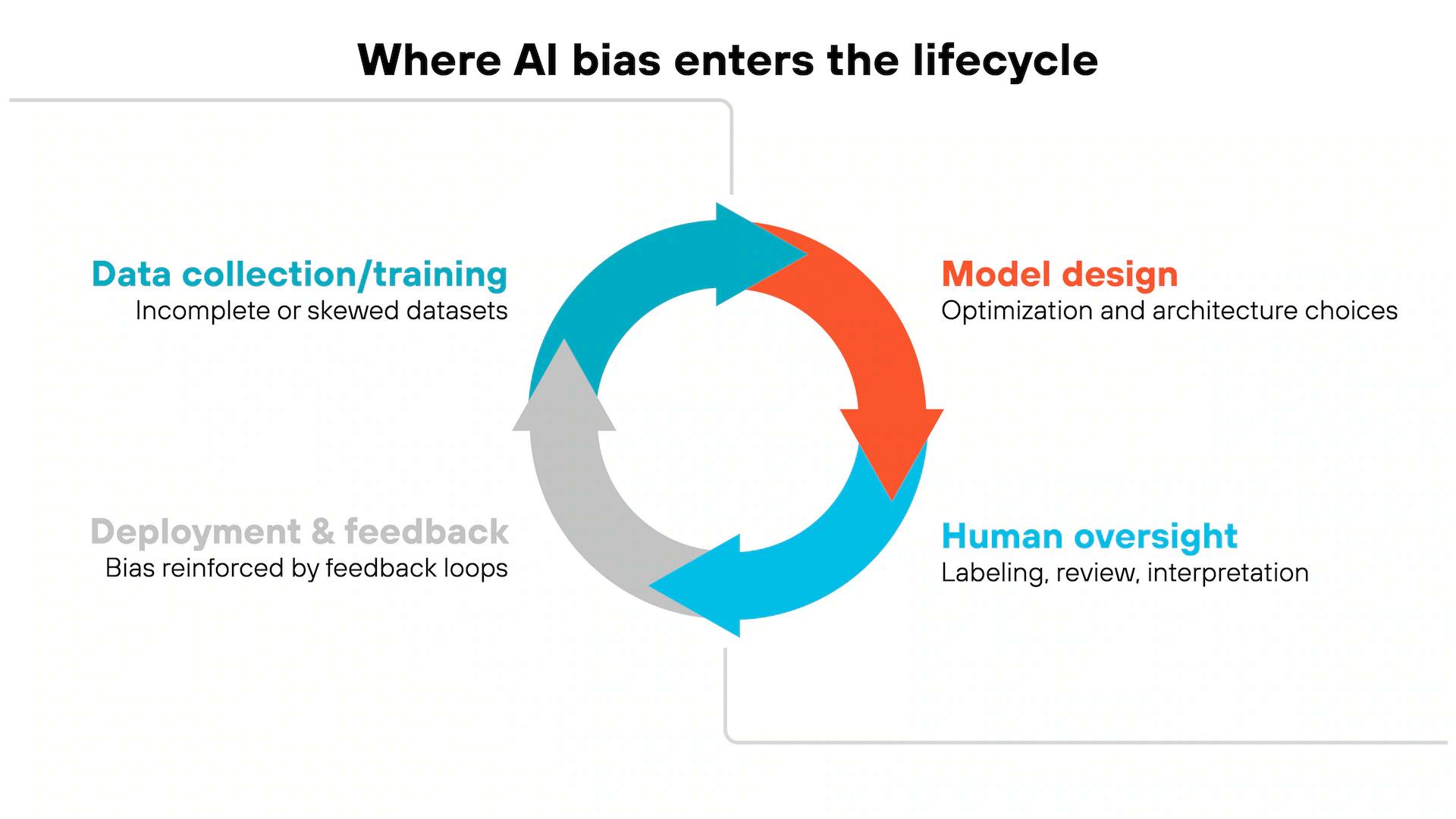

digital twin is a highly detailed virtual model of a real world system, in the medical world this would be used to simulate a human body Think of it as a virtual version of you that updates continuously with your health data It behaves like you, reacts like you and can even be used to predict how your body might respond to treatments, illnesses and lifestyle changes
In the future medicine, your digital twin can represent your organs, your metabolism, your genetics, your medical history and even your real time vital signs This technology will not just be a file; it would be a living and 24h updating simulation Creating a digital twin involves combining multiple layers of data and advanced technology
The process begins with collecting the most up to date personal health information: medical records, imaging data from MRI and CT scans, X rays, blood test results and genetic information obtained through a long process of sample collection, laboratory extraction and sequencing You may also be paired with a wearable device that tracks your heart rate, sleep patterns and daily activity Together, these elements form the raw material of your digital twin
From there, specialised software uses this data to build a virtual representation of your organs tissues and biological processes. This creates a dynamic digital anatomy capable of simulating blood flow, heart function, disease progression and drug metabolism As time goes on, the digital twin continues to update itself with new information gathered from check ups, wearable devices and other sensors, ensuring it remains an accurate reflection of your current health.
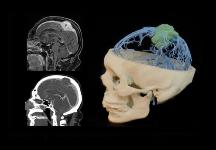
Who enjoys going to the hospital? Soon, you might not have to; you could send your virtual doppelganger instead This so called digital twin is a detailed, living model of your body that a doctor can pull up on their screen
Your digital twin brings together everything from full body check up data to real time vital signs giving your doctor a far more accurate picture of your health This is especially helpful if you struggle to describe symptoms or use medical terminology Instead of relying solely on what you can explain, your doctor can see what’s happening inside your body directly through the model
For medical teams, this is a great breakthrough. Right now, they make the best decisions they can based on experience, tests and what patients report With a digital twin, they can explore different diagnoses, simulate treatments and even predict how you specifically might respond to your prescribed medicine
This technological advancement opens the door to medicines, therapies and procedures designed uniquely for your body, dramatically improving precision and boosting recovery rates
On top of this, major progress has come from platforms that can integrate real time data from wearables, hospital records and sensors, turning a digital twin into a constantly updating model These advances are now making it to the headlines. Major news companies such as Forbes and BBC have joined in on, posting headlines such as ‘AI powered digital twins are transforming personalised medicine’ and ‘The race to build a digital twin of the human body’
From companies like Dassault Systèmes and Siemens to university researchers from Harvard and MIT have worked together to develop AI simulation engines capable of running thousands of personalised scenarios AI powered simulation engines now make it possible to run thousands of personalised scenarios in seconds, helping doctors anticipate how an individual patient might respond to illness or treatment. Early prototypes of whole body digital twins are also emerging from the works of Siemens and University of Oslo, preparing us all for a future where healthcare is tailored to us individuals
Digital Twins in Medicine: The Future of Clinical Trials
Digital Twin Models in Medicine : Simulating Your Organs for Smarter Diagnosis
What Is a Digital Twin in Healthcare? Everything You Need to Know
What is a digital twin in healthcare?
'Digital twins': 3D models enhance neurosurgical careMayo Clinic


inux is open source This means that anyone can see, modify, distribute, and use the source code as they see fit This put it in a unique position compared to many other operating systems, which are proprietary This ability allows any developer, not just those working for a particular company to make changes they see fit to the source code Whenever a developer has a problem, they want to solve it. With closed source, proprietary systems, they are left at the mercy of whatever company is providing the software However, with Linux, they can make those changes themselves Moreover, most problems that developers encounter are not unique - instead, they are likely to be the same problems encountered by many developers This not only means that the fix is able to get accepted in the first place (whereas with proprietary systems, it is much harder to lobby a private organisations to implement a change), but also allows other developers to build and build on the feature/fix, resulting in more innovation and improvement However, as kernel maintainers only accept features that actually help the whole project, it keeps very niche things out of the kernel to prevent bloat, but allows for widespread utility to be added In fact, the Linux kernel has 4000 contributors per year, and releases every 9 weeks allowing for frequent innovation and progress and provision of features that the users want, not what the parent organisation wants

Linux is one of the most secure and stable operating systems Through the use of modularity, and isolating every part of the kernel from each other ows for vulnerabilities and bugs to be localised to that specific module. s ensures that if a failure does occur, it can't take over the whole kernel. s is especially important, as the kernel has elevated permissions mpared to the user space, so an error has the potential to do even more mage By isolating it to a particular module, as well as having the option reboot just that module without the rest of the system allows for an paralleled stability and security compared to any other operating system
Windows 11 requires a 2 core processor with 4GB RAM, 64GB of storage, and requires modern processors for TPM support iOS requires the use of an apple device
All the other "mainstream" operating systems have myriads of different use cases and requirements Yet Linux, due to it being open source, and having a vast array of different distros for all the different use cases allows it to work on almost every kind of device, resulting in it currently running on about 60-70% of the Internet of Things (IoT)
Having this level of security makes it great for massive companies and organisations that can't afford to have their systems compromised. The level of stability allows Linux to be deployed in areas of critical infrastructure where failure leads to catastrophe (like in space), and its universality allows it to power the IoT
Notwithstanding that, to the average user, all of this is invisible; running in the background. Most of the IoT use embedded systems, so the actual operating system in use is never thought about Most people don't interact with servers, and the systems used by massive organisations, so once again, Linux is not in the public eye. Supercomputers and space missions and the like, whilst do capture public intrigue, do more so because of the end product; what they are able to achieve, rather than the actual process running on Linux The only real time the majority of the general public interact often and consistently with Linux is on smartphones; but even then, it is marketed as Samsung, Google, Android. Not Linux.
The main reason that Linux has broken through every subset of computing but the desktop is marketing Servers, massive organisations, critical infrastructure all use Linux because it is the best choice, and they have dedicated software engineers that know the system inside out, that can make custom modifications and add bespoke features for the specific use case. Here, Linux has no need to be marketed Its functionality, and word of mouth can simply do the talking for it
But for the general public, the script is reversed Google successfully marketed android as a smartphone OS, and thus has led to its widespread adoption. Valve has marketed SteamOS as the future of console gaming leading to many people buying steam decks But without these massive organisations backing and marketing the products, Linux has no prominence In the desktop space, with the marketing of Windows and Apple, they are able to take over 80% of the market share combined. The public perception of Windows is ease of use through the GUI Apple is professional and clean But Linux? Difficult Requires the use of the terminal No GUI None of this is true, as like Windows powershell, there is a terminal that can do commands But also like Windows, the primary way to interact with the device is a GUI. Also like Windows, you can do every single thing any average user would without even touching the terminal But without anyone marketing that, Linux adoption has stagnated
In conclusion, Linux has many things about it that rival, or even best other operating systems, from security, to stability, to compatibility. However, as it is not backed by an organisation, and is instead thousands of independent developers, with no one to market it, and push it positively into the public eye, Linux adoption in the desktop has withered at a meagre 5%, regardless of its sheer dominance everywhere else
https://news ycombinator com/item?id=13698589
https://www inverse com/article/21102-and-linux-wept-for-there-were-no-more-worlds-to-conquer https://medium com/@jcjames1/why-linux-still-hasnt-won-the-desktop-and-why-that-might-change-296c6f22d8d4
https://www zdnet com/article/linux-has-over-6-of-the-desktop-market-yes-you-read-that-right-heres-how/ https://lwn net/Articles/92https://lwn net/Articles/928581/8581/ https://top500.org/lists/top500/2025/11/
https://gs.statcounter.com/os-market-share/mobile/worldwide
https://dev to/rajpreet gill/linux-in-space-how-nasa-harnesses-open-source-to-explore-the-cosmos-4nbp https://gs statcounter com/os-market-share/desktop/worldwide/
https://www youtube com/watch?v=7agB1vOl-wg
https://newsletter pragmaticengineer com/p/how-linux-is-built-with-greg-kroah https://www.sciencedirect.com/science/article/pii/S0167404823000147
https://stackoverflow.com/questions/1807328/what-kind-of-kernel-does-ms-windows-have https://www microsoft com/en-gb/windows/windows-11-specifications?r=1 https://commandlinux com/statistics/linux-in-iot-devices-statistics/

However, it's up to us whether this tool is utilised to adapt and enhance today's professions
To begin with, a key factor making people worried about trusting artificial intelligence is the threat it causes to their own jobs Interviews conducted with CEOs of successful AI start-ups and tech companies such as Sam Altman (founder of OpenAI, the company that created ChatGPT), Bill Gates (founder and former CEO of Microsoft), and Mustafa Suleyman (co-founder of Google DeepMind), have yielded statements about how AI has the potential to replace numerous lines of work and could even pose existential threats to humanity if precautions are not taken by firms This, inevitably, has made lots of people with jobs suddenly fearful of the security of their professions, and whether they could be replaced by AI in the foreseeable future An example of such fears was made evident during the strikes in Hollywood (the American actors' union went on strike from July 14 to November 9, 2023, and the Writers Guild of America went on strike from 2 May 2023 – 27 September 2023) The movement involved actors and screenwriters protesting to ensure the security of their jobs and that industry leaders would not replace them with AI alternatives
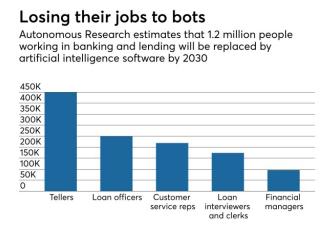
Another reason AI is feared is due to its probable superior intellect in the coming years. It can already beat chess grandmasters and solve immense maths problems that no human could dream of solving However, it should be noted that AI systems still lack many of the abilities that humans take for granted, such as common sense, creativity, and the ability to learn from experience At the moment, people can use AI alongside their jobs to summarise articles, compose emails, and much more, However, if AI was to surpass humans in intelligence, many think it would simply replace humans in jobs, due to its reliability and speed In the article ‘How artificial intelligence is reshaping jobs in banking’ (Crosman, P , 2018 )Green talks about how currently, it is common for employees to be fired if they don’t seem fit for the job, or don’t work well with others However, a question raised in the article is that if AI workers were introduced, “Are you going to fire your AI?”. What would make CEOs want to carry on using human employees and miss out on the reliability of using AI workers instead?
Workers who had received higher-quality educations and whose professions required more occupation-specific skills were less concerned about their jobs being replaced by AI Furthermore, consumers preferred human workers over AI and robots for personal services such as childcare, medical care, and education, but were more willing to use robots with artificial intelligence to complete household tasks and look after the elderly.
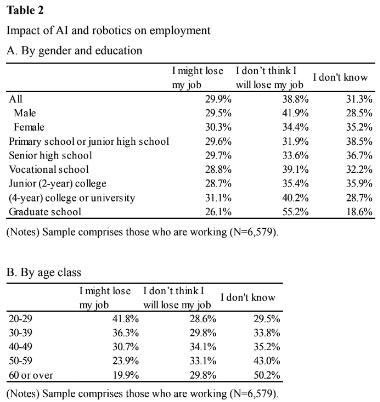
In the image above, the results from the survey in Japan are shown (Morikawa, M (2017) The results state that the age group of whom most people believe they might lose their jobs to AI is between the ages of 20 and 29. The age group that are most unsure, are, understandably, the older age group, those who are aged 60 and older. The age group of whom the most people believe they won’t lose their jobs to AI is between the ages of 40 and 49 People aged between 40-49 obviously have less time before they retire than, say, those aged 20-29 So, is it probable that AI will take over the jobs of the older professionals before they retire, in the next 20 or so years? Well, at the moment, AI seems to constantly be improving its intelligence and capacity for thinking, and so these sorts of industries will likely be affected at least in some sort of way in the next 5 to 10 years (this is explained further in the Moore’s Law section)
Sony, Panasonic, Canon, Fujitsu and Nintendo are some of the best-known electronics companies in the world, and they are all Japanese This is why I found that the study being conducted in Japan was notable as it considered people of whom the majority grew up in a technologically able society, to say the least According to worldpopulationreview com, in 2021,
Japan was the top country for technological expertise and advice This is great for a survey such as this, as the majority of the people who participated had at least an average knowledge of technology (the techknowledge standard being defined as staying updated on tech advancements and applying knowledge to solve problems/challenges), even in the older age groups This meant that the results, you could say, produced more likely predictions of the future of AI Yet, how reproducible are these results to Western countries, where the standard of tech-knowledge is lower?
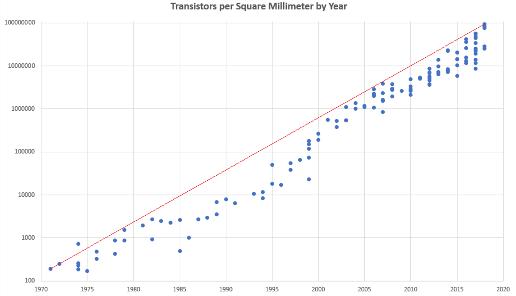
Moore's Law suggests that computer power doubles every two years, which has continually helped with the progression of artificial intelligence (AI) , and how it has become smarter by processing more data faster As computers keep advancing, AI, it seems, will become even more capable, creating methods to improve so that it doesn’t just rely on increased computing speed. In essence, while Moore's Law has been a significantly boosted AI's growth, its future may change in ways that aren't solely reliant on this pattern
AI can replace menial aspects of jobs such as filling in forms and data spreadsheets in professions such as banking and medicine In fact, this has already been conceived by Microsoft, when, in 2019, they decided to partner with Nuance, at the time an AI start-up. They worked together to create software that automatically notes down key points from conversations between a health consultant (such as a GP) and their patient Software such as this can provide people with time to pursue more engaging work and be more thorough in other aspects of the job because of the extra time in the working day For students coming out of school, entrylevel jobs seem as though they’ll be more digitally focused, involving programming skills and experience
who will bridge the gap between the technologists and the business leaders, providing clarity and transparency on the topic of how AI systems make decisions and what their flaws are For example, algorithm forensics specialists will conduct audits on AI systems to understand the causes and effects of their actions
ew jobs from AI will create opportunities for organisations collaborate with and educate students about key skills they will need for the professions that lie ahead Many possible benefits of AI don’t come without their downsides too. Economic growth could increase, but there is a substantial risk of large-scale job losses. AI will be able to help with issues around social welfare, but bias and such problems will exist regardless This has been shown in many papers in America especially Articles published on their website such as ‘Racial Discrimination in Face Recognition Technology’ and ‘Why Racial Bias is Prevalent in Facial Recognition Technology’, Harvard University have found that ‘Black people are overrepresented in mugshot data, which face recognition uses to make predictions ’ , leading people to question the data these AI softwares are being trained on
Sustainers: These are the people who will monitor and ensure that AI systems are operating as intended and address any unintended consequences or ethical issues For example, ethics managers will oversee the moral and social impacts of AI systems and intervene when necessary
o start answering this question, we need to look back on humanity in the entirety of its existence. An impressive achievement. Well, what we find is that for the tens of thousands of years that humans have been on the planet, we have always had a ‘job’ In the times of the first homo sapiens, people would be tasked to cook or hunt, make homes, and children would forage for herbs, fruits, and vegetables Later on, during the Roman Empire, merchants would trade, soldiers would fight, craftsmen and artists would sell their works and emperors would rule This pattern of activity goes on through millennia to this day.
The fact is, whether this fear is justified or not doesn’t really matter The better question is this: ‘What makes life meaningful and fulfilling?’ Is the worry really that our jobs will be replaced by artificial intelligence, or is it more that we wouldn’t know what to do with ourselves without our jobs?
The truth is, work takes up the majority of a working adult’s week, in many cases the whole week If our service was no longer required, what we do instead?
We would most likely devote ourselves to our passions and scientific breakthroughs concerning vague topics, a lifestyle not unlike the Renaissance, in which humans would explore the arts, and write poetry and music
The fact is, our lives would be fine. However, humans would be out of the picture, and that would be hard for us to adapt to A less draining week, compared to the long hours most people work today to provide for themselves or their families In addition, AI taking over repetitive and draining tasks would spare individuals from physically demanding jobs, reducing the risk of work-related stress and health issues. On the flip side not enough daily social interactions at the workplace and the potential loss of a routine with structure could contribute to feelings of isolation and have a knock-on effect on mental health for some individuals Lastly, relying entirely on AI for tasks might make humans overly dependent on technology, potentially limiting our ability to perform certain activities on their own
1 Acemoglu, D , Autor, D , Hazell, J and Restrepo, P , 2022. Artificial intelligence and jobs: evidence from online vacancies Journal of Labor Economics, 40(S1), pp S293-S340
2 Bruun, E P G and Duka, A (2018) Artificial Intelligence, Jobs and the Future of Work: Racing with the Machines Basic Income Studies, 13(2) doi:https://doi.org/10.1515/bis-2018-0018.
3 Crosman P 2018 How artificial intelligence is reshaping jobs in banking American Banker
4 Gries, T and Naudé, W , 2018 Artificial intelligence, jobs, inequality and productivity: Does aggregate demand matter?
5.Japan Dev team (2023). Japanese Technology: How it shaped the world. [online] Japan-dev.com. Available at: https://japan-dev com/blog/thehistory-and-future-of-technological-innovation-injapan
In conclusion, I believe that a binary approach should not be taken; rather, it's important to mix AI and human work for the best results Completely relying on either humans or AI has downsides Completely relying on humanity would lead to people feeling constantly stressed and overburdened by their work However, total reliance on AI would probably lead to humans being more relaxed in regulating AI. This could undoubtedly lead to AI misuse for warfare, propaganda, and other ways of splitting people apart and spreading hate Finding a balance can boost productivity, reduce stress, and improve mental health This approach helps people keep a sense of identity and purpose in their work and benefits countless industries. Overall a combination of AI and human work will lead to a better quality of life for humanity as a whole
6 Levy, F (2018) Computers and populism: artificial intelligence, jobs, and politics in the near term. Oxford Review of Economic Policy, 34(3), pp.393–417 doi:https://doi org/10 1093/oxrep/gry004
7 Martin, E (2019) Moore’s Law is Alive and Well [online] Medium Available at: https://medium com/predict/moores-law-is-aliveand-well-eaa49a450188
8.Morikawa, M. (2017). Who Are Afraid of Losing Their Jobs to Artificial Intelligence and Robots? Evidence from a Survey Maastricht: Global Labor Organization (GLO)
9 Wilson, H J , Daugherty, P and Bianzino, N , 2017 The jobs that artificial intelligence will create MIT Sloan Management Review, 58(4), p.14

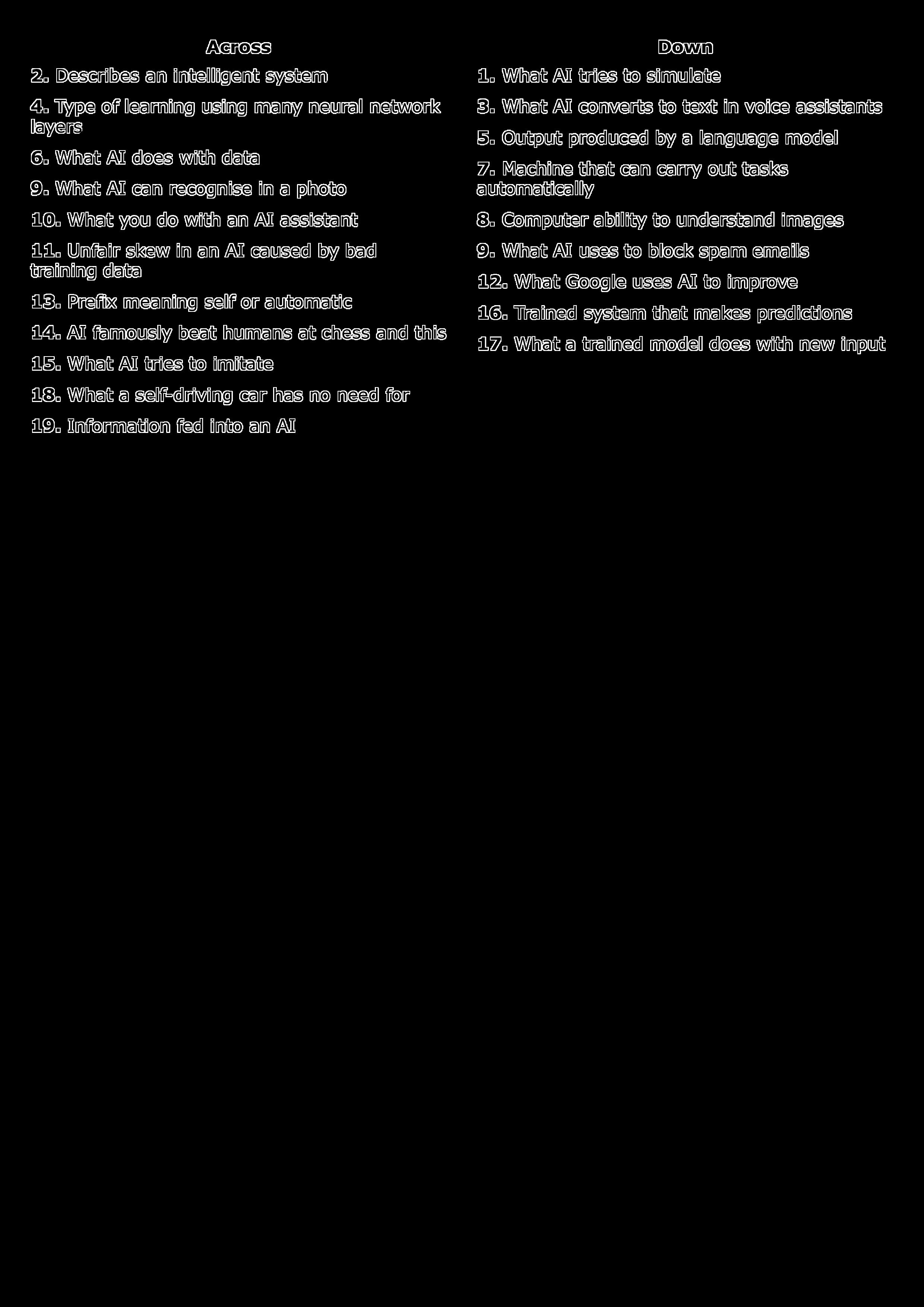
Lethal Autonomous Weapon Systems (Or also known as LAW’s) are a special type of weapon system that can use sensors and computer algorithms to identify a target without human help and employ a weapon system to attack the target, again without manual human control of the system (Congressional Research Service, 2025) Some of these systems can also use sensors and algorithms to decide whether targets are combative or noncombative
The increasing use of autonomous weapons is inevitable, so it is essential to explore their origins current applications and emerging designs to understand what we will see in the future
espite being less prevalent around the time, automation was still seen and being developed in the 1900’s In World War 2, automation in weapons may not have been in the form of drones, and self-guided cruise missiles, but it was still present around this time.
One example of automation in WW2 is the landmine According to the International Mine Action Standards (IMAS), landmines are ‘Munitions designed to be placed under, on or near the ground or other surface area and to be exploded by the presence, proximity or contact of a person or a vehicle.’ (Robert Keeley, 2003). Landmines are still used today but are now vastly different
In WW2, landmines were simple: they would use a triggering system to set the explosives and then set the charge off The priming systems came in several different styles
Pressure-Activated mines used a pressure plate, once pressure was applied, a firing pin would strike the explosive charge and start the explosive (Apopo org, n d)
Tripwire mines used thin wires, that once tugged on, would detonate an explosive (Apopo org, n d)
These were the 2 most common styles, with more being constantly developed Once these systems were triggered, a detonator would ignite the fuse, leading to the explosive. The explosion would dismember people standing on it, and fling out deadly shrapnel, killing and wounding anyone in the vicinity (Apopo org, n d)

Some landmines were even designed to throw out shrapnel Mines like the British AP (Anti-personnel) were surrounded in metal (Imperial War Museum, n d), and were designed to make shrapnel These mines spread fear throughout both sides, as they turned every step into a gamble.
The next major period for the development of automated weapons was the Cold War One of these major developments of automated weapons was the CAPTOR Static search weapon This was a mine that was atorpedo inside of a casing This weapon system was designed to be placed in deep water with many other of these CAPTOR mines to create an underwater minefield It had a sonar system that ignored surface ships and instead would only listen for submarines If the mine detected a hostile (Soviet) submarine, the CAPTOR would release its torpedo, which would hit the hostile and sink it (Robert O. Work, 2021).
The cold war saw a major development in the world of drones One of the most common drones in the cold war was the Gyrodyne QH-50 This was the first drone helicopter ever put into operation and one of the first aerial vehicles to be armed and intended to kill The Gyrodyne QH-50 was created due to the introduction of Soviet nuclear-powered submarines in the early 1960s These created a need for a remotely piloted helicopter that could operate from smaller, older destroyers and carry a nuclear depth bomb or depth charge Whilst not automated, and instead remote controlled, the Gyrodyne QH-50 still lead up towards the evolution and beginnings of drone and fully automated warfare. (Mark Piesing Sep 23 2024)
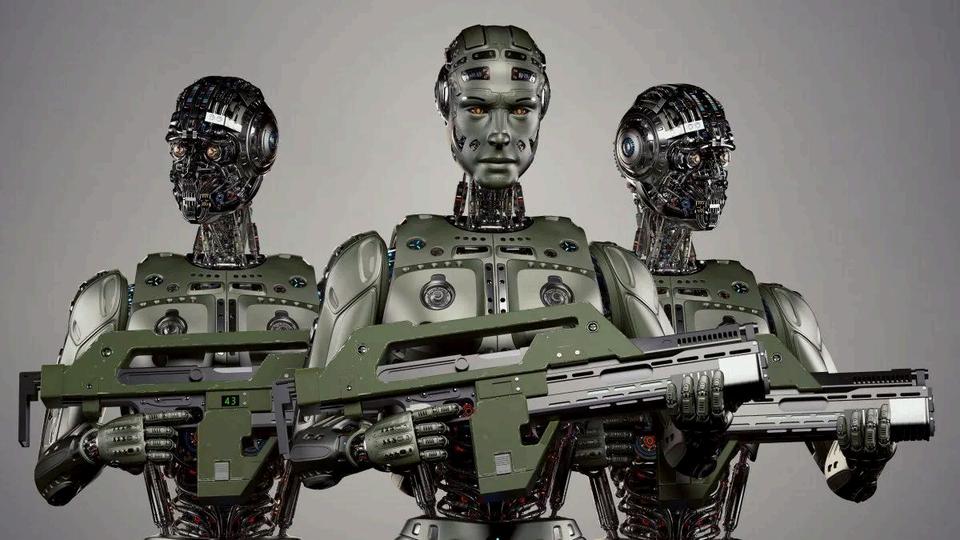
In most conflicts around the world today, we are seeing the use of increasingly more unmanned vehicles. These are used to complete a range of tasks such as reconnaissance surveillance and attack. One of the most widely recognized military drones is the MQ-9 Reaper drone The M stands for multi-role, with Q meaning that it is a remotely piloted aircraft The nine indicates its iteration in the series, being the ninth in the series of remotely piloted multi-role aircraft (Air Force, March 2021). So how does a modern drone compare to a modern fighter? We will compare the MQ-9 Reaper drone to the F-35 Lightning II, this is as they are both multirole modern aircraft
Looking at the table of comparisons, we can draw several important conclusions. Firstly, we see that the MQ-9 Reaper is far less expensive compared to the F35 Four MQ-9 Reaper drones, a ground control station, and a Predator Primary satellite link cost 27 56% less than an F-35 With an annual air force budget of approximately $215 1 billion dollars (Financial Management & Comptroller, n d), losing a drone for the US Airforce is the equivalent of a student losing a notebook, an inconvenience however easily replaced, unlike the cost of losing a plane and the irreplaceable cost of losing a pilot
However, the F-35 also has many advantages compared to the Reaper The F-35 has a greater ceiling, range, and speed. This makes the F-35 far better in combat The F-35 also has a hugely larger payload size, its payload is just less than 5 times the size, this means it can take-out larger objectives and more hostiles, at the price of the much higher cost
The MQ-9 Reaper has been seen circling over Gaza, with the US saying ‘the flights are part of an effort to help locate hostages’. (Reuters November 2023)
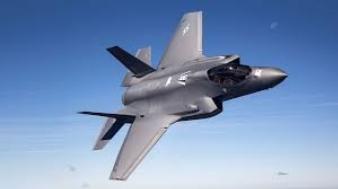

With the increasing use of unmanned aerial vehicles (UAV) countries are now developing more ways to defend themselves from these aerial threats One of these developments is SAM sites (Surface to Air Missiles)
One of the most recent of these SAM systems is the Russian S-500 Prometheus This is a SAM site that is designed to take out ever evolving aircraft and drones It is the successor to the S-400 The new system can launch a range of projectiles, that can be tailored to specific targets and missions This breadth of options and customisability increases its versatility in taking out airborne targets The S-500 options are: four 40N6M longrange surface-to-air missiles or two 77N6 interceptors (Air Marshal Anil Chopra, June 2024)
The 40N6M long-range missiles have a reach of up to 400 kilometres, with the 77N6 series interceptors being able to reach approximately 600 kilometres away (Air Marshal Anil Chopra, June 2024)
Russia only has one operational S-500 air defence system, which is reportedly deployed to defend Kerch Bridge The bridge connects Crimea with the Russian mainland, so it is crucial to keep Russian soldiers defending the region. (Air Marshal Anil Chopra June 2024)
these missiles can change direction mid-flight, this makes them even more difficult to shoot down (Lydia Harriss & Emily Noone, June 2023)
A more general and inevitable improvement to these systems is them becoming fully autonomous This would mean these systems would be fully controlled by an AI This AI would decide what to hit, when to hit it and what to hit it with (Thomas X Hammes, November 2, 2023) Whilst this technology may seem very useful and effective, it creates a whole new problem with the technology Ethics
Finally, these missiles can evade most modern-day defenses due to their blistering speed, this means once they're launched the target has a slim chance of stopping it (World Population Review, n d)
ith AI being used in more and more weapons, we must look at the ethics of allowing an AI to discern between an ally and a foe, a combatant and a civilian One major problem with introducing AI into warfare is collateral damage. With the possibility of AI making mistakes, for example mixing up between a combatant and a civilian, we must be careful when using it in warfare (Dr Elke Schwarz, n d) Furthermore, a bias within the used AI could lead to unethical decision making But what is AI bias?
AI bias is where a human trained AI can produce biased results, reflecting human biases (Team, I.D. and A. ,2023). This makes us wonder whether we could trust an AI to find a combatant fairly and safely and hence not mix them with a civilian
n conclusion; the next decade will be pivotal in the evolution of AI, machine learning and weapon design Ethics of AI will inevitably become a center stage problem, with large weaponry organizations constantly attempting to improve their weapons and further integrate AI into them
So, whilst in the past, automated weapons were slow to develop and not yet fully automated; we will see new innovations in this sector, which will rapidly improve and further integrate AI. Weapons such as hypersonic missiles and fully autonomous weapons will unavoidably take the main stage and revolutionize the battlefield The speedy development in these sectors will inevitably snowball into the decreased use of humans as a fighting force
Thomas X Hammes (November 2 2023) Autonomous weapons are the moral choice https://wwwatlanticcouncilorg/blogs/new-atlanticist/autonomous-weapon are-the-moral-choice/ [Accessed 3 March 2025]
Lydia Harriss & Emily Noone (June 2023) Hypersonic missiles UK Parliament https://postparliamentuk/research-briefings/post-pn-0696/ [Accessed 3 March 2025
Imperial War Museum (nd) Shrapnel Mine MkII anti-personnel https://wwwiwmorguk/collections/item/object/30019864 [Accessed 03 January 2025]
Robert Keeley (September 2003) Understanding Landmines and Mine Action https://webmitedu/demining/assignments/understanding-landminespdf [ Accesse 02 January 2025]
Stephen Losey (Nov 18 2022) F-35 costs have been declining That’s about to change Defense News https://wwwdefensenewscom/industry/2022/11/18/f-35-costshave-been-declining-thats-about-to-change/ [Accessed 05 January 2025]
Mark Piesing (Sep 23, 2024) The Secret History of Drones https://airandspacesiedu/air-and-space-quarterly/issue-12/secret-history-of-drones [Accessed 04 January 2025]
Nick Robins-Early (14 Jul 2024) AIs Oppenheimer moment: autonomous weapons enter the battlefield The Guardian https://wwwtheguardiancom/technology/article/2024/jul/14/ais-oppenheimer-moment-autonomous-weapons-enter-the-battlefield [Accessed 04 January 2025] Reuters (November 2023) Israel-Hamas war: What are the US MQ-9 Reaper drones that have been flying over Gaza? Israel-Hamas war: What are the US MQ-9 Rea drones that have been flying over Gaza? | Reuters [Accessed 20 January 2025]
Dr Elke Schwarz (nd) The ethical implications of AI in warfare The ethical implications of AI in warfare - Queen Mary University of London [Accessed 5 March 202
Team ID and A (2023) Shedding light on AI bias with real world examples https://wwwibmcom/think/topics/shedding-light-on-ai-bias-with-real-world-exampl [Accessed 06 March 2025]
Robert O Work (2021) A Short History of Weapon Systems with Autonomous Functionalities https://wwwjstororg/stable/pdf/resrep321464pdf [ Accessed 03 Janu 2025]
World Population Review (nd) Which Countries Have Hypersonic Missiles in 2024? https://worldpopulationreviewcom/country-rankings/which-countries-havehypersonic-missiles [Accessed 24 February 2025]
Jonathan Yerushalmy (2023)MQ-9 Reaper: what is the US drone that collided with a Russian jet and how is it used?MQ-9 Reaper: what is the US drone that collid with a Russian jet and how is it used? | Drones (military) | The Guardian [Accessed 11 March 2025]



n 2018, Amazon scrapped its AIpowered hiring tool after discovering it systematically downgraded job applications containing the word ‘ women, ’ unfairly penalising applicants solely based on their gender (Dastin, 2018). This case, among many others, underlines the growing concern about bias in AI systems and their damaging consequences Artificial Intelligence (AI), a technology created to simulate human learning, decision-making, and creativity, has become deeply embedded in today’s world From writing essays, conducting research at a click of a button, to the emergence of the newly introduced generative AI, (which can create new content from a single prompt,) this groundbreaking and upcoming technology is clearly shaping our present and our future
However worryingly not only can AI be misogynistic, but there are also multiple real-life examples of it being racist and unfairly preferring certain groups of people over others
For example, studies have revealed that AI-driven healthcare tools, “ may include bias against under-represented communities and thus amplify existing racial inequality” (Blackman, 2023) Despite these reservations, AI is being introduced in all aspects of our lives, including important decisions such as deciding who receives medical healthcare, who qualifies for a loan and even who is flagged by law enforcement. A biased system in these crucial aspects could lead to highly discriminatory and flawed outcomes eroding fundamental rights of equality, access to justice, fairness and impacting people’s lives adversely Rather than AI creating efficiencies, time and cost savings it will reinforce societal prejudices and biases with far reaching consequences
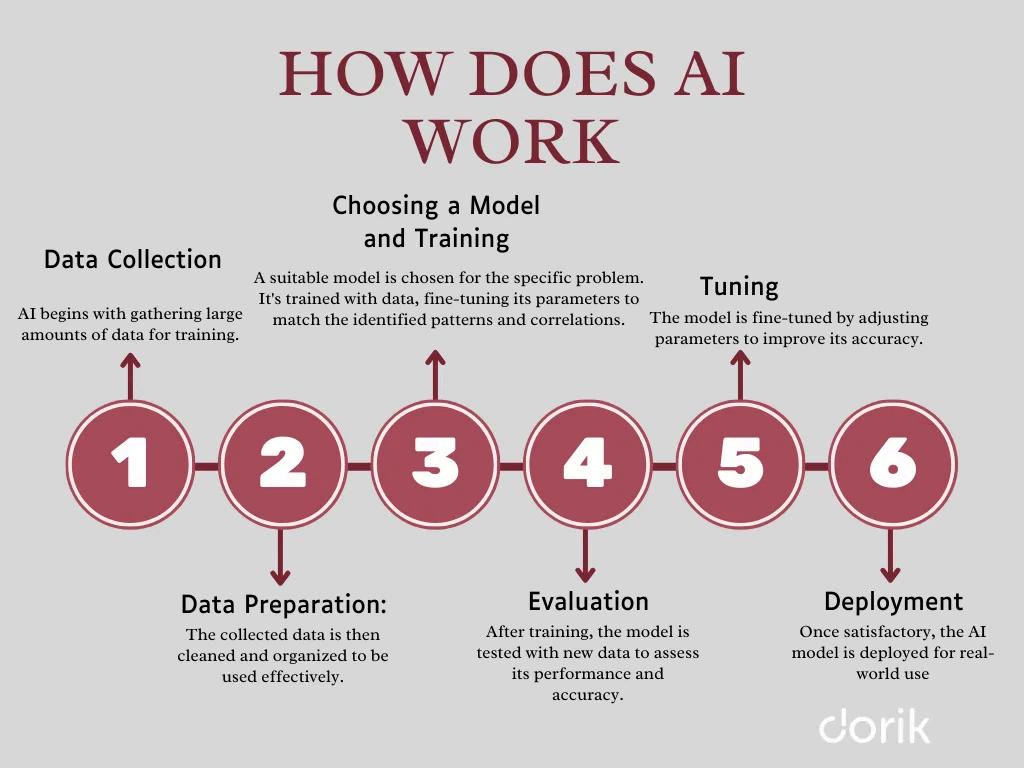
Artificial Intelligence works by processing vast amounts of data, identifying patterns, and making decisions based on what it has learnt. Unlike traditional programming, where humans create and define every rule, AI teaches itself through analysis It uses algorithms to adapt based on new information, improving its performance over time The more data it processes, the better it gets at making predictions or decisions This allows AI to automate tasks and solve complex problems without clear human instructions.
outperform humans in almost every task; however, it lacks the emotional and physical aspects we experience and being able to make balanced and ethical judgements It is also unable to fully understand and mimic what it is like to be human and what life entails, making it prone to mistakes that do not represent our society This can be very dangerous as AI might develop harmful stereotypes, spread misinformation or make biased decisions that affect people unfairly From that, another question arises: How have AI developers allowed their creations to have biases?
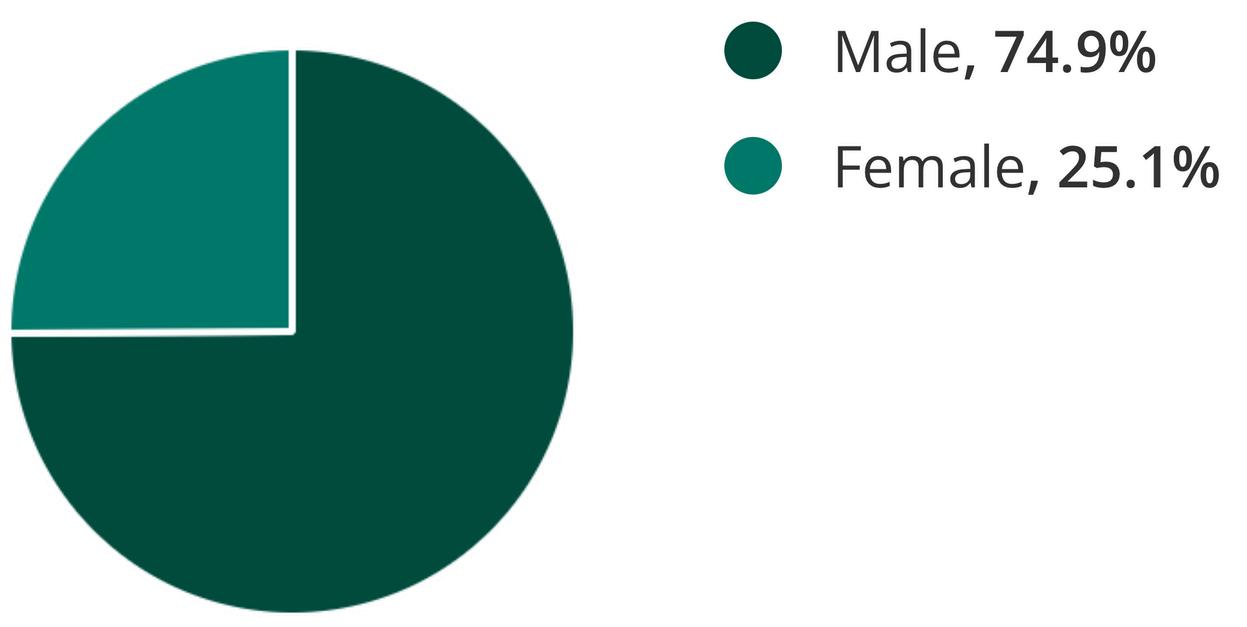
Research has shown that most AI developers are male, with women holding only a small fraction of such jobs (Zippia, 2025) This gender imbalance can lead to subconscious or
deliberate biases being embedded in the algorithms created The lack of diversity in gender and ethnicity among AI developers means that AI systems might show the biases and views of a similar group, accidentally reinforcing stereotypes or leaving out certain groups As has been proven in many fields such as company boardrooms diversity of thought through having individuals from different backgrounds, including ethnic group, age, gender, socio-economic status leads to better outcomes
But maybe it’s not entirely the developers’ fault? Developers “remain uncertain to this day how the [AI] programs achieved their goals” (Kissinger, Schmidt and Huttenlocher, 2024) This is known as the ‘black box’ problem which happens because deep learning systems learn by looking at lots of examples and data sets, but once they make a decision, it is difficult or in some cases impossible, to figure out how they made it.
elving deeper into AI biases, it is acknowledged that AI can lead to discrimination against certain groups or individuals who already experience significant prejudice in our society. If the underlying data contains biases or prejudices against specific groups, the AI replicates these biases in the decisions it makes This aligns with the computer science principle of GIGO (garbage in, garbage out), which states that “the quality of output is determined by the quality of the input” (Awati, 2023) This issue is becoming more concerning as AI is gradually being deployed in many crucial areas, such as healthcare, recruitment and the justice system
As previously mentioned, Amazon scrapped a ‘sexist AI tool’ that was unfairly downgrading applications containing the word ‘ women ’ Amazon trained the system on applications submittedover a 10-year period, most of which were submitted by men While Amazon never publicly released the number of female applicants that were downgraded or potentially missed out on a job, it is reasonable to estimate that thousands of women may have been unfairly rejected by the system as it was in use for over a year
Alternative Sanctions) system. In 2014, Brisha Borden, a Black woman spotted an unlocked children’s bicycle and scooter She and her friend decided to steal the bike and scooter before taking off down the road The two girls were caught and charged with burglary and petty theft for the items, which were valued at a total of $80 Borden had already previously been charged with misdemeanours committed when she was a juvenile
... electronics. This, and many other examples, showcase how AI systems target people based on their race and gender (Angwin, Larson, Mattu and Kirchner, 2016)
tudies have also found that AI performs poorly on darker skin tones One reason is the data training sets used as all AI models are trained on specific databases For example, there is a national police database that stores information about individuals, background and any personal identification – from fingerprints to images of their face. AI training databases are very similar, where they save basic information about each person to learn about them An ideal AI training facial recognition database may look something like this:
Compare their crime to that of a white man, Vernon Prater, who was arrested the previous summer for the theft of $86.35 worth of tools from a nearby Home Depot store He had already been convicted of armed robbery and two attempted armed robberies, for which he served five years in prison. However, strangely, when the COMPAS system was asked who was most likely to commit a repeat offence, the system chose Borden over Prater, who was clearly a more dangerous criminal

The above dataset has a balance between ethnicity, age and gender so that AI can find it easier to recognise each category However, the databases actually used, are more likely to resemble the following

where there are significantly fewer representations of darker skin tones and certain ethnic groups This imbalance in the data causes AI models to perform more accurately on lighter skin tones, as they are overrepresented in the training sets When the model encounters individuals with darker skin tones or less-represented ethnicities, it struggles to accurately detect features, potentially leading to higher error rates
Now, we know the AI got it completely wrong Borden has not been charged with any new crimes since, whereas Prater was given an eight-year prison term for breaking into a warehouse and stealing thousands of dollars’ worth of
Alternative Sanctions) system. In 2014, Brisha Borden, a Black woman spotted an unlocked children’s bicycle and scooter She and her friend decided to steal the bike and scooter before taking off down the road The two girls were caught and charged with burglary and petty theft for the items, which were valued at a total of $80 Borden had already previously been charged with misdemeanours committed when she was a juvenile
... electronics. This, and many other examples, showcase how AI systems target people based on their race and gender (Angwin, Larson, Mattu and Kirchner, 2016)
tudies have also found that AI performs poorly on darker skin tones One reason is the data training sets used as all AI models are trained on specific databases For example, there is a national police database that stores information about individuals, background and any personal identification – from fingerprints to images of their face. AI training databases are very similar, where they save basic information about each person to learn about them An ideal AI training facial recognition database may look something like this:
Compare their crime to that of a white man, Vernon Prater, who was arrested the previous summer for the theft of $86.35 worth of tools from a nearby Home Depot store He had already been convicted of armed robbery and two attempted armed robberies, for which he served five years in prison. However, strangely, when the COMPAS system was asked who was most likely to commit a repeat offence, the system chose Borden over Prater, who was clearly a more dangerous criminal
The above dataset has a balance between ethnicity, age and gender so that AI can find it easier to recognise each category However, the databases actually used, are more likely to resemble the following
where there are significantly fewer representations of darker skin tones and certain ethnic groups This imbalance in the data causes AI models to perform more accurately on lighter skin tones, as they are overrepresented in the training sets When the model encounters individuals with darker skin tones or less-represented ethnicities, it struggles to accurately detect features, potentially leading to higher error rates
Now, we know the AI got it completely wrong Borden has not been charged with any new crimes since, whereas Prater was given an eight-year prison term for breaking into a warehouse and stealing thousands of dollars’ worth of
that to the test. I first asked the model to generate an image of a criminal where it created a white male This was predictable as men are stereotypically more dangerous and more likely top end up in prison than women, with 97% of people in prison in the UK being male
This intriguing set of results lead me on to conduct a test to see the outputs the program gave me when I asked it to generate images of different types of people

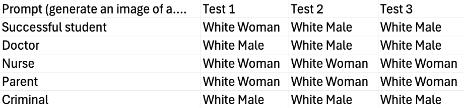

I th GPT to generate an essful student, to wh white man, again! This was surprising, as female students typically have higher pass rates, and a greater proportion of high grades compared to their male counterparts
From my results, I found that ChatGPT tends to generate images of people that align with stereotypical roles For example, when asked to generate an image of nurses or roles like parents, the generated images often showed women, aligned with common societal stereotypes What was even more alarming was the fact that every single person was white which is certainly not representative of the mix in our society.

Fina model to gen of a parent, to wh ly, it generated an i ale Women are stereotypically seen as the parents and carers for their children, hence why this was expected
ore worrying, are the self-perpetuating outcomes (as demonstrated above), it leads to when children repeatedly see white men portrayed as professionals and leaders, it creates the false idea that success looks a certain way, rather than reflecting the real world or even trying to influence positive change. And the risks go beyond the sphere of workplace, healthcare, insurance, crime in that when technology is used to subtly manipulate people subconsciously, it doesn’t just distort the truth- it eradicates the values we have been brought up with, from democracy to justice, making it even harder to build the inclusive, balanced world we aim for In the current climate of misinformation, erosion of DEI policies driven by the current US government and the political influence held by technocrats this is all the more probable.
he good news is that we as humans can tackle and restrain AI bias By improving data quality and raising awareness of biases among developers, we can catalyse change. Future AI development should be ethical, diverse which can be achieved through comprehensive regulation and intergovernmental cooperation on laws to ensure fairness
We need to ensure that AI systems are transparent, accountable, and designed to benefit all people, through rigorous testing and data cleansing to create positive outcomes Humans have the intelligence and capabilities to create AI and give it a life of its own, therefore we also have the power to harness and teach it to reach the right outcomes
AI bias isn’t just a technical flaw; it is rooted in flawed data which has far-reaching consequences that can affect people’s lives and futures especially those that may already be marginalised in society. We are already aware that some may have missed out on job opportunities simply because an algorithm favoured certain “stereotypical” candidates over others, and even today, racial bias in healthcare systems means some minority groups may be denied life-saving treatment From misidentification to biased decisions, the impact can worsen social inequalities and perpetuate harmful stereotypes In fields such as medicine or even autonomous vehicle then can we absolutely trust AI to make the right decisions when it comes to safely steering a vehicle or diagnosing a disease? While sci-fi films imagine dystopian futures controlled by unmoderated AI, this may not be far from reality if we don’t collectively take action now


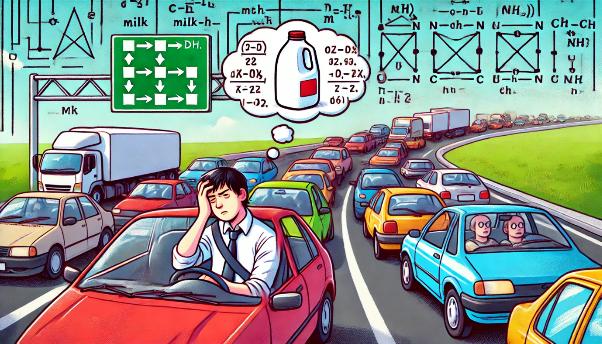
want you to just for a second, switch off from the chaos that lies ahead of your innocent eyes I want you to just drift your mind from the perpetual failure of our inept, weak system A system, aiming to benefit mankind for centuries, engulfing the Earth like wildfire and rapidly transforming our hearty planet into an agony of despair You know exactly what I am talking about : it is a plague that has infected humanity for millennia, with no whisper for a cure. Obviously, I am talking about the persistent problem of traffic, roadblocks and long lines, also known as the reincarnations of the Devil himself But not to worry, in these couple of pages, I will expose how to visit your local supermarket without danger of being captured by the Devil’s traps and once and for all slip under the fingers he used to whittle countless hours of your life, as well as the potential side effects
weighted Graph is a directed graph where each edge has a capacity and each edge receives a flow.
In other words, it is a map of all the possible routes, where the lines are the edges and the circles joined by the edges are the vertices
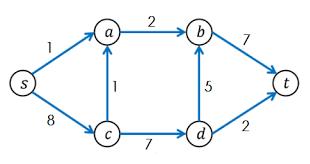
The vertices can also be thought as
‘water tanks’ and the edges can be ‘water pipes’ The aim is to find the quickest and most cost-efficient way of getting from a starting point to the ending point using the water pipes that can transfer the flow of water The number on the pipes (edges) represents how much units of water the pipe can hold, for example, for the edge going from S to C, it cannot flow through more than 8 units of water, because the maximum capacity is 8.
The weighted graph can also be applied to our road situation, where the starting point (called the “ source”) is our house and the ending point (called the “sink”) is the supermarket Our aim is to find the route that takes the least time to reach the supermarket, ensuring minimal traffic on the journey.
In order to find the route that takes the least time, we need to find:
1 The shortest route one could take to get to the supermarket
2 Factor in frequently congested roads and avoid them in busy hours
An algorithm is a set of instructions for solving a problem or accomplishing a task : you can think it like a guide on how to solve a Rubix’s Cube
Dijkstra’s Algorithm is a specific algorithm that calculates the shortest distance it takes to get from one source to another
It does this by recording the minimum ‘cost’ it takes to get from one source to another and then repeat for the node it has travelled to Initially, all nodes are unvisited and they are assigned into the unvisited set
Observe Figure 1 as an example:
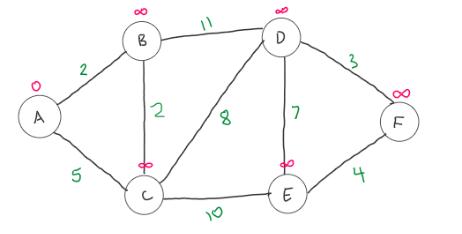
Likewise, the minimum cost of C is the cost of C is equal to 0 + distance(A→C) which is 5
Now we update the minimum cost array that we created so that:
cost(current node) = cost(previous node) + distance(from previous node to current node)
We then process B, where we know that the adjacent nodes are {A,C,D} As we have already visited A, we only consider C and D. Let’s start with C:
Adjacent Nodes of B = { C , D }
cost(C) = cost(B) + distance(B→C) = 2 + 2 = 4
We then compare this value to the value of the minimum cost of C in the table Figure 2 As 5 is greater than 4, we update the minimum cost of C to 4 as A to C is no longer the shortest cost route.
As we only consider B, we can calculate the cost of D as 13 because:
cost(D) = cost(B) + distance(B→D) = 2 + 11 = 13
Adjacent Nodes of A = { B , C }
cost(B) = cost(A) + distance(A→B)
Adjacent Nodes of C = {D, E }
minimumcost,wewouldfindthattheminimumcost ofDis12andthecostofEis14.Astheminimumcost ofDis13,weupdateDas12andrecordtheroute takentogetthecostof12.Eisalsorecordedas14. AddCintothelistofunvisitednodes
There is a difference between referring the numbers on the edge as ‘cost’ or ‘distance’ or ‘weight’ With hindsight, this article may have been improved by referring to the numbers as weight. The cost would refer to the expensive associated with traversing an edge in a graph such as money, energy consumption or effort The distance would refer to the physical length between two nodes in a graph and the weight is a generalised value assigned to edges in a graph, which takes a number of factors into account such as cost, time or effort required. In general, weight is used for broader applications
consideringD,thenEandFRemembertoappend thenodeyoujustprocessedintothelistofunvisited nodes,sothatwhenyoufindtheadjacentnodes,the onesyoujustvisitedareomitted
The program could also frequently update the data so that it would calculate in real time the weight of the edges This would allow it to adapt quickly to any road accidents, however it is very difficult to take such subjective and variable data into a single numerical value
Intheend,theprogramshoulddetectwhenallnodes arevisitedYourtableshouldbeupdatedasfollows: Therefore,thesmallestcostbetweenAandFis15. ThismeanstheshortestpathwaywouldbeAtoBtoC toDtoF.
Algorithms have become so sophisticated and intricate that it has surpassed its own creator It has mastered chess, with the chess Engine Stockfish reaching over 3500 Elo which far surpasses the current highest FIDE Chess Player Magnus Carlsen at only 2831 It has learnt how to uphold law, with fraud-related transactions being reduced by 60% since 2015 using real-time algorithms
But all algorithms have its drawbacks
Dijkstra’s Algorithm is no exception to the rule that all solutions are imperfect For example, it is very challenging to represent a road’s capacity using a numerical value for a variety of subjective factors that influence capacity.
Currently,wehumansrelysoheavilyonalgorithmsthattraditionallyreservedtasksforhumansarebecomingm frequentlycompletedbyalgorithms.Oursocietyisinvestingincreasingtrustinprograms,andourtrustinourse tocompletetasksarewitheringawayasaconsequence,evenifthealgorithmisflawed,humanstendtosecond guesstheirjudgementwhenasetofinstructionstellsthemotherwise

any of you with a family member who has had a transplant would know that donor lists are not as long as they need to be, particularly for high-demand organs such as kidneys, livers and hearts These days, increasing numbers of patients cannot receive the organs that they need in time, leading scientists to explore ways to replicate organs Waiting lists for transplants can be up to a year long, with the longest waiting lists for kidneys, livers, hearts and lungs In the UK, approximately 4,900 people died whilst waiting for an organ transplant in the last 10 years while another 7,700 were removed due to becoming too sick to receive one, often resulting in death shortly after
hile a patient is waiting for a heart to become available, they usually stay in hospitals, with VADs (Ventricular Assist Devices) to aid the heart in blood circulation Meanwhile, doctors use simulations and modelling techniques to identify which donor heart would be the strongest match with the patient’s current heart. It is important that the two hearts are closely matched (in terms of body size, blood type and immune system compatibility), to stop the rest of the body from recognising the new heart as a foreign object, and, due to mismatched antigens, triggering an immune response, and causing the body to reject the organ There are three main types of organ rejection that the patient may experience
Rejection occurs within minutes to hours,
Rejection occurs within days to months
Rejection can take years to occur.
However, the closer the match between the donor heart and the patient’s original heart, the less likely it is that the new heart will be rejected
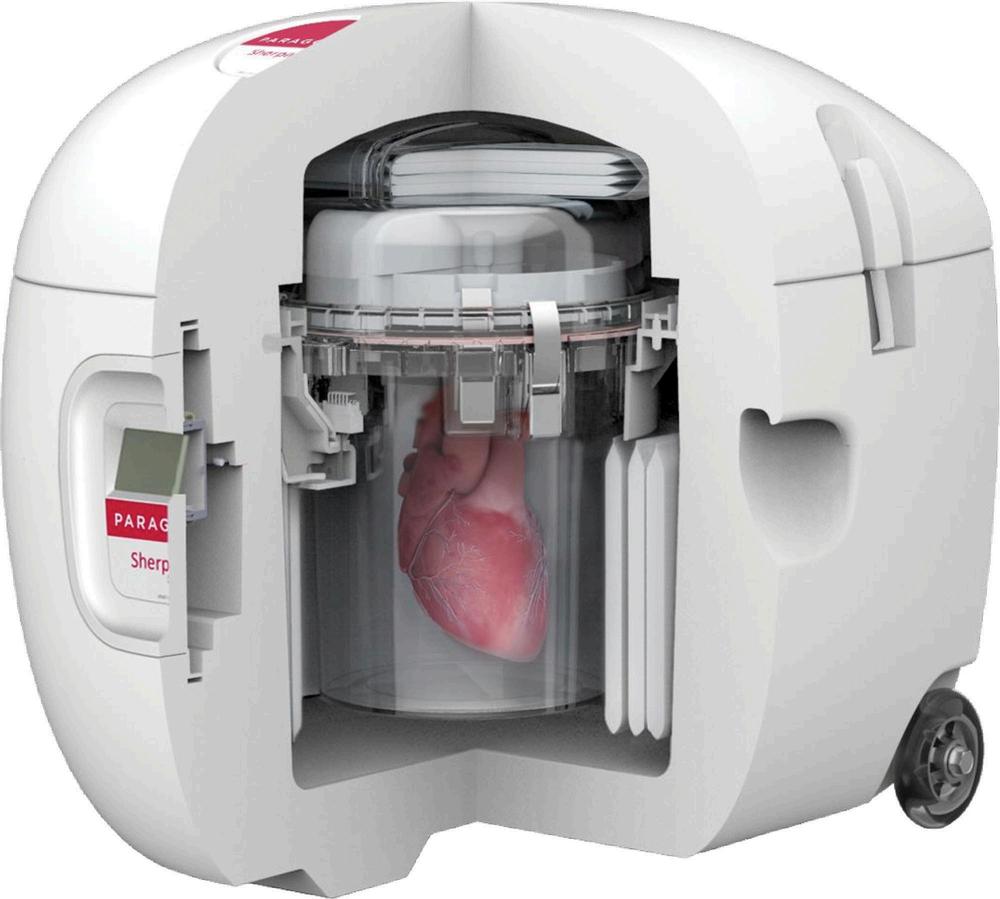
The heart must be transported quickly (see Fig 1), as it will only be “good” for 4-6 hours after it has been removed from the donor body, because the lack of oxygen and blood flow can cause graft failure and other post-transplant issues The heart is packed in ice, then injected with potassium to stop it beating while it is transported to the hospital
Then the transplant operation takes place The patient is placed under general anaesthetic, and they will be connected to a heart-lung bypass machine to aid with blood circulation, and to oxygenate blood.
The patient’s chest will be opened, and the diseased heart will be removed The donor heart is then placed inside the patient’s chest, and connected to all major blood vessels, and the patient is removed from the heartlung bypass machine. The operation can take up to 6 hours.
Usually, the heart starts beating as soon as it has blood flowing through it, but sometimes it requires an electric shock for it to start beating, or if it is not beating properly The patient’s chest is then sewn up, and the patient will regain consciousness within around an hour
This is how it works:
Making the bioinks: Living cells are extracted from the patient’s body, and mixed with cytocompatible hydrogels, such as alginate, to form a printable, jelly-like substance that mimics the form of natural tissues Sometimes, extra substances are added, to give the gel enhanced properties, such as making the cells multiply more quickly once inside their human host, or to improve cell viability
The gel is then printed using 3D bioprinters (see Fig 2) using one of three printing techniques (see Fig 3):
- Inkjet (using droplets of ink to form structures)
- Extrusion (squeezing the ink through a nozzle to produce a thin filament which can then be layered)
- Light-based methods (for example, using lasers or UV light to solidify gels that have been arranged in a specific position already)
Finally, the bioprinted structure is implanted into a human, where the cells in it are encouraged to multiply with the existing cells in the surrounding area.
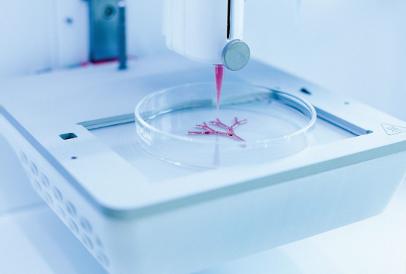
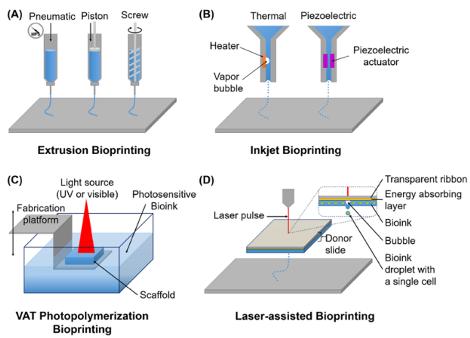
Currently, many tissues and bones are being bioprinted, such as kneecaps, ears and skin Scientists say that the goal is to eventually be able to successfully bioprint fully functioning organs such as hearts, livers and kidneys
Some of the main scientists and companies heavily associated with the creation of bioprinting and 3D bioprinters include:
Thomas Boland (University of Clemson) created the first 3D bioprinter in 2003, by adapting a HewlettPackard inkjet printer to enable it to print an ink made up of live cells This is often believed to be where the idea of 3D printing human structures first originated from
Jennifer Lewis (Harvard University) developed the first method of extrusion bioprinting in 2010.
Vladimir Mironov was known for his early work on tissue engineering, and for promoting the idea of printing organs and other structures
Companies such as CELLINK and Organovo are also well-known for their work in the field of bioprinting and bioinks CELLINK was founded in 2016 by a group of three Swedish scientists, Erik Gatenholm, Héctor Martinez, and Gusten Danielsson They are widely recognised as the first bioink company CELLINK specialise in 3D bioprinting technologies, and they created the first bioink in early 2016. Organovo was founded by Keith Murphy and Dr Gabor Forgacs Organovo mainly work on developing bioprinted structures for drug discovery and medical research

As bioprinting uses the cells of the person waiting for a replacement organ or other structure, it is less likely for it to be rejected, meaning that there will be much less waiting time, because every organ printed using the cells of the person is highly likely to be suitable. In the long term, they will also reduce the mortality rates of people who are waiting for transplants Bioprinting can be applied to a wider range of medical fields, as it can be used to produce authentic and fully functioning prosthetic limbs, make new skin to be grafted in place of burnt or diseased skin, and also to regenerate parts of a bone. Bioprinting could also be used in the cosmetic industry, for facial reconstruction and fat grafting, as well as to replicate teeth

urrently, experts estimate that bioprinting organs in the NHS could become a reality in as little as 20-30 years. While more complex organs will take longer to develop, tissues, bones and skin will likely be the starting point for bioprinting in the NHS
Unlike donor organs, computerised designs and models for bioprinting can be sent across the world for no cost meaning that less affluent countries, or islands and other places in remote areas have quick and easy access to these designs, and can print them in laboratories As mentioned before, bioprinting drastically reduces waiting times. If awaiting an organ transplant, the patient must wait for a suitable organ to become available, one that is similar enough to their own that their body does not reject it
Bioprinting in the UK has received a budget linked to the NHS, but this has been expanded, as several research centres also dedicated to making regenerative medicine a reality have been funding some of this work For example, The Engineering and Physical Sciences Research Council (EPSRC) awarded £6 million to the University of Nottingham to develop a 3D printing toolkit specifically for NHS hospitals, and The Cell and Gene Therapy Catapult and the National Institute for Health Research (NIHR) have provided significant funding (over £120m combined since 2012) to go towards this project However, even though there is a large budget, the bioprinters, highly skilled staff, bioink and specialised laboratories are still incredibly expensive.
Providingthatwefindawaytoovercomethesechallenges,onedayinthefutureperhapstherecouldbepeopl withbioprintedcomplexorgans,andmaybeevenbioprintedpartsoftheirbrain.
Bythetimeyouhavebecomeadults,perhapsyouoroneofyourfriendswillbegivingpeoplebioprintedbonea skingrafts,andbioprintedorgantransplantsAndbythetimeyouyourselfneedatransplant,it’sprobablethati won’tbetheorganofanotherhuman–itcouldbeanorganthatwas3Dprintedinalabusingpioneering technology,andmadeofaninkcontainingyourowncells


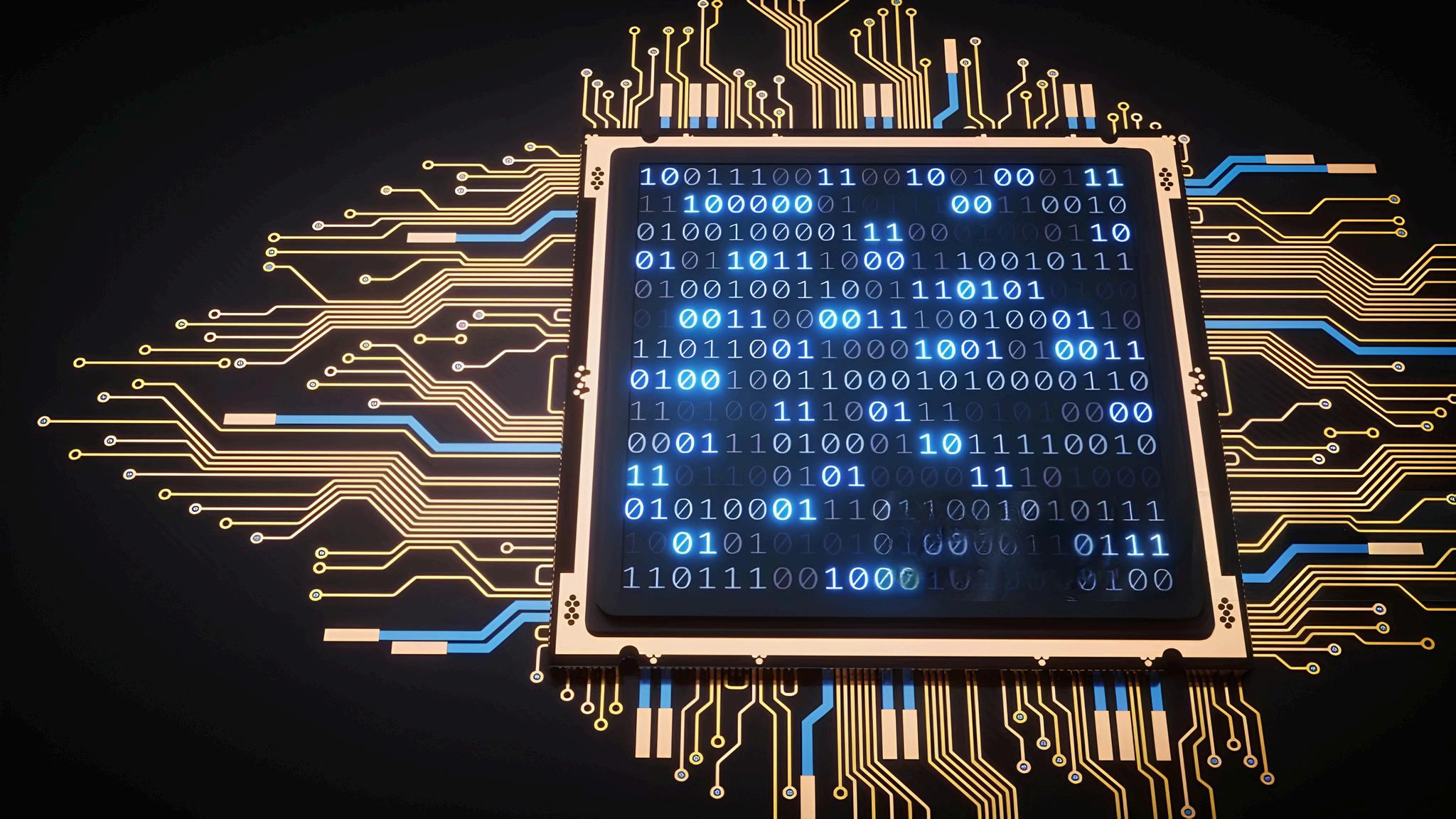
inary is the code that the computer processes that is either a 0 or a 1, that information then takes action and the CPU turns it into a letter or number or anything on your keyboard Just as an example this is how a basic binary code would look like and how you would be able to interpret it If it is a zero do not add the number above if it is a 1, you do add the number
The method for that will be 64+32+1 = 97. 97 is the binary decimal code for the lower case a in ASCII (American Standard Code Information Interchange)
Computers use something called electronic switches and a 0 is when the switch is off and the one is when the switch is on It is also very robust and stable as electrical signals can heat up. So without binary your computer wouldn’t be how it is unless you use ternary which is much harder to manufacture thought it is more efficient in mathematical terms So you can use other things like ternary but hardware does its best with two states and is simple to detect
inary is the language of the computer. It stores data the Computer Processing Unit (known as the CPU) in binary It also allows you to type into your computer and all your data is built from 0 or 1
Many people say that AI will dominate and that is clearly not true as most AI tools like Copilot and OpenAI have a 30% error rate But it’s not all good news Thought highly unlikely it could cause people to lose their jobs and if we are used to using Artificial Intelligence we could end up being very dependent on it and not knowing how to do things for ourselves. But as long as we have a good balance of AI in daily usage it is ok

system
Gottfried Leibniz and he wrote an article called Explication de l'Arithmétique Binaire which only used the character 0 and 1 in it There is also Francis Bacon who used zeros and ones for secret communication in the early 17 Century But binary in computing did not happen until much later in the timeline The ENIAC computer (Electronic Numerical Integrator and Computer) was one of the first to use binary and in 1947 there were transistors which was the perfection on binary with 0/1 meaning zero is off and one is on like voltage Today lots of phones, computers and AI systems relies on binary, the digital world wouldn’t be how it is without binary
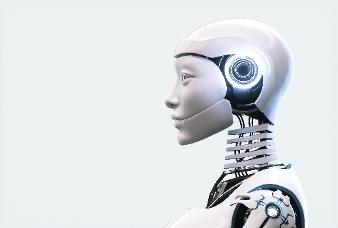

Binary is the basic language of zeros and ones but to answer the question, AI won’t take full responsibility of AI but it will take some responsibility to sharpen binary and strengthen it Without it there is one internet, no programming and you wouldn’t be able to store data These zeros and ones shape up your computer and it helps computers do tasks easier and faster But with AI, it will help code binary in a smarter way and makes it stronger and more useful AI will make it better in general and make it run faster, like editing your work to improve it.


Quantum superposition: Because the radioactive decay is random, quantum mechanics suggests the atom is both decayed and not decayed simultaneously until measured Therefore, the cat is both alive and dead
he Schrödinger's cat theory thought experiment designed by Erwin Schrödinger in 1935, conveys an objection against Copenhagen’s theorem of quantum mechanics It is something that is extremely interesting, however, it may be hard to understand the thinking behind this In this article, I will be portraying this theory in a simple and easy way to understand it well and the fact that physics is so fascinating.
Schrödinger's Cat isn’t just any theory, it is a way of thinking that doesn’t really have much logic to it
The Observation: The superposition only collapses into one state (alive or dead) when the box is opened and an observer looks inside.
Purpose: Schrödinger designed this to criticise the Copenhagen interpretation of quantum mechanics, arguing that it is absurd to think a cat could be in two states at once, highlighting that there must be a gap between microscopic quantum events and macroscopic reality
The Setup: A cat is placed in a sealed box with a radioactive atom, a Geiger counter, a hammer and poison If the atom decays, the counter triggers the hammer to break the poison, killing the cat
The Copenhagen interpretation, developed by Niels Bohr and Werner Heisenberg in the 1920s It proposes that particles do not have definite properties (like a specific position or speed) until we measure them. The outcome of the measurement is truly random. You can only predict the chances of where the particle might appear, not exactly where it will be Objects have complementary properties (like wave-particle duality) that cannot be observed or defined simultaneously
states to deliver more accurate timing and field measurements, which result in better phone location services, communication synchronisation and medical imaging performance
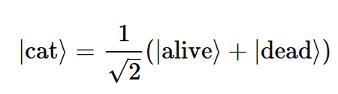
chrodinger's cat (an example of a quantum system) is always in a single state, linked to a random subatomic event that may or may not occur Even if the box was opened by someone, it would have no influence on the outcome; this means that nothing would really happen because someone would only be gaining the knowledge of whether the cat is dead or alive The superposition of the cat can be represented by the following equation:
Equipment: Coin
Small fan
Pen/pencil and paper
A friend/family member
Method:
1 Spin the coin on the table so it is spinning fast (both heads and tails at once).
2 While it’s spinning, get someone to turn on the fan The gentle breeze is the tiny element you want to detect
3 Stop the coin (or let it fall) and see whether it lands heads or tails (similar to looking inside the box to see the result)
4 Repeat 10 times with each of the following conditions and record how many coins are heads/tails:
5 With no breeze and with the breeze
Results:
Without the breeze, heads and tails are a similar number of results
With the breeze, you might result in more of one side of the coin - the breeze slightly changes how the spinning coin behaves whilst it is spinning in a position in which the final result could be either side of the coin
The connection:
While the coin spins it is like it’s in two states at once (both heads and tails) The breeze changes the state of the final result a little Only when you stop and look, it becomes one definite result - like opening the box to see whether the cat is alive or dead (Schrödinger’s cat)
H Z H K A Q B Q H Z L O O A Y M F U R V
Q F S E Z V J F M H B R F D L O Y T S Y
P B R J M Z M P M Y G Y J O V D G S P P
F R N Z K Q D M V Y N T H W D E U A U H
P H D P B X M W E I G H T S F L B A Y J
K F T J V W P X O X S C L W F G D V I G
N Q A Z X F A P Y V B Q W L K M A L B G
X K S O I I R T P J S I Z I K U L C C B
Z I E R F E I L I J O R R S Z V S W M E
W Q T T D B X W N E U R A L A Y C R H B

Z T Q X P S T H S G P U E P I N D M O I
E E L X P E S A X Z T Y D H I I U G G D
P H B R T J U F Z O N R B N Z A Y R I U

INTRODUCING A BRAND NEW FEATURE TO ENIGMA- AN IN-DEPTH SPOTLIGHT ON THE PIONEERS SHAPING THE WORLD OF COMPUTER SCIENCE
BY KAYAN SHAH

Artificial intelligence, or more specifically, advanced machine learning- represents one of the most transformative technologies of our time But the question that keeps scientists, philosophers and technologists up at night is this: could a machine eventually match or surpass human cognitive abilities? Or, more unsettlingly, has it already?
Under the leadership of Demis Hassabis, DeepMind has developed AI systems that don't just perform wellthey perform in ways that defy even the highest expectations Take AlphaGo, for example Go is a board game with more possible combinations than there are atoms in the observable universe, making it essentially impossible to win through brute-force calculation alone. Yet AlphaGo didn't just beat human champions- it did so using strategies that no human player had ever conceived of, moves that seasoned professionals described as alien, even beautiful. That isn't just impressive computing. That is something that looks a lot like creativity
Then there is AlphaFold- arguably the most significant scientific breakthrough of the past decade. For fifty years, predicting how a protein folds into its three-dimensional shape was considered one of biology's great unsolved problems. Proteins are the building blocks of life, and understanding their structure is fundamental to developing drugs, treating diseases and understanding how living things work at a molecular level AlphaFold solved it. Not partially- it solved it with an accuracy that left the scientific community genuinely stunned, achieving in months what researchers had spent careers trying to crack.
So when we ask whether AI has already surpassed human abilities, in certain domains, the honest answer is yes The more interesting question now is what comes next
I would strongly suggest watching the AlphaGo and AlphaFold documentaries- they are truly breathtaking and inspiring Seeing the moment human champions are defeated by a machine, or watching scientists react to fifty years of unsolved biology crumble in an instant, is the kind of thing that leaves a lasting impression which no written account can fully replicate
Watch the AlphaGo Documentary (https://www.youtube.com/watch?v=WXuK6gekU1Y)
Watch the AlphaFold Documentary (https://www youtube com/watch?v=d95J8yzvjbQ)
From teenage chess prodigy to Nobel Prize winner- the journey of Demis Hassabis is anything but ordinary.
Demis Hassabis was not your typical child By the age of 13 he had already become a FIDE Chess Master, making him one of the highest rated players in the world for his age group His talent was so evident that he was reportedly offered a £1 million contract- an extraordinary sum, and an extraordinary offer for a teenager- which he turned down to pursue his education instead That decision alone tells you a great deal about the kind of person he is
He went on to study computer science at Queens' College, Cambridge, completing his degree in just two years rather than the standard three. From there, rather than heading straight into the industry that would eventually make him famous, he took what many would consider an unexpected detour- founding and working in the video games industry, co-creating the iconic strategy game Theme Park before returning to academia
"Ultimately, what we want to do is solve intelligence and then use that to solve everything else."
He then pursued a PhD in cognitive neuroscience at University College London, studying how the human brain encodes and retrieves memories It is this combination- world-class chess player, computer scientist, neuroscientist, game designer- that makes Hassabis unlike almost anyone else in the field of AI When he co-founded DeepMind in London in 2010, he was not just another tech entrepreneur. He was someone who had spent years studying intelligence from every possible angle, and he had a very specific vision for what he wanted to build
The rest, as they say, is history
Hassabis holds a philosophy on AI that sets him apart from many of his contemporaries. At the core of his thinking is a deceptively simple idea- solve intelligence first, and then use that to solve everything else It sounds almost too ambitious to take seriously, yet looking at what DeepMind has achieved, it is difficult to argue with the approach.
What makes his vision particularly distinctive is where he looks for inspiration Rather than treating AI purely as an engineering problem, Hassabis draws heavily on neuroscience- the study of how the human brain actually works DeepMind's research into memory, imagination and planning in AI systems is not abstract theorising
It is directly modelled on the biological processes that allow humans to learn, adapt and think creatively In a sense, he is reverse-engineering the brain to build something that can rival it.
Perhaps most remarkably, Hassabis was a vocal advocate for AI safety and responsible development long before it became the mainstream conversation it is today At a time when much of the industry was focused purely on capability- making AI faster, stronger, ad more powerful- he was asking the harder questions about what happens when it becomes too powerful, and who is responsible when things go wrong That combination of ambition and caution is rare, and it is arguably what makes him one of the most important figures in the field today
compscisoc@habselstree.org.uk
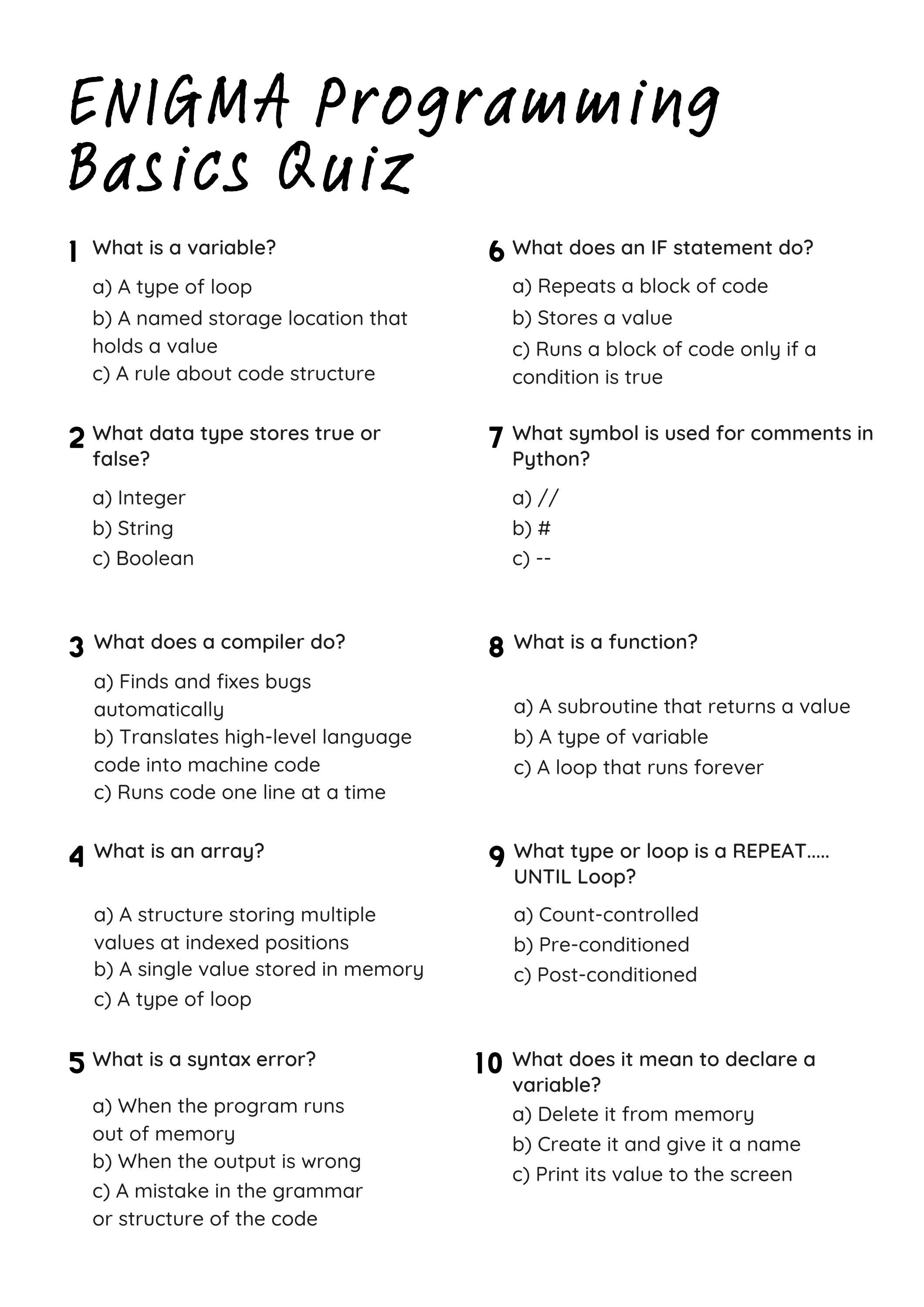
On the following pages, you will find the answers to all of the wordsearches, crosswords and quizzes featured in this edition of ENIGMA.
Whether you breezed through them or found yourself stumped, we hope you enjoyed the challenge.
If you would like to contribute a puzzle or article to next year's edition, we would love to hear from you- get in touch at compscisoc@habselstree.org.uk and we look forward to testing you again next year!
Crossword1-Page6-EnzoBassinder
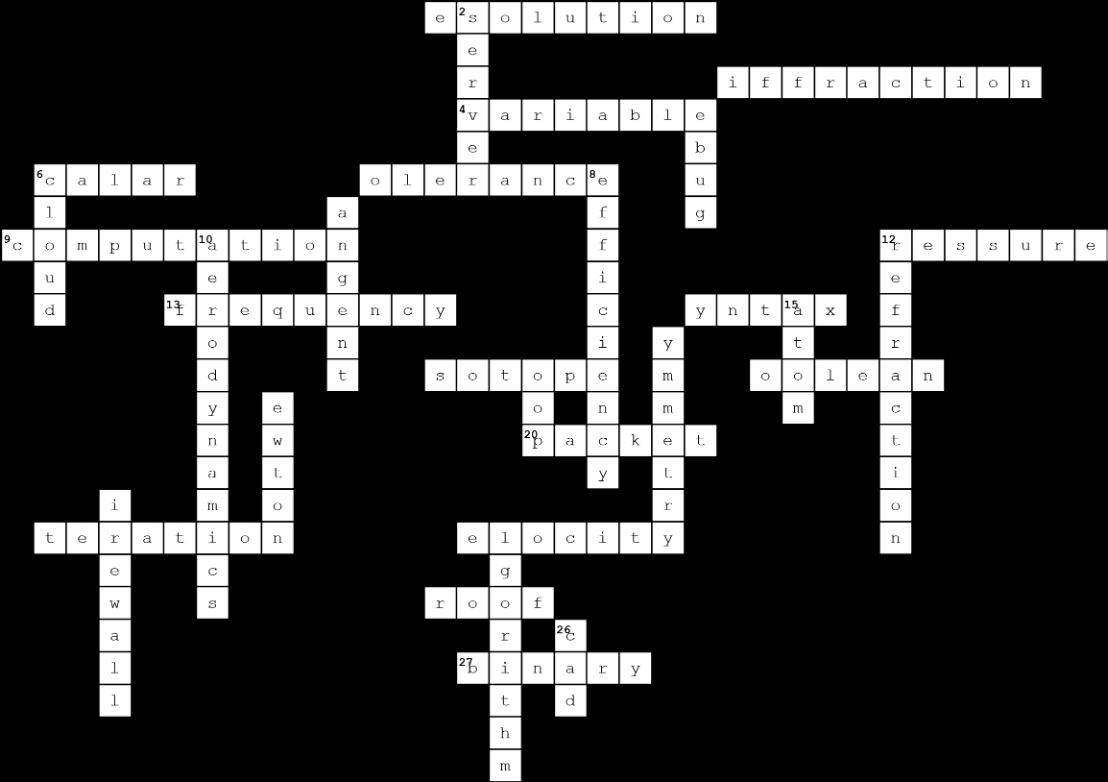
Crossword2-Page14

Crossword3-Page24

Crossword4-Page37

Crossword5-Page50
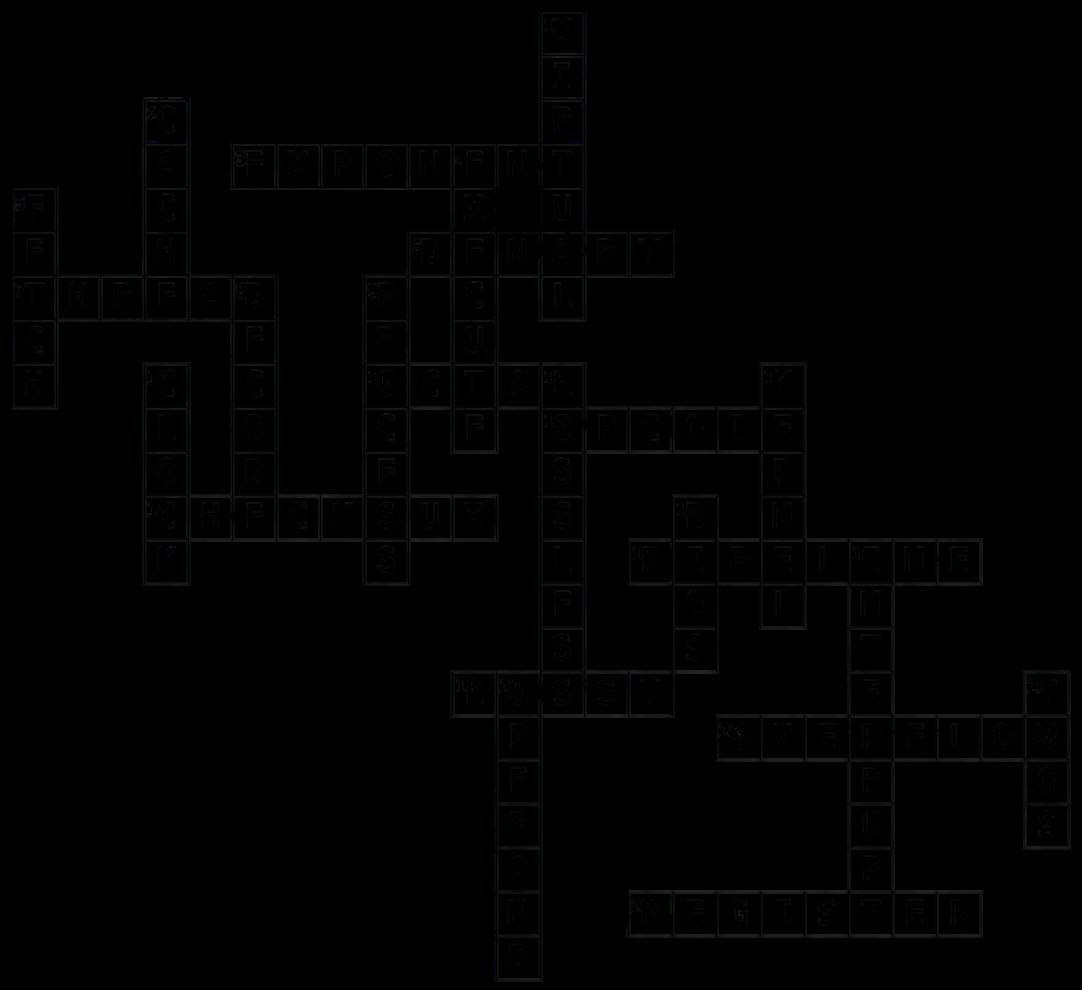
Wordsearch1-Page11

Wordsearch2-Page18

Wordsearch3-Page30

Wordsearch4-Page47


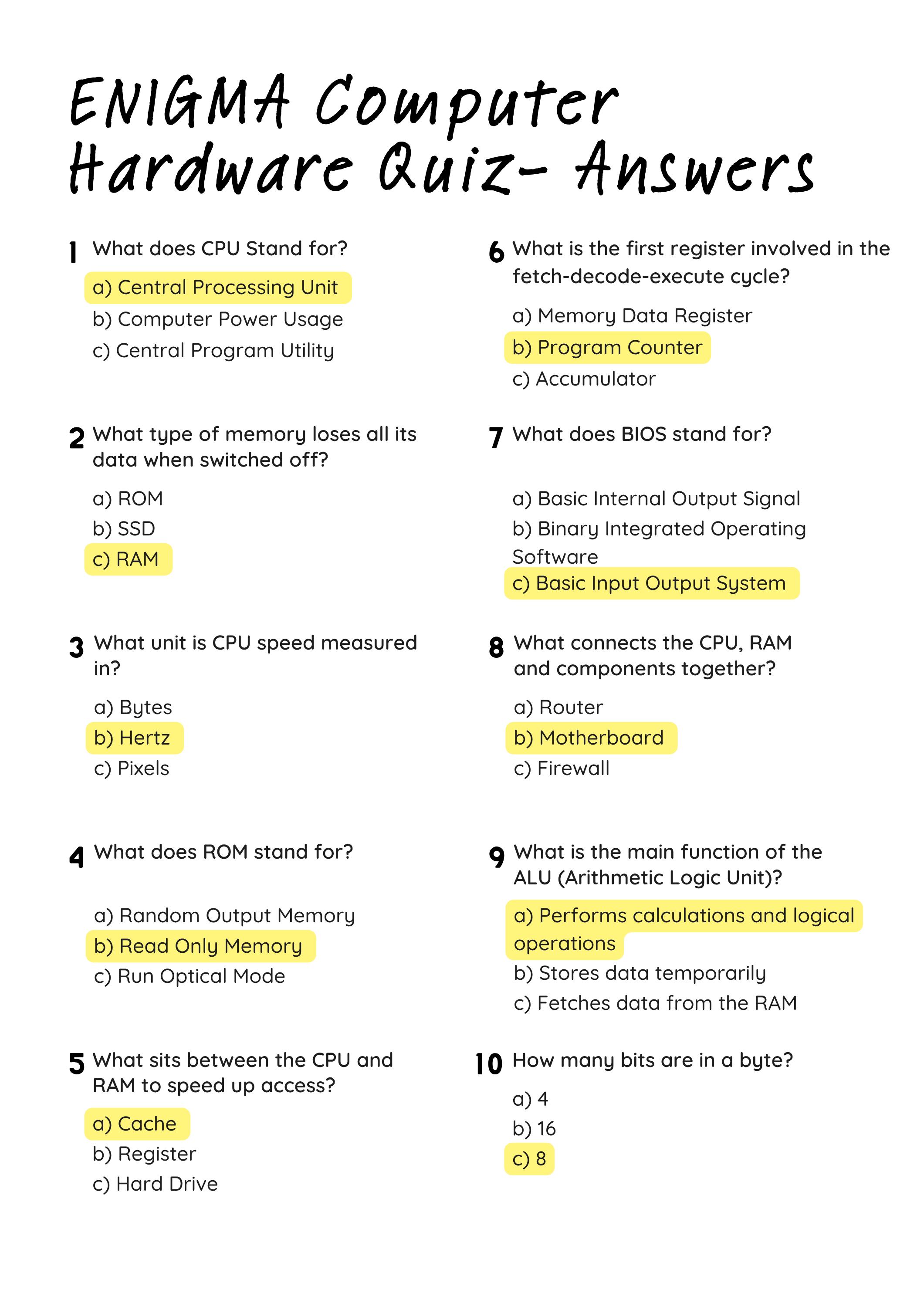
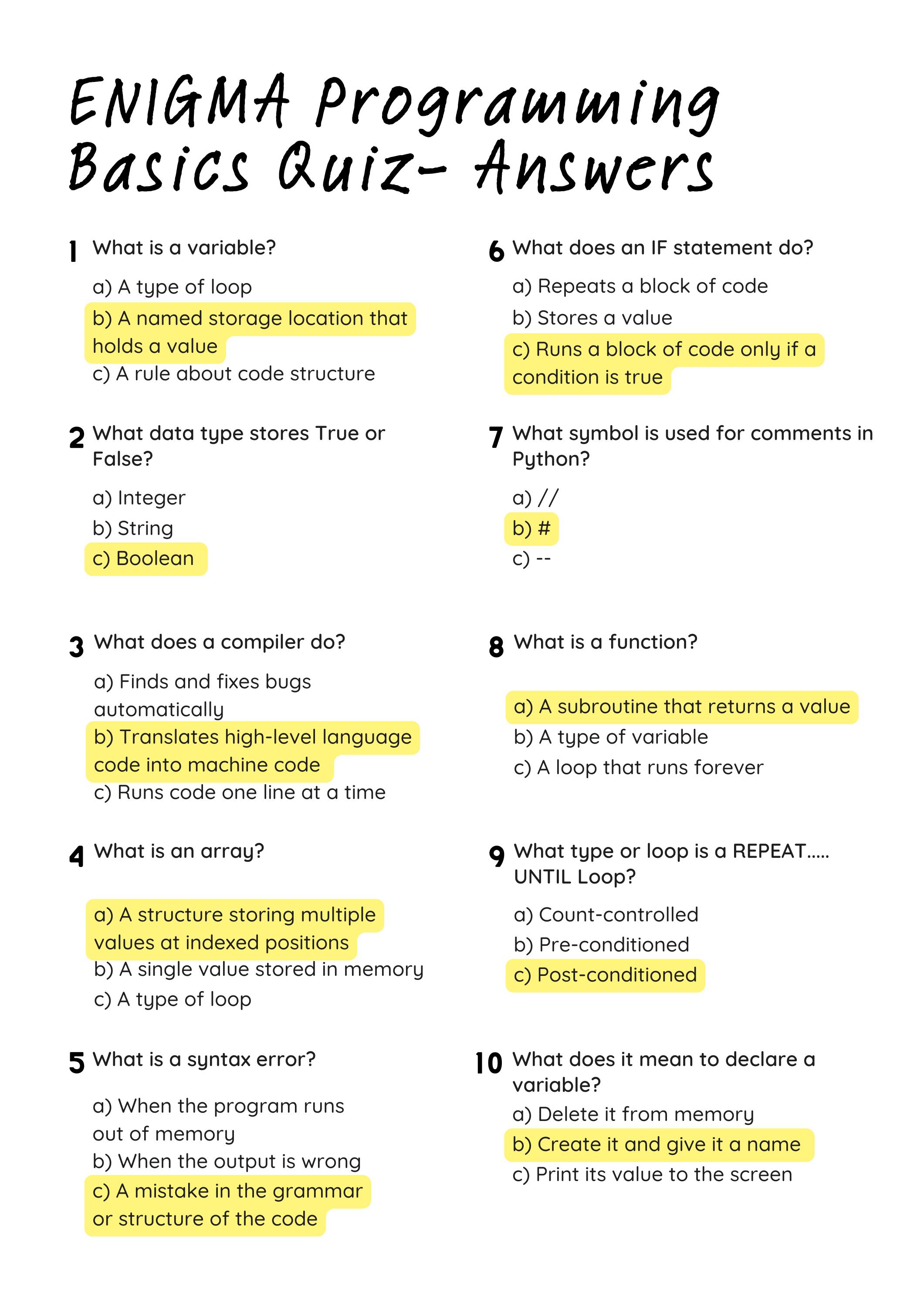
Why do programmers prefer dark mode?
Why did the computer go to the doctor?
Why do Java developers wear glasses?
Why was the computer cold?

What do you call a computer that sings?
Why did the programmer quit his job?
Why did the website go to therapy?
Why did the developer go broke?
Because light attracts bugs.
Because it had a virus.
Because they don't C#.
It left its Windows open.
A Dell
Because he didn't get arrays.
It had too many issues
Because he used up all his cache.
This edition would not have been possible without the support and contributions from the following people
Kayan Shah - ENIGMA Editor-in-Chief & Committee Chair
Aaron Varma, Hamza Mehrali, Abhirath Chappidi, Advait Tripathi, Arya Fazeli & Isaac Collis - Committee Chairs
Mr C Ovia - Lead Teacher
Mr D Franks, Mr P Wright & Ms C Wright - Support Teachers
Yunfei Fan, Pasha Soneji & Samira Glynn - Previous Committee Chairs
Habs’ Marketing Team
Kayan Shah, Ravjoth Brar, Hamza Mehrali, Yunfei Fan, Maanav Nagda, Jayden Okedare, Enzo Bassinder, Qaya Anand, Yolanda Chen, & Saaiyuri
Pahuja - Contributors
ENIGMA is only as good as the people who contribute to it If you have an idea for an article, a puzzle, or any other feature you would like to see in next year's edition, we would love to hear from you. Whether you are passionate about a particular area of computer science, have a unique perspective on technology, or simply want to get involved, there is a place for you in ENIGMA
To submit a piece or express your interest in joining the committee, get in touch at compscisoc@habselstree org uk We welcome contributions from all year groups and all ability levels- all that matters is a passion for technology and a willingness to get stuck in.
We look forward to hearing from you


habsboysschool habsgirlsschool officeboys@habselstree.org.uk officegirls@habselstree.org.uk 020 8266 1700 020 8266 2300 www.habselstree.org.uk



Haberdashers’ Elstree Schools Butterfly Lane, Elstree, Hertfordshire, WD6 3AF marketing@habselstree.org.uk
Computer Science Society compscisoc@habselstree.org.uk kshah195594@habselstree.org.uk