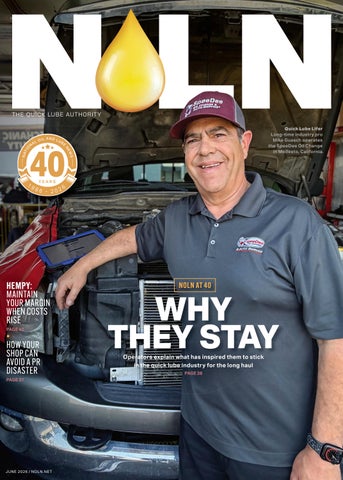
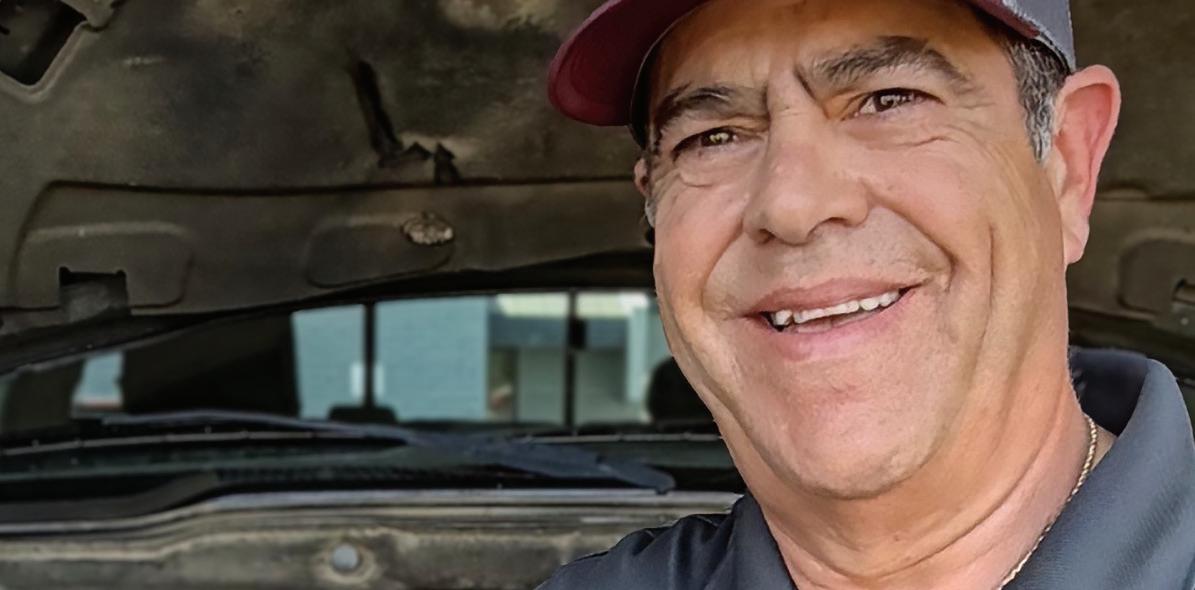
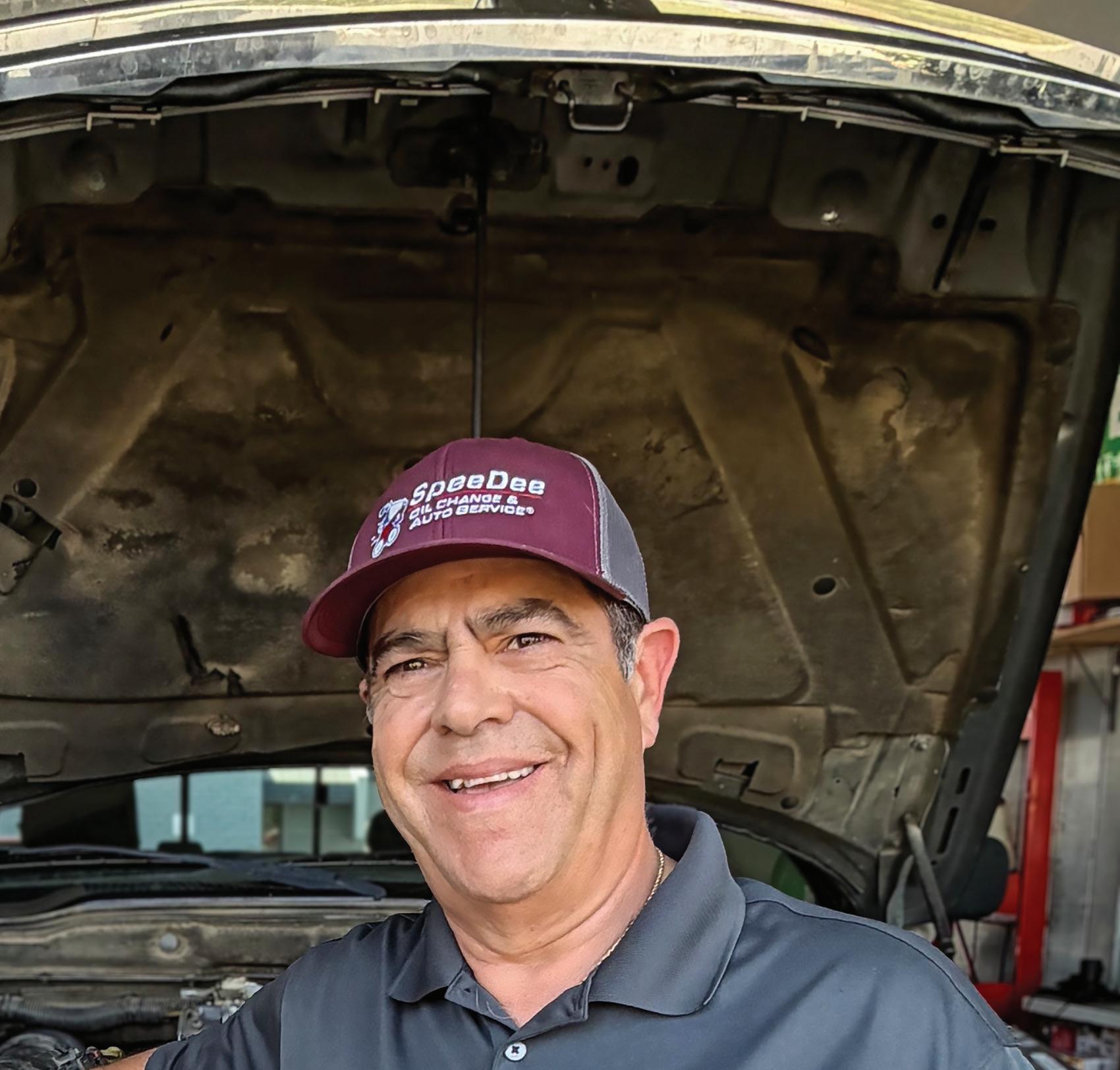
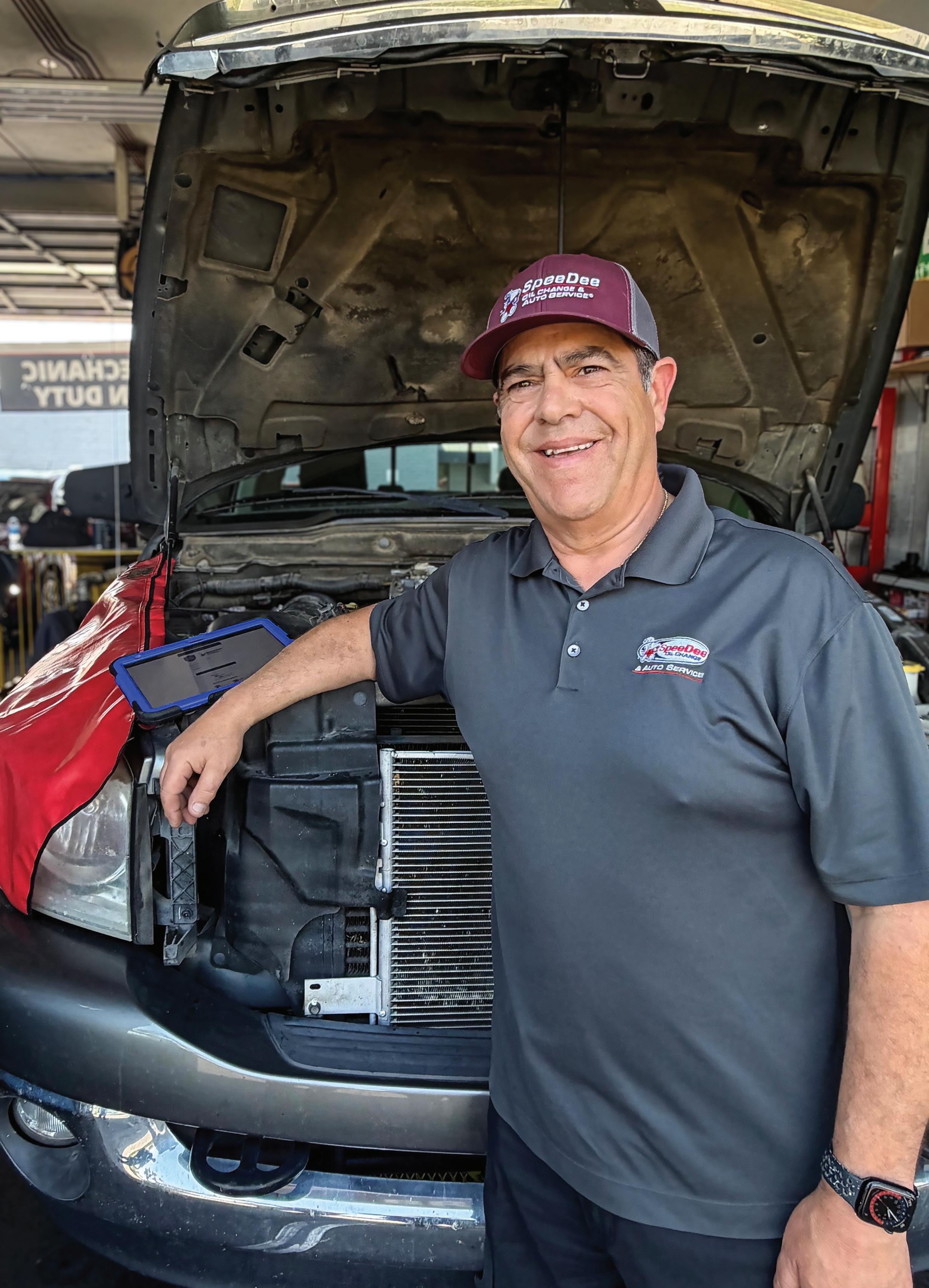
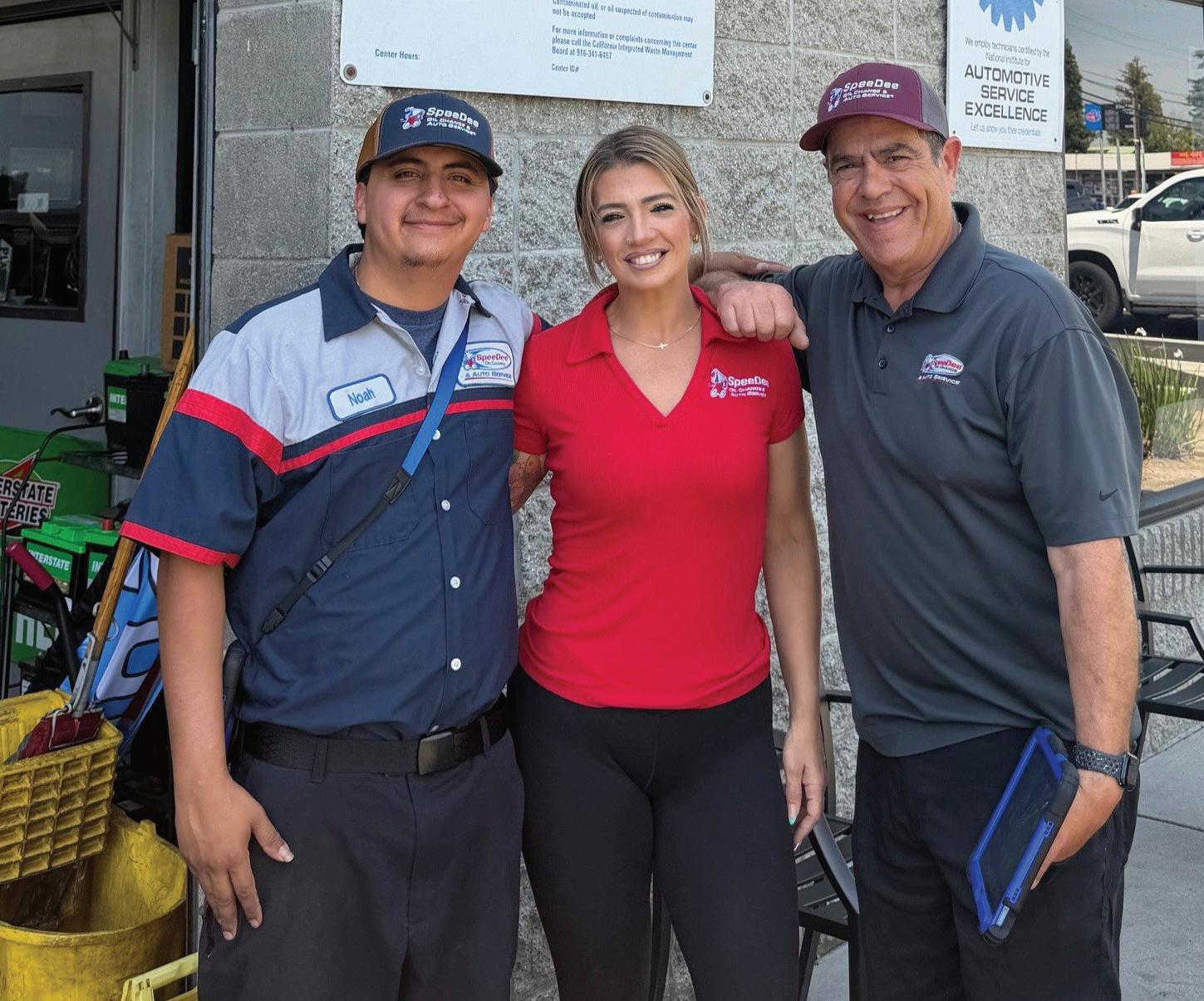
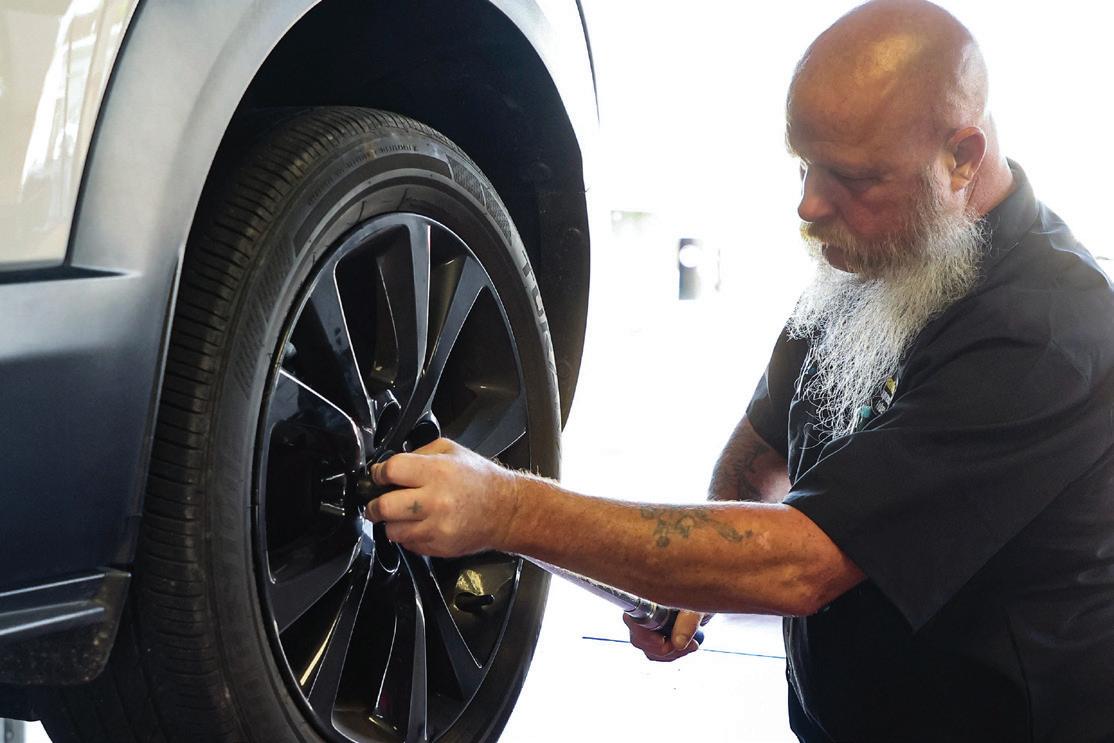
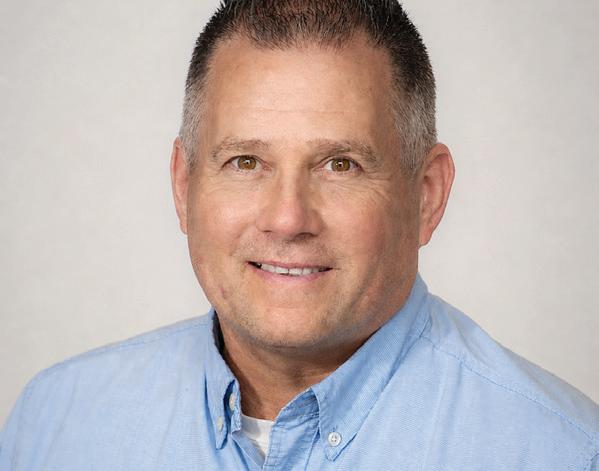
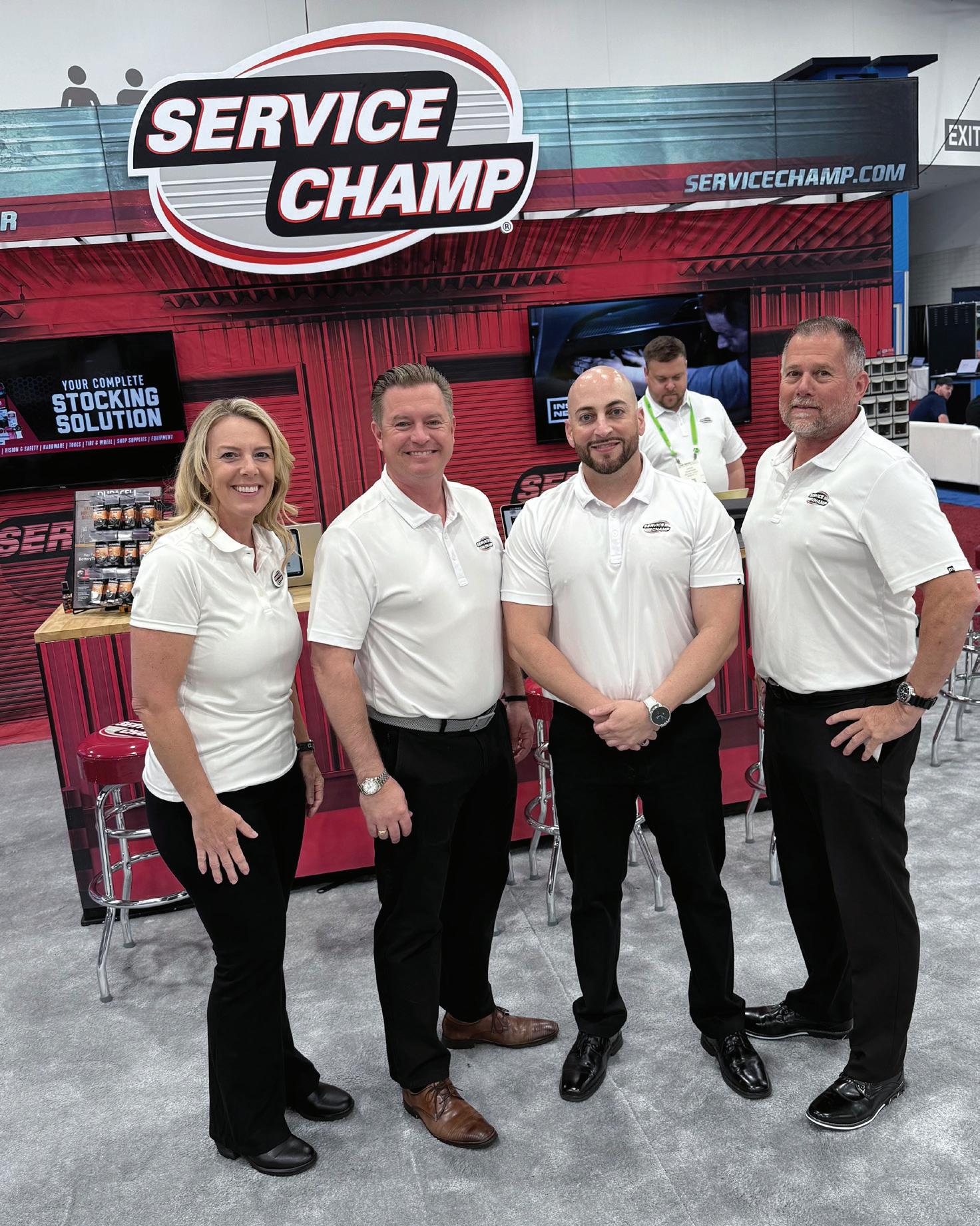
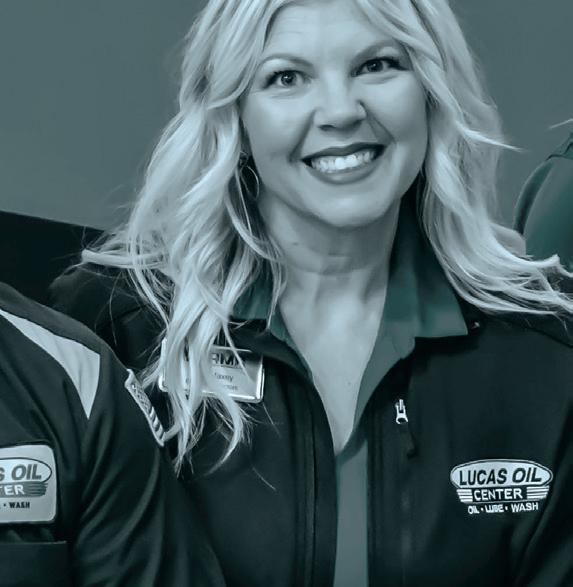
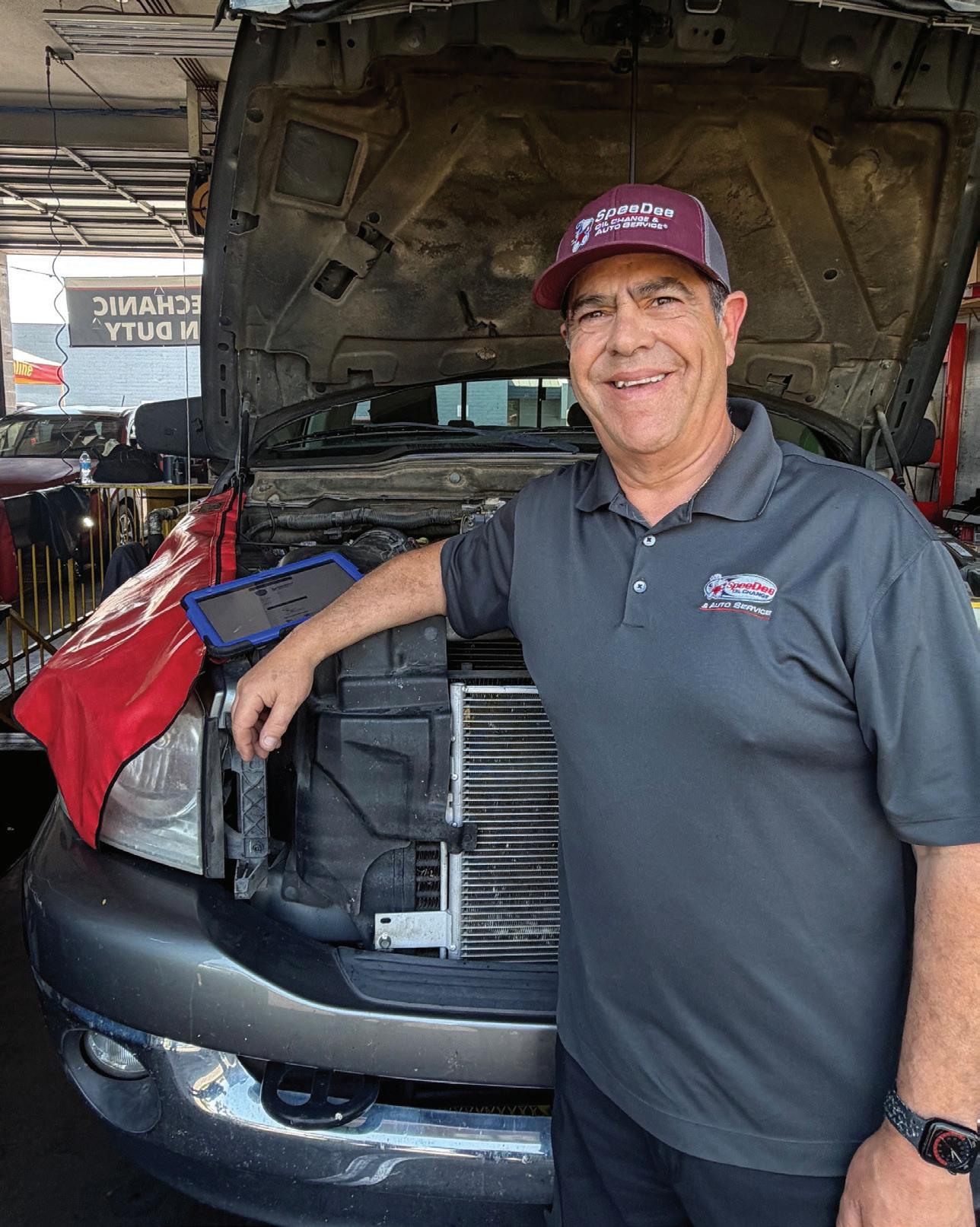
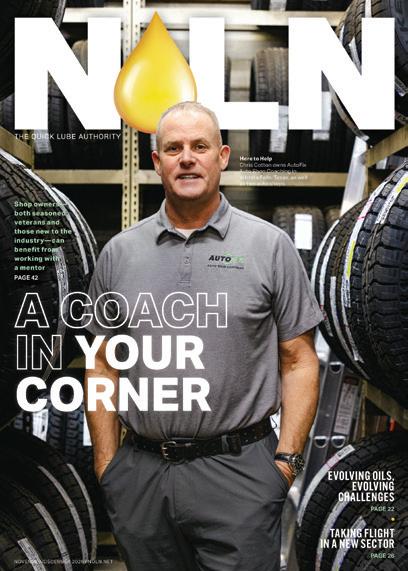
Quick Lube Lifer Long-time industry pro Mike Guasch operates the SpeeDee Oil Change in Modesto, California.
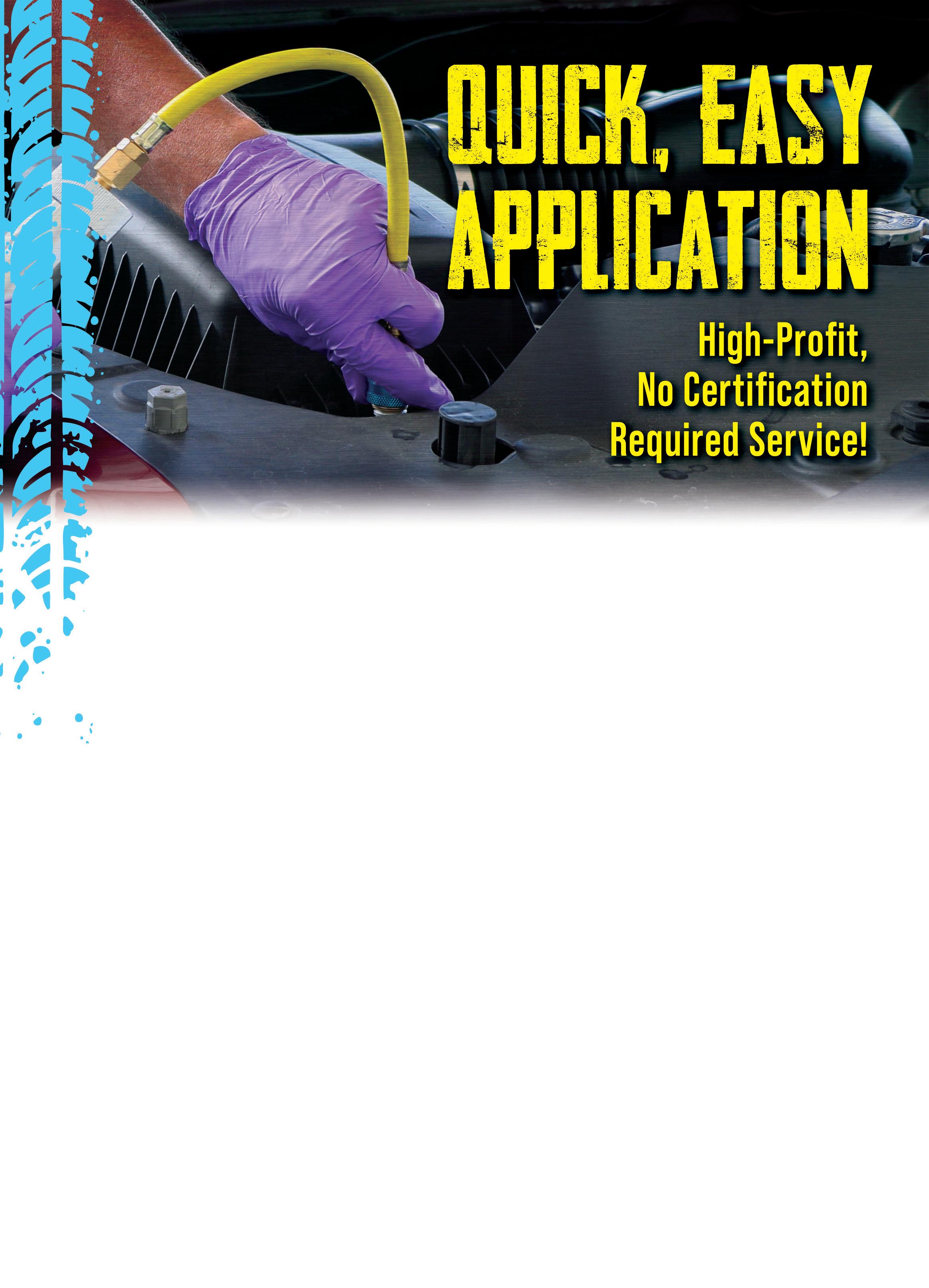
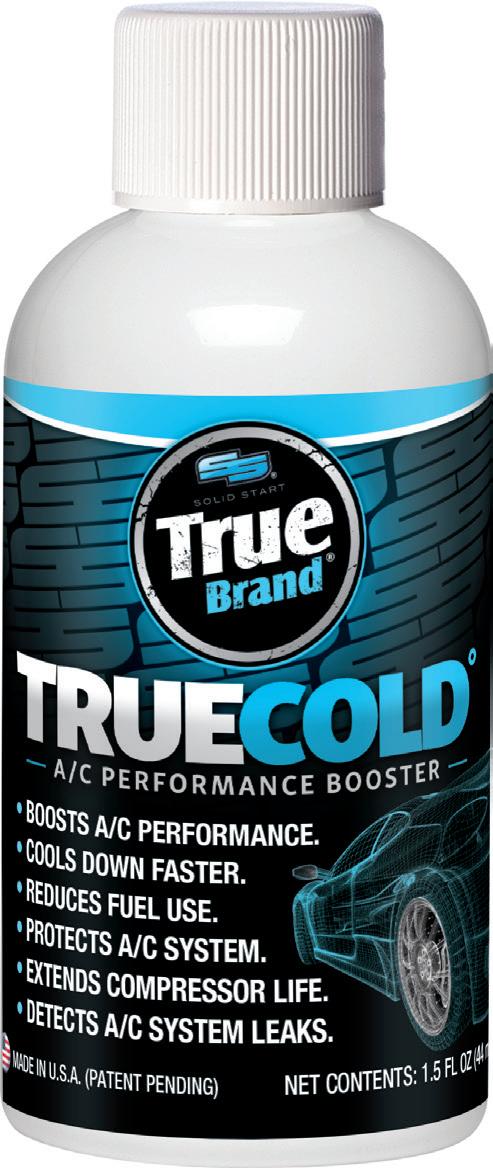
• Compatible with R134A and R1234YF Systems.
• Quick and Easy High-Profit Service.
• Boosts A/C Performance.
• Cools Down Faster.
• Protects A/C System Components.
• Detects A/C System Leaks.
• Helps Increase Fuel Mileage.
• Helps Extend A/C Compressor
• No Certification Required!
NOLN (USPS PERMIT 23608), (ISSN 1071-1260 PRINT) IS PUBLISHED 10 TIMES YEARLY (JANUARY/FEBRUARY, MARCH, APRIL, MAY, JUNE, JULY, AUGUST, SEPTEMBER, OCTOBER, NOVEMBER/DECEMBER) BY ENDEAVOR BUSINESS MEDIA, LLC. 201 N MAIN ST 5TH FLOOR, FORT ATKINSON, WI 53538. PERIODICALS POSTAGE PAID AT FORT ATKINSON, WI, AND ADDITIONAL MAILING OFFICES. POSTMASTER: SEND ADDRESS CHANGES TO NOLN, PO BOX 3257, NORTHBROOK, IL 60065-3257. SUBSCRIPTIONS: PUBLISHER RESERVES THE RIGHT TO REJECT NON-QUALIFIED SUBSCRIPTIONS. SUBSCRIPTION PRICES: U.S. ($93 PER YEAR). ALL SUBSCRIPTIONS ARE PAYABLE IN U.S. FUNDS. SEND SUBSCRIPTION INQUIRIES TO NOLN, PO BOX 3257, NORTHBROOK, IL 60065-3257. CUSTOMER SERVICE CAN BE REACHED TOLL-FREE AT 877-382-9187 OR AT NATIONALOILLUBENEWS@OMEDA.COM FOR MAGAZINE SUBSCRIPTION ASSISTANCE OR QUESTIONS.
PRINTED IN THE USA. COPYRIGHT 2026 ENDEAVOR BUSINESS MEDIA, LLC. ALL RIGHTS RESERVED. NO PART OF THIS PUBLICATION MAY BE REPRODUCED OR TRANSMITTED IN ANY FORM OR BY ANY MEANS, ELECTRONIC OR MECHANICAL, INCLUDING PHOTOCOPIES, RECORDINGS, OR ANY INFORMATION STORAGE OR RETRIEVAL SYSTEM WITHOUT PERMISSION FROM THE PUBLISHER. ENDEAVOR BUSINESS MEDIA, LLC DOES NOT ASSUME AND HEREBY DISCLAIMS ANY LIABILITY TO ANY PERSON OR COMPANY FOR ANY LOSS OR DAMAGE CAUSED BY ERRORS OR OMISSIONS IN THE MATERIAL HEREIN, REGARDLESS OF WHETHER SUCH ERRORS RESULT FROM NEGLIGENCE, ACCIDENT, OR ANY OTHER CAUSE WHATSOEVER. THE VIEWS AND OPINIONS IN THE ARTICLES HEREIN ARE NOT TO BE TAKEN AS OFFICIAL EXPRESSIONS OF THE PUBLISHERS, UNLESS SO STATED. THE PUBLISHERS DO NOT WARRANT EITHER EXPRESSLY OR BY IMPLICATION, THE FACTUAL ACCURACY OF THE ARTICLES HEREIN, NOR DO THEY SO WARRANT ANY VIEWS OR OPINIONS BY THE AUTHORS OF SAID ARTICLES.
EDITORIAL
EDITORIAL DIRECTOR Chris Jones
EDITOR Tom Valentino
ASSISTANT EDITOR Kacey Frederick
SPECIAL PROJECTS EDITOR Emily Kline
CONTRIBUTING WRITERS
Adam Tatum, Scott Hempy, Carol Badaracco Padgett, Peter Suciu, Enid Burns
EDITORIAL ADVISORY BOARD
Adam Tatum, DIRECTOR OF OPERATIONS, VIRGINIA GROUP
Scott Hempy, CEO, OILSTOP DRIVE-THRU OIL CHANGE AND HAPPY’S DRIVE-THRU CAR WASH
Aleisha Hendricks, OWNER/OPERATOR, GREASE MONKEY QUICK LUBE AND MONKEY SHINE CAR WASH
Shawn Gilfillan, OWNER, AUTOMOTIVE MAGIC AND MAGIC LUBE & RUBBER
SALES
PUBLISHER Greg Smith gsmith@endeavorb2b.com
ACCOUNT EXECUTIVES
Kyle Shaw kshaw@endeavorb2b.com
Diane Johnston djohnston@endeavorb2b.com
Marianne Dyal mdyal@endeavorb2b.com
Chad Hjellming chjellming@endeavorb2b.com
Cortni Jones cjones@endeavorb2b.com
Lisa Mend lmend@endeavorb2b.com
Sean Thornton sthornton@endeavorb2b.com
ART AND PRODUCTION
ART DIRECTOR Erin Brown
PRODUCTION MANAGER Rita Fitzgerald
AD SERVICES MANAGER Jen George
ENDEAVOR BUSINESS MEDIA, LLC
CEO Chris Ferrell
COO Patrick Rains
CDO Jacquie Niemiec
CALO Tracy Kane
CMO Amanda Landsaw
EVP TRANSPORTATION GROUP Chris Messer
VP OF CONTENT STRATEGY, TRANSPORTATION GROUP Josh Fisher
LETTERS TO THE EDITOR
Send letters to news@noln.net
Endeavor Business Media does not accept responsibility for advertising content.
IN EVERY ISSUE
QUICK HITS
10 AROUND THE INDUSTRY Hedge fund makes offer to acquire full control of Driven Brands 14 INDUSTRY INSIGHT
take it up a notch
CUSTOMER SERVICE Crisis communications planning: How your shop can avoid a PR disaster 40 CASE STUDY Website anchors your shop’s online presence
COLUMNS
18 FROM THE SHOP Add services, expand your value BY
costs rise BY SCOTT HEMPY
In
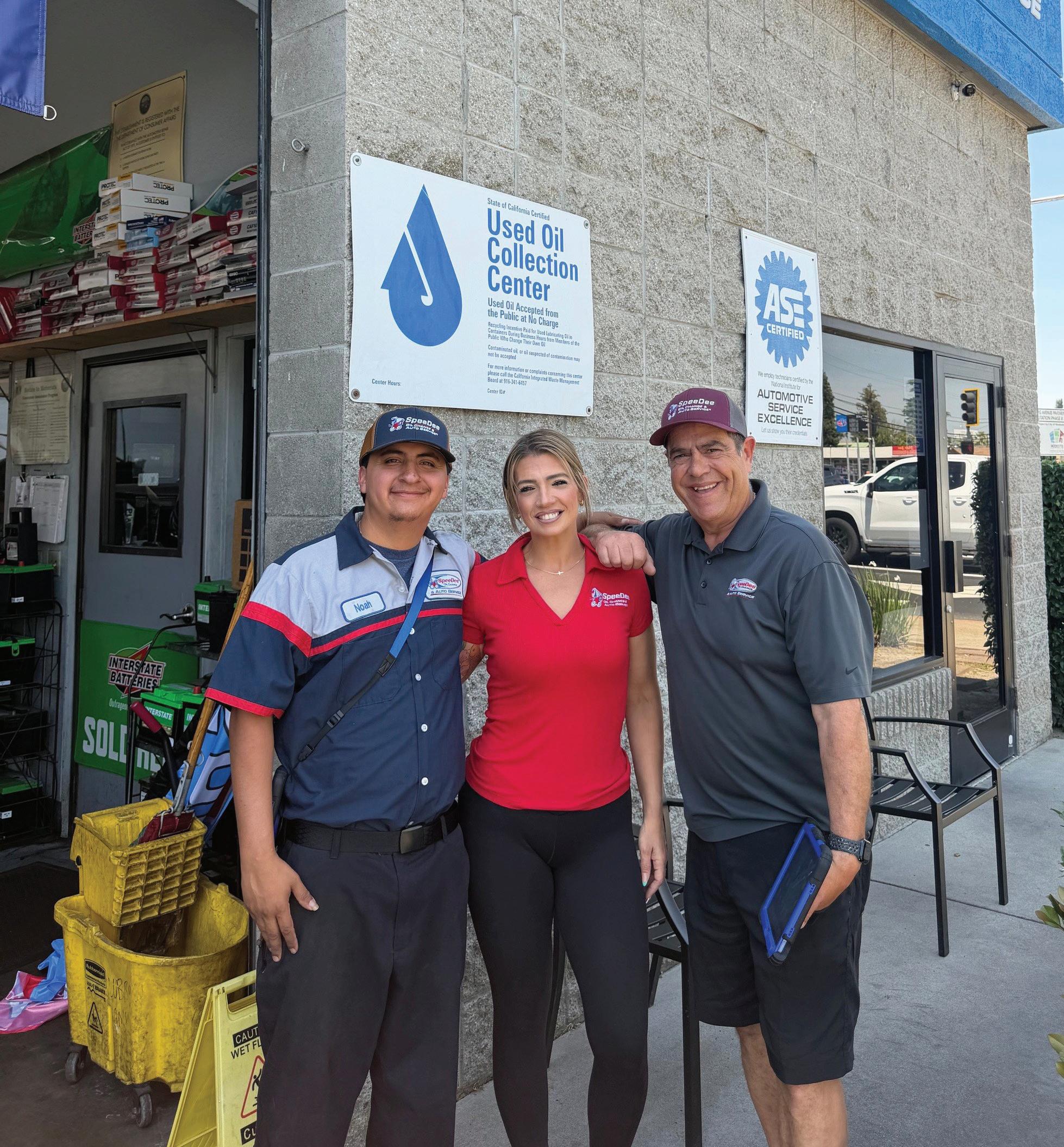
the Long Haul Mike Guasch (right), a SpeeDee franchisee, shares the reasons he has been in the quick lube industry for decades.
PODCAST | PRIVATE EQUITY AND THE QUICK LUBE INDUSTRY (WITH ANTHONY LOPEZ-ONA, MUFSON HOWE HUNTER & CO.)
Anthony Lopez-Ona, managing director at Mufson Howe Hunter & Co., joins the NOLN Podcast to share insights on how private equity firms view the quick lube industry, what operators should take away from the recent sale of Jiff y Lube to Monomoy Capital Partners, and what operators can expect with regards to M&A activity in the industry within the coming months.
TREMPER: SIX-MONTH SWEET SPOT: WHY TIMING IS EVERYTHING IN CUSTOMER RETENTION
NOLN columnist Jeff Tremper explains why the gap between visits is the period when the customer’s next decision is being shaped and why shops that treat it as an opportunity hold a meaningful advantage.
Head online to check out NOLN’s library of podcast interviews. Hear from quick lube leaders about new strategies, service stories, and innovative operations that push the industry forward.
Listen and subscribe at: noln.net/podcasts or subscribe to the NOLN Podcast on your favorite listening app.
Have you subscribed to the newsletter? NOLN will send the latest industry news, strategies, and profiles straight to your inbox. Sign up at: noln.net/subscribe
CELEBRATE WITH US
As America marks 250 years of independence, BG Products is proud to celebrate the strength, innovation, and resilience of both our nation and our company. We continue our founders’ American dream by manufacturing our products right here in the USA.
To celebrate America’s 250th, we’ve created a commemorative BG Platinum ® 44K ® can, along with an American-themed giveaway honoring the spirit of our great country.
AT A GLANCE LUBE TECH HOURS AND WAGES
For lube techs, both compensation and hours worked per week are up from a decade ago, according to data from the NOLN Operator Survey
On average, how many hours per week are lube technicians working and how much are they being paid?
The 2025 NOLN Operator Survey asked shop leaders about the work schedules and compensation for the techs working in their bays. Here’s a breakdown of what they told us:
For our annual Operator Survey, NOLN began asking shop leaders about hours and wages for lube techs in 2016. Here’s where those figures stood a decade ago:
The Manufacturer’s Edge: Being In Control Matters!
BY AMBER KOSSAK, CEO OF SOLID START
In the automotive chemical industry, the word “manufacturer” is often used loosely. Many brands function primarily as marketing houses they design a label, outsource the chemistry to a third-party blender, and rely on external logistics to get the product to the shelf. While this model is common, it can create a gap between the brand’s promise and the product’s performance.
At Solid Start / True Brand Products we have always believed that the only way to truly guarantee excellence is to own every step of the process. We are one of the few automotive chemical companies that develops, formulates, blends, bottles, and packages our own products. Being the manufacturer isn’t just a logistical detail; it is the cornerstone of our culture and of course an advantage.
The Foundation of Quality Control
When you own the facility, “Quality Control” isn’t just a final inspection; it is an integrated, three-phase protocol that begins the moment raw materials arrive at our docks. Being the manufacturer, we don’t have to trust a third party’s word on quality, because we verify every variable ourselves.
• Phase 1: Raw Material Validation: Our process begins with testing incoming raw materials. We ensure every chemical component meets our strict purity and performance standards before it is ever cleared for formulation.
• Phase 2: Active Production Spot-Testing: As the product moves through the production line, our team conducts regular spot tests. This allows us to monitor the blend consistency in real time, ensuring quality.
• Phase 3: Final Product Verification: Before a single bottle is packaged and shipped, the finished product undergoes a final round of testing. This ensures that every bottle leaving our facility contains the high-quality product our customers depend on. Additionally, we retain product samples from each batch for a year to support traceability and verification.
This hands-on oversight gives us total control over what we produce. We aren’t just putting a label on a bottle; we are certifying the science inside it. This results in reliable, professional-grade products that allow technicians to perform services with the confidence that performance will be there every single time.
Keeping Pace with OE Standards
The automotive landscape is changing faster than ever. Modern
engines are built to tighter tolerances, requiring sophisticated chemistry to maintain efficiency and longevity. Staying up to date with original equipment (OE) standards requires a level of agility that a middleman simply cannot provide.
Because our lab is mere steps away from our production line, we can adapt our formulations in real-time. If a major manufacturer updates a specification or a new engine technology hits the market, we don’t have to wait for an external supplier to update their catalog. We have the power to make decisions and pivot quickly, ensuring our customers stay ahead of the curve with products that meet or exceed the latest OE requirements.
Reliability and Speed in a Fast-Paced Market
The “Just-In-Time” nature of the automotive service industry means that a product is only as good as its availability. One of the most significant benefits of being the manufacturer is the ability to supply products quickly and on time.
By eliminating the middleman, we remove a massive layer of potential delays. We manage our own inventory and production schedules, which means we can respond to demand or sudden volume spikes. In an era of supply chain uncertainty, being the source provides our partners with a level of security that is increasingly rare.
A Culture of Ownership and Service
Beyond the chemistry and the machinery, being the manufacturer and owner allows us to shape Solid Start / True Brand Products from the top down. When you control the production, you control the culture.
Our team isn’t just selling a product; they are part of the process that created it. This creates a deep sense of pride and accountability. That pride translates directly into the level of service we offer our customers. When a client has a technical question or needs a custom solution, they aren’t talking to a salesperson; they are talking to the company that built the product from the ground up.
The Bottom Line
In the end, the difference in being the manufacturer comes down to a single word: Control . We control the quality, the innovation, and the delivery. As the manufacturer and owner, we stand behind every drop of fluid we produce because we were there for every step of its journey. For shop owners and managers, this means you aren’t just buying a bottle of chemicals; you are investing in a partnership built on transparency and technical integrity.
HEDGE FUND MAKES OFFER TO ACQUIRE FULL CONTROL OF DRIVEN BRANDS
ADW Capital Management, a Miami Beach, Florida-based hedge fund management firm, announced that it has made an all-cash offer to buy Driven Brands at $18 per share—a figure that would value the company at about $3 billion and is 41% above the previous day’s closing share price of $12.74.
ADW Capital currently holds a 3.7% stake in Driven Brands, the parent company of Take 5 Oil Change and a portfolio of other automotive aftermarket brands. Private equity firm Roark Capital is the current majority owner of Driven.
On April 30, ADW sent an open letter to the Driven Brands Holdings board of directors and to Roark Capital Group, presenting its offer. ADW expressed disappointment that the parties declined to engage in a strategic review process following a previous communication from ADW on March 26, adding that Driven Brands is “materially undervalued due to self-inflicted structural, capital allocation, and governance failures” and that Roark is focusing on positioning its larger restaurant platforms at the expense of Driven.
“Is this how Roark treats its private investors who ‘lock-up’ their capital for 10, 15, or 20 years?” ADW Capital managing member Adam Wyden wrote in the letter. “Is this the type of behavior that engenders goodwill with future public market investors? It is not lost on us that Roark is focused on preparing Inspired Brands to go public and that other large assets like Subway will eventually need to find their way into passive liquid markets as well.
“We ask both Roark and the company, is this how public minority investors should expect to be
treated by Roark controlled entities in the future?”
ADW Capital requested that representatives of Driven Brands meet with the firm by May 15 to discuss the proposal.
VALVOLINE PARTNERS WITH RONALD MCDONALD HOUSE GLOBAL ON CHILDREN’S MENTAL HEALTH INITIATIVE
Valvoline announced that it has committed $750,000 over three years to support mental health initiatives as a Ronald McDonald House Global corporate partner.
In the first year of the partnership, Valvoline will provide $25,000 to 10 Ronald McDonald House chapters to support psychosocial and behavioral health programming, including age -appropriate emotional support, sibling programming, crisis-intervention training, caregiver support, structured counseling, and trauma-informed care.
“When a child is facing medical treatment, the whole family feels it, and mental health support can be just as essential as physical care,” Valvoline President and CEO Lori Flees said in a statement. “Through this partnership, we’re helping expand services that strengthen resilience, reduce stress, and support families when they need it most.”
Through the end of May, Valvoline Instant Oil Change service center teams in select markets engaged customers through a point-of-sale fundraising campaign. The partnership will also enable VIOC employees to volunteer with their local Ronald McDonald House chapter.
The partnership with Ronald McDonald House Global is part of Valvoline’s Happy to Help community impact work, which focuses on
supporting children’s mental health and their mental well-being.
TAKE 5 CONTINUES NATIONAL EXPANSION
Take 5 Oil Change’s expansion is continuing, as the company recently announced the opening of the following new locations:
• 1726 Verdad St., in Green Cove Springs, Florida, sitting along a key commuter route in Clay County.
• 4505 South Preston Rd. in Celina, Texas.
• 320 NE Route 291 in Lee’s Summit, Missouri. The facility, locally owned and operated by T5KC LLC, is Take 5’s seventh location overall in the Kansas City metropolitan area.
• 1962 LPGA Blvd. in Daytona Beach, Florida.
• 105 Clarence F. Warner Dr. in Monroe, Ohio.
• 5620 S. Soncy St. in Amarillo, Texas.
Each of the new shops features three bays and will offer $25 toward any oil change for a limited time. Including company-owned and franchised service centers, Take 5 now has about 1,300 locations.
EXPRESS OIL CHANGE TOPS QUICK LUBE SEGMENT OF JD POWER CUSTOMER SATISFACTION INDEX
For the fourth consecutive year, Express Oil Change and Tire Engineers was the top-ranked company in the quick oil change segment of JD Power’s U.S. Aftermarket Service Index Study, which was released on April 28.
Express Oil Change earned a score of 854 in the index, and was followed by Take 5 in second at 833, and Jiffy Lube and Valvoline Instant Oil Change tying for third at 823.
Now in its seventh year, the study measures customer satisfaction with aftermarket service facilities, divided into three segments: full-service maintenance and repair, quick oil change, and tire replacement. Scores are based on seven factors related to the vehicle owner service experience. The 2026 study’s results are based on responses from 10,572 vehicle owners, who were surveyed online from January to March.
Of the three segments tracked, quick lube was the only one to see an overall increase in customer satisfaction, with a 4-point improvement on a 1,000-point scale. Full-service maintenance and repair (minus-7) and tire replacement (minus-3) both had declines.
“Affordability is playing an increasingly important role in the aftermarket service experience, but delivering on the fundamentals remains critical,” Lisa Nguyen, manager of OEM Solutions at JD Power, said in a news release.
“Index data shows that aftermarket providers are largely executing where it matters most, with the majority of impactful key performance indicators (KPIs) completed more than 70% of the time and the top two—the service advisor being completely focused on customer needs and providing helpful guidance—exceeding 90% completion rates across segments.”
Still, Nguyen added, the survey revealed areas for improvement, including facility cleanliness, guest comfort, and consistency in customer engagement, from immediate greetings to post-service follow-up.
WORLDPAC JOINS THE PRONTO NETWORK TO ENHANCE AFTERMARKET SUPPORT AND GROWTH
Worldpac and The Pronto Network announced a strategic partnership, effective April 1, marking a major shift towards increased cooperation within the independent automotive aftermarket.
The partnership aligns a pair of industry-leading organizations focused on advancing the aftermarket. By joining The Pronto Network, Worldpac brings its long-standing commitment to technical education, OE-quality parts, and enhanced catalog technology, complementing The Pronto Network’s focus on member support, strategic growth, and supply chain collaboration.
“Joining The Pronto Network allows us to align with an organization that shares our vision for innovation and customer success,” said John Hamilton, president and CEO of Worldpac. “As the aftermarket continues to evolve with new technologies, vehicle complexities, and changing consumer expectations, we are now better positioned to support customers with shared resources and enhanced capabilities.”
Robert Roos, president and CEO of The Pronto Network, said the partnership strengthens both organizations.
“We are proud to welcome Worldpac to The Pronto Network family. Our two organizations bring different strengths to this partnership, and uniting makes us even stronger,” Roos said in a statement. “Together we will continue to advance solutions that align with our shared vision of empowering members so they thrive in today’s rapidly changing marketplace.”
Worldpac and The Pronto Network now turn their attention to expanding industry-leading training programs, enhancing national account offerings, strengthening supplier relationships, creating long-term value for partners, and supporting the broader independent service ecosystem.
VALVOLINE ACHIEVES SECOND CONSECUTIVE YEAR IN ENTREPRENEUR’S FASTEST-GROWING FRANCHISES LIST
Valvoline Inc. was recently recognized in Entrepreneur’s 2026 Fastest-Growing Franchises ranking, as shared in a press release. The Entrepreneur Fastest-Growing Franchises 2026 ranking highlights the companies that saw the greatest franchise unit growth in the U.S. and Canada from July 2024 to July 2025. The ranking appears in the March/April 2026 issue of Entrepreneur.
This marks the second consecutive year the brand has been recognized, rising to No. 21, up from No. 41 in 2025, and securing the top position in its category on this year’s list.
BENDPAK INTRODUCES NEW TWO-POST LIFT
BendPak recently introduced the APEX AL10C two-post lift, a new 10,000 lb. car lift for professional shops and home garages, according to a press release.
The APEX AL10C provides the most popular two-post lift features, including clearfloor design; flexible arm positioning; triple-telescoping front arms and dual-stage rear arms; automatic safety locks; and telescoping screw pads and stack-
able adapters. The lift is built with oversized base plates and a heavyduty large tubular steel carriage to withstand demanding shop environments. This is in addition to a box-beam overhead structure that reinforces the lifting frame to reduce stress on the columns.
FULLSPEED
AUTOMOTIVE STRENGTHENS LEADERSHIP TEAM WITH THREE KEY APPOINTMENTS
FullSpeed Automotive announced the appointment of three senior executives to its executive leadership team in a recent press release.
Todd Vogensen has been named chief financial officer. Vogensen brings over 30 years of financial leadership experience, having served as CFO at Purple Innovation, Party City Holdco, and Chico’s FAS. He’s also held senior finance roles at Michaels Stores, Gap, Inc., and PricewaterhouseCoopers.
Corina Ort has been appointed chief people officer. Ort is a human resources executive and SHRM Senior Certified Professional (SHRM-SCP) with deep experience building strategic people functions in consumer-facing, multi-unit environments. Most recently, she served as the head of HR at Sky Zone, where she led HR strategy across a fast-growing franchise organization.
Kyle Benko has been appointed senior vice president of finance & controller. Benko comes from TBC Corp., with a background in automotive services finance that brings immediate industry relevance to his role overseeing financial reporting, controls, and accounting operations.
LIQUI MOLY APPOINTS NEW VP OF MARKETING
LIQUI MOLY USA has announced the promotion of Eva Tran to vice president of marketing in a recent press release.
Tran joined LIQUI MOLY USA eight years ago, contributing to the company’s expansion and brand development in North America as its marketing department lead.
In addition to her marketing leadership, Tran also led operations, including overseeing the successful launch of LIQUI MOLY’s first domestic warehouse.
After transitioning that responsibility in 2024, she has been fully dedicated to leading marketing strategy.
In her new role as vice president of marketing, Tran will continue to focus on long-term strategic initiatives, brand positioning, and team development, working closely with CEO Sebastian Zelger and the executive team.
VALVOLINE REPORTS STRONG Q2 GROWTH WITH 25% REVENUE INCREASE
Valvoline Inc. reported a net income of $44.8 million for the second quarter of its fiscal year, the three-month period ending March 31. Sales of $504 million grew 25% compared to the same prior-year period.
Systemwide store sales increased 20% to $987 million, while systemwide same store sales saw growth of 8.2%.
Systemwide net store additions in the quarter totaled 29: 15 franchise and 14 company-operated additions.
“We delivered a strong second
quarter with results that reflect our focus on driving the full potential of the core business,” Valvoline President and CEO Lori Flees said in a news release.
KIA AND GENESIS RECALL NEARLY 236K VEHICLES OVER FUEL LEAK RISKS
Hyundai Motor Group brands Kia and Genesis have both issued recalls due to improperly installed parts potentially causing fuel leaks. According to Autoblog, the crossover fuel pipes in the vehicles, made by Usui International Korea, are not the issue alone. It’s how they were installed in the vehicles.
The 2021 to 2026 model year Genesis G90, G80, GV80, and GV70 are included in the recall, making up 94,760 units. For these vehicles, an insufficient amount of torque stabilizer was used during assembly. This can cause its connection with the fasteners, which secure it to the engine, to become loose, leading to leaks.
A total of 141,032 Kia Carnivals from model years 2022 to 2026 are also recalled. The issue with these vehicles is fuel pipe nuts not being tightened consistently at the factory, leading to a loose connection over time and then potentially leaks.
An investigation into parts and production records were reviewed after reports of fuel smell. For drivers experiencing the issue, they may smell fuel or see warning lights before the issue escalates. Anyone who smells fuel should park outside and avoid driving.
Recalled vehicles will have their crossover fuel pipe and its fasteners inspected. If they’re in good condition, technicians will retighten the fasteners; but any sign of a leak will lead to the pipe being replaced.
What to Expect From a Great Vendor
BY NICK PEYTON, BG TRAINING PROGRAM MANAGER AND BGU INSTRUCTOR
Your Partner Beyond Products ™
With more than two decades in the automotive industry, Peyton is an integral part of the Training team at BG Products. A seasoned automotive professional with a track record of transforming shop performance, he leads large-group trainings and demos, teaches service advisor courses, and partners with community colleges. His passion for the auto service industry—and for helping people reach their highest potential—drives every class he teaches.
More Than Products: What to Expect From a Great Vendor
The last thing a shop owner or a supplier wants is a vendor who operates like a phantom. You’ve seen it before: They sneak in, restock shelves, and slip out the door without saying a word. No conversation, no value, no partnership.
That’s not a vendor. That’s a delivery service.
A great vendor is something entirely different. They’re a partner in your business—someone who helps you grow, solve problems, and stay ahead in a constantly evolving industry.
A strong vendor doesn’t lead with products; they begin with a conversation, leading with questions:
• What are your shop’s goals?
• Where are you struggling?
• How are you trying to improve this quarter?
From there, they align their recommendations to your operation, not their catalog. And most important, they follow through with consistent, clear communication. Not once a quarter. Not only when something is on sale. But regularly, with purpose.
Now, let’s address the elephant in the room: Many employees are skeptical of vendors. They assume that every visit is just another sales pitch.
And to be fair, they’re not wrong.
But here’s the reality: Your business is built on buying and reselling products and services. Ignoring what’s new, what’s changing, and what solves modern problems doesn’t protect your team; it holds them back. The best shops create space to hear those ideas and decide what’s worth implementing.
That’s where great vendors separate themselves again: They bring more than products. They bring training, tools, retention strategies, and structure.
In the high-volume environment of a quick lube, time is always the biggest constraint. Pulling technicians or advisors off the floor for training feels nearly impossible. That’s why the most successful shops
approach it differently. They get everyone together at once.
After-hours team meetings are one of the most effective ways to introduce new programs, reinforce processes, and build alignment. But these meetings don’t succeed on their own. They require preparation.
A great vendor helps set the stage with updated counter displays, sales materials, and a clear rollout plan.
More important, they help you involve your team.
If you want high adoption, your employees need to understand and believe in what they’re offering. They’re the ones communicating with customers every day. When they’re confident, good results follow.
This is where education becomes critical.
Instead of simply telling your team what to do, a great vendor explains why it matters. That “why” is what shifts the mindset from selling to serving.
Take something as simple as checking the engine oil level during a service:
• OPTION 1: Tell your team to “check the oil level on every vehicle.” That’s a task—but without context, it often gets overlooked or done without purpose.
• OPTION 2: Provide training that explains why oil levels are dropping in modern engines (e.g., low-tension piston rings, increased consumption, extended service intervals). Walk through what’s happening inside the engine, what can be done about it, and how your team can communicate that to the customer.
Choosing the second option, the conversation changes.
Instead of feeling like they’re pushing a sale, your team understands that they’re solving a problem. It’s a powerful shift, and it directly impacts overall performance, consistency, and customer trust.
Great vendors bring that level of insight. They stay on top of industry trends, common failures, and emerging opportunities. They come prepared with training materials, proven processes, and real-world examples that you can implement immediately.
Because at the end of the day, alignment matters.
Your vendor’s success is tied directly to yours. When your shop performs better, so do they. That’s why the best vendors invest in your people, your processes, and your long-term growth, not just your inventory.
So if your current vendor feels more like a phantom than a partner, it may be time to expect more.
The right vendor doesn’t just show up. They help you move forward as your partner.
PERFECT YOUR PREVENTATIVE MAINTENANCE SCHEDULES
Dave Schedin, an auto repair shop success coach with CompuTrek, lays out the best way to form maintenance schedules for different vehicles and conditions that your team and customers can continually benefit from
BY KACEY FREDERICK
MAINTENANCE SCHEDULES
can be difficult for vehicle owners to navigate. While most drivers assume the OEM schedule is best, independent shops and service providers try to explain why more frequent service can be better. What’s crucial is helping the customer understand that—as well as having your own data on hand to back up your claims.
Dave Schedin owned his own auto shops from 1997 through 2006, and now works as an auto repair shop success coach with CompuTrek Systems, helping shops across the country and in Canada with improving their own processes. In a conversation with NOLN, he lays out the best practice for shops to develop their own tried-and-true maintenance schedules, and how to make it a framework for future clients to benefit from.
Understanding Where OEM Schedules Fall Short
The important thing to remember about manufacturer maintenance schedules is that they typically focus on getting the vehicle through its warranty—not total lifetime—and this can be used as a way to make cars cheap to maintain on paper, but far more complex in practice.
While OEMs often split maintenance plans between “severe” and “normal” driving, much of what customers see as normal driving conditions are actually putting a lot of strain on the vehicle. This can include stop-and-go driving, short trips, and climate extremes.
When Schedin operated his own shop, he conducted his own test on OEM transmission intervals. He pulled factory-fill synthetic ATF samples from three vehicles—Ford, Dodge, and GM models—at roughly
25,000 to 27,000 miles, and sent them for independent lab analysis. The results showed the additive packages were already 60% to 75% depleted, even though the manufacturers were calling for first changes at around 60,000 miles.
The data affirmed the standard in Schedin’s shop of 30,000-mile ATF exchanges (and 15,000 miles in severe service) to avoid running what he calls “broken fluid” for tens of thousands of miles before the OEM’s first recommended service.
Preventative maintenance schedules also have to take more than mileage into account, which Schedin has seen increasingly downplayed by OEMs. Fluids degrade with time, not just use. Many fluids in sealed bottles have a shelf life of only three to five years before they start to separate and break down.
Components beyond fluids can be
impacted by this, too—under-hood rubber belts and hoses typically have a seven- to eight-year lifespan, which can be largely independent of mileage. Additionally, OEMs haven’t fully validated the long-term impact of gasoline direct injection, higher compression, blow-by, and intake deposits on sensors and fuel trims. This can mean more frequent, real-world maintenance rather than just trusting unvalidated OEM intervals to help avoid issues down the line.
“Most shops are reactionary preventative maintenance, which means, ‘Oh, we’ll replace that part when it fails, because we don’t know when it’s going to fail,’” says Schedin. “Shops should pull their last 50 thermostats and look. I did this in
two or three shops: Their average thermostat life was seven to 10 years old. At about the 80,000-mile range, it would go bad.”
Data Is Your Best Friend
Shops that take note of the “what,” “when,” and “why” behind components failing can start to notice patterns like average thermostat lifespans to build their own maintenance recommendations with.
For every failure that a customer experiences, ask as a team: What could have been done 12, 24, 36, or 48 months ago that would have prevented this? This way of thinking helps build an understanding of the typical age at failure, typical mileage at failure, common driver habits, and what maintenance could help
prevent it from happening again.
As outlined previously, pulling the last 50 recorded failures for a part type—thermostats, hoses, water pumps, certain transmissions—can be eye-opening. Take note of the details in each case: vehicle make/ model/engine, age and mileage at failure, and maintenance history. Determine the average lifespan for that component and use that to help guide what you recommend to customers going forward.
There are also sources other than OEMs that can help guide you. Fluid manufacturers’ recommendations can be a great second opinion, often suggesting shorter intervals than OEMs and potentially even providing lab data on fluid breakdown and additive life. Compare that with
what you’ve seen in your own fail ures and adjust your shop schedule accordingly.
Communicate Findings Effectively with Your Customers
Finally, make sure your entire shop is on the same page, and that your staff knows how to communicate the need for more frequent service without it veering into overselling. Advisors and techs should know the OEM schedule, but should position it as the minimum—and be ready to recommend more frequent or earlier services based on real‑world evidence.
It’s important to note that staff should always avoid using fear based tactics to sell maintenance to customers. Instead, rely on the
Most shops really love their customers— and when they can come from a place of principled testimony, most customers are going to be educated and buy into that.”
–DAVE SCHEDIN
facts: Tell them the state of their car, and explain why your shop recom mends having a certain component replaced. Use real examples and
patterns, such as “we see X failures when people wait,” instead of “this could blow any second” language. That builds long term trust and makes customers more open to fre quent maintenance.
Maintenance schedules can be more complex than many think. With many customers assuming OEM schedules are always to be followed, these simple, effective strategies can be used to form your own reliable maintenance sugges tions that help your customers build trust and drive safer.
“Most shops really love their cus tomers—and when they can come from a place of principled testi mony, most customers are going to be educated and buy into that,” tells Schedin.
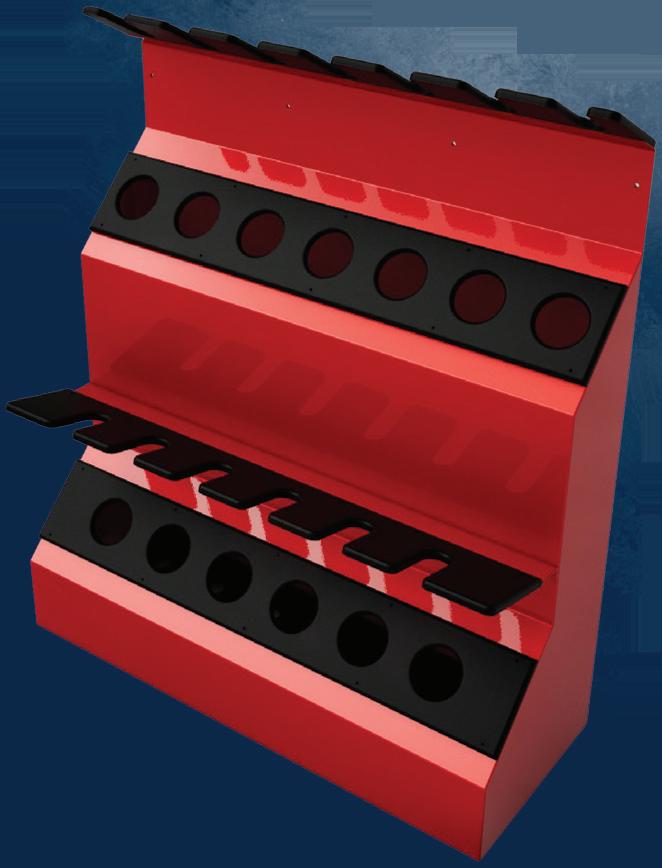
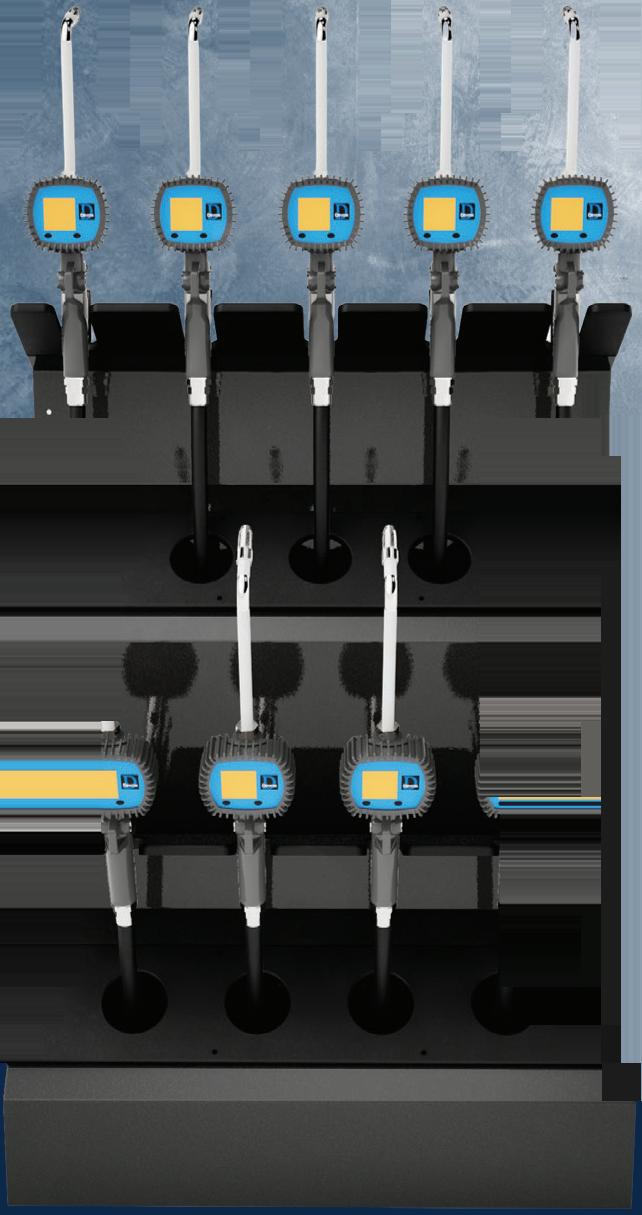
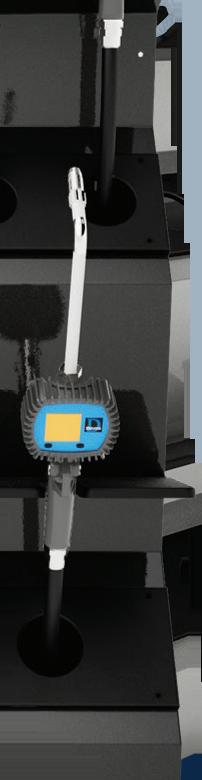
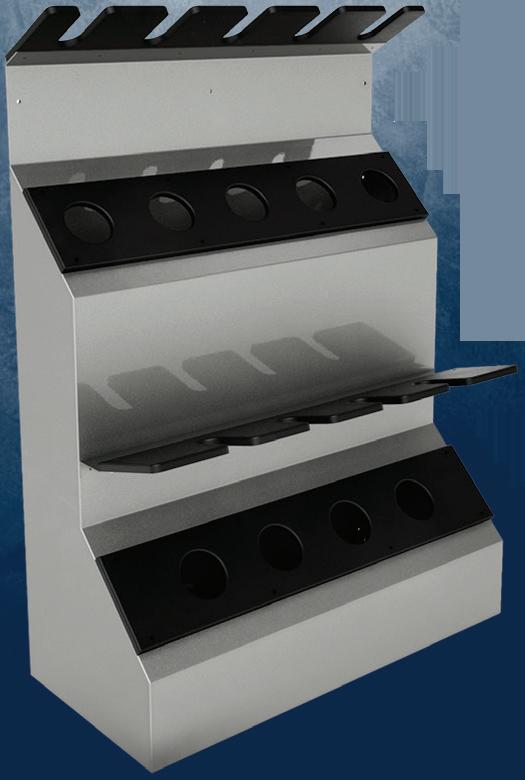
E101 Lube
Consoles
High h -Performance, Low w -Maintenance Fluid Dispensing
• Compact two o - tier layout saves floor space while maximizing capacity
• Universal compatibility with all major dispensing handle brands
• Delivers product to two service bays from a single console
• Less than half the cost of traditional overhead reel systems
• Available in 7 - 13 outlet configurations and multiple durable finishes
Add Services, Expand Your Value
Meet modern vehicle needs and deepen customer relationships by diversifying your services
Adam Tatum is director of operations for the Virginia Group, a Jiffy Lube franchisee with 11 locations.
He has over a decade of experience in the industry with a proven track record of building customer counts and sales, as well as using innovative ways to bring a new look to the automotive field for both the customer and the employee. Performance comes from growing your business through people.
FOR DECADES, THE QUICK LUBE BUSINESS has revolved around one core promise: fast, affordable oil changes that keep customers on the road. But in 2026, this model faces new pressures. The rise of synthetic oils, extended service intervals, electric vehicles, and price-conscious consumers has made oil changes less frequent and margins tighter. To stay profitable and relevant, operators must evolve. The solution is diversification—broadening a shop’s menu beyond oil to offer convenience-based maintenance and light repair services that enhance customer value while driving new revenue streams. Adding services isn’t simply about upselling; it’s about meeting modern vehicle needs and deepening customer relationships.
Why Expansion is Essential
Historically, the quick lube industry thrived on high-volume turnover. A typical shop could service dozens of vehicles a day, relying on speed and repeat visits. However, newer synthetic blends now allow vehicles to go 7,500 to 10,000 miles between oil changes, meaning fewer customer visits per year. At the same time, inflation and supply disruptions have raised costs for lubricants, filters, and staff wages. These forces leave shop owners facing shrinking profits while fixed expenses remain constant.
Expanding service offerings helps offset this decline. By providing additional maintenance tasks within the same visit, operators increase average ticket size and customer retention. More importantly, they satisfy a growing customer preference for one-stop convenience. Drivers want to handle as many maintenance tasks as possible—oil, tires, batteries, filters, wipers, and diagnostics—in one place, without having to schedule separate appointments at dealerships or repair shops.
Choosing the Right Services
When adding services, strategy matters. A
quick lube center must maintain its identity as a “fast and friendly” provider. Overcomplicating operations with tasks that require long diagnostic times or major repairs can backfire, causing congestion and delays. The most effective expansions build naturally on existing expertise, equipment, and workflow.
1. Tire services. Tire rotations, inflation checks, and replacements are among the most logical value-added services. These can be done with minimal investment in equipment and space, and they complement the oil change process perfectly. Regular tire care improves vehicle safety and fuel economy, giving technicians a strong reason to discuss it during routine maintenance. Offering seasonal tire storage or quick flat repairs can further differentiate a shop from competitors.
2. Battery testing and replacement. As vehicles rely more on computer systems and start-stop features, battery maintenance is becoming essential. Quick lube centers can easily implement electronic battery testing with portable analyzers and stock a small inventory of common-size replacements. Many drivers prefer replacing a weak battery during an oil change rather than risking a roadside failure later—a value proposition that builds both profit and trust.
3. Filter and fluid services. Beyond engine oil, vehicles contain several other critical fluids—coolant, transmission, brake, and differential—that require periodic replacement. Automated flush machines make these procedures clean, fast, and profitable. Offering cabin air, fuel, and engine air filter replacements also enhances service completeness while educating customers about proper maintenance schedules.
4. Wiper blades and light bulbs. These smallticket items have a big impact on safety and
customer satisfaction. Stocking a variety of wiper sizes and bulbs allows quick upsells that take less than five minutes. Better yet, technicians can inspect these during the oil change, demonstrating attentiveness without pushy sales tactics.
5. Digital vehicle inspections. Some of the most successful quick lube operators in 2026 use tablets or smartphones to perform brief digital inspections—checking fluid levels, tire tread, and visible issues. These reports can be texted or emailed to customers, improving transparency and encouraging them to return for recommended services later. It adds professionalism and differentiates the shop as technologically up-to-date.
6. Detailing and interior sanitization. As consumer interest in wellness and cleanliness grows, affordable interior detailing, odor neutralizing, or air-vent sanitizing services can attract new segments of customers. These require limited training but deliver a high perceived value.
Training and Operational Considerations
Adding services isn’t just about equipment— it’s about people. Technicians need proper training to perform new tasks safely and consistently. Investing time in structured learning programs, manufacturer certifications, and mentorship ensures skill confidence while minimizing mistakes.
Operationally, scheduling and workflow must be adjusted. A two-bay shop might dedicate one lane to traditional oil changes and the other to multi-service customers. Clear process mapping ensures the core promise of speed is maintained while accommodating larger transactions. Communication among technicians becomes even more important to maintain efficiency and safety.
Inventory management also plays a major role. Stock levels of filters, fluids, and tires should reflect both demand and shelf life. Modern point-of-sale systems can track usage trends and automate restocking to prevent over-ordering. Meanwhile, accurate data on which services sell best can guide future expansion decisions.
Marketing and Customer Education
Many customers only think of their quick lube shop for oil changes; it takes clear messaging to shift that perception. Visual menus, social media posts, and automated text updates can introduce new offerings. More importantly, technicians should educate rather than pressure customers. For example: “While changing your oil, we noticed your serpentine belt shows some wear—we offer replacements that take about 15 minutes if you’d like to take care of it today.”
Loyalty programs can further reinforce cross-service engagement. Rewarding customers who bundle services or complete maintenance packages encourages repeat visits and higher spending per ticket.
The Future of the Quick Lube Model
The lines between quick lube shop and light repair center are increasingly blurred. The most successful operators understand that diversification isn’t merely optional—it’s vital for longevity. Adding services gives customers reasons to return more often, enhances employee skill variety, and increases revenue stability in an unpredictable market.
Ultimately, expanding offerings must stay true to the quick lube identity: fast, honest, and dependable service. When done strategically, it transforms a simple oil change business into a comprehensive automotive care destination—a shop that doesn’t just change oil, but builds lasting relationships and keeps vehicles running safely for years.
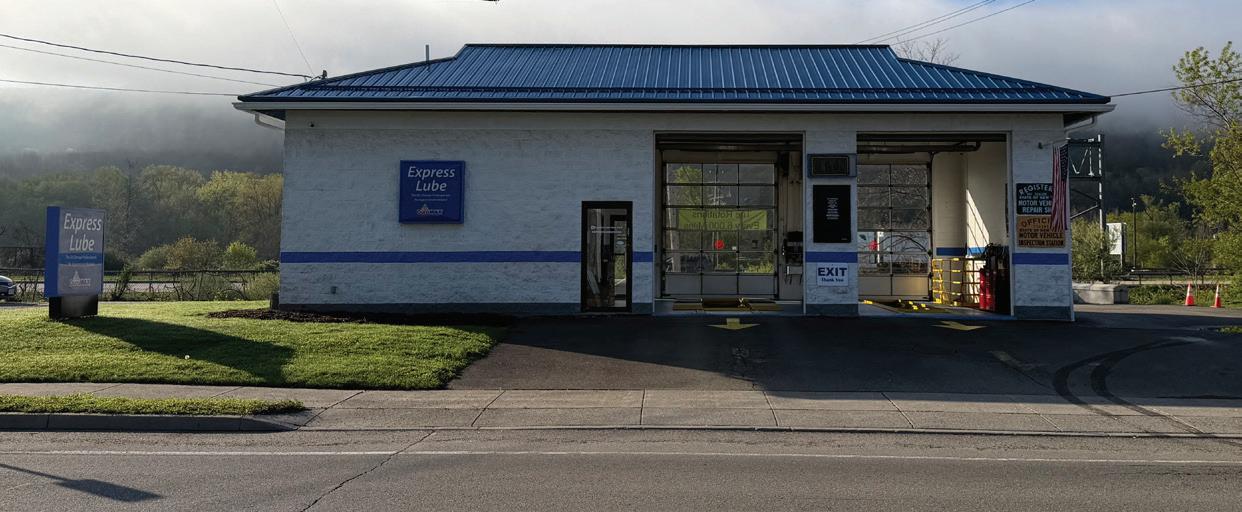
EXPRESS LUBE NY
After two decades of building up his quick lube brand, Tom Metarko took his operations from Elmira, New York, to Painted Post, New York, introducing a new clientele to his business, and even rolling out new services like tire rotations
LOCATION: PAINTED POST, NEW YORK
OWNER:
BY KACEY FREDERICK
TOM METARKO HAS SPENT TWO decades building up his quick lube brand, Express Lube NY. First opening in Elmira, New York, he focused on operating there—until just this past fall, when he took over a facility in Painted Post, New York, and gave it a total makeover for the business’ newest location.
In just months, with the help of his community, Metarko turned the building around and launched the new location. While he’s still hard at work implementing improvements, he shares the work he did to make
the building not just operational, but a site that customers both notice and trust.
A FIXER-UPPER
In 1996, Express Lube of New York first opened in Elmira—a location that it has since sold after opening its most recent spot in Painted Post. The Painted Post building was constructed in 1991 before operations ceased in 2017, meaning it sat dormant for nearly a decade before Metarko stepped in.
When Express Lube took over the Painted Post facility, it had to undergo a lot of work to bring it up to its standards. Metarko took over the building last October, and by December had completed all the renovations.
“The guys that work for me helped out. And my brother is a retired union carpenter, and so we got some of his friends and went to town,” recalls Metarko.
The building received a fresh look, and now stands with sculpted brick walls and a metal blue roof.
PHOTOS BY TOM METARKO
A BLUE DREAM
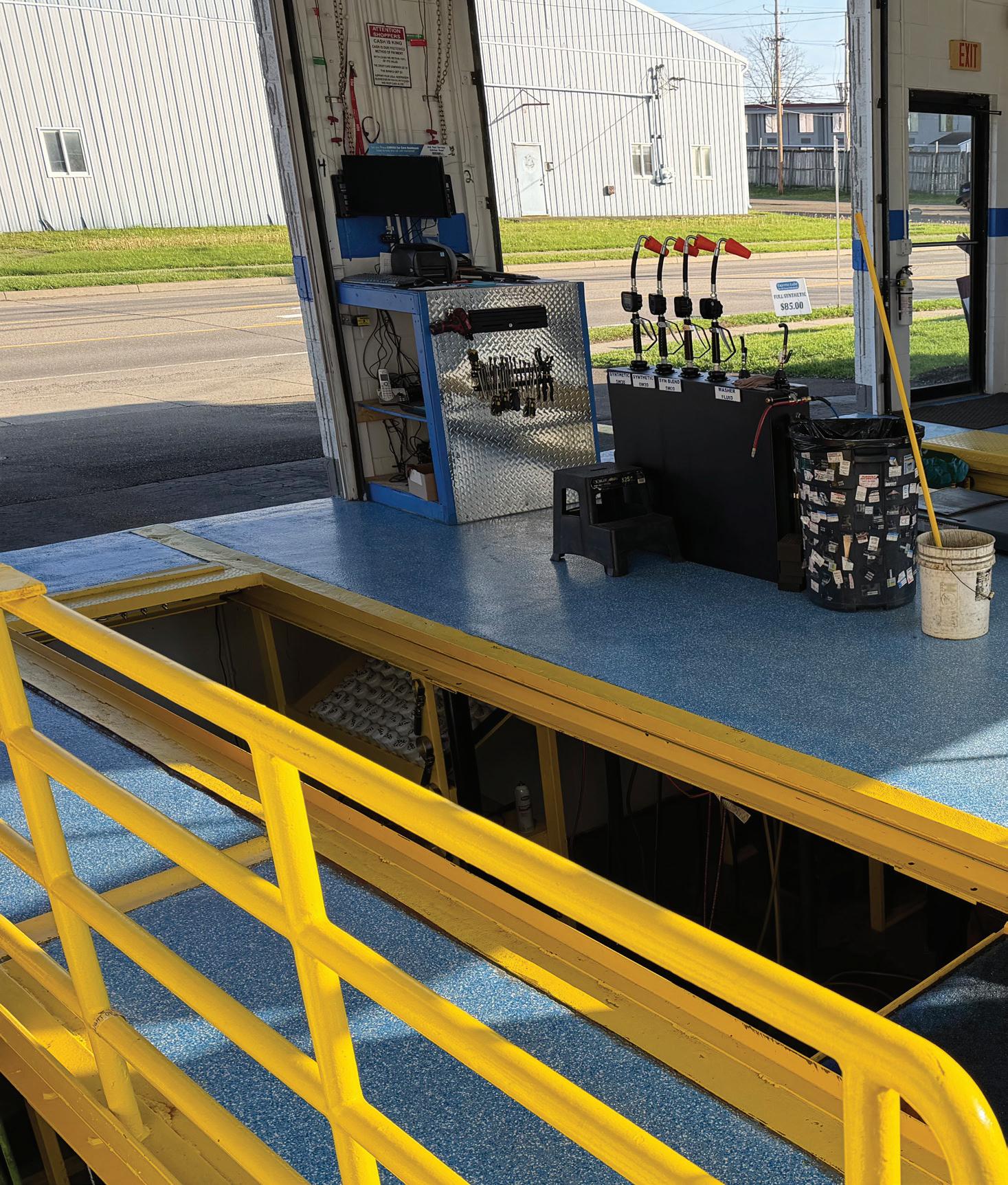
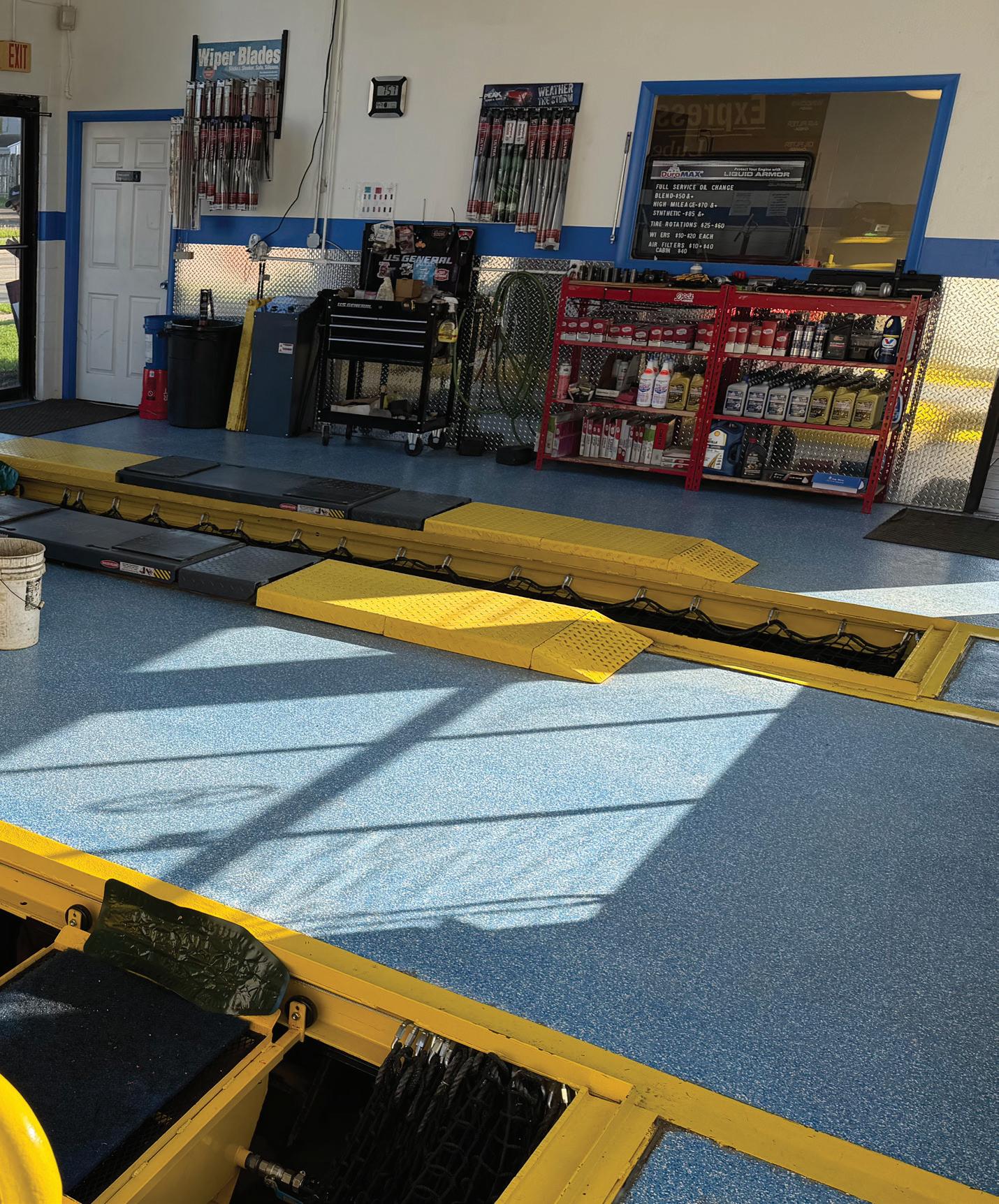
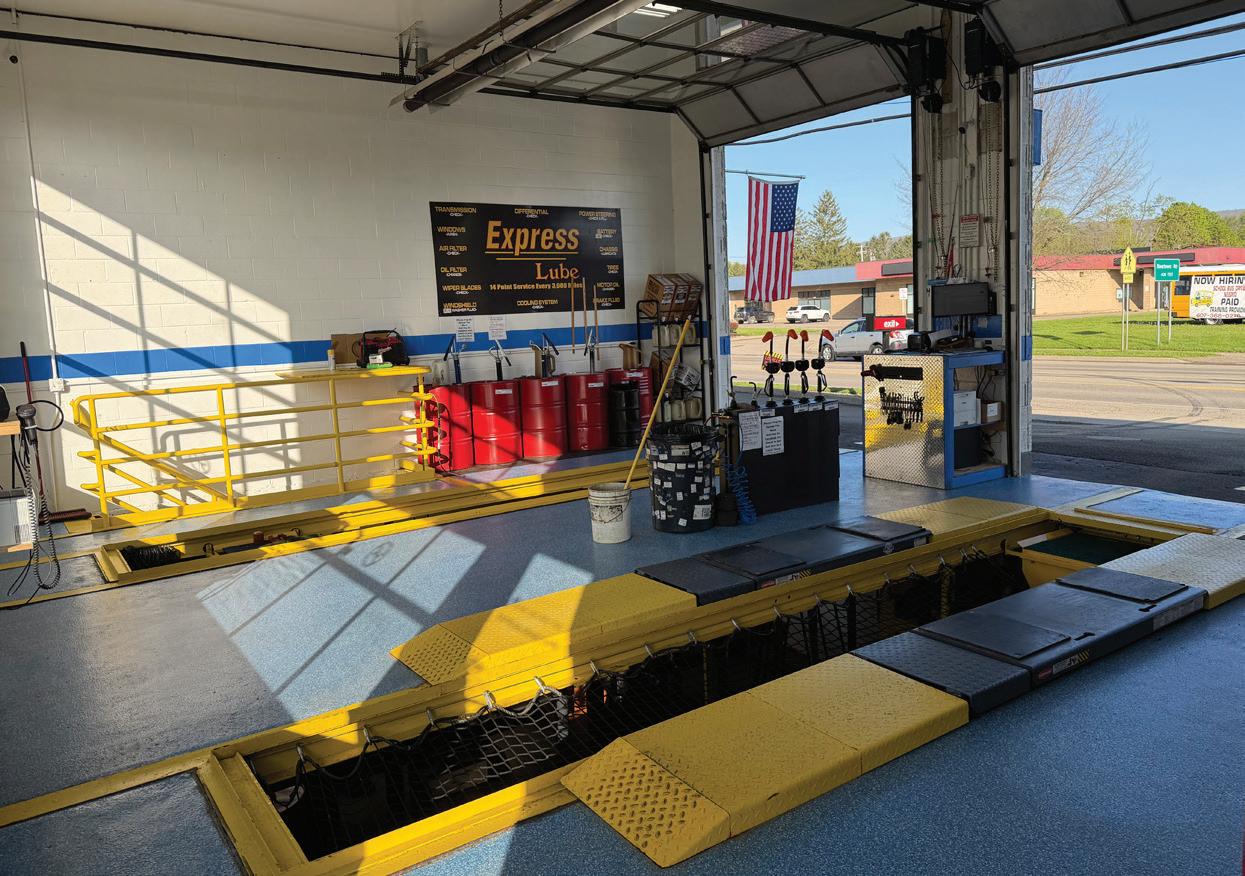
Moving inside you’ll see new, blue epoxy floors, aligning with the shop’s blue-and-white color scheme. There’s a man door allowing customers to enter the building, upon which you’ll find the shop’s two bays to the left, and the office to the right.
For regular oil changes, customers usually remain in their vehicles. However, for state inspections the office is used for customers to lounge in and wait. Inside, there are a few chairs, a counter, a computer console, a bathroom in the back, and an expansive window for customers to see what’s going on in the bay during service. While the shop floor was the main focus during launch—as it’s where customers will be spending the most time on average—Metarko intends to now focus more on optimizing the office.
In between the shop’s two bays is a console containing the shop’s bulk oil dispensers. To the far left of the shop floor are the stairs leading to the cellar, where the shop keeps its drums of oil and its boxed oil.
In the front, in between the bays, is an island for the shop’s computer system. Express Lube NY uses the ISI Software system, with a keyboard and monitor for each bay.
As part of the renovation, the interior was painted, along with the addition of a new catwalk and a separate oil room to hold bulk oil. On the walls are posters advertising the shop’s 14-point service for customers to see. The facility also implemented a lift for New York state inspections and tire rotations—the latter of which has helped elevate the shop over others in the area.
“A lot of people in our area don’t do tire rotations while they do the oil change. So that’s something novel that we do,” says Metarko. “We’ve gained some national fleets because they like to have their tires rotated every time they get an oil change.”
Vendors who work with quick lubes have evolved from suppliers and distributors to sage advisors and full-fledged partners
by Tom Valentino
RPARTNERS BEYOND PARTS AND
ecently, Ma Shaw visited a quick lube, and what he found le him shaking his head.
“I went in and stood in line and waited and watched the people. It was so disorganized and dysfunctional,” he says.
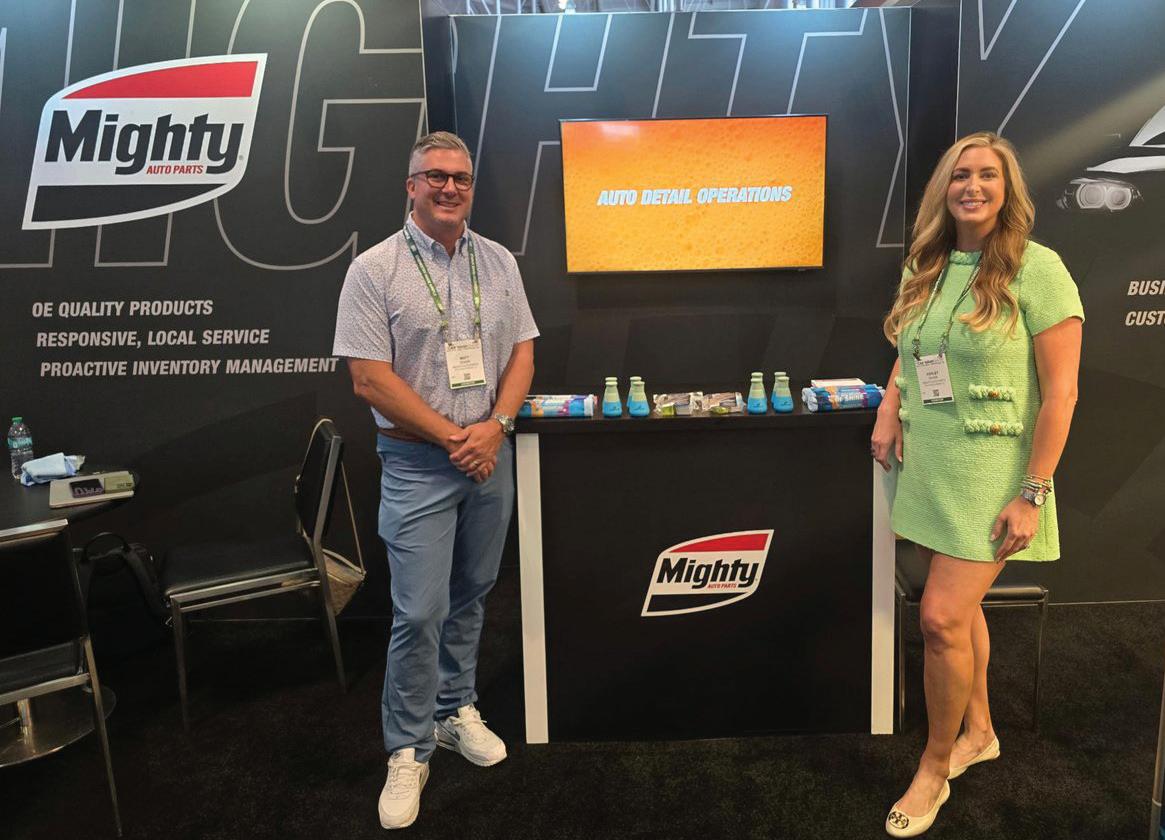
Shaw is the vice president of sales for Mighty Auto Parts, a role in which he leads and trains a nationwide sales organization. Mighty operates a network of 94 franchises, providing products, training for service advisors and technicians, and incentive programs for aftermarket automotive shops.
It’s no surprise, then, that Shaw’s views on aftermarket automotive shops are formed with a more discerning eye than that of the everyday guest.
PARTNERS PRODUCTS
But for Shaw and Mighty, such situations aren’t pain points as much as opportunities. Their role—as well as the role of other suppliers and distributors who serve the quick lube industry—is as much about strategy now as it is about keeping parts and products stocked.
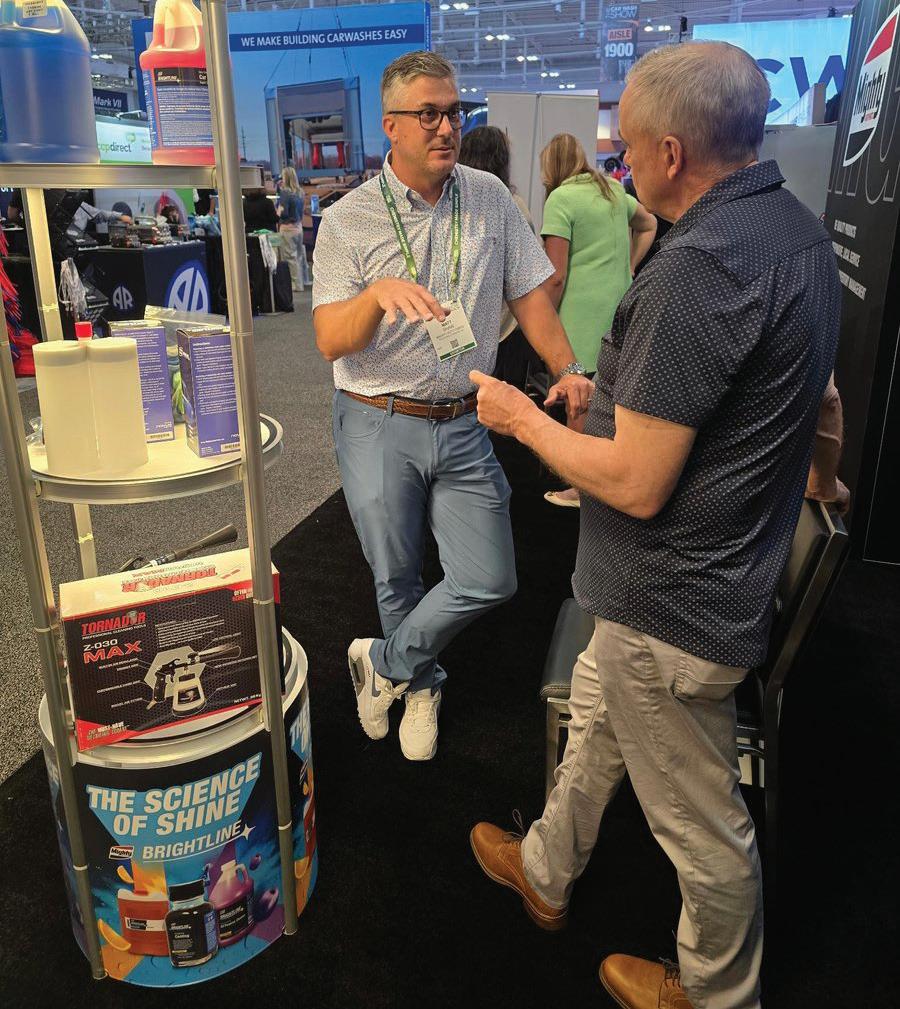
“Communication is critical and, from the vendor side, we have to be a partner and we have to understand their business. We have to understand the challenges they’re facing,” Shaw says. it’s different from business to business. So, you have to identify
Communication Counts
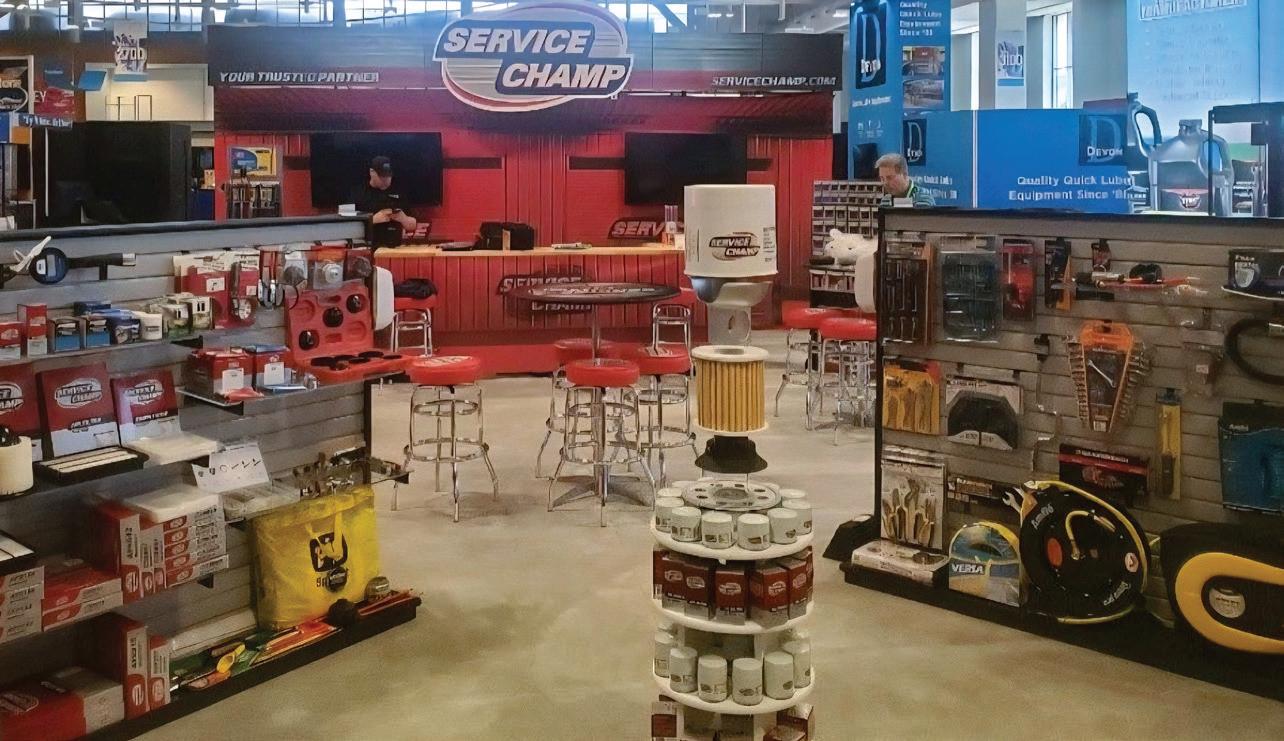
Mighty Auto Parts' Matt Shaw says it's critical for vendors and operators to stay in constant contact.
what their opportunities are inside there and help them resolve that.
“Maybe they don’t have the proper inventory. Maybe their people aren’t trained, (or) they don’t have the tools or they don’t have the exact parts they need or they’ve never tried to do preventative maintenance chemicals before because they’re scared of that. It comes down to giving them the right solution for what they need and communicating it very effectively and lightening the load.”
Jeff Smith, the vice president of key accounts for Service Champ, offers a similar perspective. Smith, who also runs the company’s Canadian Division, Complete Lube Supply, started in the automotive industry in 1987, and he has worked for various organizations throughout
his career, with roles in service, parts, sales, and operations.
In his current role, Smith oversees a team of key account managers and national account managers. The clients with whom his team works include large corporate entities with more than 1,000 locations, as well as multi-shop operators with a handful of locations that are part of larger groups.
When asked about the biggest challenges he sees quick lube operators facing these days, Smith is contemplative.
“That’s a great question because the entire industry, everything is changing so rapidly,” he says.
In some cases, Smith says he has seen changes to the industry hit different regions at different times— what was a shift for one part of the country three years ago is today’s challenge in another locale.
There is one consistent truth from coast to coast, though, Smith adds.
“Everybody that does any kind of auto repair wants as much of the customer’s wallet as they can get,” he says. “So, where it used to be, for example, that you went to the dealership to get your service work done as far as warranty stuff and you went to this segment to get this done, now everybody is trying to get a piece of the pie.
“Quick lube operators, the folks that can react the quickest and keep the consumer in the shop for more services, they’re the ones that are growing by leaps and bounds.”
Fostering that growth is a key part of the job for Service Champ’s accounts team, Smith says. Besides supplying parts and products, good vendor partners can also serve as eyes and ears across the industry.
“The advantage that somebody in my position or somebody on my team has is we’re seeing these macro changes across the board,” Smith explains. “If we can sit down with quick lube operators and say, ‘hey, we see you’re not
See the Difference
doing this service,’ or ‘you’re not doing this, but in other parts of the country, other folks are doing this—same size company you are, same size car count. They’re doing it, and this is the result they’re seeing.’
“We can do that because we’ve got all these touch points with different customers across the entire country, so we’ve got a good database, and we can pass that information along. (Without getting into) the specifics, obviously, the trends of what’s working and what’s not working, (we) pass it along and help the quick lube operator make an informed decision.”
Smith shares an example of this working relationship in action. Recently, a Service Champ client was strictly in the business of quick lube, wipers, oil changes, and cabin and air filters. After discussions with Service Champ, the shop added the service of pouring a select group of chemical treatments.
“Within six or eight months, they
could see a 20% to 25% change in their business,” Smith says. “Their ticket averages are up, customers are coming back for the product over and over again. When the customer returns, it’s not just to get their oil changed. They want that chemical treatment that the supplier recommended last time. So, it becomes almost not even an add-on sale; it’s something the customer expects this time.”
Visual aids are a powerful selling tool for advisors, Shaw adds.
“If you can show somebody say a headlight restoration and say, ‘Here’s a restoration with one headlight done and one not done,’ it’s super powerful,” Shaw says. “Just like the cabin air filter. If I’ve got a dirty one next to a brand new one because you stock the product, it’s a very powerful representation, and people go, ‘Well, yeah, I want that brand new one right there. I want the shiny one. I don’t want the nasty one.’ Visual aids are very powerful.”
Finding Opportunities
Service Champ's
says being able to view the industry from a macro level helps identify opportunities for quick lube shops.
A FULL-FLEDGED PARTNERSHIP
Those discussions between supplier and quick lube shop are one of the most significant areas of change that Smith says he has observed throughout his career. Decades ago, a supplier was where you bought your parts or supplies from.
“Now as a distributor—I don’t even consider us a distributor, but more
Jeff Smith
Matt Shaw says visual aids are a powerful selling tool for advisors.
Working Together
Service Champ representatives have regularly scheduled check-in meetings with quick lube operators.
of a business partner,” he says. “One of the cool things we do is schedule quarterly business reviews with the quick lube operator. We sit down and say, ‘This is your business. This is what you’ve done this quarter or
every six months’ or whatever timing the customer wants. But we can use that data and overlay it to what I said before, as ‘we’re seeing trends elsewhere or right down the road from you of this is what you could be missing out on.’
“So, we’ve turned into more than a supplier—somebody who’s just doing a service and shipping stuff out and taking the quick lube operator’s money to (now) being a business partner with them because this is a win-win deal. We want them to be successful. If they’re not successful, we’re not successful.”
STAYING CONNECTED
In terms of best practices for vendors to strengthen their bonds with quick lube operators, Smith is a strong advocate for taking on the “business partner” mindset and scheduling regular check-in meetings to discuss opportunities and ensure needs are being met.
Such meetings are also an opportunity for vendors to highlight new parts and products that could play well with customers, as well as older items that are no longer in demand and, as a result, are overstocked.
“Let’s lean your inventory down a little bit and move those inventory dollars over to something that’s faster moving so that you’ll get a bigger return on your investment,” Smith says.
In the end, Shaw adds, a successful vendor-operator partnership comes down to making sure needs are being met and customers are getting what their vehicles need. “If I can lighten the load on the business owner, the service manager, the technicians,” Shaw says, “if we can just make their job easier, they’re going to be more effective and, as a byproduct, they’re going to sell more things that are needed things to these folks who are coming in.”
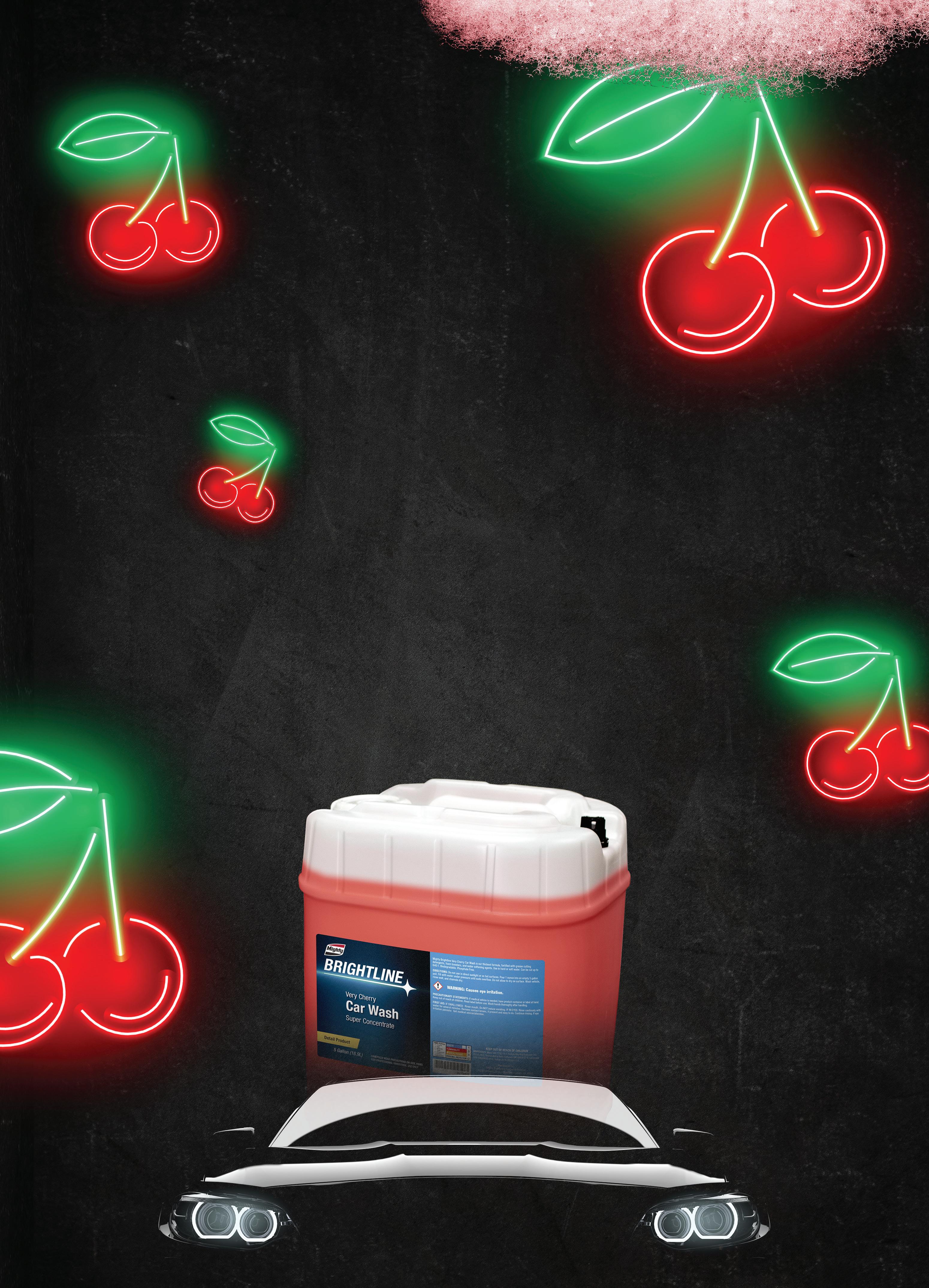
CHERRY CAR WASH
They Why Stay
Operators explain what has inspired them to stick in the quick lube industry for the long haul
By Tom Valentino
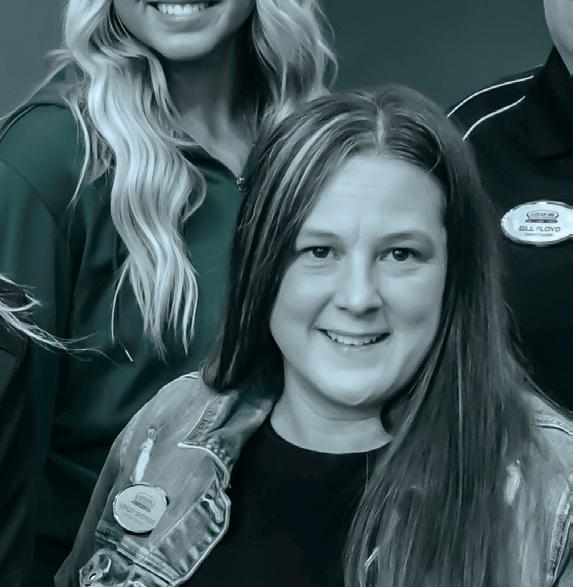
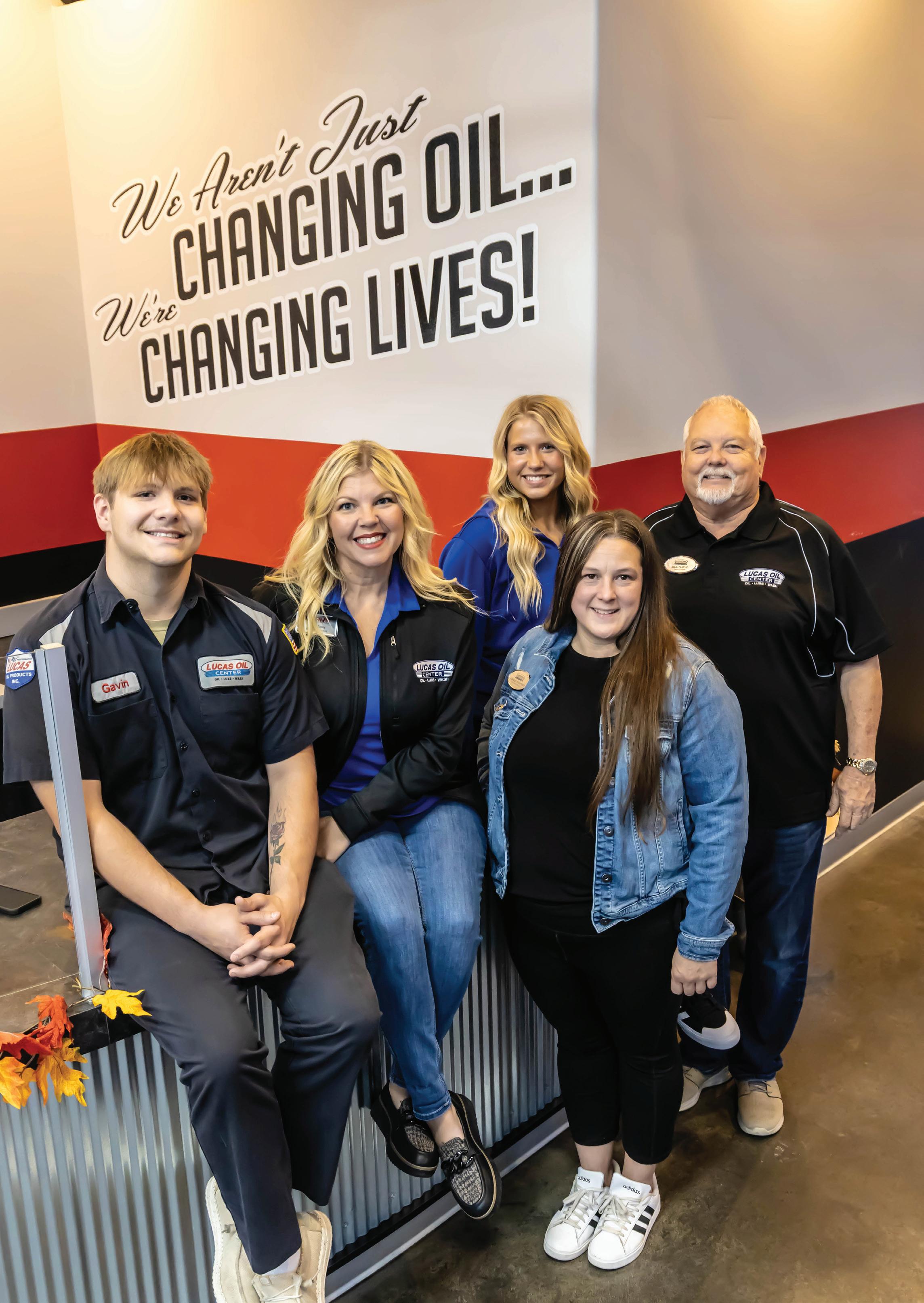
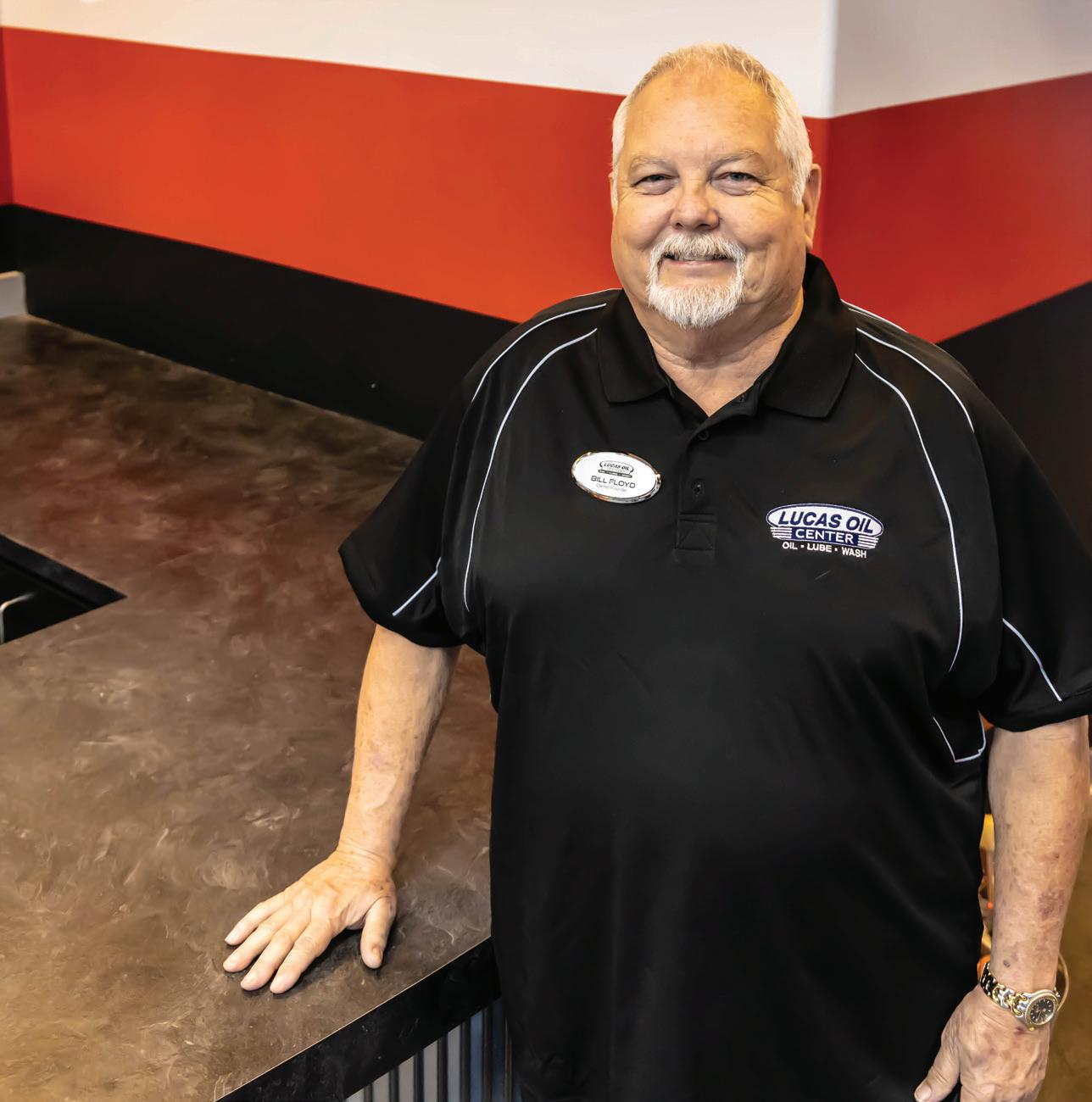
Family Business Company founder Bill Floyd has been joined by his family in leading Lucas Oil Center.
Airline luggage loading. High-performance racing and product sales and distribution.
The credit department of a lumber company.
Quick lube operators come from diverse professional backgrounds, but for many, once they enter the world of fast automotive maintenance, they’re in for the long haul.
As part of its 40th anniversary celebration, NOLN recently caught up with SpeeDee franchisee Mike Guasch, Lucas Oil Center founder Bill Floyd, and Lucas Oil Center Vice President April Maxey, Floyd’s daughter and a current member of the PAMA board of directors.
Guasch, Floyd, and Maxey shared with NOLN their first impressions of the quick lube industry, as well as what made them decide to stay and what advice they have for those entering the field today.
TAKING FLIGHT
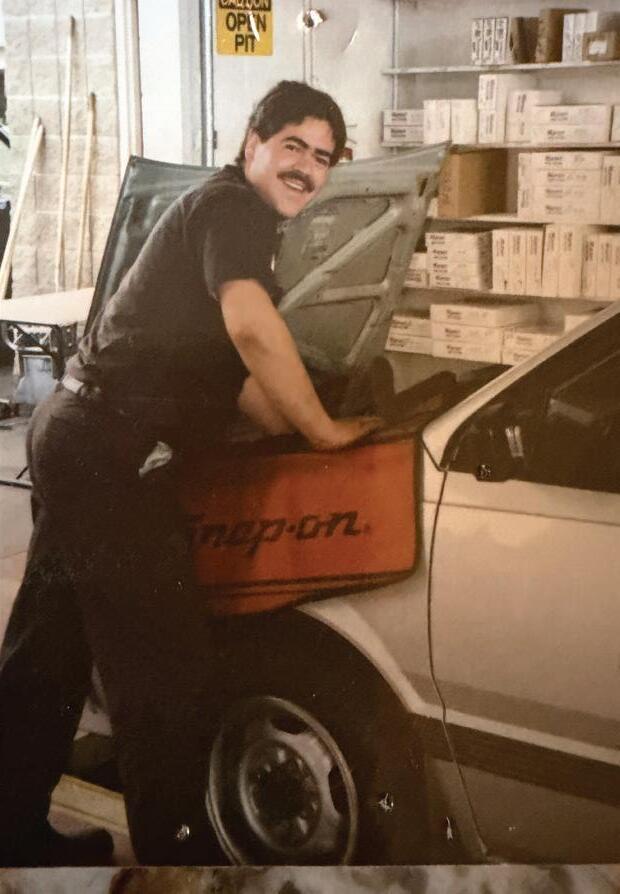
Prior to entering the quick lube business, Mike Guasch grew up on a ranch before spending the early part of his career as a luggage loader for Southwest Airlines. Taking an interest in aviation, he served as a jet mechanic for the U.S. Navy for four years. Unable to find a job with any airlines after his time in the service, Guasch discovered an opportunity with a Bay Area quick lube business named Express Lube in 1989.
“They knew that I had some mechanical background, so they put me in the pit and I worked the pit, I don’t know, maybe eight months straight,” Guasch says. “And this is back when, I mean, we were doing 750 cars a week. … All we did back then was just oil, PCV valves, breathers, manual transmissions, and wiper blades and air filters. None of the other flushes, belts, none of that stuff was even around the quick lube business back then. So, it was just flushing cars basically in and out.”
Guasch says he was fascinated by the sheer volume of vehicles rolling into his shop’s bays every day.
“I was younger back then, obviously, and I was able to run all three bays, and then I
found some kind of enjoyment in it,” he says. “I’d come back with these burns from these Hondas, reaching up and getting the filter from exhaust and cuts, and just I don’t know what it is. It’s just some kind of attraction to that.
“As hard as it sounds, I was probably hooked from those Express Lube days down in the pit and just draining the oil and putting new drain plugs in and just learning every single car.”
Over the next three years, the shop for which Guasch was working expanded from one location to five. He was named manager of the second store and began training other managers before they were sent off to their new locations.
At this point, Guasch saw an opening with SpeeDee for a district manager position. The opportunity to take on a corporate role with a national brand was too good to pass up. Almost immediately, Guasch was tasked with taking the lead on opening a series of stores in Northern California. A successful expansion from five locations in the area to more than 15 earned Guasch more territory to cover and an eventual promotion to director for the West region. When his counterpart in the East departed SpeeDee, Guasch found himself overseeing stores nationwide as operations director of North America.
Bill Floyd, meanwhile, founded Lucas Oil Center in 2008 and opened the doors of the business’s first quick lube shop in Evansville, Indiana, in 2011. But Floyd’s roots in the automotive world trace back decades earlier.
Floyd’s entry point into the industry came when he took a job with a local service station in high school that included a lot of vehicle maintenance-related tasks. Floyd says he briefly ran an auto repair shop before following his passion for racing, building a career in high-performance racing, manufacturing, product sales, and distribution.
“As a mechanic, we didn’t have code readers and scanners,” Floyd says. “We didn’t have a lot of the diagnostic equipment we have now. We used scopes in those days for a tune-up. Really, you mechanically understood a car. You understood how brakes work. You understood how the clutch and the transmission, if you had to take it apart, how you could fix it.”
Floyd’s daughter April Maxey now serves as Lucas Oil Center’s vice president of operations and human resources manager. Maxey says she
grew up “watching Dad chase dirt in his race cars,” but her experience prior to the Lucas Oil Center venture came not behind the wheel of race cars, but behind a desk in a corporate position with the credit department of an Ohio-based lumber company.
Her transition from lumber to quick lube was eye-opening, she says.
“As I started in (the quick maintenance) industry, I felt the pressure of really how male-dominant it was, which could be kind of intimidating, especially since I really, other than just being around Dad all the time, I hadn’t dived into it yet,” Maxey recalls of her early days with Lucas Oil Center. “But what I found out pretty quickly, though, was that this industry does value hard work, quality, and people who genuinely really care and want to be involved.”
Guasch intended to ride out the remaining years of his career at the corporate level for SpeeDee, but another unexpected opportunity emerged when a location 20 minutes from Guasch’s home became available. At the age of 55, Guasch left his corporate position to become a first-time franchise owner.
“Everybody’s like, ‘Why didn’t you do it sooner? You know, you waited so long. … You could have bought your own,’” Guasch says. “I go, ‘Well, I wouldn’t have the knowledge I have now to take over the store at 55 back then. It might have been a little bit hard for me.’ And nobody wants to leave corporate when they’ve got a paycheck coming in and you got weekends off, right? I mean, you got a company car and you got a travel and expense account and all that stuff. You had to give up a lot of that. So, it was a risk. Anytime you open a business, it’s a risk.”
Asked what has kept him in the industry for the long haul, Guasch says: “It’s two things.
PHOTOS: MIKE GUASCH
PHOTO: LUCAS OIL CENTER
Then and Now
Mike Guasch got his start in the quick lube industry in 1989, and he is still active today, now as a shop operator.
Always Automotive
Bill Floyd opened the first Lucas Oil Center in 2011, but he has a long history in the automotive world.
Ready to Learn
Mike Guasch is preparing today's industry newcomers for bigger opportunities in the future.
I love the customer interaction. I love the culture. I drive to work, and I have a smile on my face every day. I just can’t wait to see my guys and my team and my customers. And I’m heavily involved in charitable organizations in Modesto (California).”
Guasch works with Modesto Gospel Mission, a women’s shelter, and multiple initiatives to help those without homes.
“That’s been the biggest blessing to me is having the ability to give back and help people,” Guasch says. “Because I have my corporate career. I’m not here squeezing pennies from the shop. I’m going to do fine.”
Prior to launching Lucas Oil Center, Floyd was involved with SEMA and the AOCA, which, of course later became PAMA. In the
mid-2000s, Floyd and his family began to take a harder look at the quick lube industry. Having “always had my hands on the pulse of cars,” Floyd decided to make a career switch and get into the auto service business. In 2010, he arranged a license agreement to build the first quick lube shop with the Lucas Oil name.
“We built the building. We designed the processes. We installed the equipment. We hired people. We were off and running,” Floyd says. “There wasn’t anything—from working on cars to cleaning the toilets—that I didn’t do in those days.”
Similar to Guasch, Floyd says he finds joy in helping others.
“It’s not just what we do at the service center. It’s what we do and serve in our community as
PHOTO: MIKE GUASCH
well and take care of our customers. We have a tagline that we use: We aren’t just changing oil, we’re changing lives.”
In practice, that has included supporting autism care-related causes, as well as a local children’s hospital.
THE NEXT GENERATION
Guasch aims to create an environment where today’s entry-level lube technicians can catch on in the industry, following a path similar to the one he carved in his 20s. While some aspects of the job have changed, there are similarities in the basics—inspecting cars correctly, being safe, showing up on time, working hard, he says.
Guasch proudly points to his most recent hire, Gerardo, who came on board about a year ago, as perhaps his best hire to date.
“He’s been here a year in June, and he’s never missed a day at work. He’ll work anytime we want him to come in,” Guasch says. “He’s bilingual. He’s just amazing. He gets the highest bonus out of anybody in the shop, and he’s the newest employee. He does things one way, and it’s the right way every single time. There are no shortcuts in his work. It really gave me hope for this new generation.”
Floyd has a similar success story from his staff. One long-time manager now sports a Lucas Oil Center tattoo because of the impact the business has had on him.
“The story about that is very simple,” Floyd
says. “We really turned his life around, and he said, ‘You know, someday, I want to have one of these stores. And it means so much to me, I put it on my arm.’”
Asked what advice she would have for someone looking to make a similar leap to the quick lube space from another industry, Maxey says having the right personality traits goes a long way.
“I think first of all, you have to be coachable. You have to be able to adapt,” she says. “If you’re just looking at it now versus 15 or 20 years ago, this different generation, they can’t be managed the same way that we did. A lot of people now are not just looking for a paycheck in a stable job. They’re looking for more than that. This generation, they’re looking for purpose and growth and flexibility even within their family dynamic.”
For the up-and-coming technicians at Guasch’s SpeeDee location who have aspirations of career advancement, Guasch offers a smog training program for employees. Training is conducted for four weeks on Saturdays and Sundays, and time spent in training is incorporated into techs’ work schedules. Four employees have completed the training so far.
“It’s a good program because if they find something at a dealership or something like that, I would be more than pleased for them because I just want to give them more skills,” he says. “If they have a small license and they’re the tech, they’re more apt to get something better down the road.”
–MIKE GUASCH
TOOLS TO TAKE IT UP A NOTCH
Quick lube shops can improve safety, efficiency, and job quality with smart equipment investments, but there are factors to consider before a big spend
BY PETER SUCIU
USING THE RIGHT TOOL FOR
the job can ensure safety, efficiency, and job quality. At the same time, improper tools can lead to damage, injury, and unnecessary frustration for staff and customers alike. That is why it is critical to select tools specifically designed for the task and to keep them well-maintained.
important for small business owners to determine what is needed before making an expensive investment.
In the automotive service world, it can be all too easy to make expensive purchases, only to find that certain tools aren’t right for the job or aren’t being used as much as envisioned.
The company, established in 1980, continues to provide equipment for automotive maintenance and repair shops, ranging from oil drains, fluid evacuators, and oil filter crushers to TPMS sensors, repair kits, and other hardware.
Certain Tools Can Add a New Service
Investing in the right tools can allow a business to expand its services and see significant improvements in operations. However, it is also
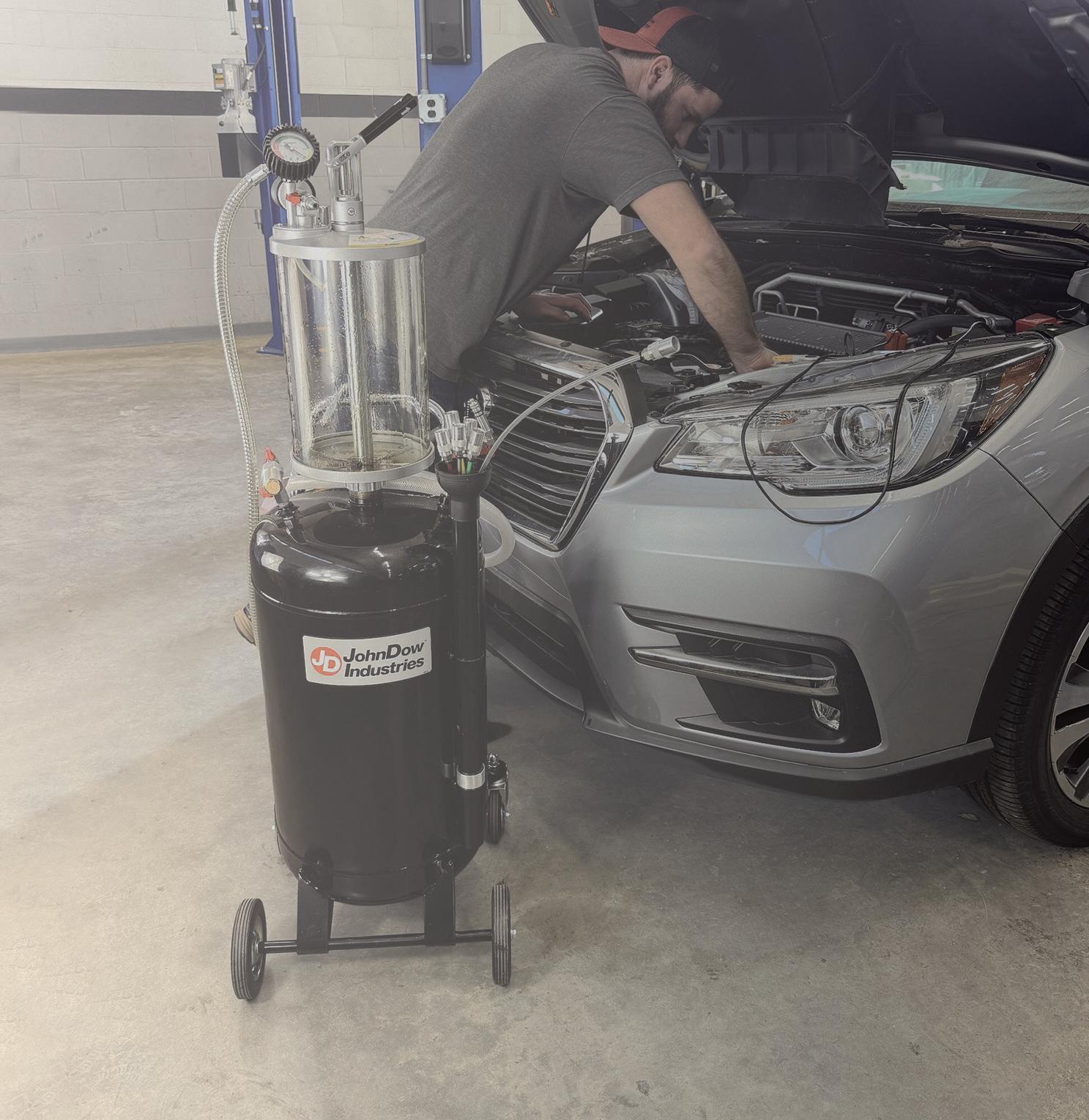
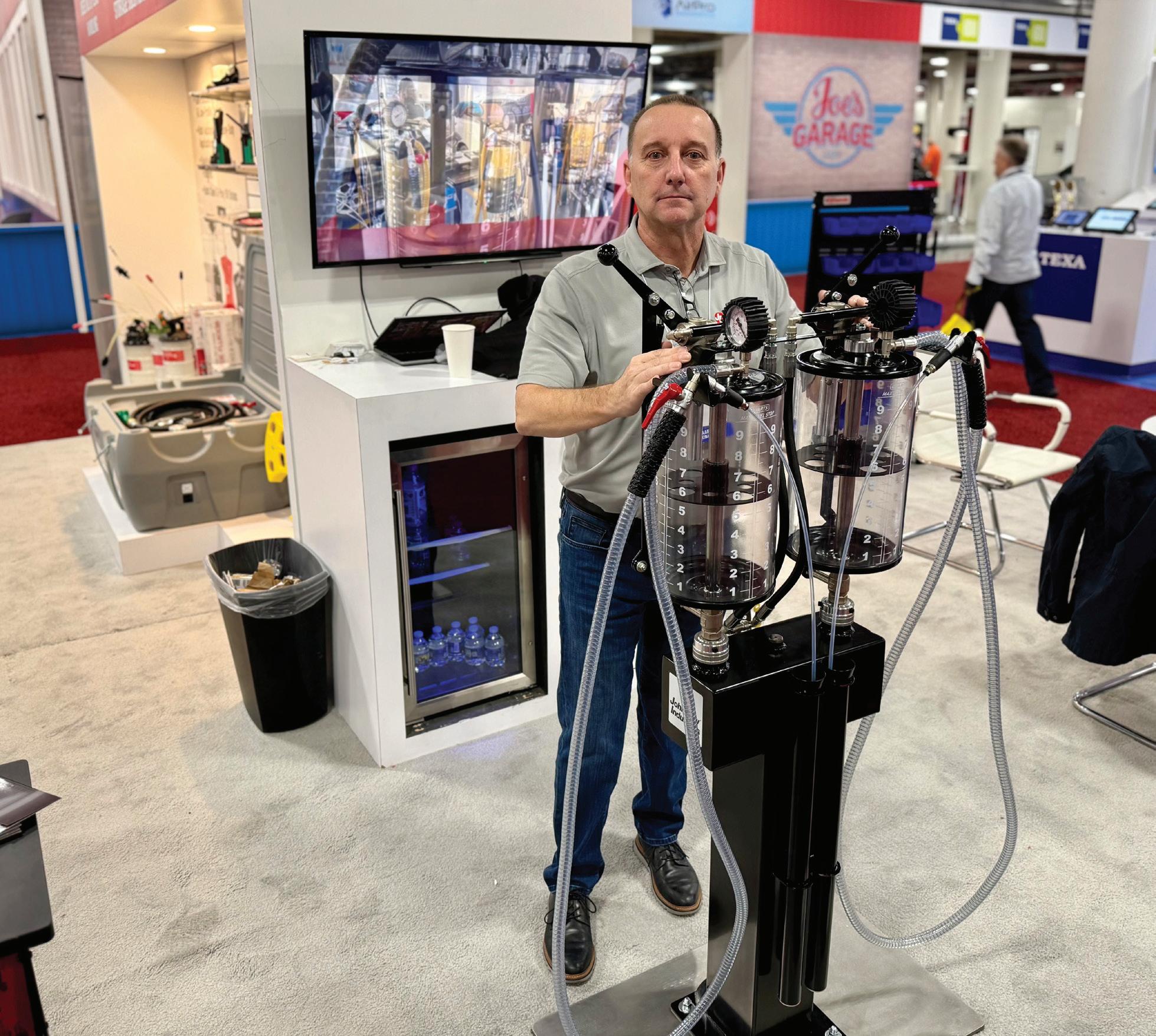
“In the quick lube world, there are plenty of add-ons, depending on the tasks you have your techs do,” explains Brian Morgan, national sales manager at Barberton, Ohiobased JohnDow Industries Inc.
Morgan tells National Oil and Lube News that certain tools can expand the services a quick lube shop offers, thereby improving the bottom line.
It comes down to the space the shop has and their customers’ needs.
“Can you put a lift on your pit to do tire rotation?” Morgan suggests. “Are there other tools that can add services, such as being able to offer a battery swap?”
Adding even small services can help a shop increase its sales with minimal need for additional tools.
“We’ve seen that offering wiper blades can be a good add-on,” says Tim Beltitu, JohnDow Industries’ director of inside sales and customer support.
The Evacuation Plan
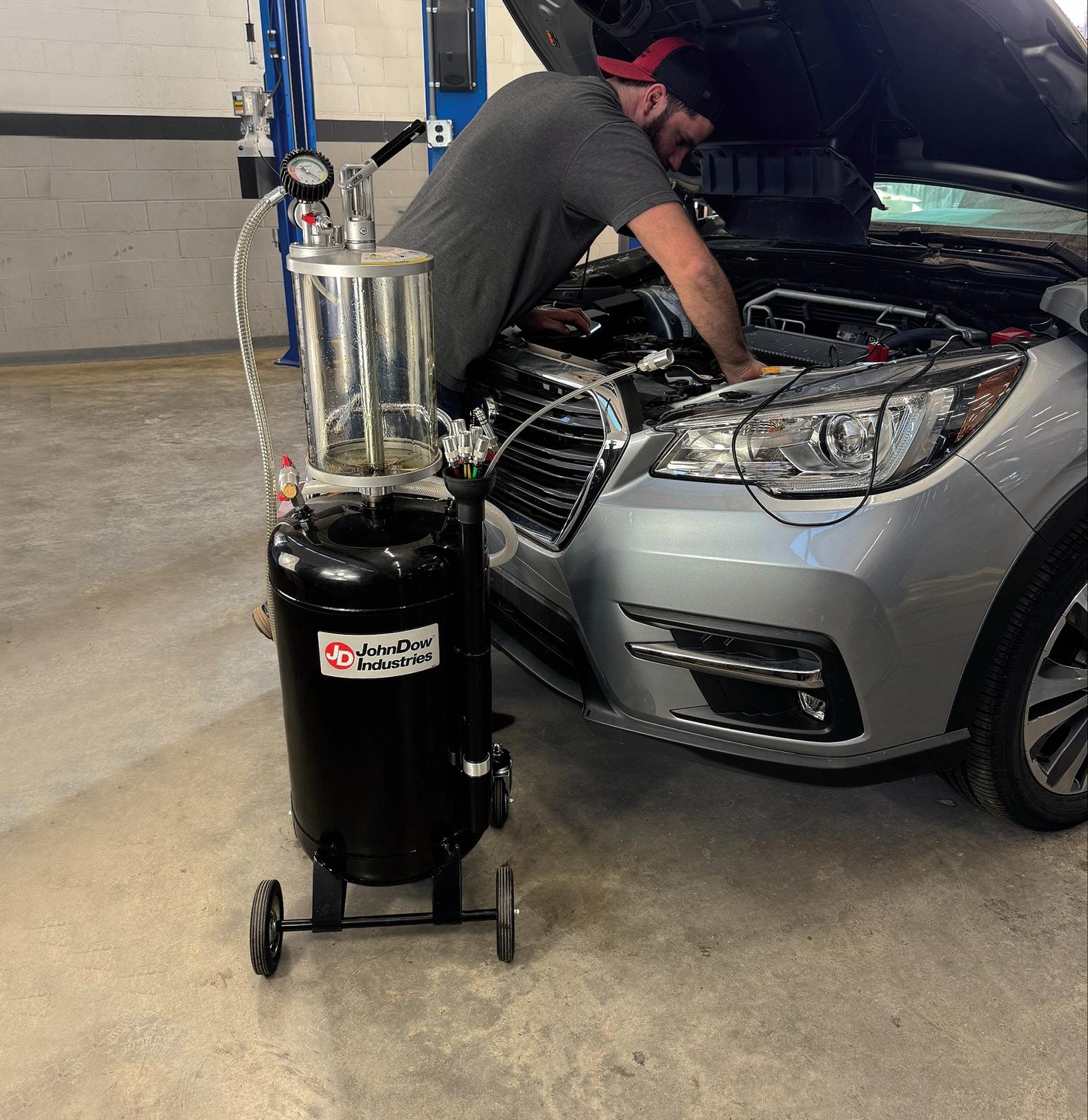
Among the larger equipment investments being made by quick lube operators for 2026 and beyond, Mor-
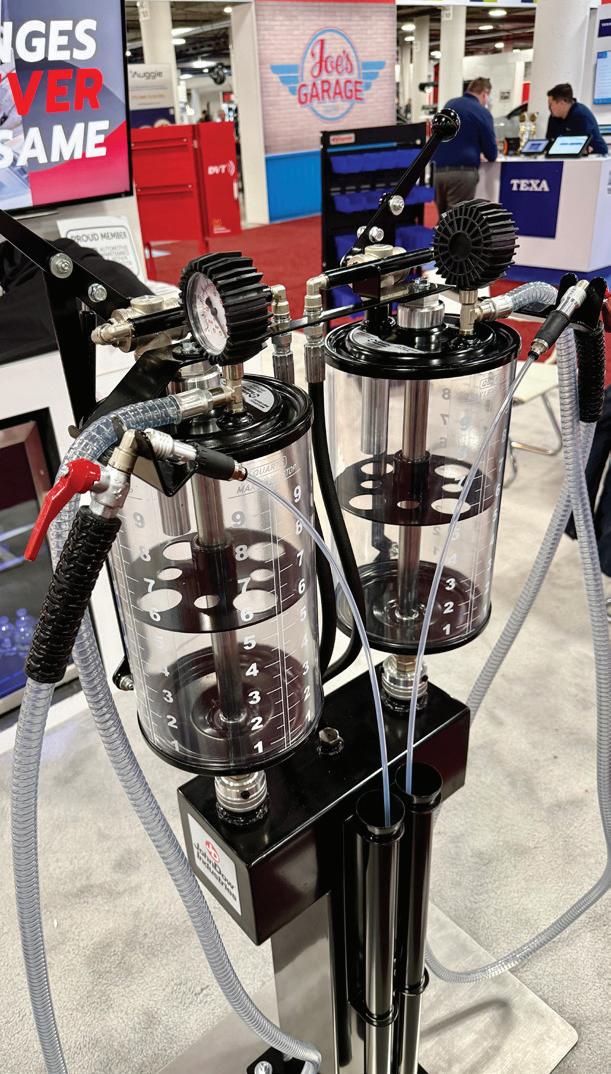
The system allows technicians to perform quick topside oil changes without removing skid plates or drain plugs, potentially improving car counts in the process.
“With an evacuation system, the operator can pull a quart out in 20 seconds, where previous systems would take about a minute,” Beltitu explains.
It can create a more comfortable work environment for technicians, while also reducing clutter and helping a shop stay better organized.
“The evacuation systems reduce noise, plus wear and tear on the systems,” Beltitu continues. “It is nearly silent in the bay.”
Right Tool for Right Now?
When considering a large investment in new tools or equipment, shops need to determine whether making such a purchase will tangibly improve their services, as well as whether their facilities can accommodate the addition.
JohnDow’s Centralized Fluid Evacuation System, for example, uses dedicated, fixed lines to transport oil from the bay to storage tanks. The system also requires a compressed air line to generate the vacuum needed for extraction.
“For two bays, a shop is looking at around $4,000 per bay,” Morgan tells NOLN.
Most shops can benefit from such a tool, but other upgrades may be far less critical.
“You really need to look at the data on your car counts,” Morgan continues. “If you are doing a coolant flush only once a week, then you may need to consider whether to invest in such technology.”
For those reasons, both Morgan and Beltitu say it may be necessary to review warranty claims and determine whether such equipment will be worth the investment.
PHOTO: TOM VALENTINO
CRISIS COMMUNICATIONS PLANNING: HOW YOUR SHOP CAN AVOID A PR DISASTER
Simple tactics for handling crises can help protect your shop’s reputation
BY CAROL BADARACCO PADGETT
ACCIDENTS HAPPEN. NOT JUST to your customers out on the roads, but also to quick maintenance and oil change shops in the course of daily operations.
Maybe your shop is moving such a high volume of customers through the system that a tech makes a serious mistake. Or maybe there’s
reputational damage to your shop because a disgruntled employee posted something about your business on social media that isn’t true (or is). Or maybe a natural disaster hits your business and shuts it down for a time and you need to explain what’s going on.
Whatever the crisis—whether
an act of God or a mistake of man—there are straightforward communications tactics that can help keep you above the fray. Here are several of them from crisis communications professional Brandon Chesnutt, partner at Identity PR, a Birmingham, Michigan-based company that serves the communications and messaging needs of automotive businesses nationwide.
Brandon Chesnutt, partner, Identity PR
Be mentally prepared. There’s so much going on in the world right now that Chesnutt says he’s encountering a lingering atmosphere of crisis in just about every industry, including automotive.
And no matter how beloved a shop is within a community, he says, “You’re not essentially immune to something happening from a reputational standpoint.”
Being aware of the current climate is important.
“Crisis communications is really about how we position ourselves to weather that storm, react to it, or decide what our response strategy will be when the spotlight is shining brightly on us,” he says.
Plan a basic protocol. Just as most franchises have a plan of action outlined for when a crisis occurs, single-owner shops and multi-generational family-owned businesses benefit from having a plan, too.
“They have the best of intentions, and they want to do great work for their customers so they come back for the life of their vehicle,” Chesnutt finds. “But that doesn’t always translate to helping get (small business owners) to the other side of a crisis.”
An example of a smart, basic protocol for a small shop owner is to decide that when a crisis comes, it won’t be pushed aside. That instead, it will be faced head-on.
If an unhappy customer airs a grievance online, for example, Chesnutt advises owners not to simply turn the other way. Because if owners say nothing, people can come up with their own interpretation of what happened.
“Sometimes picking up the phone and having a conversation (with the customer) can solve a lot of things before they ever move to a more visible crisis moment,” he adds.
Another basic tenet to keep in
mind is this: Avoid the temptation to respond immediately to a complaint on social media, where you can get caught up in a thread of comments back and forth. Instead, it’s wise to pause and think things through.
As Chesnutt puts it, “When a negative review or a TikTok starts to get some traction, if an owner responds, they need to be really clear in what they want to say, and they only get one time to say it.”
For example, an owner might simply and clearly say that they’re going to work with that customer and figure out a resolution. And then take it offline directly with that customer.
Know your latest foe. There’s a new Reddit community online called “Just Rolled Into the Shop” where any auto or quick lube tech can anonymously post their observations about customers’ cars that just pulled in. The automotive-focused ecosystem is comprised of 2 million people.
Chesnutt believes this is trouble waiting to happen.
“You have entire subcategories of information being shared that kind of impacts reputation. … There are ecosystems of conversation about what’s happening in (the automotive shop) world through the lens of both
customers and through staff,” he describes.
“You can imagine what would happen if all of a sudden a customer equates what’s being shared with where they just took their vehicle,” he adds.
Add to that, people are usually sensitive about their vehicles, which are their transportation lifelines and are expensive to own and maintain.
Don’t take it personally. Just as customers are sensitive about their cars, shop owners are tender about their businesses, Chesnutt notes.
“As an entrepreneur, when you’re facing a customer situation that is evolving into a crisis, you almost feel personally insulted because you feel that connectivity to your business,” he says. “It’s like somebody is questioning your decision-making, your morals, your staff, and you are protective.”
Instead of getting personally upset, Chesnutt advises owners to always look for a way to resolve situations offline with their customers.
In essence, a crisis provides an opportunity for growth, from moment to moment.
Or as Chesnutt frames it, “There are moments of truth that shape how people see us.”
WEBSITE ANCHORS YOUR SHOP’S ONLINE PRESENCE
With the emergence of user-friendly tools and services, operators can enhance their online identity with a well-maintained website
BY ENID BURNS
A WEBSITE IS ESSENTIAL FOR
any business. It’s no longer a “nice-to-have,” but a default part of doing business. Independent operators have several resources at their disposal to build a site. It can be done in-house if you have a staff member with web development skills. Do-it-yourself services and AI tools are lowering the barrier of entry for website building as well.
“The irony is, it’s never been easier or more cost-effective to build a website,” says Scott Steinberg, a business and technology trends expert. “You can build a site just like talking to a human.”
Many shops hire an agency, while others go to a familiar resource, such as a vendor with whom they have an existing relationship. One shop in Lancaster, Kentucky, worked with its point-of-sale provider to build a site that offers information for prospective and existing customers.
The Challenge
Quick lube operations are traditionally a drive-up business. Customers might plan for service, or stop in as they drive by and are reminded they need an oil change and/or other related services. That doesn’t mean a customer doesn’t ever look up
information about a shop, its hours, its services, and confirm a location.
Some independent operators feel a listing on Google, Yelp, Facebook, or other local directories is enough. A website offers visibility and branding that others can’t replace. It is still important to maintain a presence on local directories, even with a website.
For Jerry Coffman, owner of Garrard Quick Lube in Lancaster, Kentucky, it was a problem he didn’t know he needed to solve when his POS provider pitched him on building a website. It immediately made sense to have a website to support the business.
“I just thought we should do it,” Coffman tells NOLN. “The company I do my POS sales with set the site up for me. They contacted me and set it up.”
The Solutions
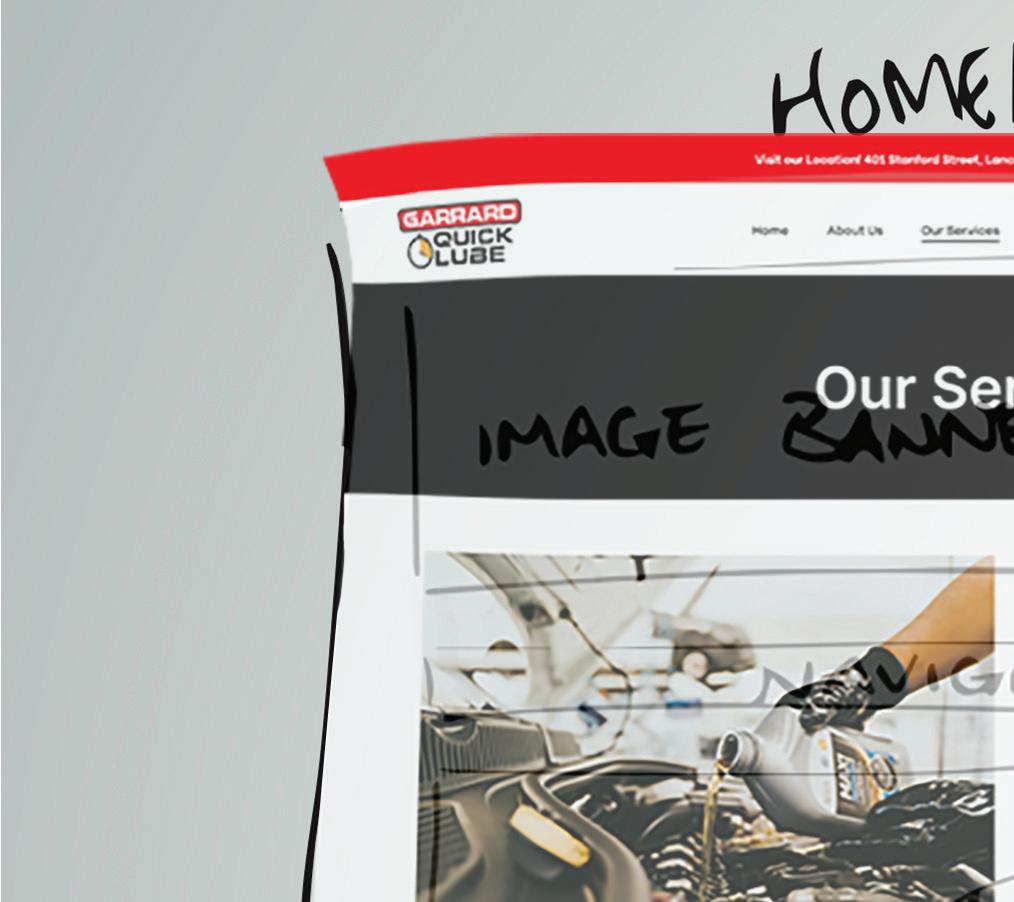
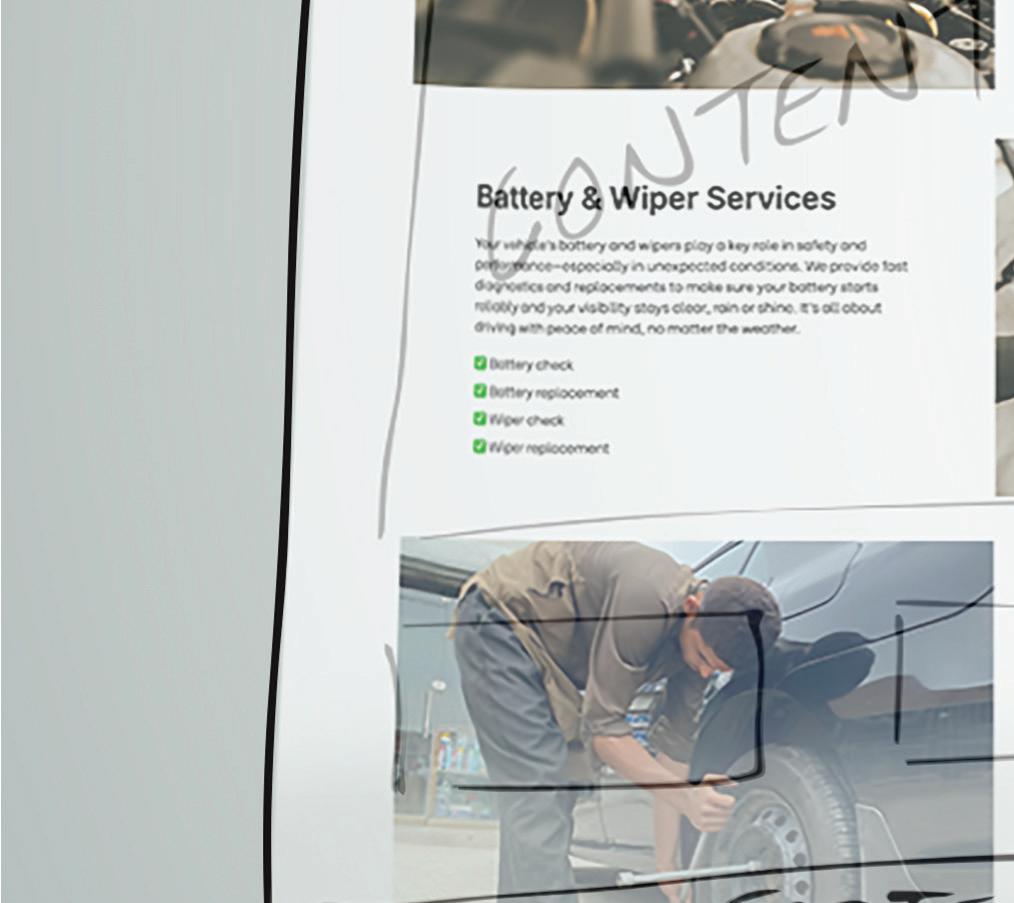
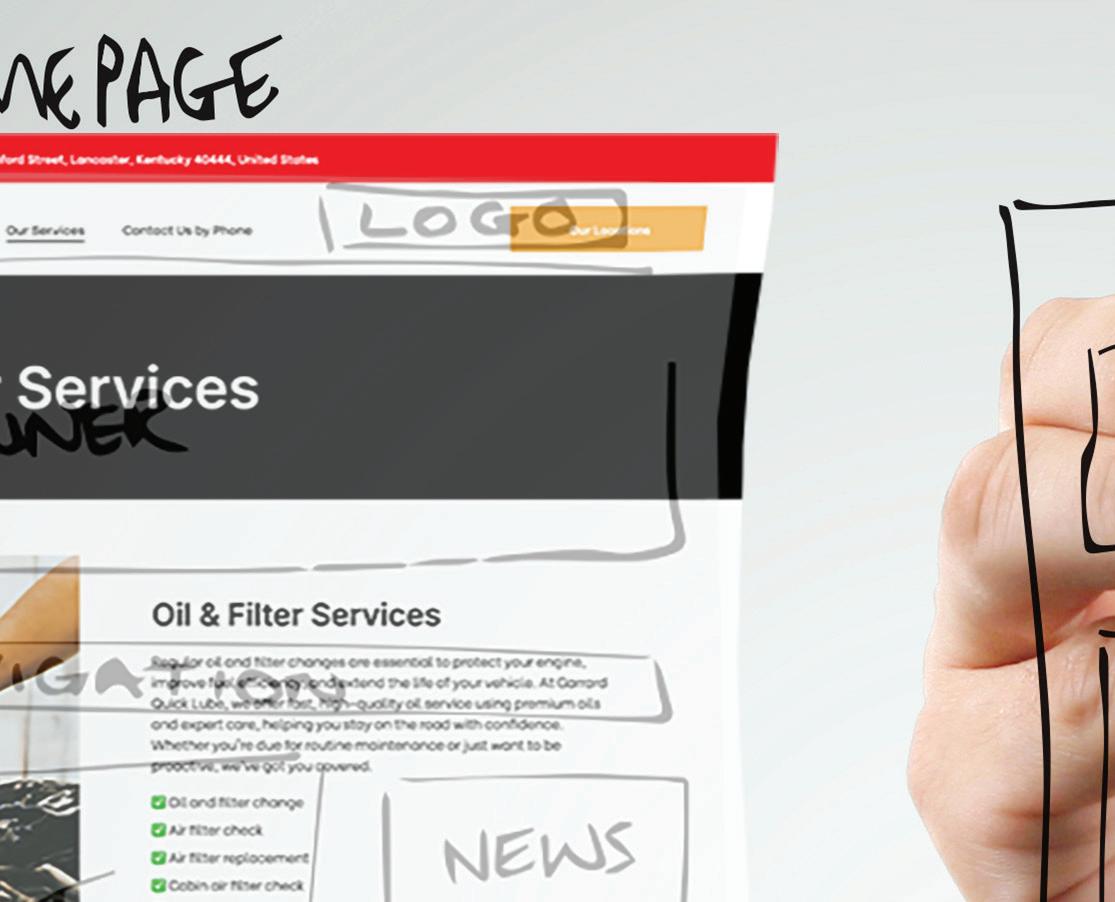
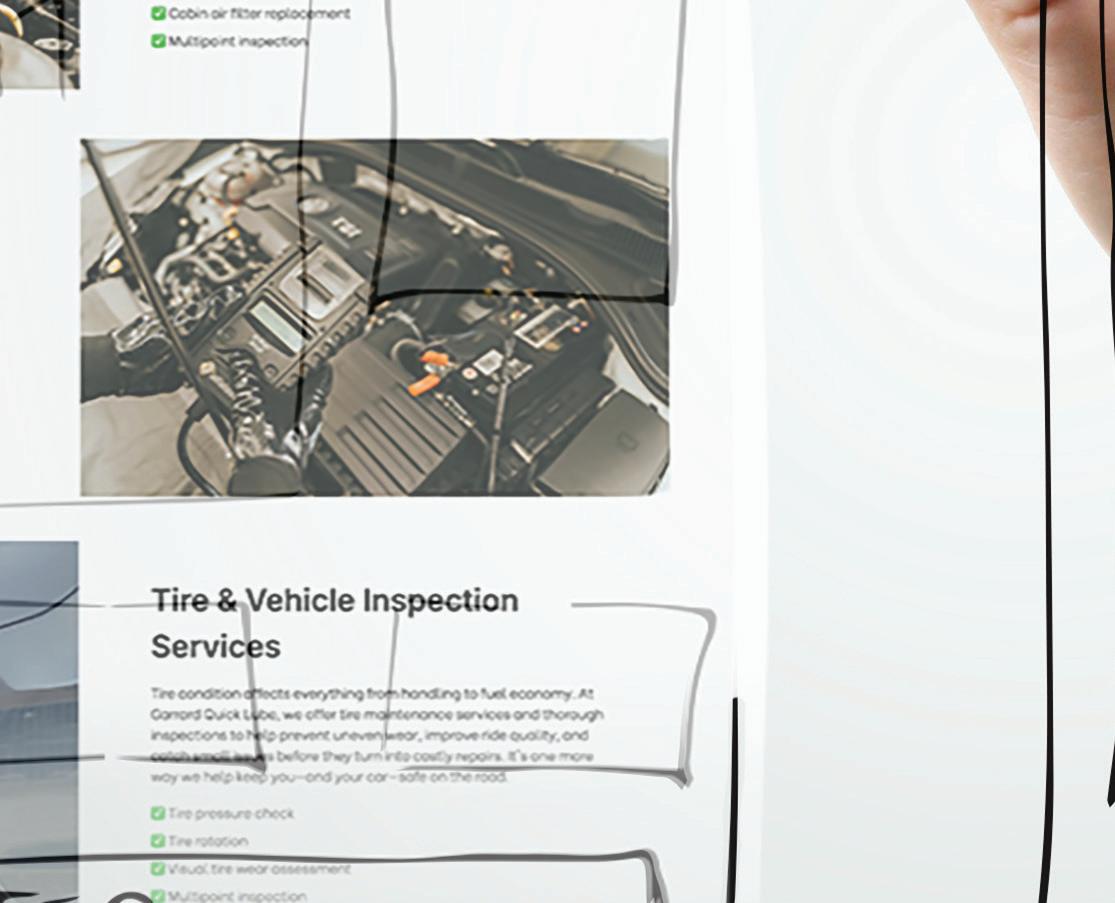
Garrard Quick Lube’s website has all the basics: locations, services, about us, contact us, and a map. Some shops have added sections such as the ability to book an appointment, shop photos, or a blog. Those are a “nice-to-have” for the shop, but often need to be maintained with photo and blog updates.
The shop’s POS provider pitched Coffman on adding a website as an added service. The existing
relationship was a trusted source. The agency suggested a website format, and Coffman was able to adjust a few options to a look he was happy with. The site features selected customer reviews and links to Facebook and Google, where customers can read more about what other customers have to say and interact with the shop.
“My wife handles some of the Facebook content,” says Coffman.
The Aftermath
The shop with two bays and three employees, located south of Lexington, can easily be found on its website and on Google. “I guess I just know that people can find me that
way,” Coffman explains.
What the site doesn’t offer at this time is a way to track customers who come in from the website. Coffman does track customers who come in through text-messaging programs and other campaigns.
Garrard Quick Lube has had its website up for about a year. It is a benefit to the shop, but difficult to quantify.
“I was going to cancel it, then they dropped the price,” Coffman says. “That’s the reason I got it.”
If it becomes important to the shop to track site visitors and connect them to customers, there are options its website developer can implement, or the shop can set up on its own.
“When you build a site, there is an endless array of online services and add-ons that make it easy to see where users are coming in from, who they are, and other vital information,” states Steinberg.
The Takeaway
Direct results from the investment may take time, but it is good branding and useful to have at least a basic website. Customers can look up the shop, find its location, check hours of operation, and confirm the services offered, among other actions. A shop has more control over what appears on its own website than its Google listing, or even a page on social media.
The website ties into the shop’s offering by providing information.
“Your online presence is as important as your in-person presence and trusted presence on social media,” Steinberg tells NOLN. “It may not seem like it’s having a big effect on sales, but it is.”
Steinberg notes that websites, especially mobile-friendly sites, will be important in the future, as “the vast majority of generation Z and beyond use AI and social media to search for services.”
The website feeds the data on AI and social media. “It’s a huge engine of discovery for your business,” Steinberg states.
Maintain Your Margin When Costs Rise
When costs increase, many operators immediately look outward. But the best response usually starts inside your own operation
THERE ARE SEASONS IN OUR BUSINESS
Scott Hempy leads the team at Oilstop Drive-Thru Oil Change and Happy’s Drive-Thru Car Wash. Oilstop and Happy’s are rapidly growing their footprint of oil change and express car wash locations across the West Coast, combining convenience with an outstanding emphasis on guest experience. Prior to Oilstop & Happy’s, Scott was the founder and CEO at Filld, a SaaS-based software solution for last-mile oil and gas delivery companies. He was recognized as a member of the Forbes 30 Under 30 class of 2016 for starting Filld.
.COM
when growth comes easy. Costs are stable, price increases are normal, and growing car count can cover a lot of mistakes. Then there are seasons like this one. Oil moves up rapidly. Labor only gets more expensive. Insurance renewals come in higher than expected. Parts and supplies keep creeping upward. Suddenly, small inefficiencies that once felt manageable begin to ma er a great deal.
When costs rise, many operators immediately look outward. They blame the market, the supplier, inflation, or the competitor down the street. Some of that may be fair. But the best response usually starts inside your own operation. Rising costs have a way of exposing what was already weak.
The first place to look is waste. Waste is rarely dramatic. It lives in small daily habits. Too much product used on routine services, poor inventory controls, or unnecessary overtime. It can look like rework caused by preventable mistakes. Slow bay transitions that require extra labor hours to produce the same number of cars. One missed detail may not seem important, but multiplied across hundreds of vehicles and many weeks, it becomes expensive. We recently discovered that our team at Oilstop was flying through the brake part cleaner. It wasn’t because they were trying to be wasteful, but because they were using it for all undercarriage cleaning. A simple change can yield significant savings when you pay attention to waste in your business.
The second place to look is productivity. Margin pressure does not always require cutting hours. Often it requires getting more from the hours you already pay for. Is the team positioned well during peak times? Are responsibilities clear? Is the service flow efficient, or are team members making extra steps all day
long? Have you trained for speed and consistency, or are you hoping experience alone will solve it? Better systems often create better margins without reducing service.
Next consider pricing discipline. Many operators avoid price increases too long because they fear losing guests. That fear is understandable, but delayed pricing decisions can quietly do real damage. A thoughtful price adjustment, paired with clear value and a strong guest experience, is often better than slowly eroding profitability month after month. I meet many operators who haven’t raised their prices in years. While scary, price increases (within reason in your market) are important to value your service properly. It can allow you to make sure you aren’t cutting costs where you shouldn’t, like hiring great talent to serve your guests. Guests will notice price, but they also notice trust, convenience, friendliness, and confidence. Price is only one part of the decision.
Lastly, protect retention. In a rising cost environment, replacing lost guests is your most expensive cost. Marketing to attract a new guest costs more. New competition can be louder. The cheapest guest to acquire is always the one already in your bay today. That means the greet matters. The service quality matters. Accuracy matters. How the guest feels when they leave your bays matters.
There is no magic answer when costs rise. Even the best operators do not solve it with one bold move. They will solve it through dozens of small disciplines practiced consistently. Better controls. Better training. Better pricing decisions. Better guest care. When the environment gets harder, fundamentals matter more. And operators who stay sharp during difficult seasons usually come out stronger on the other side. Keep up the hard work serving your guests with excellence.
SCOTT @OILSTOPINC
SCOTT HEMPY
PHOTO: SCOTT HEMPY
NOLN is delivered free to qualified quick lube and fast-service professionals—USPS periodicals rules require us to update subscriber records regularly. If you haven’t renewed recently, please take a moment to confirm your information. It keeps your issues coming without interruption.