
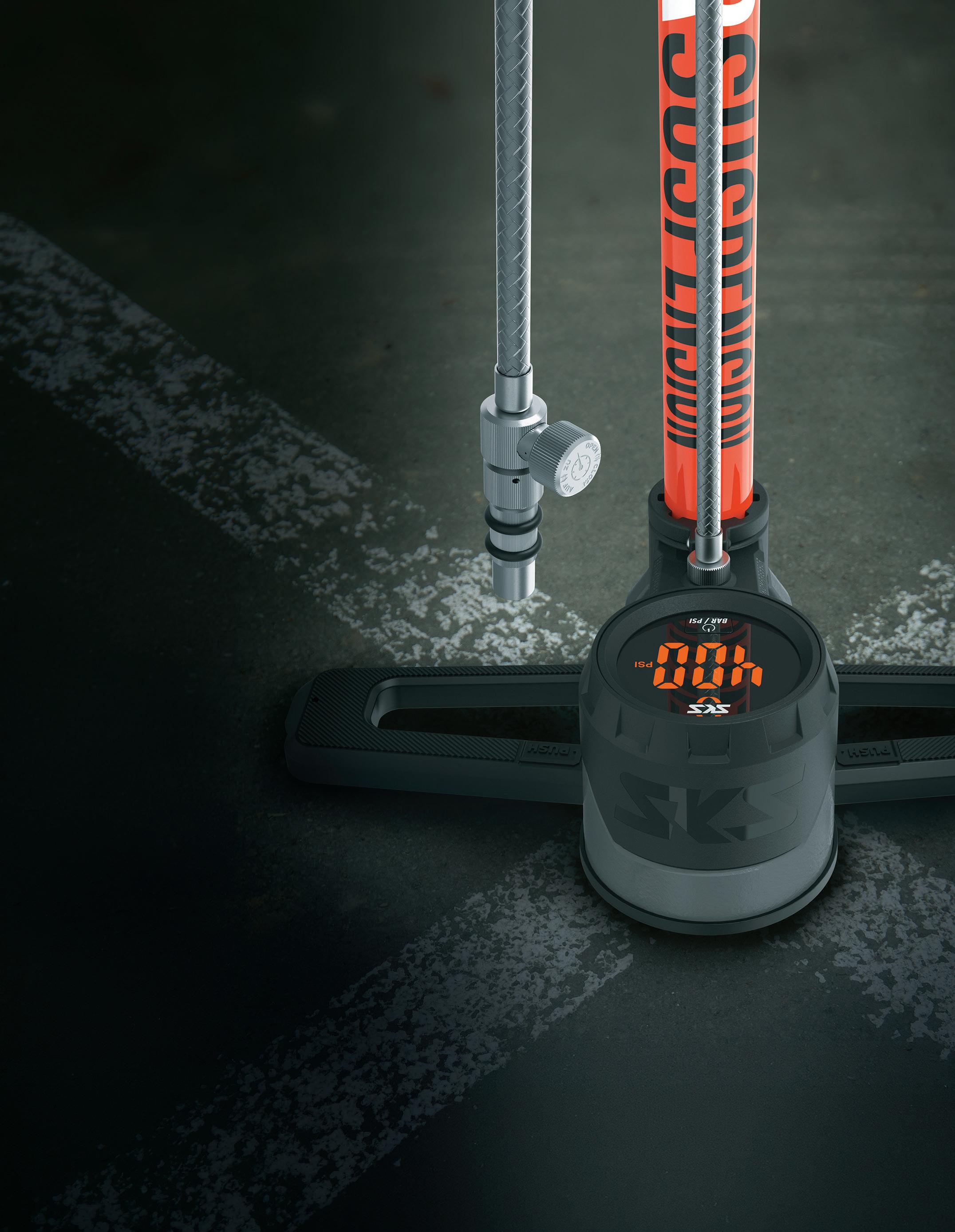

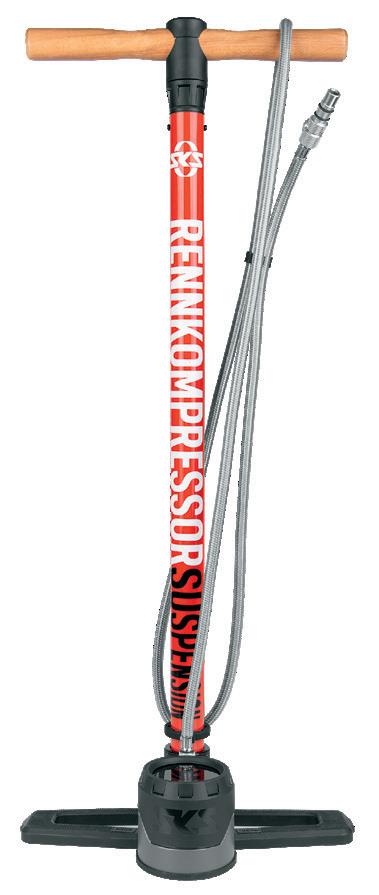
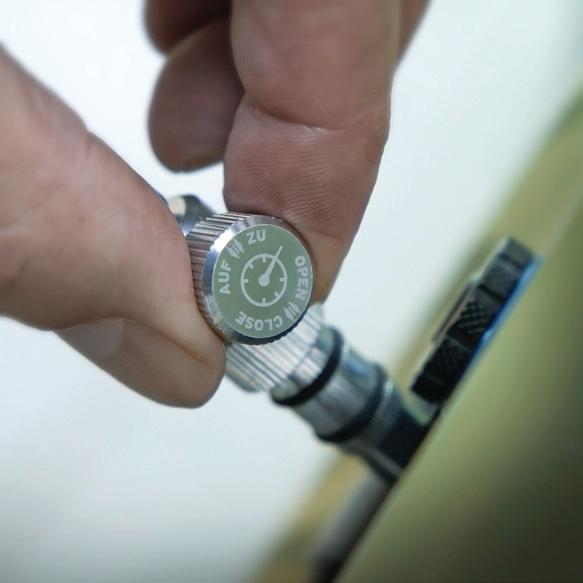
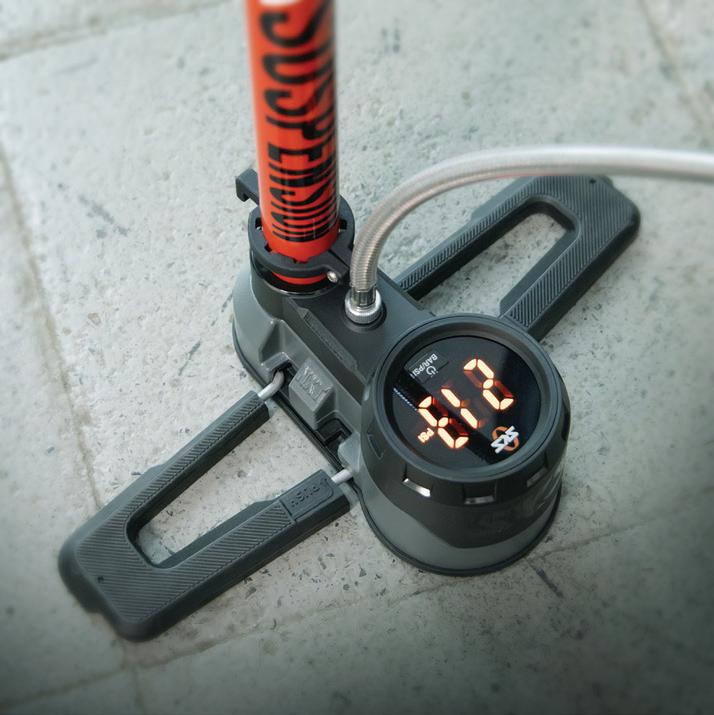
The RENNKOMPRESSOR SUSPENSION delivers maximum power for air suspension, with up to 400 PSI, a highly accurate digital gauge, and precise pressure fine-tuning via an adjustment screw. It features a secure Schrader valve with a 2-stage screw fitting to prevent any pressure loss during removal.
Extra Long, rubberised steel braided hose
Rubberised, non-slip aluminium base
Beech wood handle
Made in Germany

PEAK sales season and the road racing calendar are both now well underway (that’s a reference to our handy CIN Tour de France wallchart included free with this issue). Meanwhile, the powers that be have released the third CWIS (Cycling and Walking Investment Strategy).
If CWIS is news to you, then here’s a quick refresher: since 2015, thanks to the Infrastructure Act, the Secretary of State for Transport must update Parliament on what progress has been made in the cycling to walking investment strategy for England (rather than largely ignoring cycling). So, here’s an example of something that has got better since 2015.
The latest CWIS talks about empowering local authorities, long-term strategic plans and creating safe networks around schools. The aim is, by 2035, for 55% of all short ‘stages’ in towns and cities to be walked or cycled, with £4.5 billion of investment promised. The announcement also revealed that cycling numbers are shifting in the right direction, up 15% since 2013. It might be tough for the industry to swallow that statistic, coming as the market continues to be tricky and probably doesn’t feel as good as it did a decade ago.
On that topic, there’s been another administration of a significant UK distributor – Saddleback. Our thoughts are with the employees of said business and also with those companies who have been grappling with the prospect of related unpaid debts. Combined with Porsche’s recent withdrawal from the eBike market, and Frasers Group’s acquisition of Frog Bikes, there is clearly still upheaval in the market – perhaps a good enough definition of the ‘new normal’ as anything.
You could argue that the decade’s rise in cycling has been in part due to the advent of cycle share schemes, which have become more embedded in the UK (and not just London) over the last decade. Either way, here’s to greater cycling numbers, may they translate to a more robust and sustainable cycling industry… only with a little less upheaval, thank you very much.




We’ve once again reached into the dusty vaults of CIN Towers to see how the market (and retailer perception) has evolved over the past few years on one of the most crucial questions of all: “Which demographic do you believe holds the greatest opportunity to grow cycling in the near term?”
The winners
Dealers increasingly see the traditional market – ‘Sports cyclists and existing enthusiasts’ – as delivering potential for growth, up from 21% in 2021 to almost a third (30%) in 2026. Compounding that view, fewer dealers saw the potential in ‘those entirely new to cycling’, down significantly from 36% in 2021 to 20% in 2026.
Holding steady
It’s pretty clear the trade doesn’t see students as a big growth opportunity, with little change in the past half decade or so – 7% in 2021 and 5% in 2026. Female riders has likewise remained fairly static as a category expected to deliver growth in cycling, but at a much more respectable level: in 2021, 36% of UK bike dealers saw it as a key demographic for future growth, with 30% agreeing with that in 2026. The over 50s has seen minimal change too; in 2021, 30% of dealers viewed the category as a key demographic and this year that rose to 35%.
The losers
There’s a robust assessment of the logistics and fleet operator potential. In 2021, a modest 11% thought that demographic had interesting potential, but by 2026 that positivity has hit the floor. Maybe that’s no big surprise, with leading lights in the sector like Zedify and EAV falling into administration in recent years presenting an unfavourable view of the market, but an overly glum assessment surely?
Even more eyebrow raising, less dealers saw the potential in those drawn in by electric assistance, which saw a sizeable fall, from 72% in 2021 to (a still very respectable) 55% in 2026. Surely here we are seeing the effects of a maturing market – those being attracted by eBikes may already have got one, so naturally there is less potential for this category to grow, arguably. Nevertheless, 55% of dealers sighting those attracted to cycling by eBikes as a growth driver remains hugely significant.
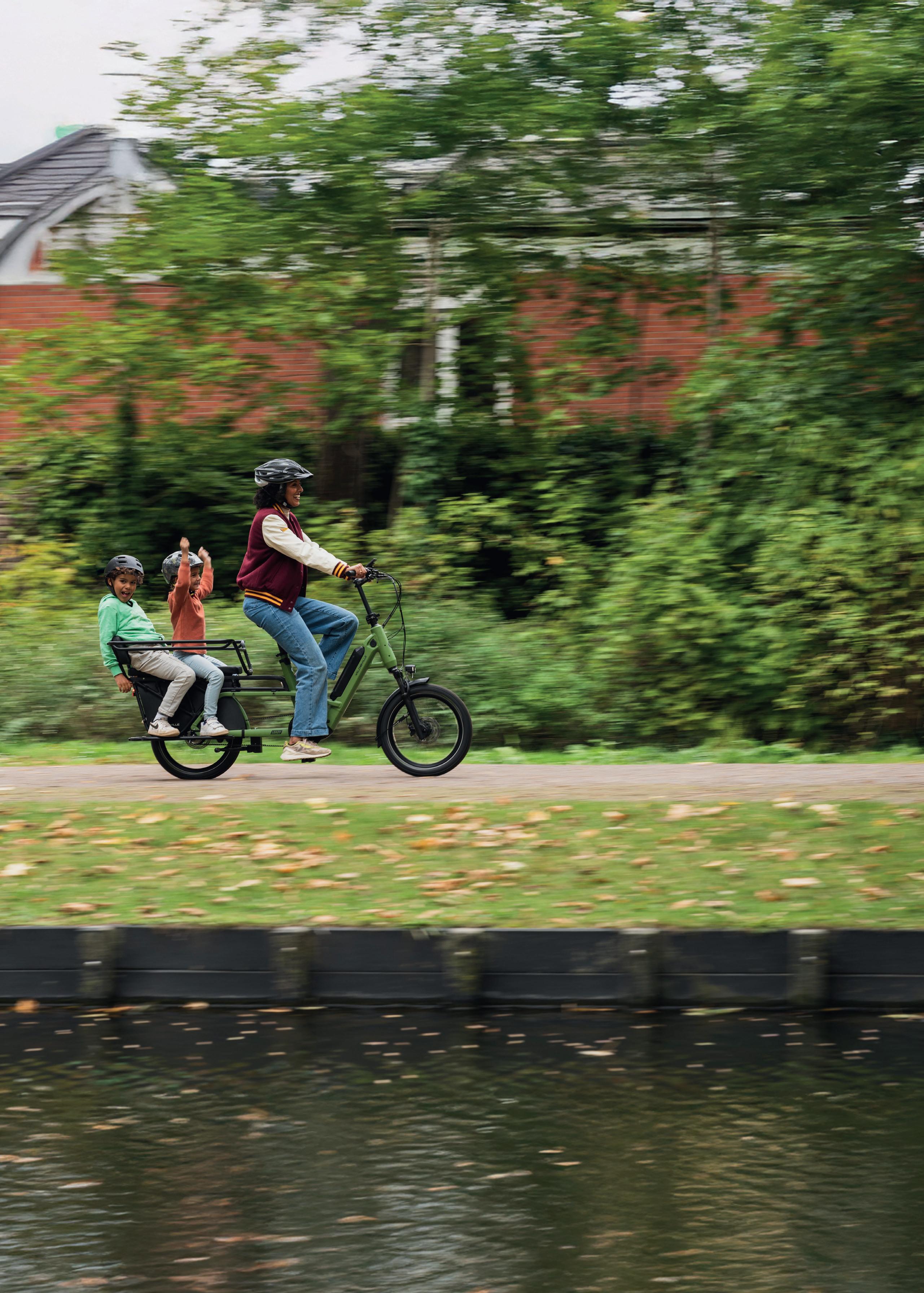
Whether it's children, shopping or work materials – our LOADY turns two wheels into a real transport miracle. A powerful Bosch motor, stability and well thought-out solutions combined in a bike fully configurable that open up new possibilities for your everyday life and beyond.
From £3399 DESIGN &
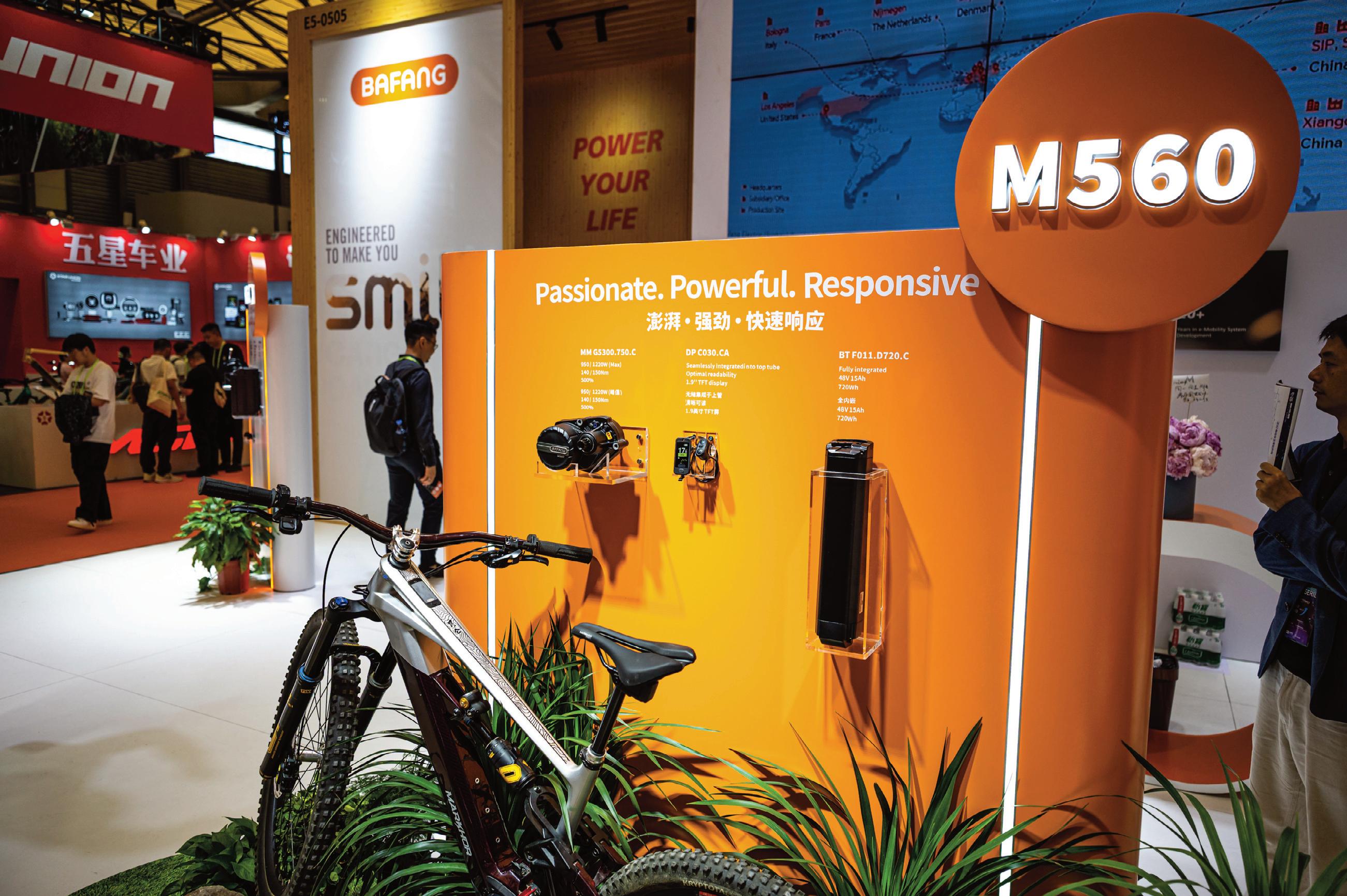
Touring the Bafang factory for CIN, Chris Keller Jackson gets an insight into how one of the early adopters of eBike technology has forged a route as a trusted partner to many companies, providing certified, tested and dependable ecosystems to many of the names you know within the cycling industry. He looks at how one of Bafang’s latest innovations in drive technology is not a motor, it’s a 5 speed automatic hub that pairs with a mid motor to give increased flexibility to cargo and workhorse bikes…
May 2026, and after a catchup with Bafang at China Cycle, in a prominent position in the first eBike hall, I’m off to Souzhu to see their plants, the R&D facility, motor manufacturing plant and battery assembly workshops.
Bafang took me on a deep dive into its manufacturing plants in Suzhou, Eastern China to show that there is more to this business than rear hub motors. Future technology is being developed here that may transform how we look at drive systems.
Whilst the likes of Avinox and Bosch continue to play the horsepower game with eBike drive systems, another of the big players, Bafang is meeting the needs of its customer base and forging its own solutions along the way.
Bafang was one of the first eBike system manufacturers I rode (about 20 years ago!), though back then, they
were known as ‘8Fun’. The company started in 2003, changing its name to Bafang (to be more serious) in 2015. Bafang means ‘all directions’ on a compass, the meaning behind the 8 in the previous ‘8Fun’ name. It now has 11 offices across the globe plus four manufacturing facilities, with the primary sales markets being Europe and North America. It currently has a production capacity of six million units.
You probably think of Bafang just for rear hub motors attached to the cheaper end of eBikes and, to a certain extent, you’d be correct in that assumption. The ethos behind the brand goes way beyond ‘economic rear hubs’ and the business has three pillars, Stable Delivery, Optimised User Experience and Convenient After-Sales Service. If you look deeper into that ethos, Bafang talk about the ‘Power’ that underpins the brand; Technology, Quality, Product,
Service and Brand.
Perhaps the epitome of Bafang’s offering against its three pillars is one of the brands they supply systems to. Resilient, dependable, reliable, out in all weathers, long periods of use, simple to operate, integrated technology – sounds like a bike dock solution? Sounds like Lime Bikes, to whom they supply their system solutions.
We can’t not talk about safety of eBike systems. We have all heard and seen about battery damage and catastrophic bike issues associated with fires. Unfortunately you will always find products and DIY kits that either remove justifiable restrictions, or create hazards and accidents that destroy consumers homes. Bafang systems integrate failsafes into their battery management circuitry, temperature sensors, overcharge sensors, short circuit protection and other products that help prevent
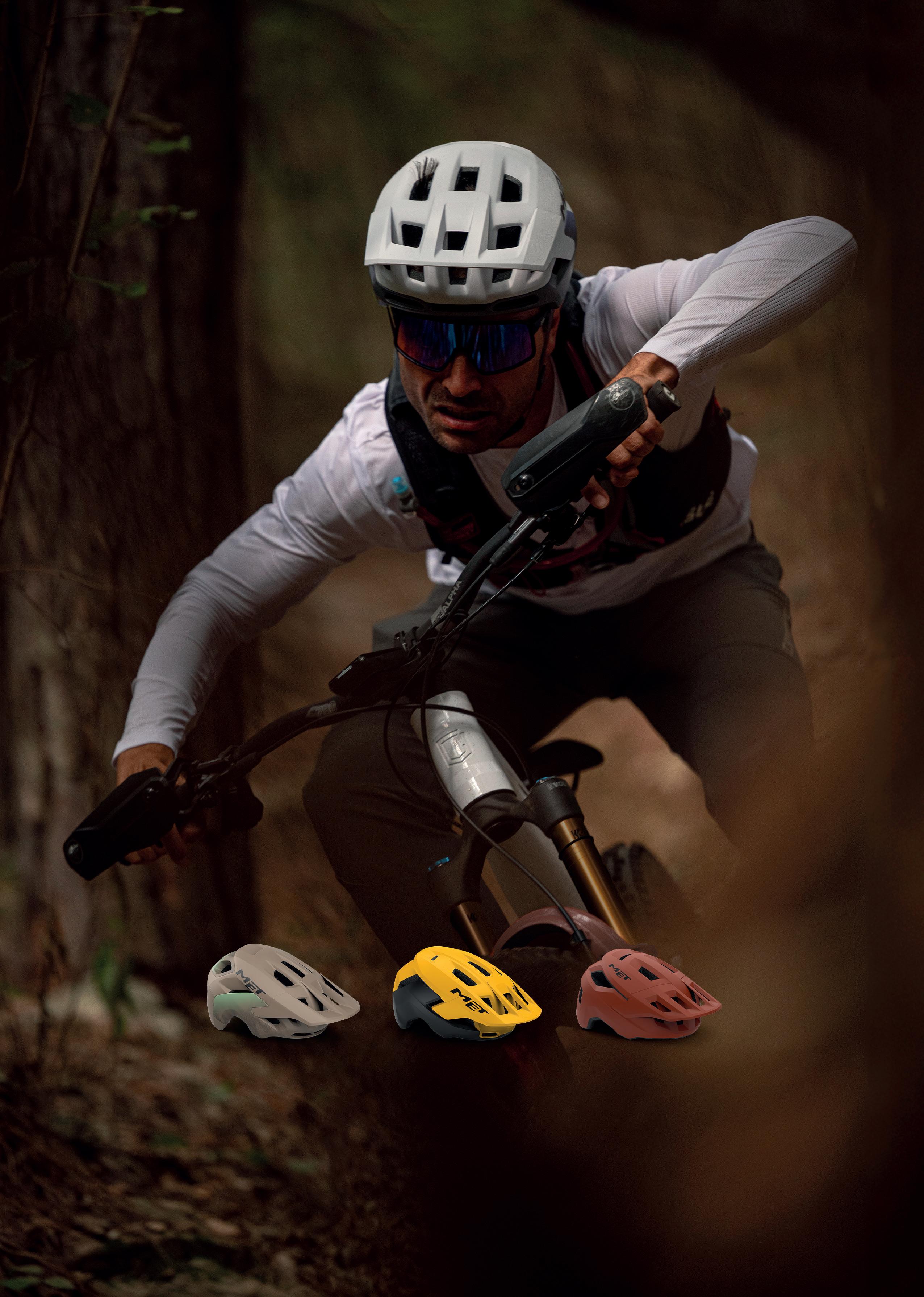
MET'S MTB range is designed to meet the needs of riders tackling every form of o -road terrain. A new frontier of protection, innovative design, and optimised ventilation connects Revo - engineered for the most demanding riders, Terrae - opening up a new dimension of trail riding and the accessible Shelter - built for adventurous outings.
such catastrophes, that is why they recommend and encourage their customers to embark on a ‘whole system’ approach.
In addition (and I asked that question on your behalf), Bafang builds territoryspecific soft and hardware to help prevent cheat devices from altering their carefully developed systems, in an effort to maintain regulatory speed and wattage restrictions in that territory. This forms an important part of the modular and territory-specific approach.
Their approach to modularity offers some real benefits to the customer too, a reduction in SKUs to have to choose from and to stock, a more streamlined selection of products, everything integrated using the CANBUS data protocol, two basic form factors (hub and mid motor) and a logical approach to building an integrated system. Modularity makes it easy to choose the components you need, knowing that whatever you choose from the Bafang menu is designed to work together. Bafang does however provide a fully bespoke service
should you need it.
Bafang has about 1,000 employees spread across the world, and all the people we saw, whether that was in design, testing or manufacturing all have an ultimate aim of quality. I feel it’s important to note that Bafang does not head for the lowest cost to compete, they innovate, produce territory specific solutions and have developed modular components to be cost competitive whilst satisfying their customers needs. Going back to Lime, these bikes get a lot of abuse, they just work and are simple to get on and ride, when the app is unlocked. Such integrated solutions with very simple human interfaces, clever sensors and easy ride characteristics are no accident. Lime and Bafang worked together to create this synergy.
It’s not just rear hub motors, and it’s not just Lime however. There are many established brands you’ll be aware of, UTO (ex Eovolt), Estarli, Volt and ADO are amongst the 80-plus well respected brands that use Bafang GVT products.

The invite was primarily to discover the latest innovation in Bafang’s Gear Variable Transmission (GVT) range. I recently tested an eCargo bike from ADO for Cycling Electric and found that the 2 speed auto hub was excellent. That was a Bafang model and integrated well with the bike and controls, what was being showcased was a bit of a departure to a powered rear hub with gearbox. The RG E510.D is a 5 speed hub, both automatic and with manual control options, it’s electronic shifting but not ‘powered’. The design is intended to mate with a midmounted motor and through chain or belt drive, you have a fully featured eBike with internal hub gears, clean, adjustable and maintenance friendly. I’m told that this hub adds about two kilos to a bike, but as an integrated system, where the motor does its thing, and the gearbox hub does its thing, this adds to the modular approach, without trying to pack everything into one unit, with all the associated heat management and
packaging issues. The hub is ‘lifetime maintenance free’, and should you need to replace the gear module, it’s a 10 minute job and does not need a wheel replacement, the gear module slides out of the wheel cradle.
Bafang is not just a motor manufacturer, they can provide every component of the eBike ecosystem, displays, HMI’s (Human Interfaces), sensors, wiring looms, motors, batteries and geared hubs. This is up to the customer, though there are advantages to taking the package, not just individual components.
After Service is a key element of the Bafang ecosystem. When you take that integrated option, the Dealer Direct Service program, you get direct access to dedicated support, tools, spare parts, diagnostics and logistics. The full system approach provides cloud-based data, becoming a more integral part of the Bafang family, for the customer, and the consumer, who also ultimately benefits. For the European Market there are various support centres, the UK’s Bafang agent is EMCB.
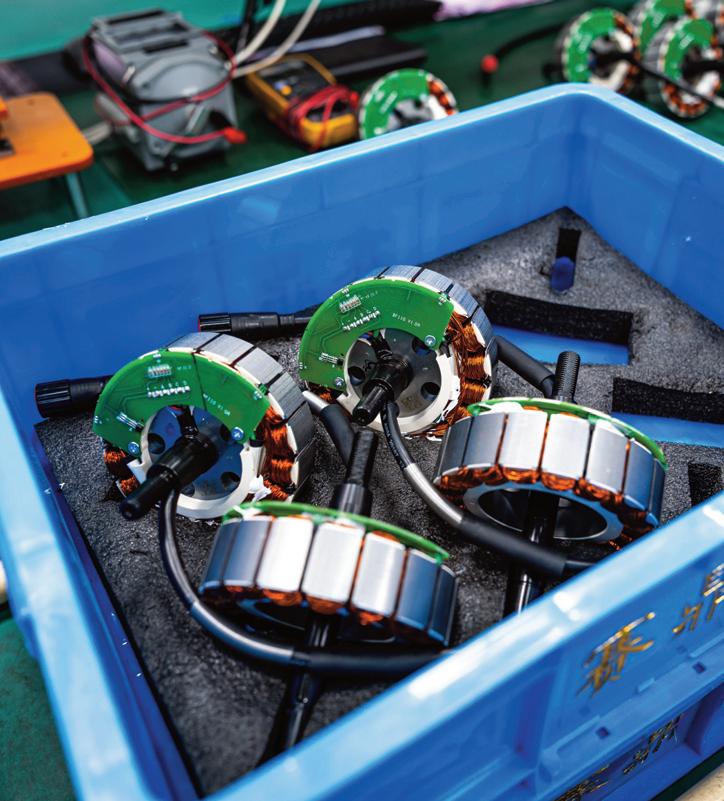
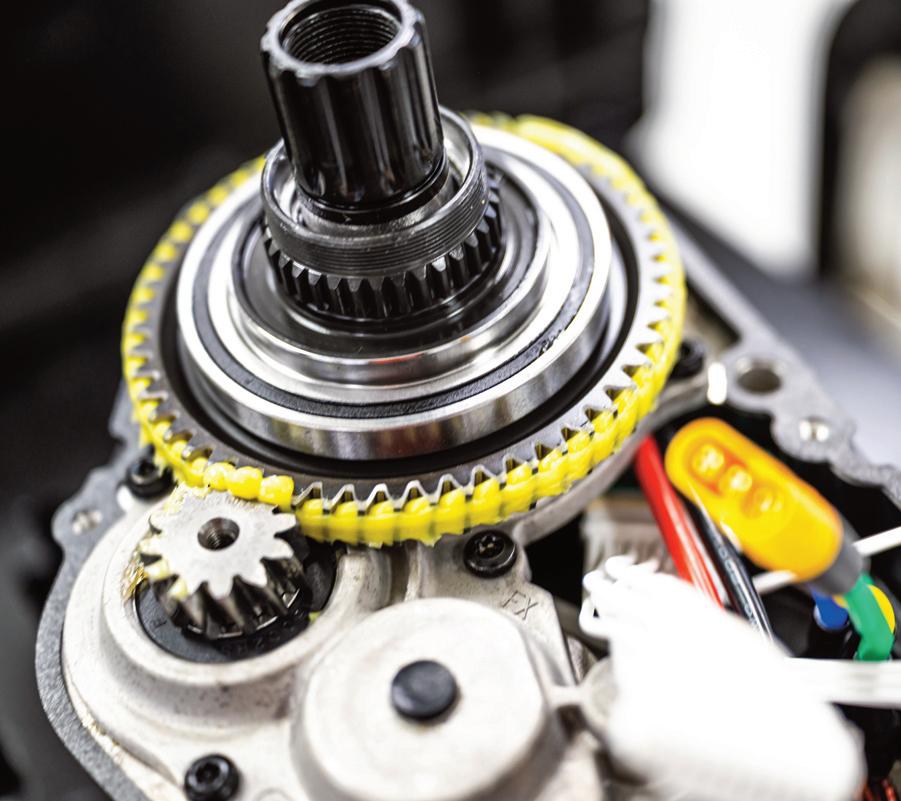
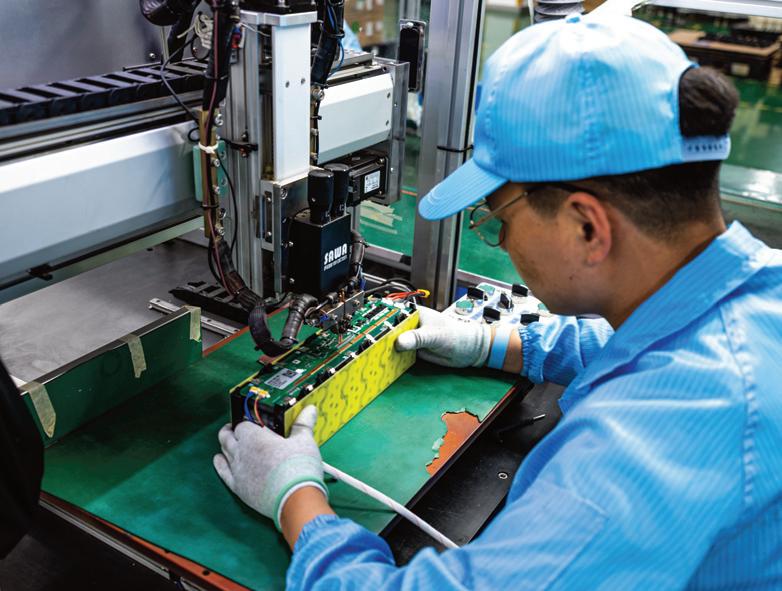
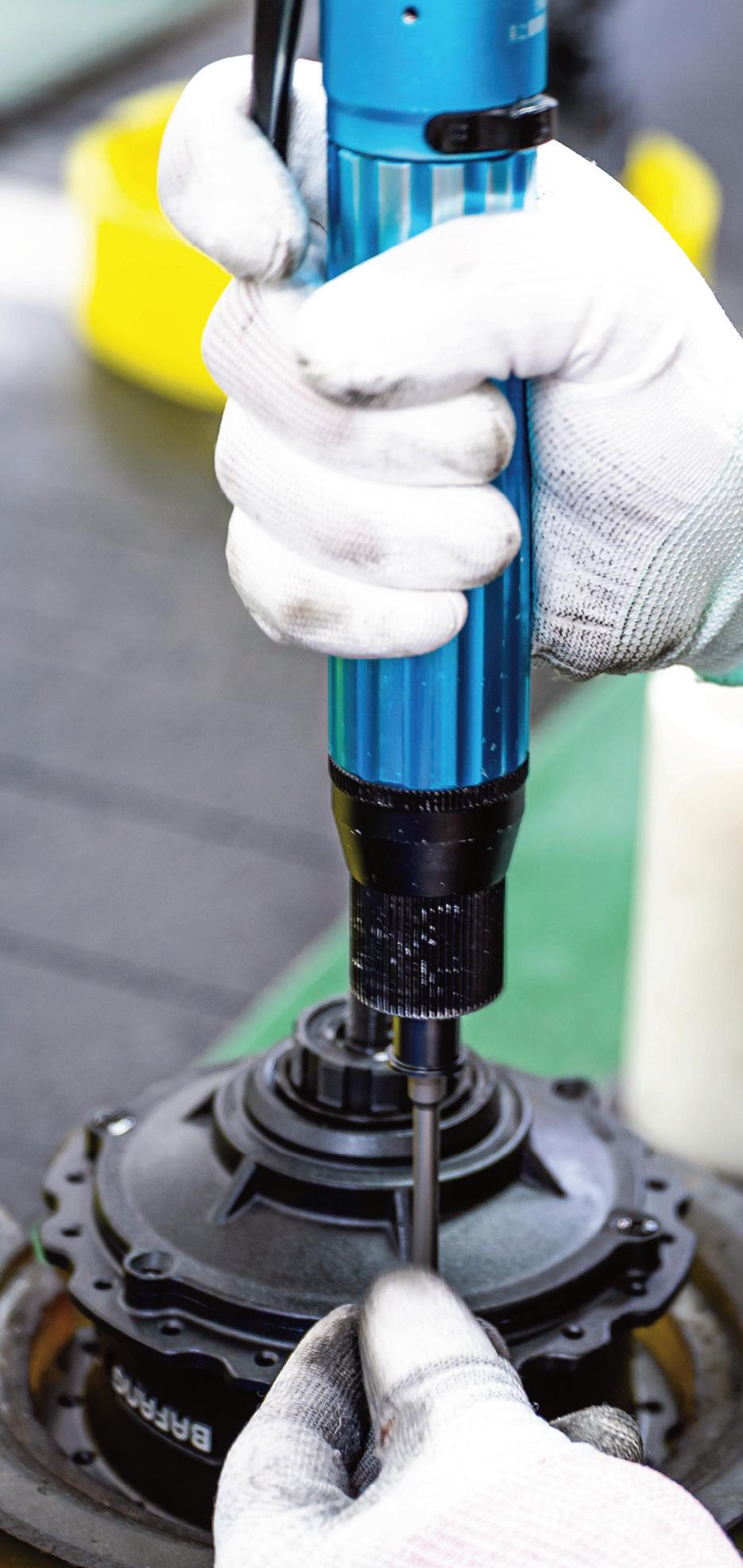
Onto the manufacturing approach
Bafang may be one of the elder statesmen when it comes to eBike drivetrain design and manufacturing, but its facilities are cutting edge.
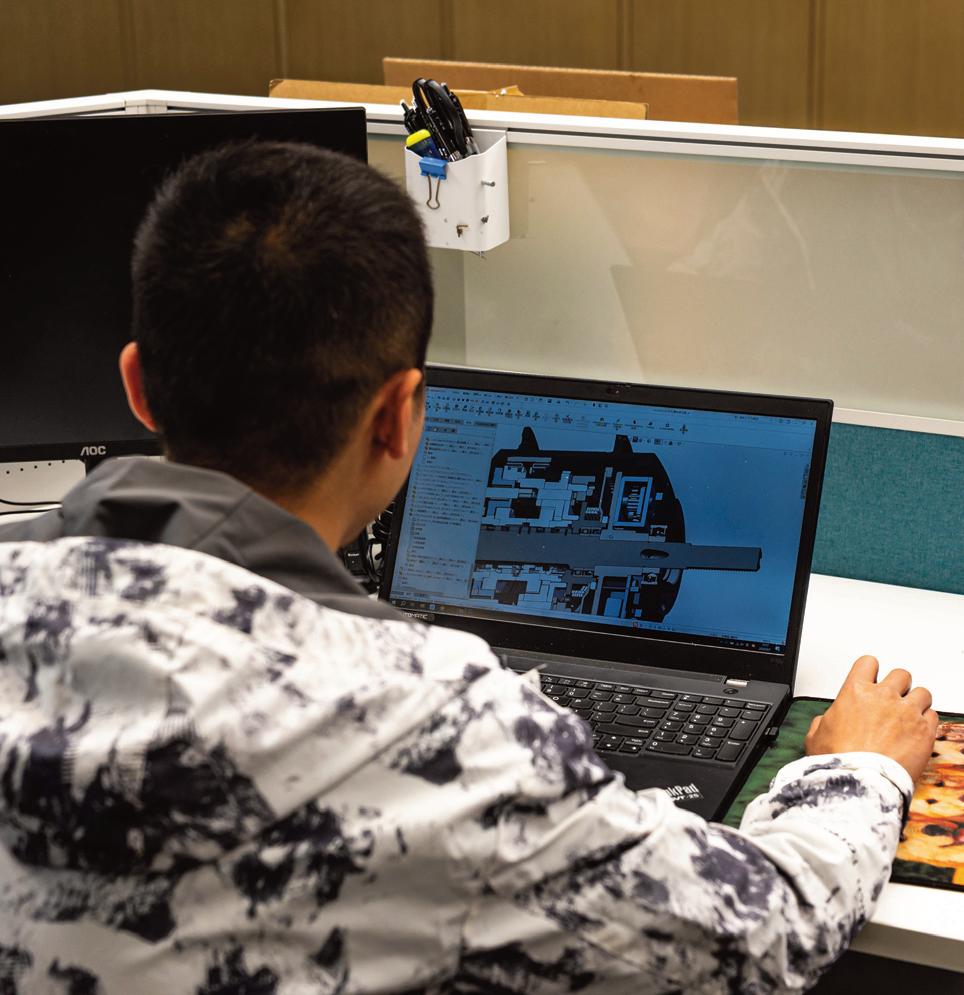
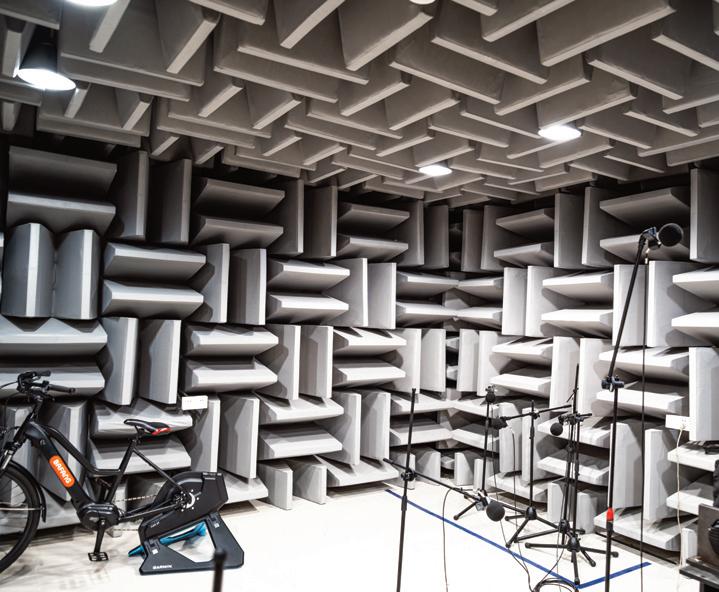
We see Hardware Designer, Bin, hard at work in the R&D hub reviewing the engineering drawings for the latest 5 speed hub. One of the fascinating parts of eBike manufacture is the environmental aspects of the design, namely how loud the system is, how the system impacts other electronic devices, causing interference, and how the system copes with ‘real life’.
For this, the facility has an impressive (and eerie) anechoic chamber and a radio interference booth, both important parts of R&D to Bafang. They even fully submerse the motors in dirty, salty water to mimic adverse conditions, and not just once.
Of course, Bafang also tests individual components for accuracy, they have a number of suppliers who provide bearings, castings, fasteners and other core components. Depend-
ing upon the supplier and their relationship, parts are tested in-house, some suppliers provide conformity testing certificates where they take the responsibility for testing and assurance themselves.
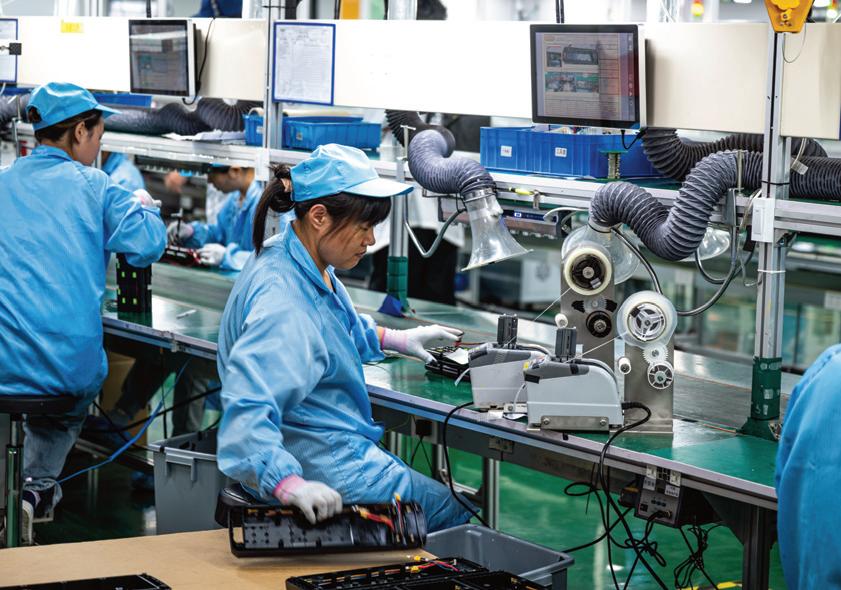
As this is high tech manufacturing in the Far East, Bafang employs a production methodology that centres around the optimal parts of cellular manufacturing, the Toyota Production System and Total Quality Management. These three core philosophies lead to very streamlined and efficient ‘production line’ manufacturing, where production is carried out by machines that perform very specific tasks, as do people interleaved with the robots, and that line only does one product. Also typical of this methodology is the ability for the machines and workforce to quickly pivot to another product line with minimal down time. This dwell time is only five to ten minutes, though the production run of a specific batch can be days.
The core of an eBike system is the
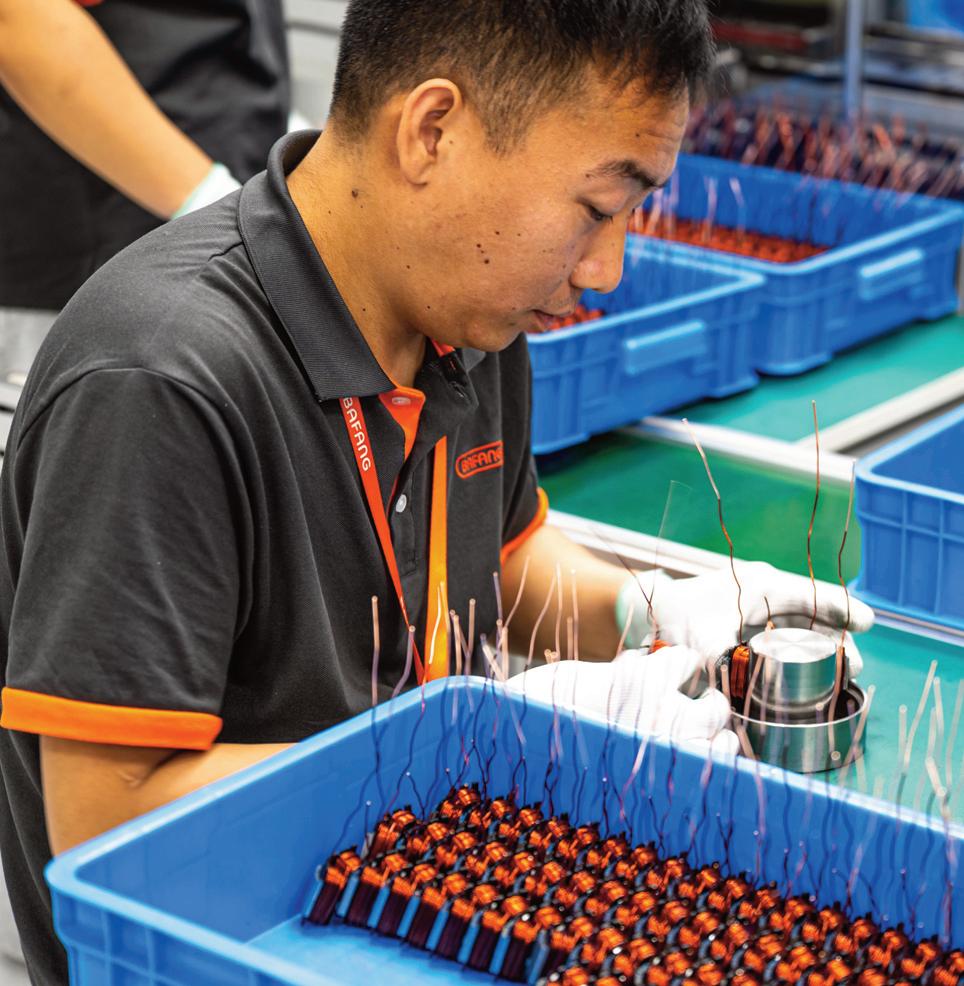
motor, and Bafang performs its own automated winding, in the hub motor we saw being made, the stator (the bit that does not move) has the windings in this case and these are composed of six separate cores, brought together into one stator ring, this helps keep the inertial weight down, allowing the rotor to spin more efficiently. The various gears, axles, controllers and sensors are then built into the housing along with the lubricants and seals to create what we understand as a mid motor. The unit pictured has primary drive gears of aluminium and steel, within an aluminium casting. Quality products lead to longer lifespans.
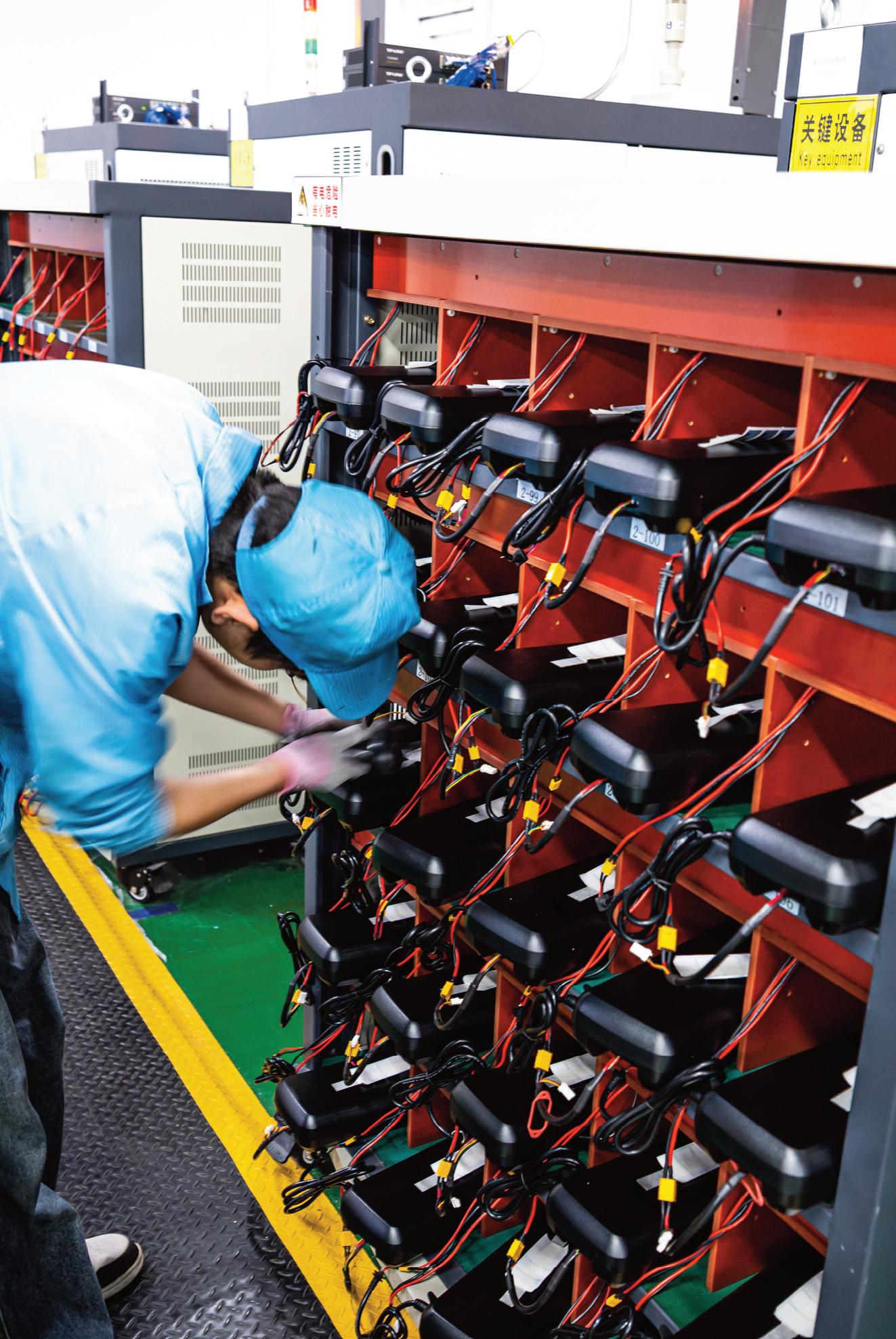
The combined efforts of man and machine are then 100% bench tested to ensure they meet the rigorous standards of production. They are slotted into the system they will eventually form part of to ensure they meet the testing parameters set out by the design team.
On a separate production line we saw one of the first batches of the new
5 speed GVT hub, with automation to fit the internal gears as well as hand finishing of the assembly and fitment to the wheel casings. The design philosophy of this unit, with its slide out core is very customer centric.
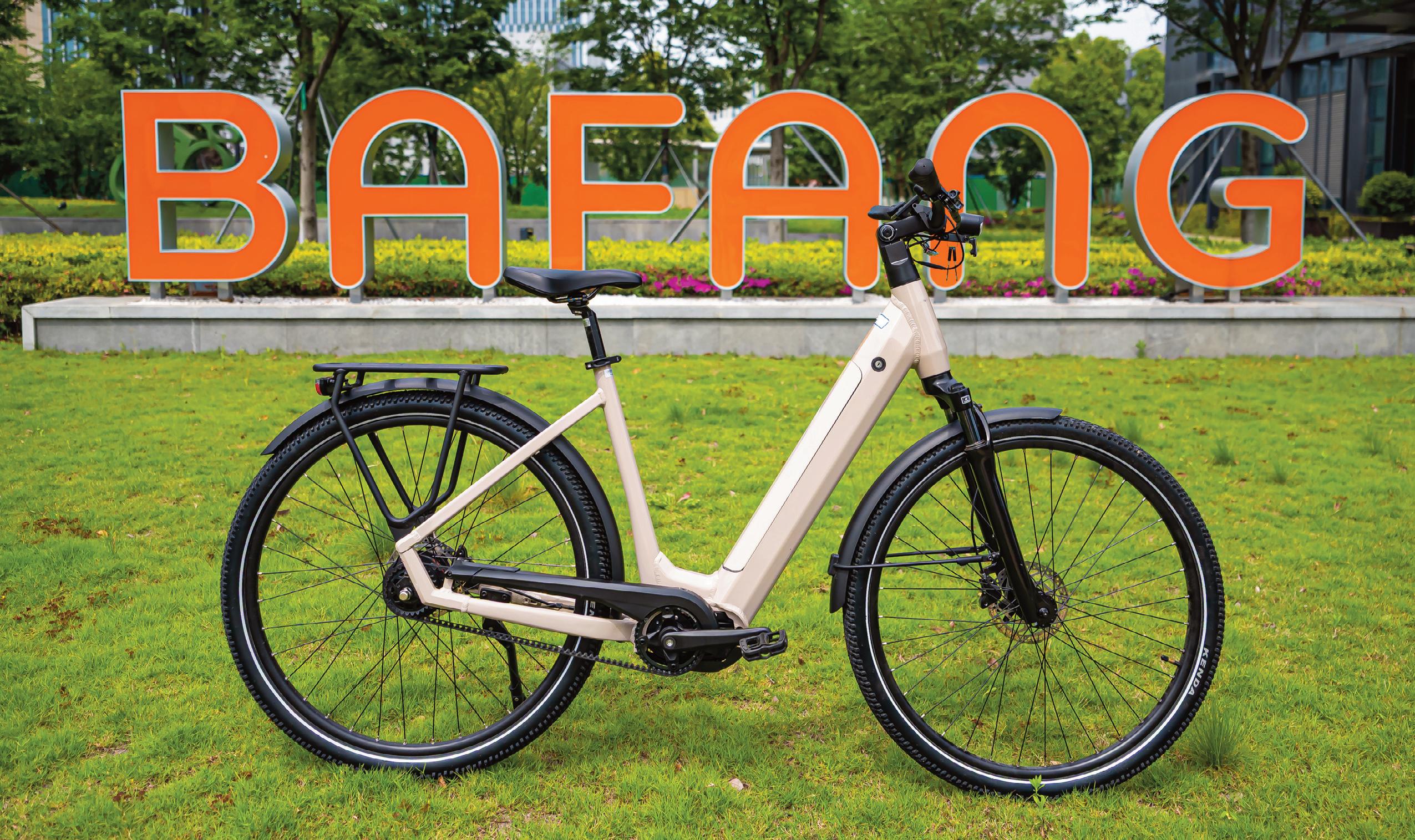
Whilst the rear 5 speed hub was on display at China Cycle, this was only for display. There was an invite to test a Step Through demonstrator around the Bafang site and this was an excellent opportunity to test the different modes and to see how useful the different gear ratios were. As discussed above, there are two modes, automatic – where the technology senses the gear ratio you need, and manual – with a long press on the gear selector you are able to select the gears yourself. Both were excellent with auto being very useful for the hill starts that formed part of the test route. With a belt drive between the mid motor and the 5 speed hub gearbox, this is a very clean and ‘service light’ powertrain.
I’m minded to think that the 5 speed GVT employed here could easily be
worked on to act as an automatic unit on non eBikes too, as I don’t think it requires much power to operate it. Time will tell how Bafang markets this product.
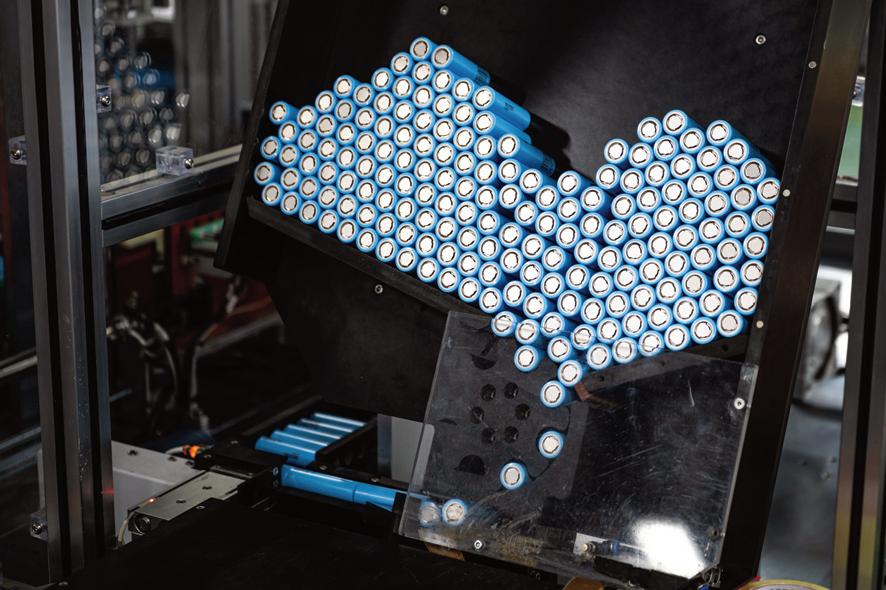
Systems are what Bafang excels at, and whilst motors and gearboxes are the most obvious components, Bafang encases cells to make its own batteries, create the displays, controllers, logic and safety protocols to develop the system approach it is known for. Every component is tested during and after assembly.
When you are choosing a brand to partner your eBike ambitions, you should be considering a brand with experience of the market, quality and safety at the heart of production and the ability to create a bespoke powertrain ecosystem. From seeing the way Bafang create an end-to-end system solution, they should be on your list.
I’d like to thank the team at Bafang for the level of access given in support of understanding the business, and how this system approach is delivered.
BICYCLE TUBES CAREFULLY ENGINEERED TO EXCEED ALL EXPECTATIONS, BREAKING BARRIERS OF TOUGHNESS, WEIGHT AND SIZE
Using a new high-tech thermoplastic elastomer and combined with a unique manufacturing technology Tubolito is capable of delivering very light, robust and reliable bike tubes to their customers
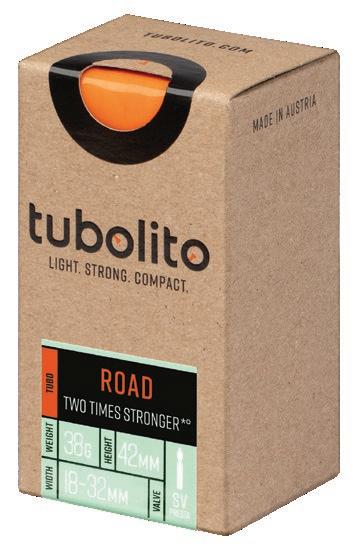
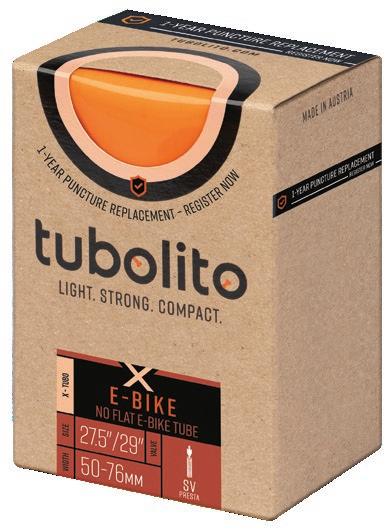
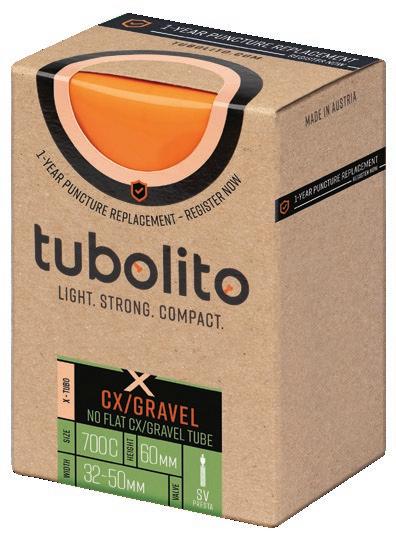
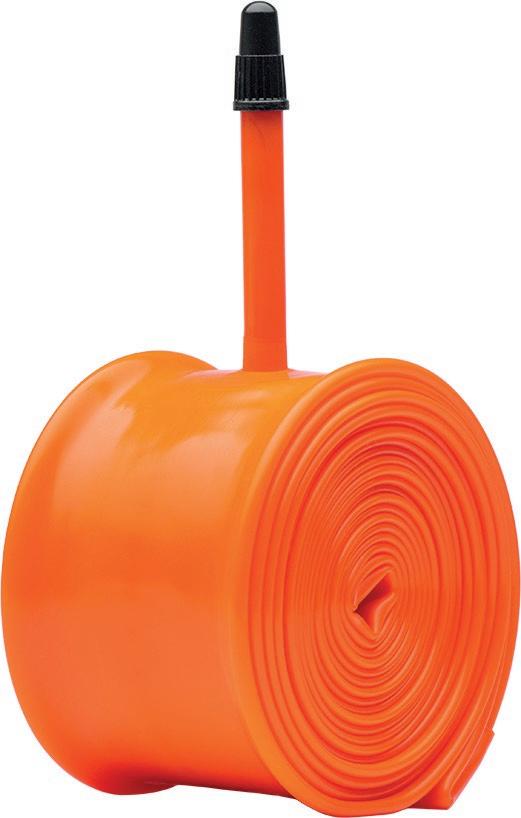
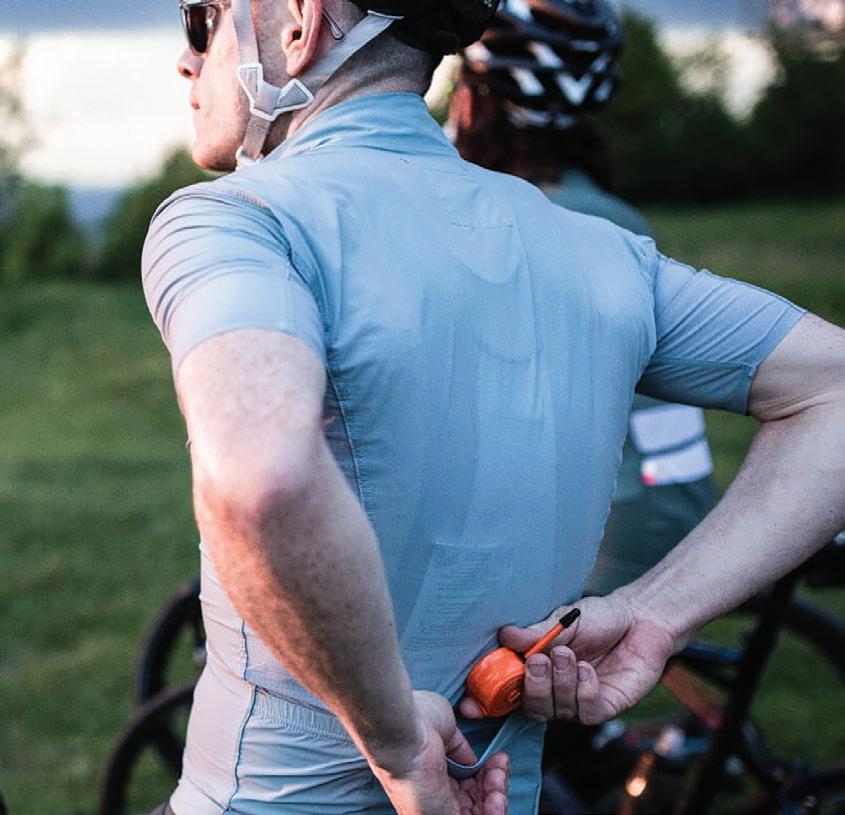
There are many advantages using Tubolito inner tubes on your bike: You easily save up to 100 grams, place emphasis on the importance of regional products and short supply chains (Tubolito tubes are manufactured in Europe) and show customers that your brand is paying attention to details to provide the best overall package.
To find out more about Tubolito and our extensive range of products, contact your area sales manager, email us at sales@bob-elliot.co.uk or call us on 01772 459887
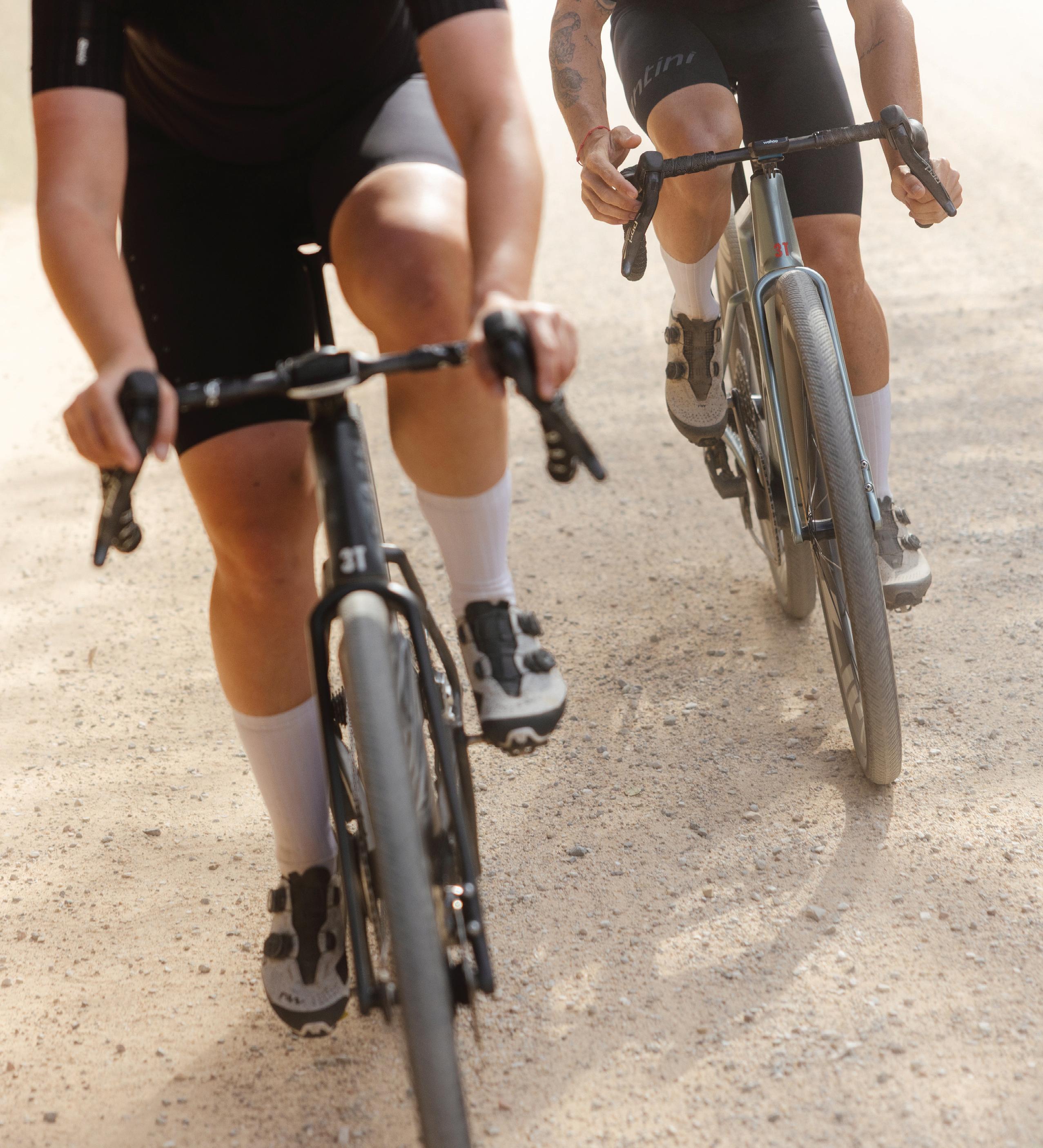
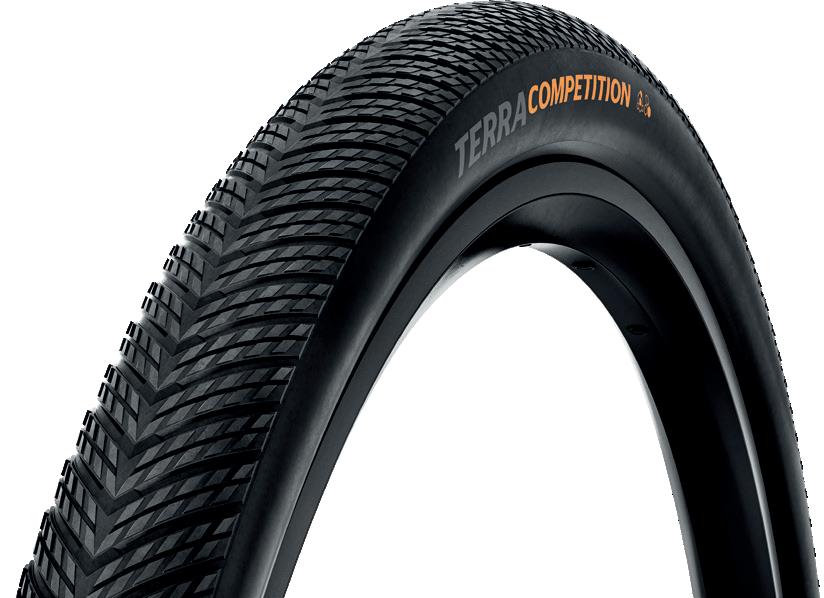
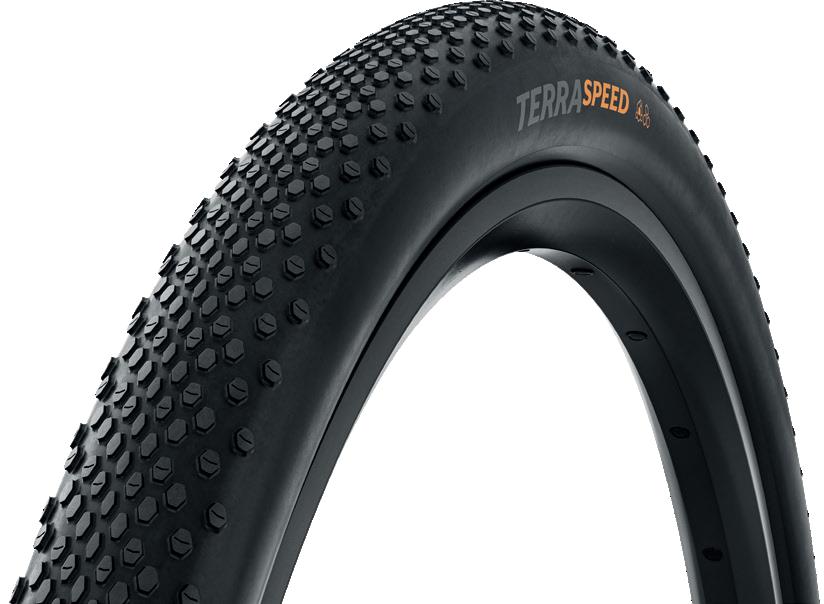
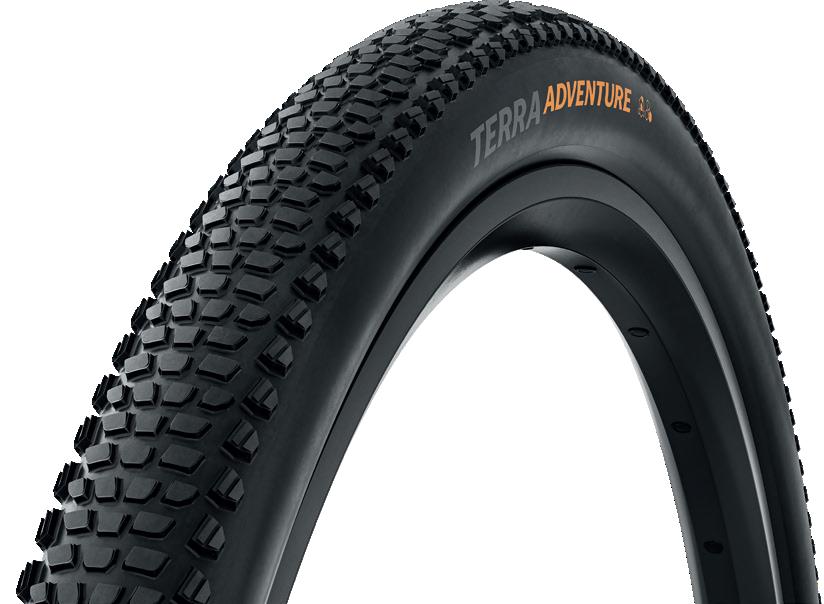
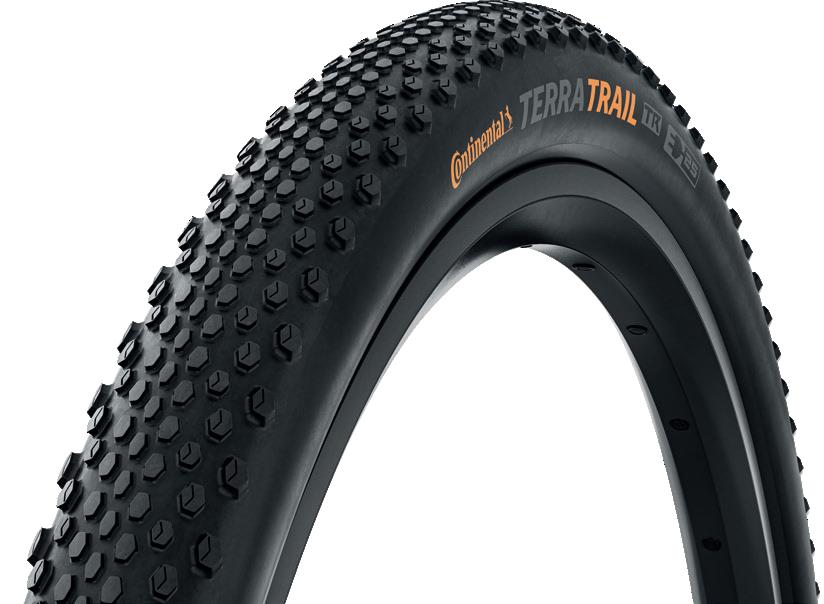
Serving the reliably strong gravel sector of the market, the Terra range from Continental has expanded this year with the Competition tyre…
Back in Feb, Continental revealed it was extending its gravel-orientated Terra range with the launch of the Terra Competition, its fastest gravel tyre yet. Engineered to deliver uncompromising speed and improved aerodynamics for multi-surface riding, the Terra Competition is built for riders who want to push the limits and blur the line between road cycling and gravel exploration.
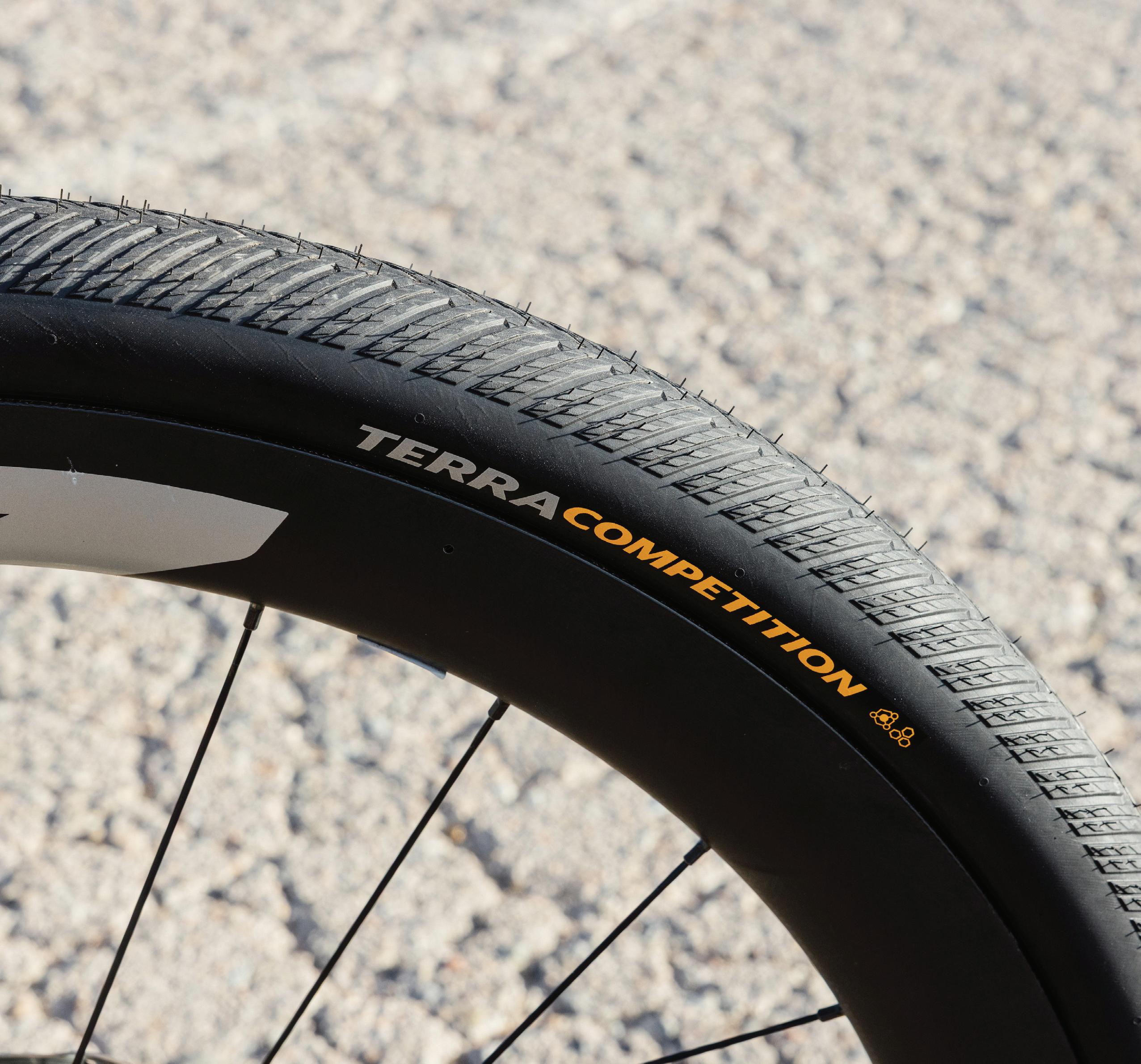
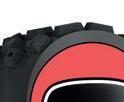
The Terra Competition features a specialised tread pattern optimised for rough tarmac, compressed soils and light gravel in dry to moist conditions. The design incorporates an almost continuous centre area designed for straight-line speed, while pronounced shoulder knobs provide the necessary soil interaction for off-road performance.
To meet the specific demands of different riding environments, the Terra Competition is available in both a Race and Trail casing, with distinct compound configurations. The Race casing and Rapid compound is the goto option for maximum speed and acceleration on flats and inclines. The Trail casing with the Grip compound is engineered for more demanding off-
road use, utilising a more robust oneply construction for improved ground compliance and puncture protection.
Both variants incorporate a textile breaker beneath the tread for enhanced puncture protection and employ the renowned BlackChilli compound. All models are Tubeless Ready and hookless compatible. In a first for the Terra Range, the Competition was developed with a specific focus on reducing aerodynamic drag and increasing efficiency, ensuring high performance on tarmac surfaces. Riders can save up to 16% of weight (up to 68g), with the 35-622 Race variant weighing just 345g, as well as a reduction of up to 17% in rolling resistance compared to the 35-622 Terra Speed.
Alexander Haenke, MTB and Gravel
The Terra Competition features a specialised tread pattern optimised for rough tarmac, compressed soils and light gravel in dry to moist conditions
Product Manager, Continental Tyes, says: “We set out to create the Terra Competition for riders who don’t want to choose between road speed and offroad capability. As more riders mix surfaces and push performance, the demand for a fast, yet versatile tyre continues to grow. Terra Competition delivers that balance, combining efficiency on tarmac with the confidence needed when the route turns to gravel.”
The Continental Terra Competition is available from £67.99 and is in stock with distributor ZyroFisher. Dealers should contact their account manager or head to www.zyrofisher.co.uk/b2b for further details and to order.
www.zyrofisher.co.uk/b2b
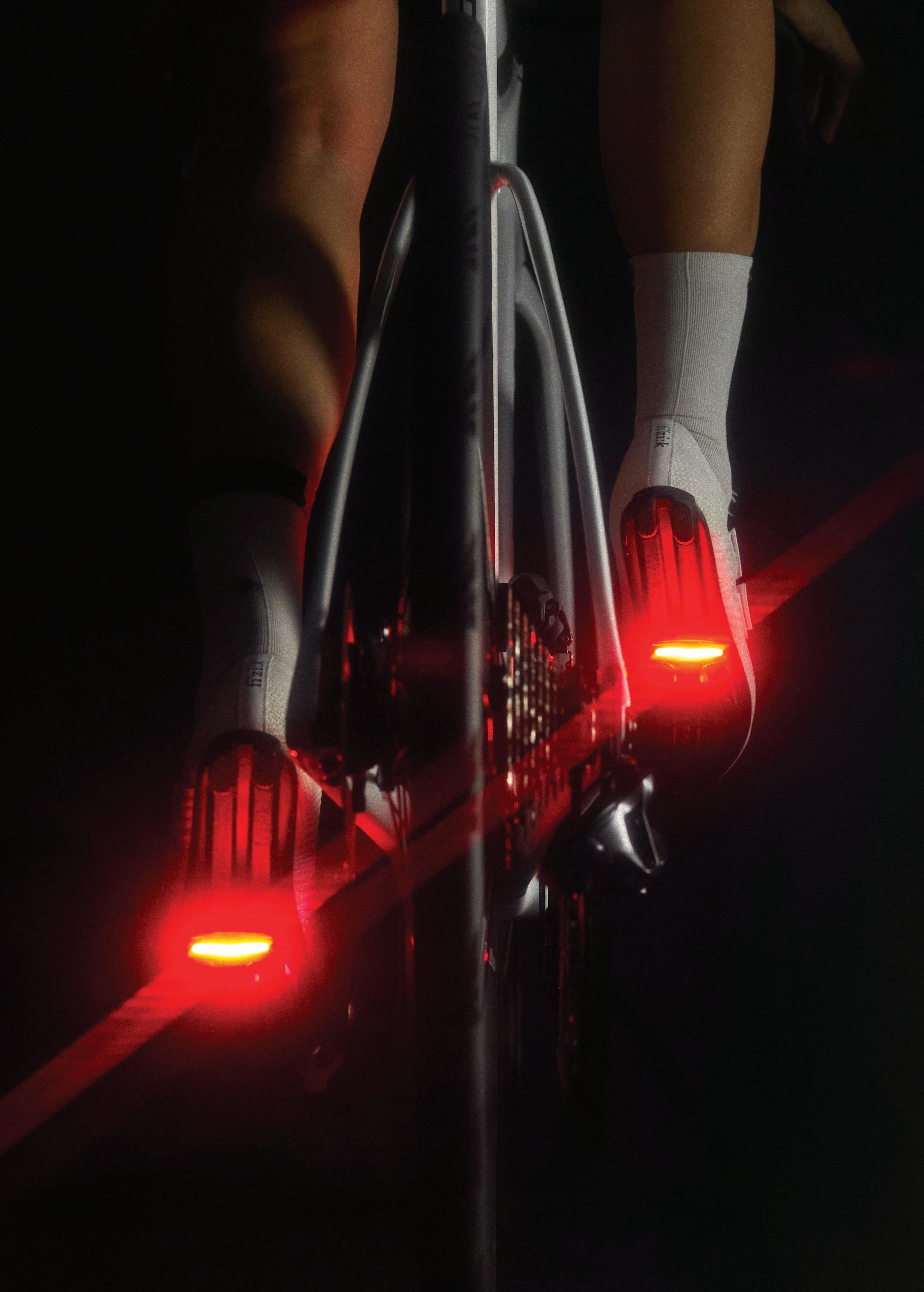
Proud to be Look’s New UK Distributor

Lightweight, compact, and highly connected.
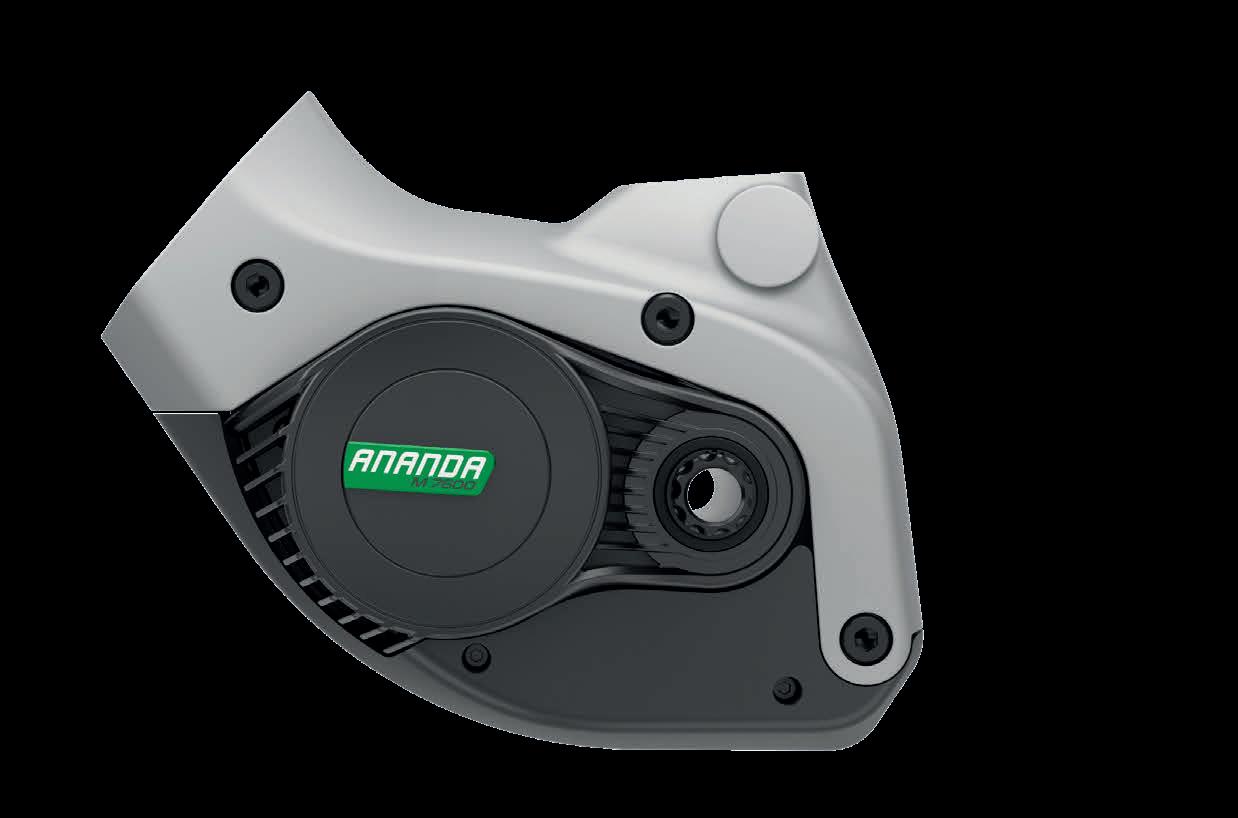
High peak power and torque in a compact mid-drive design
Precise sensor system with 96 signals per rotation
Optional IoT & Smart connectivity options.
China Cycle is all things to all men (and women) and if you are thinking of specifying a new bike and want to build from the ground up, everything is here (apart from the ‘big players’ in numbers). While the top end of tech still appears to be at Sea Otter, not Shanghai, there were pockets of innovation where bike tech is moving forward (data integration), as well as plenty of product you’ll never see again (probably for the best). Chris Keller Jackson reports from the show which some say is starting to eclipse Taiwan, and examines what the future may hold – including further shifts towards Vietnam…
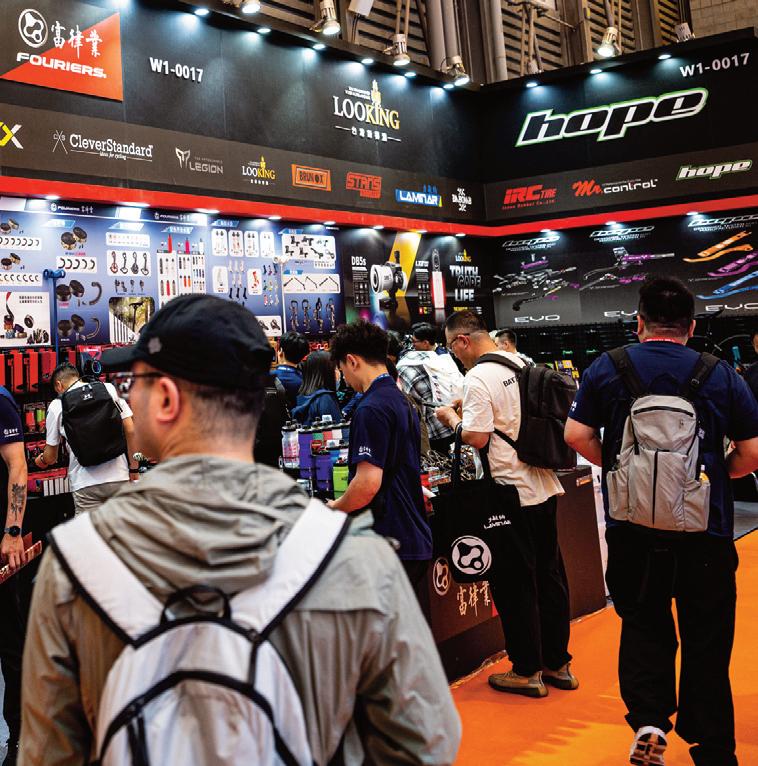
With over 17,000 exhibitors spread over 13 halls, China Cycle is one massive show. Housed in the Shanghai New International Expo Centre, it’s mind bogglingly huge, bigger than Eurobike, with more room to expand, about 25% more. Whilst it is not only a trade show, move out of the main halls, such as the International Hall and into the accessory halls and you’ll see more exhibitors than visitors. A good friend in the industry said “the Chinese are coming” – too late, they are already here, anodising everything, integrating everything and seemingly, copying everything. More of that later.
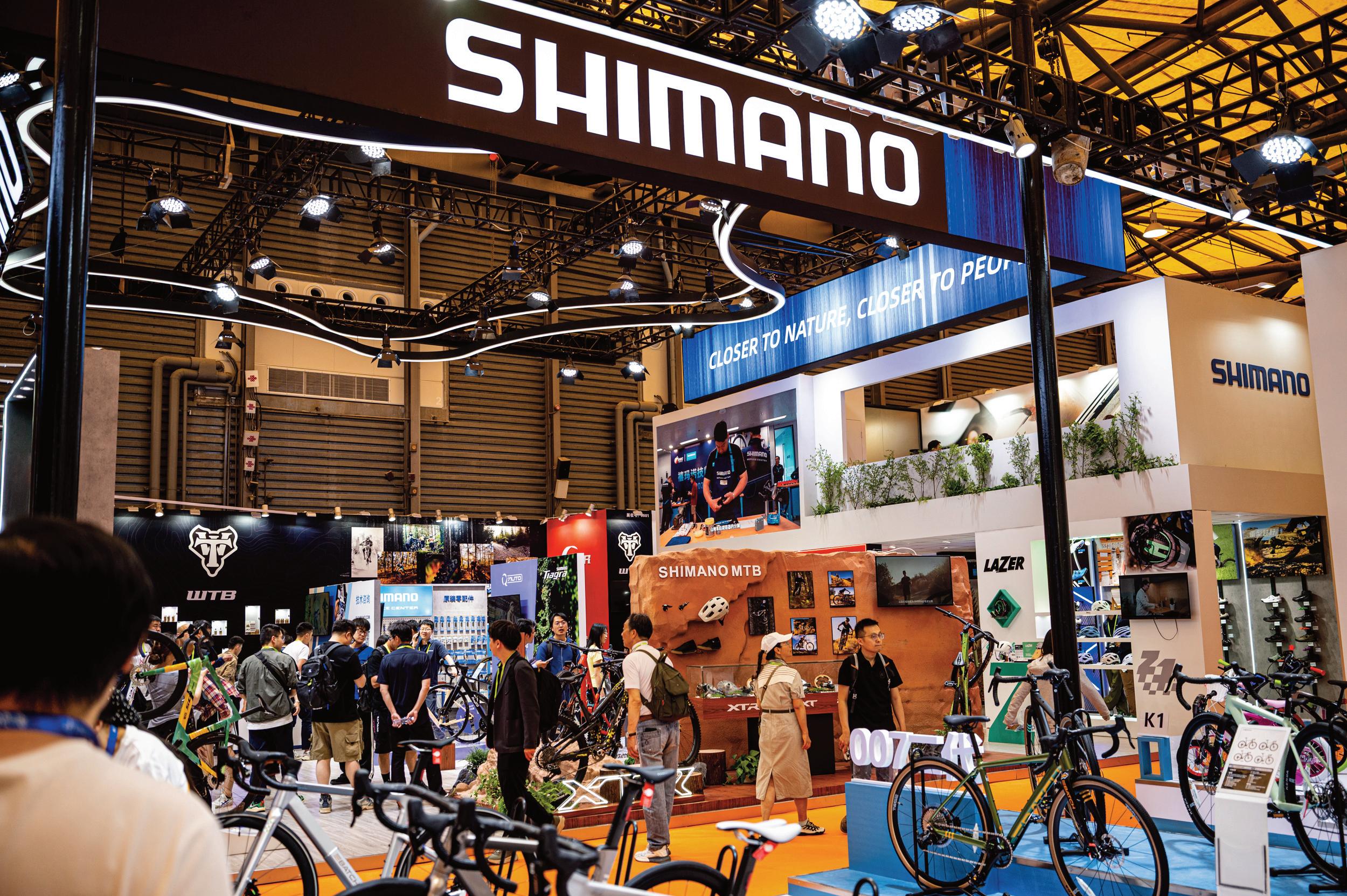
This sceptred isle we live and trade within is a funny old place. When I first visited Eurobike there were brands I’d never heard of that traded well within mainland Europe, and then Interbike did the same thing with US brands that just don’t darken our shores. Going to Taiwan proved that the UK really is a microcosm of the global industry with more and more brands that sound like they belong in the UK, but don’t.
China Cycle was like that, on EPO. More than 16,000 of the brands on display never come near to the UK (or make for brands that we do know –they are just not familiar). A case in point is a whole row of Celeste Bianchi’s within the vast GoldenWheel booth. I’m not saying that GW make Bianchi frames, but they do – at least some of them – and why not, they certainly know what they are doing.
Some of the big UK players you do know are there, Shimano, SRAM, Dahon, Merida, Vittoria, Colnago, Magura, Hope, even an honourable mention to Peaty’s, whom I’d call a very traditional UK brand – I visited the booth where their valves are made (same ones that make another similar brand!). Not all these players have lavish stands, and whilst Shimano did have one of the biggest stands, showcasing group sets, apparel and demonstrator bikes, SRAM were on the corner of one much smaller stand, alongside other products (with no Rock Shox suspension to be seen).
I get the feeling that next year, as China Cycle advances in numbers, we’ll see bigger stands from these more Taiwanese and US centric brands. There were mutterings within the press and some traders present at the opening evening that the shift of focus is towards China from Taiwan
Bike Week, with a caveat that this might just be a stepping stone towards Vietnam. Time will tell.
I mentioned that 16,000 of those displaying at the show were ‘unknown’ in the UK, and that is certainly true in both ‘International brand’ halls, which were mainly populated with brands that had an ‘aspiration’ to become international, but were not. So full were both international halls that one properly international brand, coming from New Zealand and in the UK market (that has to count as international, right?) were lumped in with DAAO, Ansbern, GMEGC, M&S (not that one) and a whole bunch of brands you really have never heard of. Though they have exhibited here before, and had great international press last year, there was no room for them in ‘International’.
Trickle down trends, more manufacturers enter the wireless market and more
So, what of the big stories? From a trade perspective, what is the future coming out of China Cycle?
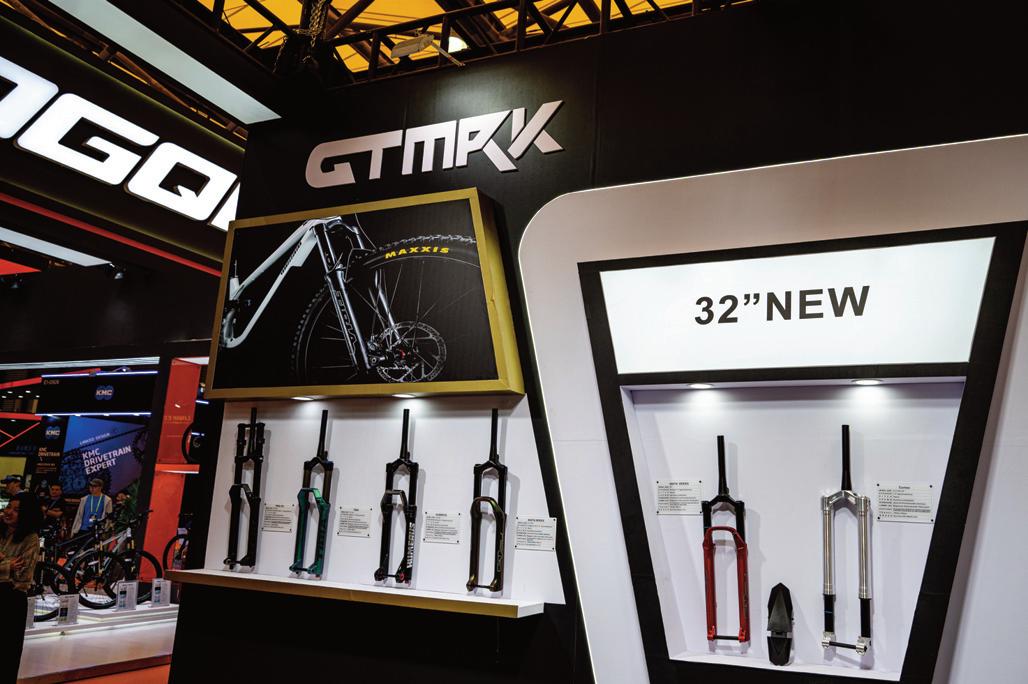
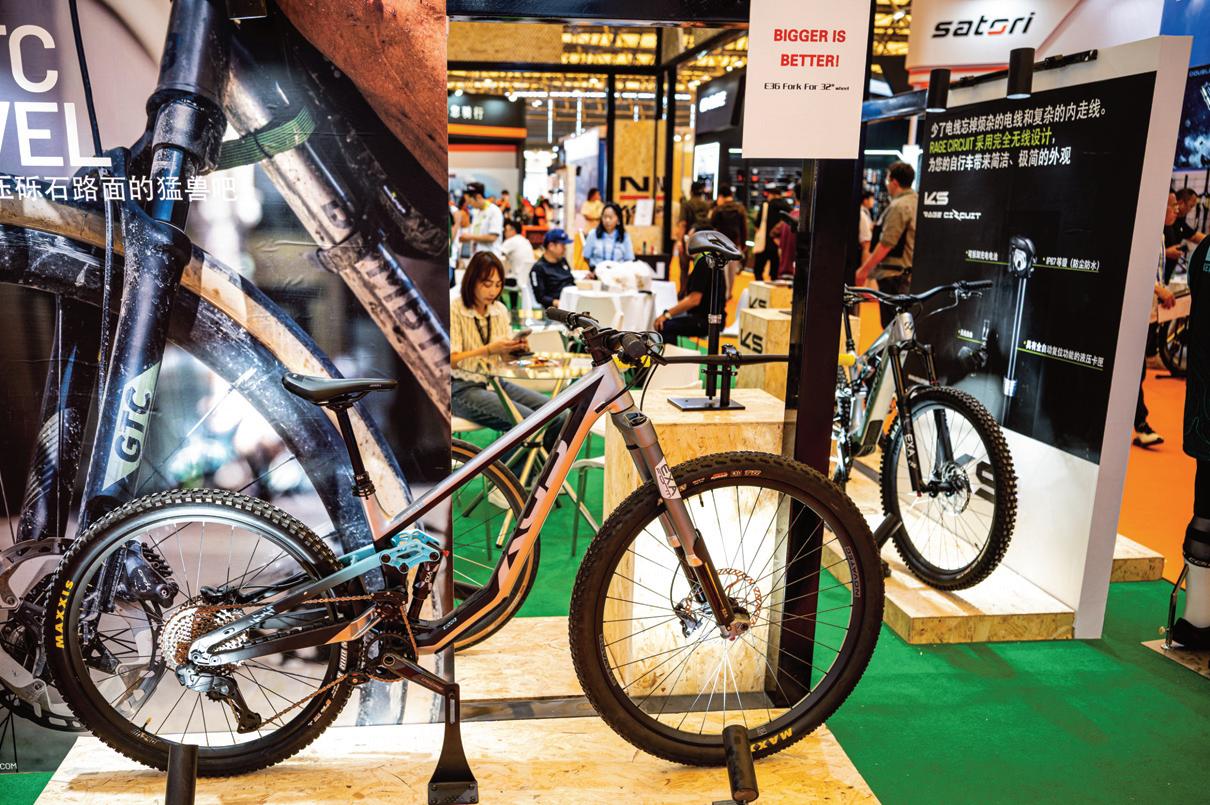
You’ve seen the prototype wheels and tyres of the 32-inch MTB and gravel world? The juggernaut that is 32inch wheels is not about to stop, in fact, the ride will be smoother. Many suspension brands, even the ones you have never heard of, were showcasing
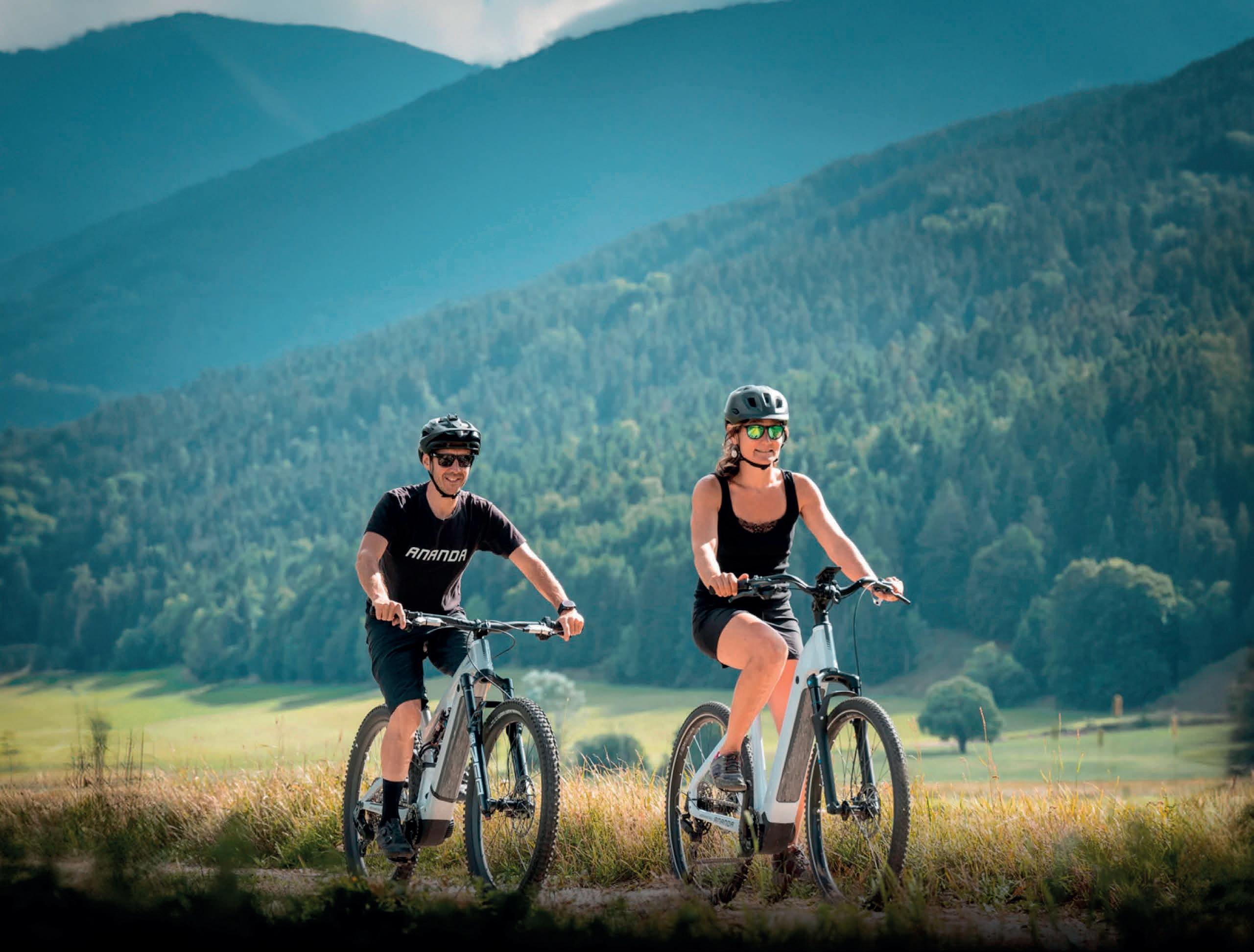
Our most compact Bosch e-bike, now with belt.
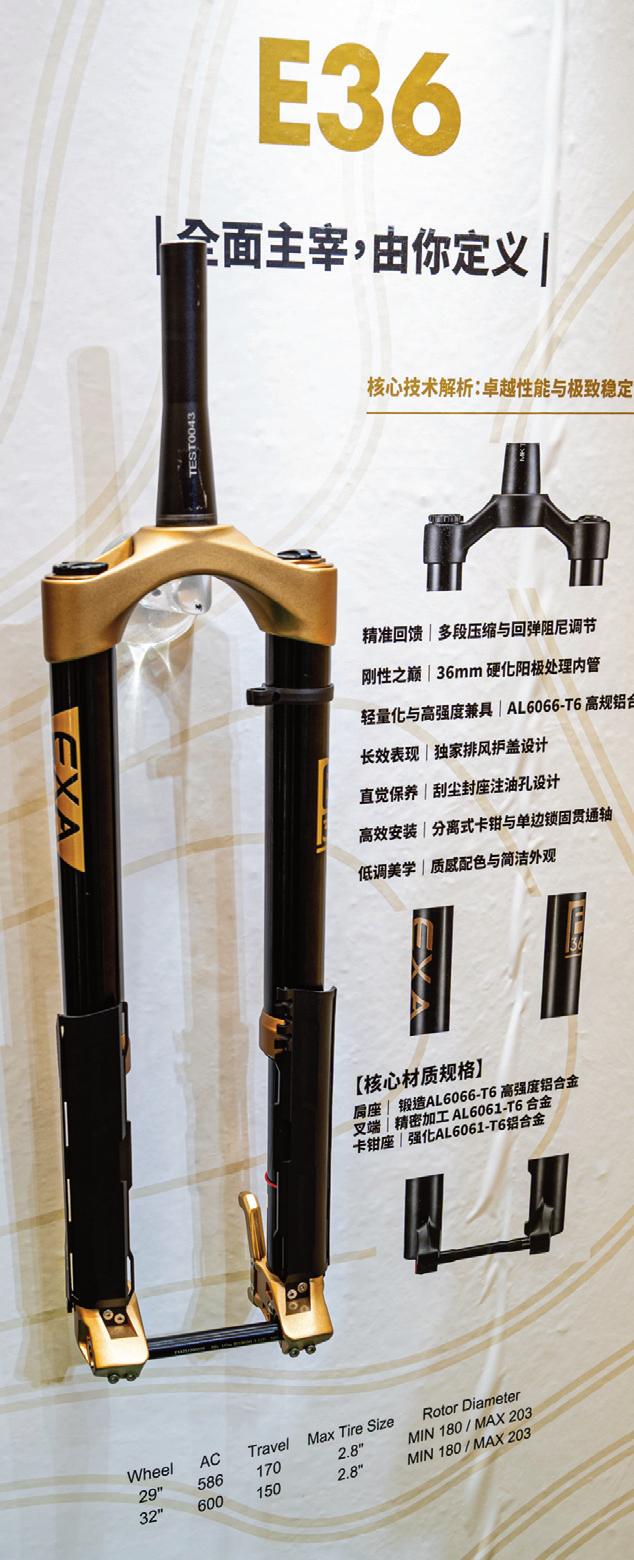
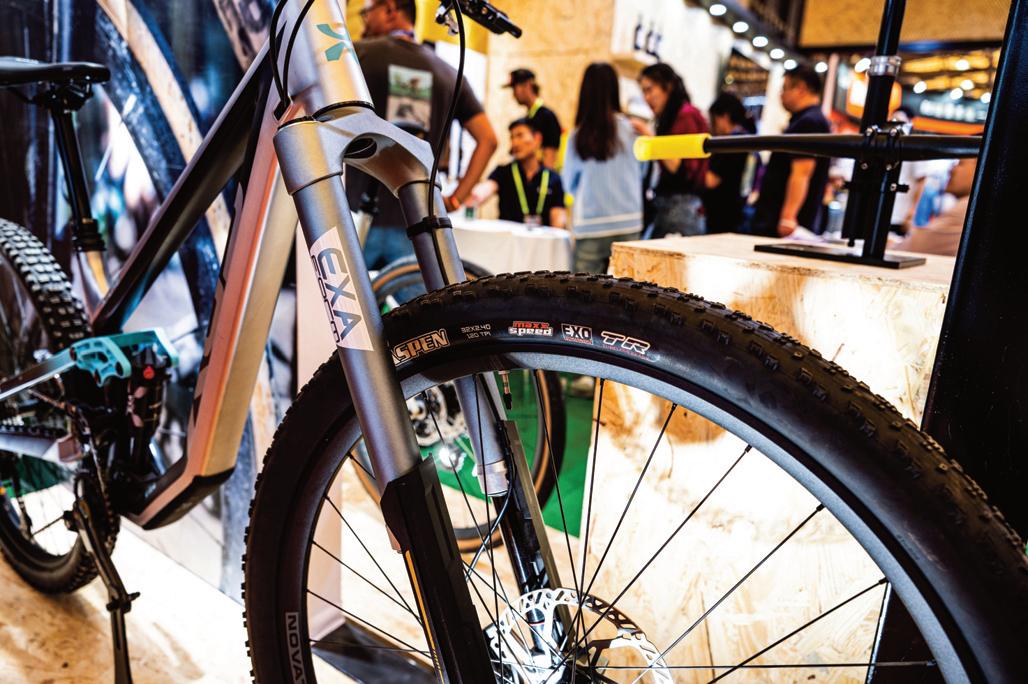
32-inch forks, as were tyre manufacturers and rim makers, there were even some very interesting full bikes on display, the Venzo M36 is particularity nice. This is a ‘trend’ that is not going away, especially now people are proving the winning formula in gravel and MTB races. Taller riders rejoice.
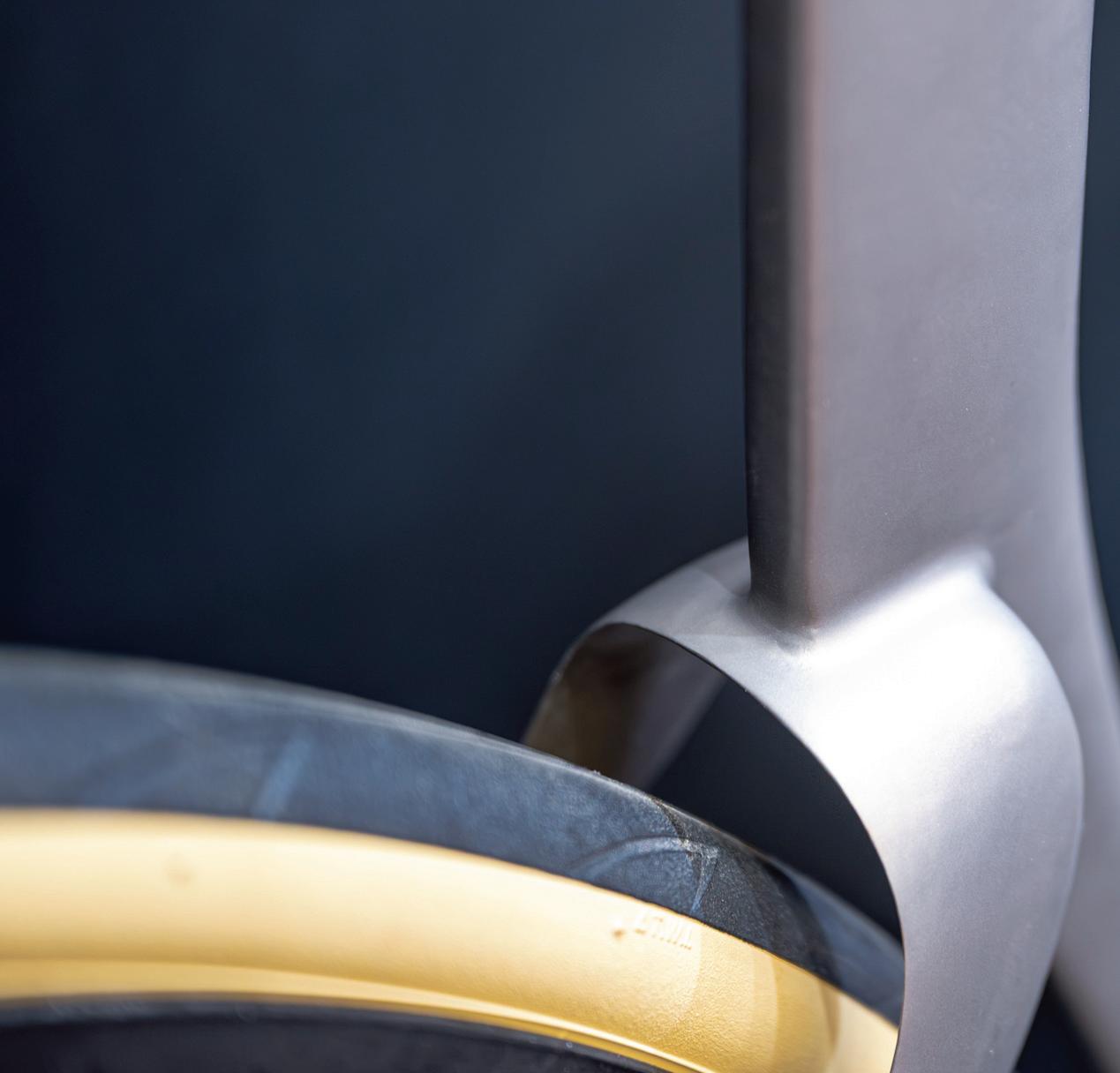
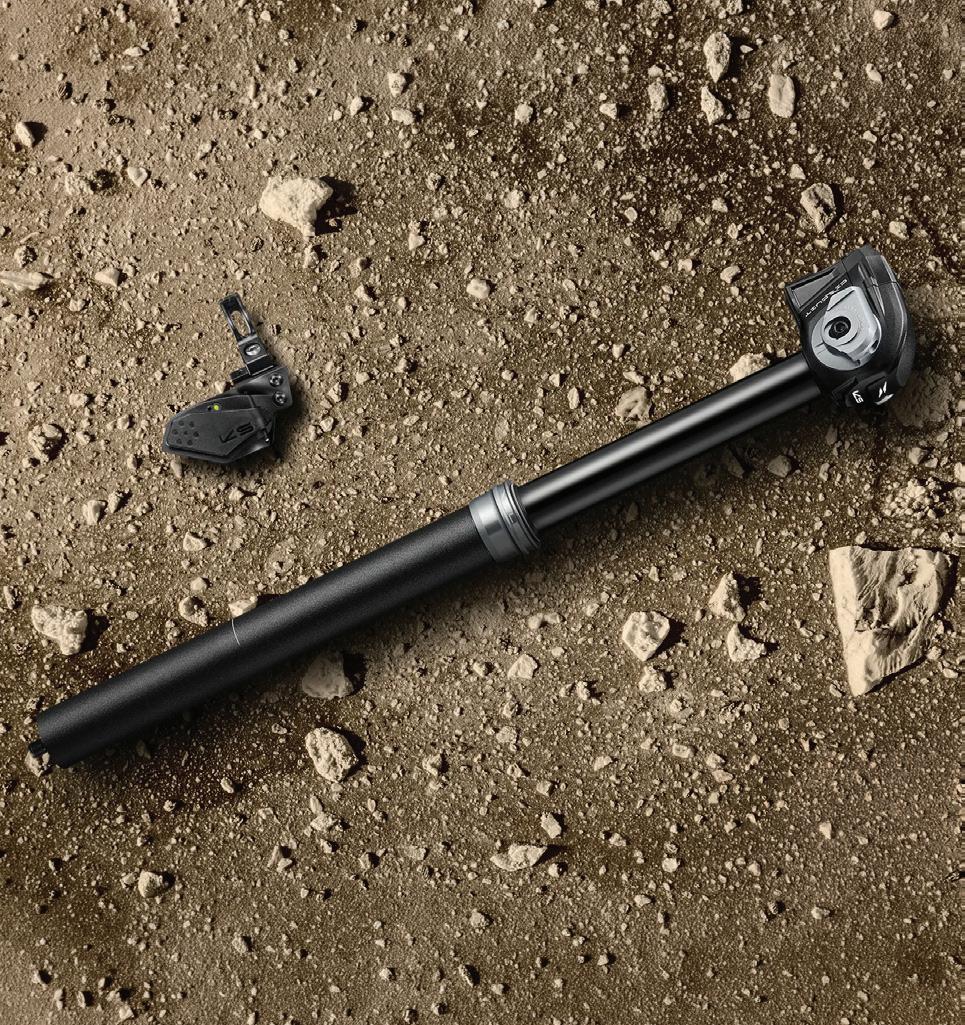
Related to wheels, when Fox launched the Podium UD fork (Upside Down – stanchions where the lowers should be) it was seen as an outlier, UD forks keep reappearing then disappearing. Well, it looks like they are here to stay. There was no Fox in attendance, but both RST and Kind Shock (KS) had production ready ‘Podiumalikes’, KS even had a 32er UD on
display! I counted over 10 other companies with UD suspension forks in their range, some looking more vintage Dorado ‘triple clamp’ from 2001, and some with more svelte additive manufacturing and optimised single crown aesthetics.
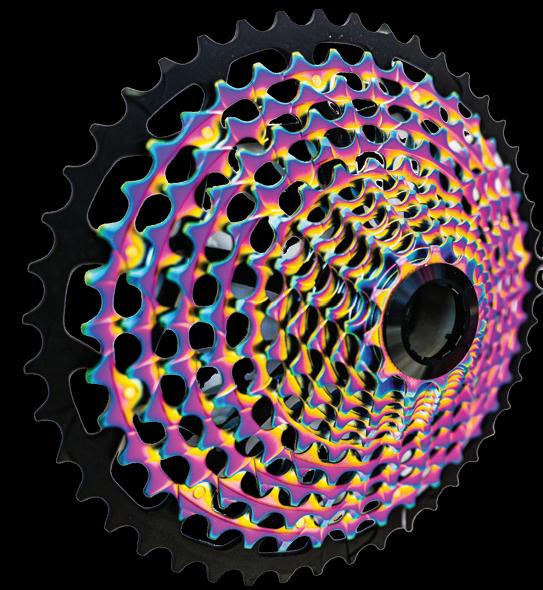
Advancements in shifting tech mean that ‘primitive’ cable shifting has been digitally improved by SRAM, Shimano, Campagnolo and more recently Wheeltop’s electronic shifting. Wheeltop has been getting traction for its low cost and improving quality – it had one of the biggest stands of the whole show, even partnering with Rotor. It seems like China is catching up rapidly with what looks like great quality shift-
ing – with lots of brands showcasing full electronic group -sets. I doubt you’ll find a customer berating you for not stocking an ‘L-TWOO EXT RDET1002’ rear derailleur any time soon. They are out there.
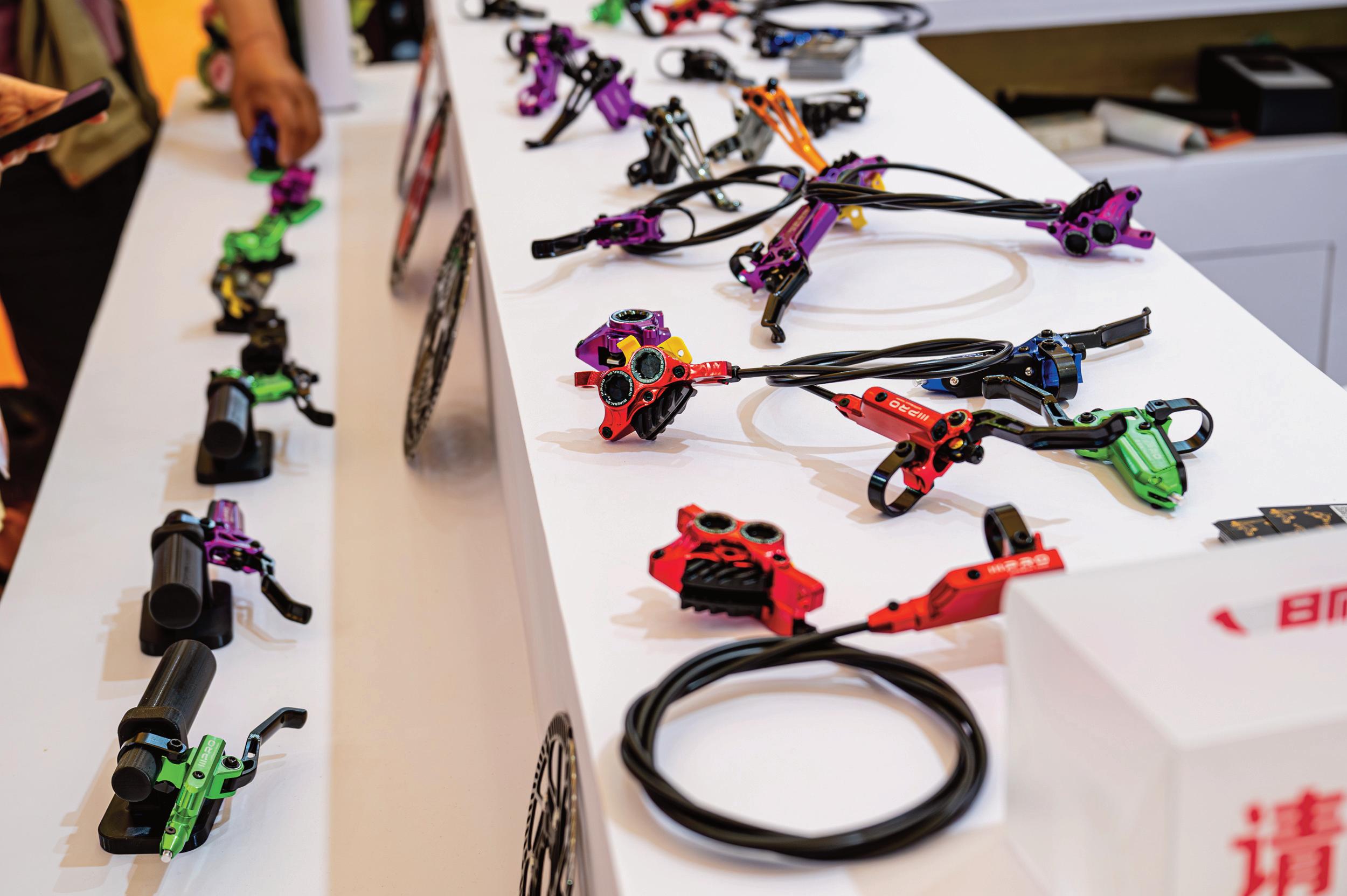
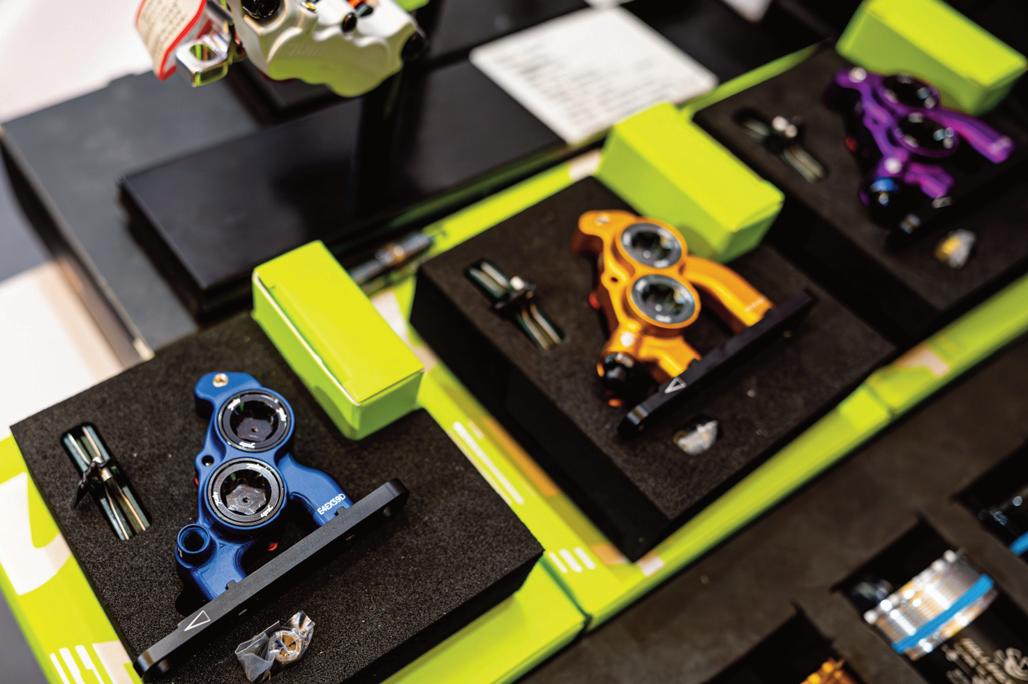
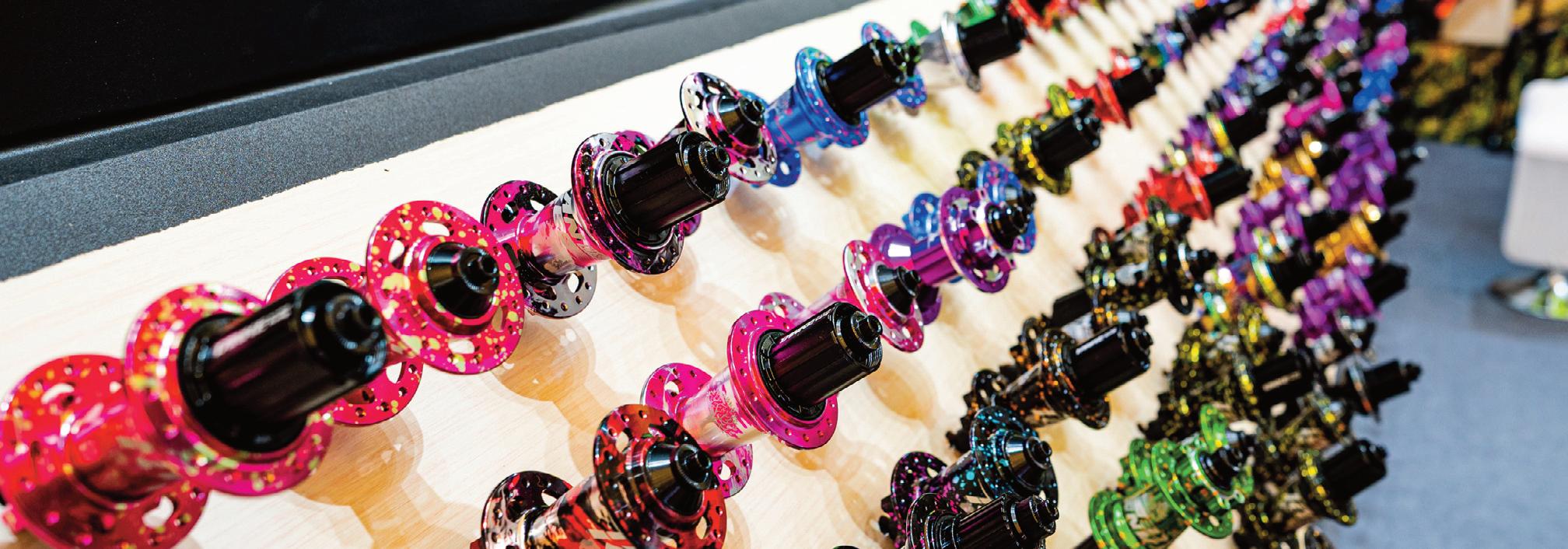
They say imitation is the sincerest form of flattery, and China certainly knows a thing or two about imitation, in some instances you might call it copying. The accessory halls were brimming with ‘me too’ products, with some very interesting products as well as a plethora of items that, from a distance, just look like AI. Closer too, you can see that someone has been playing with a 5 axis CNC machine and different coloured anodising baths.

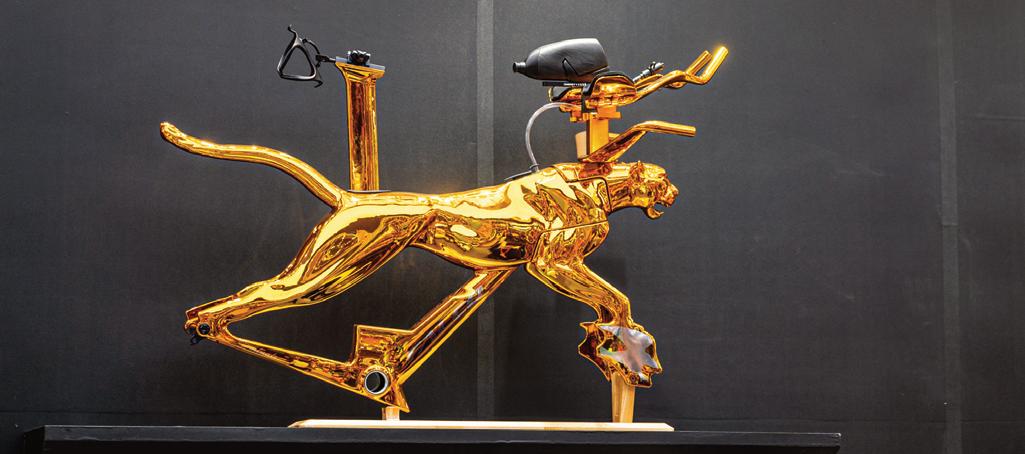
The hubs, hydraulic brakes, spokes, stems, rims and accessory bolts available are bewildering. I’d say that some of the copying is perhaps a little over the line, with one brand offering tools identical to Park Tool in everything but name, and another using a logo and font that is too close to the IP of Specialized if you were trying to defend your trademark.
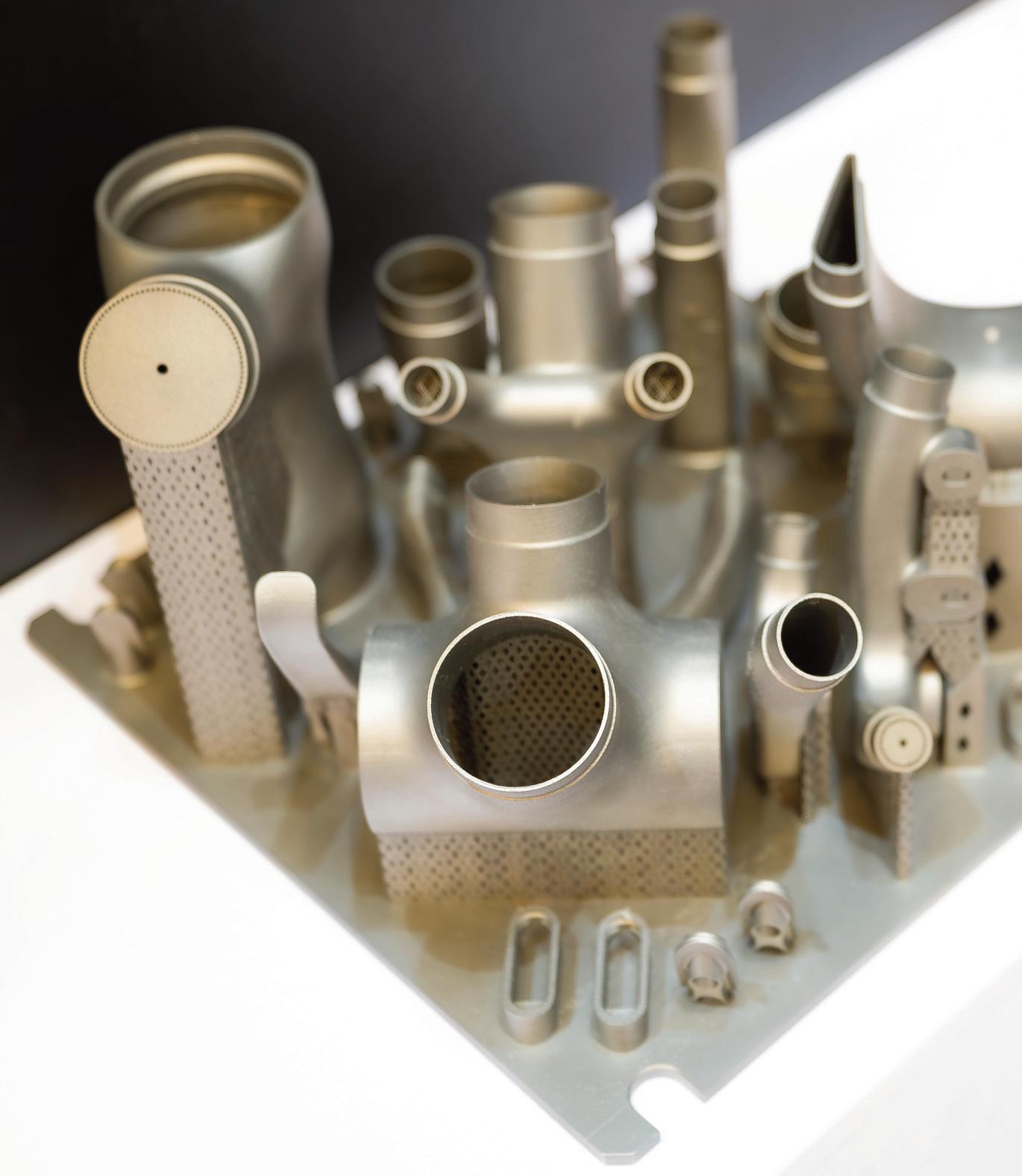
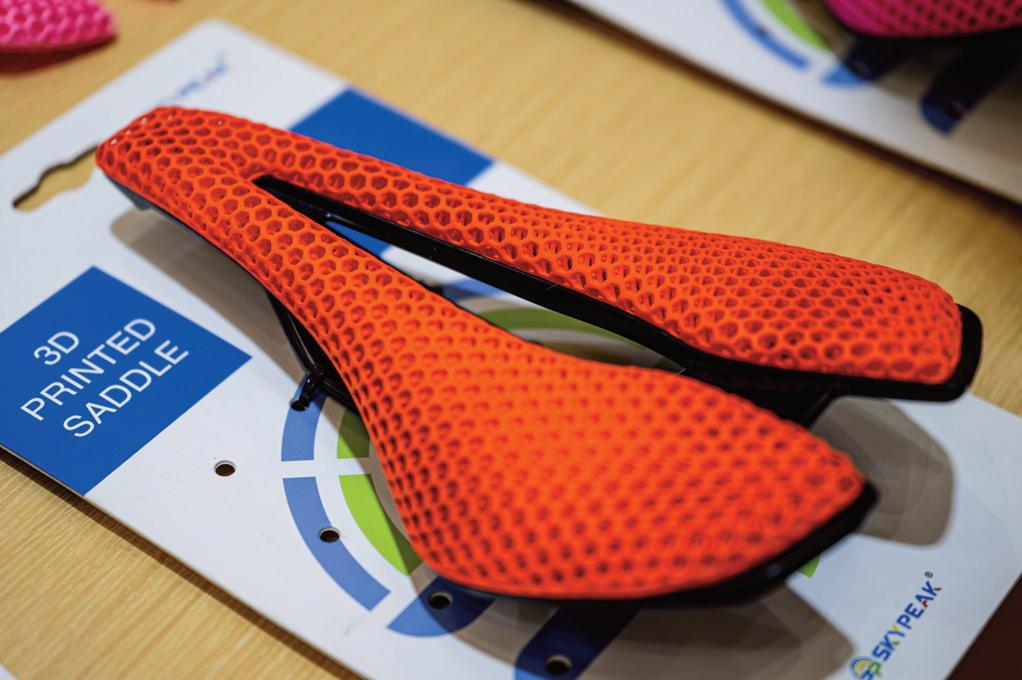
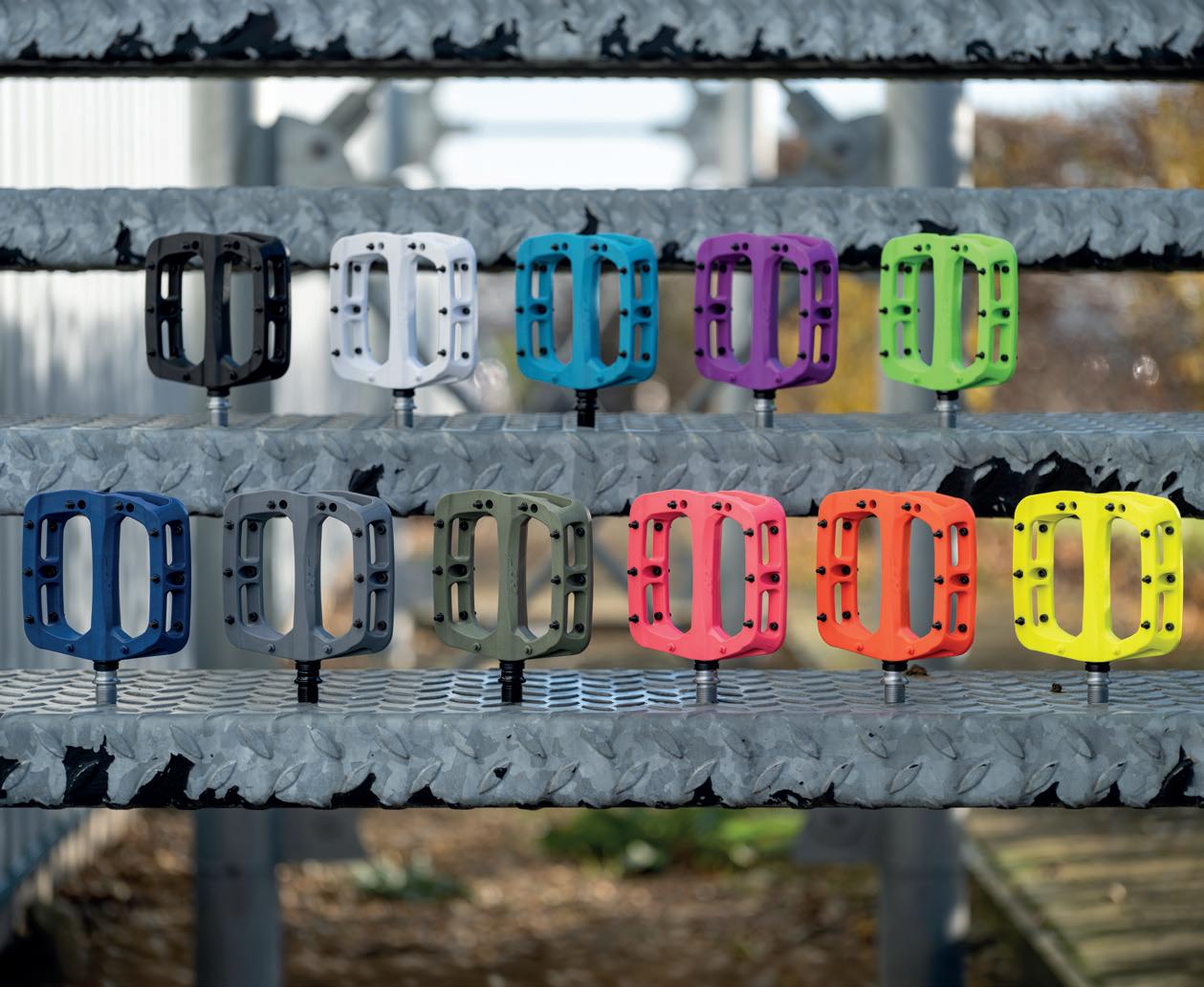
Whilst additive manufacturing (3D printing – mainly Selective Lazer Sintering) has become more popular in parts manufacture, especially with the excellent Lug manufacturing performed by brands, such as Atherton Bikes. One brand, Laget, is taking this further and creating complete tita-
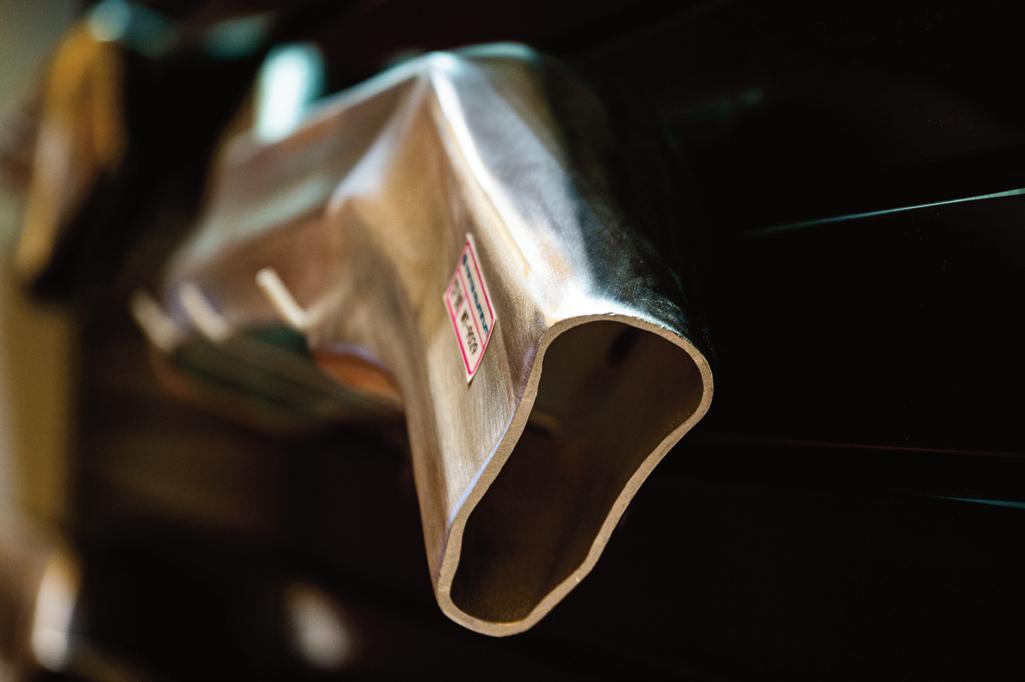
nium frames and other components. Pedals are left in their printed form, with no external machining and whilst this gives a raw, almost unfinished look, I’m told it adds strength and some additional grip.
Velduro, which first exhibited at China Cycle last year, had the new prototype ‘Vandal’ frame on their stand, all in off white ‘printed’ finish. This set of bonded prints allows the team to test kinematics beyond the drawing board and assess fit of the component parts needed to build up their frames, and looked like a winner. I had a good chat with Co-Founder, Dan Wallace, who this time last year could not get an introduction to some of the
big manufacturers who, this year, were arranging meetings with them at the booth. They were one of the first nonAvinox users to receive their M2S motors, which is a coup for this small company, who championed the M1 last year. Velduro continue to offer ‘frame only’ as an option, and this has proved very popular in a market where eBikes are not normally sold that way, and customers want unique eBikes, and to reuse their existing parts.
Touring the halls, I came across a familiar name, that of Aventon which has been in the media recently, partly for its excellent own brand motor, partly the reasonable cost of their bikes, but more important to the UK reader,
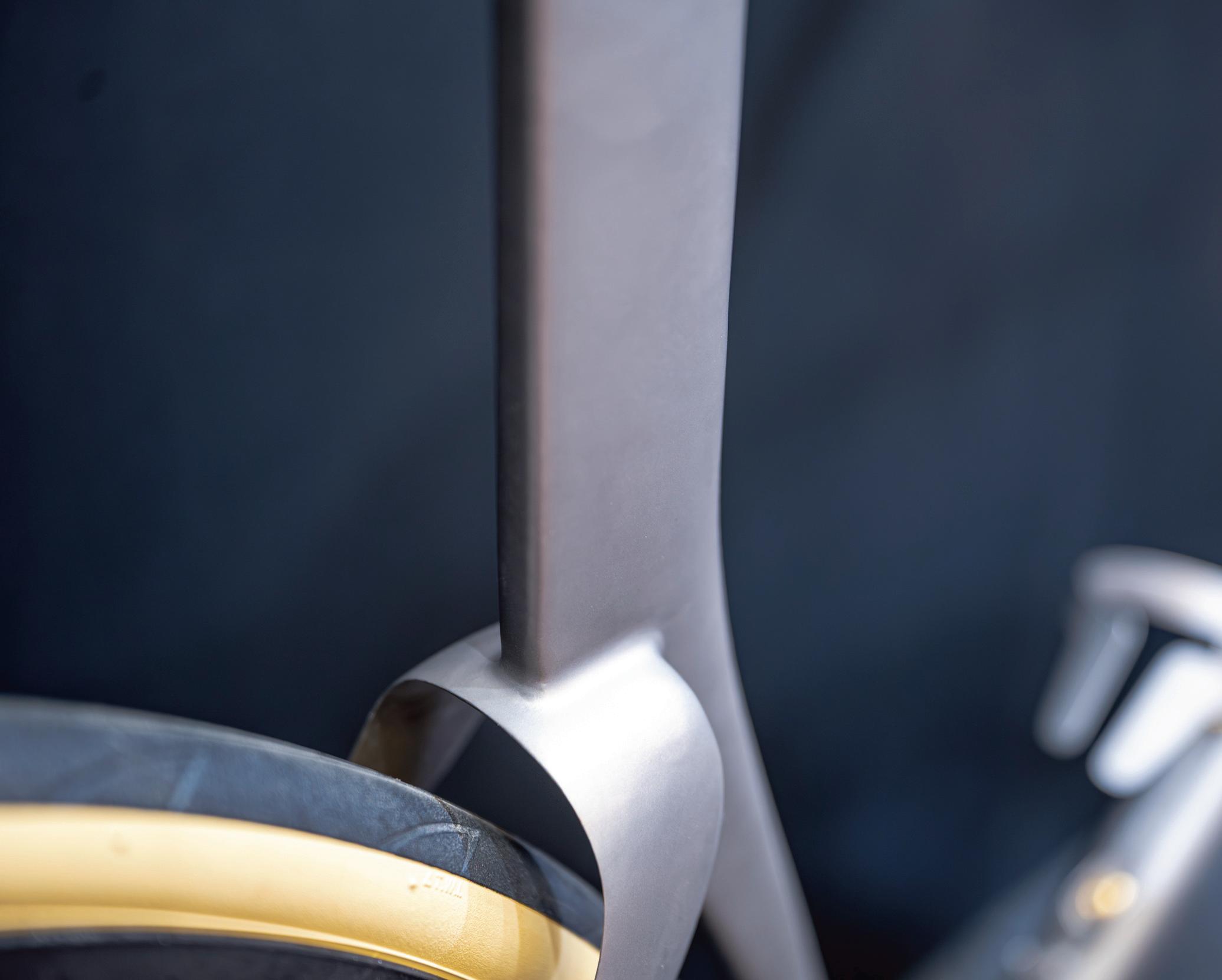
the now owner of GoCycle, one of the early UK pioneers of electric urban mobility. Back in 2009 when I first reviewed the GoCycle eBike for another magazine, I said that “If Apple built eBikes, this would be one of their creations”, well, now its Aventon’s turn, and I managed to get a sneak picture and to talk with the UK design staff. This should be on the market this year, same external look, updated internals.
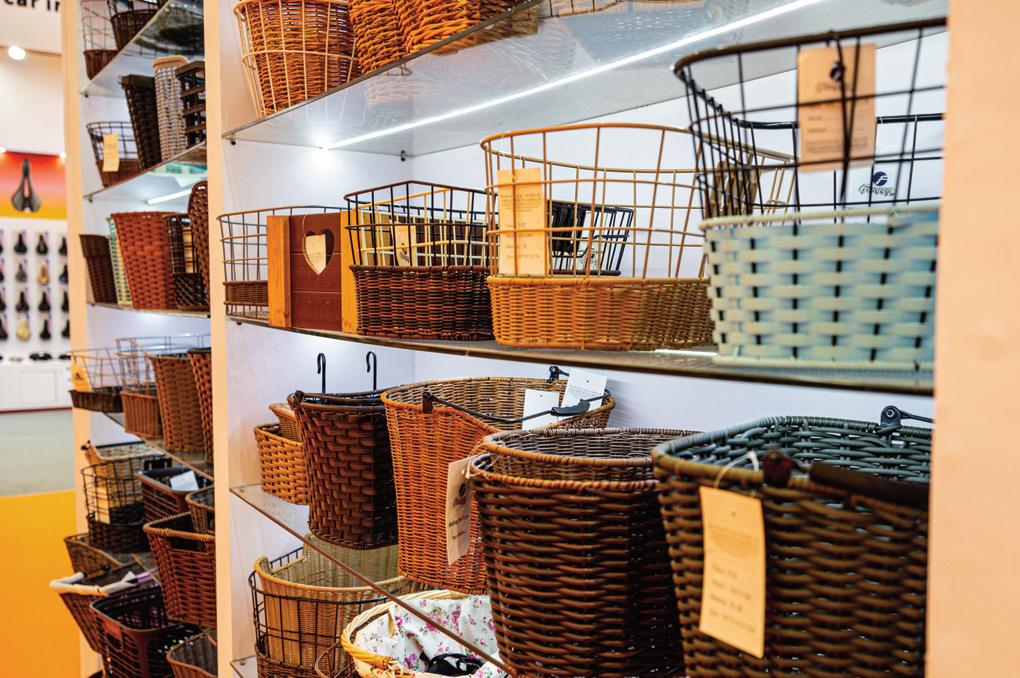
As a trade publication, you’d probably ask, “What’s in it for me, going to China, when I have Eurobike on the doorstep?” It depends upon what you are looking for. If you are building a brand, trying to find a frame manufacturer, wheels tyres, drive systems, those elusive green alloy thingymies and electrical connectors, a kickstand or some cat baskets, this is the place! Everything you want under one (sorry 13) roofs is here.
Not everything at China Cycle is totally two wheeled, there were some odd things to see at the show. Eurobike back in the day had painted ladies, and
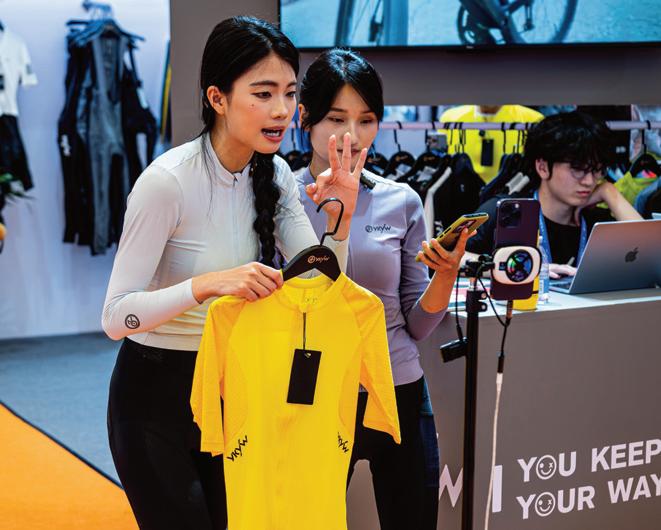
whilst China is far more conservative, many of the apparel and helmet manufacturers had teen girls, live streaming and selling lycra to the world, in very animated fashion, describing a garment (they were wearing) before moving on to something else to quickly sell. The fit of a helmet, extol the virtues of the shape of a visor, the cut of a leg gripper – most odd.
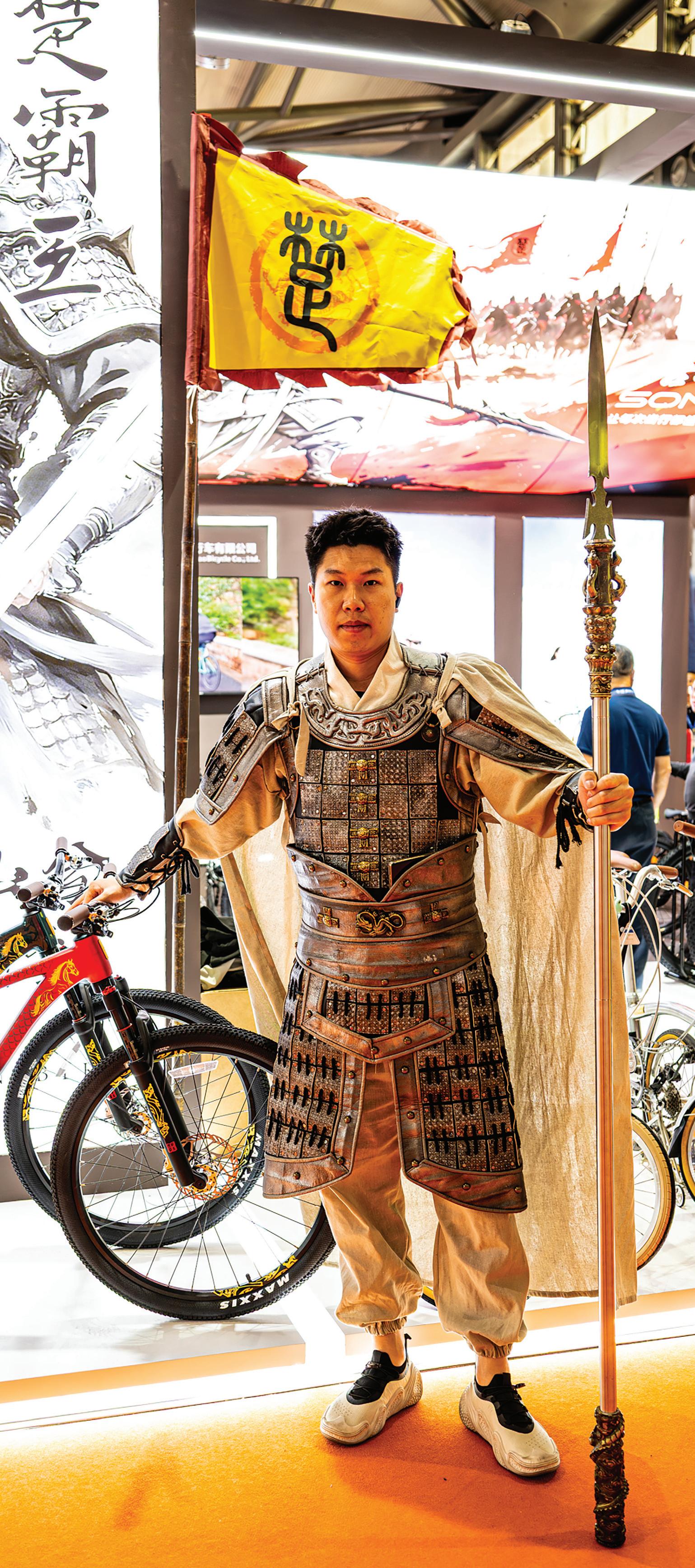
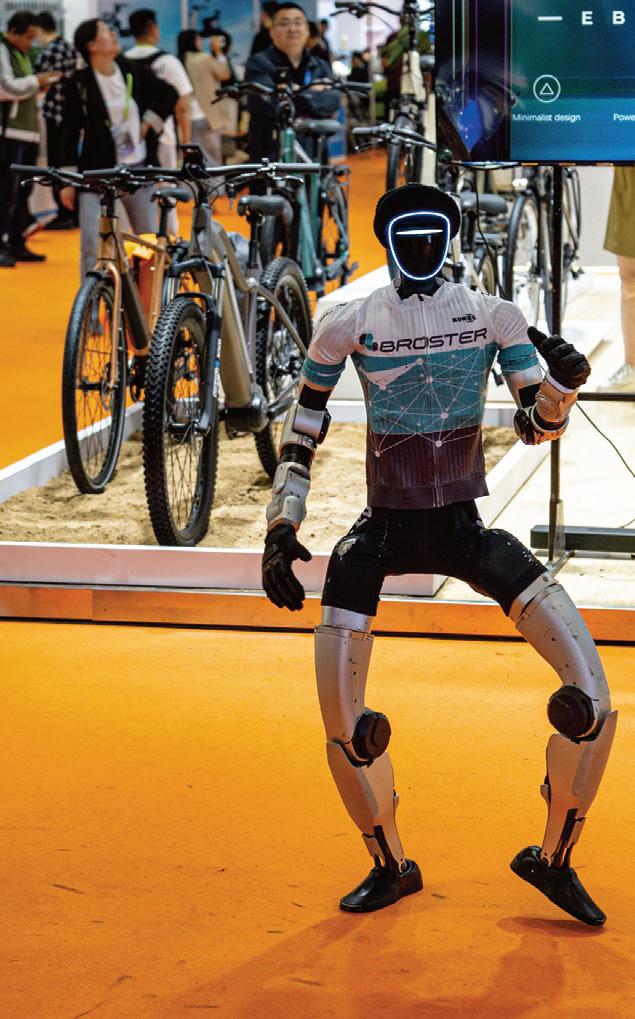
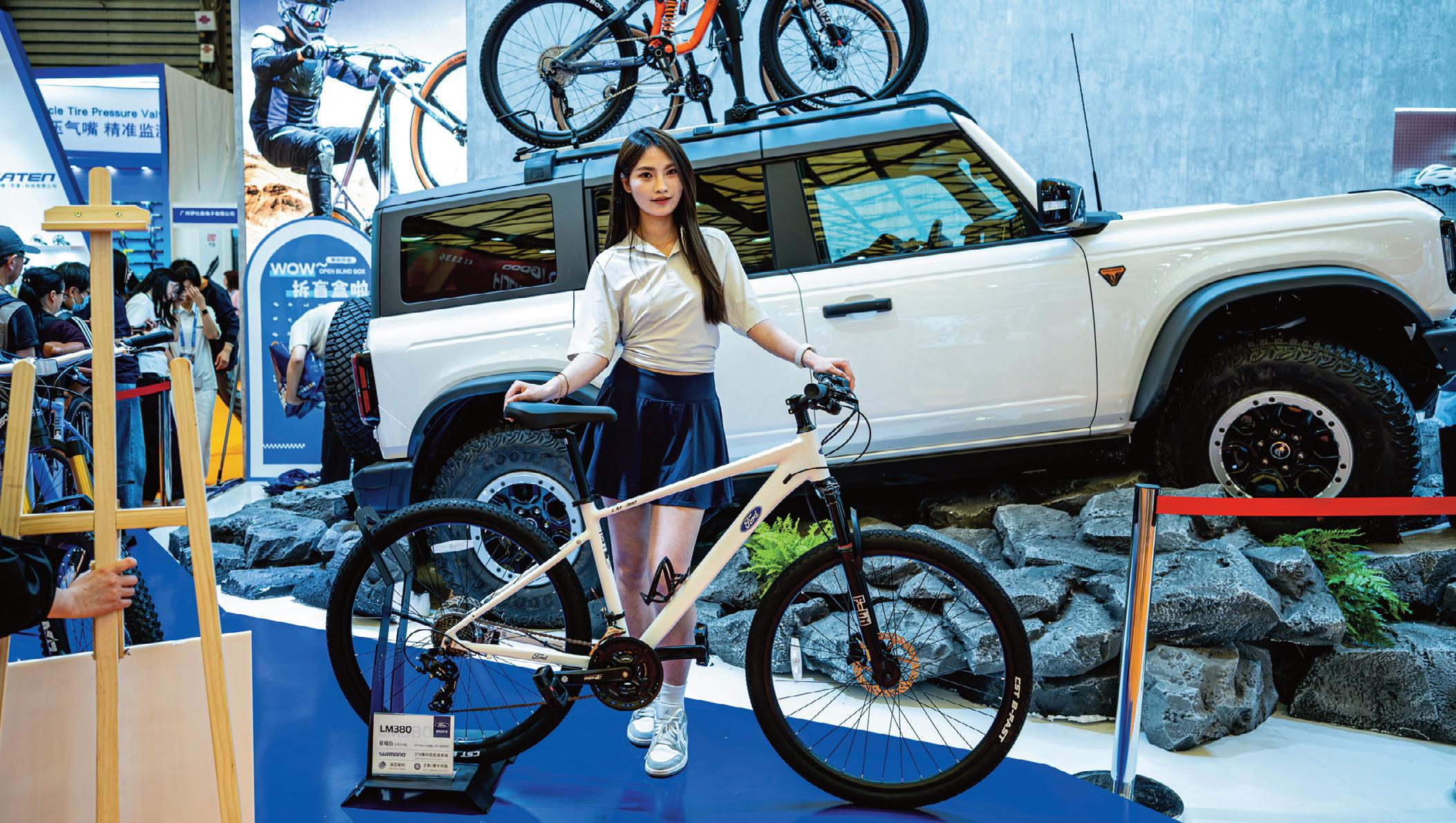
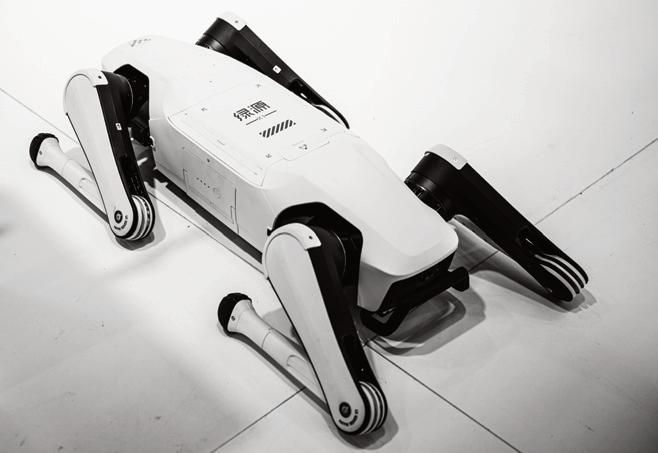
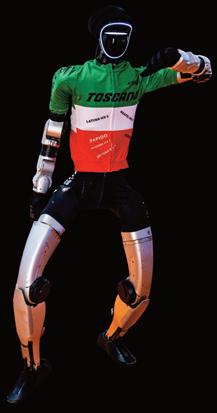
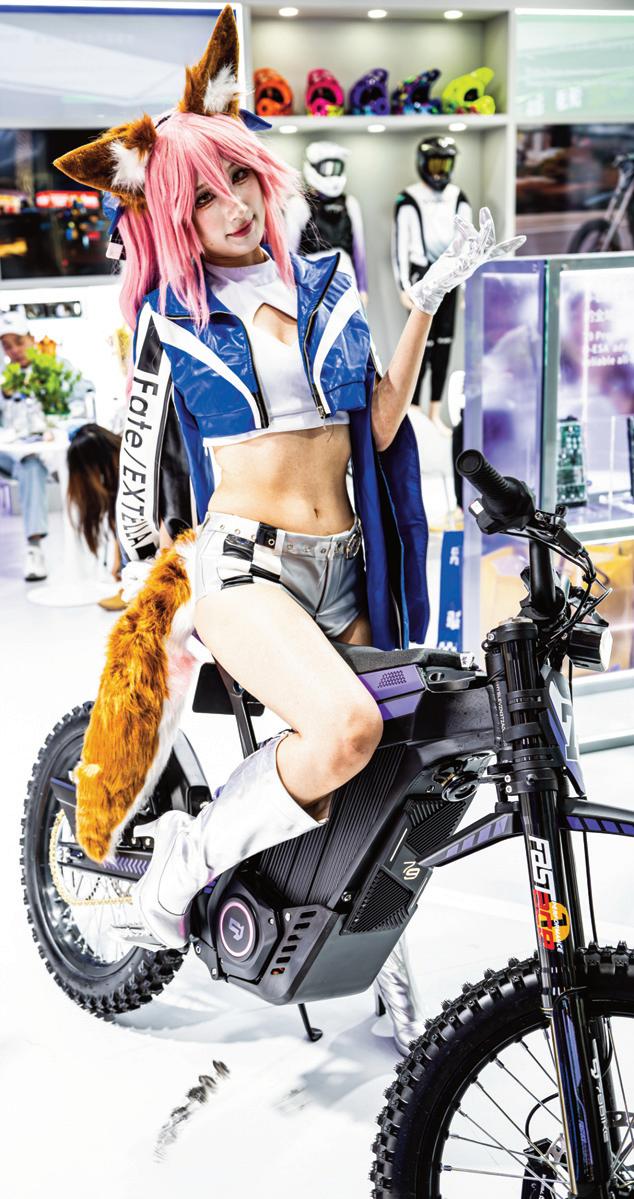
Other weird things I saw included a half size ‘human shaped’ robot being unceremoniously dragged out of the boot of a car like some dystopian cadaver, to be seen later in the day, dancing to Michael Jackson tunes, with a cycling top on, no bottoms, not anatomically correct! There were also a lot of cosplayers, adorning various bikes and brands, with swords, staffs and Manga inspired outfits, sat on eBikes and posing for consumers. Some ‘cat ears’, that’s obviously a thing, hoodies with ears, caps with ears and bike helmets with ears.
The bike industry can be a funny place, even in China.
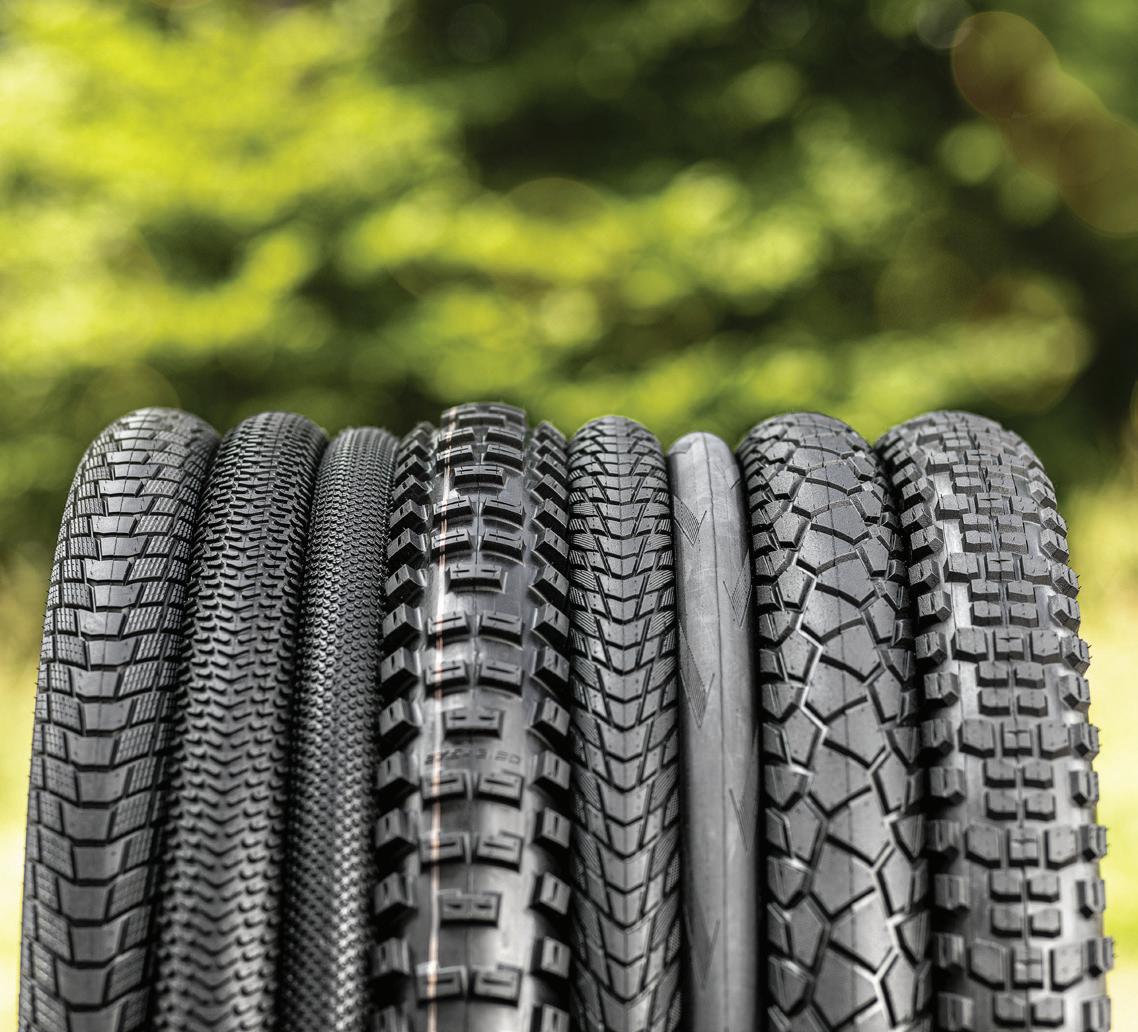
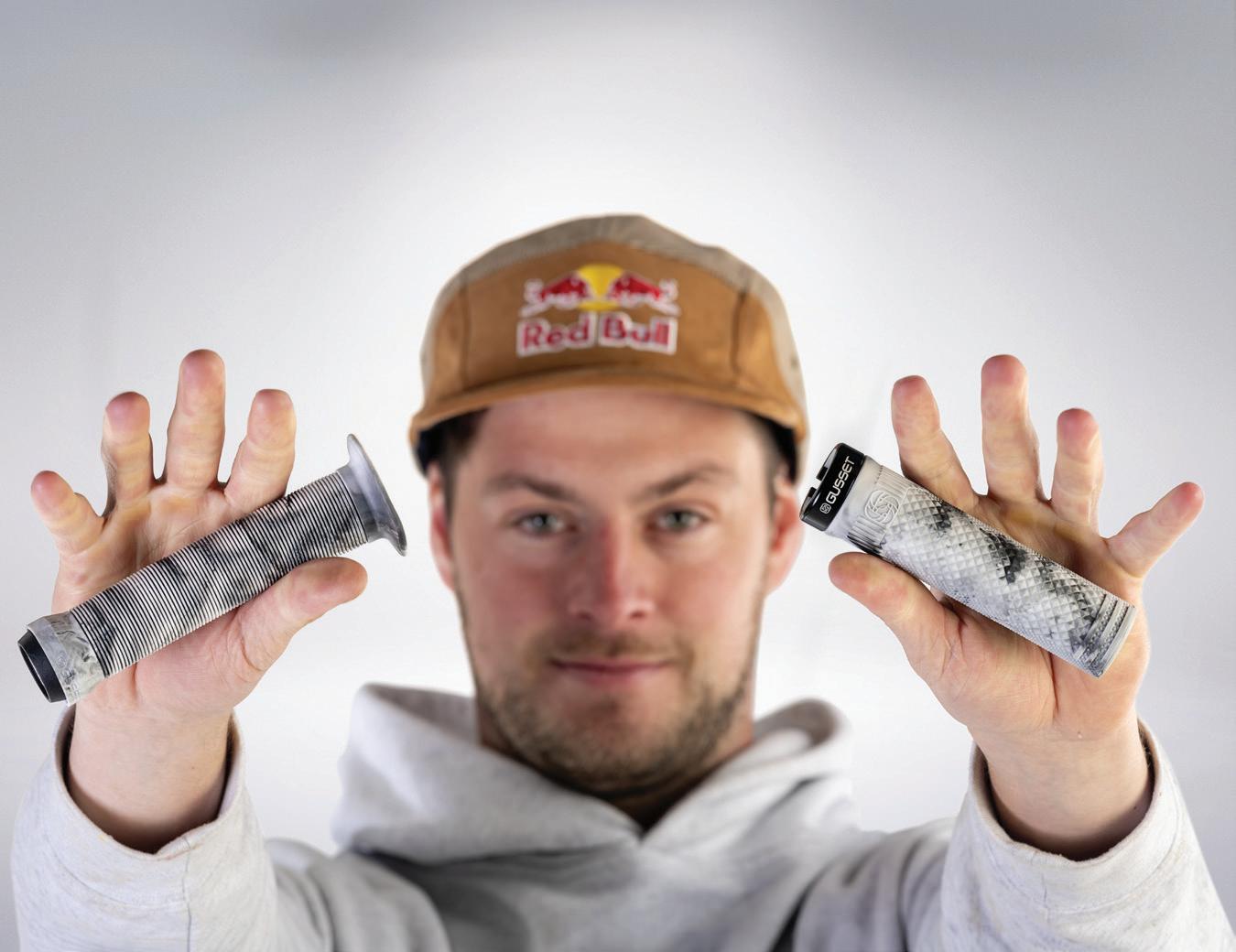

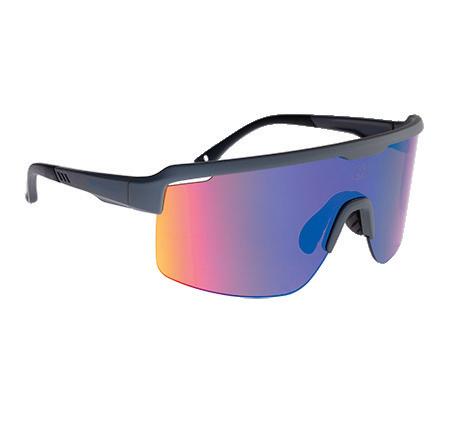
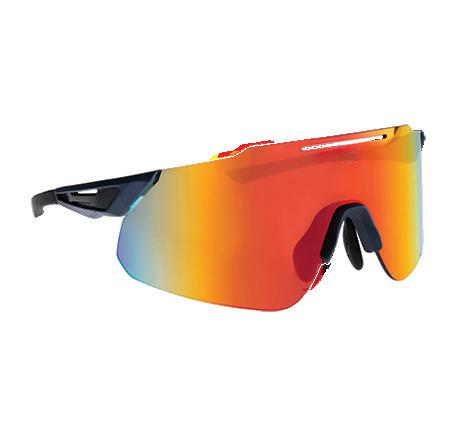
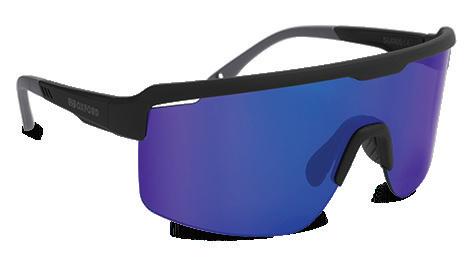
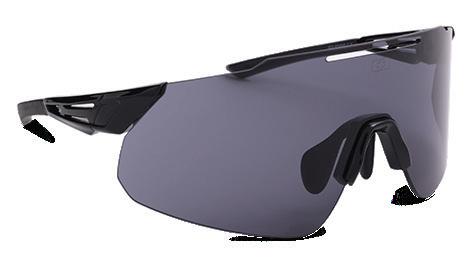
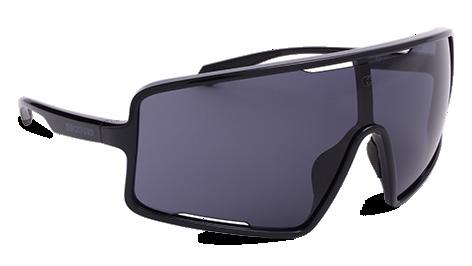
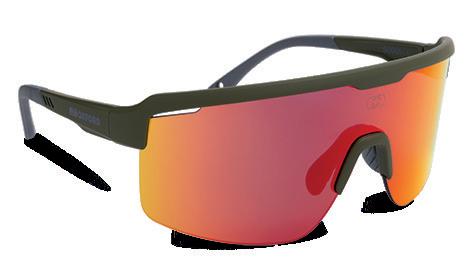
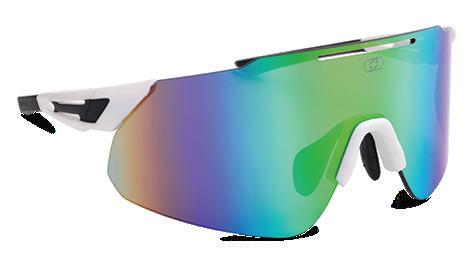
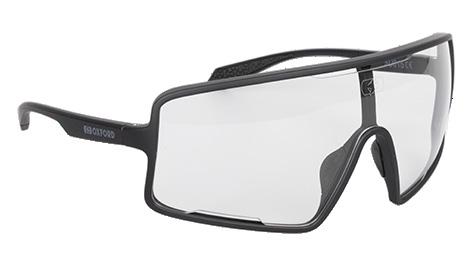
GRVL
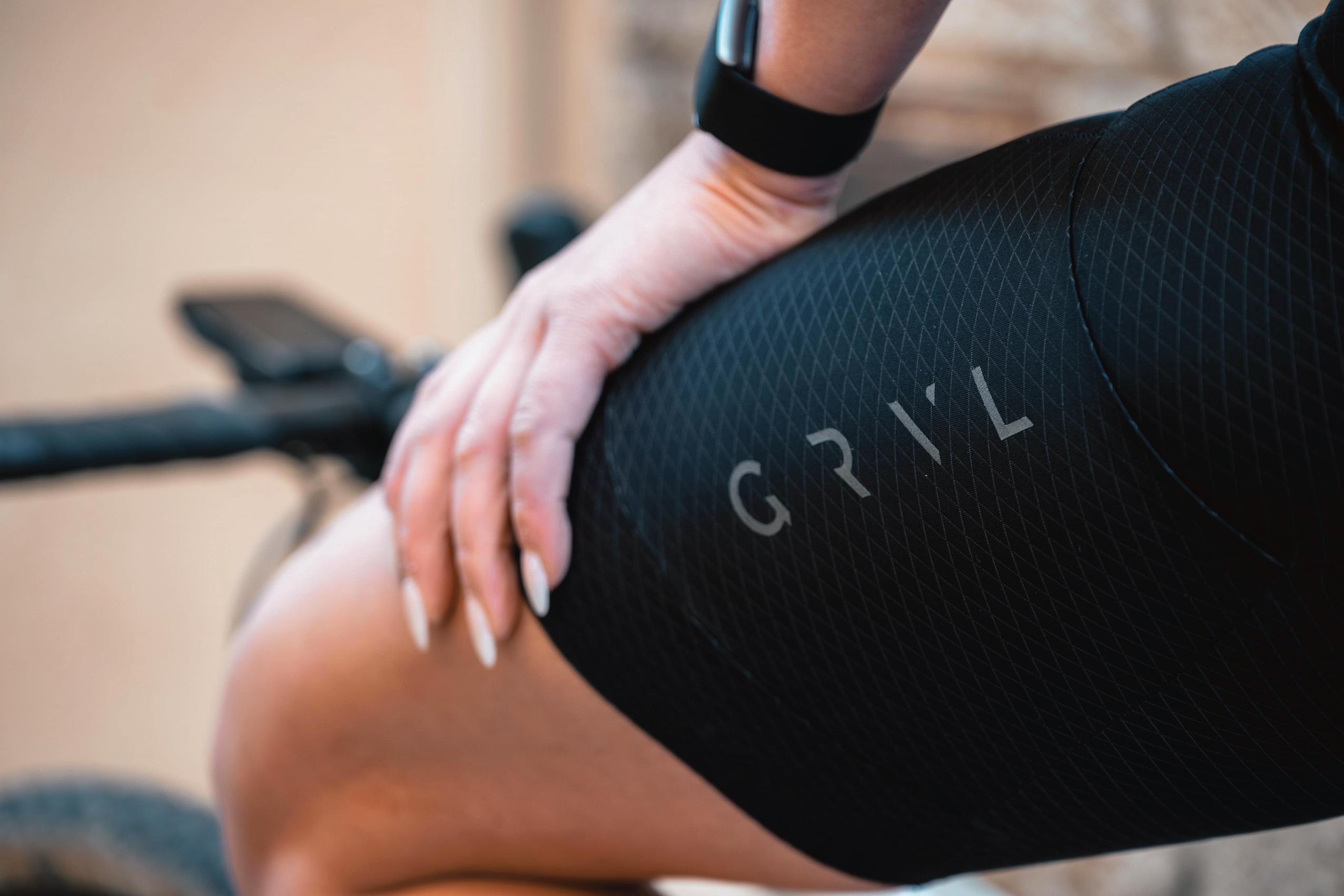
GRVL estimates female participation in gravel has grown from 10% when the brand launched, to 25-30% today
UK-based gravel apparel brand GRVL is set to launch its women’s collection this summer, marking a significant step in the company’s evolution from a men-only brand to a broader, more inclusive offering.
Emma Karslake examines the brand’s progress…
Founded just over two years ago by CEO Stuart Brooke, GRVL (pronounced like the cycling discipline) entered the market with a focused proposition: sustainability-led apparel designed specifically for gravel riding. Its initial range targeted the largest available segment, i.e. men. This summer, the brand will be launching its women’s line together with innovative, fully biodegradable jersey designs.
A phased launch strategy
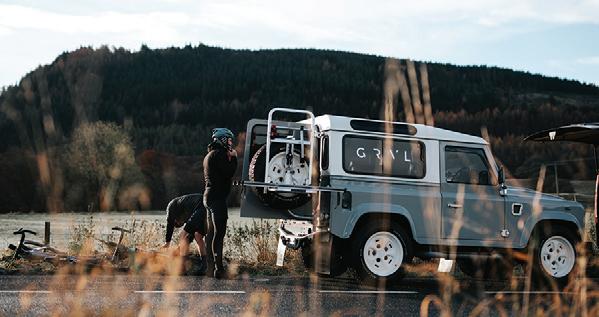
Back in 2018, Brooke entered a gravel race and discovered a type of cycling where technical riding meets speed, all out in nature and well away from busy roads. Having worked in sportswear design his whole career, he decided to create his own line and develop kit dedicated to this budding discipline.
GRVL effectively started as a men’s brand with a small line catering to the full spectrum of gravel riders, from aero-obsessed
racers to casual bikepackers. The focus on the men’s line reflected a financial constraint: Brooke self-funded this endeavour and deliberately avoided investors to prioritise brand values over time-pressured financial returns. This positions the brand within a growing segment of apparel companies focusing on innovation and product longevity over volume.
“I didn’t want to be forced into discounting or chasing turnover targets,” he explains.
Starting with just a men’s line meant a lower upfront investment, reduced development and production costs, and lower risks of not reaching the target market.
Brooke was, however, concerned about his brand being labelled as men-only, and was eager to offer a women’s line as soon as it appeared financially viable. At the time of the brand launch, Brooke estimated female participation in gravel cycling at around 10%, versus 25% to 30% today, with the segment still expanding rapidly.
“It feels like the right time now,” he says. “We can actually get traction.”
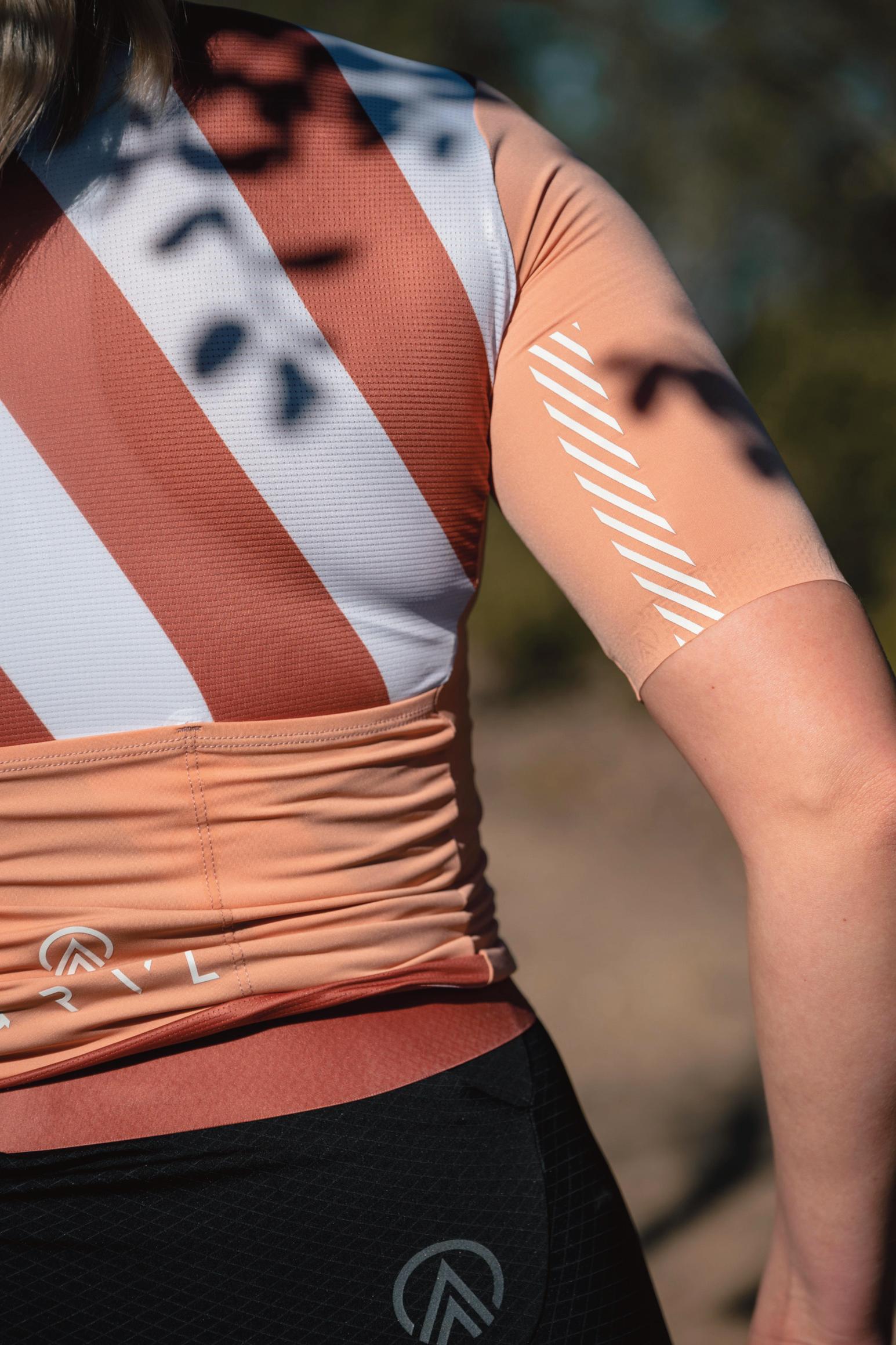
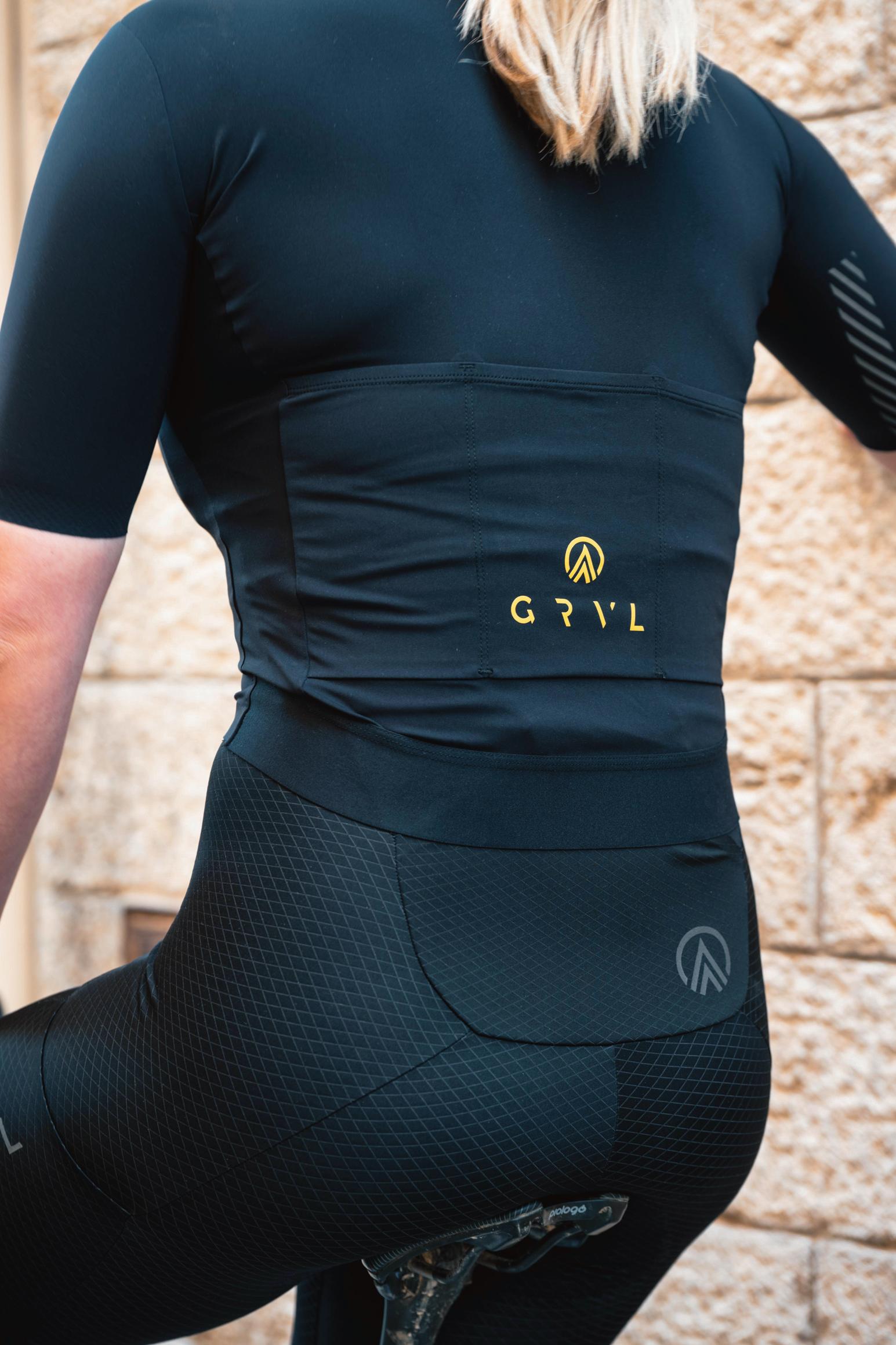
At the end of 2025, GRVL recruited female ambassadors to start building a female presence for the brand and to help them develop products. The women’s collection, coming out this summer, initially focuses on jerseys and bib shorts, with expansion planned across categories. Design input has come directly from female ambassadors, including practical features such as bibs featuring an unusual halter neck design, with braces keeping the shorts up from the waistline to the back of the neck without going down to the rear of the bibs. This is GRVL’s solution for easy nature breaks for women, allowing the neck piece to be pulled over the head so the bibs can be lowered with-
GRVL
out removing other layers.
The launch also coincides with broader updates across GRVL’s range, including new materials and fits. At the moment, GRVL sells men’s jerseys made of a blend of Tencel and merino wool and designed to be mostly biodegradable over about a year, with only 6% elastane left behind.
While GRVL will keep producing kit from these materials, the women’s line also marks the launch of a new fibre, which will also be phased into men’s apparel. Jerseys are made of a recycled polyester derived from ocean waste, an increasingly common source of material in the apparel industry. The differentiating factor for GRVL is that these plastic fibres are milled and finished in a way that makes the finished product entirely biodegradable over two to three years.
Additionally, GRVL chose to bypass the silicone gripper approach in favour of laser cutting the fabric. The process is more expensive but avoids the inelegant localised constriction commonly known as sausage leg and minimises the overall plastic content of the design.
Beyond the summer 2026 season, GRVL plans to develop the women’s line to eventually meet the men’s offer.
A key factor in the delayed rollout was brand validation. As a new entrant in a competitive market, GRVL prioritised proving product quality and building consumer trust before widening its offering.
“You’ve got to earn that trust,” Brooke says. “When people don’t know you, they default to established brands.”
Brooke explains that he emphasised slow development, quality and sustainable design over fast growth targets: “When you’re a new brand, you’re completely untrusted. So you have got to build that. Building a brand is a slow process.”
GRVL’s trajectory reflects several broader shifts shaping the cycling apparel market: rising female participation, growing environmental awareness, and the emergence of smaller brands moving away from the traditional cycle of frequent discounting.
GRVL’s expansion into women’s apparel highlights structural tensions that extend beyond a single brand and into the wider cycling industry. On the one hand, female participation in cycling, including gravel, is rising, moving from a niche minority to a commercially meaningful segment.
On the other hand, female riders still
YOUR PARTNER TO HELP YOU BUILD YOUR BUSINESS


√ 24 years of experience √ Customer & sales support
√ Customized marketing activities √ Delivery from stock
√ Place orders 24 hours a day 7 days per week
For more info about our brands, send a message to sales@onewaybike.nl or give us a call: +44 1527 958331
Website: shop.oneway.bike
“THE INDUSTRY IS FULL OF DISCOUNTS, AND WE DON’T WANT TO BE IN THAT AREA BECAUSE WE CAN’T SUSTAIN OURSELVES”
face more limited product choice than men. Across the market, this takes different forms: some large brands have yet to develop full women’s apparel ranges, while others offer more restricted selections compared to their men’s line. At the same time, smaller brands such as GRVL may recognise the demand but remain constrained by funding and production realities. The result is an imbalance where limited product availability can act as a barrier to participation, while lower visible demand can in turn reinforce cautious investment into the market segment. While traditional plastic-based fabrics are still the go-to for most riders, especially those concerned with aerodynamic gains and compression, using sustainable fabrics and ethical production methods can be a strength to appeal to a certain section of the market, especially women,
GRVL
who consistently report making ecoconscious consumption decisions more frequently than men do, a phenomenon known as the eco-gender gap.
More broadly, GRVL’s trajectory underscores the growing importance of clear positioning and differentiation for new entrants in a saturated market. With established brands benefiting from recognition, distribution, and aggressive discounting strategies, smaller companies must differentiate through values, product specificity, and community engagement. This creates a more fragmented but potentially more innovative landscape, where emerging brands are able to respond quickly to cultural and behavioural shifts while larger players may be slower to adapt due to scale and legacy systems.
At the moment, GRVL only sells directly to consumers via its website. While the brand would like to see its apparel in physical locations, it is staying away from the traditional retail approach, which it considers unmanageable for a small brand with premium pricing, high production costs and limited margins.
“The industry is full of discounts, and we don’t want to be in that area because we can’t sustain ourselves.”
GRVL sees shops as potential partners rather than traditional retailers, who would share the brand’s commitment to sustainability and fixed prices without sales. If retailers have a client base that they think would identify with GRVL, then there is market appeal for the brand, but it has to be done under a new sales model where customers don’t expect regular discounts.
GRVL plans to expand the women’s line alongside the men’s range, ultimately aiming for parity across categories and a complete offer, from summer jerseys through to winter overshoes.
For now, the women’s launch serves as both a commercial milestone and an indicator of whether a step-by-step, values-led approach can translate into sustainable growth within the cycling apparel sector
grvl.cc
Tackling a warranty situation in reverse may seem counter intuitive, but investing time with a customer upset about their product failing could be a useful relationship builder. Industry sales expert John Styles explains the thinking…
So, everybody knows how to handle a warranty, right? Ask for the receipt, make a judgement if it’s faulty or not, sort out a repair, refund or replacement where possible, maybe listen in a bit if they have a story that goes with it? Proceed quickly and efficiently, move on with the rest of your day (and theirs), without wasting too much time, right?
Right and wrong
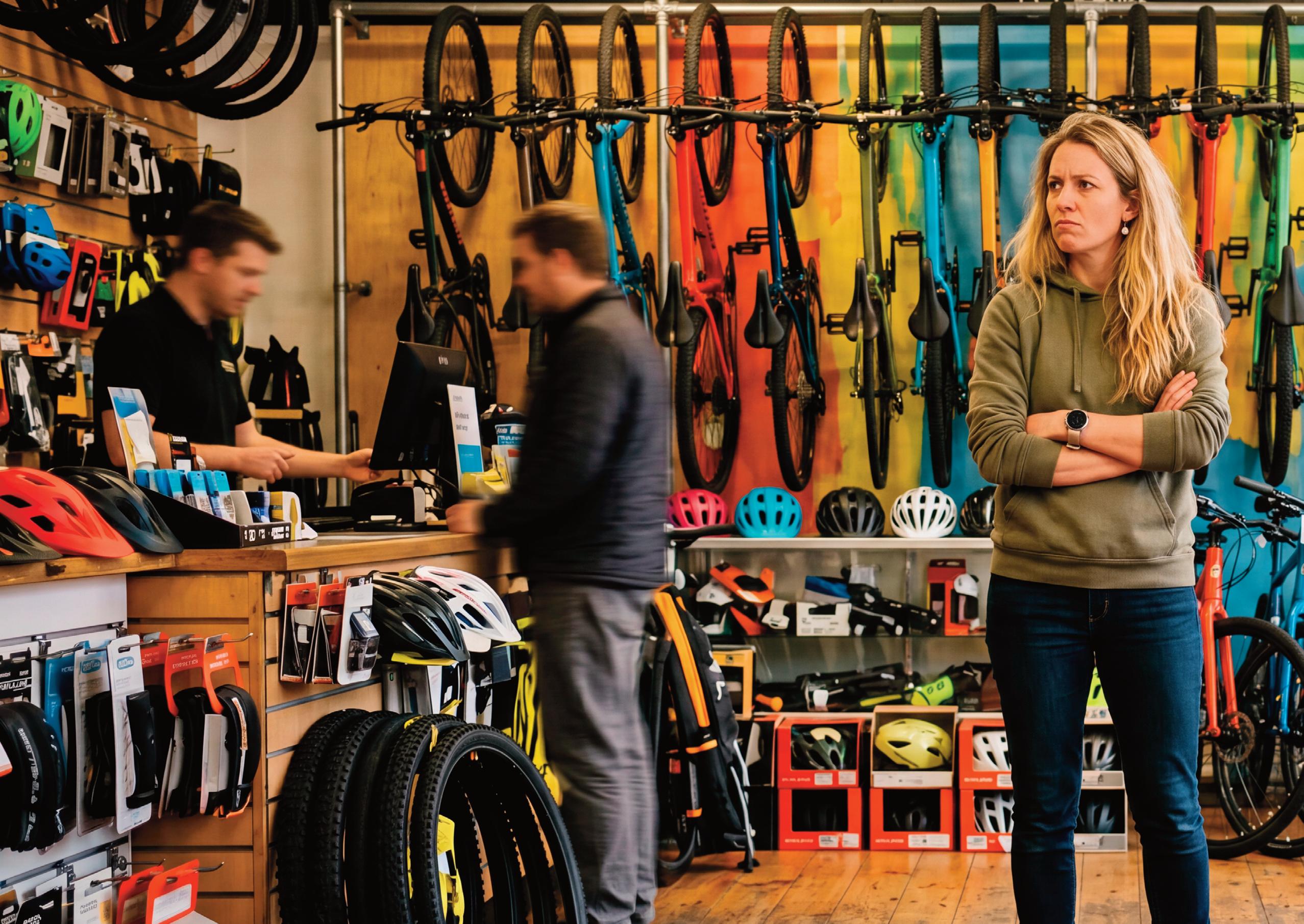
Well, that’s how it goes…. when it goes right, most of the time. And then there’s those times when it goes wrong. The customer can’t quite recall whether they did buy it from you and ‘may or may not’ have the receipt. But they are very angry and disappointed about what else happened due to the product failing and do need to tell you everything. And after you get all the information you need to log the claim with the manufacturer, it goes backand-forth – for three months. Because it’s one of those grey areas, not quite
yes or no situations? With the customer phoning you every other day, it becomes a draining lose-lose situation for you, the customer and the manufacturer. You end up feeling like a ball in the pinball machine, stuck in the middle, with pretty much everything feeling like it’s outside of your control.
Handling difficult cases backwards
Of course, there will always be difficult cases (and difficult people). But here’s one way to save a little of your time (and build your reputation). Try reversing your normal warranty handling procedure. Instead of handling things quickly and efficient-
ly, starting with the receipt, turn it around. Instead start with their story, slowing things down, focusing on listening and understanding – investing the time for them to vent their feelings and disappointment.
Have you ever noticed how if you interrupt someone’s story, to get something factual (like a receipt), they just kind of freeze and re-start – or get angry and go off on a tangent? Perhaps you can avoid wasting your time, by just allowing them to “get there in their own way”?
Steve Peters’ book The Chimp Paradox describes how trying to rationalise with someone who is in “Chimp Mode” isn’t going to go very well. He suggests
FLR was founded on an intense passion for cycling, with the vision of enabling every cyclist to go beyond their limits and achieve their goals
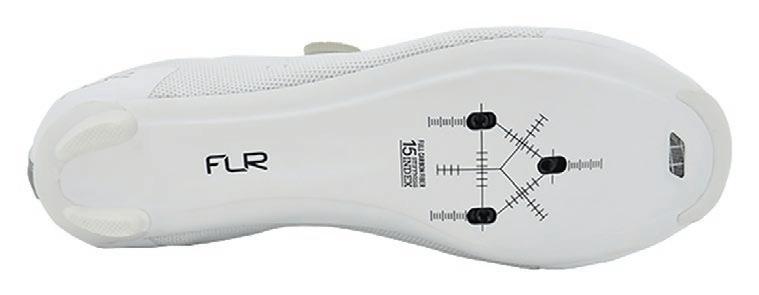
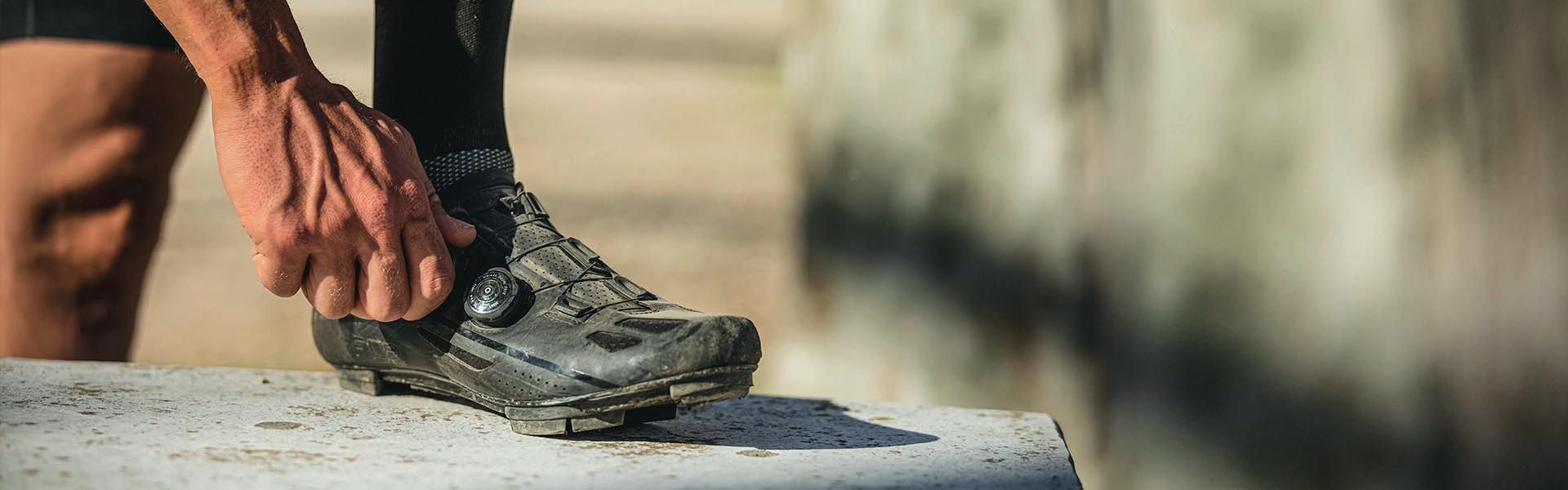
Each shoe is designed in close cooperation with professional cyclists worldwide, whose feedback and experience have shaped FLRs technologies and materials, delivering superior comfort, maximum performance, and innovation in every ride
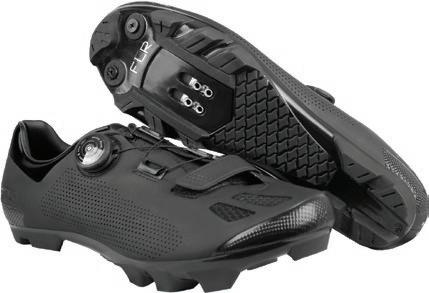
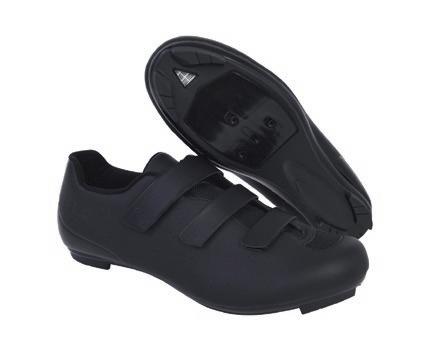
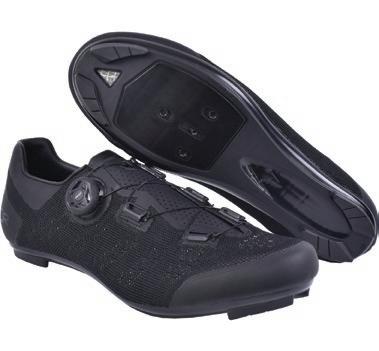
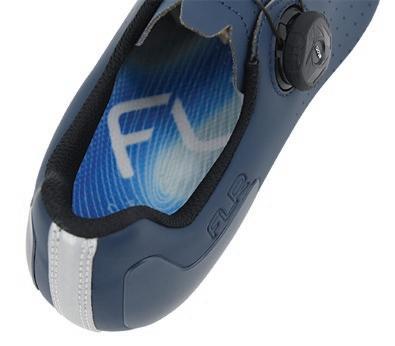
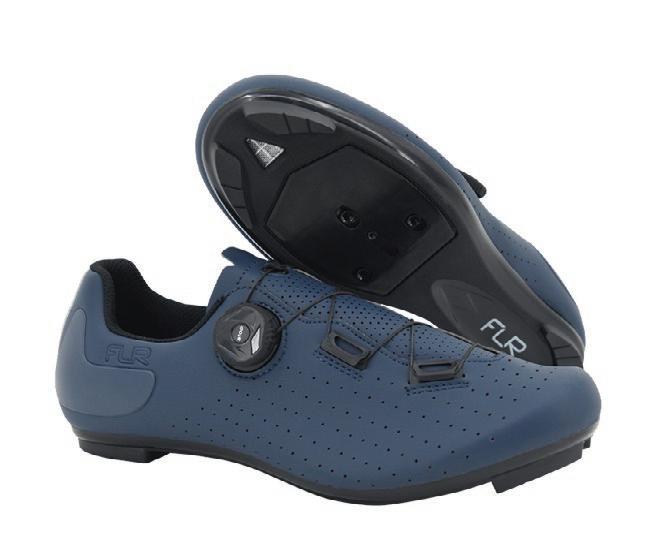
Cycling shoes are the most critical connection between rider and bike, influencing power transfer, efficiency, and overall performance. Whether you’re racing to the podium or enjoying a weekend ride, the right shoe makes all the difference. FLR create footwear that supports every level of cyclist, so you can ride farther, stronger, and faster
To find out more about FLR and our extensive range of products, contact your area sales manager, email us at sales@bob-elliot.co.uk or call us on 01772 459887


allowing the chimp to exhaust itself by listening to it talk. When the ‘human mind’ shows up again, a degree of rational thought re-appears. That makes it much easier to discuss things that they may not like so much, like needing the receipt or needing to consult with the manufacturer or that it may take longer than expected.
A stitch in time…
Investing time here is going to save you time later. When the consumer is convinced that you are supporting them (regardless of the outcome) they are less likely to pester you and chase


up if the warranty becomes drawn out. Behavioural expert Jo Navarro talks about how all humans respond to “Prosocial People”. Specifically, we learn to trust people who help us quickly and without hesitation. Now we know that the warranty process may involve some degree of reasonable delay, for spares, paperwork, etc. So, it becomes more important to convince the consumer that we are not the cause of the delay.
And this can be achieved in the first conversation with some simple Dos and Don’ts:
Do:
• Engage quickly
• Lean towards and listen
• Take notes and show interest
• Deal with admin and receipt at the end
• Set time expectations and “own the problem”
Don’t
• Engage slowly or reluctantly
• Lean away or use the till/EPOS screen as a barrier
• Focus on the till and ask for receipt before listening
• Interrupt, avoid or dismiss their story / problem
• Avoid setting timescales or “owning the problem”
And most of all, slow down. Focus on the person not the process. Ideally, find them somewhere to sit, that has a calming effect. Moving the (standing and potentially confrontational) conversation away from the till allows other consumers/staff to continue.
Be deliberately inefficient, take notes with old school pen and paper –not a digital device with rules and tick boxes. It shows you are listening and you can pick out what summary facts you need later. Repeat their language back to them paraphrasing what they told you. You can show empathy and show you care without having to agree to what they are demanding.
Upside down thinking
So, having looked at how to do things in a backwards kind of way to how you normally handle the warranty, the question is why?
Well, especially for a new member of staff, it’s natural to see an angry or annoyed consumer as a possible threat
“PEOPLE
WILL FORGET WHAT YOU SAID, PEOPLE WILL FORGET WHAT YOU DID, BUT PEOPLE WILL NEVER FORGET HOW YOU MADE THEM FEEL”
Maya Angelou
or problem. Someone who may take up your time, upset you or argue with you in front of the customers, someone might even become aggressive and so a degree of caution is natural. Difficult warranties upset the normal “quick/efficient” feeling of getting through as much as you can in any given day.
Another way to look at things though, is turn that thinking “upside down”. Not to view warranty case as a drain on your time, that is going to cost you money. Instead view it as an investment with your ongoing relationship with that consumer. An opportunity to gain someone’s loyalty to spend money with your store for years to come. In that way, it’s perhaps not the least important and least desirable transaction of the day, it’s the most valuable, most important.
Some of the best stores I know have a kind of similar phrase: “Handling a warranty case well almost makes the consumer happier and more loyal than if they didn’t have an issue in the first place”. And in many ways, they are right, they often seem uncertain about just how and why that happened.
Perhaps the answer lies in Maya Angelou’s famous phrase – “People will never forget how you made them feel”. A warranty case can be considered the sale after the sale. Because what you’re really selling is your ongoing reputation, your connection with the consumer and how they feel about you. The key to their on-going business.
John Styles is a veteran of the cycling industry, having worked with leading distributors and brands across the sector. With a well-rounded perspective on the opportunities and challenges facing the sector, backed by a Bachelors Degree in Economics, John Styles is an expert consultant for the bike trade. Get in contact via johnstyles2002@yahoo.co.uk
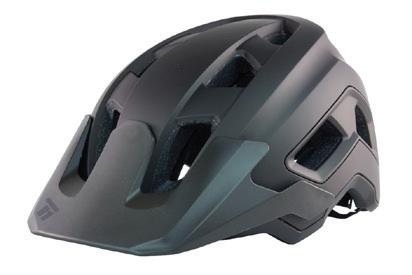
• All models with in-mould construction
• A wide range of colours and styles to choose from
• No buy in requirements
• Excellent dealer margins by
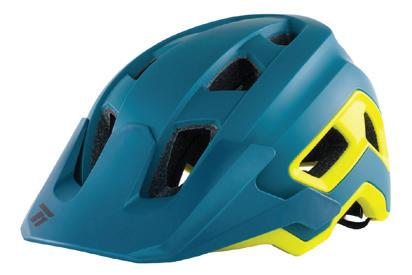
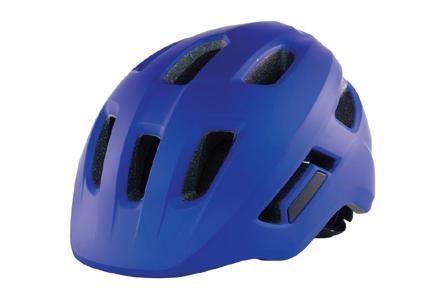
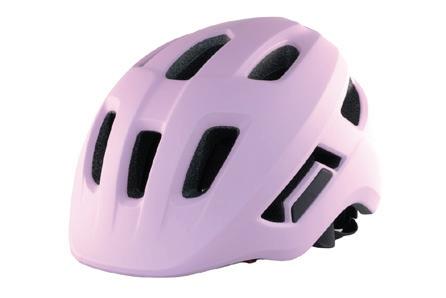
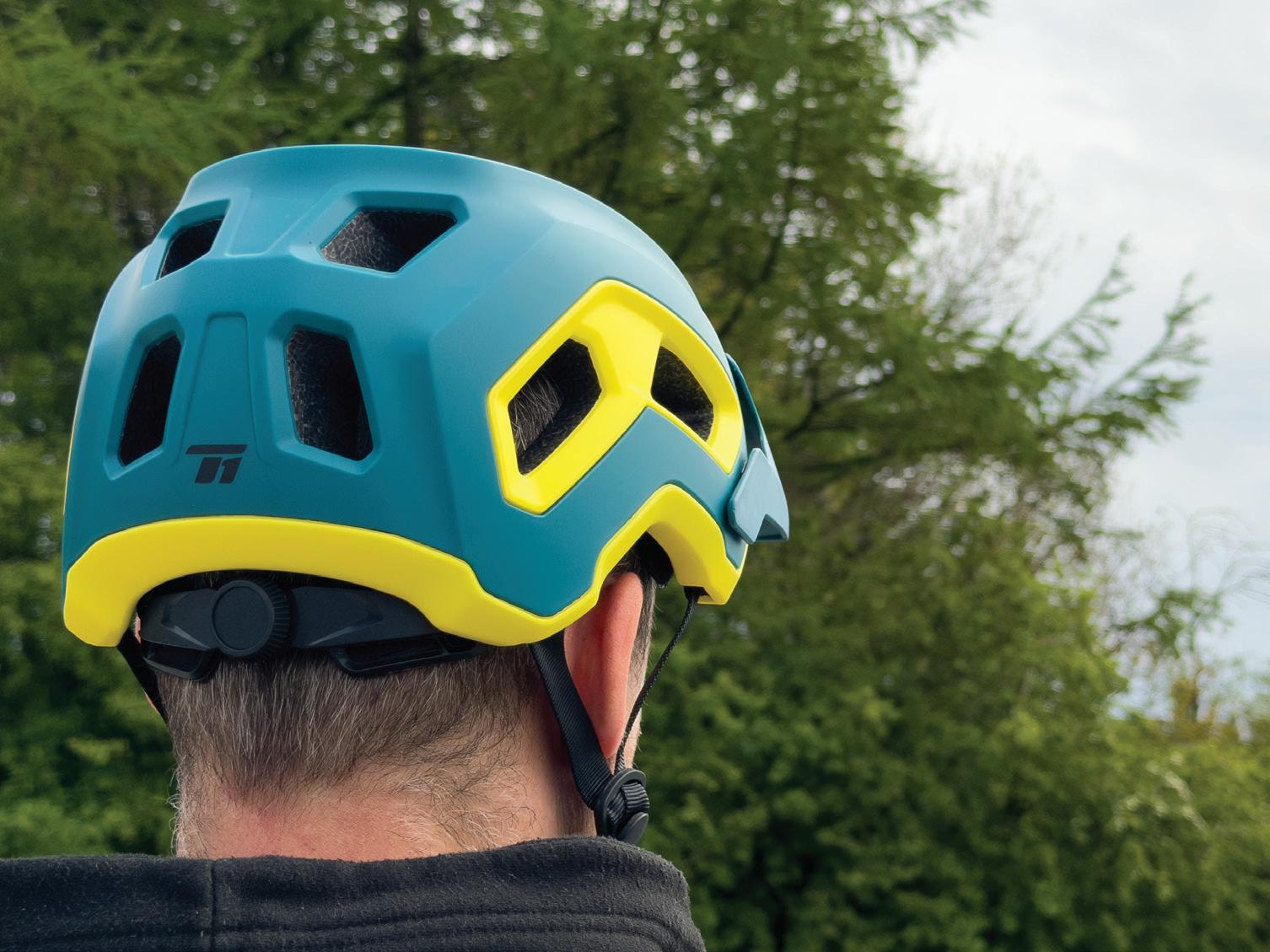
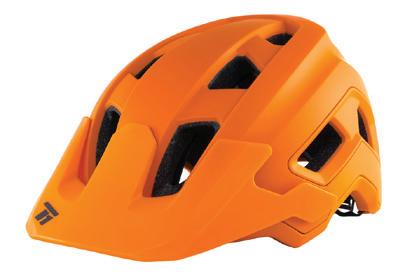
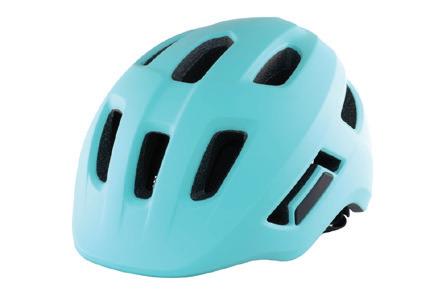
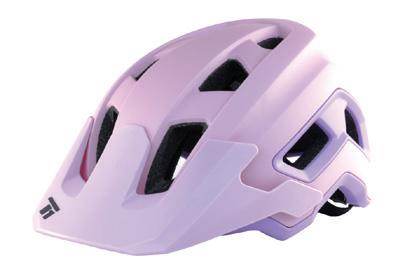
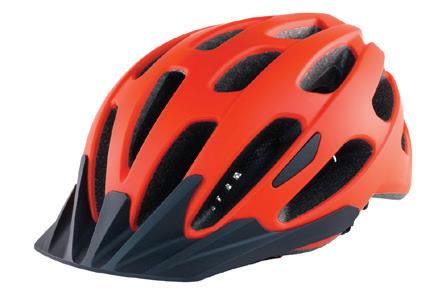
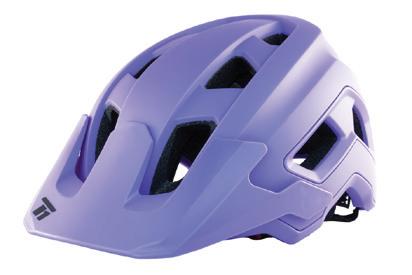
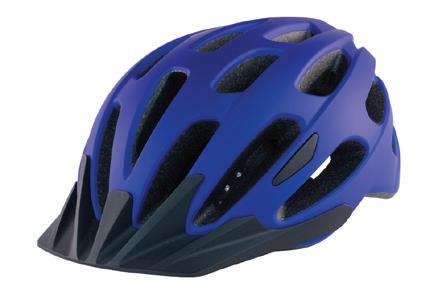
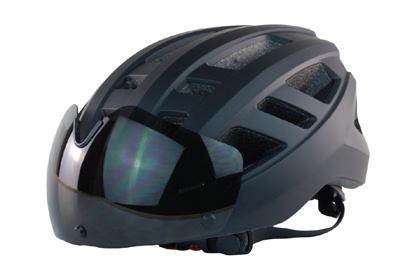
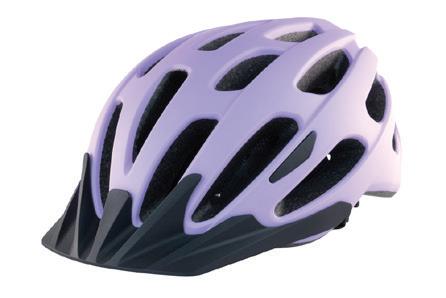
Contact us for a copy of our new bikes or parts and accessories brochures, or for more information on becoming a dealer.

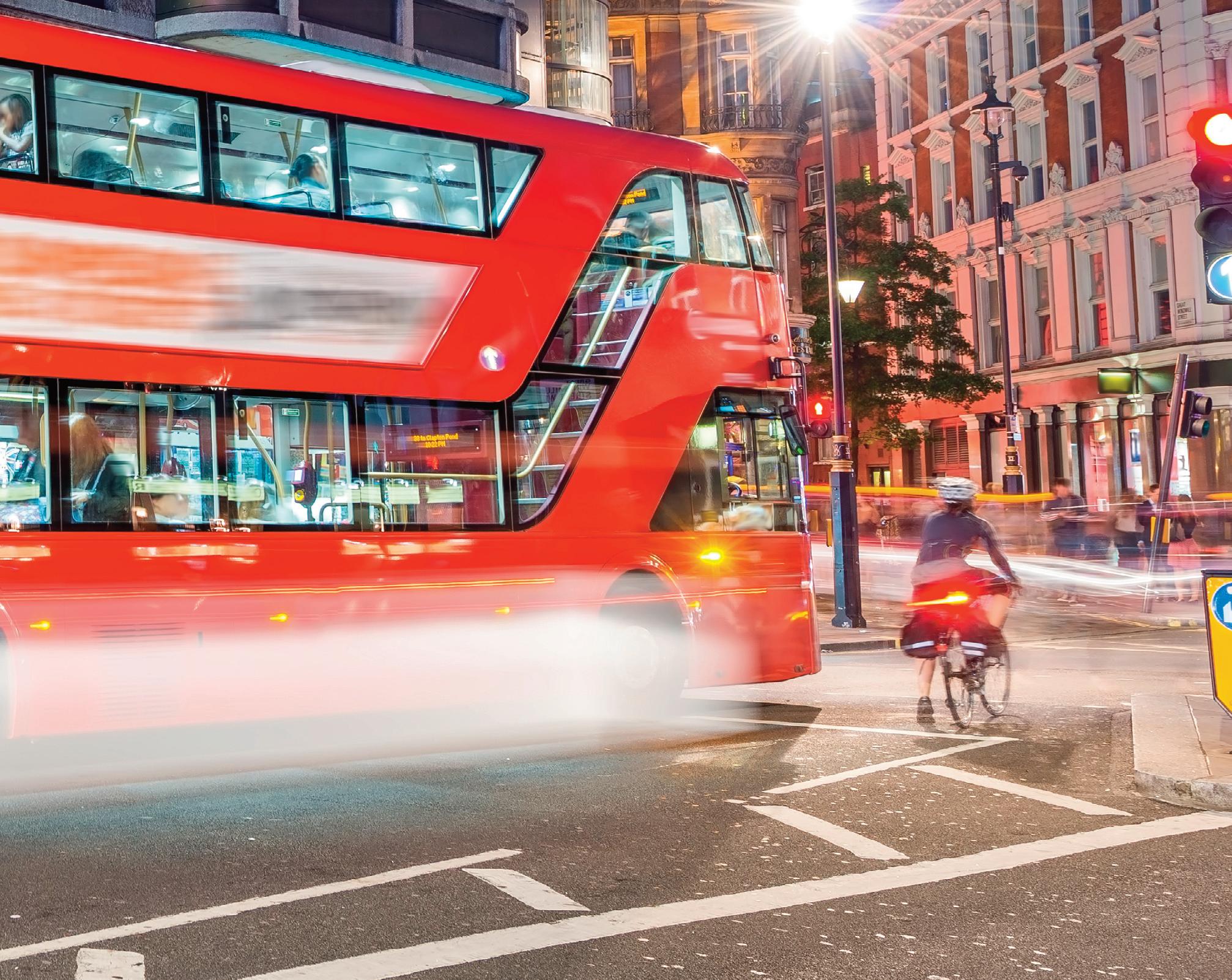
One of the very worst ways to spend a day on this planet is to tune in to the debates that take place in the House of Lords. Day after day, year after year, this unelected, uncapped Parliamentary chamber debates the issues of the day and while the secondary chamber can provide some checks and balances, mostly they just ask the same inane questions time and again, or at least they do when it comes to matters around cycling.
Against my better judgment and in the interests of trying to track political sentiment around cycling, I have had TheyWorkForYou alerts set up to my inbox for many years. This is something you can do, on any subject that interests you, to keep tabs on political discussion as it moves through the Houses of Parliament.
For this reason, I get almost weekly alerts about politicians tabling questions about why cyclists are not compelled to wear high visibility clothing; why they don’t have mandatory license plates and why the laws are not tougher against the less than one cyclist per year that may unfortunately cause a road death. Perhaps you have your own opinions on these subjects. So do the Lords and often they don’t come with much background research into the tabled questioning.
So, m’Lords, if I may help you with a few of the more common repetitively

pitched questions, here’s some of the background research that presumably you could do in exchange for the again expanded £371 day rate for turning up. Next time you see any of these debates pop up, feel free to point said politician in the direction of this article.
Mandatory registration and licensing plates for cyclists
This is one of the more commonly registered ideas that the Lords chew over, but it tends to come without much thought about the immense administrative cost that would come from regulating an activity that has no real costs to, nor adverse negative impact on society.
When the subject of a physical registration plate on bikes has been explored in more detail, it has been found that implementing a mandatory registration or licensing of cyclists would cost a similar amount to the same scheme for drivers. This at a time when successive Governments have been fond of trimming the size of the civil service. In March last year, Rachel Reeves suggested cutting around 10,000 administrative roles, for example.
So, where in the world has actually gone through with this idea, which, needless to say, would be a barrier to active travel, widely known for its net positive impact on the Treasury? Only North Korea. That’s it. Besides, where
do you begin registering children who wish to cycle to school?
Helmet compulsion: How this mandate can make cycling more unsafe
It was in discussion with Cycling Industry News in the summer of 2020 that Eric Richter, then Giro’s Brand Development Manager, told us: “We do not design helmets specifically to reduce chances or severity of injury when impacts involve a car. The number of variables is too great to calculate – the speed of the car, the mass, the angle of impact, the rider, the surface, the speed of the rider, did the driver or rider swerve a little or hit the brakes before impact. All of these variables and more are unique in every instance, and there is no way to accurately predict what is going to happen or the forces involved.”
This was a fact that anyone with a basic understanding of physics could grasp. An EPS hat versus cars that are presently, on average, growing by 0.50cm in width every year and seemingly exponentially by weight will only have one result in a collision, so the way to look at this issue is to ask, where does the danger actually come from?
Helmets are designed only for typical falls from bicycles; these happen infrequently in isolation on tarmac surfaces. Despite this, nobody would actively discourage people from wearing a
“NEXT TIME YOU SEE ANY OF THESE DEBATES POP UP, FEEL FREE TO POINT SAID POLITICIAN IN THE DIRECTION OF THIS ARTICLE”
helmet if it makes them feel safer. There are, however, more head injuries inside cars than there are on bicycles, with motor vehicle crashes a leading cause. Food for thought when considering the perception and reality of danger.
According to the latest batch of Department for Transport casualty stats for cyclists: “The pedal cycle casualty rate has fallen for all severities in 2024 compared to 2004 on a per mile travelled basis. The overall casualty rate decreased by 36%. The fatality rate decreased by 55%.”
However, the largest cause of hospitalisation for cyclists is not isolated incidents where no other vehicle is involved. From 2020 to 2024, there were 3,336 casualties that were isolated cycling incidents, but add a car and the number jumps to 59,749. Add HGVs and you have a situation where they account for 5.8% of all fatalities, despite their vastly smaller numbers. The HGV industry, by the way, has repeatedly lobbied against safer cab
design due to the associated costs.
The helmet compulsion argument is actually worse in the sense that where it has been deployed, cycling rates have plummeted, which in reality is probably far more dangerous for public health. After all, various studies have found that those who cycle as part of their lifestyle are 15% less likely to die from any and all causes as a result of the associated health and fitness benefits. For those who religiously cycle to work, one study found an all-cause mortality reduction of 41%.
Famously, the highest modal share cycling locations have hordes of cyclists not wearing helmets. This is largely as a result of dedicated and segregated cycling infrastructure being widely available and joined up, but it’s also down to a safety in numbers phenomenon, that conversely, makes helmet compulsion more dangerous for those who cycle. It has been found that where the number of cyclists reduced post-compulsion, incident

rates with vehicles actually rose as cars were less likely to expect a cyclist. Where helmet compulsion has actually been introduced it has been a disaster for cycling rates and thus public health. Australia has the most famous dataset on what actually happens. In New South Wales compulsion led to a 36% reduction in cycling rates and 42% among children. Very similar numbers were reflected in Melbourne and Perth.
Theoretically, insurance is designed to price in risk. As the aforementioned killed and seriously injured data illustrates, collisions with cyclists do tend to end only one way, even if it is the cyclist to blame and that is for the cyclist to come off far worse. Comparably, the damage a cyclist would cause to another vehicle is limited by the weight and speed of the rider, which it’s fair to say averages in the ballpark of 10 to 15mph in the city. Riders come in all
shapes and sizes, but the average man weighs 95.7kg and woman 71.6kg. These metrics, by the laws of physics, cannot come close to matching the cost to the Treasury of the negative externalities of incidents on the roads related to heavier vehicles.
I ran the numbers based on some figures I could find on kinetic energy transfer and your typical male cyclist crashing at top speed has an energy transfer of 1,910 joules of energy. Since most cars sold in the UK are now SUVs, a two-tonne weight is not abnormal. Moving at the much-argued-over urban speed limit of 30mph, the same crash would generate 179,860 joules of energy. Interestingly, there is something of an exponential curve in damage transfer. At 40mph, a car would carry 319,760 joules and at 70mph, a massive 979,250 joules.
This is why cars have mandatory insurance and cyclists do not; because
“THIS IS WHY CARS HAVE MANDATORY INSURANCE AND CYCLISTS DO NOT; BECAUSE THE DAMAGE RISKS ARE GALAXIES APART”
the damage risks are galaxies apart. Because insurance should price in risk, I dug up the actual cost of a road accident in the UK and the numbers further reinforce why it makes sense to make insurance mandatory for heavy and fast-moving vehicles. A fatal accident in 2012 money cost the best part of £2 million in lost output, human costs and medical and ambulance costs, excluding things like property damage and the repair of infrastructure. In 2024, there were 1,671 such incidents, or around five every day. Thankfully, in 2025, it was revealed that cycling fatalities fell to their lowest recorded level, with 82 people killed. 45% of those involved a collision with a car, with the most common cause given as “ineffective observation” followed by “aggression and dangerous driving”.
In playing devil’s advocate, this is worth the bike industry’s considera-
tion as we push back against unregulated electric bikes. It is true to say that the same laws of physics would apply and that non-linear growth in energy transfer would be substantially higher on a 40mph e-motorbike versus the kinds of eBikes we are fighting to protect the status of.
Cycle lanes harm local businesses
Politicians love this presumption for some reason, that is, despite there being ample evidence that if you make places more people-friendly, they stay longer, visit more often and thus spend more in local businesses. Thankfully, a few places twigged during Covid that more outdoor seating and spaces for people to exist unworried about crossing a road actually meant communities gathered more often. Happy, relaxed people spend more freely.
According to the Government’s own

































assessment – The economic benefits of walking and cycling – for every £1 spent on active travel the economy tends to benefit to the tune of £6. So the taxpayer should love cycling.
However, zoom in further to street level and the results can be even more impressive. Transport for London’s paper Walking and Cycling: The economic benefits found that where the capital has improved access to cycling, adjacent retail spend has risen by up to 30%. It also found that businesses that cater for cycling to work had better employee retention and were more attractive to potential staff.
Key to dispelling this tired old argument is the finding that cycle parking delivers a five-fold retail spend per square metre versus the same space used for car parking. Over the course of a month, people who used active travel means to arrive on the high

“A FEW PLACES TWIGGED DURING COVID THAT MORE OUTDOOR SEATING AND SPACES FOR PEOPLE TO EXIST UNWORRIED ABOUT CROSSING A ROAD ACTUALLY MEANT COMMUNITIES GATHERED MORE OFTEN. HAPPY, RELAXED PEOPLE SPEND MORE FREELY”
street would spend up to 40% more than people who drove, according to a TfL finding. Cyclists would tend to make 12 visits each month to a driver’s eight; a full 50% more.
Cyclists don’t pay to use the roads, let's tax them
Can you believe this one still comes up on the bingo card of sticks to beat cycling with? Aside from the ignorance of the fact that almost all cyclists drive at some stage too, this one is actually incredibly cheeky.
Going back to the science lesson about kinetic energy transfer and throwing in a little friction, the damage that cycling does to the roads is essentially non-existent versus vehicles weighing substantially more, so arguably those who choose to cycle instead of drive are actually subsidising the roads. That’s because the roads
are generally paid for by council taxes, with a portion of this delegated to roads upkeep in any given area. Even fuel duty goes into the general taxation pot, so there is no argument that cars fund the roads.
The clue is in the name of the tax that far too many politicians still suggest cyclists need to pay. Vehicle excise duty is a tax on emissions, of which bicycles, horses and EV cars theoretically have next to none. EVs now, of course, do pay toward the road upkeep, but then again, these vehicles are coming in heavier than traditional cars and, as a result, are causing more damage to roads and pavements where they are often parked.
Did we miss any of other cycling myths that crop up in the corridors of power? Let us know in the usual places, including our Facebook group, Cycling Industry Chat.

As the clock starts ticking down to CIN Live this September, some of the range preview details are beginning to come through...
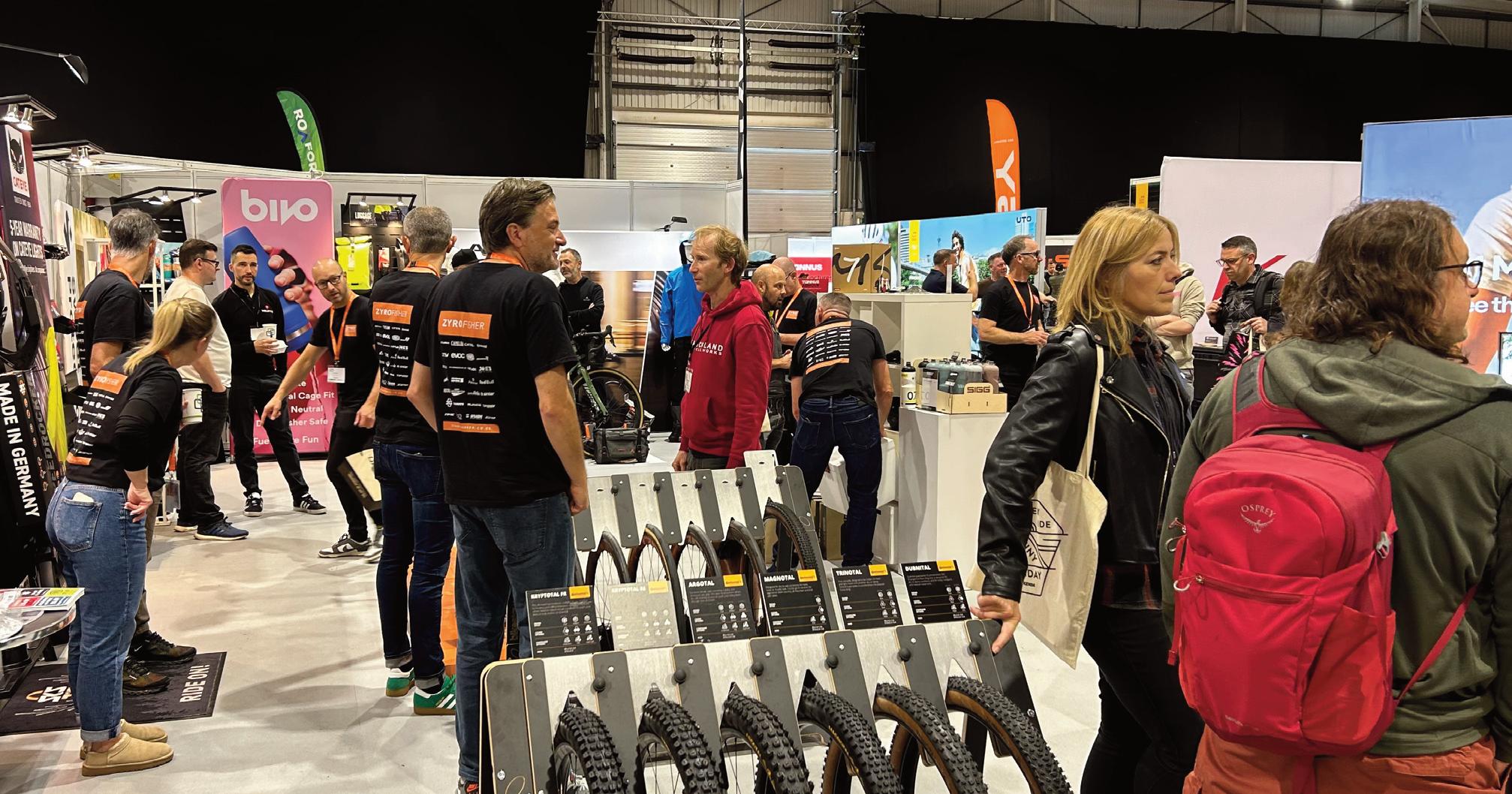
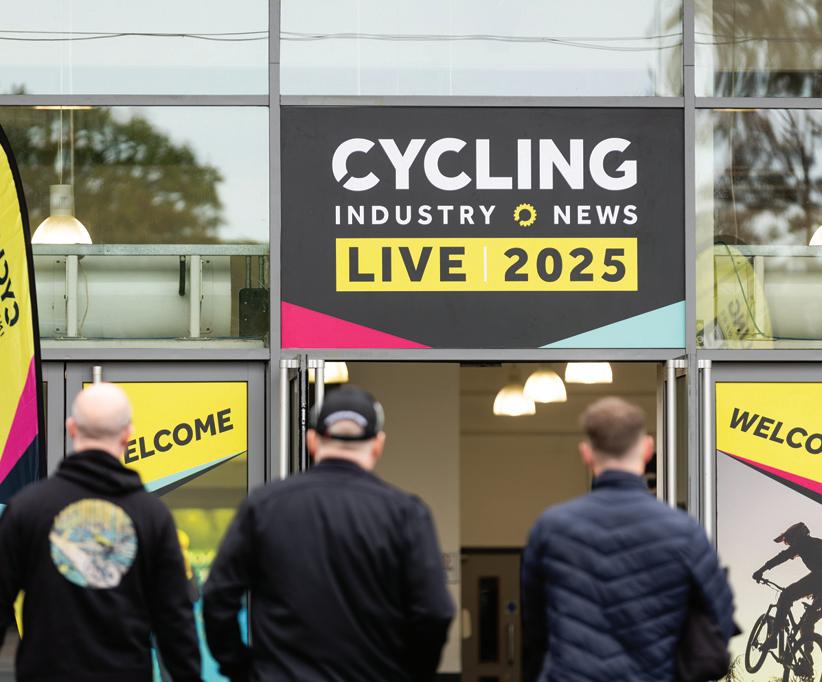
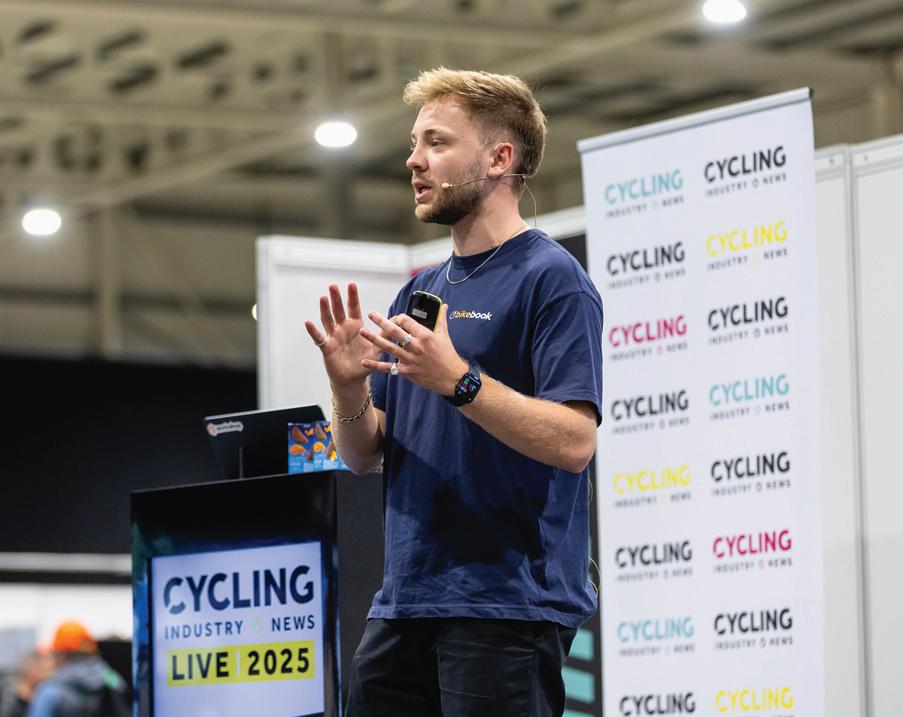
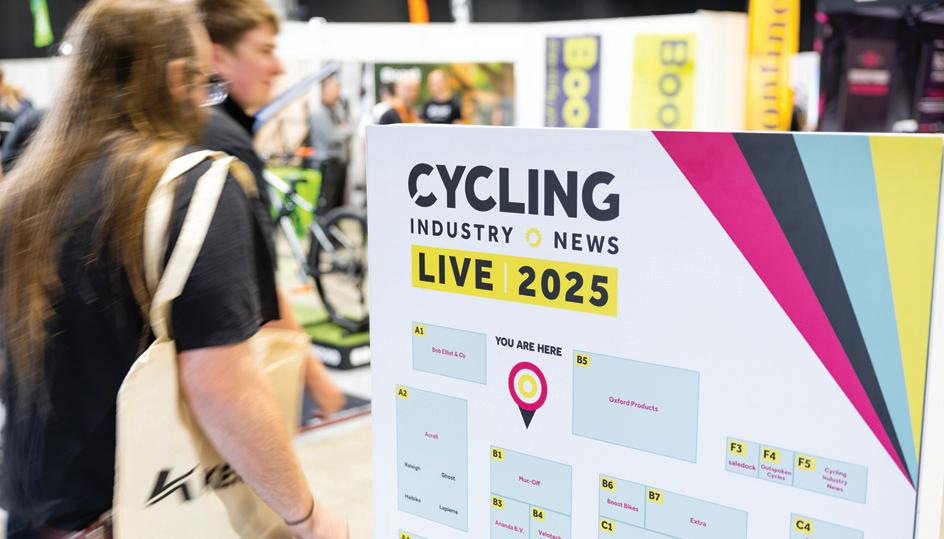
You’ll no doubt know that preregistration for CIN Live 2026 is now live. Now in its second year, this trade-only show is back at NAEC Stoneleigh in a space considerably larger than occupied at last year’s debut. Top exhibitors, both returning and new to the show, are lined up for CIN Live, which runs Sunday 20 and Monday 21 September 2026, and details are starting to trickle through about some of the things dealers can expect to see, amongst the same winning blend of exhibition, seminars and networking.
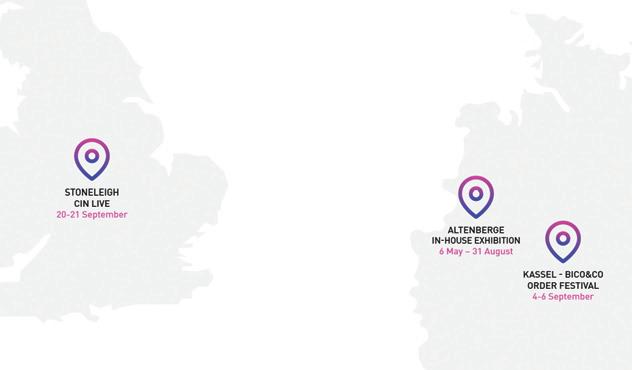
VELO DE VILLE will be bringing its Germany-made 2027 model year ranges on a months-long B2B roadshow, with CIN Live 2026 rounding off the tour in September.
Also taking in Kassel and Altenberge, Germany, the roadshow will provide early and hands-on access to the new models, equipment options and sales themes for the coming season.
“Those who experience the bikes in person, test ride them and have expert discussions with our on-site representatives gain early insight into the 2027 season,” says Alain Thiemann, Managing Director of VELO DE VILLE.
Underscoring its close ties to the retail sector and its commitment to dealers, the custom-made manufacturer will showcase the complete lineup for the upcoming model year, providing information on new products, equipment options and digital solutions and services. Dealers can register with VELO DE VILLE for added benefits.
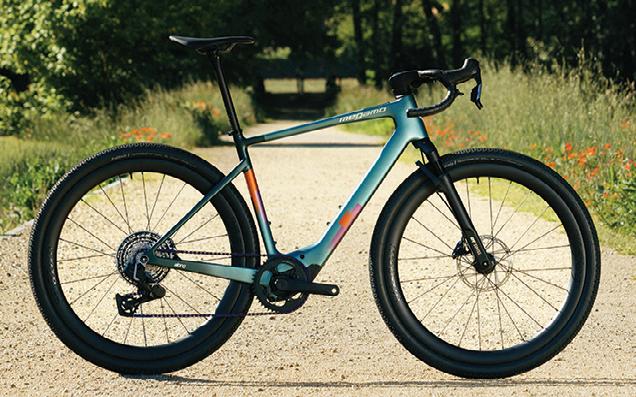
Not only will Megamo’s new Avinox models be showcased at CIN Live 2026 – including Reason, Upon, Along and the Ryal – but there’ll also be further MY2027 ranges for dealers to get to grips with.
The Along MY27 line-up includes five gravel eBikes with carbon frames, the new Avinox motor system (including the M2S and M2) and a 600Wh integrated battery. Three of the Along models run SRAM’s XPLR platform, the others Shimano’s GRX and Deore families. The Vittoria Terreno T50 Mixed in 50c runs across the entire Along range for speed on packed gravel and tarmac connectors, with the volume and profile to absorb rougher tracks and provide confidence on loose descents.
The Upon (MY27) is a purpose-built eroad platform again with support from Avinox. Pitched as a road bike that happens to have a motor, it’s developed with the same geometry principles, cockpit principles and component approach as a high performance conventional road bike, eschewing the approach of some competitors to work as hybrid platforms, rather than bikes designed from the outset for road use. Contact AlsoBikes for more details and head to the show to see them in person.
TUNE IN NEXT ISSUE FOR FURTHER UPDATES ON CIN LIVE OR HEAD TO: LIVE.CYCLINGINDUSTRY.NEWS

At the Woodland Grange Hotel, on Sunday 20 September after the first day of CIN Live 2026, there’ll be a BBQ extravaganza at the hotel with live music, garden games, tug of war (Editor’s note: are you sure?), croquet and more. There may also be food and drink and of course chance to chat with other upstanding execs from the bike trade. Find out more about tickets by contacting Lloyd –lloyd@cyclingindustry.news or on 01727 739160
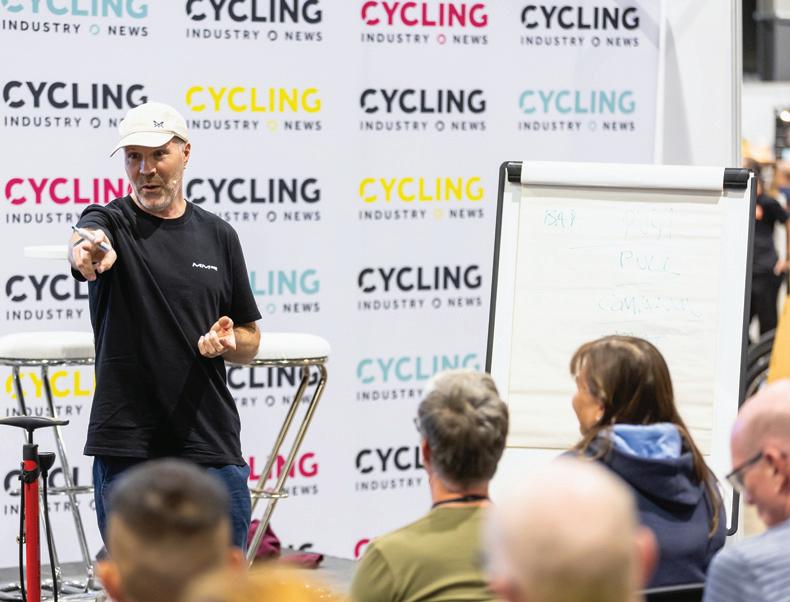














From a garage-built power meter built by enthusiasts to partnerships with Van Rysel and Wilier, INPEAK has had a steep trajectory in less than a decade. CIN speaks with INPEAK Sales Manager Filip Bagiński for the inside story and tips on showcasing power meters in bike shops…
INPEAK is a Polish brand whose story began with the master’s thesis of one of the company’s co-founders, Marcin, in 2014. A lifelong cyclist who had been racing MTB events since childhood through local cycling clubs, Marcin decided to create a fully functional power meter based on a Shimano Deore LX crankset to complete his degree. Remarkably, the prototype was powered by a battery taken from a Sony Ericsson mobile phone.
The idea of transforming this university project into a commercial product came when Marcin met Dawid at a cycling race in 2016. At the time, Dawid was working as an engineer in the military industry, while cycling had long been his passion outside of work. The two quickly became friends and began working together at the same company, where they further developed their engineering, programming and design skills. After hours, they spent countless evenings in Dawid’s garage building the very first INPEAK power meters.
And so, in February 2017, INPEAK was officially born in a garage in Wroclaw. In March 2018, the first devices powered by a CR2032 battery and hand-built by the founders, reached cyclists’ hands. A few months later, Damian – now head of production – joined Dawid and Marcin, and in 2019 the company moved to a
larger headquarters. From that point on, it steadily expanded its team and sales month by month.
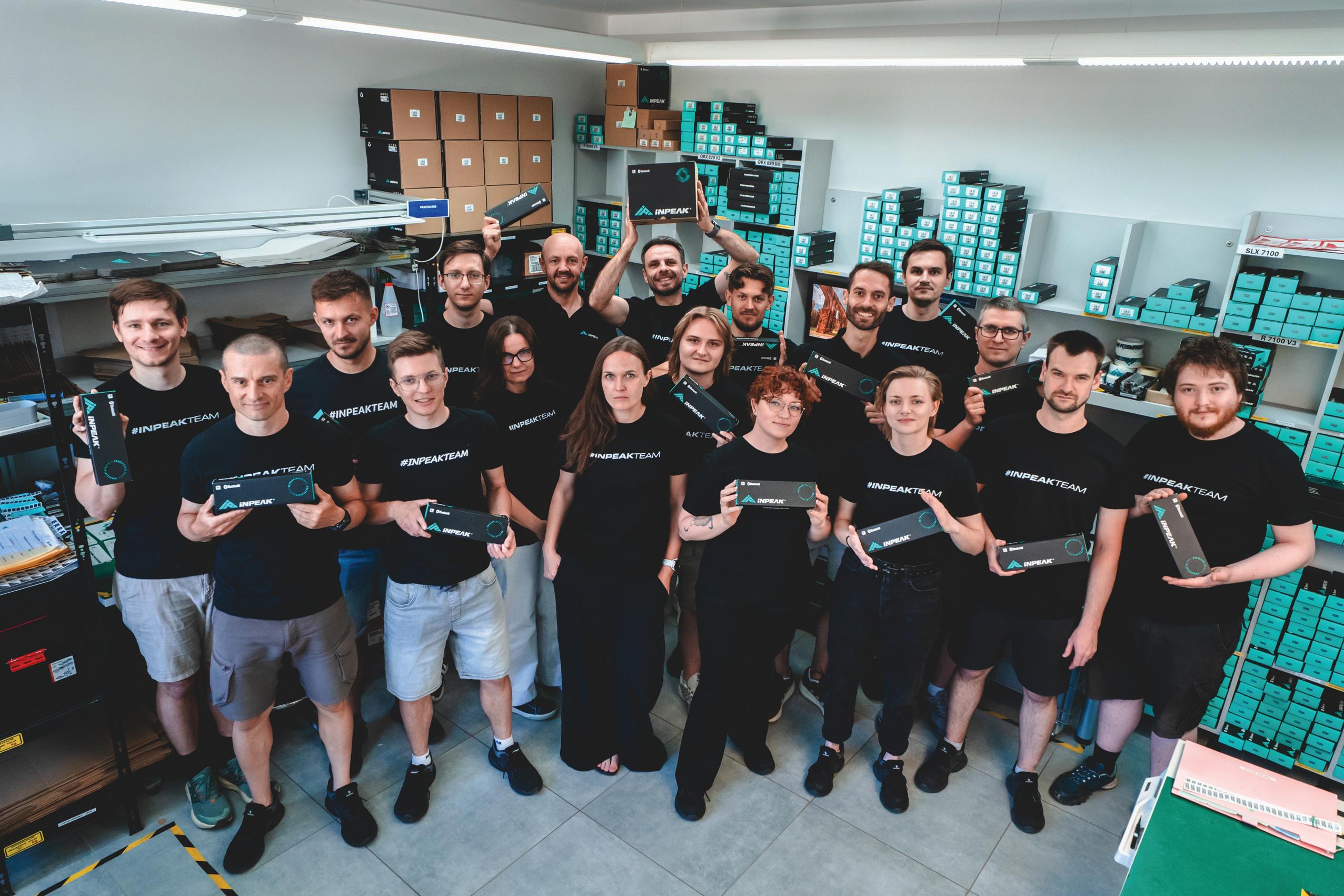
Today, the company employs over 20 people. It collaborates with some of the world’s largest bicycle brands and equips athletes from the top tier of professional cycling. INPEAK products can now be found across Europe, the United Kingdom and the United States.
From a garage-based start-up, INPEAK has, in a short time, become one of the leading manufacturers of crank-based power meters in the world. CIN speaks with INPEAK Sales Manager Filip Bagiński…
What makes INPEAK different from other power meter brands?
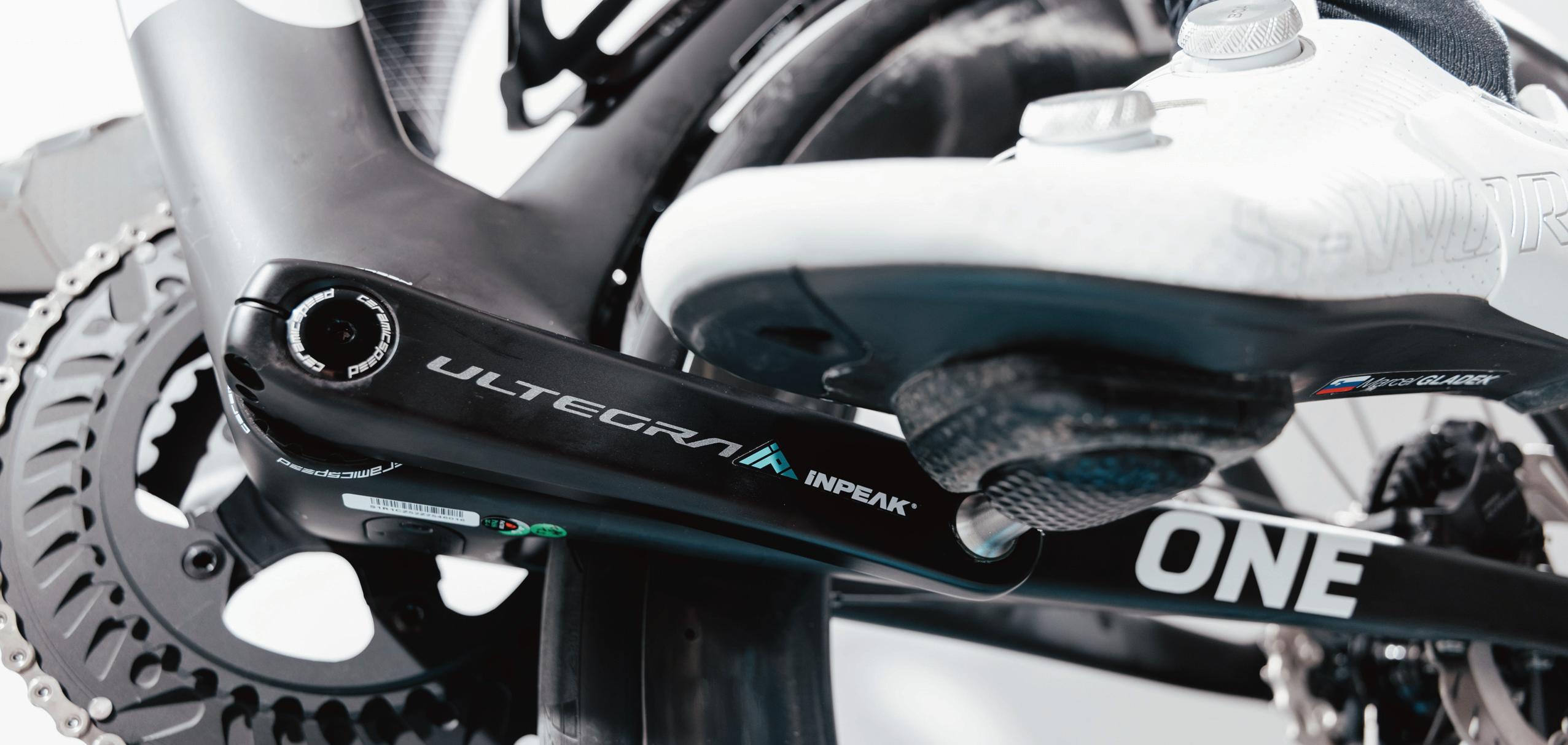
One of our standout innovations is the rechargeable Powercrank-E range, renowned for its exceptional durability, precision and reliability. By introducing this model, we eliminated the risk of user error associated with replacing CR2032 batteries, significantly improving convenience and effortless operation. The built-in rechargeable battery also allowed us to create a fully sealed and smooth design, resistant to water and external conditions, which greatly enhances the device’s durability.
Our dual-sided power meters are also powered by an integrated rechargeable

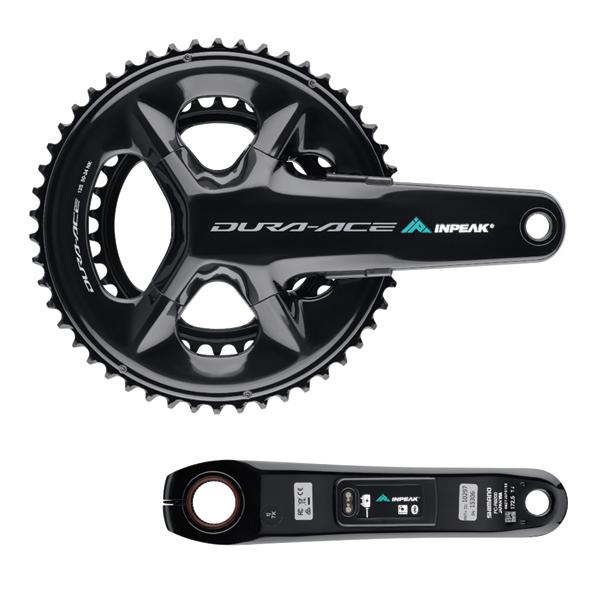
battery. In versions designed for Shimano Ultegra R8100 and Dura-Ace R9200 cranksets, we additionally implemented side strain gauges, which are essential for achieving the highest measurement accuracy in these crank systems.
What’s more, we are the only brand offering a dual-sided meter for Shimano 105 R7100 and GRX RX810/820 cranksets.
Another key differentiator is our manufacturing philosophy. Every INPEAK power meter is 100% manufactured in Poland and 100% hand-built, allowing us to maintain complete control over quality at every stage of production. At the same time, we use advanced technologies and automate selected stages of production, while maintaining full control over all critical processes. This combination of craftsmanship and modern engineering gives us full confidence in the highest product quality. Only by having such a refined product and well-developed production technology are we able to scale our business effectively. Our warranty rate, despite continuous year-on-year sales growth, remains below 0.5%.
When purchasing a power meter, customers receive not only a high-quality product but also comprehensive after-sales support and a long-term partnership with the brand, ensuring reliable assistance for years to come.
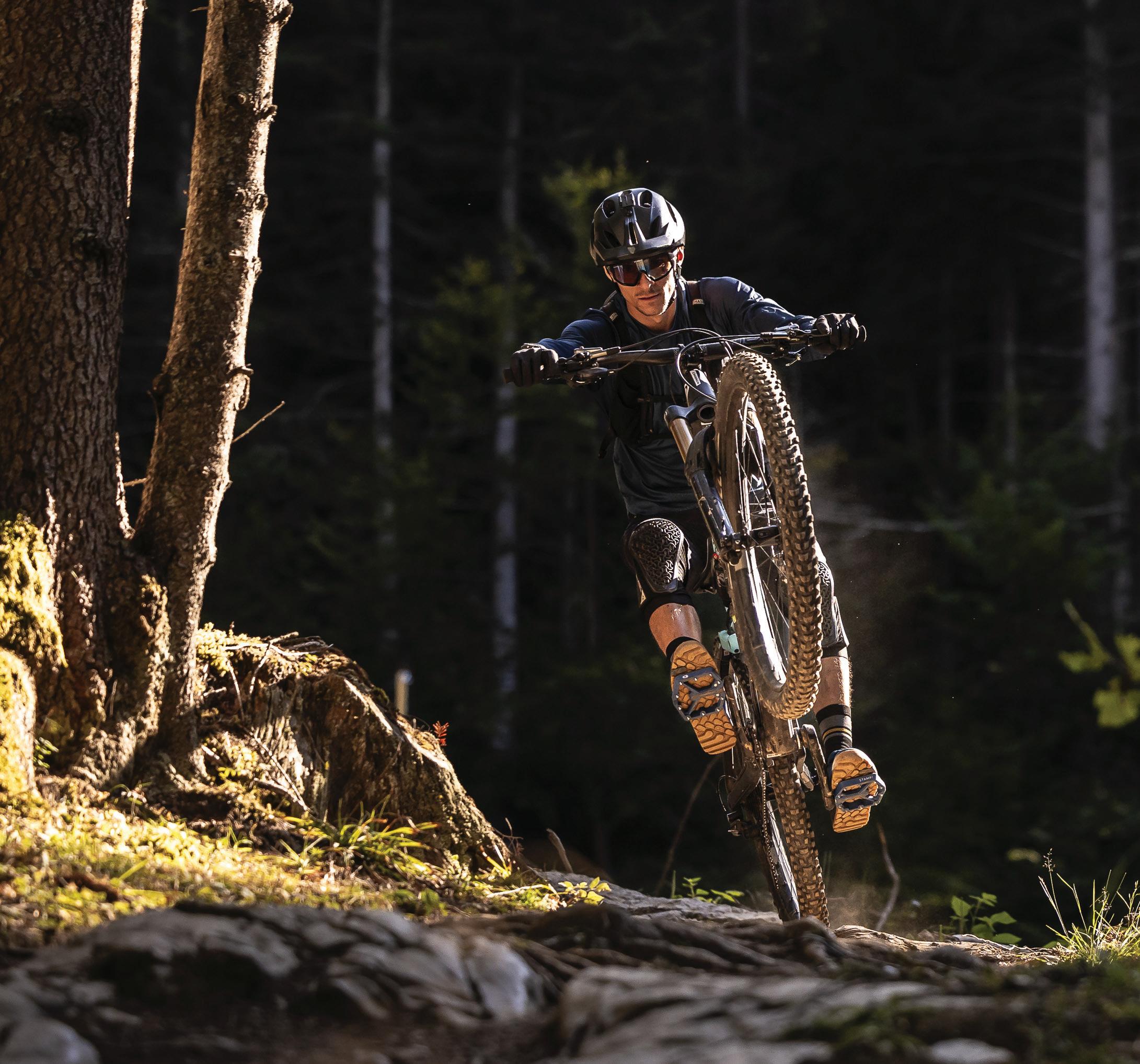
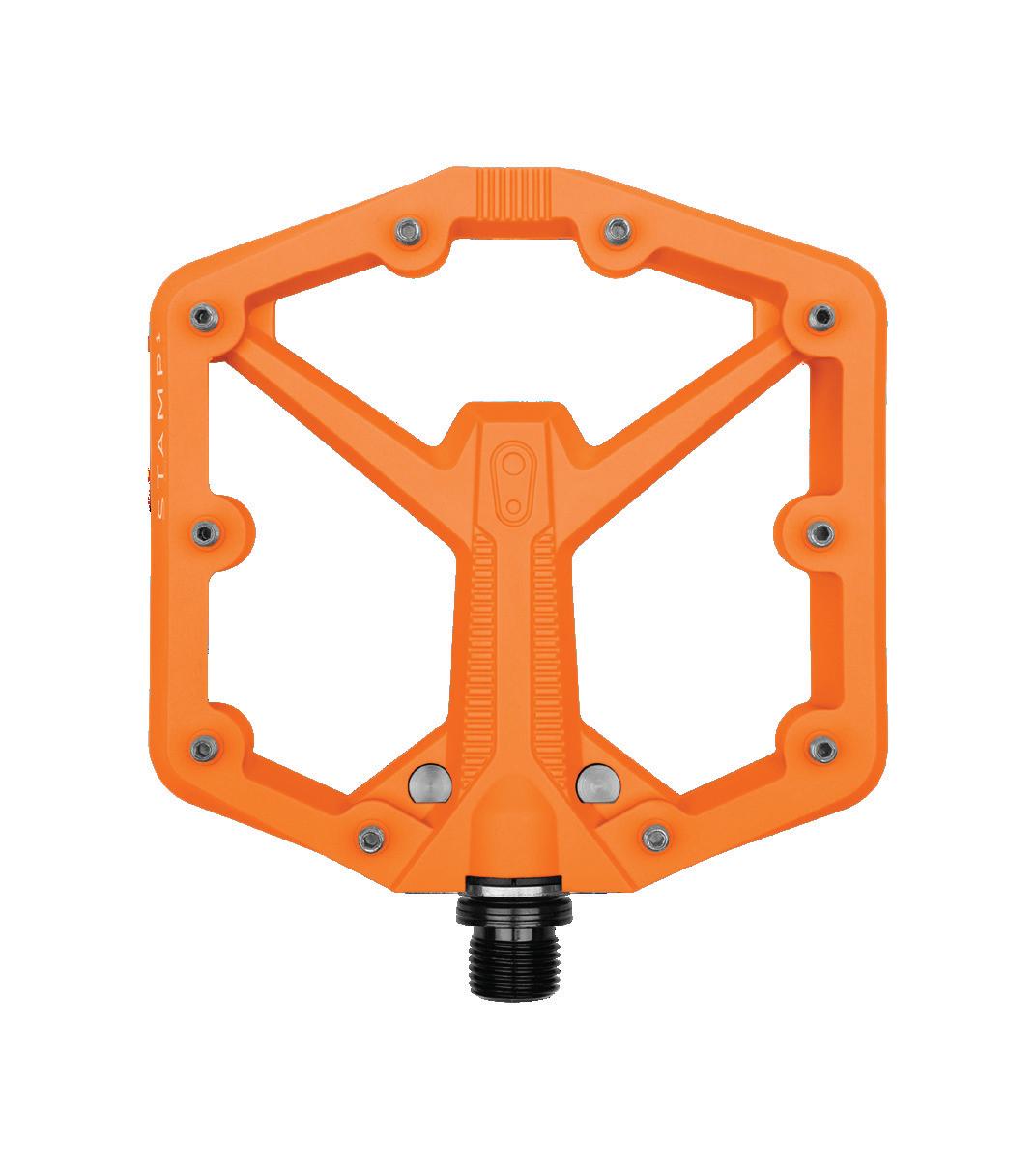
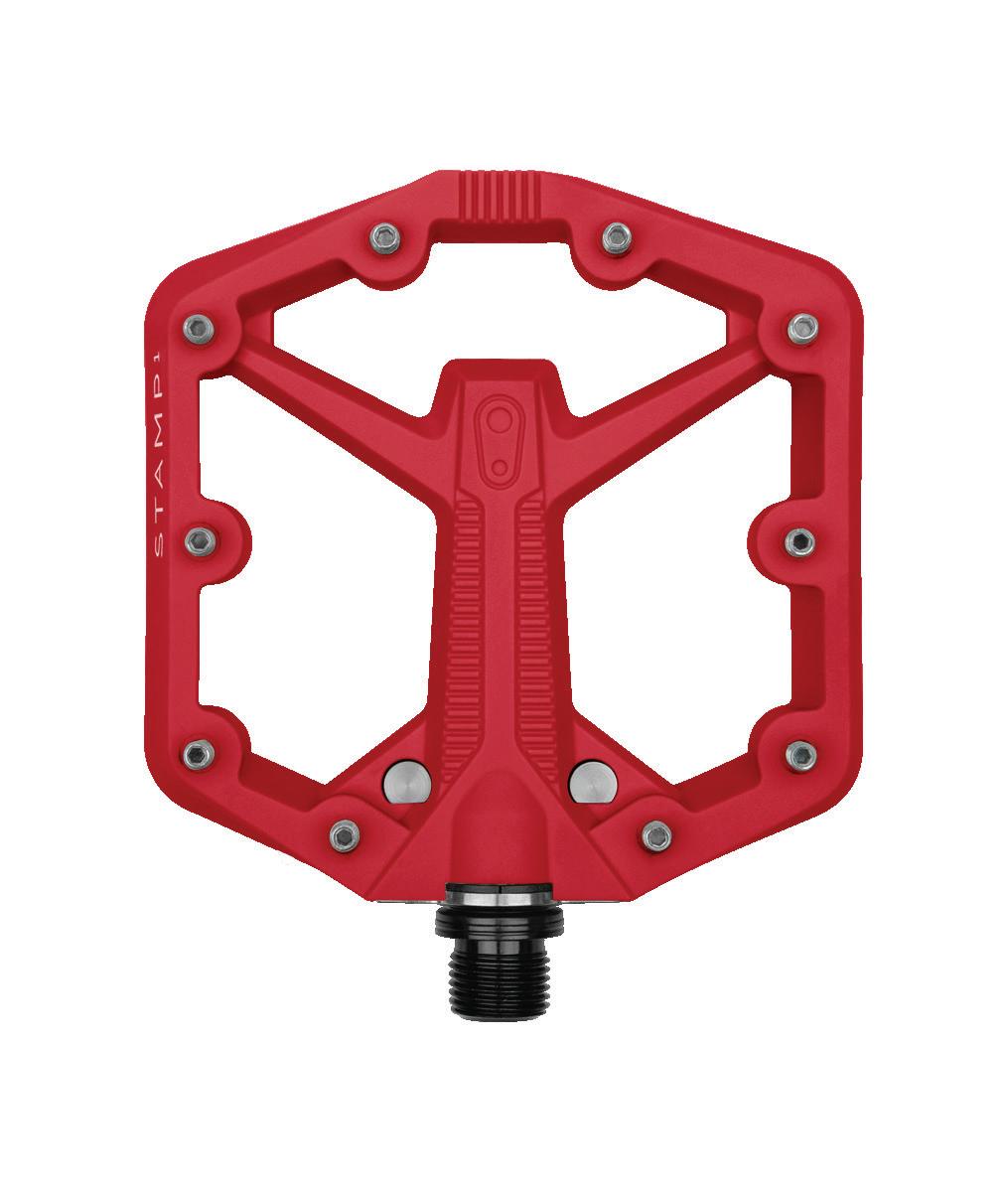
improve every rider experience
New one-piece replaceable traction pins, 10 per pedal Upgraded, fully ser viceable IGUS bearings & seal system
What does the INPEAK range look like?
INPEAK offers the widest range of Shimano crank-based power meters available anywhere in the world. We provide customers with a choice between rechargeable Li-Po battery systems (Powercrank-E) and traditional CR2032 battery-powered versions (Powercrank), allowing riders to select the option that best suits their preferences and riding habits.
Our range starts with Shimano 105 cranksets and extends through Ultegra and Dura-Ace models. We also offer dedicated options for gravel riders with GRX 810/820 cranksets, as well as MTB riders using SLX, XT, and XTR groupsets.
Customers can choose between single-sided (SINGLE) and dual-sided (TWIN2) versions. As mentioned earlier, our Shimano 105 and GRX TWIN2 dual-sided power meters are currently unique products on the global market.
Pricing starts from just £329 SRP for CR2032-powered versions and from £349 SRP for rechargeable Li-Po models charged via a magnetic charging cable.
You’ve partnered with the likes of Van Rysel and Wilier – tell us more about that. Our collaboration with Van Rysel began towards the end of 2023, when we started supplying Powercrank-E power meters for the RCR models. The premium quality and reliability of our products helped strengthen the partnership, and as the French manufacturer expanded its range with the RCR-F and EDR models, the number of bikes equipped with INPEAK power meters also continued to grow.
Our story with Wilier began through our support of the Wilier Vittoria Racing Team, a UCI Mountain Bike World Cup team whose riders used our dual-sided
power meters throughout the 2023 and 2024 seasons. Positive feedback and recommendations from the team ultimately led Wilier’s management to introduce INPEAK products to their road bike lineup. As a result, since the beginning of 2025, the Filante SL model has been equipped with the Powercrank-E Single power meter.
What in-store support do you offer UK retailers?
As the creators of the product, we understand how important effective product presentation is for retail partners. A power meter isn’t always the most visually eye-catching component on a bicycle, and when mounted on a bike it can be difficult for customers to notice or closely inspect.
To address this, we developed a dedicated display stand that allows retailers to showcase the product prominently at the sales counter. The display draws attention, presents the product clearly and communicates key product information – ensuring customers instantly recognise it as a premium, high-performance device.
We also support retailers by offering special staff purchase programmes and employee discounts. We strongly believe that the best way to build confidence in a product is through personal experience and real-world testing, which is why we enable shop staff to purchase products at incentivised prices.
Above all, nothing replaces direct communication, strong relationships and open, honest conversations about the product and the everyday challenges retailers face. That’s why we’re always accessible – whether through the Extra UK team or directly with us.
How do you support the UK market with Customer Service and Technical Support?
Working with Extra UK has really opened up the UK market for us. Thanks to their experienced and highly knowledgeable team, we can provide professional support for both end consumers and retail partners – from product selection guidance through to technical assistance.
Comprehensive product and technical training, clear troubleshooting procedures, and fast response times allow us to meet the expectations of even the most demanding customers.
With devices such as power meters, knowledge is absolutely essential and sharing that knowledge with our distribution partners is something we genuinely value and enjoy.
What does the future look like for INPEAK?
The future looks extremely promising. Year after year, the company continues to grow, enter new markets, and establish new partnerships around the world.
We strongly believe in steady, controlled growth, which is why we carefully manage the pace of our expansion to ensure long-term stability and security within the market. This strategy allows us to focus on continuously improving our products and software ecosystem while also developing entirely new solutions.
Our R&D department is currently working on several exciting new products that will be unveiled soon. One of these innovations is due to be released in the coming weeks, with more developments planned for next year.
www.extrauk.co.uk
Distributor info and Catalog