














Wfi’rfificonfifinufingfifiofiofffirficufifiomfizfidfiprofificfifionfifindfirfifik-fihfirfingfiopfifionfififorfi fifirgfifi&fimfidfiumfiflfififififi,fifindfipfindfinfificonfirficfiorfi,fifindfimorfififi

Online marketplaces that connect carriers, brokers, and shippers o er much more than just a list of loads.


Industry OEMs share how they develop new equipment and the timelines to launch new models.
Digital



A future-proof fleet: Turn your trucks into data platforms

Market Leader
Commercial Vehicle Group
Dyanna Hurley dhurley@endeavorb2b.com
Editorial Director
Kevin Jones kevin@fleetowner.com @KevinJonesTBB
Editor in Chief
From left to right: The NAFA panel “Is Your Fleet Ready for 2030?” included moderator Dan Franck, Samsara; Jon Malish, City of Akron; Steve Jastrow, Element Fleet Management; and Paul Palmer, SavATree.
Photo: Kevin Jones | FleetOwner
As fleet leaders and the infrastructure teams that support them look toward the next decade, the traditional “firefighter” mentality—where managers spend their days reacting to the crisis of the moment—is being replaced by a sophisticated, proactive approach rooted in connected operations. The concept isn’t new, but holistic integration of data into forwardlooking operations will be essential in the very near future. At the NAFA Fleet Management Association Institute and Expo, a panel of fleet industry leaders emphasized the need for integration among fleet management systems to help usher in the next era of trucking. Read how AI camera systems, AI integration, and transforming from reactive to proactive management helps improve operations at FleetOwner.com/trucksanddata

Most telematics platforms show data. Few help you act on it. In this video interview, discover how Jaltest Telematics combines OEM-level diagnostics with remote capabilities to reduce downtime, improve workshop planning, and give fleet managers real control over vehicle health and performance. FleetOwner.com/StateofRepair
The Fleet Lead: Have you downloaded or subscribed to FleetOwner’s podcast? Recent episodes feature expert insights on the current state of U.S. reshoring and tariff impacts, Ford Pro’s take on managing the technician shortage for work trucks, an insider preview of the 2026 ACT Expo, and deep dives into the year’s regulatory rodeo. FleetOwner.com/podcasts
Delivered to your inbox, FleetOwner newsletters provide regular industry news, event updates, and breaking news alerts. Manage your email subscriptions at FleetOwner.com/subscribe.


Access comprehensive reports, engaging industry topics, and exclusive multimedia content...and best of all...it’s FREE. Register at FleetOwner.com/members.
Josh Fisher josh@fleetowner.com @TrucksAtWork
Executive Editor
Jade Brasher jade@fleetowner.com
Refrigerated Transporter Editor
Jason McDaniel
Editor
Jeremy Wolfe jeremy@fleetowner.com
Digital Editor
Jenna Hume jenna@fleetowner.com
Art Director
Eric Van Egeren
VP Corporate and Customer Marketing
Angie Gates angie@fleetowner.com
Production Manager
Patricia Brown patti@fleetowner.com
Ad Services Manager Karen Runion
Contributors
Geert De Lombaerde
David Heller
Gary Petty, Private Fleets Editor Kevin Rohlwing
Lindsay Shelton-Gross Seth Skydel
Endeavor Business Media, LLC
CEO Chris Ferrell
COO Patrick Rains
CDO Jacquie Niemiec
CALO Tracy Kane
CMO Amanda Landsaw
EVP Transportation Group
Chris Messer
VP Content Strategy, Transportation Group
Josh Fisher
Published by
800-547-7377





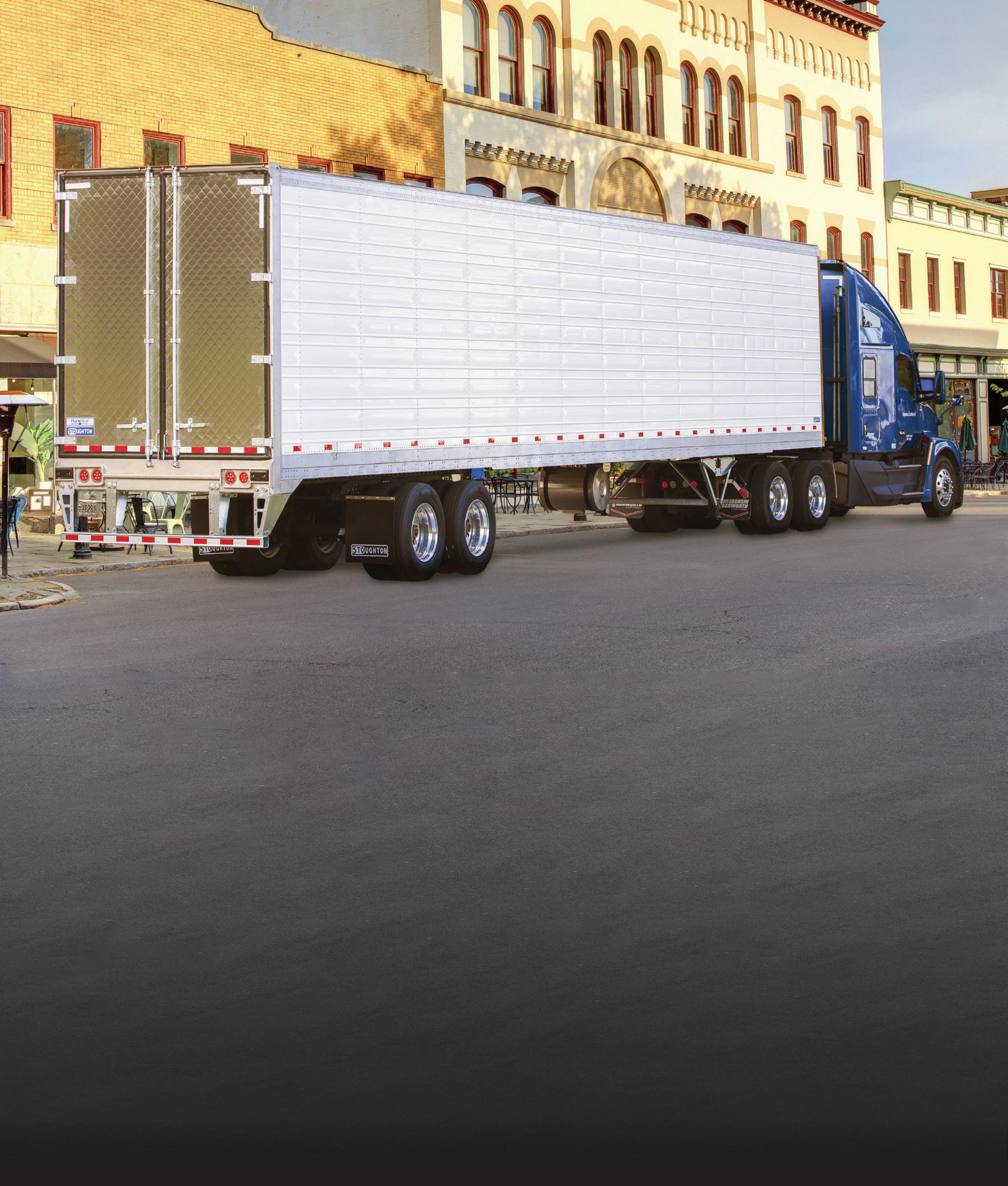










PureBlue has been independently tested and proven to outperform competitor units across key performance metrics. On average, it is 18.2% more thermally efficient, helping keep cargo colder for longer periods while potentially reducing annual fuel costs by up to $910. Its design is 27.7% more airtight on average than all competitor units tested, minimizing temperature fluctuations and extending the life of the refrigeration system. Additionally, PureBlue is built lighter than most competitor models, allowing for greater payload capacity and boosting overall profitability. With these advantages, PureBlue delivers superior protection, efficiency and economic value for your fleet.
Proven independent 3rd party testing by Element Materials Technology*, Huntsville, AL.



by Josh Fisher Editor in Chief
When the macroeconomic environment is limiting financial gains, you have to redefine what winning means for your business today and how that will set you up for future success.
YOU CAN OPTIMIZE an aging engine, retread tires, and squeeze an extra year out of a tractor. But human capital can’t simply be turned into a perfect spreadsheet cell. Trucking companies, like so many businesses in 2026, are protecting margins to survive.
As we watch for green shoots in this sluggish economy, the companies most likely to bounce back will be those that don’t forget human capital value. Many of us—myself included—have been intrigued by artificial intelligence’s potential to streamline tasks and turn data into professional power that could give an edge over the competition. All of the AI optimization flooding businesses, large and small, is based on technology available to your competitors—those technologies level the playing field. The advantage isn’t the tech itself, it’s the people wielding it.
Businesses freezing capital expenditures today are trying to ensure they will be there to compete—and survive—the next fiscal quarter. But freezing capex doesn’t ease the workload; it just puts the burden on your best workers’ shoulders. Whether you’re running a regional fleet, a manufacturing floor, a corporate logistics team, or an industry trade publication, the pressure to “do more with less” trickles down across any organization.
Left unchecked, that pressure breeds burnout. Our top performers can feel like collateral damage in the corporate battle to survive. We expect our best people to step up when times get tough: work more, get more out of equipment, turn tighter budgets into operational successes. If we fail to recognize this pressure’s toll, we risk burning out those we need when the cycle inevitably turns.
Leaders must foster a culture where workers take pride in weathering economic storms. We have to give them a reason to fight through the sluggishness of 2026 and be part of the rebound when those green shoots bloom into recovery and growth. So how do we actually instill that pride when budgets are frozen, costs increase, and the days are
extended just to avoid falling further behind? We must shift how we lead.
With a mandate to survive, workers can feel ground up. Change that narrative by opening the books. Explain why trade cycles are being extended, why metrics are under a microscope, or why you are focusing on new technology. When a technician, driver, or back office employee understands their push for efficiency is the shield protecting the company’s payroll, the work transforms from a corporate mandate into a shared vision.
In a booming economy, a win looks like opening a new facility, ordering 50 new tractors, or a double-digit rate increase. In a sluggish market, you have to redefine victory. Celebrate the technician who conducted a miracle to keep an aging truck rolling. Recognize the driver who hit fuel targets. Shout out the office worker who discovered a costly redundancy. When the environment isn’t delivering, redefine what winning means.
Doing more with less demands effort. Extra effort demands acknowledgment. If you can’t reward your top performers with new equipment, pay raises, or bonuses this quarter, turn to other tools, such as radical recognition. Make sure your people know that their extra weight is seen, valued, and fundamentally vital to the company’s success.
We spend our days obsessing over efficiency—trying to squeeze another mile out of a gallon of fuel or another year out of an aging engine. But humans aren’t machines. They run on purpose, recognition, and the belief that hard work matters. The fleets that win the coming recovery won’t just be those with the leanest budgets. They will be the organizations that spend this downtime protecting the people behind the wheel, in the bay, and at the desk. FO







The Trump administration’s FY2027 budget request outlines a significant focus on freight infrastructure spending, proposing an extra $1.3 billion for the Nationally Significant Multimodal Freight & Highway Projects program (INFRA). This funding would supplement the $8 billion provided by the Biden-era infrastructure law. The proposed INFRA allocation includes $770 million for projects to “ease highway congestion and open up freight bottlenecks” and $714 million to “repair or replace highway bridges in disrepair.”
To offset these costs, the U.S. Department of Transportation budget proposed several cuts, notably eliminating the $4.2 billion National Electric Vehicle Infrastructure and Charging and Fueling Infrastructure grants program. Other proposed DOT cuts include removing $486 million from the Capital Investment Grants program and the $145 million Rebuilding American Infrastructure with Sustainability and Equity (RAISE) grants program.
Under the U.S. Environmental Protection Agency’s (EPA) umbrella, the budget targets spending on diesel transportation by proposing to cut climate research and remove the Diesel Emissions Reduction Act (DERA) grant program. While this proposed budget signals the spending goals of some Republicans, the final spending package will be
determined by the negotiations that take place in Congress.
Preliminary data for March show Class 8 tractor orders maintaining impressive 2026 strength, up approximately 130% year over year. ACT Research estimated 37,200 unit orders (a 126% increase year over year), while FTR Transportation Intelligence estimated 38,200 units (a 137% year-over-year increase).
March marks the fourth consecutive month of greater than 20% year-over-year growth and also represents the second straight month exceeding 135% year-overyear growth, according to FTR. The small month-over-month decline largely reflects typical volatility and seasonality following previous strong demand.
FTR analysts suggest the sustained strength reinforces the prospect that “the industry has entered the early stages of recovery,” driven by deferred replacements, improving freight volumes, higher asset utilization, and firmer rate expectations.
Medium-duty truck orders (Classes 5-7) also rose 4.5% year over year to 19,300 units in March. However, ACT Research cautioned that the demand for medium-duty trucks may not be sustained, since
greater wealth inequality could reduce spending by lower-income households on services that are supported by MD trucks.
The Commercial Vehicle Safety Alliance’s (CVSA’s) 2026 North American Standard Out-of-Service (OOS) Criteria took effect April 1, replacing all previous versions. The updates incorporate 17 changes approved by alliance members to help enforcement personnel determine whether drivers or vehicles should be placed out of service.
Key updates to the 2026 criteria include the following:
• Licensing: Revisions to the License and CDL sections to clarify violation codes and separate endorsements and restrictions.
• Alcohol possession: Rules now specify that drivers are OOS if in possession of distilled spirits, wine, or beer containing 0.5% or more alcohol.
• Electronic logging devices: Expanded violations to address false records and tampering that prevent determining driver activity. References to automatic on-board recording devices were removed following regulatory changes.
• Equipment: Brake system criteria were updated to align with federal

lining-thickness standards, and the terminology was changed. Cargo securement updates include adding the ExTe Com90 system and a wire rope damage chart, while coupling device criteria now include a section for countersunk screws. Wheel and rim criteria were revised to add language for missing rim pieces.
• Other: Passenger vehicle criteria now include requirements for emergency exit operating instructions. Placarding rules were clarified for multiple divisions within the same hazard class, and a chart outlining seven types of federal out-of-service orders was added.
FMCSA plans truck parking survey
The Federal Motor Carrier Safety Administration (FMCSA) is moving forward with its national truck parking study. The agency recently published a Federal Register notice for its research proposal, which aims to collect approximately 1,000 survey responses from truck drivers to estimate the potential monetary benefits of creating new truck parking spaces.
EPA clarifies DEF sensor requirements
Despite a U.S. Environmental Protection Agency (EPA) quote stating it was “removing the DEF (diesel exhaust fluid) sensor requirement for all diesel equipment,” the actual March 26 guidance was less groundbreaking.
The guidance merely reiterated that the EPA can certify equipment using nitrogen oxide sensors instead of urea quality sensors—a certification process the agency has been performing for some time.
Aftertreatment systems still require sensors.
Idaho increases speed limit to 80 mph
Idaho’s House Bill 664 will soon allow semi-trucks and passenger vehicles to share a top interstate speed limit of 80 miles per hour. The new law, which removes the separate 70 mph speed limit for trucks, comes into effect on July 1. FO








this resource. Here is a look at what we have covered so far:
• Trucking segments: Categorizing the industry that moves over 70% of U.S. freight

by Josh Fisher



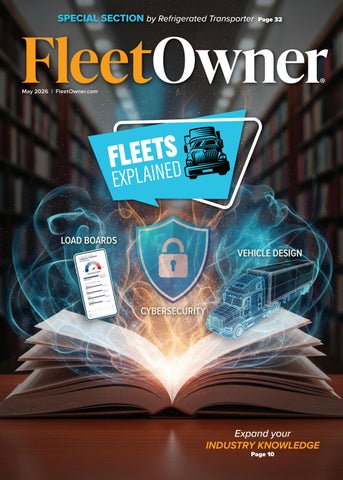
Whether you’re just getting started in the industry or have been around for decades, eet management is complicated. We launched The Fleets Explained series in 2024 to demystify how these vital industries work. What started as a few basic explainer articles has grown into a robust library designed to help everyone from seasoned veterans to new hires get up to speed.
With more than 35 entries in our FleetOwner.com library, the following pages feature three of our latest deep dives into the complex mechanisms driving modern freight:
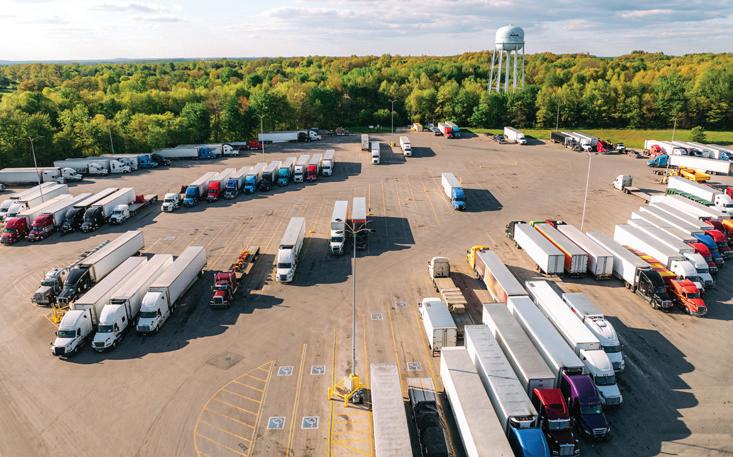
Load boards are marketplaces connecting carriers, brokers, and shippers. They offer eets a quick way to nd revenue, cover backhauls, and explore new shipping lanes. While these platforms can secure spot freight without extensive sales networks, they also introduce risks, like accepting below-average rates or dealing with unreliable brokers.
This guide explains how to effectively use load boards, leverage advanced search features, and negotiate rates while also touching on software integrations and freight factoring.
Why do big truck manufacturers launch new models when the industry is in a




nancial downturn? Because vehicle development begins years, sometimes up to a decade, in advance.
This explainer pulls back the curtain on the multiyear process that OEMs such as Volvo Trucks, Kenworth, Ram, and Cummins use to bring vehicles and powertrains from concept to the road. From initial customer research and identifying market trends to hot-weather testing and nal assembly, see why building a new commercial truck takes as much time and care as raising a second-grader.
As the trucking industry digitizes with more telematics, it has increasingly become a target for digital criminals. Cyberattacks in transportation increased by 186% from June 2020 to June 2021, and the industry ranked ninth among the most commonly targeted sectors in 2025. This feature breaks down the top threats fleets face—such as ransomware, phishing, and man-in-the-middle attacks—and outlines crucial steps for reducing risk exposure, including regular audits, multifactor authentication, and employee training.
With intern season underway, it is the perfect time to explore our full online library at FleetOwner.com/fleets-explained. We are constantly expanding
• EVs vs. ICE: Breaking down the 3 million electric vehicles currently operating in the U.S.
• TMS: How centralized programs automate eet operations
• Freight rates: Understanding the primary income source for for-hire trucking
• Industry careers: Highlighting opportunities beyond the driver’s seat
• Emissions regulations: How EPA and CARB govern heavy-duty vehicles
• Truck OEM history: The history of the brands behind 99.9% of new Class 8 sales
• Trade organizations: The bene ts and services offered by industry groups
• Industry abbreviations: A newcomer’s guide to common trucking terms
• NOx and DEF: The mechanics of diesel exhaust uid and air pollutants
• Cargo theft prevention: Strategies to stop straight and strategic theft
• Autonomous vehicles: The push for humanless middle-mile driving
• Truck parking: Unpacking the crisis of 11 drivers for every one parking space
• Distracted driving: The impact of distractions on road safety and fatalities
• Fuel prices: The factors causing diesel’s frequent upward and downward spikes
• U.S. Interstate System: How divided highways replaced rail for rapid freight movement
• Combustion fuel types: Alternatives that can act as direct replacements for current fuels
• Tank trucks: The speci cs of transporting liquid or gas cargo in bulk
• Cross-border trucking: Import trends and the impact of tariffs on North American freight
We are always looking for feedback and ideas for future Fleets Explained articles. Feel free to pass them along by emailing explained@ eetowner.com. FO

































FAIL-SAFE DESIGN
Uninterrupted illumination—no exceptions.
ZERO INTERPRETATION
Eliminates diode-count debates and roadside ambiguity.
CONSISTENT VISIBILITY
Reliable lighting that supports safer operation, mile after mile.






For decades, fleets have faced the same question:
How many diodes have to fail before a light is considered “unlawful”?
One? Two? Half the lamp? How much failure is acceptable?
Because GENESIS is engineered so failure never happens in the first place.
If the vehicle has power — GENESIS lights are lit.
With GENESIS, lighting failure becomes irrelevant. Performance becomes predictable. And visibility remains exactly what it should be—uncompromised.
For more than 80 years, Peterson Manufacturing has engineered real-world solutions that challenge assumptions and elevate reliability on the road. GENESIS is the next step—by not redefining failure, but removing it.






















Online marketplaces that connect carriers, brokers, and shippers
o er much more than just a list of loads. by Jeremy Wolfe
Aload board is an online marketplace that connects carriers, brokers, and shippers. In a load board, brokers (and, less often, shippers) can post loads that need trucks, while carriers can post trucks that need loads.
The virtue of a load board is that the parties in a market can all communicate their supply/demand widely and quickly. The most popular function of a load board for carriers is to search for and book spot loads, but the platforms behind these marketplaces offer much more than a simple list of available jobs.
When a fleet wants to make a haul where they don’t have existing business, they can turn to a load board. The marketplace lets carriers cover backhauls, explore new lanes, and nd quick revenue with new partners.
By nding a return load (a backhaul)
after delivering a primary shipment, carriers can ensure their equipment keeps earning revenue rather than returning empty. In this open and busy market, eets have an opportunity to pick from a variety of lanes without overcommitting.
Newer eets and owner-operators can secure freight without a pre-existing network or extensive sales efforts. Carriers can also make business connections with customers, potentially securing more jobs down the line.
Load boards collect huge amounts of industry data. The platforms often share current industry trends, such as average rates, load-to-truck ratios, or hot lanes. However, load boards also have drawbacks and generally won’t be a carrier’s sole source of business. Just as an open and busy market means a wealth of opportunities, it also means competition and risk. Some trucks on load boards will accept rates below average operating costs, and load information can become outdated in seconds.



Exposure to countless potential customers also brings the risk of a bad customer. Some brokers/shippers will demand absurd terms or waste the carrier’s time. Some might take a long time to submit payments or try to pay less than the agreed amount. Working with a new broker/shipper also means spending more personnel time researching, negotiating, and possibly disputing.
Load boards can have load postings and truck postings, signaling the respective trucking demand and supply. If a posting seems to t with a user’s business needs, the parties can contact each other for further negotiation and coordination.
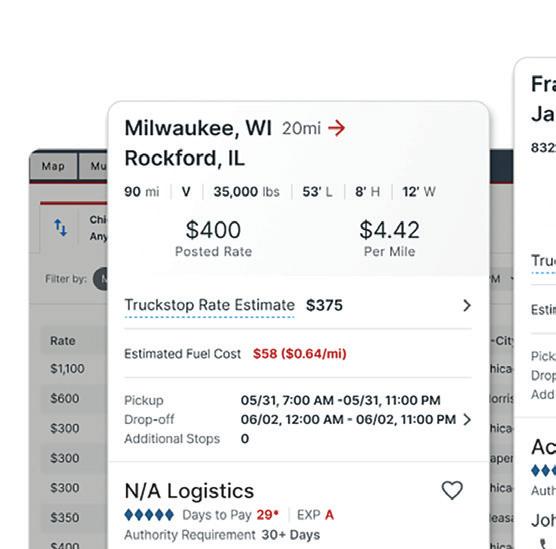
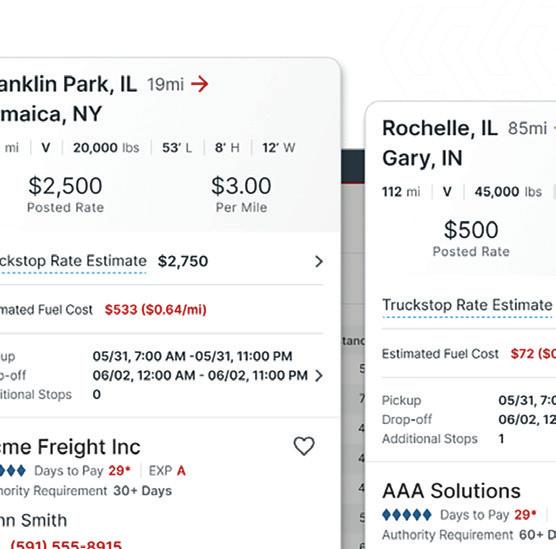
Load postings usually include the origin/destination, a per-mile rate, and the freight involved. Depending on the board platform and the user, a posting can include much more information about the job.

Popular load board platforms today
There are too many boards to count, but these are some popular load boards for carriers today:
• DAT One
• Truckstop
• Trucker Path TruckLoads
• 123Loadboard
• Uber Freight
• C.H. Robinson
• TQL
• XPO
• Direct Freight
Each load board represents its own limited network, so some eets use multiple platforms at the same time. Load boards like those operated by DAT and Truckstop represent a varied population of brokers/shippers, while a 3PL board like that operated by C.H. Robinson may only show the 3PL’s freight.
A carrier might want to use multiple load boards to maximize their visibility if it outweighs any additional subscription fees. Available features also vary greatly depending on the providers and their pricing plans, so one board may have unique strengths compared to another.
How to use a load board
Using a load board requires a pro le on the platform. Registration for carriers often requires plenty of veri able information, such as MC number, DOT number, company name, proof of insurance,
contact information, or references.
The information will in uence a eet’s success on the market: Whether posting a truck or negotiating a load posting, brokers/shippers will review a carrier’s insurance, safety rating, and authority age to gauge their riskiness.
Next, a carrier can start searching for loads that t its operations. The search process can be as simple or as complicated as a eet needs. Once the carrier nds an enticing haul, they can get into contact with the broker/shipper to work out the ne details, negotiate rates, accept the load, and nally execute the haul.
Load boards also support several advanced search features, allowing carriers to quickly nd the best haul for the best rate and minimize empty miles. These are some of the most common details in a load posting that carriers may search by:
• Trailer type
• Origin/destination
• Appointment windows
• Load weight/dimensions
• Rate per mile
• Mileage
• Location proximity or speci c lanes
• Additional stops
• Broker authority age
Filtering a load search for only speci c variables might not capture all the
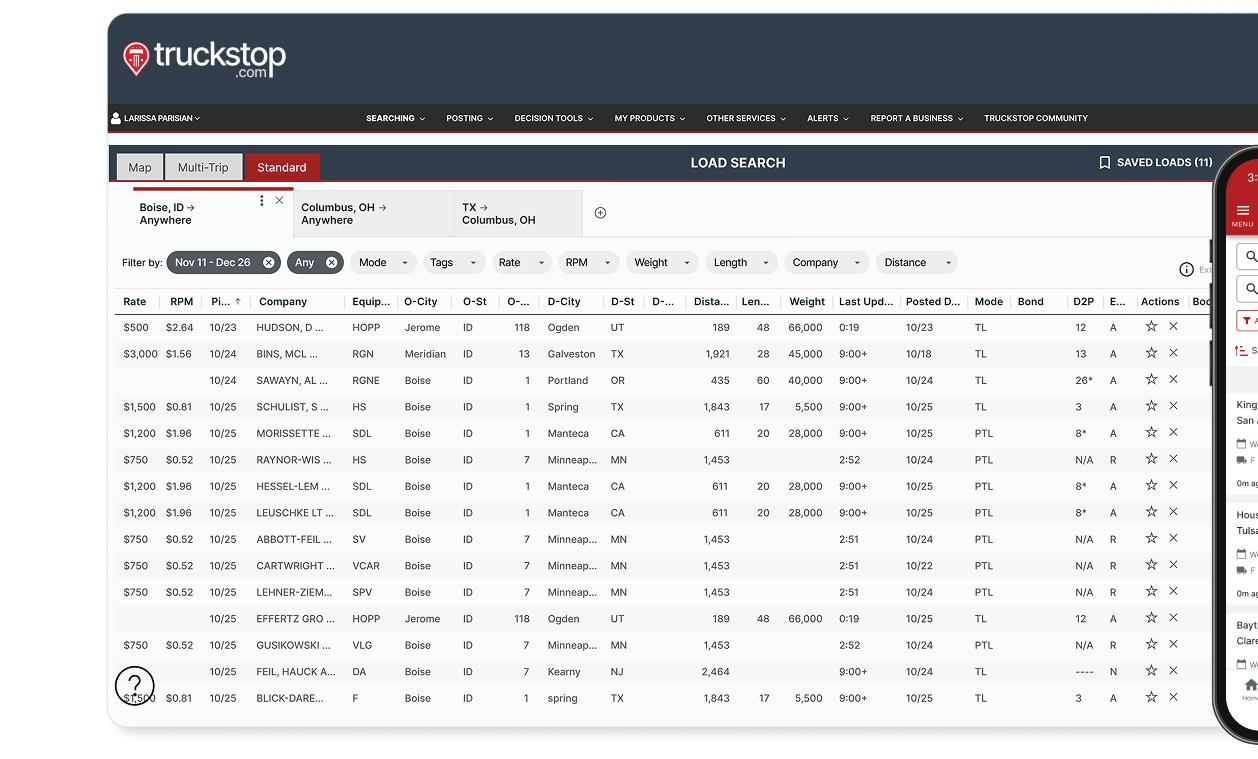

Truckstop’s search results page includes many fields such as distance, weight, time since last updated, and more. Photo: Truckstop
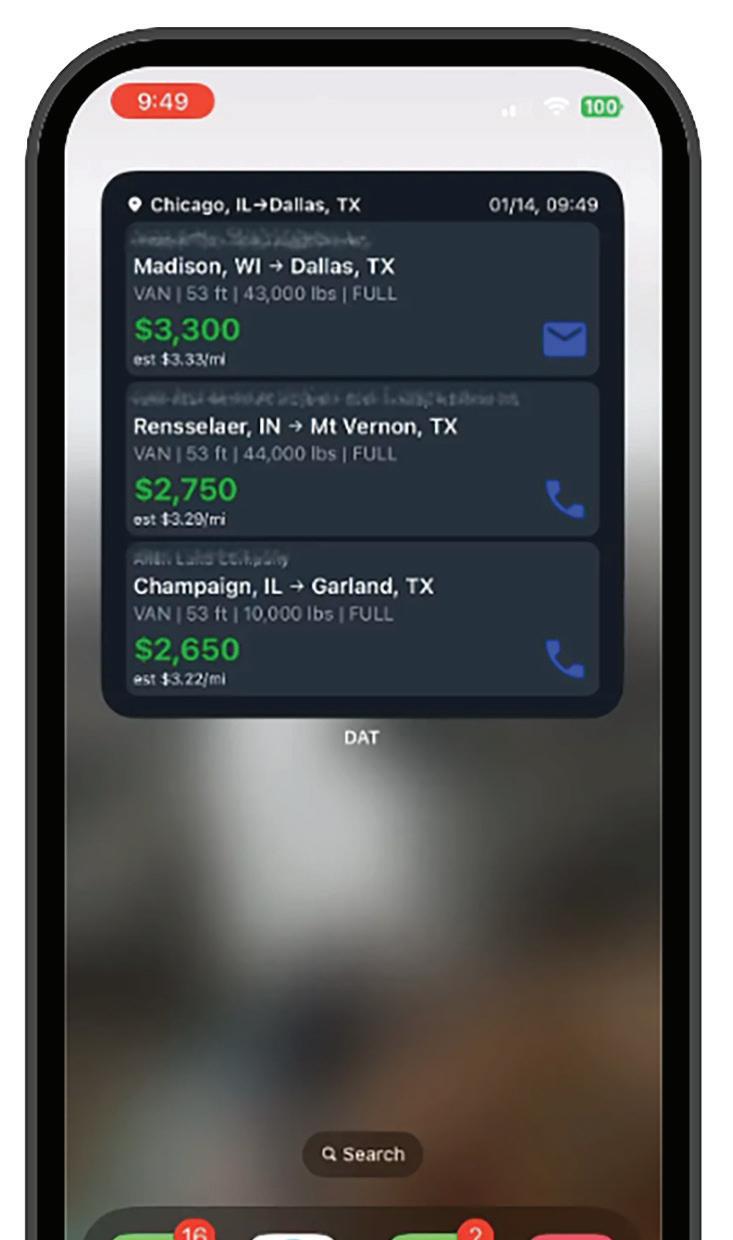

DAT One’s iOS widget for iPhone displays load matches directly on the home screen without opening the DAT One app. The widget refreshes automatically and shows the top three loads with the highest rate per mile based on the most recent search. Photo: DAT Freight & Analytics
possible loads that match those standards: Load posters sometimes share minimal information about the job initially. Additionally, some platforms allow brokers to only show loads to their preferred carriers.
Speed matters in the spot market: A load’s availability can change fast. Load boards provide carriers with the ability to set up automated alerts when speci c loads are available or even automate their load bookings.
Carriers can share their truck availability and preferred lanes so that brokers reach out directly to them. When posting a truck, users tend to need to include the equipment, mode (e.g., truckload, less than truckload), available space/weight, dates, and desired locations.
Platforms often have specialized boards for speci c equipment. Loads like refrigerated, hazmat, oversize, or LTL might be located on a separate board (and likely with higher rates).
Loads can either be booked instantly through the platform or finalized through direct communication, e.g., phones, messaging systems. Here, the carrier can hammer out further details about the job.
If the posting didn’t already describe these details, or if a carrier wants to persuade the customer to change their terms, this stage is also where the parties will decide on:
• Fuel surcharges
• Detention/layover policy
• Special handling requirements
• Tracking requirements
• Truck ordered not used (TONU) fees
Carriers might also feel confident to negotiate a higher rate for the load. Load board platforms tend to share the average market price for a given lane, allowing brokers’ offered rates to be a reasonable starting point for rate negotiation. The platforms also inform the carrier of important current conditions, like the market’s load-to-truck ratio and likely routing options.
Ultimately, negotiating rates is a balance between maximizing revenue and maximizing the odds of securing a load.
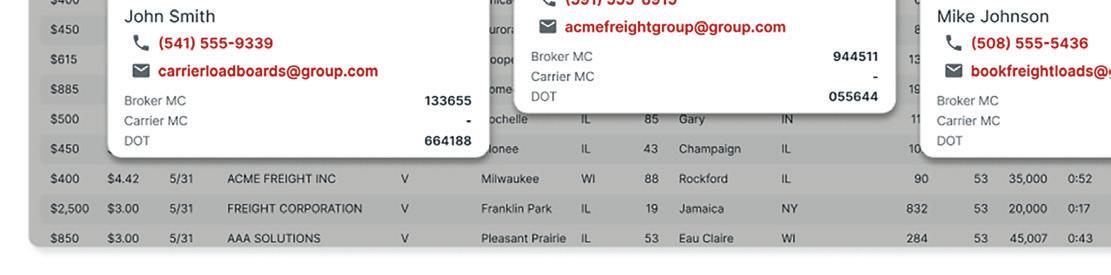
Platforms often also provide some background on a broker. A broker’s pro le page may provide payment history, credit data, complaint trends, and operational details.
Carriers can use this data to weigh the risk of potential customers. If a broker evidently takes too long to pay, that data might warrant higher rates to offset weakened cash ow.
Financing / freight factoring
It can take 21 to 30 days for a carrier to get paid for a spot haul. Depending on the customer, getting paid can take even longer (if at all).
Many of the large load board providers, such as Truckstop, DAT, and C.H. Robinson, offer freight factoring to ease the burden of invoices.
Freight factoring essentially outsources the invoice collection process to a third party at some expense. The carrier often needs to send its invoice directly to the factoring company, not the customer, at the end of a haul.
The factoring company pays the carrier almost the entire invoice total, often within 24 hours. Once the customer pays the invoice, the factoring company pays the rest but keeps a percentage of the invoice total—anywhere from 1% to 5%.
But a board’s factoring partner won’t pay for just any invoice. A platform may deem a broker ineligible for factoring if the client proves too dif cult.
Many of a load board’s digital processes can be migrated to a eet’s own software suite. Load board platforms can generally communicate with a transportation management system (TMS) via application programming interfaces (APIs).
Connecting a load board to a TMS allows a carrier to centralize many of the platform’s features. Users can automate truck postings and load communications according to their internal data. Carriers can continuously fetch current market conditions, quickly import available loads into their own TMS, or automatically match loads against available or nearby drivers.
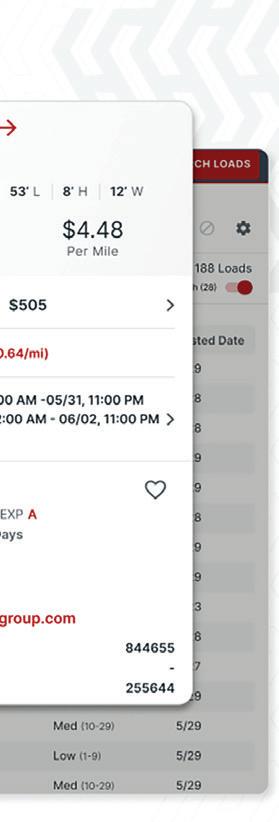
Many load boards manage bills of lading, proof of delivery, signatures, and other necessary documents. The platforms are often able to share those directly with a user’s TMS.
Compatibility between a load board and a TMS can be a gamble. The more popular a load board or TMS, the more likely they will enjoy existing API support. Some software providers are happy to build new API support upon request.
Some load boards are free, and some charge a monthly subscription fee. Free load boards tend to have fewer of the features detailed in this explainer. A platform’s more advanced features may require even higher payments.
DAT One charges carriers from $54 to $329 per month. Truckstop charges carriers $35 to $299 per user per month. The higher subscription tiers add functions like advanced ltering, routing tools, payment support, detailed market data, and specialized boards.
Meanwhile, the load boards operated by C.H. Robinson and Trucker Path are free. Trucker Path’s Truckloads board has limited functionality at the free tier, but with subscriptions ranging from roughly $20 to $50 per month, payment unlocks fuller functionality and more advanced data. FO

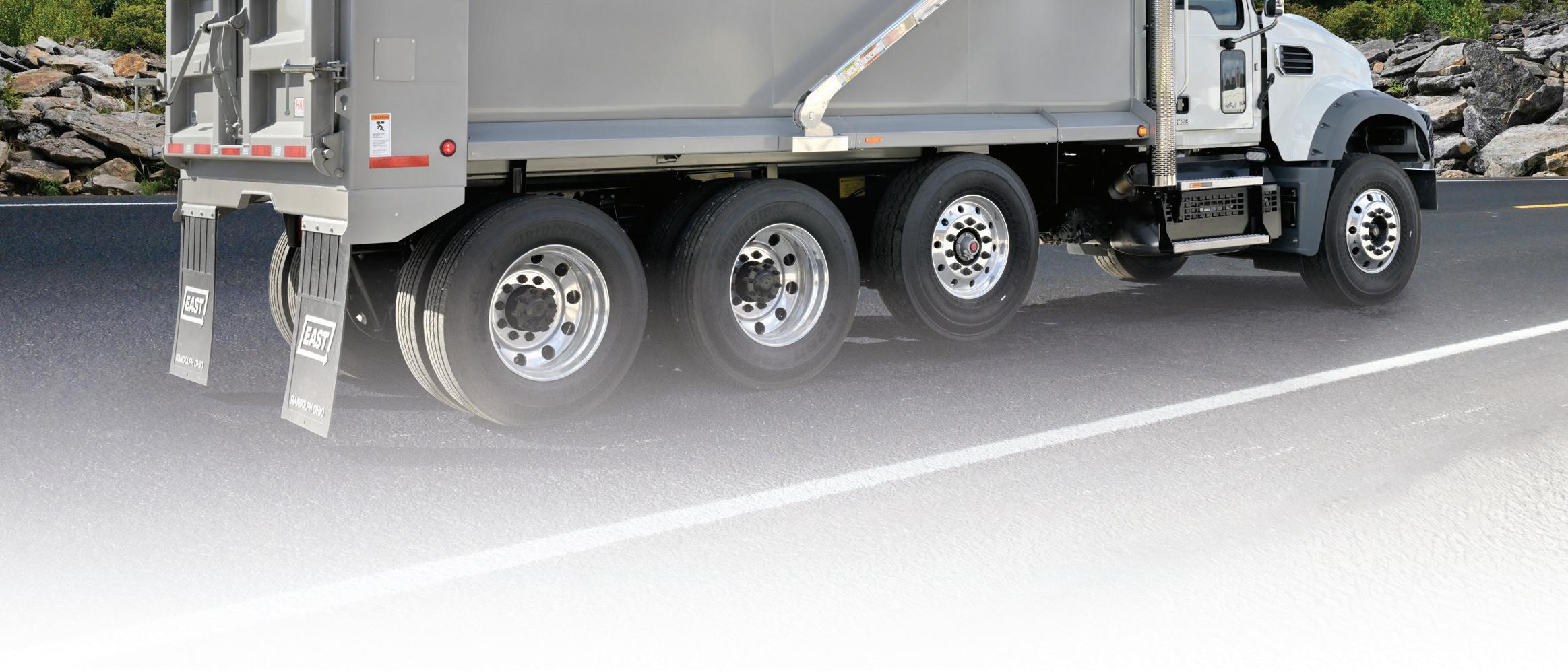

Engineered to meet the exact hauling demands of your operation, the East steel dump truck body delivers uncompromising durability, performance and long service life. Built with Hardox 500 TUF steel, it combine high strength and exceptional hardness in a single wear plate for the industry’s most punishing applications. A 3/16-inch floor and sidewalls with an optional 1/4-inch, provide superior durability. With body lengths from 10 to 22 feet and sidewalls from 24 to 60 inches, East offers configurations that outlast and outperform. When rugged jobs call for rugged, workhorse dump truck bodies, call East.

by David Heller
“HEY THERE DELILAH” debuted in 2005 by the Plain White T’s and is seemingly reverberating over and over in my head recently. If you watched President Trump’s State of the Union address, you might know why.
In the longest address ever recorded, the president buried a mention of Dalilah’s Law, a yet-to-be-introduced piece of legislation at the time that would provide the strength of Congress behind the recent regulatory actions in supporting English language proficiency and non-domiciled commercial driver’s license (CDL) rulemakings.

No statute can guarantee that tragedy will never occur again. Refusing to act, however, guarantees that the same mistakes will be repeated in the future.
Continuing to relate it to the song, there have been at least five iterations of the legislation introduced since the State of the Union, three in the House and two in the Senate, to varying degrees. I say varying degrees because while there are certainly differences in legislative texts
in each that stray away from the basic premise of what the legislation is designed to do, they are meant to save lives.
The legislation language itself is not new. Enforcing English language proficiency standards that have been present for decades and no longer providing exceptions for non-domiciled CDLs have been the talk of the town since they were brought to the forefront of our industry by presidential action. This legislation represents an important step toward closing gaps in safety, accountability, and prevention while honoring the lived experiences that too often go unheard. Named after 5-year-old Dalilah Coleman, injured by a truck driver in the country illegally, it prohibits issuing CDLs to undocumented immigrants and mandates English proficiency.
“It would take an act of Congress” is an idiom often used to describe something that is extremely difficult or nearly impossible to achieve. In this instance, that act of Congress is no longer a satirical joke but rather an exclamation point on regulatory actions that make it more difficult to reverse within the agency due to an administration change because the weight of Congress stands behind the legislation. Though in this particular instance, it would be hard to believe that even an administration change could argue against some of the safety benefits that have already occurred.
What makes the premise of these proposals so important is that it prioritizes intervention as well as enforcement. With early action, clear standards, and coordination among CDL-issuers rather than policing at the roadside, it prevents ELP and non-domiciled CDLs from being a problem. These bills require states to stop administering CDL exams in other languages, specifically targeting states like California that allow CDL skills and
proficiency tests in up to 20 languages. It also targets “CDL mills” by checking the federal registry for proper records to address fraudulent training. In addition to roadside enforcement already taking place across the states, the front end of the CDL process is being called into question and could be inevitably answered.
Unfortunately, Dalilah’s Law addresses a hard truth: Unintended consequences are too often missed, minimized, or lost within fragmented systems. Time and again, cases of severe harm reveal similar patterns, such as communication failures, unclear responsibilities, and opportunities for intervention that came too late. As I have stated previously, we cannot advocate for noncompliance; when we do, accidents happen.
This legislation confronts those failures by strengthening standards, improving oversight, and reinforcing that safeguarding lives must come before institutional convenience. Dalilah’s Law represents a meaningful effort to ensure that lessons learned from tragedy are not ignored. It’s about accountability, prevention, and the moral responsibility we share to do better. Born from pain rather than ideals that typical legislation should derive from, it behooves everyone to understand that this reason is exactly why it matters.
No statute can guarantee that tragedy will never occur again. Refusing to act, however, guarantees that the same mistakes will be repeated in the future. Dalilah’s Law represents a decision to act, to raise standards, improve coordination, and treat the protection of vulnerable lives with the seriousness it deserves. FO
David Heller | Dheller@truckload.org
David Heller, CDS, is senior VP of safety and governmental affairs for the Truckload Carriers Association. He is responsible for interpreting and communicating industry-related legislation to TCA members.




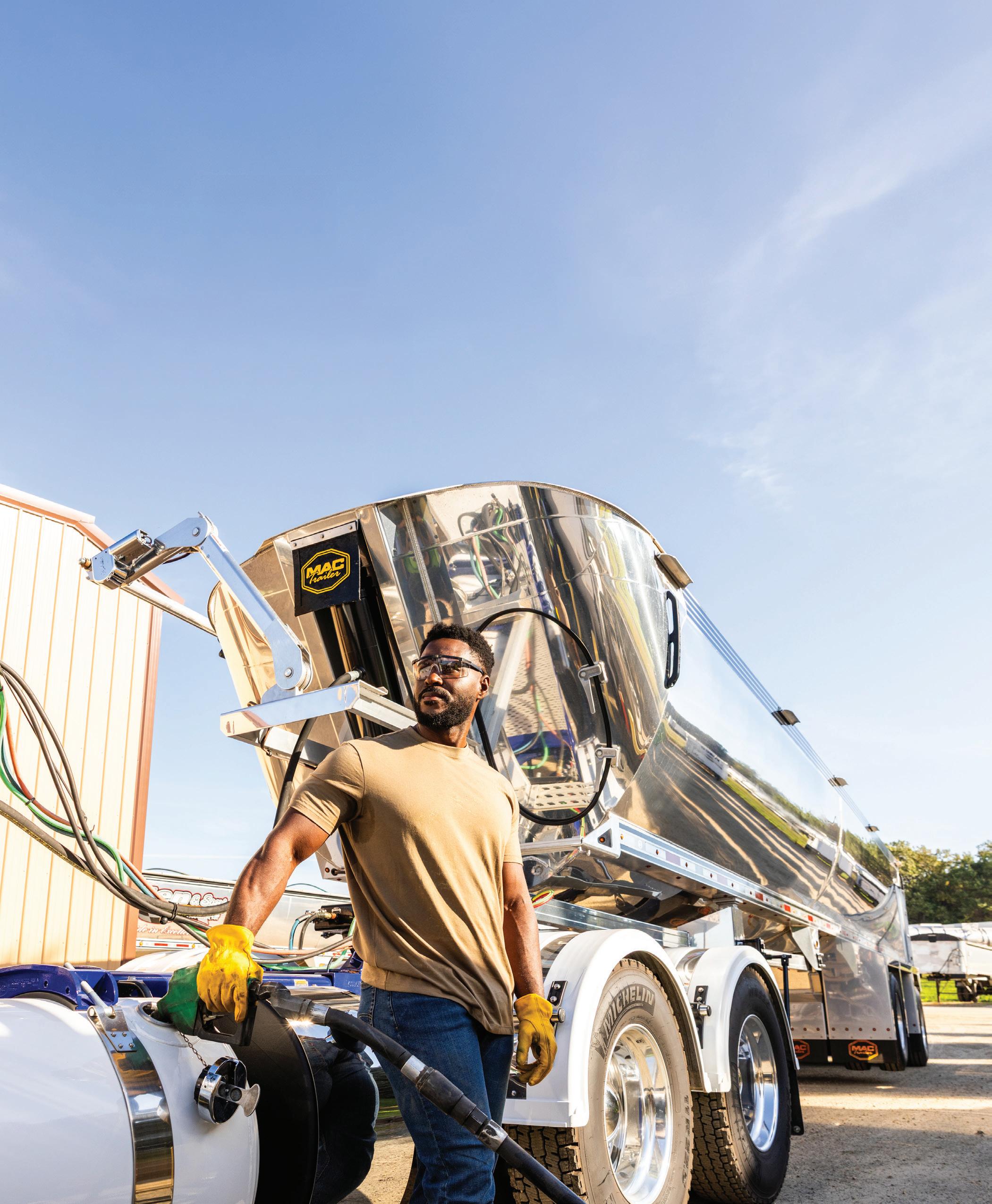
backedbynearly100yearsoftrustedexpertise.







Ram, Kenworth, Volvo Trucks, and Cummins detail the timeline of bringing a new product to market.
by Jade Brasher
Why do original equipment manufacturers (OEMs) launch electric vehicles when the industry is cooling off on them? Why do big truck OEMs launch new, often more expensive trucks when the industry has experienced a nancial downturn? It’s not that they’re tone-deaf. And it’s not that they don’t do their research.
Vehicle development begins years in advance, and usually takes from ve to seven years. Then some projects begin 15 years in advance (think: advances made on projects like the SuperTruck program). In other cases, if a model is

simply getting a facelift, the development takes less time.
Regardless, designing and producing these machines doesn’t happen overnight. And that’s the case for vehicles from Class 1 to Class 8, and even for suppliers like Cummins. FleetOwner chatted with Ram, Volvo Trucks, Kenworth, and Cummins to understand the development process and discover why bringing a model to market takes as long as raising a second-grader.
It starts with research: 2-3 years
The timeline for each OEM to bring a vehicle to market looks different; each
has its own process. Yet, each follows a similar path. It starts with research.
For Ram, manufacturer of light-duty vehicles such as the Ram 1500 pickup, that process begins by identifying market trends—sometimes projecting ve to 10 years down the road. This is Ram’s product portfolio planning period, Matt Huber, SVP of Ram brand product, told FleetOwner. The more intensive, customer-centered research begins once a product has been decided upon.
Customer research includes interviews and surveys. Ram will even send teams

to someone’s home to understand their daily routines, helping the designers build a vehicle that meets their needs.
Unlike big truck OEMs, Ram serves both the retail and commercial market. But Huber said this doesn’t make Ram’s commercial product more difficult to develop. Instead, he believes it makes Ram products better.
“When you get into three-quarter-ton trucks, there’s still a lot of retail customers that are using those vehicles,” Huber said. While those customers don’t have commercial needs, they do have towing and hauling needs. This “helps us understand the customer better, probably,
because we’re not just doing commercial research, [and] we’re not just doing retail research. … Ultimately, we all work together and hopefully get a better product out of it.”
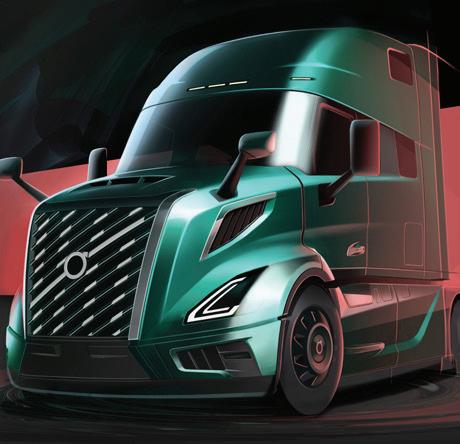
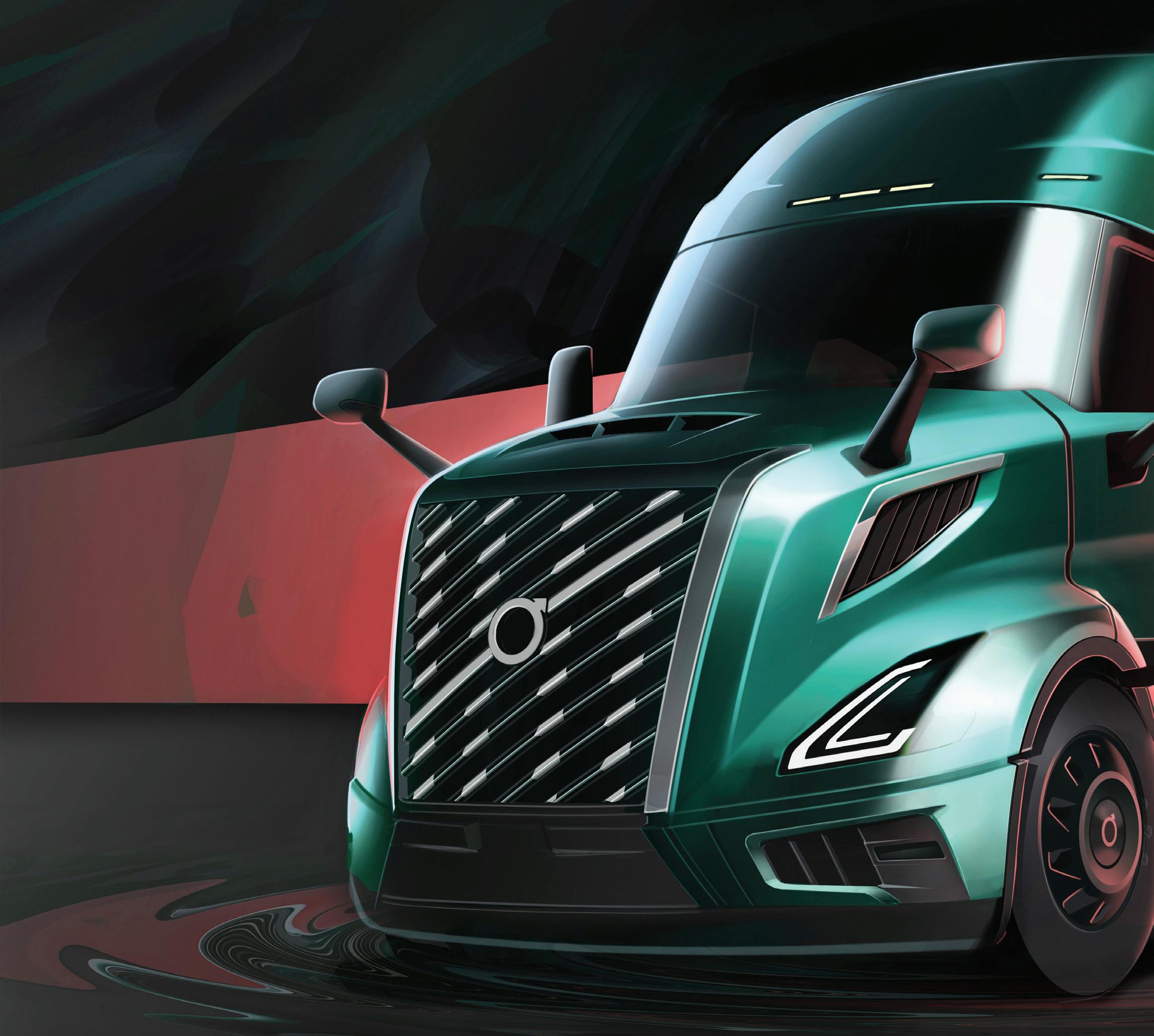
Research for commercial vehicle OEMs such as Volvo Trucks and Kenworth is more focused on technology and efficiency. Volvo Trucks North America’s latest long-haul launch, the VNL, uses a completely new platform. Volvo started laying the groundwork on this design back in 2016, and much of the time between then and its launch was dedicated to research.
With the aim to eventually use this platform for autonomous trucking, Volvo initially sent a research team to the Consumer Electronics Show in Las Vegas, one of the largest technology trade shows in the world, to gather background on what’s upcoming in the tech industry with software, lighting, and safety—all important aspects of Volvo Trucks’ designs, Volvo Trucks Head of Design Brian Balicki told FleetOwner Similarly, Kenworth’s production process takes from five to seven years, and Kenworth Design Director Jonathan Duncan said the majority of the time is spent on research.
“The thing that takes the longest for us, and that is the biggest variable, is making sure you’re designing the right thing,” Duncan told FleetOwner
This includes meeting with Kenworth customers and taking cues from the brand’s customer council. It’s in these meetings that Kenworth seeks to understand where its customers’ businesses are headed and how Kenworth designers can solve future problems with a solution that helps everyone, Duncan explained.
For Cummins, the design of a new product can take from three to 10 years, Lisa Prentiss, program management leader for North America on-highway at
Cummins, told FleetOwner. The length depends on whether it’s a new product or an update to an existing one.
There are three things that would trigger the global engine manufacturer to design or modify a product. The first reason is changes in emissions regulations.
“Every three or four years, we have a new emissions regulation coming in that we have to redevelop all of our products to meet, and that very much drives the kickoff of what technologies we’re going to use,” Prentiss explained.
Another reason Cummins would update its engine lineup is if there’s a technological advancement that could prove beneficial for customers, be it more cost-effective, more efficient, or more powerful. The third and final aspect that would trigger a new development for Cummins is if the company has an opportunity to design an engine for a different application.
Once a trigger has been identified, Cummins jumps into research, determining specific emissions-reduction approaches and engine and software architectures. This pre-production process can take up to three years for a major development.
Sometimes, Cummins begins this research process years in advance of a new emissions requirement. Cummins has already begun work on its 2030 engines, which are subject to more stringent emissions regulations. “We think [our 2030 engines are] going to look like this, and we start running some R&D-type tests that say, ‘How hard is that for us to do? Is that technologically possible to even hit that level?’ And that will go on for two or three years before we ever start product development,” Prentiss said.
Suppliers, manufacturing: Begins within first 1-3 years
The pre-production stage includes research, as well as deciding on suppliers and a manufacturing plan.
“We don’t do anything without considering the fact that [the truck]
needs to be built sometime,” Kenworth’s Duncan said. “If we have the best idea in the world but we don’t have a supplier that can build the parts, or it doesn’t work in our current or [with] a reasonable update to our assembly process, then we’re not going to do it.”
In Volvo’s case, the manufacturing team wanted to create a design that increased manufacturing efficiency, which required involving them early.
“How the roof is assembled on top of the cab was a big change for us in our product, and it was an important and the right decision to make because it made the assembly line more ef cient,” Balicki said. “These changes are important to know in advance because when we’re designing … we know how they’re going to assemble the product.”
It was also important for Volvo to involve manufacturing early on because a completely new manufacturing facility had to be built from the ground up to support the new product.
“Due to the scale of this platform, an entirely new factory was built behind our existing factory, and that was to allow us to pilot the program before we implemented it into full production,” Balicki said.
This also ensured Volvo could produce the current models until the release of the new VNL.
Before Ram chooses suppliers or modi es manufacturing facilities, it must make the business case for the product to secure funding. By the time funding is approved and suppliers are
TIMELINE OF A VOLVO TRUCKS PLATFORM



chosen, Huber said the vehicle’s design has been mostly nalized, and “it’s time to go build tools.”
By the time the new product program is approved, there is already a solid understanding of its overall design. This is when OEMs begin building different teams for the program. This includes supplier partners and design teams for each component, as well as purchasing, marketing, dealer, service, customer care, and manufacturing teams. In all, a new product program for all OEMs FleetOwner spoke with can include hundreds of employees— and this doesn’t count those working for suppliers.
Kenworth, Cummins, Ram, and Volvo Trucks all said these different teams work in parallel, designing different components at once. This requires extremely close collaboration.
YEAR 1
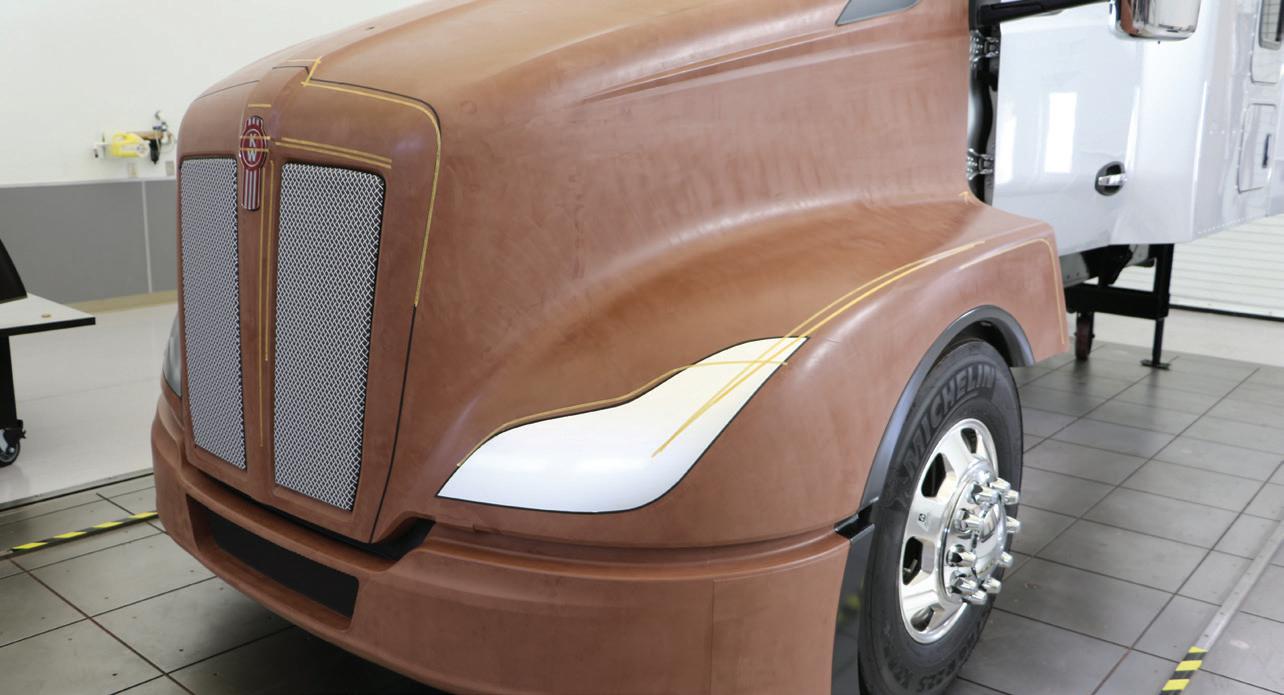
Modeling
• Physically evaluate product via clay, foam, 3D models
Research
• Understand regulation and legislation
• What does customer want/need?
• What are competitors doing?
• Conduct clinics, surveys
• Understand user experience
Not only are the OEMs designing and building components, but their suppliers are as well. To ensure each OEM team and supplier team remains on target in component design, OEMs employ a stage-gate production process. This process essentially requires component validation at certain stages before moving to the next stage. Further, program managers help keep the project on time. Kenworth’s Duncan calls this part of the process “beautiful chaos.”
Test then test again: 2-3 years
While testing takes place at each gate, once the vehicle nears nal design, testing becomes more rigorous. The vehicle OEMs send these products for coldweather testing up north and hot-weather testing in the desert. This ensures vehicles run optimally regardless of the climate or weather. This testing is imperative for OEMs, as it identi es weaknesses or oversights in the design.
YEAR 3
Visual strategy
YEAR 2
Digital models/analysis
• Assess changes based on supplier request, cost, weight
• Multiple rounds
• Drives look and feel of product
• Consistent through product platform
• Color, material, and finish
• Example: Soft-touch features on instrument panel
YEAR 4
Huber uses the example of ventilation: “Sometimes when we’re doing hot testing, you’ll realize that maybe cooling isn’t meeting what the targets are. So then you need to have larger cooling openings in the grille, or have different ducting going into the brakes or through fascia ducts.”
After climate tests, truck OEMs then send models to customers. Customer testing helps validate “fine details,” Duncan said, as the vehicle has been tested so thoroughly up to this point that the customer should experience no major problems.
It’s also during these years that Volvo begins its marketing strategies, often using model prototypes in marketing materials, Balicki said.
The process is a bit different for Cummins. When the team is satis ed with the engine design, it builds a few models via a prototype manufacturing line and places them in Cummins’ own eet of trucks from multiple manufacturers. Cummins will also provide “seed” units to its OEM customers for testing. During this phase, Cummins tests using its own speci cations and also receives feedback from its customers, such as the placement of the engine being too close to a frame rail or dif culty servicing a non-engine component.
Another large portion of Cummins’ test process is certifying its engine for compliance, which Prentiss said Cummins conducts in-house. But it’s also the most time-consuming aspect of the engine’s production cycle. For an engine
YEAR 5
Visual strategy
program that’s only three years long, certi cation could take up to 18 months.
“We run all of our testing in accordance with the rules, and we submit all … of the evidence,” Prentiss said. “Then the agency grants us the certi cates, and we’re able to tag the engines as certi ed.”
When testing is complete and the design is nearly nal, the engine then moves to the main assembly line for scaled production. It’s at this stage when Cummins runs its quality checks with both the assembly process and supplier components. Cummins then moves to installation quality testing, ensuring the engine’s components are all functioning properly with the truck. This is the last stage and a more “re ned” stage of production, Prentiss said. After all checks have been cleared, the engines produced are loaded onto a truck for shipping.
This process sounds like a long time. But as Ram’s Huber told FleetOwner, while it might seem slow, internally, these OEMs are cycling through the process quickly. Not to mention that this cycle is repeated with every new model of every vehicle or engine, and multiple programs are running at once.
Balicki said what makes all the difference in the trucking manufacturing process is the fact that these trucks aren’t just tools—for many they’re a livelihood, or even a home for weeks at a time. Further, a truck’s durability affects everyone because trucks keep the nation’s economy moving.
Prototyping/approval
• Build prototypes from analysis
• Execs and CEO ensure product meets North American customer needs
• Marketing teams ensure product speaks to the brand
• Does this woodgrain look good with other components in the truck?
“If a truck is not delivering a product to a certain location, then there are impacts down the line,” Balicki said. “For us, we need to make sure that these products are robust enough and also have the right features and functions for our customers throughout the life of the vehicle.”
Although the process of building these machines can be quite complex, somehow thousands of trucks roll off the assembly line every year. For Duncan, who’s seen this process multiple times throughout his 20-plus years at Kenworth, that’s the best part.
“It’s a seamless operation that is amazingly complex, and somehow it all works,” Duncan said. “That’s the part that’s always pretty amazing. After our [design] is done, all sorts of things happen so there can be a truck going down the road.”
Finally, Prentiss likens the process to professional football. Building a championship team doesn’t begin on the rst game of the championship season. It begins years in advance, scouting athletes, assembling the right coaches for the job, and developing chemistry among players. Cummins’ production follows a similar process: research, team building, component cohesion, and validation.
Rome wasn’t built in a day, and neither was your favorite work truck. It’s your favorite because of the time and care hundreds of engineers and researchers put into it.
Trust the process. FO
YEAR 7
• Is this material durable? READY FOR AN OWNER!
Testing/validation
• Customer validation
• Cold/hot weather testing
• Durability testing
YEAR 6
by Kevin Rohlwing
Fleets should prepare for higher truck tire prices if the ‘perfect storm’ hits
TRUCK TIRE PRICES are dependent on three factors: natural rubber (NR), crude oil, and energy.
The agricultural component cannot be overlooked, and with the low-yield season underway, global supply pressure is mounting.
On the crude oil front, prices haven’t been in the $100/barrel range since the spike coming out of the pandemic in 2022. Unrest in the Strait of Hormuz has caused the increase.

All of the components for the next series of truck tire price increases appear to be in place ... Fleets need to prepare.
On the energy front, natural gas prices have fallen as spring temperatures have set in. Unfortunately, Qatar has already lost 17% of its liquefied natural gas (LNG) export capacity, which could take three to five years to repair.
The Association of Natural Rubber Producing Countries (ANRPC) represents about 80% of global production, all of it in Southeast Asia. Its latest report highlights improving weather conditions,
which is a positive sign. Nevertheless, NR prices have been climbing and are approaching a 10-year high. ANRPC expects demand to remain strong given the anticipated rise in automotive production in China, India, and Southeast Asia. Unpredictable weather affects all agricultural products, and while conditions are currently favorable, the wintering season runs through June.
The unpredictability in NR is nothing compared to the volatility in the crude oil market. Prices have doubled since December 2025, and prices are expected to remain in the $100/barrel range through June. Some analysts project the price could surge above $120/ barrel if supply disruptions continue and the conflict in the Middle East escalates. Truck tire manufacturing is dependent on crude oil, and it’s been four years since diesel was priced at $5 per gallon. It’s going to cost more to manufacture and ship truck tires for at least the next few months.
You can’t build a truck tire without heat, and natural gas is the most effective and economical power source for generating steam. It also requires a lot of electricity, so plants that depend on natural gas-fired power are going to see higher production costs. Since the U.S. is an LNG exporter, conditions in Qatar won’t have a major impact on domestic manufacturers’ supply, but offshore tire companies will feel some pain. The U.S. Energy Information Administration does not expect domestic price increases, but Europe and Asia are already seeing historically high prices, which will affect imported truck tires.
All of the components for the next series of truck tire price increases appear to be in place. If just one component were affected, the costs could be absorbed. However, pricing pressure
on all three fronts has the elements of a perfect storm. As a result, fleets need to prepare for higher tire prices if that storm hits.
Improved inflation pressure management is the first step. Underinflation reduces tire life and increases the cost per mile. By spending additional labor dollars on checking and adjusting inflation pressure, fleets get more mileage out of every tire. It’s also a bonus for retreading.
The same pricing issues apply to retread manufacturing, but the actual increase will be less because a retread is about half the cost of a quality new tire. Approximately half of the truck tires in the U.S. are retreads because they deliver the best cost per mile (when properly inflated). For those fleets still resistant to retreading, it might be time to give retreads a chance.
No one can predict the future, and I hope I am wrong, but the headwinds are just too strong to ignore the possibility of higher prices for truck tires and retreads. If something miraculous happens in one or two of those three critical areas in the coming months, an increase might be avoided.
Unfortunately, all signs point to volatility and unpredictability in the futures of NR, crude oil, and LNG, so fleets need to start planning sooner rather than later. While I don’t anticipate any supply shortages, publicly traded tire companies are expected to make a profit, and rising production costs are prime territory for price increases across the board. FO
Kevin
Rohlwing | krohlwing@tireindustry.org
Kevin Rohlwing is the chief technical officer for the Tire Industry Association. He has more than 40 years of experience in the tire industry and has created programs to help train more than 220,000 technicians.
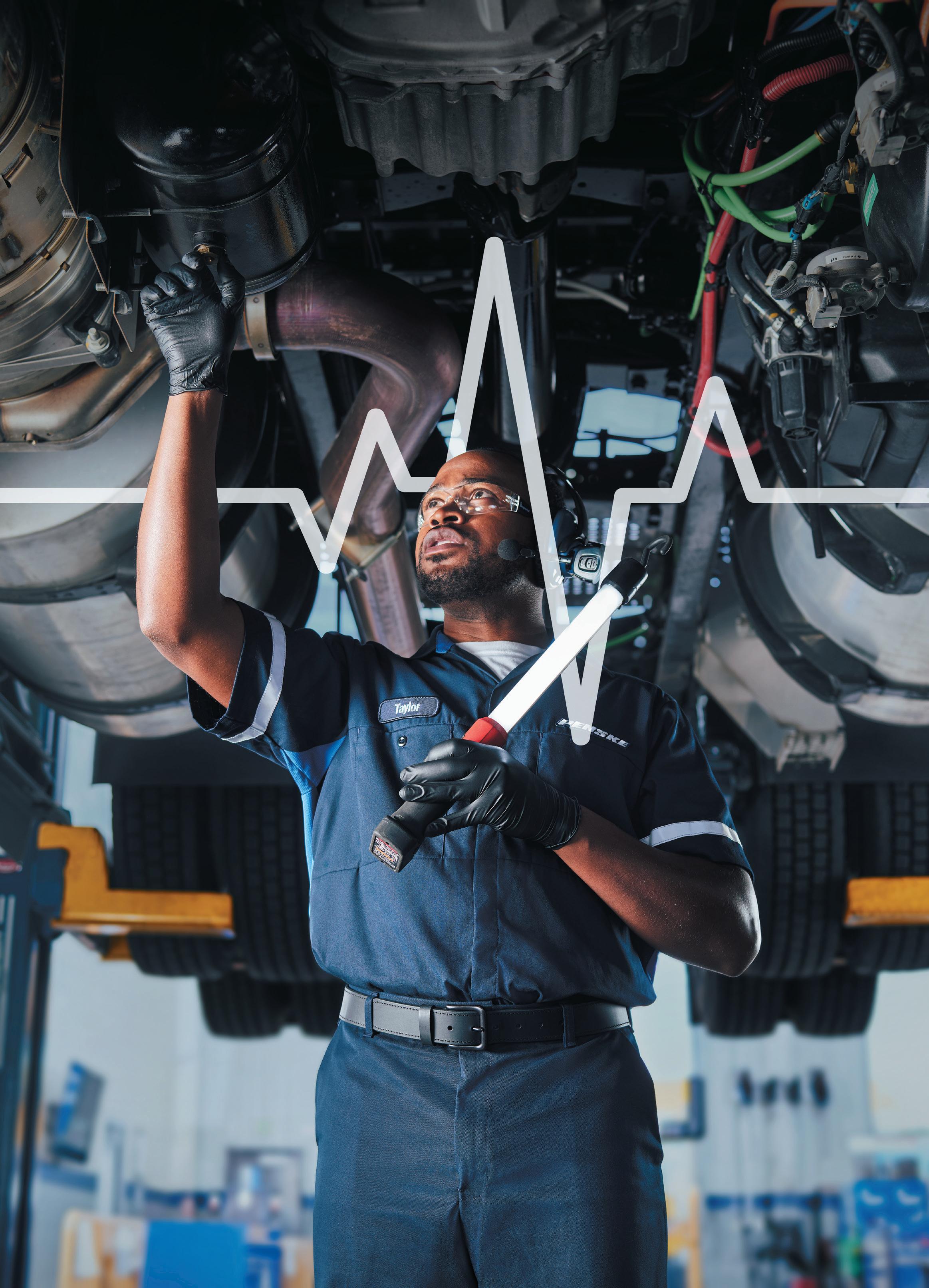



Downtime hur t s. That ’ s why Penske put s fleet health at the top of our list . Our technology analy zes the condition of your vehicles, optimizing uptime. We interpret the data so you can fix problems before they become problems
by Geert De Lombaerde
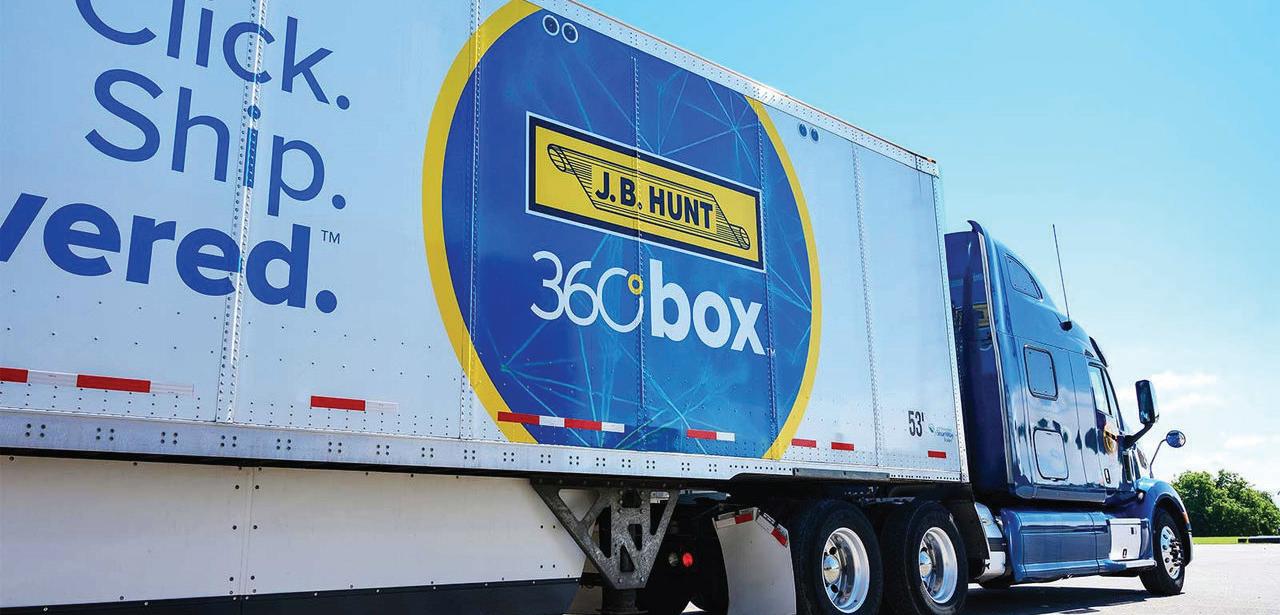
Among the many prominent trucking executives who have been careful to proclaim any sort of turn in the freight market since 2022, the leaders of J.B. Hunt Transport Services have been especially cagey of late. No longer.
Speaking to analysts and investors after the No. 4 carrier on the FleetOwner 500 list of top for-hire companies reported its first-quarter earnings April 15, Spencer Frazier, EVP of sales and marketing, sounded quite definitive about the state of the market.
“Things are structurally different. Capacity is continuing to exit the industry. Customer demand is solid,” Frazier said. “I think we’re in this structural change and the first part of an upcycle.”
Similarly, President and CEO Shelley Simpson introduced her team’s conference call by saying “the freight environment felt meaningfully different than what we’ve operated in over the past several years.”
Key to that, she and others noted, has been the continued shrinking of capacity as regulators have cracked down on cabotage as well as driver language requirements, among other things. But Simpson pointed out that “early signs of improved demand” have also helped Arkansas-based J.B. Hunt.
Along with cost-cutting programs and other operational efforts, that environment has led J.B. Hunt “to shift from a defensive posture to playing offense,” Simpson said. That shift showed in the company’s first-quarter results: Revenues excluding fuel surcharges rose 3.5% to $2.65 billion while operating income popped to $207 million from $179 million early last year.
At the division level, intermodal services—which account for about half of J.B. Hunt’s top line—grew 2.4% year
“Things are structurally different. Capacity is continuing to exit the industry. Customer demand is solid. I think we’re in this structural change and the first part of an upcycle.”
– Spencer Frazier, EVP of sales and marketing, J.B. Hunt
over year, but its operating income grew to $114 million from $94 million in the first three months of 2025. The company’s brokerage and truckload divisions led the way in terms of revenue growth with year-over-year increases of 20% and 23%, respectively. Frazier pointed out that revenue per load in those businesses climbed 9% and 3%, respectively, versus last year.
Frazier said that J.B. Hunt thinks it’s taking market share during this freight market transition and also noted that many shippers have changed their behavior after taking the stance into early this year that the regulatory-driven
market changes would be temporary.
“We’re seeing far less price-led decision-making and far more focus on execution quality,” he explained. “They’re adjusting to capacity challenges with frequent mini-bids. They’re consolidating freight with fewer, more reliable providers, and they’re prioritizing scale, visibility, and execution.”
Despite the overall improvement in their tone, J.B. Hunt executives still sounded a few notes of caution during their conference call. CFO Brad Delco repeatedly said inflationary pressures— mostly from insurance premiums, medical costs, and labor spending—aren’t abating and pointed out that the company’s price increases in the past year haven’t kept up with his estimate of core inflation.
On the labor front, Brad Hicks, president of dedicated services, highlighted that the exit of market capacity in the past year and more has turned into a recruiting challenge.
“We are experiencing increased challenges in driver hiring that we haven’t seen in years,” Hicks told analysts. “We are well-positioned to handle these challenges, but it is a notably different environment.” FO









































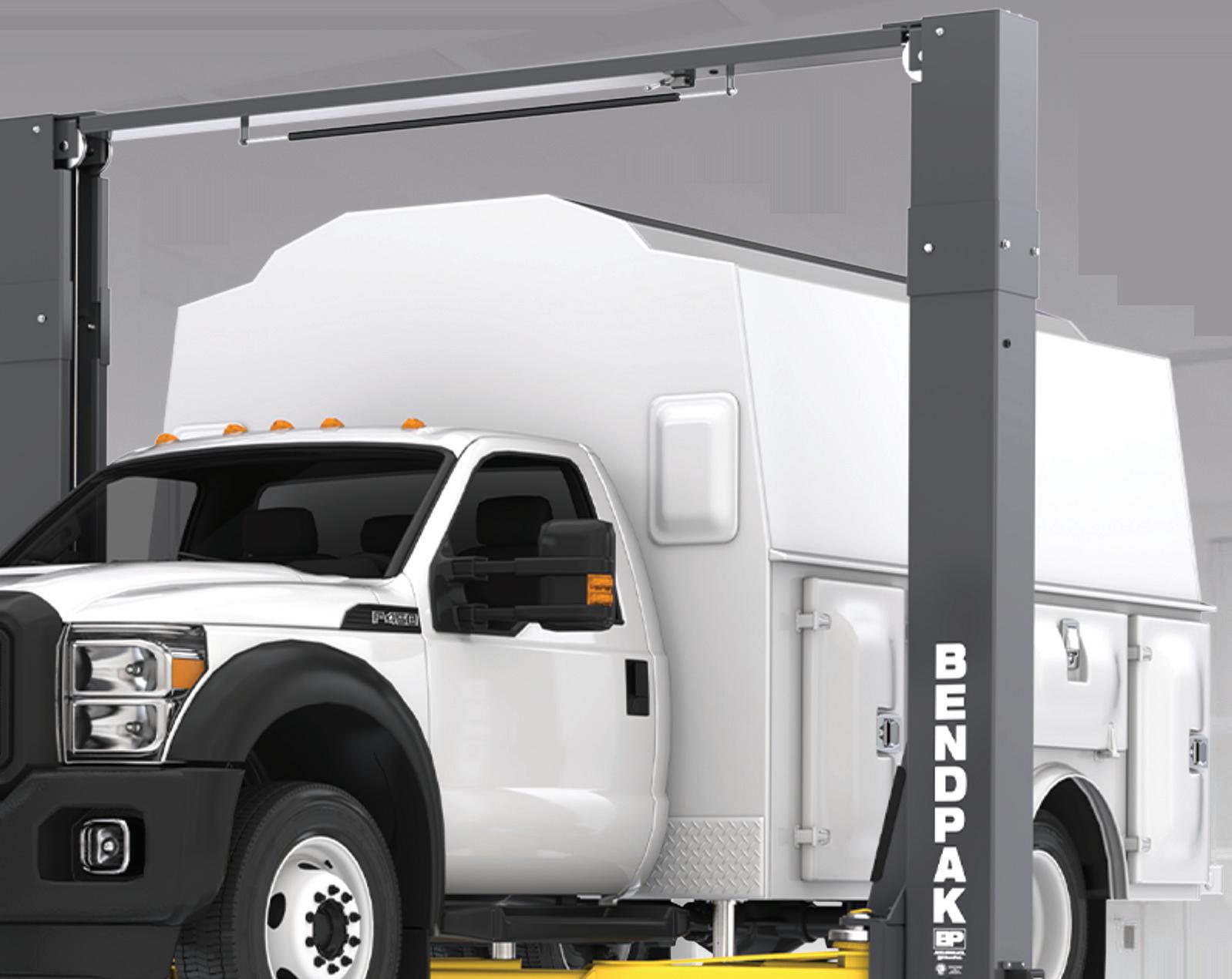




































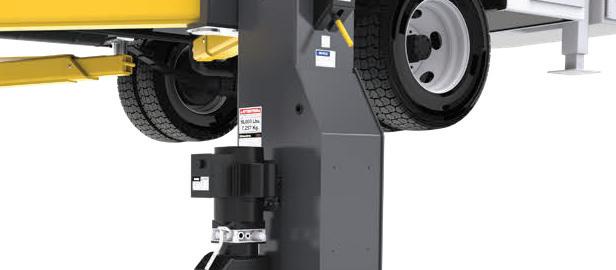




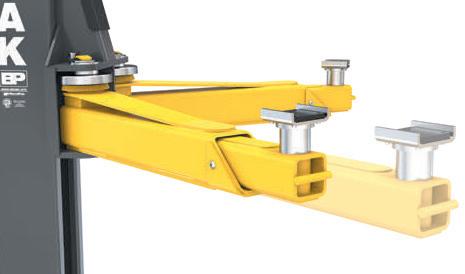




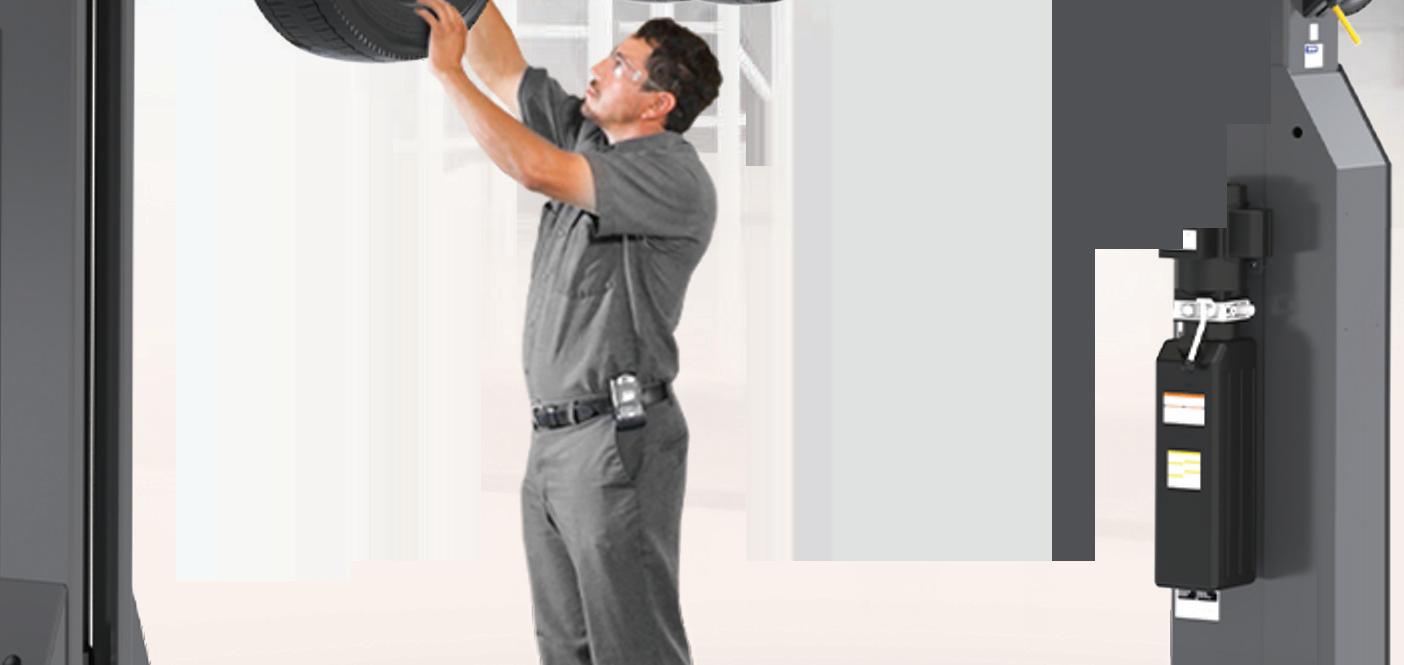





















































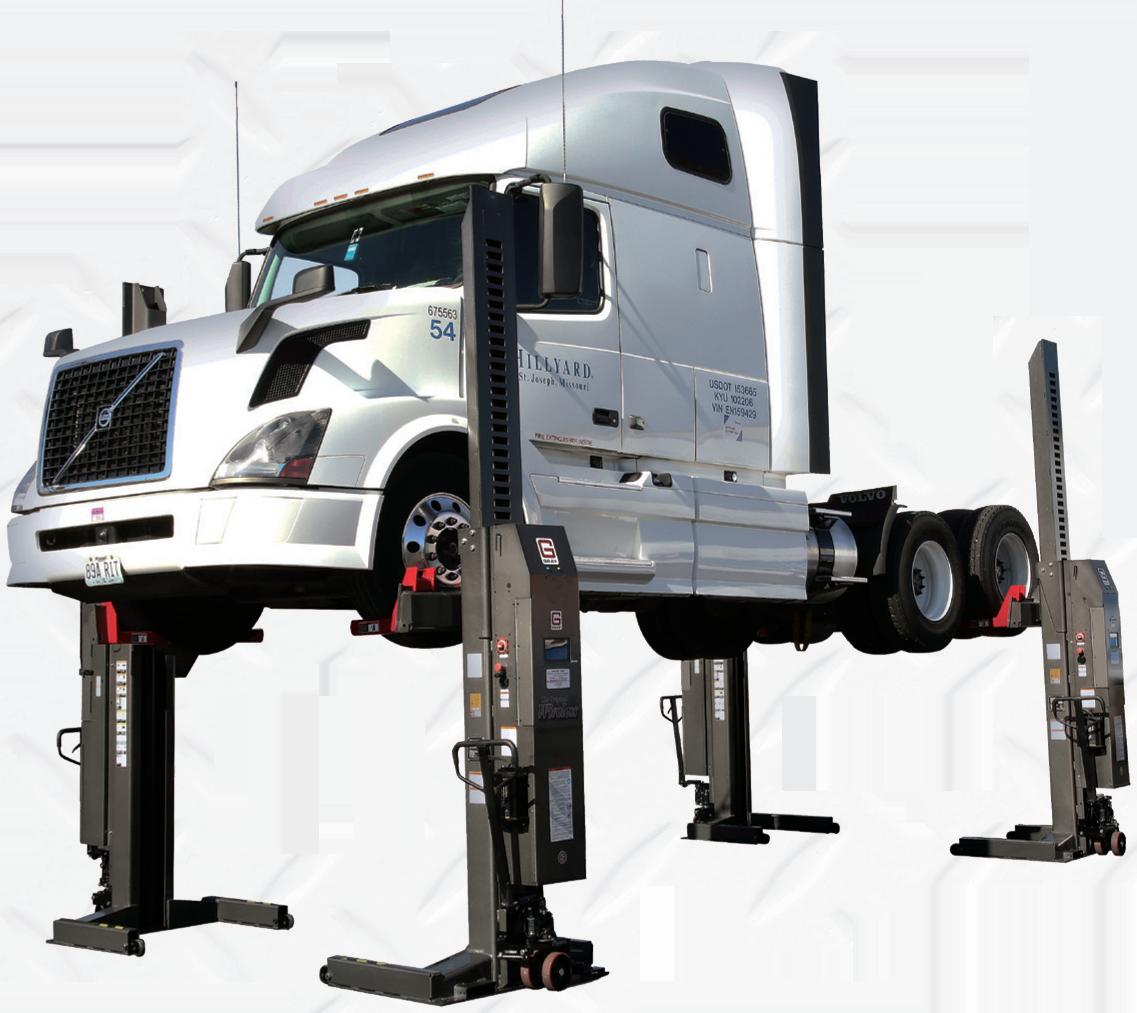
A versatile choice for mixed fleets, BendPak’s new 16AP and 20AP Series heavy-duty two-post lifts easily take on Class 1 through 5 vehicles, from passenger cars to commercial trucks and vans. They reach further, lift higher and deliver greater stability than other lifts, all while protecting technicians with unmatched safety systems and ergonomics. With fewer moving parts, they’re easier to maintain, less prone to wear, and more cost-effective to operate. Maximize your uptime and efficiency with BendPak’s heavy-duty lifts — delivering superior performance and unmatched value. To learn more or to shop now, visit bendpak.com or call us at 1-800-253-2363.




After more than half a century of hauling everything from Arctic oil rigs to Amazonian transformers, the venerable Kenworth C500 is officially passing the torch. Kenworth recently debuted its successor, the C580, at ConExpo in Las Vegas, signaling a new era for the extreme-duty vocational segment.
The C580 is designed to maintain the rugged durability of the C500 chassis while integrating the modern technology and cabin comforts found in Kenworth’s latest highway platforms. Under the hood, the C580 is powered by a Cummins X15 engine, delivering up to 605 hp and 2,050 lb.-ft. of torque. While manual and Allison 4000/6000 Series automatics remain available, the C580 introduces the Eaton EndurantXD Pro automated transmission—a first for this high-capacity segment.
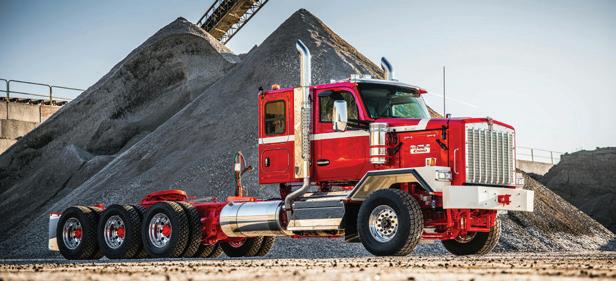
Key specifications and configurations include the following:
• Capacity: Capable of pulling a gross combination weight of up to 1 million lb.
• Versatility: Available in single- or twin-steer axle configurations; front-drive axles support 4x4, 6x6, 8x8, and 10x10 setups.
• Thermal management: A massive 1,780-sq.-in. cooling module ensures performance in high-altitude, stationary, or extreme-heat environments.
Drivers will find a modernized
workspace featuring a 15-in. digital cluster, improved visibility via a sloped hood, and advanced driver assistance systems. Production for the C580 is slated to begin in January 2027.
In a move that could redefine the future of zero-emission long-haul trucking, Toyota has signed a non-binding agreement to become an equal partner in Cellcentric, the fuel cell joint venture (JV) established by Daimler Truck AG and Volvo Group in 2021.
The partnership aims to leverage Toyota’s three decades of hydrogen expertise alongside Daimler’s and Volvo’s dominance in commercial vehicles. The goal is to establish Cellcentric as a global “go-to” for fuel-cell technology. While financial details of the stake remain
undisclosed, the JV currently holds shareholders’ equity of approximately $1.55 billion.
The collaboration comes as the JV shows financial improvement; despite a 2025 net loss of $140 million, the figures represent a rebound from 2024’s infrastructure-related impairments. The partners intend to jointly develop unit cells and control architecture, with series production of the fuel cell systems targeted for the turn of the decade.
A new report from Teletrac Navman, “Mobilizing the Future of Fleets: 2026 Equipment Utilization Edition,” suggests that while carriers are buying into digital transformation, they aren’t necessarily using it. The study found that while 87% of fleets have invested
in digital monitoring tools, 75% still rely on manual logs to some degree. This “data disconnect” results in significant operational waste. Key findings include:
• Idle assets: Equipment is frequently left unused up to 50% of the time.
• Maintenance disruptions: A total of 32% of respondents cited maintenance as a primary disruptor to project timelines, leading 27% of fleets to rent or purchase “buffer” equipment to offset downtime.
• Equipment hoarding: Perhaps most telling, 67% of organizations admit to “hoarding” assets—holding equipment onsite but not in use due to scheduling uncertainty. The report highlights that the next frontier for fleet managers isn’t just data collection, but the deep integration of that data into daily workflows to eliminate these redundancies.
Aperia Technologies is closing the loop on automatic tire inflation. With the Halo system for steer tires, the company’s self-powered inflation technology can now be applied to every wheel position on a commercial tractor-trailer.
The move is primarily a safety play. “Steer tire failures ... directly affect the vehicle’s directional control,” Ralph Dimenna, Aperia’s CCO, noted. By automatically maintaining optimal pressure, the system mitigates the risk of high-speed blowouts that can lead to catastrophic accidents.
Beyond safety, the steer-tire expansion integrates with the Halo Connect platform and the Halo Tread Diagnostic Suite to provide unified predictive analytics, better uptime, extended tire life, and fewer manual pressure checks. FO




As technology has advanced and permeated more and more of our personal and professional lives, cybersecurity has become an increasing concern. Cybercrimes have more than doubled since 2018, according to the Federal Bureau of Investigation (FBI). From 2018 to 2024, the FBI received 5 million
cyberattack complaints, with reported losses totaling $56.7 billion. The recent rise of arti cial intelligence (AI) has only further complicated cybercrime.
For the trucking industry, cybercrime is an ever-growing problem, especially as more and more technology nds its way into truck cabs. Closely connected to cargo theft, cybersecurity in trucking


has its own quirks and challenges. But before we get to those, let’s discuss the basics of what cybersecurity is, inside and outside of the trucking industry.
Cyberattacks are “any kind of malicious activity that attempts to collect, disrupt, deny, degrade, or destroy information
by Jenna Hume


system resources or the information itself,” the National Institute of Standards and Technology’s (NIST) Computer Security Resource Center states.
A few of the most common types of cybercrime include phishing, ransomware, malware, and data breaches, to name a few. The most common goal of digital criminals when targeting
businesses is nancial gain, though espionage and sabotage are other motivations.
Cybersecurity, therefore, is the “practice of protecting people, systems, and data from cyberattacks by using various technologies, processes, and policies,” according to IBM.
Some of the business sectors most affected by cybercrime are health care,
manufacturing, nancial services, small businesses, and transportation.
Cybersecurity is critical
Trucking and the supply chain today are more digital than ever, with technologies such as telematics, electronic logging devices (ELDs), electronic bills of lading (eBOLs), arti cial intelligence, autonomous vehicles (AVs), and more. This new technology has advanced the industry by enabling eets to operate more safely and ef ciently, with greater visibility.
But this advanced technology comes at a cost. In this new digital age, industries like trucking have become targets for digital criminals. The transportation sector saw a 186% increase in cyberattacks from June 2020 to June 2021, per a 2021 study. Transportation ranked ninth among the top 10 most commonly targeted industries in 2025.
And when cybercrime occurs, it doesn’t just affect the industry; its effects trickle down the supply chain, eventually impacting the public and consumers. This is because cybersecurity incidents often cause unexpected downtime and delays, especially when telematics and routing technology are affected. In addition to impacting freight delivery, this results in lost revenue and tarnished reputations for trucking companies.
Like cargo theft, digital criminals are constantly adapting existing cybercrimes and creating new methods. Here are the details on the most common cybercrimes affecting trucking:
Ransomware is a type of malware that holds a victim’s data or devices hostage until a ransom is paid, IBM states. Ransomware is one of the most common types of cybercrime, and it has evolved into subcategories such as double extortion and triple extortion.
Double extortion is when digital criminals threaten to leak a victim’s data online. Triple extortion involves
threatening to use the stolen data to attack an organization’s customers or business partners.
A phishing attack occurs when a cybercriminal sends an email that appears familiar but is an attempt to steal personal information, such as passwords, according to the National Motor Freight Traffic Association (NMFTA). These emails typically look like an email address for an individual or organization, with one letter, number, or punctuation mark that looks different.
Two similar cybercrime methods are Denial of Service (DoS) and Directed Denial of Service (DDoS). According to NMFTA, both types of attacks overload a system with requests and prevent access. The system shuts down when overloaded with too many requests. When a system like this shuts down, the organization or individual cannot use it. In trucking, for instance, this could halt an entire fleet and its drivers, leading to significant delays, lost revenue, spoiled products, and more, not to mention the stress this situation puts on drivers, dispatchers, managers, and others involved in the operation. The difference between the two types of attacks is that DoS is system-to-system, whereas DDoS is multiple systems against one system, according to Fortinet.
A man-in-the-middle (MITM) attack occurs when a hacker intercepts communication between two parties and modifies information.
NMFTA provides the following example of an MITM attack: “Imagine a company sends a client a message that requests they wire payment to the company’s bank account. A hacker could receive this message, replace the company’s bank account with their own, and then potentially walk away with tens of thousands of dollars.”

A brute-force attack is a type of data breach that tries every possible combination of letters, numbers, and symbols to eventually guess the correct password. This, in turn, allows a hacker to access an organization’s system.
With so many cybercrime methods, there are also plenty of ways trucking companies can protect themselves. For every niche method of cybercrime out there, there’s a niche method of cybersecurity. But here are some broad ways fleets can protect themselves with cybersecurity.
Conducting regular audits can help fleets identify weaknesses in their security systems before hackers have the opportunity to exploit them, according to Keystone Technology Consultants. This can be done with a fleet’s IT professionals or outside cybersecurity consultants.
Multifactor authentication (MFA) is another measure to protect fleet technology systems. MFA requires individuals to provide more than one form of identification to log in to email or other company systems, according to Isaac Instruments. MFA can include passwords, fingerprints, authenticator apps, email codes, and more.
When fleets fail to update their technology, they inadvertently expose themselves to new and evolving cyber threats. Updating technology promptly and even enabling automatic updates further protects fleet data. According to NMFTA, one-third of data breaches are from vulnerabilities that technology updates would have prevented.
It may seem cliché, but proper cybersecurity awareness and training are a major way fleets can protect themselves. These training sessions shouldn’t just teach staff how to identify phishing and other scams; they should also focus on procedures for when cybercrimes do occur.
NMFTA recommends that every employee at a trucking company should receive cybersecurity training, from not sending sensitive information by email to creating strong passwords.
As with cargo theft, fleets can’t just focus on prevention; they need plans for when cybercrimes occur. NMFTA suggests the following steps that fleets might implement as part of these plans:
• Notifying management
• Not negotiating with hackers
• Changing passwords
• Unplugging servers
• Uploading backups FO
by Josh Fisher
In a world where consumers can open an app and track the exact moment their pizza leaves the oven and reaches their doorstep, much of trucking still relies on a system closer to a fax machine.
Electronic data interchange (EDI) has been the digital backbone of commercial trucking for decades, exchanging fundamental business documents. But this legacy batch-cycle system is too fragmented and sluggish for the data-rich future fleets need to optimize operations.
Carriers and shippers manage some 1.5 billion pickup and drop-off appointments annually. When data delays and operational blind spots slow down these vital links, the supply chain suffers. To improve, the industry is pivoting toward the real-time connectivity of application programming interfaces (APIs).
The data standardization force
At the forefront of this digital overhaul is the National Motor Freight Traffic Association (NMFTA), the trade group that represents less-than-truckload carriers. Through its Digital Standards Development Council (DSDC), the group has brought together a massive coalition of LTL and truckload carriers, 3PLs, shippers, and technology providers to write the new open-source rules of the road.
Moving beyond digitizing paper, APIs create a system in which an initial shipment event seamlessly triggers automated digital actions all the way down the line, according to Keith Peterson, VP of operations at NMFTA.
“I feel like we’re pushing a big rock up a hill,” Peterson noted during a recent presentation to the Truckload Carriers Association about API adoption. “Eventually, we’re going to get to the top, and it’s going to start rolling on its own.”
The initial heavy lifting is being led by supply chain brand names such as
Real-time API standards are bringing “pizza-tracker” levels of visibility to the freight industry. This digital shift allows cargo data and shipment events to flow seamlessly from the truck directly to the palm of a hand, triggering automated actions throughout the supply

J.B. Hunt, C.H. Robinson, and U.S. Bank Freight Payment. These DSDC members are already integrating the standardized API connections into their networks and pushing partners to follow.
The TMS equalizer for all carriers
While trucking’s largest fleets are driving early API momentum, smaller operations need to understand more robust data-gathering and sharing technology.
“At the small carriers, sometimes the CEO is also the weekend driver,” Peterson noted. “They don’t necessarily have the time—or even the resources.”
Most fleets will need to rely on their existing transportation management systems to adopt APIs. Rather than expecting individual fleets to shoulder the technical burden, consortia like DSDC and the truckload-focused Scheduling Standards Consortium (SSC) are working with software developers.
The SSC, for example, recently introduced an “Early Adopter Badge” for TMS companies that commit to integrating universal scheduling APIs. Any fleet that keeps its software updated will automatically be able to communicate with major 3PLs and shippers.
The shift from EDI to APIs is not just theoretical—it’s already yielding tangible results. NMFTA’s Digital LTL Council
released API standards for critical parts of the shipment life cycle. These include:
• Electronic bill of lading (eBOL): This API standardizes digital shipping documents, enabling digital start and end of the load to eliminate manual data entry and reduce costly keying errors.
• Pickup request and visibility: This API simplifies and digitizes pickup scheduling, allowing carriers to instantly communicate real-time visibility to shippers.
• Preliminary freight charges (PFC): With legacy EDI, shippers often do not see billing changes until the final invoice arrives days later. The PFC API updates charges in real time.
The council’s full-truckload API standards are still in development, but it has already released a TL appointment-scheduling standard.
The transportation industry no longer needs to wait days for answers that can be delivered in seconds. Just as a phone call to a local pizza parlor laid the groundwork for the real-time tracking of modern delivery apps, EDI built the digital foundation for trucking. But batch cycles can only take the supply chain so far. Standardized APIs are paving the way, delivering instantaneous visibility, smoother operations, and accurate billing that fleets need to thrive. FO

FleetOwner zeroes in on refrigerated fleets and technologies in this special section from Refrigerated Transporter —the trusted resource for temperature-controlled transportation and logistics professionals.
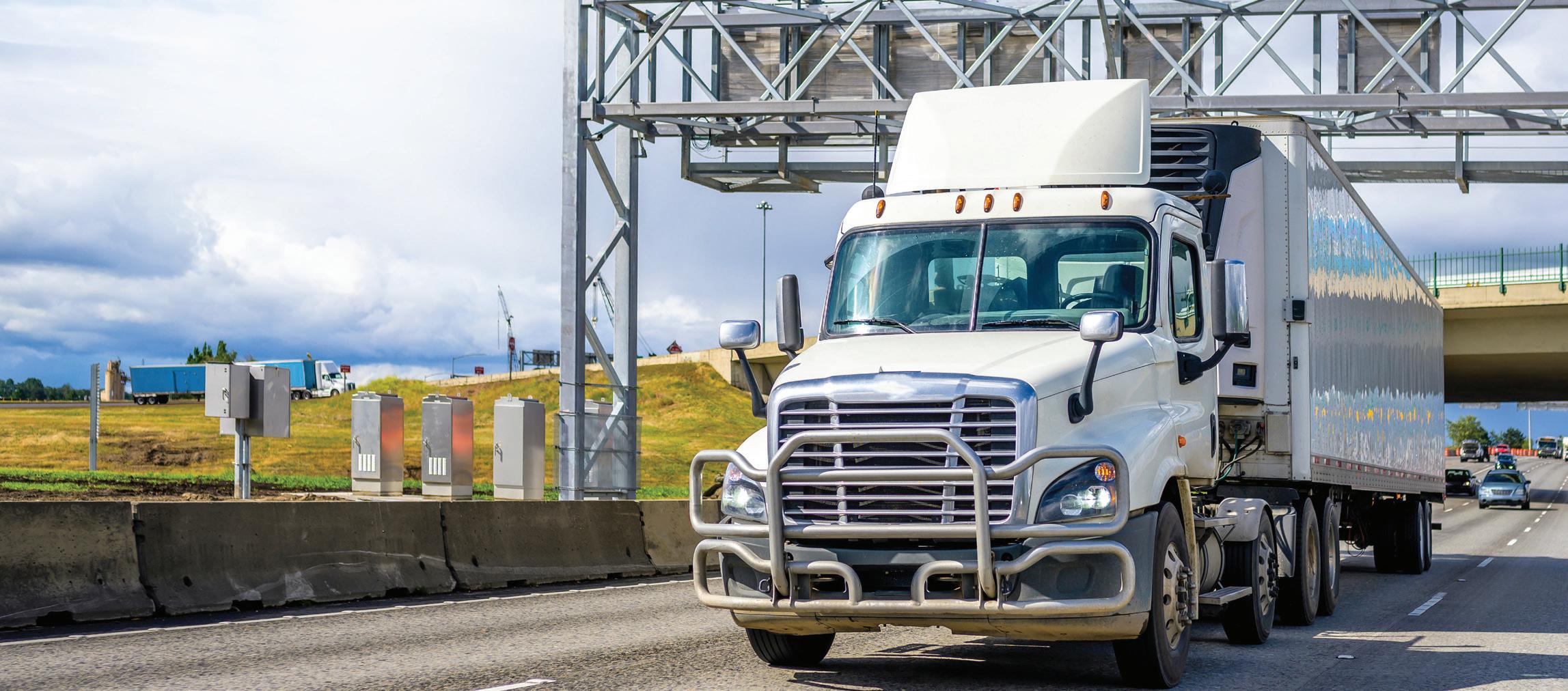
Canadian clean energy firm’s hydrogen-diesel blending system—and its zero-capex, ‘hydrogenas-a-service’ approach—is making decarbonization profitable for refrigerated fleets. by Jason McDaniel
Hydrogen is cleaner than diesel. It’s also more expensive and harder to find, making widespread adoption of liquid hydrogen or hydrogen fuel cell-powered vehicles, or even diesel displacement engines, a tall order for most heavy-duty fleets. Simply put, the math doesn’t work. So, Energy Security Services North America (ESSNA) is taking a novel “hydrogen-as-a-service” approach that includes the hydrogen supply and no up-front equipment expenses.
Like a hot rodder injecting a big block with nitrous, ESSNA’s H59-D Autonomous hydrogen-diesel blending system introduces a small amount of hydrogen “accelerator” during the combustion process, facilitating cleaner, more efficient diesel consumption that reduces carbon intensity and saves fleets money. And because the H59-D metering and control module doesn’t “displace” diesel with hydrogen, the system doesn’t cause engine knocking or overheating. “How do you get the economics to work in a
traditional diesel displacement program?
You simply don’t,” Gareth Gregory, the company’s North American head, said. “That’s why we are utilizing hydrogen as an accelerator. That is what’s unique.”
Now ESSNA is introducing its hydrogen-diesel blending ecosystem for transport refrigeration units (TRUs) as a practical way for U.S. and Canadian reefer fleets to move toward zero-emissions operations while still providing reliable, budget-friendly performance—and guaranteed results.
“H59-D Autonomous gives operators a practical, low-risk way to substantially reduce diesel consumption and operating costs today while advancing decarbonization goals using existing assets,” Edgar La Pointe, ESSNA market development and H2 fleet manager,

said. “This is particularly attractive for refrigerated transport fleets, where diesel consumption from both the tractor and the refrigeration unit directly impacts margin and emissions performance.”
The politics surrounding zero-emission vehicles have shifted under the Trump administration, especially regarding battery-electric vehicle adoption timelines and subsidies. But ESSNA is based in Canada, where hydrogen-powered transportation is still moving forward. Bison Transport, Loblaw Companies, and Coldstar Solutions all started testing hydrogen fuel cell trucks in reefer operations in Canada over the last few years.
“We’ve been in hydrogen long enough to nail down the value proposition we’re providing,” Gregory said. “What’s dried up are the grants and incentives, which we weren’t party to anyway.”
He and La Pointe also believe the timing is right for new TRU technology. Reefer fleet managers trying to optimize operations amid a stubborn freight recession and soaring fuel prices still need a viable path to reducing emissions, and H59-D checks both boxes, allowing clients to consume less diesel and improve sustainability “off the balance sheet,” Gregory maintained.
“With the heavy-duty pilot projects, public transit, airports, and now refrigerated fleets, there is enough demand to keep us busy for a long time,” he asserted. “We see this as value-chain journey, and we believe a lot of these companies will slowly but surely transfer to hydrogen power. But it’s not a two-year program. It’s more like a 10- to 15-year program.”
To Gregory’s point, Volvo recently revealed it’s now testing heavy trucks powered by hydrogen combustion engines and “high-pressure direct injection” technology in Europe. And ESSNA announced March 31 that “yet another North American fleet” operator has selected H59-D systems for its vehicles, which boast diverse engine capacities and applications.
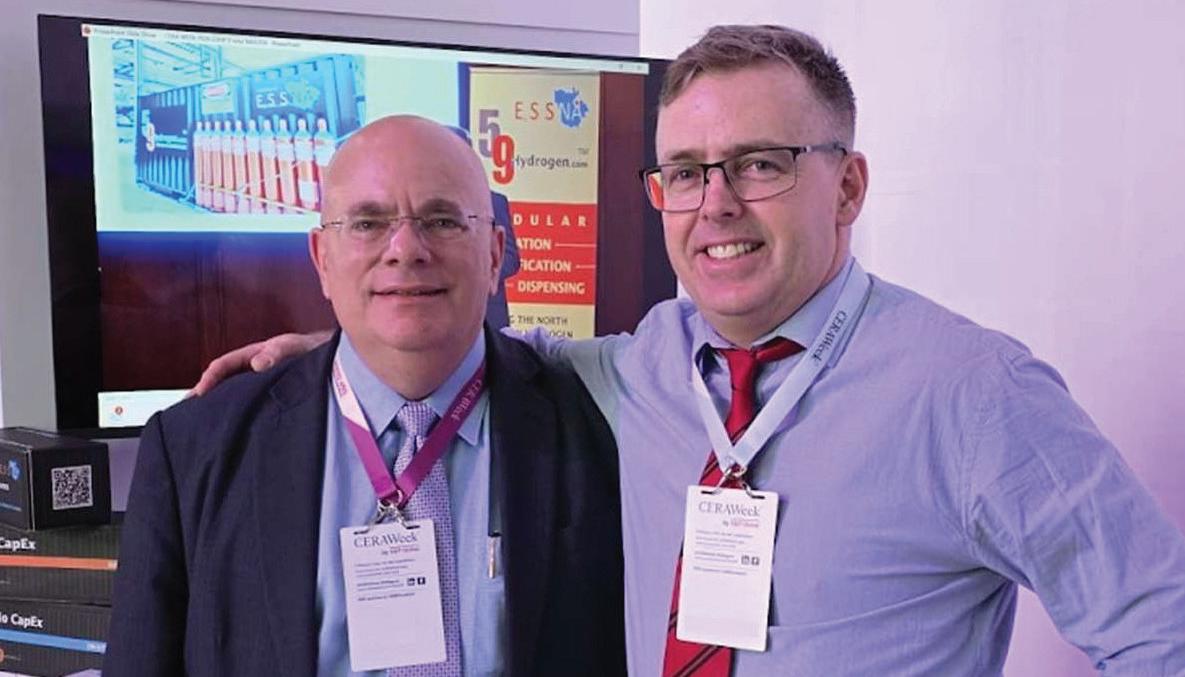
Mounted to existing equipment, H59-D modules leverage proprietary software to autonomously dispense hydrogen during the combustion process in a tightly controlled manner.
“As hydrogen is introduced, it goes directly into the engine’s fuel intake, causing the fuel to burn more efficiently at any load,” La Pointe explained. “So, you’re not using a ton of hydrogen. We don’t need massive storage tanks on trucks or anything like that. We simply provide a feedstock.”
ESSNA’s blending solution includes the high-purity hydrogen supply. The company also installs and maintains its H59-D systems with no capex expectation and promises immediate, measurable returns. “We guarantee at least a 10% reduction in diesel consumption,” La Pointe said. “It is quite a bit more than that, but we guarantee 10% so everybody understands this product works, and we stand behind it. Our diesel reductions are continuously validated through a reported baseline.”
Similar guarantees apply to truck and reefer setups, which are separately installed, and differ slightly due to the power required. “The reefer unit’s operational characteristics are different, so the numbers look different, and energy management is more intricate, but the benefits remain the same,” Gregory said. Cost-effective convenience is a big one. ESSNA customers pay a flat rate based on hydrogen consumed per usage period. “That’s the only charge,” La Pointe said. “So, it becomes economically viable.”
ESSNA’s Edgar La Pointe, at left, and Gareth Gregory are bringing the clean energy company’s hydrogen-diesel blending technology to reefer fleets.
Photo: ESSNA
Intuitively, burning diesel more efficiently also comes with benefits in engine and aftertreatment system maintenance—and emissions sensors and DPF filters are two of the biggest pain points in trucking today. “We know H59-D reduces maintenance. There’s no doubt about it,” Gregory maintained. “But we want to back that up scientifically, so we still need to run many millions of miles with our clients to understand the extent of those benefits.”
As part of its strategy to save fleets money, ESSNA, which assumes 100% of the performance risk, has not yet pursued third-party validation, but that’s in the plan, Gregory shared. Testimonials thus far are limited because early adopters want to protect their advantage. “They’re winning contracts because they have a competitive edge,” he said. Instead, ESSNA allows clients to conduct baseline tests so they’re not going into deployment “blindly,” ensuring results across a diverse range of applications, including refrigerated transportation.
“Built for real-world industrial conditions, the system automatically adjusts hydrogen injection based on operating demand and is purpose-designed for variable duty cycles, sustained loads, vibration, and continuous-duty transport applications,” La Pointe concluded. “For trucking fleets, this includes diesel-powered TRUs and reefer systems, where H59-D can help lower diesel use in long-haul runs, reduce idle-related emissions, and improve the economics of temperature-controlled operations.”

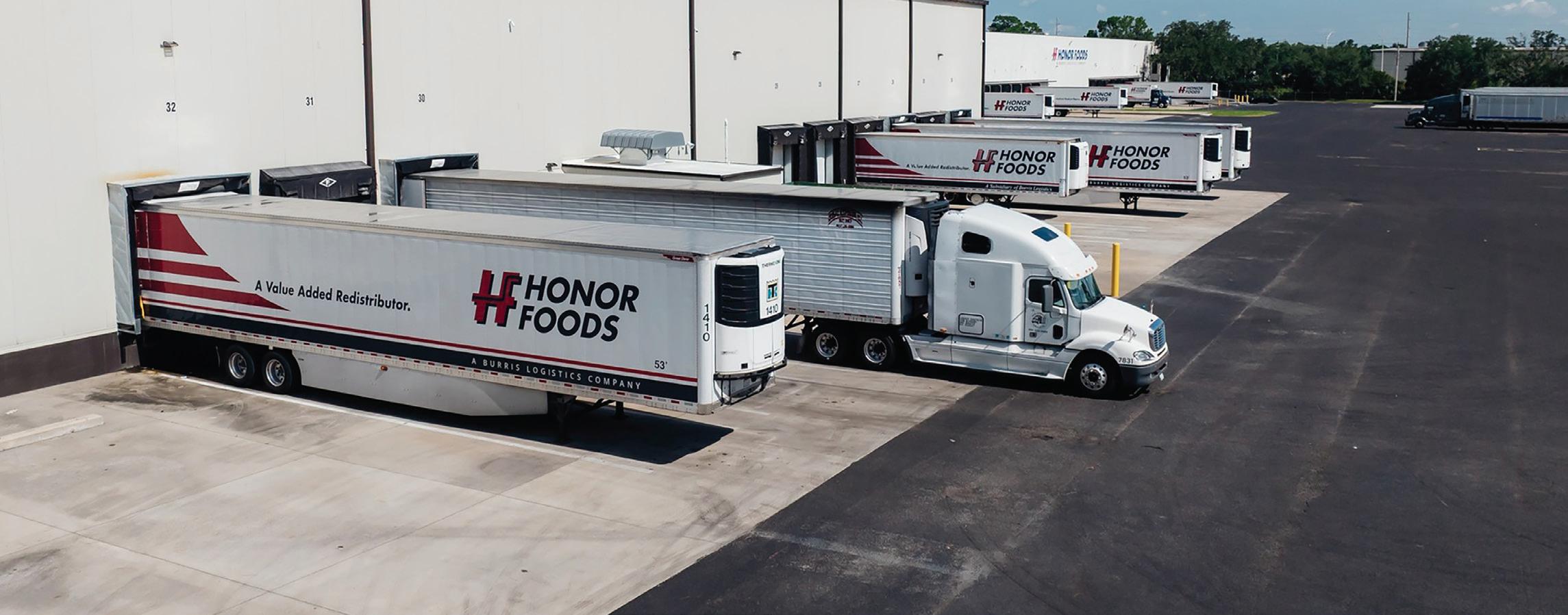

Honor Foods slashes planning time and reefer
fleet miles by trading manual processes and sticky notes for Trimble’s data-driven dispatch system.
by Jason McDaniel
The long freight recession forced many eet operators to figure out how to “do more with less” in the last few years. And when the situation was nally improving, the war in Iran sent fuel prices spiking, extending the need for enhanced operational ef ciency— even for the most resilient trucking companies that have continued to expand amid so much uncertainty.
In either case, today’s transportation technology can help.
Honor Foods, a Pennsylvania-based redistributor that last year opened a new facility in Kissimmee, Florida, leveraged Trimble’s Appian Daily Planner to optimize the routing of its refrigerated trucks in Philadelphia. By replacing manual processes with a dynamic, data-driven system that automates routing, the company reduced planning time and boosted equipment utilization.
“[Appian] has been a godsend,” Steven Torres, Honor Foods senior transportation manager, said in a Trimble case study. “It helps us move our trucks. It reduces man-hours in the
of ce and wasted driver hours. It’s taking a lot less time for my dispatchers to do their routing.”
According to the new study, Honor Foods reduced routing time by 20%, slashed empty miles and “unnecessary” costs, and gained real-time visibility across dispatching, warehousing, and delivery—reducing delays and customer service issues—by integrating the Appian planner with its in-house warehouse management system (WMS).
And Eric Reitmeier, Trimble regional sales manager, insists foodservice eets can realize time savings up to 75% with Appian while also reducing the assets required to do the work by up to 25%.
“That one is really big, especially with the current state of the market and looming threat of recession,” Reitmeier told Refrigerated Transporter. “People are trying to do more with less—and Trimble has the perfect tool.”
Honor Foods, a Burris Logistics company founded in 1949, and its subsidiary

brands, R.W. Zant and Sunning Morning Foods, work with more than 800 suppliers of fresh, frozen, dry, and dairy products, and stock more than 7,000 items, including their own in-house staples. The food supply chain facilitator’s facilities in California, Florida, and Pennsylvania are a critical link between producers and foodservice distributors—and its private eet makes that possible.
Managing those trucks, however, is increasingly complicated.
Honor Foods is growing, so its footprint is spreading, orders are surging, the logistical puzzles are compounding— and Google Maps, sticky notes, and institutional knowledge couldn’t keep pace. “On an average day, we are routing over 100 individual orders, right up until cutoff, and that could easily exceed 100 stops,” Mark Williams, Honor Foods IT support analyst, said. Honor Foods tapped Trimble to scale its dispatching capabilities and piloted Appian in Philadelphia with 50 trucks that run the trafc-heavy corridor between New Jersey, Pennsylvania, and New York.
The results, Honor Foods leaders maintain, were transformational.
“With Appian Daily Planner, my dispatchers can route all our trucks across the country,” Torres shared. “We have different menus for different vehicle types and different regions, and it helps divvy up a big, congested map while

allowing us to have a visual overview of everything across the country.”
Now the company is planning to deploy the system to all locations.
“We automate the process with decision-making assists,” Reitmeier said. “So, we’re not trying to replace people. Appian is taking what they know and helping build out the most cost-effective routes using our algorithms and routing tools—while not discounting historical knowledge.”
Fleet synergy and flexibility
In addition to improving scalability and boosting employee morale, Appian’s routing exibility is enabling Honor Foods to easily accommodate last-minute orders and unexpected changes.
“Routers are going in and out of Appian Daily Planner as orders ow in, constantly routing and re-routing, and it’s really helped us manage that process,” Williams said.
The system also boosts service by leveraging customer time windows as “hard-coded rules,” Reitmeier said.
“When Appian is building routes, it’s never going to produce one that violates those windows,” he explained. “And there are different ways to do it. You can add ex periods, you can include multiple windows, and you’re going to get better service and higher SLAs [service level agreements].”
Fleets also can use Appian to weigh route optimization vs. driver satisfaction
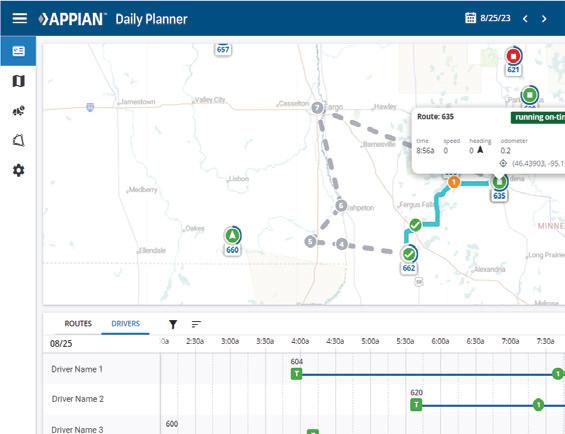

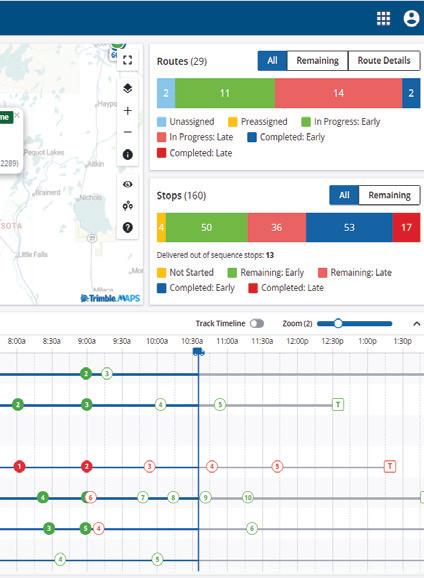
when formulating routes, and mobile tools “untether” dispatchers from their desk, allowing them to adjust orders in the yard or warehouse.
“They can use our AI tools to query the routes or ask for follow-up suggestions and key details,” Reitmeier explained. “It’s a great way to unplug and still be effective.”
Honor Foods turned to Trimble in part because Burris already was already using TMW.Suite, highlighting another Appian advantage—the system’s connected ecosystem capabilities that multiply utility.
“We have the entire breadth and depth of our technology stack across transportation management, dispatching, mapping, mobile reporting, data intelligence, and eet maintenance,” Reitmeier said. “So, you can consolidate with one vendor, realize the increased purchasing power, and also boost synergy and streamline work ows.”
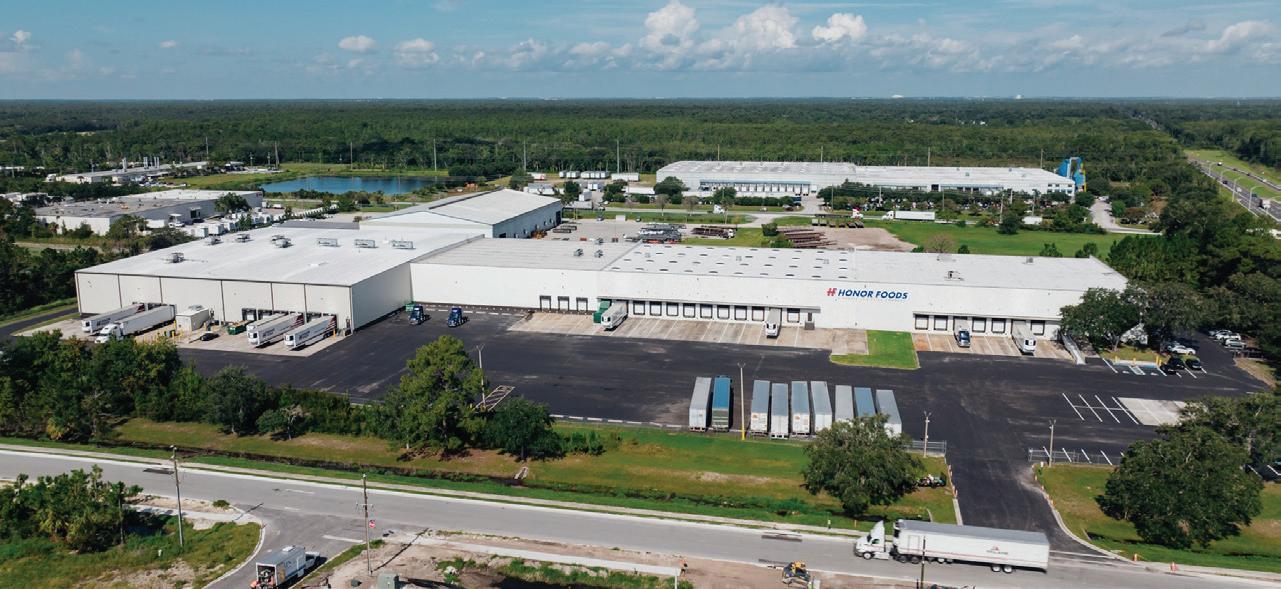
Trimble’s Appian Daily Planner is a cloud-based solution for multistop, multi-vehicle route optimization designed to improve asset utilization, on-time deliveries and customer service.
Photo: Trimble
Trimble began working with Honor Foods in 2023, first implementing Appian, and then validating and fine-tuning the system through the pilot, Reitmeier relayed.
“We wanted them to feel comfortable, especially coming from a manual process,” he said. “It was their rst time using this kind of software in-house, and change management and acceptance are big hurdles for any company adopting new technology, so we wanted to give them a white-glove experience.”
The technology company’s professional services team helps companies manage the change in a six-phase approach that includes initial discovery, deep dives into operational nuances, con guration, customization, and user training. They also give eets multiple options for enterprise resource planning (ERP), transportation management system (TMS), and WMS integrations, including full web services with APIs or automated le imports, Reitmeier said.
Fleets continue to bene t from 24/7 technical support long after the system has been implemented.
“We’re super excited to see Honor Foods grow,” Reitmeier concluded. “They already expanded outside the Philadelphia pilot market to Florida, and they are planning to roll this out in California as well. So, Appian continues to evolve with them—and it really is helping.”






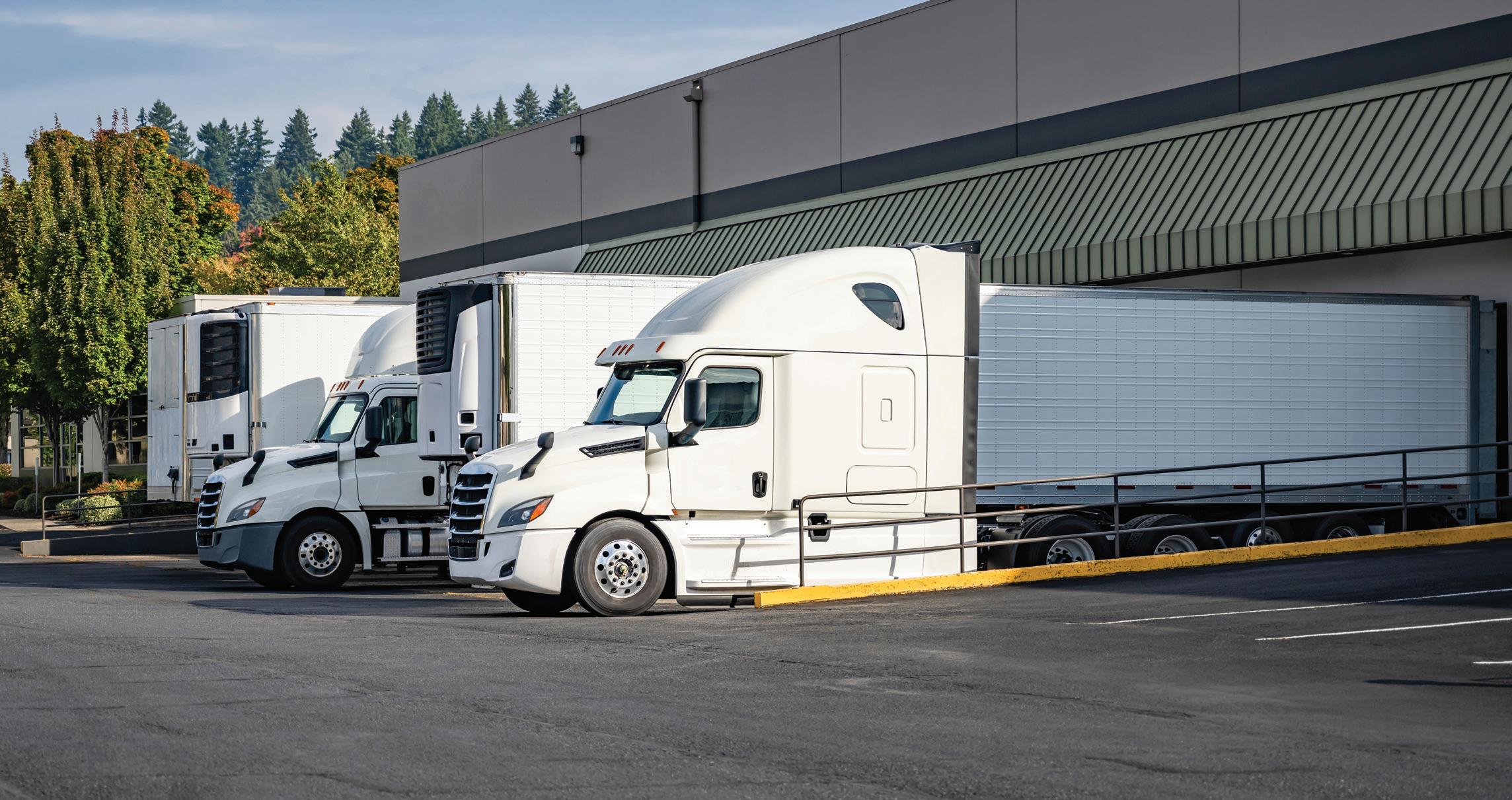


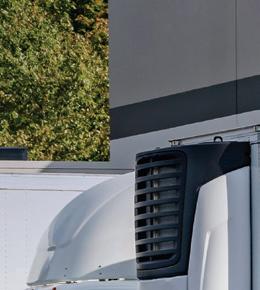





As geopolitical shifts and new traceability mandates tighten their grip on the reefer market, GCCA is advocating for a modernized, tech-driven infrastructure to keep the global supply chain moving. by Lindsay Shelton-Gross
Geopolitical events and ongoing trade uncertainties have widespread implications for supply chains, including the storage and movement of temperature-controlled goods worldwide. At this critical time, when the food and logistics industries race to reduce vulnerabilities and build more resilient supply chains amid mounting uncertainty, the Global Cold Chain Alliance (GCCA) champions temperature-controlled logistics businesses.
GCCA also actively advocates for cold chain operators across the U.S. policy landscape, tracking Congressional developments that may not make the headlines but have a signi cant impact on how fresh and frozen food is stored, transported, and distributed.
Cold chain advocacy priorities
In response to specialized domestic policy proposals and macro global events, GCCA is working with governments, authorities, and supply chain stakeholders on a clear advocacy strategy.
“We’re focused on real-world solutions that move the needle for cold chain
operators,” Sara Stickler, GCCA president and CEO, said. “Recent years have made it clear how vital supply chain continuity is to the broader economy—and that has opened up real opportunities to shape policy, both here in the U.S. and around the world.”
And GCCA is uniquely positioned to lead the charge, leaders maintain.
“The rst priority centers on safe and secure trade of temperature-controlled goods,” Shane Brennan, GCCA SVP of global policy, projects, and partnerships, explained. “That encompasses global issues such as con icts in the Middle East and Iran, as well as the speci cs of national trade policy, compliance issues, product safety, and facility inspections. The second area of focus relates to the resilient infrastructure required for an effective and ef cient cold chain, from business investment and taxation policy to civil crisis preparedness and technological innovation. Third, GCCA is advancing cold supply chain sustainability as a core 2026 priority: pushing for progress on food waste reduction, climate resilience, and resource scarcity through targeted policy engagement.”
Advocating for safe and secure trade of temperature-controlled goods is a dynamic program, evolving in response to tariff changes and the Middle East con ict, which is generating multiple short- and medium-term impacts across the global shipping network, with significant freight cost increases, stranded and diverted container ships, and immediate trade disruption. Container imbalance is compounding the existing challenges of shortages of reefer equipment in export hubs. As the situation evolves, GCCA will continue to work with authorities and supply chain stakeholders to get product and equipment moving.
There is also continued uncertainty about the impacts of U.S. trade policy on international logistics, speci cally tariff actions and retaliatory measures by trading partners.
“Over the past 18 months, global food trade has seen increased volatility, disruption to plans and processes, delays, and raised costs,” Adam Thocher, GCCA SVP of global market engagement, said. “February’s Supreme Court ruling introduced a new period of legal
and commercial uncertainty. We’re joining forces with partners across U.S. agriculture to ght for low and zero tariffs on goods where American consumers are already feeling price pressures. This effort will continue as we navigate this summer’s U.S.-Mexico-Canada Trade Agreement [USMCA] review.”
For many major trading partners, initial reciprocal tariffs have been overtaken by negotiated agreements. In November 2025, the administration reduced or eliminated tariffs on several food products to help address food in ation. “Operators should be aware that any changes in reciprocal tariffs are likely to lead to an increase in shipping activity as importers seek to complete product journeys before further tariff actions are taken,” Thocher added.
The formal interim review of U.S. trading relationships with its two largest trading partners, Canada and Mexico, is due to be completed by July 1—the deadline for the formal USMCA review. More than $148 billion in agricultural goods moves between the three countries annually, all of which depend on reliable temperature-controlled storage, handling, and transportation.
GCCA is a partner of the Agricultural Coalition for USMCA, which promotes its renewal. “Integrated North American supply chains depend on predictable, resilient cross-border movement,” Lindsay Shelton-Gross, GCCA SVP of global communications, said. “A robust trade agreement is fundamental to enabling the safe, secure, and ef cient movement of perishable food and other temperature-sensitive products across North America. Not only is continuity critical, but all sides should seize the opportunity to modernize its implementation.”
In addition to minimizing disruption and seeking greater ef ciency in established, primary trade channels, there are opportunities for cold chain operators in government policy focused on developing additional trading relationships.

GCCA continues to champion provisions in the new Farm Bill to foster U.S. government investment in cold chain market development in export markets for U.S. agriculture. These FRIDGE Act provisions have bi-partisan support and are included in the proposed 2026 Farm Bill draft. GCCA’s work has resulted in improvements to the legislation, including a funding increase to $1.5 million and narrowed eligibility criteria to better re ect the Global Cold Chain Foundation’s work in cold chain development.
Alongside the effects of trade-focused policies, there are several other areas of policy development that may have signi cant implications for the day-to-day operations of temperature-controlled logistics businesses. The Food Traceability Rule (FSMA 204) establishes enhanced recordkeeping requirements for foods on the Food Traceability List, designed to help FDA quickly identify products in the event of a public health threat. Cold storage and transportation operators connect producers, processors, and distributors at critical junctures where data like temperature, handling, and timing must be accurately recorded.
“The new requirements mean significant investment, training, and operational change for many businesses operating in the food industry,” Shelton-Gross said. “GCCA has been advocating for a practical approach to traceability that balances food safety objectives with the realities of supply chain operations. Last March, the FDA announced the extension of the

compliance date from January 2026 to July 2028. It is important that during this time, businesses operating in the food supply chain are provided with the information, resources, and support needed to prepare for compliance.”
A major frustration for temperature-controlled logistics operators, common across much of the globe, is the unnecessary time and cost burden of inef cient, often paper-based and sometimes duplicative regulatory systems and processes. For example, U.S. warehouses encounter signi cant duplicative reinspection requirements, and GCCA is engaging with USDA and the Food Safety and Inspection Service to highlight this issue and explore ways to digitize inspections.
A far-reaching example is the SPS control systems, which are based on technical, paper-heavy processes that create delays, cost money, and invite fraud.
“Digitized systems deliver practical, workable reforms that help remove friction from global trade,” Brennan summarized. “The increased need for ef ciency and resilience in trade systems is opening the potential for positive change. It is slow and complex, but progress is being made as governments around the world seek robust solutions that both strengthen oversight and support commerce.”
by Gary Petty
This leaders’ work highlights her dedication to supply
MARI ROBERTS, CTP, is the PepsiCo SVP of North American Supply Chain COEs, and board chair of the NPTC Board of Directors. She has worked her entire 26-year career for PepsiCo. She has been promoted numerous times to progressively more responsible positions as manager, director, senior director, vice president, and senior vice president.

“I always try to learn something new not only for my own development, but to help build the capability of those around me.”
– Mari Roberts
Her interest in transportation began in college. She studied supply chain management at Arizona State University where she became fascinated by the logistics and transportation industry. She began her career at the Frito-Lay Casa Grande plant as network manager, then moved up to traffic department manager.
“Coming out of college, I had an immediate respect for the Frito-Lay drivers, and I wanted to make a difference for them,” she recalled. “The ever-changing
environment the transportation industry offers is right up my alley.”
After several years, she joined the Plano HQ Transportation Team as West Division network efficiency manager supporting 11 traffic centers. Later, Roberts was promoted to logistics capability manager developing the National Capability Strategy for Transportation.
In 2009, she decided to pursue her Certified Transportation Professional credential. She attended the Private Fleet Management Institute, gave her first general session speech at an NPTC event, and graduated with the CTP Class of 2009 at the NPTC Annual Conference.
In 2010, she was elected that year to serve as a member of the NPTC Institute Board of Governors and was voted in as the new board chair a few years later.
“When I first got involved, I knew NPTC and the CTP program were exactly the industry connections I needed because they focus on priorities that fleets face,” Roberts said. “At PepsiCo, optimization and continuous improvement are major priorities. This means hauling more products at the least landed cost balancing driver retention, safety, service, and outside carrier capacity.”
Roberts says learning about the optimization experience of other NPTC members helped immensely. “A company of PepsiCo’s size obviously has great resources, but it’s not feasible to discover every innovation on our own,” Roberts said. “I have taken away some amazing ideas from CTP fleet managers from many different industries, some with as few as 20 trucks. The networking power of CTPs is just incredible.”
For 16 years, Roberts has been a faculty member of the Private Fleet Management Institute, served for eight years as chair of the NPTC Institute Board of Governors, and served for five years as
Executive Committee member, board secretary, and vice chair. She will soon begin a two-year term as board chair of the NPTC Board of Directors.
Roberts has been a featured speaker, panelist, or workshop moderator at NPTC conferences and online webcasts. During Robert’s active years with NPTC and the CTP program, 44 leaders from PepsiCo have earned their CTP designation, including four who were honored as “Top CTP Graduates” of the year. Many were inspired by her direct encouragement and leadership example.
Nineteen of these successfully completed the Private Fleet Management Institute as a group in 2010, the largest representation ever from a single company. A lot of NPTC members recognize Roberts as one of the greatest champions of CTPs in the program’s 33-year history.
“Being around so many outstanding transportation professionals at every NPTC event exposes us to fresh, innovative, and creative approaches to many of the problems we face every day,” she said.
In 2013, Roberts was recognized for her leadership by being selected as the NPTC Private Fleet Manager of the Year. In 2017, she was honored as the NPTC Private Fleet Executive of the Year.
Beth Mars, CTP, transportation director at PepsiCo, Top CTP Graduate of her CTP Class of 2014, member of the NPTC Institute Board of Governors, protégé of Roberts, and long-standing colleague and friend, stated: “Mari’s infectious enthusiasm and leadership have positively influenced so many people, me included. She is a legendary star in the private fleet industry.” FO
Gary Petty | gpetty@nptc.org
Gary Petty has more than 30 years of experience as CEO of national trade associations in the trucking industry. He has been the president and CEO of the National Private Truck Council since 2001.































Seven decades of experience is driving Schuster Trucking’s
by Seth Skydel
Atest of industry knowledge and foresight, navigating the freight market is always a challenge. At Schuster Trucking Company, that ship is being steered effectively today by Steve Schuster, president of the 70-year-old refrigerated carrier.
“The freight market has had a challenging couple of years,” Schuster said. “We had to address times when there was more capacity than freight and others when the volume of freight was larger than the number of trucks available to haul it. Those ups and downs impact profitability, and when trucking companies aren’t making money, it also impacts a number of things, including vehicle replacement plans.
“Unlike many carriers that have reduced their number of trucks, we’ve been fortunate, but we haven’t increased our fleet size either,” Schuster continued. “At the same time, while we try to buy new trucks every year to maintain our expected equipment service life cycle, we didn’t purchase any tractors for 18 months; however, that’s changing because freight volumes are up.”
Part of the drive to replace equipment at Schuster Trucking is to secure 2026 vehicles before manufacturers switch to 2027 emissions-compliant models.
“Our thinking is that order boards for this year will be full by the start of the third quarter,” Schuster explained further. “With engine and truck manufacturers unable to provide pricing for 2027 models yet, ordering for this year and not waiting until the first half of 2027 will protect us financially.”
The 420 company power units in the Schuster Trucking fleet are mainly International LT625 models with Cummins X15 engines and Eaton Cummins Endurant automated transmissions. The carrier’s 1,200 trailers consist primarily
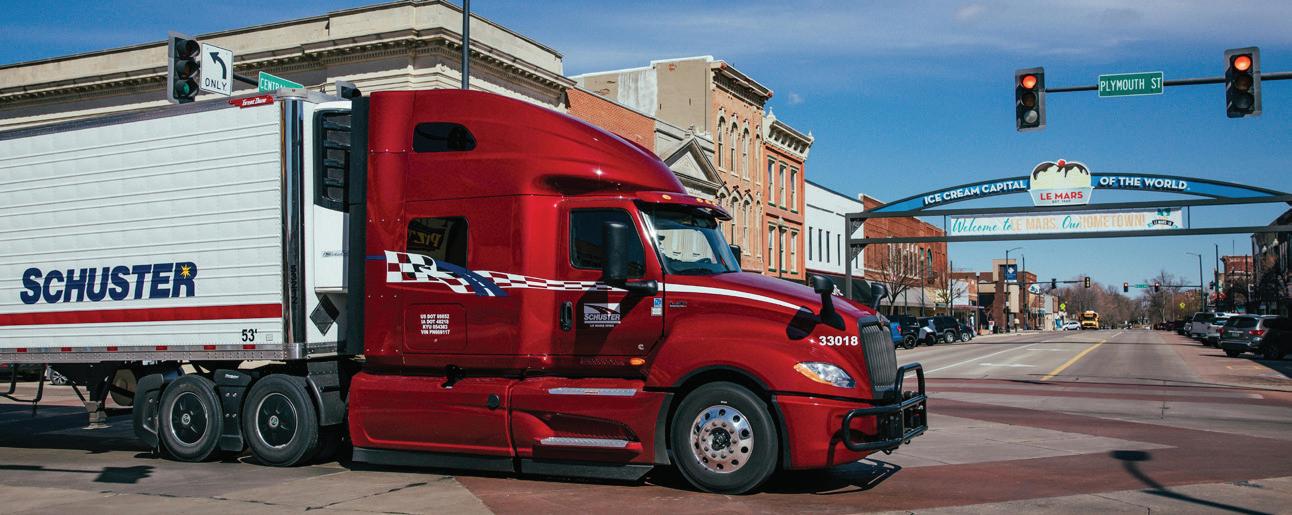
Schuster Trucking’s programs, such as competitive pay, benefits, late-model equipment, and driver-friendly policies, help keep seats filled.
of Great Dane SuperSeal reefers with Thermo King S-700 refrigeration units. Schuster noted that the manufacturer’s most powerful model ensures the integrity of ice cream loads, which make up 30% of the company’s freight revenue and must be kept at -20 degrees F.
Operating out of one terminal at its Le Mars, Iowa, headquarters location, allows the company to benefit from long-standing relationships with key suppliers, Schuster said. Included are Cornhusker International, Jim Hawk Truck Trailers, and Thermo King Christensen.
“With local vendors in the Sioux City area as well, we can also control parts and tire costs,” Schuster said. “Their proximity means our inventory levels are down in our 20-bay tractor shop and our eight-bay trailer service facility.”
While Schuster Trucking’s programs for company drivers and a roster of about 80 dedicated owner-operators—including competitive pay and benefits, late model equipment, wellness initiatives, and driver-friendly policies—have helped keep seats filled, recent federal crackdowns aimed at CDL reform, together with increased freight volumes, have made finding operators a bit challenging.
“Compliant drivers who meet our requirements are still out there,” Schuster said. “We applaud the rules that have
removed illegal drivers. That has helped the whole industry.”
Schuster also supports regulatory efforts to improve safety and noted that the carrier has maintained a Federal Motor Carrier Safety Administration satisfactory rating, indicating it has management controls in place to meet safety fitness standards prescribed by the U.S. Department of Transportation.
“We review inspections weekly and look at our records so we can avoid violations for things that can be addressed with effective driver pre-trip and shop inspections,” he said.
Fuel economy is a key focus at Schuster Trucking. Currently, the carrier’s trailers are fitted with Hendrickson TireMaxx Pro tire inflation and monitoring systems, and they are evaluating solutions for tractors from Revvo and PressurePro. Some recent tractors have also been spec’ed with the International S13 Integrated Powertrain, which Schuster said has exhibited impressive fuel economy.
For Schuster, relying on his experience is what will keep the family-owned company, which was founded in 1956 with a single truck hauling grain, a premiere provider of customer-focused transportation services and a leader in the industry.
“Looking ahead,” he said, “we’re very excited about 2026 and beyond.” FO
“These four dr vers – the 2026 NPTC Dr ver Hall of Fame nductees – embody all the character st cs, sk lls and att tudes that are the heart of what enables the pr vate fleet to cont nue to del ver except onal levels of customer serv ce. They are ambassadors, not only for the r company, but for the ent re pr vate fleet commun ty.” NPTC President and CEO Gary Petty
Unifi Manufacturing, Inc. Yadkinville, NC
Robert began his driving career in 1976 on his family farm in Yadkin County, NC. There, he learned to drive a 10-speed, single-axle truck hauling corn, soybeans, and hay. He has more than 48 years of combined driving experience, including time with other companies before joining Unifi. In that time, he has accumulated 3.6 million miles without a chargeable accident, injury or moving violation. In his 13 years with Unifi, he has racked up more than 900,000 accident-free miles.
“But the miles and awards aren't what define me,” he explains. “What matters more to me is how I live and how I treat people. I try to help where I can, fixing fences, bush-hogging property for folks who can't do it themselves, working on small engines for retirees, and spending time visiting shut-ins and nursing homes.
John Deere assigned by CPC Logistics, Inc., Davenport, IA
In 30 years behind the wheel, Matthew has driven 3.25 million miles without a chargeable accident, injury or moving violation. He started his driving career in 1996 and joined CPC Logistics as a driver for John Deere Shared Services four years later.
As a driver for Deere, he hauls equipment parts in over-the-road applications throughout the Midwest.The job requires him to drive in all weather conditions, including winter snow and ice, spring storms, and tornado weather. In addition, Matthew has served as a driver trainer for the past 10 years.
Matthew also has served as a volunteer fireman on the Lost Nation Fire Company for 36 years, where he also trains new associates. He also served on the Lost Nation Park board from 1994 through 2022, serving as President for many of those years.
Shaw Industries Group, Inc. Dalton, GA
Eddie started his driving career with Shaw as a spotter. After earning his CDL, he moved into a driving position. Part of his time at Shaw he was an OTR driver and more recently he has delivered yarn, carpet rolls, and flooring products to retail locations throughout the North Georgia and Southern Tennessee. He works up to 60 hours a week. These deliveries involve unloading freight using a winch, forklift or pallet jack depending on the specific freight and customer requirements. He utilizes defensive driving and his years of on road experience to ensure safe, uneventful, and stress-free trips.
In 39 years behind the wheel, Eddie has driven 5.4 million miles without an accident, an injury, or a moving violation. Throughout his 39-year career with Shaw, “I have strived to represent Shaw with professionalism and courtesy both on and off the road,” says Eddie.
Circle K / Fuel South Express Columbus, IN
Paul began his professional driving career in 1991, and in those 35 years, he has racked up 3.5 million miles without an accident, injury or moving violation. Paul began his driving career in the military in 1991, honorably serving in the U.S. Army for four years, where he developed a strong work ethic, discipline, and sense of responsibility.
In 2004, he joined Benito Petroleum which was subsequently acquired by Circle K/Fuel South Express. He has built a reputation as a dependable and safety-focused fuel hauler. His current position with Circle K involves hauling flammable liquid petroleum products such as gasoline, diesel, and ethanol blends across Midwest routes.
Paul actively participates in company and industry safety programs designed to promote safe driving practices, peer accountability, and a positive image of the trucking and petroleum transportation industry.
Article Reprints — For reprints and licensing, please contact reprints@endeavorb2b.com.
Photocopies: Authorization to photocopy articles for internal corporate, personal or instructional use may be obtained from the Copyright Clearance Center (CCC) at 978-750-8400. Obtain further information at copyright.com.
Archives and Microform: This magazine is available for research and retrieval of selected archived articles from leading electronic databases and online search services, including Factiva, LexisNexis and Proquest.
Mailing Lists: Endeavor makes portions of our magazine subscriber lists available to carefully selected companies
that o er products and services directly related to the industries we cover. Subscribers who do not wish to receive such mailings should contact the Endeavor Business Media subscriber services at 800-547-7377, ext. 1500.
Privacy Policy: Your privacy is a priority to us. For a detailed policy statement about privacy and information dissemination practices related to Endeavor Business Media products, please visit our website at www.endeavorbusinessmedia.com.
This index is a service to readers. Every e ort is made to maintain accuracy, but FleetOwner cannot assume responsibility for errors or omissions.
30 Burton Hills Blvd., Suite 185 Nashville, TN 37215 800-547-7377 fleetowner.com
SALES STAFF
Chris Messer EVP Transportation Group cmesser@endeavorb2b.com
Dyanna Hurley Market Leader/Commercial Vehicle Group 248-705-3505
dhurley@endeavorb2b.com
Peter Lovato Associate Publisher 231-233-2660
peter@fleetowner.com
AL, GA, FL, LA, MS, NC, OK, SC, TX
Michael Simone Western Territory 973-713-0094
michael-s@fleetowner.com
AR, AZ, CA, CO, IA, ID, IL, KS MN, MO, ND, NE, NM, NV, OR, SD, UT, WA, WI, WY
Larry Schlagheck Northeastern Territory 248-444-1320
larry@fleetowner.com
CT, DE, IN, KY, MA, MD, ME, MI, NH, NJ, NY, OH, PA, RI, TN, VA, VT, WV
Richard A. White Business Operations Manager richard@fleetowner.com
Laura Moulton Audience Development Manager lmoulton@endeavorb2b.com

FleetOwner, (USPS Permit 200040, ISSN 1070-194X print, ISSN 2771-5205 online) is published nine times a year in January/February, March, April, May, June, July/ August, September, October, and November/December by Endeavor Business Media, LLC. 201 N Main St 5th Floor, Fort Atkinson, WI 53538. Periodicals postage paid at Fort Atkinson, WI, and additional mailing o ces. POSTMASTER: Send address changes to FleetOwner, P.O. Box 3257, Northbrook, IL 60065-3257.
SUBSCRIPTIONS: Publisher reserves the right to reject non-qualified subscriptions. Subscription prices: U.S. $121.54 per year; Canada/Mexico $142.14 per year; All other countries $180.25 per year. All subscriptions are payable in U.S. funds. Send subscription inquiries to FleetOwner, PO Box 3257, Northbrook, IL 60065-3257. Customer service can be reached toll-free at 877-382-9187 or at fleetowner@omeda.com for magazine subscription assistance or questions.
Printed in the USA. Copyright 2026 Endeavor Business Media, LLC. All rights reserved. No part of this publication may be reproduced or transmitted in any form or by any means, electronic or mechanical, including photocopies, recordings, or any information storage or retrieval system without permission from the publisher. Endeavor Business Media, LLC does not assume and hereby disclaims any liability to any person or company for any loss or damage caused by errors or omissions in the material herein, regardless of whether such errors result from negligence, accident, or any other cause whatsoever. The views and opinions in the articles herein are not to be taken as o cial expressions of the publishers, unless so stated. The publishers do not warrant either expressly or by implication, the factual accuracy of the articles herein, nor do they so warrant any views or opinions by the authors of said articles. Volume 123, Issue 4

















ST. LOUIS, Missouri—While the National Museum of Transportation mostly features historic train cars, there are several exhibits that highlight the history of trucking. The photos shown on this page feature previous truck models and examples of where the trucking industry and railroads collide.
“Rubber Duck” from “Convoy”
One of trucking’s most iconic movies, “Convoy,” showcases a mile-long convoy of semi trucks formed to get back at an abusive sheri . One of the most iconic trucks from the movie is a black Mack R700 nicknamed “Rubber Duck.”
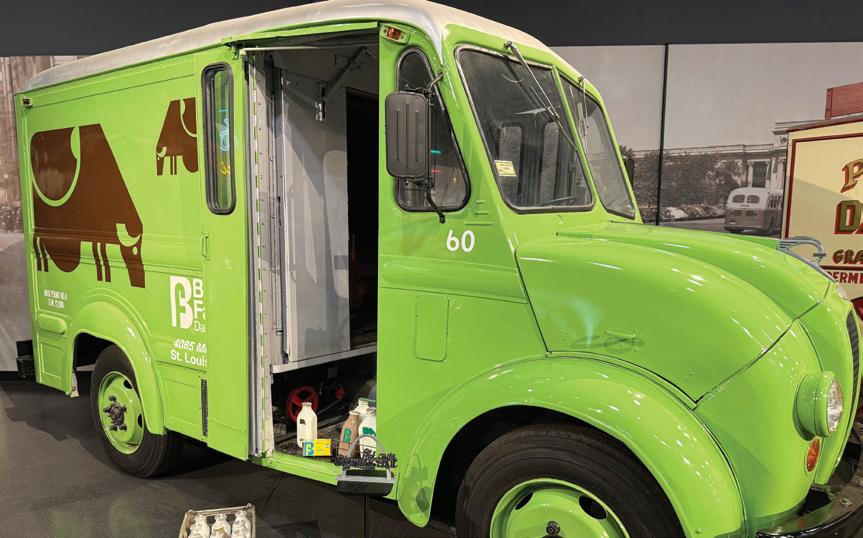









A Mack R700 from ‘Convoy,’ a rare Navistar International CXT, and piggyback railcars highlight trucking’s evolution and its ties to rail. by Jenna Hume
At the National Museum of Transportation, the original truck resides in an outside exhibit, visible during the museum’s train rides.

Though not as aged as some of the other exhibits, another truck featured at the museum is a 2005 International CXT truck built by Navistar, which was rebranded to International Motors and is now part of the Traton Group. The CXT (Commercial Extreme Truck) is part of the XT Series, the largest commercial pickup trucks ever mass-produced.
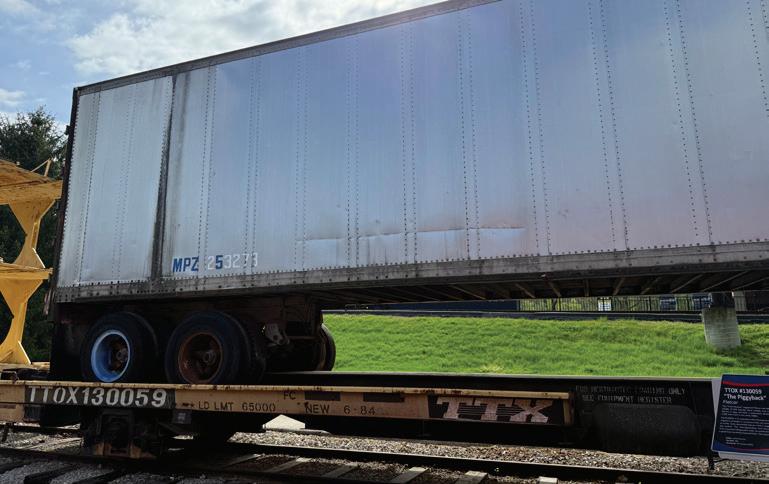

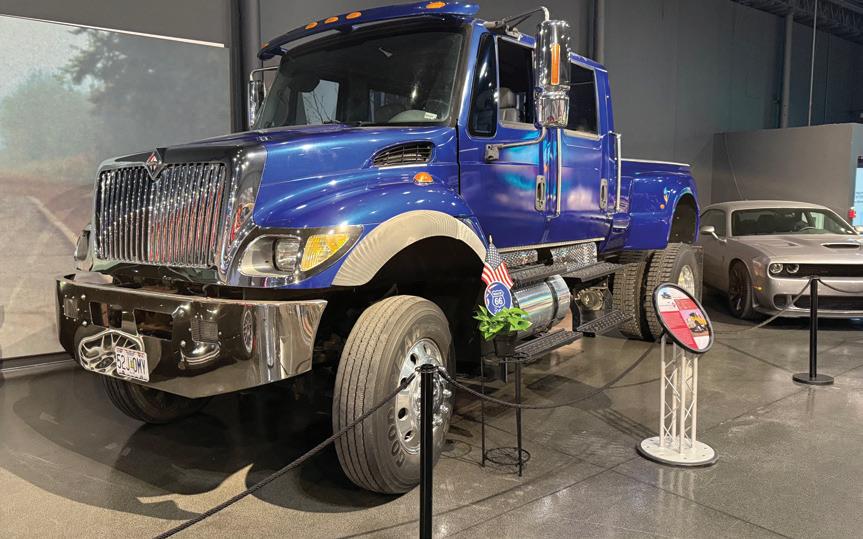
Only 200-300 units of this truck were ever built. Navistar marketed these trucks to business owners as essentially “large rolling billboards.”
“Front Runner” piggyback flatcar
The piggyback is a type of flatcar designed to haul semi-truck trailers on rail lines. These flatcars were produced in the 1980s, were 54 ft. long, and could haul freight of up to 65,000 lb.
The lack of a continuous deck on these flatcars limited what types of trailers they could haul. The design was eventually dropped with new rail technology advancements. FO

Originally built in 1984,
Right: One of the main trucking exhibits at the National Museum of Transportation, the truck here is from the movie “Convoy,” named the “Rubber Duck.”



“This is by far the best event I have attended in my 25 years of doing this.”
“The 1:1 time whether it’s during the meetings or after hours events was immensely valuable.”
“The interaction with other fleet leaders was invaluable.”
“It was a great opportunity to network with other professionals in the transportation industry. Received a lot of best practices as well as lessons learned that I will apply here with my company.”
“The amount of knowledge in one room was astounding.”

“Summit provided the opportunity to learn about numerous innovative ideas from a diverse supplier base supporting products that affect our fleet business.”
““It truly felt like fleets and suppliers were looking to work together”
“This is not your typical trade show“
“The targeted & focused format is very valuable”
June 8-10, 2026



Keep your fleet safe and your costs down with Halo, the industry’s only automatic tire inflation system for truck drive tires. Halo eliminates mos t costly roadside calls, prevents unexpected downtime, and stops avoidable tire issues before they become hazards.
By continuously monitoring and maintaining tire inflation, Halo optimizes tire performance, boosts safety and reduces tire and maintenance costs.
Fleets trust Halo to protect their drivers, lower operating costs, and kee p deliveries moving on schedule with consistency and confidence.