Trends in Audio Processing

Sponsored by Angry Audio • Inovonics • Omnia • Orban • Thimeo • Wheatstone
2022 SEPTEMBER 2022 A NEW RADIO WORLD EBOOK
September 2022 eBook www.radioworld.com
FOLLOW US www.twitter.com/radioworld_news www.facebook.com/RadioWorldMagazine
CONTENT
Managing Director, Content & Editor in Chief Paul J. McLane, paul.mclane@futurenet.com, 845-414-6105

Content Producer & SmartBrief Editor Elle Kehres, elle.kehres@futurenet.com
Technical Advisors Thomas R. McGinley, Doug Irwin
Technical Editor, RW Engineering Extra W.C. “Cris” Alexander
Contributors: Susan Ashworth, David Bialik, John Bisset, Edwin Bukont, James Careless, Ken Deutsch, Mark Durenberger, Charles Fitch, Donna Halper, Alan Jurison, Paul Kaminski, John Kean, Gary Kline, Larry Langford, Mark Lapidus, Michael LeClair, Frank McCoy, Jim Peck, Mark Persons, Stephen M. Poole, James O’Neal, John Schneider, Dan Slentz, Dennis Sloatman, Randy Stine, Tom Vernon, Jennifer Waits, Steve Walker, Chris Wygal
Production Manager Nicole Schilling
Managing Design Director Nicole Cobban
Senior Design Directors Rob Crossland, Lisa McIntosh, Will Shum
ADVERTISING SALES
Senior Business Director & Publisher, Radio World John Casey, john.casey@futurenet.com, 845-678-3839 Publisher, Radio World International Raffaella Calabrese, raffaella.calabrese@futurenet.com, +39-320-891-1938
SUBSCRIBER CUSTOMER SERVICE
To subscribe, change your address, or check on your current account status, go to www.radioworld.com and click on Subscribe, email futureplc@computerfulfillment.com, call 888-266-5828, or write P.O. Box 1051, Lowell, MA 01853.
Licensing/Reprints/Permissions
Radio World is available for licensing. Contact the Licensing team to discuss partnership opportunities. Head of Print Licensing Rachel Shaw licensing@futurenet.com
MANAGEMENT
Senior Vice President Group Elizabeth Deeming Vice President, Sales & Publishing, B2B Aaron Kern Vice President, B2B Tech Group Carmel King Vice President, Sales, B2B Tech Group Adam Goldstein Head of Production US & UK Mark Constance Head of Design Rodney Dive
FUTURE US, INC.
130 West 42nd Street, 7th Floor, New York, NY 10036
All contents ©Future US, Inc. or published under licence. All rights reserved. No part of this magazine may be used, stored, transmitted or reproduced in any way without the prior written permission of the publisher. Future Publishing Limited (company number 02008885) is registered in England and Wales. Registered office: Quay House, The Ambury, Bath BA1 1UA. All information contained in this publication is for information only and is, as far as we are aware, correct at the time of going to press. Future cannot accept any responsibility for errors or inaccuracies in such information. You are advised to contact manufacturers and retailers directly with regard to the price of products/services referred to in this publication. Apps and websites mentioned in this publication are not under our control. We are not responsible for their contents or any other changes or updates to them. This magazine is fully independent and not affiliated in any way with the companies mentioned herein.
If you submit material to us, you warrant that you own the material and/or have the necessary rights/ permissions to supply the material and you automatically grant Future and its licensees a licence to publish your submission in whole or in part in any/all issues and/or editions of publications, in any format published worldwide and on associated websites, social media channels and associated products. Any material you submit is sent at your own risk and, although every care is taken, neither Future nor its employees, agents, subcontractors or licensees shall be liable for loss or damage. We assume all unsolicited material is for publication unless otherwise stated, and reserve the right to edit, amend, adapt all submissions.
Trends in audio processing
The subject now stretches well beyond your on-air signal
Certain topics merit coming back to frequently. This ebook explores trends in audio processing for radio, which we last considered about two years ago.
THIS ISSUE
As goes your FM processing, so should your HD1
We asked several experts and power users about their philosophies for overthe-air, streaming and other processing, and we heard from our ebook sponsors. What distribution channels should you be paying more attention to beyond your OTA signal?
Paul McLane Editor in Chief
What are the implications for processing of the cloud, centralization, regionalization and virtualization? If loudness was the goal in years past, what characterizes the on-air processing at most successful radio stations today? What best practices should you know about to process for online platforms?
These and other questions are explored in these pages.
Changes in facility design will affect processing
Foti: Broadcasters are reimagining their operating landscape
Audio processing weather report
The listener should be drawn in and feel the music
Radio-style streamers need good processing, too
Engineer for the entire air chain
Your stream is a destination
Young listeners know what audio should sound like
Ornellas advocates for consistency across platforms
Keep your processing in the studio or in the cloud
4
8
10
14
16
20
22
23
26
27
28
As goes your FM processing, so should your HD1
emphasizes
need to process those two identically
Alan Jurison is senior operations engineer for iHeartMedia, which he joined 10 years ago. Much of his focus has been on deploying and advancing iHeartMedia’s transmission of digital HD Radio data services, RDS and other metadata services.

How would you describe your philosophy or approach to radio processing?
Alan Jurison: There are a lot of opinions on signature sounds. In my position, I offer advice but allow some of our engineers with audio processing backgrounds to help shape those opinions for our use. A key philosophy to take away is to process your FM and HD1 signals identically.
What’s the most important change in how processors are designed or used?
Jurison: I still see the need for two parallel paths of audio processing in the current and foreseeable future.
Traditional, hardware-based audio processing will still be in demand for over-the-air broadcast stations with high listenership, ratings and revenue.
Modern digital audio processors are still an important part of the broadcasting chain for these key stations, and I don’t see that changing anytime soon, for good reason. When it comes to audio processing for the analog FM and AM domains, modern physical processors offer the best possible audio quality in these domains, and their reliability is unparalleled.
As we’ve learned in the past few years, as goes FM processing, so should HD1. FM+HD1 processing should be done in the same appliance and processing core for the best blending transition. Separate audio processors for FM vs HD1 and different sound profiles between the two are now strongly discouraged, and that advice has been acknowledged by the industry as a best practice; see Section 5.1 of NRSC-G203
For channels that are all-digital, or pure-play digital — these would be HD2, HD3, HD4 or internet streams or other applications well ahead of a transmitter site — I see the general trend into moving those into software or cloudbased processing services. The industry has already started shifting in this direction; I foresee this trend continuing and very important for our industry to take note of as we update these types of audio services.
What other channels need processing attention nowadays, and how do their needs differ from OTA?
Jurison: For digital-streams and pure-plays, as the industry transitions those from hardware-based processing to software, we can opt to make those sound differently than over-the-air broadcasts, but be careful about dramatic changes, particularly in apparent loudness. When switching from station to station or station to channel on a content aggregator, we need to think about what we learned last decade with HD. The audio levels need to be consistent from channel to channel or stream to stream, and I still hear a lot of audio differences in digital ecosystems that depart from that in one direction or another. We as an industry want to offer a consistent user experience, so my advice would be, yes there are some areas in which we can have more freedom with digital pure-plays, but we also want to make sure they compare well in apparent loudness
Jurison
the
4 radioworld.com | September 2022 Trends in Audio Processing 2022
with traditional OTA broadcasts on content aggregator platforms across an infinite number of devices.

What features or capabilities would you like manufacturers to add to their offerings?
Jurison: Making the FM+HD1 audio processing identical, easy for the end-user in a single-box processor. There are scores of firmware updates, tech notes, settings changes and tweaks needed in a lot of common modern signalbox processors to get the FM and HD1 to be processed identically. It’s hard for the engineers out in the field to know all this information. These should be the default settings with the latest firmware update and not left up to the user to find out how to update the product to fix some misconceptions in earlier processor design. Any new products leaving the factory need to be set this way, and careful review and analysis in a lab should be done for any future firmware updates or product redesigns to focus in this area. HD is no longer an afterthought.
What tools are available to mitigate issues involving synchronization of HD Radio and analog signals?
Jurison: Single-box, common processing for both FM+HD1. Do not employ multiple devices to process FM and HD1 signals separately. With overall automotive HD penetration
in some markets exceeding 40%, this is becoming more important every day. In some markets we are arriving at the point where we have just as many listeners to the HD1 as we do the analog FM.
Using an automated alignment processor is important too. There are various ways to achieve this either in the properly equipped Gen4 Exporters, external alignment processors, audio processors with integrated time alignment features, or external monitors that direct an older Exporter or audio processor to change the delay.
“In some markets we are arriving at the point where we have just as many listeners to the HD1 as we do the analog FM.
” 5 Trends in Audio Processing 2022
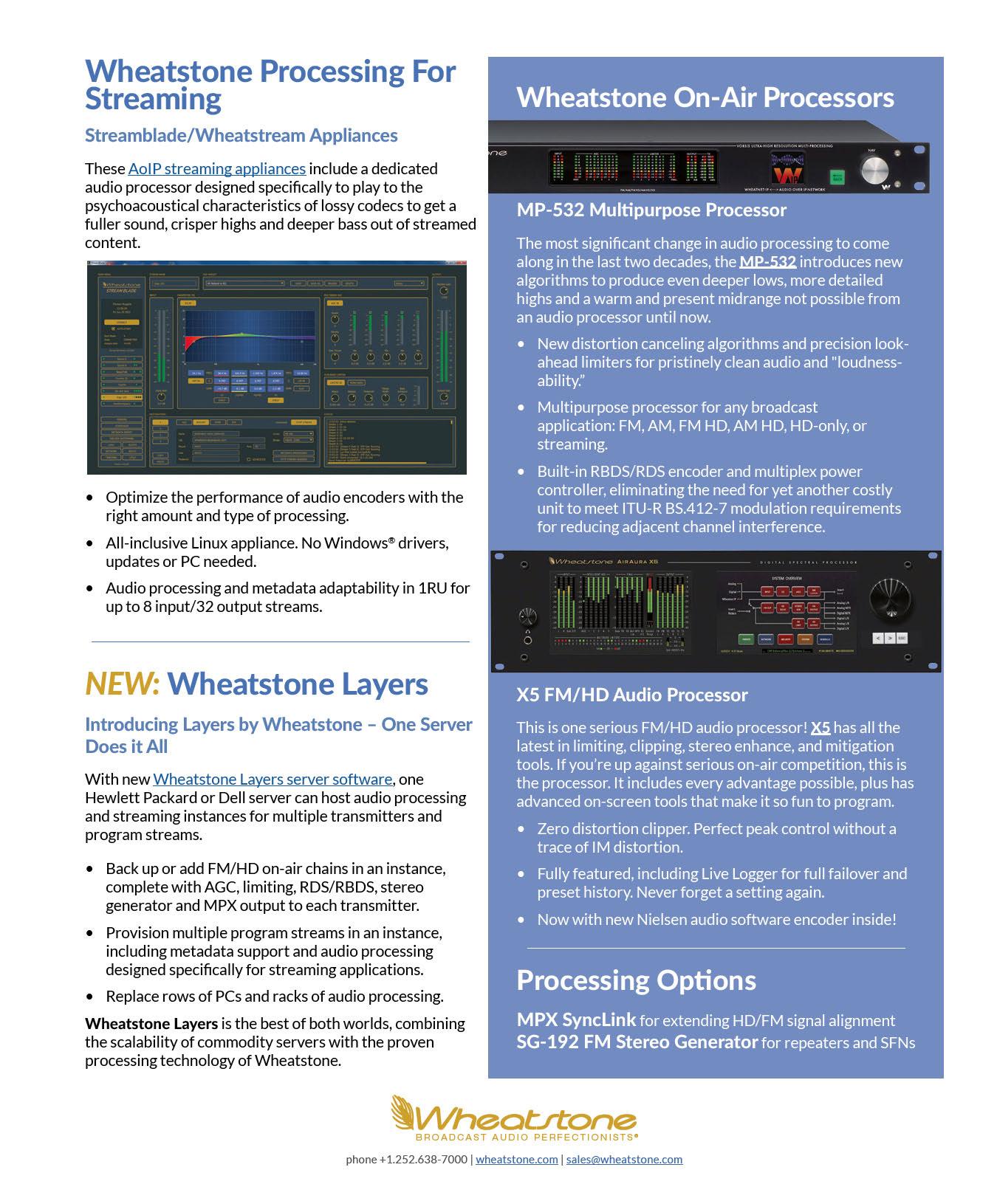
Below: Gary Kline at
show
mascot
Changes in facility design will affect processing
More stations will feed from one location using cloud, virtualized processing or MPX over IP
Gary Kline is a broadcast consultant seasoned in PPM optimization, audio processing, studio design, RF optimization, due diligence, cap-ex negotiations and budgeting. He also has expertise in telecom savings, cloudbased/hybrid workflows, podcasting and visual radio.
What is the most important trend in how processors are designed or used?
Gary Kline: Most processors are mature in their design. There are the occasional software updates, most of them incremental in terms of sound. Some are more about features; and then there are major updates for audio like G-Force for the Omnia.11.
I think MPX over IP is another more recent step, not in terms of audio, but in terms of letting us redesign the way we distribute audio — in many cases, more intelligently.
Also, the recent evolution to containers and cloud for some of the boxes is another step towards a refined modern facility, allowing us to run many instances of processing in an efficient manner. Again, not so much about audio quality, but about plant design and intelligent/efficient distribution of our public-facing products.
Having said that, it’s conceivable that a redesign using MPX over IP or high-density processing might improve the audio quality by the mere fact of replacing old STLs, analog gear or other transmission-path items that limit performance.
If loudness was a main goal in the past, what characterizes successful processing today?
Kline: Ensuring that the target demos are reached and that time spent listening is maximized.
Loudness matters too, but more than loudness, stations want ratings improvement. If not ratings, then quality of audio and — this is important — quality of RF.
Do they want quality of audio so bad that the loudness is way low? No. But it is a balancing act whereby business goals are weighed heavily. Processing is a tool, not a game to see who can outdo the other.
There are exceptions. I could name some domestic and international markets where there are a few loudness wars.
a trade
with the
of exhibitor Benztown. 8 radioworld.com | September 2022 Trends in Audio Processing 2022
What other distribution channels require audio processing attention today?
Kline: Obviously, streaming is a big one. In fact, I would offer that many streams are not processed very well.
Don’t get me wrong, there are many very nice-sounding streams out there. But I do find several stations using old leftover boxes that are not competitive or set properly for streaming. Streaming processing does not require 75 μs (or 50 μs) emphasis or the same amount of clipping we use on FM.
I think stations should be looking at their video feeds, if they have any. Does your visual radio audio feed to YouTube or Facebook sound proper on a laptop or 55inch LCD? DAB and HD Radio are over-the-air but they can also be overlooked in terms of top-notch processing adjustments or hardware/software.
How will the cloud, virtualization and SaaS affect the processing marketplace?
Kline: It will ultimately change how we design facilities in the future. But this will be, in my opinion, part of a larger cloud computing and virtualization design.
The entire studio operation needs to be evaluated in terms of virtualization from microphone to speaker, and this includes processing. We are already seeing, and I think we will see more over time, stations feeding their transmitters from a central location using the cloud, highdensity virtualized processing and/or MPX over IP. I’m seeing this more in Europe and internationally, but I do know of folks in the USA doing it too.
The problem right now is that not everyone understands all of the different technologies and how to use them together. Several manufacturers have prepared online courses to help with this.
What challenges or issues do cloud-based program material sources present?
Kline: Audio quality in some instances. That’s because some cloud solutions use reduced-quality algorithms to reduce the bandwidth needed to send the audio across the public internet. Are these reductions noticeable? Depends on the algorithm and how many times this is being done in the chain.
What’s being done to handle FM stereo multipath distortion and reduce clipping distortion in source material?
Kline: Not enough. I find too many stations have many MP3 files or otherwise compromised source material. It’s not OK, and it is a common problem. I’ve lost count of the number of stations I have consulted and advised replacing hundreds of cuts before we finalized the processing. It makes a huge difference in quality and against the competition.
What did the pandemic experience teach us about audio processing?
Kline: Your streaming audio quality matters a lot. And your sonic signature on Alexa, Google and other smart speakers matters too. Including your mono (summed stereo audio).
What tools are available to mitigate issues involving synchronization of HD Radio and analog signals?
Kline: I think we are past that now. Several transmitters can do this internally, sync your levels and timing. And if not, products like the Inovonics Justin 808 or Belar FMHD-1 can do it for you. Nautel has some interesting solutions of their own that you can find online. Often, when I find an HD station that’s not synched, it is an engineering problem, not a lack of proper equipment. Not in 2022.
Do you have a philosophy for processing?
Kline: I come into each situation with an open mind, and I consider each project to be unique. I weigh the specific format, current sound of the station, market ballistics — the sound of the market including direct competitors — station input and personal input from myself, then decide what to do next.
Processing is way more than twisting knobs or playing with software. That’s almost the last thing I do after a complete analysis. In some cases, nothing needs to change — and you need to be prepared to accept that too.
I put great emphasis on the goals of the station, with input from the PD, OM and perhaps the GM. There are ratings, target demos, audience sharing and overall signature sound to consider. In some smaller markets, it’s not necessarily about ratings, it’s more about the sound and perceived dominance of the station.
What else should we know about processing for radio?
Kline: Analyze each situation carefully. Spend time with the stakeholders to establish their goals. And if their goals don’t make sense, discuss that before touching anything.
Don’t forget to look at the entire air chain. Often, there are problems with the audio before it ever hits the input terminals of the processor. Audio signatures matter. Develop your own.
“Streaming processing does not require 75 μs (or 50 μs) emphasis or the same amount of clipping we use on FM. ” 9 Trends in Audio Processing 2022 radioworld.com | September 2022
Foti: Broadcasters are reimagining their operating landscape
Frank Foti is the founder of Omnia Audio and executive chairman of the board of Telos Alliance. He is a past recipient of the NAB Radio Engineering Achievement Award.
How would you describe your processing philosophy?
Frank Foti: My processing philosophy grew from experiences at a few well-known radio stations: WMMS(FM), Cleveland, and WHTZ(FM) (Z-100) in New York City. While those stations hailed from the album rock and CHR formats, the goal was to achieve quality audio, along with a competitive sonic advantage.
Normally those two postures are like mixing oil and water. But they are attainable given the right tools. The framework for our processing products grew out of the engineering shops of those stations, and mainly Z-100. Crafting processing algorithms that yield both fidelity and competitive loudness grew out of the technical contributions to those highly successful stations.
While these concepts were born in up-tempo formats, they easily transpose to any format. Reason being, if it’s possible to create a processing signature for a contemporary format, then it’s very easy to establish exceptional processing with less aggressive formats, as the processing is generally set less aggressive. We’ve proven this many times over by the number of classical and fine arts stations that have chosen our processors.
How will the concepts of the cloud, virtualization and software as a service affect the processing marketplace?
Foti: These concepts are now already in place within the broadcast infrastructure! Broadcasters have realized that to remain a viable financially productive business, they had to reimagine their operating landscape. Throw in the craziness of the pandemic, a few years ago, and what was thought to be a temporary mode of operation is more and more a reality.
Audio processing is just another part of the proverbial toolbox, enabling this effort. Now, a transmission signal can “auto-magically” appear just about anywhere, and the desired processing is factored into the path, via the cloud, or a server farm. New processing product is easily uploaded, without the need for a hardware platform that
“Those who migrate to the cloud will be unleashed with virtually unlimited processing potential”
10 radioworld.com | September 2022 Trends in Audio Processing 2022
Trends in Audio Processing
must provide the needed horsepower for the chosen processing structure.
While hardware processors will remain, for those who desire that platform, those who migrate to the cloud will basically be unleashed with virtually unlimited processing potential. With software, the user will always be up to date with the latest technology, features and functionality. New processing concepts are implemented without any constraint, unlike those that exist in the hardware realm.
The broadcast ecosystem utilizing the cloud relegates what once were hardware items into instances of software. Signal processing becomes another element of this infrastructure. Even the manner of connectivity changes. Gone are physical links between studio and transmitter sites. Instead, utilizing a derivative of AoIP, it is possible to transport the FM MPX signal via IP.
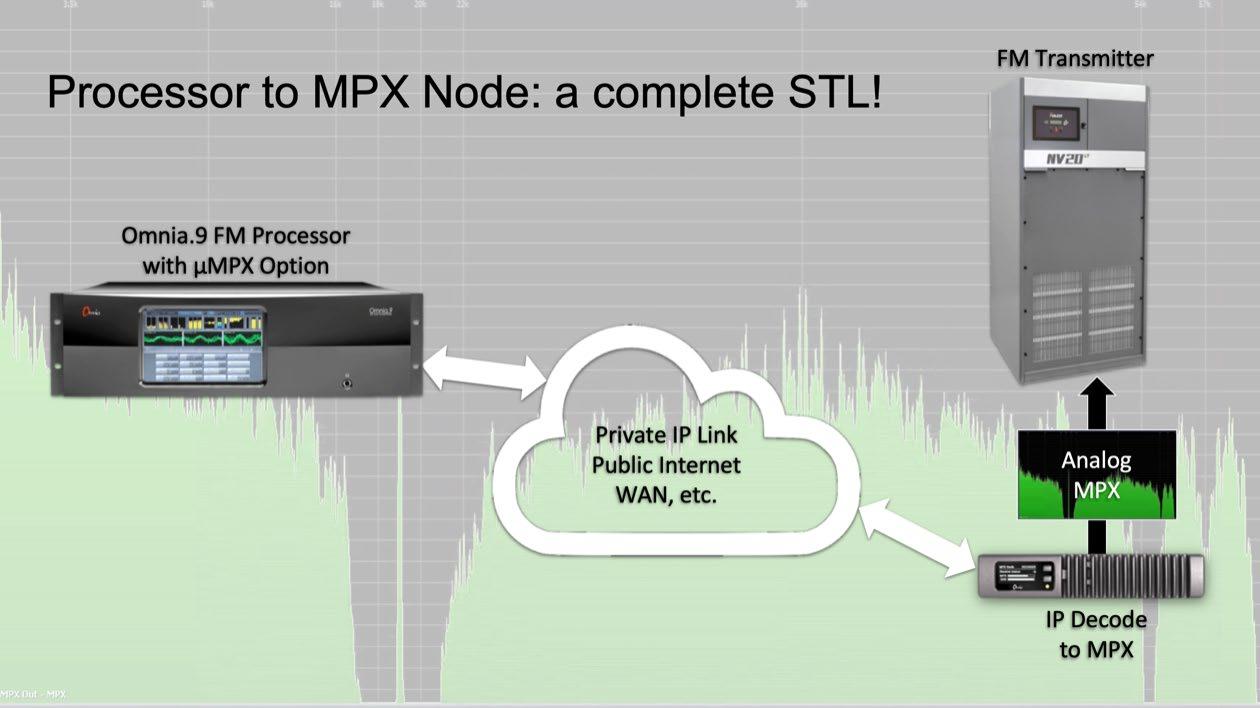
This opens up even more possibilities, as now the MPX signal is extremely flexible, portable and capable of being routed faithfully to multiple locations. All of this was not possible prior to the advancement of AoIP tech.
What’s being done to mitigate FM stereo multipath distortion and reduce clipping distortion in content?
Foti: For starters, FM stereo multipath is an RF issue. That said, there are factors by which audio processing can exaggerate multipath. New concepts or algorithms applied to processing of the FM stereo multiplex signal have the
ability to reduce any negative effect audio processing might contribute to the exaggeration of multipath.
As far as reducing clipping distortion, there has been significant progress in this area in recent years. We now have final limiter algorithms that monitor and measure distortion, which enables the algorithm to modify itself, in a manner that reduces, and in some cases eliminates, processing-induced distortion.
What best practices should stations know about when processing for streaming?
Foti: It goes without saying, but it’s imperative to employ the proper style of processor for the intended medium. Processors designed for AM/FM over-the-air applications contain specific functions that relate for AM/FM signals. The same is true for streaming. Since audio is transported in a data-reduced mode, the processor must be able to condition the signal for whatever style of encoding is utilized.
With respect to streaming, there is a wonderful advantage that over-the-air transmissions do not have: the ability to stream surround sound. We offer a streaming encoder that contains an UpMixing algorithm, which transposes stereo into discrete 5.1 surround. Applying MPEG surround to this signal allows the stream to be sent that supports both stereo and surround. All native streaming players today are capable of reproducing 5.1 surround, whenever an MPEG surround signal is present.
Above: "Utilizing a derivative of AoIP, it is possible to transport the FM MPX signal via IP," Foti said.
11
2022 radioworld.com | September 2022
Audio processing weather report
Partly cloudy today, mostly cloudy tomorrow Writer
It’s impossible to accurately forecast the weather, let alone the future of audio processing. But we can say with certainty that the future of processing for onair and streaming will involve servers, software and maybe even a cloud or two.
We’re seeing this major shift because of a few advancements in enterprise technology.
and metadata for multiple streams out to a CDN provider.
This, combined with increased connectivity and the availability of ever-greater bandwidth, offer increasingly attractive options for broadcasters consolidating operations. And not only in the geographical sense, but also with regard to cloud-based systems, whether said system is a giant server farm run by a large broadcast group, or true cloud-based systems running well off-site on third-party entities such as Amazon Web Services and others.
Jeff Keith CPBE, NCE Wheatstone Corp.
We used to rely on DSPs, dedicated silicon designed just to do math very quickly. And while DSPs were, and still are, useful for mixing and processing audio, Moore’s Law has further increased the power of generic CPUs. The continuous evolution of CPUs, especially server-grade CPUs, has made it possible to move audio and streaming functions into a server rather than having a dedicated DSP doing the work.
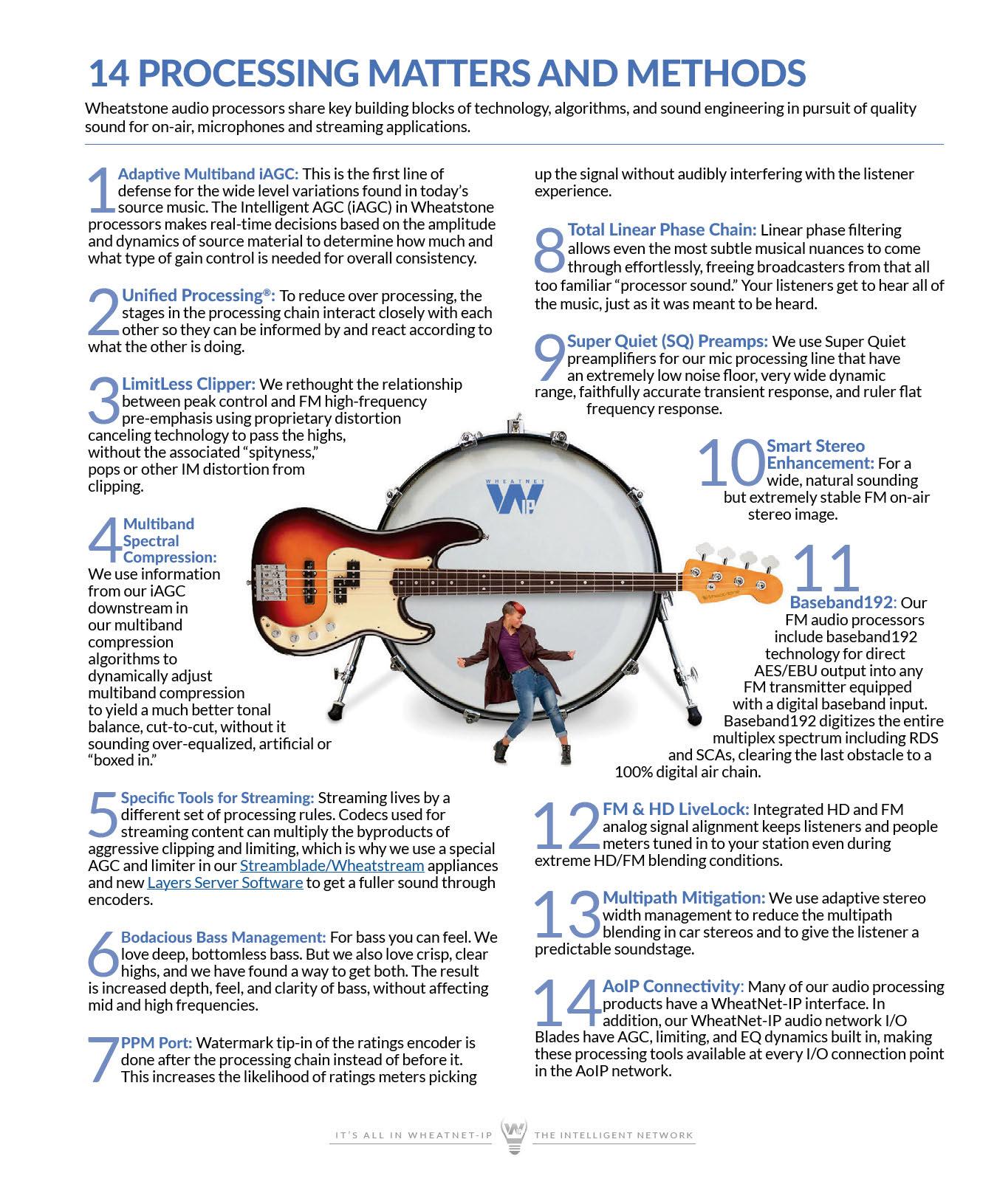
It just so happens that audio processing designed to run in DSP can now live in software and be easily ported to run on commodity servers, as is the case with our Layers software suite. For example, the algorithms for our Wheatstone audio processors running on DSPs in our hardware processing, once ported to Linux, can run just as readily on a Dell or Hewlett-Packard server.
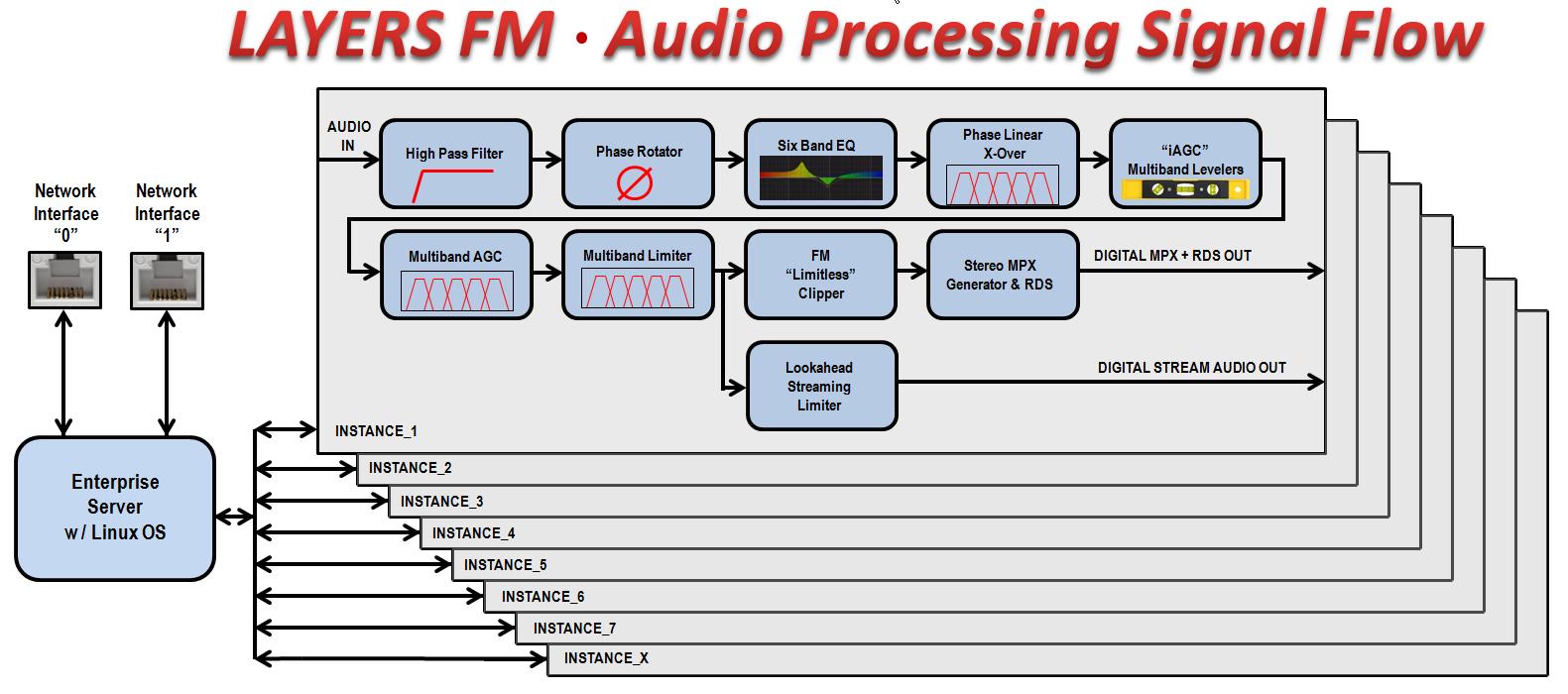
A standard Dell or Hewlett-Packard server can now do all those things we relied on a purpose-built audio processor to do. The difference is that just one server can run multiple Layers FM audio processing instances, all with full MPX to the transmitter, and at the same time send provisioning
Porting what were once dedicated hardware-based products such as standalone audio processors to software instances or apps that can run virtually anywhere gives us almost unlimited capability and availability … you can essentially run multiple instances of on-air processing for several transmitter sites from one host server, all running side by side, in real time, further lowering the cost of facility consolidation.
Consolidating functions
Think of this new capability in terms of "layers" consisting of kinds of equipment in the broadcast operation. Studios have mixers; the rack room has processors for streaming, on-air and ancillary uses; and codecs are assigned to various uses. And don't forget specialized gear like watermarking for ratings measurement.
This “layering” of broadcast requirements, all working together and in concert to create the on-air listener experience, is, in fact, why we named our server software suite Layers — for consolidating these functions.
In our case, we’re layering in audio mixing, processing, codecs, watermarking, etc., and everything within the system capable of operating remotely from anywhere. The components of our layer system consist of software apps designed to run singularly or together on a dedicated
14 radioworld.com | September 2022 Trends in Audio Processing 2022
server. These components run specifically on the Linux operating system so there’s none of the unexpected, usually destructive and infamous OS updates.
Adding a component to the system is as easy as starting another instance of whatever app might be needed. For example, adding a new streaming channel for the holiday season is just a matter of spinning that up on the server rather than commissioning it from a fixed hardware unit.
Another benefit is the ease of being able to use streamspecific AGC and limiting that minimize the effects of processing by the codec. It also allows us to more specifically apply on-air techniques that we might not have been able to spend the DSP cycles on in a purpose-built unit.
It also makes it much easier to adapt to new developments, such as adding Nielsen watermarking, something available in our Layers streaming on a licenseper-stream basis.
Best of all worlds
What you end up with, in the case of our Layers, is a fullfeatured FM+HD audio processor with all the bells and whistles of a top-of-the-line hardware box: multiband AGC and leveling, EQ, stereo width enhancement, advanced bass enhancement, FM stereo multiplex encoder and RDS.
The efficiency of CPUs also gave us more MIPS for running completely new algorithms for managing the behavior of the multiband gain stages, technology with
no resemblance to prior methods and which serves to minimize the audibility of processing while enhancing program dynamics and loudness.
A server for the purposes of audio processing, whether for backup or for feeding several transmitters, can be implemented today in a typical broadcast facility. This gives you the many benefits of “cloud” without risking everything on a cloud provider you have no control over, while using the same containerization methods and management you would use with a dedicated third-party provider.
When and if the time comes to offload processing to a third-party cloud provider, you’ll already have most of the server technology in place to do so.


“
It helps to think of this new capability in terms of ‘layers’ consisting of various kinds of equipment in the broadcast operation today.
” FREE SUBSCRIPTION For more than four decades, Radio World has been the leading news source for broadcast radio owners, managers, and engineers. It is the premier source for information on technology, timely news, equipment reviews, and industry events coverage To claim your FREE subscription, go to www.myrwmag.com 15 Trends in Audio Processing 2022
The listener should be drawn in and feel the music
Chris Tarr encourages radio stations to break old habits
Chris “Doc” Tarr is group director of engineering for Magnum Media. He has 22+ years of experience in full-time engineering and oversees the technical operations for 25 radio stations in Wisconsin.

What’s your on-air processing philosophy, Chris, how would you describe it?
Chris Tarr: “Less is more.”
Many people take an audio processor, crank all the knobs to the right and lock it down. It’s loud, but not “dramatic.” We’re one of the few industries that researches and refines a product, then purposely damages it before
handing it out. I think some of that is an outdated opinion that a loud wall of sound is how you win. If you eliminate all of the dynamic range of audio, the listener isn’t left with any audio cues that anything in a piece of music is important.
We want the listener to be drawn in and feel the music. We proudly put our name on our radio stations every hour because we feel that we have a quality product from beginning to end.
My co-worker Dave Magnum and the rest of our team really understand that our audio signature is part of that. We spend a lot of time and effort making sure that our entire audio chain is clean so that the audio that hits the processing is as pristine as possible.
16 Trends in Audio Processing 2022 radioworld.com | September 2022
If loudness was a main goal of on-air processing in years past, what do you think characterizes the on-air processing at most successful radio stations today?
Tarr: Controlled dynamic range. Quite simply, if everything is loud, nothing is loud. Even just a little dynamic range will put you ahead of pure loudness every time.
What’s the most important recent or pending change in how processors for radio broadcasting are designed or being use?
Tarr: People are starting to see that some of Glen Clark’s ideas with the Audio Prisms were really solid outside of just simply the multi-band design. We’re seeing more windowed AGCs and the ability to leave highly processed audio alone. That’s been a big one in my mind. A lot of the music coming from the labels already has a lot of processing, and basic processors fight that. Cornelius Gould and a few others have realized that we can use that to our advantage by having audio processors just “stand by” when that’s happening. For so many years our audio processing has had to fight with whatever processing was done before it. That’s great for loud, but not great for “big.”
What tools are available to mitigate the issues involving synchronization of HD Radio and analog signals?
Tarr: Inovonics makes a great unit, the Justin 808, that automatically time- and level-aligns analog and HD signals. Some of Wheatstone’s processors do the same. It’s also important to think about HD frequency response, especially when it comes to transitioning back and forth from HD to analog, and simply artifacts from reduced bit rates. Most digital audio will benefit from low-pass filtering when it comes to HD.
We read about how processing can mitigate FM stereo multipath distortion and reduce clipping distortion in source content. How can equipment buyers evaluate such claims?
Tarr: I use a Deva Radio Explorer 2 monitor that I can
use to travel the same areas over and over and measure multipath. It’s a great way to measure and evaluate those claims after getting a baseline reading.
Beyond over-the-air, what important distribution channels require audio processing attention?
Tarr: Streaming is still a big challenge for us as an industry. So often stations will just grab whatever old (or cheap) processing gear they have on the shelf and put that in line.
The quality of smart speakers these days is amazing. You really need to spend some time and money on processing to make your audio jump out of the speakers, without getting in the way. You need to have consistency from element to element so that you don’t have a barely audible song followed by something that blows out the speaker. There are a lot of tricks we use in the analog world, such as heavy clipping, that just don’t work in streaming. You can’t treat the streaming audio the same as on-air audio. The pure-play streaming groups get this.
Since broadcasters must prep content to make sure it serves listeners and advertisers on numerous platforms, what options are available for this task?
Tarr: My advice is to prep content by using very little “sweetening.” I tell our producers that our $12,000 processors do a better job than a $200 Waves plug-in when it comes to beefing up audio. We also need to educate producers on how processors work — generally they use addition by subtraction. If you add a lot of bass to a spot, the processor will fight that by increasing the gain reduction on that band, and it will start to sound muddy. Clean, unprocessed content is the best!
What else should we know about processing for radio?
Tarr: There are a lot of old habits that need to be broken. Now more than ever we need to treat our audio with kindness — we have an advantage over stream-only environments by having much higher resolution audio to work with. We can make it sound so much better.
“We’re one of the few industries that researches and refines a product, then purposely damages it before handing it out. ” 17 Trends in Audio Processing 2022 radioworld.com | September 2022
Radio-style streamers need good processing, too
Bob Orban is the cofounder and was for many years chief engineer of Orban Associates Inc. and its successors, up to today’s Orban Labs. Recipient of an MSEE degree from Stanford University, he holds 26 U.S. patents, received the 1995 NAB Radio Engineering Achievement Award, and shared (with Dolby Labs) a Scientific and Engineering Award from the Academy of Motion Picture Arts and Sciences.
Bob do you have a “processing philosophy”?
Bob Orban: There are two vital processing criteria for any format: First, processing must retain natural-sounding dynamic contours and microdynamics so that music sounds naturally “musical” and easy to listen to, even when dynamic range is substantially reduced; and second, processing must handle speech and music equally well while producing artistically pleasing loudness balances between them.
It is very tricky to get this right, involving the choice of signal processing topology and tuning hundreds of parameters. The payoff is likely to be longer time-spentlistening because the processing never calls negative attention to itself.
What’s the most important change in how processors for radio are designed?
Orban: There is a trend toward multiple processors on one platform, typically a PC running Windows or Linux, or in the cloud in a software container. This can be more economical than traditional “one box for one station” processors in markets where one operator owns multiple stations. However, there is still a role for traditional processors in the many stations still owned by independent operators.
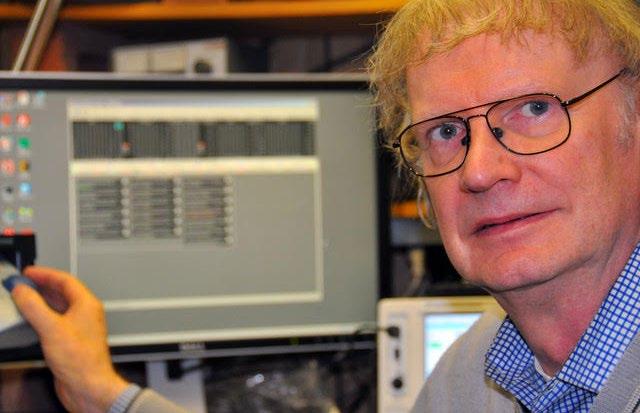
A conversation with Bob Orban 20 radioworld.com | September 2022 Trends in Audio Processing 2022
Trends in
What should we know about processing for other distribution channels?
Orban: Streaming — either podcast-style via on-demand file download or live — is an important application, as are DAB services.
It is possible to divide streaming into “jukebox”-style services (like Spotify) and radio-style services with DJs and other production values typical of traditional radio. The jukebox services can usually get by with static loudness normalization of each element following the recommendations in AES TD1008: “Recommendations for Loudness of Internet Audio Streaming and On-Demand Distribution” (2021), which I helped write. However, radiostyle services strongly benefit from audio processing to enforce consistency, to smooth transitions between program elements, and to maintain desirable speech/music balances.
It is like color correction in movies, taking a raw stream and molding it into a consistent, coherent presentation with show-biz polish.
What new features or capabilities in processors are most notable?
Orban: For us, our recently introduced XPN-AM processor is notable. It is the first Orban AM processor to use our MX peak limiter technology, which in XPN-AM is highly optimized for the unique requirements of AM and is aware of the audio bandwidth chosen by the station operator, with 3 kHz to 9.5 kHz (NRSC) available in 500 Hz steps. A 2006 NRSC study showed that listeners generally prefer 6–7 kHz audio bandwidth when listening to today’s typical AM radios.
XPN-AM’s design ensures speech intelligibility through radios whose audio frequency response is typically –3 dB at 2 kHz, lower than POTS telephone quality. Its MX limiter uses a psychoacoustic model to control limiter-induced distortion and sounds clean on a typical radio even when limiter gain reduction is frequently around 18 dB.
When XPN-AM is combined with a modern transmitter with digital input, ultra-tight modulation control and Dynamic Carrier Control, it is possible to cleanly and significantly increase the usable coverage area of a given station compared to older technologies while also cutting transmitter power bills. Who would have thought that the oldest of broadcast technologies was still capable of substantial improvement almost a century after the first AM broadcasts occurred?
What is being done to mitigate FM stereo multipath distortion and reduce clipping distortion in source content?
Orban: These are really two separate questions.
High-end Orban FM processors include our “Multipath Mitigator” phase corrector, which removes phase differences between elements common to the left and right channels, converting the audio to “intensity stereo” without compromising stereo separation. Phase differences introduce excess L–R energy, which, because it is encoded
in the stereo subcarrier, is most vulnerable to multipath distortion. Removing phase differences minimizes L–R energy while still preserving the artistic intent of the mix.
As for clipping distortion in source content, for two reasons it is usually impossible to “de-clip” source material reliably.
First, a flat-top waveform has an infinite “compression ratio,” so it is impossible with typical program material to deduce what the waveform was before clipping. Therefore, a de-clipper must make guesses based on interpolating the material surrounding the clipped area. This is a highly nonlinear process, and an incorrect guess can actually add audible distortion to the original waveform instead of cancelling it.
Second, many waveforms that appear as if they might have been clipped were actually created by peak limiters that include gain reduction computation with attack and release times and possibly other, even more complex processing (as in our MX limiter). These sidechain algorithms are typically proprietary to the limiter manufacturer/ developer, and a de-clipper cannot know how to undo this limiting. In the MX limiter example, limiter-induced distortion is tightly controlled by the psychoacoustic model, and any attempt to undo this limiting is certain to add distortion, not remove it. Therefore, the place for a declipper is in the production studio, where human ears can assess whether it is doing harm or good.
To deal with distorted input material, our 8700i includes the Xponential Loudness processor. This does not try to declip the input but instead applies psychoacoustic processing to minimize the clipping distortion’s perceived impact.
What best practices should stations know about when processing for streaming? Orban: The best low-bitrate codecs today use Spectral Band Replication to encode high frequencies. This is a lowresolution process compared to the audio below the SBR crossover frequency, so processors should not exaggerate high frequencies and/or make them more dense than the input audio because this is likely to exaggerate any SBR artifacts. Below the SBR crossover frequency, these codecs use AAC coding. AAC is a high-quality process, so users can adjust the processor more freely at lower frequencies to achieve their artistic goals.
With content originating from so many locations, what role do loudness and LRA (loudness range) play?
Orban: Loudness control is important, and many Orban processors already include a BS.1770 loudness meter. LRA mostly tells you how useful a BS.1770 loudness measurement is for loudness normalization. Normalizing the integrated loudness of material having a high LRA may lead to disappointing results, which is one reason why the new AES TD-1008 recommendation suggests normalizing based on the speech parts of a program when practical.
21
Audio Processing 2022 radioworld.com | September 2022
Engineer for the entire air chain
Daniel Hyatt says it’s important to adopt a holistic mindset
Daniel Hyatt is a studio, RF and processing consultant and principal of DNAV Inc. He has 22 years of experience solving complex technical challenges for broadcasters in all market sizes.

What is your approach or philosophy for audio processing?
Daniel Hyatt: Establishing bullet points of criteria for success is the way I set a baseline for adjustments.
Processing and programming go hand in hand. An open discussion to understand the goals of the station and target audience is the first step. A deeper dive into past success and challenges forms a foundation where technological advances can be compared on a conceptual level. This step leads to established goals.
Processing is more than turning knobs, it’s engineering an air chain to pass audio fromt ingestion to transmission with the least amount of modification possible. Armed with the history of the audio and defined needs, I spend time to resolve physical and virtual air chain issues that may arise before the audio arrives at the processor. Sample rate conversion, gain structure, distribution and STL systems must all be analyzed before the processing is adjusted.
With a clean audio bill of health, I invest the gleaned history of the station and goals of programming to suggest a processor that meets the needs to find a winning solution. Careful listening, consulting with stakeholders and sharing the process of finding the “Midas Touch” with engineering for an individual station is the culmination of each step in my audio process.
What features or capabilities would you like manufacturers to add to their offerings?
Hyatt: An HTML-based web interface for all products should be at the top of the development list. This feature is vital for ease of access and monitoring.
Real estate in a rack is valuable, leading the demand for all-in-one hardware solutions that offer a radio station the ability to handle analog, HD, web and confidence paths simultaneously.
What do you think is the most important recent change or trend in this area?
Hyatt: The ability to embed ratings watermarks as part of the audio process is the most significant advancement for all PPM markets. Removing outboard encoding boxes and third-party watermark enhancers while delivering reliable decode probability increases ratings, maintains audio clarity and simplifies the air chain.
What recently introduced new features or capabilities in processors are most notable?
Hyatt: We’re an Orban dealer. The XPN-AM is the most significant advancement for AM signal and audio I’ve ever experienced. The ability of the processor to fill the entire signal envelope with energy fills nearly every multipath and fade issue within a licensed contour. The noise floor is remarkably quiet which provides the listener with an FMlike experience. The box is loud and clean.
Loudness was a big goal of processing in the past. What characterizes the on-air processing at successful stations today?
Hyatt: Radio’s competition exists beyond the offerings of the local broadcast market. Listeners frequently jump between streaming, OTA and podcast mediums. Maintaining an audio signature that minimizes ear fatigue to maximize TSL while remaining transparent in quality, compared to streaming sources, puts a station on equal footing to earn a position on the dashboard as a top choice for a listener.
What else should we know?
Hyatt: Analyzing processing from both a listener and a technical assurance perspective is vital to success. Proper watermarking and a non-destructive approach to handling audio files assure that a station receives proper credit for listenership. However, delivering a quality audio product that has minimal fatigue and a signature sound, and is competitive with the listening experience of other digital mediums, greatly impacts TSL and cume. Always consider new innovation as reinforcement for success. Most importantly, don’t be afraid to test drive new products or ask an expert for insight.
22 radioworld.com | September 2022 Trends in Audio Processing 2022
Trends in Audio
Your stream is a destination
You can have a signature sound but it should be customized for the delivery medium
Writer
Anybody can stream audio, but not everybody can make a stream sound good (let alone special).
The stream has become a destination. No longer are listeners scanning and looking for the loudest audio to punch them in the ears.
One person told me that because it is digital, phase doesn’t matter. He is wrong. Phase always matters.
Always trust your ears on how the audio sounds on your trusted device. So when setting up your audio processor, please check the audio for stereo playback and mono compatibility.
David Bialik
The author is a consultant and former director of stream operations for CBS Radio and Entercom.

The stream of a radio station does not have to sound exactly like the over-the-air broadcast. One must accept some facts:
• A stream has different parameters than a broadcast.
• FM pre-emphasis does not need to be on a stream.
• Your audience playback device varies considerably.
In the 1960s and 1970s, radio broadcasters learned that AM and FM stations should not be processed the same way, since they are different. Now the broadcaster needs to learn that the stream is another form of content delivery.
Why take your FM audio and just encode it for the stream? Do you really need to stream the audio with FM pre-emphasis? Why stream the 19 kHz pilot? Why process the audio the same way?
Yes, there is the argument of a signature sound, but it should be customized for the delivery medium.
A stream can be played back many ways. It can be played back by computer, mobile device, smart speaker or an internet radio. All must be considered.
Also, many people set up the stream for stereo playback and do not check how it sounds in mono. Guess what, many are listening on a smart speaker that is one speaker — yes, it is mono! It is quite upsetting when a stream plays an early Beatles recording and suddenly it is missing the vocals.
Some of your audience may be listening on a PC, mobile device (their phone), smart speakers or internet radios (stereo or mono). Some may be listening with the speakers or headphone.
Many music streamers are not looking at audio phase.
Now that I have done my rant, let’s talk audio processing.
• First rule: Know what sounds good.
• Second rule: Believe your ears.
• Third rule: Trust your ears.
When setting up audio processing, use a familiar listening environment. Know your speakers and headphones. Try to use audio that you know and is appropriate for the format.
Usually I will use a female artist because of the vocal range. I use Linda Ronstadt because the recordings are excellent, her vocal range is huge and her catalog covers many genres.
I like to set my audio to a flat audio signal first, bypassing all limiters, compressors, expanders, levelers and equalizers. You must know your starting point.
Once you have played your cut, trust your ears and note what is missing. Is there punch? Are the vocals clear and understandable? Do you hear all the instruments and do they sound like they should? If the artist has an oboe in the recording make sure that it is audible.
At this point you may want to add more to the midrange to over-emphasize the vocal and give it punch! You may find that the highs or lows are not audible, so you may need to tweak that.
Once you have tested multiple cuts and have the music where you want it, you may need to set up a separate mic processor for the announcers or see how the microphone pre-amp or mic settings are.
But please remember that your stream is a destination. Make sure the audio sounds good — on your trusted devices, with the ears that you trust.
“
It is quite upsetting when a stream plays an early Beatles recording and suddenly it is missing the vocals. ”
23
Processing 2022 radioworld.com | September 2022
Young listeners know what audio should sound like
Cornelius Gould says when streaming, heavy processing and distortion just won’t fly
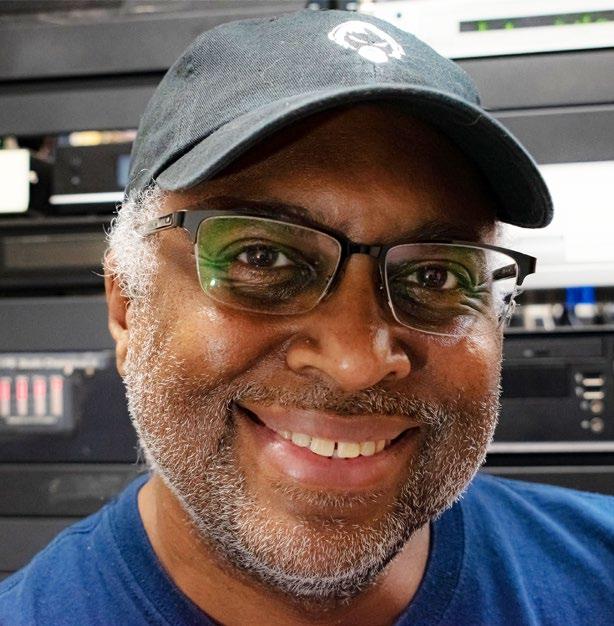
Cornelius Gould has been developing audio processors for decades. Known for his work on the Omnia.11, he is now the audio processing architect for Angry Audio and the mind behind Chameleon, its approach to processing for studios and streams.
Corny, what’s your processing philosophy?
Cornelius Gould: While many know me from my broadcast over-the-air processing work, my real passion has always lay in audio processing for digital and new media transmission. Dynamics processing is my thing.
I’m all about well-controlled audio while maintaining the natural dynamics of music or speech as much as possible. While many like to “feel” and “hear” impact in terms of a high RMS content, where background audio is just as loud as foreground, I like to have a sense of depth to the audio. Impact comes in the form of the natural rhythm of the music and from percussive elements in the mix. I like vocals to pop forward in the mix when engineered in such a way. I also like announcer voices to “pop” equally in the mix of programming elements on the station or service of interest.
What recently introduced features or capabilities in processors are notable?
Gould: I’m all about audio processors with “intelligence” behind them. So when you can do that, you have my attention! From my point of view, there hasn’t been a whole lot that’s truly new in the audio processing space aside from things like The Perfect Declipper. Most are just rearranging the chairs on the same ship and calling it new!
How will the cloud, virtualization and software as a service affect processing?
Gould: This space is all very new, and lots of innovative ideas are brewing around. It will have a huge impact in ways we haven’t thought of just yet. That makes it an exciting place to be.
Right now, we’re all trying to figure out using the cloud to do things we’ve always done, using the cloud instead of some local device. New technologies typically kind of start that way. Just like when new
media emerged in the early days of what the old timers used to call the World Wide Web. New media began by imitating broadcast-style linear programming.
Look at what we have now. You can watch and listen to anything you want, when you want it, the way you want it. As a result, streaming and file-based media have become a huge disruption in the traditional “linear programming” space.
I think the cloud will be like this, and once we stumble on how best to use it, the way we “broadcast” will not look anything like today.
What best practices should stations know about when processing for streaming?
Gould: Be aware that younger listeners in your audience know what music is supposed to sound like. As loudness standards are adopted in the streaming space, any ambitions of “loudness wars” will eventually become tempered. Focusing on good quality audio to make it sound its best through coding is paramount.
It’s OK to process audio for consistency. I think younger listeners will appreciate it, but heavy amounts of audio processing and distortion just won’t fly. I’ve witnessed younger listeners being turned off by the sound of radio. Everything sounds “weird” or “wrong” to them.
My teenage son calls it “the sound of old people” audio. If you want to survive in the new media age, whatever you do, drop the sound of “old people audio.” He considers linear audio to sound “better than Spotify,” but a typical radio station to him sounds waaay worse than Spotify. Most people can’t articulate these thoughts this clearly, but many just find that radio just sounds weird, or bad, compared when to their streaming services.
Use audio processing to add consistency and subtle enhancement while streaming. Don’t trash your audio just to try to sound louder.
What role will loudness play? And will future audio processors have monitoring capability for both on-air and streams?
Gould: I hope so, but, sadly, my fear is that too many stations will use it to “pin” the loudness meters to the limit. These loudness monitoring tools are very powerful, if you use them to be “loud enough” with an emphasis on quality and natural-sounding audio.
26 radioworld.com | September 2022 Trends in Audio Processing 2022
Ornellas advocates for consistency across platforms
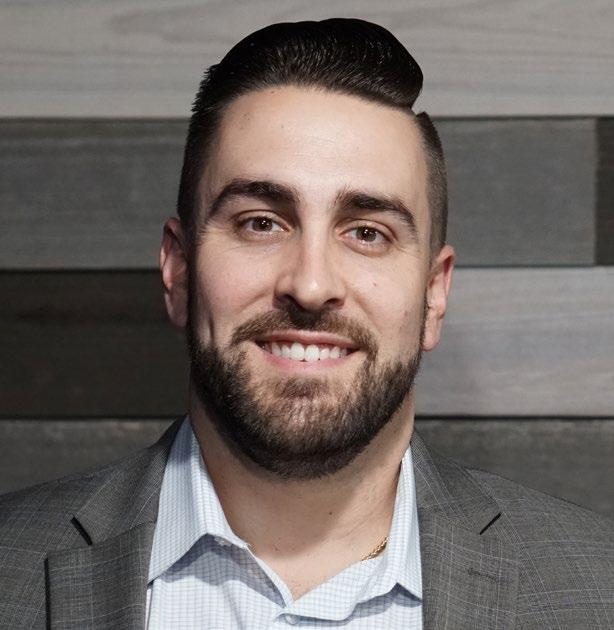
Jason Ornellas is regional director of technology for Bonneville International Corp., West Coast. He is a recipient of the Radio World Excellence in Engineering Award and treasurer of the Society of Broadcast Engineers.
We’re asking engineers and manufacturers if they have a processing philosophy.
Jason Ornellas: My philosophy is to keep things simple to start before really diving in and fine tuning. Processing is an art, it’s subjective and takes time to adjust as you look for that sweet spot while listening to different receivers and formats.
I have a “safe” base I feel I can start with any format and can adjust my liking prior to putting it on air. From there, I tend to stay away from the “loud” standpoint and focus on being the bright, clean, open format while maintaining that loudness factor for our programming folks.
What distribution channels require our attention for audio processing beyond the over-the-air signal, and how does processing for them differ from OTA?
Ornellas: I don’t think processing should be different between OTA and other distribution channels for a station or format. I think the goal nowadays is the processing or sound needs to be consistent across all platforms that your content is touching. Processing is your station’s final handoff to the consumer, and you want that to be consistency weather it’s in the office, car or mobile.
In 2022 and beyond, streaming needs to sound just as good or better than OTA and can no longer take a back seat when it comes to processing.
What features or capabilities would you like processing manufacturers to do or to add to their offerings?
Ornellas: The feature that I would love is to fix the source material we get! If they can solve that, I’ll be a happy person and I’m sure every other engineer would too.
I do truly believe we are in really good hands with the manufacturers around, that they are pushing the limits
with innovation and embedding more resources within the processors with PPM, RDS, diversity delay, streaming options, dynamics, failover, etc. It’s a beautiful thing nowadays that anything can truly be done with code and software and less hardware!
On that topic, how will the cloud and virtualization affect the processing marketplace?
Ornellas: The cool thing is that we can do so much with software, it’s kind of endless. With VMs, cloud computing and virtualization of workflows, software processing is easily accessible and fits in perfectly with modern-day airchains. I see more manufacturers offering a softwareonly package of their processing that we as consumers and clients can install on our own hardware and fold into our ecosystems. The true brains of the processing is code and backend and less hardware-specific.
If loudness was a main goal of on-air processing in years past, what do you think characterizes the on-air processing at most successful stations today? Ornellas: Loudness is still a factor but should never be the focus of the sound of your station’s characteristics. I think a wide-open sound with full dynamic range embraces a listener experience more. You've got to allow for the headroom of songs to “breathe” so you avoid fatigue and distortion. I think, or at least hope, that listeners, clients and consumers want to have a rich, clean and warm sound for our audio content, and that is our main goal. We need to stress the importance of cleanliness in our sound so we can hear every instrument and vocal clearly.
What do you think the future holds for processing’s place in future air chains? Ornellas: That path has already started with next-gen architecture of less hardware and more software. I see more collaboration between products with X software combined in Y’s hardware to eliminate multiple pieces of equipment. Processing is still the signature of your audio’s brand and can’t take a backseat. It’s the final distribution touch of your brand or content that you have to give your audience a great experience. I see it evolving greatly and expanding, where it does multiple stations or formats from a single point before it gets distributed from the cloud to the consumer via IP or OTA.
Streaming can no longer take a back seat in processing 27 Trends in Audio Processing 2022 radioworld.com | September 2022
Keep your processing in the studio or in the cloud
Hans van Zutphen on the benefits of the MicroMPX approach
H ans van Zutphen is the creator of Stereo Tool and founder/owner of Thimeo Audio Technology, which offers audio software and hardware for the broadcast market such as the MicroMPX codec.

We’re asking each of our respondents to describe their “processing philosophy.” What’s yours?
Hans van Zutphen: In short: To process audio with respect for the artist’s intentions.
We try to bring out all the details in the mix, while cleaning up artifacts that artists probably didn’t want, such as digital clipping distortion, noise and lacking bass and highs for older recordings.
Our software is as flexible as possible. Users can decide to create a very different sound, but all of our processing algorithms are powerful enough to create what I just described.
What recently introduced features or capabilities are most notable?
Van Zutphen: Declipping and other repair options — noise reduction, removal of noise from cables or fans, improvement of the quality of MP3 source files. And the integration of MicroMPX in many processors. It’s currently available in all of our FM processors, but also in some processors from Omnia and Orban.
MicroMPX is a codec that we created to send the full composite MPX spectrum, including pilot and RDS, from a studio to transmitter sites at lower bitrates, starting from 320 kilobits per second. This makes it possible to keep your processing in the studio or in the cloud, without losing audio quality, loudness or reception quality. All you need at the transmitter site is a simple decoder (and a transmitter).
How will the cloud, virtualization and software as a service change things?
Van Zutphen: We have been selling software-based audio processing since 2008, so for us, it doesn’t really
change much.
But we see two big movements in the market.
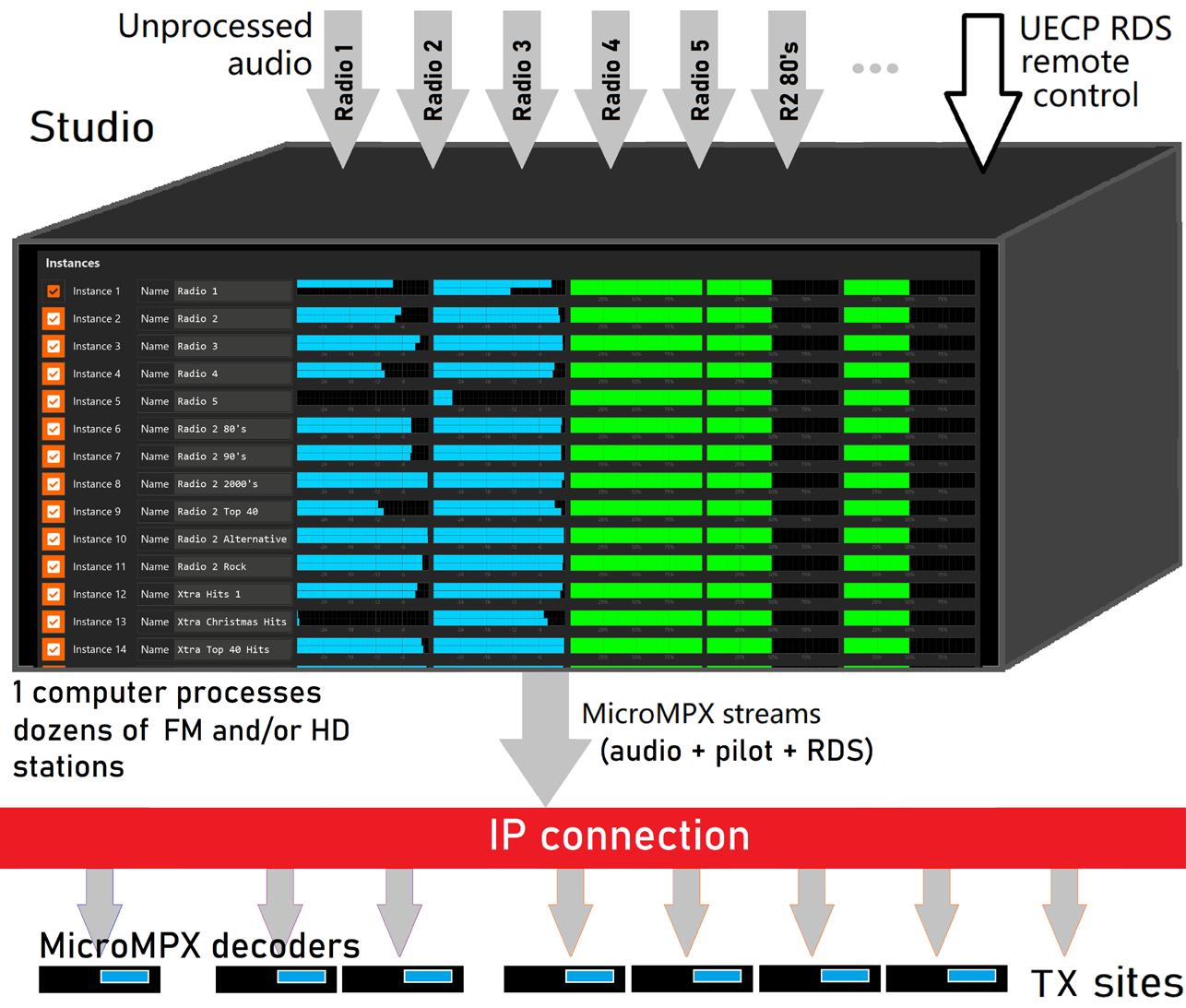
First, larger radio groups are running dozens of “sister” stations with specific content. For example they might have a popular FM station that plays a mix of music, then have streams that only play ‘70s, ‘80s, ‘90’s, 2000s, current hits, summer hits, Christmas songs all year long, and even music selected to have a specific BPM range — for people who are running, for example.
Until about 15 years ago you would have needed a lot of expensive equipment — and space — for this. Today you can run the playout, processing and streaming of dozens of stations on a single computer, with software that is very cheap compared to the hardware you used to need. With competition from the likes of Spotify, it makes a lot of sense to do this.
We also see more and more online stations that are run without spending a lot of money or requiring much knowledge. The people behind them basically “rent” the infrastucture required, paying on a per-month basis. Even many smaller, non-stop FM stations are moving in the same direction. All they need in actual hardware are a MicroMPX decoder and an FM transmitter.
What’s being done to help avoid FM stereo multipath distortion and reduce clipping distortion in source material?
Van Zutphen: We have created our Declipper, which recreates clipped samples. It not only removes nearly all the clipping distortion in source content, but recreates the dynamics that were lost due to clipping. Even rather extreme clipping can often be repaired to the point where it’s impossible to hear that it was ever there (if nothing has happened after the clipping — encoding using a lossy codec, resampling or D/A-A/D conversions make declipping less accurate).
Our composite clipper clips the MPX signal after adding the pilot and RDS. This has major benefits. The resulting audio is 2 to 3 dB louder than with traditional clippers, it sounds more dynamic and cleaner while at the same time having more stereo. Composite clipping has an extra, lesser-known perk: When you treat the full signal, you can see exactly what will be going to the transmitter.
So our clipper contains a virtual exciter and spectrum analyzer that measures the resulting RF bandwidth. This
28 radioworld.com | September 2022 Trends in Audio Processing 2022
allows us to adjust the signal to limit the RF bandwidth, with nearly no effect on stereo separation. It acts very briefly, and only when necessary. We also keep the area around the stereo pilot very clean, with more than 100 dB pilot protection.
This combination doesn’t just improve reception in areas with multipath. We’ve heard from many stations that when they switched to one of our processors, their stereo reception area increased by as much as 50 kilometers, about 30 miles.
This is the main reason we created MicroMPX: Stations that were sending left/right processed audio to their transmitters were losing all these benefits.
If a receiver does blend to mono, some recordings lose a lot of loudness when they have instruments in nearantiphase. We can control the maximum phase difference between left and right audio, which reduces this effect. It actually tends to make the stereo audio sound nicer as well.
What best practices should stations know about for streaming?
Van Zutphen: When streaming at lower bitrates — and this also applies to HD — be sure to make the audio as clean as possible. Most codecs encode the frequencies that are present in the spectrum, and the more frequencies there are, the more information is needed to describe the signal, and hence the more compression artifacts you’ll get. Cleaner audio is easier for a lossy codec to encode, reducing compression artifacts. Having very dynamic audio also tends to hide or mask artifacts better. So don’t use the FM output — clipped, usually with at least some clipping distortion and not very dynamic — as a source for streaming or HD.
Clipping distortion can be a major source of codec artifacts. Declipping the audio makes it a lot cleaner and more dynamic, and can hence greatly reduce codec artifacts.
If loudness was a key goal in years past, what characterizes the processing at most successful radio stations today?
Van Zutphen: If you switch from a stream or Spotify to an FM station, for example on a car radio, in many cases you’ll immediately notice a huge reduction in the quality and amount of highs. FM stations have traditionally been pushing for maximum loudness, at the cost of audio quality, and that affects the high frequencies the most. With internet access becoming ubiquitous, this pushes listeners who can choose between both away from FM. Since perception of highs reduces with age, this will affect younger listeners most.
If you ask me, the goal of audio processing should always be to make things sound better. If you turn the processing on and off to compare, you should in the vast majority of cases prefer the processed audio over the original. If you don’t, something is wrong. That is not suddenly invalid because you’re broadcasting on FM, or because there is a
“
“radio sound” that people are used to.
I’m not saying you shouldn’t create a very recognizable and notable sound; by all means, do that. Just make sure that your sound doesn’t sound like something is broken if you switch over from a different audio source.
In most cases you will need to sacrifice some loudness to get better highs. Since FM is a noisy medium, there will always be some compromise between loudness and quality, but it’s an asymptotic curve: At some point you don’t even add any loudness anymore, you just make it sound worse. There are tricks that you can use to partially circumvent this. As I mentioned, composite clipping will give you 2 to 3 dBs of extra loudness with the same audio quality, and most of it will end up in the high frequencies, so the effect on the highs is even bigger. But my advice is to use those extra dBs of headroom to sound better, not to sound louder.
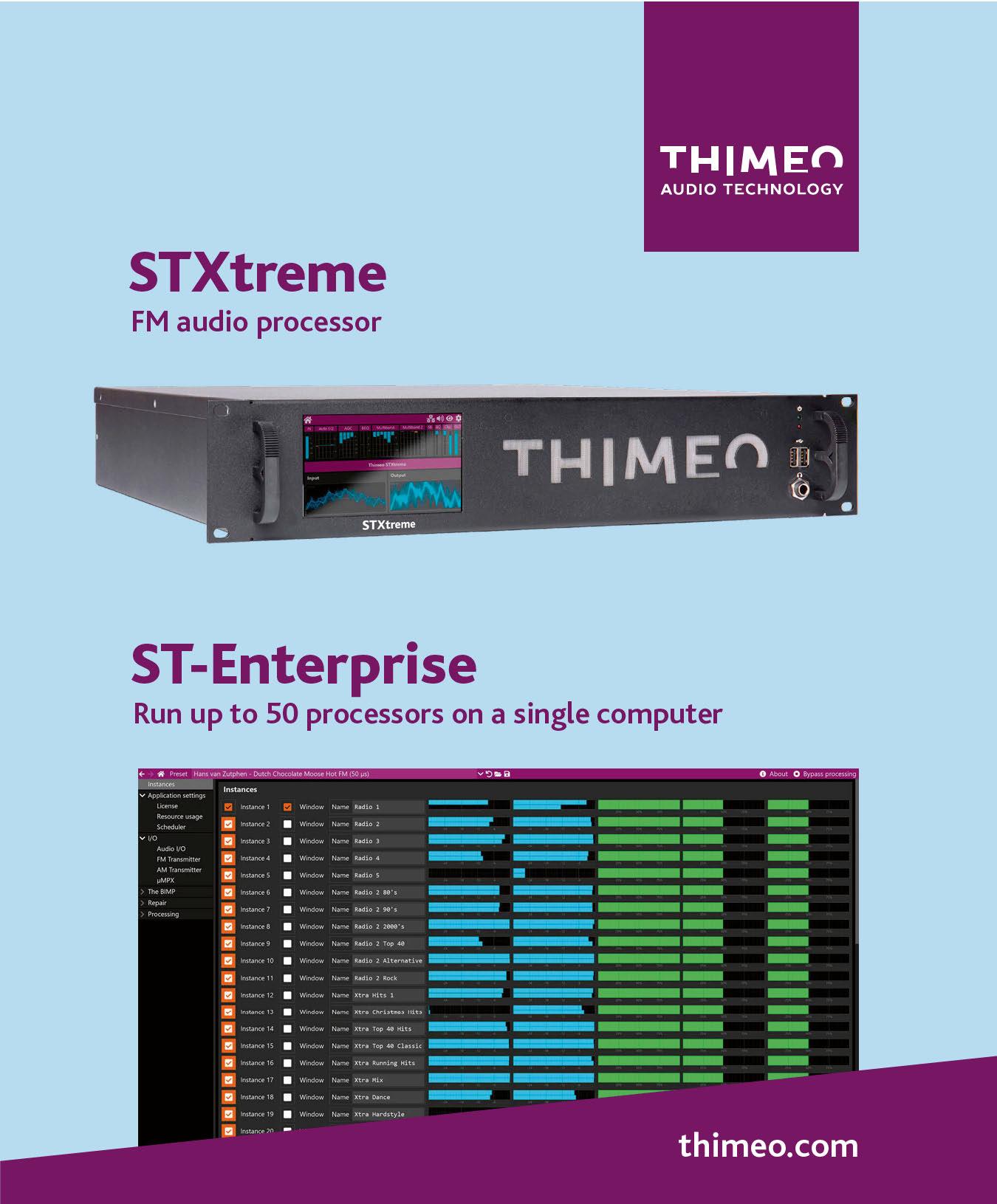
Below: Thimeo STEnterprise can process up to 50 FM or HD stations on one PC. For FM stations, this includes stereo and RDS encoding. The resulting total MPX (composite) signal can be streamed to transmitter sites using the built-in MicroMPX codec.
Composite clipping has an extra, lesserknown perk: When you treat the full signal, you can see exactly what will be going to the transmitter.”
30 Trends in Audio Processing 2022