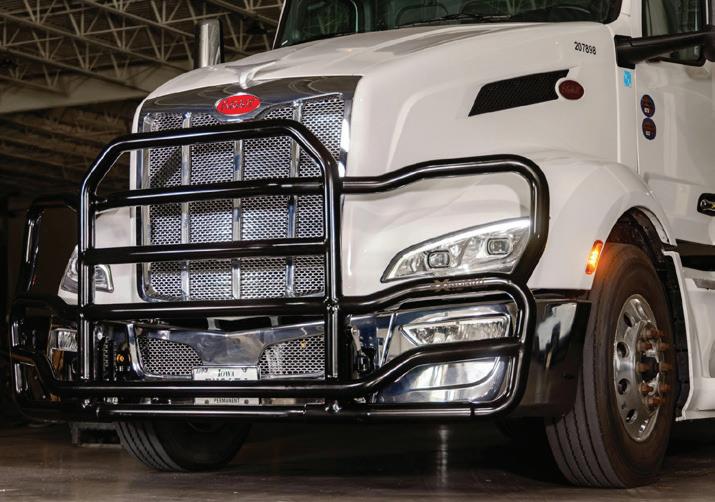
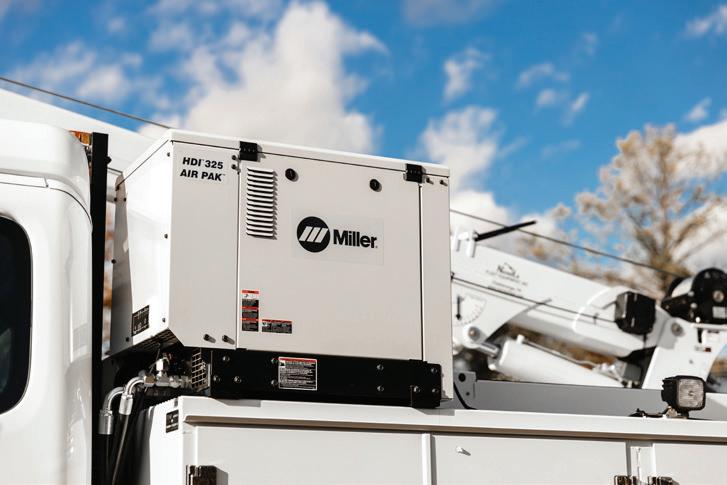
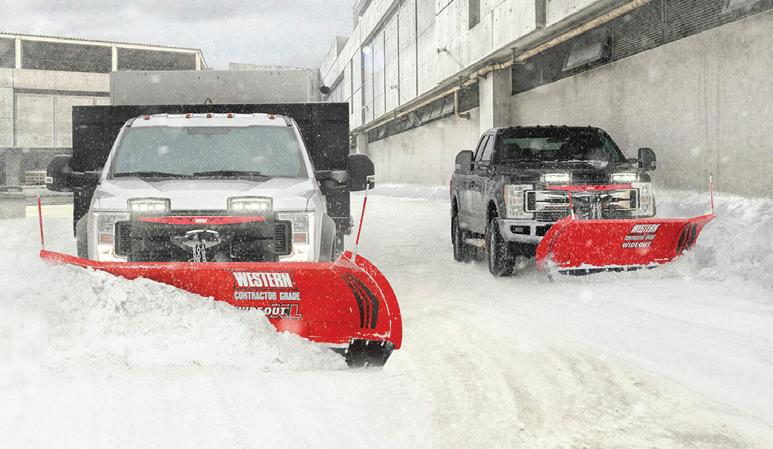
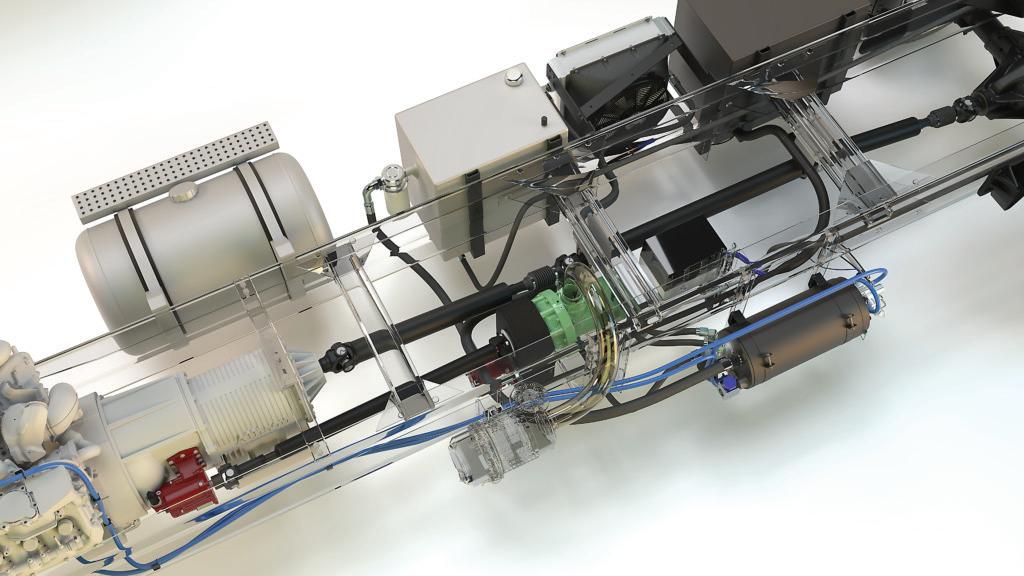
From early trucks to modern diagnostics, we’ve collected stories on 24 innovations that helped build the trucking industry.
p. 16
In The Bay 13 troublesome trouble codes and how to resolve them
These 13 recurring trouble codes represent some of the most persistent diagnostic headaches techs face today, and the fixes you need to know before downtime gets out of hand.
Shop Operations
Salute to Independents
Early Americans’ rebellious spirit lives on with independent shop owners, entrepreneurial underdogs who run things their own way to better serve their fleet customers.
DEPARTMENTS
Proud
What’s
A
p. 28
Right to Repair
Exercising the right to repair
With no resolution in sight regarding a federal Right to Repair law, shops are left looking for alternative ways to access data and fix commercial vehicles.
p. 32
Federal Regulations Fed up with FET
The Federal Excise Tax was started to fund America’s involvement in World War I, but it’s still on the books and quadrupled since then. As trucks and trailers get more expensive, the tax stings more and fleets have had enough.
p. 34
Manufacturers
Made in the U.S.A.
Find out where America’s trucks, parts, and tools are made.
Visit the official website of Fleet Maintenance for more information from stories in this issue, plus online exclusives on pertinent topics in the fleet maintenance management industry.
Stay up-to-date on industry news and events, new product launches, and more.
America 250: How North Carolina helped shape American trucking
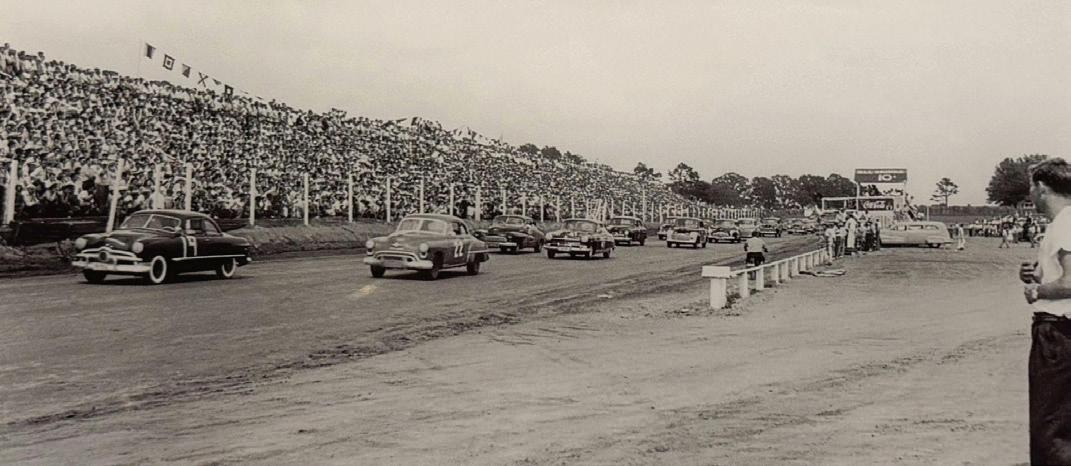
Fleet Maintenance visited the NASCAR Hall of Fame to explore how North Carolina’s racing culture continues to shape commercial vehicle engineering, OEM growth, and technician talent. FleetMaintenance.com/55379184
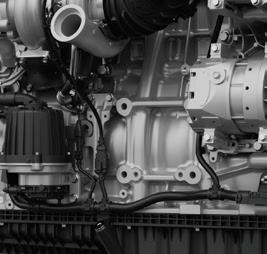
Mack reveals next-gen 13-L engine platform for EPA 2027
Delivering up to 540 hp and 1,950 lb.-ft. of torque, the new MP13 also boosts fuel efficiency by as much as 3% in the Mack Granite compared to its predecessor. FleetMaintenance.com/55376091
The Fleet Lead podcast features EndeavorB2B’s CV journalists and aims to help fleet managers and trucking professionals navigate the industry. It covers topics like new technology, efficiency, and regulations with expert analysis and realworld insights.
The Knight Rider fans who tracked down the GMC General and 40-ft. Dorsey trailer used as KITT’s mobile home announced they are nearly complete with the restoration project. FleetMaintenance.com/55373720
Join the conversation: Facebook.com/ FleetMaintenanceMag
Follow us on X.com/fleetMx
Connect with us LinkedIn.com/ company/fm-mag
Watch our videos youtube.com/@ fleetmaintenance
Multimedia
Production
Read the digital edition online at
Tesla starts high-volume Semi production, launches Semi Charging for Business
Tesla has met a production milestone for the Semi, which could be the BEV that re-energizes the zero-emission truck market. FleetMaintenance.com/55374492
NASCAR
FLEET LEAD
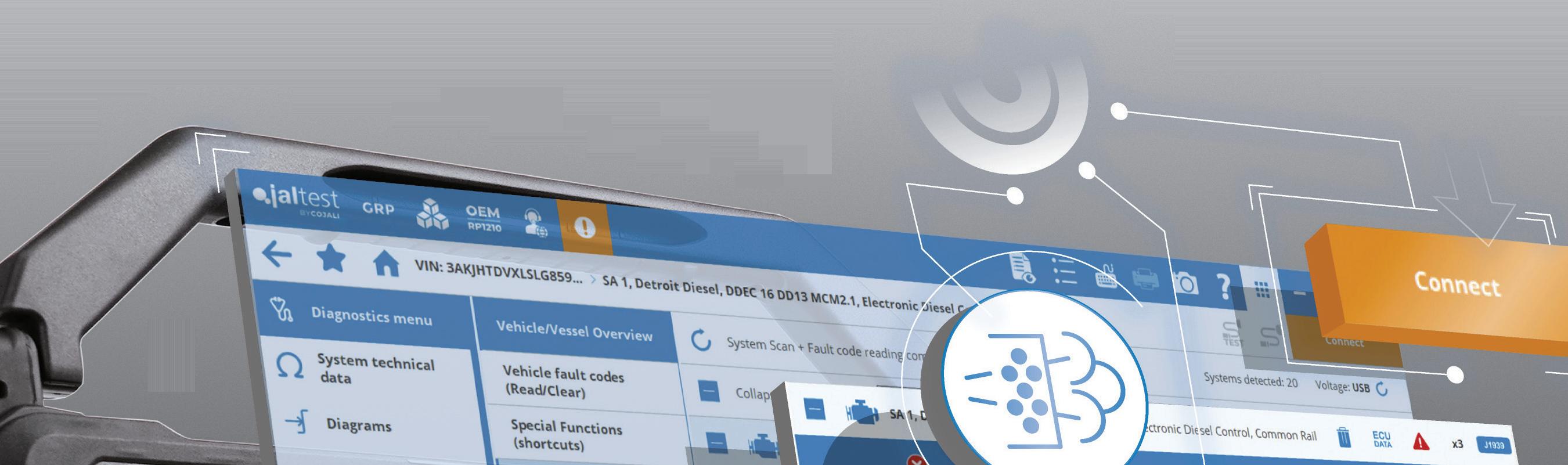
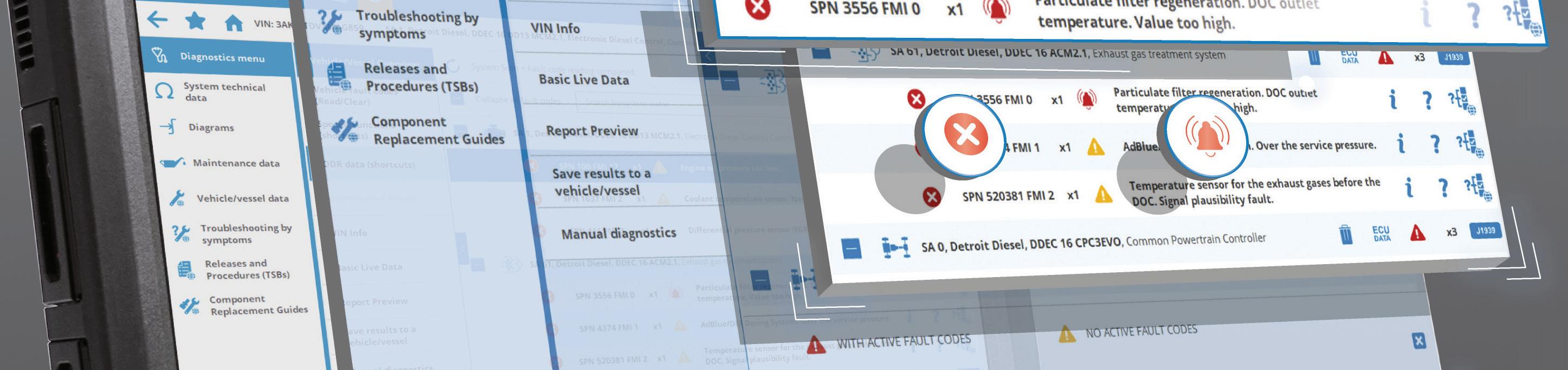
CONNECTING VEHICLES AND TECHNICIANS, EVERYWHERE
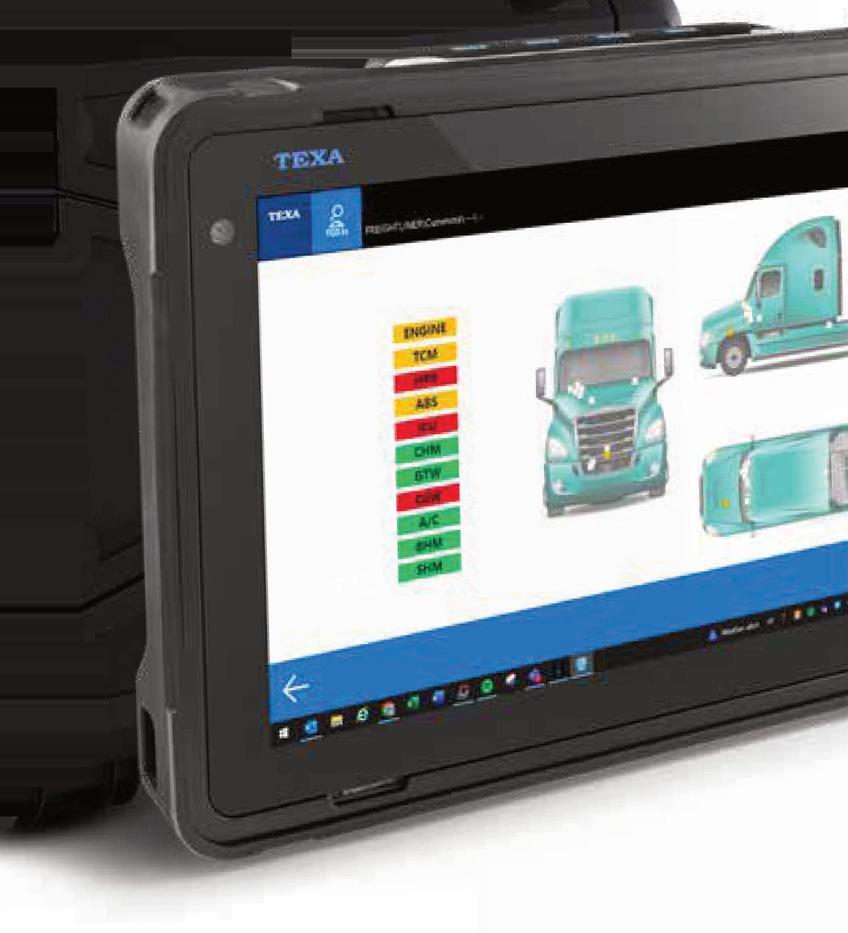
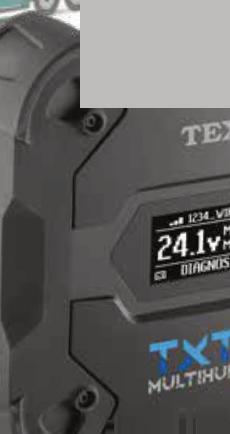
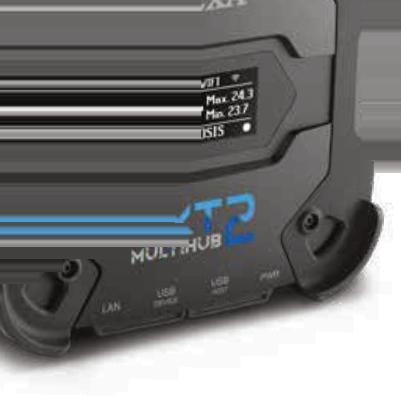
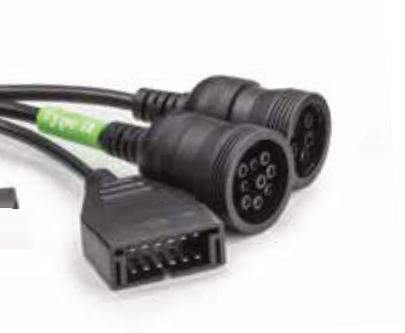
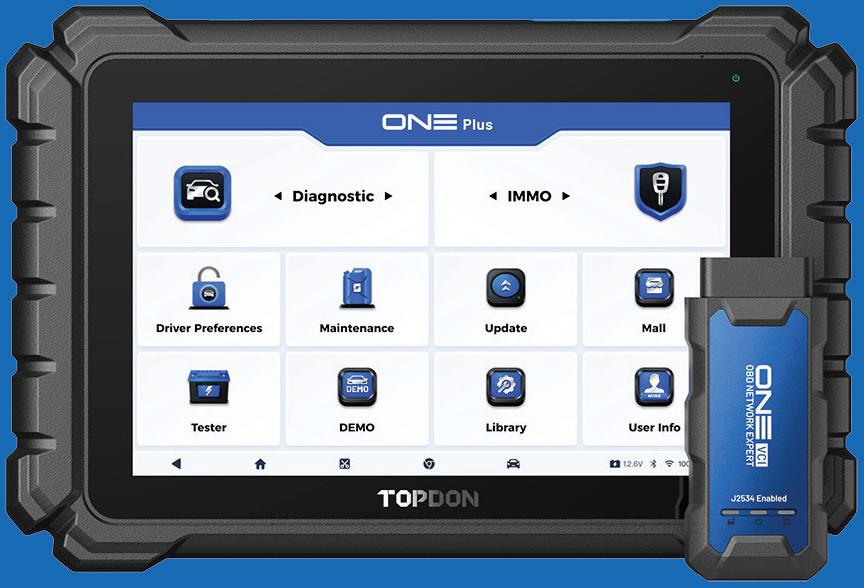
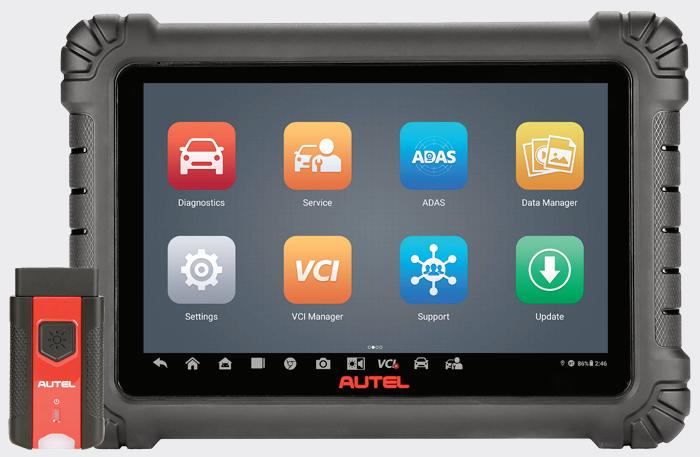
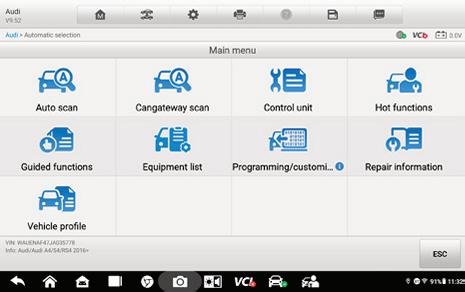
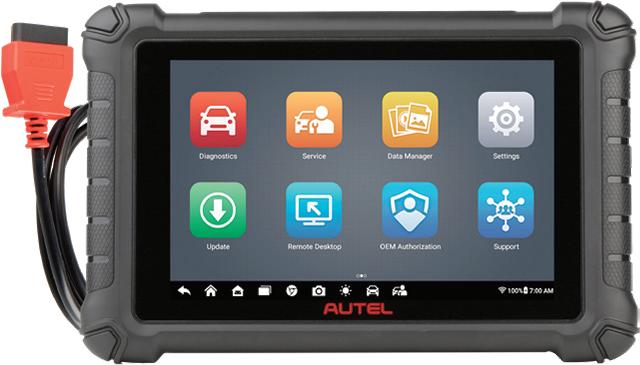
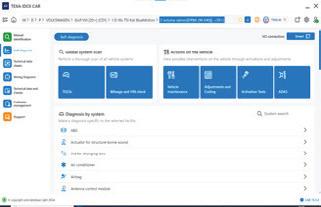
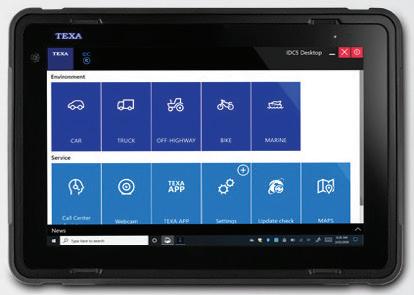
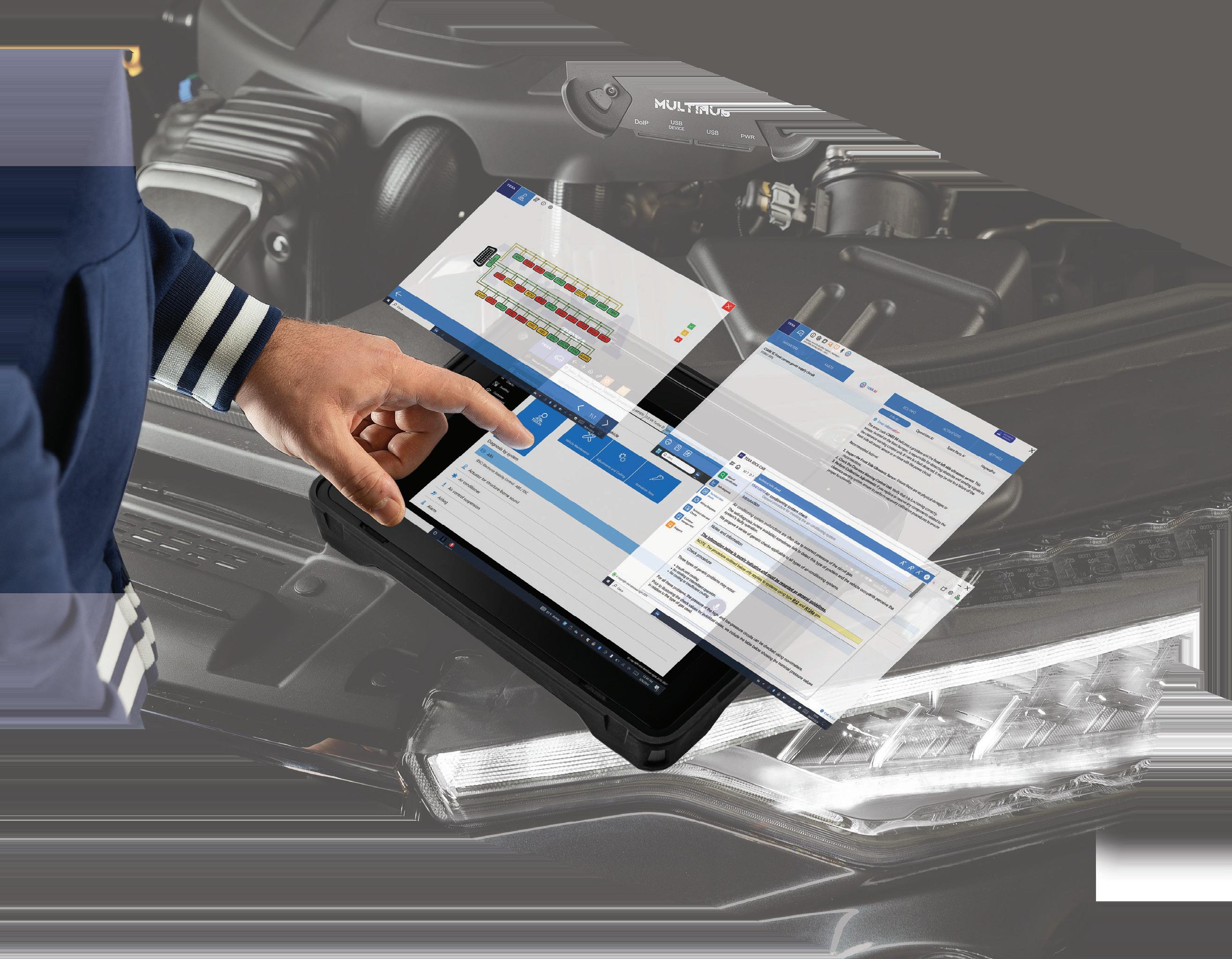
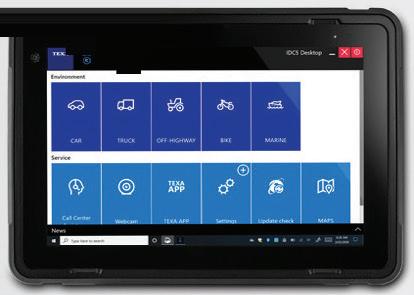
Jaltest Diagnostics enables hands-on service in the shop, while Jaltest Telematics extends maintenance beyond it through remote actions.
Explore Jaltest Solutions
Proud to be an American— and in trucking
As we celebrate America 250, we can’t miss the opportunity to salute those in trucking.
By John Hitch Editor-in-chief
As you probably guessed by the cover, Fleet Maintenance is proud to be American. And I’ve been unabashedly so for most of my life. Since joining the trucking industry, I have been pretty proud of it, too. Putting together an entire issue dedicated to the relationship between the two seemed like an obvious fit with America 250 nearly upon us. And when thinking about putting this together, we wanted to honor everyone who has contributed to American trucking, from the early inventors to the latest innovations, the plant workers stamping metal to midnight shift truck stop clerks keeping fresh pots of coffee.
And in the last six years, particularly in the fleet maintenance space, I’ve met some of the greatest Americans. These include guys who work all day on fixing a rural town’s public vehicles and going home to tend to the farm, to immigrants who came here with nothing, gave their bodies and minds to trucking, and were embraced and rewarded with trucking companies and repair businesses of their own.
This issue is for all of you.
And for those uneasy with outward display of patriotism, I do empathize.
There was a time in 1998, about a month or so into bootcamp, that I became decidedly less patriotic—I was ashamed to be an American. I knew going in that the whole 12-week introduction into the Navy was meant to break you down and build you back up. The running and pushups were no problem, as I was 18 and weighed a buck ten. I also got used to the exhaustion and indiscriminate yelling in my face for no reason, too, thanks to three sisters.
But nothing could have prepared me for the “hurricane” that hit our barracks one cold February day in 1998. That’s when, while the division is out marching back and forth, the recruit division commanders toss every article of clothing and dismembered every bed, dangling sheets from the ceiling panels to bunk frames. It’s pretty upsetting as they condition you to make sure every shirt and pair of skivvies are perfectly folded and aligned in your locker, and every bedsheet carries crisp 45-degree “hospital” corners. Well, it was all over the place now and we were screamed at until it was all squared away again. This wasn’t the bad part. Getting yelled at was merely a Tuesday in bootcamp.
But then they asked us to stand at our bunks and ordered us to hold the hand of the guy to
our left and right. They put on Lee Greenwood’s “Proud to Be an American” and had two squad leaders amble up and down the barracks holding the American flag. And the stocky mustachioed RDC with a perpetual sneer commanded us to close our eyes and “remember our homes and our families,” and “how they miss us,” and “think about what we are fighting for” or some equally cheesy nonsense, but in the tone of “Drop and give me 50, recruit.” I wondered who would fall for this blatant emotional manipulation, and found out pretty quickly.
The lanky blonde guy with glasses squeezing my left hand, and the big heavy guy crushing my right one were red faced and holding back tears. They fell for it. How could a flag and some dumb country song I never heard before rip these guys to shreds? I was embarrassed for them and disgusted at the world’s most powerful military for messing up my stuff and its lame attempt to make me feel feelings. It changed my perspective for a while; America was a big stupid bully—and not even subtle about it. To say it led to some disciplinary problems for me was an understatement.
As a more mature adult with time to reflect, I realize the hurricane drill was meant to simulate emergency situations and pressure-test the recruits’ nerves. Sometimes you can do everything right and the $#! still hits the fan. And maybe our motley crew did need to be broken down and built back up. It took several more years to humble me, but in the end I achieved things I could never do before.
And after 9/11, Old Glory was the symbol that brought everyone together, politics be damned. And Mr. Greenwood’s twangy anthem took on a new meaning. It was a rallying cry for those in pain and who needed strength. Somehow, I learned humility (or the MK-Ultra program kicked in) and became a somewhat capable submariner. A week after the attacks I joined the captain and chief of the boat on a PR trip to Oklahoma City. I told kids what the Navy was really like, the real truth. Later we were recognized at the state rodeo and got a standing ovation. They weren’t applauding me, but all the people who were fighting to defend the country, and all the people before who gave their lives in the process.
But to be part of that group made me incredibly proud. That doesn’t mean I agree with any or all the things that happened militarily after that, but it was a nice moment.
And trucking, which for this conversation, includes all those involved with commercial vehicles and their maintenance, deserves a standing ovation. For 125+ years, you all have fought exhaustion and resisted apathy to make sure trucks are ready to do whatever they were built for, safely and efficiently. And things don’t go your way every day, but you come back the next day for more. You have helped win wars by building the strongest supply chain the world has ever known, and facilitating the transport of 70% of goods throughout the U.S. You are essential every day, not just during crises. And we salute you!
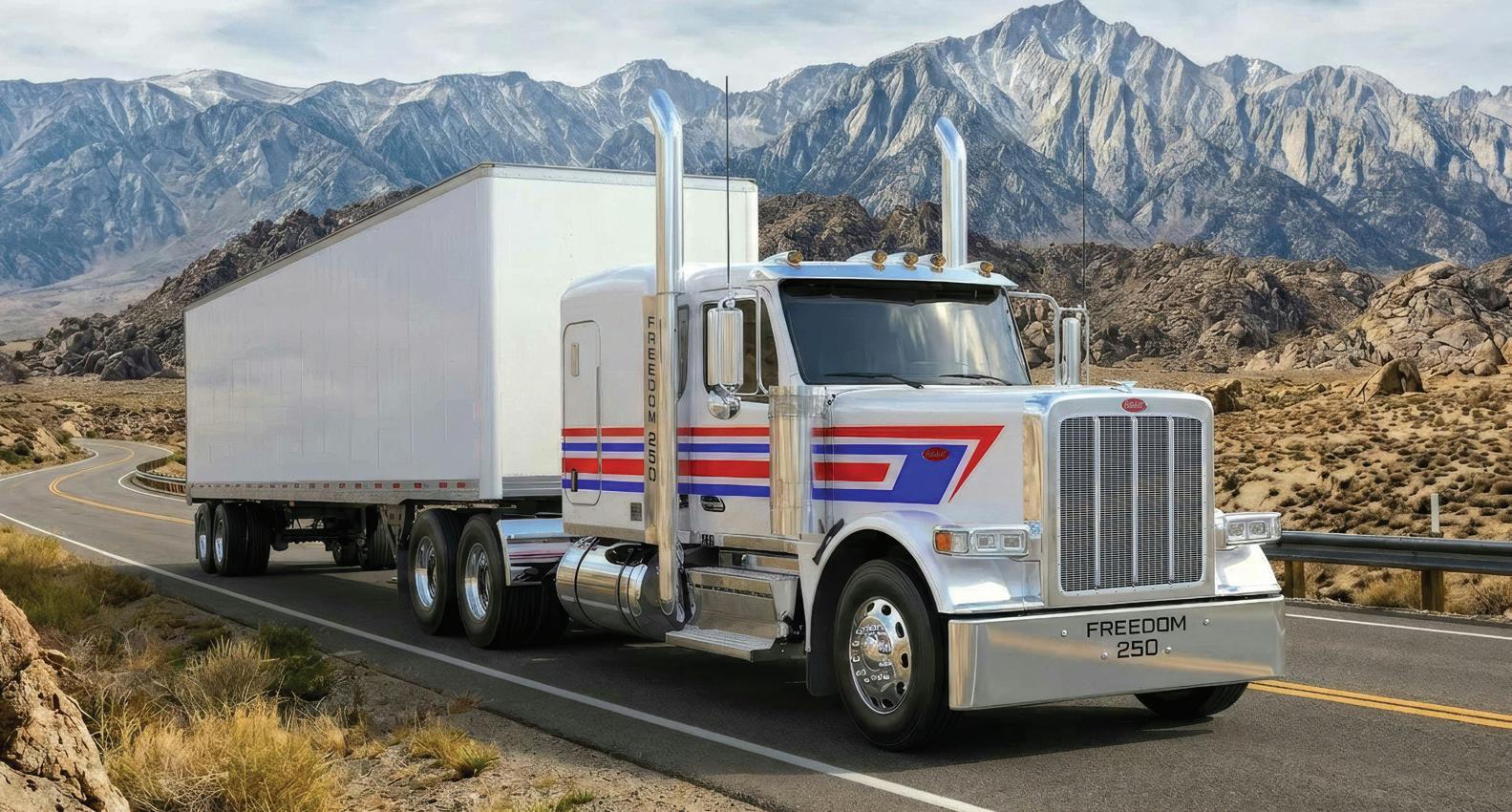
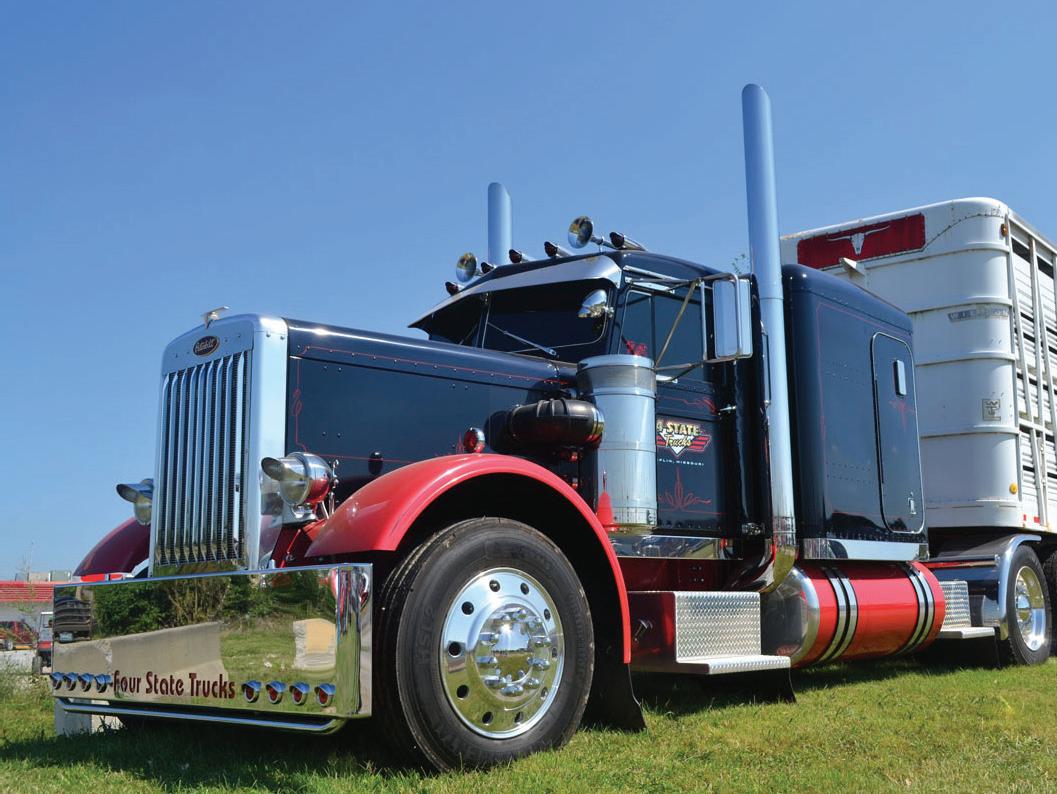
» Peterbilt, also proudly American, has launched a special America 250 edition Model 589. Peterbilt
MORE JUICE. SQUEEZE. LESS
Amp up your inventory. Motorcraft® parts are premium replacement parts designed, engineered and recommended for Ford and Lincoln vehicles. They’re tested to provide performance and long-life reliability. And they’re 20,000 active parts strong, with a deep inventory that includes batteries, wiper blades, brakes, spark plugs and much more. Easy – for you and your customers. See your Ford Certified Parts Wholesale dealer for details.
Clessie Cummins
Charles Kettering
Retrospective:
Americ Revolutions that shaped trucking
Ideas and Innovations that shaped trucking
A[ INNOVATIONS ]
By John Hitch, additional reporting by John Baxter
mericans didn’t invent the fi rst diesel engine or truck, or build the fi rst expressway (all credited to Germans), but make no mistake, trucking has been a distinctly American-made industry since 1898. From engineering to performance to maintenance, Americans of all types (both native-born and immigrant) have found ways to make trucks bigger and better, and most importantly, safer, all the while innovating ways to maintain and repair them with less e ort.
And while the railroads of the 19th century connected America’s coasts and spurred industrialization, American trucks sparked the modern world, connecting once disparate and desolate communities together, democratizing the availability of goods through inventions like transport refrigeration units that help goods last longer and innovations like suspensions and air brakes, which help the driver safely deliver loads. All the while, automotive and trucking professionals have waged a war against downtime, helping fleets get more out of their assets and keep the overall cost of freight manageable.
None of this happened overnight, but it was a constant march of improvements, some manifested by classic American gumption and others mandated by government regulations. But they are all stitched into the same fabric that blankets our way of life. And to honor that spirit of innovation, we’ve compiled a list of several inventions and breakthroughs that helped build and maintain the modern trucking sector.
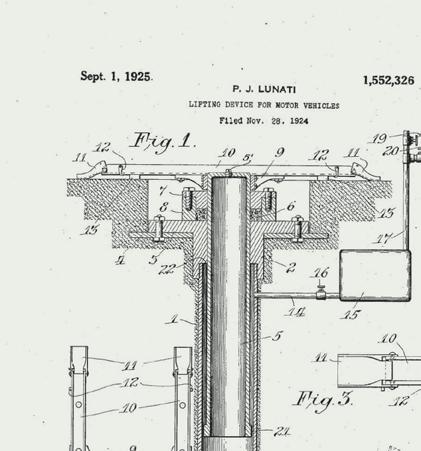
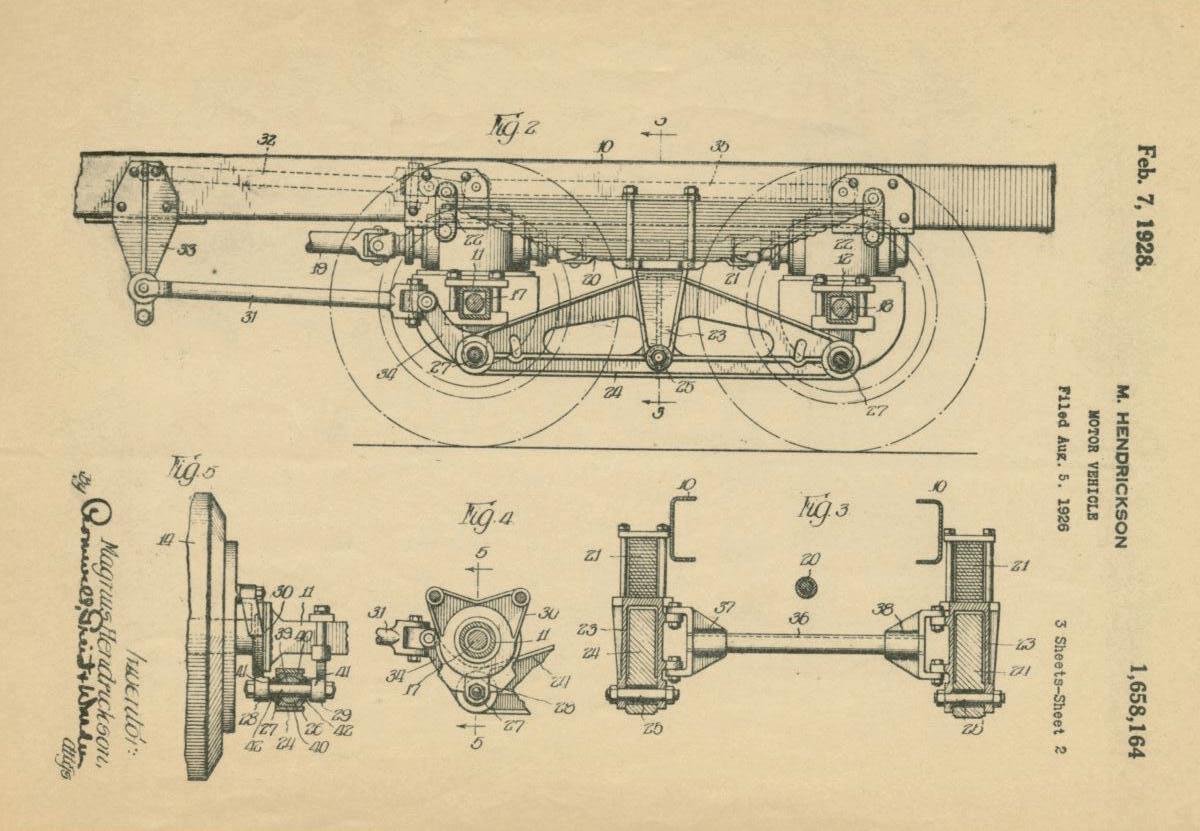
» Patents for Hendrickson’s walking beam suspension (above) and Rotary’s hydraulic lift (right) Hendrickson; USPTO
Dwight D. Eisenhower
Frederick McKinley Jones
Henry Ford
1899 Winton develops the first semi-truck
Alexander Winton is a man of many firsts, not the least of which is developing the first semi-truck.
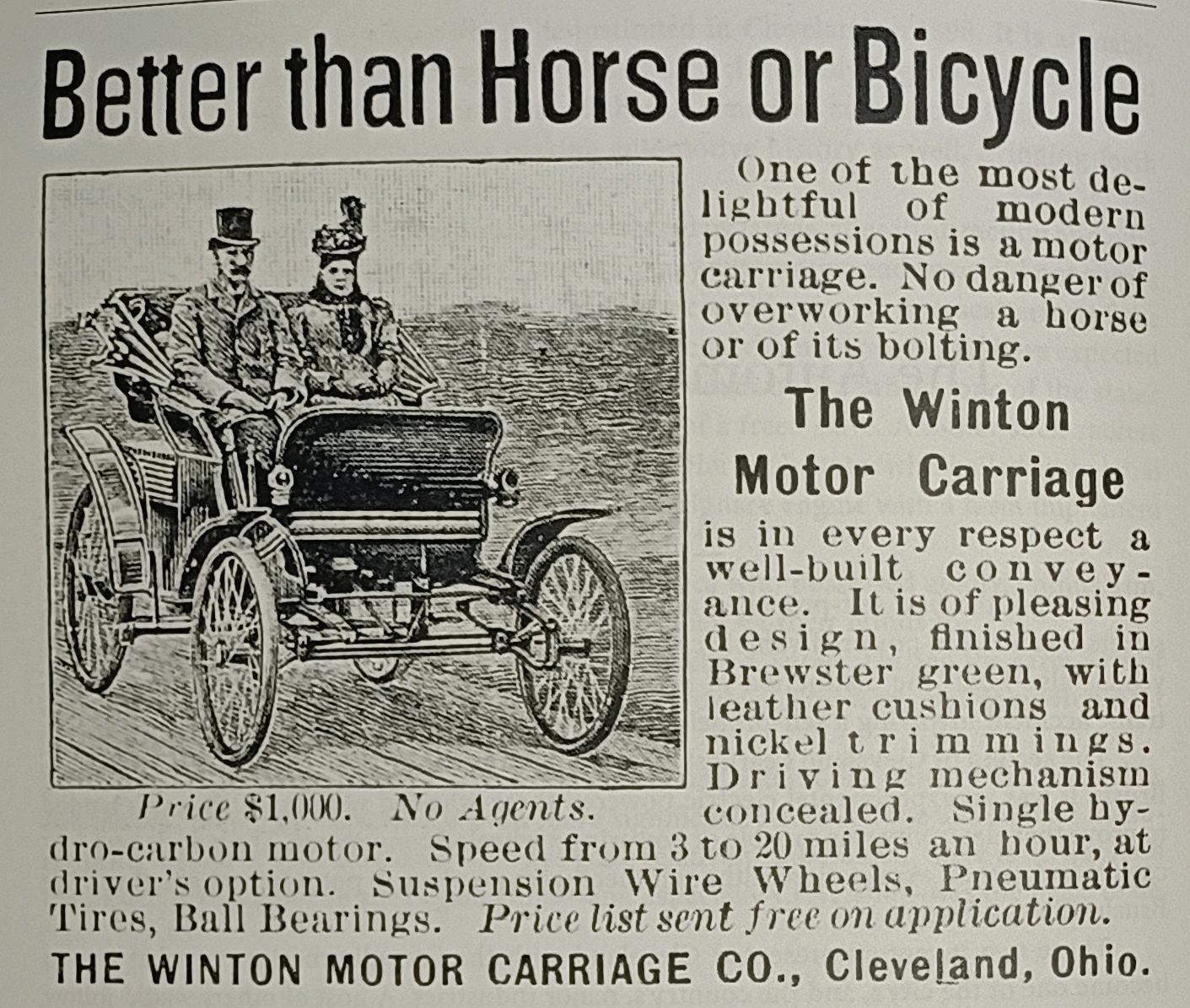
In July 1897, the Scottish-born inventor and premium bicycle maker needed to drum up publicity for the horseless carriage prototype he had made the previous year. He had formed the Winton Motor Carriage Co. in March and set out to validate the design and reliability of his gaspowered 1-cyl., 10-hp contraptions by driving them all the way to New York City, an 800-mile journey. That nine-day publicity stunt didn’t make an impression, so he placed what is believed to be the first ever auto ad (in Scientific American).
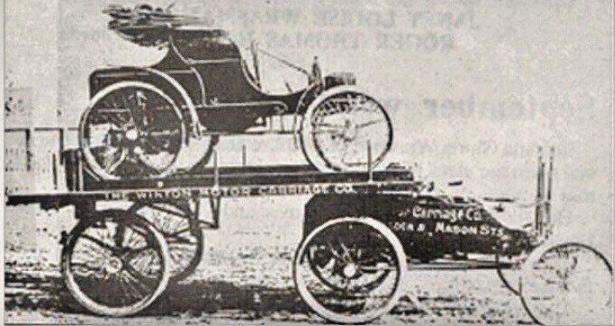
» Winton’s Auto Hauler was not he only Winton commercial trucks. He made delivery wagons and even did pilot tests for motorized mail truck with the U.S. Post Office.
Did you know...
That is believed to have worked.
“Winton got a buyer from Port Carbon, Pennsylvania, named Robert Allison, to come over, look at a car, do a test drive, and make a purchase—and that was the first time that a car was sold based upon an advertisement from an inventory,” explained Bill Carlson, a former civil engineer and volunteer docent at the Crawford Auto-Aviation Museum in Cleveland.
But the savvy Winton knew driving the new horseless carriage to buyers—in a time when roads were designed for actual horses and littered with shoe nails and piles of manure—would quickly depreciate their purchase. The solution was to invent the Automobile Hauler in 1899, a modified Winton touring car with a shorter wheelbase hitched to a two-wheeled wagon long enough to fit one vehicle. Winton went on to use it for his own fleet and sell to other automakers.
Winton is credited with using the first semi trailer, but Pittsburgh-based Autocar is believed to have sold America’s first commercial truck in 1898. The OEM is still in business.
In 1899, Winton repeated the drive to New York, this time with a Plain Dealer reporter (who popularized the French term “automobile” in the states.)
“They filed updates all along the way,” Carlson said, and the public took notice. Sales took off, and he was selling the auto hauler commercially, and developed a delivery truck. In 1903, a Winton touring model was the first automobile to travel across the country.
Car sales dried up in the 1920s as Winton lost market share to Ford Motor Co., the conclusion of a 20-year rivalry between Winton and Henry Ford. In 1899, Ford was a virtual unknown and Winton a star. Winton’s chief of engineering recommended Ford for a job. Winton was reportedly unimpressed with Ford, and that misjudgment changed the course of history. Ford returned to Detroit, determined to improve auto manufacturing reliability and cost, but had trouble attracting investors.
In 1901, Ford met Winton again, this time on a Grosse
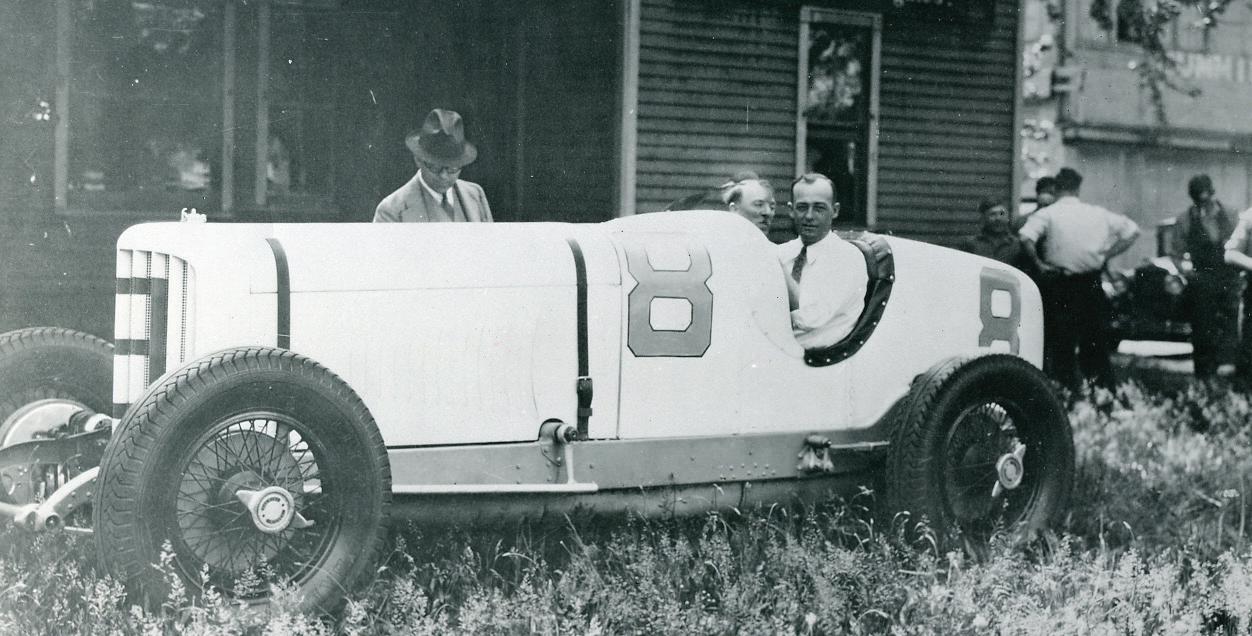
Pointe racetrack. Ford wanted to impress investors by taking on Winton, a formidable racer. By the end, he got them, and revenge for the previous slight. The Winton Bullet’s 70-hp engine misfired on the back half of the 10-lap race, and Ford’s “Sweepstakes” won the day. Ford and his engineering team had insulated the spark coil in porcelain to raise the temperature and increase engine efficiency. That would be the first of many innovations for Ford. remembered as a chief architect of America’s 20th century dominance. Winton, the man who started it all and accomplished so much, has become a faded footnote.
1901
Goodyear develops a detachable tire
1908 Henry Ford popularizes preventive maintenance
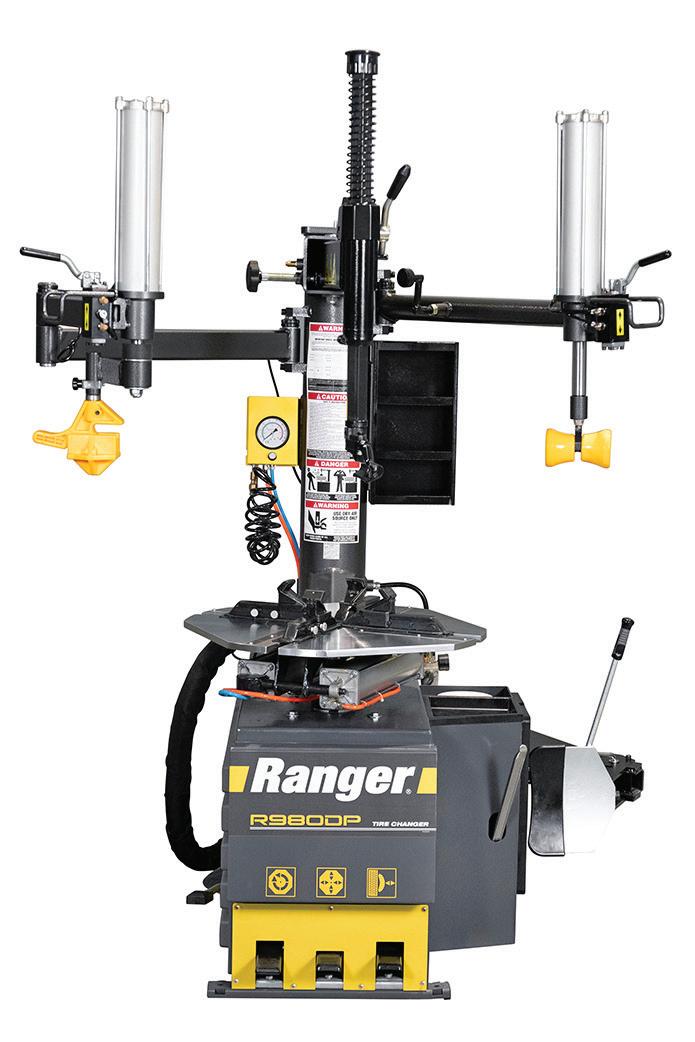
Three years after starting up the company in Akron, the Rubber Capital of the World, the Seiberling Bros. literally reinvented the wheel. Early automobiles had curved tires to stay on the rim, and removing them took a crowbar and a lot of pry force. Goodyear’s engineers developed a straight-sided tire, which anyone who does tire or brake jobs today still benefits from.
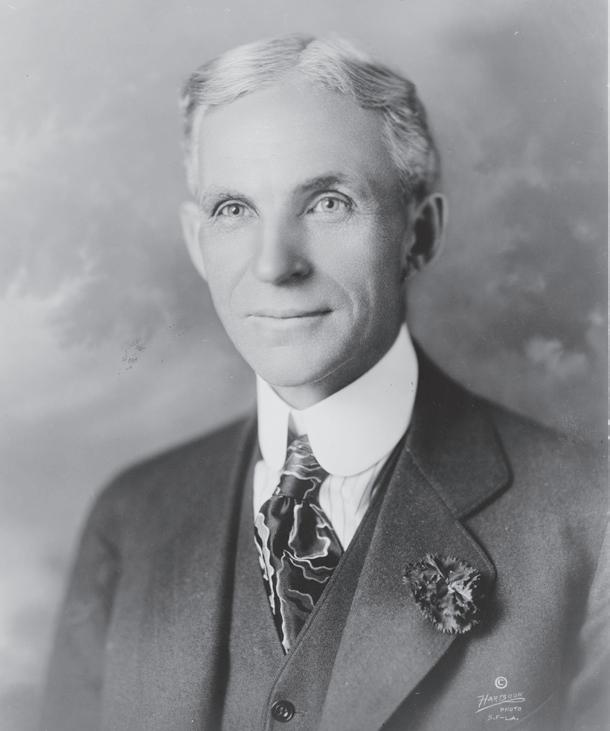
Ford’s impact on industrialization and transportation arguably looms larger than any other American in history. A big reason why was his total and absolute devotion to uptime, be it the moving assembly lines that brought the Model T to the owner’s garage.
To ensure maximum uptime, he knew you couldn’t wait until something breaks; you had to stay ahead of wear and tear with preventive maintenance. The concept wasn’t new, but never implemented at such scale and vigor as at Ford Motor Co. Moving parts were routinely lubed and inspected, and wear components were designed to be easily swapped out. This happened over time, but the 1908 Model T owner’s manual provided all the PM knowledge a new owner needed to reliably trot out their horseless carriage.
Iowa 80 Trucking Museum
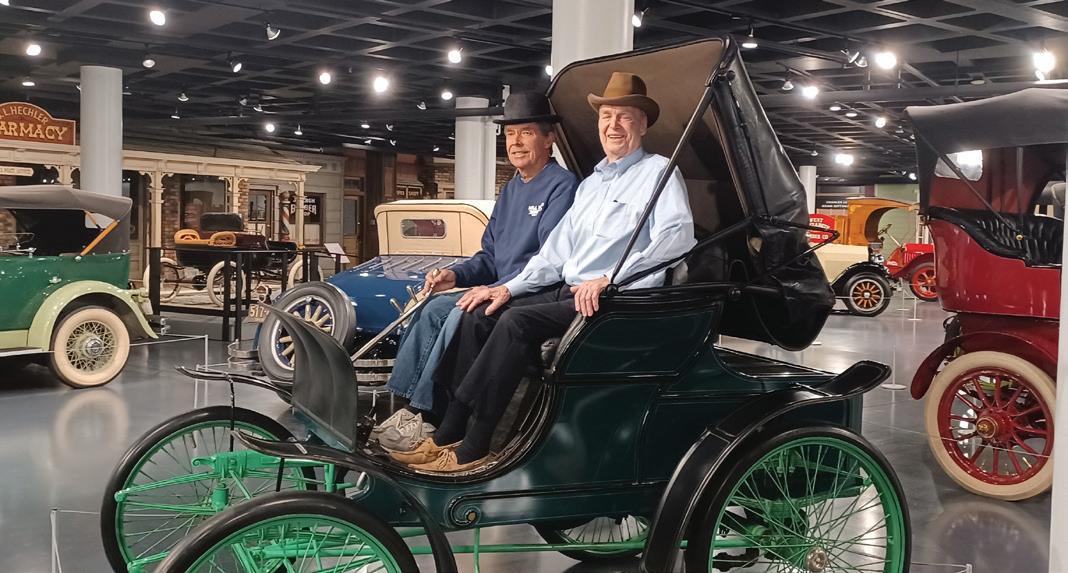
» Tony Allison (left) and Jim Winton, the great-grandsons of the men involved in the historic first Winton transaction, sit in a Winton Phaeton.
Photo by Bill Carlson
» Early ads touted the Winton Motor Carriage as the height of luxury. “Automobile Manufacturers of Cleveland and Ohio” by Frank and Elaine Wrenick
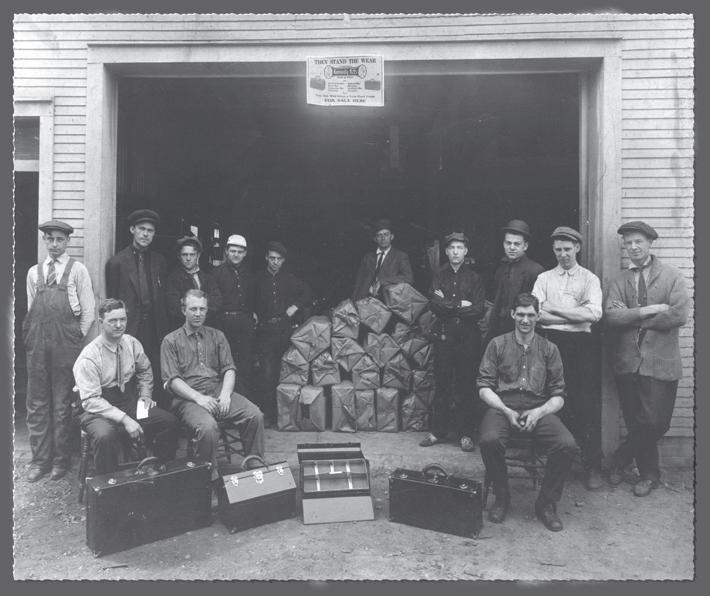
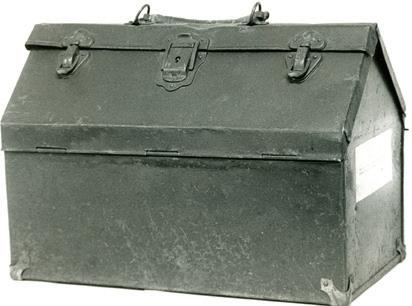
When traditional cloth tool bags proved a poor storage method for railroad engineer Howard Kennedy in 1909, he went home and fabricated a metal “suitcase” to better organize and protect the tools of his trade. Soon, other workers were asking him for one, and with the help of his ad exec brother, Charles Kennedy, they formed Kennedy Manufacturing to meet demand. The company is credited with the first metal toolbox sale in 1911. Within three years, the operation was moved out of Howard’s Fort Wayne garage over to Van Wert, Ohio, just across the state border. Here, they began making durable toolboxes and cabinets throughout the decades, even adding rollers for mobility later on in the ’40s. Built to last, the vintage models still look great and are popular with collectors. Fellow Ohio toolbox maker Cornwell Quality Tools acquired the company in 2016, increasing production at the Van Wert site to bring all manufacturing back to the U.S.
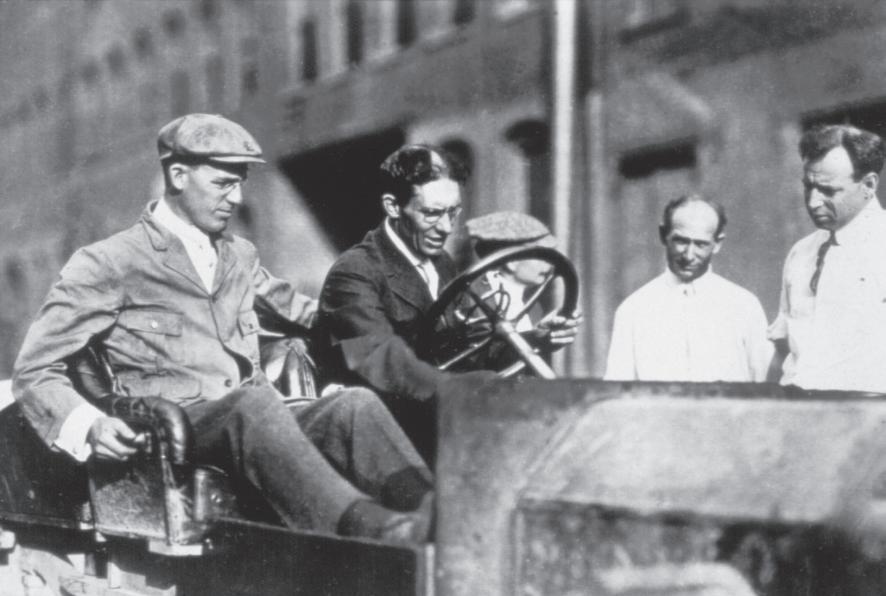
Before Charles Kettering invented the electric starter for gasoline engines, a driver would have to manually turn a hand crank jutting from the front of the car. It was a physically demanding task and dangerous, too. The crank could sometimes violently kick back and break a jaw or arm.
This happened to the friend of Cadillac founder Henry Leland in 1910, who reportedly was trying to help a broken-down female motorist. His broken jaw got infected and turned fatal, and Leland asked Kettering, an electrical engineer, to come up with a better solution.
Kettering got to work in his Ohio company, Dayton Engineering Laboratories Company (DELCO), and in a few years developed a lightweight system with suitable torque and starting power. The battery was similar to modern lead-acid batteries, and the direct-current starter
As Ruth Fruehauf tells it, her grandfather August Fruehauf and his partner Otto Neumann were successful blacksmiths in Detroit, with a facility that could fit 100 horses, but in the same city, “Henry Ford is building Model Ts as fast as he can get them off of the assembly line; they’re facing obsolescence quickly.”
combined powerful stator and rotor coils with gears to multiply torque. Starting was also sped up by replacing the earlier magneto ignition with battery ignition to energize the ignition coil.
The absence of hand cranking allowed increases in the engine’s compression ratio, greatly improving combustion and engine efficiency, as well. The system was adapted to gasoline truck engines and later on to diesel trucks as they began to show up on the nation’s highways in the 1930s. By this time, Kettering had sold Delco to General Motors, where he was head of research until 1947. Along with Thomas Midgley Jr., Kettering also developed leaded gasoline (to stop engine knock) and Freon. Revolutionary at the time, both were phased out due to environmental and health risks. ACDelco, though, is still going strong.
1911
Kennedy introduces all-metal toolboxes
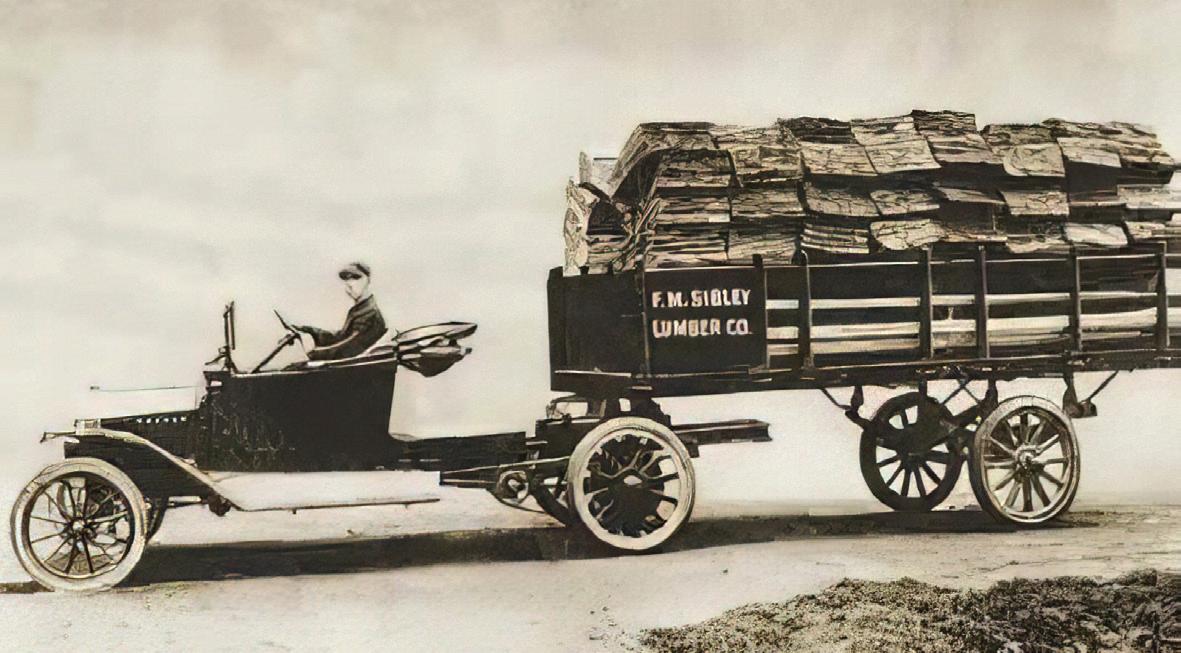
Lucky for them, Fred Sibley, the man who provided Ford with a lot of lumber materials, wanted to take his boat up north to the lake, and do it with his new Model T, and not a horse-drawn carriage. He asked the blacksmiths to engineer a solution.
“So they put their heads together and removed the back seat from the Model T and the front axle from the wagon and sandwiched them together with a primitive pin hitch,” explained Fruehauf, who inherited a great deal of August’s papers and letters.
1912
Invention of the electric starter
1914 Fruehauf launches the first trailer
“It worked so well for the boat that Frederick Sibley had a light bulb go off, and he came back and bought two more Model Ts, realizing this [trailer] would give him a competitive edge in the lumber industry.”
The Westinghouse Air Brake Company dates back to 1869, after famed inventor George Westinghouse decided trains needed a more reliable way to brake in emergencies. Compressed air was used in European drilling operations, and he carried that idea to locomotives. Shortly after, the system included a fail-safe design so that loss of air pressure applies the brakes. That was a success and carried over to trucks, which began hauling heavier loads after World War I. Previously, trucks used a system of rods, cables, and mechanical drum brakes and were ultimately reliant on the driver’s strength applied to the pedal—not something you’d
“you can pull more than you can carry.”
In one fell swoop to accommodate a wealthy customer’s vacation, the modern trucking era began to take shape. Fruehauf would go on to produce tandem and bulk food trailers, using the principle and company slogan, “you can pull more than you can carry.”
want to rely on down a steep mountain grade. Hydraulic brakes also lacked redundancy, as a leak could affect braking power. WABCO integrated a Broussouse-type air compressor onto an International Harvester Coach in 1924, marking a pivotal moment in truck safety.
“The ability to uniformly and powerfully brake turned trucks from risky, hard-to-stop machines into safe, scalable freight vehicles, enabling the growth of modern logistics,” noted Patrick McNally, Head of Engineering Advanced Braking Systems, North America, ZF, which now owns WABCO. off, bought slogan,
1924
Westinghouse ‘trains’ truck brakes
Did you know... Great Dane celebrated its 125th anniversary in 2025, but did not start making trailers until the 1930s. The company was originally called the Savannah Blow Pipe Co. and made sheet metal collection systems.
» Fruehauf’s trailer went from hauling Fred Sibley’s boat to his lumber. Photo courtesy of Ruth Fruehauf
electric starter on a Cadillac. ACDelco
Van Wert factory. Kennedy
Charles Kettering using his
Early employees at Kennedy’s
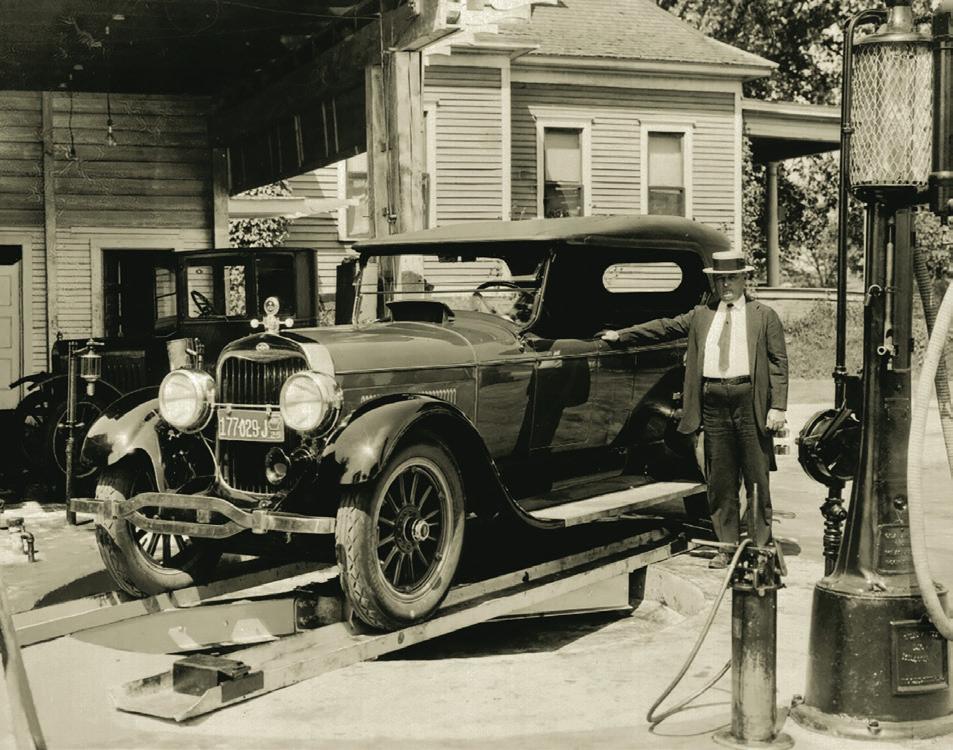
1925 Hydraulic lifts replace grease pits
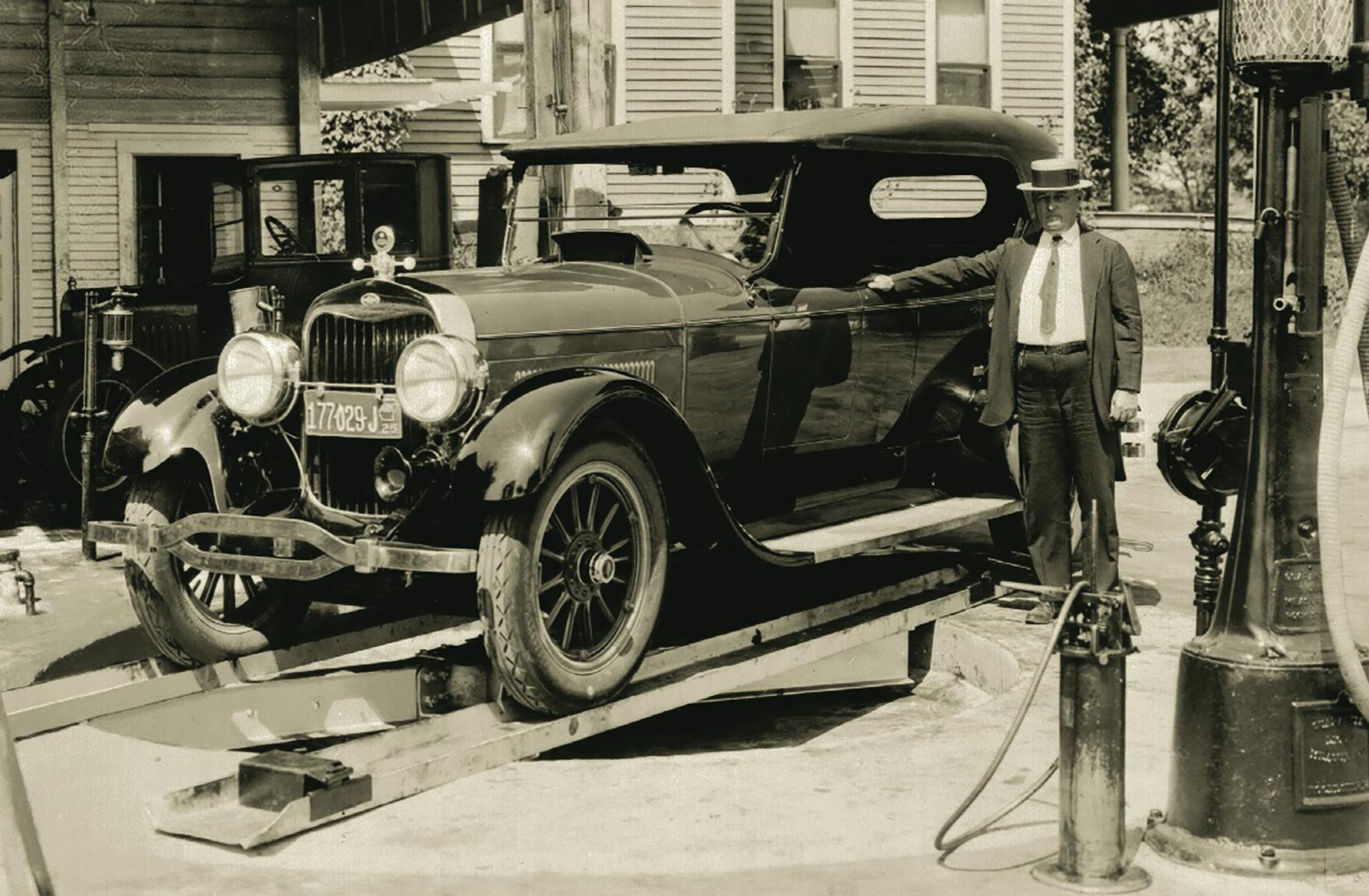
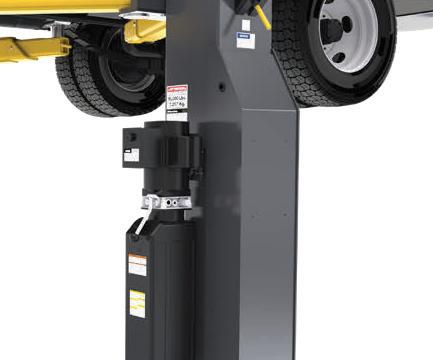
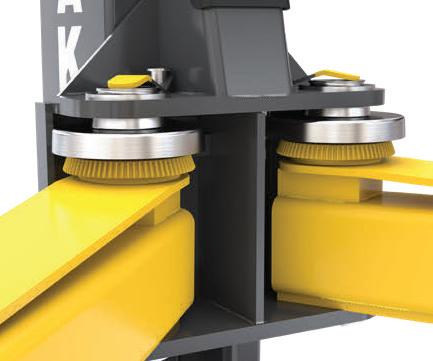
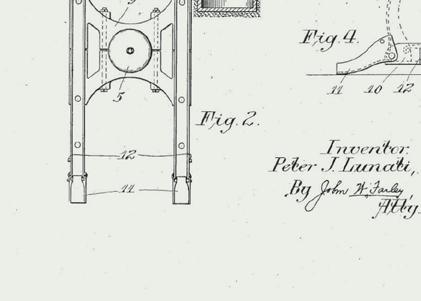
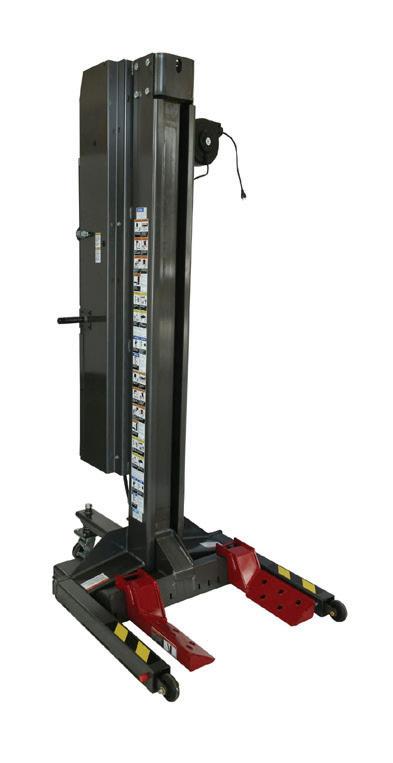
While getting a haircut in 1924, a shop owner named Peter Lunati saw how the barber’s chair used hydraulics to go up and down and got inspired to translate that power to the garage bay via the first hydraulic automotive lift. This invention, basically two metal tracks supported by a center hydraulic piston, allowed mechanics to easily raise a vehicle above ground and avoid climbing into the slippery, grease-filled pits to work under the vehicle, something Lunati himself loathed.
1926 Automatic fifth wheel makes easier connection
The truly genius aspect of Lunati’s patented lift is that it was powered by the existing air compressor used for inflating tires to force oil into the lift piston. The lift also rotated 360 degrees, hence the name of the company he and his partners founded in March 1925: Automobile Rotary Lift Company.
By October, the first lift was installed at Liverseige Service in Memphis, Tennessee, and by the end of the decade, the
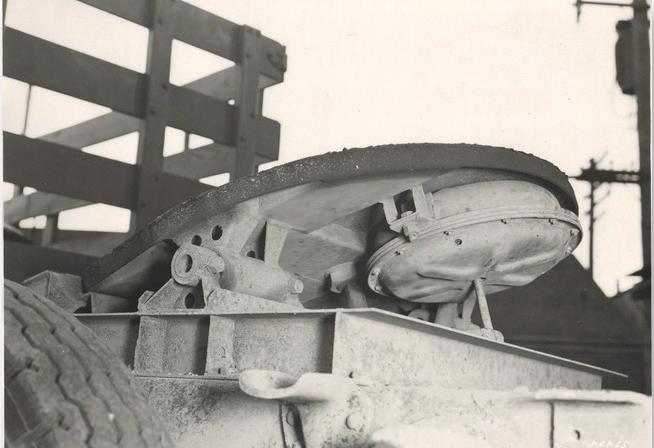
Shortly after Fruehauf brought the trailer to the market, Charles H. Martin and Herman Farr patented the rounded rocking fifth wheel for a smoother ride. This meant “if you were carrying dairy products, you didn’t end up with cream on the end,” Ruth Fruehauf joked.
In 1926, her grandfather developed an automatic fifth wheel with the modern horseshoe shape that guides the kingpin into a locked position. Holland Hitch would manufacture these fifth wheels, and as SAF-Holland, it is still the standard for many OEMs.
“The other really cool thing that Fruehauf did was give the patent to the industry,” Fruehauf recounted. “They wanted a driver from Chicago to be able to go to Texas,
lifts caught on in shops across the country. In the 1920s, the lifts were marketed widely, and this innovation still defines how shops are set up today. Rotary turned 100 last year, and has evolved to offer every kind of lift imaginable, but the company still recognizes that barbershop observation as “the haircut that launched an industry.”
drop off a load, pick up a load, and bring it back with the same engineering equipment. If you had, you know, several different kinds of hitches, then your truck could potentially be incompatible.”
In 1948, Holland Hitch improved upon that original design and introduced the first modern style fifth wheel with a twin lock jaw design and side pull release handle. This basic design evolved to the Holland Model 3500, which has been the standard for millions of trucks. Now, as SAF-Holland, the company continues to improve safety and ease maintenance with advanced materials, low-lube technologies, sensors, and enhanced safety features, the company noted.
» Tandem axles
1926 Walking beam evenly distributes loads
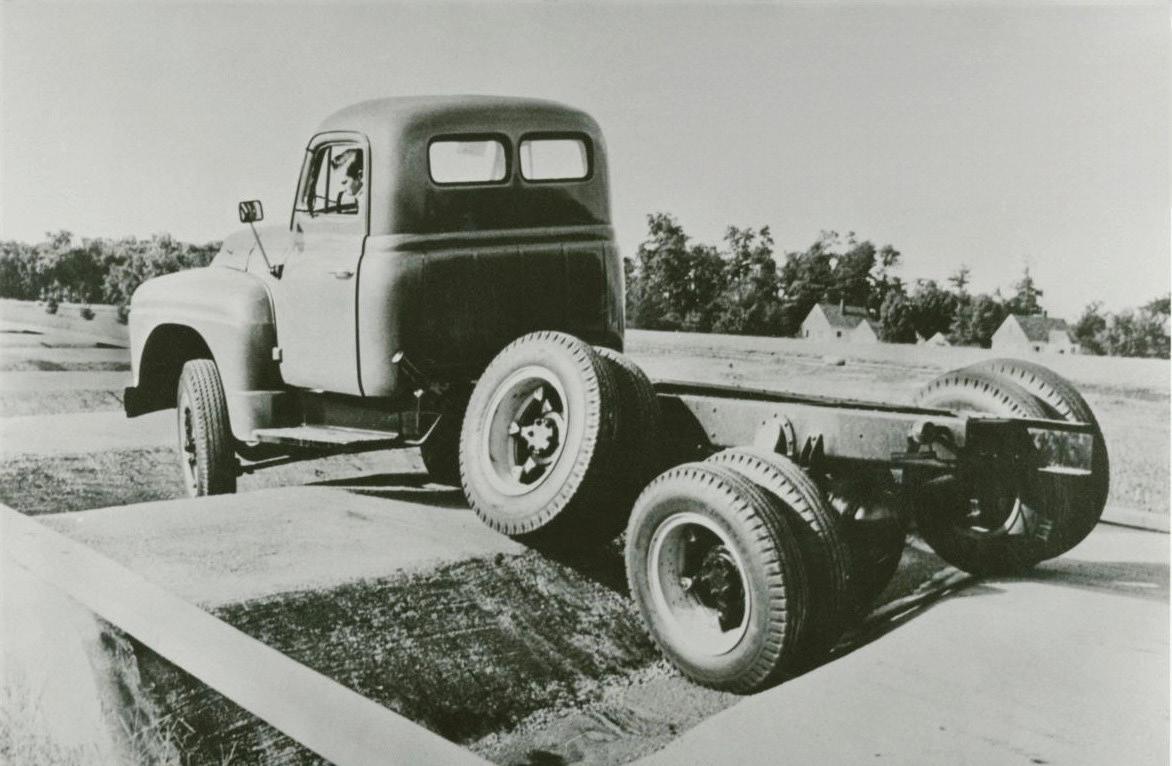
It’s no exaggeration that Swedish immigrant Magnus Hendrickson played a large role in early work truck uptime. These were the vehicles that moved earth and wood to make way for towering skyscrapers and massive dams. The problem was that the tandem axles on early logging and dump trucks could not equally bear the load while going over rough roads. The wrong pothole could mean a cracked axle or damaged driveline. In general, the traction suffered, and the driver felt every rock and rut.
The inventor and his Illinois-based Hendrickson Motor Truck Company came up with a way to equalize weight by connecting the tandem axles with a walking beam. As the forward axle hit a pothole or bump, the beam would pivot and transfer some of the load to the other axle. This greatly
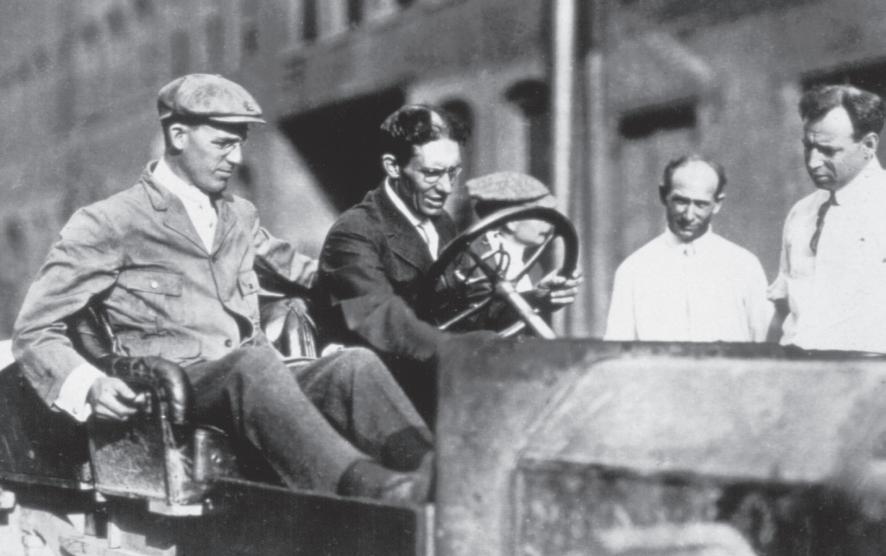
If trucking had a Mt. Rushmore, you better believe Clessie Cummins would be there, front and center. At 11, he allegedly built a steam engine for his family farm, and by 22, he was helping Ray Harroun tune up the Marmon Wasp, the first car to win the Indianapolis 500 in 1911.
He is, of course, most well-known for founding Cummins Engine Company in 1919 with William G. Irwin, who bankrolled Harroun. The company started with a stationary Dutch Hvid engine that Clessie modified. The self-taught engineer was convinced he could build a lighter, more efficient diesel engine suitable for trucks. The trick was figuring out a way to operate efficiently at an increased RPM.
He believed the solution to be a fuel injector with open nozzle holes that would pre-heat fuel held within a tiny cup at the base of the injector. The hot air generated during compression would enter the cup just prior to ignition. This would speed the ignition of the fuel,
enhanced work truck durability and kept them on the job.
“At a time when most roads were unpaved and punishing on equipment, the innovation gave drivers a smoother ride, reduced stress on both the chassis and cargo, and enabled trucks to haul heavier loads more reliably,” offered Gerry Remus, Hendrickson VP of truck commercial vehicle systems.
It also hinted at how vital weight distribution management would be to truck and trailer lifespans. Hendrickson and other companies have moved on to adding tag axles for extra support and softened bumpy roads with air ride suspensions, along with dozens of other innovations, but those suspensions couldn’t run without first learning how to walk.
reducing the delay in ignition that had plagued highspeed diesels in the past, making them noisy and inefficient.
In a process described in The Diesel Odyssey of Clessie Cummins , written by Clessie’s son Lyle, Cummins and an engineer named Hans Knudsen went through a whopping 10,000 prototypes before landing on a practical version of the injector. This enabled Cummins to put a Model U diesel into his 1926 Packard motorcar, which he drove from Indiana to the 1930 New York Auto Show. He averaged 26 mpg over 800+ miles. The next year, Cummins drove a Marion truck powered by his engine from New York to California in 1931, a 3,214-mile trip, to fully prove his diesel engine’s efficiency and practicality. The trip was a success, with a scant $11.22 spent on fuel (or $235 in 2026 dollars) for the whole trip.
Ever since, Cummins has been one of the preeminent names in engine technology.
» First automatic fifth wheel Fruehauf
» Peter Lunati with his hydraulic lift Rotary Lift
» Clessie Cummins with the first diesel racecar to enter the Indianapolis 500. Cummins
connected with a walking beam Hendrickson
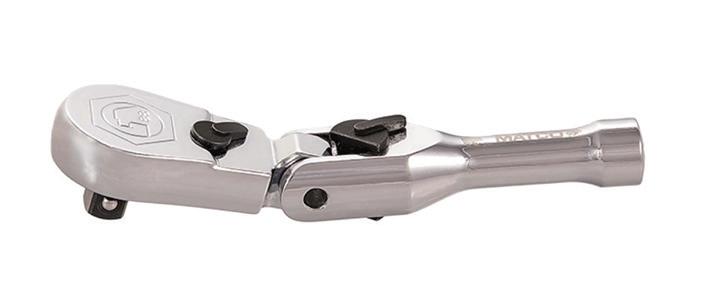
In 1932, Robert Potts filed a patent for a hand-held power tool to tighten or loosen nuts and screws, stating that either an electric or pneumatic-driven motor could be used.The Ingersoll-Rand Company acquired the patent and launched the first commercial air-powered impact tool. With shop air readily available, the tool immediately improved productivity in the shop and reduced technician fatigue. In 1939, Chicago Pneumatic developed and launched its own design, offering both pneumatic and electric versions.
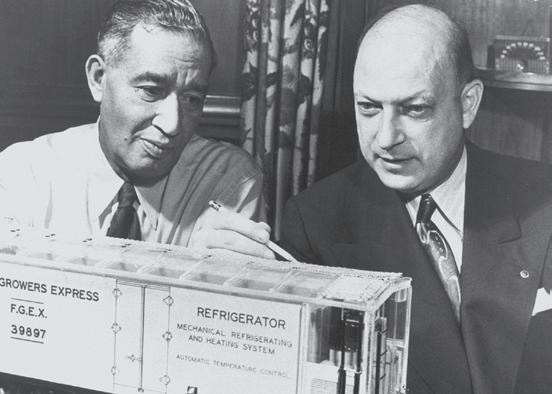
According to the Thermo King legend, the modern cold chain came to be from a $6 bet on a golf course. In the late ’30s, refrigerated trailers used blocks of ice and salt to cool perishable freight, but one trucking company owner noted to his friend and owner of a movie sound equipment business, Joseph Numero, that raw chicken was spoiling before reaching Chicago from St. Paul. Numero wagered that his genius employee, Frederick McKinley Jones, could solve the dilemma in 30 days. Jones, a self-taught engineer orphaned as a boy and raised by a Catholic priest in Cincinnati, rose to the challenge and developed the first mechanical transport refrigeration unit. Mounted to the front of the trailer, the TRU, patented in 1940, offered continuous cooling and consistent temperature control on the road. Numero quickly pivoted to co-found U.S. Thermo Control Company with Jones, who became chief inventor.
Jones’ invention goes beyond being able to get whatever flavor of ice cream you want this summer. The 700-lb.
Model C, developed for the military, was deployed on ships and trucks to get needed temperature-sensitive food, medicine, and blood to the front lines during World War II. Thermo King’s postwar advancements included start-stop operation to reduce fuel consumption.
TRUs have evolved to run off diesel and battery, but the key goal is still to make sure that chicken doesn’t go bad. That is now done with real-time temperature monitoring, telematics, and algorithms that can predict future failure with 95% accuracy, noted Adam Wittwer, president of Thermo King Americas.
“With telematics and connected solutions, customers can see what’s happening in real time and make more informed, data-driven decisions, while still relying on the performance they’ve always known,” he added. While no accommodation or honor could truly match Jones’ contributions to society, spread across 60 patents, he has the distinction of being the first African American to receive the National Medal of Technology.
1934 Pneumatic wrenches make an impact
1938 The birth of refrigerated transport
Leland James, founder of Consolidated Freightways, was keenly aware that the heavier the truck, the less a customer could haul. His solution for his Freightliner trucks was to reduce weight by placing the cab over the front axle, as the shorter cabover design maximized payload capacity.
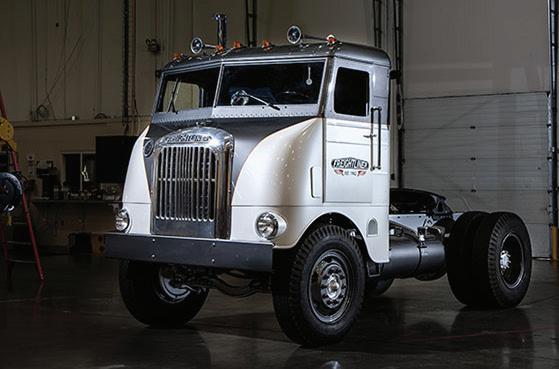
Then in 1942, James rebranded the company as Freightliner Corp. to coincide with the launch of the Model 600 “Shovelnose,” credited as the first all-aluminum cab. Aluminum production had skyrocketed as America churned out aircraft for the war effort, making the lightweight metal more practical for trucks. The new material reduced the truck’s weight by about 1 ton, allowing for more payload and less work for the era’s more modest engines while climbing the steep grades of America’s West.
Now owned by Daimler Truck North America, Freightliner’s focus on weight and efficiency has helped it remain the Class 8 market leader for over four decades.
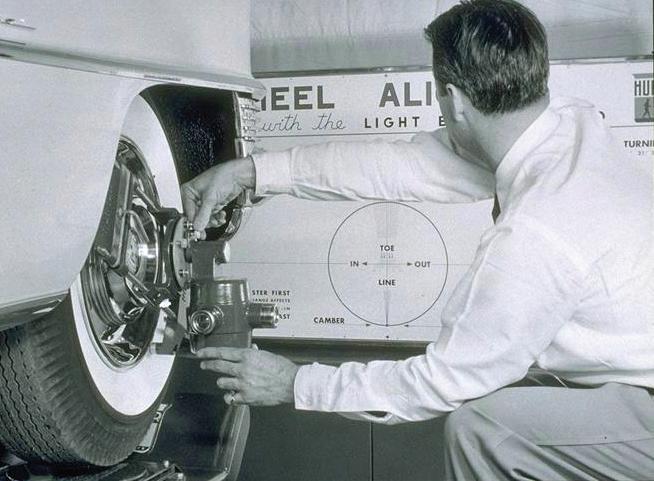
After serving with the U.S. Army Corps of Engineers during World War II, Lee Hunter Jr. returned to St. Louis and founded Hunter Engineering in 1946. Initial products included the Kwikurent battery charger and on-car wheel balancer, but the major breakthrough that made Hunter a ubiquitous name in vehicle repair came in 1955 with the Lite-A-Line alignment system. It projected light beams via mirrors onto a calibration chart, allowing techs to quickly and accurately determine measurement angles, such as camber and toe, in real time. The system transformed a time-consuming task into a relatively simple PM and became the industry standard. In 1967,
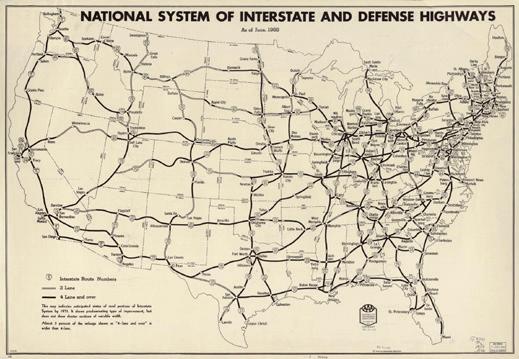
As a young lieutenant colonel fresh off the war to end all wars, Dwight D. Eisenhower was part of a military convoy that travelled from Washington DC to San Francisco along the Lincoln Highway, or present-day Interstate 80. The convoy averaged 6 mph. Being slowed by Midwestern mud and sluggish Salt Flats stuck with Ike. Then, as Supreme Allied Commander during World War II, he saw Germany’s Autobahn and how effective it was in speeding up efficient transportation.
With these in mind, as president, Eisenhower challenged America’s governors to help conceive of an interstate
Hunter expanded to the medium- and heavy-duty space by offering systems catering to larger tires and wheelbases, higher loads, and multi-axle configurations.
Products like Hunter’s HawkEye Elite, which use high-def cameras, sophisticated software, and targets that clamp to the tires, are all rooted in that first innovation.
“These solutions contribute to longer tire and component life, better fuel efficiency, lower operating costs, and increased vehicle uptime - supporting more reliable, predictable maintenance across fleet operations,” noted Hunter product manager Alan Hagerty.
system to connect the country, something the public had been behind for decades. Previous highway acts had expanded the roadways, but were overall lacking. In 1956, Eisenhower’s roughly 41,000-mile system was approved. It introduced strict design standards, such as 12-ft. wide lanes and bridges with 14-ft clearance, no traffic lights, and the numbering system. Fuel taxes initially funded 90% of construction costs, though it is now also supported by the Highway Trust Fund. The first portion was built west of St. Louis on what is now I-70. Construction on I-69, which will span from the Canadian to the Mexican border, is ongoing.
1942
Freightliner’s weight loss plan
1955 Hunter revolutionizes alignments
1956 Modern highways take shape
» Freightliner’s Model 600 “Shovelnose” Freightliner Corp.
» An early Thermo King TRU Thermo King
» Frederick McKinley Jones and Joseph Numero Thermo King
» Hunter’s Lite-A-Line used a wallmounted calibration target. Hunter Engineering
» Map of the interstate system Library of Congress
1958
Truck-Lite designs sealed marker lights
» The “super shock-resistant” Model N 40
1965
Peterbilt Model 358 tilts maintenance for the better
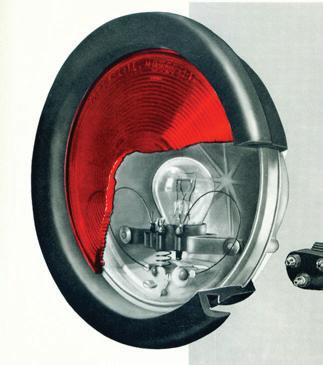
If you think trailer lighting causes issues in the shop now, imagine when lights were neither sealed nor replaceable. Moisture, dirt, and road salt slipped into the housing, causing corrosion and premature failures. Inventor George Baldwin set out to solve the problem in his Jamestown, New York, garage with partner Harry Grosser. The duo developed a fully sealed polycarbonate housing for marker lights and tested the prototypes’ moisture resistance in the kitchen sink. The tests worked, and the pair formed Truck-Lite to create and commercialize corrosion- and shock-resistant stop, turn, and tail lights. Now owned by Clarience Technologies, Truck-Lite continues to innovate with LED lighting, wiring harnesses, and systems designed to improve fleet CSA scores and reduce maintenance demands. Truck-Lite’s Road Ready trailer telematics platform builds on Baldwin’s original idea by using sensors and diagnostics to identify lighting and electrical faults before they create roadside violations or downtime events.
In 1959, Peterbilt introduced the 282 and 352 caboverengine models, which provided unprecedented access to the powertrain, as the whole cab could tilt forward. It remains the standard method for COEs. In 1965, Pete turned to making conventional trucks easier to access with the Model 358. The truck’s aluminum hood was joined to the grille, and the whole assembly tilted forward to reveal the engine, radiator, and other components, greatly improving maintenance efficiency, from an owneroperator checking fluid levels to technicians working on the engine. This one-piece-style hood was also the first to be adorned by Pete’s bird. Two years later, the design was tweaked with the Model 359 to accommodate larger, more powerful engines.
» Peterbilt Model 358 Peterbilt
1967
Mack maxes out
1985
Detroit Diesel uses electronic injection
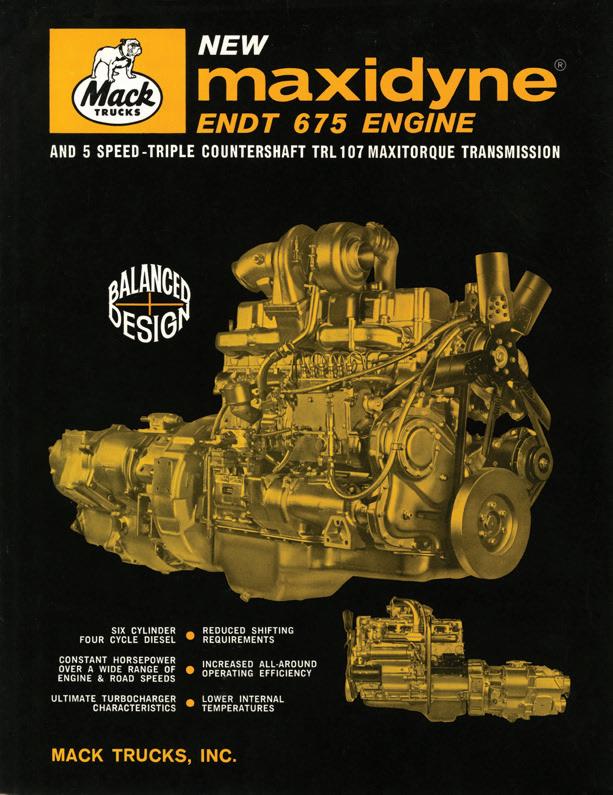
In the 1960s, diesel engines had to be kept above a certain minimum RPM, typically about 1,500, to maximize injection system performance and fuel economy. Transmissions at the time had at least 10 very close forward ratios. But as injection systems improved and engines began being turbocharged, the landscape began changing. In 1967, Mack Trucks changed everything with the Maxidyne engine concept. Doug Maney, the curator of the Mack Museum, described that the high-pressure fuel pump was redesigned so the amount of fuel injected for each power stroke was mechanically increased as the engine was lugged down, as when climbing hills or just after an upshift. This was termed “torque-rise,” as the torque increased to compensate for lost RPM as the engine lugged down. Ultimately, this reduced the need for constant shifting. This in turn eased drive fatigue and drivetrain wear, while improving fuel efficiency.
The turbocharger had to be carefully matched to the engine’s airflow characteristics and the amount of fuel, but the concept allowed the engine to develop much more torque at a lower RPM than in the past, without smoke. It all worked because the increase in fuel would raise the exhaust temperature, causing the turbo to turn fast enough to ensure the engine got more than enough air to prevent exhaust smoke even when at low RPM.
Mack’s highway trucks were then equipped with a simple, 5-speed TRL-107 transmission, a gearbox with three countershafts to handle the increased torque. This sounds unworkable, but consider this: The original Maxidyne had 222 HP at 2,100 RPM and 207 HP at 1,200 with a peak rating of 237 at 1,700, meaning the driver lost only 7% of the horsepower after an upshift. The process was further advanced by 1973. In that year, Maxidyne engines developed 300 hp, achievable with an unusual system Mack developed for cooling the intake air between the turbo and the engine.
Although the rest of the industry never went to a 5-speed gearbox, the steps on 10-speed transmissions became wider, and the 9-speed, where only 8 gears got you up to speed in normal acceleration, was introduced.
Prior to the mid ‘80s, diesel injection was hydro-mechanical. That was when Detroit Diesel, then owned by GM, put the first electronic engine control module (ECM) on a Series 92 V8 diesel engine. The ECM, for the first time, made it practical to vary the timing of injection with the more powerful camshaft-operated unit injectors used by Detroit and Cummins. The electronic processor was coupled with sensors that precisely measured factors such as engine RPM, crankshaft position, and turbo boost pressure.
The result was an engine that was more efficient, produced less particulate and smoke, and could react more quickly when the driver pressed down on the accelerator. The more precise injection produced a more responsive engine that emitted less smoke and particulates while increasing efficiency.
Fellow diesel manufacturers soon followed with electronic controls, now essential in building efficient, low-emission diesel engines.
» Detroit’s Gen 6 DD15 builds on decades of work at the engine maker, meeting 2027 EPA NOx standards while improving reliability and efficiency, DTNA said.
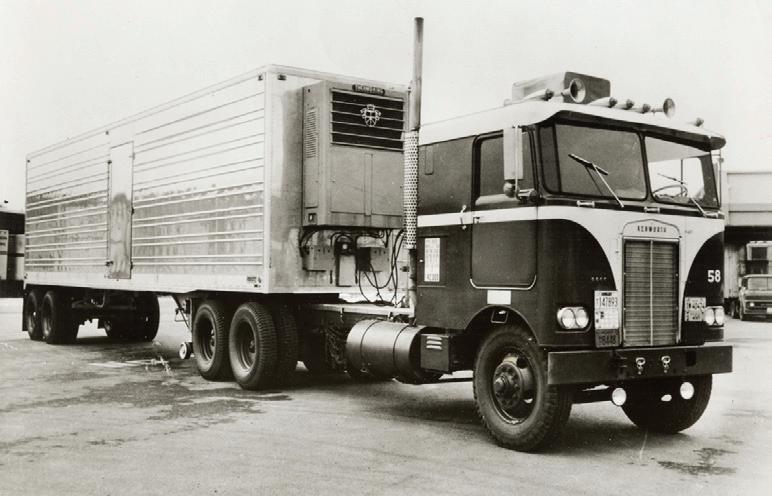
People still talk about the long lines at fuel pumps because of the 1970s oil embargo, but for truckers, the price volatility could cost them their livelihood. According to the U.S. Energy Information Administration, diesel prices doubled from 1975 to 1985. Class 8 trucks were lucky to break 5 mpg at the time. Kenworth had been thinking about the problem that whole time and how to improve efficiency.
“Sitting in those legendary lines for gas is what got me thinking about fuel economy,” recalled director of research and development Larry Orr in a 75th commemorative book for the Kenworth. “I knew we could improve fuel economy on heavy trucks by improving their aerodynamics.”
He and his team spent the next decade trying to outsmart wind resistance, using wood and wax models in a wind tunnel to divine a more aerodynamic cab. The early 80s recession slowed the project down, but the research yielded the KX prototype, which looked like a sloped cabover, with a clean angle from the shortened grille and past the windshield. Then long-nose trucks made a comeback, and Orr said the team “had to go back to the drawing board.”
They used the W900B as a starting point and introduced
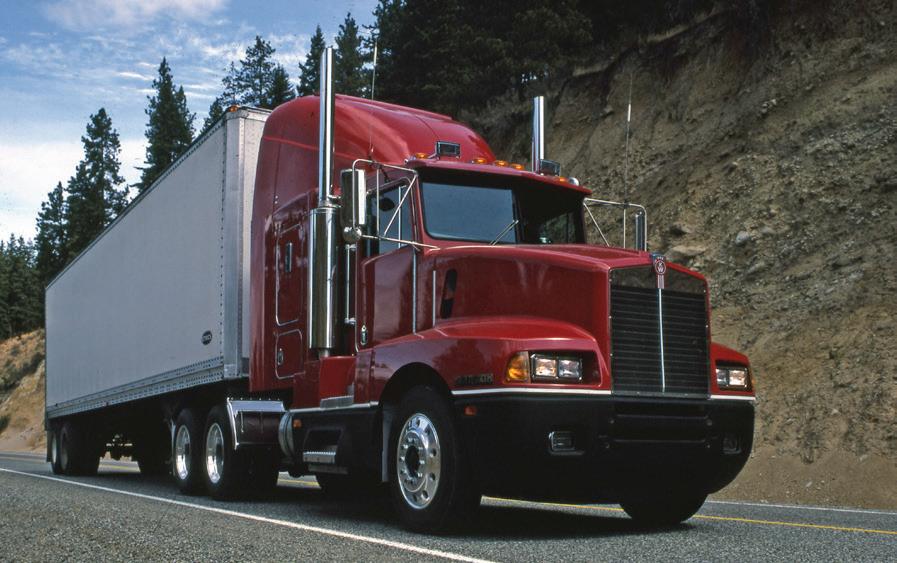
a sloped hood, lowered bumpers, side skirts, roof fairings, and a setback front axle. An air cleaner was also added under the hood. The turning radius and ride were also improved. The look was deliberately not as radical as possible, knowing the industry’s feelings on drastic changes. Testing on the new design on a track revealed it was 22% more efficient than the W900B, and despite the unconventional look, management approved the T600 project to continue. A road test from Phoenix to Miami Beach found the T600 could average 9 mpg. The truck launched in 1985 and by year’s end accounted for 40% of new business for the OEM and earned the name “Anteater,” which is far better than “Gas Guzzler.”
The dramatic design led the other OEMs to follow suit, with the Freightliner FLD and Peterbilt’s Model 372 coming out over the next few years. At Kenworth, the T600A gave way to more improvements with the T600B, such as aero side mirrors, and then the T680 in 2013. The Next Gen version, launched in 2021, added 6% better efficiency. In fact, every OEM’s new heavy-duty truck launch places aero changes and efficiency front and center, with an entire side industry dedicated to truck and trailer aero accessories such as sideskirts and wheel covers.
When it comes to trailer tires, inflation is a good thing. The lower it is, the higher the risk of a blowout. That’s a serious risk to safety and uptime. With drivers’ ability to accurately determine tire pressure during pre- and post-trips spurious at best, and nails and debris waiting to damage tires in transit, keeping tires properly inflated has been a serious industry challenge. It’s decidedly less so for those using automatic tire inflation systems, invented by Pressure Systems International (P.S.I.) in the early ’90s. The system gauges when psi drops below the fleet-designated level and forces compressed air into the tire to the desired level. Industry estimates say about 70% of new trailers are spec’d with some form of ATIS. The P.S.I.-made version is marketed as the Meritor Tire Inflation System (MTIS). The company has also gotten into tire pressure monitoring systems and telematics solutions for all commercial vehicles to esnsure proper inflation.
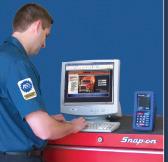
During the Depression, Glenn Mitchell and Ron Sager, Jr. worked at Chrysler’s parts fulfillment counter in Detroit. To verify the dealer customers’ orders were accurate, a struggle as parts and reference codes often overlapped, the men would sometimes reference 10 catalogs. Knowing they could improve this system, they started making a database of parts numbers and prices. This list caught on with parts counter folks, and Mitchell published the first Mitchell Manuals in 1946. It included illustrations and served as the collision sector’s first estimating guide. It would be 41 years before Mitchell Manual for Light, Medium & Heavy Duty Truck Maintenance came out, which streamlined repair in the truck aftermarket. By 1996, the ON-DEMAND Truck Edition came out on CD-ROM, seven years after the original ON-DEMAND.
A turning point came in 2004, when parent company Snapon, which acquired Mitchell Repair Information Company six years earlier, decided to expand its truck and trailer
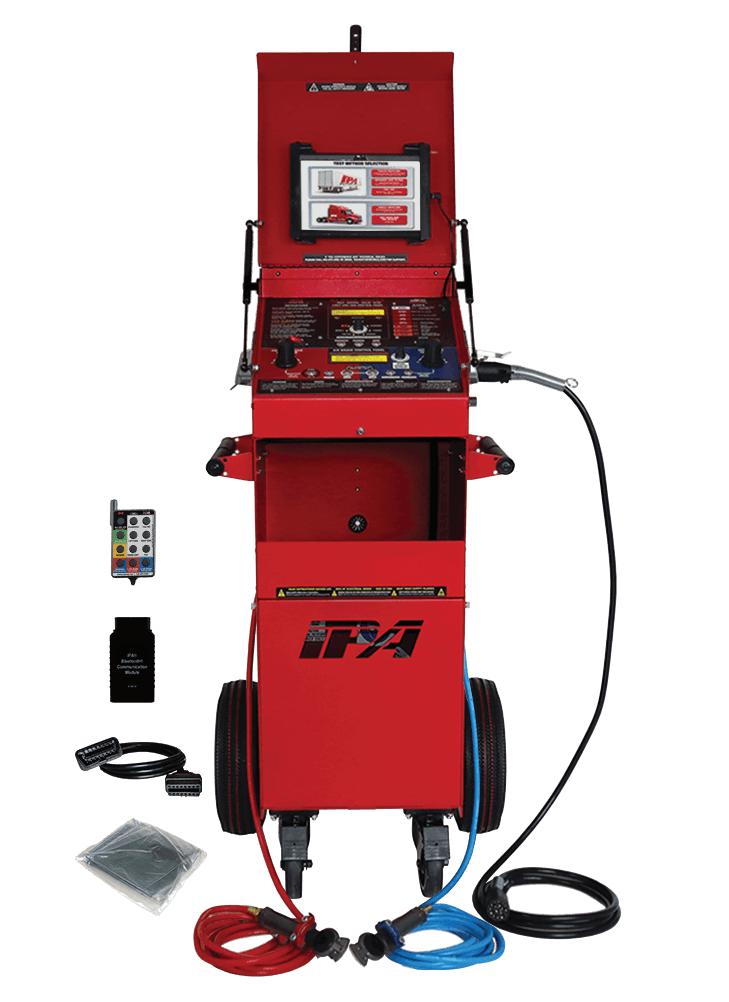
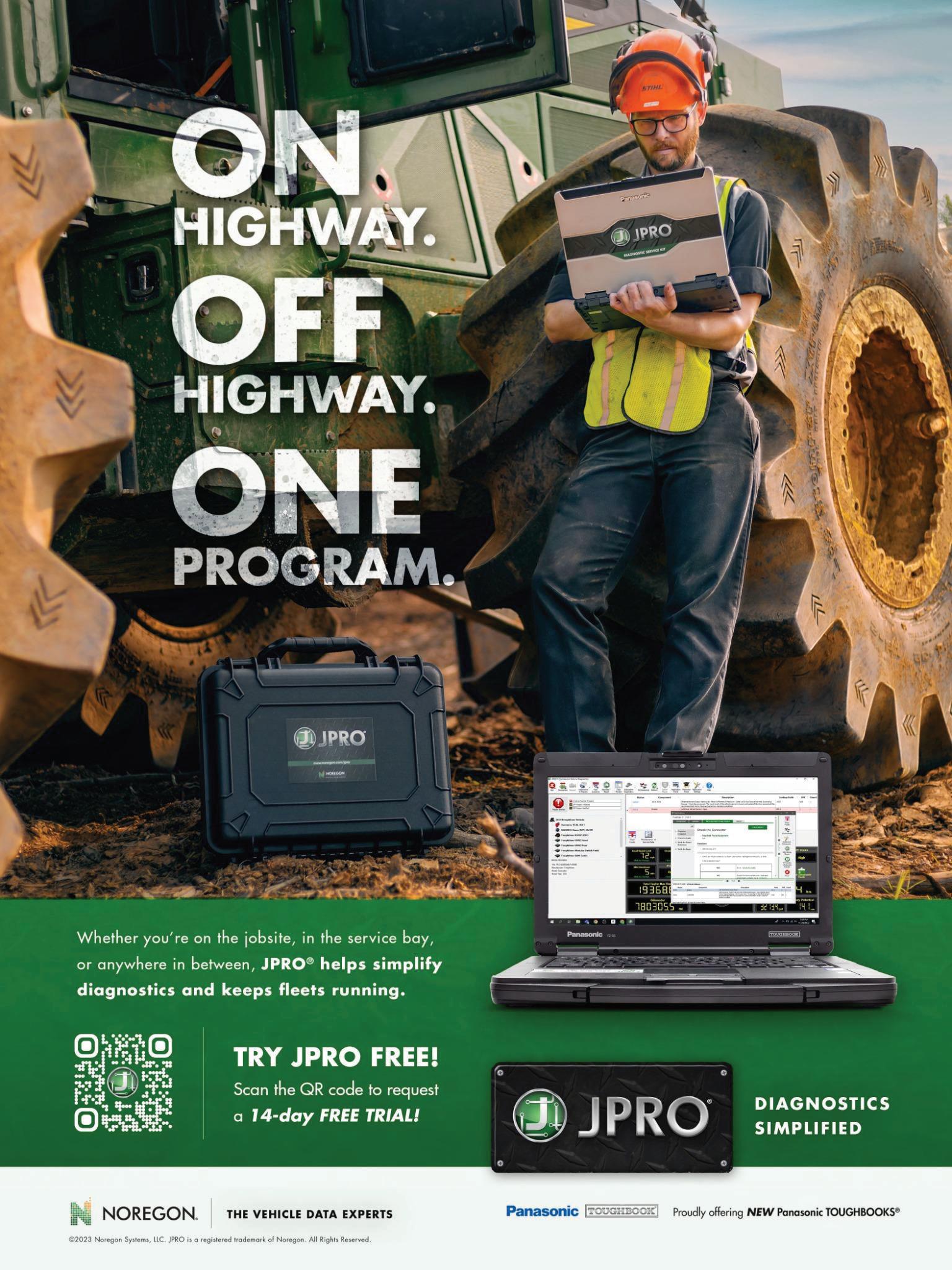
In the ’90s and early 2000s, Bill G. Hathaway was providing support products to engineers who were building J1587 and J1939 networks on trucks and developing diagnostic software for major OEs. Because more trucks started including both protocols, Noregon combined its applications around 2005 for both in one scan tool solution. The PC-based software displayed diagnostic data, faults, and a list of all electronic components on the vehicle. Most importantly, it covered all makes and models in the heavy-duty sector, so a diesel tech could diagnose Cummins, Detroit, and Paccar engines with the same tool. Before, they would rely strictly on OE tools, so when it was commercialized as JPRO in 2007, it caught on quickly.
“When JPRO was introduced, it changed how technicians diagnosed trucks,” explained Noregon product manager
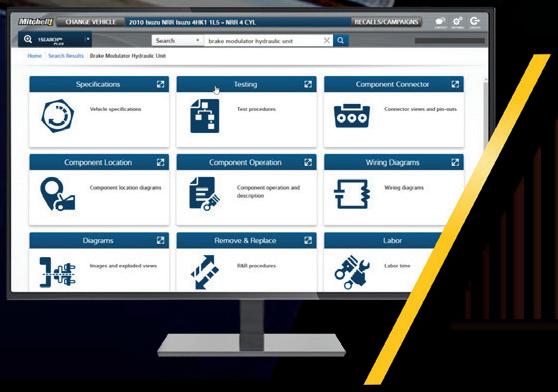
side. Dave Costantino, director of heavy-duty market development for Mitchell 1, went on a road trip across America in 2004/2005 to listen to truckers and techs at shops, truck stops, and industry events. After integrating Snap-on customer input and forming a team of 45 experienced diesel techs, Mitchell 1 launched the TractorTrailer.net database in 2006, the first web-based all-makes repair software. It was brimming with service and repair info for 3,000 different Classes 7 & 8 trucks and trailers.
“Instead of being pigeonholed in one specialty, techs now had more information to do more types of work—work that had previously been foreign to them,” explained Kristy Coffman, Mitchell 1’s director of the commercial vehicle group.
A decade later, the company rolled out TruckSeries, the cloud-based repair platform for medium- and heavy-duty trucks that provides diagnostic, repair, and labor estimating tools. Recent additions include the ability to view TMC recommended practices and interactive wiring diagrams.
Jason Hedman. “Rather than diagnosing each component individually, they finally had a tool that could read the entire vehicle without switching between a half dozen diagnostic applications.”
That same year, the EPA mandated that diesel trucks must have a diesel particulate filter, something new and untested that would add diagnostic trouble codes for JPRO to assess. And the march towards lower emissions has added increasingly complex components, such as SCRs and DEF sensors. Complexity came to safety and electrical systems, too, requiring JPRO to evolve into a full truck diagnostic solution.
“We were at the forefront of aftertreatment diagnostics just like we’re leading the charge on CAN bus diagnostics today,” Hedman asserted.
1985
Aerodynamic T600 redefines fuel efficiency
1993
Automatic tire inflation hits the market
2006
Truck repair gets boost with Mitchell 1’s Tractor-Trailer.net
» TractorTrailer.net allowed techs to quickly access repair data via the internet. Mitchell 1
2007
All-makes scan tool arrives just in time for the aftertreatment era
» An early T600
Kenworth
13 troublesome and how to resolve
Erin Brown, Generated
trouble codes resolve them
TIn honor of the 13 troublemaking colonies, we are looking at the same number of DTCs that can cause your vehicle to revolt.
By Lucas Roberto
[ DIAGNOSTICS ]
he United States now comprises 50 states and several territories, but it all started 250 years ago with 13 colonies. To King George III, they were the most troublesome in the whole British Empire. He and Parliament failed to diagnose the troubles brewing in the New World, from the Boston Tea Party to the publishing of omas Paine’s “Common Sense.”
is, of course, resulted in a catastrophic loss for the Brits. And we couldn’t be happier at their loss. But when a maintenance department fails to recognize the warning signs signaling a serious equipment breakdown, that makes us sad—and is simply something we cannot abide.
With that in mind, and to honor those 13 upstart colonies, we thought now is the perfect time to highlight the 13 top diagnostic trouble codes in trucking. ese are recurring points of trouble that show up across systems, OEMs, and duty cycles, each representing a di erent kind of operational hold-up.
However, we must note that there is no universal ranking of DTCs across the industry, no fi xed list of “most common” failures. And as Sean McGee, VP of maintenance at Samsara, notes, “the sheer volume of codes makes it hard for fleets to know which ones actually matter.”
Additionally, many common codes fly under the radar as they don’t o en result in an asset out of commission, and the records of many service management and diagnostic data companies may only include codes that result in service events.
“ e fault data we get is a subset of what is happening and only involves those situations that involve the vehicle going into the shop,” explained Rob Ziemba, VP of marketing for Decisiv.
But what does rise to the surface consistently is a handful of system-level failure categories that can quickly turn into downtime.
Based on diagnostic data and input from fleet techs and telematics providers, the following 13 DTCs represent recurring fault points across heavy-duty trucks, trailers, and refrigeration units. Each one reflects a di erent issue, what typically triggers it, how severe it can become, and what it
takes to troubleshoot and fi x it before it takes a truck o the road.
ink of them as the industry’s modern “troublesome 13”—not a ranking, but an idea of where fleets most o en have to respond when uptime is on the line.
Aftertreatment
A ertreatment systems are not only highly sensitive but constantly evolving, leading to frequent fault codes and downtime when le untreated.
“A ertreatment is the system that people have the most problems with,” said Jack Tussing, customer support and technical assistance at Cojali. “It’s changing a lot, all the time, and techs don’t really like the idea of the system to begin with, so learning about it is kind of a pain to them.”
But ignore these codes at your own peril, as they can o en result in derates and even engine failure if le untreated.
Here are many of the top codes as provided by our sources.
COMMON CAUSES: Frequent short-trip driving, EGR faults, injector issues, and use of low-quality or incorrect engine oil
RISK: Moderate → Severe (if ignored) / According to the DPF Guys, that clogged DPF creates backpressure that may force exhaust back into the engine, and cause damage to the turbocharger, cylinder head gasket, and other components, with the potential for complete engine failure .
FIX: Use a scan tool to verify regeneration history, inspect basic sensor wiring, and confirm whether the restriction is real or sensor-driven. If confirmed, perform a passive or forced regeneration based on the severity of soot overload. But as DPF Guys note, you will likely need to clean or replace the DPF itself, as regens are merely a stop-gap measure.
CAUSES: DEF quality issues, electrical faults, moisture or heat damage
RISK: Severe. According to Diesel Scanners, the issue can lead to progressive derates and speed limitations if the underlying SCR issue is not corrected.
FIX: First, check for additional a ertreatment fault codes that may identify the root cause. From there, technicians should verify DEF quality, inspect for DEF crystallization or contamination, test DEF pump pressure and dosing operation, and validate NOx sensor readings before evaluating SCR catalyst performance.
RISK: Severe. Unresolved SCR e ciency faults can trigger engine derates and reduced vehicle performance as the ECM attempts to maintain emissions compliance.
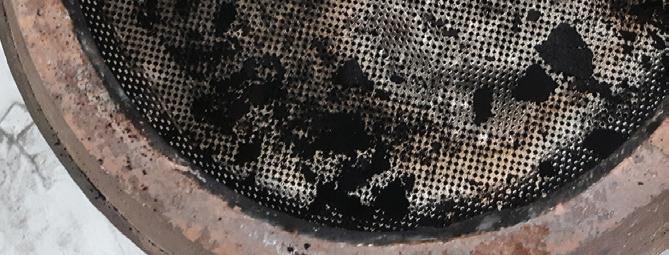
» Visible soot on the outlet side of a DPF is an indication of internal cracking. When this is the case, the DPF should be replaced.
FIX: Begin with a full DEF system inspection, including checking DEF quality and looking for crystallization or contamination. Next, test the DEF injector, verify NOx sensor readings, inspect for exhaust leaks ahead of the SCR catalyst, and evaluate catalyst e ciency if all other components look fi ne.
RISK: Moderate → Severe. According to NH Repairs, low DEF pressure can prevent the SCR system from delivering the proper amount of DEF into the exhaust stream, eventually leading to engine derates.
FIX: Perform a pressure test to confi rm whether the pump is building pressure correctly. Technicians should also inspect DEF lines and fi lters for restrictions or crystallization, check for leaks in the supply system, and verify electrical connections to the DEF pump and dosing module. e DEF pump or dosing module may require replacement if the pressure remains low a er inspection.
» Regular inspection and cleaning of EGR valves and passages is critical for maintaining emissions performance and preventing derates.
CAUSES: Electrical failure, metering module, DEF fi lter or pump
RISK: Moderate → Severe. Improper DEF delivery a ects SCR operation and emissions compliance, and the vehicle may eventually enter derate conditions if the system cannot maintain proper pressure or dosing performance.
FIX: Cojali’s Tussing said technicians should start by performing a DEF priming pump test to verify the dosing system is building proper pressure and to check for leaks in the DEF lines. If system pressure is within spec, the next step is typically a metering test to confirm the injector is activating correctly and delivering a consistent spray pattern and volume.
RISK: Moderate. When the DEF tank temperature sensor signal is out of the expected range, the SCR
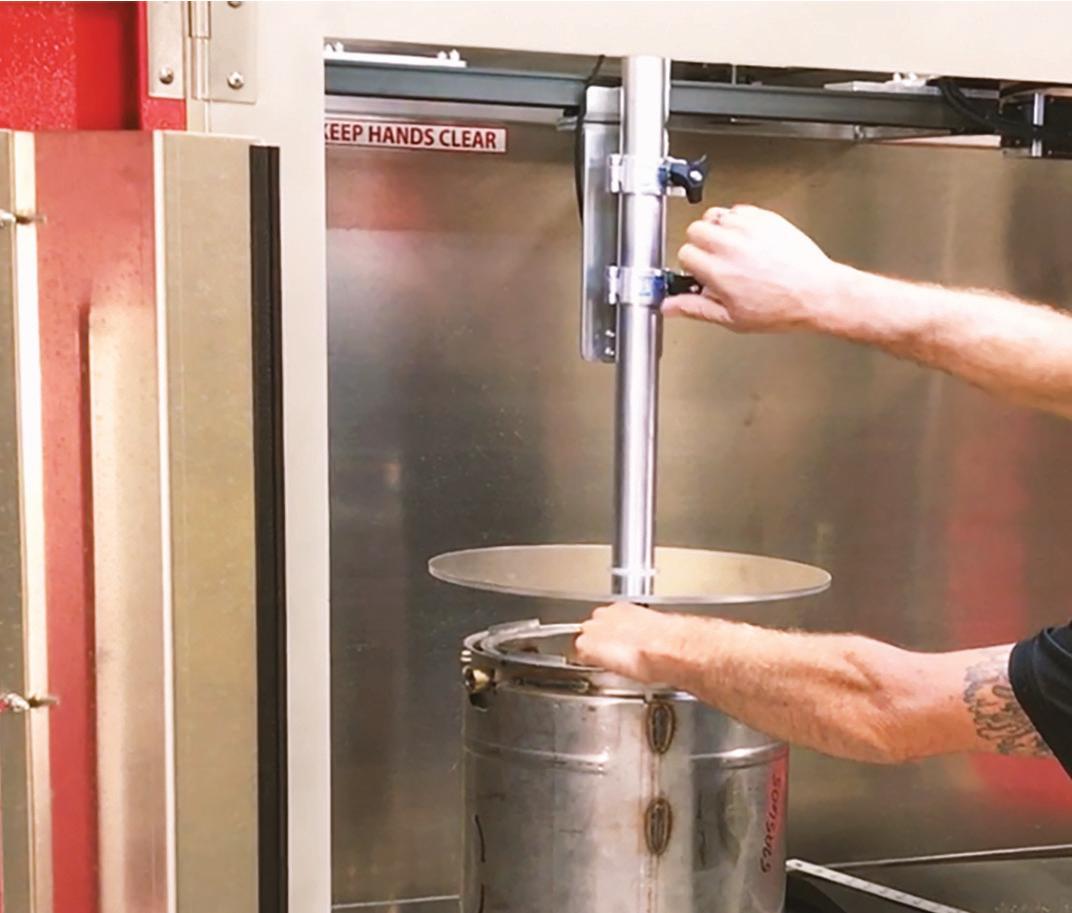
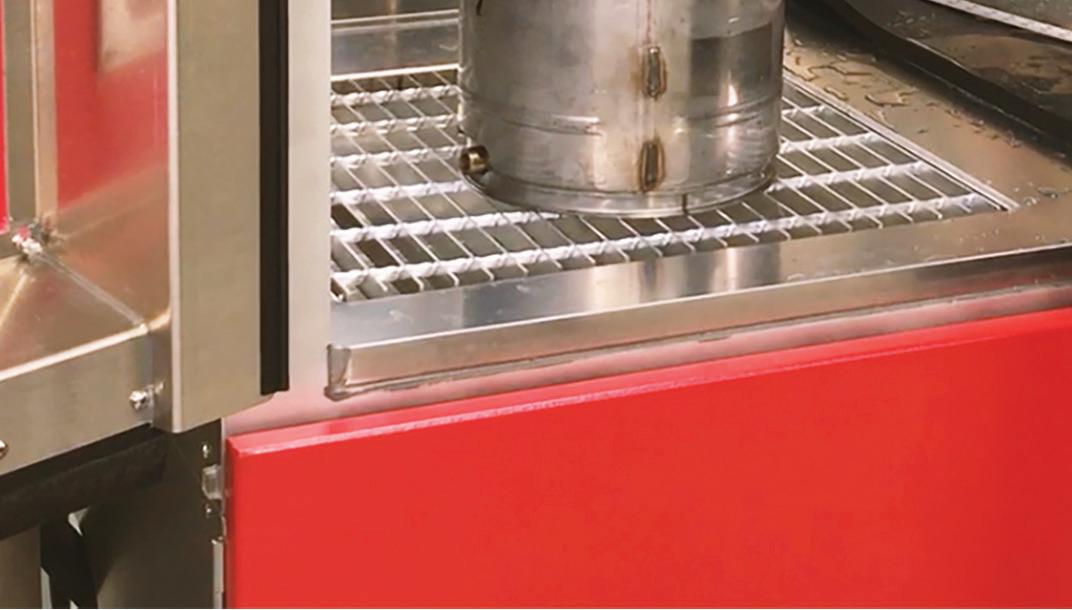
» Aqueous DPF cleaning machines, like this Filtertherm model, flush debris out of the filters and should help alleviate future soot accumulation codes. Filtertherm
Roadwarrior
dosing strategy may be disabled or reduced, potentially leading to emissions system warnings and progressive derate conditions if le unresolved.
FIX: Verify DEF temperature reading on scan tool against ambient temperature (cold soak). en, inspect the connector and harness for damage/ corrosion. Perform voltage reference, ground integrity, and continuity testing of the sensor circuit per OEM wiring diagrams, and replace the sensor or tank module if readings remain o .
Exhaust Gas Recirculation (EGR)
According to Ben Osborne, marketing communications director at Noregon, EGR-related codes are among the faults the company sees most o en, and ones “in-house techs say are o en di cult or lengthy issues to troubleshoot/ repair.”
at’s because they don’t always trigger immediate shutdowns, they can be hard to pinpoint. Here are a few specific DTCs to watch for.
RISK: Moderate. Insu cient EGR flow can reduce exhaust gas recirculation e ectiveness, leading to higher combustion temperatures, increased NOx emissions, and potential emissions-related fault codes or derate conditions if not corrected.
FIX: Inspect and clean the EGR valve and associated passages for carbon buildup. en, check intake and EGR piping for restrictions, and verify EGR valve movement and sensor feedback using scan tool data. Replace the EGR valve or related components if cleaning does not restore proper flow.
10. 1866 – EGR differential pressure erratic
SYSTEM: EGR measurement system
CAUSES: Faulty sensor, clogging, damaged wiring
RISK: Moderate. Erratic EGR di erential pressure readings can indicate unstable or inaccurate exhaust flow measurement, which can disrupt EGR rate control and lead to increased emissions, drivability issues, or fault-related engine derate if the condition persists.
FIX: Inspect the EGR di erential pressure sensor and crossover tube for faults or restrictions, Noregon advises.
RISK: Moderate → Severe. is can lead to reduced engine e ciency and cascading e ects into fuel system management and a ertreatment perfor-
mance, potentially resulting in derate conditions if unresolved.
FIX: Inspect the intake system for air leaks, including charge air cooler and boost piping. en, verify mass air flow sensor readings and clean or replace if contaminated, and check turbocharger operation and actuator response. Inspect the EGR system for abnormal flow that may be a ecting intake air measurement.
REFINING WHAT MOVES THE INDUSTRY FORWARD.
The Detroit® Gen 6 engine platform proves that real progress doesn’t require a complete redesign. Built on 20 years of trusted technology, these engines are designed for efficiency, stronger performance, and greater reliability than before. And they do it all while complying with 2027 EPA standards on every mile.
Production of the DD13® and DD15® will start in January 2027, while the DD16® will follow with all the same upgrades in 2028.
Fuel system
Along with a ertreatment, Samsara’s McGee pointed to fuel system codes as some of “the most prevalent and consequential” for heavy-duty trucks.
“Le unaddressed, these codes can trigger derates, inducements, or even a full vehicle shutdown, turning a manageable maintenance issue into a costly operational disruption,” he explained.
When fuel system codes appear, they tend to demand attention quickly. Issues tied to fuel rail pressure can lead to immediate performance problems, from power loss to full derate conditions. e challenge is diagnosis.
According to Tussing, what looks like a major component failure can sometimes trace back to something simpler, like air intrusion in the fuel system or a wiring issue a ecting sensor readings, making proper diagnostics essential.
7. P0087 – Fuel rail pressure low
SYSTEM: High-pressure fuel system
CAUSES: Weak li pump, clogged fi lters, injector leak-o
RISK: Severe. Low fuel rail pressure can quickly lead to loss of power, drivability issues, and engine derate conditions.
FIX: Start with fuel fi lters and replace if service interval is due or contamination is found. Check for air in the fuel system and verify li pump operation. en, perform a fuel return test on injectors if the pressure is still low. If supply and injectors test fi ne, inspect the high-pressure pump and related control components.
8. SPN 1077 FMI 0 – Fuel rail pressure high
SYSTEM: Fuel system
CAUSES: Rail sensor faults, air in the fuel system
RISK: Moderate → Severe. High fuel rail pressure conditions can lead to rough running, poor drivability, and potential engine protection events, including derate, as the ECM attempts to bring pressure back within safe operating limits. FIX: Start by verifying that there is no air in the fuel system, according to Tussing. “ is can be confi rmed with a sight glass installed in the fuel system at a di erent location,” he explained. “If no air is found in the system, then we would want to make sure that we are not getting incorrect readings due to a wiring issue.”
Electrical / communication
Isolating electrical and communication faults may prove challenging as they don’t always point to a single failed component. A J1939 communication fault, for example, can stem from anything from damaged wiring to a failing module.
As Tussing noted, these faults are o en low severity and may not immediately show symptoms or impact the vehicle’s operation, o en more of a nuisance than a failure.
12. J1939 communication fault (SPN 639-type)
SYSTEM: Vehicle network
CAUSES: According to Tussing, the root cause is typically a damaged wire or a module/component that is causing interference in the CAN communication channel.
RISK: Low → Severe (depending on a ected components). e issue can range from minor intermittent data loss to critical loss of communication
» Wiring diagrams, multimeters, and diagnostic software can help isolate electrical issues. Mitchell 1
with essential engine or a ertreatment modules. If key control modules are a ected, the fault can escalate quickly into engine derate, shutdown, or loss of vehicle functionality due to missing or corrupted network data.
FIX: First, determine “if there are any other fault codes that will help narrow down the modules/ components that are involved,” Tussing said. “ e next step would be to start checking CAN wiring between modules/components for incorrect voltages/resistance. is will help isolate the issue to determine the root cause.”
Trailer systems
Decisiv’s Ziemba noted that brake-related systems frequently rank among the top VMRS categories seen in fleet maintenance data. Within that category, the company’s VP of product enablement Robert Nordstrom added that what technicians typically encounter in brake-related faults is more about electronic components tied to ABS systems.
“Hard parts on brakes don’t fail very o en, but the electronics around them, like the tone wheels, the ABS sensors, the ABS control unit, the sensors in the air system, those are what tend to fail.”
CAUSES: Damaged wheel speed sensors, ABS modulator faults, or chassis wiring issues can trigger trailer ABS faults and illuminate the ABS warning lamp.
RISK: Moderate (inspection failure risk). ABS wheel speed sensor faults can disable proper wheel speed monitoring, which may
result in loss of ABS functionality and reduced braking stability in certain conditions. While base braking remains, the trailer may be placed out of compliance and fail safety inspections if the ABS warning lamp remains active.
FIX: Sensor replacement, wheel-end inspection
— If troubleshooting indicates that the basic ABS components are not malfunctioning, then it could be chassis wiring or other complex issues that
would require in-depth troubleshooting to get to the root cause, according to Bendix.
*Fault code descriptions are based on SAE J1939 SPN/FMI definitions and OEM service information, supported by data from diagnostic platforms
For related content go to FleetMaintenance.com/in-the-bay
70 YEARS OF LEGACY. ONE POWERFUL FUTURE.
Independents Salute
Early Americans’ rebellious spirit lives on with independent shop owners, entrepreneurial underdogs who run things their own way to better serve their fleet customers.
By Gregg Wartgow
[ MANAGEMENT ]
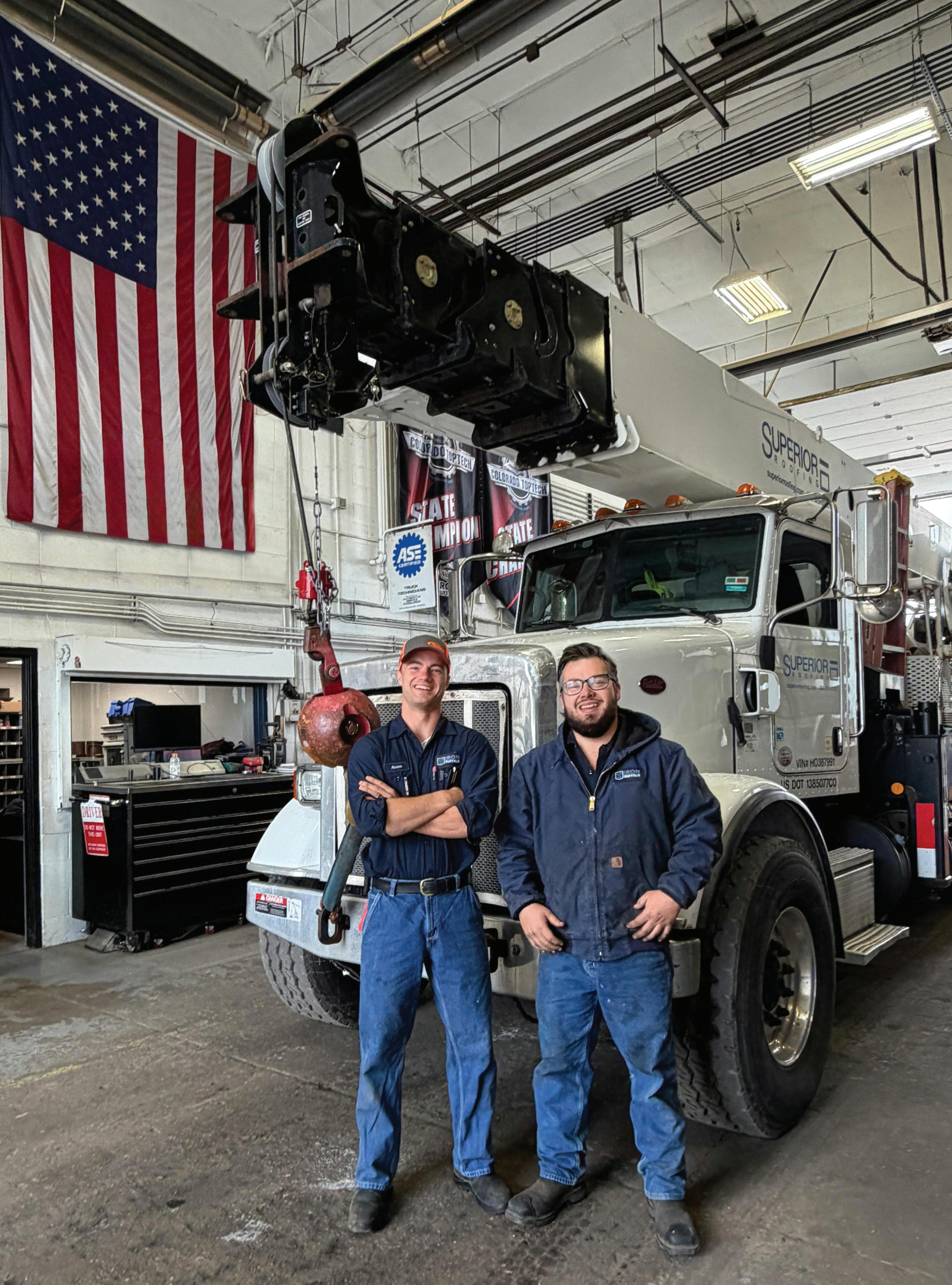
» Independent shop Iron Buffalo has
as Aven Blozen (left) and Brayden Walker (right) to
In a private letter sent to James Madison from Paris in early 1787, omas Je erson wrote (in Latin): “I prefer the tumult of liberty to the quiet of servitude.”
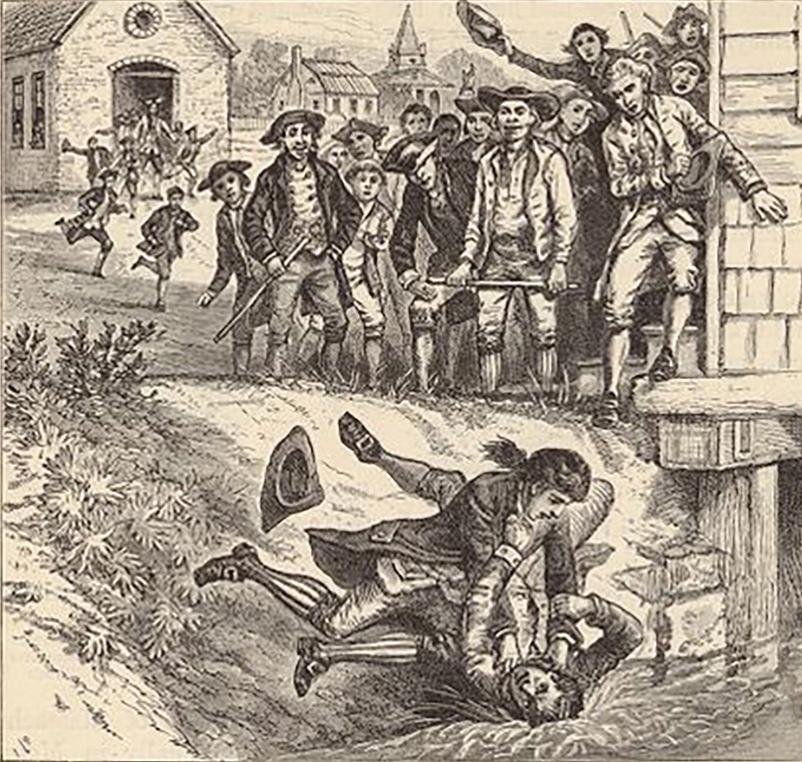
e Declaration of Independence’s lead author was referencing a recent civil uprising known as Shay’s Rebellion [see footnote], to diplomatically debate Madison, who was at the time working on the framework for what would become the U.S. Constitution.
Je erson was advocating for America to maintain its spirit of independence and warning how centralization leads to complacency and corruption. Madison, as a Federalist, realized the new country required a strong core for logistical e ciency and defense.
Since taking e ect in 1789, the Constitution has imbued both philosophies with personal freedom and federal power reaching some semblance of equilibrium via checks and balances. e vehicle repair sector has struck a similar compromise. e centralized large dealers get their marching orders from the OEMs, with streamlined training and the latest technology and tools to ensure quality and reliability. Meanwhile, the independent shops have the freedom to run things their way, as tumultuous as that can be sometimes. Without them, many communities would not be served, and without the competition, large companies could charge whatever they want and pay employees far below what they are worth.
In this fight for freedom of maintenance, not all indie shops survive, but those that do profit greatly and realize the elusive American dream. And for commercial vehicle customers, having that decentralized option available comes with plenty of advantages, too.
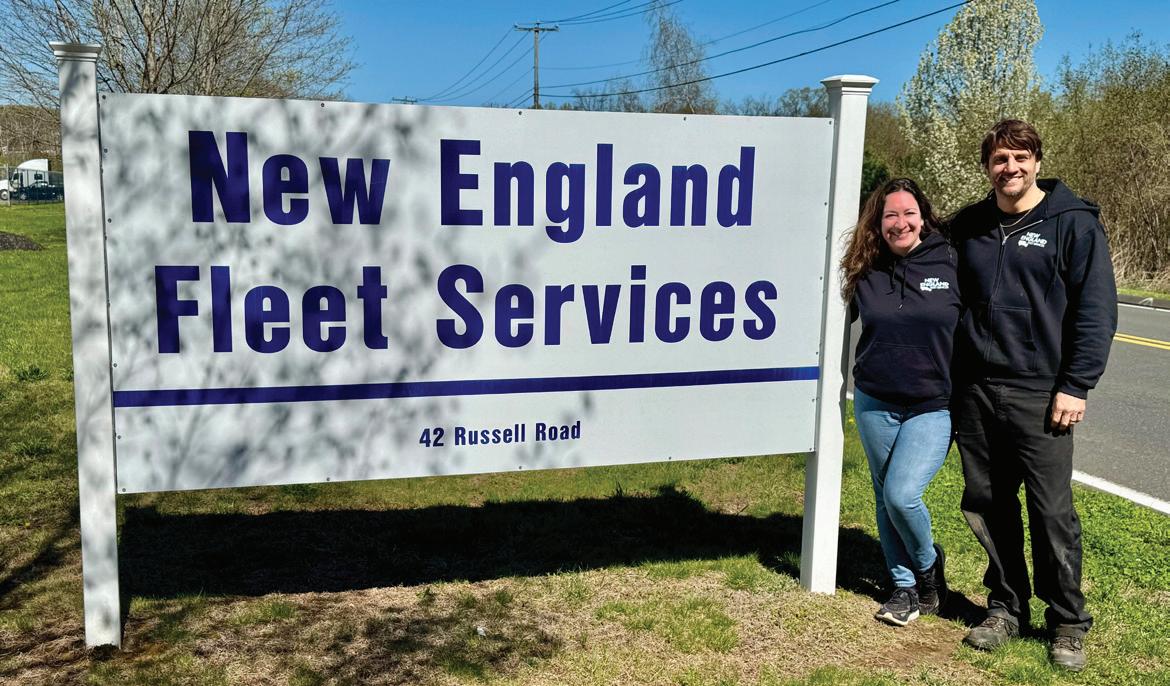
Take New England Fleet Services in East Granby, Connecticut, for example.
“Being an independent, especially one our size, allows us to provide a personal touch that a lot of large companies can’t,” shop owner Nate Taylor said. “Because we’re not a huge dealership or national repair company, we don’t have layers of management. at makes it easier to tailor our processes and services to meet customer needs.”
Unlike an operation with a rigid approval process, if a customer asks Taylor to pick up a vehicle rather than drop it o , he has no chain of command to answer to, providing more flexibility for fleets.
“We can make those decisions on the fly, o en at no charge to the customer, because we don’t have to get several approvals,” he o ered.
Flexibility is not the only advantage, as the sector faces battles on all fronts, from hiring to available funds to keep up with technology. But as the shops we spoke with prove, they have inherited the courage of Americans such as Capt. John Paul Jones, who even on a sinking ship will roar, “I have not yet begun to fight!”
The battle for technicians
As real as the technician shortage continues to be, with the American Transportation Research Institute fi nding two-thirds of shops are understa ed, independent shops have found their
cozy size a real advantage, such as e Service Company, which operates five Ohio locations in and around Dayton and Columbus
“We still have the ability to feel like a family business,” said Luke Todd, president of e Service Company. “We actually have some technicians who came from dealerships that lost that kind of atmosphere when they got wrapped up in consolidation and got a lot bigger.”
Dick Bascom, founder and owner of Bascom Truck & Auto in Des Moines, Iowa, has also had technicians come to his shop for the work culture. Sometimes they had worked for him in the past, only to leave for a “promotion” at a dealership or fleet.
“A big part of why they return is that our management team is right here in the building,” Bascom said. “If an employee ever has a problem, they don’t have to jump through a bunch of hoops to get it handled. ey know which o ce to go to.”
ose o ces are occupied by Bascom’s children, who now run the business: Mike Bascom, general manager; Mandy McWilliams, vice president of fi nance; and Mandy’s husband, Ronald McWilliams, service manager.
Shay’s Re ion
» Jessica and Nate Taylor decided to go all in on starting a new business in 2015. Today, they have a 10,000-sq.ft. shop, four mobile service trucks, and six technicians, with room for additional growth.
New England Fleet Services
Unlike a large dealership that runs every minor change through a chain of command, the Bascom family can respond with the speed of a Minute Man.
“If anybody ever has a question, concern, or suggestion, all they have to do is walk in and talk to us,” Mandy related. “And if they have a really good idea, we can move quickly.”
She explained that a few years ago, the increased demand for techs had placed “pretty intense wage pressure in the market.” Bascom’s techs were asking about higher pay, too, so Mandy said the company immediately “did the necessary research and fi nancial planning to determine what our local market was.” And because they didn’t have to wait for corporate approval, during which these valued employees could leave for better pay, the shop was able to “give significant raises to our employees right away instead of waiting for the annual review/ raise that was still months away.”
With the owners on the shop floor, they can also hear and respond to issues a ecting productivity and tech satisfaction. Mandy noted that while chains and dealerships have certain rules in place regarding the purchase of costly tools
There’s a lot to unpack in this seminal moment in America’s history, when it was young, poor, and largely unorganized, but here’s the short version: Massachusetts, like many other former colonies, passed legislation to tax the people, many of whom were Revolutionary War veterans and struggling farmers, to pay the state’s war debts and honor bond notes. If they couldn’t pay, their land was forfeited and they could end up in debtor’s prison. These vets would likely have had the money, but had to sell their promissory notes from the war for pennies on the dollar just to get by to wealthy investors and merchants. These elites included the lawmakers who wrote the legislation and would recoup the full value of the bonds.
Capt. Daniel Shays, a farmer who fought at Bunker Hill and Saratoga, took issue with this arrangement, which was happening across the newly formed union, and led an uprising to block courthouses from processing debts and foreclosing on farms. These protests escalated into violence, culminating in a failed attempt to take the Springfield Armory, where four protesters were killed and 20 wounded.
This event motivated a concerned George Washington to return to public service and exposed the Articles of Confederation as weak, leading to the drafting of the U.S. Constitution. Though James Madison and other Federalists labelled these farmers as anarchists and worse, Shays and his allies were ultimately pardoned. — John Hitch
The New York Public Library Digital Collections
to perform certain jobs—with decisions made by someone in an o ce far away—that’s not the case at the family shop. “We can see that need and respond by buying the necessary tool immediately if our shop needs it,” Mandy said.
When Iron Bu alo was starting out, it made a big splash with employees by o ering generous productivity bonuses, with the year’s top earner winning a trip for two. White and co-owner Mike Schwarz weren’t expecting the winner to pick Hawaii, nor had they budgeted for such an
expense. White thought the tech would choose going to a NASCAR race. But that is where the top tech wanted to go, and a deal is a deal. e shop made it work fi nancially instead of looking for a loophole that a corporate legal or accounting department would likely exploit.
White called the decision a “no-brainer, considering “the amount of revenue that tech is responsible.” at same tech won the next year as well, again choosing the Aloha State.
Enter Jaziel Espinoza, who started a paid
The United Shops America
Much like how the 13 colonies determined that the best way to achieve lasting independence was to unify, some independent truck repair shop owners are finding that strength in numbers is their best way forward, too.
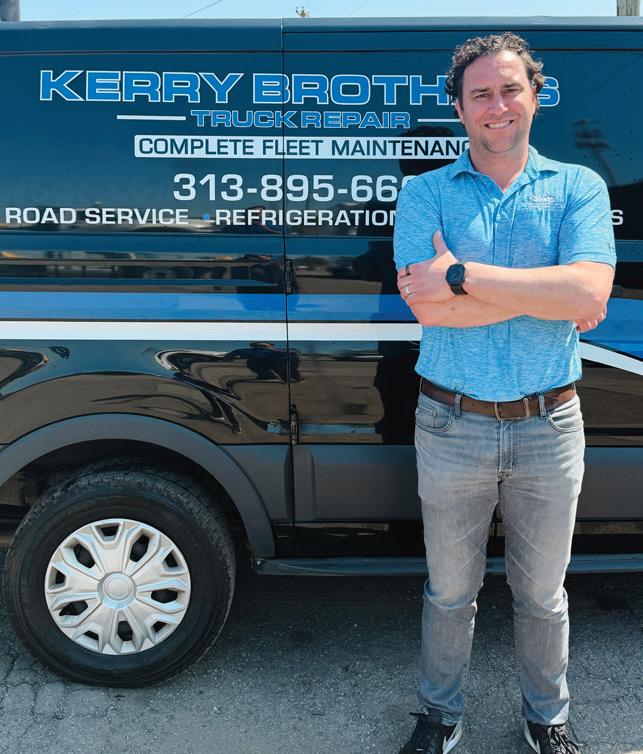
Joining a national network like HDA Truck Pride’s Truck Service Experts, which Luke Todd of The Service Company in Ohio has done, is one option. Some shop owners, including Todd and Bill Kerry of Kerry Brothers Truck Repair in Michigan, have found that acquiring other shops can be an efficient way to scale a business. But not all shop owners are in a position to be running around buying other shops. For some, becoming the acquiree is the best way forward — and private equity is a logical buyer for those who aren’t ready to retire.
Chandler Kohn, who leads Focus Investment Banking’s heavy-duty parts distribution and service practice, said many private equity-backed acquisitions want the business owner to roll a percentage of their own equity into the new venture. Furthermore, they like the owner to stay on and help run the business and continue growing it.
True North Fleet Services is an example of this strategy playing out. As of mid-April, they had acquired six repair businesses in an area stretching from Texas to Pennsylvania. True North doesn’t like to use the term “acquisition” though.
“Some investment platforms write a check and take the keys,” said Gary Price, CEO of True North Fleet Services, which is supported by Garnett Station Partners, a New York-based principal investment firm. “We, on the other hand, want to partner with each shop. We believe each shop has its unique culture and has built relationships with customers and vendors.”
As the old saying goes, why fix what isn’t broken? Rather, True North Fleet Services focuses on the areas of a repair business that typically need fixing. This is how private equity investment can help successful shop owners break through the four biggest barriers to next-level growth.
1. Business complexity. The first thing an investor-backed platform brings to the table is capital, which will help a shop purchase the diagnostic tools, mobile trucks, etc., needed to keep pace with new technologies and evolving market needs.
2. Labor. The infusion of capital can also help with developing and deploying recruitment campaigns. In the case of True North, Price said there is a team of recruiting experts in place with vast experience in the medium- and heavy-duty repair industry. Likewise, investor-backed platforms can generally also offer more in the way of training.
3. Rising costs. Costs for just about everything have continued to climb, which puts the typical independent shop at a disadvantage when it comes to scaling. “When you’re part of a larger platform, you inherit some buying power,” Price pointed out.
4. Community. Becoming part of a larger platform also gives shop owners, along with their employees, an opportunity to collaborate and draw from a massive pool of collective experience and knowledge.
“All shop owners know it’s important to do these types of things; they just don’t have the time and resources to see it through,” Price said. “Being part of a larger platform gives shop owners a lot of thought leadership and industry experience to lean on. Then don’t have to try and do it alone anymore.”
internship his senior year of high school. All the older techs took a shine to Espinoza and wanted him to assist on their work. Espinoza watched and listened, quickly moving up to mobile tech a er about two years. Because he could bill about 20 hours a day just taking care of 18 truck tire replacements, he shot up the rankings. en White told him he was close to fi rst, and Espinoza, who “always wants to be the best in everything,” said he cranked it up a notch that fi nal quarter.
He did choose a race—the F1 Grand Prix in Monaco. It was a dream come true for Espinoza and his girlfriend, and Iron Bu alo has a bond with one of its most promising techs as strong as steel. Espinoza, on pace to get his ASE Master certification for heavy duty by the time he is 27 thanks to the training path he was put on, noted White and Schwarz made sure to establish “a human connection” with him, and always stress that “if you’re winning, they’re winning.”
Training in general can be another employment di erentiator, because it takes a serious commitment for an independent shop to provide it.
“We are able to buy most of the OEM so ware we need now, so that part has gotten easier through legislation (Right to Repair),” said Mike Bascom. “But it’s still a challenge to get the appropriate information, be it troubleshooting trees or dealer-level training. And we’re not talking about getting some kind of certification. e knowledge is all we want.”
To access the knowledge, Bascom has flown techs down to Tritech’s diesel tech school in Texas. is is something Todd at e Service Company in Ohio has also found value in.
“Tritech puts on some really good classes,” Mike Bascom said. “But we’ve also recently learned about a couple of other options out there, so we’re looking into those as well, because independent shops like ours need this high-level training to keep up with new technologies.”
Marshalling new recruits
A family-oriented work environment, coupled with compensation that is on par with dealerships, puts independent shops in a good position to attract great talent. Some shops are then making an extra e ort to ensure a more stable talent pipeline.
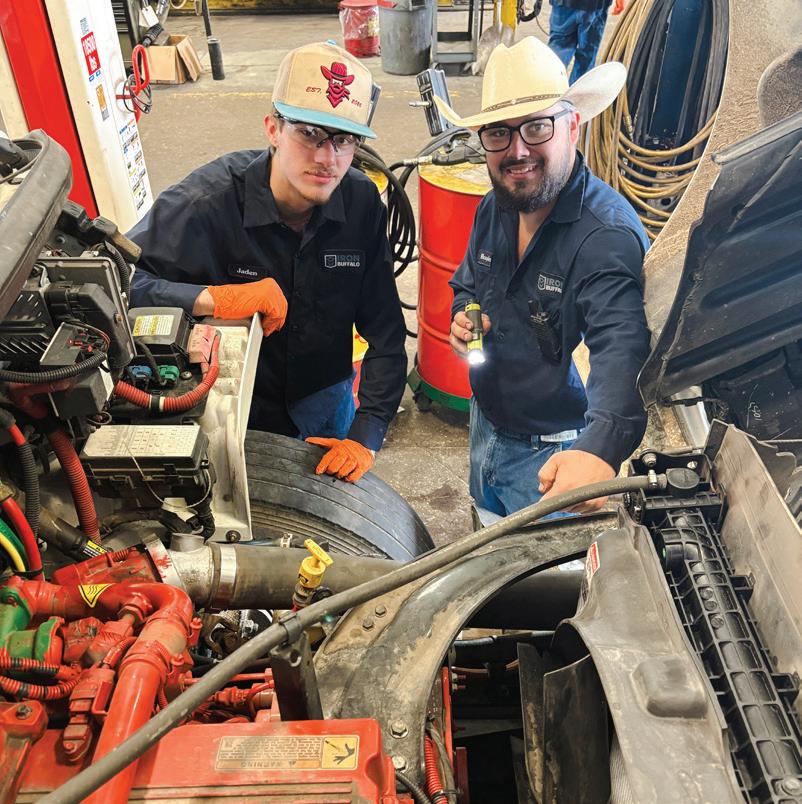
For example, Iron Bu alo Truck & Trailer Repair has embedded itself in the area’s high schools, which has enabled the development of a highly e ective internship program.
“You can’t just go to a teacher in May and say, ‘I need a couple good students to hire this summer,’” White related. “Because we are so involved in the schools, building relationships with teachers and helping teach classes, I already know who the top students are. We also have a lot of support for our internship program.”
Iron Bu alo budgets for three interns a year, matching whatever wage those students could earn working other part-time jobs. Interns also get academic credit for working in one of the shops. Hours are capped at 20 a week during the school year. en, interns are given an opportunity to work all summer. “Every intern we’ve had has
True North
taken us up on this offer,” White said.
Aside from one who moved to Texas, every intern is also still with Iron Buffalo today. In fact, Iron Buffalo’s top biller in 2025 was Jaziel Espinoza, who interned his senior year in 2022. The mobile tech
“We don’t have a technician shortage at our company,” White related. “We have really good technicians from top to bottom. Plus, we’re a really young shop. It can be done. You just need to be willing to put in the work with the schools.”
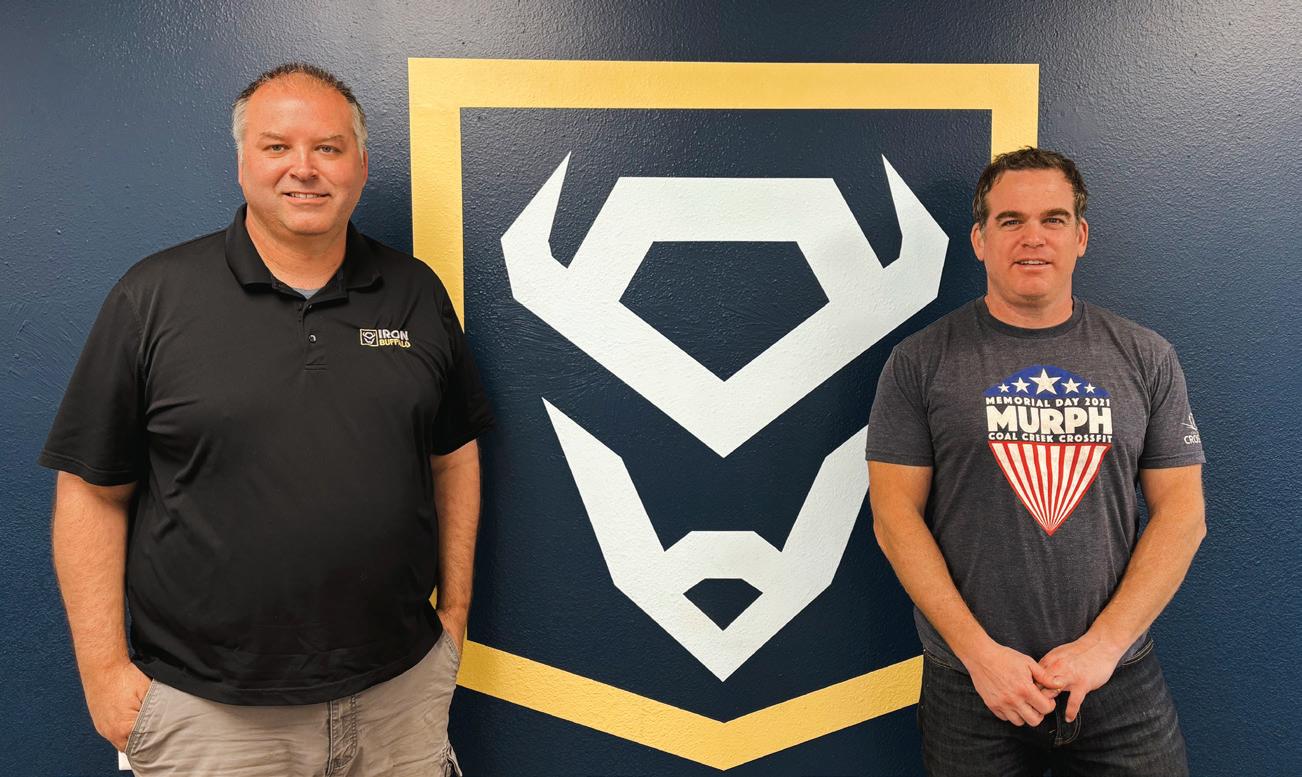
» Austin White (left) and Mike Schwarz, owners of Iron Buffalo Truck & Trailer Repair, have locations in Commerce City, Colorado, and Kalispell, Montana.
Iron Buffalo Truck & Trailer Repair
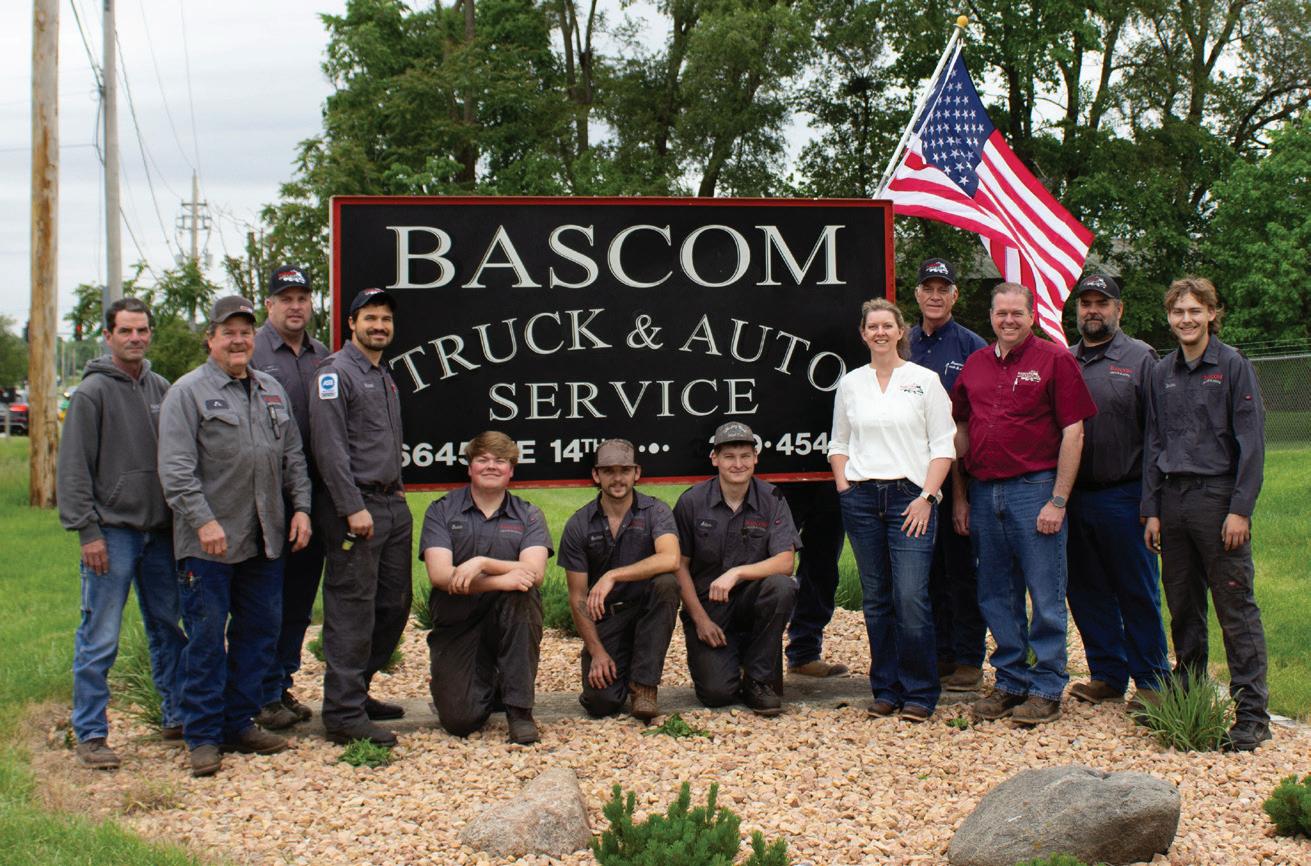
» You can’t get more Middle America than family-run Bascom Truck & Auto, located in Des Moines, Iowa. And the Bascoms’ strong culture has brought back technicians who missed it once they left.
Bascom Truck & Auto
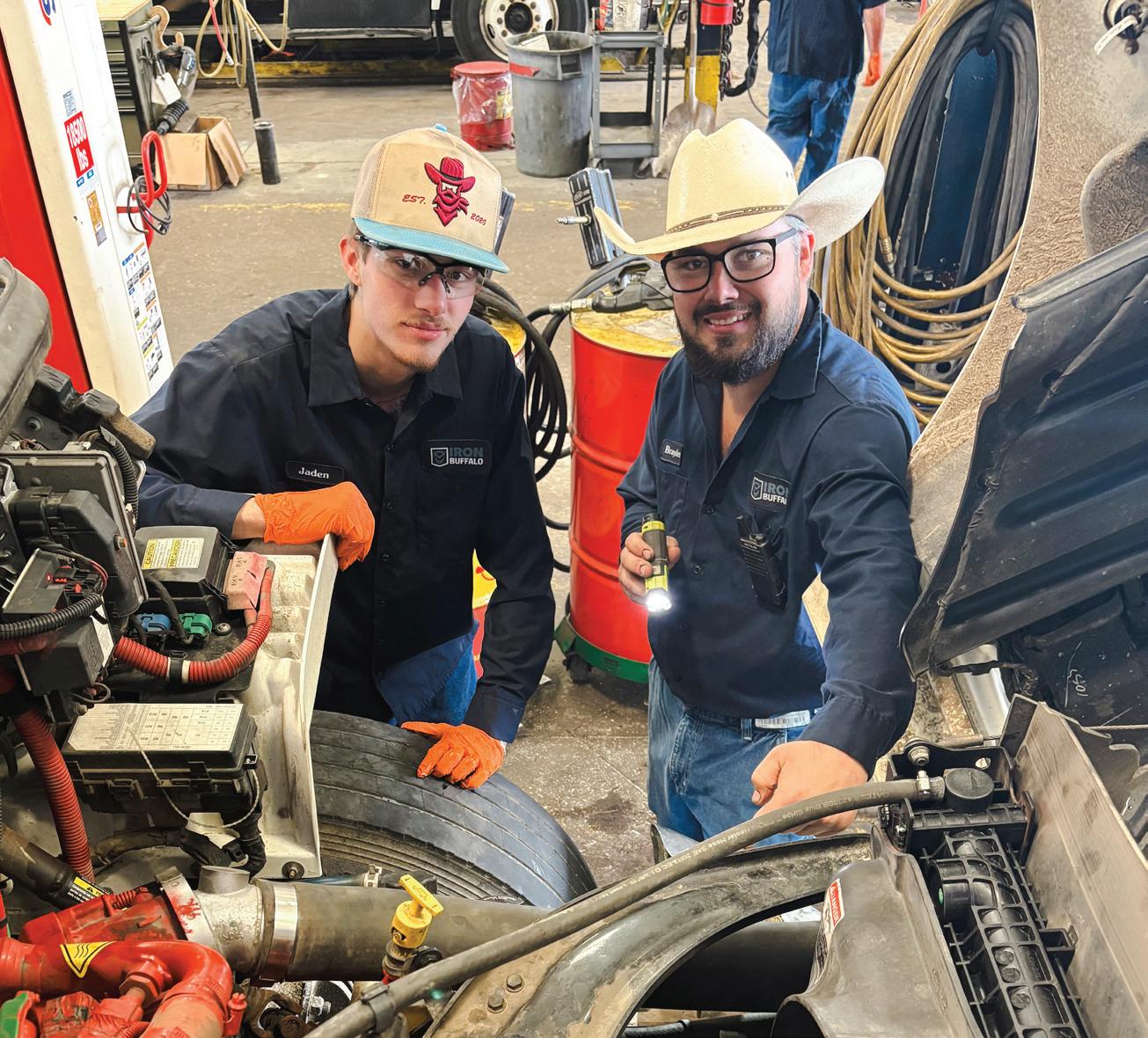
» Iron Buffalo Truck & Trailer Repair has worked hard to partner with local schools and develop a highly effective internship program. Pictured here are intern Jaden Eslick and lead technician Brayden Walker.
Iron Buffalo Truck & Trailer Repair
SOME COMBINATIONS MAKE MORE SENSE THAN OTHERS.
ffihffi ffiuffil ffiffiffiffiffiffiffiffi ffiffi ffiffiffiffiffiffiffi® Effigffiffiffi Offils affid thffi hffiavffi-dutffi prffitffiffitffiffiffi ffiffi Mffistffik® ffirffiasffis arffi a smar t ffiffimbffiffiatffiffiffi tffi savffi ffiffiu tffimffi affid mffiffiffiffi L t it.
The customer front
Attributes like flexibility only matter if a shop has customers. Due to recent changes in the market, some shop owners have adapted their approach to sales and marketing.
“Customers have less money to spend than in years past,” said White. “We need a bigger market share to continue growing like we want.”
To that end, White and his business partner, Mike Schwarz, have become more focused on business development. ey’ve joined some local chambers of commerce and have gotten involved in the Colorado Motor Carriers Association. ey’ve also hired a sales director and three outside salespeople.
“ ey’re out selling services and building relationships every day,” White said.
Over in Ohio, brothers Luke Todd and Zeb have observed a change in market complexion.
“We’re not seeing as many owner/ operators as we did years ago,” said Luke Todd. “A larger share of our customers are businesses that have smaller fleets, like a furniture company with some delivery trucks.”
According to Todd, what may have been a benefit in the eyes of a truckload owner/operator may not be as important with these small business fleets.
“Owner/operators are in their vehicles every mile they are driven,” Todd said. “ ey know when there’s a little rattle somewhere and what maintenance is needed. at’s not always the case with small business fleets. Some don’t even know that something like an air dryer cartridge must be replaced on a certain schedule.”
at means e Service Company can’t just wait for customers to come to them. Todd said his company is now functioning almost like an internal maintenance department for a small business. ey’re tracking and predicting maintenance needs, and they’ve added a couple of account managers to help do it.
“It takes that level of interaction to make sure we are staying on top of all the things that need to be done if the customer is literally trusting us to keep their fleet moving,” Todd said. Up in Michigan, Kerry Brothers Truck Repair has also been adapting its approach to servicing small business fleets.
“We want to make it as convenient and cost-e ective as possible to have us manage all of their maintenance,” said Bill Kerry, president of Kerry Brothers with five locations in the Detroit area. “We don’t even bother with estimates for these types of customers anymore. We go through everything front to back. en we’ll tell the customer what’s going
on and determine if it’s worth spending the money to get that truck fi xed.”
By positioning itself as more of a fleet manager than simply a repair shop, Kerry said it’s easier to build trust and loyalty — even if it could jeopardize some immediate revenue.
“We talk to customers about their growth plans for their businesses,” Kerry said. “If they plan on exiting their business in a year or two, maybe we’ll just put perfume on a pig. But if they plan to continue operating their business, we’ll explain how it’s not a great idea to keep running that old vehicle. We try to take a holistic approach to helping fleet customers best manage their costs and uptime.”
Manifesting destiny
Kerry Brothers, e Service Company, and Iron Bu alo are all in expansion mode, which some believe is necessary to the future survival of independent repair shops. New England Fleet Services isn’t quite there yet, although expansion is something Taylor has his eye on as his single-location company continues to add customers and grow revenue.
Preserving cash flow as the business grows is now imperative, so Taylor has begun using a third-party billing company for the routine maintenance work he does for larger fleets. e billing company buys Taylor’s receivables
for a 3% cut and then collects payment from Taylor’s customers.
“To us, it’s a great investment, no di erent than a credit card fee,” Taylor said. “Getting paid the next day improves our cash flow, and that alone makes it all worth it. When we presented this idea to our larger fleet customers, they were all on board because they were paying net 30 anyway. We just made it clear that if they ever saw any billing discrepancies or had any questions, they could still get a hold of us directly.”
When using a billing company, an independent shop needs to be careful about eroding its biggest advantage, which is being a more personable company. To that end, Taylor said he’ll still bill his smaller, more relationship-driven accounts directly. He reiterated that this kind of flexibility is another advantage of being independent.
When times are tough and challenges too great, even independent spirits must band together by way of a larger private equity company with free capital. e owners can retain a percentage of ownership and oversee the operation, while the loose confederation gains economy-of-scale advantages for healthcare, so ware, parts, and other investments a small business cannot normally access. It’s a growing trend that leaves owners a big choice: surrender to a more centralized model or retain their sovereignty.
“It’s no secret that venture capital companies are buying out smaller companies all over the place,” Taylor said. “Being an optimist, I believe the little guys who are doing it right really have a chance to shine. Selling a successful business is always a good option for an exit strategy. But I’m 43 with a wife and young kids, and our business still has a lot of runway in front of it.”
Taylor and those like him will undoubtedly face tumultuous times in their attempt to manifest the American dream, but entrepreneurship, especially in the fleet maintenance sector, was never meant for the meek and quiet.
For related content go to FleetMaintenance.com/ shop-operations
CITGARD & MYSTIK IS THE SIMPLEST, SMARTEST DECISION WE’VE MADE FOR OUR FLEET.
SOME COMBINATIONS JUST WORK. When you pair the fuel efficiency of CITGARD Engine Oils and the heavy-duty protection of Mystik Greases, you’ve got an unbeatable combination that’s made to make it last. Saving you time. And saving you money. Let us prove it. COMBINING
that’s made to make it last you time And money Let us prove it
Kyle Neumann, Foodliner
» Bill Kerry grew up in his dad and uncle’s truck repair business. He returned after college in 2015 to take it over.
Kerry Brothers Truck Repair
» Mobile service is becoming an increasingly important offering as commercial markets evolve and fleets raise the bar for uptime.
Myles Truck Repair
RIGHT TO REPAIR
Exercising the right to repair
With no resolution in sight regarding a federal Right to Repair law, shops are left looking for alternative ways to access data and fix commercial vehicles.
By Seth Skydel
Among the 10 amendments of the Bill of Rights, the right to repair is nowhere to be found. To be fair, as prescient as the Founding Fathers were in drafting the nation’s charter, they could not predict how complicated vehicle repair would become. Horses didn’t have sensors to indicate when they needed to visit the farrier, nor would a wagon send an alert a week before an axle snapped. They were interested in creating a living document that would survive for centuries—and they did a darn good job.
But in today’s transportation industry, everything is driven by data. This data gives a truck’s location, its health and performance, and can remotely diagnose issues. Some of this is shared by the OEMs with fleets and independent shops to enable optimal uptime and efficient repairs, and some of it is secured within their dealer networks.
OEMs signed a memorandum of understanding in 2014 to provide equality of data and repair information with fleets and aftermarket repairers, and some states have codified the right to repair, but neither is backed by the federal government, and therefore, it is not a right for all American businesses engaged in repair—only those that can afford it.
And many in the industry would like that to change, because for commercial vehicle fleets and independent repair shops, the freedom to access diagnostic and telematics data and calibration and service information determines how quickly an asset can get fixed and back on the road. For a fleet, this means it will start generating revenue again. For shops, it means they can move on to the next job and also generate more revenue. And as vehicle repair adds additional complex-
ity and becomes more reliant on clearing codes and bypassing network protocols, some feel that revenue could be in jeopardy. Could there be a point where everything is so interconnected that even a simple wire repair could require an OEM scan tool and a costly software subscription fee? And will that tool bring in enough revenue to justify the purchase?
And if they don’t have full access to the vehicle, does that create a monopoly for dealers, who can then raise prices, eating more into fleets’ already slim margins?
These are questions with which the industry is grappling, and aftermarket’s lobbying groups, Auto Care Association, and MEMA, the Vehicle Suppliers Association, say they are trying to solve. They are backing federal legislation called the Right to Equitable and Professional Auto Industry Repair (REPAIR) Act. If passed, the bill would guarantee the right to data by ensuring the tools and software equivalent to those that authorized dealers use are available outside of those networks.
Proponents say this would allow fleet facilities and their independent service providers to perform more work on assets and dramatically reduce how much work must be outsourced to
dealerships. In large, less populated states, that dealership could be hours away.
The House Committee on Energy and Commerce has not voted on the bill at the time of publishing, but did approve some R2R provision as part of the Motor Vehicle Modernization Act (H.R. 7389). The committee marked up ad passed this bill on May 21. The provisions codify the 2014 auto and 2015 heavy-duty MOUs to ensure access to certain repair info. It also names the Federal Trade Commission as the enforcement authority. It also calls for the FTC to perform a study on barriers to aftermarket repair, including data, parts, and tools, and report back in four years.
According to REPAIR Act lead sponsor Rep. Neal Dunn (R-Fla.), because there is no inclusion of universal access to telematics, the provisions “fall short” and are a “watered down version [of the REPAIR Act] derailed by parties that stand to gain from the status quo.”
Rep. Dunn, who spoke to stakeholders from all facets of vehicle repair to craft a bill that ensures Americans have access to safe and affordable repairs, was undeterred.
“I want to get the real REPAIR Act done, and I will not back down from this fight,” he asserted.
There were some positives from this recent action (granted the bill is made law), such as resolving the fear from the aftermarket that the MOUs could be abandoned in the future leading to a dealer monopoly.
Plus, some action is better than no action, according to the ACA, which on May 28 told Fleet Maintenance:
“The Committee’s action represents the first significant congressional movement on federal right to repair legislation in several years and establishes a framework for federal enforcement and further policy development. It also initiates a formal federal review of ongoing market barriers…While this outcome is not the full solution our industry has been working toward, it marks meaningful progress and keeps federal right to repair legislation moving forward.”
Looking at both sides
As an all-makes supplier, Noregon works with both aftermarket customers and OEMs to ensure its heavy-duty diagnostic tools meet the rising complexity.
“Through these relationships, Noregon hears from customers how important it is to have tools that allow them to service and maintain all fleet vehicles,” explained product manager Jason Hedman. He reasoned that, if passed, “The legislation can help independent shops and fleets protect their margins; keeping work in house results in higher uptime and lower repair costs, which directly impacts profitability.”
Profits are only one angle, though. When dealing with any motor vehicle, let alone one with an 80,000-lb. GVWR; safety, and security take precedence. The REPAIR Act includes language to protect OEM intellectual property and cybersecurity, but opponents argue the wording doesn’t adequately safeguard OEM interests.
And that is something Congress must also consider. The manufacturers put up the capital
to develop and maintain the technology, and also train their support staff and the industry as a whole. They have rights, too.
It’s certainly as complicated an issue as the modern powertrains, emissions systems, and safety systems being repaired. Whether data access should remain a privilege provided by the OEMs or an inalienable right for all maintainers will be decided by Congress and the President. They may choose to move forward or not. And as stated, the MOU signed by the OEMs guarantees a basic level of repair equality. And all 50 states have considered R2R laws in recent years, which also extend beyond vehicle repair to electronics and appliances. Seven states have passed legislation, though, for a nationwide fleet or repair chain, which could make things more complicated, though not on a scale of differing state emissions laws.
At this point, it’s really out of shop managers’ hands, save for writing to representatives or running for Congress themselves. Each shop, however, can determine how severe its lack of access is, if at all, and then how to keep it from stifling uptime and efficiency. We spoke to several diagnostic tool providers to get some clarity.
Data lockout
Anecdotally, we’ve heard from some shop owners, such as Shari Pheasant of A Master Mechanic in Sparks, Nevada, say technicians can complete “75 to 80%” of certain jobs, but then must send the vehicle to a dealer to clear certain codes. When we spoke to her in November, she said the dealers in her area were backed up six weeks. That lack of access prevents her shop from helping the customer immediately, “because I have to take it to the dealer and wait for them.”
“ While many original equipment suppliers comply more effectively on the automotive side, it’s been very difficult to get an aftermarket non-dealer shop access to OEM diagnostic tools for commercial vehicles.”
Ben Johnson, vice president of the general automotive repair segment, Repairify
Those costs at dealers are “on average, 36% higher, and repair wait times are significantly longer,” testified Bill Hanvey, the ACA’s CEO and president, earlier this year.
On the other side, shop owner Gerald McNee, a member of the Society of Collision Repair Specialists, submitted written testimony that his shop invests in all the tools specified to repair vehicles to OEM standards and that the lock-out narrative is a “myth.”
A survey by ACA of independent repair shops found they forward up to five vehicles to dealers per month.
According to Peter Yorke, co-founder and CEO of VoyoMotive, this work is outsourced to indie shops “for things that they cannot handle—particularly if you have a lot of sensors on a window or there’s a broken mirror or something like that.”
Yorke’s company VoyoMotive was built on giving fleets more access to vehicle data, specifically via its VOYOLink solution. Using a small module that plugs into the OBD-II port, VOYOLink retrieves and sends OEM data to platforms such as Mitchell 1, Fleetio, Getoab, and Shop-Ware, enabling older vehicles to gain telematics insights and remote diagnostics.
But it’s one thing to get basic telematics access; it’s another to get universal access through any aftermarket diagnostic tool. The root cause is that many all-makes tools providers lack the bandwidth to program protocols to get through every OEM’s security-enabled modules, explained Ben Johnson, vice president of the general automotive repair segment at Repairify. These modules serve as firewalls between the OBD-II port and vehicle computer systems to prevent theft and tampering.
“Generic tools often cannot replicate OEM-level capabilities, particularly when dealing with security-enabled modules,” he said.
It’s not for lack of effort, but more for lack of standardization.
“A variety of OEs have enacted their own ways of doing security,” he said, “and the reason I bring that up is it just eats into that innovation budget of any aftermarket developer. They budget every year for how much time they have, how many developers they have, and how much budget they have for licensing, etc.”
He posited that some scan tool vendors have to triage which makes and models they can cover, which will be the more popular vehicles that come in.
“While many original equipment suppliers comply more effectively on the automotive side,” Johnson said, “it’s been very difficult to get an aftermarket non-dealer shop access to OEM diagnostic tools for commercial vehicles.”
Repairify has tried to make this easier with its asTech software for the collision sector. It provides access to dozens of OEMs’ info, and its rules engine can tell a shop if an aftermarket tool can replace the standard OEM one for various jobs, with hundreds of certified technicians available to provide remote support.
The industry has a more agnostic solution through the National Automotive Service Task Force, which comprises nearly 60,000 members, including 8,000 vehicle security professionals. The non-profit exists as a mediator and watchdog to guarantee the right to repair and serves to identify and correct “gaps in the availability and accessibility of automotive service information, service training, diagnostic tools and equipment, and communications,” the organization states.
One way they do this is by resolving technician complaints around diagnostic access by getting direct assistance from the automakers.
According to a letter to the Subcommittee on Commerce, Manufacturing, and Trade written
by NASTF Executive Officer Donny Seyfer, the organization receives around 140 requests annually and has a 90% success rate in resolving these issues.
Seyfer said when techs add their experience with diagnostic access problems, it helps the OEMs better understand how big an issue it is. Also, NASTF has specialists to identify issues “so that we can take them to the appropriate brand before they cause significant downtime for the impacted technicians,” Seyfer stated.
He also noted NASTF offered to help techs and shops who have told the ACA they have had trouble accessing info, but the ACA declined.
Yorke noted this solution will get vehicles back on the road far faster, at the cost of $100-150 per scan.
Subscription as a disservice?
From a business perspective, Right to Repair is a growth enabler for independent shops. The ability to diagnose vehicles faster, complete repairs without dealer handoffs, and reduce administrative complexity translates directly into increased shop throughput.
Tony Mercury, vice president of operations at Autoshop Solutions, which was acquired by Shop-Ware provider Vehlo, described the current challenge facing all-makes shops. “Right now, all-makes shops are juggling a bunch of OEM subscriptions just to cover different vehicles, and it gets expensive and inefficient,” he explained.
Mercury argued that standardized access would streamline that environment. “Right to Repair would basically give shops direct access to the same OEM data, tools, and parts, so they aren’t relying on dealerships, and that would help speed up repairs, cut costs, and improve margins,” he offered.
The current inefficiencies in the absence of Right to Repair legislation extend beyond
“ Right now, all‑makes shops are juggling a bunch of OEM subscriptions just to cover different vehicles, and it gets expensive and inefficient.”
Tony Mercury, vice president of operations, Autoshop Solutions
subscription costs. Proponents argue that delays caused by incomplete diagnostics, module lockouts, or the need to outsource jobs introduce downtime that impacts both shops and their fleet customers. According to the pro-REPAIR Act group Commercial Vehicle Solutions Network (CVSN), rising repair costs, reduced fleet uptime, and limited repair options—particularly in rural or underserved areas—are among the key issues the legislation would address.
One of the most persistent challenges for commercial vehicle shops is managing the complex ecosystem of OEM software subscriptions needed to work across brands. High-performing shops have responded by turning to advanced
aftermarket diagnostic platforms designed for breadth rather than brand specificity.
That inefficiency is not trivial. Some shops must maintain access to dozens of OEM systems, each with its own pricing model, interface, and limitations. Repairify’s Johnson highlighted the scale of the challenge. “It’s unrealistic to expect an aftermarket shop to buy 22 tools to cover all the manufacturers,” he said.
According to Noregon’s Hedman, shops frequently use an aftermarket diagnostic tool like JPRO during intake or triage to identify issues across the entire vehicle. Because JPRO supports all makes and models of commercial vehicles, it enables technicians of varying skill levels to diagnose and troubleshoot most issues within a single application. “Having a tool with such broad coverage allows shops to greatly reduce their subscription count while keeping more repairs in-house,” he explained.
Currently, many independent shops are forced into a fragmented workflow. They must navigate multiple OEM portals, pay for numerous subscriptions, and then they still encounter gaps in data access. In some cases, this leads to outsourcing repairs to dealerships, particularly for advanced systems or sensor-related issues. Standardized data access would reduce friction in workflows, and less dependency on OEM dealerships would translate into more predictable operations.
Reducing reliance on OEM subscriptions has practical benefits as well. Each additional subscription also leads to training requirements and update management. A consolidated diagnostic environment, by contrast, simplifies shop operations while maintaining coverage.
Larger multi-location repair networks often take this consolidation further by using managed services for things such as diagnostic tool management, where companies like Noregon oversee software updates, licensing, and device security across an entire fleet of shop tools. This approach ensures that diagnostic hardware is always active, updated, and ready to use.
Scan tools and software
Even as legislative efforts to enact the REPAIR Act make their way through the federal bureaucracy, technology continues to reshape how commercial vehicles are serviced. Modern scan tools and telematics platforms increasingly bridge gaps in data access, sometimes matching and, in specific cases, exceeding traditional OEM diagnostics.
Voyomotive built VOYOLink, for example, to extract advanced vehicle data typically available only through scan tools or engineering systems. Yorke claimed that OEMs have told congressional subcommittees that open systems are “magical thinking” and cannot exist—“except we built it.” Yorke explained that standard telematics largely provides generic data and GPS, while VOYOLink was
designed to retrieve manufacturer‑level infor mation useful for independent service facilities. He added the software, which, when connected to shop management software and a third par ty telematics provider, has the capability to get repair quotes from three different shops to get price transparency. “All we need are access to the API’s for the OEMs, and we’d have it up and running in a couple of months,” Yorke asserted.
For a real‑world example of how advanced diagnostics and telematics directly improve shop performance, Mitchell 1 high lighted how South Florida Mobile Auto Repair, an on‑site fleet management and repair compa ny, integrated VOYOLink with their Manager SE and Manager SE Truck Edition.
By receiving real‑time vehicle health alerts and diagnostic codes directly into its shop management workflow, the business became more proactive and efficient. According to an internal analy sis by Mitchell 1, following the VOYOLink integration, revenue per vehicle increased by up to 30% due to more frequent calls and higher revenue per service event.
Scott LaPolla, owner of South Florida Mobile Auto Repair, described the approach as “a game‑changer,” noting that it enabled the shop to add two tech nicians and mobile service vehi cles to manage growing demand. The integration also provided South Florida Mobile to sched ule services only when needed, perform more proactive mainte nance, and significantly reduce downtime for fleet customers.
Broader Implications
That is one case, and perhaps the tip of the iceberg when it comes to unlocking efficiency with the new technology available. Providing more data and trans parency tends to have a multipli er effect, and with AI’s potential to remotely diagnose faults, schedule repairs, and order parts, the future could have a lot less unplanned downtime.
And maybe that is why the Right to Repair debate has not been settled. If technology natu rally lowers the amount of expen sive repairs and time in the shop, the repair industry overall will generate less revenue.
In that context, the REPAIR Act is not just a regulatory debate. It is about defining what the repair industry will look like decades from now and hoping lawmak
ers are forward thinking enough to plan for an increasingly digitized industry. The Constitution was built to outlast the whims and trends of any era; repair legislation should be able to handle what’s next in vehicle repair, including how AI and autonomous vehicles will impact the sector.
“Right to Repair is fundamentally about opera tional effectiveness,” offered Cavan Robinson, vice president of operations at Vehlo. “With standard
ized access, shops can move faster, reduce cycle times, and deliver more consistent outcomes.”
He noted that, conversely, without the right to repair, fleets and shops will have to think and spend their way to equal repair rights.
“They will continue investing in all‑makes plat forms and workarounds, which can be effective, but are still constrained by a system that wasn’t designed for efficiency,” he concluded.
LIFTS TO KEEP YOU MOVING
ON FEDERAL REGULATIONS
Fed up with FET
The Federal Excise Tax was started to fund America’s involvement in World War I, but it’s still on the books and has quadrupled since then. As trucks and trailers get more expensive, the tax stings more, and fleets have had enough.
By Kevin Jones
The American Revolution was kickstarted by a founding principle of no taxation without representation. But 250 years later, there’s a tax on trucking, the Federal Excise Tax, that lives on despite the years of protest from fleets and their representatives.
e e ort to repeal FET, applicable to fi rst sale of any vehicle over 33,000 lbs. GVWR, has been a biennial rite of spring since 2010 as pro-trucking members of Congress have worked up legislation, o en with an eye on the next highway bill, also
1,800 tractors. By our calculations, if each in 2027 costs $200,000 (a generous estimate factoring for the more expensive EPA27 engines), that equates to $43.2 million on the FET alone.
is money taken by Uncle Sam could be better spent if kept by fleets and allocated for training drivers and technicians and paying them more, Spear argued. Lowering the initial cost for new equipment would also allow more new trucks with clean diesel engines to enter the industry, which he estimated would slash truck emissions by 83%.
And the more sustainable a fleet, the more it is penalized. Commercial zero-emission vehicles have a higher initial cost, so the FET hits them harder and may e ectively wipe out tax credits and state subsidies. Likewise, safety-conscious fleets also get hit harder. Equipping your tractor with state-of-the-art advanced driver assistance systems (ADAS) also raises that initial price. e end result is that well-meaning fleets that want to reduce their carbon footprint and make the roads safer cannot do so at the pace they would without the FET.
“ is limits me every year when I am forced to buy twenty or twenty-one trucks instead of twenty-five newer, cleaner tractors,” Taki Darakos, VP of maintenance at Pitt Ohio, testified to Congress in April 2024, while stumping for the Modern, Clean and Safe Trucks Act (H.R. 1440). at was one in a long line of failed bills.
Taxation despite representation
Support for repeal has been a legislative priority for manufacturers, dealers, and fleets for more than a decade, with various association-organized visits to Congress, including a rally in front of the Capitol by the newly formed Modernize the Truck Fleet (MTF) coalition in 2019. Taking the lead were American Truck Dealers, the National Trailer Dealers Association, the National Tank Truck Carriers Association, NTEA — the Association for the Work Truck Industry, the Truck and Engine Manufacturers Association, and the Truck Renting and Leasing Association. at assembly yielded no proposed legislation. en, in June 2020, the coalition and more than a hundred of its closest corporate and industry association supporters pleaded with Congress for relief during the chaotic pandemic months. A bill was introduced that called for a temporary halt on FET assessments—but the language didn’t make it into any of the COVID recovery packages.
Just two years later, the industry was still hoping against hope.
known as the surface transportation reauthorization package.
Laying out trucking’s legislative priorities for the upcoming highway bill last summer, ATA President and CEO Chris Spear pointed out that FET “was to fund trench warfare in World War I” and is “outdated,” when he testified before a Senate Commerce Transportation subcommittee. It’s also ballooned four times the initial 3% tax to 12%. Spear noted how much that could cost for a large fleet cycling out a third of its fleet, or about
“FET repeal is something we’ve worked on for years and years,” Mike Kastner, NTEA senior vice president, told Fleet Maintenance at Work Truck Week in 2023. With the new technology that’s coming out, vehicles will become more e cient but probably more expensive—which means more FET. at defeats the purpose of trying to get more fuel-e cient vehicles out there, and keeps people holding on to their old vehicles longer.
“ ere’s a great bipartisan set of sponsors that I think provides the best opportunity we’ve ever seen,” Kastner noted
Yet, here we are—still.
Erin Brown, generated by Shutterstock AI
A year ago, language proposed for the One Big Beautiful Bill Act would’ve reduced FET to 2%— but it didn’t make the final funding package.
The latest swing was a revised version of the Modern, Clean and Safe Trucks Act (HR 2424).
Spear, speaking with trucking editors at last fall’s ATA Management Conference and Exhibition, was hopeful about the newest effort. He suggested ATA would be more directly engaged in pursuing repeal, rather than leaning on various coalitions as the organization has done in the past.
“I think now we have a very good, grounded reason for asking for it in the next package that moves through Congress,” Spear said. “And, candidly, we need some relief for these motor carriers. If you’re going to absorb the [Section] 232 [tariffs], if you absorb the [EPA] low-NOx rule, you can’t keep adding costs onto the industry when it’s not moving freight.”
Alas, while much of the sweeping ATA legislative agenda—infrastructure investment, truck parking, numerous workforce issues, electrical vehicle fees, autonomous vehicle standards, cargo theft prevention, CDL school requirements—is included in the initial draft of the highway bill, or the BUILD America 250 Act published in mid-May, FET repeal doesn’t get a mention in the 1,000-page piece of work from the House Transportation & Infrastructure Committee.
The funding problem
That the repeal of FET is so important to one of America’s most critical industries should make it a no-brainer—and Congress should be fully qualified and capable of handling it.
Mike Joyce, lead lobbyist for the Truck Trailer Manufacturers Association and a policy strategist specializing in transportation and infrastructure, spelled out the snag: HTF.
“The Highway Trust Fund has not kept up with inflation,” Joyce said, speaking at last year’s TTMA convention. “In fact, we haven’t raised the federal fuel tax since 1993—while postage stamps have gone up 19 times, so it’s hardly a surprise the HTF is no longer sufficient to fully fund surface transportation infrastructure.
He added that, “Congress has zero appetite on both sides of the aisle to raise fuel taxes, so that’s going to be a problem when it comes into 2026 and passing a highway bill.”
Joyce put FET revenue at about $7 billion in 2023 and, even with FET, fuel taxes can’t keep up with recent spending. Proposed FET alternatives like indexing the fuel tax, annual registration fees, or vehicle miles traveled (VMT) taxes have been discussed. VMT has faced resistance from the trucking industry.
It’s a dilemma. Just as the trucking industry came out in opposition to a gas tax pause during the Iran war, undercutting the long-term viability of HTF is a problem for highway transportation.
NTDA has been a leading advocate for FET repeal, but the effort is taking a backseat during the current Congress. The association is focusing its policy attention on resolving the federal tax code around trailer dealer floor plan assessments.
FET also remains a net positive source of federal revenue, as NTDA President Gwen Brown told Fleet Maintenance . Approximately 14% of Highway Trust Fund revenues are generated through the FET, while roughly 18% comes from the federal diesel tax. However, Brown noted, during weaker commercial vehicle sales cycles, FET revenues can decline significantly.
“Given these fluctuations, it is appropriate to reevaluate how the FET is structured, collected, and applied,” Brown said. “The current requirement for a 12% tax payment upfront creates a significant barrier to purchasing decisions and can discourage both fleet managers and individual buyers from replacing vehicles when desired, instead delaying purchases until absolutely necessary.”
A more “balanced and predictable” approach should be considered—one that smooths FET revenue generation over time, similar to annual vehicle registration or license plate fees, Brown proposed.
Another option would be to allow the tax burden to be distributed over “the first four or five years” of vehicle ownership, reducing the upfront financial impact while still preserving a consistent revenue stream for the Highway Trust Fund.
“Unfortunately, issues surrounding highway infrastructure, the FET, and transportation funding often fail to capture significant political attention, making it unlikely that a comprehensive reauthorization bill will pass in 2026,” Brown said.
But National Tank Truck Carriers isn’t backing off. The association has included FET repeal among its Tier 1 regulatory and legislative prior-
ities for 2026. After all, a fancy, new tank trailer can run $150,000 or more.
“If you love chaos, you love what’s going on in Washington, DC, right now; it is exceptionally tense,” said NTTC lobbyist Britton Clarke Mullen, speaking at the 2026 NTTC Annual Conference in April. “So, this tax was first created to pay for World War I in 1917. Come on, guys, right? The challenge that we continue to face as an industry, with leadership in Congress, is that y’all have got to find a way to replace this tax. As an industry, we have to come together and figure out a viable solution. And that’s not just tank truckers, that’s TCA, ATA—all of us together as an industry—and right now, we have not been successful to find that one viable solution that we can get behind.”
Mullen, though, is not bullish on the tax going anywhere anytime soon.
“Don’t kill the messenger but, unfortunately, I don’t see a path forward right now for repealing the Federal Excise Tax,” she said. “However, we will continue to talk about it and hopefully have action sooner rather than later.”
FET lives on
As this issue goes to press, the only action on the Modern, Clean and Safe Trucks Act of 2025 since its introduction came in April, when Rep. Darin LaHood (R-Ill.) became the lead sponsor. The bill was originally introduced by Rep. Doug LaMalfa (R-Calif.), essentially the father of FET repeal, with LaHood a leading co-sponsor through several tries.
LaMalfa died in January while undergoing emergency surgery for an aortic aneurysm. Without the bill’s champion—and more importantly, a feasible alternative for HTF funding—the FET is likely to outlive us all.
MANUFACTURES: Gen 6 DD13, DD15, and DD16
MANUFACTURES:
Buyers Products
MANUFACTURES:
MANUFACTURES: HD trailer suspensions
MANUFACTURES: 2- & 4-post, mobile column lifts and more
MANUFACTURES: Snow plows Bendix LOCATION: Bowling Green, KY OPENED: 2007
MANUFACTURES: Brake systems components manufacturing Kenworth LOCATION: Chillicothe, OH
Daimler Truck North America LOCATION: Cleveland, NC OPENED: 2014
MANUFACTURES: Freightliner Cascadia and Western Star vocational trucks
FLEET PARTS & COMPONENTS
What’s new in products for more efficient fleet operation.
Absorbs 5–8 times its weight
Spill Wrangler Eco-Absorbent is a cellulose-based, bioremediating absorbent designed to capture and break down oil, fuel, and other shop fluids. Available in 30-lb. bags, it absorbs roughly 5–8 times its weight, depending on the liquid, and forms clumps that can be screened and reused up to eight times. It handles both oil- and water-based fluids, floats for use on standing water, and contains microbes that accelerate hydrocarbon breakdown into water and CO₂. Made without silica or clay, it reduces airborne dust and lowers disposal volume, helping shops save time and manage spills more efficiently.
For more information visit FleetMaintenance.com/55358447
Built for cleaner combustion
Reduces regeneration cycles
The Diesel DPF, Exhaust & Emissions System Cleaner by Rislone cleans the fuel, exhaust, and emissions systems of diesel vehicles to restore power and performance, reduce regeneration cycles, extend diesel particulate filter (DPF) life, save fuel, and turn off check engine lights. It uses detergents to scrub away contaminants, soot, carbon build-up and oily residue from the fuel injectors, combustion chambers, turbo, EGR, diesel oxidation catalyst (DOC), and other components, unclogging blocked DPFs. It installs directly into the fuel tank with no special tools required.
For more information visit FleetMaintenance.com/53066820
The Detroit Gen 6 DD13 heavy-duty engine from Detroit is EPA 2027 compliant and built for Class 8 Freightliner Cascadia and Western Star applications. It features a high-pressure fuel system up to 2,500 bar, an oil-lubricated fuel pump, and updated injectors to improve combustion efficiency and durability. Miller timing, an asymmetric intake port, and a ball-bearing turbocharger enhance airflow, response, and efficiency. A pre-SCR system and thermal control valve improve aftertreatment warm-up and reduce parked regenerations. The engine retains strong commonality with the Gen 5 platform while improving fuel efficiency, emissions performance, and overall uptime.
Offers extended recommended service intervals
For more information visit FleetMaintenance.com/55379517
Offers improved low-temperature startability
CITGO ’s CITGARD 600 Multi-Viscosity
Engine Oils protect current and older model low-emissions engines equipped with exhaust aftertreatment systems and other new design features. These products exceed the API CJ-4 heavy duty requirements as well as existing API CI-4 PLUS and earlier categories. Recommended for use in heavyduty service in commercial trucks and other diesel-fueled engine applications, these oils permit year-round use by offering improved lowtemperature startability with full lubrication at high operating temperatures.
For more information visit FleetMaintenance.com/55133193
Cast-iron brake drum for aftermarket applications
The 3922X Brake Drum from Accuride Corporation ’s Gunite brand is a 105-lb. cast-iron brake drum suited for outboard drum mounting. Measuring at 16.50” in brake surface diameter and 7.60” in brake surface width, the brake drum features 10 bolt holes and is designed to work with a disc wheel type. Able to replace the Accuride 3922X-018 and several other OEM brake drums, the 3922X is now offered domestically in the U.S. For more information visit FleetMaintenance.com/53098988
Hendrickson ’s advancements to their STEERTEK NXT steer axles on Blue Bird school buses bring further weight reduction to the student transportation sector. The company has reduced the weight compared to previous generation steer axles, improving weight savings by an additional 25 lbs., contributing to increased payload capacity and improved fuel efficiency. Additional benefits of the STEERTEK NXT axles include a two-piece knuckle designed for easier, cost-effective service, and extended recommended service intervals to reduce downtime and maintenance frequency.
For more information visit FleetMaintenance.com/55297358
More lightweight than previous designs
The LSR90 Swivel Ramp from Link Manufacturing features swiveling capabilities of up to 140 degrees to provide two storage positions and open access to the cargo hold. The primary latching module can be removed to provide open floor space, and the quickrelease lever unlatches the ramp while in the wheel well position without requiring users to bend, lift, or enter the vehicle. Made of high-strength aluminum, the ramp has a capacity of 1,000-15,000 lbs. and features a slip-resistant surface for optimal loading.
For more information visit FleetMaintenance.com/53069147
Features optimized powertrain integration
The Next-Gen X15 diesel engine from Cummins is built on the HELM 15L fuel agnostic engine platform and will be compliant with 2027 EPA regulations. Built for on-highway heavy-duty trucks, it features an optimized powertrain integration with the Endurant transmission and Meritor driveline, and offers ratings up to 605 hp and 2,050 ft.-lb. of torque. Fuel efficiency and drivability are enhanced by features like predictive gear shifting, on-ramp boost, and hill roll out.
For more information visit FleetMaintenance.com/53098940
Speeds up wheel-end installs
The STEMCO Auto-Torq axle fastener simplifies wheel-end installation by eliminating the need for washers, clips, snap rings, screws, or keepers. Auto-Torq also reduces wear and increases service life because it is able to securely apply optimal clamp load on bearings. The company says it’s compatible with any industry hub manufacturer, and is also available with STEMCO seals, including Discover XR, Voyager, Guardian HP, and Grit Guard, which extends wheel-end warranty life.
For more information visit FleetMaintenance.com/55313035
Same formula with reduced scent
The WD-40 Multi-Use Product Low Odor features the original WD-40 formula with a reduced smell. It comes in the standard 12 oz. can and uses WD-40’s two-way smart straw to produce either a stream or spray. It is ideal for work in tight or enclosed spaces, including lubricating moving parts, protecting metal surfaces against rust and corrosion, stopping squeaks, displacing moisture to prevent corrosion, and any other application that traditional WD-40 can perform.
For more information visit FleetMaintenance.com/55311780
Lockable, folding pickup gate
The GateKEEPER from Leitner Designs is a lockable, folding gate for pickup trucks that can secure a pickup truck bed behind an aluminum barrier. It can be installed on any size of pickup supported in the ACS FORGED lineup, and features friction hinges along witha molle panel design. The gate weighs 15 lbs. and includes grade 10.9 black Zi-Ni-coated fasteners and a zinc-plated, dual-stage powder coat. The gate is easy to install, which can be completed in about 30 minutes, and the hinges open from 0-180 degrees and stays in any position.
For more information visit FleetMaintenance.com/55268220
FLEET PARTS & COMPONENTS
Offers an extreme-duty clutch for vocational trucks
The Endurant HD V transmission Eaton Cummins Automated Transmission Technologies is designed for vocational truck applications with maximum gross combination weight ratings of 70,000 lbs. using 9L, 11L, and Cummins X10 engines. The transmission has an extreme duty clutch for low-speed maneuvering, a rock-free feature, an off-highway mode that tunes the transmission based on changing soil conditions, and dual power takeoff (PTO) openings for hydraulic systems. The HD V also has a start-aid feature for hills and a secondary configuration mode to allow drivers to toggle between two performance goals. For more information visit FleetMaintenance.com/55238482
Features Front Underrun Mitigation System, VISR Bar, and more
The Ex-Guard MAX is a grille guard featuring Ex-Guard’s Front Underrun Mitigation system, Steer Tire Defender, which protects front tires and fog lights, and the VISR Bar, which helps protect collision mitigation systems and fog lamps. The MAX has Ex-Guard’s highest level of protection in front of steer tires, according to the company, and is made from 8-gauge high-tensile steel with EVRCoat PVC coating. It includes an additional cross bar along with the VISR bar plus Xero-G Lift Assist for easy maintenance. For more information visit FleetMaintenance.com/55352815
Hydraulically driven all-in-one units
The HDI 265 and 325 Air Pak hydraulically driven all-in-one units from Miller deliver peak performance while maximizing efficiency and freeing up truck space. According to the company, these units save up to 400 lbs. and reduce equipment footprint by up to 54%, with an integrated air compressor, battery charge/crank assist, and auxiliary power in a single unit. Units feature integrated multiprocess welding with 265 or 325 amps of output at 100% duty cycle to cover welding processes such as stick, MIG, TIG, flux-cored, and carbon arc gouging. They are designed with modular remote panels, simplified maintenance, preventative alerts, and quieter jobsite performance in mind to help get the job done safely and efficiently. For more information visit FleetMaintenance.com/55281293
Comes in two blade sizes
Western ’s Wide-Out and Wide-Out XL Adjustable Wing Snow Plows come in two blade sizes, with the WideOut XL model extending from 8’6” to 11’0” in straight blade mode. Both plows measure 31” high and are equipped with independently controlled, flared wings, which are as tall as 36” on the Wide-Out XL model. The extended wings retract with the push of a button for use in smaller areas. The plows are constructed with 14-gauge steel moldboards that come standard with a 1/2” high-carbon steel cutting edge, and each is reinforced with six (eight on the Wide-Out XL) vertical ribs for reinforcement.
For more information visit FleetMaintenance.com/55311603
Offers six forms of power
Vanair Manufacturing ’s PTO
Shaft-Driven Underdeck ALL-IN-ONE Power System seamlessly integrates beneath a vehicle’s chassis to allow for more cargo space while still enhancing overall efficiency. The system includes a 125185 CFM rotary screw air compressor, a peak 10kW generator, a 330A welder, 12/24 volts of battery boosting and battery changing processes, and up to 30 GPM at 2000 PSI of hydralic power. The streamlined design allows users to replace six pieces of equipment and comes with a single remote control panel for ease of use and safety.
For more information visit FleetMaintenance.com/53098657
Keep your truck cab organized
The WeatherTech Under Seat Storage System is a customfit storage solution, lasermeasured to fit the make and model of your truck and keep your cab organized. This storage system installs easily under your rear bench seat without drilling or chemical adhesives. This system also features built-in dividers to help keep everything organized and is lined with “soft touch” material to help keep your cargo from shifting while you drive. Plus, the storage system’s durable construction can withstand even the harshest temperatures.
For more information visit FleetMaintenance.com/21134826
Adds 2,000 lbs. of load support
Hellwig Products Helper Springs for 2024-25 Ford Super Duty F-250 and F-350 pickups provide better support and higher-level load capacities than factory contact leaf springs alone. With two springs designed to work with the rear OEM contact leaf springs, they offer more support under heavy loads to ensure a level truck and a more comfortable ride. The contact helpers mount atop the factory leaf springs to offer an additional 2,000 lbs. of load support. Manufactured and designed to offer an OEM-style fitment and made in the U.S. with heat-treated 4140 chromoly steel, each kit includes all the necessary hardware for installation and can be installed in a few hours with simple hand tools and jacks.
For more information visit FleetMaintenance.com/55297355
Install in almost any application
For super-regional and LTL fleets
The Cooper WORK Series Regional Haul All-Position (RHA) 2 Tire from Goodyear Tire & Rubber Company is SmartWay verified and designed for super-regional less-than-truckload fleets. The tire includes a scrubguard compound that offers fuel efficiency and durability, as well as a five-rib tread for a wide footprint. The RHA 2 also has a solid shoulder for even wear as well as stone protector ledges for increased retreadability. Also, the tire has a Cooper Wear Square indicator to estimate the remaining tread life for each tire.
For more information visit FleetMaintenance.com/55271014
Grease-free top plate surface
Fontaine Fifth Wheel ’s 7000CC Series CleanConnect Top Plate offers all the benefits of the 7000 series, plus the added benefit of a grease-free top plate surface. With the company’s Clean-Connect technology, the fifth wheel no longer requires grease to lubricate between the top plate surface and the trailer coupling plate, eliminating the labor costs, materials, and downtime associated with greasing. Rated for moderate duty for on-highway applications.
Dana Inc.’s Ultimate Dana 80 Bracketless Crate Axles can be installed in virtually any application and feature 4” tubes with 5/8” wall thickness with Spicer 40 spline SAE-4340 nickel chromoly steel axle shafts. The axles also include a Spicer performance ring and pinion gears in ratios 3.73-5.38. Built for strength and durability for larger tires, Ultimate Dana 80 offer a full-float design and a heavy-duty 8” by 6.5” wheel bolt pattern and a Spicer 1410 strap-style/half-round end yoke. For more information visit FleetMaintenance.com/53073326
For more information visit FleetMaintenance.com/55311391
TOOLS & EQUIPMENT
Four open sides for tool and part storage
The Jeepers Creeper Seat , No. 92202, from Lisle Corporation , stands at 16-1/4” tall with a 2” vinyl-covered pad for comfort. The creeper has 2” corrosion-resistant casters with sealed bearings for easy movement on shop floors, and its powder-coated frame is durable and resistant to scratches and other damage. Four open sides provide easy access to anything stored in the bottom section, and the stable 19” x 14.5” footprint helps prevent tipping.
For more information visit FleetMaintenance.com/55125887
Minimizes risk of strain and injury
Rotary ’s R1250 Leverless Tire Changer provides a safe and easy solution for changing tires with a pneumatic, front-loading wheel lift for strain-free setup, dual-bead rollers for faster mounting and demounting, and laser-guided, automatic tool positioning for accuracy. The quick-locking center-clamping pedestal helps prevent wheel damage, while a telescoping, three-position pedestal allows users to service a wide range of wheels. Pushbutton controls and synchronized bead rollers allow techs to stay in virtually one spot, minimizing the risks of strain and injury.
For more information visit FleetMaintenance.com/55247483
Installs the front seal and wear sleeve
The OTC Front Seal Installer is designed to install the front seal and wear sleeve on select Navistar VT and MaxxForce engines. The product includes a seal installer cup and pilot, a hex nut, a washer, a thrust bearing, and two socket head cap screws.
For more information visit FleetMaintenance.com/21276709
Can lift up to 2,500 lbs.
The Scissor Lifting Table , No. SLT2500, from Mohawk Lifts is capable of lifting up to 2,500 lbs., making it perfect for technicians working with transmissions, differential repairs, and auto EV battery services. The lift comes with an air/hydraulic foot-operated pump for easy, hands-free operation. The SLT-2500’s swivel caster wheels provide maneuverability, and the front wheels can be locked in position for steering while the rear ones can be locked to prevent unexpected rolling.
For more information visit FleetMaintenance.com/55239809
Built-in flow meter prevents false readings
The Lincoln PowerLuber Model 1884 is a dual-battery grease gun featuring a liquid crystal display with real-time battery level and grease flow readings. A rugged three-point base provides stability without adding bulk, allowing access to tight spaces, while a built-in LED light enhances visibility.
For more information visit FleetMaintenance.com/55283304
Compatible with all major OE diagnostic applications
The DLA+ 3.0 Vehicle Interface Adapter from Noregon supports on-highway vehicles and off-highway equipment. The adapter offers an improved microprocessor to increase speed and programming capabilities, and includes Smart Cable technology to auto-detect what cable is plugged into the device. The tool also incorporates upcoming CAN FD and DoIP integrations for better reliability. The DLA+ 3.0 is available for purchase as a standalone option or in kits paired with a Panasonic Toughbook and JPRO, NextStep Repair, and more.
For more information visit FleetMaintenance.com/55001081
Can be hooked up in sets of eight for a max capacity of 144,000 lbs.
ARI-HETRA’s BPW Wireless Mobile Column Lifts are powered by a low-friction recirculating ball-screw mechanism, allowing for precise control and efficiency. It features a long battery life for the highest number of lifting cycles in the industry, the company says. Each wireless mobile column lift can be easily moved and repositioned via user-friendly controls, and can be hooked up in sets of up to eight with a maximum capacity of 144,000 lbs.
For more information visit FleetMaintenance.com/55129466
Proudly made in the U.S. in red, white, and blue Snap-on ’s 8-3/4”
Ratcheting Standard Screwdriver features a stainless steel 3-25/32” shank and a red, white, and blue hard handle. The tool’s rare-earth magnetic bit retention, forward-lock-reverse mechanism, and knurled shank spinner provide greater control. It also includes SDM211B (3/16”) and SDM213B (9/32”) Flat Tip bits plus SDM221IRB (#1), SDM222IRB (#2) and SDM223IRB (#3) PHILLIPS ACR bits.
For more information visit FleetMaintenance.com/53077811
Rated to 2,500 psi
The Coxreels Extreme Duty XTM Dual Hydraulic Reel , No. XTM-DMP-450, is ideal for any application where dual hydraulic lines are required such as remote hydraulic equipment or accessories, including rescue tools, motors, saws, and more. Coxreels’ single-sided, dual-bodied hydraulic swivel is featured on this reel allowing for the inlet connections to both be on the same side of the reel. Included on the with-hose models is a twin-line fully bonded hose for smooth performance and handling. The Extreme Duty XTM Reel is rated to 2,500 psi.
For more information visit FleetMaintenance.com/53026746
Compact and lightweight
The M12 FUEL Subcompact Impact Wrench from Milwaukee Tool is compact and the lightest weight in its class. Coming in 1/4” and 3/8” sizes, this impact wrench offers up to 100 ft.-lbs. and 225 ft.lbs. of nut-busting torque, respectively. It offers a 4-Mode DRIVE CONTROL system for precision and adaptability, an AUTO SHUT-OFF mode to limit torque for hand-tight applications, and a bolt-removal mode with slower rpm. Each wrench features a protective boot to withstand corrosive materials.
For more information visit FleetMaintenance.com/55301675
Made from M42 steel with 8% cobalt
The Century Drill & Tool 29-pc Pro Grade Cobalt Drill Pod Set, No. 26529, is made in the U.S.A from M42 steel with 8% cobalt. The cobalt drill bits are designed to cut through extremely hard metals, including stainless steel. They are heat resistant and must be used and operated in power units that have an rpm speed of 1,500 or more for maximum efficiency. Aerospace NAS 907-J specifications. The set includes 3/8” RS 1/16” to 1/2” by 64ths drills.
For more information visit FleetMaintenance.com/21228107
MOBILE PM. MAXIMUM UPTIME.
Keep equipment running with faster field service using Thunder Creek no CDL solutions. Handle PMs and routine equipment service right where the work happens with one streamlined system for oils, coolant, diesel, grease, and reclaim.
SOLUTIONS AVAILABLE ON SKIDS, TRAILERS, AND TRUCKS
Sizes range from 1/16” to 1/2”
The Cornwell Quality Tools TEMPEST Drill Bits are designed to easily drill complete holes or enlarge existing holes through hardened steel, stainless steel, aluminum, and grade 8 bolts. Due to their serrated cutting/step drill edge geometry, the bits run cooler with less friction. Additionally, while their stepped tip prevents the bit from walking on rounded surfaces, their three-shank design eliminates slippage. Sizes range from 1/16” to 1/2”. They are made from heat-treated M2 high-speed steel.
For more information visit FleetMaintenance.com/53056992
Includes over 100 SKUs
Mayhew Tools’ Made in the USA Screwdriver Product Line includes over 100 SKUs and are available both individually and in sets. Notable features include ergonomic acetate tri-lobular handles for maximum strength and torque transfer, ribbed necks for fingertip control and a non-slip grip, and a durable black oxide finish for corrosion resistance. All blades are manufactured using tempered high alloy steel for strength and durability. Each tip is precision CNC machined to industry specifications with tight tolerances for secure and reliable fastener engagement. All screwdrivers are made in the U.S.A. and exceed ANSI, ASME, and government standards (GGG, ISO).
For more information visit FleetMaintenance.com/21292744
Available in 200-lb., 350lb., and 500-lb. capacities
The Quality Stainless Products LiftMate Mobile Tire/Wheel Lifts , Nos. LM-200, LM-200-R2, LM-350, and LM-500, help improve shop productivity while reducing the risk of injury. The LiftMate comes in 200-lb., 350-lb., and 500-lb. capacities. The tire lifts are available with air-operated or battery-powered designs.
For more information visit FleetMaintenance.com/55304848
Repairs headlight tabs and other plastic parts
The Polyvance Blockhead Welding Tip, No. 6032, is designed to work with the company’s airless plastic welders to aid in the repair of headlight tabs and other plastic parts. The Blockhead tip is small and narrow, with sharp edges ground into each face to allow the technician to reach into tight spaces and sharp corners. The tip can also be used to repair the “boss tabs” that hold mounting clips on the backside of bumper covers and trim pieces. Made in the U.S.A. with leadfree bronze for high temperature strength and long-lasting use. Its 12-24 NPT thread fits all Polyvance airless heating elements.
For more information visit FleetMaintenance.com/21277836
Features adjustable lift forks
The Gray Manufacturing WPLS-50 Light Duty Mobile Column Lift offers a 5,000-lb. lifting capacity per lift. It features a T-handle designed for easy maneuverability, even in tight workspaces, and a self-contained modular design. The WPLS-50 also includes lockable swivel casters, adjustable lift forks, a blinking light system for self-directing operational setup, and a color-coded display background to indicate lift status. The WPLS-50 is an ALI-certified lift.
For more information visit FleetMaintenance.com/55296254
Swing arc just over 4 degrees
The Matco Tools 1/4” Drive 4” Stubby Eighty8 Tooth Locking Flex Ratchet , No. AFR48LF, is designed to help technicians get into tight areas. The nine-position locking flex head ensures the ratchet head maintains the desired position, regardless of size or applied load. With a slim profile, teardrop ratchet head, and a swing arc just over 4 degrees, the tool allows access and fast work in compact spaces. It also features a recessed shift level to prevent accidental shifting. Made in the U.S.A. and available in standard chrome.
For more information visit FleetMaintenance.com/53042226
All-in-one, mobile, advanced diagnostic trailer tester and inspection system
The second-gen Alpha MUTT (No. 5710A-T10) with ABS and tablet from Innovative Products of America is an all-in-one, mobile, advanced diagnostic trailer tester and inspection system for both vehicles and trailers. Proprietary IPA technology drastically improves inspection accuracy, shop performance, and safety, as well as all aspects of lighting, air brake, ABS inspections and repair. Made proudly in the U.S., this easy-to-use trailer tester with advanced ABS, lights, and digital air brake diagnostics requires no set-up or monthly fees and features a rugged design that answers the call of fleets looking to enhance the speed and accuracy of trailer PM inspections.
For more information visit FleetMaintenance.com/55129624
Features two power assist arms
BendPak ’s Ranger R980DP is a swing-arm tire changer with two power assist arms that can handle everything from low-profile, run-flat, and high-performance tires to oversized truck wheels and off-road assemblies. The lift’s right-side assist arm features a new bead roller, and the left-side articulating arm is equipped with a multi-function birdshaped head that serves primarily as a traveling dropcenter tool for a wide range of wheel edge profiles. It can also be used as a tire hook, lending a helping hand to maneuver heavy or stubborn tires during service. Slide on the hold-down-head accessory to facilitate outside clamping on low-profile tire/wheel combos or to act as a safety restraint device during inflation.
For more information visit FleetMaintenance.com/55290971
1,000+ ATTENDEES
100+ SPEAKERS
SPEC GUIDE SCAN TOOL
A comparative list of functions and features for a large selection of aftermarket scan tools from 20 equipment manufacturers.
COVER SPONSORED BY:
ISSUE SPONSORS:
APOLLO™ L
It’s the sum that makes the difference. When you tap into the power of The APOLLO™ you’re tapping into the know-how of techs like Amanda. Her diagnoses and repairs are continuously updated to its system, adding to insights from over a 100 thousand records every day. Take a page out of Amanda’s book and solve problems with ease. Plus up your bay cred with the most advanced diagnostic capabilities.
SPEC GUIDE 2026 SCAN TOOL
Updated information from manufacturers of Global OBD-II, Professional Diagnostic, and Heavy Duty Diagnostic scan tools.
By Elli Carder, Assistant Editor
Welcome to the 2026 Scan Tool Spec Guide, brought to you by Professional Tool & Equipment News, Professional Distributor, and Fleet Maintenance magazines.
We’ve been bringing this guide to you for 10 years now, consulting with industry experts and our own expertise to revise the specifications each year so that you get the most accurate, up-to-date information possible. After a decade, the need for reliable diagnostic scan tools has only grown.
This year’s guide features scan tool specifications from 20 aftermarket manufacturers across three categories: Global OBD-II, Professional Diagnostic, and Heavy Duty Diagnostic. Over 40 scan tools are represented within these pages, each with their own unique features and functions.
As the industry evolves and vehicles become more complex, this guide strives to serve as a helpful tool in your search for the right product to perform effective repairs.
GLOBAL OBD-II SCAN TOOLS 12 PROFESSIONAL DIAGNOSTIC SCAN TOOLS 30 HEAVY DUTY DIAGNOSTIC SCAN TOOLS
All specs have been provided by the manufacturers. Endeavor Business Media is not responsible for the accuracy of the tool specifications provided.
Cover image provided by Snap-on
In this Toolbox Topics episode, Nadine Battah, editor-in-chief of PTEN, sits down with Haresh Gobin, vice president of marketing and product for XTool, to explore how aftermarket scan tools support technicians in diagnosing issues.
The importance of pre-scans and post-scans
TOPDON covers the importance of pre-scans and post-scans on vehicles, not only for the shop but also for the customer.
How smart scan tools are changing vehicle repair
Using a smart scan tool provides technicians with real-time, AI-enhanced insights that can streamline repairs and improve accuracy.
Leveraging your scan tool’s strengths and recognizing
Whether you’re chasing intermittent drivability complaints or verifying repairs, these techniques help you work smarter and elevate your diagnostic game.
OBD-II DIAGNOSTIC
OBD-II DIAGNOSTIC
2026 SCAN TOOL SPEC GUIDE
ONE Plus
The ONE You Can Trust
Built for professional repair shops and diagnostic specialists, the TOPDON ONE Plus delivers true OE-level performance. From advanced ECU programming and coding to 50+ essential service functions, it gives technicians the control, speed, and access today’s vehicles demand. With gateway support for FCA, Renault, Nissan, and VAG SFD, compatibility for the latest communication protocols, and high-speed WiFi VCI communication, the ONE Plus helps techs tackle common bottlenecks in modern diagnostics. Add intelligent AI-driven repair guidance and one-click customization features, and the result is faster troubleshooting, fewer restrictions, and higher shop productivity.
TDONEPLUS
CPU 8-Core 2.0 GHz Processor
STORAGE RAM: 4 GB; ROM: 128 GB
SCREEN 10.1-Inch LCD, 1280×800 resolution
BATTERY 10000 mAh/3.8V
ONE Plus
Professional 10.1” Automotive Diagnostic Tool, J2534 Prog.
AI-Driven Diagnostics
Built-in TopFix AI interprets fault codes, recommends repairs, and surfaces real solutions cutting down guesswork and diagnostic time.
True OE-Level Capability
Full-System Topology Mapping
See the entire vehicle network in one view identify faults faster and isolate issues with precision.
Modern Vehicle Ready
Advanced ECU programming, coding, and customization delivering dealership-level access across major brands.
Next-Gen Communication Speed
High-speed WiFi VCI delivers up to 20× faster data transfer and more stable connections than Bluetooth.
DoIP, CAN-FD, and secure gateway access built to handle today’s protected, protocol-heavy vehicles without slowdowns.
50+ Service Functions
From resets to calibrations, handle the most common shop jobs without switching tools.
PROFESSIONAL DIAGNOSTIC
2026 SCAN TOOL SPEC GUIDE
PROFESSIONAL DIAGNOSTIC
2026 SCAN TOOL SPEC GUIDE
4
PROFESSIONAL DIAGNOSTIC
2026 SCAN TOOL SPEC GUIDE
FULL-SYSTEM
OE-LEVEL DIAGNOSTICS
• All modules
• Bi-directional control
• Advanced functions
SMARTLINK VCI + MODERN PROTOCOLS
Next-Generation Full-System
PROFESSIONAL DIAGNOSTIC
2026 SCAN TOOL SPEC GUIDE
PROFESSIONAL DIAGNOSTIC
2026 SCAN TOOL SPEC GUIDE
PROFESSIONAL DIAGNOSTIC
2026 SCAN TOOL SPEC GUIDE
HEAVY DUTY DIAGNOSTIC
2026 SCAN TOOL SPEC GUIDE
HEAVY DUTY DIAGNOSTIC
for variable vane turbo (Choose all that apply: Cummins, Detroit Diesel, International/Navistar, PACCAR, Mack/Volvo) or ALL
The TOPDON ONE is a 10.1” automotive diagnostic tool designed for technicians looking for fast, accurate, and reliable diagnostics. It delivers dealer-level capability with clear network mapping, smart repair guidance, and deep coverage across modern vehicle systems. With support for advanced protocols, coding functions, and the speed of dual-Wi-Fi architecture, the ONE aims to keep workflow moving. Additional features include ECU coding, one-click customization with pre-set options, OE-level topology, TopFix AI, 50+ maintenance functions, J2534 Pass-Thru programming, support for CAN-FD and DoIP, coverage fro 120+ brands, and more.
For more information, visit VehicleServicePros.com/55373060
INCLUDES TWO YEARS OF IDENTIFIX CODE-ASSIST
The Icon T10 Comprehensive Diagnostic Scanner from Harbor Freight features a 10.1” high-definition in-plane switching touchscreen and wireless OBDII scanning. The T10 comes with a oneyear subscription to TrueFix OEM repair information and automotive diagnostic software and a two-year subscription to Identifix Code-Assist, which includes over four million technician assessments and verified fixes for fault codes. It also features a stylus, docking station, a heavy duty storage case that converts to a tool tray, a USB borescope inspection camera, and a wireless 12V battery tester. For more information, visit VehicleServicePros.com/55137957
INCLUDES 14” SCREEN AND OCTA-CORE PROCESSOR
The Platinum 399 from Thinkcar features upgraded hardware that includes a 14” screen, an octa-core processor, a docking station, and a four-channel oscilloscope. Operations include a highspeed scan with topology, read/clear code, graphing/recording of live data, full bidirectional communication, and J2354 support for online programming. The new AI assistant accepts voice commands and provides access to common troubleshooting tips. Coverage includes passenger cars and light trucks up to 1-ton capacity, with two years of software updates included. Electric vehicle coverage is included at no additional charge.
For more information, visit VehicleServicePros.com/55351945
ONE TOOL. EVERY JOB. NO LIMITS.
From the shop floor to the fleet yard, the Launch Tech USA X-431 Torque AutoHD Pro scan tool is built to do it all. Whether you’re under the hood of a family SUV or beneath the chassis of a Class 8 diesel, it delivers full-spectrum diagnostics with precision and confidence. Light duty or heavy duty, gas or diesel — one connection, endless capability. Why switch tools when one can handle it all?
For more information, visit VehicleServicePros.com/55309027
SUPPORTS DOIP AND CAN FD PROTOCOLS
The Bosch Diagnostics ADS 10X Plus Diagnostic Scan Tool is designed to perform scan speeds up to 24 times faster, with monthly software updates, and full vehicle scans performed in under 40 seconds with just three clicks. Features 98 percent coverage of North American vehicles including domestic, European, Asian, EV, and ADAS-equipped models. Access MOTOR TruSpeed Repair, the Bosch Wiring Diagram Database with over 700,000 diagrams, and OEM repair information directly on the tool or from any internet-connected device with an enhanced subscription. Its modular design supports evolving vehicle technologies and secure gateway access. Featuring improved connectivity, an 11” 2.5K display, 8GB RAM, and an octa-core processor.
FEATURES FULLY UNLOCKED SOFTWARE CAPABILITIES
The Maximus Pro from Matco Tools is a mid-level scan tool designed for automotive technicians. It features fully-unlocked software capabilities, technicians can service all makes and models without additional purchases. Its innovative user interface ensures easy navigation for quick diagnostics, says Matco, while the latest Android 15 powers enhanced speed and performance. Featuring a large screen, the Max Pro is IP-65 rated for durability against dust and water and is built to withstand tough shop environments. With the MaxSync VCI and MaxFix included, users have the tools they need to maximize their diagnostic capabilities. For more information, visit VehicleServicePros.com/55283010
COVERAGE FOR MORE THAN 100 VEHICLE SYSTEMS
The MT2600 from Snap-on is a versatile diagnostic tool that provides intuitive access to diagnostic capabilities, and OEM-specific coverage for 50 domestic, Asian, and European makes back to 1983. This tool provides coverage for more than 100 vehicle systems and includes technologies such as TPMS, hybrid power, collision avoidance and steering and angle sensors, plus extensive capabilities like code scanning, live data graphing, functional tests, relearns, and adaptations. It comes standard with both English and Spanish language capabilities. Using the Snap-on Security Link, the MT2600 allows technicians to work on vehicles with secure gateways from major OEMs. Users can update the software for their MT2600 online with over-the-air updates.
For more information, visit
FEATURES INTEGRATED AI CHAT SUPPORT
The OPUS IVS DrivePro 2 Plus is designed to be a diagnostic platform that the company says offers 100 percent brand coverage. Users can access their own OE software through MyCarDAQ or pre-existing OE applications through the tool’s Farsight mode, and the device supports advanced J2534 applications. The DrivePro 2 Plus allows users to access direct communication with brand-specific master technicians as well as integrated AI for instant repair suggestions and troubleshooting. It features up to 16GB of RAM, an Intel Core i3 or i5 processor, and is 5G capable. It comes in a rugged, drop-tested body with a 13” Gorilla Glass touchscreen.
For more information, visit
OFFERS DEDICATED ENTRY-LEVEL HEAVY DUTY DIAGNOSTICS
The XTool HDGURU offers heavy duty vehicle diagnostics via standard OBDII protocols, with over 60 bidirectional tests, more than 35 Cummins dedicated functions, and advanced feature and parameter programming across over 45 applications. It features a streamlined Linux system and a 5.45” display. The HDGURU can provide DTC scanning and clearing, ECU information, live data, freeze frame, and more for Cummins ECUS via OBD-II and 6- and 9-pin Cummins diagnostic connectors. The tool can also perform various maintenance functions, including special functions, feature activations, and parameter modifications for all major Cummins ECUs. The HDGURU has 35GB of storage and a 3150mAh battery
For more information, visit
Access
the
Smarter
Covers over 98% of all North American vehicles on the road: Broad coverage across domestic, European, and Asian makes—plus EVs and ADAS-equipped models.
coverage, calibrations, secure access, and more.
PRODUCTS
PROVIDES DIAGNOSTIC INSIGHTS AND HARDWARE CAPABILITIES
The BlueDriver MAX from asTech is designed to serve the commercial diagnostic needs of dealerships, fleets, and inspection businesses conducting high-volume scans and calibrations. This tool provides enhanced diagnostic insights and offers expanded hardware capabilities. BlueDriver MAX is optimized for cost reduction and revenue generating opportunities, according to the company. It offers administrative controls for oversight into work being conducted in the field and provides opportunities to generate custom reporting.
For more information, visit
PERFORMS INSTANT VIN AUTO-DETECTION
The Diagnostic Scan Tool , No. ET9150, from Mac Tools, is an advanced, Androidbased device designed for professional vehicle diagnostics. It offers OE-level coverage for U.S., Asian, and European vehicles (1996 and newer), supporting protocols like CAN, CANFD, DoIP, and standards such as J2534. Key features include bidirectional controls, TECH 2 TECH remote diagnostics, Smartlink Remote Diagnosis, and instant VIN auto-detection. The ET9150 provides real-time voltage monitoring, comprehensive vehicle health reports, and professional repair information powered by Identifix. It also supports optional modules for ADAS calibration, immobilizer, and battery services, making it a versatile tool for technicians.
For more information, visit
PROVIDES ALL-SYSTEM DIAGNOSTICS
Innova Electronics Corporation has introduced the SD39 SD-Consultant , a new addition to the company’s Smart Diagnostic series. The SD39 is currently available at AutoZone, with additional parts retailers expected to carry it later this year. The tool is designed for advanced DIYers, technicians, mobile mechanics, and fleet service providers who want diagnostic capabilities in a compact format without moving to a tablet platform. It provides all-system diagnostics, reset functions, active tests, and integration with the RepairSolutions2 (RS2) app. Through RS2 compatibility, users can access diagnostic data, vehicle-specific fix recommendations, and repair guidance.
For more information, visit
Three axes into one channel: greater test flexibility
Auto-probe recognition: faster error-free setup
Professional Power in Your Hands
PRO-LINK+, built for servicing a complete range of commercial vehicles, makes Benny more than just a pitstop technician - it makes him an efficiency expert.
Under the hood, PRO-LINK+ delivers:
• Code-specific information with detailed testing procedures, component photos and wiring diagrams
Take control with over 200 special tests and 600 user-configurable parameters. Built tough for medium and heavy-duty trucks, PRO-LINK+ is your essential diagnostic companion.
PRO-LINK+
N +
• OEM-specific coverage for engines, transmissions, chassis, and brakes