
The information contained in this report is for discussion purposes and general information only. Superior Glove assumes no responsibility for action taken (or not taken) by the recipient.
1. Introduction
2. Guide Use And Application
3. OHS Legislation
4. Hazard Assessments
5. Safe Work Practices And Safe Job Procedures
6. Fostering Safety Culture And Decision Making
7. Training And Competency
8. Workplace Inspections
9. Incident Reporting And Injury Treatment
10. Stretching And Msi Injury Prevention
11. Trade Specific Hand Risk Assessments
11.1 HVAC Installation
11.2 HVAC Manufacturing
12. Glove Selection Guide
13. HVAC Glove Recommendations
14. Glove Resources
14.1 Full Time Glove Use
14.2 Glove Trials
14.3 Hazard Protection Standards
14.4 Guide To Ansi & Atsm Ratings
14.5 Working With Hazardous Products Or Substances Chemical Chart
14.6 Sizing Guide
14.7 Glove Gauge Guide
14.8 Replacing Gloves
14.9 Glove Laundering

The information contained in this report is for discussion purposes and general information only. Superior Glove assumes no responsibility for action taken (or not taken) by the recipient.

Hand injuries are the #1 preventable injury across the world. In HVAC manufacturing and installation, these common injuries are due to working with sheet metal, often leading to lost production.
Many hand injuries often go unreported but still affect both business and employees. Even injuries that are not categorized as lost time can have a significant effect on production, productivity, and on workers’ quality of life.
1 Source: Association of Workers’ Compensation Boards of Canada (AWCBC) / L’Association des commissions des accidents du travail du Canada (ACATC) National Work Injury, Disease and Fatality Statistics (NWISP) Publication. Data years 2016-2018. National Work Injury Disease and Fatality Statistics-2016-2018 (awcbc.org) Page 168
REPORTED (OR MANDATORY REPORTING)
ACCIDENTS
SERIOUS INCIDENTS / INJURIES INCIDENTS
WORK ERRORS / SAFETY EVENTS
UNREPORTED (OR VOLUNTARY REPORTING)
This guide provides HVAC employers, workers, and others with practical information to improve hand safety. You should always start with an assessment of hazards to workers’ hands which, once identified, should be reduce or eliminated by following the hierarchy of controls (See section 4). If personal protective equipment (PPE) gloves will be used to minimize the risk, glove trials should be conducted along with worker training.
Employers and workers should refer to the Occupational Health and Safety (OHS) Legislation in their region for a full understanding of their responsibilities for hand safety and PPE. Compliance with the regulations is mandatory and being unaware of them cannot be used as a defense for noncompliance.
This guide collects the industry’s best practices to promote hand safety beyond the minimum regulatory requirements. We encourage employers to set standards that exceed regulation, advance industry best practices, and supports a culture of safety.

The information contained in this report is for discussion purposes and general information only. Superior Glove assumes no responsibility for action taken (or not taken) by the recipient.

Job and field level hazard assessments are opportune times to identify hand dangers using the hierarchy of safety controls. Listed by priority, from most effective to least, the safety controls are elimination, substitution, engineering controls, administrative controls, and personal protective equipment (PPE).
To address the risks to hands more fully, hazard assessments must describe the nature of the hazards. These include: are they spinning or moving parts, repetitive manual handling, abrasion, punctures, cuts, heat and cold, etc.
PPE is the last line of defense. Hand safety is more than just wearing gloves, it is preventing risks to hands in the first place.
Employers should establish safe work practices (SWP) and safe job procedures (SJP) to address significant hazards or risks for routine tasks. SWP outlines the safety procedures of how to perform a task with minimum risk to people, equipment, materials, environment, and processes. SJP are the series of specific steps that guide a worker to complete a task from start to finish. Both SWP and SJP should also detail what types of gloves are required. Together, they reduce risk by minimizing potential exposure to dangers in performing a task. It is management’s responsibility to provide training for workers to follow these practices or procedures. Both management and workers should be involved in developing safe work practices.
While hazard assessments, safe work practices, and operating instructions are important to guide and keep workers safe, they often reflect optimistic work conditions. Workers seldom operate in the ideal environments that these instructions were developed for, challenging workers and supervisors to balance the competing pressures of schedule, quality, cost, and safety. They are often reduced to doing their best to satisfy the pressures of one or more at the expense of sacrificing the others.
Employers who foster a culture of safety and have systems to help workers assess hazards will better balance these pressures and reduce lost time due to accidents. Employers will be rewarded with more engaged employees, higher productivity, and fewer incidents when workers are trained to exercise good judgment and are treated fairly when mistakes happen.
The information contained in this report is for discussion purposes and general information only. Superior Glove assumes no responsibility for action taken (or not taken) by the recipient.

For workers to be competent in the health and safety aspects of their work, they must possess the following:
• Be qualified to do the assigned work by having the appropriate knowledge, training, and experience
• Have knowledge of the hazards and risks associated with the job or tasks
• Able to recognize, evaluate, and control these hazards and risks by knowing which precautions to take or which controls to use / have been put in place
• Able to work in a way that won’t place their or others health and safety in danger
• Have knowledge of the laws and regulations that apply to the work being done
For more information about legislation and the requirement(s) to be competent, always check with your jurisdiction for the exact legal interpretations.
Two effective and easy-to-use training concepts to prevent hand injuries include:
Hand placement training – this is very specific task training that is usually done 1-on-1. It models hand placements, illustrates why hands need to be placed correctly, and what the risks are if placed incorrectly.
Tool Box Talks – a group discussion on a specific topic. Here are some samples of areas that can be covered:
• Discuss hazards and brainstorm potential ways to eliminate, substitute, or change work processes to increase hand safety
• Demonstrate and discuss how to use and handle equipment safely and properly
• Discuss how to communicate with each other on a job site when noisy, through varied weather, or through everchanging site conditions
• Discuss how and when to use personal protective equipment (We designed many of the pages in this guide for use as a Tool Box Talk)
It is also vital to monitor and follow up, verifying that training was effective and has contributed to improving worker performance. Manufacturers and suppliers typically have useful information and training that can be tailored for individual employer use.
Sources: CCOHS website https://www.ccohs.ca/oshanswers/legisl/competent.html, Superior Glove Hand Safety Training, and ReThinking Hand Safety
The information contained in this report is for discussion purposes and general information only. Superior Glove assumes no responsibility for action taken (or not taken) by the recipient.

Workplace inspections are an opportunity to talk with workers and supervisors to listen to their hand safety concerns. Important things to discuss with workers include:
• Are workers getting the right gloves for the tasks / hazards / environmental conditions?
• Are the gloves effective at protecting workers’ hands?
• Are workers getting the right sizes of gloves?
• Is there a supply of gloves available at the work location for when they need to be replaced?
• Is there anything that could be done to improve hand safety?
Important things to look for include:
• Verifying workers gloves are not being worn past their service life. If replacement gloves are not readily accessible, workers will continue wearing compromised gloves putting their hands at risk
• Verifying workers remove gloves when they can be a hazard around tools and equipment due to entanglement hazards
Who conducts inspections can be very important to identifying system weaknesses and recommending improvements. Consider the benefits of including management, manufacturers, suppliers, and Occupational Health and Safety (OHS) Inspectors in your workplace inspections.
• The more management understands and appreciates the challenges faced by workers, the more capable they will be of assisting workers in their tasks safely
• Manufacturers and suppliers understand their products best. Incorporate them in your workplace inspections
• Despite the fear some employers and workers have for OHS Inspectors, they share similar responsibilities and goals of ensuring safe workplaces. Invite your OHS Inspector to your workplace for an inspection. Take advantage of their knowledge and experience, having them share their opinions on workplace safety
Effective workplace inspections will result in a higher level of engagement and understanding of the work, improving safety and productivity.
The information contained in this report is for discussion purposes and general information only. Superior Glove assumes no responsibility for action taken (or not taken) by the recipient.

Learning from Incidents and Establishing Useful Metrics
Workers should report all hand injuries and near misses to employers for treatment and investigation. Injury data is a lagging indicator which measures a company’s health and safety performance by tracking accident statistics. Examples include:
• Injury frequency and severity
• Lost workdays
• Incidents and near misses
• Workers’ compensation costs
These metrics evaluate the overall past effectiveness of your workplace health and safety program.
Leading indicators focus on future safety performance and continuous improvement. These measures are proactive and report what employees and management are doing regularly to prevent injuries.
Leading indicators that are connected to specific occupational health and safety program goals introduce a real level of accountability. It’s important to establish metrics based on impact. For example, don’t just track the number and attendance of safety meetings and training sessions–measure the impact of the safety meeting by determining the number of people who met the key learning objectives of the meeting / training.
Regarding leading indicators for hand safety, consider tracking when gloves were:
• Not worn when they should have been
• Worn near entanglement hazards or contrary to company rules and equipment specifications
• Worn past their service life or are damaged
• Not appropriate for the hazard
• Reviewed in Safety Meetings and Tool Box Talks
• Efficacy at preventing hand injuries and, if ineffective, then why?
It’s easy to focus on negative results and non-compliance when reviewing performance. However, focusing on the negative may discourage workers who could become apathetic to safety initiatives and programs. Finding a way to interpret data in a positive light can be beneficial for moral. For example, 2.5% of workers not wearing gloves also means that 97.5% were wearing gloves.
Sources: CCOHS website and ReThinking Hand Safety
The information contained in this report is for discussion purposes and general information only. Superior Glove assumes no responsibility for action taken (or not taken) by the recipient.

An MSI (Musculoskeletal Injury) is an injury or disorder of the muscles, tendons, ligaments, joints, nerves, blood vessels or related soft tissue. They include sprains, strains, and inflammation that work related tasks may cause or aggravate.
Hands, fingers, and wrists are susceptible to MSIs. To prevent sprains and strains from becoming debilitating injuries, supervisors and workers must be familiar with the risk factors and symptoms, along with controls and mitigations, of potential MSI’s.
The risk factors that contribute to potential MSIs include:
• Force: lifting / lowering, carrying, pushing, pulling, pinching or power gripping. Examples: holding a hammer, lifting a heavy box
• Repetition: using the same muscles over and over without rest or recovery. Examples: turning a screwdriver, twisting with a pair of pliers
• Awkward posture: any position where a body segment is angled outside the mid-point range of motion for that joint. Examples: installing plumbing or electrical fixtures in ceilings or cabinets
• Contact stress: pressure from a hard or sharp object can damage nerves and tissues beneath skin. Examples: ridges / hard edges of hand tools pressing into hand, or sharp edges digging into wrists
• Vibration Examples: power tools, vibration from hammer striking surfaces
Often a task will expose workers to several risk factors, creating a cumulative effect and potential for injury not only to their hands or wrists but also to their arms and backs.
To reduce the potential for injury:
• Identify and document risk factors in Job Hazard Assessments and Field Level Hazard Assessments
• Implement controls to reduce the potential for injury
Typical controls include using mechanical aids (screw gun instead of a screwdriver), reducing duration of work, having breaks, using ergonomically designed tools, and using specially designed gloves. Be aware that implementing controls to reduce one risk factor may expose workers to another.
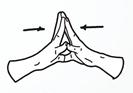
Try doing stretches at the start of each shift. Follow a series of hand stretches to lessen the likelihood of developing hand injuries from work.
Warm Up (R, G, V): No holding positions.
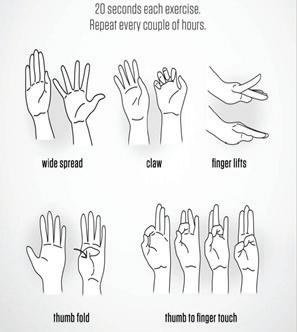
Repetitive Strain Injuries = R
Excessive Gripping Injuries = G
Vibration Oriented Injuries = V
The information contained in this report is for discussion purposes and general information only. Superior Glove assumes no responsibility for action taken (or not taken) by the recipient.
Symptoms
Workers should monitor their health for symptoms for MSIs and notify their supervisor if any develop. Slight MSI symptoms can develop into significant injuries suddenly and without warning. Symptoms include numbness, tingling, pain, swelling, redness, and / or difficulty moving hands, fingers, or wrists. Untreated early symptoms can progress to:
• Tendinitis - swelling of a tendon
• Carpel tunnel syndrome - pressure on a nerve in the wrist, resulting in numbness, tingling, pain or weakness
• Hand arm vibration syndrome - reduced blood flow results in blanching of skin, numbness or tingling, and loss of sensation
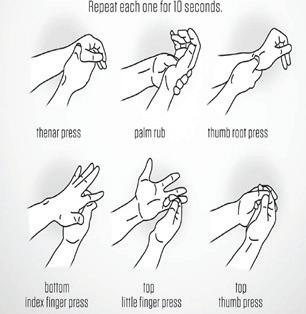
Hand Exercises
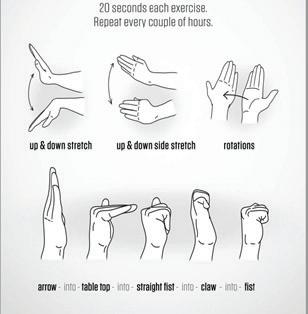
The following exercises can help workers based on the hazard(s) they may encounter. They can do these hand exercises at breaks or between tasks for good hand health.
Range of Motion (R, G)
Hold positions for 10-15 seconds.
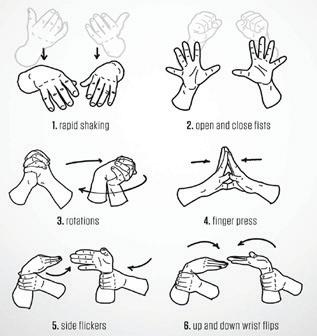
Self Mobilization / Massage (G, V)
Repeat each exercise for 10 seconds.
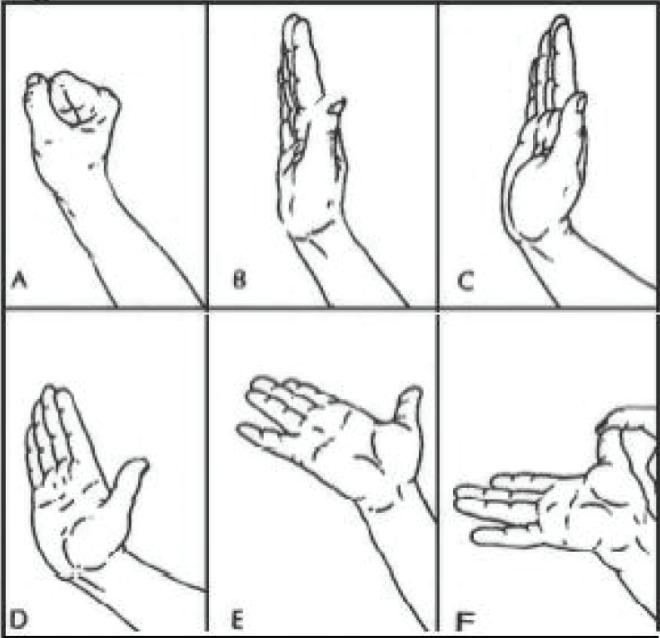
Nerve Gliding Exercises (R, G, V)
Hold each position for 7 seconds.
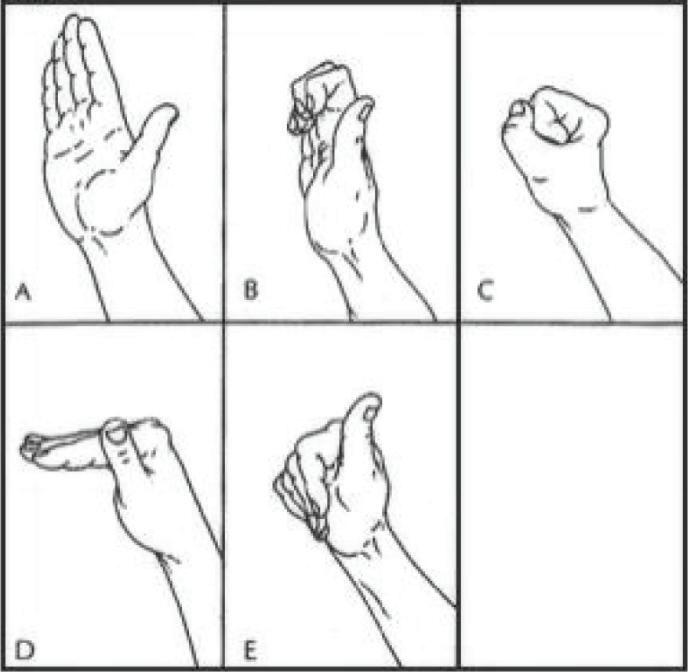
Tendon Gliding Exercises (R, G, V)
Hold each position for 7 seconds.
The information contained in this report is for discussion purposes and general information only. Superior Glove assumes no responsibility for action taken (or not taken) by the recipient.
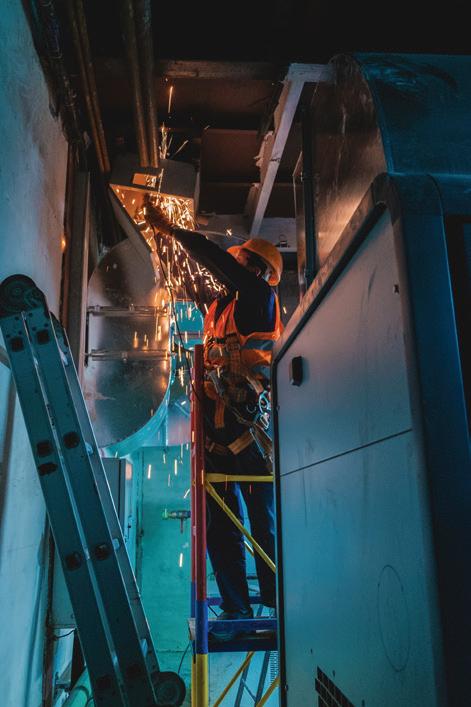
Heating, ventilation, and air conditioning (HVAC) is the technology of indoor environmental control. Its goal is to provide thermal comfort and acceptable indoor air quality. Here is a list of manufacturing and installation hazards along with recommended PPE.
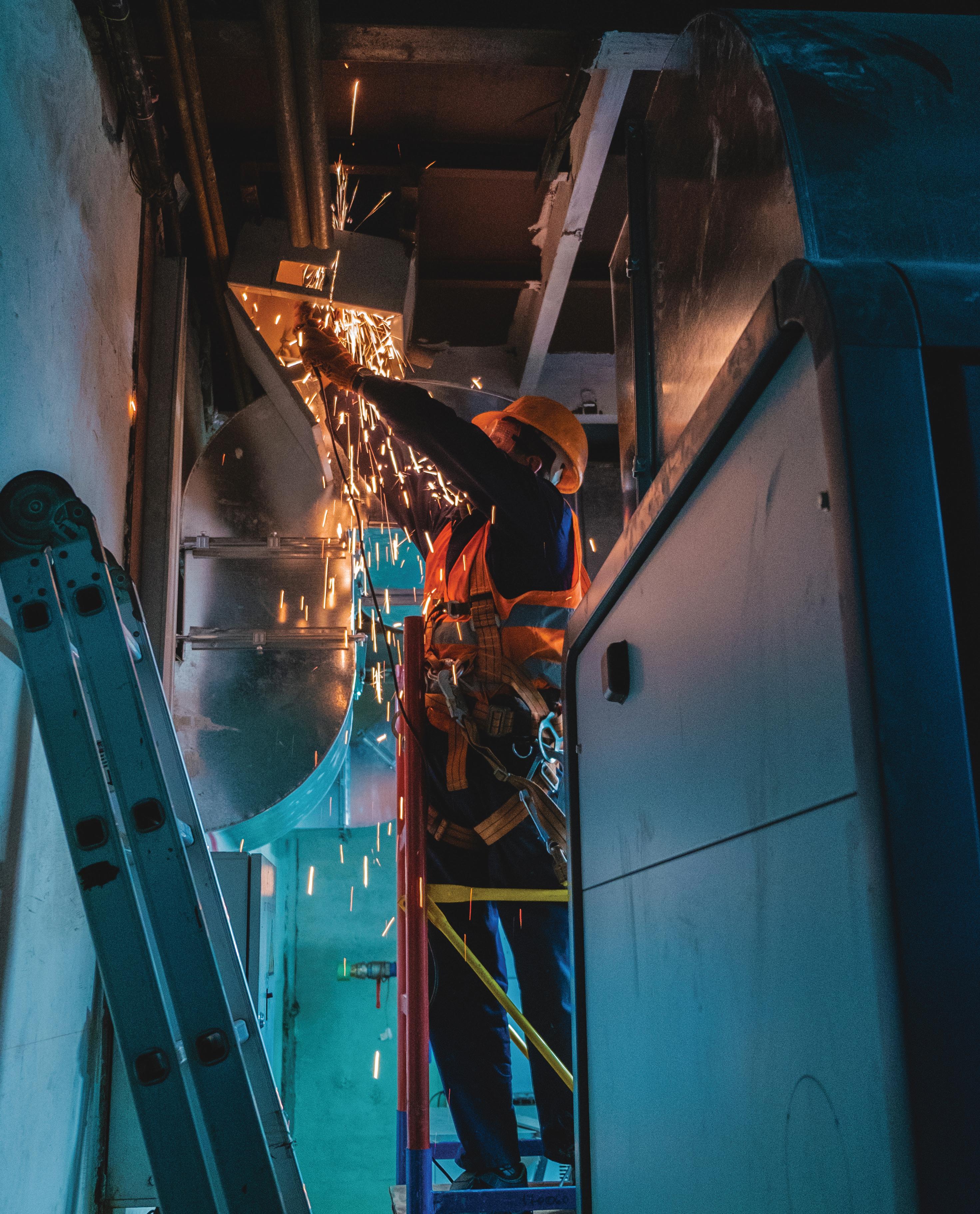
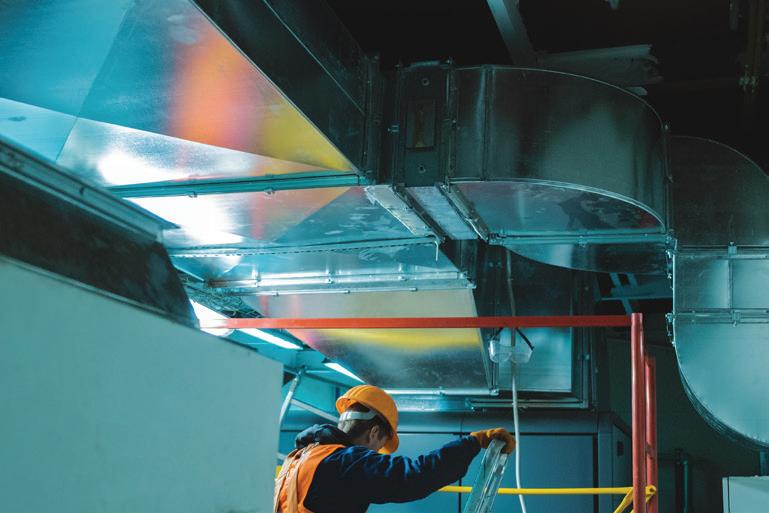
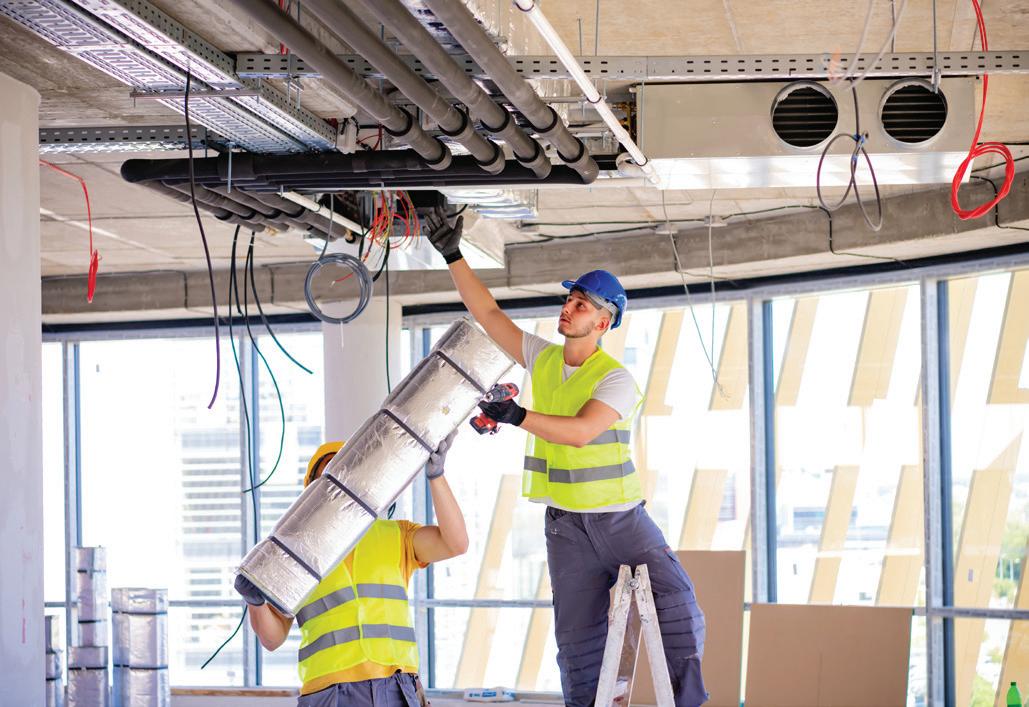
Following the manufacturing process, HVAC installation connects the individual pieces of equipment together so they can deliver cooled or heated air where it’s needed.
Minimum Recommendations based on primary hand hazards:
• Review field level hazard assessments at the beginning of each day
• Always read the SDS before using any chemical products and take recommended safety precautions
• Keep cylinders stored in a wellventilated area ensuring they’re completely closed. Keep away from excessive heat or electrical circuits
• Turn off power to corresponding circuits and lock out tags to ensure no one turns on the power while working
PPE: Gloves
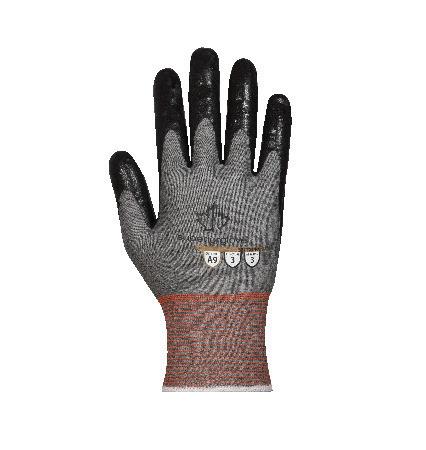
• Installation / Wiring / Testing: S21TXUFN (A9 Cut, Puncture 3, Abrasion 3, Touchscreen)
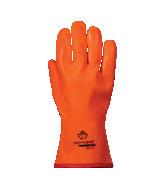
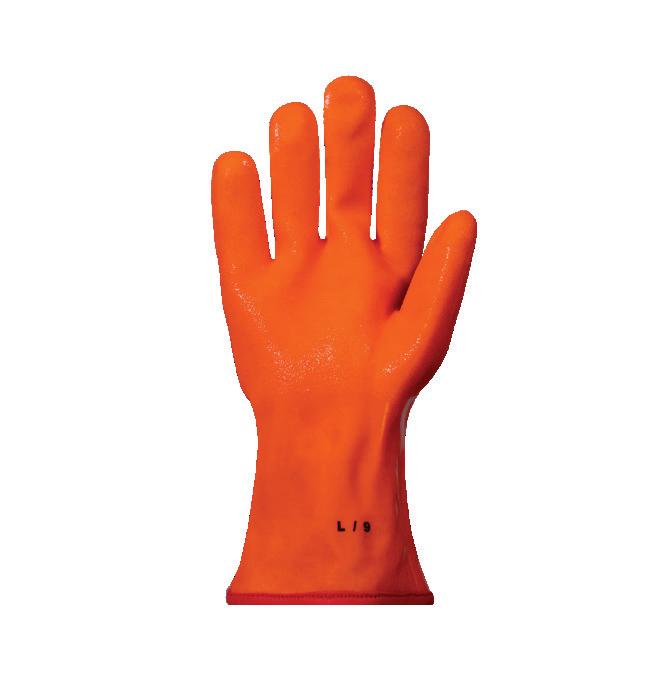
• Refrigerant: NS330 (Resists Chemicals & Oils, Crack-Resistant in Cold Temperatures, Rough Palm Finish for Non-Slip Grip, Cold Protection Down to -15°C / 5°F)
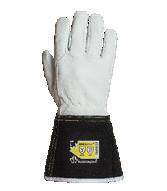
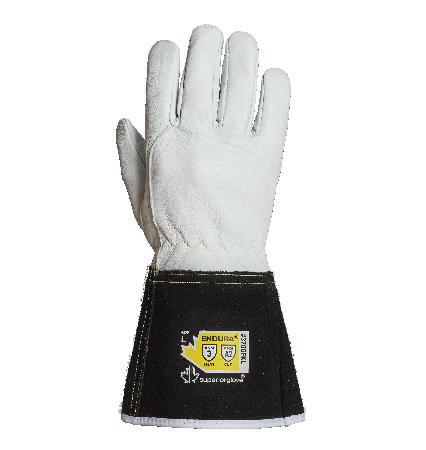
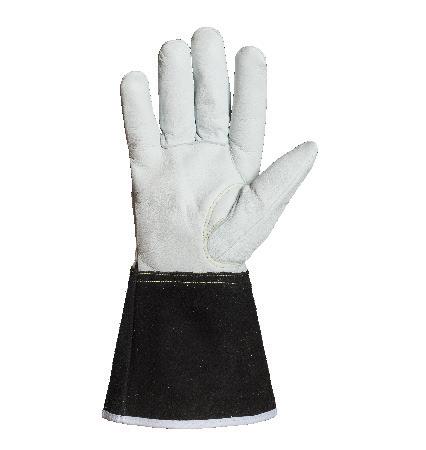
• Welding: 370GFKL (A2 Cut, Heat 3, Puncture 3, Abrasion 4, Goatskin Leather)
PPE: Protective Sleeves
• Installation: KTAG (A2 Cut, Cooling, STAYz-UP™ Elasticized Armbands)
• Welding / Wiring / Testing: PXN/KG18 (CAT 2 8Cal/cm² Arc Flash, A5 Cut, Fire-Resistant)
Hand
Cuts / puncture from metal, tape
Installing duct work, which may require taping, welding, insulating
Measuring and connecting pipes and welding together
Testing systems for leaks
Puncture – Slivers from insulation
Chemical – glues and oils. Repetitive Activity – Hand tools and power tools
Chemical – Pressurized gas Burns from welding Cut
Thermal – Refrigerant (burn (gas), frostbite (liquid)
Flash Cut
The information contained in this report is for discussion purposes and general information only. Superior Glove assumes no responsibility for action taken (or not taken) by the recipient.
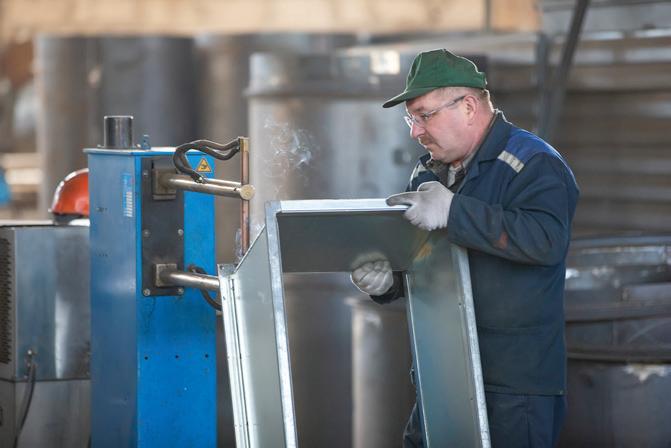
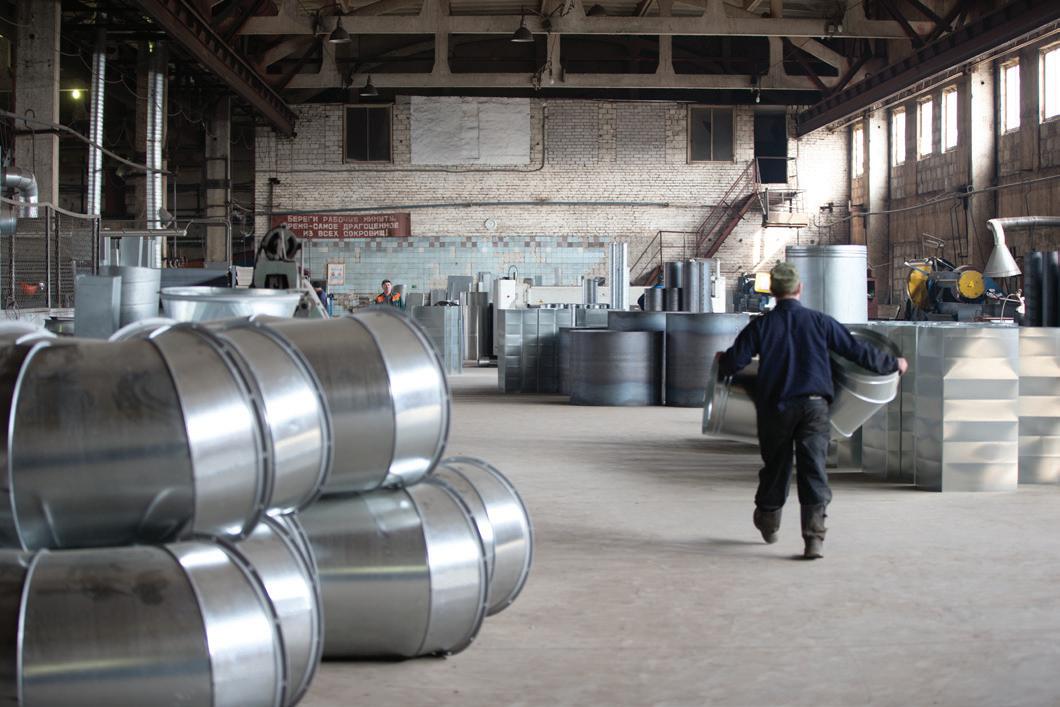
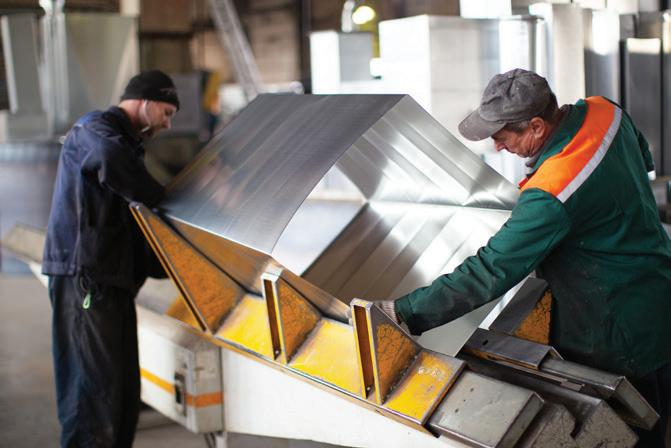
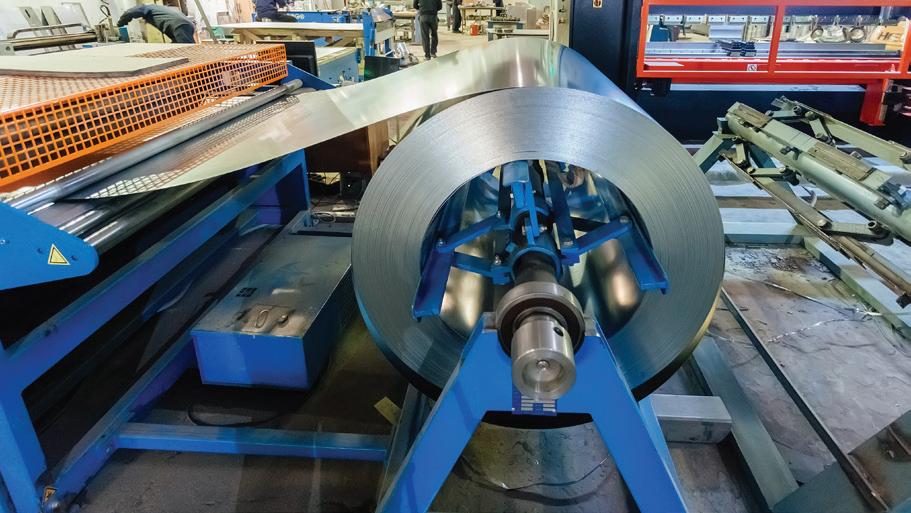
Manufacturing HVAC equipment consists of fabricating air conditioners, furnaces, and heat pumps prior to installation.
Minimum Recommendations based on primary hand hazards:
• Immediately after cutting or using, dispose of banding material, scrap wire, or any other waste in proper containers to prevent them from becoming hand hazards
• Be mindful of hand and arm placement in relation to sheet metal, insulation, assembly, and wiring
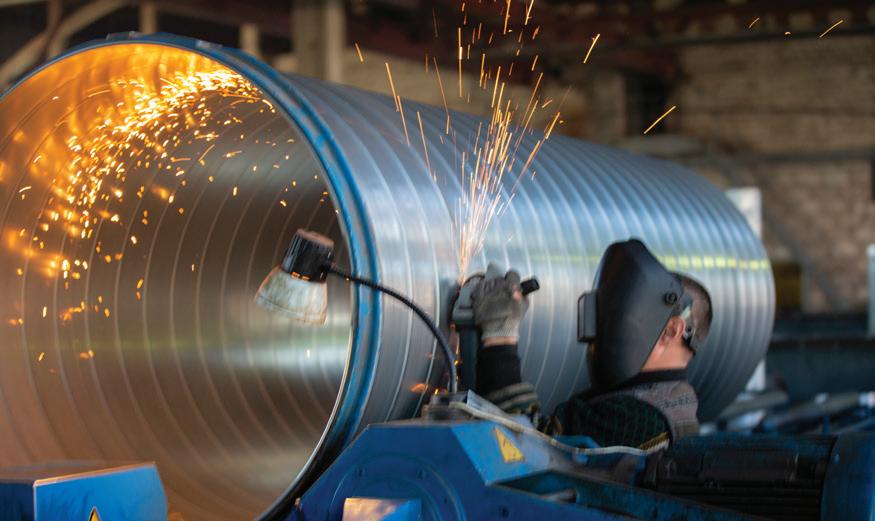
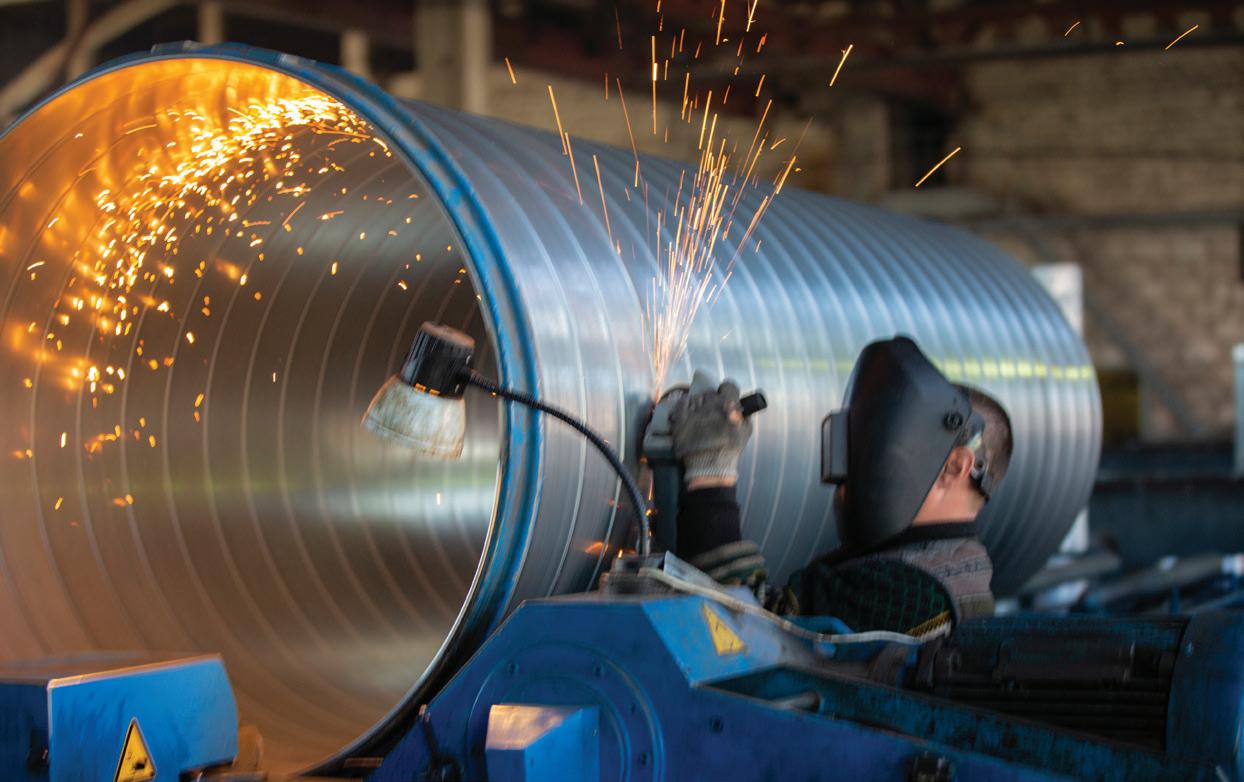
• When welding or brazing, workers should position themselves so that sparks are discharged in the safest direction
• Don’t catch falling materials, especially sheet metal as it is very sharp
PPE: Gloves
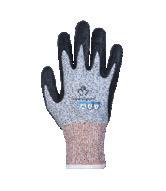
• Sheet Metal / Assembly: STACXPNRT (A7 Cut, Abrasion 4, Puncture 4, Dry Grip, Reinforced Thumb-Crotch)
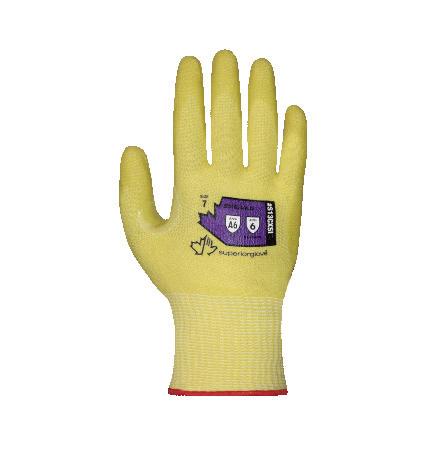
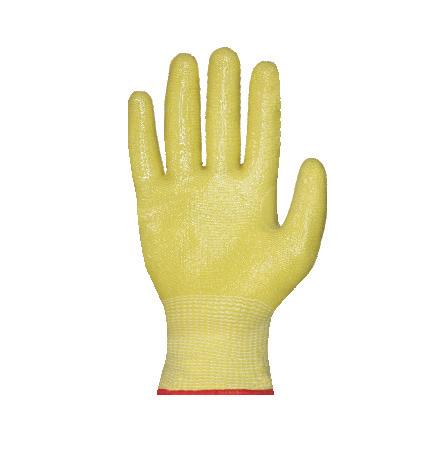
• Shipping / Adhesive / Visitors / New Employees / Labelling: S13CXSI (A6 Cut, Heat 3, Abrasion 6, Puncture 2)
• Welding: 370GFKL (A2 Cut, Heat 3, Puncture 3, Abrasion 4, Goatskin Leather)
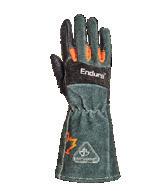
• Brazing: 398GLBG (Heat 2, Cowhide & Goatskin Leather)
• Electronics: S21TXUFN (A9 Cut, Puncture 3, Abrasion 3, Touchscreen)
• Compressed Air Tools: STAGPNVPI (A4 Cut, Abrasion 4, Antivibration Palm & Index Finger)
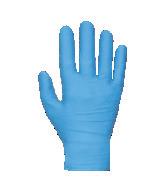
• Painting: RD8NPF (8 Mil Powder-Free Nitrile Disposable Gloves)
• Refrigerant: S18WTLFN (A4 Cut, Puncture 4, Abrasion 3, Grip, 100% Waterproof, Fleece-Lined)
• Quality Control: S18ULPFN (Abrasion 3, Puncture 2, Ultra-Thin)
PPE: Protective Sleeves
• Sheet metal / Assembly / Shipping: KTAG (A2 Cut, Cooling, STAYz-UP™ Elasticized Armbands)
• Welding / Brazing: PXN/KG18 (CAT 2 8 Cal/cm² Arc Flash, A5 Cut, Fire-Resistant)
Manufacturing air ducts may involve moving sheet metal and joining by taping, welding, adhesives, or riveting.
Testing systems for Functionality (quality control) Building the control units
Cuts / puncture from metal, tape
Chemical – glues/ epoxy and oils
Hand tools and power tools
Chemical – Pressurized gas Burns from blazing Cut
Thermal – Refrigerant (burn (gas), frostbite (liquid)
The information contained in this report is for discussion purposes and general information only. Superior Glove assumes no responsibility for action taken (or not taken) by the recipient.
Palm Coated Chemical
Welding / Heat Disposable
Sleeves
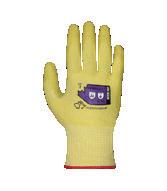
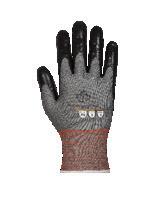
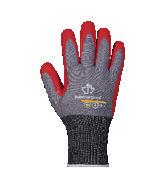
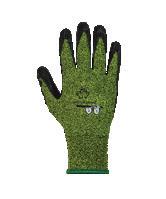
Installation
Refrigerant
Welding
Testing
Sheet Metal
Assembly
Shipping
Welding Wiring
Brazing
Electronics
Compressed Air Tools
Adhesive
Painting
Refrigerant
Quality Control
Visitors / New Employees
Labelling
The information contained in this report is for discussion purposes and general information only. Superior Glove assumes no responsibility for action taken (or not taken) by the recipient.
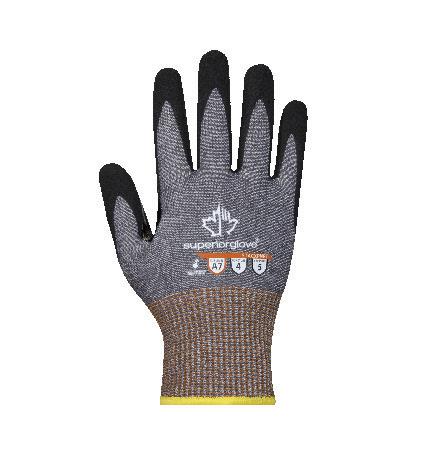
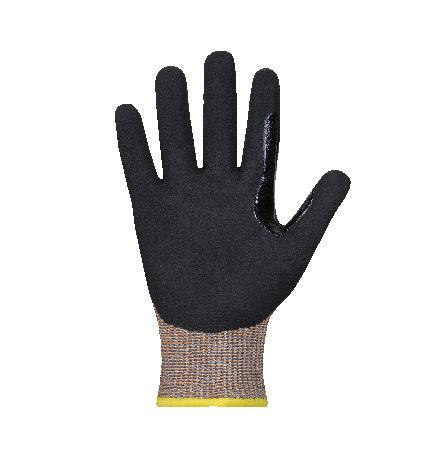
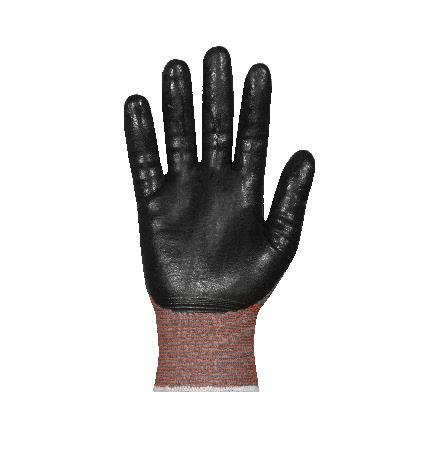
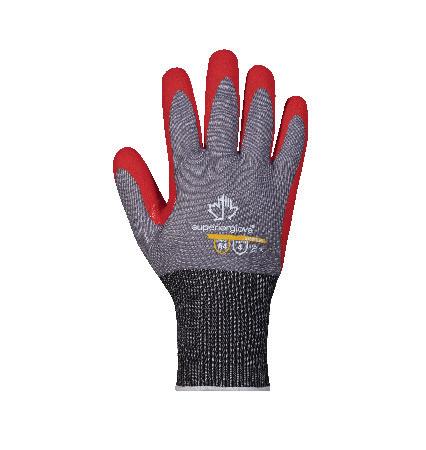
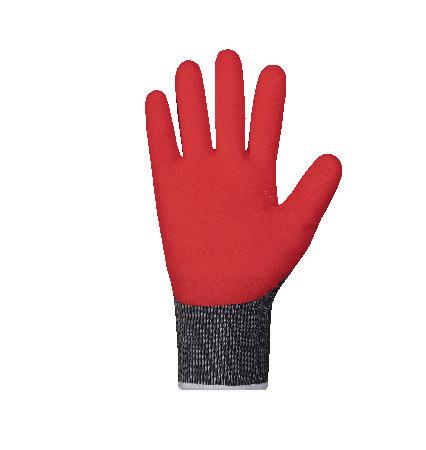
TENACTIV™ STACXPNRT | XS - 3XL
Dexterous with high cut protection and a strong, steady grip
4
ABRASION
4
EMERALD CX® S13CXSI | XS - 3XL
Adhesive and liquid resistant glove with 360° cut protection and heat resistance to 200° C / 392° F
6 ABRASION
2
3 HEAT
TENACTIV™ S21TXUFN | 5 - 12
The world’s thinnest glove engineered with maximum cut protection
3
ABRASION
3
TENACTIV™ S18WTLFN | XS - 3XL
Waterproof gloves with firm grip that keep hands warm down to -10°C / 14°F
3
ABRASION
-10°C (14°F)
The information contained in this report is for discussion purposes and general information only. Superior Glove assumes no responsibility for action taken (or not taken) by the recipient.
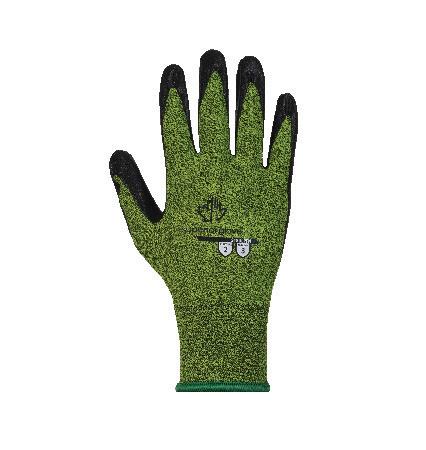
SUPERIOR TOUCH® S18ULPFN | 2XS - 3XL
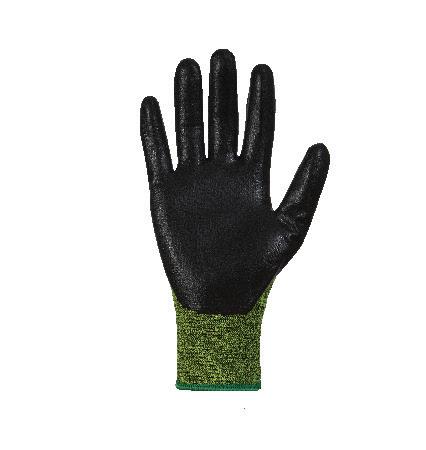
Ultra-thin with high tactility and a secure grip for inspection work
3
2
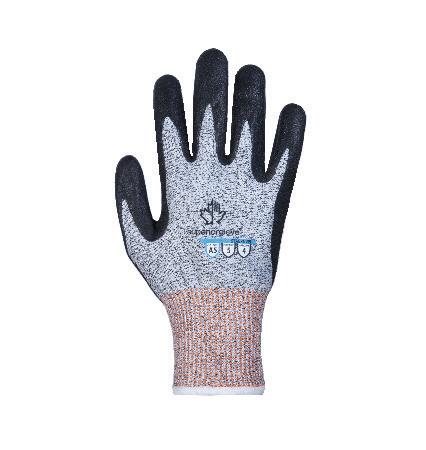
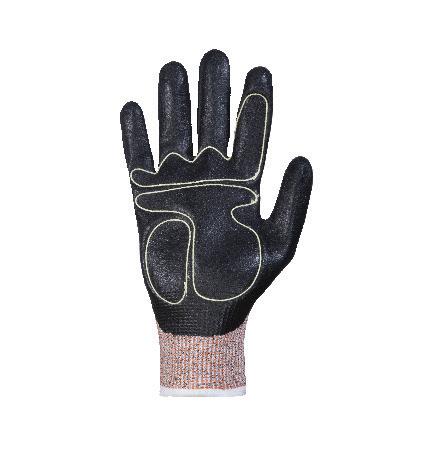
TENACTIV™ STAGPNVPI | XS - 3XL
Cut protection meets vibration dampening for pneumatic tools and grinders
A4
4
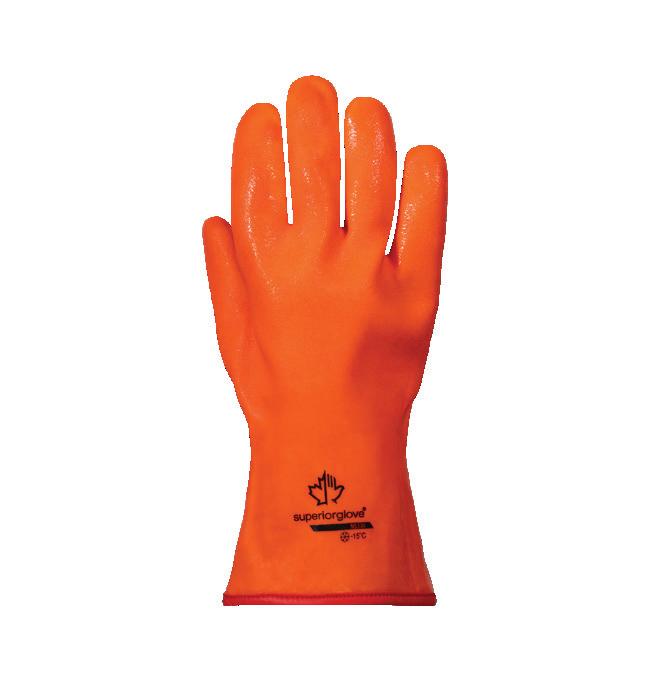
NORTH SEA™ NS330 | ONE SIZE
Chemical-resistant gloves that keep hands safe in cold conditions
-15°C (5°F)
ENDURA® 370GFKL | M - 2XL
Everyday welding glove that resists heat and protects against minor cuts
3 HEAT 4
3
The information contained in this report is for discussion purposes and general information only. Superior Glove assumes no responsibility for action taken (or not taken) by the recipient.
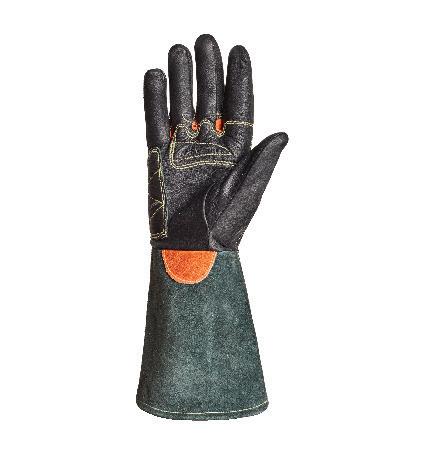
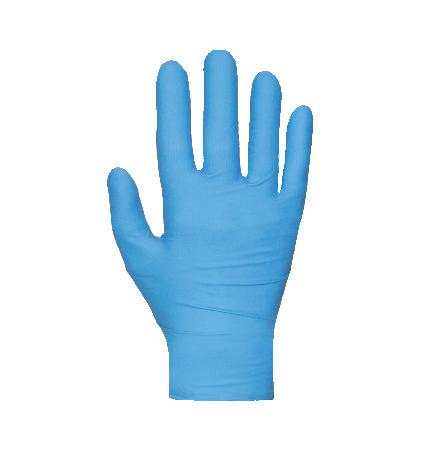
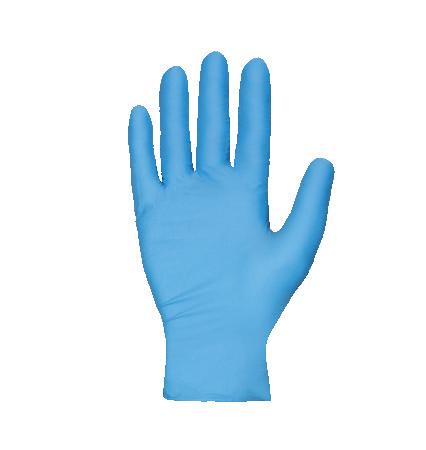
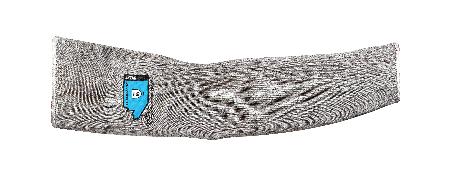
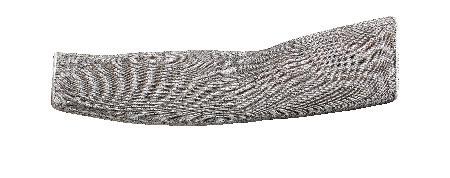
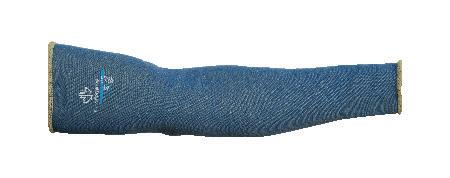
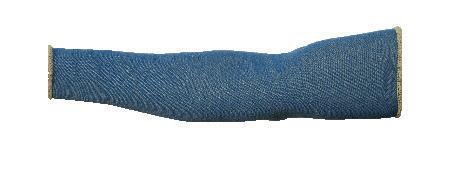
ENDURA® 398GLBG | S - 2XL
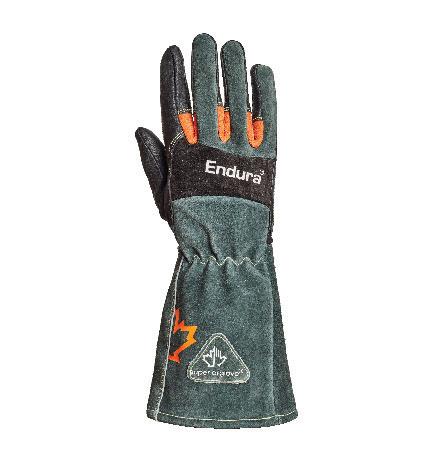
Heat-resistance plus forearm protection; comfortable for long days of welding
KEEPKLEEN® RD8NPF | S - 2XL
Durable disposable nitrile gloves that are latex and powder-free
TENACTIV™ KTAG | XS - XL
Stay-in-place and cooling cut-resistant sleeves for minor cuts 18”, 22”, Tubular cut
CONTENDER™ PXN/KG18 | S/M, L/XL
Arc flash arm protection that’s inherently flame resistant and provides 360° cut protection 18”, Tapered cut
The information contained in this report is for discussion purposes and general information only. Superior Glove assumes no responsibility for action taken (or not taken) by the recipient.
Experience has shown that when workers wear gloves, they are better protected from other incidental hazards like slivers and abrasive or sharp surfaces. Gloves should only be removed when they can cause entanglements or other hand injuries in accordance with hazard assessments, SWP, SJP, or manufacturer/supplier operating instructions.
Comfort and functionality factors are important to workers and directly impact their use of gloves directly and should be part of the evaluation to determine gloves that are appropriate for workers. These factors include fit, grip, breathability, flexibility, tactile sense, dexterity, and touch screen compatibility. If a worker’s gloves lack these factors, workers may be inclined to remove their gloves or not wear their gloves and expose their hands to hazards unnecessarily. Glove trials are a helpful step in finding the rights gloves especially with regards to comfort and functionality.
Worldwide, there are two cut standards: the American ANSI 105-2016 standard and the European EN388 standard. Many employers and workers may be unfamiliar with these standards. The following guide to standards can help employers and workers identify glove performance as it relates to task hazards. The five main glove performance guidelines cover cut, impact, heat, abrasion, and puncture.
Cut Test
A glove’s ability to protect against cuts and lacerations is tested using ASTM F2992-15 as required by the ANSI/ISEA 105-2016 standard.
Impact Test
A glove’s ability to protect hands against impact injuries is tested using the ANSI/ISEA 138-2019 standard.
Heat Test
Rates the glove material between level 1 (under 176°F) and level 5 (608°F). While the test stops at 608°F, the glove may have higher thermal protection.
Abrasion Test
A glove’s ability to protect hands against injury from abrasions is tested using ASTM D3389 as required by the ANSI/ISEA 105-2016 standard.
Puncture Test (Hypodermic needle)
A glove’s ability to protect hands against fine puncture injuries (e.g. hypodermic needles) is tested using ASTM F2878 as required by the ANSI/ISEA 105-2016 standard.
Puncture Test (Probe)
A glove’s ability to protect hands against large puncture injuries (e.g. screws and nails) is tested in accordance with clause 6.4 of EN 388:2003 as required by the ANSI/ISEA 105-2016 standard.
The information contained in this report is for discussion purposes and general information only. Superior Glove assumes no responsibility for action taken (or not taken) by the recipient.
Cut Hazards
200 – 499 grams to cut
Paper Cuts, Material Handling, Parts Assembly
LOW Cut Hazards
500 – 1,499 grams to cut
Material Handling, Small Parts Handling, General Purpose, Warehouse, Construction
Cut Hazards
1,500 – 2,199 grams to cut
Bottle & Glass Handling, Drywalling, Electrical, HVAC, Automotive Assembly, Metal Handling
HIGH Cut Hazards
2,200 – 3,999 grams to cut
Sharp Metal Stamping, Metal Recycling, Pulp & Paper, Automotive, Aerospace Industry, Meat Processing
Abrasion Resistance | Which Abrasion Level do I Choose?
COATED GLOVES
Coated gloves provide better grip in wet and dry conditions and let your hand move more freely than a leather glove. But if you’re dealing with high abrasion like pulling ropes, palm coatings may wear down too quickly.
LEATHER GLOVES
Leather gets a bit of a bad wrap. But when it comes to abrasion resistance, leather is amazing. It will protect your hands, take a beating, and will have a longer lifespan than a coated glove.
HYBRID GLOVES
The best thing about glove innovation is that you get the best of both worlds. Like our Clutch Gear ® Goatskin Mechanics Glove. It features nylon backing for freedom of movement and a double leather palm for amazing abrasion resistance.
Tested
1
Revolutions
EXTREME
Cut Hazards
4,000 – 6,000+ grams to cut Sharp Metal Stamping, Butchering, Pulp & Paper, Oil & Gas, Industrial Pipe Fitting, Sheet Metal, Steel Cable Handling, Food Processing
of Force Tested at 1,000g of Force
4
3,000 Abrasion Revolutions
Most puncture gloves only protect the palm area of the hand, which is okay for many applications — just be aware of this. Full-coverage puncture gloves are available, but they tend to be more expensive and offer less comfort and dexterity.
Heat testing measures the conductive heat resistance of a material to determine its thermal insulation properties for contact with hot surfaces.
TIME TO PAIN
The glove’s rating is determined by the highest contact temperature where time to second degree burn is over 15 seconds and time to pain is over 4 seconds.
STANDARD TEMPERATURE
The standard rates the material between level 1 (under 176°F) and level 5 (608°F). Note: While the test stops at 608°F, the glove may have higher thermal protection
ANSI / ISEA 138 is the first impact standard for the North American market and goes above and beyond the requirements in the European standard, EN 388. Under the new standard, both the knuckles and fingers are tested and the lowest impact protection level achieved is the one assigned to the glove. It is the only standard that requires testing be conducted by a third-party in an accredited lab, a first for PPE protection standards.
These recommendations are of a general nature and are not specific to everyone’s needs. Always ensure your selected glove complies with the mandated safety standard recommended for your application.
The information contained in this report is for discussion purposes and general information only. Superior Glove assumes no responsibility for action taken (or not taken) by the recipient.
A proper fit is extremely important. An uncomfortable fit causes hand fatigue and ultimately could lead to a potential workplace hazard.
Measure the width of your hand from the base of your first finger and across your knuckles.
5 / 2XS
6 / XS
7 / S
8 / M
50 mm / 2 inches
63 mm / 2.5 inches
75 mm / 3 inches 88 mm / 3.5 inches
To find the best fit, measure the circumference of your bicep and choose sizing according to the chart below.
Sleeves come in multiple lengths.
For a more natural fit, sleeves come in a tapered version which provide better comfort and staying power. Tapered sleeves are designed to fit the contours of your arm and won’t lose shape due to stretching
The information contained in this report is for discussion purposes and general information only. Superior Glove assumes no responsibility for action taken (or not taken) by the recipient.

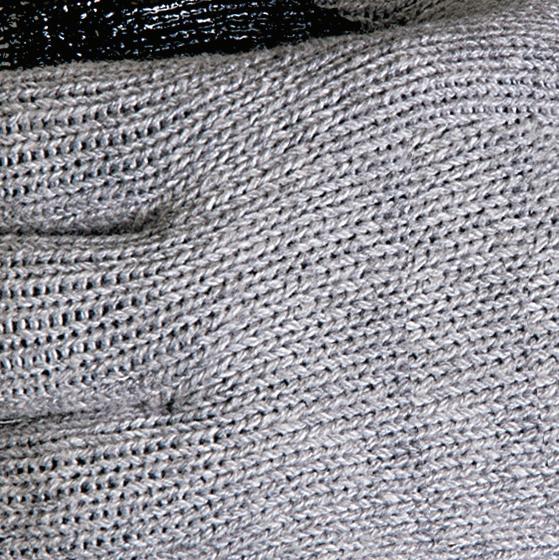
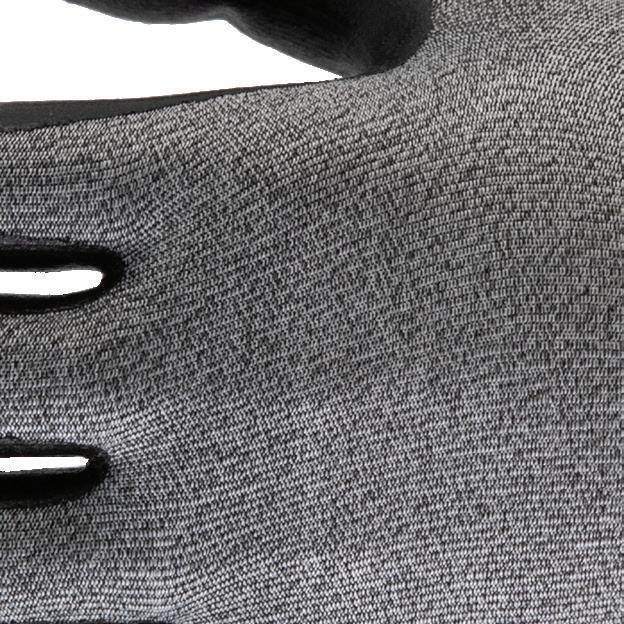
A glove’s gauge designates the number of stitches per inch in a knitted glove. The higher the number of stitches per inch, the thinner, more dexterous, and flexible the glove becomes.
Our 7-gauge gloves are the coarsest and employ the largest needles to stitch gloves together. In contrast, smaller needles are needed to make our 21-gauge gloves since the yarn used to make them is much thinner. The density/ tightness of the knit also increases as they go up in glove gauge.
In general, it used to be that lower gauges were recommended for more safety against hazards since the thicker the glove, the more protection they would provide. Thanks to engineered yarn technology, glove manufacturers are now able to offer protection against multiple types of hazards while still keeping the glove thin and dexterous. Using engineered yarn to make our gloves allows us to offer the same valuable cut protection and durability that used to only be available in lower gauges in thinner, more comfortable dexterous shells.
7 GAUGE GLOVE
7 stitches per inch
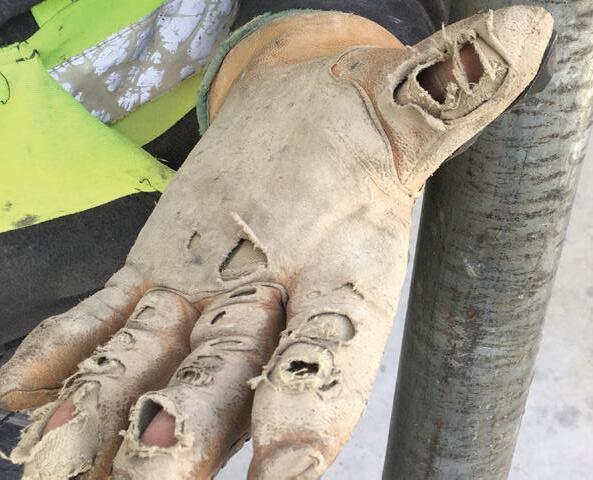
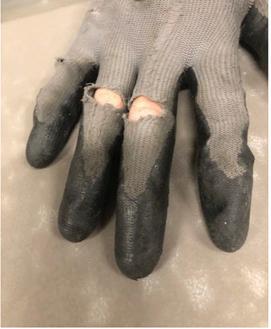
A work glove’s longevity depends on the work, the type of glove being used, the materials it’s constructed from, and the duration of the task or application.
Wear and tear are the clearest signs for replacement as any area of damage reduces the level of protection. If a knitted glove with a cut rating snags and pulls, for example, it will alter the construction of the glove. The glove may still offer cut protection but not at the original level which increases the chance of injury.
21 GAUGE GLOVE
21 stitches per inch
Examples of gloves being worn on work sites that should be replaced and never worn to this level of wear.
The information contained in this report is for discussion purposes and general information only. Superior Glove assumes no responsibility for action taken (or not taken) by the recipient.

Our gloves are designed and built to out-perform and out-last the competition–but you can get even more out of your investment with proper care. Guidelines
For a professional clean, our customer service representatives can recommend the best launderers in your area. If you would rather wash your gloves yourself, keep in mind that different materials require different treatments. The following are general guidelines for laundering different materials that you can use to extend the useful life of your gloves.


TenActiv™ and Dyneema® can be washed, dry cleaned, or bleached, all without affecting the materials’ specific properties. You may wash and re-use the gloves multiple times as standard detergents, ammonium, sodium hydroxides, and hydrochloric acids are not known to affect the performance of the fiber.
Washing:
1. Wash in cold water of 104°F/40°C or less only
2. Tumble dry with low or no heat
One limitation of fibers such as these is hot temperatures–the fibers will not withstand temperatures (wet or dry) over 291°F/144°C
The cut-resistant qualities of aramid materials are inherent and remain unchanged over the life of the glove. Para-aramids can be washed over and over with no effect on shrinkage, weight loss, or changes in tensile strength.
Detergent Wash:
1. Use approximately five pounds of commercial laundry soap or detergent per 100 pounds of para-aramid
2. Wash in hot water (170°F/75°C)
3. Wash for 20 minutes
4. Rinse with hot water
5. If necessary, repeat steps 3 and 4
6. Rinse in cold water
7. Tumble dry for 35 minutes at 155°F/70°C
Dry Clean:
1. Pre-wash using perchloroethylene for 5 minutes
2. Drain
3. Wash for 20 minutes using perchloroethylene and twelve ounces of anionic surfactant per 100 pounds of Kevlar ®
4. Tumble dry at 140°F/60°C or less
While resistant to many chemicals and solvents, para-aramids must never be bleached (oxygen ‘bleach’ can be used in place of chlorine bleach)
The information contained in this report is for discussion purposes and general information only. Superior Glove assumes no responsibility for action taken (or not taken) by the recipient.


1. Wash with warm water (105°F/40°C) and regular detergent
2. Tumble dry at medium heat
1. Wash with warm water (105°F/40°C) and regular detergent
2. Tumble dry at low or no heat

1. Always dry clean leather
2. Think of leather as much like your own skin (it is in effect an animal’s skin); soap and water will remove leather’s natural oils and cause the gloves to become stiff and brittle
1. Only use cold water (70°F/20°C or less)
2. Gently wash with a mild detergent
3. Tumble dry at low or no heat
1. Wash in cold water (85°F/30°C or less)
2. Use a mild detergent
3. Tumble dry at low or no heat
4. Bleach is not recommended
• When washing palm coated gloves, you can turn them inside out to tumble dry or air dry
• If you are washing your gloves with your other work clothes, be sure to not cross contaminate and clean appropriately to all laundering requirements
If you’re using gloves made from high-quality leather, TenActiv™, Dyneema®, or para-aramids, laundering your gloves can significantly increase their lifecycle and result in substantial cost savings without impeding performance.
The information contained in this report is for discussion purposes and general information only. Superior Glove assumes no responsibility for action taken (or not taken) by the recipient.