

India’s retail sector continues to expand at scale, with the total market size projected to grow from USD 1.06 trillion in 2024 to USD 1.93 trillion by 2030¹. Within this retail market, the jewellery sector occupies a sizeable position, valued at ~USD 85-95 billion in 2025¹. The category is experiencing a shift towards more organised, branded, and experience-led retail formats. Purchasing behaviour is pivoting from traditional local family jewellers towards branded showrooms that prioritise transparency and experiential luxury.
The real estate implications of this transition are becoming more visible as consumers demand greater transparency, exclusive designs, and curated service. Marquee jewellery brands are responding by expanding in premium high streets, investmentgrade malls, and organised retail destinations. Notably, their share of leasing volume rose from 2% in 2019 to 8% in 20252 underscoring the category’s growing significance for developers and landlords.
Against this backdrop, All That Glitters: Jewellery Brands Recast India's Retail Footprint, the inaugural edition of CBRE Research’s Retail Deep Dive Series, analyses the catalysts driving this transformation. First unveiled at the Phygital Retail Convention in Mumbai, the report examines how changing consumer preferences, formalisation, new product categories, and differentiated store formats are influencing the way jewellery brands plan their physical footprints across cities and retail formats.
• Shift to Organised Retail: Driven by the consumer demand for transparency, organised players are expanding their retail footprint. This is elevating the category to be a key demand driver for organised retail real estate as brands require premium high-street and mall presence to build trust and offer experiential luxury.
• From "Investment" to "Experience": The traditional commodityweight model is being replaced by a brand-led ecosystem. Consumers now prioritise design-centric, certified wearable assets. This is reflected in the success of branded bridal suites and the growing preference for platinum in contemporary engagement segments.
• The LGD Wave: Lab-Grown Diamonds (LGDs) have emerged as a significant trend, appealing both to Gen Z and millennial cohorts. By offering ethical transparency at 60-80% lower prices, brands in this category are making luxury more accessible to value-conscious, socially responsible consumers.
• Fashion Jewellery's Ascent: Jewellery has transitioned into a highfrequency lifestyle choice. The fashion and costume jewellery segment caters to trend-responsive consumers who view jewellery as a versatile accessory rather than a generational heirloom.
The sector stands at a critical inflection point in 2026, balancing geopolitical volatility in the Middle East and high bullion prices. While global logistics dynamics present near-term considerations, organised players are recalibrating expansion strategies to maintain a steady 10% CAGR, aiming for a market valuation of USD 140-150 billion by 20301
Recent policy commentary has also sharpened the focus on gold consumption and imports, with the government signalling restraint in gold purchases and restoring customs duty on gold and silver to the 2024 level of 15% in May 2026, adding a near-term policy variable to the sector’s growth outlook. However, over the longer term, the jewellery sector is set to reinforce its status as a primary anchor for investment-grade real estate, spanning LGD hubs, large-format showrooms in Tier-II cities, and premium retail destinations that combine traditional cultural demand with branded formats and techenabled consumer experiences.


SECTION 1 Market Evolution: The New Age of Indian Jewellery
SECTION 2 The Phygital Shift: Digital Transformation in Jewellery
SECTION 3 Growth Drivers: What is Powering the Sector?
SECTION 4 Why Real Estate Strategy is Becoming Critical to Jewellery Retail
SECTION 5 Market Frictions & Strategic Outlook SECTION 6 Annexures
The Traditional Jeweller Model: Retail business was conducted through personalised, trust-led interactions within the jewellers’ residences or private workshops.
Bespoke Craftsmanship: Transactions often followed a commission-based model, where clients provided bullion for handcrafted, custom designs.
India’s jewellery sector has undergone a structural change, evolving from a trust-led, localised trade into a more organised, transparent and globally competitive market. This transformation has been shaped by shifts in business models, regulatory reforms, and the growing adoption of technology. The timeline below highlights key milestones behind the rise of the country’s gems and jewellery sector.
Establishment of Storefronts:
Prominent jewellery families gradually moved towards formal outlets in commercial hubs, such as Mumbai’s Zaveri Bazaar, Jaipur’s Johari Bazaar, and Delhi’s Dariba Kalan.
3 4
The Tanishq Shift:
The introduction of the Karatmeter1 in 1994 institutionalised purity, transparency and ethical disclosures.
BIS Hallmarking: The adoption of Bureau of Indian Standards (BIS) Hallmarking2 in 2000 supported the shift from personal trust to statecertified quality standards.
Elevated Retail Experience:
The Phygital Revolution: Retailers are leveraging advanced digital ecosystems through AR / VR experiences and AI-driven forecasting to enhance the brand experience. 1 2
Elite Patronage: Fine craftsmanship was primarily reserved for royal / affluent households, focusing on traditional techniques such as Kundan and Polki, which remain a hallmark of modern gold design.
Brand Genesis: Regional players (e.g., Tribhovandas Bhimji Zaveri (TBZ), Joyalukkas) began transitioning from family-run shops into formal retail brands.
The Gold (Control) Act, 1968: The policy shifted the industry’s focus from bullion possession towards the sale of finished ornaments, leading to the genesis of branded retail.
Organised Retail Dominance: Organised players in tier-I and tierII markets are leveraging stronger supply chains and brand trust to capture market share.
Evolving Consumer Preferences: A strategic shift towards daily-wear and occasion-led jewellery is driving demand for lightweight, design-led products over heavier traditional ornaments.
Shopping transitioned from traditional floor-seated arrangements to modern, climate-controlled luxury boutiques.
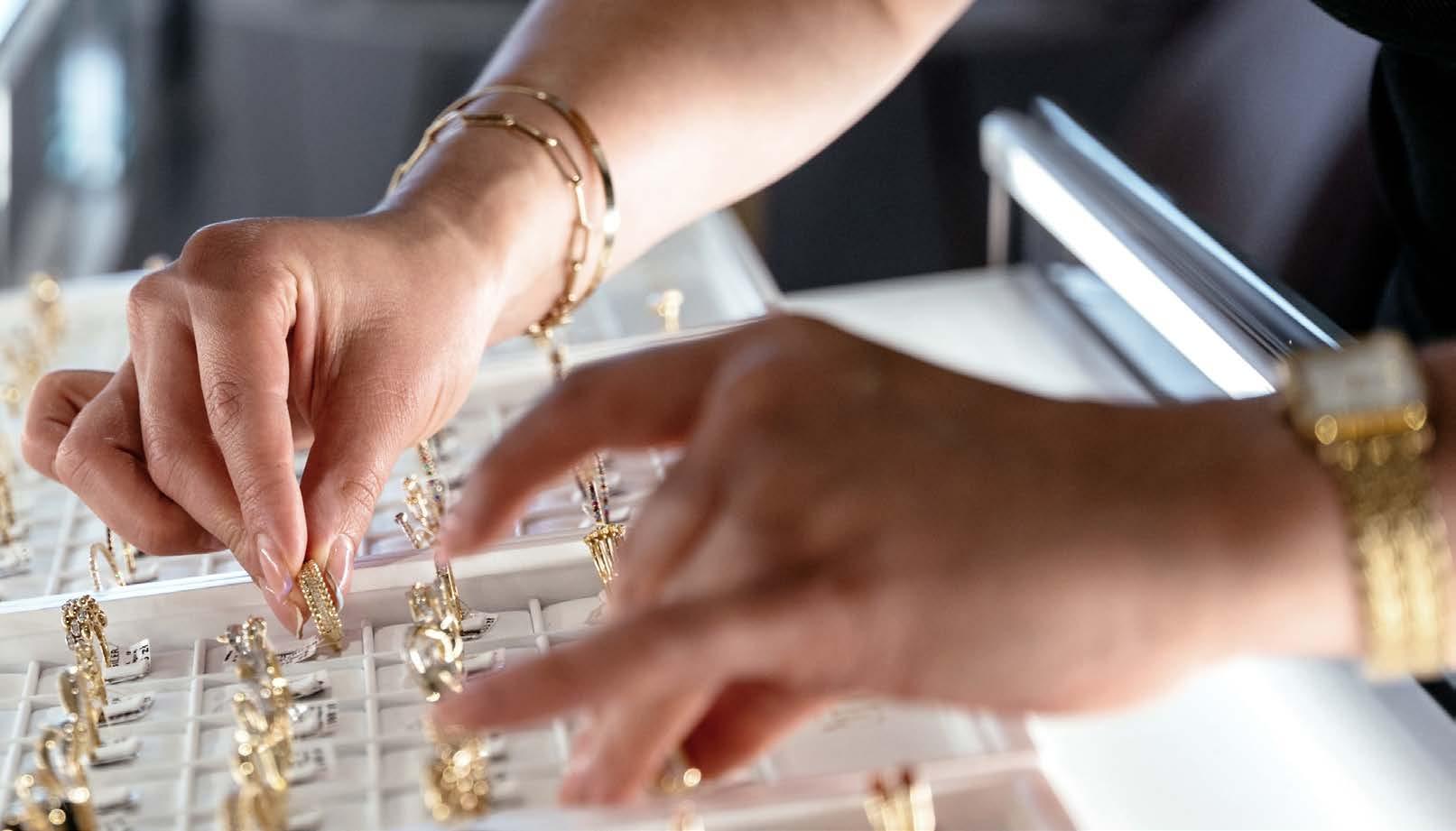
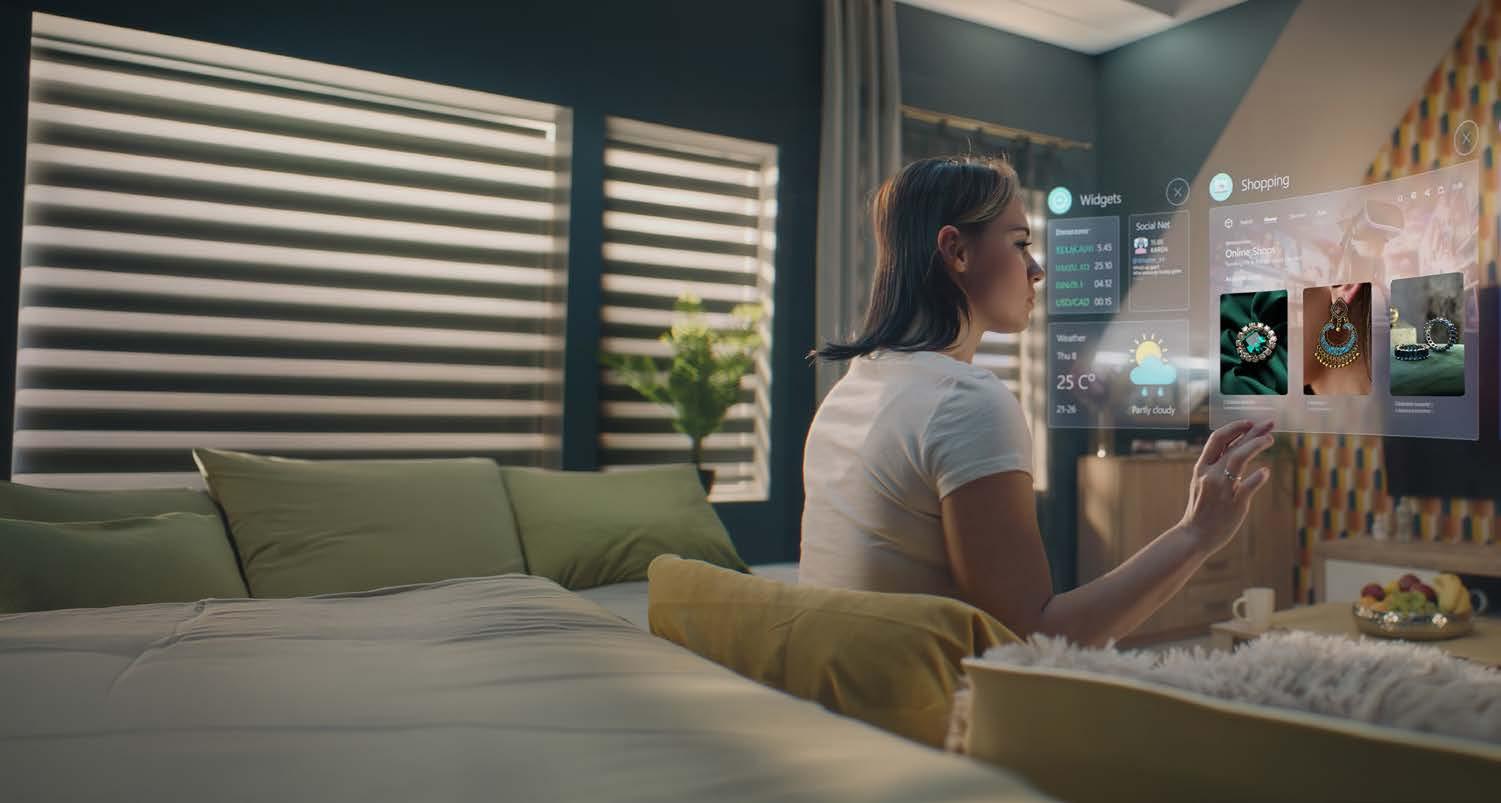
As the jewellery industry evolves, the allure of a gemstone is being complemented by the precision of high-tech innovation. This ‘phygital’ shift reflects a fundamental change in how consumers discover, customise, and value jewellery. From AIdriven personalisation and Augmented Reality (AR) try-ons to the rise of ethically sourced LGDs, the modern jewellery experience is being defined by a seamless blend of digital transparency and physical craftsmanship.
The New Direct-toConsumer (D2C) Landscape: The industry is shifting from a purely brick-and-mortar model to a cohesive hybrid ecosystem, with digital storefronts becoming essential components of the physical brand experience.
• D2C Evolution: Legacy brands are leveraging ‘webrooming’ (browse online, buy in-store) to own customer data and drive personalised retail experiences.
• Market Innovation: Digitalnative leaders are trying to accelerate growth through 'try-at-home’ services and expanding into exclusive Demi-Fine* categories.
Tech as the New Sales Assistant: Digital technology has evolved from a novelty to a critical strategic asset, helping reduce some of the sensory limitations traditionally associated with online jewellery retail.
• Immersive Visualisation: AR helps overcome purchase hesitation by enabling real-time visualisation of products, increasing consumer confidence in digital transactions.
• Predictive Personalisation: AI integration enhances product discovery by tailoring recommendations to individual aesthetic profiles and biometric features.
• Generative Customisation: Modern platforms provide consumers with interactive 3D renders, enabling seamless design adjustments and improved realtime price transparency.
CONSCIOUS CONSUMPTION
Ethics and Identity of the Modern Buyer: Emerging consumer segments are prioritising valuebased consumption, favouring ethical sourcing and identity-driven luxury.
• Ethical Material Innovation: Growth in LGDs and recycled precious metals allows brands to offer chemically identical brilliance with a lower environmental impact and ethical provenance.
• Functional Personalisation: Modern jewellery consumption is shifting towards items with stronger personal narratives.
• End-to-End Traceability: Blockchain technology ensures comprehensive lifecycle visibility, using digital authentication to guarantee ethical sourcing and validate the gemstone’s integrity.
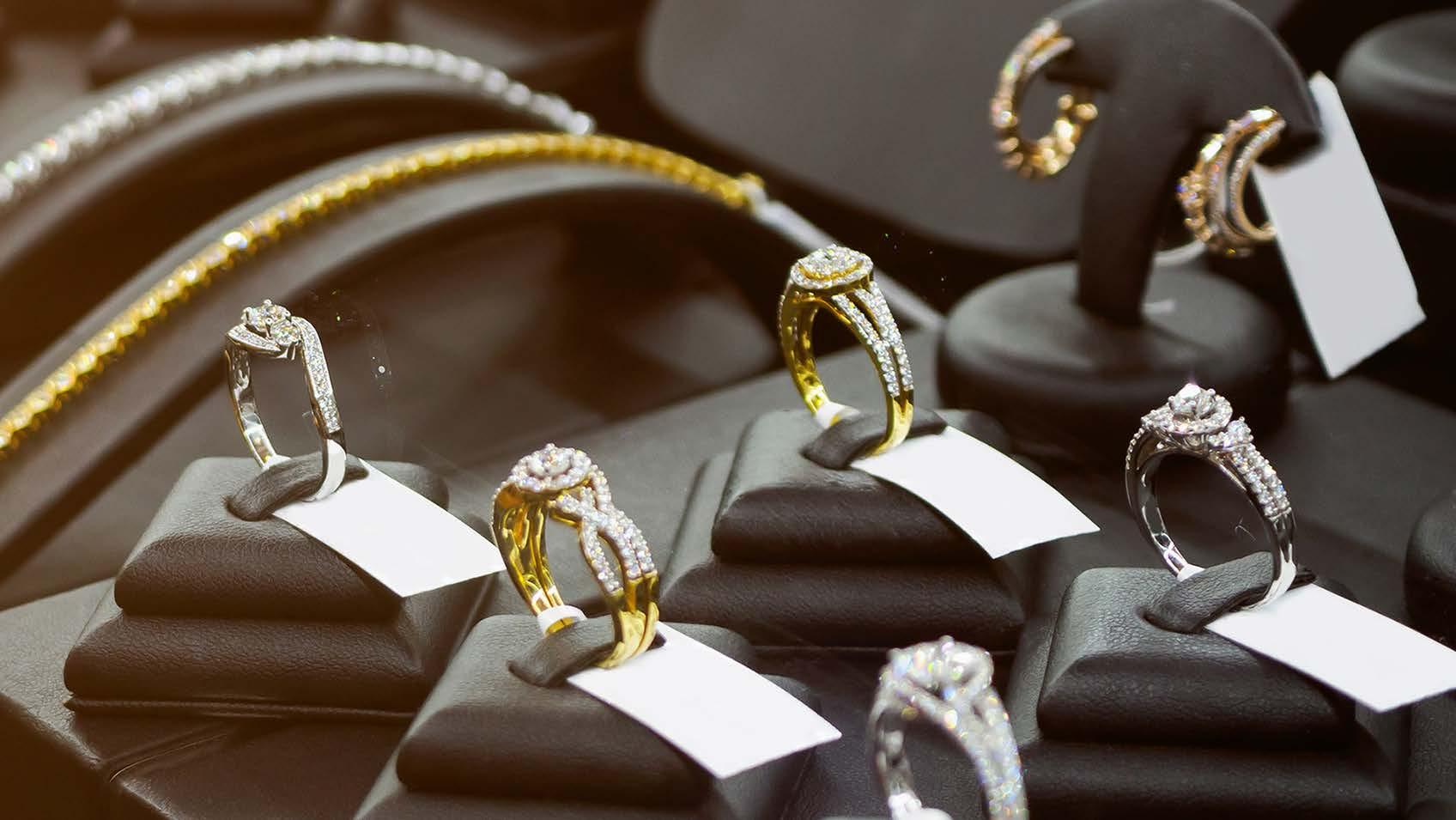
India’s jewellery sector is currently bolstered by its position as one of the world’s leading gems and jewellery exporters, with the UAE, Hong Kong, and the U.S. serving as primary destination markets. This international presence, combined with a projected 23% Y-o-Y rise in FY2026¹ turnover, underscores its continued momentum. The category also remains supported in value terms by elevated gold prices, while deep-seated cultural traditions around weddings and festivals, coupled with rising disposable incomes, have reinforced gold’s appeal as a value-led purchase. This momentum is also being mirrored in shifting purchasing behaviour, as the market moves beyond its traditional investment-centric model towards a more sophisticated ecosystem. While gold and gemstones remain the market’s foundation, the focus is transitioning from weight to brand-led design, with modern consumers placing greater emphasis on aesthetics and transparency. This is also evident in the diversification of jewellery products; for instance, prominent players are now forging high-profile international collaborations such as BlueStone’s partnerships with Pokémon, Barbie and Hello Kitty, along with CaratLane’s tie-ups with Disney, Marvel and Harry Potter, to engage Gen Z and younger cohorts. Simultaneously, domestic ultra-luxury brands such as Zoya by Tata, Bhagat by Viren Bhagat, and Sabyasachi Jewellery, amongst others, are competing directly with global jewellery brands by offering personalised, artisanal pieces for the HNI segment.
Consumer Segments
• Brand-led & certified
• Strong aesthetic appeal, specifically in bridal heritage collections
• Distinctive and sustainable craftsmanship
• Value-driven innovation
• 60-80% lower price point
• Better size-per-spend utility
• Greater ethical transparency and chemical identity
• Lifestyle-led accessories
• High-frequency purchases
• Wider digital reach through e-commerce
• Travel-safe and versatile designs

India’s jewellery sector is undergoing a structural transition into a high-growth retail category, driven by factors such as rising per capita income, healthy private consumption, and continued preference for gold as a strategic investment hedge. At the same time, a growing base of working women and deeper digital penetration are influencing demand patterns, with preferences shifting towards branded, contemporary daily-wear designs that reflect a sophisticated professional lifestyle.
Per capita income growth acting as a wealth enabler
Private consumption growth making jewellery a primary outlet for the country's growing discretionary surplus

Discretionary spending growth driving the jewellery sector’s transition beyond a pure investment hedge
lightweight dailywear /professional collections Transition to organised retail Organised jewellery’s* share is projected to rise further by
Consumer preferences in India’s jewellery sector are evolving across age cohorts. Buyers are moving from single-investment purchases towards more diversified jewellery portfolios, broadening demand for products that balance fashion, versatility, and long-term value. Daily-wear jewellery, modular designs, and affordable entry points in 9K gold are further reinforcing this shift. These evolving consumption patterns point to a decisive move towards more diversified, lifestyle-oriented jewellery portfolios.
Table 2.2: Buyer priorities across ownership, design, and spend
Redefined Ownership Paradigm Evolving Styles & Adaptability
Consumer Habits: Scale & Spend
TRADITION TO TREND:
Only 15% prefer heavy heirloom sets1
TIMELESS COLLECTIONS:
Weddings (50%)
Anniversaries / birthdays (38%)
Office wear (32%)1
CONTEMPORARY DRIVERS:
Growing purchases for career wins, housewarmings & milestones1
LESS IS MORE:
49% of Gen Z/Millennials prefer lightweight, minimalist designs1
PREMIUM MADE EASY:
Introduction of voluntary hallmarking for 9K gold in 2025, formalising affordable gold jewellery²
FLEXIBLE STYLING:
Demand for modular “9-to-5 to evening” jewellery collections
CURATED COLLECTIONS:
Shift from single-piece purchases to diversified jewellery portfolios1
STYLE & VALUE:
56%1 of consumers balance fashion appeal with investment value
TRENDSETTERS OF TOMORROW:
Gen Z favours silver (51%) & platinum (34%) for modern luxury1
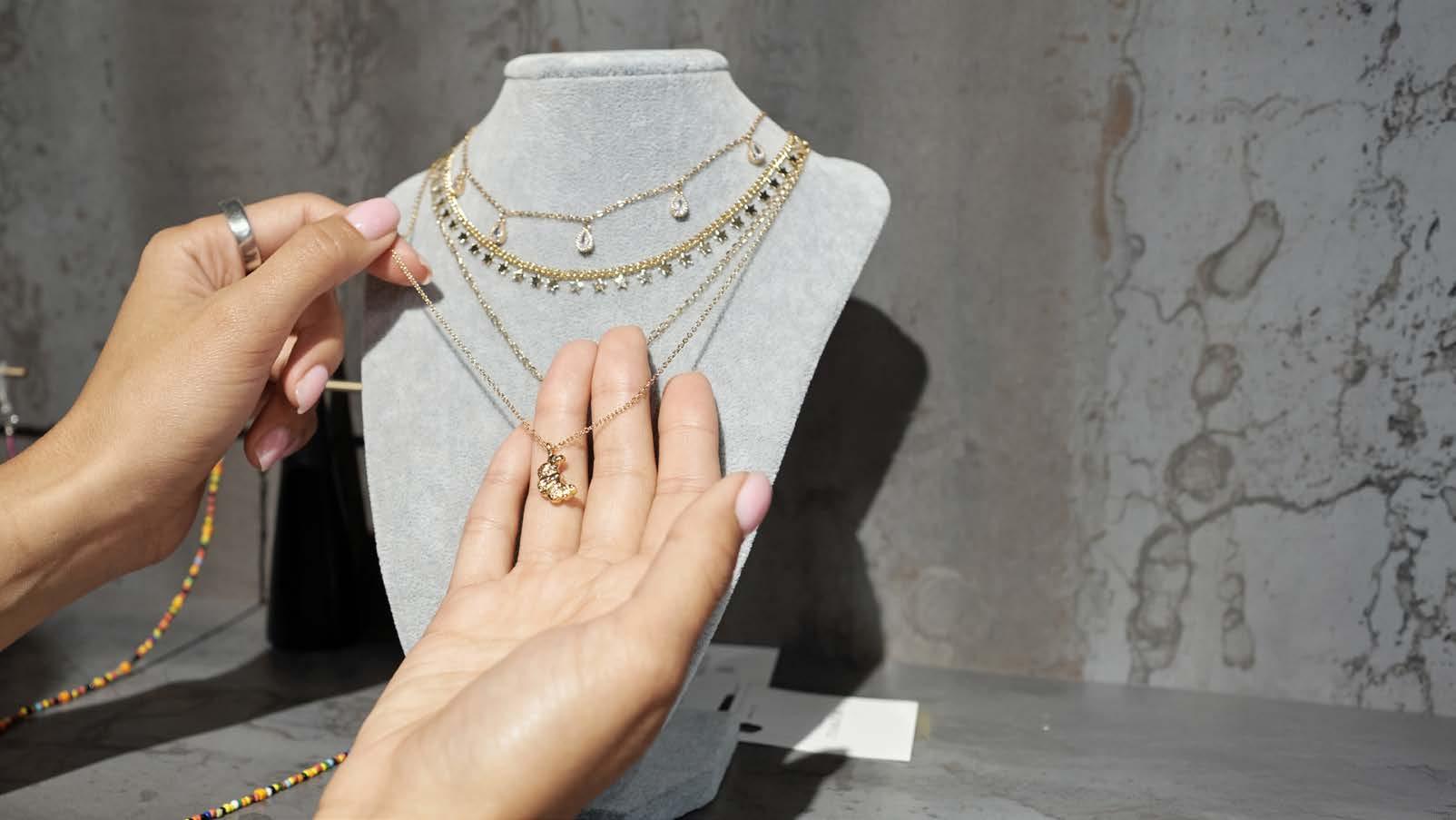
Jewellery stores are emerging as premium anchors in malls and organised retail destinations, contributing significantly to both the financial performance and overall positioning of a retail asset. The share of leasing by jewellery brands rose from 2% in 2019 to 8% in 2025 (refer to Figure 4.1). Store sizes have also expanded, with the share of large-format stores (>8,000 sq. ft.) increasing from 14% in 2019 to 50% in 2025 (refer to Figure 4.2). This reflects a shift in jewellery retail from a product-based category to a more experience-led one.
A fundamental shift from neighbourhood shops to institutionalised, experience-led retail is characterised by the following:
Large-format stores: Tier-II & III expansion: Multi-format leasing:
Leading brands have transitioned from conventional 1,500-2,500 sq. ft. stores to large-format showrooms, a trend now visible across both premium malls and high streets. These expanded footprints serve as more than inventory hubs; they also function as experience centres, featuring private VIP lounges, ARpowered virtual try-on zones, and dedicated bridal galleries. This shift is now visible even among new entrants and regional players in tier-II and tier-III cities, with some leasing 8,000+ sq. ft. spaces to maintain parity with national legacy flagships.
While Tier-I cities such as Mumbai, Delhi-NCR, and Bengaluru, among others, command the highest total revenues, tier-II and tier-III markets are exhibiting stronger store-level profitability in select locations, supported by lower rentals, leaner operational yields, and significantly higher margins. In these markets, jewellery is often viewed more as a wealth asset rather than a fashion accessory, resulting in a higher average ticket size (ATS)* driven by high-value wedding purchases. AI-driven inventory management strategies, which help place the right products are in the right markets— such as temple jewellery in the South or Polki in the North—have improved stock turnover and reduced unsold inventory.
Departing from a one-sizefits-all strategy, brands are adopting diversified leasing portfolios. This includes large-sized stores (8,000+ sq. ft.) designed for brand building, boutique stores in malls (1,500-3,000 sq. ft.) targeting daily wear buyers, and rapidly expanding Shop-in-Shop (SiS) formats in department stores such as Shoppers Stop, Lifestyle, and Pantaloons to capture high footfall without the overheads of independent leases.
Share of jewellery brands rose from 2% in 2019 to 8% in 2025 Share of large-sized stores rose from 14% in 2019 to 50% in 2025
Lucrative lease terms:
There is a growing shift towards hybrid rental structures as landlords increasingly favour performance-linked models due to the sector’s exceptionally high sales density compared with other retail categories. To justify the substantial capital expenditure required for high-end security infrastructure and specialised store fit-outs, landlords are securing extended lease tenures. This arrangement also benefits jewellery retailers, as it aligns with their strategic need for long-term operational stability.
The integration of digital layers into the physical store is one of the key factors supporting higher sales, even as store sizes expand. Larger formats can accommodate dedicated zones required for AR-powered ‘virtual endless aisles’ and ‘video-assisted selling’, helping bridge the gap between digital research and in-store consultation.
4.3: Why are jewellery brands increasingly positioned as premium anchors?
High revenue and a stronger rental potential
High streets are preferred for their unrestricted operational flexibility, superior brand visibility, and lower total occupancy costs, enabling retailers to tap into high-intent, location-loyal consumer catchments.
Absorption by jewellery brands doubled from 0.4 million sq. ft. in 2024 to 0.8 million sq. ft. in 2025
Growing penetration by LGD brands
Tanishq, Malabar Gold & Diamonds, Senco Gold & Diamonds, TBZ, Kalyan Jewellers, Joyalukkas, PNG Jewellers, Waman Hari Pethe Jewellers, Indriya, Zoya (by Tata), Antara Jewellery, CaratLane, Reliance Jewels
GIVA, Palmonas, Kushal's Fashion Jewellery, BlueStone, PEORA, Mia by Tanishq, Candere by Kalyan Jewellers, Tribe Amrapali
Jewelbox, Fiona Diamonds, Solitario, Zen Diamond, Limelight Diamonds, Firefly Diamonds, Ivana Jewels
Tanishq, Malabar Gold & Diamonds, Senco Gold & Diamonds, TBZ, Kalyan Jewellers, Joyalukkas, Tyaani Jewellery, Indriya, GRT Jewellers, C. Krishniah Chetty and Sons, CaratLane, Reliance Jewels
GIVA, Palmonas, Kushal's Fashion Jewellery, BlueStone, PEORA, Mia by Tanishq, Candere by Kalyan Jewellers, Tribe Amrapali
Avira Diamonds, Jewelbox, Fiona Diamonds, Solitario, Zen Diamond, Limelight Diamonds, Firefly
2023-2025
Tanishq, Malabar Gold & Diamonds, Senco Gold & Diamonds, TBZ, Kalyan Jewellers, Joyalukkas, PMJ Jewels, Mangatrai Neeraj Jewellers, CaratLane, Reliance Jewels
GIVA, Palmonas, Kushal's Fashion Jewellery, BlueStone, PEORA, Mia by Tanishq, Candere by Kalyan Jewellers, Tribe Amrapali
Avira Diamonds, Solitario, Limelight Diamonds, Firefly Diamonds, Ivana Jewels
Tanishq, Malabar Gold & Diamonds, Senco Gold & Diamonds, Kalyan Jewellers, Joyalukkas, Bhima Jewellers, VBJ, Khazana Jewellery, GRT Jewellers, Thangamayil Jewellery, CaratLane, Reliance Jewels
GIVA, Palmonas, Kushal's Fashion Jewellery, BlueStone, PEORA, Mia by Tanishq, Candere by Kalyan Jewellers, Tribe Amrapali
Avira Diamonds, Jewelbox, Solitario, Limelight Diamonds
Tanishq, Malabar Gold & Diamonds, TBZ, Kalyan Jewellers, Joyalukkas, Zaveri & Co., Reliance Jewels, ORRA, Tyaani Jewellery, Indriya, CaratLane
GIVA, Palmonas, Kushal's Fashion Jewellery, BlueStone, PEORA, Mia by Tanishq, Candere by Kalyan Jewellers, Tribe Amrapali
Ivana Jewels, Limelight Diamonds
Tanishq, Malabar Gold & Diamonds, Senco Gold & Diamonds, TBZ, Kalyan Jewellers, Joyalukkas, PNG Jewellers, Waman Hari Pethe Jewellers, Ranka Jewellers,Tyaani Jewellery, Indriya, CaratLane, Reliance Jewels, Chandukaka Saraf
GIVA, Palmonas, Kushal's Fashion Jewellery, BlueStone, PEORA, Mia by Tanishq, Candere by Kalyan Jewellers
Fiona Diamonds, Ivana Jewels, Solitario, Limelight Diamonds, Firefly Diamonds
Cumulative leasing during 2023-2025
PC Jeweller, Tanishq, Malabar Gold & Diamonds, Senco Gold & Diamonds, Kalyan Jewellers, Joyalukkas, Indriya, PP Jewellers (PPJ), Hazoorilal Legacy Jewellery, Manohar Lal Jewellers, CaratLane, Reliance Jewels
GIVA, Palmonas, Kushal's Fashion Jewellery, BlueStone, Mia by Tanishq, Candere by Kalyan Jewellers, Tribe Amrapali
Jewelbox, Fiona Diamonds, Ivana Jewels, Limelight Diamonds, Solitario
Tanishq, Malabar Gold & Diamonds, Senco Gold & Diamonds, TBZ, Kalyan Jewellers,Joyalukkas, PC Jeweller, B.C.Sen Jewellers, Sawansukha Jewellers, Indriya, CaratLane, Reliance Jewels
GIVA, BlueStone, Mia by Tanishq, Candere by Kalyan Jewellers, Tribe Amrapali
Jewelbox, Solitario, Limelight Diamonds
Beyond strategic site selection, effective market penetration requires an execution model aligned with the brand’s specific value proposition. A significant share of offline expansion among prominent brands such as Tanishq, Malabar Gold & Diamonds, and Kalyan Jewellers is predominantly occurring in tier-III / IV cities such as Bareilly, Belagavi, Akola, and Thrissur, amongst others. This strategic focus is driven by the strong emotional significance associated with jewellery in these markets. By establishing a physical presence in these regions, organised players are able to offer the transparency and standardised hallmarking that modern, aspirational consumers now demand.
The following strategies outline how distinct growth models are currently driving store count expansion and geographic penetration across India.
Fine Jewellery brands such as Tanishq typically pursue a measured and strategic expansion approach, focused on increasing store density in existing markets, entering tier-II / III cities, and strengthening premium and omnichannel offerings. At the same time, brands such as Kalyan Jewellers are adopting a more rapid, scale-driven strategy, leveraging an asset-light franchise (FOCO) model, aggressive showroom additions, and hyperlocal strategies to penetrate deeper into target markets.
Fashion Jewellery brands such as Palmonas and GIVA usually follow a digital-first, assetlight expansion model, beginning with D2C and marketplaces before adding select offline stores and kiosks in key cities. Their strategy focuses on fast scaling, trend-led products, influencer marketing, and omnichannel presence, targeting young, priceconscious consumers.
LGD brands, including Limelight Diamonds and Solitario, are following an assetlight expansion strategy, supported by the rapid rollout of experience stores across metros and tier-II cities. Their approach is centered around accessible luxury, brand awareness, and omnichannel presence, with scale being driven through partnerships and high-visibility retail locations.
Selecting the right location has become a high-precision exercise for organised jewellery brands, where strategic positioning is now as important as market footfall. This precision is critical in helping brands capture specific consumer segments, from conscious bridal shoppers to new professional solitaire buyers, through targeted market mapping. These stores, featuring digital installations and clear glass facades, help maximise visual transparency and create inviting, open-access storefronts. While the broader strategy ranges from high-intent clustering and ecosystem integration for Fine Jewellery to data-driven lifestyle integration for Fashion Jewellery and aspirational accessibility for LGDs, frontage visibility continues to be a priority. Ultimately, these strategies seek to transform the physical storefront into a high-impact experience centre, which is essential for driving conversion and brand recall in a competitive retail environment.
Targeting sites bridging residential catchments and professional hubs
Prioritising locations based on online demand and loyalty density
Strategic placement within high-intent competitive clusters
Positioning within a 2–3 km radius of bridal service clusters
Positioning near high-footfall anchors and primary escalators** within retail layouts
Strategic placement alongside premium cafes and tech showrooms
Leveraging online search data and PINcode demand to target professionals through high-footfall experience centres
Strategic placement on mall floors housing premium fashion brands
Locating alongside premium cafes and lifestyle tech stores in social hubs
Positioning near contemporary ethnic and occasion-wear brands to capture bridal, festive, and other ethnic jewellery demand
Distinct spatial strategies are implemented across the retail floor to address specific needs of each segment. Segmented layouts and luxury hospitality are used for Fine Jewellery to maintain an intimate, curated atmosphere, while modern phygital retail models are deployed for Fashion Jewellery to better engage Gen Z and Millennial consumers. The following graphic highlights the specific layout requirements for Fine Jewellery, Fashion Jewellery, and LGD formats: Intentional
with large-format footprints organised into specialised consumer neighbourhoods
designed to facilitate independent product interaction
semi-private lounges especially for bridal requirements
consultation suites
centralised space designed for interactive experiences
featured even within minimalist experiential zoning layouts
provided via integrated tech-stations to facilitate 4C* education
High-impact vanity stations and integrated mirror zones
used for immediate physical engagement
Accessible counters with digitally enhanced touchpoints
incorporated
In luxury jewellery retail, a store’s layout is not merely an aesthetic choice; it is a strategic decision that can directly influence customer experience and operational efficiency. While core security principles remain constant, the visual flow and organisational philosophy diverge sharply between intimate boutiques and large-scale, multi-brand showrooms. The following comparison outlines these two distinct approaches: the Boutique Strategy, which prioritises intimate brand storytelling, and the Multi-Brand Layout, focused on zonal efficiency for high footfall.
In smaller boutique settings, the objective is to make the space feel like a private gallery.
Instead of long perimeter counters, boutiques often use a central circular or oval island display. This allows the consultant to walk with the customer rather than staying behind a barrier, creating a more personalised sales experience.
Only "hero" pieces are on the floor. The remaining inventory is stored in a concealed back-of-house vault and brought out selectively, enhancing the exclusivity of the experience.
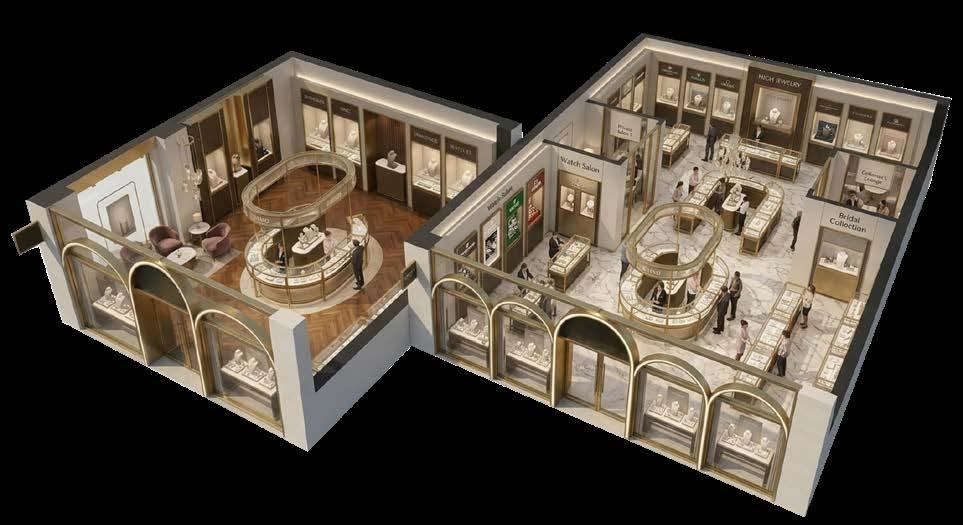
Large-scale retailers often use a hub-and-spoke model to manage high footfall.
The store is strictly zoned by product category.
Often designed as semi-enclosed cabins where entire families can sit comfortably for extended consultations.
Typically located in the quietest and most secure corner of the store.
Located near the entrance to facilitate quick, high-volume transactions.
In large stores, billing and polishing / repair stations are centralised to keep the main sales floor clear of administrative clutter.


In 2026, the Indian jewellery sector has sought to balance geopolitical developments in West Asia against a strong domestic retail backdrop. While global logistics dynamics and high bullion prices present near-term considerations, organised players are recalibrating their expansion and product strategies to sustain momentum. The following themes outline the key frictions and strategic responses likely to influence the sector’s near-term trajectory.
A decisive shift towards the organised segment now anchors leasing momentum in the jewellery sector. This structural transition is driving a clear pivot from traditional clusters to high streets and malls, as brands reposition to serve the evolving trust-conscious consumer. Consequently, the following themes have emerged as the primary catalysts that could dictate real estate demand and space-take-up strategies for the sector in the coming years:
Dedicated jewellery precincts are gaining traction in prime retail developments, backed by specialised utilities such as reinforced vaults and high-density lighting.
• Nexus Select Trust¹ has curated dedicated jewellery zones featuring over 10 marquee brands across select tier-I assets in its mall portfolio through the repurposing of lowerground floors to concentrate highvalue footfall.
• R City, Mumbai, has designated the North Wing of its ground floor for Jewellery & Accessories, housing legacy brands such as Tanishq, Reliance Jewels, and Malabar Gold & Diamonds, alongside modern players such as BlueStone, CaratLane, Indriya, and Origem.
The Indian government has moved beyond a purely regulatory role to become a more active growth enabler, with policy measures focused on transparency, formalisation, and global competitiveness.
Tariff Revision: 2024
Formalisation: Gold Monetisation Scheme (GMS) Standardisation: Mandatory Hallmarking Standardisation: Regulatory Clarity Innovation: Promoting Lab-Grown
Resource Efficiency:
The scheme incentivised households to deposit idle* gold in return for interest (2.25%-2.5%), bringing locker-bound assets into the formal financial system.
Wider Impact: By enabling the recycling of domestic idle gold to meet industrial demand, the scheme can significantly reduce reliance on bullion imports, conserve foreign exchange reserves, and help stabilise the national trade deficit.
BIS Certification: Mandatory hallmarking strengthened quality assurance across major carat categories (14k-24k).
Fiscal Support: The removal of the 5% basic customs duty on LGD seeds1 encouraged domestic manufacturing.
R&D Investment: The allocation of INR 242 crore2 for LGD development at IIT Madras aimed to build indigenous machinery and reduce import dependence.
Customs duty on gold and silver was reduced from 15% to 6%, while the duty on platinum was lowered to 6.4%³. As of 13 May 2026, the duty on gold and silver was subsequently restored to the 2024 level of 15%, while platinum was revised to 15.4%.
9K Gold
Regularisation (2025): The inclusion of 9K gold under hallmarking formalised the Affordable Luxury segment, empowering brands to target valueoriented consumers through a trusted, lower-price-point gold offering4
Bilateral Trade Deals: CEPA / ECTA** agreements with the UAE, Australia, and Oman, alongside the UK CETA and the EU FTA, grant zero-duty access for the Indian jewellery sector, positioning it to capture a significantly larger global export share.
E-commerce Export Hubs: Dedicated infrastructure was proposed to streamline D2C global shipping, simplifying customs procedures and return logistics.
Research
Abhinav Joshi
Head of Research, India, Middle East and North Africa abhinav.joshi@cbre.co.in
Vidhi Dheri Director, National Operations vidhi.dheri@cbre.co.in
Uttara Nilawar
Associate Director uttara.nilawar@cbre.com
Uttaresh Venkateshwaran General Manager uttaresh.venkateshwaran@cbre.com
Neha Guhe Senior Manager neha.guhe@cbre.com
Simran Sawant Assistant Manager simran.sawant@cbre.com
Vishakha Bhabad Senior Analyst vishakha.bhabad@cbre.com
Bimal Sharma
Head - Retail & Alternatives
bimal.sharma@cbre.co.in
Sakshi Goel
Associate Executive Director, North & West India sakshi.goel@cbre.co.in
Anand Dutta
Associate Executive Director, South & East India anand.dutta@cbre.co.in
Sumit Arora Head - National Operations & Workplace Strategy, Consulting, India sumit.arora@cbre.co.in
Akshay Yadav Head - Development Advisory, North & East India and Operations, Retail Advisory, India akshay.yadav@cbre.co.in
This report was prepared by the CBRE India Research Team, which forms part of CBRE Research—a network of preeminent researchers who collaborate to provide real estate market research and econometric forecasting to real estate. All materials presented in this report, unless specifically indicated otherwise, is under copyright and proprietary to CBRE. Information contained herein, including projections, has been obtained from materials and sources believed to be reliable at the date of publication. While we do not doubt its accuracy, we have not verified it and make no guarantee, warranty or representation about it. Readers are responsible for independently assessing the relevance, accuracy, completeness and currency of the information of this publication. This report is presented for information purposes only exclusively for CBRE clients and professionals, and is not to be used or considered as an offer or the solicitation of an offer to sell or buy or subscribe for securities or other financial instruments. All rights to the material are reserved and none of the material, nor its content, nor any copy of it, may be altered in any way, transmitted to, copied or distributed to any other party without prior express written permission of CBRE. Any unauthorized publication or redistribution of CBRE research reports is prohibited. CBRE will not be liable for any loss, damage, cost or expense incurred or arising by reason of any person using or relying on information in this publication.
To learn more about CBRE Research, or to access additional research reports, please visit the Global Research Gateway at www.cbre.com/research-and-reports CIN - U74140DL1999PTC100244
Leasing
Ram Chandnani
Managing Director, Leasing Services, India ram.chandnani@cbre.co.in
Rami Kaushal
Managing Director, Consulting & Valuations, India, Middle East & Africa rami.kaushal@cbre.co.in
Gaurav Kumar
Managing Director & Co-Head, Capital Markets, India gaurav.kumar@cbre.co.in
Nikhil Bhatia
Managing Director & Co-Head, Capital Markets, India nikhil.bhatia@cbre.co.in
Rajesh Pandit
Managing Director, Global Workplace Solutions, India & Property Management, India, SE Asia, Middle East & North Africa rajesh.pandit@cbre.co.in
Rajat Gupta
Managing Director, Operations, India rajat.gupta@cbre.com
Vijayendra Agarwal
Head of Marketing, Communications & CSR India, Middle East, and Southeast Asia vijayendra.agarwal@cbre.com
CBRE Research
This report was prepared by the CBRE India Research Team, which forms part of CBRE Research—a network of preeminent researchers who collaborate to provide real estate market research and econometric forecasting to real estate. All materials presented in this report, unless specifically indicated otherwise, is under copyright and proprietary to CBRE. Information contained herein, including projections, has been obtained from materials and sources believed to be reliable at the date of publication. While we do not doubt its accuracy, we have not verified it and make no guarantee, warranty or representation about it. Readers are responsible for independently assessing the relevance, accuracy, completeness and currency of the information of this publication. This report is presented for information purposes only exclusively for CBRE clients and professionals, and is not to be used or considered as an offer or the solicitation of an offer to sell or buy or subscribe for securities or other financial instruments. All rights to the material are reserved and none of the material, nor its content, nor any copy of it, may be altered in any way, transmitted to, copied or distributed to any other party without prior express written permission of CBRE. Any unauthorized publication or redistribution of CBRE research reports is prohibited. CBRE will not be liable for any loss, damage, cost or expense incurred or arising by reason of any person using or relying on information in this publication.
To learn more about CBRE Research, or to access additional research reports, please visit the Global Research Gateway at www.cbre.com/research-and-reports CIN - U74140DL1999PTC100244