IN THIS ISSUE
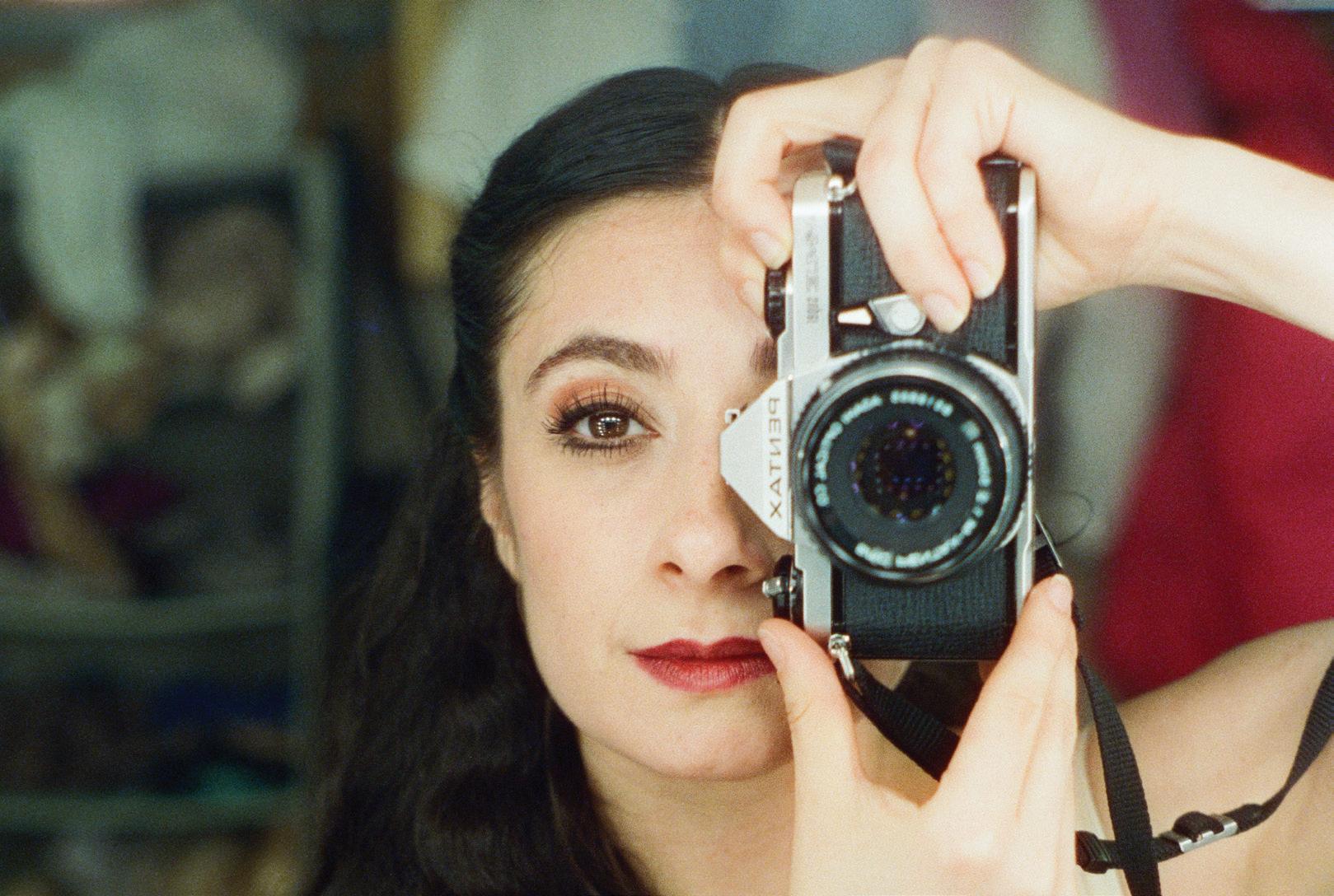
A photo journal by Lauren Bonfiglio traces the unseen hours before performance, where discipline, repetition, and quiet ritual shape what ultimately appears effortless. In these moments of preparation, the transformation from individual dancer to collective form begins.
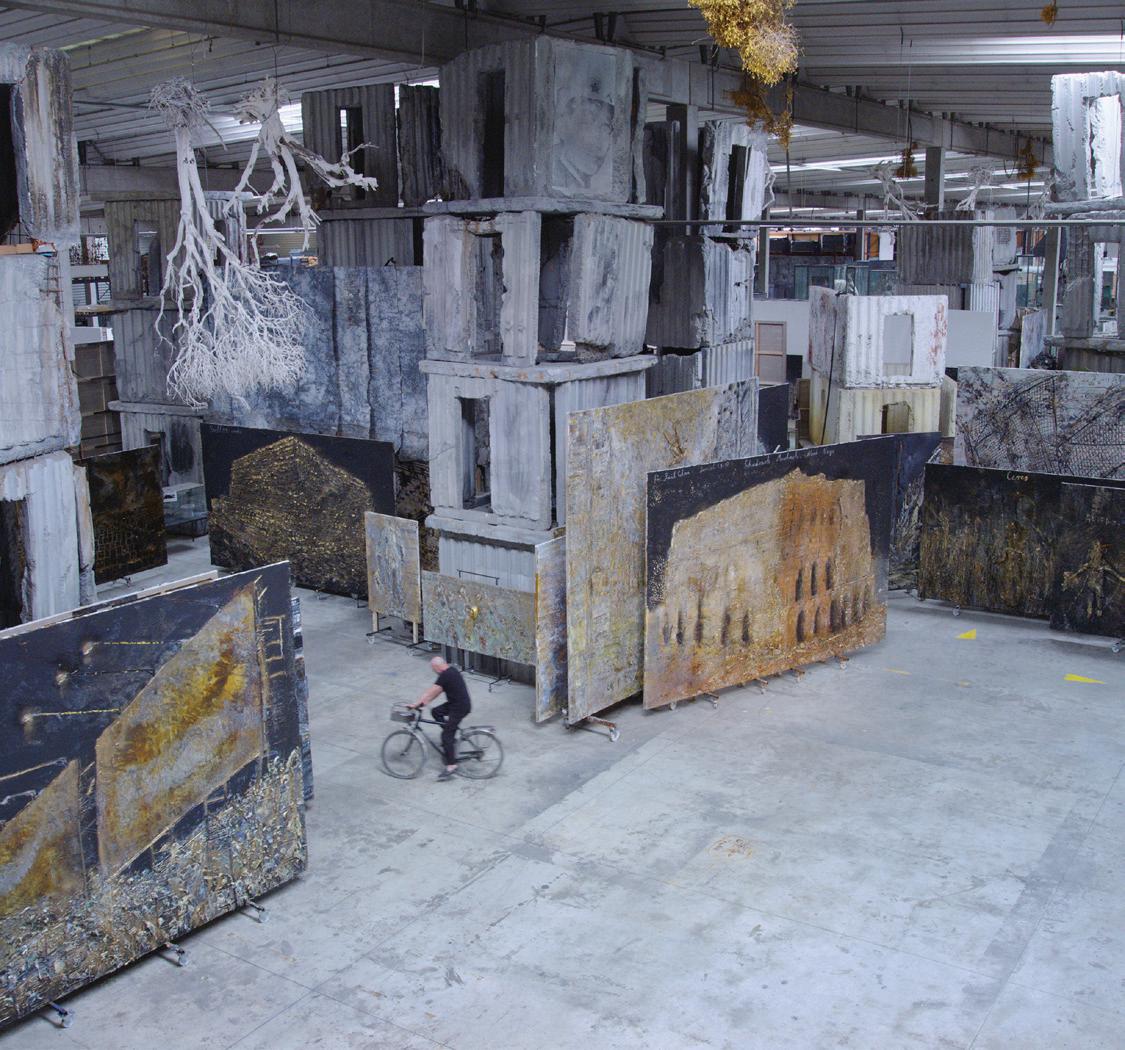
In the bomb-scarred Sala delle Cariatidi, Kiefer’s work engages directly with history, material, and transformation. Through lead, ash, and gold, he constructs a visual language where destruction and renewal coexist, and where the past remains physically present.
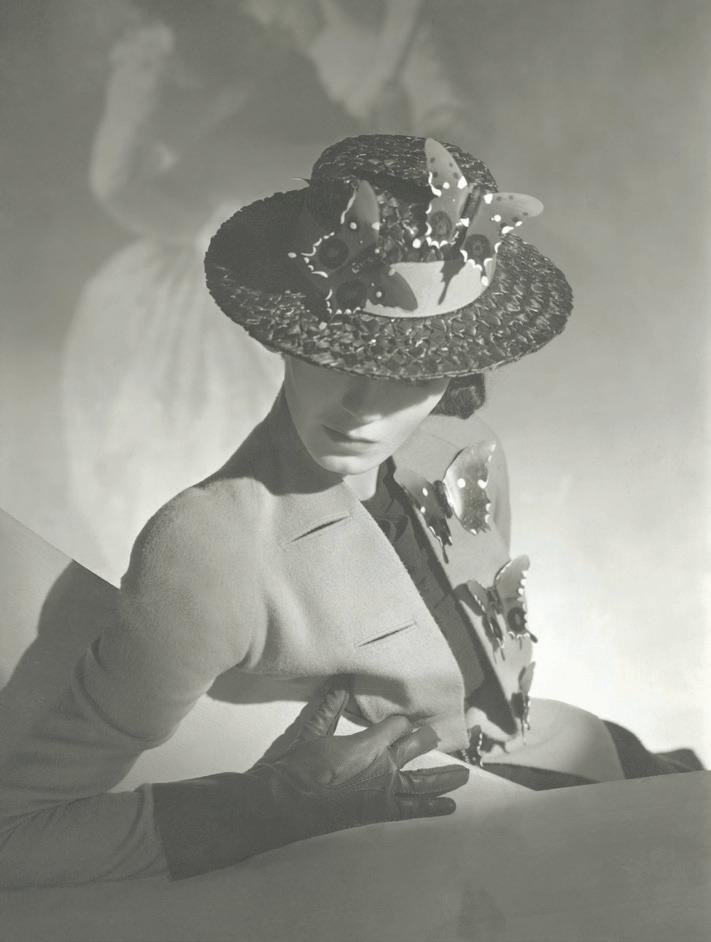
A recent exhibition at the Victoria and Albert Museum repositions Elsa Schiaparelli not simply as a designer, but as a translator of Surrealist thought into material form. Her work unsettles the body, turning fashion into a site of disruption, wit, and reimagined reality.
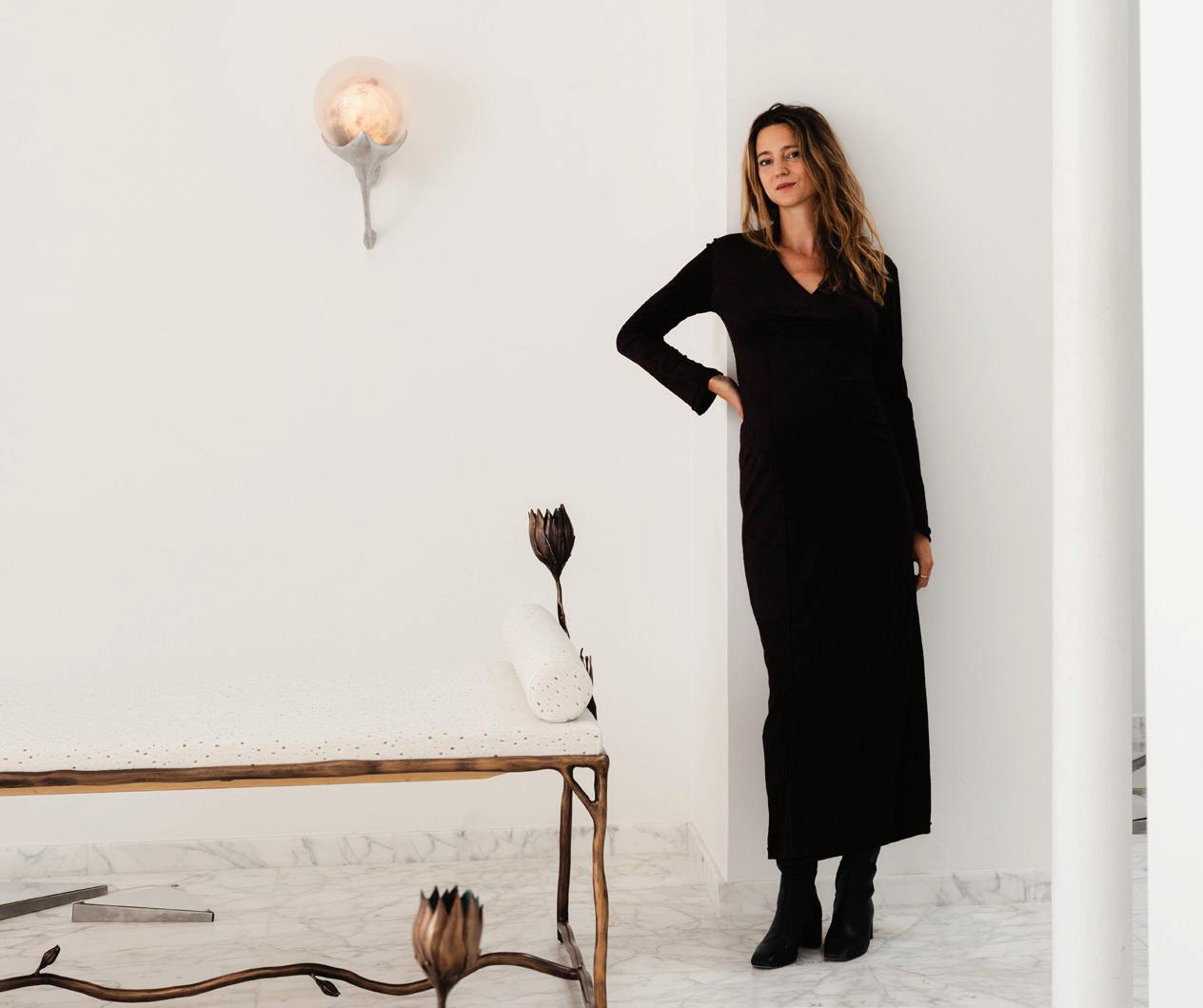
From the intense heat of Murano to the quiet courtyards of Venice, the artist explores the delicate boundary where structural strength and human emotion meet, collapsing vast conceptual universes into the microscopic details of bronze, onyx, and glass.
Schiaparelli
Irene Cattaneo
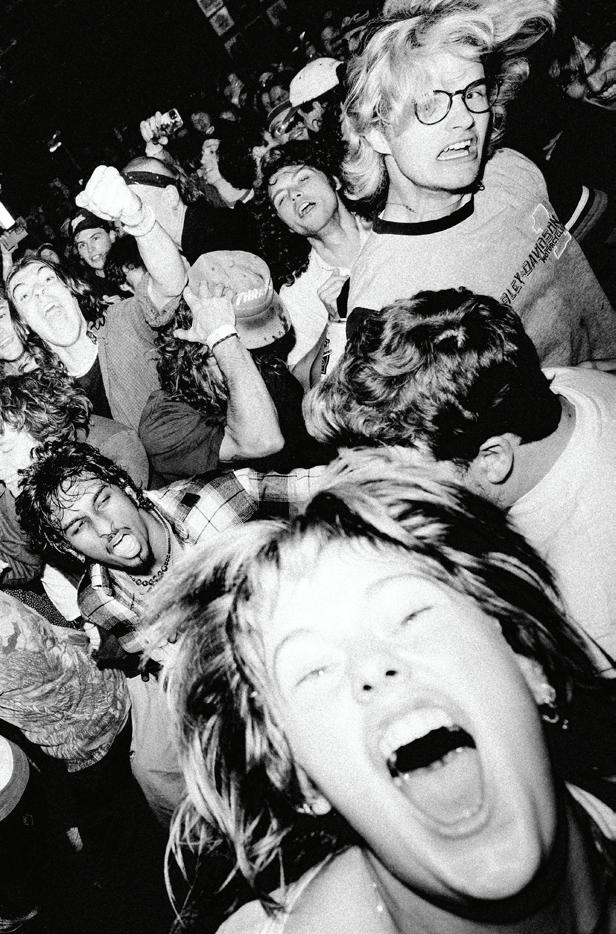
A young New York band cuts through a fragmented cultural landscape with music that refuses reduction. Drawing audiences across generations, Geese has become a rare phenomenon: a band absorbed whole, not in pieces.
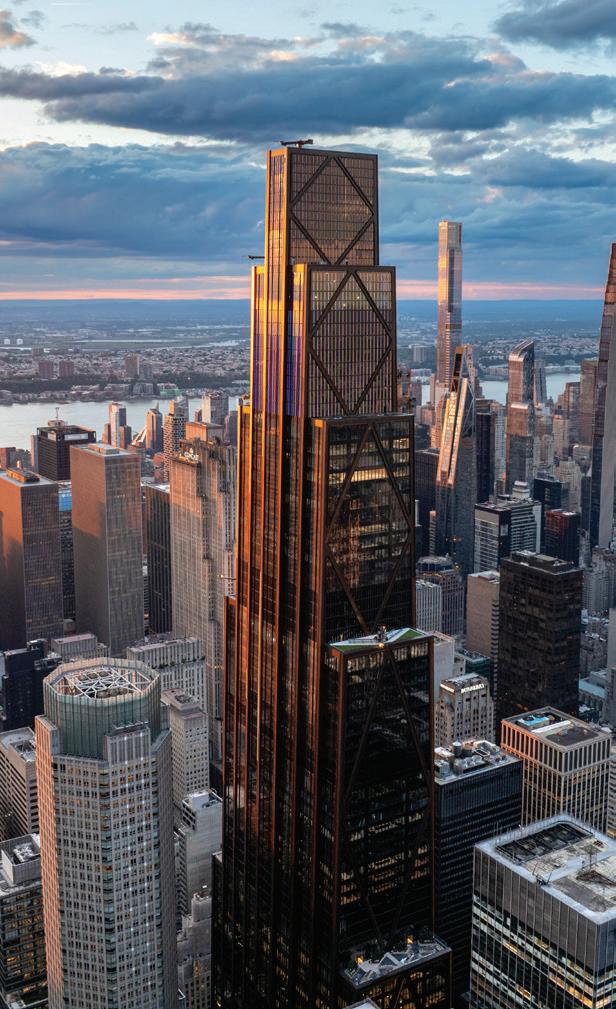
At 425 Park Avenue, Norman Foster reconsiders the logic of the office tower, introducing light, openness, and structural clarity into a skyline defined by repetition. The building engages its context while quietly altering it.
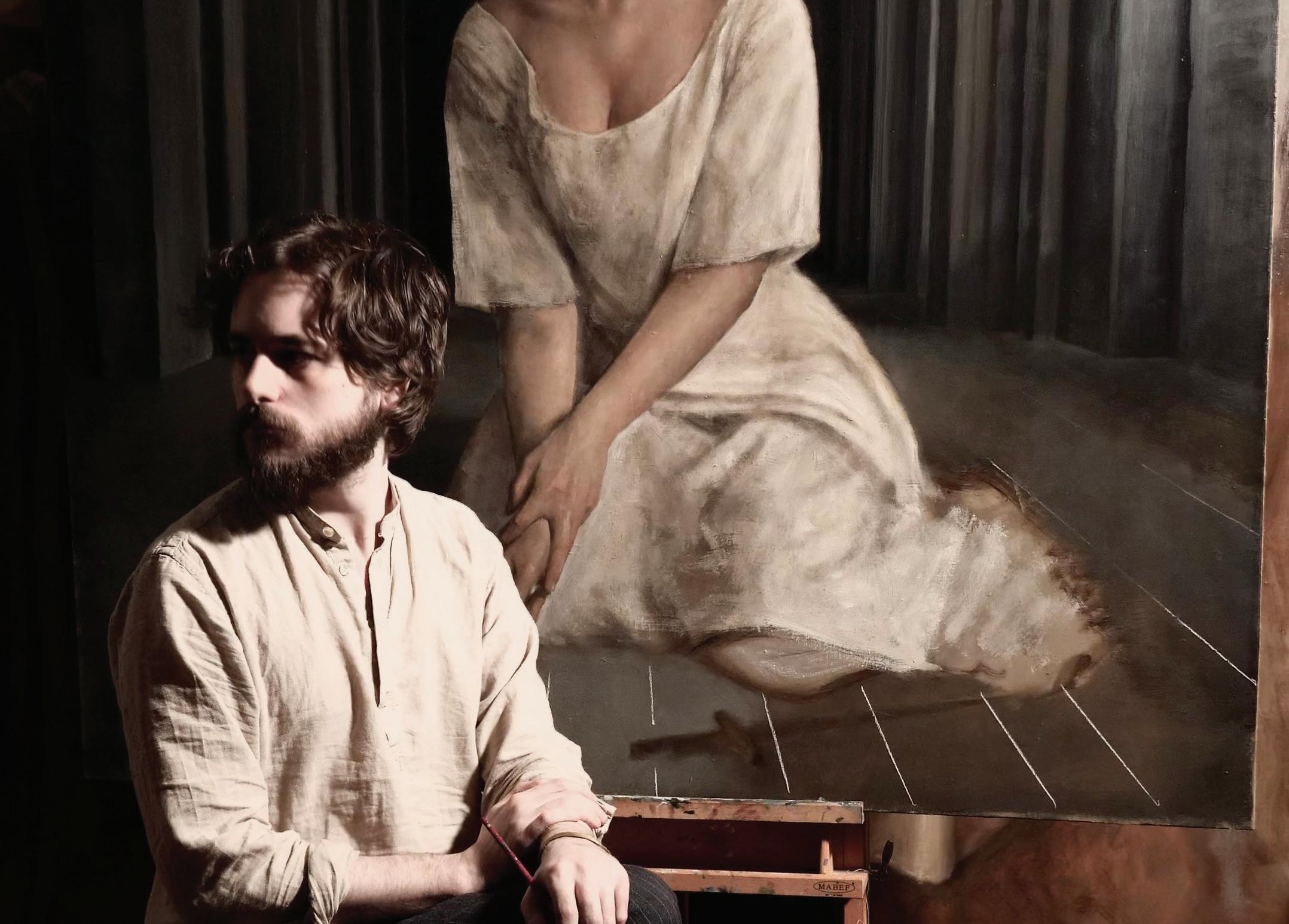
Working in the language of the old masters, Senium returns to myth and light as sites of encounter. His paintings explore the moment where the human meets the divine, where illumination becomes both revelation and rupture.
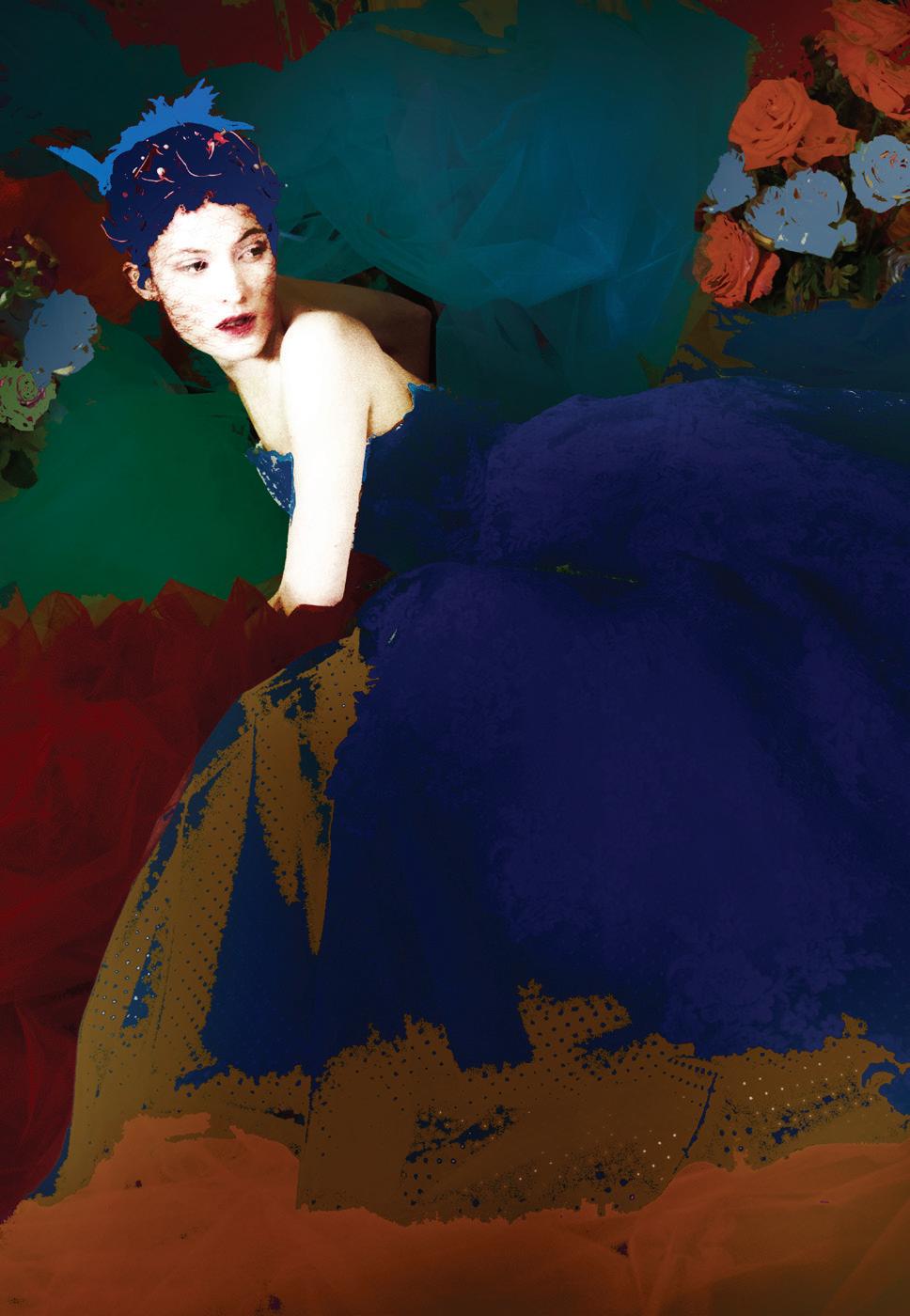
Reworking a decade of his own archive, Heck transforms photography into a painterly, evolving medium. His work dissolves the boundary between image and memory, creating compositions that exist between documentation and dream.
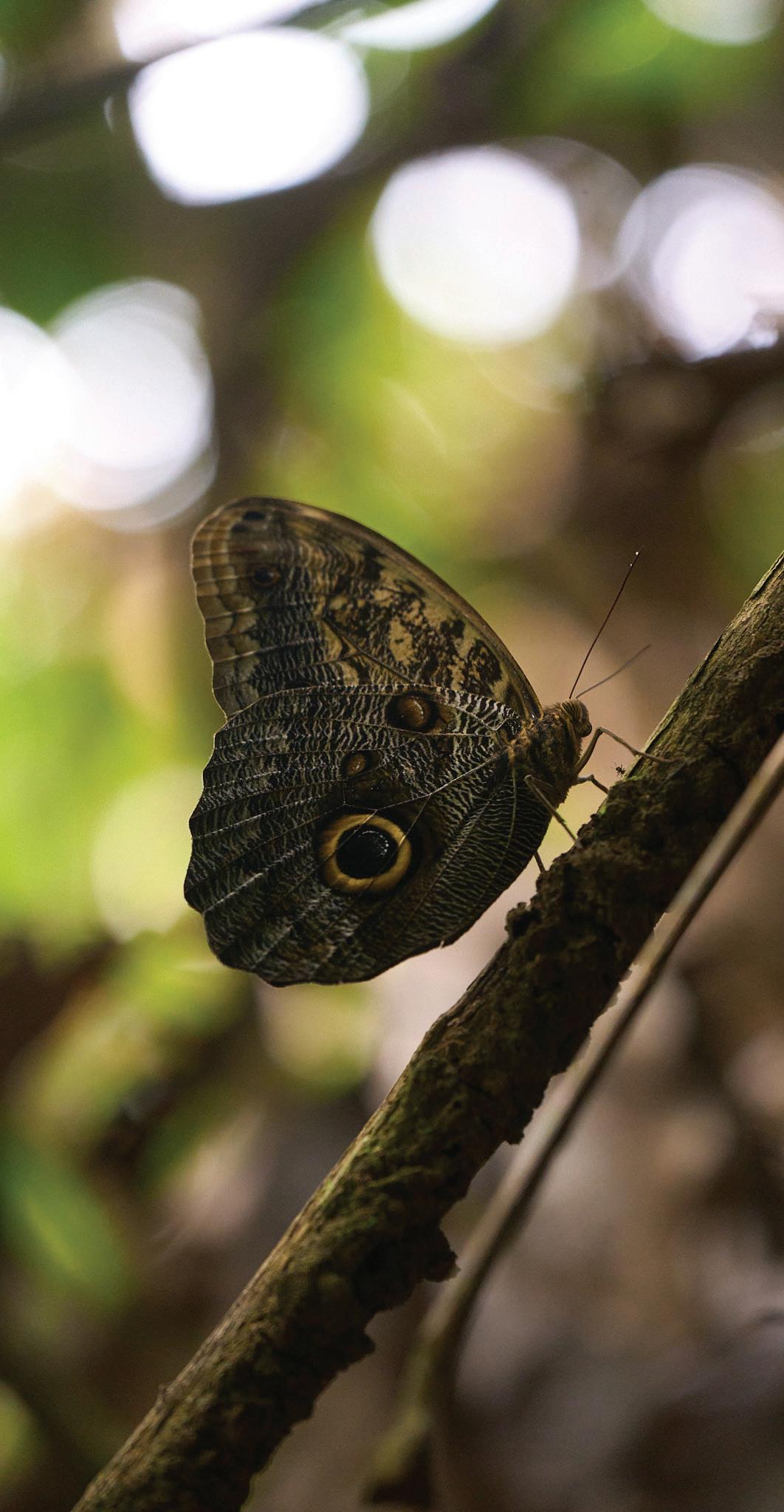
In the Darién Gap, one of the world’s most volatile landscapes, Alexandra Climent is rebuilding a fragmented ecosystem. Through reforestation and collaboration with Indigenous communities, her work restores not just land, but continuity across continents.
Threads of the Unconscious:
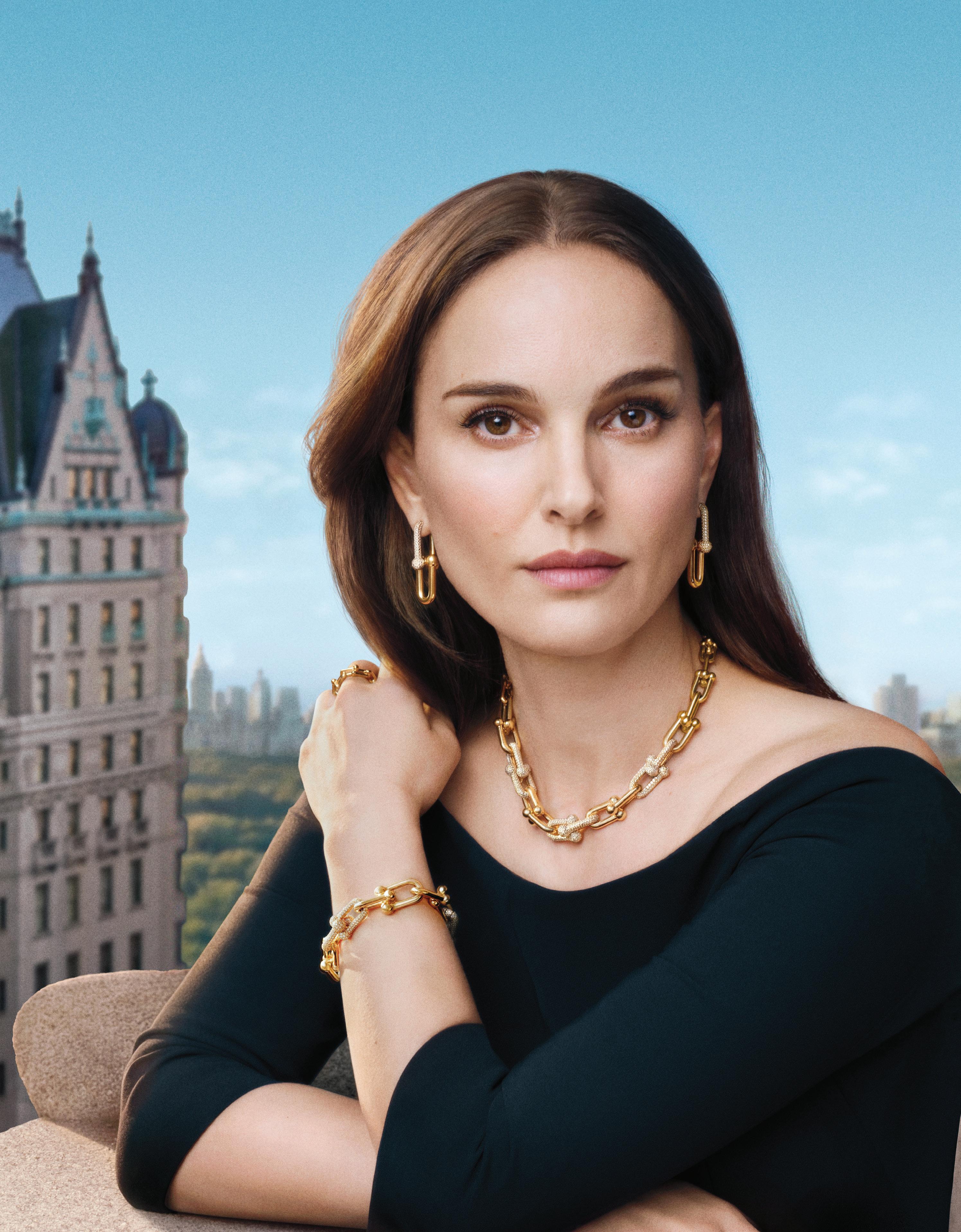
Erik Madigan Heck
Geese in the Machine
Legacy on the Avenue — Norman Foster
Jannik Senium
Jaguar’s Lifeline: Alexandra Climent
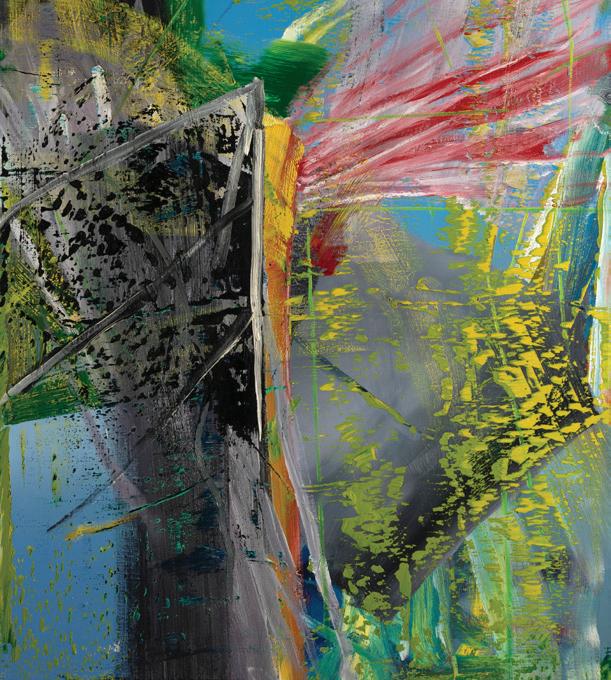
A major retrospective reveals a career built on questioning the image itself. Across decades, Richter has blurred the line between representation and abstraction, anticipating a world where reality is no longer fixed.
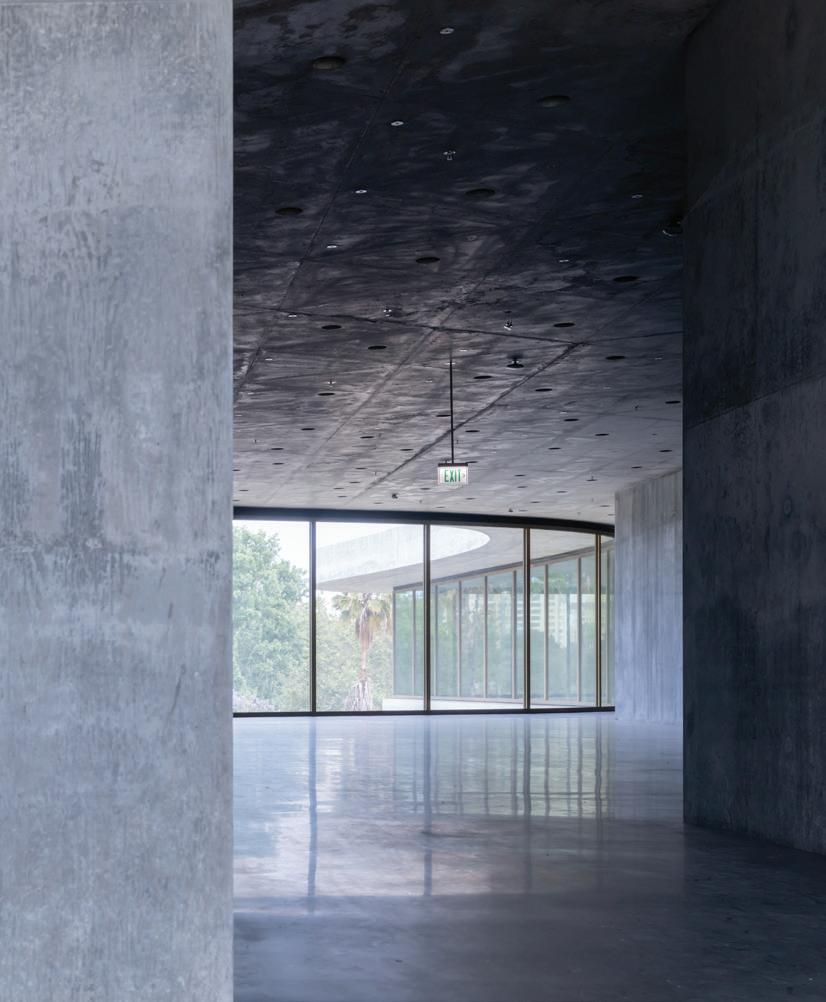
Peter Zumthor’s David Geffen Galleries redefine the museum as a continuous, non-hierarchical space. By dissolving traditional divisions, the building reshapes how art is encountered, placing all histories on equal footing.
A new adaptation of Homer’s epic revisits one of the most enduring narratives ever written. The Odyssey persists not as myth alone, but as a study of time, identity, and the uncertain path of return.
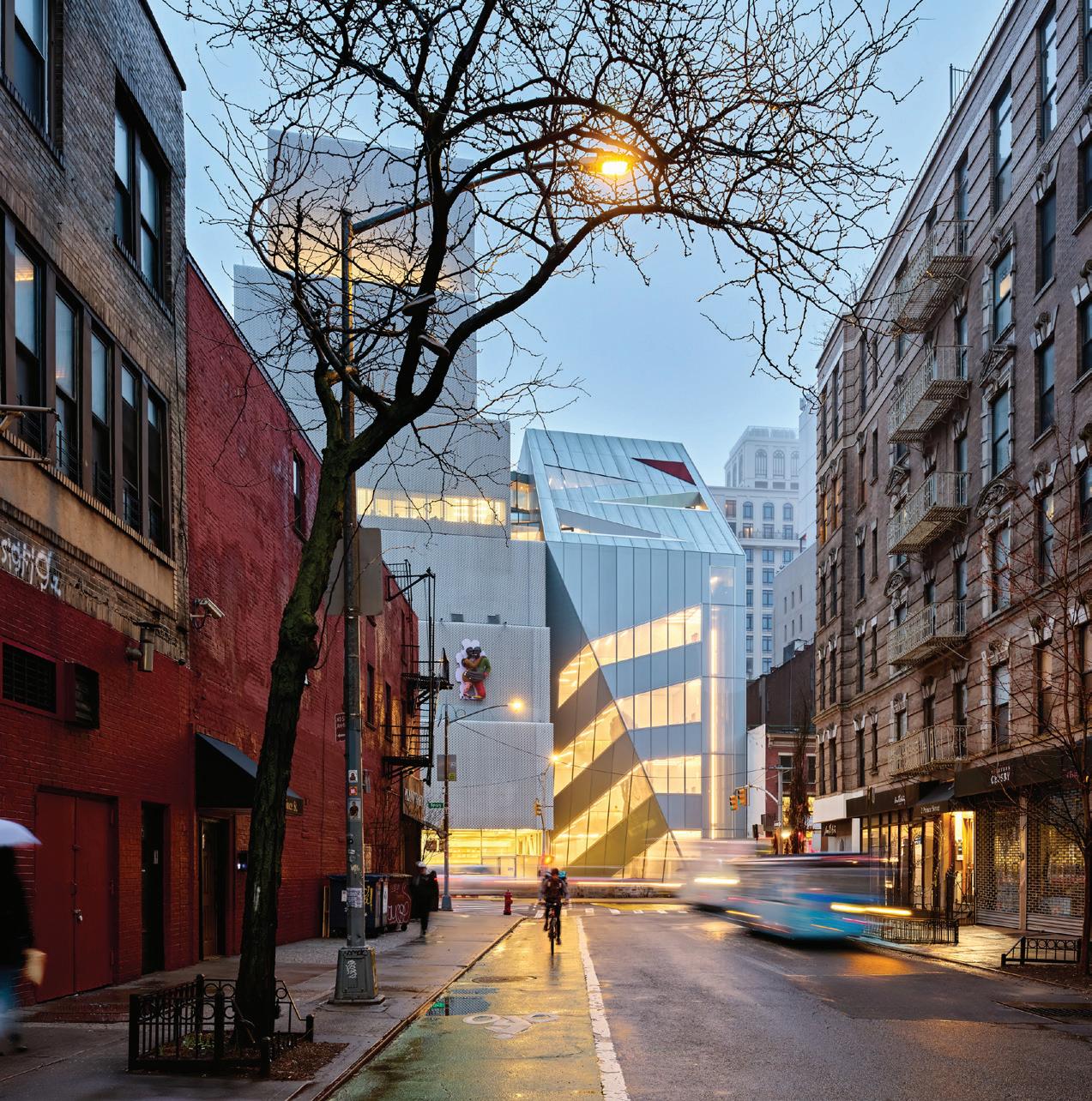
expansion
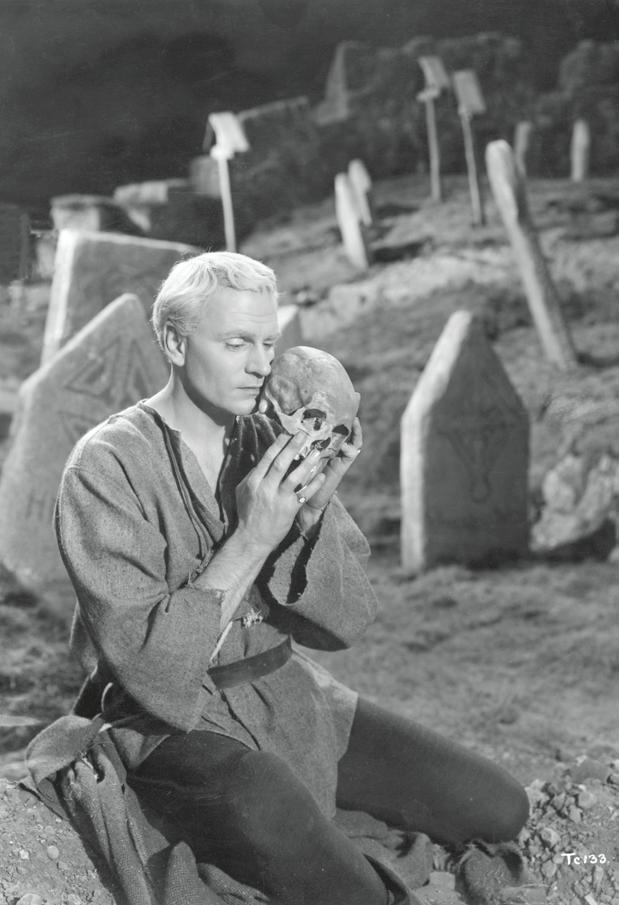
& Shakespeare
A convergence of Renaissance anatomy and Shakespearean tragedy reveals how early scientific inquiry reshaped our understanding of mortality. The body becomes both subject and stage for exploring life’s inevitability.
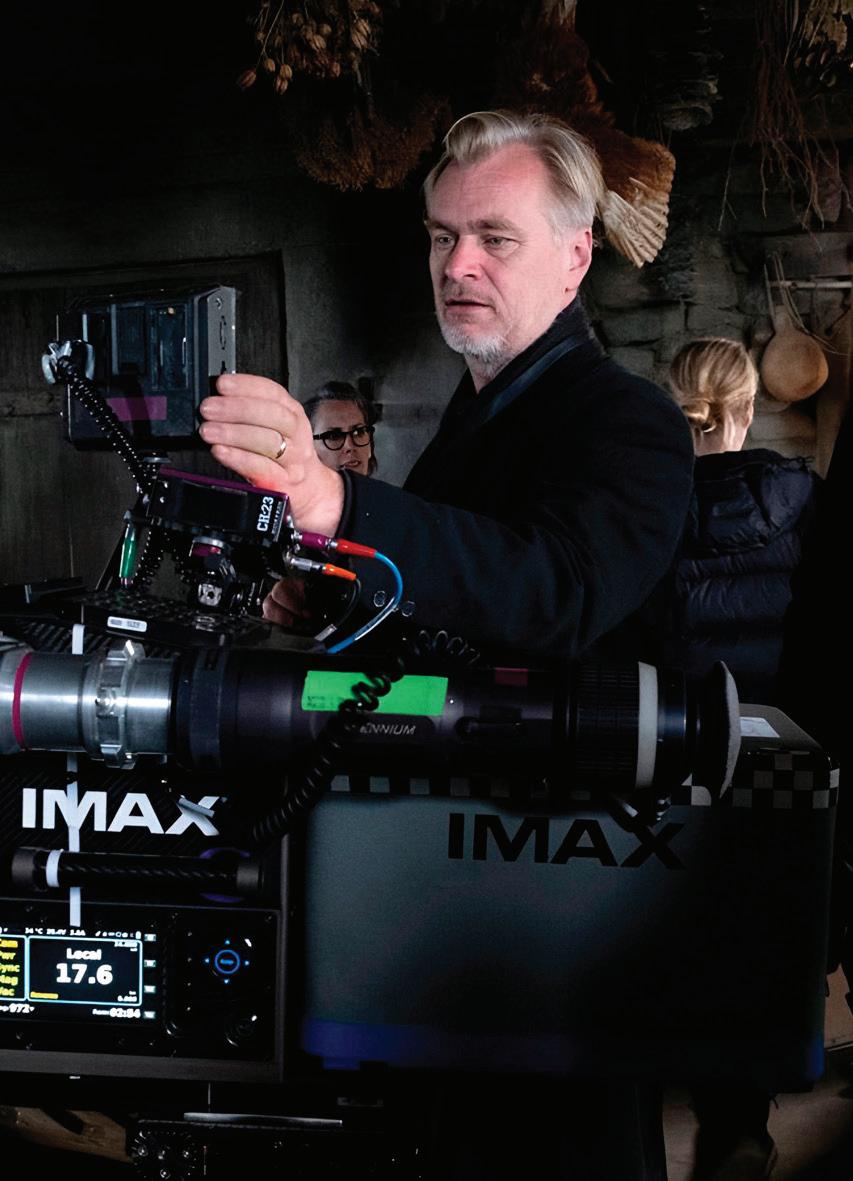
New Era for LACMA Christopher Nolan’s Odyssey
Gerhard Richter in Paris
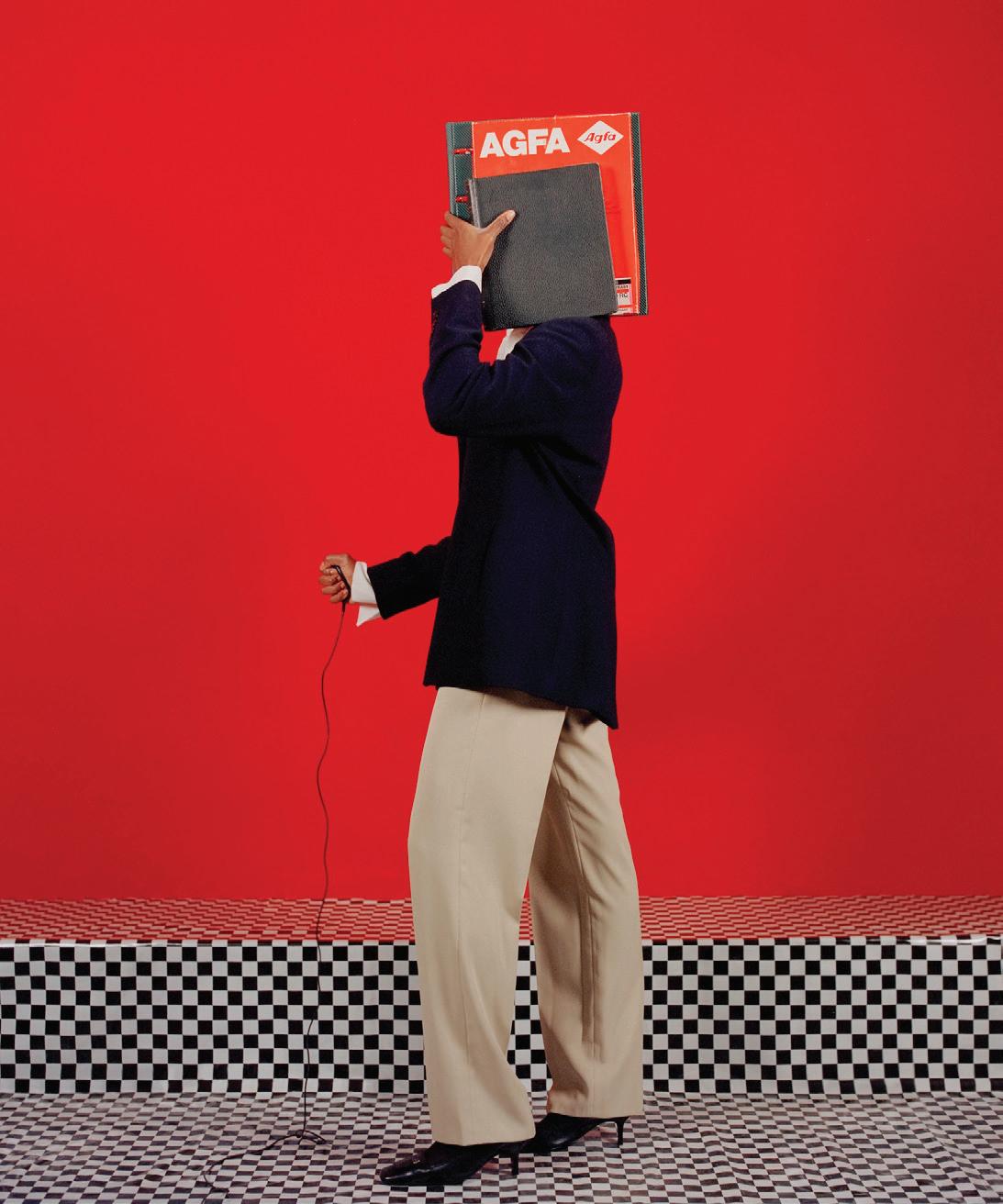
Blueprint of a Future Self
At MoMA, Ideas of Africa reframes portraiture as a tool of self-invention. Across generations, photographers have used the lens to construct identity, asserting presence within and beyond the frame.
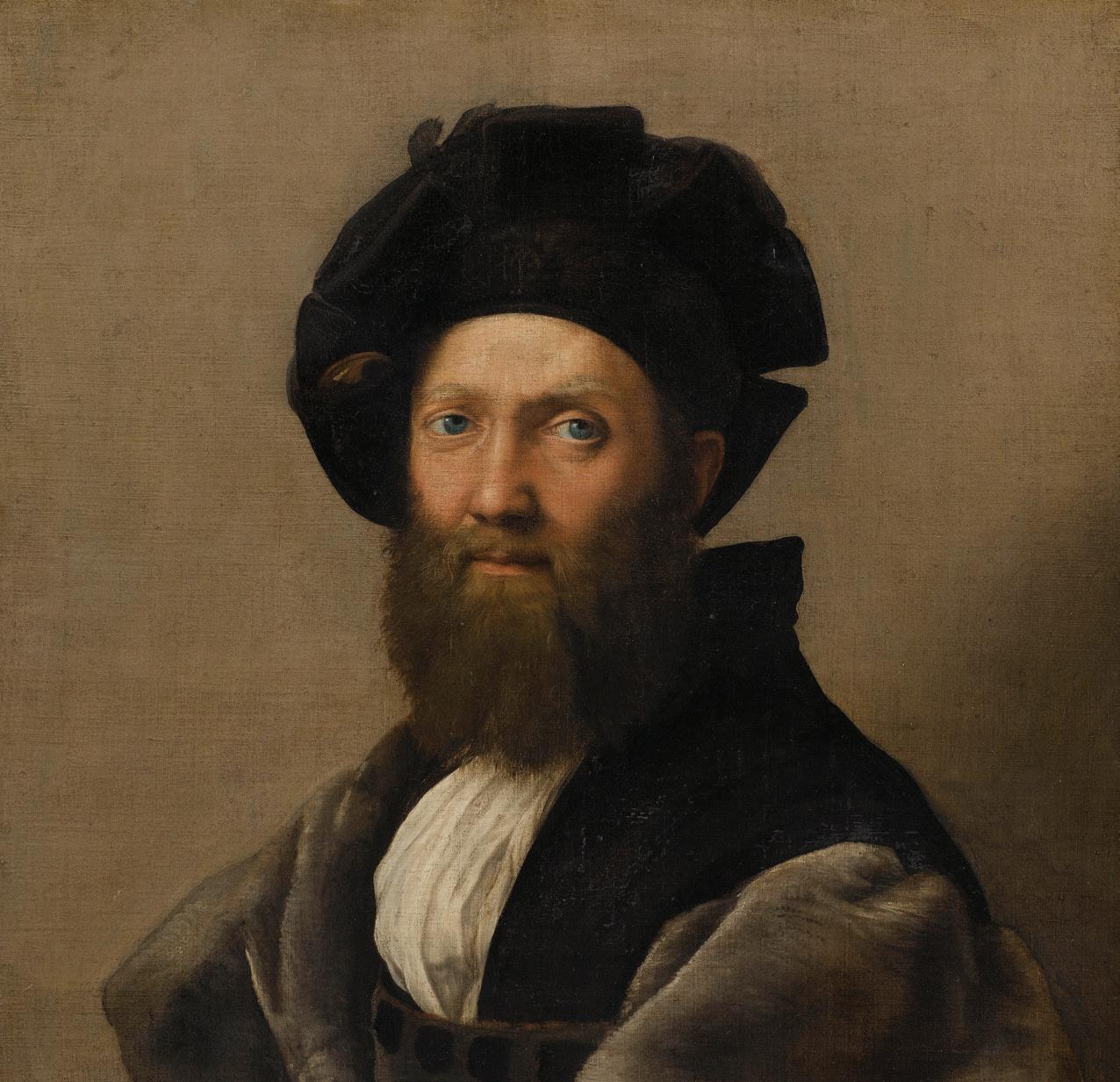
Beyond the Halo: Raphael
A major exhibition at the Met revisits Raphael as the great synthesizer of the Renaissance. His work balances clarity and emotion, constructing a visual language that continues to define artistic perfection.
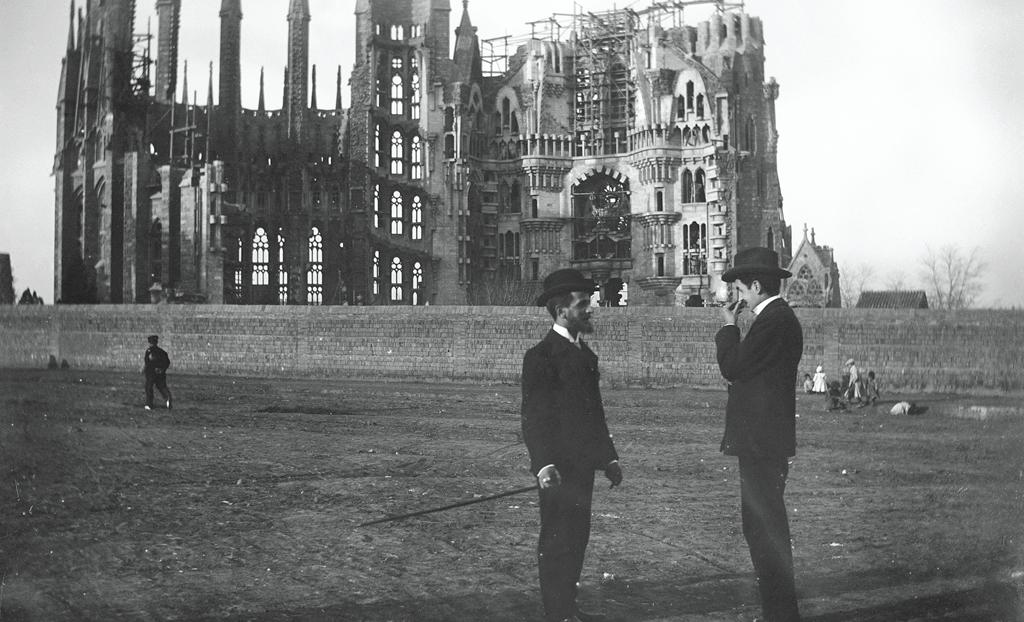
A Century in the Making: Sagrada Família
As Gaudí’s masterpiece nears completion, it transitions from process to presence. The Sagrada Família stands as a rare architectural work defined not by immediacy, but by time, continuity, and intention.
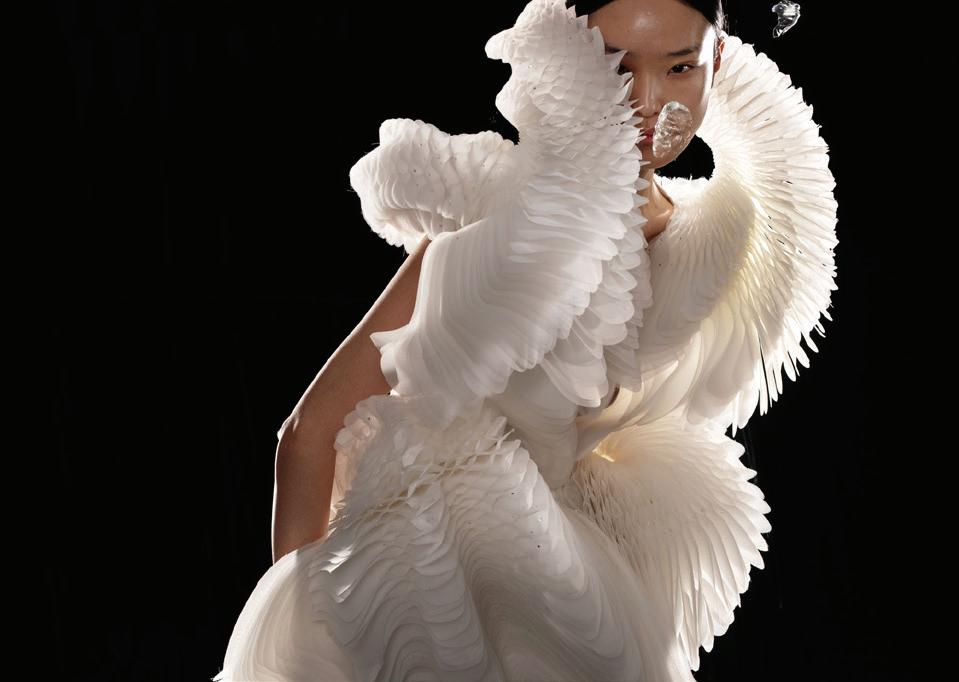
Science of Grace: Iris van Herpen
At the intersection of fashion and science, Iris van Herpen transforms technology into something organic. Her designs dissolve the boundary between body and material, redefining what clothing can become.
EDITOR IN CHIEF ANGELO BIANCHI
EXECUTIVE EDITOR STEFANIA GIROMBELLI
ART AND DESIGN JUSTIN THOMAS KAY
ADVISORY HENRIK JAN GUDMUNDSON
Cover Image: Erik Madigan Heck
Summer 2026
A Casa Cipriani Production Printed in New York City
6 BEFORE THE CURTAIN
Lauren Bonfiglio documents the quiet rituals of American Ballet Theatre as the company moves from its Spring season to Summer season
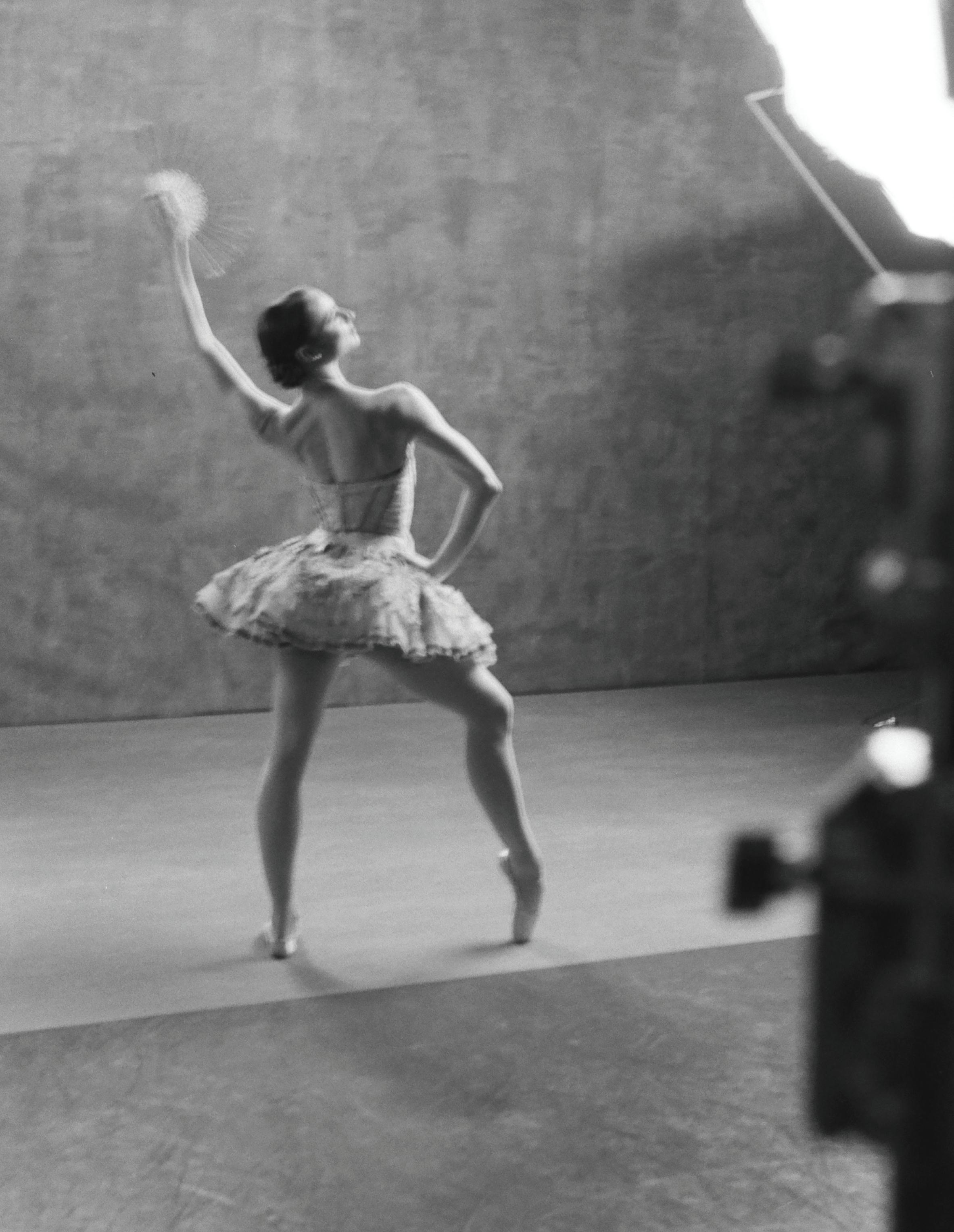
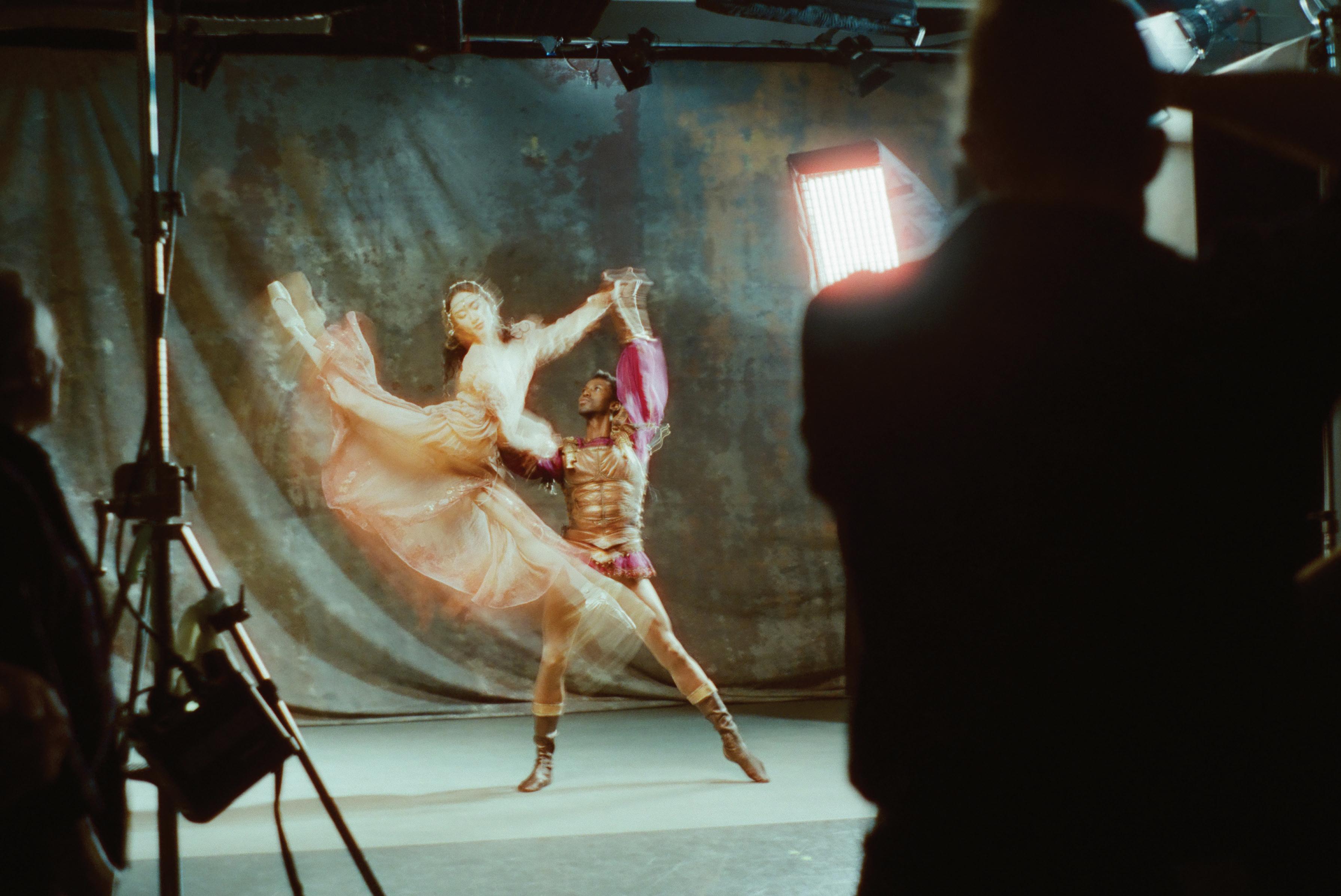
what happens before the curtain rises is rarely seen, and yet it is where the season truly begins. For a dancer with American Ballet Theatre, the stage is only one part of a longer, quieter choreography. In this photo journal, Lauren Bonfiglio, a corps de ballet dancer who joined the company in December 2014, turns her lens inward. Drawing on her twelve years of experience within the ensemble, she traces the hours before the performance, when the company gathers itself in fragments: a hand adjusting a ribbon, a body suspended mid-stretch, a glance exchanged in the wings. These images, taken from within, resist spectacle. They are instead studies in attention, in ritual, in the subtle transformation from individual to ensemble.
There is a lineage to this way of seeing. Edgar Degas was fascinated with dancers not only in performance, but in preparation, drawn to the quiet and unseen work that shapes what the audience ultimately sees. Bonfiglio’s photographs carry that sensibility forward, offering a perspective grounded in proximity and
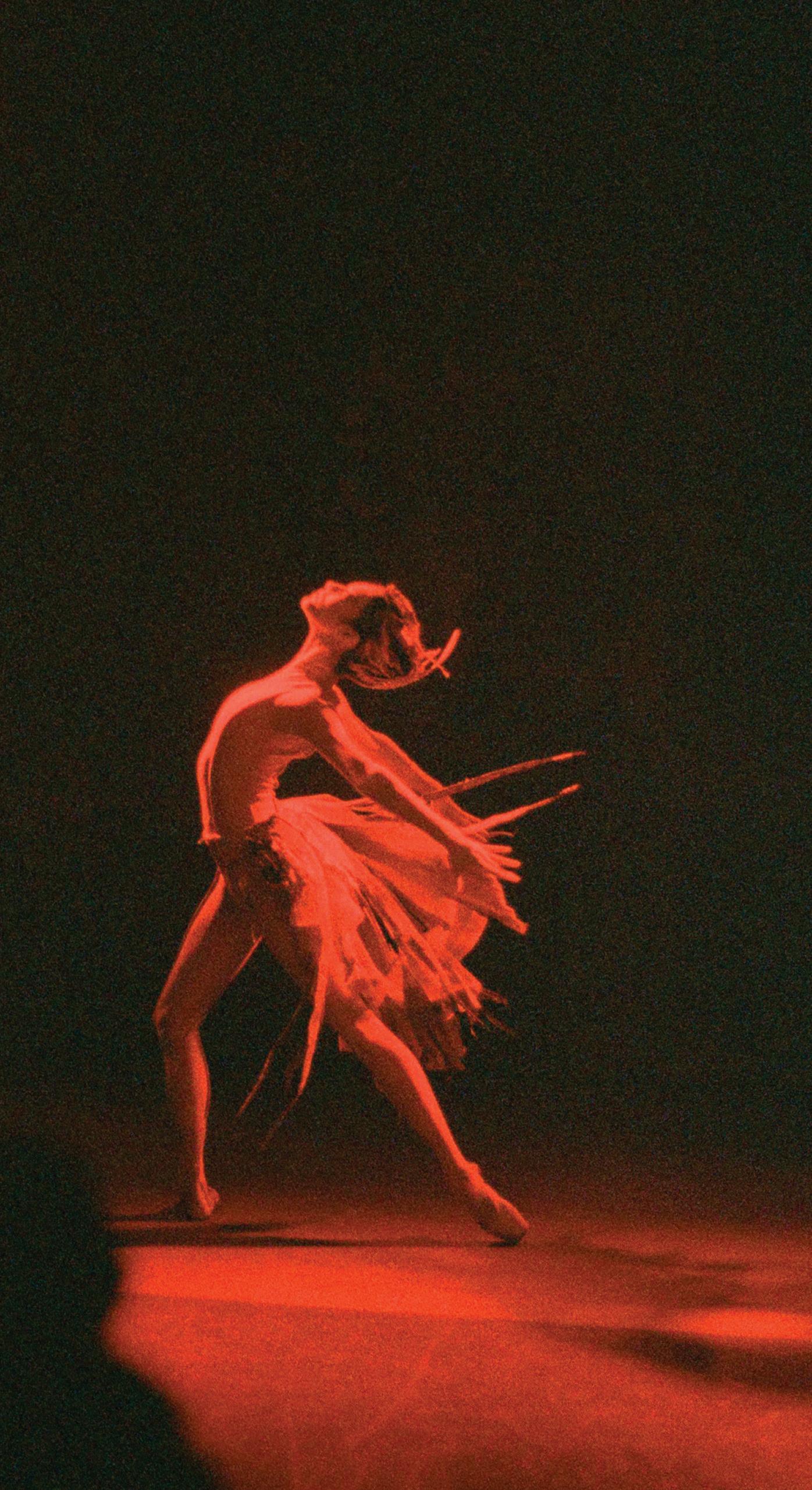
Chloe Misseldine on set at the Firebird photo shoot.
Photo: Natalia Sánchez.
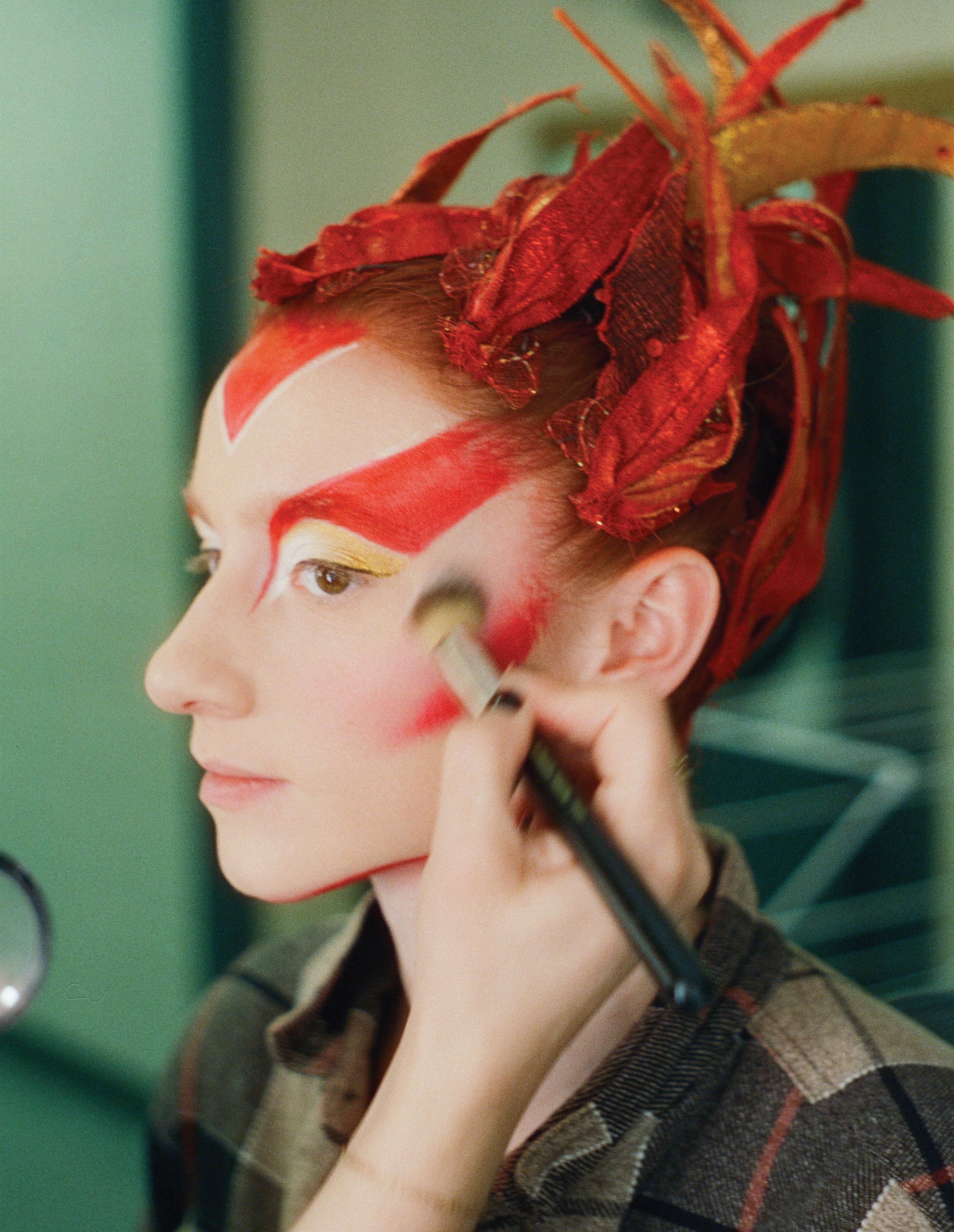
Catherine Hurlin in costume, hair, and makeup for Firebird. Photo: Lauren Bonfiglio.
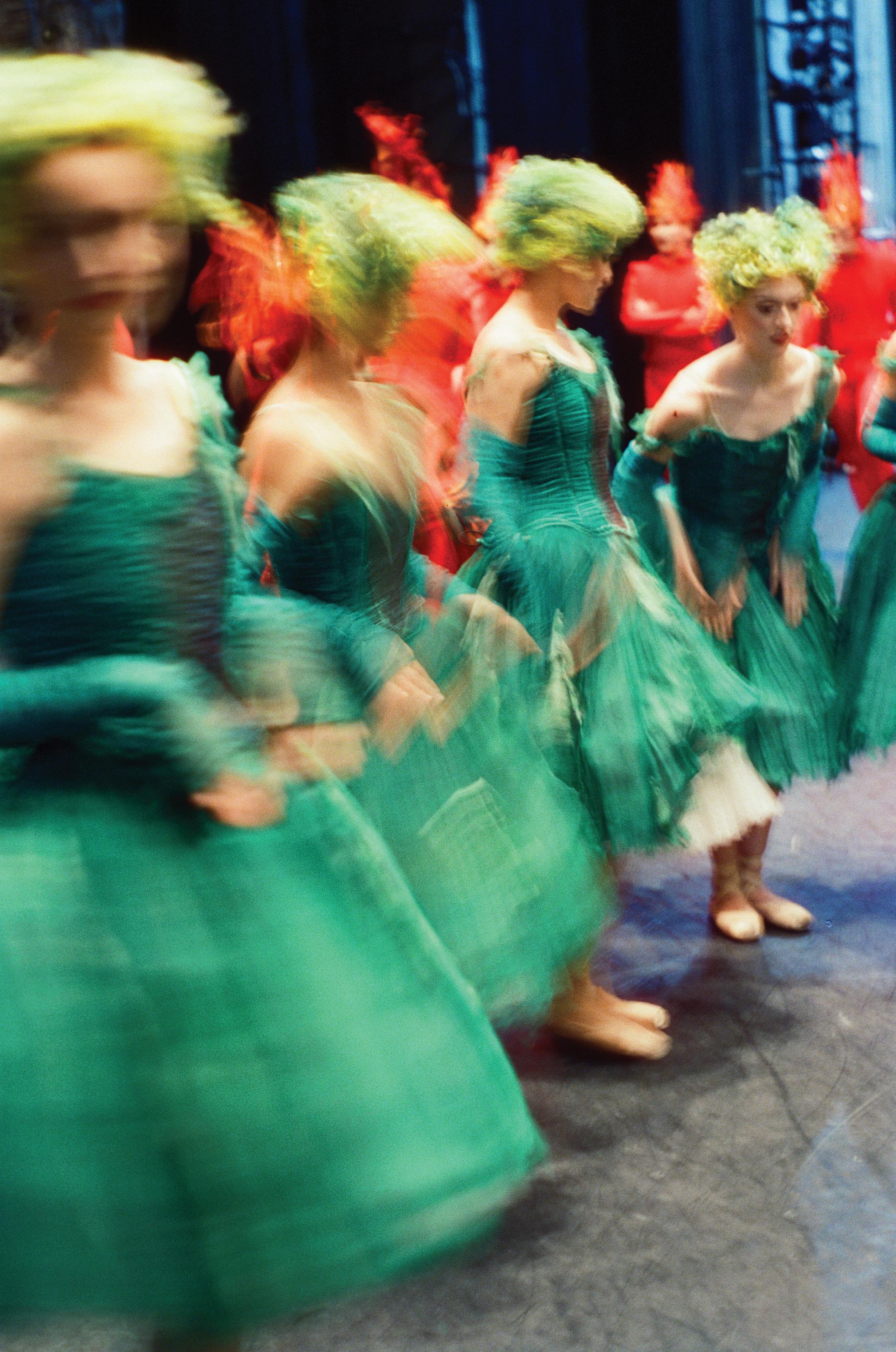
Behind the scenes at a performance of Firebird.
Photo: Lauren Bonfiglio.
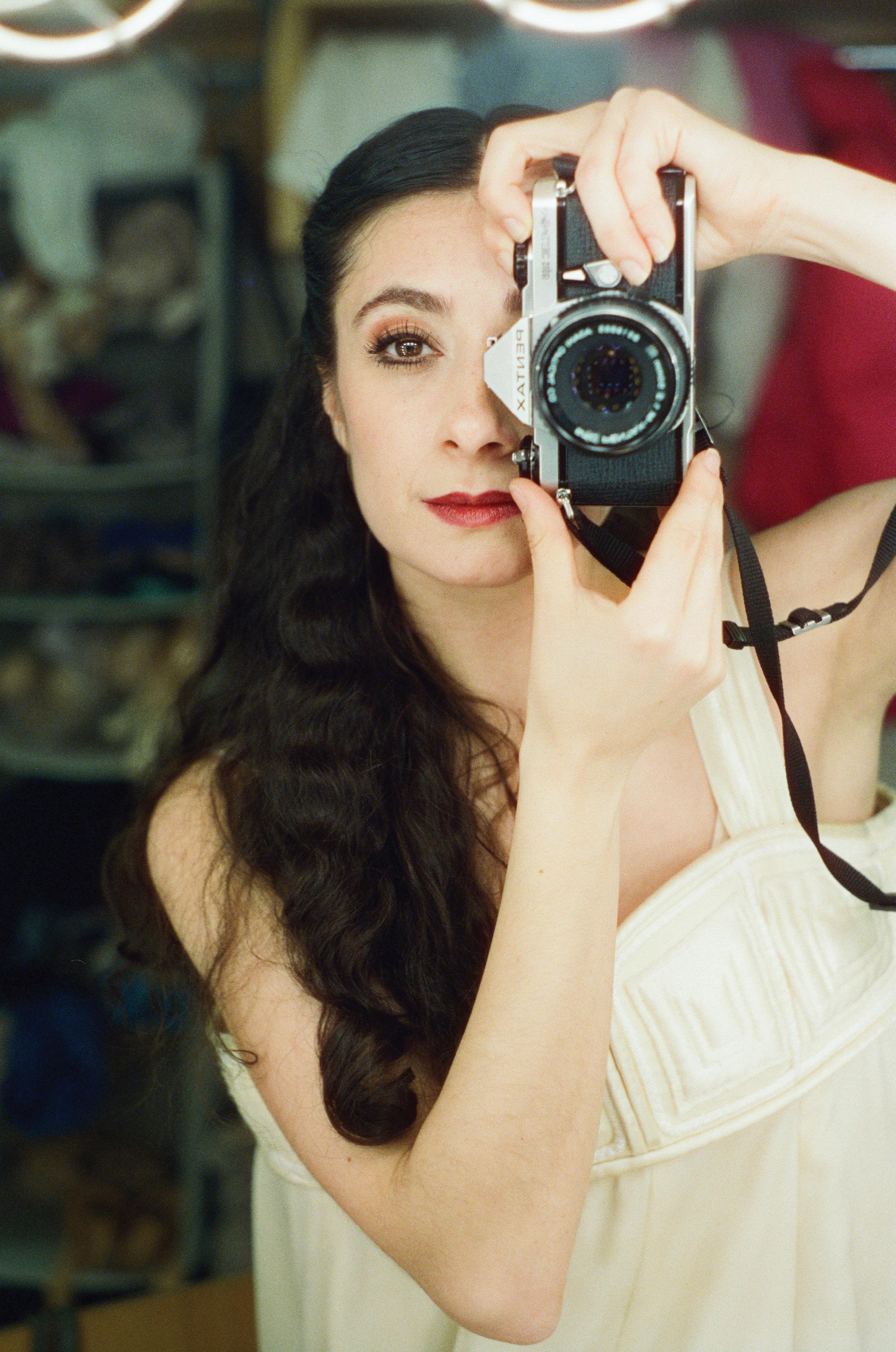
A self portrait of Lauren Bonfiglio.
BOLLETTINO
Catherine Hurlin on set at the Don Quixote photo shoot.
Photo: Lauren Bonfiglio.
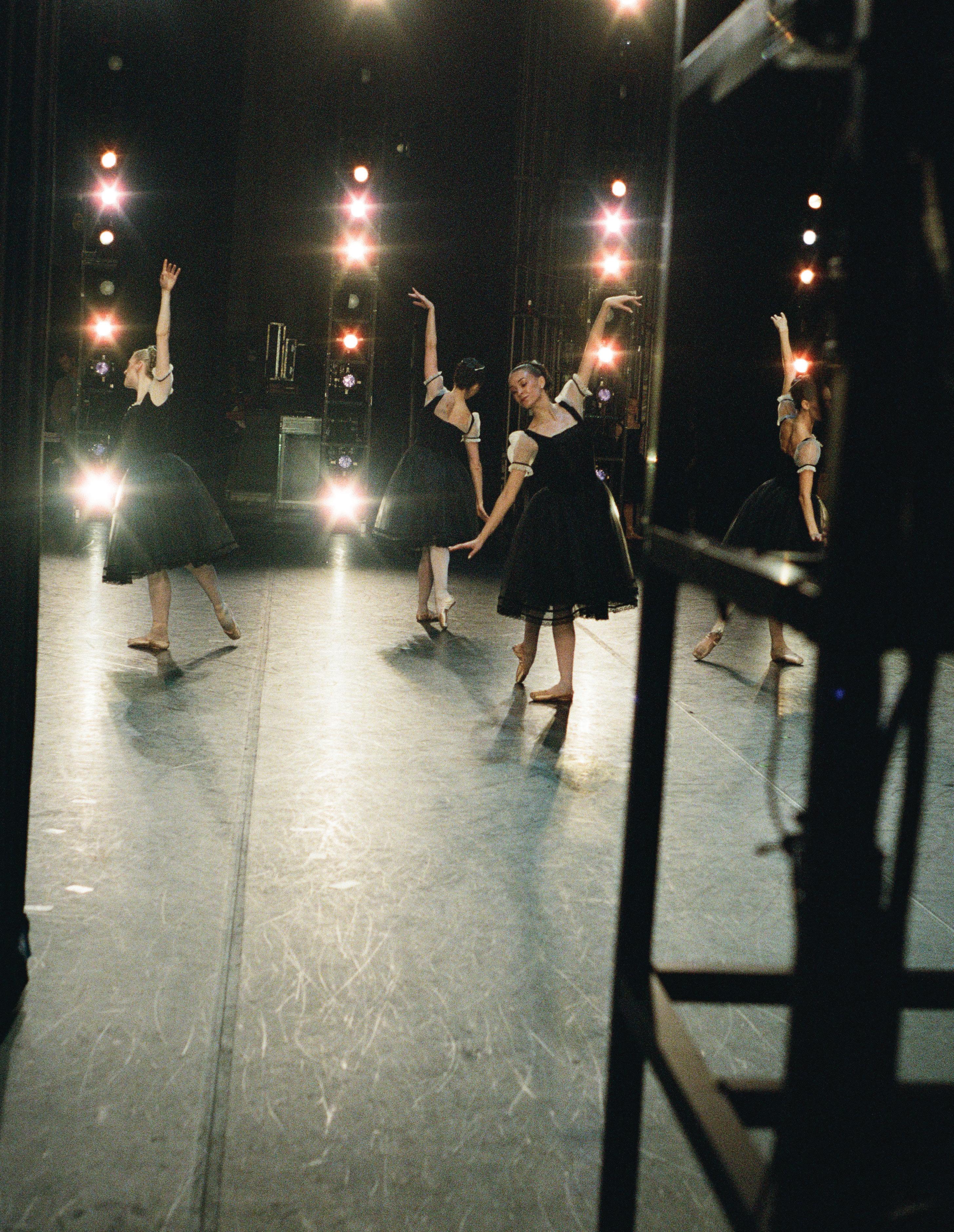
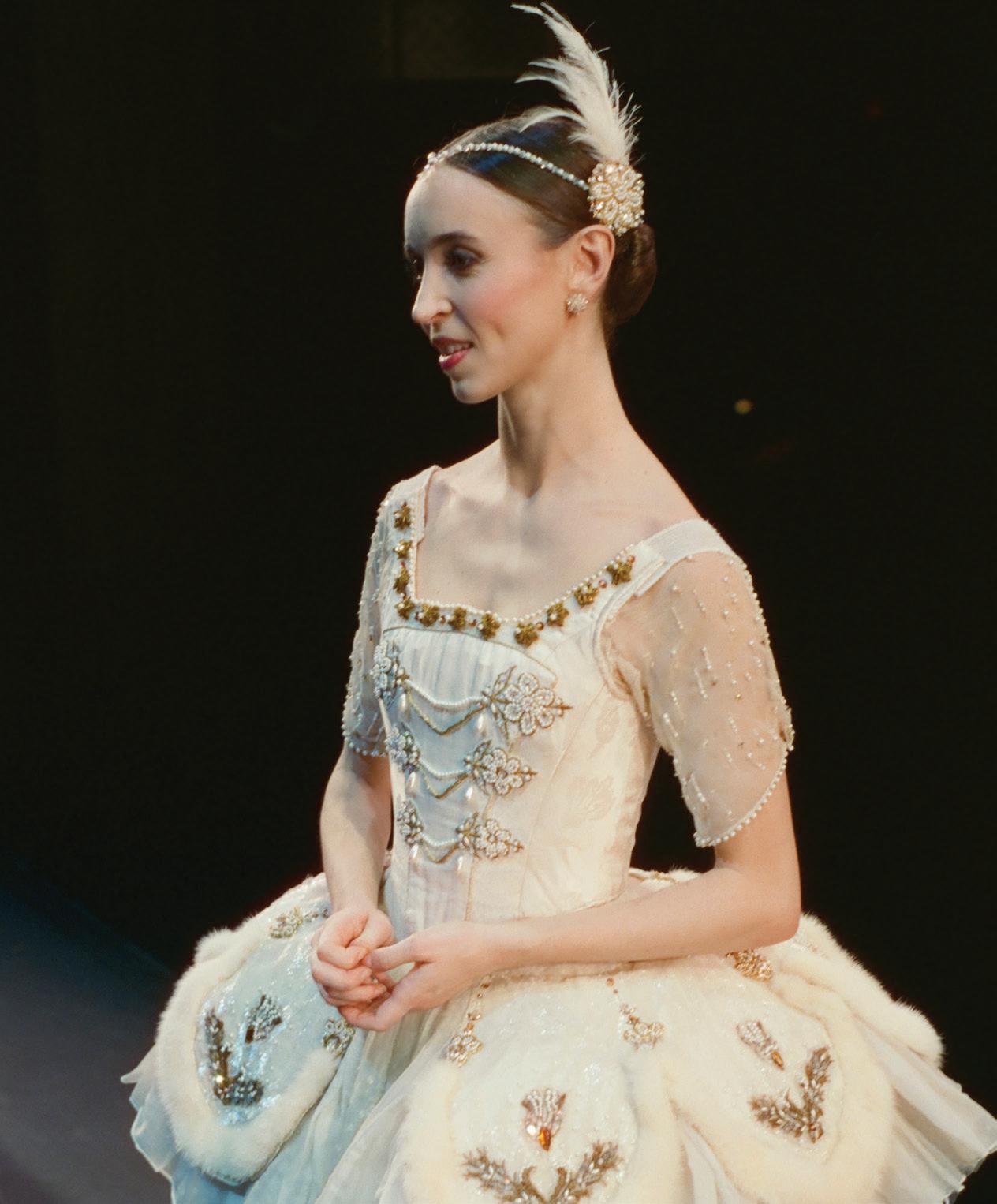
Scene from Mozartiana. © The George Balanchine Trust. Photo: Lauren Bonfiglio.
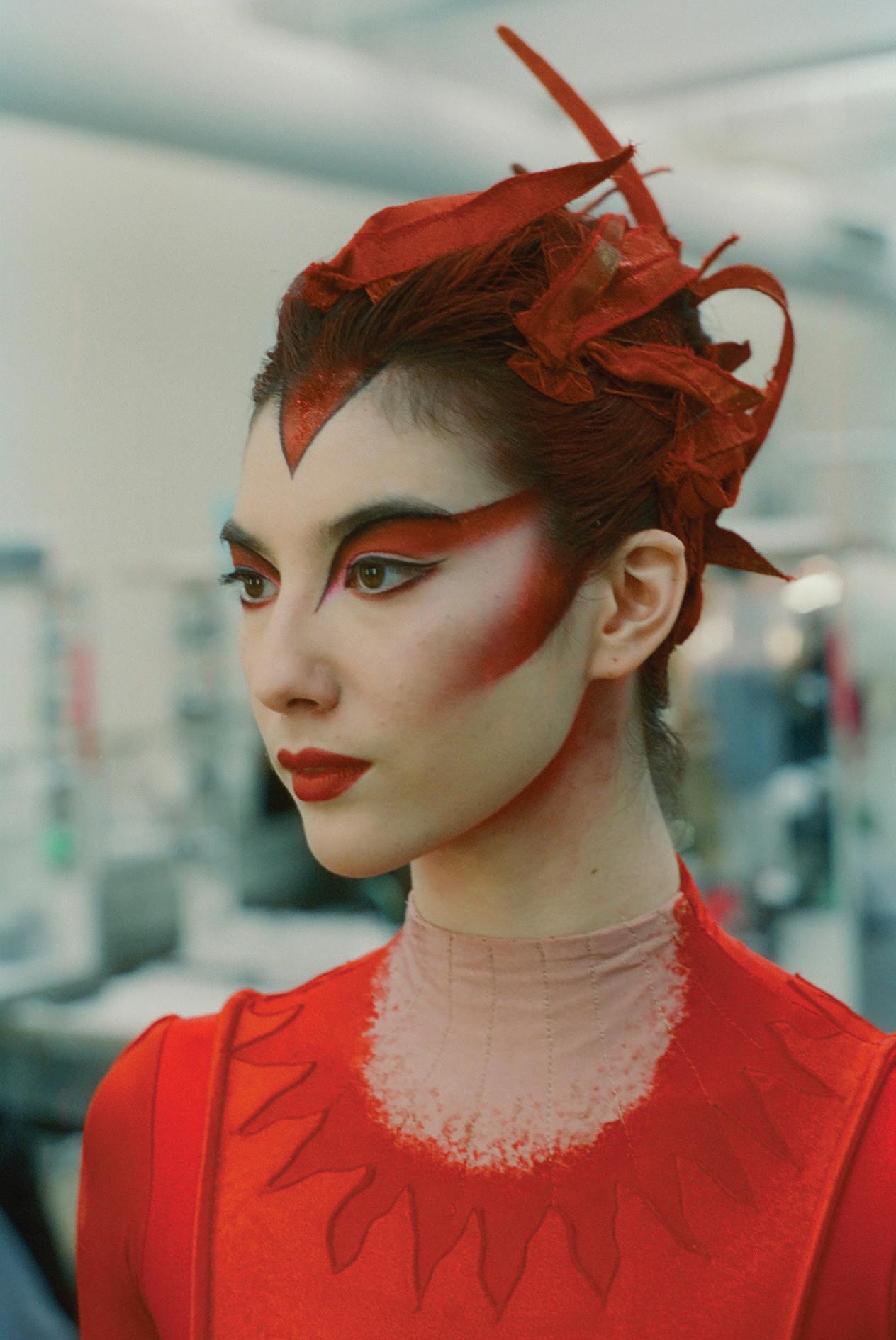
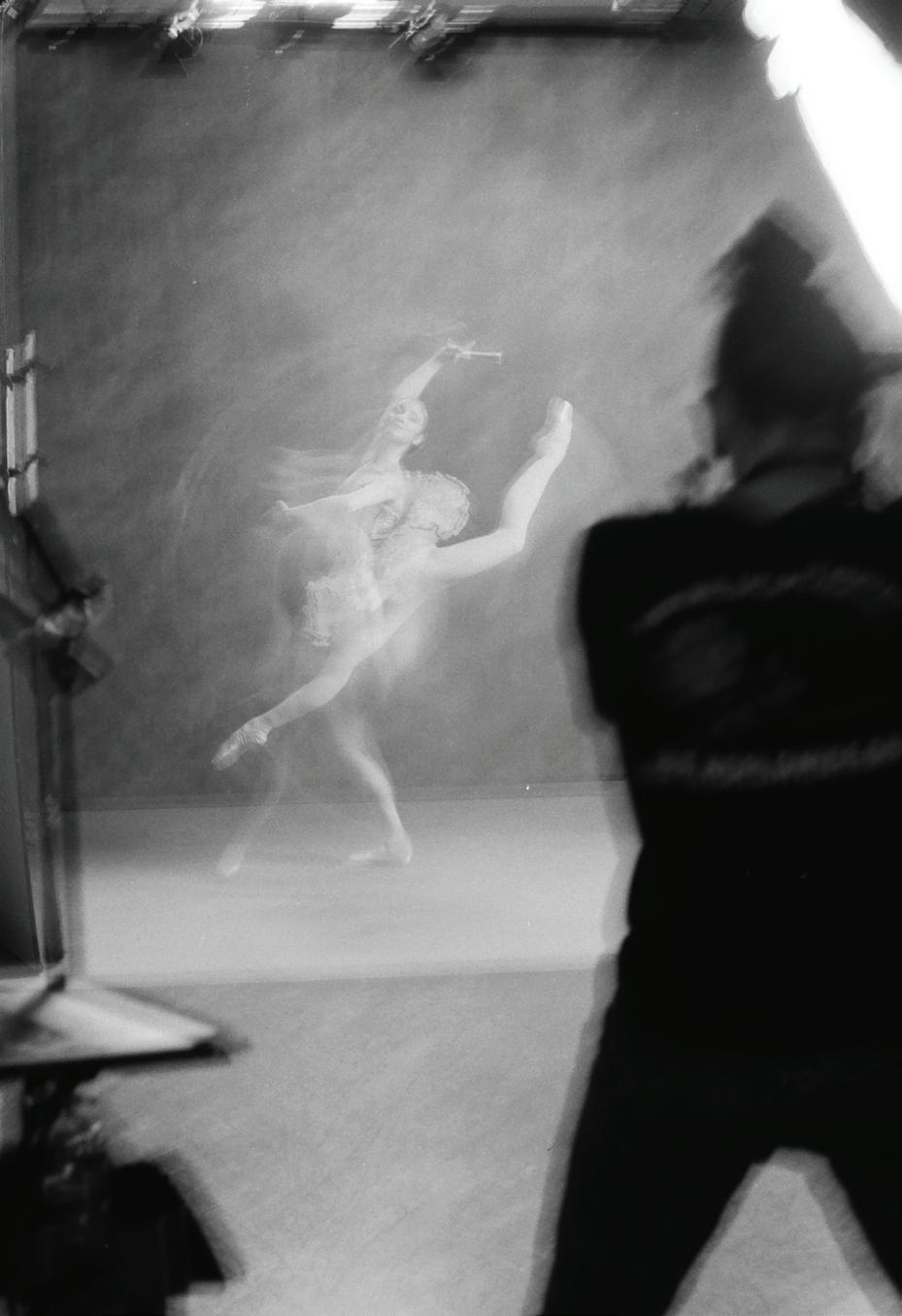
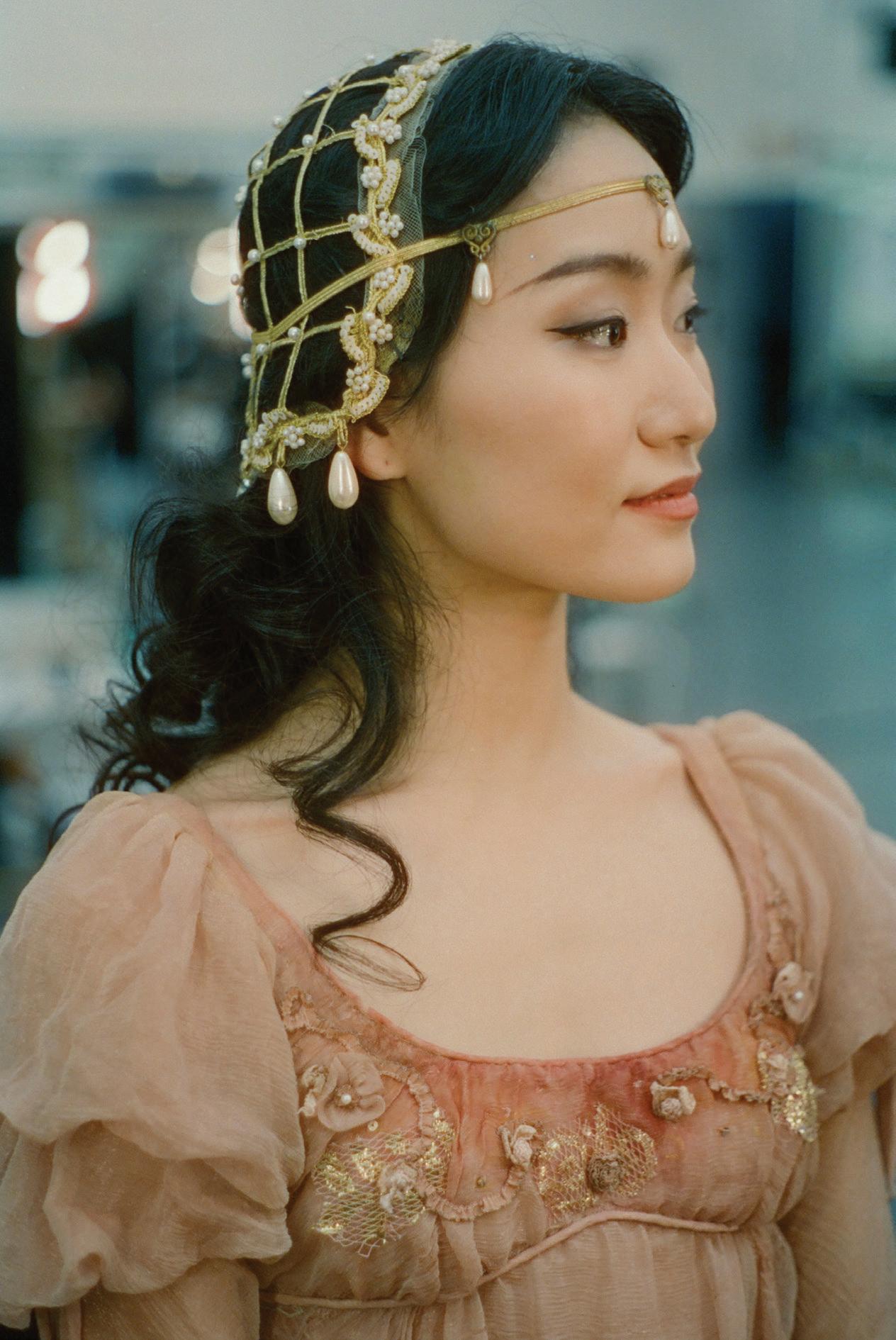
Clockwise from Top: Chloe Misseldine in costume, hair, and makeup for Firebird. Photo: Lauren Bonfiglio. Fangqi Li in costume, hair, and makeup for Othello: A Dance in Three Acts. Photo: Lauren Bonfiglio. Catherine Hurlin on set at the Don Quixote photo shoot.
Photo: Lauren Bonfiglio.
Opposite, Top to Bottom: Fangqi Li and Calvin Royal III on set at the Othello photo shoot.
Photo: Lauren Bonfiglio. Skylar Brandt behind the scenes at a performance of Raymonda: Grand Pas Hongrois.
Photo: Lauren Bonfiglio.
experience, where the rhythms of rehearsal and performance merge as one.
The images were captured around ABT’s Spring season, which featured works such as Firebird and Othello: A Dance in Three Acts. The latter was noted for its ambitious scale and emotional intensity, a production that foregrounded dramatic clarity and the strength of its principal performances while reaffirming the company’s commitment to narrative depth. It demanded a particular kind of focus, one that lingers in these photographs: the concentration of a dancer marking steps in solitude, the stillness that settles just before a cue, the incremental adjustments that transform repetition into precision.
That foundation carries directly into the company’s Summer season at the Metropolitan Opera House, running from June 17 through July 18. Here, the repertoire opens outward into a different register. Among the ballets to be presented is Don Quixote, a work that calls for brightness, agility, and a distinct sense of theatrical ease.
If the Spring season asked for psychological depth and control, Summer invites a more expansive expression, one defined by musicality, technical brilliance, and the visible joy of movement. The shift is not a departure but an extension, built on the same discipline that underpins every rehearsal and every performance.
Schiaparelli
A recent exhibition at the Victoria and Albert Museum traces her enduring dialogue between fashion and the surreal
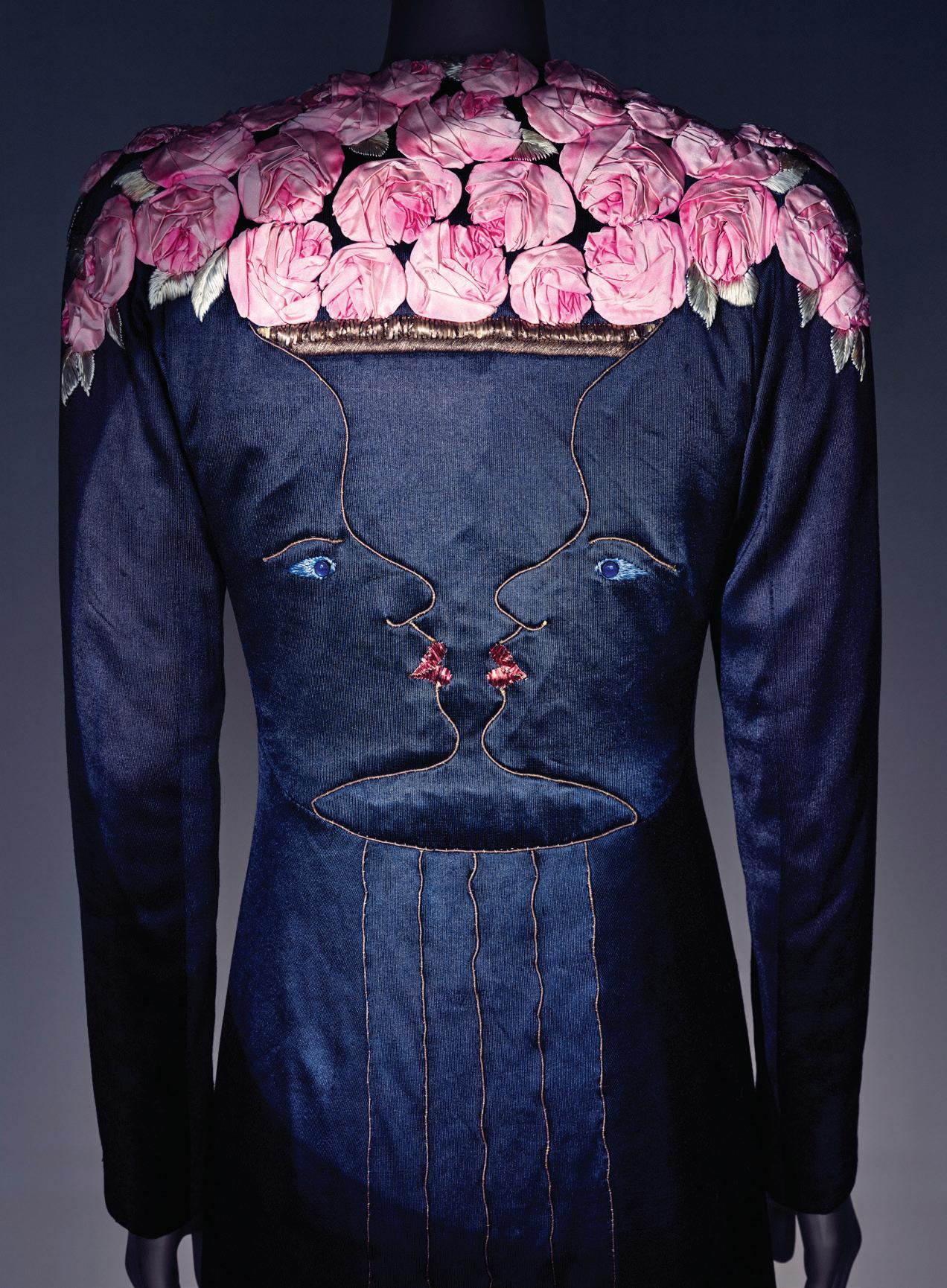
there is something unstable about the way Schiaparelli approached the body. Clothes, in her hands, were never simply garments. They were propositions, distortions, interruptions of the expected. A dress might resemble a skeleton, a hat might take the form of a shoe, a surface might appear to tear, burn, or dissolve. The familiar was never quite allowed to remain intact.
A recent exhibition at the Victoria and Albert Museum brought this sensibility into focus, tracing Schiaparelli’s work not as fashion alone, but as a sustained engagement with the surreal. Her collaborations with artists such as Salvador Dalí are often cited, yet what emerged was something more expansive. Schiaparelli did not simply borrow from Surrealism. She translated its logic into material form, using fabric, embroidery, and construction as a way of reimagining reality itself.
There is a tension that runs throughout her work, between elegance and
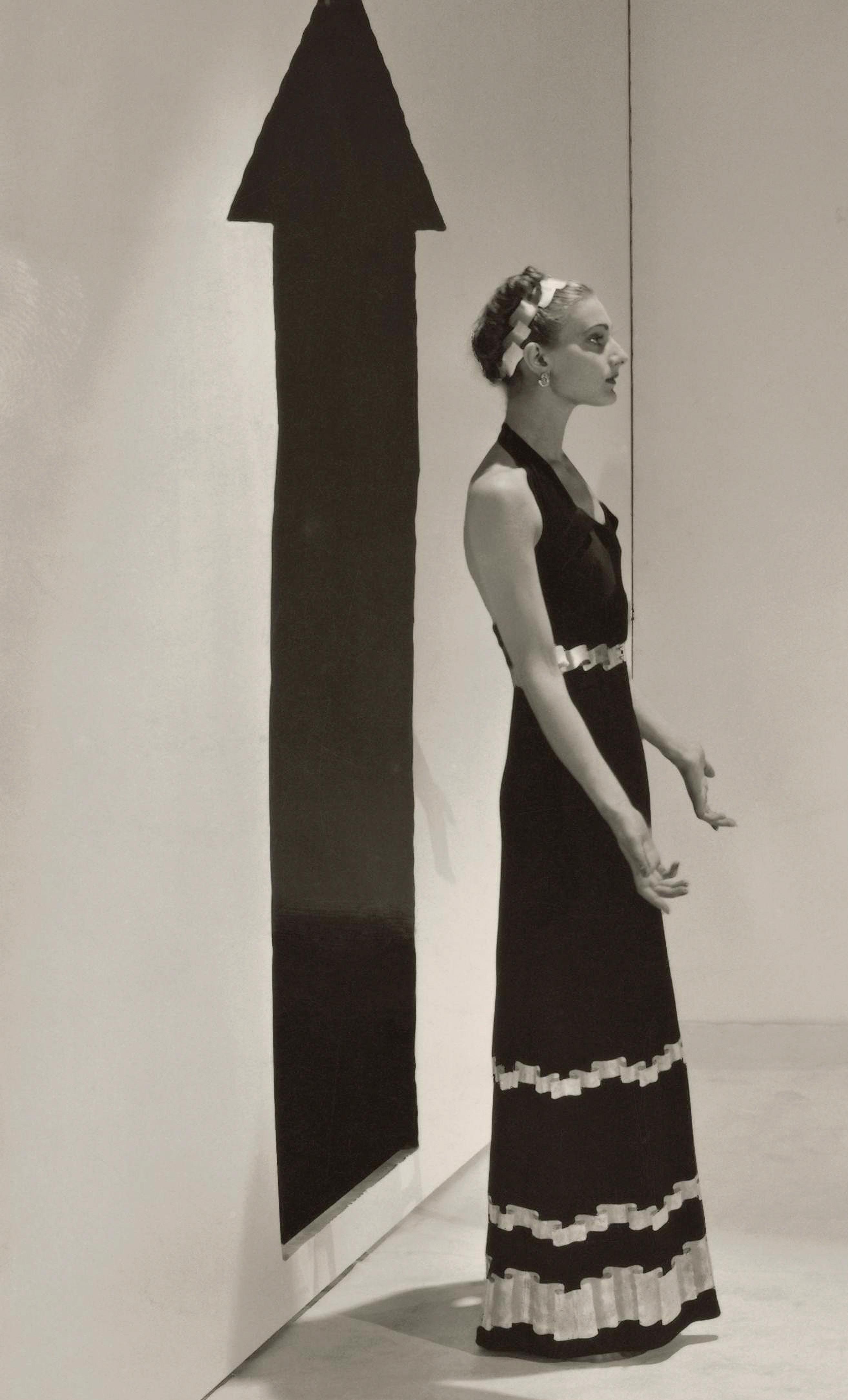
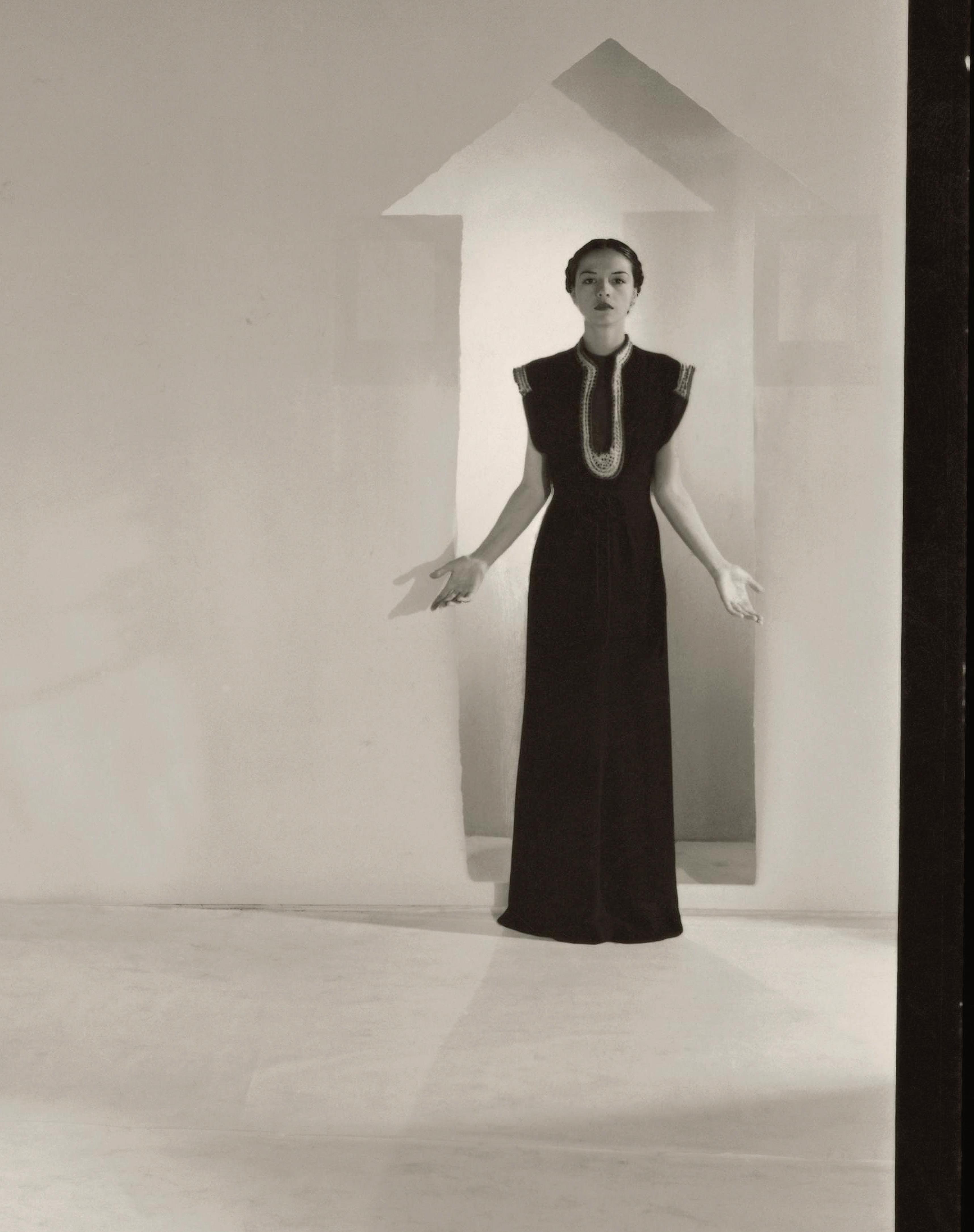
Vogue 1936; Two models wearing dresses by Schiaparelli (Photo by Cecil BeatonCondé Nast via Getty Images)
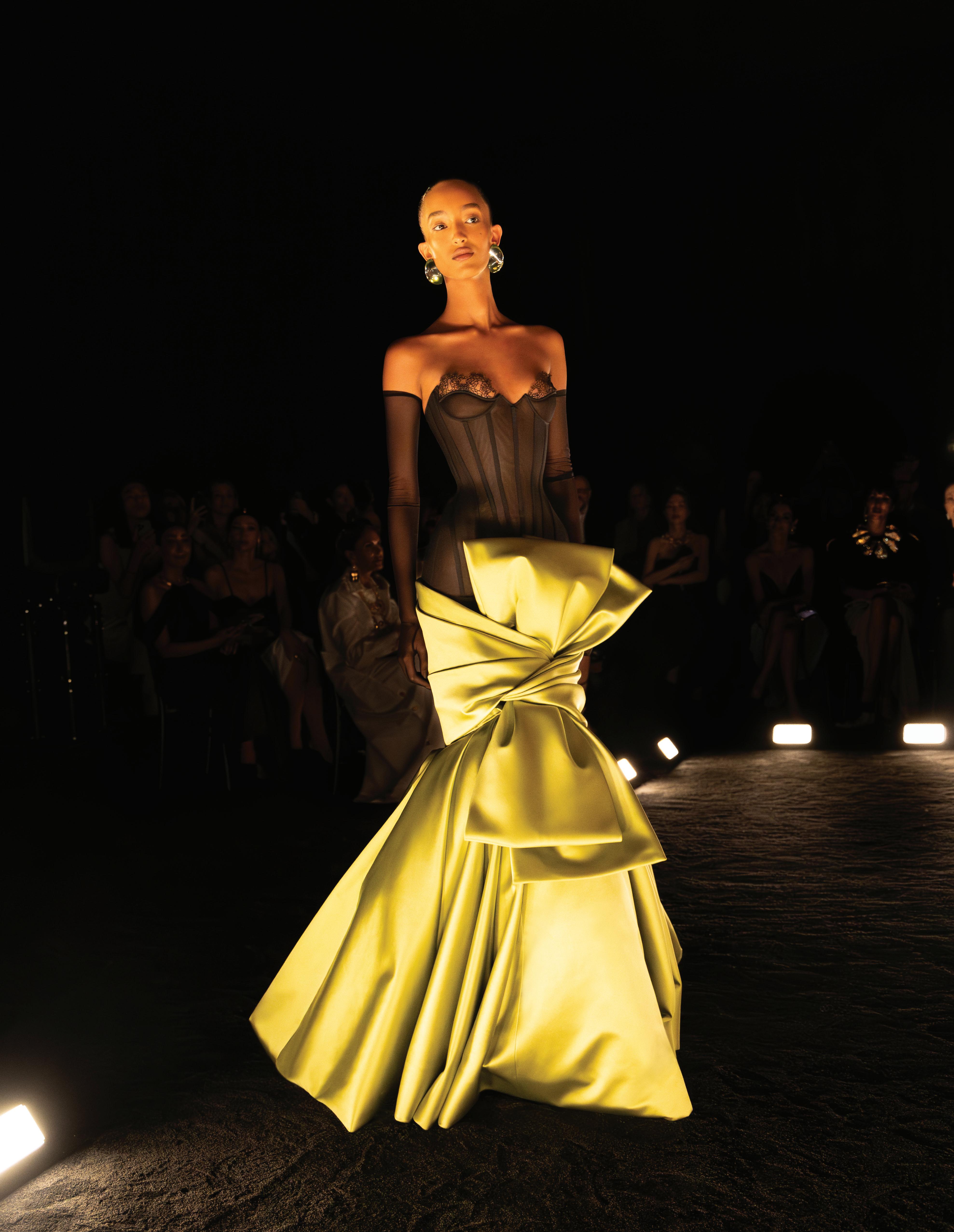
Schiaparelli Haute Couture Fall Winter 2024 Look 26.
Photo © Giovanni Giannoni. Photo courtesy Patrimoine Schiaparelli, Paris
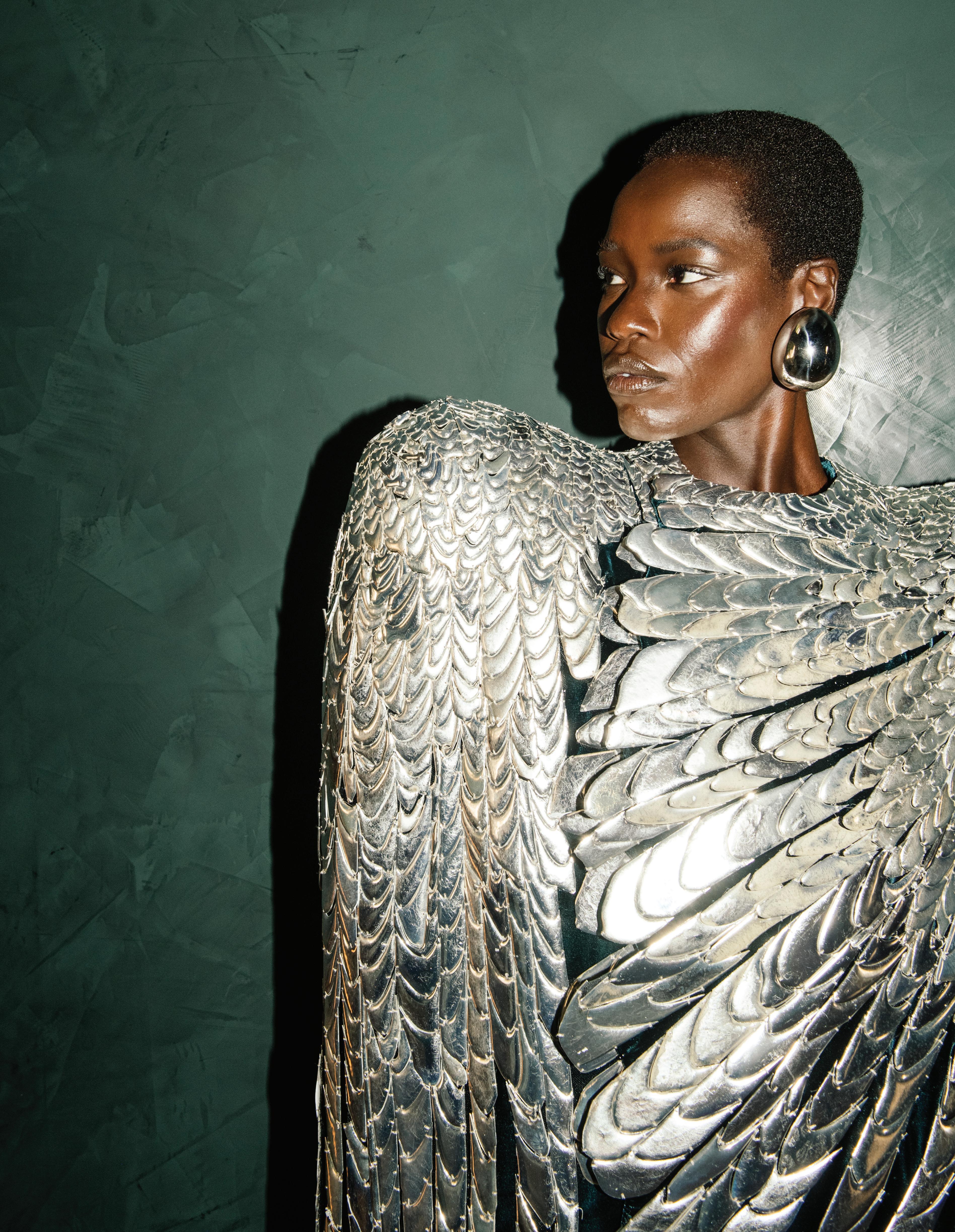
Kuba Dabrowski Awar Odhiang, Paris, 2025 Schiaparelli by Daniel Roseberry Schiaparelli haute couture fall win -
ter 2024 © Kuba Dabrowski. Photo courtesy Patrimoine Schiaparelli, Paris
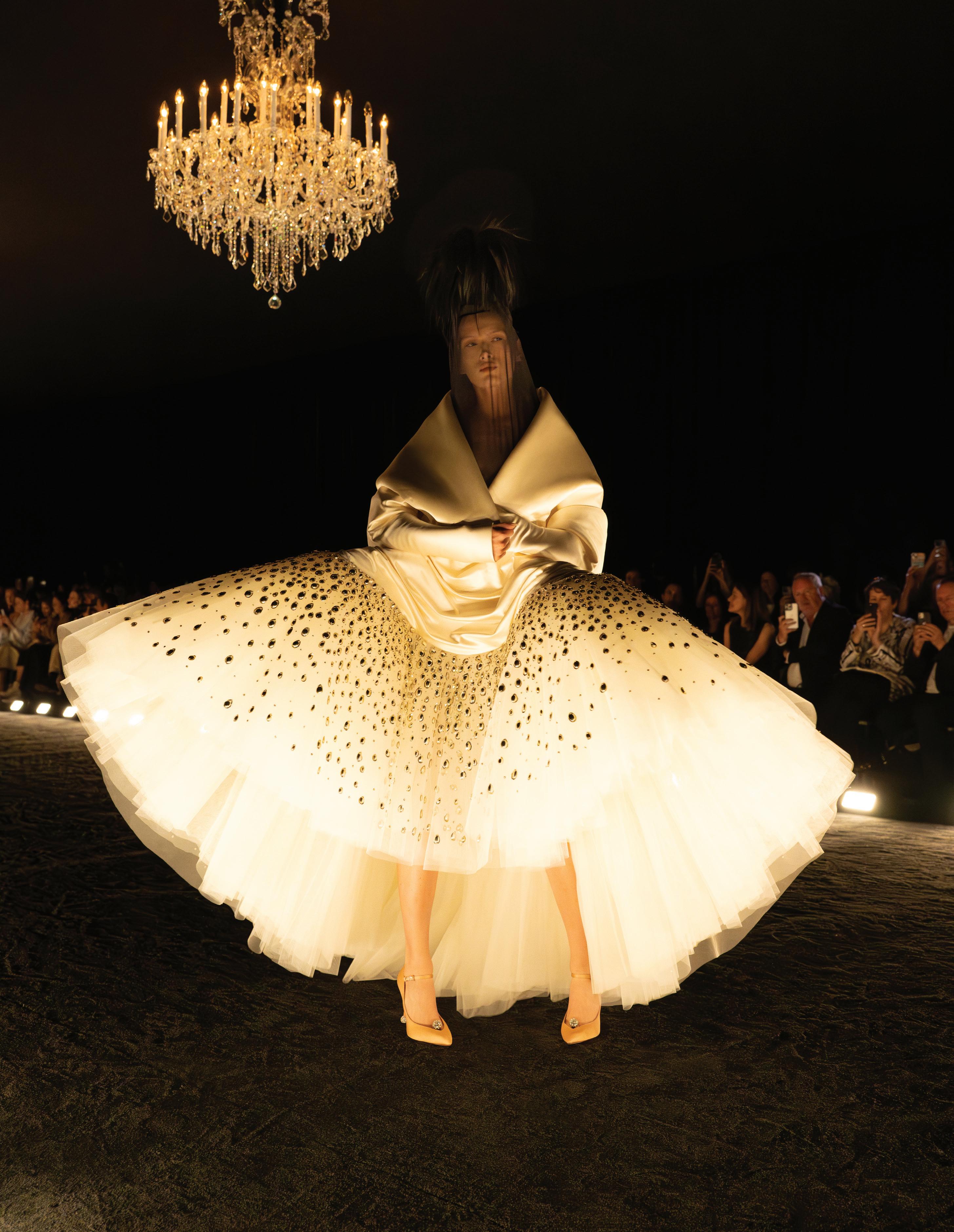
“In difficult times, fashion is always outrageous.”— Elsa Schiaparelli
disruption, between refinement and provocation. Evening gowns are cut with precision, only to be unsettled by the unexpected. A lobster stretches across silk. A face appears where none should be. The body becomes both canvas and site of intervention, something to be adorned but also questioned. What makes the exhibition feel particularly resonant is not only the historical significance of these designs, but the way they anticipate a contem-
porary fascination with transformation. Fashion today often exists as image, circulating across screens, detached from physical experience. Schiaparelli’s work resists that flattening. It insists on presence, on texture, on the strange intimacy between garment and wearer.
At the same time, there is a sense of play that prevents the work from becoming overly theoretical. Humor is never far from the surface. A hat becomes a visual pun. A dress carries a
quiet joke. Yet beneath that levity lies a more enduring question about identity and perception. If the body can be altered so easily, what remains fixed?
The exhibition moves fluidly between archival works and contemporary reinterpretations, revealing the persistence of Schiaparelli’s influence. Designers continue to return to her vocabulary of illusion and transformation, drawn to its ability to destabilize and delight in equal measure. What once ap-
peared shocking now feels foundational, a reminder that fashion has long been capable of operating as a form of thought. To encounter Schiaparelli in this context is to see fashion not as surface, but as a kind of language, one that speaks in symbols, distortions, and gestures that resist easy interpretation. It asks the viewer not simply to look, but to reconsider what is being seen, fulfilling her own conviction that “I give to fashion the meaning of art.”
Left to Right: Schiaparelli Haute Couture Fall Winter
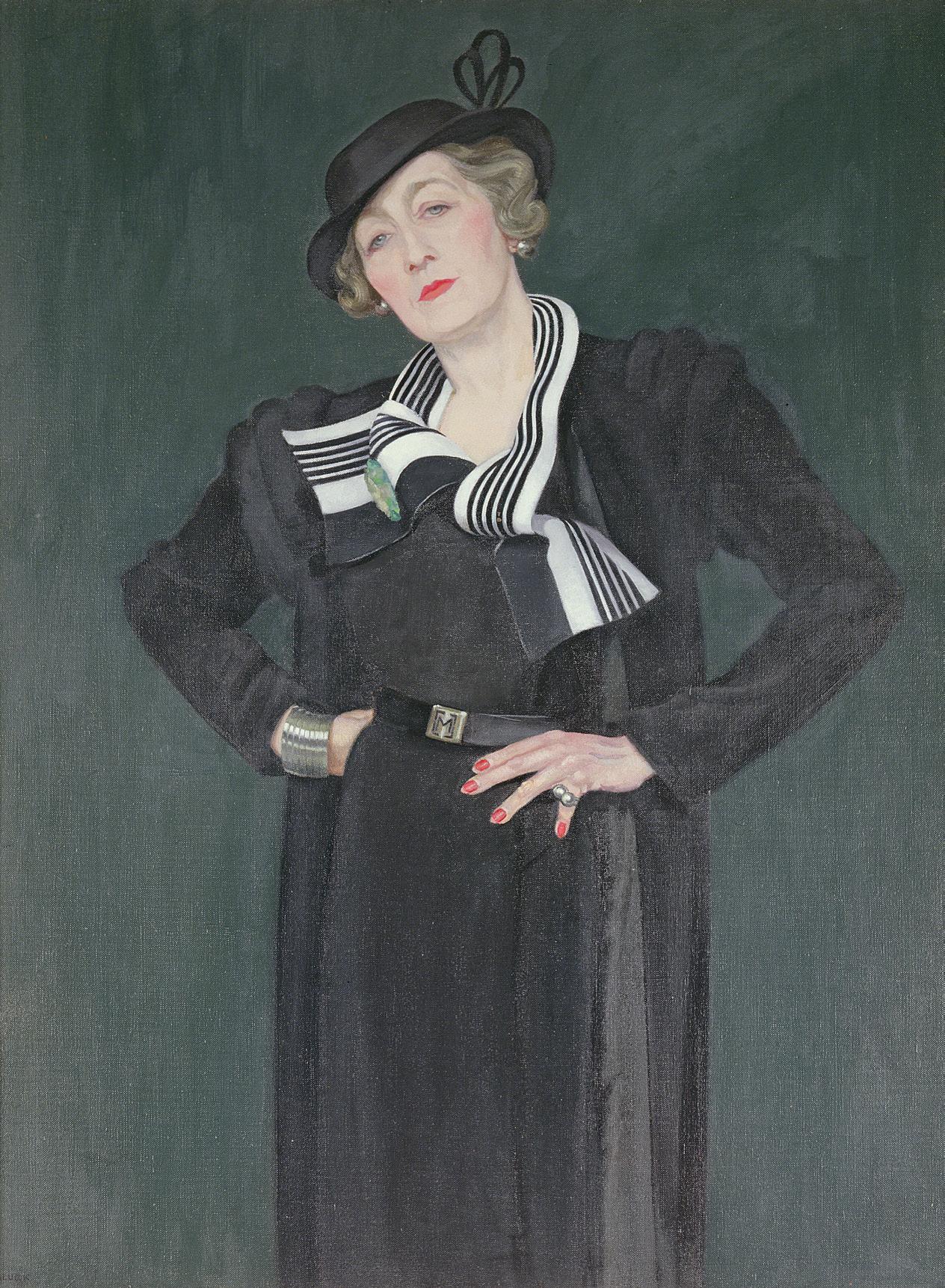
2024 Look 26. Photo © Giovanni Giannoni. Photo courtesy Patrimoine Schiaparelli, Paris Evening coat, designed by Elsa Schiaparelli and Jean Cocteau, 1937, London, England © 2025 ADAGP DACS Comite Cocteau, Paris. Photograph © Emil Larsson. Lady Mount Temple (oil on canvas), Gluck, (Hannah Gluckstein) (1895-1978) © Mark Fiennes Archive. All rights reserved 2026 Bridgeman Images.
A Measure of Time
A limited edition watch that revisits a 160-year legacy
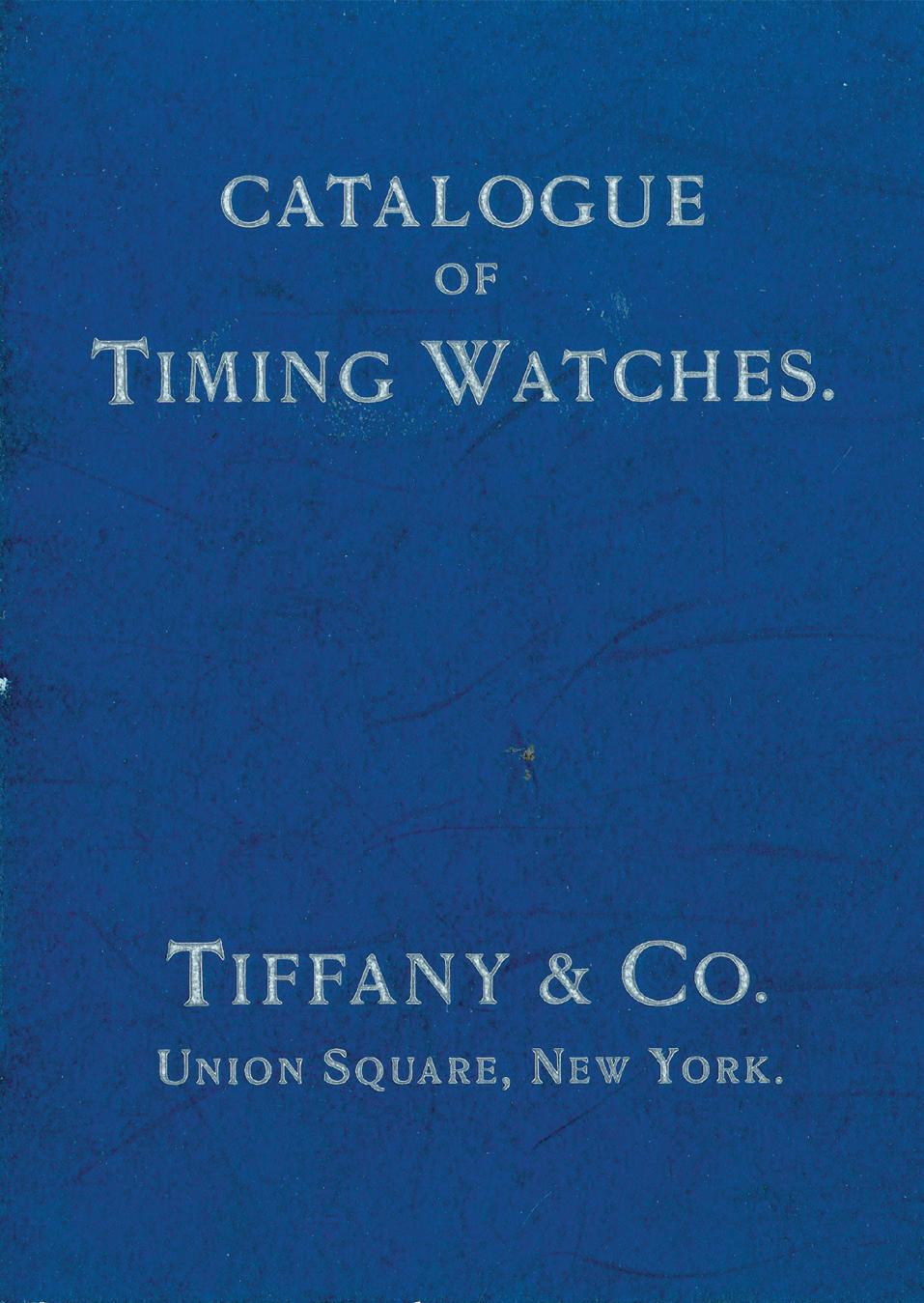
there is a certain discipline to the way Tiffany & Co. has approached time. Long before watches became objects of display, they were instruments of precision, shaped by a demand for accuracy in a rapidly modernizing world. When the House began retailing watches in the mid-nineteenth century, it did so with a clarity of purpose, recognizing early that timekeeping, like jewelry, required both technical rigor and an understanding of form. That understanding took material shape in 1866, when Tiffany introduced its first chronograph, a watch conceived not as ornament but as utility, designed for use in scientific measurement and sport. It marked the beginning of a sustained engagement with watchmaking, one that would soon extend beyond retail. By the 1870s, the House had established a presence in Geneva, producing its own timepieces and contributing to the development of increasingly complex movements. Chronographs, calendar watches, and technical refinements emerged from this period, positioning Tiffany not only as a jeweler, but as a maker in its own right.
What distinguishes this history is not scale, but continuity. Watches have never occupied the same immediate visibility as the House’s diamonds, yet they have remained embedded within its identity, shaped by the same values of precision, proportion, and craft.
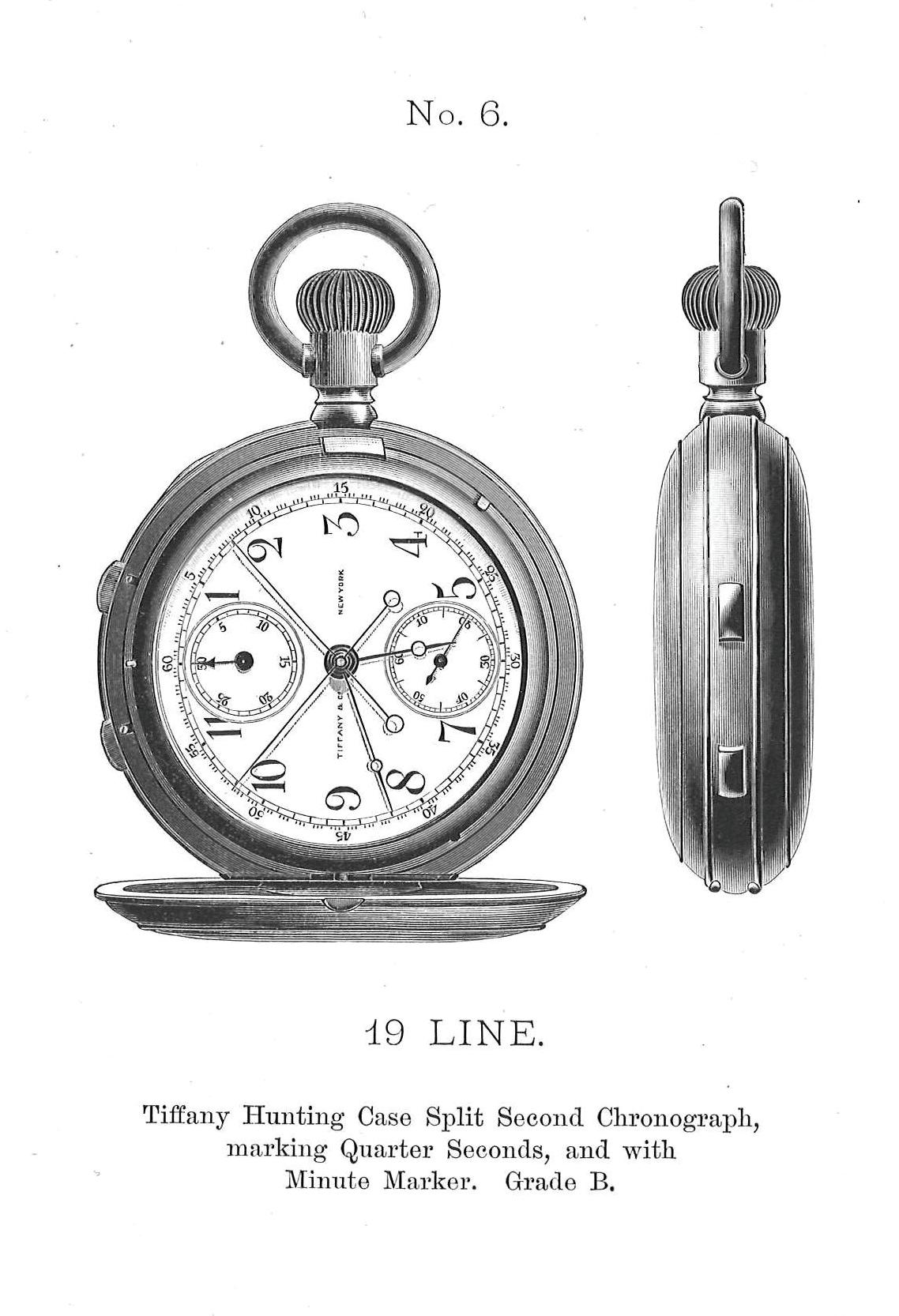
The language may differ, but the intention is consistent. A setting becomes a crown. A gemstone becomes an index. Design moves across disciplines without losing coherence.
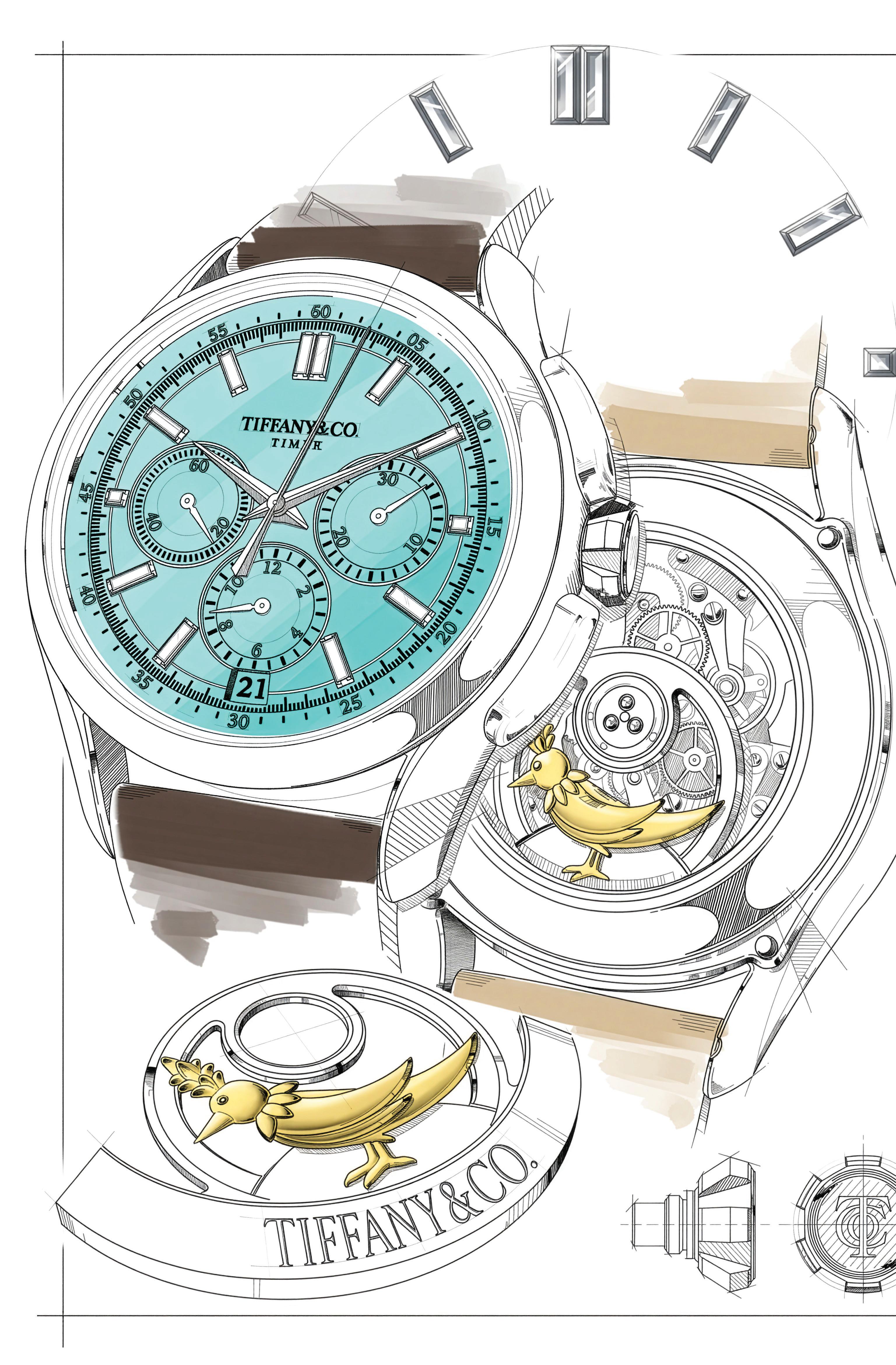
The Tiffany Timer returns to this lineage with a quiet sense of purpose. Released in a limited edition of sixty pieces, it marks the 160th anniversary of the House’s first stopwatch, revisiting a moment when timekeeping was defined by clarity and exactitude. Rather than reproducing the past, the watch distills it, translating historical ideas into a contemporary object.
The composition reflects that restraint. A 40 millimeter platinum case, defined by softened contours and balanced proportions, holds a dial rendered in Tiffany Blue, a color that has come to signify the House as much as any single object. The surface reveals
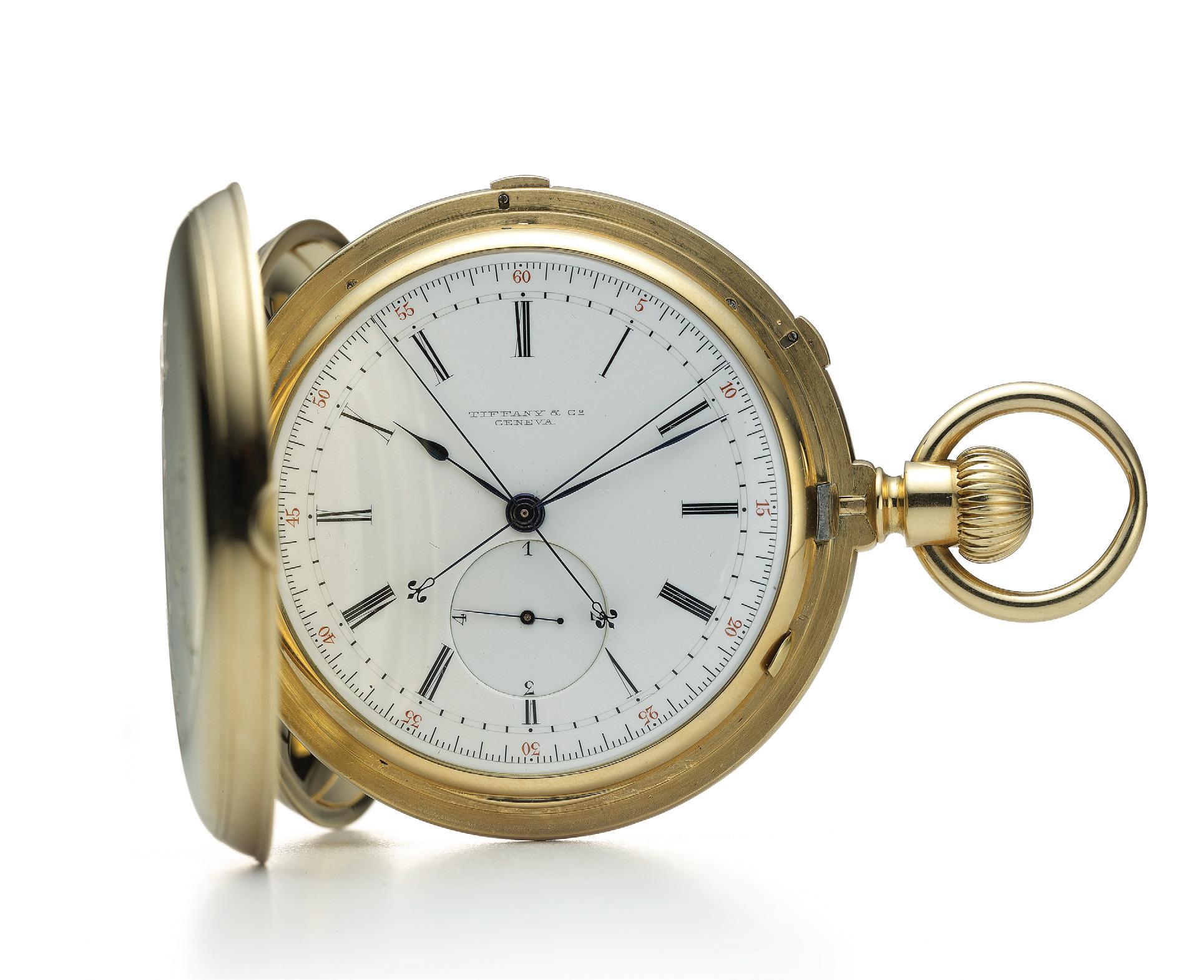
its depth gradually, the result of a layered process that privileges patience over immediacy.
Detail operates here not as embellishment, but as continuity. Baguette-cut diamonds mark the hours, a measured reference to the House’s longstanding expertise in gemstones. The crown recalls the six-pronged Tiffany Setting, one of the most recogniz-
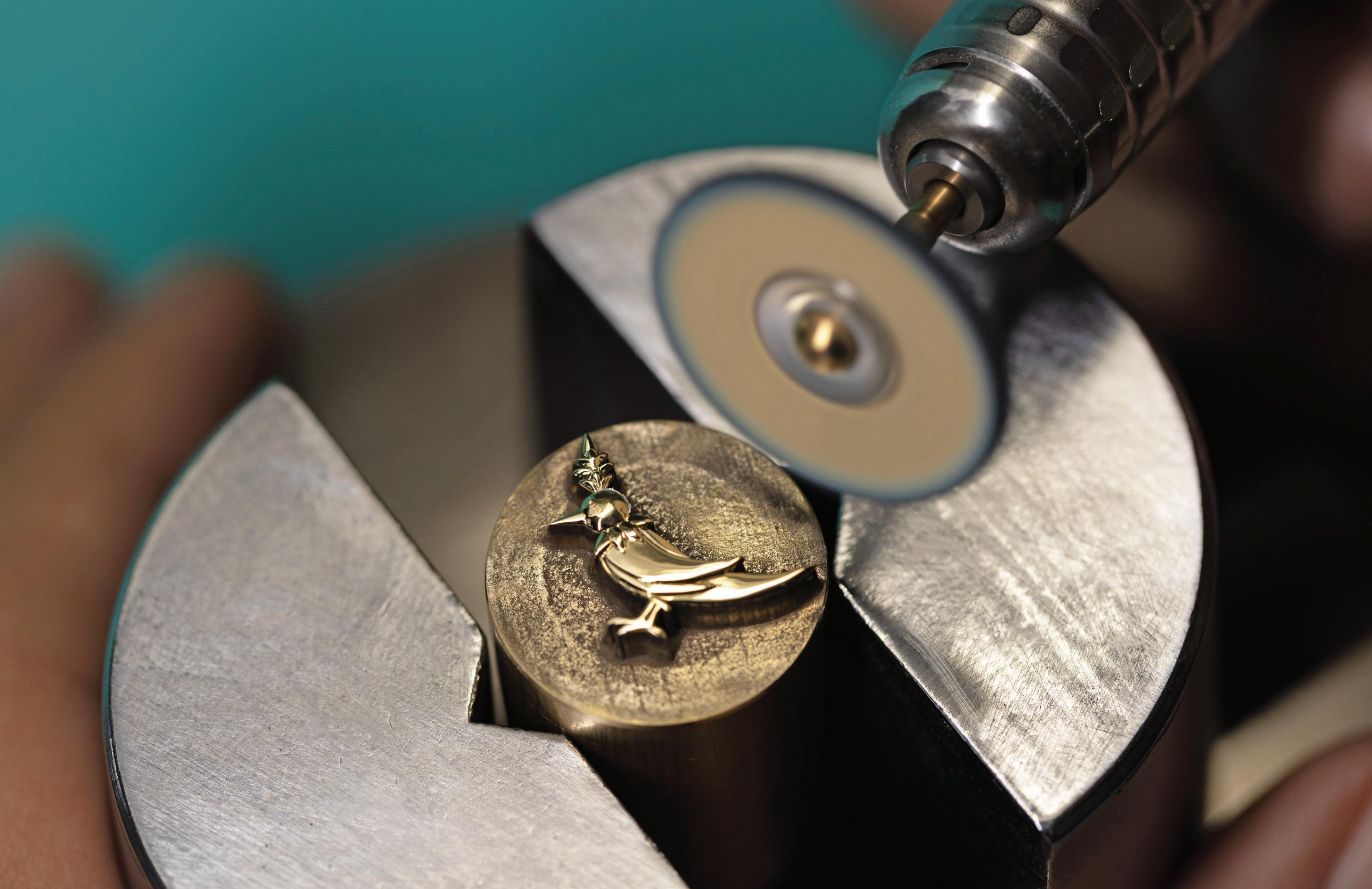
able forms in jewelry, here reinterpreted within the logic of watchmaking. Turn the watch over and another element emerges: the Bird on a Rock, set within the movement itself, a moment of quiet play embedded within a system defined by precision.
In recent years, watches have reemerged not simply as instruments, but as objects of attention, worn with in-
tention rather than necessity. They carry a renewed sense of presence, a quiet assertion of time in an era increasingly defined by its abstraction. Within that shift, Tiffany’s return to its own watchmaking lineage feels less like a revival than a continuation—an expression of a sensibility that has long moved, with consistency and precision, between utility and form.
Left: Catalogue of Timing Watches cover and pages, 1870, The Tiffany Archives.
Below: Pocket Watch, Tiffany & Co., 1874–1879, The Tiffany Archives. Split-second mechanical movement manufactured at the Tiffany & Co. vGeneva facilities.
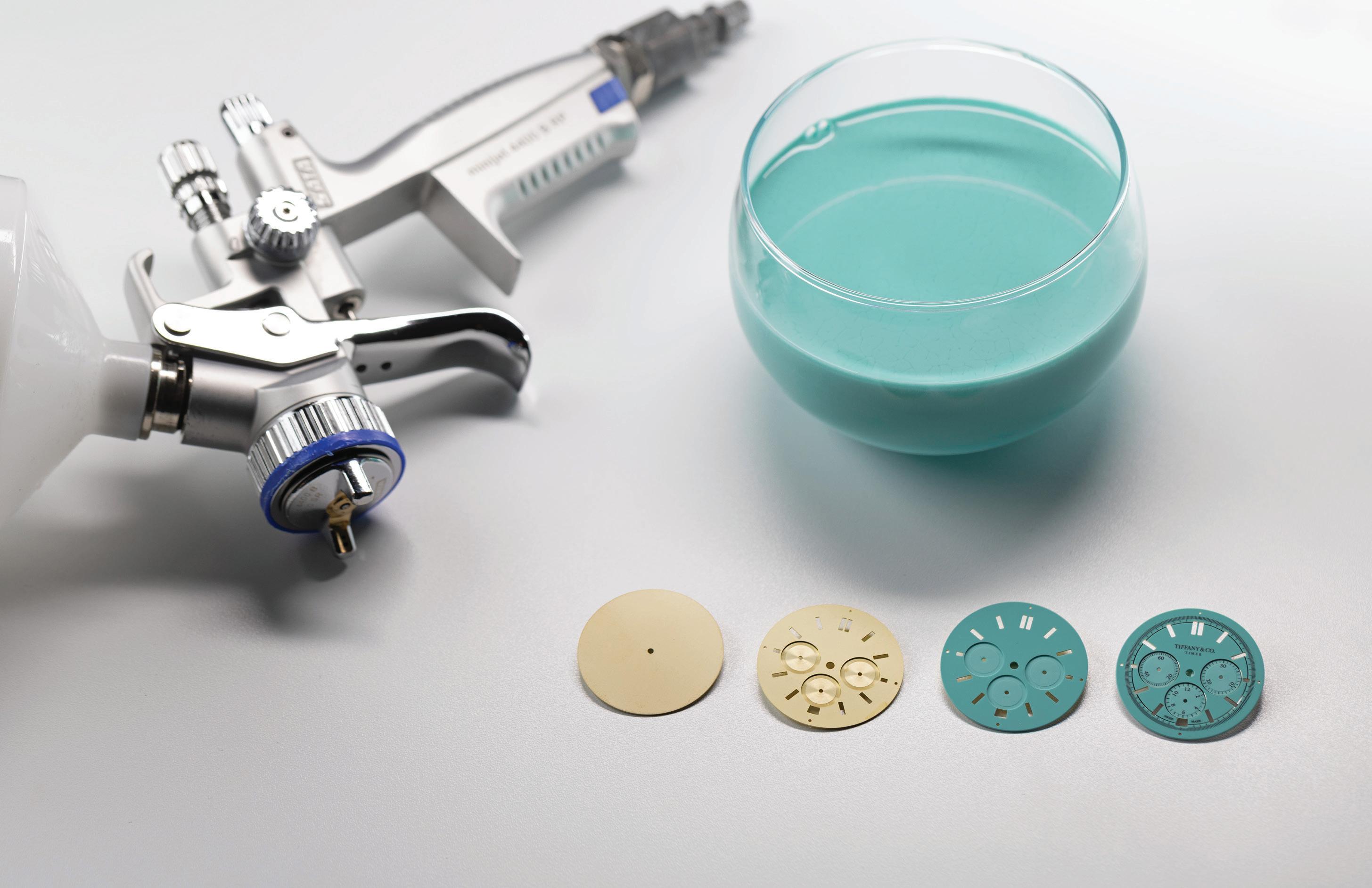
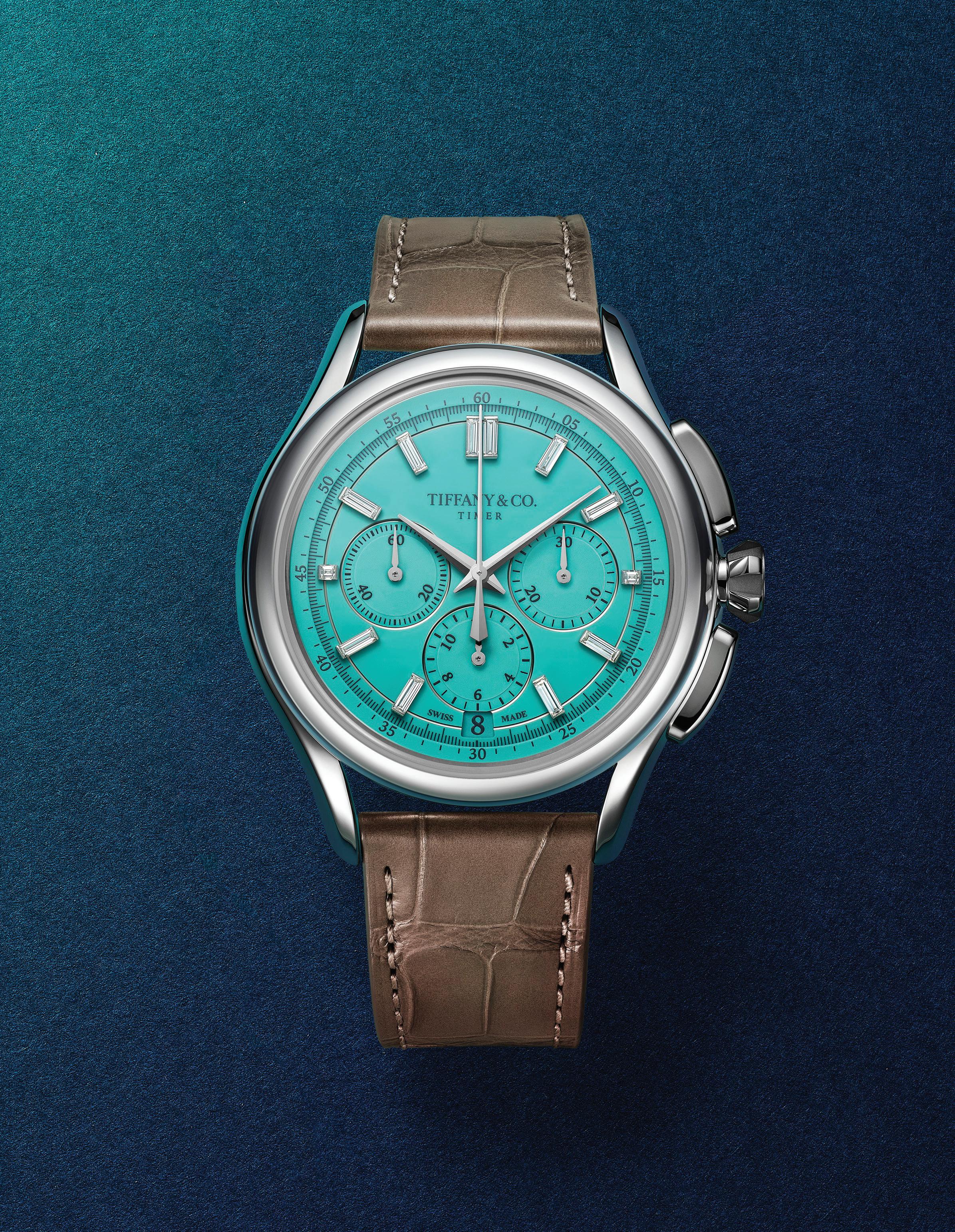
Below: Tiffany Timer Watch in Platinum. Tiffany Blue® lacquer set with 12 baguette diamond indexes. Customized El Primero Movement. Limited edition of 60 pieces. Swiss-made.
Opposite, Top to Bottom: Making of the Tiffany Timer watch dial in Tiffany Blue® lacquer. An artisan polishes the Bird on a Rock motif featured on the oscillating weight of the Tiffany Timer watch with a wooden stick and a polisher brush.
BAYEUX TAPESTRY
The story that shaped England, in thread
there is no singular event in British history more foundational to its identity than the Battle of Hastings in 1066. Every schoolchild is taught the essential outline: Harold crowned king, William crossing the Channel, the clash that would reshape England’s language, power, and culture. And yet, for all its familiarity, the event remains distant, mediated through texts, retellings, and centuries of interpretation. The closest thing to a contemporary visual account is the Bayeux Tapestry, a work created within living memory of the conquest itself, and one that continues to shape how that history is seen.
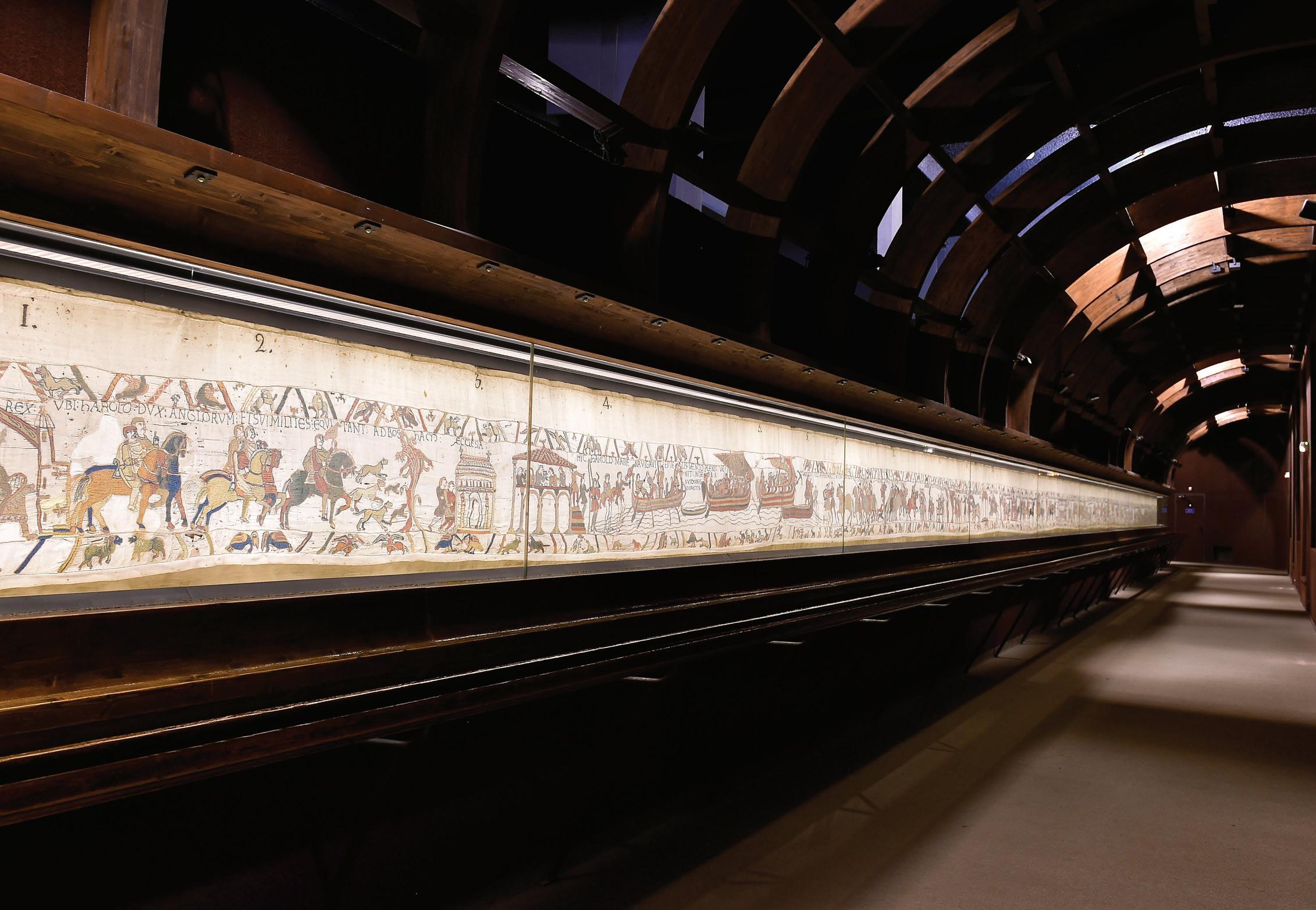
Stretching nearly seventy meters in length, the tapestry does not simply depict events. It unfolds them. Scene by scene, gesture by gesture, the narrative advances with a clarity that feels both immediate and stylized. Figures move in procession across its surface: ships cutting through the Channel, horses charging into battle, hands raised in oath, warning, and command. It is not a tapestry in the strict sense, but an embroidery, worked in wool thread on linen, its imagery built through line and repetition rather than illusion. And yet, within that constraint, it achieves something remarkably vivid. Its importance lies not only in what it shows, but in how it shows it. The tapestry is at once record and interpretation, a visual narrative shaped by its makers, often thought to be working in England under Norman patronage. It tells the story of William’s claim and Harold’s defeat, but it does so with a complexity that resists
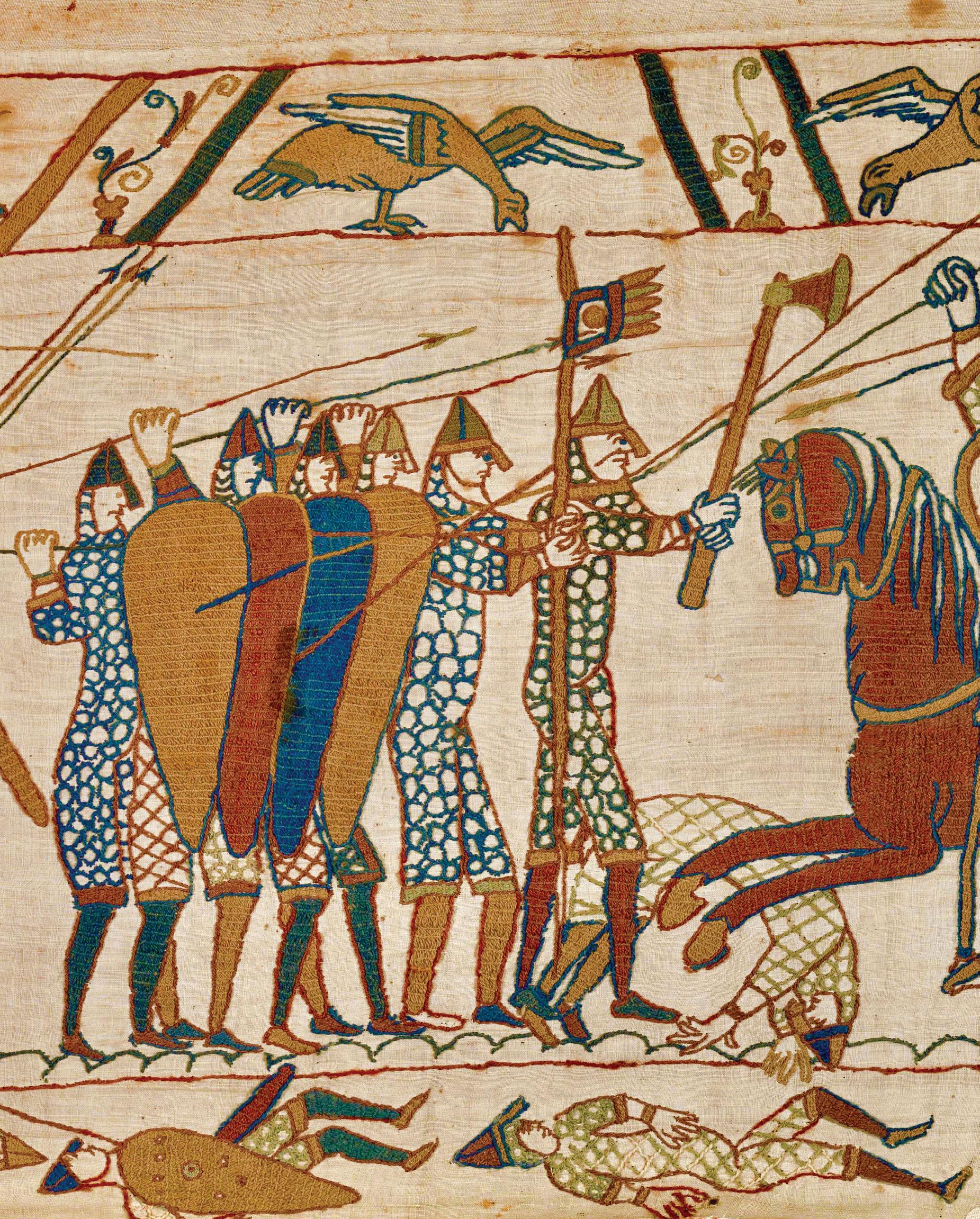
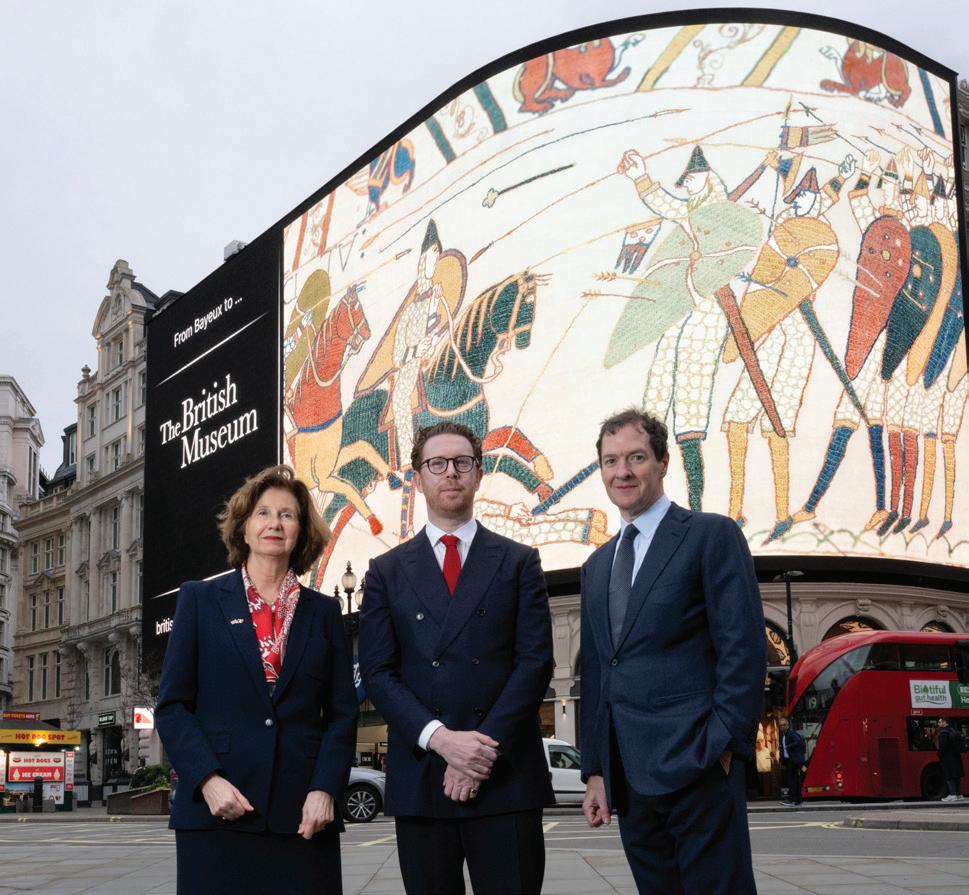
This will be the first time the Bayeux Tapestry has been in the UK since it was made, almost 1,000 years ago.
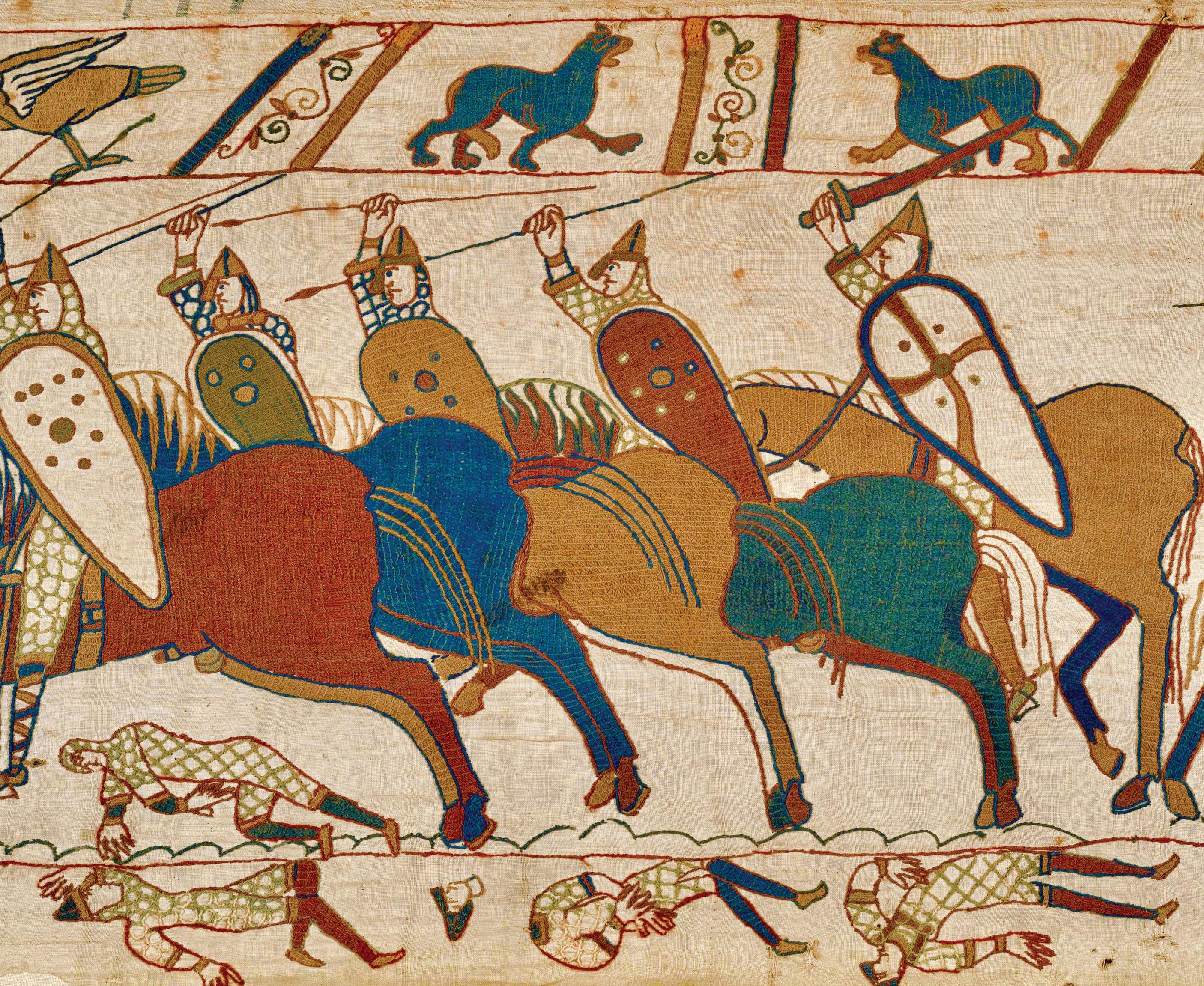
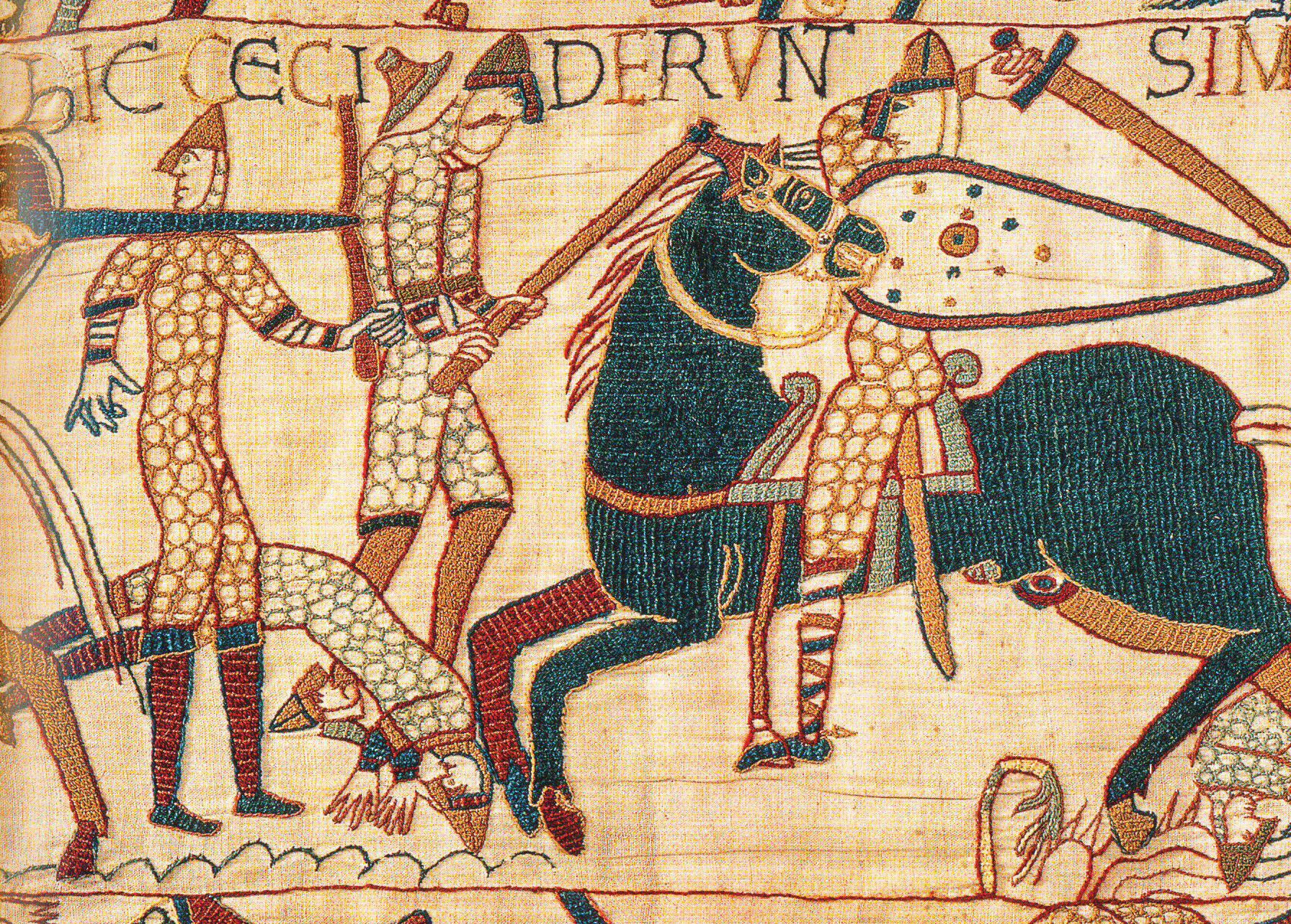
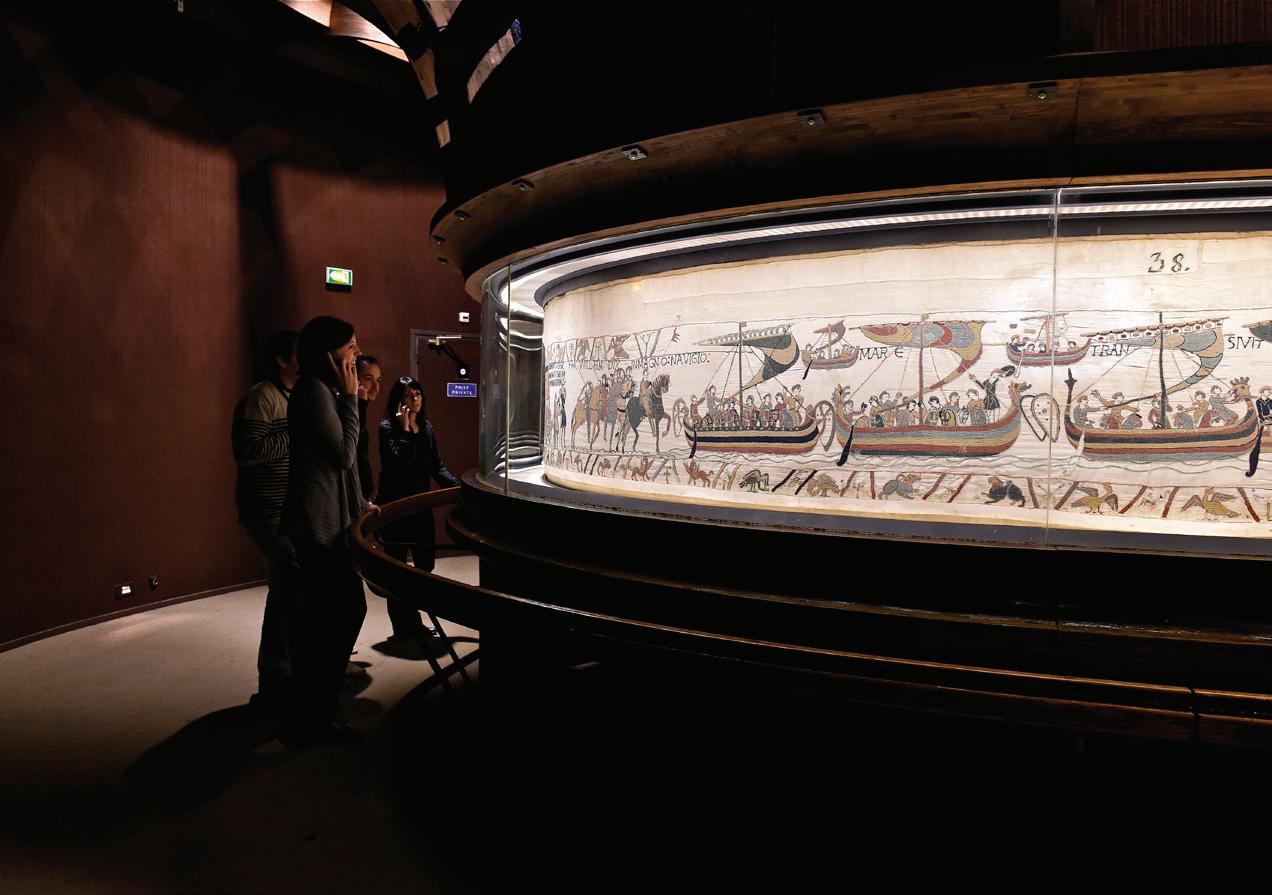
Anglo-Norman Artists, The Bayeux Tapestry, c. 1070s. Embroidery in wool thread on linen cloth. 68.3 meters long x 50.8 cm tall (approx. 224 ft x 20 in.)
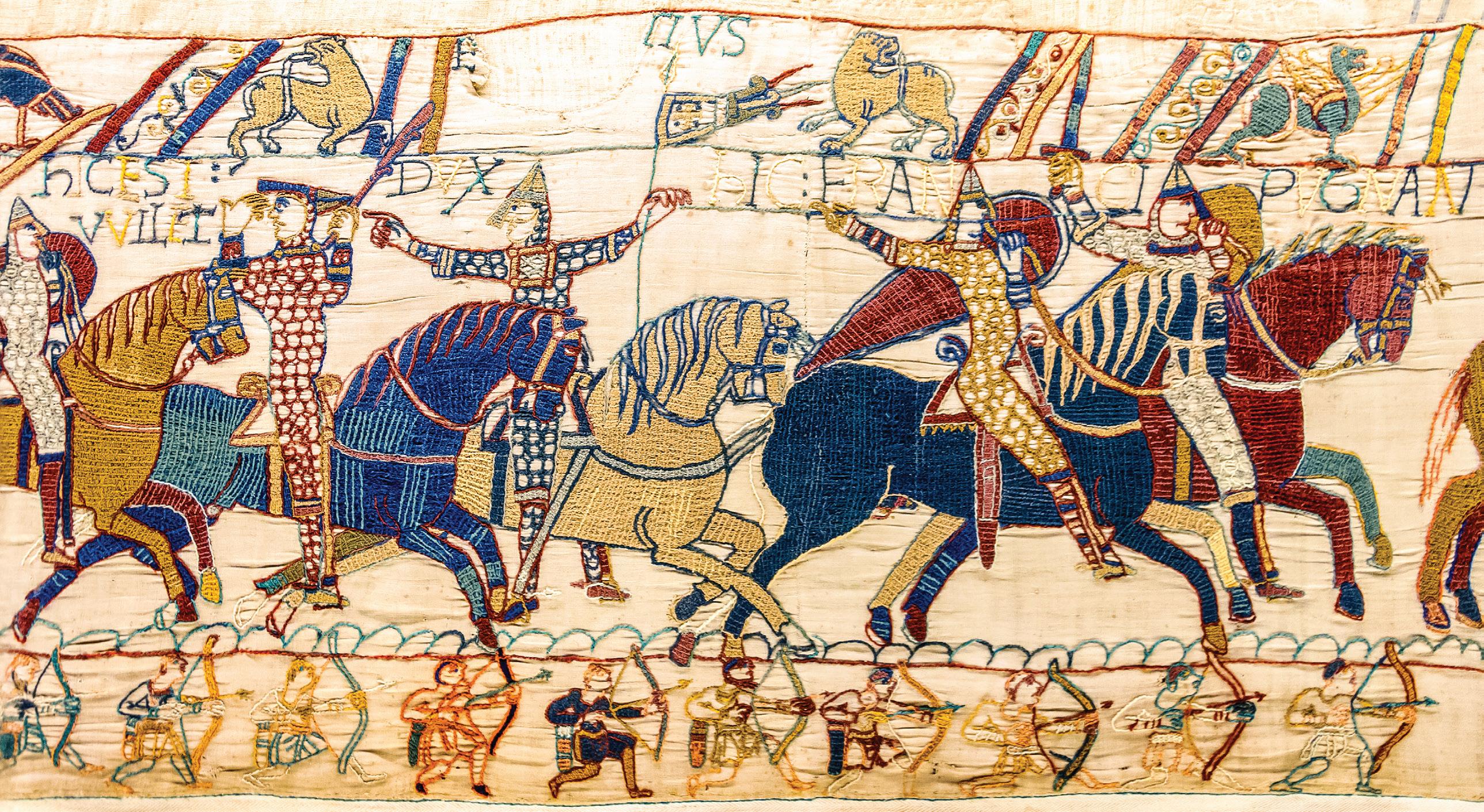

a single reading. Details accumulate. Motifs recur. The margins themselves carry strange, often ambiguous imagery, hinting at meanings that extend beyond the central narrative.
For England, the tapestry represents a moment of rupture that became origin. The Norman Conquest did not simply alter the course of history; it redefined it, introducing new structures of power and a linguistic legacy that remains embedded in the English language today. And yet the tapestry that records this transformation is not purely English. It speaks to a shared history between Britain and France, one that predates the boundaries through which we now understand it. The figures that
move across its surface belong to both.
For nearly a millennium, the tapestry has been housed in Bayeux, where it has taken on a different kind of meaning. It is not only a historical artifact, but a local one, woven into the identity of the town itself. Its survival is itself remarkable. Through war, revolution, and the shifting priorities of centuries, it has endured, its continuity lending it a quiet authority. To encounter it there, is to experience not only the past it depicts, but the long history of its preservation.
That is what makes its temporary return to England so significant. To be displayed at the British Museum for the first time since its creation is not merely an exhibition. It is a moment of recog-
nition, a re-encounter between object and place. As Dr. Nicholas Cullinan has observed, “To encounter the tapestry in person is to feel history in a way no reproduction or textbook can ever really quite capture, a sense of absolute awe.” The statement speaks to something essential. The tapestry resists translation. Its scale, its rhythm, its physical presence cannot be reduced to image alone.
To stand before it is to experience history as duration. The narrative does not reveal itself all at once. It requires movement, attention, and time. In this sense, it functions almost like an early form of cinema, a sequence that builds meaning through accumulation rather than spectacle.
Its return also invites a reconsideration of ownership. The tapestry belongs to Bayeux, to the place that has safeguarded it for centuries. Yet it also belongs to a broader, shared history, one that cannot be contained within a single national narrative. Its journey across the Channel becomes a gesture of exchange, a recognition that the past it depicts remains, even now, intertwined. What endures is not only the story it tells, but the way it continues to tell it. The Bayeux Tapestry remains one of the most powerful visual narratives ever created, not because it resolves history, but because it keeps it open, inviting each generation to see it again, and differently.
Soul of the VENETIAN Lagoon
A Photo Journal by Simon Tchoukriel
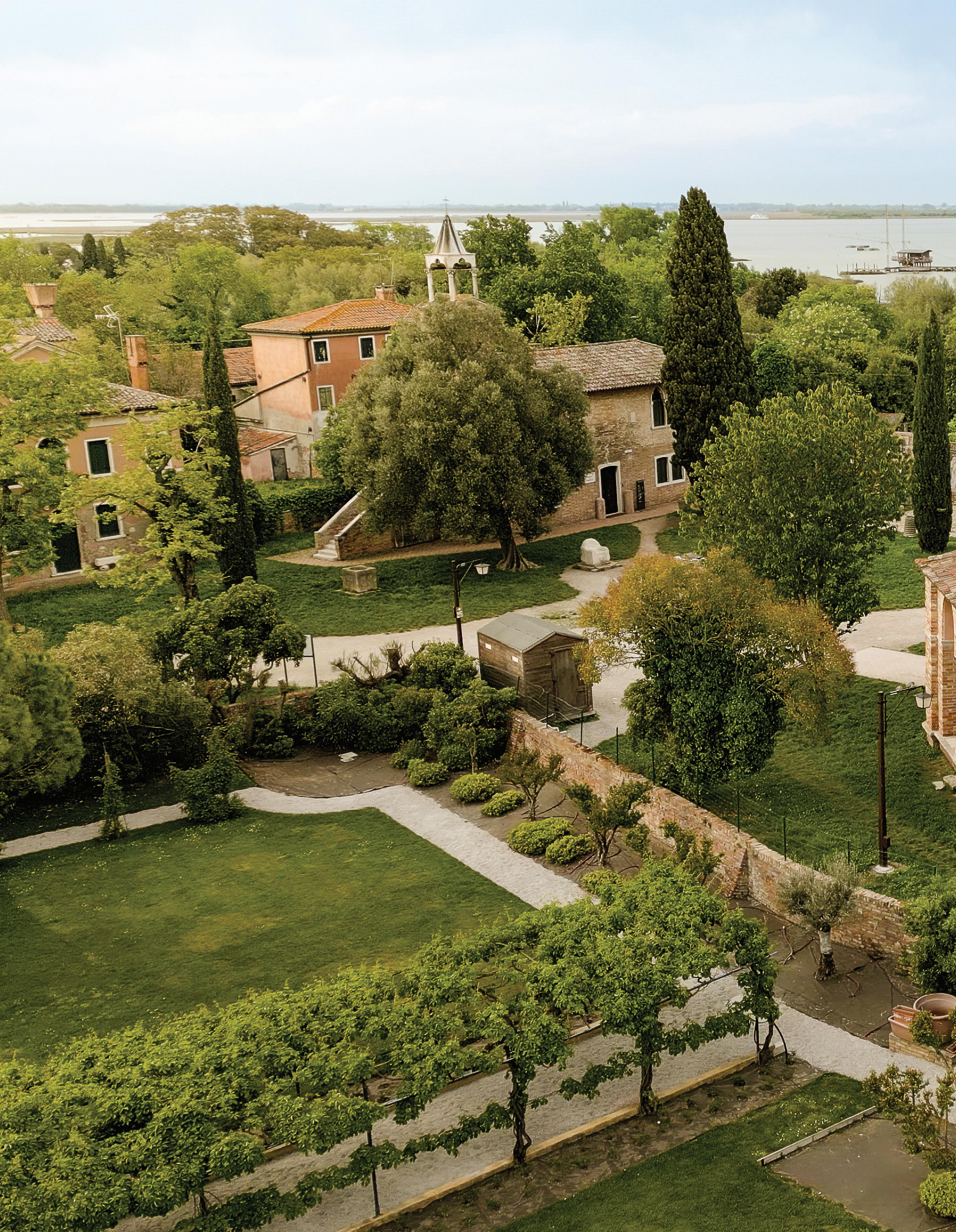
when most people think of Venice, the image is immediate and indelible: the grand theater of St. Mark’s Square, the slow, rhythmic passage of gondolas, the shimmer of marble reflected in green-gray canal water. It is a city defined by spectacle, by movement, and by the constant, pressing presence of others.
But there is a point in the Venetian lagoon where the frequency changes. The water widens, the boat traffic thins to a trickle, and the density of the city begins to dissolve into the horizon. Torcello does not announce itself; it appears gradually, almost discreetly. It is the kind of place reached not by accident, but by intention. It comes into view in fragments: a solitary wooden dock, a narrow path cutting through salt marshes, a stretch of open land where the sky suddenly feels immense.
Long before Venice took its iconic shape, Torcello was its heartbeat. Settled as early as the seventh century by
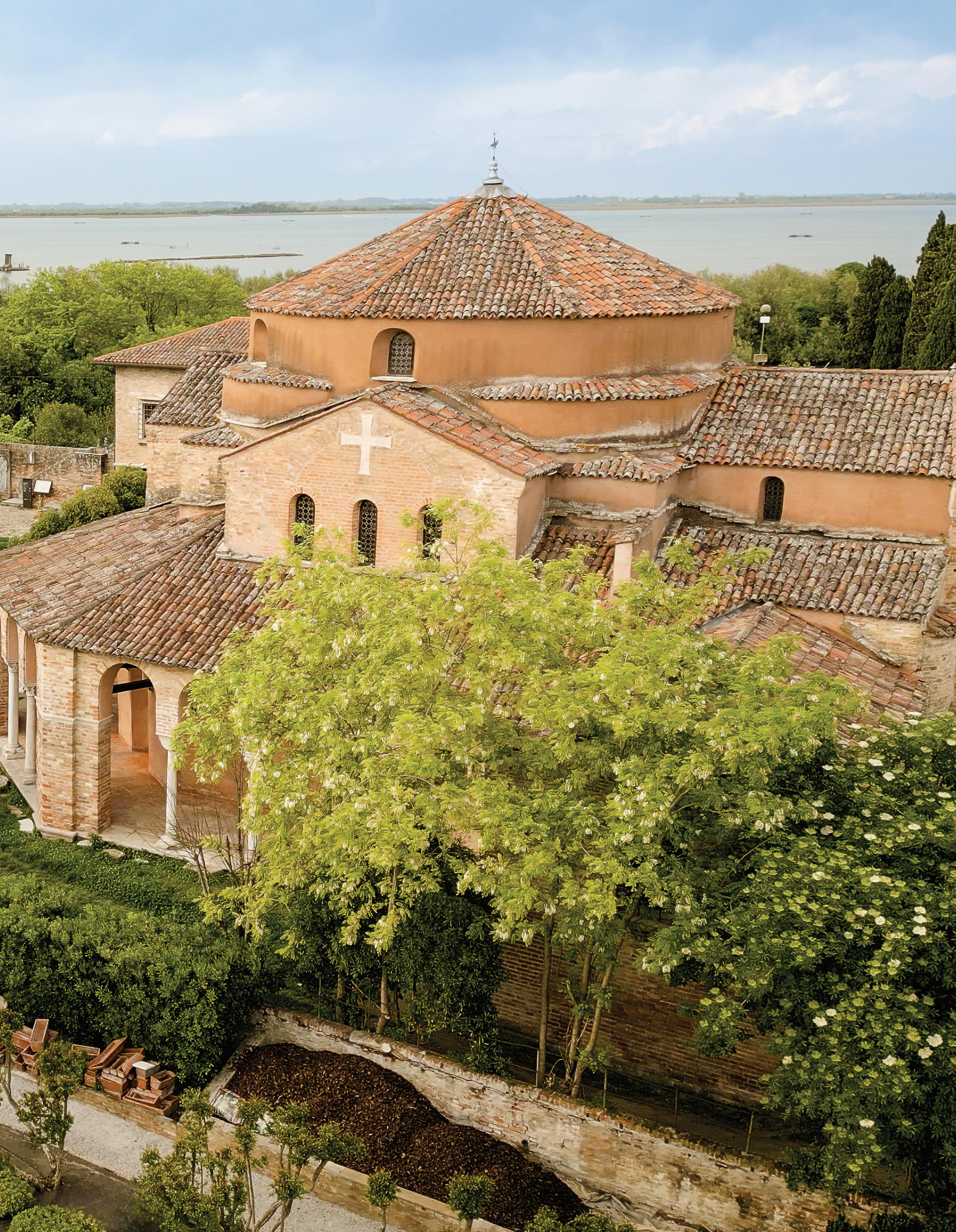
Aerial view of the 12th-century church of Santa Fosca overlooking the Locanda Cipriani garden. The church contains the tomb of the martyr Santa Fosca, to whom it is dedicated. © Photo Simon Tchoukriel
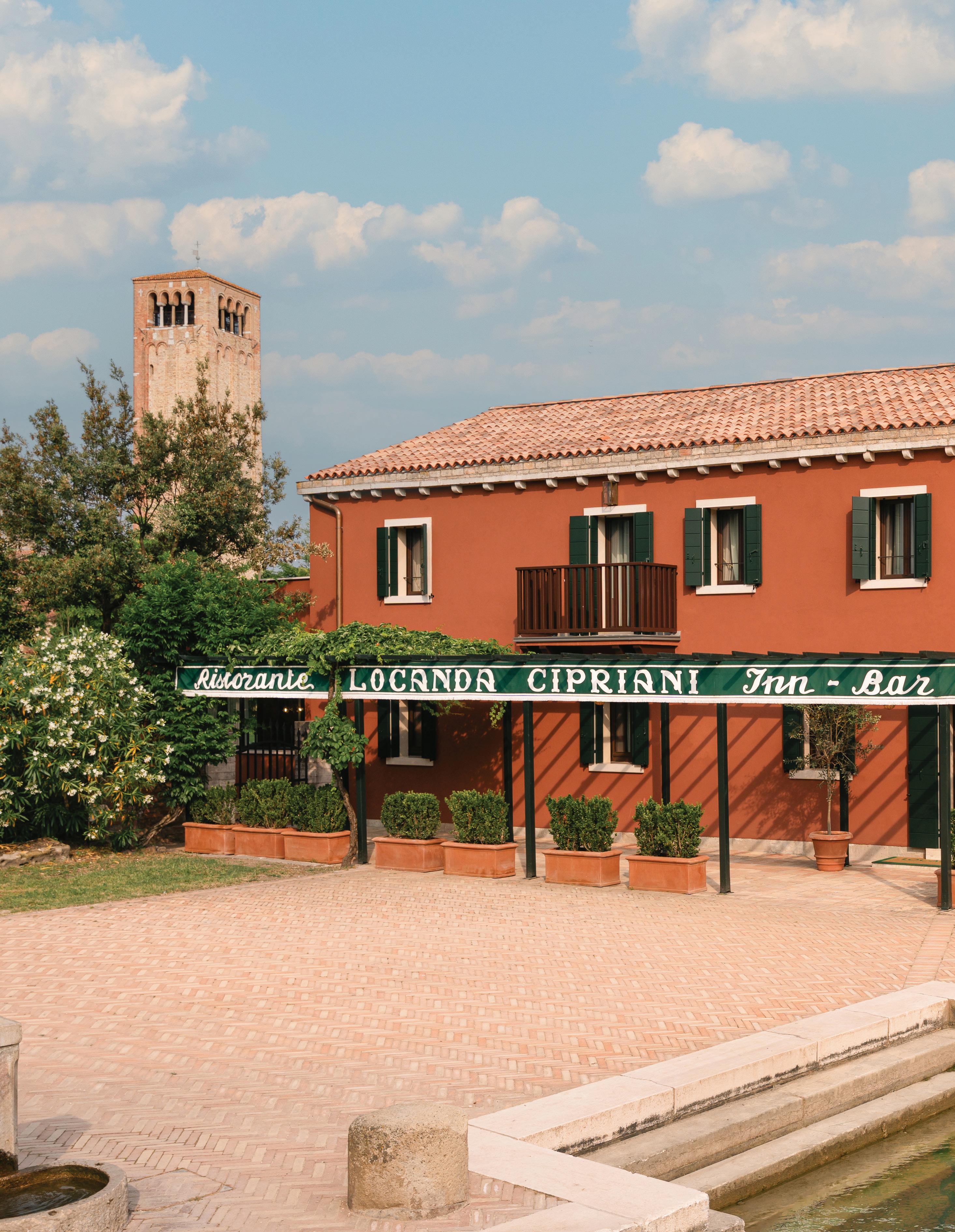
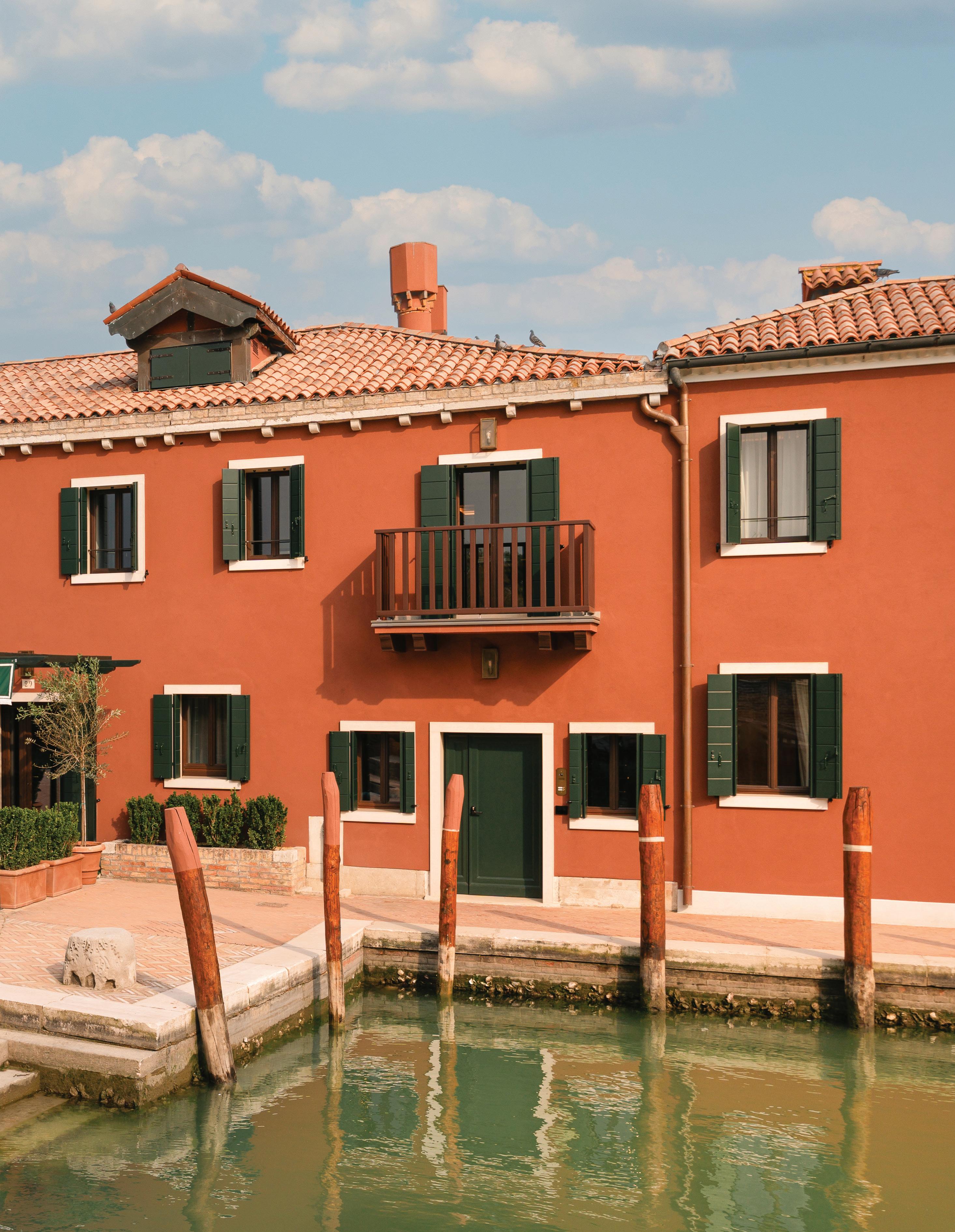
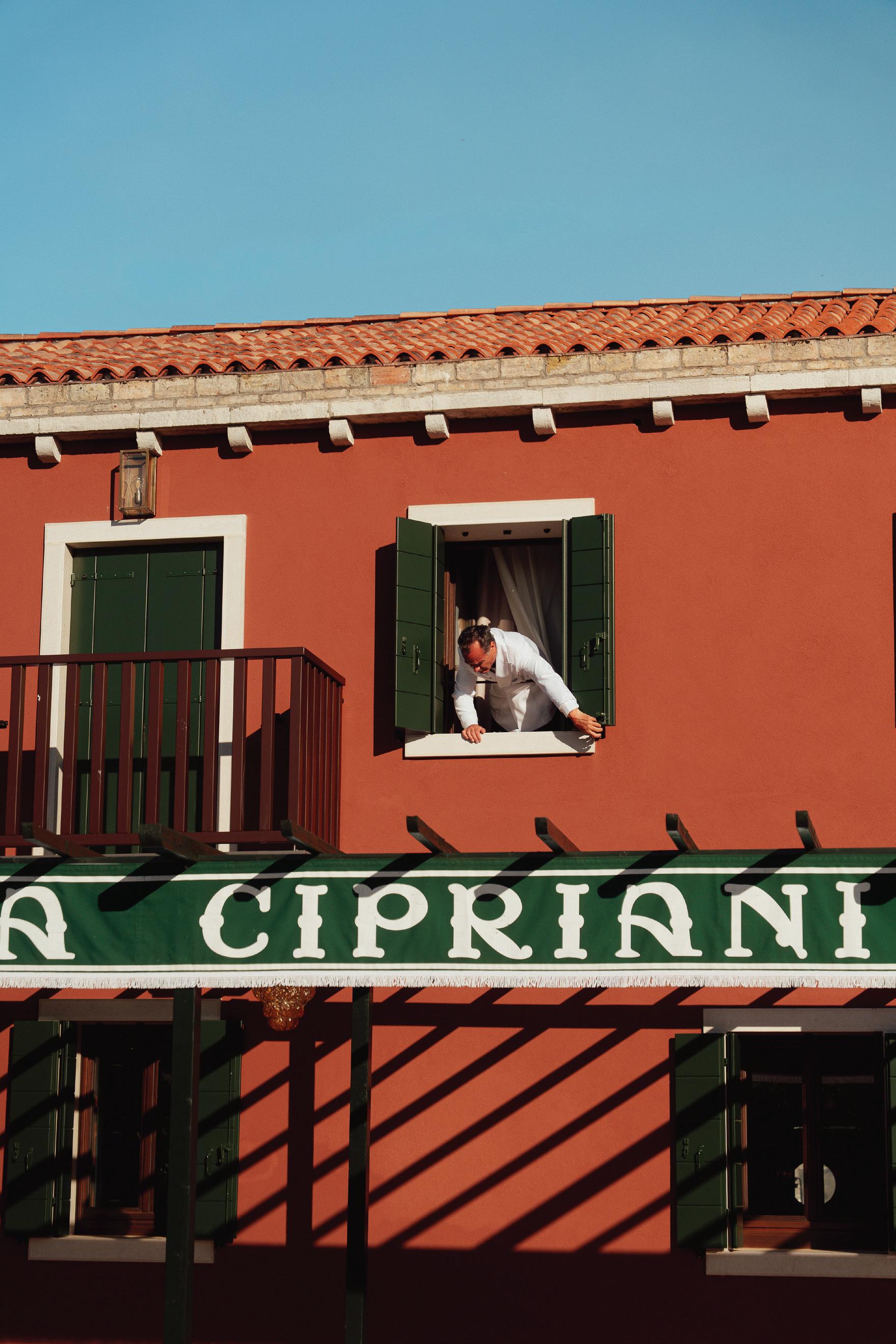
The front of Locanda Cipriani. © Photo Simon Tchoukriel
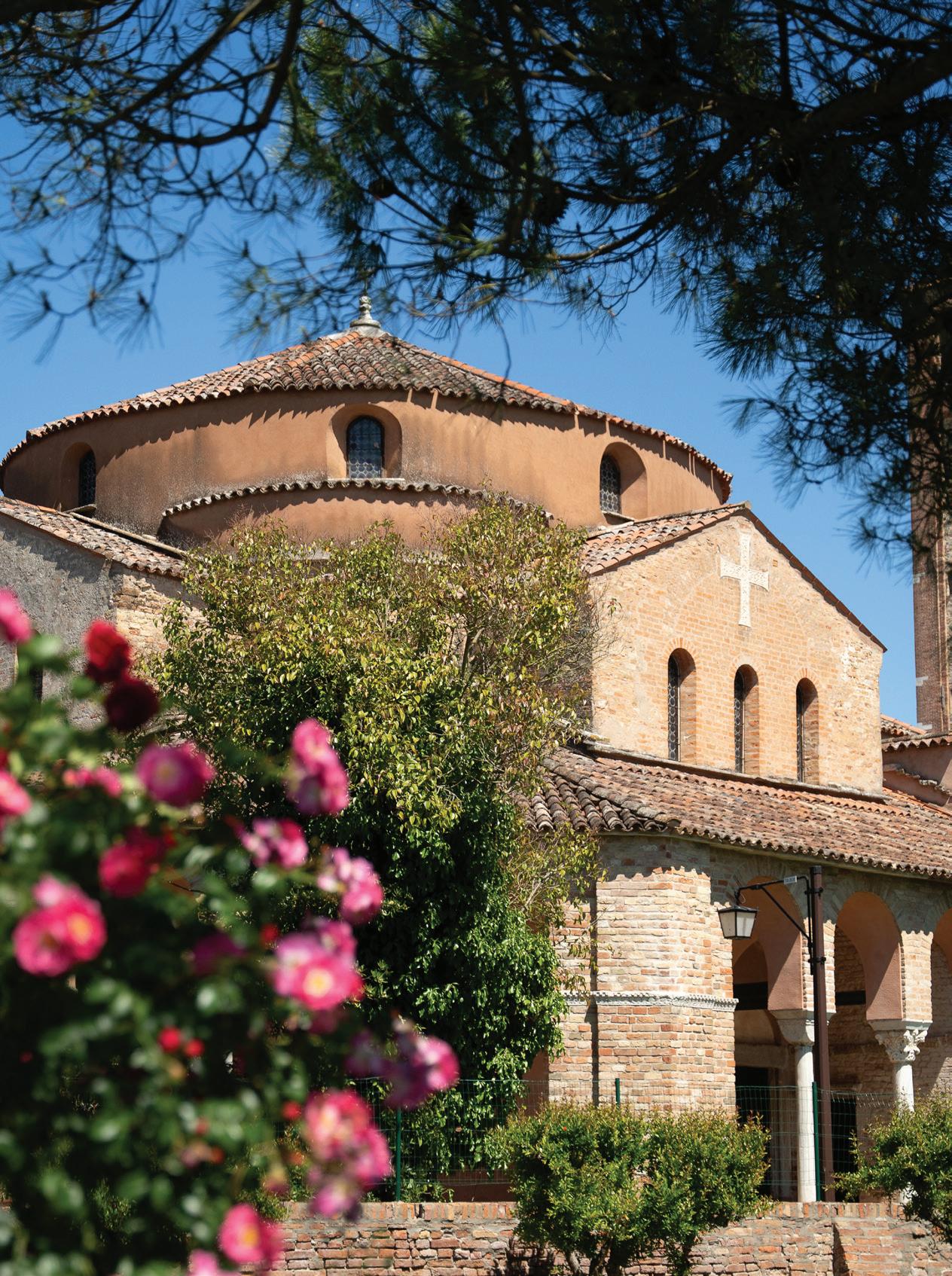
refugees fleeing the mainland, it was once the most populous center in the lagoon—a bustling hub of trade, administration, and early civic life. At its zenith, it held thousands. Today, the population has dwindled to a dozen permanent residents, and with that exodus has come something rarer than any Venetian treasure: space.
What one encounters on Torcello today is a profound, echoing serenity. The landscape opens outward, liberated from the claustrophobia of the city. A small cluster of enduring monuments anchors the island—the Cathedral of Santa Maria Assunta and the Church of Santa Fosca—but between them, air and light are the primary architects. Distance becomes noticeable here in a way that is increasingly uncommon in the modern world.
After the relentless stone and water of Venice, the dominant color of Torcello, green, feels almost startling. Vegetation returns in layers: low saltmarsh grasses that soften the edges of the paths, fruit trees heavy with seasonal weight, and gardens that feel less “designed” than they do “tended over time.”
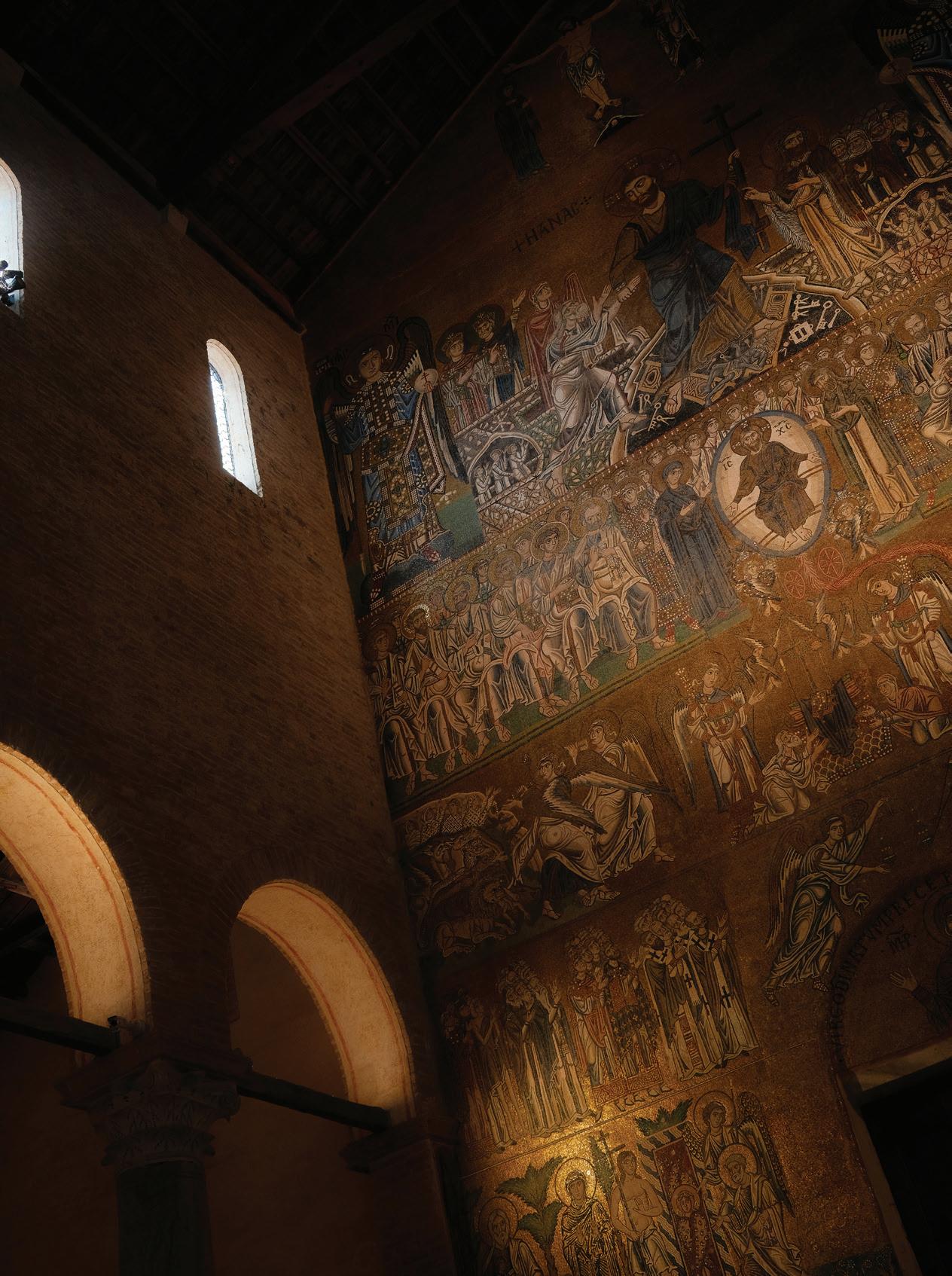
At the island’s center stands the Cathedral of Santa Maria Assunta, founded in 639. Inside, the Byzantine mosaics define the space—vast, shimmering compositions of gold and glass that shift with the light. The figures in the Last Judgment seem to step forward or recede depending on the hour, their surfaces carrying a continuity
To walk Torcello is to move at a different tempo. Paths unfold without urgency, winding through tall reeds and wild grasses, past forgotten orchards and low stone walls. There is no prescribed route, no frantic destination. Movement slows of its own accord.
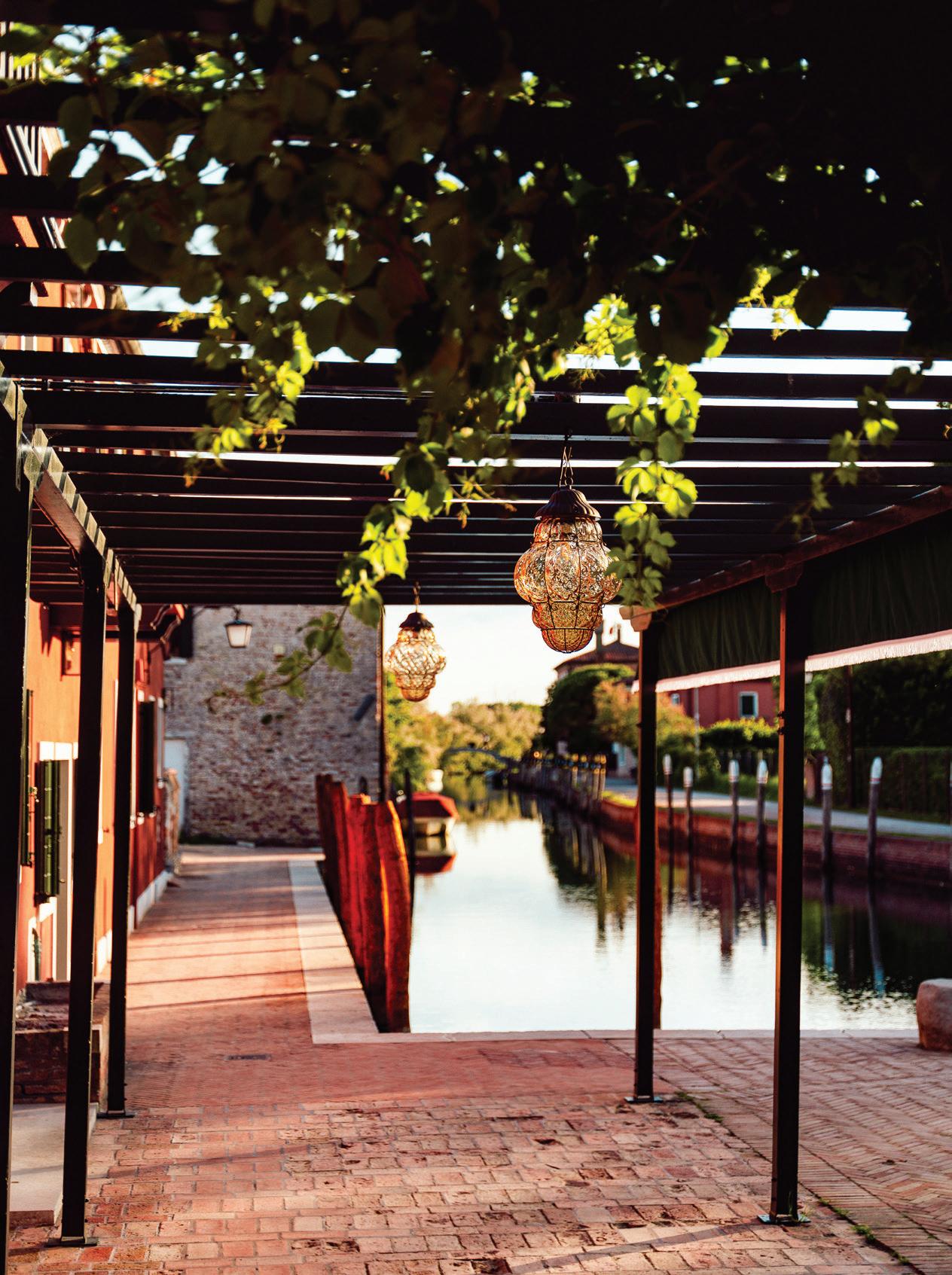
Clockwise from Top Left: View of the church of Santa Fosca, adjacent to the Locanda Cipriani gardens. Large mosaic inside the basilica church of Santa Maria Assunta, representing a Crucifixion in the gable, a vigorous Harrowing of Hell with a large figure of Christ, above a Last Judgment taking up four lower registers. Canal leading to Locanda Cipriani with the Ponte del Diavolo (the Devil’s Bridge) in the distance.
that has survived thirteen centuries. Nearby, the eleventh-century Church of Santa Fosca introduces a different rhythm; its circular form and colonnade allow the structure to sit within the landscape rather than apart from it. These buildings do not dominate; they settle.
Torcello has always acted as a magnet for those seeking a specific kind of remove. Ernest Hemingway famously found his sanctuary here during the
winter of 1948. At Locanda Cipriani, he kept a regular table, spending long, solitary stretches writing and nursing bottles of Amarone.
Giuseppe Cipriani, the legendary founder of Harry’s Bar, kept the Locanda open specifically for Hemingway during the months when the island fell still. It was in this silence that Hemingway worked on Across the River and Into the Trees, the island providing a rhythm aligned with reflection rather
than the social performance of Venice.
To Hemingway, Torcello wasn’t an escape; it was a return to basics.
Time on Torcello is not measured by a clock, but by the shifting tides of the lagoon and the way the light rakes across the brickwork of the campanile. Nothing here is fixed, yet everything holds together.
The recent reopening of Locanda Cipriani feels less like a modern arrival and more like a quiet contin -
uation of this history. It aligns with the island’s spirit rather than altering it, extending the experience for a new generation of seekers.
Torcello does not ask to be discovered. It does not seek the frantic attention of the tourist gaze. It simply waits. It invites return—and in that return, what emerges is not a “different” Venice, but a more complete one. The soul of the lagoon, it turns out, is found in the silence.
The front of Locanda Cipriani hotel and restaurant, set to reopen in June of 2026.
© Photo Simon Tchoukriel
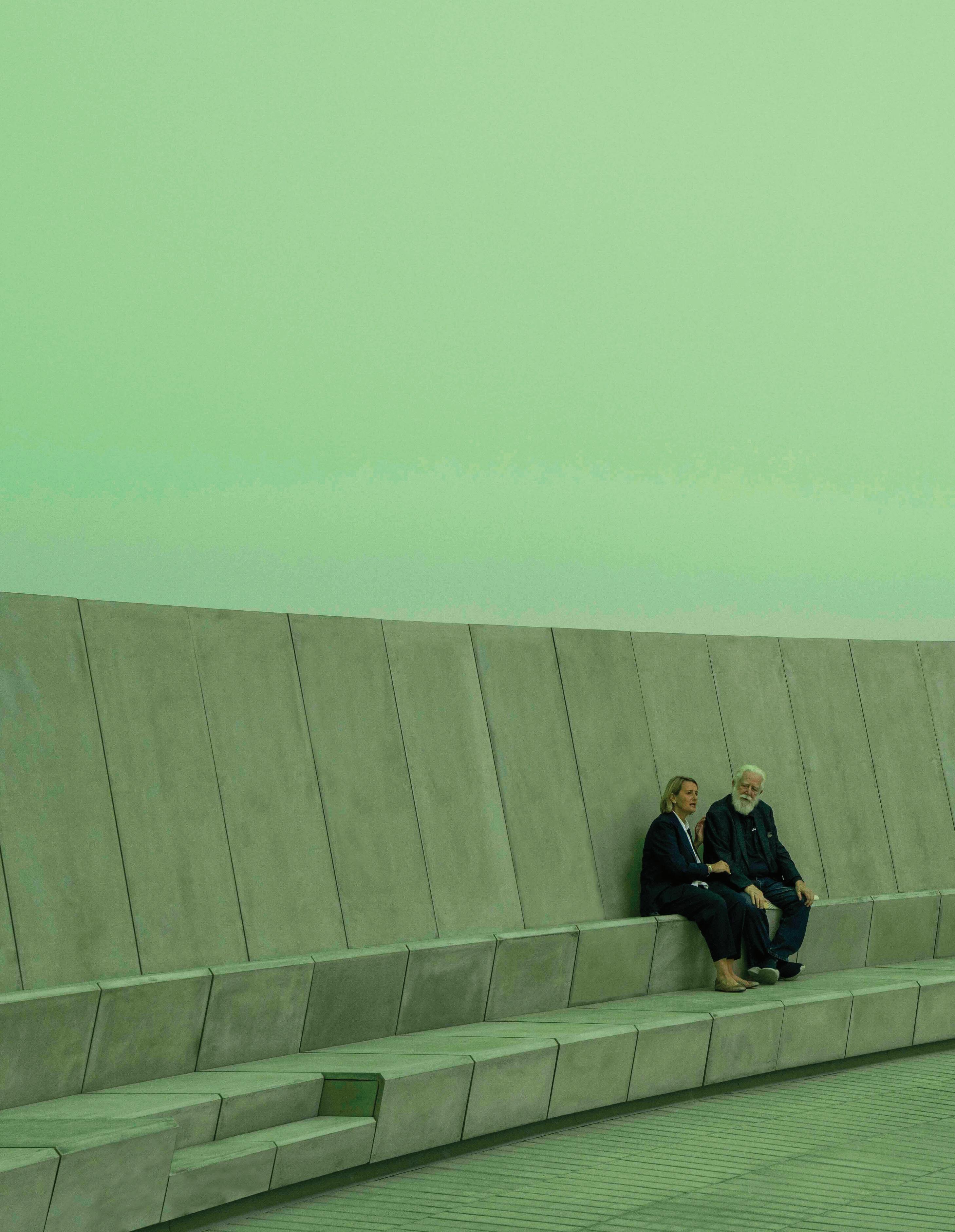
James Turrell, As Seen Below - The Dome, a Skyspace by James Turrell. Foto: Mads Smidstrup © ARoS
JAMES TURRELL
In a monumental new Skyspace, light, time, and perception transformed into experience
there are few artists who have made perception itself their subject with the clarity and persistence of James Turrell. For more than five decades, his work has asked a deceptively simple question: what does it mean to see? Not to look at an object, but to become aware of the act of seeing itself. Light, in his hands, is not a tool of illumination. It is the material.
This inquiry finds its most distilled expression in the Skyspace, a form Turrell has returned to throughout his career. Each is defined by a precise architectural gesture: an opening that frames the sky. Within that frame, light shifts, deepens, dissolves. The sky becomes both subject and surface, something observed and something experienced. The gesture is not new. The oculus of the Pantheon performs a similar act, holding the sky within architecture, allowing light to move across stone as a measure of time. For nearly two thousand years, it has enraptured all who pass beneath it. Turrell extends this lineage but removes the narrative that once surrounded it. What remains is more elemental. There is no mythology, no ornament, no instruction. Only the act of looking, made visible.
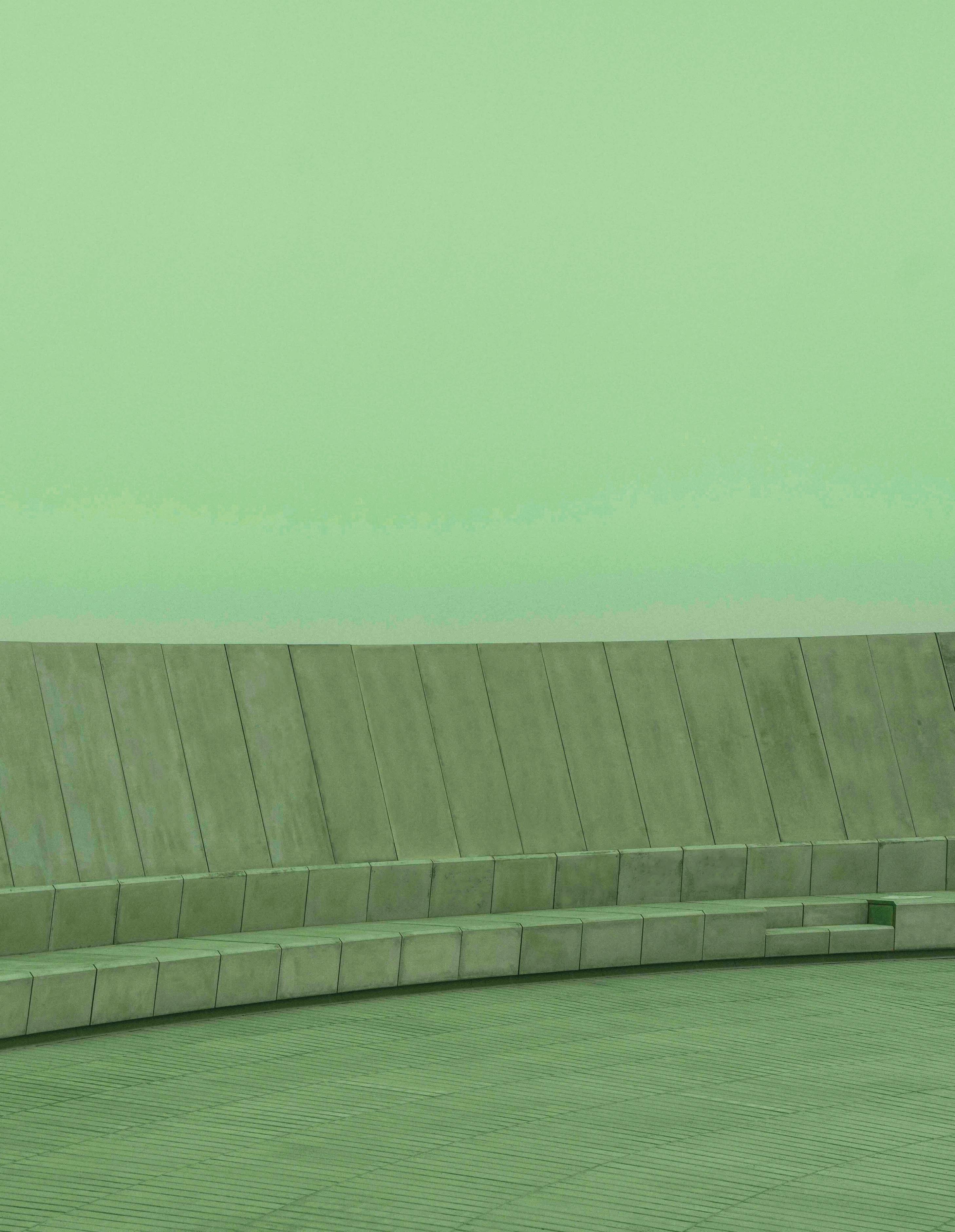
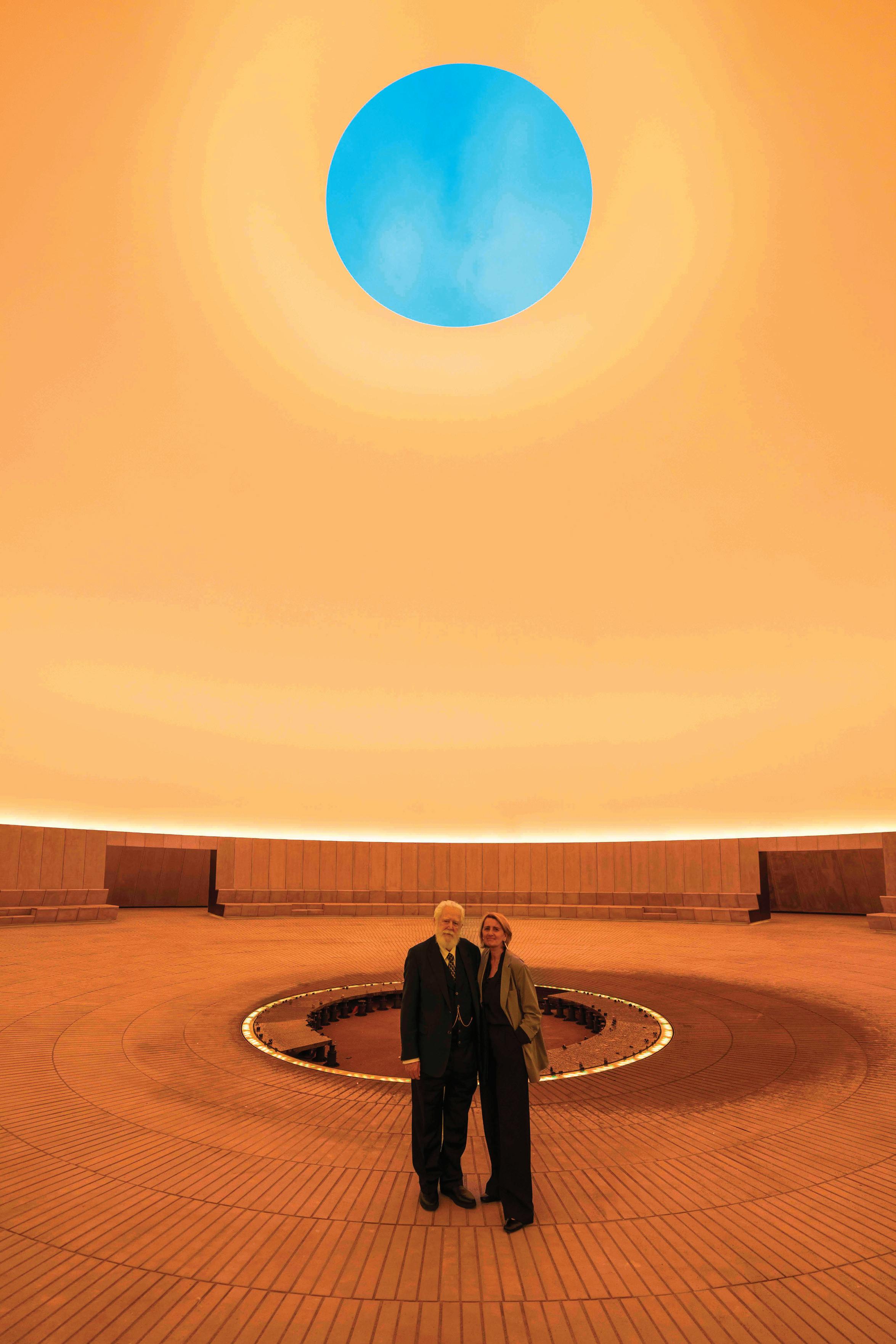
In June 2026, this exploration reaches a new scale with the opening of As Seen Below – The Dome at ARoS Aarhus Art Museum in Aarhus, Denmark. At sixteen meters in height and forty meters in diameter, it will be the largest Skyspace Turrell has created within a museum. The experience begins before the work is even seen. Visitors move through a subterranean corridor,
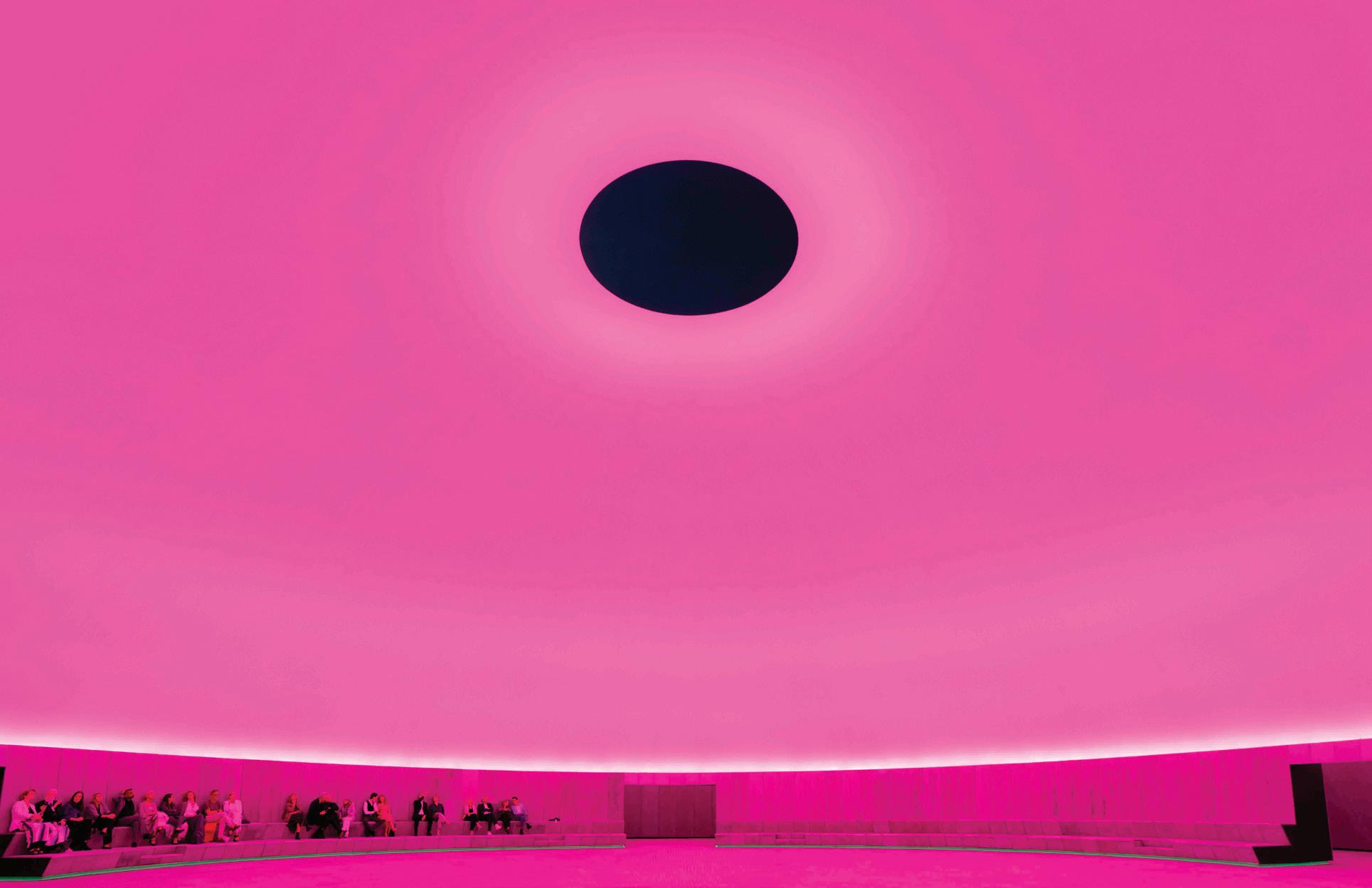
emerging gradually into a vast domed chamber where the architecture begins to dissolve into light.
The aperture above holds the sky in place, transforming something infinite into something momentarily contained. And yet it does not feel contained. The effect is subtle but disorienting. Edges soften. Depth becomes uncertain. The eye adjusts, then readjusts. Light shifts almost imperceptibly, and with it, the space itself.
Turrell has described his work not as image-making, but as a shaping of experience. “I’m shaping the experience of seeing rather than delivering an image,” he has said. The distinction is central. There is nothing to decode, no subject to interpret. Instead, the viewer becomes aware of their own perception, of the way light alters space, and of the way time unfolds within that alteration. The day carries weight. Evening introduces temperature. Change belongs to the viewer as much as to the sky.
This sensitivity to light is rooted in Turrell’s own formation. As a pilot, he spent years in the air, studying the sky not as backdrop, but as environment. Altitude, weather, and time of day re-
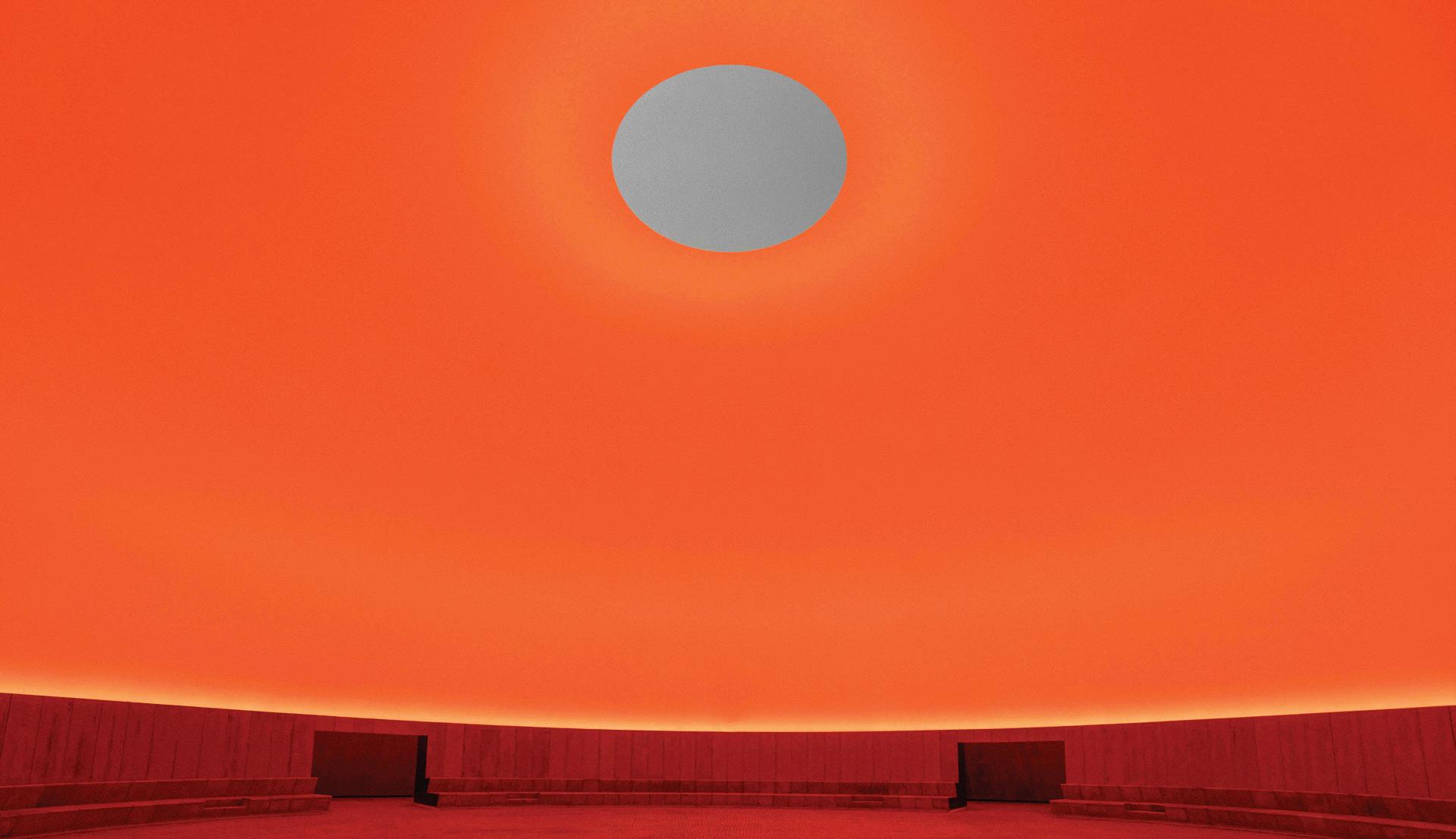
vealed variations in color and density that would later inform his work. At the same time, his early exposure to Quaker practices of silence and contemplation instilled a sensibility attuned to stillness. The Skyspace becomes an extension of both experiences, a place where looking is slowed and attention becomes deliberate.
The scale of As Seen Below might suggest spectacle, yet the work resists it. There are no images, no narrative sequences, no objects to command attention. Instead, there is duration. The longer one remains, the more the work reveals itself, not through change alone, but through an awareness of change.
What Turrell offers is not an image
of the sky, but a condition in which the sky can be seen differently. The architecture does not frame an object. It frames perception itself. And in doing so, it returns something familiar to a state of uncertainty.
In that space, suspended between light and structure, the act of looking becomes its own form of meaning.
Left: James Turrell, As Seen Below - The Dome, a Skyspace by JamesTurrell. Photo: Mads Smidstrup © ARoS, 2025. From James Turrell’s visit in As Seen Below, June 2025.
Below: James Turrell, As Seen Below - The Dome, a Skyspace by JamesTurrell. Photo: Mads Smidstrup © ARoS, 2025. From James Turrell’s visit in As Seen Below, June 2025.
Right: James Turrell, As Seen Below - The Dome, a Skyspace by JamesTurrell. Photo: Mads Smidstrup © ARoS, 2025. From James Turrell’s visit in As Seen Below, June 2025.
Modern Alchemy
Anselm Kiefer’s work finds the perfect home at Palazzo Reale
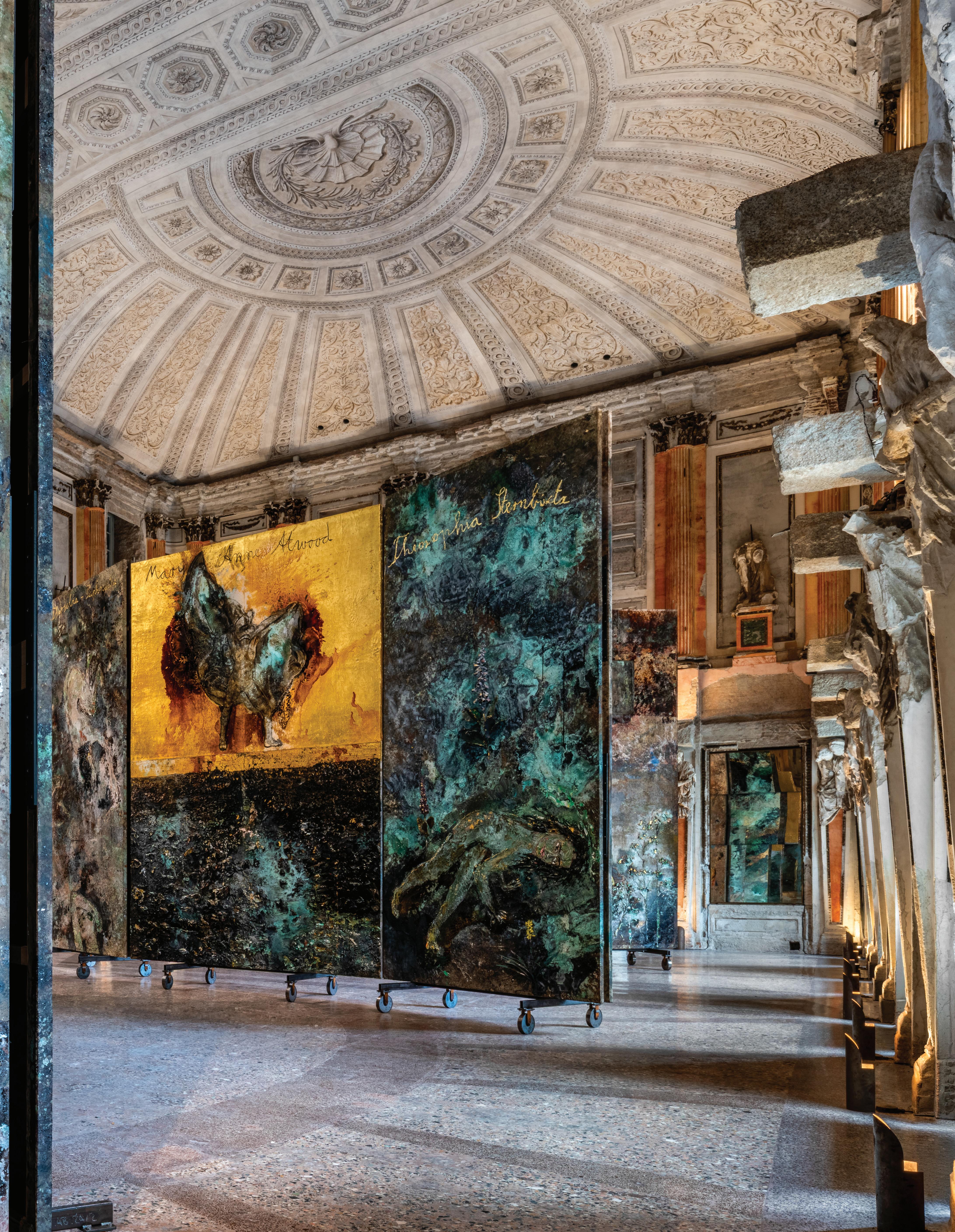
palazzo reale stands just off the Duomo, its façade giving little indication of what lies within. Inside, one room carries a different kind of history. The Sala delle Cariatidi, once a grand ceremonial hall, was heavily damaged during Allied bombing in 1943. The destruction was never fully repaired. The caryatids remain broken. The walls still bear the traces of fire.
The damage was left in place.
To enter the room is to encounter history not as something described, but as something that persists.
It is difficult to imagine a more exact setting for the work of Anselm Kiefer.
Within this space, the exhibition turns toward a subject that extends beyond the artist himself. A constellation of female alchemists, figures drawn from history, literature, and fragmentary record, appears across the work. Their presence forms a kind of recovered pantheon, assembled from lives that were often obscured, suppressed, or only partially documented. These were women who worked at the edges of accepted knowledge. Scientists, philosophers, and practitioners of alchemical thought. Some operated within courts, others in isolation. Many were marginalized or persecuted. What
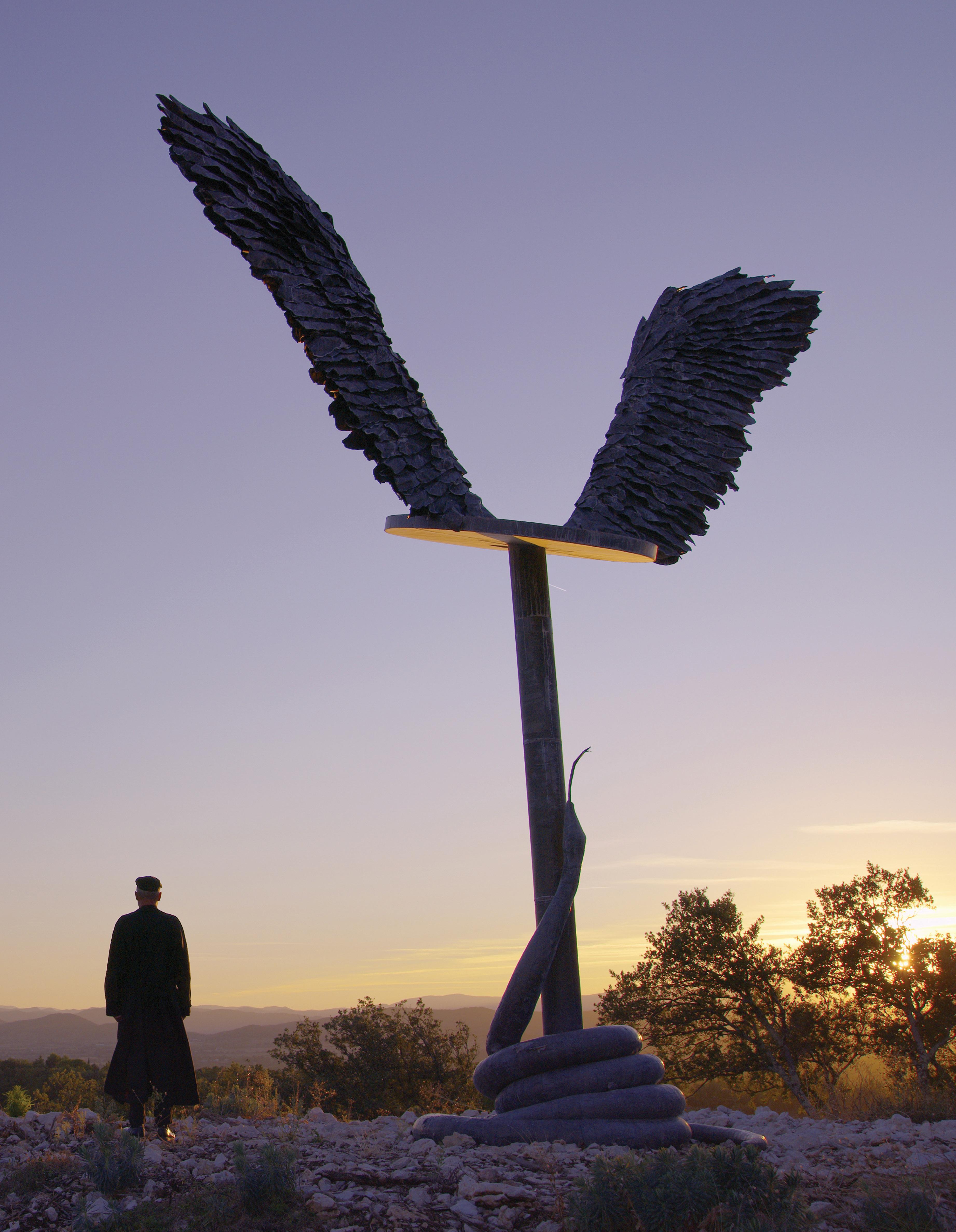
Film Still from Anselm, directed by Wim Wenders.
remains of them is incomplete, scattered across texts, references, and historical fragments.
Kiefer does not reconstruct their biographies.
He gives them form.
Large canvases line the damaged walls, their surfaces dense and heavily worked. From a distance, they suggest landscape. Up close, that coherence gives way to material. Paint sits alongside straw, ash, and lead. Gold appears throughout, sometimes luminous, sometimes partially buried within the surface, never functioning as decoration.
The scale alters the encounter. The eye moves across the surface in stages, registering density before image. The image shifts with distance, revealing nuanced texture up close and vast scale as one steps back.
Kiefer’s practice begins with material rather than image. Straw, ash, clay, and lead are embedded into the surface, each carrying its own physical and historical weight. These materials are unstable. They shift, darken, and oxidize. The work continues to change.
Fire is part of this process. The surfaces bear its effects. Areas are scorched, altered by heat in ways that cannot be reversed. The painting records what has been done to it, not as representation, but as evidence.
“History is not a linear process. It is something we carry with us,” Kiefer has said.
Born in 1945, in the final months of the Second World War, he belongs to a generation for whom history was neither distant nor resolved. His work does not depict that past. It engages with its persistence.
“Ruins are beginnings.”
Within the Sala delle Cariatidi, the phrase does not read as metaphor. The room itself stands as proof. Damage has not been removed. It remains visible.
Kiefer’s work operates within the same condition.
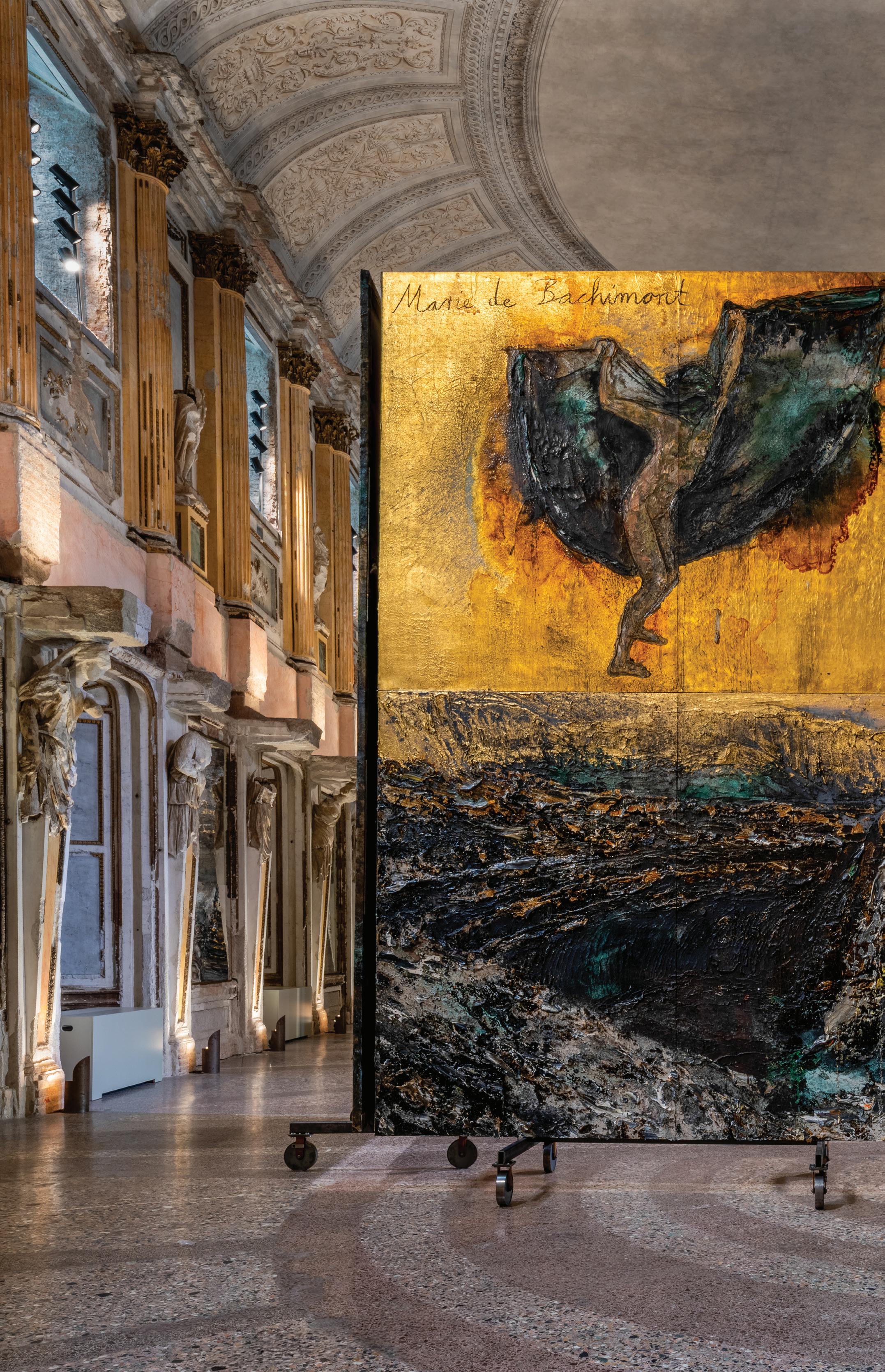
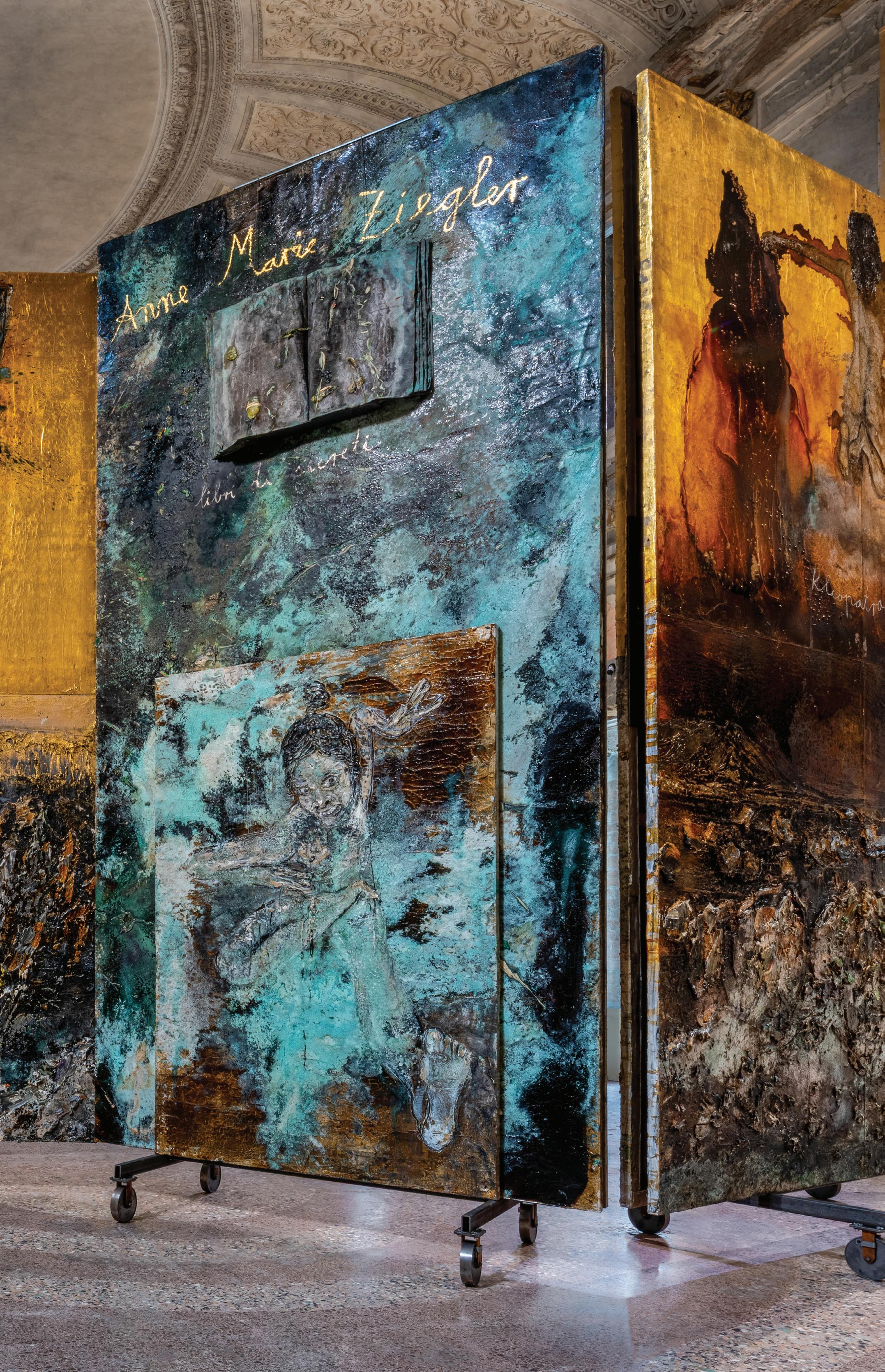
Gold, within this exhibition, carries a particular weight. It recalls an earlier visual language, the tradition of icon painting, where figures were set against gold grounds and removed from ordinary space. Here, that reference is present, but altered. The gold is embedded into a surface that is unstable, layered, and subject to change.
Alchemy provides the underlying structure.
At its most direct, alchemy was the attempt to transform ordinary material into gold. In Kiefer’s work, that process is neither symbolic nor resolved. Base materials are subjected to heat, pressure, and time. The surface records that transformation. Gold appears as part of that process, not as its conclusion.
Within this framework, the women of the exhibition take on a distinct presence. They are not presented as portraits. Their scale, their placement, and the density of the material surrounding them elevate them into something closer to icons, while the surface resists any idealization. They emerge through the process itself, shaped by layering, burning, and accumulation.
The result is a tension between permanence and change. The gold ground suggests stability, while the material surface introduces instability. What might once have signaled clarity now carries evidence of transformation.
Within the Sala delle Cariatidi, this tension becomes inseparable from the space. The damaged figures of the room and the figures within the paintings occupy the same field. Both carry visible traces of what has happened to them. Both remain altered.
In a moment when images circulate without physical origin, this insistence on material feels direct. Kiefer’s work cannot be separated from its making. It carries time within it, visibly.
Standing there, the question is no longer what the work represents.
It is how much of the past remains present.
Anslem Kiefer. Le Alchimiste. Installation view. Ph Ela Bialkowska, OKNO Studio
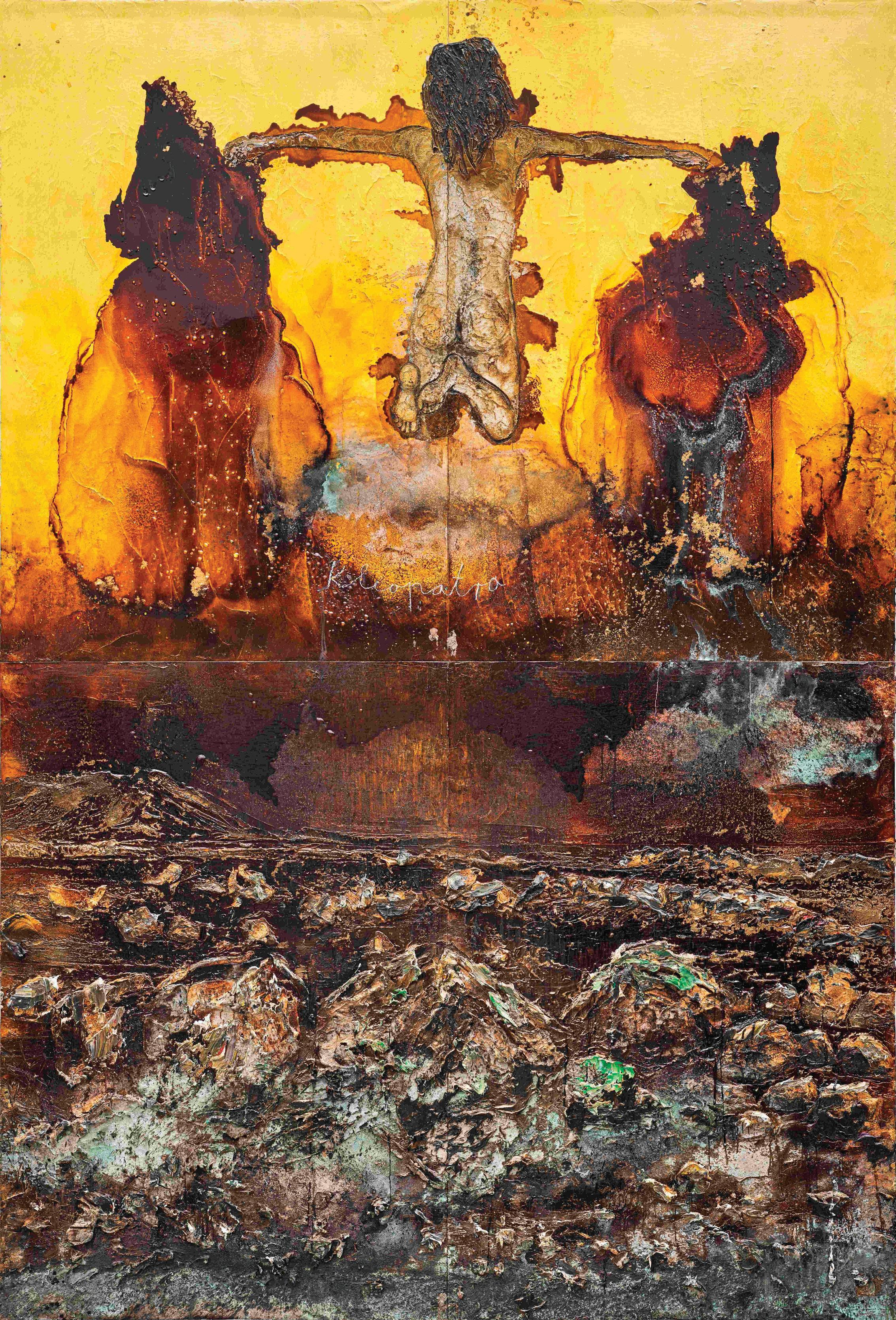
Anselm Kiefer, Kleopatra, 2025. Emulsion, oil, acrylic, shellac, gold leaf, sediment of electrolysis, and chalk on canvas. 220 1⁄2× 149 5⁄ 8in.© Anselm Kiefer
Photo: Nina Slavcheva
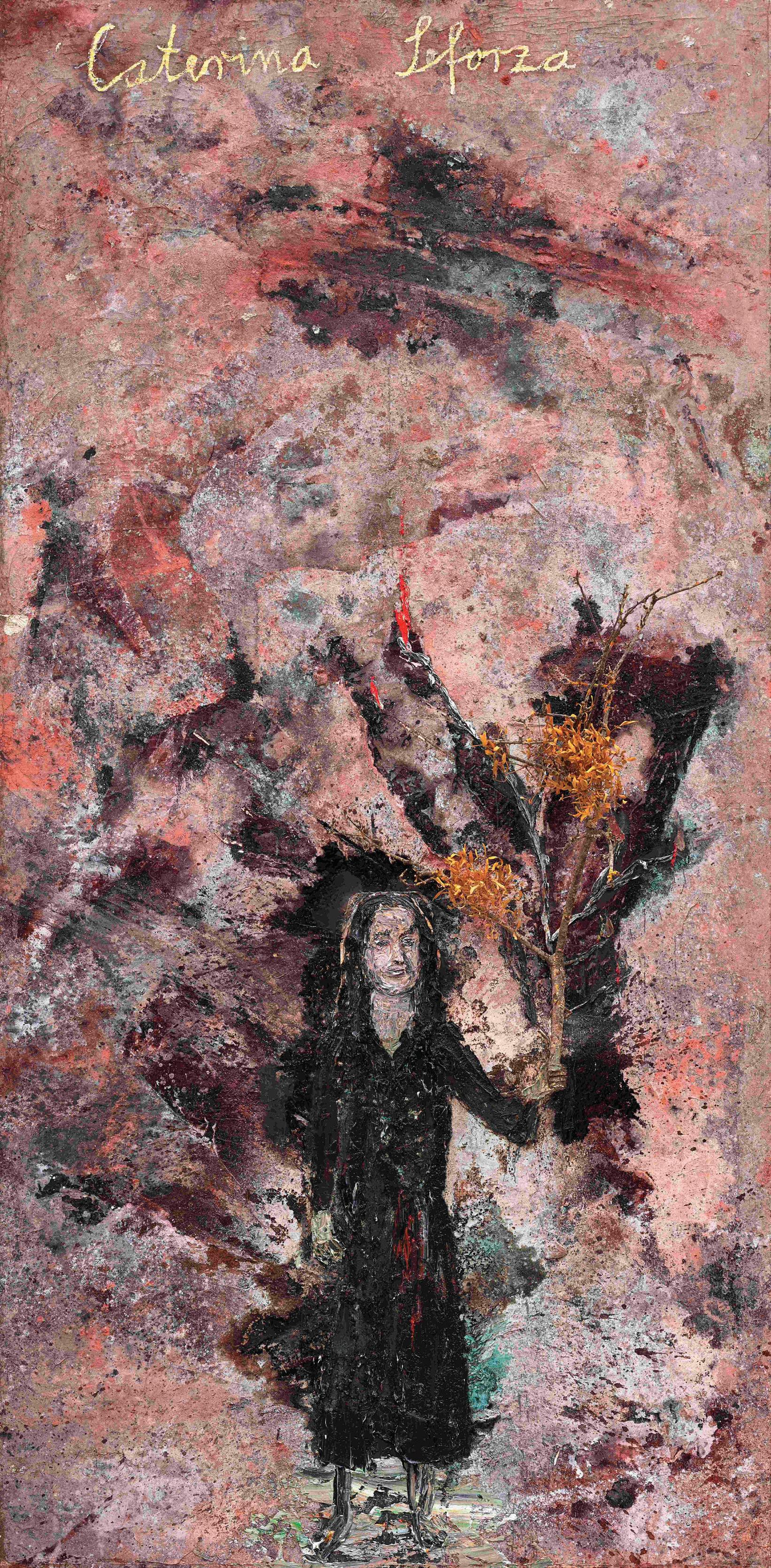
Anselm Kiefer, Caterina Sforza, 2025. Emulsion, oil, acrylic, shellac, gold leaf, sediment electrolysis, dried mistletoe,straw, wire, clay, and collage of canvas on canvas. 224 3⁄8× 110 1⁄4in.© Anselm Kiefer
Photo: Nina Slavcheva
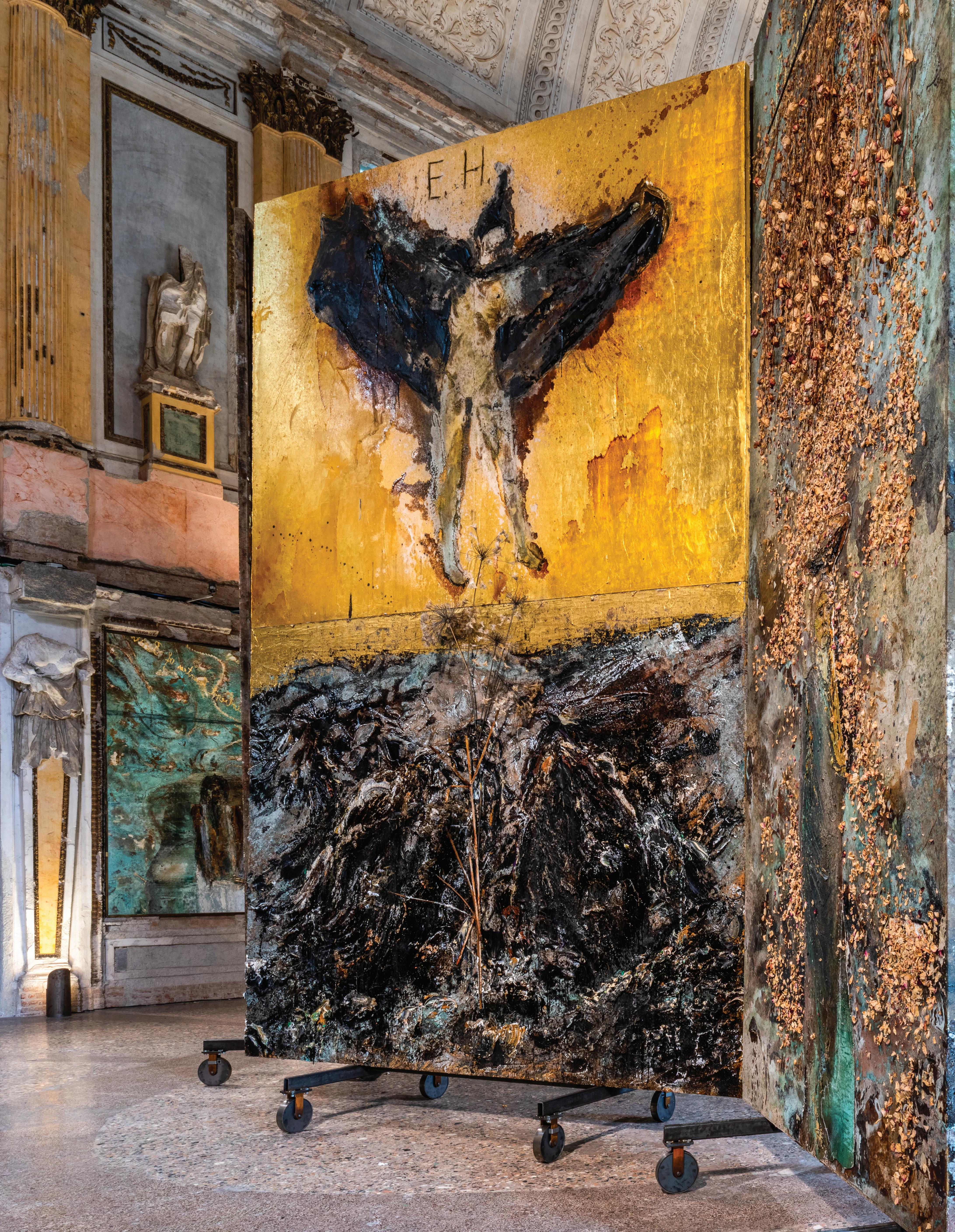
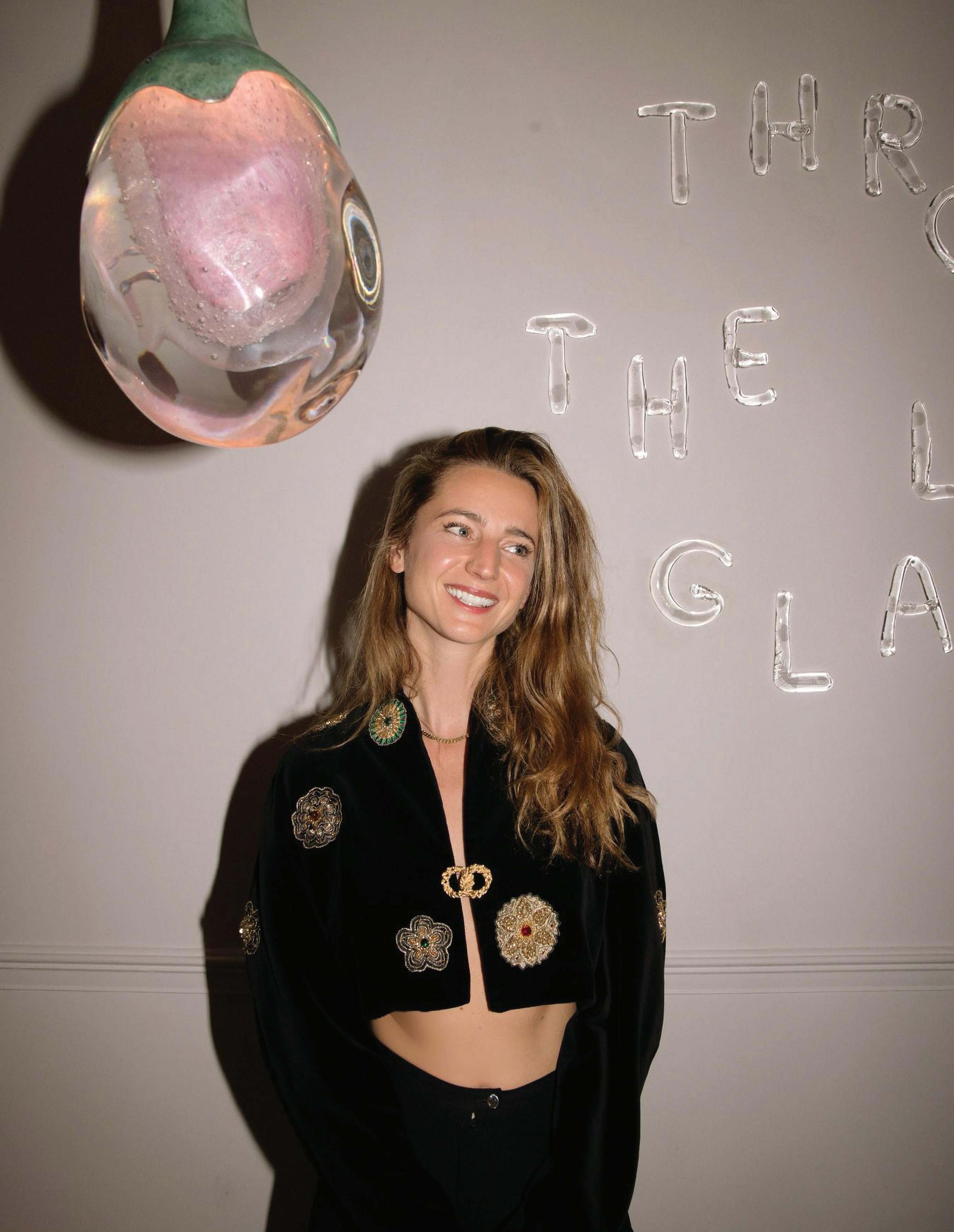
Irene Cattaneo. through the looking glass. thirtyeighteast.
Irene Cattaneo
From the intense heat of the Murano furnaces to the quiet courtyards of Venice, the sculptor translates fleeting thoughts into the lasting weight of bronze, stone, and glass.
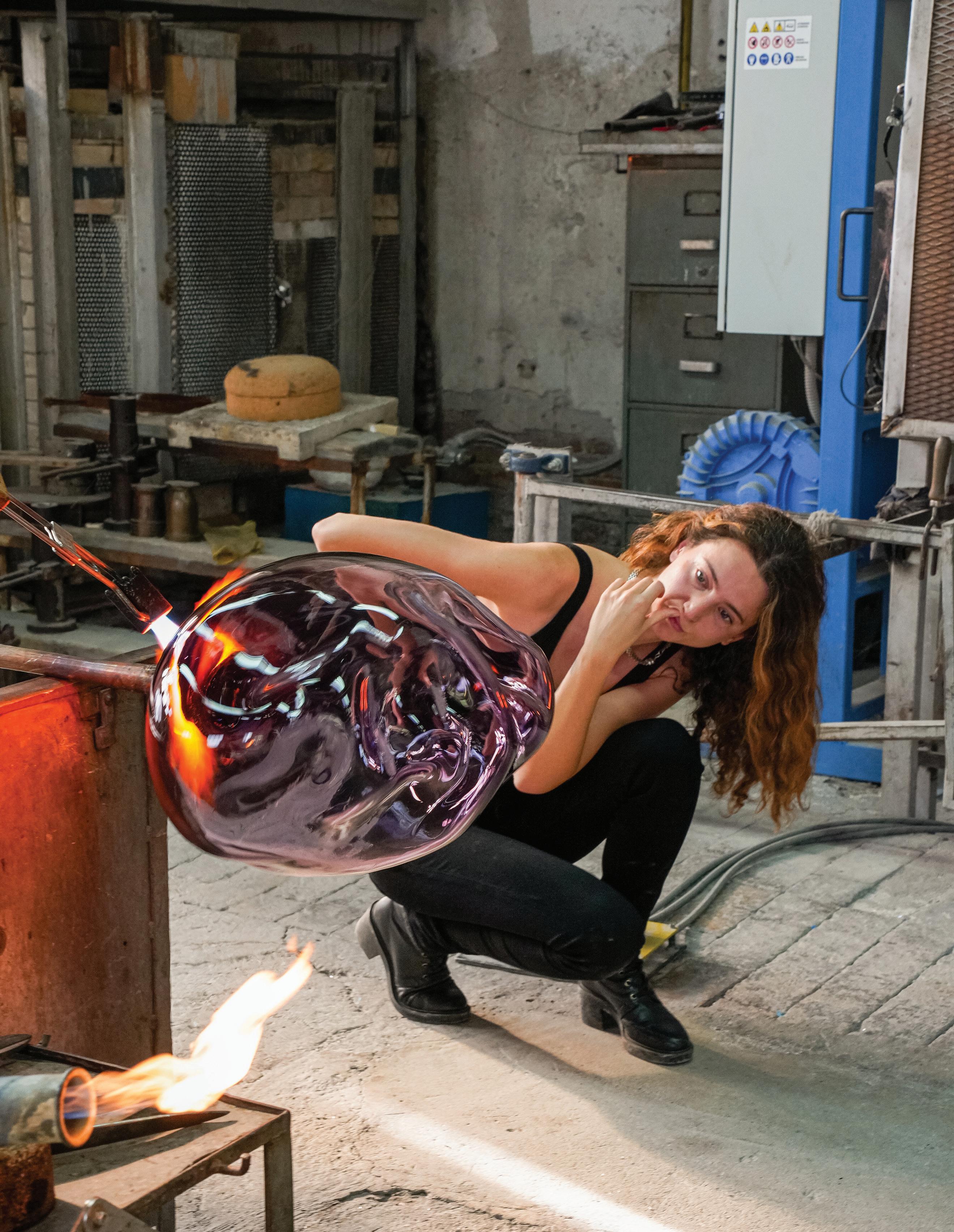
the moment Irene Cattaneo enters the furnace, the contemporary world recedes, replaced by an ancient, unforgiving rhythm. In the sensory overload of Murano, where the air hangs thick with sulfur, the roar of the gas burners is deafening, and molten glass glows with a blinding, incandescent intensity, the German-Italian sculptor moves with a precise, intuitive grace. “When I am working in the furnace, glass feels completely alive,” she observes, capturing the physical intensity of a medium caught in continuous mutation. “It demands immediate, direct intuition because it is constantly in flux.” For Cattaneo, who permanently relocated her practice to Venice in 2021 to immerse herself in the unparalleled expertise of local artisans, glassmaking is not merely a technical execution. It is a profound phenomenological dialogue, an act of translation where transient thoughts, linguistic ironies, and fleeting human emotions are captured and frozen within solid-state matter.
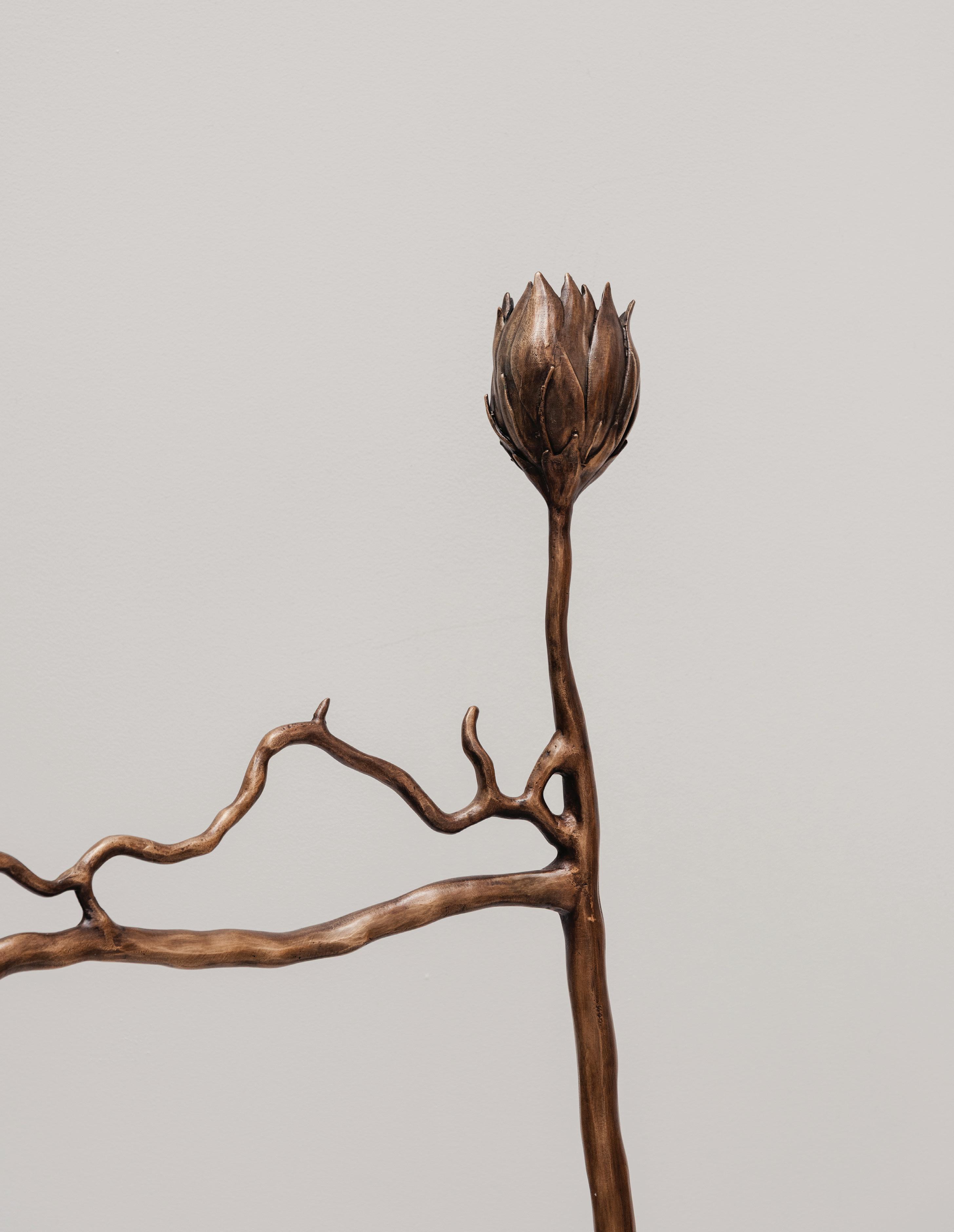
This multidisciplinary fluidness recalls a Renaissance approach to the arts, an era when the artificial boundaries between fine sculpture, functional design, architecture, and wearable art did not exist. Cattaneo rejects the narrow specialization of the contemporary art world, choosing instead to bridge diverse mediums with the comprehensive ambition of a classical master. Her practice effortlessly navigates the delicate, translucent properties of hand-blown glass before pivoting to the heavy, primordial logic of stone carving and metal casting. Working in close, hands-on collaboration with master blowers and stone carvers, she masterfully manipulates pink Egyptian marble, red travertine, and cast bronze. In her hands, these materials cease to be passive tools of construction; they are transformed into essential conceptual agents. By pairing the weight and permanence of bronze and stone with the transparent, fragile vulnerabilities of glass, her broader body of work constructs a poetic equilibrium between the visible and the invisible, exploring the delicate boundary
To see a World in a Grain of Sand And a Heaven in a Wild Flower, Hold Infinity in the palm of your hand And Eternity in an hour.
— William Blake, Auguries of Innocence
where structural strength and structural fracture meet.
“Her visual signature is defined by crisp, decisive silhouettes and an austere graphic concision, pairing the weight of bronze and stone with the transparent, fragile vulnerabilities of hand-blown glass.”
This convergence of diverse mediums and poetic inspiration manifests most vividly when her work is viewed in close proximity. Just as William Blake famously wrote of holding infinity within a singular moment, Cattaneo’s unique material language allows her to collapse vast conceptual universes into microscopic physical details.
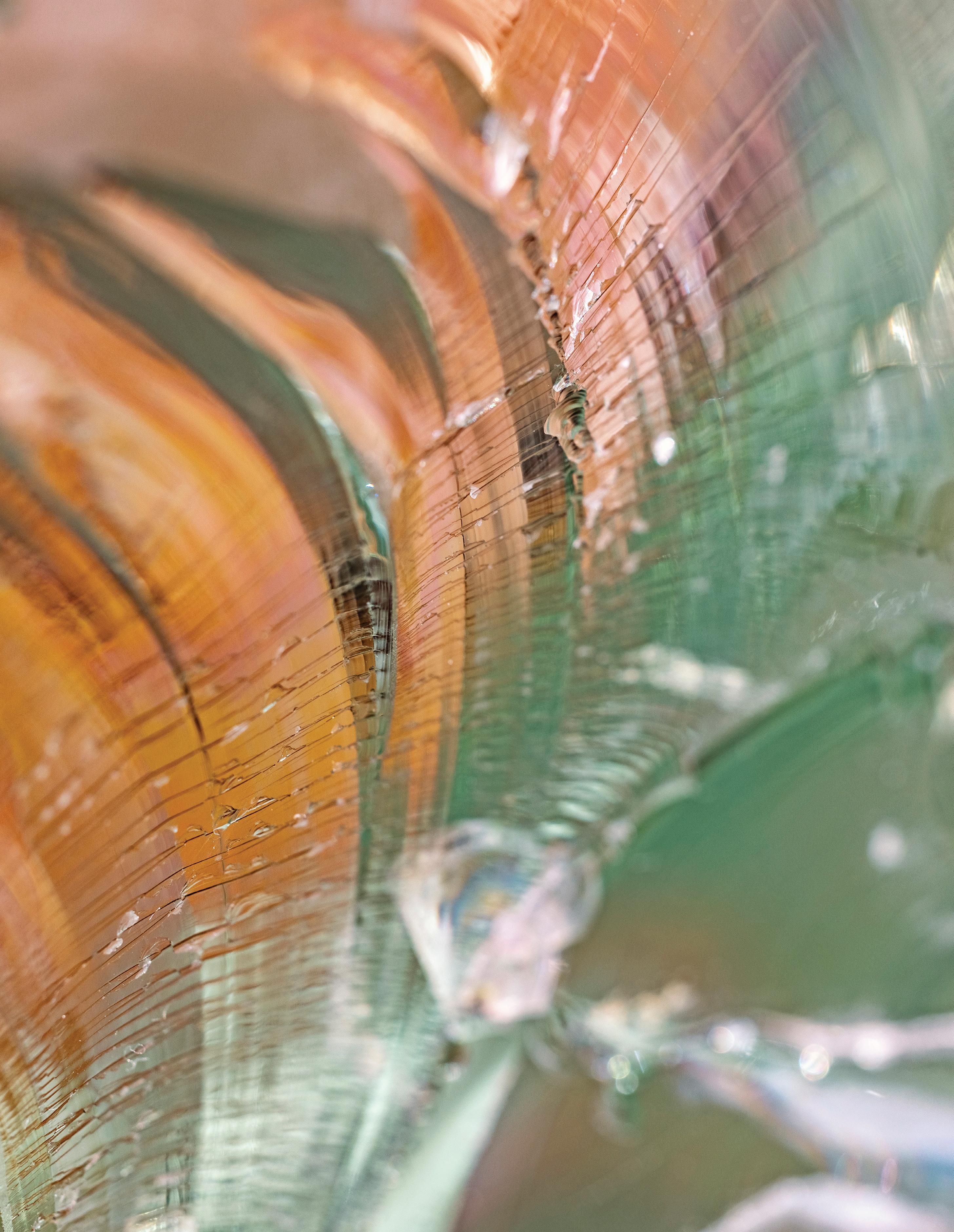
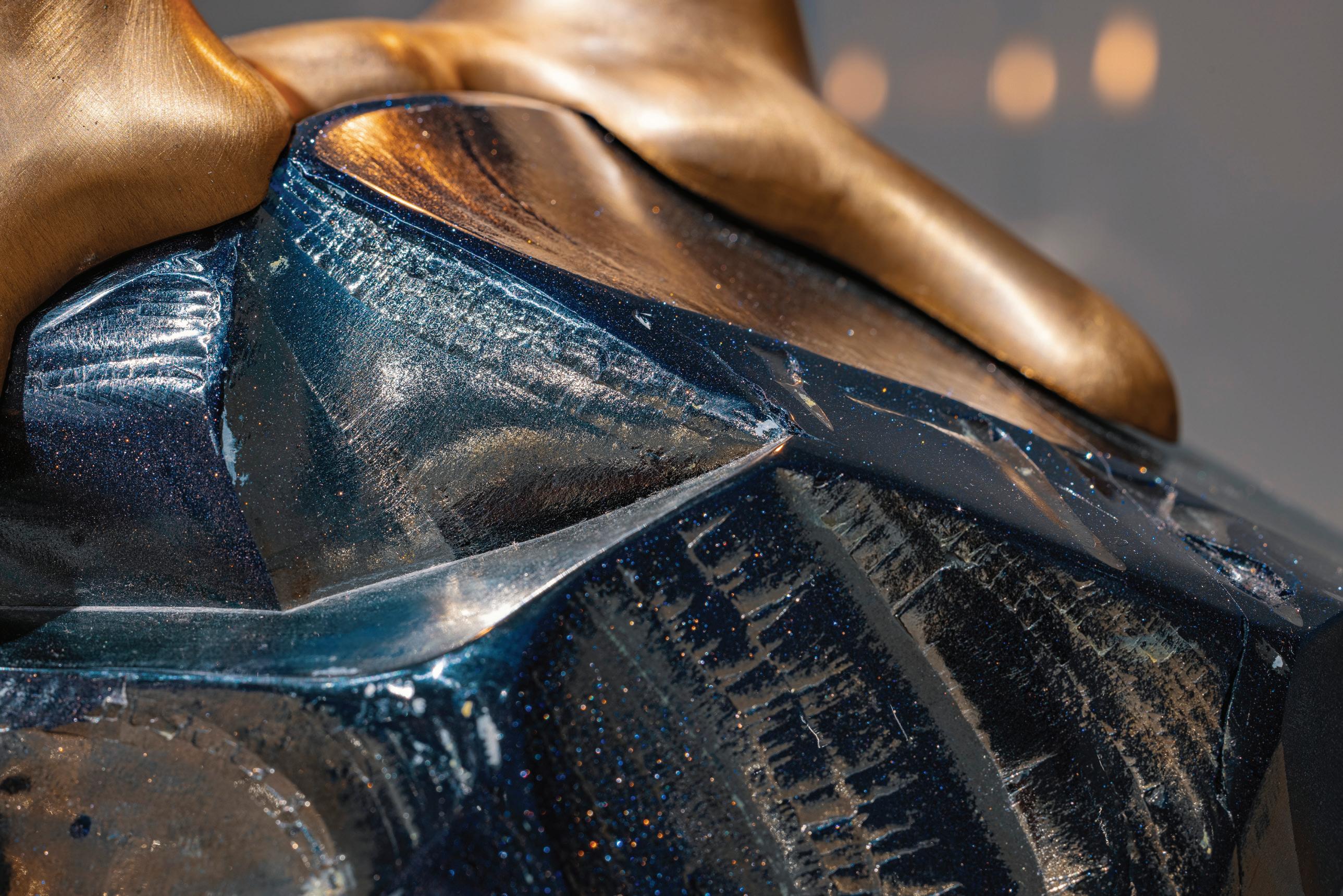
A close study of her surfaces reveals that each crystalline fracture, trapped air bubble, and swirling metallic vein functions as its own self-contained world. This capacity to turn a detailed fragment into a grand macrocosmic statement is made possible by her refusal to treat text and material as separate entities. Much like Petrarch, who treated vernacular words as precise, architectural building blocks for human emotion, Cattaneo treats language as
Left: The secret garden, Venice Biennale 2026, in collaboration with Galerie Gastou and Studio Nadja Romain.
Below Top to Bottom: The artist in her immersive installation.
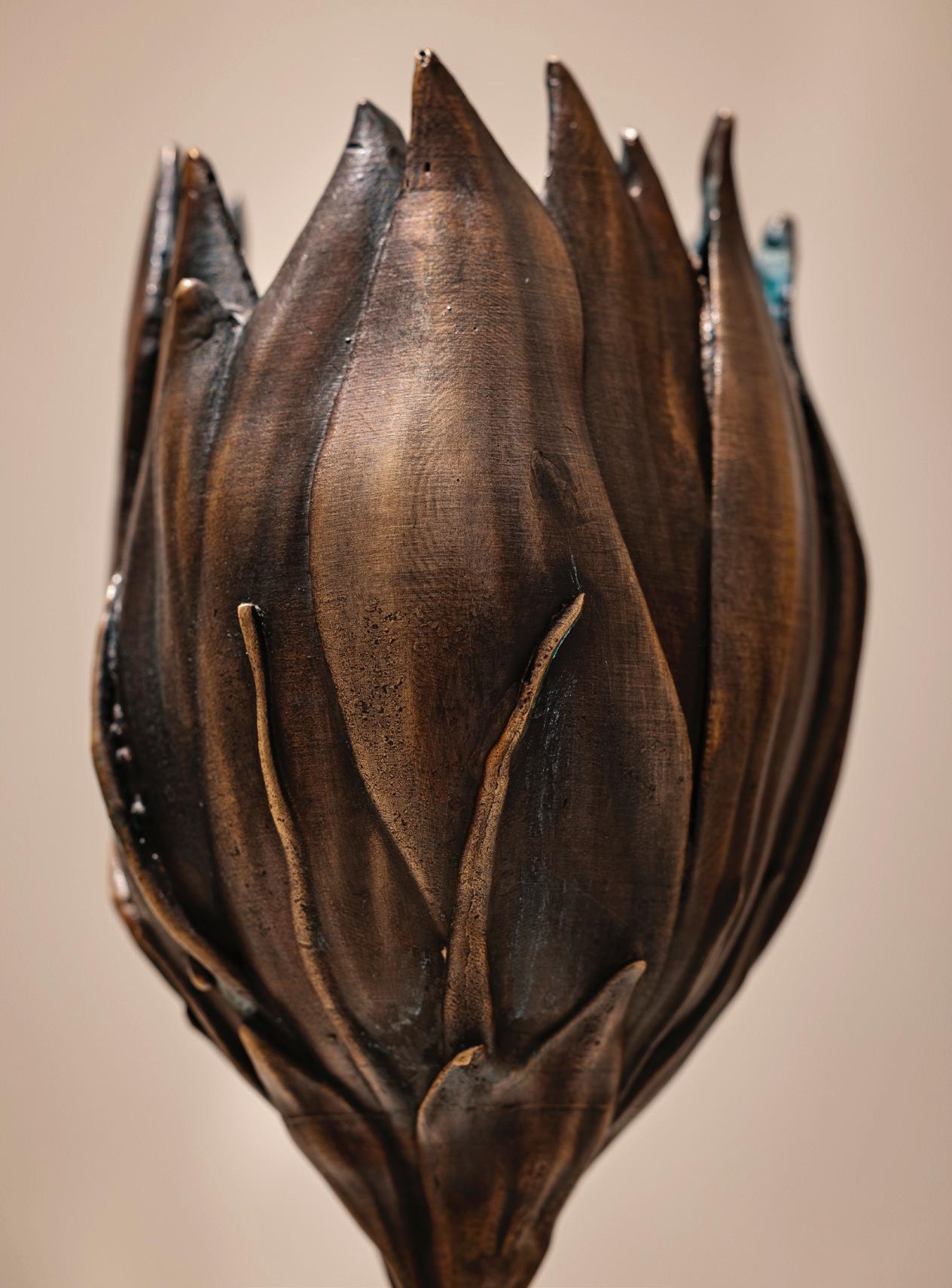
Detai, Queen of the night in casted bronze.
a physical substance. Her conceptual frameworks are consistently anchored in literary prose, whether drawing directly from Charles Baudelaire’s poem Les Bienfaits de la Lune for her exhibition at Paris’s Galerie Gastou, or staging immersive environments like Meteomorphosis with Lo Studio Nadja Romain. This is brilliantly illustrated in her signature Clouds and Coulds series, where she relies on the literal, physical anagram of the words to carve out a space where the imaginative and the functional seamlessly collide.
“Words are never an afterthought in her practice; they actively dictate the formal architecture of her objects, carving out a space where the imaginative and the functional seamlessly collide.”
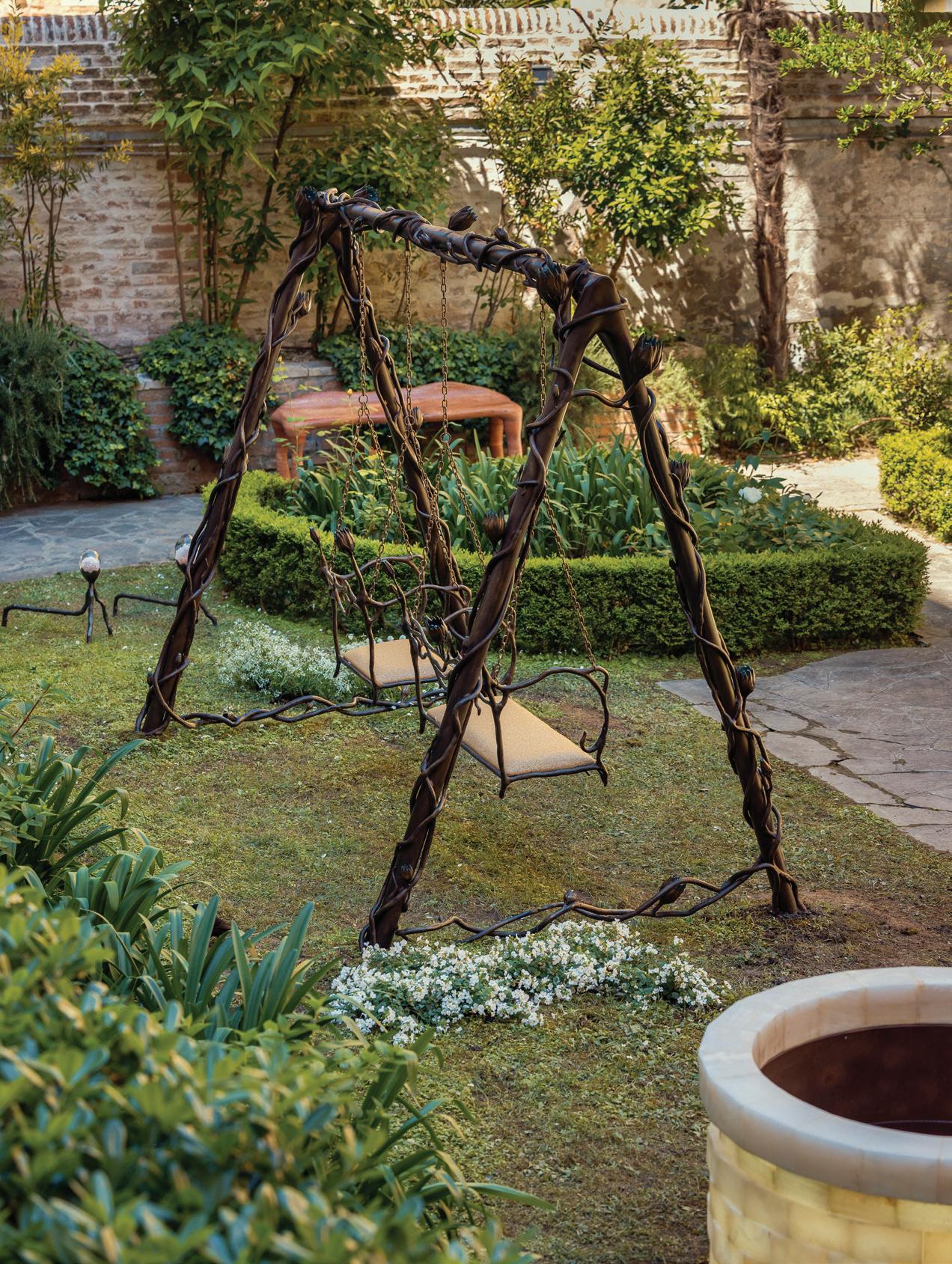
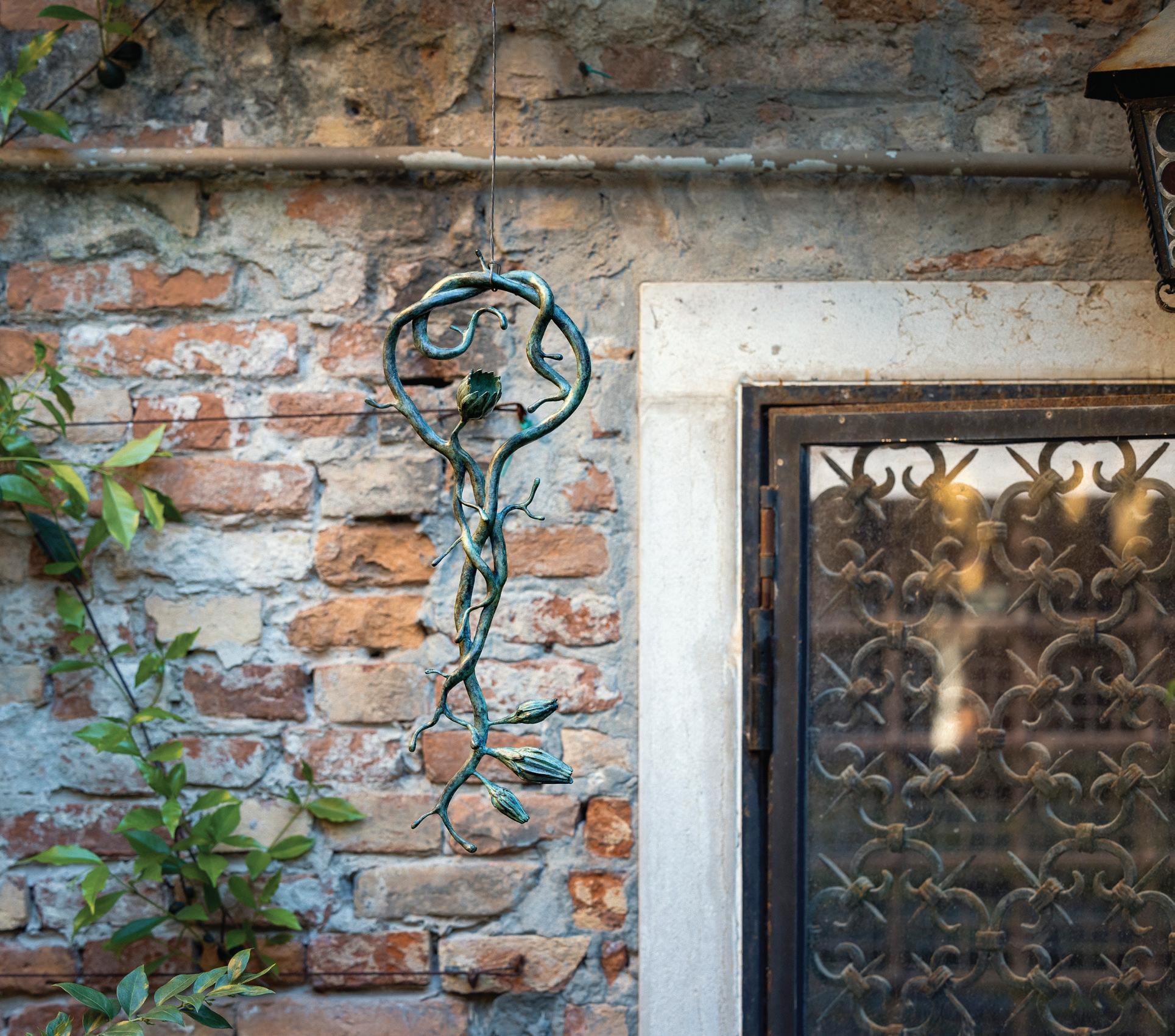
Her current site-specific presentation for the 61st Venice Biennale, Il Giardino Segreto, marks a profound formal culmination of these lifelong artistic inquiries. Nestled within a secluded Venetian enclosure, the installation subverts the standard, clinical conventions of the pristine whitecube gallery, operating instead as an alternative hortus conclusus where her
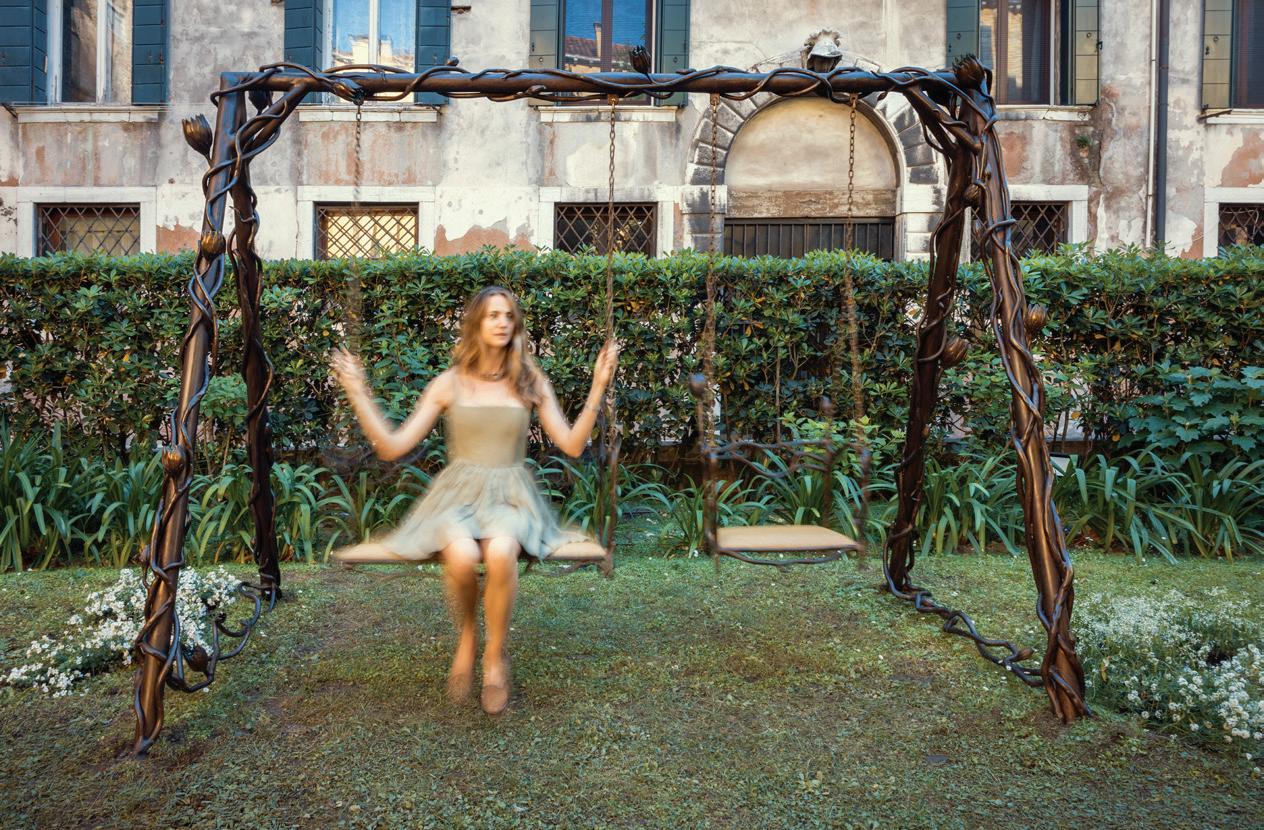
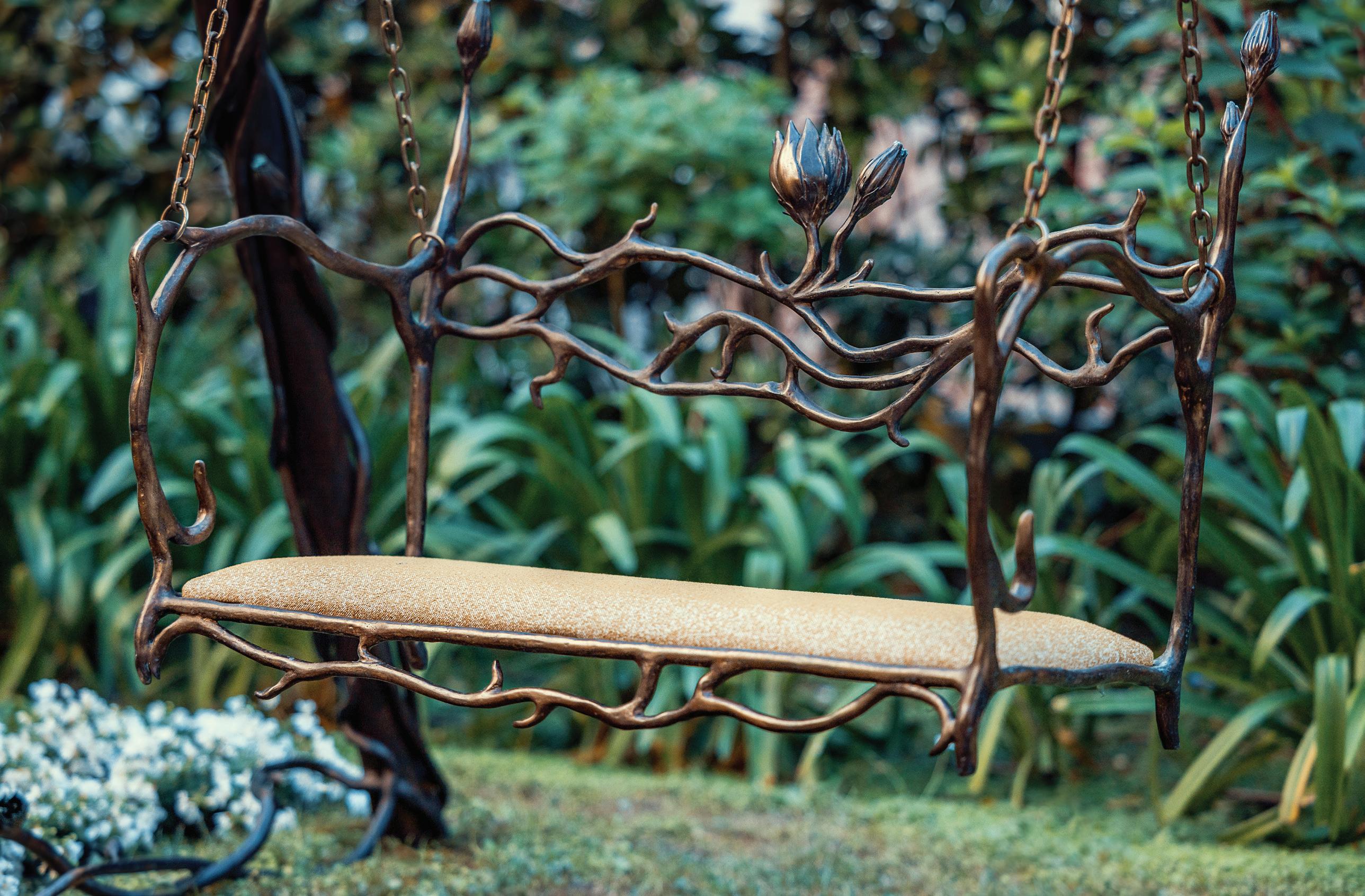
Effie Briest swing in casted bronze.
Les Bienfaits de La Lune, Galerie Gastou.
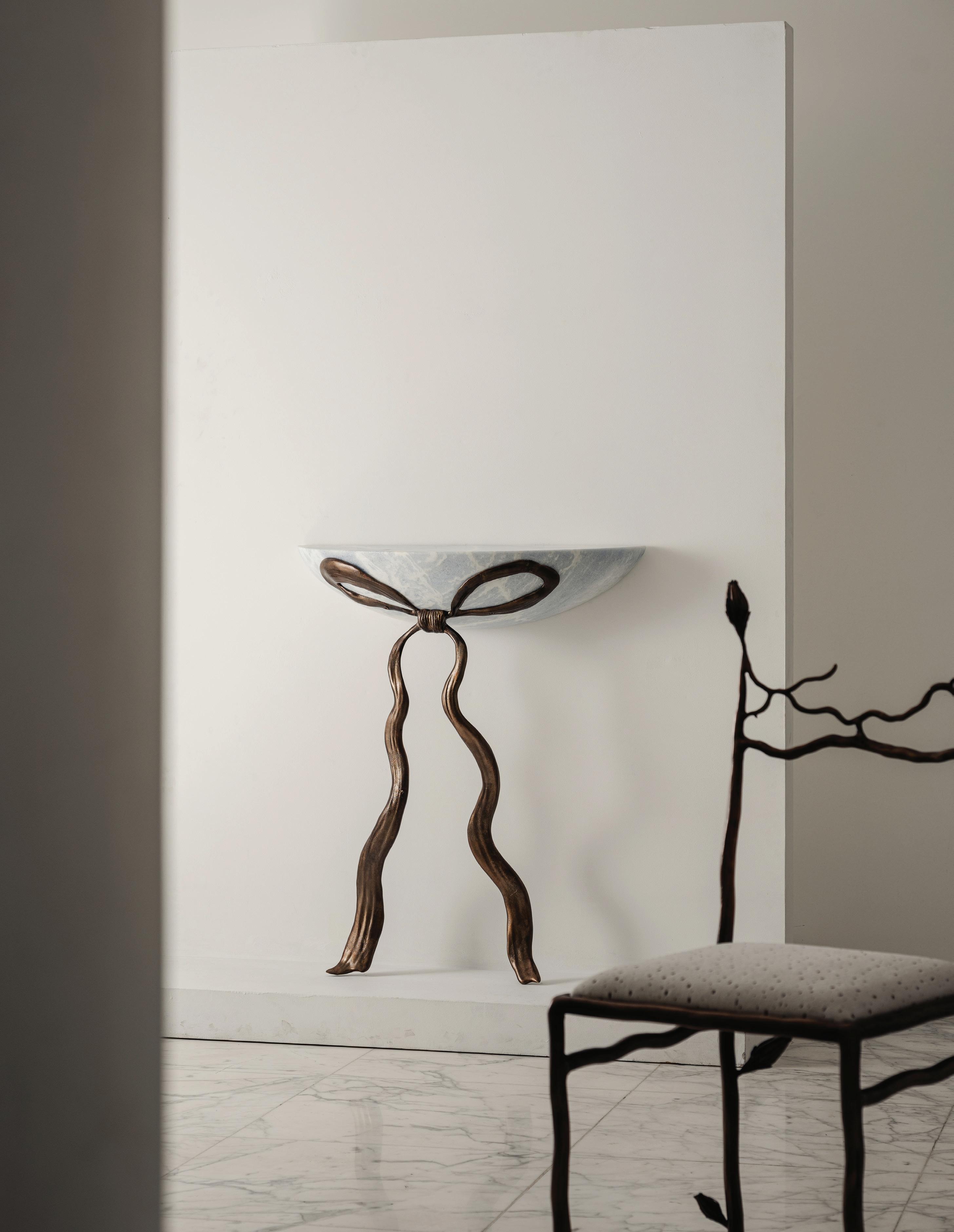
“Les bienfaits de la lune“, installation shot at Galerie Gastou Paris.
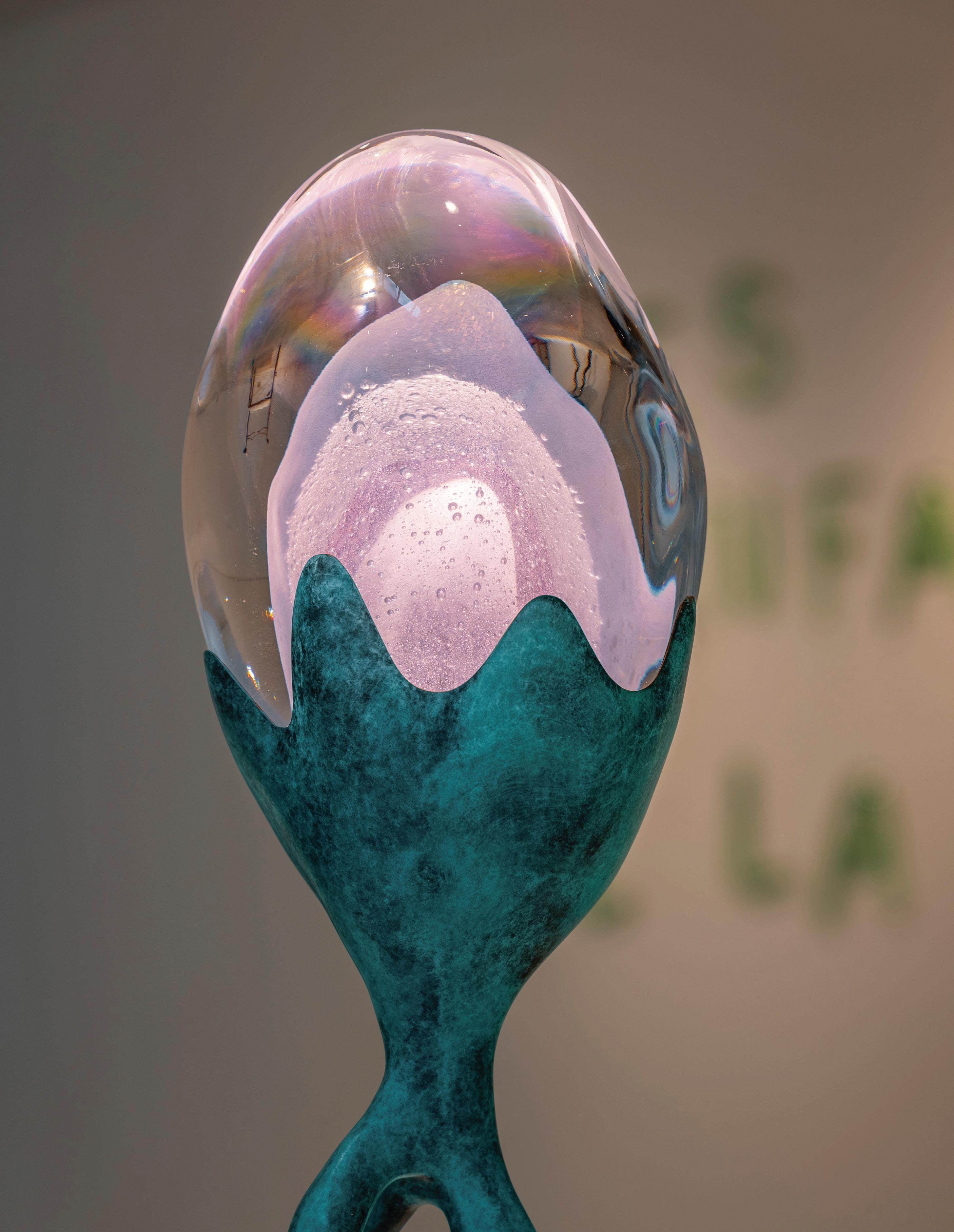
Monstrous Flower illuminating sculpture in Murano Glass.
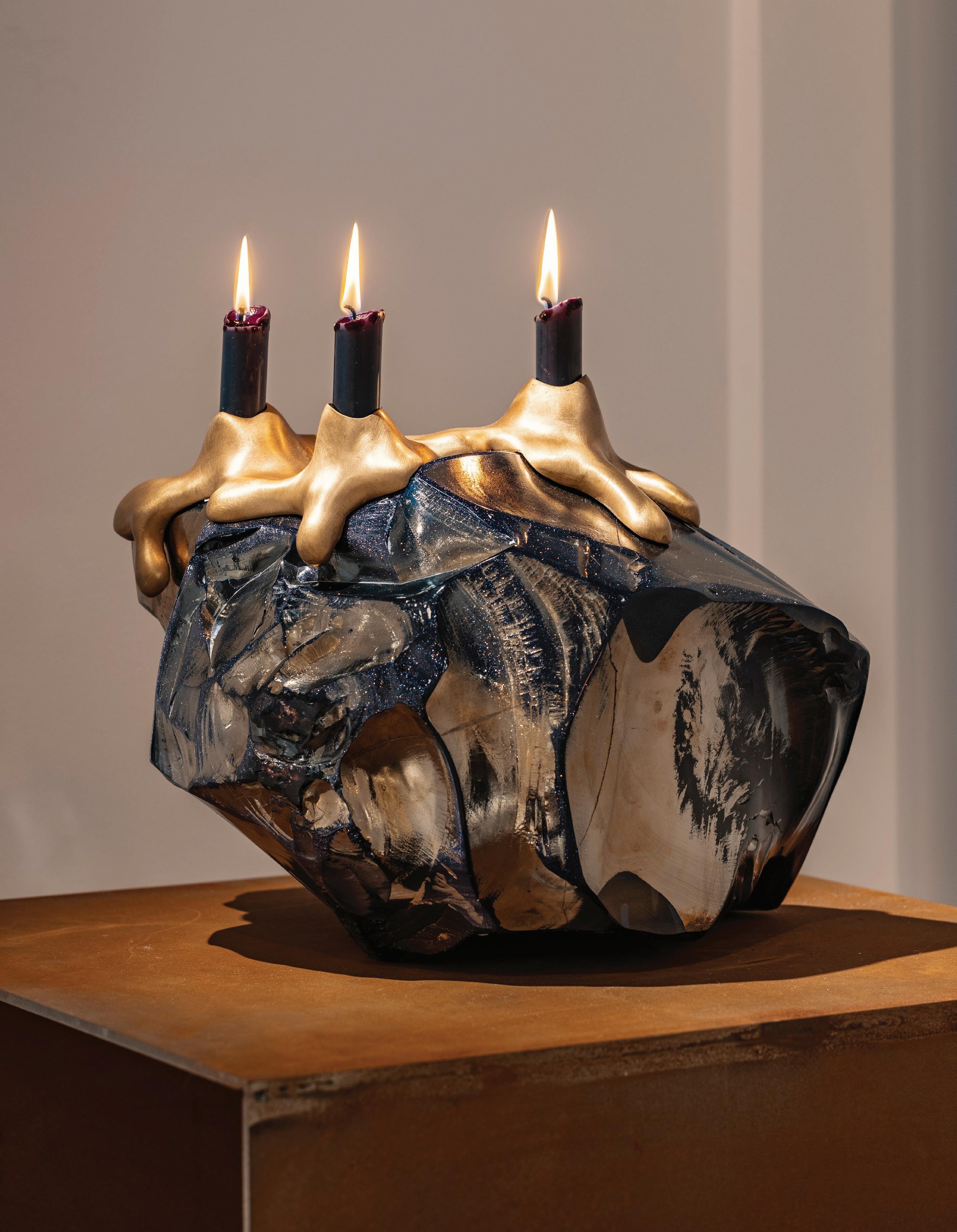
Aventurine Murano glass rocks and casted bronze, Galerie Gastou.
heavy mediums interact directly with the damp atmosphere, shifting light, and unpredictable rhythms of a living ecosystem. The conceptual architecture of the space is heavily influenced by the physics of ephemeral nature, drawing inspiration from rare, vulnerable flora like the Queen of the Night, which blooms just once under the cover of darkness. By utilizing advanced 3D scanning and digital wireframes to capture these fleeting botanical movements, and subsequently casting
them into bronze and glass, Cattaneo permanently anchors a transient natural phenomenon into structural form. This organic vitality is further enhanced by her recent explorations into kinetic technology, allowing the heavy elements of the installation to subtly respond to the environment around them.
The emotional marrow of this secret garden relies on a sophisticated use of linguistic sarcasm to shatter traditional artistic reverence, using text as a con-
frontational tool for self-reflection. This is brilliantly demonstrated in the subterranean depths of the solid onyx monument WELL, WELL, WELL, where illuminated text disrupts the dark void of the water, operating as a clever triple entendre that forces the viewer into an immediate state of introspection. This heavy, contemplative gravity is directly balanced by her Fireflies andirons, pieces crafted from cast bronze and sommerso red imbued glass that collapse the physical insect and the childhood phrase
“time flies” into a poignant meditation on the slippery, unstable nature of perception. By embedding deeply personal, familial recollections alongside nods to Theodor Fontane’s literature, Cattaneo asks the viewer to bypass distant intellectual interpretation, offering instead an exquisite visual narrative suspended between the absolute certainty of permanence and the infinite thrill of change.
Aventurine Murano glass rocks and casted bronze, Galerie Gastou.
Geese In the Machine
A Young NYC Band Takes The Stage
“You know something is happening here, but you don’t know what it is... do you, Mr. Jones?”
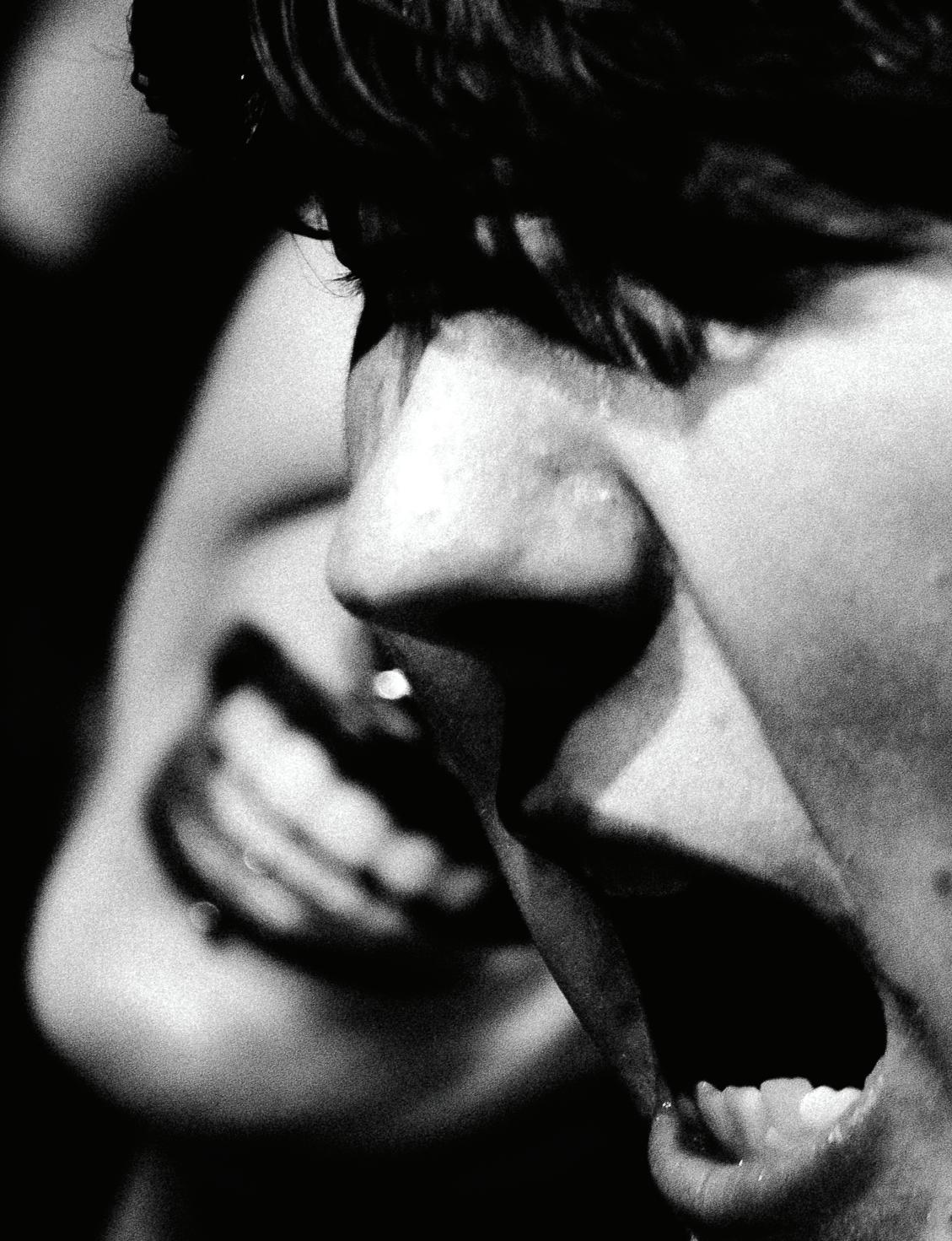
bob dylan’s Bob Dylan’s immortal sneer from “Ballad of a Thin Man” has never felt more relevant than it does in the mid-2020s, a decade defined by what critic W. David Marx calls a “crisis of valuation.” Yet, for the uninitiated walking into a Geese show in 2026, the confusion is quickly replaced by a visceral, bone-shaking
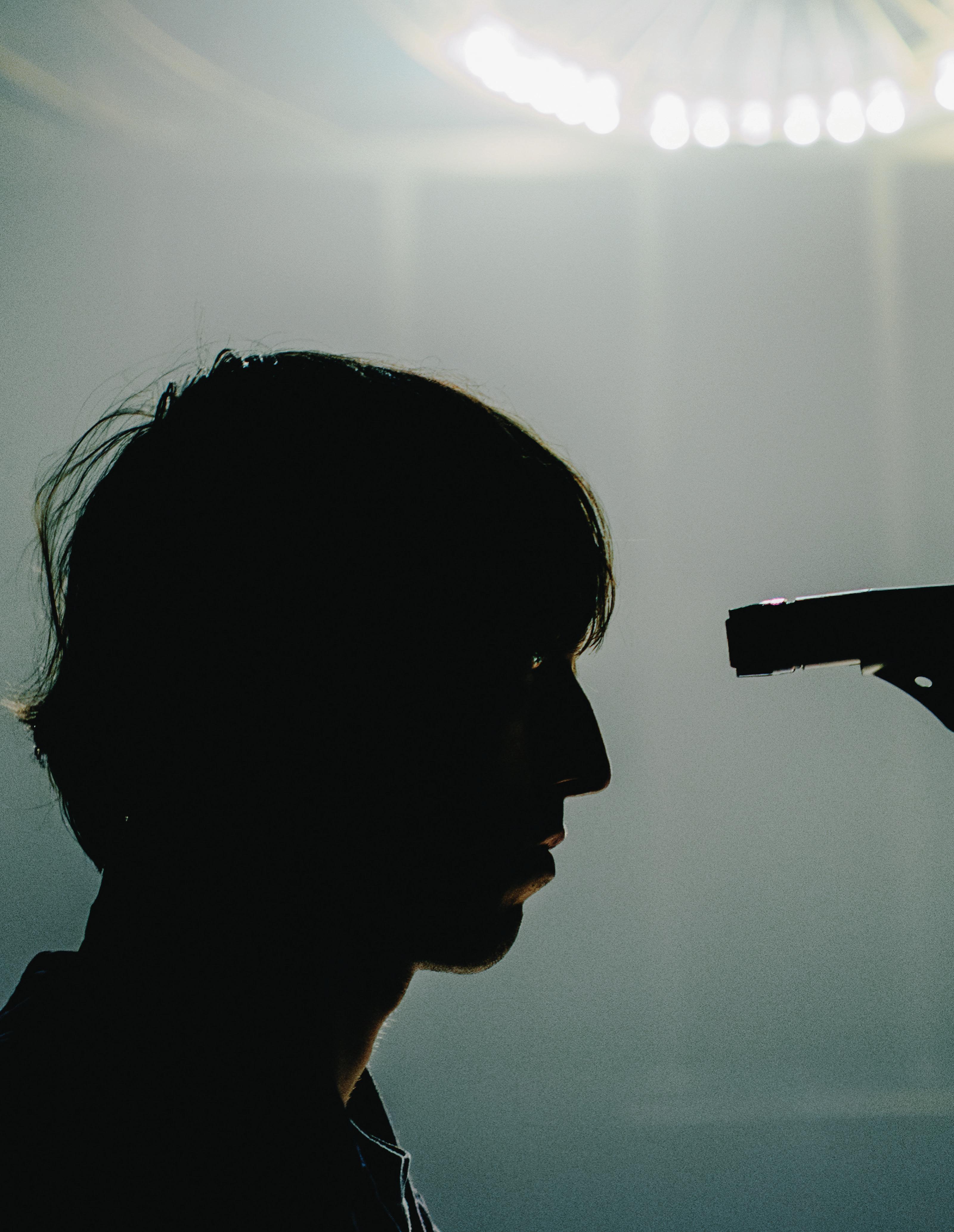
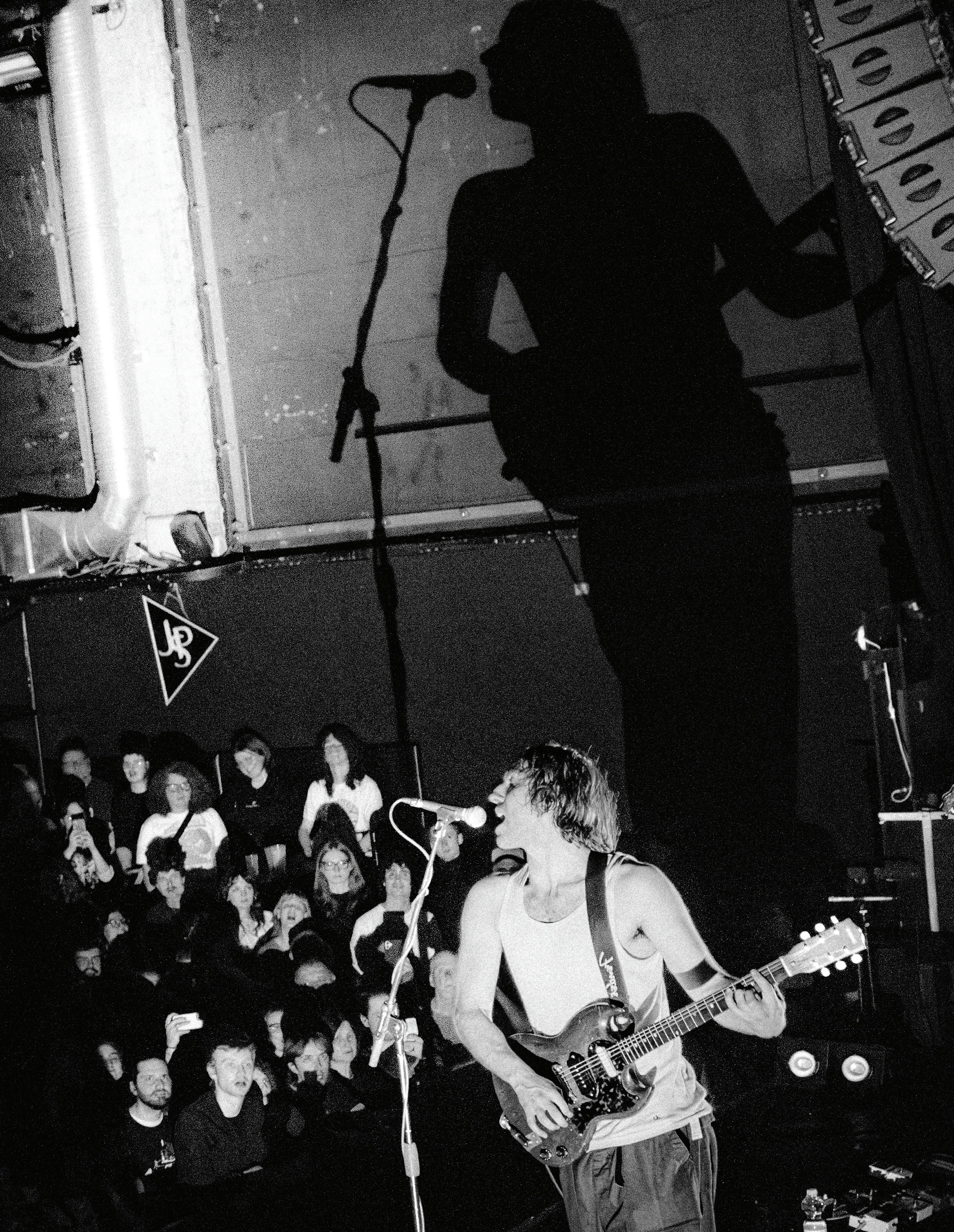
certainty. A backlit stage reveals five figures shrouded in fog; at the center, a lanky, kinetic lead singer named Cameron Winter croons surrealist lyrics to a packed room of devoted fans. These audiences don’t just listen; they sing back every chorus in a state of unbridled euphoria, a religious fervor that feels increasingly rare in our fractured cultural universe.
How did a group of Brooklyn kids penetrate the post-monoculture fragmentation to become the year’s most buzzed-about band? From a career-defining turn on Saturday Night Live,
Brit Award for International Band of the year, to a coterie of rock legends offering figurative flowers, Geese has achieved the impossible: they have become part of the vernacular without smoothing down their jagged edges.
At the heart of this phenomenon is Cameron Winter. At just 23, Winter recently joined the ranks of Bob Dylan and Joan Baez as one of the youngest performers to ever hold a solo show at Carnegie Hall. The hallowed halls, usually reserved for the high priests of the establishment, offered the kind of rapt, reverential attention typically
afforded to legends at the end of their careers, not the beginning.
Winter’s lyrical sensibility is a primary driver of this gravity. His writing often mirrors the stark, observational beauty of a William Carlos Williams poem; finding the profound in the mundane—before pivoting into the avant-garde grit of the Velvet Underground. He possesses a rare ability to capture the specific, drifting anxiety of the current zeitgeist. When he bellows, “I have no idea where I am going... Here I come,” he isn’t just singing a hook; he is articulating the rallying cry of a gen-
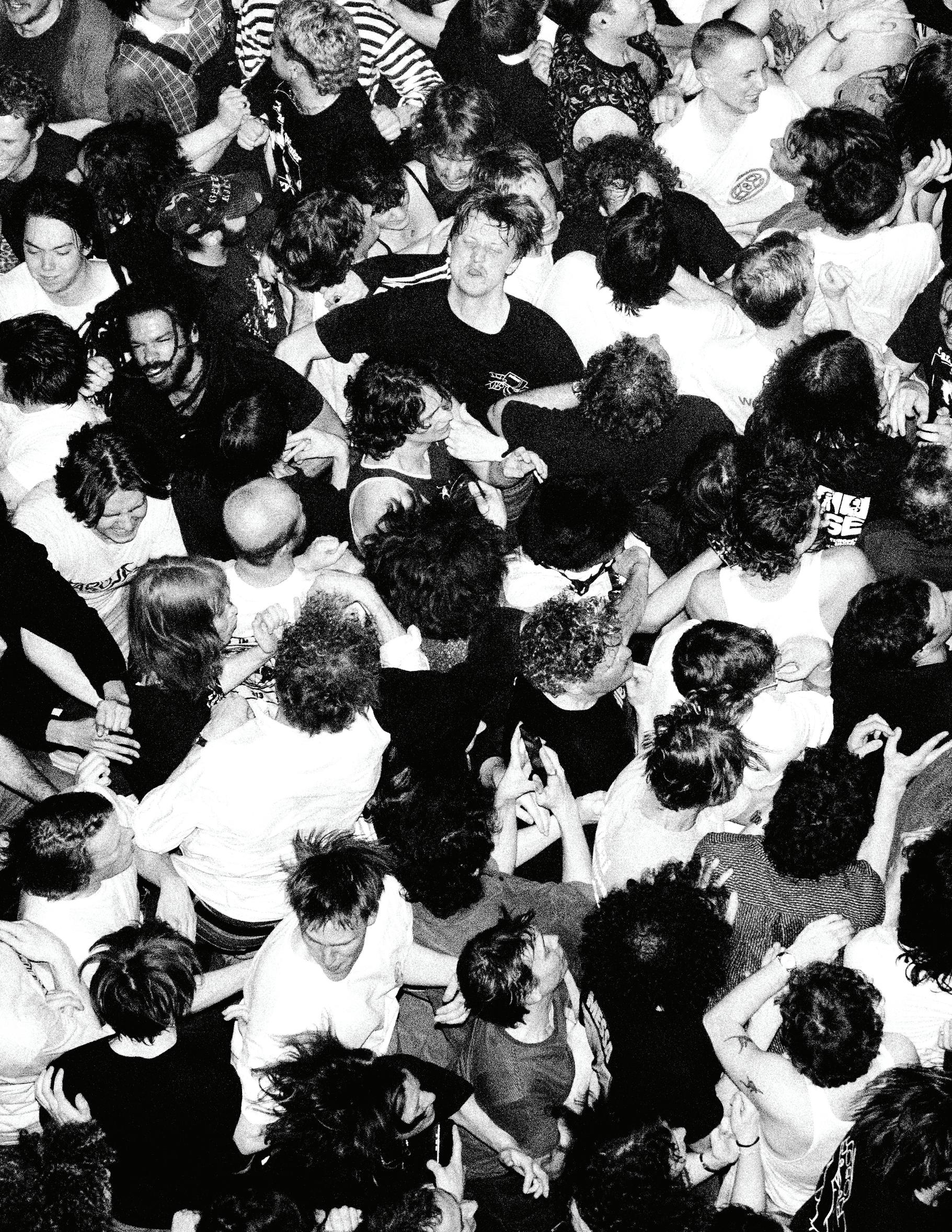
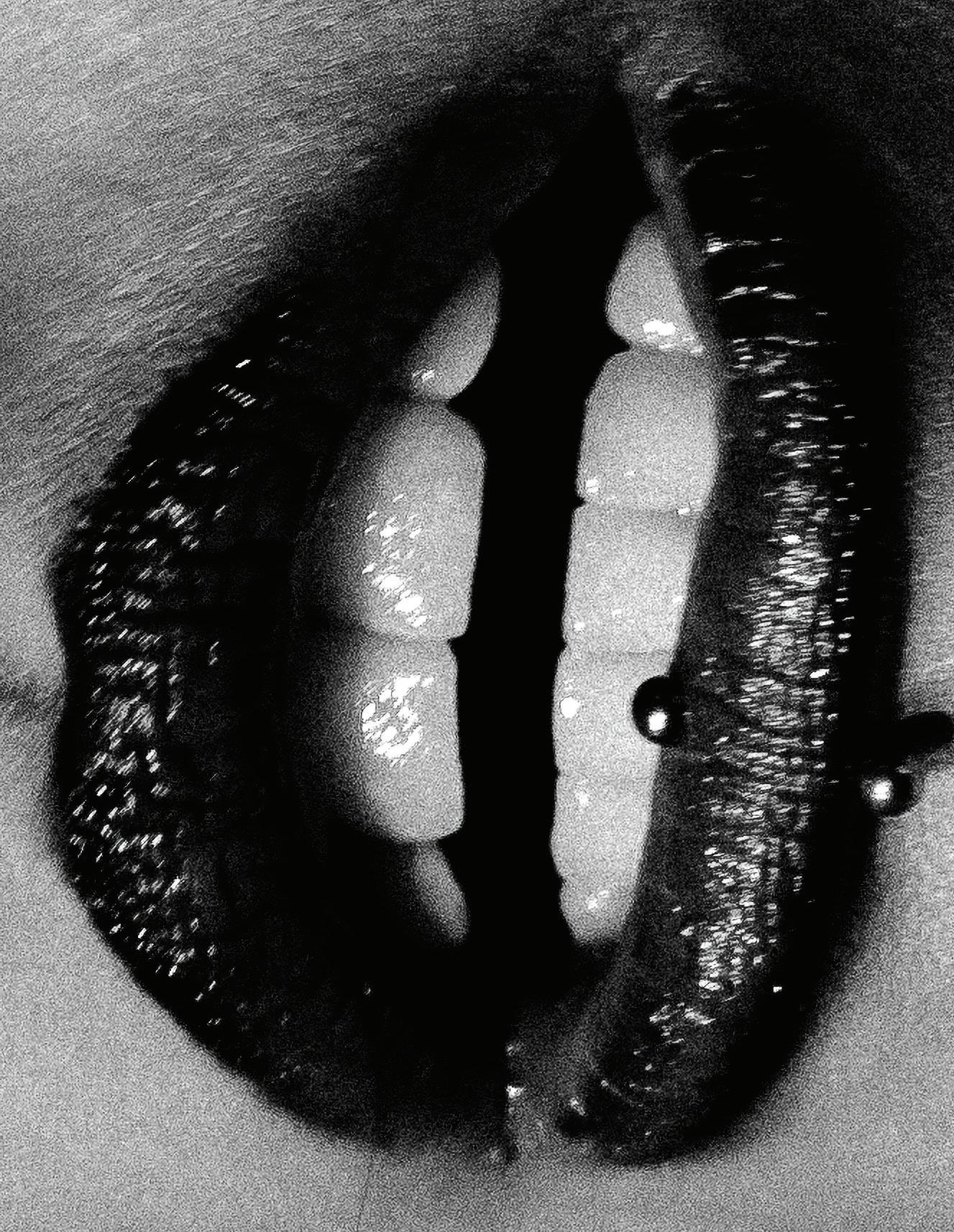
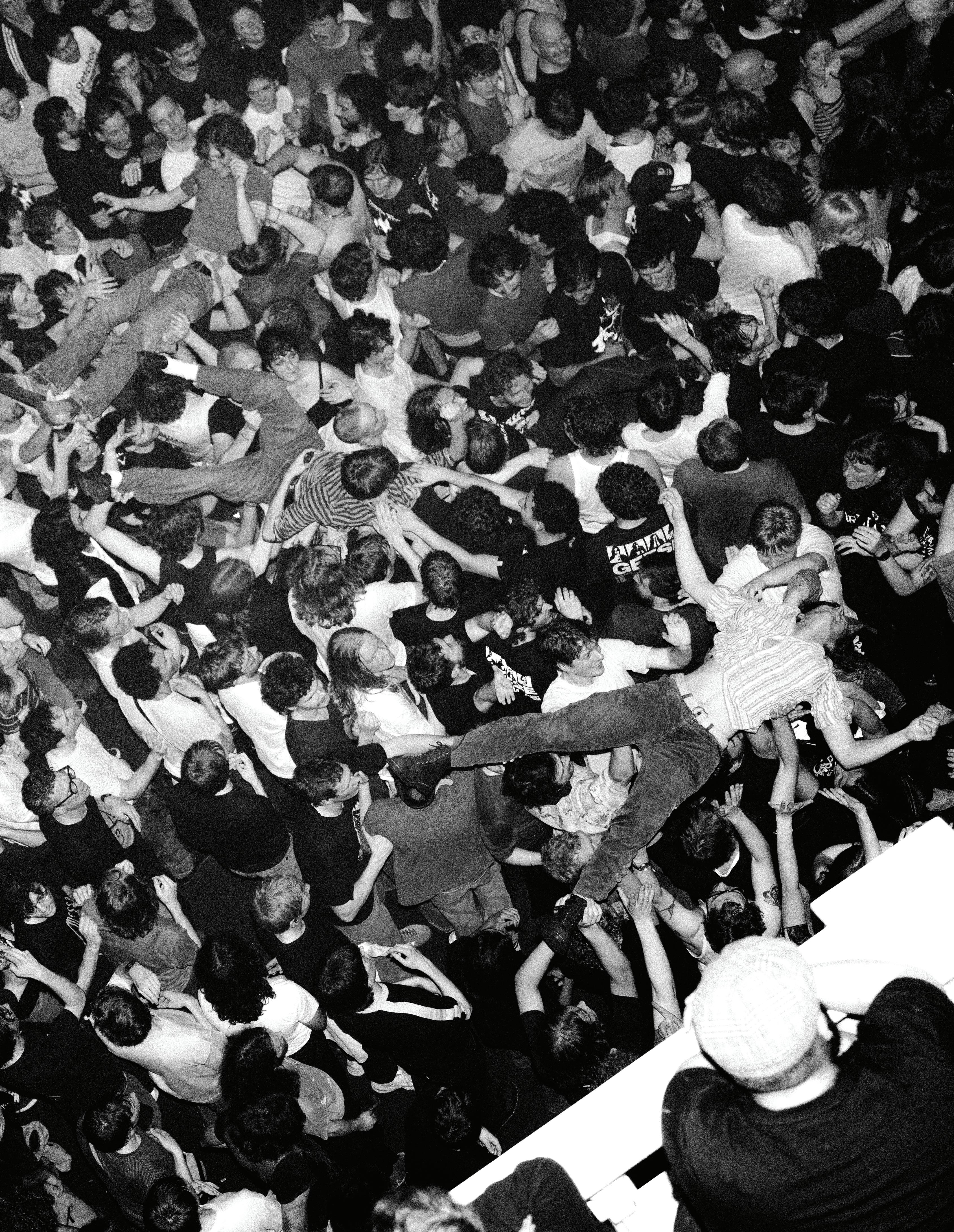
All photos courtesy of Lewis Evans.
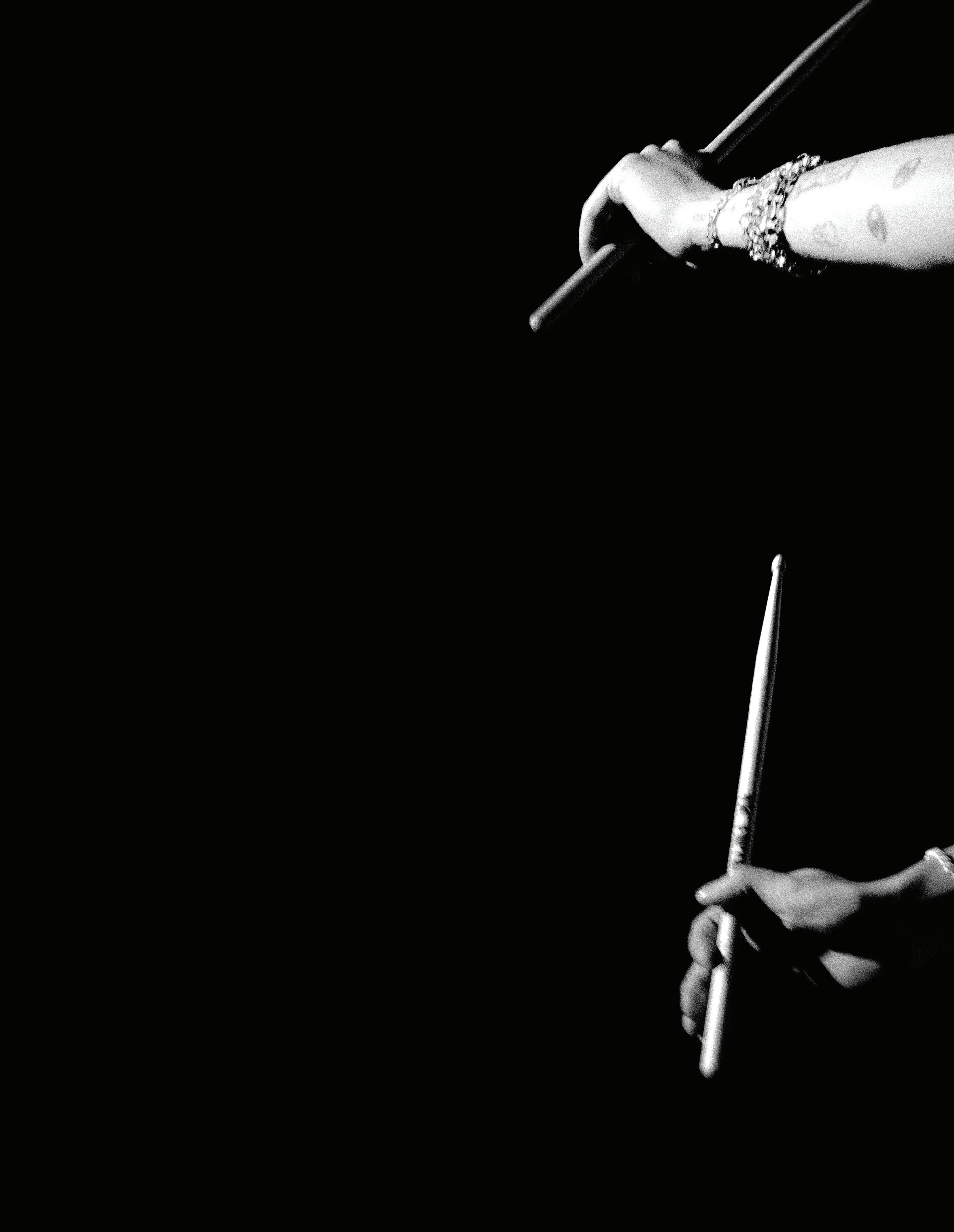
eration navigating a world where, as Marx suggests, the “perpetual present” has flattened our sense of direction.
What makes Geese a “unique phenomenon,” as many industry insiders have noted, is their generational dual citizenship. They are perhaps the only young band in the current landscape to be claimed with equal passion by both Gen Z and the Boomer vanguard.
This cross-generational embrace was codified when Wilco’s Jeff Tweedy, a patron saint of American indie rock, covered a Cameron Winter song, roughly around the same time as a King Princess cover of a Geese track. To have both an industry legend and a modern pop icon plant their flags in your catalog is a rare feat for a band so early in its trajectory.
On their recent world tour, documented in the haunting, high-contrast photography of Lewis Evans, this unity is visible in the flesh. Evans’s lens captures a mosh pit where nineteen-year-olds in thrifted oversized “fits” collide with graying rock aficionados who haven’t felt this level of “creative danger” since 1977.
The band’s current album, Getting Killed, acts as a manifesto against the “pluralistic monoculture.” While much of 21st-century pop culture feels “overfull but under-inventive,” Getting Killed is an explosion of deep novelty.
Reviewing their London residency, The Guardian noted that the music carries a “sense of impending collapse that never actually arrives,” a testament to the band’s technical mastery. Unlike the “post-practice culture” Marx warns about, where tools replace talent, Geese utilizes their virtuosity to embrace the past with-
out being enslaved by it. They don’t just remix the 20th century; they cannibalize it to fuel something entirely new.
Rolling Stone described the live performances of the new material as “organized chaos,” where the singalongs are so loud they threaten to drown out the PA system. There is a freedom in their sound—a refusal to be “legible” for the sake of an algorithm.
A Geese show is not a passive experience; it is a ritual. Reviewers from The Times and The Telegraph have struggled to describe the specific energy of these nights, often settling on the word “special.” It is a mixture of the reverential and the riotous.
The “creative danger” lies in the band’s willingness to improvise and deviate from the recorded versions of their songs. In an era where many live acts play to a pre-recorded click track to ensure “brand consistency,” Geese plays as if the floor might give way at any moment. This unpredictability is their greatest weapon against cultural stagnation.
In the photographs by Lewis Evans, you have a sense of the crowd’s total immersion. The band and Winter are the conduit for a feeling that Marx argues is missing from modern art: the symbolically transformative. Geese has found the “blank space” in the culture and filled it with a sound that is loud, confusing, beautiful, and undeniably real.
As they move from the underground basements of Brooklyn to the global stage, they are for those who peddle in bombast— the great unpredictable hope of rock.
jannik senium
A contemporary painter working in the language of the old masters
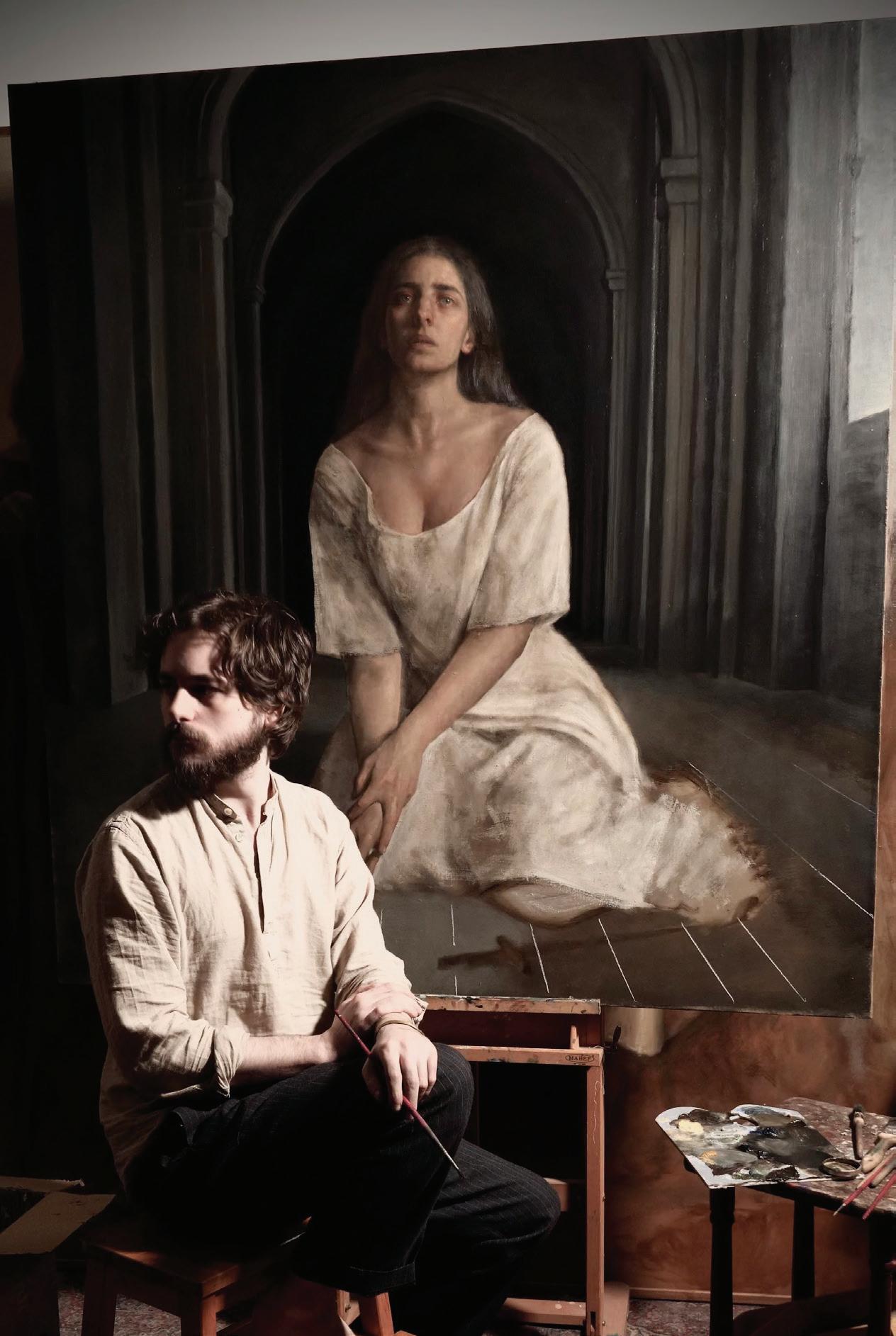
there is something almost disorienting about encountering the work of Jannik Senium for the first time. At a glance, the painting seems to belong to another century. The composition, the handling of light, the physicality of the figures all suggest a lineage closer to the old masters than to contemporary practice. And yet, the work is unmistakably of the present, not because it rejects history, but because it returns to it with intention.
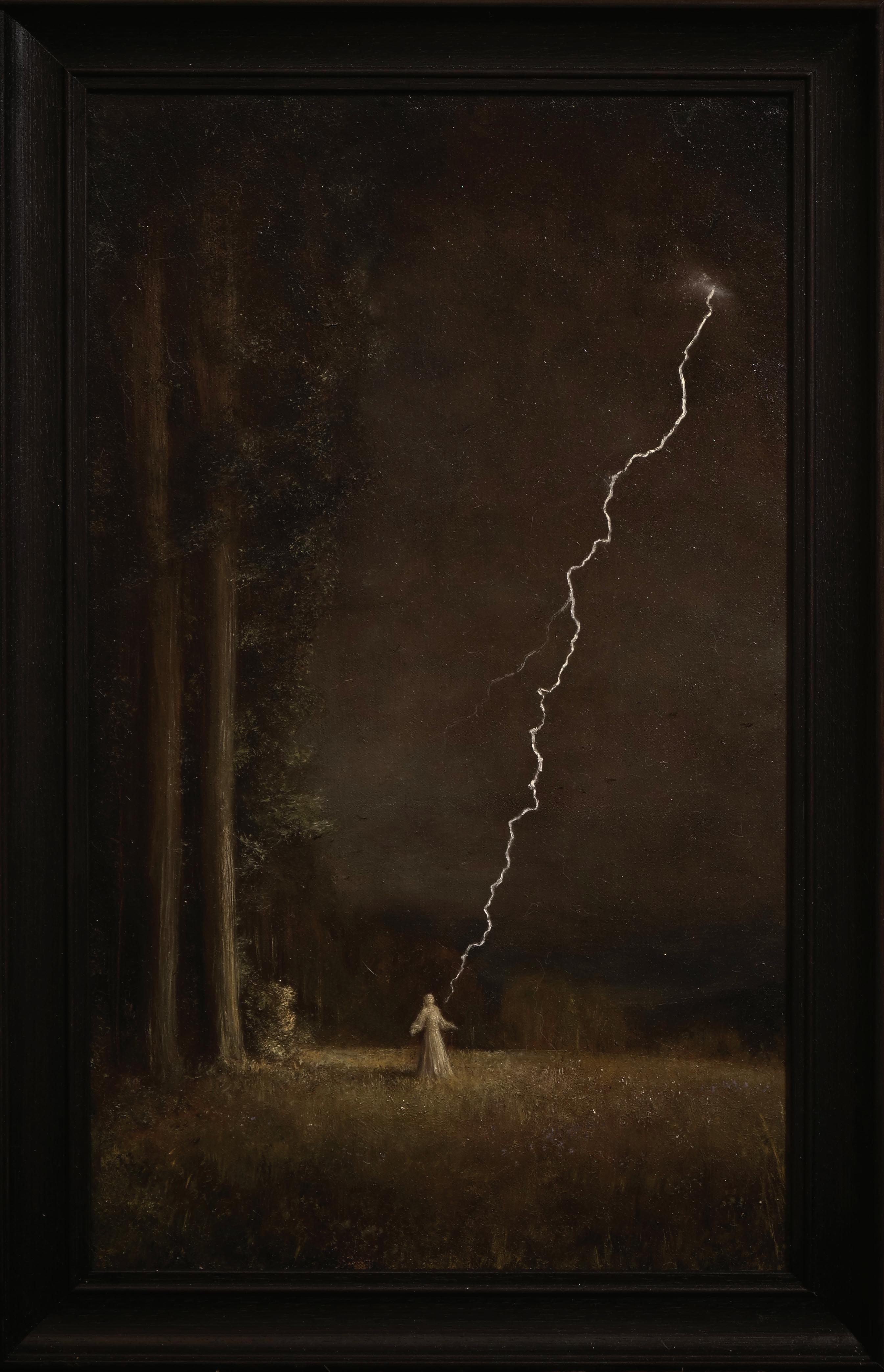
The subject here is drawn from one of the most violent moments in Greek mythology: the destruction of Semele. Seduced not only by Zeus, but by the idea of his divinity, she asks to see him in his true form. It is a request that cannot be undone. When he appears, he does so as pure force, as lightning itself, and in that instant, the human body proves incapable of withstanding the divine. The moment Senium captures is not narrative in the traditional sense.
It is impact. Contact. The threshold at which something mortal meets something immeasurably beyond it.
In the ancient world, such moments were not understood as accidents. A lightning strike was not simply an event, but a revelation. The place where it occurred became charged with meaning, marked as a site where the divine had made itself known directly. These were not places to be avoided, but preserved. In many cases, they became sa-
cred ground, sometimes even the foundation upon which temples were later built. What had been struck was no longer ordinary. It had been set apart.
The Greeks understood this with particular clarity. A person struck by lightning was not considered cursed, but chosen, marked by direct contact with the divine. Such individuals were called diobletoi, struck by Zeus, their bodies treated as sacred rather than ordinary. The site of the strike, like the
Below: Jannik Senium (born 1998), Saint Hedwig of Silesia, 2022. Oil and acrylic on canvas. 120 × 150 cm (47 1/4 × 59in.)
Right: Jannik Senium (born 1998) Semele, 2025. Oil on canvas. 50 × 30 cm (19 11/16 × 11 13/16 in.)
“Light is the shadow of God.”— Plato
body itself, was set apart, preserved, and often consecrated. What had occurred there was not simply destruction, but a form of selection.
There is something clarifying in returning to this way of thinking. At its core, the lightning strike represented an encounter, immediate and unmediated, between human and divine. It did not require interpretation. The force itself was the message.
This raises a broader question, one that extends beyond mythology. The impulse to create has always been tied to a need to make sense of what cannot be fully seen or explained. Across centuries, artists have returned to the same problem: how to give form to what resists form, how to approach something that exists just beyond perception.
Within that effort, light emerges as a constant, not simply as illumination,
but as something closer to presence, a visible expression of the invisible.
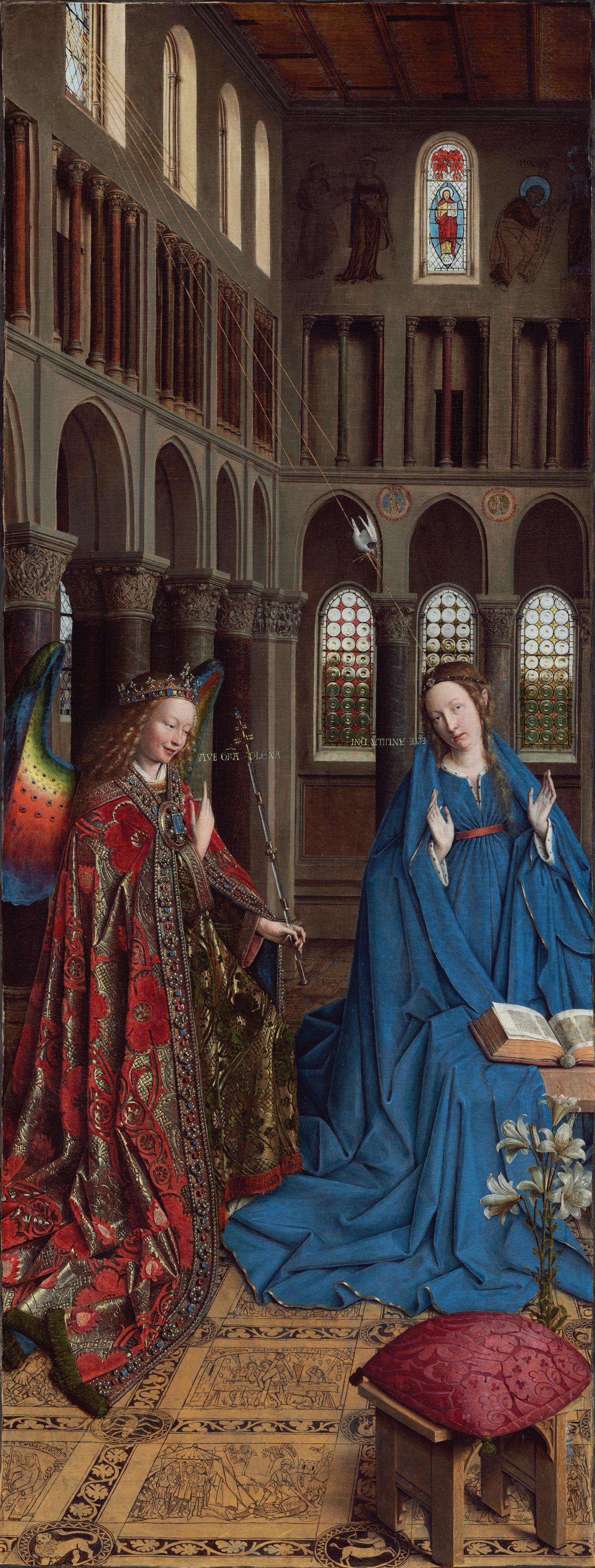
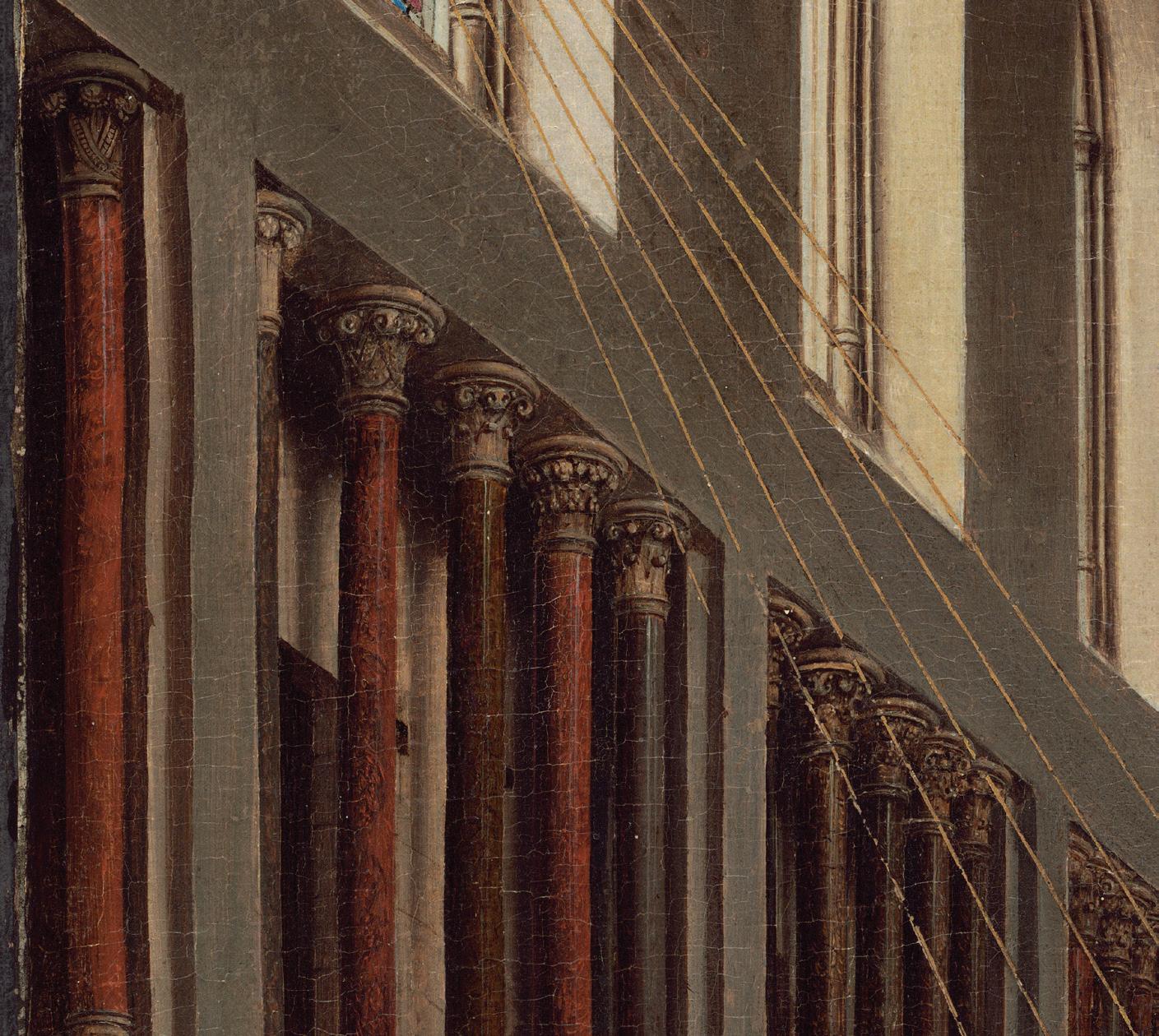
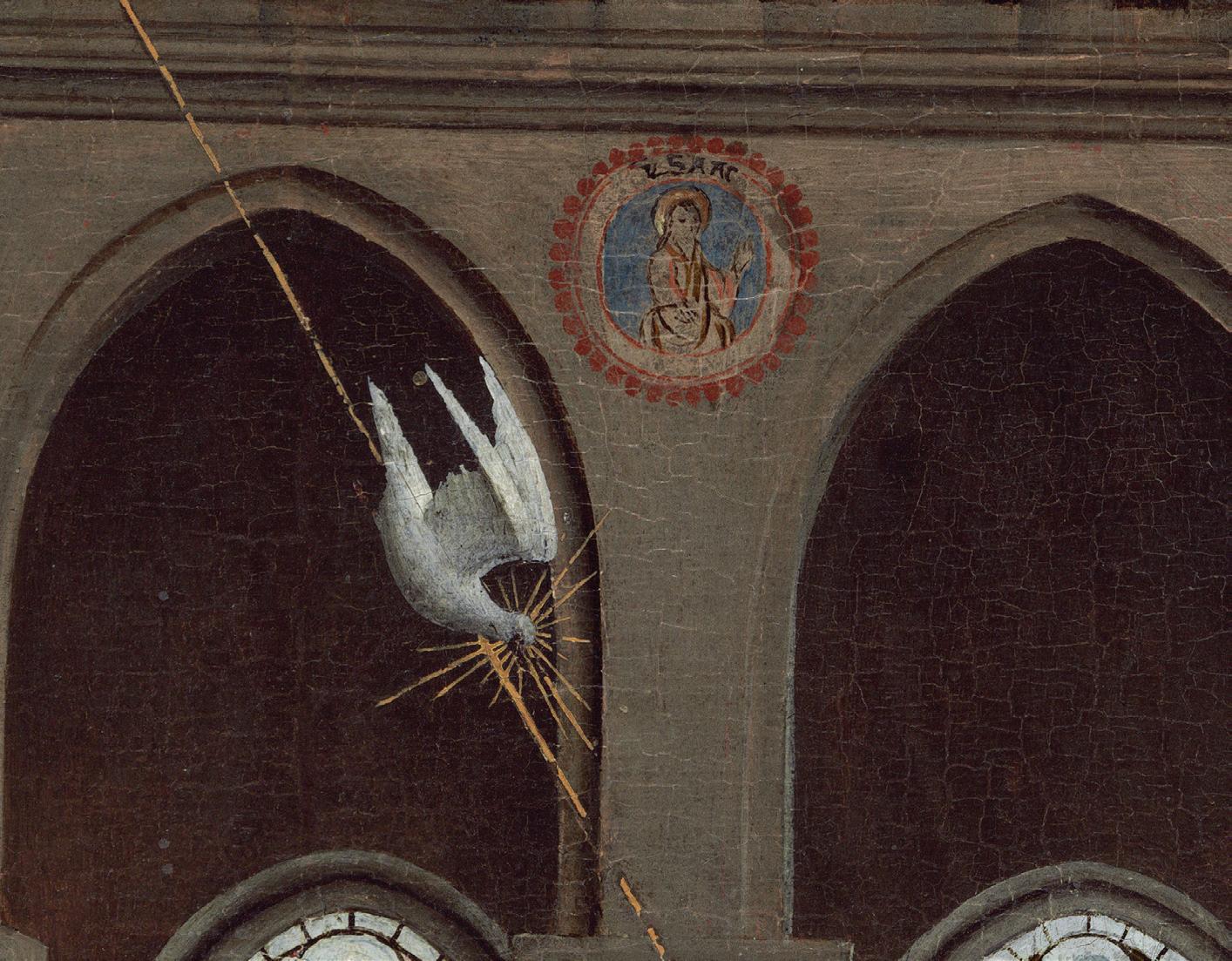
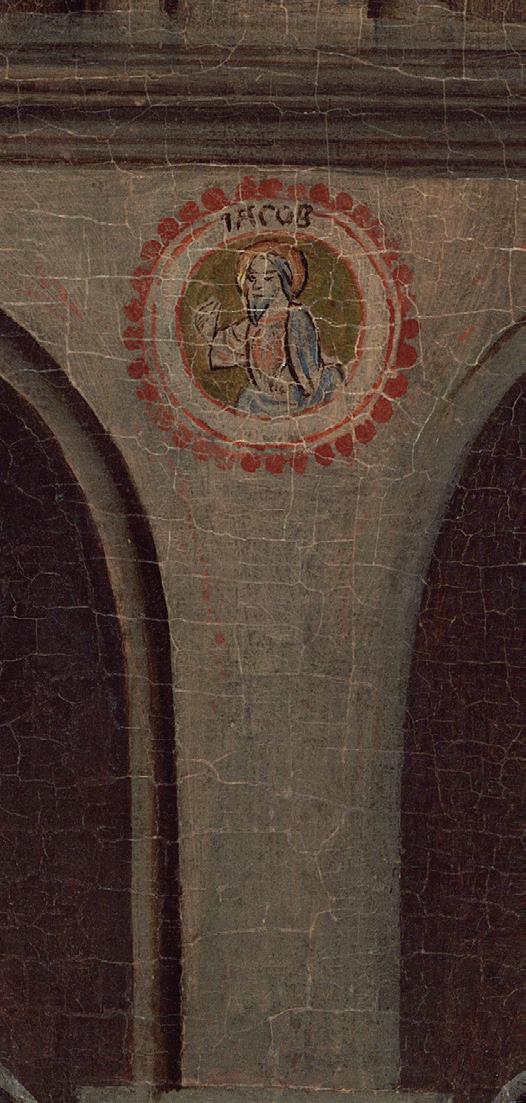
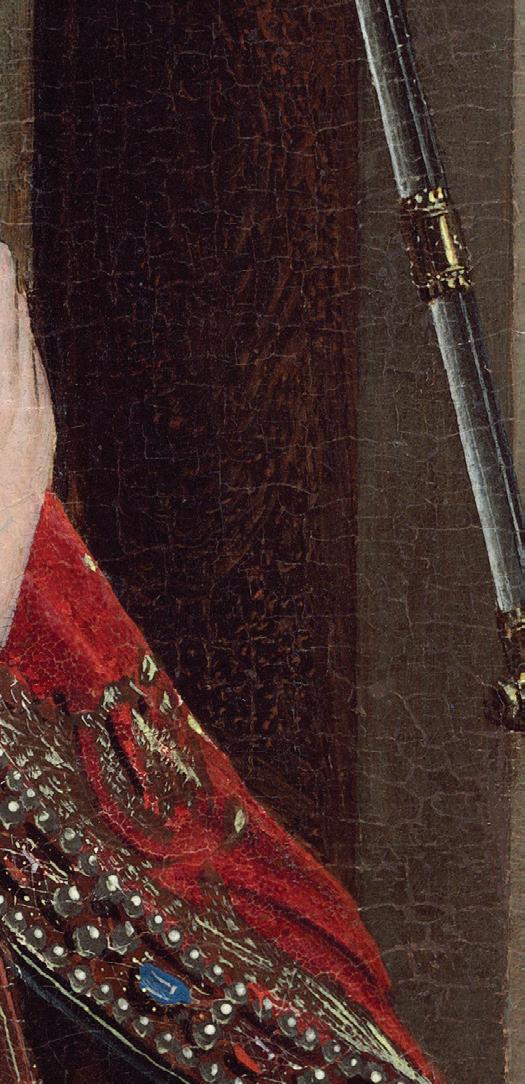
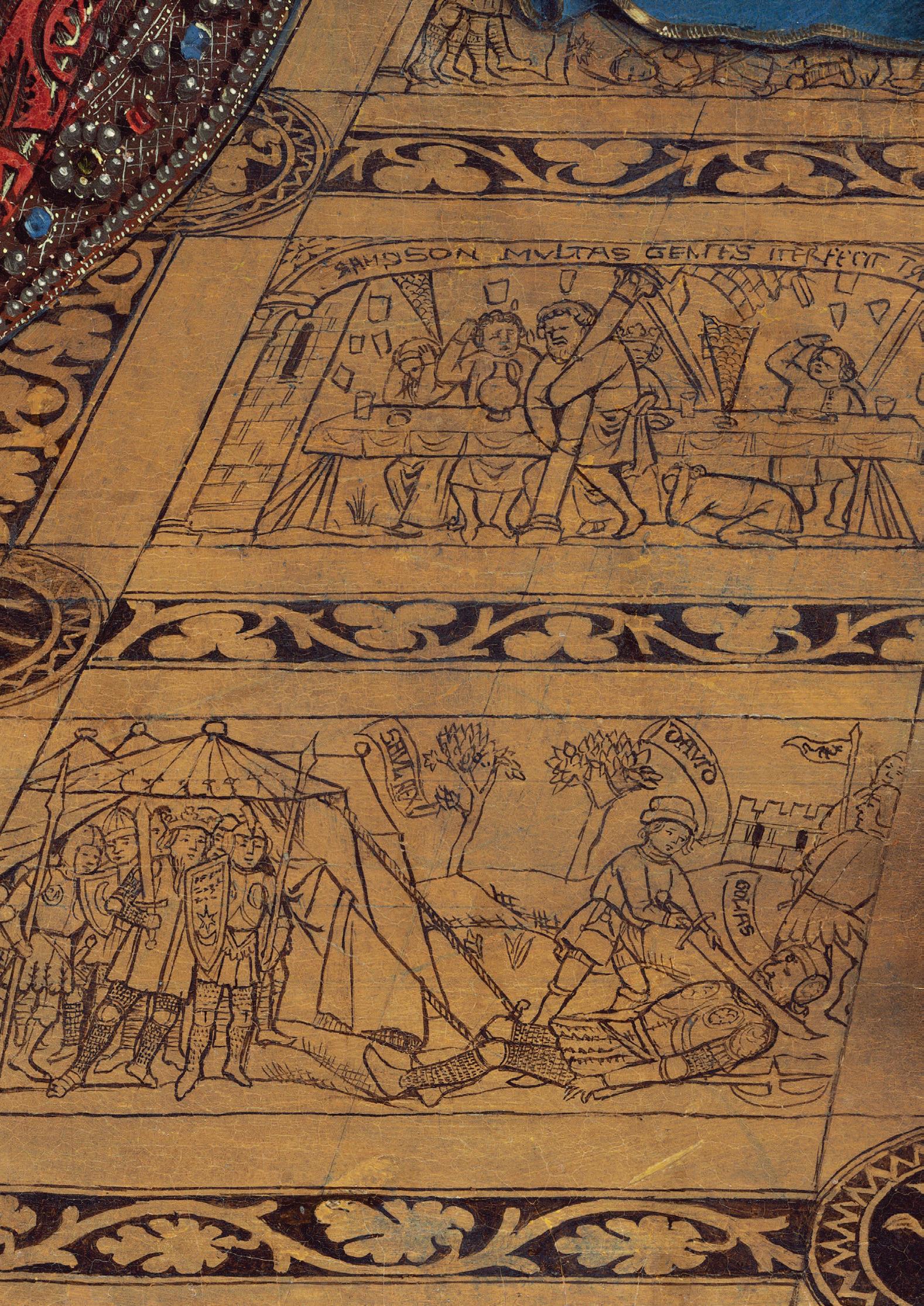
In the work of Jan van Eyck, light becomes a vehicle of encounter. In his Annunciation, it does not simply illuminate the space, it enters it, a narrow beam carrying with it the suggestion of something immaterial made momentarily tangible. But the moment is not confined to that single gesture. Light moves through the painting in multiple regis-
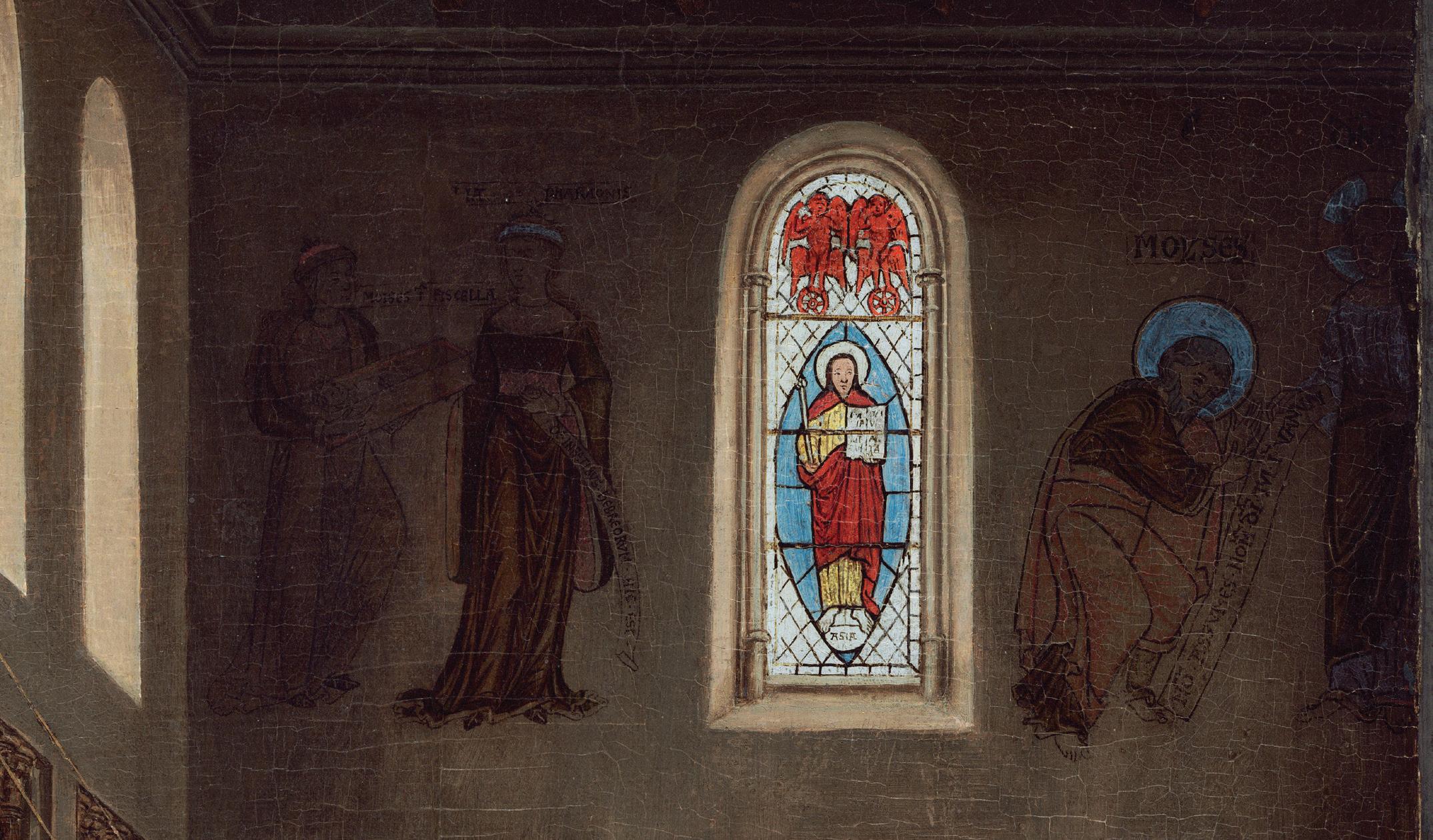
ters at once. It filters through the stained glass windows at the back, casting a softened glow that situates the scene within a world already transformed. It gathers along the surfaces of the architecture, articulating depth with quiet precision. It shifts across the figure of the archangel Gabriel, where the gradation of color in his wings moves almost imperceptibly from one tone to the next, as if light itself were passing through them.
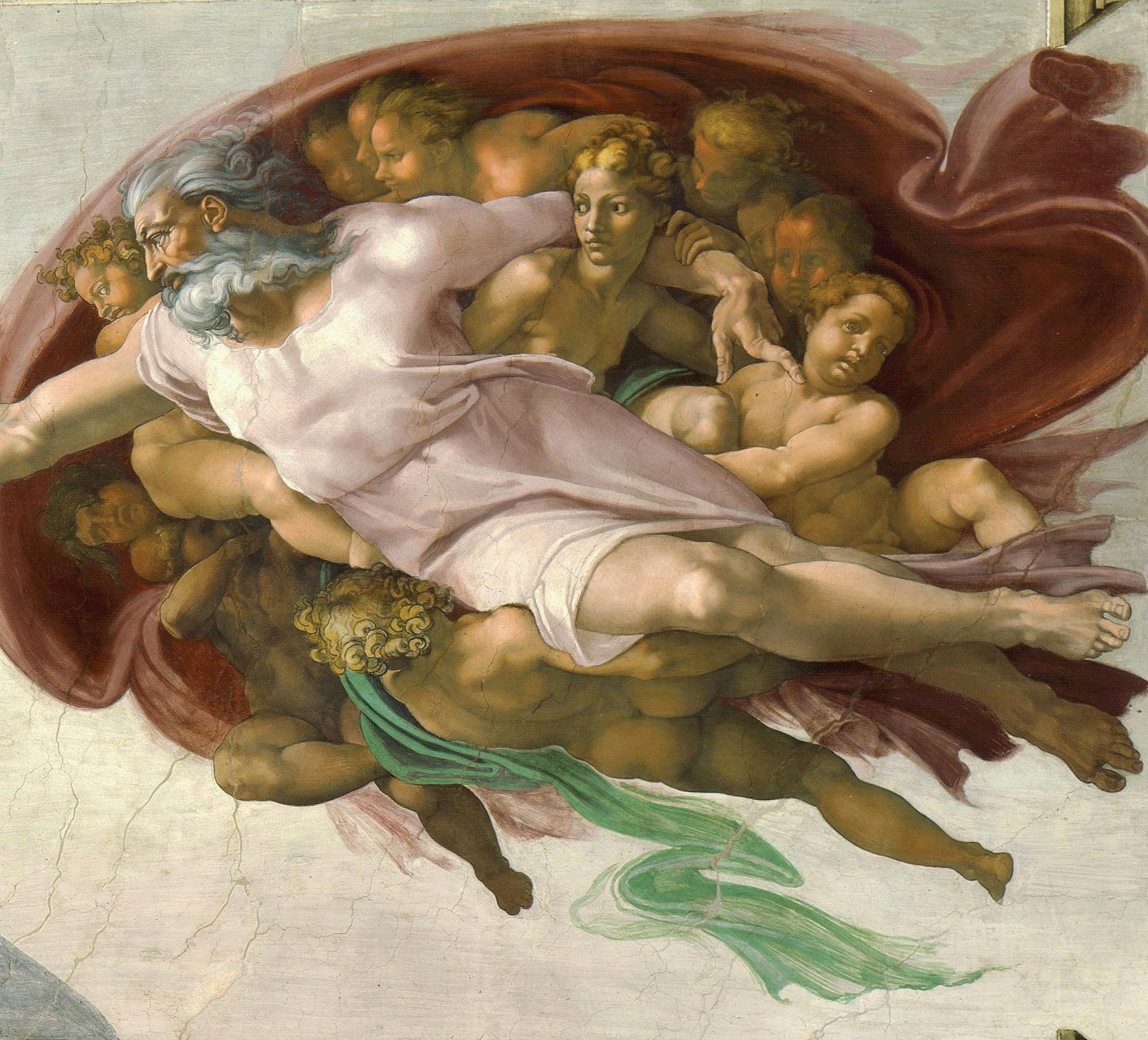
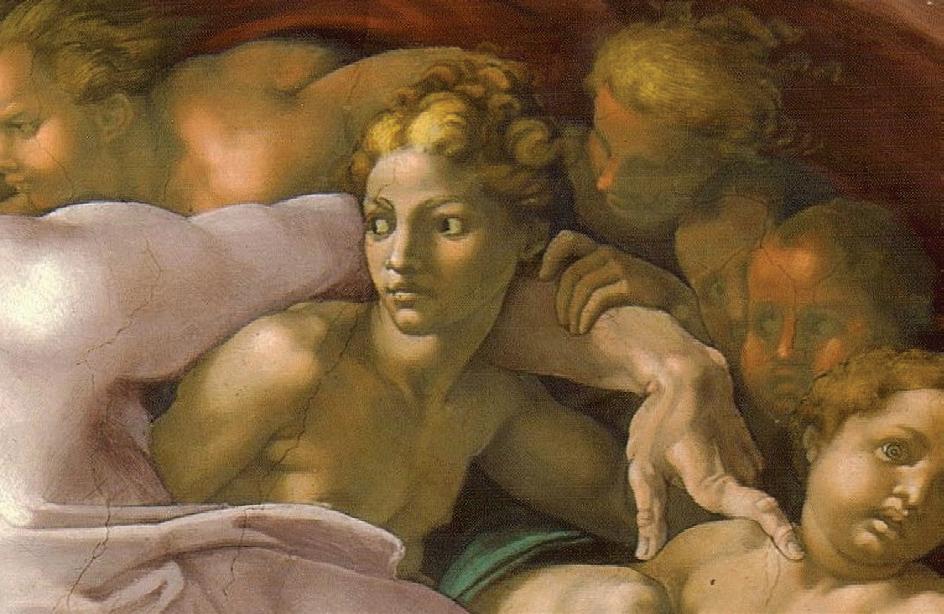
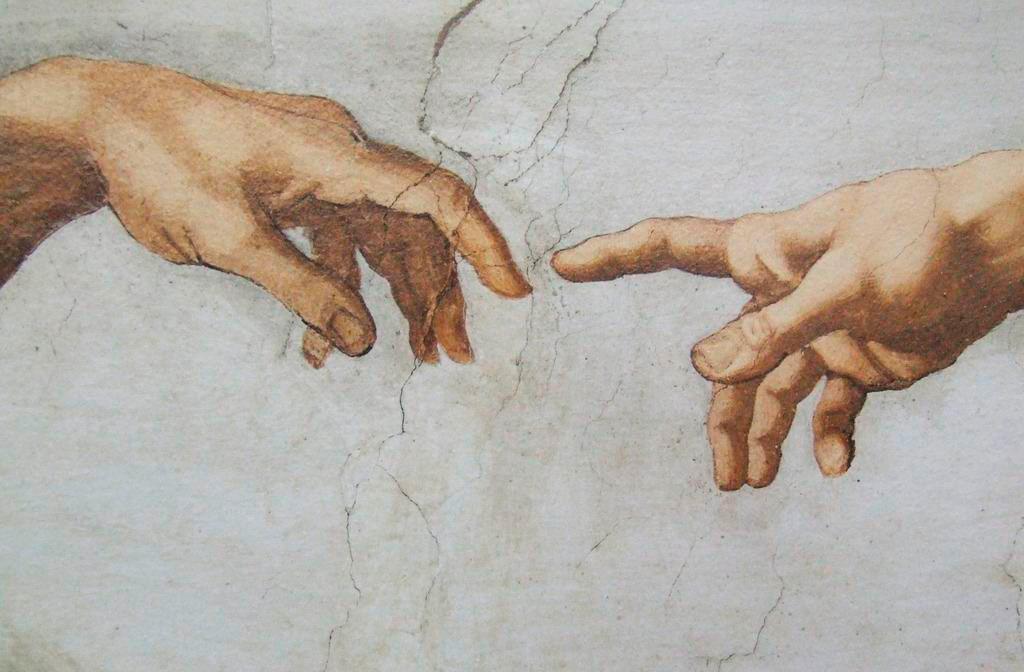
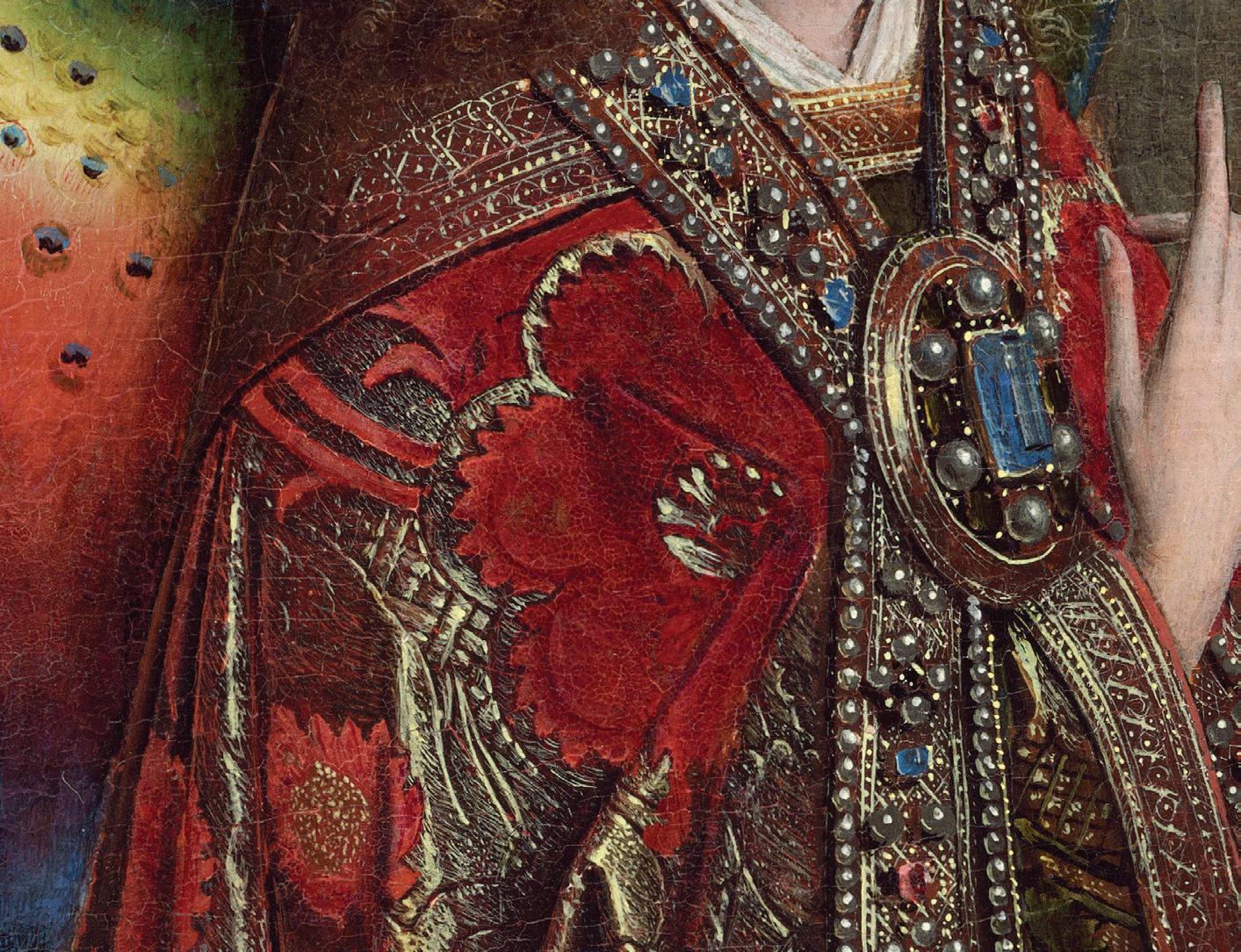
And then there is the matter of reflection. The glint of light on Gabriel’s jeweled and elaborately worked cloak is not incidental. It catches and holds the eye, momentarily grounding the scene in material richness even as it gestures toward something beyond it. The fabric becomes a surface through which light is refracted, broken, and redistributed. What emerges is a space in which illumination is not singular, but cumula-
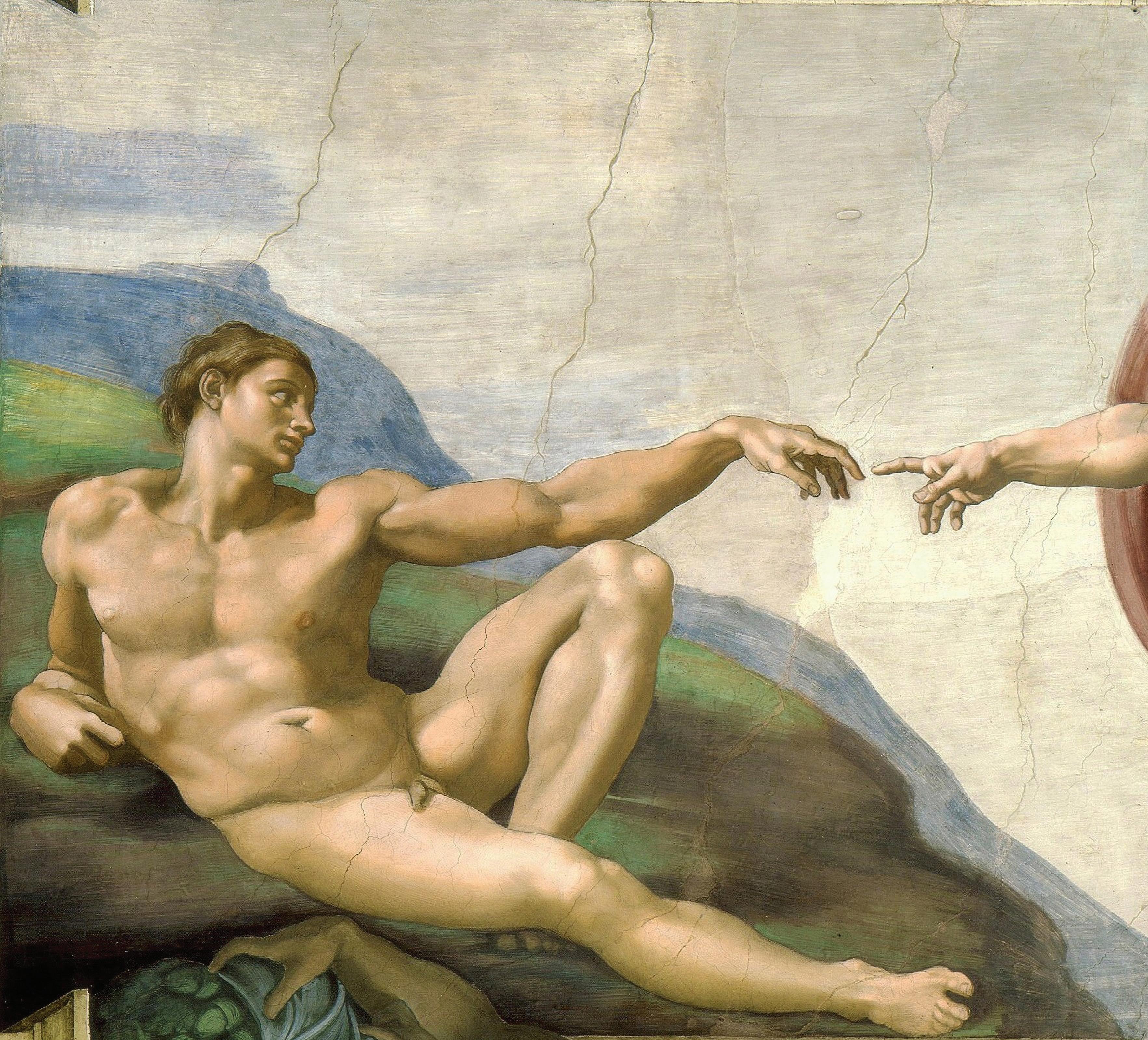
Michelangelo Buonarroti (1475–1564) The Creation of Adam, c. 1511–1512. Fresco. 280 cm × 570 cm (9 ft 2 in × 18 ft 8 in)
“God is light.” — 1 John 1:5
tive. The divine is not located in one place, but dispersed across the composition, present in the beam, in the glass, in the pigment, and in the smallest shifts of tone.
In the interiors of Johannes Vermeer, that same sensitivity takes on a different form. Light settles across surfaces, walls, and figures with a kind of restraint that feels no less deliberate. It reveals slowly, shaping the space without announcing itself. What emerges is not an event, but a condition, a world in which light becomes the medium through which reality is understood.
And in Michelangelo’s ceiling of the Sistine Chapel, creation is reduced to a gesture, the charged space between two hands. The moment is held just long enough to be recognized. Life is not described. It is transferred.
Where Michelangelo offers creation, and van Eyck offers annunciation, Senium offers apparent destruction. And yet the underlying gesture remains unchanged. The lightning is not only an end, but a point of encounter, a moment in which the human form is overwhelmed by something it cannot contain.
In returning to this myth, Senium does not simply illustrate it. He returns to its origin, to the idea that light itself marks the places where meaning begins. The strike becomes a kind of foundation, the same force that once designated sacred ground and determined where temples would rise. What appears as destruction is, in another register, a form of illumination. The painting does not resolve that tension. It holds it, allowing the viewer to stand within it, however briefly, and to recognize that the act of seeing has always been bound to something beyond it.
CONTEMPORARY ALCHEMY
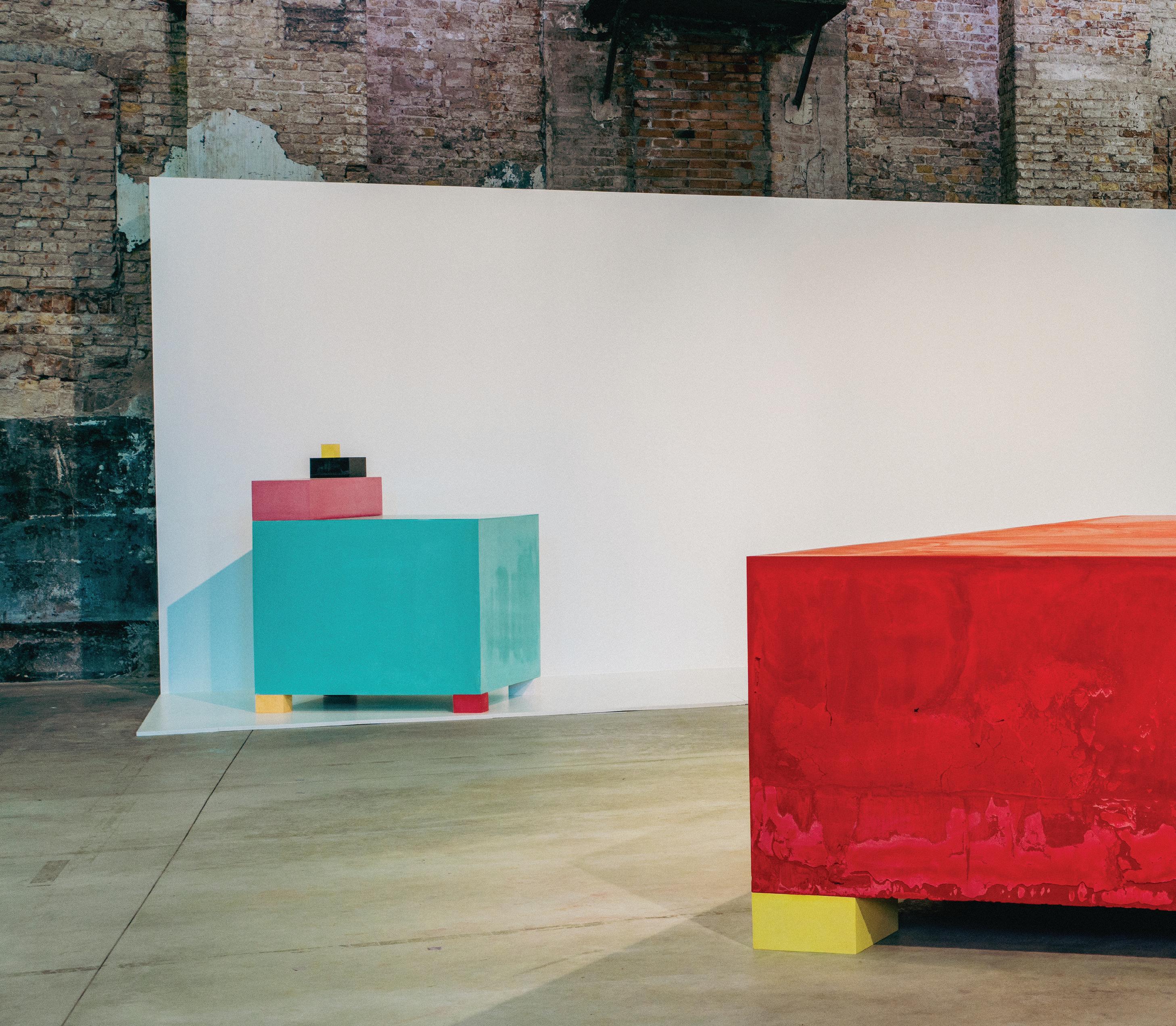
At the 61st Venice Biennale, Zadik Zadikian transforms the Armenian Pavilion into a living studio; a testament to labor, time, and the weight of the humble brick.
in the historic expanse of the Arsenale Militare, a vast complex that for centuries served as the rhythmic heart of Venetian naval power, a different kind of industry is taking shape. For the 61st International Art Exhibition of La Biennale di Venezia, the Republic of Armenia has dispensed with the traditional, static presentation of contemporary art. Instead, the pavilion has been radically reimagined as The Studio, an active site of production, transformation, and renewal that will unfold continuously over the course of the Biennale.
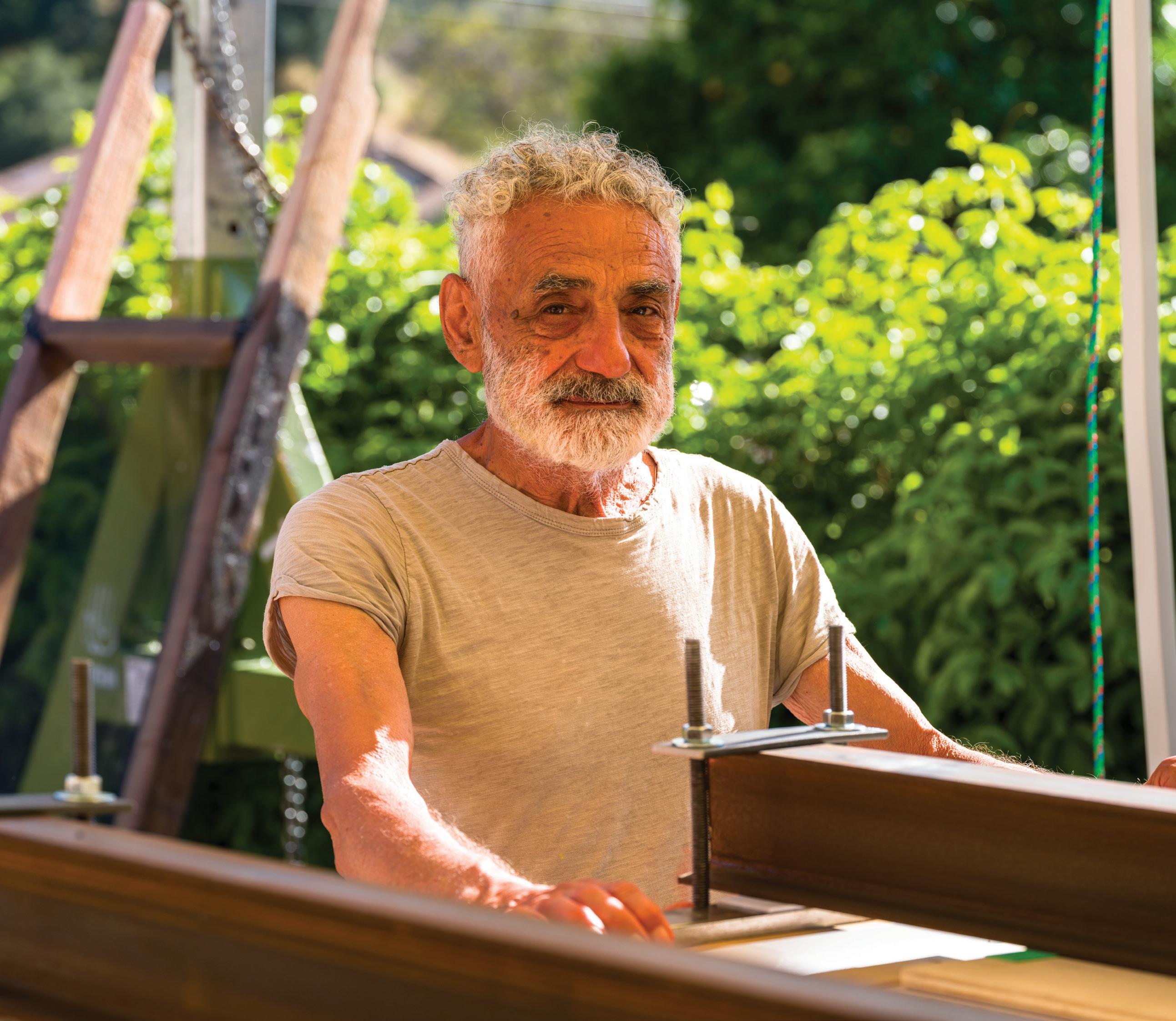
At the center of this endeavor is Zadik Zadikian, an artist whose five-decade career has consistently
challenged both the materials and the underlying ideologies of his discipline. His extraordinary journey began with a daring escape from the Soviet Union in his youth, leading to his training under Benjamino Bufano and a longstanding friendship with Richard Serra. The presentation is co-curated by cultural strategist Tina Chakarian and legendary gallerist Tony Shafrazi. For Shafrazi, this pavilion marks the continuation of a profound decades-long collaboration with Zadikian. Their creative partnership began in the late 1970s, culminating in Zadikian’s first solo exhibition in Tehran at Shafrazi’s then-new eponymous gallery. It is a relationship rooted in a shared, enduring
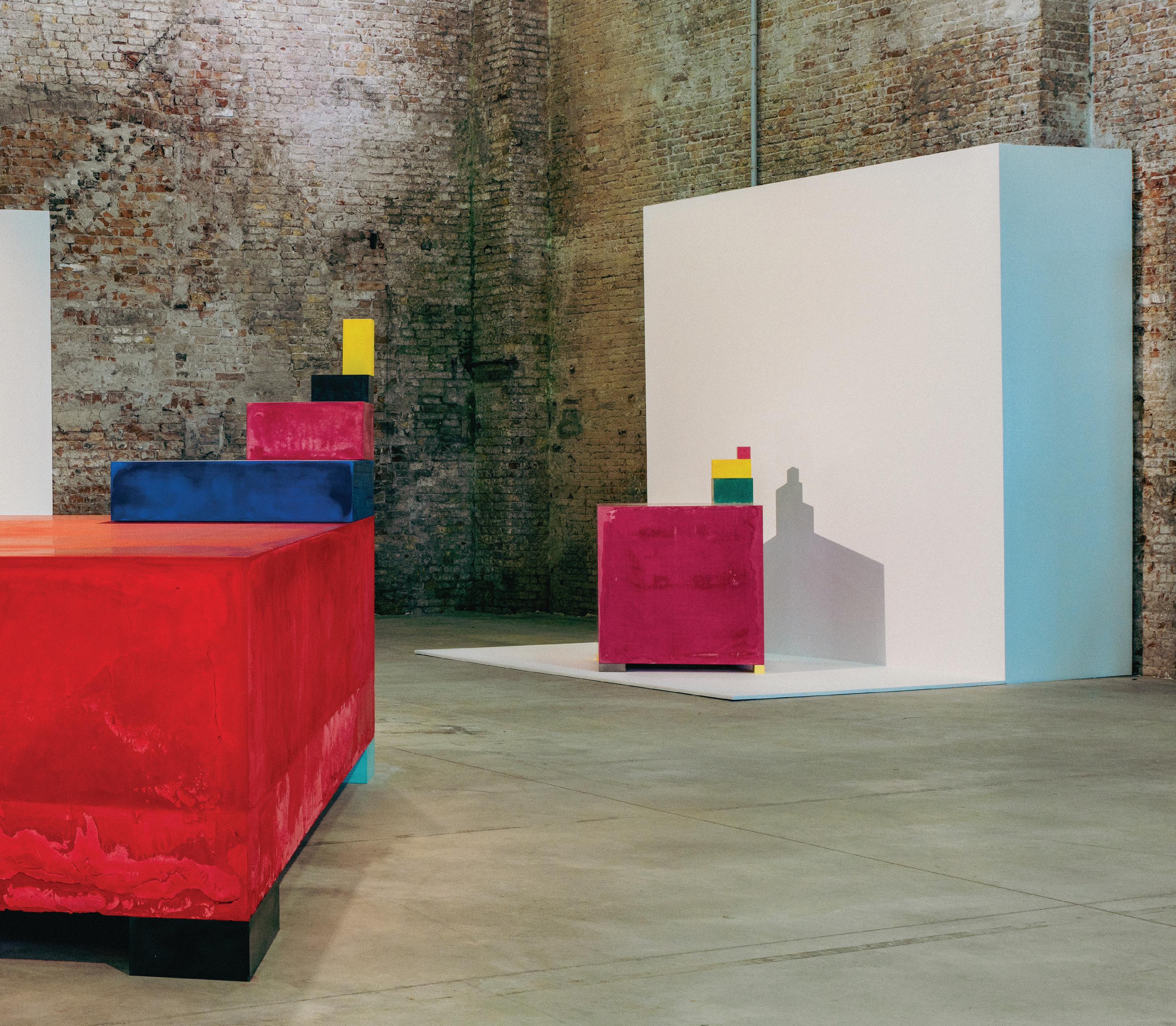
Zadik Zadikian: The Studio, National Pavilion of the Republic of Armenia at the 61st International Art Exhibition La Biennale di Venezia, May 6–November 22, 2026. Courtesy Tony Shafrazi / Gallery Without Walls. © 2026 Zadik Zadikian
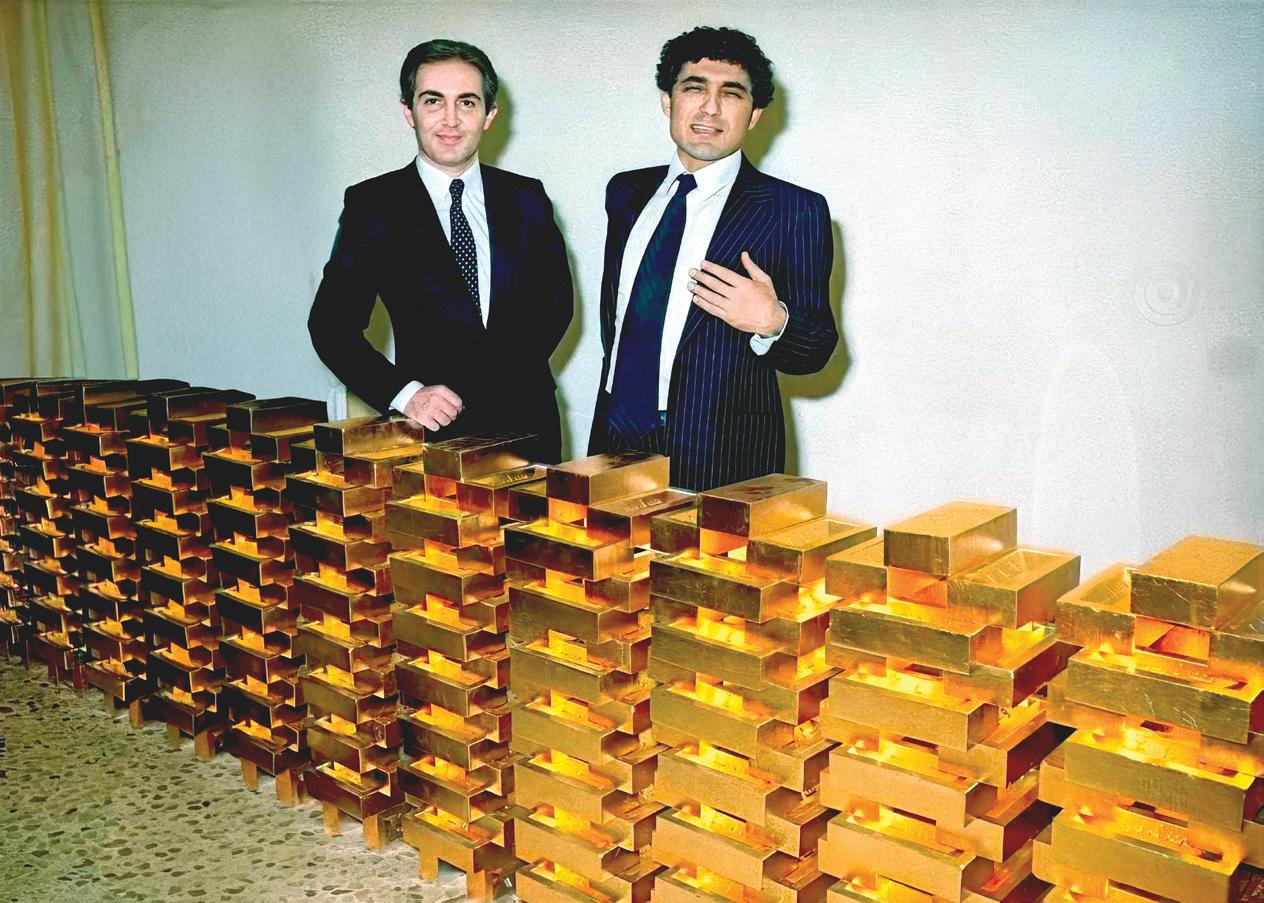
Bottom Left: Photo courtesy Tony Shafrazi.
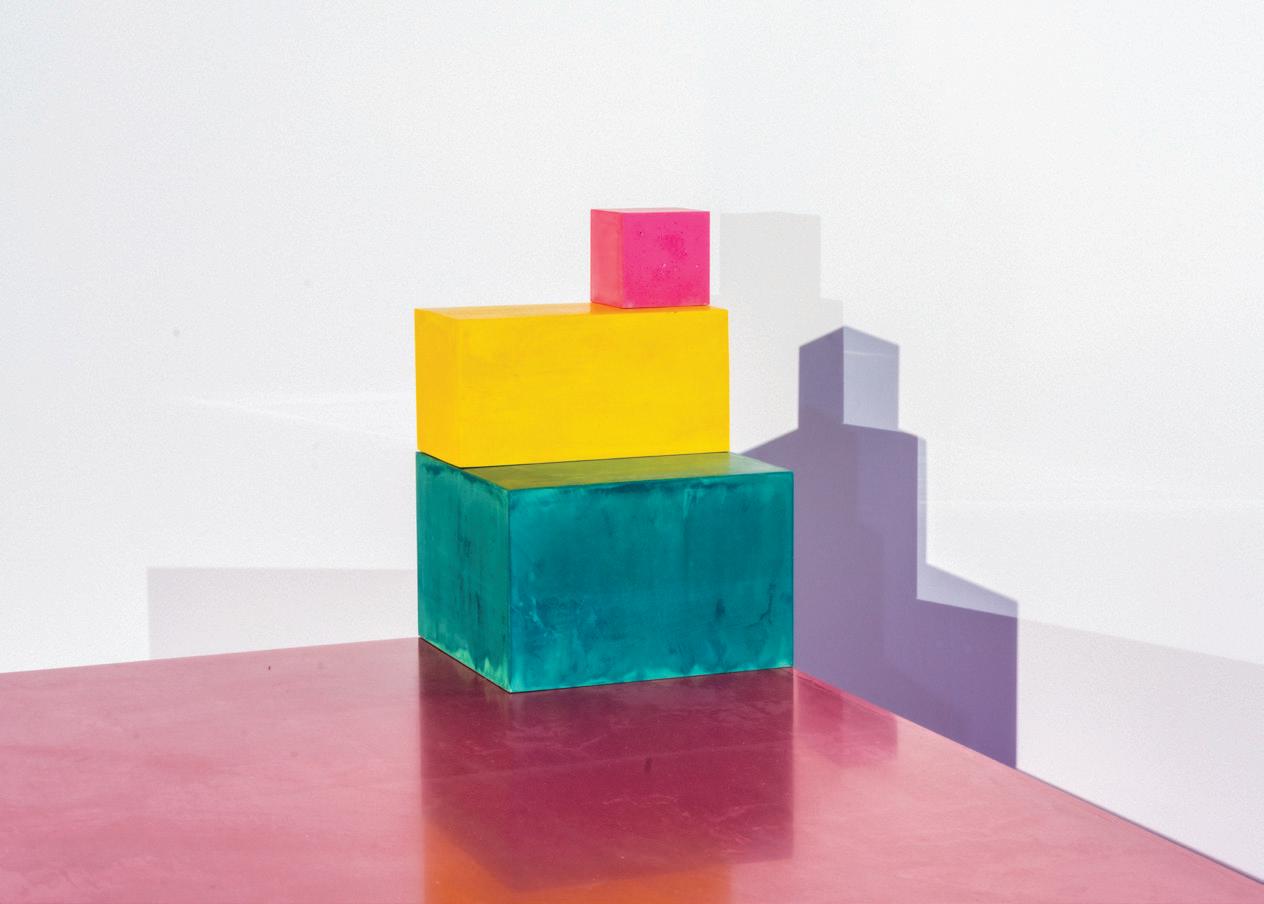
Bottom Right: Untitled (2026). Photo courtesy Tony Shafrazi.
inquiry into form and the experience of space; a conceptual framework that now directly shapes the entirety of the Armenian Pavilion.
The conceptual anchor of the space is deceptively simple: the brick. The origin of this fascination can be traced back to that same era in late1970s Tehran, just weeks before the fall of Iran’s ruling shah, when a young Zadikian observed laborers carefully stacking clay bricks to dry in the open air at a facility nearly 200 miles from the city. “I was completely taken by the way they were making sculptures without knowing what they were doing,” he recalls. That quiet monumental revela-
tion of finding high art in basic utilitarian labor has informed his practice ever since, driving a sustained engagement with the transformation of basic forms into complex structures.
In Venice, this memory is resurrected through physical endurance. Within the pavilion, Zadikian operates a fully functioning workspace. Over the course of the six-month exhibition, he and his assistants will cast, form, and assemble hundreds of plaster bricks of varying scales and pigments. These composite forms are entirely modular; they are continually stacked, disassembled, and reconfigured, allowing the physical arrange-
ment to change and develop over time. It is a rigorous, sustained engagement with repetition that places his work in direct conversation with early modernist and post-Minimalist inquiries, recalling the work of Richard Serra, Sol LeWitt, and Carl Andre. This obsession with modularity and material transformation builds upon his recent inclusion in the Brooklyn Museum’s Solid Gold exhibition, where his piece Path to Nine (2024) utilized 999 gold leaf-covered bars to create a luminous, architectural wall.
Yet, the true subject of the pavilion is not merely the resulting objects, but the visibility of their creation. By
exposing the highly ritualized and traditionally private conventions of the artist’s atelier, Zadikian reframes the studio as a site of openness, exchange, and collective labor. While the installation naturally recalls the legacy of Pop Art’s factories, most notably Andy Warhol’s Factory, Zadikian deliberately eschews mere spectacle in favor of sustained, hands-on production. As the critic Carlo McCormack states, “the act of making is not staged, but neither is it hidden”. It is an exhibition that asks its audience to look past the pristine finish of the gallery wall and find the infinite possibility in the raw, ongoing labor of creation itself.
Photo Credit: Ruben Diaz. Courtesy Tony Shafrazi / Gallery Without Walls.
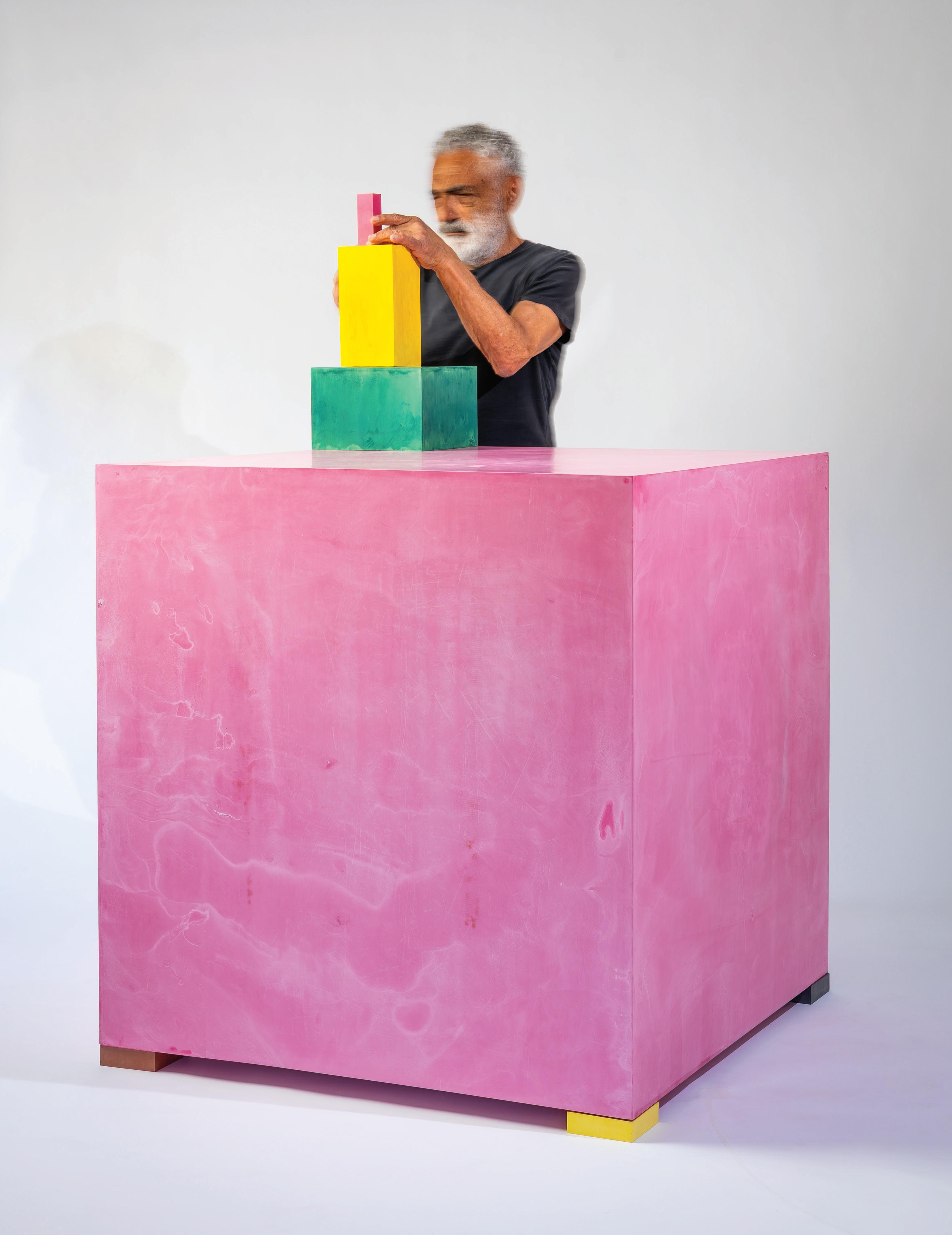
Untitled (2026). Photo courtesy Tony Shafrazi.
Legacy On The Avenue
Redefining the Office Tower Through the Lens of Norman Foster
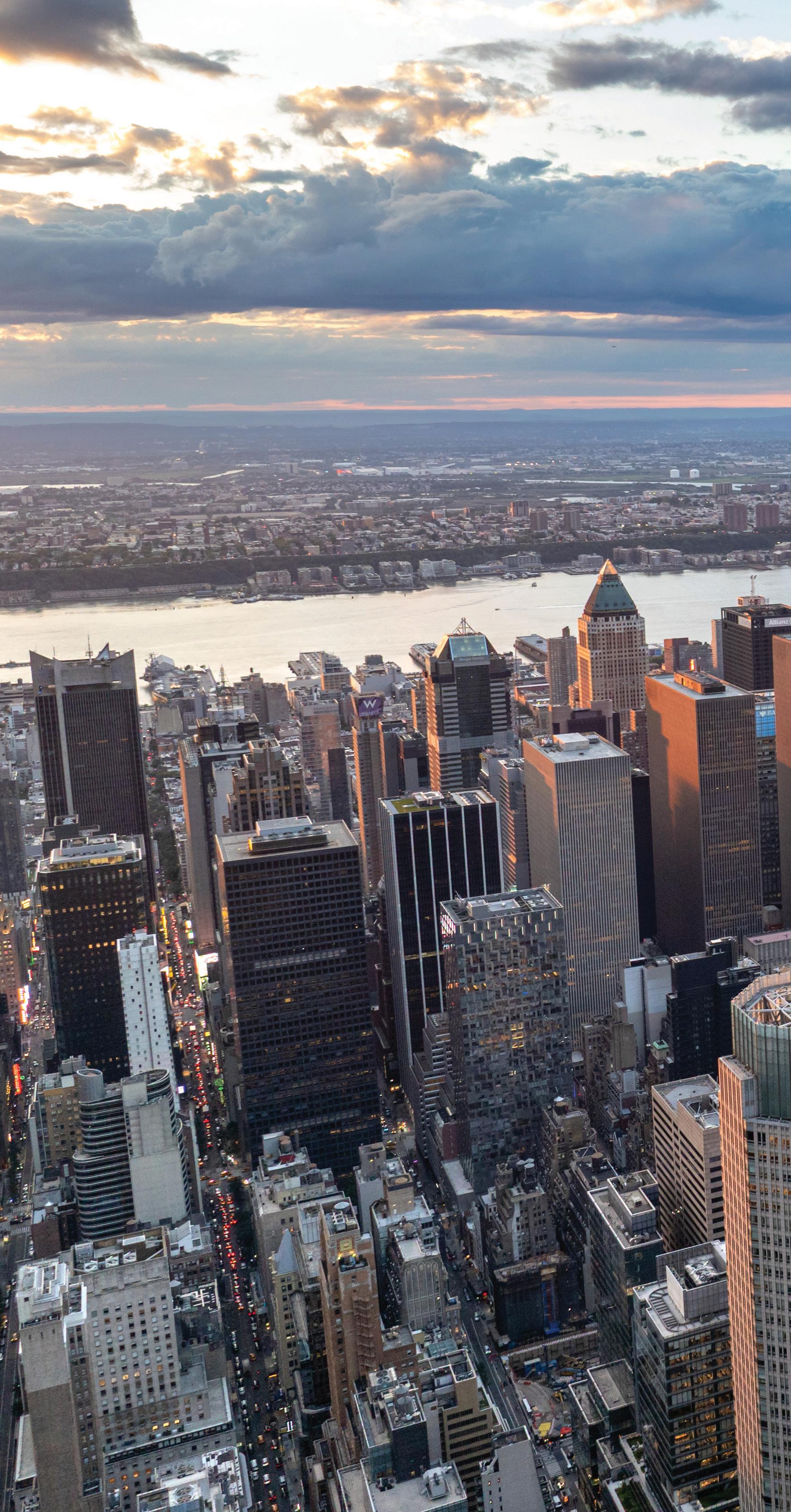
park avenue sits within a city of superlatives, where the skyline is not just architecture, but ideology. As Rem Koolhaas noted, Manhattan’s skyline is a testament to the city’s relentless pursuit of innovation and progress. E.B. White captured the essence of this phenomenon, writing, “The city seen from the Queensboro Bridge is always the city seen for the first time, in its first wild promise of all the mystery and the beauty in the world.”
The avenue’s skyline is defined by repetition: a sequence of office towers, each following a similar logic, with stacked floors, sealed façades, and a consistent rhythm that gives the thoroughfare its identity. Most buildings function as background: efficient, reliable, and largely interchangeable. However, there are exceptions. The Seagram Building, designed by Ludwig Mies van der Rohe with Philip Johnson, established a new standard for proportion and restraint. Lever House, by Skidmore, Owings & Merrill, introduced the glass curtain wall, redefining how office buildings engaged with light and space.
Foster
+ Partners, The ‘Exchange’ at 270 Park Avenue, 2025. Digital architectural photograph. Photographed by Nigel Young. 270 Park Avenue defi nes the modern workplace with 21st century infrastructure, smart technology and 2.5 million gross square feet of fl exible and collaborative space.
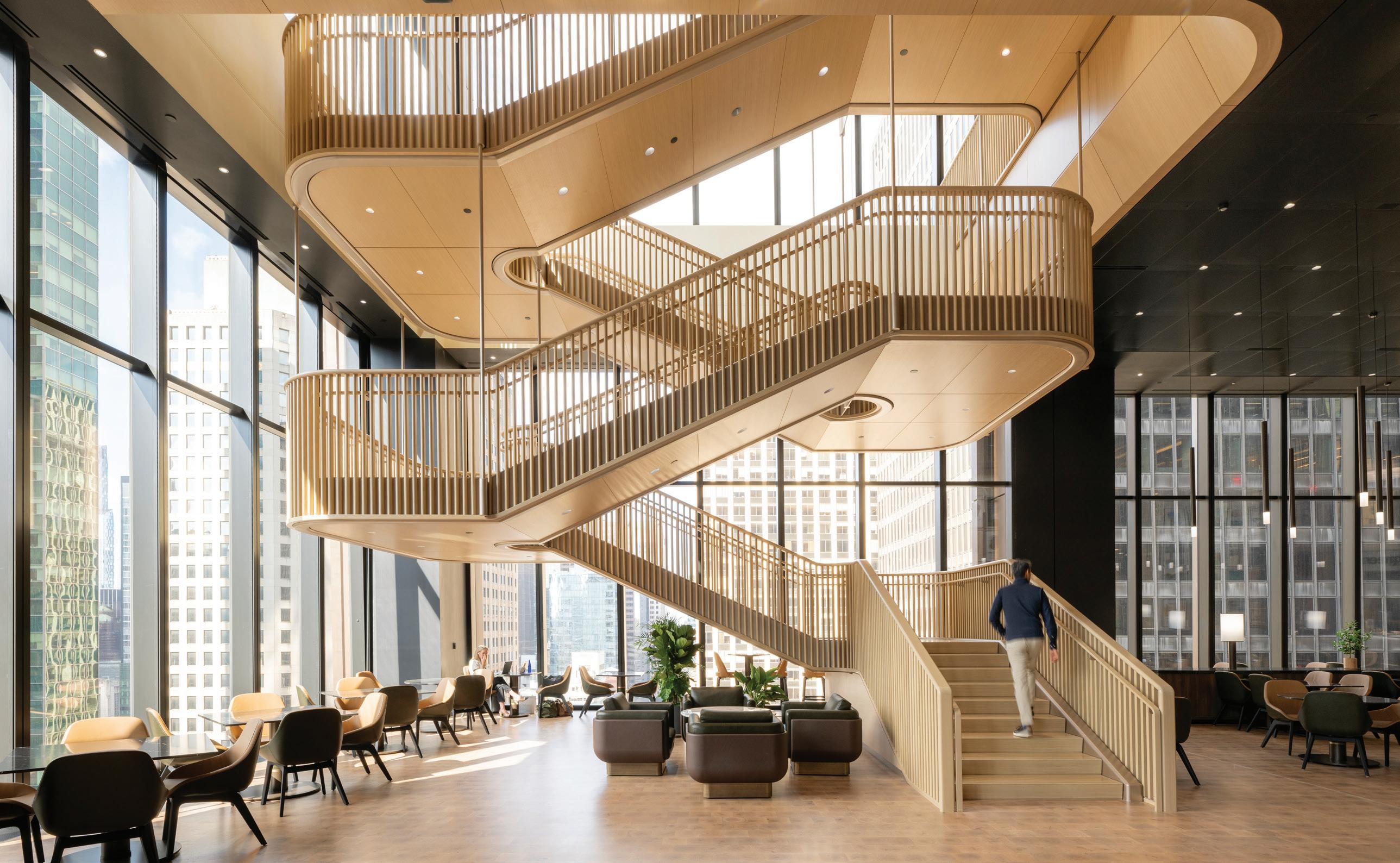
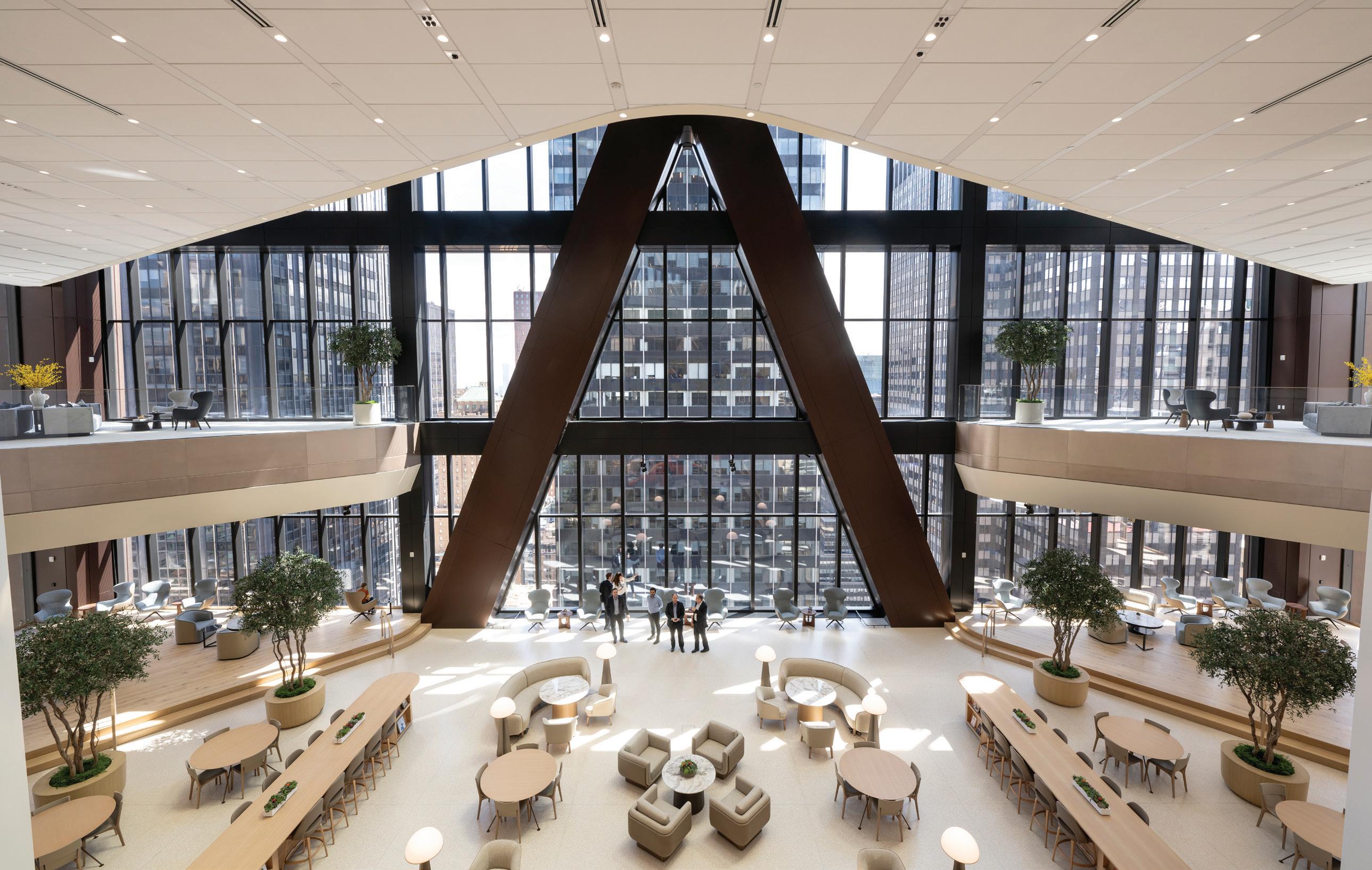
Top to Bottom: The practice was responsible for the fi tout of the lobby and its mezzanine level,including the custom design of the furniture. The triple-height ‘Exchange’ space is located at the center of the tower.
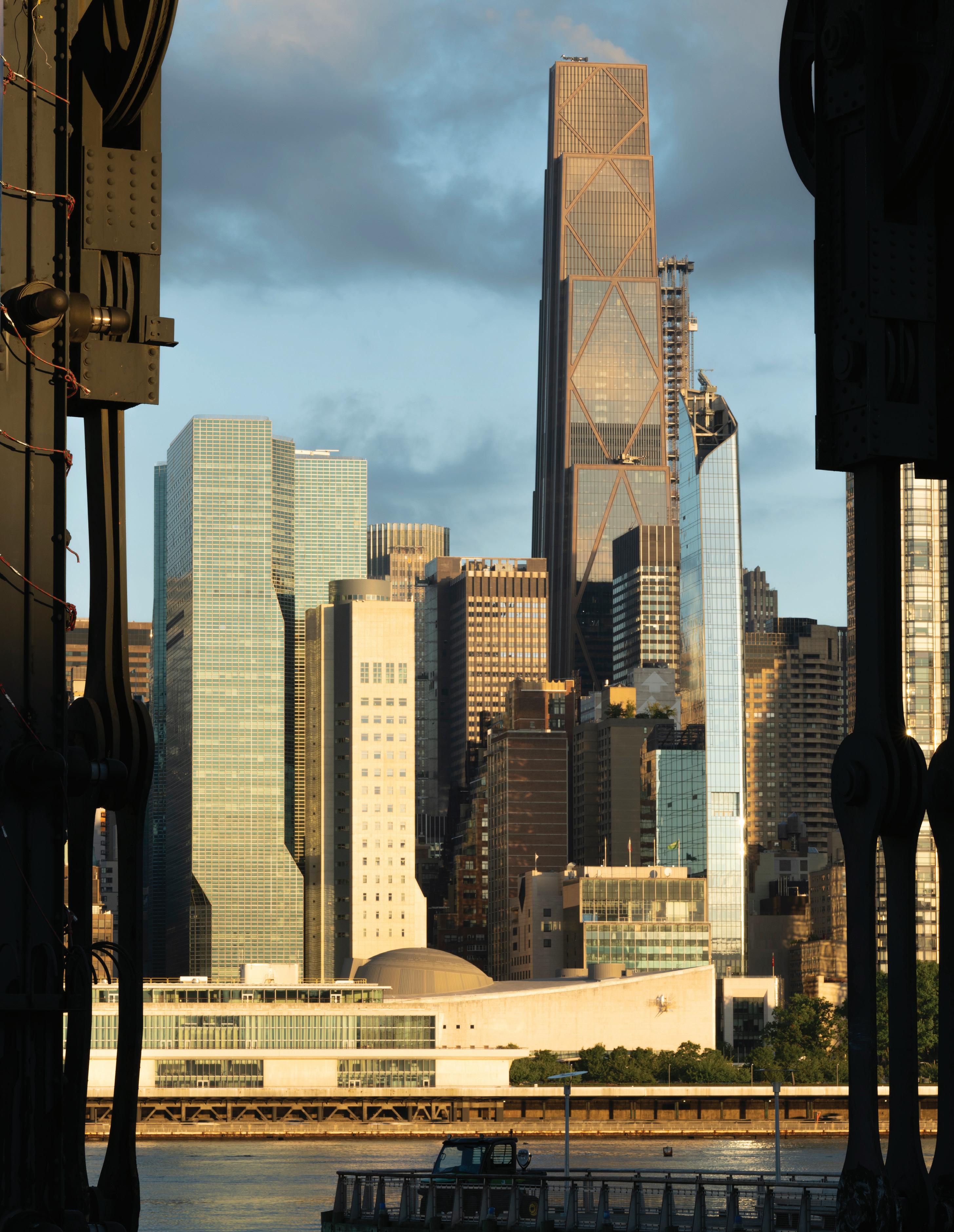
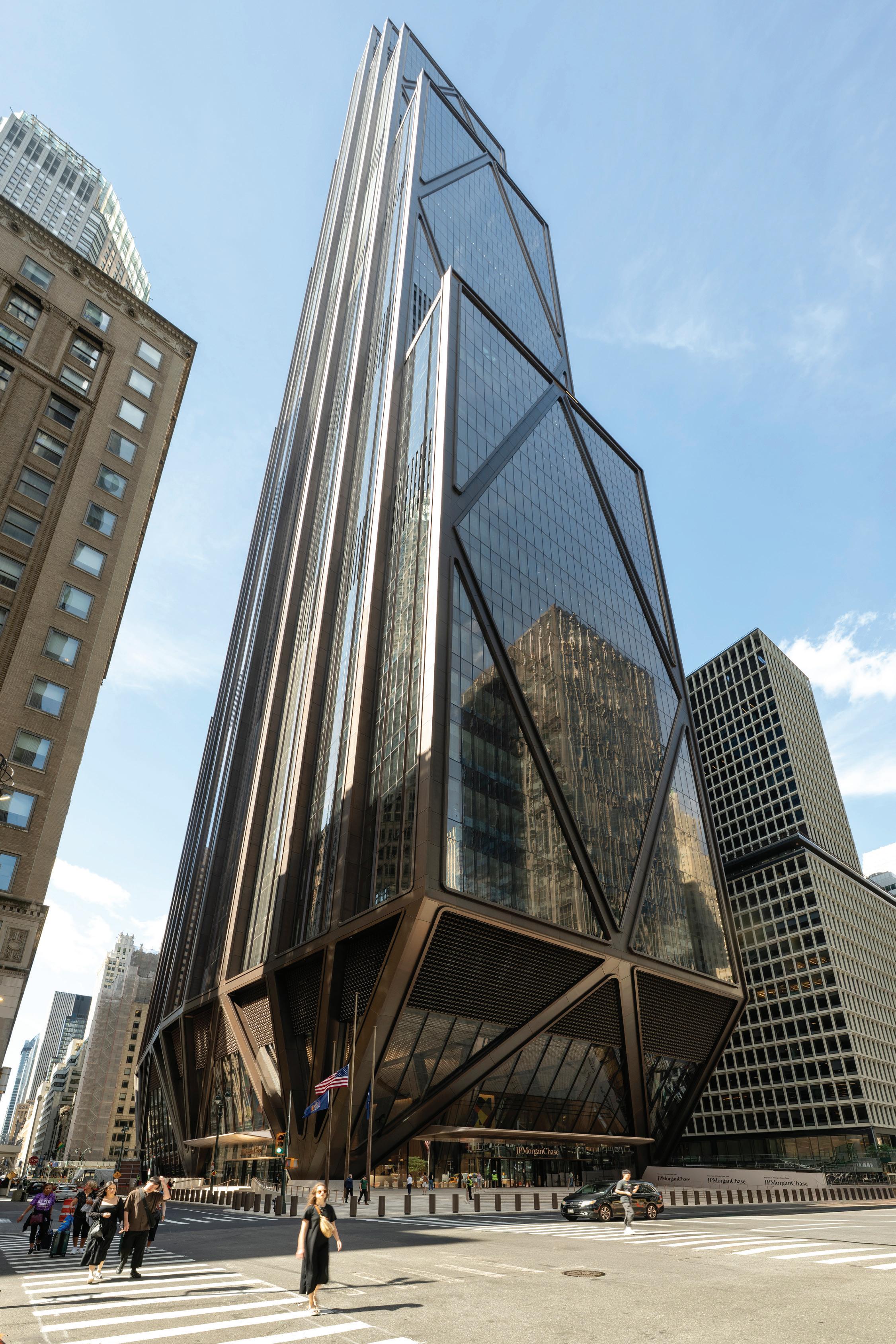
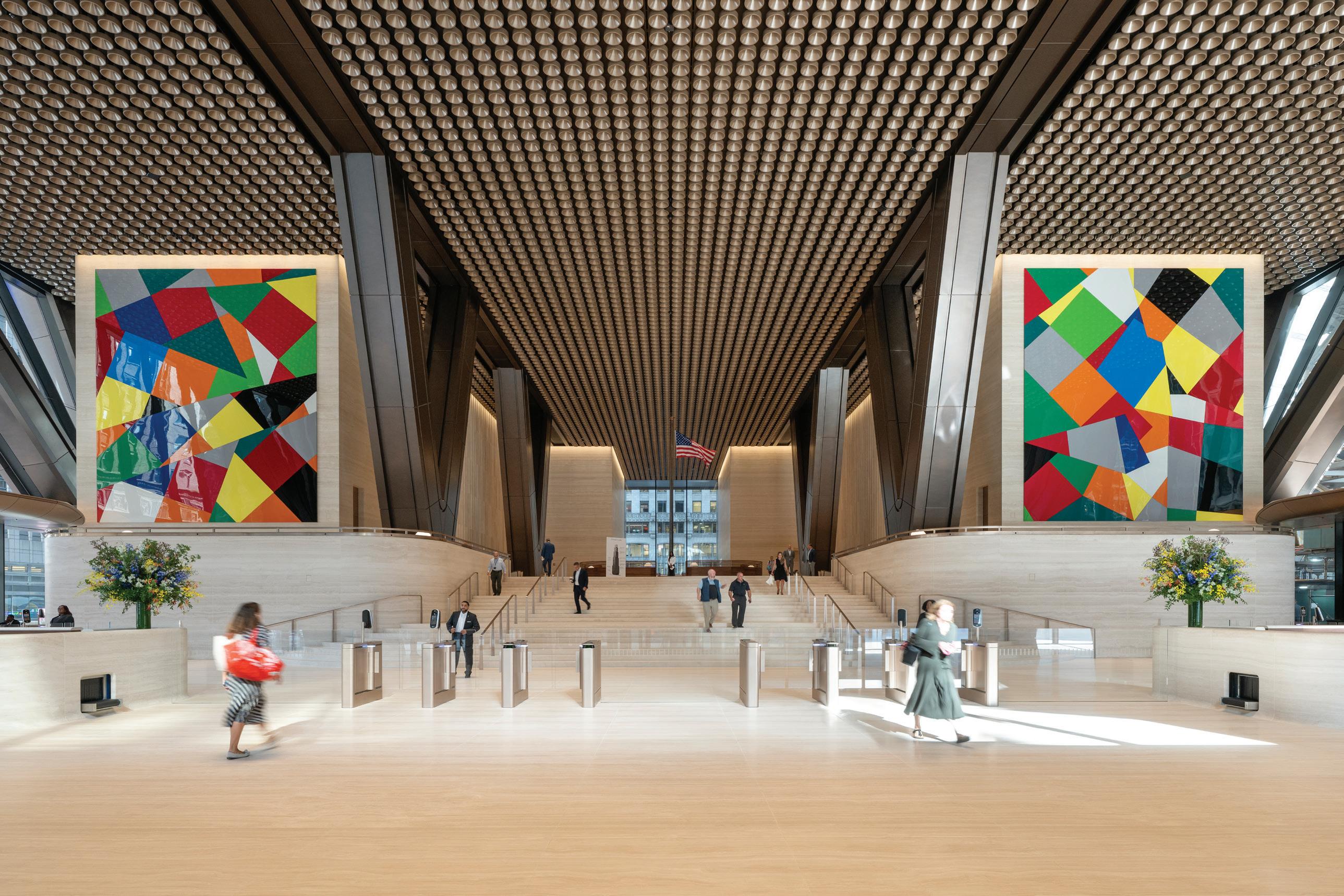
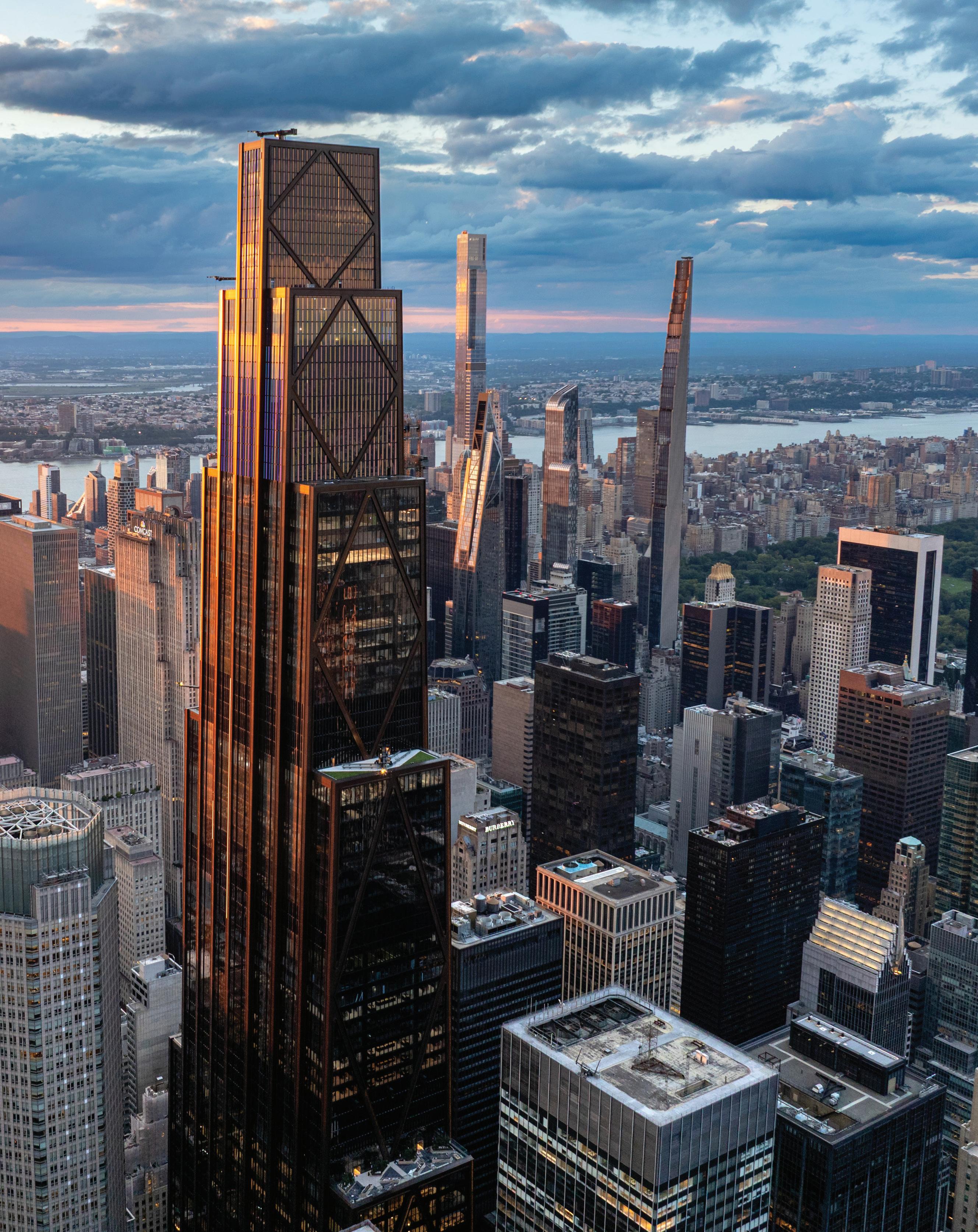
The previous building at 425 Park Avenue, designed by Emery Roth & Sons, was a competent structure, one of many that sustained the commercial life of the avenue without seeking to alter it. But the new building, designed by Norman Foster, reconsiders what a tower on Park Avenue can be. It stands as the first full-block office building to be constructed on the avenue in over fifty years. Its frame is legible, its vertical system expressed across the façade through twelve massive “jumbo columns” that hold the structure. At key points, the structure opens, creating volumes that extend beyond the standard floor plate. These interruptions introduce light into the
building and establish a different spatial rhythm.
From the street, the shift is measured rather than dramatic. The building aligns with its neighbors, then adjusts that alignment, acknowledging the established order of Park Avenue while introducing variation within it. Inside, the approach becomes more apparent.
The building is structured around a series of volumes rather than uniform floors. Double- and triple-height spaces which include “sky forest” floors that interrupt the vertical stack, allowing light to penetrate deeper into the interior.
Foster’s work often prioritizes structure and systems. At 425 Park Avenue, environmental performance, circula-
tion, and material are treated as parts of a single framework. As one of New York City’s first WELL-certified office buildings, it manages air quality and natural light as essential components of the design. Glass functions as an interface rather than a surface, maintaining a visual connection between interior and exterior. This transparency is anchored at the ground level by a triple-height lobby and the culinary energy of Four Twenty Five by Chef Jean-Georges Vongerichten, which features 45-foot ceilings and a cocktail lounge overlooking the avenue.
The transition of 425 Park Avenue from a functional mid-century structure into a Foster masterwork is more than a construction project; it is a rare
alignment of heritage and ambition. It is an exceptional moment in the life of a city when a world-renowned architect is granted the opportunity to leave a definitive mark on an avenue that already serves as a global gallery for the legends of modernism. This cumulative identity reflects a moment where the past and future meet on a single corner. 425 Park Avenue stands as a testament to the fact that even on the most famous avenue in the world, there is still room for a new, visionary voice. As Foster himself noted, one designs for the present with an awareness of the past, for a future that remains essentially unknown. On Park Avenue, that unknown has just been given a brilliant, translucent form.
Threads of the Unconscious
Erik Madigan Heck treated a decade of his own archives as the raw material for a new contemporary romanticism
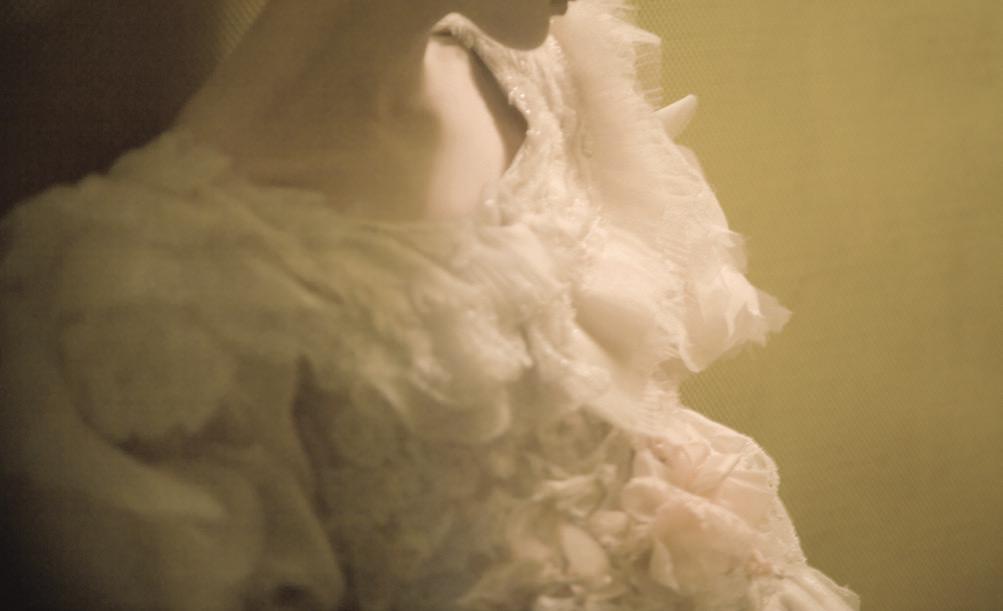
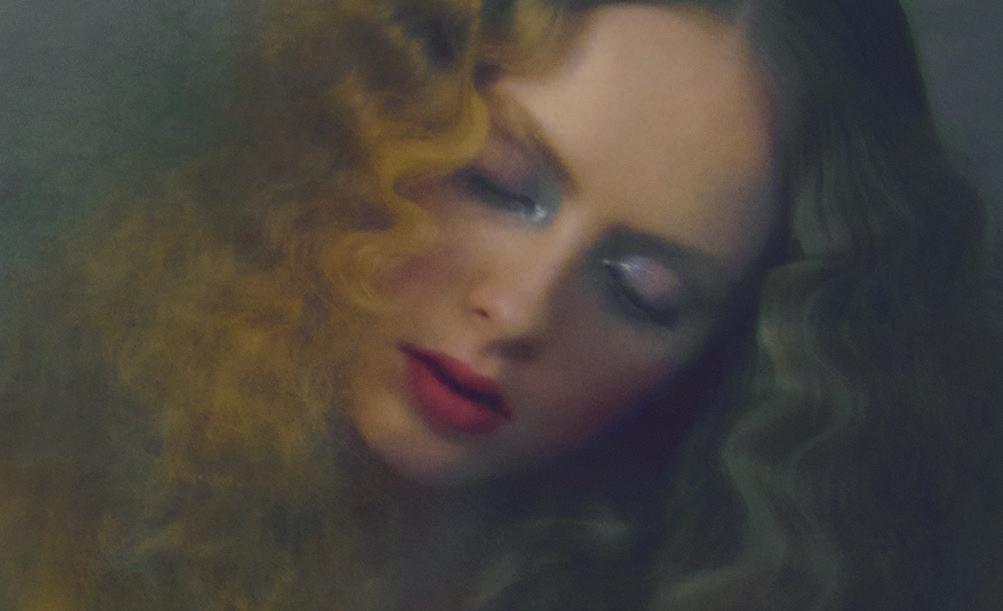
in the quiet, enforced stillness of the global pandemic, Erik Madigan Heck began a process of artistic archaeology that would fundamentally redefine his relationship with his own lens. Rather than seeking out new subjects, he turned his focus inward, treating the “enforced pause” as a space to revisit a decade of his own archives, not to curate a mere retrospective, but to treat his existing photographs as raw material for a broader aesthetic experiment. He began recoloring, cropping, and layering these images until they transformed into something entirely new, a process that culminated in the monograph The Tapestry. Published by Thames & Hudson, the book functions as a physical artifact of a shifting creative mind, illustrating a cycle where the boundaries between painting and photography simply dissolve.
Heck has long described himself as a painter who uses a camera, and Tapestry is the ultimate manifestation of that fluid identity. The work demonstrates
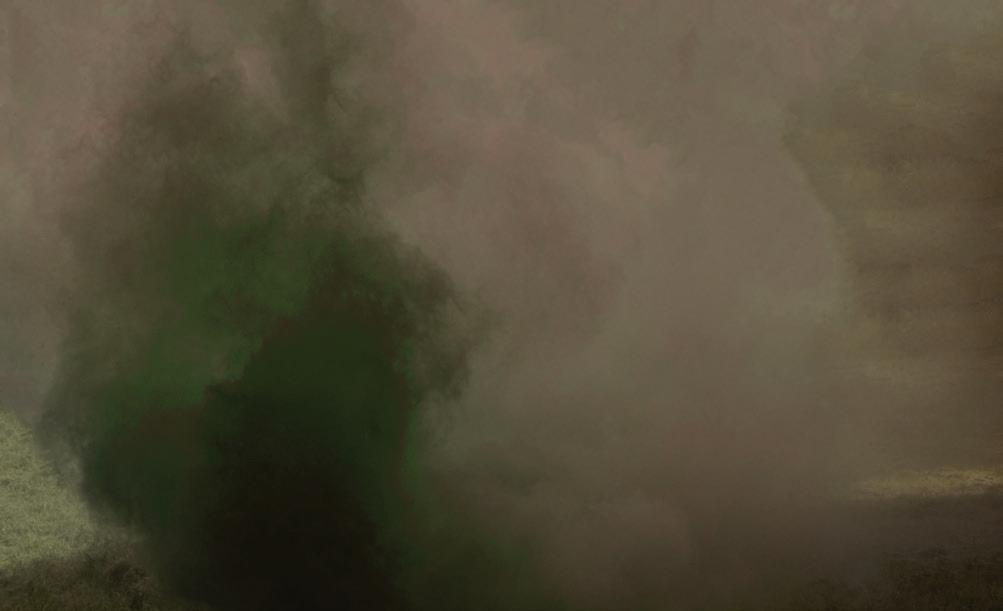
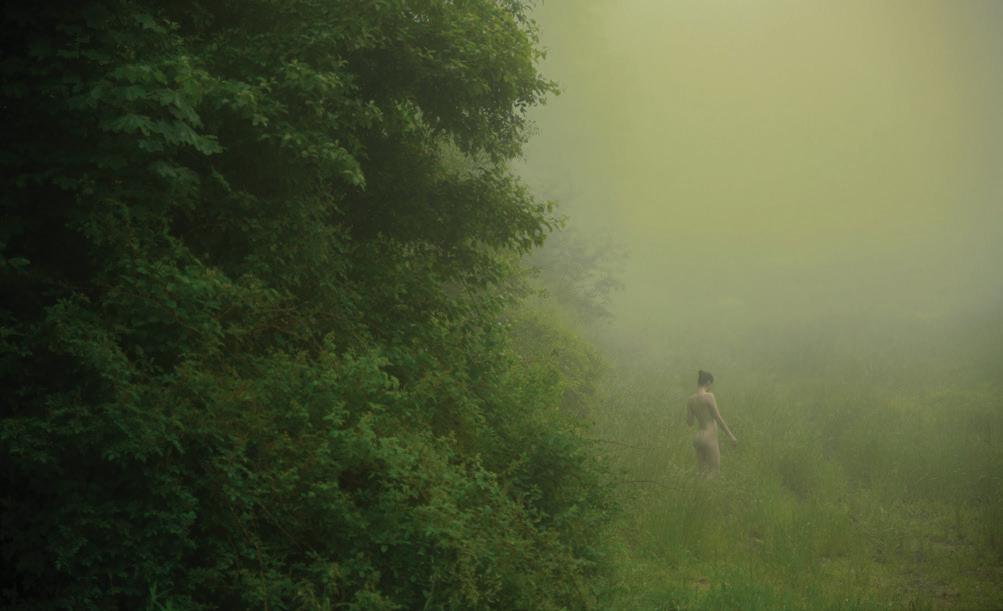
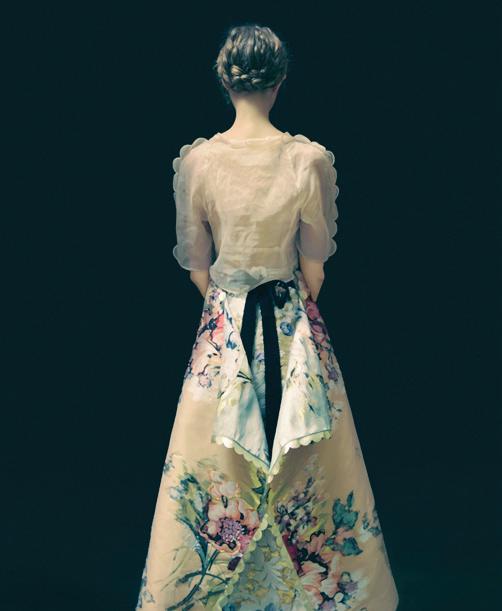
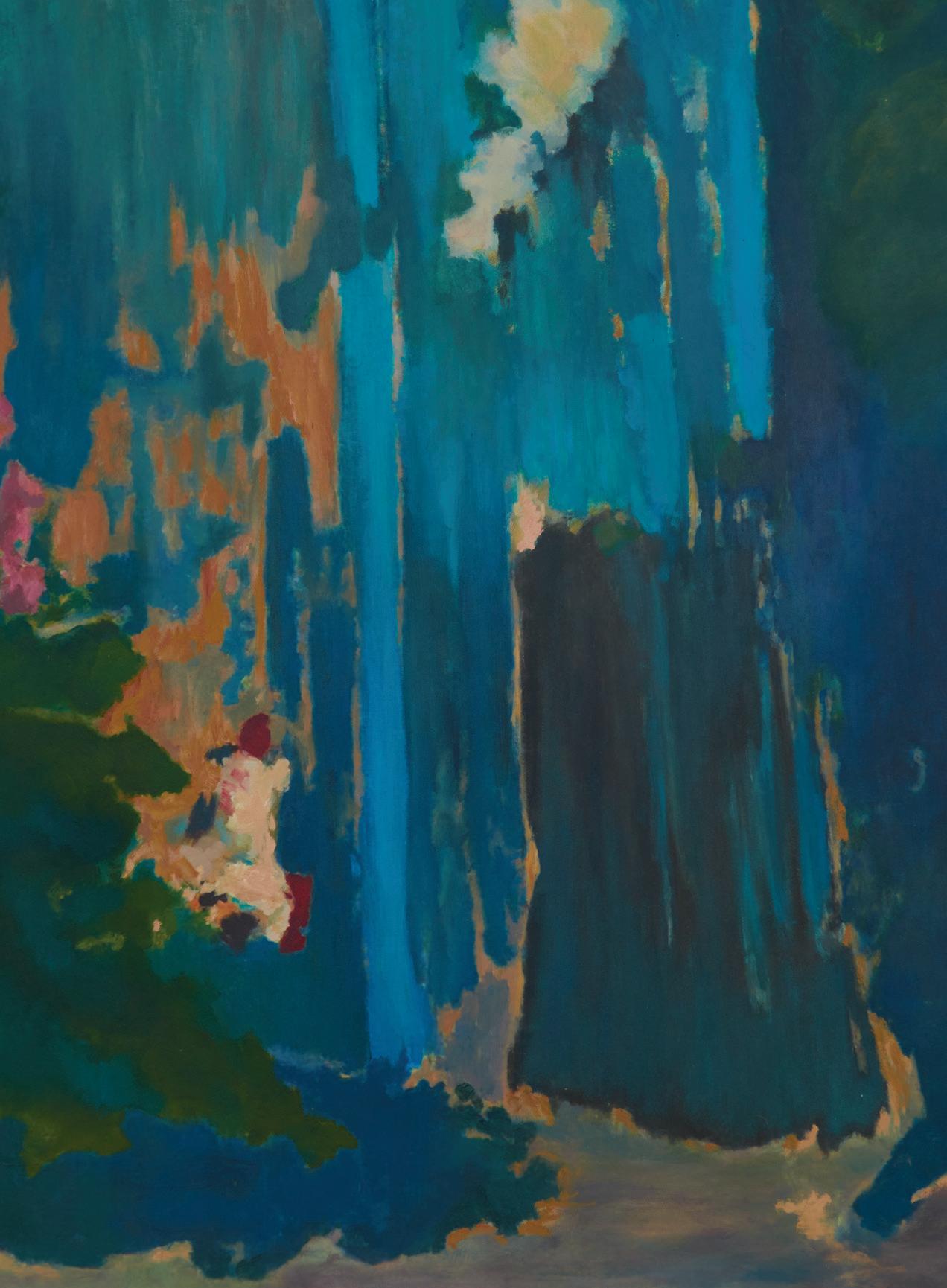
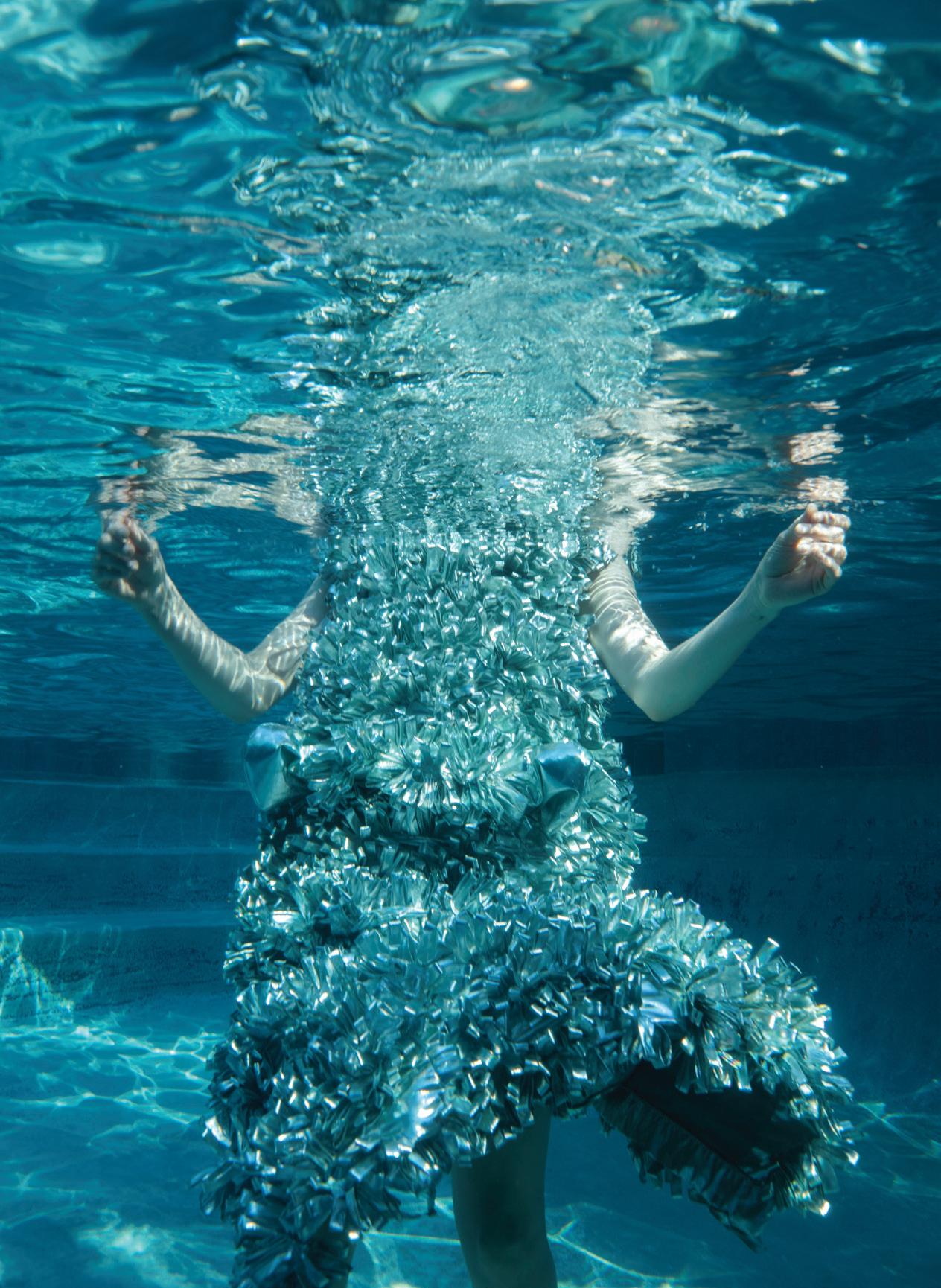
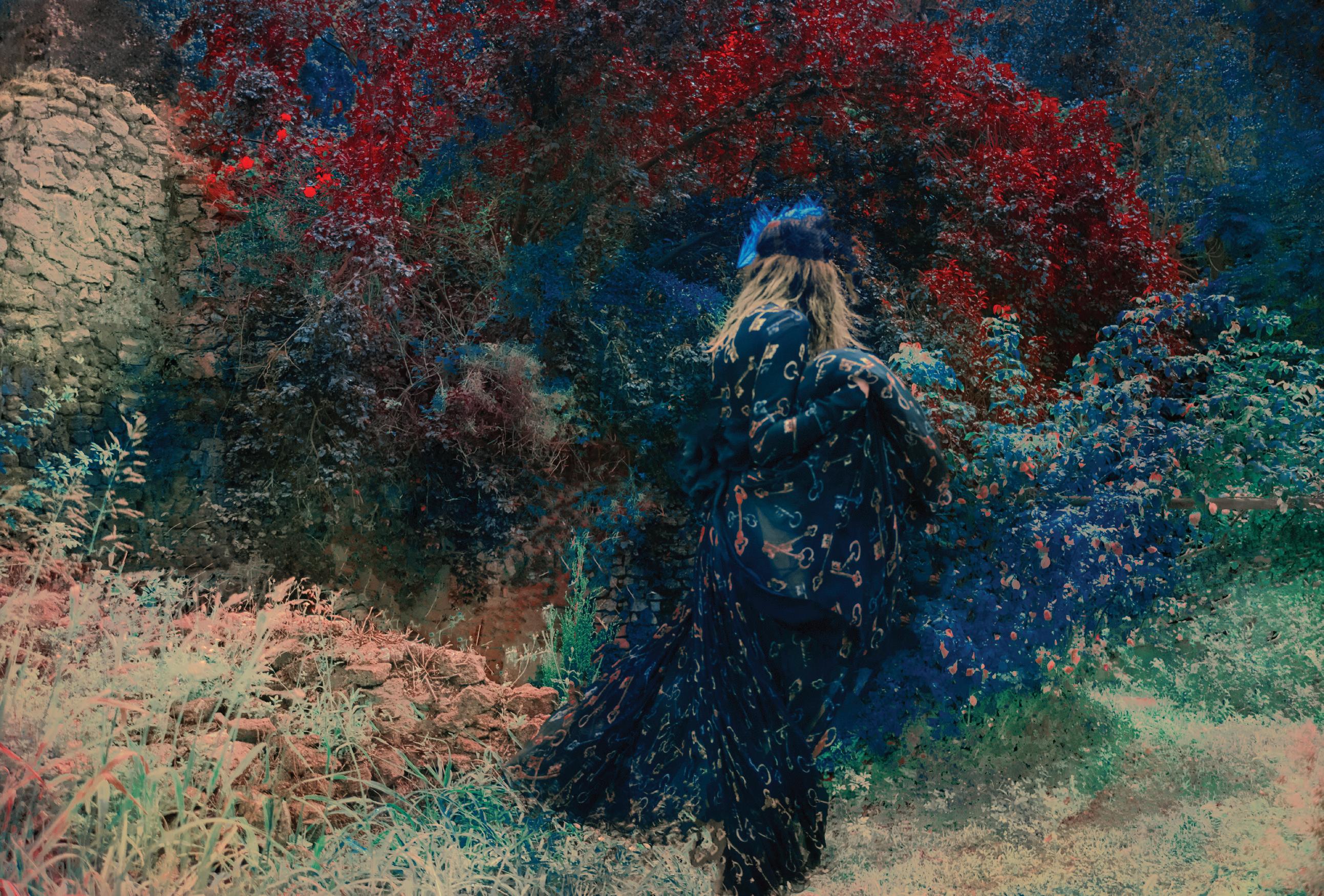
a continuous creative feedback loop where the internal logic of classical painting informs the way he captures light and shadow. He has noted that his digital workspace requires the same patience as a physical studio, as he often revisits frames years after they were first captured to add luminous layers of color or strip away shadows. This approach allows the work to transcend its documentary nature, becoming a scene from a dreamscape where reality and fantasy merge. Critical reception has mirrored this ethereal quality, with Air Mail describing the work as visual poetry that represents the absent as much as the present, highlighting how the physical labor involved in reworking the piece eventually erases the memory of the actual moment the shutter was pressed.
The painterly lineage in Heck’s work is unmistakable, drawing directly from the vibrant, atmospheric palettes of Edgar Degas, Edouard Vuillard, and Gustav Klimt. While his previous works maintained a clearer link
Opposite, Clockwise from Top Left: Erik Madigan Heck (American, b. 1983), Descending Waterfall, 2018. Oil and acrylic on canvas. 161 x 150 cm (63 3/8 x 59 1/8 in.)
Erik Madigan Heck (American, b. 1983), Untitled (Silver), from the series Old Future, 2017. Archival pigment print.
Below: Erik Madigan Heck (American, b. 1983), Carradale, from the series The Tapestry, 2022. Chromogenic print, framed. 100.3 x 151.1 cm (39 1/2 x 59 1/2 in.)
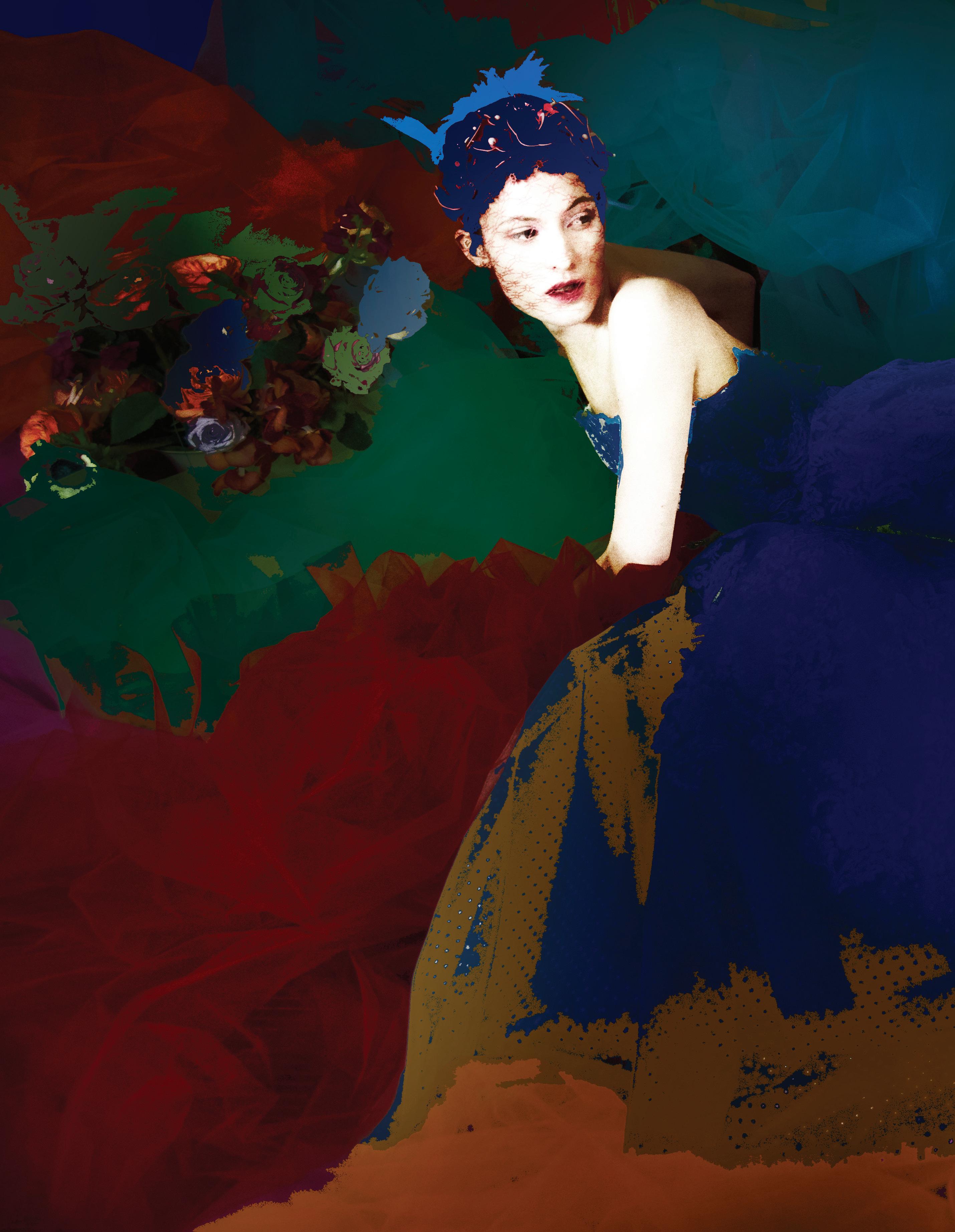
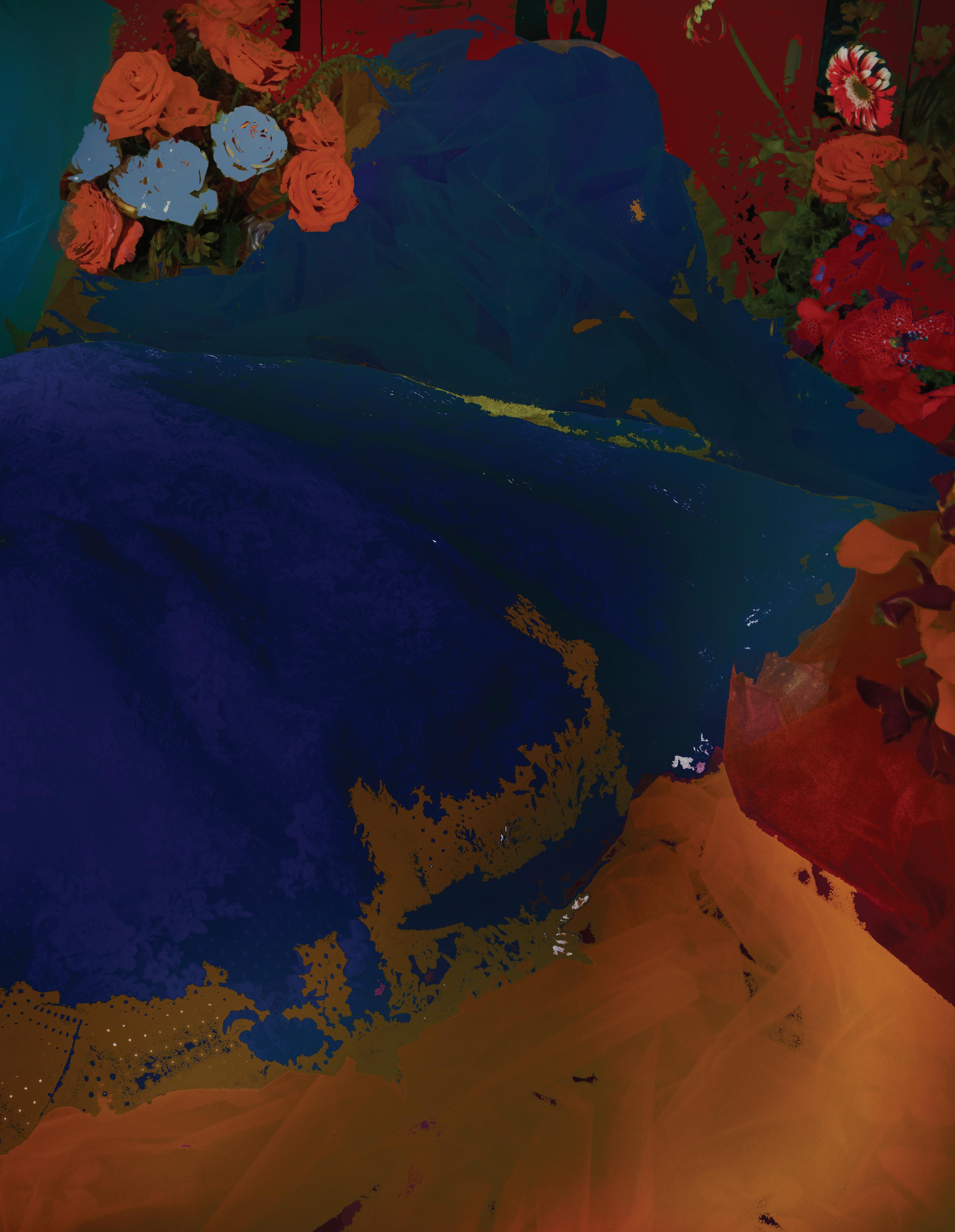
Erik Madigan Heck (American, b. 1983), Vogue Italia Reconstructed, from the series The Tapestry, 2023. Archival pigment print.
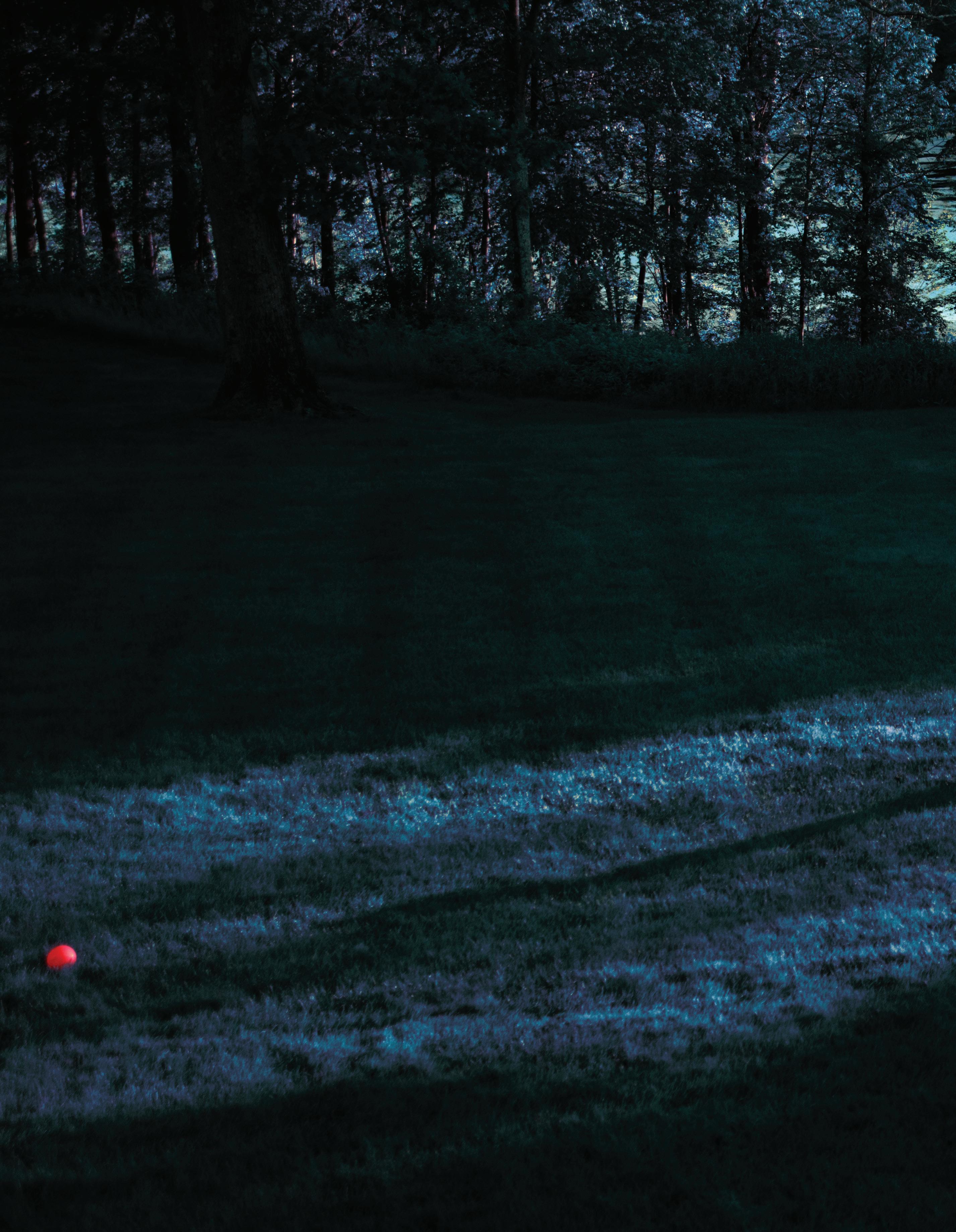
82 Erik Madigan Heck (American, b. 1983), Girl With A Red Ball, 2020. Chromogenic print, framed. 151.2 x 226.7 cm (59 1/2 x 89 1/4 in.)
to fashion and nature, Tapestry veers deeper into abstraction, where vibrant hues are layered like threads in a fabric to reveal the emotional resonance of pure color. It is a radical departure that suggests an artist is never truly finished with an image; to Heck, the initial photograph is merely the first layer of a much larger, ongoing conversation. He describes his practice as a gradual learning and subsequent unlearning, moving from the formal structures of his training to a place where he can simply “muddle together” fashion, landscape, and portraiture into a poetic mixture.
Ultimately, Tapestry acts as a definitive artistic manifesto, proving that beauty can be both unapologetic and intellectually rigorous. Whether he is
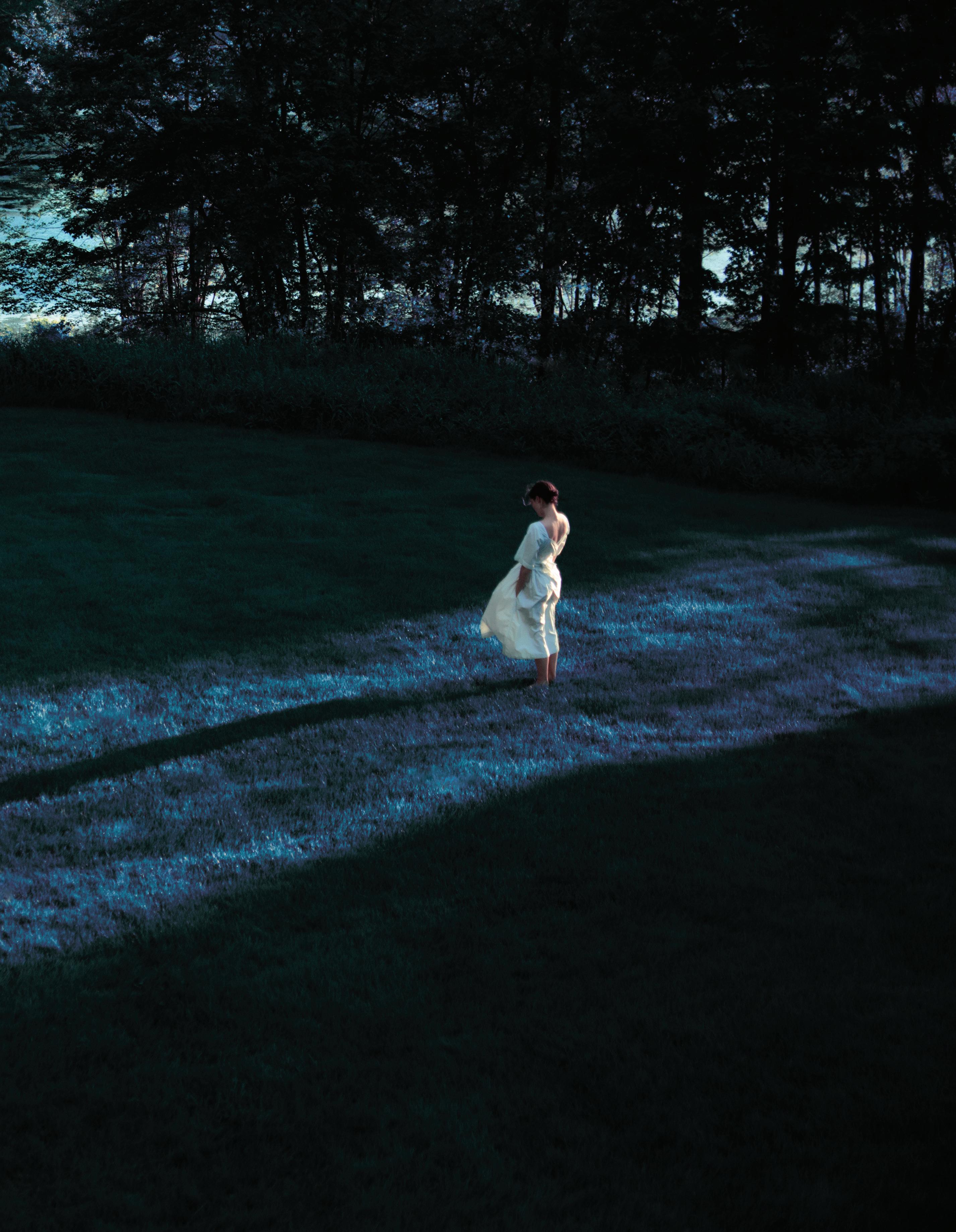
collaborating with Gucci or The Metropolitan Opera, Heck’s signature remains a bold embrace of natural light and a refusal to separate technical craft from philosophical contemplation. He maintains that a photograph should be successful on its own merits rather than relying on an overt narrative or a forced series. The reception of his work has solidified his status as a masterclass storyteller, one who views the world not as a series of static captures, but as an evolving tapestry of form and hue. By revisiting his past through a painterly lens, he reminds his audience that the most compelling art is that which is meticulously crafted, using the medium as an opportunity for imagination to build new realities rather than merely recording the one that exists.
Erik Madigan Heck’s The House of Photography, in Stockholm, Sweden, opens on August 26th
Jaguar’s Lifeline
Alexandra Climent’s quest to create a haven for Biodiversity
the darién gap is a place where the earth’s lungs still breathe, but they do so with a ragged, desperate wheeze. To understand the story of Alexandra Climent, one must first understand the ferocity of the landscape she calls her office. Stretching across the border of Panama and Colombia, the Darién Gap is sixty miles of roadless, lawless, and nearly impenetrable wilderness. It is the only break in the Pan-American Highway, a 19,000-mile artery that otherwise runs uninterrupted from Alaska to Argentina, because the jungle here simply refused to be paved.
It is a world of vertical mud, raging rivers, and a canopy so dense it swallows the sun. In this humid cauldron, the dangers are as varied as the biodiversity. There are venomous snakes like the Fer-de-lance, disease-carrying insects, and the infamous chunga palm, whose long, needle-sharp spines can puncture a boot and cause infections that rot the flesh. Beyond the natural perils, the Gap is a strategic haunt for narcotraffickers and paramilitary groups, making it a treacherous passage for the thousands of migrants who attempt to cross it each year in search of a better life. Most people view the Darién
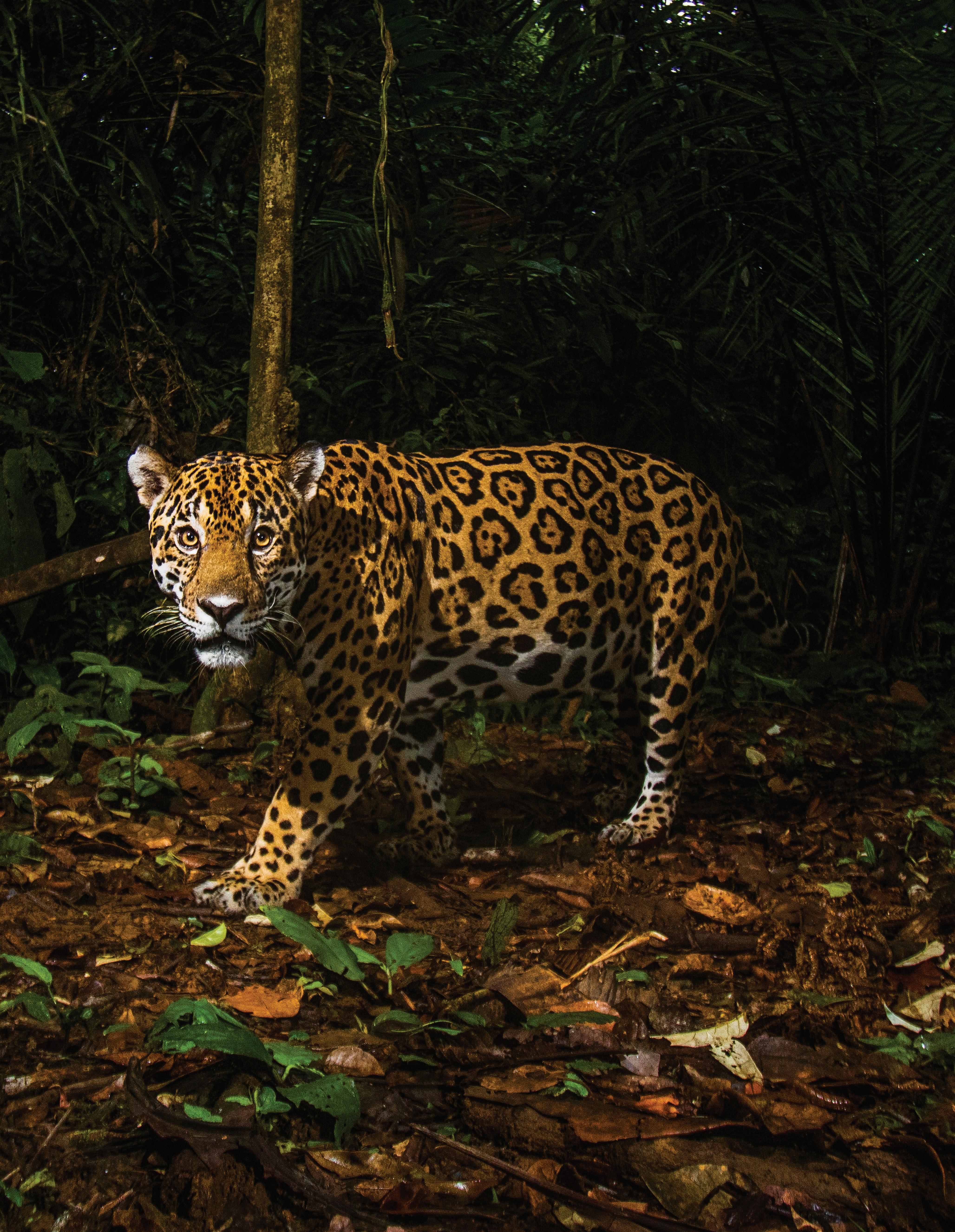
Jaguar (Panthera onca) melanistic female in tropical rainforest at night, Panama. Sebastian Kennerknecht/ Cat Expeditions
Gap as a nightmare to be survived. Alexandra Climent views it as a paradise to be saved.
Alexandra Climent’s journey into one of the world’s most dangerous jungles did not begin in a classroom, but with a fascination for tropical hardwoods and where they came from. As a college student in New York, she took a part-time job at a construction company to pay for her studies. There, she fell in love with the weight, the grain, and the ancient history of tropical hardwoods. This fascination eventually led her to the rainforests of Central and South America, where she spent years working with Indigenous communities to source fallen timber, trees that had naturally collapsed in the forest. She began as an artist, transforming some of the densest and rarest woods on earth into functional sculptures and fine furniture. Her work was a cycle of restoration: she would find a fallen giant, document its location, and use the proceeds from her art to fund the reforestation of that same species. However, the more time she spent deep in the Darién, the more she realized that art
alone could not keep up with the pace of destruction.
Every time she returned to Panama, the wall of green had receded further. Rampant cattle ranching and teak plantations were carving the rainforest into isolated fragments, leaving the region’s apex predators, the jaguars, trapped in shrinking islands of trees. This heartbreak transformed her focus. In 2022, she founded Endangered Rainforest Rescue (ERR), a nonprofit dedicated to protecting the Darién’s primary forests and restoring its degraded lands. Her tireless efforts reached a new pinnacle in 2026, when Alexandra Climent won the New Explorer Award from The Explorers Club for her work in rainforest conservation.
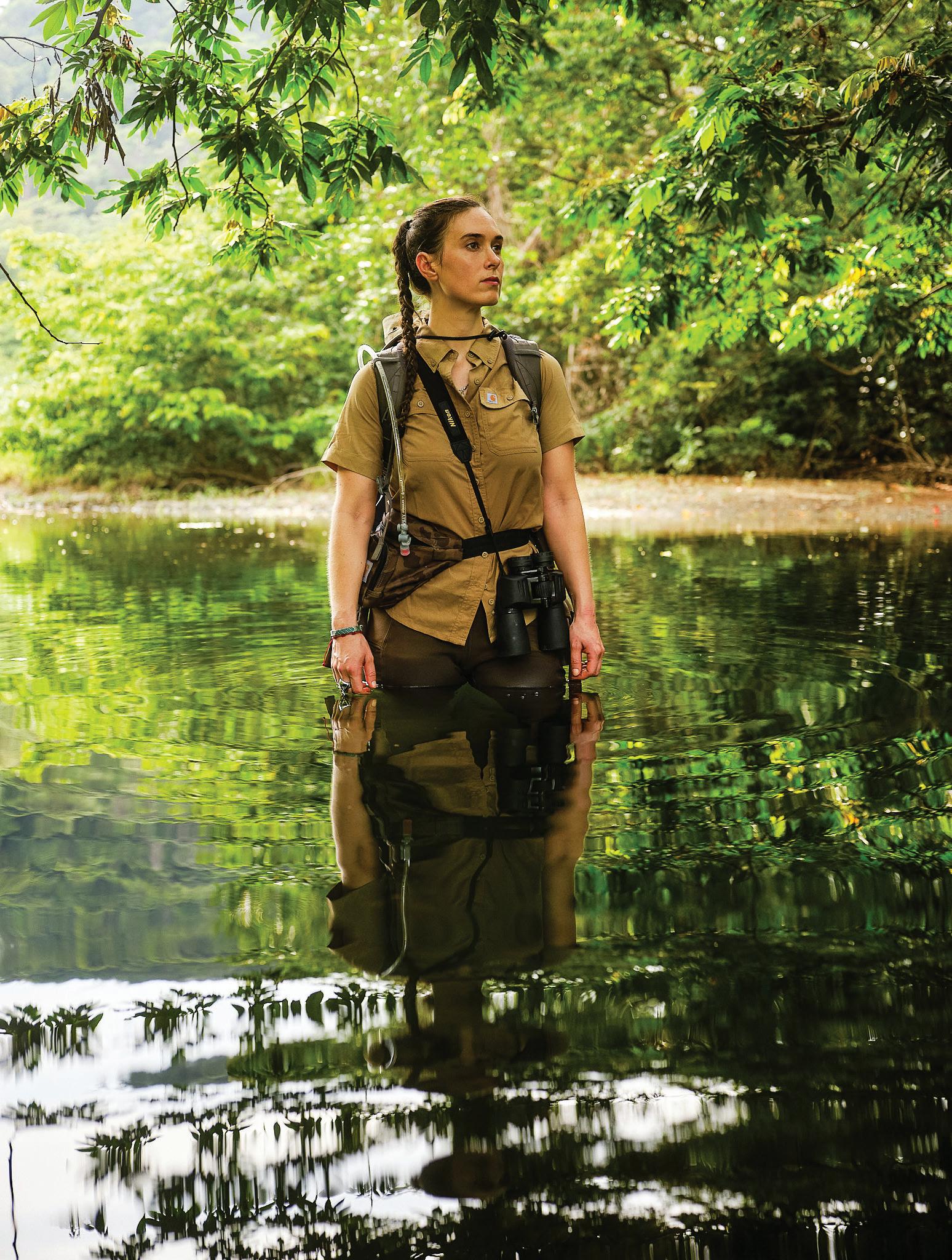
Climent’s life today is a stark contrast to the galleries of New York. Her expeditions into the Darién are feats of endurance. She speaks of walking for four hours through the Sambu River, her boots perpetually soaked and her skin a canvas for leafcutter ants and biting flies. In this environment, she has learned that the rainforest is a
“The best days of my life were when I could spend hours in the rainforest and learn how everything is interconnected in this wonderful tapestry of life.”—Jane Goodall
Left: Alexandra Climent leading a seed collection expedition deep in the jungles of the Darién Gap.
Photo credit: Nicholas Mehedin
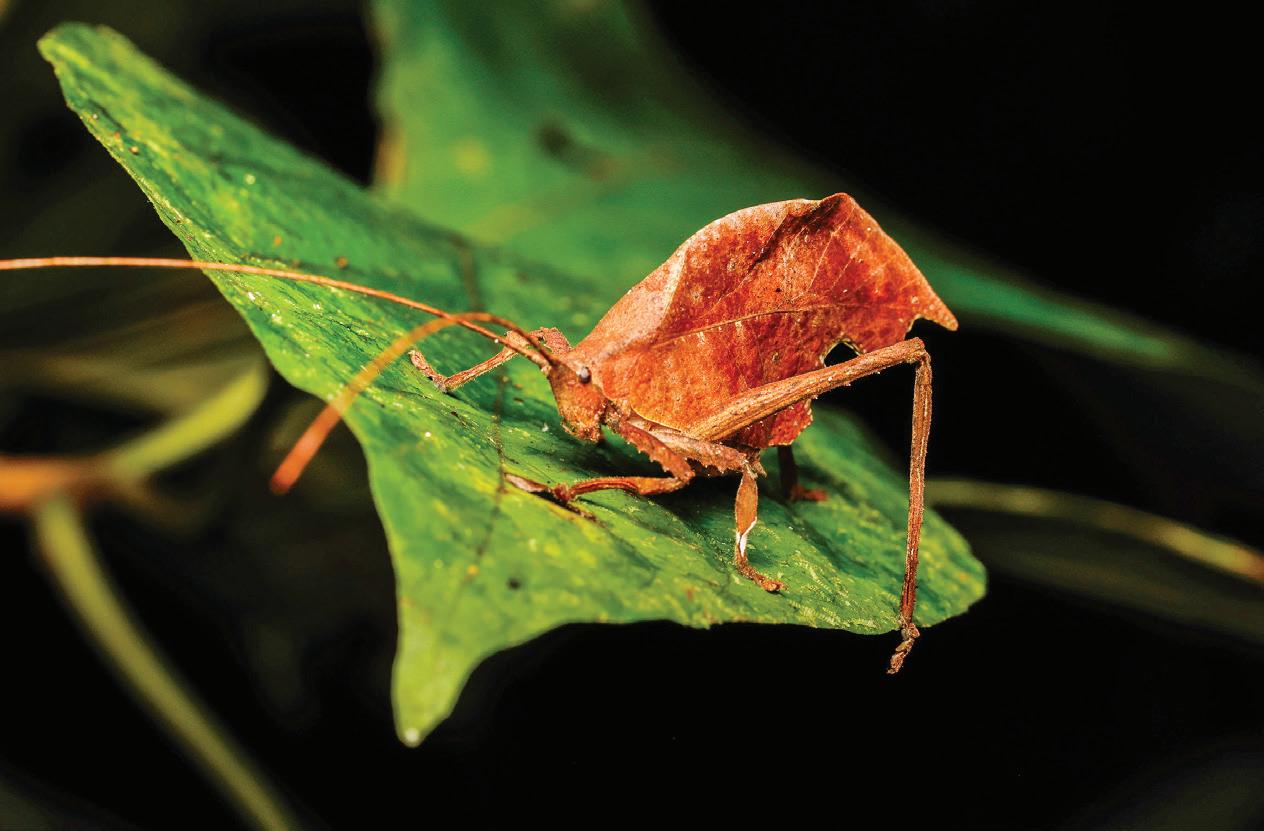
Below, Top to Bottom: An arthropod camouflaged among the foliage of the Darién rainforest.
Photo by Max Linden
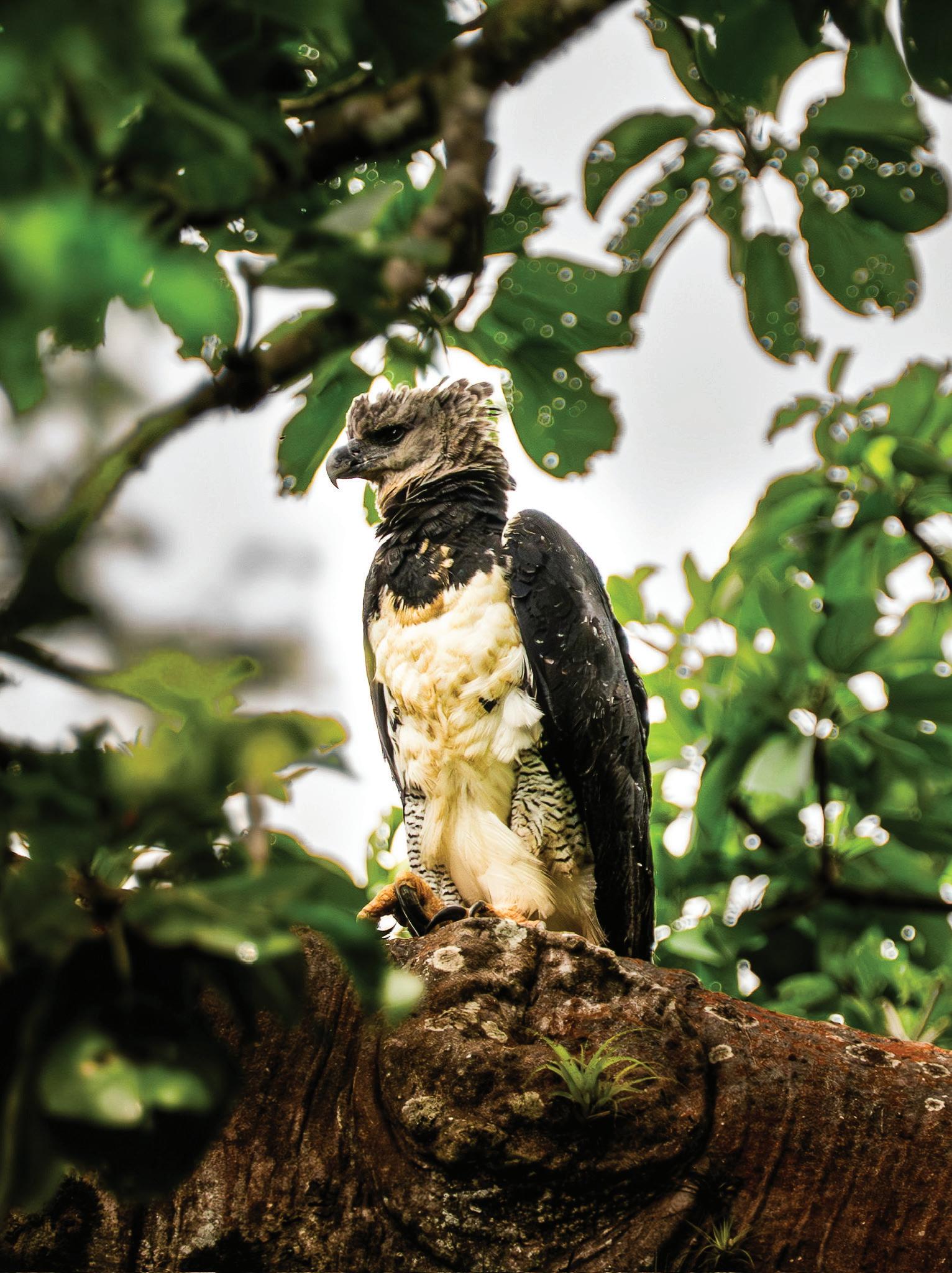
Harpy eagle (Harpia harpyja) photographed in the intact forest surrounding the corridor.
Photo by Max Linden
“powerful and intimidating force” that demands absolute respect.
Working alongside the Emberá and Wounaan peoples, Climent has immersed herself in their symbiotic relationship with the land. These Indigenous groups have served as the earth’s guardians for centuries, but they often face immense pressure to sell their timber or land to outside interests just to survive. ERR works to provide these communities with sustainable alternatives, ensuring that protecting the forest
becomes more economically viable than destroying it.
The core of her mission is the creation of a 5,000-hectare wildlife corridor.
By purchasing degraded land and reforesting it with native hardwoods like the Almendro de Montaña (Dipteryx oleifera), Climent and her team are stitching the forest back together.This corridor is a lifeline for the jaguar, allowing the big cats to migrate between protected areas and maintain the genetic diversity necessary for their survival. It is also a haven
for over 600 species of birds, including the endangered Great Green Macaw.
Beyond the survival of a single species, the project seeks to heal the Americas as a whole. By restoring the Chucunaque River Corridor—a vital link in the larger Mesoamerican biological corridor—Climent is effectively reconnecting the lowland rainforest between North and South America. This continental connection serves as an essential carbon link and migratory pathway, restoring a geological bridge that has de-
fined the biodiversity of two continents for millions of years.
To ground this mission in hard data, Climent’s team has initiated the first baseline biodiversity studies in the project area, filling a significant scientific void in a region where researchers often rely on field guides from neighboring countries. Phase one of these studies has already yielded spectacular results: researchers have documented families of bats and frogs they had never seen in their careers and discovered an extraor-
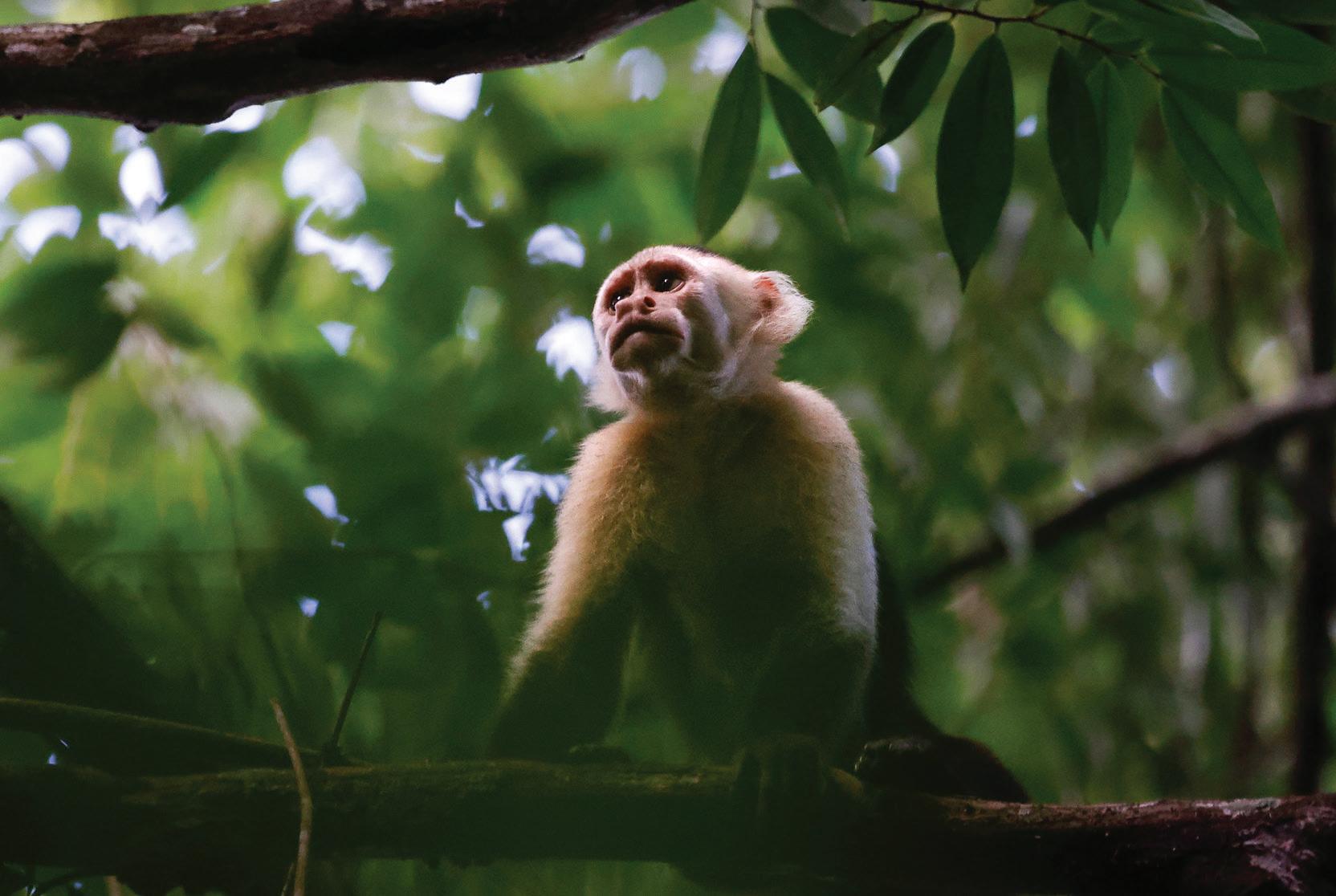
Top to Bottom: A white-faced capuchin (Cebus imitator) photographed within Endangered Rainforest Rescue’s protected corridor in the Darién Gap, Panamá.
Photo by Nicholas Mehedin
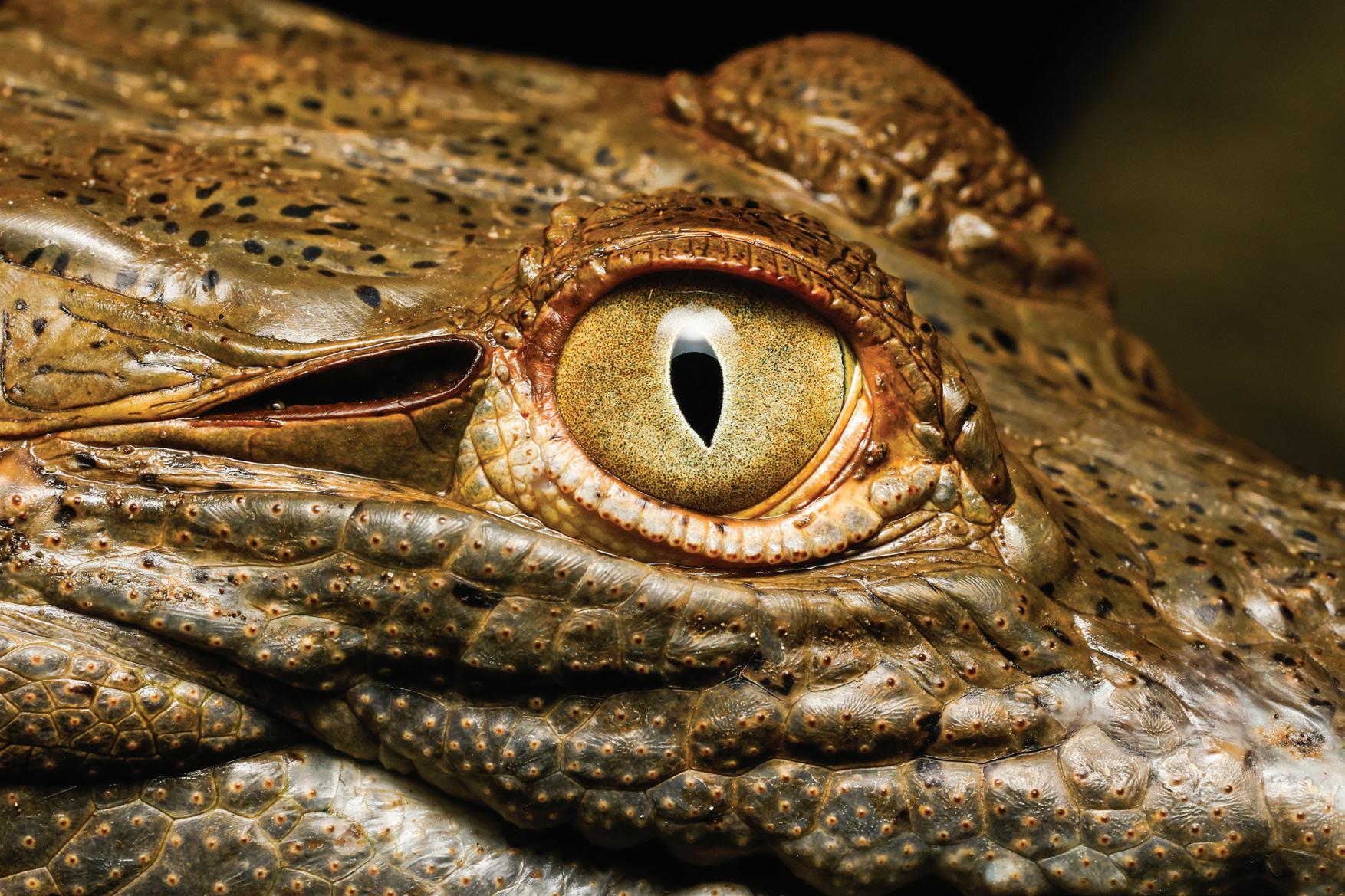
Close-up of an American crocodile (Crocodylus acutus) from the Chucunaque River corridor in the Darién rainforest. Photo by Nicholas Mehedin
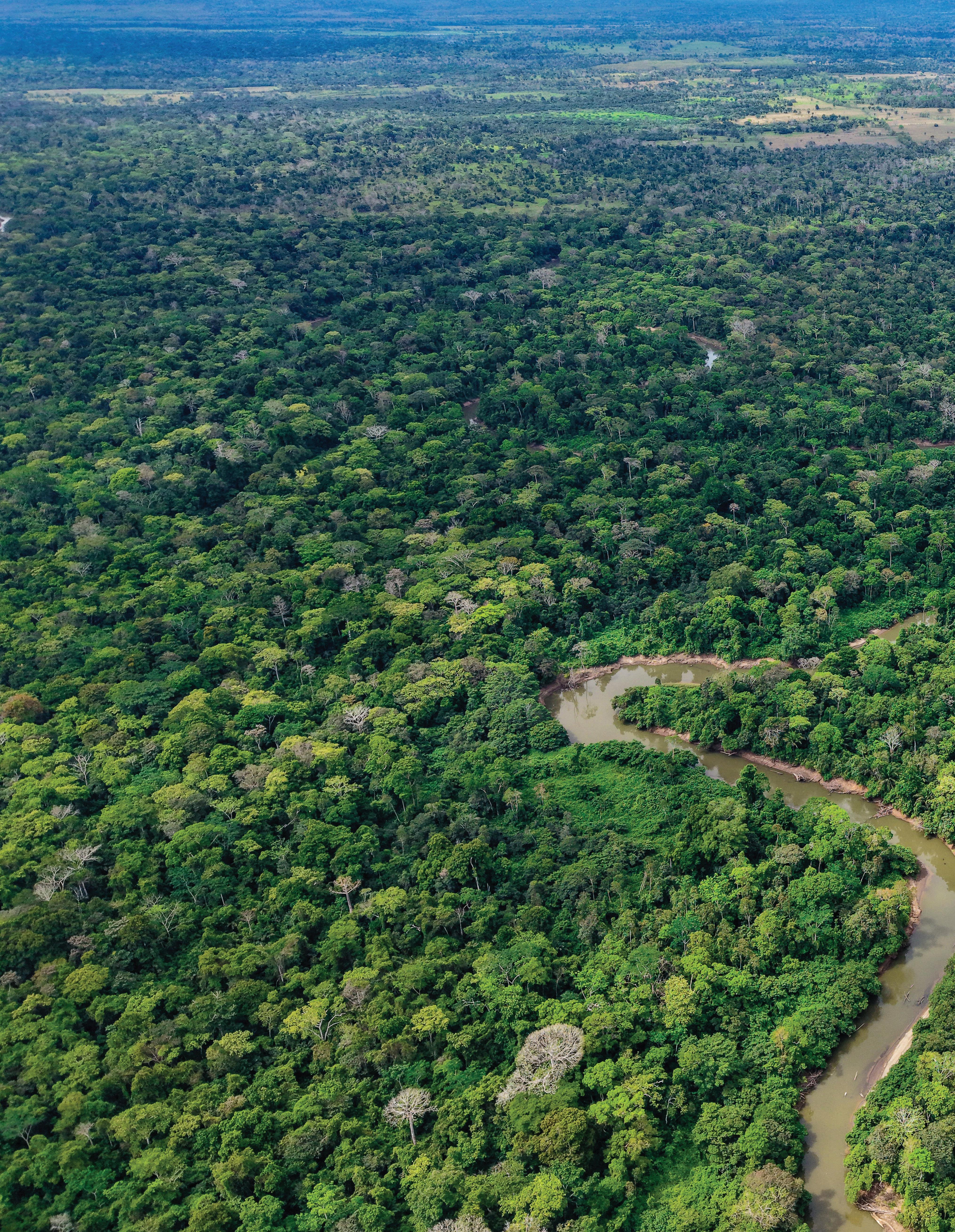
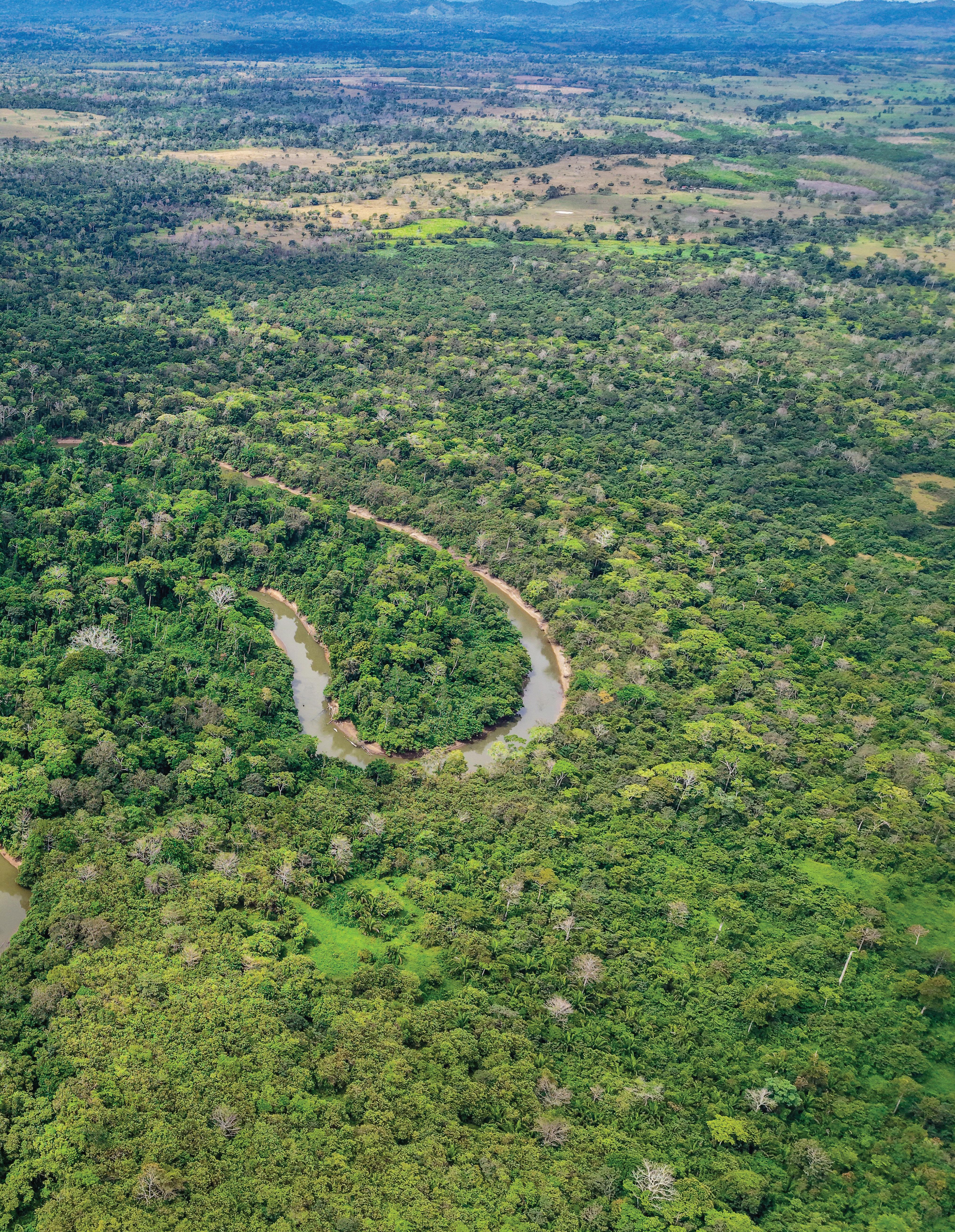
Aerial view of the Chucunaque River Corridor in the Darién Gap, where fragmented forest and agricultural clearing press against one of the last remaining lowland rainforest connections between North and South America. Drone flown by Nicholas Mehedin
dinary abundance of small vertebrates within the primary forest patches. In the botanical sector, Climent recently identified the largest tree of her career in the center of the corridor, a discovery that underscores the absolute urgency of protecting remaining primary forest parcels before they are lost to the agricultural frontier.
The Darién Gap is often described as “unexplored,” but for Climent, it is a place where every tree has a story. She emphasizes that while the Amazon is vast and often feels overwhelming to protect, the Darién Gap is relatively small. “We can protect this place,” she says. “It is a tangible goal”.
Her work is defined by the principle of “digital norm evasion”, the idea that no amount of technology or remote monitoring can replace the physical presence of a steward on the ground. She is there, seeds in hand, working to restore the “missing space” where biodiversity used to thrive. Her artistic practice remains a part of this mission; she still creates functional art from fallen trees, but now each piece is a vessel for the forest’s survival.
Standing in the Darién today, Climent sees a landscape that is both ancient and fragile. The region is one of the newest land bridges on earth, a geological accident that left prehistoric species stranded on mountain tops, leading to a staggering number of plants and animals found nowhere else on the planet.
To enter the Darién with Alexandra Climent is to encounter history not as a distant memory, but as something that persists in the rustle of the leaves and the call of an Emerald toucanet. Her story is a rebuttal to the idea of cultural and ecological stagnation. In a world that often prioritizes speed and viral fads, she has chosen the slow, grueling, and dangerous work of planting trees that will take a hundred years to reach their full height.
The Darién Gap will always be a place of peril, but through the work of Climent and the Indigenous communities of Panama, it is also becoming a place of profound hope. They are proving that even in the face of rampant deforestation and global climate change, the wall of green can be rebuilt; one seed, one corridor, and one fallen giant at a time.
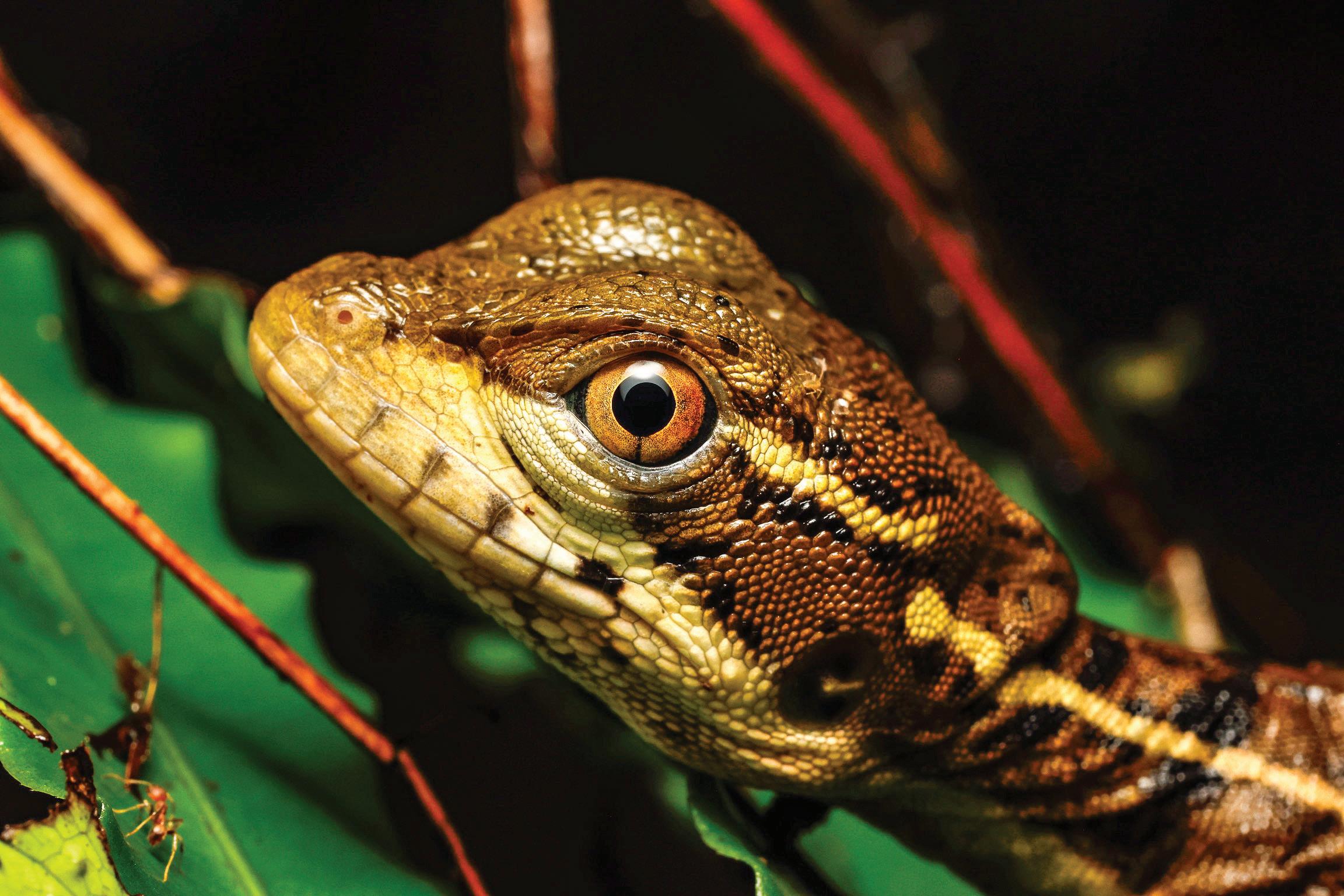
Top to Bottom: A juvenile lizard rests among the dense understory of the Darién rainforest.
Photo by Max Linden
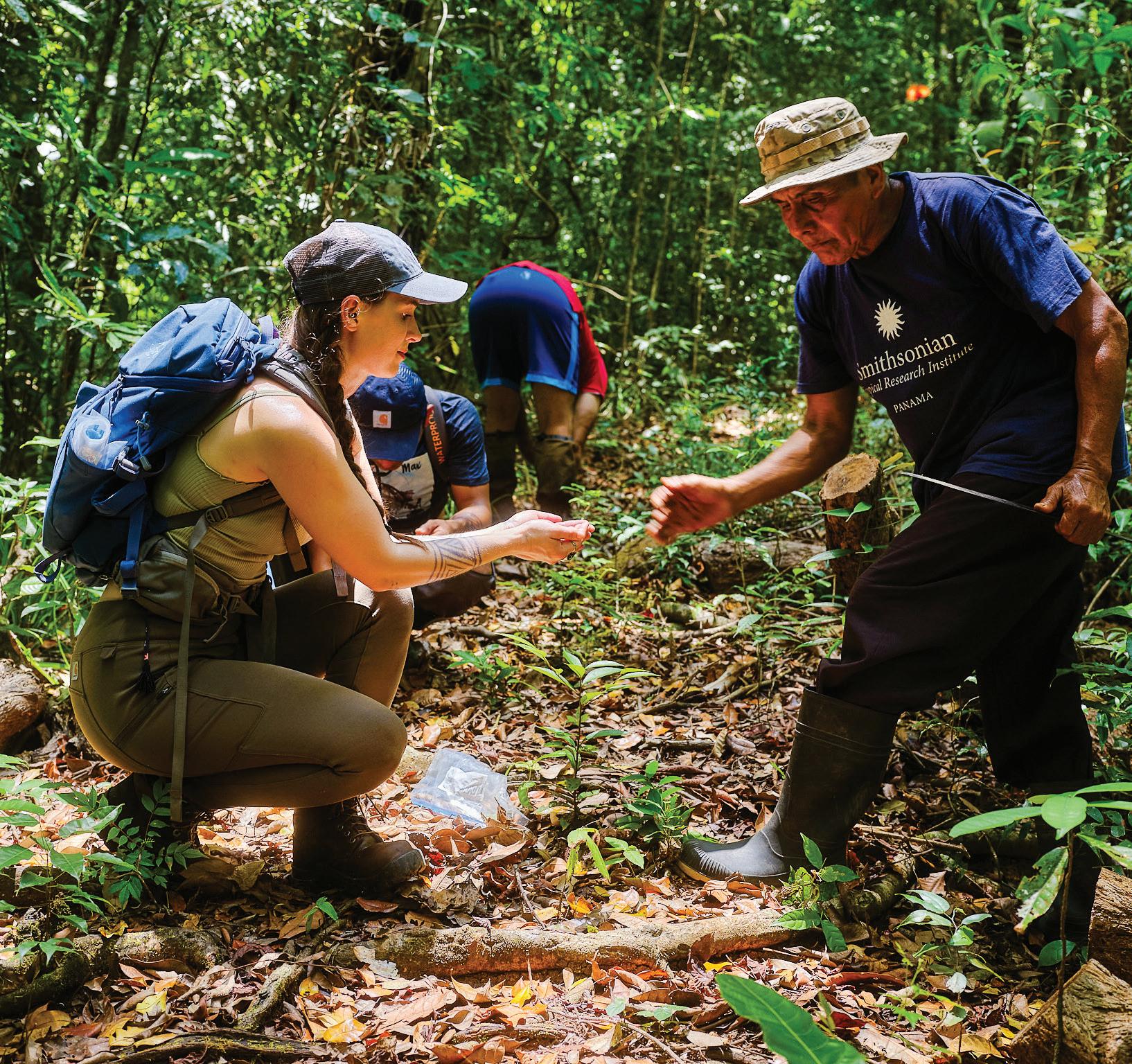
ERR Founder Alexandra Climent and Emberá community chief Yencir Censori collecting endangered tree seeds.
Photo by Nicholas Mehedin
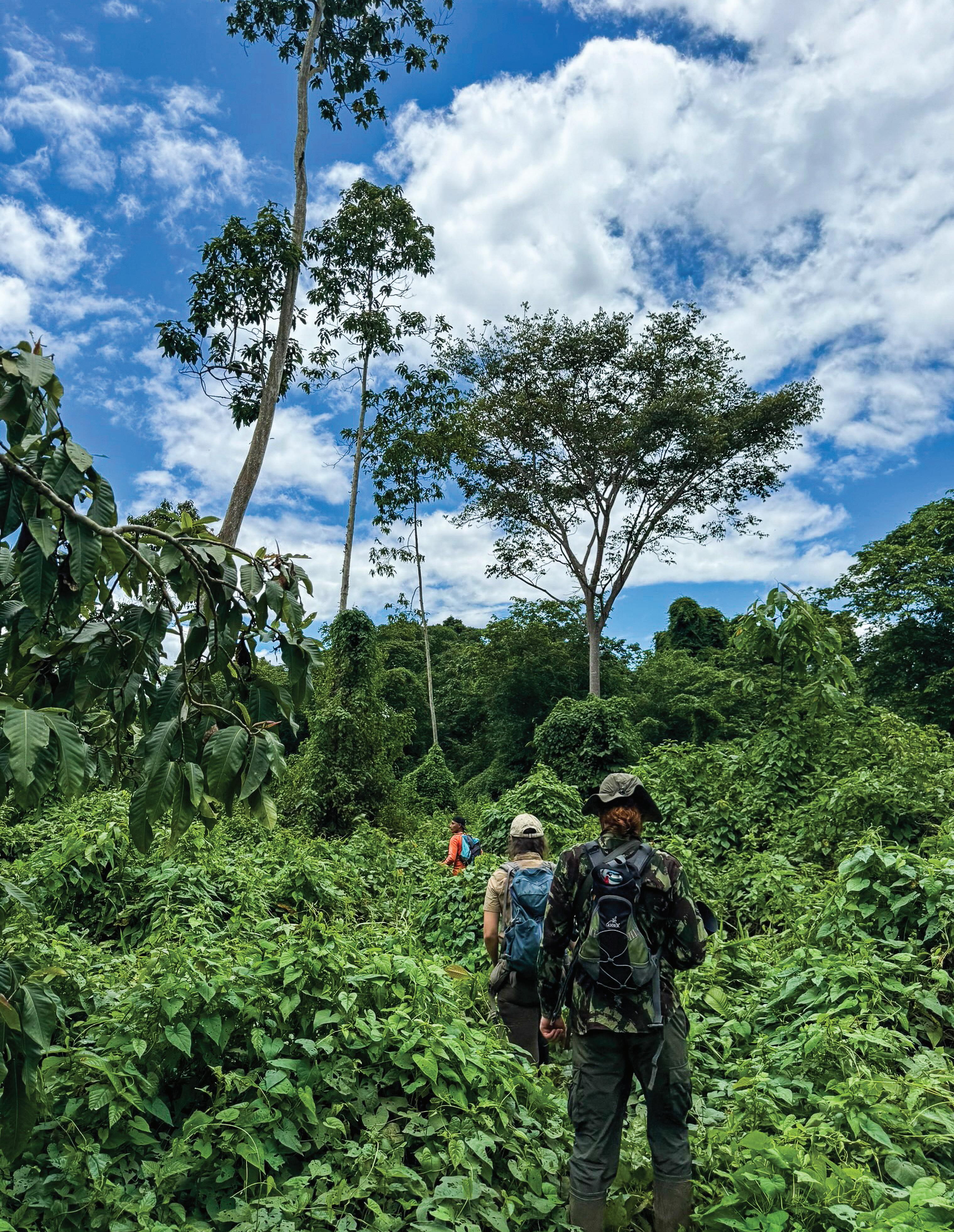
Research team exploring a newly secured forest parcel in the center of the corridor. Photo by Sydney Chiang
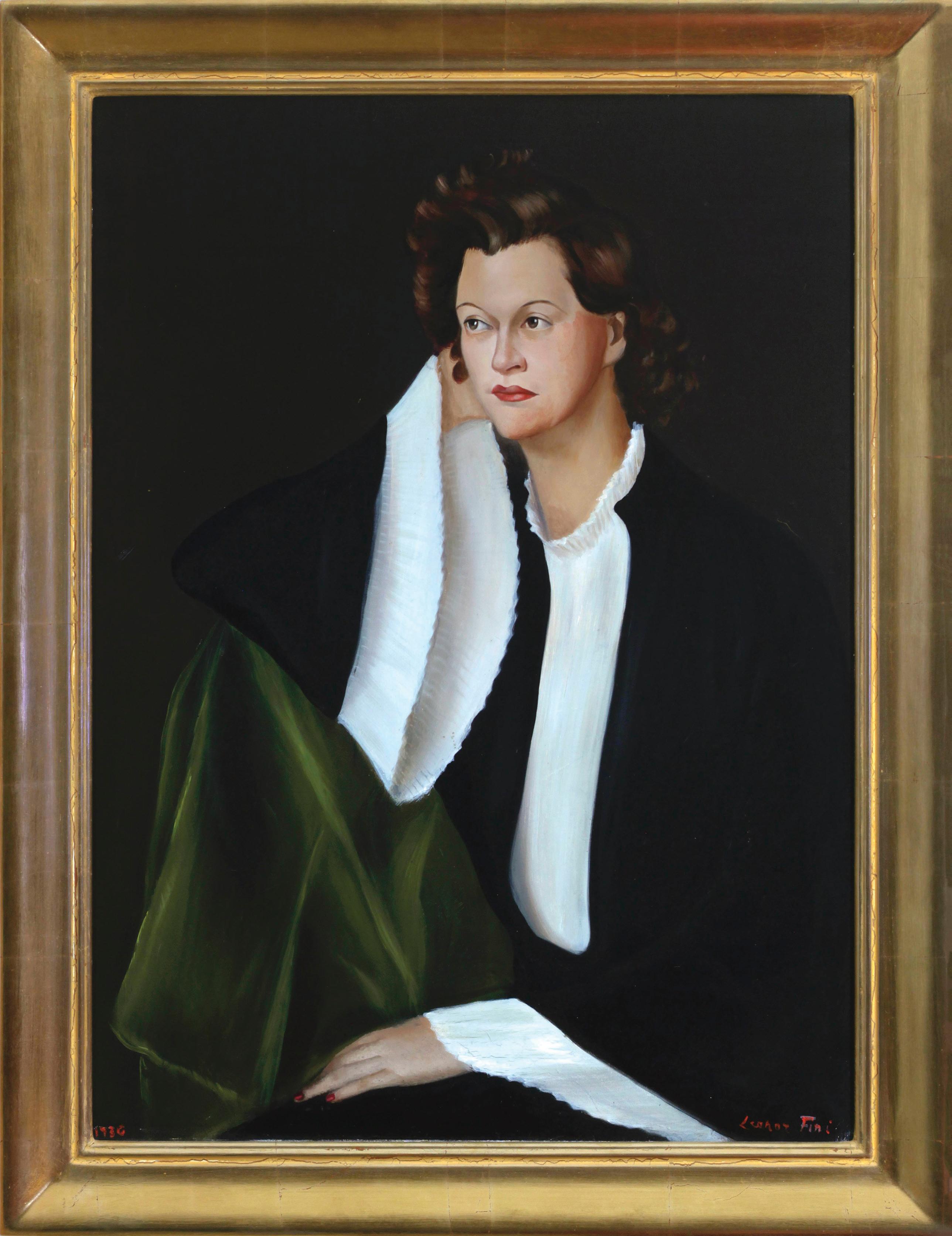
Pini (French, active 1930s), Portrait de Victoria Tenger, 1936. Oil on canvas. 80 x 61 cm (31 1/2 x 24 in.)
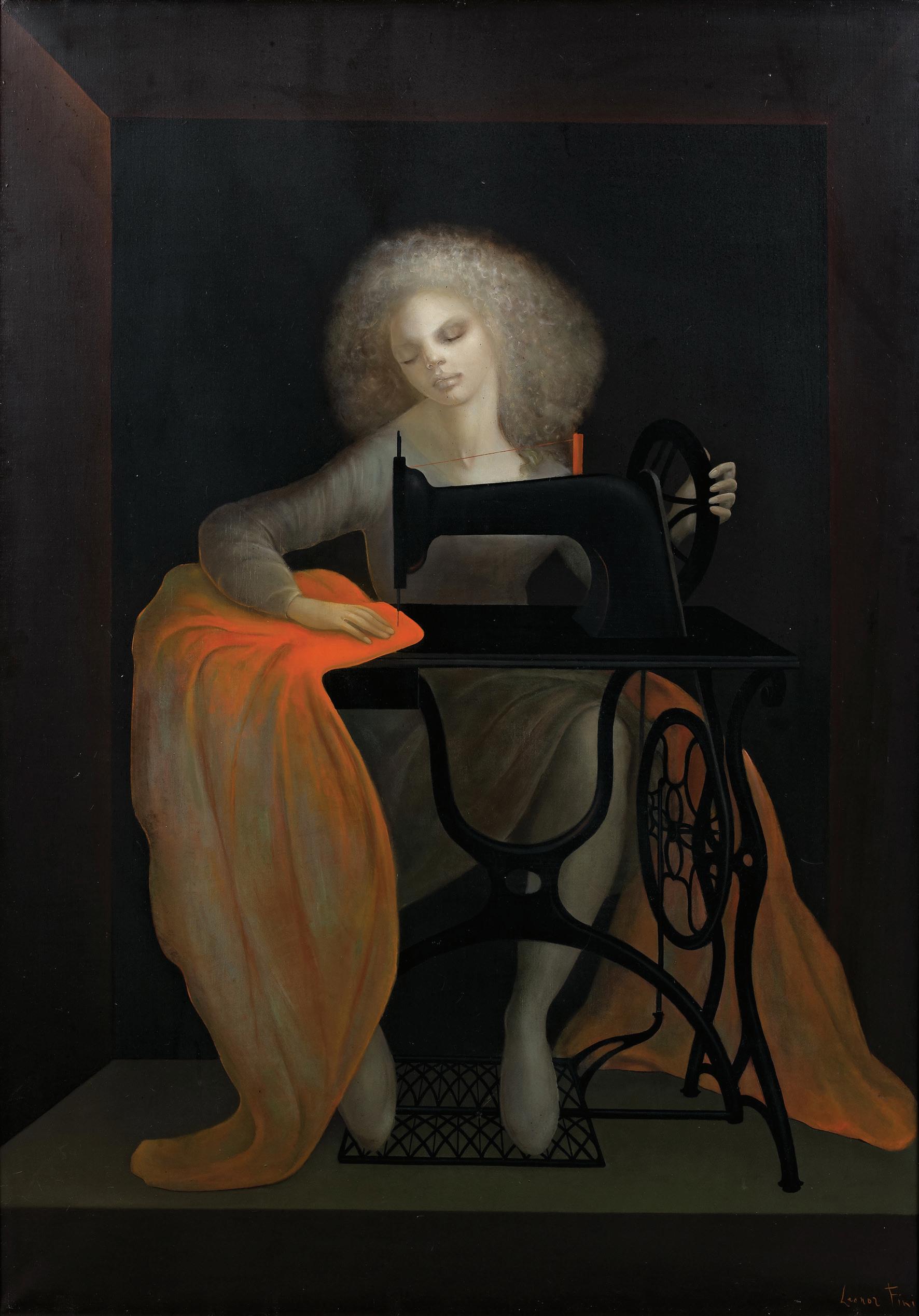
Leonor Fini
The Return of a Singular Vision
for much of the twentieth century, Leonor Fini occupied a position that was both central and peripheral to the history of modern art. She moved effortlessly within the inner circles of Surrealism, exhibiting alongside its most celebrated figures and sharing
their profound fascination with myth, the dream state, and the hidden mechanics of the unconscious. Yet, she remained outside its formal structure. By declining to join the movement as defined by André Breton, whose patriarchal “manifestos” she found stifling;
she maintained a fierce independence that would eventually become her greatest legacy.
This distance was never incidental; it was a tactical necessity. Fini’s work does not align comfortably with the established Surrealist narrative of the female as a passive muse or a fragmented object of desire. Where her contemporaries often approached the unconscious through dislocation or chance, Fini constructed highly controlled, deliberate compositions. Her figures are not disrupted or passive; they are composed, self-possessed, and often confrontational in their stillness. They do not merely inhabit the canvas; they rule it.
At the heart of Fini’s world is a radical re-centering of women. They appear as sphinxes, priestesses, or hybrid beings—figures that draw on ancient
mythology without ever being confined by it. Their gaze is direct and unwavering. In these paintings, identity is not fluid in the traditional Surrealist sense of dissolution; instead, it is firmly asserted. Her women are neither idealized nor destabilized; they exist entirely on their own terms, sustained by a sense of autonomy that distinguished her from almost every other artist of her generation.
This balance between control and ambiguity is the engine of her practice. Fini’s work does not dissolve into the unconscious; it organizes it. Rather than presenting the psyche as an unstable or fragmented territory, she gave it a rigid form, structure, and continuity. There is a startling clarity to her approach; surfaces are meticulously resolved, and compositions are handled with a precision that resists the
Leonor Fini (Argentine-French, 1907–1996), La Machine
“I always imagined I would have a life very different from the one that was imagined for me, but I understood from a very early time that I would have to revolt in order to make that life.”—Leonor Fini
whims of her peers. She did not rely on chance; she relied on a rigorous, almost architectural execution of her own internal iconography.
In recent years, Fini’s position within the art historical canon has shifted from the periphery to the foreground. A global resurgence of interest in artists who operated outside the “isms” of the twentieth century has brought her work back into sharp focus. Major museums and galleries have begun to reconsider her practice, situating it not as a footnote to Surrealism, but as an essential alternative trajectory. Her work speaks directly to the contemporary discourse surrounding authorship, identity, and the intentional construction of the female figure.
The market has responded with equal intensity. Paintings that once circulated quietly in private collections have entered a high-visibility arena, as institutions and collectors re-engage with her work. This is not merely a trend in taste, but a broader shift in how art history itself is constructed and corrected. What once read as a stubborn independence now reads as profound foresight. Leonor Fini did not wait for the world to define her; she built a world of her own, and today, we are finally learning how to inhabit it.
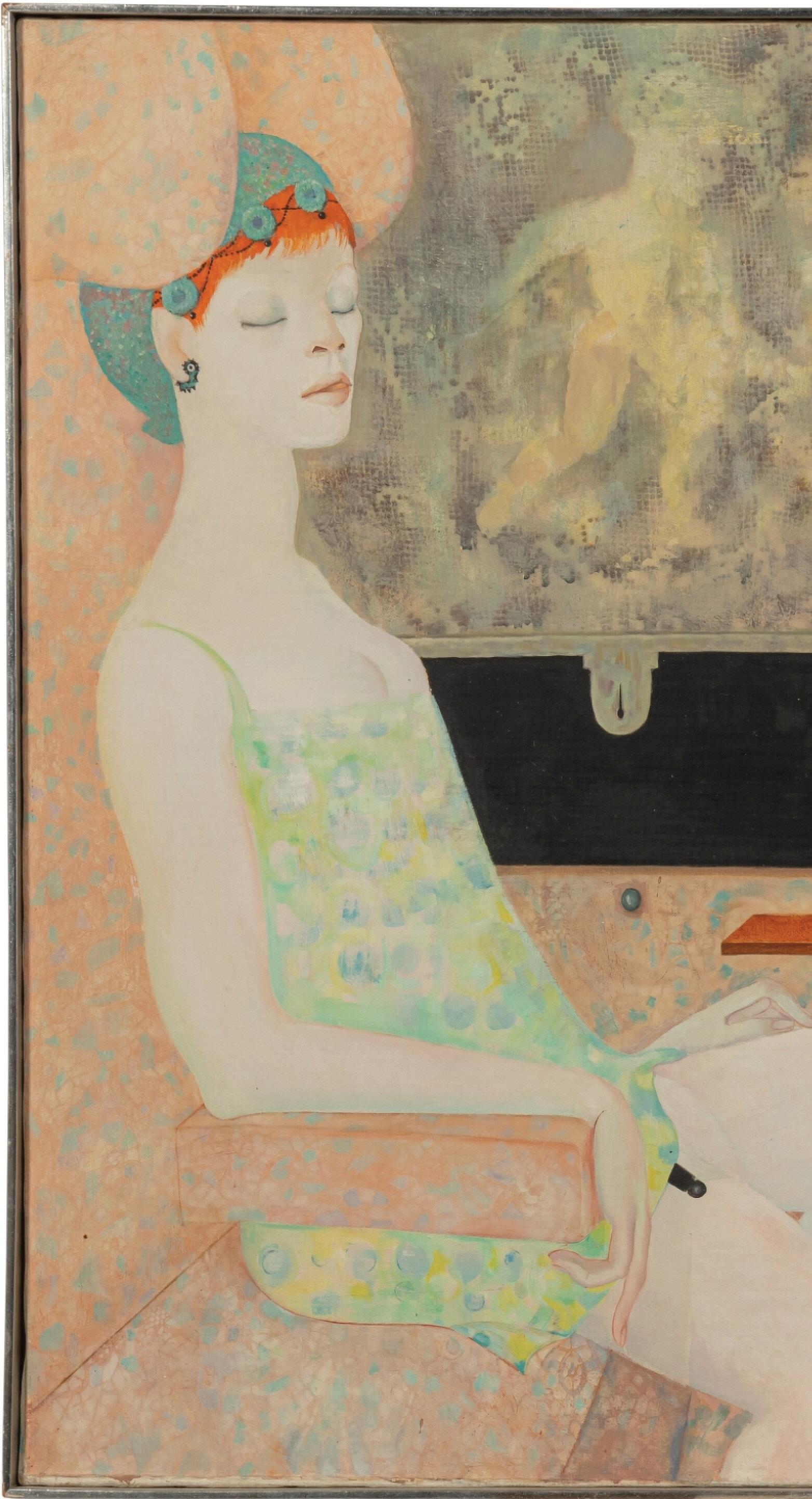
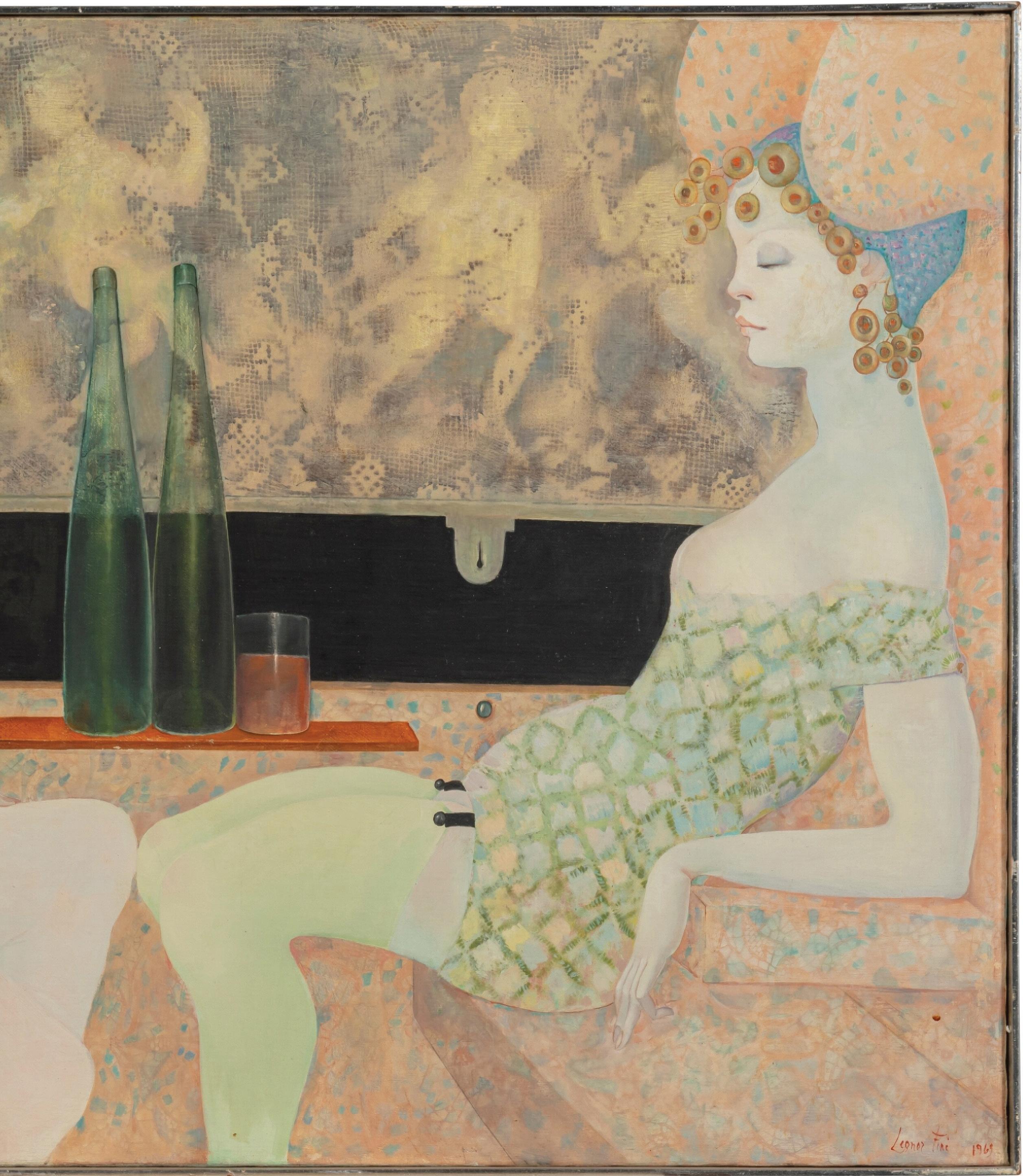
Leonor Fini (Argentine-French, 1907–1996), Train de nuit (Night Train), 1969. Oil on canvas. 80.8 x 114.5 cm (31 13/16 x 45 1/16 in.)
New Era for LACMA
Peter Zumthor and the Architecture of Radical Transparency
the silhouette of Wilshire Boulevard has been fundamentally altered with the grand opening of the David Geffen Galleries. Designed by Pritzker Prize-winning architect Peter Zumthor, this long, horizontal glassand-concrete structure now serves as the permanent home for the Los Angeles County Museum of Art’s expansive collection. By straddling the iconic boulevard with its fluid, curving form, the building functions not just as a gallery, but as a conceptual bridge connecting the museum’s twenty-acre campus. The architecture is a physical manifestation of a strategic shift toward an inclusive, non-hierarchical museum experience. By placing the entirety of its permanent collection on a single, elevated main floor, hovering nearly thirty feet above the ground, LACMA has eliminated the traditional cultural “stacks” of the past, ensuring that all artistic traditions are presented on the same plane.
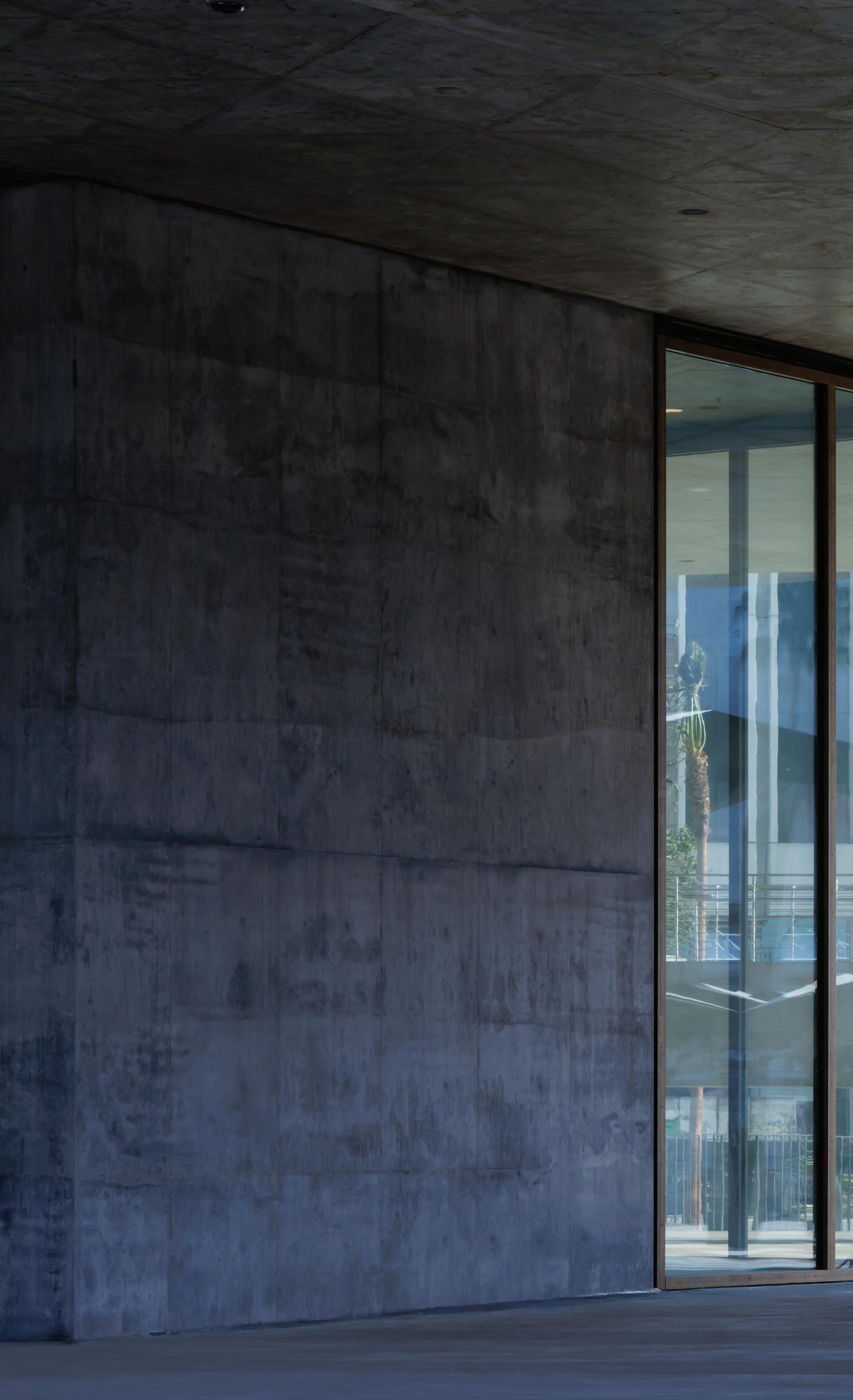
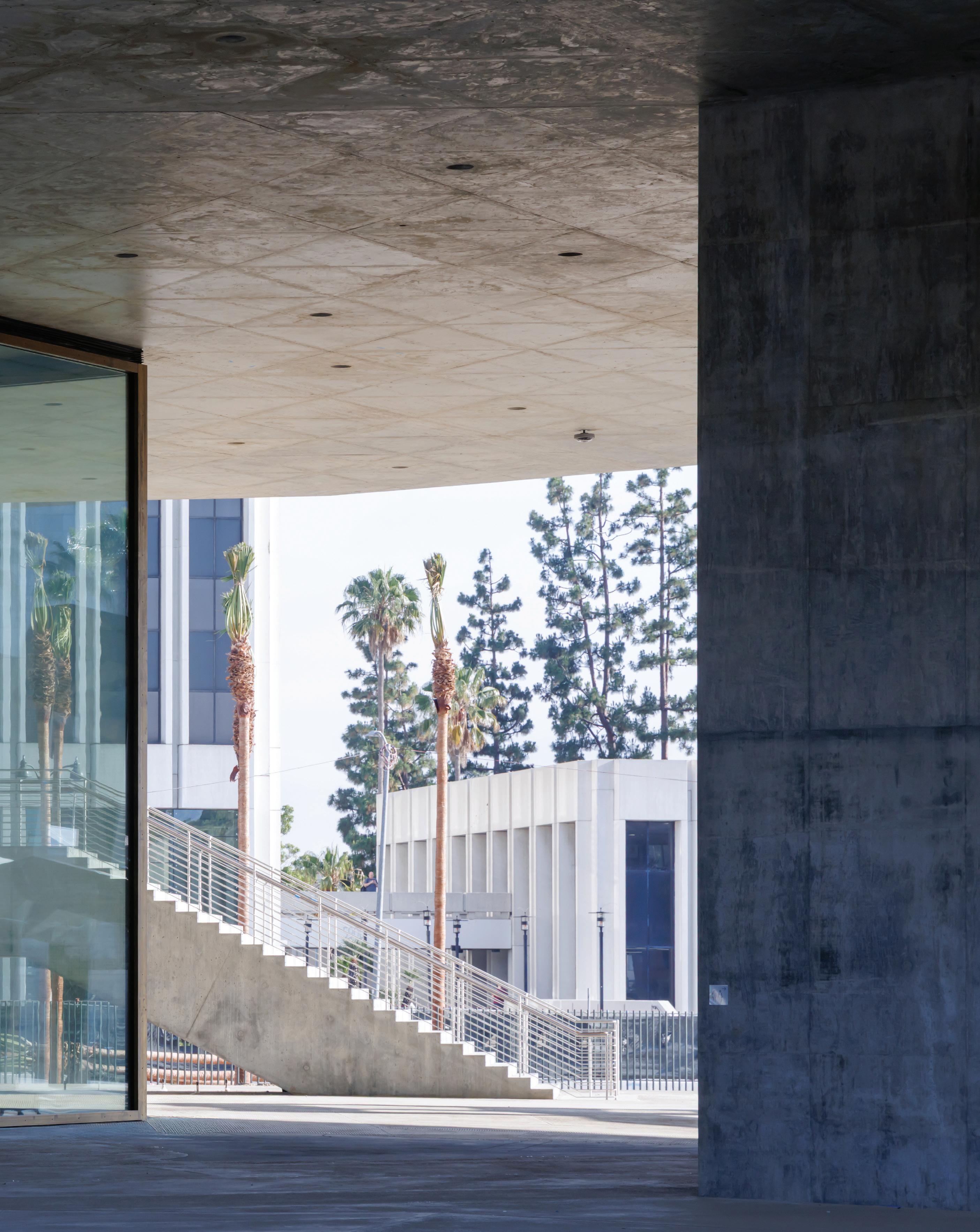
David Geffen Galleries at LACMA; exterior view from East West Bank Commons south toward Wilshire Boulevard,photo ©Iwan Baan
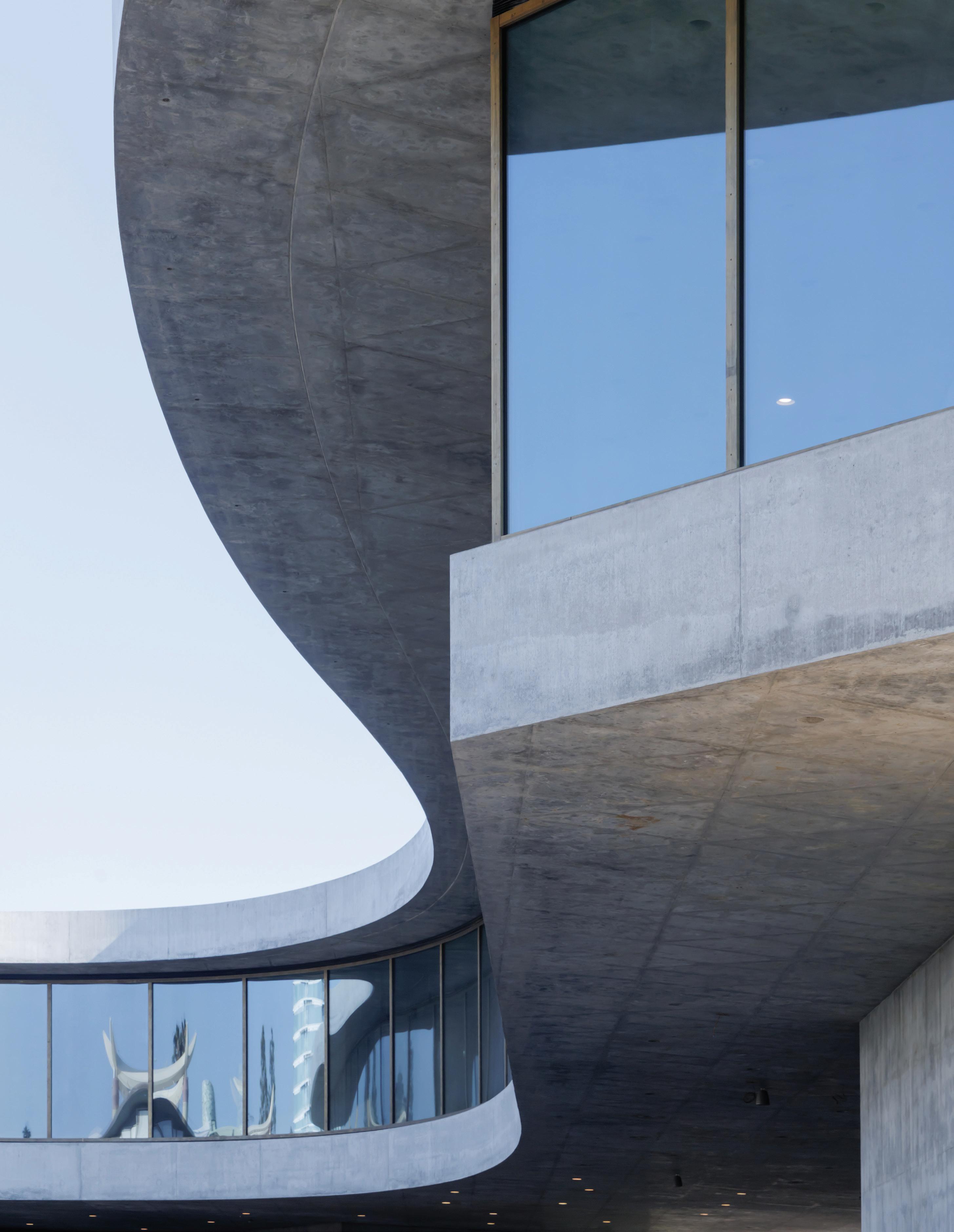
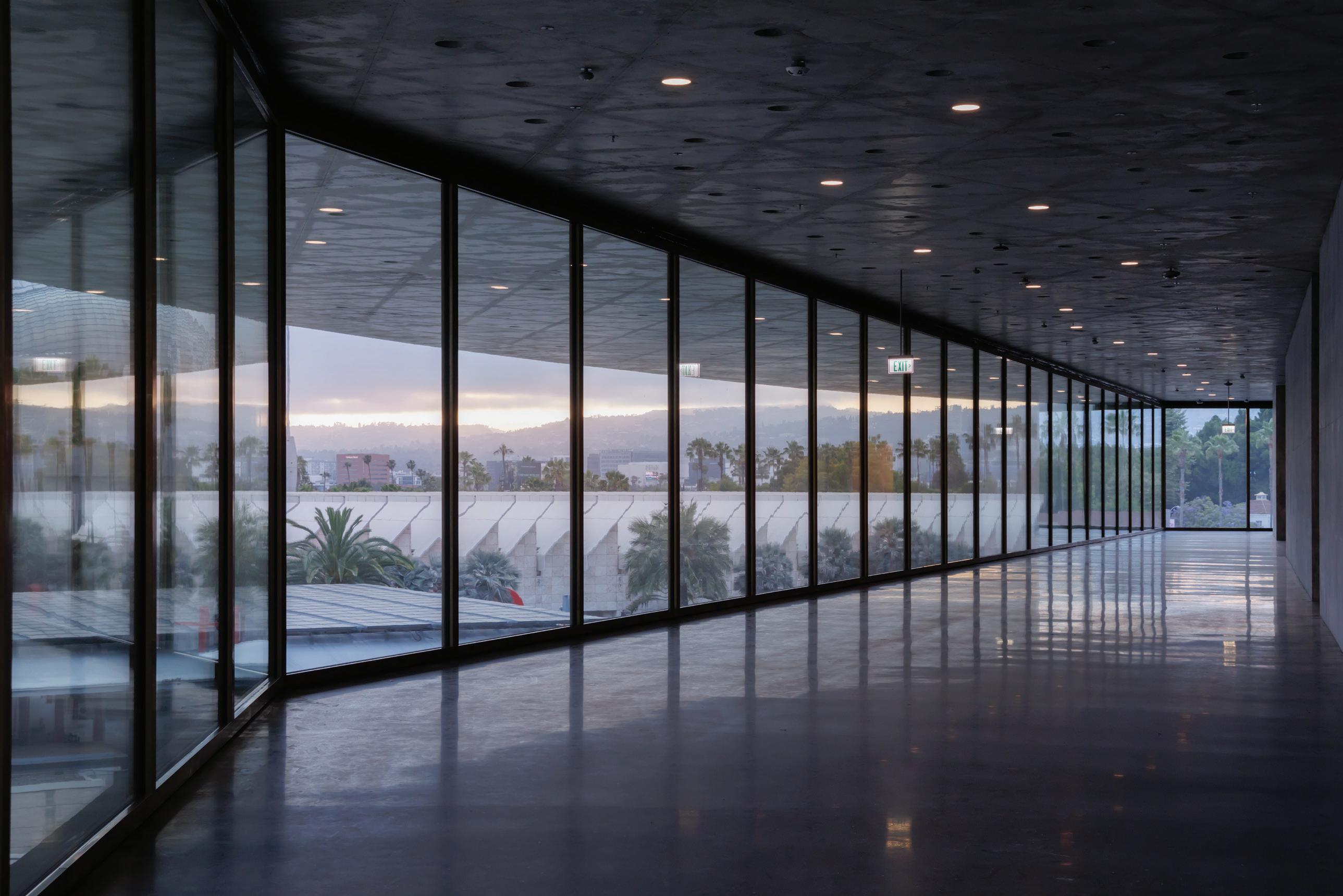
Inside the Geffen Galleries, the interior is defined by a lack of prescribed paths, encouraging an intuitive exploration where six thousand years of artistic expression coexist. Visitors wander through galleries of varying scales and lighting conditions, moving from perimeter rooms bathed in natural light to interior “sanctuary” spaces designed for the most sensitive works. This non-hierarchical layout allows a classical marble copy of a Greek original to share a visual horizon with the
radical, visceral energy of a Francis Bacon acquisition. The homecoming of monumental works that have long been synonymous with LACMA, such as Tony Smith’s Smoke, are now anchored against the building’s new concrete volumes. Even large-scale masterpieces like Henri Matisse’s La Gerbe have found a new context within the airy, perimeter spaces that frame views of the surrounding Miracle Mile.
The arrival of Francis Bacon’s monumental triptych, Three Studies of Lu-
cian Freud (1969), serves as a definitive anchor for this new chapter. Sited within the northern Elaine Wynn Wing, named in recognition of the leadership contribution that launched the building campaign, the work is the first by Bacon to join LACMA’s holdings. The triptych captures his friend and rival twisted within a transparent, stage-like frame against a saturated yellow background. Its installation has sparked immediate conversation regarding the building’s signature horizontal light.
Because Bacon insisted his works be glazed, the triptych presents a unique challenge in a structure defined by its glass perimeter. From certain angles, the city views and the silver light-blocking curtains, a commissioned artwork by Reiko Sudo, reflect across the painting’s surface, bridging the gap between the raw canvas and the shifting future of Los Angeles.
The experience extends far beyond the gallery walls into a three-and-a-halfacre park-like expanse of public space at
Left: David Geffen Galleries at LACMA; exterior view of exhibition level with refl ection ofLACMA’s Pavilion for Japanese Art,photo ©Iwan Baan
Below: David Geffen Galleries at LACMA; view northwest at dusk from exhibition leveltoward Resnick Pavilion,photo ©Iwan Baan
Left: Diego Rivera (Mexican, 1886–1957), Flower Day (Día de fl ores), 1925. Oil on canvas. 147.32 × 120.65 cm (58 × 47 1/2 in.)
Below: Katsushika Hokusai, The Great Wave off Kanagawa, c. 1830–31. Polychrome woodblock print; ink and color on paper. 25.7 x 37.9 cm (10 1/8 x 14 15/16 in.)
“Bacon’s triptychs are theaters of the nerves, where the figure is trapped in a cage of lines and light, awaiting an inevitable verdict.”—Robert Hughes
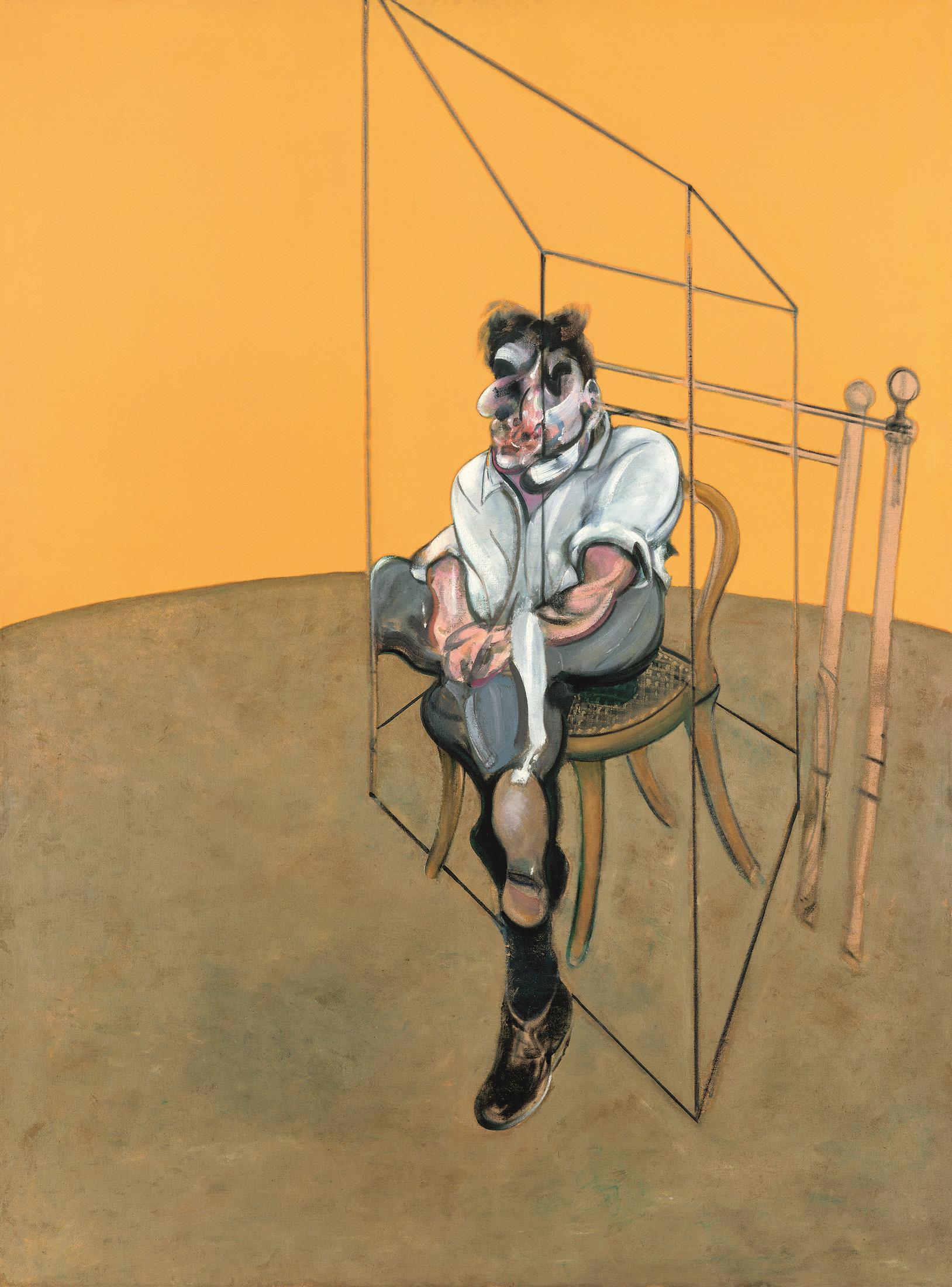
the plaza level. Shaded by the massive exhibition floor above and supported by seven semi-transparent pavilions, this ground plane houses the Steve Tisch Theater, the W.M. Keck Education Center, and new culinary destinations like Ray’s and Stark Bar. The site itself has become an immersive artwork through commissions like Mariana Castillo Deball’s Feathered Changes, which meditates on the land’s prehistoric roots as a nourishing marshy ecosys-
tem. Within the new restaurant spaces, Sarah Rosalena’s monumental digital textile, Threading the Boundless, bridges the gap between ancient craft and future technology by weaving together NASA imagery of Mars with Indigenous Wixárika techniques. Ultimately, the new LACMA is a space where the “first wild promise” of the city meets an intellectually rigorous archive, allowing the museum to remain a vital hub for all of Los Angeles.
Image caption: Francis Bacon, Three Studies of Lucian Freud, 1969, Los Angeles County Museum of Art, gift of Elaine P. Wynn, © The Estate of Francis Bacon. All rights reserved, DACS Images 2025, Photo: Prudence Cuming Associates Ltd
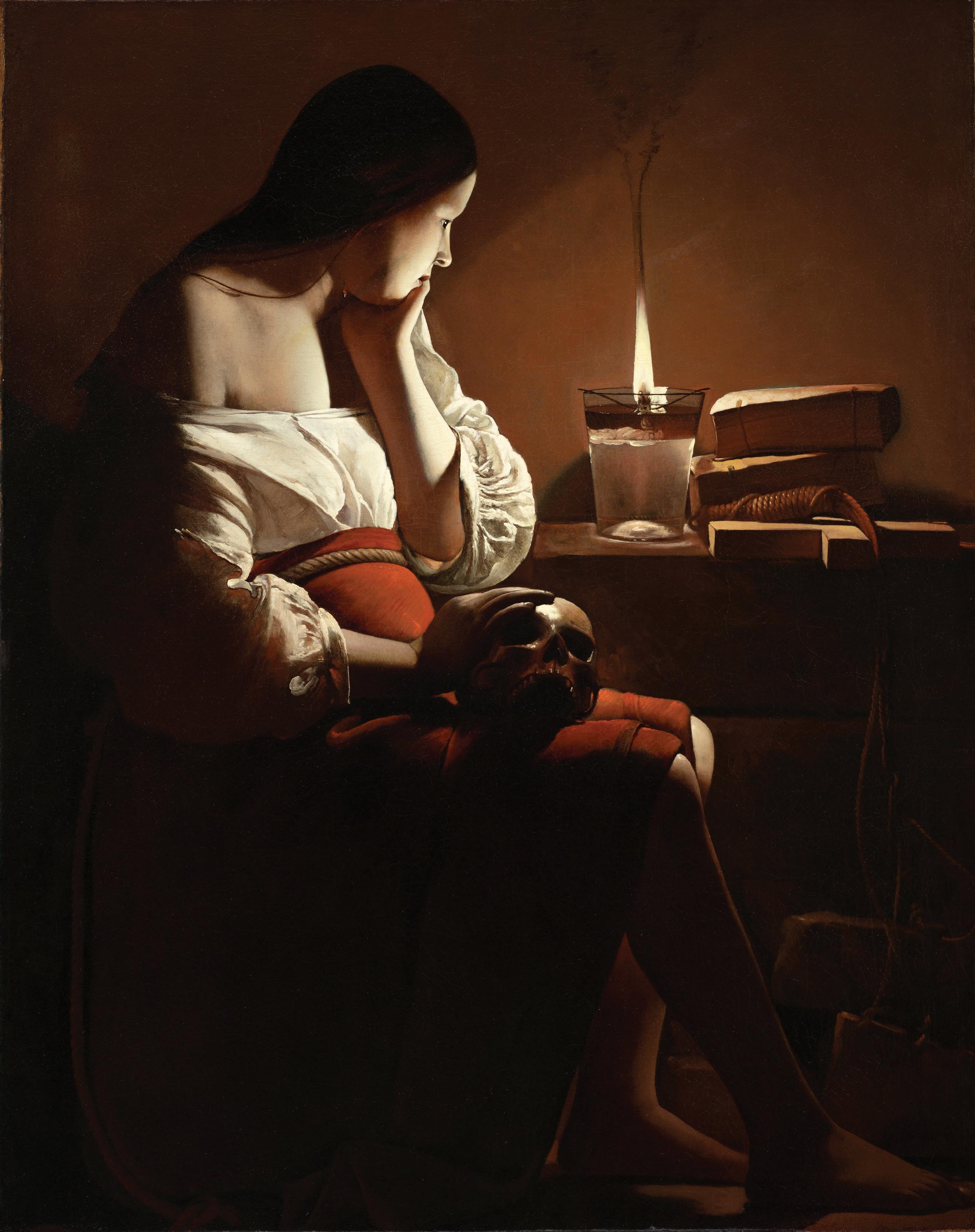
Francis Bacon, Three Studies of Lucian Freud, 1969, Los Angeles County Museum of Art, gift of Elaine P. Wynn,
Estate of Francis Bacon
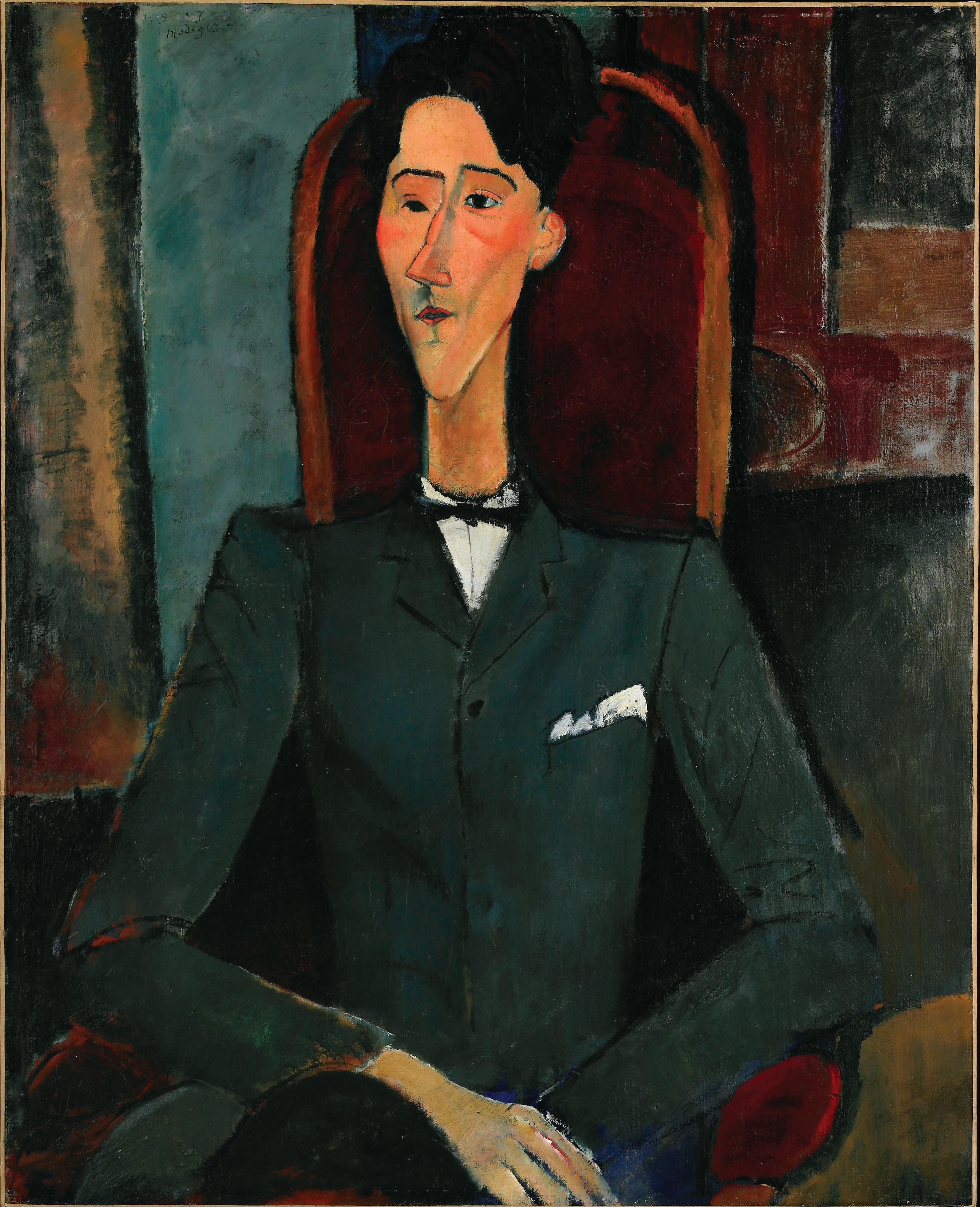
Amedeo Modigliani, Jean Cocteau, 1916, promised gift from the Henry and Rose Pearlman Foundation, photo by Bruce White
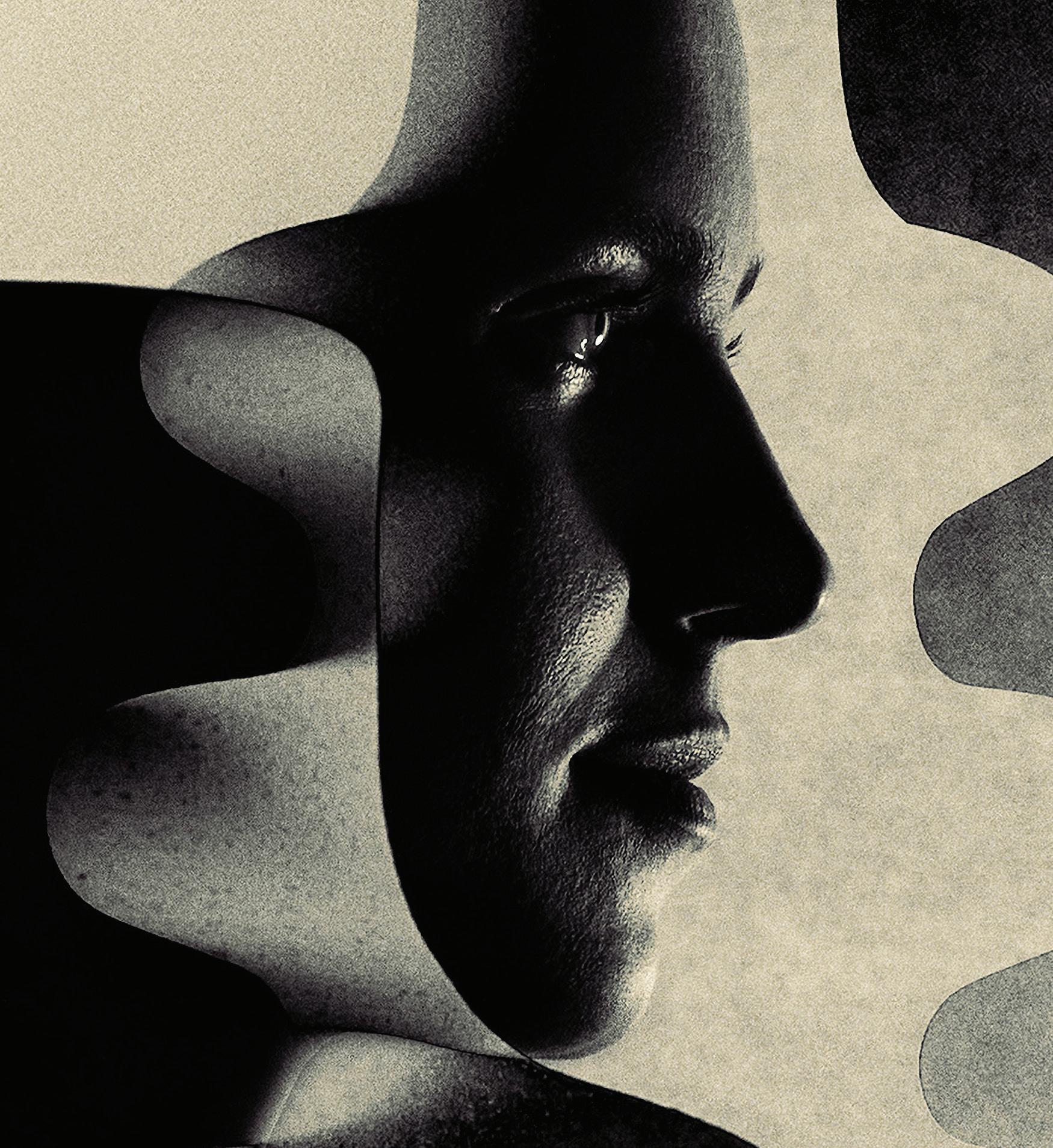
Deconstructed Lens
The Graphic Surrealism of Sander Vos
in the realm of contemporary photography, the medium is often treated as a tool for documentation, a way to freeze a singular truth in a fraction of a second. For Sander Vos, however, the camera is merely the starting point for a process of architectural deconstruction. A self-taught Dutch photographer based in London, Vos draws heavily on his background in art direction and design to “sculpt” images that exist in the hazy boundary between portraiture and fine art. His work does not seek to reveal the world as it is, but rather to veil and reveal in equal measure, inviting the viewer to
act as a co-creator by filling in the gaps with their own imagination.
Vos’s practice is defined by a rigorous, almost clinical manipulation of light and shadow, a technique that allows him to carve out sharp, graphic compositions. In his series In Between the Shadows, he takes inspiration from the Cubist movement, fracturing everyday objects and reassembling them to challenge our conventional perception of depth. By utilizing chiaroscuro to bathe a vase in light while leaving its base in total darkness, he transforms the familiar into something surreal and nearly alien. This interplay isn’t just an
All images © Sander Vos, 2026
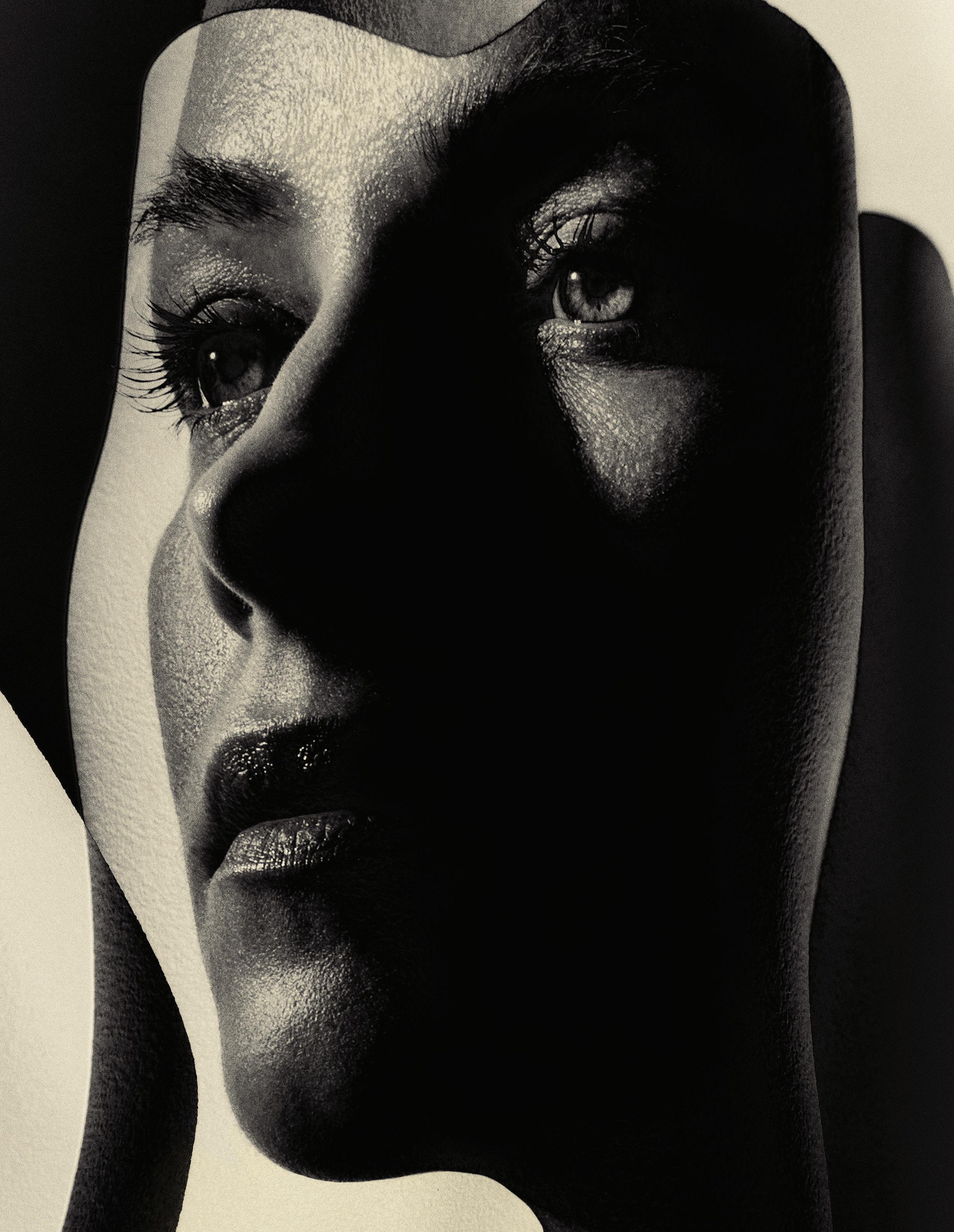
aesthetic choice; it’s a method of deconstruction that forces the viewer to navigate shifted perspectives within a seemingly flat, two-dimensional image.
The creative process for Vos is a meticulous exercise in layering, utilizing both digital and analog collage to merge multiple photographs into a single, harmonic whole. He often describes his work as an amalgamation of experienc-
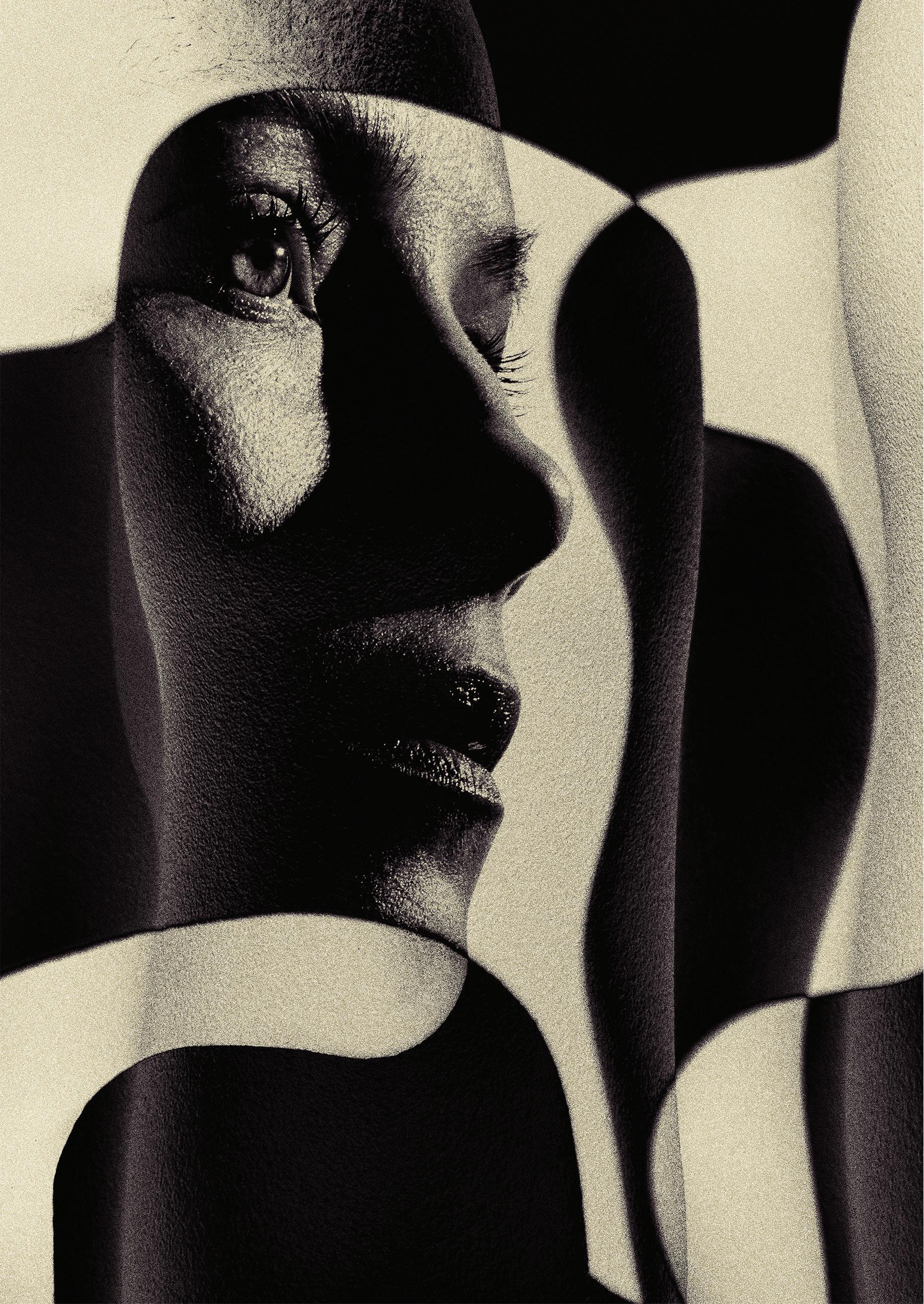
es and visual information, influenced by the geometric precision of the Bauhaus and the mind-bending patterns of M.C. Escher. Post-production is the essential phase where a documented moment is transformed into an artistic vision, a melding of form, negative space, and contrast until a piece reaches a delicate balance between minimalist clarity and complex intrigue.
Recently recognized as the Fine Art Photographer of the Year 2023 by the Prix de la Photographie Paris, Vos continues to push the medium into more abstract, conceptual territories. His latest series, Interpolation, merges the human body and natural forms with rigid geometric patterns, creating an alternative reality that feels both timeless and deeply rooted in the present. By treat-
ing the photograph as an “invisible architecture,” Vos reminds his audience that the most compelling images are those that refuse to be settled at first glance, operating instead as an evolving conversation between the artist’s imagination and the viewer’s gaze.
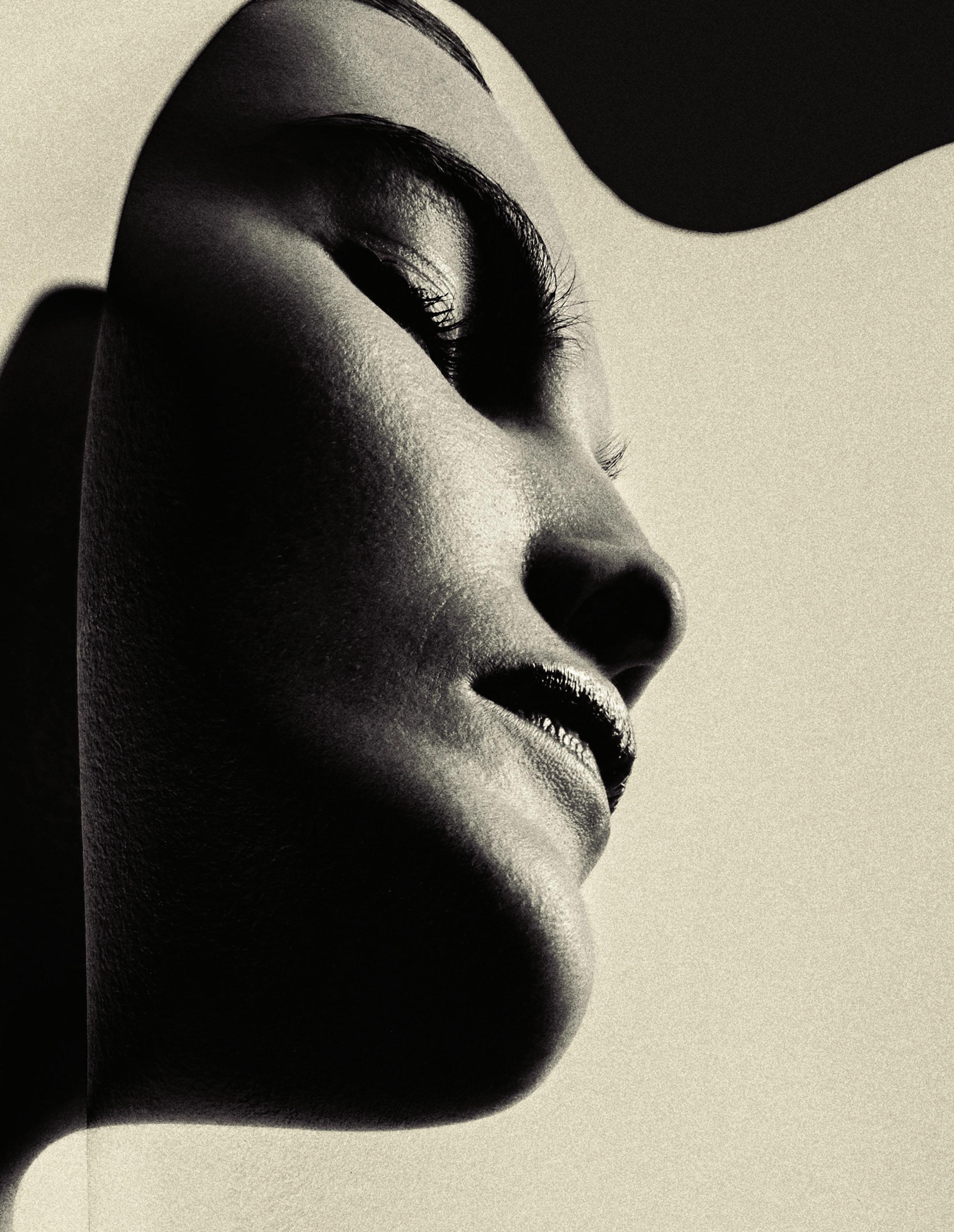
Threshold of Two Waters
A New Era for Punta del Este
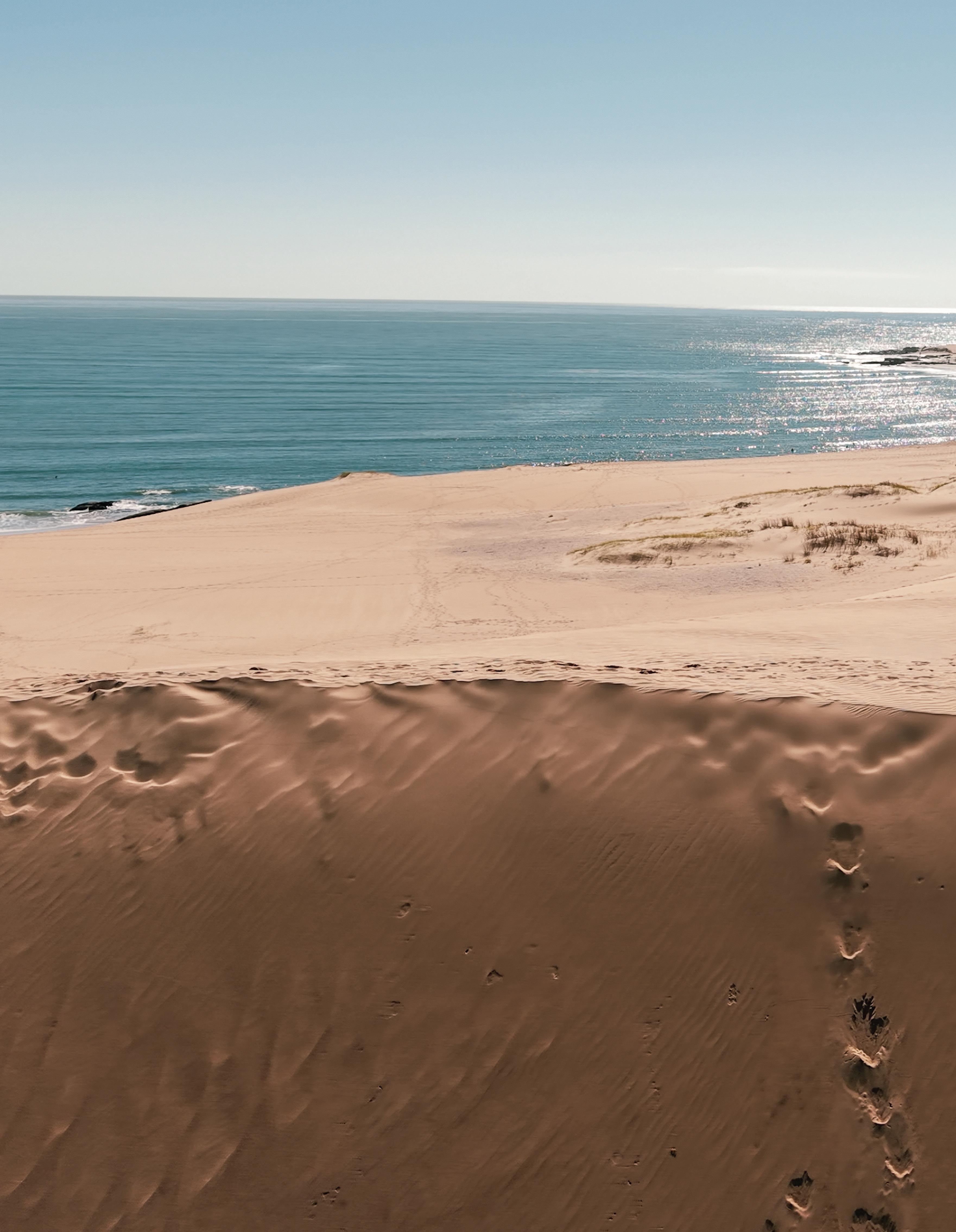
punta del este exists at the precise point where the brown, silken waters of the Río de la Plata meet the deep, restless blue of the Atlantic Ocean. This geographical collision defines the spirit of the Uruguayan peninsula, creating a landscape that is both a tranquil sanctuary and a high-velocity playground.
Often described as the Saint-Tropez of South America, the city has long served as a seasonal beacon for the continental elite, yet its identity is currently undergoing a profound transformation. What was once a narrow strip of sand and salt factories has evolved into a sophisti-
cated year-round destination, where mid-century brutalism sits alongside a burgeoning scene of contemporary art and sustainable design.
The history of the city is rooted in a quiet, rugged utility. In the early nineteenth century, the peninsula was a remote outpost for whale oil processing and salt production, eventually established as Villa Ituzaingó in 1829. It wasn’t until the early 1900s that its potential as a seaside resort was realized, leading to a golden age of development that attracted European royalty and South American industrialists. This era
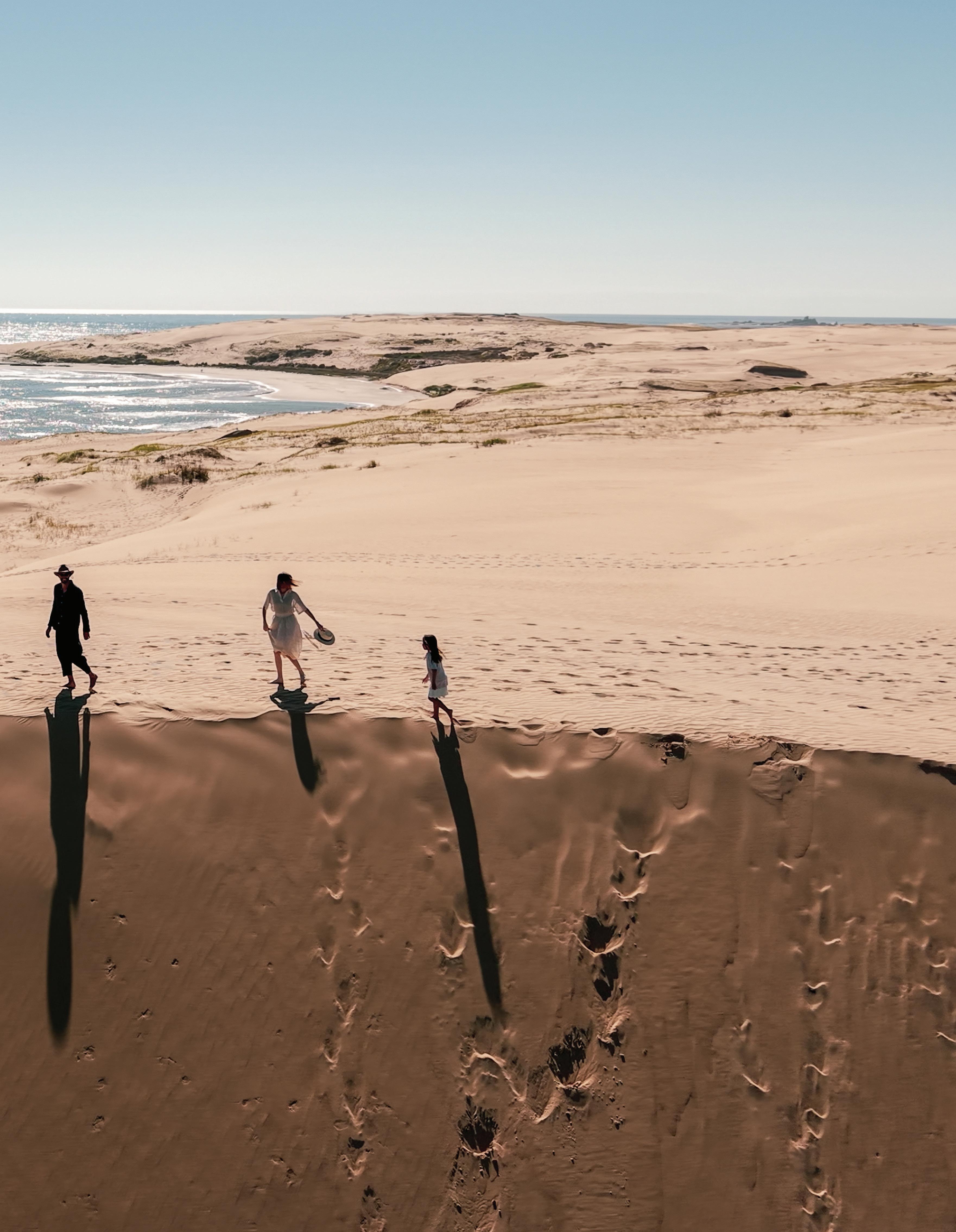
Aerial view of the sand dunes of Valizas.
© Photo Simon Tchoukriel
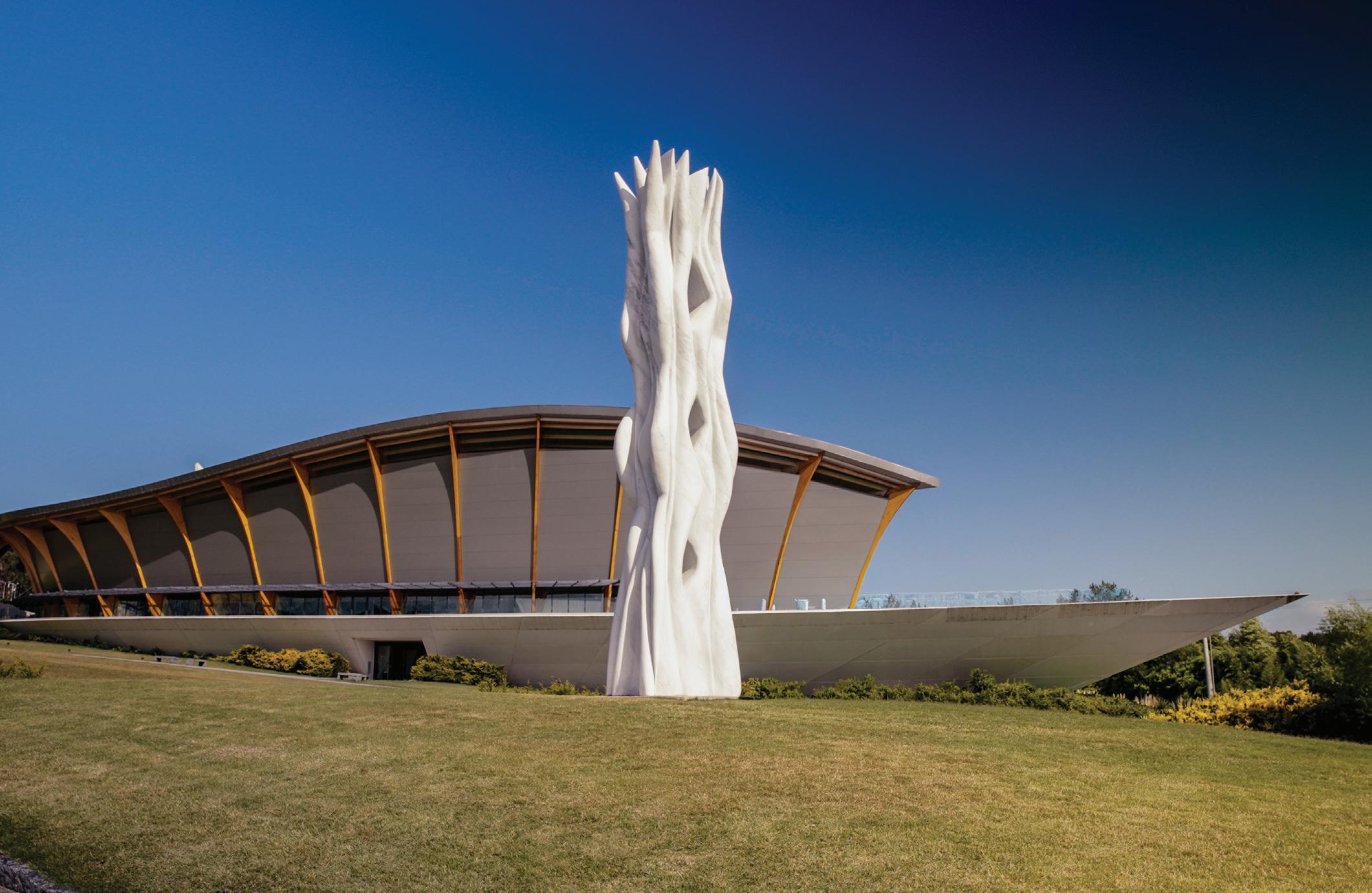
left behind a legacy of grand châteaux and iconic landmarks like Casapueblo, designed by Carlos Páez Vilaró which anchored the coast’s reputation as a haven for the creative and the well-heeled. The Cipriani Resort Residences and Casino serve as a prime example of this current architectural renaissance. Located on the site of the iconic Hotel San Rafael, the project is a transformative collaboration between the late Rafael
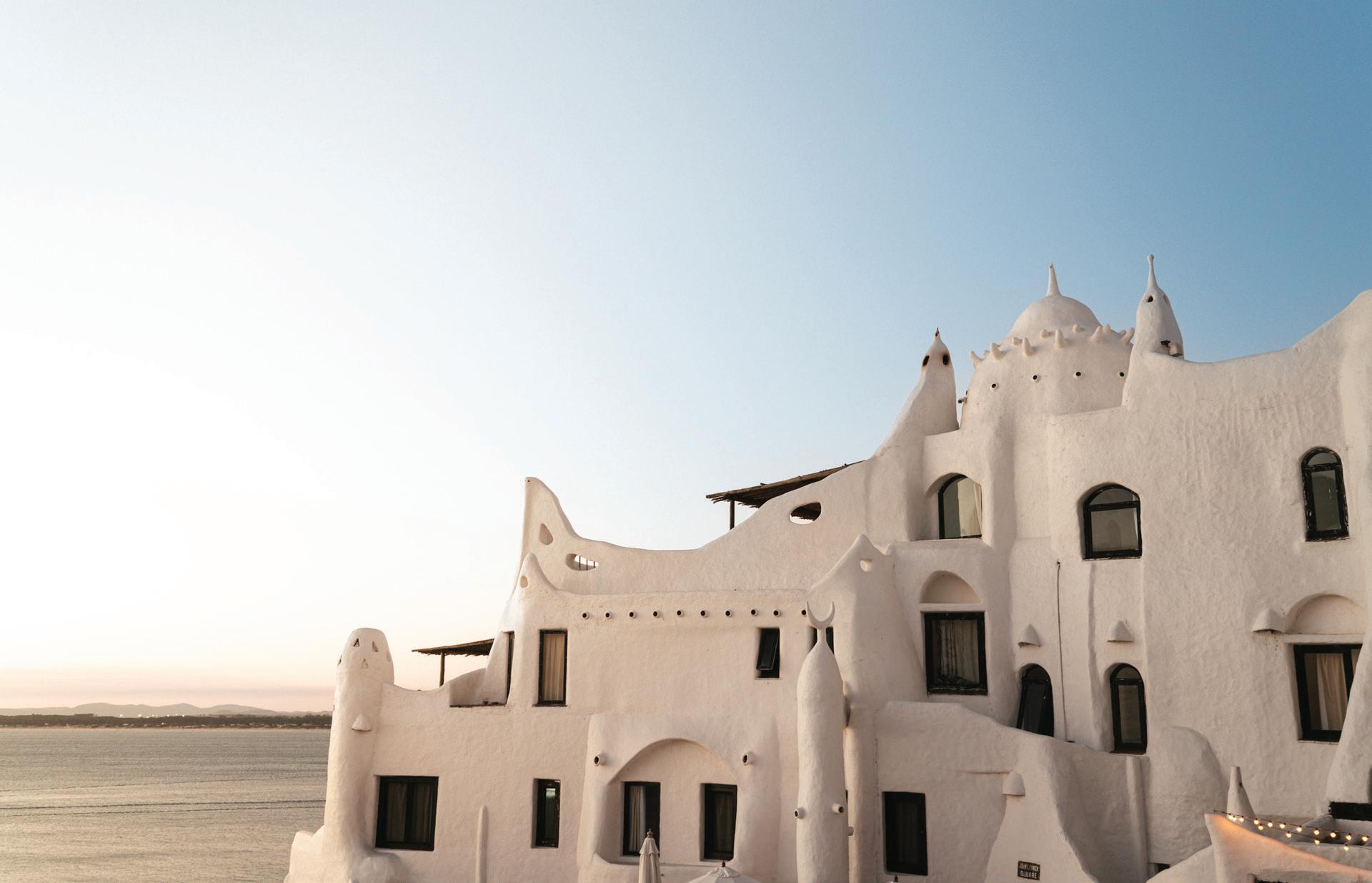
One of the many colossal sculptures by Pablo Atchugarry at MACA (Museo de Arte Contemporáneo Atchugarry). © Photo Simon Tchoukriel
Opposite: Bodega Garzón Winery, ranked 4th in the World’s Best Wineries by The World’s 50 Best Vineyards. © Photos Simon Tchoukriel
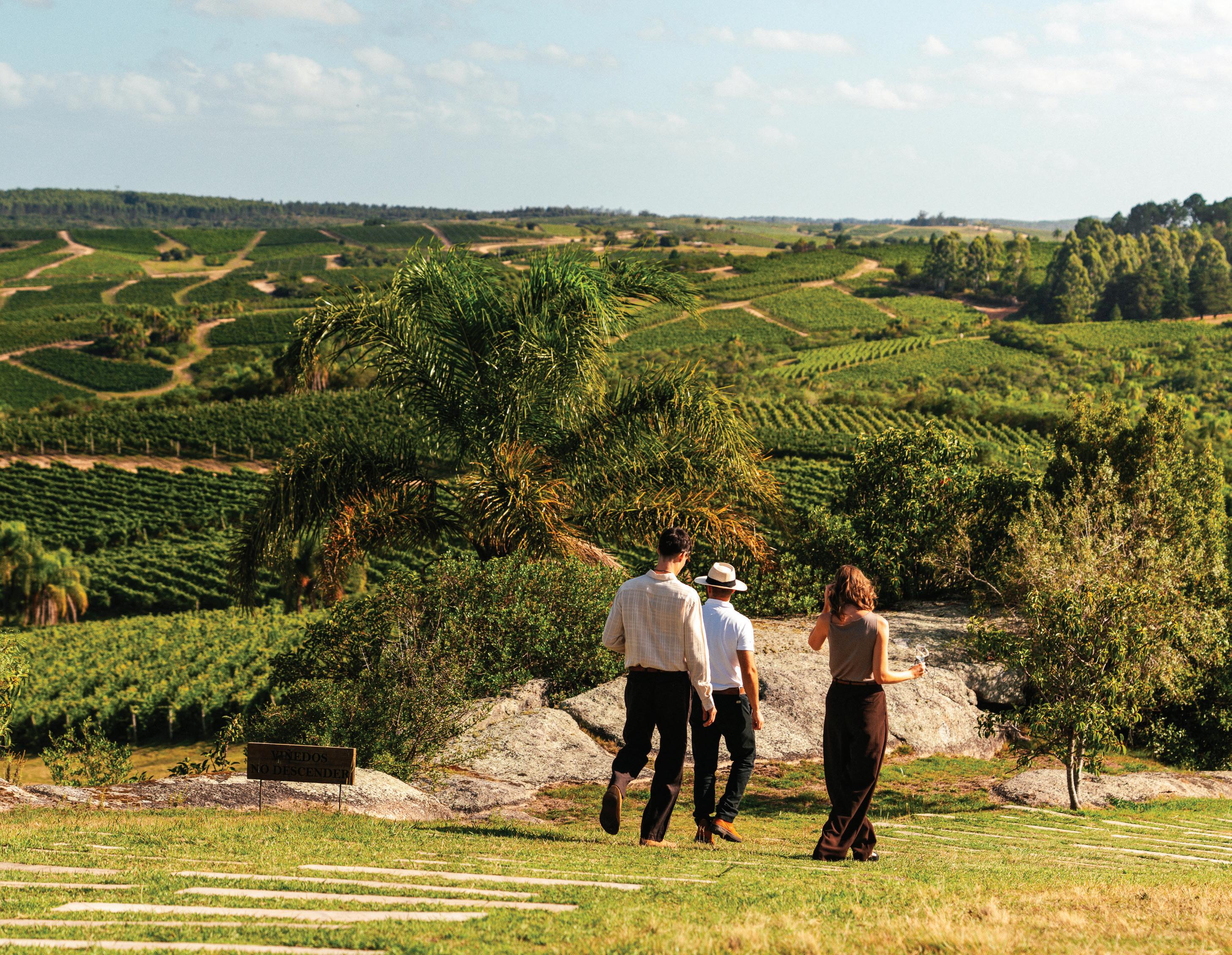
Viñoly and the Cipriani family, designed to bridge the city’s heritage with its high-velocity future. The development is centered on a faithful reconstruction of the emblematic Tudor-style San Rafael building, as an homage to its history while introducing a series of three striking residential towers, using architecture to connect diverse historical periods into a single, cohesive experience. Inside, the transition between eras
is seamless. The interiors draw upon a sophisticated nautical palette: rich mahogany, Italian marble, and Murano chandeliers; all evoking the timeless elegance of a luxury yacht. This “classic European coastal” aesthetic is integrated with modern residential features, including significant ceiling heights and floor-to-ceiling windows that offer 360-degree views of both Playa Brava and Playa Mansa. The project also re-
introduces the legendary social theater of the Cipriani Casino, Harry’s Bar and a variety of dining experiences, positioning the resort as a permanent cultural anchor for the city. By combining private residences with an expansive wellness center and multiple pools, the development caters to a new wave of permanent residents who are seeking a balanced, year-round lifestyle.
Today, Punta del Este is experienc-
ing a dramatic resurgence that moves beyond the traditional summer rush of January. This shift is driven by a global influx of “digital nomads” and residents who are trading urban density for the rhythmic pace of the Atlantic. The city’s expansion has rippled outward into the pastoral hills of Jose Ignacio and the vineyards of Garzón, creating a corridor of luxury that emphasizes landscape over architecture. This modern
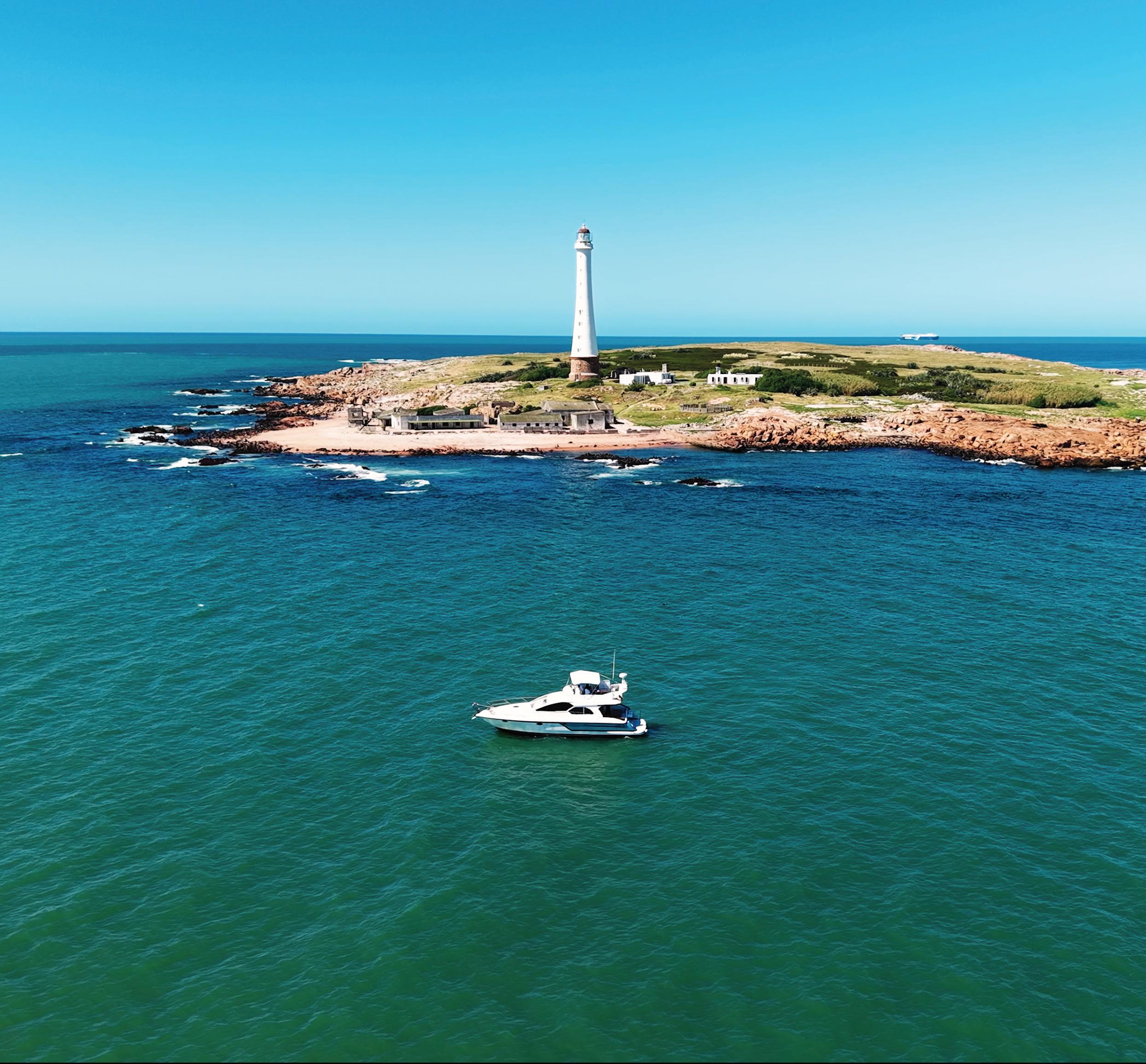
renaissance is further solidified by the opening of major cultural institutions like the Museo de Arte Contemporáneo Atchugarry (MACA), a sprawling architectural monument that has helped position the region as a global art capital.
The current allure of the city lies in its duality. On the western side, the Playa Mansa offers calm, river-fed waters and the classic ritual of watching
the sun dip below the horizon. Just across the narrow neck of the peninsula, the Playa Brava faces the open ocean, defined by heavy surf and the famous “Los Dedos” sculpture rising from the sand. As the city continues to refine its position on the world stage, it maintains a delicate balance between its glamorous heritage, effortless coastal charm and a future grounded in environmental con-
sciousness and architectural rigor. In this new chapter, Punta del Este remains a testament to the power of a landscape to constantly reinvent itself at the very edge of the continent.
Aerial view of Isla de Lobos (Sea Lions Island), a small island located 5 miles southeast of Punta del Este and home to 250,000 sea lions. © Photo Simon Tchoukriel
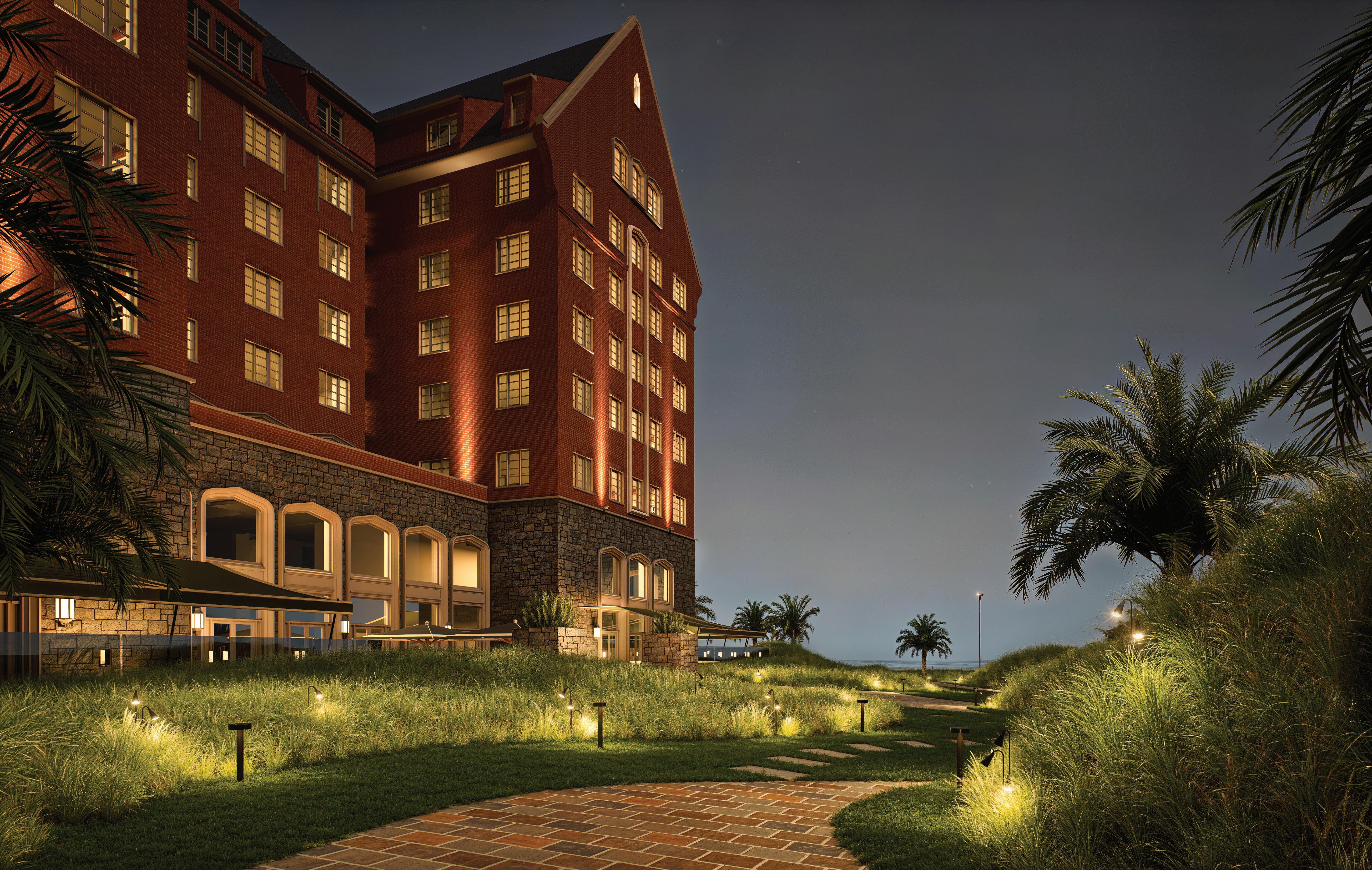
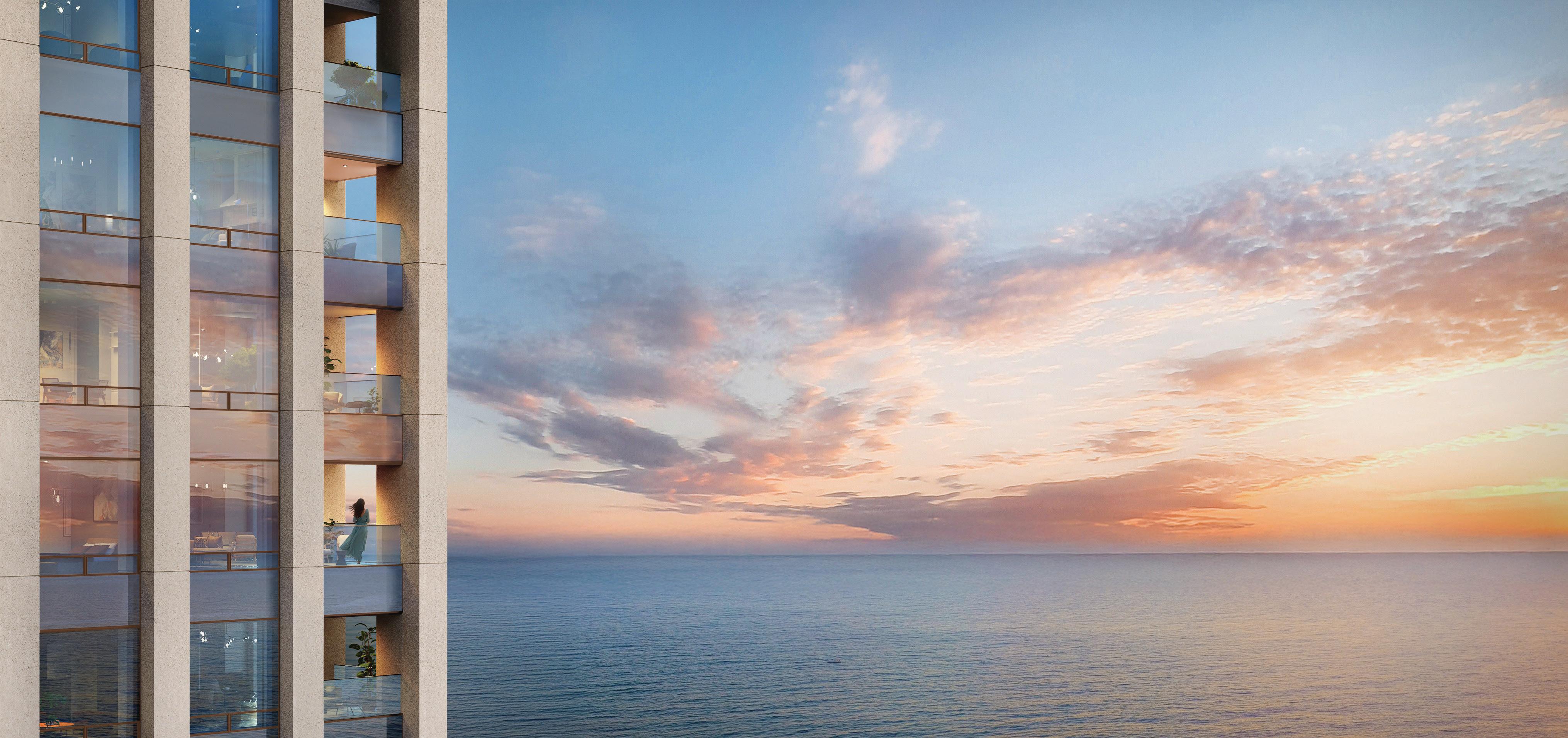
Christopher Nolan’s Odyssey
A new telling of the epic that has captivated audiences across civilizations and centuries when christopher nolan announced that his next film would be an adaptation of The Odyssey, the choice felt at once unexpected and inevitable. Nolan has long been drawn to stories that fracture time and test perception, narratives in which the journey matters as much as the destination. The Odyssey, composed nearly three millennia ago and attributed to Homer, returns to those same concerns with a clarity that has never dimmed.
“It is not a story,” Nolan has said. “It is the story.”
The distinction is not rhetorical. Few narratives have so thoroughly embedded themselves into the cultural imagination. Every generation
encounters it anew, and yet it remains unchanged at its core: a man attempts to return home after war, delayed not simply by distance, but by temptation, violence, memory, and time itself. The outline is familiar. Its resonance is not.
Part of what sustains The Odyssey is the nature of its central figure.
Odysseus is not a hero in the mold of Achilles or Hercules. He does not possess overwhelming strength, nor is he defined by physical dominance. His power lies elsewhere. He survives through intelligence, adaptability, and restraint. He listens, observes, waits. When confronted with danger, he does not overcome it through force, but through invention. The Trojan
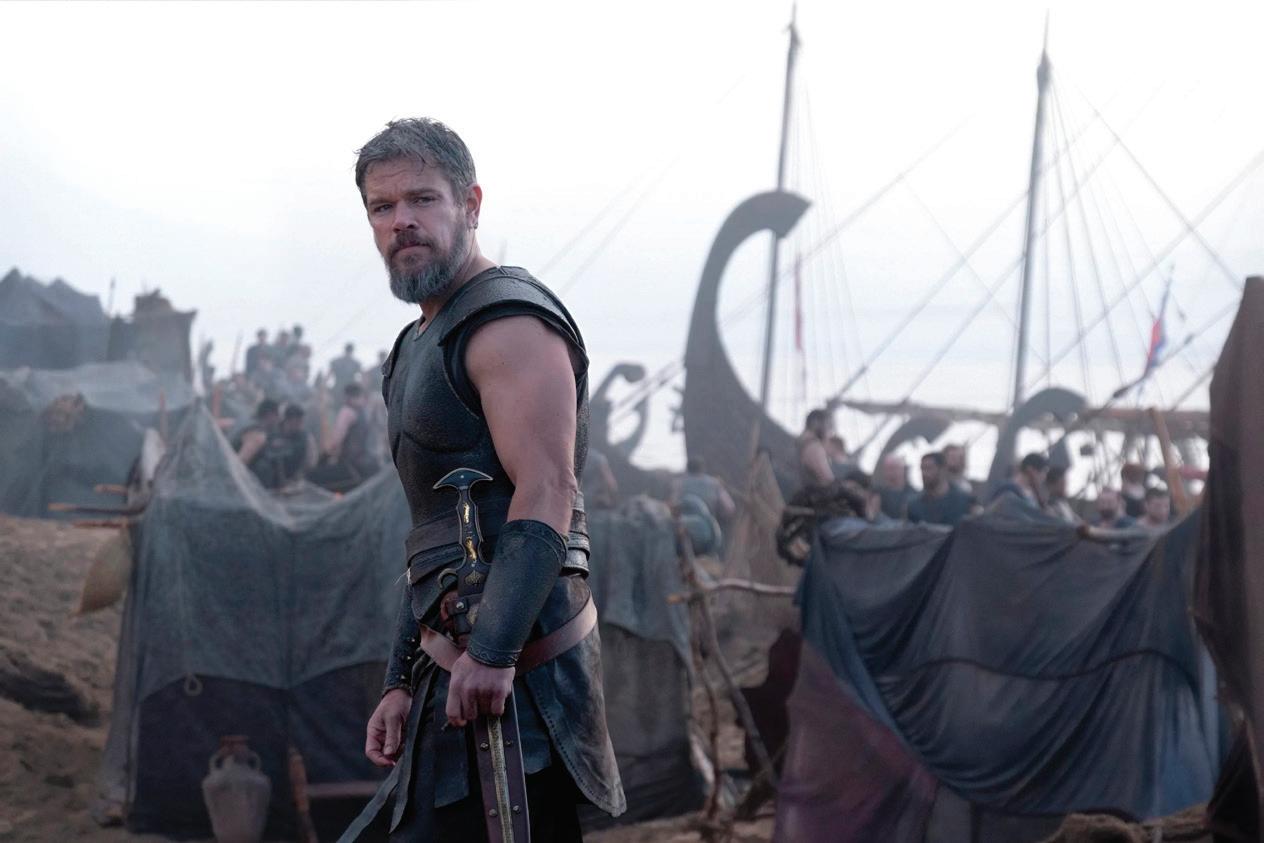
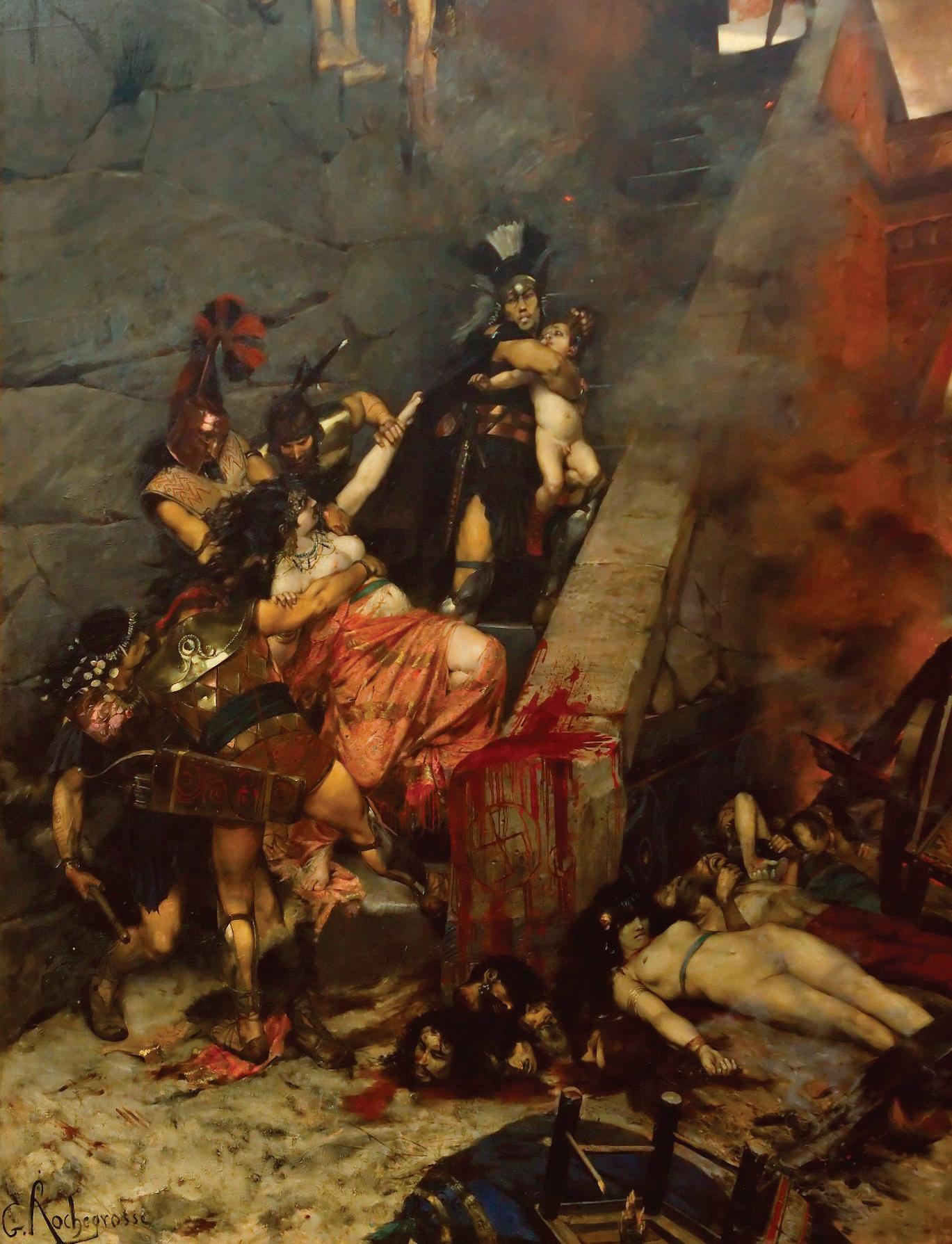
Bottom: Georges Rochegrosse (French, 1859–1938), Andromaque, 1882. Oil on canvas. 360 x 250 cm (141 3/4 x 98 1/2 in.)
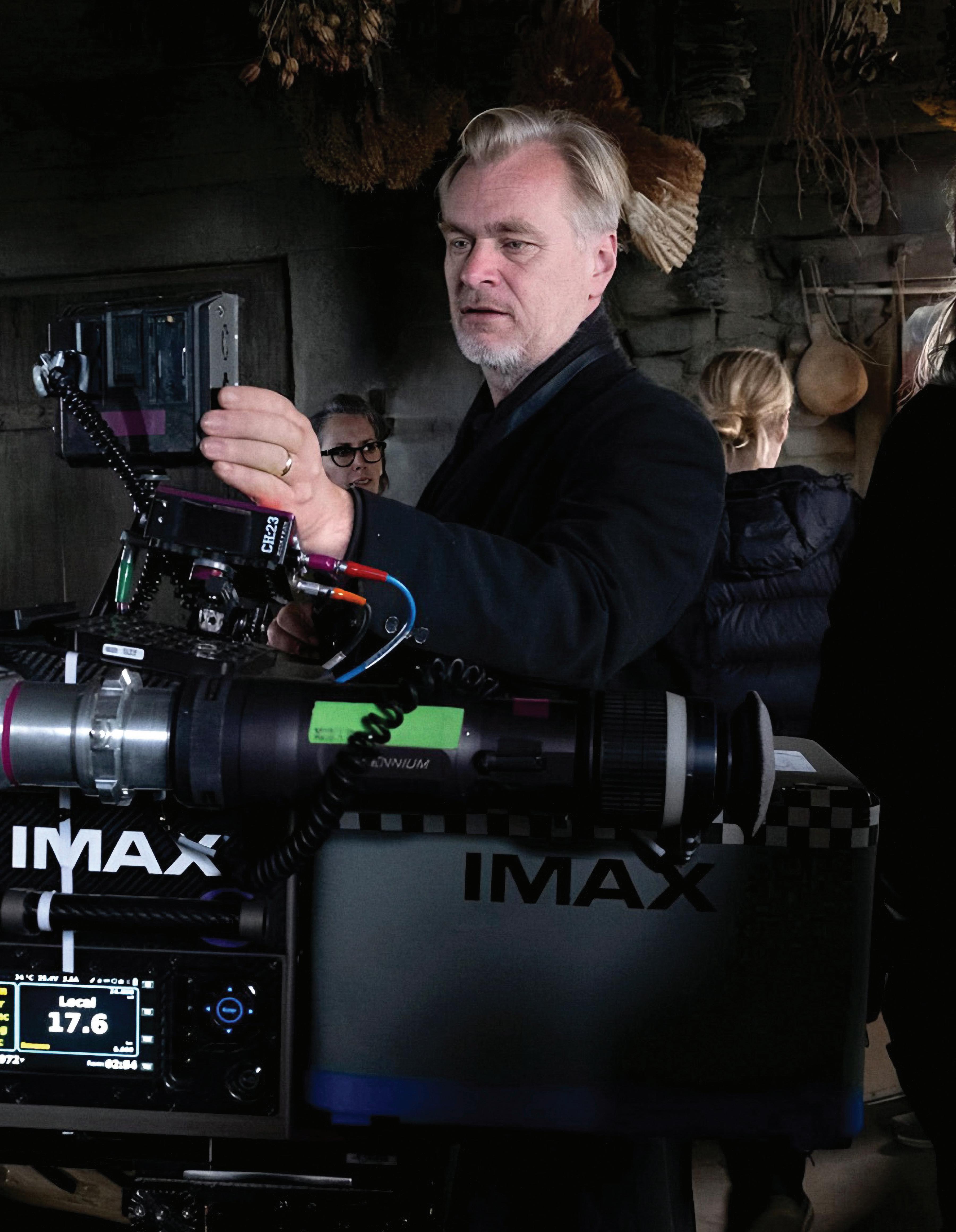
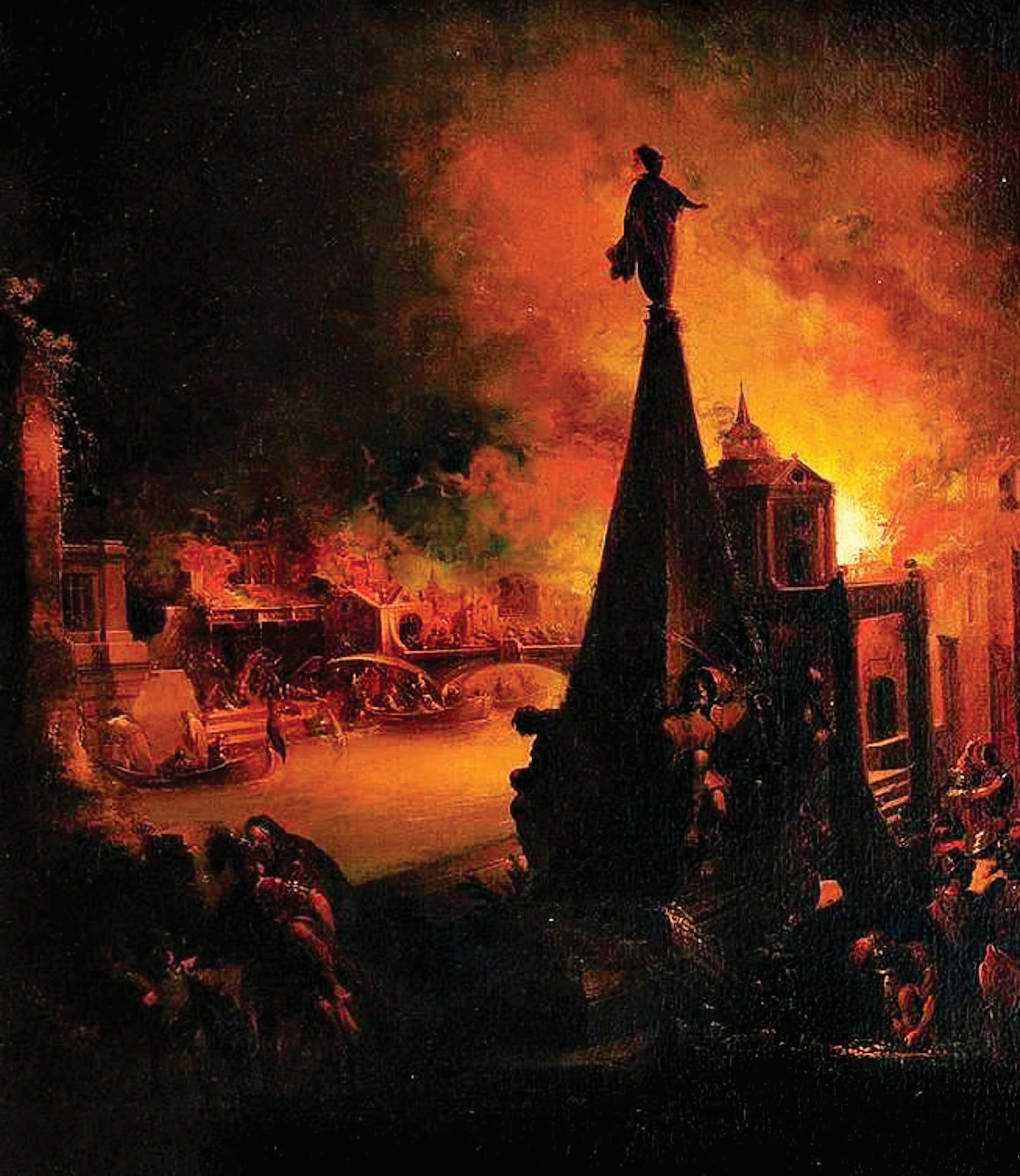
Below: Johann Georg Trautmann (German, 1713–1769), The Burning of Troy (also known as Blick auf das brennende Troja), mid-18th century. Oil on canvas.
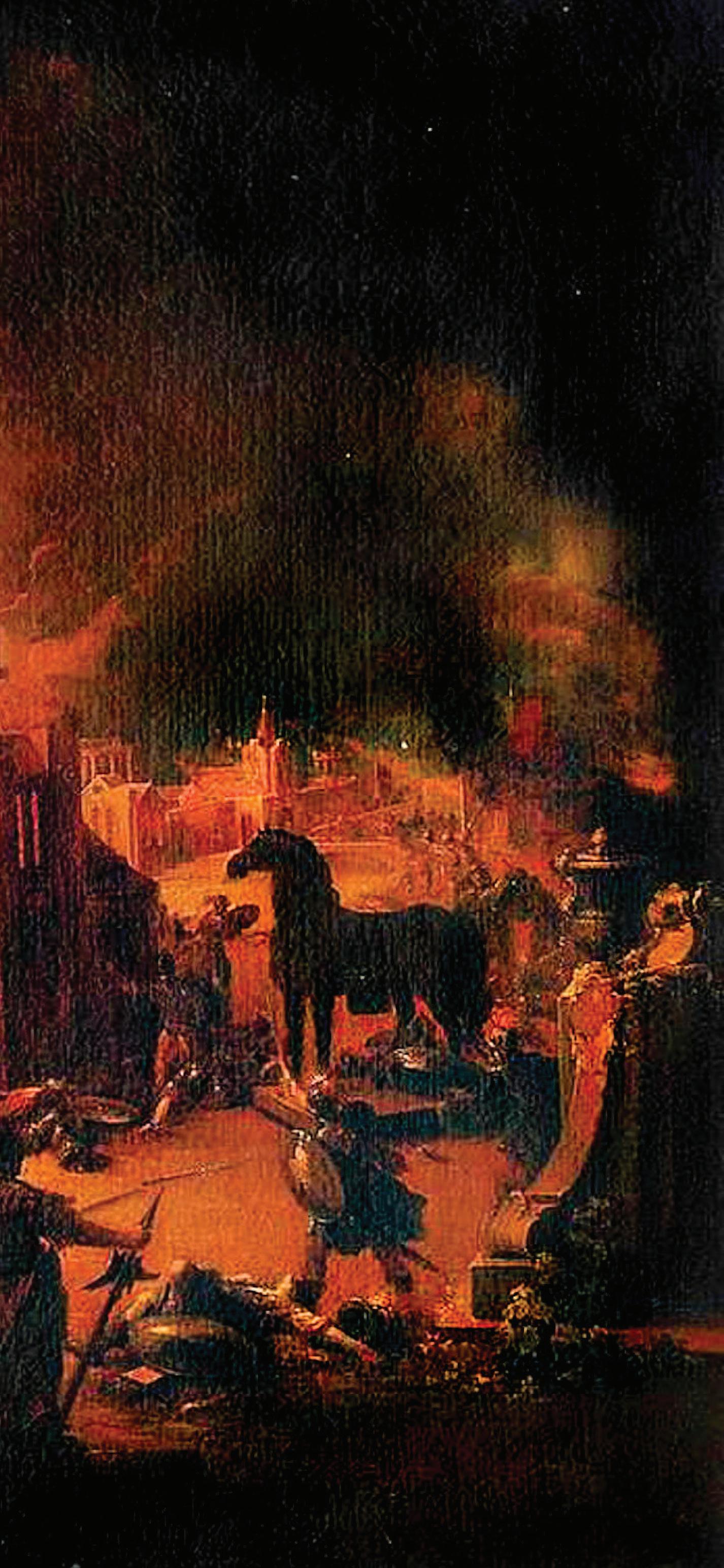
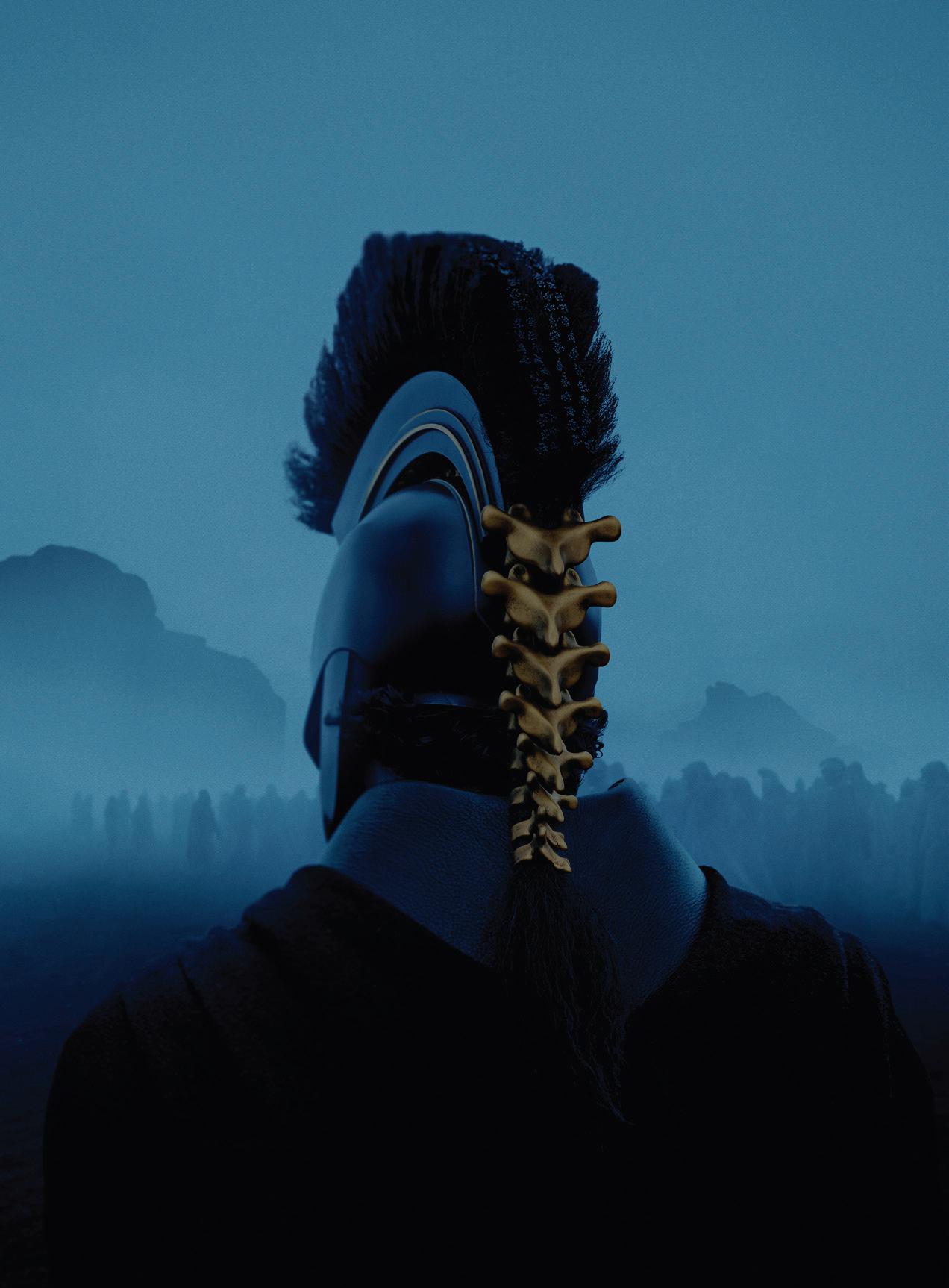
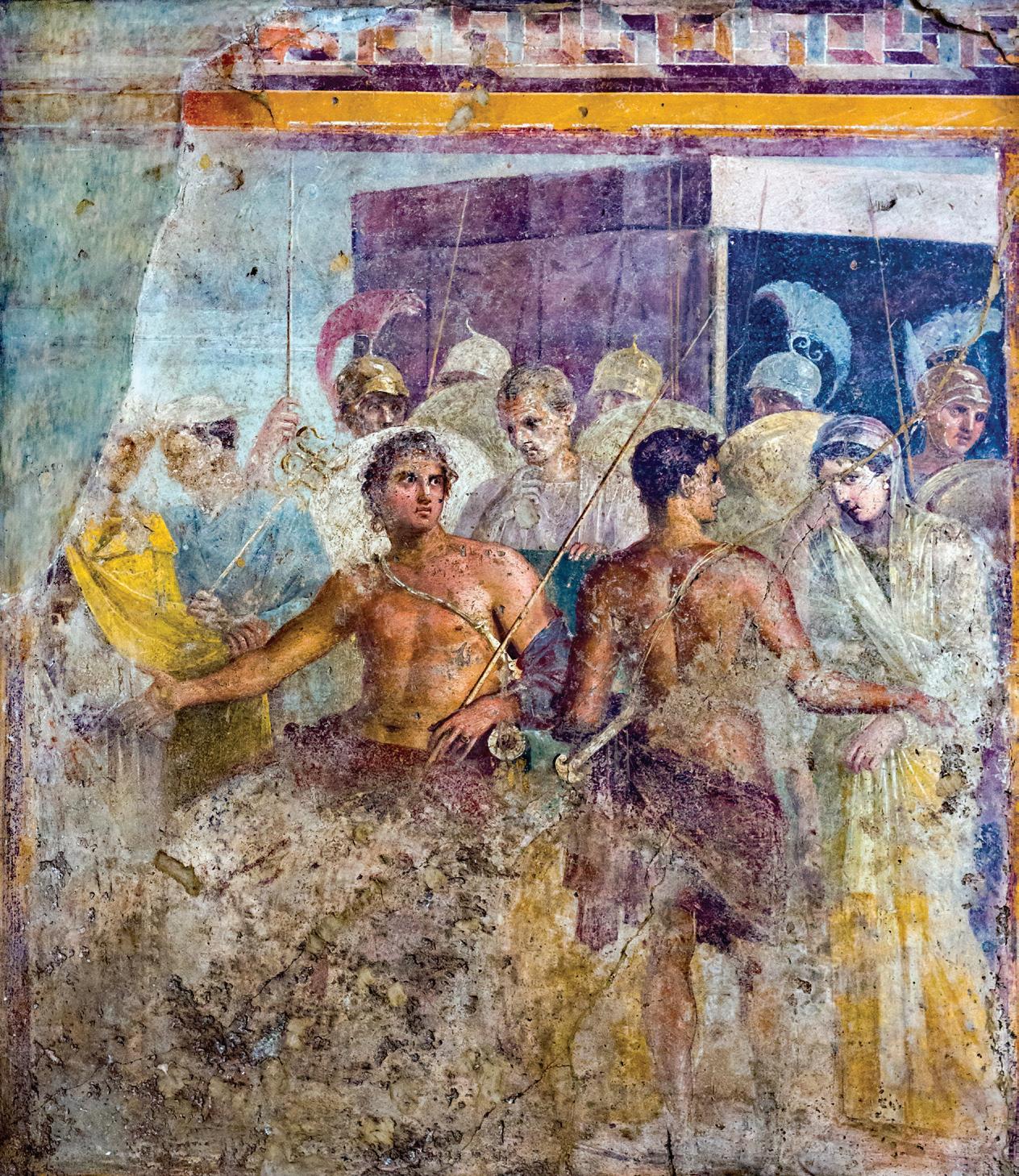
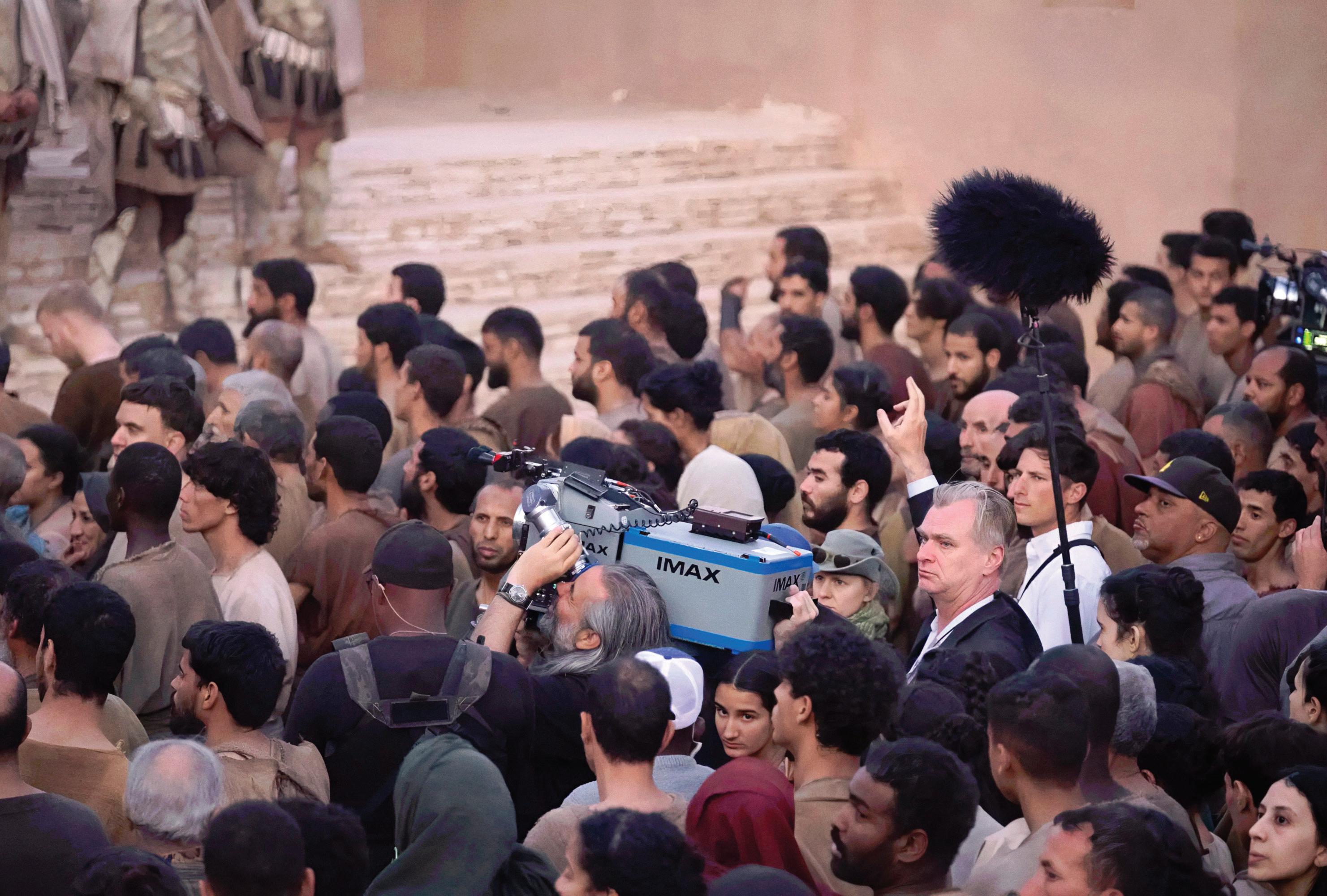
Horse is not a feat of strength, but of imagination.
This distinction matters. It places Odysseus closer to the ordinary human experience. He is a man placed in extraordinary circumstances, forced to navigate them without certainty, without clarity, and often without control. Each encounter presents a new problem, and each problem demands a different solution. There is no single quality that ensures his survival. Instead, it is his ability to change, to recalibrate, to think beyond the immediate moment that allows him to endure.
Psychologically, this is where the story continues to resonate. It is not simply a tale of adventure, but a study in persistence. The audience does not identify with Odysseus because he is invincible, but because he is not. He is vulnerable, frequently lost, at times even complicit in his own delay. He makes mistakes. He lingers where he should move on. He is tempted by comfort, by distraction, by the possibility of forgetting the journey altogether. And yet, he continues. This sense of continuation, of moving forward without certainty, reflects something deeply familiar. Life rarely
unfolds as a straight path. It is fragmented, interrupted, shaped by forces beyond control. The Odyssey captures that instability with unusual clarity. The journey is not linear. It is recursive, filled with detours, regressions, and moments of suspension. Time stretches. Years pass unnoticed. The destination remains constant, but the path toward it shifts continually.
Running alongside this is another, equally powerful tension: that of return. The idea of home, in The Odyssey, is not simple. It is both a physical place and an emotional construct, something that exists as memory as much as re-
ality. Odysseus’s longing for Ithaca is constant, yet the longer he remains away, the more uncertain that return becomes. What does it mean to go back after so much time has passed? What remains the same? What has been irreversibly altered?
This uncertainty extends to the question of love and fidelity. Penelope becomes, in many ways, the emotional counterpoint to Odysseus’s journey. While he moves across landscapes, encountering danger and temptation, she remains fixed in place, navigating a different kind of trial. Her challenge is not survival, but endurance. She waits,
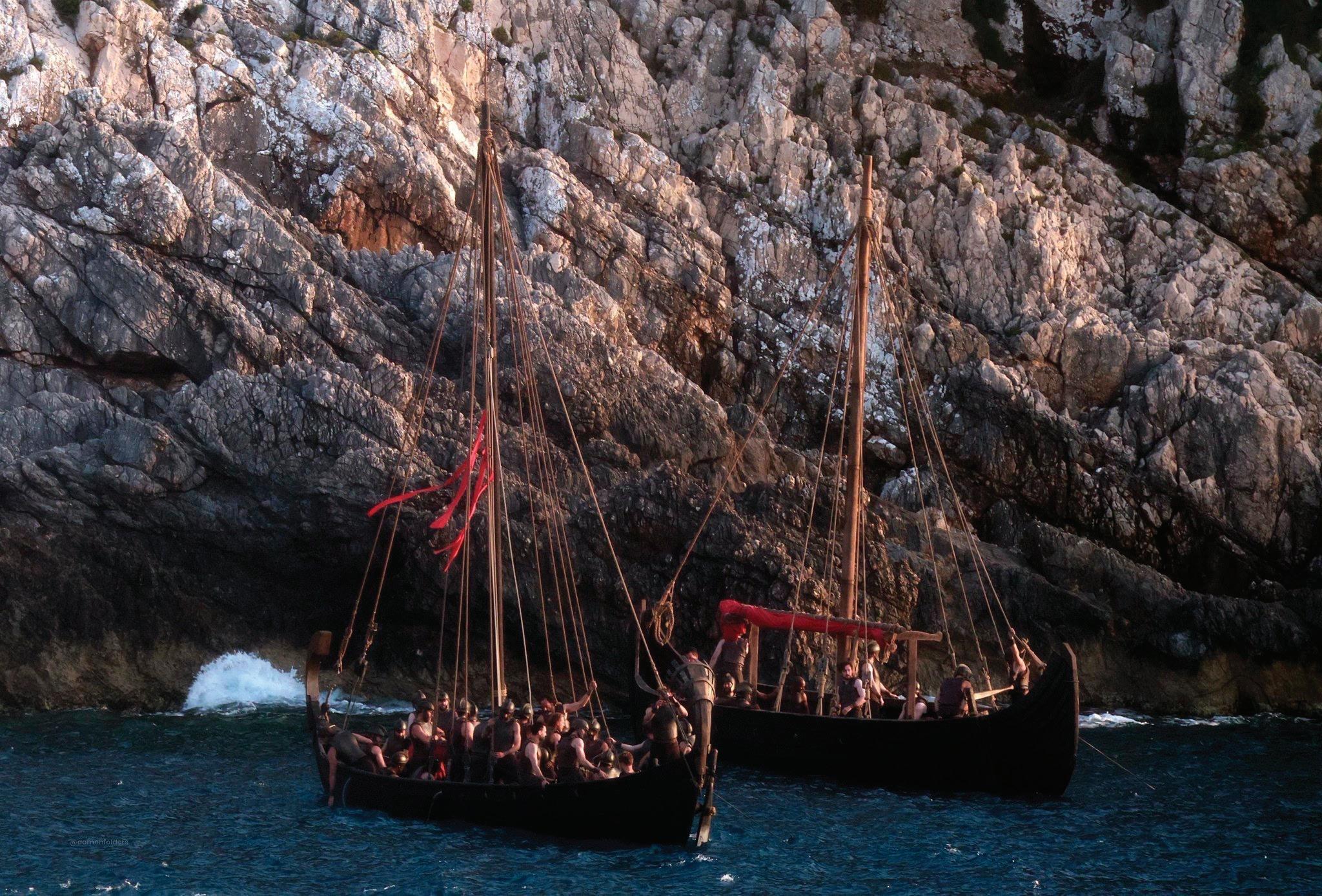
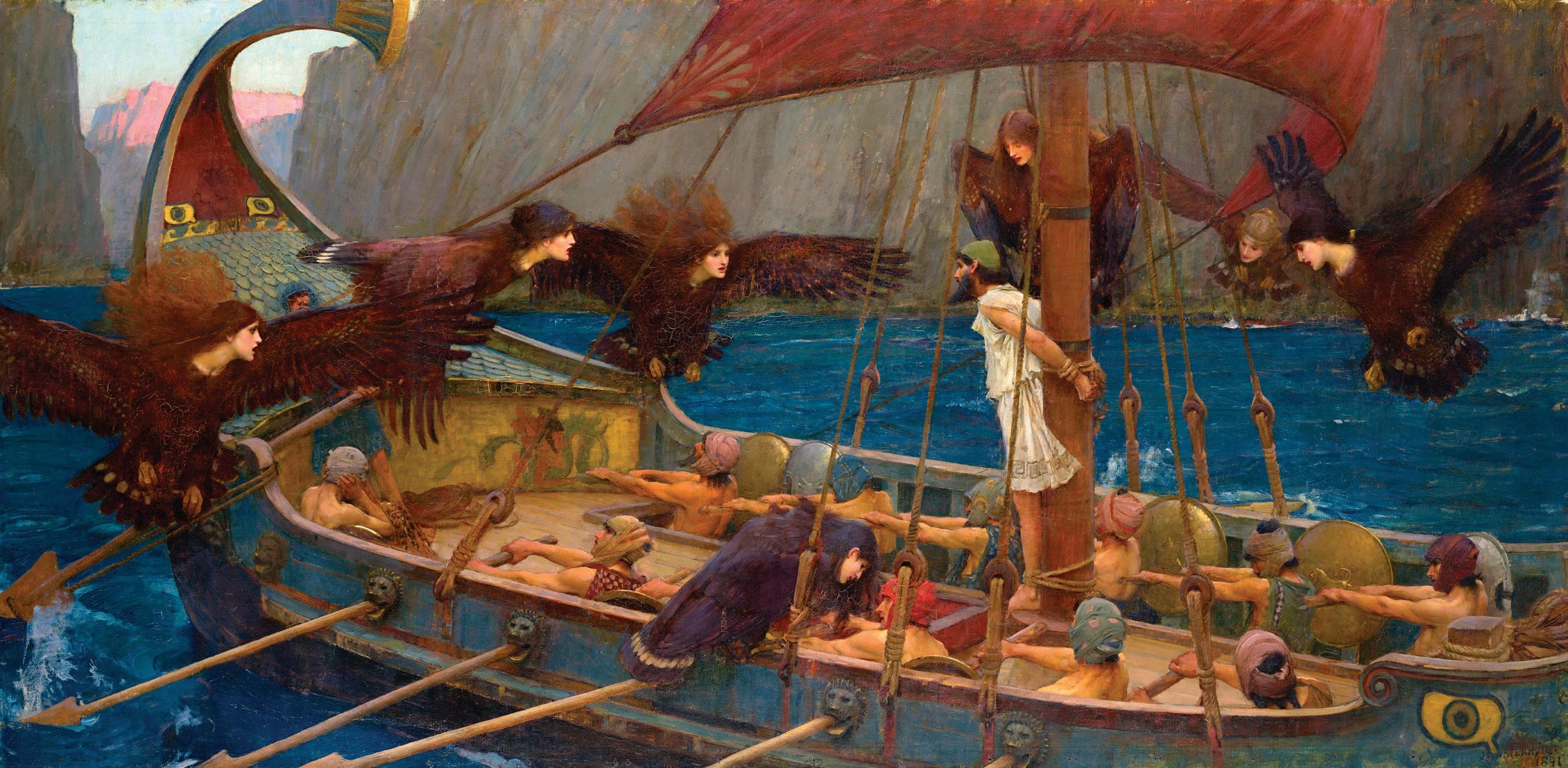
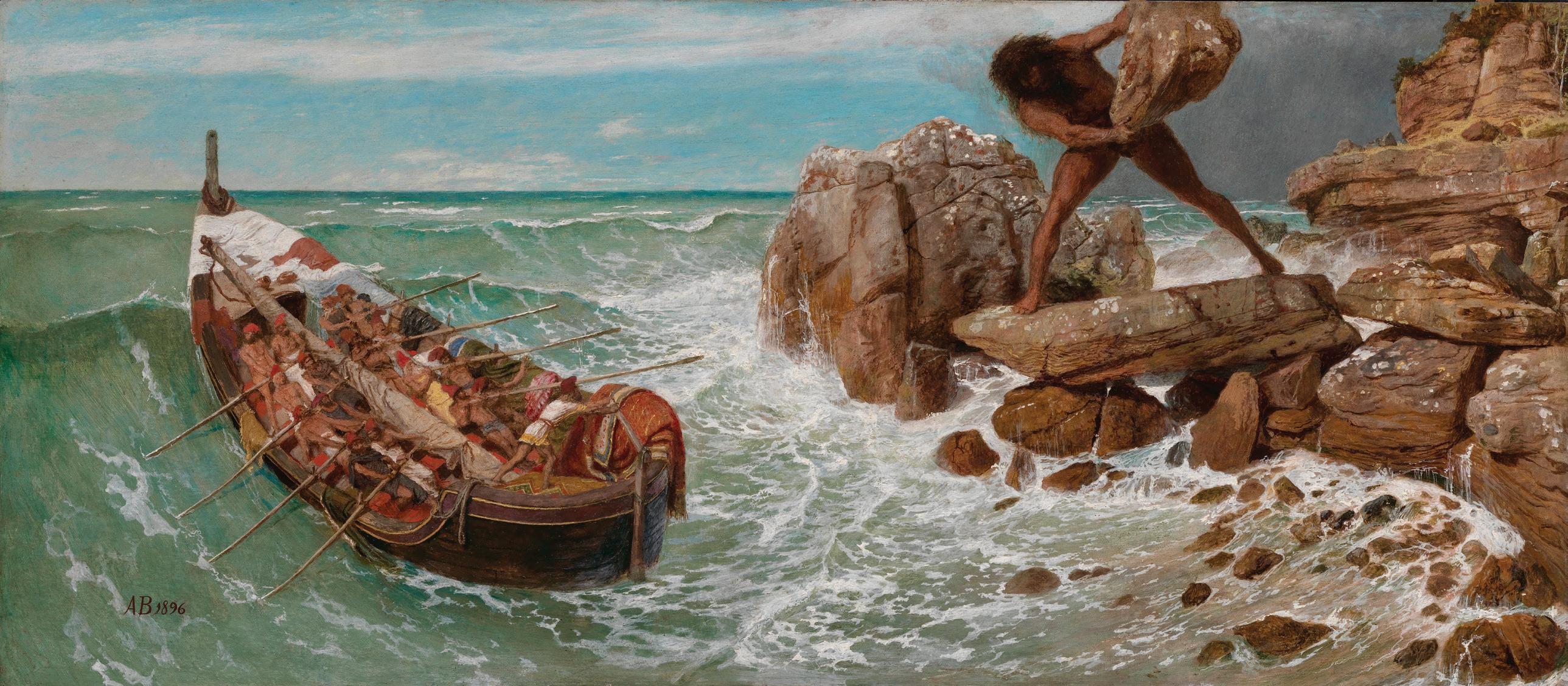
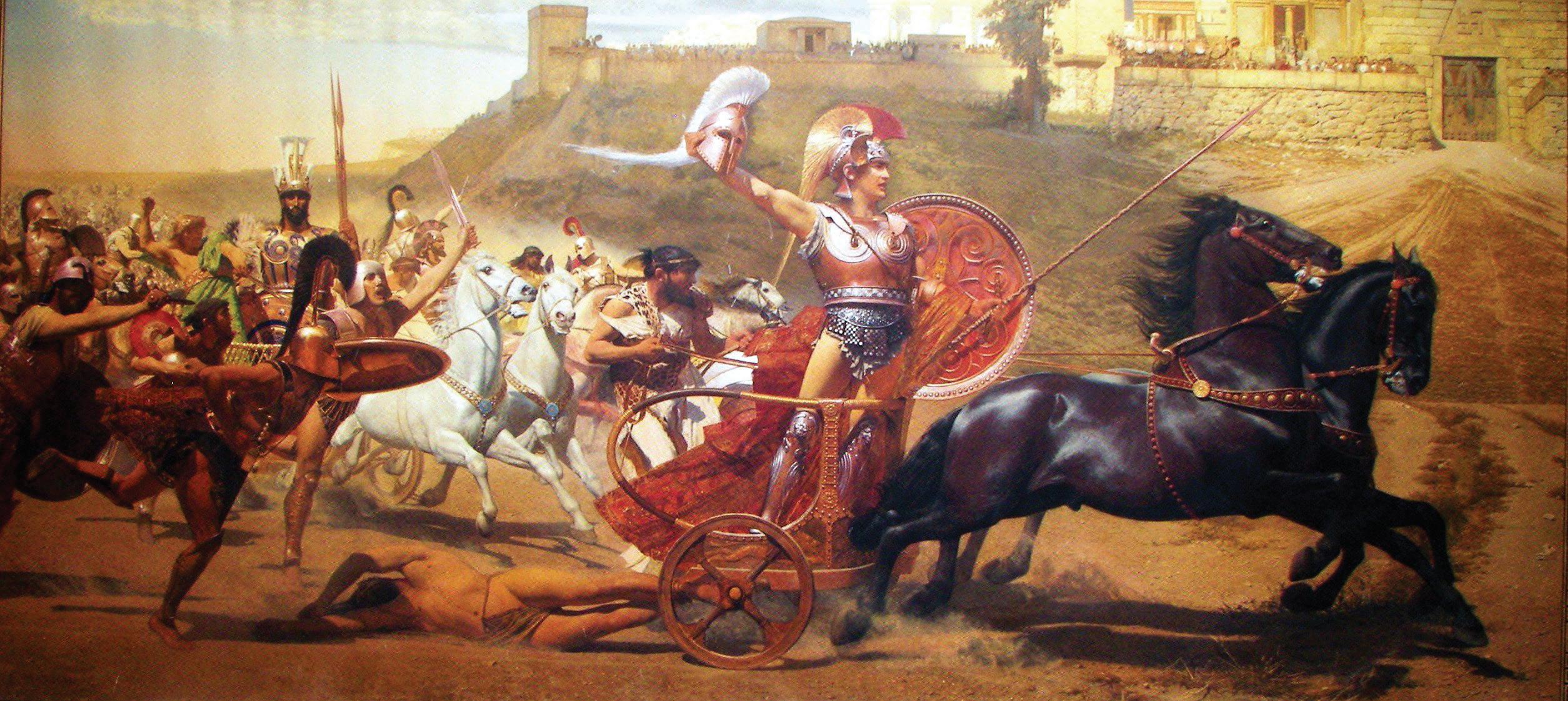
Top to Bottom: Arnold Böcklin (Swiss, 1827–1901), Odysseus und Polyphemus (Odysseus and Polyphemus), 1896. Oil on panel. 66 × 150 cm (26 × 59 in.)
Franz Matsch (Austrian, 1861–1942), Triumph of Achilles, 1892. Oil on canvas (panoramic fresco).
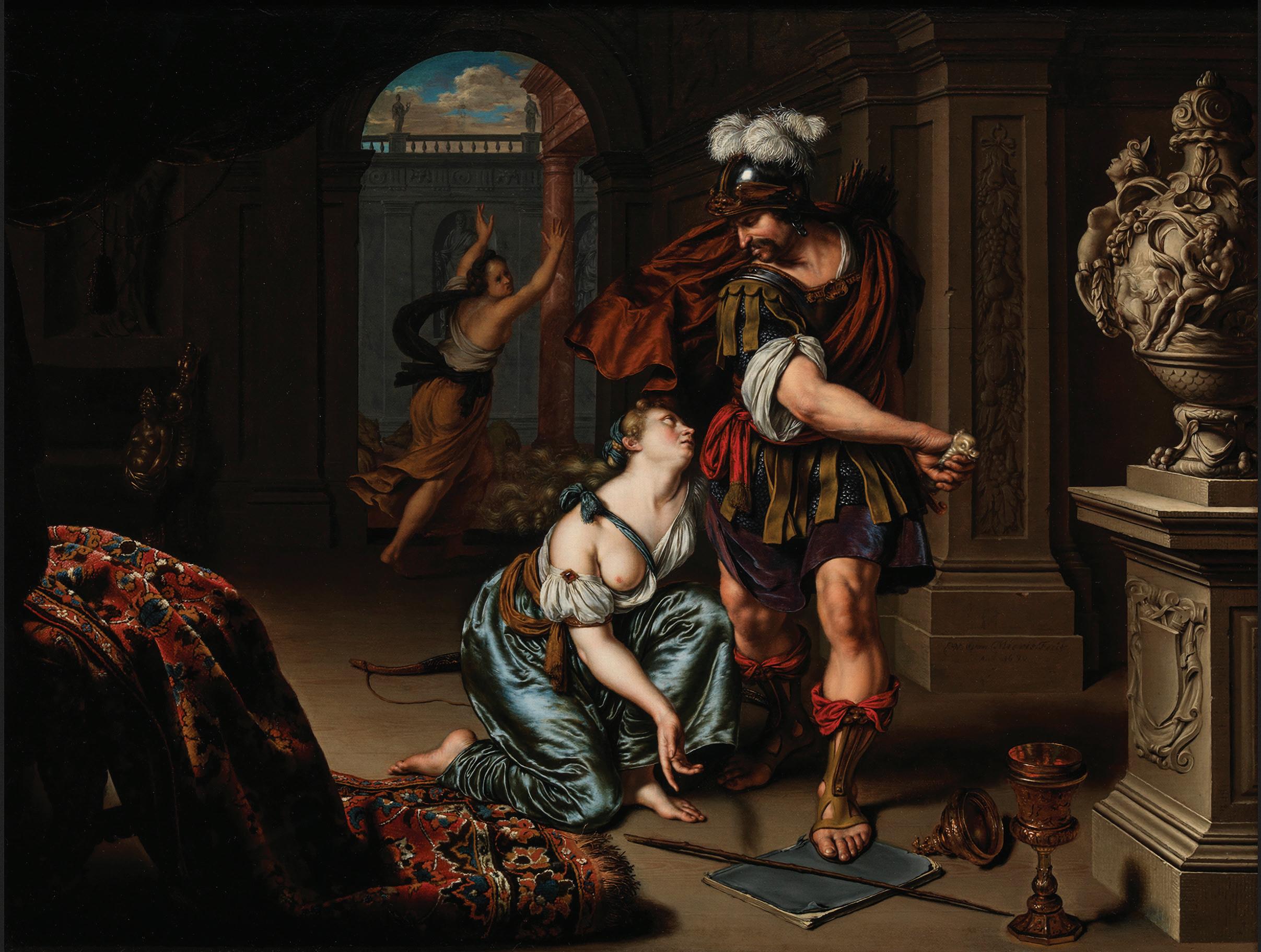
Willem van Mieris (Dutch, 1662–1747), Odysseus
Threatening Circe, 1690. Oil on panel. 33.7 × 43.8 cm
(13 1/4 × 17 1/4 in
but her waiting is not passive. It is active, strategic, sustained through intelligence and resolve.
The tension between them is subtle but profound. Will she remain faithful? Can she remain faithful? What does fidelity mean across decades of absence? The Odyssey does not offer simple answers. It presents love not as certainty, but as something tested by time, distance, and change. The promise of return is always shadowed by the possibility of its failure.
In this sense, the story becomes less about adventure and more about recognition. Odysseus’s return is not merely physical. It is psychological. He must prove himself, reveal himself, re-establish his place within a world that has continued without him. Home is not waiting unchanged. It must be reclaimed, and even then, it is no longer what it was.
This complexity has long captivated artists as much as audiences. The Odyssey unfolds as a sequence of vivid, almost self-contained episodes, each one lending itself to interpretation and reimagining. Across centuries, painters, sculptors, and filmmakers have returned to its imagery: the blinding of the Cyclops, the haunting call of the Sirens, the long, uncertain passage across open water. Each rendering reflects not only the story itself, but the sensibility of the moment in which it is created.
The images that accompany this telling exist within that continuum. They do not simply illustrate The Odys-
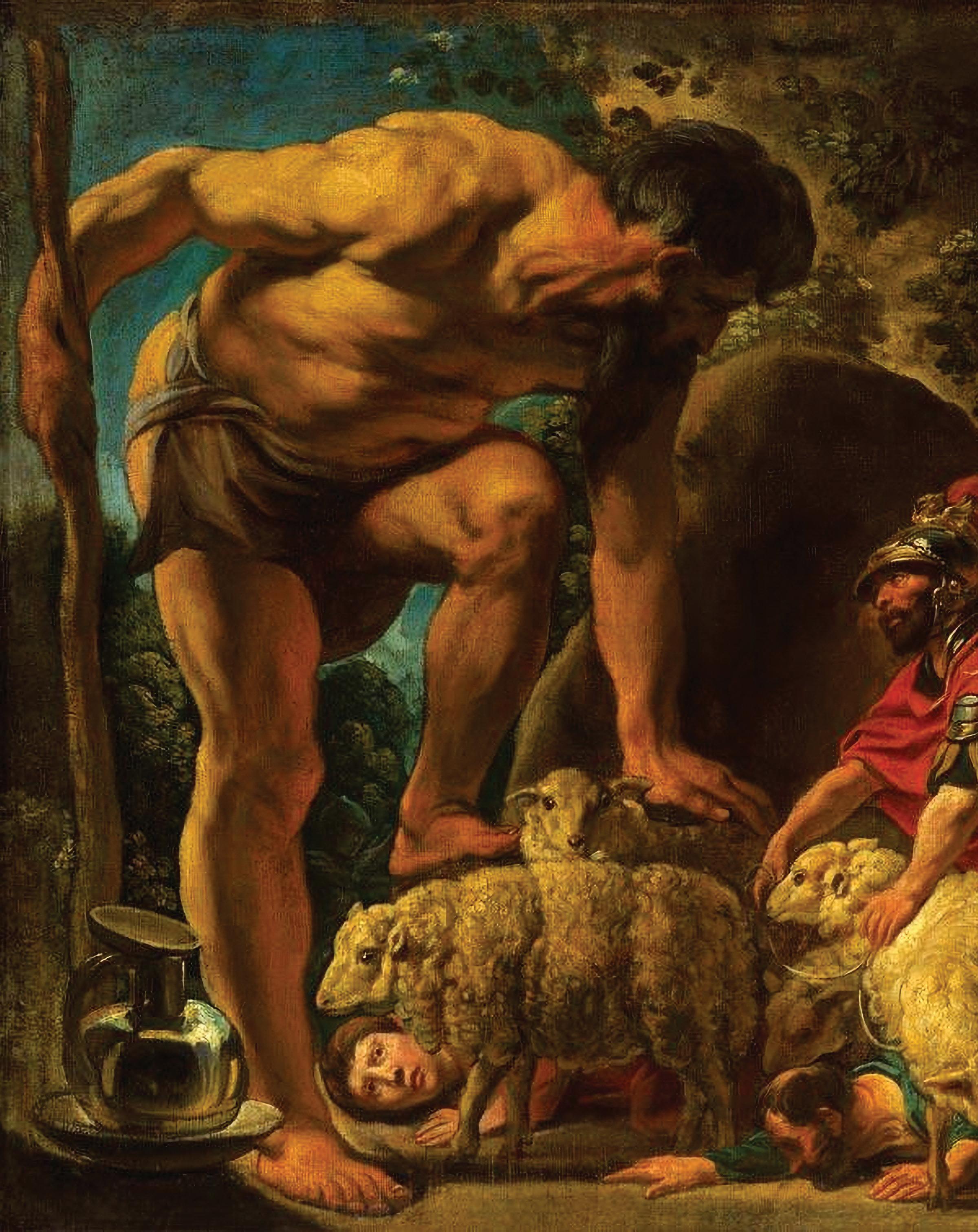
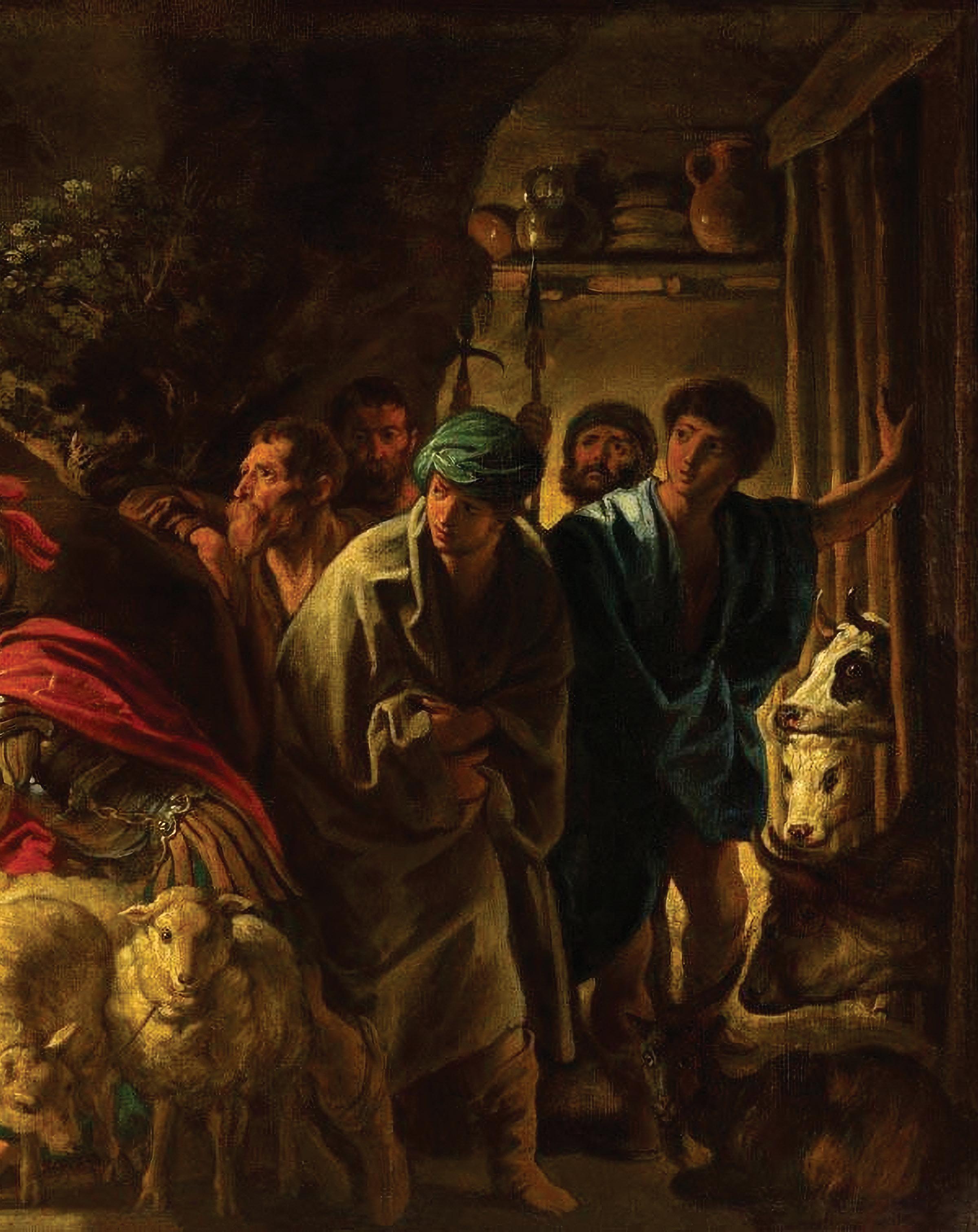
sey. They extend it. Each one captures a fragment of the narrative while contributing to a larger visual language that has evolved over time. The story persists not because it is fixed, but because it is adaptable, capable of being reshaped without losing its essential force.
It is perhaps this adaptability that draws Nolan to it now. He has described the process of filming as “an absolute nightmare, but in all the right ways,” a reflection of the physical demands of the production. The choice to film in real environments, under unpredictable conditions, suggests an attempt to bring the material closer to its origins, to reintroduce a sense of scale and difficulty that mirrors the journey itself.
At the same time, Nolan has spoken of wanting to fill a gap in contemporary cinema, to create a mythological epic that carries both spectacle and weight. The Odyssey offers that possibility, not because it is grand, but because it is grounded. Its scale emerges not only from its setting, but from its ideas.
What endures, ultimately, is not the story alone, but the way it continues to reflect the human condition. The Odyssey persists because it understands something fundamental: that life is not defined by strength alone, but by the ability to adapt, to endure, and to return, even when return itself is uncertain.
Perhaps this is what Nolan meant. Not that The Odyssey is simply a story, but that it is the one that continues to contain all others.
Jacob Jordaens (Flemish, 1593–1678), Odysseus in the Cave of Polyphemus, c. 1630–1635. Oil on canvas. 76 × 96 cm (29.9 × 37.8 in.)
1985
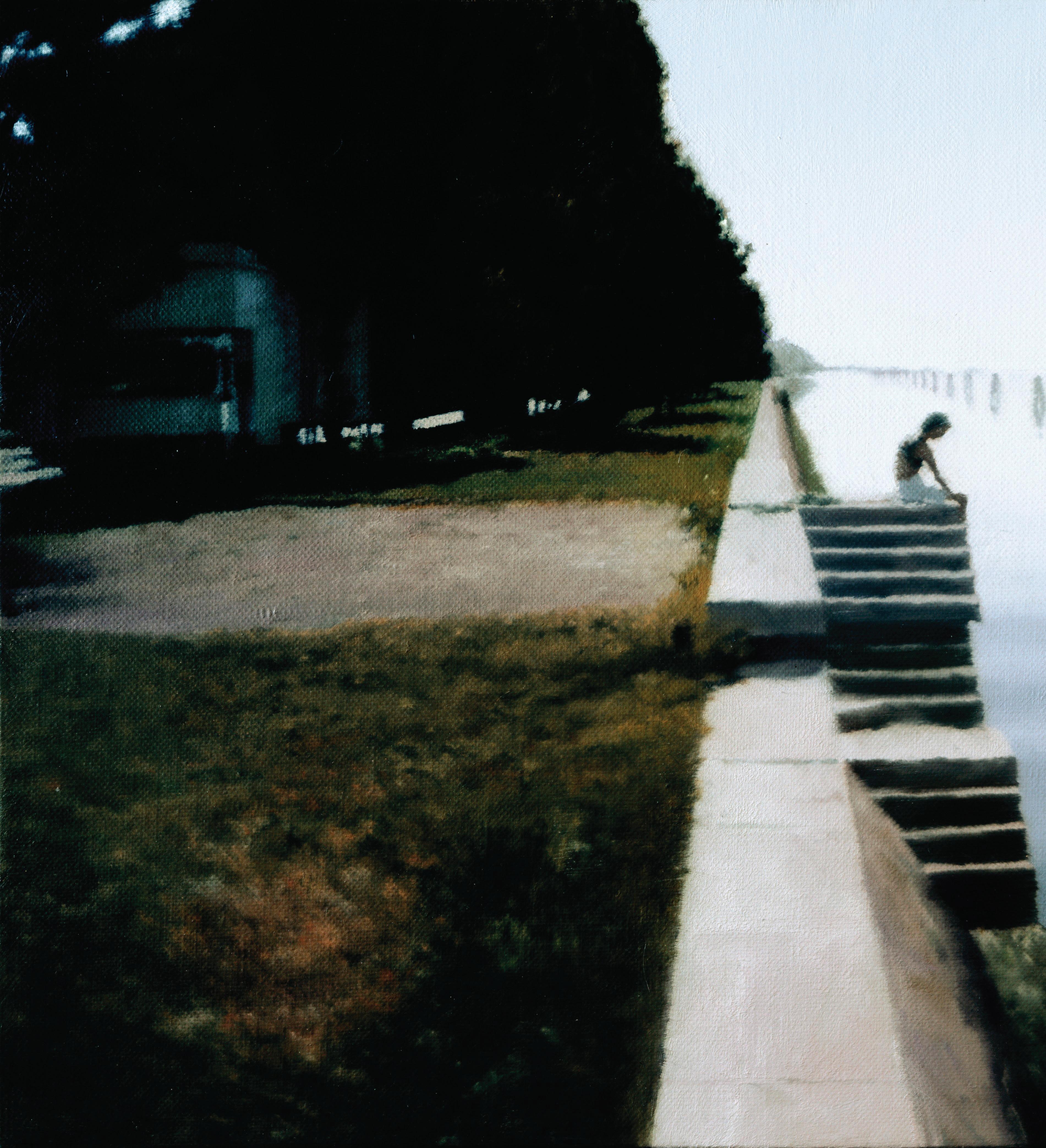
Gerhard Richter, Venedig (Treppe) [Venice (Staircase)],
(CR 586-3). Oil on canvas. 51.4 x 71.8 cm. The Art Institute of Chicago. Gift of Edlis Neeson Collection © Gerhard Richter 2025 (18102025)
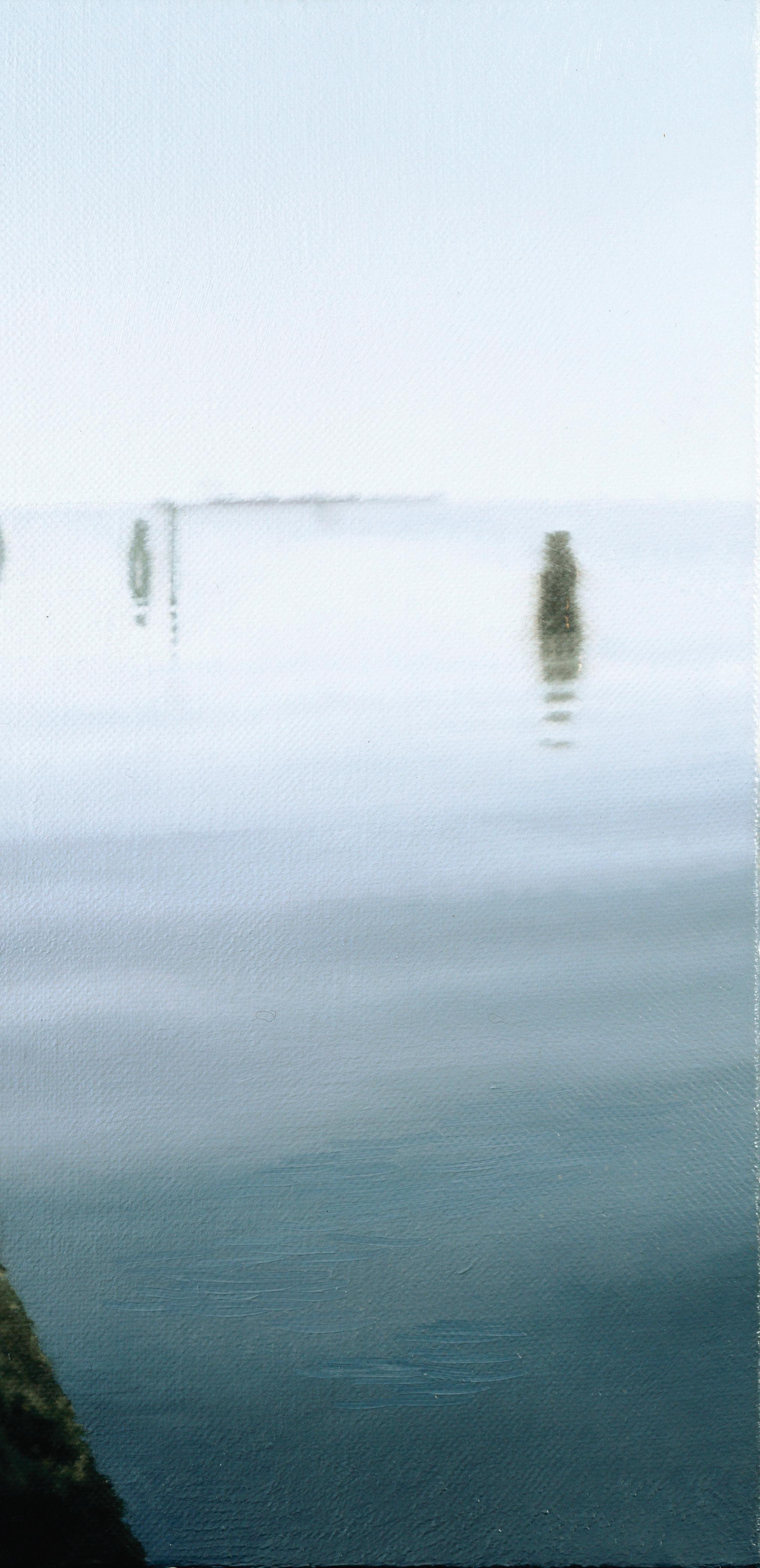
Gerhard Richter in Paris
A major retrospective examines an artist who has spent a lifetime questioning the image
a major retrospective of Gerhard Richter at the Fondation Louis Vuitton, brought together more than six decades of work by an artist who has long resisted classification. More than 270 works spanning from the early 1960s to the present, were arranged chronologically across the galleries. Its significance lies less in size than in what it reveals: a practice that has returned to the same questions without resolving them. What is an image, and how much of it can be trusted?
Richter’s work emerged from a specific historical rupture. Born in Dresden in 1932, he came of age in a Germany defined by war, division, and reconstruction. His early training in East Germany was rooted in a classical, state-sanctioned realism. When he fled to the West in 1961, just before the Berlin Wall was built, he entered a different
artistic landscape, one defined by abstraction, experimentation, and a growing skepticism toward representation. Rather than choosing between these positions, he held them in tension.
From the beginning, Richter worked from images that were already mediated. Photographs clipped from newspapers, family snapshots, archival material. Nothing was painted directly from life. This distance was not a limitation. It was the point.
His earliest paintings based on photographs appeared in the early 1960s and were received with a degree of uncertainty. They did not fit comfortably within the prevailing categories of the time. They were not Pop, though they borrowed from its sources. They were not realism in any traditional sense. Nor were they abstract. Critics often struggled to describe them, noting
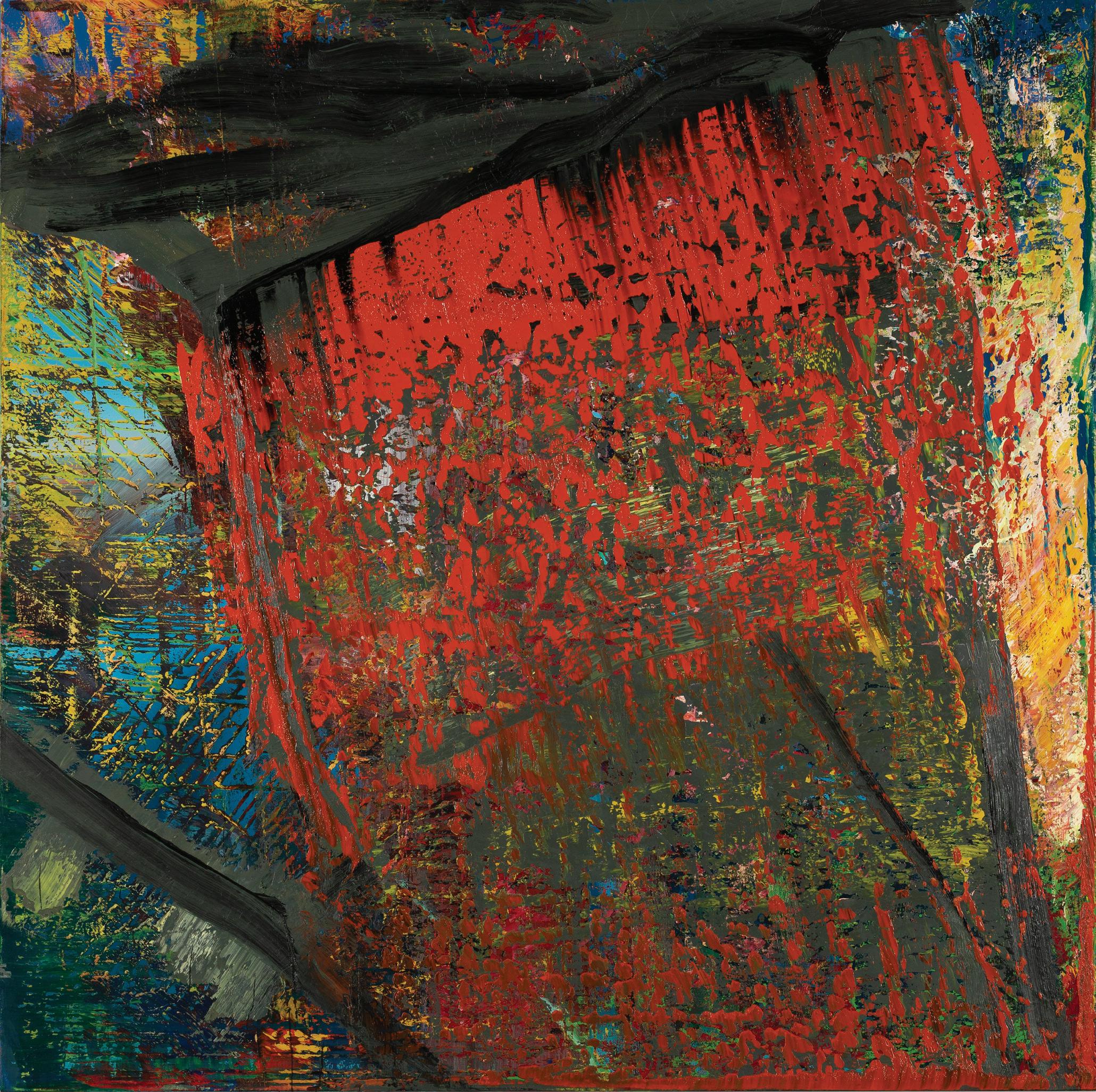
their neutrality and their refusal to declare a position.
What distinguished them was not their subject, but their treatment. Richter blurred them.
“I blur things to make everything equally important and equally unimportant,” he has said.
The gesture was simple, but its implications were not. Faces lost their definition. Contours lost their precision. The image remained visible, but its authority weakened. In a postwar context, where photography had been used both to document and to obscure, this carried a particular weight.
The paintings did not deny the image. They unsettled it.
Through the 1970s and 1980s, Richter’s work expanded in multiple directions at once. Landscapes, portraits, history paintings, and abstractions appeared side by side. This was not a progression from one style to another, but a refusal to settle into any single language. Critics at the time often described this as inconsistency. In retrospect, it reads as method.
His abstract paintings, which began to take shape in the late 1970s, introduced another layer to this inquiry.
Built through the application and re-
moval of paint, often using large squeegees, they combined control with unpredictability. Color was layered, then partially erased. Surfaces carried traces of earlier decisions, even as they were obscured. The process remained visible, though never fully legible.
At a moment when abstraction was often tied to expression or gesture, Richter approached it differently. The paintings do not assert emotion. They operate with a degree of detachment, allowing chance to play a role without relinquishing structure. They suggest that even in the absence of a recognizable subject, uncertainty persists.
Over time, this dual approach, working from images while simultaneously destabilizing them, came to define Richter’s position within contemporary art. He was neither aligned with a movement nor opposed to one. Instead, he occupied a space between them, continually shifting.
That ambiguity did not prevent his work from entering the center of the art market. Quite the opposite. In 2012, his Abstraktes Bild (809-4) sold at auction for over $34 million, briefly making him the most expensive living artist in the world. Three years later, another Abstraktes Bild (599) reached more
Gerhard Richter, Gudrun,1987 (CR 633) Oil on canvas 250 x 250 cm. Fondation Louis Vuitton, Paris Photo credit: Primae / Louis Bourjac © Gerhard Richter 2025 (18102025)
Gerhard Richter 2025 (18102025)
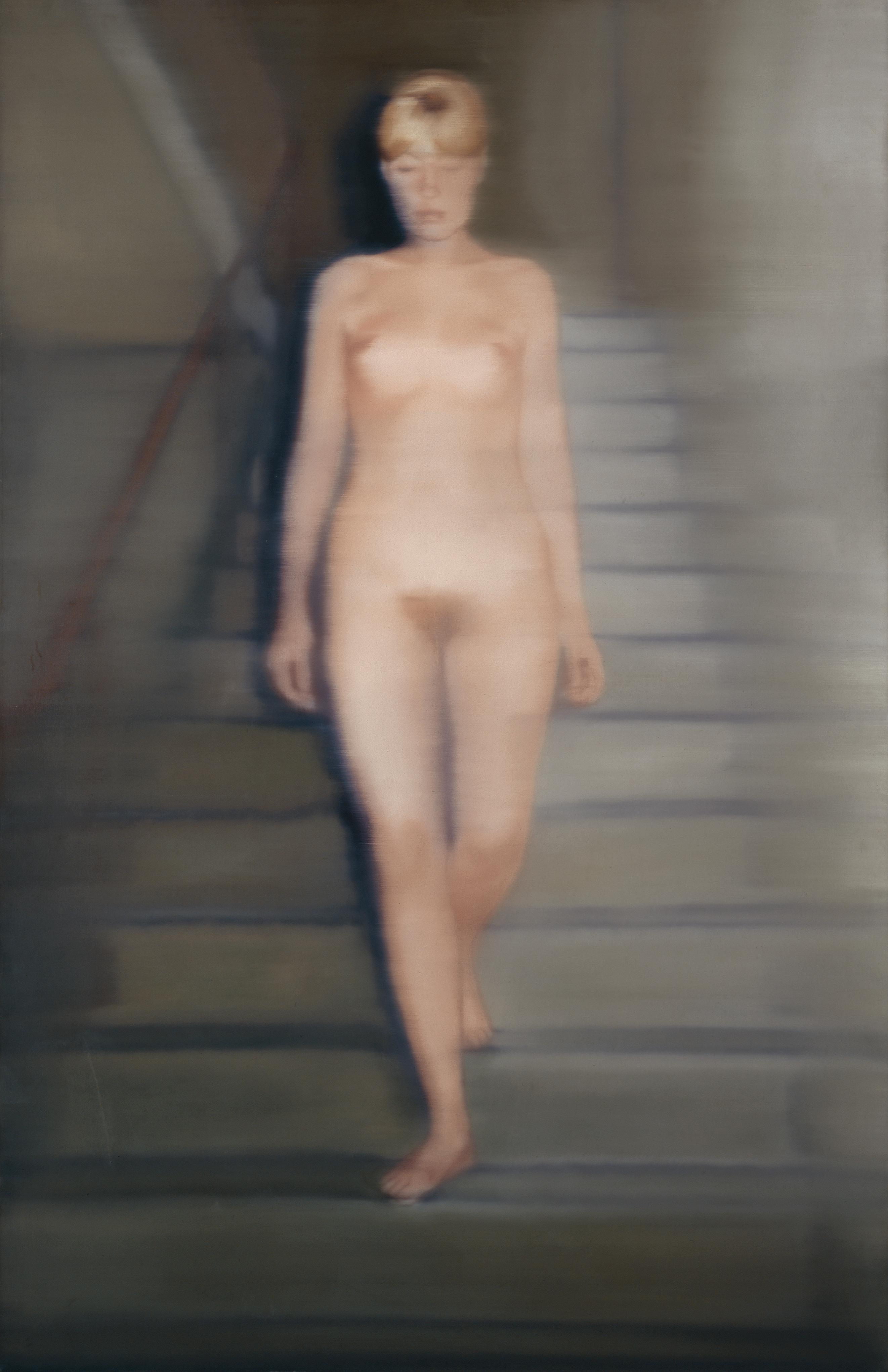
Gerhard Richter, Ema (Akt auf einer Treppe) Ema [Nude on a Staircase], 1966 (CR 134) Oil on canvas 200 x 130 cm Museum Ludwig, Cologne / Donation Ludwig Collection 1976 ©
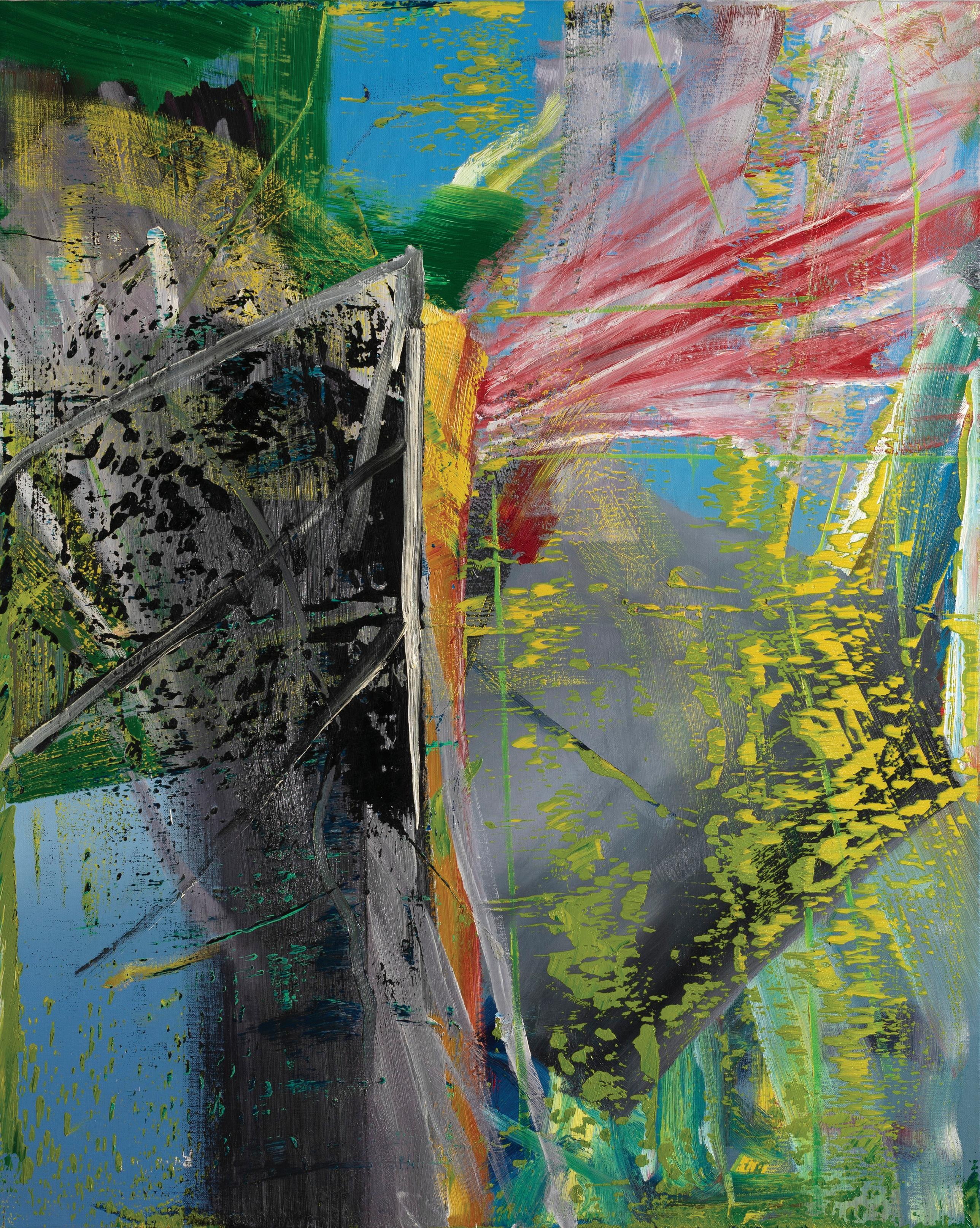
Gerhard Richter (German, b. 1932), Möhre (Carrot), 1984. Oil on canvas. 200 x 160 cm (78 1/2 x 63 in.)
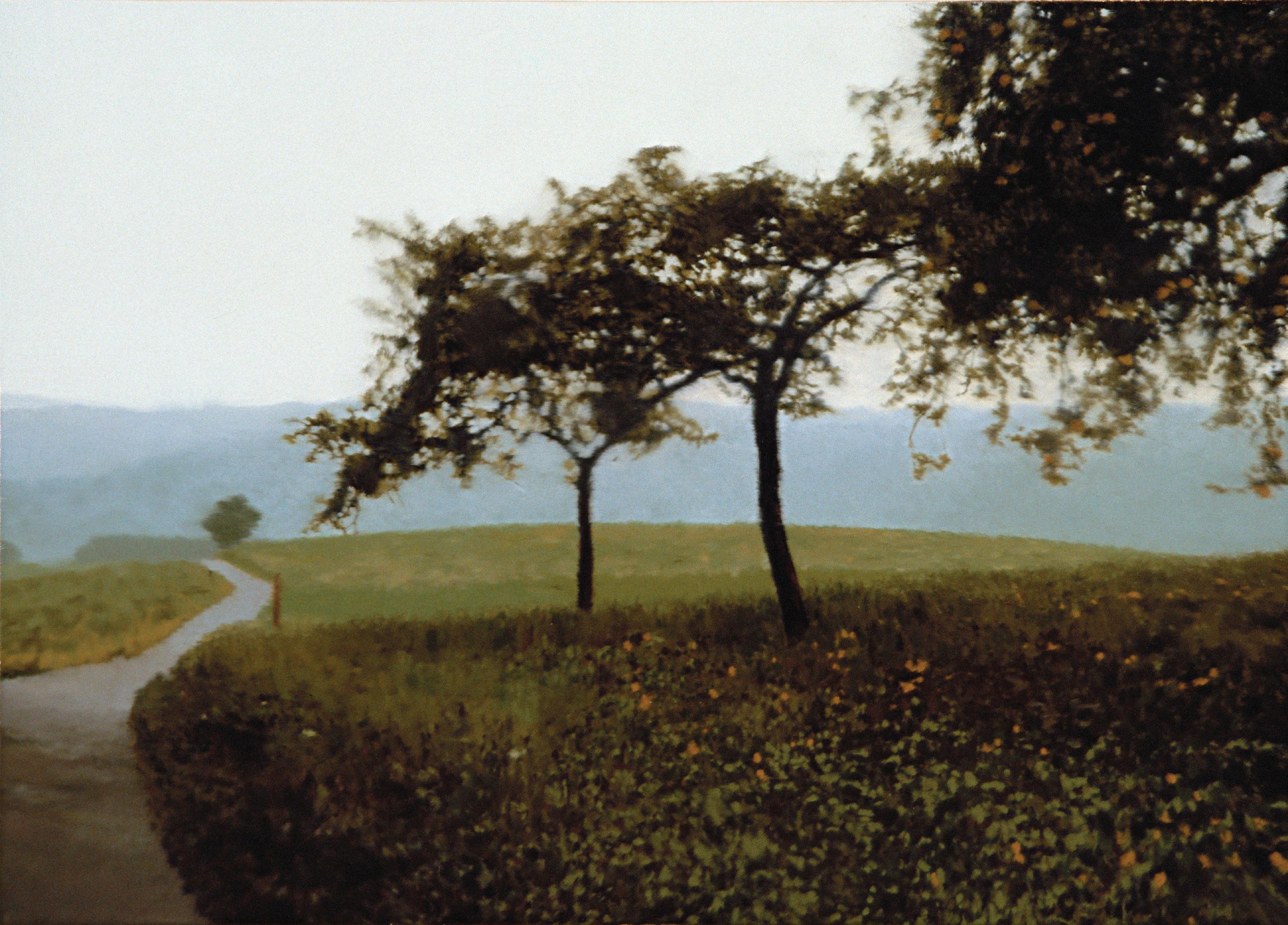
than $46 million, a record that still stands. Other works, from blurred cityscapes to seascapes and color charts, have achieved similarly high prices across different markets.
The scale of these figures stands in contrast to the artist’s own position. Richter has described the art market as having developed “insanely,” expressing a distance from the valuations attached to his work. That distance is consistent with the work itself. The paintings do not seek to assert meaning. They remain open, even as their market value continues to rise.
The retrospective made this tension visible. Moving through the galleries, one encountered not a singular trajec-
tory, but a series of returns. Photography reappears. Abstraction reasserts itself. Earlier concerns surface again in altered form. The work accumulates without resolving.
Richter has described himself simply as a “maker of images.” The phrase resists interpretation. It places the emphasis on the act itself, the production of something that exists in front of us, even if its meaning remains uncertain.
In the final rooms of the exhibition, uncertainty no longer reads as a problem to be solved, but as a condition to be recognized. The paintings remain exacting in their presence, yet resist any single interpretation. What is visible is clear, but never fully resolved.
In a moment when images are no longer tied to a stable reality, when they can be generated, altered, and multiplied without origin, Richter’s work reads differently. Long before the rise of artificial intelligence, he approached the image as something inherently unstable, something to be questioned rather than accepted.
“I have nothing to say and I am saying it,” he once remarked, a statement that suggests distance, even indifference. Seen now, the work feels anything but detached. It anticipates a condition in which the image persists, but its meaning remains uncertain.
Richter did not attempt to resolve that condition. He made it visible.
“I have nothing to say and I am saying it.” — Gerhard Richter
Gerhard Richter, Apfelbäume [Apple Trees],1987
(CR 650-1) Oil on canvas. 67 x 92 cm. Private collection
© Gerhard Richter 2025 (18102025)
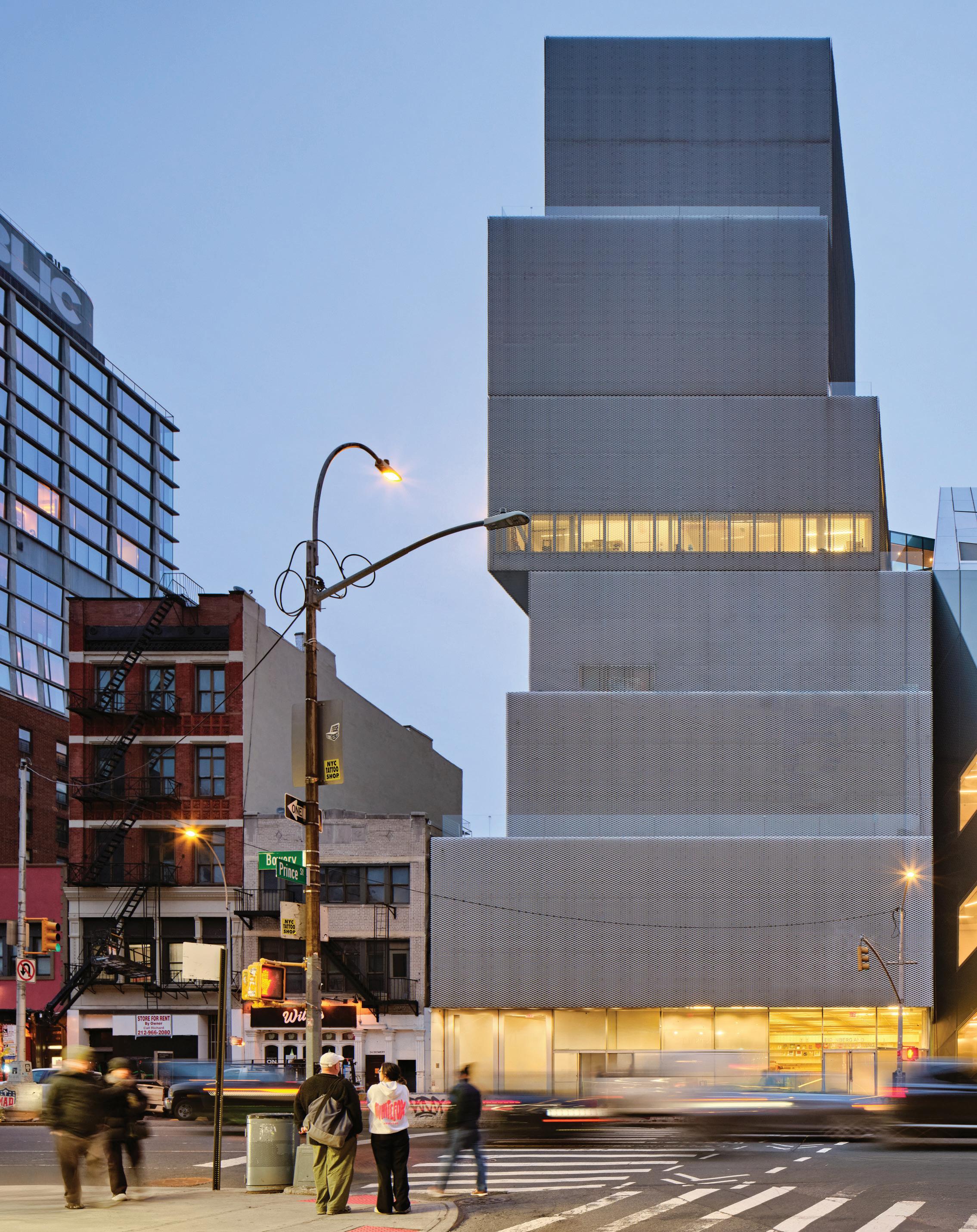
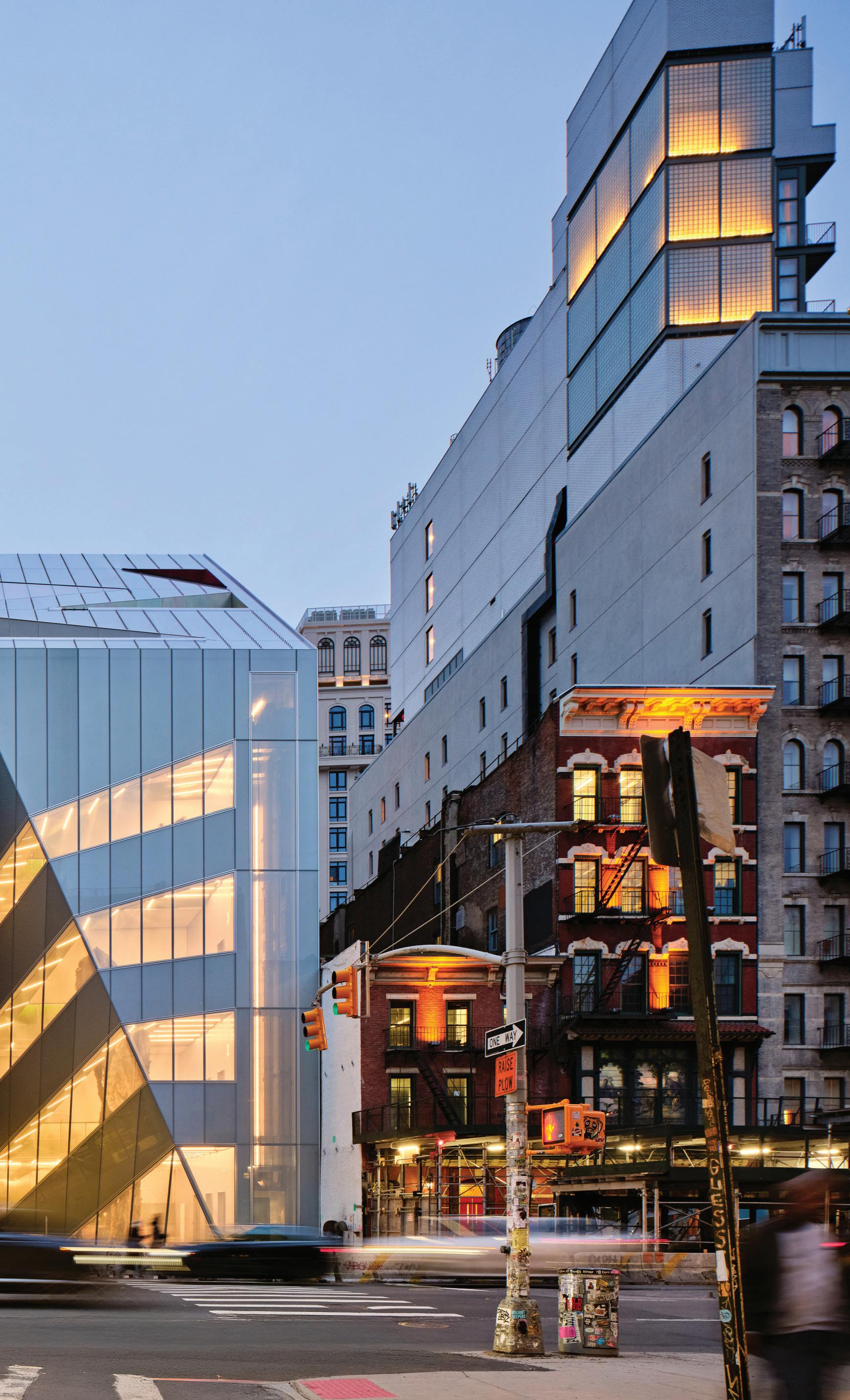
Transparency and Transformation
Rem Koolhaas and the Future of the Bowery
on a stretch of the Bowery that once served as the grimy, neon-lit epicenter of punk rock, where the ghost of CBGB still lingers just a few blocks away, a new kind of architectural rebellion has taken physical form. For decades, this street was defined by its refusal to conform, a sanctuary for the “bold ideas and new voices” that defined New York’s underground. It is fitting, then, that Manhattan’s only museum devoted exclusively to contemporary art has chosen this moment to unveil its most ambitious transformation to date. The $130 million expansion, designed by the Pritzker Prize-winning firm OMA under the direction of Shohei Shigematsu and Rem Koolhaas, effectively doubles the institution’s footprint, creating a 120,000-square-foot engine for the art of tomorrow.
The new structure, named for the late Toby Devan Lewis, is a masterclass in architectural dialogue. Rather than attempting to mimic the iconic, shunted-box silhouette of the 2007
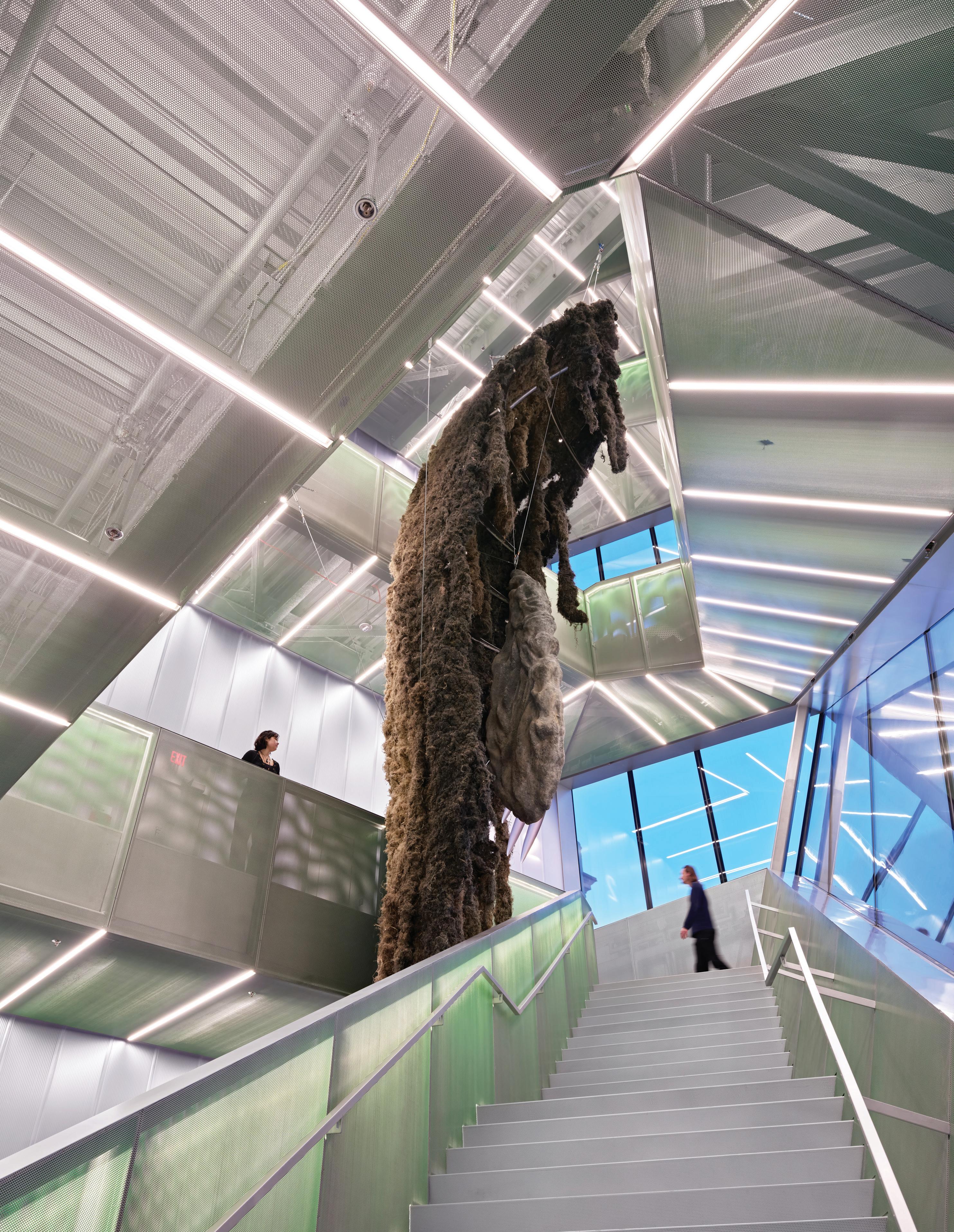
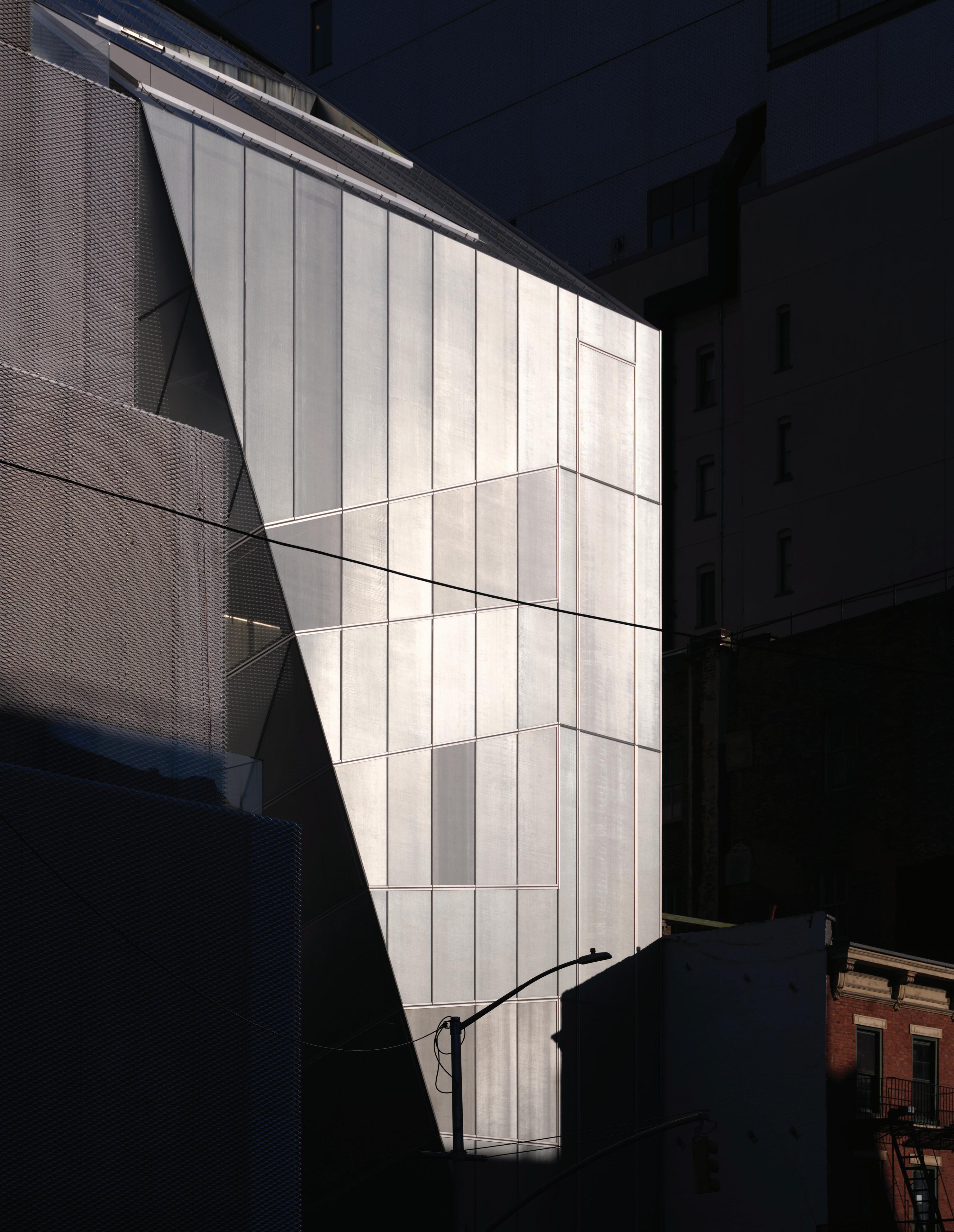
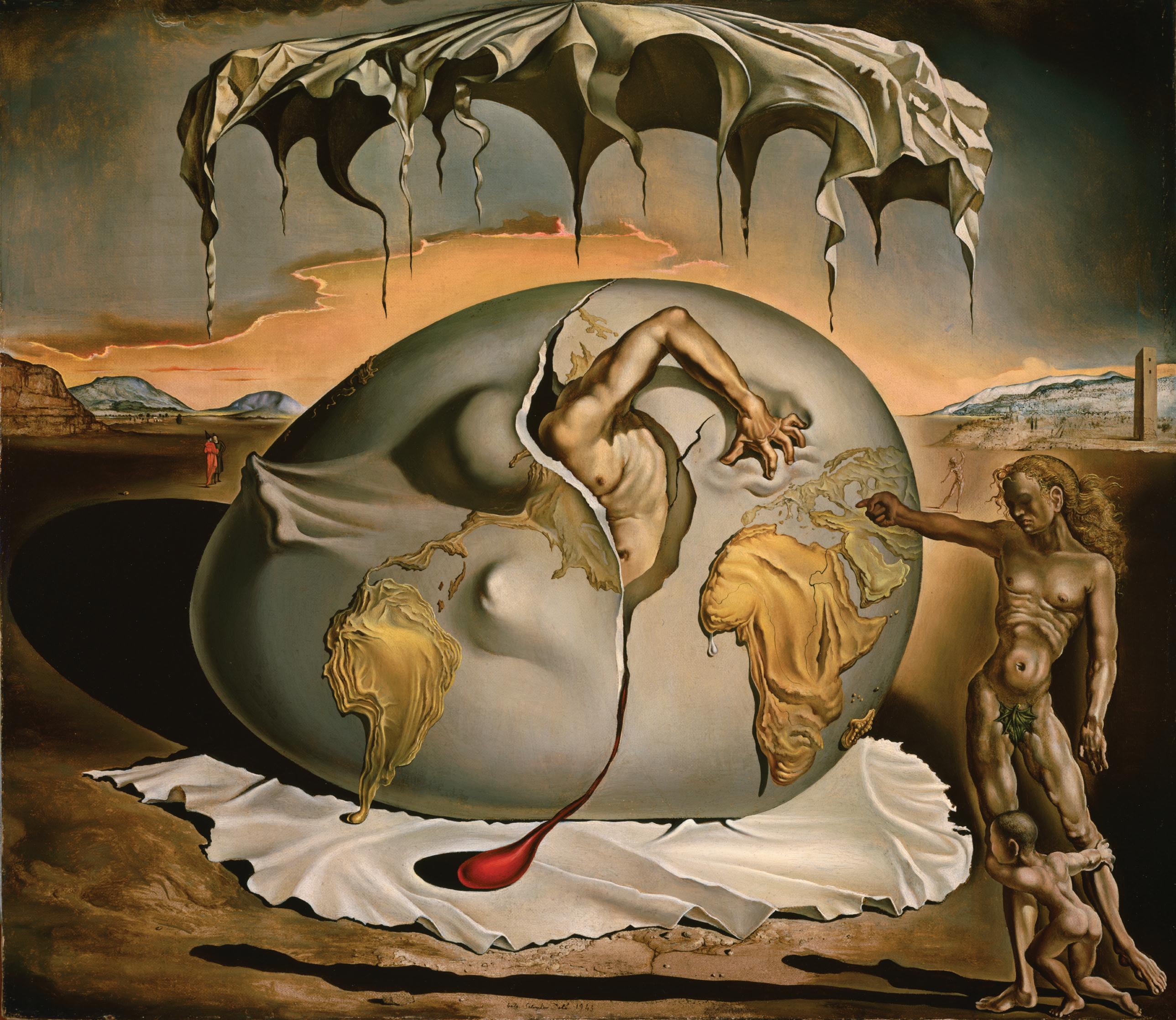
SANAA building, OMA has opted for a unified exterior that emphasizes a radical transparency. The facade utilizes materials that recall the original flagship while communicating the museum’s internal energy outward to the street. It is a design that seeks to create a “new whole rather than two halves,” introducing a fluid circulation system of elevators and a dramatic Atrium Stair that encourages a more intuitive, vertical exploration of the building’s seven floors.
Inside, the expansion represents a next chapter for an institution that has refused to stand still since its founding in 1977. The footprint has been optimized for an interdisciplinary future, featuring a dedicated studio for artists-in-residence and a purpose-built home for NEW INC, the first museum-born incubator for art, design, and technology. Beyond the galleries, the museum has carved out new spaces for public discourse, including a 74-seat Forum and an enlarged seventh-floor Sky Room.
Even the ground level has been reimagined as a communal hub, featuring an expanded bookstore and a full-service restaurant that merges seasonal dining with site-specific art commissions.
The architectural completion is mirrored by the museum’s inaugural exhibition, New Humans: Memories of the Future, which unfolds across the entirety of the expanded space. Bringing together work by more than 200 artists, scientists, and architects ranging from the visceral paintings of Francis
Bacon to the digital provocations of Hito Steyerl; the show investigates the very definition of humanity in an age of rapid technological change. By placing these visions of the future within a building that literally opens itself up to the city, the New Museum reaffirms its role as a place of experimentation and an incubator for new ideas. On a street once known for the raw power of three chords and a microphone, the Bowery now hosts a sophisticated, translucent beacon for the global avant-garde.
Salvador Dalí (1904–1989), Geopoliticus Child Watching
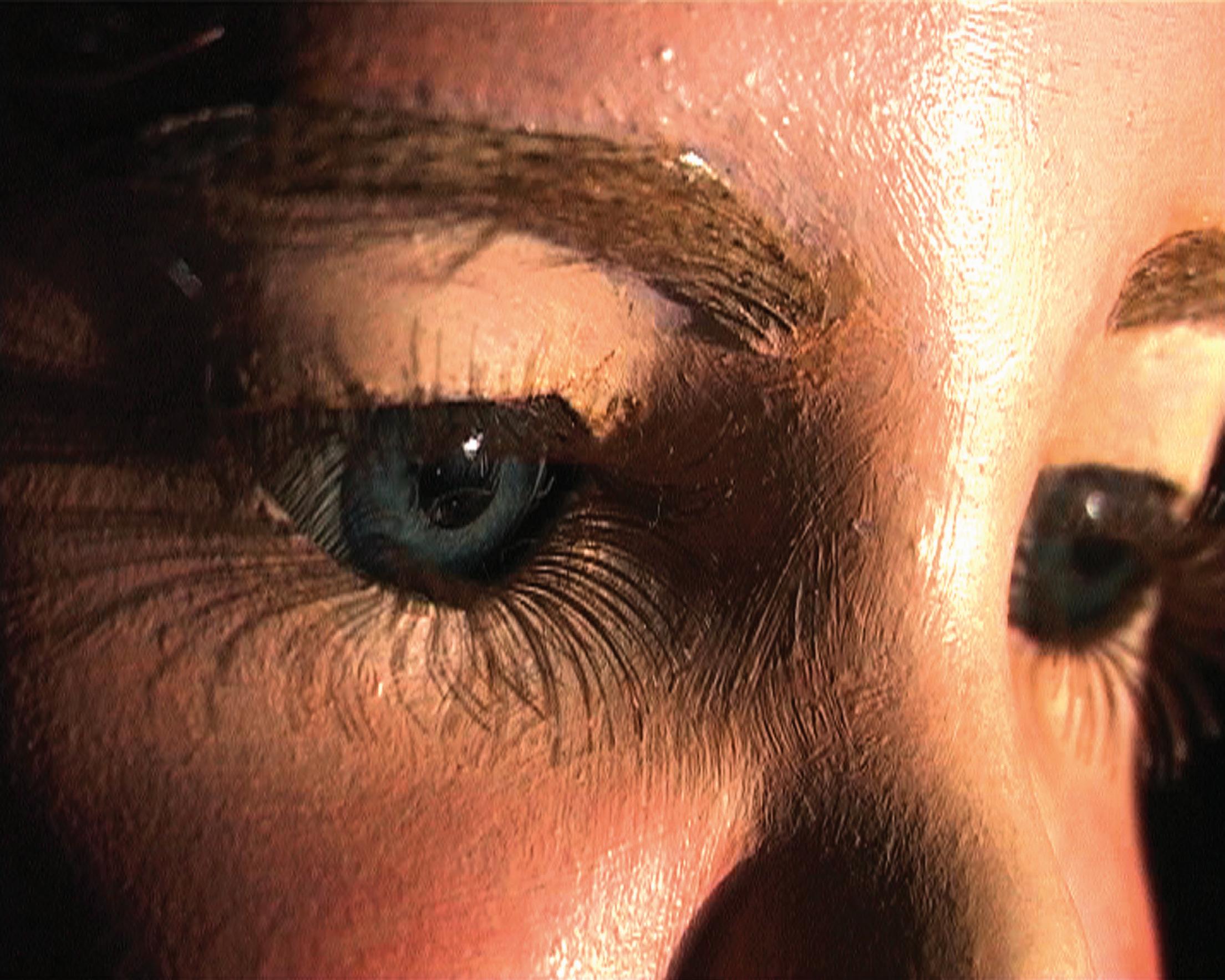

Top to Bottom: Daria Martin (b. 1973), Soft Materials, 2004. 16mm film transferred to video, color, sound. 10:30 min. Philippe Parreno (b. 1964), The Writer, 2007. Video, color, sound. 3:58 min.
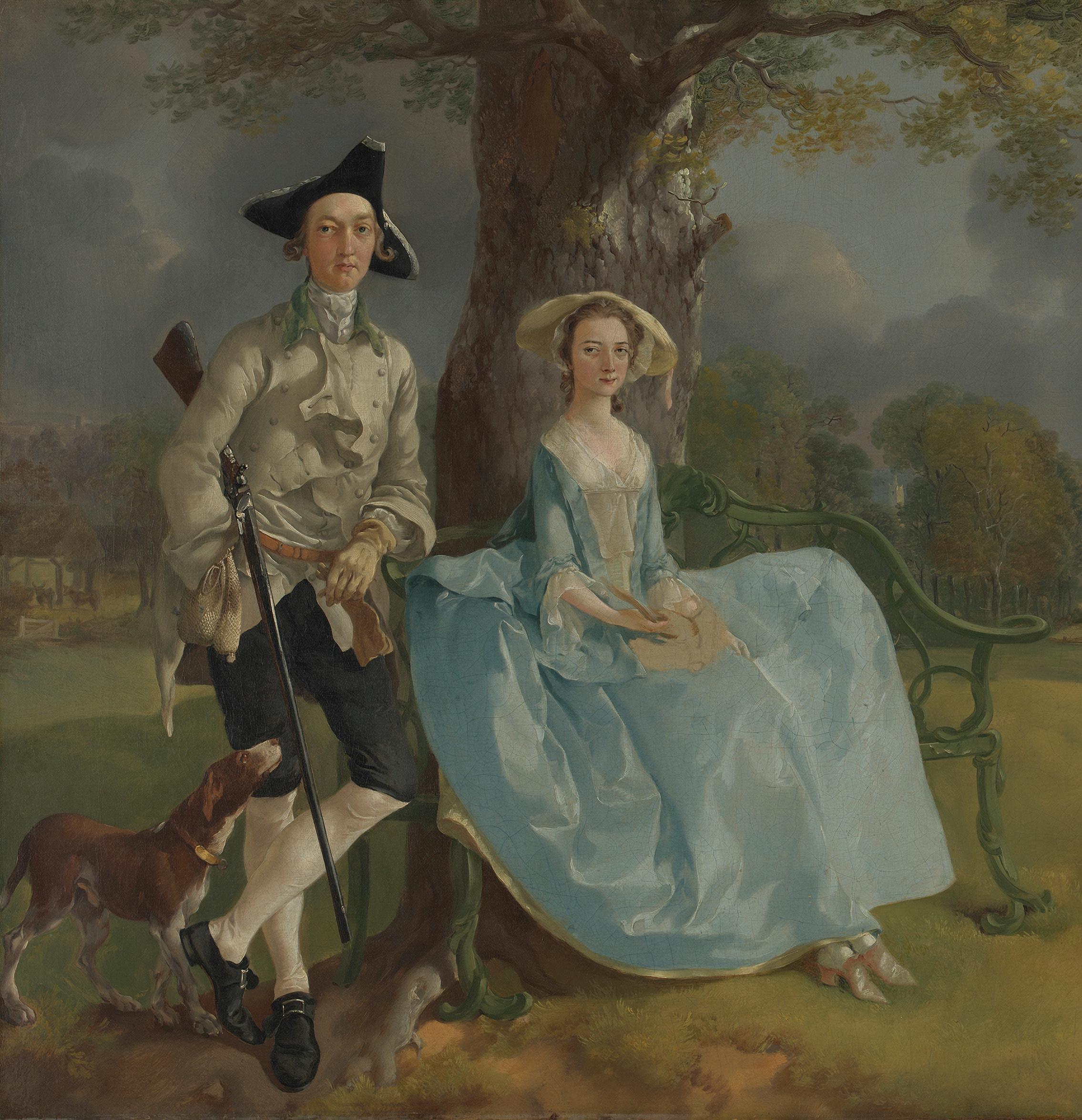
Fabric of Identity
Thomas Gainsborough at The Frick Collection
for nearly a century, the high-ceilinged galleries of The Frick Collection have served as a silent sanctuary for the greatest achievements of English portraiture. But with its recent exhibition, the museum has shifted its lens toward the very thing that fueled the vanity and visual power of the eighteenth century: the spectacular, and at times absurd, world of fashion.
Gainsborough: The Fashion of Portraiture marked New York’s first exhibition dedicated exclusively to the portraiture of Thomas Gainsborough, an artist who some consider the greatest British portraitist to ever pick up a brush.
To understand Gainsborough’s status, one must look past the paint to the trappings and trade that defined his era. He was an artist who existed in the center of a whirlwind: opera houses, tailor shops, and sun-drenched promenades;
Thomas Gainsborough (British, 1727–1788), Mr and Mrs Andrews, c. 1750. Oil on canvas.
69.8 × 119.4 cm (27 1/2 × 47 in.)
Thomas Gainsborough (1727–1788), Sarah Hodges, Later Lady Innes, ca. 1759. Oil on canvas. 40×28 5/8in. (101.6×72.7cm). The Frick Collection, New York.
Photo: Michael Bodycomb
Thomas Gainsborough (1727–1788), Mrs. Sheridan, probably 1783, altered between 1785 and 1787. Oil on canvas. 86 1/2×60 1/2 in. (219.7×153.7cm). National Gallery of Art, Washington, D.C.
“The face is the index of the mind, and the eyes are the windows through which the soul looks out.”
—Thomas Gainsborough
capturing a society that used personal attire as a complex language of wealth, labor, and status. While his contemporaries may have focused on the rigid formality of their sitters, Gainsborough’s canvases were “constructions and inventions,” blending a technical investigation of materials with a lyrical, almost poetic, sense of intimacy.
The relationship between Gainsborough and the Frick is one of deep,
historic resonance. When Gilded Age collectors like Henry Clay Frick began amassing European masterworks a century ago, Gainsborough’s art experienced a massive resurgence in popularity. The Frick’s own holdings, including the iconic The Hon. Frances Duncombe, serve as the anchor for this show, joined by more than two dozen paintings drawn from major collections across the United Kingdom and North America.
This exhibition, however, is not merely a celebration of taste and status. Organized by Chief Curator Aimee Ng, the show acknowledges the tension inherent in these demonstrations of extravagance, exploring the injustices that often made such aristocratic displays possible. By featuring sitters ranging from dukes and duchesses to the artist’s own family and the once-enslaved composer Ignatius Sancho, the exhibit reveals how portraiture was used to immortalize a carefully crafted self-image.
Beyond the silk and lace, the exhibition offers a rare look at Gainsborough’s artistic process. Recent technical investigations have shed light on how he
utilized the same materials that fueled the fashion industry to create his visual effects. This “richly interwoven relationship” suggests that Gainsborough was not just a recorder of style, but a primary player in the larger conception of what it meant to be fashionable.
Housed in the Frick’s recently renovated Gilded Age home, the exhibition has provided the kind of intimate encounter that only this institution can offer. It is a study of class and time, proving that the longstanding appeal of Gainsborough’s work lies in its ability to balance the mechanical labor of the craft with the sublime poetry of the human spirit.
Left to Right: Thomas Gainsborough (1727–1788). Gainsborough Dupont,ca. 1770–72. Oil on canvas. 17 15/16×14 3/4 in. (45.5×37.5 cm). Tate, London Thomas Gainsborough (1727–1788), Bernard Howard, Later 12th Duke of Norfolk, 1788. Oil on canvas. 88×54 in. (223.5×137.2 cm). His Grace, the Duke of Norfolk, Arundel Castle, Sussex.
Opposite: Thomas Gainsborough (1727–1788), The Hon. Frances Duncombe,ca. 1776. Oil on canvas. 92 1/4×61 1/8 in. (234.3×155.3 cm). The Frick Collection, New York Photo: Joseph Coscia Jr.
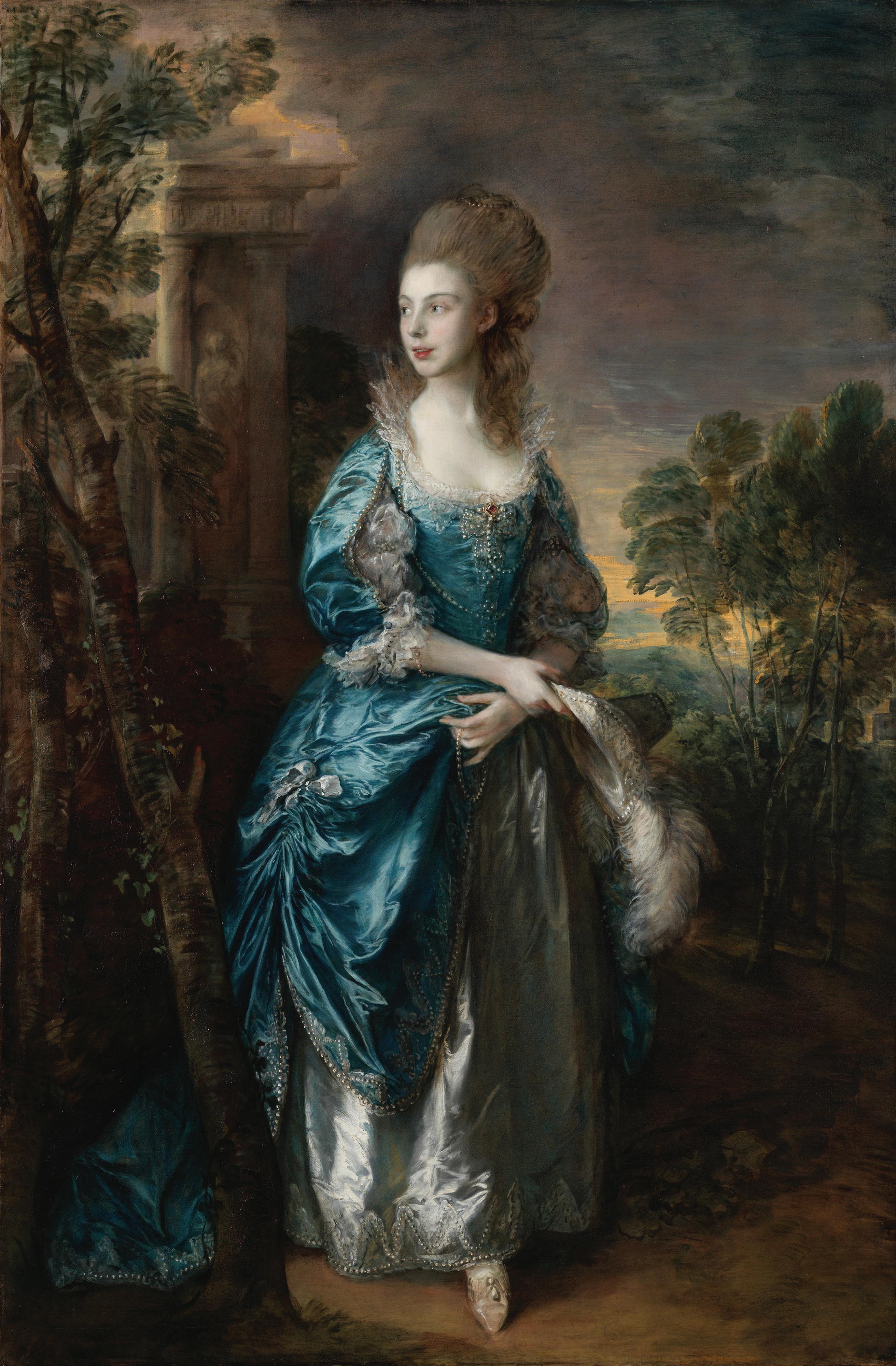
Science & Shakespeare
An Anatomy of Grief
the intersection of Renaissance science and Shakespearean tragedy offers a profound lens through which we can view our own mortality, bridging the gap between the surgical blade and the playwright’s pen. This connection is best captured in the indelible scene of prince Hamlet in a graveyard, a hollowed skull in his hand, and the realization that all of life’s vibrancy eventually descends into dust.
“Alas, poor Yorick! I knew him, Horatio: a fellow of infinite jest, of most excellent fancy... Where be your gibes now? your gambols? your songs? your flashes of merriment, that were wont to
set the table on a roar?” — Hamlet, Act V, Scene 1
This dramatic moment likely found its visual spark in the Morgan Library’s copy of Andreas Vesalius’s De humani corporis fabrica (1543), an anatomical masterpiece recently featured in the museum’s Spring 2026 Collections Spotlight. Vesalius revolutionized the study of science by insisting on direct observation, and his volume contains some of the most famous woodcut illustrations in history. One particularly striking image depicts a skeleton positioned next to a tomb, its hand resting on a skull in a pose of deep contempla-
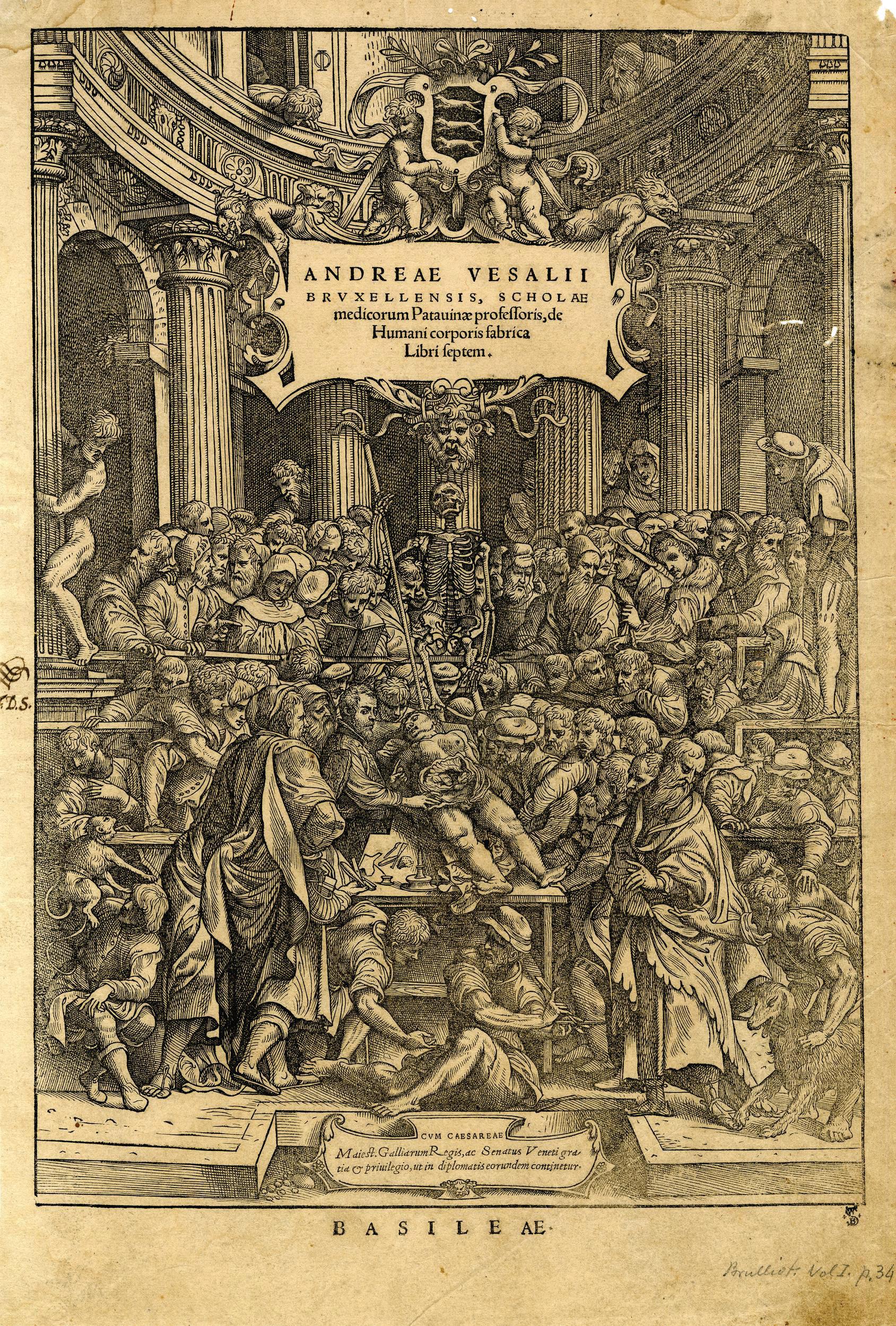
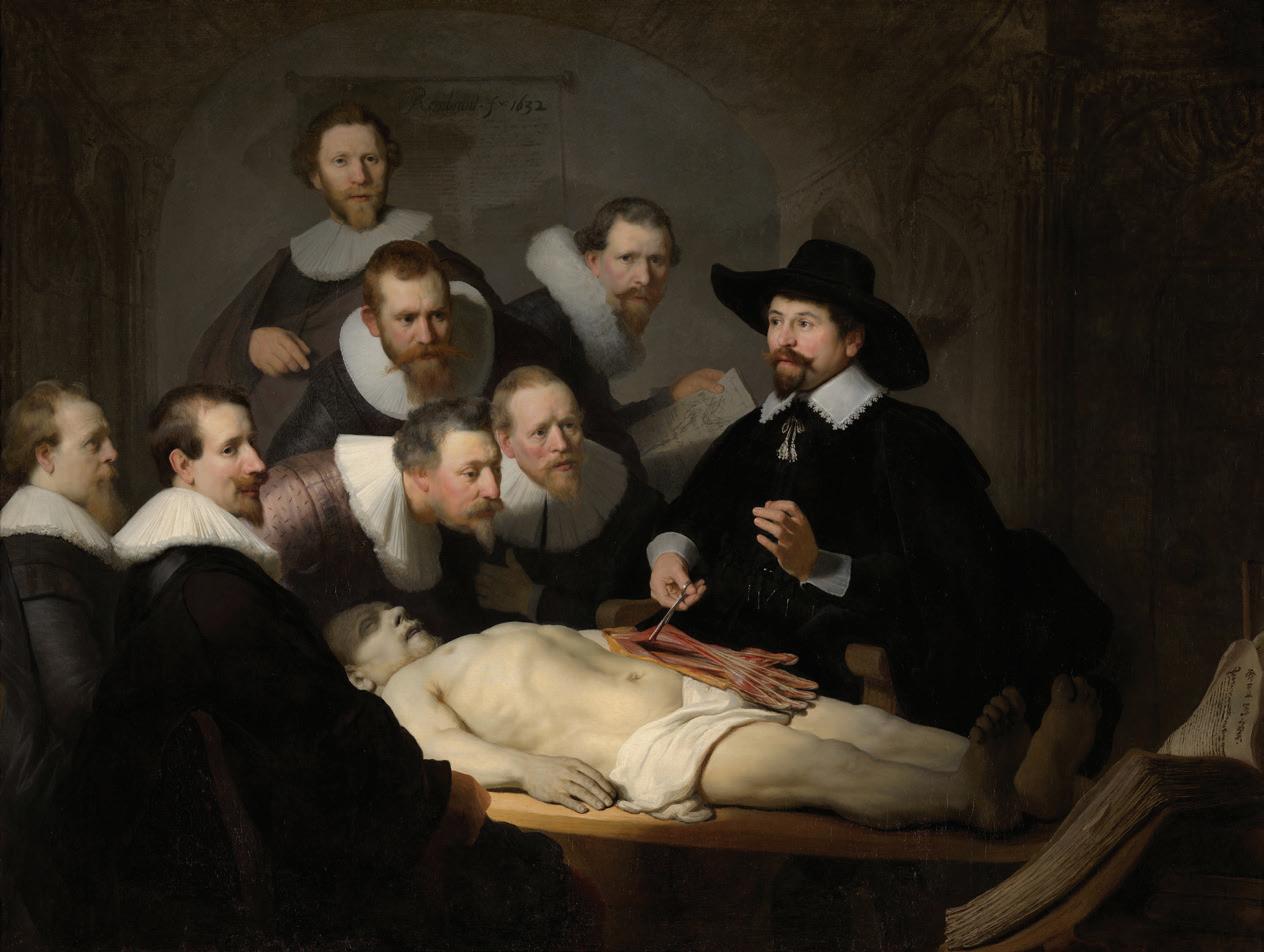
Below, Top: De humani corporis fabrica (Title Page Illustration). Artist: Workshop of Andreas Vesalius. Date: 1543. Medium: Woodcut.
Below, Bottom: The Anatomy Lesson of Dr. Nicolaes Tulp. Artist: Rembrandt. Date: 1632. Medium: Oil on canvas.
Opposite: Hamlet and Horatio in the Graveyard Artist: Eugène Delacroix. Date: c. 1839. Medium: Oil on canvas.
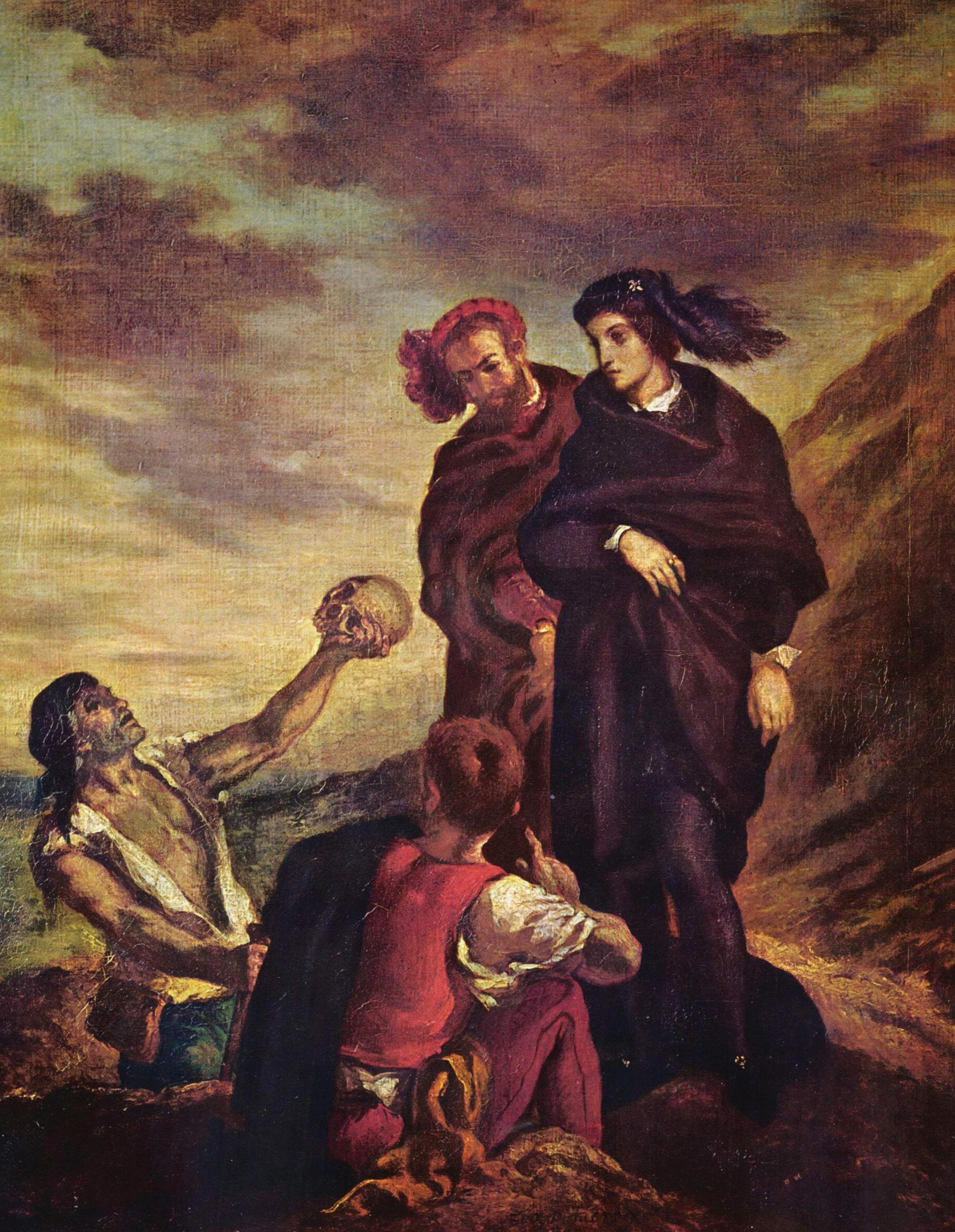
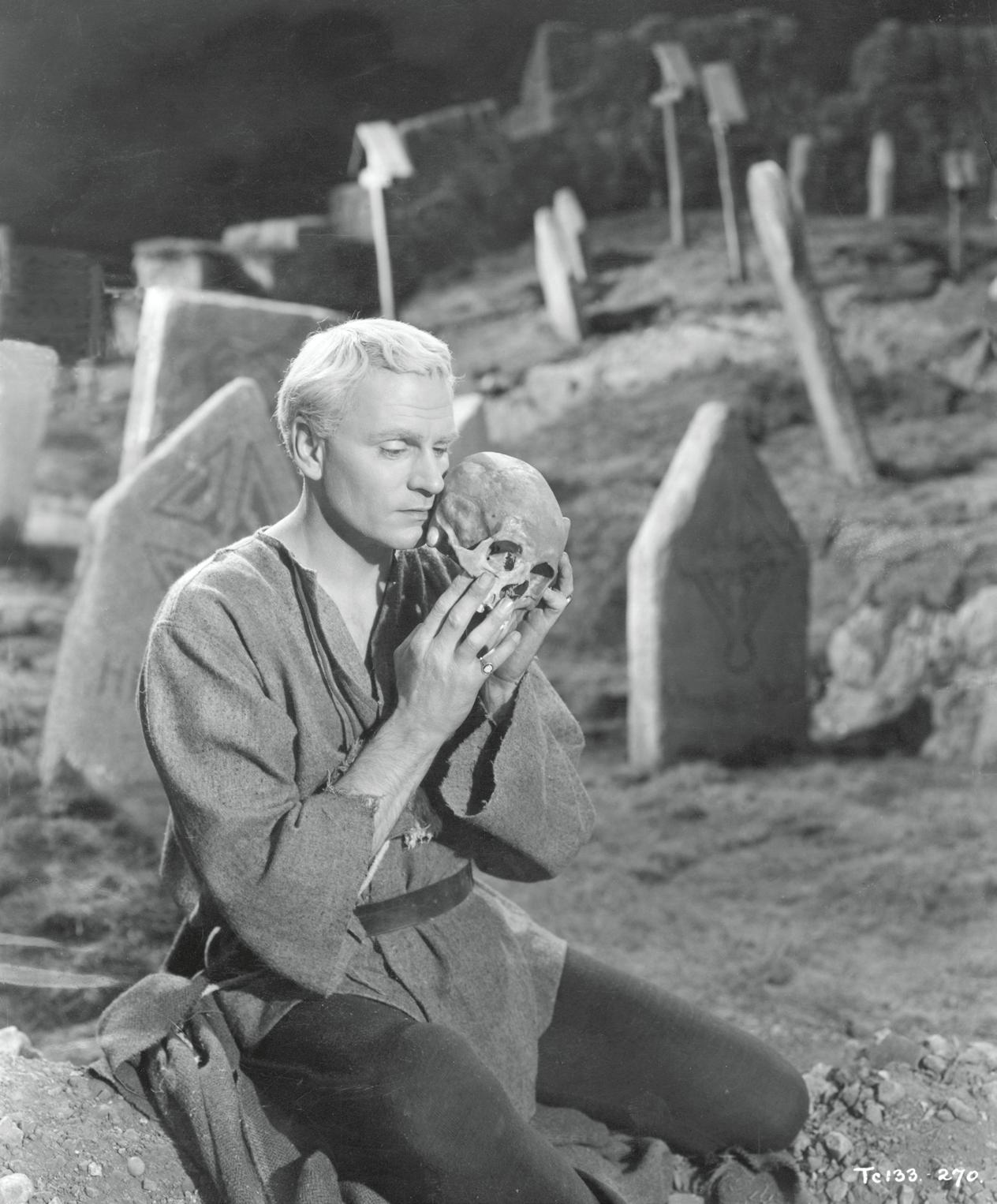
tion. Beneath the figure is an inscription that would have resonated deeply with an Elizabethan playwright: vivitur ingenio, caetera mortis erunt—”Genius lives on, all else is mortal”v. This visual parallel suggests that the era’s new scientific rigor provided a fresh, visceral language for exploring the physical reality of death. The book’s famous title page, depicting a crowded, public anatomy theater, underscores this shift from hidden rite to public spectacle, a “theater of the body” that mirrored the playwright’s own stage.
Far from being a remote academic text, Vesalius’s work was central to a burgeoning anatomical zeitgeist in London. During the late sixteenth century, the Company of Barber-Surgeons was legally granted the bodies of four executed criminals per year for public dissection. These events were so popular that by 1568, the Barber-Surgeons’ Hall had to install raised seating to ac-
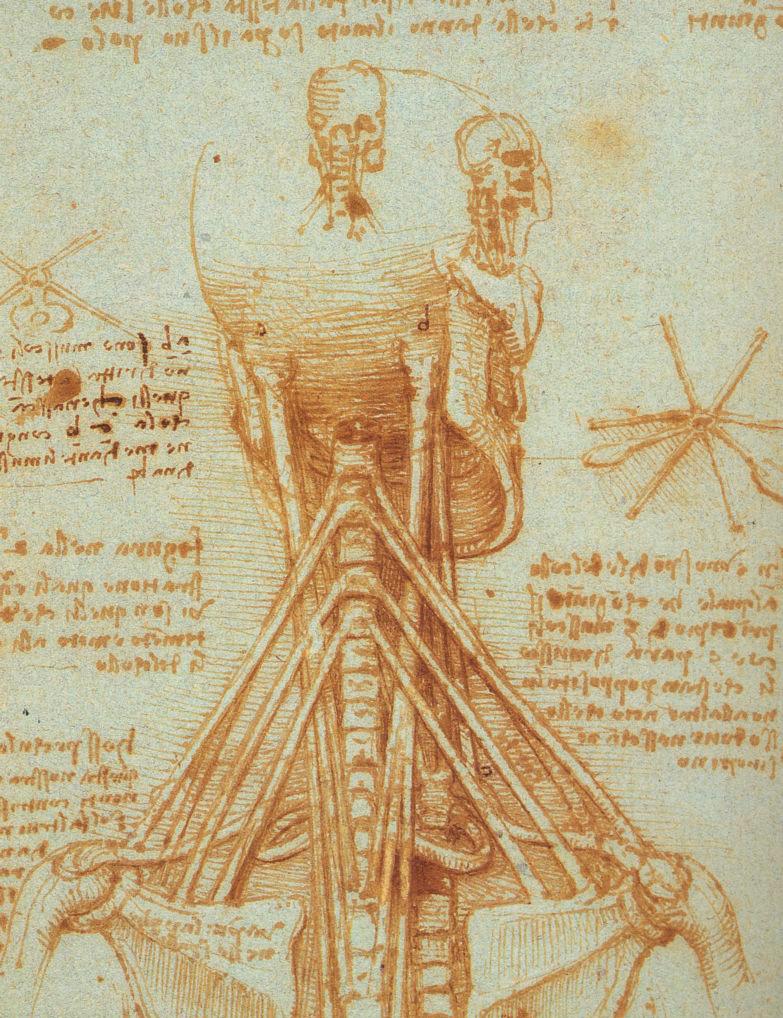
commodate the crowds, giving birth to the term “operating theater”. Crucially, the Hall was located in Monkwell Street, within the very same parish of St. Olave’s where William Shakespeare resided. Living in such close proximity to leading surgeons like John Banister, who presented anatomical models to libraries during this time, it is highly probable that Shakespeare was not only aware of these dissections but may have witnessed them himself.
The intricate anatomical drawings of Leonardo da Vinci had also begun to permeate the cultural consciousness of Europe, influencing the “atlases” that followed. This emerging understanding of the “machine” of man provided a new, grounded vocabulary for the memento mori, the symbolic reminder of the inevitability of death. Shakespeare’s work reflects this sophisticated medical knowledge; he refers to the “pia mater” in three different plays, demonstrating
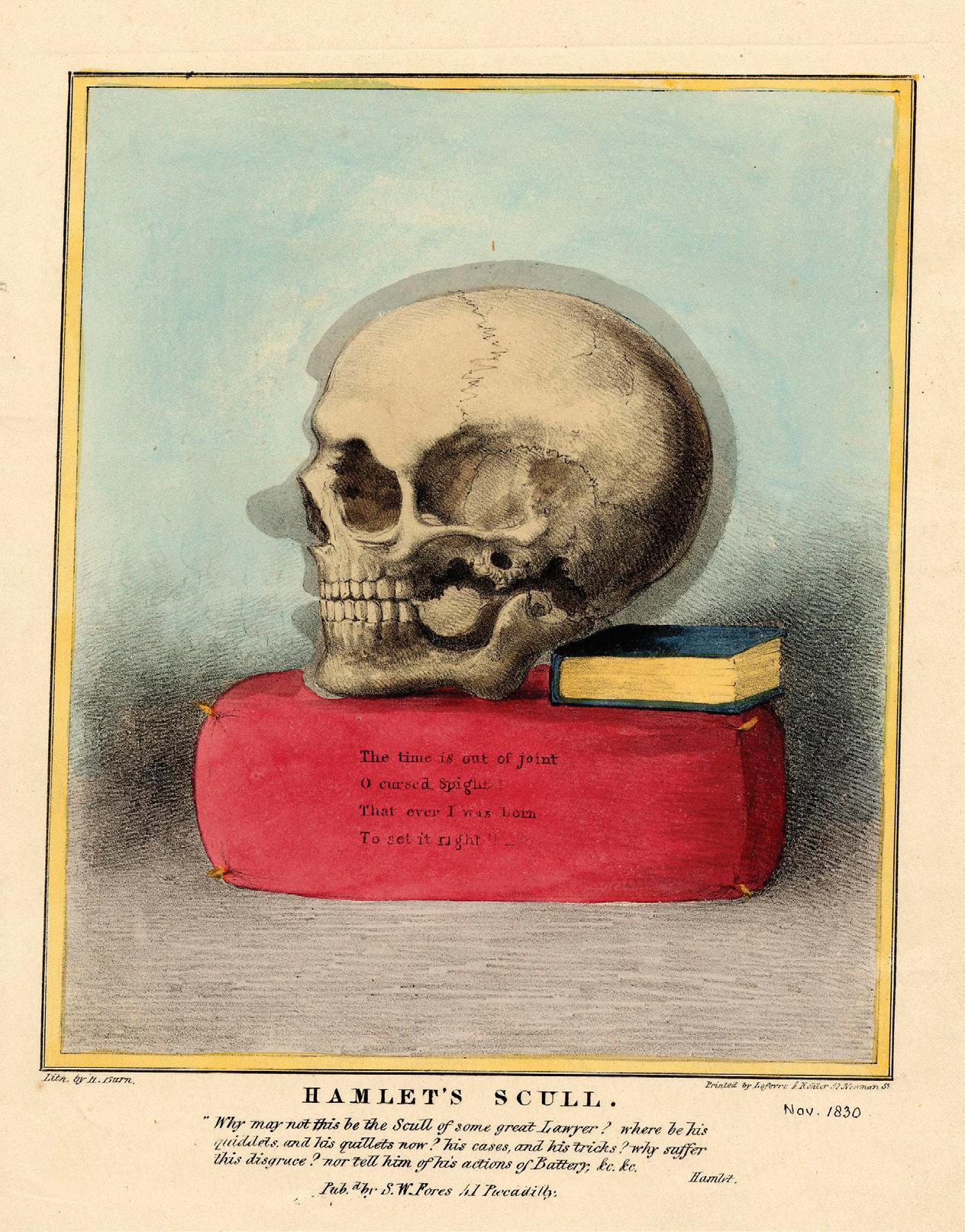
Below, Clockwise from Top Left: Laurence Olivier as Hamlet 1948. Anatomical study. Artist: Leonardo da Vinci. Date: c. 1490–1510. Medium: Ink on paper. Print made by H Burn, British Museum.
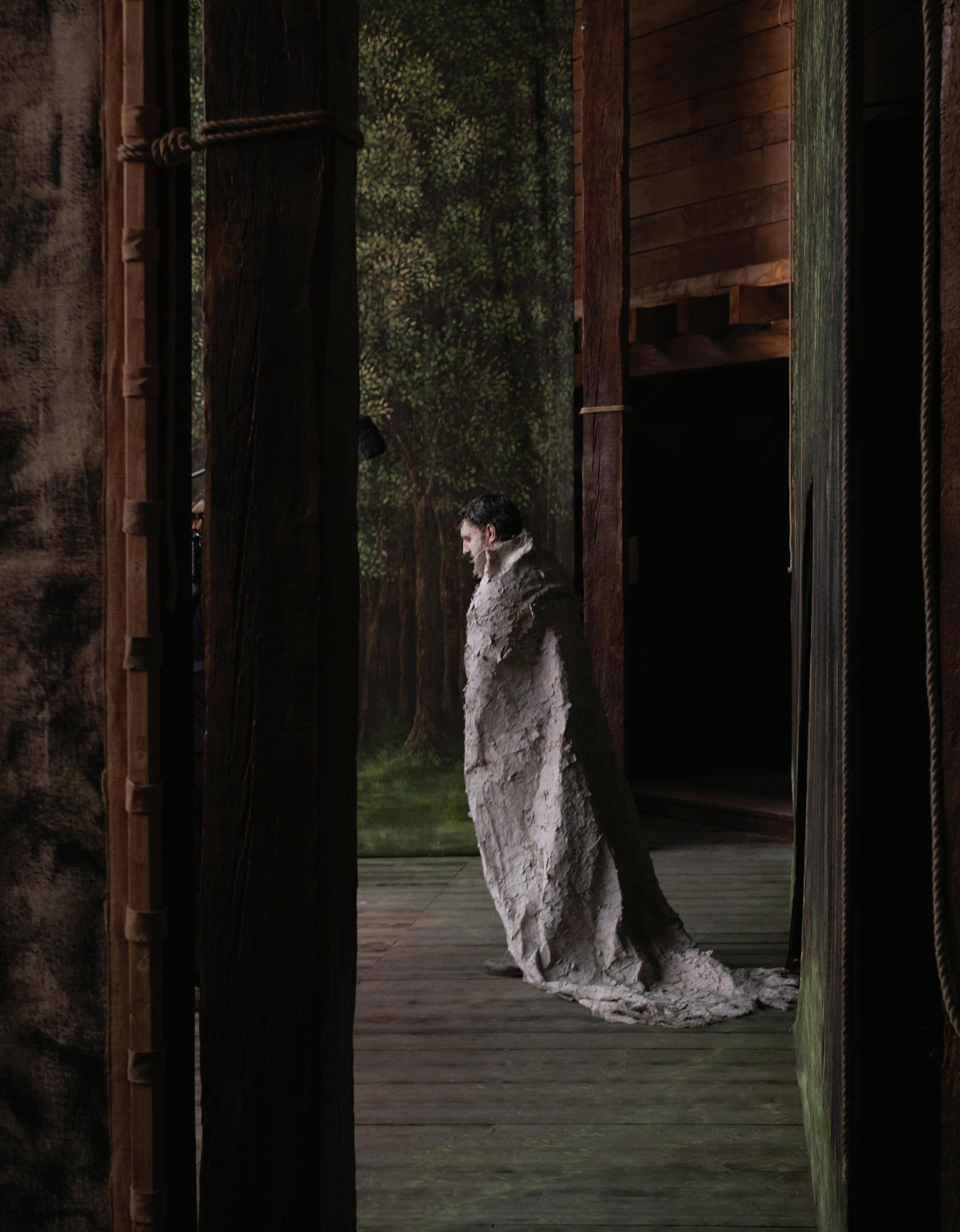
a grasp of neuroanatomy that suggests a direct engagement with the learned men of his time.
The skull in Hamlet is the ultimate manifestation of this collision. It is no longer just a symbolic mascot; it is a clinical reminder that the human face once filled with compassionate smiles, is at its core a hollow structure. This transformation is perhaps best immortalized in Rembrandt’s The Anatomy Lesson of Dr. Nicolaes Tulp, where the cadaver becomes the focal point of an intellectual and social gathering. By bringing his characters into the presence of this medical reality, Shakespeare drives home the point that the living and the dead are simply two sides of the same coin.
While Hamlet explores death through this philosophical and scientific lens, the real-world tragedy of Hamnet Shakespeare provides the emotional marrow of the narrative. William’s only son died at age eleven in 1596, likely of the bubonic plague, a “pestilence” that the science of the time could observe but not yet cure. This grief found its visual counterpoint centuries later in Eugène Delacroix’s painting of Hamlet and Horatio in the Graveyard, where the clinical coldness of the skull is met with the lush, tragic atmosphere of a father’s mourning. The success of Maggie O’Farrell’s novel Hamnet has brought a renewed focus on this connection, suggesting the play was a monumental act of mourning. Through the clinical drawings of Vesalius found at the Morgan Library and the devastating depiction of a family’s loss, we find that art serves as the ultimate antidote to disillusionment, turning our shared mortality into a source of human solidarity.
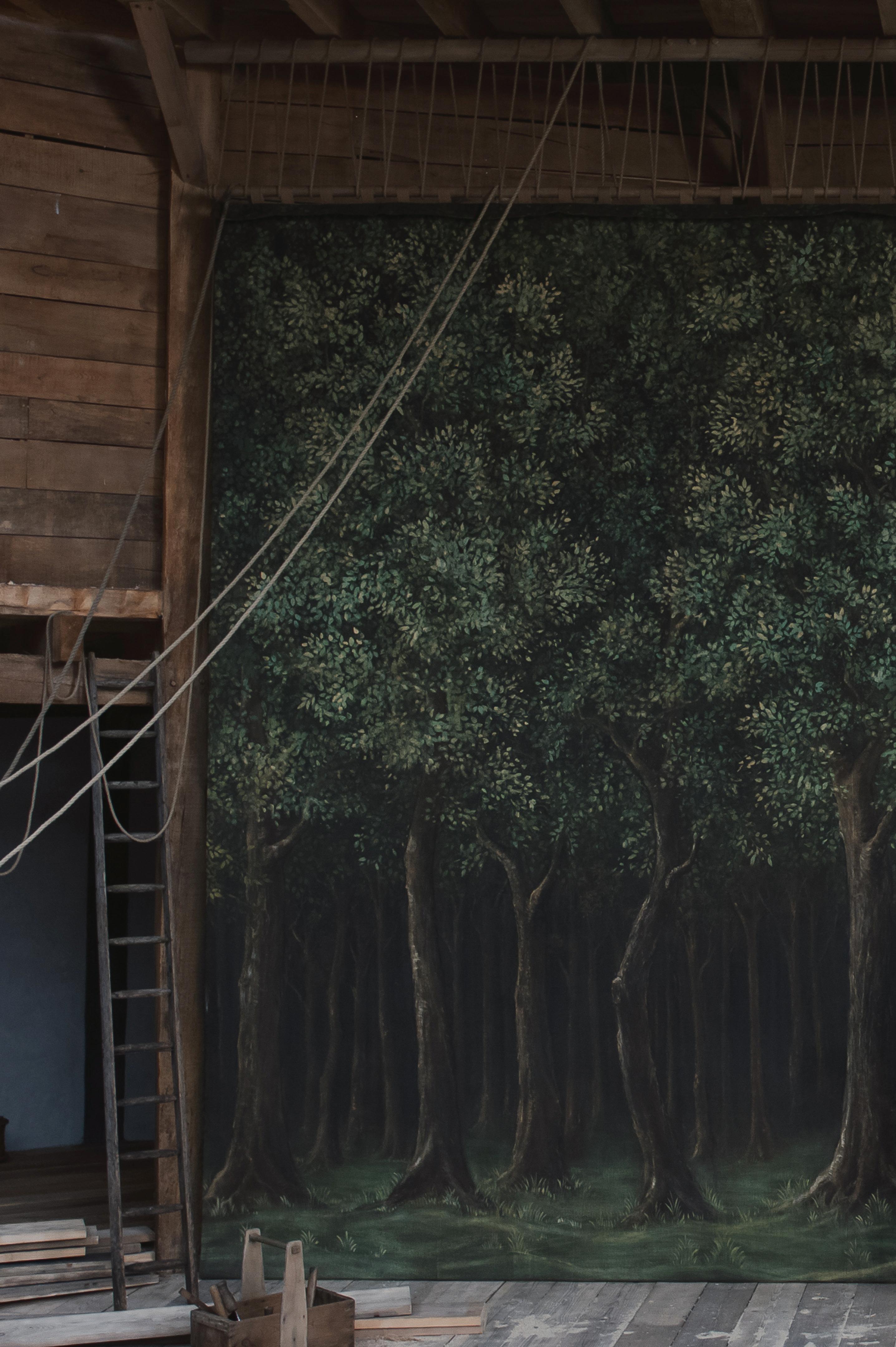
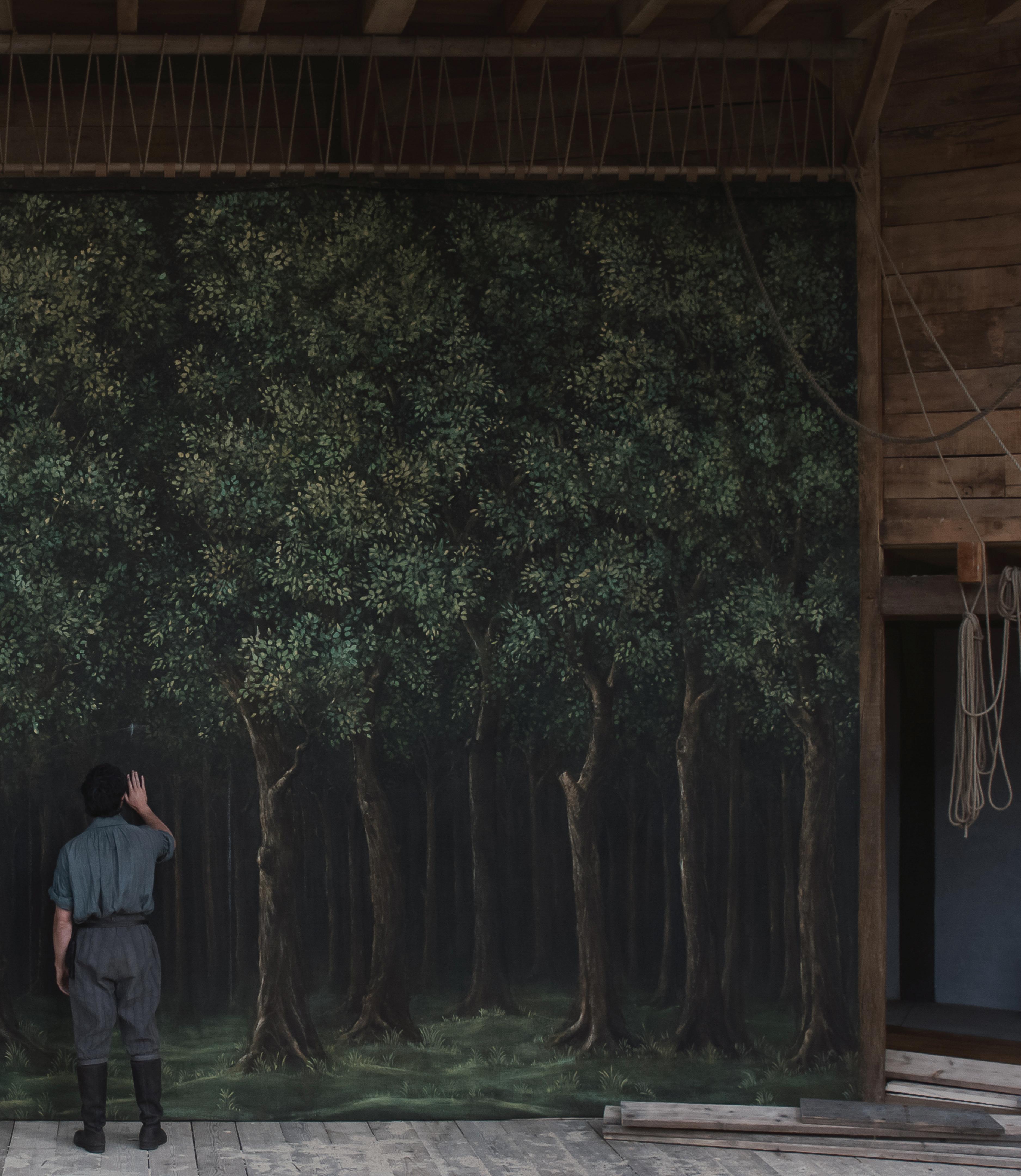
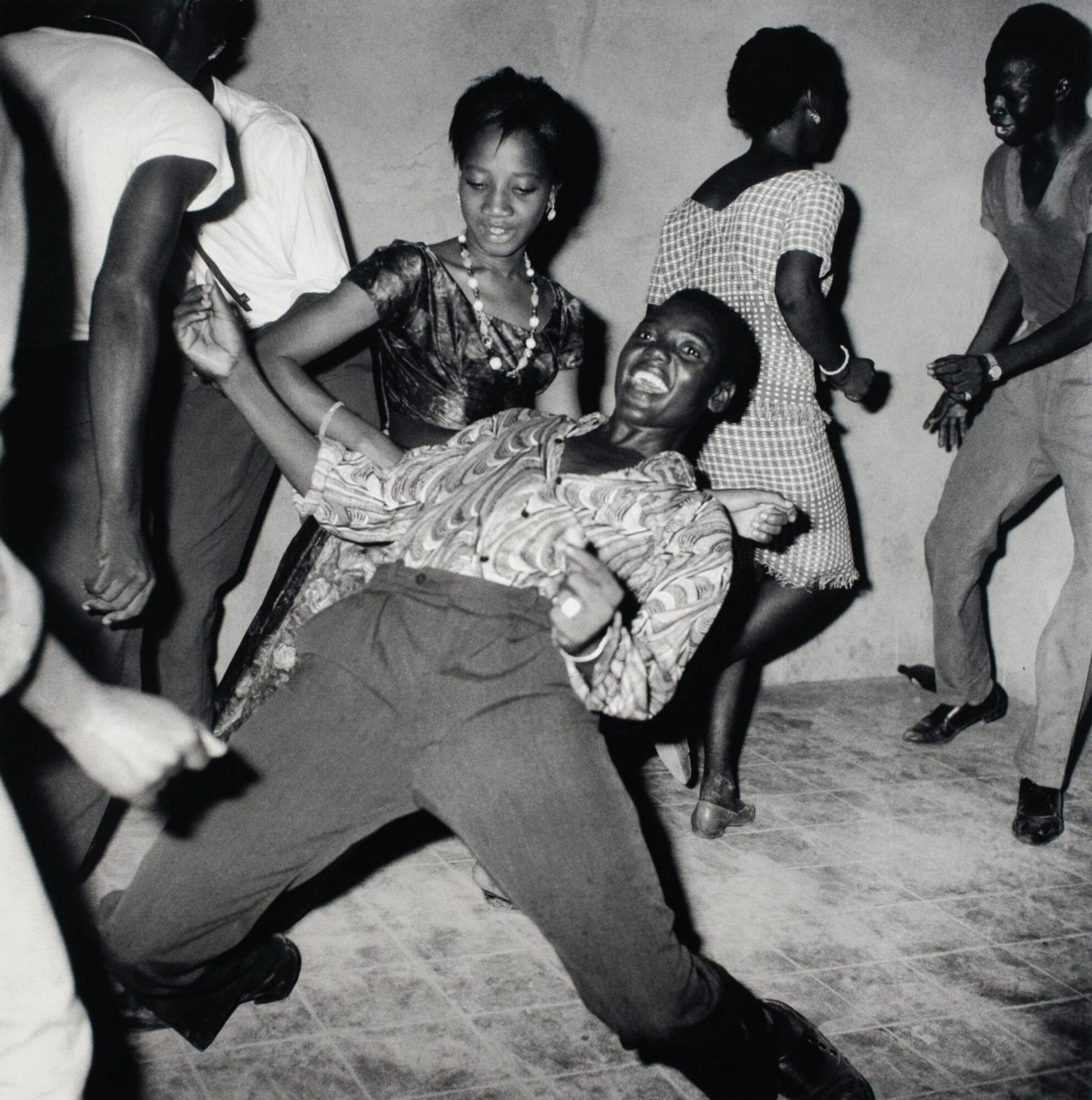
Blueprint of a Future Self
Oluremi C. Onabanjo’s Transatlantic Investigation into the Power
of the Aspirational Gaze
the photographic portrait is rarely just a record of a face; more often, it is a blueprint for a version of the self that hasn’t quite arrived yet. In the mid-twentieth century, as the winds of decolonial change swept across the African continent in tandem with the Civil Rights movement in the United States, the camera became the primary tool for authoring these new histories. At the Museum of Modern Art, the exhibition Ideas of Africa: Portraiture and Political Imagination explores this transformative friction, moving past the idea of the photograph as a static document to reveal it as a creative mechanism for beckoning in a new world.
Curator Oluremi C. Onabanjo has organized the show around a “bifocal mode of looking,” a method that deliberately holds images from different decades and geographies in tandem. This approach draws its conceptual weight from V.Y. Mudimbe’s landmark 1988 book, The Invention of Africa, which deconstructed the colonial systems of knowledge used to define the continent from the outside. By placing historic studio portraits alongside contemporary provocations, the exhibition proves that the “idea” of Africa has always been a collaborative, transatlantic project; one built on the shared visual language of Pan-African solidarity.
Below: Malick Sidibé (Malian, 1936–2016), Regardezmoi! (Look at Me!), 1962, Gelatin silver print, printed 2003. 32.5 × 33.2 cm (12 13/16 × 13 1/16 in.)
Opposite: Sanlé Sory (Burkinabé, b. 1943), L’Intellectuel (The Intellectual), 1970–1985. Gelatin silver print. Dimensions vary by edition (e.g., 50 x 50 cm / 19 11/16 x 19 11/16 in.)
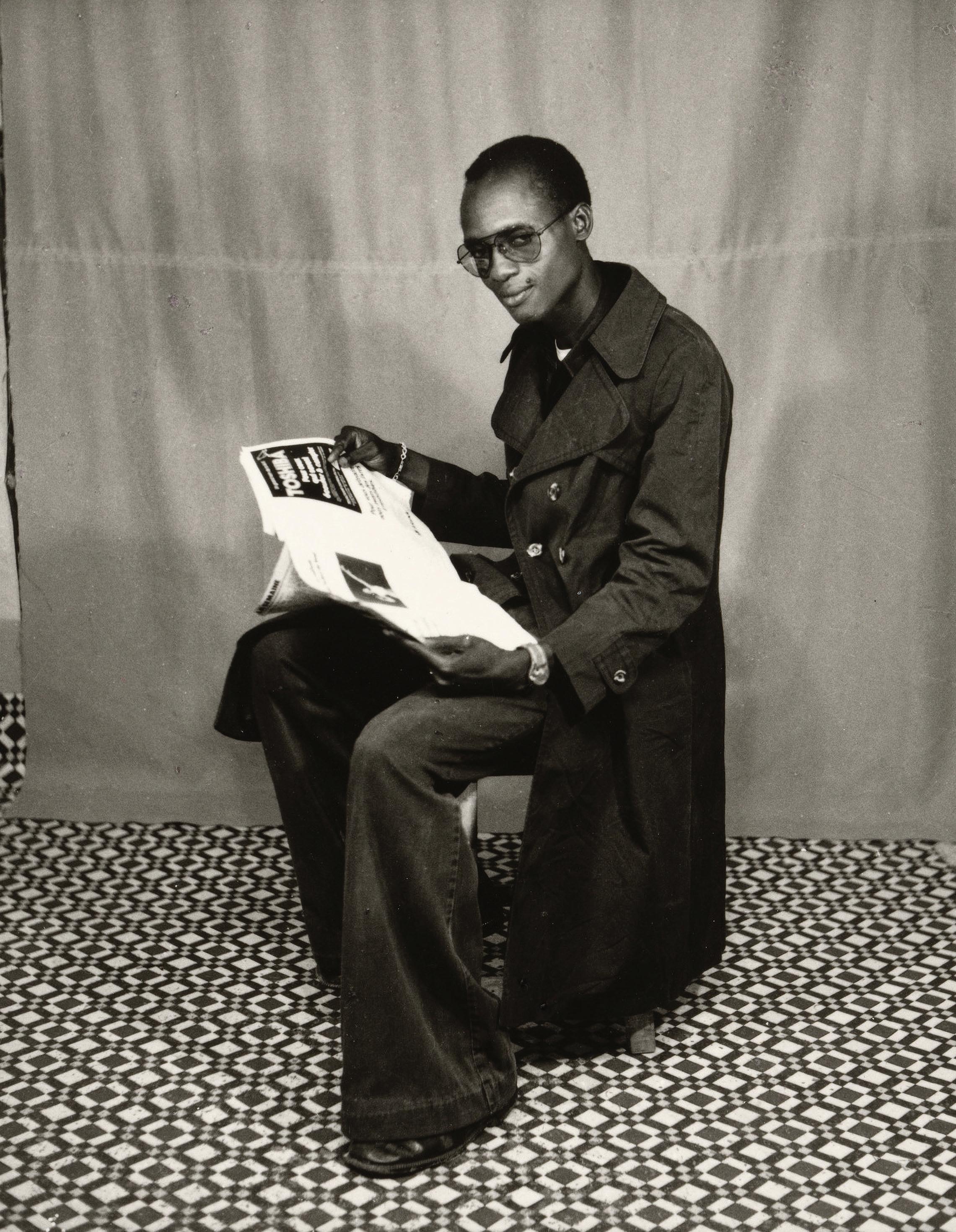
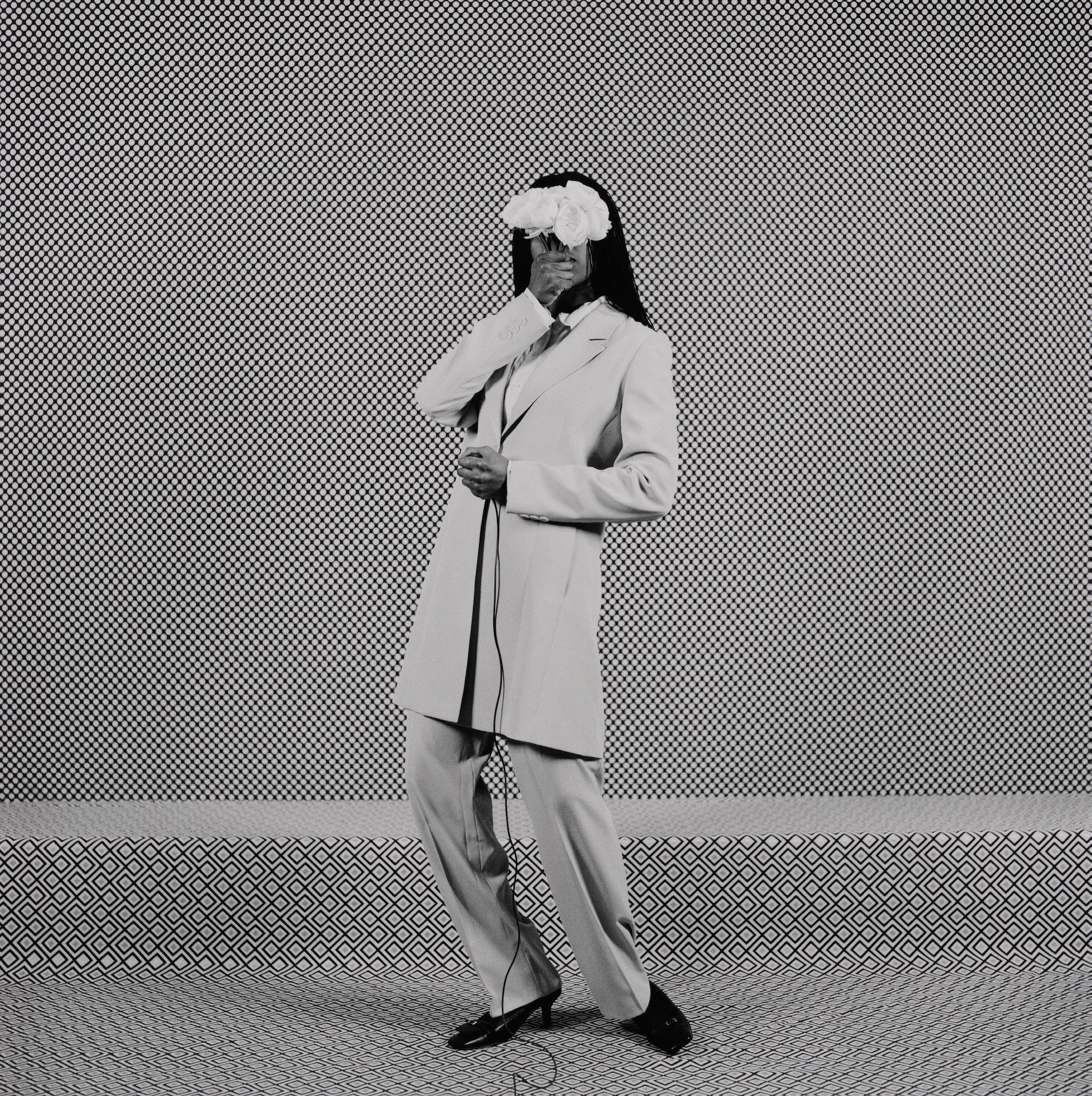
The heart of the exhibition beats within the golden age of African studio portraiture, a period from the 1950s through the 1970s when the studio functioned as a site of radical self-invention. While the legendary names of Seydou Keïta and Malick Sidibé are present, the show widens the lens to include voices like Oumar Ka in Senegal and Sanlé Sory in Burkina Faso. In these rooms, the act of sitting for a
portrait was an intellectually rigorous performance. Whether posing with a radio, a Peugeot car, or a meticulously crafted hairstyle, these citizens were using the lens to register their presence in a world they were newly freed to define. These images represent an imaginary created by those who refused to be confined by the Western gaze. In the nightclubs of Kinshasa captured by Jean Depara or the sharp, high-contrast
frames of J.D. ’Okhai Ojeikere, we see a generation in the process of becoming. The studio provided a sanctuary where the everyday constraints of colonial life vanished, replaced by an aspirational identity that was both deeply personal and intensely political.
The exhibition’s political imagination refuses to stay within continental borders, tracing a call and response that spans the Atlantic. This diasporic
dialogue brings together the work of Kwame Brathwaite, whose Black Is Beautiful movement in Harlem redefined global standards of aesthetics, and James Barnor, whose career bridged the distance between the streets of Accra and the fashion boutiques of London. Their photographs weren’t just art; they were pieces of a larger liberation movement that sought to reclaim the Black body from centuries of external definition.
Silvia Rosi (Italian-Togolese, b. 1992), Sposa italiana disintegrata (Disintegrated Italian Wife), 2024. Inkjet print. 80 × 80 cm (31 1/2 × 31 1/2 in.)
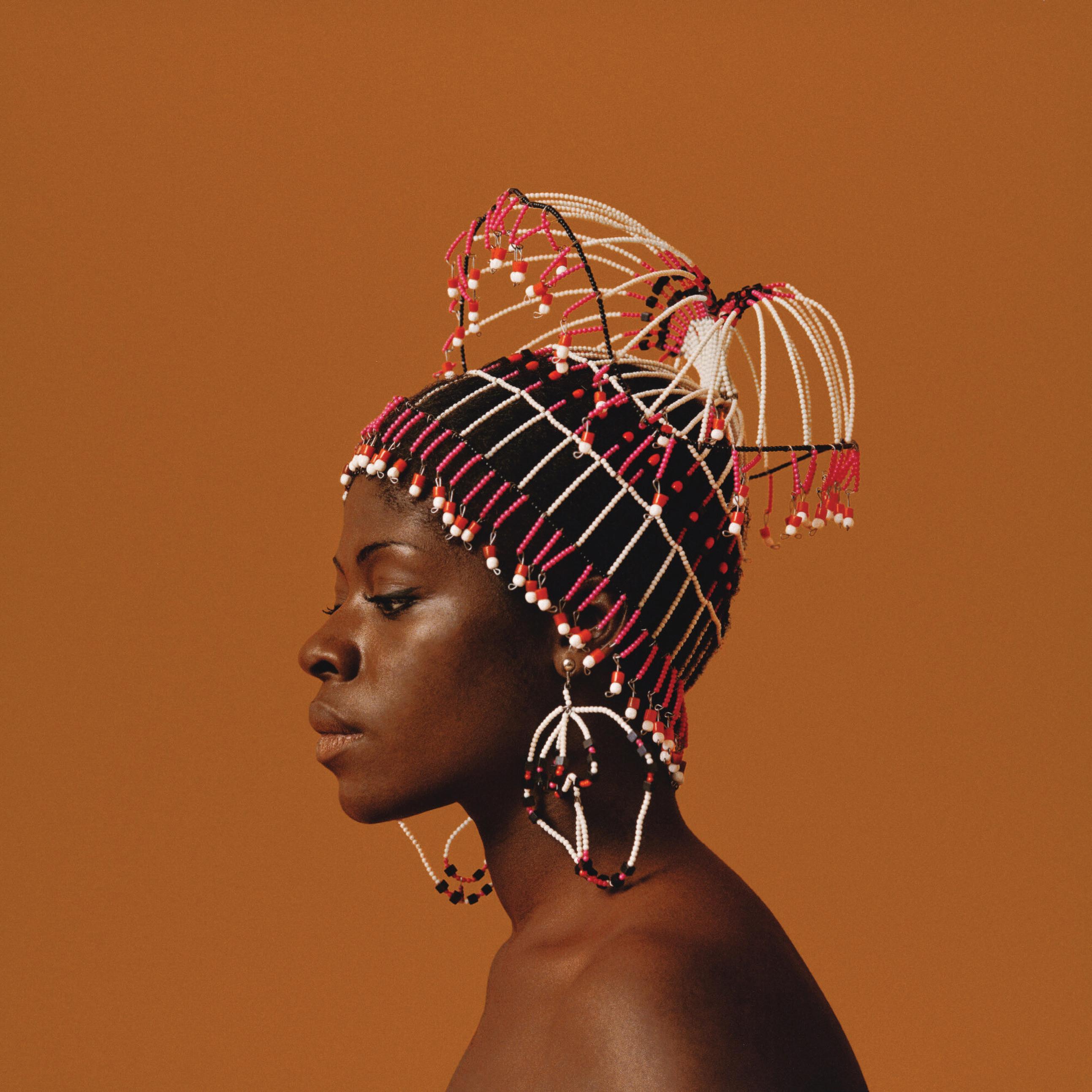
This conversation continues through a selection of contemporary artists who treat these historical motifs as a living archive. Samuel Fosso’s monumental self-portraits, in which he reinhabits the icons of Black history, push the concept of aspirational identity to its logical, theatrical endpoint. Nearby, the works of Silvia Rosi and Njideka Akunyili Crosby sample these older visual cues to explore how
identity is inherited, translated, and reborn in the present day. By interspersing these voices throughout the gallery, Onabanjo creates what she calls a “story without end.”
A dedicated reading room serves as a reminder that these images didn’t just exist as prints on a wall; they circulated through photobooks, magazines, and the ephemera of the era. Featuring materials from the contem -
porary artist collective Air Afrique, this space highlights how the proliferation of the image was essential to the decolonial project. It reinforces the idea that the photographic portrait was a tangible record of knowledge production, a way of proving that a different reality was not only possible but already visible.
Ultimately, Ideas of Africa suggests that the most revolutionary thing
a person can do is choose how they are seen. In the confident, unwavering gazes of these sitters, we find the contagious spirit of an era defined by a refusal to be a bystander to history. These portraits remind us that independence was not just a political milestone fought for in the streets; it was a visual reality first imagined, frame by frame, inside the four walls of the studio.
Kwame Brathwaite (American, 1938–2022), Untitled (Sikolo with Carolee Prince Designs), c. 1964–1968. Archival pigment print. Dimensions vary by edition (e.g.,
50.8 x 50.8 cm / 20 x 20 in.)
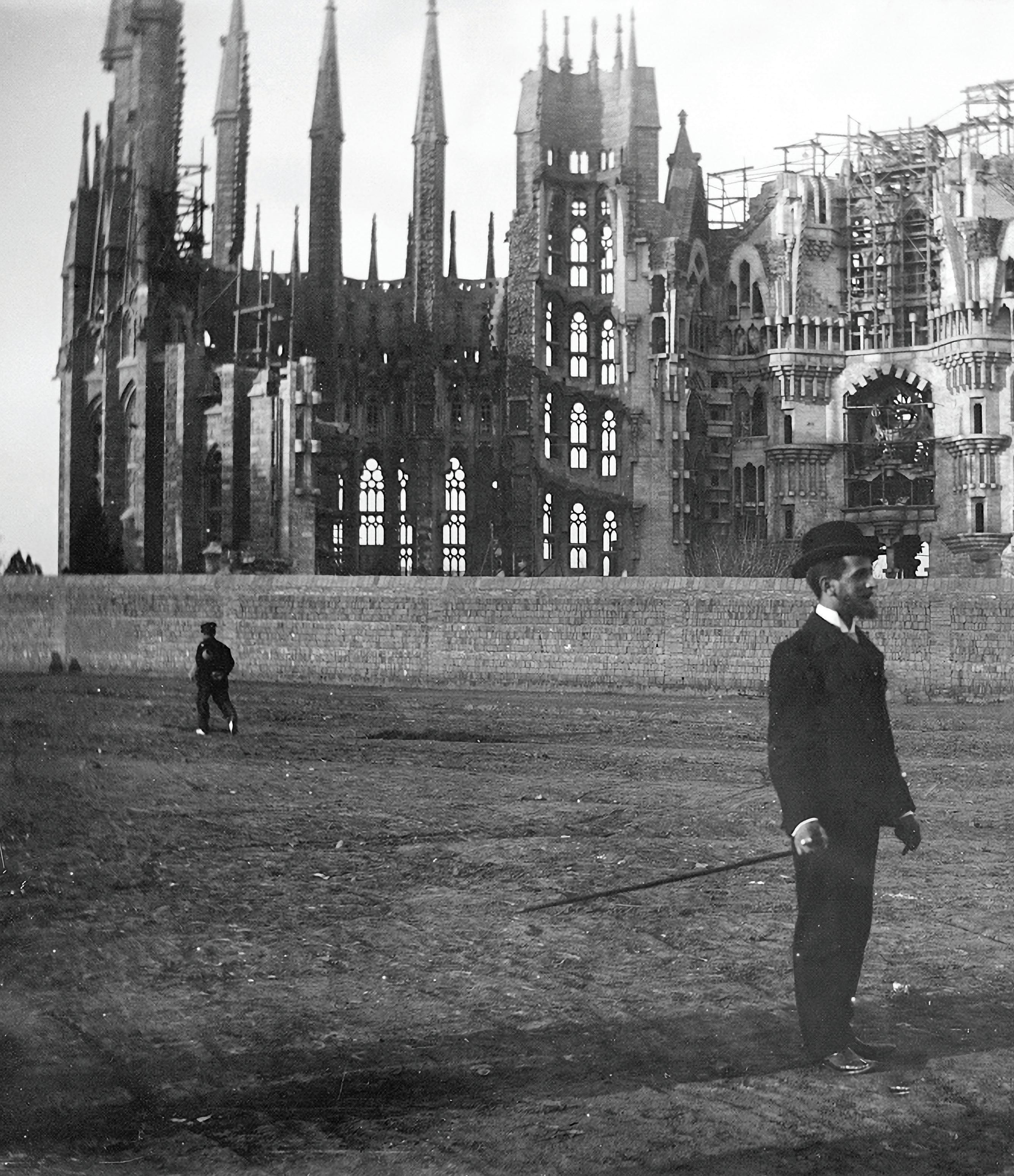
Sagrada Familia by Baldomer Gili i Roig, 1905.
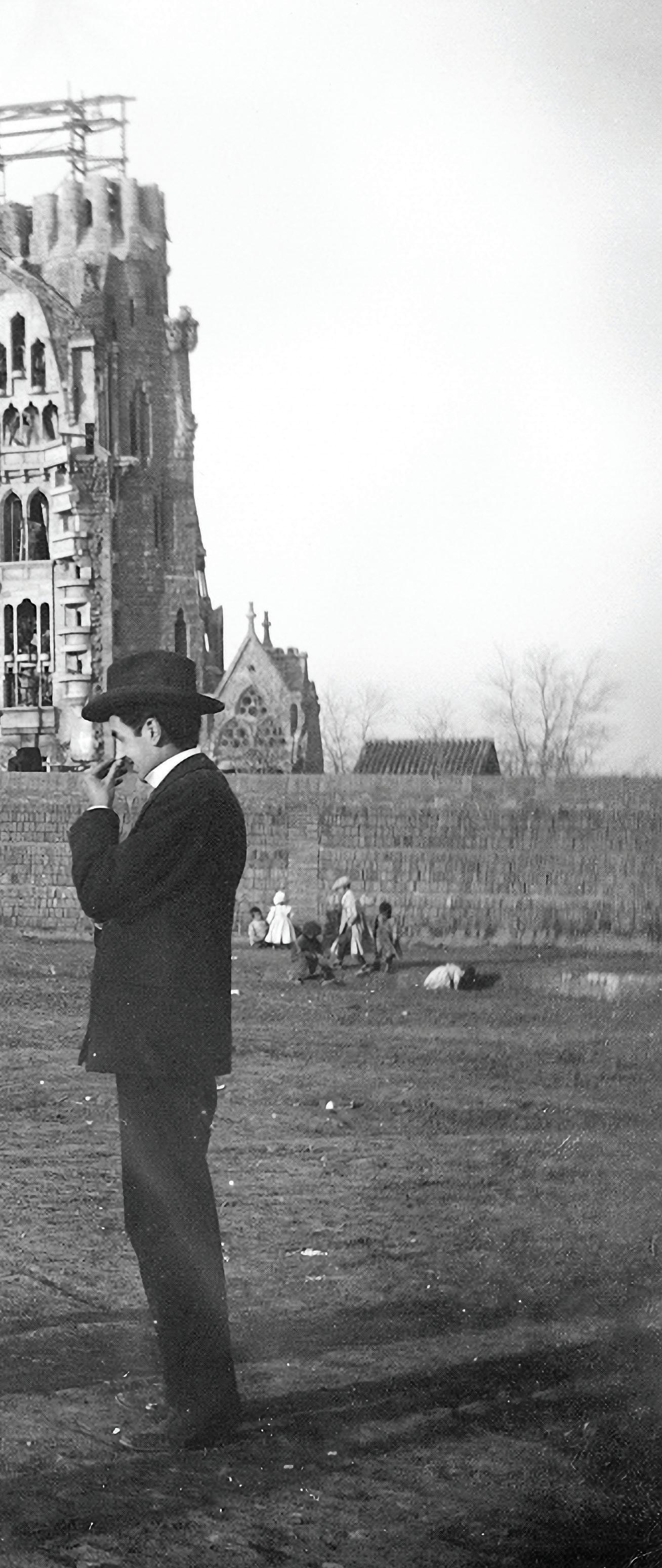
A Century in the Making
The Sagrada Família approaches completion, bringing Antoni Gaudí’s vision to life
“My client is not in a hurry.” — Antoni Gaudí
the client gaudí was referring to was God. Fortunately for all of us, the project was not rushed. After 140 years, one of the most stunning architectural buildings in the world is finally nearing completion. There are buildings that seem to exist outside of time, and then there are those that are defined by it. The Sagrada Família belongs to the latter. For more than a century, it has stood not as a finished object, but as a work in progress, its identity shaped as much by duration as by design. Now, with its long-anticipated completion expected in 2026, the question is no longer how it will be built, but what it will become once it is no longer unfinished.
When Gaudí assumed control of the project in 1883, he reimagined it entirely. What had begun as a relatively conventional church became something far more radical: a structure that sought to dissolve the boundaries between architecture and nature, between geometry and growth. Columns branch like trees. Stone bends and folds
as if shaped by internal forces. Light is not merely admitted into the space, but orchestrated, filtered, and transformed.
For Gaudí, this was not abstraction, but principle. “The great book, always open and which we should make an effort to read, is that of nature,” he said.
The Sagrada Família reflects that conviction at every scale, from the smallest carved surface to the structure as a whole. The building does not imitate nature. It attempts to participate in it.
Gaudí understood from the outset that he would not live to see the building completed. This fact did not diminish the scale of his ambition. If anything, it clarified it. The Sagrada Família was not designed as a finished object, but as an ongoing process, one that would extend beyond the limits of a single lifetime. In this sense, it is less a building than a continuum, an idea carried forward through time.
And yet, for all its association with incompletion, it has always been moving toward an end. The anticipated completion in 2026, marking the cen-
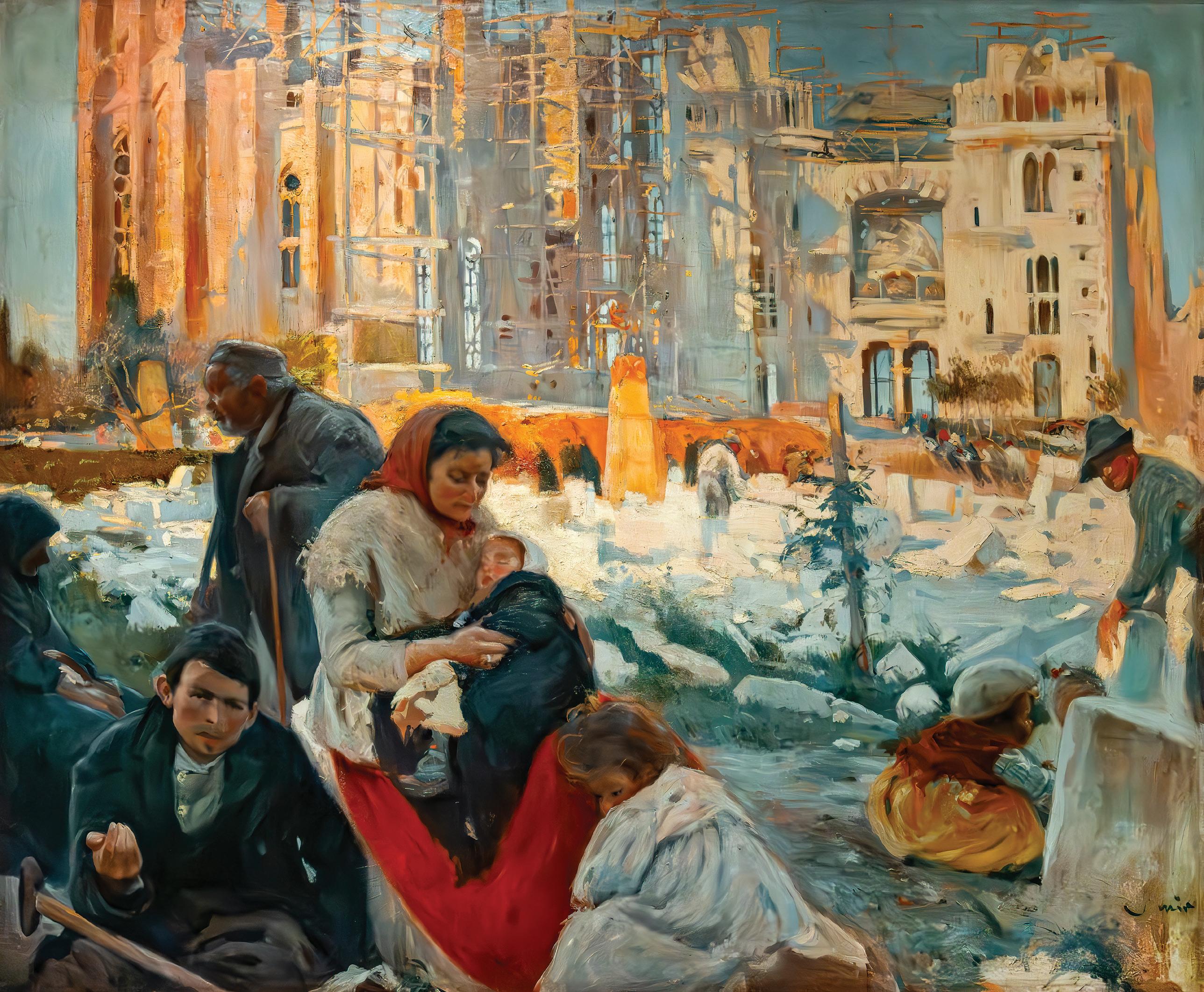
tenary of Gaudí’s death, introduces a subtle but significant shift. For the first time, the Sagrada Família can be understood not as something becoming, but as something that has become.
What does it mean to complete a building that has been defined by its incompletion?
Part of the answer lies in the way the structure holds multiple temporalities at once. The original stonework, marked by Gaudí’s hand, coexists with contemporary interventions made possible through digital modeling and advanced fabrication. The result is not seamless. Differences are visible. Styles shift. Details evolve. And yet,
rather than fracturing the work, this layering reinforces its central premise: that the building is alive within time, not outside it.
Light plays a crucial role in this experience. As the sun moves across the façades, the interior transforms, colored glass casting shifting patterns across the stone. Morning and evening are not simply changes in brightness, but changes in atmosphere. The building does not remain constant. It responds. Even once completed, it will continue to change, its appearance never fixed, always shaped by time.
There is also a broader cultural dimension to this moment. Few proj-
ects of this scale persist across generations without losing coherence. The Sagrada Família has done so, precisely because it was conceived with that duration in mind. Each generation has contributed not by redefining its vision, but by extending it, translating it into the tools and materials of its time.
The completion of the Sagrada Família does not mark an end in the conventional sense. It marks a transition. The building will shift from something becoming to something that has become, from process to presence. And yet, its meaning will remain inseparable from the time it has absorbed, from the years of construc-
tion, interruption, and continuation that have defined it.
In an era defined by immediacy, where creation is often measured by speed and efficiency, the Sagrada Família offers a different model. It suggests that significance can emerge through duration, that the value of a work lies not only in its final form, but in the time it takes to realize it.
To encounter it upon completion will be to see not only a building, but a century of intention brought into alignment. And even then, it will resist finality. The stone will remain. The light will continue to move. The structure, though complete, will never feel entirely finished.
The Beggars Cathedral, Joaquín Mir Trinxet, Barcelona 1908.
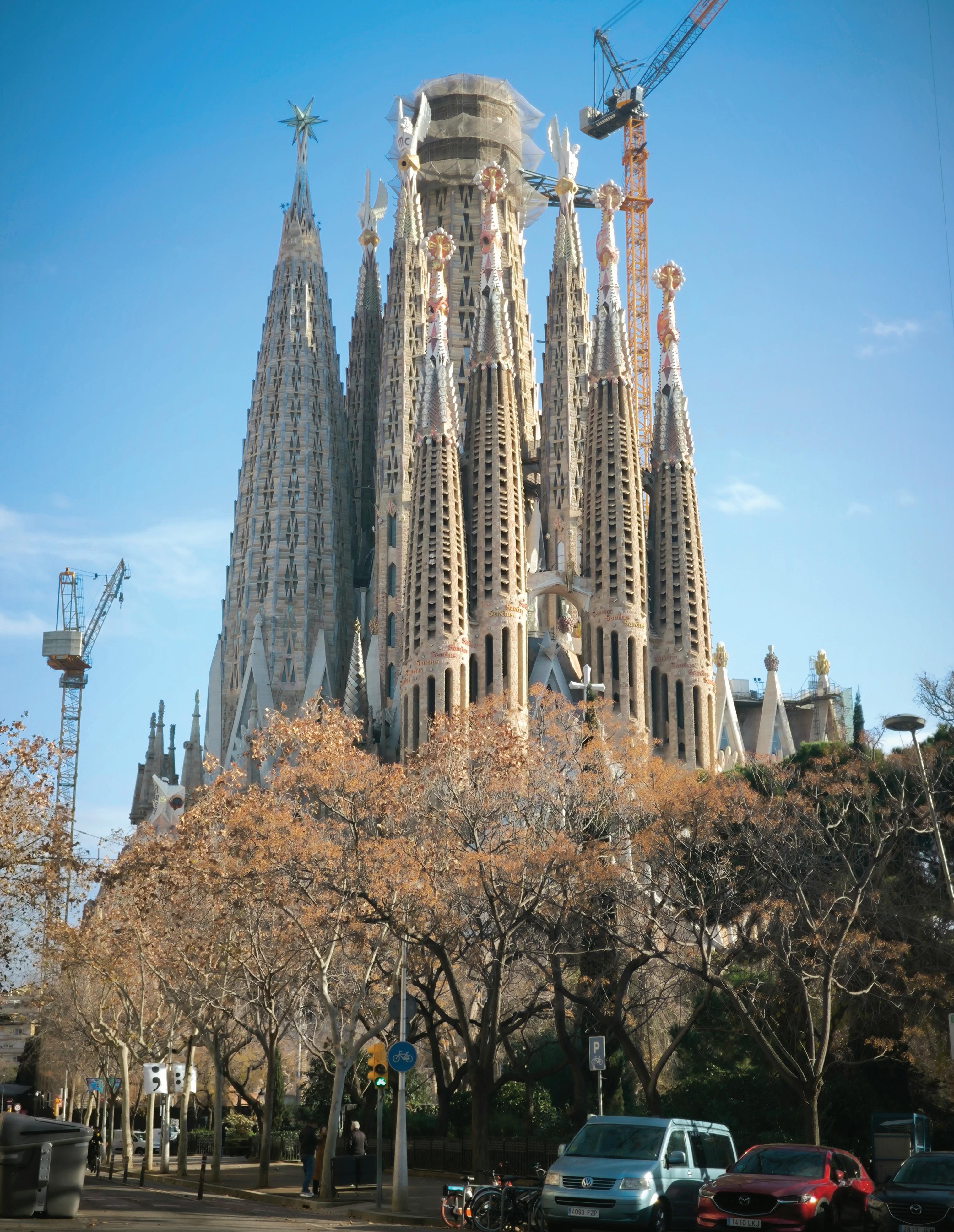
Opposite:
National
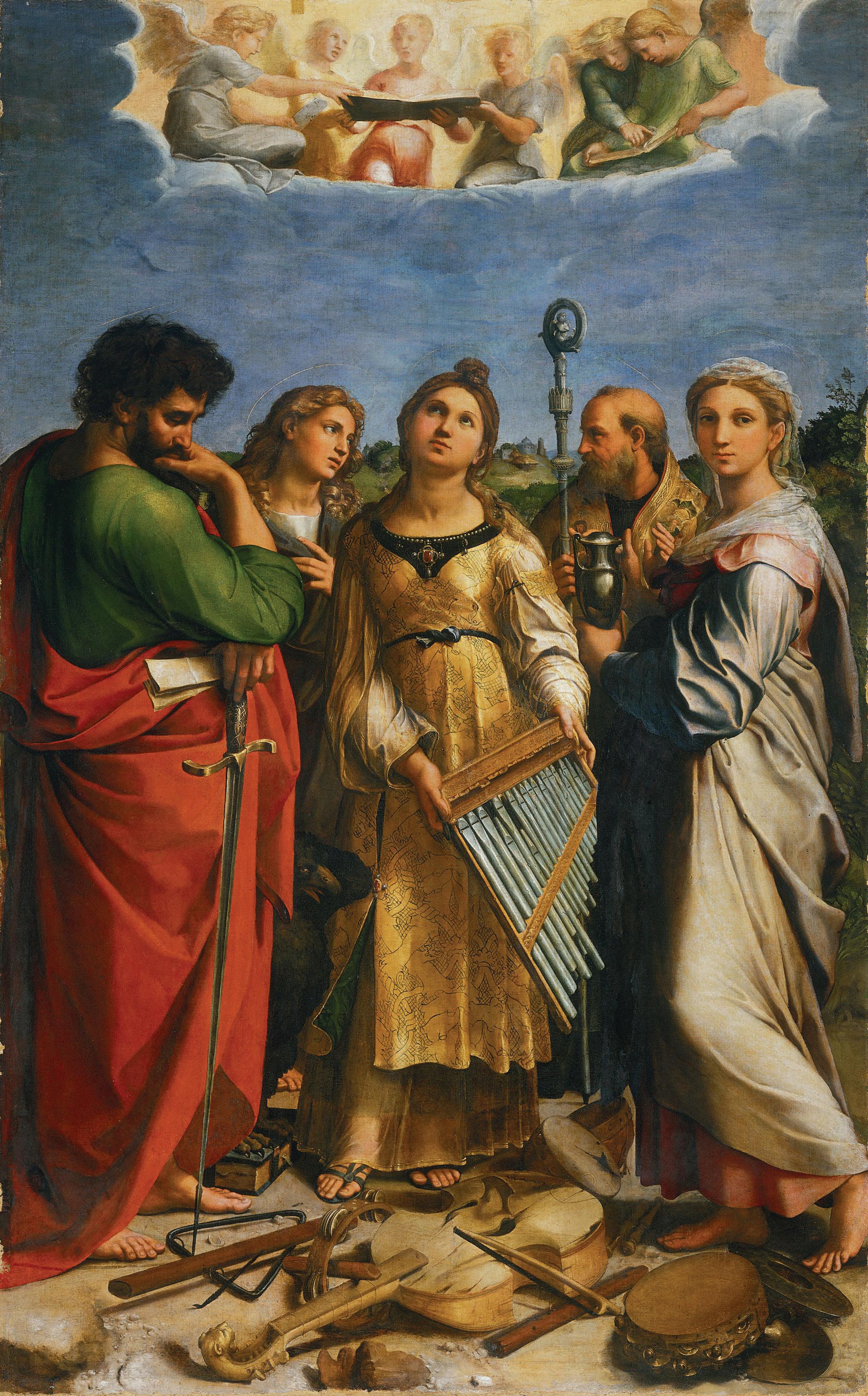
160 The Ecstasy of Saint Cecilia with Saints Paul, John the Evangelist, Augustine, and Mary Magdalen ca. 1515–16. Raphael. Oil on canvas, transferred from wood. Pinacoteca Nazionale di Bologna.
Raphael (Raffaello di Giovanni Santi) (Italian,1483–1520) The Virgin and Child with Infant Saint John theBaptist in a Landscape (The Alba Madonna) ca. 1509-11. Oil on canvas (transferred from wood).
Gallery of Art, Washington, D.C., Andrew W. Mellon Collection (1937.1.24) Courtesy National Gallery of Art, Washington.
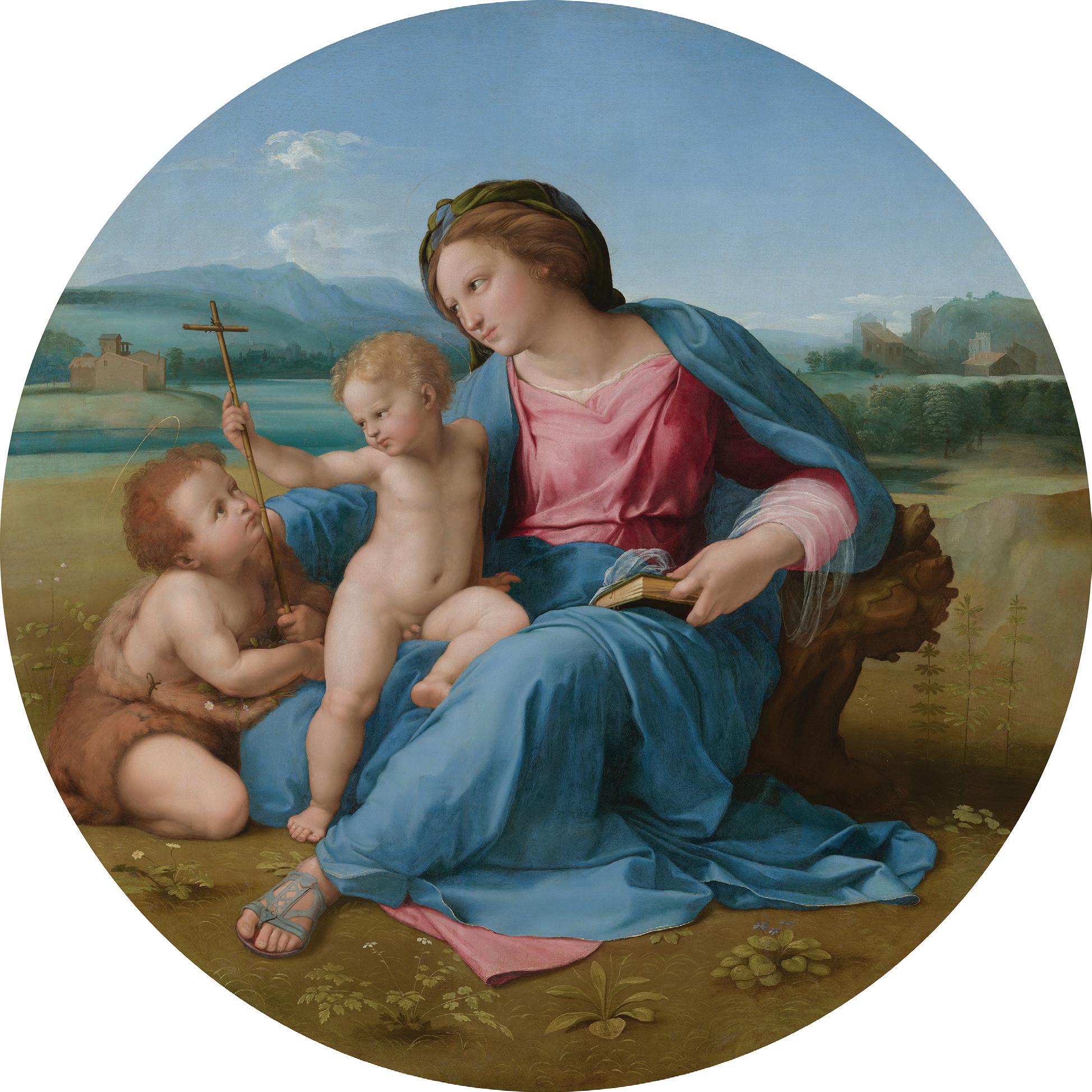
Beyond the Halo
Raphael’s Sublime Poetry at the Met
the story of the Italian Renaissance is often told as a triumvirate of giants, but if Michelangelo provided the muscular agony and Leonardo the inscrutable mystery, Raphael (1483–1520) provided the grace. A recent exhibition at The Metropolitan Museum of Art, Raphael: Sublime Poetry, serves as a rigorous investigation into why, five centuries after his death at the age of thirty-seven, Raffaello di Giovanni Santi remains the definitive benchmark for “artistic perfection”. While his contemporaries often seemed to be at war with their own genius, Raphael was the Great Synthesizer. Born the son of a painter and poet in Urbino, he
possessed a “poetic sensibility” that allowed him to absorb the radical innovations of his peers and refine them into a visual language that felt both transcendently harmonious and deeply human. To understand Raphael’s specificity, one must look at how he navigated the shadow of the giants who preceded him. Where Leonardo’s compositions were often shrouded in sfumato and psychological ambiguity, Raphael took those same triangular structures and brought them into a clear, lyrical light. The exhibition highlights this evolution through works like The Alba Madonna (from the National Gallery of Art), which possesses the geometric stabil-
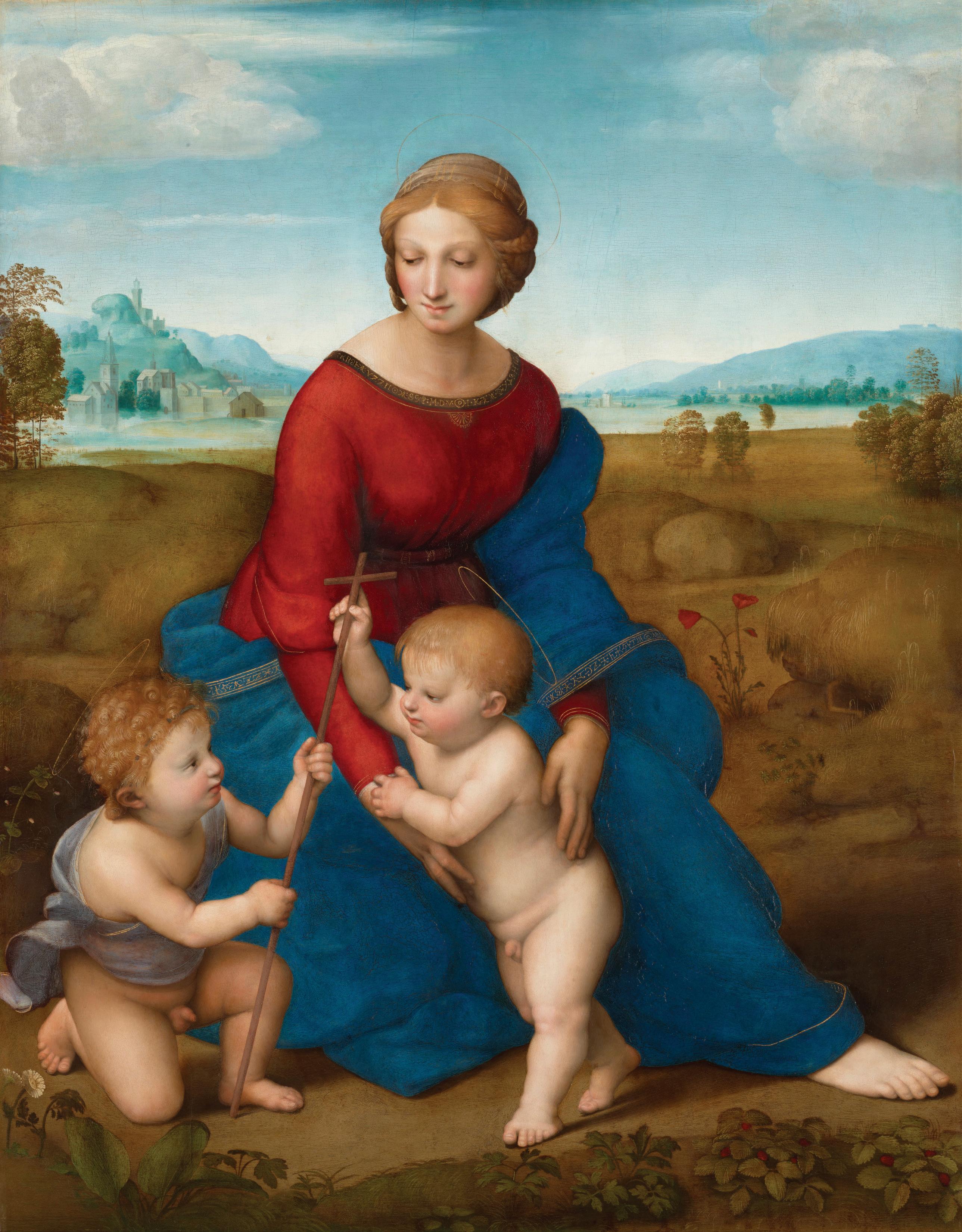
Raphael (Italian, 1483–1520), Madonna in the Meadow (also known as Madonna del Prato), 1505–1506. Oil on poplar panel. 113 x 88.5 cm (44.4 x 34.8 in.)
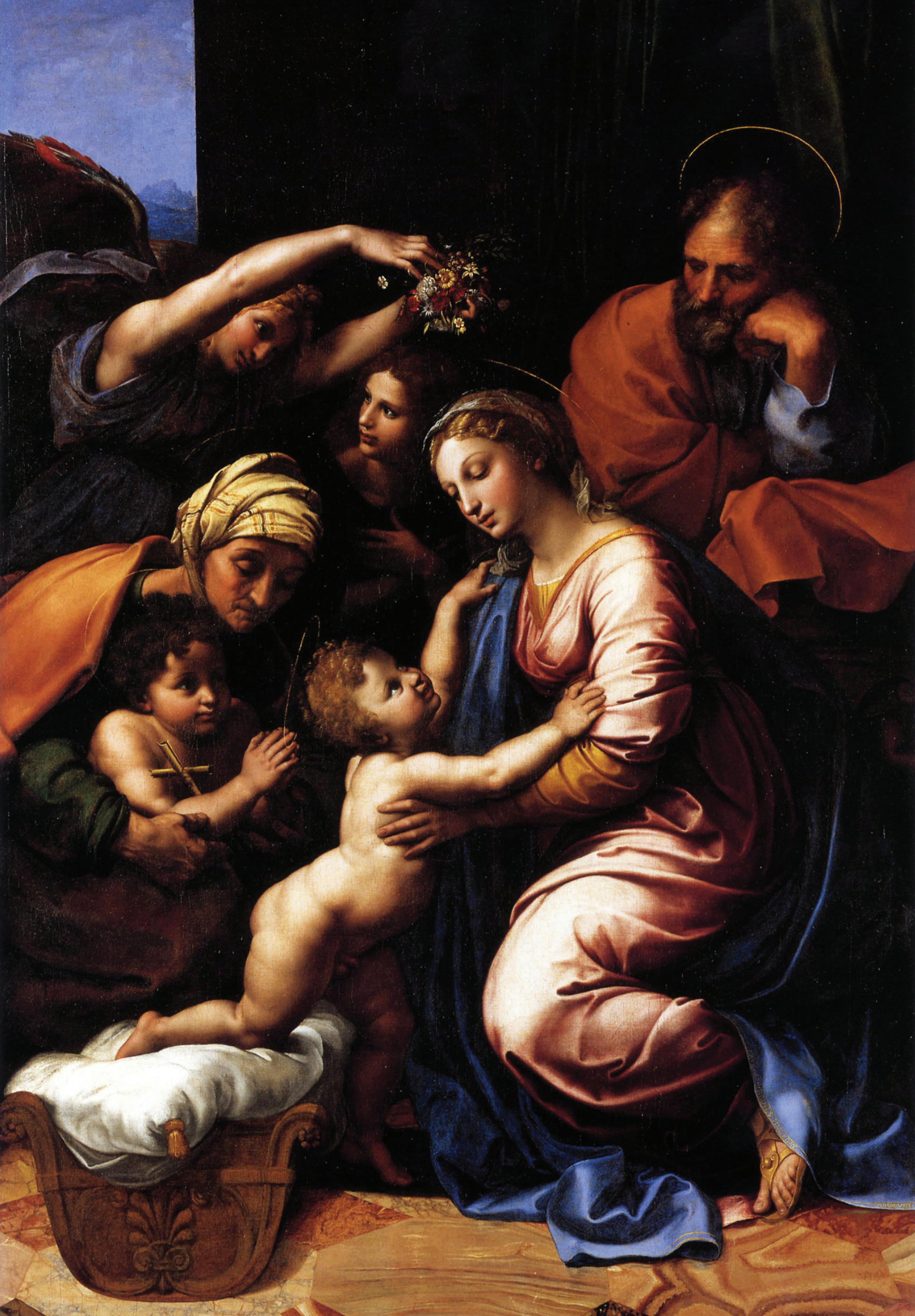
Raphael (Italian, 1483–1520), The Holy Family of Francis I, 1518. Oil on wood, transferred to canvas. 207 x 140 cm (81 1/2 x 55 1/8 in.)
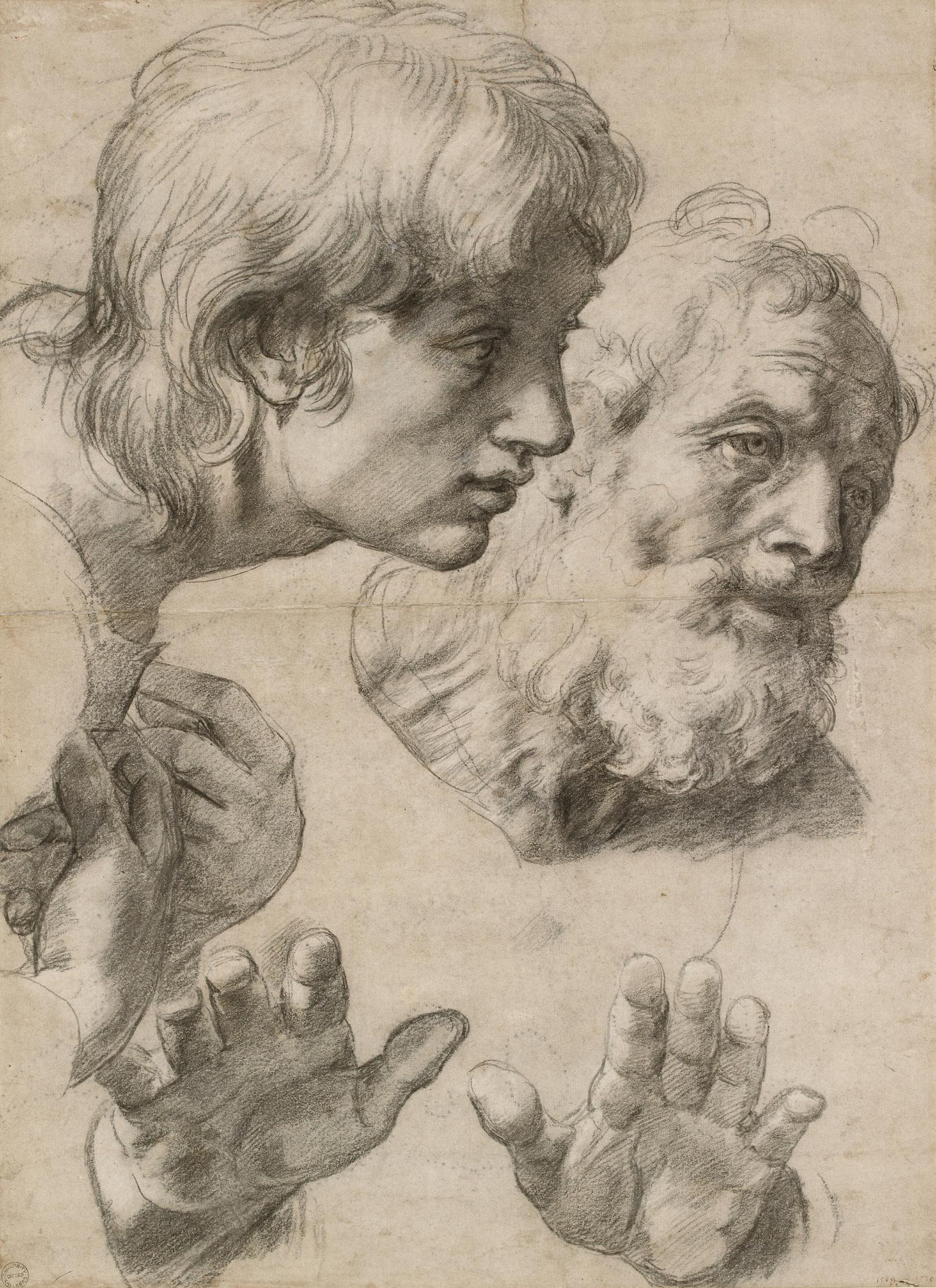
ity favored by the High Renaissance but replaces Leonardo’s distance with a “tenderness” that feels accessible. Unlike Michelangelo, who viewed the body as a site of sculptural tension, Raphael utilized a “prodigious versatility” to treat the canvas as a narrative space, prioritizing storytelling and emotional depth over raw physical power.
Even though it is not part of this specific international loan, the School of Athens remains the most famous testa-
ment to the quality that made Raphael a “true titan”: his mastery of perspective and intellectual architecture. He viewed a painting not merely as a surface, but as an engineered environment. The Met exhibition provides a rare look at this “divine blueprint” by pairing finished masterpieces with more than 200 of his most important drawings and preparatory studies from around the globe. This juxtaposition reveals that his “sublime poetry” was the result of a
deliberate, iterative process—a necessary skill for surviving the complex and often treacherous political landscape of the Renaissance courts.
Ultimately, Raphael’s genius lay in his ability to bridge the gap between “intellectual heft and emotional depth”. He was as rigorous as the philosophers he befriended in Rome, yet his imagery remained strikingly emotive, particularly in his pioneering portrayal of women. By tracing his career from his
origins in Urbino to his final decade at the papal court, Raphael: Sublime Poetry demonstrates that his version of perfection was not a lack of struggle, but the successful resolution of it. He discovered a unique way to balance the ideal and the real, creating a standard of beauty that has maintained its visual power for five hundred years.
Raphael (Italian, 1483–1520), The Heads and Hands of Two Apostles, c. 1519–1520. Black chalk with overpounced underdrawing and white heightening. 49.9 x 36.4 cm (19 5/8 x 14 5/16 in.)
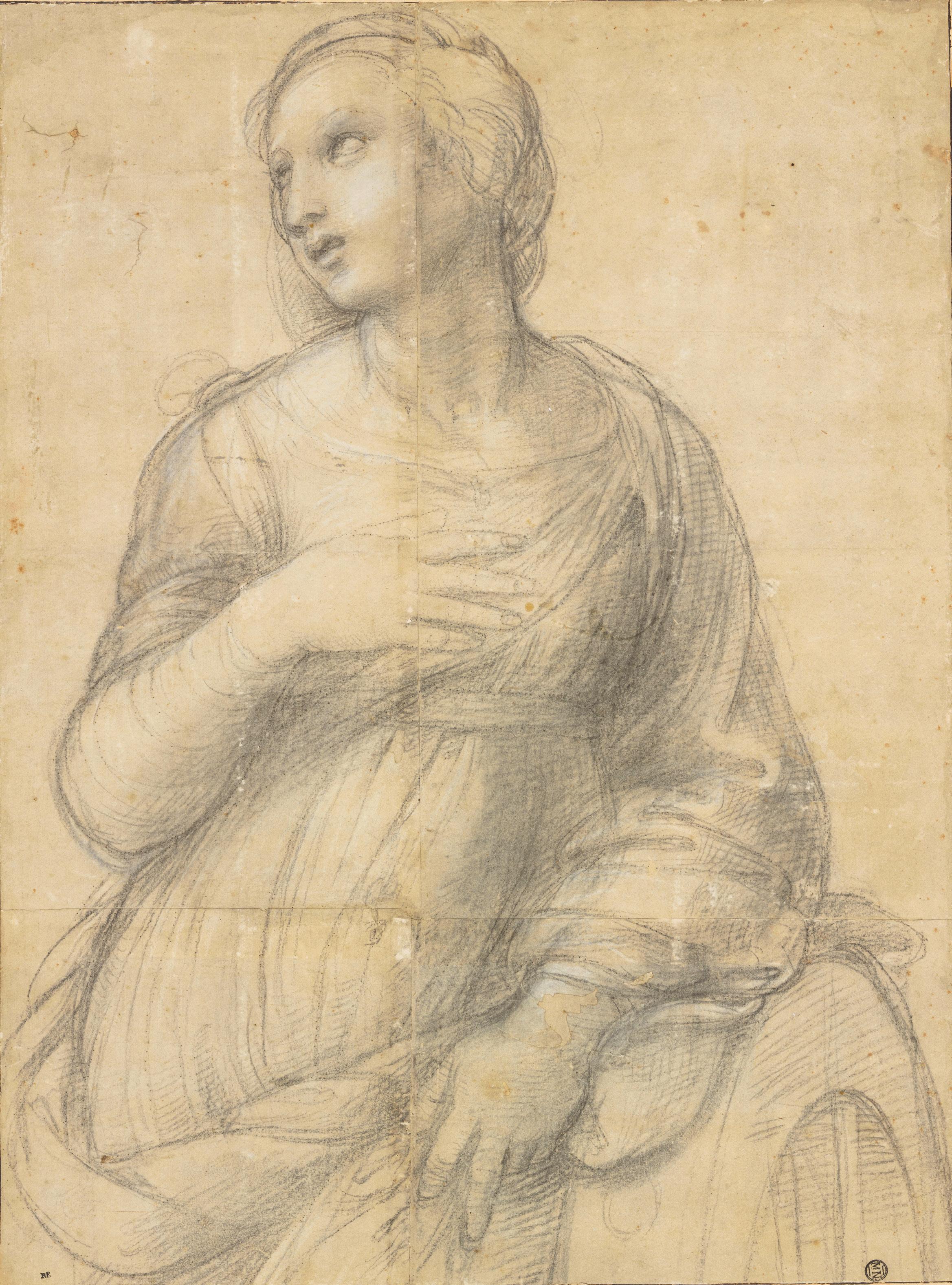
Raphael (Italian, 1483–1520), Saint Catherine in Three-Quarter Length, c. 1507. Black chalk, with traces of white heightening, on several sheets of paper joined together. 58.7 x 43.6 cm (23 1/8 x 17 3/16 in.)
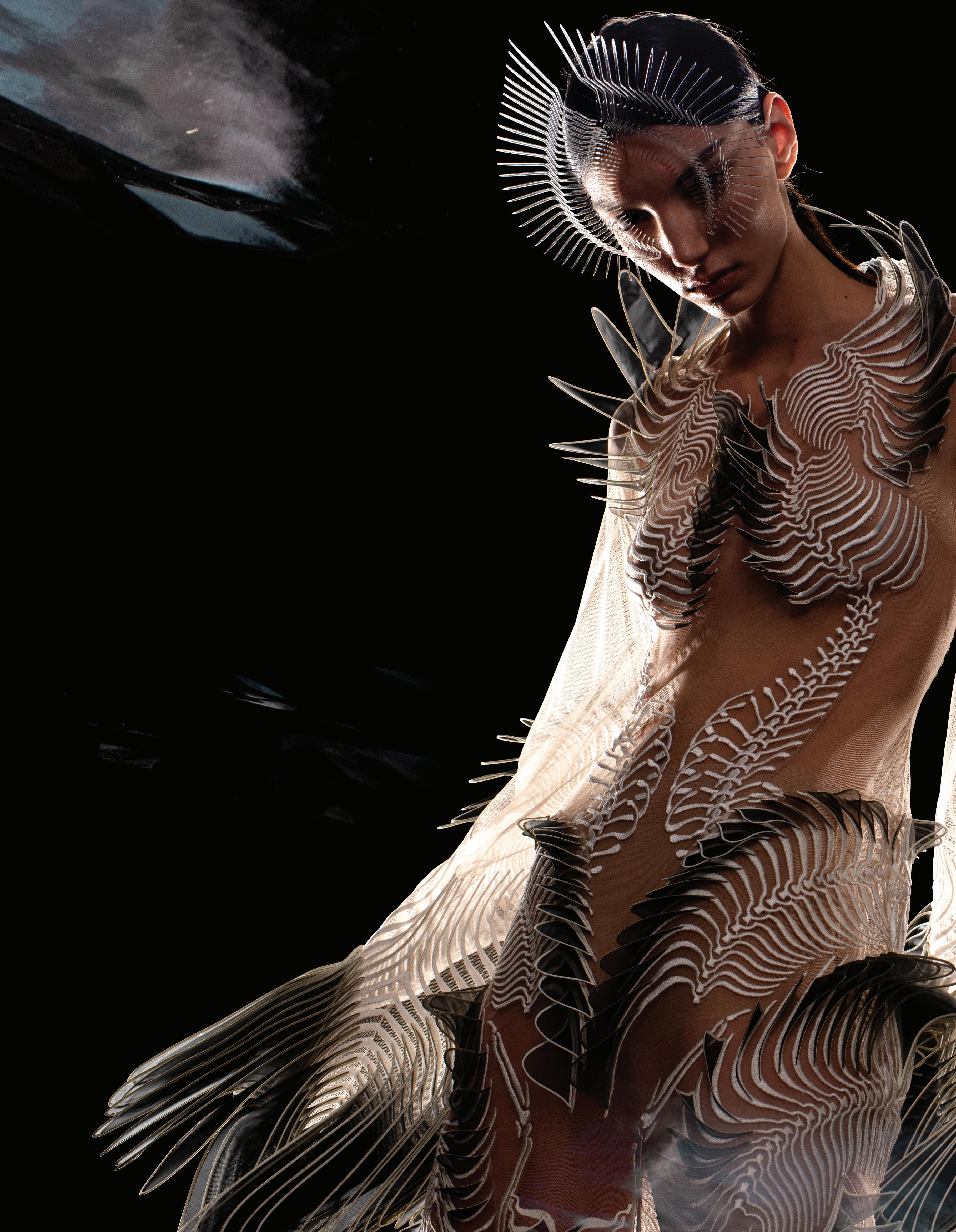
Science of Grace
Iris van Herpen at the Brooklyn Museum
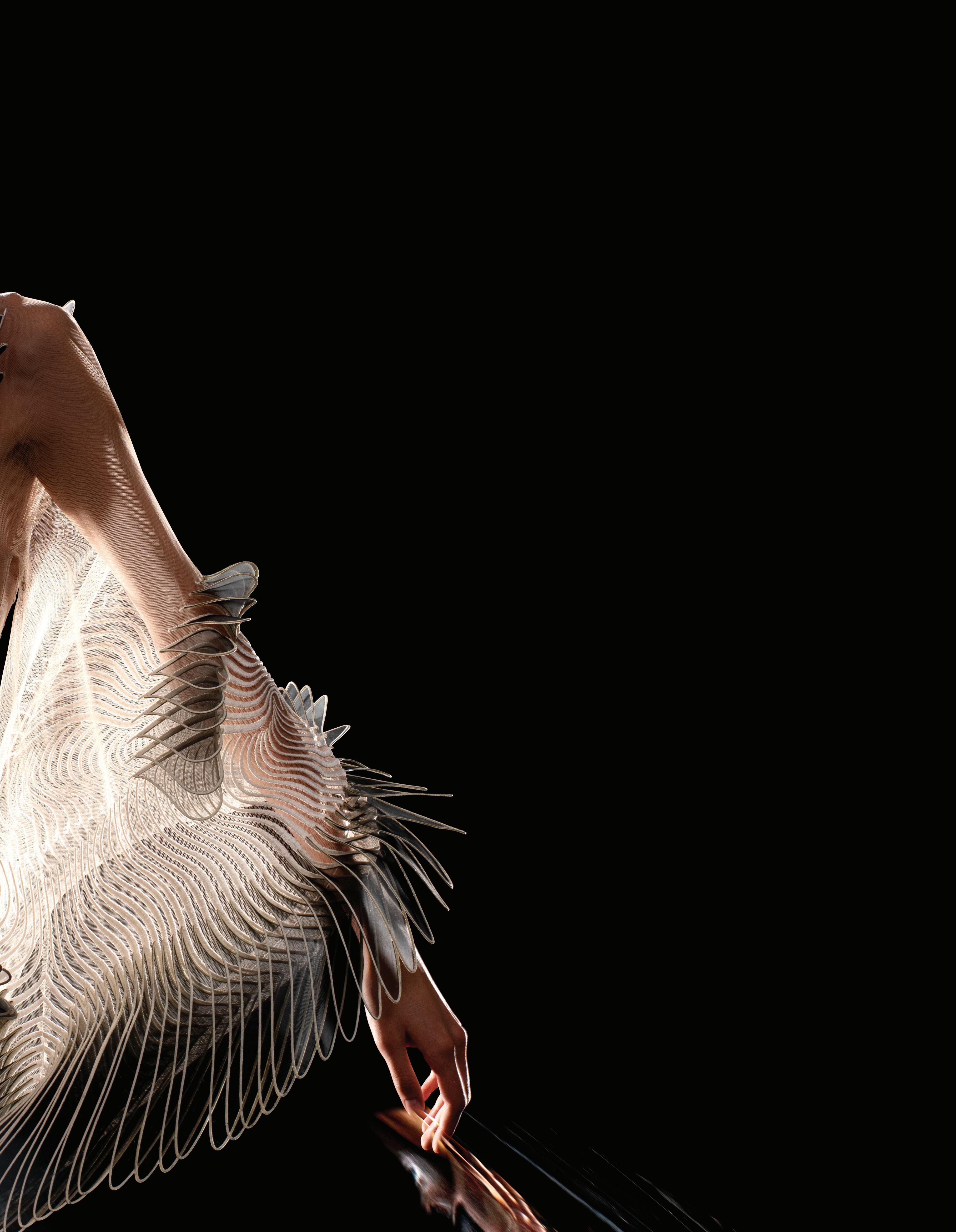
when iris van herpen debuted her first 3D-printed garments more than a decade ago, the fashion world viewed the technology as a cold, intellectual experiment. The stiff, bonelike structures of her early collections seemed to occupy a space between sculpture and armor, challenging the very definition of what constitutes a “fabric.” However, the retrospective Sculpting the Senses at the Brooklyn Museum reveals that Van Herpen was never interested in technology for its own sake. Instead, she was using these nascent tools to find a new way to ar-
ticulate the organic complexity of the human form.
Walking through the exhibition, the evolution of this vision becomes clear. Her work has transitioned from the rigid, mineral-like exoskeletons of her 2010 Crystallization era to the liquid, kinetic masterpieces that define her current practice. The garments no longer seem to sit upon the body; they appear to grow from it. By merging ancient techniques like silk weaving and hand-pleating with cutting-edge methods such as laser-cutting and electromagnetic spraying, Van Herpen has ef-
Iris van Herpen.Labyrinthine Kimono Dress, from the Sensory Seas collection, 2020.Glass organza, crepe, tulle, and Mylar. Model: Cynthia Arrebola.
(Photo: David Uzochukwu)
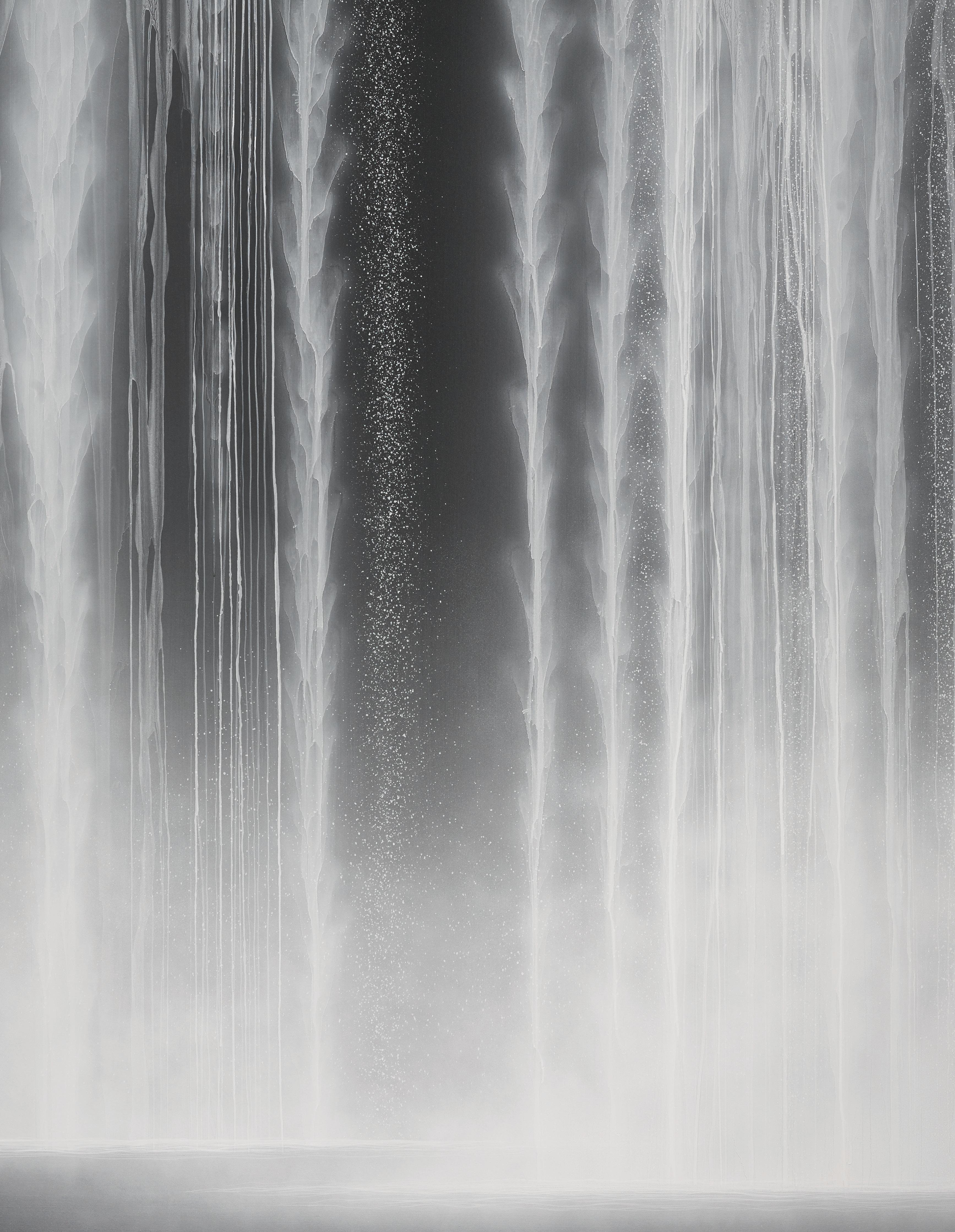
Senju Hiroshi. Waterfall, 2012. Natural pigments on paper mounted on board. Brooklyn Museum, Gift of Sundaram Tagore, 2015.4. ® Senju Hiroshi.
(Photo: Brooklyn Museum)
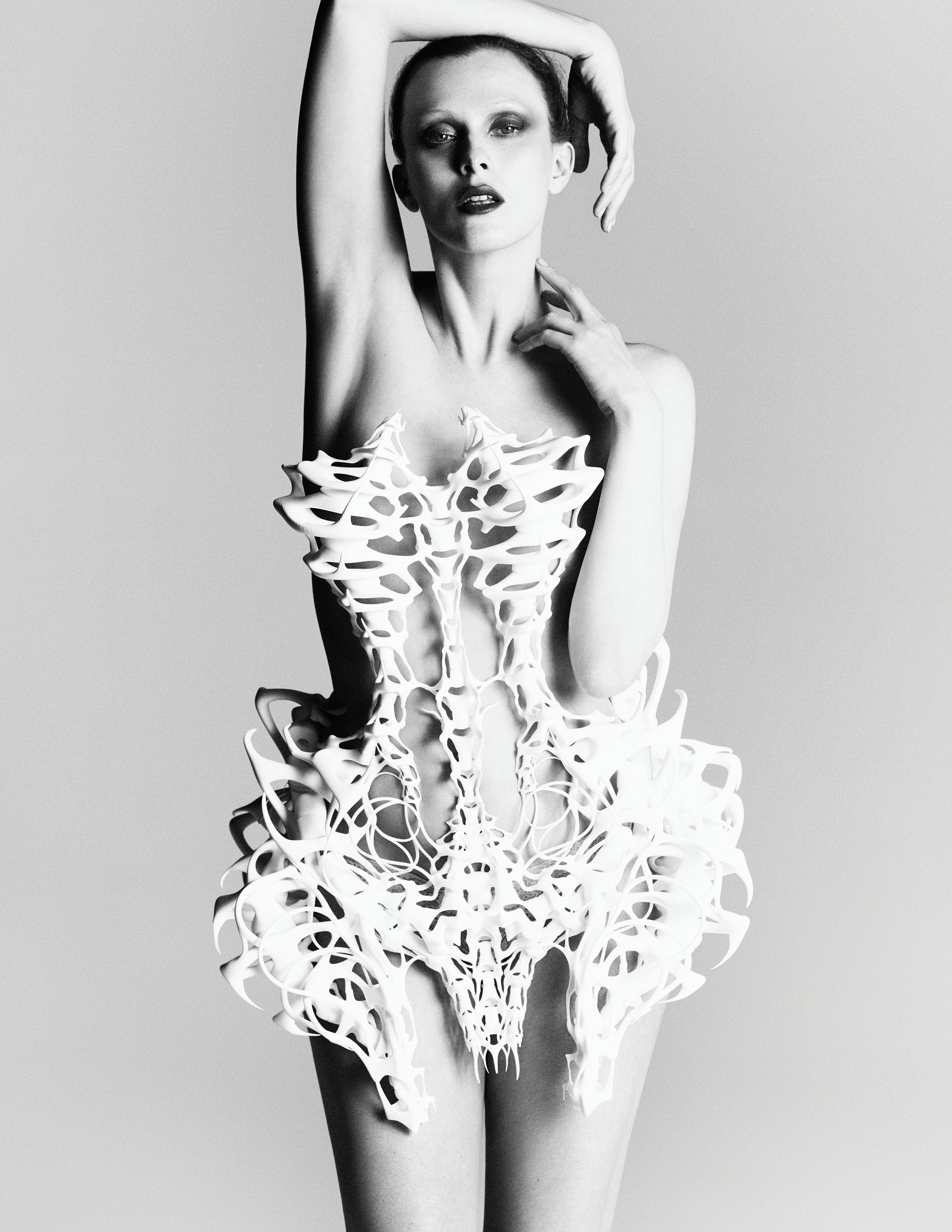
Iris van Herpen. Skeleton Dress, from the Capriole collection, 2011. 3D-printed polyamideusing selective laser sintering. Collaborator: Isaïe Bloch. Model: Karen Elson. (Photo: Luigi& Iango)
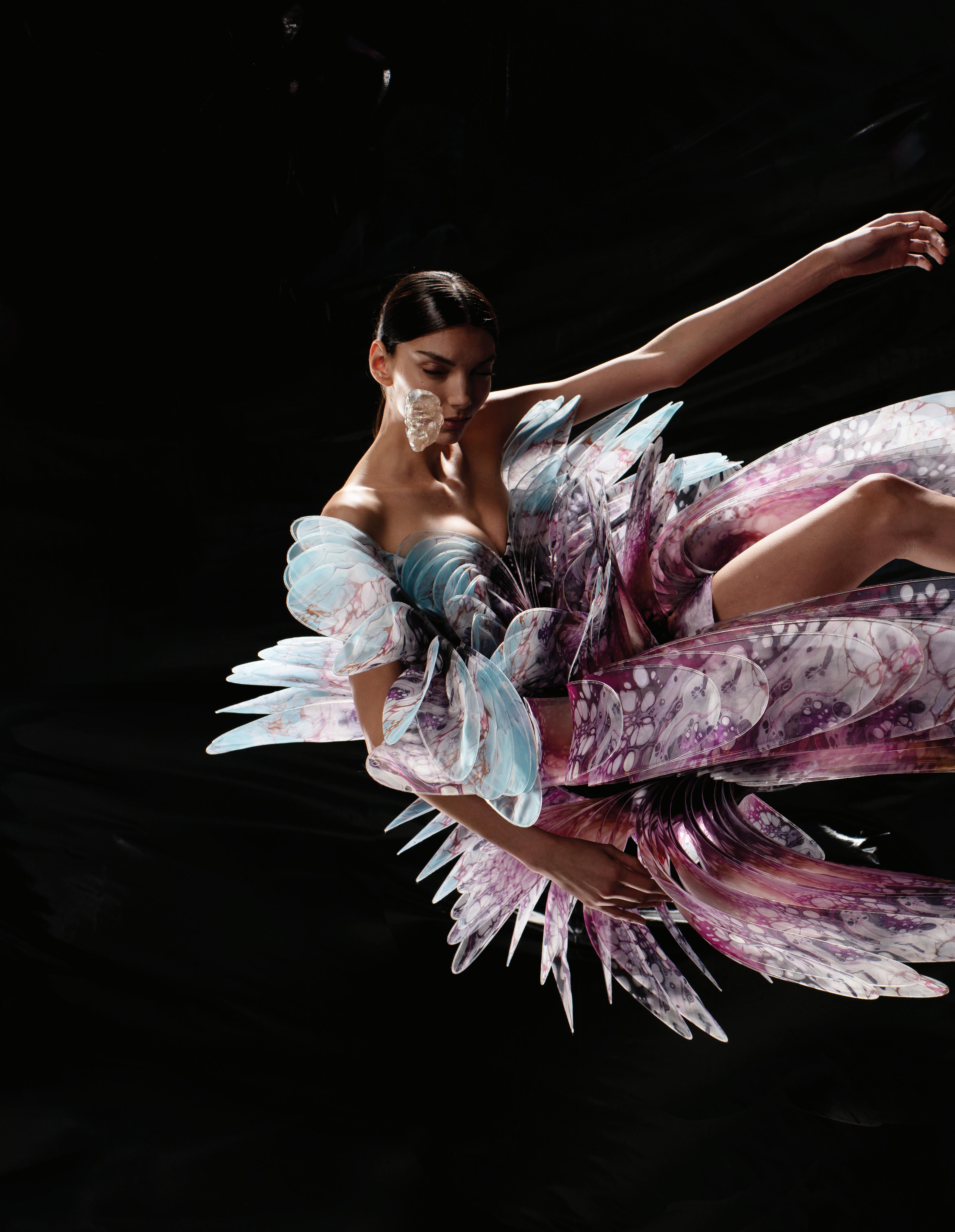
“I don’t see fashion as a static object. To me, it is a living, breathing form that exists at the intersection of technology and the soul.”
BOLLETTINO
170 Iris van Herpen.HydrozoaDress, from the Sensory Seas collection, 2020. PETG and glass organza.
Collaborator: Shelee Carruthers.
Model: Cynthia Arrebola. (Photo: David Uzochukwu)
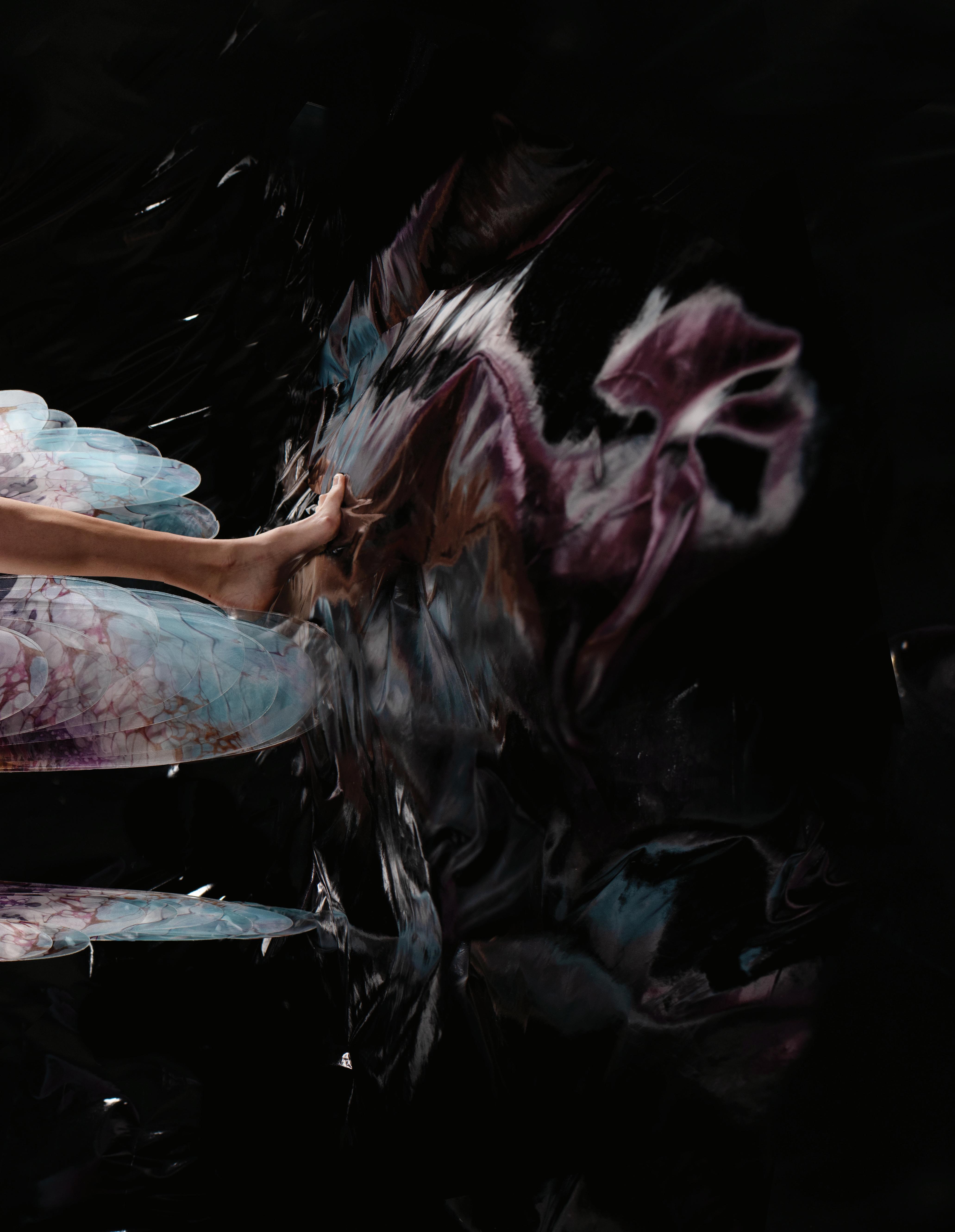
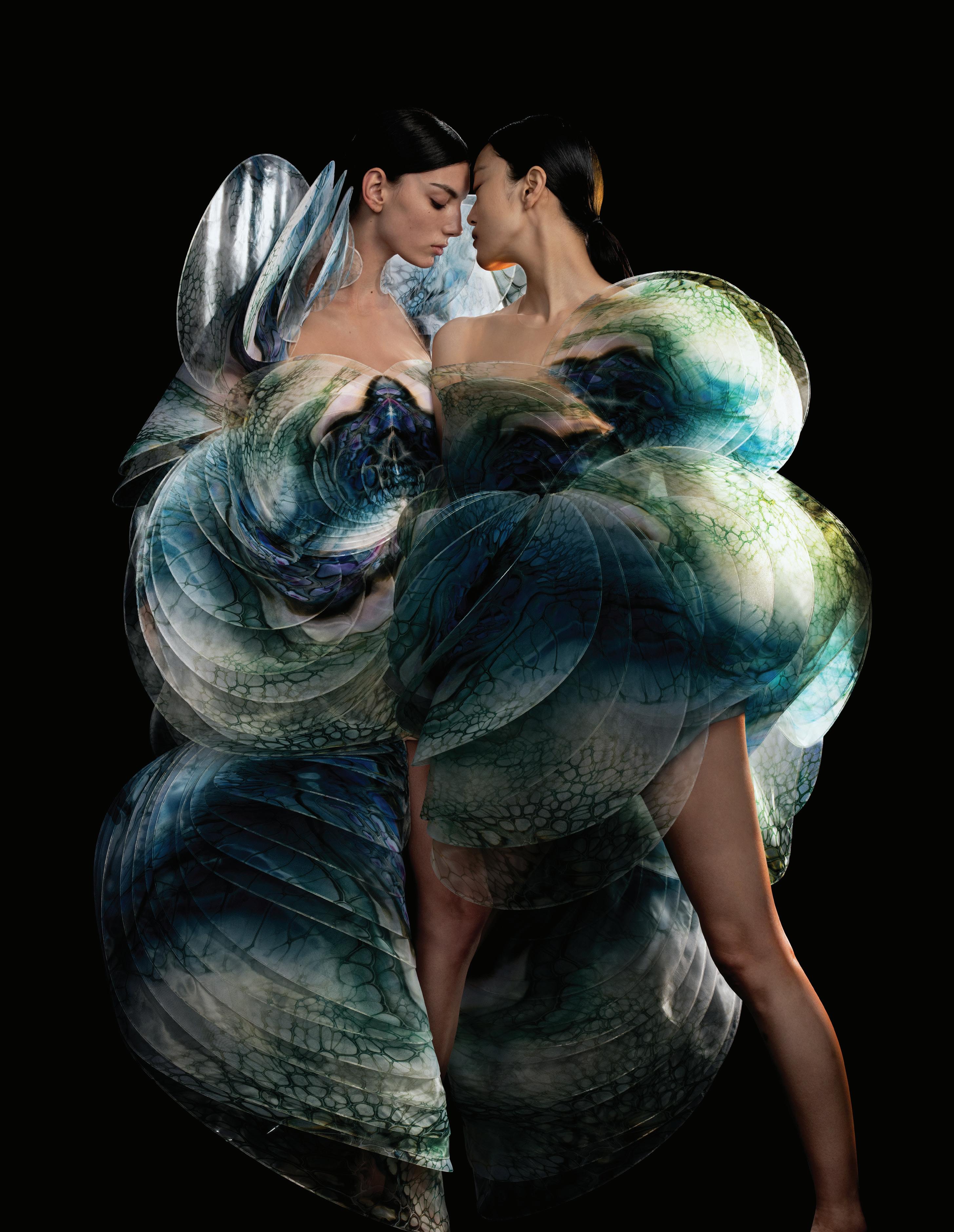
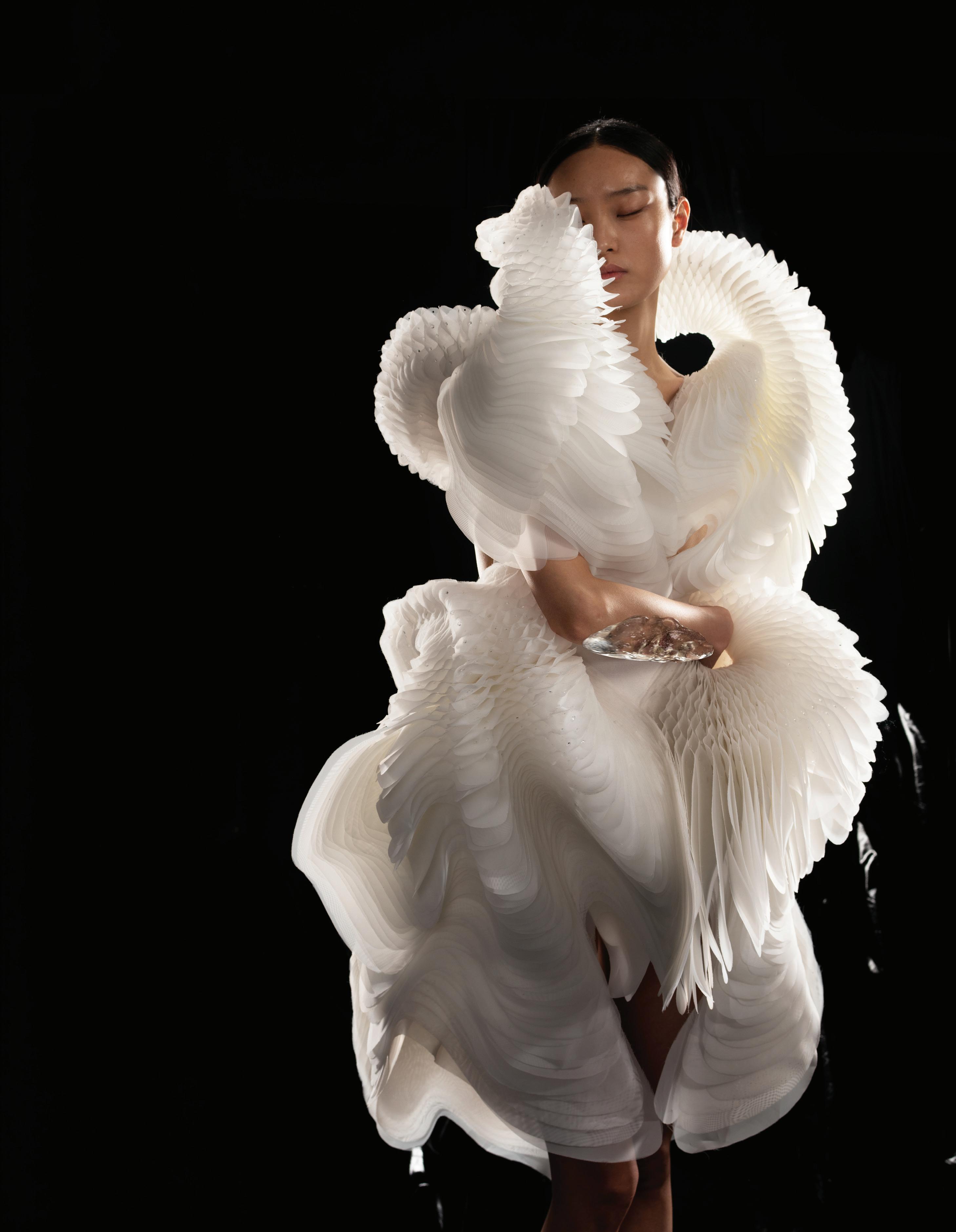
fectively erased the boundary between the natural and the synthetic.
The relevance of Van Herpen’s work today lies in its deep engagement with the sciences. In a cultural moment where the “pluralistic monoculture” often favors recycled aesthetic trends, her atelier functions more like a research laboratory. She collaborates with architects, neuroscientists, and marine biologists to create textiles that mimic the branching patterns of coral reefs or the firing of neurons. These are not merely costumes, but biological blueprints transformed into wearable art.
The Brooklyn presentation places these creations in direct dialogue with the natural world. Skeletal specimens and fossils are positioned alongside gowns made of transparent “dragon skin” or heat-molded polymers. This juxtaposition highlights Van Herpen’s belief that our anatomy is a fluid architectural network. Her designs, such as those from the Sensory Seas collection, utilize thousands of fine, laser-cut layers to replicate the hypnotic movement of hydrozoa, making the wearer appear as though they are submerged in an invisible current.
What began as a radical experiment in 2007 has matured into a comprehensive sensory revolution. The exhibition demonstrates how she has moved beyond the “edgy” labels of her early career to become a visionary who has fundamentally redesigned the air around the body. Her influence is now visible across the global stage, worn by icons who lean into her ability to project a future-facing, radical femininity.
The studio recreation within the museum offers a glimpse into the painstaking labor required to achieve this level of grace. It is a reminder that her “high-wire act” of technical mastery requires a level of patience and expertise that defies the speed of the modern fashion cycle. Ultimately, Sculpting the Senses proves that Van Herpen has found a way to make the machine breathe. She has transformed the cold logic of 3D printing into a medium for poetry, ensuring that the human form remains the most complex and beautiful architecture we will ever inhabit.
Iris van Herpen. Sensory Seas Dress, from theSensory Seas collection, 2020. PETG and glass organza.
Collaborator: Shelee Carruthers. Models: Cynthia Arrebola and Yue Han. (Photo: David Uzochukwu)
1982: Diego Maradona of Argentina #10 is confronted by a posse of Belgium defenders during the match in the 1982 World Cup in Spain. Credit: Steve Powell /Allsport
Universal Language
The Infinite Drama of the Beautiful Game
football is rarely just a game; it is a mechanism for global memory. Every four years, the World Cup operates as a collective heartbeat, a rare moment where national borders dissolve into a singular focus on a leather sphere. It is a sport defined by its capacity to unify, capturing the fascination of cultures that might otherwise share nothing but a time zone. As the tournament prepares to arrive in North America, we are reminded that the World Cup isn’t merely watched—it is experienced as a living archive of human ambition and a testament to a continent’s relentless pursuit of the spectacular.
The history of this fascination is meticulously preserved in two land-
mark Rizzoli publications that serve as love letters to the sport’s enduring power. The FIFA World Cup Pop-Up Book transforms the tournament’s most iconic moments into three-dimensional scenes, from the historic first kick-off in 1930 to the deafening atmosphere of the Maracanã. It is a tactile journey through the archives of the FIFA Museum, bringing the drama and the players into our hands through a physical manifestation of heritage. Complementing this interactive history is This is Football: The Beautiful Game, a lavishly illustrated volume that captures both the grit of the pitch and the candid, quiet moments of the dressing room. These books remind us why football remains
MANCHESTER, ENGLAND - OCTOBER 06: England
goal scorer David Beckham is congratulated by team
mate Emile Heskey after scoring a last minute free kick to draw the 2002 FIFA World Cup Qualifying game 2-2 against Greece and send England to the World Cup on October 6th, 2001 in Manchester, England. (Photo by Shaun Botterill/Allsport/Hulton Archive/Getty Images)
From This Is Football: The Beautiful Game, published by Rizzoli Universe (May19,2026) .ISBN978-0-7893-4665-0
Two Liverpool fans climb a stanchion for a better view during the 1985 FA Cup semi-final between Liverpool and Manchester United at Goodison Park in Liverpool, England, April 13, 1985. Photo by MikeKing/Allsport/GettyImages.
Clockwise, Left to Right: LIMA, PERU - JUNE 23: Argentina player Diego Maradona in action during a 1986 FIFA World Cup qualifying match against Peru at the National Stadium on June 23, 1985 in Lima, Peru.
(Photo by David Cannon/Getty Images). Barcelona, Spain: Barcelona’s Argentinian Leo Messi celebrates with Brazilian Ronaldinho (R) after scoring his third goal against Real Madrid during a Spanish league football match at the Camp Nou stadium in Barcelona, 10 March 2007. Match ended in a 3-3 draw. (LLUIS GENE/AFP via Getty Images). Roberto Carlos of Brazil (right) tries to curl a free-kick around the France wall (Photo by Michael Steele/EMPICS via Getty Images)
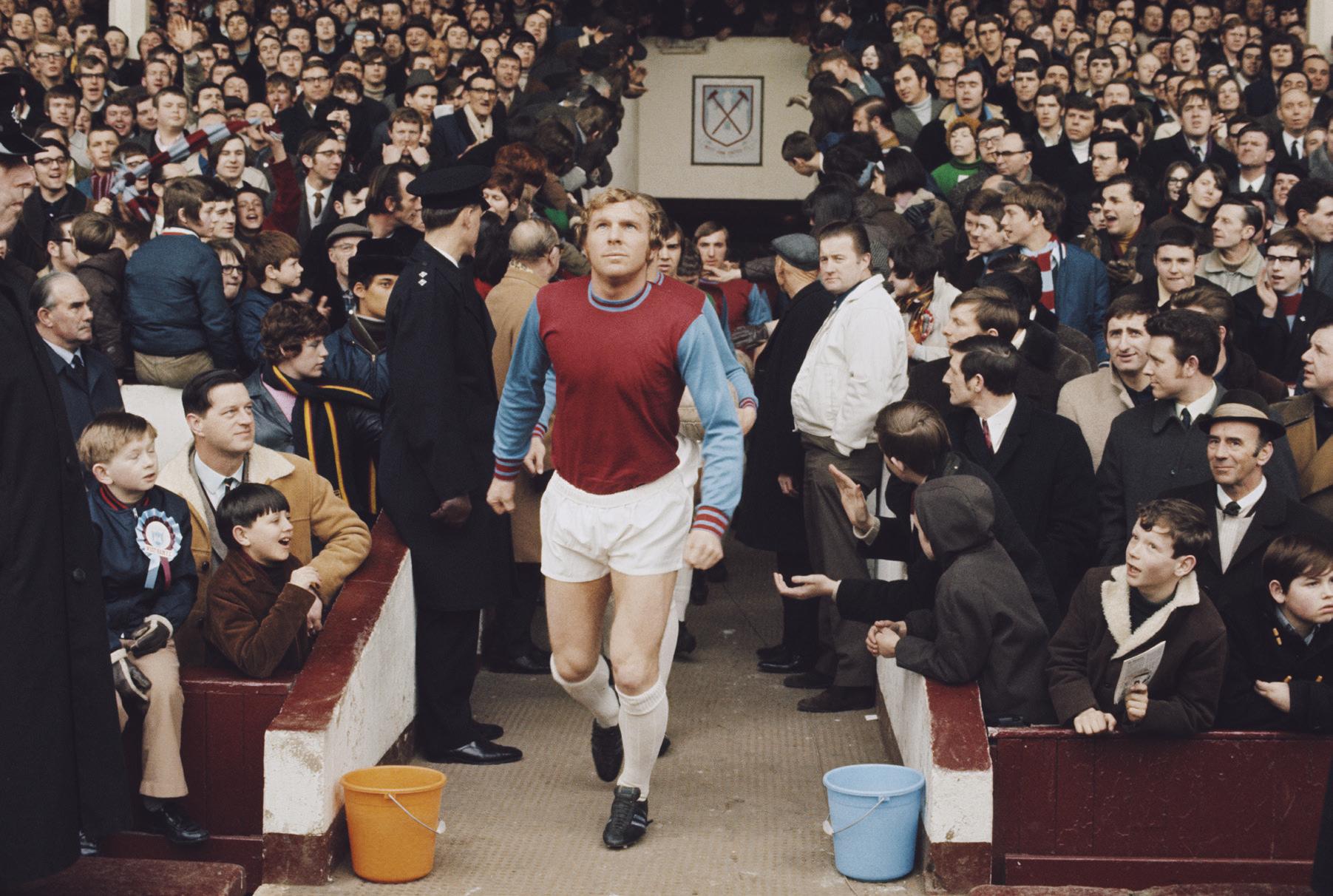
largely unchanged after two hundred years: its beauty lies in its simplicity and the historic moments it helps create.
Many of these moments have become indelibly transcribed into our collective consciousness: Pelé’s joy, Maradona’s defiance, or the tactical revolutions that have shifted the game’s identity. As the 2026 edition approaches, we look toward a historic shift in the narrative of the sport. For the first time, forty-eight national teams
will compete across three host nations: the United States, Mexico, and Canada. This unprecedented scale ensures that new, unexpected moments of magic and drama will emerge. Whether it is a breakthrough performance in a high-tech venue like Los Angeles Stadium or a last-minute strike at the iconic Estadio Azteca, the first stadium to host three different World Cups, the tournament remains a catalyst for cultural change.
Ultimately, the World Cup functions as the ultimate global platform for theater, a modern amphitheater not unlike the ancient Olympic Games where the stakes transcend the physical. On this stage, a player or a team can establish a permanent legacy or ascend into the realm of legend with a single, gravity-defying stroke of genius. Yet, the same platform is equally capable of dealing out infamy; the nar-
rative can pivot in a heartbeat toward the indignity of a missed free kick or the permanent stain of an unforgivable red card. It is this high-stakes volatility, the thin line between the hero’s laurel and the villain’s exit, that keeps the world’s eyes fixed on the pitch. In this unscripted drama, every match is a chance to be etched into history or lost to the crushing weight of a solitary, public mistake.
Top: MADRID, SPAIN - JULY 11: MADRID, SPAIN: Italy player Marco Tardelli (r) celebrates after scoring the second goal in their 3-1 victory over West Germany in the 1982 FIFA World Cup Final at Santiago Bernabéu on July 11, 1982 in Madrid, Spain.(Photo by Duncan Raban/Allsport/Getty Images)
Bottom: Football, London, 1970, West Ham captain Bobby Moore leads out his team before a game at Upton Park as the crowd watches (Photo by Rolls Press/ Popperfoto/Getty Images)