

INFINITY AIM FOR CONTROL ANXIETY



It’s time to turn AI anxiety into agency

The hype about generative AI has been partly replaced by the hype surrounding AI agents. Yet, as leaders, we struggle to keep up with the developments in the technological, economic, and societal spheres. The cover of this issue reads "Control anxiety, aim for infinity". It captures something I keep hearing in conversations with executives. The anxiety is real. The infinity is real, too. Many leaders seem to get stuck on the first part and never reach the second.
Anxiety shows up in predictable ways. People ask whether their job will exist in five years. Boards ask whether the AI investment will ever pay back. CEOs ask whether they should buy, build, or wait. These are reasonable questions. But they share a common feature: they treat AI as something happening to the organization rather than something the organization can shape.
José Parra Moyano makes this point sharply. The hard part of AI transformation is not the technology or the data. It is the people. Not because people are difficult, but because every knowledge worker eventually has to answer one question: what do I contribute now? When that question goes unanswered, you get withdrawal, performative compliance, and quiet sabotage. None of which shows up in the consultant deck.
So, what does "control anxiety, aim for infinity" mean for everyday leadership? First, name what you are afraid of. If you cannot say out loud what worries you about AI, you cannot manage it. Vague fear becomes generic resistance. Second, build the workflow before the wonder. The companies getting real value from AI are not the ones with the loudest agent demos. They are the ones who redesigned a specific process, added language understanding where it actually helps, and kept a human in the loop where judgment matters.
The infinity part is real. But it does not arrive on its own. It arrives when leaders stop asking what AI will do to them and start asking what they want to do with it.
Enjoy reading. And remember, learning does not come from experience. It comes from your reflections on your experience.
Stefan Michel, Professor of Management, Dean of Faculty and Research
CONTENTS
May - June 2026
COVERSTORY
04 Technology
The rise of AI has provoked fear, yet it offers infinite possibilities for leaders ready to embrace the transition.
José Parra Moyano
16 Despite the benefits, companies must set strict boundaries and introduce a highly structured workflow to prevent AI’s ‘rogue’ agents.
Mariia Bulycheva, Karl Schmedders
22 Our visual guide reveals the extent of AI’s massive electricity and water consumption and suggests ways to minimize the damage.
ACTS OF LEADERSHIP
28 Leaders unplugged
Olympics chief Kirsty Coventry discusses with David Bach the essential skills business leaders can learn from sport.
34 Current trends
The growth of AI and the rise of geopolitical tension have widened the gap between elite confidence and public mistrust.
Christine Graeff
38 CEO dialogue
Niels B Christiansen, CEO of LEGO, explains to Jean-François Manzoni how he reduced complexity to rebuild the toy giant.
41 C-suite questionnaire
In our series ‘15 leading questions’, Valentina Ficaio, CFO of the Adecco Group, reveals the women who inspire her the most.

OPERATING SYSTEMS
42 Inclusion
Diversity and inclusion strategies are under threat. Strategic cohesion and an end to virtue signaling can offer a timely reset.
Luca Condosta
48 Governance
Combining the roles of CEO and chair is usually treated with suspicion, but in some cases it’s exactly what’s required.
Hans-Christoph Hirt, Roger Barker
54 Strategy
Knowing when to switch between tighter and looser operating models can mean the difference between success and failure.
Paul Strebel

Photos: IOC, John Gichigi, Getty Images via Unsplash
THE SANDBOX
60 Team building
Emotional intelligence still has a place in this new era of blunt and direct leadership.
Merete Wedell-Wedellsborg
66 Coaching corner
Slow down and take a break if you want to earn your team’s respect.
Uwe Napiersky
68 Board’s eye view
Oversight is no longer enough; boards need to develop a sixth sense to be successful. Natacha Theytaz
71 Brain circuits
Are you an ambitious leader snared in the ‘insider trap’? Take our test to find out.
Jing Yan
FRESH THINKING
15 The human factor
Shelley Zalis believes human judgment is still vital. ‘AI may write the recipe, but we taste the food.’
24 In good company
Jerry Davis explains why the example of open-source software can still lead the way to a democratic future for AI.
72 The forecaster
Howard Yu says mixing American and Chinese AI systems will yield the best results.
75 P.S. The president’s soliloquy
David Bach finds hope in the unscripted, collective drama of the beautiful game. It’s something that algorithms and AI can’t replace.



Beyond fear, beyond imagining
How to embrace AI’s infinite possibilities for economic value creation, while shaping a future worth living in

may be scary, but not that
Photo: ALAMY
AI
scary... Philippe Petit’s 1974 Twin Towers high-wire walk was recreated in the film The Walk, starring Joseph Gordon-Levitt
As AI masters tasks once reserved for highly skilled professionals, workforce anxiety – and resistance –is rising. To ensure the technology generates lasting value and people aren’t left behind, leaders must foster genuine cognitive collaboration between humans and machines.
José Parra Moyano provides a framework and
C-suite checklist
to realize the true potential of the human-AI partnership
Value creation increasingly depends on the interaction between humans and artificial intelligence. The technology is a genuine participant in knowledge work, yet it cannot operate without humans. Technically, it needs a human with intent to activate it. Ethically, society expects human judgment and accountability in processes in which AI plays a role. This (economic and ethical) need for the “human in the loop” requires us to redesign roles to establish an effective division of cognitive labor between people and AI. The very expression “human in the loop” poses so many unanswered questions: Which human? From whom do we expect what? In a loop that does what? To solve which problem? Organizations must figure out how humans add value when AI systems are adopted, especially at scale. How a company answers this question will determine whether its AI transformation succeeds or simply incurs an expensive bill for the technology it bought but could not leverage.
Answering those questions is important for the organization to succeed in creating value, but also for the people who need to find new ways of working and adding value. That applies not only to those whose tasks are taken over by AI but also to those who must change the way they do the tasks that remain theirs.
The problem in many organizations is that the leaders don’t have answers to these questions. The uncertainty often leads to anxiety and fear, hampering the AI transformation because people can’t see the benefits and worry about the consequences. Worse still, it results in conscious or unconscious sabotage by the people who should be leading it.
Finding and providing clarity is fundamental in reducing the anxiety that is preventing real value creation and a return on investment in costly AI applications. This makes the human side of AI transformation one of today’s most pressing leadership challenges and responsibilities. As the next stage of value creation relies on effective interaction between AI and humans, we – the people – will be either blockers or enablers. Leaders must find ways to ensure their teams support and actively participate in transformation, rather than hinder it or miss out. The stakes are high. If leaders get this right, they will enable their people to imagine and conduct previously “impossible” tasks with the help of AI: the kind of breakthroughs that can redefine industries and unlock new chapters in economic development. If they fail, their teams and companies will inevitably fall behind, while others survive and progress.
In my research and work with organizations, I use three frameworks to structure this critical conversation about AI transfor-
mation: the Value-Data-People framework, an output equation borrowed from economics, and a version of the Stacey matrix. These tools help executives across industries and geographies to deconstruct, map, and better manage the complexity of the AI-human transformation – and to understand how they and their teams can adapt and create value. Here, I take each framework in turn, examine what it reveals about the human experience of AI transformation, and pose vital questions that leaders (including those who lead themselves and not a team) need to ask and answer.
Value-Data-People: where do humans fit in?
The Value-Data-People framework organizes AI implementation around three dimensions that organizations must address in sequence.
∞ Value: has the company identified problems worth solving with AI?
∞ Data: does it have access to the information AI needs in the right format and quality, along with the right governance and collaborative models?
∞ People: are individuals and teams willing and able to change the way they work to generate and capture the value AI makes possible?
The first two can be solved with strategy and investment, and require organizations to allocate resources, build infrastructure, and iterate. For this article, let’s assume that these factors are solved, or at least on the way to getting solved.
The third dimension requires greater scrutiny because it involves the internal experience of the people who must adapt. Failing to address it means the technology and data will deliver only a fraction of their potential. The human factor has become increasingly complex as AI tackles sophisticated tasks once reserved for people, a phenomenon referred to as the substitution or enhancement paradigm. Substitution focuses on tasks that AI can perform better or cheaper than humans, while enhancement focuses on tasks that people can do better with AI. People whose tasks are absorbed by AI and those whose productivity is multiplied by AI share more in common than most leaders realize. Both face a redefinition of their roles and the development of capabilities they were never trained for. And both must answer the existential question: what is my contribution to value creation now? Answering that question will identify the constraints that emerge when AI transformation succeeds, help acquire the skills needed to mitigate those constraints, and adapt hiring and training programs to attract and nurture the right human talent. This ensures that value can be created and captured.
The identity challenge
Knowledge workers spend years building professional identities around specific cognitive tasks: financial analysts build »
‘As execution becomes cheaper, the constraint shifts to judgment, and new roles emerge where old ones dissolved’

models, lawyers research precedents, and engineers write code. When AI begins performing these tasks, it not only raises questions about their future employability but also challenges their sense of identity and self-worth. A team of credit analysts at a bank that has deployed an AI system capable of producing assessments in minutes faces a question that no amount of tool training can answer: if the machine does what the team was known for, what value, if any, does the team bring now?
The most common response is rejection or withdrawal, which is catastrophic for transformation. Professionals disengage, use AI minimally, and find reasons to preserve the old way of working. Leaders who interpret this solely as resistance to technology are misdiagnosing the problem. Resistance is not just about self-preservation; it is a professional identity defense mechanism that will persist until the organization helps people build a new identity they can believe in – one that formal systems reinforce through job descriptions, performance reviews, and promotion criteria.
Building that new identity requires people to answer the question: What does it say about me that I’m using AI in this way to do my job? The answer shapes identity as well as the ability and willingness to engage in adoption. Leaders must identify human-AI interactions that enable people to solve their identity questions to avoid withdrawal and rejection. This often involves
Filling the AI skills gap
A senior credit risk analyst at a European bank spent a decade building the stress-testing models her institution relies on for regulatory reporting. Now, three of the five tasks she was hired to perform have been absorbed by an AI system that delivers in minutes what used to take her days. The fear in her department is obsolescence, but she does not ask whether AI will replace her. She asks what the bank will be missing once the automation has fully settled in. Her answer is simple: there will be no one who can walk into a room with a regulator and defend a model rejection decision in plain language, under pressure, to an institution that distrusts black boxes. She is currently completing a certificate in algorithmic accountability and sitting in on every regulatory examination the bank undergoes. This is something that she can initiate. Leaders play a crucial role in identifying such situations and creating space for people to learn what is needed in the near future.
understanding where in the value chain we can apply human-only judgment. Successful identity evolution happens when workers see themselves as necessary in making the technology work, can direct the AI toward the right problems, evaluate its outputs with domain expertise, catch the edge cases and contextual nuances it misses, and take responsibility for the decisions that follow. Creating space for this new identity to emerge increases the chances that human-AI interactions will yield value. For credit analysts, for example, this means shifting from producing assessments to ensuring those assessments align with the bank's risk appetite, regulatory obligations, and client relationships.
The trust challenge
Professionals need to have faith in the process if they are to redefine their identities. This trust operates in three dimensions. First is trust in the technology: do the professionals believe AI’s outputs are reliable enough to act on? Second is trust in the organization: do employees believe they will be given the time and resources to develop new capabilities, be redeployed rather than discarded if their roles shrink, and be valued for their contribution, even as the nature of that contribution changes? Third is trust in the direct leader: do employees believe their managers understand what they are going through, tell them the truth, and advocate for them? Employees who trust their managers will experiment with AI even when they are uncertain about everything else. Experimentation is where the most valuable discoveries about the potential of AI-human collaboration tend to happen. Leaders who narrate their own experimentation with AI tools build trust in the technology. While openly sharing their own experiments, leaders also signal when AI output deserves scrutiny and when it can be acted on. Leaders who advocate for redeployment and development signal organizational trust. And leaders who tell uncomfortable truths about the transition, consistently and early, earn the trust that makes everything else possible.
The psychological safety challenge
Trust is intertwined with psychological safety. In most organizations I have worked with, the dominant culture around AI is performative: people use it to demonstrate compliance with transformation, but they do not use it in ways that genuinely change their work because that carries risks in both directions. If the output is flawed, they look incompetent. If the output is excellent, they look dispensable. The rational response in an environment without psychological safety is minimal engagement, which means minimal value creation.
The starting point is to acknowledge that most organizations are still figuring this out. No established playbook exists for human-AI collaboration; only experiments of varying quality. That admission matters because when leaders present AI transformation as a solved process to be rolled out, rather than a collective learning journey to be navigated, they make it risky for people to say what is not working. Fear, as every educator knows, is
Swarovski’s crystal-clear case for putting people first
Swarovski has more than 18,000 employees and operations in 140 countries. One of its first AI use cases focused on customer relationship management (CRM). Rather than treating generative AI (GenAI) as a productivity shortcut, the Austrian crystal company used it to shift from customer communications with broad messaging aimed at targeted segments to hyper-personalization. Every customer received communications tailored to their individual style journey, preferences, and purchase history. For example, this included styling suggestions and recommendations that enhanced each shopper’s experience. More than asking employees to do the same work faster, the idea was to have GenAI allow them to do work that was previously out of reach. The technology amplified professional judgment rather than replacing it, and the leadership’s communication and actions were consistent with this idea. Employee trust grew incrementally, earned through visible improvements in day-to-day work. Employees could make decisions guided by evidence rather than hierarchy, reinforcing their sense of ownership and professional identity.
Scaling this transformation required investment in people, and not only in platforms. Swarovski embedded 50 AI

“champions” across business functions to support colleagues, acting as local enablers rather than technical experts. Their role was to support colleagues in their work, experiment with approved AI tools such as Microsoft 365 Copilot, identify problems the AI could help solve, and act as a bridge between their function and the central data and AI team. Training was tiered. All employees completed role-appropriate AI literacy training, while AI champions received additional instruction through onboarding materials, early
the most reliable killer of learning. Psychological safety is not a cultural nicety but an operational prerequisite: without it, people go through the motions of using AI without ever discovering the new forms of value that the collaboration can produce.
The economics of AI and people: what are we worth now?
Understanding what makes people willing to collaborate with AI matters because when they experiment and learn, the economic
access to AI tools, and peer exchanges. Peer dialogue and experimentation were core to the model. AI champions shared examples and lessons learned, while live demonstrations in community channels and quarterly exchanges ensured AI capability spread organically. Personalized CRM became a core part of the customer experience. The initiative delivered immediate revenue uplift through higher conversion rates, while creating strategic momentum by demonstrating return on investment.
returns are far larger than most organizations capture. But how do we measure these returns and the value that the human-AI collaboration can bring to an organization? And how do we assess human value in the age of AI?
Borrowing from economic theory, let’s say that AI and data enter the organization as a new factor of production alongside capital and human labor. We can then deploy a simplified version of an equation that economists use to explain how factors of »
AI transformation: vital questions for the C-suite

CEO: sending the right signals
∞ Am I leading this transformation personally, or have I delegated it to the technology function?
∞ Do I understand that the “people dimension” is where the transformation will succeed or fail?
∞ Have I been honest with the organization about which roles will grow, shrink, or change beyond recognition?
∞ Do I understand the wage geography that AI is creating across the organization, and am I prepared to explain it to people whose earning potential is being reshaped?
CFO: capturing real value
∞ Am I modeling the cost dynamics of AI transformation accurately, including the cost of not investing in the people transition?
∞ Do my financial models capture the value lost when professionals disengage from AI, or do they only capture the cost savings from headcount reduction?
∞ Am I funding the reskilling, redeployment, and professional development programs at a level that matches the scale of the disruption, and do I understand that underfunding these programs will show up as lower returns on the AI investment itself?
∞ Am I building a leadership team that has the emotional intelligence and courage to lead people through identity change, or have I staffed for technical competence alone?
∞ As the first roles are affected by AI adoption, are we sending signals that build trust or erode it?
∞ Am I thinking about the systemic implications of what we are doing, including its effects on entry-level hiring, the communities where we operate, and the social contract between the organization and its workforce?
∞ Have I thought about salary divergence and what it means for our compensation structure? Do our pay bands still make sense in a world where AI-enhanced professionals produce the output of five or 10 people?
∞ Am I prepared to invest in exploration teams that will not generate efficiency gains but may discover entirely new forms of value?
∞ Am I tracking the right metrics, measuring the quality of the human and AI collaboration rather than only the headcount ratios?
CIO: building the right infrastructure
∞ Have I built my AI deployment strategy based on an understanding that the technology I deploy will only create value to the extent that the people using it are willing and able to collaborate with it?
∞ Am I providing structured environments for people to develop AI judgment in their domains, through paired experimentation, progressive complexity, and reflection loops, or am I assuming that a few training sessions will be sufficient?
∞ Am I building the data infrastructure that makes human-AI collaboration possible, including data governance frameworks that give professionals confidence in the quality and reliability of the information AI is working with?
∞ Am I translating the possibilities of AI for the rest of the C-suite in ways that connect technical capability to business value, or am I speaking a language that the rest of the leadership team cannot use to make decisions?
∞ Have I defined accountability? When AI-generated output leads to a poor outcome, who is responsible, and have we established this clearly before it becomes a crisis?
∞ Am I leading the transition within my own team, recognizing that the IT and technology functions are themselves being reshaped by AI, and that my people face the same identity, trust, and capability challenges as everyone else?
COO: keeping the talent pipeline flowing
∞ Have I mapped our operations against the Stacey framework, understanding which functions face deep substitution, which face partial substitution, and which sit in the complex zone where human judgment remains essential to value creation?
∞ Have I redesigned team structures for the new collaboration, moving from large teams doing production work to smaller, more skilled teams that direct AI and focus on judgment and exception handling?
∞ Am I measuring operational performance in ways that capture the value of human-AI collaboration, or am I still tracking output volume as if the production logic had not changed?
∞ Do I have realistic timelines for the transition in functions facing deep substitution, and have I ensured that the people in these functions are well supported to preserve trust across the organization?
∞ Am I maintaining the junior talent pipeline, or have I allowed entry-level roles to disappear without building alternative development pathways?
∞ Have I established exploration teams to discover what the organization can do now that it could never do before, with metrics that reward discovery rather than efficiency?
CHRO: rewarding good judgment
∞ Do I understand the emotional state of the workforce and how people are experiencing the AI transformation?
∞ Have I redesigned job descriptions, performance reviews, and promotion criteria to reward judgment, AI collaboration, and the ability to create value in the new model, or do our formal systems still reward task volume and individual output?
∞ Have I built reskilling and redeployment programs that are visible, funded, and taken seriously by leadership, or are they buried in planning documents that nobody has read?
∞ Am I thinking about professional identity as a strategic variable, understanding that people who cannot construct a believable new identity will withdraw from the collaboration and suppress value creation?
∞ Are we developing the next generation of professionals when AI is absorbing the entry-level tasks that traditionally built expertise?
∞ Am I prepared for the difficult compensation conversations that the salary divergence will produce, including explaining to some professionals that their market value is declining while investing in others whose value is rising sharply?
production (capital, labor, data, and AI in the case I am illustrating here) create value:
Y = f(C, L, AI, D)
Y stands for the value an organization produces. The rest of the equation says that this value is a function of capital, labor, AI, and data working together. The strategic question for leaders is: with which combination of factors does the organization have the greatest opportunity to create something distinctive? Or put differently, how intensively the organization should use each factor to create a competitive advantage. Given that humans are needed and wanted in the creation of value with AI, this framing allows executives to think about value and substitution in a more granular way.
Before doing that analysis, it is worth giving space to one potential criticism. It could be argued that AI is just another form of capital or labor, since it can be purchased with capital and trained like labor. And while this is true, I want to make a distinction between AI, capital, and labor to enrich the conversation around three economic dynamics that people (labor) can experience: substitution, enhancement, and expansion.
1. Substitution happens when AI performs cognitive work at a fraction of the cost of a human. When AI can perform a task faster, cheaper, and at equivalent quality, economic logic is unambiguous: that task should migrate to AI. Resisting substitution is not a defense of human dignity; it is a misallocation of resources.
2. Enhancement happens when AI augments human professionals and both become significantly more productive. Enhancement is where the logic becomes more complex. A professional who, with AI assistance, can do the work of three is genuinely more valuable. So far, the general narrative leaders have used to reduce anxiety in the organization is that the AI transformation will bring far more enhancement than substitution. But this narrative is failing to convince people because enhancement can easily lead to substitution. Three enhanced workers can do the job of four non-enhanced workers. Hence, for efficiency reasons and to demonstrate that the AI transformation delivers real ROI, headcount gets reduced. Enhancement carries a substitution shadow that honest leaders should name rather than obscure.
3. Expansion occurs when AI makes it possible to solve problems that were once beyond our cognitive reach because the cost of processing vast numbers of variables, scenarios, and interactions has collapsed. Expansion is where the growth argument lives: enhanced humans, paired with AI handling what it does best, can not only do the same as they were doing faster or better, but also pursue new sources of value
previously out of reach, not because the organization worked harder or hired more people, but because the combination of human judgment and AI capacity makes certain things possible for the first time. The value created in expansion mode is categorically different from doing old work faster: it is value the organization could not have produced without both ingredients working together, the AI and the human labor. Let’s take an example. A law firm that uses AI to draft routine contracts is substituting. A lawyer who uses AI to analyze 10 times more case precedents before advising a client is being enhanced
A firm that uses that enhanced lawyer, freed from drafting, to enter a market for complex cross-border advisory work it never had the capacity to serve before is expanding, generating revenue from a capability that did not exist in the organization before AI entered the equation.
Surfacing these three dynamics matters, not least, because they redefine compensation. In any production function, the marginal cost of a factor reflects its marginal contribution to output – in other words, how much a firm needs to invest in that factor to produce one extra unit of a good or service. For human labor, that marginal cost is salary. As AI absorbs substitutional cognitive work, the marginal contribution of professionals in those roles declines, and their market wage falls with it. As AI enhances professionals, the marginal contribution of their judgment rises as it becomes the input that determines whether AI's output creates or destroys value, thereby exerting upward pressure on compensation. At the expanded frontier, where professionals are generating forms of value the organization has never captured before, the marginal contribution of their capability has no historical benchmark, and their compensation will reflect that novelty.
Organizations that retain legacy compensation structures will systematically misprice the inputs that matter most to value creation. The equation under discussion gives executives a framework for that repricing by making visible which factors are gaining or losing marginal contribution, and by connecting compensation decisions to the underlying production logic rather than historical precedent and internal politics. It allows leaders to ask, with clarity, whether they are allocating resources across capital, labor, AI, and data in a way that reflects where value is being created. Executives can also use it to read their competitors and their industry with the same logic, asking where rivals are investing across the four factors, where the industry is substituting or enhancing, and where the expanded frontier is most likely to emerge.
The Stacey matrix: a reason for optimism
Developed by the management professor and organizational theorist Ralph D Stacey, the Stacey matrix enables executives to determine how expansion will specifically affect their organizations. It categorizes tasks or problems to be solved along two dimensions: certainty of outcomes and agreement among stake-
THE STACEY FRAMEWORK REIMAGINED

SIMPLE Tasks face deep substitution
COMPLICATED
Tasks face partial substitution and significant enhancement
COMPLEX
Tasks where human primacy remains, but AI can assist
automates tasks in the simple and complicated zones
UNCERTAINTY
holders. Mapping the tasks a person or team conducts in this way allows leaders to identify the evolution required to achieve the expansion and increase in value creation that AI, in combination with humans, makes possible.
Simple tasks: manage an honest transition
Simple tasks (high certainty, high agreement) face deep substitution. They include data entry, standard reporting, routine compliance, and repetitive processing. Stanford’s Digital Economy Lab has found that entry-level hiring in AI-exposed jobs has dropped 13% since the proliferation of large language models. The value case for automation is compelling, but the people challenge is immediate and consequential for the organization.
How people who lose their roles are treated becomes the most powerful signal to the rest of the workforce about whether they can trust the organization. As execution becomes cheaper, the constraint shifts to judgment, and new roles emerge where old ones dissolved. The analyst who once rebuilt the same weekly dashboard now faces 10 times the volume of machine-generated analyses, most of which lack provenance or argument. The
IMPOSSIBLE
Beyond current capabilities
AI turns the impossible into the complex EXPANDING THE SPACE OF SOLVABLE PROBLEMS
emerging role curates which questions deserve a model, audits its logic, and translates outputs into decisions a board can defend, which is harder work requiring a different person than the one let go. For this to happen, training is needed. And training is expensive.
Complicated tasks: redesign roles and teams for value Complicated tasks (moderate certainty, moderate agreement) face partial substitution and significant enhancement. They include financial modeling, engineering analysis, legal research, and diagnostic imaging. AI absorbs the production subtasks (the research, computation, drafting, and initial analysis) while professionals retain value in judgment, problem framing, and exception handling. Teams shrink but become more capable, producing results that neither humans nor AI could achieve alone.
The people challenge is to redesign roles around judgment rather than production, and to rebuild team structures around fewer and more skilled professionals working in collaboration with AI. Leaders need to shift performance metrics from output volume to the quality of judgment applied and to reimagine career »
‘The value of AI depends on the quality of the human judgment directing it.
The people side is the variable most worth developing’
Most organizations underinvest in developing these capabilities because they are hard to measure and teach, yet investment in this area will determine competitive advantage more than any decision about technology. Organizations that focus exclusively on tool adoption will find that their people can operate AI efficiently without being able to exercise the judgment needed to turn its outputs into good decisions.
The impossible zone: experiment in expansion
Beyond complexity lie tasks that were previously impossible to accomplish because the cognitive load exceeded human capacity. AI moves the boundary of this zone, creating new categories of potential value. The challenge lies in finding and developing professionals who can see that a problem has become solvable through AI, formulate it for a human-AI team, and navigate a domain with no precedent and no established method. Leaders need to identify and protect these people, provide resources, and give them the latitude to explore, with accountability and psychological safety. It is these talented individuals who will discover the forms of value that the organization does not yet even know it can capture. Interestingly, the ones most capable of doing this seem to be relatively young – the very people who are allegedly most under threat.
paths for a world where the traditional junior-to-senior progres sion no longer holds.
This creates one of the biggest challenges in AI transformation: if juniors no longer perform the entry-level tasks that build expertise, how do they develop the judgment that collaboration depends on? One possible answer is a new kind of apprenticeship, where juniors learn by evaluating AI-generated work, identifying its errors, and building the domain-specific judgment that allows them to direct AI effectively. This solution, honestly, is also expensive.
Complex tasks: invest in capabilities that make collaboration valuable
Complex tasks (low certainty, low agreement) are where human primacy remains. They include strategic decision-making, organizational change, creative direction, negotiation, ethical reasoning, the ability to build trust across relationships, and the willingness to take responsibility for decisions under uncertainty. AI can provide inputs, research, and analysis, but current systems struggle with the edge cases, the relational dynamics, and the genuine ambiguity that define this zone. Developing human capability here should be a strategic priority for any organization seeking to capture the full value of human-AI collaboration.
Lead people to create value with AI
The technology will continue to advance and the economics will keep shifting. Some will argue that the endpoint of that trajectory is a production function in which human labor is no longer a meaningful variable. The argument deserves to be taken seriously, and it may prove correct in domains and over timeframes that we cannot yet specify.
What leaders must act on, however, is the reality they face today. We are in a phase in which the value of AI depends on the quality of the human judgment directing it. Organizations that treat the people side of this equation as a constraint to be minimized will systematically underperform the ones that treat it as the variable most worth developing. The responsibility lies on the shoulders of the leaders – both those managing teams and those “only” leading themselves – who need to decide how much autonomy they give AI and how much agency they still want to exercise. ■
JOSÉ PARRA MOYANO is Professor of Digital Strategy at IMD. He has been recognized as a Thinkers50 Radar List member, a Forbes 30 under 30, and a Global Shaper by the World Economic Forum.
AI may write the recipe, but only we can taste the food
Artificial intelligence can analyze markets, optimize supply chains, generate code, draft strategy, and even design the perfect recipe. But there are things it cannot do. It cannot taste the food. It cannot feel the moment or determine what is truly worth serving. That distinction will define the next era of leadership.
We know that AI is extraordinary at processing information. It identifies patterns, predicts outcomes, and scales decisions at a speed no human can match. But leadership has never been about processing alone. It’s about context, nuance, tradeoffs, and values. AI can tell you what could work, but only humans can decide what should work. In a world of infinite data, judgment becomes the scarce resource.
Every major technological shift has raised the same concern: will this replace us?
When the world transitioned from horsedrawn carriages to automobiles, entire job categories disappeared. Stable hands, carriage makers, and the ecosystems built around them faded. Yet this was not the end of work; it was the beginning of a new economy. Mechanics, engineers, and infrastructure systems emerged, and productivity expanded. AI is following a similar trajectory.
Some roles will diminish, while others will be elevated, and many will be created. The leadership challenge is in designing what comes next. Organizations must move from viewing jobs as fixed roles to understanding work as a dynamic combination of human capability, machine intelligence, and continuous learning. That is not a workforce reduction strategy; it is a workforce reinvention strategy. The companies moving ahead are not the ones experimenting the most, but the ones integrating

AI can optimize processes, but true leadership requires human judgment, says Shelley Zalis
AI into how work gets done. They treat AI as a catalyst to redesign work rather than a tool layered onto existing processes. They embed AI into workflows, invest in workforce fluency, and use it to accelerate better decisions, while keeping human judgment at the center.
As AI takes on predictable tasks, the value of distinctly human capabilities increases. Creativity, ethical reasoning, empathy, storytelling, and complex decision-making under uncertainty become more critical. For years, these were labeled soft skills. In an AI-enabled world, they are among the hardest to replicate and the most valuable to cultivate.
There is also a risk. As AI reshapes work, it will not do so evenly: gaps in access, skills, and leadership will widen. Women are underrepresented in AI development and
overrepresented in roles most exposed to automation. The future of work will not just be defined by how we use AI, but by who gets to shape it.
Organizations can deploy the same technologies and achieve vastly different outcomes. The differentiator is not access to AI, but how intelligently it is applied. This is what defines AIQ: the intelligent application of artificial intelligence – the ability to combine machine intelligence with human judgment to drive better outcomes. AI is the tool, and AIQ is the advantage.
The most effective organizations ask how AI amplifies their people, not how it replaces them. AI generates options, but humans choose direction. AI accelerates analysis, but humans define meaning. AI scales execution, but humans set intention. For leaders, these actions matter:
∞ Redesign work, not just tasks. Do not layer AI onto outdated workflows. Reimagine how work gets done end to end.
∞ Invest in workforce AI fluency. The greatest risk is not AI itself, but a workforce that does not know how to use it effectively.
∞ Lead with judgment, not just data. As AI generates more answers, leadership must ensure judgment, accountability, and intention remain human-led.
The future of work is human with machine, not human versus machine. The companies that win will be the ones that raise their AIQ. AI may write the recipe, but humans will decide what is worth tasting. ■
SHELLEY ZALIS is Founder and CEO of The Female Quotient. She has recently been selected for Leaders50, a biennial listing of inspiring leaders from around the world.
AI excels at complex tasks, yet its effectiveness depends on strictly controlled boundaries

How a structured workflow can rein in
AI ‘agents’ are racing headlong into enterprise software, from finance to legal. Mariia Bulycheva and Karl Schmedders recommend restraint and defined workflows
In boardrooms and across product roadmaps, a single question now dominates: “Could an AI agent handle this for us?” From customer service to compliance and from HR to pricing, large language models (LLMs) and “agents” are being wired into virtually every business process. Last year, Gartner predicted that by 2028, a third of enterprise software applications will embed agentic AI. At least 15% of day-to-day work decisions will be made autonomously (up from close to zero in 2024).
The investment push is visible in sector data: EY’s May 2025 Technology Pulse Poll found that 92% of technology leaders expected to increase AI spending over the next 12 months, and among those planning budget increases, 43% said that more than half of their current AI spending was already going to agentic technologies. Yet the optimism is tempered by caution. A June 2025 Gartner report estimated that over 40% of agentic AI projects will be canceled by 2027 because of escalating costs and uncertain business impact.
The reality behind these numbers is more nuanced than the hype suggests. Agentic systems can deliver real gains, particularly in tightly defined use cases. But many organizations discover that what is easy to prototype is much harder to scale, govern, and maintain in production. The challenge is not just whether an agent can complete a task, but whether the surrounding system remains reliable, transparent, and sustainable. In many companies, the strongest results come from carefully designed workflows in which LLMs are one component among several and not from handing entire processes to autonomous agents.
Here, we argue for a grounded approach: think workflows first, agents second. For finance leaders, especially in data-sensitive sectors such as investment banking and legal services, this shift can drastically improve cost control, transparency, and data protection.
Why agents are suddenly everywhere
The enthusiasm for agentic AI is understandable. When it works, an AI agent looks like a tireless junior colleague: you state a goal (“summarize this deal pipeline and draft talking points for tomorrow’s client meeting”), and the system decomposes the task into steps, calls tools and APIs, drafts content, and refines it based on feedback.
Vendors promise end-to-end automation: sales agents that orchestrate customer relationship management (CRM), email, pricing, and contract systems; finance agents that reconcile accounts, sort and process invoices, and highlight where spending differs from the plan; and legal agents that read thousands of pages of documents and flag risk.
For CFOs and general counsels, this sounds like a productivity breakthrough. It also aligns with a wider narrative: AI as a co-pilot that gradually takes on more complex decisions across the enterprise. But beneath the surface, three structural problems are emerging:
1. Non-transparent decision paths
Agentic systems link dozens of model calls and interactions with tools, often in ways hard to reconstruct. If a conventional workflow is a recipe, an agent is a chef improvising in the kitchen. That flexibility is attractive, but it makes accountability difficult: Why did the system pull these particular documents, but not others? Which intermediate answer caused the final recommendation to be wrong? How do we audit the path when something goes wrong for a client or regulator?
These are not merely theoretical concerns. In 2025, a healthtech firm disclosed a breach affecting more than 483,000 patients after a semi-autonomous AI agent pushed confidential data into unsecured workflows. According to McKinsey, 80% of organizations report encountering risky behaviors by AI agents, including improper data exposure and unauthorized access to systems. McKinsey offers the following example: a credit data process- »
ing agent misclassifies short-term debt as income, and that error then cascades into downstream scoring and loan approval decisions. LLM hallucinations compound this. As José Parra Moyano has argued, hallucination is not a removable “bug” but a structural property of LLMs. Enterprises must assume it will always be present and design governance accordingly. In long agentic chains, even a small hallucination early in the process can propagate and be amplified, making post-hoc explanations even harder.
2. Cost spirals
Agent frameworks often encourage iterative exploration: the agent tries one tool, evaluates the result, calls another, revisits the first, and so on. Each step involves another paid API call and more computing in the background, which incurs additional costs.
A developer may find this elegant, but it can be alarming for a CFO. A single user request may trigger hundreds of expensive model calls. When multiplied across thousands of users, the cost curve quickly becomes non-linear. Many organizations only realize this when the first AI invoices turn out to be much higher than expected.
Flexera’s 2025 State of the Cloud report finds that 84% of organizations see managing cloud spend and its unexpected fluctuations as their top cloud challenge. This problem is getting worse as AI workloads drive an increasing number of paid model calls. Research by Andreessen Horowitz, among others, shows that AI infrastructure and model API calls are materially more expensive than typical SaaS workloads, reinforcing the idea that unconstrained usage can blow up budgets.
3. Data privacy and governance
Fully autonomous agents often require broad access: they must cross multiple permission boundaries within the enterprise environment (see chart). In practice, that can mean access not only to internal systems and data sources but also to external APIs and execution layers that are not fully under the firm’s direct control.
For sectors such as banking, insurance, and legal services, where client confidentiality and regulatory constraints are paramount, this is a serious challenge. It is no coincidence that banks and law firms are exploring private and on-premise LLM deployments to keep sensitive data within their perimeter.
Think workflows, not wizards
How do you tap into LLMs’ power without losing control over costs, transparency, or data? The real design challenge is not whether agents can do more, but how to give them enough autonomy to be useful without giving up control. That starts with being clear about the difference between an agent and a workflow.
An AI agent is a system that takes a high-level goal (“prepare a client briefing”) and decides on its own which tools to use, in what order, and when to stop. A workflow, by contrast, is a predefined sequence of steps that humans design up front: which systems to call on, what inputs and outputs to expect, and where approvals are needed. Agents optimize for flexibility; workflows optimize for clarity, control, and repeatability.
The goal should not be to replace workflows with agents, but to let agents and LLMs operate inside well-defined flows. That starts with designing the process as if no AI existed, and only then inserting LLM calls where language understanding truly creates value.
This means distinguishing between two layers:
1. The workflow layer
∞ A sequence of explicit, human-designed steps: retrieve and transform data, apply rules, and ask for approvals.
∞ Implemented using familiar building blocks: microservices, ETL jobs and workflow engines, or orchestrators like Airflow or Temporal.
∞ Governed by existing controls, logs, and permissions.
2. The intelligence layer
∞ LLMs and other models are used within specific steps: to classify, summarize, extract fields, or propose options.
∞ Each model call has a clear purpose, constrained input, and expected output format.
∞ Fallbacks are defined: what happens if the model is uncertain, inconsistent, or fails?
Rather than asking an agent to “handle, contract, review”, define a structured flow – an order of actions with predefined input-output format or schema – and let the model handle only the genuinely ambiguous parts.
From ‘magic agent’ to structured workflow
So, how does it work in practice? Consider a law firm that wants to accelerate contract review. The “fully agentic” approach might look like this: “Read this contract, identify risks, compare it to our standard templates, and draft a recommendation memo.” The agent then improvises: it decides which sections to read, when to search internal precedents, and how to phrase the memo. It may yield impressive demos until a hallucination or missed clause creates an unacceptable risk for an important client.
Conversely, a workflow-centric approach would:
Ingest and classify. Deterministic logic identifies contract type, parties, jurisdiction, and governing law.
Extract key clauses. A series of targeted LLM calls extract specific elements (termination, liability caps, confidentiality, etc.) into a structured schema.
AUTONOMOUS AGENTS AND ENTERPRISE PERMISSION BOUNDARIES
Enterprise environment
READ ACCESS
Databases, docs, email
MEMORY AND CONTEXT
Session, history, policy
WRITE ACCESS
Records, messages, files
EXTERNAL APIs
Suppliers, bank, SaaS
AUTONOMOUS AGENT
Plans, reasons, executes
HUMAN SYSTEM
Email, calendar, comms
Each arrow = a permission boundary the agent must cross autonomously
ACTION EXECUTION
Transaction, triggers
‘In long agentic chains, even a small hallucination early in the process can propagate and be amplified’
Compare against policy. Rule-based checks and, where needed, another LLM call flag deviations from the firm’s playbook.
Generate a draft summary. The model generates a concise, structured summary for the lawyer, referencing the extracted schema.
Human review and sign-off. A senior associate or partner reviews, edits, and approves before anything goes to the client.
The number of model calls is reduced and predictable, each call is scoped, and data flows are controlled. Crucially, the firm can explain to clients and regulators exactly how recommendations were produced, for example, during an audit.
What this looks like in financial services
A similar pattern is emerging in financial institutions experimenting with knowledge graph-based workflows, especially in activities that are information-intensive, relationship-driven, and require synthesis across many internal and external data sources. In corporate and investment banking, for example, this can support practical tasks such as preparing for a client meeting, identifying relevant precedent transactions, summarizing exposure to a sector, or finding the right internal expert for a live deal opportunity. »
Hybrid AI workflows: a checklist for CFOs
For finance and risk leaders evaluating AI investments, these questions can separate hype from substance. Organizations that can answer these questions are more likely to avoid becoming part of the “40% canceled project” statistic.
1. WHERE IS THE WORKFLOW?
Can your team draw the process on a whiteboard, step by step, without mentioning “agent” or “LLM”? If not, you may be buying a black box rather than a system you can govern.
2. WHAT EXACTLY DOES THE MODEL DO AT EACH STEP?
Is the LLM asked to decide actions (e.g., approve a payment) or to provide inputs to decisions (e.g., summarize anomalies for a human to review)?
The latter is often safer and easier to justify to regulators.
3. HOW ARE FAILURE MODES HANDLED?
What happens if the model is uncertain, inconsistent, or times out? Is there a fallback to simpler heuristics or human review?
4. HOW IS DATA PROTECTED?
Which categories of data (PII, client secrets, deal terms) can ever leave your premises?
Are logs and prompts stored, and where?
5. WHAT DOES GOVERNANCE LOOK LIKE ONE YEAR FROM NOW?
Who owns the end-to-end process?
How will changes to prompts, model versions, or workflows be tested and approved?
Instead of a free-roaming banking agent with access to everything, these institutions typically take a more structured approach, including: building a knowledge graph of entities, such as clients, deals, products, regions, and internal experts; defining a small set of canonical workflows, for example, “prepare client briefing”, “summarize exposure in sector X”, or “identify similar past deals”; and using LLMs at specific points, for instance, translating a natural language question into graph queries, summarizing retrieved information, or drafting a first version of a briefing note.
Take “prepare client briefing”. Before an important meeting, a relationship manager may need to pull together deal history,

current exposure, recent client developments, market context, and relevant internal expertise. Today, that often means searching across multiple systems and documents and manually stitching the information together. In a workflow-based setup, the retrieval path is predefined, while the LLM is used only where language understanding and synthesis add value.
The same logic applies to “identify similar past deals”. In origination and structuring, precedent transactions are often the starting point for pricing, positioning, and documentation. Here too, the system does not need a fully autonomous agent improvising across the bank’s infrastructure. It needs a controlled workflow that retrieves the right information and uses the model to sum-
marize and present it clearly. The orchestration, i.e., which systems get queried, in what order, and with which access permissions, remains deterministic and auditable. The “intelligence” is injected where ambiguity is high and language-level reasoning is beneficial. For leadership, the benefits are tangible:
Cost control: realistic estimates on model usage per workflow. Transparency: clear traces of which data sources and logic led to a recommendation.
Data protection: strict boundaries on which information is ever sent to an external API.
The shift to private, on-site AI
The final piece of the puzzle is where these models run. In sectors with strong data privacy requirements (banking, legal, healthcare, and government), we see an accelerating trend toward private LLMs: models that run on-premises or in tightly controlled virtual private clouds, rather than sending sensitive prompts to public APIs.
Modern hardware has changed the economics. For many mid-sized organizations, it is now practical to operate one or two GPU servers in-house and deploy an open-source model (for example, a Llama- or Mistral-class model); fine-tune it on the firm’s own documents, templates, and taxonomies; retrain it regularly as new data arrives; and keep all prompts, outputs, and logs within their own infrastructure.
Coupled with the workflow-centric approach described above, this yields a compelling architecture:
Workflows: explicit, auditable, integrated with existing systems. Models: powerful, but constrained to specific roles in those workflows.
Deployment: under the firm’s control, aligned with its risk and compliance posture.
This is not about rejecting agents altogether. In some contexts, especially narrow, well-scoped tasks with clear tools and guardrails, agentic patterns can be extremely effective.
Consider an airline customer-service agent: it may be allowed to rebook a delayed passenger, process a refund, or reroute lost baggage, but only within a tightly defined set of rules and systems. That is exactly where agentic design works best – not as open-ended autonomy, but as autonomy within boundaries. The direction of travel for many sophisticated organizations seems clear: fewer “AI wizards”, more carefully engineered flows where autonomy is selectively granted and always supervised.
From ambition to execution
LLMs and agentic AI will continue to reshape the enterprise. Analyst forecasts and vendor roadmaps are not wrong: by the
end of this decade, far more software will be infused with some degree of goal-driven autonomy, according to Gartner. The strategic question for leaders is how that autonomy is introduced.
Treating agents as magical end-to-end problem solvers is tempting but unnecessarily risky. Designing workflows first and using LLMs and agents as carefully constrained components within those workflows is less glamorous but more robust.
For CFOs, risk officers, and general counsels, this approach offers a pragmatic path forward. Costs can be forecast and managed, processes can be explained to boards, auditors, and regulators, and data stays where it belongs.
The firms that succeed with AI will not be those that deploy the most agents, but those that design clear workflows and choose where intelligence belongs. ■
MARIIA BULYCHEVA is a Senior Machine Learning Engineer at Intapp, where she builds large-scale knowledge graphs that power AI agents and LLM-based applications. Previously, she worked on recommendation and forecasting models at Zalando and held investment banking roles at JPMorgan and Morgan Stanley.
KARL SCHMEDDERS is Professor of Finance at IMD. His research and teaching focus on sustainability and the economics of climate change. He is Director of IMD’s Strategic Finance program and created a “Probability & Statistics Bootcamp” to prepare MBA and EMBA students for an AI-focused world.
What Big AI's growing footprint means for leaders
The hype around the transformative potential of AI is overwhelming, often fueled by those with most to profit. By contrast, next to no airtime is given to the huge environmental and resource costs of the development and deployment of the technology. If the planet was already buckling before the AI
POWER HUNGRY
Who uses the most electricity?
*data in terawatt-hours/year
"arms race", should Big Tech face greater pressure to justify and mitigate its insatiable appetite for energy and water? Jialu Shan and Michael Wade offer food for thought for leaders on how to strike a responsible balance between investment, innovation, profit, and sustainability.
** The average US household consumes approximately 10,791 kWh per year
BANG FOR BUCK
How much energy is used per million dollars earned?
*data in megawatt hours per million USD
SPLASH ZONE
How much water do they use?
*annual water consumption in cubic meters
Google’s annual water footprint alone could fill about 150 million bathtubs, providing one bath per year to the entire population of the UK and Germany combined.
THREE CRITICAL QUESTIONS FOR LEADERS
As executives champion AI, they must equally champion the sustainability that will make AI’s growth viable and ethical for society and the planet. This means asking tough questions:
1
How efficient are our AI workloads and can they be made leaner?
2
Which cloud or AI service provider is the greenest in practice, not just in promises?
3
Are we holding our tech partners accountable for their environmental impact?
Will the AI revolution be democratized? It’s a long trek, but possible
While there are good reasons to fear a dystopian future, the open-source origins of the computer industry offer hope, suggests an unusually optimistic Jerry Davis
The long-running television and film series Star Trek depicts a post-scarcity economy in which no one goes hungry or suffers from material want. A central technology in this vaguely socialist setting is the replicator, a device that reconstitutes energy and recycled materials into food, medicine, and spare parts for the ship, among other objects. The technology is magical: USS Enterprise Captain Jean-Luc Picard says, "Tea, Earl Grey, hot," and a cup of hot tea appears, thanks to the replicator.
What would happen in our world if replicators became available to everyone? AI tools like Anthropic's Claude Code may give us a foretaste of a post-scarcity economy by enabling a kind of replicator for software: "Claude, create a replica of QuickBooks for my business." This winter, each of Anthropic's product announcements seemed to slice billions off the valuations of other software companies, and the iShares tech ETF suffered a massive decline. Why pay a monthly fee for software-as-a-service if Claude can cook up a pretty good knockoff for free?
What's bad for QuickBooks (and Adobe, Salesforce, and Oracle) might be good for the rest of us. What could a post-scarcity software world look like? Will it be like Star Trek, or more like The Matrix? And are there steps we can take now to get us on the higher path?
Illustration: Jörn Kaspuhl
I'm going to be uncharacteristically optimistic. There are a lot of Trekkies among the techies, and the history of the software industry contains a robust strain of communitarian thinking. Maybe humans don't have to end up serving as comatose battery systems for Big Tech.
How Linux conquered the world Today, the Linux operating system is pervasive, though invisible to most of us. Linux runs on the vast majority of the world's web servers. It's the underlying basis for Android, used by four billion smartphones. You are very likely using Linux right now. As we expect in a healthy market capitalist system, Linux wins by offering a superior product at an affordable price: free. It's free because it was produced by (mostly) volunteer labor, and because its license reflects a distinctive view about technology and freedom.
Linux is known as free and open-source software (FOSS). In an industry populated by billionaire college dropouts and rapacious tech monopolies, how did Linux happen? The answer traces back to the early history of the computer industry. Mainframe manufacturers commonly distributed software source code to customers, which enabled users to modify it, and early user groups (including academic institutions) exchanged free software to address shared needs. After a 1974 decision determined that software was eligible for copyright, software became a profitable product, and the advent of the PC vastly expanded its potential market, giving rise to companies like Microsoft.
Some conscientious objectors did not like what was happening to software. Richard Stallman, a programmer-activist, helped create a movement to ensure the accessibility of free software that was open source (that is, users could examine and modify the source code). Stallman founded the Free Software Foundation in 1985 and created a set of widely used free software licenses known as "copyleft”. In contrast to copyright, copyleft guaran-
‘There are a lot of Trekkies among the techies, and the history of the software industry contains a robust strain of communitarian thinking’
tees that a piece of software and any of its derivative products will remain free of charge in perpetuity. This is the kind of license that made Linux (first released in 1991) probably the world's most popular software.
Linux, Wikipedia, and similar projects demonstrated a way of organizing largescale, cooperative endeavors that is very different from that of business and government. They were, in effect, working anarchies. Their success inspired some scholars to see opportunities for a more democratic and participatory economy.
Harvard law professor Yochai Benkler put it well: "Over the course of the first decade of the 21st century, commons-based peer production has moved from being ignored, through being mocked, feared, and regarded as an exception or intellectual quirk, to finally becoming a normal and indispensable part of life." Maybe FOSS offered a way out of domination by Big Tech.
Does AI have to be controlled by tech oligarchs?
The optimism about FOSS as a transition point to a more democratic economy has
dimmed, to put it mildly. On the one hand, FOSS is inescapable today. Linux is as pervasive on the internet as microplastics in the ocean. On the other hand, Big Tech is far more powerful and concentrated than it was even a decade ago. The Magnificent Seven make up one-third of the value of the S&P500 (compared to 12.5% in 2016). The advent of generative AI hinted that new entrants like OpenAI and Anthropic might challenge the dominance of incumbents such as Google and Microsoft, but their capital and computing needs are so vast that they have little choice but to collaborate with the old guard. For now, Big Tech has made itself indispensable.
But maybe not forever. Claude Code and its inevitable successors mean that almost anyone can be a coder, speaking software into existence like Captain Picard with his tea. Many who have sampled the wares of advanced vibe coding see it as a Promethean moment, making amazing superpowers readily available to average humans.
When my kids were going to college in the 2010s, I told them, "Study what you want, but if you don't learn to code, you will die penniless, homeless, and alone." (This »
may be why there are no "World's best dad" coffee mugs in my house.) They ignored me, and now they have their revenge: anyone who can follow a few simple directions can code now, just by chattering about what they want into an AI dictation program and feeding the transcript to Claude. It's not much more complicated than that.
Imagine a world where every entrepreneur in Detroit could speak into existence customized tools for everything they need. Plumbers, furniture designers, coffee shop owners, graphic artists, accountants, home health co-ops – they can all be coders now, self-reliant and self-employed.
But, of course, they need something like Claude Code, and Claude's parent company Anthropic has investment deals and cloud contracts with Google and Amazon, along with other partnerships with Microsoft and Nvidia. Anthropic is densely connected with Big Tech, perhaps inextricably so.
What would a more democratic alternative look like? Trebor Scholz, an American scholar-activist, and Swiss social scien-
‘A social movement is emerging to point AI's development in a more sustainable and democratic direction’
tist Mark Esposito propose the creation of a full "solidarity stack". They write: "A democratic AI cannot simply rent space on the extraction stack. It requires that workers, communities, cooperatives, and public institutions reclaim ownership of the infrastructure itself, layer by layer, from the earth to the cloud."
Some of the components are already in place. The Swiss AI Initiative, a collaboration between several Swiss research institutions, recently released Apertus, a "fully open foundation model for sover-

eign AI". All of its central components are open access, the LLM meets Swiss data privacy and copyright protection laws, and it was trained on the Alps supercomputer using 100% carbon-neutral electricity. It was released under an Apache 2.0 license (comparable to copyleft) and is available on Hugging Face, an AI repository similar to GitHub.
More broadly, a social movement is emerging to point AI's development in a more sustainable and democratic direction. This movement has the wind at its back. As Bernie Sanders put it, AI is "the most transformational economic revolution in world history". The public does not want the direction of this revolution guided by a handful of peculiar taxdodging billionaires who are busy building escape bunkers on distant Pacific islands. Only by enrolling the public in its development will AI avoid some of the more apocalyptic scenarios.
Maybe this time democracy wins "Technology is neither good nor bad; nor is it neutral." So states American historian Melvin Kranzberg's first law of technology. AI creates incredible opportunities for self-reliance and community wealth-building. It is not inevitable that a few oligarchs on America's West Coast end up appropriating the bulk of the benefits of this technology. Software development has a glorious history of working anarchy, relatively free of hierarchical domination. You’re probably using the products of this history right now. Perhaps we can reclaim these traditions for the biggest software revolution yet. (One way to start is to join the forthcoming Solidarity AI 2026 conference in Thailand this November.) ■
JERRY DAVIS is the Gilbert and Ruth Whitaker Professor of Business Administration and Professor of Sociology at the University of Michigan’s Ross School of Business. He has published widely on management, sociology, and finance.
Photo: Paramount Pictures
USS Enterprise Captain Jean-Luc Picard, played by Patrick Stewart, can demand whatever he wants




Live. Learn. Play.
It’s go time.
Time to get yourself out of bed and get going, because the day belongs to those who claim it.
It’s go time.
Time to live, love, learn, teach, work and play on SA’s Bozza Network.
It’s go time.
Time to rewrite your story, stake your claim, or start that start-up.
Time to slay, make your moves, and add your own unique flavour to the world.
It’s go time.
The time for waiting is over.
The time for going is here.

The gold standard
How Kirsty Coventry is redefining leadership at the IOC
Photo: IOC, John Gichigi

A year into her tenure as IOC President, Kirsty Coventry speaks to David Bach about the case for a radical reset, and what elite sport teaches leaders about the necessity of failure and the fast track to improvement
AAt her first Olympic Games as President of the International Olympic Committee, Kirsty Coventry was standing in one of the most iconic venues in winter sport, watching the flakes fall. “You're standing there watching this incredible event,” she recalled, “and it's snowing. It was just beautiful.” The simplicity of that moment mattered. Coventry is a seven-time Olympic medalist, the most decorated African Olympian in history (winning gold in the 200m backstroke at both the Athens and Beijing Games), and the first woman and first African to lead the IOC. She had spent months navigating the geopolitics of global sport, overhauling institutional policy, and recalibrating the strategic ambitions of one of the world’s most recognized institutions.
And yet what she repeatedly returned to was something more elemental: the discipline behind elite performance, and what leaders can learn from it. That combination – institutional complexity grounded in personal experience – defines Coventry’s leadership. It also shapes the choices she is making as the IOC enters what she describes as a deliberate reset.
Returning to the core
A year into her tenure, Coventry is explicit about her intent to narrow the IOC’s focus. The organization had drifted into a familiar trap for institutions with strong brands and broad convening power.
“We were trying to be everything to everyone,” she said. “If we come back a little bit more to the core business of sport and the Olympic Games, we will actually be able to have a greater impact.”
Coventry has introduced a simple but demanding framework. Every initiative is tested against a clear question: Is the IOC implementing, convening, or advocating? Each role carries different implications in terms of responsibility, resources, and accountability. The discipline lies in knowing which role applies and resisting the pull to own everything.

“We know and understand the impact that sport has on bringing unity to a community,” she said. “We're always going to advocate for that. But does that mean we should go and deliver community-level sports events? No. Could we find someone who does that and help advocate through our brand and the knowledge that we have? Yes.”
That shift requires reshaping relationships and stepping back from areas where the IOC has historically been more directly involved. For some stakeholders, it will be difficult. Coventry’s response is to make the logic explicit – focus enables impact and clarity enables execution.
Deciding under pressure
That focus is tested when decisions carry significant consequences. Few issues in Coventry’s first year have illustrated this more than the IOC’s policy on the protection of the female category –
Photo: IOC/John Huet
A flurry of excitement: Kirsty Coventry celebrates the start of the 2026 Winter Olympics

‘We were trying to be everything to everyone. If we come back a little bit more to the core business of sport and the Olympic Games, we will actually be able to have a greater impact’
one of the most contested questions in international sport, sitting at the intersection of science, fairness, inclusion, and identity.
Coventry approached it as a process challenge as much as a policy decision. A working group was established, led by the IOC’s medical director. Scientists, doctors, athletes, national Olympic committees, and international federations were brought into the discussion. Over seven months, different perspectives were gathered and assessed before a position was reached.
“It's very clear on the medical and scientific proof that transgender athletes have an advantage in power sports and endurance sports,” she said. “That ultimately led to having to ensure that the female category is protected because of fairness and safety.”
The process was designed to address more than the outcome: Coventry placed equal emphasis on how athletes would expe-
rience the system itself. “We really took an athlete-centered approach – all athletes. Whatever the result, there are safeguards in place. The athletes are treated with the utmost dignity.”
Not everyone will like the result. That is expected. What matters, in Coventry’s view, is whether the decision is grounded, whether stakeholders feel heard, and whether it can be implemented. Collaboration is not a path to consensus; it is a prerequisite for decisions that can be carried forward with credibility.
“They may not agree, but they've at least had a seat at the table. They should at least be able to read through certain sections and be like: they did listen.”
Redefining leadership
Coventry is aware that she leads differently from her predecessor, Thomas Bach, and that this difference is part of the »
at Milan’s San Siro stadium

transition the IOC is undergoing. She steps into the role at a time when expectations of institutions have shifted. For some, that raises questions, but for Coventry, it creates an opportunity to define the role on her own terms.
“I am going to be a decisive leader. But I am going to do it in a different way,” she said. Decisions still need to be made, but the process through which they are made – and the way stakeholders are brought into that process – matters just as much.
“Especially with new leaders that step into these roles at a younger age, a number of stakeholders still think, ‘Can she handle it?’ For me, I like that. It’s a bit of a challenge.”
This perspective extends into how she runs the organization on a daily basis. Not every issue that reaches her desk requires her decision. Her role is to clarify ownership rather than absorb it. Trust, in this context, is not about avoiding mistakes; it is about surfacing them early and addressing them directly. “Come and tell me right away because then we can fix it,” she said. “The point at which my trust will be broken is if you don't come to me when you've messed up.”
Performance and accountability
Athletes are conditioned to treat failure differently. In elite environments, weaknesses are not concealed; they are identified, analyzed, and corrected. Hiding a technical flaw does not reduce its impact; it amplifies it. “If you try to cover up those weaknesses, you're going to fail,” Coventry said.
The same discipline applies to how she expects her teams to operate. Criticism is not a threat, but a mechanism for improvement. “We are consistently good at getting criticism because it's the one way we get better. Failing gives us an opportunity to get better.”
The objective is not to eliminate error, but to shorten the cycle between error and adjustment. In complex organizations, that discipline determines whether teams improve or simply repeat the same mistakes. It is, she argues, one of the most transferable things sports has to offer leadership, and one of the least understood outside it.
Building resilience under pressure
Coventry's ability to operate under that kind of scrutiny was
Face to face: Kirsty Coventry in conversation with IMD President David Bach
‘Failing gives us an opportunity to get better. It is one of the most transferable things sports has to offer leadership, and one of the least understood outside it’

shaped well before she took on the IOC presidency. She found out she had been appointed Zimbabwe’s Minister of Sport during a lunch, when her husband began receiving calls and the announcement had already been made on national television. “He's like: Kirsty, you're a minister. And I'm like: what? No.”
She describes her time in government less in terms of position and more in terms of exposure. “I’m very grateful for the seven years that I had,” she said. “It gave me huge knowledge and expertise – understanding geopolitics from a country level, a continental level, an international level.”
It also required her to adapt to a different level of scrutiny. “I also figured out how to grow a thick skin,” she said. “When you go into parliament and you've got to answer a number of different questions and everyone throwing things at you…”
That experience informs how she approaches the IOC's global role today. The organization operates across more than 200 national committees in vastly different political contexts and under near-constant external pressure. For Coventry, that is a condition of the job. “We don't operate in a vacuum. That's not
realistic,” she said. “We have to be aware of everything that's happening – and how to navigate it.”
Coventry did not pursue the presidency to become the first woman or the first African to lead the IOC. What motivates her is more straightforward – the desire to contribute to a movement that shaped her life. That perspective carries through into how she thinks about the Olympic Games. Success is not defined by replication or perfection; it is defined by authenticity.
“Make them yours,” she said. “Don’t try to be someone else. Just be very uniquely, genuinely you.” ■ Scan the code to listen to the full Leaders Unplugged conversation.
DAVID BACH is IMD President and Nestlé Professor of Strategy and Political Economy. He was named 2026 International Educator of the Year by the Academy of International Business (AIB) in recognition of his global impact on business education.
An amazing spectacle: the opening of the Winter Olympics in Italy
THow to close the great divide in a rewired world
As trust fractures and AI reshapes society, new research reveals a widening gap between elite confidence and public resentment. Judgment, authenticity, and compelling storytelling will help leaders navigate the new reality, says Christine Graeff
he circuitry of the postwar order has been rewired. Connections that once held global systems in place – between allies, between institutions and citizens, between economic growth and shared prosperity – have been cut, rerouted, or replaced. Power, attention, and trust still flow, but in unfamiliar ways, and through channels few leaders understand. The FGS Global Radar 2026, based on 175 in-depth interviews with senior leaders and polling of nearly 20,000 citizens across 27 democracies, calls this the “Rewired World”.
While previous reports described disruption, volatility, and uncertainty, this year's finds these forces hardening into something more structural. Strongmen have supplanted institutions, and superpowers compete through proxy battles over tech and trade, narrative warfare, and an emerging space race. Influence has atomized as mainstream media and political parties lose ground to a noisy plurality of voices amplified by algorithmic and AI-mediated systems. AI is reshaping work and competition, leaving governments looking analog in a digital world and creating a context that leaders must now explain, not just navigate.
It's little wonder that the Radar's findings are so stark: 73% of people say life will be harder for the next generation; 76% that their country feels divided; and 74% that the political system serves the interests of a rich and powerful elite. A total of 70% say that AI will destroy more jobs than it creates, while leaders talk about productivity gains and lighter regulation. Half of the respondents believe that even as economies expand, the benefits will be felt only by those who are already well off.
The Radar calls this "K-shaped" opinion: a widening divergence between how leaders see the world and how the broader public experiences it. One side has confidence in innovation, growth, and opportunity, while the other feels fear, distrust, and resentment. If the world has been rewired in this way, the question is not just how leaders respond, but how they are understood. What and how should they communicate amid feelings that stretch across democracies?
The new tension at the heart of business
Three shifts define the new operating environment:
1. Business decisions are no longer purely economic. Investment, technology adoption, workforce transformation, and geographic strategy are judged through a social lens, in a permanent court of public opinion.
2. Reputation once shaped by mainstream media and investors is now formed in a faster, more fragmented, and lower-trust arena, where distrust spreads more quickly than trust can be rebuilt. »

‘Companies that navigate this period well will be those where dissent is expected rather than tolerated, and where productive friction is treated as a strategic asset’
Level of trust in information sources
The key numbers
73% believe life will be harder for the next generation 76% say their nation feels divided
74% think the system serves the elite 70% feel that AI will destroy jobs
3. Neutral or vague communication does not reduce risk; it amplifies it. The instinct to play it safe by polishing messaging into strategic ambiguity retreats into ultra-processed communication that is high on spin but thin on substance. It leaves a vacuum that critics, competitors, and online speculation are quick to fill.
This means communication is no longer a support function to leadership, but part of leadership itself. This moment demands clarity and substance, and engagement with people whose perspectives differ from those of the elite. It requires a deliberate effort to understand why people take issue before trying to persuade them. So how should companies reconcile these demands with their duty to drive growth and competitiveness? Effective communication starts from where audiences are, not where the leadership team wants them to be. It is not about abandoning conviction but about earning the right to be heard. Of course, that is easier said than done.
Companies abandoned the “Purpose with a capital P” trend after a backlash. But the public did not reject the idea that business should contribute positively to society. What it rejected was purpose that felt performative and detached from
lived experience. What resonates today is more concrete: jobs, investment, training, tax contribution, resilience, and community presence. Tangible value matters more than abstract virtue. The harder challenge is not what a company stands for in theory but how it communicates the reality of operating in today's world to a deeply divided audience.
Leadership as responsibility
All of these factors point to the renewed importance of leadership itself, not as visibility or messaging, but as responsibility. What is required is not caution, but clarity. Clarity about what the company stands for, the trade-offs it is willing to make, and its role in a changing society. That does not mean engaging in every public debate. It means asking the right questions, answering when it matters, and standing behind those answers.
Boards are responding with scenario planning and contingency frameworks. But they need something harder: to foster a culture where difficult questions are asked early. A single catastrophic decision rarely causes governance failures. More often they arise from the accumulation of what is left unsaid: directors who sensed a problem and deferred, executives who saw a risk and
waited, cultures in which challenge was mistaken for disloyalty. That cultural shift cannot stop at the boardroom. Cultures that prized consensus in calmer times now look like liabilities; they delay the recognition of problems and dilute the response when those problems can no longer be ignored. Companies that navigate this period well will be those where dissent is expected rather than tolerated, where bringing bad news early is rewarded rather than penalized, and where productive friction is treated as a strategic asset rather than a management failure. The discipline of internal honesty is one of the few things that can compensate for the loss of external predictability.
A new model for communication
The old model of corporate communication assumed leaders knew where they were going and that audiences were broadly with them. In our “Rewired World”, neither assumption reliably holds. The challenge is no longer how to project confidence but how to remain credible while conditions keep shifting.
First, leaders require the skills of a good navigator. While the destination must be clear, the route – that is, the sequencing, messaging, priorities, and trade-offs – will need to be recalculated repeatedly. Not because conviction is weak, but because reality keeps changing.
Second, judgment: knowing when to hold the line, when to adapt, and when to ignore distraction. Distinguishing between the two requires experience, diverse perspectives, disciplined debate, and the humility to revise assumptions when facts change.
Third, leaders require authenticity, not as a communication technique but as a consequence of knowing what they stand for and being willing to say it, even when inconvenient.
And finally, storytelling that explains clearly, consistently, and often, so that it resonates in this fragmented information environment: if a message matters, leaders should expect to deliver it many times, through many channels, in language people actually use.
Leadership and communication run on the same circuit. Authority cannot be projected from above. It has to be earned in public, in real time, with everyday language for audiences as they are, not as leaders would like them to be. That is harder, slower, and more taxing than it used to be, but it is what a rewired world demands.
■
CHRISTINE GRAEFF is Global Chief Growth Officer at leading strategic advisory firm FGS Global and a member of its global executive committee. She is based in Zurich.
‘The instinct to play it safe by polishing messaging into strategic ambiguity retreats into ultra-processed communication that is high on spin but thin on substance’
Scan the code to read the report.
LEGO built too much complexity, this is how we got back on track
CEO Niels B Christiansen tells Jean-François Manzoni how he streamlined the leadership and targeted adult customers to re-energize the toy giant
Few companies inspire the cross-generational affection that LEGO does. From the plastic brick first produced in Billund in the 1950s, the LEGO Group has grown into the world’s largest toy company, with revenues exceeding €11bn ($12.8bn) and around 34,000 employees worldwide. It is one of the most remarkable brand stories in modern business. Yet that story has not been one of uninterrupted success. In the early 2000s, LEGO faced serious challenges that forced a fundamental rethink. The discipline and clarity that emerged continue to shape how the company operates today.
When Niels B Christiansen took over as CEO in 2017, he stepped into a company that had regained momentum but was showing signs of strain. “The language we used was that the company had stalled,” he recalled. “After a period of growing, it had become very complex and quite slow.”
His early focus was not on bold vision, but on regaining control. “Instead of being super visionary, it was much more down to how do we get control of the basics? How do we figure out what really matters and what doesn’t matter, and how do we simplify?”
Early actions were deliberately practical and designed to create momentum and bring oxygen back into the room. “I thought it was important to do less talking and more showing,” he said.
Restarting the flywheel
An important component of Christiansen’s initial diagnosis was his view that product, marketing, and channels should work in sync. “It sounds pretty basic,” he said, “but that flywheel had stopped.” Fixing it required working on different fronts and time horizons. “You can’t transform your product portfolio overnight, nor can you redesign your channels overnight,” he observed. “That takes time. But you can move pretty quickly on how you activate and spend your marketing.”
After hearing from country leaders that decision-making was too slow, for example, he introduced discretionary “booster funds” for key markets – funds local teams could deploy without prior approval. “It worked fantastically … that decision power suddenly sat there [with the teams]”, which resulted in a dual benefit: revenue growth and growing confidence in the new direction.
Meanwhile, LEGO invested in physical retail – a bold move at the time, as many others were pulling back. It also started growing its product portfolio again. This latter decision was tricky. There was no guarantee that the new products would be successful, and they would introduce more supply chain complexity.
Christiansen and his team worked hard at tackling these challenges. To improve “hit rate”, the product development process was redesigned to become more consumer-centric and data-driv-


‘Instead of being super visionary, it was much more down to how do we get control of the basics? How do we figure out what really matters, and how do we simplify?’
en. To manage supply chain complexity, LEGO invested in new technology and capacity.
Expanding the audience
Growing the portfolio to hit more passion points and interests enlarged the audience, including women, many of whom became passionate builders through product lines such as the LEGO Botanical Collection. A larger, more diverse cultural offering, in turn, helped extend its reach, leading to partnerships with organizations such as Formula 1 and FIFA.
This reflected a disciplined approach to decision-making. In early product reviews, Christiansen was clear about the limits of instinct. “It’s a lucky punch if you’re the best one to make decisions,” he said. Instead, LEGO invested more systematically in
testing, segmentation, and data. It also required a more nuanced definition of failure. “You cannot be as creative as we are if you don’t [accept failure],” he said. What matters is what follows. “It’s quite important to figure out why we failed, so we can avoid making the same mistake.”
If growth was one priority, then simplicity was the other. For Christiansen, the two were inseparable. “Large organizations will just grow more and more complex until they eventually have poor results.”
One of his earliest moves was to reshape the leadership structure. The corporate management team was reduced from around 30 to 10, and eventually to the seven-member team today, enabling more focused discussion and faster decision-making. »
‘Large organizations will just grow more and more complex until they eventually have poor results’
But structural change was only part of the solution. The deeper challenge was cultural: resisting the constant drift toward more meetings, more layers, and more coordination.
Christiansen’s response was deliberately continuous rather than episodic. “I don’t believe much in every seven or 10 years doing a big clean-up,” he said. “It’s much better if you can keep making small organizational changes almost all the time.”
The methods were straightforward. Meetings were shorter and fewer, ending as soon as the agenda was completed. Productivity targets were set up front and embedded into budgets. “You stop, and then you find a way,” he said.
Reflecting on why this “Partner for Productivity” program became so successful and, importantly, did not result in cost-reduction decisions that could undermine growth, Christiansen said he made it very clear early on that it was not about short-term profit maximization. Instead, the goal was to focus on creating financial and non-financial resources that could be redirected toward innovation and growth.
Leading for the long term
Alongside execution, Christiansen had to navigate two long-term challenges: sustainability and digitalization. The sustainability question is particularly complex. LEGO’s core product is made of plastic, creating an inherent tension with its mission. “Of course, you want to protect the planet that kids will live on,” he said.
The company initially pursued a single, fully bio-based material. That solution proved elusive. Instead, LEGO has made steady progress through a combination of approaches, including a mass balance system. By 2025, over half of the material used in its bricks was non-fossil-based.
There has been real progress over the past few years, even if future advances are likely to come in smaller steps as the com-
pany nears what is technically feasible, said Christiansen. At this point, consumers are not willing to pay more for the product, he noted. “We do it because of the non-commercial reasons.” Family ownership, he added, made that possible.
Digital presented a different challenge. As children spend more time on screens, LEGO’s competition is evolving. “We’re probably competing more with the entertainment industry than with the toy industry,” he said.
His approach was pragmatic. Digital was not an enemy, but neither was it the end goal. “You go to the [video] game, but maybe you also go and physically play,” he said. “We would much rather have our customers super excited about the LEGO brand than monetize too hard.”
Making commitments credible
Underpinning Christiansen’s approach is a clear philosophy of change. In many organizations, employees often wait to see whether an initiative will truly take hold. His goal was to discourage this “wait-and-see” attitude by creating a sense of “inevitability” – the belief that, if management is launching an initiative, there’s no doubt that they will see it through – so it’s better to get on board immediately.
Of course, said Christiansen, “if you try to load the organization with more than it can carry, you will lose it. So, choose your commitments carefully, make them clear, and then deliver.”
Christiansen also feels strongly about the need to role model key aspects of leadership, including always showing up on time and being prepared – practices that he believes are more likely to cascade through the organization through his example than through admonishments.
In the same vein, he ensures his agenda is focused on priorities and value-adding activities. It includes a few unallocated slots, so he can deal quickly with urgent matters that never fail to appear. “As a CEO”, he said, “you cannot be driven by your agenda; you must drive your agenda.” ■
JEAN-FRANÇOIS MANZONI is Professor of Leadership and Organizational Development at IMD, where he served as President and Nestlé Chaired Professor of Leadership and Organizational Development from 2017 to 2024. His research, teaching, and consulting activities focus on leadership, developing high-performance organizations, and corporate governance
15
leading questions

Valentina
Ficaio
CFO of the Adecco Group
1. What is your personal motto? “There is power in being yourself.”
2. Name three traits that make a great business leader. Humility, agility, and integrity.
3. What experience has had the greatest influence on your leadership style?
My grandmother used to tell me: “Surround yourself with people who are better than you and pay the consequences.” It instilled in me a belief that the best outcomes come from diverse perspectives, high-caliber teams, and the willingness to accept discomfort as the price of growth.
4. How do you balance your well-being and personal life with leadership?
Balance is about setting boundaries. As a mother to a 10-yearold daughter, I refuse to let weekend work become a permanent habit. I prioritize time with my family and long walks with Rasi, our small, hilariously lazy dog.
5. What advice would you give to an aspiring CFO? Don’t let the established path limit you. Passion compounds faster than credentials, and curiosity will take you further than caution.
6.
What one factor will change your industry in the next five years, and why?
We are using AI agents to improve productivity in recruitment, but the real shift will be in how we support clients and candidates in orchestrating people and technology in harmony.
7. What is the most important trait that business leaders will need in the future?
Leaders have more data than ever but still need to make decisions with human and financial consequences. Strong judgment builds trust, and trust will be one of the most valuable currencies for future leaders.
8.
Name one thing that people might be surprised to learn about you.
I’ve never pretended to love algebra. Ask me to do a calculation involving even a simple double-digit number, and you may want to stand by with a calculator.
9. What talent would you like to have?
Knowing when to shut up and let things play out. Sometimes the smartest move is to give situations space to resolve themselves.
10. What trends are undervalued today?
The "human ROI". I see too much hype in undervaluing the power of cultural fit and human connectivity.
11.
What is the best advice you have received?
My mother always told me it was good to be different. I remember being the only teenager in a pink coat, acutely aware of standing out and wishing I blended in. With time, that discomfort transformed into confidence. Originality is not a liability but a strength.
12. Who would you love to be just for one day?
Meryl Streep. I admire her confidence – the kind that comes from deep competence and self-trust.
13. Name a place that inspires you – and tell us why. Porto. It is where I decided my daughter would be born and where I got married. What captivates me most is how innovation coexists with tradition, but never at the expense of the city’s soul.
14. What is the craziest thing you have ever done?
In my 30s, I moved six times across four countries in 24 months. Never again!
15. Who would you like to have dinner with, and why?
My grandmother, one more time. She was my first role model –a self-made entrepreneur in a humble setting who taught me the value of work and the spirit of independence.
BEAT THE

BACKLASH
In an era of political polarization, organizations can no longer afford to engage in 'performative' inclusion. Luca Condosta offers four essential ways to build strategic cohesion to

We’re at a crunch point on diversity, equity, and inclusion. In 2023, we saw the backlash hit fever pitch in the US with the Supreme Court ruling against affirmative action on race. Many (but not all) of the biggest players in corporate America got in line, rolling back well-established programs, representation goals, and inclusive language. Europe has taken a different stand. There has been a slew of new pay transparency regulations and European Sustainability Reporting Standards that mandate the disclosure of diversity and inclusion data – efforts that underscore European support for equity across the fault lines of race, gender, and identity.
It is ironic that inclusion has become a lightning rod for division. Yet here we are. And, for organizations, sitting on the fence is not an option. With regulations and directives on both sides of the Atlantic driving visibility, it has never been easier to assess and compare pay gaps, inclusion strategies, and sustainability policies. What firms say and do is in the public domain. At the same time, geopolitical tensions and social polarization are no longer background noise but powerful forces shaping employee expectations, talent attraction, and organizational trust.
The pressure is on organizations to articulate a stance on D&I. Failure to do so carries risks, from reputational damage and the loss of customer, employee, stakeholder, or investor trust to compliance and legal exposure. Navigating this politicized arena can feel like crossing a minefield.
So, what can organizations do? It isn’t my goal here to urge you to champion the cause of D&I, nor is it my ambition to defend inclusion to doubters. After all, the business case and evidence for organizational diversity – the innovation, problem-solving, competitive, and market-share gains – are crystal clear. Rather, I intend to share effective practices I have seen in my work with organizations that reframe D&I from “diversity ideology” to “business necessity” and that recognize why inclusion matters to their customers, employees, and stakeholders. What I have consistently observed among the organizations that make this work is that, when properly managed, inclusion is always cohesive. It is never fragmented nor performative.
The key to navigating D&I effectively is to build the strategy and processes to ensure that what you do internally mirrors what you say externally. Your goal is to elevate all minorities without creating unintended inequality gaps, resistance, or resentment. The organizations that succeed remain laser-focused on what works for all of their people, all of the time. They resolve conflict proactively and never virtue signal their “values” or their “commitment”. They integrate inclusion into every aspect of their
business, including AI, as a success criterion – not as an afterthought or performative box to be ticked.
Getting D&I right (or wrong) can be mapped in terms of “visibility” and “cohesion”. By visibility, I mean the extent to which organizations communicate internally and externally and share data about their D&I efforts. Cohesion refers to how well organizations sustain trust, fairness, and execution under pressure. I see this as a matrix in which the balance between visibility and cohesion shifts to create different outcomes. Getting this balance right is crucial to deliver the benefits of D&I for your organization and its stakeholders, and to manage the evolving challenges of regulatory and political environments.
THE D&I COHESION MATRIX
FRAGMENTED D&I At low levels of visibility and cohesion, organizations operate in a state of fragmentation. Initiatives are siloed, inconsistently applied, and disconnected from core business decisions.
PERFORMATIVE D&I If visibility increases without a corresponding investment in cohesion, the organization’s external signaling, public commitments, and data disclosure are not matched by internal alignment. This gap can lead to confusion, resistance, or backlash. This is the danger zone.
STRONG INCLUSION SYSTEMS Some organizations build strong internal trust, fair processes, and inclusive environments while remaining cautious in external communication. This quiet cohesion can be effective in the short term but can become fragile as transparency requirements and stakeholder expectations rise.
STRATEGIC COHESION When high visibility is matched by strong internal alignment, accountable organization operating systems, and leadership capable of explaining decisions and managing tension. Inclusion, trust, and performance reinforce one another, enabling organizations to operate with credibility and resilience under scrutiny. This is the green zone.
FOUR D&I PRACTICES FOR ORGANIZATIONS
How can organizations achieve the “green zone” of strategic cohesion in their D&I practices? In my work with companies, I’ve observed four practices that successful firms prioritize: maintaining cohesion, keeping communication coherent, managing conflict, and reframing AI. Let’s look at each in turn.
1. MAINTAINING COHESION: ONE POLICY FOR ALL Hiring, recruitment, and promotion practices such as quotas, while well-intentioned, can be provocative. They can be seen as anti-meritocratic if they assert “group identity” over individual
THE D&I COHESION MATRIX
HIGH COHESION
STRONG INCLUSION SYSTEMS
∞ Psychological safety
∞ Low visibility externally
∞ Risk of undersignaling
LOW VISIBILITY ►
FRAGMENTED D&I
∞ Identity-based silos
∞ Inconsistent narratives
∞ Conflict avoidance
∞ Risk of a backlash
STRATEGIC COHESION
∞ Enterprise-wide inclusion
∞ Pay transparency + ESRS aligned
∞ Constructive conflict capability
∞ AI as cohesion
HIGH VISIBILITY
PERFORMATIVE D&I
∞ Symbolic statements and campaigns
∞ High visibility, low substance
∞ AI treated only as a bias risk
∞ Erosion of trust over time
LOW COHESION
talent or contribution and penalize those who don’t belong to that group. Successful organizations purposefully avoid narrowly framed “in-group” D&I models that advocate solely for their own needs. Their inclusion efforts are geared toward lifting all minorities within the organization and, ultimately, the entire workforce.
Silo-busting: designing policies that scale fairly across the organization. This means moving from highly specialized, group-specific benefits toward more flexible frameworks that respond to diverse needs without creating unintended imbalances. For example, several companies I have supported have introduced gender-neutral parental leave policies that apply equally to births and adoptions. This not only promotes equity across genders but also better reflects the reality of modern families, including single and same-sex parents. One organization I consulted with was set to introduce comprehensive insurance coverage for gender transition. This well-intentioned move would have cost the company more than $1.5m annually, despite affecting only a single-digit number of employees. A better approach would be to enact case-based flexibility and governance, supporting individuals as needed.
Monitoring unintended signals: inclusion policies point to what the organization prioritizes. When a highly visible initia-
tive focuses on one group, other employees may, consciously or not, question where they stand. Organizations that manage this well actively monitor employee sentiment, listen across different groups, and position each initiative within a wider, coherent approach to inclusion. Qualitative insights from an engagement survey in one multinational revealed that disproportionate visibility given to one minority group had created the perception that other groups were less valued. By rebalancing the representation of different perspectives, the organization was able to strengthen inclusion more holistically and build greater cohesion across its global workforce. The objective is not to avoid targeted action, but to ensure each intervention strengthens cohesion rather than unintentionally fragmenting it.
Questions for HR and senior leaders:
What does inclusion look like in our organization? Do we run programs that (unintentionally) favor one group over another?
What measures do we have to capture workforce feedback, conflict, or grievances? How do we measure cohesion across minorities and employees? Do we listen to the interests of all groups?
How often do we take stock of our D&I interventions to ensure they remain equitable and fair for everyone? »
‘The
key to navigating D&I effectively is to ensure that what you do internally mirrors what you say externally’
2. COMMUNICATING COHERENTLY
External campaigns, public commitments, or participation in high-profile events can be perceived as merely symbolic if they are not supported by tangible internal change. Joining public initiatives or awareness moments, such as Pride events or diversity-focused campaigns, without having first established clear policies, employee resource groups, or leadership accountability mechanisms risks the perception of “social washing”.
Build first, communicate second: organizations that invest first in systemic changes, such as inclusive policies, structured employee listening, and strategic commitments, build trust internally. When they later communicate externally, employees recognize the authenticity of the message and are more likely to act as credible ambassadors. A global manufacturing company I worked with chose not to participate in Pride parades until its internal policies had been meaningfully strengthened. This deliberate sequencing signaled that the organization’s commitment was substantive rather than symbolic, anchored in action before visibility.
Maintain the focus on alignment (not communication): forward-thinking companies focus on strengthening organizational inclusion through leadership capability, fair processes, and consistent employee experience, while limiting, delaying, or even avoiding external signaling. Examples include redesigning talent and performance processes to ensure fairness, investing in inclusive leadership development, and strengthening governance around people's decisions internally first. These interventions may not be immediately visible externally, but they create the conditions for long-term credibility and resilience.
Questions for HR and senior leaders
Are we increasing visibility faster than we are building cohesion? When transparency rises, through pay reporting, AI, or public commitments, do trust and belonging rise with it, or do tensions escalate?
Can we explain our people decisions to those who disagree with them? If an employee challenges a pay, promotion, or talent decision, do managers have what they need to respond credibly?
Do we adapt our cohesion and visibility strategy to the social and legal realities of each market?
Are we calibrating how transparent and vocal we are, and how we build cohesion, based on local norms, risks, and expectations?
Would our practices hold up under full public scrutiny?
3. MANAGING CONFLICT PROACTIVELY
Conflict avoidance is a risk because it creates space for resentment to fester. When groups or individuals feel aggrieved and have no recourse or formal mechanisms to articulate and address their grievance, ill feelings can grow and infect others. The goal isn’t to be conflict-free, but conflict-capable.

Explain decisions, don’t just report numbers: invest in clear decision frameworks and equip leaders with consistent language to explain trade-offs, constraints, and priorities. This shifts transparency from exposure to understanding. Let’s say you decide to publish data on pay gaps in the organization. You must also make it a priority to furnish your managers with what they need to explain the drivers – and what your organization intends to do about pay gaps. Take the recent backlash on D&I. Many organizations faced internal tension in reconciling diverse viewpoints while maintaining a clear stance. Accenture, for instance, communicated its position externally before aligning internally across leadership layers. This weakened its impact: in some regions, conflicting messages persisted, creating confusion and undermining cohesion.
Embrace the tension: organizations that proactively surface and address disagreement build stronger, more sustainable cohesion over time. This means moving from reactive communication
to structured listening and testing. For example, at a global manufacturer I have supported, employee resource groups aren’t just communities of support; they are early feedback platforms for testing policies and identifying unintended consequences before decisions are finalized. Employee surveys and pulse checks can be leveraged to detect differences in experience across groups, helping leaders assess whether inclusion efforts are strengthening or undermining cohesion. By embedding these practices, organizations shift from avoiding conflict to designing for it, so tension becomes a source of insight rather than fragmentation.
Questions for HR and senior leaders:
Do we handle conflict or avoid it?
When difficult social or workplace issues arise, do we have a shared way to navigate disagreement?
What mechanisms could we implement to manage conflict better while ensuring fair and equitable outcomes?
4. REFRAMING AI
AI is rewriting the rule book, accelerating and amplifying decision-making. While a lot of focus has been given to monitoring and addressing bias within AI algorithms, forward-thinking organizations are looking to design AI systems that proactively reinforce fairness and transparency. I have seen a number of innovative emerging practices that are yielding encouraging results.
Recruitment and inclusive AI: smart companies use AI to generate shortlists or opportunity matches but require managers to validate decisions against defined criteria and communicate the rationale to candidates, ensuring that outcomes are not only fair, but explainable. Unilever has applied AI in recruitment to reduce bias in candidate evaluation, combining data-driven screening with structured assessments and monitoring of outcomes.
Career development and inclusive AI: others deploy AI-driven internal talent marketplaces that surface roles, projects, or stretch assignments to employees across geographies and functions, reducing reliance on informal networks and broadening access to opportunities. At Salesforce, the AI-powered Career Connect platform has increased internal mobility by highlighting opportunities that employees might not have accessed through traditional networks.
Performance reviews and inclusive AI: a third approach is to make AI use explicit and governed, for instance, by informing employees when algorithmic tools are used in performance reviews or talent decisions and providing escalation or review mechanisms where outcomes can be questioned. Workday embeds transparency and governance in its AI-driven talent systems by providing built-in explainability of recommendations
and applying risk assessments with human oversight for decisions that affect employees.
The objective is not just to make AI fair - to guard against and mitigate the very real issue of bias. It’s about making the use of AI as comprehensible and legitimate as possible in the eyes of employees: a shift that requires close collaboration among D&I, HR, data, and technology leaders.
Questions for HR and senior leaders:
Is AI strengthening trust or quietly eroding it? How can we tell?
Do employees understand how AI is used in our people decisions?
Do they perceive those decisions as fair and human-accountable?
One thing is clear, the organizations that effectively leverage D&I to strengthen their businesses will not be those that shout the loudest, but those that build the deepest capacity for cohesion. ■

LUCA CONDOSTA is a transformational leader with a robust track record of driving change at the intersection of people, sustainability, and data. He was named on the 2024 and 2025 Outstanding Role Model List that recognizes executives who paved the way for LGBTQ+ inclusion at work.
The perfect power couple?

When the board needs an executive chair
A valuable source of stability and leadership capacity, or a governance model that blurs accountability and boxes in the CEO? Hans-Christoph Hirt and Roger Barker explore the benefits and pitfalls of the executive chair
Corporate governance codes and investor expectations favor independent, non-executive chairs. They treat chair-CEO duality and executive chairs with caution. Yet the demands placed on chairs have expanded significantly: strategy engagement, crisis leadership, CEO succession, investor and regulator engagement and, in some complex or highly regulated organizations, a near-executive-level time commitment. Many organizations no longer fit neatly within the binary of independent chair versus chair-CEO duality. They operate across a spectrum of models, ranging from traditional non-executive chairs to formally appointed executive chairs and, increasingly, quasi-executive chairs whose involvement goes far beyond the conventional understanding of the role.
The debate needs to move beyond that binary. Executive chairs are neither inherently a sign of strong board leadership nor governance failure. They are best understood as context-dependent responses that emerge when the demands placed on the role outgrow traditional categories.
The real question is not simply structural (should we have an executive chair?) but practical: what leadership challenge or opportunity is the organization trying to address? Could it be addressed within a non-executive chair model? If not, how can the board preserve clarity of roles and authority between chair and CEO and executive accountability? This is a more useful starting point than the familiar debate over whether separating the chair and CEO roles, and insisting on a strict definition of independence, is always best practice.
The expanding chair role
The role of the chair has changed over the past decade. In many companies, it is no longer confined to leading the board, ensuring sound process, and holding management to account. Chairs are increasingly expected to shape strategic debate, support and challenge the CEO more actively, engage major sharehold-
ers, represent the board externally, and help steer the company through periods of uncertainty or transformation.
In some sectors, especially large financial institutions and highly regulated businesses, the time commitment can be substantial. This has contributed to the emergence not only of formally designated executive chairs but also of quasi-executive chairs: individuals who are nominally non-executive, but operate with a degree of involvement, intensity, and influence that stretches the conventional understanding of the role.
For boards, this shifts the question from whether the chair should be non-executive or independent to how much and what type of leadership capacity is needed, how that capacity should be divided, and what safeguards are needed when the chair becomes more involved in strategic and executive functions.
Beyond binary: a spectrum of models
Rather than a binary choice, it is more realistic to frame the options as a spectrum of chair models. In major markets, four models can be mapped across two dimensions: independence and executive involvement. These are the independent chair, the non-independent chair (such as a founder or former CEO), the executive chair, and the combined chair-CEO.
The global picture reinforces the inadequacy of binary thinking. In the US, all four chair models are legally permissible and used in practice. Spencer Stuart’s 2025 US Board Index shows that 61% of S&P 500 boards separate the chair and CEO roles. Within that group, about 42% have an independent chair, 7% a non-independent chair, and 13% an executive chair. The remaining 39% combine the two roles. No single model dominates as governance orthodoxy sometimes implies. Europe is more constrained by legal and regulatory frameworks. For example, in Germany’s two-tier board system, the separation of supervisory and management functions is mandatory, so the supervisory board’s chair cannot take on executive functions. But, even in Europe, there is variation. Executive chair and chair-CEO structures are relatively common in Italy and Spain, and the executive chair model has a meaningful presence in Switzerland. Executive chairs are also present in parts of Asia. In Singapore, for example, 23% of Straits Times Index chairs were “executive” in 2022, according to Spencer Stuart’s Singapore Board Index.
The four models place different emphasis on the chair’s core functions: oversight, board leadership, strategy, and executive activity. This helps explain why the executive chair model can be attractive. It appears to bridge a familiar trade-off: deeper strategic and organizational engagement than a traditional non-executive chair, without fully combining board leadership and executive authority in a single person, as with chair-CEO duality. That hybrid quality makes the model potentially valuable, and also risky. »
OPERATING
Why executive chairs emerge: five archetypes
Executive chairs rarely emerge by accident but rather in response to a leadership need or opportunity. Five archetypes stand out, although individual cases can straddle more than one category.
1. Founder or family CEO transitions to executive chair.
A founder or family member steps down as CEO but remains as executive chair to provide continuity of vision, strategic direction, culture, and investor confidence. Jeff Bezos, who became executive chair at Amazon in 2021, is one example. This archetype is common in technology and family-controlled companies, where the founder’s strategic authority and long-range perspective are difficult to replace quickly.
2. Non-founder CEO transitions to executive chair.
A long-serving professional CEO moves into the executive chair role to support succession, preserve strategic continuity, and remain a visible external presence. Eric Schmidt at Google between 2011 and 2015, and later at Alphabet until 2018, and Ignacio Galán at Iberdrola are examples.
THE CHAIR MODELS
Source: Authors' analysis
HOW THEY FUNCTION
chair Chair with no executive functions or other significant ties to the company
chair
The chair is the founder, former CEO, or a shareholder, or has other significant ties to the company
3. Temporary executive chair. A chair or outgoing CEO takes on executive responsibilities during a transition or crisis for a time-bound period to support succession, stabilize the organization, and reassure investors, regulators, or employees. James Gorman during a planned CEO transition at Morgan Stanley in 2024 and John McFarlane after the removal of the CEO at Barclays in 2015 fall into this category.
4. Transformational or governance-focused executive chair. An incoming leader is appointed with a strategic or governance-focused remit, for example, to restore credibility, drive change, or reinforce board leadership and governance in a period of transformation. Although comparatively rare, John Thornton at Barrick Gold is a good example. As executive chair from 2014 to 2024, he played a central role in strategy, major transactions, and governance.
5. Quasi-executive chair. A formally non-executive chair operates with near-full-time commitment or executive-style influence because of organizational complexity, the company’s cir-
Executive chair
Chair with ongoing executive functions
Chair /CEO duality
One individual holds both the chair and CEO roles
Source: Adapted from Langan R, Krause R, and Menz M (2022). Executive board chairs: Examining the performance consequences of a corporate governance hybrid (Journal of Management).
cumstances, or sectoral demands. Mark Tucker, chair of HSBC from 2017 to 2025, is an example. This is not a formal executive chair model but in practice can closely resemble one. The archetype is most often associated with highly complex organizations, especially global financial institutions, and may represent the sharpest divergence between governance doctrine and boardroom reality.
These archetypes show why sweeping statements about the executive chair model are rarely helpful. They are stylized types, not rigid categories. The same structure can mean different things in a founder-led technology company, a global bank, and a business facing crisis, succession, or transformation.
Regulation in context
The regulatory direction of travel is clear: separation of board leadership and executive management remains the dominant expectation across most markets. Data from the OECD Corporate Governance Factbook 2025 show that 76% of jurisdictions require, recommend, or encourage separation of the chair and CEO roles in listed companies, up from 44% in 2014. Of these jurisdictions, 33% require separation, 38% recommend it through governance codes, and 5% encourage it indirectly, for example by imposing higher independence thresholds where the roles are combined.
This frames chair-CEO duality and executive chair models as exceptions that require justification and appropriate safeguards. National approaches differ significantly. Some markets freely permit executive chairs, some allow them subject to safeguards, and others effectively prohibit them. Governance norms may continue to favor independent, non-executive leadership, but regulation and practice in many markets are more flexible than the orthodoxy suggests. Boards often have more room for pragmatic responses to leadership realities than the traditional debate implies.
What the evidence does and doesn’t show
The empirical evidence does not support any simple claim that one chair model is consistently superior. That should temper the confidence with which governance orthodoxies are sometimes presented. Research on separating or combining chair and CEO roles has produced mixed findings for decades. Large-sample studies and meta-analyses have found little consistent relationship between board leadership structure and company performance, suggesting that the effectiveness of any arrangement depends heavily on context.
The evidence specific to executive chairs is more limited, but it points in the same direction: context matters. Research published in the Journal of Management by Robert Langan, Ryan Krause, and Markus Menz suggests that executive chairs can, in some settings, support performance by combining closer strategic involvement with continued oversight. However, the evidence
‘Governance does not fail because boards depart from orthodoxy; it fails when they do so without clarity about who is in charge, why, and how’
indicates that any advantages are context-dependent rather than universal.
Board leadership structures are not plug-and-play governance devices. Their effectiveness depends on company circumstances, clarity of roles and authority between chair and CEO, the relative power of the CEO, the complexity of the organization, the personalities and behaviors of the individuals involved, and the quality of the board’s wider governance arrangements.
Executive chairs in practice: what directors say Boardroom testimony is helpful because it shows how executive chair arrangements operate in practice rather than just on paper. According to interviews we conducted across markets in late 2025, directors’ views are mixed. Some see the executive chair as a stabilizing, value-adding presence, particularly in transitions and complex strategic settings, while others see it as a source of blurred accountability and undermined CEO authority.
As one UK director put it: “The executive chair can provide strategic coherence, or it can erode the boundaries between governance and management. Everything depends on how individuals interpret their boundaries.” »
Directors were particularly cautious when the executive chair was a former CEO who struggled to let go. A European board member observed: “If the chair refuses to step back from operational activities, the CEO starts the job already boxed in.” Several directors described how easily management may look past the new CEO and revert to the chair as the source of authority. The governance risk is not only formal overlap, but the practical relocation of authority back to the chair.
Other directors emphasized the benefits of a more engaged executive chair in fast-moving, innovative, or strategically complex environments. A US technology director said: “A traditional non-executive chair often isn’t close enough to the cutting edge of innovation. An executive chair can ask the questions that really matter.”
However, even supporters of the model acknowledged the risks of concentrating authority, and several noted that investor sentiment remained skeptical. An audit committee chair observed: “We spent half our time explaining to investors why this wasn’t a power grab. By the end, I think we were reassuring ourselves as much as the shareholders.”
Attitudes remain strongly shaped by local governance traditions and practice. In some markets, especially those with a rulesbased separation between oversight and management, or a strong best-practice norm in favor of that separation, the idea of an executive chair can feel uncomfortable. A balanced view came from a director who had seen both models work and fail: “I’ve served on boards where independent chairs micromanaged and executive chairs fostered genuine engagement. What matters is whether directors feel empowered to challenge, information flows freely, and the board adds real value.”
Benefits and risks: where executive chairs add value, and where they go wrong
Executive chair arrangements are best understood as a set of trade-offs. They can add leadership capacity and valuable expertise, but they increase the risk of blurred accountability and concentrated authority. In the right circumstances, an executive chair can provide continuity, sustain strategic momentum through succession or transformation, support a new CEO, or add focused executive capacity in areas such as innovation or capital allocation. The model can also strengthen external representation during periods of crisis or heightened stakeholder scrutiny.
Bezos remains closely involved in Amazon’s long-term agenda, particularly in relation to new ventures, after stepping down as CEO. Galán’s continuing role at Iberdrola helped reinforce strategic continuity. Gorman’s period as executive chair at Morgan Stanley supported an orderly CEO transition. Tucker at HSBC showed how, in a complex financial institution, a chair can be-
IN EUROPE
Note: The data relate to the following: Italy (top 100 listed companies, including FTSE MIB), Spain (top 100 listed companies), Switzerland (SMI and SMI Mid).
Source: Spencer Stuart (2023), When an executive chair helps or hinders company performance.
IN THE US
Source: 2025 US Spencer Stuart Board Index
come an unusually active strategic actor without formal executive status.
The risks are equally real: power can become concentrated too easily; accountability between chair and CEO can blur; and the CEO’s authority can be weakened, especially if the chair remains the dominant strategic or organizational figure. Temporary arrangements can harden into permanence. When the rationale is poorly explained, investors and other stakeholders may see the model as a governance red flag rather than a legitimate response to circumstances.
Disney’s experience during Bob Iger’s temporary role as executive chair is a reminder of how difficult these arrangements can be. A role intended to support a
can, if not tightly
controlled, leave a successor with too little room to lead and too much ambiguity about who is in charge.
For boards, the lesson is not to embrace or reject the executive chair model in the abstract. It is to be explicit about the tradeoffs, the problem the arrangement is intended to solve, the division of roles and authority between chair and CEO, and the safeguards needed to preserve accountability.
A board-level diagnostic: what to ask before adopting an executive chair model
1. What problem are we trying to solve?
Is the company facing a founder transition, a difficult succession, a strategic transformation, a crisis, or a capability gap that genuinely requires specific experience, expertise, or additional leadership bandwidth at the top?
2. Could the objective be achieved with a non-executive chair model?
Sometimes the real issue is not the chair role, but CEO support, board composition, committee design, or the need for better strategic engagement from directors.
3. What will the executive chair do, and not do?
The mandate should be explicit. Executive responsibilities are easier to justify when they are confined to specific areas such as strategy, innovation, or capital allocation, rather than extending into operational management.
4. How will clarity of roles and authority between chair and CEO be preserved and made visible?
The division of labor must be clear and understood by management, the board, and external stakeholders.
5. What counterweights will preserve independent oversight?
The more active the chair becomes, the more important it is to have strong independent directors, independent committee leadership, and a lead or senior independent director where appropriate.
6. Is the arrangement temporary or open-ended?
If it is introduced for a transition or crisis, there should be a clear review point, an expected tenure, or a sunset clause.
Safeguards that matter
Where executive chair arrangements are adopted, the quality of the safeguards is likely to determine whether the structure strengthens leadership or erodes governance. The most important safeguards are straightforward:
∞ Clear delineation of roles and authority between chair and CEO in formal role descriptions.
∞ Disclosure of the chair’s mandate.
∞ Strong independent directors and independent committee leadership.
∞ Externally facilitated board effectiveness reviews.
∞ Where the executive chair is an outgoing CEO, visible steps that make the transfer of authority real rather than symbolic.
∞ Regular board review of how the arrangement works in practice and whether the rationale remains robust.
These safeguards prevent a hybrid role from becoming an opaque concentration of influence, undermining board oversight and CEO authority. The more executive the chair becomes, the more disciplined the board must be about transparency, counterweights, and review.
Board decision
The long-running debate about board leadership has been framed too narrowly. Boards increasingly operate across a spectrum of chair models, reflecting the role’s changing realities and the growing demands of strategy, succession, crisis leadership, stakeholder engagement, and organizational complexity. Executive chairs are neither a sign of strong leadership nor poor governance. They are context-dependent responses to situations in which boards judge that the generally preferred non-executive model does not meet the organization’s needs.
The question for boards is not whether executive chairs are legitimate. It is whether the organization faces a leadership challenge that this model is well suited to address. If so, what exactly is the mandate, and what safeguards are necessary?
The rise of executive and quasi-executive chairs is not simply a challenge to governance orthodoxy. It is a reminder that governance does not fail because boards depart from orthodoxy; it fails when they do so without clarity about who is in charge, why, and how. ■
This article draws on the authors’ research for a white paper on Executive Chairmanship, published by the Center for Governance.
HANS-CHRISTOPH HIRT is Adjunct Professor of Strategic Governance and Investor Stewardship at IMD, where he teaches across several open and custom programs, including High Performance Boards.
ROGER BARKER is Chief Research and Thought Leadership Officer at the Center for Governance in Riyadh, Saudi Arabia.
Tighten up or stay loose? Knowing when to evolve is vital for survival
OTo renew the organization, leaders must master the evolutionary transition between cost control and growth, says Paul Strebel
rganizations fail when they cannot evolve their operating models to meet a changing environment. Consider the fates of MG Rover, Britain’s last native mass-market carmaker, and General Motors, the former titan of Detroit. The former – too tightly organized around cost control to deliver the broader product range an expanding market demanded – declared bankruptcy in 2005. The latter, pushing for growth and too loosely organized to control costs during the financial crisis, followed suit in 2009.
The history of the auto industry teaches us that at the heart of failure is a lack of appreciation for the need for looser operating models to capture growth when conditions are favorable and tighter operating models to control costs when conditions are more challenging. Why do companies find this apparently simple navigation so challenging? On the one hand, moving between
each model requires the internal evolutionary development of new capabilities due to competition; on the other hand, geopolitical risks can change conditions overnight. Understanding when and how to transition between the two operating models with the necessary capabilities offers a pathway to greater resilience in an unpredictable marketplace.
What drives the two sides of the cycle?
The need for a shift between growth and cost control is often driven either by classic business cycle expansion or contraction or by geopolitical forces. Take, for example, the auto industry’s business cycle expansions after the Second World War and into this century that required looser organization to capture growth. In terms of geopolitics, a striking example is how big support from the Chinese government nurtured the emergence of a new geographic node of electric vehicle (EV) growth entrepreneurs.
The 1930s depression and the 2008 financial crisis represent dramatic examples of business-cycle contractions that forced a shift to a tighter organizational structure for cost efficiency. Geopolitical events such as the 1970s oil price shock or the more recent withdrawal of US government support for EVs also called for more discipline.
Internally, the capacity for growth or cost control is often driven by an organization’s evolutionary cycle. Growth requires competitive value-creating capabilities and a looser operating model: bottom-up, decentralized, and entrepreneurial. Cost control requires competitive cost efficiency capabilities and a tighter operating model: top-down, lean, and coordinated. Eventually, tighter organizations struggle with a lack of growth and looser organizations with a lack of cost control. As MG Rover and General Motors discovered, falling out of sync internally with what’s required externally can be fatal.
The competitive dynamics driving the evolution of required internal capabilities reflect the interaction between innovation and demand. This interaction encourages either divergence and variety creation, requiring value-differentiating capabilities for growth, or convergence around the best variants, requiring efficiency capabilities to cut costs. We see the reality of this tension today as European and American automakers struggle to renew their internal capabilities and adapt to competitive breakpoints unleashed by BYD that require cost-efficiency capabilities, and Xiaomi that require value-differentiating capabilities.
Steering through the breakpoints
Let’s take a look at how the evolutionary cycle and its breakpoints have played out through the stories of some of the greatest names in automobile history. What follows is a cautionary tale about what happens to even great companies when you ignore the twists and turns on the road ahead.
‘Learning how to follow the signs and adjust to the cycle builds the capacity for organizational resilience’
Benz & Cie and Daimler-Motoren-Gesellschaft were among the first automotive startups in the late 19th century. Like other young manufacturing companies in Europe and the US, they were experimental and loosely organized. The need for a shift to a tightly controlled model was triggered by Henry Ford’s mass-production lines, which produced the cost-efficient Model T. To compete, the two German companies merged in 1926 to form Daimler-Benz AG with a cost-efficient, unified structure, standardized processes, and a clear brand identity under the Mercedes-Benz name. The extreme external environment of two world wars imposed a continuing emphasis on operational efficiency on both sides of the Atlantic.
The post-war period of reconstruction and growth increased demand for product variety. Ford shifted to a looser, divisional structure with geographic diversification. Adapting to the competitive breakpoint created by General Motors, it developed the capability to market different cars for different segments. Mercedes-Benz broadened its product range and adopted a »
looser operating model with strategic distribution partnerships for geographic diversification.
The 1970s oil price shock created a breakpoint in demand toward smaller Japanese-style, cost- and fuel-efficient cars. Ford’s mass-market buyers traded in their gas-guzzlers for smaller, cheaper, and more fuel-efficient models. Thanks to its diversification across the Americas, Europe, and Australia and its mass production, Ford weathered the shock. Mercedes tightened its operating model to improve engine fuel economy, design aerodynamics, and mechanical efficiency, alongside production cost control and a more compact range of autos.
In the 1980s and 90s, facing a continuing challenge from Japanese competitors, Ford ignored the competitive signals for greater cost efficiency and further loosened its operating model to improve responsiveness and product diversity, leading to a more decentralized approach. By contrast, Mercedes maintained a tight, centralized operating model until the turn of the century, when it loosened its approach in response to demand for greater variety, granting regional and product-line managers in specialized operating divisions more autonomy.
Stuck on the wrong side
In the absence of renewal, organizations often get caught on one side of the cycle. In an effort to control costs, MG Rover got stuck with a product lineup the market didn’t want in the early 2000s. Going for growth, General Motors ran aground with a bloated cost structure it couldn’t support in 2008.
In the early 2000s, after running against the competitive cycle in the preceding decade, Ford received a sharp wake-up call, suffering deep losses under its loose operating model due to a slump in its truck and SUV business. Purely by chance, this shock turned out to be a blessing in disguise, given what lay just around the corner for the global economy. In response to its losses, Ford embarked on a radical renewal. It shed 14 plants and 30,000 jobs, according to some accounts, dropping models, centralizing decision-making, and standardizing global operations. To provide financial flexibility, it secured a large multi-year credit line and mortgaged assets. Thanks to this pivot, when the global credit crunch struck out in 2008, Ford didn’t need federal rescue funds, unlike GM and Chrysler. Already forced into a tighter model, it emerged as a leading competitor.
By contrast, Mercedes – still operating a loose model – entered the credit crunch exposed. However, its internal capacity to pivot as business cycle breakpoints emerged meant it didn’t get stranded. Facing sharp declines in sales worldwide, it was able to shift to a tighter model. It accelerated efficiency programs alongside production cuts, temporary plant shutdowns, hiring freezes, and short-time working. It had a strong balance sheet, but lacked liquidity, so it secured a Middle Eastern investor rather than tak-
ing on more debt. Over time, it was able to refocus on growth markets, such as China, and on segments with higher margins. Not quite Ford’s fortuitous outcome, but a lesson, nonetheless, that learning how to follow the signs and adjust to the cycle builds the capacity for organizational resilience.
How to steer through evolutionary cycles
As the interweaving story of Ford and Mercedes shows, organizational renewal requires leaders to develop contextual awareness and organizational flexibility to decide when and how to shift between tight and loose operating models.
Contextual awareness
There are three layers of contextual awareness that leaders should monitor:
1. Competitive cycles drive the need for new capabilities
In most competitive cycles, after disruptive innovation, there’s a breakpoint toward convergence around the most cost-efficient variants. Leading Chinese competitors in the lower end of the EV market, like BYD, have used access to critical minerals and fast research into stable, low-cost battery chemistry to converge around a breakthrough in cost and charging time. BYD has also incorporated the cost-efficiency breakthroughs made in previous competitive cycles: mass production, kaizen-style process efficiency, platform and modular design, rapid prototyping, and vertical integration of the supply chain.
After the emphasis on cost efficiency, there’s often a breakpoint toward increasing customization, for example GM’s value differentiation for varied market segments, or offering customers the option of co-creating their own value proposition. Think Xiaomi with its personal ecosystem of automobiles and digital devices. Monitoring competitive and customer behavior is essential. Are your competitors changing their behavior, like Tesla putting more resources into self-driving vehicles? Are new entrants gaining market share, such as Waymo in the self-driving market? Competitors must decide how to develop a self-driving capability.
2. Industry business cycle in relation to the economy as a whole
Except in countercyclical or protected industries, most industries move in phase with the economy. Some lead, like the construction industry, which tends to pick up as soon as the economy shows signs of improving. Others, like the auto industry, typically lag behind because demand only grows after the economy is well on the road to recovery.
While the 2008 banking crisis triggered a rapid contraction that made cost-efficient capabilities essential for survival in the auto industry, the post-recession expansion, which favored valuedifferentiating capabilities, had a more delayed impact. »

‘As MG Rover and General Motors discovered, falling out of sync internally with what’s required externally can be fatal’
MG formed a central part of the golden age of British motoring, but the wheels came off in 2005
SHIFT FROM LOOSER TO TIGHTER ORGANIZATION
Increasing lack of cost control
Evolutionary cycle of an organization
Top-down, lean, coordinated
Bottom-up,
SHIFT FROM TIGHTER TO LOOSER ORGANIZATION
3. Geopolitical breakpoints
In extreme times, geopolitical forces overwhelm both competitive and business cycles. The force majeure of the Second World War trumped everything else, and Ford and Mercedes were pressured to shift to war production of engines, tanks, and military vehicles. When this happens, adaptation to what follows is key to survival. After the war, both companies prioritized value-differentiating capabilities to benefit from growth in the economic and industry cycles created by pent-up civilian demand, freed-up access to resources, and supportive government policy.
Geopolitical intelligence is needed to avoid falling foul of mercantilist policy, when governments intervene in markets to favor their balance of trade. Western companies were caught flat-footed by the 1970s oil shock, for example, despite Middle Eastern governments making continual noise about wanting to control their oil resources. Today, how will the oil shock from the conflict between the US, Israel, and Iran affect the auto industry? Will it boost EVs? Will it lead to the demise of the internal combustion engine outside the US? Those competitors increasing the flexibility of their operating models will be better off.
Organizational flexibility
Knowing when to pull the lever between a tight and loose organization is one thing. But does your company have the resources and capabilities to do so? There are three pillars of organizational flexibility that leaders should build.
1. Resource resilience
To avoid getting stranded on one side of the organizational cycle, like GM in 2008, financial resilience is critical: the ability to control costs and avoid more debt than can be serviced in bad times. Ford’s radical renewal toward a tighter operating model with debt-financed flexibility allowed it to emerge from the 2008 financial crisis as an industry leader, albeit with a higher debt burden than Mercedes.
Another crucial capability is supply-side resilience: the ability to avoid getting stuck on one side of the cycle by shocks to supply. Think of the race for lithium (for batteries) today. Ford is addressing this constraint by using a less-lithium-intensive manufacturing process. Mercedes is innovating with solid-state batteries that require less lithium.
Source: Derived from Paul Strebel, Breakpoints (Harvard Business School Press).
2. Reconfigurable organization
This is about having the right structure to make the transition from one side of the cycle to the other. MG Rover was too rigidly organized with insufficient financing to shift to a looser organization for product renewal. Making the organizational transition requires what my colleague, Jay Galbraith, called a “reconfigurable organization”, consisting of both more stable and more flexible parts. Stability is provided by aware leadership, capable of employee and resource mobilization, with effective finance and control. Reconfigurability around the dimensions of a new value proposition or value delivery system is made possible with adaptable employees, supported by internal processes and rewards, and a flexible ecosystem of partners.
3. Ambidextrous capability development
Reconfiguration involves developing and embedding new capabilities. This happens naturally in new organizations, like Tesla with its tight radical efficiency surges and prototyping by combined design and production teams, or Xiaomi with its loose downstream operating model, favoring rapid experimentation, customer feedback, and frontline managers often operating like startup founders.
In older organizations, existing structure and processes may suffocate the development of new capabilities. It’s often more effective to separate out the development of new capabilities, especially those associated with disruptive innovation. Both Ford and Mercedes are using external partnerships to catalyze cost-effective EV technology development. Ford is working with Renault and Mercedes with Nvidia, among numerous others. Ford has also created a separate experimental EV start-up near Los Angeles to explore the development of superior batteries, software, and vehicle assembly. These are examples of what is known as “ambidexterity”, optimizing the performance of the existing business, while separately exploring opportunities for future growth.
As we have learned from Ford and Mercedes, the key to resilience is the ability to renew an organization so it can take advantage of the next phase of the business or competitive cycle. This means developing the antennae and ability to know when and how to switch between tight and loose operating models as circumstances change and to develop the needed new capabilities. Make sure your company is on the lookout for the next breakpoint in the cycle and has the capabilities to adapt when the cycle shifts. ■
‘Organizational renewal requires leaders to develop contextual awareness and organizational flexibility’
PAUL STREBEL is Professor Emeritus of Strategy and Governance at IMD. He works with the boards of family companies as an advisor on strategic vision and the resolution of boardroom conflicts. He is author of several books, including Smart Big Moves: The Story Behind Strategic Breakthroughs.

Photo: Andrew Liu via Unsplash

Is this the end of empathy?
Leaders are becoming tougher and more direct. Merete Wedell-Wedellsborg says emotional intelligence still matters in an era of blunt force
Photo: Oxa
For more than two decades, empathy has occupied a near-sacred place in leadership thinking. It has been framed not as a soft skill but as a strategic capability essential for influence, collaboration, and effective decision-making. The World Economic Forum Future Job Report 2025 reinforces this trajectory: “empathy and active listening” rank in the top 10 core skills, with employers expecting them to remain just as significant, if not more so, over the next five years.
Yet, this consensus sits uneasily alongside another reality. As global workplace research from Gallup shows, leaders are operating under sustained pressure and emotional strain. Time horizons are shrinking. Stakes are rising. In precisely the conditions where empathy is most needed, it is becoming harder to practice.
This is not a new tension. From boardrooms to business schools, leaders have been repeatedly told that understanding emotions is not just a nice-to-have but a necessity. When I worked as a military psychologist, we trained and tested Danish army officers specifically in emotional intelligence (EQ), drawing on the influential work of Daniel Goleman, a leading authority on EQ in management and leadership, and Peter Salovey and John Mayer, who coined and defined the term. The premise was straightforward: the better you understand others, the better you can regulate yourself and adapt your leadership style to their needs. Empathy was not indulgence; it was operational effectiveness.
But something fundamental appears to be shifting. Across politics and business, a different archetype is gaining ground or perhaps resurfacing; one that is less concerned with understanding and more with action, less attuned to emotions and process and more oriented toward outcomes. In some cases, it is openly dismissive of empathy altogether, keeping only the task and the goal of winning in mind.
Part of this shift is contextual. In environments marked by geopolitical instability, technological acceleration, and economic pressure, leaders face compressed time horizons and higher stakes. Under these conditions, the cognitive load of decision-making increases and the tolerance for ambiguity decreases. From a leadership perspective, what may have been experienced as thoughtful and inclusive in stable contexts can begin to feel slow, indecisive, or conflict-averse.
This raises an uncomfortable question: is empathy central to leadership now, and was it ever a need-to-have or just a nice-tohave in good times? To answer that, let’s examine, first, the case against empathy.
1. FOR SOME LEADERS, EMPATHY WAS LEARNED AND OFTEN FRAGILE
For some and perhaps for many leaders, empathy never came naturally. It was an acquired taste and habit. The dominant leadership archetype, particularly in large corporations, has long been characterized by ambition, analytical rigor, and a strong bias toward action. This breed of leader is selected and promoted for delivering results, not for being emotionally attuned. For many leaders operating in this demanding context, the new management superpower of empathy was not a settled disposition so much as a trained overlay. Research into cognitive load theory by John Sweller and other psychologists suggests that, when leaders are strained, their behavior becomes more inconsistent; stress narrows cognition, increases self-focus, and pushes people toward more rigid, control-oriented responses.
The rise of emotional intelligence reframed this. Leaders were expected to listen more, sense more, and respond to the emotional undercurrents of their teams. Empathy became a desired competence to be trained, practiced, and displayed. But, in many cases, it remained just that: a competence. And competencies are put to the test when performance drops and pressure rises. As a military psychologist, you hear this quote over and over again: “Under pressure, we don't rise to the level of our expectations, we fall to the level of our training”.
Consider what happens in an organization when performance drops. A leadership team that once spoke the language of inclusion, psychological safety, and empowerment begins to shift in the way it communicates. In some teams, this can happen overnight. Meetings become shorter and sharper. Tolerance for dissent drops. Leaders interrupt more, decide faster, and explain less. They are constantly distracted by their phones, replying to messages and checking the news while in dialogue with colleagues.
What were once espoused as good values – collaboration, trust, and openness – start to crack under pressure. In their place, a more forceful dynamic emerges: control, urgency, hierarchy, and at times, fear. As Daniel Kahneman explored in his landmark book Thinking, Fast and Slow, this is not simply a change in strategy but rather a psychological shift.
Under pressure, many leaders regress. Psychological research shows us that we fall back on earlier, more instinctive patterns of behavior; patterns shaped long before the language of empathy entered leadership development programs. When the heat is on, we tend to rely on dominant, habitual behaviors rather than recently acquired ones. In leadership, this often means a shift toward control, speed, and certainty-seeking – especially among leaders whose careers have been built on execution rather than relational atonement.
‘Highperforming teams are not defined by how carefully they avoid discomfort, but by how quickly they engage with what is true’
The learned layer peels away, and what remains is faster, harder, and more directive. Leaders who once prided themselves on being attentive and understanding become more controlling, more tense, and less accommodating. This is not necessarily because they have changed under pressure but because, in many cases, this is who they were before empathy became expected. Leadership empathy was not necessarily fake, but it was fragile.
2. NON-EMPATHIC LEADERSHIP IS ON THE RISE
The broader cultural narrative around leadership is changing, driven by prominent, outspoken leaders in the public sphere. Where recent decades emphasized inclusion, psychological safety, and emotional awareness, the current environment rewards something else: speed, clarity, and force.
In politics, politicians who demonstrate a lack of empathy or even explicitly reject it gain increasing influence. In business, high-profile leaders are normalizing a style that prioritizes urgency, directness, and mission over interpersonal sensitivity.
The shift is visible not only in outcomes but in rhetoric. In January 2025, Mark Zuckerberg argued that companies needed more “masculine energy” and cultures that “celebrate the aggression a bit more”. Leaders like Zuckerberg are not anomalies; they are signals. What was once considered a stress response is increasingly becoming a default.
In a recent Financial Times interview, best-selling author and EQ leadership expert Brené Brown said many leaders appeared to feel they had “permission to be the assholes they always were”. Behaviors that previously surfaced under pressure and were moderated by prevailing leadership norms are expressed more openly, even rewarded. Regression is no longer something to manage; it is something to model.
This runs counter to the tradition of adaptive leadership articulated by Ronald Heifetz, the founding director of the Center for Public Leadership at Harvard. Heifetz argued that leadership requires regulating, not amplifying, distress in the system. We are increasingly seeing the opposite: leaders transmitting urgency, anxiety, and force directly into their organizations.
Consider these examples:
∞ At Elon Musk’s Tesla, aggressive timelines, public pressure on teams, and an unforgiving performance culture have been central to achieving industry-defining scale and speed.
∞ At Amazon, Jeff Bezos built a long-standing reputation for internal intensity, sharp feedback, relentless metrics, and high expectations, all of which have coexisted with extraordinary growth and operational excellence.
∞ At Novo Nordisk, new CEO Maziar "Mike" Doustdar was explicitly hired to act decisively in the “war of weight loss” against »
‘Leaders must be able to access empathy without being governed by it’
Eli Lilly – cutting costs and making room for a new team of leaders.
In each case, what might once have been labeled as low empathy is reframed as clarity, discipline, and execution. In volatile environments, there is less patience for deliberation and more tolerance for blunt, decisive action. Empathy can start to look like hesitation. And hesitation can look like weakness.
3. EMPATHY IS A BARRIER TO SUCCESS
This is the most uncomfortable part. If the environment is becoming more volatile, adversarial, and fast-moving, the leadership capabilities required to navigate it might change as well. Speed, decisiveness, and the willingness to act in the face of uncertainty matter more. And here, a counterintuitive dynamic emerges: less empathy, at least in its conventional form, can drive better performance.
In some organizations, leaders trained for empathy might hesitate to give clear, direct feedback. Instead of naming or saying out loud what an employee needs to do better, the message might be: “You’re doing well, but there are a few areas to develop,” or “You’re on a good trajectory.” Similarly, when it comes to promotions: “Let’s revisit this in six months,” or “You’re almost there.”
This is not empathy; it is avoidance parading as empathy. A desire to protect the other person from discomfort can lead to ambiguity, which leads to confusion, misalignment, and mistrust. Rather than softening the message, empathy distorts reality.
Contrast this with leaders who are direct, even blunt: “You are not meeting the expectations of this role”, “You are not ready for promotion,” or “This needs to change within three months.”
These conversations are uncomfortable, but they are actionable. They create clarity about reality: high-performing teams are not defined by how carefully they avoid discomfort, but by how quickly they engage with what is true. Seen through this lens, empathy can become a form of regression away from clarity and accountability and into a more comfortable but less effective mode of operating.’
In these moments, leaders often face a trade-off: the desire to be experienced as supportive and fair can override the need to be clear. What feels like empathy can, in practice, become a strategy for maintaining approval rather than delivering the truth.
The real risk: a false choice
However, rushing to declare the end of empathy risks creating a false dichotomy. The issue is not whether empathy matters but how it is integrated. Leaders who abandon empathy may gain speed, but at the cost of eroding trust, reducing discretionary
THE I READER
Five books on leading with empathy
What Makes a Leader?
Daniel Goleman
Goleman’s seminal argument that emotional intelligence – specifically self-awareness and empathy – is the difference between average and high-performing leaders.
Thinking, Fast and Slow
Daniel Kahneman
A best-selling masterclass in cognitive psychology exploring the two systems of thought: one fast and intuitive, the other slow and analytical.
Choke
Sian Beilock
A detailed study of brain mechanics, explaining why high-stakes pressure can cause even the most experienced leaders to fail.
Leadership Without Easy Answers
Ronald Heifetz
A classic text on adaptive leadership, focusing on how leaders must manage systemic distress to help people through challenging situations.
The Fearless Organization
Amy Edmondson
Teams perform best when they feel safe to take risks. This is the definitive guide to building psychological safety.
effort, and narrowing perspective – all of which can become strategically dangerous. On the other hand, leaders who over-index on empathy may preserve cohesion but struggle to act with the necessary clarity and force.
The challenge is not to choose between empathy and decisiveness, but to operate in the tension between them: to know when to listen and when to move, when to include and when to decide, when to understand and when to act.
There is strong evidence that empathy becomes more, not less, critical under strain. Research consistently shows that in high-pressure environments, teams rely more heavily on trust, psychological safety, and clear relational signals to maintain performance. Without this, execution may accelerate in the short term, but coordination and resilience deteriorate over time. Empathy matters most when the system is under strain, just when leaders tend to abandon it. In tough times, empathy is not indulgence; it’s a way of reading the emotional and social reality in which strategy must land.
A more demanding form of leadership
We might not be witnessing the death of empathy, but rather the end of empathy as a standalone virtue. In its place, a more demanding expectation emerges: leaders must be able to access empathy without being governed by it. They must understand their organization’s emotional landscape without being constrained by it. They must be capable of care, but also of confrontation.
Above all, they must resist two forms of regression: the hard regression into control, urgency, and disregard for others, and the soft regression into avoidance, ambiguity, and false harmony. This is no mean feat. It requires judgment, not ideology; discernment, not doctrine.
Empathy made leadership more human. The current moment is revealing how quickly it disappears under pressure and how deliberately leaders must act to retain it, without being ruled by it. ■
MERETE WEDELL-WEDELLSBORG is Adjunct Professor of Leadership at IMD and a clinical psychologist specializing in organizational psychology. She spent 12 years with the Danish Army as a clinical and crisis psychologist.

Hit the pause button so you and your team can fast forward
The more Jan pushed for urgency, the more his team resisted.
Uwe Napiersky examines why learning to slow down and listen to others is essential for successful leadership
Jan is the global VP of transformation for a manufacturing multinational headquartered in Paris. He has held the role for 18 months, and it feels like a good fit for his capabilities. In his 10 years at the company, Jan has built a stellar reputation for getting things done. An engineer by training, he is an analytical thinker adept at finding innovative solutions to seemingly intractable problems. However, the challenge now facing Jan and his team is considerable.
The organization is targeting a comprehensive digital transformation. Integrating AI-powered capabilities across multiple functions will require major structural changes as key business functions are automated. As competitive pressures intensify, the need to reduce overheads will make staff cuts inevitable. Jan and his team are tasked with leading these efforts while minimizing disruption and sustaining workforce morale. The spotlight is on him, and the stakes are high.
Jan defaults to the leadership tools that have served him well up to now. He brings authority and a sense of urgency to team
meetings, setting clear expectations and emphasizing the need for fast results. Accustomed to performing under pressure, Jan is deft in his decision-making and uncompromising about the swift impact he wants to see. He is explicit about holding his team members to the same high standards as himself. But something is off.
Even as the pressure mounts, his team feels sluggish and unenthusiastic. Meetings with direct reports feel like a solo show, with Jan doing most of the talking, decision-making, and cognitive legwork with minimal input from anyone else. Negotiations with different parts of the business are not yielding the results he expects, and it’s taking too long to reach a consensus. His requests are often met with passive resistance; broader decision-making is mired in politics and endless discussion.
Jan’s frustration is becoming mixed with anxiety. He knows that senior leader-
ship and the board are looking to him to deliver. His response is to intensify control mechanisms: more meetings, more directives, push people harder. But it feels like a vicious circle: control, blame, action, misalignment, and repeat.
Making his way from another fruitless meeting, Jan overhears a remark made by a colleague from R&D: “When he (Jan) comes in, it’s like the oxygen goes out of the room.” Startled and confused, he asks himself what this means about his presence, energy, and leadership. He realizes that he’s close to hitting a wall while the clock is ticking. He decides to consult an executive coach.
The coaching journey
‘Whenever he feels the impulse to take control, he introduces a brief pause’
The coach starts with two questions. The first is to describe how he typically approaches challenges. Pushed to reflect on this, Jan uses words that feel surprising and misaligned with his deeper intentions as a leader. His approach can be rushed, he says. His default response in the face of uncertainty is to act fast. Jan realizes that his impulse for instant solutions characterizes everything he does. When one solution fails to deliver, he quickly pivots, seeking new tools to achieve the “certainty” that he craves. Certainty to Jan is the same as knowledge. Delving deeper with his coach, Jan realizes that, to him, knowledge and certainty equate to success. These are breakthrough realizations. Questioning his leadership style for the first time yields a new understanding. Jan has pursued leadership as a competitive sport. This approach has taken him to the upper echelons of his organization, but at this new
level, when his success depends on that of others, it no longer serves him.
The second question centers around the impact that Jan’s leadership behaviors have on his colleagues. He is asked to consider how his energy might influence and shape other people’s responses, perhaps in ways he does not anticipate. Fixated on results, he has never found it necessary to reflect on his own role in the human formula of teamwork and leadership. Jan realizes that his discomfort with uncertainty or a lack of knowledge leads him to rush others into decisions or, worse, into silence. He begins to see that his own inability to pause and sit with perplexity – to hold uncertainty – is having unintended consequences for his team and colleagues. In his rush to find answers, he is closing the space for input and collaboration, and stifling the creativity needed to drive the transformation agenda.
With his coach, Jan is able to frame this positively. These “negative capabilities” form a critical part of his identity, energy, and success as a leader. But unless they are held in check by the concomitant ability to hit pause and to invite conversation and dissent from others, they have the effect of blocking trust.
Armed with this understanding, Jan asks himself new questions. Instead of jumping in and giving direction, what new outcomes might he achieve by pausing, staying a little longer with the ambiguity in the room? What might emerge if he makes room for his team and his colleagues to do the same?
With his coach’s encouragement, Jan decides to experiment in the workplace. Not to deliver radical change nor to become a different person, but to control his wellworn (but now visible) impulse to rush in with answers and directives. Instead of looking outwards and judging others when they fail to perform, he will consciously examine his own behavior to build greater self-awareness. A set of exercises will help bring his unconscious impulses to

Enquire within
1. When you feel the urge to step in, decide, or move things forward, do you ever question what might lie behind that impulse?
2. How might your need for clarity or speed influence the behavior of others? Might you unintentionally condition them to hold back, comply, or stay silent?
3. Where in your leadership could pausing a little longer enable better thinking, input, or collaboration?
light. In meetings, he practices being the last to speak, allowing others to outline their thinking while observing his own urge to intervene. Whenever he feels the impulse to take control, he introduces a brief pause, a few seconds to notice what is happening within him, before choosing how to respond.
The impact
Jan’s coaching journey yields another insight as the dialogue with his coach surfaces a vulnerability. For the first time in years, he feels he’s not the only expert in the room. As they continue talking, he learns to feel more comfortable with this. As his self-awareness grows, he begins to appreciate how he has been programmed by his success to be fast and decisive, and that systemic anxiety in the organization has contaminated his leadership. With this
knowledge, he is better equipped to step back, pause, and self-regulate to avoid the blame-and-control dynamic that has stifled his team leadership.
Jan is learning to check impulses that were unconscious and invisible. Where control, blame, and action were dominant dynamics, he is making space for co-creation and collaboration. In the process, his own personal and professional transformation has begun. ■
UWE NAPIERSKY is a trusted executive coach who has worked with CEOs, directors, and VPs worldwide. He holds a PhD in business psychology from CA University Kiel, Germany, and is a Senior Fellow at the UK's Higher Education Academy.

From oversight to foresight: how boards can learn to see the future
In an era of constant disruption, oversight is no longer enough. Having served on boards through extreme turbulence, Natacha Theytaz introduces a new framework to integrate strategy with foresight and shield organizations from structural volatility
Iserved as a board member in the air transport industry during the pandemic, when revenues collapsed within days. I have also governed through sustained volatility, where instability accumulated rather than erupted. In both scenarios, risks had been identified, registers were finalized, and controls were operating. Yet documentation did not translate into anticipation. These experiences have led me to question what we, as board members, can do differently to shield the companies we serve from emerging futures.
Boards operate in what increasingly feels like structural volatility: not episodic disruption, but a steady erosion of predictability. Beyond diligent supervision, how can boards anticipate change before it becomes visible in results? Oversight remains necessary, of course, but it is no longer sufficient. Boards are rarely inattentive and governance processes are often rigorous. The problem is not diligence, it is design. Many governance architectures have been built to supervise rather than to sense.
Strategy discussions, risk reviews, assurance reports, and cultural indicators are typically handled by different committees, at different moments, through different lenses. This fragmentation can create temporal blind spots – not always visible in the moment, but often evident in hindsight. Our instruments are largely lagging. Financial results, audits, compliance dashboards, and risk heat maps tell us how the system performed but rarely reveal how the terrain is shifting beneath it.
Two scenarios that test foresight
1. Shocks expose the absence of extreme-scenario exploration
When COVID-19 struck, I was serving on the board of an international airport. Passenger traffic collapsed almost overnight, and revenues fell by roughly 80% within days. As chair of the audit and risk committee, I witnessed how quickly oversight tools lost predictive power. Pandemic risk had been listed and controls were functioning, yet survival suddenly depended not on compliance thresholds but on liquidity endurance and strategic optionality.
This led me to question whether our governance systems enabled us to anticipate the unexpected, or if we were simply reacting to events as they unfolded. At times, it felt like recalibrating an aircraft in mid-flight. Every assumption had to be re-examined, without the option to pause. The boardroom atmosphere shifted. Discussions moved from validating past performance to recalculating viability under radical uncertainty. Forecasts became assumptions, and recovery curves became hypotheses. Each decision carried disproportionate consequences because visibility was limited and timelines undefined.

2. Sustained volatility exposes the absence of structural sensing
In a board role within a national association representing international investors in a volatile emerging market, our assessment of risks was tested in a different way. Here, volatility manifested in operational disruption, regulatory uncertainty, and financial exposure. Price rises accelerated into hyperinflationary territory, the currency depreciated sharply, regulatory interventions occurred with limited notice, and political and geopolitical tensions intensified.
Board discussions increasingly focused on regulatory predictability and investment confidence. We engaged policymakers in dialogue to seek clarity and stability in a rapidly shifting environment. Then devastating earthquakes struck, killing thousands of people and injuring members of our teams. Infrastructure and supply chains were disrupted overnight, and liquidity tightened as capital sentiment changed. Unlike the shock of a pandem-
How ISRAF framework reshapes deliberations
SUPERVISORY GOVERNANCE
Review performance
Validate controls
Monitor risk registers
Committee-based reporting
Lagging indicators
Compliance orientation
ANTICIPATORY
GOVERNANCE
Challenge assumptions
Stress-test strategy
Map systemic interaction
Integrated board dialogue
Weak-signal detection
Strategic preparedness
‘The problem is not diligence, it is design. Many governance architectures have been built to supervise rather than to sense’
ic, there was no single inflection point. Pressure accumulated – operationally, financially, and psychologically. Our attention constantly shifted between day-to-day resilience and long-term viability. From consolidated reporting, performance could still appear resilient. On the ground, the strain was visible in fatigue, capital constraints, and rising uncertainty. Individually manageable pressures and events compounded into systemic fragility.
The sensing gap
Dynamic environments rarely deteriorate in straight lines. They shift when assumptions fail simultaneously: when liquidity, trust, regulation, and behavior interact. As geo-economic fragmentation accelerates – through trade realignment, sanctions regimes, and regulatory divergence – the assumptions underpinning strategy and business models become more fragile. Boards must deliberately connect external macro signals with the strategic assumptions underpinning their business model.
Yet few boards are deliberately structured for sensing, even when the intent to be forward-looking is there. Having led the integration of global audit, risk, ethics, and security insights across multinational environments and contributed to executive committee and board deliberations, I have seen that integration alone does not guarantee anticipation. Even well-aligned assurance systems remain structurally retrospective if they are not explicitly connected to strategy, external signals, and scenario exploration.
We supervise execution, we validate control integrity, and we review exposure – often thoroughly, sometimes exhaustively. But how often do we rigorously interrogate the assumptions beneath strategy? We must ask the following: What must be true for »
our capital allocation logic to remain viable? Which regulatory or geopolitical shifts could invalidate our model? What ecosystem signals are emerging before they appear in earnings? And where might execution strain accumulate before it breaches formal thresholds?
Boards tend to scrutinize results more than assumptions, yet fragility often hides in assumptions. The consequence is rarely immediate collapse, rather an erosion of optionality – strategic flexibility narrowing before we realize it. Decisions become reactive. Adaptation occurs under pressure rather than through foresight. A sensing gap emerges.
From registers to radar
In volatile environments, governance becomes less about precise prediction and more about disciplined sense-making. How do we achieve this more robust anticipatory approach to governance?
These experiences led me to articulate a four-pillar framework to address the tension between oversight and anticipation: integrated strategy, risk, assurance, and foresight, or ISRAF. Most organizations have improved coordination across assurance functions, but far fewer have woven structured anticipation into core board dialogue to integrate:
∞ Strategic intent and major capital bets.
∞ Risk exposure and assurance insight.
∞ Cultural and behavioral indicators.
∞ External ecosystem and geopolitical signals.
Without this integration, signals remain compartmentalized –visible within functions, but not synthesized into strategic judgment. Through ISRAF, strategy becomes the organizing lens, assurance provides contextual input, and foresight becomes disciplined exploration. It does not act as yet another dashboard but as a governance radar system. The objective is to recognize structural shift earlier, before strategic optionality narrows.
Increasingly, digital tools and AI-enabled analytics can help detect weak signals across assurance data, operational metrics, and external trends – turning fragmented reporting into an early sensing capability for boards.
How would this work in practice? When approving an investment, for example, the board not only reviews projections and risk heat maps but also stress-tests the assumptions underpinning the decision:
∞ What regulatory stability are we assuming?
∞ What capital conditions must persist?
∞ What geopolitical developments could alter cost structures?
∞ What cultural or operational indicators could signal execution fatigue?
It means mapping dependencies across revenue, supply chains, stakeholder access, and regulation as interacting dynamics rather than static categories.
One starting point is simple: dedicate recurring board time to assumption-testing of the organization’s most material strategic bets, integrating external signals and cultural indicators. Anticipation becomes a discipline of integration rather than an additional governance layer. The approach remains evolving, refined through application, experimentation, and shared learning.
Anticipation as fiduciary discipline
Oversight asks, “Are controls functioning?” Enumeration asks, “Have we identified the risks?” Anticipation asks: “What future are we implicitly assuming, and how might it change?”
Oversight and enumeration protect performance. Anticipation preserves durability under pressure. For boards, recognizing this distinction is now a fiduciary duty. Institutions weaken when early signals go unchallenged and resources remain misallocated. Fiduciary responsibility increasingly requires structured anticipation; not only to prevent the erosion of optionality, but to preserve room to maneuver when conditions shift.
For boards to remain effective stewards in turbulent times, governance must move beyond monitoring past performance to rigorously challenging the assumptions that shape the future. Ultimately, the task of governance is not only to safeguard performance today but also to preserve the institution’s capacity to endure and adapt across cycles. ■
NATACHA THEYTAZ has served on several international boards, including as Audit & Risk Committee Chair of EuroAirport BaselMulhouse-Freiburg during the COVID-19 crisis. She served as Country President of Novartis in Türkiye and held global leadership roles at Novartis and Roche.

Are you caught in the insider trap?
The strengths that propelled you into the power circle may now be holding you back as a leader. Jing Yan has devised a simple test to find out if it’s time for a reset
Executives often become less available to people as more demands are made on their time and as they play for higher stakes. This comes with consequences:
∞ Stalled innovation: stifling of ideas and discouragement of risk-taking.
∞ Loss of inclusivity: a lack of new voices and diverse perspectives.
∞ Confirmation bias: thinking you already have enough information to make important decisions.
∞ Clique formation: relying on a favored few can lead to an in-group versus out-group dynamic, causing resentment and mistrust.
∞ Poor team dynamics: “outsiders” are likely to become demotivated and disenchanted.
∞ Groupthink: leads to reduced critical questioning.
∞ Blindness to risks: inability to recognize when a team is not performing, or a project is failing.
Checklist for leaders

On a scale of 1 to 5, answer the following: Are you finding it harder to accelerate innovation or drive change?
Does your team seem less motivated than when you started?
Are your proposals and decisions generally met with instant unanimity?
Are dissenting views seldom heard around the table?
Are you interacting with an increasingly small circle?
Are you allocating resources to the same people?
Are fewer people approaching you with problems (and solutions)?
What your score says about your leader-
ship style
7-14: You’re still the person you were when you became leader. Keep the lines of communication open!
15-25: Sounds like you’ve become less accessible. Try to get out more and connect with people outside the inner sanctum. 26-35: A full style reset is needed. Check out these tips on escaping the insider trap and staying on top of your game:
Strengthen relationships with external partners
Invite collaboration and alliances with suppliers, contractors, and other stakeholders from your industry and outside it. Try setting up cross-functional workshops and adopting unified collaborative platforms such as Slack and Asana.
Set
collaborative goals
Establish common, measurable goals for internal teams and external partners to align agendas and foster the sense that “we’re all in this together”.
Implement feedback loops
Set up formal, two-way feedback channels. Make sure to ask, “How am I doing?”, so people know that what they think matters to you.
Build trust
Foster a shared sense of purpose and psychological safety, encouraging people to exchange ideas freely both in-house and outside the organization. Provide open access to information and resources.
Canvass ‘outsider’ views
Broaden your formal and informal network by reaching out to people of all levels. Identify individuals who dare to tell you what they really think, and seek out opinions from people you don’t know, rather than the usual suspects. This will help you break out of the information silo of small circles.
Promote an open-house culture
Hold team-building events and informal social gatherings to build rapport and develop connections – and make sure to show up to events.
The attributes and approaches that elevated executives to leadership positions do not always translate well to management, especially if it means spending more time in the top circle and less time with their teams. Avoiding this insider trap, and the risks that go with it, requires a rethink of how you lead and behave at work. ■

and ENI.
JING YAN is the founder and CEO of C-level Hire. She has advised and coached group CEOs from VW, Ferrari, Maserati, Camozzi,
Building the brain vs. wiring the body: why your AI strategy is obsolete
To unlock true competitive advantage, leaders must learn to integrate the refined intelligence of American AI models with the coordinating power of China. Howard Yu explains why most Western companies are on the wrong track
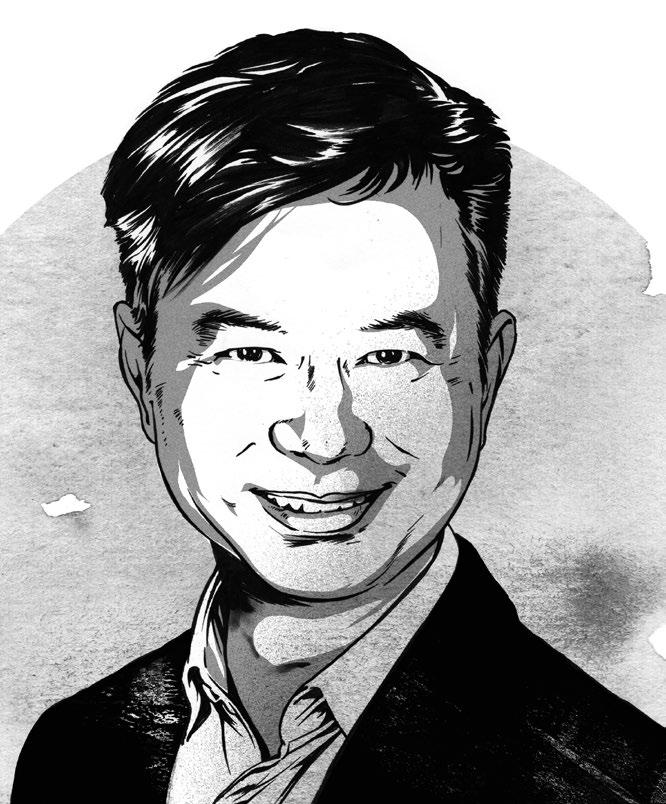
By March of this year, 60 new warehouses had sprung up across Europe. In a fulfillment center outside London, nearly 200 robots glided across 3,000 square meters of concrete floor, each picking and sorting more than 300 items an hour. In Germany, during a blizzard that shut down highways and grounded courier services, a new delivery fleet kept moving.
The company behind it was Joybuy, the European arm of China's largest retailer JD.com. Available in six countries (the UK, Germany, France, the Netherlands, Belgium, and Luxembourg), JoyBuy buys inventory, stocks it in European warehouses, and delivers via its own fleet. It sells Apple, Samsung, L'Oréal, you name it. JD.com is also acquiring Germany’s consumer electronics retailer Ceconomy, the parent company of MediaMarkt and Saturn, seeking to gain over 1,000 stores and 50,000 employees across 11 countries.
No other Chinese company has entered the European retail space at this scale, but JD.com is not improvising on the fly. In China, it operates over 1,600 warehouses and delivers 90% of orders within 24 hours. (For comparison, Amazon runs roughly 600 fulfillment centers in the US.) Its infrastructure was not scaled by hiring more people, but by embedding AI into every link of the supply chain until the technology could no longer be distinguished from the operation.
Illustration: Jörn Kaspuhl
Today, two AI races are running simultaneously. In San Francisco, the race is about frontier intelligence: making the model smarter, pushing benchmark scores higher, spending tens of billions of dollars on training runs. In Shenzhen, Guangzhou, and Hangzhou, the race is about deployment: taking AI that is good enough and embedding it so deeply into logistics, payments, manufacturing, and consumer interfaces that it becomes invisible and omnipresent. WeChat runs four million mini programs that handle trillions of dollars in annual transactions in China.
How do organizations and leaders compete when one side of the world is still building the brain while the other side has already wired the body? I spent months chasing an answer across boardrooms and executive classrooms. Then, a conversation with one thinker finally brought the whole picture into sharp focus.
The coordination engine I’d followed Sangeet Paul Choudary since his first book on platform businesses. But his latest book, Reshuffle, offered a new lens. Via Zoom, I called Choudary in his sunlit office in Dubai. What he said changed the way I thought about AI.
"Losers typically lose because they get really good at execution on a game that is no longer relevant,” he said. Companies are executing brilliantly, executing fast, but executing the wrong thing.
"TikTok did not beat Instagram by becoming a better Instagram," said Choudary, who then explained how it broke the logic of the social graph entirely. Most people see AI as a faster way to get things done. They see automation, but Choudary sees coordination. He walked me through what he calls the "atomic unit of work".
Every business, he explained, is organized around a basic building block: something that gets designed, produced, tested, and shipped. For traditional fashion houses, that unit is the seasonal collection. For Adobe, it is the file. The companies that
‘Losers typically lose because they get really good at execution on a game that is no longer relevant’
Sangeet Paul Choudary
win during technological shifts break the atomic unit into something smaller. He pointed out that Shein did not just speed up fashion; it dismantled the monolithic role of the designer.
Designers at traditional fashion houses create a cohesive seasonal collection. They manage the constraints of fabric, budget, manufacturing timelines, and trend forecasting. Their power comes from holding all of those threads together. Their judgment is the product. But Shein's algorithm now holds those threads.
"Shein doesn't test a full collection," Choudary said. "It unbundles each of those monolithic pieces. The design brief is broken into micro-tasks, and the pre-production batch is tiny. The fashion catalog is now a micro-style that can be tested instantly." These micro-tasks are dispatched to an on-demand network that commands hundreds of fragmented factories in Guangzhou. The cycle is instantaneous. The designer still exists, but they only fill one small box. Next, Choudary described how Figma gutted Adobe. Adobe had better rendering tools and decades of technical supremacy, but Figma realized that design was no longer about rendering a perfect pixel. It was about coordinating 50 people looking at the same elements simultaneously across different time
zones. Figma redefined the unit of work. Adobe treated cloud as storage, while Figma treated cloud as a shared workspace, eliminating the translation cost – the effort of converting one team's output into another team's usable input. When translation costs drop, a disjointed set of actors can suddenly move together.
By the time Adobe noticed, the architecture of design work had moved on. Adobe tried to acquire Figma, but regulators effectively blocked it. The old game could not buy its way into the new one. "Once you can break knowledge work into micro-tasks and have AI coordinate them, you commoditize expertise,” Choudary explained.
From this angle, China's deployment advantage is obvious: its supply chains and ecosystems are already in place. When I visited Tencent's Shenzhen headquarters earlier this year, a visitor held up a medicine package. I was expecting a product description or a price comparison. With one scan, WeChat pulled up her medical history, linked her appointments, and generated a personalized dosage regimen. No app download. No fumbling with passwords. The AI knew the context of her life. Last July, in San Francisco, OpenAI's ChatGPT agent launched to four million weekly users. Within months, that »
number reportedly fell below one million: brilliant agent design, but no ecosystem to plug into.
The end of functional excellence
After the call with Choudary, it suddenly hit me: the corporate response was inadequate. Executives have proudly shown me their new internal tools. They had run a pilot, appointed a head of AI, were using advanced language models to summarize PDF reports, and auto-generating responses to customer complaints. Everything was faster and more efficient, and the board was delighted. But they were automating the past.
Functional deployment is dead. Zero money is to be made from doing the same tasks faster. Choudary and his co-authors at BCG's Henderson Institute mapped job roles to work activities across 800 public firms. They looked for a connection between a sector's AI automation potential and its profit margins since the launch of ChatGPT. The sectors with the highest potential – finance, tech, and the media – saw margins stagnate or fall. The productivity gains were real, but they were “competed” away almost immediately. The correlation between automation potential and profit growth was zero because the lasting value sits elsewhere. It comes from using AI to dissolve the walls between functions: endto-end coordination and cross-boundary reimagination. Not writing marketing copy faster, but rethinking how market sensing, product design, supply chain, and customer feedback connect in a continuous loop.
This raises a design principle most companies are ignoring: if AI's value comes from recombining functions across boundaries, then locking into a single vendor's ecosystem is a strategic malpractice. You must become “vendor agnostic”. Your data infrastructure, API layers, and workflow orchestration must let you swap models, combine Chinese and American AI, and reconfigure as the landscape shifts. Use China's DeepSeek when you need rapid, cheap, deployment-ready reasoning across a million daily transactions. Use America's
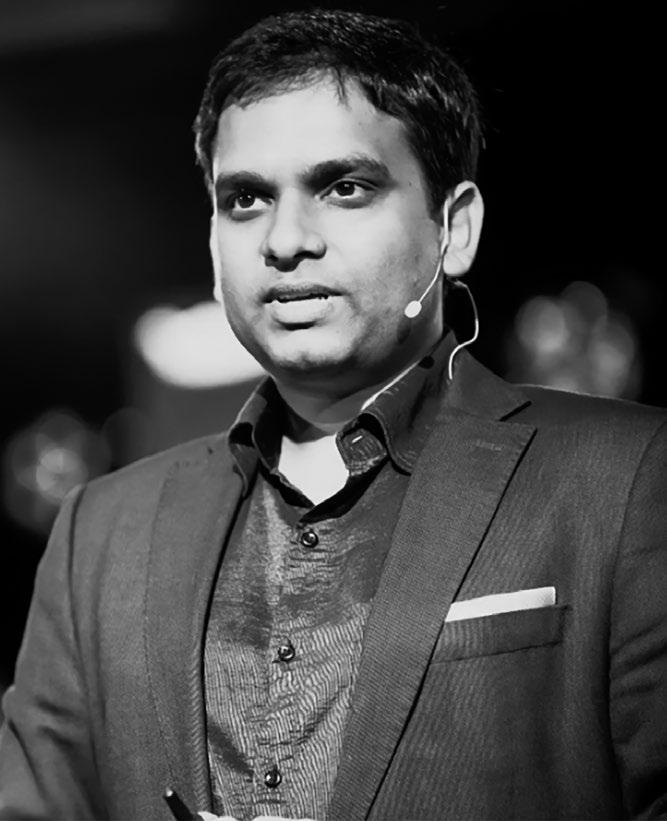
Claude when you need deep, nuanced synthesis for a strategic board memo. Plug in and play!
This is already happening. My IMD colleagues Amit Joshi and Mark Greeven have documented it: Nestlé uses Western LLMs for logistics, but relies on Chinese AI for consumer analytics in the Chinese market; Procter & Gamble partnered with Douyin to co-create products through live-streaming feedback loops, using algorithmic recommendations and impulse-driven discovery that Western e-commerce simply does not offer.
Europe will never build a frontier model to rival OpenAI or Claude, but it has the industrial expertise and regulatory authority to set terms. The winning play is to become the world's best orchestrator of US and Chinese technology, and to own that coordination layer as the continent's most durable competitive advantage. Your company must wrestle with the question: "Which combinations of different AI models can unlock capabilities we couldn’t access before?”
The personal mandate
The personal leadership mandate mirrors the corporate one: you cannot rely on a single lens. When I sit at my desk late at
night, the monitor’s glow illuminates four browser tabs. Claude gives me elegant strategic synthesis; DeepSeek maps competitive landscapes in China that Claude does not see; Grok reads the unfiltered panic and joy of the timeline on X and Reddit; and Gemini checks whether my topics match search volume trends globally. I use them simultaneously, bouncing the output of one against the logic of another. I asked all four the same question about a competitor's positioning in Southeast Asia. Three models agreed; one didn't. The dissenting voice turned out to be right. If you are only using the single enterprise tool your IT department installed on your laptop, you are willfully blinding yourself. You are fighting a modern war with a musket.
AI is not a pocket calculator. It contains a set of distinct, biased, powerful lenses. To use them effectively, you have to build the habit of switching rapidly between ecosystems: the model trained on Reddit will give you a different worldview than the one trained on Baidu.
Take a question you would normally ask your default AI tool. Ask three different models. Notice where the answers converge, but more importantly, notice where they diverge. The difference will surprise you. That gap is your edge. The dual AI race, the frontier intelligence of America and the deployed intelligence of China, will keep accelerating. Don’t pick a side or root for one team; leverage both at once. ■
HOWARD YU is LEGO® Professor of Management and Innovation at IMD and director of the Center for Future Readiness. In 2023 he was honored with the Thinkers50 Strategy Award and inclusion in the Thinkers50 list.
Jialu Shan and Lawrence Tempel contributed to this article.
Insightful: Sangeet Paul Choudary
Even AI can’t optimize shared joy the World Cup will bring
In November 2022, I was in Singapore for IMD's signature Orchestrating Winning Performance program when my native Germany faced Japan in the opening group match of the FIFA World Cup. A group of us gathered around a big outdoor screen in a small park near the Raffles Hotel. What made the moment memorable was not just the football. It was the jerseys. Our Japanese participants were wearing theirs. I was wearing mine. We cheered for opposing teams, thousands of kilometers from both countries. Germany lost – painfully, if you must know – but the photo I have from that evening, all of us grinning in our respective colors, remains one of my favorites from my time at IMD.
I haven’t lived in Germany for over 30 years and people say I don't sound like I’m from there. But when Germany plays in the World Cup, there is no ambiguity. My wife is Spanish, which adds a layer of complexity that many multicultural couples will recognize. Our children have learned to support both – sensibly hedging their emotional bets – except when Germany and Spain meet. Then, they go with Spain. I have chosen not to take this personally.
I share this because the FIFA World Cup is nearly upon us – kicking off in Mexico City’s Estadio Azteca on June 11 – and I find myself thinking about what makes it such an extraordinary phenomenon. In an era defined by fragmentation, by algorithm-driven information bubbles, by geopolitical fault lines that seem to deepen by the week, the World Cup does something almost miraculous: it gives several billion people the same thing to care about, at the same time, for an entire month. That is a rare and precious thing.

This is a moment worth pausing on given the themes running through this issue of I by IMD, particularly the promise and peril of artificial intelligence. We live in an age of extraordinary technological capability. AI can generate text, compose music, predict outcomes, and optimize almost anything we ask it to. And yet, it cannot replicate the drama of a 93rd-minute winner, the tension of a penalty shootout, or the particular electricity of a stadium when everything is on the line. The World Cup thrives precisely because it is unscripted, unoptimized, and utterly human. Its authenticity is not a feature – it is the entire point.
We are often told that digital technology would disaggregate our shared experiences – that streaming, smartphones, and on-demand content would atomize
audiences into millions of individual bubbles. For most media, that has proved true. Live sport is a remarkable exception. Viewership for major tournaments has held firm or grown. Even though most can watch matches on their phones, public viewings have joined private watch parties among friends as the preferred way to consume. Technology may enable ubiquitous access, but the human instinct is still to gather. That tension – between the convenience of the individual screen and the pull of the collective experience – tells us something important about what we actually need, rather than what we say we want.
My kids and I were fortunate enough to be in Doha for the 2022 final – Argentina against France, Messi against Mbappé. It was one of the great sporting occasions of my life: a match that seemed to contain every emotion football is capable of producing. I hope that many people will have moments like that this summer. Not because of who wins, but because of what it feels like to be, briefly, part of something larger than yourself.
In a world that gives us many reasons to emphasize our differences, the World Cup reminds us – loudly, joyfully, and in dozens of languages simultaneously – of everything we share.
David Bach IMD President
President's Soliloquy
COMING IN JULY 2026
Make a date to join us for the next edition of I by IMD magazine. In the meantime, join us online daily at ibyimd.org, where you will find articles, videos, podcasts, and learning exercises that will spark conversation and help you and your teams excel.
Scan
the QR code to visit ibyimd.org
IMPRINT
Publisher
International Institute for Management Development, Ch. de Bellerive 23, P.O. Box 915, CH-001 Lausanne | Switzerland
Editorial Advisory Board
Stefan Michel
Chair, Professor of Management, Dean of Faculty and Research, IMD
Su-Mei Thompson
Co-Chair; CEO, Media Trust; IMD Supervisory Board Member; Trustee, Orwell Foundation and Opera Holland Park
Ian Charles Stewart
Co-Chair, Executive in Residence, IMD; Director, Toledo Museum of Art Laboratories; Co-Founder, WiReD magazine
Nicki Allitt
Chief Communications Officer and Non-Executive Director, World Economic Forum
Ethan Bernstein
Edward W. Conard
Associate Professor of Business Administration, Harvard Business School
Kate Byrne
Chief Executive, Katapult X; Co-Facilitator, Karsh Civic Cornerstone Fellowship; Editor-in-Chief, WomenAdvancing
Des Dearlove Co-founder, Thinkers50
Cynthia Hansen
Managing Director, Innovation Foundation, empowered by the Adecco Group
Howard Yu
LEGO® Professor of Management and Innovation, Director, Center for Future Readiness, IMD
Publishing Editor
Delia Fischer
Editorial
Matt Falloon, Ken Toner
Art Director Catharina De Gregorio
Printing Copytrend SA Lausanne
Send Letters to the Editor: content@imd.org
Where leaders grow and organizations transform
About IMD
The International Institute for Management Development (IMD) is an independent university institute with Swiss roots and global reach that has been developing leaders for 80 years.
Based in Lausanne with hubs in Singapore, Shenzhen, and Cape Town, IMD bridges cutting-edge research with real-world application to help leaders drive lasting impact.
IMD’s Executive Programs

20,000+ 2,000+
executives from 120+ countries and virtually every industry each year.
75+
executive programs tailored to specific needs, context, and location.
Each year, over 20,000 executives worldwide strengthen their leadership, strategic, and digital capabilities with IMD – helping organizations close critical skills gaps and accelerate transformation.
Our 75+ programs address leaders’ most pressing development needs:
Leadership and Talent Development
From emerging leaders to senior executives and board members
Strategy & Innovation
Digital transformation, AI, disruptive innovation, strategic execution
Organizational Capability
Change management, sustainability, business finance, board governance
Designed for every stage of the professional journey
From open Executive Programs and accredited Executive Certificates to transformative Degree Programs and bespoke Custom Solutions , IMD offers the right format for every executive development need – whether for an individual or an entire organization.
organizations trust IMD to develop their leadership talent each year.
145,000+
alumni in 180+ countries forming a powerful network of global connections and opportunities.
‘As the next stage of value creation relies on effective interaction between AI and humans, we – the people –will be either blockers or enablers’
José Parra Moyano Professor of Digital Strategy, IMD
Discover more leadership insights at I by IMD