Events
A RESOURCE FOR ORGANISING EVENTS IN THE WESTERN DOWNS

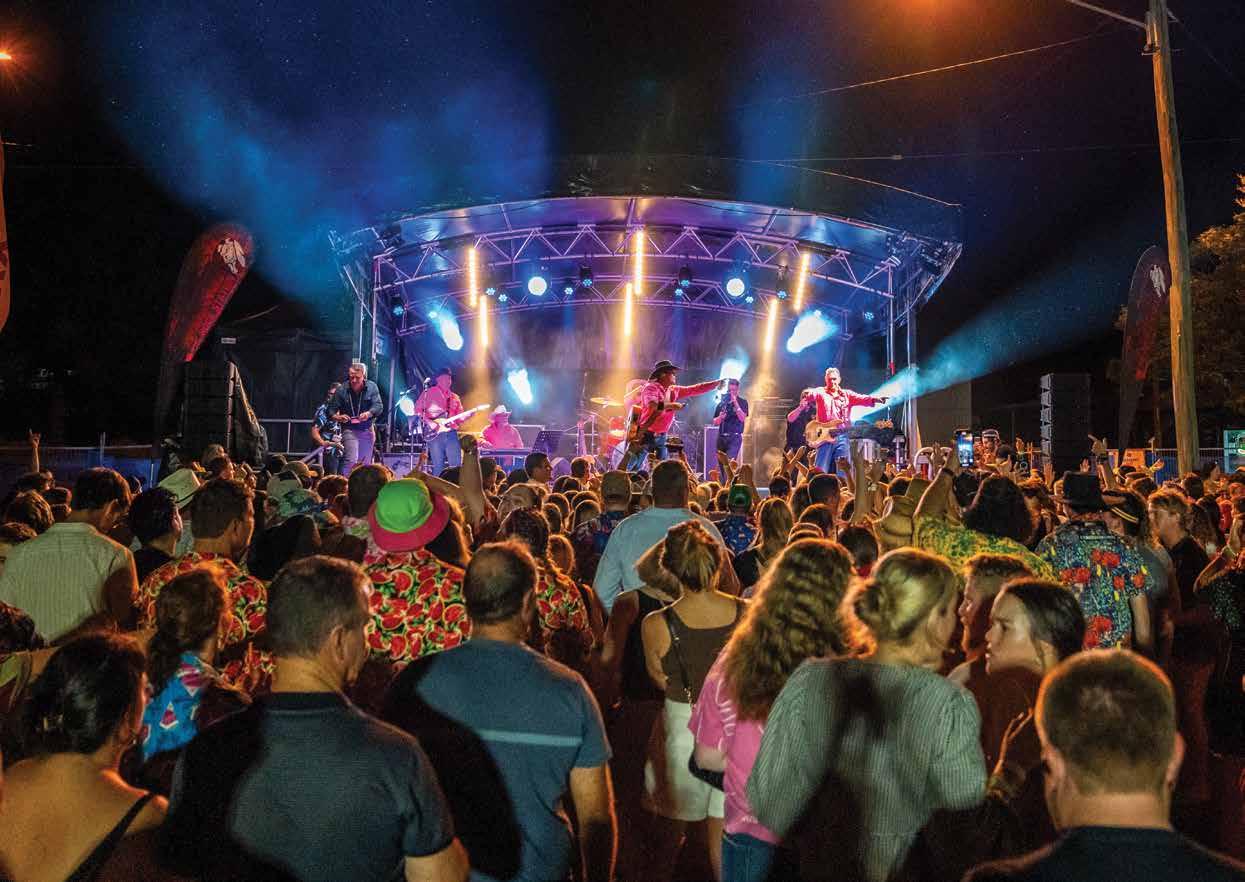
Miles Festival Back to the Bush
INTRODUCTION Introduction
At Western Downs Regional Council, we’re proud to support inclusive, vibrant, and sustainable events that celebrate the spirit of the region and strengthen community connections. From intimate local gatherings to large-scale festivals, every event plays a vital role in shaping the Western Downs as a dynamic place to live, work, and visit.
This toolkit has been developed to assist community groups, organisations, and event committees (big or small) in planning and delivering successful public events. It outlines key considerations to help you navigate the event planning process, however, this toolkit does not cover every single issue you might encounter, so we encourage you to adapt it to suit the unique needs of your event.
Our Community Activation and Events Team are here to support you every step of the way.
Whether you’re hosting a street party, cultural celebration, or a major regional event, we’re able to provide advice and help ensure your event meets all requirements and runs smoothly. Ultimately, it is your responsibility to seek any additional information and secure the necessary approvals.
Reach out to us at any time via email: events@wdrc.qld.gov.au or call Council on 1300 COUNCIL.
Best of luck with your event!
Warm regards,
The Events Team
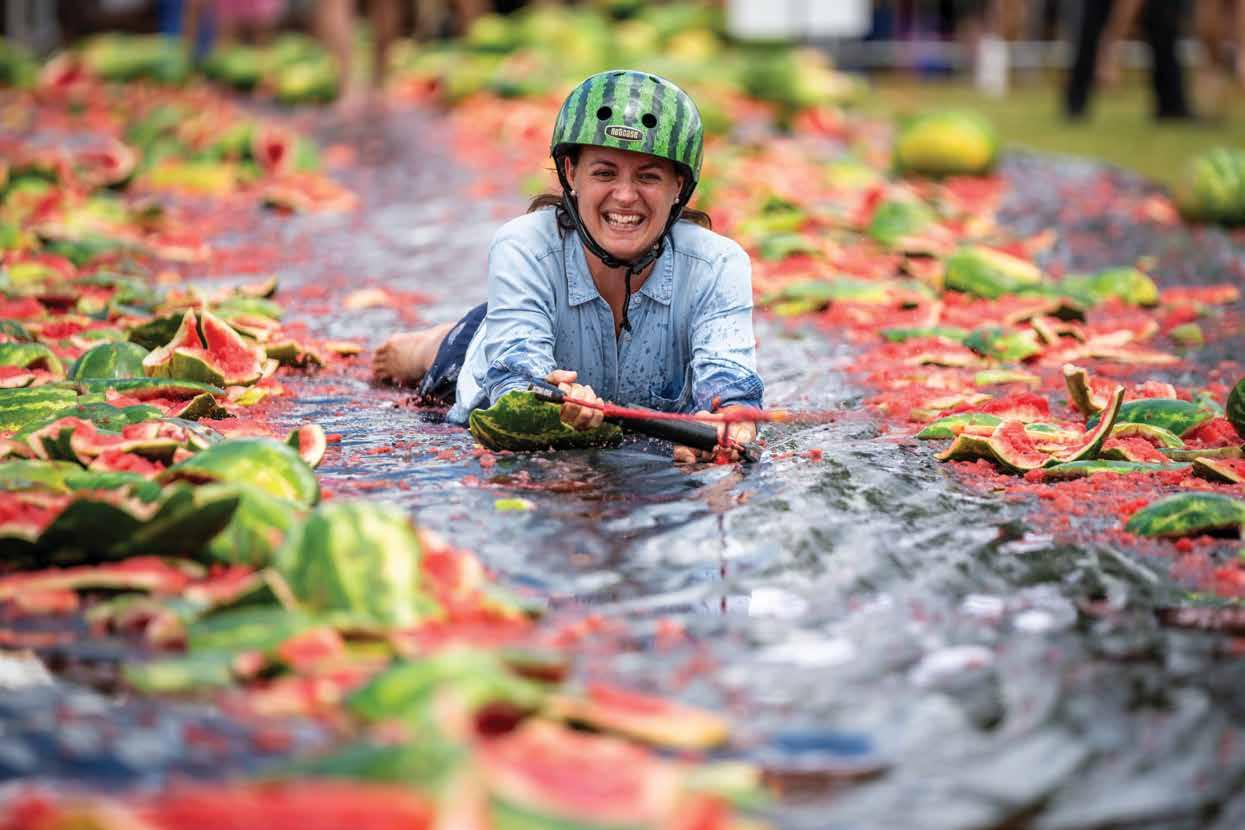
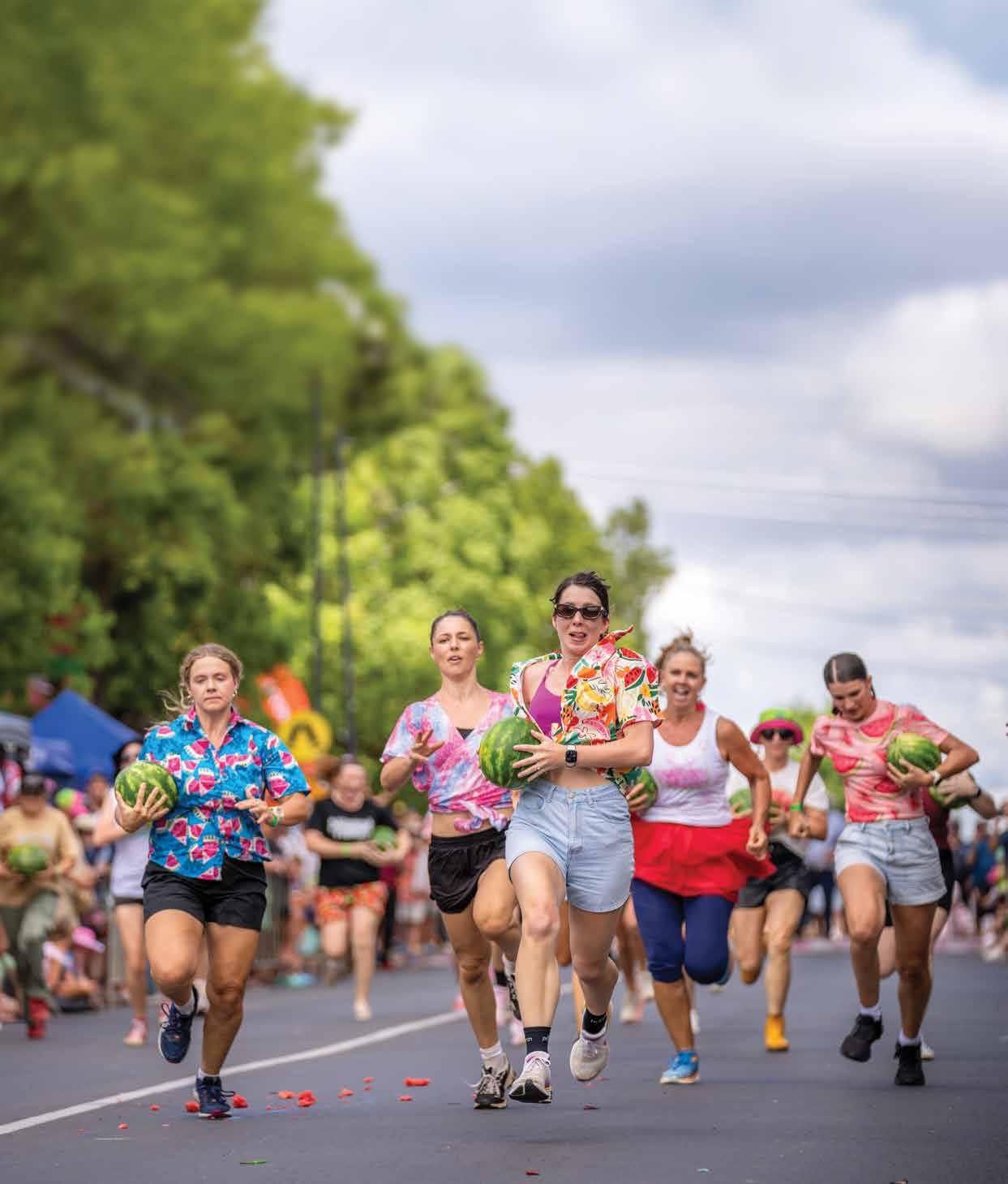
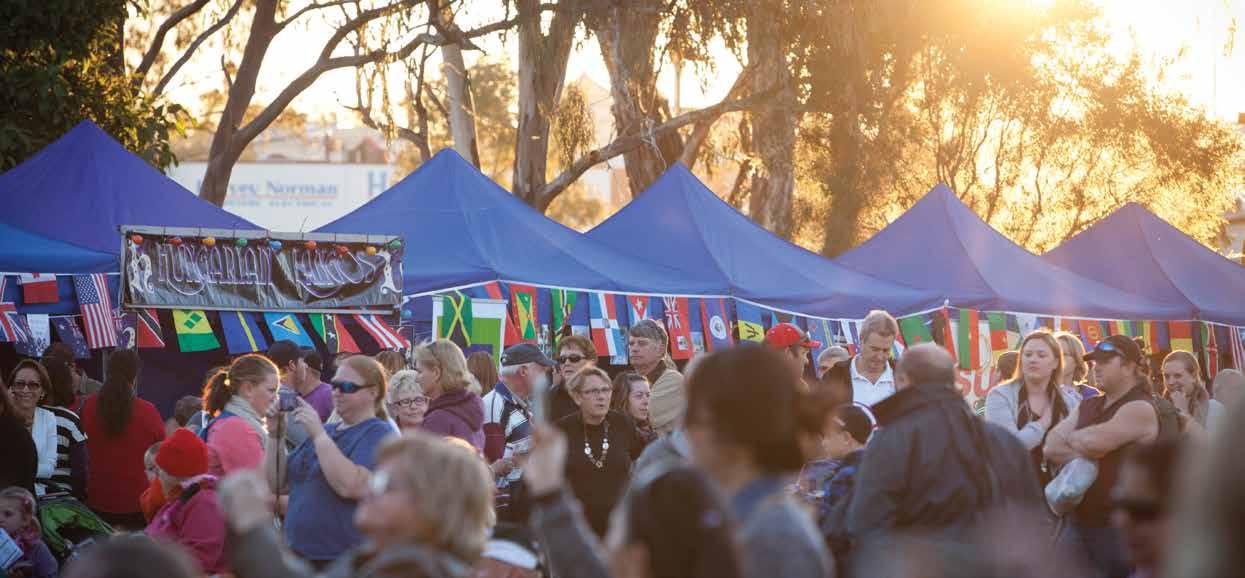
Melon Festival Chinchilla
Getting Started
GETTING STARTED
A well-managed and safe event begins with thoughtful planning and assembling the right team to support delivery. Whether you’re engaging volunteers, or coordinating logistics with the committee, having a clear structure and defined roles is essential.
Given the complexity of event organisation, it’s important to develop a strategy for success, maintain accurate records and create an event action plan with timelines to guide your progress. Succession planning ensures continuity, especially for recurring events, while strong project management and budgeting help keep things on track.
Event planning can feel overwhelming at times, and the plan you start with may evolve as new challenges and opportunities arise. Good preparation allows you to remain flexible and adapt as needed.
Form your team
Setting up your team early is crucial. Involve members in the planning from the start to foster ownership and collaboration. Clear communications and defined roles ensure accountability and smooth operations.
Key positions to fill in your team
• Event Manager or President - oversees the entire event, leads the team and ensures alignment with goals
• Treasurer - manages budget, financial reporting, grants, and payment approvals
• Secretary - handles meeting minutes, correspondence, and documentation
Additional Roles (as needed)
• Entertainment Director
• Food and Markets Organiser
• Grants and Sponsorship Manager
• Logistics Coordinator
• Marketing and Communications Lead
• Volunteer Manager
Depending on the size and capacity of your team, members may take on multiple roles. Ensure workloads are reasonable and responsibilities are clearly defined.
Position descriptions should be created for each role clearly advising on:
• Any licences, skills or certificates needed for the role (e.g. Blue Card)
• Committee expectations
• Expectation of hours per week
• Levels of authority to make decisions and approve payments
• Roles and responsibilities
Volunteers
Volunteers play a vital role in the success of your event. While they may not necessarily form part of your committee, they generously contribute their time and energy on event days to support the event.
To ensure positive experiences for everyone involved, it’s essential to provide volunteers with:
• Friendly, professional supervision
• Orientation and role-specific training
• Tasks that match their skills and suitability
• Well-defined responsibilities and expectations
Volunteers must be treated with the same duty of care as paid staff. This includes access to safe working conditions, appropriate equipment, and respectful treatment at all times. Clear communication is vital - volunteers should know who they report to, what to do in an emergency, and how to raise concerns.
Because volunteers help significantly to reduce staffing costs, careful planning is key. Consider the following:
• Number of volunteers required
• Specific roles and responsibilities
• Uniform or dress code requirements
• Volunteer hours, shift allocations and breaks
• Well-structured roster to ensure coverage and avoid burnout
• Consider compensating with refreshments, merchandise and/or free tickets in exchange for shift/s
Remember - volunteers are not just helpers; they’re ambassadors for your event. Investing in their experience will elevate the atmosphere and contribute to event success.
Sourcing volunteers
• Ask about Western Downs Regional Council’s volunteer program and free templates and resources by emailing volunteer@wdrc.qld.gov.au
• Approach Volunteering Queensland2
• Approaching local clubs such as Lions or Rotary Clubs
• Reach out to tertiary education institutions
It is important to recognise volunteers for their efforts and thank them for their contributions after the event.
Working with Children
There are various aspects of events that involve working with children, and in some cases, a Blue Card may be required for staff, suppliers, and volunteers. While a Blue Card is not necessary in all situations, if the activity falls within the scope of the Blue Card system, you must ensure that all relevant personnel hold a valid card.
Learn more about Blue Cards, including eligibility, application process, videos, and toolkits. 3
You may also wish to ensure your event is compliant with the Child Safe Organisations Act 2024, with new Child Safe Standards implemented from late 2025.
Child Safe Standards | Protecting Queensland Children 4
For larger events aimed at children, you need to have risk management practices in place. Considerations may include:
• Procedures for managing lost children
• Designated pram parking
• Child-safe zones and signage
• Staff and volunteer visibility (e.g. uniforms or badges)
• Policy in line with Child Safe Standards
Make sure you brief all staff, suppliers, and volunteers on the details of your event and protocols for child safety and managing lost children.
Strategy for success
Before investing time, resources and funding into your event, make sure its purpose is strong, meaningful and clearly understood. A well defined purpose helps guide decision making, shapes your program and ensures effort is directed where it has the greatest impact.
Consider adopting the following strategies when planning your event:
• Brainstorm and develop the event concept
• Consider the most suitable time and date to host the event
• Create an effective organisational structure with clearly defined roles
• Determine the core purpose and intended outcomes of the event
• Identify your target audience and who you want to attend
• Maintain accurate records and procedures to support continuity
• Prepare a detailed event action plan with timelines and responsibilities
• Start planning well in advance to provide enough time for approvals, logistics and promotion
Project Management
Good project management is the key to a well organised event. The basic steps in project management would include:
• Identifying the scope of work to be completed
• Breaking the scope of work down into general areas of activity
• Listing the tasks to be completed for each area of activity in the form of a checklist that can be marked off as completed for each task achieved
• Allocating staff and resources to each area of activity
• Organising the tasks for each area into a chronological schedule
• Creating a timeline guide (Event Action Plan) that provides an overview of work tasks and timeframes
• Applying the above tools to the planning and implementation of the event
Some useful resources and templates can be found here: Best practice guidelines for event delivery in Queensland | Queensland Government 5
Budget
When creating a budget, the objective is to provide the event with a financial blueprint. It guides decision making, helps prevent overspending and ensures your event remains financially viable. A good budget should be specific, transparent and include all potential revenue opportunities as well as expected expenses.
A well managed budget not only supports financial sustainability but also strengthens grant applications, sponsorship proposals and committee decision making.
Some potential revenue streams:
• Ticket sales/entry fees
• Fees for additional activities (e.g. children’s activities)
• Grants
• Sponsorships
• Food and beverage sales
• Merchandise sales
• Stallholder fees
• VIP experiences
Events incur a range of expenses such as printing, infrastructure, permits, insurance, hire fees, talent, food, supplies and security. Balancing revenue and expenses are essential for event planning.
Consider the following to meet your budget objectives:
• Determine an appropriate level of budgeting
• Establish a budget
• Monitor budgeted expenditure and income vs actual expenditure and income
• Undertake a review of budget post event
Succession Planning
Nobody likes to think about it, but it’s inevitable that one day you’ll leave your position as event organiser or have a team restructure or even an entirely new event committee. Whether you decide to retire or leave due to unexpected reasons, it’s important that you plan for that day. A succession (or exit) plan outlines who will take over your event when you leave.
A good succession plan will help you transition smoothly to the new event coordinator. By planning your exit early, you can maximise the value of your event and help it to meet future needs.
Make sure your succession plan is achievable. Set a realistic timetable and measurable milestones along the way and stick to them. Regularly review your plan. As time passes your circumstances may change and having your succession plan up to date will ensure you are always ready in the event you need to leave earlier than anticipated. Good documentation will assist with future handover.
What to have in your succession plan:
• Contact lists
• Site maps
• Site photos
• Event timeline and run sheets
• Budget and financial records
• Copies of previous licences, permits and approvals
• Insurance details
• Contracts and agreements
• Marketing and publicity materials
• Volunteer rosters and role descriptions
• Emergency and risk management plans
• Post-event reports and evaluations
EVENT TIMELINE Event Timeline
The event timeline outlines key tasks to complete in the lead-up to your event. While every event is different, the following guide is a practical starting point that you can adjust based on the scale, complexity and risk profile of your event.
3-4 MONTHS
6-9 MONTHS
6-9 MONTHS BEFORE THE EVENT
Choose type of event
Allocate date of event - try to avoid clashes with other events in the region
Select suitable venue
Identify target audience
Determine aims and objectives
Appoint event organising committee
Seek support from local media and businesses
Lodge Temporary Entertainment Event application with Council (see right)
5-6 MONTHS BEFORE THE EVENT
Complete event planning
Strategies and activities
Event staffing
Timeline
Budget outline
Promotion and advertising
Risk management
Community support
Resources/merchandise
Tentatively book venue, acts and equipment
Complete any funding applications
5-6
MONTHS
3-4 MONTHS BEFORE THE EVENT
Confirm venue booking
Apply for licences, consents, approvals and permits
Check insurance requirements
Check safety
Check power requirements
Confirm availability of equipment and performers
Develop a wet weather contingency plan (back-up indoor venue, marquees, communication strategy for attendees)
Organise publicity
Order merchandise
Liaise with security, catering and first aid
Notify emergency services
Lodge relevant application/s to council (refer to Appendix B & C)
Temporary Entertainment Event6 (NO LESS THAN 3 MONTHS PRIOR)
Road Closure Form7 (and Traffic Management Plan if required - see page 18)
Food vendors to hold relevant licence8
Event
DAY BEFORE
2-3 WEEKS
1-2 MONTHS
2 MONTHS
1-2 WEEKS
2 MONTHS BEFORE THE EVENT
Check funding
Develop incident register and contingency plan
Mail out invitations
Organise advertising, promotion opportunities
1-2 MONTHS BEFORE THE EVENT
Look at emergency procedures
Develop risk management strategies
Develop procedures sheet for staff
Ensure signage and merchandise is confirmed
Collate food vendor list with Public Liability Insurance and Food Licence
2-3 WEEKS BEFORE THE EVENT
Familiarise staff with emergency procedures
Distribute promotional material, flyers etc.
Submit food vendor list to Council’s Environmental Health team
DAY BEFORE
AND EVENT DAY
Check emergency exits, security staff, equipment, and safety requirements
Confirm all necessary directional signage is in place
Meet the event team for briefing day before
Hold briefing session on the day and debrief session at the end of the event
1-2 WEEKS AFTER THE EVENT
Write up reports on evaluation and distribute to relevant people
Promote achievements
Send out ‘thank you’ letters
Hold debriefing meetings with event staff and volunteers to evaluate success against aims and objectives
Navigating
NAVIGATING COUNCIL APPROVALS Council Approvals
Council Flow chart
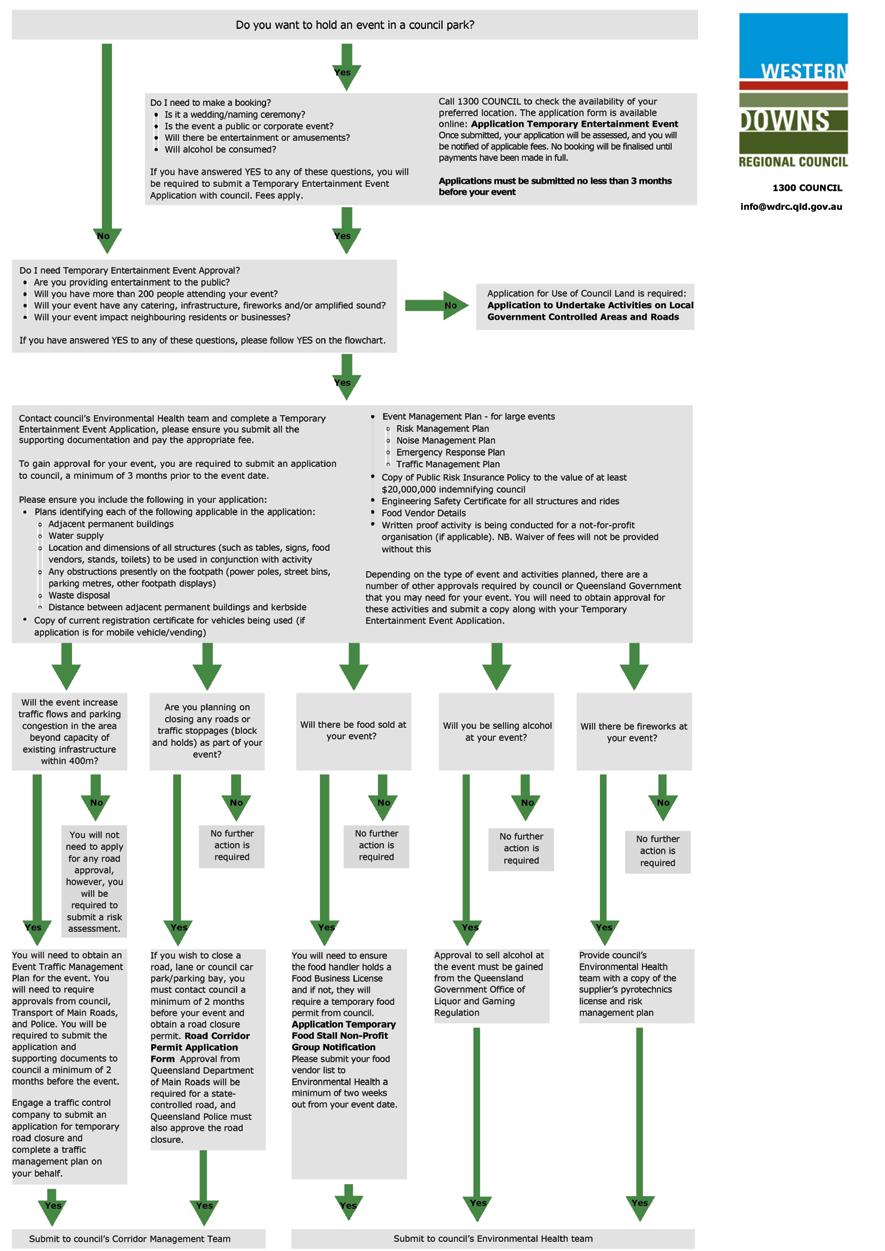
Please refer to Appendix A for a flow chart on how to navigate Council approvals.
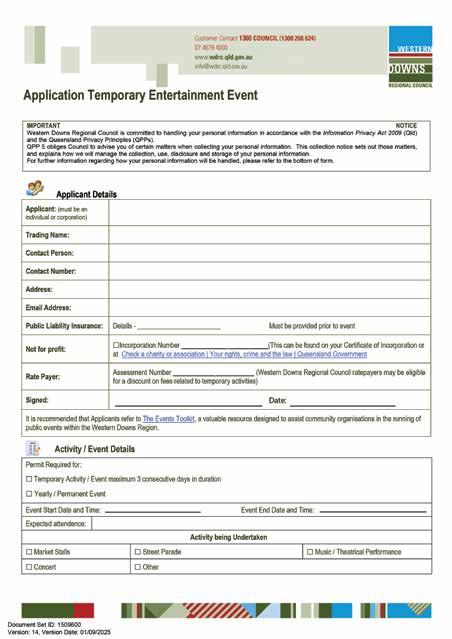
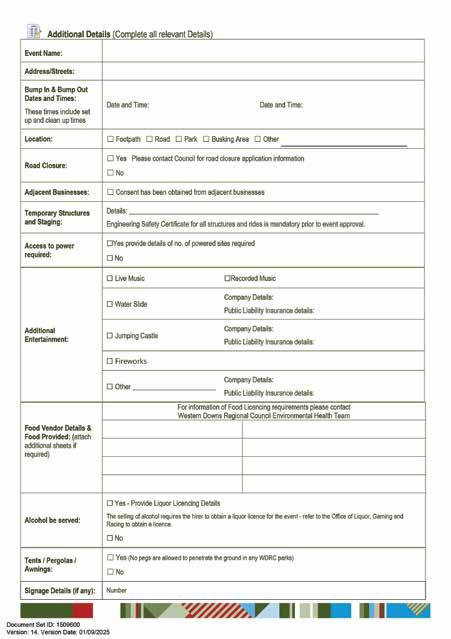
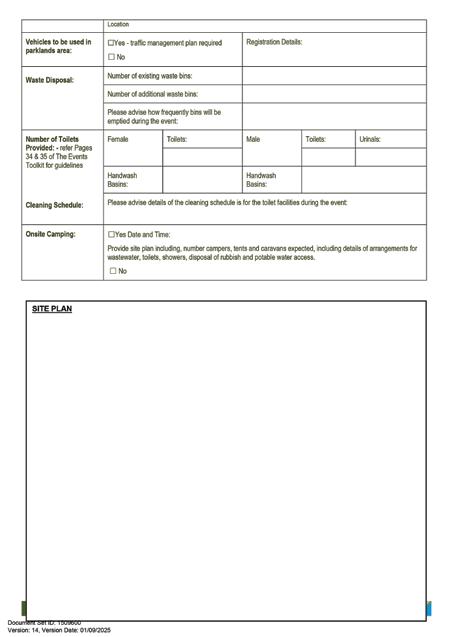
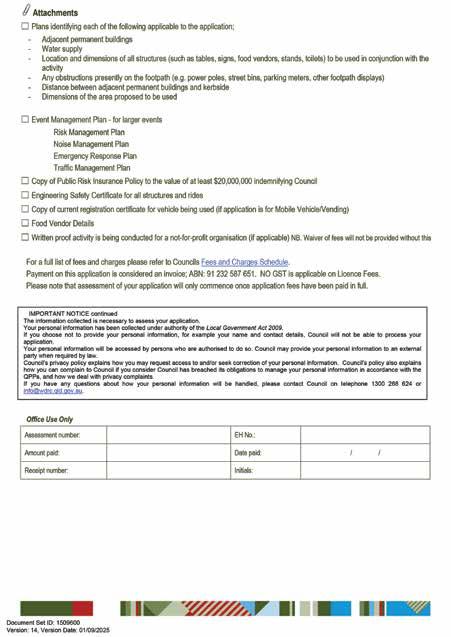
Application for Temporary Entertainment Event
An Application for Temporary Entertainment Event should be lodged with Council at least 6-9 months BUT NO LESS THAN 3 MONTHS prior to the event to ensure sufficient time is allowed for the planning approval process.
The Application for Temporary Entertainment Event notifies Council of your intent to hold an event and sets in motion the process by which Council will liaise with you regarding the necessary requirements and applications for your particular event.
Depending on the type, size and location of your event, you may be required to obtain several approvals or provide additional plans - for example:
• Traffic and road closure approvals
• Food business or temporary food stall approvals
• Use of Council owned land or facilities
• Liquor licensing or consumption approvals
• Fireworks or pyrotechnics notifications
• Amusement ride or temporary structure certifications
• Waste management, risk and emergency plans
Council staff will inform you of the approvals you will require following your submission of an Application for Temporary Entertainment Event9 available in Appendix B
Temporary Food Stalls
A temporary food stall is a temporary arrangement of equipment and appliances from which food is sold and served. It includes booths, tents, vans, marquees and other temporary equipment and appliances such as trestle tables and barbeques. It also includes fundraising barbeques and stalls that operate from existing buildings such as community centres and halls.
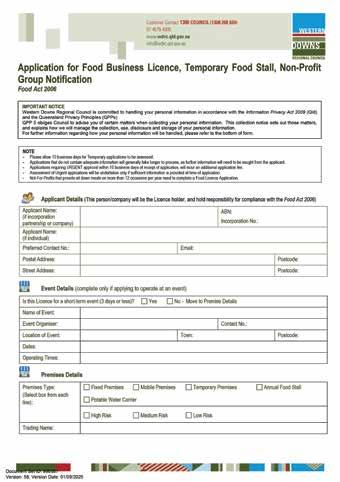
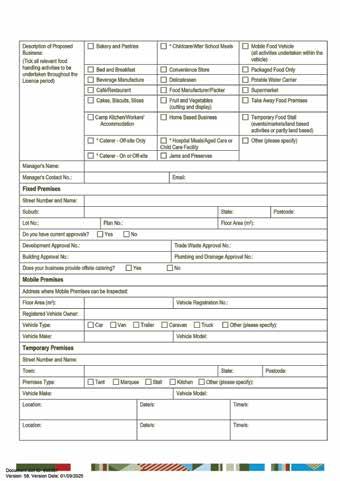
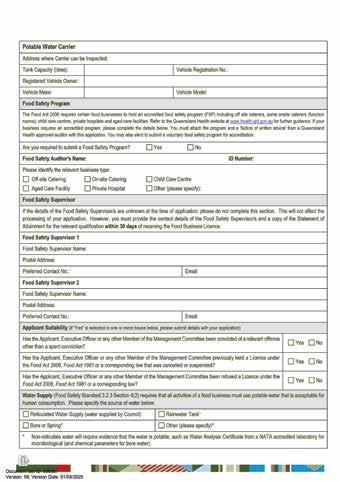
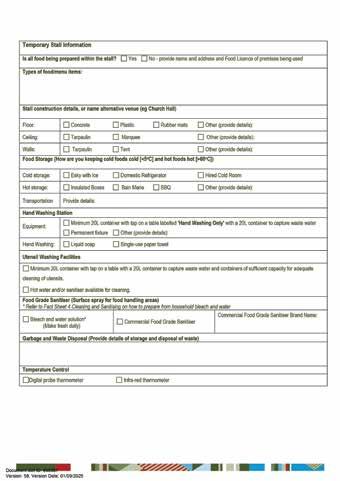
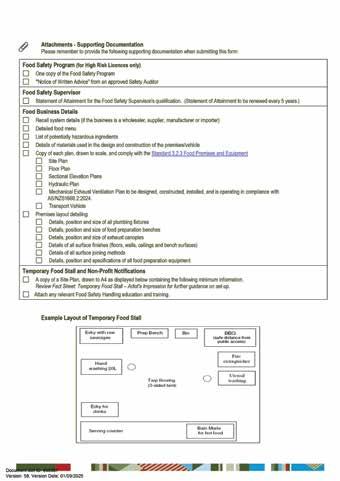
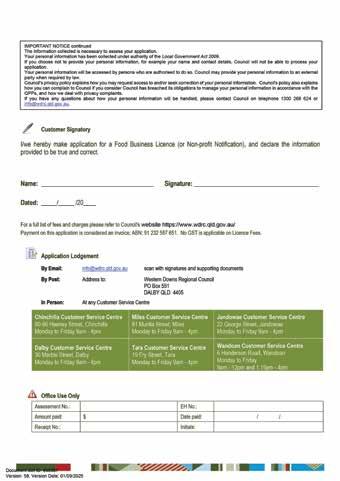
Any person or community group wanting to provide or prepare food for sale at any market, show or event in the Western Downs will be require to complete a Application Food Business Licence Temporary Food Stall Non-Profit Group Notification10 available in Appendix E.
Not-for-profit groups can fill in the online form here: Temporary Food Stall and Non-Profit Group Notification 11
Some low-risk food businesses do not need a licence, although they are still required to comply with the food laws. Some examples of where a food business does not need a licence include the sale of:
• Packaged food
• Whole fruit and vegetables
• Drinks (except fruit and vegetable juice processed on site)
• Ice, including flavoured ice
• Unpackaged snack food (e.g. confectionary, potato chips or nuts)
• Food sold by non-profit organisations for fundraising (e.g. sausage sizzle or cake stall)
• Food provided at state government run facilities (e.g. a public hospital or state school)
Contact Council's Environmental Health Team to find out if a food business needs a licence.
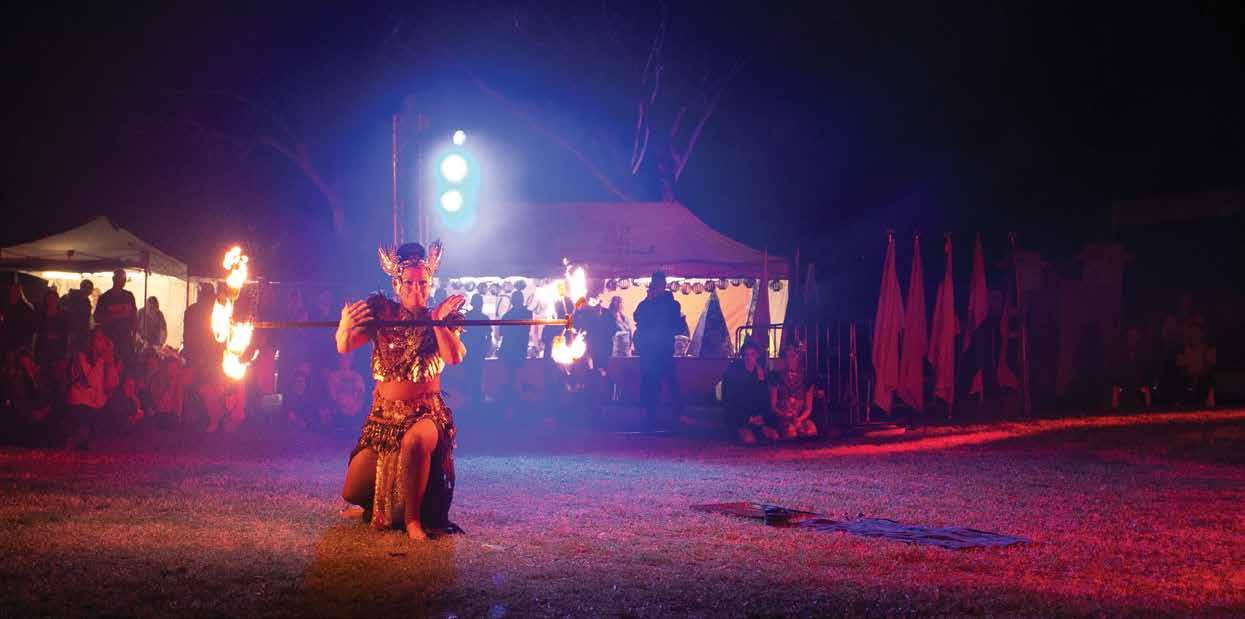
All temporary food businesses must comply with the Local Government Guidelines for Temporary Food Stalls and the Food Standards Code.
For more information on Temporary Food Stalls, visit the Council website: Food Businesses Western Downs Regional Council. 12
Mobile Food Licence Holders
If food vendors hold a current mobile food licence they are required to provide a copy to the event organisers. If a mobile food vendor intends to undertake additional food preparation not covered under their current mobile licence (e.g. setting up a temporary stall in addition to the van), they may be required to apply for a Temporary Food Stall licence.
Organising Food Stalls
Considerations regarding the supply of food for your event might include:
• Procedures to ensure correct food handling
• Types of food you may wish to provide - consider variety and quantity based on attendance
• Where the food area is to be located
• Power and water access requirements of vendors
• Consider food waste and liquid waste control within your waste management plan
• Procedures to stop the spread of infection, such as ensuring safe waste disposal for food waste and wastewater
Contact Council’s Environmental Health Officer on 1300 COUNCIL if you have any queries regarding food at events.
Delicious& Dalby's
DeLightful
A list of all food stall holders, their names and contacts will need to be supplied to Council at least two weeks before your event date.
Note: Stall holders are not permitted to operate at an event without approval from Council. It is the Event Organiser’s responsibility to notify Council of all food stalls/vans to be used at their event. The Event Organiser will be held liable for all unapproved food stalls.
Alcohol
If you intend to sell or supply alcohol at the event a liquor licence will need to be obtained from the Licensing Commission and a copy provided to Council. Liquor and gaming | Business Queensland 13
If alcohol is BYO to the event a liquor permit will likely not be required, however the written consent of local authorities such as Western Downs Regional Council and the Queensland Police Service will need to be obtained.
Factors to be considered if alcohol will be served at your event:
• Compliance with liquor laws – Alcohol must not be served to minors or to any person who is intoxicated
• Responsible Service of Alcohol (RSA) – Anyone serving alcohol must hold a current RSA qualification
• Safety and amenity – Consider security, crowd management, lighting and nearby access to toilets
• Designated consumption areas – Clearly identify where alcohol can be consumed and ensure these areas are appropriately supervised
Tara Festival of Culture & Camel Races

GRANTS AND SPONSORSHIPS Grants and Sponsorships
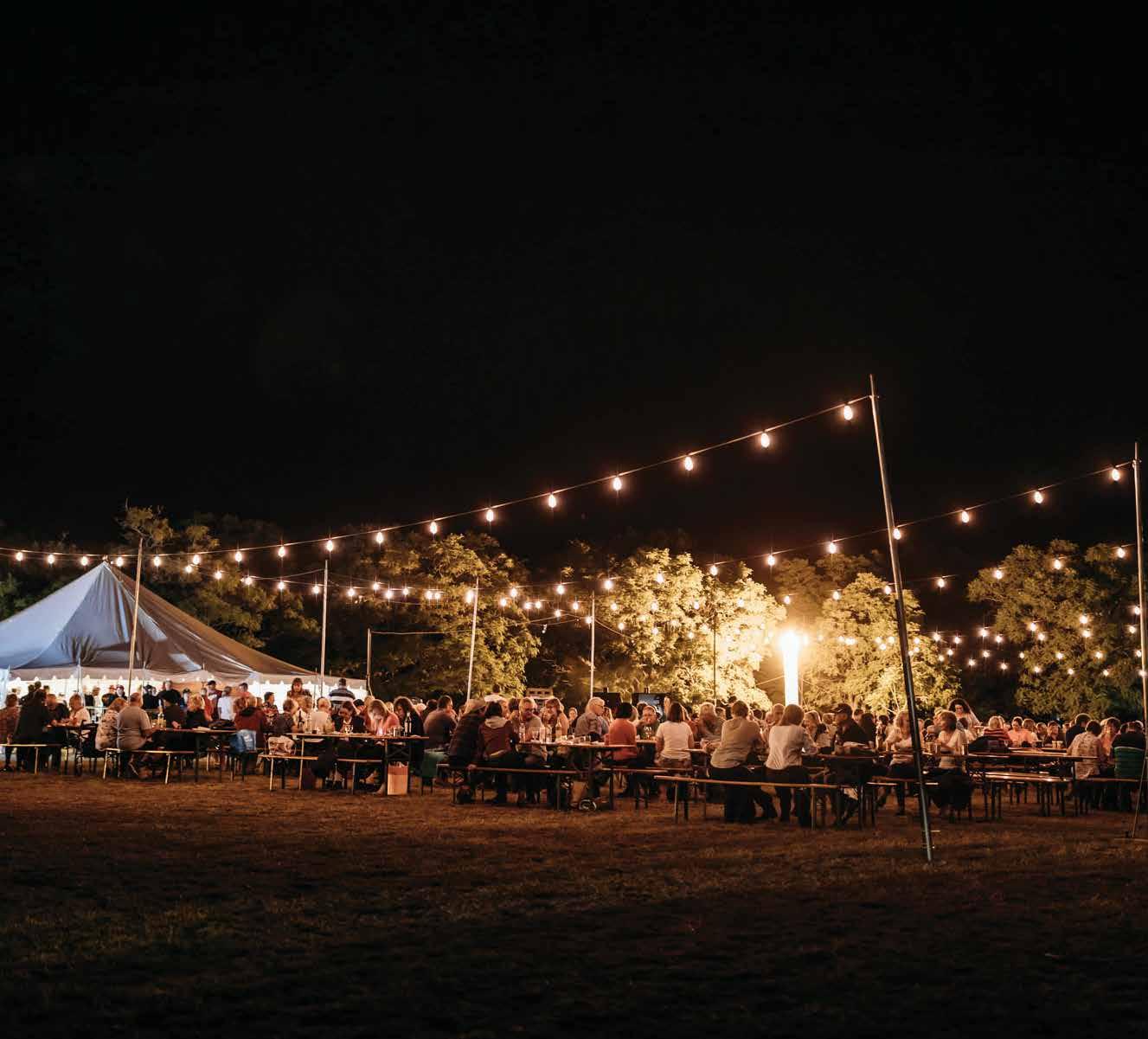
Big
Skies
GRANTS
Grants can have a significant impact on your event, helping reduce event costs and ensuring your project has the resources it needs to succeed.
Western Downs Regional Council is committed to supporting not-for-profit community organisations that contribute positively and sustainably to the communities in which they operate. Each of the funding programs is designed with specific outcomes, priorities, and guidelines which are outlined in the Community Grants Guidelines. 14
On Council's website you will find the Smarty Search tool15 - a time-saving grant-finder to help community groups and not-for-profit organisations find the right funding opportunities from Council, State and Federal Government departments, as well as the private sector.
Other grants for community events to explore include:
• Tourism and Events Queensland16
• Queensland Government17
• Australian Government18
• Gambling Community Benefit Fund19
• Celebrating Multicultural Queensland Program20
• Arts Queensland21
Applying for grants is highly competitive, with limited funds and many organisations seeking support. Strengthening your grant-writing skills can make all the difference between securing funding or missing out. Many organisations offer workshops that provide practical tips and insider knowledge on how to write strong applications.
Council also provides useful resources to guide you through the process. Watch the recorded Grant Writing Workshops 22
SPONSORSHIPS
Strong sponsor relationships not only reduce event costs but also build long term partnerships that can enhance your event year after year.
To secure sponsorship, it’s important to identify suitable partners, prepare a clear sponsorship proposal, and provide excellent servicing before, during, and after the event.
A well designed sponsorship prospectus should clearly communicate the value of your event and why a business or organisation would want to be involved. Include information on:
• Your event
• Your attendees (attendance numbers, where are they from, demographics etc.)
• How sponsors will be acknowledged (social media, website, marketing collateral etc.)
• How their sponsorship will help your event and the community
• What kind of sponsorship do you need (cash, in-kind or combination of both)
When you successfully obtain a sponsor:
• Make sure both parties sign a sponsorship agreement
• Maintain contact leading up to the event
• Deliver on all sponsorship benefits
• Promote sponsors at every opportunity
After your event, provide a sponsor report. This will help to secure their support in the future. It should include:
• A letter of appreciation
• Review of the event and its success
• How their sponsorship contributed to the event
• Benefits delivered for the sponsor
• Event photos showcasing the sponsor
• Copies of social media posts
• Copies of printed collateral and other materials
EVENT LOGISTICS Event Logistics
Choice of Venue
The venue where the event is to be held will depend on the purpose, concept, and theme of the event. It is the responsibility of the event organiser to ensure that the chosen site is suitable for the intended event and that all relevant approvals and information are obtained for the event.
When deciding on a suitable venue, the following needs to be considered:
• The anticipated size of the event and expected attendance numbers
• Entrances and exits
• Car parking required
• Indoor versus outdoor requirements
• Accessibility requirements
• Access to infrastructure (power, water, communications, toilets)
• Risk management and occupational health and safety
Hire of Council Owned Facilities
Western Downs Regional Council offers a wide range of venues across the region including Event Centres, Civic Centres, Showgrounds and Community Halls.
To hire a council owned facility, contact the customer service centre 1300 COUNCIL to check availability and to make a provisional booking. Find a suitable venue on council’s website. 23
Accessible Events
Accessible and inclusive events are one where all attendees have an opportunity to access and experience every aspect of the event.
Things to consider for accessibility:
• Accessible toilets
• Dedicated viewing areas
• Provision of public or private transport
• Ramps and/or lift access
• Nearby or reserved/allocated parking
• Ensure signage is clear and easy to read
• Catering options that suit a variety of dietary needs
• A calm space for people with sensory issues
• Audio induction loop systems or captioning (live streams or broadcasts)
• Interpreters
Include details about your event’s accessibility features in your ticket information or on your website, clearly highlighting both accessible areas and any limitations so attendees can plan accordingly.
If your event is ticketed, you may want to consider discounted or free tickets for carers who hold a Companion Card. For more information on Accessible events 24
Site Plan
A site plan is a drawing that shows the ground layout of your event and is essential for effective planning and management. Typically, it will indicate site boundaries, street access points, stalls, tent locations, and other key features. A well designed site plan helps ensure smooth operations, improves safety, assists emergency response and provides clarity for staff, volunteers, contractors, and attendees.
All stakeholders should use the site plan as part of the planning process, with consultation as to its final layout.
The plan should be easy to interpret and, for large events, displayed strategically around site for patrons. It is also a valuable tool for staff and volunteers in setting up the event and serves as an important reference in emergencies.
Dalby Australian StockSaleHorse

When preparing your site plan, use a simple format and include surrounding streets and landmarks. It must be clear and show all the important features. The plan may be a hand-drawn sketch or a Google Map showing the aerial view of the site with the event details added.
Consider including the following features:
• All entrances and exits
• Approved liquor consumption areas
• Car parking (including disabled parking and pick-up points)
• Designated smoking site
• Drinking water sites
• Emergency access routes
• Entertainment sites i.e. rides, jumping castle
• Firefighting equipment
• First aid posts
• Food and other stall holder locations
• Information centre (site office)
• Non-alcohol (dry) areas
• Paths used by vehicles
• Paths for pedestrians only
• Public transport pick-up points
• Seating arrangements
• Security and/or police locations
• Shade and/or shelter
• Stage and temporary structure locations
• Toilet facilities
• Waste bins/refuse sites
The above is not an exhaustive list; your site plan should reflect your event’s characteristics.
Traffic Management
Where a special event will require full or partial road closures, the event organiser will need to obtain written approval from Queensland Police Services and other
authorities such as Council or the Department of Transport and Main Roads for the roads the event will use.
Road Closures
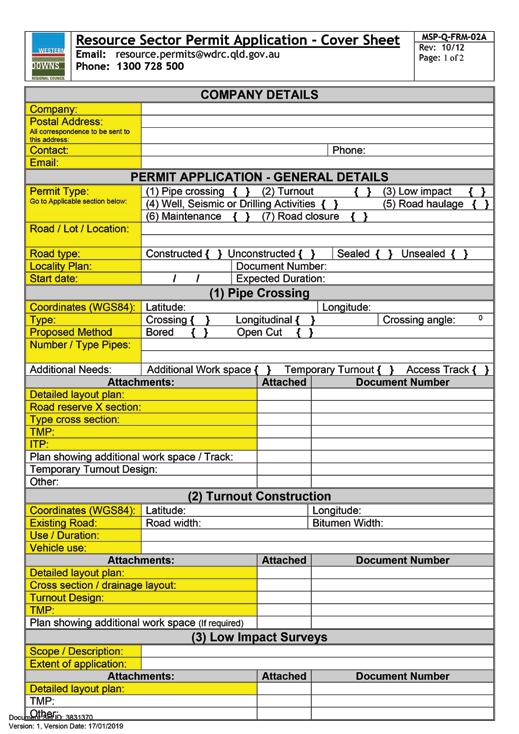
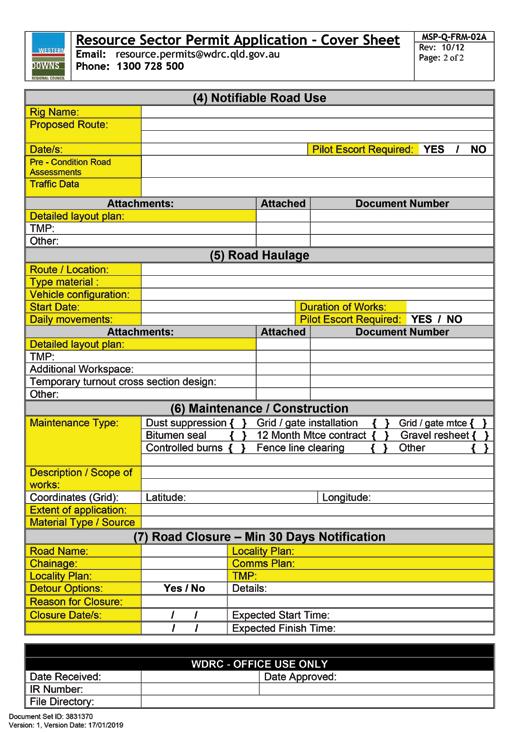
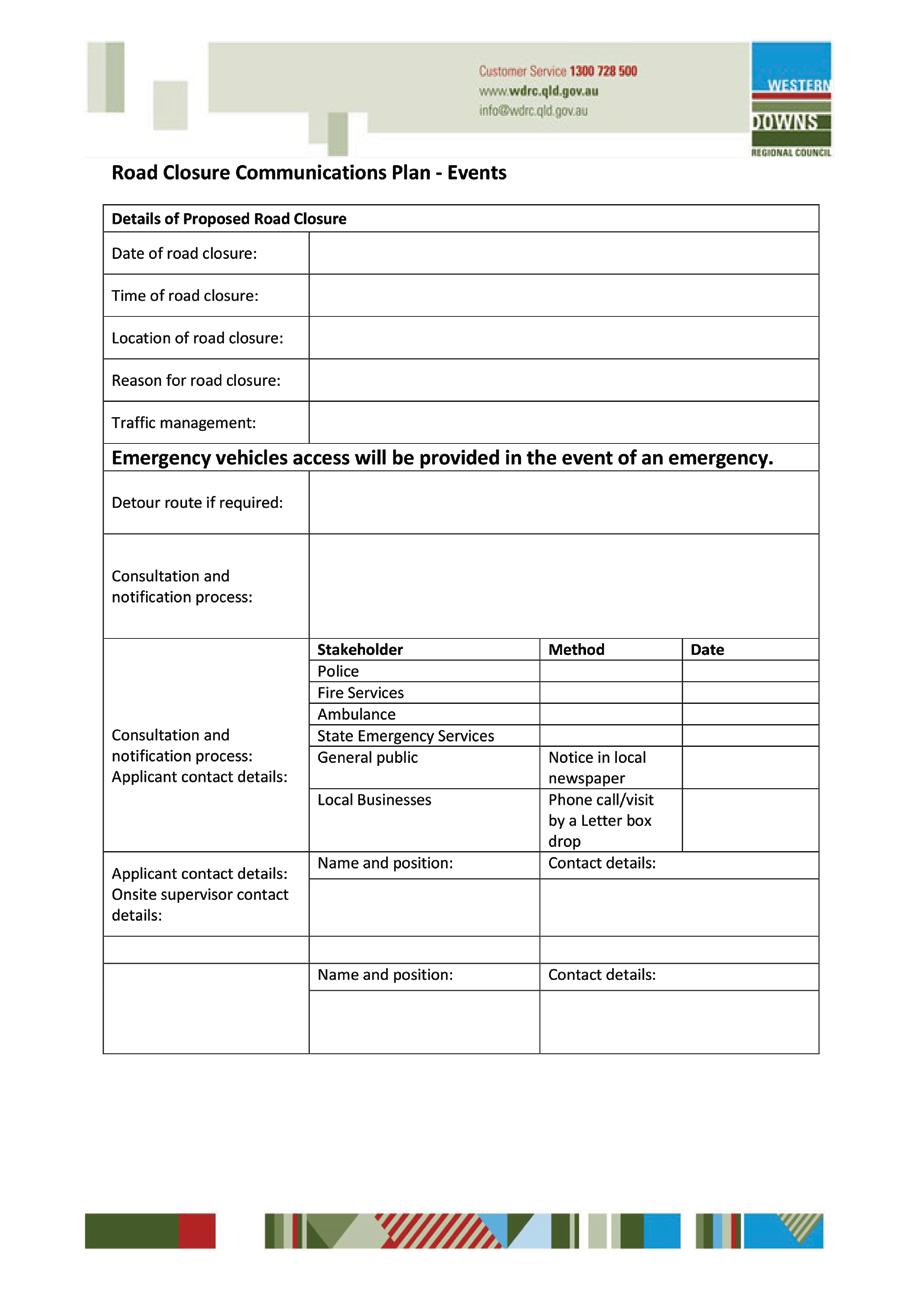
To apply for a Council road closure, applicants must submit the following documentation to info@wdrc.qld.gov.au at least two months prior to the commencement of works:
• Road Corridor Permit Application25 (Appendix C, company details and section 7 only)
• Road Closure Communications Plan - Events (Appendix D)
• Traffic Management Plan prepared by qualified person
The Corridor Management team will assess the submitted information, and additional details may be requested depending on the nature of the works.
If approved, Council will issue a permit outlining the conditions of the works, along with a Deed of Indemnity to be signed by the applicant. This signed deed must be returned to Council prior to the commencement of works. Road closures will apply only to the approved section(s) of the street and must be publicly advertised locally (VMS boards/letterbox drop) at least two weeks prior to the event. If signage is to be placed on public land, additional permissions may be required from TMR (for main roads) or WDRC (for Council land).
If the road requiring closure is a State Road, the event organiser must contact the Department of Transport and Main Roads (TMR) to obtain the necessary approvals. Event organisers should contact TMR at least six months in advance for new events or three months for established events. Further information is available on the TMR website 26
Traffic Management Plan
When an event involves road closure or the managing of traffic/pedestrians, a Traffic Management Plan (TMP) needs to be developed by a suitably experienced and qualified person, such as a traffic control company. The aim of having a TMP is to outline the strategy whereby the traffic associated with the event will be efficiently managed to reduce congestion on the main feeder roads surrounding the event site.
Areas to identify in a Traffic Management Plan might include:
Parking and Patron Access
Patron flow to and from parking areas will need to be considered for safety and crowd management as well as for any possible emergency evacuation. Appropriate directional signage should be placed at entry and exit points. Other points for consideration might include:
• How will car parking be managed?
• How are patrons to be informed of parking options?
• Is there access for people with disabilities?
• Is there adequate car parking space, including over-flow parking?
• Is there adequate parking for staff and vendors?
• Will shuttle buses need to access the site?
• Are entry/exit points clearly marked?
Communication and Consultation
• How will affected residents and local community be advised of the road closure/ traffic, i.e. by letter drop, door knock, advertising?
• When will residents be advised and the road closure advertised locally (IVMS board/letterbox drop)?
• Traffic control
• Are speed restrictions required?
• Have the police been consulted?
• Have you informed Council of your requirements?
• Where and how will traffic controllers be used?
• What road closures are necessary?
• Will barriers be required?
• Will there be No Standing/No Parking zones
Signage
• Consider the type of signage required to inform the public of the traffic conditions
• What directional/information signage will be required for event participants?
• Where will signs need to be placed?
• When will signs be installed and removed?
• Have you obtained permission from TMR/WDRC to erect signs as proposed?
Please also refer to Subordinate Local Law No. 4 (Local Government Controlled Areas, Facilities and Roads) 2011 for more information on the use of local government controlled areas, facilities and roads:27
If you are unsure on any traffic management details, it is recommended that you check with Council prior to the event; public safety is paramount.
Power and Lighting
The Event Organiser is responsible for arranging the supply and installation of any electrical/power requirements for the event, such as the use of generators, extension cords and cables.
It is important to ensure that:
• All electrical cables (including extension leads) have been tested and tagged for safety compliance by a certified electrical tester
• Double adaptors and piggy-back plugs are not to be used
• Electrical leads do not create trip hazards. NO cables are to lying on the ground unless adequately protected by tape or cord covers as they can present a serious hazard
• Lead joints and connections are not to be accessible to the public or exposed to damp conditions
• Temporary electrical leads must be flexible cables
• Where access to power is restricted, silent generators are used in accordance with safety and noise regulations
Water
Water will be required for catering, entertainment, and cleaning, before, during and after the event. Drinking water must also be available for patrons.
All taps within the venue/park or event space should be checked prior to the event to ensure they are in good working order. Any deficiencies in Council-owned facilities must be reported to Council as soon as possible so repairs can be completed before the event.
For public safety, drinking water should be accessible to all attendees. As the Event Organiser, you must determine how water will be provided, for example, bottled water, tanks provided by a water carter. Free, clean, and accessible water is strongly recommended, such as through water trailers, taps, fountains or bottled water. Where it is not feasible, bottled water should be available for purchase at a lower cost than other beverages.
Water stations should be strategically located, highly visible and marked with clear directional signage. Consider placing them near high traffic areas such as seating zones, activity spaces and food stalls.
Outdoor events that expose attendees to the elements require careful consideration for health and comfort. Factors such as hot weather, large crowds, long walking distances and other considerations that may cause people to become dehydrated or overheated must be addressed in your planning.
Toilets and Showers
It is the responsibility of the Event Organiser to ensure adequate amenities are made available for participants/ patrons. This may require the hire of porta-loos and showers.
Hire companies should be able to recommend the number of toilets based on the expected attendance. A guide is supplied below. You should also consider the following:
• Facilities must be cleaned and maintained throughout the event
• Facilities must be well-lit and clearly identified
• Provide separate spaces for each sex, including unisex toilet for persons with disability
• Separated from food service, preparation and food storage areas
• They must be situated and screened to ensure privacy
• Baby changing facilities for family-friendly events
The below table was sourced from the HRIA Portable Toilets - Code of Practice 28 Please verify whether any subsequent updates have been issued that may apply to your event date.
Supplier to assess requirements of the event on an individual basis
Over 20000
Individual calculation required
Cleaning interval: Intermediate cleaning or stand-by duty on site are not considered in this table. This requires individual calculation. If events last longer than 6 hours or 12 hours, the toilet shall be cleaned at intervals of 6 hours or 12 hours.
When food and drinks are served, the number of toilets shall be increased owing to a higher frequency of use. An increase of at least 30% is recommended.
If the percentage of female users exceeds 50%, the number of cabins shall be increased. The increased number shall be agreed between the renter and the supplier.
Accessible toilets need to be considered in discussion with the customer.
Unisex toilets must be provided where there is any likelihood of female workers. These must include the provision for the disposal of sanitary items.
Points to consider if your event requires shower facilities:
• Estimate number of showers needed based on the event size, duration and expected usage
• Showers must be maintained and cleaned throughout the event
• Showers must be suitable for the specific event
• Consider accessible showers
• Consider how wastewater from portable showers will be disposed/managed
• Consider having staff or a plumber available throughout the event for repairs or blockages
Temporary On-Site Living and Camping
If temporary on-site living (camping or caravans) is required for an event on private or Council land, approval will be required from Council.
The following details will be requested by Council:
• Required dates, times and locations of proposed camping
• Numbers of campers, tents and caravans expected
• Site plan of proposed sites
• Details of arrangements for wastewater, toilets, showers, disposal of rubbish, potable water access
Temporary Structures and Staging
Tents, marquees, carnival rides and portable stages all qualify as temporary structures and if being used at an event are required to be marked on your Site Plan. It is the responsibility of the event organiser to obtain safety certificates for larger structures (including stages) and rides. For more information on Temporary Structure safety expectations 29
Please note: Western Downs Regional Council does not provide hire equipment for events.
Words Out West Event
Ground Marking and Stakes
You will need to advise Council if you intend to erect a marquee, tent or any other structure on Council owned land as the use of tent pegs/posts are not permitted without council approval due to placement of underground irrigation/pipes.
Any ground line markings used on Council owned land must be with water-based paint only.
Note: If you are responsible for damaging any underground reticulation or electrical systems you will be liable for the cost of repairing the damage.
Shelter and Shade
Providing adequate shelter and shaded areas is essential to ensure the comfort, safety and wellbeing of patrons, staff and volunteers. Proper planning helps reduce the risk of heat related illness, sunburn and fatigue. Some shelter requirements for your event might include:
• Entrance and ticketing areas
• Transport pick up and set down areas
• Spectator and official viewing areas
• Seated eating areas
• First aid area
• Event management centre
• Competitor and officials marshalling areas
Waste Management and Recycling
The Event Organiser is responsible for all the cleaning arrangements, both during and after the event. All premises used for events are to be left completely free of rubbish and debris.
It is your responsibility to ensure there are sufficient waste receptacles provided so that all waste generated by the event is disposed of properly. Consult with Council whether extra bins are required at a Council owned facility.
Well planned recycling and waste management at events has proven to reduce litter and cut the clean-up time in half.
Things to consider include:
• A community group or contractor may be engaged to clean the site during and post-event
• Different types of waste will be generated (patron rubbish, decorations, recyclables, cigarette butts, wastewater)
• Equipment and supplies will be required to support waste management (bin liners etc.)
• Extra bins may be required depending on attendance and site layout
• Measures should be taken to promote the minimisation of waste at your event (separate bins for cans, bottles, food waste and recycling)
• The clean-up must be implemented in a structured and timely manner
• Waste must be directed to appropriate disposal or recycling facilities
• Waste should be safely transported off-site
Council recommends the minimum number of bins for attendee use (not to include existing bin infrastructure), as follows:
• 1 x 240L bin per 100 attendees – if no food or drinks served or sold
• 2 x 240L bins per 100 attendees – if food or drinks served or sold
• 2 x 240L recycle bin per 100 attendees
• 1 x 3m front load skip bin for greater than 1,000 attendees
Noise
Events can create noise levels much higher than normal day-to-day noise, and it is important when planning an event to consider the effect of noise on neighbouring residents and businesses. Noise from any event must comply with the Environmental Protection (Noise) Policy 2019 30
Things to consider:
• If using any amplified equipment such as stereos, musical instruments, PA systems or similar, locate the equipment to minimise disturbance to nearby residents.
• Are the noise levels appropriate given the location and time of the event?
• Nearby residents and businesses should be notified at least a week before the event. This notification might be in the form of a door knock, letter or mail drop, although Council may make a mail drop mandatory as part of the event approval conditions. When notifying residents ensure that a contact number is provided so any noise complaints can be brought immediately to the Event Organiser’s attention.
• Assigning a person to manage noise complaints during the event and ensure all issues are documented so they can be reviewed in the debrief and inform planning for future events.
Event Program
EVENT PROGRAM DEVELOPMENT Development
Entertainment
Entertainment forms an important part of any event. It can include a wide range of options such as bands, comedians, magicians, interactive elements, performers etc.
When you look at entertainment for your event, it is important to consider the following:
• Budget – Determine how much you can allocate to entertainment, including performance fees, equipment hire and additional expenses such as travel or technical support.
• Event enhancement – Choose entertainment that complements and enhances the theme, purpose and style of your event.
• Audience appeal – Consider what will engage your target audience, including age groups, cultural preferences and expected attendance numbers.
• Performer requirements – Identify any rider needs, technical specifications, accommodation, transport, meals, staging, lighting or audio requirements.
• Safety and compliance – Ensure performers carry appropriate insurances (e.g. Public Liability) and that any interactive elements or rides meet safety standards.
• Scheduling and flow – Plan how entertainment fits within the event program to maintain interest, avoid long gaps and manage noise impacts.
• Weather considerations – For outdoor performances, ensure wet weather contingencies are in place, including sheltered stages or alternate indoor areas
Travel Arrangements
Once the key components of your event are confirmed, consider the travel arrangements required for staff, speakers, musicians, and other service providers.
Flights and accommodation may need to be booked for entertainers, which can be costly and may require negotiation. Ensure bookings are made well in advance to secure availability and competitive rates.
If your event is likely to attract visitors requiring accommodation, notify local providers in advance so they can prepare for increased demand. After the event, follow up with those providers to assess whether the event impacted their business.
Clear communication of travel and accommodation arrangements to staff and performers is essential to avoid confusion and ensure smooth logistics.
Music Licences
If you play copyright music at your event or in public, you will likely need a music licence. It is the responsibility of the event organiser to check whether a licence is required and to obtain that licence before the event. The licence allows you to use music from any legal source and ensures that songwriters and composers receive royalties.
Licenses are generally issued by recognised music rights organisations, and the type of licence required may depend on the nature of your event, the size of the audience, and whether the music is live or recorded. Failure to obtain the appropriate license can result in penalties or legal action.
RISK MANAGEMENT Risk Management
The information in this section is of general nature and should be treated as such. When dealing with important matters such as risk management, you should always consult a professional.
Occupational Health and Safety
The Event Organiser has a responsibility to provide a safe environment for all attendees and to ensure that staff and volunteers involved in delivering the event receive appropriate care, training and supervision. A proactive approach to Occupational Health and Safety (OHS) helps prevent injuries, reduces risk, and ensures compliance with Queensland safety legislation.
Event organisers must identify hazards, implement control measures, and ensure that everyone involved in the event understands their role in maintaining a safe workplace. This includes providing adequate training, clear communication, and access to necessary safety equipment.
For specific information relating to Occupational Health and Safety requirements refer to: WorkSafe Queensland 32
Event Risk Assessment and Management
Event risk assessment and management is the careful examination of your event activities to identify any potential hazards, thereby allowing control measures to be introduced to reduce the risk to the lowest practical level.
Ensuring on-site safety is paramount at every event, as the public expects to enjoy the occasion in a secure and wellprotected environment. It is a responsibility of the Event Organiser to identify and address any potential hazards.
Factors to consider:
• Weather
• First aid
• Entertainment
• Financial Risks
• Security threats
• Lost children
• Poor attendance
• Noise implications
• Non-attendance by performers
• Missing people
• Motor vehicle accident
• Overcrowding
Visit Safe Work Australia33 to guide you through the process of identifying, assessing and controlling hazards.
A risk management plan template can be found here: Best practice guidelines for event delivery in Queensland | Queensland's government | Queensland Government 34

Weather
The impact of weather on your event will depend on the activities involved. Potential weather impacts should be considered and included in your risk assessment. Consider having in place arrangements to deal with possible weather conditions such as:
COLD provision of shelter and warmth
HAIL provision of shelter
HEAT provision of shelter, water, first aid, sun cream, mosquito repellent
RAIN provision of shelter, and protection for leads and wiring
WIND provision of shelter, and ensuring structures and dangerous items are secure
In the case of extreme weather it may be necessary to cancel or postpone your event to ensure the safety and security of those present.
Before the event, you should establish:
• Conditions for cancellation/postponement and include these in information to attendees (such as on the event’s website or the back of tickets)
• Who is responsible for deciding to cancel/ postpone
• At what time you need to make a decision about cancelling/postponing an event
• How you will advise staff, volunteers, performers and people planning to attend the event of the cancellation/ postponement
• Contingency plans if the event is still able to go ahead
• Inclement weather cancellation insurance, if determined applicable
This information should be included in your pre-event staff and volunteer briefings as well as your Event Management Plan.
Incident Reporting
An Incident Report Register should be kept documenting the details of any incident that occurs during or in conjunction with the event. Recording incidents that occur is one important way of identifying issues that need to be considered prior to the running of a possible subsequent event.
Particular attention should be paid to any incident that may occur around the following issues:
• Illness and accident
• Intoxication, including refusal of entry and/or service
• Behaviour, including refusal of entry and/or service
• Any behaviour of an anti-social or criminal nature
Incident reports should be completed as soon as possible after the event or after the situation has been made safe. All staff and volunteers should be briefed on the reporting process and know where the register is kept. The incident report should cover the details of the incident (who, where, when and what happened) and what actions were taken (i.e. medical attention given, police called, etc).
An incident report template can be found here: Template | Safety fundamentals 35
Emergency Management Plan
An Emergency Management Plan outlines how your event will respond to unexpected situations and aims to minimise the risk of injury, protect life, and reduce damage to property. Every event should have a clear and practical plan that staff and volunteers understand and can implement quickly.
• Emergency access to site - locate this on your site map. Consider roadways, ground surface, gates and parking. Ensure all event attendees know to keep this access free
• Emergency Procedures - these can be introduced if you have an Event Program leaflet to distribute to all event attendees
Risk Management

Areas of information you could include:
• Location of first aid station
• Where the food, beverage, shower, toilet and parking facilities are located
• Where to assemble in case of emergency
• Evacuation - you must have an evacuation procedure as part of your Emergency Plan. If using a Council owned hall, the building should already have an evacuation procedure in place. If unsure, check with Council.
• Communication - consider how your staff/ volunteers will need to communicate in an emergency and the importance of adhering to the chains of command you have established.
• Determine if communication will be by two-way radios and/or phones/mobiles. If communication is via mobile phones, consideration will need to be given to adequate cell coverage.
First Aid
Regardless of the size of an event, a level of first aid provision is essential. The type of support required, whether a staffed first aid station, paramedic presence, or full medical facilities, will depend on the nature of the event, the expected attendance, and any identified risks.
For smaller community events with a low risk profile, organisers should ensure that at least one member of the organising team hold a nationally recognised first aid qualification.
First aid stations should be properly staffed, equipped, and clearly signed so they are easy to locate. The number of stations required will depend on the size and scale of the event, with higher-risk events requiring additional trained personnel.
TimbertownJandowaeFestival
When planning for first aid, consider:
• The location and visibility of first aid stations
• Qualifications of staff assigned to the station
• Required equipment and supplies
• Access to running water
• Safe and secure storage of equipment
• Provision of privacy and comfort for patients receiving care (screens, shaded areas, seating)
• Liaison with relevant local authorities regarding requirements
• Notification of the local hospital about the event
Event organisers must also ensure that adequate plans are in place to manage medical emergencies. Emergency vehicle access to the venue must be maintained at all times.
Additional considerations for medical emergencies include:
• The location of the nearest medical centre, hospital, and doctor
• A list of key medical contacts, including names and phone numbers
• Estimate response times for medical assistance to reach the venue
• Availability of staff and equipment to support emergency response
• Clear assignment of responsibility for coordinating medical assistance
SAFETY Safety
Security
Security may be required to ensure the safety of the public and will differ according to the type of event you are holding. If you are serving alcohol, have money on site, have equipment that needs protecting or expecting large crowds, professional security staff is recommended.
The Event Organiser needs to examine the possible risks involved with the event, i.e. “What could happen?” or “What if?” The answers will determine the type or combination of security that you may require. Consider contacting your local police who can advise you on this issue.
Consideration should be given to:
• What, if any, security arrangements need to be made?
• Are barriers required, and if so, where?
• How many staff are required for security - what are their roles and responsibilities?
• Where will these staff be located?
• What hours will they be available?
• What will their role be in the event of an emergency?
• How will you store, and safeguard money collected?
• Have you made arrangements for lost or stolen property or lost children?
Fire Safety
Event organisers must ensure that appropriate fire prevention, detection and response measures are in place to protect patrons, staff, volunteers and property. Your risk assessment should identify any activities that could create fire hazards and outline controls to minimise these risks. Consider:
• Is there likely to be a Total Fire Ban in place at the time of the event?
• Is the area subject to bushfire?
• Are BBQs, heaters and electrical items in good repair?
• Are all electrical cables tested and tagged by a certified electrician?
• Is the power supply to the event safe?
• Has everything been installed by suitably qualified technicians?
• Are gas cylinders secured correctly?
• Are hydrants or suitable water available in the event of a fire?
• Develop procedures to follow in case of a fire
• Do you have access to fire extinguishers? Ensure they have been checked/serviced recently and are located in appropriate locations and adequately signposted
• Ensure designated staff know how to correctly use fire extinguishers
Consider discussing your arrangements for fire prevention, detection and control with the Queensland Fire Department.
Gas
At many events, portable pressurised gas cylinders are used to inflate children’s balloons, carbonate beverages, provide cooking fuel, etc. These cylinders should be checked at an approved testing station prior to use or installation. Please refer to Queensland Government Emergency services and Safety 36
Fireworks and Pyrotechnics
Only trained and licenced professionals who understand the hazards and risks may buy, store, transport or use fireworks. The Explosives Inspectorate assesses pyrotechnic experience and qualifications to operate and conduct fireworks.
Council’s Environmental Health officers are to be notified of an event involving pyrotechnics. The event organiser must also ensure that a valid supplier’s licence is provided and documented as part of the approval process as it might be requested by Council. Approvals will need to be sought if the event is held on Council land.
Contact Resources Health and Safety Queensland37 for further information or visit the Queensland Government website 38
Electrical Safety
All electrical work and equipment used at your event must comply with the Electrical Safety Act 2002 and the Electrical Safety Regulation 2013. Ensuring the safe installation, operation and maintenance of electrical equipment is essential to prevent shocks, fires and other serious hazards.
To support electrical safety at your event, ensure the following:
• All electrical equipment, including extension leads must be tested and tagged in line with AS/NZS 3760:2022 In-service safety inspection and testing of electrical equipment and RCDs
• Tagging extension leads with the owner’s name
• Portable electrical equipment is double-insulated or earth-leakage protected
• Extension and flexible leads should be placed where they can’t get damaged
• In foot traffic areas, extension and flexible leads should be covered with duct tape or ground mats. Leads should be placed in a way that they don’t create a trip hazard or obstruct safe access to an area
• Do not use piggyback plugs, only use power boards where there is more than one electrical device
Visit the Worksafe website for more information: WorkSafe.qld.gov.au 39
Generators
If existing electrical facilities at your event location is not sufficient, you may need to use generators. Always follow the manufacturers instruction in the operator’s manual as incorrect use can cause electrical shock, electrocution, poisoning from toxic engine exhaust, fire and contact with hot surfaces.
Please consider the following and address them in your risk assessment:
• Electrical hazard - only use in dry conditions, do not let it get wet and ensure hands are dry before using the generator
• Fire hazards - ensure suitable fire extinguishers are immediately accessible
• Fuel storage - fuel should be labelled and stored away from other fuel burning sources
• Hot generator refuelling - never add fuel to the generator while its running, wait for the motor to cool down
• Location of generators - always use generators outdoors, minimum of one-meter spaces on each side and isolated from the general public. Consider using barriers
• Potential noise nuisance
For more information, visit: Do’s and don’ts of running generators | Electrical Safety Office. 40
Smoking and Vaping
There is a range of areas where smoking is banned or restricted in common areas of community events such as eating and drinking areas, near under-18 areas, around skate parks, near children’s playground equipment and at public transport waiting points. Smoking bans also includes the use of all smoking products such as vapes.
Event organisers should also consider whether a Designated Outdoor Smoking Area (DOSA) is required to manage compliance and provide a controlled space for smokers away from restricted zones.
More information on tobacco and vaping in outdoor public areas can be found on the Queensland Health website 41
Police
The local police station should be consulted when planning events and kept up to date during the final phase of the event planning and management process.
Information to provide to the police would include:
• Date and timing of your event
• Type of event you are holding
• If alcohol is to be available
• The expected number of attendees
• Security measures you will have in place
• Road closures
INSURANCES Insurances
Insurance Requirements
It is important that all appropriate insurances are obtained for your event. The Event Organiser should investigate and arrange the appropriate insurances required for the event. It is essential to understand exactly what each insurance covers and what is excluded under each policy.
Examples of insurances:
• Professional Indemnity
• Workers Compensation
• Personal Accident Cover
• Motor Vehicle Insurance
Public Liability Insurance
The Event Organiser must investigate and arrange sufficient Public Liability insurance to cover the event. Western Downs Regional Council DOES NOT provide public liability insurance protection for events.
As a general guide, Public Liability insurance to the value of $20 million is the standard requirement for most events, however this may vary according to the size of the event and any risks involved.
A copy of your insurance Certificate of Currency will be requested by Western Downs Regional Council during the event approval process.
Event Insurance
In the event of unforeseen circumstances, such as severe weather, require the cancellation of your event, it is recommended that you consider event insurance. This can help cover costs associated with cancellations, including attendee refunds and any bonds already paid. Please note that event insurance can be costly, as premiums are determined by the scale of your event and the level of associated risk.

MARKETING AND PROMOTION Marketing and Promotion
Marketing Plan
An effective marketing plan will ensure the right people see your message. Marketing and communications let people know about your event and why they should attend.
A marketing plan should include the following:
Objectives
• How many people see the advertising
• How many people see the social media posts
• How many people engage with your social media pages
• The number of people that visit your website
• How people perceive the event
SWOT analysis
(Strengths, Weaknesses, Opportunities, Threats)
• Do you have access to a graphic designer?
• What resources do you have to develop and deliver your marketing campaign?
• The time available to develop your collateral?
• Are there opportunities to promote your event through stakeholders?
• What databases do you have access to?
• What impact will external factors have? Target audience
• Target audience can be defined by demographic, age, location or interest
• Understanding your audience provides insight as to what motivates them to attend events and how to market to them (knowing what social media channels to use)
Marketing campaign and activities
• Marketing campaign is a planned sequence of activities that promotes an event
• There are many paid and free opportunities to promote your event
• Social media plays a vital role - it’s not only useful to engage and attract attendees but can also be successfully used as contingency planning. Example: you can update programs or manage attendees in the event of an emergency
• Remember to use hashtags to promote your event Timeline of activity
• A general rule of thumb as a minimum
• Marketing materials developed - two to four weeks
• Final approvals and adjustments - one week
• In market - four weeks
• Before creating collateral confirm the event date, time, venue, entertainment, program, ticket price and how to purchase tickets
• The initial promotion can start as soon as the date has been set to create awareness
Budget
• A budget ensures that you allocate resources efficiently, and it tracks the performance to ensure a positive return on investment
• Consider employing, contracting, or creating a volunteer role dedicated to marketing and promotion to maximise audience reach and engagement
Promotion and advertising
Promoting a special event takes creative thinking balanced with practicality. To effectively promote your event, it is vital that you reach your target audience, and you need to carefully consider how to reach the people you want to attend your event.
Some ways of effectively advertising and promoting your event might include:
• Via a website which is an excellent resource information tool
• TV, newspaper, radio, billboards, social media
• Letterbox drops
• Posters/flyers/brochures
• Letters/emails to key community groups
Use your local media effectively as this will increase your reach and ultimately your attendance at the event. When sending out a media release to your local newspaper and radio station, ensure that it contains key information such as the event date, time and location, what the event is about and possibly a quote from your event spokesperson or organiser.
Your event can be listed on the Tourism and Events Queensland website 42
How Council can help to Promote Your Event
Western Downs Regional Council is committed to supporting our community groups and organisations to run exciting events in our region. Non-profit community groups and organisations can apply for promotional assistance through a number of council platforms:
• A listing on My Community Diary43
• A post on the events Facebook page “Western Downs Invites You”44
• And advertisement slide on our digital billboards
To apply to have your event promoted on Western Downs Invites You and/or the digital billboards, please complete the online webform. Please note requests need to be submitted a minimum of 4 weeks prior to your event date. Promote your event 45
Public Relations and Resident Notification
The Event Organiser must be able to communicate clearly and efficiently with patrons for public and emergency announcements. Careful consideration should be given to the style and content of various announcements, especially in the case of an emergency. Calmness and clarity in communication is the key to ensuring good public relations.
As a courtesy and in the interests of amenability with adjoining residents and businesses who will be affected by the staging of your event, it is appropriate to inform them of the proposed event and associated activities.
Notification might be in the form of local posters, door knock or letterbox drop. In some circumstances, Council may make a letterbox drop mandatory as part of the event approval conditions. When notifying residents ensure that a contact number is provided so any concerns can be brought immediately to the Event Organiser’s attention.
The letterbox drop should address the following details:
• Date of the event
• Location and site boundaries
• Duration and operating hours
• Road closures or traffic changes (include map)
• Activities which may affect residents or businesses (e.g. amplified music duration)
• Contact details for the Event Organiser
Marketing and Promotion
Big Skies
Signage
Clear and strategically placed signage will assist in coordinating traffic and pedestrian movements and help to manage your event. To determine sign requirements, consider what information people at your event will need to know and whether this should be displayed on a sign.
Appropriate signage for your event might convey information regarding:
• Parking/No parking areas
• Toilets
• Entrances and exits
• Water stations
• First aid
• Lost children
• Accessible facilities, including entry/exit points
• Meeting points
• Information points
If liquor is being sold you will be required to display a number of signs under the liquor laws, e.g. the statutory notice stating the offence of supplying liquor to a minorResponsible Service of Alcohol.
Any temporary advertising signs for your event that will be placed on public land (footpaths, parks, road verges) will need to be approved by Council prior to the event. It is recommended that locations where a sign is to be placed is recorded on a site plan or signage plan at the time of placement to ensure no signage is missed and is collected at the conclusion of your event.
Ticketing
Dependant on the type and size of your event you may decide to offer tickets - these could be either advanced tickets, tickets purchased at the event, or both. A sound administration process is essential.
Tickets can be either paid or free, and both options provide a valuable way to monitor registrations and manage attendance numbers effectively.
Tickets are a fantastic opportunity to capture useful data about your attendees. For example, postcodes will show you where people travel from to attend your event and email addresses give you a database to utilise for future promotions.
In addition, wristbands or lanyards can be used to identify different groups of people at the event:
• Over 18 and under 18 attendees (for alcohol service or age-restricted areas)
• Staff, volunteers, vendors and entertainers, making it easier for security and organisers to recognise authorised personnel
EVENT DAY Event day Delicious&Dalby'sDeLightful
On The Event Day
It is a good idea to ensure you have ready access to all important event documentation on the day of your event. This documentation includes:
• A run sheet outlining the timing of your event
• The chain of command layout
• Contact mobile phone numbers of all staff, volunteers, performers, emergency personnel and other key stakeholders
• A site plan
• Traffic management plan
• Crowd management plan
• Copies of all contracts and permits
• An emergency response plan, including emergency medical plan and emergency communications plan
• Incident/accident report forms
• Event Management Plan
One way to ensure staff and volunteers are fully informed of all key aspects of the event is to make up an ‘Event Manual’ containing important information relevant to the successful running of the event on the day.
It is recommended that a copy of this manual be distributed to all relevant personnel at a briefing meeting several days before the event. If time at the briefing allows, the Event Organiser should go through the manual with staff and volunteers to ensure all are familiar with the manual’s contents and that everyone is as informed as possible about what will happen on the day.
Event Set-Up
Bump-in should be carefully organised to ensure everything runs smoothly. Use your Event Management Plan and Site Plan as guides to coordinate activities. Allocate specific areas to key staff and ensure they are fully briefed on their responsibilities.
Vehicle and pedestrian access must be managed at all times. Hazard lights should be used when vehicles drive on site, vehicles must be guided safely to their designated spots, and no vehicle movement should occur in crowded areas. Clear pathways should be maintained for pedestrians, with staff positioned to oversee safe interactions between vehicles and foot traffic.
Provide assistance where needed, give clear directions, and step aside when appropriate to avoid congestion. Above all, prioritise safety at every stage of the process.
Conduct a walk-through
Conduct a walk-through prior to your event commencing to ensure potential hazards are identified and rectified before attendees arrive. Hazards may only become apparent once infrastructure, equipment, and facilities are in place, so this step is critical. Record any issues you encounter so they can be addressed immediately and included in your risk assessment for future events. A final check just before opening will provide added reassurance that all hazards have been managed.

During your walk through:
• Check that structures, signage, stalls, fencing and equipment are safely installed and secure
• Inspect pathways for trip hazards, uneven surfaces, cables, waste or obstructions
• Confirm that emergency access routes, exits and assembly points are clear
• Ensure all facilities including toilets, first aid stations, water points and waste bins are set up, operational and well signed
• Verify that electrical equipment, generators and lighting are safely positioned and compliant
• Review high risk areas such as stages, amusement rides, cooking zones and alcohol consumption areas
• Confirm that traffic and pedestrian management controls are in place and functioning
Event Briefing
It is important to hold a briefing with everyone involved in the event to go through the program, run sheet, and other key information. Ensure that all staff understand their roles and know the correct procedures to follow in case of an emergency. It is also advisable to cover what staff should be aware of and how they should respond if something does not go according to plan. A briefing is also an opportunity to confirm communication channels and answer any last-minute questions, helping the team feel prepared and confident.
Communication
A major factor in determining how successfully your event is managed is the efficiency of communication with key stakeholders, staff, volunteers and attendees.
To ensure important information is communicated quickly and clearly, strong communication and reporting procedures are essential between:
• Staff, volunteers, contractors, and suppliers - two-way radios may be preferable, as mobile phone signals can sometimes be blocked in crowded areas
• Event staff and emergency services/police - ensure you have a contact list for emergencies and establish how communication will occur
• Event staff and those with access rights to the event such as Council and Inspection Officers
• Event staff and patrons - plan how essential information will be shared effectively
Communication systems should be tested prior to the event, and all staff briefed on their use. Clear protocols will help avoid confusion and ensure a coordinated response in both routine operations and emergencies.
Information/Control Centre
A clearly marked and centrally located information centre is an effective management tool for large events, providing a single point for public enquiries, lost and found children or property, and the distribution of hard copy marketing or promotional material. It also serves as a central hub for communication, helping patrons quickly access assistance and information when needed.
POST EVENT Post Event
Bump Out and Cleaning
The Event organiser must ensure that all participants and stall holders understand the process and their responsibilities for packing up once the event has ended. Effective management of demobilisation will allow the event to conclude in an orderly manner and the venue to be cleared safely and satisfactorily. The venue must also be tidied and cleaned at the end of the event.
The event organiser should coordinate staff, and stall holders to ensure that all sites and allocated areas are properly cleaned. For patron safety, bump-out must not commence until the event has finished and all attendees have left the area.
As soon as possible after the event, all advertising and directional signage erected for the event must be removed. To avoid missed signage, it is recommended that the locations of all signs be recorded at the time of placement. A final inspection of the venue should be carried out to confirm that all signage, waste and equipment have been removed.
Gather Feedback
Feedback is essential for planning future events. Methods should be quick and easy for participants to complete, while also being measurable and useful for organisers.
Surveys can provide valuable insights into who attended your event, which activities were most popular, and which marketing strategies were most effective. They can also assist with grant acquittals by demonstrating how much money was spent in our region during the event. Collecting feedback promptly after the event will improve responsive rates and ensure the information is accurate and relevant.
Measuring Economic Impact
If your event attracts visitors from outside the region, they generate valuable economic benefit for the local economy. It is important to collect data on this aspect, particularly if you are seeking funding from council (Major Events Program Funding).
You will need to measure total visitor numbers and the number of nights they stayed in the region.
This information can be gathered by asking attendees where they are visiting from, how many people are in their group, and how many nights they have stayed locally. Information can be conducted through the ticketing process or a survey can be distributed after the event. Collecting this data consistently will strengthen future funding applications and demonstrate the broader impact of your event. For further guidance please discuss with our Economic Development and Tourism team.
Debrief
The first step is to arrange a meeting with the event organisers, main committee, and sub-committee as soon as possible after the event, while everything is still fresh in their memory.
The purpose of this debrief is to review each aspect of event planning, management, and marketing, reflecting on what worked well, what didn’t, and where improvements can be made for future events. Measurable objectives may include attendance figures, funds raised, or social benefits. By developing clear and attainable performance indicators, the overall success of your event can be effectively measured.
A debrief enables you to:
• Measure the success of your event
• Feed lessons learned back into the planning process for future events
• Continuously improve recurring events
• Refine the event and shape its outcomes
• Communicate results and impacts to stakeholders
• Report any missing or broken items to relevant stakeholder (council, suppliers, etc)
Debrief notes should be documented and incorporated into future planning.
Finally, remember to celebrate your success and thank everyone who contributed. Sharing photos and videos of the highlights with attendees not only acknowledges their involvement but also builds excitement and goodwill for future events.
Appendix A
Council Flow Chart
Appendix B
Application: Temporary Entertainment Event
Appendix C
Application: Road Corridor Permit (Company details & Section 7 only)
Appendix D
Road Closure Communications Plan - Events
Appendix E
Application: Food Business Licence, Temporary Food Stall, Non-Profit Group Notification
ENDNOTES
1 www.wdrc.qld.gov.au
2 www.volunteeringqld.org.au
3 www.bluecard.qld.gov.au
4 www.childsafe.org.au/child-safe-standards-queensland
5 www.qld.gov.au/about/events-awards-honours/events-resources-and-guidelines/event-delivery
6 www.wdrc.qld.gov.au/files/assets/public/v/3/business-amp-development/business-licenses-amp-regulatory/local-laws-permit/applications/ecm_1509600_v14_envapplication-temporary-entertainment-event.pdf
7 www.wdrc.qld.gov.au/files/assets/public/v/1/services-amp-payments/roads-drainage-amp-paths/working-in-the-road-corridor/ecm_3831370_v1_msp-q-frm-02a-01-16resource-sector-permit-application-cover-sheet.pdf
8 https://www.wdrc.qld.gov.au/Business-Development/Business-Licenses-Regulatory/Food-Businesses
9 https://www.wdrc.qld.gov.au/files/assets/public/v/3/business-amp-development/business-licenses-amp-regulatory/local-laws-permit/applications/ecm_1509600_v14_ env-application-temporary-entertainment-event.pdf
10 https://www.wdrc.qld.gov.au/files/assets/public/v/4/business-amp-development/business-licenses-amp-regulatory/food-businesses/ecm_996887_v58_env-applicationfood-business-licence-temporary-food-stall-non-profit-group-notification.pdf
11 https://au.openforms.com/Form/a4080777-dba0-49f5-a3e0-d3aad6f359ce
12 https://www.wdrc.qld.gov.au/Business-Development/Business-Licenses-Regulatory/Food-Businesses
13 www.business.qld.gov.au/industries/hospitality-tourism-sport/liquor-gaming
14 www.wdrc.qld.gov.au/Community-Recreation/Grants-Funding
15 www.wdrc.qld.gov.au/Community-Recreation/Grants-Funding/SmartySearch
16 www.teq.queensland.com/au/en/industry/what-we-do/queensland-events/queensland-events-funding/destination-event-funding
17 www.grants.services.qld.gov.au
18 www.grants.gov.au/go/list
19 www.justice.qld.gov.au/initiatives/community-grants
20 www.dwatsipm.qld.gov.au/our-work/multicultural-affairs/programs-initiatives/funding-programs/celebrating-multicultural-queensland-program
21 www.arts.qld.gov.au/funding-opportunities
22 www.wdrc.qld.gov.au/Community-Recreation/Grants-Funding/Helpful-Resources#section-2
23 www.wdrc.qld.gov.au/Community-Recreation/Venues-for-Hire
24 www.qld.gov.au/about/events-awards-honours/events-resources-and-guidelines/accessible-events
25 https://www.wdrc.qld.gov.au/files/assets/public/v/1/services-amp-payments/roads-drainage-amp-paths/working-in-the-road-corridor/ecm_3831370_v1_msp-q-frm-02a01-16-resource-sector-permit-application-cover-sheet.pdf
26 www.tmr.qld.gov.au
27 www.wdrc.qld.gov.au/files/assets/public/v/1/community-amp-recreation/local-laws-amp-compliance/subordinate-local-law-4-lg-controlled-areas-facilities-androads-2011.pdf
28 www.hria.com.au/wp-content/uploads/sites/3/2023/11/Code-of-Practice-Portable-Toilets-Nov-2021.pdf
29 www.abcb.gov.au/sites/default/files/resources/2022/Standard-temporary-structures.pdf
30 www.legislation.qld.gov.au/view/html/inforce/current/sl-2019-0154
31 www.onemusic.com.au
32 www.worksafe.qld.gov.au
33 www.safeworkaustralia.gov.au
34 https://www.qld.gov.au/about/events-awards-honours/events-resources-and-guidelines/event-delivery
35 www.worksafe.qld.gov.au/safety-fundamentals/reporting/template
36 www.qld.gov.au/emergency/safety/home/gas
37 www.rshq.qld.gov.au
38 www.qld.gov.au/emergency/safety/explosives-fireworks
39 https://www.worksafe.qld.gov.au/
40 www.electricalsafety.qld.gov.au/dos-and-donts-running-generators
41 www.health.qld.gov.au/public-health/topics/smoking-laws/outdoor
42 www.teq.queensland.com/au/en/industry?redirect=home
43 www.mycommunitydiary.com.au/Queensland/Western_Downs/CommunityDiary/All
44 https://www.facebook.com/wdrc.events/
45 https://www.wdrc.qld.gov.au/Community-Recreation/Events-Initiatives/Promote-Your-Event
Reach out to the Community Activation and Events Team at any time via email: events@wdrc.qld.gov.au or call Council on 1300 COUNCIL