Future-ready, now: Competitiveness in a changing world
OWP Lausanne
Post-Event Report 2026










The summaries of the sessions in this report were all generated using IMD’s AI tool. The tool was given the following prompt:
“Provide a 500-word summary written by <(Author)> of <his/her > session on ‘<title>’, for executives who attended the session to give them a short summary of what was covered. Include up to five key take outs for executives to implement in their own role and organization. Avoid repeating the same content in the summary and in the take-outs.”
You can generate your own personalized summaries – and create summaries for other sessions not included in this report. Access the tool here
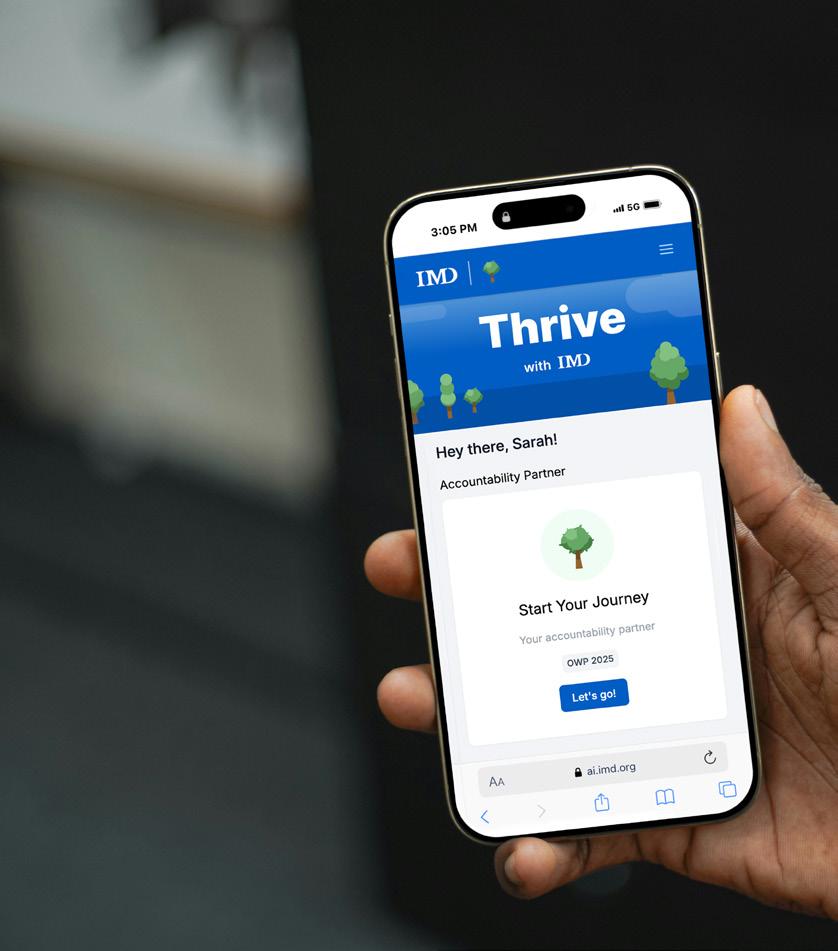
Thrive
Your OWP AI-powered accountability partner.
Designed to support you in defining and achieving meaningful development goals, one nudge at a time.
What Thrive offers:
• Guided coaching conversations to help you explore and define meaningful development goals.
• Regular check-ins to maintain momentum and support accountability.
• Progress tracking and reflection tools that reinforce long-term behavioral change.
• Instant access anytime, anywhere to support your continued growth.
Start your Thrive journey now:
1. Identify real development goals, challenges, or areas you want to explore further.
2. Thrive will take you through a structured conversation based on coaching best practices to clarify your focus, reflect on what is shaping your current experience, and help you to sustain your commitment to step change.
3. Thereafter, you will receive weekly nudges via email to check in, reflect on your progress, and adjust as needed.
Scan this code to start using Thrive today!
For additional support: info@imd.com


Foreword















Dear OWP participants,


HugoDécrypte showed us what it takes to engage a new generation.
What stood out most, however, was the quality of the exchange. Classrooms were alive with debate on AI strategy, geopolitics, and how to lead with clarity through so much change. Conversations were candid, thoughtful, and grounded in mutual trust. This spirit of psychological safety and cocreation remains the defining strength of OWP.
In a world of accelerated change and mounting uncertainty, no leader can claim to have all the answers. But collectively, we can ask better questions, challenge assumptions, and sharpen our thinking. This is what makes Orchestrating Winning Performance so powerful.
Under the theme Future-ready, now: Competitiveness in a changing world, OWP 2026 brought together more than 450 senior executives from 134 companies, spanning 20 industries and 53 nationalities for five days of intense, open, and forward-looking exchange.

What united you was a shared determination to navigate complexity with clarity, respond to shifting conditions with agility, and build the capabilities needed to remain competitive in an increasingly fragmented world.
OWP is demanding – and this year, exceptionally hot– but it is also energizing in the best sense. Across the week, we explored how leaders can stay ahead of disruption and uncertainty. Arturo Bris challenged us to listen for weak signals of deeper transformation in the global order; Judit Polgár and Fabiola Gianotti offered reflections on leadership, decision-making, and resilience under pressure. Qiyu Xu shared his perspective on operating in a world without a clear center, while

We know that the pace and intensity of the week can make it difficult to absorb everything in the moment. As you return to your organizations, we encourage you to revisit the ideas and insights in this report, and, importantly, to translate them into action. Our AI tool Thrive is designed to support that journey, helping you define your priorities, sustain momentum, and follow through on your goals.
Thank you for choosing IMD as your partner in this learning journey. It was a privilege to welcome you to Lausanne, to witness new connections being formed, and to learn alongside you.
We hope to see you again soon, perhaps at a future OWP or one of our other programs.
David Bach
IMD President & OWP Co-Director
Didier Bonnet Professor of Strategy and Digital Transformation & OWP
Co-Director

Foreword
What our participants say
This program was a real turning point for me. I learned an enormous amount in two of the most current fields today: business strategy and technology. The content is demanding, relevant, and immediately applicable to real business situations. I left with more clarity, real energy, and a strong desire to keep learning and go further.
Micky Sapojnikov
Event & Partnership Manager
IWG
Switzerland

From the J Curve to the L Curve: Can we avoid an ‘AI-tocracy’?
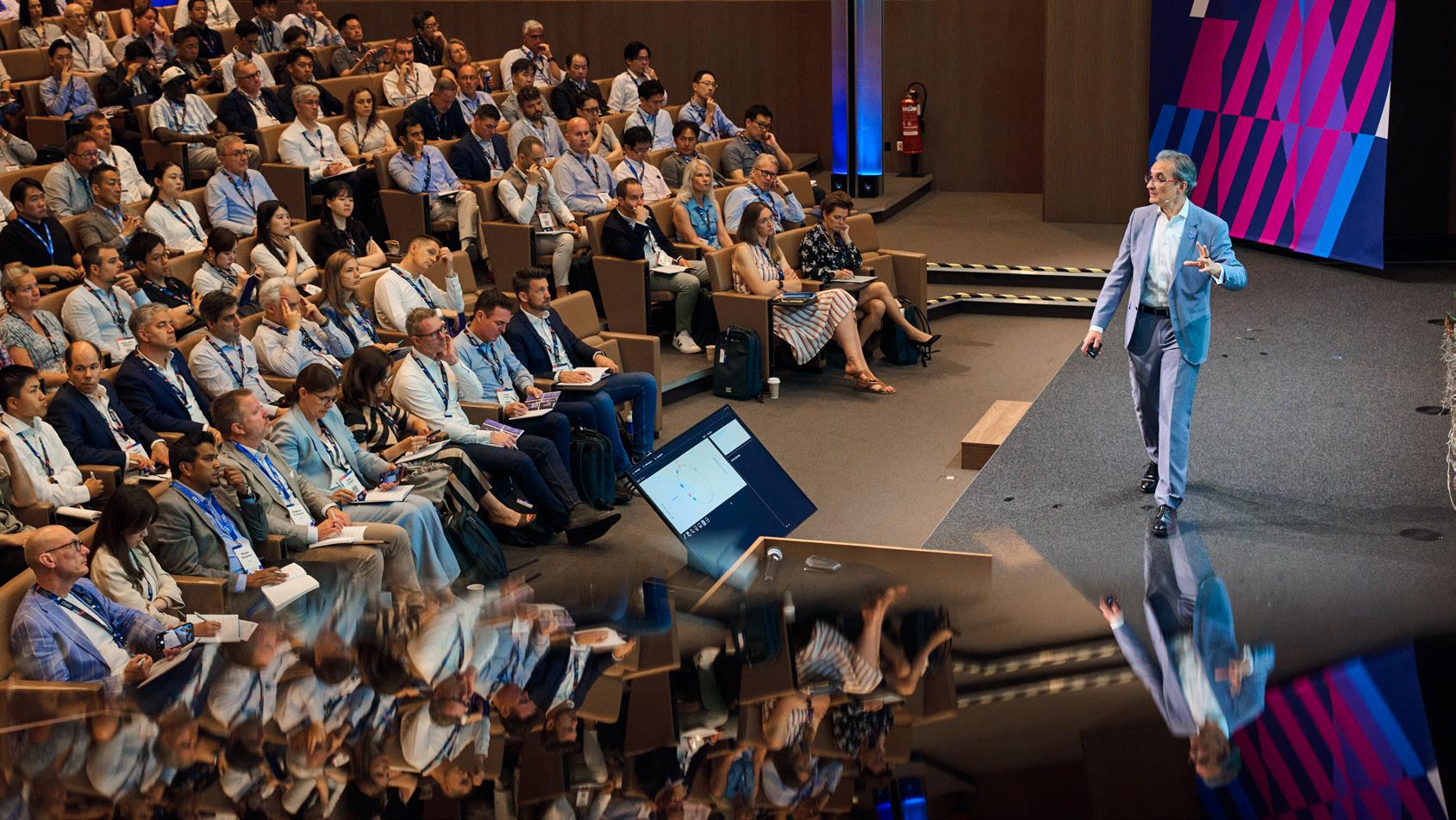
Watch
Douglas Geertz IMEDE 1988 Professor in Geopolitics and Business and Professor of Finance
World
competitiveness is shifting from open markets to controlled systems, where power lies in mastering technology – with the risk that efficiency gains come at the expense of democracy itself,
argues Arturo Bris.
At first glance, a Swiss referendum on population growth, extraordinary bonuses for Samsung memory-chip employees, and China’s decision to block Meta’s $2bn acquisition of AI startup Manus appear unrelated.
Taken together, however, they are weak signals of a deeper transformation in the global order where technological capability is becoming a primary source of economic and political power. In this environment, competitiveness is no longer defined by openness or integration, but by control over data, talent, capital, and critical technologies.
For the past two decades, globalization followed the logic described by American political scientist and author Ian Bremmer’s J Curve. Countries could achieve stability either through openness and integration or through control and isolation. That framework is now losing relevance. We are entering a new era, what I call an L Curve or Leviathan Curve, where stability and power depend on the
ability to develop, deploy, and govern advanced technologies, especially artificial intelligence.
The signals we see today – from shifting social expectations to the erosion of global governance – point to this transition. They also reveal a growing tension between technological power and democratic systems.
Social fracture: Rising inequality
The first signal is Switzerland’s June 2026 referendum on capping the population at 10 million. Although rejected, the close result reflects rising concern that economic growth no longer delivers broadly shared prosperity.
In advanced economies, the focus is shifting from the quantity of growth to its quality. The central questions are who benefits, how wealth is distributed, and whether living standards can be sustained.
Economic fracture: The rise of strategic talent
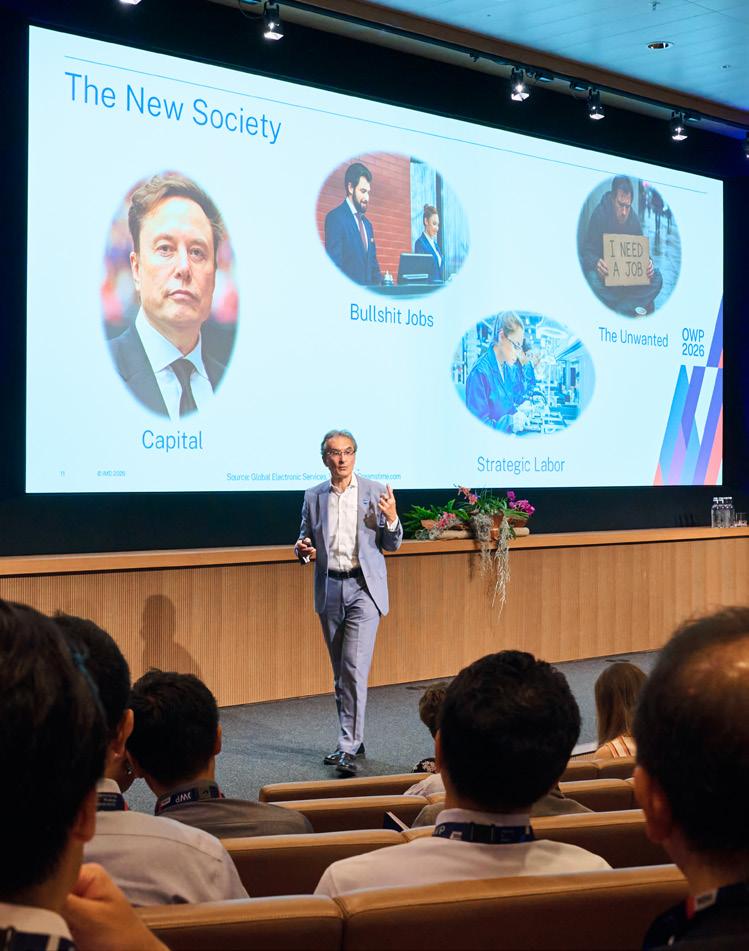
This shift is mirrored in labor markets. Samsung Electronics recently offered bonuses averaging €350,000 (approximately $401,000) to employees in its memory-chip division to avert a strike, as AI-driven demand fuels profits. This points to a structural change. Strategic talent – individuals with scarce and high-value expertise – is becoming more important than routine labor. As AI reshapes work, societies are fragmenting into owners of capital, strategic talent that captures disproportionate value, workers whose roles are commoditized or automated, and those excluded altogether. The defining economic tension is shifting away from labor versus capital toward capital versus strategic talent.
Institutional fracture: Weakening global governance
The third signal is the erosion of global governance. Multilateral rules are giving way to ad hoc deals and economic nationalism. China’s decision to block Meta’s acquisition of Manus, alongside United States restrictions on advanced AI technologies, shows how critical technologies are becoming strategic assets that shape geopolitical power.
Across many countries, democratic systems face internal pressure, with rising support for far-right parties among younger generations in Europe.
Political fracture: Weakening global democracy
The fourth signal is the growing contestation of democracy. Across many countries, democratic systems face internal pressure, with rising support for far-right parties among younger generations in Europe. At the same time, competitiveness and democracy are diverging.
In the 2026 World Competitiveness Ranking, two of the top five economies – Hong Kong and the United Arab Emirates – are not liberal democracies, yet deliver strong economic performance and effective governance.
Technology is concentrating not only wealth, but also political power.
Technology as the force connecting everything
Technology is concentrating not only wealth but also political power. What connects these signals is a deeper transformation in how power is created, distributed, and exercised. Artificial intelligence is at the center of this shift. It is reshaping how we work, how societies are organized, and what we value.
It is also becoming a geopolitical instrument. Its use in surveillance, information control, and security applications illustrates how AI can reinforce state power. China’s surveillance systems, including those deployed in Xinjiang, demonstrate the potential for AI-enabled control, while concerns in Europe over dependence on US-controlled technologies – from military intelligence to advanced chips – highlight the strategic vulnerabilities created by technological dependence.
At the same time, capital is concentrating around AI. Technology-related stocks account for 32% of the MSCI All Country World Index. The infrastructure needed to support AI, especially data centers and energy, is gobbling up vast resources. The race is no longer just about building better models, but about controlling the inputs required to scale them.
The contest between ‘AI-tocracy’ and democracy
If technological control becomes the organizing principle of competitiveness, the risk is that we will move toward systems where power follows technology, not citizens.
The J Curve assumed that openness or control could both deliver stability. That logic is breaking down. In the emerging L Curve, countries that dominate AI capabilities are gaining strategic advantage and reshaping the relationship between technology and the state.
The risk is the rise of AI-enabled systems where technological dominance reinforces political control. At the same time, democracies that prioritize rights, transparency, and regulation risk falling behind unless they can combine innovation with trust.
A new model of competitiveness is emerging. Governments are playing a stronger role in shaping technological ecosystems, while capabilities in capital, talent, and technology become decisive.
The question is no longer whether technology will transform society. It already has. The real question is whether it will strengthen democracy or undermine it.
Can we avoid an ‘AI-tocracy’?
The question is no longer whether technology will transform society. It already has. The real question is whether it will strengthen democracy or undermine it.
Avoiding an ‘AI-tocracy’ will require democracies to stop competing on the same terms as autocracies and start building their own model of technological leadership.
First, trust must become a product. Organizations and citizens need confidence in the systems they use. AI models that are censored, manipulated, or opaque will struggle to earn the trust required for critical applications in healthcare, finance, and public services.
Second, rules are a strategic asset. Regulation should not be viewed only as a constraint on innovation. The countries that shape the rules of technology will influence how that technology develops globally. Europe has an opportunity to demonstrate that responsible innovation can be competitive innovation.
Third, build or be ruled. Without compute, models, infrastructure, and talent, countries will have little influence over the future of AI.
Fourth, defend democracy itself. Deepfakes and AI-driven manipulation do not require tanks to destabilize societies. Democracies must protect elections and public trust without becoming the very systems of control they seek to prevent.
Finally, alone we lose. No democracy can match the scale advantages of the US or China by acting alone. Countries that believe technology should serve citizens, not simply power, must collaborate, pool resources, and create an alternative model of technological leadership.
The latest World Competitiveness Ranking reinforces how trust and strong institutions are becoming strategic assets. The ultimate competition of the 21st century will not simply be between technologies. It will be between different visions of what technology is for – and who it should serve.
What our participants say
OWP brings unparalleled fresh insights with direct, relevant applicability.
The balance between highly intellectual and thought-provoking topics, morning well-being sessions, and evening keynote speakers all contributes to our development as well-rounded human beings —not only as executives.
Saeed Al Shawwa
Head of Tendering, Flow Division, Energy & Infrastructure
Arabia

EIBU, Kingdom of Saudi
Leadership

The work of leading change when there are no answers
Martin Fellenz
Affiliate Professor of Leadership and Organizational Behavior
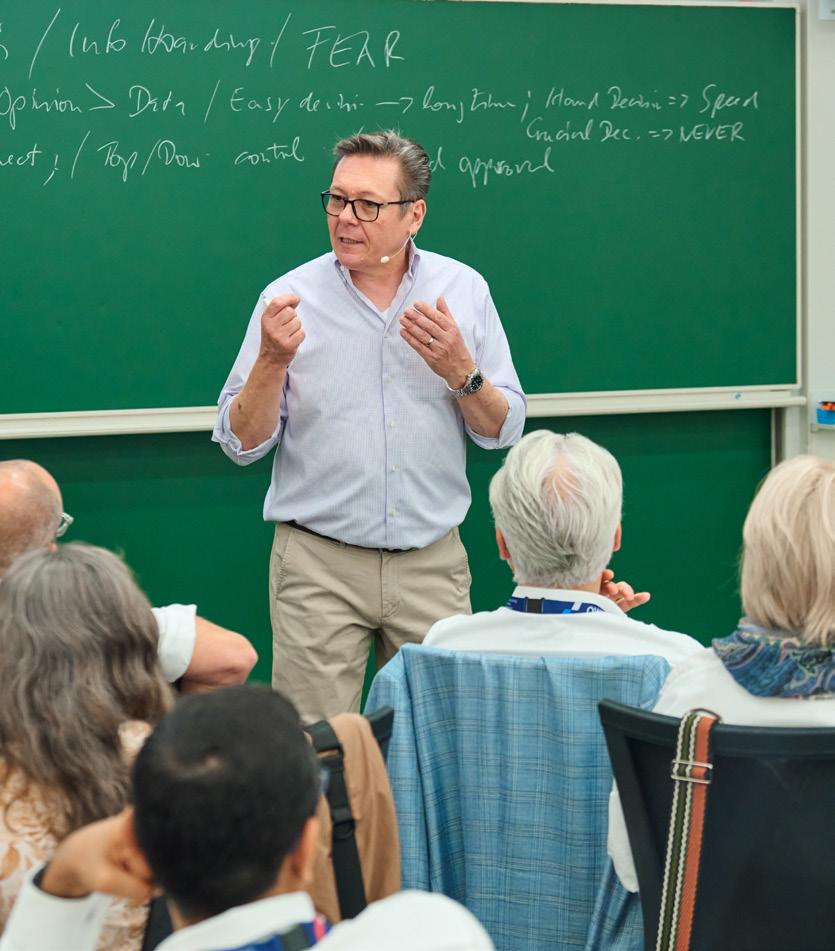
When the path ahead is unclear, leadership becomes less about having the right answer and more about helping others move with confidence, discipline, and shared purpose despite uncertainty.
Martin Fellenz’s session focused on what executives must do when volatility, ambiguity, and disruption make certainty impossible. He argued that in these moments, the leader’s task is not to project false confidence, but to create enough clarity for people to think, decide, and act together. The discussion began with the reality many executives face today: AI disruption, geopolitical instability, and fast-changing conditions that make familiar leadership instincts less reliable.
A central idea was that uncertainty changes how people think. Through a number-sequence exercise, participants saw how quickly individuals fall into confirmation bias, looking for evidence that supports an initial assumption rather than testing what might disprove it. Under pressure, leaders often narrow their thinking too quickly. Fellenz’s point was that effective leadership in uncertainty depends on curiosity, disciplined questioning, and small experiments that generate better evidence.
He also distinguished clearly between management and leadership. Management relies on formal authority, structure, rewards, and control. Leadership exists only when others choose to follow. That matters especially when there is no obvious answer, because people are not looking simply for instruction; they are looking for meaning, direction, and confidence that progress is possible. Fellenz challenged the traditional image of the leader as the person who knows, protects, and decides. In ambiguous situations,
that ideal can become counterproductive if it discourages learning or creates dependence.
Another major theme was how change actually happens. Fellenz showed that many executives still approach change mainly as a rational case to be explained. But successful change must address three dimensions at once: head, heart, and habit. People need logic and evidence, but they also respond emotionally and are shaped by established routines. Resistance is therefore not just opposition; it is often a reaction to fear, loss, identity disruption, or the difficulty of leaving familiar ways of working.
The session then explored the difference between change management and change leadership. Change management works when the problem is technical and the end state is relatively clear. Change leadership is needed when the destination is uncertain and the organization must learn its way forward. In those conditions, the leader’s role is to support shared sense-making, create psychological safety, regulate distress, and help people stay engaged while understanding evolves.
A memorable example was the story of lost soldiers who found their way forward using a map that later proved to be wrong. The lesson was that action often starts not with perfect information, but with a shared frame that reduces paralysis and creates coordinated movement. The practical challenge for leaders is to provide that frame without pretending certainty they do not have.
Key takeaways for executives
Create clarity, not false certainty.
Test assumptions by seeking disconfirming evidence.
Treat leadership as relational, not positional.
Address logic, emotion, and habit together in change.
Use shared narratives and small experiments to sustain movement.

Unexpecting the expected to adapt to a changing world by Martin Fellenz
Leadership in a (permanent) crisis by Ronald Heifetz, Alexander Grashow and Marty Linsky
The practice of adaptive leadership: Tools and tactics for changing your organization and the world by Ronald Heifetz


Thinking about thinking: Using mental models to improve decisions and buy-in
Albrecht Enders
Professor of Strategy and Innovation
Tim Quigley
Professor of Strategic Leadership and Governance
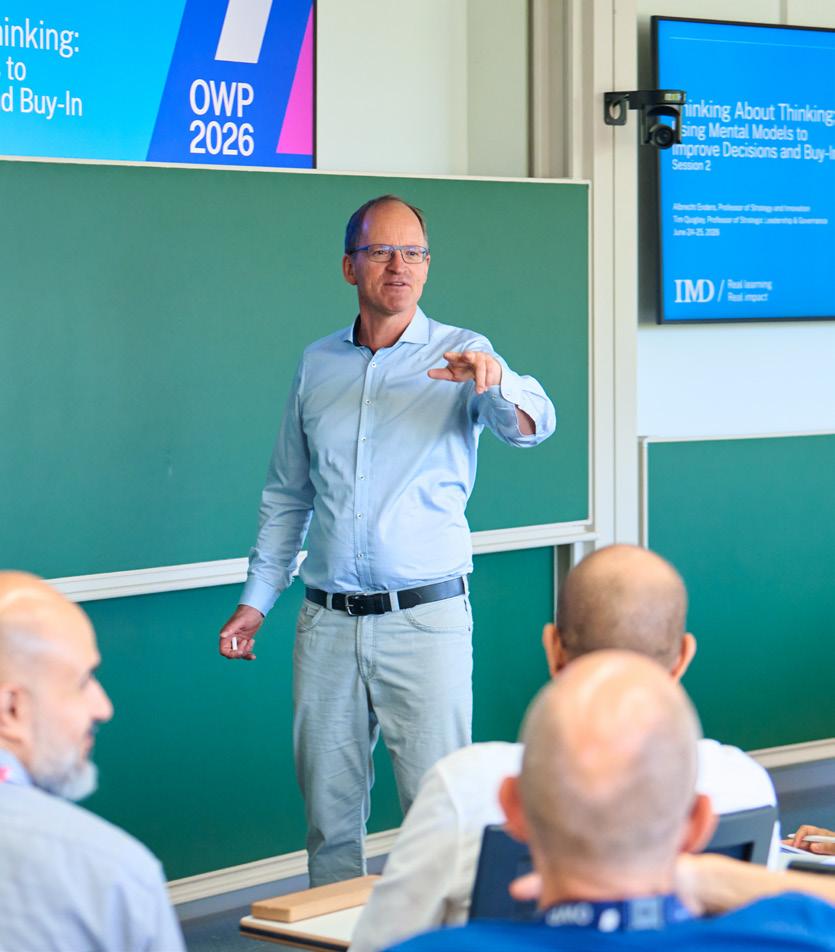
Leaders make better decisions when they surface the assumptions behind their thinking, test them more rigorously, and use that process to build stronger alignment and buy-in.
The session centered on a practical leadership challenge: in complex, fast-moving environments, executives do not act on reality directly, but through mental models — simplified maps shaped by experience, assumptions, and bias. Enders and Quigley argued that these models are necessary because they reduce complexity, but they also constrain what leaders notice, how they interpret evidence, and which options they consider.
A major theme was that better leadership depends on becoming more explicit about the models behind decisions. Using examples such as the contrast between a detailed picture and a functional map, the professors showed that the goal is not perfect representation but useful simplification. They also emphasized that leaders have a responsibility to absorb ambiguity and translate it into a clearer, solvable problem for others, rather than passing raw complexity down into the organization.
Mental models were discussed both as individual cognitive filters and as shared organizational tools. The session distinguished between causal models, which explain why one thing leads to another, and structural frameworks, which serve as checklists or organizing devices. Participants were encouraged to recognize which type of model they were using, test whether it fit the context, and avoid treating any single framework as universally valid.
The work-from-home case made the implications tangible. Faced with limited facts, participants often arrived at different recommendations because of divergent beliefs about motivation, culture, learning, evidence, and competition. The discussion showed that disagreement is often driven less by data gaps than by hidden assumptions. For decision-making, the implication is that quality improves when leaders surface and challenge those assumptions. For buy-in, the implication is that alignment comes less from pushing a conclusion and more from helping people examine and reconcile the models that produced different conclusions in the first place.
The broader executive message was that diversity of thought matters because different experiences generate different lenses on the same issue. Constructive dialogue across those lenses can improve judgment, strengthen commitment, and reduce unproductive conflict. The session closed by reinforcing the need to periodically update one’s models, protect time for reflection, and stay process-oriented rather than overly attached to fixed notions of success, failure, or certainty.
Key takeaways for executives
Make the mental model behind a decision discussable before debating the decision itself.
Simplification is a leadership responsibility: teams need usable maps, not unmanaged ambiguity.
Distinguish between causal theories and structural frameworks, and apply each only where it fits.
Treat disagreement as a clue to differing assumptions, not just opposing preferences.
Build reflection into executive practice so mental models evolve with changing conditions.
Recommended reading
How Successful Leaders Think by Roger
L. Martin
A New Way to Think: Your Guide to Superior Management
Effectiveness by Roger L. Martin
Mental models, decision rules, and performance heterogeneity by Michael
Shayne Gary and Robert E. Wood

A prediction market lab: Leading distributed intelligence
Yoshinori Fujikawa
Affiliate Professor of Strategy and Marketing
Masahiro Fukuhara
CEO – Institution for a Global Society Corporation

An exploration of how prediction markets can help organizations surface hidden knowledge, sharpen forecasts, and make better decisions under uncertainty.
Fujikawa and Fukuhara presented prediction markets as a management tool for unlocking distributed intelligence across an organization. Their central argument was that companies often already possess valuable knowledge about risks, opportunities, and likely outcomes, but that this intelligence remains fragmented across teams, buried in hierarchies, or suppressed by social and political pressures. Prediction markets offer a way to aggregate these dispersed insights into a live signal that leaders can use to improve judgment and decision-making.
The session explained the basic mechanism of a prediction market through tradable event contracts whose prices reflect the market’s implied probability of an outcome. This allows organizations to move beyond one-off surveys or static expert forecasts and instead generate continuously updated estimates as new information emerges. Fujikawa and Fukuhara highlighted two important forces behind this: the wisdom of crowds, where diversity improves accuracy, and the role of informed minorities, whose stronger knowledge can shift prices toward better forecasts.
A key focus was the organizational relevance of prediction markets. The session showed
how they can be applied to questions such as sales performance, project completion, budget delivery, OKR attainment, customer metrics, and innovation outcomes. The broader point was that internal markets can reveal what frontline employees often know before senior management does. The discussion linked this to examples of major corporate failures in which warning signs existed inside the organization but did not reach decision-makers in time.
The faculty also emphasized that success depends less on the idea itself than on the quality of the design. Issues such as anonymity, incentives, liquidity, and governance were presented as essential. The session also showed how newer technologies, including blockchain-based approaches and automated market makers, can help overcome earlier barriers to adoption.
A live demonstration using the Signals platform made the concept tangible. Participants traded with tokens on sample questions and were encouraged to think probabilistically rather than in binary terms. This exercise underlined a practical discipline: compare your personal estimate with the market price, and act when you believe the market is underestimating or overestimating the likelihood of an outcome.
Key takeaways for executives
Prediction markets help leaders capture dispersed knowledge that traditional reporting often misses.
Their value comes from both broad participation and the corrective influence of informed minorities.
Good market design is critical, especially around anonymity, incentives, liquidity, and governance.
The best use cases involve clear, measurable outcomes tied to business performance.
They can function not only as forecasting tools, but also as earlywarning and organizational sensing systems.

Ecosystem leadership
Murat Tarakci Professor of Innovation Strategy
25
Ecosystem leadership has become a critical executive skill in markets where growth depends less on owning every capability and more on mobilizing the right network of partners, complementors, and gatekeepers. The discussion focused on how leaders can identify those actors, align incentives, and build collaborations that create durable value.
Murat Tarakci’s session examined why competitive advantage increasingly comes from orchestrating ecosystems rather than competing through standalone products or traditional value-chain control. A central idea was that many firms still approach strategy too narrowly, focusing on direct competitors, suppliers, and customers, while missing the wider set of actors that shape whether an innovation succeeds. These actors can include regulators, distributors, technology partners, startups, public bodies, NGOs, and even rivals.
Microsoft under Satya Nadella served as a leading example of ecosystem leadership. The company’s renewal was presented as the result of opening collaboration across internal silos and external partnerships, rather than relying only on product breakthroughs. Nokia illustrated the opposite lesson: strong products were not enough once competition shifted toward broader ecosystems of devices, apps, services, and developers.
The session introduced a practical roadmap built around three actions: see, seize, and sustain. First, leaders must see the ecosystem clearly by identifying who creates value, who controls access, who may resist change, and which partner matters most to engage first. Second, they must seize the opportunity by shaping a joint value proposition that reflects the interests of the other party. Third, they must sustain the ecosystem by building relationships and structures that can support adoption over time.
The Philips Lighting/Signify ShipShape case anchored much of the discussion. The innovation involved LED and UV-C tiles designed to reduce ship-hull biofouling, improving fuel efficiency, lowering emissions, and reducing dry-dock downtime. Participants mapped the ecosystem around the solution, including ship owners, shipbuilders, ports, dry docks, maintenance providers, regulators, suppliers, and internal stakeholders. A key insight was that not every actor should be approached at once; value often depends on finding the one partner with the strongest leverage to unlock the ecosystem.
The case also highlighted three recurring risks. Internal alignment risk arises when the innovation lacks fit with the company’s priorities, structure, or sponsorship. Co-innovation risk appears when other players must adapt their own technologies or processes for the solution to work. Adoption risk emerges when intermediaries, not just end users, must embrace the innovation. The discussion also showed the danger of partnering with incumbents whose economics depend on slowing disruption.
A final practical lesson was that partnership building should begin with empathy, not pitching. Leaders were encouraged to understand a partner’s incentives, constraints, and measures of success before proposing collaboration. Participants applied these ideas to their own situations through ecosystem mapping and partner analysis.
Key takeaways for executives
Growth increasingly depends on leadership across networks, not just leadership within the firm.
The most important early move is often selecting the right first partner.
Ecosystem failure often comes from misaligned incentives, not weak technology.
Leaders must account for gatekeepers and blockers, not only value creators.
Strong partnerships begin with understanding the partner’s business logic.
Recommended reading
The
ecosystem playbook: Lessons from Microsoft’s meteoric rise by
Murat Tarakci
Family business governance: Strengthening the family and
the business
Marleen Dieleman
Peter Lorange Family Business Professor
Family businesses often combine deep commitment, speed, and resilience with tensions that arise from overlapping family, ownership, and management roles. This session examined how governance can help preserve the strengths of the family enterprise while reducing the risks that come from complexity, informality, and dependence on individual authority.
The discussion centered on the idea that family businesses are shaped by a productive but often fragile interaction between the family, owners, and the business itself. Their strengths often include trust, reputation, long-term orientation, shared identity, and patient investment across generations. At the same time, they face distinctive vulnerabilities, including unresolved family tensions, blurred roles, unequal expectations, founder dependence, and difficulties aligning active and non-active owners. A recurring message was that many family firms are undermined not by markets or competitors, but by internal strains they fail to govern effectively.
A key framework used in the class was the threecircle model of family, ownership, and business. This helped explain why disagreements emerge even in high-trust environments: individuals occupy different positions within the system and therefore have different priorities. Family members in management may focus on growth and strategic control, while non-operating shareholders may place greater emphasis on returns, liquidity, or fairness. Governance is therefore not about eliminating tension but about creating structures that enable these differences to be managed constructively.
The session also explored how governance requirements increase as complexity grows.
Family complexity may arise from more generations, shareholders, geographic dispersion, or a history of conflict. Business complexity may stem from scale, internationalization, diversification, or organizational sophistication. Participants were encouraged to assess where their organizations sit on both dimensions and whether their governance arrangements are fit for future needs.
An important distinction was made between corporate governance and family governance. Corporate governance focuses on the business itself: shareholders, boards, management structures, decision rights, leadership development, and professionalization. Family governance focuses on the family as an owning group: family councils, constitutions, ownership rules, employment policies for relatives, and mechanisms that support cohesion, education, and continuity. The class emphasized that both are essential and cannot substitute for one another.
The session also examined how governance must evolve from founder-led firms to sibling partnerships, cousin consortia, and extended family dynasties. As ownership expands and relationships become more complex, informality becomes less effective. Stronger governance is required not only to clarify decisions and accountability but also to sustain trust, belonging, and legitimacy across the family.
Key takeaways for executives
Governance should reflect the specific complexity of both the family and the business, rather than being copied from another company.
Many conflicts in family firms stem from structural role differences, not simply personality clashes.
Effective succession depends on building systems that allow the business to operate beyond the founder’s personal authority.
Family governance and corporate governance serve different purposes and both need deliberate design.
As ownership broadens across generations, governance must become more explicit, more merit-based, and more intentional in maintaining family cohesion.

The power of organizational simplicity
Knut Haanaes Professor of Strategy
Organizational simplicity is not about oversimplifying a business. It is about removing unnecessary friction so people can focus on what matters, work faster, and create more value.
In this session, Knut Haanaes showed that simplicity is a leadership choice: it requires attention, discipline, and the willingness to stop doing things that add complexity without improving performance.
Haanaes’ session explored why complexity builds so easily in organizations and why simplicity is so difficult to sustain. A central theme was that complexity rarely comes from bad intentions. More often, it grows from sensible decisions made over time: adding new priorities, metrics, processes, reports, systems, and meetings in an effort to be thorough, inclusive, and responsive. The result is an organization that appears busy and well managed, but in practice becomes slower, less focused, and harder to lead.
The session argued that simplicity should be treated as a strategic capability rather than an efficiency exercise. While simplification can reduce cost, its greater value lies in improving speed, engagement, productivity, and innovation. When people are asked to navigate too many initiatives or conflicting demands, they spend more time coordinating and reporting than creating value. Simplicity helps restore clarity around priorities and makes execution easier.
A key idea in the session was that simplicity often comes through subtraction rather than addition. Leaders typically respond to problems by introducing something new: another KPI, process, project, or control mechanism. Haanaes challenged this instinct and emphasized the importance of removing activities that no longer serve the organization. One example highlighted how replacing a broad set of performance indicators with one sharp operational focus can align behavior and raise standards. The broader lesson was that clear priorities are often more powerful than comprehensive systems.
The session also examined several practical sources of unnecessary complexity. These included spreading talent too thinly across too many projects, approving initiatives one at a time without considering the total portfolio, creating excessive reporting that is disconnected from real decisions, and relying on planning approaches that do not match the nature of the work. Meetings were presented as another frequent source of organizational drag, especially when they involve too many participants, weak preparation, or unclear decision rights.
Another important message was that simplification does not mean lowering standards or losing control. On the contrary, effective simplicity depends on disciplined leadership, consistent expectations, and visible role modeling. Leaders need to be clear about what matters, what can stop, and where people should focus their effort. The session suggested that simplification is most credible when leaders apply it first in their own teams, routines, and decision processes rather than treating it as an abstract organizational aspiration.
Overall, the session positioned organizational simplicity as a practical leadership agenda. Complexity should not be accepted as the inevitable price of growth. Executives can actively manage it by questioning what has accumulated over time, sharpening priorities, and redesigning work in ways that make performance easier rather than harder.
Key takeaways for executives
Complexity often grows from good intentions, not poor management.
Simplicity creates value by improving focus, speed, and innovation.
Strong leaders simplify by removing, not just adding.
Reporting, meetings, and project overload are major opportunities for simplification. The best place to start is with the habits and choices of the leadership team.

What our participants say
OWP is a week of inspiration. As its name suggests, it opens new perspectives through top faculty, diverse topics, and innovative learning formats. It challenges its participants to discover new ideas, but to also rethink familiar ones and refresh old ones. A valuable cornerstone of our executive development strategy.
Ulrike Potocki Head of Learning Strategy
Bank International AG, Austria
Raiffeisen
Using ancient wisdom to become a
future-ready leader
Susan Goldsworthy
Affiliate Professor of Leadership, Communications, and Organizational Change
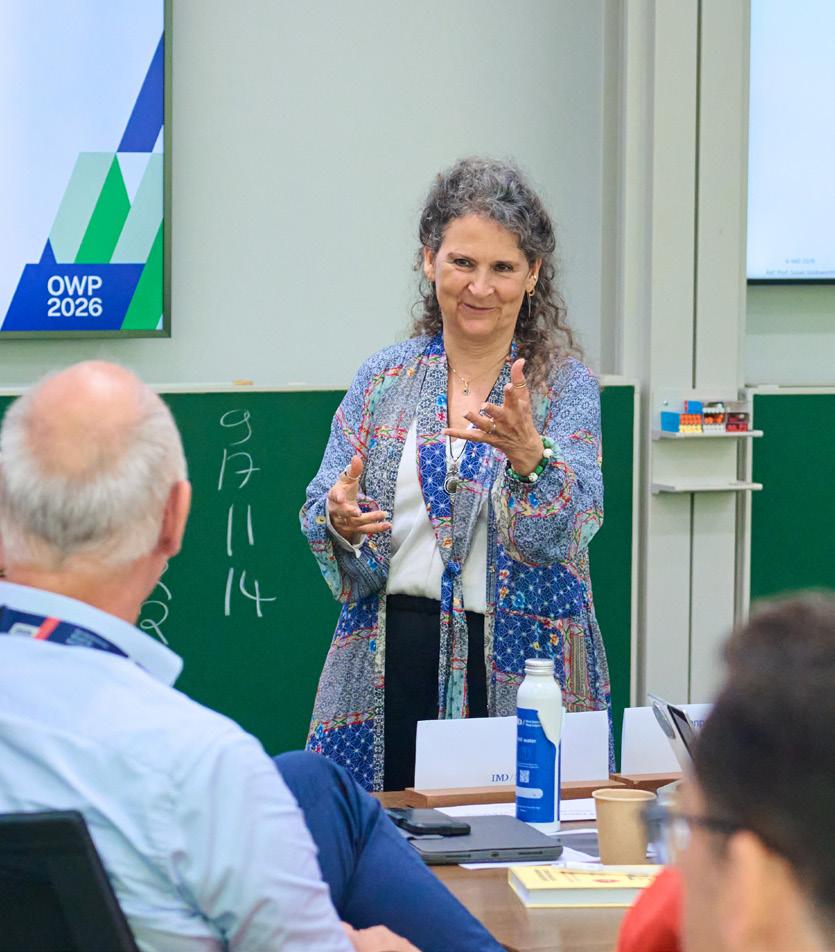
Drawing on a recent survey of 123 executives, Susan Goldsworthy revealed an uncomfortable gap between what executives truly value and what their organizations reward.
This session focused on recovery, reflection and ritual as vital elements for today’s leaders. Privately, leaders are drawn to a model of leadership that aligns both with cutting-edge research and ancient wisdom traditions; one that prioritizes service over self-interest, long-term stewardship over short-term gain, integrity over image, and inner development as the foundation of effective leadership. Yet many feel unable to act on these values in practice citing an absence of the language, the incentives, and the cultural permission to bring them to life within their organizations.
Eugene Vyborov shared how AI can support humans across the long arc of leadership, not as a replacement for human judgment, but as a thinking partner for the journey. Participants then engaged in a panel discussion unlike any other: a live conversation between Anthony Venus, CEO of Luminous Leadership AG, and Cornelius, an AI second mind.
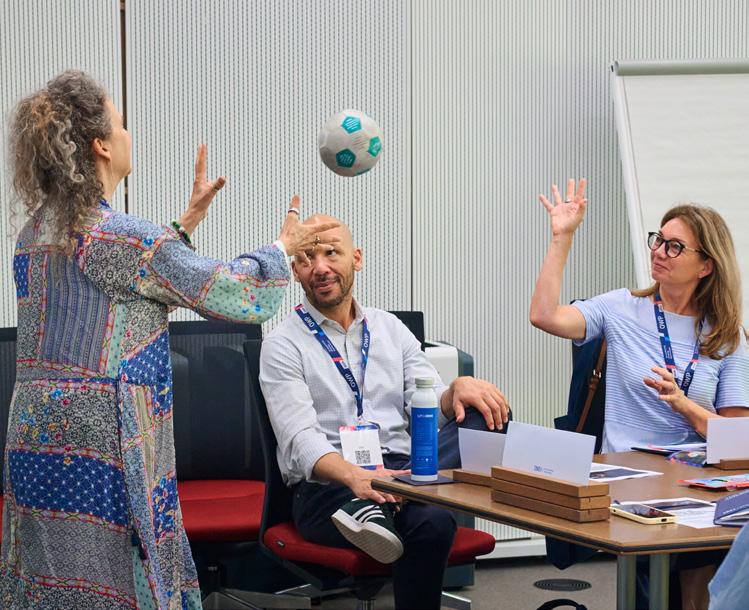
Facilitated by Jose-Luiz Moura, participants explored key threshold moments and reflected upon which felt most alive for them right now. They also experienced a guided meditation and identified one small act of leadership they are ready to take, a reminder that transformation often begins with a single conscious choice.
This unique session inspired participants to bring ancient wisdom into everyday leadership through contemplative practices that enable leaders to see more clearly, choose more wisely, and lead more consciously.
Recommended reading
The Long Arc of Leadership: Where Ancient Wisdom Meets Modern Science by Susan
Goldsworthy
and Anthony Venus
Leading through connection: The science and practice of effective networks
Marissa King Professor of Leadership and Management
A mounting body of research shows how crucial relationships are to our well-being. At work, strong connections to colleagues can make us more productive, more satisfied, less stressed out, and less likely to quit our jobs. They’re also tightly linked to getting those jobs in the first place, and to promotion.
Yet studies show 90% of leaders are underinvesting in their relationships. And despite their importance, loneliness is on the rise, with one in five adults saying they are chronically lonely, while roughly half of CEOs suffer from loneliness.
The good news for introverts and those who feel networking feels a bit transactional – or even dirty – is that social intelligence is a learned skill and your personality has less of an impact on your network than you may think. Crucially, the workplace is one of the few places where you can consciously design connections.
In her session, Marissa King, explored how the key to more effectively managing your network is to understand its structure. Research points to three building blocks of social architecture: expanding, brokering, and convening.
Expanding is about scale. These networks increase visibility and influence. Brokers sit between disconnected groups, a position that exposes them to diverse ideas, which can be recombined, leading to innovation and creativity. A convening network has a dense web of interactions and deep ties. The payoff is trust and a decreased likelihood of anxiety, but risks groupthink – something that is more likely as you bring AI into the organization, King noted.
Organizations can intentionally create these different structures among their employees. “If you keep stable teams in place, they create these convening networks, but if you are constantly reshuffling you are creating brokers,” she said.
During the session, participants practiced different behaviors, tools, and workplace interventions to help them achieve the outcomes of the different network types.

Creating a culture that drives value in good and hard times
Frédéric Dalsace Professor of Marketing and Strategy
Katharina Lange
Affiliate Professor of Leadership
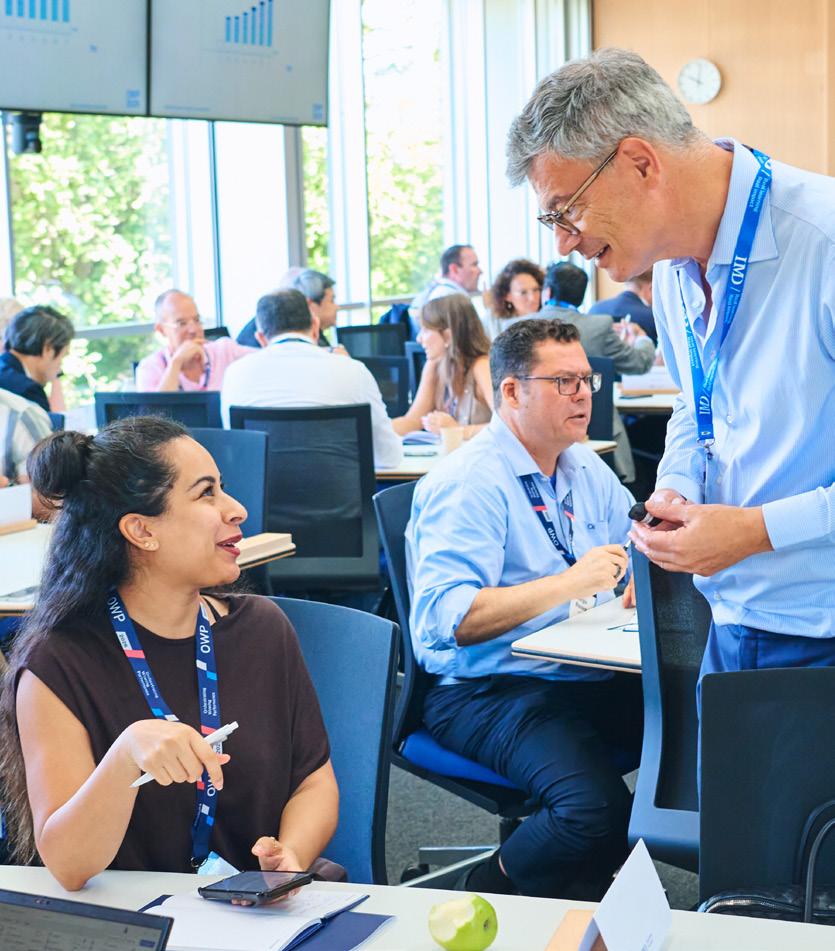
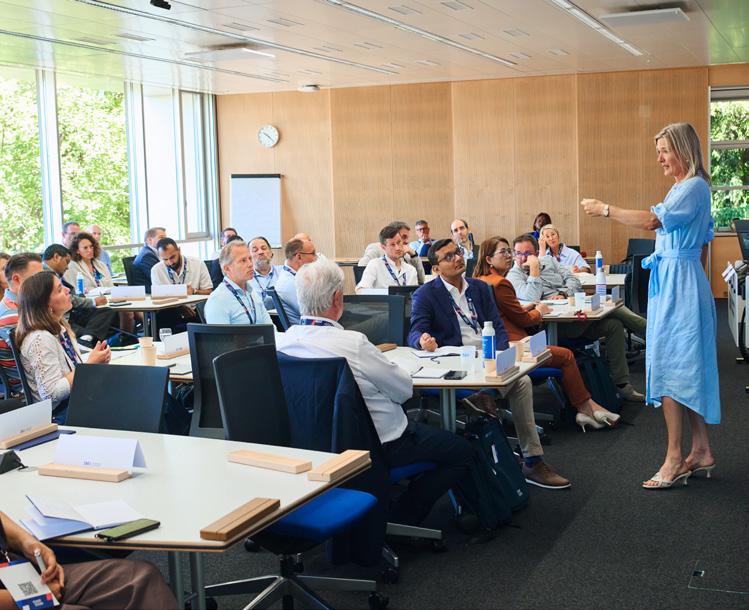
Customer centricity is easy to endorse, with intuitive benefits; so why is it so hard for companies to sustain? In their session, Professors Frédéric Dalsace and Katharina Lange made the case that it is one of the most reliable drivers of long-term value, and explored why so many firms let it slip.
Dalsace opened with the evidence: $100 invested in the year 2000 across the 25 most customer-centric US firms would have been worth $617 by 2014, against $131 for the S&P 500. The benefits are clear, so why the drift?
Because, he argued, two bosses compete for a leader’s attention: the ‘organization boss’, with its efficiency targets and quarterly earnings, and the real ‘customer boss’. Over time the organization tends to win, and the customer slips from view. He called this gap the “scissor effect”, as rising customer expectations and declining firm focus pull steadily apart. “The bigger the firm and the older the firm, the worse they are at doing these customer-centric things,” he said.
In their work, Dalsace and Lange explored potential remedies, including an integrated approach across four levers (behaviors, processes, structure, and customer-centric measures) working at three levels (individual, team, and enterprise).
Starting with behaviors, Lange presented survey results measuring the everyday habits that keep the customer in view. The newly developed survey revealed the misconceptions that stop a company culture staying focused on the customer.
1. Learn: Diverse sources add qualitative, deep data points to quantitative data. A common mistake is to confuse information with insight. What matters is the elevation from information into genuine insight; otherwise, companies recycle what everyone else already knows.
2. Share: New insights need to travel across functions, through formal and informal channels. To penetrate the permafrost of the organization, executives need to be persistent; sharing once is not enough.
3. Act: Agency exists at every level of an organization, and this is how culture is created. An important step for any executive is to replace “they should do this” with “I will do this.”
Lange stressed bringing together disparate sources of information and interrogate them yourself, without relying on technology or established wisdom, to create new ideas. “Insights are non-obvious. If everyone sees it, it is not an insight… You need to elevate information, bring it together and make sense of it. An insight must be something new to the world, not only new to you.”
Dalsace added processes embed behaviors. “Micro-processes and rituals can have an oversized influence in creating a customer-centric culture,” he noted. A key one is experimentation. “You need an experimentation mindset to continuously generate new data to learn.”
Recommended reading
Customer centricity: Digital technology and leadership to the rescue by Katharina Lange, Frédéric Dalsace, and Didier Bonnet
Turning conflict into a leadership advantage
Shlomo Ben-Hur Professor of Leadership and Organizational Behavior
Nik Kinley Leadership assessor, Coach, and Consultant
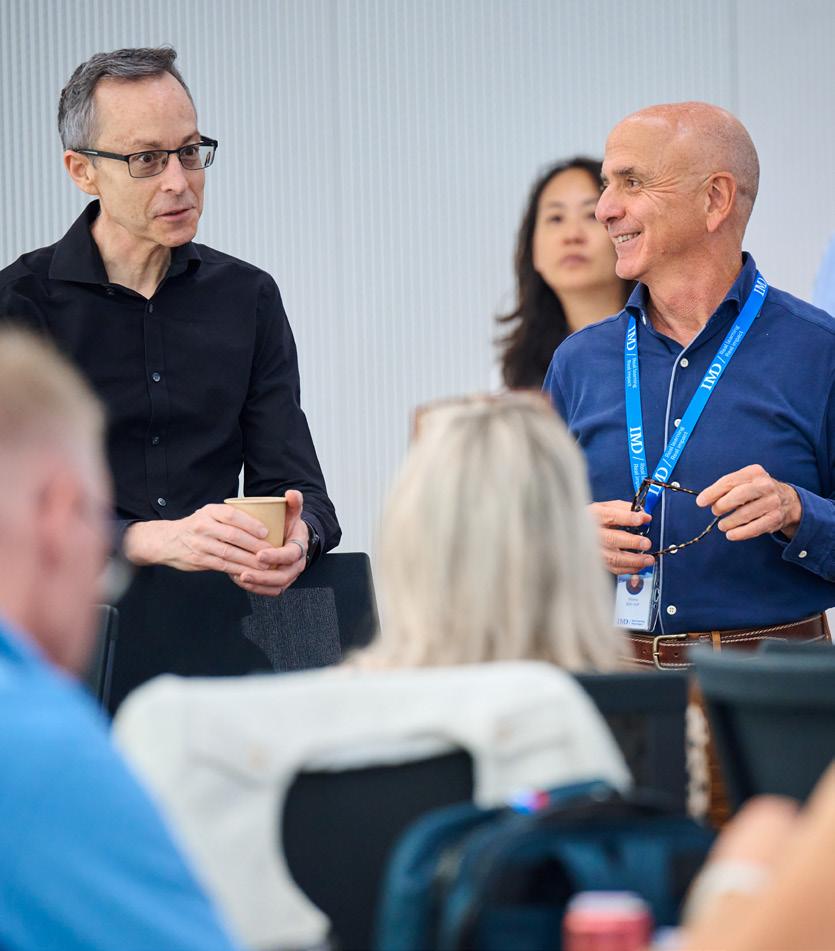
Under pressure, even experienced leaders default to behaviors that make resolution harder.
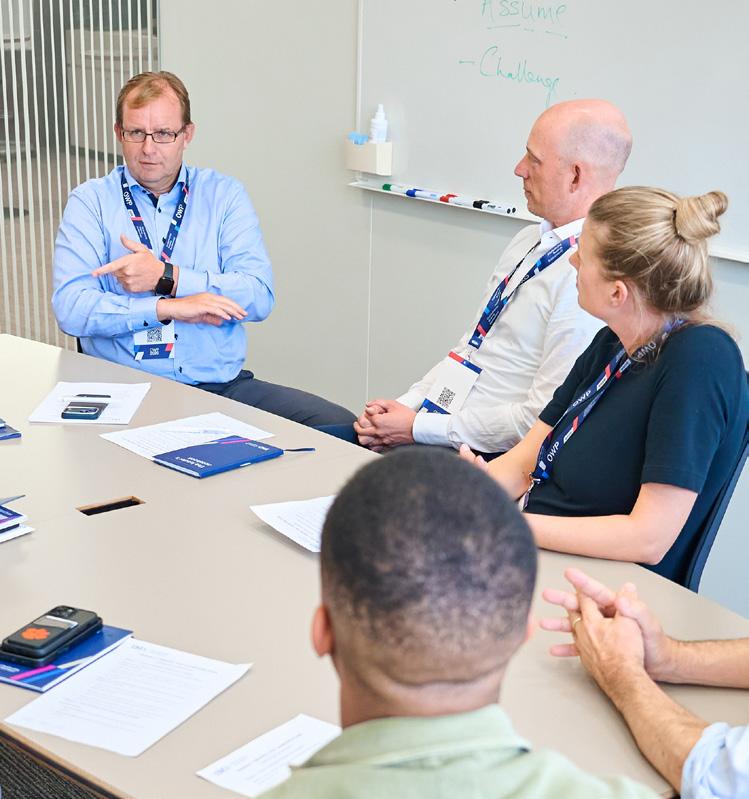
In their session, Shlomo Ben-Hur and Nik Kinley explored how to handle difficult conversations and turn conflict into leadership advantage through the 3 Cs: clarity, connection, and consolidation. Their central point: successful conflict resolution begins long before the conversation itself.
1. Clarity: prepare for your default response. We each have a “code” in conflict: moving toward it, away from it, or against it. The risk is predictable: people-pleasing, withdrawal, or overpowering others. Before engaging, conduct a curiosity check: What outcome do I want? What assumptions am I making? What is the other person likely to need? And what does this context demand?
“If you’re not clear on your intention walking into the meeting, you could end up in the wrong place or with the wrong results,” emphasized Ben-Hur.
2. Connection: manage the conversation, not just the content Structure dialogue around facts, feelings, needs, and requests, not demands. When tension rises, shift from what is being argued to how the conversation is unfolding. Use questions over “should” statements, lead with “I” rather than “you”, mirror the other person, validate before challenging. These techniques interrupt familiar deadlocks: labelling, fact-wars, defensiveness, and assumptions.
“This is not rocket science, these are techniques, and you need to have them in mind before you walk into a conflict. Practice them in friendly environments, so you’re ready when you need to be,” said Kinley.
3. Consolidation: build your conflict intelligence muscle. Build your muscle by capturing learning after each interaction. Run a reverse audit: identify your default code, what triggered it, and where curiosity dropped. Debrief outcomes against original intention, and assess how context influenced the exchange. Then reinforce relationships by clarifying what you learned about the other person, and transfer insights into repeatable behaviors and preparation habits.
As Ben-Hur emphasized, “This is a labor of love, a lifelong mission.” Progress comes through practice, reflection, and compassion, for others, and for yourself as you develop over time.
Stillness in chaos: How elite performers execute when everything is on the line
Michael Watkins Professor of Leadership and Organizational Change
Juan-Carlos Holgado Olympic champion archer and sports coach
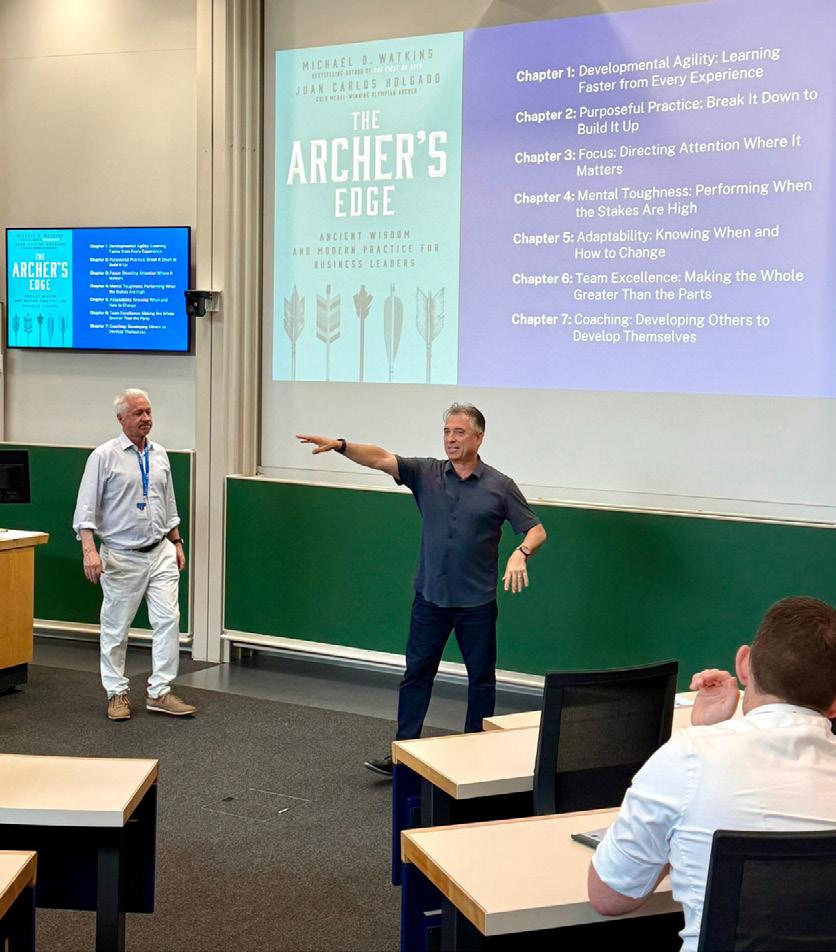
A standout moment at OWP was the insight session, Stillness in chaos: How elite performers execute when everything is on the line, led by Michael Watkins, Professor of Leadership and Organizational Change, followed by a faculty archery competition on Day Four, won by IMD President David Bach.
Both events were inspired by a new book, The Archer’s Edge: Ancient Wisdom and Modern Practice for Business Leaders, co-authored by Watkins, best-selling author of The First 90 Days: Proven Strategies for Getting Up to Speed Faster and Smarter, and Olympic champion archer and sports coach Juan-Carlos Holgado. The book translates the mental discipline of world-class archery into practical lessons for business leaders.
Through the lens of archery, the authors together explore crucial aspects of elite athlete training, such as focus, mental toughness, adaptability, and team performance, and from these develop practical tools and insights to help leaders be more effective in today’s challenging business environment.
Their framework offers executives a fresh way to sharpen their focus, make better decisions in high-stake situations, and respond with agility when conditions change. It melds ancient wisdom, the elite athlete mindset, and advanced leadership concepts into new tools and techniques.
Each chapter blends leadership theory with practical exercises, making the ideas immediately relevant for day-to-day leadership. Topics include growth mindset, team performance, coaching, and the habits needed to keep improving.
The result is a compelling guide for leaders who want to strengthen their strategic thinking, navigate uncertainty, and help their organizations perform at their best.
The Archer’s Edge will be published on 1 October, 2026.


Leadership at the edge of discovery
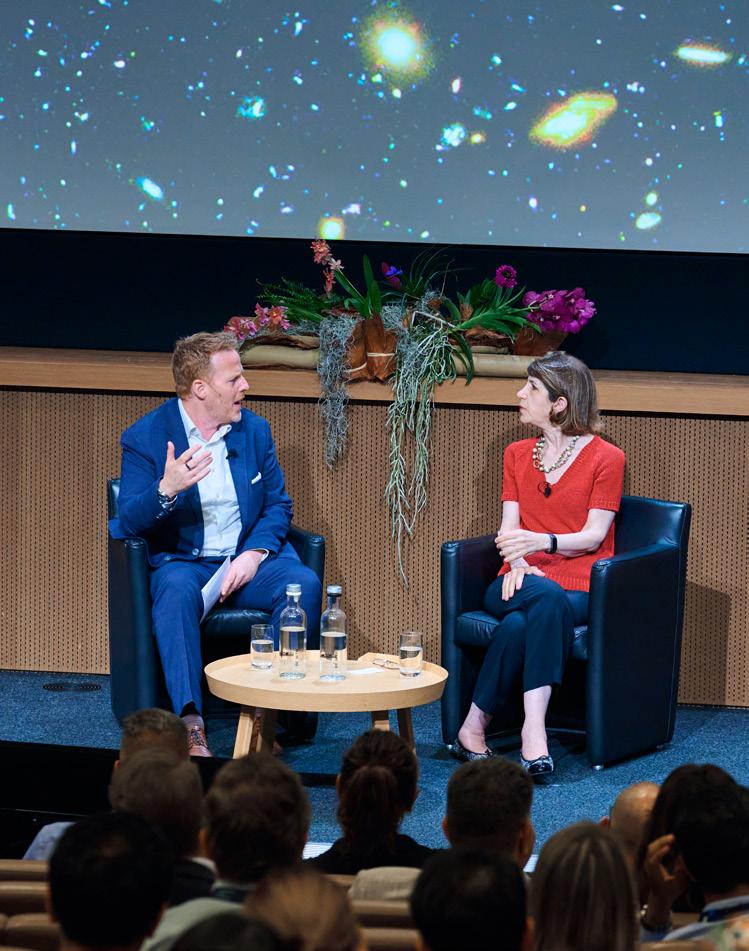
Fabiola Gianotti Director-General, CERN (2016-2025)
From
unlocking the mysteries of the Higgs boson to managing one of the world’s most complex scientific collaborations, Fabiola Gianotti shares what leadership looks like when purpose, passion, patience, and global collaboration replace hierarchy and control.
The European Laboratory for Particle Physics (CERN) is the world-leading laboratory for high-energy particle physics, based in Geneva, Switzerland. Particle physics is the study of the smallest constituents of matter and the Universe and the laws of nature at the most fundamental level.
CERN is the home of the Large Hadron Collider (LHC), which allows us to study the fundamental laws of nature down to scales of smaller than 10-18 m. This provides insight into the structure and evolution of the Universe, from the “infinitely” small to the “infinitely” big. The LHC is the most powerful accelerator ever, housed in a 27 km ring, 100 meters underground.
On 4 July 2012, ATLAS and CMS, the two general-purpose detectors at the LHC, announced the discovery of a new and very special particle: the Higgs boson. This particle is the answer to how the matter we are made of could form in the early Universe.
None of this would have been possible without unprecedented collaboration
Fundamental to this discovery were many new technologies, in particular the high-tech superconducting magnets that made the LHC so powerful. Built by Alstom (France), Ansaldo (Italy), and Babcock Noell (Germany), they are a brilliant example of partnership between CERN and industry. Fundamental research often requires technologies that are not available in industry when needed. Hence, they need to be developed by laboratories and industry through collaborative partnership.

CERN embraces and promotes open science, and its cutting-edge, multidisciplinary technologies are shared with society at no cost. By pushing accelerator and detector technologies to the limits, incredible advances have been made –including the development of the World Wide Web (by Tim Berners-Lee, who at the time was a CERN employee), hadron therapy to treat cancer, electronics and instrumentation for medical imaging, and machine learning for self-driving cars, among many others.
Science is a powerful glue that can connect people in a fractured world
CERN was founded in 1954 on the initiative of a group of visionary scientists and politicians with two main goals. The first was to restore scientific excellence in Europe after the war, during which many researchers had left the continent, causing European science to decline. The second was to promote peaceful collaboration among European countries through science. The 12 member states that signed the founding convention in 1954 recognized two key ideas: first, that the social and economic recovery of the continent required sustained investment in fundamental research; and second, that science is a powerful glue that can connect people in a fractured world.
From the original 12 European member states that signed the convention, CERN has grown to include 25 member states and 11 associate member states from across the world. In addition, CERN has some 50 international cooperation agreements with technologically advanced nations such as the United States, Japan, Canada, and China, as well as countries that are still developing their scientific capabilities. In these cases, a key part of CERN’s role is to help young people and scientists build expertise and close the gap. Today, the CERN community includes more than 17,500 people representing over 110 nationalities, making it a truly global organization. The original vision of promoting peace through science has therefore expanded far beyond Europe to the entire world.
What unites all of us is a common passion, shared objectives, and the common goal of understanding how the universe works.

Lessons in leadership from my time at CERN
Most people at CERN are not employees of the organization; they come from universities, research institutes, and laboratories around the world. Therefore, traditional management tools like salaries or performance reviews are not the primary levers for alignment. What unites all of us is a common passion, shared objectives, and the common goal of understanding how the universe works. People know that this is something that cannot be achieved by a single person, institution, country, or continent. The goal can only be achieved by collaboration. The role of the leaders is not to dictate but to support the community in achieving common objectives.
CERN is an extremely democratic place where leadership does not come from hierarchy – it comes from ideas. If the youngest student has the right idea, we follow it. In the decision-making process, it is crucially important to listen to people and allow them to express their views. Ultimately, a decision must be made, usually by the leaders, but if people can be part of the process, if their voices have been heard, then they will accept the decision and work for the common objectives.
My education in science was very important in my leadership development because fact-based thinking, curiosity and rigor helped me. But one of the most challenging transitions I faced as Director-General was moving from a “vertical” mindset to a “horizontal” one. As scientists, we are trained to develop deep expertise in our specific, often narrow, field, to understand every detail of it. Leadership at CERN, however, requires the ability to embrace a wide range of domains, from science
and engineering to funding, human resources, government relations, public communication, and environmental responsibility. I had to become broader, but also necessarily more superficial. I often had to resist the temptation to dive into every technical detail – which, for a scientist, can be frustrating – but leadership requires keeping sight of the bigger picture, trusting the people around you, the experts in their fields, and empowering them to do their work.
Leadership is not about knowing more than others in the room; it is about creating the conditions for others to grow and shine. Even when you may know more than your colleagues on a particular topic, it is important to step back, give space, and ensure that credit goes to the people who are doing the work. A good leader does not need to demonstrate authority by showing superior knowledge. On the contrary, leadership often requires restraint: listening, observing, and allowing others to contribute fully. This humility builds trust and strengthens teams, particularly in environments where expertise is widely distributed.
CERN operates on extraordinary timescales. Some projects span decades, even generations. Leading in such an environment requires maintaining a clear long-term vision while ensuring that people remain motivated in the present. This is achieved by recognizing that progress happens incrementally. Each small step matters, and each contribution is part of a much larger journey. A good leader acknowledges and celebrates these incremental achievements. Even if the final goal may be decades away, people need to see the impact of their work today. Every “stone” laid on the path is essential, and recognizing these contributions keeps teams engaged and motivated.
Strategy and management

What our participants say
In Japan it is common when learning something to want to find a concrete answer. But what I have learnt is that being future-ready is not what you need to know, but how to think.
Yuki Imamura Manager Sumitomo Mitsui Trust Bank, Japan

How to lead strategy execution
Niccolò Pisani
Professor of Strategy and International Business
How do leaders turn a strategic plan into measurable results?
In this session, Niccolò Pisani explored the challenge of strategy execution through the DIGA case, focusing on how executives can convert ambition into priorities, align the organization behind a few critical choices, and ensure that growth plans are supported by the capabilities needed to deliver them.
The session examined strategy execution not as a mechanical implementation step, but as a central leadership task. Using the DIGA case, participants discussed the realities facing CEO Valeria Schmidt as she sought to deliver “Strategy 2030” after a period of weaker performance and changes in the top team. The case showed that execution begins well before rollout: it starts with defining the right strategic priorities, making trade-offs, and deciding where the company should concentrate its time, capital, and leadership attention.
A key part of the session focused on DIGA’s industry and competitive environment. Participants reviewed the structure of the global coatings market and DIGA’s position across Marine, Decorative, and Protective coatings. This market perspective helped explain why execution cannot be separated from strategy choice. Leaders must understand where growth is attractive, where competition is intensifying, and where the firm has a realistic basis for building advantage. DIGA’s decision to re-enter Industrial coatings while avoiding automotive illustrated the importance of selectivity and fit.
The session then explored DIGA’s “Strategy 2030”, organized around four Must-Win Battles: defend Decorative, double Protective, become a global Marine challenger, and enter the Industrial
segment. These priorities gave the company a practical execution agenda rather than a broad list of aspirations. The discussion highlighted that clear priorities are essential because execution fails when organizations try to pursue too many goals at once or cannot distinguish between core bets and secondary initiatives.
Participants also examined the enabling capabilities required to make the strategy work. DIGA’s emphasis on supply chain excellence, sales excellence, and customer-centric product innovation showed that execution depends on more than strategic intent. Growth ambitions must be supported by the operating model, commercial capabilities, and internal coordination needed to deliver consistent results. The session reinforced that these enablers are not secondary considerations; they are part of the strategy itself.
Finally, the session addressed the role of leadership in maintaining momentum. Executives discussed how to sequence initiatives, allocate resources, sustain alignment across functions, and ensure that performance ambitions remain tied to operational discipline. DIGA’s goals of profitable organic growth, increased productivity, revenue expansion, and margin improvement illustrated the need to connect strategic ambition with measurable execution outcomes.
Key takeaways for executives
Strategy execution is a leadership discipline built on choice, focus, and follow-through, not simply project management.
A small number of clearly defined strategic battles creates better organizational alignment than a long list of objectives.
Execution priorities should be grounded in competitive reality and organizational fit, not only in market attractiveness.
Capabilities such as sales, supply chain, and innovation must be treated as core strategic levers.
Sustainable execution requires balancing growth ambition with operational discipline and resource constraints.
B2B competitiveness through customer-centric solutions
Stefan Michel Dean of Faculty and Research
Cornelia Hauth
Executive Vice President Diamond Systems at Hilti Group
Customer centricity in B2B is not about being closer to the customer in principle; it is about redesigning the business around the customer’s operational and economic reality. Through Hilti’s evolution from tool supplier to solution provider, the discussion showed how integrated offers, digital visibility, and a sharper focus on outcomes can build stronger competitive advantage.
The session focused on how customer centricity can become a source of competitive advantage in B2B markets. Hilti was used as the main case to illustrate how a company can shift from selling products to delivering solutions that address customer pain points more holistically. The central message was that competitive strength comes not only from better tools, but from helping customers improve outcomes such as uptime, efficiency, cost predictability, and operational simplicity.
Hilti’s direct sales model and close customer contact were presented as major strategic assets. Because so many employees interacted regularly with customers, Hilti developed a detailed understanding of everyday operational problems, including lost or damaged tools, unplanned downtime, underused assets, poor visibility across jobsites, and the hidden costs of managing tool fleets. These insights allowed the company to redesign its offering around customer needs rather than around the product alone.
A major part of the session examined Hilti Fleet Management. Instead of customers buying tools outright, Hilti offered a managed solution that bundled tools, maintenance, repairs, replacement, service, and financing into a predictable recurring fee. This shifted the conversation from ownership and purchase price to total cost of ownership and productivity. Customers gained greater cost transparency, less administrative burden,
and better assurance that the right tools would be available and operational when needed.
The session also highlighted that customer-centric solutions still depend on product excellence. Hilti’s NURON battery platform showed how innovation in hardware, connectivity, and safety can strengthen a broader solution model. Durable and connected tools help make service-based offers more reliable and economically viable.
Digital enablement was another key theme.
ON!Track, Hilti’s asset management software, was presented as a complement to Fleet Management because it gives customers better visibility into tool location, usage, and maintenance needs. This kind of transparency improves utilization, reduces waste, and supports better decisionmaking across sites and teams. The broader point was that digital tools become most valuable when they are embedded in a solution that helps customers run their operations more effectively.
The session also emphasized the organizational implications of customer centricity. Hilti’s model required more than a new offer; it required changes in sales, service, capabilities, and internal mindset. Sales teams had to move from selling products to diagnosing customer needs, quantifying hidden costs, and engaging multiple stakeholders.

Key takeaways for executives
Customer centricity creates advantage when it focuses on customer outcomes, not just product features.
Solution selling is most powerful when products, services, software, and financing work together as one offer.
Direct customer access is essential for uncovering unmet needs and designing relevant solutions.
Digital transparency can turn an equipment offer into a productivity and performance solution.
Scaling customer centricity requires organizational change, not just commercial innovation.

Serial acquirers: Making a killing with M&As
Salvatore Cantale Professor of Finance
Why do some companies repeatedly create value through acquisitions while others destroy it? The discussion explored what separates disciplined serial acquirers from one-off dealmakers and showed how strategy, governance, and integration determine whether M&A becomes a growth engine or an expensive mistake.
M&A remains attractive to executives, yet many deals fail to create value for the buyer. A starting point was the recurring market pattern in which target shareholders often capture most of the upside through takeover premiums, while acquiring firms bear much of the execution risk. That tension framed the core question: how can companies use acquisitions to build long-term advantage rather than simply complete transactions?
A central cautionary example was HP’s acquisition of Autonomy. The case illustrated the risks of overpaying, weak governance, poor strategic fit, and underestimating integration complexity. It showed how large, transformational deals can appear compelling at announcement but unravel when ambition outruns discipline. The broader lesson was that deal logic must be tested rigorously before closing, and execution risks must be treated as central, not secondary.
The discussion then distinguished among different acquirer profiles, including firms that do deals rarely and those that acquire repeatedly over time. The key point was that repeat acquirers tend to outperform because they develop organizational capabilities that occasional buyers lack. Screening targets, valuing assets,
negotiating terms, and integrating effectively all improve when M&A becomes a practiced capability rather than an isolated event.
Campari provided the contrasting positive example. Its growth illustrated how acquisitions can work when they are approached with discipline and supported by clear corporate capabilities. Rather than relying on a single bold move, the companybuilt experience through a sequence of deals, gradually taking on greater complexity. It also demonstrated that value creation depends heavily on post-merger integration: preserving what makes an acquired brand distinctive while improving distribution, marketing, and portfolio management.
Several practical ideas tied the material together. M&A should be treated as a capability that can be built over time. Companies need a repeatable process for identifying targets, evaluating fit, applying financial discipline, and governing decisions. Boards also have an important role in challenging assumptions and overseeing the acquisition pipeline, not merely approving individual transactions. Across all examples, the message was consistent: successful acquisitions require alignment between strategic intent, deal selection, governance, and execution.
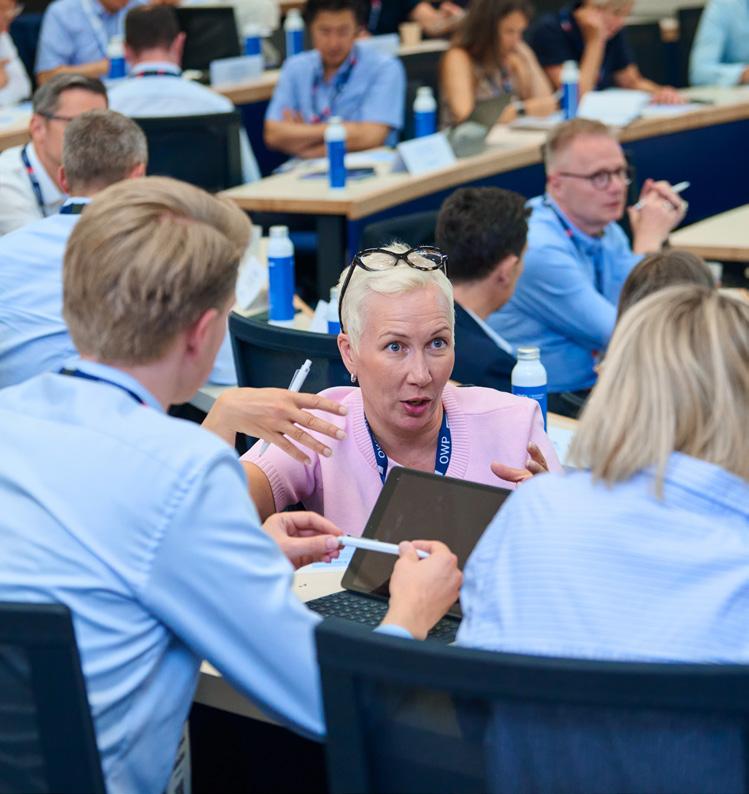
Key takeaways for executives
Favor deals close to the core business over highly transformational acquisitions.
Build M&A capability through repetition, learning, and process discipline.
Treat integration planning as a primary source of value creation.
Use governance to challenge assumptions early, not only at approval stage.
Apply strict financial criteria so one deal does not compromise future flexibility.
Watch the session highlights

Fighting the commodity trap: Strategic and branding responses
Stéphane JG Girod Professor of Strategy and Organizational Innovation
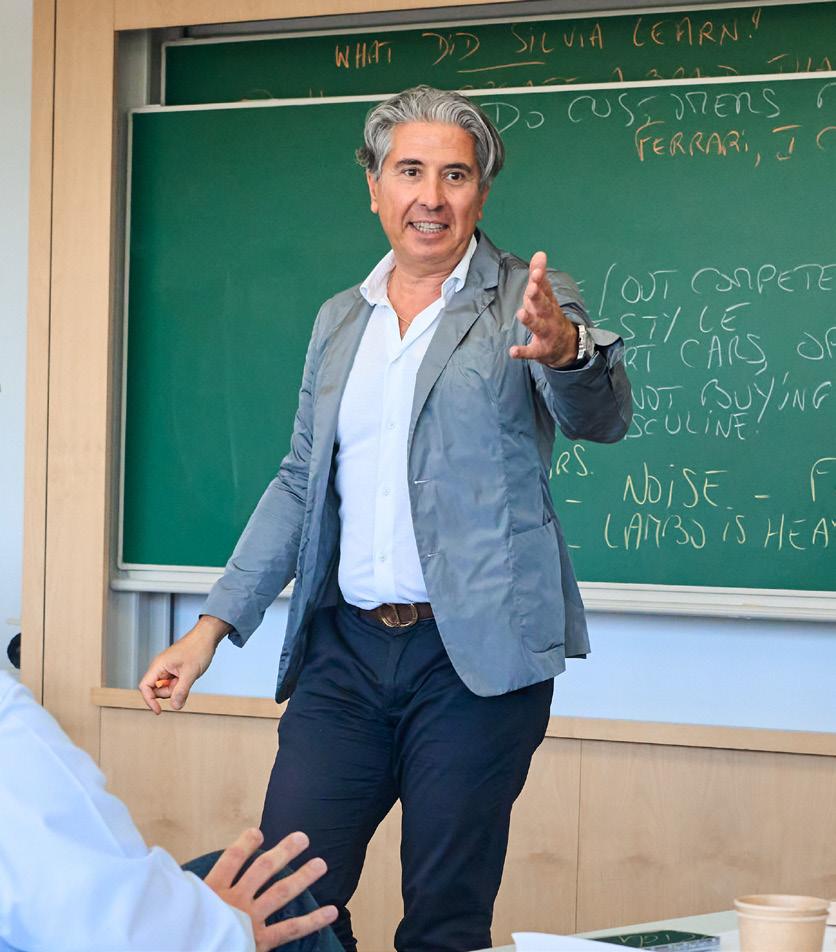
Commoditization derives from a business inability to differentiate and exercise market and price power. It usually builds gradually as customers focus mostly on price, competitors catch up on performance, and technical advantages become harder to defend.
The discussion showed that the most effective response is not simply product improvement or cost reduction. Business leaders can use at least five strategic levers, related to where-to-play and how-to-win choices, to recapture market power. They can also learn from luxury brands to elevate brand stature, even in B2B. The session explored how companies can respond when market pressure erodes differentiation and pricing power.
The core message was that commoditization is not only a commercial or operational issue; it is primarily a strategic challenge shaped by positioning, customer perception, and the ability to communicate value beyond product functionality and service specifications. Firms that rely too heavily on features or engineering excellence, or fail to articulate customer value, can become interchangeable even when their capabilities remain strong.
A major theme was the need to diagnose the sources of commoditization before choosing a response. In the session, 83% of participants said their business was at risk. Many companies react defensively, focusing on incremental product upgrades while underinvesting in broader drivers of differentiation.
Session 1 of this two-day stream examined several strategic responses to restore market
power and value. One is diversification into new but capability-related arenas. Another is vertical or horizontal integration to gain scale and strengthen positions in the value chain. Companies can also create new forms of value or, when differentiation is difficult, out-execute competitors.
Session 2 focused on branding as a differentiating force. Branding is an identity- and purpose-based lever, not a communications afterthought. Used effectively, it builds trust, supports premium pricing, strengthens preference, and makes differentiation more durable. Luxury brands provide many of the strongest examples.
An important distinction was drawn between branding and visual identity. Branding was presented as the expression of a company’s promise, values, personality, and consistency across customer touchpoints. The discussion also distinguished brand power from brand stature. Brand power is the ability to attract and differentiate, while brand stature reflects prestige, symbolic weight, and perceived standing. This distinction is particularly relevant for smaller firms competing with larger, better-known rivals.
Another framework examined the progression from product attributes to customer benefits and then to higher-level needs. Companies caught in commoditization often communicate
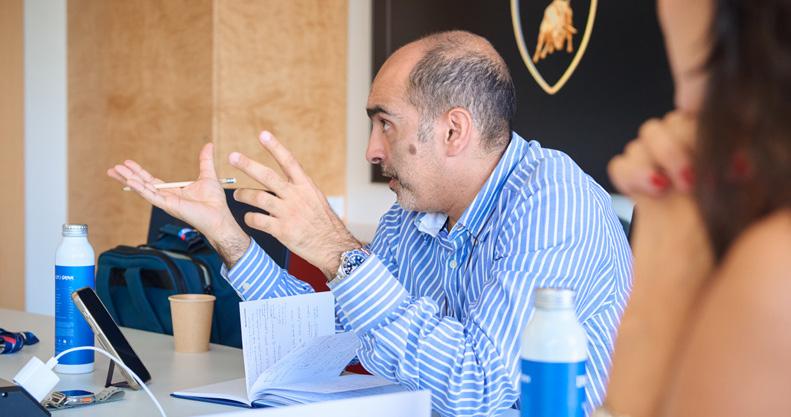
primarily through technical features. Stronger brands connect those features to broader sources of value such as reassurance, confidence, identity, simplicity, and long-term partnership. This is especially relevant in B2B, where buyers assess specifications but are also influenced by trust, expertise, dependability, and confidence in a credible partner.
The Vanzetti Engineering case brought these ideas to life. As a family-owned Italian OEM specializing in cryogenic pump technology, Vanzetti faced pressure from low-cost competitors, large integrated players, and structural changes in traditional automotive markets. To grow, it needed to diversify into areas such as marine fuel systems, biogas, and industrial applications, where differentiation would be critical.
The case showed how a technical B2B company learned from luxury brands to make intangible value visible without sacrificing engineering credibility. Vanzetti moved beyond emphasizing product performance and service to communicate heritage, design quality, and purpose—what it calls “the luxury of sustainability”. Actions included simplifying technical language, improving storytelling, refreshing visual identity, strengthening trade-fair presence, and aligning touchpoints around a consistent brand promise. The broader lesson was that branding is most effective when it supports strategic transformation and translates technical excellence into perceived customer value.
Key takeaways for executives
Commoditization is a strategic and branding challenge, pricing pressures are more a symptom.
It is not because you work in commodities (e.g. banking, insurance, food...) that your business has to be commoditized.
Brand power and brand stature are distinct and both matter.
Intangible value influences choice even in highly technical B2B markets. To learn how to elevate your brand power, luxury brands are a good model.
Strategic and branding responses are mutually reinforcing ways to escape the commodity trap.

Building corporate advantage in multibusiness companies
Markus Menz
Visiting Professor
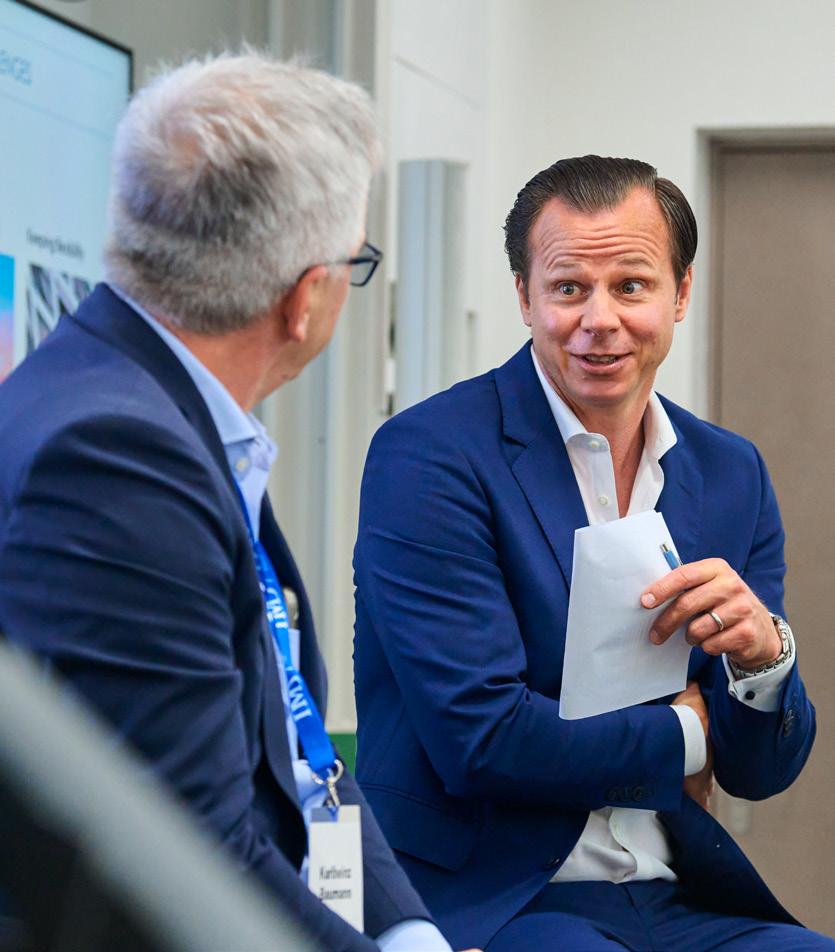
How can a corporate center create value across a portfolio of businesses rather than simply oversee them?
This session examined what separates diversified companies that build real corporate advantage from those that merely add complexity, cost, and coordination burdens.
The session explored the strategic logic of multi-business companies and the conditions under which diversification creates value. A central message was that owning multiple businesses is not, by itself, a source of advantage. Corporate advantage arises only when the parent company helps its businesses perform better together than they would separately, and better than competitors with similar portfolios.
The discussion began with the rationale for diversification. Multi-business firms often pursue broader revenue pools, risk balancing, shared technologies, economies of scale, and opportunities to transfer capabilities across units. But these benefits are not automatic. The session highlighted that diversification fails when the portfolio lacks coherence or when the corporate center becomes an added layer of cost and control without contributing meaningful value.
A key framework focused on the role of headquarters. The first responsibility of the corporate center is to avoid destroying value through excessive bureaucracy, duplication, or poorly judged intervention. Only after clearing that bar can the center create value by enabling synergies, allocating resources effectively, shaping
the portfolio, and facilitating capability sharing across businesses. The session emphasized that this value must be assessed relative to alternatives. A company has a true corporate advantage only if it can create more value from its collection of businesses than other potential owners could.
The session also examined the difference between related and unrelated diversification. Related diversification generally offers stronger opportunities for synergy because businesses can share customers, technologies, capabilities, supply chains, or brand assets. By contrast, highly unrelated portfolios often struggle to demonstrate why the businesses belong together, increasing the risk that investors will apply a discount to the group’s valuation.
Another important theme was how to test whether corporate strategy is working. Sum-ofthe-parts thinking was presented as a useful discipline for assessing whether the market sees incremental value in the combined portfolio or would value the businesses more highly on a standalone basis. This pushes executives to define where the center adds value and whether those benefits justify coordination costs.
The Richemont example illustrated how a parent company can create group-level value without imposing excessive centralization, preserving brand autonomy while still benefiting from shared capabilities and selective coordination.
Key takeaways for executives
Diversification only makes sense when the corporate center adds value that business units could not generate on their own.
The first job of headquarters is to avoid value destruction through unnecessary complexity, interference, and overhead.
Related diversification tends to offer better prospects for corporate advantage because it creates a stronger basis for synergies.
Corporate advantage is relative: the question is not just whether value is created, but whether this owner creates more value than alternative owners could.
Recommended reading
Why corporate functions stumble by Sven Kunisch, Günter MüllerStewens, and Andrew Campbell
The Corporate Headquarters in the Contemporary Corporation: Advancing a Multimarket Firm Perspective by Markus Menz, Sven Kunisch and David J. Collis 02 03
Executives should regularly test the logic of their portfolio and operating model using a sum-of-the-parts mindset.

Determinants and consequences of corporate development and strategy function size by Markus Menz and Fabian Barnbeck
Corporate Strategy and the Theory of the Firm in the Digital Age by Markus Menz, Sven Kunisch, Julian Birkinshaw, David J. Collis, Nicolai J. Foss, Robert E. Hoskisson, John E. Prescott
Strategy beyond the market: Navigating non-market forces in uncertain environments
Michael Yaziji Professor of Strategy and Leadership
What happens when strategy is shaped less by competitors and customers, and more by regulators, activists, governments, and public opinion?
In this session, Michael Yaziji examined how executives can navigate the nonmarket environment with greater clarity and control, using better stakeholder analysis, sharper issue framing, and more effective coalition building to protect and advance business strategy.
Yaziji’s session argued that strategy today must extend beyond the traditional market lens. Competitive advantage is no longer shaped only by rivals, pricing, innovation, or customer demand. It is also influenced by governments, regulators, NGOs, the media, activist groups, labor organizations, and shifting public expectations. These nonmarket forces can affect a company’s license to operate, strategic freedom, reputation, cost structure, and even the viability of an entire business model.
A core message of the session was that nonmarket environments operate by different rules from market environments. Market exchanges are typically more direct and transactional. Nonmarket dynamics are broader, more political, and often indirect. Influence flows through coalitions, institutions, narratives, and public legitimacy. As a result, firms need a different kind of strategic analysis to understand what is happening around them and respond effectively.
One important case examined the challenge faced by GlaxoSmithKline during the HIV/AIDS crisis in South Africa. The discussion showed how a company can become the visible target in a broader struggle over public health, access to medicines, and intellectual property rights.
The point was not only that firms face pressure from activists, but that they often misread who is really trying to influence whom. A company may be the focal point of a campaign while the deeper objective is to change policy, norms, or international rules. This underlined the importance of understanding stakeholder motives, issue framing, and the wider institutional context.
The session also presented practical ways to analyze nonmarket situations. Rather than relying on simple stakeholder lists, executives were encouraged to identify relevant actors, understand their goals and sources of influence, and map relationships among them. This helps leaders see where pressure originates, how it spreads, and which alliances matter most. The class emphasized that strategy in this space depends not only on facts, but also on framing, timing, and the ability to work across multiple arenas at once.
A second major part of the session used an electric-vehicle negotiation exercise involving business, government, labor, and advocacy stakeholders. This brought the concepts to life by showing how nonmarket strategy unfolds in real time. Participants saw that interests overlap only partially, coalitions can shift quickly, and successful engagement depends on listening carefully, understanding what each side values, and adapting as new information emerges.
Key takeaways for executives
Nonmarket forces are now central to strategic decision-making, not a side issue for public affairs teams.
Stakeholder pressure is often indirect, so leaders need to understand influence networks, not just visible opponents.
The way an issue is framed can shape outcomes as much as the underlying economics.
Effective nonmarket strategy depends on choosing the right arena, building coalitions, and acting at the right moment.
Executives need both a clear position and the agility to adapt as political and stakeholder dynamics evolve.
Recommended reading
Everything you need to know about nonmarket strategy, part 1: Why do you need it? by
Michael Yaziji

What our participants say
Many things stood out for me; especially the exceptional learning facilities and the faculty who shared their knowledge from the heart, with openness that they do not have all the answers. The planning showed a level of commitment that freed us to reflect, walk, and wonder in a truly healthy manner, making it a worthy leadership retreat in many ways.
Charles Bassey Executive Director
Nirsal Microfinance Bank, Nigeria

One move at a time: How mindset shapes true greatness

Chess Grandmaster and Strategic Thinking Expert
From a childhood immersed in chess to becoming a global champion, Judit Polgár’s story shows how mindset, discipline, and persistence turn a pawn into a queen.
I can’t imagine a world without chess. The game was so important in my family that I often joke that my pacifier was a pawn.
Before my father even met my mother, he had already formed a strong belief about parenting and education. He had decided that he would do everything to raise his children to be exceptional, believing that excellence comes from concentrated, purposeful training rather than standard schooling. My mother, who was also a teacher, supported his vision.
I was immersed in chess from a very young age. My older sisters were already strong players, so learning the game felt natural to me. My parents created thousands of handmade study cards from chess games, organized practice sessions, and built a structured learning system around us. We were a close-knit family that encouraged each other constantly. This support laid the foundation for my success.
Nothing is a challenge if you love what you do
Motivation came naturally in this environment. Because my whole family was focused on chess, it didn’t feel forced. Watching my older sisters succeed made me want to improve. Initially, it was the love of the game that motivated me, but early success and recognition fed my passion. As I grew older, it became increasingly up to me how strict I would be and how determined I was to succeed.
If you truly care about something, you choose to prioritize it. It is this mindset that keeps motivation positive and not draining. Ambition comes from wanting to be the best, not just to compete. My goal was never simply to be the best among women, but to become one of the strongest chess players in the world.
My parents encouraged me to compete against the best players available, and I chose to play in stronger competitions – even when it was harder. I wanted to improve continuously. I entered elite tournaments as the only girl, playing against the top male grandmasters and world-class players. This experience gradually built my ability to compete at the highest level. I earned the Grandmaster title at 15 years of age, becoming one of the youngest grandmasters ever.
From pawn to queen
In life, there is so much we can learn from chess. A pawn begins as the smallest and most vulnerable piece on the board, with limited movement and little power. Yet, if it continues to move forward, step by step, facing challenges and finding its way through, it has the potential to become a queen – the strongest piece on the board. This is how we should think about our own journey. We may start out inexperienced or uncertain, but with the right mindset we can keep moving forward, one step at a time, understanding that true progress comes through patience, persistence, and steady, deliberate effort.
I refer to this as the PAWN mindset: starting from a position where you may feel small or uncertain, but knowing that with strong preparation, the ability to adapt, the willingness to commit to what truly matters, and the nerve to trust yourself under pressure, you can keep moving forward and grow into something far more powerful than you first imagined.
The lessons we learn from chess
Chess teaches lessons that go far beyond the board. It develops curiosity and pushes you to ask the right questions, because without the right questions, you can’t find the right answers. It teaches you to be creative and think differently, as you find solutions that your opponents don’t expect. At the same time, you learn to calculate and make decisions under immense pressure, to consider different possibilities and perspectives, and to understand consequences. You learn to identify critical decision moments and to choose strategies in response based on the situation rather than on habit.
You learn to reset when things go wrong by acknowledging the mistake, stopping inner criticism in the moment, so as to allow yourself to refocus on the present situation.
Most importantly, it teaches patience, knowing that progress on the board, as in life, comes from one move at a time, and that consistent, thoughtful effort is what truly leads to success.
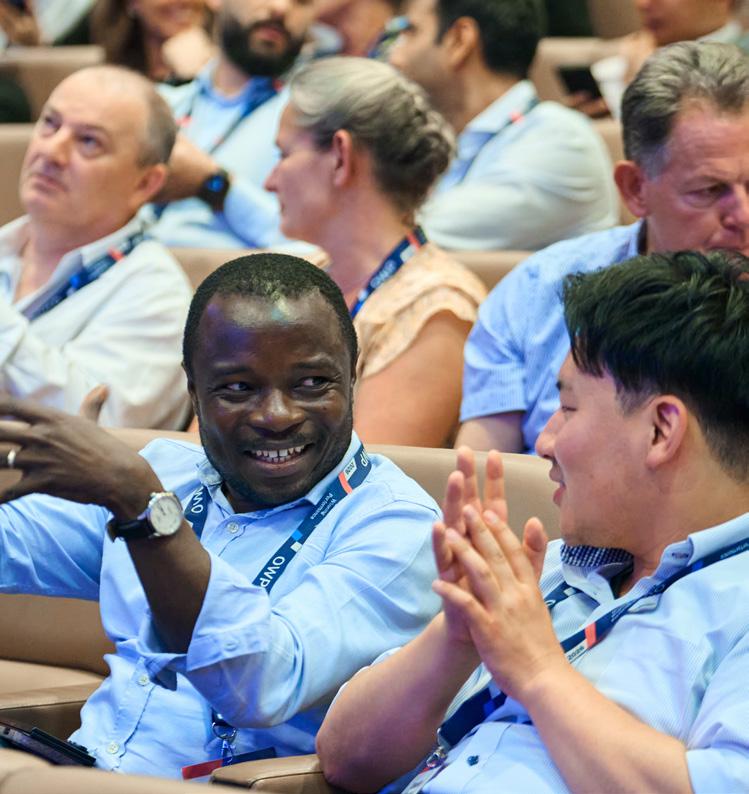
Digital and AI transformation

AI & machine learning impact on strategic and innovation management
Naomi Haefner Professor of Artificial Intelligence and Innovation

Artificial intelligence and machine learning are beginning to reshape how firms search for opportunities, develop ideas, and make strategic choices. The discussion showed that the strongest business impact today comes not from replacing human creativity, but from augmenting it: expanding search, accelerating analysis, and helping organizations innovate more effectively when paired with sound judgment and the right organizational conditions.
Professor Naomi Haefner structured the discussion around a practical executive question: what does AI actually change in strategy and innovation, beyond the hype? The discussion began with the challenge firms face in generating growth through innovation at a time when discovery is more expensive, complexity is rising, and competitive pressure is intensifying. Against that backdrop, AI was presented not simply as an automation tool, but as a capability that can expand how organizations search for ideas, process information, and recognize patterns that people alone may overlook.
A central theme was the role of AI as an amplifier of organizational cognition. Human teams are limited by bounded rationality, finite attention, and a tendency to search for solutions close to what they already know. AI and machine learning can help counter these limits by processing larger volumes of data, surfacing anomalies, identifying non-obvious relationships, and generating a wider set of options for consideration. In strategic and innovation settings, that means AI can support opportunity identification, concept development, experimentation, and the evaluation of alternatives.
The session emphasized, however, that the strongest current applications are still more developmental than revolutionary. Participants discussed examples of AI being used in product formulation, process optimization, proposal drafting, legal and research support, customer-service improvement, synthetic data generation, and content creation. These use cases demonstrated clear value through speed, efficiency, consistency, and analytical support. They also reinforced an important point: while AI can contribute to creativity, most organizations are currently using it to improve existing workflows rather than produce genuinely breakthrough innovations.
That distinction led to a deeper discussion about the limits of current systems. AI is highly effective at recombining known information, scaling exploration, and improving idea elaboration, but it remains dependent on the framing, filtering, and interpretation provided by humans. Originality in the strongest sense still requires managerial judgment: choosing the right problem, assessing relevance, and recognizing which outputs are worth pursuing. In that sense, AI expands the frontier of search, but executives still decide where and why to move.
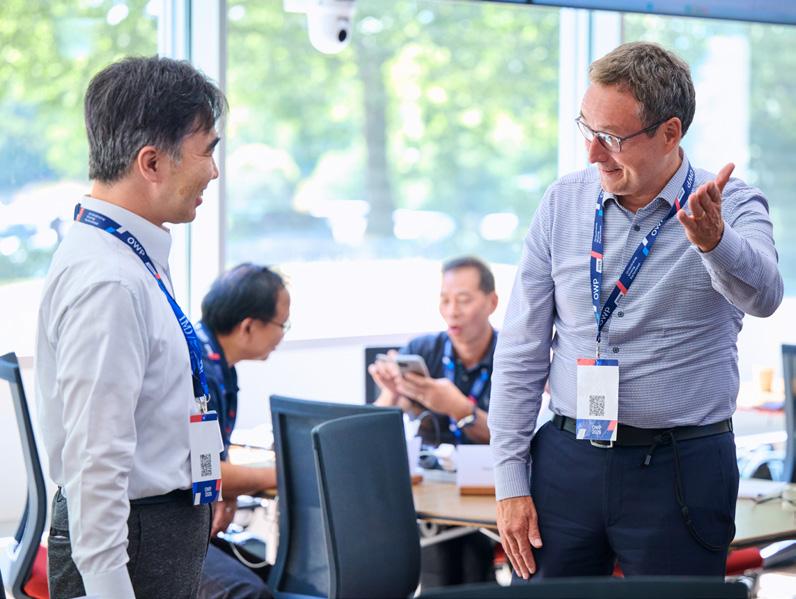
The session also addressed barriers to broader adoption. Data quality, confidentiality, regulation, organizational resistance, and weak incentives for AI-enabled innovation all constrain progress. A recurring insight was that the real challenge is often less about algorithms than about whether the organization is ready to trust, evaluate, and act on AI-supported ideas.
The Sony AI example brought these themes to life. Rather than using AI only for efficiency, Sony showed how it can become a source of differentiated customer value. The case illustrated that AI creates the greatest strategic impact when it is linked to the firm’s core strengths and translated into superior user experiences, not just lower costs.
Key takeaways for executives
AI’s greatest near-term value lies in augmenting human thinking, not replacing it.
Most firms are still using AI to improve execution rather than generate breakthrough innovation.
Human judgment remains essential in problem framing, evaluation, and strategic choice.
Organizational conditions such as trust, incentives, and data foundations shape impact.
AI becomes strategic when it strengthens differentiation and customer value, not only efficiency.
Watch the session highlights

Research: When Used Correctly, LLMs Can Unlock More Creative Ideas by Julian De Freitas, Gideon Nave, and Stefano Puntoni
The Forces That Shape AI’s
Uneven Progress by Will Drover and Laura Huang
What our participants say
At OWP, I learnt that being future ready is about more than technology and AI. It’s about leadership. It’s about strategy. It’s about future-proofing your entire ecosystem.

Jonas Rohde Vice President
the LEGO Group, United States
Use AI as your innovation co-pilot
Professor of Strategy and Innovation
José Parra Moyano
Professor of Digital Strategy
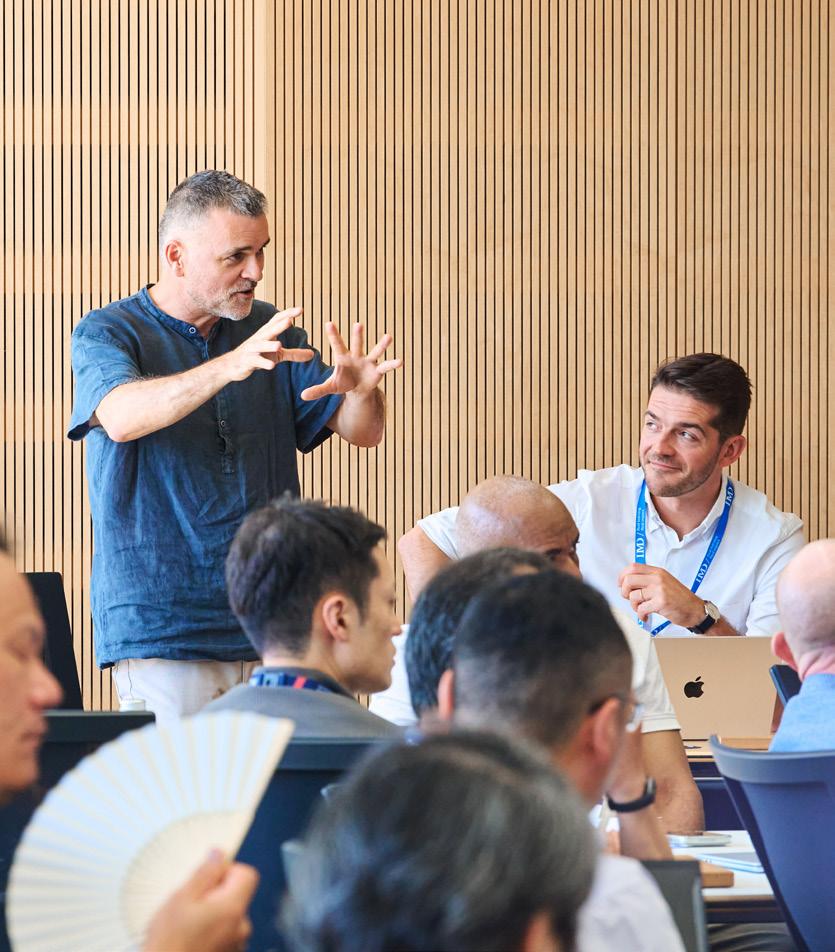
Cyril Bouquet
AI
can be a powerful partner in innovation when leaders use it to sharpen questions, broaden possibilities, and test ideas quickly—while keeping human judgment firmly in control.
Cyril Bouquet and José Parra Moyano presented AI as an innovation co-pilot that can strengthen the quality and speed of innovation when leaders use it actively and critically. The session stressed that AI should support human creativity and judgment, not substitute for them. A recurring message was that executives must stay in charge of the process, using AI to expand options, challenge assumptions, and accelerate learning without accepting outputs uncritically.
The session was built around a real innovation challenge from healthcare: improving the quality of life of hospital patients. This gave participants a concrete setting in which to practice problem framing, ideation, and concept development. The faculty showed that successful innovation often begins with a precise understanding of stakeholder pain points rather than with technology itself. Examples from earlier student projects illustrated this clearly, including solutions designed to reduce stress for children in hospital, improve mobility for elderly patients, and help Parkinson’s patients drink more easily and independently.
A major theme was that innovation often comes from creative recombination rather than pure invention. The faculty encouraged participants to borrow ideas across industries and settings, arguing that strong innovators adapt insights from one context to another. AI can make this easier by surfacing analogies, patterns, and adjacent possibilities more quickly than traditional
approaches. This was reinforced through the iProva demonstration, which showed how AI can help identify invention opportunities by connecting previously unrelated domains. The broader point was that AI expands the innovator’s search space, but people still need to decide which directions are meaningful and worth pursuing.
The workshop also made an important distinction: AI does not need to be inside the final solution to create value. Its greatest impact may be in improving the innovation process itself—helping teams define better problems, generate broader option sets, test assumptions, and create rough prototypes and pitch materials more efficiently. Participants used Claude in a hands-on exercise to sharpen a problem, turn it into a “How might we” question, explore solutions, and challenge their own thinking. They also learned to create reusable AI “skills” such as a problem sharpener, critic, or assumption tester, showing that better results come from structured guidance and embedded expertise rather than generic prompts.
The debrief highlighted a realistic adoption challenge: while AI can accelerate innovation, it can also create overload, ambiguity, and uncertainty if teams do not know how to guide it well. The practical lesson for executives was that AI delivers the most value when it is integrated into disciplined innovation workflows and paired with strong human judgment.
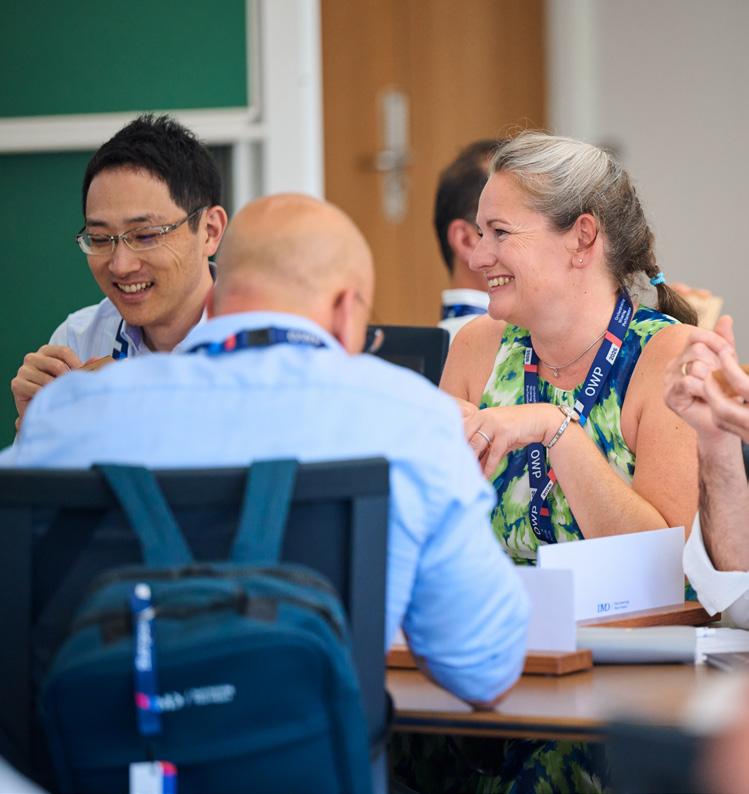
Key takeaways for executives
Keep humans in the lead: AI should expand thinking, not replace decision-making.
Start with the stakeholder problem, not the technology.
Use AI to discover analogies and cross-domain inspiration faster.
Build structured AI workflows, not just one-off prompts.
Focus on using AI to improve innovation work, even when it is not part of the final offering.
AI beyond efficiency: Turning technology into strategic advantage
Goutam Challagalla Professor of Strategy and Marketing
“If we start with the AI, we get trapped in the technology and we don’t see the right prisms.” That was the opening message from Goutam Challagalla, who urged participants to begin not with technology, but with strategy. As Big Tech’s spending on AI is projected to reach $800bn this year, companies face rising investment costs – and increasing pressure to demonstrate returns.
Some organizations are already pulling back. Uber, for example, has capped AI spending at $1,500 per employee per month, with many others setting even lower limits. “The leadership challenge is how do I allocate resources when something doesn’t look like it’s taking off,” said Challagalla.
Drawing on case studies from JPMorgan Chase and Procter & Gamble, he encouraged leaders to rethink how they evaluate AI’s impact. Rather than focusing narrowly on efficiency gains, leaders need to be clear about where AI creates strategic value.
At Procter & Gamble, slowing organic growth, amid pressure from retailers prioritizing ownlabel brands, highlighted the need to speed up decision-making. Yet three barriers stood in the way: limited access to data, information filtered up the hierarchy, and unclear actions.
P&G’s response was to build an “AI factory” that gives employees real-time access to data, algorithms, and models. “It is not AI for for AI’s sake – it was AI to speed up decision making,” said Challagalla. The goal was to embed AI into how the business operates.
The same principle applies at the role level. In sales, lower-value tasks, such as order taking and routine product explanations, should be automated. The real opportunity lies in higher-value work: uncovering customer problems, aligning internally, anticipating needs, and advising.
“You have to shift from time saved to time well spent,” he said. “Companies that make that shift will see the greatest growth.”
The
agility trap:
Why speed without substance is a recipe for failure
Michael Wade Professor of Strategy and Digital

In an era of constant disruption, speed alone is not a competitive advantage. Organizations still need agility, but unless it is supported by resilience, optionality, and strategic clarity, it can become a source of fragility rather than strength.
Michael Wade challenged the idea that being fast automatically makes an organization effective. He noted that agility became popular as a response to the limits of rigid long-term planning, but it is now often treated as a cureall. His core argument was that in today’s environment, agility on its own is no longer enough. Organizations also need the capacity to withstand shocks, continue operating under pressure, and adapt without losing strategic direction.
The session defined agility as the ability to sense change, make decisions quickly, and act fast. But Wade drew a sharp distinction between true agility and simple reactivity. Real agility is deliberate and anchored in a clear sense of purpose; reactivity is movement without direction. When companies overemphasize speed, they risk short-term thinking, rushed decisions, poor coordination, burnout, and erosion of institutional memory and values. Leaders therefore need to maintain a stable “North Star” while remaining flexible about how they respond to changing conditions.
IMD’s experience during the COVID-19 crisis illustrated this point. The school moved rapidly into online and hybrid formats, adapted pricing, invested in digital delivery, and explored new revenue opportunities. These actions showed agility in practice. At the same time, the disruption exposed underlying vulnerabilities, especially dependence on in-person delivery and international travel. The lesson was that quick response helps, but it does not remove structural fragility.
Wade also distinguished between black swans and gray rhinos. Black swans are rare, high-impact events that are difficult to predict. Gray rhinos are visible and probable threats that organizations often ignore until they become urgent. Both matter, but gray rhinos are especially important because they are foreseeable. This means leaders must not only react well, but also prepare in advance for disruptions they can already see coming.
The session introduced robustness as the essential complement to agility. Robustness is the ability to absorb shocks, keep functioning under stress, and sustain performance despite turbulence. It may require trade-offs that seem inefficient in the short term, such as redundancy, buffers, backup capacity, diversification, and optionality. Wade’s message was that these features should not be dismissed as wasteful if they improve long-term resilience.
He concluded with six building blocks of robustness: reinforce the core, preserve optionality, build ecosystems, digitize to endure, empower decision-making at the edge, and strengthen learning capacity. The overall message was straightforward: agility still matters, but speed without substance is risky. The organizations best equipped for uncertainty are those that combine responsiveness with resilience, strategic discipline, and the ability to take a hit without breaking.

Key takeaways for executives
Agility is valuable only when it is purposeful and tied to clear strategic intent.
Robustness strengthens performance by helping organizations absorb shocks and continue operating.
Visible threats deserve as much attention as unexpected crises.
Short-term efficiency can undermine long-term resilience if leaders remove too many buffers.
Strategic flexibility depends on defining the core broadly enough to preserve future options.
GAIN:
Demystifying GenAI for office and home by Michael Wade and Amit Joshi
What our participants say
One of my main objectives for coming to IMD this week was to learn more about how to lead agile agents and humans, which is very relevant for my business. And I was impressed by what I learned, how to lead and how to implement AI. So that’s been a great learning for me this week.
Frode Lervik CEO
Deltager AS, Norway

Navigating a world without a center:
What the end of the postwar order means for business
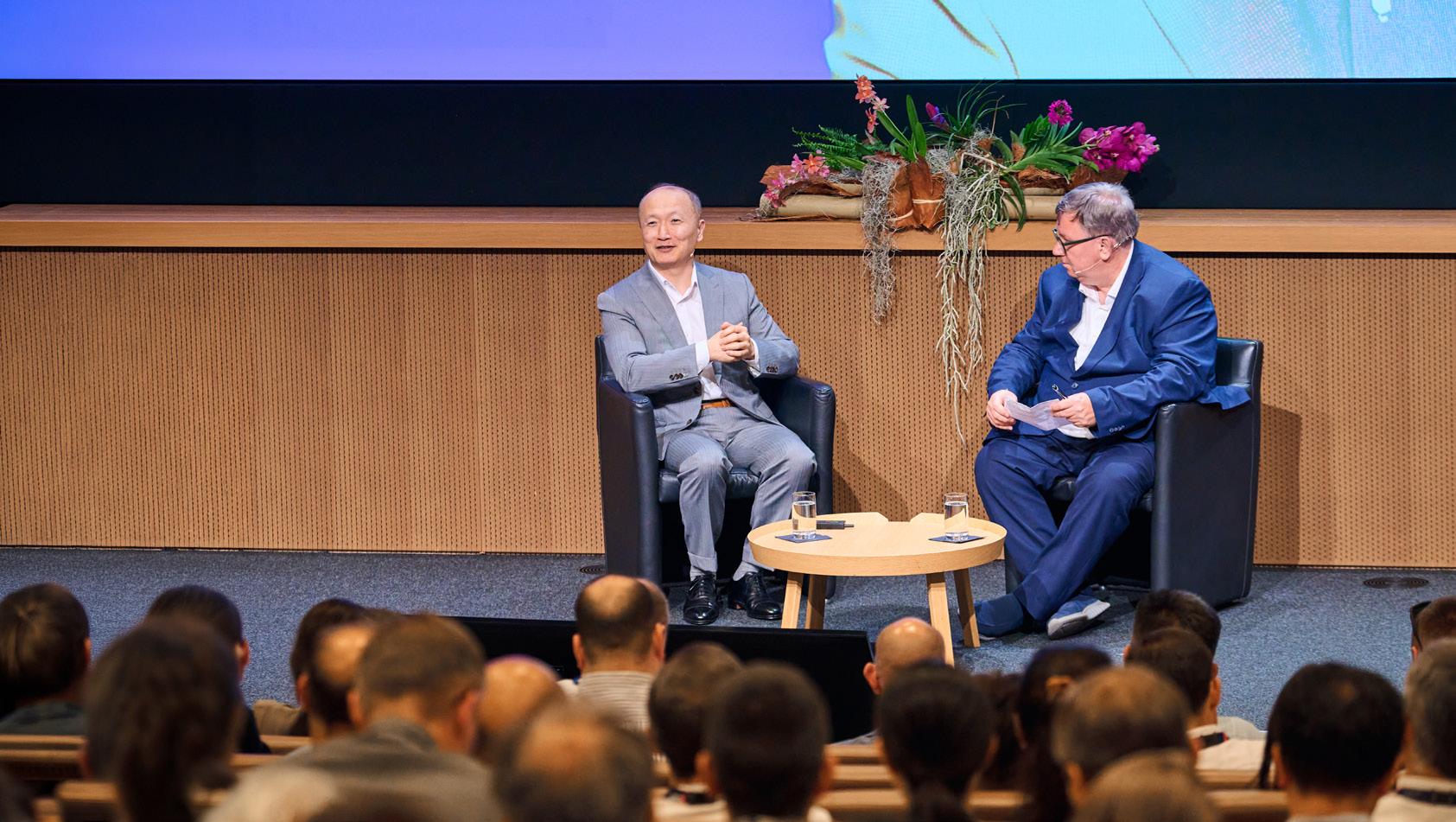
Qiyu Xu
Former Deputy Director of the Institute for Strategic Studies at China’s National Defense University
Great
power competition is reshaping global supply chains and the broader economy.
To navigate this turbulence, business leaders must embrace the new world order, decentralize operations, and plan for the worst-case scenario, says
Qiyu Xu.
In China, within business circles, we are all too aware of the noisy, unpredictable impact that the current geopolitical trajectory is having on business. From rising costs and supply chain disruptions to volatile financial markets, restricted market access, and payment challenges, geopolitics’ impact is real and decisive. The reality is that we must learn to live with it.
There are three main geopolitical risks that business leaders around the world cannot ignore: the strategic competition between China and the US, the Ukraine war and its geopolitical implications, and the global implications of the Iran conflict.
China–US competition
In May 2026, the president of the United States, Donald Trump, made a state visit to China. This visit was Trump’s second state visit to China; the first was in 2017, and the result was to work toward a constructive strategic stability relationship. Our foreign minister Wang Yi described the relationship as an active stability featuring cooperation as the mainstay, a sound stability with well-defined competition, a regular stability where differences are manageable, and a lasting stability promising peace.
People have asked me what the real meaning of this is. My answer is low-level stability, which is better than uncertainty, but it’s still limited. It means we recognize that competition exists, and we agree to manage and regulate it. We accept that there will be difficulties, and we acknowledge that some issues are too complex and too significant to ignore. Rather than letting them escalate, we understand that action is necessary.
Competition between China and the US is focused on three key issues: Taiwan (Chinese Taipei), cutting-edge technology and its supply
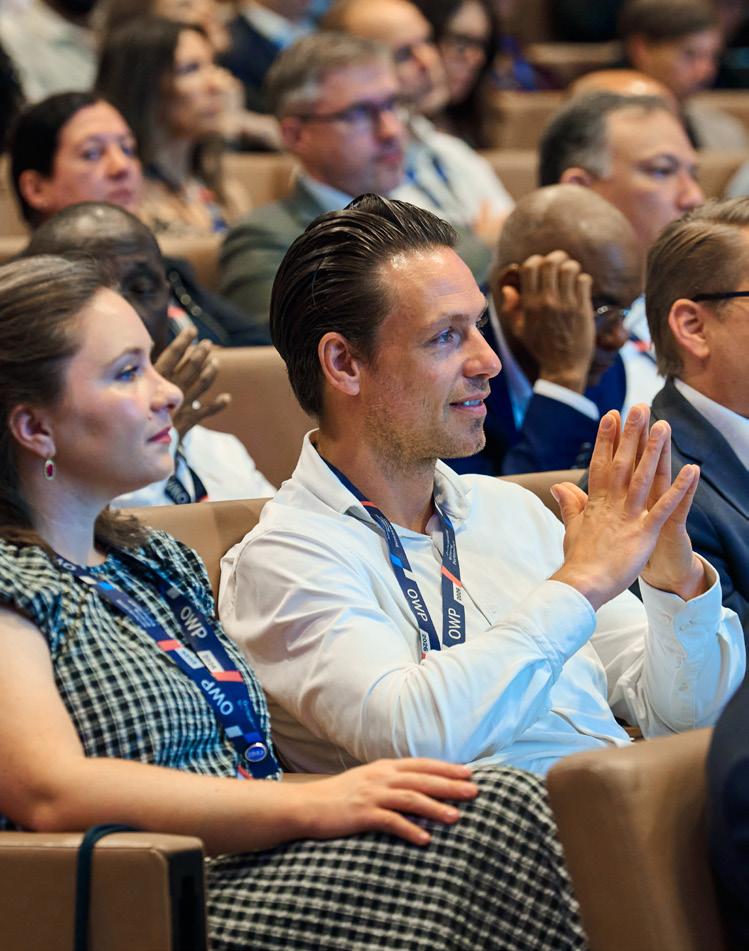
chains, and critical minerals supply chains. The main issue right now between the two is cutting-edge technology and its supply chains. As a friend of mine, an American admiral, said to me so clearly in 2019, “Even if China gets ahead of the US in just one field of cuttingedge technologies, it would mean the end of the US’s current international position.”
There are currently two diverging views on this: “small yard, high fence”, or “two separate tech systems”. I don’t think either is likely on its own. The first is unlikely because China’s technology is improving. The small yard has a chance to expand. The second is also unlikely because in the past, when there was cooperation, the US did the innovation and China the application. Now, because of competition, China has had no option but to improve on innovation and the US has seen how this plan has backfired, so I don’t think the US will push it very hard. My sense is that the future will be somewhere between these two.
The Liberation Day Tariff in 2025 was a historical event between China and the US when the world’s two biggest economies almost stopped their direct trade for the first time in the postCold War era. I think the meaning of what happened here is much more than the US–China trade war; the most favored nation principle was undermined. This principle is crucial to today’s global trading system. This time, the US administration overrode this principle, and we doubt whether the next US administration will go back to its previous position.
The November 2025 National Security Strategy of the US government included a key sentence: “The days of the United States propping up the entire world order like Atlas are over.”
What I think is that the United States is not abandoning its rights or power, but its global responsibility. This is crucial to all of us.
Which brings me to the question, in the next 15 to 20 years, what is the most probable risk for the world order, the Thucydides Trap or the Kindleberger Trap? The Kindleberger Trap is what I am hearing most and I think this is noteworthy. Kindleberger’s Trap is where no country wants to assume leadership of the world. When there is a crisis, no single country will provide for the public good, and every country will have to do it by itself. This will lead to chaos.
The Ukraine war and its geopolitical implications
The war in Ukraine has now lasted longer than the First World War. This is a war of attrition. Ukraine’s problem is a lack of resources and manpower and its dependence on the US for information and intelligence. The Russian troops are still moving forward.
Russia’s problem is less about its military and more about its economy; it faces declining growth, growing deficits, and rising taxes. One of the main risks of this war is the collapse of one of the belligerents. If Russia loses, there will be significant implications in terms of its huge nuclear arsenal. The second is a peace at the cost of Ukraine’s territory, because that will mean that for the first time in 80 years, the principle that no country should have its borders changed by force will be overruled. This will spell the end of the post-World War II system.

The Iran conflict and its global implications
This situation demonstrates a failure of mutual deterrence between Iran and the US. One result of this war is the failure of freedom of navigation. It is the first time since 1945 that the US has failed to guarantee the security and free passage of a strategic sea lane, and the world has been impacted by it with a rapid rise in the cost of fuel globally.
How to navigate the turbulence?
The reality is that the post-World War II global system is dissolving. So, what should we do?
What follows is some advice that I give to Chinese businesses on how to navigate a world without a center.
Globalization still exists, but it is becoming more difficult and more complex.
01 02 03 04
Strike a balance between efficiency and resilience. In the current environment, resilience is becoming an increasingly important part of a company’s strategy.
Localize and embrace a new form of globalization. Globalization still exists, but it is becoming more difficult and more complex. Companies must adapt and transform, particularly by localizing their supply chains.
Decentralization. Traditional, highly centralized systems are becoming outdated. Companies need to move toward more flexible, decentralized structures in order to respond effectively.
Plan for the worst-case scenario. My perspective is shaped by decades of military experience, where this kind of planning is fundamental. Businesses should have clear contingency plans in place. You may hope never to use them, but having them provides security and preparedness in an uncertain world.
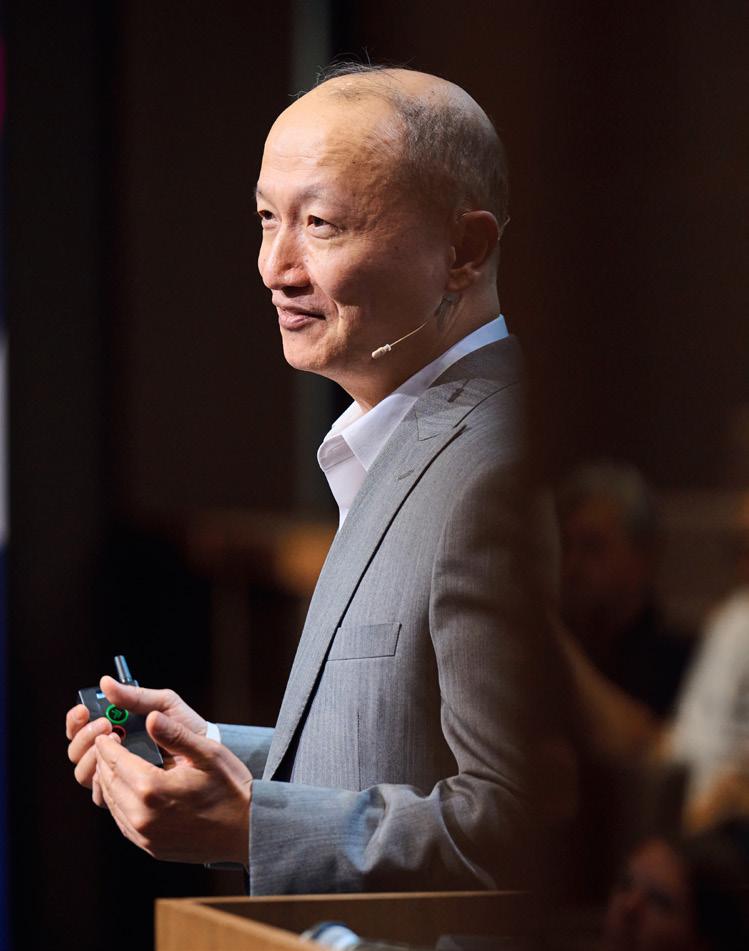
Sustainability
Circularity as a source of strategic resilience
Julia Binder Professor of Business Transformation

The business case for circularity is no longer just about sustainability. It is about survival in a system under strain.
We are operating in a period of overlapping disruptions: geopolitical confrontation, misinformation, societal polarization, and accelerating technological change. Sustainability is part of that picture, but not the most immediate pressure shaping decisions.
“For the longest time, we have assumed that countries will always prioritize global trade over national interests,” said Julia Binder. “That picture is changing. Weaponizing trade through tariffs, and restricting access to energy and resources, show that we need to rethink resource security and productivity.”
These pressures are compounding as multiple systems face disruption at once. Climate, natural resource shortages, and rising AI-driven demand for energy and materials are all converging, thereby straining systems that were never designed to absorb this much pressure simultaneously.
But none of these challenges exist in isolation. “It doesn’t help to look at these topics in silos,” she argued. “We need to understand how they intersect and what it means for business.”
At the same time, tariffs, export controls, conflict, and supply-chain dependencies are reshaping how companies make decisions. Circularity becomes relevant here not simply because it reduces waste, but because it can reduce exposure.
Stop treating recycling as the circularity strategy: The real opportunity is keeping products, components, and materials at their highest value for longer – through repair, upgrades, modular design, refurbishment, and service-based business models.
Make waste someone else’s input: Circularity does not always mean putting materials back into your own production loop. For example, used cooking oil can become renewable fuel, byproducts can become revenue streams in another industry. The better question is: who else could create value from this?
From cost to investment: Regenerative agriculture and longer-lasting products can be difficult to justify under today’s economic landscape. But rising resource costs and supply risks are starting to show up on the balance sheet.
Our take-make-waste system assumes infinite resources and stable international relations. Neither assumption holds today. Circularity is one way to redesign for what comes next.
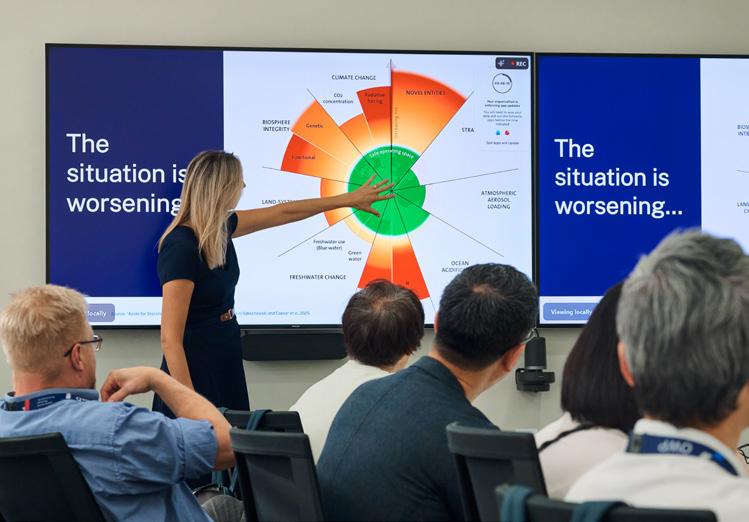
Recommended reading
The Circular Business Revolution by Julia Binder and Manuel Braun
Material advantage: How circular strategies drive business value by Julia Binder and Manuel Braun Power, scarcity, and the new rules of the game by Julia Binder and Manuel Braun
Resource wars! How circularity is becoming your best defense by Julia Binder and Manuel Braun
The investor climate pivot: What it means for you
Hans -Christoph Hirt Adjunct Professor of Strategic Governance and Investor Stewardship
Karl Schmedders
Professor of Finance
Investor expectations on climate are changing fast. This session explored what that shift means for executives, showing why climate ambition alone is no longer enough and why companies now need transition strategies that are commercially credible, operationally realistic, and resilient under different policy and market conditions.
The session examined how investor attitudes to climate have shifted from the earlier ESG “heyday” toward a more commercially grounded, policyaware, and pragmatic stance. It showed that the debate is no longer about whether climate matters, but what kinds of climate strategies investors are still willing to back. The discussion highlighted how rising political uncertainty, shorter market time horizons, and more demanding return expectations are reshaping relationships between companies, capital providers, and sustainability agendas.
A central theme was that companies now need transition plans that are credible, executable, and economically robust. Climate ambition alone is no longer persuasive if investors do not believe management can deliver at the right pace, with the right capabilities, and a realistic path to value creation. The BP case illustrated this tension, showing how difficult it can be to maintain investor support when there is uncertainty about profitability, strategic coherence, or the pace of transformation. In contrast, a modular and stepwise decarbonization approach in heavy industry showed how staged transformation can be easier for investors to assess and support than large, all-at-once commitments.
The session also introduced useful lenses for executives. One was the “tragedy of the horizon”: climate change is a long-term challenge, but executives, politicians, and investors often operate on much shorter cycles. Another was the
investment-chain perspective, which distinguished the roles of asset owners, asset managers, passive investors, and specialist capital, showing why they do not all respond to climate issues in the same way. This matters because companies often speak to “investors” as though they were one audience, when in reality they have different mandates, incentives, and time horizons.
Another important message was that investor pressure alone will not deliver the transition. Policy frameworks remain essential, especially carbon pricing, which was presented as one of the strongest tools for making decarbonization economically viable. The discussion also broadened from transition risk to physical risk and adaptation, noting that climate disruption is increasingly affecting insurance, asset values, and the resilience of business models.
On governance and reporting, the session cautioned against confusing disclosure with impact. Reporting frameworks and sustainability metrics are important, but they do not substitute for strategic substance. Companies need governance, capital allocation, and investor communication that reflect real trade-offs, economics, and clear priorities.
For executives, the practical implication is clear: climate strategy must be investable, not just admirable. It should show realistic milestones, reflect customer value, acknowledge uncertainty, and work across a range of future scenarios.

Key takeaways for executives
Climate ambition now needs to be backed by a credible business case, not just strong narrative or intent.
Investors are not one homogeneous group, so climate messaging and engagement need to reflect different mandates and time horizons.
Stepwise and modular transition plans can often attract more confidence than large, highly uncertain transformation bets.
Effective climate action depends not only on markets, but also on policy mechanisms such as carbon pricing.
Reporting matters, but it only creates value when it is linked to real strategy, governance, and execution.
What can investors do about climate change? by Tom Gosling, Hans-Christoph Hirt, and Fernanda Gimenes
Comment: Why investors need a more realistic climate agenda by Tom Gosling and Hans-Christoph Hirt
Why leading an orchestra is a lot like leading a business
97
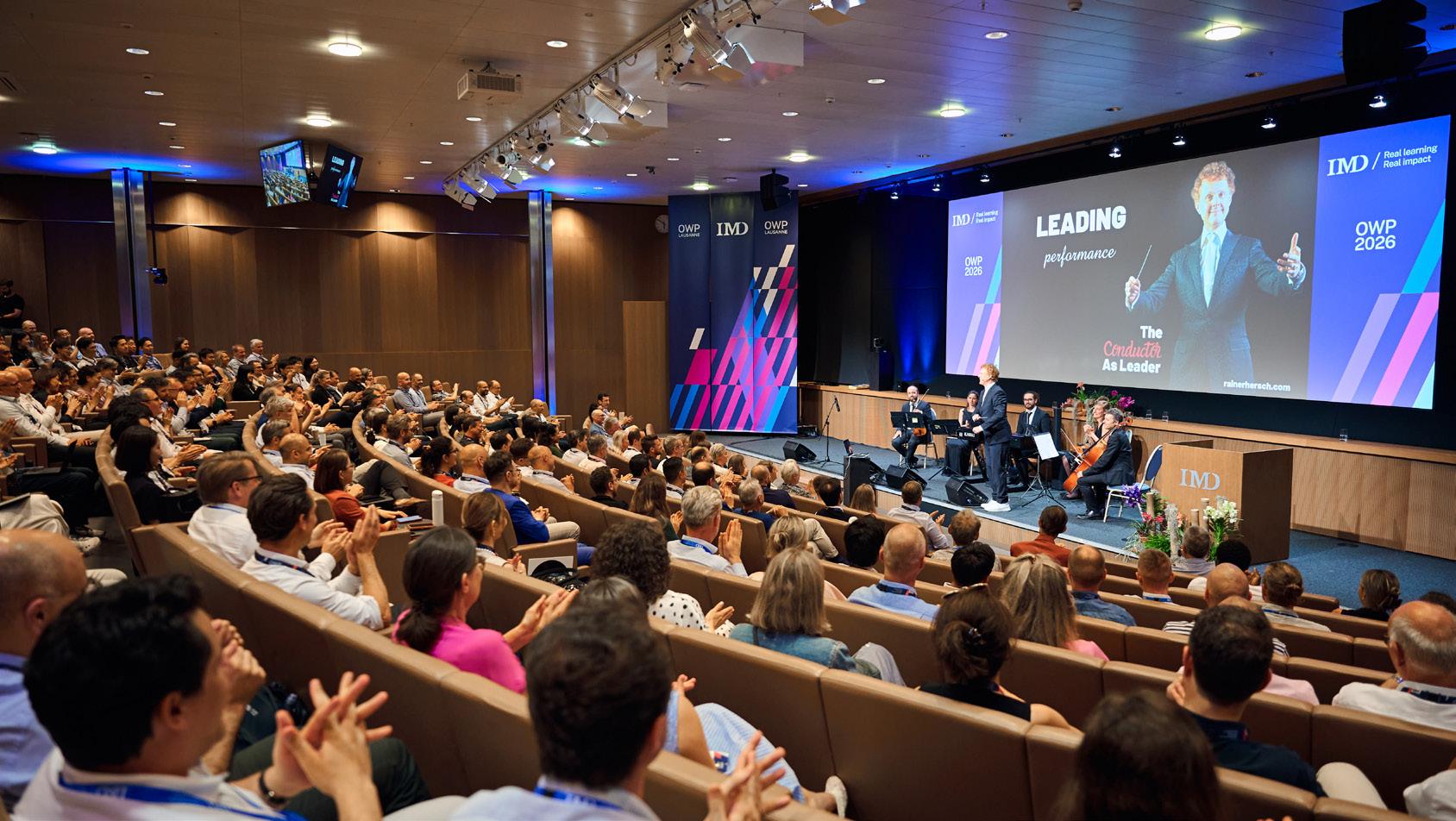
Rainer Hersch
Musician, Comedian & Conductor,
The Rainer Hersch Orkestra Watch
Leading an orchestra offers a compelling blueprint for business leaders, showing how to align teams, translate strategy into action, and deliver results through collaboration.
An orchestra is one of the most complex teams you can imagine: dozens of highly trained specialists, each focused on their own part, each capable of excellence, and all of them needing to come together to create something bigger than themselves. And then there’s me – the conductor. To the untrained eye, it might look like I’m just beating time, but in reality, I’m shaping far more than the rhythm.
As the conductor, I’m the team leader. My job is to bring all those individual lines together into a single, unified sound: to turn a set of separate contributions into something coherent and compelling. And it turns out, the role I play and the dynamics within the orchestra have rather a lot in common with leading a team in business.
What makes up an orchestra?
Most people are aware that an orchestra is a large group of musicians, from around 20 to 120 people, divided into groups of instruments: first violins, second violins, violas, cellos, woodwind, brass, and percussion.
The first violins are the biggest department. For the orchestra to function optimally, this group, as with all the other groups, must do exactly the same thing at exactly the same time. The first violins are managed by the leader of the orchestra – the principal violinist – who sub-conducts their peers based on direction from the conductor. From there, a hierarchy ripples through each department. The goal is to create a seamless, homogeneous unit that plays in harmony and in unison to bring the conductor’s vision to life.
Like any team, an orchestra has its own internal dynamics, hierarchies, tensions, and politics. My job isn’t to eliminate that; it’s to work with it and somehow bring all of those moving parts together into a single, coherent whole.
The score is the blueprint
As you probably know, the orchestra performs a piece of music that is written down in detail as a musical score for each instrument. This can be likened to the business strategy that defines what the business is going to deliver. However,
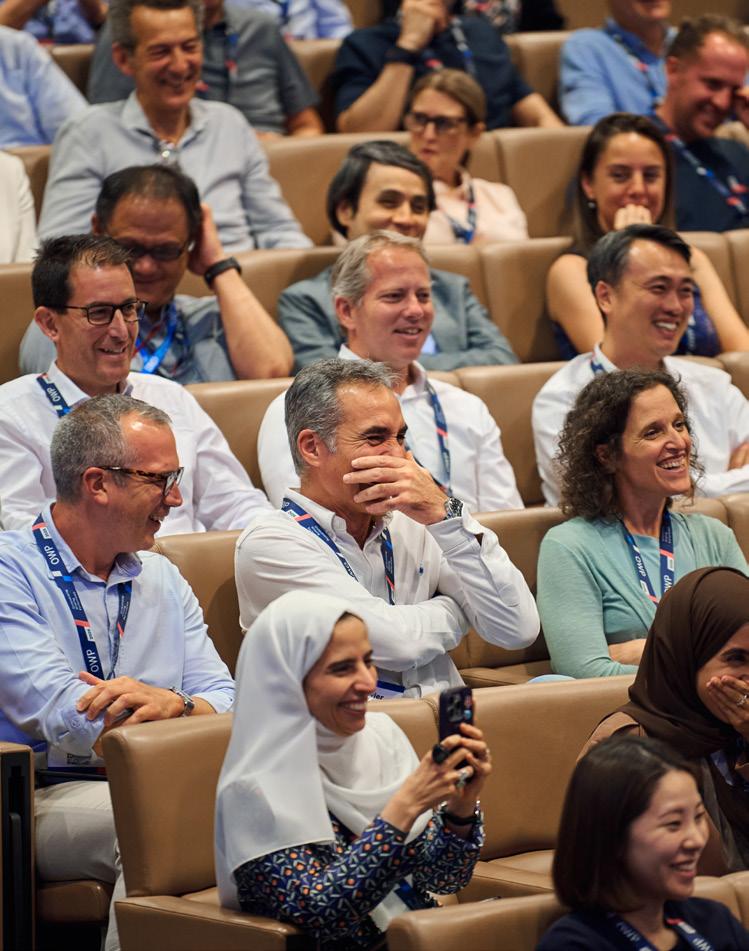
only the conductor gets to see the whole score. Everyone else only sees what they are supposed to play. This means that the conductor is the only person with the complete picture and therefore must take responsibility to mold and lead this disparate, sometimes self-interested group of musicians to build something bigger than the sum of their individual parts. There’s a lot of information in the score, but the job isn’t just to get the notes right; we want to produce something beautiful. This takes judgment and the ability to get everyone aligned behind it.
The role of the conductor
The conductor is not deterministic but relies on the departments.
The main task is to interpret and communicate the ‘project’ (the music), to set the direction, but we depend on the orchestra to bring it to life.
This is not as easy as people think. You might assume that, because the music is so strictly written down, nothing anyone could do would possibly make a difference. The reality could not be further from that assumption.
Think of the conductor like a painter, combining the orchestra’s colors on canvas. The musicians are all artists too – but it is impossible for 50 to 150 painters to all work on the same painting. It’s the conductor’s job to examine the score
and come up with a vision that inspires and unites everyone to create one piece of art.
At the heart of this is collaboration
The orchestra has one golden rule: to listen and to react to what is going on around them to produce wonderful results. It’s a dynamic, interactive dance that requires listening and knowing when to participate in your own section, when to communicate within your section, and when to wait for – and follow – the communication of the person who is in charge of the big picture. Without coordination, even skilled musicians produce something empty or disjointed, but with alignment, the same group can produce something meaningful.
In the words of French composer and conductor Pierre Boulez, “a composer sees a butterfly in his mind, and tries very carefully, very delicately, to get it to alight on the page, still alive and intact. The conductor’s job is to see that same butterfly on the page and let it take flight again.”
How do you inspire and motivate your team?
To inspire and motivate your team, you have to know the project. If people think you don’t understand what’s in front of you, they simply won’t trust you. That knowledge is what builds confidence and gives you authority.
Have something to say – and believe it. If you’ve studied the score, you do know what to say. The job is to come up with an interpretation and bring everyone with you.

Geopolitics and society

A future global order
David Bach
President and Nestlé Professor of Strategy and Political Economy
101
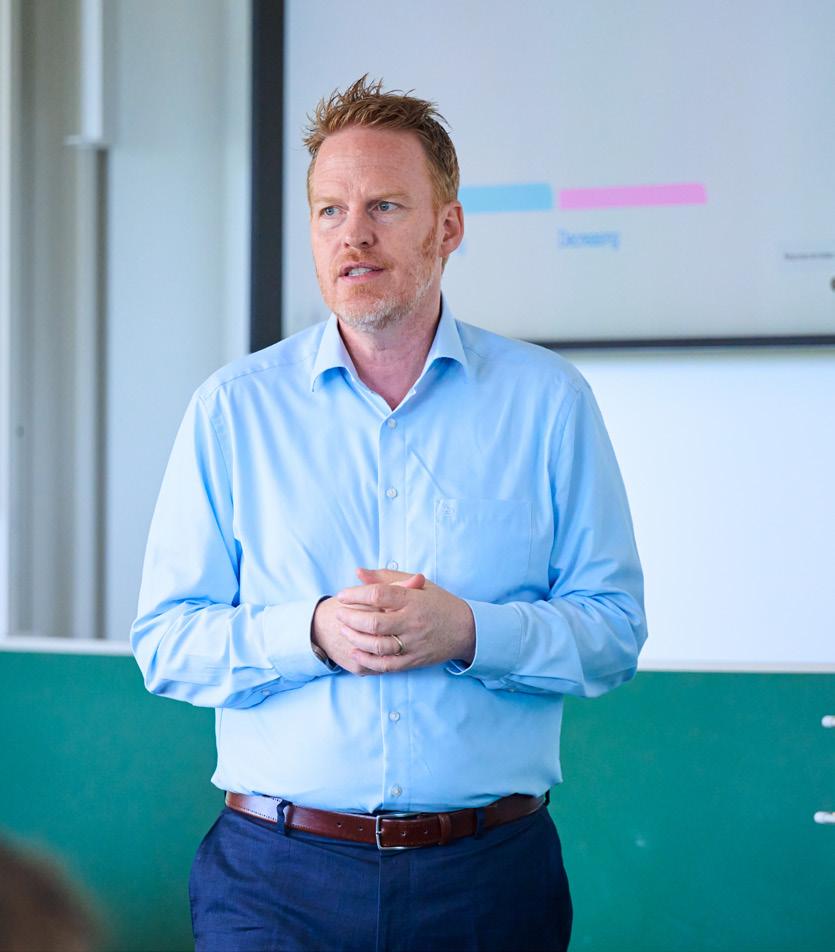

As the global system moves from relative stability to sustained geopolitical uncertainty, executives need new assumptions, not just new tactics. The erosion of the postwar order, the return of great-power rivalry, and the growing role of middle powers are reshaping the environment for business leadership.
Bach’s central message was that many assumptions that shaped business over recent decades no longer hold. Executives built strategies in a world marked by expanding trade, broad faith in globalization, relative geopolitical stability, and strong US leadership. Today, those conditions are less reliable. Rather than treating current tensions as temporary shocks, he framed them as signs of a deeper transition toward a more contested and less predictable global order.
A major driver of this shift is China’s return as a leading economic, technological, and geopolitical power. Bach emphasized that this is not simply a story of rapid growth, but of structural rebalancing in the international system. The world is no longer organized around one dominant power in the same way it once was. Instead, the US-China relationship now sits at the center of the global system, influencing trade, technology, investment, security, and diplomacy.
He used the idea of a “G-Zero” world to describe the current setting: a world in which no country or group of countries is both willing and able to provide the public goods and stabilizing leadership once associated with US predominance. In this context, uncertainty becomes systemic. Bach contrasted a more
power-driven future, shaped by coercion and rivalry, with a more cooperative possibility in which middle powers play a stronger role in sustaining order. This does not mean a return to the old rules-based system, but it does suggest that new forms of coordination may emerge.
The discussion also translated geopolitics into business choices. Companies are responding through regionalization, nearshoring, diversified sourcing, and local-for-local operating models. Bach stressed that firms do not always need to choose between the US and China outright, but they do need to manage exposure more carefully across markets with differing rules, risks, and political dynamics. Europe’s future role was highlighted as especially important, with competitiveness, defense, and resilience all becoming more urgent.
For executives, the broader implication is that globalization is changing rather than disappearing. Efficiency alone is no longer an adequate organizing principle. Resilience, adaptability, and geopolitical awareness are becoming core leadership capabilities. Leaders need to think in scenarios, make decisions under uncertainty, and prepare organizations to navigate ambiguity with discipline rather than drift.
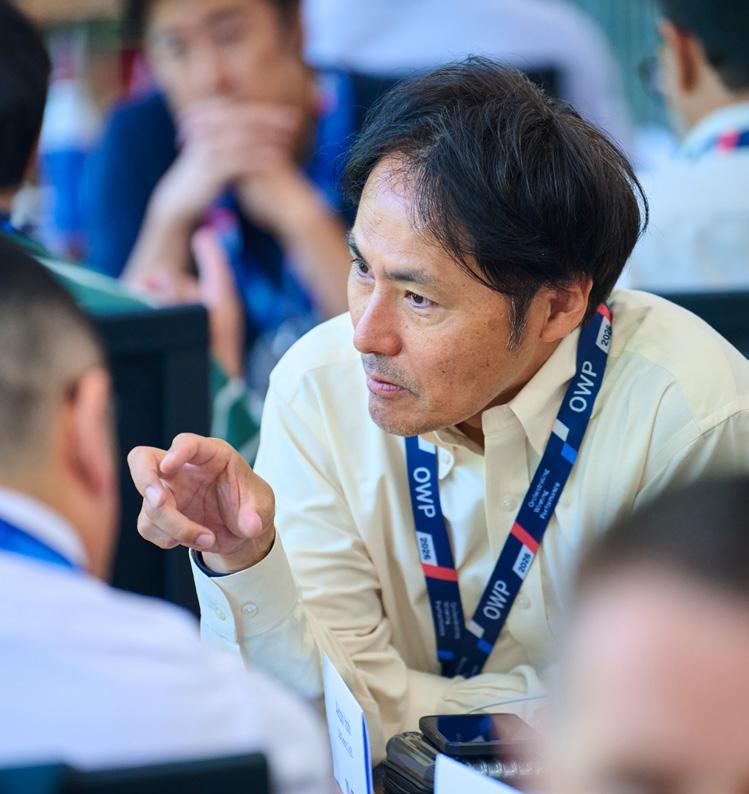
Key takeaways for executives
Replace single-outcome planning with scenario-based strategy.
Rebalance supply chains for resilience as well as cost.
Track middle powers more closely as sources of growth and stability.
Build leadership teams with stronger geopolitical literacy.
Shift from optimizing within a stable system to navigating a less stable one.
Watch the session highlights

The boardroom dialogue on operational resilience in a geopolitical world
Magdi Batato
Executive in Residence
Simon
J Evenett
Professor of Geopolitics and Strategy
Carlos Cordon
Professor of Strategy and Supply Chain Management
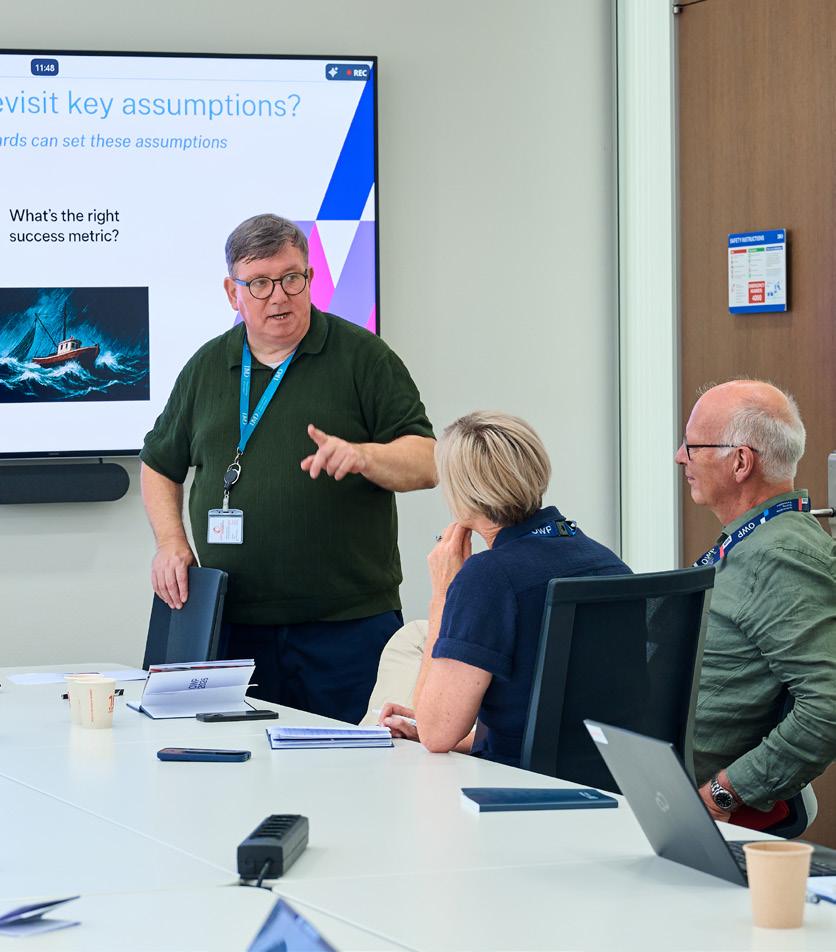
In a world where geopolitics is no longer a distant backdrop but a direct force shaping operations, boards are being pushed to rethink how resilience is built, governed, and sustained.
The discussion brought together strategic, operational, and geopolitical perspectives to show why resilience has become a boardroom priority and how companies can move from reacting to disruption toward using uncertainty as a source of advantage.
The dialogue explored how operational resilience has become a strategic responsibility for boards and executive teams. The faculty argued that many companies are still operating with assumptions formed during a period of globalization defined by efficiency, specialization, and expanding interdependence. That environment has changed. Today’s leaders face a more fragmented world marked by geopolitical rivalry, industrial policy, economic security concerns, and rising state intervention. As a result, operational choices around sourcing, manufacturing, technology, and market presence can no longer be made on cost and efficiency alone.
A core theme was the board’s evolving role in overseeing resilience. Directors are expected to probe more deeply into supply networks, critical dependencies, compliance risks, and the logic behind major operating choices. At the same time, boards must avoid slipping into management execution. The discussion highlighted the need for stronger dialogue between operations, strategy, finance, and risk functions so that resilience is treated as an enterprise-wide issue rather than a narrow supply chain matter.
The session also examined how geopolitical shocks translate into concrete business consequences. Rather than viewing geopolitics as abstract country risk, executives were encouraged to connect events directly to operational and financial outcomes. Examples included dependencies on rare earths, the Huawei controversy, and the effects of the Russia-Ukraine war on energy and food systems. These cases illustrated how trade, technology, critical resources, market access, and even installed technology bases can become instruments of geopolitical competition.
Another important point was that resilience should not be framed only as protection. The discussion introduced the idea of geopolitical maturity, where firms evolve from ad hoc crisis response to more organized defense, and eventually to using geopolitical insight as part of strategic decisionmaking. In that more advanced state, companies do not simply withstand disruption better; they can reposition faster, serve customers more reliably, and create advantage when competitors are destabilized. Examples discussed included Siemens, EDF, Philips, Airbus, and Rio Tinto.
The discussion also stressed that traditional geopolitical briefings are often too static and too vulnerable to bias. To complement expert judgment, the faculty presented a more structured approach to scenario monitoring, including AI-enabled tools that track multiple futures across military, financial, energy, and supply
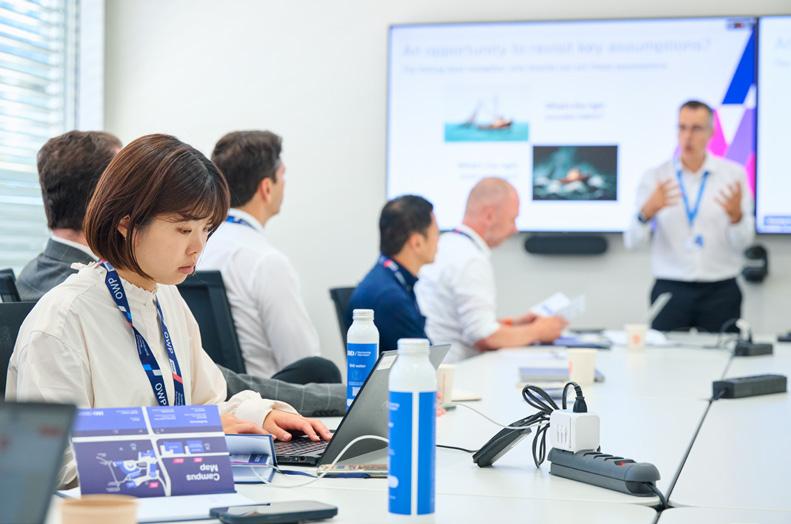
chain domains. The value of this approach lies in making assumptions visible, testing alternative paths, and identifying trigger points for action.
Overall, the dialogue made clear that operational resilience now requires new governance habits, stronger geopolitical capability, and a broader decision framework. Leaders must balance efficiency with flexibility, continuity, and optionality, while translating external uncertainty into practical choices about investment, footprint, partnerships, and risk.
Key takeaways for executives
Boards need deeper operational understanding to govern resilience effectively.
Geopolitical risk must be translated into business and financial implications.
Industrial policy and economic security now shape competitive strategy.
Scenario monitoring should combine expert judgment with structured analytics.
Resilience can become a source of strategic advantage, not just defense.
Recommended reading
What your geopolitical briefings are missing by Simon J Evenett and Johannes Fritz
What geopolitical maturity looks like – and why it pays off by Simon J Evenett

How GenAI is globalizing skills and reshaping globalization
Richard Baldwin Professor of International Economics
Generative AI is not just another productivity tool; it may mark a new phase of globalization by making expertise, communication, and high-value work far more portable across borders.
In Richard Baldwin’s session, the central message was that GenAI has the potential to globalize skills in much the same way earlier waves of globalization moved goods and later services, with major implications for competition, market access, and the geography of value creation.
The session focused on how GenAI is reshaping the mechanics of globalization and what that means for business leaders. A core theme was that AI reduces traditional frictions that once limited cross-border activity, especially barriers linked to language, location, and access to specialized knowledge. Baldwin’s framing moved the discussion away from technology as a narrow automation tool and toward technology as a force that changes who can participate in the global economy, where work can be done, and how firms organize around talent and capability.
A significant part of the discussion examined the democratization of advanced capabilities. GenAI can give smaller firms and participants in emerging economies access to tools and insights that were previously concentrated in large corporations. In that sense, the technology may broaden participation in high-value economic activity, intensify competitive pressure, and create new pathways for innovation, collaboration, and market entry. The implications are not only commercial but structural, because wider access to expertise can alter trade patterns and the international division of labor.
The session also explored one highly visible mechanism through which this shift may occur:
simultaneous speech translation. The conversation highlighted the rapid movement from delayed captions toward near-real-time speech-to-speech interpretation, with improving voice preservation, deeper platform integration, and device-based applications such as earbuds. For executives, this points to a future in which language barriers recede materially, making international teamwork, selling, service delivery, and customer interaction easier across a much broader set of markets.
At the same time, the session did not present GenAI-driven globalization as an unqualified benefit. It addressed important risks, including data privacy concerns, uneven regulatory environments, and the possibility that the gains from AI could be distributed unequally. Baldwin emphasized the need for adaptive policy frameworks and international cooperation if the benefits of this transformation are to be shared broadly rather than reinforcing new forms of concentration or exclusion.
Finally, the session situated today’s developments within a larger AI trajectory. Participants were pointed to the possibility that AI may be approaching an “exponential elbow”, including the prospect of recursive self-improvement, where AI systems increasingly help improve future AI systems. This added a strategic dimension to the conversation: leaders must think not only about current use cases, but also about how quickly the capabilities frontier may move and what that means for business models, governance, and long-term positioning.
Key takeaways for executives
Think in terms of skill globalization, not just task automation. The bigger shift is that expertise itself may become tradable across borders at scale.
Expect competitive boundaries to widen. Smaller firms and emerging-market players may gain access to capabilities that narrow historic advantages held by large incumbents.
Recommended reading
A.I. Will Transform the Global Economy — if Humans Let It by Marc Benioff, Reid Hoffman, Richard Baldwin, and Xiaolan Fu
When AI builds itself by Marina Favaro and Jack Clark
DeepL unveils real-time spoken translation, breaking the next language barrier with Voice-to-Voice
Prepare for a lower-friction global operating model. Near-real-time translation could materially expand collaboration, service delivery, and market reach.
Treat governance as a strategic necessity. Privacy, regulation, and inequality are not side issues; they shape whether AI-led globalization is sustainable.
Plan for acceleration, not linear change. If AI capability growth steepens further, leadership teams will need faster cycles of strategic review and adaptation.

What our participants say
Our company, AGC, has been sending people to IMD for more than twenty years. I now understand the reason why everybody is saying they want to come back.
Shingo Misagawa Director AGC, Japan
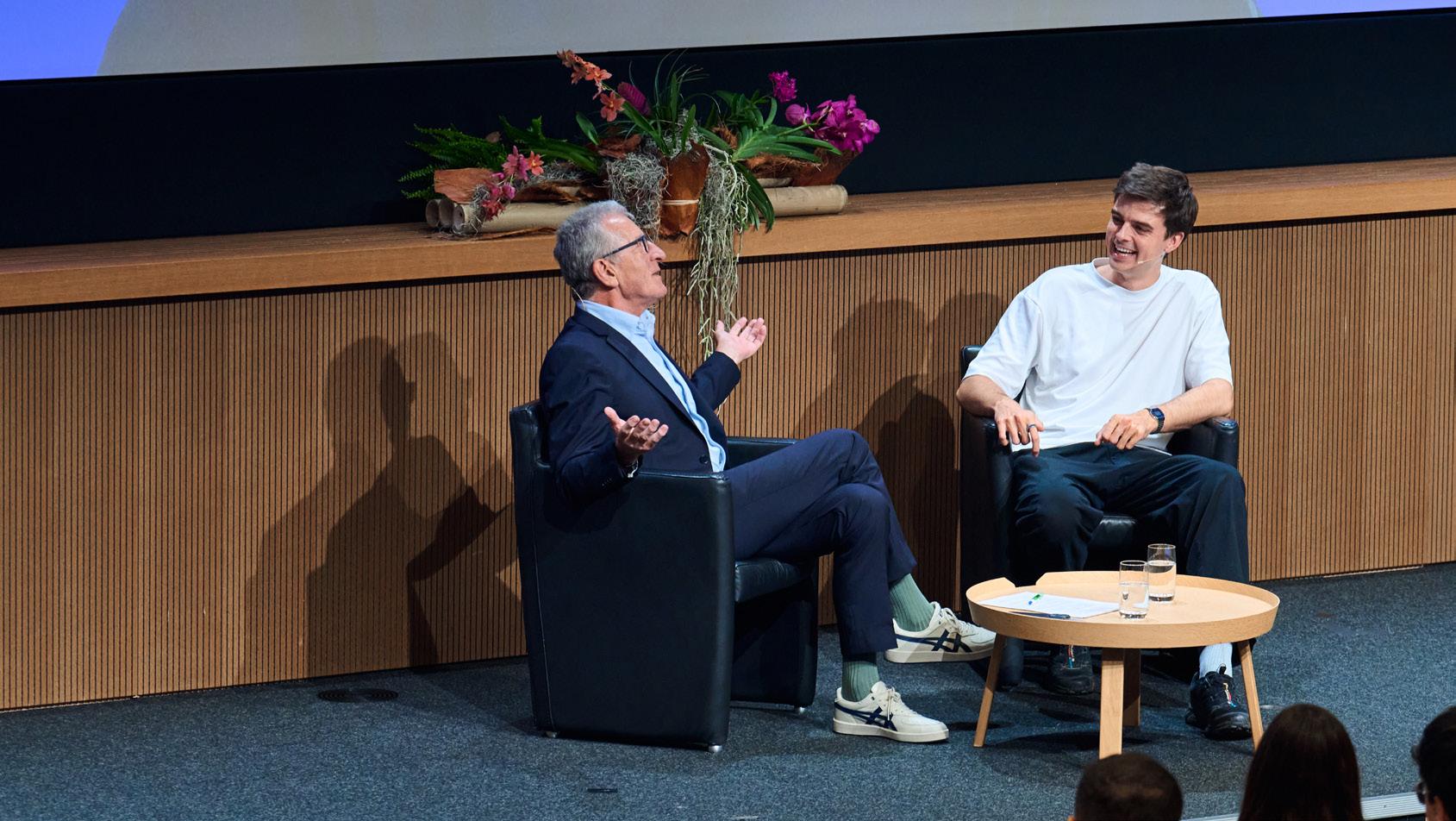
Trust and transparency:
Building a media brand for the
TikTok generation
Hugo Travers
Journalist and influencer
Hugo Travers, who built a 20-millionstrong audience from scratch, explains why trust, transparency, and accessibility sit at the heart of his model.
Like any good entrepreneur, Hugo Travers, better known under the pseudonym HugoDécrypte, spotted a gap in the market.
As a politically engaged student at Sciences Po in Paris, he saw a disconnect between traditional media and the way his generation consumed news. In 2015, he set out to close that gap by launching a YouTube channel designed to make current affairs accessible to younger audiences.
Eleven years later, backed by a team of more than 40 journalists and creatives, his platform reaches over 20 million subscribers daily across YouTube, TikTok, and Instagram. According to the Reuters Digital News Report 2025, it reaches nearly a quarter of French under-35s each week – more than Le Monde, Libération, and Le Figaro combined.
How did he build that reach – and what can business leaders learn from it?
Start before you’re ready
In traditional organizations, leaders begin with a clearly defined vision and strategy: where to play and how to win. But in fastmoving environments like social media, Travers argues that experimentation beats perfect planning. He was “naïve” enough to start, learn, and adapt as he went.
“With most of social media, you have to do it yourself to understand what is valuable and what makes sense,” he said.
Having spent five years on YouTube as a user, getting started felt natural, even if the early output was far from perfect. “I had so many content creators saying you have to publish 100 videos before it starts getting good,” he recalled.
“By the time you have finished those plans, things have changed – social media is not the same anymore, the algorithm has changed.”
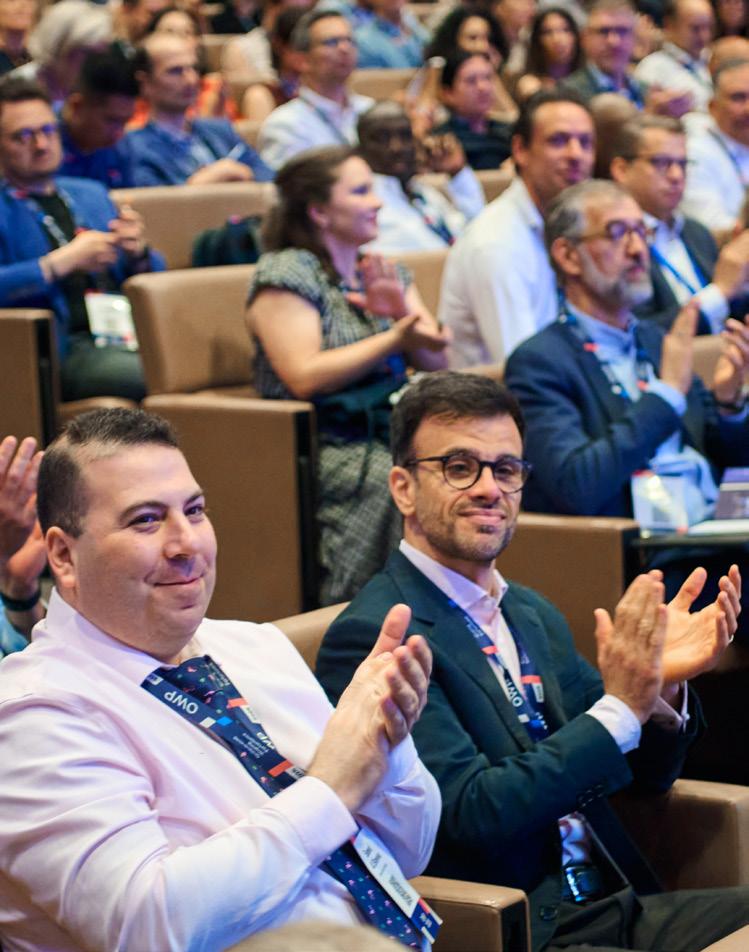
Traditional media struggled to speak to his generation – particularly those without deep historical or political context.
Accessibility is a strategic differentiator
Travers’ guiding principle is simple: make complex topics accessible, whether in a two-minute video or a two-hour interview. The idea is rooted in his early experience. When he launched his channel in 2015, the war in Syria dominated headlines, yet he felt traditional media struggled to speak to his generation – particularly those without deep historical or political context.
That same philosophy now shapes his content and his editorial approach. As his platform has grown – bringing him face-to-face interviews with figures ranging from Volodymyr Zelensky and Emmanuel Macron to Billie Eilish and Timothée Chalamet – Travers has put clear rules in place to protect credibility. Interviewees do not receive questions in advance or review content before publication. At the same time, he is careful not to operate like a traditional broadcaster chasing exclusives at any cost.
“We’re not a TV channel fighting for an exclusive interview,” he said.
Instead, the priority is clarity, not access.
“The core goal of the channel is to explain things and make sure they are accessible,” Travers explained, so that someone can grasp a topic – whether they are encountering it for the first time or have been following it for months.
He also believes it’s important to listen to audience feedback but stay anchored in a clear purpose and strategy.
Transparency builds trust
For Travers, transparency is not just an editorial principle; it underpins his entire business model. His content remains free, supported by advertising and branded content produced by a dedicated commercial team of 10 people.
Crucially, he works with a wide range of partners rather than relying on a single major backer. This diversification protects his independence and ensures no political or corporate “big power” can exert undue influence over his content.
“Trust is something that you can lose so fast, and then it’s extremely difficult to rebuild,” he said.
“Our job is a long-term thing; we are trying to build something big that is trusted by all our followers.”
Scaling means learning to lead, not just create As the organization has scaled to more than 40 people, maintaining that trust has also meant learning to let go. Travers, whose name is synonymous with the brand, has had to shift from creator to leader – delegating responsibility while staying true to a clear editorial vision.
“When you launch a YouTube channel, part of me was hoping it was going to work, but I couldn’t imagine a team of 45 people,” he said.
One key test was whether audiences would remain engaged if he was not the face delivering the news. In practice, he found that trust extended beyond the individual presenter to the format and editorial approach.
“Today, I am not shooting the daily news video format. I’ll present the news tomorrow. There will be no impact on views,” he notes.
That same principle applies internally. When TikTok launched in 2020, Travers admits he felt out of his depth. The most effective ideas came from the youngest members of his team; those closest to emerging platforms and evolving user behaviors.
His lesson for leaders: trust younger talent, give them ownership, and let expertise emerge from where it naturally sits.
AI: Opportunity and risk
Like all media organizations, HugoDécrypte is experimenting with AI – from research to fact-checking. But the technology also poses a growing threat.
Travers’ voice has already been cloned and used in fake content circulating on social media, highlighting how quickly misinformation can spread.
In this context, critical thinking becomes essential. In an AI-driven, misinformationrich world, helping audiences distinguish between what is credible and what is not is increasingly central to the mission.
Expanding the model
What began in France is now scaling. HugoDécrypte has launched local channels in cities such as Marseille, Lyon, and Quebec, focused on politics, culture, and sport. International expansion is also under consideration.
Despite the rise of digital-native competitors, Travers’ model remains unusual: a media brand that started on YouTube, raised no external funding, and remains 100% founder-owned.
Rather than competing with traditional media, he increasingly sees them as partners. Collaborations with France Télévisions – spanning interviews and documentary series broadcast on both TV and YouTube – reflect a complementary model built on different audiences and distribution channels.
Travers’ journey suggests that in a world of constant disruption, clarity of purpose, transparency, and trust can be leadership imperatives as well as editorial principles.
Digital art and olfaction elevate OWP 2026 into a multisensory leadership experience


At OWP, learning is never passive. It is immersive, experiential, and purpose-built to reshape how leaders think, connect, and perform. In a world first for executive education, IMD partnered with digital art pioneer SSK (Studio Siddhartha Kunti) at OWP 2026 to weave digital art and olfaction into the fabric of leadership learning, not just as decoration, but as a scientific instrument for memory, meaning, and lasting behavioral change.
Siddhartha Kunti (SK) is an entrepreneur and digital art pioneer — the first to make scent and aroma visible by combining advanced chemistry, software, and 3D modelling. His debut show at the London Saatchi Gallery (British Art Fair, curated by Rebekah Tolley) gave visitors a glimpse into the invisible world of molecules.
The SSK Scentscapes installation, comprising five pioneering digital artworks, each paired with olfaction, was purpose-built around OWP 2026’s theme of “Future-ready, now” and its five core leadership dimensions: self-awareness, agility, connection, perspective, and trust. Displayed as interactive artworks, the collection invited participants to pause, inhale, and encode the learnings on a deeper level. Beyond the program itself, each participant received olfactive nanotechnology, a tangible touchpoint that reconnects them to their OWP insights long after Lausanne. For organizations sending teams, the shared sensory language could create an enduring bond around the ideas explored together. The SSK Scentscapes were developed in collaboration with nanotechnology scent pioneer Sissel Tolaas of Smell Research Lab, Berlin – ensuring the highest scientific rigor in olfactive design and delivery.
The purpose of the installation was to ensure that critical leadership principles and insights are encoded not just in the intellect, but by leveraging the most potent of human senses: scent. Neuroscience is unequivocal: the olfactory system connects directly to the limbic system, the brain’s center for emotion and long-term memory. A single familiar scent can instantly transport a leader back to a moment of breakthrough clarity — rekindling the energy, perspective, and resolve formed during five transformative days at OWP.
At the end of the program one of the five digital artworks was donated to IMD — a permanent reminder of this landmark collaboration and its founding conviction: that the leaders best prepared for an uncertain future are those who have learned to engage every faculty at their disposal, including those that science is only beginning to map.

It’s a wrap
Revisit our time at OWP by watching our daily highlights.