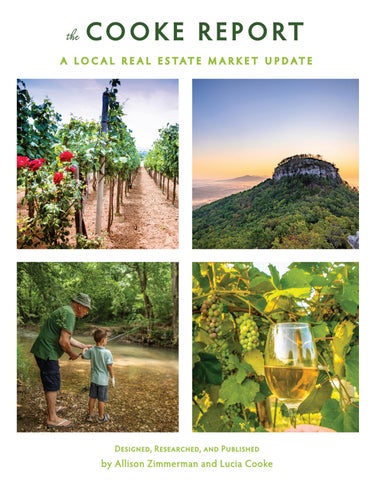
A LOCAL REAL ESTATE MARKET UPDATE the COOKE REPORT
Designed,
Researched, and Published
by Allison Zimmerman and Lucia Cooke
Dear Reader,
2025/2026 Magazine Letter:
It is a pleasure to be reaching out to you for the 20th consecutive year.
In 2008, when the Real Estate world’s cracks and fault lines devolved into the financial crisis, we decided to focus on providing the best information, the best advertising and the best honest perspectives possible. Continuing the "Cooke Report" was an expensive and risky gamble, but we are now celebrating 20 years of growth, evolution and dedication to this publication because of our readers and clients. For this, we will always be grateful.
2025 was a year of both growth and loss. Allison graduated from Harvard’s AMDP Real Estate Program through the Graduate School of Design. Cecil Edwards Cooke Jr., father – husband – trusted business professional and friend is now with us only in spirit.
The lessons of 2008 reinforced the importance of trusting our instincts, dedicating our full attention to our core strengths, and serving our clients through deep knowledge and focus. In 2025, we were reminded that continued success depends on evolution— both personal and professional.
Markets do not operate in isolation, and neither do our clients. The lessons of 2008 and the evolutions of 2025 sharpened our ability to read not only the market in front of us, but the circumstances surrounding the decisions our clients are making within it.
Time is an unrelenting instructor, shaping us through difficult and exhilarating moments.
Timing in the Real Estate market is always local, focused, and unrelenting. And we embrace this. Joyously.
And we always thank you for giving us your time!
Lucia
Cooke
Allison Zimmerman
Market Report
This issue reflects a continued refinement in how we present market data and local insight, with an emphasis on clarity, usability, and relevance.
You’ll notice that market data is now organized by county rather than by individual high school district. This shift allows us to present a cleaner, more digestible overview of market conditions while still capturing the broader forces influencing the region. For readers who want a deeper, more localized view, individual high school–level statistics remain fully available by request, and will also be on our soon-to-be revamped website (still under construction). The goal was not to remove information, but to present it more intentionally.
A brief note on methodology: absorption rates and days-on-market figures are modestly influenced by how the MLS records new construction, which is entered with a reported days-on-market value of zero. As a result, reported averages—particularly in markets with significant new construction activity—may appear slightly compressed.
Triangle Market Snapshot | Year-to-Date
At a regional level, the Triangle housing market remains active but measured, reflecting a shift toward balance rather than contraction:
Average days on market: ~26 days, up year-over-year, signaling more deliberate buyer behavior
Percent of original list price received: ~96.5%, reflecting normalized negotiation
Percent of final list price received: ~98.6%, underscoring continued price support
Closed sales: Up approximately 5.5% year-to-date
Inventory: Expanded more than 20% year-to-date
Affordability: Improved modestly across the region
Taken together, these indicators point to a market that continues to function efficiently, with strong values supported by healthier inventory levels and more balanced conditions.
Road Trips is becoming its own standalone publication, giving us the space to expand that concept thoughtfully and creatively. That said, new local attractions and road trip features will continue to appear here, because place matters, and understanding where we live is just as important as understanding how we buy and sell within it.
As always, this publication is designed to inform, not overwhelm; to offer clarity, not noise. We’re proud of the balance this new structure creates, and we hope it makes the information more accessible, more engaging, and more valuable to you.
Thank you for reading and for continuing to trust us as your guide to the market and the region.
Durham County
Market Activity: Supply Has Returned, Demand Is Holding
Durham County’s housing market in 2025 reflects a measured rebalancing, not a retreat. Year-to-date activity shows a clear expansion in supply while buyer demand remains resilient, supporting overall transaction volume and price stability. New listings increased 20.9% year-to-date, rising from 4,654 in 2024 to 5,627 in 2025. This marks one of the most significant inventory infusions Durham has seen since the post-pandemic surge, giving buyers more choice and restoring negotiating room. Despite this increase in supply, closed sales rose 4.2% year-to-date, from 3,542 to 3,691 transactions. This confirms that buyer demand has not disappeared — it has simply become more selective and price-sensitive.
Key takeaway: More homes are coming to market, but well-priced properties are still selling.
Pricing: Stable at the Median, Rising at the Top
Price behavior in 2025 underscores a market that is normalizing rather than declining. The median sales price held steady at $425,000 year-to-date, unchanged from 2024. The average sales price increased 5.1%, rising from $471,771 to $496,021. This divergence between median and average pricing indicates that higher-priced transactions are driving overall appreciation, while the middle of the market remains balanced. In practical terms, Durham is seeing continued strength in upper-tier and move-up segments even as entry-level and mid-range buyers exercise caution.
Key takeaway: The floor of the market is firm, and the ceiling continues to rise.
Dollar Volume: Growth Without Excess
Total transaction volume reinforces the narrative of a stable, functioning market. Total dollar volume increased 9.6% year-to-date, climbing from $1.67 billion to $1.83 billion. This growth is supported by both higher prices and sustained sales activity — not by speculative churn. In contrast to the volatility of 2021–2022, 2025’s gains reflect durable demand
Key takeaway: Capital remains committed to Durham residential real estate.
Market
Pace: lower, Healthier, More Predictable
Homes are taking longer to sell — and that is not a negative. Average days on market increased from 20 to 27 days yearto-date, a 35% rise. This shift signals a return to deliberate decision-making, where buyers are conducting inspections, negotiating terms, and comparing options. Sellers can no longer rely on speed alone; pricing and presentation matter again.
Key takeaway: The market is slower, but more rational.
Negotiation Dynamics: Buyer Leverage Has Improved
With additional inventory and longer marketing times, pricing power has softened modestly. Percent of list price received slipped from 99.8% to 98.8%. While sellers are still achieving strong outcomes, concessions and strategic price adjustments are increasingly part of successful transactions.
Key takeaway: The era of automatic over-asking sales is over, but strong pricing remains achievable.
Affordability and inventory metrics confirm the broader rebalancing underway. Housing Affordability Index improved 6.0% year-to-date, rising from 83 to 88. Inventory of homes for sale increased 56.0%, from 744 to 1,161 units. Months of supply expanded from 2.3 to 3.5 months, moving closer to historical norms. While Durham remains a competitive market by national standards, these shifts represent meaningful relief for buyers and a healthier long-term foundation.
Key takeaway: Conditions are improving without undermining value.
Bottom Line
Durham County’s year-to-date housing market in 2025 is best described as stable, active, and recalibrated.
Supply is up meaningfully
Demand remains intact
Prices are steady to rising Negotiations have normalized Long-term fundamentals remain strong
This is not a market in decline — it is a market finding its balance.
Absorption Rate
Chatham County
Market Activity: Supply Growth Without Meaningful Demand Expansion
Chatham County’s year-to-date housing market reflects a pattern of increasing inventory meeting a relatively fixed level of demand. New listings rose 15.0% year-to-date, increasing from 1,337 in 2024 to 1,537 in 2025. During the same period, closed sales increased only 0.5%, moving from 1,005 to 1,010 transactions. This gap indicates that while more homes are entering the market, buyers are advancing selectively, with pricing discipline and financing considerations playing a larger role in purchase decisions.
Key takeaway: Inventory is rising faster than demand, making pricing accuracy essential.
Pricing: Appreciation Returns After a Mid-Market Pause
Despite earlier monthly softening, year-to-date pricing trends show renewed strength. The median sales price increased 3.9% year-to-date, rising from $640,000 to $665,000. The average sales price climbed 4.2%, from $740,859 to $772,046. The parallel rise in both median and average pricing suggests that appreciation is being supported across multiple price tiers, with continued strength at the upper end of the market.
Key takeaway: Chatham remains a premium market with selective but real price growth.
Dollar Volume: Modest Growth Reflects Price, Not Pace
Total transaction volume reinforces the narrative of a stable, functioning market. Total dollar volume increased 9.6% year-to-date, climbing from $1.67 billion to $1.83 billion. This growth is supported by both higher prices and sustained sales activity — not by speculative churn. In contrast to the volatility of 2021–2022, 2025’s gains
Key takeaway: Market growth is being carried by value, not velocity.
Homes are taking longer to sell, reinforcing the importance of preparation and strategy. Average days on market increased from 27 to 35 days year-to-date, a 29.6% rise. Buyers are spending more time evaluating options, negotiating terms, and completing due diligence, particularly in a higher-cost environment.
Key takeaway: Time on market is normalizing, not signaling weakness.
Negotiation Dynamics: Buyer Leverage Has Grown
Negotiation conditions have shifted modestly in favor of buyers. The percent of original list price received declined from 98.1% to 96.9% year-to-date, while the percent of list price received slipped from 99.2% to 98.7%. While these figures remain strong by historical standards, they confirm that pricing precision and presentation now materially affect outcomes.
Key takeaway: The era of automatic over-asking sales is over, but strong pricing remains achievable.
Affordability and inventory metrics confirm the broader rebalancing underway. Housing Affordability Index improved 6.0% year-to-date, rising from 83 to 88. Inventory of homes for sale increased 56.0%, from 744 to 1,161 units. Months of supply expanded from 2.3 to 3.5 months, moving closer to historical norms. While Durham remains a competitive market by national standards, these shifts represent meaningful relief for buyers and a healthier long-term foundation.
Key takeaway: Conditions are improving without undermining value.
Bottom Line
Chatham County’s year-to-date housing market in 2025 reflects a premium market adjusting to expanded supply rather than declining demand.
Inventory is up Sales volume is steady Prices are rising at the upper end Negotiations have normalized
This is a disciplined market recalibrating — not cooling off.
Absorption Rate
Orange County
Market Activity: Supply Growth With Selective Absorption
Orange County’s year-to-date market shows increasing inventory paired with steady, selective buyer activity. New listings rose 13.3% year-to-date, from 1,681 to 1,905 homes. Closed sales increased 3.0%, from 1,256 to 1,294 transactions, confirming continued demand despite higher price points. Key takeaway: More homes are coming to market, but well-priced properties are still selling.
Key takeaway:Buyer demand is present but highly selective.
Pricing: Stable Median With Upper-End Volatility
Pricing trends show stability at the median with some variability at the top. The median sales price remained effectively flat year-to-date, rising marginally from $500,000 to $500,138. The average sales price declined 1.3%, from $635,050 to $627,110, reflecting fewer high-end outlier transactions compared to 2024.
Key takeaway: Orange County pricing is stable, but upper-tier activity is uneven.
Dollar Volume: Modest Growth Despite Pricing Headwinds
Total dollar volume increased 1.9% year-to-date, rising from $796 million to $811 million. This growth reflects modest gains in transaction count offset by softer average pricing, reinforcing the importance of volume rather than appreciation alone.
Key takeaway: Market activity is sustained, but growth is constrained.
Market Pace: Slower Transactions, Higher Scrutiny
Homes are taking longer to sell as buyers apply greater scrutiny. Average days on market increased from 21 to 30 days year-to-date, a 42.9% rise. Buyers are taking additional time to evaluate value, location, and long-term affordability.
Key takeaway: Longer timelines reflect caution, not disengagement.
Negotiation Dynamics: Buyer Leverage Is Meaningful
Negotiation conditions have shifted more noticeably in Orange County than in neighboring markets. The percent of original list price received declined from 99.1% to 97.4%, while the percent of list price received fell from 100.4% to 99.2%. Sellers must now price accurately to secure timely results.
Key takeaway: Negotiation leverage has clearly shifted toward buyers.
Affordability & Inventory: Improving, Still Constrained
Affordability improved, with the Housing Affordability Index rising from 91 to 95 year-to-date. Inventory increased 32.2%, from 270 to 357 homes, and months of supply expanded from 2.4 to 3.0 months. While these trends signal normalization, Orange County remains one of the Triangle’s most constrained markets.
Key takeaway: Conditions are improving, but affordability remains a limiting factor.
Inventory is up Sales volume is steady Pricing is mixed Negotiations have normalized
Orange County is balanced, selective, and value-driven.
Absorption Rate
Wake County
Market Activity: Supply Expansion With Durable Demand
Wake County’s year-to-date market reflects expanded seller participation met by steady buyer absorption. New listings increased 13.6% year-to-date, rising from 19,258 in 2024 to 21,876 in 2025. Closed sales also rose 3.6%, from 14,714 to 15,249 transactions. While supply growth outpaced demand, sales volume confirms that buyer activity remains fundamentally intact across the county.
Key takeaway: Wake County demand remains resilient, even as inventory expands.
Pricing: Stable at the Core, Balanced at the Top
Pricing trends indicate stability rather than acceleration. The median sales price held flat year-to-date at $480,000, unchanged from 2024. The average sales price increased marginally by 0.1%, from $580,341 to $581,090. This suggests a broad-based, balanced market where price support is holding without upward pressure.
Key takeaway: Wake County pricing is steady and well-supported, not overheated.
Dollar Volume: Growth Reflects Consistency, Not Speculation
Total dollar volume increased 3.8% year-to-date, rising from $8.54 billion to $8.86 billion. This growth mirrors modest gains in transaction count and pricing, reinforcing the characterization of Wake County as a high-volume, stable market rather than one driven by volatility.
Key takeaway: Capital flow remains strong and predictable.
Market Pace: Normalization After Peak Velocity
Homes are taking longer to sell as the market returns to more traditional pacing. Average days on market increased from 18 to 25 days year-to-date, a 38.9% rise. Buyers are exercising more discretion, and sellers are adjusting expectations accordingly.
Key takeaway: Longer marketing times reflect normalization, not softness.
Negotiation leverage has shifted modestly toward buyers. The percent of original list price received declined from 98.4% to 96.9%, while the percent of list price received slipped from 99.5% to 98.8%. Sellers are still achieving strong outcomes, but pricing strategy now plays a larger role.
Key takeaway: Wake County is firmly in balanced-market territory.
Affordability & Inventory: Measured Improvement
Affordability improved meaningfully, with the Housing Affordability Index rising from 94 to 99 year-to-date. Inventory increased 29.2%, from 3,185 to 4,114 homes, while months of supply rose from 2.4 to 2.9 months. Conditions are improving without tipping the market into oversupply.
Key takeaway: Wake County remains the Triangle’s anchor market..
Bottom Line
Wake County’s 2025 year-to-date market is stable, liquid, and balanced.
Inventory is up Demand is holding Prices are steady Negotiations have normalized
Wake County remains the Triangle’s anchor market.
Absorption Rate
Mid-Life Crisis, Harvard Style
Since starting, and graduating from, the AMDP through Harvard’s Graduate School of Design, I’ve been getting a lot of the same questions:
What kind of program are you doing again? Why? Why now?
Are you changing careers? What does this actually do for you? Are you wanting to move?
Are you wanting to go into academia full time?
And my personal favorite: You’ve been in this business for twenty years so… what are you actually studying?
I’ll start with the easiest two to answer: "why? and why now?"
It is nearly impossible to open my Gmail without receiving some type of advertisement for “agent certification.”
Become a Certified Luxury Home Specialist. $350 for a twelve-hour course! Get your First-Time Home Buyer Certification for only $149. Want designations? Get six with our bundled package. Save nearly $399.
And these are not hypothetical. They came directly from my spam folder this morning. While gaining knowledge about markets, buyer concerns, and evolving trends sounds appealing, these offerings provide little to no true insight or education. They are transactional credentials designed to keep pace with an industry that rarely pauses long enough to examine itself.
Then I suffered a life-altering injury.
There was pain. There was a hard cast. Limited mobility, and months of being physically sidelined forced reflection. When you are immobilized long enough, distraction stops working. What remains is your mind, fully awake, whether you are ready for it or not.
The boredom was real. So was the reckoning.
I began searching for something that would engage me intellectually in a way the industry had not in years. Something rigorous. Something uncomfortable. Something that asked better questions instead of offering faster answers.
Lucia found the Harvard program, although UCLA, Wharton, and Northwestern all had compelling options. Each brought real academic weight. What set Harvard apart was not prestige. It was people.
The Advanced Management Development Program at the Graduate School of Design offered the most diverse classroom I could find. Developers, architects, planners, investors, public-sector leaders, infrastructure specialists, policy thinkers. People working at entirely different scales, in different systems, with different incentives, all examining the same problems from opposing angles.
That diversity mattered. Studying under a narrative architect like Steve Tatham, an International Economist Tobias Just, Communications guru Carmine Gallo and an International Negotiation expert like Fernando Levi was just the tip of the academic iceberg I titanic-ed into. Real estate rarely exists in a room like that. We tend to talk to ourselves. AMDP forced the conversation wider. And my cohort. These exceptional people from all over the globe brought interest and unique perspectives to every conversation.
What kind of program are you doing again?
It is not a real estate designation. It is not sales training. It is not a pivot into design or academia.
AMDP is a systems-based program that examines the built environment through design thinking. Not aesthetics, but structure. Housing as infrastructure. Cities as interdependent systems. Capital, land use, zoning, climate, demographics, transportation, and governance examined together, rather than in isolation.
I was not there to learn how to sell more homes. I was there to better understand the systems my work already touches every day, whether I acknowledge them or not.
Which brings me to expectations.
What does this actually do for you?
I did not enter this program expecting reinvention. I expected refinement. I ended up with a beautifully unexpected hybrid.
Sharper questions. More disciplined thinking.
A broader lens for decisions that increasingly demand long-term accountability rather than short-term wins.
You’ve been in this business for twenty years so… what are you actually studying?
After more than twenty years in this business, experience alone is insufficient. Pattern recognition matters. Context matters. Understanding where real estate fits inside larger economic, social, and physical systems matter. And I rediscovered my love of all the research that pulls these forces and dynamics together.
Are you changing careers?
Are you wanting to go into academia full time?
Are you wanting to move?
Are you changing careers?
So no, I am not changing careers. I’m having too much fun with this one. I am not moving. Where on earth would I want to go? I am not heading into academia full time. Full stop.
From Data to Dirt:
Why Build-to-Rent Needed a Better Signal
I did not start this project because I wanted to build a model.
I started it because I kept having the same conversation, in different rooms, with different people, about different deals. A site looked perfect on paper. The metro was growing. Rents were up. Capital was available. And yet something would stall. Entitlements dragged. Lease-up lagged. Investor appetite cooled. Or, surprisingly, a project everyone assumed would struggle quietly outperformed.
After more than two decades in residential real estate, I had learned to respect that feeling. When outcomes keep diverging from expectations, it usually means the tools we are using are incomplete.
That disconnect became the focus of my Independent Project for the AMDP program at Harvard’s Graduate School of Design. The question was not whether Build-to-Rent works. That debate is largely over. The real question was more practical and more urgent: how do we know where Build-to-Rent will work, before capital is committed, land is entitled, and time lines are set in motion?
So, What Exactly Is Build-to-Rent?
Before going further, it is worth being explicit about what Build-to-Rent actually is.
Build-to-Rent refers to purpose-built single-family homes and townhomes developed exclusively for rental use. These are not scattered resale homes acquired one by one, and they are not traditional apartment buildings. BTR communities are planned, constructed, and professionally managed from day one as rental neighborhoods. They typically include detached or paired homes with private yards, garages, and shared amenities, designed to offer the space and feel of homeownership without the financial commitment or maintenance burden that ownership requires.
In short, Build-to-Rent delivers single-family living as a service rather than a purchase.
The result of my research is the BTR Demand Index, a framework designed to translate macro housing trends into market-level clarity. It is not a proprietary dashboard. It is not a heat map chasing headlines. It is a transparent, replicable scoring system grounded in how Build-to-Rent projects are actually sourced, approved, leased, and stabilized.
It is a tool built for the messy space between data and dirt.
The Affordability Inversion Nobody Planned For Build-to-Rent
The inversion did not emerge because Americans stopped wanting to own homes. It emerged because the conditions that once made ownership attainable fractured in ways the housing market has not yet resolved.
The most visible pressure point is affordability. Over a short span of years, home prices surged while mortgage rates more than doubled from historic lows. In many growth markets, the monthly cost to own a median-priced home increased by more than 80 percent. Rents rose as well, but at a far slower pace. In a growing number of U.S. metros, particularly across the South and Sunbelt, renting a professionally managed single-family home is now the more rational financial decision.
That affordability gap extends beyond monthly payments. Down payments, insurance premiums, maintenance costs, and rising property taxes have become meaningful barriers even for households with stable incomes. Younger buyers face delayed wealth accumulation and student debt. Older households increasingly question the wisdom of locking capital into a single, illiquid asset in a volatile interest-rate environment. For many, the decision is no longer when to buy, but whether buying still makes sense at all.
Renting by Choice, Not by Compromise
These pressures have reshaped housing behavior across generations. Millennials and Gen Z are renting longer, even as their incomes rise. At the same time, the pool of renters by choice has expanded. These are dual-income households, mobile professionals, and downsizing retirees who can afford to buy but prioritize flexibility, predictability, and reduced exposure to maintenance and market risk.
Build-to-Rent sits squarely at the intersection of these forces. Unlike traditional multifamily apartments, BTR offers space, privacy, and neighborhood character. Yards, garages, and separation from shared walls come without the long-term financial burden of ownership. It is not a substitute for homeownership. It is a third option, designed for how people actually live today.
Where Demand Actually Lands
Migration patterns have amplified this demand. Domestic population flows over the past several years have overwhelmingly favored Southern and Sunbelt metros, with particular momentum in secondary markets that combine job growth, relative affordability, and quality of life. Importantly, this migration has not flowed evenly into urban cores. Growth has concentrated in suburban and second-ring locations where households seek space, schools, and access to employment corridors. This is where Build-to-Rent performs best.
The Triangle as a Case Study in Precision
The Research Triangle offers a particularly clear example. Between 2020 and 2023, the Raleigh-Durham metro added more than 140,000 residents, with Wake County alone posting year-over-year growth rates above 3 percent. A significant share of these in-migrants arrived from higher-cost metros in the Northeast and West Coast, drawn by employment in technology, life sciences, healthcare, and advanced manufacturing.
At the same time, the Triangle’s ownership market tightened rapidly. Median home prices in Wake County increased by more than 35 percent over that same period, while entry-level inventory thinned dramatically. Despite strong household incomes, many relocating families found themselves priced out of ownership or unwilling to compete in an overheated resale market. Regional leasing data show that more than half of new arrivals became renters within their first year.
This combination of demand and constraint created ideal conditions for Build-to-Rent. It also exposed the limits of metro-level analysis. Zoning policies vary sharply by municipality. Entitlement timelines can differ by years, not months. School districts, infrastructure readiness, and political receptiveness shift within short distances. In this environment, population growth alone tells only part of the story.
Execution matters.
Why the Usual Dashboards Fall Short
As Build-to-Rent scaled nationally, the industry leaned heavily on tools designed for other asset classes. Rent growth charts, population forecasts, and investor heat maps became shorthand for opportunity. These inputs are useful, but incomplete. They do not account for entitlement friction, absorption velocity, renter psychology, or the practical constraints that shape development timelines.
Brokerage professionals operate in this gap every day. Translating demographic momentum into viable sites requires more than identifying growth. It requires understanding where that growth is landing, how quickly approvals can be secured, and whether infrastructure, pricing, and product design align with renter behavior. Leasing success depends not just on rent levels, but on how households evaluate trade-offs between ownership, apartments, and single-family rental alternatives.
The BTR Demand Index, Explained Simply
The BTR Demand Index was built to bring these realities into a single framework.
The model evaluates markets across ten weighted variables grouped into five categories: population and migration, affordability pressure, rental fundamentals, supply and entitlement conditions, and investor engagement. Each variable is scored transparently and weighted based on its observed influence on Build-toRent performance.
The Index is expressed in two formats: a simplified one-to-ten score for quick comparison, and a comprehensive zero-to-one-hundred model designed for underwriting and capital deployment.
What distinguishes the Index is not complexity, but relevance. In addition to familiar metrics such as net migration and rent growth, it incorporates factors often ignored in traditional models, including entitlement speed, BTR pipeline saturation, and brokerage-level market engagement. These inputs reflect how projects actually move, or stall, on the ground.
What the Model Reveals
When applied across multiple markets at different stages of BTR maturity, the model produced consistent results. Markets with high Index scores exhibited faster lease-up, stronger rent resilience, and deeper institutional interest. Lower-scoring markets struggled with absorption, differentiation, or exit liquidity, even when headline growth appeared favorable.
Phoenix emerged as the highest-scoring market, reflecting its long-standing in-migration, permissive zoning history, and institutional operating scale. Raleigh-Durham followed closely, buoyed by demographic momentum but moderated by entitlement fragmentation, a dynamic the Index captures explicitly. Markets with weaker affordability pressure, slower approvals, or misaligned product delivery scored materially lower and showed correspondingly weaker outcomes.
The takeaway is not that Build-to-Rent works everywhere. It does not. The takeaway is that demand alone is insufficient.
Alignment Is the Real Advantage
What matters is alignment between demographics and pricing, zoning and delivery timelines, renter psychology and product design, and market maturity and capital strategy.
The BTR Demand Index does not replace judgment. It sharpens it.
The Next Phase of Build-to-Rent
Build-to-Rent is no longer an emerging concept. It is a permanent feature of the American housing landscape. As the sector continues to scale, the differentiator will not be access to capital or construction capacity. It will be clarity.
Markets are increasingly unforgiving. Timelines matter. Entitlement risk matters. Absorption matters. In that environment, better signals are not a luxury. They are a necessity.
This work is not a thesis. It is a tool. One designed to help brokers advise more precisely, developers allocate capital more deliberately, and investors assess opportunity with fewer blind spots.
In a sector defined by speed and uncertainty, the advantage will belong to those who move with intention. From data to dirt, the path forward is not about more information. It is about better judgment, applied earlier, in the places where it matters most.
** Author’s postscript:
While this is a solid overview of my final project/paper, it is also condensing months of research and data, and a VERY long paper into a bite-sized version of the actual creation. Nevertheless, I hope you enjoyed the read and am always happy to jump into the weeds!
Real Estate and the World of A.I.
I am now old enough to say things like “remember when…,” unironically. Well, remember when AI was more science-fiction-y than the notion of hoverboards? In fact, wasn’t there even a movie called A.I. back in the early 2000s? Artificial intelligence lived squarely in the world of imagination. Now, AI has migrated from science fiction to standard function. For good or for ill, its use across industries is growing exponentially. I will make no attempt to discuss AI as a general conceptual monolith; however, its impact on the real estate industry is well within my wheelhouse.
From the “Stone Age of AI”
Let’s be fair: real estate’s adoption of AI is older than most. Zillow changed the game with its Zestimate—one of the earliest mainstream forms of AI integration. Since then, AVMs (Automated Valuation Models) have become standard in general brokerage. These tools are only as objective as the data they’re built on. When historical sales or demographic inputs carry bias, those distortions compound through machine learning, sometimes undervaluing or mischaracterizing unique or underrepresented property types. This is especially visible in secondary markets and non-conforming assets— the very spaces where local context and professional judgment matter most. In practice, AI should be treated as supportive intelligence, not a standalone authority. AVM-generated valuations can be a powerful starting point, but they still need to be cross-checked against human insight and on-the-ground conditions. Transparency around underlying model assumptions will increasingly separate responsible operators from opportunistic ones.
To the Modern Implications
To date, the lion’s share of AI’s evolving impact has come from the institutional and investment side of the business. On the residential and brokerage fronts, adoption is far less sophisticated but accelerating—usually in the form of workflow automation and operational streamlining. AI shines in speed and efficiency; it falters in interpretation. It can process faster than any human alive, but understanding the why behind those patterns remains its soft spot. That hasn’t stopped corporations or individuals from leaning into advanced analytics, which brings its own complications. As with all new technology, we’re still learning to adapt to—and understand—what the future may hold.
AI’s entrance into real estate has been a study in contradictions: brilliant in spots, disastrous in others, and deeply uncertain everywhere in between. To make sense of it, I tend to break it down the old-fashioned way: the good, the bad, and the who-the-hell-knows.
The Efficiency Frontier
The most immediate shift has been operational. Across residential and commercial sectors alike, AI is quietly transforming how deals move from inquiry to closing. Tasks that once required hours of administrative labor like document summarization, contract parsing, pulling comps, and responding to early-stage leads can now be handled in minutes.
Morgan Stanley estimates that roughly a third of tasks within the real estate sector could be automated by 2030, translating to billions in potential efficiency gains. McKinsey echoes this finding, noting that firms already deploying generative AI for lease-analysis, data extraction, and virtual assistant communication have realized measurable time and cost savings.
But the value isn’t just speed, it’s redirection. Every hour reclaimed from paperwork becomes an hour spent on negotiation, pricing strategy, or client relationships. Used responsibly, automation doesn’t erase the human role; it expands its reach. (And yes, we will absolutely get to the “used poorly” section.)
Valuation, Investment & Asset Strategy
While AI is filtering slowly but consistently into the residential space, its most sophisticated and consequential impact is happening on the institutional side of the industry; the REITs, private equity groups, fund managers, and large-scale portfolio operators who live and die by precision, scale, and predictive clarity. These firms aren’t just using AI to process information faster; they’re rebuilding the valuation and the asset-selection process from the ground up. Machine learning models now digest everything from geospatial inputs to environmental risk variables, pulling insights from tens of thousands of data points that traditional underwriting simply couldn’t capture at the same speed or depth.
This is where AI genuinely shines: in identifying patterns that are invisible to the naked eye but material to long-term performance.
McKinsey’s data shows that institutional operators leveraging AI-driven acquisition targeting and operational optimization have seen uplifts exceeding ten percent in net operating income, which is a staggering number when scaled across billions in assets.
Predictive rent modeling, portfolio risk scoring, and computer-vision-assisted property assessments are no longer experimental. They are a competitive advantage. And it’s worth underlining the distinction here: this is institutional real estate. This is not your eighborhood duplex or the three-bedroom in Chapel Hill. AI is redefining how value is analyzed in spaces where data density is high, operational complexity is enormous, and decisions are driven by models with multi-year time horizons.
The residential side may eventually catch up, but institutional players are already living in that future. What used to be an exercise in hindsight, reacting to past market performance, has become a forward-facing discipline, blending predictive analytics with human judgment. And to be clear, the human part still matters. AI may be brilliant at pattern recognition, but the “should we buy this?” question still requires experience, instinct, and accountability.
This isn’t the death of valuation judgment. It’s the evolution of valuation science.
Marketing, Consumer Engagement & Listing Optimization
On the consumer side, AI is rewriting how people discover and interact with properties. Predictive lead scoring, personalized recommendations, and dynamically optimized listing content are quickly becoming standard. Platforms using AI-driven analytics adjust photography, narrative tone, visuals, and targeting based on user engagement, which, sure, can often improve conversion rates. And I probably should have used AI to re-write that sentence. Because it is boring. And in this era of media integration, the consumer expects MORE. Perfect Example: Immersive media is now the expectation, not the luxury.
AI-assisted virtual tours, enhanced 3D walkthroughs, and optimized staging push more qualified attention to listings, not just more traffic.
In today’s digital marketplace, consumer engagement is the new “location, location, location.”
Beyond Transactions: Smart Operations & Risk Management
AI’s influence now extends long after the closing table. Commercial properties can now integrate predictive maintenance tools that monitor building systems, occupancy patterns, and energy efficiency. These systems reduce costs and improve tenant retention by catching issues before they escalate. Theoretically, this adds benefit to the owner as well as tenants. The HVAC unit is 15+ years old? Analytics can tell an owner how much to put aside for future replacement and incorporate a maintenance schedule so that the residents don’t end up with nonfunctional A/C in the middle of July. Practically – well – TBD.
On the residential side, machine-learning models increasingly evaluate climate exposure, structural stability, and insurance risk. Hazard-prediction tools are already outperforming legacy datasets and transforming how risk is priced and mitigated. This may be awesome for the bottom-line of insurance companies.
For consumers? Well – TBD. Will it discourage purchasing in high-risk areas or will it simply just raise costs without benefit?
The Risks Beneath the Momentum
For all its promise, AI introduces its own hazards. The speed of adoption has outpaced the guardrails governing its use, and the industry is still scrambling to find its ethical footing. Real estate professionals, especially on the institutional side, are being handed extraordinarily powerful tools before we’ve collectively agreed on how they should be used, who is accountable for their outputs, or what constitutes “responsible” deployment.
And let’s be honest: where AI fails epically and repeatedly is interpreting the data. It is spectacular at spotting patterns. It is terrible at explaining them. Context is not its strength, and real estate is nothing but context. That disconnect is where the biggest risks live.
Data Bias and Valuation Accuracy
Models trained on imperfect or inequitable data naturally reproduce those imperfections. They don’t correct for bias; they amplify it. In valuation, this can translate into chronic undervaluation of certain neighborhoods, inflated projections in others, or entire asset classes being mischaracterized because the algorithm cannot distinguish between a genuine market signal and historical noise.
In credit evaluation and tenant screening, the consequences can be even more destructive, quietly recreating the same inequities the industry has spent decades trying to unwind.
Transparency and Accountability
AI’s speed at amalgamating data is seductive. Remember when (yep – did it again) Google first came out and Googling became a verb? We’ve all learned to take what you find on the internet with a grain of salt. With AI? More people are treating its answers as gospel. Faster does not mean “less accountable.” In fact, faster requires more accountability.
I have a dear friend who instantly points out the moment AI is invoked that “IT LIES! It will make up data!”
And she is right. It will. Professionals must understand the assumptions embedded in AI outputs from the weighting, the data sources, and the blind spots. A beautifully formatted report is meaningless if the underlying logic is flawed. The danger is not that AI gets things wrong; the danger is how confidently it presents those errors, and how willing we are to believe them.
Privacy, Security and Data Handling
Consent standards are evolving at whiplash speed, and AI-powered CRMs and analytics systems create new exposure points with every software update. Data once considered “internal” is now feeding machine-learning pipelines. Information clients never intended to share is suddenly being parsed, interpreted, and stored. The legal landscape hasn’t caught up, but liability will fall on humans and not software when something goes sideways. While we are all more focused on on-line security than we were once, we have a long way to travel.
Over-Reliance and Skill Drift
The easier AI makes certain tasks, the easier it becomes to forget how to do them. Entire brokerage teams are now outsourcing pricing, drafting, and even negotiation prep to software.
The best operators treat AI as an accelerator, not a substitute. The rest risk becoming passengers in their own profession, losing the muscle memory that allows them to spot anomalies, gut-check numbers, or catch the nuance AI will always miss. I’ve tried the “cheat.” From personal experience I can state that AI – Doesn’t make you sound smarter, Doesn’t make the information clearer, and Doesn’t make you a solid writer. Did I toss this article Grammarly and ChatGPT for research, clarity of thought and grammatical correctness? Absolutely. Did I use it to write this article? Absolutely Not.
Fair Housing and Algorithmic Ethics
Predictive ad targeting and automated screening tools may feel efficient, but they can quietly reintroduce discriminatory outcomes. Even unintentional bias can have legal teeth, and regulators are already signaling that “black box” decisionmaking will not be tolerated indefinitely. If your marketing algorithm is excluding protected classes or your screening system is privileging one demographic over another, blaming the software isn’t going to save you. And it shouldn’t.
Interpretation: AI’s Fatal Flaw
Here’s the heart of it: AI is exquisite at connecting dots. It is terrible at telling you whether the dots should be connected in the first place. It doesn’t know why something happened. It doesn’t understand outliers, motivations, zoning nuance, political climate, construction realities, or the thousand human variables that influence every real estate decision. It cannot tell the difference between a market correction and a blip caused by a stadium announcement, a rezoning proposal, or a corporate relocation. It cannot determine whether a neighborhood is undervalued or simply under-measured.
AI’s brilliance is mathematical. Real estate’s truth is contextual. That mismatch is where things break. AI is not handling the interpretation piece well. And until it does, humans must still use their brains.
The Bottom Line
AI is not a threat to real estate; misuse is. This technology amplifies what already exists, clarity or confusion, rigor or carelessness. It’s a force multiplier, not a replacement. For brokers, investors, and developers, the differentiator will not be the speed of adoption but the quality of intention. The professionals who marry AI’s precision with human discernment will lead the next, more transparent phase.
And until then? AI may not have fully demonstrated its reach yet, but it has certainly delivered enough change to keep us all paying attention.
Now, about that Hoverboard……
Available Properties
Belfield Lane
Lot 2
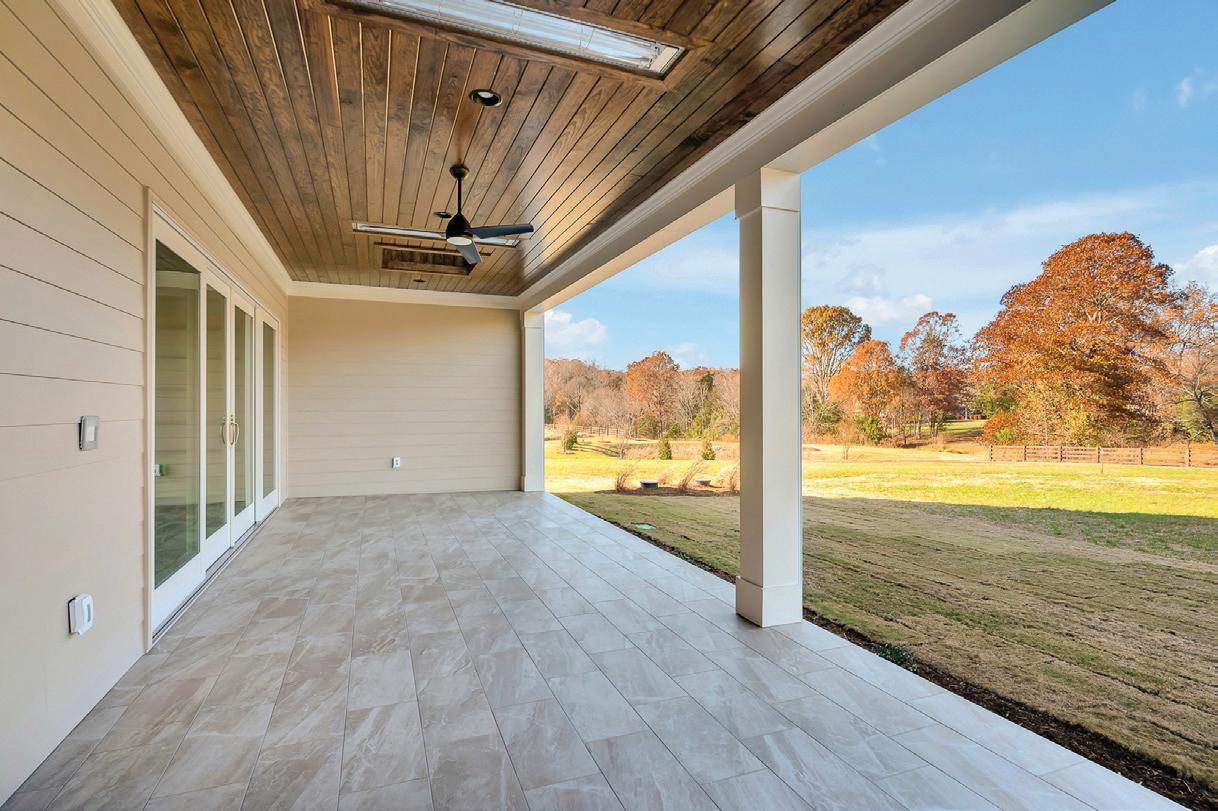
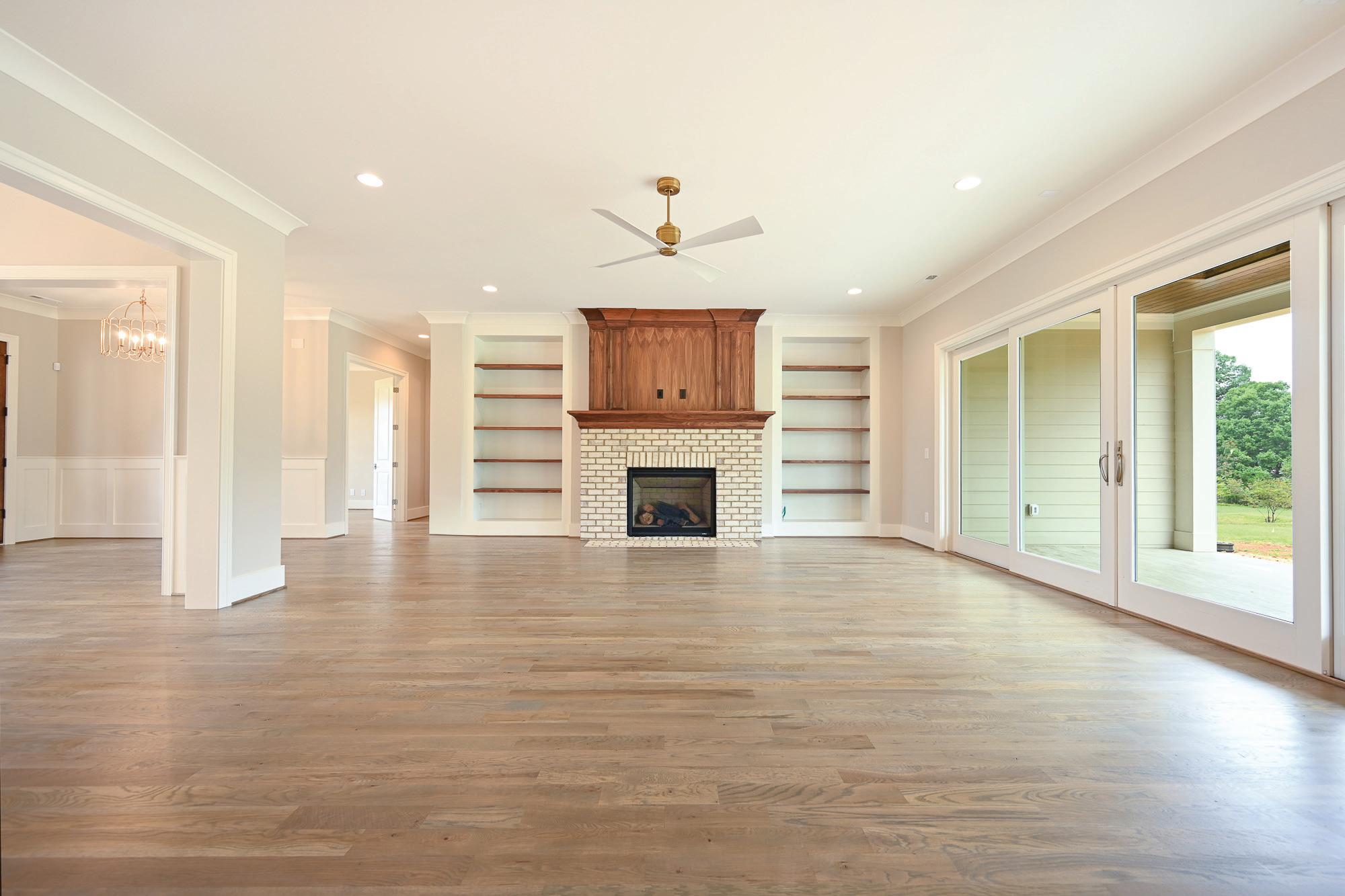
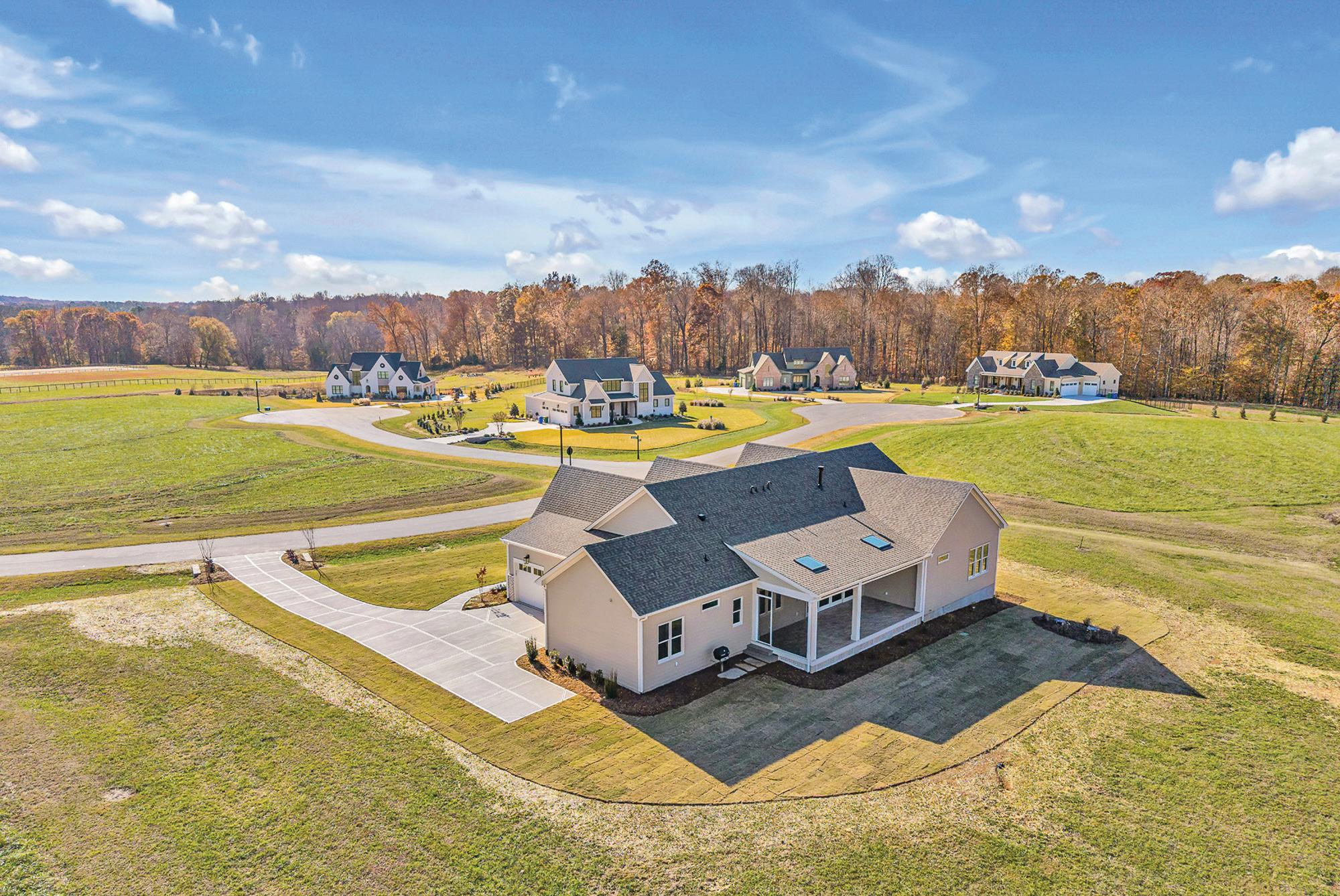
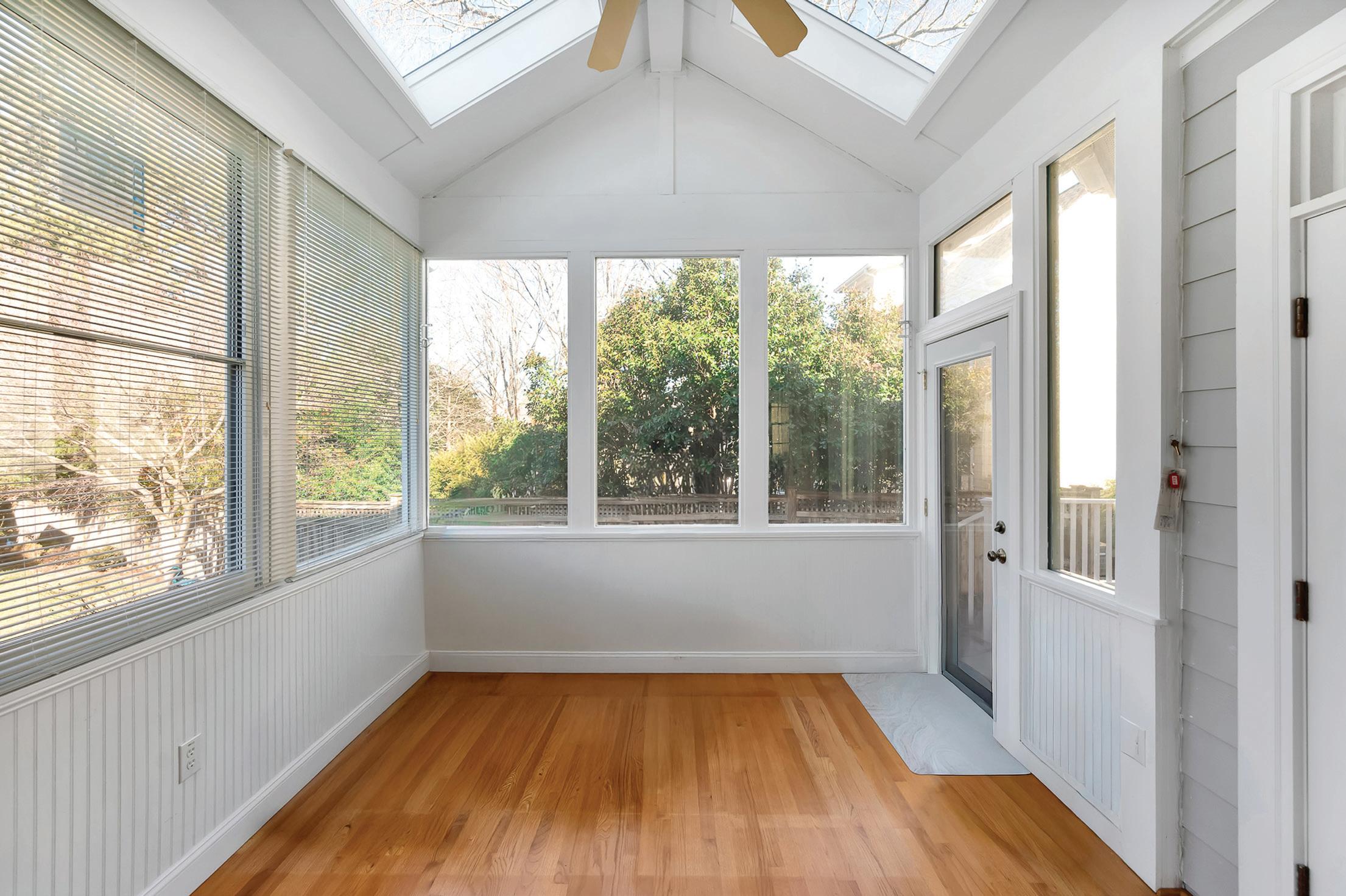
A wall of glass leads to the expansive porch that features stone floors, skylights, phantom screens, and heating for cool weather. A true 3 season room. Note the expansive yard with greenspace behind.
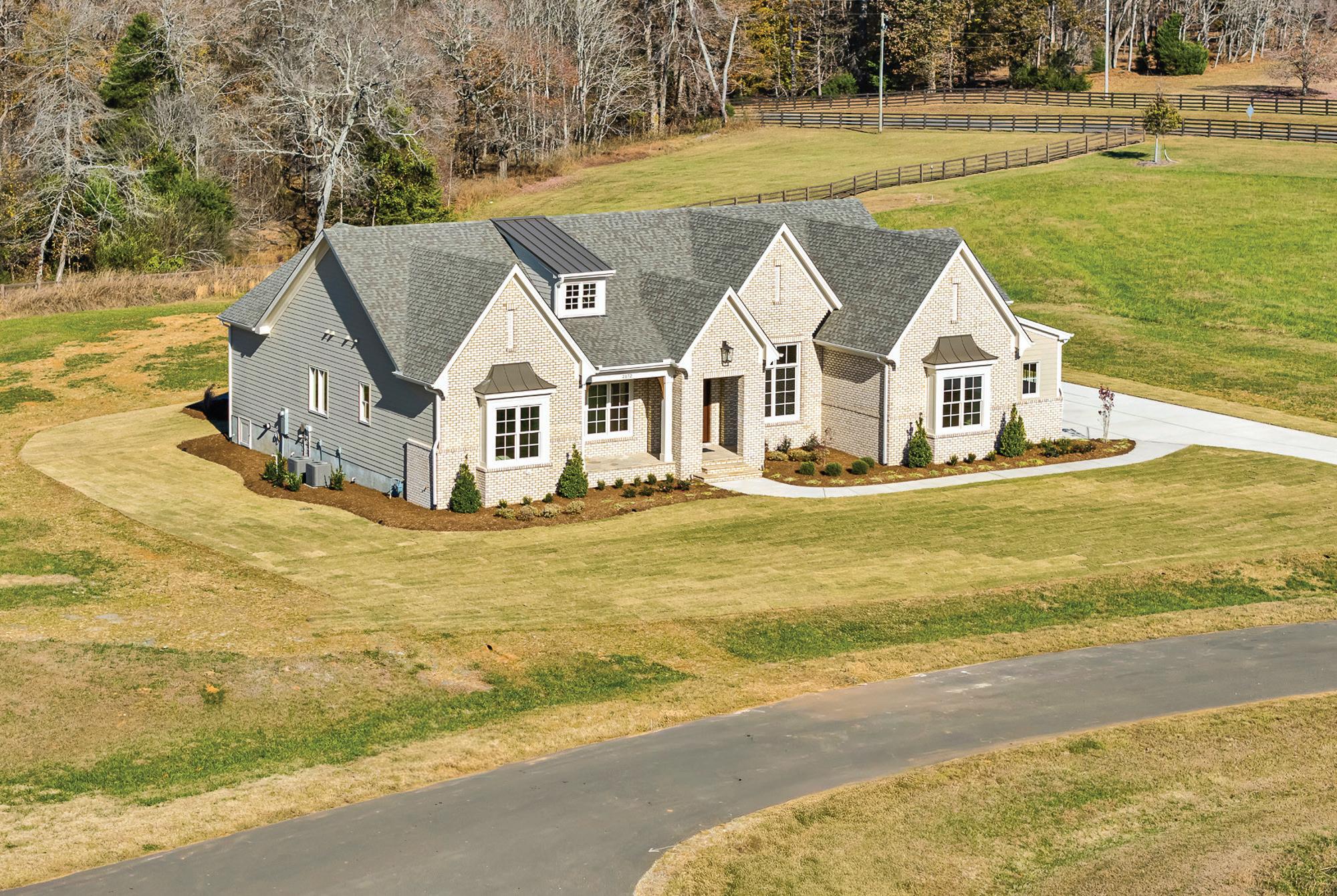
3206 heated square ft on One Level Walk-up Storage above the Garage Front and Back Covered Porches
2 1.22 ACRES
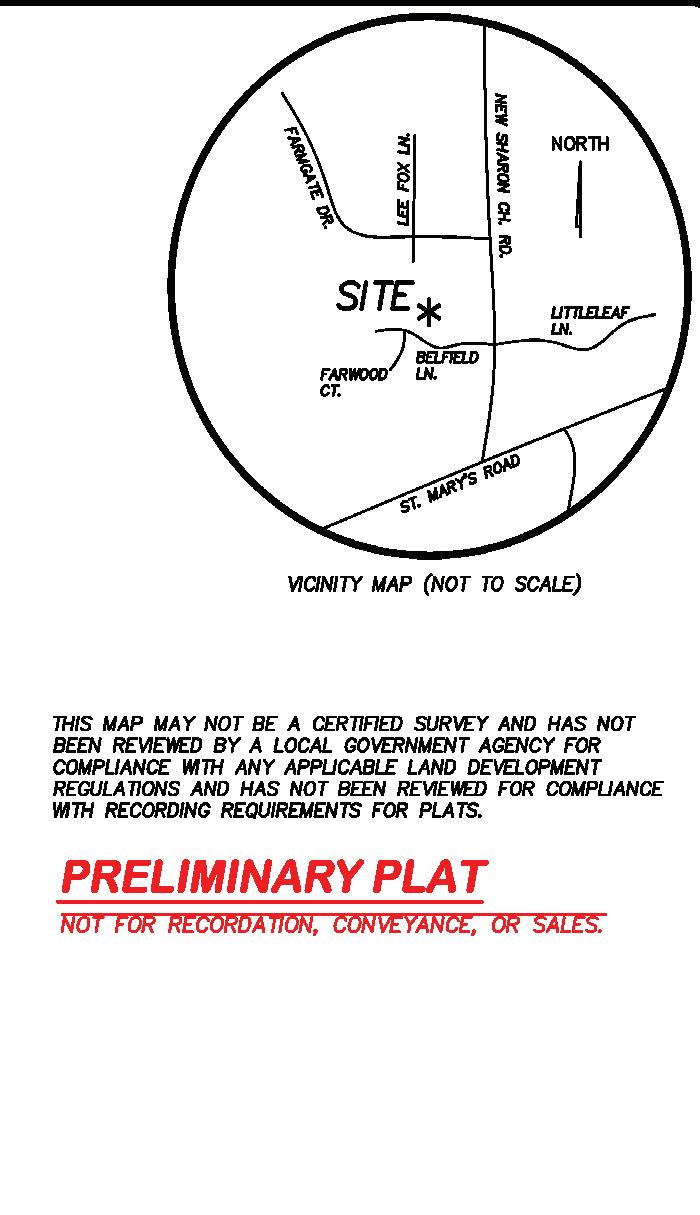
PRELIMINARY PLAT
ake it Mine!
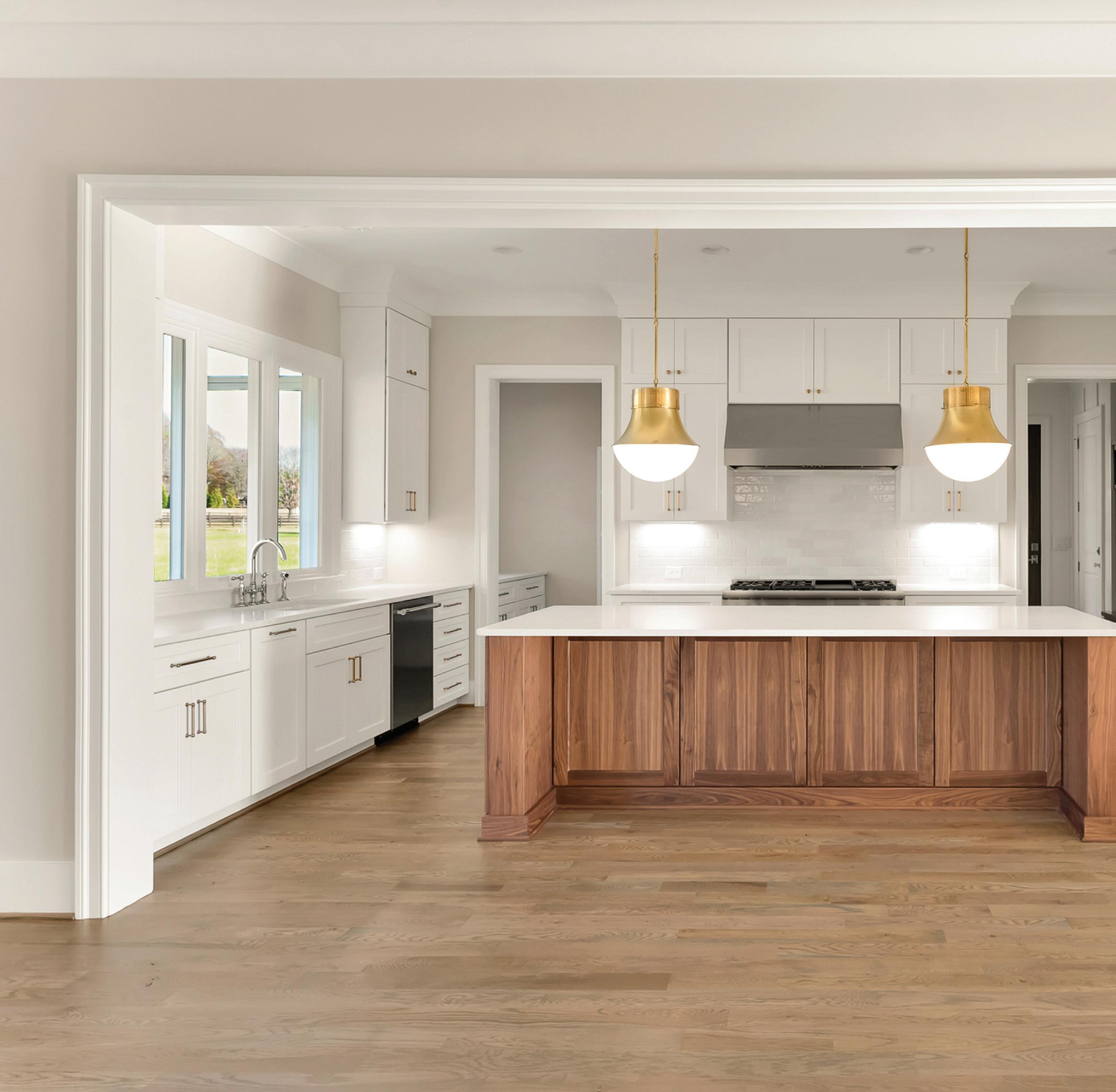
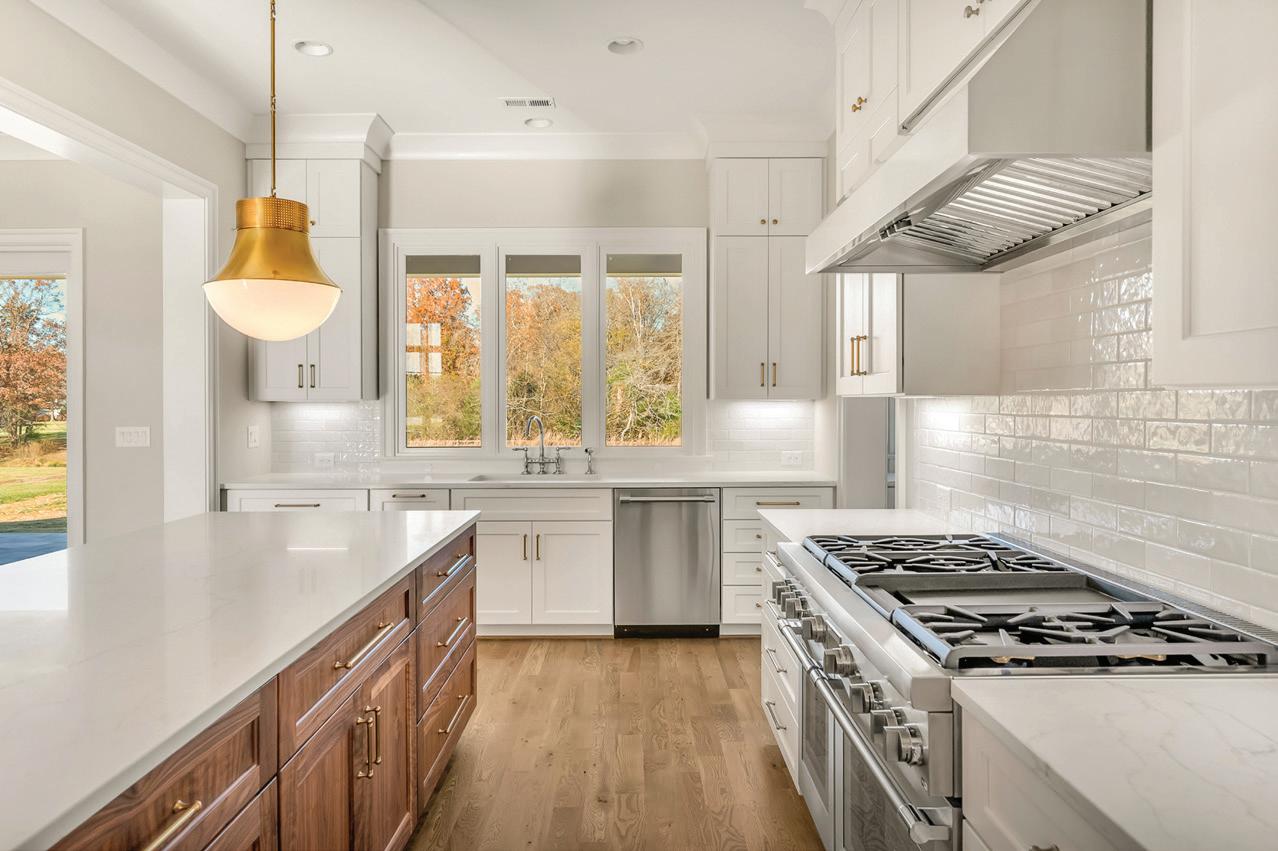
This beautifully appointed kitchen pairs professional-grade appliances with warm, custom design. At its heart is a striking Thermador 48” dual-fuel range framed by a sleek Falmec 48” Pro Hood, creating a true chef’s workspace. A Thermador 30” refrigerator column and 18” freezer column offer generous, integrated cold storage, while the Sharp 24” microwave drawer and Thermador dishwasher add everyday convenience. The Kohler 33” undermount single-bowl workstation sink
provides exceptional functionality for prep and cleanup.
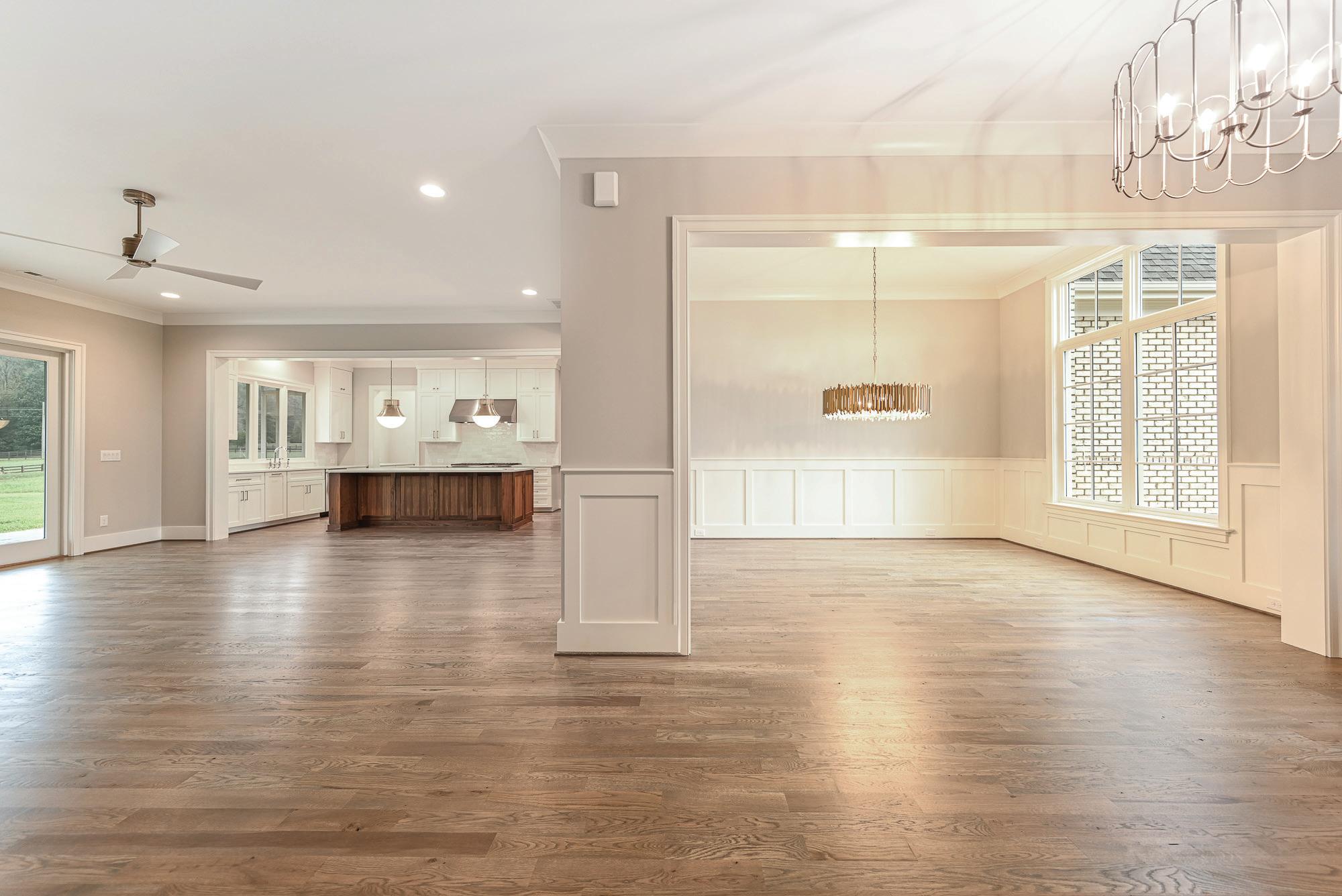
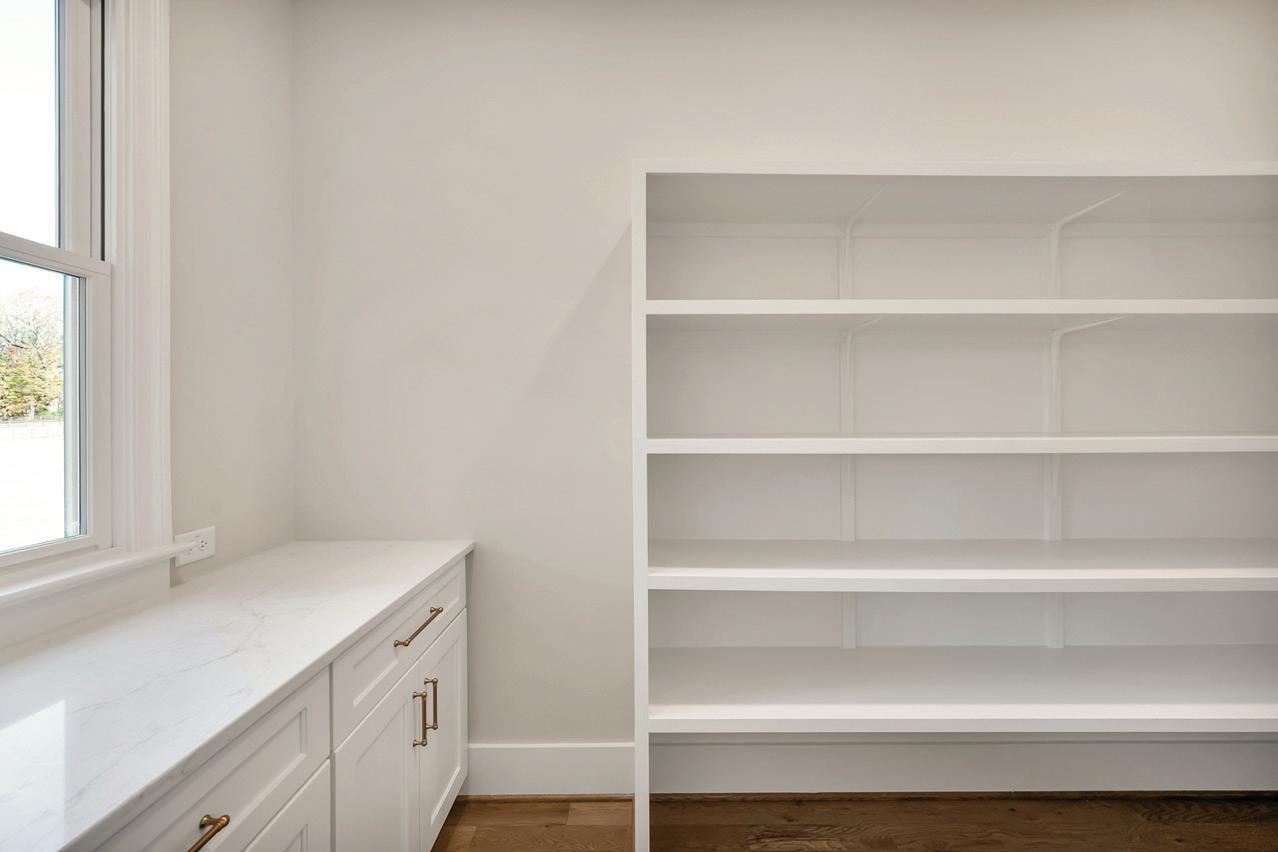
Soft quartz countertops run throughout, culminating in a stunning walnut island that brings richness and visual warmth to the room. Just off the kitchen, a huge walk-in pantry with wrap-around shelving, additional cabinetry, and its own quartz work station overlooks the yard, offering an ideal spot for small appliances, baking setup, or extra storage while keeping the main kitchen uncluttered.
Just off the kitchen, a huge walk-in pantry with wrap-around shelving, additional cabinetry, and its own quartz work station overlooks the yard—offering an ideal spot for small appliances, baking setup, or extra storage while keeping the main kitchen beautifully uncluttered.
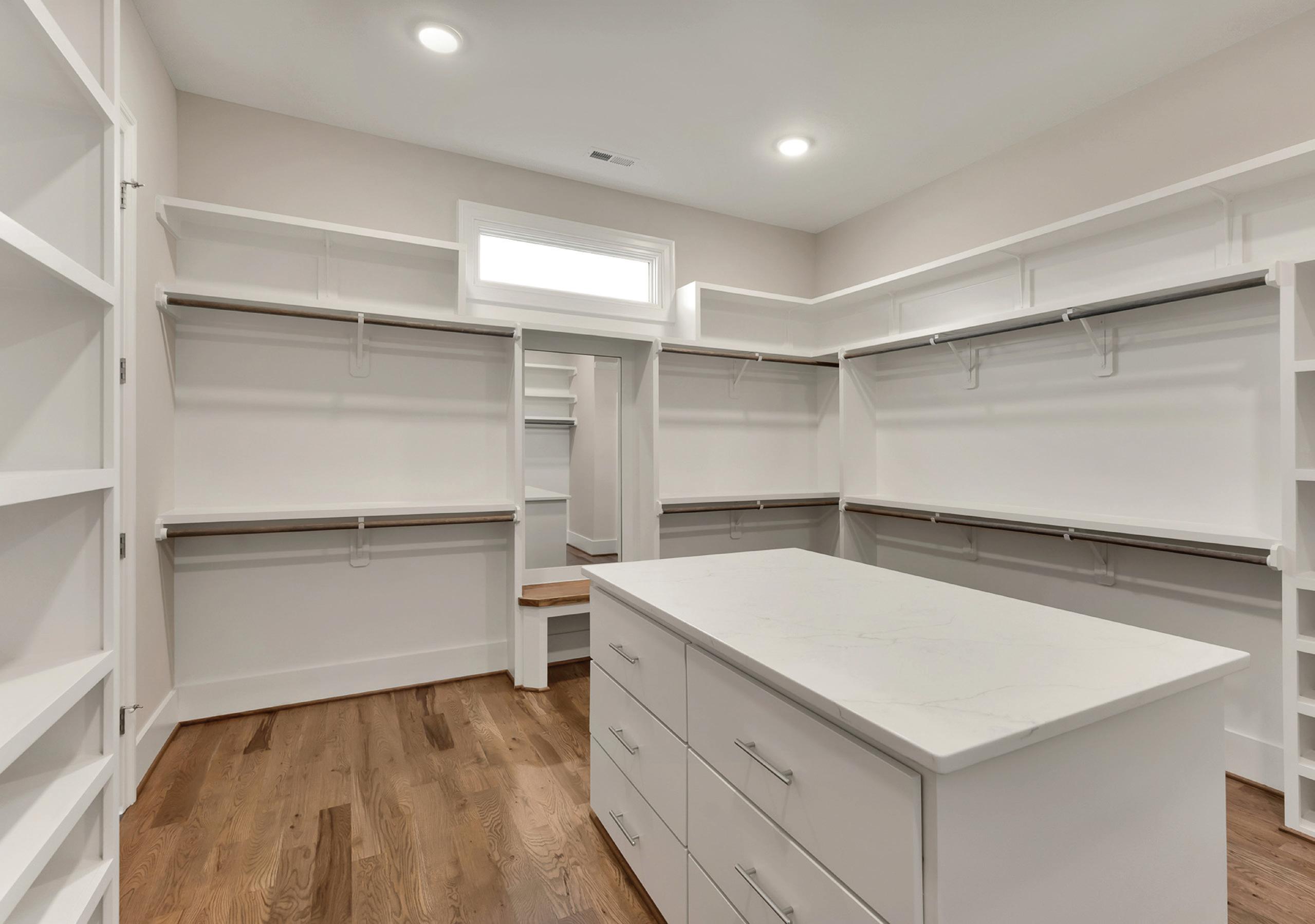
Perfectly designed for effortless daily living, the back-to-back primary closet and laundry suite creates a private, highly functional hub tucked directly off the owner’s retreat. Step from the bedroom into an expansive walk-in closet outfitted with custom shelving, abundant hanging space, deep cubbies, and a large center island with drawers—ideal for keeping wardrobes beautifully organized and easily accessible. Warm hardwood floors and soft natural light make the space feel more like a boutique dressing room than a traditional closet.
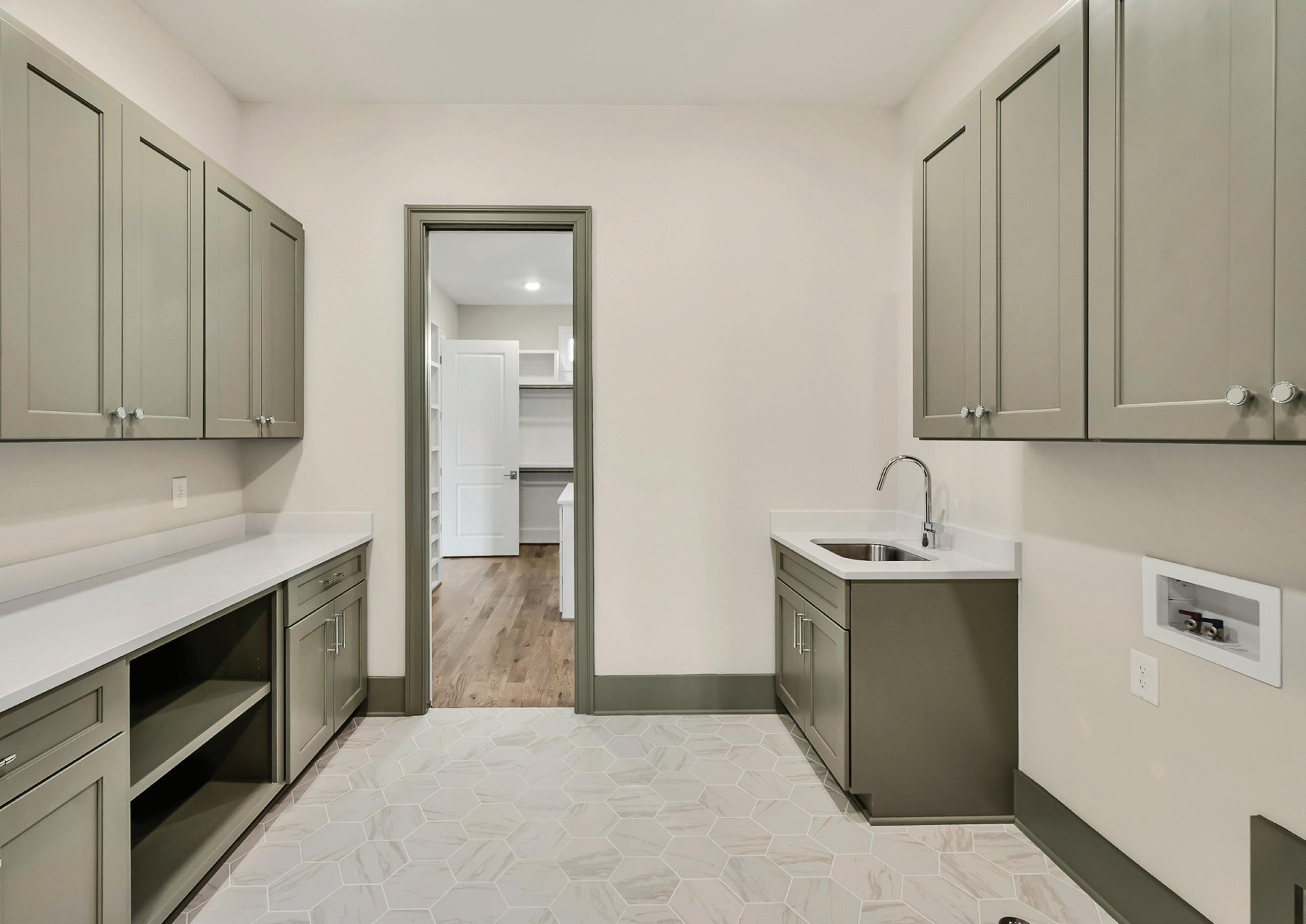
A pocket door leads straight into the oversized laundry room, where crisp quartz countertops, an abundance of cabinetry, and a dedicated sink make household tasks simple and streamlined. With generous folding surfaces, upper and lower storage, and designated space for a full-size washer and dryer, everything has its place. Thoughtfully connected yet distinctly separate, this back-to-back configuration allows for seamless flow on busy mornings—laundry goes directly from wash to wardrobe with convenience and style.
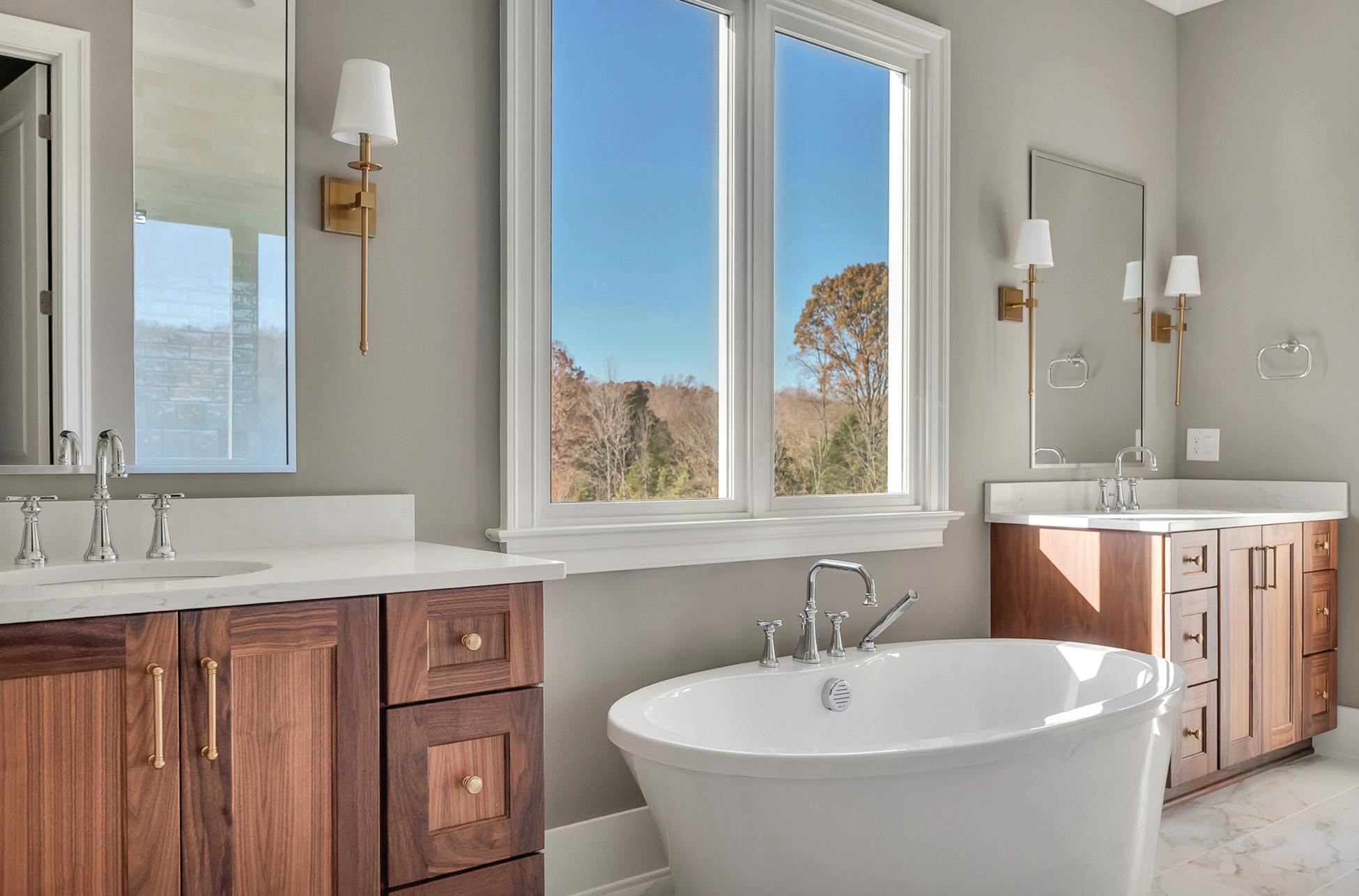
The primary bath feels like a private spa, featuring a freestanding soaking tub set beneath scenic windows, warm walnut vanities with quartz tops, and elegant brass lighting. A large, glass-enclosed shower offers dual rainheads, a handheld sprayer, and a built-in bench surrounded by soft, artisan tile work. Sophisticated marble-look flooring completes this serene, beautifully designed retreat.
Scott Daves Superior Standards
High-end Windsor Pinnacle windows:
-All Exterior aluminum clad (no rot and never paint)
- Easy and smooth operation
- Most energy efficient
Smart Home Wi-Fi Package includes: (control all from phone)
Garage Door Openers
Honeywell Smart Thermostats
Honeywell Alarm system
OnQ structured wiring package throughout house
Wireless Router w/a wireless access point
Energy Star Certified Home by 3 rd party Southern Energy Management
All LED recessed can light bulbs
92% efficient gas furnaces with 14 SEER rating
Exterior fresh air exchange unit
Thermador 48” duel fuel Range
Falmec 48” Pro Hood
Thermador 30” Refrigerator column
Thermador 18” Freezer column
Sharp 24” microwave drawer
Thermador dishwasher
Kohler 33” Undermount Single-Bowl Workstation Kitchen Sink Walnut island in kitchen
Interior doors are solid core (8’ tall first floor) with lever hardware
Extensive interior trim package with paneled walls and unique moldings.
16’ (8’ tall) retractable door to outdoor living per plan
Primary shower has 3 valves for rain head, handheld and standard shower head
Heated tile floor in the primary bath
Freestanding bathtub per plan
Double glass and mahogany front doors 8 ft tall and insulated
Steel Garage Doors (8’ tall) with glass panels
Extensive primary closet with storage & natural light
Extra wide doorways throughout the house Zero entry master shower
All spray foam insulation
Sealed conditioned crawlspace
Tankless hot water
Recirculating hot water loop for fast hot water
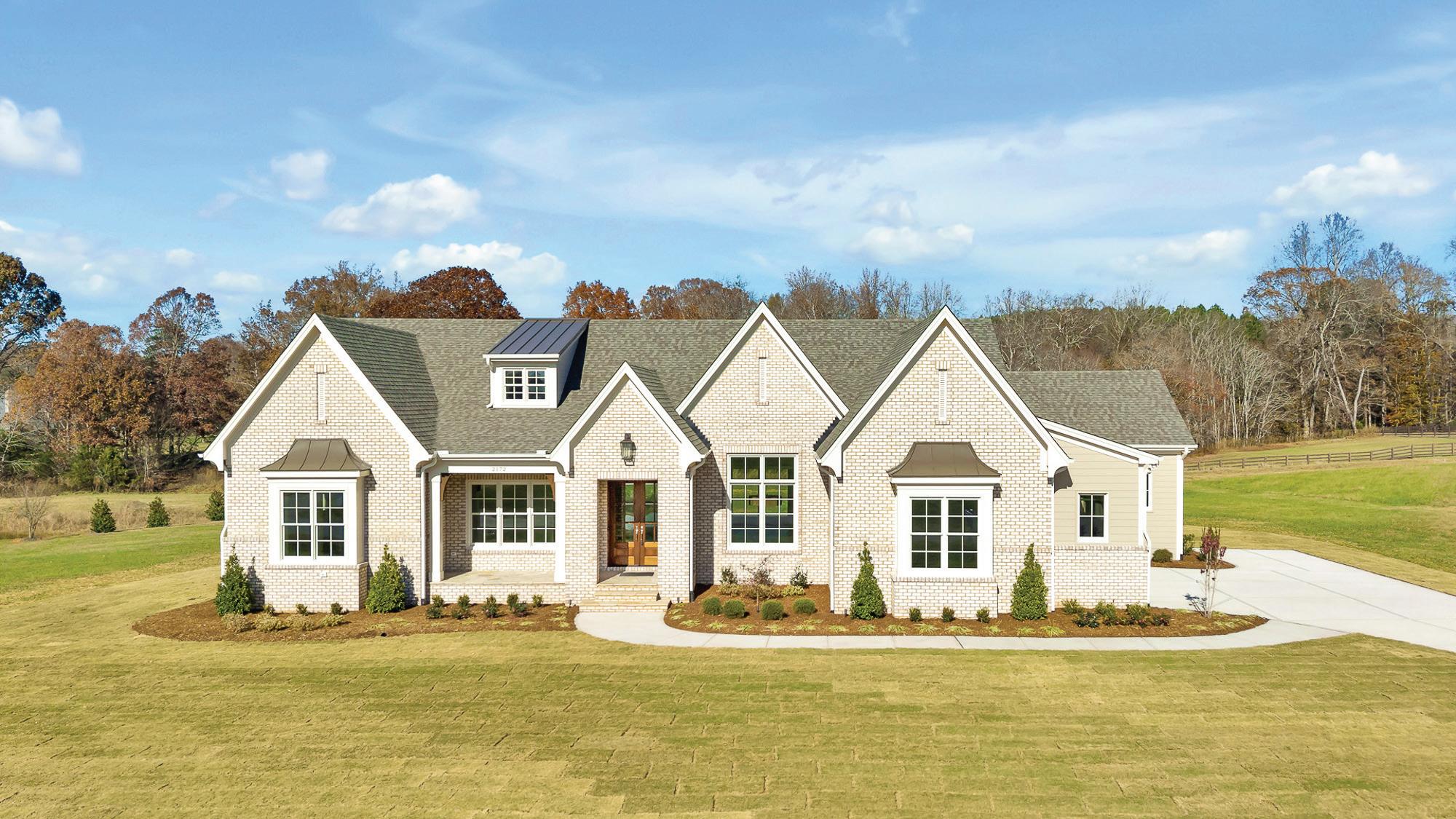
Unique to2172 Belfield Interior:
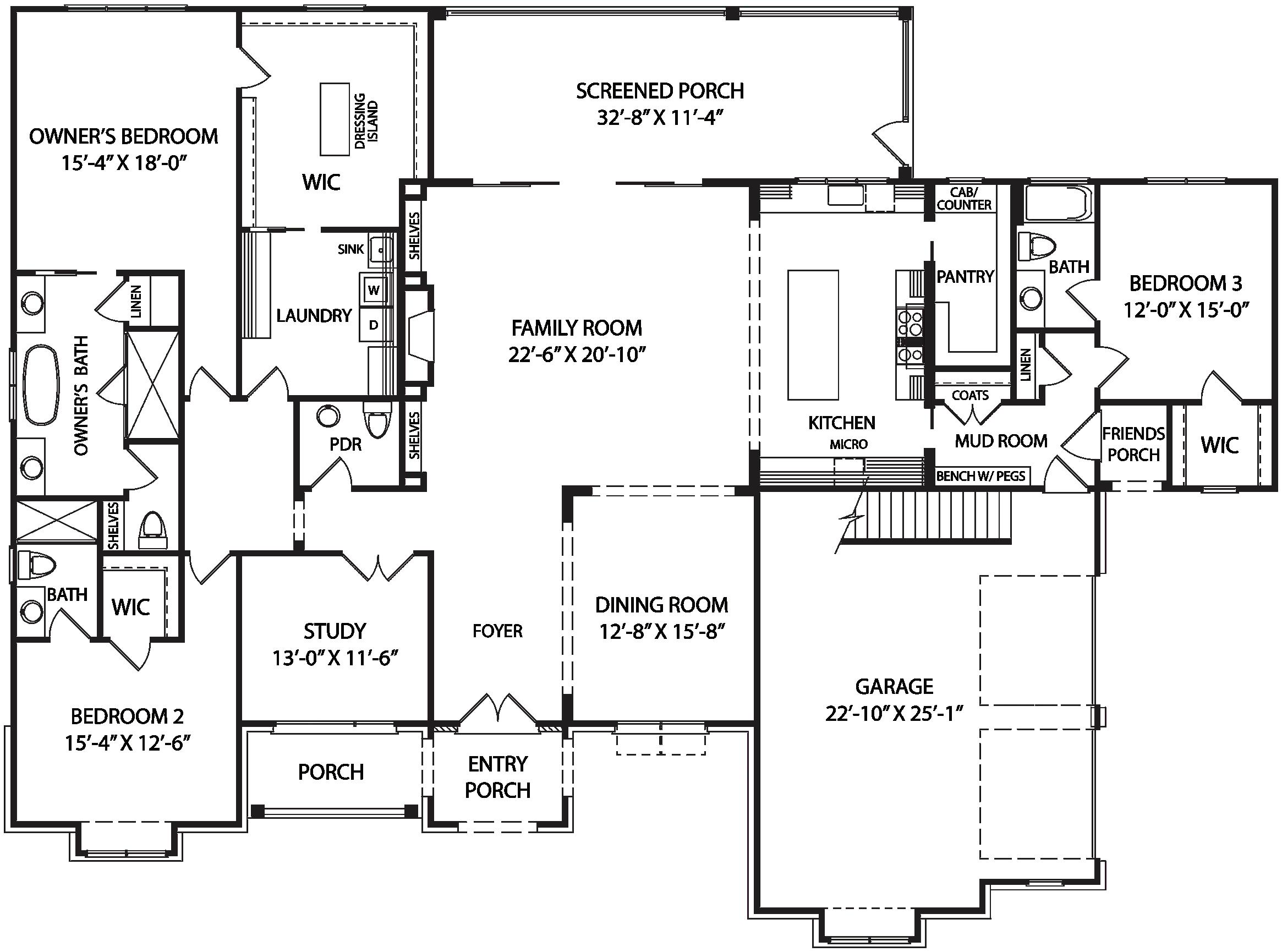
Floor Plan:
All living area on the main level
Huge walk-in Pantry with countertop
Open floorplan large well-sited rooms
Walk-in storage
Walnut book shelves in Family room
Walnut powder room vanity cabinet
Laundry room has extensive cabinetry
Kitchen:
Thermador 48” duel fuel Range
Falmec 48” Pro Hood
Thermador 30” Refrigerator column
Thermador 18” Freezer column
Sharp 24” microwave drawer
Thermador dishwasher
Kohler 33” Undermount Single-Bowl Workstation Kitchen Sink Walnut island in kitchen
Offered for #1,430,000
Exterior:
Covered outdoor living area with overhead heating for cool days. Wired for outdoor TV
Phantom screens and skylights on the rear porch
Exterior gas grill
Tennessee Flagstone on front porch
Lavish landscaping package that includes irrigation system & site lighting system
11 miles to Duke University
12 miles to UNC Chapel Hill home to a UNC Hospital Campus
Colonial Era
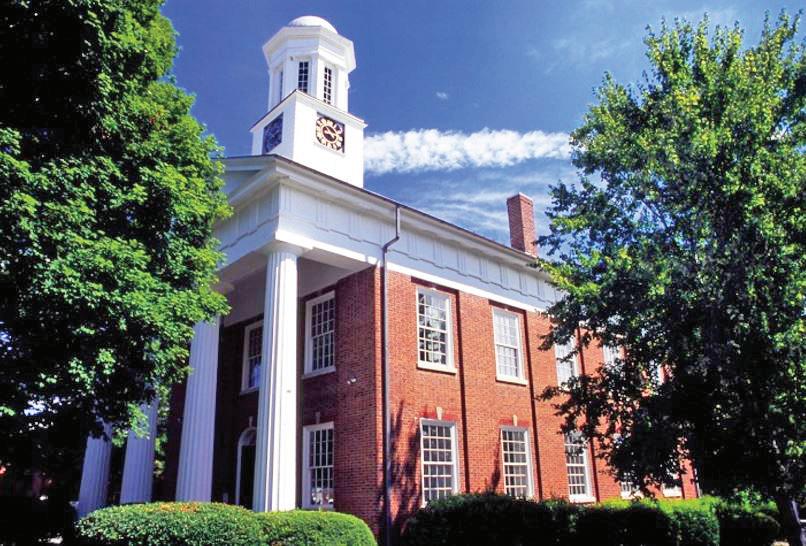
Hillsborough was a center of political activity during the colonial and Revolutionary periods. Royal and elected governors lived here, as did William Hooper, a signer of the Declaration of Independence. Hillsborough hosted the North Carolina Constitutional Convention of 1788 which demanded a Bill of Rights be added to the Constitution.
Historic Hillsborough
In the historical records in 1650, the first inhabitants of the Hillsborough area are mentioned. Those inhabitants were the native Occaneechi tribe who established a community at the crossing of ancient trails and the Eno River. The Occaneechi were successful middlemen in the fur and deerskin trade that flourished between the Virginians and the Piedmont Indians during the 1660s and 1670s. A replica of their ancient village is a source of
The many famous residents of Hillsborough include William Hooper, signer of the Declaration of Independence; Elizabeth Keckly, the former slave who became Mary Todd Lincoln’s dressmaker; John Lawson, the explorer who visited the Occaneechi Village in 1701; Edmund Fanning, Yale graduate and judge who lived in Hillsborough prior to the Revolutionary War and a Royalist and whose home was destroyed by Regulators; Billy Strayhorn, jazz musician; and today many nationally revered authors and artists. Will the next famous resident be you?
Participate in recreation at the Sports Plex which includes ice skating, an aquatic center, basketball, pickleball, summer camps, and organized leagues. Take a walk on the Riverwalk, a two-mile trail that stretches along the Eno River. Peruse the visitor’s center to learn more about the history of Hillsborough. And be sure to come to the Hog Day Festival for the best barbecue you ever tasted! A cosmopolitan, historic village awaits.
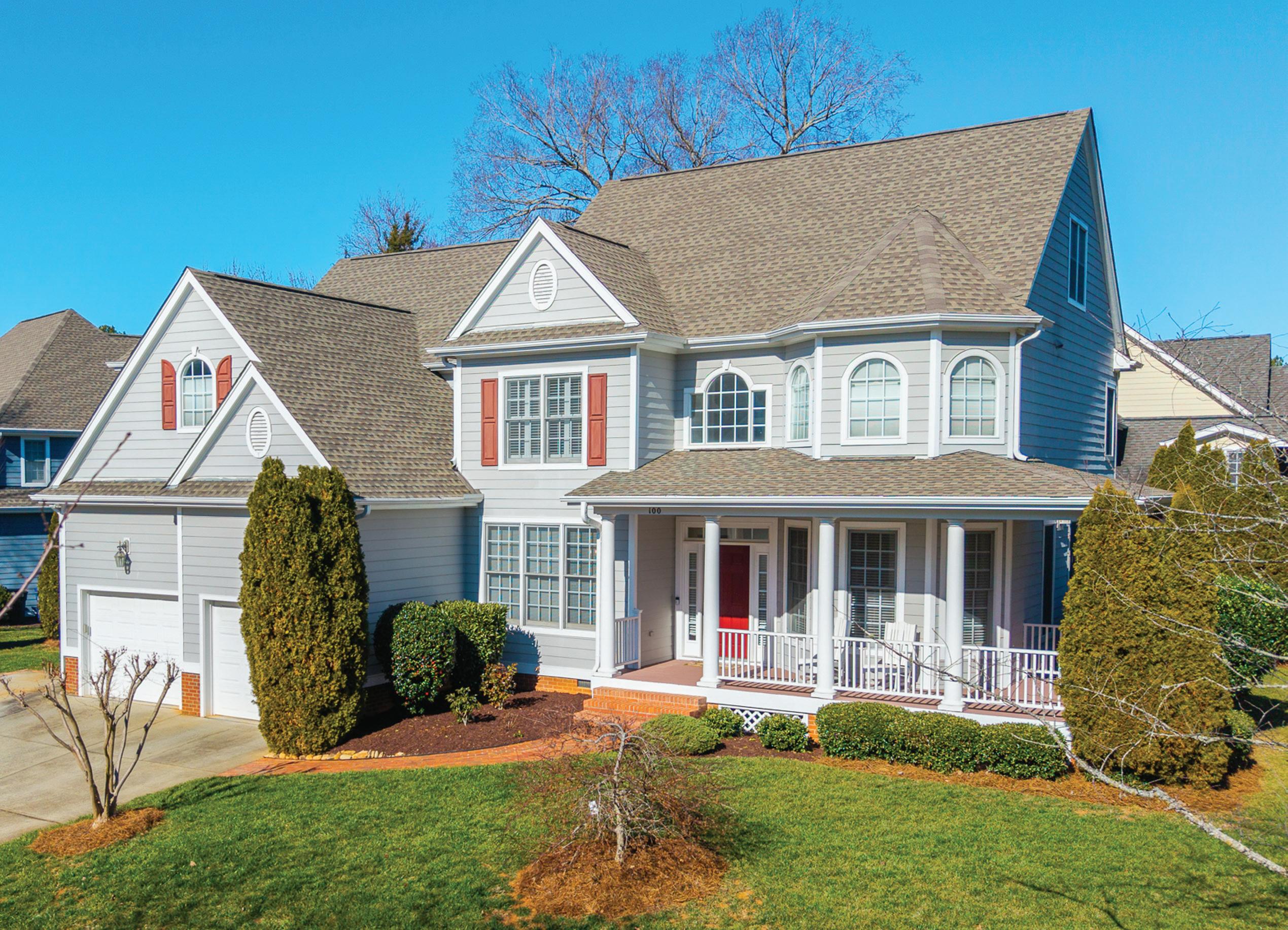
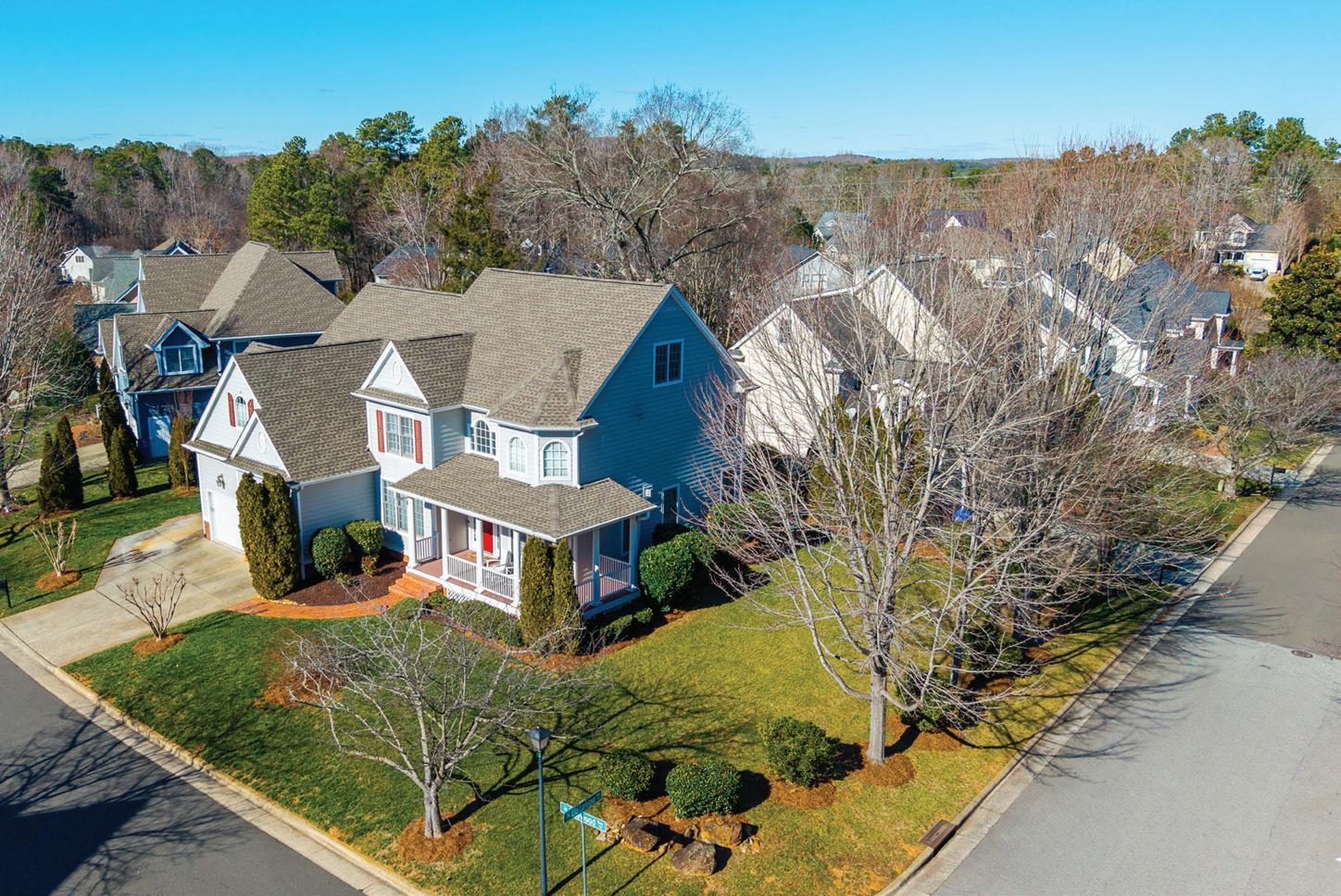
Welcome to 100 Maywood
This inviting home pairs classic architecture with a warm, neighborly spirit. A generous front porch sets the tone. It is an ideal place to enjoy Carolina sunshine, greet friends, and take in the easy rhythm of the neighborhood. Inside, light-filled spaces and gracious proportions create an immediate sense of welcome, while thoughtful details add timeless appeal. Ideally located near renowned Chapel Hill schools, the home also offers exceptional convenience to shopping, walking paths, and everyday essentials, making it as practical as it is charming. A place where comfort, community, and location come together beautifully.
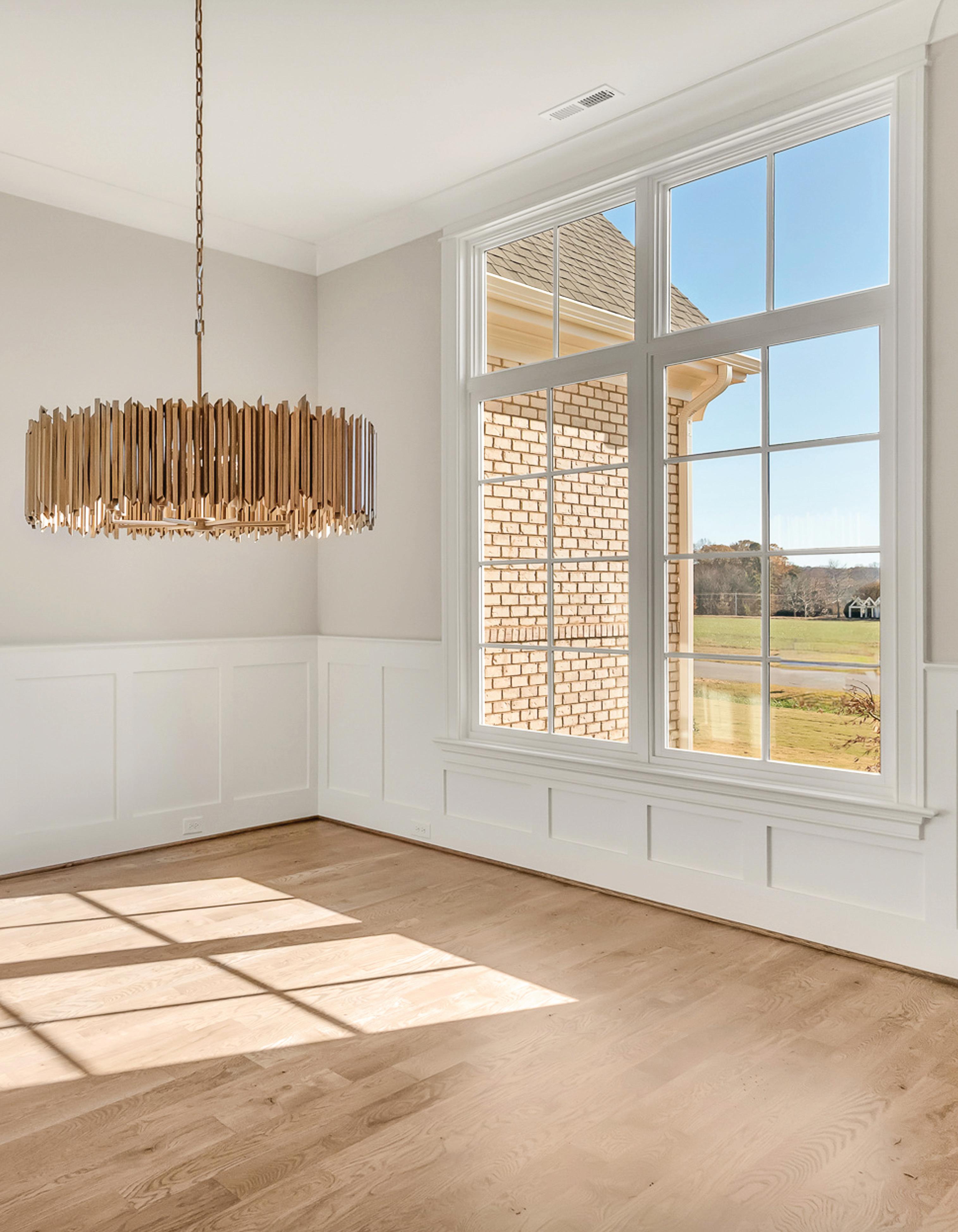
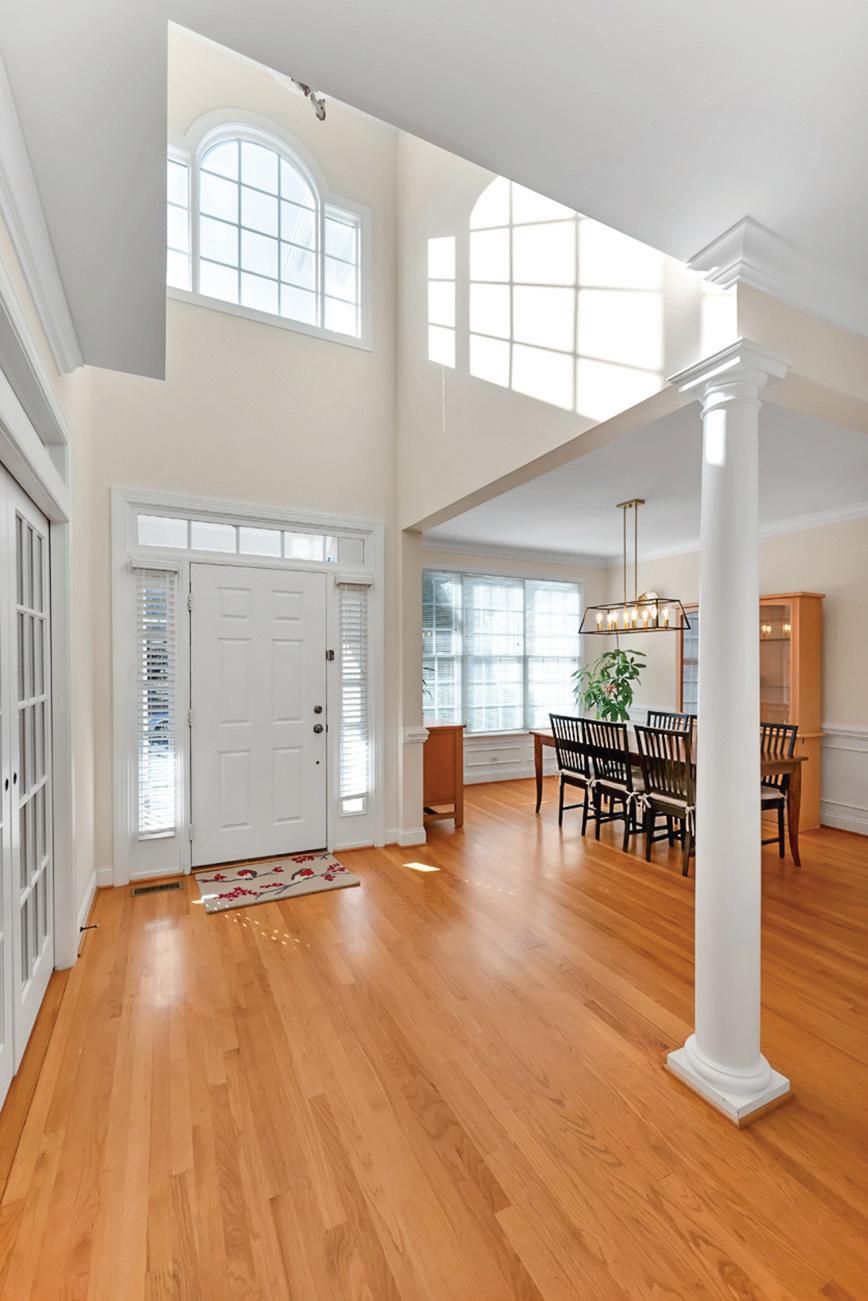
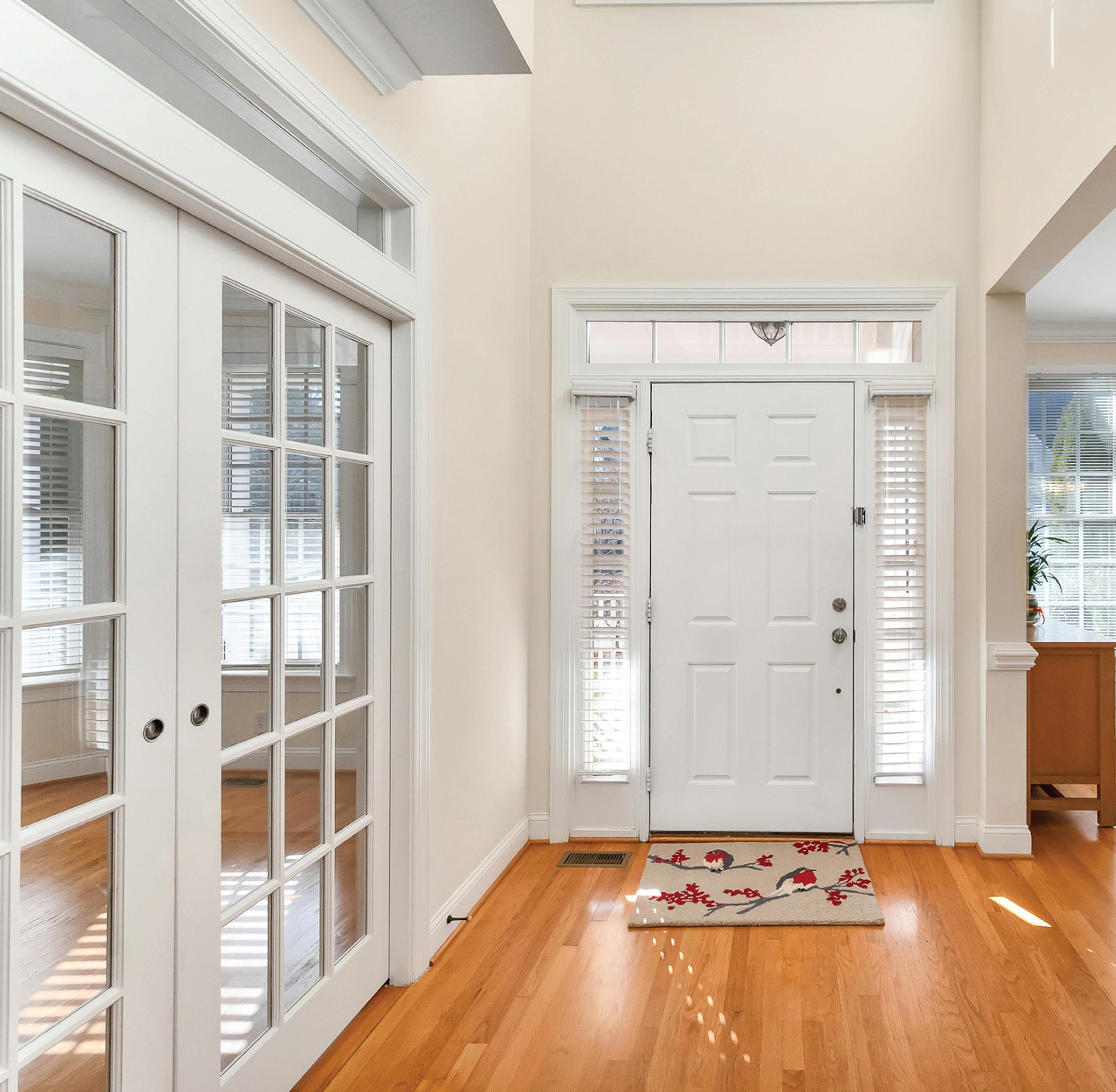
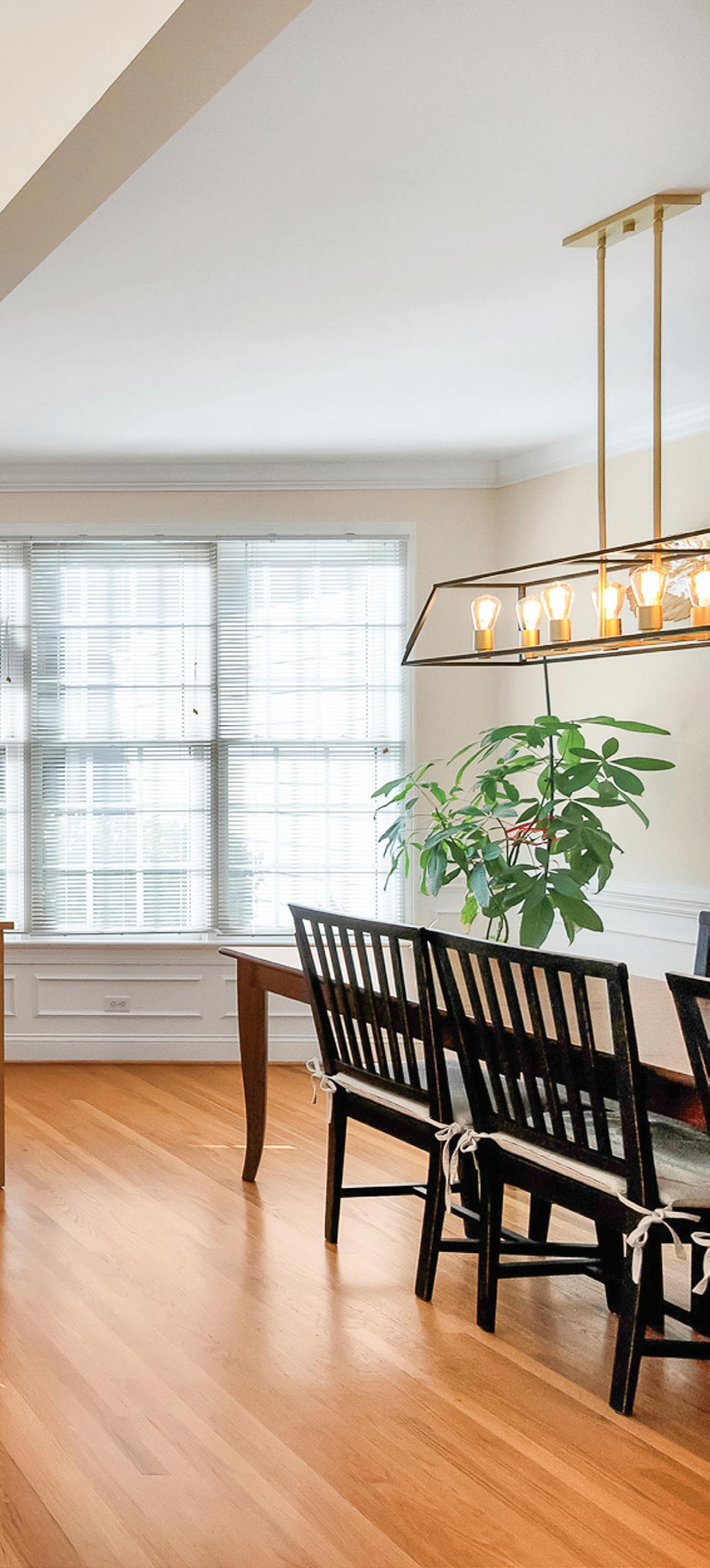
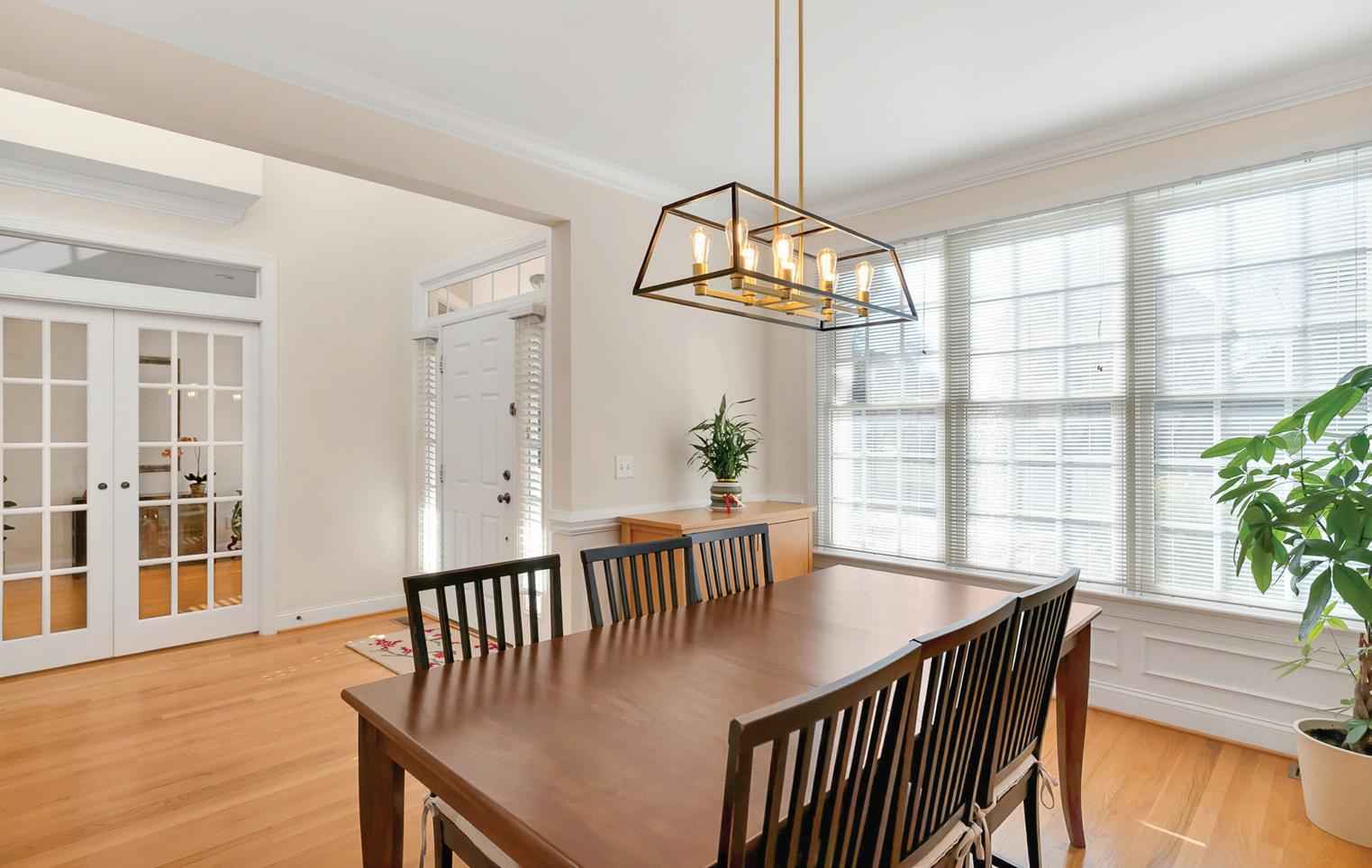
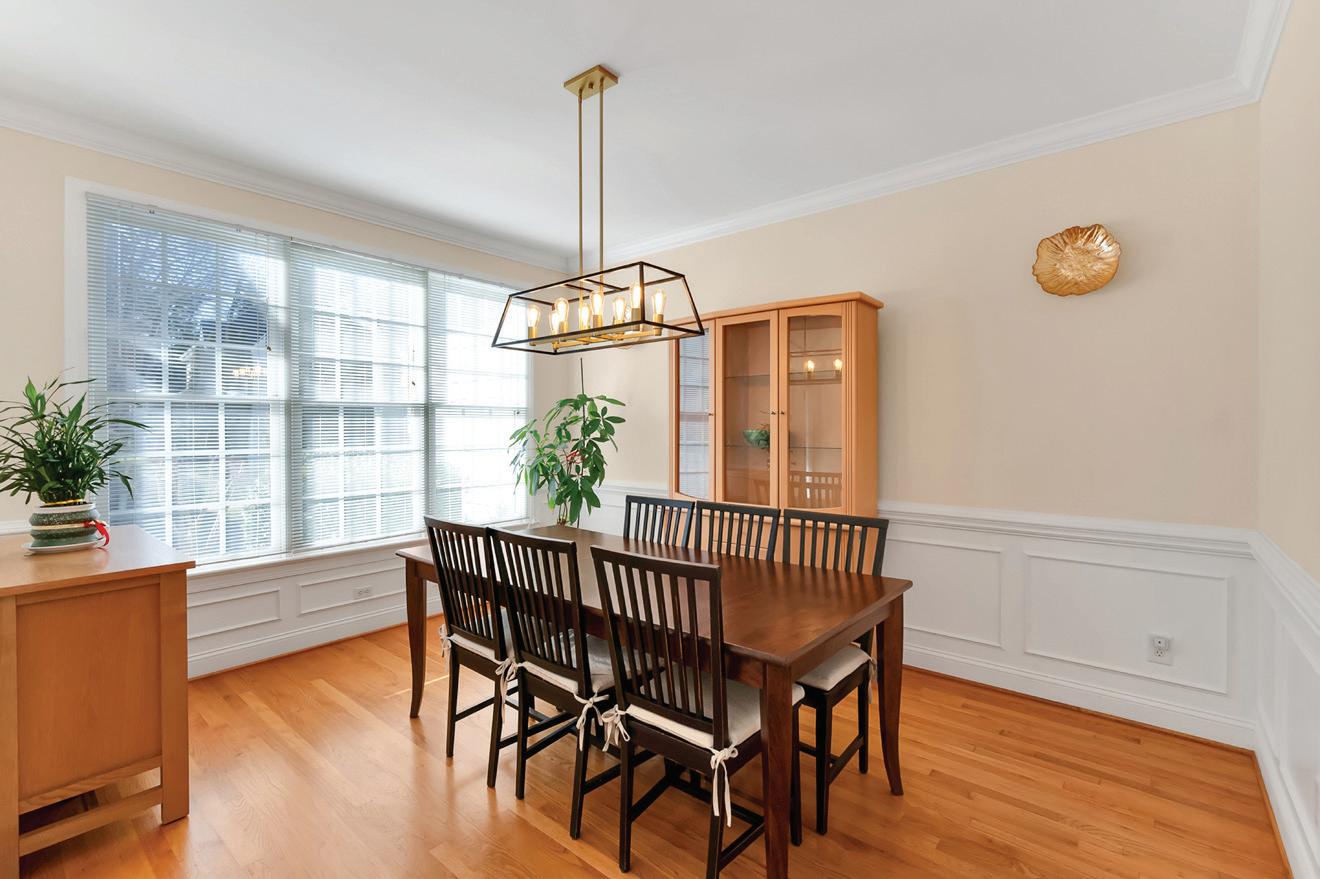
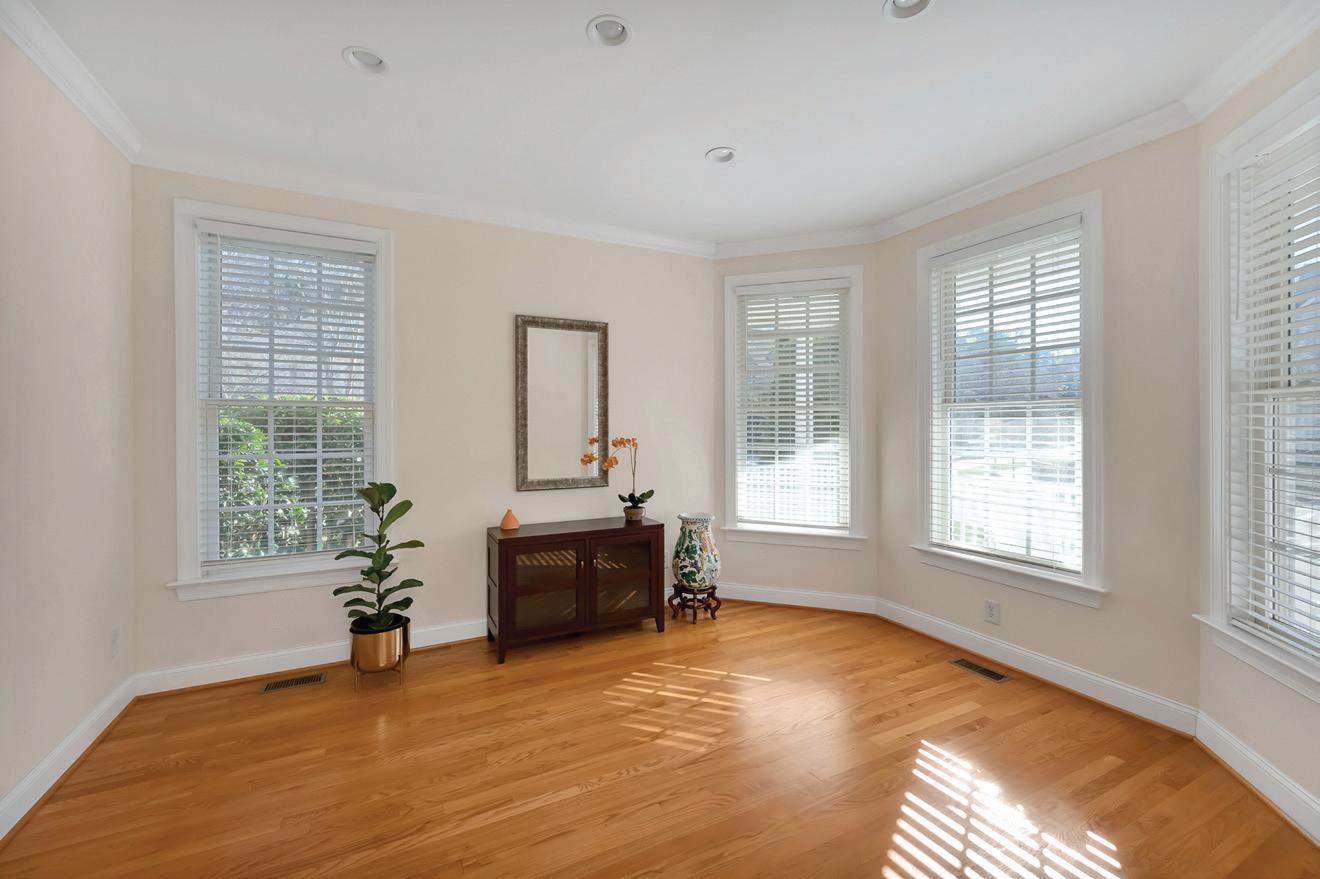
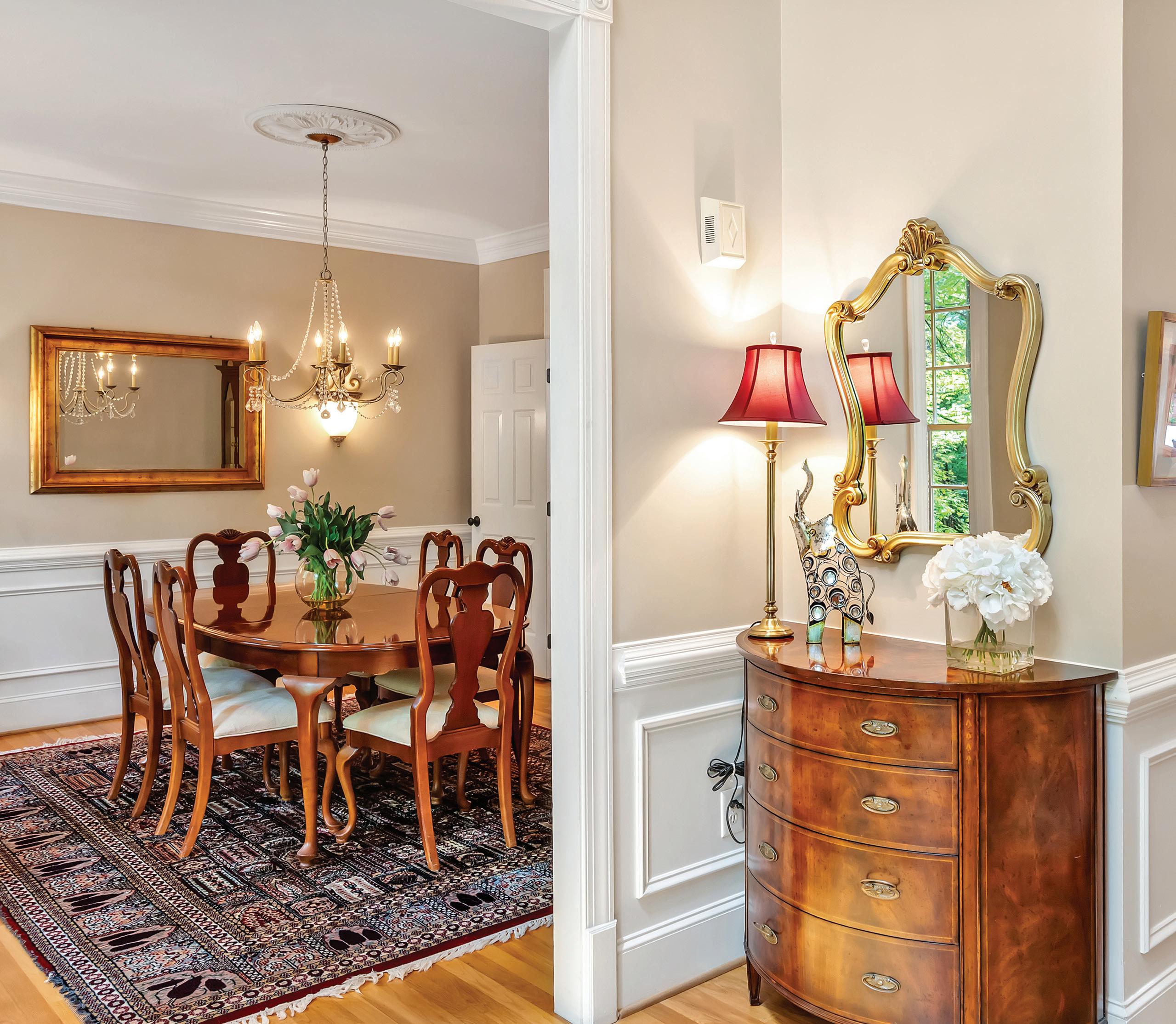
Sunlight pours into the open two-story foyer, creating a bright and welcoming first impression that immediately sets the tone for the home. Hardwood floors lead you naturally into the open dining area, perfectly positioned for both everyday living and effortless entertaining. Just off the foyer, a quiet study or sitting room is thoughtfully separated by classic French doors, offering a flexible space for work, reading, or relaxed conversation. The openness, warm finishes, and graceful flow from room to room make the home feel both inviting and refined—designed to welcome guests while offering comfortable spaces to linger.
“A home should greet you like a friend, warm, open, and full of light.”
Where form and function
function
meet
to say . . . this is perfect
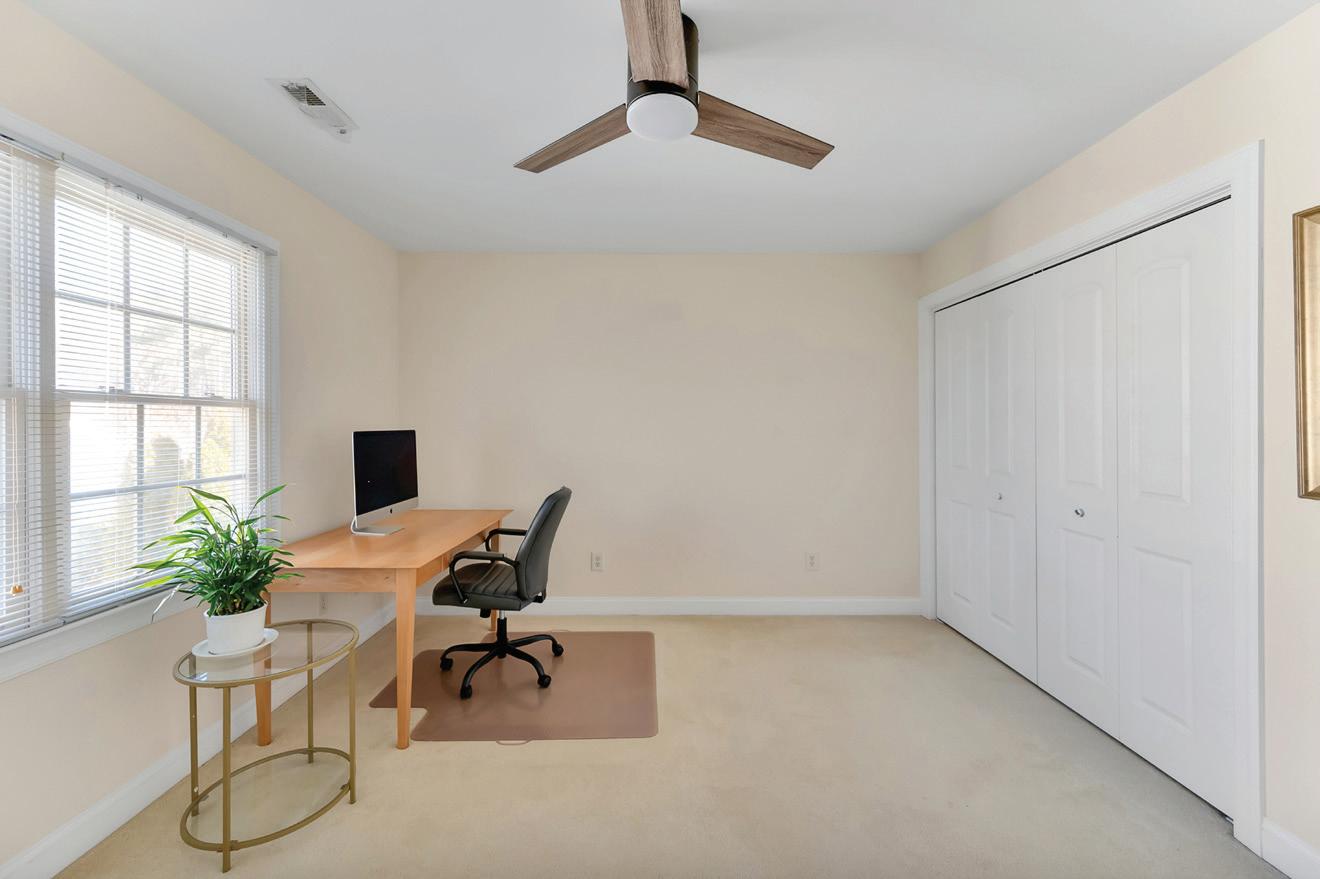
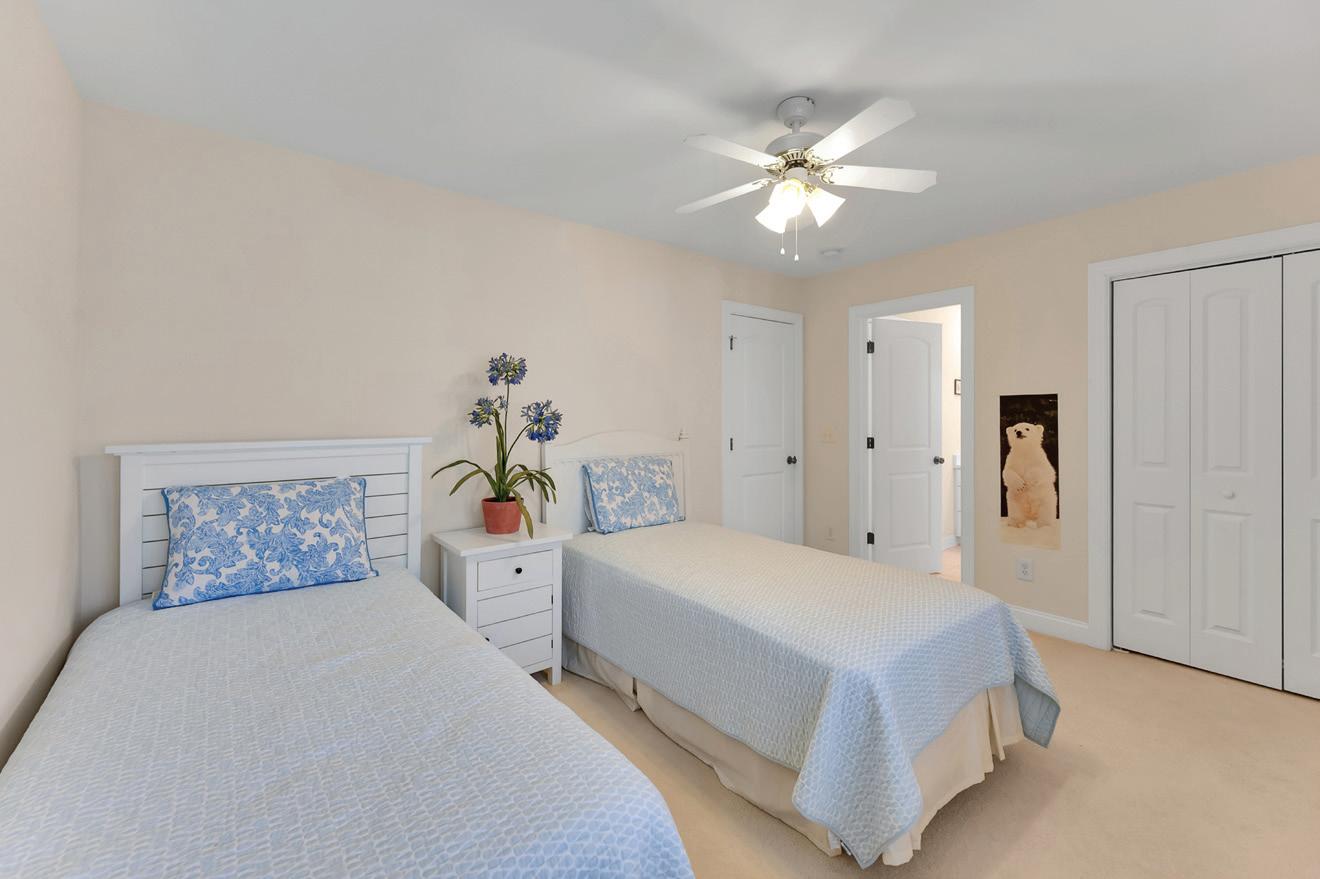
Additional bedrooms are thoughtfully placed, offering comfort and privacy for family or guests. Each room is light filled and wellproportioned, easily accommodating bedrooms, playrooms, or home offices as needs evolve. Bathrooms throughout the home feature updated quartz countertops and modern fixtures, reflecting the home’s consistent level of care.
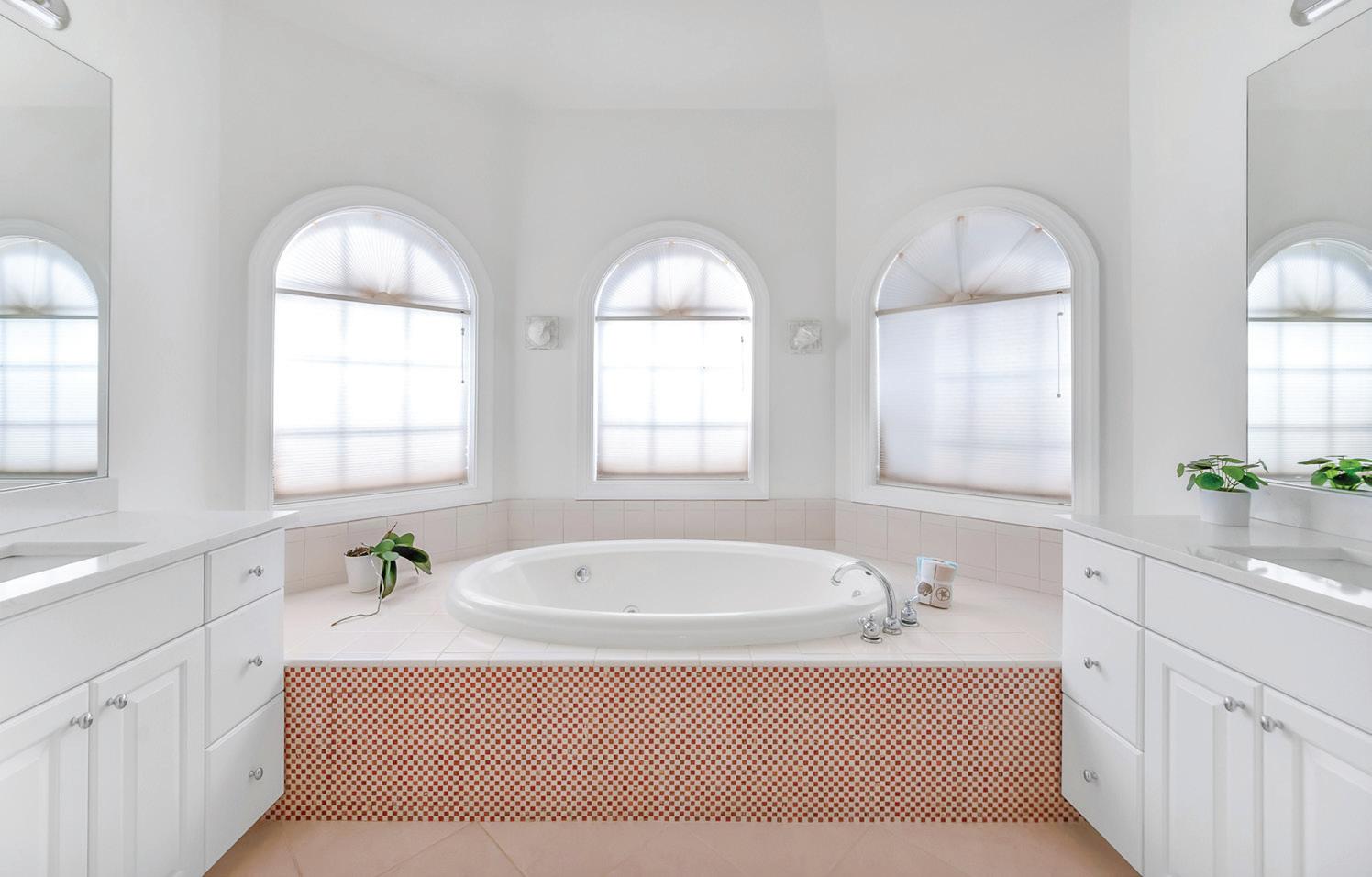
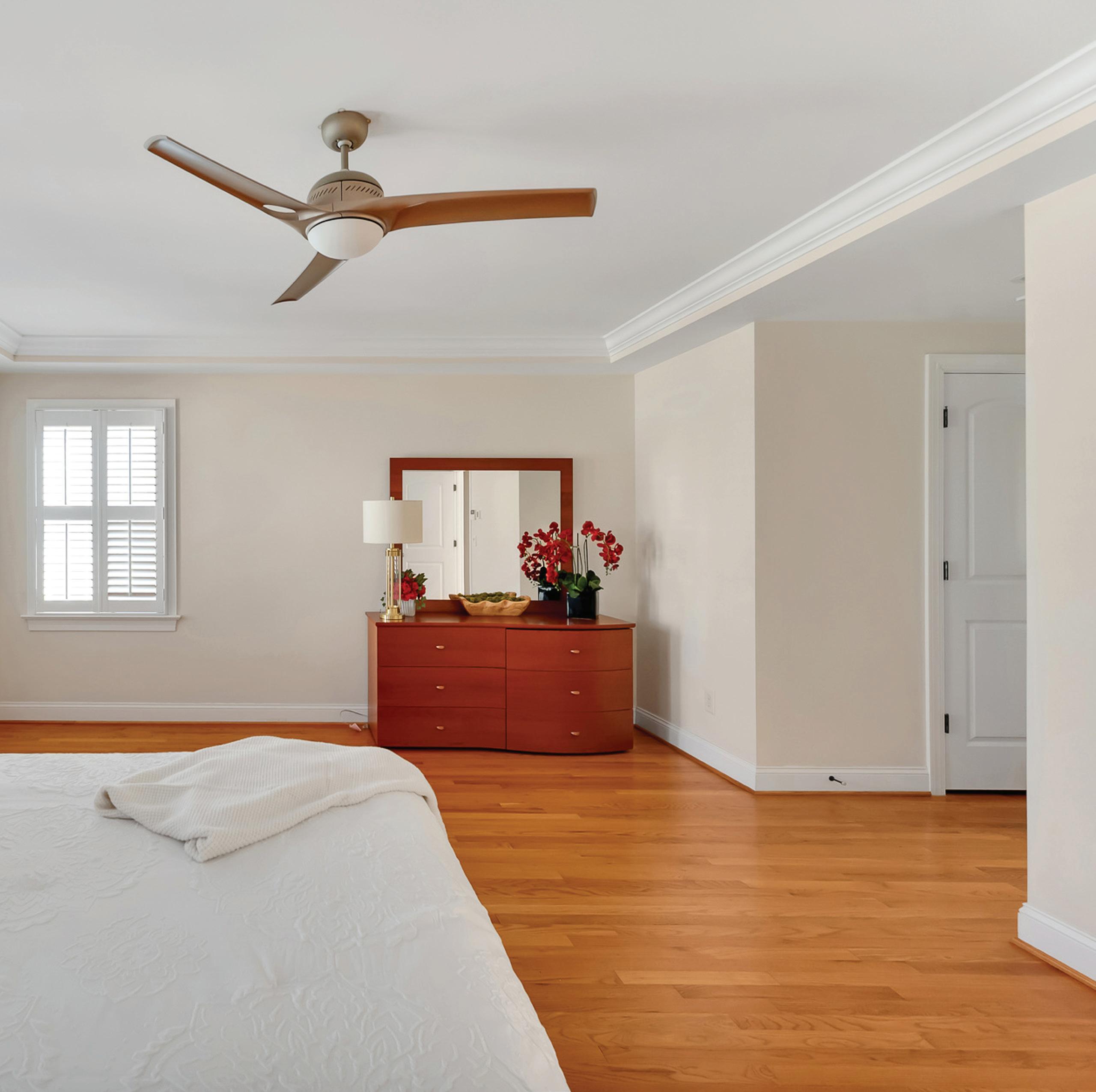
The primary suite is a true retreat—generous in scale, filled with natural light, and finished with hardwood floors that add warmth and continuity. Plantation shutters filter the daylight, while the tray ceiling and ceiling fan lend a sense of calm and comfort. The en-suite bath feels bright and timeless, with a soaking tub framed by arched windows, dual vanities, quartz countertops, and a glass-enclosed shower—designed for both everyday ease and quiet moments of relaxation.
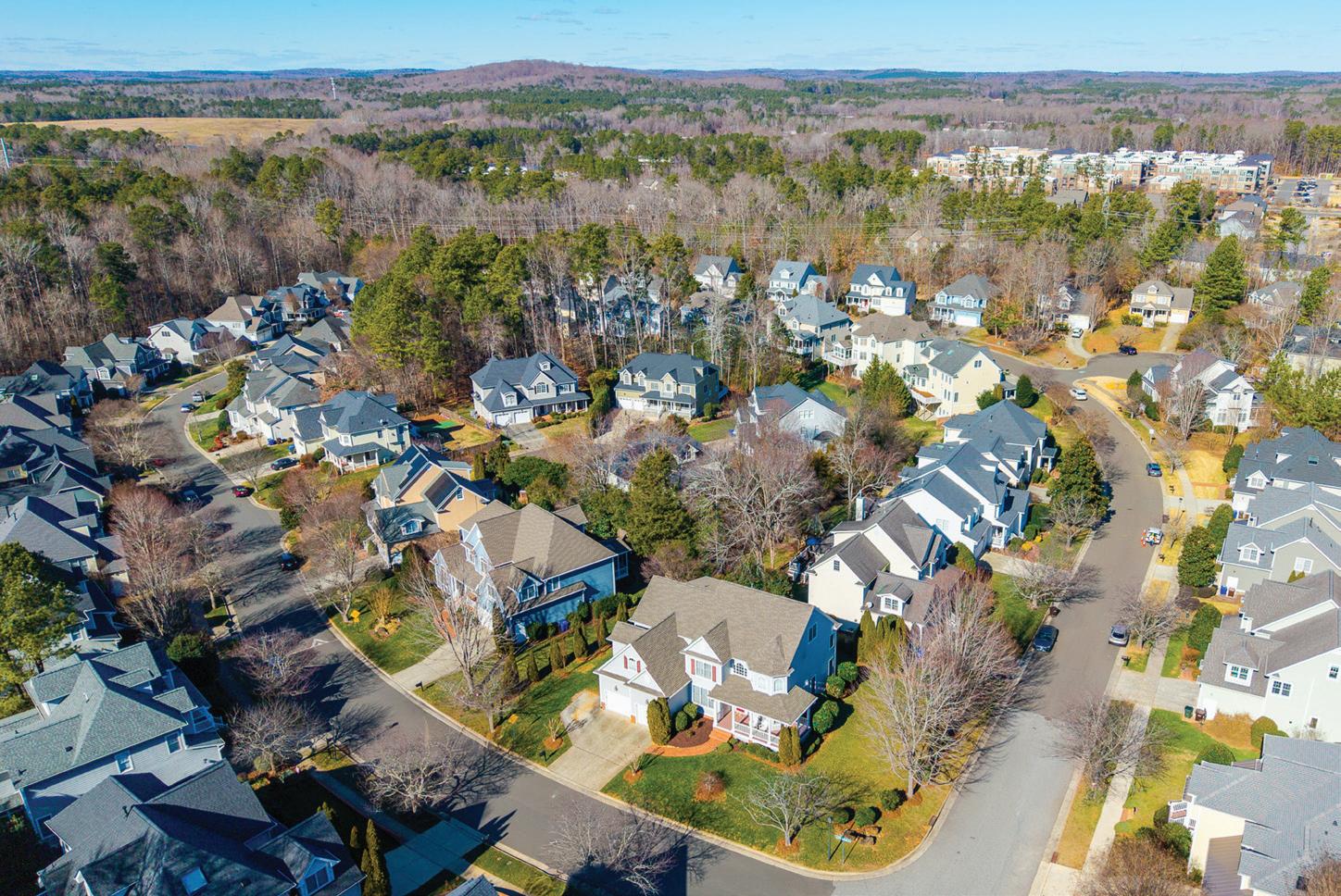
Located in one of Chapel Hill’s most desirable neighborhoods, this beautifully maintained Larkspur home offers an exceptional blend of location, flexibility, and indoor-outdoor living. Just minutes from Duke, UNC, shopping, dining, and major commuter route. Cherry blossoms float through the streets and the air in the spring, children’s laughter echoes in the summer when the pool is open, and upcoming scholars are welcomed in Chapel Hill Schools. The setting balances everyday convenience with a true sense of neighborhood.
One of the most distinctive features is the expansive third-floor flex space above the garage. With approximately 900 square feet of hardwood flooring and its own full bath, this level invites endless possibilities with a guest suite, creative studio, gym, media room, or a private home office retreat set apart from the main living areas. Skylights and dormer windows bring in natural light, making the space feel open, airy, and inspiring.
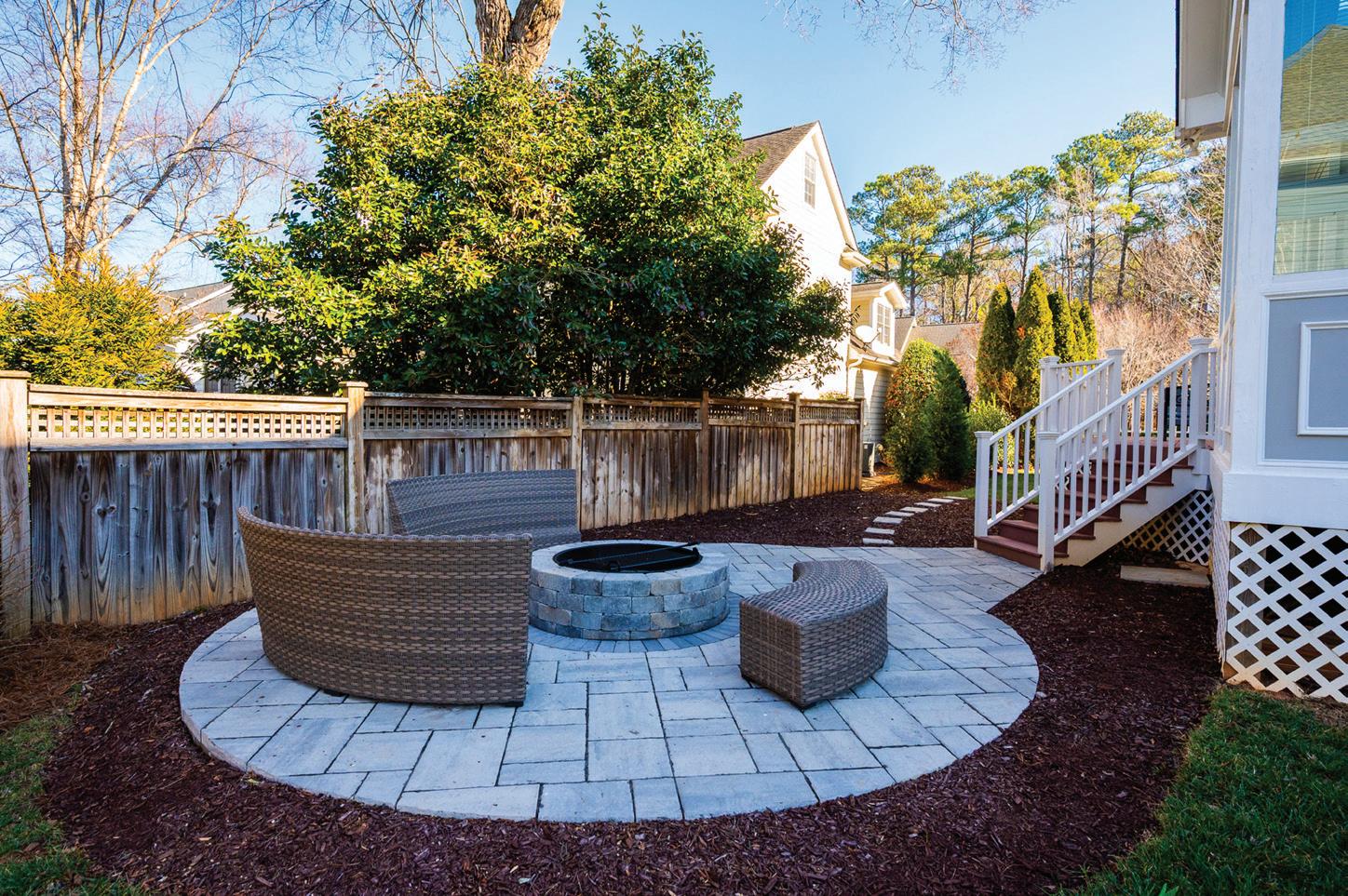
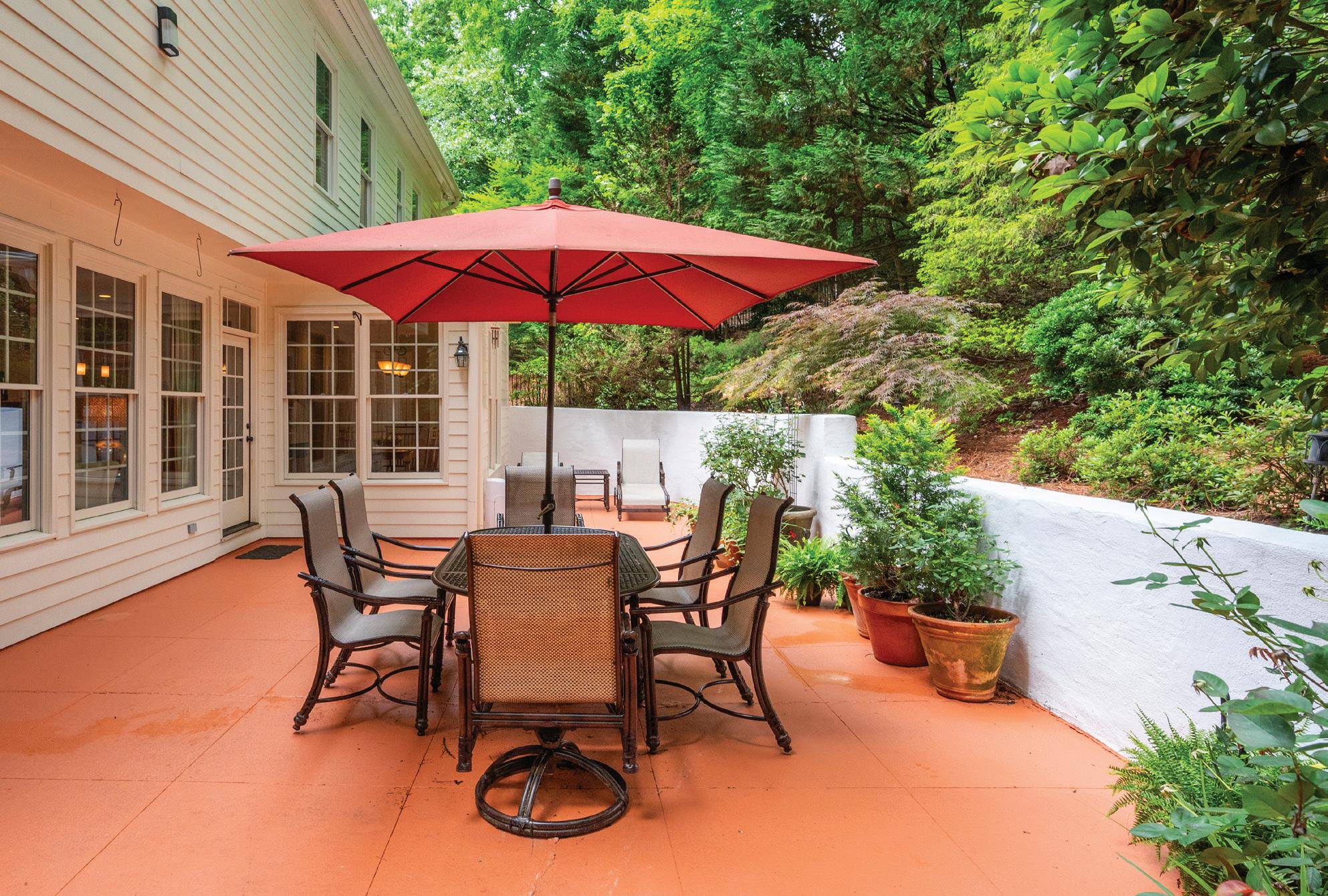
Outdoors, professionally designed landscaping and hardscaping create a private, cohesive environment. A spacious patio and custom firepit extend the living areas year-round, while the covered front porch and rear outdoor spaces provide multiple places to relax, gather, and connect.
Meticulously cared for and designed to grow with you, this five-bedroom home delivers refined comfort, exceptional versatility, and a location that truly stands apart.
“More than a place to live . . .this is where space, light, and possibility come together to welcome the life you imagine.”
101 Collinson Drive in Forest Creek
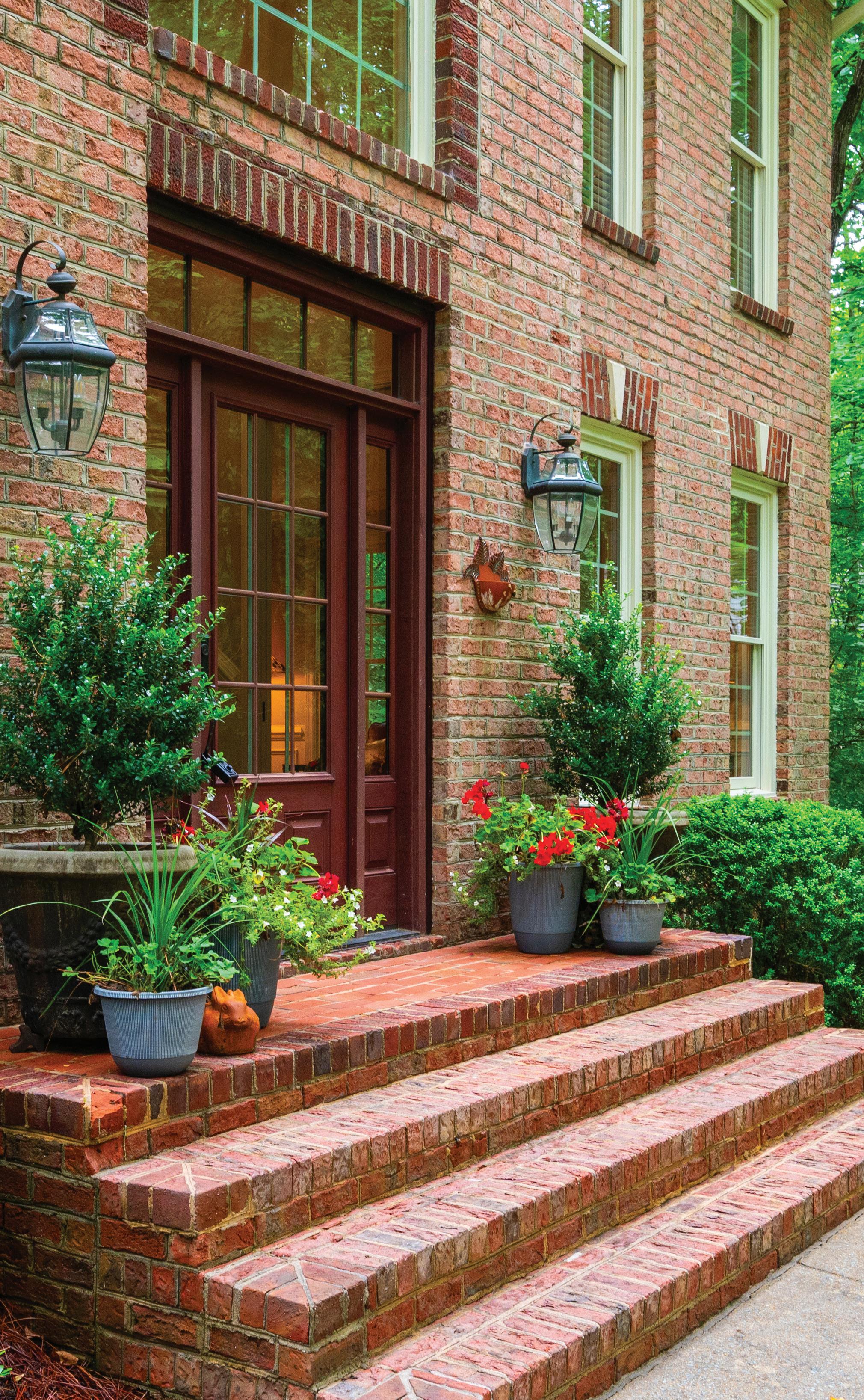
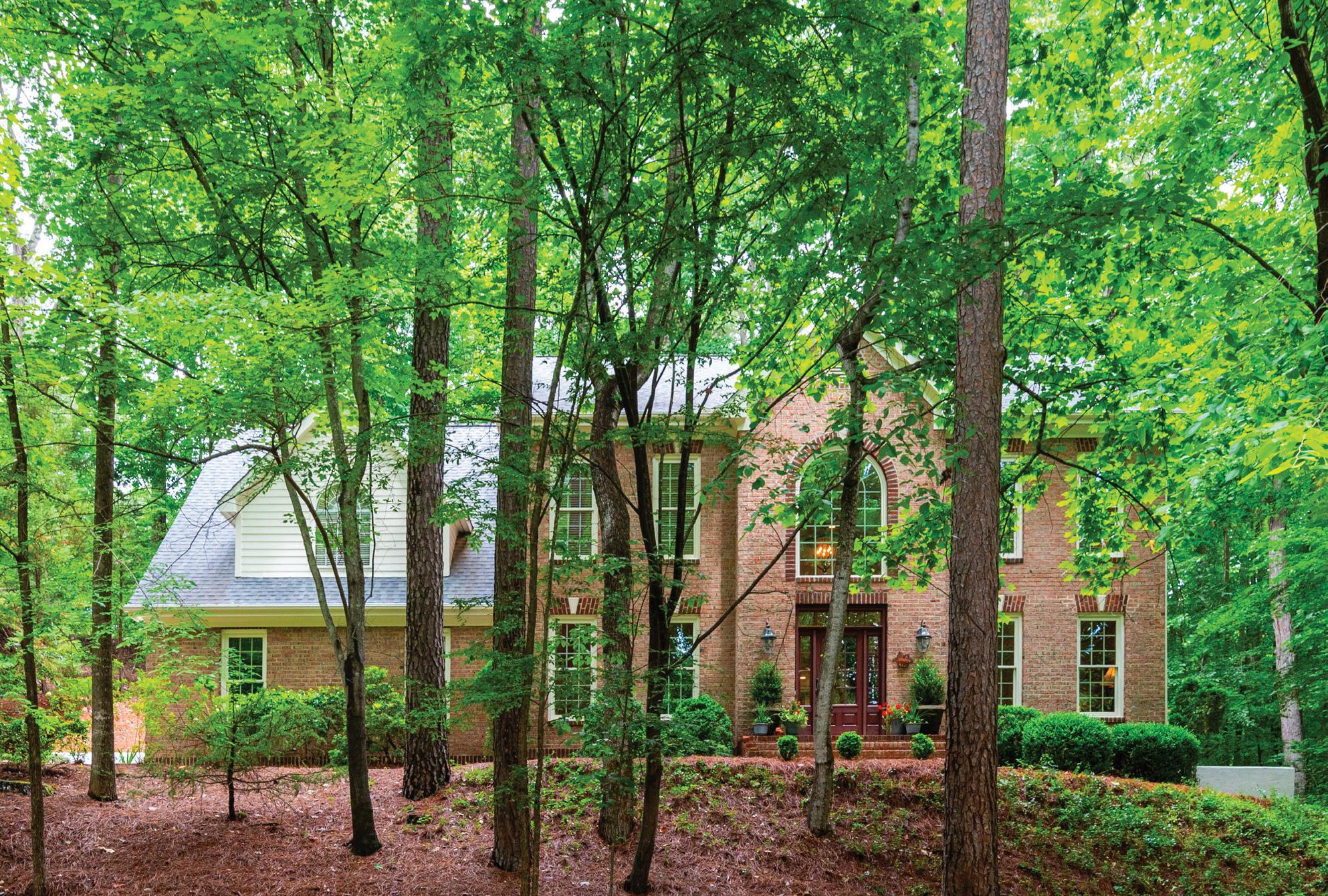
Just eight minutes from the heart of UNC Chapel Hill, 101 Collinson Drive combines traditional style with a warm, comfortable feel— and it all starts with the brick exterior. Subtle brick detailing, including a soldier course at the water table and along the front walk, adds an acknowledgement of character and craftsmanship. Wide brick stairs lead to a spacious front porch, setting a gracious tone from the start.
Set on a gently elevated lot surrounded by mature trees, the home feels like a private tree house. Whether you’re sipping coffee on the deck or just looking out the window, you’re wrapped in a sense of calm and quiet that’s surprisingly rare so close to town.
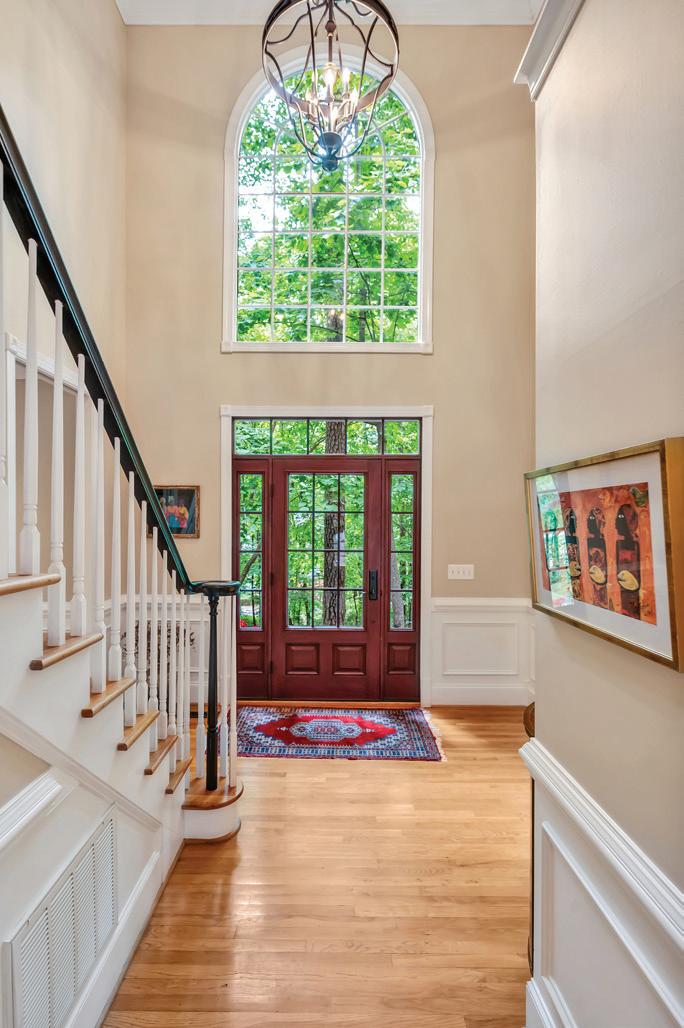
JStep inside through a wide front door flanked by sidelights and topped with a Palladian window. The two-story foyer is bright and airy, with light pouring in from above. The staircase is tucked to the side, giving the entry space to breathe—no awkward turns or cramped corners.
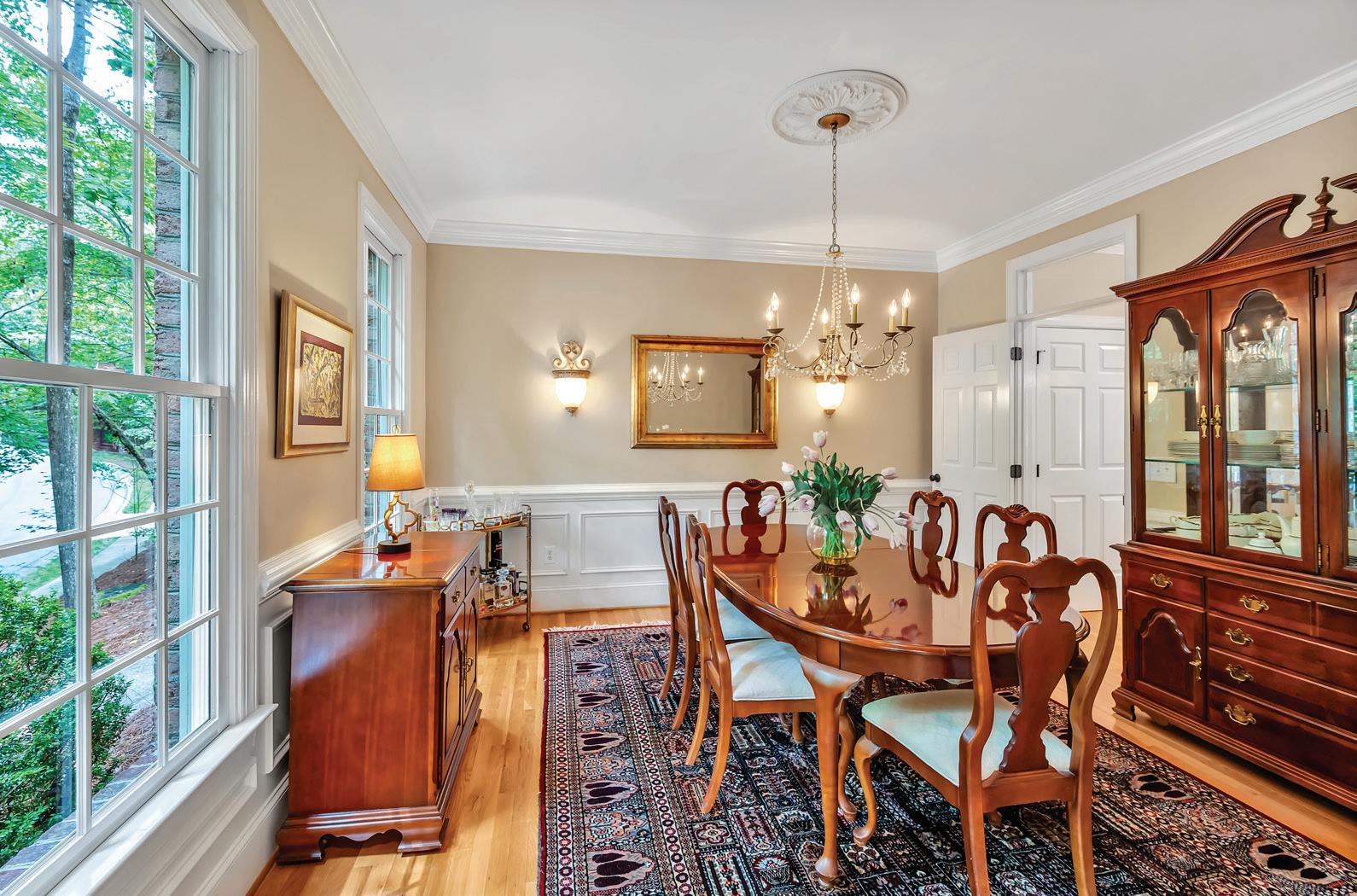
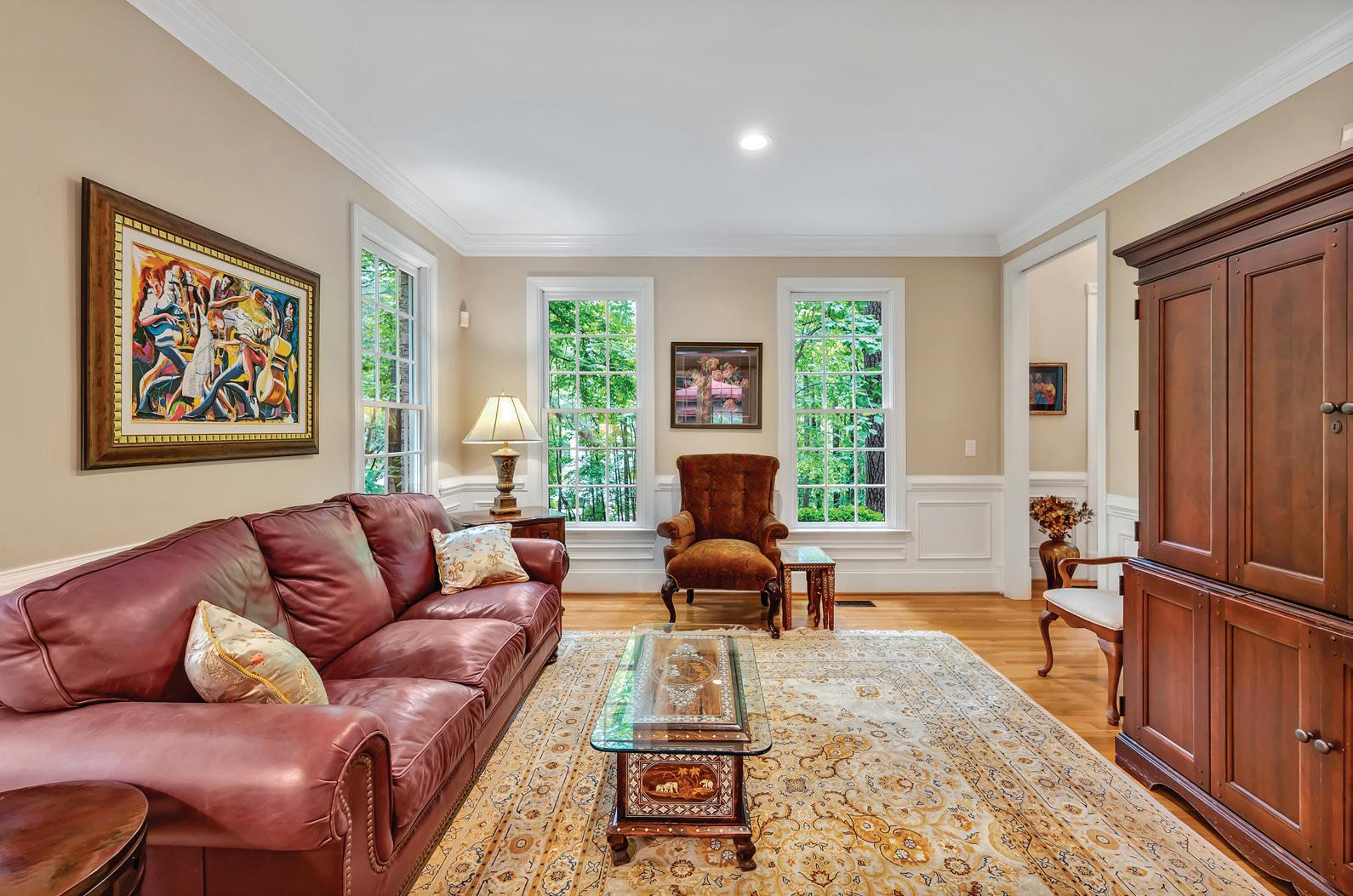
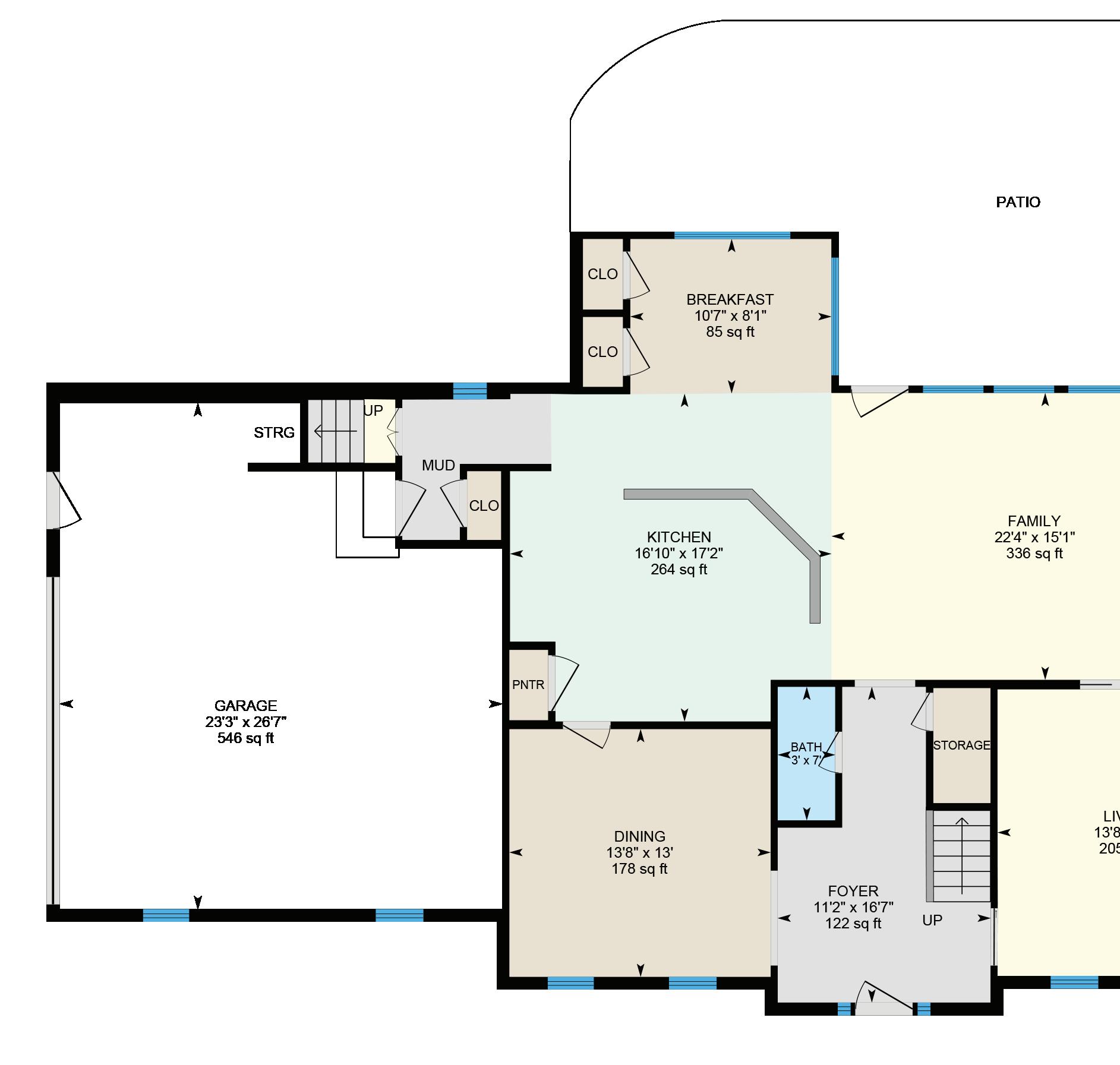
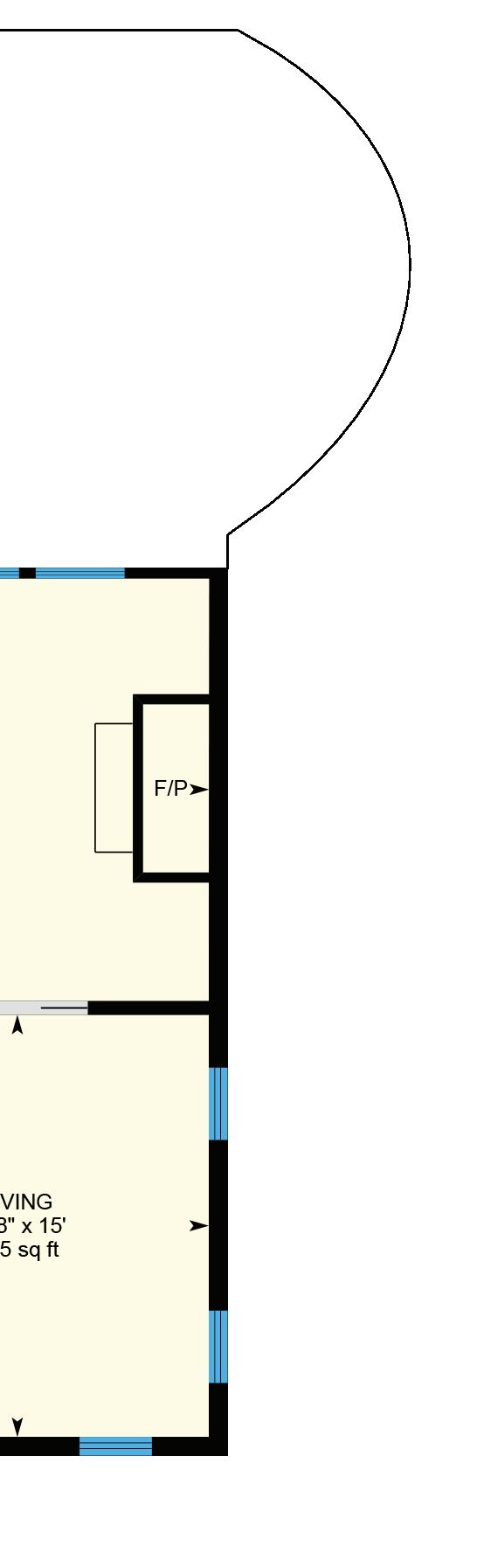
To the right, the living room is full of natural light and opens into the family room through a wide cased opening— great for easy conversation and a connected feel. On the left, the dining room has all the traditional touches like crown molding and wainscoting, but still feels relaxed and welcoming. And since neither room is a dead end, the flow through the main floor is open and natural, ideal for both everyday life and entertaining.
This home strikes the perfect balance—solid, classic, and beautifully built on the outside, with a light, livable feel inside that makes you feel right at home.
A DRIVEWAY PERFECT
FOR HOOPS
TAN ELECTRIC VEHICLE CHARGING STATION
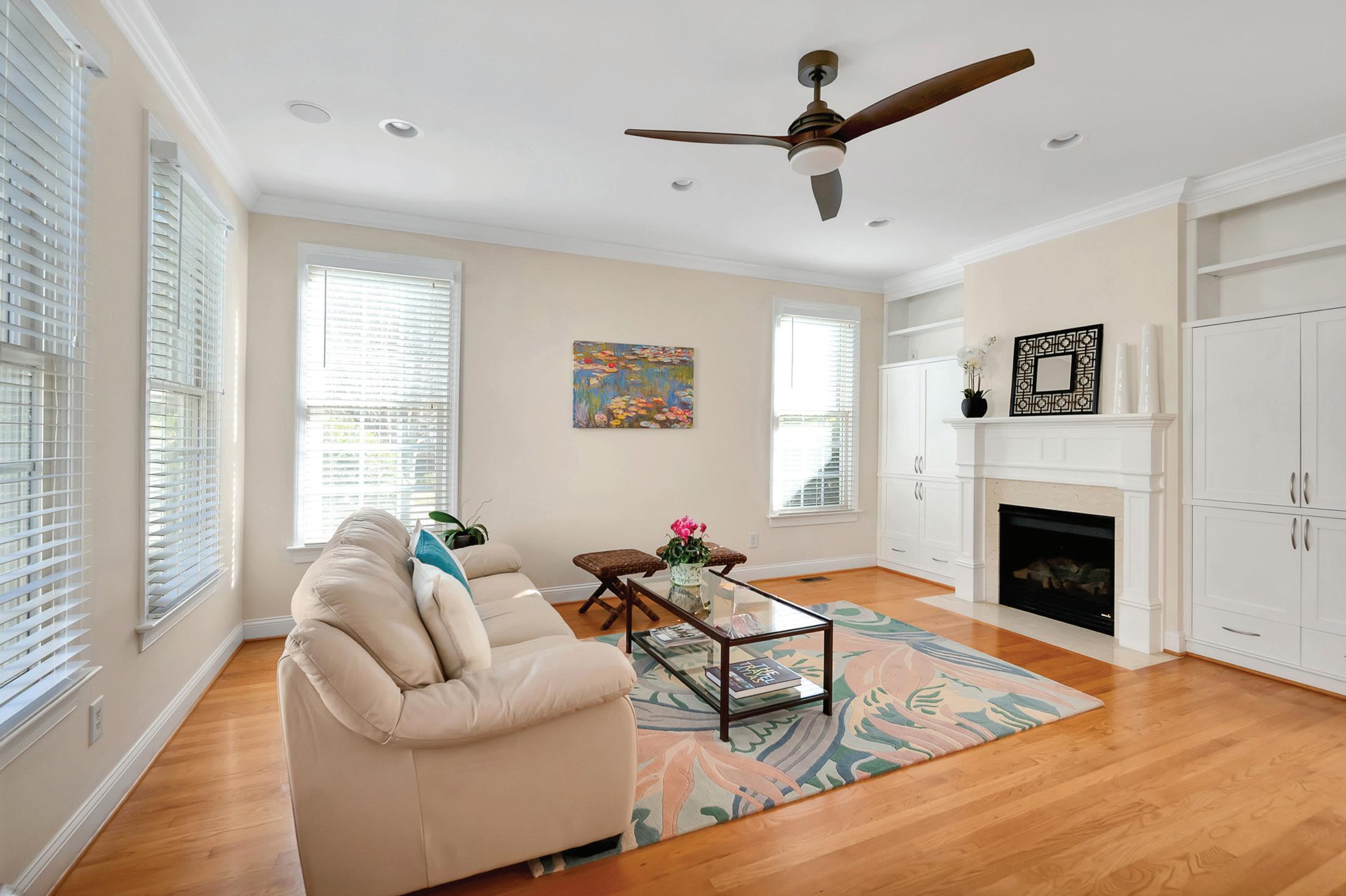
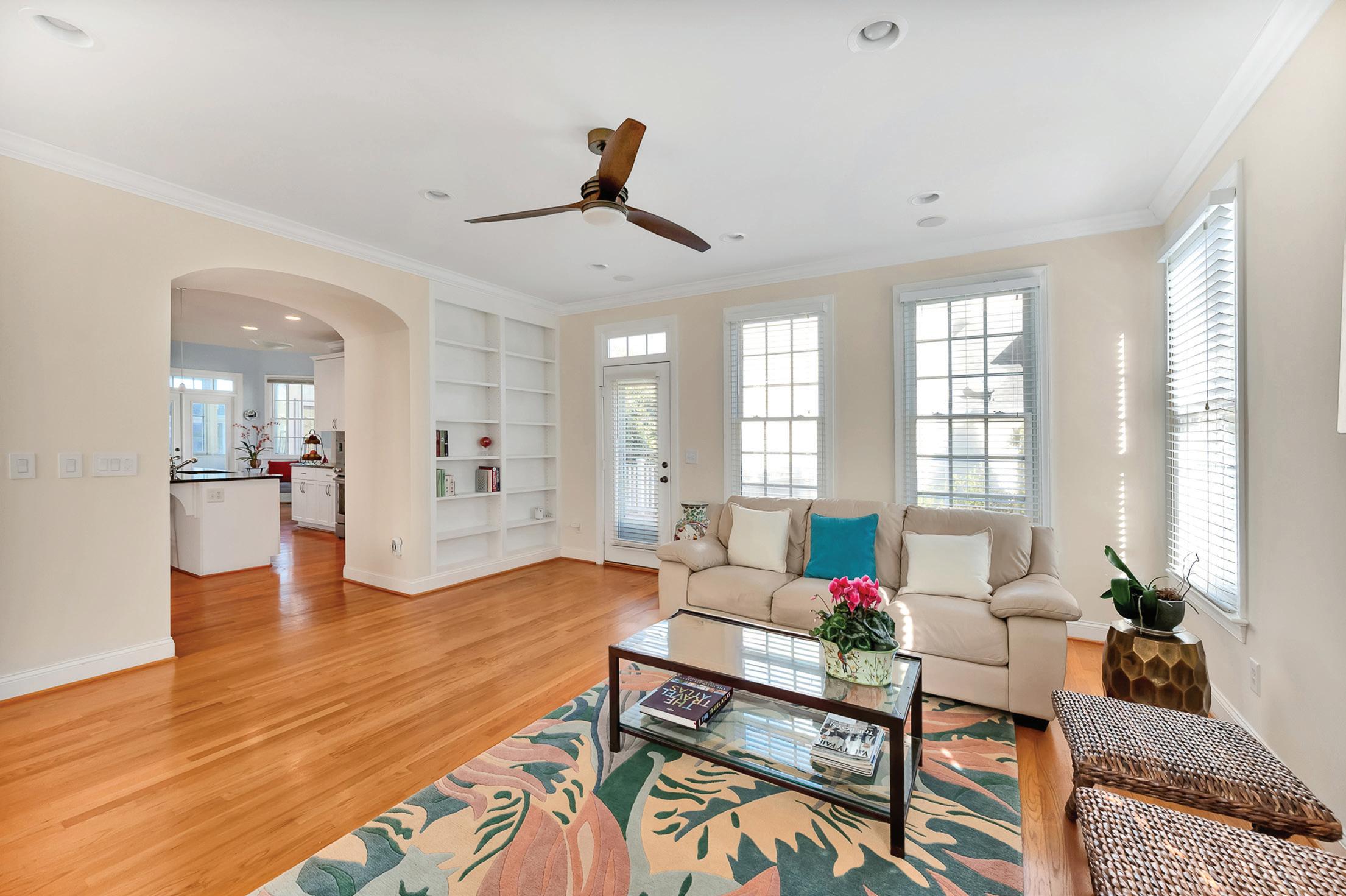
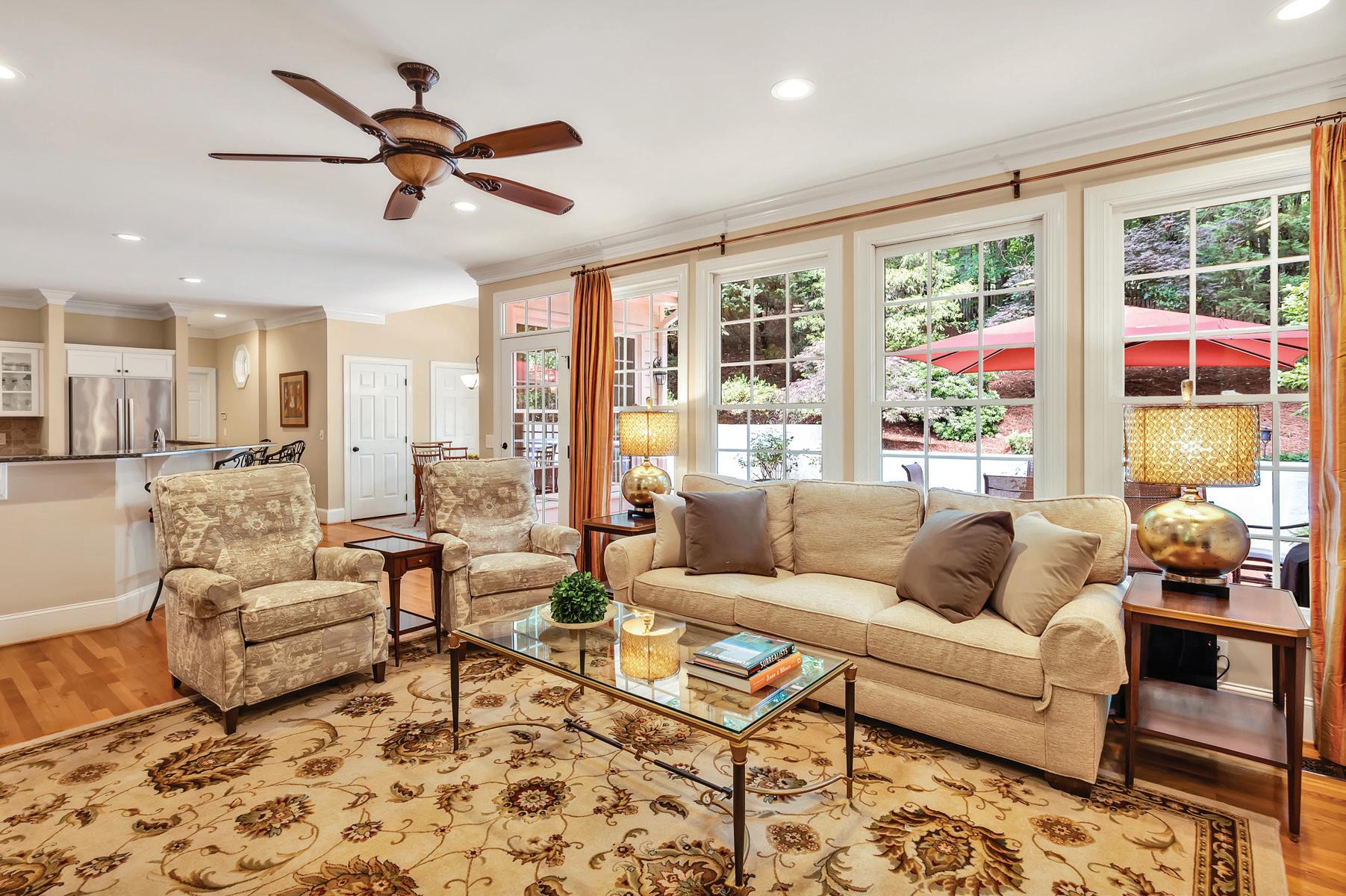
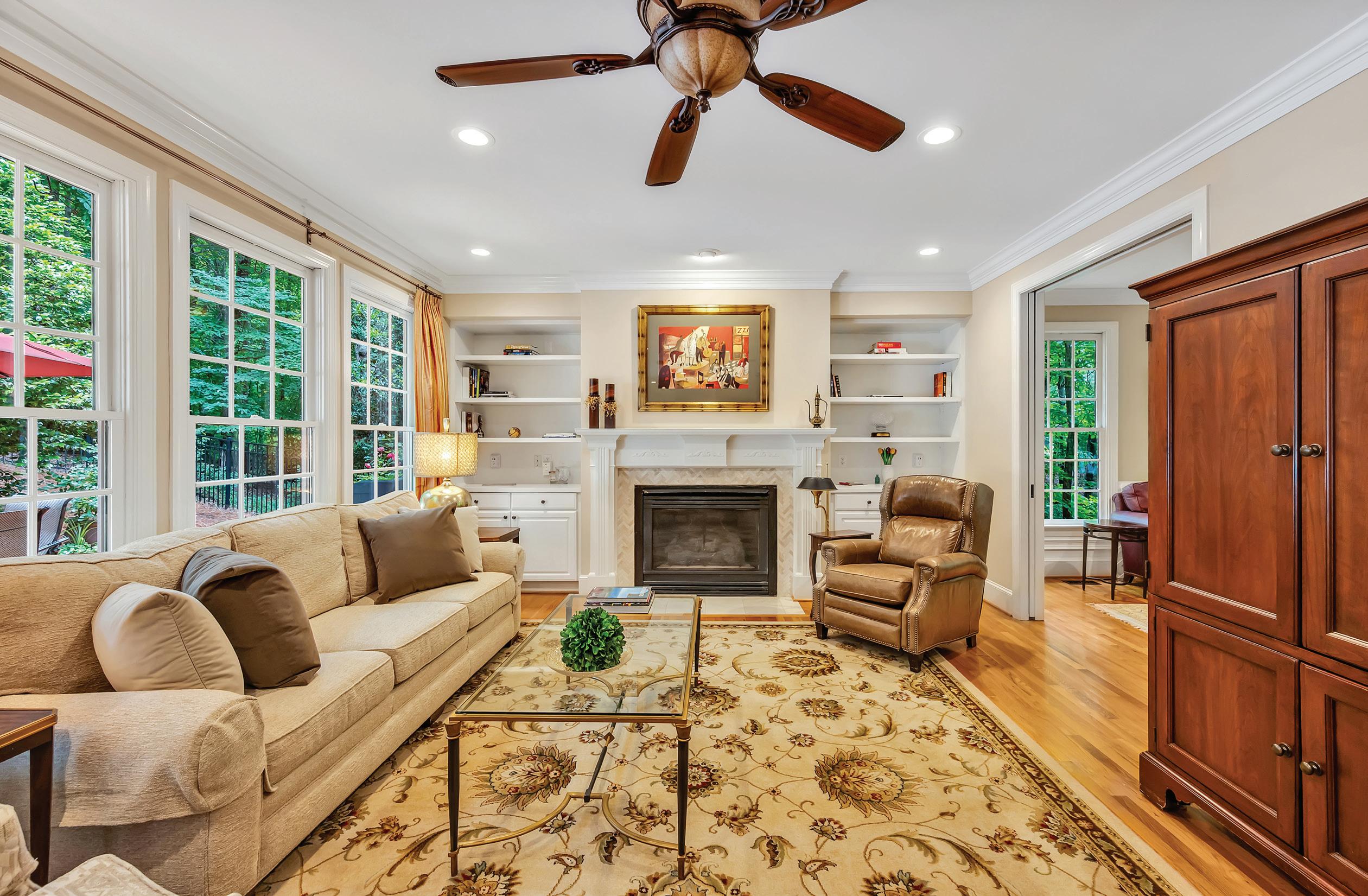
The family room is bright, welcoming, and easy to live in. A gas fireplace serves as the focal point, finished with a marble hearth and a herringbone surround that adds a subtle layer of texture and interest. Built-in cabinets and bookcases on either side keep things feeling balanced while offering space to display books, art, or everyday essentials.
Large windows along the back wall let in beautiful natural light and provide a view of the enclosed patio and wooded backdrop. Hardwood floors run throughout, adding warmth and flow to the space.
Open to the kitchen, breakfast area, and outdoor living beyond, the room feels open yet cozy—equally great for relaxed evenings or casual get-togethers. Whether you’re curled up by the fire or chatting with someone at the kitchen island, everything feels easy and connected.
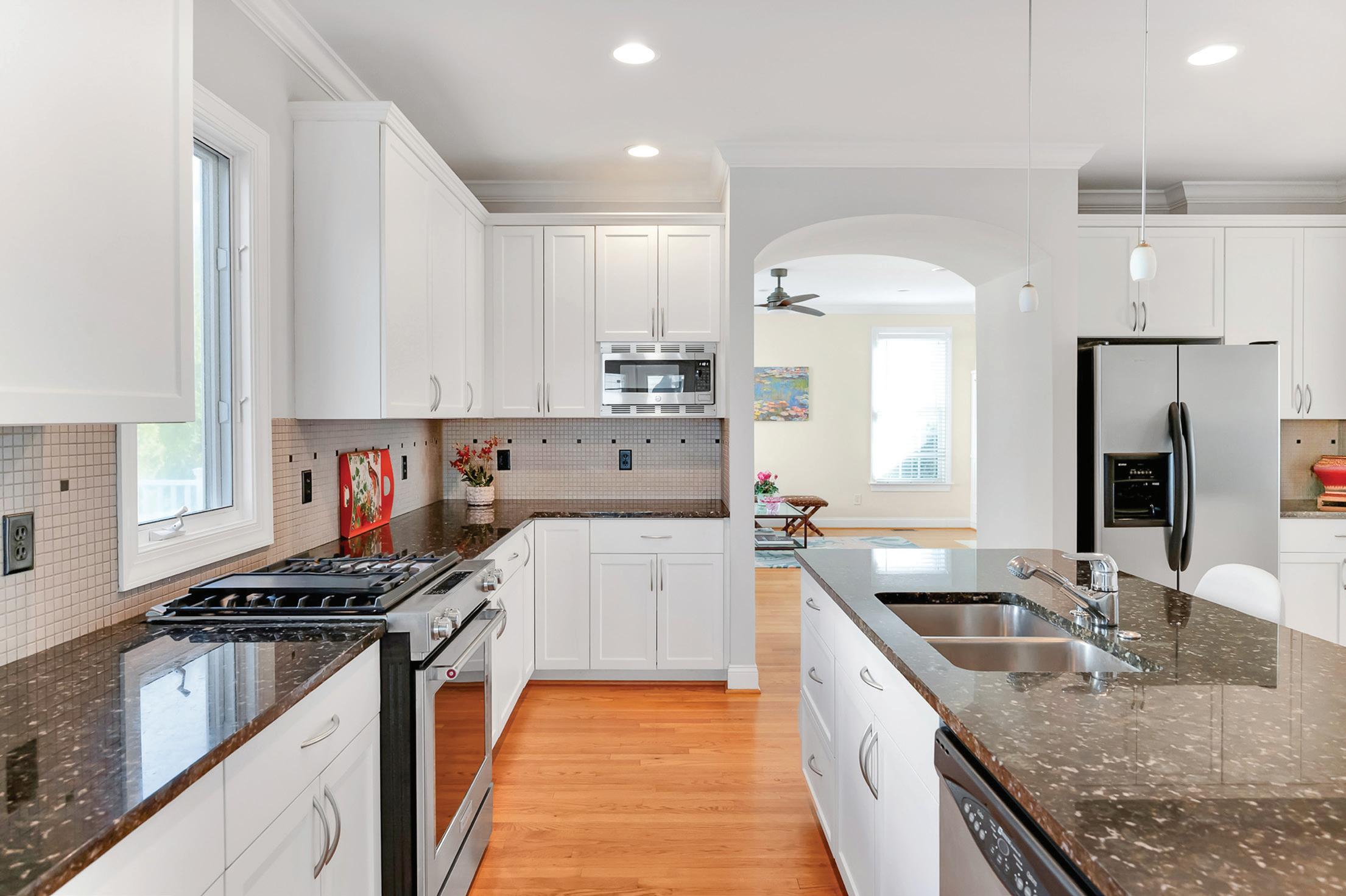
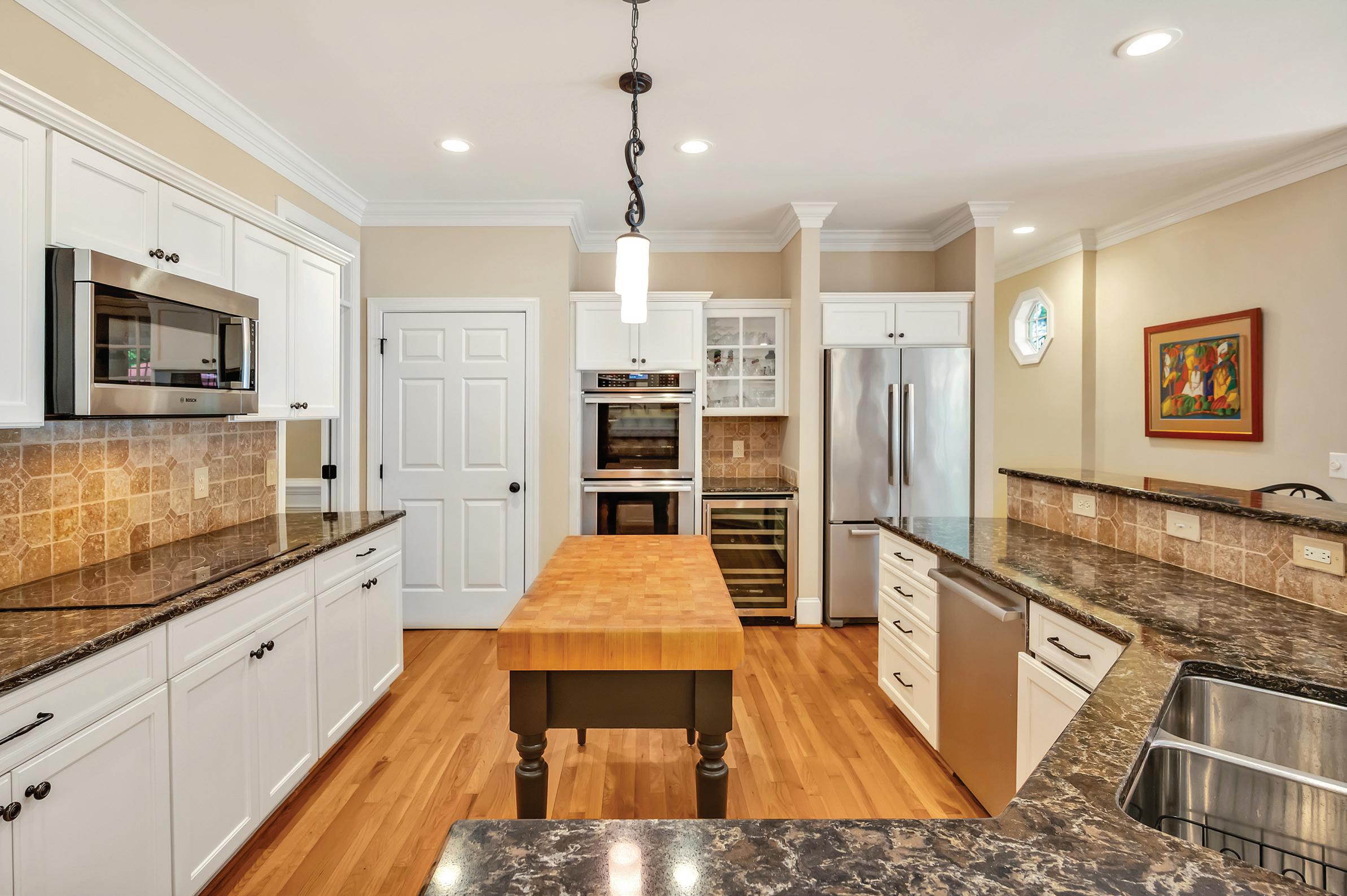
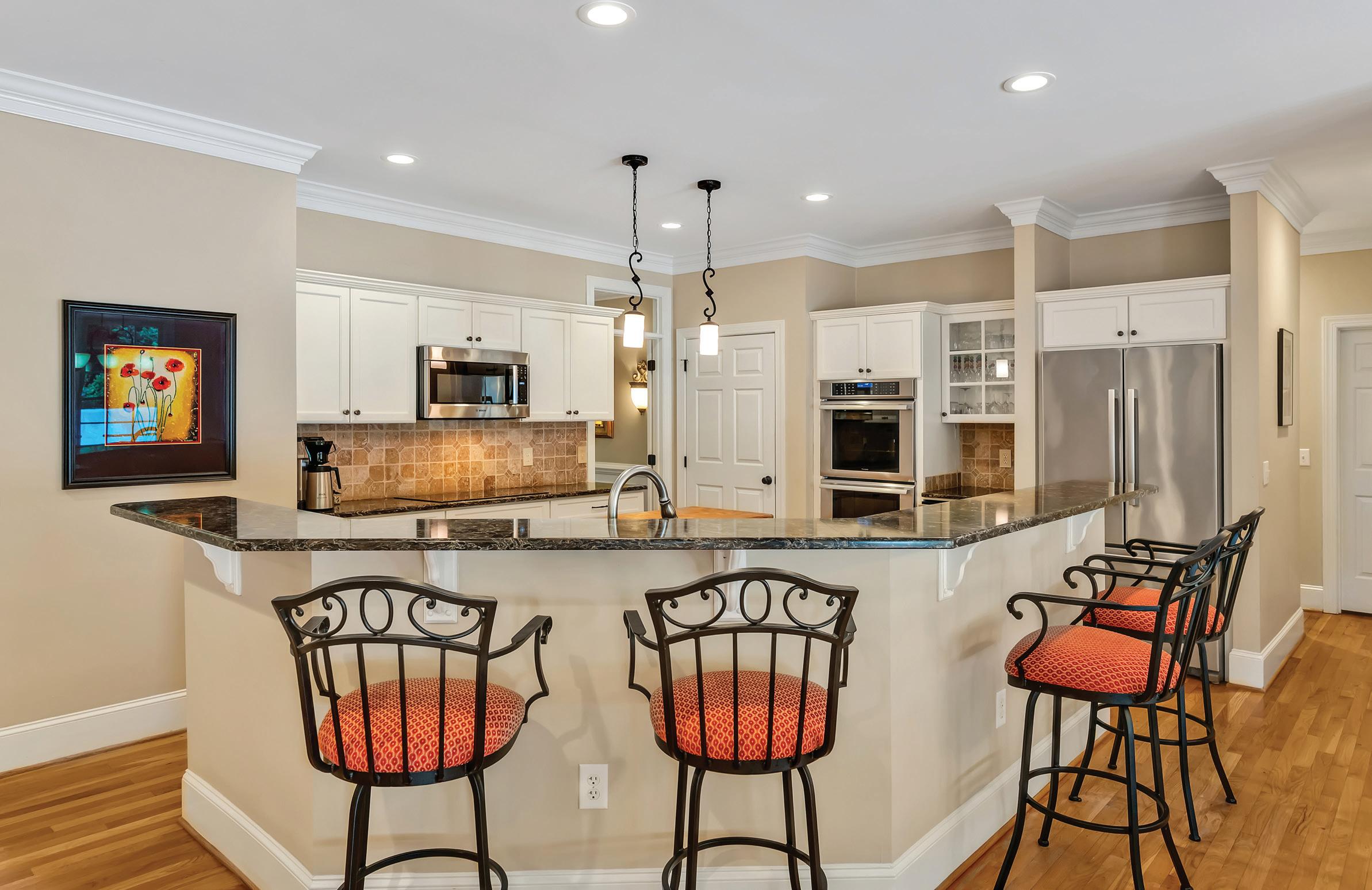
HHardwood floors continue into the kitchen and breakfast area, creating a seamless, warm feel throughout the main living space. The kitchen is spacious and thoughtfully designed, with plenty of room to cook, gather, and simply hang out. Quartz countertops pair beautifully with the tumbled marble backsplash, and the stainless steel appliances— including a Thermador induction cooktop ( a favorite of the chef) , double ovens, a convestion microwave, and a wine refrigerator—all offer both style and function and are pristine.
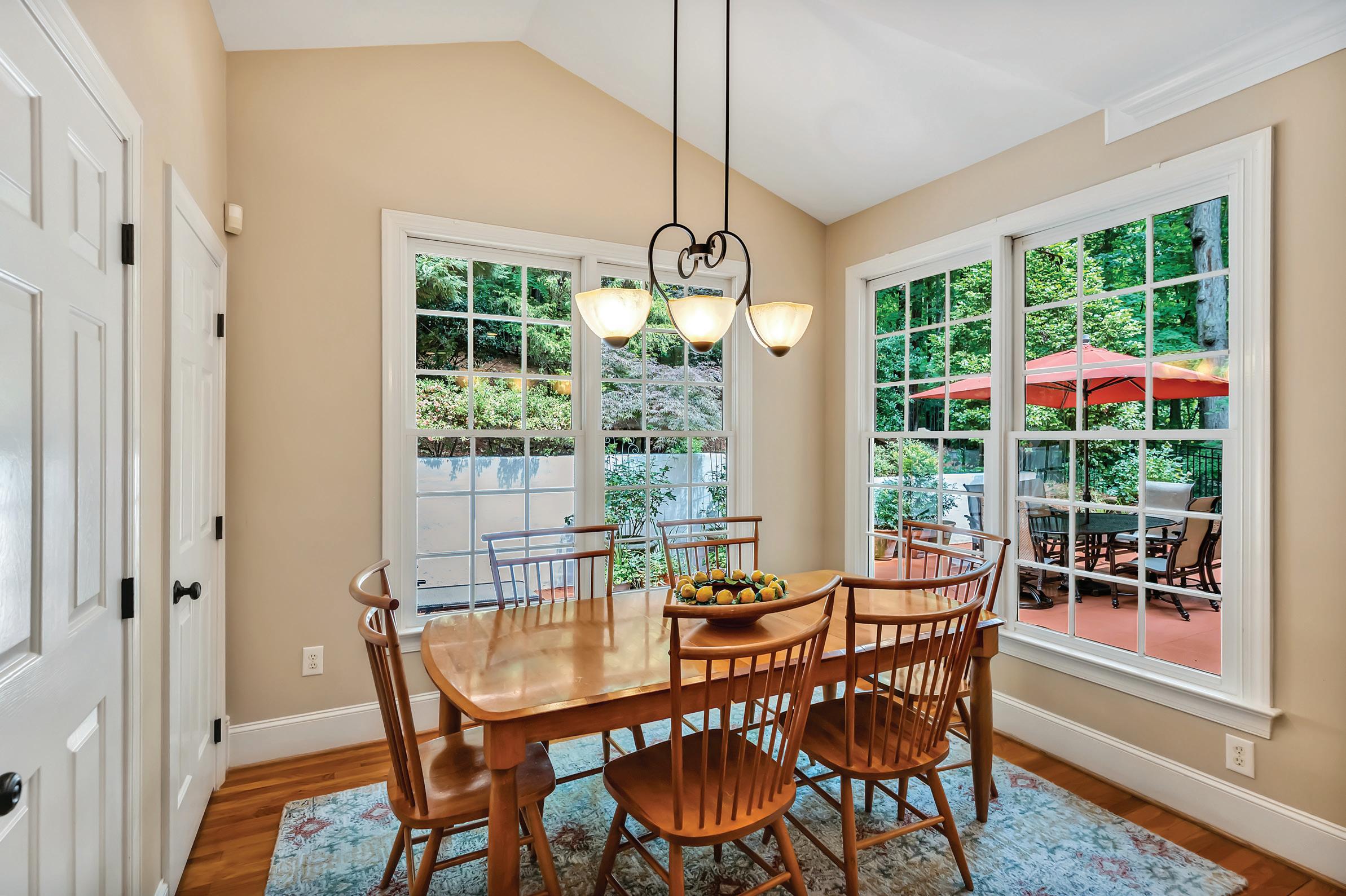
Cabinet space is generous, and there’s a large pantry plus extra storage closets just off the vaulted breakfast room. It’s a bright and open corner of the home, surrounded by windows and perfect for casual meals or catching up over coffee.
There’s also bar seating for the whole crew, making it easy to keep everyone connected— whether you’re cooking dinner, helping with homework, or entertaining a crowd. A back hallway leads to the oversized two-car garage, with a handy spot to hang coats and stash everyday gear on the way in.
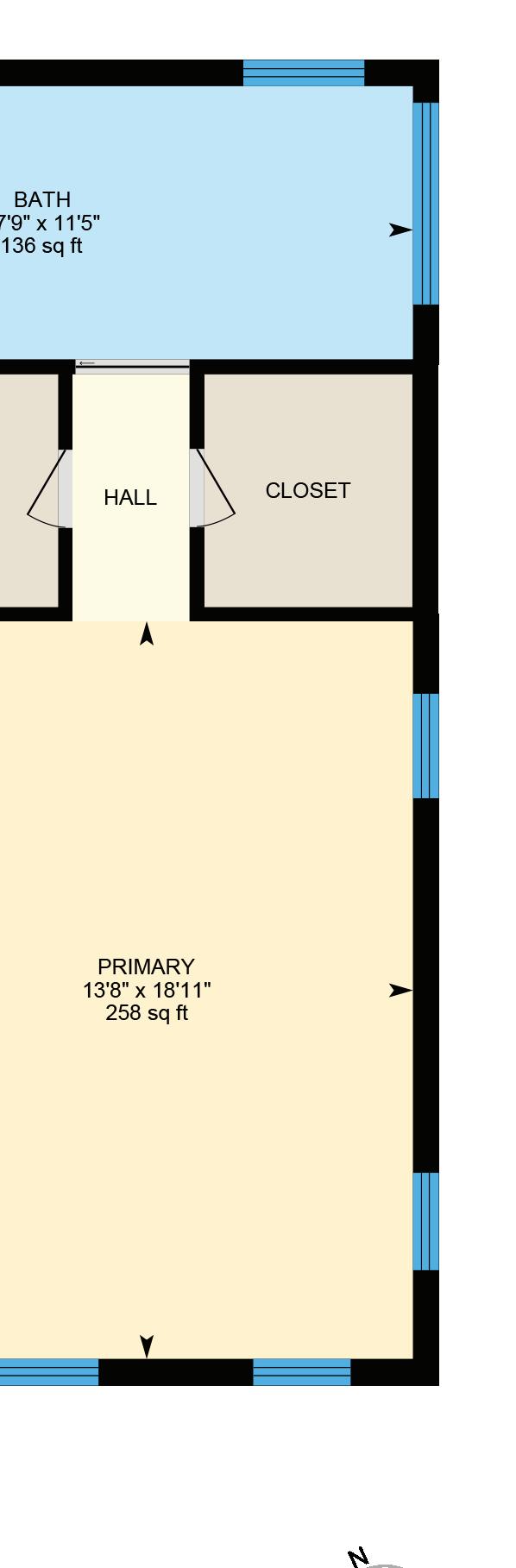
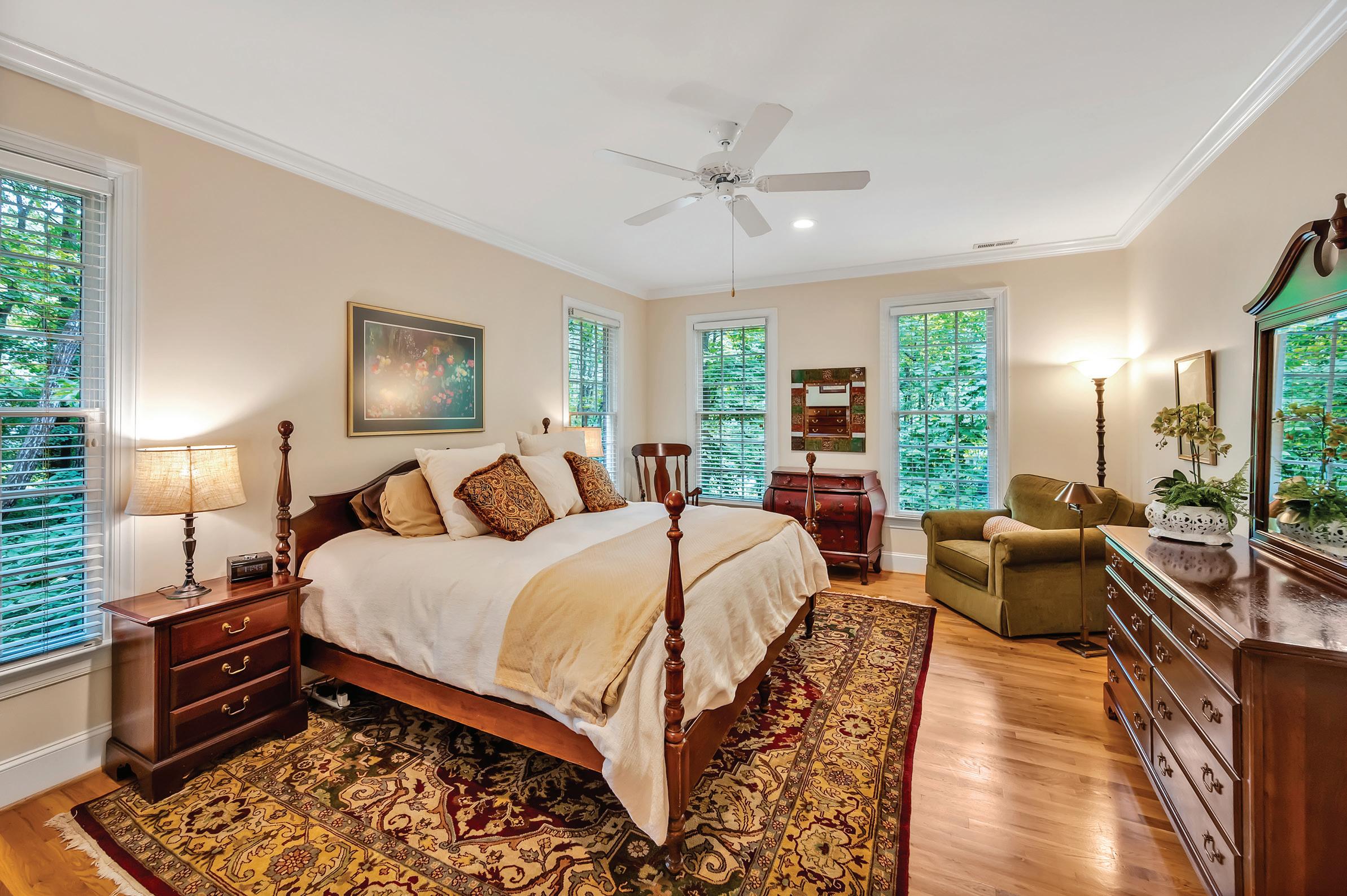
UUpstairs, the primary suite is a calm and comfortable retreat. The bedroom is generously sized, with hardwood floors and windows that look out over quiet woodlands—just more of that peaceful, treehouse-like setting that runs throughout the home. There are two walk-in closets, giving you plenty of space to stay organized without sacrificing simplicity.
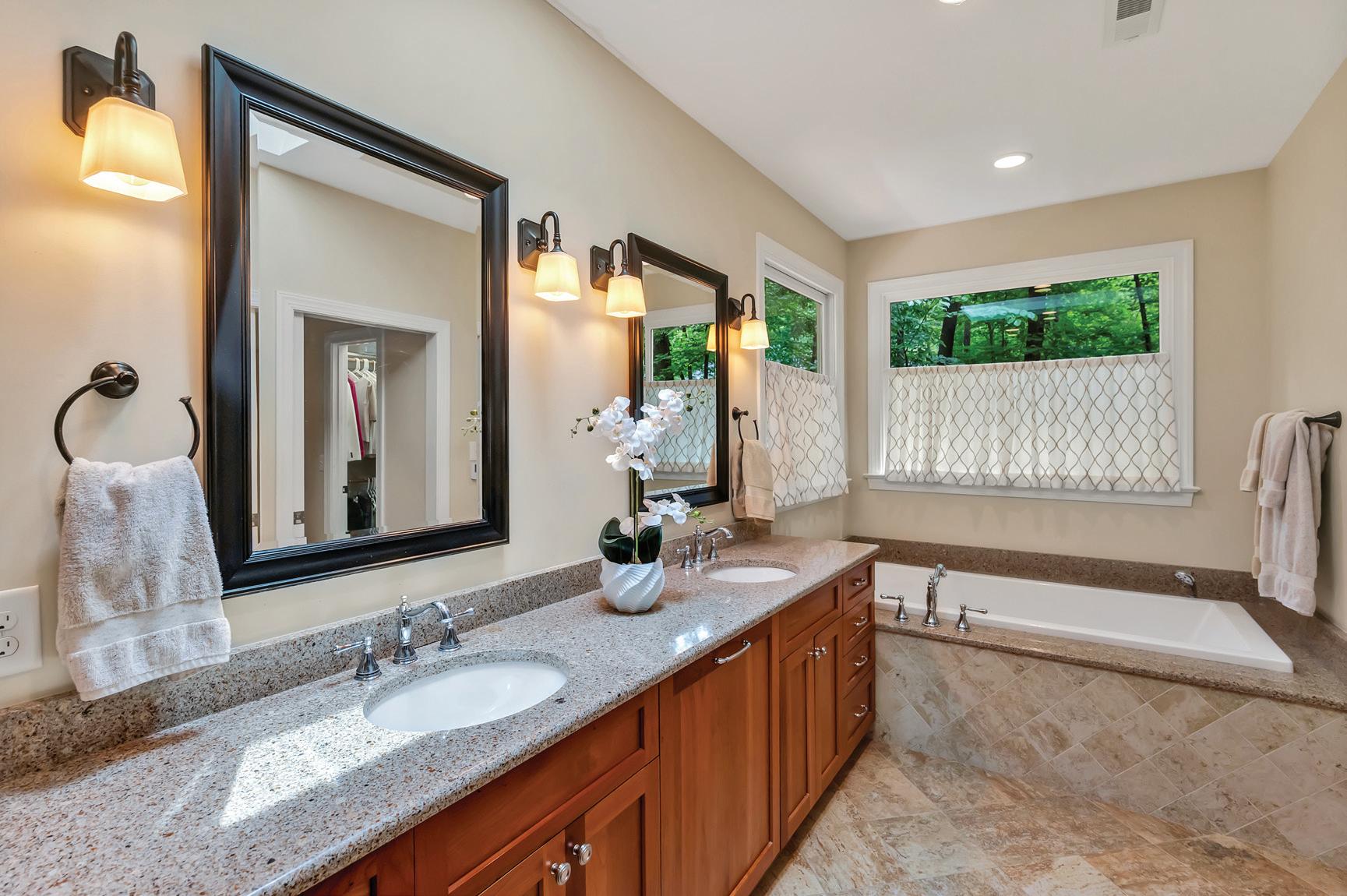
The en suite bath combines style with serenity. Quartz countertops sit atop warm cherry cabinets with soft-close drawers, and a deep soaking tub invites long, relaxing soaks. The walk-in shower features rainfall glass—a subtle nod to nature that fits right in with the home’s tranquil vibe. The ultimate luxury is the heated bathroom floor.
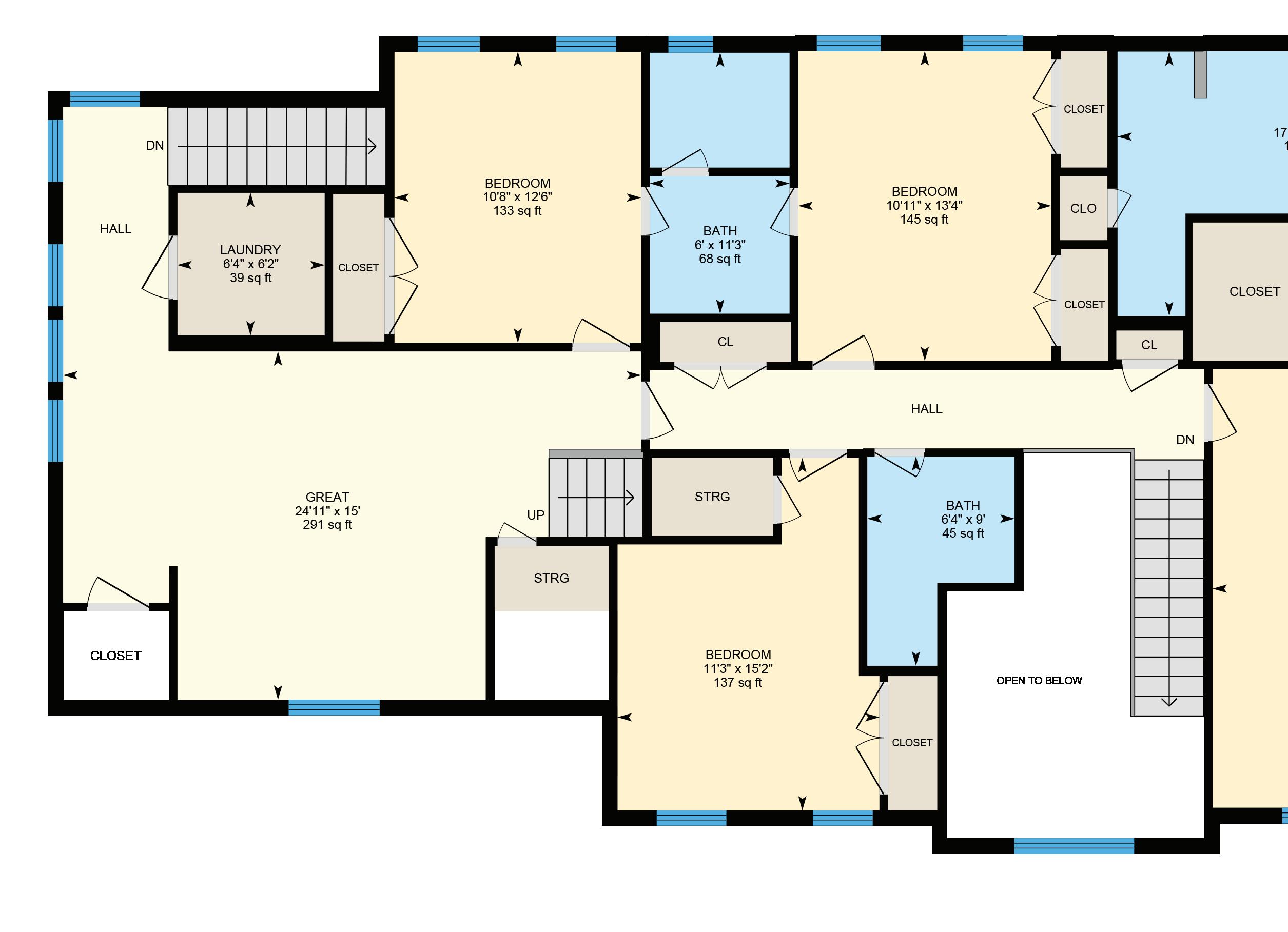
In addition to the primary suite, there are three more bedrooms on this level—each with its own character and plenty of natural light. One has an en suite bath, while the other two share a full bath that’s smartly zoned for personal privacy. Both baths feature granite countertops and crisp white tile for a fresh, timeless look.
At the end of the hallway, you’ll find a spacious bonus or recreation room—perfect for movie nights, a home office, or a playroom tucked just far enough from the main living spaces. Off this room, a separate corridor leads to the laundry room, which is well-equipped with a sink for handwashing, counter space for folding, and a hanging area to keep things tidy and efficient.
Ready for Anything
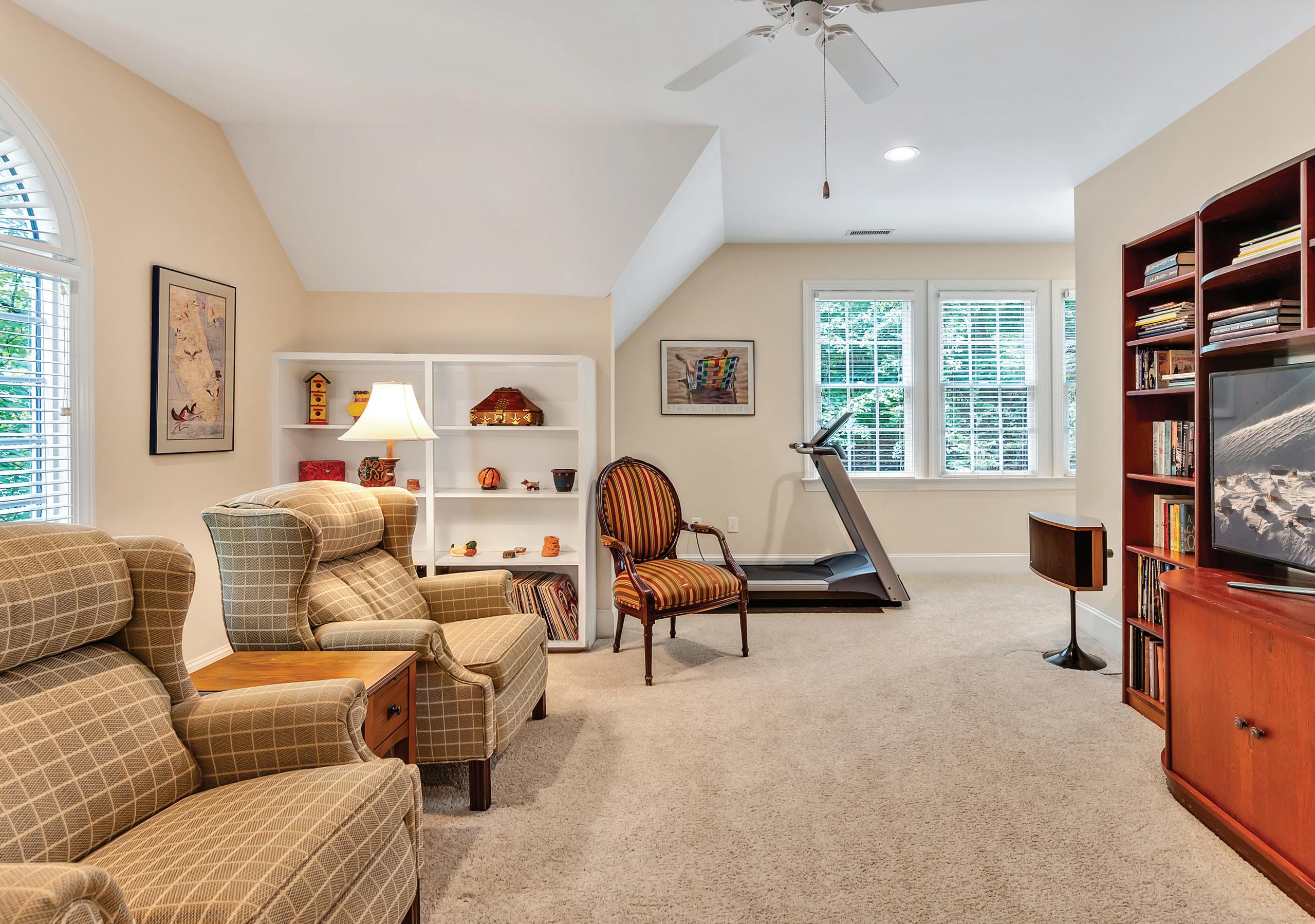
OOff the hallway, this bright and versatile space pictured above features banks of windows on two sides, filling the room with natural light. Great acoustics make it an ideal spot for reading, studying, or even playing music. Its location—just steps from the secondary bedrooms and bath—adds to its flexibility. Whether used as a playroom, homework zone, or workout area, this room is ready to grow and shift with your needs.
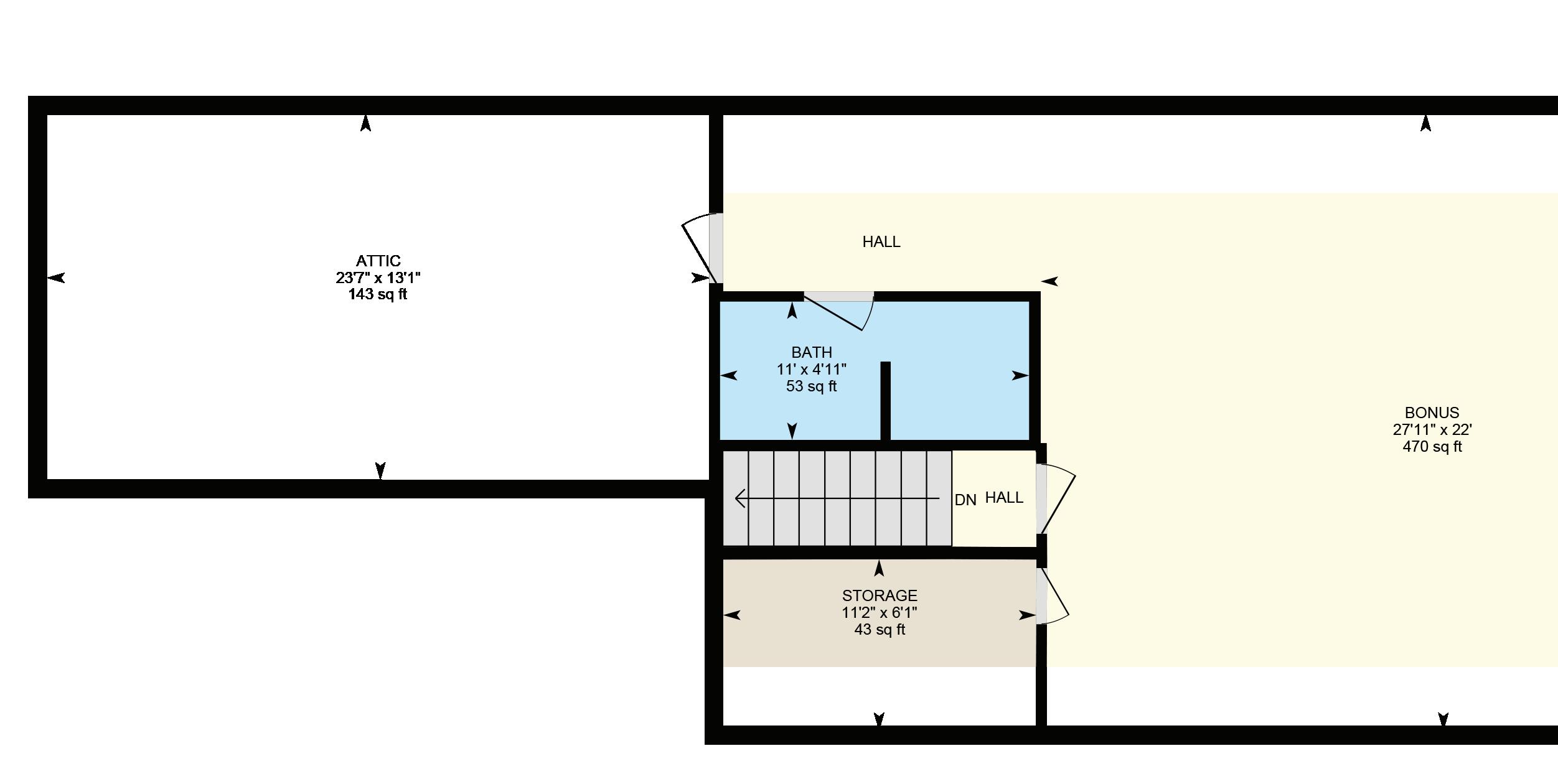
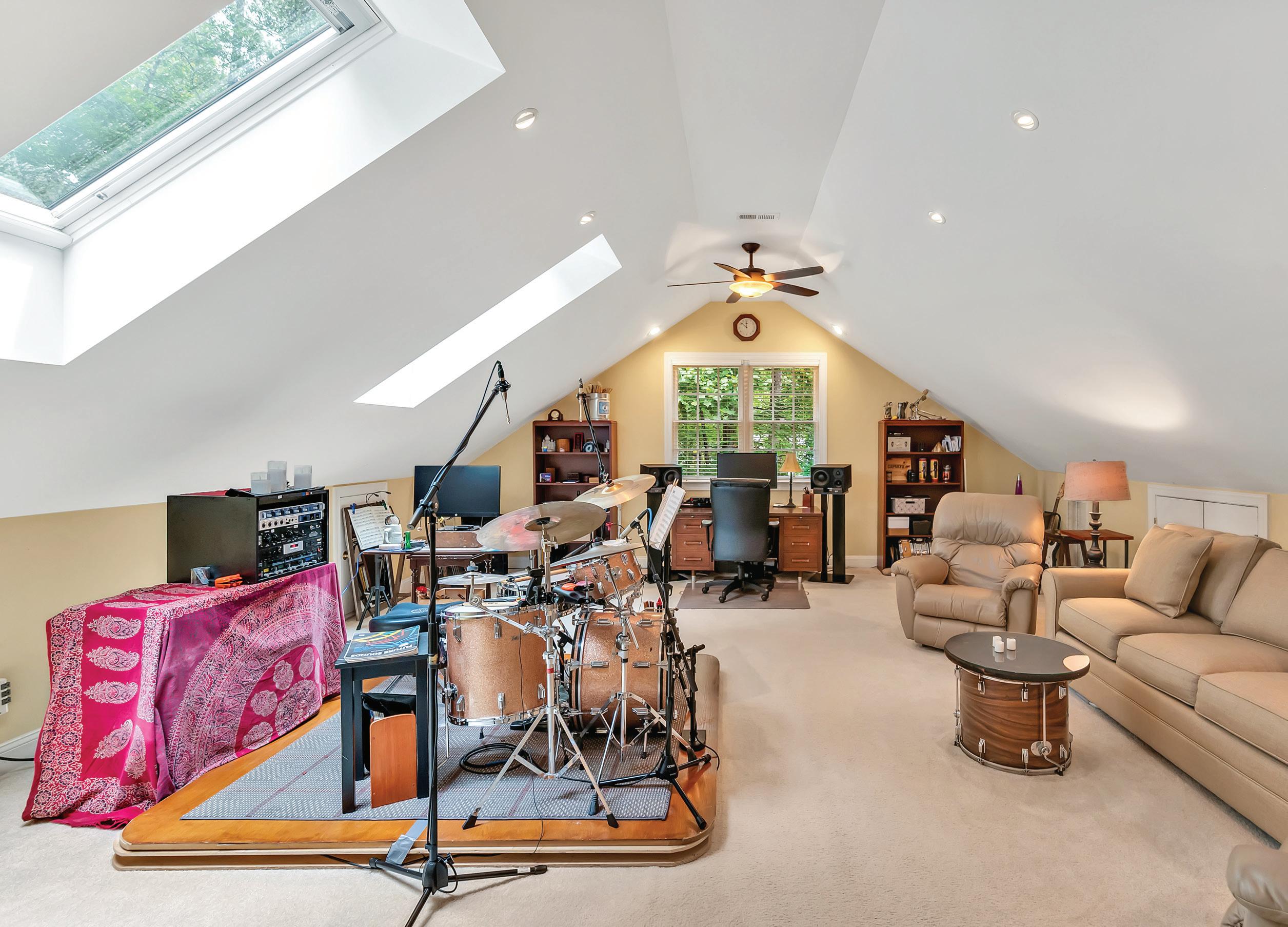
From the second-floor flex space, stairs lead to a wonderful third-floor retreat. The current owner uses it as a drum studio, taking full advantage of the quiet and tucked-away setting. Thanks to a spacious walk-in closet and a full bath, this level easily works as a guest suite, creative workspace, or private hangout. There’s also a large walk-in unfinished storage area—ideal for keeping everything organized without cluttering your living space.
FINISHED AREA
SQ FT
UNFINISHED AREA
SQ FT ENCLOSED PATIO
SQ FT
SITED ON .70 ACRES
GUY PHILLIPS MIDDLE
EAST CHAPEL HILL HIGH
2.8 MILES TO UNC & DOWNTOWN CHAPEL HILL
WALK-IN CRAWLSPACE
ELECTRIC VEHICLE CHARGING STATION IN THE GARAGE
Coming Soon a preview
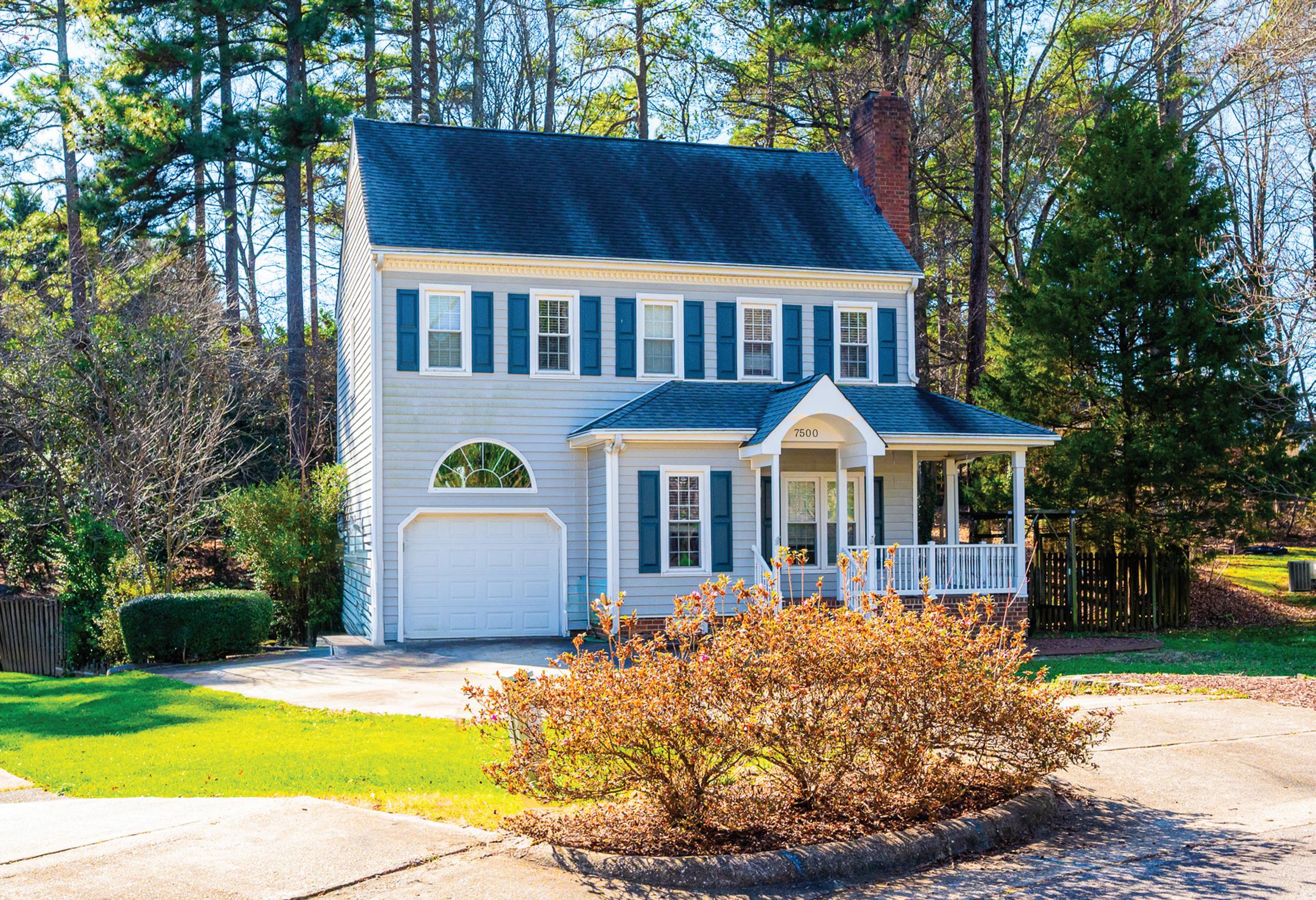
7500 Drayton Ct. Raleigh NC
3 bedrooms
two full baths and one half bath sited on .47 acres in a cul-de-sac in Salem Woods Wake County Schools
Yadkin Valley
Where Quiet Roads, Deep Roots & Wine Country
Welcome You In
Just over an hour from the Research Triangle, the Yadkin Valley offers foothill beauty, celebrated wines, outdoor adventure, and a slower rhythm that feels worlds away from city life.
THE “PLACE OF BIG TREES”
“ History settles into the soil here the way mist settles into the foothills. ”
Long before tasting rooms, hiking trails, or river access points appeared on maps, the Yadkin Valley was home to Indigenous peoples who lived, hunted, farmed, and fished along the winding river. Siouan-speaking tribes — including the Tutelo, Cheraw, Saponi, Saura, Catawba, and Cherokee — named the waterway Yattkin, meaning “place of big trees.” Trader Abraham Wood recorded the word in 1674, offering the earliest written glimpse into the region’s identity.
By the mid-1700s, Europeans began arriving in steady numbers. Fertile soil and abundant water drew German, Scotch-Irish, and English families westward from the coast and Piedmont. Among these early settlers were the Bryans, whose granddaughter Rebecca would marry Daniel Boone. The young Boone spent his formative years in the Yadkin Valley, where he learned frontier skills, raised a family, and developed the self-reliance that later made him a legend. He left the region in 1769 to explore the lands beyond the mountains, but the valley shaped the man who shaped the myth.
Following the Revolutionary War, the Yadkin Valley became one of the most populated areas in North Carolina. Communities clustered around the river, powering iron forges, grist mills, and burgeoning textile operations. When attempts to make the river navigable proved impractical, railroads arrived in the late 1800s, linking rural towns and spurring commercial growth. The region stepped into the modern era with the construction of Idol’s Dam in 1898 — the state’s first hydroelectric power plant — which energized Winston-Salem’s expansion and propelled new industries forward.
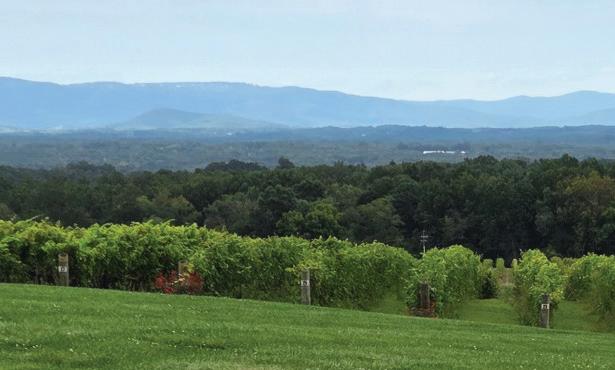
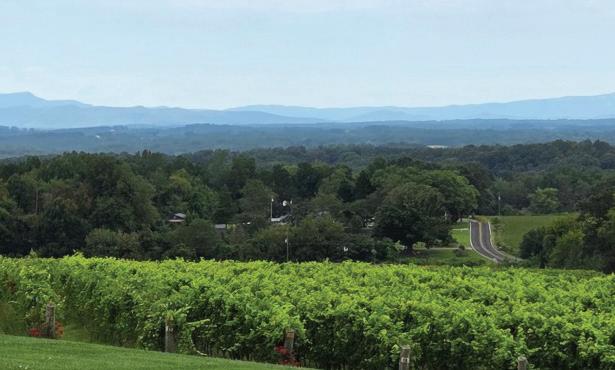
As the twentieth century progressed, the valley adapted again. When tobacco declined, the land itself offered a new direction. Sharing climate similarities with Bordeaux and soils akin to northern Italy, the Yadkin Valley revealed its potential for growing European-style grapes. Farmers and entrepreneurs planted the first modern vineyards in the late 20th century, and by the early 2000s, the region became North Carolina’s first federally recognized American Viticultural Area.
Today, the Yadkin Valley’s story remains one of resilience, reinvention, and a deep connection to the land — qualities that shape everything visitors experience here.
As the Yadkin Valley moved into the late twentieth century, another chapter began to unfold—one that would reshape the region’s identity and draw visitors from across the country. Long after mills quieted and railroad whistles faded, farmers looked again to the earth beneath their feet for possibility. They knew its strengths intimately: soil that had nourished families for generations, foothill slopes warmed by sunlight and cooled by mountain breezes, and a river that had sustained life for thousands of years.
What they didn’t yet know was that this land could also grow some of the most promising grapes on the East Coast.
When the Shelton brothers bought a foreclosed dairy farm at auction, their vision was bold, almost improbable. But they sensed that the same landscape once relied upon for tobacco, grain, and cattle held the potential for something new. With a climate echoing Bordeaux and soils reminiscent of northern Italy, the Yadkin Valley proved not just suitable for European-style grapes—it excelled at them.
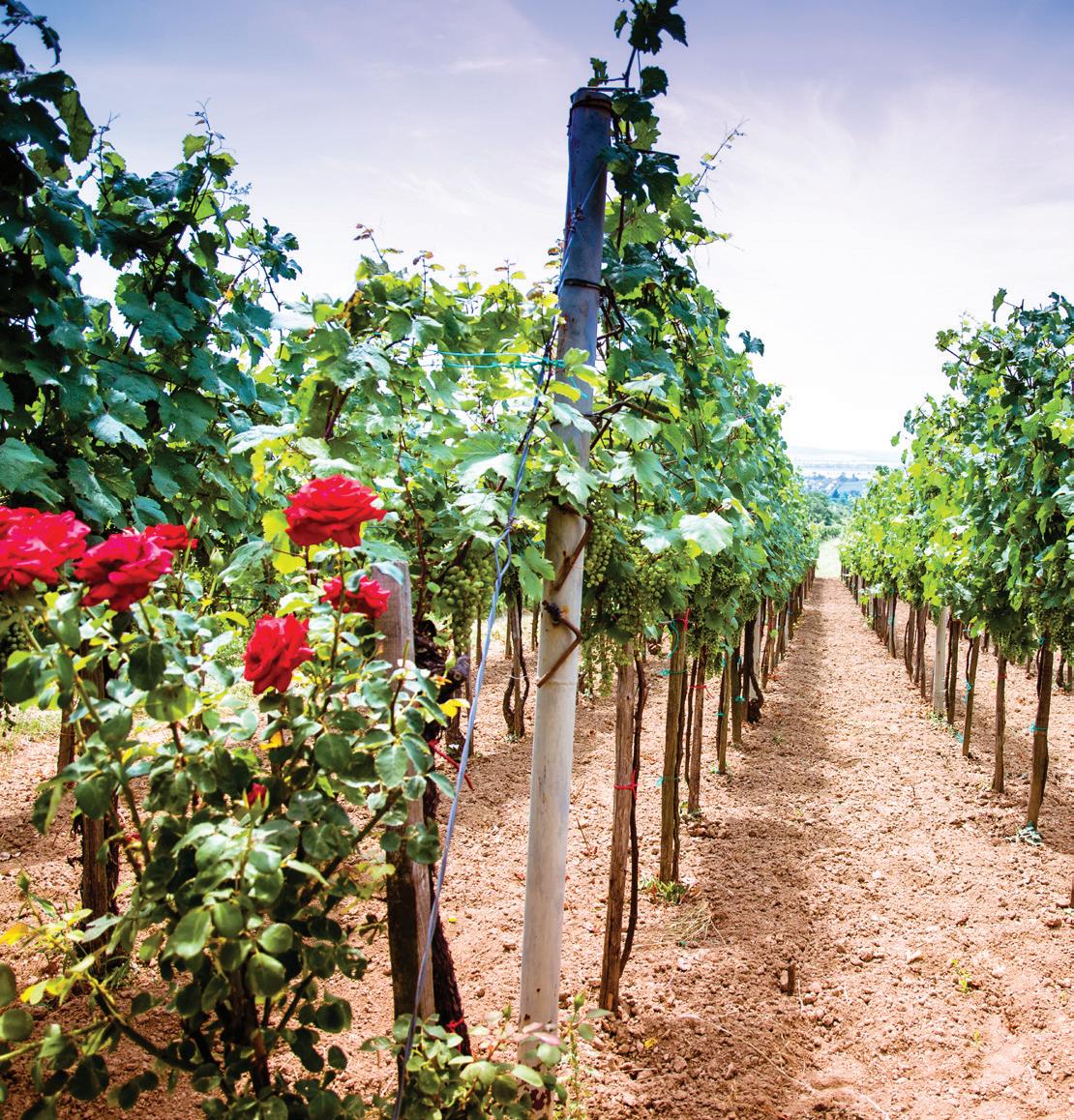
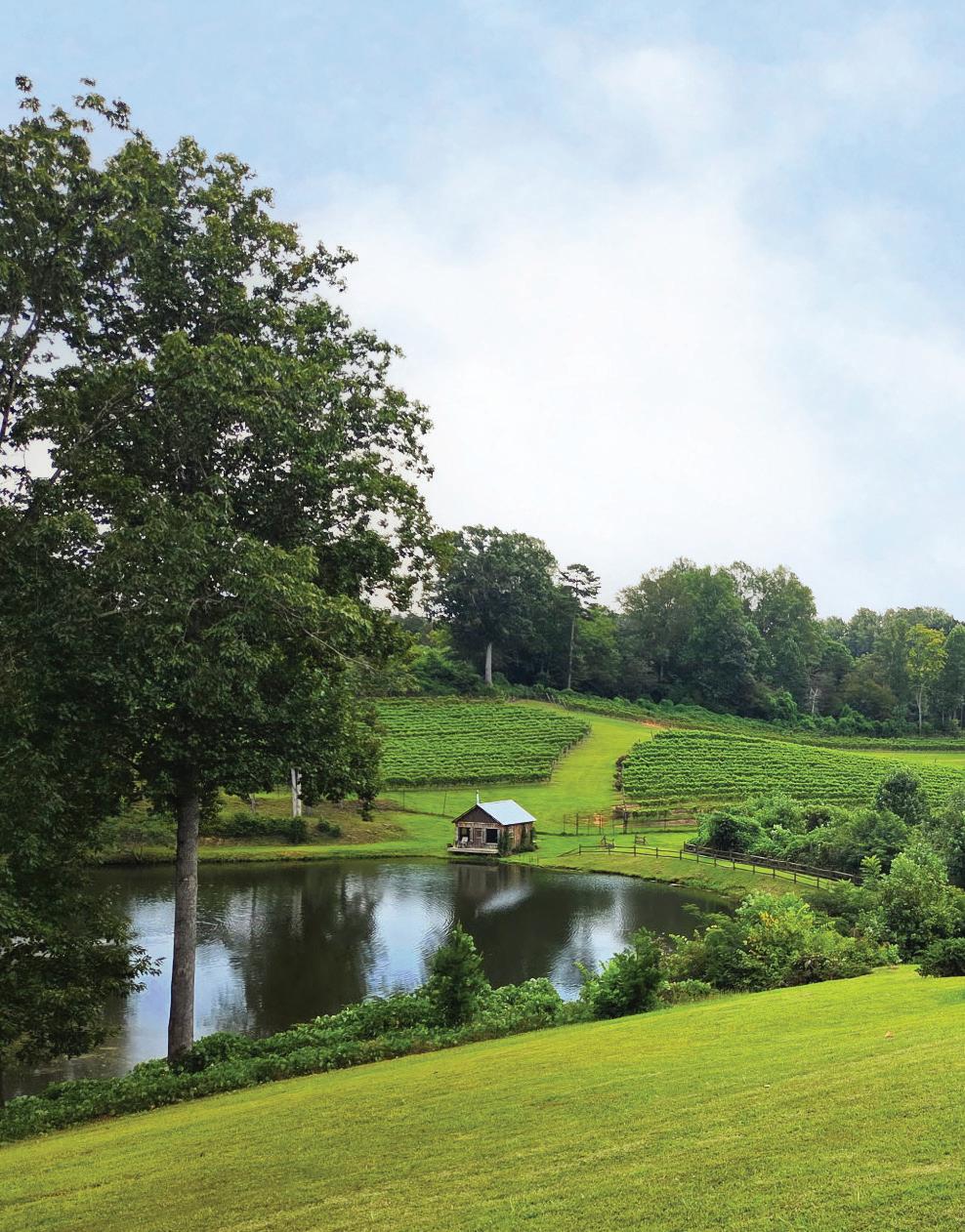
That single decision rippled across the region. Vine by vine, ridge by ridge, the valley transformed. Today, more than 45 wineries rise from former fields, their tasting rooms overlooking hillsides where sunrise catches the silver-green shimmer of leaves after early morning dew.
Visitors see the quiet beauty—rosebushes marking each row, willow trees bowing toward reflective ponds, oak barrels stacked in cool cellars. But the reality is far more demanding, and far more interesting. At the Shelton-Badgett NC Center for Viticulture & Enology, students train in everything from microscopic vine diseases to the chemistry of fermentation. They learn that grape growing here is equal parts art and endurance: fending off Japanese beetles, managing humidity, preventing erosion, and pruning with the precision of a sculptor.
Inside the teaching winery, beakers clink, stainless-steel tanks hum, and young winemakers sharpen their craft. Their Surry Cellars label represents the valley’s forward momentum—a place where tradition and experimentation work hand in hand.
Sip a Chambourcin, and you taste warm foothill nights. Enjoy a Traminette, and you catch the crisp edge of mountain air.
Savor a Viognier, and you sense the same sunlight that once fell on ancient forests.
The valley didn’t try to replicate Napa or France. Instead, it let the land speak. And they listened.
With wine shaping one of the valley’s most vibrant modern chapters, visitors soon discover that its beauty doesn’t end at the vineyard fence.
Just beyond the tasting rooms lie trails that climb granite domes, rivers that curl past orchards and farms, and small towns where history is never more than a short walk away. The Yadkin Valley invites travelers to savor its wines, but also to wander, climb, taste, hike, and discover the many stories waiting beyond the glass.
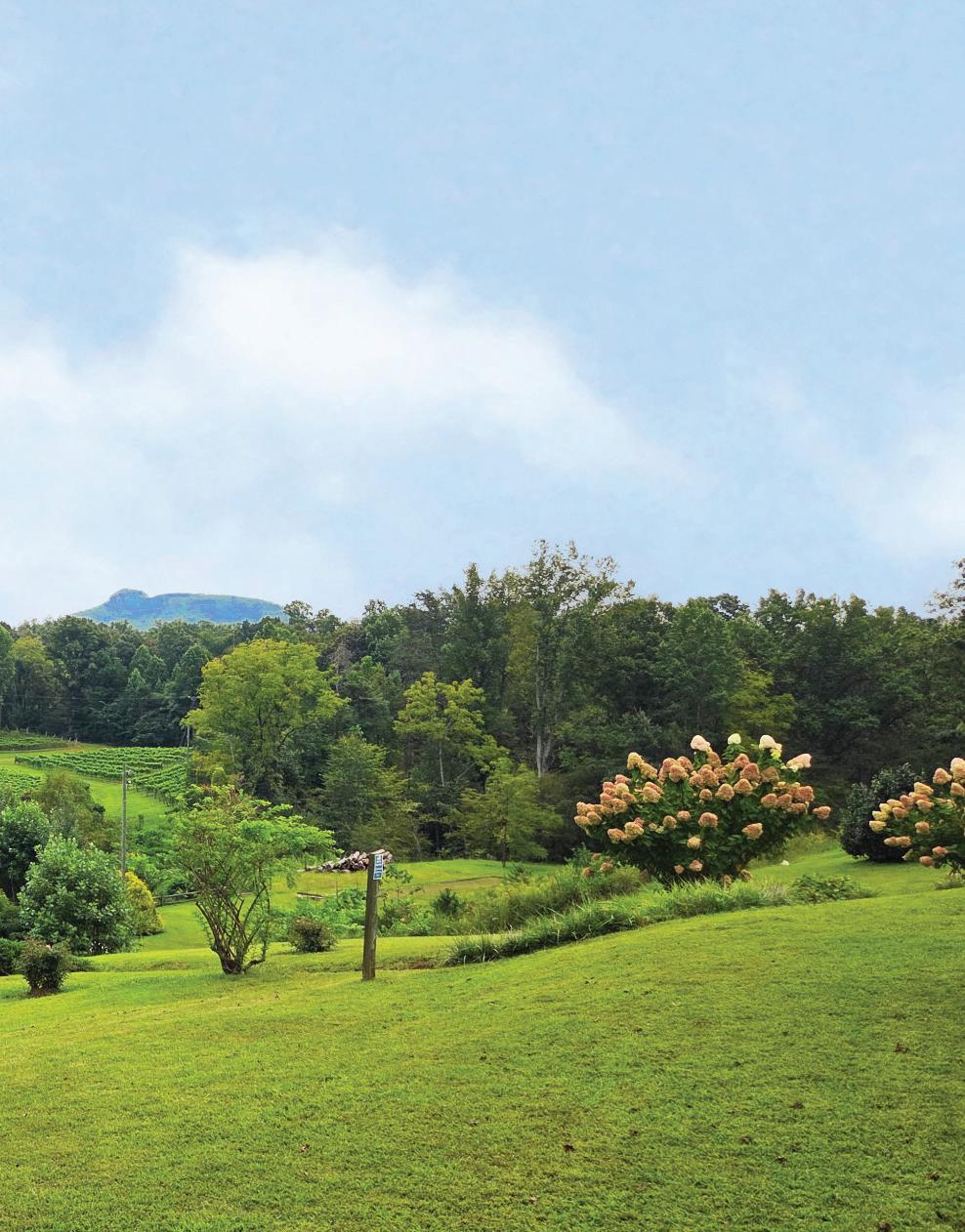
You see Pilot Mountain before anything else—an unmistakable quartzite knob rising above the patchwork of farms and forests. Indigenous peoples once used it as a landmark, a guidepost on seasonal journeys. Early settlers knew it as a beacon when crossing the foothills.
Today, hikers approach it with the same sense of recognition. Trails wind around its flanks, each turn revealing a sweeping view of the valley floor. Peregrine falcons circle the cliffs; breezes carry the scent of pine and sun-warmed rock. From its overlooks, the vastness of the Yadkin Valley spreads out like an open book—every ridge and river a line of its story.
Step onto the Mountains-toSea Trail here, and you’re literally walking across North Carolina, one step at a time. Pilot Mountain is not just a destination; it’s a beginning.
If Pilot Mountain is the valley’s exclamation point, Hanging Rock State Park is its poetry. The moment you enter, the air feels different—cooler, greener, alive with the sound of falling water. More than 20 miles of trails twist through shaded forests and rocky ledges, leading explorers to five waterfalls whose names alone—Lower Cascades, Indian Creek, Tory’s Den—sound like chapters in a mountain tale.
The summit trail rewards you with a panorama that stretches for miles: layers of blue ridges fading into the horizon, with stone outcrops jutting into the sky like ancient sentinels. At sunset, the rock glows rose-gold, and the valley below softens into shadow.
Families wander the easier paths. Solo hikers seek out solitude. Adventurers push toward the cliffs. There’s a place in this park for everyone—and always one more hidden corner to discover.
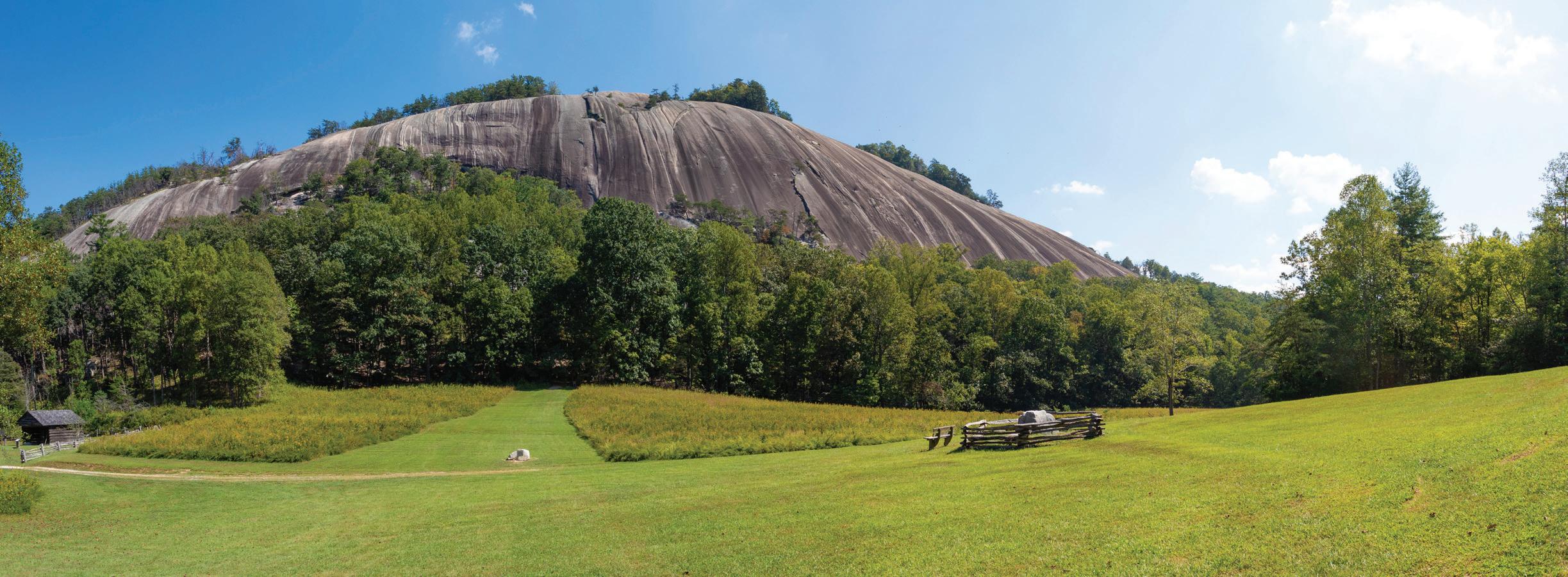
Then there is Stone Mountain, a giant granite dome that rises unexpectedly from the forest, as if the earth itself decided to surface for a better view. Approaching it feels almost cinematic—the trees suddenly part, and there it is, vast and silver, catching light in a way no photograph ever fully captures.
The loop trail takes you up, around, and beside this monolith. Along the way you’ll hear the rush of trout streams, clear and cold even in summer. Experienced anglers wade into the East Prong of the Roaring River, their lines flicking through the air, the forest muffling all sound except the water.
Here, a person can disappear into the quiet for hours. The granite dome watches over everything, patient and unchanging.
The Yadkin River curls through the valley like a long, winding sentence—shaping farms, carving banks, and gathering stories from every community it touches. On the 125-mile Yadkin River State Trail, paddlers drift past steep bluffs, waving grasses, and quiet coves where turtles slip off logs into the water.
Some stretches feel timeless, as if the river remembers the feet that once walked its banks long before kayaks and canoes. Early morning brings mist that hovers just above the surface; afternoons sparkle as sunlight glints off the water. It is peace in motion.
The Yadkin Valley is a haven for anglers. This is not by accident, but because its waters are as varied as its landscapes. The Yadkin River holds bass, catfish, and sunfish in its calm pools. High Rock Lake, a favorite among tournament anglers, reliably produces trophy-sized largemouth bass.
Cold, clear creeks like the Mitchell, Ararat, and Big Elkin slice through the foothills, ideal for trout who thrive in untouched, oxygen-rich waters.
In the Yadkin Valley, every trail, river bend, and mountain edge carries a story. Some stories are centuries old, some just beginning, many waiting to be discovered by the next traveler who steps off the highway and follows curiosity into the foothills.
This is a landscape that invites exploration.
A place where the wild and the peaceful live side by side.
A valley that never stops revealing itself, no matter how many times you return.
While hikers and paddlers follow the valley’s more dramatic landscapes, cyclists experience its heartbeat. Rolling roads dip into hollows and rise to gentle ridgelines. Farmland stretches out in quilt-like patches.
Old barns lean gracefully with age. Wind moves through meadow grasses. And the quiet—interrupted only by the rhythmic hum of tires, reminds riders why the Yadkin Valley feels like home even on a first visit.
Yadkin Valley
may be known for its vineyards and mountain views, but its soul lives in its small towns, in the places where sidewalks still feel like gathering spots, porches double as welcome mats, and traditions are carried forward with quiet pride.
Whether you wander through Elkin, Dobson, or Mount Airy, each town offers its own rhythm, shaped by generations who learned to live from the land and from one another.
Mount Airy
Strolling along Mount Airy’s main street feels like stepping into a story you already know. It is lined with references to Andy Griffith. It is a city filled with friendly waves, familiar architecture, and a pace that invites you to linger. Murals brighten tucked-away alleys, and the sound of conversation drifts out of doorways as though the town itself is happy to see you.
Dobson
Dobson moves to a steadier, agricultural rhythms. The sounds of farms, vineyards, and open fields marking the landscape. In home kitchens, the stories run deep. Sonker recipes are passed down like heirlooms, each with its own subtle variations: more fruit here, a thinner batter there, the occasional swirl of spice known only to one family.
Elkin
Elkin is a trail town at heart. It is a place where river, footpaths, and historic streets all meet. It’s impossible to miss the sense of welcome here. The tradition of sonker feels especially alive, woven into gatherings, celebrations, and moments that call for something warm on the table.
Each region and city boasts its own Sonker ... A Sonker is the dessert that defies strict definition. It is part cobbler, part baked pudding, wholly its own. Some believe the fruit “sinks” into the batter, giving rise to the name. Others point to the region’s Scots-Irish roots. Truthfully, no one knows for sure, and no one minds.
A sonker is always shared. It’s a dish that carries stories with it.
Stories of family tables, seasonal fruit, and the simple pleasure of warm dessert on a cool evening.
A Simple Surry County Sonker Recipe
Ingredients
4 cups sliced peaches, berries, or thinly sliced sweet potatoes
1 cup sugar (adjust to taste)
1 cup all-purpose flour
1 cup milk
½ cup melted butter
1 tsp vanilla extract
Pinch of salt
For the Dip
1 cup whole milk
½ cup sugar
1 tsp vanilla
Instructions
Preheat oven to 350°F.
Toss fruit with half the sugar.
Whisk flour, remaining sugar, milk, butter, vanilla, and salt until smooth.
Pour batter into a deep baking dish; spoon fruit over top (don’t stir).
Bake 50–60 minutes until golden and bubbling.
Warm the dip ingredients on the stove until sugar dissolves.
Serve warm sonker with a spoonful of dip.
Rustic. Homey. Impossible to resist.
Here, history lingers in river bends and in the shadow of ancient trees. Artists and vintners continue traditions of craft. Bakers pass down recipes that connect generations. And visitors from the Triangle find themselves returning again and again, each drawn by the valley’s peaceful rhythm and the way it makes the world feel a little lighter.
Whether you come for an afternoon or for a weekend, the Yadkin Valley welcomes you with stories as deep as its river and beauty that stays with you long after the drive home.