7 America at 250: We the People, We the Icons. How History and Pop Culture Converge at Auction
Peter Klarnet
14 Worn Histories: Jewellery, Identity and Lasting Value
Henry Bailey
24 Exporting Works of Art: Binding offers
Ruth Cornett
28 Christie’s Education: Untangling the Complexity of the Art Market for a Global Audience
Ted Sandling
32 Matters of the Art: a solicitor’s perspective on estate planning
Arthur Byng Nelson
EDITORIAL
Margarita F-A Chiclana Senior Coordinator Heritage and Taxation Advisory Service
Christie's, London mfachiclana@christies.com
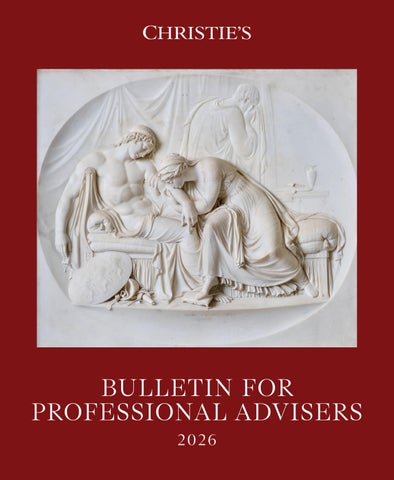
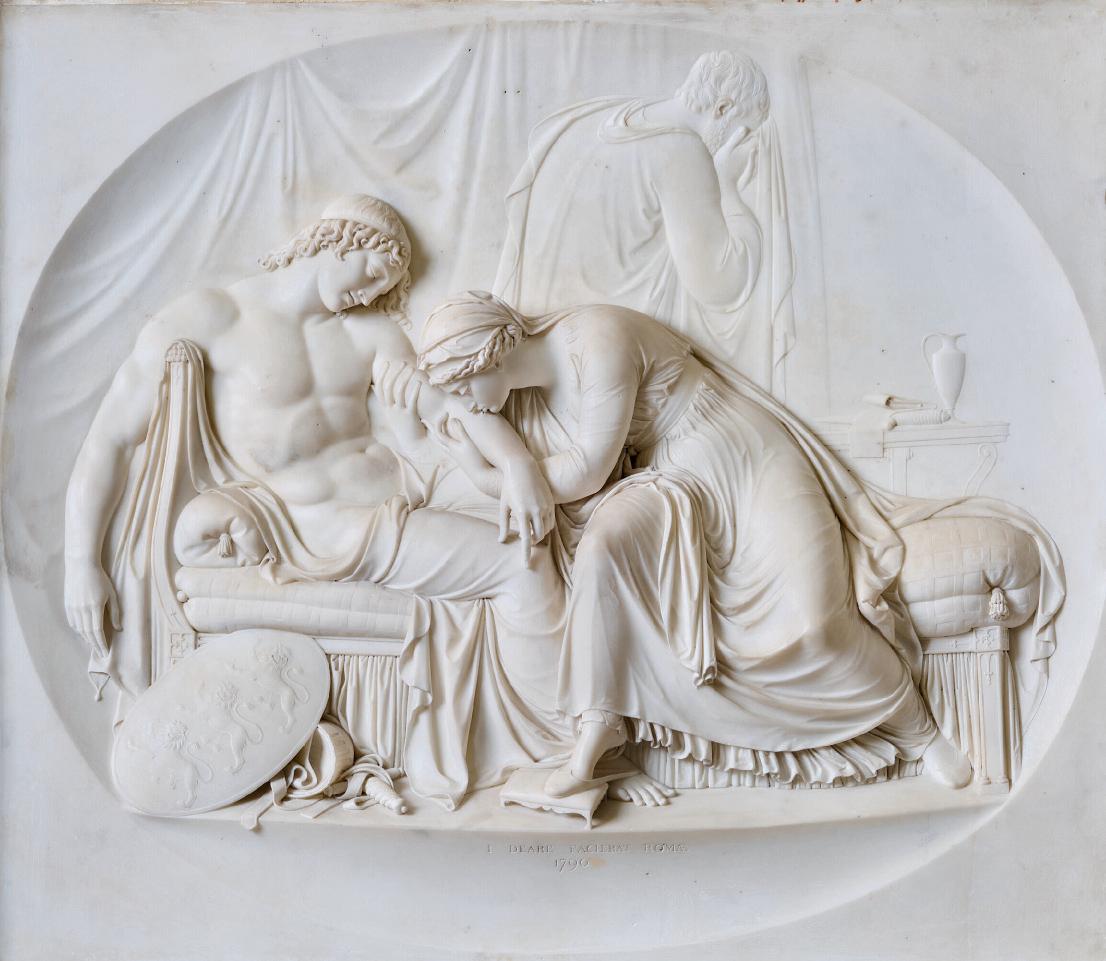
Cover JOHN DEARE (1759-1798)
Queen Eleanor sucking poison from the wound of King Edward signed and dated 'I DEARE FACIEBAT ROMAE/1790' (lower centre)
Carrara marble bas-relief 86 x 99cm.
Executed in 1790
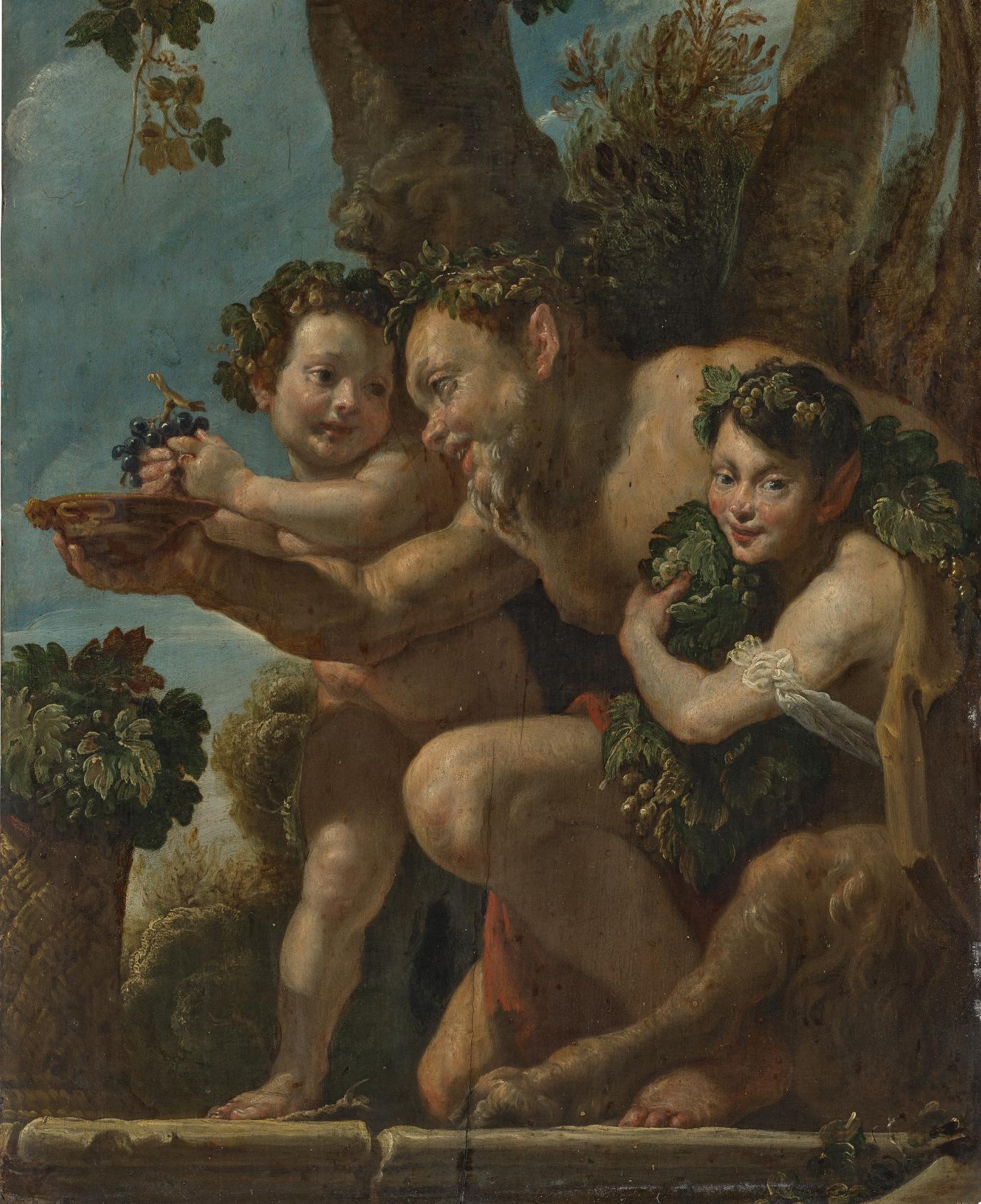
Opposite DOMENICO FETTI (1589-1624), A Bacchanal
Carrara marble bas-relief 86 x 99cm. oil on panel painted circa 1618-1622
68.6 x 45.7cm.
Accepted by HM Government in lieu of Inheritance Tax from the Estate of the Late Lavinia Davies, and allocated to the Ashmolean Museum, Oxford.
In this issue, we reflect on a point of convergence between history and the present, where objects are increasingly understood not only for what they are, but for the stories they carry and the contexts in which they exist. Across collecting categories, a clear thread emerges in the form of a growing sensitivity to narrative, provenance and meaning, and to the ways in which these qualities shape both value and engagement.
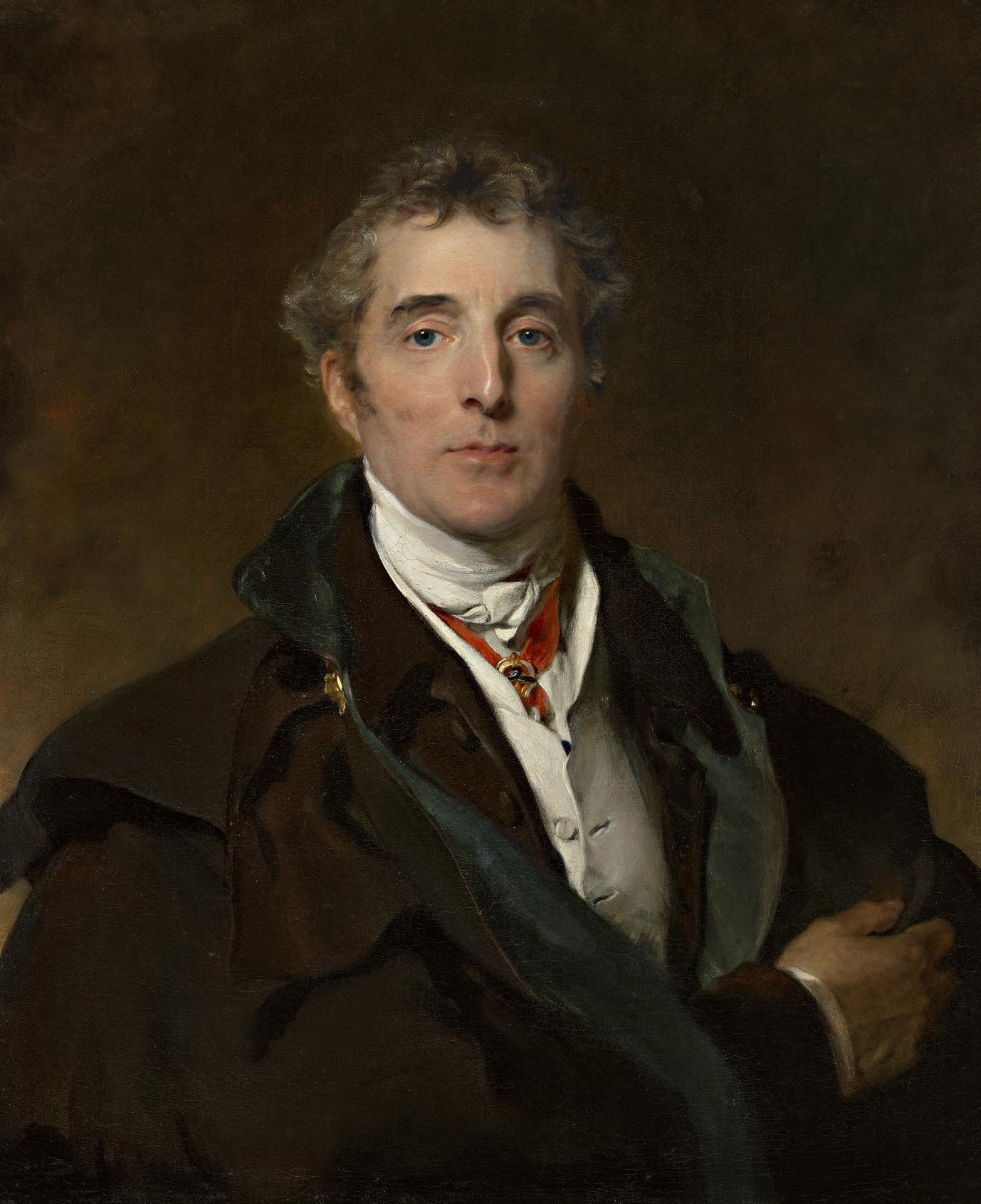
This issue shines a spotlight on our forthcoming Old Master Paintings Evening Sale, led by two superlativeworks byJanvan Huysum,celebrated as the ‘Phoenix of Flower Painters’ (pages 14-15), and offers an intimate look at Sir Thomas Lawrence’s portrait ofthe 1st Duke ofWellington, reflecting the subtle balance between public image and private presence that defines its lasting appeal.
Peter Klarnet’s America at 250: We the People, We the Icons offers a considered view of this shift. Drawing on two recent Christie’s sales, this article presents a market in which historical documents, works of art and cultural artefacts are linked by their ability to articulate shared histories. The results demonstrate a sustained appetiteforobjects that act as touchstones, grounding collectors in moments that continue to resonate.
Within this context, rarity alone no longer defines significance. It is the combination of narrative, historical importance and provenance that gives such objects their particular presence. The success ofthese sales reflects a broader movement towards collecting that is informed by connection as much as by connoisseurship.
Comments and Suggestions If you would prefer to receive future Bulletins by email or in PDF format, or if you have any comments or suggestions regarding the publication, please email lromanelli@christies.com
A related dynamic is explored in Worn Histories: Jewellery, Identity and Lasting Value. As Henry Bailey outlines, jewellery occupies a distinctive place within the collecting landscape, combining craftsmanship and rarity with an immediate personal dimension. Its enduring appeal lies not only in material quality, but in the associations it holds and the histories it reflects.
Alongside these market perspectives, this issue also considers the frameworks that govern the movement and stewardship of works of art. Ruth Cornett’s analysis of the UK export licensing regime provides a clear overview of the operation ofbinding offers.This is followed byTed Sandling’s contribution on Christie’s Education, which considers how knowledge and access support more confident and informed engagement with the art market.
Arthur Byng Nelson’s Matters ofthe Art concludes this strand with a perspective grounded in estate planning, addressing the legal and practical realities of managing collections across jurisdictions and generations.
Taken together, the contributions point towards a market shaped as much by interpretation as by transaction.Across categories, there is a discernible shift towards objects that carry meaning alongside value. For advisers, this requires an approach that recognises both the technical and financial aspects of a collection, as well as its cultural and personal significance.
Accepted by HM Government in lieu of Inheritance Tax from the Estate of Jacob, 4th Baron Rothschild and allocated to Victoria & Albert Museum, London. Christie’s 8
Note All views expressed in this Bulletin are a matter of opinion only. Neither Christie’s nor contributors accept any liability whatsoever in relation to the accuracy of the opinions given.
A PAINTING IN FOCUS:
Sir Thomas Lawrence’s Portrait of the 1st Duke of Wellington
Senior
Director,
Heritage and Taxation Advisory Service Christie's rcornett@christies.com
+44 (0) 20 7389 2102
Prior to joining Christie’s, Ruth Cornett worked as a tax adviser in a number of professional firms in the City and the West End of London. After training as an art historian and working as a curator in the V&A, Ruth changed careers in 1992, studying law and qualifying as a Chartered Tax Adviser (CTA) in 1998. Ruth has advised a broad spectrum of clients on a range oftax matters with a particularemphasis on capital gains tax, inheritance tax and income tax. To consolidate her expertise in these areas, Ruth qualified as a Trust and Estate Practitioner (TEP) in 2008. Ruth lectures frequently for Christie’s Education and STEP on tax and heritage matters, has contributed to leading publications in this field and sits as an observer on the Tax and Political Committee of Historic Houses (HH).
The art of portraiture is perhaps the most challengingforanypainter.In essencethe greatest portraits are a private conversation between the artist and sitter recorded for the viewer. To capture the likeness and spirit of the sitter so that both contemporaries and posterity recognise the image and the personality is a demanding task but the greatest examples continue to resonate long after completion.
This summer at Christie’s the celebrated portrait of the 1st Duke of Wellington executed by Sir Thomas Lawrence will be offered for sale in the Old Masters Evening Sale. The portrait was commissioned in 1820 by Wellington’s close friend, Charles Arbuthnot (1767-1850), a diplomat and politician, whom Wellington had first met in Paris in 1814. The portrait was unveiled at the Royal Academy in 1822 to immediate acclaim, and mezzotints of it were chosen as gifts by Wellington to his friends and admirers, thus ensuring its popularity and fame.
Lawrence painted Wellington’s portrait eight times but this image is perhaps the most insightful, showing the personal side of the experienced soldier in civilian clothes, rather than military dress, with only the insignia of the Order of the Golden Fleece, awarded after the victory over Napoleon in the Peninsular War, hinting at his extraordinary achievements. A contemporary description of the
portraitconfirmsthispeakbehindthemaskoffame, Harriet Arbuthnot writing in her diary recorded her view thus: ‘All other pictures of him depict him as a hero this portrait has all the softness and sweetness of countenance which characterises him when he is in the private society of his friends’
This picture remained with the Arbuthnot family until sold at Christie’s in 1878. It was acquired by the 5th Earl of Rosebery (1847-1929) and remained in that family until sold, again at Christie’s, in 1939, when it passed to the collection ofW. U. Goodbody. It remained in that family until sold at Christie’s in 2006. In 2026 it returns to Christie’s for sale once more and awaits the next owner to eavesdrop the conversation between Lawrence and Wellington. Do come to experience that for yourself.
OPPOSITE: SIR THOMAS LAWRENCE, P.R.A. (1769-1830)
Portrait of Arthur Wellesley, 1st Duke of Wellington, K.G., K.B., M.P. (1769-1852), bust-length, in civilian clothes with a military cloak, wearing the insignia of the Order of the Golden Fleece with inscription 'An admirable likeness. Charles Arbuthnot 13[?]th... 1821[?]'
(on an old handwritten label attached to the reverse)
oil on unlined canvas
30 x 25½ in. (76.2 x 64.8 cm.)
OLD MASTERS EVENING SALE 30 June 2026 | 6.30pm | London
VIEWING TIMES:
Friday June 26 9.00am - 5.00pm
Saturday June 27 12.00pm - 5.00pm Sunday June 28 12.00pm - 5.00pm Monday June 29 9.00am - 5.00pm Tuesday June 30 9.00am - 2.00pm
Ruth Cornett, CTA TEP
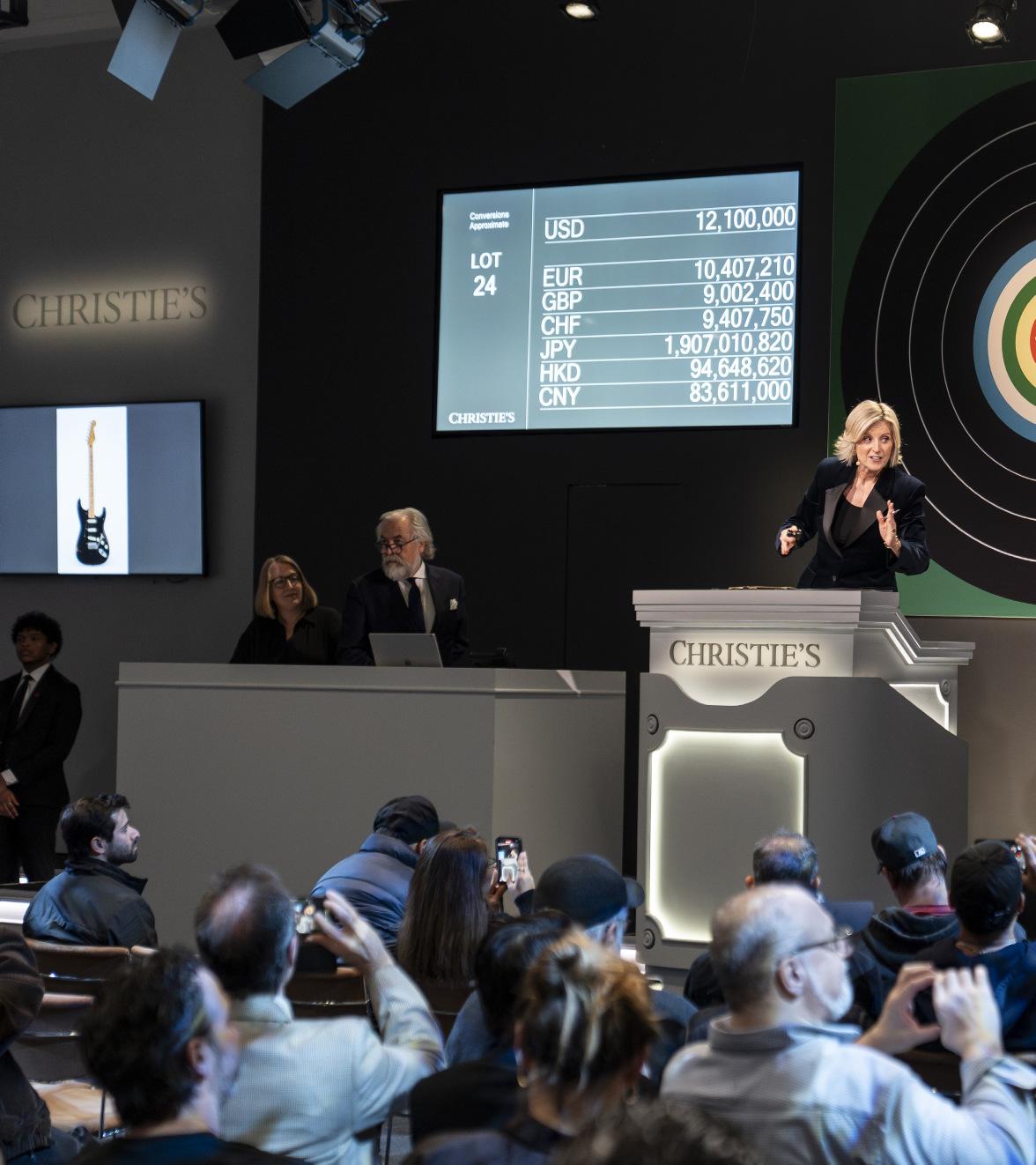
The auctioneer and Deputy Chairman, Tash Perrin, knocked down the most expensive guitar ever sold at auction, David Gilmour's 'Black Strat' for $14,550,00 (with buyer's premium) after 21 minutes of bidding
Peter Klarnet
Vice President, Senior Specialist, Americana, Books & Manuscripts Christie’s, New York
Peter joined Christies in 2016 after twenty years working with manuscript Americana, spending the first portion of his career cataloguing for, and later managing,a Connecticut auction house specializing in historical autographs. In 2005 he left that firm to pursue opportunities as a consultant, agent and dealer. Although his primary interests centre on early America, especially the American Revolution and EarlyRepublic,Peterhas appraised,catalogued and sold a wide range of material from the 17th to the 20th centuries.
Since joining Christie's,Peter has worked with many important collections including the papers of the Marquis de Chastellux, The Private Collection of President and Mrs. Reagan, The Findlay-Wright Papers, the Roger Judd Collection of American Historical Autographs, the Louisiana Purchase Collection of A. J. Tullock, The Collection of Lee Bouvier Radziwill,The Private Collection of William S. Reese, The Birth of Wikipedia, The Papers of Richard N. Goodwin, and most recently, DJ Kool Herc and the Birth of Hip Hop and The Collection of André Leon Talley.
Peter holds a B.A. in History from Antioch College, and a M.A. in History from the University of Delaware with a certificate in museum studies. He has curated several exhibits including a major exhibition at Federal Hall in New York celebrating the bicentennial of the birth of Abraham Lincoln in 2009.
America at 250: We the People, We the Icons. How History and
Pop Culture Converge at Auction
During the first quarter of 2026, Christie’s has witnessed one incredible sale after another - most especiallyintheworlds ofAmericanArt,Old Master Paintings and Asian Art. This plethora of strong sales was complimented bytwo significant auctions featuring more eclectic,cross-categoryobjects,that were met with a resounding positive response from our clients and resulted in two record-breaking auctions, first on 23 January with our masterpiece sale of important Americana, We the People: America at 250 and then again in early March with the incomparable memorabilia offerings in TheJim Irsay Collection held in a series of sales between 12 and 17 March. Combined, the auctions achieved nearly $130,000,000 in sales.
Those strong results were no accident. They were the result of considered planning,strong teamwork, coupled with Christie’s ability to reach and engage new and existing clients. That hard work was bolstered by increasing collector interest in objects that provide symbolic touchstones to our shared popular culture ranging from important historical documents and literary manuscripts,to instruments used by musical icons, and to clothing donned by legendary sports figures. These objects tend to do well at auction not only because they might mark important moments in history and/or popular culture, quite often they are coupled with stories that engage collectors.
We the People was a live saleroom auction, featuring 44 lots from various owners. The tightly curated sale weaved a thread through the history of the United States from its foundations in the eighteenth century to the twenty-first, featuring a widevarietyofobjects,includingbooks,documents, broadsides, letters, paintings, decorative arts, photographs, flags and banners. With an aggregate low estimate of$17,204,000,the sale realised a total of $35,562,465.
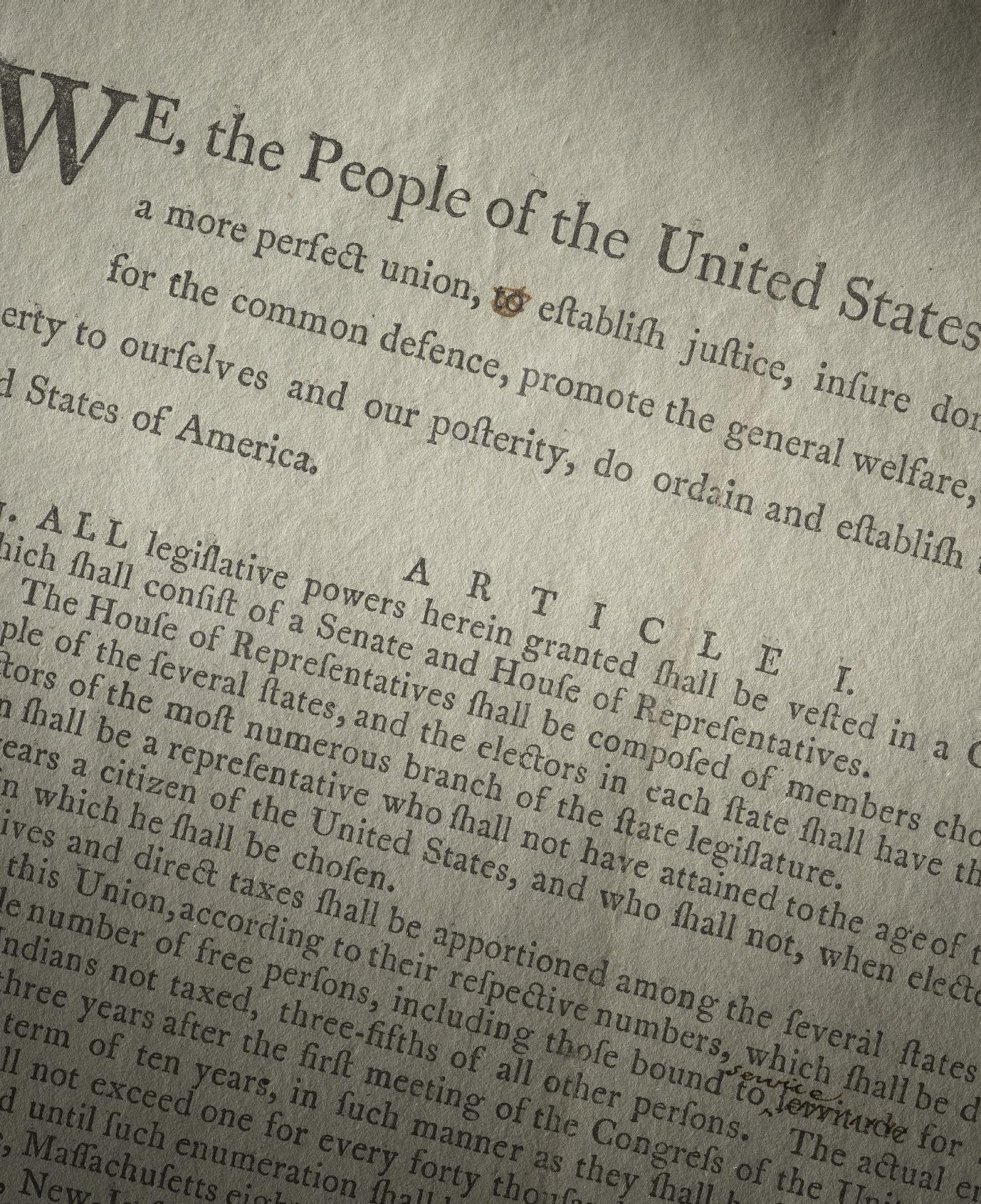
Many ofthe top lots marked important moments in American history, including a broadside edition of theDeclarationofIndependenceprintedinJuly1776 ($5,687,000); the penultimate draft of the United StatesConstitutioneditedbydelegateRufusKingat the1787ConventioninPhiladelphia($7,395,000);an important copy of the Emancipation Proclamation signed by Abraham Lincoln ($6,785,000); a flag recovered from the Custer battlefield ($2,515,000), and the contract that formed Apple Computer on 1 April 1976 ($2,515,000). All five achieved prices well over their low estimate and in the first three cases, exceeding the high estimate. The results signal a strongly growing interest in this collecting area over the past decade. The price for the 1776 broadside of the Declaration of Independence, believed to be printed in Exeter, New Hampshire in mid-July 1776, is, at the time of writing, a world auction record price for any copy save for the first printing produced by John Dunlap in Philadelphia on the night of 4 July 1776. The last time Christie’s sold a copy of the Exeter broadside, it brought only $930,000 in 2021.
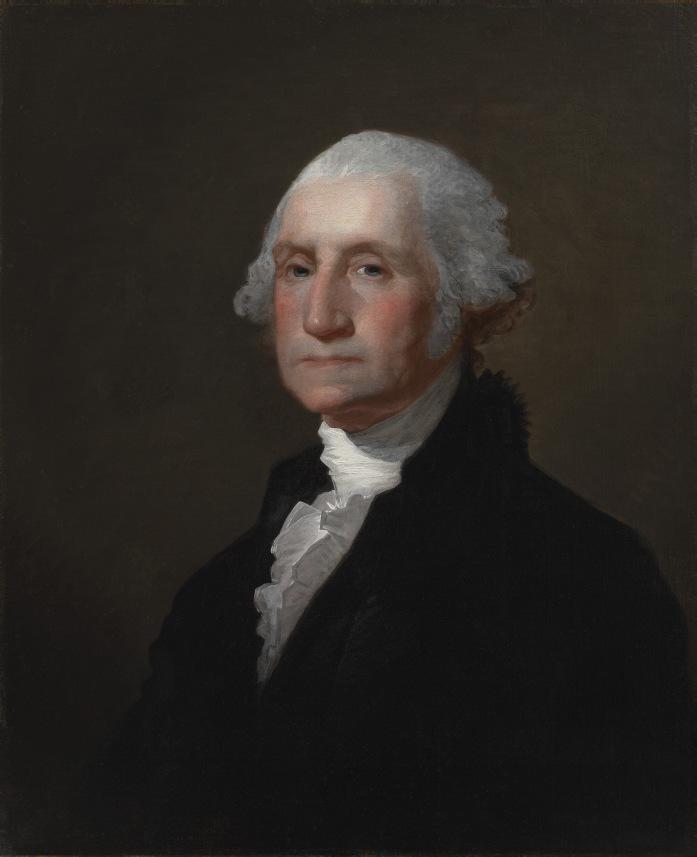
These impressive results for historical documents and artifacts were complimented by several important pieces of American art from vastly different eras, with the most impressive results achieved for pieces with compelling stories or provenance underlying the objects. First and foremost was Gilbert Stuart’s portrait of George Washington that our exceptional research has revealed was commissioned byJames Madison.The work, offered by Clarkson University, was marketed under the title: “A President’s President,” linking the two founders and marking the first time a portrait of Washington owned by another person who held the highest office in the land had ever come to sale. Against a $500,000 – 1,000,000 estimate it achieved $2,881,000: the highest price ever paid for the “Atheneum Type” (more commonly known as the “dollar bill” portrait). Meanwhile, Grant Wood’s diminutive pencil study for his painting American Gothic, accomplished on the reverse ofan envelope, brought another smashing result. Measuring a little over three by four inches,this,the only study known for his most iconic work, sailed well past its pre-sale estimate of$70,000 – 100,000 to achieve $584,200.
These top offerings were just the beginning, and the impressive results not merely reserved for pieces made by or associated with white men. A signed volume of the famous enslaved black poet, Phillis Wheately, estimated at $30,000 – 50,000 brought $120,650; while Ernie Barnes’s painting, The Hall realised $304,800 against its $150,000 – 250,000 pre-sale estimate. And an impressive example of a Navajo Sandpainting Rug brought $101,600 (estimate $20,000 – 30,000).
Overall, the sale underscored the growing enthusiasm for quality pieces of Americana as we approach the 250th anniversary ofthe Declaration of Independence this summer. Additionally, the results make very clear that this upswing is not limited to objectsassociatedwiththeAmericanRevolutionand thenation’sfounding.Withothermajoranniversaries approaching over the course of the next decade, we fully expect collector interest to continue to drive this market for the foreseeable future.
("JACK") (1922-1969)
THE JIM IRSAY COLLECTION, 11-17 MARCH 2026
Held in four auctions, including three live sessions and one online sale, the unsurpassed collection of memorabilia assembled by the late owner of the Indianapolis Colts, Jim Irsay proved a roaring success. With an aggregate low estimate of $26,626,400, the sale achieved an astounding $94,402,353, or more than four times the pre-sale estimate. An evening sale subtitled Hall of Fame kicked things off on 11 March and featured his most iconic pieces: 44 lots ranging from guitars with celebrity provenance to important literary manuscripts and nearly everything in between. The 12 March session (Icons of Pop Culture) featured 102 lots including celebrity-associated musical instruments, song lyrics, important letters and documents, as well as sports and entertainment memorabilia.The 13 March session (Icons of Music) included 78 lots of fine, vintage guitars. The sales concluded with an online selection of 116 lots of guitars, autographs, books and even vintage Soviet spyware, a testament to Mr. Irsay’s eclectic taste.
Those impressive numbers were led by Mr. Irsay’s vast musical instrument collection that featured some of the most famous and iconic instruments that have cometo market inthe pastthree decades. Most notable among these was David Gilmour’s famous 1969 black Stratocaster guitar on which he played on stage for many years and was used on his most recognisable recordings through Pink Floyd’s most productive and impactful years. When Mr. Irsay first purchased this guitar in 2019 at the David Gilmour sale in New York, the guitar set a world record for the price paid for a guitar at auction. When that guitar appeared yet again on the evening of 11 March, it sold for over $14 million reclaiming that record following a 21-minute bidding war. Similarly, in 2001, Mr. Irsay purchased
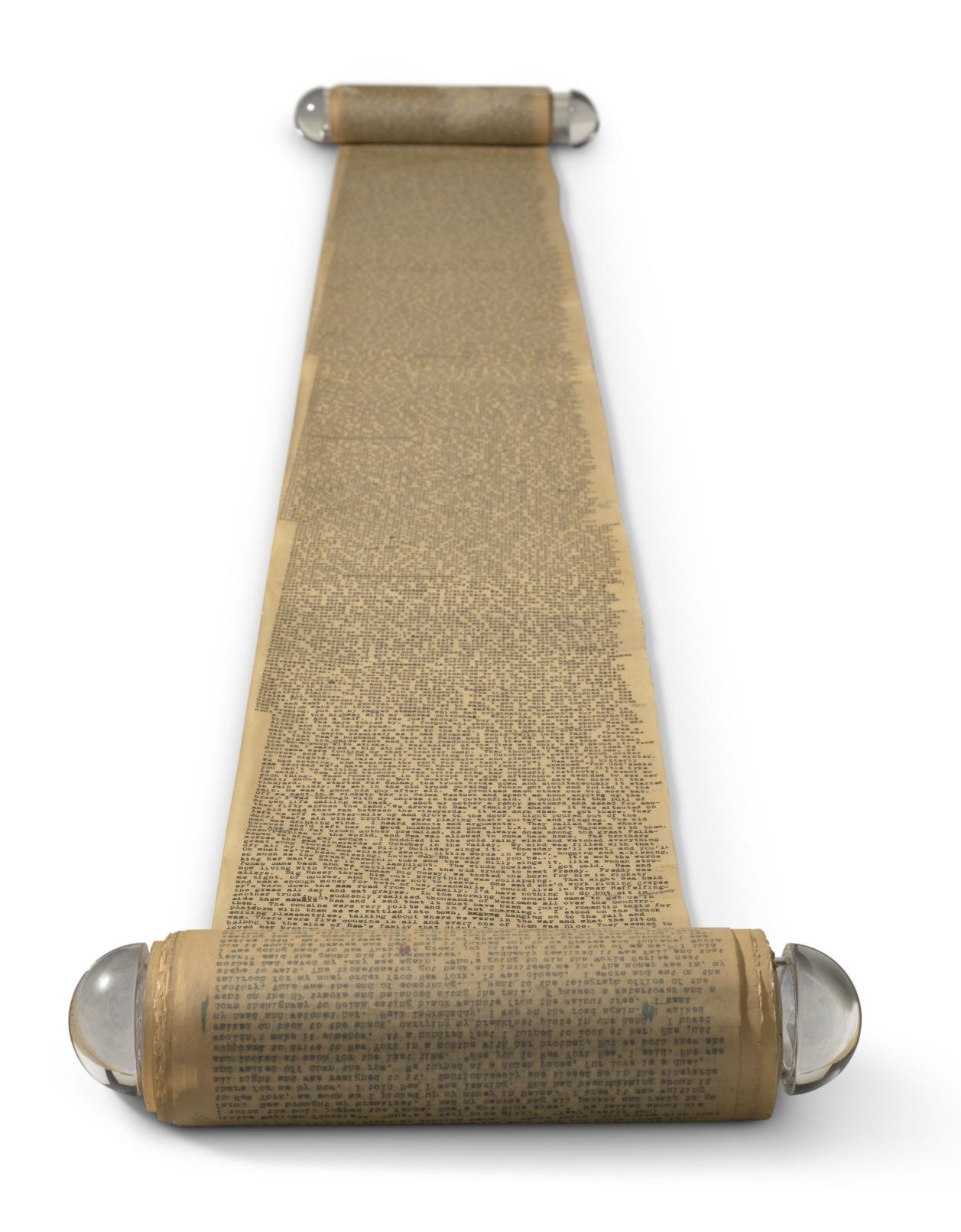
Jack Kerouac’s original draft scroll for On the Road in our New York auction rooms for what was then the world record price paid for a modern literary manuscript at $2,426,000 (New York, 22 May 2001 lot 307). When it returned to Christie’s, it attracted multiple bidders who drove it up to $12,135,000, setting the same world auction record once again.
Yet those records are just the beginning. Some of theotherbreathtakingresultsfromthesaleincluded Jerry Garcia’s guitar, “Tiger,” custom built especially for him in 1979, which brought $11,560,000. Other highlights included Kurt Cobain’s Fender Mustang used in the video for “Smells Like Teen Spirit” ($6,907,000); the 1939 Martin acoustic Eric Clapton used to play “Layla” on MTV Unplugged in 1992 ($4,101,000); not to mention the other David Gilmour associated guitar: his 1969 Martin he used in the recording of “Wish You Were Here,” which fetched $2,393,000. (Mr. Irsay purchased that same Martin in the 2019 Gilmour sale for $1,095,000).
While guitars led the sale records, the sale also set world auction records for a trumpet (a Martin Committee Trumpet owned by Miles Davis, $1,651,000); a saxophone (John Coltrane’s Yamama Nippon Gakki alto saxophone, $431,800); and a piano (John Lennon’s, $3,247,000). Ringo Starr’s first set of Ludwigs established a record for a set of drums at $2,393,000, while the bass drum head bearing The Beatles’ logo that appeared before millions of viewers on the Ed Sullivan Show in 1964 brought even more, realising $2,881,000. Important manuscript song lyrics also performed extremely well including Bob Dylan’s manuscript for “The Times They Are A-Changin’” ($2,515,00), and Paul McCartney’s handwritten lyrics used in the studio when recording “Hey Jude” ($1,016,000).
While music-related items led the sale results, other important pieces also brought impressive numbers. Sports memorabilia pieces included jockey Ron Turcotte’s saddle rode with Secretariat to win the Triple Crown in 1973 sold for $1,524,000; MuhammadAli’s first robe to feature his name after he had changed it from Cassius Clay and used in his second fight with Sonny Lison in 1965 realised $444,500; and the jersey worn by Wane Gretzky when he scored his 500th career goal scored $952,500. Hollywood was also well represented in the form of one of Sylvester Stallone’s drafts for the film, Rocky ($508,000); one of “Wilson” prop volleyballs used in the film, Castaway starring Tom Hanks ($101,600); as well as a “Golden Ticket” produced forthe classic 1971 Gene Wilderfilm Willy Wonka &the Chocolate Factory ($203,200).
Perhaps the chief takeaway from the sales is that Jim Irsay collected for all the right reasons. He bought things because they appealed to him as they brought him closer to those individuals he most admired and the times in history that evoked his passion. The collection was as much about the objects themselves as they were about the person who collected them. This resonated with our clients who helped make it the most valuable memorabilia sale ever staged in auction history, a truly remarkable result considering that he had purchased manyofthe objects in his collection over the past decade.
And this is not the end of the Jim Irsay Collection. On 1 July 2026, Christie’s, New York will offer the fifth and final sale of the series: Icons of History which will feature important historical documents, letters and artifacts from the American Revolution to the dawn ofthe twenty-first century. Ratherthan Gilmour, Clapton, Garcia, and Kerouac, it will be Washington, Lincoln, Roosevelt and Churchill (to name a few).
Although We the People: America at 250 and the Jim Irsay Collection were two very different types of auction, the former being a various owner sale
with a focus on a broad sweep of American history and the latter a single-owner collection with a focus on popular culture, they are quite similar for several reasons. First, both sales were composed of objects across a range of traditional collecting categories. This helped drive overall interest in the sales and led to cross-category interest. Secondly, the pieces in both sales offered were of the highest quality, often coupled with background stories our clients found engaging. Finally, they are similar in that they both captured a growing market for “non-art” collecting categories, and in particular, it speaks to the growing appetite among collectors for objects that tell our collective stories: whether that be a nostalgic look at our personal history, or an appreciation of our historical past.
Conclusion Taken together, We the People: America at 250 and The Jim Irsay Collection exemplify Christie’s unique ability to situate objects of history and popular culture within a compelling market and intellectual framework. While one sale traced the evolution of American identity through foundational documents and fine art, and the other celebrated the cultural power of music, sport, literature andfilm,both auctions demonstratedthat collectors are increasingly motivated by narrative, provenance and emotional connection as much as by traditional notions of category or medium.
These results reaffirm a broader shift within the market toward material that transcends conventional definitions of “art” and instead reflects shared cultural memory. Whether a draft of the Constitution, a guitar that reshaped modern music, or a manuscript that defined a generation, such objects resonate precisely because they embody moments that continue to define who we are. As Christie’s looks ahead to forthcoming anniversaries and future landmark sales, the success of these auctions suggests a sustained and growing appetite for objects that tell meaningful stories: bridging history and popular culture, and reinforcing the enduring power of tangible connections to the past.
CAST AWAY, 2000: A HERO PROP "WILSON" VOLLEYBALL
Henry Bailey Head ofJewelleryDepartment,London
Christie’s
Henry Bailey is Head of the Jewellery Department at Christie’s London,where he oversees valuations, client advisory, and business development for the firm’s London jewellery sales, working in close collaboration with Christie’s international jewellery specialists. He joined Christie’s in 2020 following experience as a jewellery specialist at an international auction house based in London. Henry is a Graduate Gemologist (G.G.) of the Gemological Institute of America and holds an M.A.fromthe UniversityofEdinburgh.
Worn Histories: Jewellery, Identity and Lasting Value
Since Christie’s first jewellery auctions, the allure of royal, aristocratic and celebrity provenance has fascinated collectors and generated widespread interest in our sales. Jewellery has always been prized for its talismanic and emotional power: wearable expressions of memory, sentiment, and identity, drawing in humanity for millennia. When a jewel appears at auctionwith a direct linkto historic events or distinguished owners, its emotional resonance for potential buyers is significantly heightened, and in today’s market, the importance of such provenance has never been greater.
In spring 2025, Christie’s Magnificent Jewels auctions in both New York and Geneva achieved an unprecedented milestone,selling 100 percent of the lots in each sale, a feat never before achieved in one ‘various owner’ sale, let alone two within a month. In Geneva, all 115 lots realised a total of $72 million, while in New York all 135 lots sold for $88 million. A combined $160 million realised within weeks, with not a single jewel unsold.
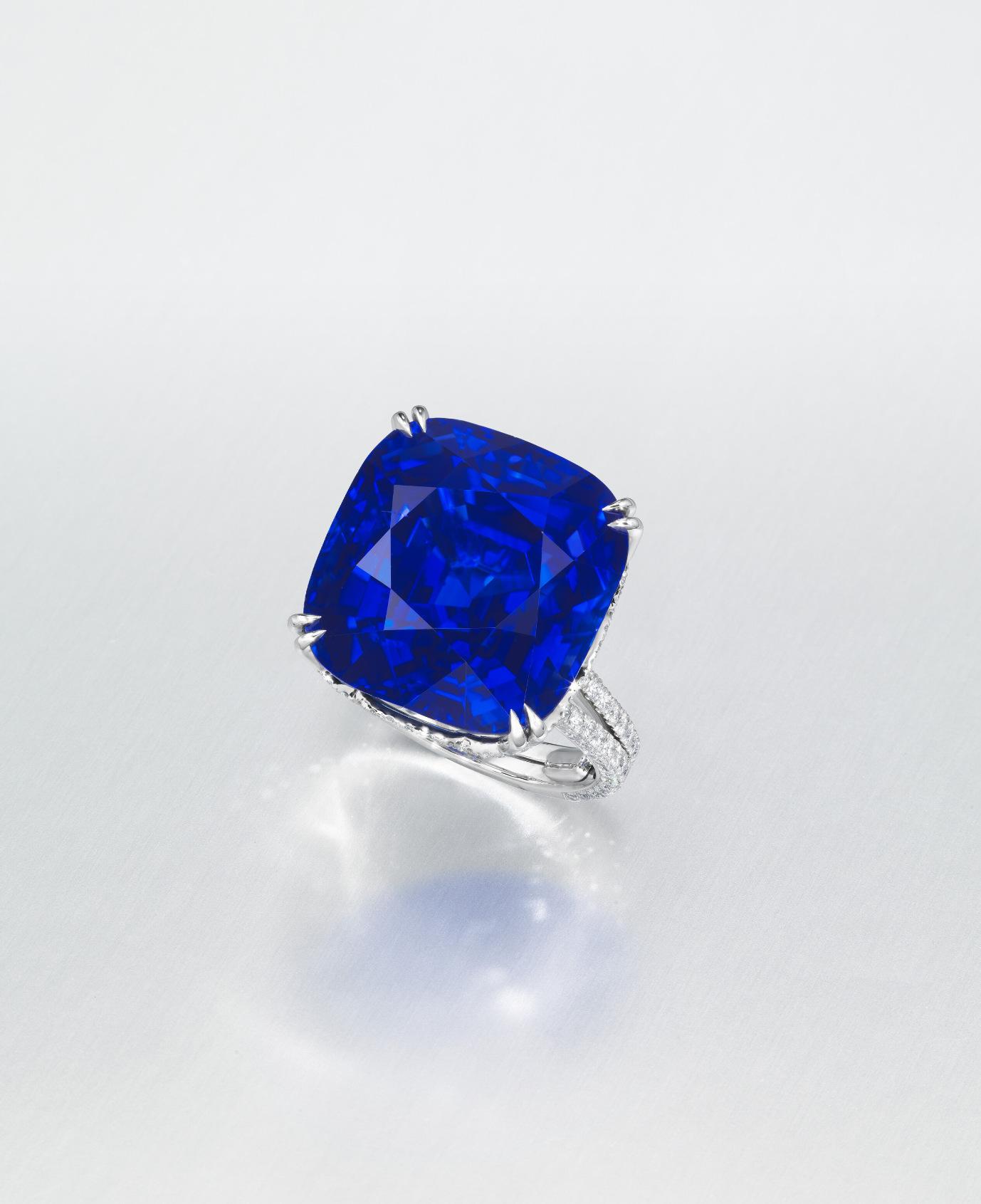
In the same year Christie’s November London Jewels sale became the highest-value online sale everheldatChristie’sLondon,andthemostvaluable London jewellery auction since 2016. In Paris, the jewellery department surpassed, by some distance, its previous annual sales record, set only the year before. Meanwhile in Hong Kong, The Regent Kashmir sapphire ring sold for approximately $10 million, setting a record for the highest price per carat ever paid for a sapphire at auction.
Following these results, colleagues in the business and observers beyond the auction world have asked the same question: what is driving this
performance against the backdrop of today’s increasinglyuncertainmacropoliticalandeconomic environment? And more broadly, do these results point to a renewed and widening global appetite for jewellery at auction today?
The ingredients for a stellar jewellery auction remain much the same today as they have ever been: exceptional jewels set with the highest quality untreated gemstones; beautifully crafted and innovative mountings; iconic designs from the great jewellery houses (Cartier, Van Cleef & Arpels and others) and, crucially, the spark that ignites any auction: provenance.
What has changed today is that these value drivers havebeendramaticallyamplifiedbythematuringof the internet and the rise of social media. Jewellery auctions now reach an exponentially wider, truly global audience, a shift accelerated by the pandemic,ascollectingandtransactinghasbecome increasingly online, particularly for signature jewels from the main jewellery houses. At the same time, a vast and growing ecosystem of digital jewellery content is being consumed by a new generation of informed and engaged collectors: from specialist Instagram accounts dedicated to tiaras and royal jewels to educational information about untreated gemstones.
Only a few decades ago, jewellery sales were largely confined to members of the professional trade and a small circle of established collectors and connoisseurs. Today, the internet provides unprecedented international visibility and access for buyers worldwide.
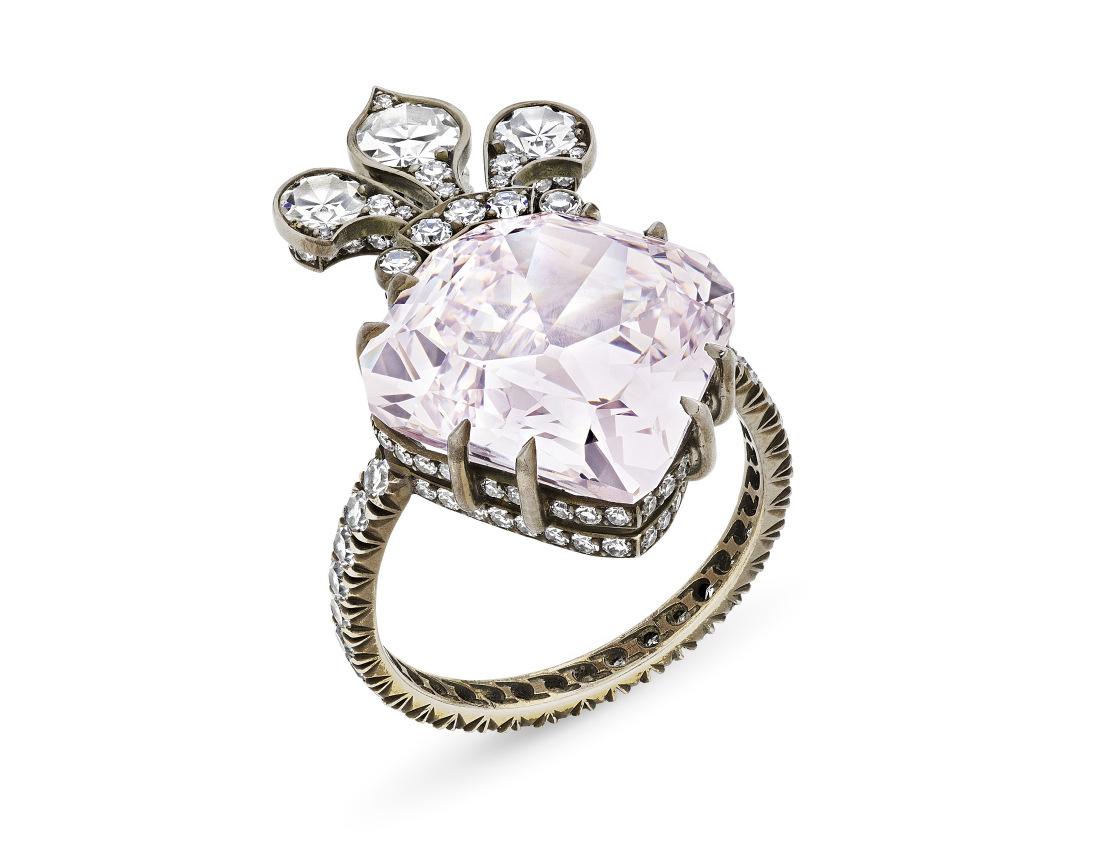
The Marie Therese Pink: A Historic Coloured Diamond Ring, mounted by JAR
The 18th century diamond – likely from the prized Golconda region in India – was owned by Queen Marie Antoinette of France’s daughter and was mounted into a ring by the legendary Joel Arthur Rosenthal, known as JAR. Sold Christie’s New York, June 2025 for $14m, setting a record price at auction for a Fancy Purple-Pink diamond and for a jewel by JAR
The Allure of Provenance Given the significant premium that provenance can confer on a jewel at auction, a key challenge in offering family jewellery withnotablehistoricalassociationsliesinpresenting and realising the value of that provenance, while preserving discretion and safeguarding the confidentiality of the current owner.
Each situation is different. In the case of The Wimborne Jewels and The Splendid Casket of Ancestral Jewellery sold in November 2025 it was possible to pinpoint the jewels to family members several generations removed from the current owners.A feat not always achievable.
Offered in London in November 2025, The Wimborne Jewels carried a compelling personal history, having belonged to the 1st Viscountess Wimborne (1880-1948), a renowned society beauty and one of Cecil Beaton’s earliest and most glamorous muses. In a rare and evocative insight, the family shared two remarkable portrait photographs by Beaton, showing Lady Wimborne adorned with several of the jewels presented for sale. The jewels themselves were of exceptional quality, most notably a magnificent Cartier Art Deco emerald bracelet that realised over £1 million. Yet it was the power of these images, bringing the jewels vividly to life and anchoring them to a moment of elegance and glamour, that ignited exceptional interest in the weeks leading up to, and throughout, the sale.
One of these images, The Shingled Vicereine, published in Tatler in 1928, presented Lady Wimborne asthe embodiment ofmodern elegance. Dressed in a striking Poiret gown, she wore her Art Deco ruby and diamond pendant suspended from a diamond chain, both of which featured in the sale. Completing the composition was her ruby and diamond coronet by Chaumet, a jewel with its own auction history, having been sold previously at Christie’s in Geneva in 1971.The second photograph offered a more intimate yet no less dramatic setting, showing Lady Wimborne in the ballroom of Wimborne House. Here she was adorned with
An Art Deco ruby and diamond pendant sold from the Wimborne collection, shown suspended from a diamond chain.
her Art Deco emerald, pearl and diamond pendant, againwornfromthesamediamondchain,alongside a magnificent Cartier emerald and diamond bracelet. Each of these jewels was included in the auction,preserved not onlyas objects ofbeautybut as tangible links to a vividly documented past.
In an era when collectors have instant access to global jewellery production at the click of a button, it is increasingly these rare combinations of exceptional quality, provenance and visual narrative that command the greatest attention. The Wimborne Jewels exemplified this convergence perfectly, their allure extending beyond craftsmanship alone to encompass association, atmosphere and a sense of lived
glamour: qualities that cannot be manufactured, replicated or mass-produced.This continues to set truly important jewels apart.
In a similar vein, The Splendid Casket ofAncestral Jewellery,offeredforsaleinGenevalastNovember, was most closely associated with Helena Violet Alice (née Fraser), 3rd Countess of Stradbroke (1874-1949), who was also photographed wearing several of the jewels offered for sale.
The images of Lady Stradbroke at the 1897 Devonshire House Ball and later at the coronation ofKingEdwardVIIin1902gavecollectorsaglimpse into the confidence, opulence and prosperity of Britain at the turn of the last century. These images
emphasised the exceptional quality of the jewels themselves, which were among the finest surviving examples of Victorian jewellery, incorporating gemstones of a size and calibre rarely encountered outside royal collections.
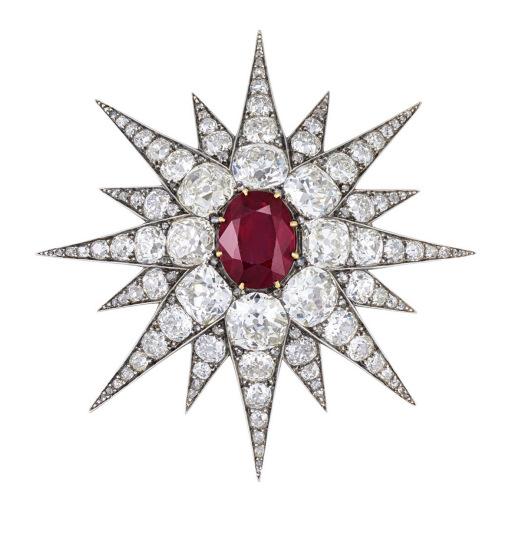
The highlight of the group was a magnificent 10.07-carat Burmese ruby and diamond Victorian starbrooch,worn byLadyStradbroke alongside her ruby tiara, also offered in the sale.The brooch went on to sell for almost $3 million and, while its value was overwhelmingly in the exceptional quality and size of the ruby, for connoisseurs the attachment of the provenance added a further layer of allure: the knowledge the ruby had scarcely been seen in public since the early 20th century.
A superb Cartier Emerald and Diamond Bracelet, sold at Christie's London from the Wimborne Collection, the group of 9 jewels sold for over £4m
ColouredGemstones:Rarity&Science The finest coloured gemstones have long held a position of prominence within our jewellery sales, led by the enduring appeal of sapphires, emeralds and rubies. In recent years, however, this appetite has broadened to embrace other exceptional stones, including Paraíba tourmalines, spinels and fine topaz. This evolution reflects a noticeable surge in demand as collectors compete for gemstones of the highest calibre, increasingly aware of the growing rarity of truly fine examples and the finite nature of their supply.
In this environment, the role of rigorous laboratory certification has become indispensable. Contemporary buyers, particularly at the upper end of the market, place paramount importance on recent reports that confirm a gemstone’s country of origin and attest to the absence of treatment. Such documentation provides essential assurance and transparency, forming an integral part of the buying decision. This represents a striking shift from earlier decades; jewellery sales in the 1970s and 1980s rarely included laboratory reports, whereas today the majority of coloured gemstones offered are accompanied by detailed scientific analysis. Together with rarity and beauty, this confluence of quality, provenance and verified authenticity now defines the most sought-after jewels at auction.
A telling example of this rigorous approach can be found in The Regent Kashmir Sapphire ring. Although the sapphire had appeared at auction twice within the preceding two decades, on each occasion accompanied by laboratory reports identifying it as of Kashmir origin and unheated, a further step was taken ahead of the most recent sale. In 2025, two fresh Swiss laboratory reports were commissioned from Gübelin and the SSEF, ensuring absolute continuitywith,and confirmation of, the earlier scientific findings. This additional
level of scrutiny allowed prospective buyers to bid with complete confidence, secure in the knowledge that the sapphire’s celebrated origin and untreated status remained unchanged, and underscored the importance now placed on transparency, precision and trust at the highest level of the market.
The Power of the Brands Another defining force shaping today’s jewellery market is the ever-increasing powerofthe great maison names, celebrated not only for their contemporary collections but, perhaps more compellingly, for their historic and vintage creations. Houses such as Cartier, Van Cleef & Arpels and Bulgari have been acutely attentive to the strength of their own heritage, actively preserving and promoting their archival masterpieces and the illustrious clients who patronised them throughout the 20th century. This renewed focus has had a profound effect on the secondary market, elevating appetite for signed period jewels and sharpening collectors’ connoisseurship.
Nowhere was this more evident than in the hugely popular Cartier exhibition at the Victoria and Albert Museum. The exhibition was a vivid reminder of Cartier’s extraordinary creative evolution, charting the house’s innovations from the early 20th century to the present day through an exceptional assemblage of jewels. Visitors were treated to an array of iconic pieces, many of which were familiar not only as museum-worthy objects, but as jewels that had, at various moments in their histories, passed through the auction rooms. The exhibition succeeded in crystallising an important realisation for a wider audience: that jewels of true museum calibre are not confined to vitrines, but are periodically available on the open market. In turn, this has fostered a deeper public awareness and appreciation of historic signed jewels, and has further strengthened demand for the finest examples when they appear at auction.
A Late 19th Century Ruby and Diamond Star Pendant/Brooch and Tiara/Necklace from the collection of Helena Violet Alice, Countess of Stradbrooke (1874 - 1979), sold for $2.8m and over $700,000 respectively in November 2025.
Conclusion While the fundamental ingredients of a great jewellery auction remain unchanged, exceptional quality, rarity, craftsmanship and provenance, these elements are being amplified more powerfully than ever before. Digital platforms, social media and online cataloguing have transformed how jewels are seen,understood and appreciated, creating a more informed and globally connected audience of collectors. Today’s buyers are not only acquiring remarkable objects, but engaging deeplywith theirhistory,context and cultural significance.
Across all segments of the market, from family jewels with compelling personal narratives, to the rarest untreated coloured gemstones,andthe most iconic creations by the great jewellery houses, demand is increasinglyfocused on piecesthat offer depth as well as beauty. Provenance has become a vital catalyst, laboratory science provides essential reassurance, and the renewed visibility of historic maison masterpieces, often reinforced by museum exhibitions, continues to elevate collectors’ expectations and ambitions.
There is no single explanation forthe exceptional momentum currently seen in jewellery auctions. However, the consensus among colleagues and industry professionals who have witnessed multiple market cycles is clear: jewellery is experiencing a defining moment. With unprecedentedglobalparticipationandsustained competition for the finest examples, jewellery auctions today occupy a position of renewed strength and relevance, firmly established as one of the most dynamic and compelling sectors of the global art and luxury market.
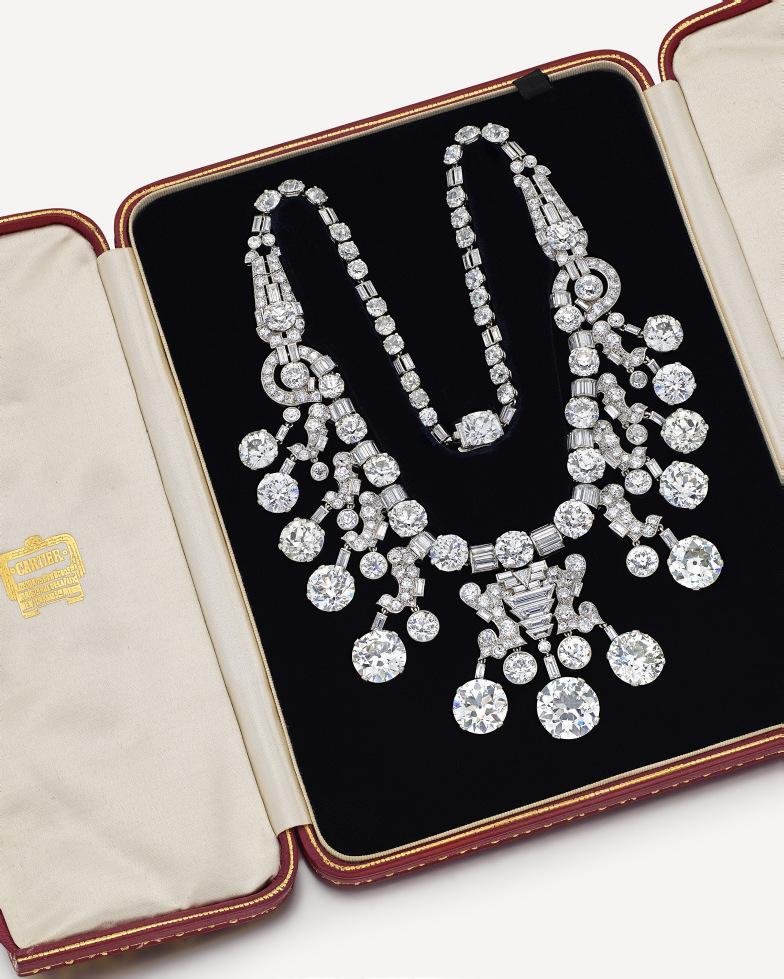
An Exceptional Cartier Art Deco Diamond Necklace, only a handful of Cartier diamond necklaces of this scale are recorded, with this necklace amongst the finest jewels created by the iconic Cartier London branch in the early 20th century.
Sold Christie’s Geneva, November 2024, for $5.5m
The Regent Kashmir Sapphire Ring, weighing 35.09 carats. Sold Christie’s Hong Kong May 2025 for $9.5m, setting a record price at auction for a sapphire price per carat. The sapphire was previously sold in 2000 at auction for $850,000, reflecting the increased appreciation for the best coloured gemstones
Masters Evening Sale
London | 30 June 2026
EXHIBITION
26 June – 30 June 2026
8 King Street
London, SW1Y 6QT
CONTACT
Maja Markovic mmarkovic@christies.com +44 (0) 20 7389 2090
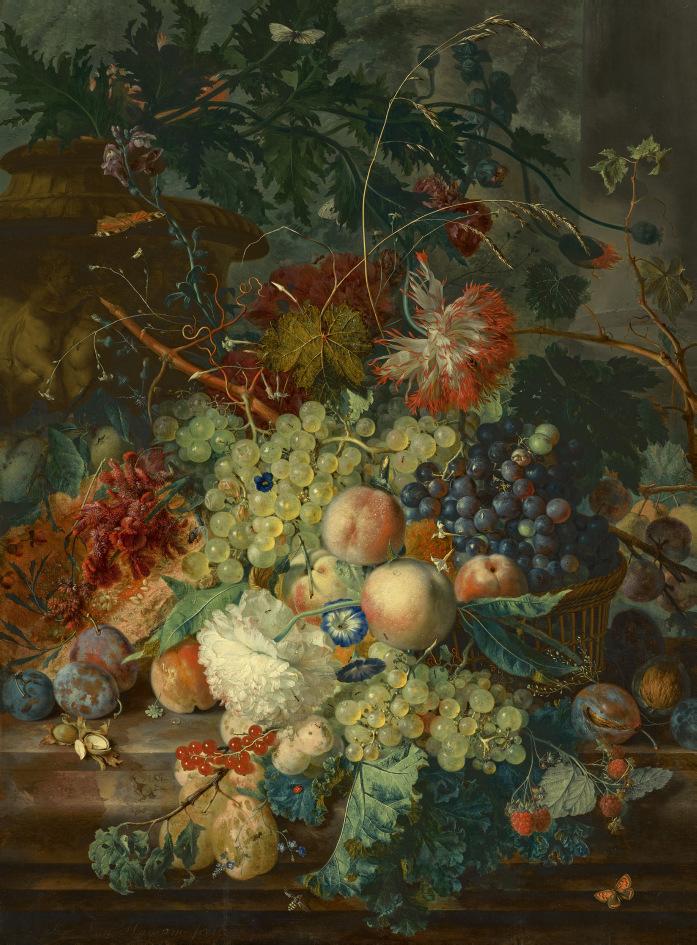
PROPERTY FROM A DISTINGUISHED PRIVATE COLLECTION JAN VAN HUYSUM (AMSTERDAM 1682-1749)
Fruit and flowers in a wicker basket and other fruit on a marble ledge, a column and terracotta urn with other flowers behind signed 'Jan Van Huÿsum fecit' (lower left) oil on panel
31⅜ x 23⅝ in. (79.7 x 60 cm.)
Estimate on request
Old Masters Evening Sale
London | 30 June 2026
EXHIBITION
26 June – 30 June 2026
8 King Street
London, SW1Y 6QT
CONTACT
Maja Markovic
mmarkovic@christies.com
+44 (0) 20 7389 2090
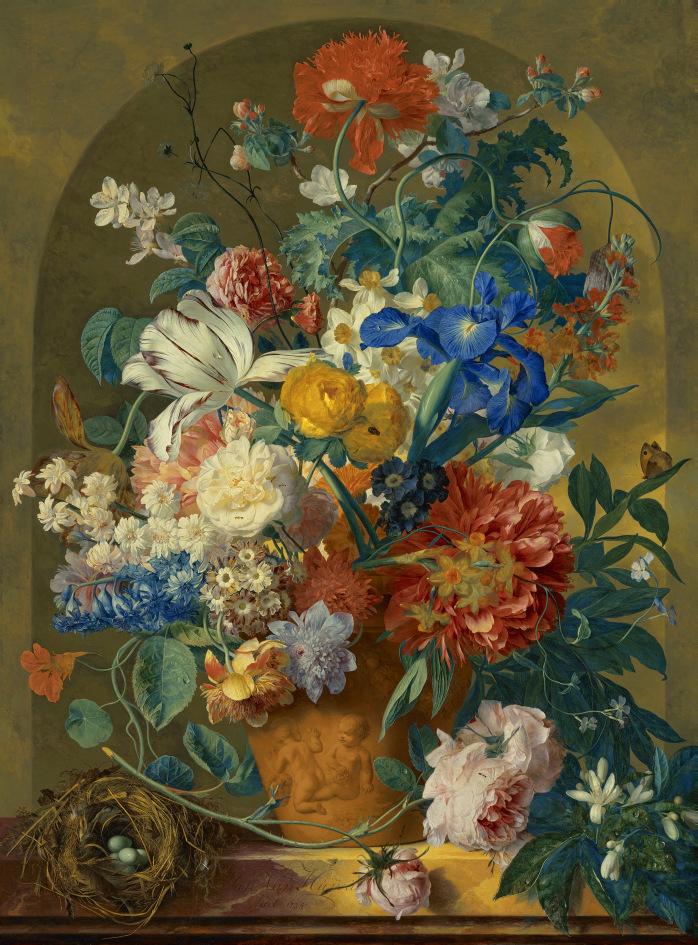
PROPERTY FROM A DISTINGUISHED PRIVATE COLLECTION JAN VAN HUYSUM (AMSTERDAM 1682-1749)
Flowers in a terracotta vase and a bird’s nest on a marble ledge before a niche signed and dated 'Jan Van Húÿsú[m] / fecit 1734' (lower centre, the ‘m’ partly hidden by a rosebud) oil on panel
31⅞ x 23⅞ in. (81 x 60.6 cm.)
Estimate on request
Exporting Works of Art: Binding offers
Ruth Cornett, CTA TEP
Senior Director, Heritage and Taxation Advisory Service Christie's rcornett@christies.com
+44 (0) 20 7389 2102
Prior to joining Christie’s, Ruth Cornett worked as a tax adviser in a number of professional firms in the City and the West End of London. After training as an art historian and working as a curator in the V&A, Ruth changed careers in 1992, studying law and qualifying as a Chartered Tax Adviser (CTA) in 1998. Ruth has advised a broad spectrum of clients on a range of tax matters with a particular emphasis on capital gains tax, inheritance tax and income tax. To consolidate her expertise in these areas, Ruth qualified as a Trust and Estate Practitioner (TEP) in 2008. Ruth lectures frequently for Christie’s Education and STEP on tax and heritage matters, has contributed to leading publications in this field and sits as an observer on the Tax and Political Committee of Historic Houses (HH).
In the Summer 2022 edition of this Bulletin, I reported on the initial operation of the newly introduced binding offer process for the export of works of art subject to a deferral of the export licence. At that stage, the process was very much in its teething stage and, inevitably, unfamiliarity with its operation was leading to increased delays in resolving export deferral cases. It is now five years since the arrangements came into force and it seems a suitable time to reflect on the process of binding offers and how they have been operating since 2022.
It is, perhaps, useful to give readers a précis of the export licensing process as it currently operates. The process is designed to be fair to all parties but can be tricky to navigate for many practitioners, as the rules and procedures are not encountered frequently in professional practice. All works of art above certain value thresholds must have a licence for export from the UK. The value thresholds depend on the applicable category for the object which, for certain classes, may be as low as zero. A licence to export an object (a work of art or a cultural object) may be sought for a temporary period, in which case the object must return to the UK before the designated period ends, or for permanent export. Applications for permanent export are referred initially to the expert adviser for the category, usually a senior curator at a national museum or recognised expert in the field, who is asked to consider the application and report to the Export Licensing Unit of the Arts Council.
Historically, the UK has aimed to balance the need of the art market for the free-flowing, international circulation of works of art, with the wish to retain important heritage objects, known as national treasures, in the UK. The process allows the expert adviser to raise an objection to an export application where that adviser considers the object may meet at least one of criteria to be a national treasure and its export from the UK would be a misfortune. Collectively, the criteria on which an objection may be raised are known as the “Waverley criteria”, so named after the first chairman of the committee which considered the export rules, and they are designed as a series of
questions with the intention of capturing items falling into the widest net of national significance/ history, aesthetics and scholarship:
1. History(WaverleyOne): Isthe object so closely connected with UK history and national life that its departure would be a misfortune? (Includes items of major local importance or significant collections).
2. Aesthetics (Waverley Two): Is the object of outstanding aesthetic importance?
3. Scholarship (Waverley Three): Is the object of outstanding significance for the study of some particular branch of art, learning, or history?
An object need only satisfy one of the Waverley criteria, in the opinion of the expert adviser, for the adviser to raise an objection, but in addition to the quality threshold, an object must also have been in the UK for at least 50 years. With the combination of the high quality threshold and the 50-year rule, the overwhelming proportion of applications for export are not subject to an objection, for example, in the year to 30 April 2025, there were 28,307 applications referred to the relevant expert advisers and only 20 cases were referred for consideration by the independent committee.
Once an objection has been raised, the case is referred to the Reviewing Committee on the Export of Works of Art and Cultural Property (RCEWA). The RCEWAconsidersthe application in light ofthe expert adviser’s objection and against the Waverley criteria, to decide whether the object is a national treasure. If the RCEWA does find that the object is a national treasure, it makes a recommendation to the Secretary of State to defer the issue of the export licence. If the RCEWA recommends that the export should be deferred, it is highly likely that the Secretary of State will follow that recommendation.
The purpose of deferral is to allow time for an institution in the UK or a private buyer who is willing to keep the national treasure in the UK, to come forward and match the value declared on the export licence. In these circumstances the hope is that a national treasure will be kept in the UK, but also to ensure that the owner will be compensated
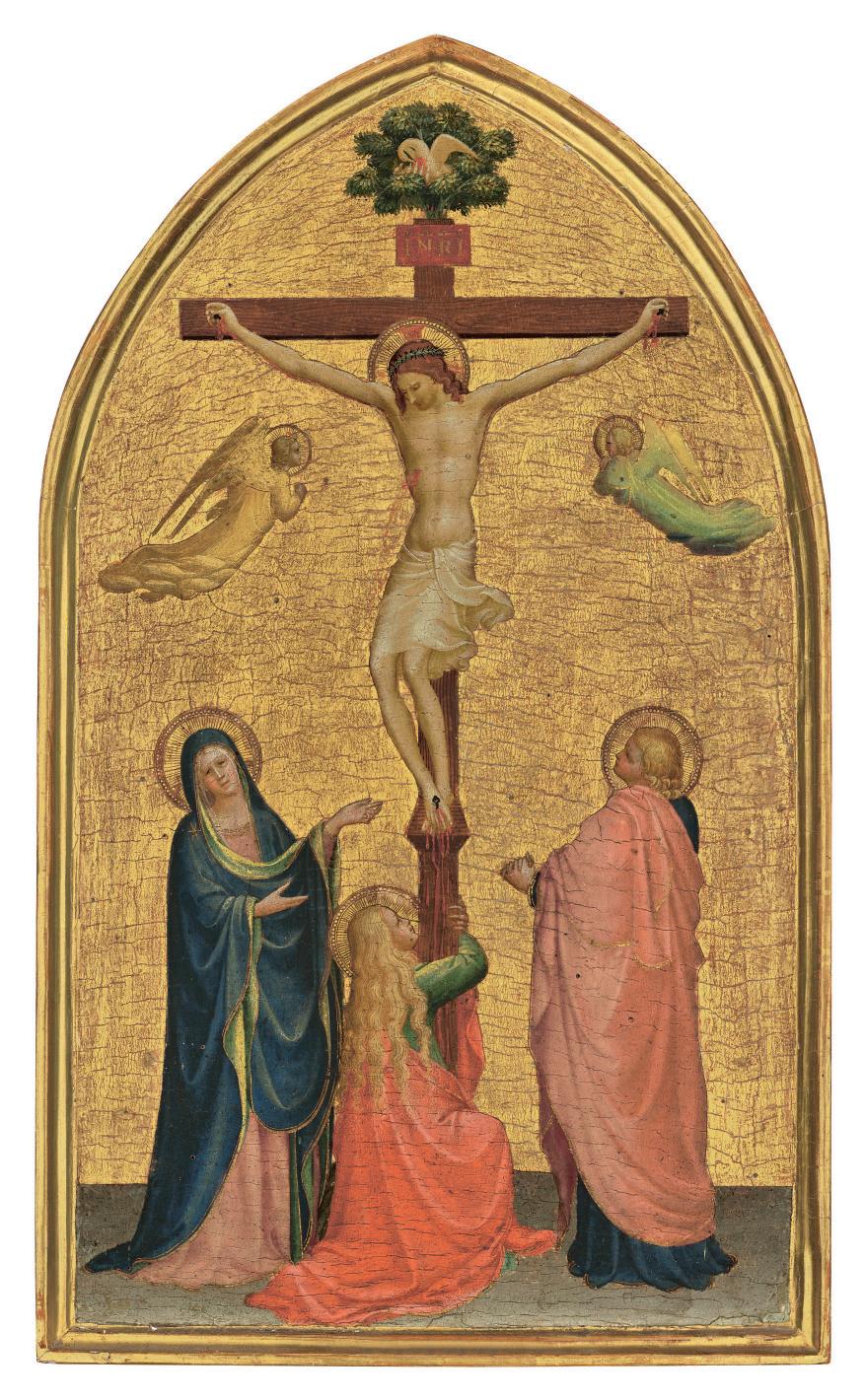
GUIDO DI PIERO, FRA GIOVANNI DA FIESOLE, POSTHUMOUSLY KNOWN AS FRA ANGELICO (NEAR VICCHIO, C. 1395⁄1400-1455, ROME)
The Crucifixion with the Virgin, Saint John the Baptist and the Magdalen Saved for the nation in 2024 and acquired by the Ashmolean Museum, Oxford.
Saved for the nation in 2025 and acquired by The
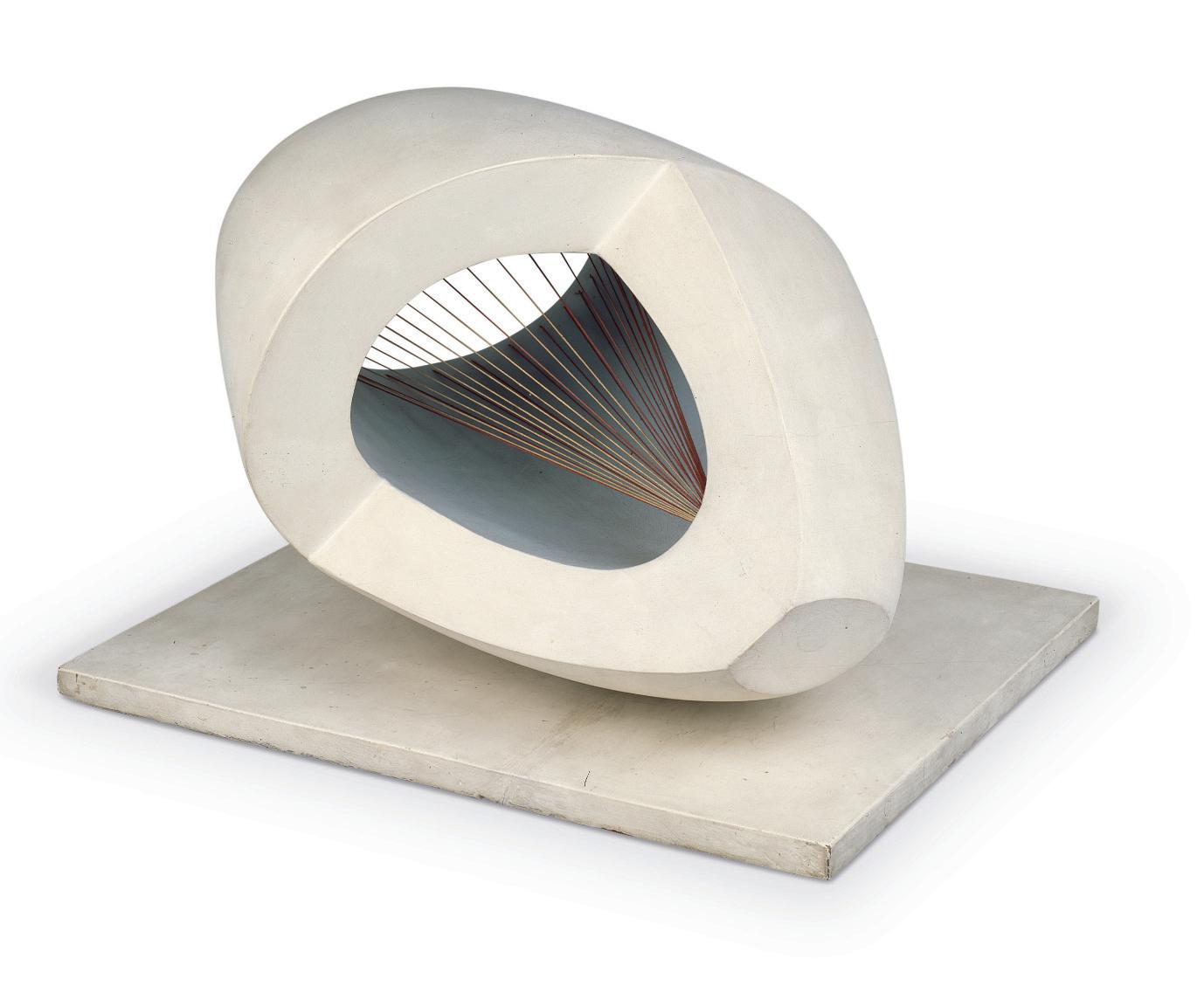
DAME BARBARA HEPWORTH (1903-1975)
Sculpture with Colour (Oval Form) Pale Blue and Red signed, inscribed and dated 'Barbara Hepworth/"Sculpture with colour/ pale blue & red"/1943' (on the underside of the base) painted wood and string, unique 19¾ in. (50.2 cm.) long Carved in 1943.
Hepworth Wakefield.
for its value. The RCEWA also recommends the duration of the deferral period and, if no institution or private buyer comes forward to try to match the value during that time, the export licence will be granted.
The deferral period for a national treasure is split into two parts, and the binding offer process arises between them.The first deferral period allows time for interested parties to decide whether to try to raise the funds to keep the national treasure in the UK and to make initial approaches to supporters and funding bodies. The second deferral period is when most significant fund-raising takes place. Notice of the intention to try to match the value must be given to the Export Licensing Unit by the end of the first deferral period, at which point the binding offer process commences.
The binding offer maybe described as an irrevocable call option,granted to a partywhich has made a serious expression of interest in acquiring the national treasure and exercisable no later than bythe end ofthe second deferral period,in essence it is the right of first refusal to buy the national treasure. By introducing the option arrangements, thegovernment’saimwastoensurethatinstitutions that had undertaken significant fundraising to keep a national treasure in the UK, were not thwarted by the owner withdrawing from the process at the last minute. While the ambitions are understandable, the process has been slow, and many institutions have struggled to understand the process while at the same time submitting funding applications.
Immediately after the end of the first deferral period, the Arts Council will advise an owner if a serious expression of interest to acquire the object has been made. The owner then has fifteen business days in which to consider whether to accept the offer and to proceed with the grant of a binding option. An owner is not obliged to grant a binding option. At the end of the first deferral period the owner could decide to withdraw the export application but in doing so the owner will trigger an export ban on the national treasure for around ten years, which
many owners find unappealing. If the owner does decide to withdraw, it is the national treasure which is banned from export, even if it is sold while the ban applies.An owner may make a fresh application for export at the end of the ban, but there is no guarantee that a licence will be issued, and it will mean a second hearing to consider the fresh application. Consequently, many owners prefer to follow the binding offer process as the outcomes are either they are compensated for the value of the national treasure, or the export licence is granted. The binding offer process is therefore pursued increasingly frequently.
The template for the binding offer process is set out inThe Procedures forExporters (latest edition 2024) which also includes the option template, and which may only be varied slightly. From experience we have found that parties interested in acquiring national treasures have found the template to be helpful in giving certainty over the wording but that the process of implementation is difficult. The template requires a condition report before the call option is granted and a second condition report immediately before exercising that option. Clearly this is designed to ensure that owners continue to take appropriate care of the national treasure until the outcome of the export process is known but can cause some owners to chafe at the inevitable delays caused by obtaining condition reports. Some owners may resent any suggestion that they will not be fully compensated if the national treasure has deteriorated whilst in their care. The second condition report is prepared by the Buyer, after exercising the Option, but before completion of the sale. If the second condition report shows that the object has sustained damage since the first condition report was prepared, then a reduction will be made to the purchase price the amount of such reduction to be determined by an independent third party agreed by the Buyer and Seller. The binding option agreement is also silent on the ultimate mechanics of delivery, payment arrangements for the matching funds and the transfer of title after the option has been exercised. As a result, owners have to
appoint advisers to work with interested parties (institutions or private buyers) to draw up a simple sale and purchase agreement to ensure that these points are covered after the call option has been exercised.
The Arts Council and the Export Licensing Unit have recognised the practical difficulties and earlier this year, I took part in an online seminar which was designed to address some of the points where problems have arisen.The key takeaways were:
• The need for open communication and dialogue between the parties involved
• Obtaining good advice at the outset with advisers familiar with the workings of the RCEWA
• Recognition byinstitutions/private buyers that speed is of the essence
• Ownerswill be disappointedto have a deferral and potentially lose their new acquisition, and that this disappointment is compounded where delays arise. In a period of higher interest rates, for owners to have neither their work of art where they would like it, nor their purchase price refunded quickly leads to increased frustration.
• That engagement with practical aspects such as the condition reports, delivery and confirmation of safe receipt is essential. We have found that these matters can be inadvertently overlooked when so much effort has been directed towards fund-raising.
The binding offer process is likely to remain an area ofuncertaintyformanypractitioners,buttheefforts made to publicise and educate participants about the details of the procedures are welcome. We can only hope that when further reviews of the scheme take place,the teething problems and delays will no longerbe causesforconcern.Inthe meantime,early engagement with specialists is essential for both exporters and would-be purchasers.
Christie’s Education: Untangling the Complexity of the Art Market for a Global Audience
Sandling
Ted leads Christie’s Education. After joining Christie’s in 2008, he went on to head UK marketing strategy, before leaving to pursue interestsindigitaltechnologyandculturalhistory, working with early-stage startups and writing the Evening Standard bestselling book London in Fragments. He rejoined Christie’s in 2016 to launch filmed online courses, before taking on his present role.
It will come as no surprise to readers ofthe Bulletin for Professional Advisers that art appears in many complex conversations beyond the saleroom. Increasingly, those conversations are being held in family offices: organisations established to manage the wealth, investments and long-term interests of one or more families.
On 1 May of this year, Christie’s Education welcomed a group of principals and advisers to our King Street saleroom for The Art Market for Family Offices, a one-day programme designed to address an increasingly pressing question in contemporary wealth management: what do professional advisers need to know about art?
The conversations that took place during the day reflected the sophistication ofthe audience and the breadth of what art now asks of those responsible for advising around it. Works of art sit at the intersection of several disciplines at once. They may be cultural objects, financial assets, heirlooms, philanthropic instruments, legal liabilities and, most of all, intensely personal expressions of taste. Professionals are increasingly being asked to understand how those coexist, and how they can affect decisions made around a collection.
A collection assembled over a lifetime as an expression of passion may become, in the context of an estate or succession, an asset with its own demands. The question for advisers is not simply “what is it worth?”, but what kind of object it is, how value is established, what risks may sit behind it, who should be consulted, and when. Collections might be held in family trusts, investment portfolios and philanthropic foundations. They are subject to tax legislation in multiple jurisdictions and raise questions that are legal, financial, reputational and personal.
Professional advisers are not expected to become art specialists, but there is a real and practical threshold of fluency below which the risk of misreading a situation, or not recognising that specialist input is needed, becomes significant.
What a professional development programme like the recent Family Offices course illustrates is that bridgingthisthresholdisamatterofknowingwhich questions to ask, in what order, and to whom.
A tax advisor who understands that the art market valuesworksdifferentlyfromotherassetclasseswill ask better questions of a valuer. An estate planner who grasps the distinction between an artist’s primary and secondary markets will structure conversations with clients more precisely. A wealth manager who knows when art-backed lending is a realistic option, and when it is not, can engage with that conversation ratherthan defer it entirely. None of this requires deep art-historical knowledge. It requires a working understanding of the market’s logic, language and conventions.
As Christie’s Education has evolved, we have come to understand that different audiences require different points of access to the art world. The needs of a collector are not identical to those of a professional advisor, an institutional partner, a student or an emerging art-world professional. Each audience requires a different level of detail, a different pace and sometimes a differentframing of an issue. Our role is to shape Christie’s underlying expertise into forms that are useful and usable for those audiences.
This is why format matters. The choice between an online or livestreamed course, an in-person programme or a bespoke training session determineshowpeoplelearnandthekindofaccess they receive. Increasingly, format is part of the educational design.
Pre-recorded online courses provide international reach and a clearstructure,available at the learner’s own pace. Each course combines filmed lectures with shorter documentary-style material featuring leading figures in their fields. In our economics and law courses, that may include market professionals, lawyers and other practitioners. In our luxury courses, curators, founders and makers, such as the watchmaker Richard Mille or the director of the
Ted
Global DirectorofEducation
Christie's
Cartier Collection. Filming an online course allows Christie’s Education to turn a limited encounter with a high-profile contributor into lasting access totheirinsightsforan international student body.
Livestreamed courses offer something different. They give students access to structured teaching with the immediacy of live discussion. The production values are necessarily different from those of a filmed course, but what attendees gain is responsiveness. Students can ask questions, specialists can adapt to the interests of the group, and the course can respond more directly to changes in the market orto a particularmoment in theauctioncalendar.Theycanalsoincreaseaccess: we try to offer regular free livestreamed sessions offering dives into market moments.
In-person programming offers proximity, depth and, often, direct encounters with works of art. At King Street, education takes place inside the auction house: near the saleroom, near specialists, near exhibitions and, at the right moments, near the objects themselves. This proximity changes the conversation. A discussion about valuation, condition, provenance or collecting strategy becomes more tangible when grounded in the experience of looking closely at objects. Christie’s Education was founded as a centre for objectbased learning.
Convening in-person also createsthe conditionsfor relationships to develop. As we saw during The Art Market for Family Offices, in-person programming allowsparticipantstobuildconnectionswithacohort of peers working across adjacent professions, as well as with Christie’s Specialists. Several attendees notedthatconversationsovercoffeebreakswereas usefulastheformalsessionsthemselves.
Less visibly, Christie’s Education is also increasingly asked to design programmes calibrated to a particular sector, institution or professional need. Bespoke programming allows us to shape content around the precise questions a group needs to answer. That might mean collections management training for the museum sector, art-centred client service training for a financial institution, or a behindthe-scenes experience at Christie’s for a corporate audience. In each case, the value lies not onlyin accessto expertise,but in havingthat expertise arranged around a specific audience and purpose.
London remains one of the great centres of the international art market. For Christie’s Education, it provides an intellectual centre of gravity as well as a physical base. As an active market institution, Christie’s brings together expertise in art, luxury, collecting, valuation, provenance, law, logistics and sale strategy. The knowledge that informs Christie’s Education programmes comes from the same environment as the knowledge that shapes sale decisions, advisory relationships and our role in the global art market. The specialists who teach for Christie’s Education are not describing the art world from outside it, allowing our programmes to drawonthe energyofa live market institution rather than commenting on that market from a distance. Speakers share knowledge formed through direct professional experience.
At the same time, our multi-channel model means this expertise no longer has to remain local. Online, livestreamed, in-person and bespoke programmes allow knowledge to
travel. For those unable to travel, students can access Christie’s programming from around the world digitally, while the Family Offices course showed another version of what this looks like: a specialist audience travelling to London from around the world, with attendees from Singapore and Sydney, Luxembourg and Lima.
That is increasingly the role of Christie’s Education: to make the knowledge of the art market available in forms that meet people where they are and help get them where they need to be. For professional advisers, that may mean developing enough fluency to recognise the right questions. For collectors, it may mean understanding a category ormarket with greater confidence.Forinstitutions,itmaymeanbuilding specialist capability.Forinternational learners,it may mean access to Christie’s expertise without needing to be in London.
Education does not replace specialist advice, and it certainly can’t simplify the complexity of the art market. But we see its value in making that complexity more navigable. By combining the authority of Christie’s expertise with formats designed for different audiences and geographies, Christie’s Education extends the knowledge of the saleroom into the wider professional world. The first Family Offices programme was an example of that in practice, but it also points towards a broader future: one inwhich connectionswithinthe art market and a wider understanding of its implications become part of how advisers, collectors and institutions engage with art responsibly, intelligently and with confidence.
Matters of the Art: a solicitor’s perspective on estate planning
Arthur Byng Nelson Partner Sherrards
Arthur Byng Nelson is a Partner in Sherrards’ Private Wealth Team and is Head of Art & Heritage. He advises individuals and families on succession planning, wills, trusts and the establishmentofcharities.
This article is intended for individuals who have purchased or inherited the sorts of items in which this historic auction house, Christie’s, deals. Some of you will be British, some of you will be exclusively international. Hopefully you will find something of interest in what follows.
Chattels
In England we use an old French word to describe moveable personal property. From my perspective the fact that a significant proportion of my clients’ wealth could consist of such moveable high value items gives me immediate pause for thought: how moveable exactly are the items in question, what are the past and present values of each, what will be the Inheritance Tax treatment of the client, which laws will govern the chattels, how divisible is the item (or collection). And are the children interested?
Lex situs
We English are not alone in using Latin to describe legal principles. This means, broadly, that the law that applies to the property will be the law of the place where the property is located. Therefore it is essential for any advisor to understand the exact location of the items in question.
Brussels IV
In most EU member states (not Denmark, not Ireland and, for the avoidance of doubt, not the UK) the EU Succession Regulation (EU No. 650/2012), commonly known as Brussels IV, applies. The default rule in those EU countries is that the law of wherever the deceased was habitually resident at death governs the succession ofwhole estate, including all chattels wherever they may be physically located in the EU
Article 22 allows an individual to override that default by electing for the law of their nationality. An EU national who is foreign domiciled and habitually resident in England can therefore elect for Italian or French law to govern how their EUsituated chattels pass on death. A British national living in Paris can elect for English law instead and since English law has no forced heirship that election can, in principle, allow them to leave their collection to whomsoever they choose. But beware! Such an election is not always effective and France, as an illustration, has amended its Civil Code specifically to limit the reach of Article 22. I strongly recommend seeking advice from lawyers in the relevant jurisdictions before action (or inaction).
In summary, Brussels IV affects how chattels may pass but does not affect an individual’s Inheritance Tax position.
Inheritance Tax (IHT)
England, Wales, Scotland and Northern Ireland all share the same IHT regime. Until recently “domicile” of the individual in question was the defining factor: a concept rooted in private international law, resistant to precise definition and frequently the subject of costly dispute between taxpayers and His Majesty’s Revenue & Customs. Since 6 April 2025 a new residencebased test applies to an assessment of the liability of an individual to UK IHT: if an individual has been UK tax resident for 10 or more of the preceding 20 tax years they become a “long-term UK resident”. An individual who is a long-term UK resident is liable to IHT on their worldwide assets. What this means, of course, is that there are a number of tax planning opportunities available for individuals who have not yet been resident in the UK for ten years.
Capital Gains Tax (CGT)
The concept of a state taxing an individual’s gains is not unusual. However there are two elements of our system here that often puzzle international clients: first the fact that the tax is triggered not only by a sale but also by a gift. Secondly the individual responsible for paying the tax is the transferor, not the transferee.
A Wasting Asset
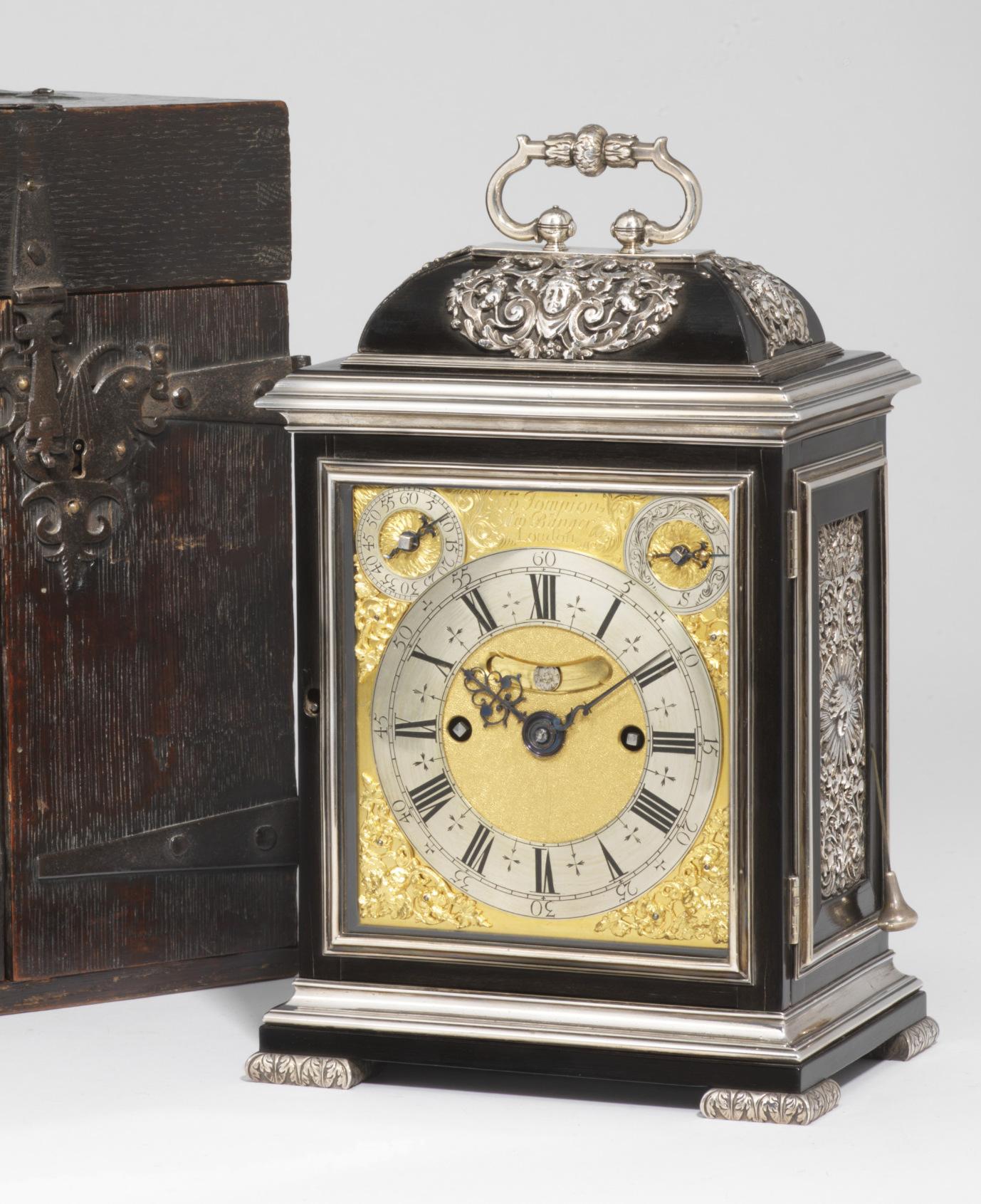
Under Capital Gains Tax legislation if an item has “a predictable life not exceeding 50 years” then it will be entirely exempt from CGT. Cars (classic, super etc.) fall squarely within this definition as they have mechanical components that deteriorate and wear, giving them a finite useful life. So too do “antique clocks and watches, such as `Tompion’ clocks”, I quote from HMRC’s own guidance. Unfortunately other chattels such as paintings, sculpture and furniture all remain subject to CGT as they are deemed to have a much longer life than 50 years.
But note that in the United Kingdom an asset transferred on death benefits from an automatic uplift in base cost meaning any accrued capital gain is extinguished entirely, with the personal representatives and subsequently the beneficiary acquiring the asset at its market value as at the date of death, wiping the CGT slate clean. A very useful planning tool.
Digital Assets
Christie’s holds the record for the most expensive digital artwork ever sold to a single owner EVERYDAYS: THE FIRST 5000 DAYS by Beeple, sold for $69,346,250 in March 2021. Historically personal property fell into one of two categories: either “things in possession”, chattels, or “things in action” such as debts or contractual claims. Digital assets fell into neither category.
As a result the Property (Digital Assets etc) Act 2025 was brought into legislation, coming into force on 2 December 2025, thereby recognising a third category of personal property: assets existing only in electronic form such as cryptocurrencies and non-fungible tokens (NFTs).
Ownership is proved entirely by control of a digital wallet and that wallet is secured by two critical pieces of information: a private key (a long alphanumeric string) and a seed phrase (typically 12 to 24 words generated when the wallet is first created, which can be used to recover the wallet if the private key is lost). To transfer an NFT to another person, whether as a gift, a sale or a transfer to an executor, the current owner must use their private key to digitally “sign” and authorise the transaction on the blockchain. Once that transaction is confirmed on the network, ownership passes irrevocably and instantaneously tothe recipient’swallet address.There is no central registry, no intermediary and no mechanism for recovery if the private key or seed phrase is lost.
Not at all straightforward therefore in the context of death. My recommendations in the context of estate planning are as follows:
1.Create a Digital Asset Inventory
The owner should maintain a clear written record of all digital asset holdings, including:
• The type and description of each NFT
• The platform orblockchain on which it is held
• Whether it is held in a self-custody wallet or via a custodial platform
• An approximate current value
2.Record Wallet Details and Access Information Securely (neverwithin the body of a will)
3.Consider a Hardware (Cold) Wallet for Significant Holdings
4.Consider Appointing a Technically Literate Executor
5.Be aware that Ownership Might Not Include Copyright
A point which frequently surprises clients: purchasing an NFT gives ownership of the token on the blockchain but does not automatically transfer the underlying intellectual property rights in the associated work. The copyright in the digital image or artwork typically remains with the creator unless explicitly assigned. This distinction has implications both for the value attributed to the NFTin the estate and forwhat beneficiaries can actually do with the asset after they receive it.
Discretionary trusts in Wills
A discretionary trust in a will is a beautiful thing, and can be of particular interest to owners of special chattels. Such a trust comes into existence on the death of the testator and offers a number of advantages to a will without one.These include:
EVERYDAYS: THE FIRST 5000 DAYS by Beeple, sold for $69,346,250 in March 2021
1. Confidentiality
The identity of the assets passing from the deceased into the trust can remain confidential from public eyes. The will simply settles “all my personal chattels” into the trust and the named potential beneficiaries may be as broad as “my descendants and their spouses”. In this way who actually benefits and by how much never appears in any public document. The detail of who is to receive what is set out bythe testatorin a separate, confidential, letter of wishes.
2. Flexibility for unknown future circumstances
The trustees, guided by the letter of wishes, will be able to take action (even ending the trust) if it is right in light of all the circumstances at death, such as the family situation or tax law changes.
3.Time
The trustees will have two years to exercise their discretion without any negative tax consequences.
Charitable opportunities
A direct bequest of an object to a national museum or a registered charity attracts an outright exemption from IHT and CGT, meaning the full value of the object passes to the institution with no tax charge. However, in order not to create surprises on either side, I strongly recommend that clients take a much more proactive approach in lifetime, building a relationship with the intended institution and, perhaps, lending the item. Then if all goes well the loan may be turned into an outright gift on death.
Conditional Exemption, The Cultural Gifts Scheme,Acceptance in Lieu
Three schemes exist which are intended to ease the tax position for owners of “pre-eminent” items. The three schemes are not mutually exclusive and can be used in combination: deferring a charge during the testator’s lifetime, reducing it on an inter vivos disposition or extinguishing it entirely through a transfer to a public collection in satisfaction of an outstanding liability.
Finally
At the outset I posed the question: are the children interested? It is, in truth, the question that underlies everything else discussed in this article. The most technically accomplished estate plan can still fail the client if it puts the family in a position it does not want.
My strong recommendation is therefore that before any document is drafted the owner should sit down with their family and have the conversation. Thereby establishing, clearly and honestly, what each significant item means to each person who might one day receive it. That conversation, uncomfortable as it sometimes is, is the foundation upon which every other planning decision should be built.
The law provides the tools.The family provides the instruction. A solicitor’s role, at its best, is to hold both of those things together.
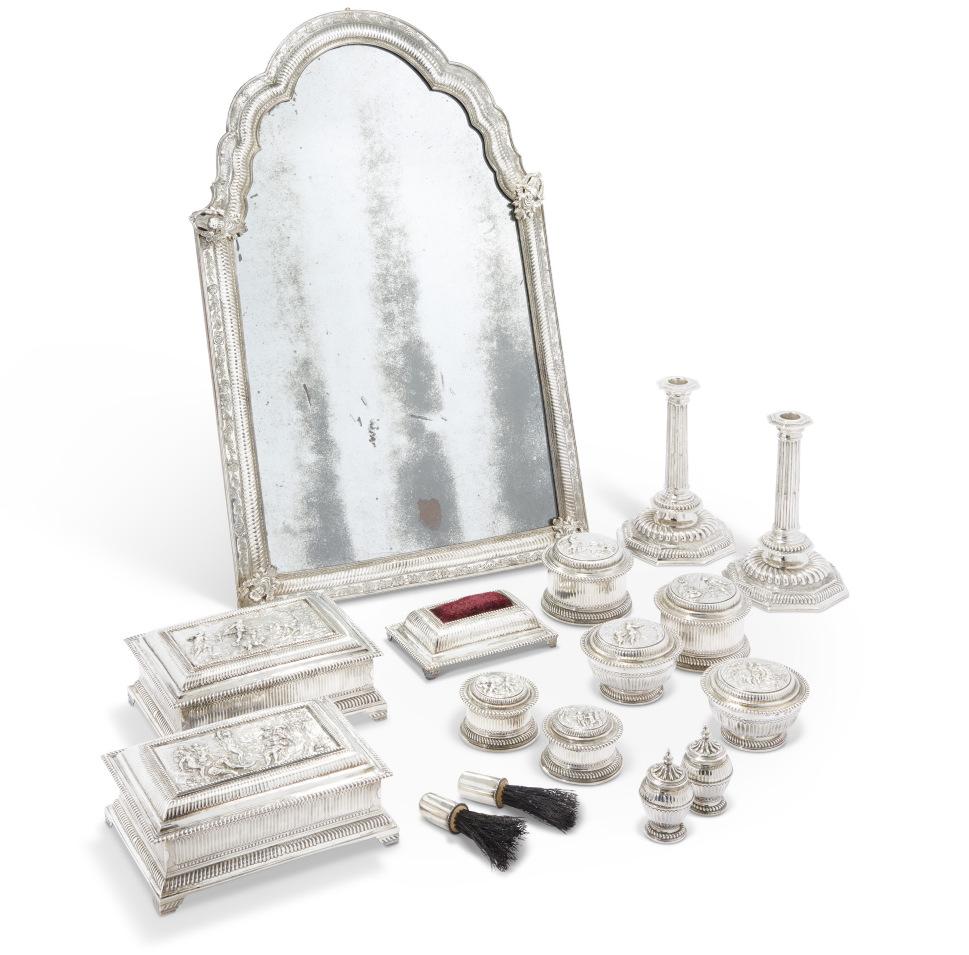
A Queen Anne toilet service, London, 1702, maker’s mark of Benjamin Pyne (circa 1653–1732). Accepted in lieu of Inheritance Tax in 2024.
RUTH CORNETT, CTA TEP
Senior Director, Heritage & Taxation Advisory Service
rcornett@christies.com
+44 (0) 20 7389 2102
LUISA ROMANELLI, CTA
Associate Director, Heritage & Taxation Advisory Service lromanelli@christies.com
+44 (0) 20 7389 2725
ZITA GIBSON
Senior Director, Head of Business Development, EMEA zgibson@christies.com
Senior Coordinator, Heritage & Taxation Advisory Service
mfachiclana@christies.com
+44 738 549 1548
Heritage & Taxation Advisory Service
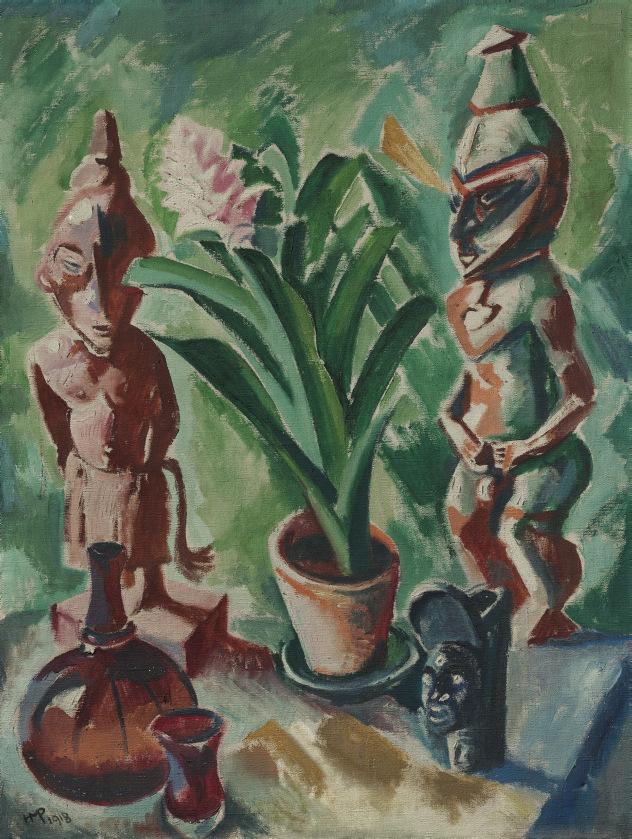
MAX PECHSTEIN (1881–1955)
Stilleben mit Figuren und Blumentopf [Still life with figures and vase of flowers], 1918 oil on canvas
39⅜ x 29½ in (100 x 75 cm)
Accepted by HM Government in lieu of Inheritance Tax from the collection of Professor C M Kauffmann and Dorothy Kauffmann and temporarily allocated to the Ashmolean Museum, University of Oxford, pending a decision on the permanent allocation.
Ruth Cornett
rcornett@christies.com
+44 (0) 20 7389 2102
Negotiated sales • Heritage exemptions • Cultural gifts scheme Pre- and post-sale tax advice • Other tax valuations christies.com