How the media tech industry stays ahead of the curve



How the media tech industry stays ahead of the curve
n my way back from the 2026 NAB Show, I decided to take a short break in Boston. It’s a city I’ve come to love, both because it’s so laid back and also because I’m fascinated by its history. As I made my way through the airport, I saw a huge advert for the John F Kennedy Presidential Library and Museum, and I was sold. The Library focuses on Kennedy’s campaign for and time in the White House. Visitors get to see exhibits covering his debate with Richard Nixon during the 1960 election, the inauguration and even the Oval Office.
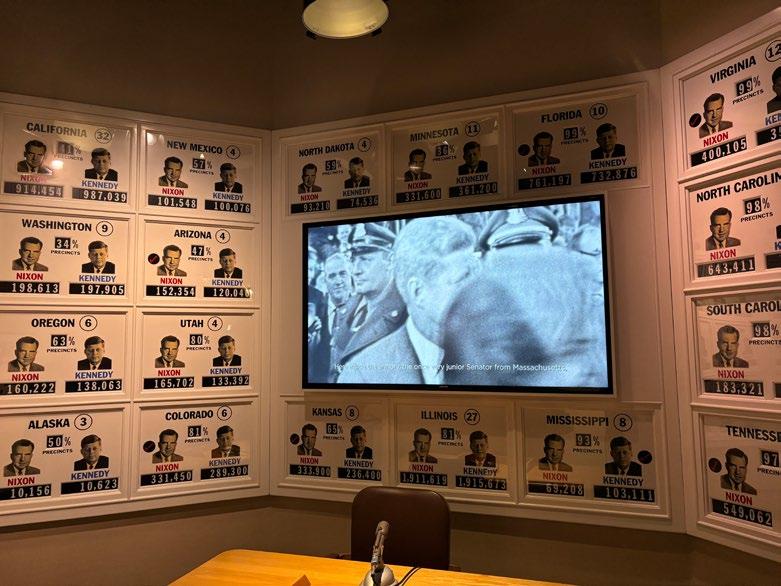
What I found fascinating was Kennedy’s relationship with television. His political star rose as many Americans began to buy their first TV sets. That also meant that the American TV networks had to up their game in terms of how they brought the campaign and results to viewers. The Library features a recreation of CBS News’ coverage, with what’s supposed to be Walter Cronkite’s desk in front of plaques representing each of the states and their number of electoral votes (see above image). It particularly caught my eye because it made me think about how much election night graphics have changed over the past 60+ years. I can’t imagine Jeremy Vine or Steve Kornacki standing in front of a wall of plaques with people hidden behind moving numbers for them.
Innovation is such a key part of our industry; you just have to walk around a trade show to see that. I think we’ll see plenty more this summer, especially with the FIFA World Cup taking place in Canada, Mexico and the United States (make sure you’re signed up for our free newsletter for more on that). As you may have guessed from the cover, innovation is the subject of this issue, from the winners of our Best of Show Awards at NAB 2026 (aka Winnovators) to SMPTE UK’s work in providing hands-on experience and a sense of belonging for the industry’s latest talent. Plus, we explore AI’s impact on encoding, and take a deep dive into Media over QUIC (MoQ), one of the industry’s hottest new technologies.
Finally, I want to remind you about the AV and Broadcast Summit in June, when we’ll be helping broadcasters and content creators learn how technology from the traditional pro AV market can help with content creation and delivery, and how market demands are accelerating the two sectors’ inevitable convergence. I hope to see lots of you there.
JENNY PRIESTLEY, CONTENT DIRECTOR JENNY.PRIESTLEY@FUTURENET.COM
X.com: TVBEUROPE / Facebook: TVBEUROPE1 Bluesky: TVBEUROPE.COM
Content Director: Jenny Priestley jenny.priestley@futurenet.com
Senior Content Writer: Matthew Corrigan matthew.corrigan@futurenet.com
Graphic Designers: Cliff Newman, Steve Mumby
Production Manager: Nicole Schilling
Contributors: David Davies, Monica Heck
Publisher TVBEurope/TV Tech, B2B Tech: Joseph Palombo joseph.palombo@futurenet.com
Account Director: Hayley Brailey-Woolfson hayley.braileywoolfson@futurenet.com
To subscribe, change your address, or check on your current account status, go to www.tvbeurope.com/subscribe
Digital editions of the magazine are available to view on ISSUU.com Recent back issues of the printed edition may be available please contact customerservice@futurenet.com for more information.
TVBE is available for licensing. Contact the Licensing team to discuss partnership opportunities. Head of Print Licensing Rachel Shaw licensing@futurenet.com
SVP, MD, B2B Amanda Darman-Allen VP, Market Lead Carmel King
MD, Content, Broadcast Tech Paul McLane
Global Head of Sales, B2B Tom Sikes
Managing VP of Sales, B2B Tech Adam Goldstein VP, Global Head of Strategy & Ops, B2B Allison Markert VP, Product & Marketing, B2B Andrew Buchholz
Head of Production US & UK Mark Constance
Head of Design, B2B Nicole Cobban

6 Monetising ad-supported streaming at scale
Paul Davies, head of marketing and partnerships at Yospace, explores the evolution of Dynamic Ad Insertion
10 A codec revolution
Monica Heck asks if pure AI encoding could reinvent compression and make traditional codecs obsolete
14 The low-latency technology generating industry buzz
Media over QUIC (MoQ), an emerging standard for high-performance, low-latency media delivery, is an increasingly hot technology topic. David Davies finds out why
20 Powering the future of media technology
TVBEurope hears from organisers, speakers and attendees at this year’s SMPTE UK Young Innovators event about how the initiative provides hands-on experience and a sense of belonging for the industry’s newest talent
26 What happened in Vegas
Jenny Priestley looks back at the 2026 NAB Show, where the acquisition of ARRI, rise of vertical video and the industry’s decisive shift to softwaredefined workflows shaped the conversation
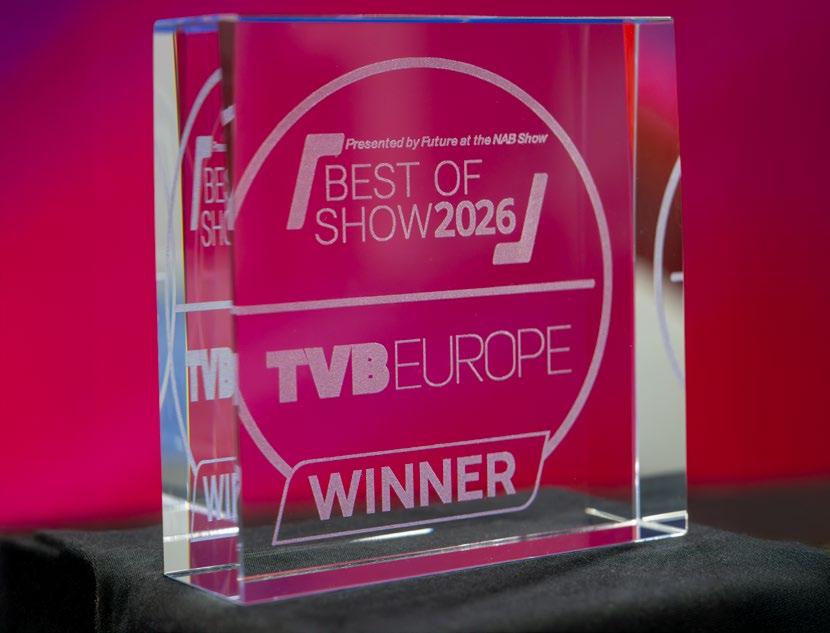
28 Winnovators!
Future’s Best of Show Awards recognise standout broadcast-grade technology products and solutions from the NAB Show in Las Vegas. We celebrate the winners in the TVBEurope category
38 A day in the life
Emily Dalton, co-founder and director of Factual Fiction discusses running the UK’s first off-grid production company
40 Late nights and extra time
Paul Wallace, head of client services at PA TV Metadata, explains why precision EPG data is crucial for broadcasters delivering the action from this summer’s FIFA World Cup
By Paul Davies, head of marketing and partnerships, Yospace
Major sporting events have always tested the limits of broadcast infrastructure, but tournaments like the 2026 FIFA World Cup are redefining scale in an ad-supported streaming era. As viewing shifts towards CTV and OTT platforms, the dynamics of live sports consumption are changing, along with the challenges of delivering and monetising those experiences.
The World Cup is unique in both scale and unpredictability. Sudden goals, controversial decisions, penalties and added-time drama create edge-of-your-seat moments that can trigger huge spikes in viewers across countries, platforms and devices. For broadcasters and rights-holders, this creates a very different operational environment compared to scheduled linear programming.
Predefined ad breaks and fixed campaign pacing can struggle to adapt when millions of viewers are watching the same stream. Yet peak engagement often aligns with peak commercial opportunity, making it critical to monetise these moments effectively without disrupting the viewing experience.
Breaking the usual streaming model
Recent tournaments have demonstrated the significance of this shift. During major European football competitions, billions of one-to-one addressable ads have been delivered in just a few weeks.
The 2026 FIFA World Cup is likely to raise the benchmark again. Knockout-stage drama, late goals and penalties can all trigger sudden peaks in demand, requiring rights holders to support mass-scale audiences while capitalising on last-minute revenue opportunities.
This places significant pressure on the ad tech delivery chain. In live streaming, ad requests often need to be resolved in extremely short windows. When millions of viewers reach the same break at once, a purely just-in-time approach can overwhelm ad decisioning systems, supply-side platforms and demand partners. The result can be missed opportunities, lower fill rates, and poor viewer experiences, such as blank slates, which translate into lost revenue at the most valuable moments. The latter stages of tournaments highlight this challenge. Extra time and penalties create unscheduled breaks that cannot be predicted at kick-off. During the UEFA Women’s EURO 2025 final between England and Spain, audience numbers rose sharply as the match extended, with the ad breaks around penalties becoming the most-watched of both the match and the tournament.
Protecting revenue at peak moments
Successfully monetising these moments depended on the ability of

Dynamic Ad Insertion (DAI) systems and the wider ad tech ecosystem to respond instantly to unplanned demand.
Advanced prefetch solutions are critical in addressing this. By pacing ad requests slightly ahead of a break, broadcasters give the ad tech ecosystem more time to respond, enabling demand partners to compete without being overwhelmed by sudden traffic spikes. This helps protect fill rates, maximise the value of each ad opportunity, and maintain a seamless viewing experience.
However, prefetch alone does not unlock the full revenue opportunity. Advertisers also need confidence that ads have been delivered, viewed and measured consistently. It is not enough to deliver at scale; measurement must build trust, support attribution and enable optimisation.
Advances in measurement SDKs are providing more granular performance insights, while standards such as Common Media Client Data (CMCD) v2 offer a path to consistent reporting in environments where SDK deployment is not feasible. This is increasingly important as live sports distribution becomes more fragmented across devices, platforms and syndicated channels.
Beyond delivery and what comes next
Looking ahead, the evolution of DAI from Server-Side Ad Insertion (SSAI) to Server-Guided Ad Insertion (SGAI) will become more prominent. For live sport, this is particularly relevant due to extended DVR windows. Viewers expect to pause, rewind and rewatch key moments without losing the immediacy of live events, creating additional monetisation opportunities within the live timeline.
Low-latency is equally relevant. At IBC 2025, it was demonstrated that glass-to-glass latency of under five seconds can be achieved with SGAI while still supporting one-to-one addressable advertising, bringing streaming experiences closer to traditional broadcast without compromising monetisation.
The World Cup brings all of these dynamics together: global audiences, unpredictable viewing behaviour, premium demand and high expectations for quality. In this environment, broadcasters must deliver at scale, adapt in real time and monetise effectively without compromising the viewer experience.
Major sporting events are already reshaping how ad-supported streaming operates. The 2026 FIFA World Cup is set to accelerate that shift further, reinforcing the importance of resilient infrastructure, smarter prefetch strategies, transparent measurement and continued innovation in how advertising is delivered and experienced.
By Chris Antunes, co-founder and co-CEO, 3Play Media
Acreator in London can now reach viewers in São Paulo, Seoul, and Stockholm with the same piece of content. Yet something strange happens at scale: creators building international audiences often discover that growth without strategy becomes growth without profit. Their problem isn’t distribution; it’s localisation.
Platforms like YouTube now offer automated dubbing tools promising frictionless global expansion. With minimal cost and instant multilingual availability, the economics are irresistible. But if an audience hears a dubbed voice that doesn’t sound like the creator or encounters cultural missteps, the result is lower engagement and plummeting retention. This is the localisation paradox: the easier global distribution becomes, the more critical localisation quality becomes to keeping those audiences.
The authenticity problem
Audience trust is fragile. When viewers choose between equally skilled creators, they gravitate toward whoever feels authentic. Poor localisation can break that trust instantly. A mismatched voice, an awkward pause, a joke that doesn’t translate: each mistake implies “you weren’t worth the effort”.
The consequences show up in the data. A dubbed video that loses 40 per cent of its audience at the two-minute mark performs worse algorithmically than a native-language video with 70 per cent watch time. Bad dubbing doesn’t just fail the viewer; it kills discoverability— and revenue along with it.
The industry’s response has split into two equally flawed extremes. Traditional localisation partners deliver quality, but at a high cost and slow turnaround that makes scaling impractical. Fully automated dubbing solves the economics, but strips out the thing that enables high-quality localisation: the cultural nuance, tone, timing, and authentic feel that human judgment delivers.
The answer isn’t choosing between speed and quality. It’s knowing where each belongs. AI handles volume and consistency. Human expertise steps in where it matters. When that balance is right, localised content doesn’t feel localised, but native.
Strategic localisation requires three questions Sustainable international growth happens when creators treat

localisation as a deliberate, data-informed business strategy, not a checkbox task.
Which geographies represent growth opportunities? Not all languages are equally valuable. Data should drive these decisions, not platform availability or guesswork.
What does authenticity look like in this market? Direct translation is rarely sufficient. Cultural adaptation transforms content from “in another language” to “made for this audience”. A joke landing in New York falls flat in Berlin without the proper cultural context.
Traditional broadcasters learned decades ago what creators are now discovering: quality localisation at scale requires both a strategy and a workflow where human expertise is non-negotiable. Automated systems handle speed, consistency, and volume, but it’s human oversight at critical junctures that preserves authenticity and brand integrity. That this is novel for streaming video reveals how quickly the industry automated without asking whether it served audience needs.
We are seeing AI technology continue to advance at a pace the industry can no longer ignore. Nowhere is this more evident than in AI voices. As the technology continues to close the gap with human performance, the industry is warming to AI voice as a legitimate production tool, not just a cost-cutting shortcut.
The broadcast industry has long understood that human oversight is essential. What’s changing is that AI has matured enough to meaningfully support that work, and hybrid workflows are where the two meet.
The path forward
Localisation was never just a logistics problem. For creators now competing in global markets, it has become a core business function, where the stakes of getting it wrong are measured in watch time, revenue, and audience trust.
The localisation paradox is real: the easier global distribution becomes, the higher the bar for authenticity rises. The creators who will win aren’t the ones who localise the most content; they’re the ones who figure out how to deliver broadcast-quality authenticity without broadcast-level costs. A well-executed hybrid model makes exactly that possible, and creators who leverage this will define what global growth looks like next.
By Roy Hasson, VP product marketing and SaaS sales, LiveU
The broadcast industry is undergoing a major transition; the rapid acceleration of IP, AI, 5G and cloud technology capabilities, in tandem with changing viewing habits, is driving three defining trends: digital‑first operations, AI and workflow automation, and the continued migration to IP based live production. Together, these trends are shaping strategic and operational decision‑making across the industry. To remain competitive, and to satisfy growing consumer appetites, broadcasters must deliver more cost efficient, high quality, diverse live content to more platforms, using remote, distributed and hybrid workflows.
Intelligent choices
To succeed in this new era, broadcasters and technology suppliers need to think differently. The experimentation with new technologies implemented since Covid is maturing into operational transformation. The emphasis now is a shift from siloed broadcast infrastructures to unified hybrid orchestration layers that increase value through predictable and reliable workflows. An open product suite that works within existing ecosystems gives broadcasters more choice through increased access to protocols and technology partners, and greater opportunity to scale. By matching the right technology and teams to individual use cases, resources are maximised.
Marking a new phase for live sports and events, multi layered production models that blend AI, hybrid human AI workflows, and cloud native processes, can effectively support Tier 1, Tier 2, and Tier 3 content. As integrated AI technology progresses from rules based to generative to autonomous agentic, an additional layer of intelligent automation emerges, enabling seamless workflow integration and broader automation, rather than simply supporting specific tasks.
Capable of planning and executing complex tasks with minimal human intervention, multiple AI agents can serve specific requirements while collaborating to deliver a seamless workflow. Agentic AI could redefine live broadcast operations but integration of intelligent automation needs careful consideration. Broadcasters need a clear and strategic understanding of the workflows required for dedicated use cases to maximise the benefits of agentic AI when building intelligent orchestration layers, otherwise they risk AI systems that disrupt operations instead of enhancing them.
This feeds into critical story centric workflows. With an intelligent orchestration layer in place, broadcasters can organise their

operations around stories rather than the platforms that carry them, seamlessly and swiftly scaling live events using simplified, cost effective hybrid workflows. Operating from a ‘single pane of glass’ makes storytelling more accessible for all.
Intelligent orchestration plays a key role in connecting the elements—ensuring live productions move seamlessly from planning to air across both linear and digital channels. Automated digital layers for multi platform distribution can be orchestrated, enabling platform specific versions of live content—one workflow with different components.
This is the glue that broadcasters need to meet audiences where they are—on their platform of choice. As the creator economy continues to influence storytelling formats and audience expectations, broadcasters are adapting with more flexible, story centric production models that prioritise speed and accessibility— without compromising accuracy, editorial integrity, or the importance of the stories they tell.
Digital platforms are not extensions of linear operations, but primary destinations for content creation, distribution, and engagement, and broadcasters are beginning to understand how to connect with new audiences through the digital ecosystem.
In the UK, earlier this year the BBC announced a landmark ‘digital only’ partnership with YouTube, which sees the broadcaster produce original content spanning entertainment, documentaries, children’s channels, news and sport for the platform.
ITVX is also growing its digital first strategy. Last summer, for the first time, ITV live streamed the official podcast, Love Island: The Morning After on ITVX and YouTube to give fans the added benefit of a live ‘watch along’, which aired at the same time as the main launch show on ITV2. LiveU’s cloud video platform, LiveU Studio, streamlined the workflow between Majorca, where the main show is filmed, and London, home of the podcast.
Intelligent unified hybrid orchestration layers will enable broadcasters to go even further. This advanced technology rearchitects live production models giving more choice and increased flexibility and agility. Broadcasters will be better positioned to scale coverage, experiment with new formats, and meet audiences where they are—maintaining the high quality and standards of existing productions without increasing overheads.
For broadcast leaders, intelligent automation is no longer solely focused on efficiency; it’s about enabling scale without sacrificing control or quality.


TattleTV's in-house AI technology intelligently reimagines and extends the images from the original film, reconstructing top and bottom visual detail.

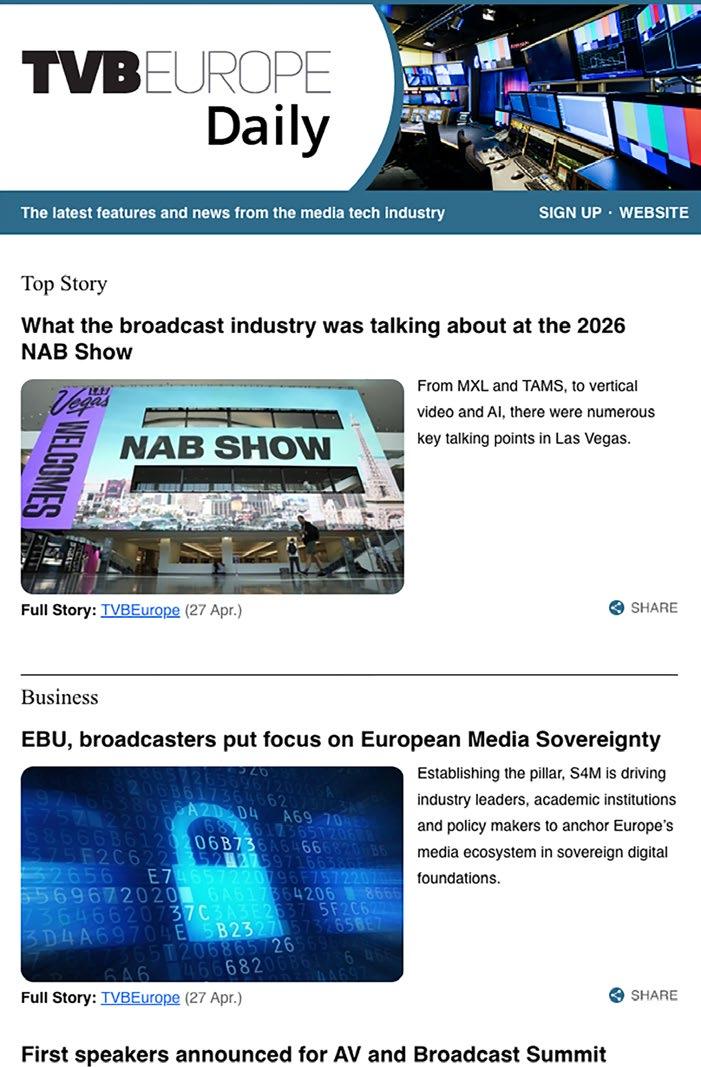
TVBEurope’s newsletter is your free resource for exclusive news, features and information about our industry. Here are some featured articles from the last few weeks…
ARRI will retain independent operations, led by its co-managing directors, and remain headquartered in Munich, said its new owner.
THOMAS RIEDEL ACQUIRES ARRI DO YOU SUBSCRIBE TO TVBEUROPE’S FREE NEWSLETTER? SIGN UP VIA THIS QR CODE


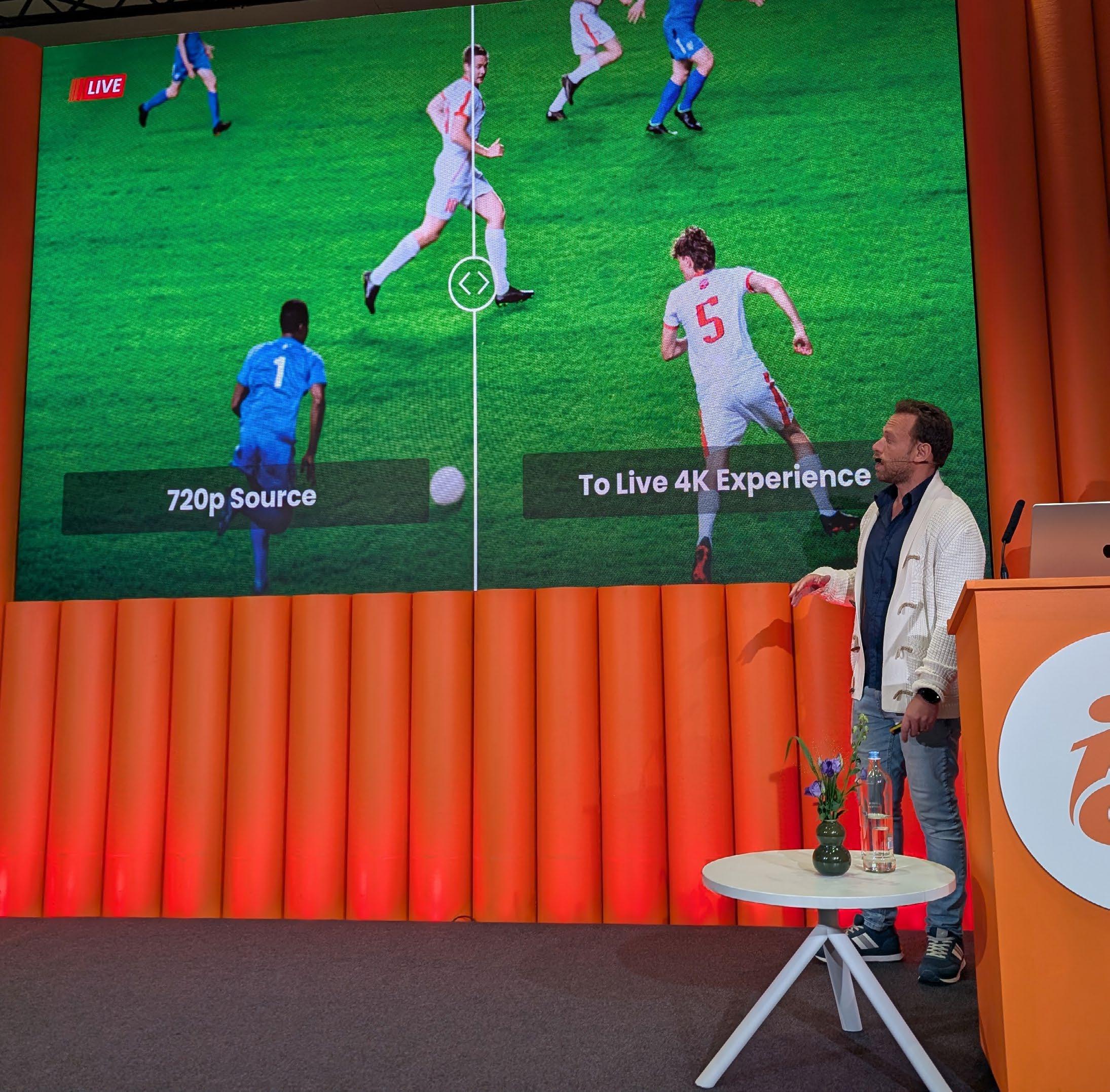
Beamr demonstrates live 4K super-resolution broadcasting with video optimisation on NVIDIA Holoscan for Media, a real-time AI platform for live media
Could pure AI encoding reinvent compression and make traditional codecs obsolete? Monica Heck examines what the future might look like in the encoding space
For 40 years, video encoding has used traditional codecs, from MPEG 1 and 2 through the H.264 HD transition, then into the 4K era with H.265 and beyond. Now, AI is sweeping the broadcast world, with pure AI or neural video coding on the horizon. InterDigital’s acquisition of AI compression pioneer Deep Render shows that the industry is paying attention and perhaps seeking to secure a foothold in the emerging field of AI-native codecs.
“Video compression has been a phenomenal success story up to now, video is everywhere and it works, and there are huge financial stakes involved,” states Thomas Guionnet, fellow research engineer at Ateme.
“The progression of AI has been fast; 40 years of video compression history has been caught up in 5 years. One cannot ignore the potential of that. AI can either help us solve problems we couldn’t
solve yet, like video content analysis, or address problems we can already solve, like video compression. The balance between the two is where it becomes interesting,” he adds.
Hybrid
Predictive machine learning compression techniques have been around for decades in the encoding field, evolving into what is now often described as AI. But in the short to medium term, few voices are claiming a full displacement of traditional codecs by AI. A hybrid model seems a more likely alternative, wrapping AI services around classic encoding.
Gwendal Simon, senior director of technology at Synamedia, doesn’t foresee a full replacement of the classic codec in the short to mid-term. “The value of AI currently lies in providing capabilities to make the streaming experience better. AI in pre-processing allows frame rate selection and quality improvement in specific areas of a picture. In post-processing, it delivers visual quality assessment going beyond VMAF in the live context,” he explains.
This allows Synamedia to adapt content visually, tailor its encoder to specific scenarios, and identify areas where quality can be increased. “It also supports the bitrate ladder for adaptive bitrate streaming. AI can help find the right trade-off between quality for end-users and cost for customers,” states Simon.
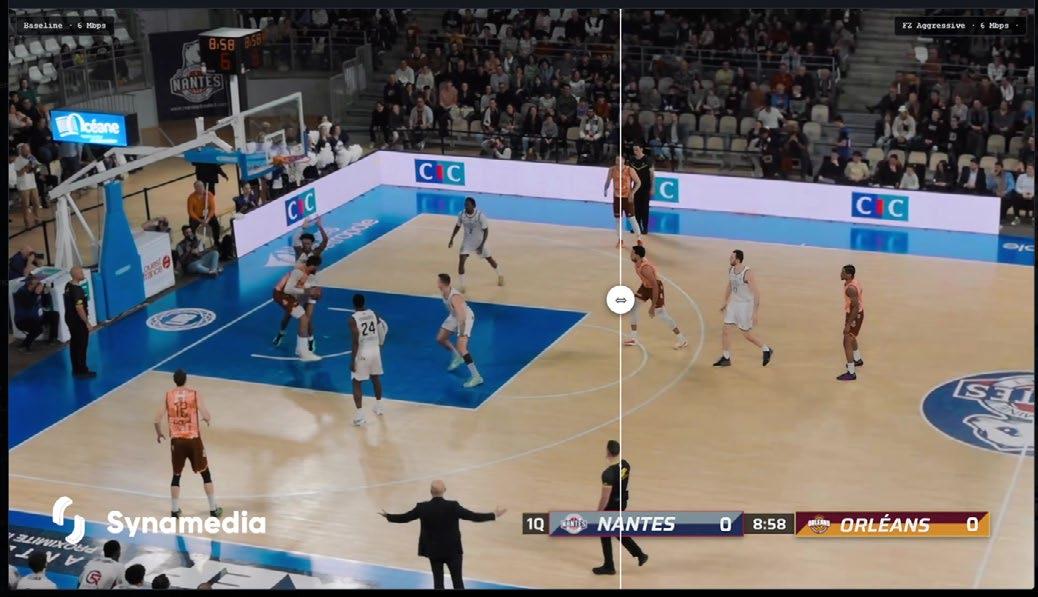
On the left, the baseline frame (AVC 1080p 60 fps 6Mbps). On the right, the same frame after AI has identified areas where filters sharpen the quality. The players and score are clearer. Sticking to the 6Mbps bitrate, the people in the background are blurrier on the right, but viewers barely notice.
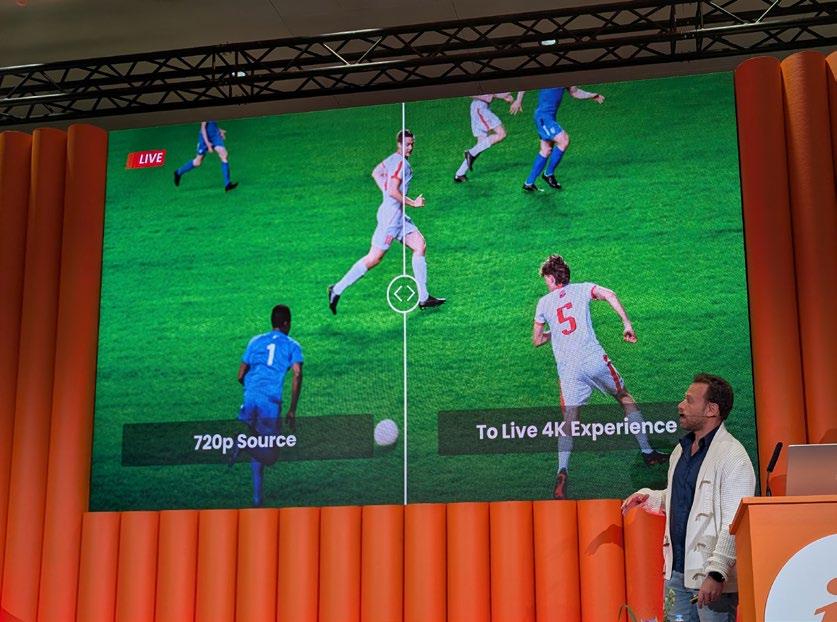
AI-driven super resolution is another example of how the technology could enhance the video delivery process. At IBC last September, Beamr partnered with NVIDIA to demonstrate a real-time AI-powered video pipeline that upscales HD content to 4K, using AI super resolution to predict and generate new pixels.

80 Years of experience in every single pixel.


“You're benefiting from the advantages of the classic codec, like being able to remove temporal and spatial redundancy as well as entropy coding, but can conveniently give a different experience at the edge with AI,” says Tamar Shoham, CTO at Beamr..
“This addresses a gap in the market where content providers seek to offer premium quality without having to roll out 4K infrastructure at every venue. In the future, this may not be relevant but right now, you have legacy content and infrastructure, and AI can provide that 4K experience using efficient compression.”
Hallucinations
The use of AI in encoding raises a number of questions, fidelity being one. “There is a philosophical question around fidelity and similarity: when is the loss or addition of information within a picture important? Before deeming hallucination a problem, you must first decide what you want,” says Guionnet.

In a live environment, it’s hard to win trust and easy to lose it, warns Ian Wagdin, VP of technology and innovation at Appear. “There's a lot of work going on around C2PA and authentication to ensure we're not seeing AI-generated content on news output, for example. This raises questions about how authentic content is once it's been through several layers of AI processing.”
Hallucination is an obvious barrier for the broadcast and film industries. This demands a careful examination of AI algorithms, according to Shoham: “One of the reasons we went with NVIDIA for the super resolution is that its algorithm is more conservative, reducing the risk of hallucination in the encoding. At IBC, people remarked how solid and safe the end result looked and we now have customers examining advanced features.”
Walled gardens and power
Interoperability and support for codecs all the way down the chain, rather than an end-to-end encode by a single manufacturer, is also an important consideration. “You need to be able to inspect, understand and decode the codec at every point in the chain,” says Wagdin. “If you're using new techniques, you need to be sure that at every point where you want to intercept that content, you can decode it. Getting there with AI takes a lot of compatibility all the way down the chain; you have to be strictly adherent to standards.”
The processing power required to do AI encoding will also be GPU-heavy, especially in fast-moving live action scenarios like sports. These are challenges that already exist with current codecs, but could be exacerbated with AI. “Can content be processed quickly enough? Is the processing power available where and when it is
Left: This is an implementation of what is known as an 'implicit' neural video encoder, explains Thomas Guionnet. It relies on an over-fitted neural network whose output is the video itself; essentially, the network constitutes the compressed bitstream. It is transmitted to the decoder, which reconstructs the video by performing an inference. In this scenario, decoder complexity remains reasonable, and it has already been proven that fast decoding is achievable on a modern smartphone
needed, particularly for remote production?” he adds. “These solutions might be expensive to deploy in a world where people are already cautious about using GPU-heavy applications in cloud workflows.”
For Simon, the biggest barrier to AI adoption in encoding could lie within the decoder ecosystem. Any changes requiring the decoder on devices at the receiving end to do AI computation would need strong justification. Resource consumption within the decoder is also an issue. “This will have an impact on the number of channels we can encode at the same time in a given machine. It’s a cost to be considered.”
The transition to pure AI encoding could happen if it delivers serious value, but right now, the benefits are not tangible. Research has been published on neural codecs, but none are commercially available yet. “JPEG AI, standardised in 2025 as the first purely neuronal codec, is an image codec," says Guionnet. "The transition to video introduces a new level of complexity: maintaining a specific frame rate presents significant additional challenges.”
AI might be slower to impact compression than in other areas, but it is still the future of video compression. “Right now we have great codecs, but we are hitting a glass ceiling that pure AI encoding will smash," he adds. "Currently, the structure of a video encoder is sequential; there are things we cannot parallelise, and AI allows that. Things won’t be less complex, but they will be faster.”


Ultimately, when considering a full replacement of classic codecs with AI algorithms, it’s important to think about how that video content will be used, says Shoham. “In scenarios like autonomous vehicles, with massive amounts of video ingest from the different cameras and a 100 per cent AI oriented workflow, pure AI video compression is a tool that could possibly work. In classic fields, where you want to preserve every detail of the video and its artistic intent, I think we will be sticking to classic video encoding for many years
Media over QUIC (MoQ), an emerging standard for high-performance, lowlatency media delivery, is an increasingly hot technology topic. David Davies finds out why its initial proponents are so excited about its potential
The not insignificant coverage of Media over QUIC (MoQ) at the 2026 NAB Show confirmed that this is a technology now firmly in the ascendancy. The open standard protocol, developed by the Internet Engineering Task Force (IETF), intends to enable high-performance, low-latency ingest and distribution applications.
According to the IETF project data tracker, the protocol will support: one or more media formats; an interoperable way to indicate the media and the media format being sent; rare adaptation strategies based on changing codec rates, media encoding/qualities or other mechanisms; and cache-friendly media mechanisms.
Media is mapped onto underlying QUIC mechanisms (QUIC streams and/or QUIC diagrams) and can be deployed over raw QUIC or WebTransport.
The end-result, states Cloudflare on its blog, “combines the low-latency interactivity of WebRTC, the scalability of HLS/DASH, and the simplicity of a single architecture, all built on a modern transport layer.”
Of course, the market has hardly been lacking in new media protocols during the past decade, so it only seems reasonable to ask its early enthusiasts about the aspects that earmark MoQ as ‘one to watch’.
Solving a trilemma
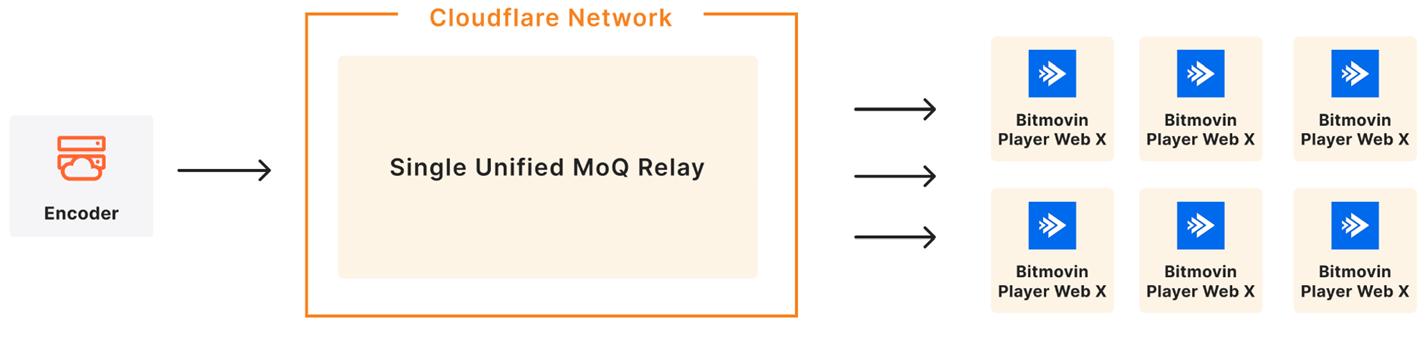

Stefan Lederer, co-founder and co-CEO of Bitmovin, notes that QUIC had “been on our radar for a long time”, well in advance of the IETF MoQT working group that formally launched in 2022. “What changed was the ecosystem around it. When you see Akamai, Cloudflare, and Oracle actively shaping the working group, and when the publish/subscribe architecture they settled on maps almost perfectly to how CDN fan-out works at scale, it stops being a research curiosity and starts looking like a genuine protocol inflection point. That shift happened for us around 2023, and we have been building towards it since.”

Above: MoQ's core premise is sub-second latency at broadcast scale, without infrastructure complexity
of concurrent viewers is genuinely hard. MoQ is designed from the ground up to solve that trilemma.”
As such, MoQ’s ‘core premise’ is easy to define, indicates Lederer: “Sub-second latency at broadcast scale, without the infrastructure complexity that has made achieving both simultaneously so painful until now. With HLS and DASH you get scale but accept seconds of delay. With WebRTC you get the latency, but managing it at millions
Gwendal Simon, senior director of technology, video network at Synamedia, highlights another primary benefit. “Along with the low latency, what’s very interesting with MoQ is the multi-track publish/ subscribe paradigm. In MoQ the publisher can expose as many tracks as it wants, so it can expose video and audio tracks, but with multiple audio tracks [for each item of content], which is obviously very good for translation.”
Cullen Jennings is CTO for audio/video collaboration and AI at Cisco, which, along with Synamedia, Akamai, CDN77, RED and YouTube, is a founder member of the OpenMoQ Software
Consortium focusing on advancing MoQ-based technology through open-source software. He says that integral to MoQ is its “relayand-caching model [that] can reduce latency, improve recovery from packet loss, and enable efficient fan-out to many users without requiring the same level of duplicated delivery.”
More specifically, MoQ’s employment of media relays throughout the transport chain makes it easier to increase media quality. “When a packet is lost on your Wi-Fi network, the client can ask the Wi-Fi Access Point to resend it instead of going all the way back to the cloud,” says Jennings. “The media simply isn’t having to travel as far as it once did. On the other end, if one is installed in a cloud data centre right next to a media server node, it can help that media server scale out in a cost-efficient way.”
“The benefit is not only improved speed, but also a more coordinated and predictable delivery chain,” adds Dustin Encelewski, principal product manager, OCI Media Services, Oracle. “Streams start faster, remain more stable under load, and scale more effectively during peak events. It also reduces the need for complex, bespoke integrations.”
Live streaming potential
There is general agreement that MoQ’s adoption will be spearheaded by applications where low-latency is at a particular premium, such as live streaming and collaboration.
For Lederer, live sport is an obvious example of where MoQ would be of benefit. “The second-screen spoiler problem is real and expensive for rights holders, and they know it. That drives genuine urgency to invest. Live betting is similar because latency there is not just about experience, it is about product integrity.”
MoQ also opens the doors to more advanced and flexible working experiences, says Encelewski. “Examples include multi-camera angles, dynamic overlays, and increasingly personalised streams.
By modernising live transport, broadcasters and streaming platforms can deliver richer and more interactive experiences that leverage the expanded capabilities of digital distribution.”
Lederer adds: “I think the less obvious opportunity is contribution and syndication. The properties that make MoQ good for lastmile delivery—reliable transport over lossy networks, efficient multiplexing, a relay-friendly object model—are equally valuable in the professional distribution chain. It tends to get overlooked because everyone focuses on the consumer playback side first, but it could matter just as much.”
MoQ could be particularly promising for interactive live experiences such as sports, gaming, esports and creator platforms where audience participation is key. But in the long term, says Jennings, its greatest potential could transcend media applications because MoQ “creates a fundamental tool for building distributed internet protocols: a high-speed, flexible pub/sub bus. This is higher in speed than any pub/sub bus out there. Most were meant for dealing with the scale of, say, instant messaging. You can send video over MoQ and it works fine. [Therefore] I believe that will turn into an incredibly useful architectural tool.”
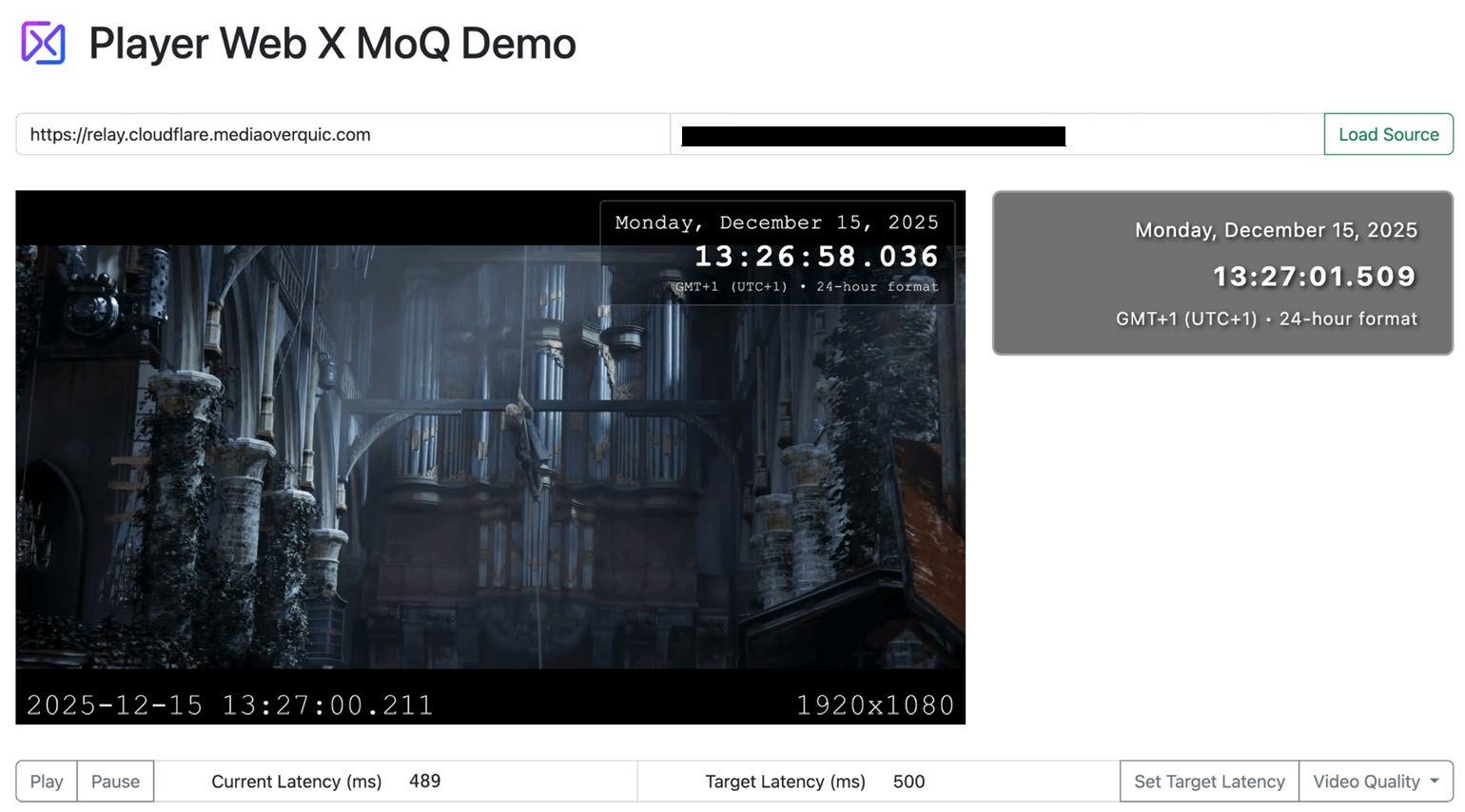
The IETF project tracker indicates that key documentation pertaining to MoQ could start to be published from December 2026 onwards. In the meantime, PoCs are in progress, and some companies are already supporting MoQ. For example, Bitmovin’s Player Web X now supports MoQ playback natively and was demonstrated with Cloudflare at NAB 2026. The technology is also described as a “foundational element” of Oracle Video Edge. Meanwhile, there is an acute awareness of the need to maintain alignment between vendors and developers if MoQ is to realise its full potential.
“Interoperability has to come first,” says Lederer. “The spec is still in draft and the industry needs a real plugfest moment—something like the early HLS interop work, where you stress-test multi-vendor implementations at scale and find out what actually breaks. Beyond that, the areas I watch closely are namespace and catalogue management, because publishers and CDNs need a consistent model for organising and discovering streams, and browser support.
“Longer term, I hope MoQ becomes the single transport layer for both live and on-demand. The fragmentation between contribution protocols, distribution protocols and playback protocols adds real cost and complexity for every media company we work with. MoQ has a credible shot at simplifying that significantly.”

As the gap between the technology and media industries grows ever more narrow, Matthew Corrigan is still trying to speak clearly
Jargon. It’s a strange one. When asked, most people say they don’t like it but I have a theory that lots of them actually do. Every industry uses it, every workplace encodes conversations about its day-to-day business in terminology that is impenetrable to outsiders. Media and entertainment isn’t immune— as an example, before I started this job I had never heard the word ‘dailies’ used in a filmmaking context. I still have to have an occasional sly Google when I come across an unfamiliar phrase, rather than ask someone and out myself as a low-information ‘newb’.
In fact, asking can cause problems. Once, in a previous life, worn down by having to sit through an apparently interminable buzzwordladen marketing meeting, I asked one of the speakers if he could explain what he actually meant by the sentence he had just uttered. The words he used were English but they made no sense at all. I’ve got a reasonably good grasp of my mother tongue, but this guy might as well have been addressing the room in Serbo-Croat.
The air grew suddenly heavy. I’d have caused less of a shock if I’d whipped out a revolver and placed it in front of me on the desk. It was an Emperor’s New Clothes moment. I knew it, he knew it and so did everyone else. He was talking utter gibberish. Fortunately, his skin was thick. His smile froze, but never faltered. And then the moment was over; he recovered. However, despite addressing me with excruciating condescension, his attempt to translate his well-practised corporate soundbites into easily digestible language ultimately failed. He couldn’t do it. The Emperor was indeed naked, as one or two of his amused colleagues couldn’t help but notice.
And so, over time, I’ve learned to let it wash over me. Best to just smile and wave at those who exist on a higher plane of synergic intentionalities and workflow spinoffs. Like so many others who make their living working with words, I’ve developed a sharp sense for the nonsensical.
Lately, however, things have been—er—ramping up somewhat. As a refugee from the technology sector, when I switched to the media and entertainment business a couple of years ago I was genuinely surprised at the somewhat conservative nature of the industry in its reluctance to embrace the technology that was taking over everywhere
else. Of course, there were myriad reasons for this, all of which were patiently explained to me whenever I remarked on the comparatively slow pace of change. Now though, at last, digitalisation in the sector is definitely on the march.
Press releases are increasingly promoting software and applications rather than physical hardware. More and more, I’m finding myself writing stories about new version releases, whereas a couple of years ago it was cameras, monitors, microphones and such. And I’m afraid they seem to be taking on a faintly familiar tone.
Recently, I was faced with one of those documents that makes less sense the more times you read it. The words were all in English but try as I might, I couldn’t get them to coalesce into logical sentences.
My first suspicion was that it was a foreign company using Google Translate. This is, after all, an international business. Mais non, c’était une entreprise britannique. Good manners, along with a smidgeon of commercial acumen and a very real need to remain in gainful employment preclude me from naming the guilty but it was definitely a British-based outfit. Then it clicked—of course—what had I spent the last year writing about?
I’m pretty sure it was produced using AI. Someone in a hurry, acting on behalf of our unnamed entity, had run some brief details through Chatterbox GPO v4.3 or something similar and asked it to create a press release. The solution (eurgh!) rapidly scanned the multitudinous oceans of kipple sloshing around the worldwide web and spewed out the words it deemed necessary. It was all there, just not in a particularly accessible format.
Naturally, this doesn’t matter so much in the tech industry. In fact, my experience leads me to suspect some might see an ability to endlessly spout incomprehensibly as a positive. But media and entertainment is all about clarity of communication. I’m a fan of the rapid technological evolution that is taking place, and I can be positively evangelical about harnessing its latent potential to drive transformative change and unlock workflow efficiencies across entire ecosystems (see what I did there?).
By all means, let’s take the best the tech industry has to offer and put it to good use. But for goodness’ sake, let’s at least try not to sound like them
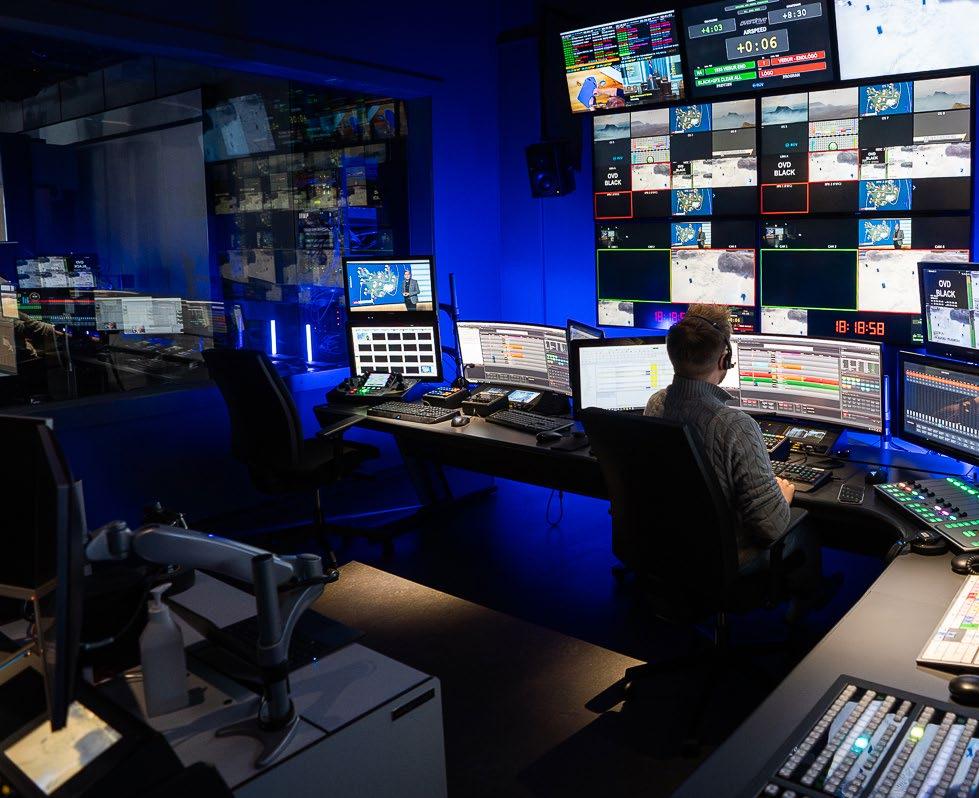
Broadcasters use software to manage complex, fluid workflows and hybrid environments. A strong control model is vital for adaptability and fast infrastructure deployment, explains Todd Riggs, senior director—product management— hyperconverged solutions, Ross Video
When people talk about the industry moving toward software, I often think there is a tendency to picture a dramatic break from the way broadcast has always worked. As if one day we were building systems with frames, panels, routers, and dedicated processing, and the next day everything was supposed to be on COTS, with entirely new workflows. That is not really what has been happening. What I see is something more practical than that. Broadcasters are not walking away from the engineering discipline or the hardearned lessons that came from building reliable live systems. They are attempting to solve a growing set of problems that traditional hardware-first models were never designed to handle.
For a long time, the approach was easy. If you needed another function, you added another device. If the workflow expanded, you added another layer. If a facility took on new production demands, the
system grew around them. That worked well for years because the environment itself was relatively predictable. The plant was fixed. The signal types were largely SDI with whatever choice of audio you might want to use in your application. The operation and business models were familiar. That is no longer true.
A show may still be produced on-site, but parts of the team may be somewhere else. The core infrastructure may still rely on SDI platforms, while some form or forms of IP are introduced where they add value, whether as islands or complete system cores. Some resources may be permanent. Others may need to be spun up for an event, then torn down for use elsewhere. The workflow itself is more fluid than it used to be, usually with a smaller operations staff, which means the infrastructure supporting it has to be more fluid too. That is where software starts to matter.
Not because software is new or because hardware suddenly stopped being useful. It matters because software changes how
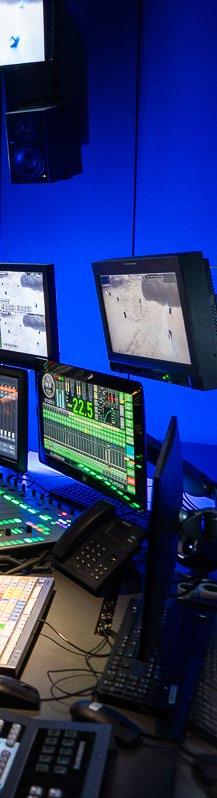
infrastructure can be deployed, configured, adjusted, and reused. It allows systems to take on a wider range of roles without every change requiring another round of physical rebuilds.
Managing behaviour, not boxes That sounds attractive, but it also makes some people uneasy. Broadcast engineering has largely always been grounded in systems you can see, touch, trace, and test directly. There is a lot of benefit to this from the perspective of producing quality, reliable content and productions. Using application-specific hardware for different functions has also been a way to distribute risk. Once you begin shifting toward software-defined infrastructure, some of that certainty feels different. You are no longer only managing discreet platforms and workflows. You are managing behaviour. You are managing orchestration. You are managing how multiple pieces come together, often across different environments.
of that helps when production schedules are tight, and expectations keep rising.
This is why the idea of infrastructure as software is getting more attention. The phrase can sound more intimidating than it needs to. At its core, it is simply a different way to define and manage infrastructure. Instead of relying on a long chain of interconnected boxes and manual setup steps, systems are created, enhanced, or modified using software via licensing.
That does not mean every broadcast engineer needs to become a full-time software developer, but it does mean the industry is heading towards a model where engineering teams will need tools that let them launch, test, adjust, and recover systems at a pace that manual methods currently struggle to match.

This is especially relevant within settings where the infrastructure is event-based. Live productions such as sports, concerts, town halls, or distributed operations all put pressure on the old assumption that the system is built once and then only lightly adjusted. More often now, the system has to be ready to take a different shape depending on production needs. Whether that is different core processing, mixing requirements, or monitoring setups, systems need to be adaptable.
That kind of flexibility is valuable, but it also creates a new burden if there is no common control layer holding it together.
This is why the real issue is not simply adopting software but achieving better control. As IP transport and industry standards have advanced, operational complexity has grown. Software matters because it addresses the need to coordinate and control this complexity. Once you start combining on-prem systems, remote resources, cloud services, and equipment from multiple vendors, the question becomes much bigger than how signals move. The question becomes how the whole system can be controlled and monitored in a way that is repeatable and manageable. That is where many teams are feeling the pressure now.
Where manual processes fail It is one thing to connect systems. It is another thing to configure them quickly and work together efficiently. In an environment that may need to change from show to show or day to day with different requirements, relying on a process that is mainly manual is where the friction shows up fast. Setup takes longer. Changes become harder to manage. The chance of mistakes or misconfiguration rises. None
And that may be the most important part of this shift. Softwaredefined infrastructure only works well when the control model is strong enough to keep complexity from spilling over into day-to-day operations. The ability to manage and control different signal types across a wide variety of platforms while keeping things simple for users is paramount. This requires intelligent control systems and architectures that excel at interfacing with the technology using tried and true protocols that have been around for decades, along with the new and emerging protocols and workflows that the modern systems are being built around. Whether the system is based on purpose-built hardware with flexible software, virtualised on servers, on-prem, in the cloud, or what is most likely some hybrid combination of all the above; reliable, fast, operator control, management, and monitoring is the key to unlocking the potential of the systems being built today.
So, when people ask where this is headed, I certainly do not think the answer is that hardware disappears. It does not. Reliable physical infrastructure will remain central to live production for a long time. There are inherent advantages that both purpose-built hardware and virtualised processing both have, depending on the application. In our experience, it is a “both/and” proposition rather than an “either/ or”. What changes is the expectation around how that infrastructure behaves. It has to be easier to adapt, scale, lower the cost of production, and simplify. That is what the move toward softwaredefined solutions is about.
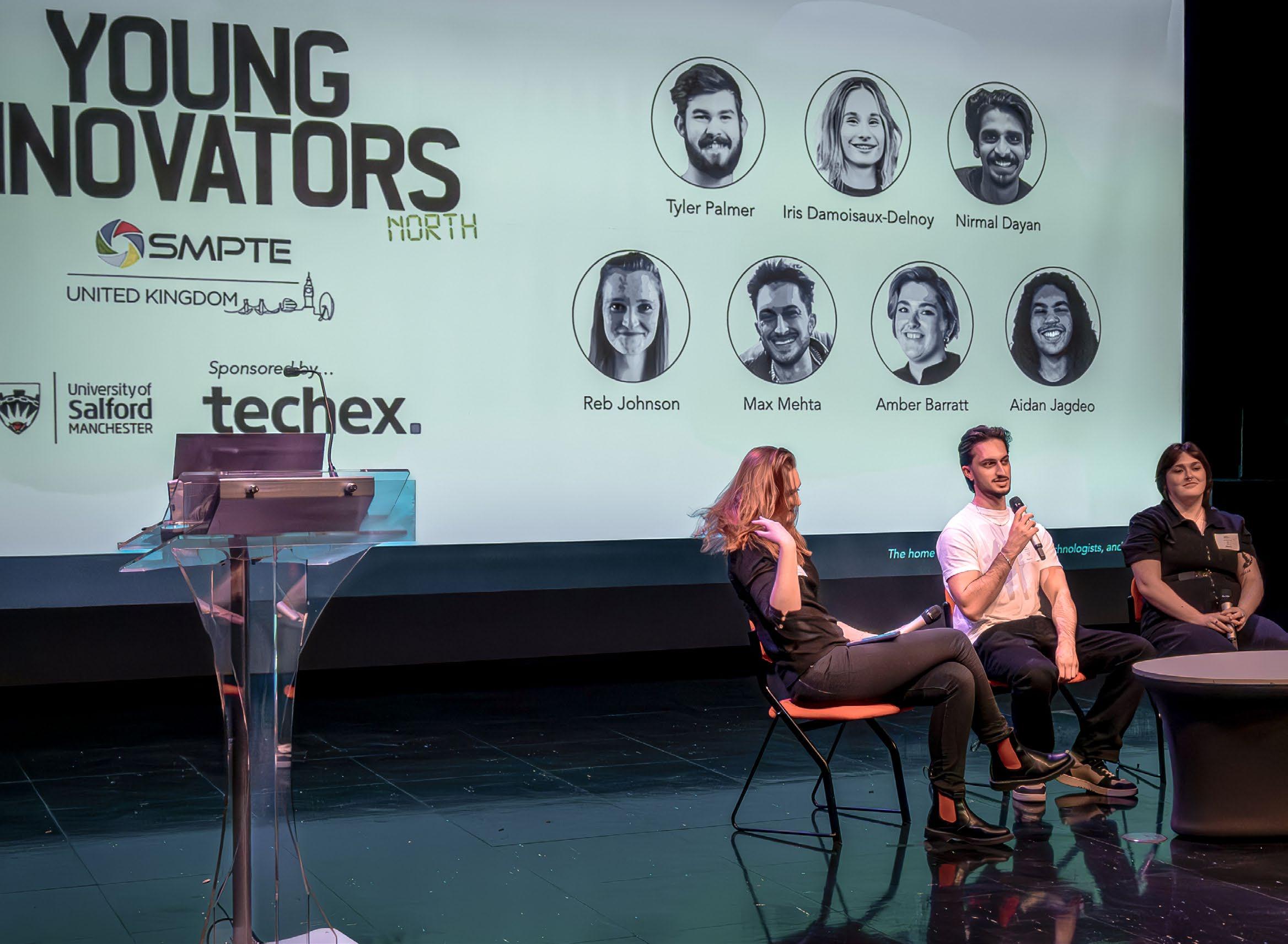
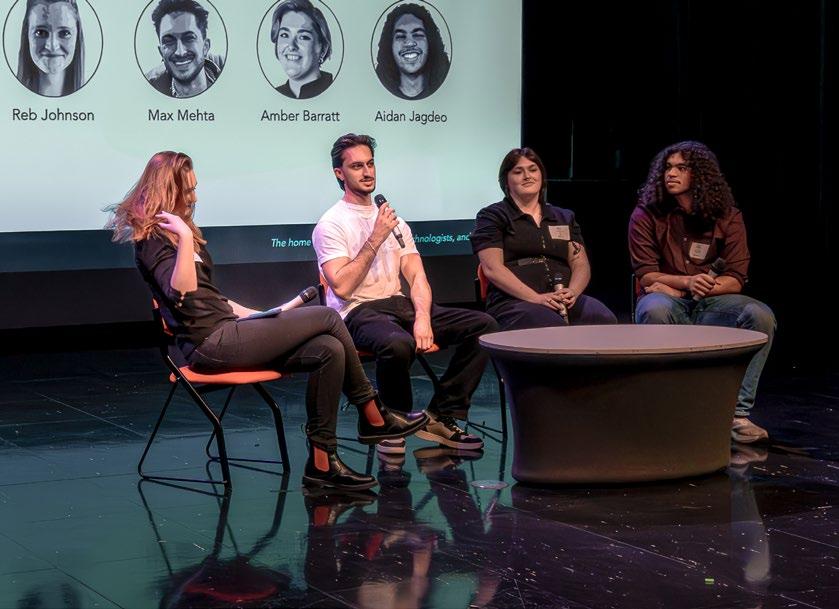
SMPTE UK’s annual Young Innovators events serve as a critical bridge between aspiration and reality for the next generation of media technologists. TVBEurope hears from organisers, speakers and attendees about how the initiative provides hands-on experience and a sense of belonging for the industry’s newest talent
SMPTE UK held its annual Young Innovators events for students, early career ‘techies’ and media engineering professionals at the start of this year.
The two events, one at Sky’s HQ in Osterley and the other, held at the University of Salford (MediaCityUK) and sponsored by Techex, aimed to bring together the next generation of technical talent and industry professionals.
The events enable the organisation to play a part in addressing the industry’s challenges around the next generation of talent by showcasing what it means to work in media technology.
According to Carys Hughes, SMPTE UK manager, the core ingredients of the two events are simple: to bring

the right people into the room to form connections, and give those who are starting their careers in the industry the opportunity to talk about their own technical projects and career journeys.
“This has lots of positive by-products,” she says, including helping employers to better understand where they could be looking for media tech talent and advocate for their own disciplines, as well as allowing the next generation of media technologists to make connections, identify skills, and visualise their place within the industry.
“We establish a safe opportunity for first-time technical presenters to showcase their own projects in front of an audience, and early career engineers can discuss their roles and career journeys on panels,” explains Hughes.
That opportunity for early career professionals to step on stage and share their ideas is particularly valuable in helping to build confidence in a supportive environment, agrees Polly Hickling, SMPTE’s education vice president. “Visibility matters; it helps address ongoing diversity challenges around who gets a voice in our industry, while also giving those a few steps behind a clearer, more tangible sense of what progression can look like. In that way, it becomes a bridge between aspiration and reality, strengthening the entire SMPTE ecosystem.”
At the heart of Young Innovators is the desire to unlock the UK’s potential media technology talent and connect it with companies that are looking for their skills, whether that be in London or elsewhere.
“We can’t do that effectively if we don’t successfully engage industry more locally,” states Hughes. “So, as well as meeting our desperate need to scale, working
“Visibility matters; it helps address ongoing diversity challenges around who gets a voice in our industry, while also giving those a few steps behind a clearer, more tangible sense of what progression can look like”
hard with our North team to regionalise this initiative was always the right thing to do. We also want to empower new media technologists to take early ownership of their place in the sector, via their closest active SMPTE community.”
This year’s events saw engagement from across the UK. Among the panels and presentations were 10-minute ‘lightning talks’ which spanned a mixture of academic and professional projects. Subjects included AI tracking for horse racing, laser-disc film restoration, AES67 monitoring, and virtual production infrastructure management for live events. Attendees heard from solutions integrators, product systems engineering, a post production product specialist, camera specialist and VFX generalist.
Among the highlights at the South event was the opportunity for attendees to get ‘hands-on’ with special workshops, giving them a snapshot of media technology career paths that exist at Sky. “That’s valuable for both students and academic faculty, and is made possible by an army of awesome, passionate colleagues (and stakeholders) across Sky Sports, Sky Production Services, Content Technology and Innovation, and Global Product,” states Hughes. “This year, 50 students spent time rotating through an array of technical specialisms within Sky’s flagship studio and then heard from engineers working across post production engineering, production engineering, origination and distribution, and display engineering. It’s bonkers, but the absolute best.”
Feedback from attendees of both events has been positive, with students finding it helped raise their awareness of the opportunities available in the media technology industry. For those already on their career path, Young Innovators offers an opportunity to engage with talent and gain a clearer understanding of what students and potential candidates are interested in.
“I hope attendees left feeling both inspired and reassured,” says Hickling, “inspired by the possibilities within the industry, but also reassured that there isn’t a single ‘right' path into it. More than anything, I’d want them to feel a sense of belonging; that there’s space for their ideas, perspectives and skills within media technology.
“Practically, if they came away with a clearer understanding of how the industry works, a few meaningful connections and the confidence to take their next step, then the event has done what it set out to do.”
Asked if there are any changes they would consider making for the 2027 iteration, Hughes says SMPTE
“I was surprised to learn that the broadcast industry is much more diverse than I thought, which makes me love broadcast more”
NIRMAL DAYAN
is always keen to represent the breadth of technology disciplines within the organisation’s remit, but admits that can be challenging. “We want to see more industry [members] get stuck-in regardless, as it’s to everybody’s benefit,” she adds. “But I’d love to see us strengthen relationships with technologists in post, VFX and areas of non-live production in the UK. And we want to enable the wider SMPTE Community to run with this concept where they are, too!”
The speakers’ view Many of the attendees at previous Young Innovators events have gone on to become
speakers at subsequent events. Such was the case in 2026, when Chloe Schuil-Brewer and Nirmal Dayan took to the stage at Young Innovators South and North, respectively. For Schuil-Brewer, originally attending the event as a student from a non-engineering background meant that she was able to learn more about the broadcasting industry. When asked to return in 2026 as a speaker, she “jumped at the chance” to share her story and inspire others. “Broadcast engineering is changing constantly, and the requirements to be a good engineer aren’t as black and white anymore,” she adds. “I wanted to prove to students and industry professionals that you can learn on the job, and nothing should hold you back from becoming an engineer.”
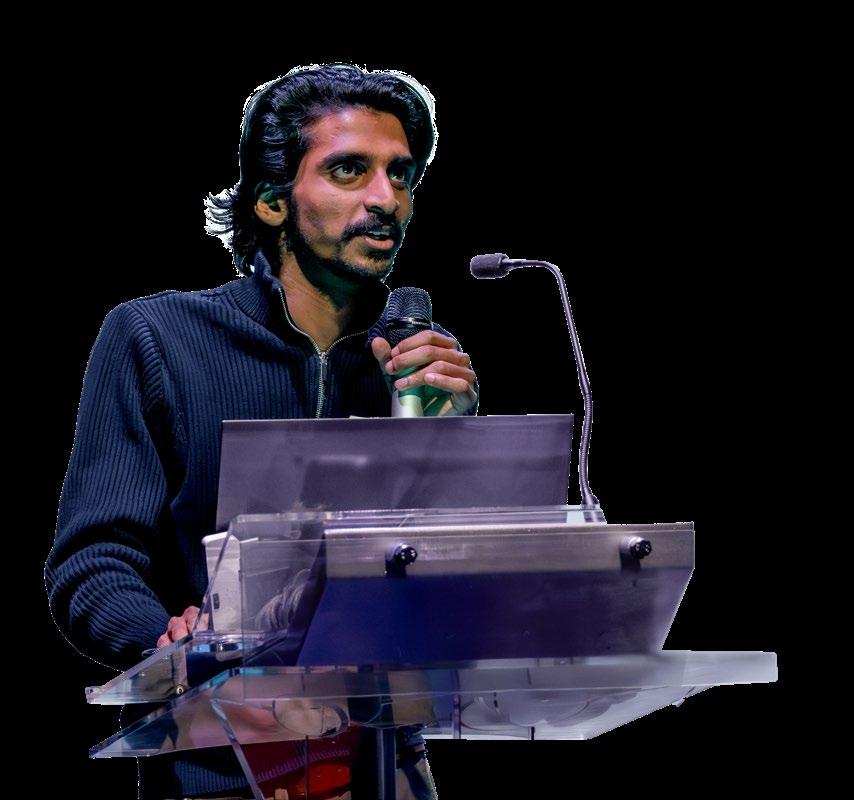
Dayan presented his final year project at Young Innovators North in February, which focused on an AES67 Web Monitoring Tool. The topic was inspired by previous SMPTE events where he’d learnt about the


industry’s transition from SDI to IP-based workflows. “The ability to present to industry professionals was a huge opportunity for me,” he says. “After my presentation, I received good feedback from several engineers who work in the industry. That reassured me that I was on the right path when it comes to the skills and knowledge required for the roles that I was looking for. I also had students approach me asking for more details about the project. I was excited and happy to see how much people cared about technology and young minds emerging in the industry.”
The feedback from attendees was also beneficial for Schuil-Brewer, who found others who similarly haven’t taken a traditional route into the industry. “I had feedback from several students studying the more traditionally creative subjects who were being inspired into technology across the workshops and other Young Innovators talks,” she explains. “After my talk, they knew it would be possible for them to make the switch too.”
Both Schuil-Brewer and Dayan say they would encourage anyone to attend future Young Innovators events, whether they’re students or already working in the industry. “I still think I didn't choose broadcast as a career path; rather, broadcast chose me,” says Dayan. “I started my career in a music conservatory, composing music, analysing sheet music, playing instruments, and so on. But I was always curious and kept asking the ‘why’ and ‘how’ questions. While at the event, I heard a similar story from a fellow speaker who started as a wedding singer and currently works in the industry for a major production solutions vendor. She also mentioned how she didn't choose broadcast but somehow ended up here. Hearing her story resonated with me, and I was surprised to learn that the broadcast industry is much more diverse than I thought, which makes me love broadcast more.”
The attendees
Tom Stavers, who is currently studying TV Production at Bournemouth University, took part in Young Innovators South in February.
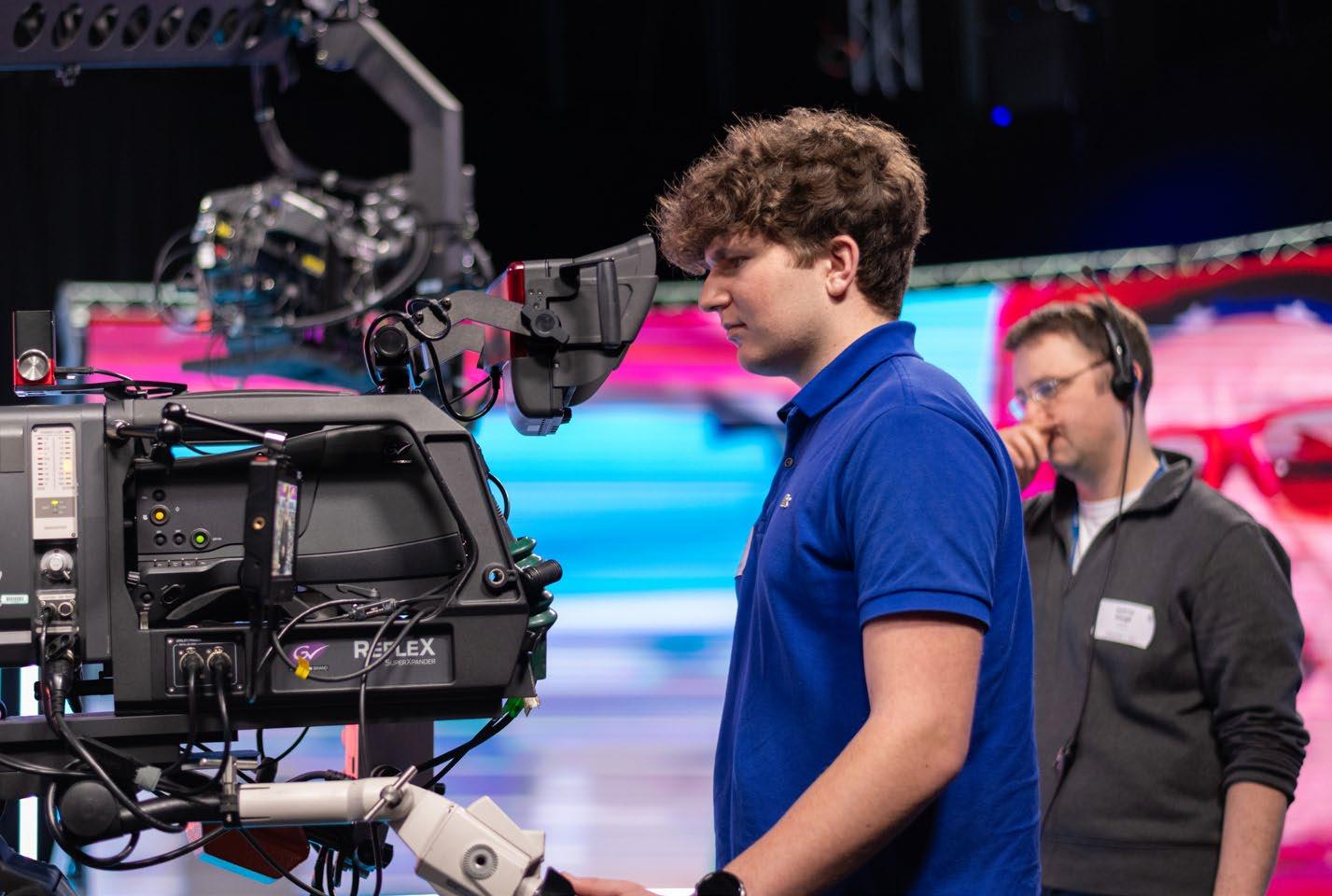
Like those who had gone before him, it offered a chance to see what opportunities are available within the media technology industry. “At the time, I hadn’t fully realised that broadcast engineering was a viable and accessible career path, so the event felt like a valuable opportunity to explore this further,” he explains.
“One of the main highlights for me was the opportunity to gain hands-on experience with Sky’s broadcast systems and see how different components work together in practice. I also really valued the chance to network with industry professionals, learn about their career journeys, and gain insight into roles that I aspire to pursue.”
That sentiment is echoed by Hannah Anthony, a fourth-year student on an MComp Computing Science course at the University of East Anglia in Norwich, who attended Young Innovators North. “For me, the speed networking was the highlight. It was perfectly designed to let you meet as many people as possible while still having
The South event saw attendees get ‘handson’ with special workshops, giving them a snapshot of media technology career paths that exist at Sky
“I had feedback from several students studying the more traditionally creative subjects who were being inspired into technology across the workshops and other Young Innovators talks”
CHLOE SCHUILI-BREWER
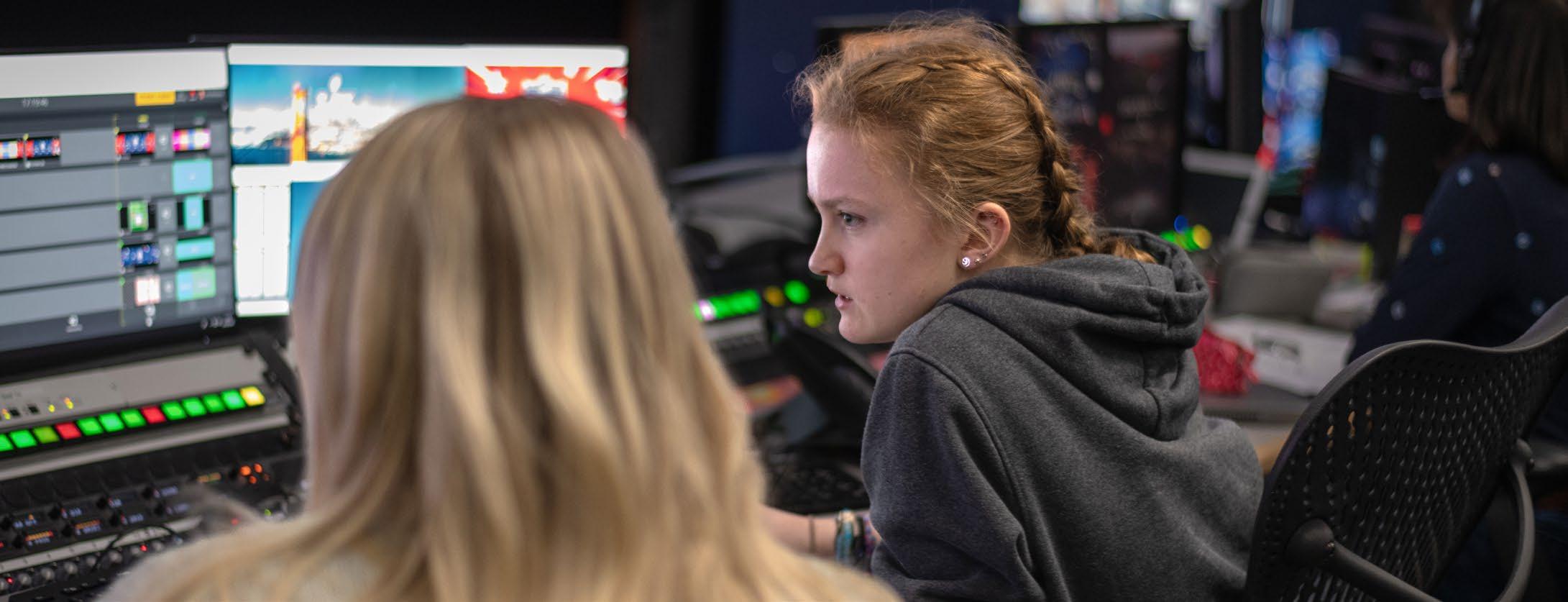
deep conversations, and to also hear from your peers.
“I also really enjoyed Nirmal Dayan’s talk on his project involving AES67; it gave me useful insight on the topic, which I can bring to my own work. The thing I remember most fondly is how friendly and welcoming everyone there was. I never felt shy or awkward and it was so easy to join in with the conversation.”
Like the speakers, both Stavers and Anthony are keen to stress the importance of attending events like Young Innovators for anyone starting their journey in the industry.
Stavers says it’s helped strengthen his motivation to pursue a career in broadcast engineering, adding that he’s become more proactive in developing the relevant skills.
“It’s an engaging and enjoyable experience, and the opportunity to meet and learn from industry professionals alone makes it incredibly worthwhile.”
For Anthony, Young Innovators has given
“We want to enable the wider SMPTE Community to run with this concept where they are, too!”
CARYS HUGHES
her more confidence when networking with industry colleagues. “I’m able to better articulate projects that I’m working on, both to other people and to myself,” she adds.
“More literally, I had a few conversations about tech issues I’d been wrestling with, that were solved thanks to invaluable advice from very experienced people. I left the event with a far stronger network and a better sense of direction when it comes to my career.”
From an industry perspective, Young Innovators is seen as an important opportunity to engage with the next generation. “The student presentations always shine a light on new research and ideas that are coming through, and the networking gives us a chance to meet students and recent graduates,” says Russell Trafford-Jones from Techex, which sponsored the North event. “We have a long history of employing graduates so it’s valuable, not simply from a recruitment point of view, but for our newer team members to meet people at a similar stage."
The SMPTE UK team is keen to hear from anyone interested in supporting or attending Young Innovators 2027. They would also like to encourage organisations who have early career media engineers or technologists with inspiring work and career journeys to get in touch. Watch out for more information about SMPTE Young Innovators 2027 later this year

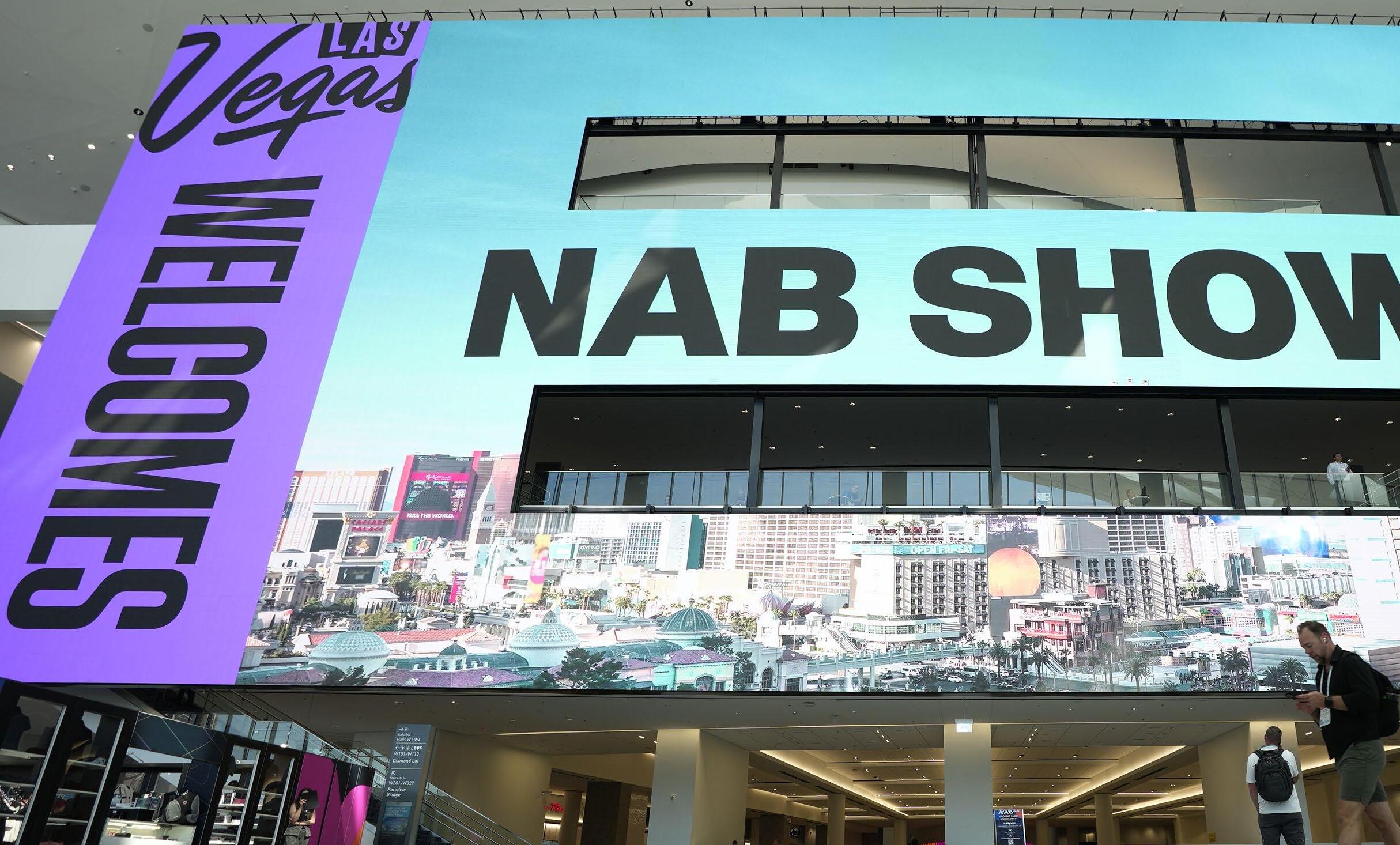
Jenny Priestley looks back at the 2026 NAB Show, where the acquisition of ARRI, rise of vertical video, and the industry’s decisive shift to software-defined workflows shaped the conversation
In April, the broadcast industry once again made its annual pilgrimage to Las Vegas for the 2026 NAB Show. According to organisers, this year’s event had 58,000 registered attendees from 146 countries, with more than 1,100 exhibitors (more on those numbers later).
Going into the show, the main talking point was Thomas Riedel’s acquisition of ARRI. Speaking to TVBEurope at a press conference before NAB 2026 officially kicked off, Riedel set out his plans for the company, revealing that while he won’t be active on a day-to-day basis, he will be working with ARRI CEOs David Bermbach and Christian Richter “every couple of weeks".
“I want to be involved in the creation side of the business,” he
added. “Then there is the whole outgoing part, projects with clients, especially things which have not been done before. I love those challenges, and I love to be close to that.”
Key themes
During all of my meetings with technology vendors at the show, I asked what challenges their customers are facing. Many spoke about orchestration, virtualisation and dealing with ever-shrinking budgets. As SDVI’s Geoff Stedman noted, while the industry continues to try to cut costs, it also needs to be able to respond to opportunities. I also heard multiple mentions of how the industry is becoming more comfortable blending capex and opex.
As with IBC2025, a key talking point was the Media eXchange Layer, with some vendors already taking the plunge and showcasing the open source initiative in their software. One that particularly caught my eye was Comprimato, which had a tablecloth on its booth promoting the company as an ‘MXL Supporter’!
Software was a big theme of this year’s show, or should I say ‘software-defined’. I heard that phrase in Las Vegas more than I have at any other show over the past decade. Yes, the industry has been moving towards software for a while (you just have to look at the majority of vendor booths to see how little hardware is actually on show), but it felt to me like software-defined workflows have become a ‘big thing’ in the industry over the past 12 months or so. Certainly, in the run-up to NAB, we received many press releases touting vendor capabilities in software-defined workflows. According to Appear’s Ian Wagdin, the question they’re hearing from customers is, what do they need to understand to make the move to software-defined workflows.
Vertical video
Probably the biggest new talking point since my last trip to Vegas was vertical video. Over the past few months, several OTT platforms have moved to embrace 9:16 content, including both Disney+ and
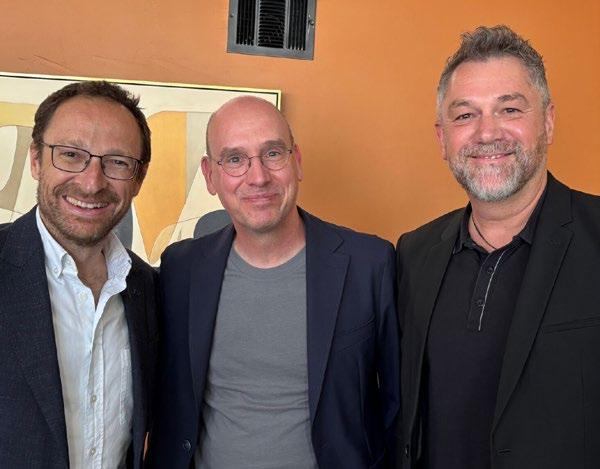
From the left: David Bermbach, Thomas Riedel and Christian Richter

Netflix. Vertical video in all its forms is a way for legacy broadcasters and streaming services to get their content watched by the key Gen Z and millennial markets. That’s filtering through to technology vendors, with discussions including how AI can be employed to create vertical video highlights for sport, the challenges of encoding for the format, and a solution that enables viewers to ‘swipe’ and move from shortform content on their mobile to long-form on the TV screen.
Make the show more inclusive
If I were to give NAB organisers one piece of feedback, it would be to make international visitors feel more included.
NAB reported that 22 per cent of attendees travelled from outside the United States in 2026, but my experience and that of the exhibitors I spoke to was that international attendance was very soft. And companies that did send someone may have only sent one or two people, where they would have sent more in the past. I'm sure NAB's organisers want that global audience, and hopefully next year's macroeconomic situation will bring them back.
It also felt like the content and visitors of this year's event were more focused on North America than in the past. I attended a couple of panels, and neither had an international speaker on stage. Hopefully, this is also an area where changes can be made in time for 2027.
But while it felt like there were fewer international attendees, there was still a strong presence from non-US vendors wanting to sell to the American market, proving that NAB Show remains in rude health.

SCAN THE QR CODE TO SEE WHAT OTHER PEOPLE WERE TALKING ABOUT AT THE 2026 NAB SHOW


Future’s Best of Show Awards recognise
standout broadcast-grade technology products and solutions
from the NAB Show in Las Vegas. These are the winners in the TVBEurope category
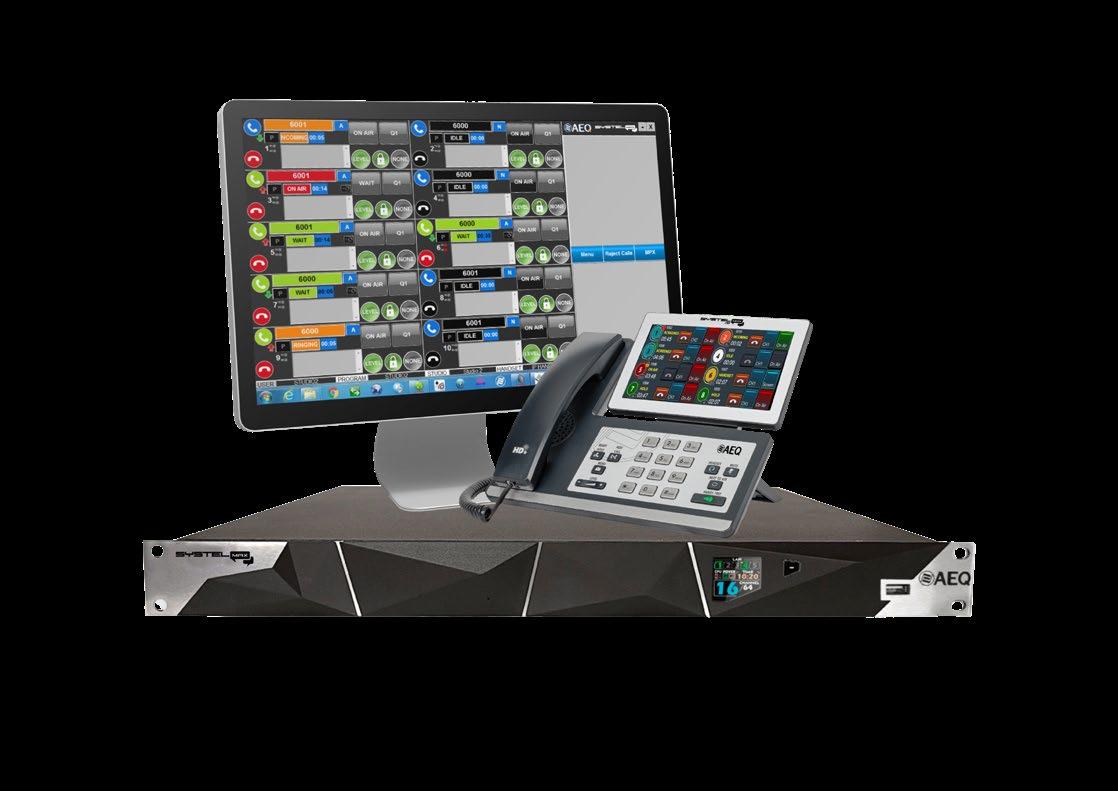
Judges’ comment: If I were to consider upgrading or replacing my outside telephone intercom system for on-air use, this would definitely be a candidate. Having separate channels simultaneously, along with IP outputs, is important because this gear is now being integrated into a single unit.
APPEAR
XM

Judges’ comment: The appeal of the Appear XM is how it scales the operations of a broadcast. With managing multiple systems becoming more complex, XM confronts the issue with an encompassing, real-time view of Appear's deployment. It delivers a secure, centralised interface to track alarms, and software updates in real time from a single source.
APPEAR
Six300

Judges’ comment: As the industry transitions from baseband and JPEG 2000 to ultra-low latency IP workflows powered by JPEG XS, the Appear Six300 is a step forward into the high-density SDI/IP zone. What distinguishes the product is how it consolidates multiple functions into a single module. It supports encoding and decoding, advanced audio processing, HDR workflows and pre-processing capabilities, thus reducing hardware footprint, power consumption, and system complexity.
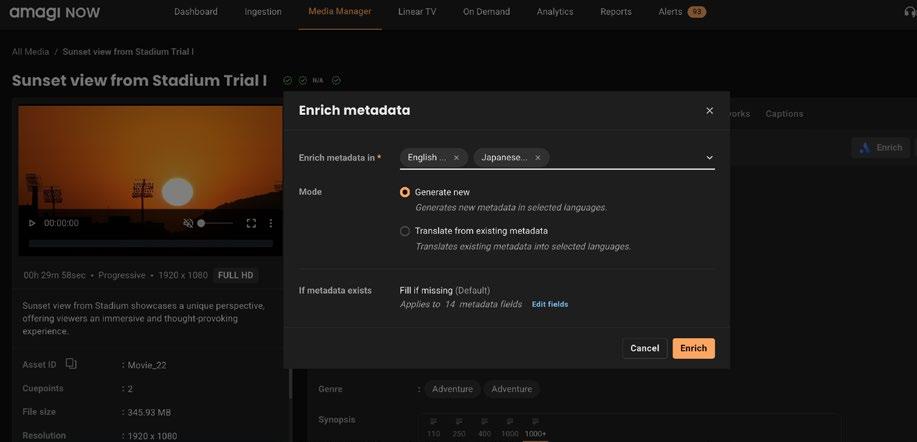
AMAGI CORPORATION
Amagi Intelligence
Judges’ comment: Intelligence seems to be a "parent product" watching over other processes.
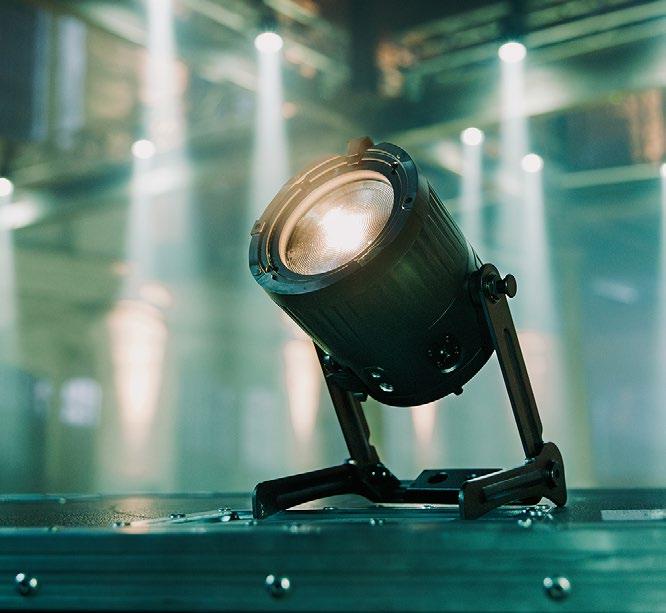
QuikBeam
Judges’ comment: A compact, quality, and versatile lighting fixture that has flexible applications across media and corporate events. Workflow-driven design is a strong feature, along with PoE and battery handling to reduce set-up time and simplify integration processes.
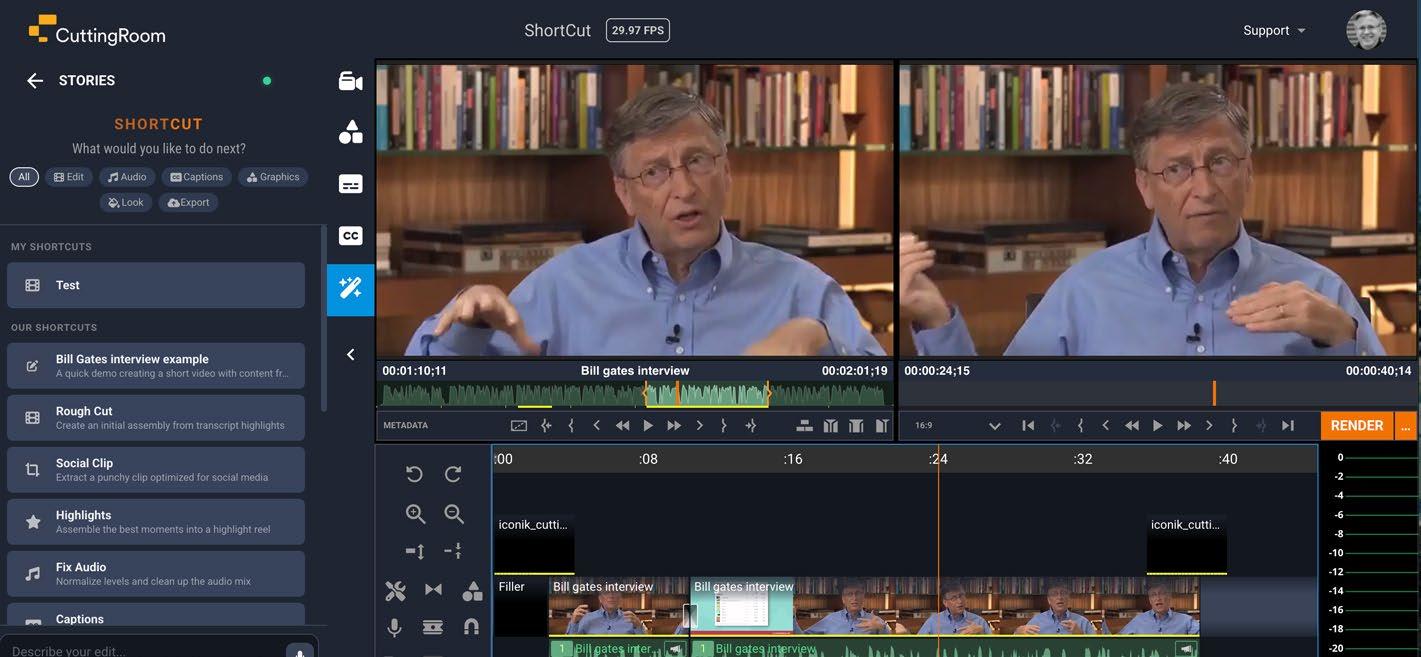
Cutting
Judges’ comment: An on-line editor is a great idea...this looks like a cool product.
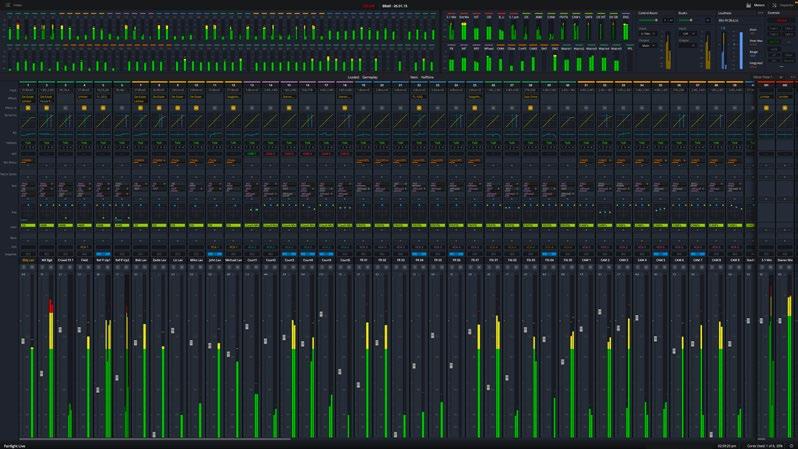

Fairlight Live
Judges’ comment: Fairlight Live removes the traditional constraints of hardware and replaces them with a scalable, softwaredefined architecture. It combines the power of large-format broadcast consoles with the flexibility of modern computing, enabling everything from simple productions to massive, multi-channel immersive workflows within a single platform. While its depth introduces some complexity, the combination of extreme capability and forward-looking IP integration make it a compelling solution.
Judges’ comment: This is a logical solution for large productions that need intercoms spread over stadium-sized and larger venues.
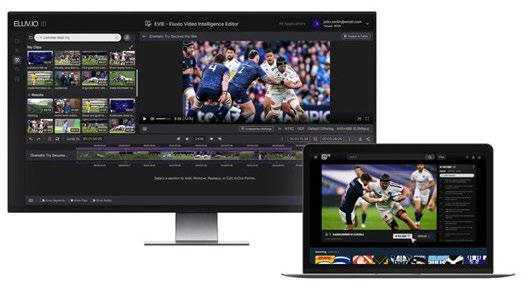
Eluvio AI: Inline, Frame-Accurate Video Intelligence & the Eluvio Video Intelligence Editor (EVIE)
Judges’ comment: Frame accurate inline AI on live content with zero file movement is a legitimate first of its kind capability. The GUI makes it accessible to non-engineers, which is what separates a platform from a science project.
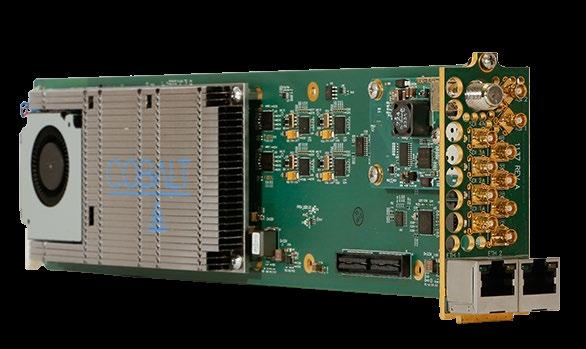
Judges’ comment: Cobalt’s Hybrid Satellite Solution addresses the looming loss of C-Band spectrum with a practical, standards-based hybrid architecture. By combining the scalability of satellite with the reliability of IP-based recovery using Reliable Internet Stream Transport, it preserves the strengths of traditional distribution while overcoming its limitations. While deployment requires technical expertise, the ability to maintain reliability, control costs, and transition gradually makes this solution both strategically important and highly valuable for broadcasters navigating the shift to next-generation distribution models.

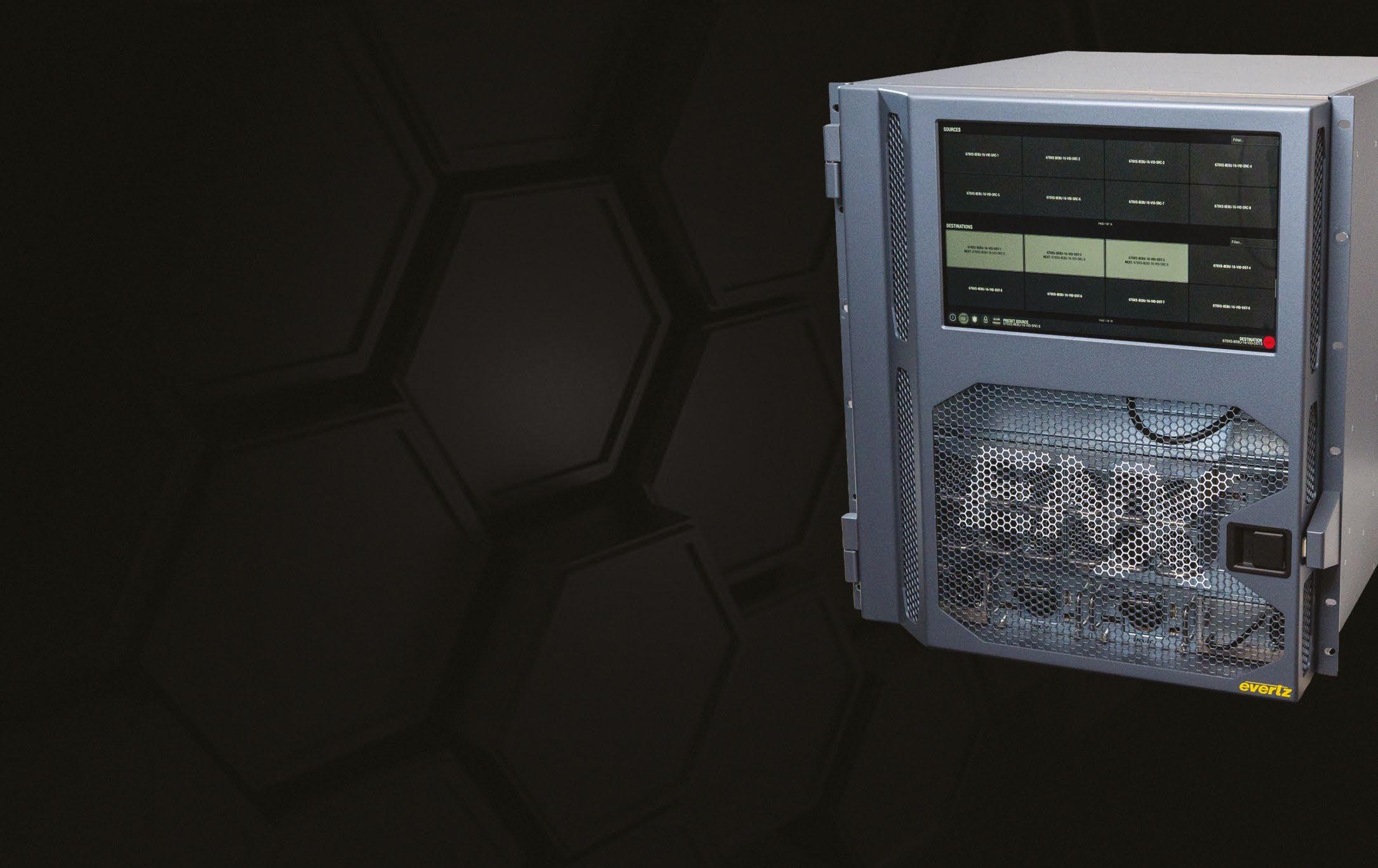
Evertz.io XChange
Judges’ comment: The product offers what Evertz terms "unprecedented density, flexibility, and global control”. The cloud-centric orchestration and processing platform is designed to manage live streams, end-to-end. Built on the evertz.io SaaS architecture, XChange provides a "single pane of glass" to seamlessly onboard, configure, control, and monitor live media workflows in different environments.
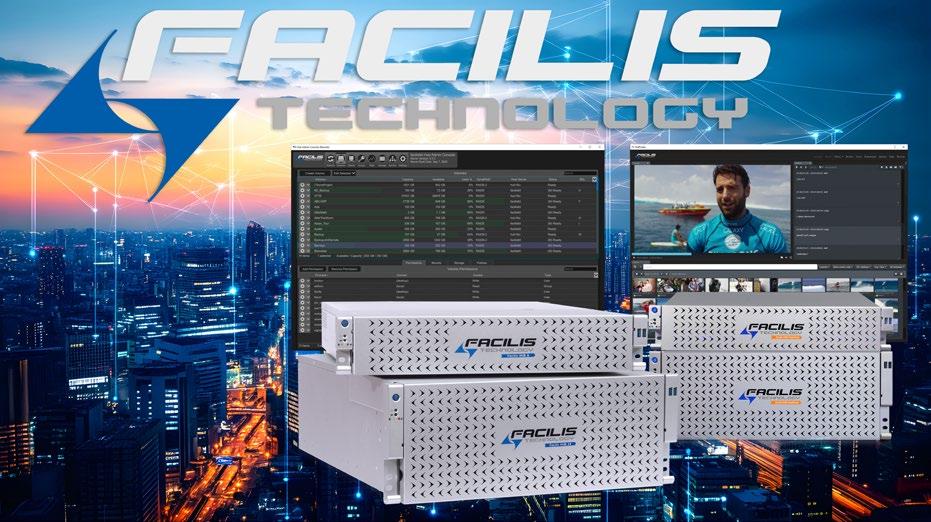
FACILIS TECHNOLOGY
HUB Shared Storage Workflow for Collaborative Content Creation
Judges’ comment: Hard to beat on value with everything from shared storage to asset management to backup included out of the box. Fastcache is a smart fix for remote workflows but seems more refinement than reinvention.

INSYNC TECHNOLOGY
FrameFormer
Judges’ comment: InSync’s new FrameFormer packages extend the motion-compensated frame rate conversion technology into a flexible SDK offering. Built on the proven FrameFormer algorithm, these new packages bring highquality video processing to a wider range of applications, from premium live sports to high-volume distribution pipelines.
Studer VistaVUE Touch
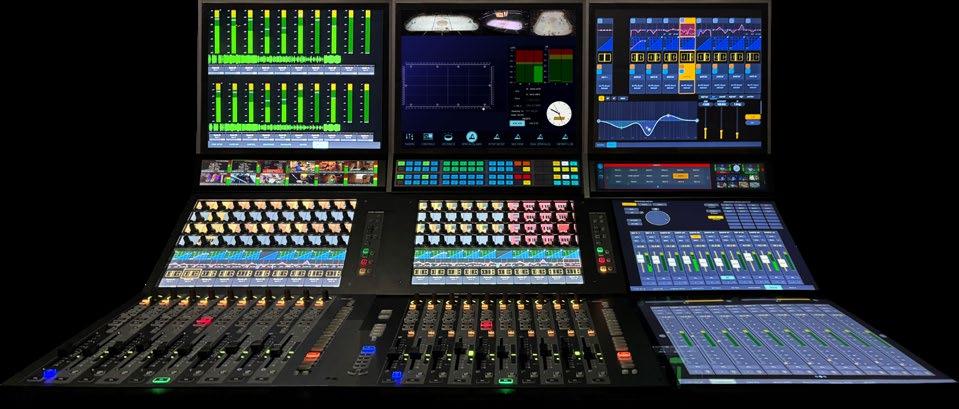
Judges’ comment: The VistaVUE Touch was built, as Evertz states, with "modular freedom" in mind to address the audio, video and control needs of today. It works by uniting Evertz VUE intelligent UI with Studer Sound. The flexibility is a major selling point.

Judges’ comment: Does the job well and is a solid enterprise product.
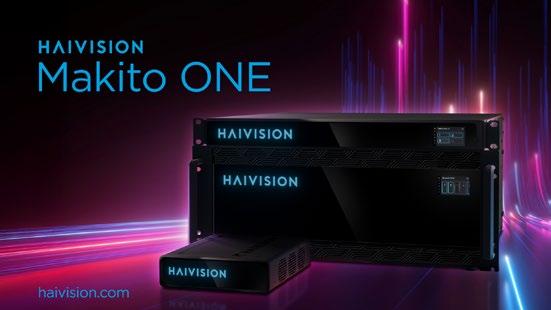
Makito ONE
Judges’ comment: Really liked Makito ONE. As a 4K capable product (with wireless 5G coming) it is a very cost-effective solution!
INSYNC TECHNOLOGY MCC-UHD

Judges’ comment: A single box that flips between high-end and standard use—real capex story for operators planning a UHD transition. Feature set is broader than the sibling modular products.
GRASS VALLEY
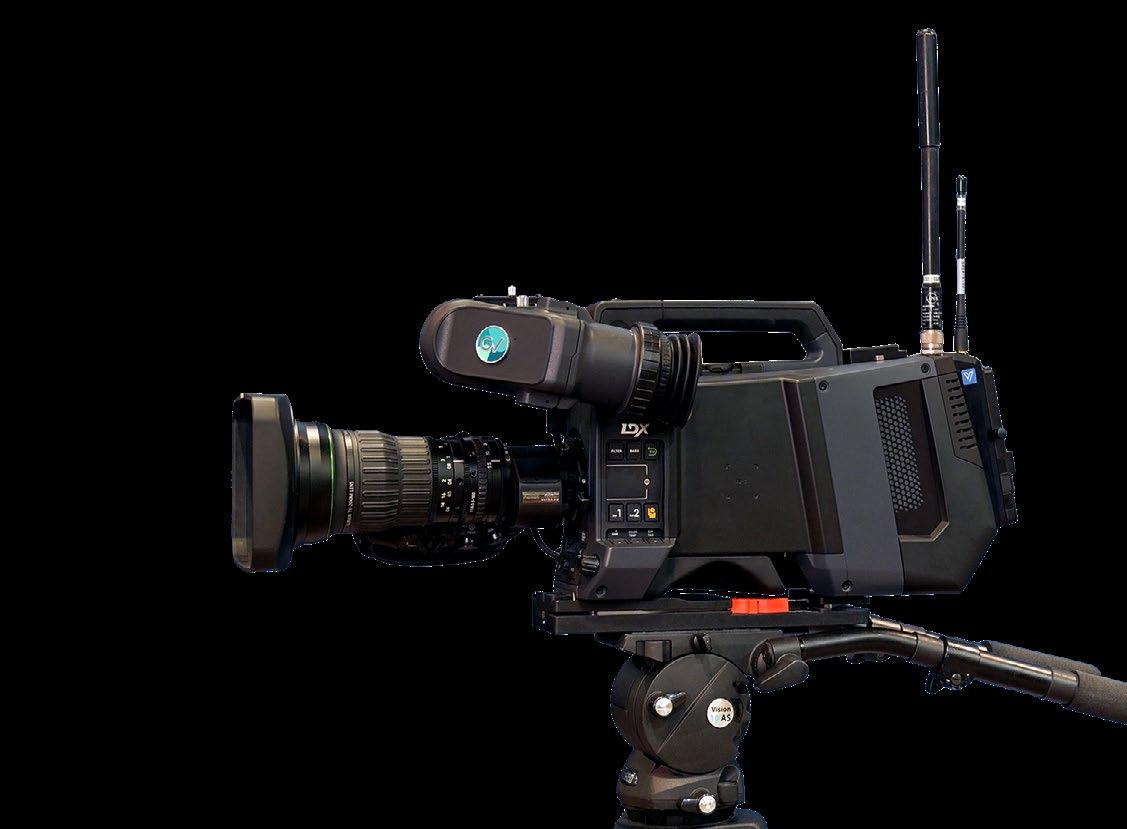
LDX 110, LDX C110, LDX 110RF
Judges’ comment: operation was very impressive to watch, especially for a product in this category. The registration file capability for the application on the smartphone to be able to send and receive those files is very important from a cost standpoint, especially to rental houses. This solves a problem and has good value in the marketplace.

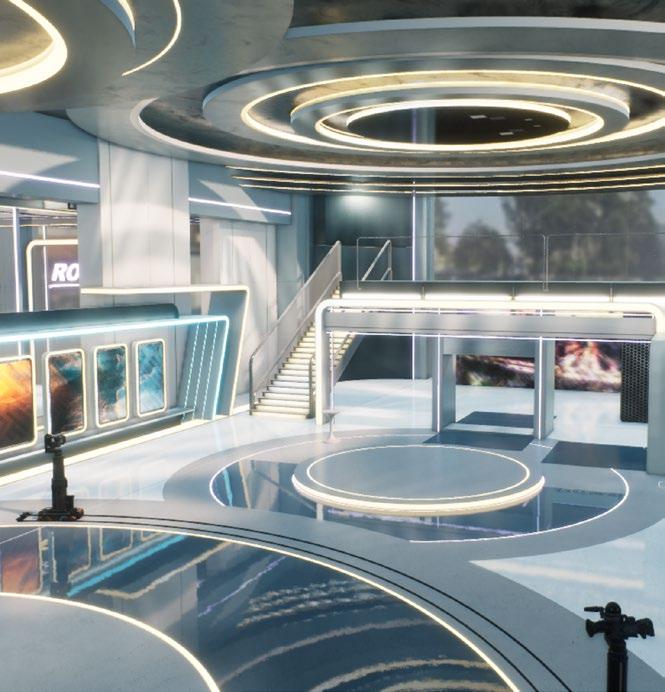
Judges’ comment: One might think of it as a very competent translation layer interpreting the vast chasm between video game development and live broadcast operations. Some flexibility will inevitably be lost in that translation, but the integration will certainly be worth it.

Senza Ignite
Judges’ comment: Super smart in creating tools optimised for the creative teams that companies have rather than the ones they wish they had.
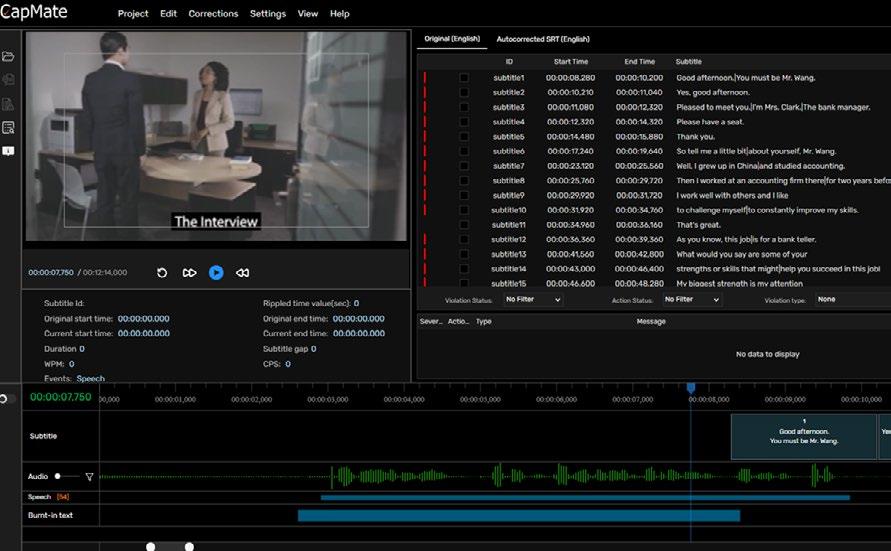
CapMate
Judges’ comment: AI captioning and translation is a no brainer—and something universally useful. I especially like CapMate's apparent facility with managing and synchronising subtitles in multiple languages.
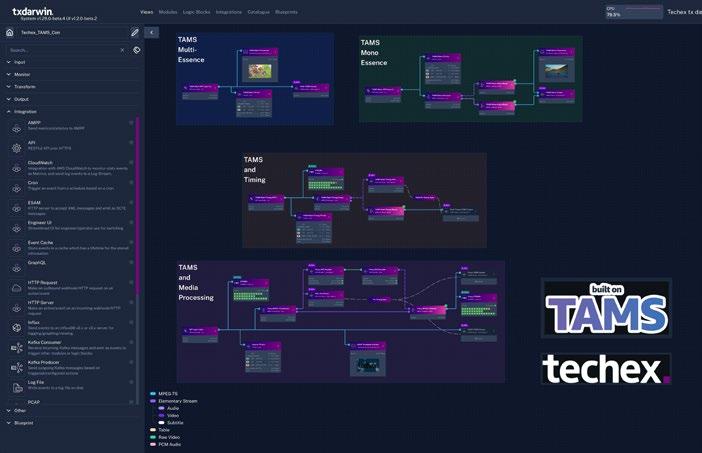
tx darwin
Judges’ comment: Wow!!
Amazing software! Anything in… ANYTHING out.. and as many output formats as needed!! Definitely a "show stopper". I think this will be a product a lot of people would like and want.
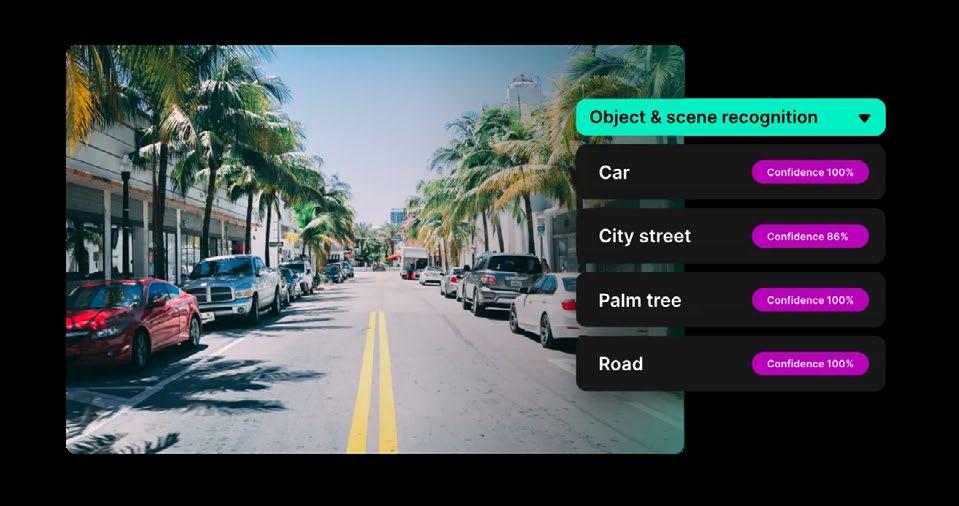
Viz One 8.1
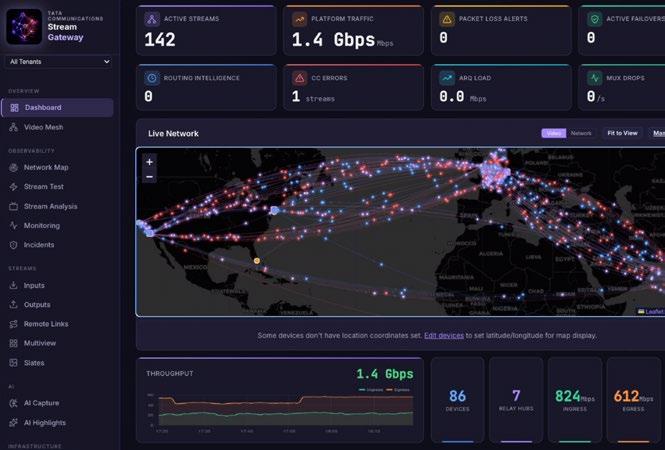
Stream Gateway
Judges’ comment: Seems supercomprehensive. Maybe even some overkill—which will actually end up being futureproofing.
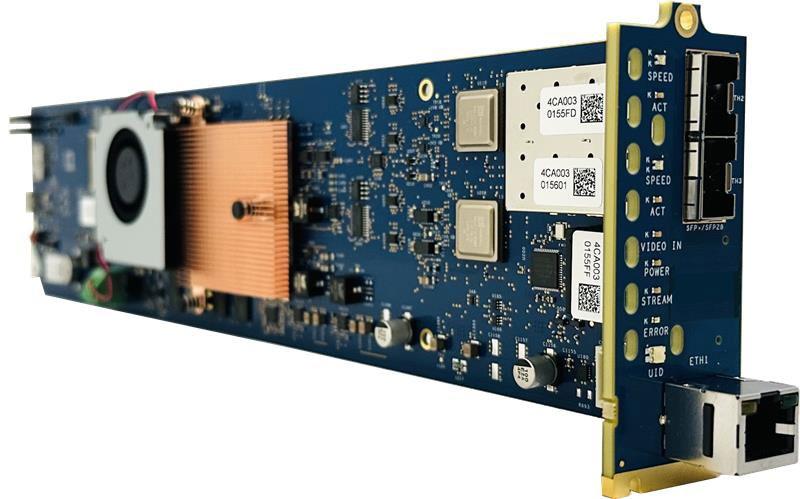
Diamond-IP OG
Judges’ comment: Solid, practical, and very useful.
Judges’ comment: Viz One 8.1 is a highly practical, efficiency-driven evolution of media asset management, with AI applied in a way that directly improves daily workflows rather than complicating them. Its strength lies in turning archive chaos into searchable, monetisable assets at scale, making it especially valuable for large content owners. It represents one of the more effective and realistic implementations of AI currently available in broadcast operations.
virtual
production, the inaugural AV and Broadcast Summit will bring together the two industries to share real-world strategies for navigating a landscape where boundaries are rapidly converging
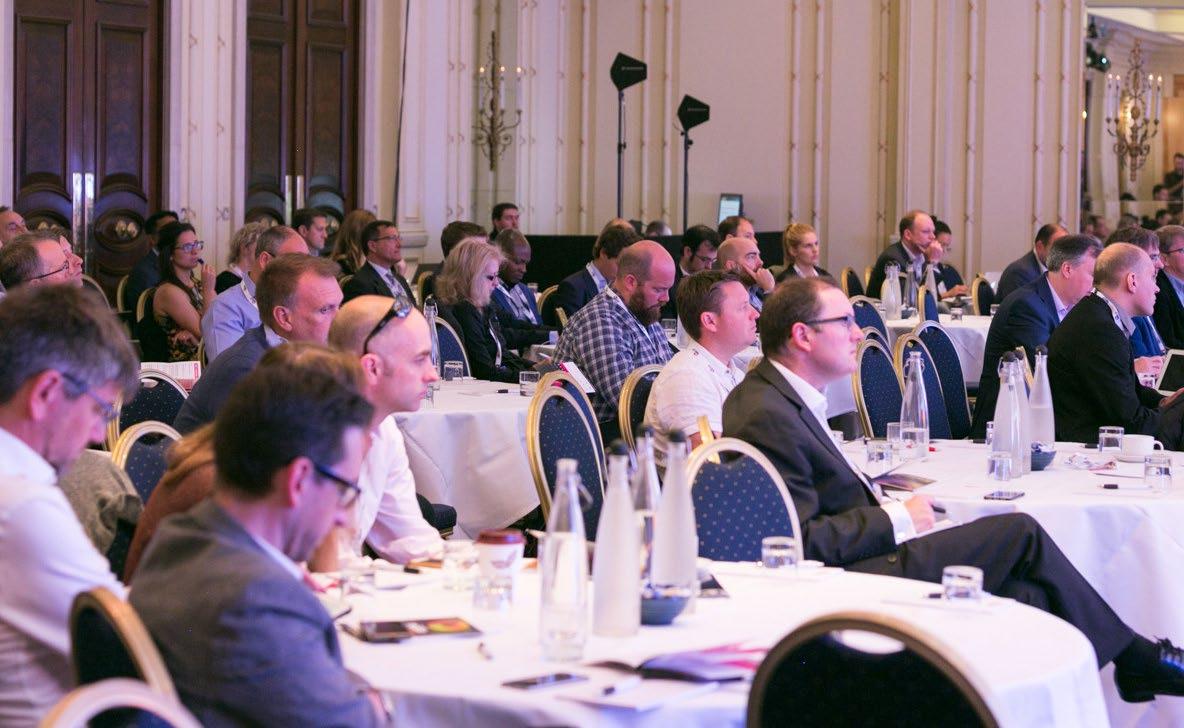
On 24th June, TVBEurope will join forces with sister title Installation on the first AV and Broadcast Summit.
The in-person event, which takes place in London, aims to give attendees a better understanding of how technology is converging between the two sectors.
“The aim of the event is to showcase how the two industries can learn from one another,” says TVBEurope content director Jenny Priestley. “We want attendees to come away from the Summit with a better understanding of how technology is crossing over, and how they can employ ideas and workflows in their working lives.”
Geared towards insight, strategy and real-world experience, the Summit will provide a forum for debate, practical learning and peer-to-peer exchange. It will explore subjects including artificial intelligence, IP and cloud workflows, production, system integration and control room design across media, enterprise, and mission-critical infrastructure environments.
“For many years, the AV and broadcast sectors operated in parallel, yet distinct universes,” adds Installation content director, Rob Lane. “This unique one-day event will bring together senior professionals
from both industries to examine how their traditional boundaries are rapidly converging.”
The overlap
The Summit will kick off by exploring how production technologies are moving beyond broadcast to find new use cases as traditional storytelling tools are adopted by corporate studios, sport, education and live events. Featured panellists include Robert Ambrose, cofounder and CEO of Caretta Research, and Helen Matthews, senior market analyst, Futuresource Consulting.
Both sectors are moving away from traditional hardware infrastructure to software and cloud, says Ambrose, with IP gaining a strong foothold in pro AV via IMPX, some SMPTE ST 2110, NDI and Dante for audio.
“We’re also tracking the increased focus on software within the pro AV environment—like automating the complexity of production processes for teams who only do it occasionally,” he adds. “More importantly, pro AV is frequently at the sharp end of revenue generation, so maximising the ROI from corporate events and announcements, digital signage in quick service restaurants, or immersive video in real environments are all areas where pro AV hardware meets broadcast meets software.”
For Matthews, there are key areas where broadcast can learn from pro AV, particularly in terms of ease of deployment, which she believes is increasingly the deciding factor for end users. “The products that are actually winning in the overlap territory, NDIenabled switchers, PTZ cameras with simplified IP setup, all-in-one hubs, succeed because they reduce the configuration burden,” she states. “Broadcast's tradition of relying on specialist engineers to set up complex infrastructure is a genuine commercial disadvantage
in a market where the buyer is a corporate facilities manager.
“Commercial agility and IT integration are also genuine pro AV strengths. Pro AV integrators have built natural working relationships with enterprise IT teams. As production workflows move onto shared network infrastructure, that IT-native positioning becomes increasingly valuable.”
IP’s potential
Given the significance of IT and IP migration in both industries, the Summit will delve into the real-world implications of IP standards, hybrid production models, and the increasing role of IT architecture. Andy Quested, international production and accessible media standards consultant, will be joined by other panellists to discuss how IP, cloud and the new Media eXchange Layer are the key pieces of technology behind converged media.

He suggests that we shouldn’t view broadcast, pro AV, films, video calls or social media production as separate, but as a whole. “IP is not next-generation SDI, it’s a radical change to end-to-end media production, exchange and delivery,” he argues. “Do we need to have a single operating model or do we develop ways to merge multiple systems into ‘my’ preferred operation? You could say the most needed skill in early IP (as we are now) is creating fixes and patches to allow connection between systems and devices. Later, could we see selfpatching/repairing code-based agents sitting across the equivalent of today’s control rooms?”
AI’s impact on workflows
Skills are an important topic across both industries, particularly when considering the potential impact of artificial intelligence. The reshaping of workflows across both broadcast and pro AV is a catalyst for opportunity, believes media technology consultant Purinder Gandhu. ”We have seen this major change across our sector many times,


analogue to digital, on prem to cloud and the introduction of 2110 and NDI opened those conversations about how we reskill people from IT engineering backgrounds to understand broadcast," she explains. "AI can automate a task but can’t replace the human who understands the why (yet!)”
Gandhu cites sport as an area where both industries can see benefits from the introduction of AI. For example, smaller organisations can run automated camera coverage with minimal crew.
“As the demand for content increases, the agility of these smaller organisations, unrestricted by legacy hardware or operational mindset, becomes a competitive advantage. The ceiling for quality is within reach now and that changes who actually gets to tell the stories. From a perspective of inclusion and representation that’s important and a fairly underappreciated impact of AI right now.”
Virtual production: expanding into enterprise
Virtual production is one area where there is a clear crossover between broadcast and pro AV. While it may have started in film and TV, thanks to the likes of The Batman and Coronation Street, there is a growing interest in the enterprise sector, where virtual production is employed for everything from themed restaurants to immersive entertainment.
The AV and Broadcast Summit will explore how virtual production tools are being deployed in new environments and how organisations are evaluating their long-term value. Building an on-site studio is a considerable investment, but the ability to create content, consistently and at scale, is key for any company looking to invest in the technology, according to Rob Chandler, founder of Starting Pixel, a global community exploring virtual production. “For organisations that have put content at their core, a virtual production studio is a no-brainer," he states. But a strategy has to be in place first; you can’t just build a studio and expect the content to create itself. The internal mindset shift is required before you start speccing the tech.
“Ideally, understand what problem you need it to solve, then establish what kind of capex and running costs you’re going to need to look at to get there. Don’t forget to consider long-term utilisation and staffing forecasts as well.”
The full agenda for the AV and Broadcast Summit is available on the following page. To secure a place in the audience, click here, or visit www.avbroadcastsummit.com/2026/registration
There are a limited number of sponsorship opportunities remaining, enabling companies to position themselves at the centre of the discussion. To find out more, click here, or visit www.avbroadcastsummit.com/2026/why-sponsor
More speakers will be announced in the run-up to 24th June; keep an eye on TVBEurope.com for all the latest information.
08:30 - 09:30 (BST)
Check in and Breakfast
09:30-10:00 (BST)
AV & Broadcast Convergence: Where Are We Now?
This opening session examines where the two sectors overlap today, where differences remain, and how changing technologies and market demands are bringing them closer together in a convergence evolution.
10:15-10:45 (BST)
From Broadcast-Only to Enterprise-Ready: How Production Technologies Are Moving Beyond Broadcast Production technologies once designed for traditional broadcast are increasingly appearing in corporate studios, education environments and live events. This panel explores how vendors are adapting broadcast tools for new markets, how complex workflows are being simplified for enterprise users, and what opportunities this shift creates for integrators and technology providers.
10:45 - 11:15 (BST)
Networking break
11:15 - 11:45 (BST)
The Media eXchange Layer: IP, Cloud and the Infrastructure Behind Converged Media
The shift from SDI to IP has transformed the foundations of modern media systems. Software-defined infrastructure, cloud workflows and network-based signal transport are now creating a shared technology layer used by both broadcasters and AV professionals. This session explores the practical realities of IP standards, hybrid production and the growing influence of IT architecture.
12:00 - 12:30 (BST)
AI: Automation, Augmentation or Replacement?: Rethinking Media Workflows
Artificial intelligence is beginning to reshape how media is produced, managed and distributed. From automated switching to content localisation and metadata generation, AI promises new efficiencies and capabilities. This panel examines where AI is already delivering value, where it remains experimental, and how organisations can balance automation with human expertise.
12:30 - 13:30 (BST)
Lunch
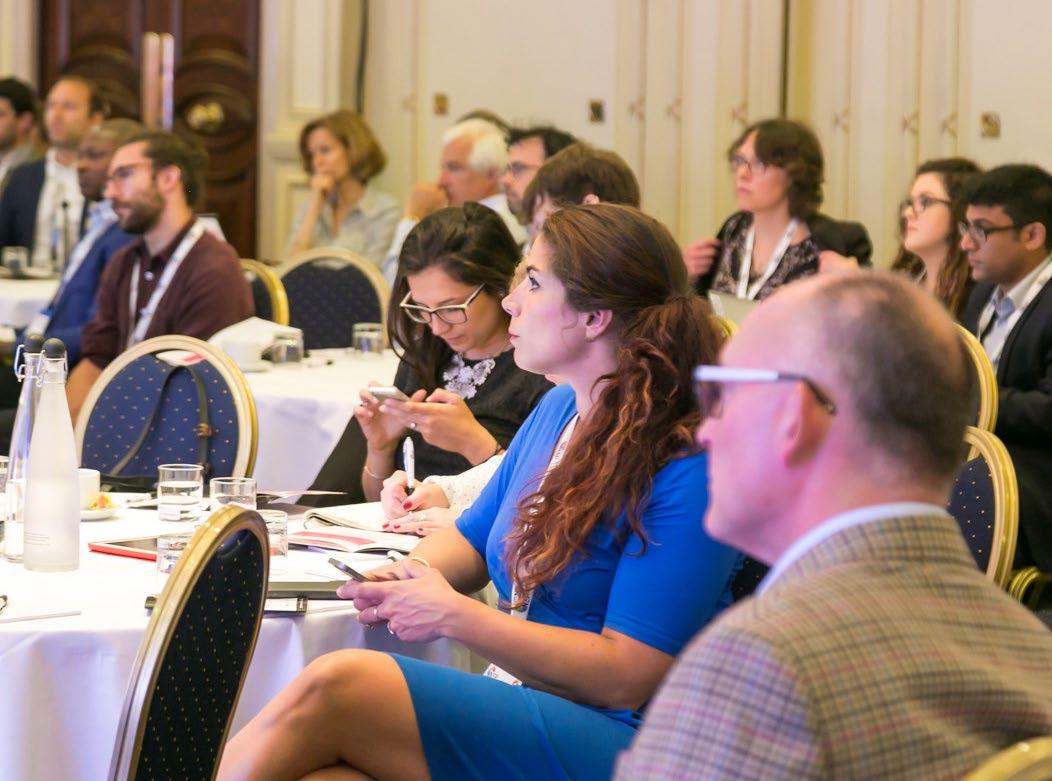
13:45 - 14:15 (BST)
Virtual Production Beyond the Studio: From Broadcast Sets to Corporate, Education and Live Events
Virtual production technologies are rapidly expanding beyond film and television studios. LED volumes, real-time graphics and virtual sets are now being adopted in corporate communications, education and live events. This session explores how these tools are being deployed in new environments and how organisations are evaluating their longterm value.
14:15 - 14:45 (BST) Networking break
14:45 - 15:15 (BST)
The Modern Control Room: Designing for Hybrid Teams and Always-On Media
Control rooms are evolving rapidly as broadcasters and media organisations adapt to distributed production, remote teams and continuous content delivery. Increasingly, similar approaches are appearing in enterprise environments such as finance, government and utilities. This panel explores how control room design is changing, from multi-platform monitoring and IP-based workflows to remote operations, resilience and cybersecurity.
15:15 - 15:45 (BST)
The Networking of Sound: Audio at the Intersection of Broadcast and AV
From wireless microphone systems and intercoms to IP networking and softwaredefined control, the boundaries between broadcast and AV are becoming less distinct. This panel explores how audio technologies are adapting for wider deployment, and what this shift means for interoperability, scalability and system design.
15:45 - 16:45 (BST)
Closing reception

A production revolution is underway behind the scenes of Germany’s longest-running daily drama, Rote Rosen, as it migrates workflows to a fully in-house unified post production system
Producing 48 minutes of scripted drama every weekday is not for the faint-hearted. For Germany’s Rote Rosen one of the longest-running daily soaps with over 4,200 episodes to its name—the pace is relentless, the workflows complex, and the pressure to deliver constant.
Behind this unceasing output, and partly because of it, a creative and technical revolution is taking place as the post production pipeline migrates from long-standing Avid-based systems to a fully in-house workflow, built entirely on DaVinci Resolve Studio and utilising MacOS systems.
Until recently, Rote Rosen had relied almost entirely on external post facilities, outsourcing everything from hardware systems to personnel, an ill-fitting arrangement considering the scale and continuity requirements of a daily production. “A huge chunk of the budget disappeared every month into third-party providers,” recalls Jonathan Happ, post production supervisor on Rote Rosen and the technical architect of the new pipeline. “We didn’t own the tools. We didn’t own the infrastructure.”
“We were stuck in a loop. Everything was built around AAFs, external grading, sound transfers—an entire layer of logistical overhead that
wasn’t helping the production. We needed a system that allowed us to be in the edit, not in transit.”
During this period, Happ began introducing DaVinci Resolve systems into isolated parts of the pipeline: ADR, VFX, and audio clean-up. A breakthrough moment came while he was working on unrelated documentary projects (Happ’s background is in documentary filmmaking), where he was trialling AI voice cancellation tools to clean noisy location audio. When he presented the results to Rote Rosen’s production team, the clarity of the clips and the speed of delivery made an instant impression.
“The producer saw the potential,” he explains. “And once we demonstrated that this wasn’t just about noise reduction, but about eliminating entire workflows, then the conversation really opened up.”
That conversation led to a wholesale reimagining of the post production pipeline, led by Studio Hamburg Serienwerft managing director and producer, Jan Diepers, moving from a patchwork of thirdparty tools to a new unified system that could handle editing, VFX, grading, audio post, ingest and delivery.
Creative potential
As well as proving more productive and efficient, the migration to a more open system has given the team greater control over its
The system is also opening new avenues of collaboration, with music producers (up to 10 artists produce scores for the episodes) able to deliver their own mixes directly into the project, and DoPs and on-set teams able to work together more actively in the post process.
“The great thing is that scaling up now doesn’t require doubling the infrastructure like it used to; it’s just three more workstations and we’re good to go. Before, we’d be talking about switch capacity, storage upgrades, Teradici licences… it was insane.”
The democratisation effect
Happ sees the growing accessibility (and affordability) of broadcastgrade systems as part of a larger trend in the industry, one that’s levelling the playing field for smaller, niche content providers against their larger, better resourced broadcaster counterparts.
assets and workflows, allowing for significant cost savings. “We’re also reducing dependency on ‘legacy’ systems,” Happ explains.
“The new set-up gives us the freedom to connect to our own APIs, manage storage in the way that we need to, and eliminate licensing bottlenecks. Over time, we feel the efficiencies and creative opportunities are going to be enormous.”
The creative potential of the new set-up is something Happ is particularly excited about. “Having Fusion templates pre-loaded for our editors means we don’t need to outsource simple effects anymore. We’re also developing more progressive grading styles, something the old pipeline couldn't easily support.”
Happ offers an example from a recent episode involving characters interacting with each other via their laptops while gaming online. The team were able to create rotational layers inside the frame, a look built entirely within DaVinci Resolve. “It’s quite fancy stuff—building multiple layers within the picture—but very easy to create.
"We’re still early on in terms of exploring these kinds of creative enhancements, but we can already see how much it can potentially add to the look and feel of the show.”
It’s a shift that he believes is helping to bridge the talent and skills gap, encouraging a more diverse range of talent into productions. “I used to use Resolve on my laptop as a freelancer. Now I’m using it to deliver broadcast episodes to one of Germany’s biggest networks.”
“For productions like ours, the democratisation effect makes it easier to find people who know the software because they’ve been using it from the formative stages of their careers," he continues.
"Finding assistants trained on some of the standard legacy systems is nearly impossible but with things like Resolve, we can start bringing in students and junior editors from local film schools. The barrier to entry is much lower, and the potential for growth is massive; and not just for us, but in the wider industry.”

Rote Rosen, the decision to invest in a new post ecosystem may have been born of economic necessity, but it has subsequently given it the technical and creative platform to build a production process for the future.
“There were years where every season we’d be told: ‘This could be the last one.’ At one point, they even considered cutting episode lengths to save money," says Happ.
"But thanks in no small part to our new workflow, we’re now able to look ahead to what’s possible in terms of production capabilities.”

In the latest of our series focusing on the day-to-day realities of working in media and entertainment, Emily Dalton co-founder and director of Factual Fiction, talks to TVBEurope about running the UK’s first off-grid production company.
What is your job title and what does it entail?
Co-managing director. I work alongside my husband, Tom, and we are jointly responsible for running the company, generating ideas and making the decisions that ultimately (hopefully) lead to a show being broadcast.
Tell us about your most recent project.
Our six-part drama series, The Puzzle Lady, just aired on PBS in the US. We worked with a fabulous cast led by Phyllis Logan. It was fantastic creating a world and watching the cast bring it to life. I am constantly in awe of actors’ work. We also just delivered three shows for Channel 4, hosting the offline and picture post ourselves at our new solar-powered post facility, The Sun House.

Describe your daily working routine.
Everyone who works in a creative industry would agree that it’s hard to separate work and home life; and being married to my business partner means there is even less divide! We don’t have regular work patterns: when we are in production, we are on call 24/7. A night shoot on a drama might start at 2 am and if there’s a problem, you need to be available.
When we aren’t in production, we are thinking up new ideas, so a normal working day could involve watching the first 10 minutes of 10 shows to check out competition and commissioning trends, overseeing the edit for a sizzle reel and feeding back on the graphic design for a new pitch deck. But I try not to just stare at a screen all day; the best ideas come from getting out and talking to people, asking questions. I drive the kids mad because even out shopping I can’t help chatting to the person on the till: everyone has a story and if you’re curious, you never know where a conversation will lead. It’s what I love about my job.
What sort of technology do you work with on a daily/ frequent basis?
A lot! Our editors cut on Avid and I use Parsec and Jump to remotely connect: it’s great because I can be working on something else at the other end of the country, and I can review an edit without having to wait for an upload or get in the car and drive hours to the post house.
Like everyone at the moment, we do an increasing amount of work with generative AI, whether it be running LTZ 2.3 locally via ComfyAI or trying to get Kling or Gemini Pro to produce consistent results. The creative side of our jobs goes hand in glove with technology and I’m really excited by how tech encourages innovative thinking and new ways of seeing the world.
But probably the most exciting thing for me has been launching our off-grid post facility
The Sun House. Our industry uses a huge amount of energy and we’ve got to find ways to reduce our impact. So we’ve decided to open our solar-powered post facility to other producers who are interested in reducing their footprint.
How has technology changed your life since you started your career?
The biggest shift prior to AI was the point in the early 2000s when increased
broadband capacity meant the way we worked changed fundamentally. Tthe internet was well established at the start of my career (I’m not that old!) but it wasn’t as dominant. It’s changed our work life geographically, socially and ultimately to a point where content can be created with nothing more than a (albeit expensive!) computer.
What piece of equipment can you absolutely not do without?
A camera.
And what do you wish someone would invent to make your job easier?
An AI tool to do post production paperwork. This seems so glaringly obvious that maybe it exists and I just don’t know about it. Filling in music cue sheets and archive logs is time consuming and (as far as I know), the digital info from a project can’t be pulled out and submitted by AI, which means a person has to copy across the data, taking money and time that could be better spent elsewhere.
What has been your favourite/most memorable assignment?
I loved digging up Richard III in a Leicester car park. And working with Amazon, wonderful director Ashley Francis-Roy and producer Jonathan Smith on our Prime series The Greatest Show Never Made was a creatively very happy experience. But my favourite project was producing my husband’s scripts for the brilliant Agatha series (The Truth of Murder; The Curse of Ishtar and Midnight Murders). I would love to work with him again on a project where we have such strong creative ownership.

And least favourite (names may be withheld to protect the innocent/guilty)?
Being two weeks away from principal photography The Puzzle Lady without a signed IPA – i.e. Factual Fiction was on the hook for approximately £250K worth of costs with no recourse if things went wrong. Which thankfully they didn’t!
What do you see as the next big thing in your area?
The continuing ascent of generative AI, which is exciting and scary and fantastic and dumb all rolled together!

Paul Wallace, head of client services, PA TV Metadata, explains why precision EPG data is crucial for broadcasters delivering the action from this summer’s FIFA World Cups
Few events still command true “appointment to view” television like the FIFA World Cup. Despite increasing audience fragmentation across streaming platforms, the tournament is once again expected to pull millions back to live, linear viewing. In the last three tournaments, a World Cup fixture has been the most-watched programme of the year in the UK—an indication of its enduring audience appeal.
The big industry talking point today is content discovery, but for an event like the World Cup, discovery is not the challenge. Come kick-off, audiences will be well aware of when and where to find the action. The real test for broadcasters, content owners and platforms is delivering the best possible viewer experience. In that context, accurate and responsive schedule data becomes critical.
Live sport always presents scheduling challenges, but this tournament introduces several unique complexities that will require precision and agility to ensure viewer expectations are met.
With matches spread across three countries and multiple time zones, and more teams competing than ever, clear and accurate schedule data will be essential in signposting audiences to an increasingly dense fixture list. Even seemingly minor details, such as how matches are titled on screen, become important.
With limited screen real estate across devices, presenting team names clearly and consistently is key. I can imagine UI designers and metadata managers wincing as Bosnia and Herzegovina qualified ahead of the much more editorially manageable ‘Italy’ in the play-offs in March.
Additionally, signalling that a fixture is part of the FIFA World Cup, something that is crucial amid a crowded summer of international team sport, including the Women’s ICC T20 World Cup and inaugural Rugby Nations Championship, makes managing this metadata a careful balancing act.
Tournament-specific rule changes can also have a direct
impact on schedules. At Qatar 2022, FIFA’s directive to more accurately account for stoppages significantly extended added time, with England’s opening match against Iran featuring an unprecedented 27 minutes across both halves. These changes introduced new levels of uncertainty for schedulers.
At the 2026 tournament, mandatory three-minute water breaks for player welfare in each half will add further stoppages to matches. While these breaks offer opportunities for advertising, they also introduce additional timing considerations that must be reflected accurately in schedules and metadata.
External factors will also play a role. During the 2025 Club World Cup in the USA, also held in the summer months as a dress rehearsal for this year’s tournament, several matches were delayed due to lightning and heavy rain, sometimes for extended periods. Similar disruptions this summer could lead to overlapping fixtures and significant knock-on effects across global broadcast schedules. In these situations, realtime updates to schedule data are essential to keep viewers informed and to maintain trust in the viewing experience.
Time zone differences will add another layer of complexity for UK and European audiences, with many matches kicking off late at night or in the early hours. This is likely to drive increased use of PVR and catch-up viewing. These recordings rely on accurate EPG data, meaning any overruns or schedule changes must be reflected quickly and precisely to ensure viewers don’t miss key moments. Once the tournament enters the knockout phases, where extra time and penalties loom large, schedulers and data managers will need to be ready to spring off the bench like the proverbial super-sub to ensure schedules and metadata are updated and no one misses a kick.
In a competition that is often defined by unpredictability on the pitch, the expectation off the field of play is absolute reliability. For broadcasters and platforms alike, that reliability starts, and often ends, with the quality of their schedule data.