www.scientistlive.com
October 2026
EUROPEAN LABORATORY TECHNOLOGY SUBSCRIBE FOR FREE
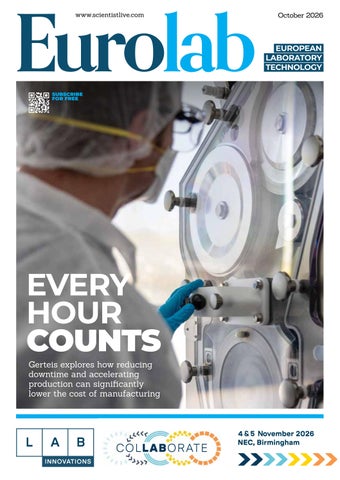
EVERY HOUR COUNTS Gerteis explores how reducing downtime and accelerating production can significantly lower the cost of manufacturing
Your Source for Tablet Press Replacement Parts
Just Got Stronger.
More parts. More services. More engineering expertise. Natoli and Scheu & Kniss are expanding what’s possible for tablet manufacturers everywhere.
natoli.com | scheukniss.com
CONTENTS
EUROPEAN LABORATORY TECHNOLOGY
Welcome This autumn 2026 issue of Eurolab focuses on practical innovation within the life sciences and pharmaceutical sectors; and the cover story Every hour counts, a guide for manufacturers on how best to choose a roller compacter, is a good example of this. We also have a spread from the organisers of renown biotechnology show, Lab Innovations (page 12 and 13) covering this year’s five key themes: sustainability, AI & automation, applied innovation, quality & compliance, and skills & development. These themes are all touched upon in this issue, to a greater or lesser extent. As usual we look at developments in research and funding (see industry news page 6), as well as advances in biotechnology with a piece from CN Bio (page 30) exploring how transcriptomics benefits tissue models. A topical piece from Sino Biological (page 32) detailing how Cell-Free Protein Synthesis (CFPS) can overcome the wet lab bottleneck will interest those interested in how AI might speed up drug development and production. AI is a key focus elsewhere too with a report from agentic AI lab management and data solutions provider Cenevo (page 14) finding that although rudimentary forms of the technology are being used by most life sciences labs, just 5% are using AI agents in production, the area tipped to be most revolutionary for the sector. A Q+A with Marco Ravot-Licheri from Tecan regarding the integration of AI agents into its Introspect platform illustrates how such advances promise to reduce repetitive work for scientists, leading to greater innovation and creativity. Nicola Brittain Editor
8
– OCTOBER 2026 – COVER STORY
8 12
Every hour counts How to choose the right roller compactor
Sector challenges The five key Lab Innovations themes
20 22
Reliable liquid handling The role of liquid handling in vaccine development
Solving a shortage Tackling the problem of lab space shortage
INDUSTRY NEWS
6
Global news Four stories from the sector
ANALYTICAL & LABORATORY EQUIPMENT
14 16 18
From digital to agentic Exploring the roadmap for AI uptake
A new paradigm New regulations will change packaging processes
Degassing for reliability The next generation of in-line degassers
14 www.scientistlive.com
3
CONTENTS
BIOTECHNOLOGY
CHROMATOGRAPHY
SHOW PREVIEW
24
40
48
26 28 30 32 36 38
UK investment lagging A snapshot of the investment landscape
Tracking transcripts What transcriptomics adds to human tissue models
Advances in detection Looking at pyrogen and endotoxin detection
Turning CG problems into breakthroughs An expert provides his insights
TABLETING
43
Mastering tablet compression tooling A step-by-step guide
50 50
CPHI Milan-based show is hub for pharma professionals
Genomics Informatics UK-based event for genomics specialsits
Pharma Forum EMEA A must-attend pharma show
Treating transplants The role of immunology in the transplants landscape
Accelerating AI-driven drug discovery How CFPS can overcome the wet-lab bottlenck
Agentic analytics The benefits of AI integration
The human factor Improving life sciences PR
26
48
PUBLISHER Jerry Ramsdale EDITOR Nicola Brittain nbrittain@setform.com STAFF WRITER Lydia Arundel larundel@setform.com DESIGN – Dan Bennett, Jill Harris HEAD OF PRODUCTION Luke Wikner production@setform.com HEAD OF SALES & PARTNERSHIPS David Pattison ACCOUNT DIRECTORS John Abey | Peter King SENIOR ACCOUNT MANAGERS John Davis | Darren Ringer | Roy Glasspool
4
Setform’s international magazine for scientists is published twice annually and distributed to senior professionals throughout the world. Other titles in the company portfolio focus on process, design, transport, oil & gas, energy and mining engineering. The publishers do not sponsor or otherwise support any substance or service advertised or mentioned in this book; nor is the publisher responsible for the accuracy of any statement in this publication. ©2026. The entire content of this publication is protected by copyright, full details of which are available from the publishers. All rights reserved. No part of this publication may be reproduced, stored in a retrieval system, or transmitted in any form or by any means, electronic, mechanical, photocopying, recording or otherwise, without the prior permission of the copyright owner.
ACCOUNT MANAGERS Paul Maher | Iain Fletcher
Setform Limited | Suite 3.10, Ellisse by Spacemade, 10 St Bride Street, London EC4A 4AD
e advertising@setform.com
t +44 (0) 207 253 2545 e mail@setform.com
www.scientistlive.com
EVERY HOUR COUNTS How to choose the right roller compactor
Unlock Faster
Bispecific Antibody Development
Integrated solutions for bispecific antibody development, from target screening to functional validation.
Explore BsAb Solutions
www.sinobiological.com
INDUSTRY NEWS
GLOBAL INDUSTRY INSIGHTS A roundup of world news from the science industry
THE NSF LAUNCHES THREE SCIENCE AND TECHNOLOGY CENTRES The US National Science Foundation (NSF) has allocated US$90m over five years to build three new NSF science and technology centres. The project aims to advance American leadership in science and technology, strengthen the nation’s STEM workforce, and accelerate innovation in fields ranging from AI and biotechnology to nuclear fusion energy and robotics. The three centres will bring together researchers from universities, national laboratories, industry, and other partners to pursue ambitious, collaborative research. Each will receive approximately US$6m annually for an initial fiveyear period, with the opportunity to compete for up to five additional years of support. The three science and technology centres will include:
• The Centre for Transformative Explorations in Multi-Physics and Engineering of Scientific Turbulence (TEMPEST) to be led by the University of Michigan. • The Centre for Genome Intelligence Engineering (GENIE) led by Northwestern University, • The Centre for Human and Robot
Co-Adaptation (CHRCA) led by the University of Texas at Austin. These investments will advance priorities outlined in recent Office of Science and Technology Policy guidance. For more information visit: www.nsf.gov
UK’S MHRA ANNOUNCES A £20M PROGRAMME TO BOOST REGULATION The Medicines and Healthcare products Regulatory Agency (MHRA), the UK government body ensuring medicines, medical devices, and blood products are safe and effective, has announced a new £20m programme to strengthen the UK’s ability to regulate emerging healthcare technologies and support the safe adoption of innovations. The programme will create four new Centres of Excellence for Regulatory Science and Innovation (CERSIs), with each funded for up to five years. The funding aims to strengthen the UK’s capability and agility in regulatory science and help ensure regulation keeps pace with rapid technological advances in healthcare and life sciences. The body has partnered with the
6
www.scientistlive.com
Medical Research Council (MRC) and the Office for Life Sciences (OLS) to offer the funds and the group are currently inviting applications for tender. The CERSIs aim to bring together world-leading expertise from across academia, industry, healthcare and regulation to develop practical solutions to emerging regulatory challenges and help ensure new innovations can be safely adopted in practice.
Following extensive engagement across the sector, four strategic areas have been identified where regulatory science capability is required to support the next generation of healthcare innovation: • Data driven approaches and artificial intelligence • Prevention, early detection and novel evidence approaches • Personalised healthcare and pharmacogenomics • Novel platform technologies
For more information visit: www.gov.uk/government/news/ funding-opportunity-launchedto-strengthen-uk-regulatoryscience-and-support-healthcareinnovation--2
INDUSTRY NEWS
CARTERRA PROVIDES WET-LAB FOR ANTHROPIC’S AI PROTEIN DESIGN STUDY Provider of high-throughput surface platforms for antibody and small molecule drug discovery, Carterra, has highlighted the role of Carterra’s HT-SPR platform in one of the largest published wet-lab validations of AIdesigned proteins to date. Carterra’s high-throughput testing technology helped validate protein designs created autonomously by Anthropic’s Claude AI models. An Anthropic study published in August reported that its Claude models automatically ran de novo protein binder design campaigns against 15 challenging targets, researching each target, selecting epitopes, running open-source design tools, and providing ranked designs per target without human input into design decisions. Anthropic sent the
protein designs to Twist Bioscience and Adaptyv Bio for analysis. Both use Carterra HT-SPR platforms to generate binding kinetics and affinity data at different scales. Protein design is essential in the early stages of a drug discovery campaign. Anthropic generates functional binders with hit rates exceeding prior methods in days, compared with the weeks or months
it would take a human specialist. This creates an opportunity for drug developers and shifts the bottleneck from protein design to wet-lab experimental analysis. Carterra’s HT-SPR platform overcomes this well reported bottleneck, enabling speedy generation of large-scale affinity and kinetics binding data. Josh Eckman, CEO and cofounder of Carterra, said, “This study shows the enormous potential of AI and Lab-in-a-Loop automation to accelerate drug discovery when paired with high-throughput analysis platforms. Anthropic’s AI system generated thousands of novel binders in a matter of days and Carterra generated the binding kinetics.” For more information visit: www. carterra-bio.com
EUROPEAN CONSORTIUM PILOTS CONTINUOUS MANUFACTURING PROCESS The PIPAC consortium, comprising De Dietrich, Alysophil, Bruker and Novalix, has completed a pilot programme validating a continuous manufacturing platform for active pharmaceutical ingredients (APIs). The platform combines
continuous-flow chemistry, as well as AI driven real-time analytical monitoring and control to enable pharmaceutical compounds to be produced, monitored and optimised continuously rather than through traditional batch manufacturing.
The consortium successfully trialled the technology through the continuousflow production of fentanyl, one of the pharmaceutical industry’s most potent and tightly regulated active pharmaceutical ingredients. The trial demonstrated that the platform can operate under challenging manufacturing conditions. It also provides a foundation for the future production of other pharmaceutical ingredients of different potencies. The development comes as governments and pharmaceutical companies seek new ways to reshore supply-chain resilience following years of disruption, geopolitical uncertainty and increasing concern over the concentration of API manufacturing capacity. The platform also lowers scaleup hurdles and resource waste compared with conventional batch methods. For more information visit: www.dedietrich.com
www.scientistlive.com
7
COVER STORY
Selecting the right technology partner is as critical as selecting the right machine
EVERY HOUR I C O U N T S Michael Schupp from Gerteis explores how reducing downtime and accelerating production can significantly lower the cost of manufacturing 8
www.scientistlive.com
n pharmaceutical manufacturing, selecting a roller compactor is rarely just a capital equipment decision. It is a strategic choice that can influence development timelines, regulatory success, operational efficiency, and ultimately the commercial viability of a product throughout its lifecycle. While technical specifications are important, experienced pharmaceutical manufacturers increasingly recognise that selecting the right technology partner is just as critical as selecting the right machine. This is where
COVER STORY
Gerteis has established itself as a trusted industry leader through decades of innovation and expertise.
CONSISTENCY IS KEY
A roller compactor must consistently deliver reliable performance under demanding pharmaceutical conditions. Process interruptions, unplanned maintenance events, and inconsistent product quality can have significant consequences far beyond immediate production losses. Every hour of downtime may delay batch release, disrupt supply chains, and
The Gerteis Mini Pactor Roller Compactor
www.scientistlive.com
9
COVER STORY
validation success, reduced changeover times, and improved equipment availability. As production schedules become increasingly demanding, effective CIP and WIP capabilities are no longer optional conveniences but essential contributors to overall equipment effectiveness.
SCALE UP
Gerteis systems are designed specifically for pharamceutical dry granulation processes
consume valuable manufacturing resources. In today’s competitive pharmaceutical environment, these opportunity costs often exceed the direct cost of equipment ownership. Reliability therefore becomes a critical business parameter. Gerteis systems are designed specifically for pharmaceutical dry granulation processes and have earned a reputation for robust operation, predictable performance, and longterm process stability, enabling manufacturers to focus on production rather than troubleshooting.
CONTAINMENT
Containment has become another decisive factor in modern pharmaceutical manufacturing. The increasing use of highly potent APIs requires equipment capable of meeting stringent occupational exposure limits while protecting both operators and products. Gerteis offers solutions ranging from standard containment concepts through advanced high-containment installations up to OEB 5 applications,
10
www.scientistlive.com
supporting manufacturers as their portfolios evolve toward increasingly potent compounds. High-containment systems reduce operator exposure risks while simultaneously helping manufacturers maintain product integrity and regulatory compliance. The availability of purpose-designed containment concepts allows pharmaceutical companies to implement a future-proof strategy instead of adapting equipment beyond its original design intent.
EFFICIENT CLEANING
Equally important is the ability to clean equipment efficiently and reproducibly. Cleaning operations can represent a substantial portion of overall manufacturing time, particularly in multi-product facilities. Gerteis supports pharmaceutical manufacturers with integrated Clean-in-Place (CIP) and Wash-in-Place (WIP) solutions that simplify cleaning processes, reduce operator intervention, and improve cleaning consistency. Beyond enhancing operational efficiency, well-designed cleaning concepts contribute directly to
Perhaps one of the most valuable advantages of partnering with Gerteis lies in the seamless transfer from development to commercial manufacturing. Scale-up remains one of the most critical stages in pharmaceutical product development, and discrepancies between laboratory and production equipment often introduce significant risk. Gerteis has pioneered harmonised roller compaction platforms that enable process parameters developed in the laboratory to be transferred directly to larger production systems. This approach significantly improves comparability between development and manufacturing scales, reducing the need for extensive process redevelopment and accelerating the path to commercialisation. Pharmaceutical manufacturers benefit from greater confidence that the granules produced during formulation development will exhibit the same characteristics when manufactured at production scale.
REPEATABILITY
Repeatability is equally crucial. Regulatory agencies expect pharmaceutical processes to deliver the same results repeatedly, batch after batch and year after year. Variability in ribbon density, granule properties, or process performance can create challenges throughout the product lifecycle. Gerteis systems are specifically engineered to provide stable process conditions and reproducible compaction performance, enabling manufacturers to maintain consistent product quality. In an industry where consistency directly impacts patient safety and regulatory compliance, repeatability is not merely a technical specification but a fundamental requirement.
A GOOD PARTNERSHIP The value of a technology partner
COVER STORY
Gerteis has been developing expertise in the roller compaction space for four decades
extends far beyond the equipment itself. Successful pharmaceutical manufacturing depends on process expertise, regulatory understanding, and responsive technical support. Gerteis has built its reputation not only through its equipment portfolio but also through decades of dry granulation know-how. Customers benefit from expert guidance during feasibility studies, formulation development, process optimisation, equipment qualification, validation, and commercial manufacturing. Application specialists support the development of robust process windows and help manufacturers translate laboratory results into reliable production processes with confidence. Another important aspect is longterm partnership. Pharmaceutical products often remain on the market for many years, and manufacturers require a supplier capable of supporting equipment throughout its entire lifecycle. Gerteis celebrates its 40th anniversary this year, marking four decades of expertise in roller compaction and dry granulation technologies. This milestone reflects not only the company’s longevity, but also the long-standing relationships it has built with pharmaceutical manufacturers worldwide through consistent quality, innovation, and technical support. Over these four decades, Gerteis has supported
customers through evolving regulatory requirements, new containment challenges, and increasingly sophisticated manufacturing processes, establishing itself as a trusted partner across generations of pharmaceutical products. The company provides operator and maintenance training, process optimisation services, upgrade paths for new containment requirements, and support for technology transfers between development and commercial sites. This continuity helps ensure that equipment performance, regulatory compliance, and operational efficiency can be maintained over decades rather than years.
SERVICE QUALITY
Service quality becomes particularly important when unexpected challenges arise. Fast access to experienced specialists can significantly reduce downtime and prevent minor issues from escalating into costly production interruptions. Examples include remote troubleshooting of process deviations, on-site support during commissioning and qualification activities, rapid delivery of critical spare parts, preventive maintenance programs, and expert assistance during regulatory inspections or validation campaigns. Such support helps manufacturers restore
production quickly and minimise the opportunity costs associated with lost manufacturing time. In highly regulated pharmaceutical environments, the combination of reliable equipment and expert service can have a direct impact on product supply. When batch schedules are tight and market demand is high, the ability to rapidly resolve technical issues, implement process improvements, and provide expert support may be the difference between meeting production targets and experiencing costly delays. For this reason, many pharmaceutical manufacturers view service quality not as an additional benefit but as an essential component of their overall risk management strategy. Ultimately, pharmaceutical companies are not simply purchasing a roller compactor. They are investing in a platform that must reliably support product development, clinical manufacturing, commercial production, and future portfolio expansion. Reliability, containment performance, OEB compliance, CIP and WIP capabilities, efficient scaleup, process comparability, batchto-batch repeatability, and highquality service all contribute to the total value of the investment. By combining advanced technology with deep pharmaceutical process expertise, Gerteis provides manufacturers with a partner capable of reducing risk, minimising downtime, controlling opportunity costs, and ensuring successful dry granulation operations throughout the entire product lifecycle. In an increasingly demanding pharmaceutical landscape, choosing the right roller compaction partner is not merely an operational decision. It is a strategic decision that influences productivity, compliance, and longterm business success. We would argue that for many pharmaceutical manufacturers worldwide, that partner is Gerteis. Author: Michael Schupp, Head of Technology & Process Engineering, Gerteis Maschinen + Processengineering
For more information visit: www.gerteis.com
www.scientistlive.com
11
COVER STORY
LAB INNOVATIONS 2026: SECTOR CHALLENGES
The event will take place in the first week of November around the theme of collaboration
Ciaran O’Shaughnessy from the Lab Innovations team explains how the eponymous trade show will address five key challenges faced by modern laboratories
L
aboratories are facing a changing set of priorities. Teams are being asked to work more efficiently, adopt new technology, improve sustainability, stay ahead of regulation and develop the skills needed for the future. Lab Innovations has evolved to meet those needs. This year, the event is returning to the NEC, Birmingham on 4 & 5 November 2026 and will bring together scientists, laboratory managers, technicians, researchers, engineers, quality specialists, procurement professionals and suppliers from across the UK laboratory community. The aim is straightforward: to give visitors practical ideas, useful connections and new technologies that can make a real difference in their laboratories.
THE 2026 THEME IS COLLABORATION
This campaign recognises that the biggest challenges facing laboratories cannot be solved by one organisation, discipline or technology alone.
12
www.scientistlive.com
Progress happens when scientists, suppliers, researchers, manufacturers and educators share ideas and find practical collaborative solutions. From life sciences and biotech to food and drink, chemicals, manufacturing and academia, members of the scientific community will find opportunities to expand their traditional network. The event is built around five key pillars: Sustainability, AI & Automation, Applied Innovation, Quality & Compliance, and Skills & Development. Sustainability continues to move from ambition to action. Laboratories are looking for realistic ways to reduce waste, use resources more efficiently and make better choices across their supply chains. As Lauren Schembri, Senior Materials Scientist at GSK, reflected in 2025 after attending last year’s show: “Sustainability doesn’t have to start with big, overwhelming changes. Even small steps matter.” AI and automation are also changing the way laboratories operate, from robotics and connected instruments to laboratory software and better use of data. Adopting
new technology well is not always simple, and Lab Innovations will showcase real-world examples helping laboratories make automation work in practice. Biotechnology (or applied innovation) remains one of the fastest-moving sectors. Advances in diagnostics, drug discovery and genomics are creating new opportunities, but they depend on strong links between research, technology and commercial expertise. Quality and compliance remain essential across every laboratory setting. As regulations and traceability requirements become more complex, the event will provide space for discussions around risk management, testing and the tools that support consistent results across a reliable supply chain. Skills and development will also be a major focus. The programme will look at how laboratories, employers and academic institutions can work together to address the skills gap and support the next generation of laboratory professionals.
COVER STORY
The event will help visitors understand how the sector is changing
CONFERENCE STAGES
These themes will run through five freeto-attend stages: Live Lab, sponsored by Sartorius, Quality Infrastructure, powered by UKAS and NPL, Royal Society of Chemistry sponsored by the RSC, Future of Laboratories, sponsored by My Green Lab, and Biotech, sponsored by Cytiva. Two keynote sessions will bring a wider perspective to the programme. Writer and broadcaster Timandra Harkness will present ‘What can a scientist do, that AI can’t?’ and Chris Smith, medical consultant at Addenbrooke’s Hospital and founder of The Naked Scientists, will present ‘Cruising for biological bruising: What makes pandemics happen?’ timely for those working across diagnostics, research and healthcare. Catch these sessions on days 1 and 2, respectively,
at 1:00 PM on the Royal Society of Chemistry Stage. The exhibition will feature a growing mix of established suppliers, new names and early-stage innovators. First-time exhibitors for 2026 include Agilent, UKRI Science and Technology Facilities Council and Fundermax, reflecting the breadth of the event. Returning exhibitors include Xylem, Mettler Toledo, Adam Equipment and Cytiva, alongside suppliers covering analysis, automation, consumables, software, sustainability and operational support. The event will also welcome emerging businesses bringing new ideas to the sector. This includes cloud-based software platform Lab Thread, molecular diagnostics company InvenireX, and VerdiBlot a company that works with develops transfer membranes - all part of a broader push to
Lab Innovations will welcome emerging businesses bringing new ideas to the sector
put early-stage innovation in front of the right audience. Beyond the exhibition and conference programme, visitors can explore more ways to connect with the ideas shaping the sector. On 4th November, the Lab Awards ceremony will recognise the people, projects and suppliers driving laboratory progress. The Sustainable Lab, delivered with Green Light Labs and UKRI, will spotlight practical approaches to greener laboratory operations. Meanwhile, the Innovation and Sustainability Pitches will give emerging businesses a platform to share new ideas and solutions with the wider laboratory community. These features add to an event built around practical progress, helping visitors better understand how the sector is changing and who is leading the charge. With thousands of professionals expected at the NEC, Lab Innovations provides a valuable chance to step away from day-to-day demands and focus on the horizon – whether you are sourcing a new supplier, exploring automation, strengthening quality processes or hearing from the people shaping the future of science.
For more information visit: www.lab-innovations.com
www.scientistlive.com
13
ANALYTICAL AND LAB EQUIPMENT
FROM DIGITAL TO AGENTIC
Data quality, overload and management are core issues blocking AI adoption
What will the growing adoption of agentic AI mean for labs? A recent report from Cenevo investigates
A
lthough basic forms of AI are being used by most life sciences labs, just 5% are using AI agents in production, according to an annual survey from agentic AI lab management and data solutions provider Cenevo. The company surveyed more than 110 life sciences professionals across R&D, discovery, chemistry, biology, clinical, and manufacturing, to better understand AI adoption and the way organisations are balancing innovation with the operational realities of modern lab environments.
PRIVACY AND SECURITY CONCERNS
The company found that while researchers are wary of advanced AI, with 58% airing privacy or security concerns, most recognise that the technology will be a critical component in lab operations for the long term. At this stage, researchers are prioritising the use of AI for data analysis and interpretation, workflow automation and orchestration, experiment design and planning, and sample and inventory management, rather than agentic-driven scientific discovery and decision making.
14
www.scientistlive.com
More than 60% of labs are exploring or piloting AI, with 57% using it for data analysis and 25% using a generative form in full production environments. Use of agents to perform discrete, previously human tasks or more complex multiagent workflows is also becoming more common, with 27% exploring or piloting the possibilities but only 5% using the technology in production.
PRIORITIES ARE AUTOMATION AND SI
instead of focusing on purchasing standalone tools, when considering investment, lab leaders say their priorities are on automation, AIenabled software, systems integration, and data infrastructure and analytics. Connecting laboratory information management systems (LIMS), electronic lab notebooks (ELNs), and instruments is a priority for 62% of small and medium-sized organisations and 50% of all organisations. This year and last, scientists said they felt that connectivity was key to
maximising the benefits of AI. More than half said their systems lacked integration, and one-third still rely on manual operations. Overall, though, progress in automation has accelerated, as last year’s survey showed that more than half of labs had manual operations.
DATA MANAGEMENT IS AN ISSUE
Data is still a core bottleneck. While 42% of respondents reported that data quality, overload, and management were issues blocking AI adoption, this was a drop from the 54% who cited it last year. “Exploring AI is now high on the agenda for most labs; however, the actual production usage of agentic workflows is still limited,” said Cenevo CEO Keith Hale. “Concerns over fragmented data, security and regulatory compliance, are hindering adoption, so labs are prioritising connectivity, automation, orchestration, and data management to ensure they can fully benefit from AI.”
To read the report visit: www.cenevo.com/download-white-paper-from-digital-to-agentic
ANALYTICAL AND LAB EQUIPMENT
Paper and cardboard packaging can help create a more sustainable lifecycle
A NEW PARADIGM
How a recent EU regulation focusing on waste reduction heralds a step change for the packaging industry
T
he packaging landscape in Europe is entering a new era. With the EU Packaging and Packaging Waste Regulation (PPWR) rolled out across the EU in August this year, organisations are being encouraged to reduce, improve recyclability and eliminate unnecessary waste through better design and resource efficiency. The regulation forms part of the EU’s wider ambition to support a circular economy and reduce reliance on virgin resources. For laboratories and scientific industries, packaging remains essential. It protects sensitive products, helps maintain sterility, supports regulatory compliance and ensures safe transportation and storage. The challenge is therefore not simply to eliminate plastic, but to choose materials that deliver the required performance with a lower environmental impact. While there are advances in polymer
16
www.scientistlive.com
engineering to improve recyclability and help materials retain performance through multiple cycles, challenges remain, particularly around scalability.
RECYCLED FIBRES CAN REDUCE DEMAND FOR RAW MATERIALS Paper and cardboard packaging is being explored for laboratory applications where product protection, cleanliness and performance requirements can still be met. When manufactured using recycled fibres, these materials can reduce demand for virgin raw materials while supporting wellestablished recycling streams. Combined with responsible sourcing and vegetable-based inks, paperbased packaging can contribute to a more sustainable lifecycle while continuing to meet product protection and usability requirements.
OPPORTUNITIES PROVIDED BY BIOPLASTICS
Bioplastics also offer promising opportunities. Bio-based materials can reduce dependence on fossil-derived feedstocks, while biodegradable or compostable plastics may provide benefits in specific circumstances where suitable collection and treatment infrastructure exists. However, no material should be viewed as a universal solution. Environmental performance depends on factors such as sourcing, manufacturing processes, product design and end-oflife management. Compostability and biodegradability are most effective when supported by the appropriate waste-management infrastructure. This is where thoughtful packaging design becomes critical. Every packaging decision should consider the entire journey of the product, from material selection and manufacture
ANALYTICAL AND LAB EQUIPMENT Biodegradable and compostable plastics are effective when supported by the right infrastructure Sources: European Commission. Packaging & Packaging Waste Regulation (PPWR) https://environment. ec.europa.eu/topics/waste-and-recycling/ packaging-waste/packaging-packaging-wasteregulation_en [environmen....europa.eu] European Commission. Packaging Waste https:// environment.ec.europa.eu/topics/waste-and-recycling/ packaging-waste_en [environmen....europa.eu] EUR-Lex. Regulation (EU) 2025/40 on Packaging and Packaging Waste https://eur-lex.europa.eu/eli/ reg/2025/40/oj/eng [eur-lex.europa.eu] EUR-Lex. Packaging and Packaging Waste (from 2026) https://eur-lex.europa.eu/EN/legal-content/ summary/packaging-and-packaging-wastefrom-2026.html [eur-lex.europa.eu]
through transportation, use and eventual recovery or disposal. The most sustainable packaging is often that which delivers the required protection and performance using the fewest resources. The Fastrak range from Alpha Laboratories is a step in the right
direction. Its earth-friendly packaging has been designed with the entire lifecycle in mind, using renewable and recyclable materials, and less singleuse plastic than other brands. These universal tips preserve performance while supporting the move towards a circular economy.
Yang, S., Du, S., Zhu, J. & Ma, S. Closed-loop recyclable polymers: from monomer and polymer design to the polymerization-depolymerization cycle. Chemical Society Reviews, 2024. https:// pubs.rsc.org/en/content/articlehtml/2024/cs/ d4cs00663a [pubs.rsc.org]
For more information visit: www.alphalabs.co.uk
5 steps to automated sample identification An automated sample identification process that is integrated with a LIMS and connected to a quality label creation system can more easily cope with an increasing number of samples. It can automatically print specialized identification labels when the samples arrive at the lab, using sample information from your LIMS. The entire system can get even more advanced with the RFID technology. Learn how to automate your sample identification system in 5 steps.
Free download BRADY Europe, Middle East & Africa emea_request@bradycorp.com www.bradyeurope.com/lab
www.scientistlive.com
17
BIOTECH FLUIDICS
DEGASSING FOR RELIABILITY Fritiof Pontén and Anders Grahn explore the next generation of stand-alone inline degassers
I
nclusion of an inline degasser (see Figure 1) within a precision fluidic system is typically required to accomplish a reliable and robust output. This holds true regardless of whether the apparatus is designed for reagent dosing, in vitro diagnostics, next generation sequencing, liquid chromatography separations or other analytical instruments. Without any degasser that remove dissolved gases, bubble formation often becomes a serious problem that affects flow accuracy, especially if the transported liquid is exposed to changes in temperature, pressure, or composition throughout the flow path. In contrast, a fluidic system with a properly designed inline degassing setup results in higher process precision, improved data accuracy, and shorter startup times.
INLINE DEGASSER DESIGN
An inline degasser assembly contains a purposedly designed vacuum pump connected to one or several degassing chambers through which each liquid with dissolved gases flows. Inside the degassing chamber (see Figure 2) there is an inert, gas-permeable membrane that must be compatible with the liquid to be degassed. A control board with a vacuum sensor ensures that the vacuum level is kept at a constant level to minimise fluctuations in degassing performance and wear on the vacuum pump. Besides visual status feedback on the front panel, certain inline degasser designs can also communicate vacuum levels or convey error messages to external system software.
18
www.scientistlive.com
Figure 1. Example of a stand-alone inline vacuum degasser from the DEGASi NG family, suitable for aqueous liquids and organic solvents at flow rates from 5 µL/ min up to 1 L/min, depending on model and configuration
EXTENSIVE TECHNOLOGY UPGRADE TO INLINE DEGASSERS The DEGASi program of stand-alone inline degassers manufactured by Biotech Fluidics has for decades been delivering top performing gas removal from liquids within fluidic systems in a wide range of flow rates. Recently the entire product program has gone through a full revision and extensive internal technology upgrade, whereby the improved DEGASi NG inline degasser family was born. Specifically, the enhanced DEGASi NG constructions incorporate fifth generation StabiliX vacuum pumps and include the latest vacuum control technology with closedloop regulation and advanced leak detection (see Figure 3). This results in superior vacuum stability, a lower
acoustic profile for quiet operation and approximately 30% longer service life, according to the company. Every model in the DEGASi NG platform also comes with a standardised error control output that can automatically signal to a connected host system software, should the degasser not be functioning as expected. The popular slim housings of previous models have been retained, thus maintaining a minimum impact on occupied bench space.
NEW MODEL LAUNCHES WITH UNIQUE FEATURES The upgraded DEGASi NG family contains several new degasser models with unique features that can be especially beneficial for specific applications as outlined below. • The new DEGASi Analytic NG
BIOTECH FLUIDICS
efficiency per unit volume and improved compatibility with viscous fluids and most organic solvents. Its extraordinary low flow resistance enables serial connection of up to five chambers, thereby extending the capacity from 6 mL/min up to 30 mL/min without loss of degassing efficiency.
Figure 2. Schematic sketch of a degassing chamber containing a gas-permeable tubular membrane, connected to a vacuum pump with constant vacuum controller
degasser (see Figure 1) covers flow rates from 0.2 to 2 mL/min and thus fits perfectly to modern HPLC and UHPLC liquid chromatography instruments that operate with reduced column dimensions. Its unique PEEK-stented tubular flow path incorporated into a sturdy PPS chamber offers a completely metal-free flow path as well as excellent chemical inertness for
a wide variety of mobile phase compositions, including hexanes and heptanes. • The new DEGASi FlatFilm NG degasser incorporates a unique flat film degassing chamber based on a reinforced Teflon AF membrane that contain a significantly reduced amount of perfluoroalkylated (PFAS) polymers. This device provides double the degassing
• The new DEGASi LifeSci NG degasser employs a silicone-type tubular membrane that provides excellent degassing capabilities of aqueous solutions without liquid contact with any metals or polyfluoroalkyl substances (PFAS). The construction is designed to process aqueous solutions at flow rates from 5 up to 20 mL/ min and is thus highly suitable for environmental, food, healthcare, and biotechnology labs. The full DEGASi NG product program [1] comprises 16 different models, each in a variety of configurations, thereby covering liquid flow rates ranging from 5 µL/min up to 1 L/min for any aqueous solution and many organic solvents.
ENHANCED PRODUCT LIFECYCLE MANAGEMENT
Maintenance of older degasser models from several manufacturers can also benefit from the technology upgrade of the DEGASi NG family. The core functionality of the DEGASi NG series stems from the DEGASi Vacuum Controller (see Figure 3), which is available as separate kits for different flow rate ranges and with a variety of vacuum setpoint levels, thus enabling maintenance and upgrades also of existing degasser installations. References [1] https://biotechfluidics.com/products/ degassing-debubbling/degasi-inline-degassers/ (accessed September 6th 2026). Authors Dr. Fritiof Pontén, CEO, Biotech Fluidics AB, Onsala, Sweden Anders Grahn, Chairman & Founder, Biotech Fluidics AB, Onsala, Sweden
Figure 3. Picture of the DEGASi Vacuum Controller incorporating the IDEX StabiliX vacuum pump and standardised error control output which are included in all models of the DEGASi NG inline degassers
For more information visit: www.biotechfluidics.com
www.scientistlive.com
19
ANALYTICAL AND LAB EQUIPMENT
Dependable pipetting tools are essential for labs wanting to combine speed with reproducibility
RELIABLE LIQUID HANDLING Marlene Frank, product manager at Integra Biosciences, looks at the importance of liquid handling in the race for better vaccines
M
any viral diseases still lack suitable immunisations, making rapid vaccine development critical as emerging pathogens and viral mutations continue to affect global health. New vaccine candidates must be designed, prepared and tested with speed and precision, relying on demanding laboratory workflows where consistency and careful sample handling are vital. Reliable liquid handling therefore plays an important role in helping scientists to generate robust results while reducing the burden of repetitive manual tasks.
20
www.scientistlive.com
DEVELOPING VACCINES TO IMPROVE GLOBAL HEALTH
The Wagner research group, based at the University of Regensburg’s Institute of Medical Microbiology and Hygiene, applies molecular virology expertise to the development of new immunisations for viral diseases. Its research focuses on viruses for which suitable vaccines are not yet available, including HIV, Ebola, Marburg, Lassa and CrimeanCongo hemorrhagic fever, as well as potential future pandemic-causing agents and viruses associated with
malignancies. The group works across the full development pipeline, from epidemiological data analysis to in vitro vaccine design, immunogenicity analyses and human clinical trials. Anja Kalender, laboratory technician, commented: “Our work focuses on designing and testing new vaccine candidates against a wide range of viral pathogens, with the goal of preventing dangerous outbreaks and fighting infectious diseases. The field is moving very quickly thanks to advances in AI and machine learning, next-generation RNA technologies and improved delivery systems, which
ANALYTICAL AND LAB EQUIPMENT
are helping us to design vaccine candidates that are more stable and effective against new mutations.”
MANAGING COMPLEX WORKFLOWS IN THE LAB
Vaccine research workflows often change from day to day depending on current projects, making flexible laboratory equipment essential. The Wagner group performs a wide variety of molecular biology and immunology tasks where precision and reproducibility are paramount, including cell culture, DNA and mRNA preparation, serological analysis, high throughput ELISAs, virus neutralisation assays, and extensive assay standardisation. These workflows often include repeated liquid transfers, reagent aliquoting and master mix preparation, all of which can influence the quality of downstream results. Small differences in pipetting technique, operator fatigue or inconsistent dispensing can become more significant when assays are repeated across many samples or plates. As a result, dependable pipetting tools are an important foundation for laboratories that need to combine speed with reproducibility.
REDUCING VARIABILITY The sensitive nature of the assays performed by the Wagner group means that the team needs equipment it can rely on every day. The lab has used products from Integra Biosciences for more than 10 years, including Pipetboy acu 2 serological pipet controllers, Viaflo electronic pipettes, Voyager adjustable tip spacing pipettes and Switch hybrid pipettes. Together, these instruments are used across the group’s workflows, from larger volume transfers and routine cell culture tasks to repetitive plate-based applications. This flexibility is valuable in a research environment where protocols, sample numbers and labware formats can vary between projects. The Switch hybrid pipette is a more recent addition to the lab, offering the manual functionality of a standard pipette alongside a separate electronic repeat dispense mode that requires no programming. Anja explained: “We recently bought three of them, including the charging stands, to replace a model from a
Small differences in pipetting technique can become significant
competitor that broke after only five years. We have used many Integra products over the years, and really appreciate their durability and functionality, so we decided to try the Switch too.”
reproducibility of results. The pipette’s larger diameter body also promotes a good grip, making it comfortable for repeated use.
IMPROVING SPEED AND ERGONOMICS
Reliable liquid handling contributes to workflow resilience in busy vaccine research laboratories, helping teams to work efficiently across varied protocols while reducing unnecessary strain and variability. Durable instruments and responsive service support are also important when laboratories are evaluating new tools or adapting established methods. This is particularly valuable in a field where research questions evolve quickly, and effective, standardized assays are crucial for moving vaccine candidates through development. Future vaccine breakthroughs will continue to depend on reliable, ergonomic liquid handling tools that reduce routine bottlenecks, support confident results and give researchers more time to focus on addressing current and emerging viral threats.
Repetitive pipetting is a common challenge in molecular biology workflows, particularly when preparing PCRs, distributing master mixes or aliquoting reagents across multiple samples. These steps can be time-consuming and physically demanding, especially when performed several times a week, but electronic repeat dispensing can reduce the manual movements required and help to maintain consistent volumes across repeated transfers. For the Wagner group, ergonomics has become an important practical benefit. “Before we started using the Switch, the repetitive nature of many assays was the biggest workflow challenge. Pipetting large volumes and distributing master mixes for many samples was really tiring on our hands,” said Anja. The team mainly uses the repeat dispensing feature of the Switch for aliquoting reagents and distributing master mixes, which has shortened PCR preparation times and improved the stability and
RELIABLE TOOLS FOR VACCINE RESEARCH
For more information visit: www.integra-biosciences.com
www.scientistlive.com
21
ANALYTICAL AND LAB EQUIPMENT
SOLVING A SHORTAGE Sally Anne Whybrow from Siemens explains how specialist financing solutions can help solve the problem of lab space shortage
Siemens Financial Services understands the structural, regulatory and technical requirements of laboratory environments
T
he UK’s ambition to lead the global life sciences sector is challenged by a fundamental constraint: a lack of highquality laboratory space. In its Industrial Strategy, published in summer 2025, the UK Government set bold targets: to become Europe’s leading life science hub by 2030 and rank third globally by 2035.
DELIVERING ON AMBITIONS
Yet delivering on these ambitions will require more than scientific innovation. It will also depend on whether the UK can provide the physical infrastructure needed to support growth. Pressure on laboratory capacity is already acute. In the first half of 2025, take-up of laboratories in Cambridge (a research hub) reached 54,000 square feet, comprising mainly highquality Grade A labs. .
SIGNIFICANT SHORTFALL
The actual requirement for lab space was 406,000 square feet, creating a significant shortfall. Over a fifth of this demand was for large-scale facilities.
22
www.scientistlive.com
There are signs of progress however. More than 514,500 square feet of lab space was built in the Oxford, Cambridge, London ‘golden triangle’ in Q3 2025, according to Cushman & Wakefield. And a further 3.6 million square feet are due to be delivered by the end of 2028.
COST ISSUES
However, cost remains an issue. By late 2024, the cost of laboratory space within the Oxford–Cambridge ‘super-cluster’ had reached near San Francisco levels. For many organisations, this places new facilities, or even modest expansions, beyond reach. Additionally, delivery of new lab space takes time. In the interim, life science organisations must find practical ways to invest, expand capacity, and remain competitive.
IMMEDIATE OPTIONS FOR GROWTH
One immediate option is renting ready-to-use or walk-in laboratories. For start-ups and entrepreneurial companies, these smaller spaces can be a stepping stone before committing
to larger or more permanent facilities. Alongside this, UK estate and building owners have a clear opportunity to increase laboratory capacity at speed. Under current regulations, unused office space can be converted into a laboratory without needing planning permission, as they belong to the same ‘use class’ (though other conditions may apply). In London, a former Southwark office building became one of the UK’s largest purpose-built pathology labs, providing 14,540 square feet of lab, research and collaboration spaces across ten floors and consolidating 89 laboratories into one hub. More projects are in the pipeline, including a pilot in Cambridge to repurpose an empty office block into an innovation hub, with modular lab space installed in its former car park. Modular developments such as this highlight the growing appeal of ‘plug-and-play’ buildings. More affordable than building or converting laboratories from scratch, these spaces can be up and running far more quickly, and easily scaled or reconfigured as business needs evolve.
ANALYTICAL AND LAB EQUIPMENT
The ‘golden triangle’ of Oxford, London and Cambridge saw more than 514,500 square feet of lab space built in Q3 2025, according to Cushman & Wakefield Sally Anne Whybrow from Siemens
RECOGNISING THE PRACTICAL DESIGN NEEDS OF LABORATORIES
Whichever option businesses pursue, laboratories have practical design needs that standard offices often do not. Ceilings may need to be higher to fit large equipment such as fume cabinets. One design agency explains that “An ideal starting-point for a laboratory is a floor-to-floor height of between 4.2 and 4.5 metres, with an office typically being in the 3.6 to 4.2 metre range”. Heating and ventilation systems may also need upgrading to control air quality, temperature and humidity, which are critical for drug quality and patient safety. In addition, any use or storage of hazardous substances must meet strict Control of Substances Hazardous to Health (COSHH) safety regulations. At the same time, sustainability and efficiency must be
built in from the outset. Landlords and occupiers alike are under increasing pressure to deliver buildings that are adaptable, energy-efficient and digitally enabled, using smart technologies to monitor temperature, humidity and occupancy.
FINANCING THE TRANSITION
While demand is clear, rising costs, global trade uncertainty and rapid technological change are fostering caution about capital investment. This is where smart financing models play an important role. Flexible solutions, including equipment financing, enable organisations to expand capacity without tying up capital or placing strain on cash flow. Specialist finance providers such as Siemens Financial Services understand the structural, technical and regulatory requirements of laboratory environments. Beyond providing
Labs must be built with sustainability and efficiency in mind
flexible financing, they can support organisations throughout the entire project lifecycle, from equipment upgrades to converting existing buildings into sustainable lab space. For individual organisations, this approach helps them keep pace with technological change while reducing risk. For the wider sector, it could play a meaningful role in unlocking the capacity needed to support the UK’s life sciences ambitions.. 1 https://www.gov.uk/government/news/lifesciences-sector-plan-to-grow-economy-andtransform-nhs 2 https://assets.publishing.service.gov.uk/ media/687653fb55c4bd0544dcaeb1/Life_ Sciences_Sector_Plan.pdf 3 https://www.bidwells.co.uk/insights-reportsevents/cambridge-databook-offices-labsjuly-2025/ 4 https://www.cushmanwakefield.com/en/unitedkingdom/insights/uk-marketbeat/life-sciencemarketbeat 5 https://www.cushmanwakefield.com/en/unitedkingdom/insights/uk-marketbeat/life-sciencemarketbeat 6 https://oxcamsupercluster.publicfirst.co.uk/ Oxford%20-%20Cambridge%20Scenario%20 Modelling-2.pdf 7 https://www.brydenwood.com/office-to-labconversion/s190962/ 8 https://www.macegroup.com/projects/synnovisblackfriars-hub/ 9 https://www.bbc.co.uk/news/articles/ c8jpv70v3ywo 10 https://www.brydenwood.com/office-to-labconversion/s190962/
For more information visit: www.siemens.com
www.scientistlive.com
23
BIOTECHNOLOGY
UK INVESTMENT
LAGGING Investment in UK-based rare disease biotechs is lagging other regions, Dan Williams CEO of SynaptixBio looks at the factors at play
A
spokesperson from a company licensed to commercialise the treatment for a rare, deadly disease H-ABC, SynaptixBio, cites structural factors and lack of incentives as reasons for the UK trailing other countries in rare disease research. A report from wealth management firm Schroder’s, released in April this year, supports the claim, it said: “The UK’s golden triangle of innovation, London, Oxford, and Cambridge, continues to produce biotech champions but public markets are grappling with valuation volatility, Dan Williams PhD, CEO at SynaptixBio, continued; “While it is true that the UK is known for highquality science and innovation, the sector has seen a sharp contraction in biotech fundraising. Without an equivalent to the FDA Priority Review Voucher (PRV) program [which awards a transferable credit to developers of approved treatments for specific underserved medical needs], the UK’s rare disease biotechs must rely heavily on public markets, private investment, or acquisition by larger global pharma to secure capital.”
THE FDA’S PRV PROGRAMME
The renewal of the FDA’s PRV program in February this year has
24
www.scientistlive.com
significantly improved the landscape for US-based biotech companies, according to Williams. Similarly, VC firm V-Bio said of the matter: “Reauthorisation of the FDA’s PRV scheme has restored financial certainty and sparked intense interest from large pharma in the region.”
PRIME SOURCE OF CAPITAL
PRVs are considered a prime source of non-dilutive capital. When a PRV is sold, the cash generated does not require the seller to issue new equity. Williams continued: “The US
Historically, UK biotech startups have demonstrated brilliant seed-stage science but they struggle to secure the massive capital required for clinical trials
dominates because the PRV program creates a highly valuable and, more importantly, tradable asset. VCs and private equity firms are far more willing to invest in rare disease biotechs simply because they provide a financial return on investment.” “Historically, the UK’s Achilles’ heel has been the ‘valley of death’ - this describes the gap between brilliant seed-stage science and the massive capital required for clinical trials. Too often, UK companies have been forced to list in New York just to access the depth of capital needed to scale.”
RARE DISEASE STATISTICS
Around 1 in 17 people will be affected by a rare disease during their lifetime. In the UK, this amounts to over 3.5 million people, but despite this only around 5% of rare diseases have an approved treatment. The vast majority of the c10,000 known rare diseases have no effective therapy. Around 80% of rare diseases are monogenic, caused by a mutation in a single gene, which makes them suitable for highly targeted treatments such as gene silencing, SynaptixBio’s core therapeutic approach.
For more information visit: www.synaptixbio.com
BIOTECHNOLOGY
Our latest multi-mode microplate reader was designed to make assay optimisation easy. You get the best possible data and flexibility without the need to make any adjustments. · · · · · ·
COMPACT. FLEXIBLE. USER-FRIENDLY.
Automatic sensitivity adjustment with EDR technology LVF MonochromatorsTM for flexibility and performance Better luminescence data with automatic cross-talk reduction Fastest UV/vis absorbance spectra Small footprint and affordable price Made-in-Germany dependability
MORE THAN 35 YEARS OF EXPERTISE – ONLINE.
Whether application, optimization, or problem solving: Dive into webinars, practical guides, and valuable expert knowledge. www.bmglabtech.com © 2026 All rights reserved. All logos and trademarks are the property of BMG LABTECH.
Fast rak , the Refill Designed to Reduce Plastic Waste ®
Printed with biopolymer and vegetablebased inks
Recyclable where PET recycling is available Significant (>45%) reduction of packaging waste compared to other brands
Your green choice, without compromise: Fastrak® is lighter, smaller and uses largely renewable packaging – each batch of tips thoroughly tested for uncompromising precision and accuracy.
Contact us for more information, or visit: alphalabs.co.uk/Fastrak
+44 2380 487209 • info@alphalabs.co.uk • www.alphalabs.co.uk 02 Eurolab SL - Fastrak - Aug 26.indd 1
Recyclable, reclosable fibre packaging – exterior made from recycled, FSC-certified paper
100% bioplastic recyclable stack base. Certified net-negative for carbon, sequestering roughly 3x its weight in CO2 02/09/2026 14:09:12
www.scientistlive.com
25
BIOTECHNOLOGY
Liver-12 Chip
The CN-Bio PhysioMimix Core
TRACKING TRANSCRIPTS
Faheemud-deen Patel from CN Bio explores what transcriptomics adds to human tissue models
M
icrophysiological systems (MPS) provide a humanrelevant experimental context by recapitulating key aspects of tissue biology, including three-dimensional organisation, multicellular architecture, and physiological flow. By reproducing these features, MPS generate functional and mechanistic datasets that reveal human physiologically relevant activities and more accurate responses to disease stimuli or drug exposure. Transcriptomics adds a complementary molecular dimension, enabling researchers to characterise pathway-level changes that drive, accompany, or precede measurable functional responses. Together, these approaches provide a more comprehensive view of biological processes, helping distinguish whether a response is emerging, adapting, resolving, or progressing. The transcriptome is the set of RNA transcripts present in a sample. Measuring changes in gene
26
www.scientistlive.com
expression and mapping them to biological pathways helps assess how comprehensively an MPS reflects disease biology, characterise toxicity responses, and interpret findings within a broader weight-ofevidence framework. Transcriptomics is therefore most valuable when it connects observable tissue-level responses with their underlying biology, rather than serving as a standalone endpoint. This article explores its application to disease model characterisation and safety-mechanism investigation, before considering regulatory evaluation, MPS selection, and the interpretation of molecular and functional evidence together.
USING A HUMAN LIVER MPS FOR MODEL CHARACTERISATION Morphology and biomarker panels confirm several disease-relevant features, but transcriptomic comparisons with healthy tissue and
patient samples provide a broader view of how comprehensively a model reflects human disease biology. Hellen et al. exposed a human liver MPS to elevated insulin, glucose, and free fatty acids for three weeks to reproduce the metabolic environment of fatty liver disease. Transcriptional profiling distinguished the perturbed model from baseline and identified differential expression across metabolic, bile acid, and immune pathways, demonstrating that it captured relevant human liver and disease biology. Vacca et al. compared a fatty acid challenged human liver MPS with a Western diet-fed mouse model, finding that approximately 80% of expressed genes were shared. Recombinant BMP8B treatment activated inflammatory, proliferative, and transient profibrotic pathways in the liver MPS. These responses reflected those observed in BMP8Bknockout mice and were supported by phosphoproteomic and secretome
BIOTECHNOLOGY
measurements. BMP8B was therefore identified as a mechanistically plausible target during the early inflammatory phase of fatty liver disease progression.
FACILIATION OF INTERSPECIES COMPARISONS
For drug-induced liver injury (DILI) assessment, liver MPS generate rich profiles through measurements of liver function, bile acid handling, and injury biomarkers. Transcriptomics adds a molecular layer by revealing pathwaylevel responses before changes are detectable at the cellular level, helping researchers determine whether a response is emerging, adapting, resolving, or progressing. This is valuable for studying idiosyncratic DILI, where early responses may be missed by conventional endpoints. Transcriptomic data also facilitate interspecies comparisons. Negi et al. profiled human, monkey, rat, and dog liver MPS, tracking function, phenotype, and transcription over 14 days. Gene expression revealed species-specific pathway effects, reinforcing the value of transcriptomics for improving the translational relevance of MPS. This ability to generate interpretable, human-relevant evidence is increasingly important 3D liver microtissue
as regulatory science transitions away from animal testing. The combination of human in vitro tissues with functional longevity plus transcriptomic analysis contributes valuable data for weight-ofevidence packages or investigational toxicity studies for new approach methodology-based DILI assessment. The regulatory application of transcriptomics is being investigated through a project led by the 3Rs Collaborative with the US Food and Drug Administration Center for Drug Evaluation and Research. Eight liver MPS were assessed using eight blinded compounds under a single context of use: the retrospective evaluation of elevated liver enzymes in earlyphase clinical trials to support dosing decisions. Transcriptomics was included as an exploratory endpoint at final assessment, rather than as a classification measure, to evaluate how molecular data could contextualise core measures and support interpretation. This work is ongoing and will help to highlight the power of transcriptomic analysis in DILI assessment.
CHOOSING THE RIGHT MPS
The most appropriate MPS depends on the scientific question. Spheroids
and organoids offer practical, scalable approaches to compound screening, while longer-lived, more physiologically relevant organ-on-a-chip (OOC) models better suit cellular- and molecular-level mechanistic studies or transcriptomic analysis of selected hits. Researchers should consider whether a model contains sufficient numbers and proportions of relevant cell types, generates enough RNA without extensive pooling, and remains phenotypically stable throughout the study. Models that combine transcriptomics with longitudinal media sampling, imaging, and functional endpoints generate a more complete dataset from the same sample.
READING THE EVIDENCE TOGETHER
Functional MPS readouts establish what occurs at the tissue level, while transcriptomic data reveal the underlying molecular processes. The value lies not in generating more data for its own sake, but in enabling clearer biological interpretation of efficacy, safety, and disease-relevant findings to support confident decisions. The PhysioMimix® Core MPS platform supports this integrated approach by combining functional and molecular readouts within humanrelevant tissue models. References 1. doi:10.1038/s42003-025-09484-9 2. doi:10.1021/acsptsci.5c00554 3. doi:10.1016/j.yrtph.2026.106189
To learn more about the PhysioMimix platform, scan the QR code
For more information visit: www.cn-bio.com
www.scientistlive.com
27
BIOTECHNOLOGY
ADVANCES IN PYROGEN
AND ENDOTOXIN DETECTION Barry Whyte from BMG LABTECH explores advances in detection from LAL to cell-based assays
C
ontamination of health interventions with pyrogens, a diverse group of molecules and substances including bacterial endotoxins, can cause elevated temperature and fever with potentially serious risks to health. These adverse effects arise from the impact of different pyrogens on the innate immune system. The diversity of pyrogens makes their exclusion from manufacturing processes and final products challenging. In this context, the development and convergence of new technologies offer more options to ensure safety with improved efficiency, higher performance, and more sustainability. Here we look at recent advances in testing endotoxins and other pyrogens in the context of the benefits offered by microplate readers.
DIFFERENT METHODS TO DETECT PYROGENS AND ENDOTOXINS The four main methods currently available for the detection of endotoxins and other pyrogens are summarised in figure 1. The Limulus Amebocyte Lysate (LAL) assay has been the gold standard for
28
www.scientistlive.com
endotoxin testing for some time and remains widely in use. However, the availability of animal-componentfree recombinant Factor C (rFC) offers a more sustainable testing option with greater sensitivity and improved specificity for endotoxin. The availability of rFC avoids the need for lysates prepared from horseshoe crab blood. Once activated by endotoxin, the rFC enzyme typically releases a fluorescently labelled product from an engineered substrate that is quantifiable and proportional to the amount of toxin present. The monocyte activation test (MAT) has added cell-based assays to the portfolio of pyrogen testing options. In contrast to rFC and LAL, MAT assays take a different approach and test whether samples can activate the innate immune signaling pathway in human cells and generate cytokines. This distinction allows MAT assays to detect both endotoxin and non-endotoxin pyrogens. More recently, luminescent gene-reporter versions of MAT like LumiMAT (Figure 2) combine human cell-based assays with sensitive luminescence measurements. LumiMAT allows
rapid testing in around five hours (compared with over 12 hours for a regular MAT assay combined with an Enzyme-Linked Immunosorbent Assay readout). It also offers higher sensitivity, wider dynamic range and a simplified protocol compared with other monocyte activation tests.
HOW MICROPLATE READERS HELP WITH PYROGEN AND ENDOTOXIN DETECTION
At a time when the more recent testing advances are shifting to validated technologies and established parts of the quality control workflow, microplate readers offer benefits across the different testing options for pyrogens and endotoxins. For endotoxin testing, they provide automated assays at higher throughput with reproducibility and high sensitivity. For pyrogen testing with cell-based assays like MAT, they offer similar benefits simplifying workflows and improving overall efficiency. Microplate readers like the CLARIOstar Plus and the VANTAstar from BMGLABTECH offer many features that make them ideal
BIOTECHNOLOGY
Figure 1) Pyrogen tests and the evolution of endotoxin testing
Figure 2) The principle of reporter cell lines used in the LumiMAT Pyrogen Detection Kit, a monocyte activation test (MAT). Pyrogens activate the NF-κB signaling pathway of cells. The expressed luciferase produces a luminescent signal upon addition of substrate
platforms for pyrogen and endotoxin testing. Users have flexibility of choice since all commonly used detection modes are available from absorbance and fluorescence measurements to luminescence. BMG LABTECH’s Enhanced Dynamic Range ensures a quality performance for luminescence or fluorescence measurements allowing accurate signal quantification across low to high concentrations of endotoxins and other pyrogens without running the risk of signal saturation. This also applies to kinetic measurements with changing signals over time (Figure 3). Similarly, baseline and signal increases can be detected in the same run which saves time and avoids unnecessary repeat measurements. Time to threshold parameters can be readily monitored in kinetic assays for colorimetric and turbidimetric LAL kits. Turbidimetric LAL assays can be performed with the NEPHELOstar Plus providing low background and high-quality data through the direct measurement of scattered light. Features such as an Atmospheric Control Unit (ACU), on-board reagent injectors, incubation and shaking options, complement the assay workflow as needed. Many pyrogen tests have a temperature optimum at 37oC. Only a temperature incubation option makes it possible to monitor the signal development of these assays over time. All BMG LABTECH readers offer accurate temperature regulation up to 45oC (optionally up to 65oC) and the ACU can maintain an optimum CO2 concentration at 5%, the ideal concentration for most human cells, including the NOMO-1 cell line used in LumiMAT assays. Collectively, these readers offer features that provide the robust high performance needed for automated applications at scale ideal for endotoxin and pyrogen testing.
For more information download BMG LABTECH’s eBook on pyrogen and endotoxin tests at www.bmglabtech.com/en/ downloads/ Figure 3) Kinetics of PyroGene Recombinant Factor C Endpoint Assay for high endotoxin concentrations. The average fluorescence of five replicates and standard deviations are shown determined using EDR on the CLARIOstar Plus
Or visit: www.bmglabtech.com
www.scientistlive.com
29
BIOTECHNOLOGY
TREATING TRANSPLANTS
Geography plays a critical role in the way care is developed
David Lowe from Thermo Fisher Scientific explores the role of immunology in the transplants landscape Eurolab caught up with David Lowe, research and development director at Thermo Fisher Scientific, to get his insights into recent developments in immunology and their impact on transplants. In yoru view, what are the most interesting recent advances in this space? One area generating a lot of discussion right now is post-transplant monitoring. When I first started in this field, the immunological focus was almost entirely on the transplant itself, primarily matching donors to recipients and then managing patient care afterwards. There is currently a shift toward molecular tools that enable the graft to be better monitored over time and potentially catch problems earlier, whether that’s cell-free DNA (cfDNA) or other inflammatory biomarkers. I don’t think that the field has fully settled on how these tests fit together into routine practice, which is why it is such an active area. Efforts in non-invasive testing could be a good indicator of where molecular technologies are heading. One recently developed assay measures CXCL10, an inflammatory
30
www.scientistlive.com
marker in urine that can correlate with graft dysfunction. Monitoring a patient with a urine sample rather than a blood draw potentially changes how often and how easily clinicians can check on someone after their transplant. Regarding treatment, there’s growing attention to tailoring immunosuppression protocols to the individual rather than starting everyone on a standard dose. New assays that measure CYP3A5 genotypes are designed to make dosing optimisation faster and more personalised, which is vital given the narrow therapeutic window. Detecting donor-specific antibodies before and after transplant also remains central to post-transplant monitoring protocols. Virtual crossmatching, which has seen wider adoption in recent years, can be better supported with expanded antibody detection panels. With more comprehensive antibody data, labs can assess compatibility in silico more confidently. . What impact is this likely to have on patients in terms of speed of care, where care is conducted, and the type of care provided?
a) Speed of care Virtual crossmatching is the clearest example of how immunological testing is changing the speed of transplant care. Instead of running a time-consuming physical laboratory crossmatch, which typically takes four to five hours, lab teams can review the data in silico and make a faster judgment about whether a patient can receive a given organ. Transplant teams can deliver faster answers about organ compatibility, which translates into quicker care decisions. This increase in speed also helps hospitals, especially major trauma centres, plan around unpredictable emergencies. It also has measurable downstream effects. Transplant programs that have shifted to virtual crossmatching have reported shorter average cold ischemia time. Shorter cold ischemia time has been linked to a lower risk of delayed graft function. b) Where care is conducted Geography still plays a critical role in how care is delivered. Patients often need to travel to specialised transplant centres, particularly early in the posttransplant period. Many patients try to stay near the transplant centre for the first several weeks before returning
BIOTECHNOLOGY
require a blood draw, like CXCL10 urine tests, are easier to run outside major centres. Other tests, including cfDNA and additional antibody testing, still require a blood draw, making it harder to decentralise. I think this is an area where the transplant industry could do more to close the gap. c) Type of care The nature of care is shifting from routine physical testing toward more molecular, data-driven assessment. Virtual crossmatching replaces a manual lab process with an in silico one with potential for automation. Non-invasive or minimally invasive testing is another shift, since it lowers the burden on patients and makes more frequent monitoring realistic, particularly for people who live far from a transplant centre. For an extended version of this article see www.scientistlive.com
Transplant treatment has moved to minimally invasive testing
home, as follow-up care can become harder to coordinate from home. Local clinics don’t always have the same level of transplant-specific expertise, which can lead to delays
in identifying developing problems with the graft. In recent years, there has been a push to explore remote sample collection, and while that hasn’t yet taken off broadly, tests that don’t
For more information visit: www.thermofisher.com/uk
David Lowe is R&D director at Thermo Fisher Scientific
& g ma sin ar es s Ph p r o c t i o n o u Bi S o l
The nature of care is shifting from routine physical testing to a more molecular, datadriven assessment
FLEXIBLE, MULTI-PARAMETER GAS CONTROL FOR DEMANDING PROCESSES Accurate and stable gas flow control for evolving bioprocess needs. FLEXI-FLOW Compact combines flow, pressure and temperature in one compact platform, reducing complexity from lab to production. On-board gas database Fast response Ethernet interface options Namur status indication Smart and compact instruments up to 0-500 ln/min
Scan QR code for more information
www.scientistlive.com
31
BIOTECHNOLOGY
ACCELERATING AI-DRIVEN DRUG DISCOVERY
An expert from Sino Biological explores integrating cell-free expression with purification-Free SPR
Figure 1. Schematic overview of cell-free protein synthesis (CFPS). DNA, amino acids, energy components, and the transcriptional and translational machinery contained in the cell lysate are combined in an in vitro reaction to produce functional proteins
T
he advent of artificial intelligence (AI) is fundamentally restructuring the landscape of protein drug discovery. Following the breakthrough of structural prediction models like AlphaFold, advanced generative AI algorithms (such as diffusion models) can now design hundreds or even thousands of highly specific protein binders, nanobodies, and miniproteins in silico within minutes. These algorithms leverage massive datasets and deep learning to navigate the
vast protein sequence space with unprecedented atomic-level precision.
THE TRUE BOTTLENECK: HIGH-THROUGHPUT WET-LAB VALIDATION
While computational design has accelerated exponentially, the physical production and validation of these molecules remain bound by biological constraints. The true bottleneck in modern structural biology and drug discovery has shifted downstream: AI-
designed candidates require rigorous wet-lab validation to confirm their empirical folding, target specificity, and binding affinity. The throughput and quality of these wet-lab experiments dictate the iteration rate of generative algorithms. Traditional cell-based expression systems (using E. coli, yeast, or mammalian cells) are fundamentally constrained by cell growth kinetics, membrane transport barriers, and cellular toxicity. They require weeks for vector construction, cell culture,
Figure 2. Workflow of ultra-fast, high-throughput screening with CFPS & SPR
32
www.scientistlive.com
BIOTECHNOLOGY
Table 1. SPR affinity testing of Y19, Y2, and Y12 from four different samples
induced expression, and multiple chromatographic purification steps before functional assays can begin.
MECHANISTIC ADVANTAGES OF CELL-FREE PROTEIN SYNTHESIS (CFPS)
To overcome the limitations of living cells, researchers are increasingly turning to Cell-Free Protein Synthesis (CFPS). CFPS operates as an open reaction system by extracting the essential translational machinery— ribosomes, translation factors, and tRNAs—from cellular confines. By supplementing these extracts with amino acids, energy regeneration systems, and nucleic acid templates, protein synthesis is decoupled from cell growth and viability. From an academic perspective, this open environment offers profound advantages. It enables the expression of proteins that are toxic or otherwise difficult to produce in living cells, facilitates the incorporation of
non-canonical amino acids, and dramatically condenses the timeline from DNA to functional protein. Because CFPS can directly utilise linear DNA templates generated via PCR, it can bypass cloning steps in certain workflows, enabling highly parallelised library screening in a matter of hours (Figure 1).
BIOPHYSICAL PRECISION: SPR ANALYSIS IN COMPLEX MATRICES
Synthesising the protein rapidly solves only half the problem; assessing its binding kinetics without purification is equally challenging. Surface Plasmon Resonance (SPR) has long been established as the biophysical ‘gold standard’ for label-free, real-time biomolecular interaction analysis. SPR detects minute changes in the refractive index at a metal-dielectric interface when an analyte binds to an immobilised ligand on a sensor chip.
EMPIRICAL VALIDATION: A HIGH-THROUGHPUT CASE STUDY
To empirically validate this theoretical synergy, a recent collaborative study utilised optimised commercial platforms—coupling Sino Biological’s XPressMAX cell-free protein synthesis system (CFPS) with Cytiva’s Biacore SPR technology—to evaluate a library of AI-designed VHH (nanobody) molecules (Figure 2). The researchers synthesized 200 distinct VHH variants in parallel. Leveraging the high translational efficiency of the optimised extract, the synthesis phase was completed in merely 3 hours. Subsequently, the CFPS supernatants were directly injected into the SPR biosensor utilising a His-capture methodology. The high-throughput SPR system screened all 200 variants in just 4.5 hours, successfully isolating 11 positive binders. To rigorously assess the
www.scientistlive.com
33
BIOTECHNOLOGY
There has been a paradigm shift in structural biology
biophysical fidelity of this purification-free method, the kinetic parameters (Kon, Koff, and KD) of the identified binders were compared across four distinct sample preparations (Table 1 and Figure 3). The quantitative kinetic data across all four conditions were statistically indistinguishable. This robust correlation proves that proteins synthesised in vitro fold accurately and possess binding activities identical to their in vivo counterparts, and that direct SPR
measurement of CFPS supernatants is analytically sound without compromising sensitivity owing to matrix interference.
CLOSING THE AI LOOP
The integration of rapid cell-free expression with purification-free SPR kinetics represents a paradigm shift in structural biology. By condensing the ‘build-test’ cycle from weeks to a single day, this methodology provides the massive,
high-quality, real-world data necessary to fine-tune and retrain generative AI models. Moving forward, the seamless coupling of computational design with such streamlined biophysical validation will be paramount in unlocking the full potential of AI-driven therapeutic discovery.
For more information visit: www.sinobiological.com
Figure 3. SPR results for Y19 obtained from four distinct samples
34
www.scientistlive.com
BIOTECHNOLOGY
Lowest plunger force.
The FIRST manual pipette that repeat dispenses. This familiar lab tool is anything but ordinary. With INTEGRA's SWITCH you choose; pipette manually or 'SWITCH' to repeat dispense mode and gain productivity while enjoying the lowest plunger force possible.
SEE IT IN ACTION >
www.scientistlive.com
35
BIOTECHNOLOGY
AGENTIC ANALYTICS Marco Ravot-Licheri from Tecan tells us how integrating AI into its Introspect platform will benefit scientists AI enables proactive lab management, error prevention and recovery
G
lobal provider of laboratory automation and solutions, Tecan, recently integrated Agentic AI capabilities into its lab analytics platform Introspect. The toolkit leverages NVIDIA’s BioNeMo software allowing AI agents to access scientific capabilities directly via the Introspect platform, helping laboratories to streamline their operations and prevent downtime. Eurolab caught up with Marco Ravot-Licheri, head of digital at the company’s life sciences business, to discuss the benefits of the collaboration and how it might change the working lives of scientists. What does agentic AI mean customers can do that they couldn’t before? AI enables proactive lab management. So instead of being informed after an error has happened, Agentic AI will notify the lab technician or manager before an error happens giving them the chance to prevent it. This is an important step forward in lab operations.
36
www.scientistlive.com
What sort of proactive actions might they undertake? How will this affect a lab technician’s practices? Scientists can now easily set up an Error Diagnosis AI Agent to look for correlations between the scientific run they are about to execute and errors in the past. This can uncover hidden patterns like a correlation between errors and temperature. Then, they can set up an Error Prevention AI Agent which constantly monitors the parameters linked with errors (e.g. temperature in this example) and informs the scientist when there is an increased risk of error, before the error actually happens. So the scientist can act in a timely manner and save the sample. Thanks to our work with NVIDIA, all of this can be now set up seamlessly using only natural language instructions on Introspect. In terms of impact on lab practices, this is meaningful because it finds the root causes of errors for their specific instruments (not generic specifications) and then gets the scientist to act only when needed. This
allows scientists to actually focus on the science, knowing that they will be notified if their intervention is needed on the instrument. How will Agentic AI change lab work, pharma and science over the next five or ten years time? Highly skilled scientists currently spend a lot of time in the laboratory on tedious repetitive tasks. I strongly believe that an AI-empowered human-centric approach will mean they can move away from this work, unlock their creativity and make new breakthrough discoveries. We can expect AI agents to provide proactive lab analytics and flexible experimental design to close the much talked about gap between the dry and wet lab. This is in addition to the previously discussed implementation of physical AI to make instruments smarter and enable error prevention and recovery.
For more information visit: www.tecan.com
BEFORE YOUR NEXT DECISION See what other scientists have learned. EFFICACY?
MECHANISM?
TOXICOLOGY?
ADME/DMPK?
TRANSLATION?
FROM INSIGHT TO DECISION
Hear how researchers are using PhysioMimix® humanrelevant models to generate deeper insights and make more confident decisions.
PEER CASE STUDIES
SCIENTIFIC DISCUSSIONS
FOUR FOCUSED SESSIONS
Reserve your place today
LIVE Q&A
FREE VIRTUAL EVENT 2 & 8 DECEMBER 2026
cn-bio.com/esym26
BIOTECHNOLOGY
THE HUMAN FACTOR
Life science companies should share regular updates
Mark Hayward from Sway PR outlines the importance of good communication for life-sciences companies
T
he UK is a major player in life sciences globally, and the sector is key to our domestic economy. According to the government’s Office for Life Sciences there were over 7,000 business in the sector in 2023/24, employing c360,000 people and generating nearly £150 billion in turnover. In such a buoyant sector there
38
www.scientistlive.com
is inevitably strong competition for funding, clinical access, and regulatory approval. And that means there is also strong competition to be visible, and attract the attention of those who might become customers. So how do you reach and appeal to those audiences that together determine whether or not you succeed? And how do you stand out in a busy market?
LANGUAGE BARRIER
Companies in the life sciences sector typically work in areas that directly impact human health and wellbeing. From drug discovery and design to medical technology that improves patient outcomes, these firms are dedicated to improving lives. However, just wander round a typical life sciences exhibition or browse a selection of websites and you will soon discover that the sector seems to be immersed in a world of its own, using terms and phrases that may as well be in a different language. That’s fine when you’re part of that world, but for those outside it can be a bewildering haze of scientific/technical jargon that does little to help you understand what they’re doing and why. This means that potential investors, customers, and partners can feel disconnected, even ignored, so communicating with them in a language they understand is nothing less than mission-critical. By translating complex scientific ideas into audience-appropriate language, organisations can reach and engage those audiences with messages that resonate, build confidence and trust, and enhance reputation. One of the best ways to reach the right audiences with the right messages is to use a PR agency that understands the sector, the science, and the language used to describe that science. Life sciences businesses tend to have highly skilled and qualified staff who conduct research, write papers, and communicate effectively with other scientists. They focus on their technology, results, and services, potentially missing an opportunity to create empathy as well as understanding. In short, they are missing the human factor. So here are a few pointers for how such businesses can better engage their range of stakeholders, paving a road to investment and success.
THE BENEFITS OF GOOD COMMS
Many life-sciences firms work on technology and products that are used directly by patients. This can be a great source of stories that are very attractive to national media, where human-interest stories are more likely to land. But even if your products are not
BIOTECHNOLOGY
over half the adult population (51%) listened to or watched a podcast in the last month. Podcasts help humanise your expertise, allowing listeners to hear how you think, and giving you time to explain complex topics. People buy from people, and podcasts are a trustbuilding platform. Appearing on the right ones will help you connect on a personal level.
Commenting on trending topics can generate customer interest
used directly with patients you can still use case studies to show how they are used. Consistently noticing insightful, thought-provoking content across multiple channels builds visibility, credibility, and digital footprint. It also lowers perceived risk, signaling that you are established, serious, and credible, all of which are crucial for customer confidence. PR is a key tool for enhancing a brand’s reputation, and here are five practical ways life sciences companies can build trust through the media.
news and seen the CEO or CMO of a biotech commenting on a new drug or medical/healthcare innovation? You might also have wondered how they got that opportunity. Every time a topic is trending or there’s a significant moment in healthcare/medicine, journalists are looking for experts to offer insight, comment, and criticism. Reaching out to the media ahead of, during, or following these moments is how your firm can sit at the centre of relevant news stories.
1. Share company updates with local and national business media Many business owners are surprised when a PR company suggests a story that’s worthy of celebrating; they can be too close to their own business, not recognising that something they’re doing might be interesting and relevant for the media. The business community, especially in your industry, wants to know about significant events, from new staff appointments to product updates, key milestones and customer wins. Sharing these updates celebrates your success, on the way raising your profile and inspiring further engagement.
3. Speaking at industry events Every year in the UK, there are many conferences, exhibitions, and healthcare industry events, such as the London Biotechnology Show and the Festival of Genomics & Biodata. Speaking at these industry events helps firms convert their expertise into trust among their peers. When potential customers are comparing firms with similar capabilities and promises, exposure at high-profile events signals confidence, specialist knowledge, and renown, it makes a company stand out from its competitors. The same concept can be applied to feature articles in publications read by a company’s customers.
2. Comment on trending topics Have you ever watched the morning
4. Appearing on industry podcasts Podcasts are on the rise; in the UK,
5. Converting content into leads Published articles, podcast appearances, and speaking slots are just the beginning. There’s more to be done to maximise reach and improve the chances of conversion to leads. Strategically repurposing content and talking points across owned channels boosts visibility. LinkedIn is a great place to share content, with the option to add context or opinion. In an increasingly digital landscape, PR can also support the generation of -important SEO-improving backlinks. Backlinks from a top-tier media website with a great domain authority will boost your website’s position in the Search Engine Results Page (SERP), making it more likely that interested parties will find you first. You can also include press mentions in business proposals, newsletters, and your website to further broaden reach. By extending the lifespan of earned media, firms can generate significantly greater return on their communications investment.
A POWERFUL TOOL
PR can be a powerful tool that helps life sciences companies reach their various audiences more effectively, by creating messages that are audienceappropriate and by acting as the conduit to get those messages and stories to the right media. Effective PR helps biotech/life science companies turn complex ideas into clear, compelling stories. Done well, it builds visibility, strengthens reputation, creates trust and drives people back to your website, all of which support the ultimate goal: business growth.
For more information visit: www.swaypr.co
www.scientistlive.com
39
CHROMATOGRAPHY
TURNING GC PROBLEMS INTO BREAKTHROUGHS
Dr. Ramkumar Dhandapani, director of product management at Restek, provides his insights
I
n gas chromatography, one pattern has never changed: it’s that the scientists conducting real-world testing are the first to know when a technology has reached its ceiling. And it’s the role of anyone developing tools for those scientists to listen carefully and build better solutions accordingly. This feedback loop provides essential insight and shapes research and development efforts so that next-generation tools break performance barriers and redefine analytical capabilities. What follows is a case study showing how critical industry input resulted in a technology that helps labs work more efficiently and effectively. Environmental and food safety laboratories were among the first to
40
www.scientistlive.com
recognise that current GC column technology was struggling to meet the growing pressure to analyse more extensive, complex analyte lists at lower levels. Existing technologies served labs well in the past, but new drivers made it clear that the columns were no longer inert enough to serve current needs. The amount of activity that was previously acceptable was now preventing detection of pesticides in food, contaminants in drinking water, and other critical assays that impact human and environmental health every day. Here’s how converging pressures reported by labs on the front line shaped the most significant rethinking of GC column surface chemistry in a generation.
AN INFLECTION POINT
Modern GC laboratories are facing heightened pressures, each serious on their own and compounding each other in practice. One of the most impactful is the ban on methylene chloride (dichloromethane, DCM). Importantly, this protects human health and creates a safer work environment, but the restriction is also quite challenging for labs that have long depended on it for sample extraction. In order to reduce DCM use, labs must scale down extraction procedures, and smaller extraction volumes mean more concentrated extracts that demand far greater column inertness. Agustin Pierri, technical director at Weck Laboratories, an environmental testing
CHROMATOGRAPHY
facility, explains: “With the new DCM ban we need to see a lot lower because we are extracting a lot lower.” Methylene chloride reduction is the most recent pressure, but there are other issues too. Method consolidation is compressing what had once been separate analytical panels into single GC-MS runs, asking one column to handle a broader, more chemically diverse range of analytes than before. Matrix-related column wear, driven by heavier co-extractant loads and the aggressive thermal cycling of highthroughput workflows, is shortening column lifetimes. And regulatory detection limits are pushing methods toward picogram-level sensitivity that leaves no margin for peak tailing
or recovery loss. Together, these performance drivers pointed to the same conclusion: the column had become the limiting variable. The question was what to do about it.
AN ADVANCE IN SURFACE ARCHITECTURE
Conventional column deactivation chemistry has been largely adapted from industrial reagents, not designed specifically for GC. This approach served the field well in the past but has now reached its performance limit. The method leaves residual active sites on the surface and creates compound-class bias, resulting in the erosion of calibration linearity
at the trace levels that pesticide residue analysis and environmental contaminant monitoring now requires. No amount of refinement was going to close that gap. What was needed was a surface rebuilt from the ground up. This led to the development of TriMax deactivation technology, which creates a three-dimensional network of bonding, crosslinking, and deactivation using reagents engineered specifically for GC, not borrowed from another industry. The result is a denser, more ordered, and more chemically inert surface than any conventional deactivation can produce. With TriMax deactivation, which is used in all RMX columns, the residual active sites that selectively
Figure 1: Highly effective TriMax deactivation protects analytes from surface interactions, improving peak shape and sensitivity for a wide range of compound chemistries
www.scientistlive.com
41
CHROMATOGRAPHY
Recovery for 52 semivolatiles, including difficult acids and bases, was calculated at the lowest calibration point (LCP) for each compound. LCP values ranged from 0.5 to 100 ppb (0.1-20 pg on column)
Figure 2: Greater linearity (R2) increases % recovery for more compounds at trace levels (results key: blue = ideal, yellow = acceptable)
interact with acids, amines, and polar compounds have been eliminated. What remains is a truly inert surface that delivers exceptional peak shapes and responses for a broad range of analyte chemistries (Figure 1).
BENEFITS TO LABS
The result of a more broadly effective deactivation is an analytical column that does not discriminate by compound class. RMX columns provide the same performance for acids, bases, and neutrals, which benefits labs running chemically diverse panels. Since peak symmetry improves even at trace levels, calibration curves remain linear across the full working range and recovery holds at the lowest calibration levels (Figure 2). After testing thousands of complex botanical samples, Carlos Parra from NOW Foods explained the operational benefits that his lab has seen: “Overall, the RMX-5Sil MS GC has significantly improved our routine pesticide analysis, giving our team greater confidence in the data we generate and enhancing the efficiency of our laboratory.” In practical terms, columns with superior deactivation help labs increase productivity
42
www.scientistlive.com
and profitability under real-world operating conditions.
FORMATS BUILT TO SOLVE PROBLEMS
Surface chemistry alone, however well engineered, cannot address everything. Coextracted matrix components can degrade the stationary phase on the inlet side of the column and bleed from the transfer line on the detector side can introduce background noise that masks analyte signals. Building a column for rigorous environmental and food safety work means addressing both these realities. To solve this, RMX columns were designed in four configurations, one of which combines an Integra-Guard guard column on the inlet side to protect the column from matrix contamination and an uncoated, deactivated IntegraTransfer transfer line on the detector side to enhance sensitivity by minimising bleed to the MS. Both the guard and transfer line are integrated into the analytical column tubing, so the system is fully protected with no leak-prone connections. An independent evaluation by Dr. Javier Arrebola, a professor of analytical chemistry at the University
of Almeria, has confirmed the column format’s ability to reduce background noise. After extensive testing, he reported that “Reducing background noise enlarges the lifetime of the column meaning calibration of the system is also more stable.”
OVERALL ASSESSMENT
“Everything is good,” Pierri says, after six to seven months of continuous high-throughput operation, more than 4000 samples passed through a single column without replacement. “I didn’t expect this column or any column to last that long with the level of abuse we put onto it.” His verdict, earned through months of real-world use in one of the most demanding environmental testing labs in the industry helps demonstrate that the best solutions are not always incremental improvements to existing technology but may be novel approaches driven directly by problems identified by scientists on the front line.
For more information visit: www.restek.com/rmx
Your Press Doesn’t Care Whose Logo Is on the Box.
It Cares Whether the Part Performs.
A replacement part performs because of its material, dimensional integrity, tolerances, finish, and manufacturing quality – not because of the name printed on its packaging. Natoli manufactures replacement parts for many leading tablet press brands, including Fette, Korsch, Manesty, Kikusui, Kilian, and Stokes. Each is engineered to meet or exceed applicable OEM specifications. Each is backed by decades of tablet-compression expertise. And each is available without the OEM premium.
Buy the engineering – not the logo. Talk to a Natoli replacement parts specialist today! NATOLI ENGINEERING | +1 636-926-8900 | natoli.com | sales@natoli.com
TABLETING
MASTERING TABLET COMPRESSION TOOLING Natoli Engineering provides a step-by-step guide to the ordering process
O
rdering tablet compression tooling doesn’t have to be a daunting task. Suppliers often request detailed specifications you might not have readily available, and tracking down those answers can be time-consuming. To take the guesswork out of the process, tablet tooling can be broken down into three categories: 1. T ablet identification: Basic dimensions, shape, score lines, and embossing details. 2. T ooling steel type and options: Material selection, coatings, and specific design configurations. 3. Equipment details: The tablet press manufacturer and the total number of stations on the press.
CATEGORY BREAKDOWN 1. Tablet Identification This category defines the physical geometry, appearance, and physical properties of the final tablet you want to produce. • Dimensions and shape: Specify whether the tablet is round, capsuleshaped, oval, or an irregular/ custom shape, along with precise measurements (diameter, length, width, and overall thickness).
• Break-lines (score lines): Indicate if the tablet requires a score line for breaking, whether it is single-scored, double-scored, or plain, and if it needs to be on one side or both. • Embossing and logos: Provide artwork files, text, or letters/ numbers that need to be debossed or embossed onto the tablet face. Suppliers will evaluate if the character size is feasible relative to
44
www.scientistlive.com
the available tablet surface area. • Target weight: The target weight is helpful and can be etched on the neck of the punch and face of the die for tool and product identification. 2. Tooling steel type and options The material composition of the punches and dies directly dictates how long the tooling will last and how well it handles difficult formulations. • Tool steel grade: High-grade carbon tool steels (like S7) offer baseline shock resistance, while premium steels which are considered Chromium steel due to their high percentage of chrome. such as and powder metallurgy (PM) steels and tungsten carbide are chosen for abrasive high-wear products and extended run applications. •C oatings and treatments: Specialized surface treatments (such as hard chromium plating or titanium nitride [TiN]) help prevent sticking, picking, or binding issues with corrosive and abrasive formulations. • Tooling standard design: Specify whether you are adhering to TSM (Tablet Specification Manual, predominantly North America) or EU / ISO standards, as punch lengths and head profiles differ. • Special options: Indicate if you require multi-tip tooling, dust cup barrel grooves, rotating heads, or specialised keyed barrels to prevent punch rotation and tapered dies. 3. Tablet press manufacturer and station count Tooling must be mechanically compatible with your exact rotary press. Cam tracks, head configurations,
and keyway orientations can vary drastically between brands. • OEM and model number: The exact brand and model of your tablet press (e.g., Korsch, Manesty, Fette, Kilian, Bosch, Natoli). • Number of stations: The total number of stations (dies) on the press turret (e.g., 16-station, 37-station, 45-station). • Tooling class size: Clarify whether the machine utilises BB, B, D, or DB standard tooling classes or is a nonstandard unique tool configuration not recognized by a standard.
THE INDUSTRY STANDARD: THE TABLETING SPECIFICATION MANUAL (TSM)
Navigating these categories is significantly easier with the right reference material. The Tableting Specification Manual (TSM)—published by the American Pharmacists Association (APhA) and available in its comprehensive 8th Edition—is universally recognised as the ultimate ‘bible’ for solid-dose manufacturing. The TSM serves as the definitive industry guide for North American tooling standards, establishing universal terminology, precise interchangeability parameters for classes like B and D tooling, guidelines for optimal tablet and tool design, and exhaustive troubleshooting checklists for floor-level production issues. Where to purchase: The Tableting Specification Manual (8th Edition) can be purchased directly through your tooling supplier or the American Pharmacists Association (APhA) Bookstore website (pharmacist.com).
TABLETING
QUALITY STEEL & COATINGS CHART
Figure 1: Quality steel and coatings chart
STAY WITHIN THE STANDARDS
Unnecessary deviations from standard tooling designs add cost without improving tool longevity, tablet quality, or press performance. In most cases, these non-standard requests happen simply because users aren’t aware that an industry standard exists. To keep tooling costs low, ease inspection procedures, and make troubleshooting straightforward, we strongly recommend adhering to published standards whenever possible.
CONCLUSION
Ordering tablet compression tooling doesn’t have to be complicated. Having the right information available at the beginning, what the tablet looks like, how it needs to be made, and what press it will run on gives your tooling supplier a strong starting point for developing the correct tooling. You don’t need to know every tooling specification before placing an order. Providing the basic tablet dimensions and design, along with the tooling options and press information outlined
in this guide, allows your tooling supplier to help determine the details needed to complete the order. The more complete the information is upfront, the fewer questions, revisions, and delays are likely to occur. A little preparation before submitting a tooling request can go a long way toward making the entire process faster, easier, and more efficient.
For more information visit: www.natoli.com
www.scientistlive.com
45
GET INVOLVED e advertising@setform.com t +44 (0)207 253 2545
YOUR GUIDE TO DISTRIBUTORS, SUPPLIERS AND MANUFACTURERS IN THE INDUSTRY
Biotech Fluidics
Creative Biolabs
Gerteis
Global provider of Great Fluidic Solutions directly to instrument manufacturers and to end users through trusted distributors. Experts in inline degassing and fluidic system components, and competent supplier of innovative sensors, detectors, valves, plus more.
A leading global supplier, offers highquality biological products like recombinant antibodies, membrane proteins, and cell lines, and custom services in therapeutics discovery to support your research needs.
A Swiss manufacturer of advanced highquality pharmaceutical roller compactors. Our understanding of the dry granulation process combined with patented roller compaction systems make Gerteis® the technology leaders in the field of dry granulation.
T +46 300 569180
T 1-631-416-1478
T +41 (0)55 222 55 22
E info@biotechfluidics.com
E info@creative-biolabs.com
E sales@gerteis.com
W www.biotechfluidics.com
W www.creative-biolabs.com
W www.gerteis.com
INTEGRA Bioscience
L.B.Bohle
Natoli Engineering Company, Inc.
INTEGRA is a leading provider of high quality laboratory tools and consumables for liquid handling. We are committed to fulfilling the needs of laboratory professionals in research, diagnostics, and quality control within the life sciences industry.
Headquartered in Germany, a leading system supplier for the pharmaceutical industry. We provide sustainable machines and processes for efficient batch and continuous manufacturing, ensuring high-quality solutions for demanding production needs.
A trusted partner for over 50 years to tablet manufacturers across the globe, Natoli provides precision tooling, highperformance presses, and expert technical solutions that transform ideas into scalable, reliable tablet production.
T +492524 – 93 23 0
T +1 636-926-8900
E info@integra-biosciences.com
E info@lbbohle.de
E info@natoli.com
W www.integra-biosciences.com
W www.lbbohle.com
W www.natoli.com
PHC Europe
Restek
Sino Biological
As part of PHC Group, we provide high-quality laboratory equipment for biomedical and diagnostic applications, ensuring precision, reliability and performance. We offer expert service, certification and innovative solutions for life science, healthcare and industrial sectors.
Chromatography is what we do and who we are. From LC and GC columns to sample preparation, standards to accessories, Restek is your first and best choice. Restek is Pure Chromatography.
A global leader in manufacturing affordable, high-quality reagents, including recombinant proteins, antibodies and cDNA clones in-house.
T +31 76 5433833
T 1-814-353-1309
T +49 (0)6196 9678656
E marketing@eu.phchd.com
E crm@restek.com
E marketing@sinobiological.com
W www.phchd.com/eu/phceu
W www.restek.com
W www.sinobiological.com
www.engineerlive.com
xx
UNLEASH YOUR PERFORMANCE ENHANCED DETECTION. LESS DOWNTIME. MORE DISCOVERY. Maximize Data Quality and Method Performance with Next-Generation RMX Columns • Analyze a wide range of problematic compounds with confidence. • Achieve lower detection limits with picogram-level sensitivity. • Maximize profitability by extending method performance and column lifetime.
discover.restek.com/RMX
SHOW PREVIEW
CPHI MILAN: UNITING PHARMA PROFESSIONALS
T
he trade show which claims to unite the world of pharma, will take place at the Fiera Milano in Italy between the 6th and 8th of October 2026. Last year’s show welcomed 62 attendees, 2,900 exhibiting companies, 166 countries and more than 250 expert speakers. The exhibition will showcase active pharmaceutical ingredients (APIs), excipients, contract manufacturing (CDMO/CRO), biopharmaceuticals, packaging, and drug delivery systems. A new parallel event, the CPHI Sustainability Summit, will focus on eco-friendly transformations and sustainable manufacturing across the pharmaceutical industry. Similarly, a Leadership Summit will run at the same time, gathering top global industry executives and speakers, including leaders from Fujifilm Biotechnologies, Centrient Pharmaceuticals, and Lonza, to debate sector dynamics and regulatory trends. The topics being discussed will be AI & Technology, Bio-Manufacturing, Diversity, Investment, Packaging and Drug delivery, R&D and Wellbeing. Conference presentations include Capitalising the next wave in pharma, API security in a fragmented world, Building and validating AI agents for pharma and more. Delegates will be invited to attend networking events of which there are 13 across three days. These include exclusive pre-show evenings to openfloor celebrations, experience events, happy hours and more.
48
For more information visit: www.cphi.com
Index to advertisers
Brady-LAB-Automation
17
NATOLI ENGINEERING
43
Bronkhurst
31
CN-BIO
37
NATOLI - SCHEU & KNISS
IFC
Integra Switch
35
Restek
47
Alpha Laboratories
25
Integrated DNA
15
Sino Biological
5
BMG Labtech
25
MSP Kofel
35
Biothech Fluidics
IBC
LAB Innovations
OBC
Vision Engineering AURA
49
www.scientistlive.com
QUALITY
Flagship 4K digital inspection for confident quality control. EVO Cam AURA is digital inspection upgraded. • See the detail that matters. 4K image quality shows the fine detail your inspection demands. • Handle challenging parts with ease. A range of integrated tools brings uneven, reflective or hard-to-see samples into clear view. • Consistency built into every inspection. Auto-recognition, presets and Supervisor Mode keep settings controlled and traceable across your operation. • Document as you inspect. Annotate, measure and capture metadata directly on AURA. No separate PC required. Available in 4K and HD, with touch screen or buttons, and in standard and secure variants. Designed to suit your task and environment.
NEW EVO Cam AURA. Available now. Tel: +44 (0) 1483 248300 Email: enquiries@visioneng.co.uk
FOCUSED
INSPECT. MEASURE. REPORT.
SHOW PREVIEW
GENOMICS INFORMATICS CONFERENCE
T
his event will take place between the 2nd and 4th of December 2026 at the Wellcome Genome Campus, in Hinxton, Cambridge, UK. There is also an option to attend virtually. This will be the 26th meeting in the series which alternates with Cold Spring Harbor Laboratory in New York, US. This year’s conference will focus on algorithmic and informatics approaches to understanding genome structure and biology, as well as their application to human health and disease. It will showcase a range of methods for large genomic dataset analysis, including genome assembly, sequence algorithms, variant discovery, and functional genomics. Key themes will include pangenomes, evolutionary biology, single-cell and spatialomics, microbial methodologies, and genomic insights into cancer and other complex diseases.
The organisers welcome abstract submissions across all thematic areas of the conference, including machine learning and AI-driven approaches. A selection of abstracts will be chosen for short talks, while poster presentations and poster pitch talks will provide additional opportunities to share new findings, highlight work in progress, and engage in discussion with peers.
The meeting will bring together computational biologists, human geneticists, and researchers in the fields of comparative and evolutionary genomics, fostering a highly interdisciplinary environment. Shared meals and informal discussions will provide generous networking opportunities and actively promote collaboration and exchange between attendees.
For more information visit: https://coursesandconferences.wellcomeconnectingscience.org/our-events/conferences/
T
THE PHARMA FORUM EMEA
he event, organised by Informa, will take place between the 2nd and 4th November 2026 at the Dom Pedro Lisboa Hotel, in Lisbon, Portugal. The event is billed as two days of innovative content, dynamic collaborations and networking opportunities for delegates aimed at corporate planners, third-party agency leads, medical congress managers, and compliance officers. The programme highlights include: closed-door senior corporate and third-party summits; two MPI certification workshops; dynamic congress strategies; exploring the transformative power of AI; state of the industry: global & industry updates; as well as navigating complex global regulations & compliance implications. Conference keynotes include State of the industry: Navigating geopolitical, economic, and operational uncertainty; HCP engagement:
50
www.scientistlive.com
A gathering for pharmaceutical professionals
Regulations, trust, and practical realities across EMEA; and Leading successful partnerships across multiple vendors. All attendee packages include a
one-year complimentary subscription to Streamly, Informa’s video platform, where delegates can watch recorded sessions and download speaker presentations after the event.
For more information visit: www.informaconnect.com/pharma-forum-emea
Your biggest challenges, tackled face-to-face. 4 & 5 November 2026 | NEC, Birmingham
QUALITY & COMPLIANCE
AI & AUTOMATION
SUSTAINABILITY APPLIED INNOVATION
SKILLS
Hear keynote insights from:
See tech from suppliers such as:
JOIN US AND ELEVATE YOUR POTENTIAL! e lab-innovations.com