Headmistress' Conversations
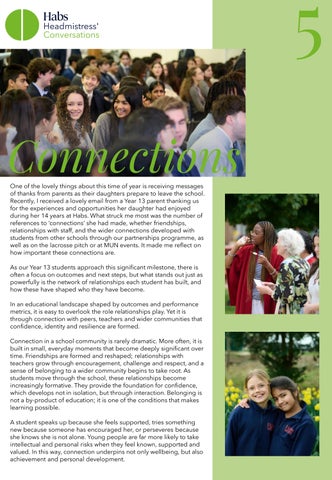
Connections One of the lovely things about this time of year is receiving messages of thanks from parents as their daughters prepare to leave the school. Recently, I received a lovely email from a Year 13 parent thanking us for the experiences and opportunities her daughter had enjoyed during her 14 years at Habs. What struck me most was the number of references to ‘connections’ she had made, whether friendships, relationships with staff, and the wider connections developed with students from other schools through our partnerships programme, as well as on the lacrosse pitch or at MUN events. It made me reflect on how important these connections are. As our Year 13 students approach this significant milestone, there is often a focus on outcomes and next steps, but what stands out just as powerfully is the network of relationships each student has built, and how these have shaped who they have become. In an educational landscape shaped by outcomes and performance metrics, it is easy to overlook the role relationships play. Yet it is through connection with peers, teachers and wider communities that confidence, identity and resilience are formed. Connection in a school community is rarely dramatic. More often, it is built in small, everyday moments that become deeply significant over time. Friendships are formed and reshaped; relationships with teachers grow through encouragement, challenge and respect, and a sense of belonging to a wider community begins to take root. As students move through the school, these relationships become increasingly formative. They provide the foundation for confidence, which develops not in isolation, but through interaction. Belonging is not a by-product of education; it is one of the conditions that makes learning possible. A student speaks up because she feels supported, tries something new because someone has encouraged her, or perseveres because she knows she is not alone. Young people are far more likely to take intellectual and personal risks when they feel known, supported and valued. In this way, connection underpins not only wellbeing, but also achievement and personal development.
5