Remotely Manage HVAC Systems and Reduce Energy Usage With the Power of Skyport.TM
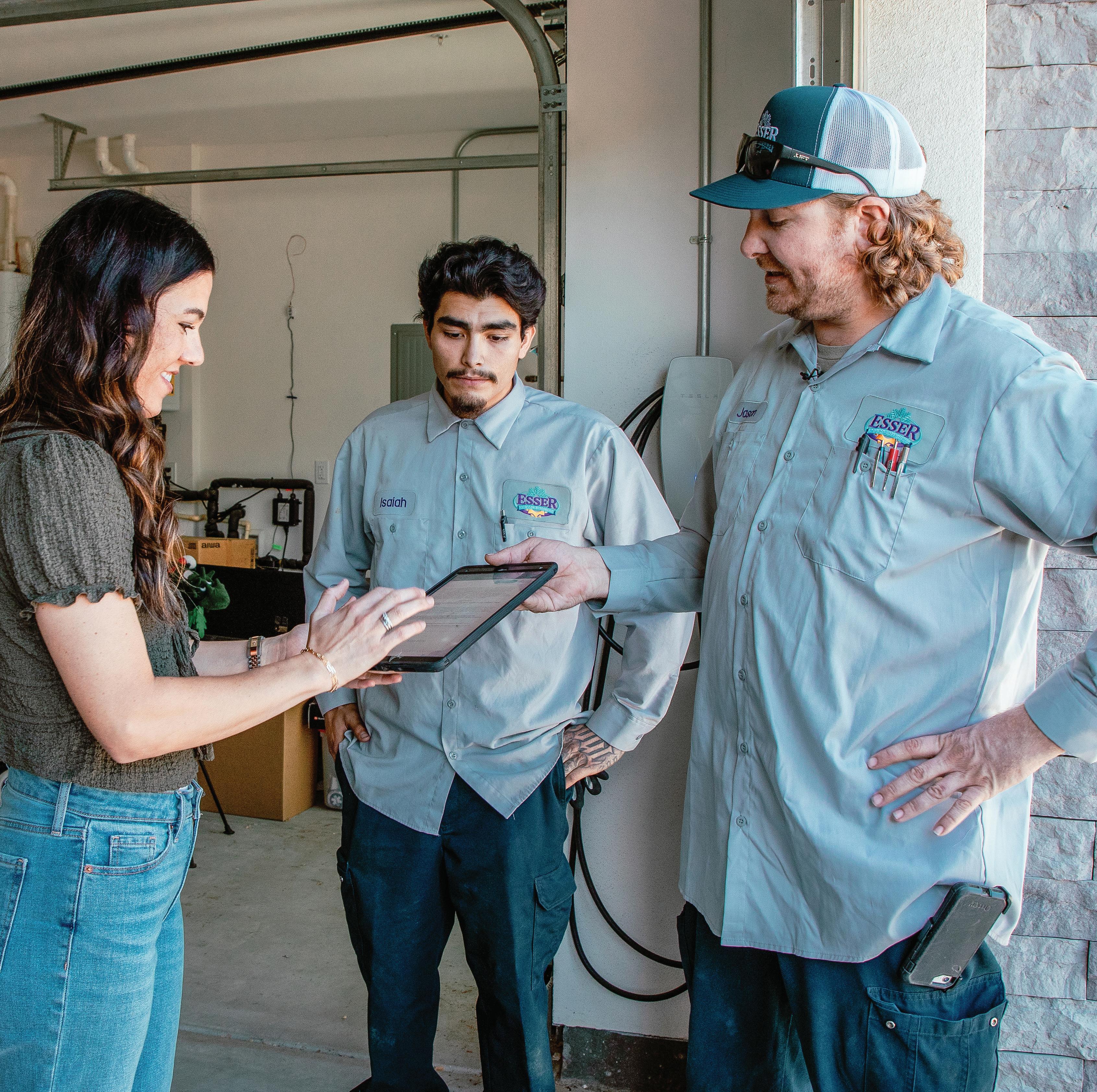
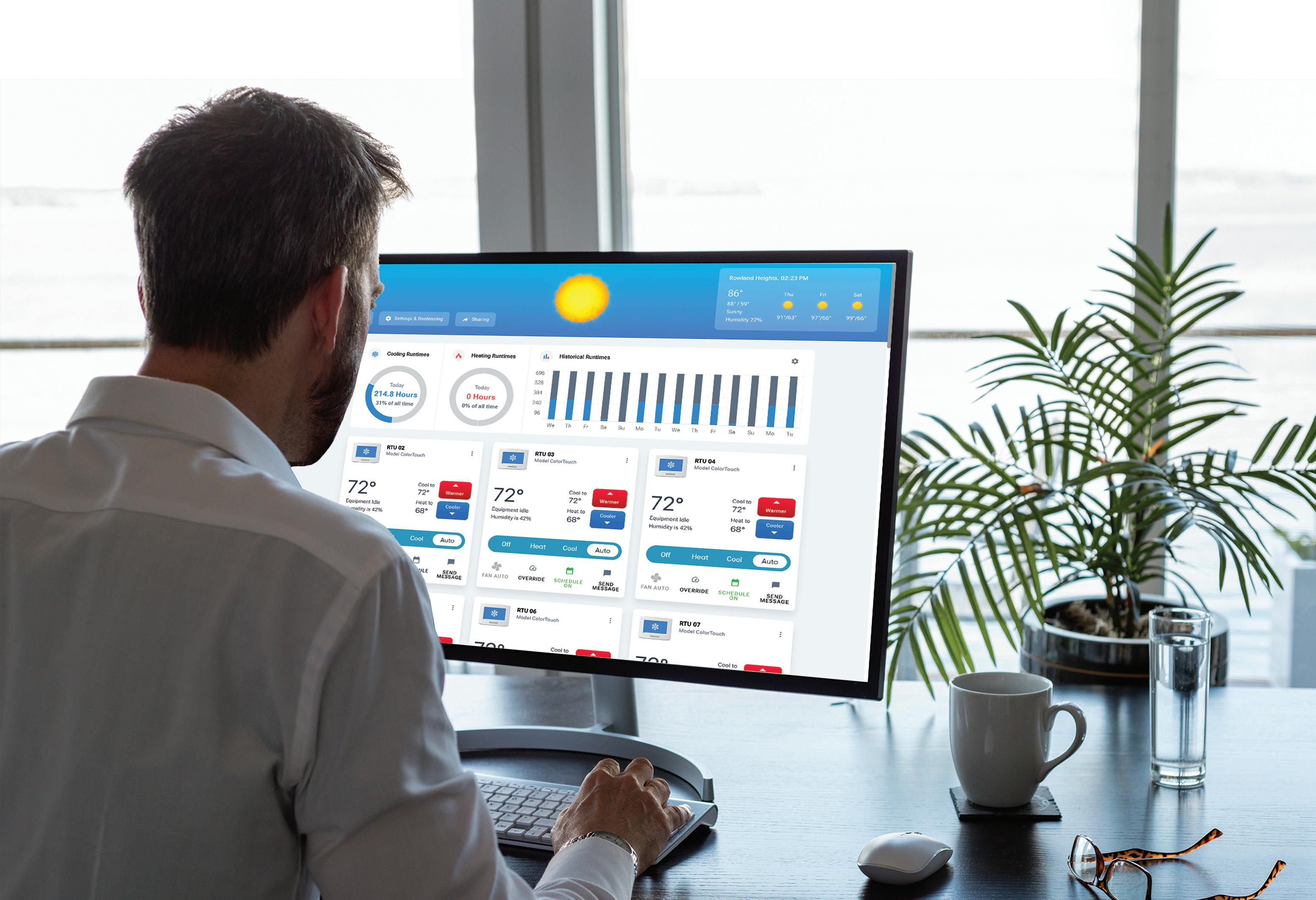
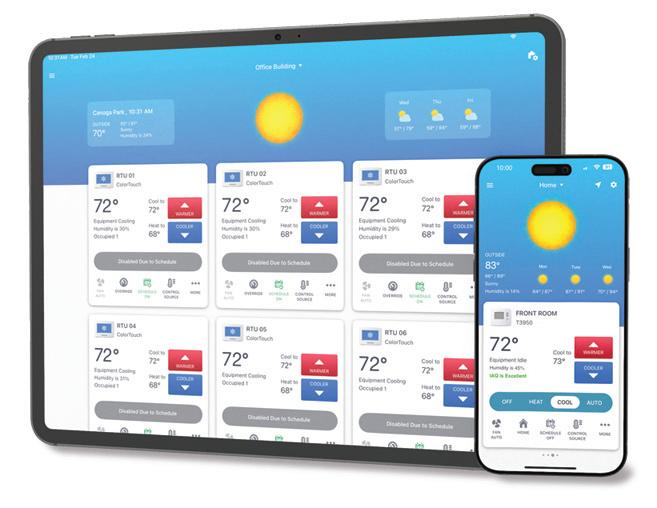
Skyport transforms Venstar thermostats into a centralized HVAC management platform, delivering real-time visibility and control across all locations from a single, intuitive dashboard. Monitor system performance, make instant adjustments, and respond to alerts before comfort issues escalate. From one thermostat to ten thousand, Skyport scales effortlessly, simplifying HVAC management.
• Instant System Visibility
• Real-Time Alerts
• Global Changes
• No Fees or Subscriptions
• Single Dashboard Control
• Fewer Truck Rolls, Faster Fixes
ON THE COVER: From HVAC repairs to replacements, financing is changing homeowners’ buying habits. Here’s how contractors are adapting to today’s price-conscious customer.
Source: ServiceTitan
12 Expanding Financing to Match Today’s HVAC Price Reality
As HVAC equipment prices soar due to supply chain issues and inflation, contractors are shifting toward o ering diverse financing options to help homeowners manage costs, repair instead of replace, and close more sales.
14 Pressure Independent Control Valves: Not Just for Skyscrapers
Pressure independent control valves simplify balancing, improve comfort, and reduce commissioning time in commercial hydronic systems of nearly
16 Beyond Boiler Replacement: Why Hydronic Heat Pumps Are Finding a Home in Residential Comfort
Hydronic heat pumps are emerging as a versatile, e icient solution for electrifying homes, leveraging existing water-based infrastructure to provide HVAC and hot water, making them ideal for retrofit and new builds.
18 The Commissioning Gap: Why Inverter Heat Pumps Underperform—and How Contractors Can Clost It
Commissioning should be a documented, multi-point process rather than a final, rushed step to ensure long-term system performance.
20 Why the Old Troubleshooting Playbook No Longer Applies
Modern refrigeration systems think for themselves. Technicians who ignore the control side are working harder than they need to be.
22 How RETA-RSES is Building the Next Generations of HVACR Techs
Lori Schiavo shares the trends reshaping refrigeration and what contractors should do now.
PODCASTS ▶
Georgia Cracks Down on Unlicensed HVAC Contractors
Georgia's new law prohibits unlicensed businesses and individuals from advertising HVAC, plumbing, electrical, or utility services to protect homeowners while reinforcing the value of professional contractor licensing and code compliance.
www.contractingbusiness.com/55393393
Don't Let AI Replace the Power of the Human Voice
Erica Leonor explains why CSRs should be viewed as an extension of the marketing team, shares strategies for improving customer interactions through tone and communication skills, and discusses the importance of voice training and accountability. www.contractingbusiness.com/55386255
Why More Women are Choosing Careers in HVAC
Jane Sidebottom discusses the factors driving increased enrollment in HVAC training programs, the importance of mentorship and professional networks, and practical steps contractors can take to build more inclusive workplaces. www.contractingbusiness.com/55389530
Audience Development Manager, James Marinaccio, jmarinaccio@endeavorb2b.com
Ad Services Manager, Deanna O’Byrne CEO, Chris Ferrell COO, Patrick Rains
CDO, Jacquie Niemiec CALO, Tracy Kane
CMO, Amanda Landsaw
EVP Buildings & Construction Group, Chris Perrino
VP of Content Strategy— Buildings & Construction Group, Mike Eby
VP—Buildings & Construction Group, Mike Hellmann
Contracting Business (USPS Permit 010-480, ISSN 0279-4071 print, ISSN 2771-652X online) is published monthly by Endeavor Business Media, LLC, 201 N. Main St., 5th Floor, Fort Atkinson, WI 53538. Periodicals postage paid at Fort Atkinson, WI, and additional mailing offices. POSTMASTER: Send address changes to Contracting Business , PO Box 3257, Northbrook, IL 60065-3257.
SUBSCRIPTIONS: Publisher reserves the right to reject non-qualified subscriptions. Subscription prices: U.S. ($ 105.00); Canada/Mexico ($ 137.50); All other countries ($ 157.50). All subscriptions are payable in U.S. funds. Send subscription inquiries to Contracting Business , PO Box 3257, Northbrook, IL 60065-3257. Customer service can be reached tollfree at 877-382-9187 or at contractingbusiness@ omeda.com for magazine subscription assistance or questions.
Printed in the USA. Copyright 2026 Endeavor Business Media, LLC. All rights reserved. No part of this publication may be reproduced or transmitted in any form or by any means, electronic or mechanical, including photocopies, recordings, or any information storage or retrieval system without permission from the publisher. Endeavor Business Media, LLC does not assume and hereby disclaims any liability to any person or company for any loss or damage caused by errors or omissions in the material herein, regardless of whether such errors result from negligence, accident, or any other cause whatsoever. The views and opinions in the articles herein are not to be taken as official expressions of the publishers, unless so stated. The publishers do not warrant either expressly or by implication, the factual accuracy of the articles herein, nor do they so warrant any views or opinions by the authors of said articles.
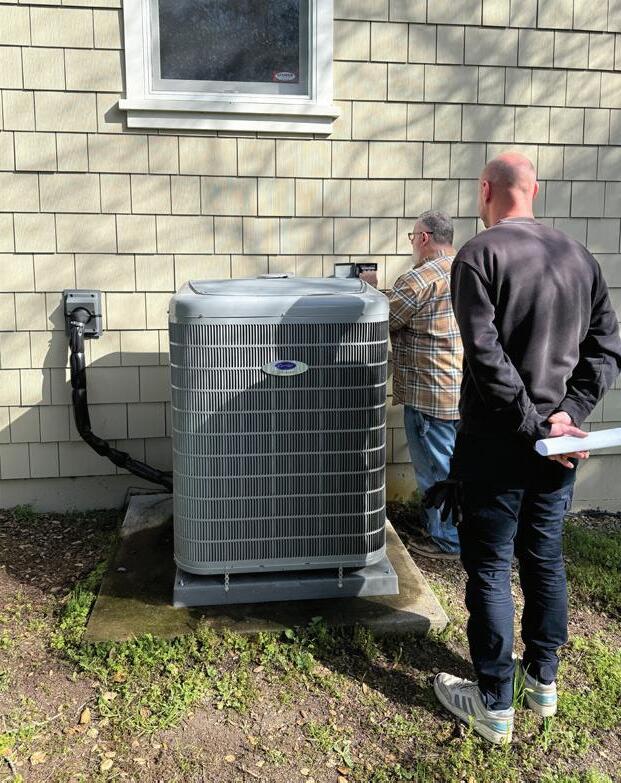
The looming expiration of the NEC’s temporary exception for GFCI protection on outdoor HVAC equipment could once again put nuisance tripping and service disruptions back in the spotlight.
For the last three summers, my home state of Michigan has dealt with severe air quality alerts due to wildfire smoke. As I sit here writing this column, we are under one of those alerts. However, this is the first time I can remember where it smells like a literal bonfire as soon as you step out of the house.
What’s funny is I have no memory of air quality alerts growing up here. It’s not that wildfire smoke didn’t affect air quality 20–30 years ago—it did. But today’s fires are often larger, smoke travels farther, and monitoring technology is much better.
If this summer has reinforced anything, it’s that HVAC contractors are increasingly on the front lines of challenges that extend well beyond basic heating and cooling. Whether it’s helping homeowners protect their indoor air from wildfire smoke or adapting to evolving codes and regulations, contractors are expected to deliver solutions that keep systems operating safely and reliably. That brings us to another issue demanding the industry’s attention: the looming expiration of the National Electrical Code’s temporary exception for GFCI protection on outdoor HVAC equipment—a change that could once again put nuisance tripping and service disruptions back in the spotlight.
What’s Happening
The issue dates back to the 2020 National Electrical Code (NEC), which expanded GFCI protection requirements to include outdoor air conditioners and heat pumps to improve electrical safety and reduce the risk of shock. While the intent was well-founded, contractors in early-adopting states such as Minnesota and Texas quickly encountered an unintended consequence: widespread nuisance tripping that left otherwise properly functioning HVAC equipment inoperable.
As the Sept. 1, 2026, expiration of the NEC’s temporary GFCI exemption approaches, the HVAC industry is warning that the underlying compatibility issues remain unresolved.
“This is critical now because many states are moving forward with a requirement that has not been proven in the field,” says Wes Davis, director of technical services, ACCA. “The extension will expire on Sept. 1; at this time, proof that new GFCI receptacles will perform as expected has only been demonstrated in a UL testing lab. This represents a concerning gap.”
According to Davis, the tripping pattern points toward inverter-driven compressors and variablespeed ECM motor systems, which use power
electronics that standard GFCI sensing wasn’t designed around. But even single-speed equipment has shown signs of experiencing nuisance trips.
“These motors/compressors are driven by solidstate inverters that switch current at high frequencies to energize the motor phases,” David explains.
“A byproduct is high-frequency leakage current that trips a standard GFCI. As the electrification movement encourages more homeowners toward heat pumps, a code requirement that unreliably interacts with that same equipment works against the efficiency and electrification goals the industry and policymakers are both trying to hit.”
He adds that repeated tripping and power cycling are obviously not good for HVAC equipment. While this can be irritating for some customers, it poses a serious health and safety risk during a heat wave or extreme cold snap, particularly for vulnerable populations.
ACCA and AHRI submitted an emergency Tentative Interim Amendment (TIA) request to NFPA seeking to extend the current exception to Sept. 1, 2028. TIAs go through NFPA’s Standards Council for initial screening, then a public comment period, then a committee ballot requiring both a technical-merits majority and a 3/4 supermajority on “emergency nature,” before the Standards Council decides whether to issue it.
Adoption of the NEC happens state by state, and sometimes by county or by city. Additionally, states are currently spread across at least five different NEC editions in active use. To say it’s a patchwork is an understatement.
“Some states have already deleted or amended the outdoor HVAC GFCI requirement outright; others haven’t touched it and will become subject to the requirement automatically once the exception lapses, unless the TIA is granted first,” Davis says. “That patchwork is exactly why ACCA is pursuing both the national TIA and a coordinated stateby-state push simultaneously—a single national fix isn’t guaranteed, so contractors need local answers, too.”
As Davis says, ACCA and the HVACR industry in general are not trying to avoid GFCI protection. “We’re asking that requirements be backed by devices that actually work with the equipment they’re protecting, before those requirements become mandatory. ACCA supports electrical safety; the ask here is for solutions that hold up in the field, not just on paper.”
In the meantime, ACCA will continue to monitor and share more as developments unfold.
WHERE FACILITY CHALLENGES FIND SOLUTIONS
NORTHERN CALIFORNIA
October 6-7, 2026
Santa Clara, CA
NORTH TEXAS
October 14-15, 2026
Irving, TX
Steve Schmidt Earns ACCA 2026
Distinguished
Service Award
ALEXANDRIA, Virginia —The Air Conditioning Contractors of America (ACCA) named Steve Schmidt the recipient of its 2026 Distinguished Service Award, recognizing more than three decades of
volunteer leadership and contributions to the HVAC industry.
Schmidt, founder of Frederick Air, has been active with ACCA since starting his company in 1992. During that time, he has served in multiple leadership roles, including board member, Executive Committee member, board chair, and Partners Committee member.
According to ACCA, Schmidt has focused his volunteer efforts on strengthening the association and supporting the long-term success of HVAC contractors.
“For my business to succeed, the industry must be healthy and growing,” Schmidt said. “It’s mutually beneficial for me to continue serving.”
Following his term as board chair, Schmidt remained active on ACCA’s Partners Committee, where he continues working to strengthen relationships with industry partners and support the association’s mission.
Schmidt also identified workforce development as one of the HVAC industry’s most pressing challenges. He cited the ongoing shortage of qualified technicians and emphasized the need for greater support for career and technical education programs and contractor-led training initiatives.
“No matter how good our products and services are, lacking the qualified workforce to perform the work means we cannot serve our customers,” Schmidt said.
According to ACCA, the Distinguished Service Award recognizes volunteers whose sustained service has made a lasting impact on the association and the HVAC industry. Schmidt said he views that service as a responsibility to help ensure the industry’s continued growth and success.
“Performing any sort of service for ACCA or the industry is an honor and a privilege,” Schmidt said. “I did not start my business or place myself in a position to have available time simply to serve my own needs.”
Schmidt has spent more than 30 years showing up for this industry—committee meetings, conference tables, hard votes, and everything in between. He’s not done yet.
“It’s basically a lifestyle,” he says of service. “When I see someone or something that needs help or could benefit my team or the industry, I tend to jump right in.”
Redwood Services Makes First Oklahoma Investment With Hendrick Acquisition
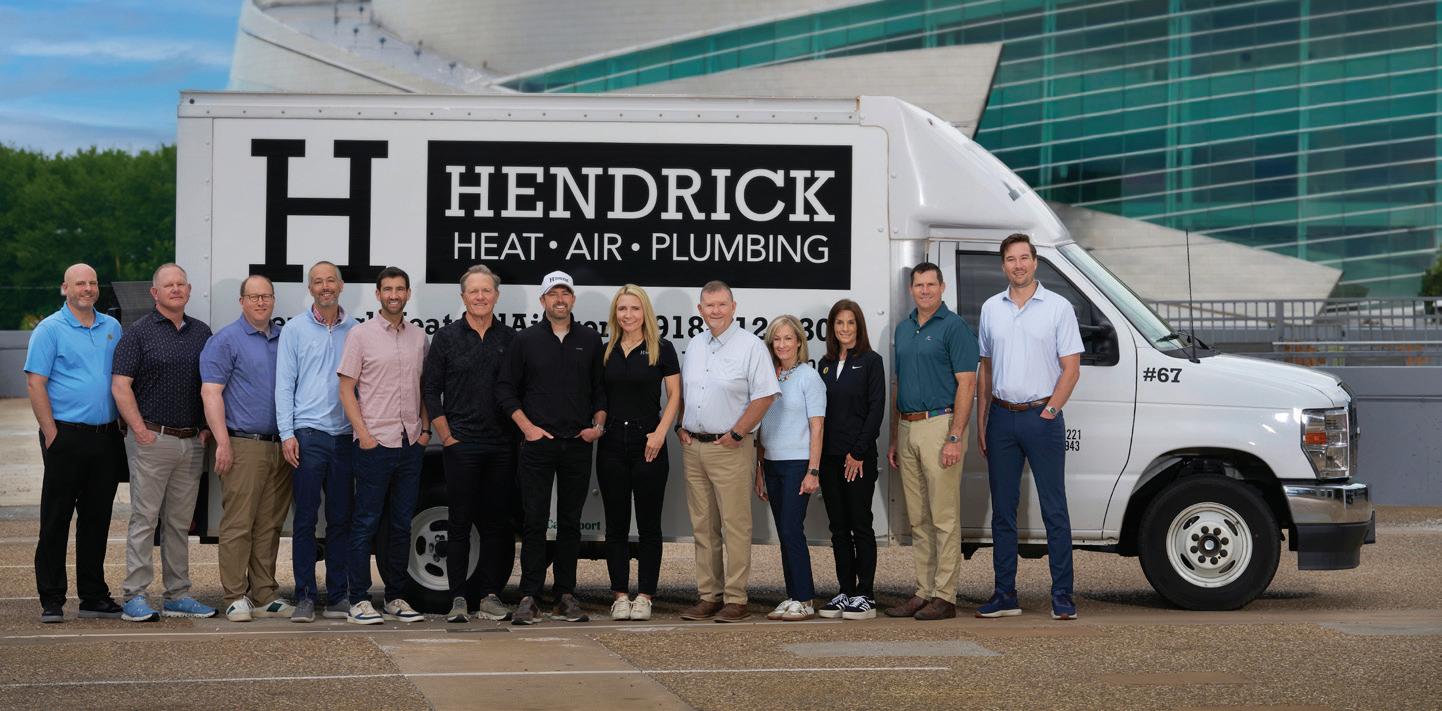
MEMPHIS, Tennessee—Redwood Services has expanded into Oklahoma through a partnership with Hendrick Heat, Air & Plumbing, a residential HVAC and plumbing contractor based in Tulsa.
The agreement marks Redwood’s first investment in Oklahoma and adds Hendrick to its network of more than 20 essential home services Partner Companies.
Founded in 2020 by Justin and Shelby Hendrick and John and Tori Snyder, Hendrick serves more than 25,000 customers throughout the greater Tulsa area and employs more than 90 full-time team members. According to Redwood Services, the company has been one of Oklahoma’s fastest-growing home service businesses.
Justin Hendrick will continue leading Hendrick’s day-to-day operations following the transaction, maintaining the company’s local leadership and operating culture.
“We have spent the last six years proving what this team is capable of, and partnering with Redwood gives us the resources and support to take that to the next level,” Justin Hendrick, co-founder of Hendrick, said in a statement.
Richard Lewis, founder and chief executive officer of Redwood Services, said Hendrick’s customer focus and company culture aligned with Redwood’s Partner Company model.
According to Redwood Services, the partnership expands its presence into Oklahoma while continuing its strategy of investing in locally led home service businesses. Clew Partners served as Redwood’s buy-side advisor for the transaction.
HVAC Trade Groups Back SMART Energy Efficiency Standards Act
WASHINGTON —A coalition of HVACR trade associations is supporting legislation that would change how regional energy efficiency standards are enforced for furnaces, central air conditioners, and heat pumps.
The coalition—which includes ACCA,
Redwood Services
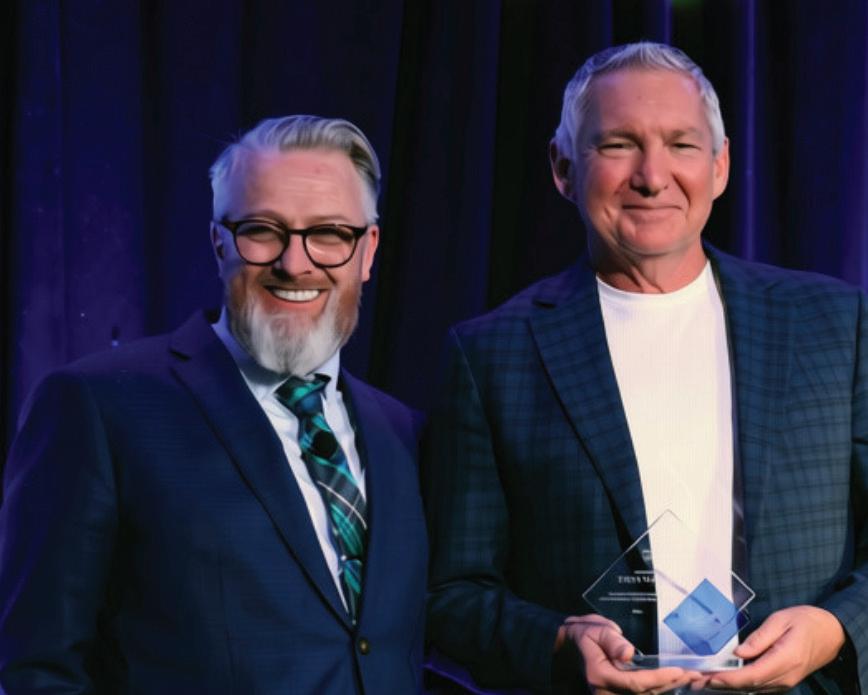
Steve Schmidt (right) received the ACCA 2026 Distinguished Service Award, presented by Eddie McFarlane (right), ACCA Chair of the Board of Directors 2025-2026.
AHRI, HARDI, and PHCC—National Association—announced its support for Sen. Joni Ernst’s (R-Iowa) SMART Energy Efficiency Standards Act (S. 4892).
According to the coalition, the legislation would amend the Energy Independence and Security Act of 2007 by changing the compliance date for regional HVAC energy efficiency standards from the date of installation to the date of manufacture.
“There’s no reason heating and cooling equipment should be treated differently from virtually every other product,” said Ernst in a statement. “My bill uses the date it is manufactured to provide a fair, predictable standard that helps distributors, gives contractors certainty, and keeps equipment available for American families.”
In a letter to Sen. Ernst, the coalition wrote that S. 4892 would “amend the Energy Independence and Security Act of 2007 by changing the compliance date for regional energy efficiency standards for furnaces, central air conditioners, and heat pumps to the date of manufacture,” reducing confusion and easing burdens on manufacturers, distributors, and contractors.
The letter explains that the current date-of-installation structure creates unnecessary disruption throughout the HVAC supply chain.
“Under current law, compliance with regional energy efficiency standards is based on the date equipment is installed rather than the date it is manufactured,” the coalition wrote. “This creates unnecessary complexity throughout the HVAC supply chain by effectively causing otherwise fully compliant equipment to expire after it has been legally manufactured, purchased, and distributed.”
By contrast, the coalition wrote that a date-of-manufacture standard “places compliance responsibility where it belongs—with the manufacturer—and ensures that every product entering the distribution chain complies with applicable Department of Energy requirements.”
The letter also notes that the bill would allow products already in the distribution pipeline to continue to be sold and installed, “preventing legally manufactured and purchased equipment from becoming stranded inventory.”
“We are grateful to Sen. Ernst for introducing this bill making a long-overdue technical correction to the Energy Policy and Conservation Act. This simple change will reduce confusion, ease the burden on manufacturers, and distributors,” said AHRI President and CEO Stephen Yurek in a statement. “It will allow for a smooth transition from the previous energy efficiency standard to the new standard, all while preventing millions of dollars’ worth of inventory from being unable to be installed every time standards change.”
“HARDI has long advocated for aligning regional standards with the date of manufacture, and the SMART Energy Efficiency Standards Act does exactly that. This legislation makes compliance clearer, protects distributors from liability they cannot control, and ultimately supports a smoother transition to higher-efficiency equipment across the supply chain,” said Alex Ayers, vice president of government affairs at HARDI.
Rocket Group Adds Clemmer Services as 14th HVAC and Plumbing Acquisition
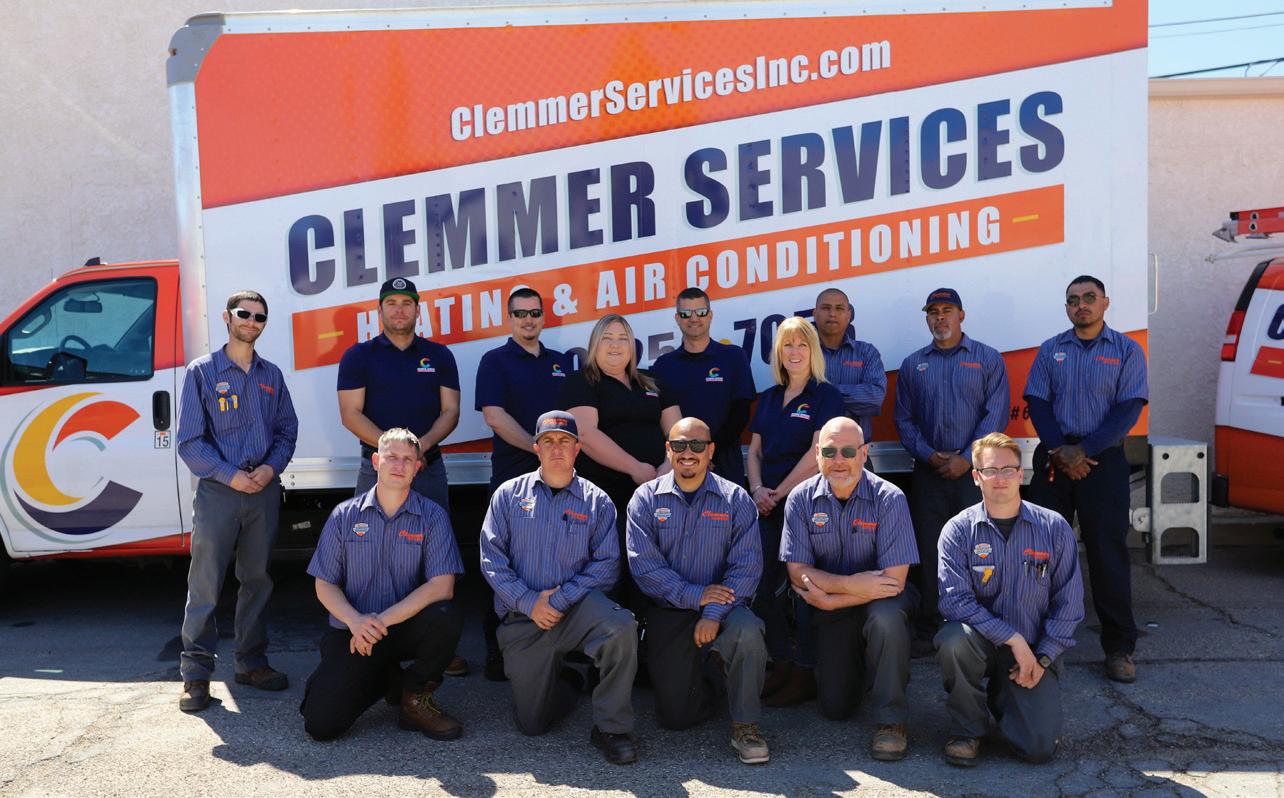
SAN BERNARDINO, California—Rocket Group has expanded its California presence by adding Clemmer Services to its national portfolio, making the Southern California HVAC and plumbing contractor the company’s 14th brand.
According to Rocket Group, the partnership expands its reach into Barstow, Santa Clarita, San Bernardino County, the
Inland Empire, and parts of Los Angeles County as the company continues to grow in residential home services markets.
Clemmer Services has provided HVAC, plumbing, and IAQ services for more than 30 years. The company offers residential and light commercial services, including air conditioning installation and repair, furnace service, heat pump installation, sewer line repair, tankless water heaters, and plumbing.
The company holds Trane Comfort Specialist certification, is an authorized Rinnai dealer, and employs North American Technician Excellence-certified technicians serving communities including Barstow, Apple Valley, Hesperia, Victorville, and Santa Clarita.
According to Rocket Group, the partnership will provide Clemmer Services with access to sales training, marketing support, operational infrastructure, and business systems intended to support future growth.
Rocket Group CEO Victor Rancour said the acquisition expands the company’s presence in a market with consistent demand for residential heating, cooling, and plumbing services.
For Clemmer Services, the partnership provides additional resources while allowing the company to build on more than three decades of serving Southern California homeowners.
The addition of Clemmer Services marks Rocket Group’s 14th brand and continues the company’s strategy of partnering with established regional home services providers in expanding residential markets.
Rocket Group
Daikin Funds $100K HVAC Upgrade for Houston Community Center
HOUSTON—Daikin Comfort Technologies
North America and the Astros Foundation will provide $100,000 in HVAC upgrades to the Moody Park Community Center in Houston through the second annual Cooling Communities initiative.
According to Daikin, the investment increased from an initial $50,000 after an assessment identified additional infrastructure needs. The project includes replacing two HVAC units, including one that is currently non-operational.
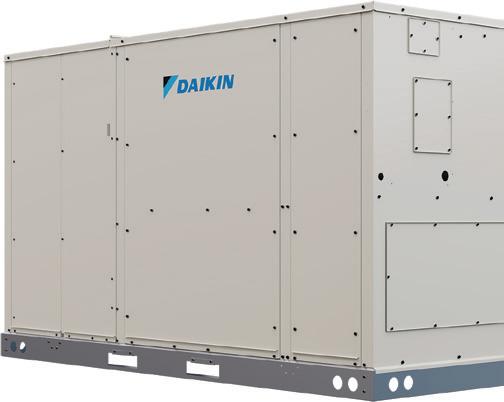
The replacement equipment will use Daikin’s inverter technology to improve system reliability and help maintain yearround comfort at the community center.
Moody Park Community Center serves families, children, seniors, and neighborhood residents. The facility also operates as a cooling center during periods of extreme heat and emergency events.
Daikin said the announcement coincides with Houston’s Air Conditioning Appreciation Days, recognizing the role cooling systems play in protecting residents during the region’s hottest months.
Harris County Precinct 2 Commissioner Adrian Garcia said the HVAC improvements are among the fi rst major upgrades since the county assumed responsibility for operating and maintaining Moody Park. He said the investment will strengthen the facility’s ability to serve the community before, during, and after extreme weather events.
Houston City Council Member Mario Castillo said the project will help ensure the community center remains a safe and comfortable gathering place as the city experiences more frequent periods of extreme heat.
The Cooling Communities initiative launched in 2025. Last year, Daikin and the Astros Foundation invested $55,000 in HVAC upgrades at Bayland Community Center in Harris County Precinct 4.
Ecoer Celebrates 10 Years with Focus on Smarter HVAC Installation
DALLAS—Ecoer is celebrating its 10-year anniversary by recognizing its distributor and contractor partners while rea rming its commitment to developing connected residential HVAC technology.
Founded in 2016, the company said it has focused on improving system performance throughout the HVAC lifecycle, from installation and commissioning to long-term service and operation.
According to Ecoer, its inverter-driven systems are designed to deliver more consistent indoor temperatures while improving energy e ciency, humidity control, and operating noise compared with conventional systems.
The company also highlighted its Automatic Refrigerant Charging Technology, which is intended to help contractors improve installation consistency by reducing refrigerant charging errors that can a ect system performance and lead to future service calls.
Ecoer said its Ecoer Smart Service (ESS) platform uses Internet of Things technology to provide real-time equipment monitoring, proactive diagnostics, and service insights. The platform is designed to help contractors identify potential issues earlier and support preventive maintenance.
“Reaching our 10-year milestone is about much more than celebrating our achievements,” said Louis Ing, founder and CEO of Ecoer. “It’s about recognizing the incredible partners who believed in our vision and helped us bring a new standard of comfort to homeowners across the country. Our distributors, contractors, and customers have been the driving force behind everything we’ve accomplished. We are deeply grateful for their trust, loyalty, and commitment. As we look ahead, we remain focused on advancing our role as a technology-driven HVAC manufacturer by developing systems that make HVAC
smarter, more reliable, and easier for our distributors and contractors to install, service, and support.”
Rheem Earns Two Honors at 2026 Manufacturing Leadership Awards
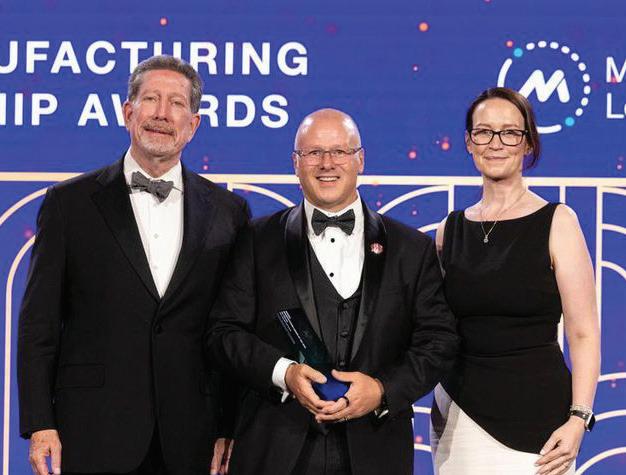
ATLANTA —Rheem Manufacturing Company received two awards at the 2026 Manufacturing Leadership Awards presented by the Manufacturing Leadership Council, recognizing the company’s digital transformation strategy and executive leadership.
Rheem earned the Business Model Transformation Award for its initiative, “Reinventing the Business Model with a Digital First, AI Ready Platform.” The award recognizes manufacturers using advanced technologies to transform business operations and customer engagement.
The Manufacturing Leadership Council said Rheem’s Digital First, AI Ready Platform demonstrates how manufacturers are reshaping operations while delivering a more connected experience for customers and business partners.
Alan Machuga, executive vice president of technology, was also named the 2026 Manufacturing Leader of the Year for leading Rheem’s digital transformation initiatives.
According to Rheem, Machuga has overseen the modernization of the company’s core technologies while helping transition the business to an experience-focused, digitally driven operating model. He
Left to right: David Brousell Founder, vice president and executive director, Manufacturing Leadership Council; Alan Machuga, executive vice president of technology at Rheem Manufacturing; and Lisa McEvoy, associate vice president of digital manufacturing at Merck. Rheem
leads Rheem’s Global Technology Group, which includes Controls Engineering, Information Technology, Digital Services, and Cloud Architecture.
The company said Machuga is responsible for developing and implementing Rheem’s long-term technology strategy while expanding digital capabilities that improve collaboration across the organization and enhance experiences for customers, partners, and employees.
Daikin Applied Names New CEO and Operations Leaders
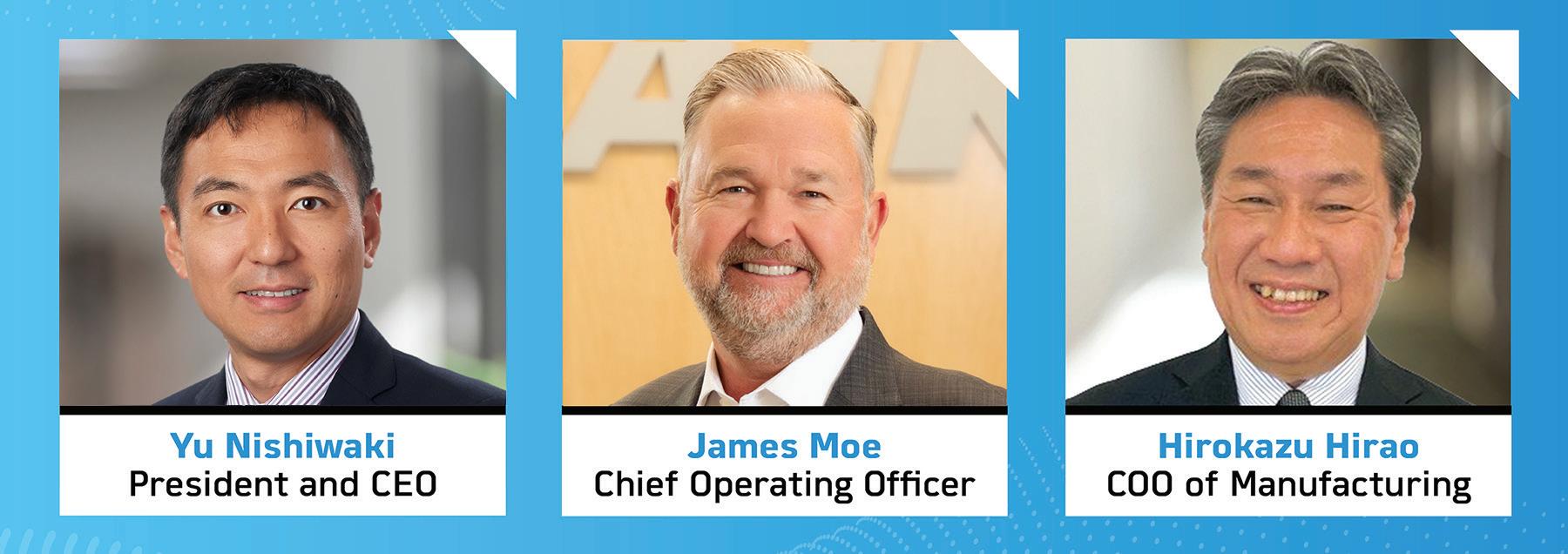
MINNEAPOLIS —Daikin Applied named Yu Nishiwaki president and CEO, James Moe COO, and Hirokazu Hirao as COO of manufacturing. The appointments took effect July 1 and are intended to strengthen the company’s operations as it pursues its strategic growth plans.
Nishiwaki previously served as COO since 2023. He brings nearly 30 years of experience with Daikin, including leadership positions with Daikin Air Conditioning Italy and Daikin Applied Americas.
“It is an honor to serve as president and CEO of Daikin Applied,” said Nishiwaki. “Having served as COO, I’ve seen firsthand the talent, dedication, and ingenuity of our people, and that gives me tremendous confidence in what we can accomplish together. From commercial buildings and healthcare facilities to schools, manufacturing operations, and data centers, the demands on today’s built environment are rapidly evolving. As we look ahead, we will continue strengthening customer relationships, advancing innovation and empowering our teams to deliver lasting value for the people and industries we serve.”
Moe, who joined Daikin Applied in 2016, will oversee the company’s Air Handling, Chiller, and Applied Terminal Systems business units in addition to his existing responsibilities for sales, service, solutions, and Alliance Air Products. According to Daikin Applied, the expanded role is designed to better align operations and customer support across the business.
“This is a pivotal moment for Daikin Applied, and I am excited to step into this new role,” said Moe. “The combination of Nishiwaki’s strategic leadership and our unified operational focus creates
a powerful engine for success. Together, we are perfectly positioned to deliver the high-performance building technologies and services our customers need to meet the demands of today and the future.”
Hirao assumes his new role after more than 37 years with Daikin Industries Ltd. Most recently, he led the company’s global Applied Solutions Business Division. Daikin Applied said Hirao will focus on strengthening manufacturing operations and supporting production growth.
“As Daikin Applied expands its solutions portfolio and production capabilities, our manufacturing operations must be a source of strength,” said Hirao. “I’m focused on driving consistency and operational excellence across our footprint to ensure we can deliver for our customers at the scale and speed they expect.”
According to the company, the new leadership structure supports continued investment in commercial and industrial HVAC technologies for mission-critical applications, including data centers.
Solstice to Acquire Element Solutions in $14.5B Deal
MORRIS PLAINS, New Jersey —Solstice Advanced Materials announced it has entered into a definitive agreement to acquire Element Solutions in a cash-andstock transaction valued at approximately $14.5 billion, including assumed net debt.
The companies said the combined business would have approximately $6.8 billion in 2025 net sales and an adjusted EBITDA margin of about 26%, including expected synergies.
The transaction expands Solstice’s capabilities in refrigerant application solutions and thermal management technologies used in data center cooling. The combined company will integrate Element’s electronics, semiconductor packaging, and
technical service expertise with Solstice’s chemistry, application development, and high-performance materials businesses.
“Overall, we believe the combined company will be very well-positioned to benefit from generational tailwinds in high-growth end markets,” said David Sewell, president and CEO of Solstice in a statement. “Both companies have strong cultures grounded in integrity, innovation, teamwork, and customer focus, with comprehensive patent portfolios and highly talented employees who are at the top of their profession. We intend to blend the best of our talents and cultures to build an organization with a broader technology platform and a stronger ability to co-innovate with customers to develop unique solutions addressing emerging, complex requirements from our combined customer base.”
The acquisition has been unanimously approved by both companies’ boards of directors and is expected to close during the first half of 2027, subject to shareholder approval, regulatory clearances, and customary closing conditions.
Following the transaction, the combined company will continue operating as Solstice Advanced Materials, led by Sewell. According to the company, it plans to maintain operating locations across both organizations while building an integrated leadership team with representatives from each business.
After an investor call, Solstice Advanced Materials’ stock fell 15%, The Wall Street Journal reported.
Sewell defended the deal on CNBC’s “Mad Money” on July 6, saying, “We’re at a generational growth opportunity in semiconductors and advanced electronics. The combination of our two companies ... gives us a comprehensive product portfolio and really a world-leading advanced materials business in semiconductors, data centers, AI.”
Expanding Financing to Match Today’s HVAC Price Reality
As HVAC equipment prices soar due to supply chain issues and inflation, contractors are shifting toward offering diverse financing options to help homeowners manage costs, repair instead of replace, and close more sales.
Pricing for HVAC equipment is at an all-time high, leaving many homeowners facing sticker shock when it’s time to replace an aging system. With this new reality, contractors are seeing changes in customers’ buying behavior, with some homeowners choosing to repair existing equipment rather than invest in a full replacement. In response, financing has become an increasingly important tool for helping customers manage costs and for helping
contractors close sales. From financing new systems to, increasingly, major repairs, contractors are adapting their offerings and sales strategies to meet the realities of today’s market.
Regular and Irregular Price Increases
Customers understand and recognize that prices go up. However, the cost of HVAC equipment and services has risen exponentially. “HVAC has become more costprohibitive in the consumer’s mindset,”
Contractors who confidently present payment options early in the conversation can reduce sticker shock, improve close rates, and help homeowners invest in higher-efficiency systems.
says Eric Howarth, senior vice president of Home Innovations at GoodLeap.
The rise in prices, while semi-gradual, has come in two waves. The COVID-19 wave of 2020-2022 saw high demand, product shortages, and broader supplyside issues that affected many industries. The second wave of price increases began around the start of 2025 and can be traced to inflation, labor shortages, tariffs, and new refrigerant requirements.
“We’ve seen the average loan request grow by 40% since 2020,” says Hamilton Arevalo, vice president of sales and business development at Breeze Lease.
“The rise in prices for HVAC, and prices more generally, has made affordability a new buzzword,” says Vince Lowe, senior vice president and general manager for home specialty at Synchrony. “Our Lifetime of Home Care study shows that 72% of homeowners feel anxiety about home improvements.”
“Affordability pressure and economic uncertainty are reshaping how customers make decisions,” says Machais Schoen, senior vice president of HVAC at Palmetto. “People are in a cash preservation mindset, choosing repair over replace and financing more often to keep money in the bank. The national average FICO score has dipped for the first time in years, and consumer confidence has hit near record lows — these are economic realities, not just feelings.”
“Consumers are willing to pay more to keep an old system going due to pricing concerns,” adds Angie Snow, principal industry advisor at ServiceTitan.
Howarth notes Goodleap has seen the share of repairs (as opposed to replacements) increase from around 20% to 30% over the last two years.
Images courtesy of ServiceTitan
The Financing Response
In response to rising HVAC prices and heightened consumer anxiety, HVAC companies are offering more and different financing options than they have in the past.
Palmetto offers customers an operating lease that includes service, maintenance, and membership benefits. Customers get the benefits of a new HVAC system without any impact to their credit, preserving borrowing power for other needs. Proactive annual maintenance, break-fix service labor, and warranty coverage help customers avoid unexpected costs and enjoy more predictable ownership expenses.
Synchony, which offers a full range of products, has also seen installment loans grow in popularity.
Breeze Lease offers a no-credit-check lease-to-own. The most popular financing option is one that offers lower monthly payments at a lower interest rate.
Some companies offer a financial option of deferred payments and no interest for a set period. Depending on the program, payments may be deferred up to 60 months.
Best Practices for Approaching the Financing Conversation
Presenting HVAC financing options doesn’t come naturally to some installers. The discomfort may lead them to neglect to mention financing, delay the conversation, or rush the conversation.
There are legitimate reasons for concern when it comes to offering financing.
“Some companies are afraid to include financing options because it means they have to pay money to the financing company,” Snow says. “However, they should build the financing cost into their pricing.” This could make prices seem more inflated. Snow has another tip, “For those who want to pay cash, offer 5% cash back.”
She adds, “Put the ball in the customer’s hands by giving them more options. Offering financing on every job was once considered taboo, but is now simply a customer courtesy and expectation.”
A Synchrony study confirms this, finding that 97% of home improvement customers want to know about financing for a large-ticket item. “If HVAC contractors don’t offer financing, they’re leaving money on the table, as it helps them close deals
From low monthly payments and deferred-interest plans to lease-to-own options, expanded financing programs are helping contractors overcome affordability concerns while increasing average ticket values and customer satisfaction.
and encourages customers to add services,” Lowe says.
Likewise, Snow has found that offering financing increases sales. “At my company [in addition to her role at ServiceTitan, she is part of a family HVAC business], since our techs started offering financing regularly, the average ticket has gone up. While this is partially because prices have risen, homeowners like having options.”
The goal of financing should be to help the consumer get to yes.
“Offer options with low monthly payments because by giving the customer an affordable monthly unit, there’s a better chance they can say yes,” Howarth says.
How should HVAC contractors handle discussing financing? Schoen says to lead with it.
“The contractors who are winning aren’t opening with an $18,000 price tag — they’re saying, ‘how about $220 a month?’” he says. “Through partnerships, contractors can pair that financing approach with best-in-class, high-efficiency systems to give customers both affordability and confidence in the technology.”
Arevalo concurs. “In training sessions, I counsel contractors to offer payments without hesitation. While some contractors see it as disrespectful to the customer, I remind them that people are paying for everything these days. So, they need to put the decision in the customer’s hands and let them choose what makes the most sense rather than making the decision for the customer.”
Ultimately, HVAC contractors need to recognize that they cannot know a potential customer’s personal financial position. They should divest themselves of preconceived notions about their clients. Customers want to hear about financing options, even if they don’t use them as part of payment.
Closing Sales in the Current Environment HVAC services are not optional — people need to keep their homes comfortable. However, gaining customers and increasing sales takes effort.
HVAC contractors need training on how to effectively present financing because clear communication helps customers make informed purchasing decisions and builds trust in the contractor’s recommendations. By investing in financing education for their technicians and sales teams, contractors can ensure these conversations are handled with confidence and professionalism.
A strong understanding of available financing options also enables contractors to highlight the value of energy-efficient upgrades and modern HVAC solutions in ways that resonate with customers. When financing is presented as part of a complete solution rather than an afterthought, contractors are better positioned to meet customer needs, overcome budget concerns, and close more deals.
Larry Bernstein is a freelance writer based in northern New Jersey. He specializes in construction technology; education technology; and transportation, logistics, and supply chain.
Pressure independent control valves (PICVs) are frequently overlooked for a wider range of commercial zoning and balancing applications because it is assumed you need a BMS to operate the valve. PICVs can be used in place of a motorized, paddle-style zone valve with the same simple 24 VAC input.
Pressure Independent Control Valves: Not Just for Skyscrapers
Pressure independent control valves aren’t just for skyscrapers—they can simplify balancing, improve comfort, and reduce commissioning time in commercial hydronic systems of nearly any size.
In a perfect world, nobody notices. When designers and installers zone hydronic systems, the best outcome is for the components to be selected, installed and commissioned in a way that their comfort isn’t affected by quick changes in temperature or clanking mechanical noises. They are oblivious of all those steps, they are simply comfortable. The key to this zoning task is to circulate hot/ chilled hydronic fluid into the zone at just the right rate, as if it were cruise control in a car. However, the best technology in the industry to accomplish this task doesn’t need to be reserved for skyscrapers.
Imagine driving to work with an on/ off toggle switch instead of a gas pedal. It would not be a smooth or energy efficient way to drive, yet this is how we zone most hydronic systems. Without proper balancing and zone control, hydronic fan coils
might short cycle, radiators might click and tick, and the end user might notice any number of comfort interruptions.
Pressure independent control valves (PICVs) are used to regulate the delivery of energy to hot/cold hydronic terminal units. The pressure independent portion of the acronym means that they utilize automatic balancing valve technology. These valves are pre-selected with a specific flow rate range. Differential pressure increases and decreases when zones open and close, the PICV maintains a flow rate instead of drifting higher or lower as you would see with a manual, pressure dependent balancing valve.
The control valve portion of the abbreviation adds the ability to open and close the zone based on a simple on/off 24 VAC signal or a modulating output from a building management system (BMS). PICVs can
meter the energy into a space to hit the bullseye with the number of BTUs required to make the space comfortable. They are often found in construction projects where energy efficiency is a key driver. PICVs can deliver energy to a zone at ±5% of the target flow. This accuracy is important, because conditions in zones are dynamic, the amount of sunlight through the window changes, a conference room might be empty one minute and then full of workers with warm laptops the next.
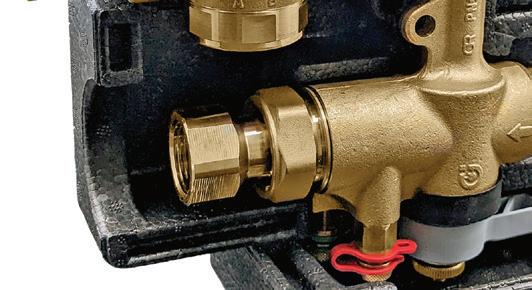
PICVs are frequently overlooked for a wider range of commercial zoning and balancing applications, because it is assumed you need a BMS to operate the valve. PICVs can be used in place of a motorized, paddlestyle zone valve with the same simple 24 VAC input.
From a procurement standpoint, a PICV is a single device with two union
Images courtesy of Caleffi Hydronic Solutions
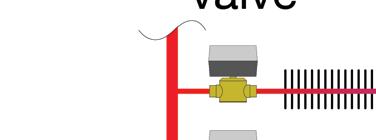
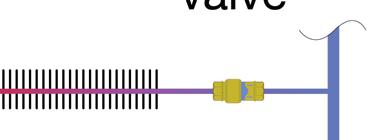
connections that replaces two similarly sized products: the zone valve and balancing valve, shown in Figure 1. There are hundreds of di erent combinations for components to select for these two tasks. However, there are two di erent valve bodies to install, with a minimum of four field connections.
of a commercial project is arguing back and forth between the installers and engineers about why some areas of the building are too hot or cold while the tenants or building owner is breathing down your neck. You reduce your exposure to rework and prolonged commissioning schedules if you select the flow window you set a maximum for the zone and move on to the next project. Nobody wins when the balancing contractor and their manometer are up and down the elevator 100 times (except for the balancing contractor billing the hours).
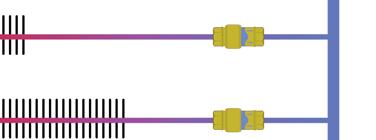
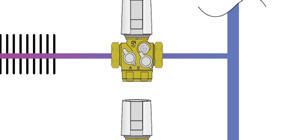
In Figure 2, the balancing and zoning tasks are combined into a single PICV. If it is a simple 24 VAC system, select an on/o actuator. If you want to send a 10 VDC or a (4)-20 mA, you can select a modulating actuator. The installation advantage here is that you only have two field connections per zone for two functions.
In simplified line drawings, it always looks easy to put the components together. In real life, it can be a huge advantage to cut the number of connections in half.
You see PICVs specified and installed in a building like the Address Downtown in Dubai. It is a five-star hotel and residential high-rise that features 196 rooms and 626 serviced apartments. The expectations for thermal comfort in this high-profile, luxury hospitality sector are unrivaled. A premium balancing and zoning solution is needed to avoid overheating or overcooling a zone. A PICV with a 0-10 VDC proportional signal from a BMS is the most accurate approach.
PICVs are also a great fit in a 10-unit condo building with simple thermostats and on/o actuators. At any scale, balancing and commissioning can be a di cult number of labor hours to budget. Sometimes everything goes smoothly and no rework is required. Sometimes a handful of people are pointing fingers at each other in a spiraling, non-billable troubleshooting process.
If manual fi xed- or variable-orifice balancing valves are used, the labor required to match the valve settings to the calculated flow rates per branch is a wildcard. If the as-built drawings match the original plans perfectly, it might not take as long. However, the as-builts rarely match the CAD drawings. Manual balancing is also pressure dependent, so every time a balancing valve is adjusted or a zone opens, it augments flow into all the other branches. Automatic balancing technology, as in a PICV, are pressure independent. The valve adapts to find the target outcome independently of what is happening in the other branches.
The ideal outcome for zoning and balancing is that the installer has everything dialed in before occupancy. This is where PICV technology shines. The least fun part
What are some things to avoid in a PICV application? A limitation of a thermoelectric actuator is that it won’t function properly if it is in an enclosure where it can’t dissipate heat well. As an example, if there is an existing stretch of fintube baseboard with a motorized zone valve within a tight, hand-sized enclosure, it would be best to use another motorized actuator. The baseboard could heat the thermoelectric actuator and keep it open even if it was trying to close. A motorized zone valve would be a better fit in these spots.
Depending on the circulator you are using, you want to keep an eye on the maximum potential di erential pressure that a PICV or zone valve could see. This PICV example can close-o in a 58 psid scenario. In outlier applications where that isn’t enough to close the zone, look for a motorized valve with a lower Cv number and higher close-o pressure options.
There is no one-size-fits-all for zoning and balancing hydronic systems. However, PICVs are underutilized in a wider range of projects. Everyone wins when the design flow rate in each branch is easy to achieve and maintain with half the connections. The goal is to keep the mechanical components invisible to the occupants, because they don’t notice discomfort. PICV technology has a wide range of applications to put buildings in cruise control.
For a longer discussion of how and when to apply di erent balancing valve technologies, read more in idronics™ 34
Max Rohr is the director of education at Caleffi Hydronic Solutions. He has over 20 years of experience in installation, distribution, manufacturers’ representative, and manufacturing roles.
Figure 1
Figure 2
Beyond Boiler Replacement
Why Hydronic Heat Pumps Are Finding a Home in Residential Comfort
Hydronic heat pumps, also known as air-to-water heat pumps, are emerging as an increasingly attractive option for homeowners seeking efficient, all-electric comfort solutions. While they are often associated with boiler replacement projects, today’s hydronic heat pumps are opening new possibilities for both retrofit and new construction applications.
For years, the residential heat pump conversation has largely focused on moving air. Whether replacing furnaces with ducted systems or bringing comfort to hard-tocondition spaces with ductless mini-splits, most electrification discussions have centered around air-based heating and cooling. But a growing segment of the market is taking a different approach—moving heat through water rather than air.
For contractors, that means a new opportunity to serve homeowners looking to electrify their homes without sacrificing comfort.
An Overlooked Path to Electrification
Although hydronic heating is not a new concept for U.S. homes, its relevance may have been overshadowed by air-to-air heat pumps in recent decades. Much of North America’s housing stock was built around hydronic heating systems. From cast-iron radiators and finned-tube baseboards to radiant floor heating, millions of homes rely on water—not air—to deliver comfort.
Historically, electrifying these homes often required difficult decisions. Homeowners could replace an existing boiler with another combustion-based system, invest in extensive renovations to install ductwork or supplement existing heating systems with ductless equipment. Hydronic heat pumps offer another option.
By extracting heat from outdoor air and transferring it into a home’s water distribution system, these systems can provide space heating using much of the infrastructure already in place. In many
cases, they can also support domestic hot water production and, depending on system design, cooling applications as well.
The result is a pathway to electrification that allows homeowners to preserve many of the comfort characteristics that made hydronic systems desirable in the first place.
Not Just a Retrofit Story
While boiler replacement remains one of the strongest opportunities for hydronic heat pumps, it is no longer the only application driving interest.
Builders and homeowners are increasingly exploring all-electric home designs that prioritize energy efficiency, sustainability, and long-term operating costs. At the same time, modern building envelopes are reducing heating loads, making lowtemperature hydronic systems more practical than ever.
These trends are creating opportunities for hydronic heat pumps in:
• Boiler replacement and retrofit projects;
• New all-electric home construction;
• Radiant floor heating applications;
• Integrated space heating and domestic hot water systems; and
• High-performance and net-zeroready homes.
Rather than viewing hydronic heat pumps solely as an alternative to traditional boilers, many contractors are beginning to see them as part of a broader evolution in residential comfort system design.
What’s Driving Adoption?
Several market trends are helping bring hydronic heat pumps into the spotlight. Homeowner interest in electrification continues to grow, fueled by concerns about energy costs, sustainability goals, and evolving state and utility incentive programs. At the same time, advances in heat pump technology are helping address many of the performance challenges that once limited adoption in colder climates.
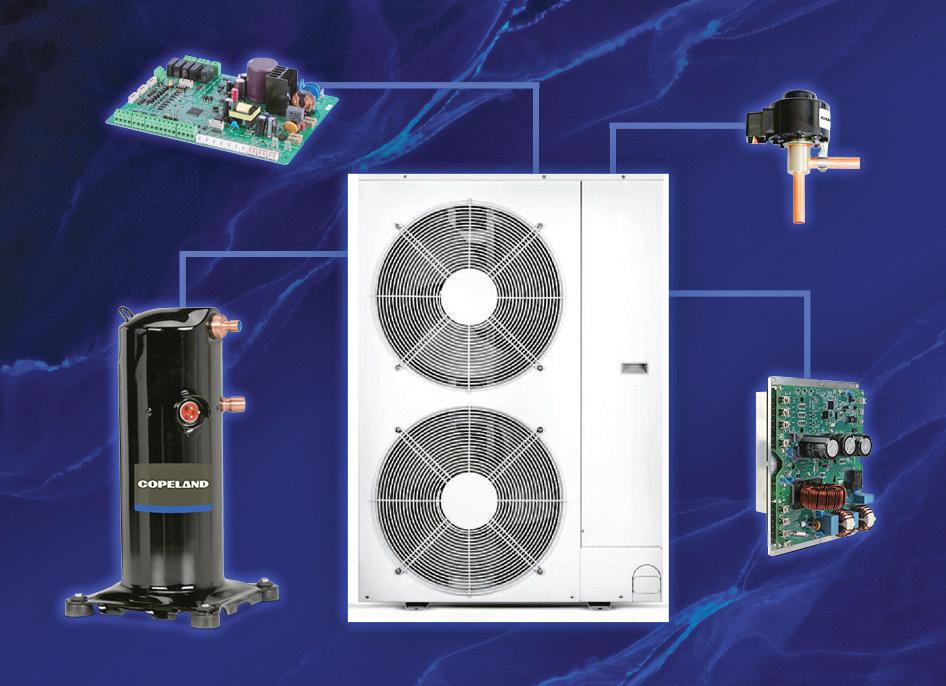
Copeland’s integrated compression and system technologies are engineered for hydronic heating sustainability. Built for reliability and efficiency to reduce indirect emissions, they are also optimized with lowerGWP refrigerants to lower direct emissions. Copeland
For contractors, perhaps the most important driver is homeowner demand for more options. Today’s homeowners increasingly want solutions that balance comfort, efficiency and environmental impact. Many are asking whether they can reduce their reliance on fossil fuels without giving up the comfort they enjoy from radiant floors, radiators, or hydronic baseboard systems.
Hydronic heat pumps provide a compelling answer to that question.
Technology is Expanding What’s Possible
Like many heat pump applications, hydronic systems have benefited from significant advances in compression and controls technology. Variable-speed compressors help systems better match capacity to changing conditions, improving efficiency, and comfort. Enhanced vapor injection (EVI) technology can support higher water temperatures and improved low-ambient performance, helping expand the range of climates and applications where hydronic heat pumps can be deployed successfully. At the system level, advances in controls, electronic expansion valves, pumps, and integrated system management are helping manufacturers optimize performance across a wider operating envelope. These innovations are particularly
important in retrofit applications, where hydronic heat pumps may need to serve existing distribution systems designed around higher-temperature boilers.
As a result, contractors have more flexibility than ever when evaluating whether a hydronic heat pump is a viable solution for a particular home.
A New Opportunity For Contractors
The growing interest in hydronic heat pumps is more than a technology trend; it’s a business opportunity. As electrification expands, contractors who understand both heat pump technology and hydronic system design will be increasingly wellpositioned to serve a broader range of homeowners. That includes customers who may have previously viewed electrification as impractical because of their existing heating infrastructure.
But supporting this transition will require education and training. Contractors will need to become proficient with hydronic distribution systems, understanding water temperature requirements,
control integration and system commissioning. Those who develop this expertise may find themselves serving one of the most promising segments of the residential electrification market.
Supporting Sustainable Solutions Without Sacrificing Comfort
Hydronic heat pumps are more environmentally friendly than fossil-fuel boiler systems while providing comparable comfort levels. Because they harness energy from the air to move heat rather than generate it, they produce more heating and cooling than they consume, while eliminating the direct carbon emissions from using traditional boilers.
In extreme cold climate scenarios, contractors could advise homeowners to keep their existing gas boilers as a backup. In this dual-fuel configuration, the hydronic heat pump runs year-round and only relies on the backup source when needed. Copeland is developing low-GWP compression solutions that bridge this comfort gap, which can deliver even higher water temperatures
for hydronic heat pumps and other electric hot-water heating applications.
Looking Ahead
The future of residential heat pumps is unlikely to be defined by a single technology or system architecture. Different homes will require different solutions. But one thing is becoming increasingly clear: electrification is no longer limited to homes heated by forced-air systems.
As homeowners seek efficient, allelectric comfort solutions, hydronic heat pumps are creating new pathways for both retrofit and new construction applications. For contractors, that means new opportunities to deliver the comfort homeowners expect while helping them prepare for an increasingly electrified future.
The next chapter of residential heat pump adoption may not be about replacing furnaces alone. It may also be about reimagining how water-based comfort systems fit into the all-electric home. Ross Moore is senior marketing manager at Copeland.
STRONGER RELATIONSHIPS. STRONGER RESULTS.
PHCC CONNECT is heading to Milwaukee. For three days, industry professionals will come together for focused education and valuable networking opportunities. We look forward to meeting you there!
HIGHLIGHTS INCLUDE:
» 20+ Expert-Led Education Sessions
» Technology & Product Hubs
» Learning Labs
» Podcast Pods
» Plumbing Apprentice Competition
» Closing Event at the Harley-Davidson Museum
The Commissioning Gap: Why Inverter Heat Pumps Underperform— and How Contractors Can Close It
The residential HVAC industry is in the middle of a profound transition. Electrification policies, inverter-driven compressors, and higher e ciency standards are redefining system design and installation practices across the country.
Yet many contractors are facing a recurring challenge: Inverter heat pumps are not consistently delivering their rated seasonal performance in the field. The equipment is engineered to perform. The ratings are verified. But real-world outcomes often fall short. The issue is not technology. It is commissioning.
Modulating Equipment, Fixed-Capacity Habits
Inverter systems behave fundamentally di erently from traditional single-stage equipment. Compressor output modulates continuously. Airflow adjusts dynamically. Electrical demand fluctuates with load.
Auxiliary heat integrates through logicbased staging.
However, many installation procedures remain rooted in fi xed-capacity habits:
• Single-point airflow checks;
• Minimal static pressure diagnostics;
• Quick refrigerant verification; and
• Default thermostat configuration.
This mismatch creates what can be described as a performance gap—the di erence between rated laboratory e ciency and delivered field e ciency.
For HVAC businesses, that gap translates into callbacks, margin pressure, and potential customer dissatisfaction.
Where Performance Is Lost
Static Pressure Is Often Overlooked
Inverter air handlers are sensitive to duct system resistance. When total external static pressure is excessive:
• Blower speed increases;
• Compressor output ramps up;
• Electrical consumption rises; and
• Seasonal COP decreases.
In retrofit-heavy markets, elevated static pressure is common. Yet many installations are completed without documented return and supply static readings.
When operating costs rise, homeowners rarely blame duct resistance. They blame the equipment—and the contractor.
Consistent static pressure measurement is not optional on inverter installations. It is foundational risk management.
Auxiliary Heat Engages Too Early
Auxiliary heat staging remains one of the most frequent configuration problems in inverter systems.
Common issues include:
• Strip heat lockout temperatures set too high;
• Thermostats left in aggressive auxiliary mode;
• No balance point calculation; and
• Heat strips activating in moderate conditions.
When auxiliary heat stages prematurely, system e ciency declines significantly.
In many winter complaint scenarios, the issue is programming—not mechanical failure.
This distinction matters because configuration errors generate unnecessary service calls and erode margins.
Electrical Validation Is Inconsistent
Although inverter compressors reduce inrush current, they introduce variable electrical demand during modulation.
Common oversights include:
• No voltage measurement under load;
• No verification of voltage stability during ramp-up;
• Aging service panels in retrofit homes; and
• Limited panel capacity in electrification upgrades.
Breaker sizing alone does not confirm electrical stability.
As electrification accelerates, service panel capacity and voltage performance will become increasingly important operational considerations. Ignoring electrical validation increases the likelihood of nuisance trips and return visits.
The Operational Issue: Commissioning Is Treated as Startup
In many companies, commissioning is compressed into the final stage of installation. For inverter systems, that approach is insu cient.
Commissioning must evolve into a documented, multi-point verification process that includes:
• Static pressure measurement;
• Airflow confirmation;
As inverter heat pumps become the industry standard, commissioning is emerging as a key competitive advantage.
Proper commissioning is the difference between rated performance and real-world results. Measuring static pressure, verifying airflow, validating electrical performance, and correctly configuring auxiliary heat help inverter heat pumps deliver the efficiency and comfort homeowners expect while\reducing costly callbacks.
• Auxiliary heat staging verification;
• Electrical validation under load; and
• Observation of modulation behavior.
This does not complicate operations. It reduces long-term risk.
A Framework HVAC Businesses Can Implement
To close the performance gap, contractors must institutionalize inverter-specific commissioning protocols. Below is a practical structure that can be integrated into business operations.
1. Build Commissioning into Job Costing
If commissioning time is not budgeted, it will be rushed. Companies should:
• Allocate defined commissioning labor hours;
• Use standardized documentation checklists;
• Require recorded measurements; and
• Tie installation quality metrics to verified data.
Commissioning should be positioned internally as a professional service—not a final task.
2. Require Static Pressure Documentation
Every inverter installation should include the following recordings:
• Return static;
• Supply static;
• Total external static; and
• Verified airflow.
Over time, this data becomes a powerful internal quality-control resource. It helps identify recurring duct limitations and design issues. Companies that measure static consistently report fewer comfort-related callbacks.
3. Standardize Auxiliary Heat Configuration
Create a written company policy covering:
• Balance point determination;
• Strip heat lockout settings;
• Dual-fuel staging configuration; and
• Thermostat programming standards.
Consistency prevents technician-totechnician variability and reduces winter complaint rates. Configuration discipline often determines whether high-efficiency equipment performs as expected.
4. Validate Electrical Performance Under Load
During startup, technicians should:
• Measure line voltage at idle;
• Measure voltage during compressor ramp-up; and
• Confirm amp draw aligns with expected modulation behavior.
Electrical validation protects both the contractor and customer from downstream service issues.
As more homes transition toward electrified HVAC, panel capacity assessment will become a critical part of project planning.
5. Educate Homeowners on Modulation Behavior
Inverter systems operate differently:
• Longer runtimes are normal;
• Gradual output adjustments are expected; and
• Reduced cycling improves comfort. Without explanation, homeowners may interpret proper modulation as a malfunction.
Proactive education reduces unnecessary service calls and builds confidence in the installation.
Commissioning as Competitive Strategy
As inverter technology becomes standard across the industry, differentiation will not
come from equipment access. It will come from performance verification.
Contractors who institutionalize structured commissioning processes are more likely to:
• Reduce warranty callbacks;
• Improve online reputation;
• Maintain stronger margins; and
• Justify premium pricing
Commissioning is no longer a technical detail. It is a strategic business discipline.
The Industry Implication
Electrification policies and rebate programs assume high seasonal efficiency in real-world applications.
If commissioning practices fail to support that assumption:
• Utility programs may increase verification requirements;
• Rebate structures may tighten; and
• Consumer skepticism may grow
Contractors are the final performance gatekeepers. Technology innovation alone will not ensure efficiency outcomes. Process innovation will.
The Future Belongs to Measured Performance
The HVAC industry is shifting from equipment-based selling to performance-based accountability.
Inverter heat pumps require commissioning standards that match their technical sophistication.
If contractors continue applying fixedcapacity startup habits to modulating systems, performance complaints will persist.
If the industry embraces structured, documented commissioning practices, the result will be:
• Higher delivered efficiency;
• Stronger business margins;
• Greater consumer confidence; and
• Long-term credibility for electrification initiatives.
The next competitive advantage in HVAC will not be who installs the most inverter systems.
It will be who verifies them best.
Igor Kudinov is a licensed HVAC contractor based in California specializing in high-efficiency residential system design and inverter heat pump commissioning. His work focuses on operational strategies and field verification practices that improve real-world system performance.
Why the Old Troubleshooting Playbook No Longer Applies
Modern refrigeration systems think for themselves. Technicians who ignore the control side are working harder than they need to be. By Chris
Thomas
Walk into almost any job today and, at fi rst glance, everything looks familiar. Compressors, evaporators, condensers, piping—the same basic layout many of us have been working on for decades, with nothing that immediately signals this system is going to challenge how you think.
But if you have been in the field recently, you already know something is di erent. These systems do not behave like the ones many of us learned on. In some cases, they behave nothing like them at all.
After 41 years in this trade, I have had to adjust how I troubleshoot more in the last decade than I did in the fi rst three. The fundamentals are still there. Physics has not changed, and refrigerant still moves heat the same way it always has.
What has changed is what drives the system, how decisions get made, and how the system protects itself. The biggest shift is not mechanical—it is the controls.
When the System Starts Making Decisions
Modern refrigeration systems depend heavily on sensors, logic, and safety routines just to operate. Long before a technician arrives, the system has already been making decisions based on what its sensors tell it is happening—and that changes how problems appear in the field.
A symptom that looks exactly like something you have diagnosed a hundred times before can still send you chasing the wrong issue. High head pressure, unstable suction, warm cases: on the surface, it all feels familiar, but the cause behind it may be rooted in the control side, not the mechanical one.
Technicians who troubleshoot today the same way they did 10 years ago will likely work harder than necessary—not because the fundamentals are wrong, but because the system is no longer reacting the way they expect it to.
Symptoms Do Not Mean What They Used To
Consider the most common symptoms: high head pressure, warm cases, nuisance alarms and systems that refuse to stay online. Years ago, those symptoms traced back in a fairly straight line. High head pressure usually meant airflow or charge issues. Warm cases meant feed or capacity problems. A system that was down usually meant something had failed—and most of the time, it was a direct path from symptom to cause.
Today, those same symptoms can come from a mechanical issue, a drifting sensor,
Heatcraft
a controller decision or a safety routine doing exactly what it was designed to do. Standing in front of the rack, every one of those situations looks identical. The system is reacting—but what it is reacting to may have nothing to do with what is actually happening in the refrigerant circuit.
Experienced technicians can chase a problem for hours because of this. The symptoms are real, and the response is logical. The underlying cause is simply not where instinct says it should be.
Splitting the System in Your Mind
One adjustment that pays off in the field is learning to mentally divide the system before you pick up a gauge. On one side sits the mechanical: refrigerant flow, compression, heat transfer, and oil return, governed by the same rules they always have been. On the other side sits the control side: sensors, transducers, controllers, logic and safety routines, which collectively tell the system what it believes is happening.
Those two sides do not always agree. The mechanical side reflects what is physically happening. The control side reflects what the system thinks is happening. When both are accurate, troubleshooting feels straightforward. When they diverge, you can question everything you see until you slow down and confirm which side is giving you bad information.
When Mechanical Gets the Blame
Mechanical components take the blame more often than they deserve on modern systems. High head pressure, fans ramping, valves hunting, pressures that never settle—the instinct is to go mechanically. Check the condenser, verify airflow, inspect the charge, look at the coil. All valid steps worth taking.
But some calls turn up nothing wrong mechanically. Clean coils, good airflow, charge exactly where it should be, yet the system still behaves as though it is in trouble. That is the moment to ask the most important question on the call: do you trust the data being presented?
A pressure transducer or temperature sensor that has drifted—even slightly— feeds the controller a picture of conditions that do not exist. The controller responds
to that picture: ramping fans, repositioning valves, limiting capacity are all based on a reality the system has constructed for itself. From the outside, it looks like a refrigeration problem. On the mechanical side, nothing is wrong. Verifying a sensor against a trusted gauge or thermometer is a 5-minute step that can redirect an entire call.
A2L Systems: When “Down” Means “Protected”
A2L refrigerants introduced a layer of system logic that caught a lot of technicians off guard when these units first appeared in the field. Cases warming, compressors not running as expected, the rack appearing as a serious problem—the presentation is identical to a mechanical failure. The difference is what triggered it.
In many of those cases, the refrigerant detection system has done exactly what it was designed to do: it sensed a condition, triggered a safety routine, and shut down to protect the occupied space. The system is not broken. It is protecting the building. The real work is not diagnosing a failure—it is understanding the decision the system made and whether the condition that triggered it was genuine.
That distinction—between a system that has failed and a system that has responded—is the same fundamental question that applies across every technology covered here. A2L makes it harder to miss because the consequences of getting it wrong are more visible.
CO₂ and HFC Systems: Less Margin For Guessing
CO₂ systems operate in a much tighter window than conventional refrigerants. Small deviations in ambient conditions, sensor accuracy, or control logic can produce significant swings in system behavior, and transcritical systems do not forgive assumptions. What the system believes is happening and what is actually happening can diverge quickly, which makes verifying sensor inputs a first step rather than a last resort.
Modern HFC racks present a different version of the same challenge. Floating head pressure, adaptive controls, and energy-optimization routines can make a system look like it is performing poorly
when it is operating exactly as designed— unloading compressors or backing off capacity to hit a target that simply is not visible on a standard gauge set. Before drawing any conclusions, the question to ask is whether the behavior represents a system response or a true fault.
The Most Expensive Habit in the Field
One pattern wastes more time on modern service calls than almost anything else: jumping too quickly to the first assumption. Pressures look off, so the charge gets questioned. Superheat looks unstable, so the valve becomes the suspect. The system is down, so something must have failed. Parts get replaced, time runs out, and the real issue stays hidden.
What often gets skipped is the control side entirely. Alarm history never gets reviewed. Sensor values are trusted without verification. Few technicians stop to ask not just what the controller is doing, but what they believe is true.
Skipping those steps is not a skills problem. These systems simply require a troubleshooting mindset that accounts for the gap between what the system perceives and what is happening in the equipment.
The Shift That Matters Most
The shift is not about abandoning what works—it is about adding one more layer of discipline to how a call gets approached. Verify inputs before reacting to outputs. Pull alarm history before pulling a panel. Understand what the controller is trying to accomplish before deciding it has failed. Those habits do not replace mechanical knowledge—they make it more effective.
When a technician approaches a call that way, the frustration drops. Time on site drops and the system starts making sense because the technician is reading both sides of it—what the equipment is doing and what the controls believe the equipment should be doing.
The systems have changed. The way we think about them must change with them.
Chris Thomas is the supervisor of Product Services at Heatcraft Refrigeration Products.
How RETA-RSES Is Building the Next Generation of HVACR Techs
From AI-assisted diagnostics to workforce shortages, Lori Schiavo shares the trends reshaping refrigeration and what contractors should do now.
The refrigeration and HVACR industry is navigating rapid technological change, evolving regulations, and an ongoing skilled labor shortage—all while demand continues to grow in sectors such as cold storage, food processing, and data centers. Following the merger of the Refrigerating Engineers & Technicians Association (RETA) and the Refrigeration Service Engineers Society (RSES), Associate Executive Director Lori Schiavo is helping lead the newly unified RETA-RSES organization into its next phase. Contracting Business recently sat down with Schiavo to discuss the association’s priorities, workforce development e orts, emerging technologies, the growing role of AI and connected systems, and why investing in technician training will remain the industry’s greatest competitive advantage.
CB: Since stepping into the Associate Executive Director role earlier this year, what priorities have risen to the top for you?
LS: My top priority has been working alongside our Executive Director, Vern M. Sanderson, to help guide the successful integration of RETA and RSES into a stronger, more unified organization. That work touches nearly every aspect of the association, from internal operations and systems integration to strategic planning, budgeting, branding, and aligning sta
responsibilities across both organizations.
At the same time, we have remained focused on the external priorities that matter most to our Members and the industry, including regulatory developments, workforce challenges, expanding training and certification opportunities, and maintaining a strong presence at key industry events. Every decision we make is centered on strengthening the value we provide to Members while positioning RETA-RSES for long-term growth and industry leadership.
CB: What accomplishments is the organization most proud of since the merger?
LS: The accomplishment I’m most proud of isn’t a single project but rather bearing witness to the people who have worked so diligently to make this merger successful.
Bringing together two long-standing organizations is a significant undertaking, but thanks to the collaboration of our teams in Albany, Oregon, and Schaumburg, Illinois, along with the leadership of Vern M. Sanderson and the support of our board of directors, we’ve continued serving members without losing sight of our mission.
We’ve successfully begun integrating operations, aligning educational resources, expanding collaboration between refrigeration and HVACR professionals, and laying the groundwork for future innovation. Most importantly, we’ve demonstrated that by working together, we’re stronger together.
CB: How is RETA-RSES evolving to better serve today’s refrigeration and HVACR professionals?
LS: The industry is changing rapidly, and we’re evolving with it. Today’s technicians and facility professionals need flexible learning options, current technical information, and education that keeps pace with changing technology and regulations. We’re expanding online education, modernizing certification pathways, developing new training content, and looking for more ways to engage members throughout every step of their career—not just while at conferences or chapter meetings.
We’re also focused on creating a stronger connection between contractors, technicians, engineers, educators, and manufacturers so that RETA-RSES becomes a true hub for professional development across the industry. What was formerly the RETA National Conference is now the RETARSES National Conference, to be held in Orlando in October. There will be an HVACR track of sessions that will interest residential and commercial technicians.
CB: What feedback are you hearing most often from members about the challenges they face in the field?
LS: The biggest challenges we hear consistently are workforce shortages, rapidly changing regulations, increasing system complexity, and fi nding time for ongoing training. Industry professionals today are
expected to understand advanced controls, automation, networking, energy efficiency, and new refrigerants, all while continuing to provide excellent customer service. Members are looking for practical education that helps them stay ahead without taking them away from their work for extended periods.
CB: Labor shortages continue to impact refrigeration and HVACR. What is RETA-RSES doing to help attract and retain skilled technicians?
LS: Workforce development is one of our highest priorities. We’re working with schools, apprenticeship programs, employers, and industry partners to increase awareness of refrigeration and HVACR as rewarding, long-term career paths.
We are also expanding educational resources that help technicians continue growing professionally throughout their careers. Retention often comes from giving people opportunities to learn, earn certifications, and see a clear path for advancement.
CB: How has technician training changed over the past few years as refrigeration systems become more advanced and connected?
LS: Training has become much more comprehensive. Today’s professionals need traditional mechanical skills, but they also need to understand electronics, controls, networking, variable-speed equipment, remote monitoring, and increasingly sophisticated diagnostic tools.
Training also needs to be more accessible. Online learning, hybrid education, and on-demand resources allow technicians to continue developing their skills while balancing busy work schedules.
CB: Are you seeing increased interest in industrial refrigeration careers among younger workers?
LS: We are seeing encouraging signs, especially as more young people discover the variety of careers available within our industry. Industrial refrigeration offers excellent long-term career opportunities, competitive wages, and the chance to
work with cutting-edge technology. Our challenge is increasing awareness because many students simply do not know these careers exist. That is why outreach and partnerships with schools and training programs remain so important.
CB: How important are certifications and continuing education in today’s regulatory and technology environment?
LS: They are more important than ever. Technology is advancing quickly, regulations continue to evolve, and customers increasingly expect highly qualified professionals. Certification demonstrates competency, but continuing education ensures technicians remain current throughout their careers. It is not enough to learn a trade once; you have to continue learning as the industry evolves.
CB: What emerging technologies do you believe will most influence refrigeration over the next five years?
LS: We will continue seeing growth in connected systems, predictive maintenance, AI-assisted diagnostics, remote monitoring, automation, energy optimization, and lower-GWP refrigerants. The integration of smart technologies will help improve system efficiency, reduce downtime, and support sustainability goals while giving technicians better tools to diagnose problems before failures occur.
CB: What sectors within refrigeration are seeing the strongest growth right now?
LS: We are seeing strong growth across several sectors. Cold storage continues expanding due to changes in food distribution and e-commerce. Food processing and pharmaceutical refrigeration remain strong, while data centers are becoming an increasingly important area as demand for high-performance cooling grows. Industrial refrigeration continues to play a critical role in supporting essential infrastructure across numerous industries.
CB: What are your goals for membership
growth and engagement over the next few years?
LS: Our goal is not simply to increase membership numbers; it is to increase member value and ensure professionals are working as safely as possible. We want members to see RETA-RSES as an organization that supports them throughout every stage of their careers through education, certification, networking, technical resources, and professional development. If we continue delivering meaningful value, membership growth will naturally follow.
CB: What excites you most about where the refrigeration industry is headed?
LS: The pace of innovation. We are seeing incredible advances in technology, efficiency, automation, sustainability, and workforce development. It is an exciting time because our industry plays a critical role in food preservation, health care, manufacturing, energy, and countless other sectors. As technology advances, skilled professionals become even more valuable.
CB: If you could give refrigeration contractors one piece of advice for navigating the next few years, what would it be?
LS: Invest in your people. Technology will continue changing, regulations will continue evolving, and customer expectations will continue to rise. Organizations that prioritize training, professional development, and continuous learning will be the ones best positioned for long-term success. Your greatest competitive advantage will always be a knowledgeable, welltrained workforce.
CB: Anything else you would like to add?
LS: This is an exciting time for both our association and our industry. As the HVACR industry continues evolving, RETA-RSES is committed to helping professionals build successful careers, embrace new technologies, and continue advancing our industry for years to come.
Your technicians don’t need to become salespeople. They need to become educators.
Doug C. Brown is the founder of CEO Sales Strategies, where he helps founder-led companies increase revenue, improve operating profit, and build businesses that are more valuable and less dependent on the owner. His work focuses on helping business owners uncover hidden opportunities that increase both cash flow and long-term enterprise value.
Sam Wakefield is the founder of Close It Now and has spent decades helping home service companies improve technician performance, sales execution, leadership, and operational excellence. Together with his partner, Doug C. Brown, he advises contractors across the country on building businesses that generate stronger profits today while creating greater freedom and long-term value for the future.
Beyond the Hourly Rate: The Four Hidden Levers of HVAC & Plumbing Profitability
For most home service business owners, the first reaction to a slow month or shrinking profits is always the same: “We need more leads.” But what if more leads aren’t the problem? What if the next breakthrough in your business isn’t another marketing campaign—but knowing what matters next?
The Money You’re Already Earning— but Never Keeping
Most contractors think they have a revenue problem.
In our experience, they usually don’t. They have a profit capture problem.
Over the years, we’ve heard the same thing from owners across the country. “We need more leads.” Maybe.
Here’s what we’ve found after working with contractors and founder-led businesses across multiple industries.
If your business is leaking money internally, adding more leads doesn’t solve the problem. It simply lets more money leak out.
We’ve seen companies double their marketing budgets while their operating profit barely moved.
We’ve also seen companies significantly increase operating profit without adding another truck, hiring another technician, or spending another dollar on advertising.
The difference wasn’t more business. It was a better business.
If you want to build a company that’s more profitable today and substantially more valuable tomorrow, there are four places to start.
1. Stop Charging for Time, Start Charging for Value
One of the biggest profit leaks we still see is charging time and materials. Think about it.
Your best technician diagnoses and repairs a problem in 15 minutes because they have years of experience. A newer technician might take
two hours. Why should the customer pay less because your best technician is better? They shouldn’t.
Customers don’t buy hours. They buy certainty. Flat-rate pricing rewards expertise instead of penalizing it. It creates predictable margins, removes uncomfortable conversations over labor hours, and gives customers confidence before the work even begins.
The faster your technicians become, the more profitable your company becomes.
That’s exactly how it should work.
2. Your Trucks Are Either Making Money— or Losing It
Many owners know their hourly labor rate. Far fewer know how many productive hours they’re actually selling.
A technician sitting in traffic…
Driving to the supply house…
Waiting on dispatch…
Looking for parts…
None of those activities generate revenue.
Every hour a technician isn’t producing billable work is an hour you’re paying for but can never invoice.
That isn’t simply overhead. That’s operating profit disappearing.
The companies that consistently outperform their competitors aren’t always the ones with the best technicians. They’re usually the ones with the best systems. Better routing. Better dispatching. Better truck inventory. More first-call completions. Less wasted time.
Small improvements in productive labor create significant improvements in profitability over the course of a year.
3. Stop Living One Service Call at a Time
Companies built entirely around emergency service calls often ride a financial roller coaster.
Busy. Slow. Busy. Slow.
That cycle creates unnecessary stress for owners, employees, and cash flow. Maintenance agreements change that. They create predictable recurring revenue. They keep technicians productive during slower seasons. They improve customer retention.
Most importantly, they build trust long before a homeowner needs a major repair or replacement. When replacement time comes, you’re no longer competing against five companies. You’re already their trusted contractor.
Recurring revenue doesn’t just improve cash flow. It increases the long-term value of your business.
4. Turn Technicians into Trusted Advisors
Let’s clear something up. Your technicians don’t need to become salespeople. They need to become educators. Nobody enjoys being pressured into buying a new HVAC system or water heater. But homeowners do appreciate understanding their options.
When a technician presents only one solution, the customer naturally asks:
“Should I do this?”
When they present three thoughtful options—repair the immediate issue; repair the issue and address other components nearing failure; or replace the system with a higher-efficiency solution backed by a longer warranty—the conversation changes.
Now the customer asks: “Which option makes the most sense for my home and my family?”
That’s a completely different buying experience. People appreciate choices. Pressure destroys trust. Options build it.
The Real Opportunity
None of these ideas are revolutionary. Most owners have heard some version of them before. The challenge isn’t knowing what to do. The challenge is executing consistently. That’s where businesses separate themselves.
The best contractors we’ve worked with don’t win because they have more trucks, more technicians, or a bigger marketing budget.
They win because they capture more value from every opportunity that already exists inside their business.
Revenue matters. Operating profit matters more.
Operating profit allows you to hire better people, invest in stronger systems, weather slower seasons, reduce owner stress, and ultimately build a business that’s worth significantly more than the income it generates each year.
If you’re focused only on generating
more leads, there’s a good chance you’re overlooking money that’s already hiding inside your business. Find those opportunities first. Then add more volume.
That’s how you build a company that’s not only bigger—but substantially more profitable, more valuable, and far less dependent on the owner.
Greetings, and welcome to “HVAC Chats,” a series of podcast episodes by Contracting Business and Endeavor Business
Media—hosted by Nicole Krawcke, editor-in-chief of Contracting Business magazine and ContractingBusiness.com. HVAC Chats offers industry insights on the critical business management challenges that HVACR contractors face daily. Tune in today and learn how leading contractors are positioning their companies for future growth.
The objective isn’t to chase every large problem. It’s to qualify customers based on lifetime value rather than one-time potential.
The Myth That Lost Millions
The calls come in all summer long.
An AC unit keeps tripping the breaker. R-22 system, failed compressor, Federal Pacific panel. A cast iron sewer line is collapsing on the other side of town. Somewhere else, a water leak has become extensive. A septic system has failed.
Every time, the dispatcher’s eyes light up. The manager gets excited. Someone leans over the desk and says, “Get our best guy over there. This one’s going to be huge.”
But here’s the problem: a homeowner’s emergency does not automatically equal a priority call for your company. The industry has confused urgency with priority, and those are not the same thing.
In reality, priority should be determined by one thing: the likelihood that the customer and property represent a long-term relationship that creates value for both parties. The myth that has quietly cost contractors millions says otherwise. It says, “If the problem is big, the opportunity must be big.” That belief is what sends your best technician to the wrong house.
Every hour spent on the wrong call isn’t simply an expense. At more than $500 per technician hour, it’s a lost opportunity that could have been invested in a customer with a significantly higher probability of success.
This is why closing rates tell a story. When companies consistently serve their ideal customers, close rates on major repair and replacement opportunities exceed 80%. When they chase calls outside their niche, preferred geography, and customer profile, closing rates fall below 30%.
Twenty percent good does not make up for 80% bad. If unqualified opportunities are statistically more likely to fail than succeed, why do we keep setting our teams up to lose?
The answer starts with asking better questions before dispatching valuable resources, and knowing what you’re qualifying for when you ask them.
• Is this affecting the master area of the home or a guest area?
• How many systems do you have?
• What street are you located on?
• What day works best for you?
• When we arrive, who should we review the options with?
These questions identify what we call Priority 1 customers: customers located in neighborhoods and zip codes where 80% or more of calls result in completed work, satisfied homeowners, and profitable relationships. The answers reveal far more about the true opportunity than the initial
symptom ever could.
Priority 1 customers share these characteristics:
• They live within your ideal service area;
• Their homes fit the type of properties your company serves best;
• They align with your preferred demographics;
• They’re referred by great customers;
• You’ve had positive experiences with them before; and
• They’re interested in maintaining and improving their homes, not simply chasing the lowest price.
It’s worth noting that even maintenance agreement customers don’t automatically qualify. The question isn’t whether they have a membership; it’s why they became a member in the first place. Did they join because they truly value maintaining their home, or did they join because they wanted a discount? That difference separates a real opportunity from wasted time and resources.
To apply this framework fully, give your company permission to establish “No-Go areas.” Map your service territory. Identify your primary target zones. Perhaps your strongest opportunities exist within 15 minutes of your shop, while 45 minutes becomes your outer limit. If you consistently find yourself traveling beyond that boundary, the solution may not be dispatching farther. It may be time to open another location.
The objective isn’t to chase every large problem. It’s to qualify customers based on lifetime value rather than one-time potential. Profitability isn’t built by occasionally landing a big sale. It’s built by repeatedly putting the right technician on the right job, with the right tools, in front of the right customer.
That’s how you create five-star experiences. That’s how technicians win. That’s how customers become loyal advocates. That’s how profits become predictable.
The myth that lost millions wasn’t the belief that big problems create big sales. It was believing that big problems automatically deserve your priority. Stop assuming. Start qualifying. That’s not just how you create higher profits; it’s how you build unshakable businesses, stronger teams, and legacies that last for generations.
Matt Koop is the vice president of The New Flat Rate and coaches small businesses and technicians to reach a 100% closing rate in an industry that is satisfied with an average of 68%. Koop is one of the nation’s most highly respected technicians and small business coaches.
Stop Chasing Calls, Start Building Relationships
Does this sound familiar?
We complete a great call. The client loves us. We fixed the problem, the tech did everything right, and the homeowner is smiling when we leave. Eight months later, the system acts up again, and they call someone else.
That’s the reality for most contractors. We’re great at the work. We’re not-so-great at staying top-of-mind between calls. In a business where the next breakdown determines who gets the next sale, that could be costing us more than we realize.
A service agreement or membership program, done right, fixes that. Not as a discount program. Not as a revenue scheme. As a relationship.
The Real Problem Isn’t Leads, It’s Loyalty
We chase leads because we don’t have enough repeat business to rely on. Lead costs keep climbing. Our competitors are marketing to our clients right now. Every Google ad, every “$49 tune-up” postcard is a quiet invitation to try someone new. Without a reason to stay connected, our best clients are just one offer away from becoming someone else’s.
Here’s the mindset shift that separates contractors who build lasting businesses from those who stay stuck: a membership program is a retention tool first and a profit center second.
When we get in front of our customers two or three times a year—for maintenance or seasonal check-ups—we stop being just another vendor and start becoming “their guy.” That relationship is worth far more than any coupon we could offer.
Members call us first. They implement our recommendations. They don’t shop around.
Start With The Name, It’s Your First Sale
Most contractors launch a membership program with a generic name like “Comfort Club,” “Energy Savings Agreement,” or “Total Care Club.” Names like that are a dime a dozen, used by everyone across the country and probably in our markets already.
The best names do one of three things: speak to the pain/benefit (Problem Prevention Plan, Peace of Mind Program); personalize the relationship (Wags Family Plan); or creates a sense of belonging (Club Griffin, Founders Club).
When a homeowner hears the name and already wants in—before they even know the price—we’ve already done half the selling. The name is the first sale. Make it count.
Make It Benefits Rich, Not Discount Heavy
Homeowners don’t join our membership for
coupons. They join for three reasons: can you prevent it from breaking; can you make my system last longer; and when it does break, can you get here fast?
Build your program around those answers. The benefits that work:
• Priority service—members move to the front of the line;
• No dispatch fees on covered calls;
• No overtime fees;
• Free seasonal maintenance visits;
• Extended warranties & guarantees;
• Exclusive members-only offers; and
• VIP status.
Keep pricing simple. Make it easy to calculate.
The Process: Plant, Present, Protect
The biggest mistake we make when launching membership programs is turning our techs into salespeople. High-pressure kills the deal every time. So does pitching before diagnosing. The right process feels natural because it is.
Plant the seed on the incoming call. Our CSR asks one simple question, “Are you a member of our Family Plan?” No selling. Just asking.
Present at the door. Hand the client a simple one-page overview of what to expect on today’s call with a membership overview on the back. Don’t pitch it, just hand it to them.
Protect the investment. Once we’ve diagnosed and presented repair options, that’s the moment. “We can also set you up on our Family Plan to protect this repair and help prevent the next one.” Or, after the work is done, “This is exactly the kind of thing membership helps prevent.”
That sequence—plant, present, protect—converts without pressure because it’s genuinely helpful, not salesy.
Your Best Marketer Is Already In The Home
Outside of the service call, direct mail and email to our existing clients are the most effective membership marketing tools. Monthly touchpoints—seasonal reminders, maintenance tips, what’s coming up—keep us top-of-mind and make membership feel like a natural next step.
Membership isn’t a product to sell. It’s a promise to keep. Done right, they give homeowners exactly what they want from us; someone who shows up before things go wrong, fixes it fast when they do, and actually remembers their name.
Stop chasing transactions. Start building relationships.
A membership program is a retention tool first and a profit center second.
Contracting Business
HVAC Hall of Fame member Tom Casey, Jr. is the “Been There, Done That” Mentor for True Legends Consulting, Ponte Vedra, FL. He can be reached at TC@TomfromFlorida.com.
Remembering Jim Davis How ‘Captain CO’ Changed HVAC Combustion Testing Forever
More than an instructor, Jim Davis mentored generations of technicians and left behind a legacy that will continue shaping combustion training for decades.
When I was a contractor, trade magazines accumulated on my desk faster than I could read them. I would usually forget most of the articles before turning the page. Every once in a while, a unique face would appear. Wild hair and a face that could be on a postage stamp. After reading his articles, I wondered, “Who is this guy?” Years later, I wouldn’t just know who he was; I would be lucky enough to call him a friend.
The Birth of Captain CO
In 1978, Jim Davis started working for a local distributor in Cincinnati, Ohio. He worked in counter sales for a local HVAC distributor and, at some point, was approached by a tool manufacturer to start selling combustion analyzers. Shortly after, Jim confronted his boss and said, “We need to start selling these.” His boss was reluctant but eventually ordered a few.
Jim soon landed a site visit with a contractor and had high hopes of making his first analyzer sale. They used the tool for the first time, and the contractor asked, “What do those numbers mean?” Jim shrugged his shoulders and said, “I was hoping you could tell me.”
Jim quickly realized that to succeed in selling combustion analyzers, he would have to learn how to use them properly. Back in those days, there wasn’t much technical information available for combustion testing. This was the beginning of his life’s work and the birth of an industry legend.
Becoming Exceptional
Jim’s deep curiosity about the unknown and desire to solve problems that others couldn’t solve put him in a league of his own. Jim created many procedures for combustion performance and carbon monoxide safety, each with a story. Jim remembered how
and where he learned every aspect of his craft. All his knowledge is based on hands-on field experience.
He documented his field investigations in the appendix of NCI’s “Combustion Performance and Carbon Monoxide Diagnostics” class manual. His stories bring you back in time to when Jim made each discovery about combustion testing.
Some of the things Jim taught contrasted with common misconceptions. Data always backed everything he taught. Jim welcomed disagreement but wouldn’t tolerate opinions. If you wanted to make a claim, Jim insisted you back it up with measurements. This was the common theme on the HVAC- Talk forum. Jim posted with his alter ego username “Captain CO.”
He encouraged students to go out and start testing. He truly believed the worst thing you could do was not test at all.
When Jim started at NCI, he had lunch with Al D’Ambola (one of NCI’s first instructors). At lunch, Jim asked Al, “What hours do you normally answer technical support calls from students?” Al said, “All day long, 8 a.m. to 5 p.m.” Jim sat quietly for a second and said he didn’t think he could do that.
“Carbon monoxide is dangerous 24 hours a day; I don’t think I can turn my phone off.”
And up until the morning of June 20, 2026, Jim did not turn his phone off. He always answered the phone. Jim passed away early Saturday morning, leaving a hole in my heart and in the HVAC industry.
Going From a Picture in a Magazine to a Friend
For the past seven years, I have co-hosted an entertainmentbased live stream on YouTube called “HVAC Overtime.” Over the years, we’ve had some really cool guests on the show, and I’ve found this to be a great way to connect with industry leaders.
One Friday night, in the summer of 2022, we were doing our live show and somehow got on the topic of combustion. At some point, the conversation shifted to Jim Davis. A few minutes later, my phone starts ringing, and I look down to see that Jim is calling me on Facebook Messenger. I didn’t know what to do, and I thought it was someone pranking me. I ended up answering his call live on air. That was the first time I heard the Captain’s voice. He cut right to the point and said, “I hear you guys talking about me on your video.”
Jim Davis and Adam Mufich chatting after the awards banquet at Summit 2024.
I invited him to come on the show and sent him a link. Suddenly, Jim popped onto the screen with his signature hairstyle. One of the first things he did was apologize for his bad hair day. He was sitting in his pajamas in a recliner with his laptop on his lap. He told stories for the rest of the live stream. When the show ended, we invited him back for a second visit.
As a result, I wanted to attend one of his classes. I saw a class scheduled for Michigan and knew this was my chance. I ended up sleeping on a buddy’s floor and drove an hour back and forth to the class each day. That’s how badly I wanted to learn from him.
Jim threw a combustion analyzer at me during the class, which caught me off guard. I had heard stories about him throwing things, but I still wasn’t expecting it. I stood up to give it back to him, and he said, “Just throw it!” That was Jim.
We stayed in touch, and a few years later, I was offered a position with NCI. Almost weekly, I spoke with Jim about questions I had. However, there were times when we would talk three
times a day. Jim was always there for me and always had an answer to my questions.
Focusing on His Legacy
For the past few months, I have worked on a team at NCI to update our combustion class. As we worked on the content, we would send it to Jim for his blessing. We had our first working meeting after he passed, and someone had a technical question about the content. Another instructor said, “We need to call Jim.” Everyone went silent. It was almost like reality hadn’t set in.
I have watched the days pass by, anticipating my first combustion class this October. I won’t be teaching my material; I will be teaching Jim’s life’s work. That comes with a lot of responsibility. The content that Jim created could mean the difference between life and death for someone. He has saved countless lives over his career, both directly and indirectly.
He has given us a gift by leaving a piece of himself behind for NCI to share with the world. I will do my best to make sure his legacy continues. This is how a legend lives on.
Adam Mufich serves the HVAC industry as content developer and instructor for National Comfort Institute, Inc. (NCI). NCI specializes in training that focuses on improving, measuring, and verifying HVAC and Building Performance. Find them at www. nationalcomfortinstitute.com.
SALES CONTACTS
SOUTH & WEST: SENIOR MANAGER, BUSINESS DEVELOPMENT
Randy Jeter
Office: 512-263-7280
Cell: 512-426-9145
Fax: 913-514-6628
rjeter@endeavorb2b.com
EAST COAST: SENIOR MANAGER, BUSINESS DEVELOPMENT
Ellyn Fishman
Cell: 949-239-6030
efishman@endeavorb2b.com
ACCOUNT MANAGER MIDWEST
Bill Boyadjis
973-829-0648
bboyadjis@endeavorb2b.com
CLASSIFIEDS/INSIDE SALES: MEDIA ACCOUNT EXECUTIVE
Steve Suarez
Cell: 816-588-7372
Office: 941-259-0867
ssuarez@endeavorb2b.com
DIRECTOR OF SALES, BUILDINGS & CONSTRUCTION GROUP
Joe Agron
941-200-4778
jagron@endeavorb2b.com
Jim Davis performing a combustion test on a Trane furnace.
Daikin
The Daikin NEXIO
Max package heat pump is an inverter-driven rooftop solution engineered to support building electrification, deliver energy-e iciency performance, and provide comfort in light commercial applications. Utilizing low-GWP R-32 refrigerant and Daikin variable-speed technology, NEXIO Max is designed to help simplify replacement projects by aligning with common rooftop unit footprints without requiring a curb adapter, helping maintain existing curb and duct compatibility while managing installation time and cost.
Factory-wired and labeled connections help streamline startup and commissioning, while an open-access cabinet design provides convenient access to key components for service and maintenance. Integrated Power Protection with phase-monitoring capabilities helps safeguard critical components, supporting reliable operation and reducing unplanned downtime.
Configurable options, including Multi-Zone VAV and Hot Gas Reheat, enable NEXIO Max to support multiple commercial applications. It is available in 7.5-, 8.5-, and 10-ton capacities, delivering up to 114,000 Btu/h of cooling performance. www.daikincomfort.com
International Environmental Corporation
Designed for both new construction and retrofit projects, the AHY air handling unit features a compact modular design that adapts easily to varying jobsite conditions while providing e icient comfort cooling and heating. With airflow capacities ranging from 3,000 to 10,000 CFM and the ability to overcome up to six inches of total static pressure (TSP), the AHY is built to support demanding commercial HVAC environments.
AHY’s modular construction allows sections to be factoryassembled or shipped in modules for on-site assembly, providing greater installation flexibility in buildings with limited access. With a maximum module length of 33 inches, the units can be maneuvered through standard doorways, simplifying installation in tight mechanical spaces.
Built for durability and e iciency, the AHY unit features one-inch double-wall, foam-injected panels with R-6.5 thermal e iciency, along with direct-drive plenum fans with EC motors that deliver e icient airflow and simplified service access. Designed for constant volume and VAV applications, the
AHY unit is well-suited for environments such as educational facilities, commercial o ices, health care buildings and retail spaces. www.iec-okc.com
G&D Chillers
G&D Chillers, an Ingersoll Rand company, announced the launch of its SUMMIT AIR Series, which spans 20 to 200 tons across 11 standard models. Units run on R-454B refrigerant— A2L-compliant and below the 700 GWP threshold mandated by the EPA AIM Act. Tandem scroll compressors, variable-speed EC condenser fans, and native BACnet and Modbus integration deliver the e iciency and BAS connectivity commercial engineers expect. All models are designed to meet ASHRAE 90.1-2025 e iciency requirements.
For use in commercial o ice buildings, mixed-use, education, health carev medical o ice facilities, data centers and colocation, and industrial process cooling, and legacy chiller replacement, the SUMMIT AIR Series is available now through G&D Chillers direct sales. gdchillers.com/hvac
Refrigeration Technologies
The Viper EZDose is a gravity-fed pan and drain line maintenance system designed to help HVAC contractors prevent condensate drain clogs before they become water damage, odor complaints, and costly callbacks.
EZDose uses a gravity-fed reservoir valve, fittings, and routed tubing to deliver Viper Pan & Drain Treatment directly into the evaporator drain pan at multiple points, so every area of the pan is covered, not just one spot. The result is even distribution across the entire surface where slime, mildew, sludge, and Zooglea are most likely to form. The system installs in minutes and requires no power, batteries, wiring, app, or motor to malfunction or troubleshoot.
Once installed, technicians fill the 32 oz. magnetic reservoir with Viper Pan & Drain Treatment, a noncorrosive, biodegradable gel formulated with detergents, enzymes, and silicone. The enzymes break down existing buildup, while the silicone coats the pan, p-trap, and drain piping to improve flow and prevent future growth from adhering. Maintenance is straightforward: 8 oz.
every three months for standard upkeep, or 4 oz monthly for problem drain lines. The reservoir mounts directly to the unit via built-in magnets or to a nearby surface using included drywall anchors. www.refrigtech.com
Omega Flex
Re-engineered based on feedback from the field, Omega Flex, Inc.’s TracPipe flexible gas piping system’s new fittings contain a silicone cover that prevents exposed stainless steel at the fitting joint and distinct, contractor-friendly features that make installs more intuitive, efficient, and consistent. The new fittings come in sizes 3/8” up to 2” for both the TracPipe and TracPipe PSII Systems and are suitable for natural gas and propane installations in single and multi-family residential, as well as commercial and industrial building applications.
Designed for seamless transition and confidence in use, TracPipe System fittings 3/8”, 1/2”, 3/4”, and 1” sizes are a direct replacement for existing AutoFlare fittings and follow the same AutoFlare installation process but with more features and a polished appearance.
The TracPipe System fittings feature an adaptable fitting design. As different functions are needed, contractors can easily adapt the base fitting for termination fittings such as wall boxes, steel floor flanges and 90-degree wall stub-outs, providing greater flexibility across installation types and simplifying product selection and use.
The TracPipe System of flexible corrugated, semi-rigid stainless-steel tubing (CSST) is available in both the TracPipe AP and underground PSII systems. All TracPipe System CSST products are listed by CSA under the ANSI LC 1 Standard and are approved for use throughout the U.S. and Canada. The re-engineered TracPipe fittings will replace AutoFlare fittings, which will be available until the end of 2026. omegaflextraining.com/tracpipe
Milwaukee Tool
Milwaukee Tool announced the M12 FUEL 16 Gauge Scroll Shear, delivering precise, debris-free cutting performance in a compact, cordless solution. Designed for HVAC, mechanical, and manufacturing professionals, the new shear addresses common jobsite frustrations by combining tight-radius capability, clean cuts, and precision control in one solution.
Delivering debris-free radial cuts, the M12 FUEL 16-gauge Scroll Shear produces clean, burr-free results without leaving behind chips or shavings, helping users maintain jobsite cleanliness, and avoid costly rework in sensitive environments. By eliminating debris, this solution is well-suited for installed ductwork and finished spaces where cleanliness is critical. The scroll shear’s ability to execute tight-radius cuts allows
professionals to complete detailed work more efficiently without reverting to manual tools.
The Scroll Shear works faster across 16-gauge Mild steel, 16-gauge aluminum, and 18- gauge stainless steel, the company says. This added capability reduces reliance on hand snips and increases productivity in real-world jobsite conditions. The blades of the Scroll Shear are four-sided and require routine rotation to maintain performance. Once all sides have been used and are dull, Milwaukee also offers the M12 FUEL™ 16 Gauge Scroll Shear Replacement Blade Set for purchase.
Providing variable speed and precision control, this Scroll Shear features a 5-mode variable-speed dial and additional Auto-Load mode, allowing users to adjust speed in real time for maximum accuracy and productivity. Providing precision and control, the Scroll Shear makes tight 1/2” radial turns. The compact, lightweight form factor improves maneuverability and access in tight spaces, while enhanced control supports more precise cuts, even in challenging positions. www.milwaukeetool.com
NAVAC
NAVAC announced the launch of its SK4TPHM1 Smart Refrigerant & Air Side Diagnostics Pro Kit, a complete wireless diagnostic solution designed to help HVAC professionals improve system accuracy, streamline troubleshooting, and simplify field service workflows.
Engineered for modern HVAC service and commissioning applications, the SK4TPHM1 kit combines a full suite of smart diagnostic tools into one integrated platform. Compatible with both the myNAVAC and MeasureQuick apps, the kit includes NST1 and NST2 temperature clamps (high and low side), two NSP1 pressure probes, two NSH1 psychrometers, two NSM1 manometers, and two F1030 ¼” access tees.
A key feature of the SK4TPHM1 kit is its onboard screen, which gives technicians immediate access to critical system readings directly in the field without relying solely on a mobile device. Combined with wireless app connectivity, the kit consolidates measurements, automatically calculates system
comparisons, and organizes data into a single report for easier documentation and review, helping streamline diagnostics while supporting a more connected workflow.
The inclusion of dual psychrometers and manometers allows technicians to evaluate airflow, static pressure, and environmental conditions alongside refrigerant-side performance, helping deliver a more complete picture of system operation. Combined with the high- and low-side temperature clamps and pressure probes, the kit supports a comprehensive diagnostic approach that can help reduce callbacks, improve commissioning accuracy, and enhance overall system performance. www.navacglobal.com
RectorSeal
RectorSeal expanded the availability of ClearDrain PVC for commercial and industrial HVACR applications, including grocery stores, convenience stores, refrigeration case drain routing, and rooftop units.
ClearDrain PVC Commercial, like its residential counterpart, incorporates zinc in its manufacturing process. This results in a smooth, slippery inner wall that helps prevent the growth of bacteria and algae. Independently tested to ISO 22196:2011, biocide-free ClearDrain PVC can reduce white slime growth
by up to 98% or more, and slime-blocking bacteria growth by as much as 99.9%, the company says. This product is rated for refrigeration capacities of up to 20 tons and offers a complete lineup of fittings for routing refrigeration case drains.
For commercial facilities, ClearDrain PVC provides a one-time material upgrade that helps reduce reliance on chemical treatments, biocide tablets, and recurring maintenance programs. It also supports health code and food safety compliance, reduces slip-and-fall risks from drain overflows, and lowers the risk of water damage and service disruptions across store fleets and commercial facilities. www.rectorseal.com
RenewAire
RenewAire introduced the Evergreen Series. These residential units feature single-point exhaust with energy recovery capabilities. Evergreen SH is a three-duct ERV with a builtin return grille, and ducted supply, exhaust, and outside airstreams. Designed for convenient localized extraction, this ERV is ideal for applications such as bathrooms, laundry
rooms, and smaller-sized residential spaces (i.e., apartments, condominiums).
The Evergreen SH (model number EG-110SB-H020-XE0) is a compact, ceiling-mounted ERV that provides an airflow range of 25–130 CFM. In a single compact housing, the unit simultaneously exhausts humid, odorous air and supplies fresh tempered outdoor air directly to a nearby room or HVAC duct. This outside fresh air is tempered by use of RenewAire’s 5th generation energy recovery core that efficiently recovers energy from the exhaust airstream and transfers it to the supply without the two airstreams coming into direct contact or mixing within the core.
The unit operates as a single-speed device at any of the three preprogrammed quick-select minimum airflows or anywhere within the full operating range with the variable airflow setpoint. The preprogrammed quick-select airflow setpoint uses proprietary software to automatically adjust the electronically commutated (EC) motorized impellers to self-balance airflows and maintain a minimum exhaust airflow at 30, 40, or 50 CFM from 0.2 to 0.4 in. w.g. ESP. Additionally, a variable constantspeed range (25–130 CFM) accommodates various applications, while flexible control methods—including countdown timers and manual switches—support both continuous and intermittent use. Quick and easy airflow selection combined with the automated self-balancing feature eliminates laborintensive onsite setups.
The Evergreen Series has a small 20” (L) x 17” (W) x 11-3/4” (D)-inch footprint. The unit’s low profile fits inside most ceiling joists or ceiling cavity configurations and is made possible by 5-inch oval exhaust/supply connections versus circular openings. Steel mounting flanges are integrated for easy installation. www.renewaire.com
Rheem
Designed for today’s high-performance HVAC systems, the Endeavor Line Classic Plus Series Top-Discharge Universal Heat Pump (RP17AY) offers cooling efficiencies up to 17 SEER2/11.7 EER2 and heating efficiencies up to 9.5 HSPF2. Engineered for universal installation compatibility, the unit pairs easily with nearly any R-454B HVAC system, offering a solution for common replacement and new construction. Available in 2to 5-tons with cooling and heating capacities ranging from 22.2 to 57 kBtu, the system uses R-454B refrigerant to support more
sustainable, high-e iciency operation.
Built-in technology allows for simplified install, troubleshooting, and service via the Rheem Contractor and EcoNet5 apps. A patented, integrated one-box design featuring the A2L sensor and mitigation board, and straightforward wiring configuration o ers easier commissioning and protects the system by pausing operation if excess refrigerant is detected.
Featuring brushless DC condenser motors (BLDC), Rheem’s PlusOne Triple Service Access design, and compatibility with existing refrigerant line sets, the RP17AY heat pump was engineered with optimal installability and serviceability top of mind.
Additionally, Powered by EcoNet technology enables automatic system configuration and optimization. Coupled with the PlusOne Variable Speed Twin Rotary Compressor and Inverter Drive, the system operates from 35% to 100% capacity, o ering superior comfort with greater e iciency, precise temperature control, and advanced humidity control. www.rheem.com
US Boiler
Currently standard on the ALTA condensing boiler and combi boiler line, the OneTouch control system dramatically expedites startup, reduces maintenance, and increases system reliability.
When an ALTA boiler is powered up, OneTouch provides automatic combustion setup and eliminates the need for manual throttle and o set adjustments. This provides commissioning times of five minutes or less.
OneTouch then continues to monitor combustion after setup to adjust for alterations in fuel quality, combustion air temperature, and changes throughout the heating system. An outdoor reset sensor is not required. Modulation is automatically adjusted to meet heating requirements without harmful short-cycling.
Conversion from natural gas to LP is as simple as turning one screw and selecting the fuel source in the boiler control. There are no parts to exchange. The ALTA boiler and ALTA Combi, equipped with OneTouch, provide constant comfort, e iciency, and performance. www.usboiler.net
You can’t grow a business by yourself.
Busy Season Test: Can Your HVAC Company Run Without You?
Iam sitting on a plane right now. It’s the Monday after the Fourth of July holiday, and where we live, temperatures were in the triple digits all weekend.
If you have been following this journey for a while, you know I have written before about not letting summer break your business. We spend all year preparing for these moments — hiring, training, building processes, and creating systems — so when the floodgates open, we are ready.
Or at least we hope we are.
This year, because we had worked so hard to prepare, my husband and I decided to do something we normally wouldn’t do.
We left. We actually took a long holiday weekend. And of course... the floodgates opened.
As I sit on this plane heading home, I’m not going to lie, I am anxious. I know exactly what is waiting back at the office. The weekend emergency calls that need follow-up; the customers who waited until Monday morning to call; the technicians who are already tired; and the office trying to catch up after a holiday weekend.
If you own a contracting business, you know the feeling. It sounds like the perfect recipe for chaos.
A few years ago, there was no way you would have found me on this plane. I would have been in the office, convinced I was exactly where I needed to be. In fact, I probably would have judged another owner for taking a vacation during one of the busiest weekends of the year.
Back then, I believed the best leaders were the ones standing in the middle of every fire.
Today, I see it a little differently.
Of course, there’s a part of me that wonders if it would have been better if I had stayed behind to help the team. Maybe I could have answered a few questions, solved a few problems, or helped put out a few fires.
But then I have to ask myself another question. What am I actually proving?Am I proving that I’m committed to the business? Or am I proving that I still believe the business needs me to function? That’s a hard question to wrestle with.
The seasons don’t change.Hopefully, we do. For years, I believed the key to surviving busy season was having the right processes. Processes absolutely matter.
But this weekend reminded me that processes don’t answer the phone with confidence. Processes don’t reassure frustrated customers. Processes don’t step up when everyone else is overwhelmed.
People do.
As the calls continued rolling in all weekend, something felt different. I wasn’t nearly as overwhelmed as I normally would have been. At first, I couldn’t figure out why. Was it because I wasn’t there?
Was it because I cared less? Absolutely not.
It was because I knew the right person was leading our call center.
I trusted that she was making sure no customer was left behind. I trusted that she cared just as much about taking care of our customers as I do.
That realization brought a level of peace I don’t think I’ve ever experienced as a business owner.
And let me be clear, it didn’t happen overnight.
We have hired the wrong people. We have had to make difficult decisions. We have trusted people who weren’t ready for the responsibility. We have had to start over more than once.
If you are reading this and feel like you are the only person inside your company who truly wants to win, I have been there, too.
You can’t grow a business by yourself. Eventually, your growth becomes limited by your willingness to trust other people.
Finding those people isn’t easy. Sometimes it takes hiring several people before you find the right one. Sometimes it takes giving away responsibilities that feel uncomfortable to let go of.
But when you finally find people who don’t just work for you, but genuinely want to win alongside you, it changes everything.
As this plane gets closer to home, I know there will still be problems waiting for me. There always are.
Alyssa Rogers is vice president of Rogers Heating, Cooling, Electrical, with offices in Lynchburg and South Boston, Virginia.
Our industry follows the same rhythm every year. Winter brings the no-heat calls. Spring slows down just enough that everyone catches their breath. Summer hits, and suddenly we are running full speed again, hoping all of the preparation pays off. Then fall gives us another chance to reset before winter starts the cycle all over again.
But for the first time in a long time, I don’t feel like I have to be the one who solves every single one of them. Maybe that’s what growth really looks like. Not building a business that needs you every minute of every day. But building a team that cares enough to keep moving forward, even when you’re not there.
And honestly, that’s the kind of business I have always wanted to build.
American-made.
If you’re looking for homegrown excellence, look no further. Rheem® commercial air products are proudly designed, engineered and manufactured in Fort Smith, Arkansas. And thanks to our network of distributor partners, our equipment and parts are available locally—making it easier than ever to get the support you need, no matter where your business calls home.
The entire Resolute® and Renaissance® line of products has been verified by an independent third-party and meet the domestic content requirements of BABA and BAA.
Some outlets are more convenient than others.
Your customers have enough problems. But with a reliable, easy-to-use heating and cooling system from American Standard, they (and you) have one less thing to worry about.