








Since January 1, 2025, DEUTZ is your official partner for spare parts, maintenance, and repair of selected Daimler Truck Off-Highway engines. Competent, reliable, and authorized.






Genuine Parts and Liquids
Original parts and operating fluids: precise fit, reliable, long-lasting.
Extended Engine Warranty
Extended warranty of up to five years or 10,000 operating hours.
DPF Cleaning
Professional cleaning, replacement, or renewal of diesel particulate filters.
Lifecycle Solutions
Efficient repair solutions for every phase of an engine’s life.
Lifetime Parts Warranty
Extended warranty of five years or 5,000 operating hours on repairs carried out by DEUTZ service partners.
Telematics
Optimized fleet management through remote monitoring and smart service features.
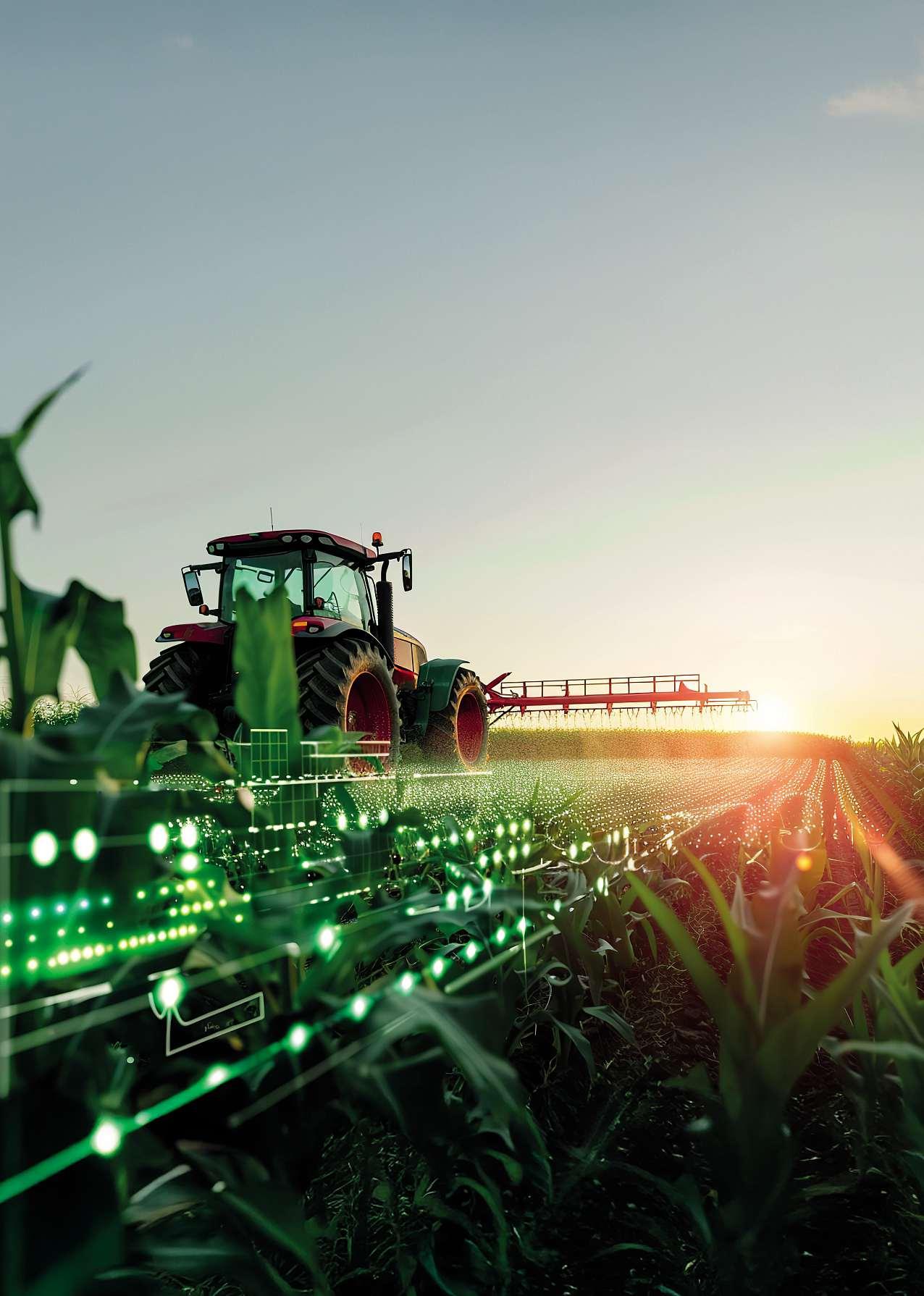
The global population is growing and must be provided with food. At the same time, resources such as soil, water, and fertilizers are dwindling Climate change directly affects the agricultural industry – higher and rightly ambitious sustainability goals demand new or at least significantly adjusted strategies from traditional agriculture. Meanwhile, energy prices are rising, and trade barriers are emerging
The agricultural sector feels the global change Of all the industries related to mobility, it has the least room for maneuver. While there is often unfounded and emotional commotion in the car market about which drive boosts the driver's self-confidence the most, farmers have to calculate: Higher yields are the goal – with fewer natural and economic resources.
A pronounced cost awareness, even higher than that of road-bound commercial vehicles, meets high technical requirements This is an opportunity for traditional automotive suppliers to diversify their portfolio into another industry Powertrains, electronics, software-defined vehicles: The know-how for this has long been extensive in traditional automotive suppliers or is currently growing.
The products awarded with the "Innovation Award Agritechnica" impressivelyshowhowmuchishappening"inthefield":especiallyinsmart and precision farming and the "digital farm." Reliable sensor data is indispensable, as with cars and commercial vehicles, for functions like autonomous driving – doubly so for agricultural machinery when it is road-approved. In terms of the data ecosystem, however, automotive suppliers can learn from agricultural technology, which has been pursuing the subject longer and more intensively
Automotivesuppliersmaynotfindtheusualhighvolumesinagriculturaltechnology–butvariety,flexibility,andconsistencyareindemand; and: Customers think rationally, and sales are predictable.
My colleague Hartmut Hammer reports in this issue's cover story aboutwherespecificallyautomotivesupplierscangetaproverbialfootin the door of the agricultural sector Additionally, we introduce innovations in the field and at the trade fair – and show where traditional automotive suppliers are already riding along with their car or commercial vehicle technology in agricultural machinery
Enjoy reading and have fun at Agritechnica 2025!

ThomasGünnel Editor »Automobil Industrie«



























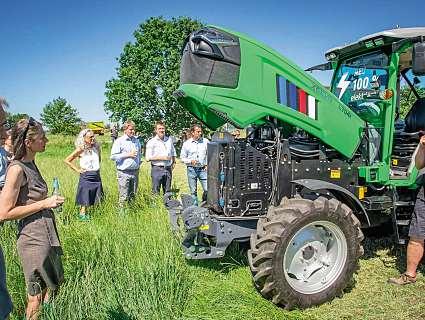
The winners of the "Systems & Components Trophy – Engineers’ Choice" have been announced. Three companies stood out with their products from a total of 41 applicants.
Thomas Günnel
The German Agricultural Society awards the "Systems & Components Trophy – Engineers’ Choice" atAgritechnica.Thetradefairorganizerrecognizes innovativesystemsandcomponents"withneworsignificantlyimprovedconceptsthatcancontributesubstantiallytothedevelopmentandrealizationofproducts,or new or improved processes."
Igus wins the award for its "ReBeL cobot." The articulated arm robot performs highly precise and repetitive tasks:forexample,infruitharvesting,sowing,orindoor farming.Dependingontheapplication,therobotarmis equippedwithsensorsandtools.Forcertainharvesting tasks, the robot can be mounted on an autonomous chassis. In a cost- and license-free software testing environment,userscantestanykinematics–thusknowing before purchase whether the robot suits their application.
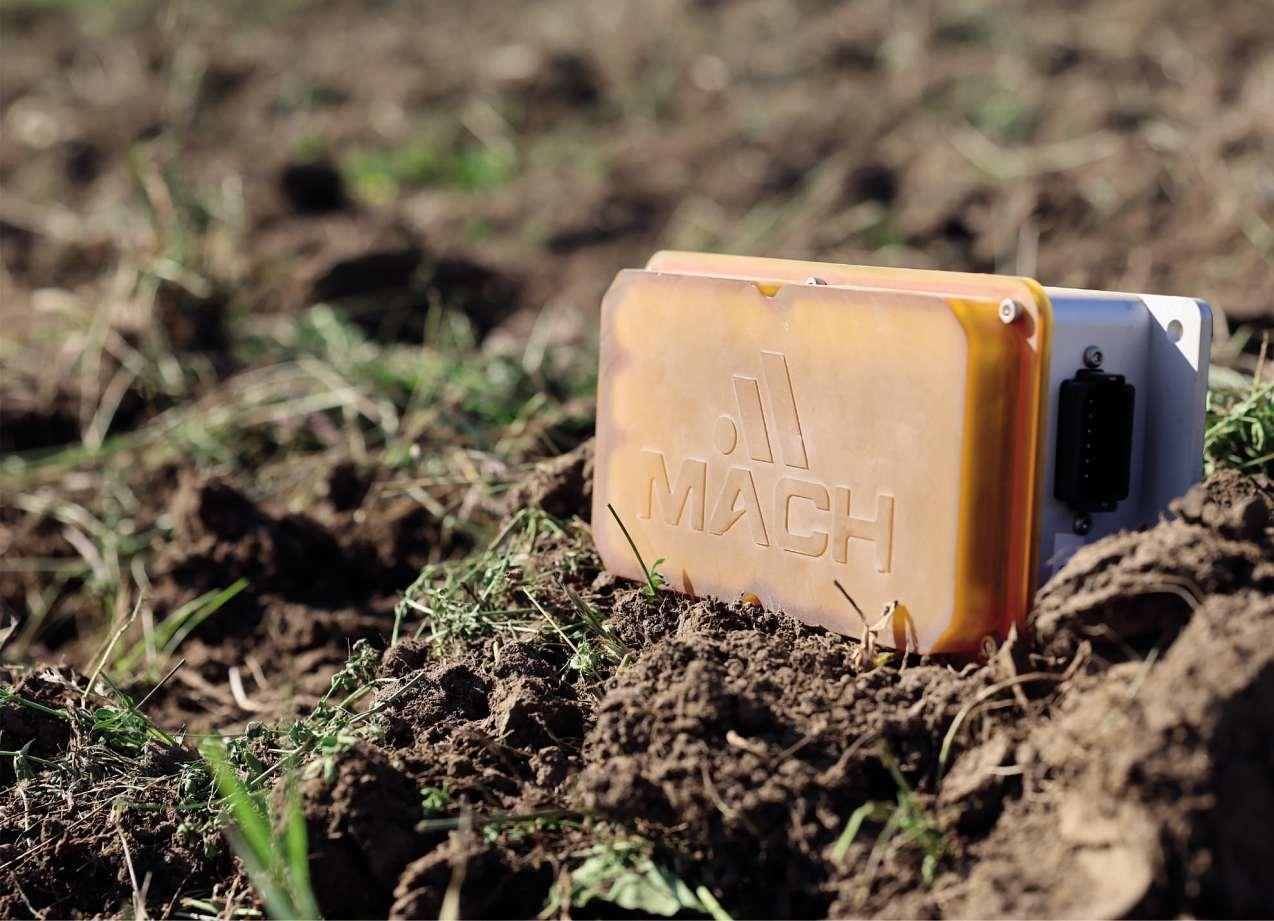
Mach receives an award for "RadX." According to the manufacturer, the radar device is the first of its kind to bring real phased-array technology to agriculture, construction, mining, and land management. It also processesthedetectedsignalsinternallyandmakesthemavailableintheOEM'ssystemarchitecture.Thesystemuses electronicallycontrolledbeamsandadaptivebeamshaping for high-resolution 3D detection in real-time, with no moving parts required. It can differentiate between soil, crop residues, and vegetation while mapping the terrainsurface.Thesensorisparticularlyinterestingfor depth control of tillage, planting, and seeding machineryandinguidingharvesterheaders.Machalsoconsiders it possible to assess work quality behind the device ZF Friedrichshafen receives the award for the "ZF eTD." The modular, highly integrated electric axle system combines traction, power take-off, and hydraulics into a compact design for tractors with up to 100 kilowatts of power. Additionally, central transmissions, hydrostatic units, clutches, and hydraulic systems can be partially eliminated – or replaced by a double electric driveline with energy recovery The axle system essentiallyconsistsofahighlyintegratede-driveunitwithtwo oil-cooled electric machines for drive and auxiliary drives The new basic design concept creates space for batteries or hydrogen tanks – which can benefit range and operating time
The award ceremony takes place on November 9 on the Expert Stage of Systems & Components in Hall 17 from 5 to 6 p.m. In September, an expert jury created a short-
list of 16 nominated innovations from a total of 41 applications. Development engineers of the agricultural machinerymanufacturersexhibitingatthefairselectedthe three winners. n
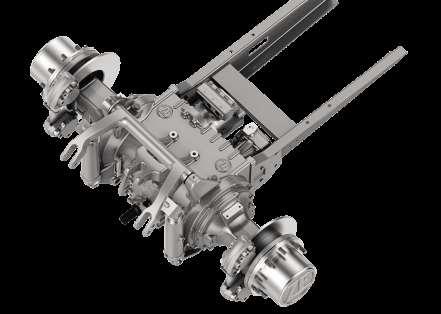
The modular, highly integrated „eTD“ electric axle system by ZF
combines traction, power take-off, and hydraulics into a compact design for tractors with up to 100 kilowatts of power
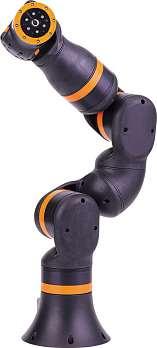
The „ReBeL Cobot“ by Igus, equipped with sensors and grippers, is suitable for tasks such as fruit harvesting, sowing, or indoor farming
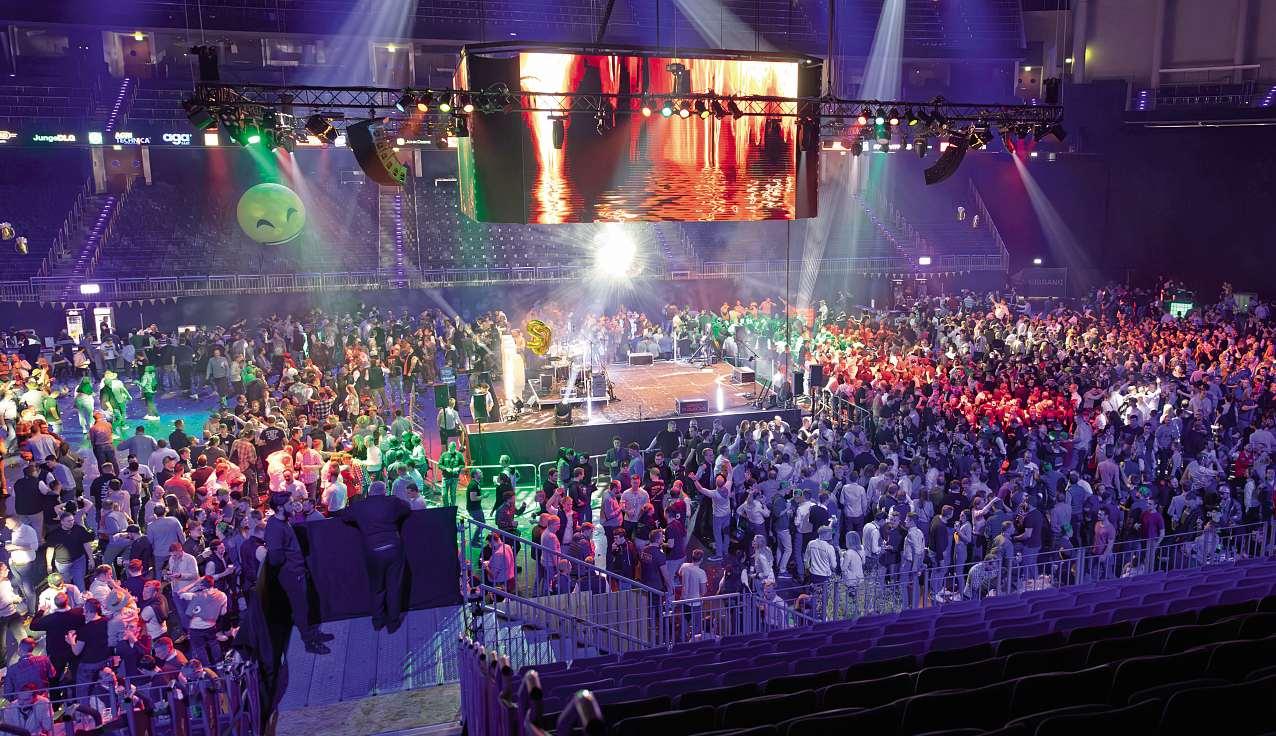
The „Young Farmers Party” at Agritechnica 2023: After spending time at the fair, it‘s time to celebrate properly.
The Hannover Messe is fully booked: with Agritechnica 2025. The world-leading trade fair for agricultural technology gathers exhibitors from November 9 to 15. An opportunity for traditional automotive suppliers looking to diversify their business.
Thomas Günnel
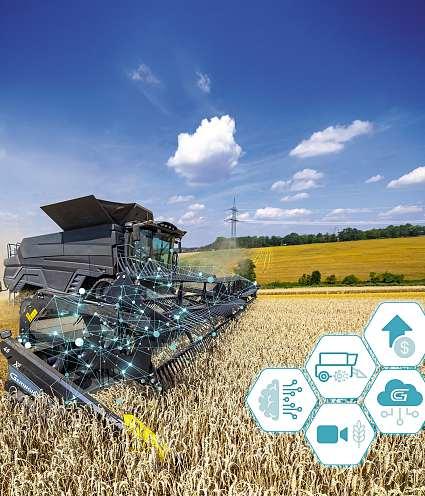
Touch Smart Efficiency: This year's Agritechnica brings together the key topics of the agricultural technology sector in its leading theme Sensors, drones, AI, robotics, software, and new drives are transforming agriculture—a chance for traditional automotive suppliers and outfitters.
Of particular interest to suppliers is the B2B marketplace„Systems&Components“–ameetingpointforthe international supplier industry for agricultural technologyandtheoff-highwaysector.Inthreehalls,exhibitors showcasetheirexpertiseandproductsonvehicleelectronics,agriculturalelectronics,drivetechnology,hydraulics, engines, cabins and linkages, replacement, and wear parts.
Engineers, developers, researchers, procurement managers,dealers,sparepartsmanagers,OEMs,andassociations gather information about developments and innovations in components for agricultural machinery and relatedsectors.
OrganizedbytheGermanAgriculturalSociety,DLG,the stage program „Expert Stage“ with professional lectures, conversations, and discussions targets developers, engineers, decision-makers, and manufacturers of mobile machines.Thefocusisonfourtopics:
„EnvironmentandSafety“: This topic is about higher productivity and a reduced ecological footprint. The transition to a hydrogen economy and e-mobility requires circular value creation in the
international off-highway markets. Innovations come from design, material selection, and new marketing strategies.
„InnovativeDriveTechnologies“: Which drive concept is suitable for which application and which off-highway machine? What contributions do alternative and optimized traditional (diesel) drives make? How will hydrogen combustion engines in agricultural machinery develop? And what can multiand dual-fuel engines achieve?
„NetworkingandAutomation“: Lidar, cameras, sensor fusion, assistance functions, AI: What software and hardware facilitate the next step towards the full automation of agricultural machines? How does this align with functional safety?
„DigitalServices“: How can operational data be captured, evaluated, and analyzed – and conclusions drawn on the performance and profitability of commercial vehicles and mobile work machines? What do condition monitoring and predictive maintenance achieve? Additionally, this section addresses cybersecurity with suppliers.
Young engineers should note Young Professionals Day on November 14: an exclusive offer on the Expert Stage
with perspectives and tips for career planning and networking opportunities.
Additionally,theDLGisagainawardingthe„Systems& Components Trophy – Engineers' Choice“ – the international prize for components and systems. Development engineersfromtheagriculturaltechnologyselectsystems and components that can significantly contribute to the development and implementation of new products and procedures The winners have been announced and will behonoredonNovember9ontheExpertStageofSystems & Components. Three companies stood out with their products,with16nomineesintotal.
For the first time this year, the „Digital Farm Center“ takes place, focusing on automation, AI, and robotics. Moderated live demos showcase the data exchange between tractors and implements and practical examples of smart farming The platform connects farmers, contractors, consultants, manufacturers, startups, technology providers, representatives from science and research, development engineers, and investors.
Also new is the concept „7 Days – 7 Topics“ It addresses different specialist visitor groups: from agriculture and agricultural machinery trade to research and development For this purpose, there are appropriate themes, formats,andcontactsforeachdayofthefair Itkicksoff on Sunday, November 9, with the Innovation and Press Day, followed by two Agribusiness Days for dealers, contractors, and large agricultural businesses.
OnWednesday,the„InternationalFarmersDay“focuses oninternationalexchange–withFrance,Canada,andthe CzechRepublicaspartnercountries.Thursday,November
13,isthe„DigitalFarmDay“:Visitorscangetinformation abouttechnologiesfromdigitalfarming,automation,robotics,andartificialintelligence.
Friday continues with Young Professionals Day and invites you to the Young Farmers Party in the evening It ends on Saturday, November 15, with Celebrate Farming: thentraditionallyat6p.m thetractorsrolloutofthehalls, concludingthefairwithahornconcert.
During the fair, several lecture events take place They cover new agricultural practices and technical innovations.ThefocusisoncountriesincludingAustralia,Canada, the Czech Republic, China, France, Kazakhstan, and Thailand. On November 9, emerging countries are addressed with the case studies China and Thailand. Agricultural machinery companies and industry experts participate.Large-scaleagriculturespeakerspresenton November10,focusingonmodernagriculturalmanagement practices, including the use of big data. Regenerative agriculture is on the agenda on November 11, focusing on soil health and targeting farms.
On International Farmers Day, November 12, farmers, companies, and organizations from Canada, the Czech Republic, and France can learn about new products in agricultural technology and network with experts and peers. Also on November 12, international trade agreementsandtheirimpactonagriculturearediscussed.Farmers, entrepreneurs, and industry representatives are invited.The„AgriculturalEconomics“eventonthesame day focuses on benchmarking and production costs for farmers.
AnAItoolwilltranslateeachpresentationinreal-time anddisplayitonascreennexttothestage Alternatively, attendees can follow the translated text on their smartphones using a QR code. All in keeping with the exhibition'sslogan:„TouchSmartEfficiency“. n
Agricultural machinery can be an opportunity for traditional automotive suppliers to diversify.
Agricultural machinery remains a market with strong prospects, but one that is highly challenging at present. Technological shifts offer numerous opportunities to expand businesses or enter this market with effective solutions.
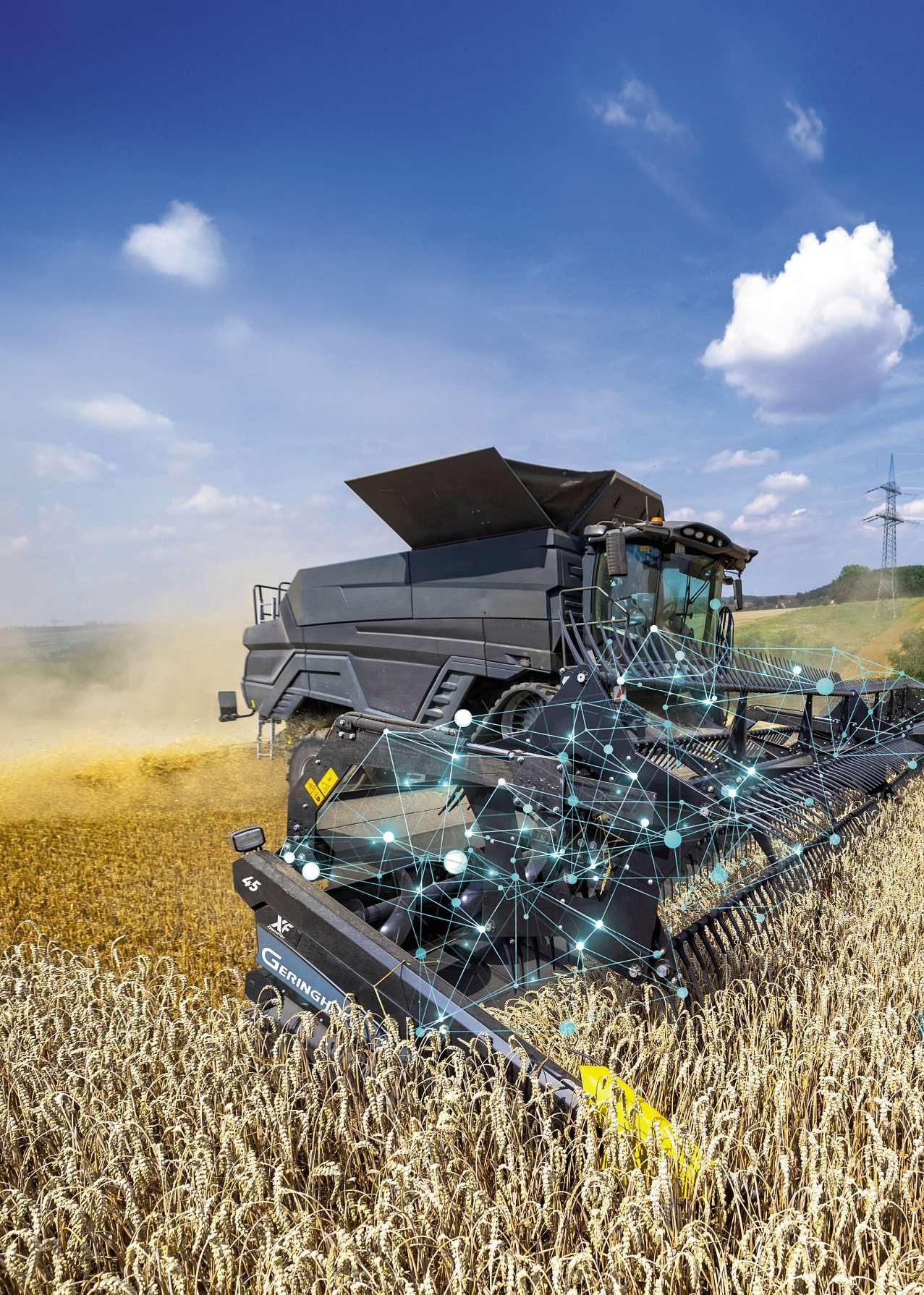
After mechanisation, the digitalisation of agriculture is now underway

indicate that industry sentiment is gradually brightening
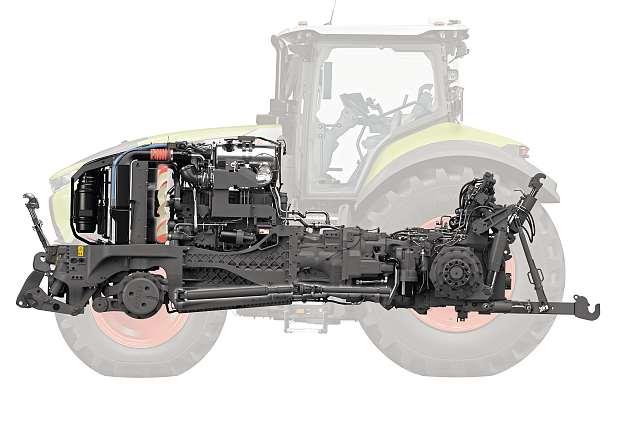
Globally, the agricultural sector is caught between the hungerofagrowingworldpopulationandstressfactors such as dwindling resources (land, water, fertilisers), increasingregulationandthesustainabilitydebate,rising energypricesandtradebarriers.“Thetaskistogenerate higher yields with fewer resources. That can only be achievedwithinnovativeandresource-efficienttechnologies,whichoffertheindustryattractivegrowthopportunities,”explainsPeterFintl,VicePresidentTechnology & Innovation at Capgemini Engineering (page 12) He seesparticularpointsofentryfortraditionalautomotive suppliers in the powertrain sector. “Existing know-how canbetransferredverywell–fromthebaseengineand exhaust aftertreatment through to thermal management.”
Since the entry into force of Stage V for non-road vehicles, internal combustion engine development has focused less on NOx and particulates and more on enabling drop-in fuels Many manufacturers have now approved their engines for RME (rapeseed methyl ester) and HVO (hydrotreated vegetable oil). Another alternative is ethanol-capable combustion concepts, which havebeenwidespreadinBrazilforyears.Inparallel,many individual measures are being implemented to increase powertrain efficiency – for example alternative operatingmaps,orraisingenginedragtorqueondownhill runs to minimise use of the service brakes. For the latter,tractormanufacturersdeploy,forexample,throttleflapsintheairpath,variable-geometryturbochargers, decompression valves and retarder-like hydraulic solutions.


Battery-electricdrivinghasnowarrivedforlower-power tractors and other vehicles with shorter duty cycles. However, high battery costs and still-limited real-world experience mean that – despite foreseeably lower variable costs – total cost of ownership (TCO)doesnotyetshowacostadvantageovercombustion powertrains. Those able to “refuel” their electric machines with energy from their own PV systems will, however, run green and cheaply. It is no surprise that Agritechnica will showcase a number of additional battery-electric agricultural machines and e-axles – with outputs up to around 250 kW, voltage levelsfrom48to800volts,andapreferenceforLFPover NMC cell chemistry
Intransmissions,continuouslyvariablegearingis spreadingintomoreandmoretractorclasses–for example Fendt’s VarioDrive concept, hydrostatic-mechanical power-split solutions at CNH, or ZF’s CVTs at JCB Current innovations in hydraulic systems include electronically controlled load-sensingsystemsandnewcouplingconceptsforsupplying hydraulic oil to implements.
There are also good entry opportunities for suppliers in electronics – from the on-board electrical system and So
data transmission through to the software-defined vehicle.Here,theinnovationpressureonthesectorisparticularlyhigh.Competentsuppliersareindemandespecially for autonomous driving, precision farming and digitalising farm operations.
Same Deutz Fahr, for example, has developed a function package that includes features familiar from cars and trucks: lane-keeping assist, turn assist, adaptive cruise control with collision warning, traffic sign recognition, and object/person detection. The functions are designed specifically for tractors and take account, for instance,offrontandrearimplements,secondaryroads without white lane markings, and close-following operationinthefield.Trailers,too,areincreasinglyassisted – for example with automatic trailer braking when pushingonthetractor,andbyautomaticallylockingpassive steeringaxles.Eventeleoperateddrivingwithlargetractors – via joystick, camera-based surround monitoring and cellular connectivity – is already technically possible over long distances.
In principle, the requirements for automated driving functions in field operation are somewhat lower, TÜV Nord notes. But as soon as the agricultural machine is alsoapprovedforroaduse,theextensivetestinganddriving requirements for automated driving functions in cars and trucks must additionally be met
New electronics architectures and various sensor and camera systems are the basis for electrified drives and driver assistance systems. Sensibly, these are also used
forthefurtherdigitalisationofagriculture.Cropproduction,forexample,requiressophisticatedprocesscontrol andmonitoring,andearlyfaultdetectionlikewiserelies on extensive sensors and actuators
New players in agricultural machinery should also understandthesector’sspecificchallenges.Forexample, suitablyhighlyqualifiedpersonnelareoftenlackingfor the complex operation of machines and other digital systems. Ergo, operating concepts must be as simple as possible,yetstillofferverygranularmachinesettingsto accommodate all operating parameters and environmental conditions.
Compared with the passenger car and commercial vehiclesegments,agriculturalmachineryisalreadywell advanced in embedding all working and monitoring functions in vehicles – together with, for example, geodata and operating data – into comprehensive management systems. The sector is already deploying artificial intelligence(AI)onabroadscale:forinstanceincomponent monitoring via vibration analysis; in evaluating camera images; in management tasks such as maintenanceandrepairplanning;orinefficiency-orientedanalysisofvehicleoperation.Acurrentflagshipexampleis Claas’s cloud-based grain processing analysis for maize silage, which eliminates the need for complex external laboratoryanalysis.UsinganAI-poweredcamerainthe discharge spout to look at the structure of the chopped cropinreal-timeletstheClaasforageharvester'scracker gap, driving speed, and engine power be changed. The datacanalsobetransferredtothecloud-basedfarmmanagement system and used there for further services.
That said, “there’s no getting away from people,” argues Claas’s Arne Bohl Practitioners in the field also regularly warn against over-engineering in digitalisation, for example in arable processes and machines. Another relevantriskiscyberattacks,asagriculturalmachinery’s digital systems have traditionally been designed for various brand-oriented ecosystems and therefore equipped with manufacturer-independent interfaces. Such extensivedigitalnetworksofferampleattacksurfacefor hackers and data theft.
According to TÜV Nord, UN Regulation No 155 (uniform provisions concerning the approval of vehicles regarding cybersecurity) is not currently mandatory for agricultural machinery However, the new Machinery Regulation (EU) 2023/1230 sets out cybersecurity requirements that also apply to agricultural machines. In addition, the agricultural machinery sector is currently developing the industry standard ISO 24882 as a future state of the art for cybersecurity in agricultural machines,TÜVNordsays Forfunctionalsafety,twosector-specific standards have been in place for several years: ISO 26262 and ISO 25119. n
„Thetaskistogeneratehigheryieldswith fewerresources.“
Peter Fintl, Capgemini Engineering
Interview by Simon Hammer
Mr Ehrhard, which transformation processes will changethepowertrainsofagriculturalmachinery?
TobiasEhrhard:Forhigh-powertractorsandharvesting machines in arable applications, the internal combustion engine will remain indispensable for the foreseeable future. Sustainable liquid fuels are the best option foreffectivelyreducingCO2 emissions.Climate-friendly alternatives to fossil diesel therefore top the industry agenda.Thekeyistocreateeffectiveincentivesthatmake synthetic or biogenic fuels—such as hydrotreated vegetable oil (HVO)—attractive for arable farming
To achieve broad adoption of climate-friendly fuels over the long term, the new energy carriers must, of course,bewidelyavailable.Adecentralisedapproachis particularly promising here, as many farms with on-farm fuelling stations require little to no additional infrastructure.

electromobilitycomeinto
-based applications—such as ansporting bales of feed lehandler or a small tractor—vewith electric drives are also esponding portfolio in the classesisnowemerging Given
ector of VDMA Landthe German MechaniIndustry Association VDMA Landtechnik esents a network of 180 leading companies in the European agricultural machinery sector
the existing high-voltage electrical infrastructure, electrification is particularly compelling in livestock operations.
Inwhichdirectionisthesector’sinnovationactivity headingingeneral?
Forourindustry,thefocusisonsustainableproductivity in agriculture. At Agritechnica, technologies that combinefieldcapacity,efficiencyandsustainabilitywilltake centre stage.
This includes new developments and further refinements in mechanics and hydraulics, underscoring the enduringinnovativestrengthoftraditionalmechanical engineering Closely linked to this are solutions in digitalisation, automation and autonomy, all aimed at sustainably increasing process efficiency and intelligence. High-precisionarablefarmingmethodssimultaneously conserveresources.Thatisawinbotheconomicallyand ecologically—for the user as well.
How is collaboration in agricultural machinery organised between equipment manufacturers and suppliers?
Cooperation between agricultural machinery manufacturers and the supplier industry is often built on long-standingrelationships.Componentsuppliersarea key factor in delivering high-quality, innovative machines and system solutions. Close, trust-based collaborationisessential,notleastbecausethesharedchallenges are becoming more demanding—think of emissions legislation or questions of cybersecurity
What technical capabilities and soft skills does a typical passenger car supplier need to successfully gainafootholdinagriculturalmachinery?
Blanketadviceisalwaysdifficult.Structurally,agricultural machinery traditionally features a high diversity of variants and technologies, coupled with comparatively lowervolumes.Atthesametime,thesectorplacesgreat value on down-to-earth pragmatism This combination enables challenges to be tackled quickly and effectively
A distinctive characteristic of the sector is its exceptionally strong focus on manufacturer-independent technicalinterfacesandprocesses.Whethertractorand implement,orcross-systemconnectivity—forexample during harvest—the aim is always to think beyond the ecosystem of one’s own product or segment. n
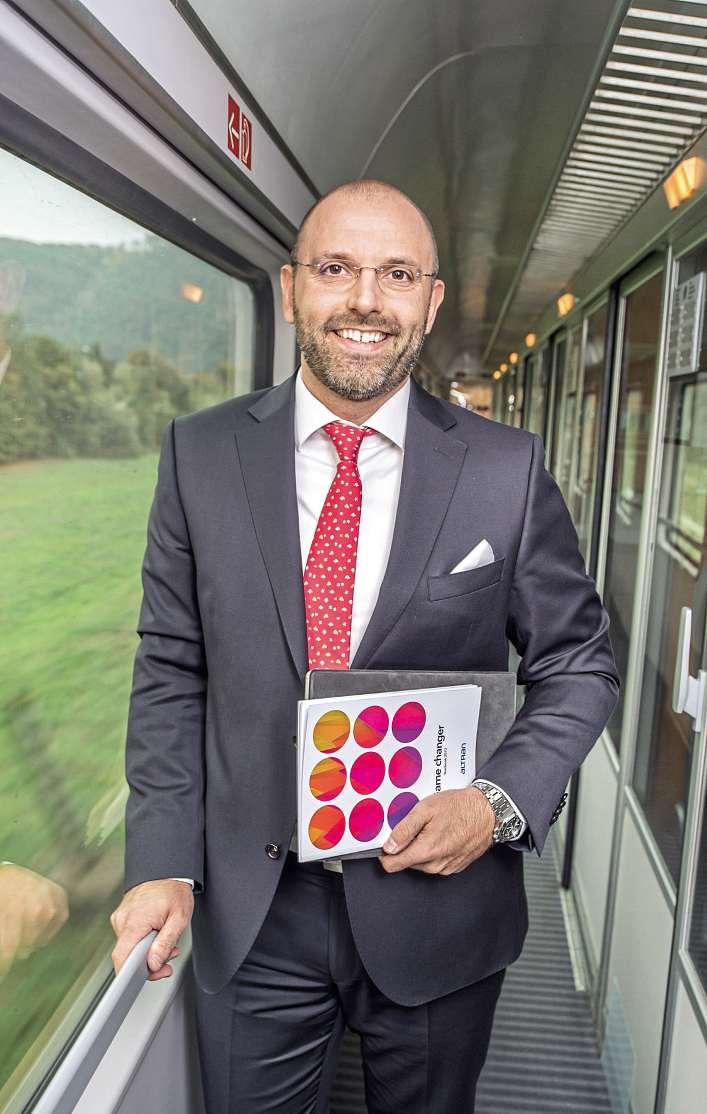
Where does agricultural machinery stand today? Peter Fintl, Vice President Technology & Innovation at Capgemini Engineering, puts the framework conditions and technical trends for tractors, harvesters and more into context.
Interview by Hartmut Hammer
Mr. Fintl, what conflicting pressures is the agriculturalmachineryindustryfacingatpresent?
PeterFintl:Theagriculturalsectoriscaughtbetweenthe hungerofagrowingglobalpopulationand,ontheother hand, stress factors such as dwindling resources (land, water, fertilisers), increasing regulation and the sustainability debate, rising energy prices and trade barriers. Thetaskistogeneratehigheryieldswithfewerresources. That can only be achieved with innovative, resource-efficient technologies, which offer the industry attractive growth opportunities.
Wherecantheagriculturalmachineryindustrycontinuetogrowinfuture?
The core markets for large agricultural machinery will remainNorthandSouthAmericaand,toalesserextent, Eastern Europe, due to high modernisation potential. GrowthmarketswillcontinuetobeIndiaandSoutheast Asia, while in Western Europe the market will move sideways at a high level. The main technical fields of the future are precision farming and digital farm management.
In which areas will traditional passenger car and trucksuppliershavethebestentryopportunities? Clearly in the powertrain. Existing know-how can be transferred very well there, from the base engine to exhaust aftertreatment. Thermal management is almost evenmoreimportanthereacrossallpowertrainvariants than in road vehicles because many agricultural machines often run at rated load.
There will also need to be many innovations in electronics—from the on-board electrical system and data
Peter Fintl
is Vice President Technology & Innovation at Capgemini Engineering.
transmission through to the software-defined vehicle. Competentsuppliersareindemandespeciallyfortopics suchasautonomousdriving,precisionfarmingandthe digitalisationofthefarm Eveniftherequirementsdiffer in detail, object detection on the road must recognise children at play; in the field, it is more important to distinguish crops from weeds.
Whatdifferentframeworkconditionsdotraditional passenger car and truck suppliers need to prepare forinagriculturalmachinery?
Costsensitivityisevengreaterinagriculturalmachinery Added to this are the very high availability and reliability of working machines—under sometimes extreme environmental conditions. These also require pronounced ease of operation and high cab comfort. In agriculture, the purchaser is typically also the owner and operator of the machine.
And in what ways do agricultural machinery manufacturerssuchasAGCOorJohnDeereoperatedifferentlyfromMercedes-BenzorVolkswagen?
Compared with passenger cars and even trucks, tractor and harvester manufacturing is a low-volume business, albeitwithfarmoreversatileproducts.AgriculturalmachineryOEMsworkwithmuchmoreflexibletechnology platforms and E/E architectures to achieve economies of scale. The large-series mindset of product life cycles and model generations is less prevalent here. Agricultural machinery OEMs place great value on their data ecosystem, which encompasses not only the various machines and their digitalised operation, but also data management including satellite-based functions, back-office functions and cloud solutions. On this front, the agricultural machinery industry is already thinking in a much more connected way
Autonomous driving: will it be easier to realise in agriculturethanontheroad?
Inthefield,manyofthedisturbancesandriskfactorsof roadtraffic(forexample,otherroaduserscrossingyour path or high speeds) are absent. You are working in a closedenvironment.Thatiswhyautonomousdrivingis easiertoimplementthere—whetherforasingletractor, forconvoyoperationduringharvestingorforswarm-intelligent mobile robots. There is also a clearly defined business case behind autonomous driving in agriculture:lesslabourinputandlowerwagecosts.Notleast,agricultural machines offer sufficient installation space for thesensorsuite,whichisverysimilartothatincarsand trucks
Willswarmintelligencecatchoninthefield?
Starting from electrified, smaller working machines, it depends on advances in electric drives in terms of energy storage and operating efficiency It also requires a certain degree of robotic intelligence and environment perception. The core question is: can a machine hoe weeds or pick fruit as well and as cheaply as a human? Only then will its use be worthwhile.
Whatarethekeydifferencesbetweenpassenger-car andtruckpowertrainsandthoseforagriculture?
Passenger car and truck powertrains are tailored to a much narrower application field than those for agriculturalmachines.Atractormustrunforhoursinthefield
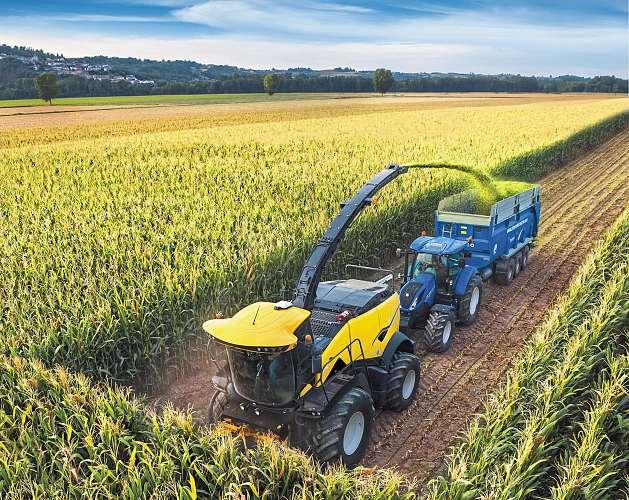
Availability and reliability are basics for agricultural machinery, as seen here in the harvest operation.
at maximum load and be just as efficient in part-load operation,forexamplewithalogsplitter,orwithvarying load profiles on the road. The additional working functions together with auxiliary drives make the overall powertrain of the agricultural machine considerably more complex.
Whattrendsdoyouseeinpowertraintechnology?
Core aspects are always the costs and the availability of the working machines. For that, the diesel engine is a verywell-suitedpowerunitbecauseitcoversagreatmany requirements. However, alongside the decarbonisation debate it is also subject to tightening emissions legislation, which leads to higher initial, operating and servicecostsandthusplayssomewhatintothehandsof the battery-electric powertrain. Hybrid drives and drop-infuelsfordieselarecomplementaryoptions.Onlyifwepulloutallthestopswillagriculturalpowertrains becomemoreenvironmentallyfriendlywhileremaining cost-competitive
Howrealisticarealternativefuelsasasubstitutefor fossildiesel?
HVO will become an attractive fuel for agriculture— available,well-pricedandstraightforwardtohandle.For some other e-fuels, I struggle to imagine that they will be available in sufficient quantities at attractive prices. For all bio- or e-fuels, much will depend on the framework conditions and incentives defined by policy-makers.
Wherewillbattery-electricdrivesprevailinthemediumtolongterm?
As batteries have already become significantly cheaper and will soon become much more capable, I see opportunities for electric drives in many applications for tractors and other self-propelled machines. Electric machines are robust and low-maintenance. However, not everydutycycleyetsuitstheelectricdrive,suchascontinuousheavyfieldworkatharvesttime.Butforsmallerjobs around the farm, in vineyards or in municipal applications, I already see opportunities today. n
Agriculture secures our food supply daily and is directly affected by the impacts of global warming. It is in all of our interests to limit carbon emissions in this sector as much as possible. Deutz AG contributes to this effort with its products and expertise.
Bert van Hasselt, CEO of the New Tech business unit at Deutz AG
Eco-friendly drive systems are a building block of ‘greenfarming’and,inthefuture,willreplaceinternalcombustionenginesthatrunonfossilfuels Itis not yet clear which drive technology will prevail in the marketinthelongterm.Hydrogeninfuelcellsandinternal combustion engines provides propulsion with very low pollutant emissions, but the technology currently remainstooinefficient,complex,andsensitivefortough everyday use. "ReFuels" are at least carbon neutral, but theyaresettoremainscarceforyearstocome
We at Deutz AG believe that, in the medium term, electric mobility promises the best balance between environmental compatibility, suitability for everyday use, cost-efficiency, and technical maturity. Electric drives are low-noise and have zero emissions at the point of use, making them suitable for use in livestock facilities and residential areas.
Acompleteecosystem
The Deutz New Tech business unit has a comprehensive portfolio of products and extensive expertise in
battery-powered electric drives for agricultural vehicles Thecompanyhasevolvedintoafull-serviceproviderthroughthedevelopmentofitsowntechnological expertise, augmented by acquisitions such as Futavis for battery management systems and UMS for the complete integration of electric-drives.
This ecosystem ranges from electric traction motors through batteries, power electronics, and software to charging solutions. Deutz is progressively digitalizing the drivetrain and enhancing it with additional customer-centric software functions.
Thanks to its more than 160-year history of building internal combustion engines, the company has a wealth of experience in designing and integrating drives and is very familiar with the requirements of specific vehicles. In addition, its comprehensive service net-
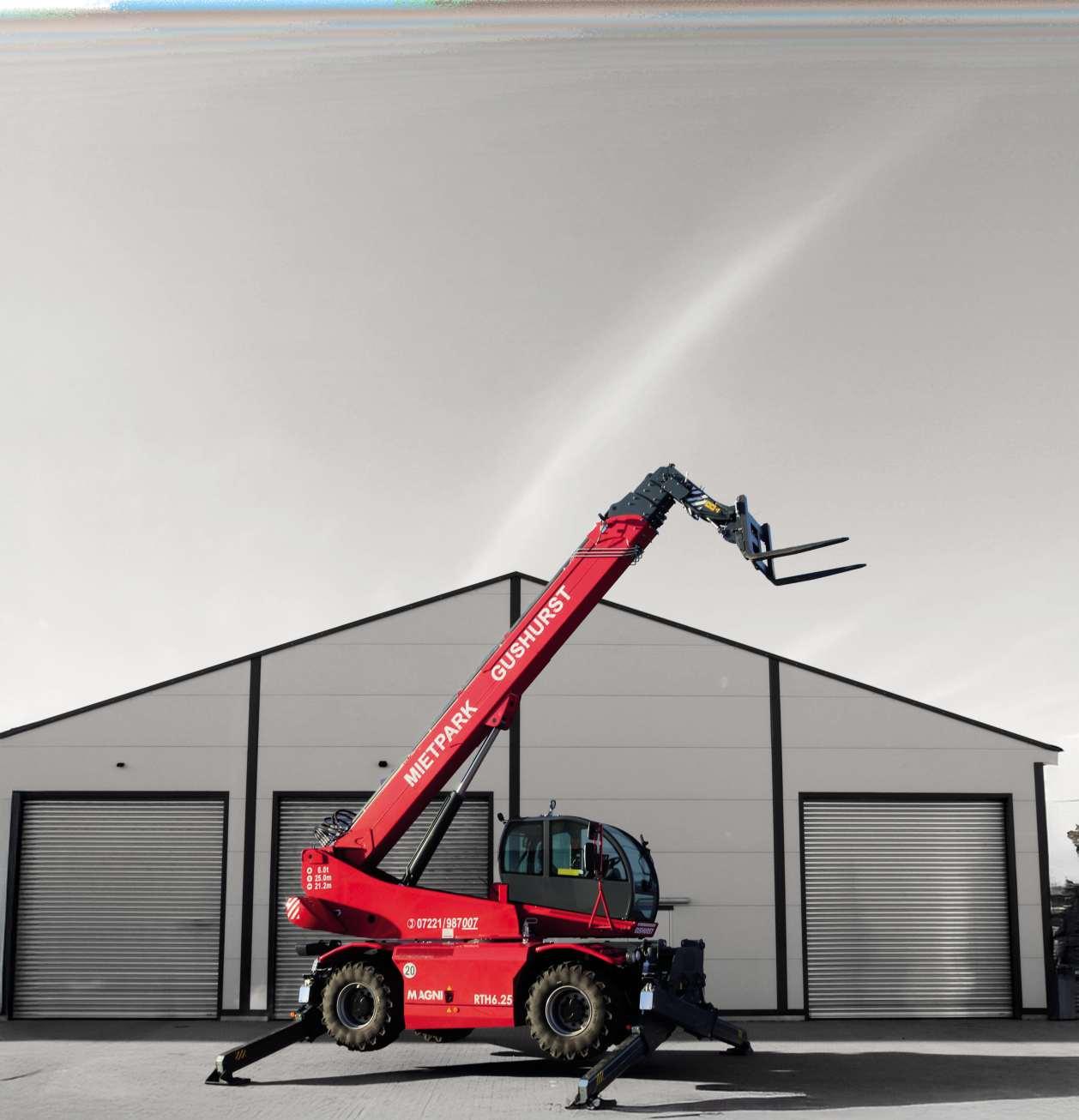
Telescopic handlers are pioneering applications for electric drives. Pictured here: a Magni telescopic handler with Deutz battery
work – comprising more than 1,000 service outlets worldwide–isbeingsteadilypreparedfortheswitchto EVs.Experiencedspecialistswithextensivetrainingin high-voltagetechnologyservicetheelectricdrivesand perform any repairs that may be necessary
For batteries, which are the centerpiece of electric drives, Deutz New Tech offers NMC (nickel manganese cobalt) and LFP (lithium iron phosphate) batteries, the two most promising types of battery chemistry at present.ThankstoLFPtechnology’sincreasingenergy density, higher resistance to thermal runaway, lower cost,andlongercyclelife,itappearstobecatchingup with NMC technology, which has been the preferred choice to date
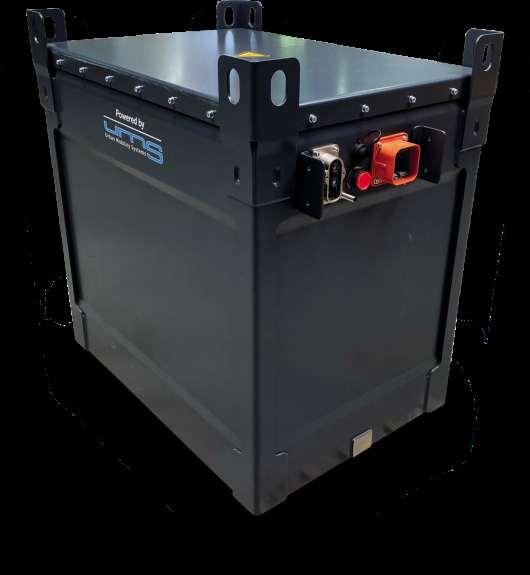
Thecompanyusesbothtypesofbatterychemistryto make batteries of various sizes and operating voltages upto1,000volts,offeringcustomersamodularbattery toolboxthatcanbetailoredtocustomers’specificpower needs and individual dimension requirements.
Semi-solid and solid-state electrolytes and new anode and cathode materials will cause further leaps in technologyandsignificantadvancesinenergydensity This will further increase the competitiveness of electric drives compared to diesel engines and facilitate deepermarketpenetration–alsoinrespectofvehicles that require a lot of power when in continuous use. Should the amount of energy stored in a battery be insufficient to keep a combine harvester, shredder, or other piece of machinery going, however, Deutz also offersswappablebatterysystemsthatfacilitatetheswift replacement of batteries and rapid provision of electrical energy The company already supplies such swappable batteries for large excavators on a commercial scale.
Deutz "Power Tree" is a mobile rapid charging system for farms, depots, or construction sites and complementsDeutz´batteries Itcomprisesabatterystorage system complete with full charging infrastructure for 400- or 800-volt batteries with DC power of up to 150 kW
Therapidchargingsystem,whichishousedina10-or 20-foot container, has a storage capacity of up to 256 kWh (up to 1 MWh in the future) and can be operated off-grid almost like a power bank or can be connected to the grid. The Power Tree enables having a DC rapid chargingstationsetuponsitewithminimaleffort.Machinery can be recharged in under 30 minutes
If a farm generates its own electrical energy using photovoltaics, that energy can be stored in the Power Tree and used in the farm’s own vehicles at an unbeatably low cost. Over the course of several projects, the company has successfully demonstrated which types of vehicles can be equipped with this technology.
Forexample,wefittedahigh-performancebatteryin atelescopichandlermanufacturedbyanItalianmanufacturer The telescopic handler is largely used in an agriculturalsettingandcanthereforeberoutinelychargedwiththePowerTree.Wehavealreadyagreedfurther trials for batteries and/or electric drives in telescopic handlers with other manufacturers.
Smaller tractors also have the potential to be electrified. In fact, Deutz has already installed batteries in a southern European manufacturer’s vineyard tractors. Because they also serve as multifunctional equipment carriers for municipal purposes, small tractors are a promising area of application. But drive systems with a capacity of more than 100 kW are now also being testedinlargertractorsforuseonconstructionsitesorin agriculture.
Inaroundfivetotenyears,itwilllikelybepossibleto put electric drives into almost all agricultural vehicles, at least from a technical perspective Whether the service life of the battery storage systems will then be sufficient for use in day-to-day operations remains to be seen We are working hard on increasing storage capacity by using innovative cell and battery technology.
A further challenge going forward will be replacing hydraulicdriveswithelectricsolutions.Thisisbecause combining electric traction drives with, for example, hydraulicfluidcycles–suchasforvehicleattachments – or mechanically driven water pumps is not necessarily practicable. In this context, electric high-voltage drives and actuators offer interesting potential for efficiency gains – provided they are similarly powerful
With its modular drive systems, battery systems, and charging systems, Deutz offers solutions for electrifying a wide range of agricultural machinery The companykeepstheentiredrivetraininmindandisableto fulfill individual requirements in terms of power output, installation space, and infrastructure.
Together with our partners and subsidiaries, we continually trial innovative solutions and – once their potential has been confirmed in practice – methodically develop them into products for volume production. n
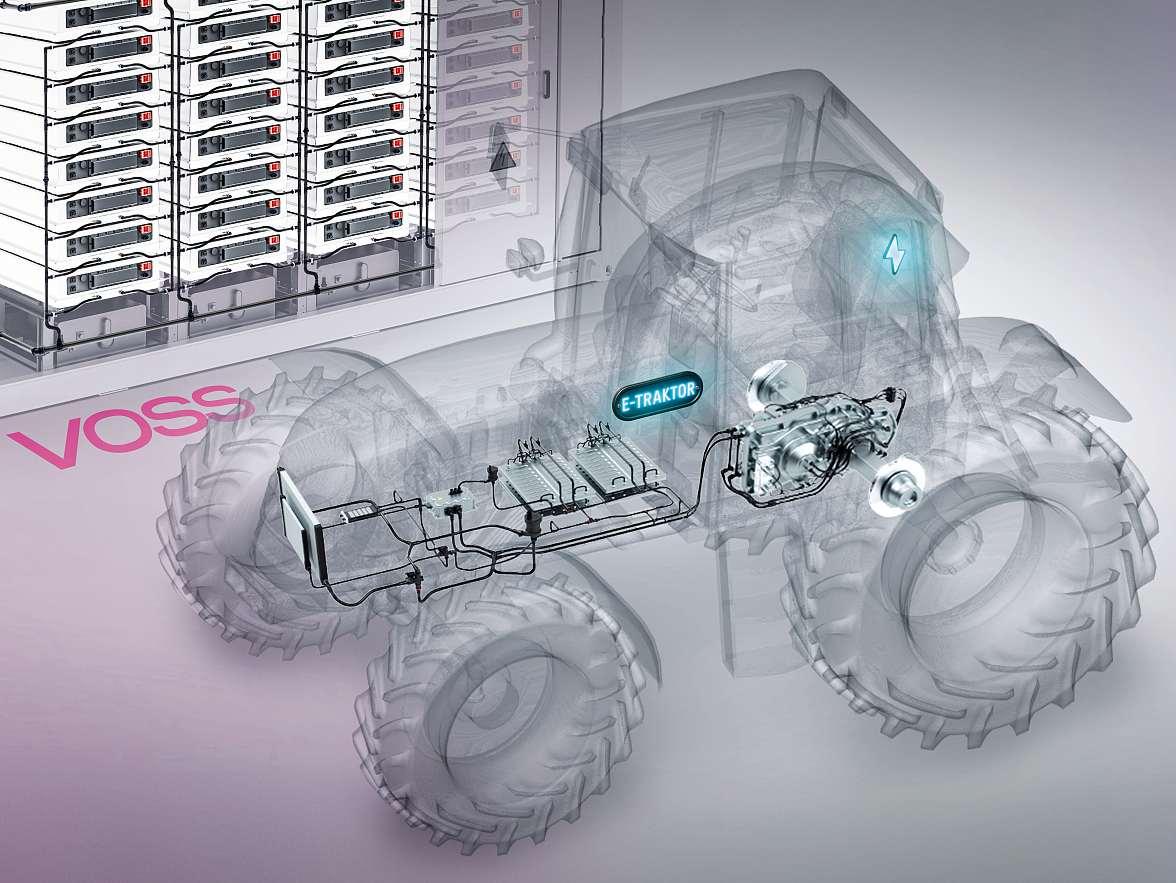
Thermal management is a crucial interface between vehicle engineering, energy storage and sustainable operation in agriculture. The requirements go beyond conventional vehicle technology and call for holistic solutions.
Michael Ommer, Product Manager Thermal Management, Voss Automotive GmbH
The mobility transition brings new technical challenges, especially in thermal management: whetherpasscaroragriculturalmachine,thedemands ontemperaturecontrolforthebattery,powerelectronics and cabin differ markedly by duty cycle. Cars, constrainedbypackage,relyoncompact,efficientsystemsfocu-
sed on comfort and range, whereas heavy agricultural machines must operate reliably under extreme conditions.
As a system supplier, Voss Automotive develops and manufactures tailored technical solutions matched to eachapplication–suchaslinesystems,connectorsand E-MOBILITY
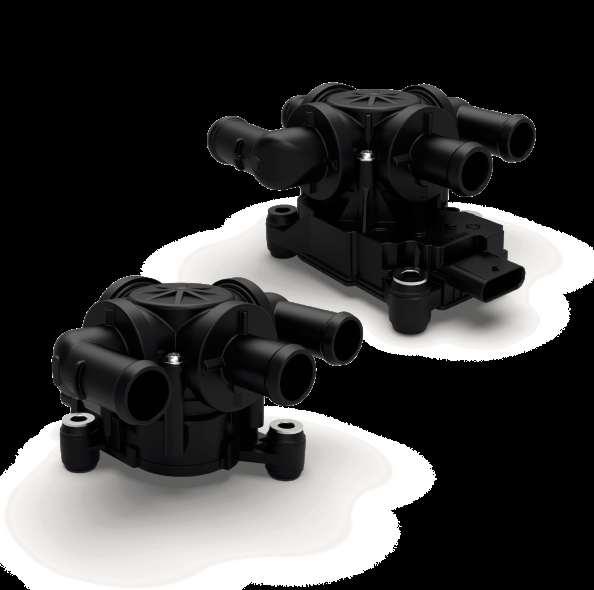
valve systems mix or separate coolant flows as required.
valvesfordifferingrequirements.Vossthussupportsthe sector not only in optimising existing systems, but also as a partner in the electrification and transformation of modern agricultural machinery
The electrification of agriculture is slowly gathering pace. While battery-electric drives are long-established in the automotive sector, the transformation of agricultural machines is still at an early stage. This is due, among other things, to the sector’s specific demands: long operating hours, dust, vibration, extreme temperatures and low vehicle speeds at full load. With the right thermal management solution as a key technology, the future of agricultural engineering can be reshaped.
Electrically driven agricultural machines must operate reliably under extreme conditions. Stable battery temperature control is vital for performance, safety and servicelife.Asthereisnoramairforpassivecooling,active systems such as pumps, fans and heat exchangers are indispensable.Addedtothisarelongfull-loadoperating periods, for example during harvest, which cause continuous heat build-up
These demands make thermal management a key technology for a successful transition. Immersion cooling is particularly well suited: high-performance batteries are directly bathed by an electrically non-conductive fluid, enabling uniform temperature distribution –ideal for continuous operation in the field
At the same time, this technology places specific demands on material selection: components must not only be electrically conductive, but also meet the highest standardsforresistancetoionleaching Inpractice,such systemsensurethermalstabilityevenunderhighcontinuous loads and are therefore a central building block forthedeployabilityofelectrifiedagriculturalmachinery A key part of these immersion-cooling systems are space-optimised connector systems.
Theyareratedforcontinuoustemperaturesfrom−40 °Cto+85°Candenablesafe,intuitiveassembly–bothat initial installation and during maintenance. Their high mechanical robustness and media compatibility make
themequallysuitableforcars,commercialvehiclesand agricultural machinery
In modern vehicles – whether cars, on-highway or off-highway–differentcoolingcircuitsmustbepreciselycontrolledandmatchedtochangingoperatingconditions. Electrically actuated valves play a central role in regulating coolant flow and temperature.
Modular valve systems make it possible to mix or separatemultipleflowsondemand–forexamplebetween thebattery,powerelectronicsandcabinclimatecontrol. What matters is not only hydraulic performance, but also integration into the vehicle architecture.
Another technical aspect is media flexibility: depending on the working fluid (e.g water-glycol, oil, refrigerant), the valves must meet specific material requirements. This is particularly relevant for multifunctional heatingandcoolingsystems–forexample,pre-heating batteries in winter or air-conditioning the cab during long summer shifts.
Alongsidetheelectrificationofagriculturalandoff-highway vehicles, energy storage solutions are increasingly coming into focus – such as stationary battery energy storage systems (BESS).
On farms, these storage systems can take on various tasks. They can store surplus photovoltaic power for on-farm use, or act as buffer storage for fast charging working machines without expanding the existing infrastructure.
Aforward-lookingapproachforsuchstoragesystems is the use of second-life batteries: after the use in automotive applications, battery modules can be reused in BESScontainers,whichinturnhavespecifictemperature-controlrequirements–forexampleregardingcharge rates, safety and component longevity
By deploying tailored thermal management systems, theinterfacebetweenvehicleandstationarystoragebecomesanintegralelementofefficienttechnologytransfer
Second-life batteries embody sustainability like few other products: instead of disposing of batteries, their life cycle is extended and used productively The same applies to integrated line systems, which are designed for durability and can span multiple battery life cycles.
Beyondsystemarchitecture,therecyclabilityofmaterials is crucial. Design-for-recycling components, media-compatible line systems and detachable connectionshelpconserveresourcesandimprovetheCO2 footprint.Combinedwithefficientsystemdesign,ecological and economic goals can be better reconciled. n
What alternative drives exist for agricultural machinery and how practical are they? This was discussed by agricultural engineering experts at the beginning of July, who also sent a clear demand to the government.
Thomas Günnel
The Lower Saxony Chamber of Agriculture concludedthatalternativedrivesforagriculturalvehicles are often already suitable for everyday use, followingthe„PracticalDayonAlternativeDriveEnergiesfor Agricultural Machinery“
InearlyJuly,agriculturalengineeringexpertsandemployees from manufacturers and distribution companies met to showcase electrically operated wheel and telehandlers,feedpushersandbarncleaningrobots,an electricfeedmixer,anelectricallyoperatedridermachi-
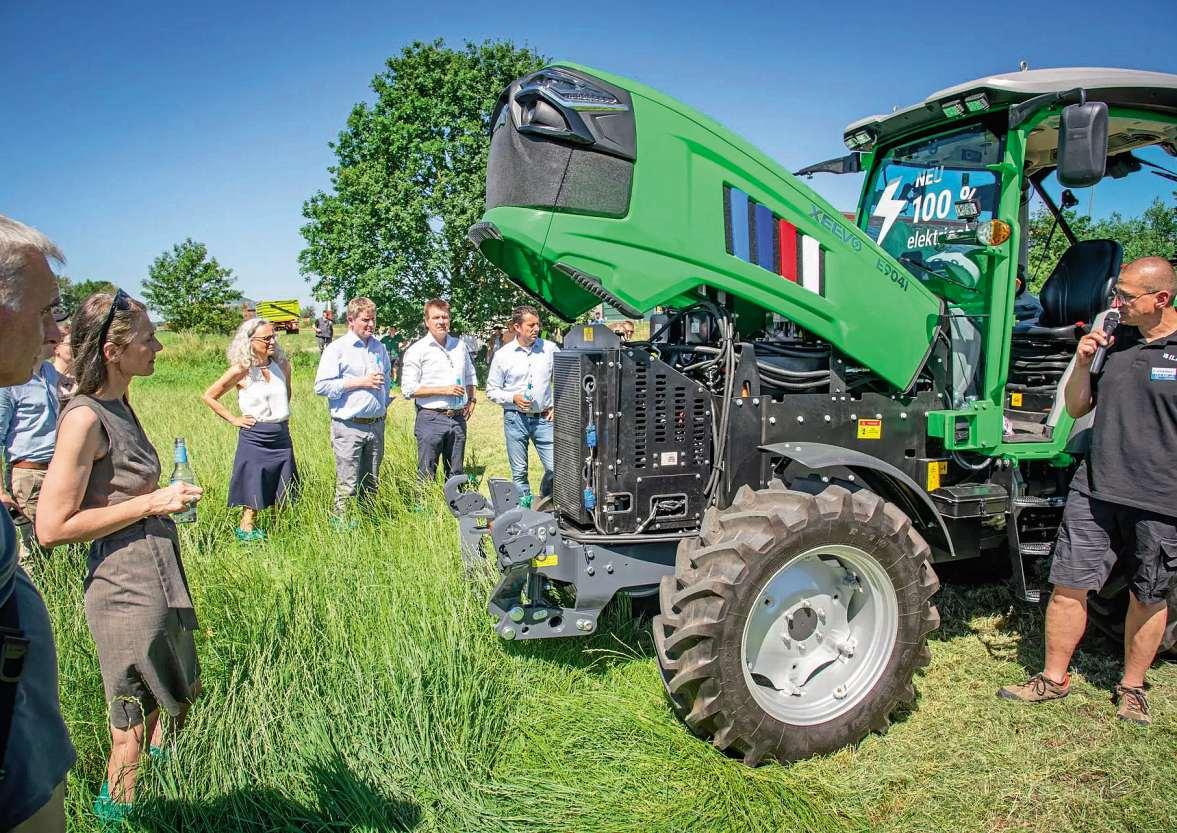
ne for barn cleaning and feed delivery, a seed drone, etractors,andtractorswithcombustionenginespowered by rapeseed oil and hydrogenated vegetable oil, HVO
„Especiallyforworkinthebarnandonthefarmpremises, as well as for tractors up to about 100 horsepower, electric drives are increasingly considered an interesting alternative to diesel engines,“ explained Harm Drücker, whoheadstheagriculturalengineering,energy,building, andemissionsprotectiondepartmentattheChamberof Agriculture.Farmsproducingsolarpowercoulduseitto charge their e-vehicles and e-machinery „For agricultural machinery with higher performance, electric drives are currently not feasible – the corresponding batteries wouldbetooheavy,andtherequiredchargingtimestoo long,“Drückersaid.Thereisalreadyaviableselectionof e-models,especiallyforyardloaders,addedMartinVaupel,anexpertintractorandtransporttechnologyatthe Chamber of Agriculture.
„Although electrically operated vehicles are generally significantly more expensive than comparable combustionmodels,wefoundinouryardloadertestin2023that someelectricmodels-assuminggovernmentsubsidies andreasonablypricedelectricityfromownphotovoltaic systems – may surpass their combustion counterparts in economic efficiency."
According to the Chamber of Agriculture, experts see verygoodchancesofreplacingcombustionengineswith electric drives in machines with lower power – this was made clear in the lectures during the Echem Practical Day. „Small and medium-sized agricultural machines will be battery-powered,“ said Ludger Frerichs, head of the Institute for Mobile Machines and Commercial Vehicles at the Technical University of Braunschweig Frerichs foresees an overall energy mix of battery-electric and combustion engine-driven systems: „Every farm is different, and each must find its economically suitable energy mix.“
In addition to electricity, liquid alternatives to fossil diesel fuel will be highly sought after to achieve German and EU climate protection goals – the speakers also agreed on this, according to a statement. „Given today's technical possibilities, liquid renewable fuels will have thegreatestimportanceinthenearfutureforagriculture,“ said Hartmut Matthes, CEO of the Federal Association of Contractors. „This is especially true for higher performance classes of agricultural machinery, while farm vehicles and lower performance classes can be effectively used with battery-electric drives.“
Fossil diesel fuel has no future – quickly and with impactful CO2 reduction, the focus should be on plant-basedfuels,especiallyHVOandbiodiesel,emphasizedTU lecturer Frerichs
„Planning certainty is the basic prerequisite for the agricultural engineering industry,“ said Johannes Hipp, an agricultural engineering expert at the mechanical engineering association VDMA. Already today, the ma-
„However,thisrequirespoliticalwillto finallytakeclearanddecisiveaction regardingalternativefuels.“
Johannes Hipp, Technical Speaker at VDMA
jorityofmachinesare,forexample,HVO-ready,meaning operators can easily switch from fossil to renewable fuels. Effective incentives for the use of bio-based and renewableenergycarriersarethefirststeptoinitiatingthe transition in manufacturers and users, Hipp continued.
„However, the political will is needed to finally take clear and decisive action on alternative fuels.“ Agriculture itself could support the transition through appropriate cultivation planning, added Frerichs: „We only need a small percentage of agricultural land to replace fossil diesel in agriculture.“
Hartmut Matthes sees important criteria for implementing this energy transition in tanks and storage: „This begins with the possibilities for acquiring agricultural machinery and energy carriers – available models and suitable charging infrastructure must be considered,“ Matthes explained. „Furthermore, the impact of new technologiesonproductionprocesses,suchascompatibility with existing equipment, must be assessed.“
Additionally, the effects on labor economy, such as refueling and charging processes and handling of energycarriers,shouldbeconsidered."Finally,theeconomic efficiencyofalternativedriveenergiesshouldbeevaluated: This includes aspects such as investment costs and investment security, potential subsidies, impacts on competitiveness,andtheecologicalfootprintofagricultural products."
„ThePracticalDayshowsthattherearealreadyavailable machines and a range of alternative drive technologies. There will be no return to vehicles operated solely with fossil fuels,“ said Agriculture Minister Miriam Staudte during the event. „When fully electric machines are charged directly via photovoltaics on the barn roof, it paysofftwice:fortheclimateandthefarm'swallet.Thus, thenewfederalgovernmentmustimplementappropriate funding instruments to promote momentum, innovation, and willingness to invest,“ argued Staudte.
The event was organized by the Lower Saxony Chamber of Agriculture, together with the Lower Saxony MinistryofFood,Agriculture,andConsumerProtectionin Echem, Lüneburg District. n
The requirements for control units in agricultural machinery differ from those in the automotive industry. This influences the choice of materials and design. However, suppliers can still leverage synergy effects.
Jürgen Jungert, Director Commercial Vehicles, Preh Group
Agricultural environments come with extreme conditions: dirt, dust, moisture, vibration, and significant temperature fluctuations. The need for robust agricultural machinery stands in stark contrasttotherefinedaestheticsandtactileprecisionoften found in automotive control units. High-gloss surfaces andcompact,sensitiveactuationaredesirableincertain automotive applications, whereas agricultural controls mustbedurable,offertactileclarity,andprovideclearly definedactuationpathstoensurereliableperformance under demanding conditions. Is it therefore contradictory for a supplier to develop automotivecontrolelementsandHMIsystemsforcommercial vehicles? Or can these areas learn from and benefit each other?
At first glance, the concept may seem contradictory given the highly specific customer requirements across sectors. A development team cannot easily address automotive surface finishes with finely tuned torque settingswhilesimultaneouslymeetingtheextremerobustness requirements of agricultural machinery Despite thesedifferences,thereareclearpointsofconvergence. Hapticfeedbackandvisualdesignremaincriticalfactors for delivering a brand-consistent user experience –whetherinpassengercarsorcommercialvehicles.Technologies that have been successfully implemented and validated in the automotive sector are selectively adapted to meet the operational demands of commercial vehicles.Conceptstailoredspecificallyfortheagriculturalsectorcannotsimplybetransferredfromotherareas; they require substantial in-house development.
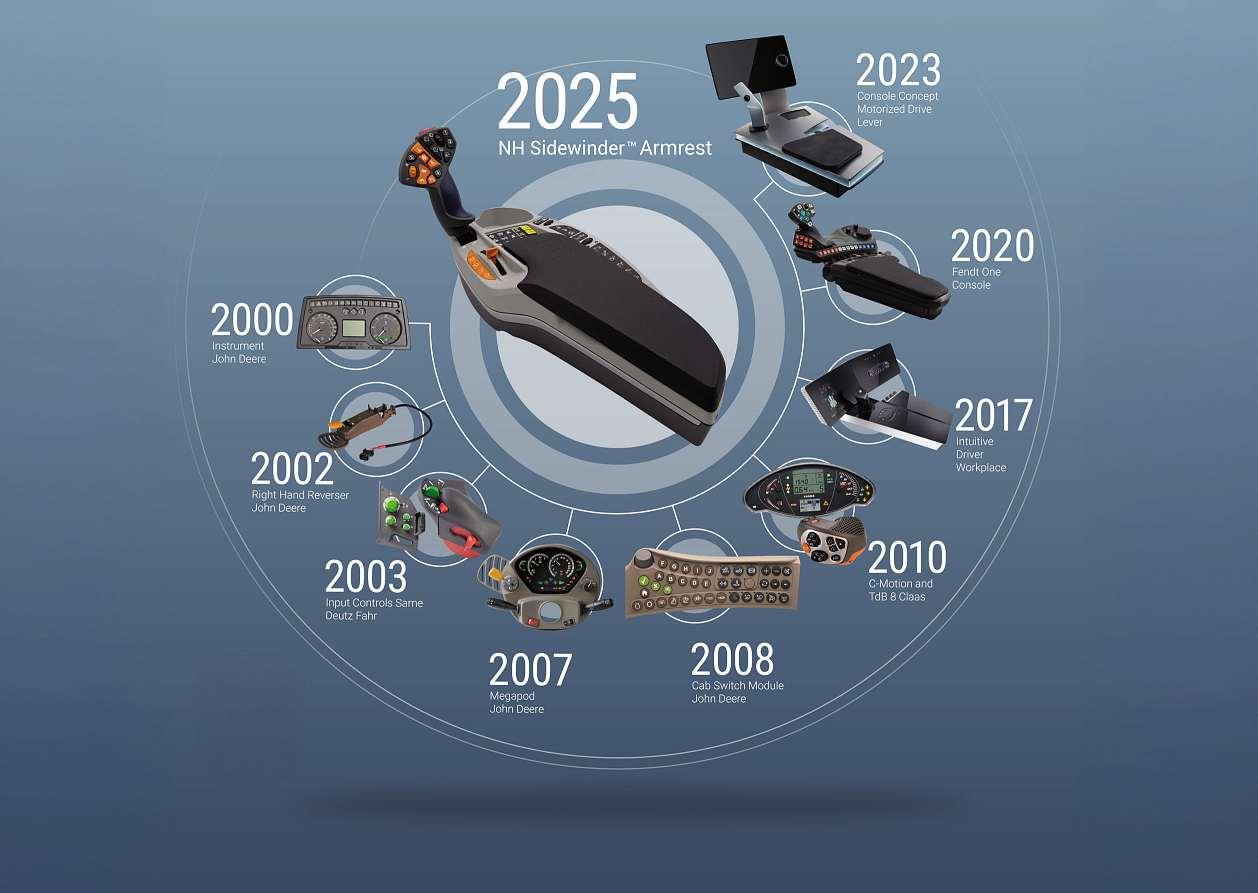
Modern agricultural machinery encompasses a wide range of functions, and a modern control architecture must integrate these capabilities ergonomically and intuitively Inclosecollaborationwithagricultural machinerymanufacturers,Prehhasdeveloped multifunctionalconsolesystemsbasedona modular and flexible platform concept.

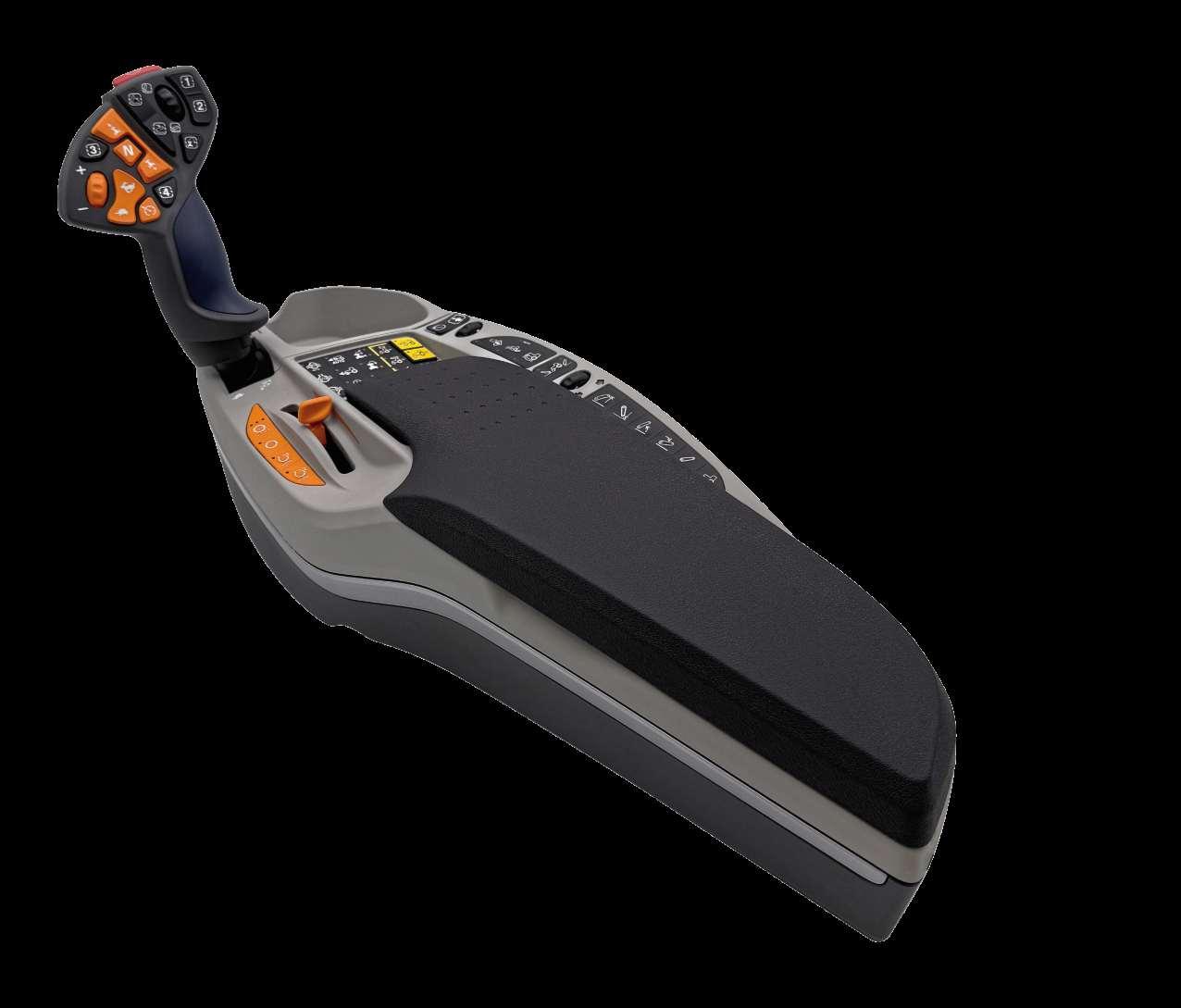
Development of automotive control elements and HMI systems for commercial vehicles may include compound effects.
A core element is the multifunction lever, featuring a button layout that minimizes frequent repositioning duringoperation.Proportionalvalvesforhydrauliccontrol remain an important part of the design to ensure reliable and user-friendly handling
In certain configurations, rotary knobs allow for multi-axis input for rotation, press, and tilt functions, enabling precise and efficient navigation The underlying technology for these rotary controls is derived from automotiveapplications,allowingforpartialtechnological transfer where appropriate.
Ultimately, these console systems serve as the interface between operator and machine They consolidate control and monitoring functions into a cohesive, ergonomicallyoptimizedplatform,facilitatingintuitiveand precise machine operation under diverse conditions.
Upon closer examination, synergy benefits between industries are not contradictory However, experience showsthatthedevelopmentandmanufacturingofHMI controls for passenger cars and agricultural machinery within a single organizational framework do not automaticallyleadtosynergies.Individualcomponentslike multifunctionswitchesorrotarycontrolscanbeadapted


withmanageableeffortfromatechnologicalperspective. Nonetheless, increasing functional demands in agriculturalmachinerycockpitsrequiredistinctdesignapproaches and development processes that differ significantly from those in the automotive sector.
Here,consolesystemshaveproventheireffectiveness. Althoughtheycanintegratecertainautomotive-derived technologies, they are predominantly proprietary solutionstailoredtothespecificrequirementsofagricultural machinery Preh'splatformstrategyenablesmodularity and scalability
Collaboration with OEMs allows for products that meet real-world needs – both on the road and in the field. n

„Functionaldemandsinthecockpitsof agriculturalmachineryrequireunique designapproachesanddevelopment processes.“
Jürgen Jungert, Director Commercial Vehicles










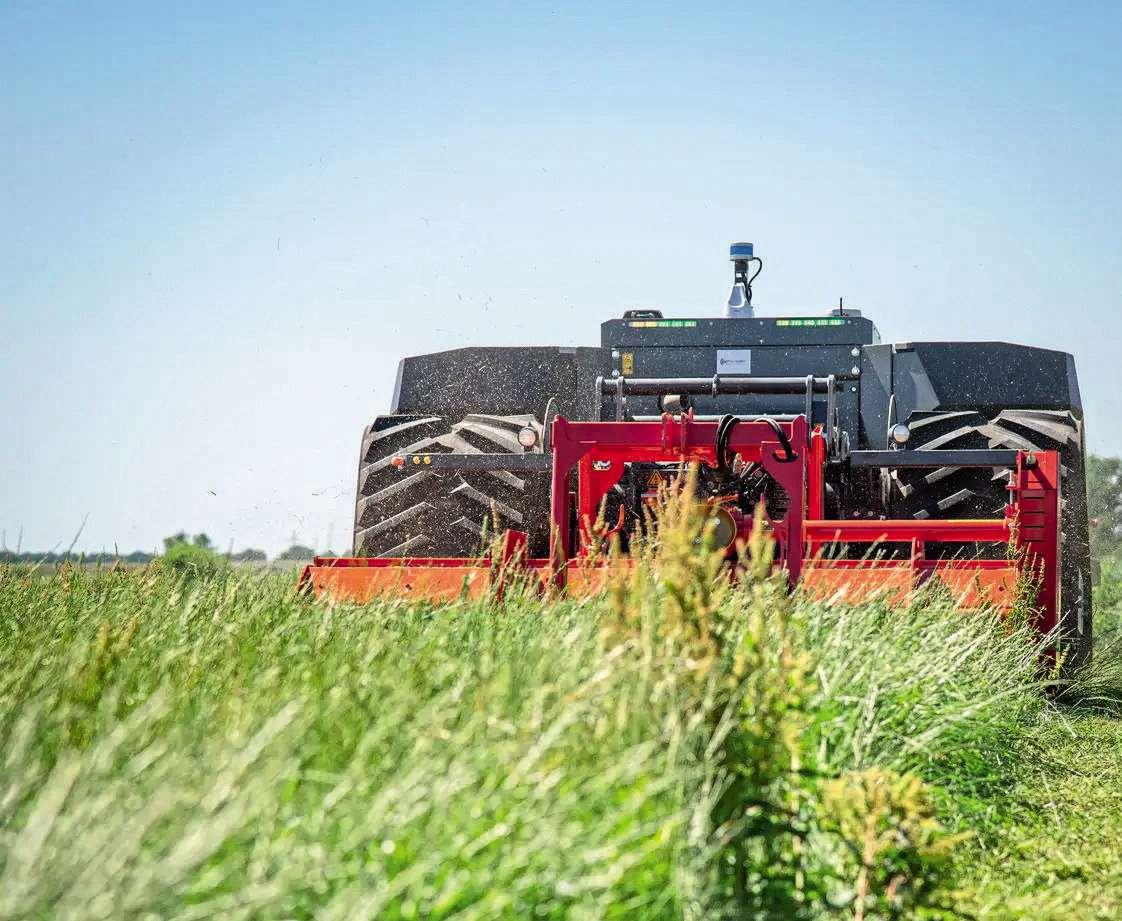
The practical project „AI Real Laboratory Agriculture” focuses on artificial intelligence and robotics in agriculture.
How can artificial intelligence and robotics help in agriculture?
This is being researched by several partners in practice in the "AI Real Laboratory Agriculture".
Thomas Günnel
Technologies such as artificial intelligence and roboticsofferenormouspotentialtomakeagriculture more sustainable, describes Professor Tim RömerfromtheUniversityofOsnabrück.Römerleadsthe new project „AI Real Laboratory Agriculture“, RLA. In this project, research companies and institutes from the regions of Osnabrück and Braunschweig aim to integrate these technologies into agriculture „to achieve a balance between productivity and environmental protection,“ says Römer How exactly? By minimizing the use of water, fertilizers, and pesticides, thereby preserving the soil.
The project is being established, among other places, on an agricultural experimentation farm, the „FieldLab Agriculture“ The farm will be expanded into a research location over the coming months. Additionally, the project partners intend to implement application-specific projects. In one project, for instance, they aim to investigate how data from smart cultivation equipment, drones,satellites,androbotscanbeusedtodetermineplant diversity in fields.
Furthermore, they seek to answer fundamental questions:abouttheacceptanceofnewtechnologies,willingnesstoinvest,economicviability,legalsituation,andthe
interests of individuals or investors involved in agribusinesses.
AccordingtotheUniversityofOsnabrück,LowerSaxony isoneofthemostsignificantagriculturalregionsinGermanyintermsofagriculturalareaandeconomicoutput ofthe„AgriFood“sector Thisisonereasonwhytheproject is located here. The region between Oldenburg and Münster, with Osnabrück at its center, has developed into one of the most productive agricultural economic areas worldwide, particularly in livestock
A strong SME sector is closely linked with the University and the University of Applied Sciences Osnabrück. IntheBraunschweigregion,cropfarmingpredominates, with many research institutions specialized in agriculture.
Theprojectbringstogetherrepresentativesfromscience, business, society, and politics—in both research and practical implementation. The project participants include the University of Osnabrück as the consortium leader, the German Research Center for Artificial Intelligence, the University of Applied Sciences Osnabrück,
theAgrotechValleyForume.V.,theTechnicalUniversity of Braunschweig, the Johann Heinrich von Thünen Institute,theLeibnizInstituteforAgriculturalEngineering andBioeconomye.V.,andtheNetworkCropProduction
Lower Saxony e.V The project partners have access to fundamentalresearchonAI,DataScience,andRobotics in Osnabrück and Braunschweig, with applications in the agricultural and food industry The Volkswagen Foundation funds the project with 18.9 million euros over five years. n
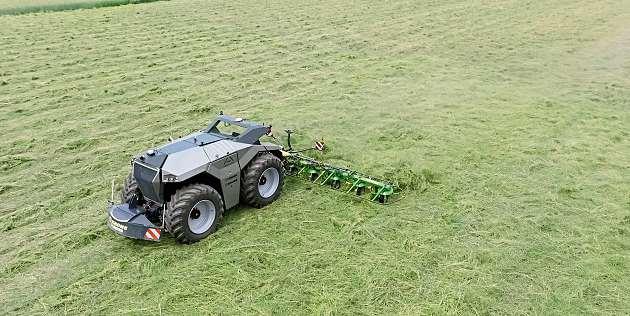
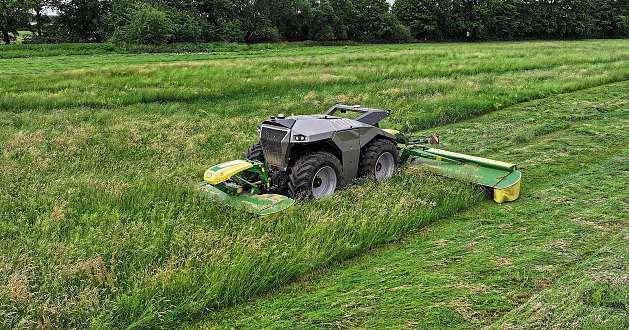
Smart mowing robots are a way to farm land more efficiently.
INNOVATION AWARD AGRITECHNICA 2025
The winners of the "Innovation Award Agritechnica" have been announced. The outstanding innovations range from smart farming to flywheel energy storage, drive management, and driver assistance systems.
Thomas Günnel
The German Agricultural Society has awarded the best innovations for Agritechnica 2025
At Agritechnica, manufacturers and suppliers of agricultural machinery technology showcase their innovations. From 250 applications, the German Agricultural Society, the organizer of the fair, has awarded two gold and 22 silver medal winners.
Müller Landmaschinen GmbH & Aebi & Co AG Maschinenfabrik receive a gold medal for the "Line Traction" product. The "Line Traction System" in the Aebi Terratrac replaces traditional differentials. Here, all four drive wheels of the vehicle rotate at the same speed.Incornering,thesystemadjuststhespeedusing proportional valves in the hydrostatic circuits. This reduces the stress on the turf and increases safety during maneuvers in sloping terrain, as there is less risk of slippage.
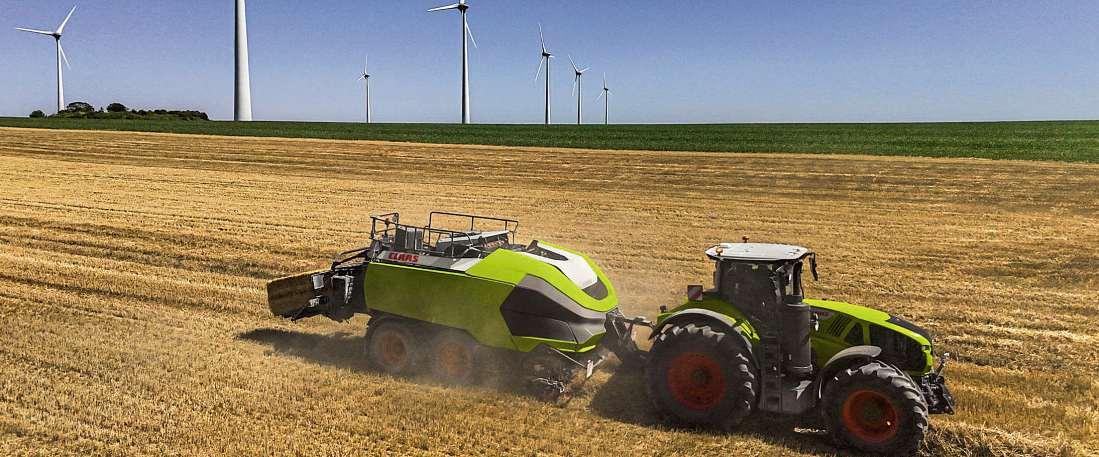
Claas receives a gold medal for a 70-ton square baler In the press, a frame-integrated main gearbox allows direct power flow, while two flywheels, each storing around200kilogramsofenergy,supportthestabilityof the press process. The system includes an intelligent assistancesystemthatcontinuouslydetectsandadjusts torques based on material characteristics. The adaptive control also ensures optimal driving speed depending on the current loads
Same Deutz-Fahr Deutschland is awarded a silver medal for "Deutz-Fahr TAGS." The driver assistance system integrates well-known automotive technologies such as lane-keeping assists and collision warnings for tractors. It takes into account specific conditions of agricultural vehicles, such as the use of front and rear attachments and driving on roads without lane markings.
Another medal for Claas is for an adaptive drivetrain management system. The system optimizes the performanceoftractors.Itusesefficiencymapsfortheengine and transmission and learning algorithms. It remembers load requirements in the field and adjusts engine speeds to minimize consumption and optimize tractor operation. Additionally, the system offers features like "Auto Load Anticipation" to prevent performance losses.
Grimme receives a silver medal for the "Go-Clean Concept" — a hydraulically openable housing that allows easy access to machine components. This significantly reduces the cleaning time of tillers and prevents the spreading of soil pests between areas of use
Lemkenisawardedfor"iQblueFanAutomation."The systemautomaticallyadjuststhefanspeedofseeddrills to match the current airflow required for the seeds. It monitors the intake air volume in real-time, ensuring efficient operation, reducing potential sources of error, and guaranteeing optimal material flow.
Rauchreceivesanawardfor"VarioSmart."Thesystem enables precise adjustment of the rotational speed on the spreading discs of fertilizers. The right spreading disccanbetargetedlyregulated.Thismaximizesthedistribution accuracy of the fertilizer at field edges and minimizes scattering losses.
The Amazonen-Werke are recognized for their "ZATS01AutoSpread."Thefertilizerspreaderusesradarand AI technology to autonomously control the direction and range of the throw Spreading discs become redundant, the system can continuously adapt to changing fertilizer qualities and conditions.
Börger receives an award for "Bioselect RC250." The separator uses a "Multi Disc vario," enabling the adjustment of pressure, speed, and direction during the separation process This flexibility leads to more efficient throughputperformance,reducedenergyconsumption, and wear
Einböck and Claas E-Systems applied with "SmartHill." The system uses a stereo camera to analyze the terrain and align the hoeing elements precisely. This allows reliable weed control even in hilly terrain The system compensates for the slope and prevents drift.
Horsch receives a medal for its "Proactive BoomControl."Thesystemuses3Dradarsensorstocreatedetailed terrainmodelsandoptimizethecontrolofplantprotection sprayers. The anticipatory adjustment prevents faulty spraying processes and optimizes target area treatment.
Geringhoff is awarded for "Yield EyeQ." The system uses high-resolution cameras to capture harvest losses. It analyzes real-time data and allows dynamic optimization of machine settings.
Schumacher receives an award for the "EasyCut3 QuickFit Cutting System." It allows a tool-free design of the mower blades for easy replacement.
New Holland is awarded for "Corn Header Automation." The system reduces corn harvest losses through sensor adjustments The sensor data dynamically control the picking rollers based on harvest conditions.
ArnoldNextGreceivesasilvermedalfor"Duxalpha." The 3D track guidance system takes terrain heights and profilesintoaccountduringtrackplanning Thisallows more precise processing and more efficient use of agricultural resources through position-accurate adjustments.
The "Intuitu Smart Pressure Assistant" from Nokian optimizestractortirepressuretoavoidsoilcompaction and improve traction. The new assistant uses tire sensors to determine the load during driving within minutes. It considers variables such as driving speed, vehicle configuration, and ground conditions, achieving accuracy of +/- five percent in 80 percent of cases, and provides tire pressure recommendations for road and field.
AnothermedalforClaasgoestothe"Jaguar1000."The forage harvester is designed for high throughput performancesofupto500tonsperhour Itisroadworthy with an overall width of 3.30 m. The drum configurationsoftheV-Flexchoppingdrumareflexiblyadjustablebyexchangingringsegmentsandknives.Avariable drive via quick couplers and a hydraulic drive with speed adjustment power the systems. The "Cemos AutoHeader"regulatesspeedsautomatically.Another assistance system monitors the knife condition and automaticallyreportstheneedforgrinding Asheader widthincreases,angle,load,andgyrosensorsoptimize the crop flow through hydraulic damping This minimizes transfer losses and extends component life.
Krone receives an award for "OptiSet." Users can remotely set the spreading angle of all tedders of a rotary tedder centrally and synchronously at the touch of a button,steplesslybetween13and19degrees.Thesystem also functions autonomously in automatic operation.
TheAmazonen-WerkeandSkyAgriculturereceive an award for a similar product: "EasyMatch" fertilizer recognition using AI and "Fertieye-Smartphone Image Analysis."EasyMatchusesAIandimageanalysistocreateadigitalfingerprintoffertilizergranulesfromaphoto Withover250characteristics,thesystemcomparesthis fingerprint with a fertilizer database – and provides pre-
cisesettingsforAmazonespreaders,evenforunknown fertilizer products.
Ferti Eye combines simple sample preparation with optimizedimageanalysistoindividuallyanalyzeparticles.Itcalibratestheircolorandgeometryandcalculates theballisticflightproperties—foraprecisepredictionof spreading range and quality
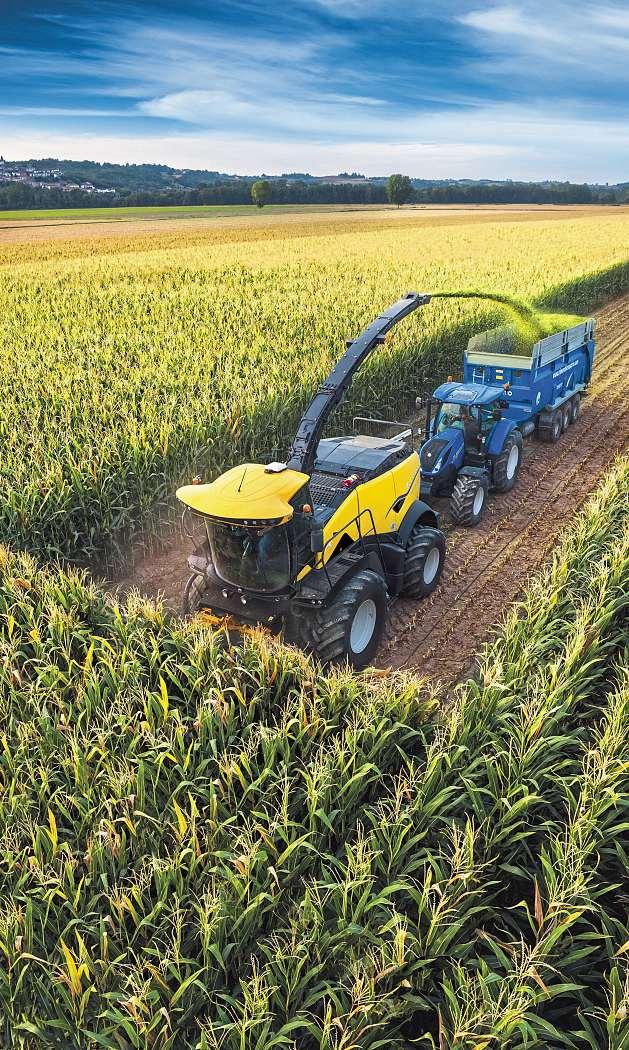
Claas,Fendt,andNewHollandreceiveasilvermedal for products that determine the so-called Corn Silage Processing Score, CSPS, in real-time. This was previously only possible in the laboratory CSPS stands for the degree of corn compression. "Cemos Auto Chopping," "ForageQualityCam," and "ForageCam" use cameras in theharvestertowertoanalyzethestructureofthechoppedmaterialusingAIanddeterminethecornbreakage.
The AI first distinguishes between corn and plant residues and then measures the corn components These aredividedintofractions>4.75mmand<4.75mmand captured as percentages. The driver receives the CSPS data immediately on a display and can use it to adjust the cracker gap according to the harvest conditions
The German Agricultural Society awards companies forinnovativeproductsatAgritechnicathisyear Companiesreceivethe"InnovationAwardAgritechnica"in
gold for a product with a new concept. The function must have changed significantly – leading to a new procedureorasubstantialimprovementofanexisting process. Key factors include practical importance, benefits for operational and work management, improvement of the environmental and energy situation, and the impact on work facilitation and safety
The Innovation Award Agritechnica in silver is awarded to innovations where a known product has been developed to such an extent that a substantial improvement in function and procedure is expected—without meeting all the requirements for a gold medal. The criteria for awarding include the economic significance for practice, advantages in work performance and quality, better functional reliability, and positive impactsontheenvironmentalandenergysituation.Detailedinformationontheawardedproductsisavailable on the Innovation Award Agritechnica 2025 website. n




March18,2026
Vienna(AT) April15,2026 Bochum May6,2026
Halle(Saale) June17,2026
September16,2026
(ES) November18,2026

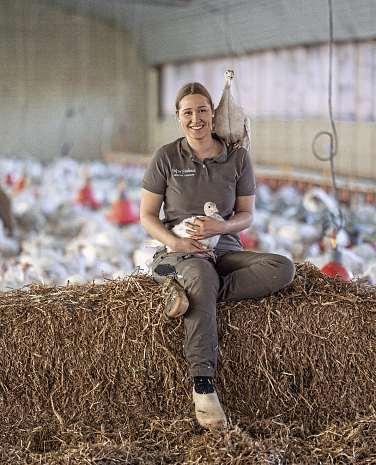
the garden fence and chatting with the neighbors.”
Agricultural influencers take their followers digitally to the fields, barn, or tractor cabin every day. The "DLG AgriInfluencerAward2025" honorsindividualswhoauthentically,expertly,andwith wide reach bring agricultural topics into the digital space. This year's winners will receive their awards during the Young Farmers Party on November 14. On the same evening, the DLG will announcetherankings.These are the finalists.
Amongthe"DLGBestAgri Influencer In Germany" is Nina Kleine. Nina lives with her partner on his farm and shows her followers turkey farming, crop production, and life in the countryside. Topicssuchasfattening,potato harvesting, and other year-round activities are covered interestingly. "There's always a wink involved, and the account feels calm and approachable, like watching over the garden fence and chatting with the neighbors," describes the German Agricultural Society Nina Kleine is from Münster in Westphalia and currently has around 40,900 followers as @hof zur_haskenau
PatrickDanuserandhisfamilyliveintheRhineValley,wheretheykeepsuckler cows, raise poultry for meat, and are involved in arable and vegetable farming On Instagram, he speaks in Swiss German with German subtitles and good hooks, addressing his audience very authentically and humorously. Besides providing interesting insights into agriculture, he also covers topics like potato theft. Patrick is from Bad Ragaz, Switzerland, and currently has around 45,200 followers as @danuser_hof
PhilippPelzermanagesafarmwithhisfamily,focusingonbullfattening,crop production, and energy generation. He has also been engaged in digital public relations for agriculture for years, including for the former Funk-format "HundredHectarHometown."Withhumor,heincorporatesmemesandsocialmedia trends,adaptingthemtothegreensector,andexplainshisworkunderstandably for outsiders. Philipp is from Rahden in North Rhine-Westphalia and currently has around 55,400 followers as @philipps_farmlife
In the "DLG Best Agri Influencer International," Franco Speranza is included. Franco is a young farmer working with his family in crop farming On social media,heshowcasesthiswork,sometimesembellishedwithmotorsportevents. His content comes across as approachable and light-hearted through friendly interactions with followers. Franco is from Bell Ville, Argentina, and currently has around 228,000 followers as @franco_speranza
Noah Young and his wife founded their own farm, demonstrating gardening, animalhusbandry,regenerativefarming,andmodernfamilylifeinthecountryside,whilealsoaddressingindustryissues.Hisaccountsuccessfullybridgesthe gap between producers and consumers with engaging, witty, and, above all, creative storytelling Noah is from Kenesaw, Nebraska, USA, and currently has around 744,000 followers as @TheShilohFarm
TomCarlisleandhisfamilyrunafarminNorthernEnglandwithsheep,fodder production, and agritourism On Instagram, he has developed his own humorously warm-hearted approach to showing his daily agricultural life and work. Forexample,hewritesandperformssongsoncurrenttopicsorturnstheherding of lambs into a humorous competition as a sports commentator Tom is from Cracoe,UK,andcurrentlyhasaround32,400followersas@DalesFarmer (thg)
www.automobil-industrie.vogel.de
ReaderService automobil-industrie.de/hilfe or an e-mail to vertrieb@vogel.de mit Betreff „Automobil Industrie“. Please include your customer number from the address label: *CS-1234567*
Editorialservice
Editorial enquiries: Phone +49 931 418-2333 fachmedien@vogel.de
Editor-in-chief: Claus-Peter Köth (kt), V.i.S.d.P
Editors: Thomas Günnel (thg), Sven Prawitz (sp)
Freelance Editors: Hartmut Hammer, Tina Rumpelt, Gerald Scheffels
Conceptual Design & Layout: Alexandra Geißner
Spellings, names of firms and products: In general we follow the recommendations in Duden.
Legal disclaimer:
The content of individual articles is the responsibility of the authors named and does not necessarily reflect the opinion of editorial staff. Although all published material is checked carefully, no liability can be accepted for possible inaccuracies. No part of this publication can be reproduced in any form or, with the help of electronic systems, processed, copied or distributed, without express written permission.
Sales
Director Sales: Annika Schlosser
Phone +49 931 418-2982 sales@vogel.de
Order Management: ordermanagement
Distribution
Circulation Audit:
Member of the Informationsgemeinschaft zur Feststellung der Verbreitung von Werbeträgern – Sicherung der Auflagenwahrheit. Our current statistics are at: www.ivw.de ISSN 0005-1306

Vogel Communications Group GmbH & Co. KG
Max-Planck-Str. 7/9, 97082 Würzburg, Germany
Phone +49 931 418-0 www.vogel.com
Ownership:
Full liability: Vogel Communications Group Verwaltungs GmbH Max-Planck-Straße 7/9, 97082 Würzburg, Germany
Limited partners: Dr. Kurt Eckernkamp GmbH, Nina Eckernkamp, Klaus-Ulrich von Wangenheim, Heiko Lindner, Axel von Kaphengst
Managing Directors: Matthias Bauer (Chairman), Dennis Hirthammer, Günter Schürger
Print:
Hoehl-Druck Medien + Service GmbH
Gutenbergstraße 1, 36251 Bad Hersfeld, Germany
Printed on PEFC-certified paper
Printed with mineral oil-free inks
Questions about product safety: produktsicherheit@vogel.de
Copyright: Vogel Communications Group GmbH & Co. KG