Artists Make Art

Great Minds® is the creator of Eureka Math® , Eureka Math2® , Wit & Wisdom® , Arts & Letters™, and PhD Science® .
Published by Great Minds PBC greatminds.org © 2025 Great Minds PBC. All rights reserved. No part of this work may be reproduced or used in any form or by any means—graphic, electronic, or mechanical, including photocopying or information storage and retrieval systems—without written permission from the copyright holder.
ISBN 979-8-88811-297-7
Anderson”
Ailey”
Fitzgerald”

Module 4 | Write complete sentences about what you learned.

Emma’s Rug | Write what you notice and wonder about the text. A two-column chart with headings labeled Notice and Wonder.
Notice Wonder
Work of Art 1 | Write what you notice and wonder about the work of art. A two-column chart with headings labeled Notice and Wonder.
Notice Wonder
Action Jackson | Write what you notice and wonder about the text. A two-column chart with headings Notice and Wonder.
Notice Wonder
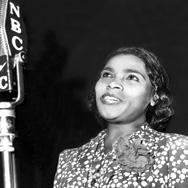
When Marian Sang | Write what you notice and wonder about the text.
A two-column chart with headings labeled Notice and Wonder.
Notice Wonder
When Marian Sang | Add important events in Marian Anderson’s life and career. For each event, add key details.
Two boxes with headings labeled Event and Details.
-sion, -tion | In the ovals, write nouns that contain the suffix -sion or -tion.
-sion, -tion the act, process, or result of something
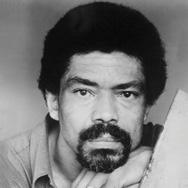
Alvin Ailey | Write what you notice and wonder about the text.
A two-column chart with headings labeled Notice and Wonder.
Notice Wonder
Alvin Ailey | Add important events in Alvin Ailey’s life and career. For each event, add key details.
Three boxes under a heading labeled Events. Another three boxes under a heading labeled Details.
Dates and Chapter Title:
Events
Details
Ella Fitzgerald | Write what you notice and wonder about the text.
A two-column chart with headings labeled Notice and Wonder. Notice
Alvin Ailey and Ella Fitzgerald | Complete the graphic organizer. A Venn diagram with two overlapping circles labeled Alvin Ailey and Ella Fitzgerald. The area of overlap is labeled Both Performers.
Both Performers
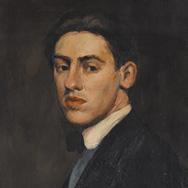
Work of Art 2 | Write what you notice and wonder about the work of art.
A two-column chart with headings labeled Notice and Wonder.
Notice Wonder
by William Carlos Williams
Among the rain and lights I saw the figure 5 in gold

“The Great Figure” | Complete the poem organizer.
Poet:
Speaker: How many stanzas are there? Does the poem rhyme? yes no How long are the lines? short long a mix
Which words or lines repeat?
What is the setting of the poem?
What is happening in the poem?
“The Great Figure” | Add words and phrases from the poem that help you imagine the weather, the city, and the firetruck.
A three-column chart with headings labeled Weather, City, and Firetruck.
Weather City Firetruck
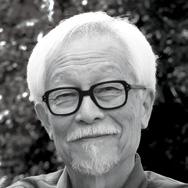
Emma’s Rug | Add the story elements.
Four boxes with headings labeled Characters, Setting, Problem, and Resolution.
Characters
Setting
Central Idea
Problem
Resolution
aud | In the ovals, write words that contain the root aud.
aud to hear
vis | In the ovals, write words that contain the root vis.
A circle in the center for the root word, vis. Lines branch off the circle in different directions. The lines connect the central circle to five other circles vis to see
What do you mean by ?
Can you tell me more about ?
Share What You Think
I think because .
First, . Also, . I agree and I will add that . I disagree because . What you said makes me think .
In the text, . For example, .
One reason is . Another reason is .
This evidence shows .
Introduction
catches the reader’s attention, gives some background context
Proof Paragraph # 1 (evidence)
transition
Proof Paragraph # 2 (evidence)
Conclusion
What? (restate your thesis)
So What? (reflect)
Key: red, green, yellow, blue
Prompt: Write a research paper to explain what made Cy Thao’s art unique.
Two columns. The first column has a writing sample. The second column is labeled Notes.
Have you ever been inspired by your family’s traditions? Cy Thao’s paintings are unique. His inspiration and style set him apart from other artists.
Inspiration
Cy Thao’s paintings are unique because of his inspiration. In the article “Story Painter,” Thao wants to tell the story of his people. To do this, he paints stories from his life and history. One of Thao’s paintings shows his memory of leaving the refugee camp in Thailand. The painting shows red dirt, crowds of people, and brightly colored buses.
In addition, Cy Thao’s paintings are unique because of his style. The article says that his paintings are influenced by the Hmong tradition of paj ntaub. Paj ntaub is a way of telling stories by sewing pictures onto
cloth. Thao’s paintings have lots of bright, solid colors and flat shapes. The people and buildings look like they are made from pieces of cloth.
Cy Thao makes unique art. His colorful paintings are unique because of his inspiration and style.
Prompt: Write a research paper to explain what made Cy Thao’s art unique. Two columns. The first column has a writing sample. The second column is labeled Notes.
Have you ever been inspired by your family’s traditions? Cy Thao’s paintings are unique. He was inspired by his family’s history, and his style was based on a Hmong art tradition.
Cy Thao’s paintings are unique because he was inspired by his family’s history. In the article “Story Painter,” Thao wants to tell the story of the Hmong people. To do this, he paints stories from his life as a refugee. One of Thao’s paintings shows his memory of leaving the refugee camp in Thailand. The camp has red dirt, crowds of people, and brightly colored buses. These details are all based on Thao’s memory. Another painting shows his school in Minnesota. This painting shares how alone and different Thao felt and how other kids ignored or hurt him.
In addition, Cy Thao’s paintings are unique because his style is based on a Hmong art tradition. The article says that his paintings are influenced by paj ntaub, a way of telling stories by sewing pictures onto cloth. Hmong women wanted to tell others about their experiences in Laos and the refugee camps, so they created story quilts. In Thao’s paintings, there are lots of bright, solid colors and flat shapes. The people and buildings look like they were made from pieces of cloth. His style makes his paintings seem just like quilts!
Cy Thao makes unique art. He uses his family’s history as inspiration, and he gets his style from Hmong art traditions.
Writing Model | Prompt: Write a research paper to explain what made Cy Thao’s art unique.
Checklist with headings labeled Knowledge, Writing, and Language. To the right are two columns labeled Review 1 and Review 2.
Knowledge shows knowledge of one aspect of Cy Thao’s work that makes it unique shows knowledge of a second aspect of Cy Thao’s work that makes it unique
Writing has headings to organize information
uses a hook to catch the reader’s attention
uses the first sentence of the thesis to state a clear focus
uses the second sentence of the thesis to name two main points writes about each point in a proof paragraph uses a transition word or phrase to begin proof paragraph 2
1
2
uses a topic sentence to begin each proof paragraph
uses evidence from at least two sources to support the points
uses elaboration to develop each piece of evidence has a concluding paragraph that restates the thesis Language chooses words and phrases for effect
uses correct capitalization for the artist’s name
uses taught spelling strategies
Jackson Pollock | Collect and sort evidence about what makes Pollock’s art unique. A three-column chart with headings labeled Materials, Style, and Inspiration.
Source: Materials Style Inspiration
Prompt: Write a research paper to explain what makes Jackson Pollock’s art unique.
Module Task 1 | Prompt: Write a research paper to explain what makes Jackson Pollock’s art unique.
Checklist with headings labeled Knowledge, Writing, and Language. To the right are two columns labeled Review 1 and Review 2. At the bottom are two boxes labeled Review 1 Comments and Review 2 Comments. Review 1 Review 2
Knowledge
shows knowledge of one aspect of Jackson Pollock’s work that makes it unique
shows knowledge of a second aspect of Jackson Pollock’s work that makes it unique
Writing
uses headings to organize information
uses a hook to catch the reader’s attention
uses the first sentence of the thesis to state a clear focus
uses the second sentence of the thesis to name two main points
writes about each point in a proof paragraph
uses a transition word or phrase to begin proof paragraph 2
uses a topic sentence to begin each proof paragraph
uses evidence from Action Jackson and Lavender Mist to support the points
uses elaboration to develop each piece of evidence has a concluding paragraph that restates the thesis Language chooses words and phrases for effect uses correct capitalization for titles uses taught spelling strategies
Review 1 Comments
Review 2 Comments
Module Task 1 | Add evidence to support each point in your thesis. Elaborate on the evidence.
Prompt: Write a research paper to explain what makes Jackson Pollock’s art unique.
Thesis:
Source: Point Evidence
A three-column chart with headings labeled Point, Evidence, and Elaboration.
Prompt: Research each artist on the list. On this notes and sources organizer, collect and sort evidence about what makes their art unique.
• Marian Anderson
• Alvin Ailey
• Ella Fitzgerald
Artist: Marian Anderson
Source:
Artist: Marian Anderson
Artist: Alvin Ailey
Artist: Ella Fitzgerald
Source: Materials
Artist: Ella Fitzgerald
Module Task 2 | Prompt: Research each artist on the list. On the notes and sources organizer, collect and sort evidence about what makes their art unique.
• Marian Anderson
• Alvin Ailey
• Ella Fitzgerald Checklist with headings labeled Knowledge, Writing, and Language. To the right are two columns labeled Review 1 and Review 2. At the bottom are two boxes labeled Review 1 Comments and Review 2 Comments.
Knowledge shows knowledge of Marian Anderson, Alvin Ailey, and Ella Fitzgerald shows knowledge of what makes each artist’s work unique
Writing has notes from print and digital sources about the research topic sorts notes into categories
Language uses correct capitalization for titles uses taught spelling strategies
Review 1
Review 2
Review 1 Comments
Review 2 Comments
Your Selected Artist | As you read the article, collect and sort evidence about what makes your selected artist’s work unique.
A three-column chart with headings labeled Materials, Style, and Inspiration.
Artist:
Source: Materials Style Inspiration
Step 1: Informative Essay | Choose one artist from the list. Write a research paper to explain what makes their art unique.
• Marian Anderson
• Alvin Ailey
• Ella Fitzgerald
Step 2: Presentation | Share a work of art. The artwork can be one that was created by your selected artist or one that you create using your selected artist as inspiration. Explain how the work of art reflects something unique about your selected artist.
Step 1 of the End-of-Module Task | Prompt: Choose one artist from the list. Write a research paper to explain what makes their art unique.
• Marian Anderson
• Alvin Ailey
• Ella Fitzgerald Checklist with headings labeled Knowledge, Writing, and Language. To the right are two columns labeled Review 1 and Review 2. At the bottom are two boxes labeled Review 1 Comments and Review 2 Comments.
Review 1
Review 2
Knowledge shows knowledge of one aspect of the chosen artist’s work that makes it unique shows knowledge of a second aspect of the chosen artist’s work that makes it unique
Writing uses headings to organize information uses a hook to catch the reader’s attention uses the first sentence of the thesis to state a clear focus uses the second sentence of the thesis to name two main points
writes about each point in a proof paragraph
uses a transition word or phrase to begin proof paragraph 2
uses a topic sentence to begin each proof paragraph
uses evidence from at least two sources to support the points
uses elaboration to develop each piece of evidence
has a concluding paragraph that restates the thesis
Language chooses words and phrases for effect uses correct capitalization in titles
uses taught spelling strategies
Review 1 Comments
Review 2 Comments
Step 2 of the End-of-Module Task | Prompt: Share a work of art. The artwork can be one that was created by your selected artist or one that you create using your selected artist as inspiration. Explain how the work of art reflects something unique about your selected artist. Checklist with headings labeled Knowledge, Writing, and Language. To the right are two columns labeled Review 1 and Review 2. At the bottom are two boxes labeled Review 1 Comments and Review 2 Comments.
Knowledge
shows knowledge of the artist shows knowledge of what makes the chosen artist’s work unique
Speaking has an introduction
describes how the work of art relates to the artist speaks at a rate others can understand speaks in complete sentences
Language chooses words and phrases for effect
Review 1 Comments
Review 2 Comments
Step 1 of the End-of-Module Task | Add evidence to support each point in your thesis. Elaborate on the evidence.
Prompt: Choose one artist from the list. Write a research paper to explain what makes their art unique.
• Marian Anderson
• Alvin Ailey
• Ella Fitzgerald
Thesis:
Sources:
A three-column chart with headings labeled Point, Evidence, and Elaboration.
Step 2 of the End-of-Module Task | Add ideas for your presentation.
How could you introduce your work of art?
How does your work of art show something unique about your artist?
Module 4
Strategy 1: Use a coordinating conjunction to combine ideas.
Examples: and, but, so, yet, for, or, nor
Sample Sentences: The surf makes sounds, and the waves roll pebbles.
Lots of birds live in the salt marsh, but not many reptiles live there.
Salt marshes are near the ocean, so they flood at high tide.
Strategy 2: Use a subordinating conjunction to expand ideas.
Examples: after, although, as, because, before, even though, if, unless, when, while
Sample Sentences: People use the North Star to find their way because it appears to stay still.
As Earth orbits the Sun, different constellations appear in the sky.
Strategy 3: Use adjectives to tell more about nouns.
Examples: brave, colorful, difficult, heavy, many, powerful, rich, sharp, spicy, strong
Sample Sentences: Hurricanes are powerful storms that form over warm oceans. A hurricane’s strong winds and heavy rain can damage homes.
Examples: actively, carefully, closely, creatively, excitedly, gracefully, patiently, silently, slowly
Sample Sentences: Jackson stares silently at the blank canvas. Jackson patiently waits for the painting to dry.
Your Turn
Jackson moves around the canvas. . With his brush, Jackson pours paint onto the canvas. .
1. Ask a friend or adult to listen to you read.
2. Read aloud the fluency passage three to five times.
3. Focus on the day’s fluency element as you read.
4. Ask the listener to initial and comment below. A two-column chart with headings labeled Initials and Comments.
Day 1
Accuracy
Day 2
Phrasing
Day 3
Expression
Day 4
Rate
Comments
Fluency Elements
Accuracy: Correctly decode the words.
Phrasing: Group words into phrases, and pause for punctuation.
Expression: Use voice to show feeling.
Rate: Read at an appropriate speed.
Retelling
by Jan Greenberg and Sandra Jordan
His eyes move up and down, back and forth. With light steps, he follows the sweep of his brush. He stops and a pool of paint pauses. Paint, paint and more paint, dripping, pouring, flinging. “The painting has a life of its own. I try to let it come through.”
Again he stops. He climbs a ladder to look down at the whole canvas. Every muscle aches. But his eyes, his mind, and his heart know the painting is finished.
Some people will be shocked when they see what he has created.
Some angry.
Some confused.
Some excited.
Some filled with a happiness they can hardly explain.
But everyone will agree—Jackson Pollock is doing something original, painting in a way that no one has ever seen before.
1. Ask a friend or adult to listen to you read.
2. Read aloud the fluency passage three to five times.
3. Focus on the day’s fluency element as you read.
4. Ask the listener to initial and comment below.
A two-column chart with headings labeled Initials and Comments.
Day 1
Accuracy
Day 2
Phrasing
Day 3
Expression
Day 4
Rate
Comments
Fluency Elements
Accuracy: Correctly decode the words.
Phrasing: Group words into phrases, and pause for punctuation.
Expression: Use voice to show feeling.
Rate: Read at an appropriate speed.
Retelling
When Marian Sang, page 27
by Pam Muñoz Ryan
Marian looked out on a river of 75,000 people. Her heart beat wildly. Would she be able to utter one note?
She took a deep breath and felt the power of her audience’s goodwill surge toward her. Marian’s sisters were there, and Mother too. Marian stood straight and tall. Then she closed her eyes and sang,
“My country ’tis of thee Sweet land of liberty …
Let freedom ring!”
A roaring cheer followed every song. At the end of the program, the people pleaded for more.
When she began her thought-provoking encore,
“Oh, nobody knows the trouble I see Nobody knows my sorrow …”
… silence settled on the multitudes.
1. Ask a friend or adult to listen to you read.
2. Read aloud the fluency passage three to five times.
3. Focus on the day’s fluency element as you read.
4. Ask the listener to initial and comment below.
A two-column chart with headings labeled Initials and Comments.
Initials
Day 1
Accuracy
Day 2
Phrasing
Day 3
Expression
Day 4
Rate
Comments
Fluency Elements
Accuracy: Correctly decode the words.
Phrasing: Group words into phrases, and pause for punctuation.
Expression: Use voice to show feeling.
Rate: Read at an appropriate speed.
Retelling
Alvin Ailey, page 27
by Andrea Davis Pinkney
On January 31, 1960, gospel harmonies filled the concert hall at the 92nd Street Y.
Rock-rock-rock
Rocka-my-soul
Ohhh, rocka-my-soul
Alvin clapped in time to the music, the same way he did when he was a boy. But now, Alvin rejoiced onstage in Revelations, a suite of dances he created to celebrate the traditions of True Vine Baptist Church in Navasota, Texas.
The audience swayed in their seats as Alvin and his company gloried in their dance. High-stepping ladies appeared onstage sweeping their skirts. They danced with grace and haughty attitudes. Alvin and the other men jumped lively to the rhythm, strutting and dipping in sassy revelry.
Ella Fitzgerald
1. Ask a friend or adult to listen to you read.
2. Read aloud the fluency passage three to five times.
3. Focus on the day’s fluency element as you read.
4. Ask the listener to initial and comment below.
A two-column chart with headings labeled Initials and Comments.
Initials
Day 1
Accuracy Day 2
Phrasing
Day 3
Expression Day 4
Rate
Comments
Fluency Elements
Accuracy: Correctly decode the words.
Phrasing: Group words into phrases, and pause for punctuation.
Expression: Use voice to show feeling.
Rate: Read at an appropriate speed.
Retelling
Ella Fitzgerald: The Tale of a Vocal Virtuosa, pages 22–24
by Andrea Davis Pinkney
Dizzy Gillespie was bebop’s main man. He turned jazz on its head. With his trumpet, he could blow notes into back flips. Into flatted fifths.
Into popcorn blips that flung free from his horn. Dizzy asked Ella to join his band. He invited Ella to give bebop a try. To improvise. To sing the ping-pong rhythms that gave bebop its sound.
Ella went along for Dizzy’s ride. One night, when the two of them started to jam, Ella made bebop her own. For Ella, scat singing drove bebop home. Ella used her voice in the same way Dizzy used the notes he made with his horn—like a runaway leaf flying high on a breeze.
Now, when Ella performed, she let her lyrics go. She took her singing out to play. When Ella recorded “How High the Moon,” her scat swung to cloud nine and back.
“The Great Figure”
1. Ask a friend or adult to listen to you read.
2. Read aloud the fluency passage three to five times.
3. Focus on the day’s fluency element as you read.
4. Ask the listener to initial and comment below.
A two-column chart with headings labeled Initials and Comments.
Initials
Day 1
Accuracy Day 2
Phrasing Day 3
Expression Day 4
Rate
Comments
Fluency Elements
Accuracy: Correctly decode the words.
Phrasing: Group words into phrases, and pause for punctuation.
Expression: Use voice to show feeling.
Rate: Read at an appropriate speed.
Retelling
“The
by William Carlos Williams
Among the rain and lights
I saw the figure 5 in gold on a red firetruck moving tense unheeded to gong clangs siren howls and wheels rumbling through the dark city.
1. Ask a friend or adult to listen to you read.
2. Read aloud the fluency passage three to five times.
3. Focus on the day’s fluency element as you read.
4. Ask the listener to initial and comment below. A two-column chart with headings labeled Initials and Comments.
Comments Day 1
Accuracy Day 2
Phrasing Day 3
Expression
Rate
Fluency Elements
Accuracy: Correctly decode the words.
Phrasing: Group words into phrases, and pause for punctuation.
Expression: Use voice to show feeling.
Rate: Read at an appropriate speed.
Retelling
by Allen Say
From the corner of her eye she thought she saw something move behind her. She knew there was only the wall there, all bare now, yet she turned—as if to catch sight of something flying away. She gave a cry.
Emma rushed outside. “It can’t be!” she said, breathing faster. She saw the eyes watching her and then the faces of creatures all around. She knew them from before. She had thought she would never see again. “I can see you!” Emma cried with joy.
Module 4 | After reading or listening to a text, add to your reading log for module 4. Then follow your teacher’s instructions for which questions to answer in your journal.
Wonder What do I notice and wonder about this text?
Organize What is happening in this text?
Reveal
What does a deeper look at words and phrases reveal?
What does a deeper look at illustrations or photographs reveal?
Distill What is a central idea in this text?
Know How does this text build my knowledge?
Essential Question
Your Knowledge
What is an artist?
What behaviors do some artists share? What inspires someone to create art?
After reading or listening to a text, write the date and text title. If you did not read a whole text, write the page numbers for the section that you did read.
Date Title Pages
Glossary
Key: (n.) noun, (v.) verb, (adj.) adjective
art (n.)
1. something that is created with imagination and skill and that is beautiful or that expresses important ideas or feelings
2. an activity that is done to create something beautiful or to express important ideas or feelings
artist (n.)
1. a person who creates art
2. a person who is skilled at drawing, painting, performing, etc.

audio (adj.)
relating to sound choreographer (n.)
a person who creates the movements made by dancers in a performance
contralto (n.)
the lowest female singing voice, or a female singer with such a voice
distinct (adj.)
noticeably different
emphasis (n.)
a principle of design; the effect created when an artist arranges the elements of art to direct the viewers’ attention to a focal point in a work of art
emphasize (v.)
to give special attention to something Notes
express (v.)
to say, show, or write about opinions, feelings, or knowledge

expression (n.)
the act of making your thoughts, feelings, or knowledge known by speech, writing, or some other method
imagery (n.)
language that appeals to the five senses and causes people to imagine pictures in their mind
imagine (v.)
to think of something or create it in your mind
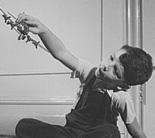
improvise (v.)
1. to make or create something by using whatever is available
2. to speak or perform without preparation
inspiration (n.)
something that makes someone want to do something or that gives someone an idea about what to do or create


modern (adj.)
newer in style; different from the styles of the past
opera (n.)
a play in which actors sing all or most of the words with music performed by an orchestra, or a group of musicians who play different instruments together
original (adj.)
1. first or earliest
2. new or different
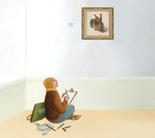
portrait (n.)
a work of art that shows a specific person, group of people, or nonhuman animal
protest
1. (n.) words or actions that show disagreement with or disapproval of something
2. (n.) an organized action by a group of people to show strong disapproval of an idea and to cause change
3. (v.) to show or express strong disagreement with or disapproval of something
4. (v.) to show or express strong disapproval of something at a public event with other people
1. (n.) careful study or activity to find and report new knowledge about a subject
2. (v.) to collect more information about a subject
rhythm (n.)
a regular, repeated pattern of sounds or movements


spiritual (n.)
a religious song created and sung by enslaved Africans in the southern US, often expressing the struggles and hopes and faith of enslaved people
1. a particular way in which something is done, created, or performed
2. the way in which elements are similar across works of art

track (n.)
a song on an album, a record, a CD, etc.
unique (adj.)
1. unlike anything or anyone else
2. very special or unusual Notes
relating to seeing
vocal range
all of the notes that a particular person can sing
(1897–1993)
Britannica Kids
The singer Marian Anderson had a pure, rich voice and could sing a great range of parts. An African American, she is also remembered for breaking down barriers between Blacks and Whites in the United States. Anderson was born on February 27, 1897, in Philadelphia, Pennsylvania. At age 6 she began singing in her church choir. At age 19 she studied singing with a famous teacher who was so impressed by her talent that he gave her free lessons.
In 1925 Anderson gave a recital with the New York Philharmonic Orchestra. But because of her skin color, many opportunities were closed to her in the United States, where at the time Blacks and Whites were often kept apart. Audiences in other countries embraced Anderson, however. In the 1930s she made successful singing tours of Europe.
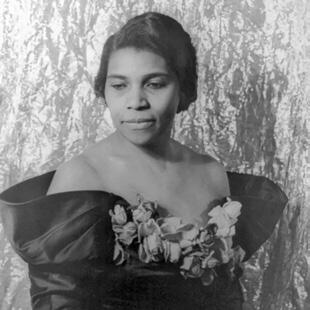
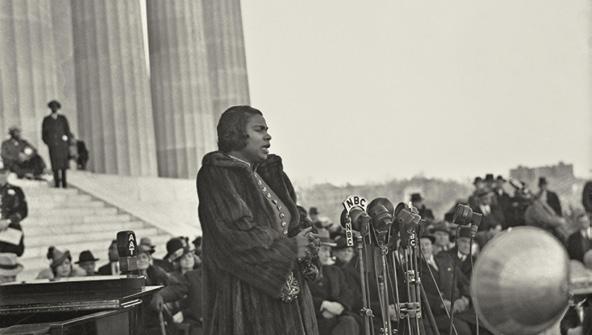
In 1939 Anderson was prevented from arranging a concert in Washington, DC, because Blacks were not allowed in the concert hall. Many Americans, including First Lady Eleanor Roosevelt, were outraged. They arranged for her to sing outside the Lincoln Memorial instead, and 75,000 people came to hear her.
In 1955 Anderson became the first African American to perform with the renowned Metropolitan Opera in New York City. Two years later she published My Lord, What a Morning, the story of her life. Anderson died on April 8, 1993, in Portland, Oregon.
(1931–1989)
Britannica Kids
Alvin Ailey was a famous modern dancer. He was also a highly respected choreographer—a person who creates dances and directs dancers. His dance company toured around the world, bringing recognition to African Americans in dance.
Ailey was born in Rogers, Texas, on January 5, 1931. His family moved to Los Angeles, California, when he was 12. Ailey began to study modern dance at the Lester Horton Dance Theater in 1949. He became the company’s director and choreographer in 1953.
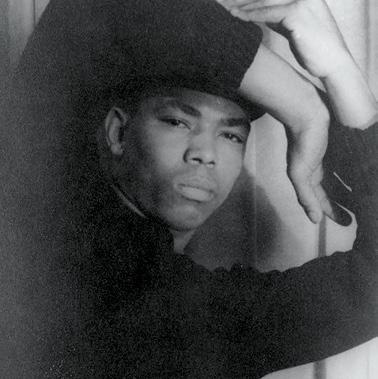
In 1954 Ailey moved to New York, New York, where he studied with modern dance pioneer Martha Graham
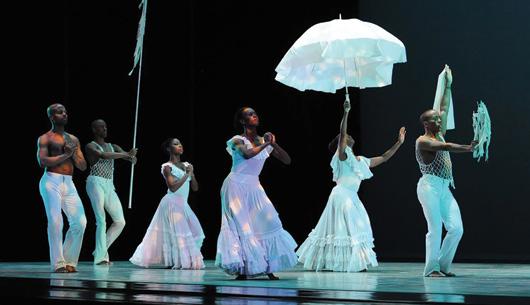
and others. He created the Alvin Ailey American Dance Theater in 1958. The troupe performed many kinds of works, but Ailey particularly wanted to bring African American culture to modern dance.
In 1958 Ailey achieved his first big success as a choreographer with “Blues Suite.” One of his most famous dances is “Revelations” (1960), which is set to African American spirituals. His works combine ballet and modern dance.
In 1965 Ailey retired from dancing, but he continued choreographing. He died in New York City on December 1, 1989. His company remained in operation after his death.
(1917–1996) Britannica Kids
Introduction
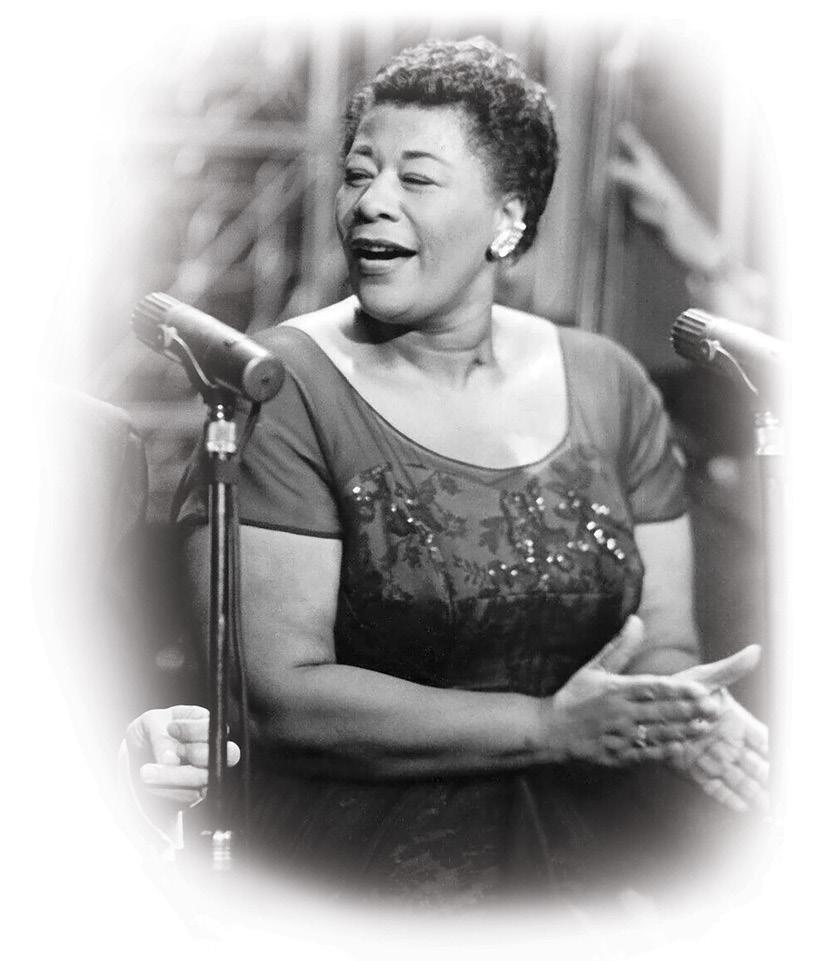
Ella Fitzgerald was a singer praised for her clear, sweet voice. She was called the “First Lady of Song.” In a career that spanned 60 years, she became a music legend all over the world.
Ella Fitzgerald was born on April 25, 1917, in Newport News, Virginia, but she spent most of her childhood in Yonkers, New York. Ella experienced some difficulties during her childhood: her father left the family when she was very young, and her mother died when she was a teenager. However, like her parents, Ella loved music. She sang and took piano lessons while growing up. While in her teens, Ella’s big break came when she won a talent contest at the famous Apollo
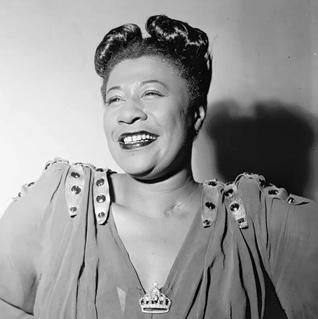
Theater in Harlem, a neighborhood of New York City. A band director who saw her performance there got her an audition with the famous bandleader Chick Webb, who then hired her to be a part of his ensemble.
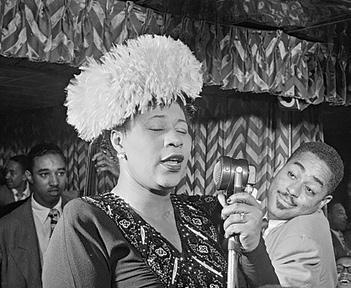
In 1938 Fitzgerald recorded a song based on the popular “A-Tisket, A-Tasket” nursery rhyme. That recording sold more than a million copies, and Fitzgerald became famous. During the 1940s she toured the United States with a popular jazz group. Fitzgerald also performed outside the country and soon became an international star. Audiences enjoyed the singer’s rare ability to glide between low and high notes. Fitzgerald also became a master of “scat,” which is a way of using
the voice like an instrument by singing meaningless syllables.
In the 1950s, Fitzgerald began recording the “songbooks,” a series of albums celebrating the works of well-known American composers. One songbook was devoted to the music of brothers Ira and George Gershwin. Her versions reportedly inspired Ira to say, “I never knew how good our songs were until I heard Ella Fitzgerald sing them.” She also sang the music of Cole Porter, Duke Ellington, Irving Berlin, and others.
During her long career Fitzgerald recorded more than 100 albums of several kinds of music, including jazz, ballads, show tunes, and pop songs. She performed with such artists as jazz greats Louis Armstrong and Dizzy Gillespie as well as singers Frank Sinatra and Bing Crosby. In addition to winning many Grammy awards for her recordings, Fitzgerald was honored with lifetime achievement awards by the National Academy of Recording Arts and Sciences and the Kennedy Center for the Performing Arts. Despite health problems, she continued to record and perform in her later years. Fitzgerald died on June 15, 1996, in Beverly Hills, California.
Great Minds® has made every effort to obtain permission for the reprinting of all copyrighted material. If any owner of copyrighted material is not acknowledged herein, please contact Great Minds for proper acknowledgment in all future editions and reprints of this module.
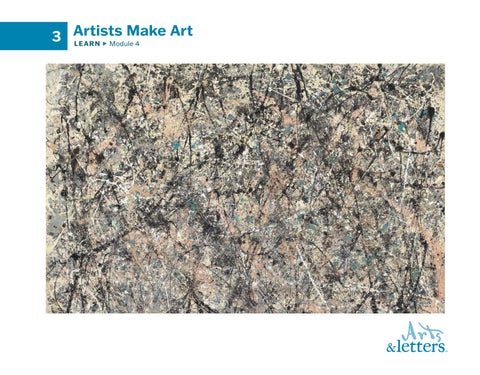
Cover, Number 1, 1950 (Lavender Mist), 1960, Jackson Pollock, (1912–1956) Oil, enamel and aluminum on canvas, 221 × 299.7 cm, Ailsa Mellon Bruce Fund. National Gallery of Art, Washington, DC © 2019 The Pollock-Krasner Foundation/Artists Rights Society (ARS), NY; page 1, CBW/Alamy Stock Photo; page 2, Allstar Picture Library Limited/Alamy Stock Photo; page 7, Science History Images/Alamy Stock Photo, Susan Wood/Getty Images; page 10, Everett Collection Historical/Alamy Stock Photo, Glasshouse Images/Alamy Stock Photo; page 16, Bettmann/Getty Images, dapa picture alliance archive/Alamy Stock Photo; page 21, Charles Demuth, The Demuth Museum, Lancaster, PA. via Wikimedia Commons, http://www.gwu.edu/~bradyart/brady/exhibitions. html; page 23, Gavin Pak Hei So/Shutterstock.com; page 27, Christoph Rieger–own work via Wikimedia Commons; page 117, Juan Ci/Shutterstock.com, Library of Congress, Prints & Photographs Division, FSA/OWI Collection, [LC-DIG-ds-15151]; page 118, MIKE WALKER/Alamy Stock Photo; page 120, Library of Congress, Prints & Photographs Division, HABS DC, WASH, 236-A-; page 121, Hideo Kurihara/Alamy Stock Photo, Albert Dubois-Pillet (French, 1846–1890), J. Paul Getty Museum at the Getty Center (Los Angeles); page 127, World History Archive/Alamy Stock Photo, Carl Van Vechten/Library of Congress, Washington, D.C. (LC-DIG-ppmsca-10452); page 129, John S. and James L. Knight Foundation, FAY 2018/Alamy Stock Photo; page 131, Gottlieb, William P., Portrait of Ella Fitzgerald, Dizzy Gillespie, Ray Brown, Milt Milton Jackson, and Timmie Rosenkrantz, Downbeat, New York, N.Y., ca. Sept. United States, 1947, Monographic. Photograph, William P. Gottlieb Collection/Library of Congress, Washington, D.C. (Neg. No. LC-GLB23-0287 DLC); page 132, William P. Gottlieb Collection/Library of Congress, Washington, D.C. (Neg. No. LC-GLB23-0287 DLC).
All other images are the property of Great Minds.
“Alvin Ailey.” Britannica Kids, Encyclopaedia Britannica, 19 Oct. 2023, kids.britannica.com/kids/article/Ailey-Alvin/399330.
Bryant, Jen. A River of Words: The Story of William Carlos Williams. Illustrated by Melissa Sweet, Eerdmans Books for Young Readers, 2008.
“Ella Fitzgerald.” Britannica Kids, Encyclopaedia Britannica, 19 Oct. 2023, kids.britannica.com/kids/article/Ella-Fitzgerald/353131.
“Ella Fitzgerald singing with musicians.” Getty Images, 1949.
Government Footage. “Dizzy Gillespie and the Band Performs at Newport Jazz Festival—1960.” Pond5, www.pond5.com/stock -footage/item/116878520-dizzy-gillespie-and-band-performs-newport-jazz-festival-1960.
Greenberg, Jan, and Sandra Jordan. Action Jackson. 2002. Illustrated by Robert Andrew Parker, Square Fish, 2007.
Jamison, Judith. “Revelations from a Lifetime of Dance.” TED Talks, 10 Oct. 2019.
“Marian Anderson.” Britannica Kids, Encyclopaedia Britannica, 19 Oct. 2023, kids.britannica.com/kids/article/Anderson -Marian/352753.
“Marian Anderson Performs at the March on Washington.” Getty Images, 27 Aug. 1963, cricketmedia.widencollective.com/dam /assetdetails/asset:53fc0414-1702-4df5-b635-8e8bc2d87314/false?inav=false.
“Opera Singer Marian Anderson Sings ‘My Country ’Tis of Thee’ on the Steps of Lincoln Memorial in 1939.” Hearst Newsreel, 8 Apr. 1939.
Pinkney, Andrea Davis. Alvin Ailey. 1993. Illustrated by Brian Pinkney, Little, Brown Young Readers, 1995.
Pinkney, Andrea Davis. Ella Fitzgerald: The Tale of a Vocal Virtuosa. 2002. Illustrated by Brian Pinkney, Little, Brown Books for Young Readers, 2007.
Ryan, Pam Muñoz. When Marian Sang: The True Recital of Marian Anderson, The Voice of a Century. Illustrated by Brian Selznick, Scholastic Press, 2002.
Say, Allen. Emma’s Rug. 1996. Houghton Mifflin, 2003.
“What Is the Painted Essay™?” Vermont Writing Collaborative, www.vermontwritingcollaborative.org/painted-essay/.
WIDA. WIDA English Language Development Standards Framework 2020 Edition: Kindergarten–grade 12. Board of Regents of the University of Wisconsin System, wida.wisc.edu/sites/default/files/resource/WIDA-ELD-Standards -Framework-2020.pdf.
Williams, William Carlos. “The Great Figure.” Sour Grapes. Kessinger Publishing, 2010.
Read great books from around the world.
Explore documents that take you back in time.
Write like an author.
Discuss and debate topics you care about.
Study art to make paintings come to life.
Ready to tap into knowledge?
Module 1 | The Sea
Module 2 | Outer Space
Module 3 | A New Home
Module 4 | Artists Make Art
ISBN 979-8-88811-297-7

ON THE COVER
Number 1, 1950 (Lavender Mist), 1960 Jackson Pollock (1912–1956)
Oil, enamel and aluminum on canvas, 221 × 299.7 cm
Ailsa Mellon Bruce Fund. National Gallery of Art, Washington, DC © 2019 The Pollock-Krasner Foundation/Artists Rights Society (ARS), NY