All rights reserved. No part of this publication may be reproduced, stored in a retrieval system, or transmitted, in any form or by any means, electronic, mechanical, photocopying, recording or otherwise, without the prior written permission of IMD.
The views and opinions expressed in the interviews contained in this publication are those of the interviewees. They do not purport to reflect the opinions of, and are not necessarily those of, IMD – International Institute for Management Development or its affiliates or other organizations.
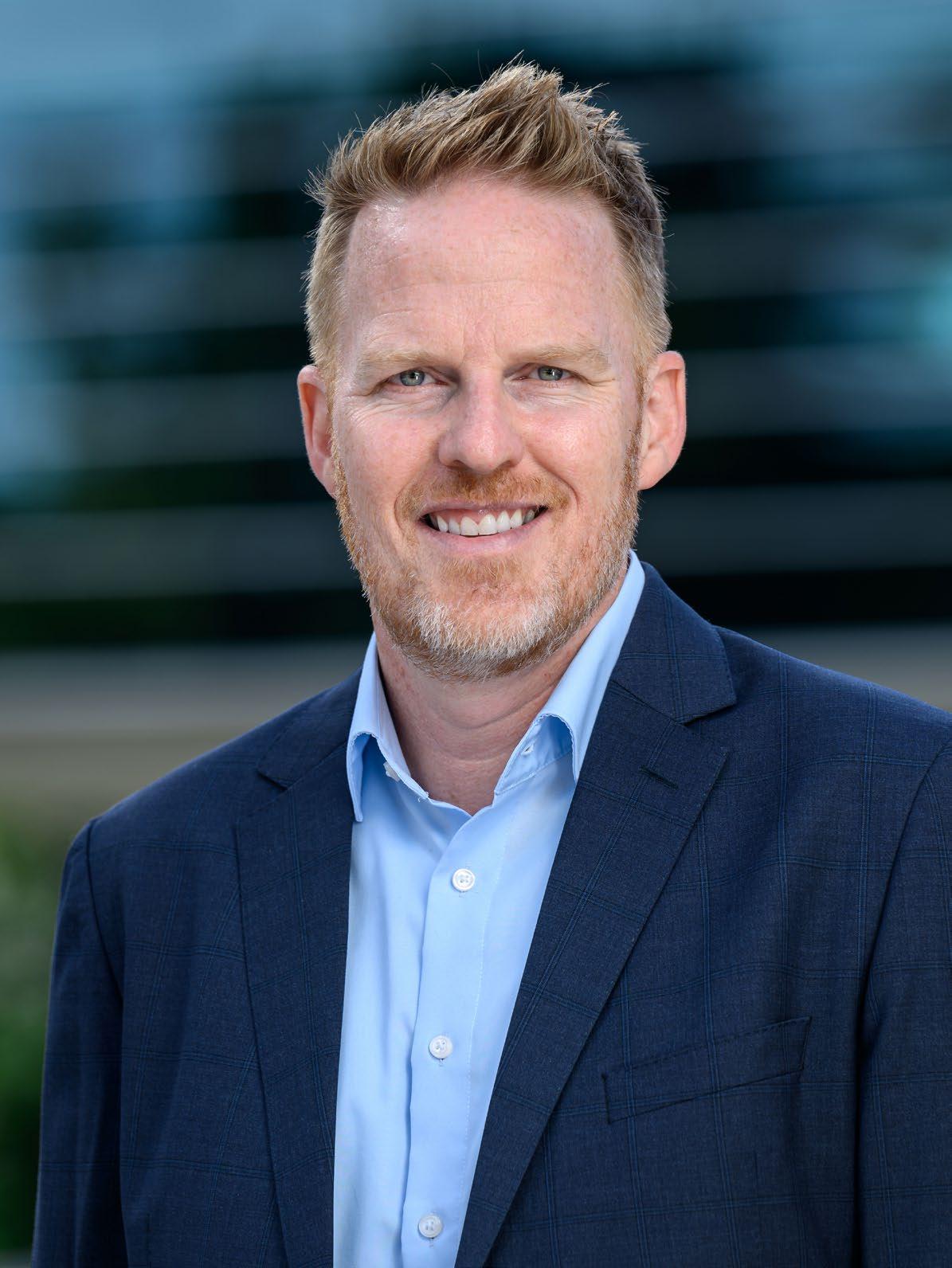
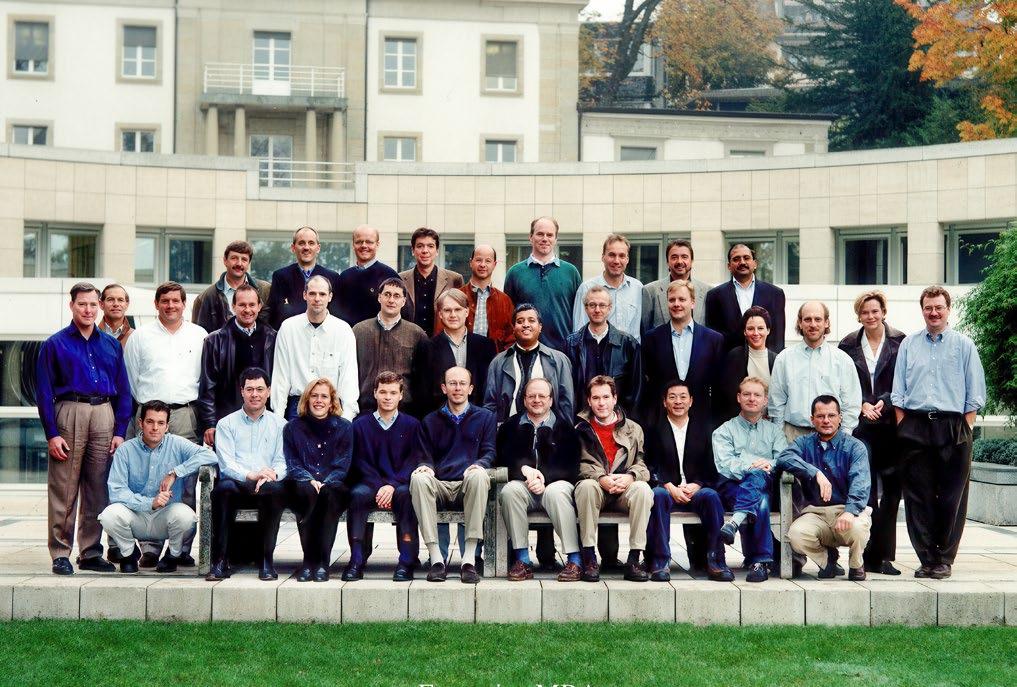
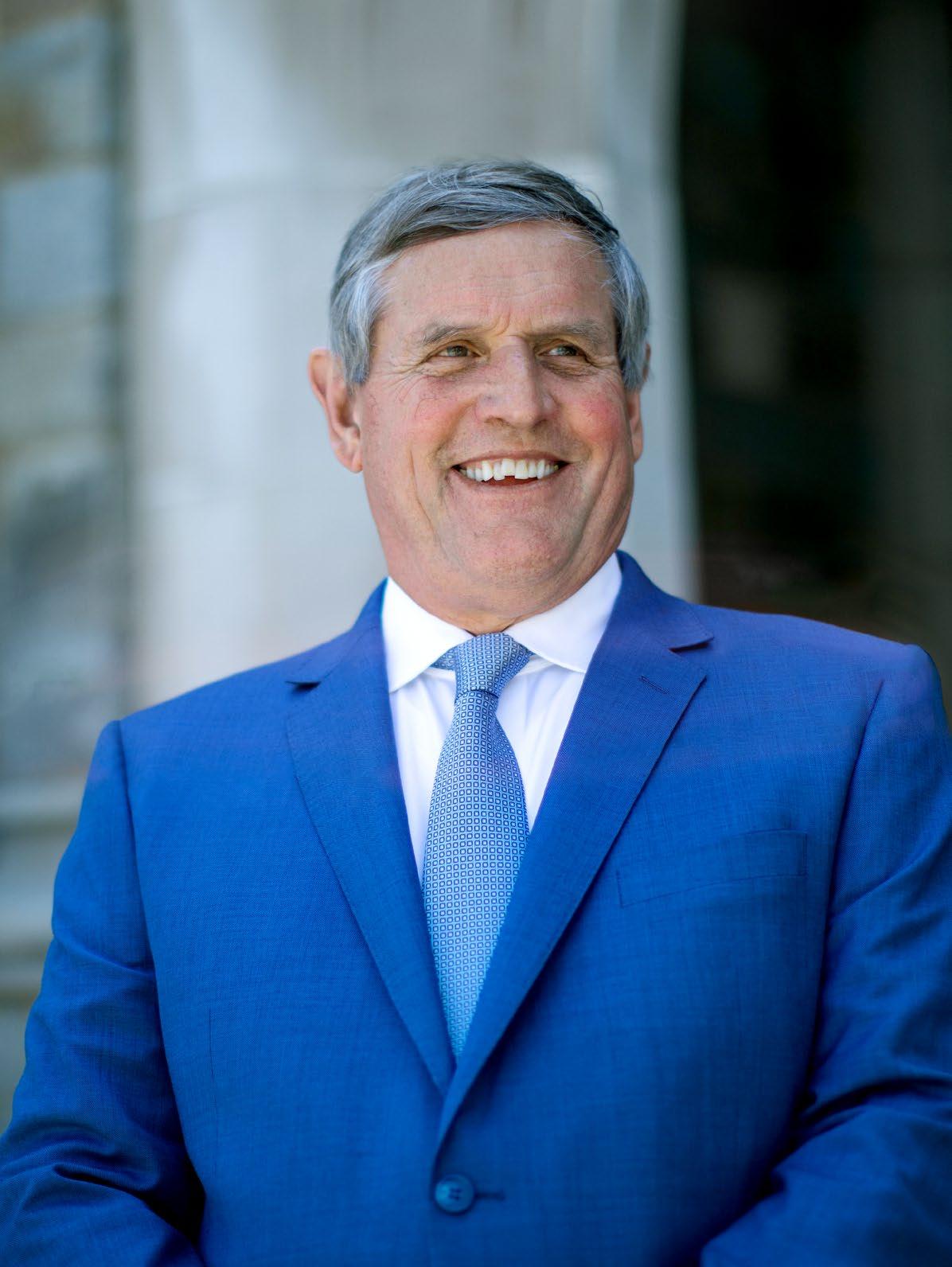
Photo of Andy Boynton: Matt Kalinowski/Carroll School of Management. Alumni photos kindly provided by alumni or their organizations. Crisis management photo page 17 from https://www.vtg.admin.ch. All other images from IMD archives. Some backgrounds are AI-generated.
ISBN: 978-2-940485-79-6
As told to Philip Whiteley with special thanks to Vanina Farber, Stefan Michel, and Phil Rosenzweig.
David Bach President of IMD, Nestlé Professor of Strategy and Political Economy
Global impact and the multiplier effect
When IMD launched one of the first Executive MBA programs in Europe a quarter-century ago, it was driven by a vision: to create a course that reflected the real world and focused on real impact. Today, the achievements of IMD alumni speak for themselves, not only through their tangible business successes but also through their efforts to enhance the quality of life in their communities.
Our alumni, equipped with a rich foundation in leadership, strategy, innovation, and global business, have applied these insights in transformative ways. We see this through inspiring profiles like Paul Norman and his team at MTN Group, which has invested in high-quality telecoms infrastructure to connect millions of people in African countries to digital payment systems and internet-based trading.
“The impact of IMD alumni ripple through societies, helping to lift prospects for entire communities”
Or the creation of an insurance product by Hope Murera to help first-time buyers of homes in Kenya, demonstrating how to balance social purpose and strong commercial returns, an innovation that many countries around the world can learn from. And through Jimmy Scavenius’ enterprise Kwera, which has financed over 1,000 university places for young people in Malawi, with ongoing support from IMD faculty.
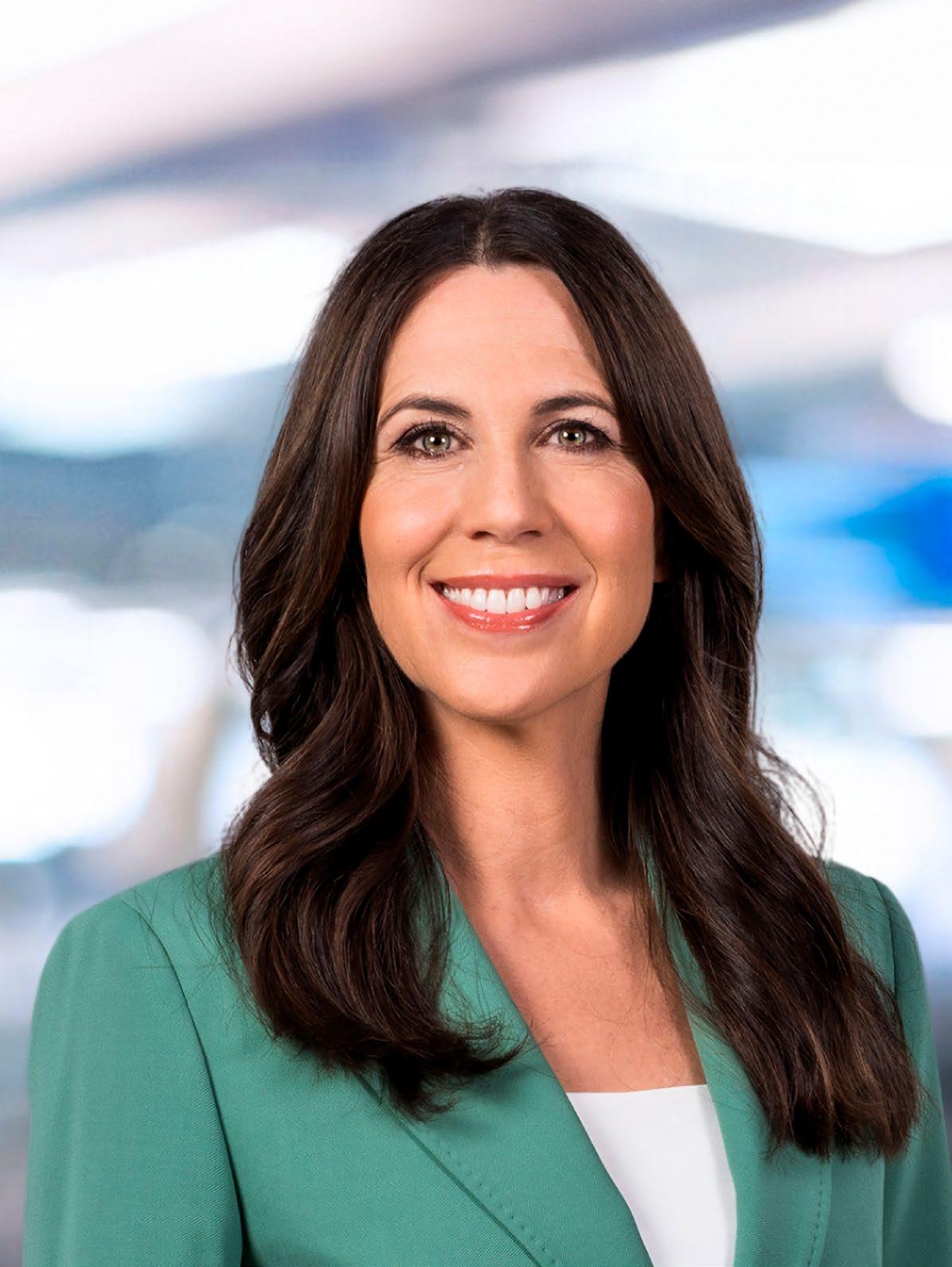
Meanwhile closer to our physical home, Susanne Wille, the newly appointed Director-General of the Swiss Broadcasting Corporation, is tackling another of the great challenges of the 2020s – disinformation and declining trust in institutions, not only ensuring rigorous fact-checking of news reports, but also arranging talks in schools to educate children about the difference between accurate reporting and fake news.
Through these, and other examples, we see the impact of IMD alumni multiply and ripple through societies with a positive impact for entire populations. Our vision, as we begin the second quarter-century of the EMBA, is to build on this strong foundation of alumni impact and to redouble our efforts.
It is heartening to read, in the profiles of EMBA alumni compiled for this book, how many of our former participants have kept records of their learning at IMD, their “notes and scribbles” in the words of one. You have retained your learning on a range of subjects – strategy, leadership, innovation, finance, sustainability, global business – and have applied them successfully in new contexts, in some cases undreamt of at the time of your studies. You value equally the information-rich learning on business practices, and the personal development – the self-knowledge, sound temperament and ability to create and lead high-performing teams.
As we face complex challenges – the rapid pace of technological change, the climate crisis, declining trust in institutions, and intensifying geopolitical tensions – IMD alumni stand prepared. Through the crisis management training introduced by Dean Stefan Michel, many graduates felt better equipped to lead during the COVID-19 pandemic. True leadership, as exemplified by our alumni, means stepping up in times of adversity to guide teams and organizations in challenging times.
IMD is committed to continuously evolving the EMBA program to meet the demands of an increasingly complex world. Sustainability will become even more central to our curriculum. Artificial intelligence will feature prominently, both as a topic of study and as a tool to personalize learning experiences further. At the same time, we are dedicated to enhancing the diversity of our community, striving for gender balance and global representation to ensure a wide array of perspectives.
IMD’s legacy is built through the achievements of our alumni. Their stories – just a few of which are profiled in this publication – serve as a challenge and an inspiration for our community, reinforcing our mission to create a more prosperous, sustainable, and inclusive world.
David Bach President, IMD and Nestlé Professor of
Strategy and Political Economy
Content
Swift Ascendency 10—19
The Deans Remember
20—41
Alumni Stories
42—143
The EMBA from 1999 to recent times
Andy Boynton
John Walsh
Phil Rosenzweig
Stefan Michel
Vanina Farber
Gilbert Achermann
Hope Murera
Doug Lowther
Carla De Geyseleer
Awais Noorani
Barbara Frei
Marco Dall'Orso
Soren Toft
Caroline Ulbrich
Dermot O'Gorman
Daniel Ohr
Jimmy Scavenius
Paul Norman
Steve Dispensa
Ann-Christin Andersen
Chishamiso Mawoyo
Sibongile Gumbi
Andreas Wallnoefer
Lucy Han
Susanne Hundsbaek-Pedersen
Antje Kanngiesser
Abdulrahman Ibrahim
Shaima Saleh AlHusseini
Susanne Wille
Taras Panasenko
On Location 144—155 Global immersion
Twenty-Five Years and Counting 156—161 Looking back, leading forward
Swift Ascendency
The EMBA from 1999 to recent times
“This strong program that IMD has, with a strong emphasis on reflective leadership, has proven very powerful, and very ahead of its time”
Surprising as it may seem, after 25 years of high achievement, there was some skepticism to the idea of launching an Executive MBA when the idea was first mooted on the Lausanne campus in the late 1990s. The proposal emerged out of the interaction between two faculty members with offices facing each other across the corridor in the Bignami Building: Andy Boynton and Paul Strebel, the Co-ordinator of Open Programs on the Management Team.
A new qualification was going to involve a significant investment in terms of capital, and management and faculty time. There were no guarantees as regards popularity and profitability. There was already a highly effective Program for Executive Development (PED). Was an all-new EMBA a solution to a problem that didn’t exist?
One reason that PED was popular with sponsoring corporations was that it was emphatically focused on developing internal leaders who would stay within the company. An
expanded program that included the internationally recognized ‘MBA’ letters may be seen as a passport to leave. “I was asked that question [by employers],” recalls Peter Lorange, President of IMD at the time: “Are we educating people to move away from our companies?”
There was also push-back from MBA graduates. The IMD is famous for its ‘boot-camp’ MBA, unapologetically demanding, featuring a combination of intense personal and intellectual development. Might an EMBA diminish the cachet of the established brand? Some even quipped that the ‘E’ would stand for ‘Easy’.
These issues were wrestled with by the management team of the day. The financial and reputational stakes were considerable. Professor Jim Pulcrano, who has been involved with the EMBA throughout the 25 years, recalls: “There was that fear that, if this thing fails, it hurts our brand.”
Graduation of the first cohort in 1999
Foundation and early years: Late 1990s—2005
The question of whether to establish an EMBA would not go away however, not least because there was demand from PED graduates, recalls Professor Phil Rosenzweig, Director of the EMBA 2009-2014. PED had been so successful in the 1990s that it had been expanded to four intakes a year. A growing number of those who completed it were beginning to ask: What more do you have for me? “We didn't have a good answer for that,” he says.
The decision was made to commit to an EMBA so as to widen the choice of programs for experienced executives, and to compete internationally; also that it should sit alongside existing programs. The initial development team was Professors Paul Strebel and Andy Boynton, who was to become the first Program Director (later known as Dean). They were joined by Marianne Vandenbosch, the first Program Manager.
“The first year they were guinea pigs and they knew it. There were 28 of them. And we were learning with them”
This left the challenge of finding the resources – in terms of both capital for startup, and faculty time. Strebel, at a development meeting, suggested the idea of a staged approach; using the existing PED as the first stage of the EMBA. PED, which featured two five-week residential courses, became the core prerequisite, or Foundation Stage. The second year was called the Mastery Stage, leading to a Masterslevel qualification, the EMBA. PED formed the Foundation Stage of the EMBA until 2012.
“Leveraging an existing program with a sequence of parttime modules this MBA would require far fewer resources than the full-time MBA. It also would capitalize on IMD's reputation of providing world-class executive education,” Strebel recalls.
For the founding cohort, as with any startup, there was an adventurous, experimental culture. Pulcrano says: “The first year they were guinea pigs and they knew it. There were 28 of them. And we were learning with them.”
For the full EMBA there was an altered profile of attendees: PED participants had mostly been sponsored by their company; those on the full-time MBA are largely self-funded. The EMBA became hybrid.
The small team responsible for developing the EMBA were cohesive, and all had an innovative spirit. Commitment and engagement levels were high. Boynton, co-designer and first Program Director, recalls: “It was a startup mentality. IMD sank all this money into this thing and we didn't have a lot of eyeballs on us. No one expected this to be wildly successful, which is perfect.”
Lorange confirms that as President he did not micromanage the project – but that didn’t mean he wasn’t informed. “I did keep close track with what they were doing, but I never felt there was a need to say ‘stop, stop’. Our frequent [weekly] calls would be at 7am, when we were all sharp. It’s also a matter of understanding: you can do any streamlining, [or reform of a project] with a team if you have an understanding.”
This is consistent with a timeless truism about senior leadership: if you hire the right people, you don’t have to do a lot of monitoring. He adds: “It was a relatively safe innovation both because of quality of faculty, but also the fact that the participants had already been through PED.”
One very visible issue with the first cohort was the presence of just one woman out of a class of 28. The following year it was two from more than 40. Gender balance has improved significantly since then.
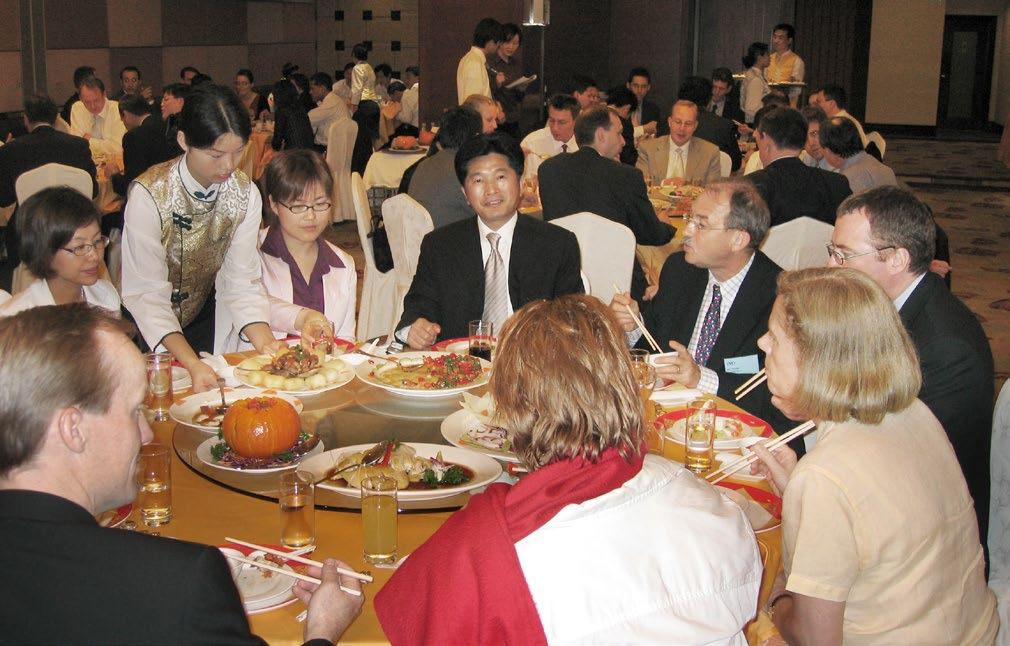
The real-world relevance of study at IMD marks it out as distinctive, and decisions on the Discovery Expeditions were foundational, and strategic. From the founding of the program, it was decided that there would be three Discovery Expeditions in very different markets, that would take place in January, May and September. The latter two were respectively Shanghai and Silicon Valley, while the initial visit switched from northern Italy to Ireland, and later to India (see On Location chapter, page 145).
Early decisions were to have geographical diversity to the expeditions; to ensure that there was cultural and social learning in addition to business visits, and to have a structure. Silicon Valley was the third of the three: on this visit, the cohort would present a pitch to venture capitalists on behalf of a Swiss startup, so it was an opportunity to put together all their learning from the earlier expeditions and the EMBA as a whole.
There would be course work that involved deepening the learning on the individual’s own company and sector. In addition, they would be working on a series of company assignments, each one under the direction of a different professor. For each Discovery Expedition, they would be assigned to small groups in which the learning was not about their own companies. The teams would have projects on specific dimensions of executive leadership, such as finance and strategy.
Professor John Walsh was the second Dean. Asked if he made significant changes, he responds no, “because I was involved in the design as well. I had come on to the team and had been there for a couple of years. By the time I got it, the program was more or less as I wanted it.”
The risk with a more radical reinvention of a product or service is that you could appear to be questioning the judgement over the earlier version. In the case of an academic program, this could create doubt over whether it is still the same qualification.
“Most of these people on the EMBA had strong backgrounds, coming into the program”
Iterative change and enhancement have been continual disciplines for leaders of the EMBA throughout the quarter century. In the case of the Discovery Expeditions, this process was informed by rigorous discussion and recording of what worked well, and what worked less well.
A consistent aim for the EMBA has been to ensure a balance of commercial relevance and academic rigor. It is hard to define exactly the proportion “but it has to be both”, says Lorange. He recalls that as President, “My job was to meet with the companies. We always tried to ensure EMBA was relevant.”
This should not result in a compromise of academic standards. With an experienced cohort, there can be tension, with some bristling at being treated like students, but ultimately accepting that the faculty are teachers, not colleagues (see Andy Boynton profile, page 22).
Marianne Vandenbosch, EMBA Program Manager 19992008, describes how sustaining this optimal balance has multiple nuances. The faculty are in charge, they have the authority to pass or fail an assignment. At the same time, the cohort is experienced as well as intellectually sharp; the faculty also learn from them. Above all, the participants learn from each other. This was encouraged by ensuring that people did not sit in the same cliques in class. Andy Boynton was particularly keen:
“Andy would have them, in the classroom, change places two times a day, he would move the name tags around – other professors maybe once a day,” she recalls. “Otherwise people are creatures of habit. They'll go sit in the same seat beside the same people, so we would conscientiously every day mix the people up.”
This was far more than just a social exercise; the mutual learning was reinforced by a structured approach to strengthen the learning network, and to understand the importance of networks. Vandenbosch explains:
“The other thing we did was track the class network. So we surveyed them, I think after every module, and we would ask them to rate each other on a learning perspective and on a friendship perspective. How well they knew everyone in the class. So everyone would say, okay, this person, I've learned something significant from them. And in the friendship part, it was, this is a close EMBA colleague.
Early Discovery Expedition to Ireland
“We plotted the connections between everyone. And we'd show them – we put big posters up to say ‘This is your network now, and your job is to make that network more dense the next time we meet.’ And we would give them a couple of articles on the importance of networks and how all of this works. And then we would do the survey again. The network definitely became more dense as time went on.”
Intensifying this process was the institution of the Knowledge Fair, she reports. It would be held at the end of the program, and involved each individual identifying two or three subjects on which they were expert, and could give a talk to other members of the cohort.
“We would put a sign-up sheet with, say, four one-hour time slots, and in every time slot there would be six or seven topics, and you choose which of those six or seven you want to go to in each time slot. And then on the day, the people who are presenting would do their presentation and visit topics in the other slots.”
Back in their executive roles, this embedded learning helps ensure an approach of leadership through the team – understanding the power and necessity of networks. Lorange observes that becoming a senior executive means less “me, me, me”, and adding a dose of humility, learning to harness the ability of others. To enhance true authority, you may need to lessen direct control. This is the leader’s paradox. The need to attend to this can increase at a senior level, because there is less that the leader does directly, and because the direct reports are themselves highly capable and experienced.
“Most of these people on the EMBA had strong backgrounds, coming into the program,” says Lorange. “It was not always that easy to make them listen and understand.”
After 25 years, more than 2,000 graduates have listened, understood, learned and grown.
Reinvention and evolution: 2009—2014
While Walsh had emphasized continuity over change during his tenure for a qualification that was still young, by the end of the decade, reform was needed. This was owing to demographic and attitudinal shifts in EMBA participants, and wider economic developments. Rosenzweig took over and had to address falling enrollment numbers. It emerged that the problem was the sheer number of weeks on campus for the Foundation Stage – two times five-week periods for PED were increasingly considered too long by executives and their employers. Accordingly, PED was radically revamped to reduce the number of weeks on campus and increase distance learning. For the Mastery Stage, he rejigged the number of weeks on campus to be more evenly spread during the year (see Phil Rosenzweig profile, page 30).
In the global economy, new powers were emerging. The program organizers had correctly identified China as a potential economic superpower, and the development of hitech business clusters in India meant that South Asia was
not far behind. The financial crisis and austerity in the eurozone in 2008-2010 hit Ireland hard, and the decision was made to switch from Ireland to India during Rosenzweig’s tenure. He placed a strong emphasis on social, market and cultural education, in addition to business visits (see On Location chapter, page 145).
Unlike PED, the EMBA would be graded. It was possible to fail, although in practice students have been encouraged to re-do an element in which they had not reached the required standard. In 2012, PED 1 and 2 were rebranded respectively as the Foundation for Business Leadership and Transition to Business Leadership.
Demand for the EMBA surged in this period, while the reduction in the number of continuous weeks on campus for the Foundation Stage resulted in a better gender balance.
Rosenzweig found that a simple but highly valued innovation on the EMBA was to offer each graduating individual a professionally printed and bound edition of their assignments, embossed on the cover with the name and year of graduating, each copy signed by the Director and IMD President. Some individuals ordered extra copies for family members, or one for the boss who had sponsored them.
“It was a way to say you've done a lot of work and we're going to give you something that you can pass around, you can put on your shelf, you can point to. We would bring them out on the last day and pass them around. And the students loved that.”
Evolution and growth: 2015—2022
Following Rosenzweig’s reforms, demand recovered, and then grew through the mid 2010s. In 2015 a second cohort was added. Professor Stefan Michel, who took over responsibility for the EMBA from the beginning of 2015, insisted that he would be Dean of both, for the sake of consistency. The logistics became complex, but manageable. The team scaled up; there was to be no dilution of requirements, no relaxation of examination standards.
The fees needed to be increased, and the Swiss franc appreciated against other currencies, despite this the demand continued rising. In 2019 a third cohort was added, resulting in 12 Discovery Expeditions in the year, and three graduations.
The logistics became complex, but there was a clear rationale for accommodating the extra demand. “We were not scaling for the sake of growth,” says Michel. “IMD is a non-profit organization. We develop leaders who have impact in the world and honestly, the world is a better place if more people have an EMBA from IMD. So I was happy to go to three cohorts.”
For a two-year period 2016 and 2017 a dual degree arrangement was established with the Cheung Kong Graduate School of Business, or CKGSB, a business school based in Beijing (see page 18).
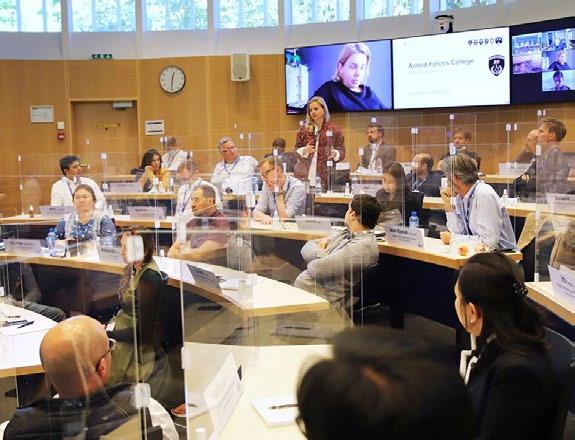
This seemingly unending period of growth and development appeared to be threatened by the shock of the COVID-19 pandemic as the 2020s began. One of the core, defining features of the EMBA – intensive learning through immersive cultural and business visits – was outlawed globally. Yet remarkably, the EMBA weathered the storm and continued to grow. It probably helped that, in 2015 Michel as Dean introduced crisis management in an intensive short course provided by the Swiss Armed Forces (see Stefan Michel Profile, page 34). He describes an exceptionally close and high-performing team that was running the EMBA, and that responded swiftly to the emergency. During lockdowns, with much learning through online media, there was a weekly bulletin each Thursday for all participants, with arrangements for a video conference in the event of a change likely to provoke “a lot of pushback”, says Michel. IMD came to an arrangement with the Swiss health department permitting controlled reopening of in-person classes, subject to social distancing arrangements and daily testing. Those who graduated during COVID-19 were permitted to attend a Discovery Expedition post-graduation for no extra cost.
Inclusion and sustainability: 2022—present
Throughout the 2010s and 2020s, probably the most significant demographic change has been a rising proportion of female participants. It is a priority for Professor Vanina Farber, who took over as Dean in 2022, to increase this further. Within two years she oversaw an increase in the proportion of women on the EMBA from 12% to 35%, with a view to approach parity.
Farber has encouraged more scholarships to facilitate a higher proportion of the cohort from the Global South. As the cohort becomes more diverse in terms of career profile, with a higher proportion of entrepreneurs and managers
from NGOs, the EMBA content has to be adapted – but corporate executives have had to become both more entrepreneurial and socially and environmentally aware (see Vanina Farber Profile, page 38), so there is an overlap of interests.
“This strong program that IMD has, with a strong emphasis on reflective leadership, has proven very powerful, and very ahead of its time,” says Farber. “I think everybody's trying to learn it. We've had it for 25 years.”
Curriculum content has had to keep pace with technological, societal and environmental changes, so the subjects of sustainability, AI and digital transformation have become mainstream. An EMBA awarded in 2024 will have some material that was not around in 1999, and will have been delivered with a higher degree of blended learning and use of multimedia. But it is essentially the same qualification as that of the pioneering class of 1999.
Crisis management training
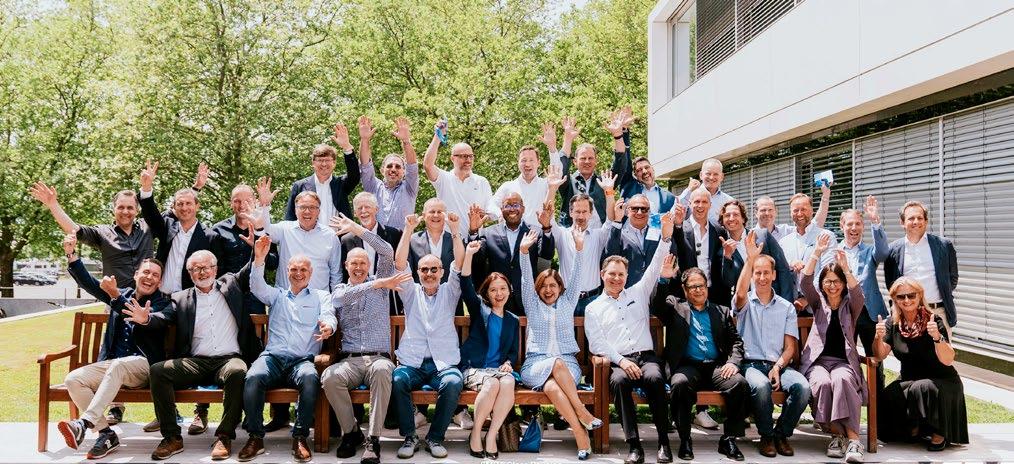
A joyous EMBA alumni reunion
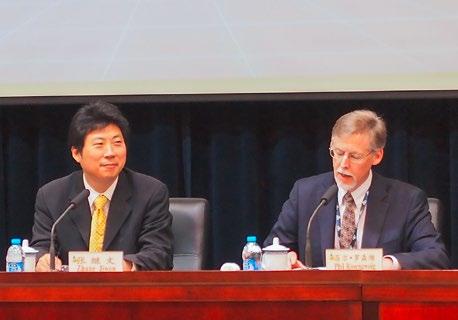
East meets West — the Dual EMBA
In 2012, with its EMBA well-established and its reputation growing, IMD was contacted by the Beijing-based Cheung Kong Graduate School of Business (CKGSB). Focused on executive education, CKGSB was interested in developing an EMBA and asked if IMD would form a partnership for a joint program to cater for students from China and around the world.
In many ways CKGSB was an ideal partner for IMD: the school was not affiliated with the Chinese government but a privately-owned independent entity that had been founded with support from the Li Ka Shing Foundation; neither was it part of a large university.
Having made changes to the structure of the program and seen growth in enrolment, in 2013 IMD was ready to partner with CKGSB. Over the next two years, the institutions worked together to develop a Dual EMBA program which would give Western executives a deep understanding of business in China, and provide Chinese executives with insights about business in the West.
The structure and design of IMD’s EMBA became the template for the Dual program, a one-year journey that combined company assignments, leadership assignments, and Discovery Expeditions. Graduates would receive two degrees: an EMBA from CKGSB and the EMBA from IMD.
The program was designed with five modules of one week each, similar to the IMD EMBA. Two would be in Europe, and two in China, while the fifth module would be a Discovery Expedition to South Africa.
Professor Phil Rosenzweig, who directed the EMBA from 2009 through 2014, was IMD’s co-director, sharing the leadership role with counterparts from CKGSB, first Professor Teng Bingsheng and later Professor Jennifer
Huang. The program began at the end of 2015, with a first module in London, followed by Johannesburg, Shanghai, Lausanne, and graduation in autumn 2016 in Beijing. The students were recruited half by IMD and half by CKGSB, producing a very good blend of Chinese executives and others from Europe, Brazil, Nigeria, and Saudi Arabia.
The Dual EMBA was an innovative and successful venture which continued for two years. After 2017, IMD chose to concentrate on expanding its dedicated program and the Dual EMBA was brought to a close.
Announcing the partnership in March 2014, Professor Phil Rosenzweig, IMD’s Program Co-Director, said:
“Although the language of instruction and coursework is English, we are seeking to ground the program in a perspective that is neither explicitly nor even implicitly Western, as much as both East and West. Before we address business topics, we want first to locate commerce and management within a social and historical context.”
The Logitech pointer by Yves Karcher
In 2003, John Walsh taught us about getting customer insights and we were given an assignment to get such insights for some of our own products or services. As a director of engineering at Logitech, I asked my counterpart director of marketing what product I should be looking at.
He mentioned that the latest cordless presenter (“a clicker”) was not really getting traction. My team had designed this product and we were proud of the technical elegance of combining a mouse with a presenter function, featuring a Bluetooth link which was state of the art at that time (that is why the product was actually painted blue…). We already knew what technical enhancements we could make and I assumed that getting insights would lead us to the same improvement ideas.
The insights that I garnered through 10 interviews were devastating, people wanted something radically simple – no mouse, just a small “clicker” to move slides, with no lights that would distract the audience. Unlike the big “blue banana” it should completely fit in the hand. Moreover, it appeared that time management was critical (for speakers as well as for the audience).
The biggest opposition to a new value proposition without a mouse was internal: “we are a mouse company, this product must feature a mouse!” But the insights were the currency of credibility and we completely redesigned the remote control, including a time control feature, with a discreet vibrator.
Before the EMBA was completed, the product was launched and made a significant contribution to Logitech revenues ($20 million). The time control insight made it even to a patent. So the EMBA investment was paid off many times…
Peter Lorange invited me to tell the story at an Orchestrating Winning Performance, and he was so excited that he wanted to give me a gift on the spot. He did not have anything handy, so he undid his tie and gave it to me!
Yves Karcher CEO and Founder InnoExec EMBA 2004
The Deans Remember
Andy Boynton
Program Director EMBA 1999—2005
Dean at the Carroll School of Management, Boston College
The executive as sleuth
ANDY BOYNTON
Professor Andy Boynton is a fan of the Sherlock Holmes detective stories, penned by Arthur Conan Doyle in the late 19th and early 20th centuries, which set the template for modern detective fiction. The name ‘Sherlock’ has become synonymous with the keen observation of facts, and intelligent interpretation of available evidence.
A modern executive’s world may involve looking at charts and listening to managerial metaphors about headwinds or blue skies. You can begin to confuse the map for the territory. To counter this, argues Boynton, you need to get out there: meet actual customers, learn about where they live and how they use products or services, understand operations and whether they are meeting customer needs. You have to understand technology and how it is continually changing. Be a sleuth. He once gave some Conan Doyle literature to course participants at the EMBA: “You learn from observation – which was Holmes.”
When he was co-designing the EMBA in the late 1990s, in line with the ’Real World Real Learning’ motto of IMD, he and his team opted to put strong emphasis on studies of businesses and markets. There have always been at least three Discovery Expeditions, and these would involve assignments, in-depth meetings, not mere factory tours (see On Location chapter, page 145).
“I didn’t want to do industrial tourism. We had a theme that’s on the teaching material: Learning how to learn. How do you learn about business and cultures and different business models and ecosystems when you’re moving around the world? It’s about learning how to learn from people, from what you see.
“You would learn things but you would learn how to learn and apply them to your company or to your own professional career. So that was the real learning motif: what are the values of new ideas and good ideas? And how do you discover those ideas? So that’s why we call it discovery.”
This anchoring in the real world is extended to his emphasis on implementation; testing strategies, tactics and ideas in real markets, learning from feedback and iterating. Strategy should not be seen as a separate activity in a rarefied environment from an out-of-touch elite.
“Peter Lorange had a great line, and I’ve used it to this day: Strategy is choice and execution. It’s not just the choices you make, but the choices you don’t make, implicit and explicit. And leaders need to have ambition—and courage. They also have to care about people. And they have to have passion. And then, once you begin your journey, execution is essential. An idea or strategy has no value without execution. The devil is in the detail and that’s the leader’s responsibility.”
An east-coast American who loves to go fishing on the island of Nantucket, Boynton stayed a full decade in Lausanne, such was his love of working at IMD and living in Switzerland. He had originally been a visiting professor in the early 1990s for a year, having been invited by an IMD professor on the strength of his combined knowledge of strategy, technology and ability to teach executives. After the year he returned to the USA to secure a tenure. But IMD, and living in Europe, had left an impression. He recalls his first visit to Switzerland:
“We had a two-year-old, my wife Jane and I, and I remember driving. We went for a drive and we drove over the mountains going down to the lake. Balloons were in the sky. And I said, ‘You mean we can live here’? I loved it. I loved the whole thing. We traveled all over [Europe].”
He returned to Lausanne in 1996 and one of his major initiatives was the establishment of the EMBA. There is a strong emphasis on real-world learning, a closeness of IMD to business, an experienced profile of course participants, such that IMD can operate at times in a way that is closer to a consulting firm than an academic institution. The emphasis on relevance doesn’t mean the academic standards aren’t high – something that came as a shock to some on the course when he failed them on a piece of work, Boynton recalls: “If they did poorly on assignments, I made them redo it.”
On one occasion he was challenged – openly, in class –by some students who wanted a more collaborative, less teacher-pupil relationship. “I said this is more important than being a good friend – I really want you to learn this stuff. It’s my job to run a program. You’re getting a degree. It’s not that we’re not going to have great collegiality, but I’m not here for you to like me.”
“You learn from observation”
The small team who devised and brought to life the EMBA, in which he was joined by Marianne Vandenbosch and Jim Pulcrano, were cohesive and high-functioning, somewhat akin to a startup team: highly engaged, creative yet also committed to delivery. “We lived and breathed this thing. Constantly. It was so rewarding to be part of that team.”
Boynton, who has returned to the US and is now Dean at the Carroll School of Management, adds: “I think you have a few moments when you really create something exciting in your career and you have a great team and you feel like – while you could always do it better – you really did a good job.”
John Walsh
Program Director EMBA 2005—2008
Professor of Marketing
2005 2008
The challenge to be interested, as well as interesting
JOHN WALSH
It is a counter-intuitive discovery for the brilliant, ambitious executive that the ability to display humility can be decisive in the transition to leadership. Highly effective executives need a deep understanding – of market context, customer preferences and internal capabilities – as well as an ability to make decisions and carry people with them.
This involves listening and learning. Prioritizing these disciplines informed the design of the EMBA, and in particular the Discovery Expeditions. One of the key architects was Professor John Walsh. “The Discovery Expeditions were all about getting people to be on receive rather than broadcast. The phrase I used to use was not to worry so much about being interesting, but to worry about being interested.”
A core discipline for a senior executive is to be able to think back from the customer’s needs – something that sounds intuitive, almost obvious, but which in practice is difficult when so much of the working day is bound up with discussion of systems and internal teams. One of the surprises during the element of Discovery Expeditions that involved listening to customers was how much the customer-focused professionals struggled, he recalls.
“People who were involved in marketing, or particularly sales, actually found that a challenge, because they were used to selling to customers and convincing them of the benefits of their products, as opposed to listening to them and trying to figure out what their problems were.”
On the EMBA, there is a strong focus on understanding the companies and sectors where participants are working, developing a deeper understanding of their every-day contexts. This involves continually developing the ability to learn, attending to process as well as content.
“The mindset I brought to the EMBA was process and content, always process and content. What I want you to learn about is the process that you use to learn. So that when you, for your company, get reassigned to Budapest, and you find yourself having to figure out what the hell is going on there, think about what we did in these Discovery Expeditions. So go talk to the great and the good and the learned, but also, when you’re in a taxi, ask the guy questions, figure out what he has to say, so you can learn from everybody.”
“An EMBA is not like a medical degree”
Walsh describes early discussions on course design, and how it was best not conceived as an “MBA-plus”. The development needs of a senior executive are qualitatively different from those of a young rising star. He explains:
“An EMBA is not like a medical degree. So if you’re 20 years of age, and you need to train to be a doctor, or you’re 40 years of age, and you need to train to be a doctor, it’s pretty much the same content that you’re going to learn.
“So the very first thing really we needed to grapple with was, are we going to basically do an MBA at a distance, or are we going to do something different? And we quickly adopted the latter, because what a 40 year old needs in a program is probably dramatically different from what a 25 year old needs. And so we decided that the MBA program wasn’t going to be a reference for us at all.”
Individuals on the EMBA are typically in a senior role in which they want to stay while studying. “Usually they are happy at their employer but want to advance from their current position, often with the objective of moving from a functional role to a general management one,” says Walsh.
By contrast, a younger individual on the MBA may see the qualification as a springboard to a new industry and employer.
For the EMBA cohort their very presence on the course indicates a commitment to lifelong learning. This will also be true of the typical MBA student, of course, but for a more mature, senior executive to invest in an intensive leadership qualification demonstrates a particularly high level of commitment to personal learning.
There is a strong emphasis on the cohort learning from each other. There is much less time together on campus and in project teams, compared with the full-year MBA, so there is a concentrated effort to ensure group work and conversations when people are together. “I wanted to make sure that by the end of the year, every individual had a meaningful conversation with every other individual.”
He adds: “In the full-time MBA program, there’s a great camaraderie because they’ve been together for an entire year. I would say the esprit de corps, whatever you want to call it, the invisible fibre between the individuals, on the EMBA was just as strong, remarkably.”
Each individual has to confront the considerable personal dilemma of balancing work, home and study for a whole year. Successful students seek a fairly equal balance, not seeing study as the bit “that’s left over after the other two are dealt with”, he observes.
All three dimensions would come together at the graduation ceremony, at which the families attend, an event which, Walsh recalls, “used to impact me the most”.
The quest to balance work, family and study may involve tension at times, but there are moments when these elements support each other, and it’s good to be alive.
Phil Rosenzweig
Program Director EMBA 2009—2014
Professor Emeritus of Strategy and International Management
2009 2014
Innovating to stay ahead
PHIL ROSENZWEIG
A perennial challenge of leadership is that it requires a blend of disciplines. The third Program Director (later known as Dean) of the EMBA, Professor Phil Rosenzweig describes how the EMBA rests on three pillars of comparable importance. “The central pillar is about the administration of business – finance, marketing and so on, but supported by two pillars to the side. One is the micro pillar, about your own interpersonal effectiveness. The other is the macro pillar, about understanding the world we live in.”
He describes himself as a ‘hands-on’ director, figuratively rolling up the sleeves and getting to know each participant. He would attend every Discovery Expedition and encourage each course participant. This approach suits his personality – he combines intellectual gravitas with a lightness of communication style.
As he took over in 2009, the program had been running for a decade with essentially the same content and format. Economics, technology and demography were changing, however. Student expectations were different with regards to longer residential courses, there was more remote communication, most of those candidates with a Program for Executive Development (PED) who were likely to have gone on to complete the EMBA had already done so.
Rosenzweig identified the need for change. For the Mastery Stage, this included diversification and deepening of the Discovery Expedition experience. He replaced Ireland with India, a trip which involved significant social and cultural inquiry, as well as learning about business and markets (see On Location chapter, page 145).
He added a Lausanne-based module in June, reducing the time in November prior to graduation. Meeting in June allowed the cohort to have more sustained contact with professors. “They would meet with the leadership professor [in June], because they're doing leadership work throughout the year, but it was all remote. They also had time to work on the next assignments, which would be typically the strategy or organization assignment.”
In addition, returning to IMD in June allowed the cohort to develop a stronger relationship with the Switzerland-based entrepreneurs on whose behalf they would be pitching at Silicon Valley in September. Previously, they had only met them at the beginning of the year.
Demographic and business changes also prompted a redesign of the Foundation Stage, which had consisted of the Program for Executive Development (PED). Numbers on the EMBA – which at the time involved just one cohort per year – fell each year between 2009 and 2012 from 60 to 35. A superficial reaction may have been to address the course content, but the underlying issue was the format. By 2010, executives were less interested in spending two five-week periods away from the office. Demand for PED, the prerequisite for the Mastery Stage of the EMBA, was falling sharply.
Rosenzweig took advantage of his appointment to the management team to help push through a radical reform of PED. PED 1 became Foundations for Business Leadership (FBL) and taught over 21 days, or three weeks. PED 2 became a two-module program called Transition to Business Leadership. Significantly, the new Foundation Stage would consist of FBL plus a Distance Learning program taught over several weeks with modules in Finance, Marketing, Strategy, and Critical Thinking. The Foundation Stage therefore only required three residential weeks, rather than ten.
“In order to make the Distance Learning module rigorous, there were exams at the end, which permitted us to screen out students who might not be well-suited for the Mastery Stage. By adding exams, we were able to discontinue the GMAT as part of the application, which turned out to be a further benefit.”
The combination of sharply reduced residency during the Foundation Stage (three weeks rather than ten) and dropping the EMBA resulted in an immediate surge of enrolment. By 2013 enrolment had returned to earlier levels, and by 2014 IMD was able to consider expanding the program.
Rosenzweig notes: “Not only did the demand come back, but the gender distribution was much better. We had not appreciated how two times five weeks residential was dissuading women, many of whom between the ages of 35 and 40 have children at home, and they couldn't fit that into their lives. But suddenly we said come for three weeks and do the rest online. This was very effective.”
“There are a lot of reasons to do the program, not all are quantifiable. Some of them are personal satisfaction, personal enrichment”
While some elements of format and content were changed, core features were retained and strengthened. A core principle of the EMBA is that it involves deep learning, as an end in itself. It is an experiential, personal development process, not a transactional means to an end. Rosenzweig says: “I would never say: ‘It costs this much to do the program, but here's your internal rate of return.’ There are a lot of reasons to do the program, not all are quantifiable. Some of them are personal satisfaction, personal enrichment.”
The sense of satisfaction and achievement extends to the faculty. He says: “I was at IMD 25 years. My best six years were the six years directing the EMBA program: we have the best students, we go to the best places, we have great experiences.”
Stefan Michel
Dean of the EMBA 2014—2022
Professor of Strategy and Marketing
2014 DECEMBER 2022
JANUARY
STEFAN MICHEL
Stepping up
Probably all aspiring executives have a disposition towards optimism. They hope to build companies, identify opportunities, set ambitious strategies. Counter-intuitively, preparing for disaster can add a powerful dimension to a senior manager’s capabilities. There will always be unwelcome events beyond the control of the executive team that may be temporary and minor, or that may pose an existential threat to the business.
A feature of the EMBA introduced by Professor Stefan Michel during his tenure involved a three-day course on crisis management by the Swiss Armed Forces. Just a few years later, the Covid-19 pandemic hit, lockdowns were imposed and many retail and hospitality businesses faced an unprecedented crisis. Michel continues:
“When COVID hit, I had several participants from previous classes, telling me: ‘This crisis management training we had from you saved me during COVID. I was the only one in my company who was ready.’ One was a CEO of a retail chain in Switzerland. He said: ‘I was the first to close the stores – we had a plan to close the stores – but I was also the first to open them again. Because of the structure that I learned from this training with the Swiss Armed Forces: what to do, how to make decisions, how to communicate, how to prepare and then how to put into action.’ We had a participant from Japan who told us exactly the same thing.”
When pressure is at its greatest, it can still be worthwhile, even necessary, to take a step back and get an overview, he advises. He has a sign above his office door that simply reads ‘Montauk’, after a book of the same name by Max Frisch. Inspired by the novel, set in Montauk on Long Island USA, Michel took a trip to the town and visited its lighthouse, climbed to the top and took in the view. This serves as a reminder to look at the big picture, including when under pressure, and there are dozens of decisions vying for your attention, and to ask yourself: “What is it that really matters now?”
Michel has the distinction of being the only Swiss-born professor at IMD. His family owned and ran a restaurant and hotel business and he worked on other entrepreneurial adventures at a young age. He also worked at a Swiss Bank in Zurich. At one point he took over as chair of the family business, and for much of his career he has held multiple roles, for example on boards, and as an author. But he says: “I’m an educator at heart.”
“Reflective leadership does not require more slides, but more practice”
As markets, technology and business changed in the 2010s, the approach on the EMBA had to adapt. Maintaining a high-performing team as custodian of the course has been essential to ensure constant adaptation and innovation. During his tenure the subjects of sustainability and digital transformation became mainstream; organizational systems became organizational culture. And there was a shift in the profile of the cohort. He explains:
“When the program was founded 25 years ago, most of the participants were working for large multinationals so the strategy assignments were ones that worked for, guess what? Large multinationals. But when I took over we already had a larger proportion of participants who were self-funded, between jobs and entrepreneurs, [people from] NGOs. So naturally the strategy assignment needed to change.”
Michel introduced a practice of arranging for course participants to write a company case study, rather than a conventional thesis, at the end of the course. The advantages, he felt, were multiple: you had to look at a business situation from multiple perspectives, you had to study it in depth, the work was done in teams. Around half of the case studies were published, and some won awards.
The mission of IMD is to nurture “global, reflective leaders” he reminds us. Faculty minimize their direction over course participants, and let them learn for themselves. The pitch at Silicon Valley, for example, is created by the team, on behalf of a real startup company, asking for investment.
Becoming a reflective leader is not so difficult conceptually, “but it’s hard to live up to it every day.” It can only be achieved through constant application and practice. “Reflective leadership does not require more slides, but more practice. We teach less, so that you learn more. It’s the constant practice, the reflection, the feedback. We take you out of your comfort zone one time after the other, but we help you to reflect on that and grow through that. There’s no other school that I know that dares to have this conversation and not just give them more content.”
He adds: “When the program starts, we say you will learn more about the world, you will learn more about business and you will learn about more about yourself. And when I ask two years after graduation: ‘What is your biggest takeaway of the program?’ It will be these three things – but in the reverse order. That I saw happening. How they grow as a person is what makes this program unique.”
2022 JANUARY
Vanina Farber
Dean of the EMBA 2022—current elea Professor of Social Innovation
VANINA FARBER
Agent of radical renewal
Professor Vanina Farber's tenure as Program Director of IMD’s Executive MBA began in 2022 amid global upheavals and technological revolutions. She is leading a bold reimagining of the program, both as a response to momentous external change, and to maintain and renew IMD’s guiding principles. “We're not just evolving the EMBA; we're reimagining it for a world that demands leaders who don't just adapt to the future – they shape it” she states.
Her background in social innovation and impact investing uniquely positions her to guide the program through turbulent times. Recognized by AACSB as one of 2024's Influential Leaders, she brings a wealth of experience to her role.
Under Farber's leadership, the EMBA program is undergoing a radical transformation to meet the challenges of a rapidly changing world. While honoring IMD's traditional strengths, the curriculum now places a stronger emphasis on sustainability, digital technologies, generative AI, and macro and geopolitical context awareness. These aren't mere add-ons but fundamental shifts in the program's approach to business education. Leaders need to be able not just to understand and navigate complex global environments, but actively shape them.
One of Farber's initiatives is strengthening sustainability in the EMBA. It will permeate the program, from new sustainability content in the Foundation for Business Leadership (FBL) stage to the ESG Fundamentals in the Advanced Management Concepts (AMC) stage, and culminating in an assignment on impact measurement and management in the Mastery Stage.
The program is also adapting to the changing nature of executive careers. Today's EMBA cohorts include more entrepreneurs and individuals seeking significant career transitions, alongside those with traditional career progression goals. Farber has overseen the introduction of AI to begin shaping more personalized learning journeys, allowing for more tailored content and feedback. AI has also deepened its presence in the curricula, with Digital Transformation and Generative AI now separated into two learning labs where participants work on challenges within their own companies.
PROGRAM DIRECTOR EMBA 2022—CURRENT
A further addition to the program is the incorporation of IMD GPT, a powerful tool that enables participants to personalize their learnings. This AI-driven platform allows students to fill individual knowledge gaps or deepen their knowledge into areas of particular interest. Some sessions are recorded and, along with faculty material, are used to train the AI, all while respecting privacy and intellectual property rights. This innovation represents a significant step towards truly personalized executive education.
“Our alumni develop a global mindset, deepen their leadership capabilities, and forge bonds that will last a lifetime”
Farber believes in strengthening IMD EMBA's global presence, particularly in Asia leveraging the campus in Singapore. She is expanding IMD's global immersion programs with new Global Immersion Weeks to Japan, focusing on Corporate Resilience, and to Singapore, exploring Family Business, now part of the curricula. These complement existing programs in China on innovation and India on Digital Transformation. Additional focus on the global south scales the program in Peru to include Colombia. In a pioneering move, the Peru program features an interactive AI impact investing coach, providing participants with real-time guidance and insights during their due diligence work.
While many of these changes are transformative, Farber ensures that the essence of the IMD EMBA remains intact. The program continues to emphasize reflective leadership, a core IMD concept that she believes will be even more relevant in today's complex business environment. Her four years of teaching experience on the EMBA before taking over as Director gives her a profound understanding of these key elements and how to evolve them for the future.
Farber has also implemented significant internal changes that are reshaping the IMD EMBA experience from within. At the heart of these reforms is a commitment to fostering a diverse and inclusive learning environment that mirrors the complexity of the global business landscape. Under Farber's leadership, the proportion of women in the EMBA cohort has risen dramatically, from around 12% to 35%, with an intentional focus on attracting more highly qualified candidates from the global south. This diversity extends to the faculty as well.
“Diversity isn't just a buzzword for us,” Farber explains. “It's the cornerstone of innovation, creativity, and tolerance. When you bring together individuals from vastly different backgrounds, assumptions are questioned, new ideas emerge, and participants receive feedback that challenges them to reflect deeply on their beliefs and practices.”
This approach underscores the importance of having a senior, diverse profile of participants and faculty, all while maintaining IMD's unwavering commitment to academic excellence and real-world relevance.
Looking to the future, Farber envisions an EMBA program that transcends traditional boundaries of executive education. “The EMBA is not just a program, it's the beginning of a lifelong journey with IMD,” she says. She sees the EMBA as the foundation for building an engaged, dynamic alumni community - IMD's most valuable asset. This community extends far beyond the program's duration, fostering lifelong friendships and professional ties. “In today's rapidly evolving business landscape, learning can't stop with a credential,” Farber emphasizes. “Our goal is to develop leaders who not only shape the future of business but are also committed to each other, helping navigate the more complex and non-linear careers of executives today. The true power of IMD lies in this engaged alumni network, continuously learning, sharing insights, and supporting each other long after graduation.”
Farber's passion for the program is evident when she speaks about the transformation she witnesses in participants. “The journey our participants undergo is truly remarkable. From the moment they enter to when they graduate 18 months later, we see them not just grow professionally, but transform as individuals. They develop a global mindset, deepen their leadership capabilities, and forge bonds that will last a lifetime. It's this holistic transformation that makes our program unique and impactful.”
Under Farber's visionary guidance, the IMD EMBA is not just adapting to change - it's driving it. By reimagining the program while respecting its strong foundations, she is ensuring that IMD continues to develop leaders who can transform organizations and contribute positively to society.
Alumni Stories
For any executive considering an EMBA, the program at IMD is known for its real-world relevance and nurturing of all-round leadership capabilities. Learning on strategy, finance and marketing is rigorous, and the curriculum extends further. The attention paid to highly personal issues such as self-knowledge, temperament, and ability to communicate is a surprise to some.
Alumni learn that everything in the leadership role is interconnected: the knowledge base and the behavioural capability. If you have designed a well-suited strategy but struggle to articulate it or engage your team, the results will be sub-optimal.
Allied to these capabilities is judgement. In the profiles in the pages that follow, you will read of alumni who have had to take radical decisions in a limited timeframe. Some have inherited a business model that is suddenly unprofitable owing to external change; or had to lessen the pressure on working capital owing to contractual terms. Others have had more time to craft a strategy or create a new business. Yet the essential combination of abilities is unaltered.
It would be a mistake, for example, to regard self-awareness and temperament as being of lesser importance at a time of crisis: such qualities should come to the fore. They are of significance also when addressing the major challenges of our age: technological change, geopolitical fissures and the climate crisis. It is notable also that many achievements of alumni lie in the domains of social and environmental impact, as well as commercial excellence.
The fundamental issue remains: can you step up? These 25 have – along with around 2,000 others in the past 25 years, and many more to come.
Gilbert Achermann
Non-executive medical devices sector, Chairman-elect Sonova
Scaling up
While the personal development is frequently cited as exceptionally valuable from one’s time at the EMBA, the rigorous learning on business systems and strategy are, of course, comparable. Gilbert Achermann had a background in banking, but after overseeing mergers and acquisitions and other transactional duties, he wanted an in-house strategic role.
After handling the IPO for the Swiss medical devices company Straumann, he was offered the position of CFO. Part of the deal was gaining executive education, and he opted for the EMBA at IMD. “I needed more foundation and skills in terms of strategic thinking, problem-solving, leadership,” he says. “Fast forward four years after the program, I then became the CEO of the company, so IMD must have done something well.”
“Fast forward four years after the program, I then became the CEO of the company”
He didn’t stop there, overseeing international growth for Straumann, which primarily specializes in dental implants and solutions for the orthodontic sector. It grew substantially during his tenure as CFO, his eight-year reign as CEO and afterwards as chair of the board: from CHF100 million revenue to around CHF2.5 billion revenue, and from a market capitalization of less than CHF500 million to almost CHF20 billion over the course of 20 years.
The insights from the EMBA had educated him on the changing needs of the organization as it scales up. “What's good for a certain size is not good for the next phase: from CHF500 to CHF1 billion revenue, you need a different setup, from CHF1 billion to maybe CHF2 billion is different setup again, and the pendulum [swings] between centralization and decentralization… the foundation to think through this and be cognizant of this, I probably learned during my EMBA.”
Recently Gilbert chanced upon some of the written work from his studies, and was reassured by what he found. “I was cleaning out some stuff and I found some of my EMBA assignments. Some of the things I wrote at the time were actually very smart.”
The intellectual enrichment was neatly complemented by the personal development. He draws attention to the social context of education: learning alongside your peers.
“[It was] like an exploration of yourself, and understanding what you are good at and what you're maybe not as good at, and how you deal with this. And also being exposed to a group of peers who are ambitious, are smart, are driven. This helps you to position yourself and understand where you are at in terms of your own development.”
Another legacy from the learning at IMD was the iterative, innovative approach to running a business: an approach of “let’s find out if this works”, rather than suffering paralysis by over-analysis.
“We [at Straumann] are much quicker, much more agile than most of our competitors. And that helped us to become the
GILBERT ACHERMANN —
number one player in this space. And I think a lot of that foundation was ingrained through the Executive MBA.”
“I was cleaning out some stuff and I found some of my EMBA assignments. Some of the things I wrote at the time were actually very smart”
The Discovery Expeditions had a major impact. The visit to Shanghai occurred at a pivotal moment: early in the 21st century it was on the cusp of developing into the globally important business cluster that it is today. His role at Straumann has taken him back to China many times, so he has witnessed this historic development first-hand. The eclectic nature of the Discovery Expeditions, to public sector institutions and cultural and social visits as well as businesses, results in “a fairly good appreciation of actually what makes a country tick.”
A stellar career as a CEO can come at a personal cost, however. He doubts that anyone can hold down such a post for more than a decade, and after eight years he moved to the non-executive role as chair. The demands of being a CEO put a strain on his relationship with his family and he wonders if the pressures on a senior executive might be alleviated.
“One of the big challenges of all these, what are from the outside-in, brilliant careers is that usually there is a high collateral damage,” he says. “I've seen it over and over
again with CEOs – they enter energized and they do a brilliant job, they put their heart in, but you can actually watch them ageing. CEO years are probably like dog years.”
He’s ready to move on, but not to retire. This year, he is stepping down from Straumann after 25 years of service. In 2025 he is due to take up the post of chair at Sonova, the world’s largest hearing aid manufacturer, where he is already a board member. He continues as chair of Ypsomed Group, a manufacturer of injection and infusion systems as well as Unilabs, a leading European diagnostic service provider. In addition, he mentors and provides financial support for startups and is a member of the IMD Supervisory Board.
His career has been one of continual evolution: the move from being a banker to an enterprising executive in a specialist device industry – with the intense and eclectic EMBA at IMD as the catalyst – is a metamorphosis that few can achieve.
Hope Murera
Managing Director & CEO, ZEP-RE (PTA Reinsurance Company)
Insuring economic development
What is the real problem you need to solve?
Addressing this question is a core discipline at the heart of IMD teaching. The theme recurs in interviews with alumni. It is beguiling: seemingly elementary, yet fundamental. Amid the continual noise that confronts the executive, she or he has to constantly evaluate: what is the real problem here?
For Hope Murera, her natural intellectual strength and curiosity honed this discipline, enabling her to transfer insights from the EMBA learnings and the various Discovery Expeditions, especially to Silicon Valley, to create innovations back home.
“The biggest lesson was creating impact. It's not just the numbers. And guess what? The numbers follow”
As CEO of ZEP-RE, a major reinsurance company in Africa, headquartered in Kenya, she has pioneered initiatives that have begun not only to help business growth, but economic development.
This began with taking a big picture, recognizing that insurance penetration on the African continent is low, and posing the question: who are the predominant economic actors, and whose business needs do we serve? The proportion of SMEs, and of businesses in the agricultural sector – often affected by drought linked to climate change – is high.
“It was [the visit to] IDEO during our Silicon Valley Discovery Expedition… and the conversations I had with my professors at IMD that led me to think about: What is the problem that we need to solve?”
The IMD approach is rigorous, covering “the ideation, the brainstorming, the testing, ... You know, it's a practical thing and has become a way of life”.
With 65% of the African population employed in agriculture, Hope and her team have developed products that protect smallholder farmers including herders of cattle, traditionally with a nomadic lifestyle. This includes working with banks to derisk lending to this sector and connecting farmers to markets.
She is focused on building resilience and sustainability for these communities in the face of severe climate change and moving beyond subsistence to accessing the Middle East live animal and Halal meat market.
Another important feature of the African economy is the high proportion of SMEs (small and medium-sized enterprises), many run by women and young people. This segment is seen as most risky and is therefore unable to access affordable financing for their business. Hope tells a moving story about a brilliant entrepreneur, who teamed with an engineer to recycle waste cooking oil from hotels to manufacture fuel that they sold to flower farms, of which there are many in Kenya. But he was uninsured – his plant burned down and he had to begin all over again.
ZEP-RE now has as a growing proportion of its portfolio, micro insurance for both the life assets and the
credit-worthiness of an individual – a package known as the credit life.
In the property sector Hope has crafted an ingenious innovation. It involves ZEP-RE guaranteeing the deposit on a purchased home for a first-time buyer. Thousands of households with a steady income are compelled to rent a home, and find it difficult to save for the deposit on home purchase – the bank will typically ask for 20% of the purchase price as a deposit. The insurance product offers a guarantee to the bank to cover the 20% in the event of a default, and in return the bank issues a 100% mortgage, with the home-owner contributing both insurance premiums and repayments.
The service provides a social good, but it is enlightened self-interest by the insurer: the initiative promises to encourage house-building and home ownership, growing the aggregate demand for insurance services. So far, a few thousand householders have benefited, and the target is for 100,000. The default rate is low.
The combination of social purpose and strong commercial returns comes naturally. As she told the EMBA class of 2022, as guest speaker: “Wherever you go, leave a much better place, and together, we can leave a much better world.”
In the interview for this profile, she adds: “The biggest lesson [from IMD] was creating impact. It's not just the numbers. And guess what? The numbers follow.”
Hope, who is Rwandan, was on one of the early cohorts on the EMBA, and speaks with warmth of her time in Lausanne.
Her role at the time was Managing Director of Sonarwa, a Rwandan insurer, and her EMBA empowered her to move to Kenya and ZEP-RE, first as the Corporate Secretary, then Deputy CEO and CEO of ZEP-RE in 2017. The company operates in 50 African countries, with offices in nine of them.
“Wherever you go, leave a much better place, and together, we can leave a much better world”
In common with many IMD alumni, she has forged such close bonds with her fellow course participants that they arrange annual meet-ups. The Kenyan franchise of IMD Global, as it were, is strong and growing, she reports: “We actually have very many members. My class of 2002 meets regularly and will be in Nairobi in Summer of 2025.”
While the business network is undoubtedly beneficial it is the learning, first and foremost, that stays with her, centering on the question of the principal problem to be solved. This, of course, is just a first step: the next is to create solutions. From helping smallholding farmers to boosting home ownership, she has crafted solutions that contribute to economic development.
Her parents were prescient when they selected the name Hope.
Doug Lowther
CEO, Irdeto
Business must overcome the crisis of trust
One day after the interview for this profile, the CrowdStrike computer outage led to the grounding of hundreds of flights, cancellation of rail services and delays in payroll processing, among other disruptions around the world. It was caused by a single error in an antivirus software update to commercial Microsoft systems.
The incident simultaneously illustrated not only the vulnerability of IT systems, but also the global interconnectedness of technology, business operations and customer needs, and the sheer unpredictability of economic life.
Executive leadership, observes Doug Lowther, CEO of cybersecurity specialist Irdeto, is now more about risk management and resilience than conventional strategic planning. “The last five years have seen so many unexpected things that you can essentially completely throw out your strategic plan for 2019. The world has just evolved in a completely different direction. I would say 90% of businesses are facing some fundamentally different circumstance from what they had expected. And so management teams are probably less about the formal stuff, the business plans and strategies and so on, and more about creating a very strong cohesive team that's able to react as things happen and make the right decisions.”
The EMBA at IMD nurtured his ability to create an innovative and responsive business team. The Discovery Expedition to Silicon Valley revealed the agility with which an innovative business cluster relocates talent towards an emerging need and invests in new technology. This informed his response when, in the mid-2010s as CEO of Irdeto, two of his software engineers identified a growing cybersecurity risk around connected vehicles, and proposed a
modest investment to explore the emerging opportunity. He backed them, resulting in a thriving new division for the firm, whose background up until then had included video entertainment and securing critical infrastructure.
“It was not something that we had put in the strategic plan of the company. There was no top-down, analytical process that said, this is a good industry for us. It was a bottom-up entrepreneurial idea that became something quite innovative and powerful.”
“You should be listening at least as much as you're talking”
The rounded education of the EMBA also covers macroeconomics and geopolitics. Doug completed his EMBA at around the time of China’s entry into the World Trade Organization. There followed several years of what could be called peak globalization, a period of relative optimism for closer trade and relationships across all peoples.
“Of course, things have shifted radically since then, and this just underlines the need for continuous learning because the world is very different from what generations of managers had come to expect. There's a lot more conflict in the world now. There's a lot less trust.”
As guest speaker at the graduation ceremony for the EMBA class of 2022, Doug gave a talk that addressed the issue of the “crisis of trust”. He described how trust had fallen
between countries with a rise in geopolitical rivalry, while within societies “mutual respect and social cohesion are in decline”.
Social media has intensified the prejudices of many online tribes. Re-establishing trust is a duty not just of political leaders but all in the leadership cadre – in corporations, the media, public services and academia.
While the specialism of Irdeto is heavily technical, the issue of trust is central to its mission. Trust begins at home, and one of his priorities taking over as CEO in 2015 was talent development and retention. He inherited an employee reward and retention program, and reformed it to encourage continual learning. A focus on employee engagement, if based on an established business model, could breed complacency, and is more effective when linked to an innovative culture. To this end, he arranged that high performers would receive a bursary for continued personal development, as well as training and opportunities to network with top leaders. Previously they had received a cash prize.
The company’s “Top talent” program, offered to around 10 of the 1,000 employees each year, offers high-level training opportunities – such as the IMD Future Leaders program –and mentoring from a top executive, for employees who are already high-performing. “People who have participated in this top talent program are about 60% more likely to stay with the company in the long term.”
Another insight from his EMBA years was a transformation in his understanding of the nature of regulation. He recalls how Professor Ralf Boscheck managed to condense the essential content of a full course in macroeconomics into a
single lecture. This is learning that remains fresh in his mind more than 20 years later. Particularly illustrative was discovering how regulation can help to promote growth and success within a free market. The example he cites was the establishment by European regulators of the non-proprietary 3G, later 4G and 5G mobile network which created a level playing field for mobile phones and other devices. Meanwhile, more proprietary network architectures developed with less regulatory oversight all ultimately failed in favor of the European standard.
“The last five years have seen so many unexpected things that you can essentially throw out your strategic plan for 2019”
The mental agility required to challenge one’s viewpoint –Doug had previously regarded regulation as an administrative burden that while often necessary, would tend to slow down businesses – highlights a central paradox of the leader’s role, which is that true authority requires a degree of humility. This includes “openness to realizing you might not always be right,” he says. “And you should be listening at least as much as you're talking.” If we genuinely help the people around us to succeed, as he told the graduating class of 2022, we become more effective as leaders.
Carla De Geyseleer
CFO, Schindler
Education is key to life
The impact that an individual teacher can have on a student can be life-altering, and lifelong, Carla De Geyseleer observes in an eloquent testimony to the faculty at IMD, where she studied for the EMBA in the early 2000s. “I don't think that people who are involved in education really realize how important they are for individuals.”
Her sentiment echoes that of the great French intellectual Albert Camus who, upon being awarded the Nobel Prize for Literature in 1957, penned a letter of gratitude to his inspirational school-teacher Louis Germain from three decades earlier, telling him how he as a writer had “never stopped being your grateful pupil”.
Carla mentions Dominique Turpin, for insights into marketing, the late Stuart Hamilton, the finance professor; and the fascinating and impactful professor in organizational behaviour George Kohlrieser, while emphasizing that the whole faculty left a positive impression. Much of the richness of the education at IMD, she says, lay in deepening her learning, simultaneously about how commercial organizations and markets behave, and about herself as a person. She learned that she was a perfectionist by nature. This is a natural strength for a finance professional, while benefiting from a certain adaptability and decisiveness when dealing with more ambiguous situations as an executive where precise answers cannot be found.
The intensity of the learning, she says, was such that “you reflect a lot, you learn a lot about yourself. You just become more mature, you learn to set priorities, you learn to deal with ambiguity, because life is not black and white. You simply become a better person.”
She credits the leadership development at IMD as fundamental to her subsequent career progression, securing successive promotions to become CFO at major companies, including SGS and Volvo Cars. She is the Group CFO of Schindler, a leading global provider of elevators and escalators and related services headquartered in Switzerland, and a non-executive director at Hilti, a multinational company developing and manufacturing goods and services for the construction industry, based in Liechtenstein.
“Everybody has a backpack with positive and negative experiences”
“What I was underestimating, when I chose the program, was what I would call the personal development. It turned out to be a big surprise and a big success.”
Such rounded leadership abilities have become even more important in the two decades since she studied for the EMBA. The CFO role became bigger than ever before, as CFOs have taken on additional responsibilities, including procurement, ESG, M&A, investor relations, and strategy deployment. “The role has completely changed from what was the old, I would describe as advanced accounting role, to where you are now a complete co-pilot to the CEO.”
One of the most cherished memories of her time at the Lausanne campus was the graduation ceremony. She was joined by her daughter and husband, who had been tremendously supportive of her at the time when he had a full-time
job in Belgium. Their daughter was only three years old when Carla started the program while holding a full time job, so there were many Friday and Sunday evening flights. Her mother also contributed significantly with childcare. “You can't do it [this kind of course] if you don't have the support,” she says. Now the daughter is in her early 20s and recently graduated.
Carla is from a modest background, financially, and from a young age was astute enough to recognize that education was the route to more opportunities, strongly supported by her mother. In common with other alumni, she points to the significance of an exercise in personal development in the EMBA where you describe a personal lifeline, identifying key experiences in your life, positive and negative, that shape your personality, outlook and capabilities. Not only does this enhance self-awareness but, just as importantly, sensitivity to the unique personality and experience of everyone in your team.
“Everybody has a backpack with positive and negative experiences … Leading, for me, is not about your leadership style, it's about changing and adapting your leadership style to the people that you have in the team so that you can get the maximum performance out of them while remaining engaged and motivated.”
She smiles as she recalls how Professor Preston Bottger encouraged her to construct a paper model bus, to remind her of the metaphor of “getting everyone on the bus before it leaves” as you embark on an initiative, ensuring the team is engaged. She did so, and actually placed it on her desk. Moreover, it really helped.
As a leader in a global corporation, she notes with concern the opposition to economic globalization in recent years, given the opportunities it has created for millions of people. Global trade is the base for value creation and enables closer relationships and more respectful understanding of different cultures.
“What I was underestimating, when I chose the program, was the personal development”
In an age of populist politics, the reflective, empowering leadership style nurtured at IMD is far from universal. It is quieter but a potentially powerful force for good. Carla is a role model: composed, modest and precise in speech; a timely reminder that, with the help of leadership development, conscientious perfectionism is a strength.
CARLA
Awais Noorani
Director Sourcing and International Sales, Zodiac
Fabric of success
When Awais Noorani and his EMBA colleagues pitched to Silicon Valley investors, as part of their Discovery Expedition, on behalf of the Swiss firm HeiQ, a specialist in textile technologies, they were turned down. A narrow view was to consider this a failure. A different take is to see it as a foundational phase in developing a personal network. Fifteen years later, during the Covid-19 lockdowns, Awais, then as Senior Vice-President of Indian clothing firm Zodiac, contacted the head of HeiQ Carlo Centonze, with whom he had kept in touch, with a proposal: anti-viral shirts.
“Business had come to a standstill. We launched a range of masks. And the masks were with an antiviral treatment… And we thought, why not launch a shirt, which is antiviral as well? So that's when I picked up the phone. I spoke to Carlo, and I asked him, would something like this work with a shirt as well? And he said, why not? Let's do it.”
Such entrepreneurial ingenuity runs in the Noorani family. The brand Zodiac was created by Awais’ grandfather. He had set up a clothing firm, and on one occasion in the early 1950s had taken out a loan to supply a large order for an Italian customer – but the order was cancelled. He had the idea of converting unwanted fabric into high-quality ties, creating a branded fashion item. Thus, the Zodiac brand was launched.
Awais developed supply chain expertise early in his career after entering the family firm as a third-generation member. He sought deeper managerial expertise, and was interested in gaining experience outside of India.
A strong part of the appeal was that IMD was “steeped in reality”. He adds: “It wasn't just theory, whereas the other
schools had a lot of classrooms, case studies, … at IMD, you had company visits, you had guest speakers coming in, we had the expeditions – although there was a theoretical aspect as well.”
“Even though we were just getting three hours of sleep, the whole experience was remarkably clear”
Zodiac, in common with many family-owned firms, has a conservative ethos; low in borrowing, principled in conduct, committed to quality. Once equipped with stronger skills in financial analysis after studying at IMD, Awais discovered that the firm had a high working capital requirement through being overly generous towards suppliers and retail customers. The firm was paying suppliers against delivery, but granting customers 60 to 90 days of credit, on top of a 30-day production cycle. Renegotiating terms resulted in a major shift from financing three to four months of working capital to a negative working capital of one to two months.
It was in sales and marketing that he made an even bigger mark, launching successful expansions for Zodiac’s shirts into Europe and South America – large, mature markets with well-established quality clothing firms as competitors. It took about a year. ”It was not easy to dislodge them [competitors] or even get an audience. But the way around that was that I appointed a local person [agent] for each market. So it took me a few months to figure that out.”
His grounding at IMD was crucial to establishing the firm in new markets. Awais and his colleagues came to understand that they needed to excel in four areas: the first was quality – Zodiac had always placed a priority on very high thread counts, 21 stitches per inch – using highest quality materials. The second was pricing – the firm had a lower cost base than many western competitors, but they had to make that count. “We had to do a market map of what our competitors were offering in those markets, and to put in a price where we felt the offering would be compelling.”
“And we thought, why not launch a shirt, which is antiviral as well?”
The third discipline was design. Tastes in fashion are idiosyncratic and strongly shaped by local culture. His time in Europe helped him understand the diversity within a small continent: what sells in Norway may not sell in Italy. The fourth essential specialism was logistics – making sure you deliver reliably and consistently.
The Discovery Expedition to Silicon Valley did not only lead to a long-standing business relationship with Carlo Centonze of HeiQ, it had been a powerful experience in its own right. “We had to prepare a business plan. … We had to prepare a talk about the technology that HeiQ was offering, we had to talk about projected sales, where the growth would be coming from, what the drivers would be, what the USP was.”
The group work was high-energy, intensive and creative. “We just clicked as a group. Even though we were just getting three hours of sleep, the whole experience was remarkably clear.”
Calm in temperament and modest by nature, Awais has constructed his career to blend both entrepreneurial flair and sound commercial discipline – attributes that need to be expertly woven together, as in a well-made shirt.
Barbara Frei
Executive Vice-President Industrial Automation, Schneider Electric
The energy to adapt
As a young student, Barbara Frei had ambitions to become an energy-saving consultant. Due to the oil crises of the 1970s and ‘80s, the topic of high energy costs - and how energy can be saved - was highly relevant, even at school. During her studies, however, the oil price fell from just below $40 a barrel to less than $20. “So nobody spoke about energy savings anymore,” she observes, wryly.
It was a chastening experience, but also a valuable one over the longer term; not only because the issue of efficiency has risen to the top of the executive agenda during the energy transition, but because it was an early experience of the unpredictability of markets.
During her long tenure as an executive at global engineering firm ABB she was responsible for operations in the Mediterranean region in the early 2010s, shortly after the global financial crisis. The economy contracted sharply, with many construction projects unfinished. She offers some intriguing glimpses of how a smart business like ABB responds to a recession. “Even in a downturn market, there are still opportunities.”
One profitable enterprise was to work with partners – electrical panel builders and OEMs (original equipment manufacturers) – to help identify new export markets.
It was still tough. Redeploying resources to focus on sectors with possibilities “sounds nice on a slide, but to do it, it’s not that easy.”
To ensure such responsiveness, you need collective adaptability. This is where the different strands of learning from the EMBA come together – the ability to understand markets
and businesses, and the leadership capabilities to guide teams. The knowledge-based learning you can apply immediately; the behavioral may take years.
“I think with the EMBA you lay the base, but then over the time you really start to benefit from it. I would say it took me another 10 to 15 years to really fully benefit from all that.”
“Even in a downturn market, there are still opportunities”
She comprehends the paradox that the more you ensure psychological safety, the more directly you can address performance issues, because individuals will receive criticism as advice, rather than as a threat. During a Discovery Expedition on the EMBA, a colleague was vocal, and sounded self-confident, but a fellow team member advised her that he was not – the talk was masking feelings of uncertainty. He advised: “Let's first give him a safe environment, and when he feels safe, then we can start to criticize about things we want to improve.” The assessment proved correct, “and that's one of my key learnings.”
Prior to the EMBA, the significance of power dynamics in a team were somewhat hidden, because she had worked in structured groups with a clearly defined leader. In the groupwork at IMD, with “alpha animals”, they had to work out how to take decisions, “and it was the whole group who had to pass”, she adds.
She received a distinction in her EMBA [top six], and was invited by her line manager at ABB to talk about new
opportunities. “They felt: Now we need to do something, otherwise she will leave.”
Having worked in a global role, Barbara expressed a desire to have managerial responsibility in a local posting, and was appointed President for ABB in the Czech Republic. The culture was surprisingly different to Switzerland or Germany. The year was 2008, 40 years after the Soviet government crushed the Prague Spring, and less than 20 years after the fall of the Berlin Wall. “I had team members at that time, they wouldn't openly speak out about certain mistakes because they were afraid.”
She adds: “People can react very differently to what you may expect, depending on the local culture, and their personal experiences. I believe that developing sensitivity to this is fundamental in a leadership position.”
By 2016, she was ready for a fresh challenge, and joined the industrial automation and energy management and tech company Schneider Electric, initially as President for Germany and, since 2021, Executive Vice-President Industrial Automation.
She can offer a front-row perspective on the progress of artificial intelligence in a global industrial business, and its likely impact. Her perspective is intriguingly nuanced. “I don't think it's a revolution. It's an evolution.” She adds:
“We [at Schneider] only do artificial intelligence where we have clean data and an intimate knowledge of the use case to develop the right algorithms that will bring value. The collaboration between those with the expert know-how and the specialists in data processing for a
specific domain is key to really get the full usage of artificial intelligence.
“Implementation should be guided by human intelligence on operational needs. Therefore, we involve the people on the shop floor. Because they know their systems by heart.” “It took me another 10 to 15 years to really fully benefit from the leadership training.”
“It took me another 10 to 15 years to really fully benefit from the leadership training”
After many years in engineering and executive roles, sometimes the only woman on the team, Barbara is keen to improve the gender balance in her profession. Schneider Electric takes it seriously, seeking gender parity from the top management to graduate intake, but it can be a struggle. Her own daughter has graduated in engineering, 24 years after her mother – but she was the only woman in her cohort.
It is still a struggle, but it helps to have strong role models.
BARBARA FREI — EMBA 2007
Marco Dall'Orso
Director, Marina Development Corporation
Evergreen manifesto
If a community and the local environment benefit from a business project, the investment returns can be handsome, potentially superior to an approach focused on profits only. The economic logic of enlightened capitalism, or “doing well by doing good” is well established, but not commonly practised. One of its exponents in Italy is EMBA alumnus Marco Dall’Orso, specialist in urban redevelopment.
He describes the multiple returns, both financial and intangible, from the approach that his company, the Marina Development Corporation, adopts. The firm’s urban regeneration projects incorporate green spaces, sustainable use of energy and resources, ergonomically smart architecture and town planning, and local employment opportunities.
“There are environmental benefits: less pollution, less traffic, better use of natural resources. There are social benefits. You create communities, and places for people to gather and socialize. You trigger economic activities including micro and small enterprises.”
The value of the real estate in such desirable locations will appreciate handsomely, rewarding investors. “If you have a vibrant community around your building, and a high-quality environment, clean air, the value of the building is much, much higher. So for me it is very straightforward.”
Two current projects hold the potential to revive entire communities: a redevelopment in the coastal town of Ventimiglia, near the border with France, includes housing, hospitality, an international school with free access for local residents, sporting facilities and green spaces. Another at the city of Pisa seeks to encourage more stays in the local area. Despite the global fame of the city and its tower,
some 75% of tourists arriving at the international airport do not stay in the locality.
Marco is an engineer by training, having studied civil engineering at the University of Genoa, in his home town, followed by a Masters in Environmental Engineering at Imperial College London. He describes himself as always having had a broader set of interests to pure engineering, including in society and the environment. His decision to study for an EMBA reflected this. The qualification helped him pivot in his career from real estate finance to active management in urban redevelopment.
“It is always a question of steering and being flexible and adaptable. There's never one single 100% correct answer”
He is courteous and introverted, qualities that he acknowledges are not always associated with leadership. Becoming an effective leader has meant learning how to deploy his natural strengths, personal humility and obstinate will, effectively – he describes a coaching style as his default mode – while minimizing potential weaknesses because, as he notes: “You do have to set boundaries.”
As he began his studies in Lausanne for the Program for Executive Development (PED, at the time the first module of the EMBA), he sought to overcome his reserved nature
by preparing a meal for his fellow course participants. He and his wife are passionate about Italian cuisine, and this gesture naturally went down well, to the extent that one of his colleagues made a short video of him making fresh pasta, that was shown at the graduation ceremony for PED.
His study at IMD shaped his whole approach to leadership. He valued the in-depth teaching on the complexity of social and market contexts, for which one requires a different mindset compared with science and engineering, where there may be a single correct solution.
“When we were asked about our opinion on specific issues or case studies, the standard answer was: it depends. Because you never had one black or white answer… the external environment is very volatile. When it comes to people, it is always a question of steering and being flexible and adaptable, and then consider different scenarios. What are the pros and cons? There’s never one single 100% correct answer.”
“You do have to set boundaries”
Professor Paul Strebel receives a mention for his teaching on business strategy, a favorite subject for Marco. He refers to core principles of leadership instilled at IMD as the “evergreen” values that do not change as technology and markets may change: “Strategy and understanding, learning from your customers and positioning the product.” His involvement with IMD continues, through being an active member of the IMD Italy group and the alumni community
for entrepreneurship, and serving as class representative. Marco is deeply grateful to his classmates for their invaluable contributions and unwavering support. “Their encouragement has been instrumental in my personal and professional growth – not only during the EMBA programme, but ever since.”
If Marco’s intellectual development can be grouped into three categories: engineering, social and environmental awareness, and business leadership, his philosophy is that there is scope for intelligent combination of the three. Pollution and harm are not inevitable by-products of building successful commercial organizations, or developing urban areas. Accordingly he is critical of the approach to business that sees ESG (Environment, Social and Governance) considerations as being something you can just tactically bolt on to a traditional model of focusing on the finances. Rather, there is scope for a more comprehensive remodelling of what a business is, and what it is for, such that all constituencies are rewarded simultaneously.
“Probably because of my age, getting older, I’m very much driven by purpose. I realized that the built environment can really be very powerful and you can, intentionally, really change the destiny of an entire community.”
Soren Toft
The continual journey
At the age of just 16, Soren Toft departed his native country of Denmark towards the end of his secondary education, spending a year at a high school in the USA. This bold decision, self-funded through summer jobs, reveals much about an outward focus and high motivation that he has maintained throughout a stellar career in the shipping and logistics industry.
After completing high school, he joined the Danish shipping giant Maersk as a management trainee. The lure lay more in the opportunities than in the particular sector.
“I did not join Maersk, or shipping, when I was 20 years old because I was infatuated by shipping. I was infatuated with wanting to see the world.”
He has always been on the move; in a career in transport, and restlessly seeking to enhance his abilities. In common with many who have studied at IMD, the personal development has been at least as important as deepening business and geopolitical knowledge. The experience reinforced in him a commitment to lifelong learning.
“We are continuing to learn until we are no longer here: learn about life, learn about leadership, learn about yourself.”
Soren was to stay at Maersk for 25 years, gaining successive promotions. Prior to studying for the EMBA, which he completed in his mid-30s, he had been promoted to a senior management role, overseeing a department with 1,000 staff, at a young age. He had adopted a directive style, based on a culturally imbibed notion that you had to be “know-it-all, tough, decisive, assertive” to be a manager. He adds: “To the outside, I was probably all of that. But behind the shirt, there was a lot of self-doubt.”
With the help of coaching, and the timely intervention of the EMBA, he learned a more mature and effective style, which involved becoming more self-aware, learning to read the room and listen more, while letting his true personality show.
“We are continuing to learn until we are no longer here: learn about life, learn about leadership, learn about yourself”
“If you were to ask people, How is Soren? They will say he’s very driven, very ambitious, very demanding. And I think 15 years ago people would have stopped there. But today, they will say, but he’s also fair, he’s a good human being, he listens.”
From his IMD years, he recalls deepening his learning about organizational intelligence, for example from Professor Phil Rosenzweig on the limitations of data, and how different narratives can be spun from the same factual material. This helps significantly in understanding the true organizational dynamics.
The quest to keep on developing his abilities and his career led him to depart Maersk, where has was COO and Executive Board Member, after 25 years to take up the role of CEO at its great rival Mediterranean Shipping Company (MSC). This represented a challenge in several ways. For example, he was the first non-family CEO at the Genevabased company, which is owned by the Aponte family.
The succession was carefully planned over many months, but while he was on garden leave from Maersk in early 2020, about to begin the new role, the Covid-19 pandemic struck. The MSC cruise business was effectively shut down. Essential trade by ships had to be maintained, with crews observing social distancing and quarantine rules.
Shipping is a sector that is capital-intensive, with relatively low margins and subject to global economic fluctuations. The sector has always been “spiky”, in terms of market behaviour, and 2020 was more spiky than most years. After a few months of suppressed trade, the US government unleashed trillions of dollars in fiscal stimulus. So-called revenge spending ensued, and suddenly shipping was as busy as ever.
While he is acutely sensitive to the geopolitical climate, Soren makes the shrewd observation that underlying trends and human needs can be a surer guide to trading patterns than headlines in the news media, and even trade or actual wars.
“There are many people who ask: What happens if China invades Taiwan? And I say well, probably we won’t sail through the Taiwan Strait for a while but other than that, goods will move.”
Globalization is changing shape, rather than being curbed. Supply chains become less lean, more resilient and less reliant on China. But onshoring has its limits: the West cannot make all the goods and services it wishes to consume. “It’s not as though, from tomorrow the United States or Europe or anybody could start producing what we’re consuming today. It’s an impossibility.”
At a personal level, while he has lived and worked in three continents, including a spell in Hong Kong, there are limits to the pull of global locations. There is a poignant tone as he recalls how his kind-hearted mother, now passed away, would have wished for him to live closer to home. And he makes it a condition of support for his adult children’s education that they study in Europe.
“I was infatuated with wanting to see the world”
“Being a parent is a journey too. Everything is temporary, and all journeys are finite, but you don’t stop before the end.”
Caroline Ulbrich Founder, Versilia Solutions
Releasing the authentic self
Caroline Ulbrich can recall overhearing her father calling her “dumb”. She did not thrive academically in school, and some of her teachers suggested she might do better at a different establishment with a less demanding curriculum. It transpired that she had undiagnosed dyslexia. As a child, she displayed a vivid imagination, and led her friends in adventures fueled by her inventive story-telling. “I was always the strong warrior, saving people and animals in the jungle, and they helped me in that mission.”
Her father had had an austere upbringing and was more conventionally academic, so the unfortunate idea grew within the young Caroline that displaying imagination was a sign of a weak intellect. She was later to learn just how proud of her, her father was – he has since passed away.
Daydreaming extended to school hours, however, and she had to retake a year, though she did well enough to apply for university. She was admitted to EHL in Switzerland, one of the world's leading universities for hospitality and hotel management. The assessment process was rigorous, testing temperament and aptitude as well as academic ability, and this played to her strengths.
As she began her career, she blossomed. Her second professional role was as a people development manager at aviation catering company Gate Gourmet in BaselMulhouse, Switzerland, where her innate ability to inspire a group of people prompted the general manager Matthias Dräger to recommend her for promotion. She can still recall his words: “You are a natural leader. You can do much more than people development. The way you inspire people is a great gift, and we need to develop this further.” He recommended her for Gate Gourmet’s management training program, and she was accepted. Promotions followed,
including international experience, with postings in several countries around the world.
“By staying connected to your inner self, you’ll lead with integrity and find the clarity and courage to navigate whatever life throws your way”
Many business leaders have excelled academically from a young age, and then have learned the craft of leading people once arriving at a managerial level. Caroline’s leadership journey has been in the opposite direction – but, having completed a BSc in International Hospitality from EHL University, as well as the EMBA at IMD, she is no intellectual slouch.
Perhaps inevitably, given her creative instincts, she became drawn to entrepreneurial roles. She was founder of Gate Retail Onboard, a new branded subsidiary of Gategroup operating independently and serving the low-cost airline sector. She became its CEO, a post she held for five years. Then in 2016 she took the bold decision to set up her own company. She reached out to Professor Jim Pulcrano, leader of the Silicon Valley Discovery Expeditions and an authority on successful entrepreneurialism. Expecting encouragement, she was rather surprised to be given a “sobering reality check”, as she puts it.
“He reminded me that most startups fail and that I would be trading the support of a large company for the isolation of entrepreneurship. He warned me that some people who
called me a ‘friend’ might not pick up my calls anymore. ‘If you think that working for a big corporation is a rollercoaster,’ Jim said, ‘you’ll see it’s nothing compared to starting your own business’.”
Nonetheless, she proceeded, setting up Versilia Solutions with three former colleagues, as an independent provider of retail products and services for airlines. It was indeed tough, but she and her team managed to build a customer base, reaching break-even after three years, ahead of schedule. Then, just as they were poised for a period of profitable trading, they were hit by the COVID-19 outbreak, global lockdowns and the grounding of most airline fleets around the world.
Investors pulled out. Versilia was on the brink of collapse. On a flight from London to Frankfurt, after another failed attempt to secure financing, she fell into a state of despair. Yet this very low point prompted some deep reflection, resulting in a perspective-altering recognition of the magical nature of the conscious agent that is a human being; that she remained a healthy, intelligent person independent of the external pressures over which she had no direct control. She set about rediscovering her sense of self, and autonomy.
“It became clear that the real 'me' had nothing to do with my job or the external validation I had been chasing. It was a deeply personal, almost spiritual moment, and I instantly felt much calmer. “I realized that by staying connected to your inner self, you’ll lead with integrity and find the clarity and courage to navigate whatever life throws your way.”
She re-connected to her inner self, gained new courage and approached the search for investors with a calmer,
more confident manner. In November 2020, just weeks before the business was due to run out of cash, a private equity firm decided to invest. The reaffirmation of herself as someone of worth, independently of the immediate fate of her business, enabled her to relax in the key meeting, and exude more confidence.
Business picked up as lockdowns were eased and by the end of 2022, Versilia was trading profitably again, and two years later it was employing nearly 100 people and operating in 12 countries.
“I wish I had realized sooner just how important the leadership reflections at IMD were”
Giving the keynote speech to the EMBA graduating class at IMD in September 2024, Caroline emphasized two themes:
“I wish I had realized sooner just how important the leadership reflections at IMD were, particularly the question: ‘Who am I, and what do I really want in life?’”
“The second theme is the power of your inner state – being present, trusting your intuition, embracing your imagination, and tapping into your unused potential.”
The importance of imagination she began learning in childhood – and not only in the classroom.
Dermot O'Gorman
CEO, World Wide Fund for Nature (WWF) Australia
Conservation by design
When Dermot O’Gorman began his career, his chosen specialism of environmentalism could scarcely have been less fashionable in corporate circles. It was the late 1980s, and we were under the influence of Gordon Gekko and “greed is good”, based on the erroneous notion that a corporation can be treated separately from the environment and societies from which it draws its wealth and well-being.
As he began work for a national park in Australia, his attention was soon drawn to what was occurring outside. “I thought it was my dream job, but actually, after working there for a year, I realised the big changes were happening outside the park,” he says. Specifically, he felt impelled to comprehend the big picture forces driving environmental damage and play a role in curbing or reversing such effects.
He furthered his studies at postgraduate level, including a Masters in Environmental Policy from the London School of Economics, and a Certificate in Sustainability Leadership from the University of Cambridge, as well as leadership roles at the World Wide Fund for Nature (WWF) in China and the Pacific region.
But it was not enough. “I knew if we were to succeed, business was going to have to play a key role in the transition to a more sustainable planet. And so, after I finished my MSc at LSE, I said to myself, if I'm going to change business, I'm going to have to go and do something to understand more how business works.”
He opted for an EMBA and chose IMD as one of the few business schools in the 2000s that had a broadly-based curriculum and rounded business education. Early on, he quipped to his 2009 cohort that “green is the new black” – that
environmental awareness was necessary and becoming fashionable. This landed well, and he felt immediately accepted by colleagues from corporate sectors.
The Silicon Valley expedition was a career-changing experience: “We did the design ideation thinking course at the design school at Stanford and pitched our startup to VCs, which was eye opening – and 10 years later, I was using that learning in building impact investing startups.”
“The volume of capital now moving towards ESG in business is no longer niche. It's massive”
One startup that scaled successfully has been the global technology platform OpenSC, founded in 2019, of which he is chairperson. He and the team used the ideation process, “to look to solve a sustainable supply chain problem that I'd been working on for 20 years and that I could see was not scaling. In 2018, we brought together a multi-disciplinary team of experts, ran a suite of ideation sprints, and ended up spinning out OpenSC as a social venture in 2019.”
OpenSC is a global platform that uses a suite of cutting-edge technologies – like blockchain, AI, IoT – to provide solutions that enable businesses to verify responsible production in their supply chains and creating incentives for supply chain actors to change behaviour – in a way that is automated, continuous, and immutable.
These technologies can replace analogue auditing approaches to Environmental Social and Governance (ESG) matters – verifying claims about sustainable and ethical production, such as non-deforestation and fair-trade policies, for example, or to guarantee that digital living wage payments go directly to farmers who are partners in sustainable supply.
In his role as CEO of a AU$50m purpose-driven organization, Dermot has sought to implement his learnings from the EMBA, for example by encouraging an innovative culture.
There are many similarities between a corporation and a large non-profit, for example on financial management, marketing and strategic choices – such as whether you are prioritizing growth or reinvention. Being strategically agile has meant prioritizing areas where most impact can be made. Instead of wholesale restructurings, he prefers the metaphor of “systems acupuncture”, through which you identify the two or three key system thinking changes needed to unlock value.
The personal impact of the EMBA, mentioned by all who have gone through the experience, was equally valuable. He describes “the intensity of it… being able to hold a mirror up to yourself and see what you're doing, and having your peers give you unfiltered feedback”.
He observed the psychological rhythm of the cohort going through the program: elite executives who had aced everything in their career to date are consciously confronted with the reality that they cannot resolve every issue alone. They emerge stronger and wiser, understanding that to truly get the best out of yourself and others, you need to know
and embrace your limitations to unlock the transformational potential.
In the shift to sustainable business models, Dermot reports three powerful allies that were missing when he first entered the workplace: the potential of new technologies, the fact that sustainability is now a mainstream subject in business schools, and a generational mindset shift. He notes how top talent coming out of business schools are both purpose and profits driven, compared with a generation earlier.
“There's still a lot of greenwashing, which I think we're going to have to work through, the complexity that always happens with transitions. But the volume of capital now moving in that direction [towards sustainable business], is no longer niche. It's massive, and it’s only going to grow.”
His role now includes global leadership roles – he is a member of the COP31 Collaboration Group, as Australia and the Pacific bid for the 31st UN Climate convention.
Overall, he strikes a notably optimistic tone. There is growing awareness that the fourth industrial revolution – a fusion of technologies that is blurring the lines between the physical, digital and biological spheres – cannot proceed with the linear extractive industrial processes that characterized the first three. For 8 billion people and our planet to thrive, it must become, he says, “the first regenerative revolution”.
We know what to do, and how to do it. We have the capital and technology. “We just need to get on and do it.”
Daniel Ohr Founder and CEO, Ohr Consulting
The accidental entrepreneur
One of the most memorable learning experiences for Daniel Ohr during his time at IMD derived from being in a “disaster team”, in which faculty on the Program for Executive Development (PED, at the time the preliminary module of the EMBA) cleverly put together a small team for a group session comprising personalities of sharply differing temperaments and thinking styles.
Such teams tend to be either the most dysfunctional, or the most brilliantly creative. Daniel’s group managed to be both. He recalls his attempts to instill some organized planning to the discussion. “From my perspective the requirement was to structure the problem and to work efficiently in a very short time period to come to a good solution,” he recalls. His Brazilian, Russian and Peruvian colleagues did not share the same approach and were in full flow, generating ideas.
With just 15 minutes left, his Brazilian colleague stood up and said: “Listen, guys, I think we need some structure here,” and in the closing minutes they assembled their presentation. While awaiting a verdict on this end result, the observing faculty informed them that this was not the purpose of the exercise: the group’s interaction was the lesson. This learning went deep: that different ways of approaching a challenge can be a collective strength.
Daniel is from a working-class background, and financed his way through his initial degree in business and sport, at which he excelled though it did not stretch him. For years he worked with the fashion and lifestyle luxury-retailer Breuninger in his native Germany. He was offered a major promotion, and accepted with the proviso that he study for an EMBA. He relished an intellectual challenge and wanted
to achieve maximum personal freedom, and potential for promotion. He believes that managers are best when they are “free” and not afraid of losing something. Breuninger’s management agreed to his request, and financed the study at IMD.
“It is tougher now, but this is why you need a great strategy process even more”
Some of the early experience on the EMBA, discussing business, economics and geopolitics in his second language and in case studies, was testing. Any feelings of imposter syndrome were overcome through hard work and application. After he received an outstanding grade and a special mention from Professor Paul Strebel for a strategic assessment, his role in the class changed “From then on, the perception moved from being the ’fashion and the party guy’ to a more serious prospect.”
Another lasting impact from the EMBA resulted from the Discovery Expedition to Silicon Valley, which opened his eyes to the possibility that he might have the capability to become an entrepreneur.
After his EMBA he came up with his first idea for a startup. “I thought I had a great idea. I was talking with German friends, investors, professors, everybody I knew, and every talk was the same talk… [it was]: Oh, fantastic idea Daniel, but have you considered this, this this and this? This is very German – giving you a list of things that might be a problem.
DANIEL OHR — EMBA
“And then I went to my American friends, including some VCs, and I had the same discussion with them, and none of them was talking about a problem. They always were just talking about: ‘I have ideas about how you can make it bigger.”
As a serial entrepreneur, he has retained the merits of what might be deemed the “German approach”. He takes issue with a recent fad among some younger business managers who feel that they can dispense with a rigorous approach to strategy. Yes, the commercial world has become more turbulent, but disciplines such as understanding which customers you are pitching to, and the money-making logic of the enterprise, will never go out of fashion. “It is tougher now, but this is why you need a great strategy process even more.”
In a similar way, the prioritizing of attitude over effectiveness in leadership is a trend he challenges. “It's not enough just to formulate that new leaders should be less controlling and more diverse… This is just belief. You also need to make it happen that they are in the end successful.”
He did not switch to entrepreneurialism immediately after graduating. Coming from a modest background, he did not have sufficient financial security to take big risks. So he worked five more years as an executive. His first entrepreneurial venture, YouDinner, involves arranging high-quality culinary experiences in imaginative non-restaurant settings. It was well received but was affected by Covid-19 and the lockdowns. To earn sufficiently in the interim, he set up a consulting firm – something he wryly observes that he intended never to do – advising firms on strategy and approaches to monetizing, primarily in customer-facing businesses.
The result is a portfolio career, part startup founder, part strategy and customer consultant. Structure and strategy aren’t the enemy of entrepreneurialism – they pave the road for the innovative spirit to speed along.
Daniel also loves to organize the annual get-together for his cohort of IMD alumni. And his Brazilian, Peruvian and Russian colleagues from the disaster team? All best buddies.
“It's not enough just to formulate that new leaders should be less controlling and more diverse. You also need to make sure that they are successful”
Jimmy Scavenius
Founder, Kwera
Taking leadership to a new level
Jimmy Scavenius can recall, with lucidity, the moment at which he decided to embark on a radical pivot in his career and his life. It was while walking to accept his EMBA at IMD, in November 2013, an achievement for which he had been striving for years, and which he had financed himself. “And there it just came to me: how privileged I am… I'm born in Denmark. I'm born white, I'm born a man. It is crazy how privileged I am. And it's so sad that we live in a world with so much potential but few opportunities for the majority.”
After working another year as a corporate lawyer in Copenhagen to pay off the loan for his study, he sold his flat, most of his belongings, and began a second career as a social entrepreneur.
He was not abandoning the leadership principles instilled by the EMBA, but rather seeking to fulfil them – with assistance from IMD. In 2016 he set up Kwera, a social enterprise that finances university places for young people in Malawi, including for many who are from low-income households. Kwera, which has offered opportunities to over 1,000 people, is a self-sustaining model – it features a tithing system in which graduates pay 10% of their earnings to the Kwera business to help the organization be self-sustaining.
The idea grew while studying for the EMBA. During the program, he was invited to address the class on a theme he had begun studying – unleashing the human capital in young people with few opportunities.
A few months later, he heard the late Professor Jean-Pierre Lehmann, during a talk about business, change the topic unexpectedly. “Suddenly he, for me, threw a bomb into the room by saying, what is it all for? And I still get goosebumps
when I think about it. And I was thinking, yes, what's it all for? Why am I in such a hurry to keep growing and make more money?”
“A dream is that in 30 years, governments will approach us”
Jimmy talks quite slowly, with thought and some deliberation. There is conscientiousness in all his actions and words, one senses. The business model for Kwera stemmed from research for his EMBA thesis. Part of the research shows the multiple benefits for communities when young people gain degrees. It reduces poverty both in the short and longterm, acting as a foundation for economic development and prosperity.
Africa is one of the few regions of the world where the population is growing, and where the demographic is young. The World Bank projects that around one third of the world's young people will be in Africa by the middle of the century. Currently only around 10% gain a degree.
Kwera undergraduates come from all regions of Malawi. Around 60% come from low-income households, 53% are female. Studies cover a wide range, including nursing, midwifery, school teaching, engineering, medicine, law, social science, and nutrition.
While in aggregate there is a convincing case for increasing the number of graduates in Malawi, can there be stresses at the micro level? A graduate from a low-income household who begins a professional career could have a sense
JIMMY SCAVENIUS
of obligation to remit much of their income home, putting them under financial pressure.
This is an issue Kwera addresses by monitoring drop-out rates and their reasons, by seeking to scale, and by building an alumni community, so that graduates benefit from of a strong peer network. Kwera has appointed a head of alumni relationships.
There is something of a leadership ecosystem developing between IMD and emerging economies in Africa. Jimmy reports the support he has received from faculty, staff, and alumni in developing his enterprise, for example content for an online skills-building program for Kwera students, a service which has been well received.
“Suddenly he threw a bomb into the room by saying: What is it all for? And I still get goosebumps when I think about it”
Kwera has plans to expand into neighboring Tanzania. For the longer term, Jimmy has aspirations for radically reimagining the way in which further education is funded. “A dream is that in 30 years, governments will approach us, stating this is the best way to fund further education and ensure employment, ultimately leading to a systemic change.”
He acknowledges the financial risks he has taken as an individual. But while he was high-achieving as a corporate lawyer, he confesses: “I was never really happy.” By a felicitous occurrence, shortly after beginning his post-corporate career, he met his future wife, a Brazilian lawyer called Paula, who happened to be sitting next to him on a flight. They now have a son.
While his radical career change would not suit everyone, Jimmy does issue advice for Kwera students and for others: “Don't walk around thinking other people have a plan for you, because they don't – they don’t even have a plan for themselves. You need to be in charge of your own life.”
Paul Norman
Chief Human Resources Officer, MTN Group
Connecting a continent
Some of the countries with the highest use of digital currencies using mobile phones are African – just one example of how mobile connectivity is helping economic development and transforming lives. One of the leading enablers is MTN, the South Africa-based, and Africa’s largest mobile network operator, with nearly 300 million subscribers in 18 countries.
Chief Human Resources Officer at the MTN Group is Paul Norman, who was also responsible for Corporate Affairs at one point in time. He is a veteran at MTN, having joined in 1997, and credits his EMBA at IMD with helping develop his general business knowledge and awareness. Particularly influential was the teaching on the role of a high-performance board of directors. After qualifying, he recommended IMD to offer consulting advice, resulting in a step-change improvement in quality and depth at the board level. Another “eye-opener” was meeting customers through an EMBA assignment and hearing about their challenges – actual MTN customers, in line with the IMD principle of real world, real learning.
In addition to the substantive business knowledge gleaned through the EMBA, a key learning that continues to shape his approach to leadership was a subtle discipline.
“One of the things that totally surprised me was the art of asking a good question,” he says. “Up until then, I always thought you needed to have smart answers. I'm always impressed when a question is asked that I never thought about, that opens a door.”
This ability, or disposition perhaps, is more than a matter of personal style; it reflects an innovative mindset, essential
for a strong business culture. Good questions often concern the points that are easily overlooked. In an M&A transaction, for example, after the financial logic is determined, other questions may be: What does this mean for customers? Can the cultures be merged?
He recalls Professor Phil Rosenzweig as a role-model, because “he always asked some of the most incisive questions in the classroom.”
“Everybody deserves the benefits of a modern, connected life”
Paul’s one mildly humbling experience on the EMBA was being asked to redo an assignment on the subject of leadership and self-awareness, a topic that is close to his training as a psychologist and specialisation as an HR professional - he’s also a non-executive director at Shoprite, Africa’s largest retailer. In the spirit of continual learning, he decided to treat the request as an opportunity. “It got me on a path of really deep reflection, and in many ways actually helped me, I think, to grow greater awareness and become a better leader over time.”
He has been at the heart of strategic discussions about both expansion and diversification at MTN. Strategic opportunities arose in the early 2000s because, although there were many multinational telecoms companies investing in Africa, they would invest in the minimum infrastructure and then seek to extract short-term value.
“They would install the minimum base stations to get some basic coverage, then supply the service and extract the funds. Whereas when we came in, we said: We are here to stay. We are African. We're going to build out the entire country. We invested to prioritise the quality of the network. And because we are there for the long haul, we didn't take the money out initially, we reinvested.”
MTN leapfrogged other firms technologically, by installing the GSM standard at a time when many other networks were still on the legacy CDMA.
“One of the things that totally surprised me was the art of asking a good question”
With the mobile phone market maturing, running the network has become commoditised, but MTN has diversified to become a platform-based technology multinational. It launched a successful Fintech business, which is probably one of the largest digital banking services on the continent. It is being spun off and has attracted investment from Mastercard. MTN also developed a messaging service called ayoba, as well as an infrastructure subsidiary, Bayobab.
“What I'm busy with now is supporting organizational transformation to enable the realisation of our strategic ambitions. Among our priorities, we are reviewing our operating model to understand the businesses in the context of a fast-changing macro environment, in particular. What does
this mean for skills, for culture? Because each of these businesses is different. They need different things, yet they’re connected.”
History and demographics are on the side of tech firms in Africa. By 2050, he notes, most of the youth in the world, who have grown up in the digital age, will be African.
Technology can provide greater access not only to banking, but other services such as health and education. “Our purpose [at MTN] is that we believe everybody deserves the benefits of a modern, connected life.”
There is an historical neatness to the trajectory of MTN’s rise, and Paul’s career. The company was founded in 1994, the first year of democracy for South Africa after years of apartheid, and Paul joined just three years later. Political reform is not enough on its own to ensure greater opportunities for citizens. You also need strong businesses – and business leaders: the kind of leaders who can ask the right questions, before coming up with answers.
Steve Dispensa
Corporate Vice President, Security Business Development at Microsoft
US leader with a Euro touch
Steve Dispensa began his EMBA around the time that Microsoft acquired PhoneFactor, the IT security company he had co-founded five years before. This doesn’t look like a coincidence – it appears to be a well-timed preparation for an executive role in a much larger firm. Remarkably, however, it was.
“I had been a co-founder of PhoneFactor, and I had co-founded a prior company called Positive Networks at the end of 2000, early 01. After 10 years of running these companies, I realized I was probably going to be doing this for a long time, and so I should probably learn what I'm doing.”
He took the first phone call from Microsoft shortly after the first module of the Program for Executive Development (PED, at the time the foundation course for the EMBA) and the deal was negotiated during the second.
For a US technology startup founder to choose a European business school is unusual. Steve has a stepfather who is Swiss, and had visited the country often, which gave him a familiarity. He wanted global experience and, like many alumni, identified that IMD is exceptionally diverse in its faculty and course participants. He also wanted a rounded business education. “As a tech entrepreneur, if you go to business school in the United States, you can get a very tech-focused program. I was looking for more than that.”
An in-depth discussion, in a social setting not a classroom, with a fellow course participant from Nestlé, left a lasting impression. The subject matter was the challenge in scaling up an organization. “He was talking about… assessing leaders and assessing the team, and trying to decide the right diagnosis for that team, and how to take it forward.”
Although the conversation was just an introduction to the challenge, it gave him the subject headings, which he could use as prompts for deeper inquiry in his later roles. “That is a conversation that I still think about.”
“The whole conversation that we had at IMD around leadership through influence was foundational”
He describes himself as eager for the opportunity “to be in a class where I was one of the few – very few, in fact, Americans, and in a class that was populated by folks from around the world.”
A vivid memory from his Lausanne days is watching Spain versus Italy in the football (soccer) Euros in 2012, together with Italian supporters. Sadly for his entourage, Spain prevailed, but being able to feel, as much as observe, the passion aroused was a tangible experience of a different culture.
The experience of this diversity helped directly in the transition to managing much larger teams in Microsoft. “Coming into a company with hundreds of thousands of people, I really drew heavily on skills I learned, both explicitly in leadership development classes and implicitly, just by being in such an amazing, diverse group of people [to help me] meet people where they are and to be able to communicate with them effectively.”
In the digital era, a large, complex organization cannot be run by a single chain of command running from a super-powerful CEO. You need a leadership cadre. You need to understand that culture shapes both strategic adaptability and ability to execute. Copilot, Microsoft’s AI assistant, was developed in a matter of a few months using semi-autonomous teams. “The whole conversation that we had at IMD around leadership through influence, and leadership of leaders, was foundational.”
For any senior executive, there is a risk of losing touch with operations and the tech itself. He still teaches himself how things work, even if it is not of direct relevance to the current role. “I like to tell people that you have to have some dirt under your fingernails, because the world just moves so fast.” He may piece together an AI application using Microsoft Azure Open AI, or do some coding. “I want to understand how it works at the level that an engineer would, so I can represent the technology well.”
“I really was eager for the opportunity to be in a class where I was one of the few Americans”
Steve is of the generation inspired by some of the earliest home computers, in his case a Commodore 64. He recalls the excitement at being able to connect with other computer users. “The first time that I got a computer connected and started seeing other people online, it was one
of those moments where you can see that the world was changing.”
As well as being on the internet before the days of the web, he was early to identify the importance of online security. His two startups, Positive Networks and PhoneFactor, were both in this space. PhoneFactor was a pure authentication service. An automated call to your cell phone upon logging in replaced a system of key chain fobs. This then evolved to text messages to send notifications and then to authenticator apps.
So does he view himself as a techie who can lead, or a leader who knows about tech? He thinks about this. On balance, after more than a decade at Microsoft, he would opt for the latter description – arrived at with the help of long discussions about strategy and scaling, and watching the football (soccer) while living in the European Alps.
Ann-Christin Andersen
CEO, Norwegian Energy
Working smarter not harder
Early in her career, after two weeks offshore on the drill floor, where her male colleagues treated her “horribly”, AnnChristin Andersen was on the point of quitting. It so happened that at that point a new male recruit joined. “They treated him exactly the same. If I hadn't stayed, I wouldn't have understood that the rough treatment was because of inexperience not that I was female.” She earned respect by not quitting, and she continued her career with the motto to learn from experience and commit to continuous improvement.
Her resilience, and her assertiveness, are both innate and nurtured. She went to the same university as her father, Heriot-Watt in Edinburgh Scotland, and gained a first class honours in electrical engineering – she opted to make her way in a male-dominated industry, including in front-line, hazardous roles in the petroleum industry.
As a leader, Ann-Christin likes to test ideas by challenging her colleagues; not to be confrontational as an end, but to prompt deeper discussions, enhancing the team’s understanding of challenging issues and difficult prioritizing. During her Leadership training and EMBA program at IMD she grew more self-awareness, nudged in part by personality assessment and direct feedback. Compared with other cultures, she was coming across as this “fierce Viking warrior”. This came as a complete surprise: “I didn't really think that I had this impact on people – that being so direct, so open - was actually intimidating for others.”
Often the only woman on the team in her executive roles, she has made it her goal to give opportunities to other women, and create a safe space to allow for styles that are “more feminine” than her own. “Diversity of opinions is key when solving difficult problems!”
Ann-Christin recalls vigorous debates at IMD about leadership with Professor Preston Bottger who, on the face of it, was more conservative in ethos. He would tell her “This is what works in business.”
She recalls: “And I was so angry with him, but he kept pushing, saying: ‘Tell me your way then. Document your personal leadership model.’ Preston inspired me to define how I wanted to be as a leader – how to play to my strengths and not copy the conservative toolbox often tailored to a masculine world.” After graduating, she thanked him.
“Energy for me is welfare… an enabler for peace”
They shared a pragmatic understanding of timeless principles of strong leadership. “One thing that he said that has really stuck with me [was that] leadership is to make sure that things get done that are not being done in order to achieve what we say is important, and it just sounds so simple, but it's so true.” She places particular emphasis on what leaders define as important – as opposed to drowning in the urgent stuff.
At the time of her EMBA, she was already in a senior position, Director of Subsea Projects at an oil service firm (now TechnipFMC). The role covered Europe, Africa, Russia and the Caspian Sea region, with a significant P&L and thousands of people at her command.
After graduating, she says: “I didn't go back to doing the job the way I had done it before. The EMBA gave me a great
ANN-CHRISTIN ANDERSEN — EMBA 2013
toolbox that allowed me to lead by working smarter – not harder. You know what sort of questions to ask, you know what sort of initiatives to take, and you don't need to do it all yourself. You just need to scope expected outcomes really well. And then people will lift up. They will grow and surprise you - and themselves.”
Several promotions followed. In 2017 she was appointed Chief Digital Officer of TechnipFMC. Her CEO wanted someone business savvy to define the digital strategy for the corporation. “Our goal was to use digital technologies to enable the business to be more effective, expand revenues and improve the experience working with and for the company.”
In this role she worked closely with Michael Wade, Professor of Innovation and Strategy at IMD. As a result, her work was featured in his book Orchestrating Transformation. Since 2023 she has also been Executive in Residence at IMD focusing on AI/Digital transformation and the energy transition.
“Some are pessimistic about AI, scared for the negative consequences of this powerful technology and others optimistic about the advantages AI can bring. Both sides are right.”
Ann-Christin is also passionate about how to address climate change - more specifically how to increase renewable energy production and lower emissions in the petroleum sector. She serves as a non-executive director in the energy industry and is using her consulting firm 4ADA as a platform for advisory and investments in circular economy and clean energy.
“Access to affordable energy is key for welfare and an enabler for peace. So optimizing the energy trilemma: security
of supply, decarbonization and just prices - is super, super important,” she says. “The transition will happen very differently around the world. In Europe we can afford an expensive energy system, balancing intermittent sources like sun and wind - with base load from hydropower or nuclear power. We need to find good energy solutions also in the global south to have a just energy transition for all!”
“Diversity of opinions is key when solving difficult problems!”
Ann-Christin has held non-executive roles since 2019 but last year she was asked to return to an operative role as CEO of Norwegian Energy Partners – with a mandate in the sweet spot between policy and business.
The apparent opposites in her personal qualities – being able to be direct, but also listening and adaptable – equip her perfectly for such a policy role. This Viking queen is a diplomat, not a warrior.
Chishamiso Mawoyo
Senior Investment Officer, International Finance Corporation
Master of reinvention
While working as a development executive for a grain farm in Mozambique, with the business needing additional investment, Chishamiso Mawoyo reached out to contacts in the Norwegian development finance firm Norfund. It so happened that the CEO of the fund was in Africa, and was aware of one of their investee farming entities nearby with complementary strengths: it farmed more land and had the same crop portfolio, and was willing to grow their production. Norfund proposed a merger. It was, recalls Chishamiso, “the simplest M&A transaction in the book.”
There was a problem, however: Norfund and their investee wanted majority ownership, and the American owners of the farm Chishamiso ran would not cede control – so the deal fell through. Chishamiso left such a great impression on the Norwegians, however, that he found himself being headhunted.
“I got a call two weeks later. The Norwegian fund said to me, ‘We felt you have a skill set that we don't often have. We have people who understand the spreadsheets and the financial analysis which you clearly have, but few understand project risk on the ground and have the operational capacity that you possess.”
Becoming an investment professional was the second significant evolution in a career that began with him training with the chartered accounting firm Ernst & Young, later qualifying, and working initially as a financial controller for a diversified tourism company in his native Zimbabwe.
In respect of his masters’ studies, he had opted for an EMBA to complement his existing business education. He therefore wanted to study at an institute of international
standing, with a broad-based business curriculum. Many of the schools that he had considered stressed the teaching on finance, an area in which he was already accomplished, so one of his contacts suggested IMD. He identified the IMD EMBA qualification as one where all the essential elements of business management came together. He felt that: “This has got to be the school for me, and so I didn't apply to any other business school.” The employment offer from Norfund came shortly after graduating from IMD.
“An ‘Aha!’ moment for me was that sometimes the answers come as you go”
The learning on strategy at IMD made a lasting impression. On a Discovery Expedition in India, he was in a group that had aced its assignment on setting up a bank there, where Chishamiso’s knowledge of finance helped. In China, however, they hit problems. “We had to redo our assignment because we just didn't get it right at first.” It was in the automobile sector, and part of the learning was understanding how the business operates throughout the product life-cycle: “The car companies don't actually make money from selling the car. They make money from selling spare parts and other services.”
A distinctive feature of the Chinese economy is the huge scale of the internal market. The contrast with the horticulture or fruit business model in agribusiness in Africa, strongly orientated towards export, was sharp, helping to understand each context through comparison.
CHISHAMISO
The pragmatic focus at IMD extended from the expeditions to the teaching, and he cites Professor Phil Rosenzweig’s lessons on strategy as being particularly influential; on how the test of strategy is in the execution, not the quality of the presentation. Throughout his career he has been asking himself: “If I want my bosses to be happy at the end of all this, what must I deliver? What will success look like? So Phil's teachings on strategy were invaluable.”
Allied to this is the understanding that market and commercial reality can be ambiguous, especially in a startup phase, and that often you do not have the answers. “An ‘Aha!’ moment for me was that sometimes the answers come as you go.”
This is similar to a learning he has retained from working in agriculture: appreciating the value of practical wisdom. Someone who has grown up in the region and worked as a farmer for years will know the right time for planting. “Sometimes, what we call intuition is not quite intuition, but it's the capacity to be able to efficiently analyze a wide array of varying data sets that you've lived through, that you've experienced.”
After five years with Norfund, he took up a role in the Lagos, Nigeria office of the International Finance Corporation, specializing in the health, education and manufacturing sectors in Africa. Much of the learning from the EMBA is directly relevant, he finds, in particular how to “understand industry structure and competitiveness and what drives success”.
IFC is actively supporting private sector development in Africa, even as market dynamics continue to evolve. “We are moving further up the value chain to engage with earlier-stage
businesses and those with elevated risk profiles, particularly where projects have yet to fully demonstrate proof of concept. We recognize that without early-stage development finance and project development support, many promising and impactful business ideas may never reach their full potential.” Chishamiso leads IFC’s Upstream and Advisory function for Health and Education in Africa, focusing on early-stage projects within these sectors.
A career is often likened to a journey: this one still has a long way to run. Remarkably, for someone who has successfully undergone two significant career shifts – from finance specialist to business development executive to investment professional, he does not rule out a third one –but is understandably circumspect regarding which direction. Watch this space.
“If I want my bosses to be happy at the end of all this, what must I deliver?”
Sibongile Gumbi
Founder-CEO, Smart Biotech
The business of health innovation
At the age of 13, Sibongile Gumbi began her secondary education in a different country, indeed on a different continent; the young South African girl attended a boarding school near the coast of north Wales, United Kingdom. This formal British setting, with old stone walls, school uniforms and team sports, was in a very different culture. It was also one in which she thrived. She completed her schooling in western Canada.
“What I would really, really like to do is to actually uplift areas around me and communities around me”
The experiences forced her to be independent at a young age – and adaptable to other cultures. “It was a very, very different experience to what I was used to. I grew up so fast as a young girl… I had to sort out my own budget for pocket money, for the term, and at the end of the term, or before end of the term, I would have to plan where was I going to spend the holiday since I couldn’t travel home nor stay at school.”
One can see in this crucible an entrepreneur in the making, but it was several years into her career before founding her own business: there was much preparation and planning beforehand.
At the time that she studied for the EMBA Sibongile was an executive at South Africa’s Technology Innovation Agency.
A year after the EMBA, she launched Smart Biotech, initially developing products for animals in the farming sector that were proven in terms of efficacy, but were ultimately not commercially successful. This led to a difficult but valuable lesson: you have to look at “not just the technological readiness, but also look at the business readiness, the commercialization readiness, the manufacturing readiness” of a new technology.
She offers a thought-provoking reflection on the low rate of success in scientific invention, given the necessity of a viable business model, strong governance and effective management. “There are so many innovations that end up in a thesis and never get introduced into society or into markets.”
Her own PhD was on medicinal properties of herbal products. The thesis ultimately did lead to a successful product – so it is sobering to reflect that this is the exception. It formed the basis of her successful strategic pivot, switching in 2018-19 to aloe-based supplements for humans that are beneficial to gut health. The business moved into the launch of a new and novel gut health remedy.
“That it [the product] works is great, but what changes the game is for the market to buy it, and that is more a commercial issue than it is a technology question.”
Even after demonstrating market demand, the learning and adaptation need to be continuous. An early discovery with the SmartHerbals Healthy Gut product was a simple one: the containers were too large. With a new product, people want to purchase in small quantities and amounts to first test it.
A central discipline of the EMBA recurs; the ability to take a step back and identify the real problem to be solved. “At each stage of growing a business, you need to focus on what is the next step up.”
Managing cash flow, for example, is a significant challenge for a manufacturing business serving the consumer market. Given the production costs and payment terms that major retailers demand, there can be a heavy working capital requirement. Many a profitable business has run out of money. “I'm going back to my notes and my scribbles and the like [from the EMBA] to [look at] how to make sure that we manage our cash flow month on month. Because if you look at it yearly, you don't see the month-on-month dips.”
“That the product works is great, but what changes the game is for the market to buy it”
When asked about the impact of the learning on the EMBA, she highlights both the very technical subject of understanding costs and the profit centers within a business; and a very personal discipline – learning about yourself and your emotional reactions, including the paradox that understanding your emotions prevents you from being overly governed by them.
While the business has thrived since the strategic reorientation – she has stories of a customer overcoming lactose
intolerance and being able to enjoy ice cream; of another whose irritable bowel condition was brought under control, transforming quality of life – there is a restlessness, an undying ambition, a guarding against complacency. She fears that “the minute I feel a sense of accomplishment, I fear that I will stop doing important things”.
Much of her aspiration lies in the social domain. Sibongile laments how many young people in rural areas in South Africa have few opportunities; young men who are unemployed, young women going into prostitution. She also observes that many young African people who are educated and professional have a strong humanitarian impulse – setting up a foundation while still young, and not waiting for semi-retirement. So there is simultaneously considerable need, and considerable potential.
“I need to make a lot of money through my products in order to do what I would really, really like to do, which is to actually uplift areas around me and communities around me.”
You wouldn’t bet against her on either count – making lots of money, and successfully investing in social entrepreneurship.
Andreas Wallnoefer
Biotech board member, advisor, investor and entrepreneur, former Head of Clinical Research at F Hoffmann-La Roche
The business of better medicines
Startup mythology commonly features a young maverick beginning outside the corporate world, developing an innovation from the proverbial garage. This is not the only way in which entrepreneurialism works. After working for more than two decades in Roche, rising to become Head of Clinical Research and member of the global R&D leadership, Andreas Wallnoefer became a serial entrepreneur and investor in biotech.
He has been involved in founding and/or being the lead investor in biotech companies, several of which became very successful and/or were acquired by large pharma companies. He was one of the first investors in the UK/ US ophthalmology company EyeBio, which developed a novel, more effective treatment for retinal eye disease to prevent and treat blindness. In summer 2024, only three years after the start of the company, the business was sold to the pharmaceutical firm Merck for $3 billion. Business analysts described the deal as one of the top three startup deals for return on upfront investments in the history of biotech.
His entrepreneurial and investor expertise was honed in part at IMD’s Executive MBA, which he describes as having transformed his perspectives of business. He opted to complement his senior pharma R&D executive experience with business insights to develop biotech and pharma companies, addressing questions such as:
“How do you start up a company? How do you develop a robust business plan that attracts investors? How do you actually pitch the story to investors and M&A partners? How can you adjust as a former corporate leader in an agile biotech environment?
He states that the most valuable parts of his career have been not the senior titles but the satisfaction to have contributed to several medicines that reached the market and have improved the lives of many patients.
At Roche, he oversaw the re-structuring of the clinical departments during the integration of the US firm Genentech. During this time he met Tony Adamis, who was the head of the ophthalmology department at Genentech. “We got along very well and focused on the science, rather than on the internal politics. And then, at some point, Tony had the idea to look into our portfolio to see whether some of the molecules in the Roche pipeline could be re-purposed to treat eye disease.”
“The beauty of biotech is that science progresses exponentially and that there are so many exciting opportunities”
They worked jointly with their Roche / Genentech teams to develop a drug that significantly alleviated macular degeneration, a progressive disease common in elderly people and in diabetic patients, which ultimately leads to blindness. This R&D effort led to the product Vabysmo, which reached the market in 2022 and became one of Roche’s most successful recent market introductions.
In 2015, Andreas left Roche to become a full-time investor and founder of biotech firms, first at the Swiss venture
capital firm BioMed and then as a partner at Jeito Capital, a leading Paris-based European investment company. He has been involved in the initiation and development of several companies. From those, four have been acquired by large pharmaceutical firms, several of them at billion dollar valuations, one went to an IPO and many are operating very successfully at high valuations.
After Tony Adamis also left Roche, he had identified a new and exciting project. He invited Andreas to join building the company EyeBio, to develop an even better treatment for macular degeneration. Andreas was one of the first investors and the medicine proved to be phenomenally effective, with the first studies showing a 90% response rate. The drug improved patients’ vision significantly, enabling people to live their lives more independently. The Food and Drug Administration (FDA) agreed, based on the strong data, to progress directly in pivotal confirmatory trials, which are now conducted by MSD.
The progress of the development program at EyeBio was significantly faster than can be achieved typically in larger pharma organizations and was using significantly lower resources. After the acquisition, MSD decided to continue the operation of EyeBio as a separate business unit.
There are different dimensions to commercialize innovation successfully, he says: “You don't go anywhere in biotech if the science is not strong and when you don’t understand drug development. What IMD added is the strategic and entrepreneurial tools and thinking to help making companies successful. The strategic modules and their intellectual grounding at IMD was outstanding and I could apply the IMD strategic framework in multiple companies with success.”
Core to success in biotech is – next to the science – the people and the teamwork. The leadership challenge in small organizations is even more direct than in larger organizations. The individual makes even more of a difference to competence but also to the dynamics in the group.
“I could apply the IMD strategic framework in multiple companies with success”
He says the development and exit with EyeBio has been –so far – his “masterpiece” as an investor. While he has subsequently decided to step back from being a partner at Jeito Capital, the success nurtured the ambition to repeat the winning recipe and to shape and further contribute to promising companies. “The beauty of biotech is that science progresses exponentially and that there are so many exciting opportunities.”
Andreas argues that Europe has very strong universities and is leading innovation, but that the continent’s business culture needs to become more entrepreneurial and more ambitious to stay competitive with US and Asia. By implication, so do its business leaders – and not only the youngsters.
Lucy Han
Executive Vice President, Building and Home Automation Solutions, ABB
The learning leader
It is a common experience for an educated individual to be prepared to criticize their home country, yet feel uncomfortable when someone of another nationality makes similarly sharp observations. On the EMBA discovery expedition in Shanghai, as the only Chinese national from the class, Lucy experienced a complex mix of emotions when her classmates raised concerns over contentious issues surrounding China. These included intellectual property, labor rights and accusations of imitation.
Although Lucy considers herself open to constructive criticism, she felt uncomfortable. “I’m a challenging person,” she reflects, “but when I heard someone else, not from my nationality, start to challenge, I felt… ‘Oh, this is my country!’” Despite respecting her classmates, Lucy felt a natural sense of defensiveness, knowing that some of these claims were oversimplified or inaccurate.
Stefan Michel, the Dean at this time who was leading the trip, quickly noticed Lucy’s inner conflict and invited her to address the group at the end of the visit. “People suddenly realized, ‘Oh, we forgot! Lucy, she is Chinese’.” As she stood before her classmates suddenly the whole room was completely quiet.
She gave a short talk and shared her pride in China’s rapid social and economic progress, highlighting the strides that had transformed the nation over the past few decades. She described the challenges and the remarkable resilience of the Chinese people while also acknowledging that there were complex realities and divergent perspectives to consider.
In that moment, her classmates gained an awareness of the complex position Lucy had been placed in, while Lucy gained a new understanding of the value of resilience,
learning to broaden perspectives while engaging openly with contrasting views.
Having built an exceptional career in a global industrial engineering and technology company – Lucy spent over 18 years at Siemens, rising to become Senior Vice President from a background in mechanical engineering in their buildings division in Siemens Smart Infrastructure. “I apply my engineering mindset to tackle business challenges, breaking down complex issues into logical, structured components to simplify them.”
“Leadership style is personal. You can’t copy it”
Lucy transformed a business segment into a fast-growing, profitable business, known not only for its performance but for a people-centered culture. “As a Chinese person, I believe that kindness is not a weakness. It’s a powerful leadership style that fosters empathy, empowering employees to reach their full potential.”
She describes her decision to pursue an Executive MBA at IMD as pivotal in her career. At the time, she was a regional business development manager. Taking on the IMD EMBA program was a commitment to building a more profound understanding of executive leadership and the global business landscape. It was transformative, equipping her with the business insight and self-confidence to rise as an Asian woman in a competitive, global arena.
One of the most powerful experiences in her EMBA journey came during an exercise with the Swiss Army Forces, where she and her classmates endured mentally and physically
demanding tasks over nearly three days. Rotating roles every six hours, they faced complex missions that required each participant to lead, support, and observe from different levels of responsibility.
The exercise demanded more than role-playing; it required deep self-reflection and the courage to confront personal strengths and limitations. “You learn how to lead, how to support, and how to motivate. It’s like you are standing in front of an amplified mirror to learn who you are,” she says.
During her EMBA mastering stage, Lucy also met her first leadership coach from IMD, whose influence shaped her leadership approach. After graduation, she began working with executive coach Thomas Gelmi, who has been her leadership coach ever since. “Every leader should have a lifetime coach,” she says. “There are always blind spots. Having someone who can see what you can’t is invaluable.”
Her coach has helped her develop her unique leadership style. “Leadership is personal,” she says. “You can’t copy it. You have to develop it from within. Reflection and self-awareness are instrumental because you cannot lead others well until you lead yourself well.”
After transitioning from Siemens to ABB, Lucy received valuable advice from her coach on adapting to a new culture. He offered her a powerful perspective: “Imagine you’re playing a game you know well—the rules, techniques, and skills are all familiar. Now, you’re joining a new game with different rules and strategies. The faster you adapt to these changes, the sooner you’ll make an impact.”
Lucy has proceeded to flourish, gaining promotion to become a strong influencer in the building automation industry with a specialization in smart buildings. Rapid
advancements in artificial intelligence and the Internet of Things (IoT), have revolutionized how we interact with our living and working spaces, helping transform buildings into optimized spaces of energy efficiency, comfort and convenience, minimizing waste and contributing to more sustainable operations. She has championed smart buildings that go beyond just operational efficiency—focusing on creating healthier environments that promote occupants' quality of life and productivity.
Her approach brings focus. She ensures R&D is closely linked to product development, sharpens team performance, and streamlines organizational structures by reducing unnecessary layers, and encourages innovation. Through strategic cost optimization and increased productivity, she achieved double digit revenue growth and added 300 basis points improvement to EBITA in one 18-month period.
While globalization has encountered fissures, the significant number of Chinese executives in the West – and indeed westerners in China – serves to confirm the commonality of the human experience. We may criticize each other, and perhaps robustly if we are honest in our views. But we must never stop learning from each other.
“I apply my engineering mindset to tackle business challenges, breaking down complex issues into logical, structured components to simplify them”
Susanne Hundsbaek-Pedersen
EVP Global Head Pharma Technical Operations, Roche
Blending authenticity with purpose
Some of the most effective leaders are understated in manner, and patient. Theirs is the pointillist approach, not the broad brush strokes – but the masterpiece still fills the canvas.
For Susanne Hundsbaek-Pedersen, the concepts of the authentic leader and the brave organization are valid and necessary, and may need to be applied with nuance, although the ambition may still be bold.
Authenticity means bringing your true self to the leadership role, but in the service of the company: “The balance in the training was in how authenticity also needs to be engaged while considering what the organization can actually benefit from at that moment – how much of yourself do you bring?”
The brave organization will “not only take small steps, but try to think ahead of a more transformative way of working.”
“My leadership team was expanding and pushing my thinking”
In this sophisticated approach to her leadership roles in the pharmaceutical industry, she draws heavily on her experience on the EMBA. “I loved being exposed to design thinking at Stanford and design processes at IDEO because it offered a different way to innovate business – so not only product innovation, but business processes as well.”
Inspired by the example, she has taken her own leadership teams on learning expeditions, with the aim of reimagining
how they do business processes, including a manufacturing solution to a complex new product, for example. This approach “triggered a learning journey for my organization an opened completely new and radically different solution space.” Every year she sets aside one week of learning journeys for her organization to expand the thinking of her team.
Susanne’s first degree was in industrial engineering in her native Denmark. For more than 20 years, her career has been in the pharmaceutical sector – 18 years at Novo Nordisk, before being appointed to a global role at Executive Vice-President level at pharmaceutical giant Roche in Switzerland. This was in 2021, during Covid-19 lockdown. “That is probably one of the toughest transitions I've ever made, because I rely a lot on personal interactions with people. I did evolve a strategic response to where my organization should be headed during the first six months. I needed a little longer than the famous 100 days given the lockdown… But six months in, we had that laid out.”
The culture she inherited at Roche was distinctive – and a strength, for the most part. “It is a nice culture, almost so nice that you shy away from conflict. I designed my organization to hold some healthy tension. Nice is also a strength, but striking the balance between the two is where I spent much of my time.”
She adds: “You can actually enjoy being in a moment of disagreement, if you know that this is not about positional power. It's not about me liking you or not liking you. It is about exploring the possible.”
Another discipline she has encouraged has been working back from desired outcomes, removing unnecessary
SUSANNE HUNDSBAEK-PEDERSEN — EMBA 2016
process complexities while delivering products of exceptional sophistication, consistently around the globe. This is during a period of rapid technological advances in artificial intelligence, biologics and applications of genetic mapping.
“You can actually enjoy being in a moment of disagreement, if you know that this is not about positional power. It is about exploring the possible”
The rewards are huge, and are both commercial and humanitarian. Treatments for genetically inherited conditions, such as spinal muscular atrophy, will enable children with the condition to grow up and live full lives. More treatments of diseases will be tailored, bespoke for the person’s condition. “We will begin to understand some diseases down to an individual level,” she says. New developments are “allowing us to understand and modify diseases in ways we couldn't in the past”.
During her time Susanne has built supply chains and facilities in a wide range of countries across several continents including Algeria, Iran and China.
Innovation, and courage, have been extended to logistics and supply, as well as product development. She applied thought to how the pharmaceutical industry “served the base of the pyramid”, and authorized projects to overcome barriers to access and better serve people in low-income countries.
Studying for an EMBA both introduced her to new approaches and knowledge, and gave her more confidence in abilities she already possessed. She admits a certain scepticism over whether she needed additional coaching on personal leadership, considering “all the leadership training” she had already completed, but ended up enjoying the interactions and gaining fresh insights. “My leadership team was expanding and pushing my thinking”.
In a very different field of knowledge, the confidence she and many others on the EMBA had regarding the spread of globalization has been shaken in recent years with the re-emergence of conflict and geopolitical tensions, with potentially significant impacts for health services. “We have the means to treat people, and we have patients all over the world, how do we establish solutions that are overcoming potential restrictions? … often medicines are exempted from restrictions, but still, we need to know that the supply chains can remain resilient under all circumstances.”
The pharmaceutical sector is an industry of hope, however, and the pipeline of cures at Roche holds the promise to transform quality of life for patients around the world. She considers herself to be in the latter part of her career, but a long way from retiring. “Something I hope I can speak about with pride when I have some day to pass on the baton, would be that I set the company up well to deliver the full potential of the pipeline of new transformative medical modalities in the service of patients.”
Antje Kanngiesser
CEO, Alpiq
Source of energy
Shortly after Antje Kanngiesser took up her role as CEO of the Swiss energy group Alpiq, it was hit with a near-existential crisis. A surge in energy prices in 2021-22 exposed a flawed business practice. To reduce exposure to market risk, energy is sold (hedged) mainly on energy exchanges three years in advance, at market price. To ensure delivery the seller has to deposit cash at market value at the clearing exchanges. When prices rose sharply, the cash guarantees to be deposited on daily basis surged. Instead of tens of thousands of francs, hundreds of millions had to be deposited within 24 to 48 hours. An emergency operation to free cash from operations and ensure a shareholder loan was necessary, while a fundamental strategic overhaul could not be delayed.
As it turned out, she found herself in a strong position to revamp strategy. “I learned the true freedom of the CEO is having a board which is stressed and not having a strategy in place, and having the trust to do what you think you should be doing.”
“We were put together to make us think about how we come to this result”
The EMBA, which she had completed just three years earlier, proved to be essential preparation. “You build your confidence,” she observes. “The most important learning was not on the so-called hard facts, it was that IMD gave me names for things that I did not [previously] relate to leadership.” She refers in particular to the concept of
“secure-base leadership”, which means “you can be a caring person, but still very demanding. They go together.” This approach is now a core principle in Alpiq’s culture and leadership ethos.
In the relatively conservative, male-dominated culture of energy firms in Switzerland, Antje’s appointment stood out. She has been told that she is “too friendly” or “laughing too much” for a CEO role, but has disarmed her critics by the strength of her strategic vision, and her capacity to make tough decisions and to inspire the people to join the ride.
A lawyer by training, Antje has spent most of her career in the energy sector. In many ways it is an apt choice, because she fizzes with energy; a strong personality accompanies her keen intellect.
By the end of a year of rescue and recovery, she had developed a close working relationship with her chairman, who came to acknowledge that a cheerful disposition and sense of humour were not incompatible with good strategic judgement.
Revamping the energy hedging was not the only change needed. She disposed of 18 businesses in 10 countries, mostly in eastern Europe, and focused on core competencies and jurisdictions.
One controversial decision was to disinvest in some categories of renewable energy. This was not due to lack of concern about CO2 emissions. It reflected a reality that Alpiq was late to invest in solar and wind. Its core strengths lie in power plants, technology and competencies built on managing flexible assets such as hydro power and flexible
ANTJE KANNGIESSER — EMBA 2018
thermal power plants. The company has divested in coal, 80% of its assets are flexible and the same proportion of the electricity produced has zero emissions. But the headline of the decision was uncomfortable for some and had to be managed sensitively.
Since graduating from IMD, most of her cohort have formed a closely knit group. They meet regularly for self-organized discovery expeditions, and also to celebrate birthdays, marriages, or for other social events. These relationships “are incredibly precious to me”, she says.
“You can be a caring person, but still very demanding. They go together”
The cultural diversity of the cohort made a significant impression. She recalls a business simulation exercise in which everyone was of a different nationality. Some were impatient, others wanted to be more methodical. “We were the laggards at the beginning,” she recalls. “But collaboration really began because we started listening to each other. In the end, we were not that bad, but it took us, really, five days’ experience to move together as a team, and the first 48 hours were really bumpy.”
She adds: “Also, we were put together to make us think about how we come to this result, not the result itself.”
Another learning is that: “The loudest isn’t necessarily the smartest, but the loudest still has something important to say.”
In business leadership, she observes, plans typically fail owing to the human factor, not lack of resources or skills.
Awareness of employee engagement prompted a spontaneous intervention by her at a company event at the occasion of the inauguration of a unique pump storage power plant in the Swiss Alps. It was held in a giant marquee and several hundred staff attended. By mid-evening, the beer had run out. Supply “was a calculation based on Swiss consumption” she recalls – staff from other nations turned out to be rather more thirsty.
She arranged an emergency extra supply and enlisted the help of other senior leaders to stand behind the bar with her and serve customers themselves. “It was so cool. The people were so happy because they felt taken care of.”
Arguably the finest leaders can show a friendly side, tell a joke, and serve drinks at a company event – provided of course that they remain sound in judgement and authority. Maybe it’s those who are stony-faced and stay in the executive suite who are the insecure ones.
Abdulrahman Ibrahim
Chief Data and Innovation Officer, Al-Madinah Region Development Authority
Switching on smart cities
Abdulrahman Ibrahim had an unusual take on his experience visiting Silicon Valley: that the model wasn’t for him, or the region for which he has responsibility. This was owing to the high level of homelessness, with a large number of people “living in caravans, and we see them on the main roads. They cannot afford to rent apartments. If this is the outcome, or one of the outcomes of the Silicon Valley [system], I don't believe that we need to replicate this. They succeeded as an ecosystem to produce the most advanced, powerful, and profitable organizations, such as Google, Apple, and the like. Yes, we cannot deny that. But at what expense?”
“My inner self was striving to make a positive impact in society, rather than making the shareholders richer”
As the Chief Data and Innovation Officer at Al-Madinah Region Authority, Abdulrahman has an overview of the development of the city of Madinah in western Saudi Arabia. His study for the EMBA at IMD played a role in the designation of Madinah as a smart city.
He learned that a city authority cannot apply for smart status, but has to wait for it to be selected. “Then three or four months later, a course started, [and] we needed to write a case. For IMD to accept a proposed case, a professor has to accept to supervise it, and at least four students agree to join in writing this case, so I suggested Madinah Smart City.”
It was selected as a case, and he worked on it with three colleagues. The existence of a credible case study at a major educational institute - moreover, one that supports the smart cities initiative - helped Madinah gain the coveted status soon after.
IMD had already played a role in supporting and directing Abdulrahman in a major career change. Until 2019, he had had a conventional, highly successful career as an executive in the private sector, gaining promotions and becoming a CEO. He had always wanted to study for an MBA or EMBA, but lacked the time owing to work and family commitments. He was approached to take on a role in public service. The challenge appealed to him, and as there would be a drop in salary, he negotiated a sponsorship deal to study for the EMBA.
The experience transformed not only his career, but his sense of purpose in work and life. “The IMD experience, for me, was a life changer. I did not imagine it would be that impactful… When I moved from the private sector to the public sector, I questioned myself, with less pay and a more rigid environment: am I in the right place? And then the question developed into, what is my purpose?”
He adds: “And it became clearer when I realized that my inner self was striving to make a positive impact around my society, my country, the world, rather than making the shareholders richer.”
The EMBA helped him embed an approach to strategic management that involves starting with a clear understanding of one's values and desired social impact and working back from this to establish policies and technologies.
ABDULRAHMAN
IBRAHIM — EMBA 2021
Such an approach is intuitive, but can be difficult to implement in practice. He and his Authority leadership colleagues decided on the emerging LoRaWAN technology network for smart street lighting based on its long-term potential and compatibility with the city's push to adopt sustainable standards. However, this attempt has clashed with the preferences of the telecom companies, which gained income from the use of established 4G and 5G networks. This led to tough negotiations, best handled by “understanding the motives, the different motives, of different stakeholders.”
He is responsible for data and innovation, but bases strategies on findings from workshops with citizens – a process that has resulted in six priorities: well-being, tourism, environment, mobility, economy, and old neighbourhoods.
Objectives are defined by the United Nations’ 17 Sustainable Development Goals. The Authority has published a Voluntary Local Review (VLR) showing the data by which progress towards nine SDGs – well-being scores, health and environmental indicators and so on – will be judged. “It's not a marketing tool. We flagged the red indicators we lack and mentioned the green indicators, where we are doing well and orange, which is something in between. And it's very transparent. The objective of the VLR is to set the needle towards the right direction for Madinah's sustainable development.”
A highly important dimension of Madinah's governance is its global importance as the second holiest city in Islam and the site of the Prophet’s Mosque. There are 1.5 million permanent residents in the city and some 14 million visitors annually, many of whom are pilgrims, and there are plans
to double this by 2030. So, the planners must construct hotels and scale up infrastructure while maintaining its historic appeal and architectural quality. Abdulrahman talks about wanting to create the “most tranquil” smart city in the world.
“The IMD experience, for me, was a life changer. I did not imagine it would be that impactful”
Abdulrahman and his colleagues have conceived the idea of the entire city as a museum, using technology to make accessible background stories to visitors – every street and square has some history attached. “The objective is to provide an immersive learning experience by leveraging the latest technologies and catering to visitors of different backgrounds and tech proficiencies.”
There is a neat circularity about deploying the technology of the 21st century to recognize and help curate features of historical and sacred significance. Technology is powerful, and so is an understanding of business strategy – but ultimately, their proper purpose is to enrich our quality of life.
Shaima Saleh AlHusseini
CEO, Saudi Sports for All Federation
Insight through diversity
Shaima Saleh AlHusseini, a graduate in English literature, is a fan of the works of the English 19th-century author Charles Dickens. “People see his books as very gloomy, but he was a visionary as well. He depicted society and saw it from a different lens that always gave hope.”
Both as a student and as a business leader, she finds fascination in exploring narratives and their complexity. In particular, she values the insights gained from studying the same phenomenon from different perspectives. Another favourite book was penned by a Westerner on her own country, Saudi Arabia. The Road to Mecca was written by Muhammad Asad.
“The percentage of global leadership positions in sport held by women is in single figures”
“It's very interesting because it's an experience of a Westerner going to Mecca, and it shows you things from a different lens and from a different perspective. And it's very interesting to see your [own] culture from a different perspective. It helps me in my work because it's very important to put yourself in other people's shoes.”
Meeting people from diverse nations and cultures was an important part of the appeal of studying for an EMBA at IMD – not only to learn about the differences, but the similarities.
Since 2021, including her time studying for the EMBA, she has been Vice-Chair and Vice-President of the General Assembly of the Arab Sports for All. The status and opportunities for women in the Arabic world, including in sport, is often raised as an issue both internally and in international media and political circles. Yet she learned that the actual experience in other nations, including in the West, can be similar.
“In the sports sector, having females in leadership positions is very rare, but when you look at the statistics, and this is one of the things that we took in one of the [IMD] classes –we had a guest speaker, a managing director of one of the major sports clubs, he said the percentage of global leadership positions in sport held by women is in single figures.”
Her parents encouraged her to be ambitious from a young age and be open-minded about her study and career options. In her generation, she encounters a preference among ambitious people to study in IT, medicine or engineering, associating these specialisms with offering the best prospects for successful and high-earning careers. Her father helped her have the confidence to follow her interests. “He said, go do whatever you will succeed in, and stand out, even if it's archaeology, because if you stand out, that's more important than going to be a doctor or an engineer.”
This turned out to be wise counsel, and following her passion has hardly held her back. “I was in love with literature, and it's helped me a lot in many aspects. I can read faster. I can skim through things, I can analyze.”
Her father is an eminent politician, having served as Deputy Minister for Trade and Industrial Affairs in the Saudi Arabian
SHAIMA SALEH ALHUSSEINI — EMBA 2022
government, KSA Permanent Representative to the World Trade Organization in Geneva, and as Ambassador to India and Egypt. She regards herself as being blessed to have had an internationally diverse upbringing, having attended school in the USA. She also spent time while young in Switzerland. IMD was effectively on a short-list of one when it came to her decision regarding a place of study for an EMBA. She was impressed by the global perspective, the closeness of theory to practice, the teaching capability and the maturity of the alumni.
Shaima addresses in depth the cognitive, intellectual and societal challenge offered by the leadership role – how a blend of near-opposite strengths has to be brought into play, and how the impact is felt beyond the business. “The challenge is, how can you be empathetic while driving value for companies? And this is what I believe will be the biggest challenge for businesses and business leaders.”
Specifically, the combination of “being a P&L, driven and focused [leader], enhancing your business, achieving your targets, reaching the growth that you need, your KPIs, etc, while making a positive impact, not just for your business, but also for your society, for your people”. She adds: “I think the result will be beautiful, but it is challenging.”
Leadership coaching at IMD nurtured both her ability and her confidence. The use of a video recording in an exercise, followed by informed feedback, helped her realize that she was often performing at a higher level than she realized. This is the common experience of high-intellect individuals, who display more ability and confidence in the role than they actually feel in the process.
In her current role, the strategic objective of increasing participation in sport for all is linked to the Sustainable Development Goals of the United Nations. It is beneficial for health and encourages community participation. “We had no resistance when we started female sports because we always associated it with something positive. So the parents had no issue with their daughters playing football… When you have transformation or change, there's always resistance. But when you associate it with something that people believe in, the challenge becomes less.”
This ability to comprehend the big picture, while being able also to understand the implications for individuals and their families, is a key strength for a business leader. It is a quality of a great novelist like Dickens, also.
“It’s very interesting to see your own culture from a different perspective”
Susanne
Wille
Director-General, Swiss Broadcasting Corporation
Leading beyond the company
Susanne Wille is a familiar face to many Swiss citizens, having been political anchor and a journalist for the German language TV broadcast channel SRF. She has become less visible, but more influential, having been named as the first female Director-General of the Swiss Broadcasting Corporation. She has overall responsibility for broadcasting for the whole nation in its four languages – French, German, Italian and Romansh.
“I had leadership positions while I was still working in the newsroom and I got to the point where I thought: I just love being responsible for the company”
An early ambition was to work for the Red Cross and one can see in this the desire both to have an impact, and to ensure that this would include a social dimension. Recalling her international reporting work, she talks movingly of having met a young Iranian girl who wanted to become a teacher, whose family did not support her ambition; and of the harsh lives of people living in rural Siberia.
Stepping up from the newsroom to the executive office is clearly something for which she has aptitude, but does she miss the journalism? “I really had a great first career. I could travel the world with reports in Russia, Brazil, Iran, everywhere. I did all the political anchor shows, elections
around the world... at the same time I had leadership positions while I was still on screen and then I got to the point where I thought: I just love being responsible for the company.”
She chose an EMBA not just for personal leadership skills, but for a comprehensive education on all aspects of executive business abilities. “I really wanted to go outside my company to, on the one hand, strengthen my skills and get a larger toolbox, but also get inspired by other industries because we have similar problems.”
In addition, she understands the importance of, to use the German word Reflexionsraum – or “room for reflection and feedback”, which involves “challenging myself, for going on a path of getting to know myself”. The more senior the executive position “the less you get really blunt feedback”. Self-awareness, in turn, helps the leader get the best out of the abilities of her team.
As a linguist and historian by academic background, she is atypical on an EMBA course, where many on the cohort have a background in engineering, finance or law. She relished the opportunity to study with people of different nationalities and professional backgrounds.
There are similarities as well as differences. The fact-checking in history or in journalism is – or at least should be – as rigorous as any audit of a financial account or project update in engineering. She says of her academic background as historian: “It teaches you to be precise with sources. It teaches you to question realities. It teaches you critical thinking. And it also teaches you to think in the long term. You only understand the present if you know the past.”
SUSANNE WILLE — EMBA 2023
Grasping the importance both of data and dominant narratives is essential to an executive, especially in modern media. A media company today has to be “ambidextrous”, she says: able to maintain the format and disciplines of a responsible broadcaster in the core business, while engaging in the future business, in digital transformation –an area in which she has held leadership positions prior to her appointment as Director-General of the SBC. “We still have television and radio and people love it, and we have a strong reach. But we see the changes and they are fast.”
When she was anchor on the 10pm news she would get feedback on the tram the following morning. Nowadays, newsfeed and feedback are instant. The rise of social media and of disinformation powered by algorithms is relentless. Mainstream broadcasting media have to compete in the digital space without compromising quality. Everything becomes more hi-tech – even fact-checking, for example to establish whether a photograph is genuine. Broadcasters have had to invest in “fact-checking networks”. The SBC also engages in educational talks for schoolchildren on how to detect fake news.
Studying for the EMBA, she has found, has primary, secondary, and tertiary effects that last into your career. For example, learning about finance deepened her knowledge of accounting principles, helping her ask the right questions of the CFO. The education also enhances mental dexterity. In turn this can help you develop empathy.
Leaving your comfort zone to learn something unfamiliar, she says, “is something that you expect from your employees. I am a leader of change. If you work in media, you change the business model. You change the strategy. You
always have to lead people, and you expect them just to try out something you've never tried out.”
Switzerland is a vibrant democracy, and reporting from different regions helped Susanne understand that these freedoms are not universal. This underlines the importance of national media with integrity – a democracy simply ceases to function without access to reliably accurate information on political, social, environmental and technological matters, where false or inaccurate narratives can gain traction. The SBC reaches 83% of the population through TV and radio, and online.
Susanne is still becoming accustomed to the term “DirectorGeneral”, which she feels has a somewhat “top-down” ring, considering her leadership style is participative; but one would not want her to dilute the status, or diminish her achievement. Many individuals in Switzerland, male and female alike, have welcomed her elevation. It is a leading role, and not just for one company.
“We still have television and radio and people love it, and we have a strong reach. But we see the changes and they are fast”
The interview for this profile was different from the other 24 undertaken for this book. Our interviewee is in a bomb shelter. At one point we hear the signal for the “all clear” from the Ukrainian air defence. Taras Panasenko is in the head office of the highly profitable and expanding discount retail chain Avrora, that he set up at the very young age of 23 in 2011. The office is in Poltava, eastern Ukraine, around 150-200 kilometers from the front line of the conflict, as at late August 2024.
He is calm, business-like and uses the word “optimism”, but there is no doubt as to the perils he and his colleagues have faced, since Vladimir Putin’s regime launched its offensive to seek to seize the whole of Ukraine in February 2022.
“When you have a strong sense of purpose, it’s easier to communicate. You don’t have to over-explain”
Taras and his leadership team had to close 100 stores – they were either destroyed by enemy bombs or were in areas taken over by Russian forces. “We closed all the stores in occupied territories. We will not have any cooperation with the aggressor.”
Remarkably, the business has begun to expand again. In 2023 the first stores opened in Romania, a European Union country. There were 25 in mid-2024, with plans for a further 17 by the end of the year. Store openings in Moldova and
Bulgaria are set to follow, and Taras has ambitions for an IPO by 2027. His ambitions go beyond business, he says; he wants to be part of a wider movement to promote Ukraine and its image, so that it is known for more than borscht and conflict with Russia. He also refers to being a global citizen, and to the impact of the IMD Discovery Expedition to Kenya, where he met brilliant entrepreneurs who struggled to access startup capital.
In appearance, Avrora is conventional, but in its business model it is innovative. Taras’ early studies and experience were in engineering, not retail. He became aware of the social usefulness of discount stores while on an internship in Alaska, and recognized that conventional stores were inefficiently run.
“We are successful because I actually didn't know anything about retail before we started.”
He decided that the proportion of goods on the shelves should be proportionate to sales turnover, with sales and stocking data automated and updated in real time. Retail, he says, is about logic. “Using my engineering background, I invented this replenishment system.”
As a result, stock turnover is 40 days in Avrora, compared with 100 days for a typical primarily non-food retailer. In addition, Avrora was the subject of an assignment on digitalization while he was studying the EMBA, enabling him further to enhance efficiency.
The Avrora retail chain, with its friendly red-and-orange logo adorning store fronts around the country, offers lessons in in-shoring. There are partnerships with more than
460 local producers, with some textiles and plastic products manufactured in Ukraine. Around 15% of the stores’ revenues come from food, 90% of which is produced locally.
“We are successful because I actually didn't know anything about retail before we started”
Supply chains were hugely disrupted by the invasion, which came soon after the Covid-19 pandemic. Ukraine’s principal Black Sea port Odessa is functioning, but most supplies from outside Europe arrive overland from Gdansk in Poland or from Amsterdam.
Personnel management is very different in a war setting. A high proportion of male staff are eligible for military service. Some roles, such as drivers, and Taras’ own as an executive, are exempt because the supplies made by Avrora are essentials – including items such as power banks and candles that are used during power blackouts. Many staff evacuated from eastern Ukraine have been relocated to stores in the west. The stores have 900,000 customers daily, covering around three quarters of the country’s population.
For all the trauma that he and his staff have endured, there is a sense of social cohesion allied to purpose. The nation’s very survival provides the emotional petrol for the business’s journey. He adds: “When you have a strong sense of
purpose it's much easier to communicate… you don't need to over-explain.”
Initially he signed up for the Foundations for Business Leadership (FBL) course at IMD, before opting for the full EMBA. He was due to graduate from the EMBA in early 2022 – this was postponed for a year owing to the invasion.
His leadership style has matured. He has become less directive, adopting a coaching approach. At IMD, he says, he learned, “not to be the best individual, but to be a team player”. Leadership, he adds: “is like your software, your human software”. Also influential from IMD studies was learning about prioritization; the ability to focus on the real problem you need to solve.
Leadership should serve society, he adds: “My ideology previously was that ESG was part of the business, but now it's other way around – business is a part of ESG.”
Every business leader has to adapt to unexpected shocks. Taras has lived through more upheaval in five years than many executives would experience in their whole career. The original application to study the FBL was in November 2019, four months before Covid, two and a quarter years before Putin’s invasion. “It was an absolutely different world.” TARAS
On Location
“You could put together your slide deck back in Lausanne. But don't do that. Wait ‘til you get to Silicon Valley”
Not everything went smoothly on the EMBA’s first Discovery Expedition, visiting manufacturers in northern Italy. To begin with, the Swiss driver of the bus took a wrong turning in the mountainous region, and became lost, resulting in a rather inelegant u-turn. The faculty had booked lunch in a traditional restaurant, so as to experience something of the local culture. To the dismay of some of the participants, it was not Michelin-starred, and the wine list was unimpressive. “They hated it,” recalls Marianne Vandenbosch, program manager of the EMBA 1998-2008.
Enhancing the impact, this was the first time the cohort were meeting each other. An early decision was that the first meeting would not take place on campus, but at the location of the first Discovery Expedition, to create a deliberate discontinuity with the environment of the Lausanne campus. Professor Phil Rosenzweig, later the Dean of the EMBA, recalls: “All the participants in the program had already done Program for Executive Development (PED). The danger was that if you began at IMD, they would say, ‘Oh, here we are, we're back on campus’. We wanted immediately to get people out of their comfort zone. So they did not first meet at IMD and then go as a group to Italy. They first met in Italy.”
A good educator knows that, if something goes wrong – or appears to go wrong – it’s a learning opportunity. And it was reasonable to push back at some of the protests over the lack of international cuisine at the north Italian mountain restaurant. The cohort were not on vacation. This was a Discovery Expedition.
Vandenbosch acknowledges that the expectations could have been managed better, and that the bus getting lost did not help the mood, but she and her colleagues did not break stride in commencing the education. There followed a rich conversation.
“You're not a customer, you're not buying a degree, you're learning”
“We were on a different wavelength about what we were trying to accomplish. But I think it's important to have the local experience. So, in China we would do the same – when we go and visit a company in the morning and a company in the afternoon, we would have to have lunch and we always had a Chinese student as an interpreter on the bus and we would tell the [Chinese] student you find a place for lunch. And these places were often very Chinese, not Western friendly.
“And every year people would complain about that. I hold firm, because you don't want to just go to the westernized places because then you're missing the experience.”
Professor John Walsh, Dean of the EMBA 2005-2008, makes a similar point, that learning on the expeditions is an immersive and in part a social experience, and you do not
Early China expedition
learn only from the businesses you visit and the formal speeches. “It was trying to encourage that kind of openness to learning from all sources. We talked about that on the Discovery Expeditions, that when the learned economist is up there talking, that's not the only time you listen, you [also] listen to the taxi driver.”
There is a long-running, perhaps endless, discussion about whether individuals on an executive course are customers who call the shots, or students being guided by faculty. There is a balance to be struck, but the tilt is towards the latter when there is a risk of the learning becoming diluted.
Vandenbosch adds: “Andy [Boynton, the first Dean] was so clear, and it's something I firmly believe in. He said no, you're not a customer, you're not buying a degree, you're learning. And my job is to create a great learning experience for you.”
Northern Italy was chosen in part because of innovations taking place in the fashion industry, including many smaller companies. The participants would begin the course with site visits and projects, and only then return to Lausanne for a week, where they would learn about the project assignments and other course content. A significant part of the study for the EMBA would be focused on their own company, and would include a strategy assignment, a finance assignment, a customer-listening and marketing assignment. There would also be learning on organizational design.
In the early 2000s, there was a switch from Italy to Ireland, which offered rich learning potential. Walsh describes the advantages of studying in his home country. Having been economically under-developed, with high unemployment, in the 1980s, Ireland began to develop in the 1990s and early 2000s, becoming dubbed the “Celtic tiger”.
A small population, on an island that lies off another island, has certain disadvantages. It is not where you would locate a car factory, he observes. Ireland had to make the most of certain advantages: an English-speaking nation, in a central time zone, and high standards of further education. This pointed to the services sector, and inward investment. It became the location for offices of major multinational
firms, particularly in information technology and pharmaceuticals. In a talk to EMBA course participants, the head of Ireland’s Industrial Development Authority, explained the depth and rigor with which the agency makes strategic plans, he recalls:
“These guys knew strategy,” says Walsh. “They could list their competition whether it's within Europe or Singapore. They knew which competitors mattered for which industries. They would talk about how they had 5,000 people in Dublin working for Facebook, but in 10 years’ time, Facebook might be bankrupt; [He would say:]. ‘We've got somebody in Silicon Valley trying to figure out who's the next Facebook – so that when they employ their first person in Europe, that person is going to be in Dublin’.”
It was, he says, “the best strategic presentation I have ever heard.”
While the practice of deep immersion in the culture is very much part of the Discovery Expeditions – more recently to be rebranded as Global Immersion Weeks – true learning does not derive solely from visits and observations. These form part of a program of structured learning. Professor Andy Boynton, the first Dean of the EMBA, explains: “In Silicon Valley, we took over this hotel. It had this huge room; we would cover the walls with paper. The teams would come back at the end of the day and put up everything they learned that day, and the idea was over the week they would create this laboratory and at the end of the week there were vivid descriptions, frameworks, about everything we learned.”
There was a structure to the visits to startup companies. “We said you're going with five people. You're going to visit these three or four startups, and we gave them notebooks and cards. [We told them]: ‘Write down and capture what you learn and codify it and bring it back’. And we had talked about the day at the beginning: here are the learning opportunities.”
The practice of continual learning extended to faculty. Boynton says: “After every trip, Marianne and I and Jim [Pulcrano] would sit down and do this after-action review, which is something we actually taught, and it’s kind of military, which is: What did you plan? What went well? What didn’t? What would you change? What would you sustain? And we would constantly go through this. And we would also have copious feedback, notes, evaluation. But I think in our observations we were very candid with each other – this worked, this didn't. And so we kept tweaking and tweaking.”
The intelligence from this continual learning and adaptation was faithfully recorded. Boynton says: “We mapped out every possible detail. We even created this big binder. I think we called it the Bible. I said I want everything we do to be in there… Everything we do has to be very detailed and specified. So we codify it, and we can improve it.”
For EMBA participants, recording was in multi-media, from the earliest years. Information such as reading lists would be posted online, long before the days of social media. In
Discovering business in Bucharest, 2006
one of the first Discovery Expeditions the cohort were given digital cameras to capture visual images to accompany the written reports. At the time, this was ground-breaking, recalls Vandenbosch: “This was when digital cameras were very new. And they were big. They had floppy disks. Now, everybody takes a picture of everything, but then it was quite revolutionary.”
Exploring the social and cultural context in India
Rosenzweig, Dean from 2009 until 2014, changed the first visit from Ireland to India, with a strong social element to the discovery, including visits to villages, farms, schools and NGOs. The tour included what he called a “scavenger hunt”, in which the cohort was divided into small groups and commissioned to visit a temple, a market and so on. This would be supplemented by a talk from a related specialist explaining the background to what they observed.
They also visited Dharavi, a low-income urban area with informal dwellings in Mumbai, with a local guide. “Dharavi is this amazing warren of huts and very concentrated dwellings, but one part is leather-working, and one part is pottery and one part is plastic recycling. And one thing we were all struck by was that it was safe. It was hot and the ventilation was bad, but it was safe and everybody seemed to be gainfully employed in some way.”
The group also visited the Mumbai stock exchange. Rosenzweig is strongly of the opinion that “business administration exists in a social and cultural context.” He adds: “If you don't know India, you cannot fly into Mumbai, spend three, four days, fly out of Mumbai and think that you've seen India.”
After Mumbai, they travelled to Pune, including visits to the tech giants such as Infosys and Wipro, and then went on to a cluster of villages in rural Maharashtra, where people spoke the local language, not Hindi. After a briefing about social development in the region from a local expert, they would break out into small groups and visit farms and schools.
“We would go into these little schools where children didn't have desks, they would have a mat – each child would be kneeling on a mat that was their mat, but there was a lot of good education going on there and we would be greeted. So it was a wonderful event.”
The purpose of these visits was not pure anthropology, but rather understanding how different markets work, and how large numbers of people on a low income still constitute a market – especially where they possess enterprise, skills and some level of financial and capital resources, if on a modest scale per capita.
Vandenbosch reports similar intense learning in the visits to Shanghai, based on the understanding that China was a rising economic power, and that “even if you ignore China, China won’t ignore you.” She adds: “We also made them think about what they had learned in China that they can apply at home, but we also had them think about: ‘What were my preconceived ideas coming to China, and how have I challenged those ideas’?”
Professor Bill Fischer was leader of the Shanghai Discovery Expeditions for two decades, starting with the very first visit in 1999. He was President of the China Europe International Business School. Learning about the sheer scale of the Chinese market was part of the learning – and something one can only appreciate with a visit. The economic and technological progress in the 20 years of his
supervising expeditions has been extensive. He describes how a trip that may have taken close to three hours by bus on an early expedition would take just 20 minutes by bullet train some years later.
Bill Fischer with Scott Shi, Shanghai entrepreneur and expedition team member
Before the very first visit, he recalls Boynton emphasizing that the learning would be experiential – that there would be little benefit in travelling to China in order to just sit in a lecture hall. “Today, it seems so obvious, but at the time, I was stunned. It never occurred to me that this would work so well,” says Fischer.
“We tried to keep the classroom portion of the day down to less than half an hour… It was all about learning, rather than teaching.”
The expedition members would meet in the morning, and then again in the evening to process what they had learned. Given the educationally structured but semi-unplanned nature of the expedition “you learn, even though it's not what you thought you were going to learn”.
The scavenger hunt would begin while they were still jetlagged, and visits would continue through the trip. The guidance would be to buy subway tickets, buy a newspaper, or obtain a library ticket at the Shanghai municipal library – everyday transactions that involve interacting with Chinese people. “They had no interpreters with them. They were on their own. There were no cell phones.” Through this immersive experience “it was extraordinary how much they learned, and how much they saw”.
“You learn, even though it’s not what you thought you were going to learn”
There was structure to the learning: for example, the students were commissioned to take notes of products, branding and pricing in a supermarket, compare prices of local and foreign brands, and begin to form an idea of how
the economy operated. Observations of retail offerings were complemented by subsequent factory visits, to give the perspective of producers of goods. The impressionistic learning from such visits led to tentative hypotheses, which the students could test later in discussion with experts on the Chinese market. As a result of the visits, “they would be able to ask better questions,” says Fischer. In addition, developing an ability to navigate unfamiliar territory builds personal confidence, he notes.
China has been transformed in the past 25 years. Huge economic and technological change has been accompanied by increasing caution and some tension, mutually between west and east. Professor Fischer recollects that business managers were remarkably open about their working practices in the early years, something that could not be sustained. The West and China still manage to co-exist peacefully, and will hopefully continue to do so.
Expansion and adaptability
During Rosenzweig’s tenure, he was able to accompany the cohort on all three Discovery Expeditions in the year. From the mid-2010s, when the EMBA grew in size to encompass a second cohort, starting in June rather than January, this was no longer possible for the Dean. For a short period there were three cohorts and 12 expeditions in the year.
Professor Stefan Michel was Dean from 2015-2022. He had the idea to mix participants from more than one cohort on a Discovery Expedition. “I was told by my colleagues, this is totally insane, which probably just encouraged me even further to try it out. It was really great, giving the participants more flexibility, mixing them together so that they can also have a better network. But logistically it was challenging.
“So we knew that this was an operational stretch. At the same time, and this was always our philosophy: Let's keep innovating. We are an institution that is focused on learning. So we have to apply this to ourselves. So when in doubt, try it out.”
Yet for all that there were problems and the experiment was not repeated until 2024, when the model of interaction between the two cohorts was redefined based on the belief that more flexibility and interaction between cohorts adds value to the participants. Michel credits this capacity for the unconventional with an enhanced capability to be innovative – both within the course and among the cohort. “I think, looking back, stretching the team to the limit with all these crazy ideas helped us then to be ready when COVID hit.”
Training on crisis management by the Swiss Armed Force also helped both faculty and the cohort respond to COVID-19 (see Stefan Michel profile, page 34).
During the lockdowns in 2020-21, site visits obviously had to be limited and replaced with video calls, for example when pitching ideas to Silicon Valley venture capitalists.
The faculty team rapidly developed a communications policy for the cohort, and secured permission from the Swiss health authorities for reopening in-person classroom teaching with strict testing and social distancing. There was a crisis-management approach to planning and communication – a bulletin every Thursday, but only once a week to avoid over-communicating, as the situation was in flux. The students were offered a Discovery Expedition after graduating, at the expense of IMD, if they stuck with the course during the pandemic. When the US was still closed, an expedition was arranged to Dubai instead. They had the option to transfer out, but most stayed. “The students appreciated the extra effort we took,” says Michel.
As the EMBA embarks on its next quarter-century, the transition from Discovery Expeditions to Global Immersion Week marks a deliberate evolution. Led by Dean Vanina Farber since 2022, this rebrand reflects the expanding need for immersive, context-driven learning in global business, which has always been far more than an “expedition” in the IMD EMBA program.
The Global Immersion Week is designed to be a high-impact learning experience, where participants face real-world
challenges in diverse global contexts. From pitching Swiss enterprises in Silicon Valley, conducting due diligence for Swiss impact investors in Peru and Colombia, to analyzing the future readiness of Japanese corporations following decades of economic stagnation, the program immerses participants in pivotal business environments. They explore the drivers behind Chinese-style innovation and speed, support the digital transformation of large Indian corporations, and learn guiding principles for engaging with Asian family businesses. Additionally, participants work alongside Kenyan entrepreneurs at the base of the pyramid and learn about the economic lives of the poor in the slums of Nairobi. These experiences push them out of their comfort zones and beyond the traditional business settings where they typically operate.
What sets the Global Immersion Week apart is not just the action learning projects, but the emotional engagement and pressure that the participants experience. They feel the anticipation of a potential follow-up call from a venture capitalist or impact investor, and the weight of providing insightful recommendations to corporates in Japan, India or Singapore. “While we don't promise specific outcomes beyond participation in the program to those involved in the program, the authenticity of these assignments creates a powerful learning environment,” says Farber.
Immersive experiences challenge participants to critically adapt to different business environments, fostering a deeper understanding of the nuances that shape local
markets. In the case of alumni from Europe or other developed nations, they learn to approach business proposals with sensitivity towards a different context. When evaluating entrepreneurial ventures in emerging markets like Peru or Colombia, factors such as value creation, scalability, and long-term profitability require a distinct strategy from those in mature ecosystems like Silicon Valley. While in Silicon Valley an investment might be $100 million, and in China a customer base might be 10 million, in Peru the scale is much smaller. Can they still spot value in an emerging economy? These lessons in contextual intelligence are indispensable for global business leaders.
Farber shares an anecdote that illustrates the depth of cultural learning these immersions provide. On one visit to Peru, the cohort was initially frustrated because some entrepreneurs hadn't shared a pitch deck with financials in advance. “You don't ask for the financials in Peru from a person you don't know yet,” she explains. “I don't tell them that in advance, and they're super upset and go with a very bad vibe about Peru. Then when they meet the entrepreneurs, they get all the financials and understand that in Peru, you first need to communicate and build relationships.”
This experience highlights the differences in how business relationships are built and maintained between South and North America. In Latin America, trust and non-transactional relations are the foundation of any meaningful business collaboration. Once established, people are often generous with their time and resources, including financials. In this
way, business and interpersonal learning become deeply interconnected, underscoring the importance of communication and relationship-building in these contexts. “The most profound learnings from our Global Immersion Weeks often come from unexpected sources,” Farber says. “While participants certainly gain insights from the formal content, such as innovation, impact investment, family business, digital transformation, the real transformations happen during their emotional and reflective processes as leaders navigating uncertain and unfamiliar environments. It's in these moments of discomfort and adaptation that they truly grow, challenging their assumptions and developing the agility needed in today's global business landscape.”
In an era increasingly dominated by AI, the Global Immersion Week focuses on cultivating human-centric skills such as complex problem-solving, contextual awareness, nuanced understanding and relationship-building. It involves challenging assumptions, broadening perspectives and developing the skills and mindset suited for thriving in a complex and interconnected global business landscape. The Global Immersion Week is about more than learning – it’s about transformation.
Profound learnings from unexpected sources
On location in Silicon Valley
Professor Jim Pulcrano, ‘Dr Silicon Valley’
Jim Pulcrano’s academic title is Professor, but he declares himself an entrepreneur first, academic second. Throughout the quarter-century of the EMBA’s existence, he has headed the annual visit to Silicon Valley, and coached course participants on the mindset of entrepreneurs and how to pitch to venture capitalists on behalf of Swiss startups. Dozens of these have been successful, some to the point of an IPO or takeover by a tech giant or other multinational firm (see IMD EMBA startup successes, page 155).
The Silicon Valley expedition, focused on entrepreneurship and innovation, is around eight months into the second year. EMBA participants are assigned to an entrepreneur in Switzerland, for whom they will have the opportunity to pitch to a venture capitalist in California. The entrepreneur will be an observer during the pitch, sometimes not even identified, with sweaty palms, hoping for the best. So the pressure on the EMBA participants is considerable. It is an educational experience, but they are working with a real business asking for real dollars. It’s not a simulation.
“We always say: You could create your pitch slide deck in Lausanne if you want. But don’t do that. Wait ‘til you get here and you’re immersed in this place,” says Professor Pulcrano. “You learn the lingo. You learn the informal rules. You get a taste of the ambition in the Bay Area. You hear from local entrepreneurs who have done this many times.
“We meet with a VC, who talks about what they want in a pitch, or an exec from big tech, who wants to know if our startups are on their acquisition flight path. Or go through an IDEO design thinking workshop to ensure that the user is at the center of our startup’s value proposition. We really get them into the whole ethos and language of a place. Silicon Valley is just one example – in a Discovery Expedition you need to get yourself grounded in the place in order to do well in the assignment. And they’ve only got five or six days to do it.”
A Discovery Expedition is intensive. It lasts six days, with prep before arrival. In Silicon Valley, it involves visits to large companies, which may include Apple, Nvidia or Google, assignments, and a design thinking workshop at Stanford – all in addition to the pitches to VCs.
“Almost always we will have at least one group that implodes on Wednesday morning. But they learn from that.” A complete meltdown – of an individual or group – is unfortunate but not unknown. He has observed groups fall to pieces, then pick themselves up the next day and deliver a coherent presentation. One individual declared a crisis of confidence in the entrepreneur on whose behalf she was pitching, on the eve of the meeting with the VCs, only to turn the situation around and deliver a presentation with such panache that one of the VCs tried to hire her.
The roll call of successful startups is impressive, as well as the impact on the EMBAs. Professor Pulcrano says, “Is it because we choose the startups well, or is it because our EMBAs nurture and collaborate with them so effectively? Does it matter? It’s probably both.”
IMD EMBA startup successes
IMD is proud to play a pivotal role in the Swiss startup ecosystem. Four of the top 10 startups at the 2024 'Top 100 Swiss Startups Awards' are companies that our EMBAs have collaborated with. Here are just some of the success stories of startups they have supported over the years.
• Abionic (Epalinges, VD) has had several rounds of financing and is expanding fast. A new licensing agreement in China was announced in October 2023.
• Dacuda (Zurich) was acquired by Magic Leap.
• Doodle (Zurich) was acquired by Tamedia.
• Endosense (Geneva) was acquired by St. Jude.
• FaceShift (Zurich) was acquired by Apple.
• Flyability (Paudex, VD) is established and expanding rapidly; it pioneered and continues to lead the innovation in the commercial indoor drone space.
• GEOSATIS (Le Noirmont and Lausanne) signed major contracts with governments in more than 10 countries and opened a US office.
• GlycArt (Zurich) was acquired by Roche for CHF 240 million.
• BioVersys (Zurich) announced in May 2024, GSK to participate in Series C Extension with equity investment. Series C financing round extended overall by CHF 12.3 million to CHF 44.9 million.
• Testmate Health (Geneva) raised $6M in May 2024 in a seed funding round.
• Coat-X (La Chaux-de-Fonds) was acquired by PlasmalexAC Immune (Lausanne) in May 2024.
• Kooaba (Zurich) was acquired by Qualcomm.
• Lemoptix (Lausanne) was acquired by Intel.
• MindMaze (Lausanne) received $100 million US investment by Hinduja and is a Swiss unicorn valued at over $1 billion.
• picoDrill (Lausanne) was acquired by Asahi Glass.
• Pix4D (Prilly, VD) was acquired by Parrot.
• SimplicityBio (Lausanne), an early-stage healthcare AI company, was acquired by USbased Precision for Medicine.
• ViDi (Villaz-Saint-Pierre, Canton of Fribourg) was acquired by Cognex.
• BearMind (Lausanne) raised CHF 1.3 million in a seed funding round.
• Spotme, which was cofounded as Shockfish by IMD Professor Jim Pulcrano, named a Leader in The Forrester Wave™, B2B Event Management Technology Guide 2023. Acquired by SwissPost in 2023.
• DartFish , which was cofounded by former EPFL President Martin Vetterli, today employs more than 70 people with offices in Fribourg, Switzerland; Atlanta, USA; Seoul, Korea, and Riga, Latvia.
• ID Quantique raised over $65 million from SK Telecom and Deutsche Telecom to further develop IDQ’s quantum technologies for the telecom and IoT markets.
• Lymphatica Medtech successfully closed a Series B funding round in October 2024, raising €17.9 million.
• Lunaphore was acquired in 2023 by Bio-Techne, a global developer, manufacturer and supplier of high-quality reagents, analytical instruments and precision diagnostics.
• Artmyn was acquired in 2021 by Invaluable, the world’s leading online marketplace for premier auction houses selling fine and decorative arts and collectibles.
Twenty-Five Years and Counting
Looking back, leading forward
“We will keep pushing the boundaries of what EMBA education can achieve, preparing the next generation of leaders to face tomorrow's challenges”
Twenty-five years! I find myself, as Dean of the EMBA program, standing at this unique moment – one that bridges our pioneering past with an exciting future yet to be written. This unique position calls for both reflection and foresight. Looking back, we take pride in our strengths: our distinctive approach to reflective leadership, our transformative discovery expeditions, and our firm commitment to practical knowledge. This mastery comes from our exceptional faculty who embody a rare combination – they are not only thought leaders and scholars but orchestrators of learning, bringing into our classrooms their frameworks informed by real-world experience on the complex trade-offs business leaders face. Such a unique approach has not only stood the test of time but has thrived, shaped by the very executives that we are celebrating today.
The journeys of our alumni – twenty-five of whom share their stories in this anniversary book – show both the impact of our EMBA program and light the way forward. Their experiences and innovations help us see what lies ahead. As we look to the future of the EMBA degree, these career paths reveal evolving demands and new challenges that future EMBAs will also address.
Just as our alumni adapted to meet new challenges after graduation, the EMBA program must continuously evolve
to serve changing business needs. This pattern of adaptation isn't new – it's embedded in the history of the EMBA degree.
From their inception, MBA programs have reflected the shifting demands of the business world. Born to professionalize management in America's industrial era, they evolved as businesses transcended borders in the 1970s. Executives now needed more than operational expertise – they needed to lead across cultures and navigate
international complexities. This shift intensified during the MBA's golden age of the 1980s and 1990s, when globalization and deregulated markets created new challenges. Business schools responded by transforming from lecture halls into global leadership laboratories, with international campuses and cross-cultural curricula. The modern MBA thus became a powerful fusion of advanced education and elite networks – essential tools for leaders in an interconnected world.
Today, we stand at another pivotal moment of transformation. Every time I meet with our alumni, I'm struck by how different their challenges are from just a few years ago. They're not just dealing with traditional business problems – they're grappling with AI that changes weekly, climate challenges that demand immediate action, and geopolitical complexities that are testing the resilience of business models. On top of those challenges, they mention that the traditional career stability once enjoyed by past generations is dissipating. While career acceleration remains crucial, the very nature of careers has fundamentally shifted – from predictable corporate ladders to fluid journeys, with many transitions, requiring constant reinvention. Today's leaders must navigate AI-driven disruption, climate imperatives, geopolitical tensions, and workplace transformations that transcend traditional management challenges.
In this landscape of perpetual change, the EMBA needs to evolve from a time-bound management program into a dynamic ecosystem of continuous learning. This new reality demands an EMBA that prioritizes real-world learning over perishable knowledge.
The EMBA value proposition must expand beyond knowledge transfer and networking to cultivate leaders' capacity to learn, unlearn, and relearn at unprecedented speed. Moreover, alumni networks must evolve into lifelong learning communities where executives build meaningful bonds that support personal growth, self-actualization, and enable collective impact. These communities become crucial support systems for navigating career transitions and finding purpose which, in turn, drive more engagement and interaction in an age of rapid change. The future EMBA thus serves as a transformative platform where executives don't just learn to manage businesses – they develop the adaptability, technological fluency, and ethical leadership capabilities needed to contribute to more prosperous, sustainable and inclusive businesses and societies.
In the pages of this book, I hope you have found more than just reminiscences; but also a roadmap to the future. The experiences of our EMBAs illuminate what the future demands. Whether navigating career with purpose like Abdulrahman Ibrahim, steering through crises like Antje
Kanngiesser, or Hope Murera adapting acquired skills to address climate and social challenges in African insurance markets. Whether breaking down traditional barriers like Shaima Saleh AlHusseini reshaping sports leadership in Saudi Arabia, creating innovative urban development models like Marco Dall'Orso that balance commercial success with social impact, or Lucy Han driving technological transformation while bridging cultural understanding between East and West. From Susanne Wille leading media transformation in a digital age, to Steve Dispensa scaling from startup founder to corporate leader at Microsoft, to Taras Panasenko showing extraordinary resilience while growing a retail business under the most challenging circumstances in Ukraine. Each of these journeys reinforces IMD’s longstanding belief in flexibility, personalization, and impact.
Tomorrow's leaders, like you, will need to chart unique paths, learning in ways that match their unique contexts and constraints. Some need the intensity of in-person exchanges, others the convenience of technology-mediated interactions, most a thoughtful blend of both. The pace of innovation and frequency of career transitions demand
programs that can adapt and flex. What remains constant, though, is the power of community – a vital force that turns individual growth into collective impact.
Looking ahead, I am confident that the IMD EMBA will continue to evolve and innovate, just as you have throughout your careers. I am excited and honored to be part of this journey. Together, we will keep pushing the boundaries of what EMBA education can achieve, preparing the next generation of leaders to face tomorrow's challenges with the same courage and sense of purpose that defines our alumni community today.
Vanina Farber Dean of the EMBA
Challenging what is and inspiring what could be, we develop leaders and organizations for a more prosperous, sustainable, and inclusive world.
IMD is an independent academic institute with close ties to business and a strong focus on impact. Through our Executive Education, MBA, Executive MBA, and advisory work we help leaders and policymakers navigate complexity and change.
We support the transition to a new model that balances prosperity and growth with ecological sustainability and social inclusion. Sustainability and diversity, equity, and inclusion are in our DNA.
We combine a deep understanding of human dynamics with a pioneering approach to technology and AI. We deliver powerful learning experiences for individuals and teams across the globe.
We are led by an expert and diverse faculty. We have campuses in Lausanne and Singapore and a Management Development Hub in Shenzhen. Swiss roots, global reach.