MANHATTAN MADE FOR


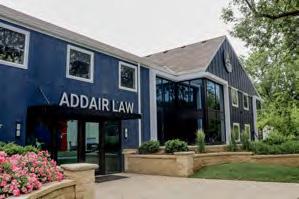
The team at Addair Law has put together lists of our favorite places and activities for you to discover. Here are just a few. We can’t wait for you to fall in love with Manhattan like we have!








Dear Friends,
Welcome to The Little Apple ® , a place where opportunity and lifestyle come together in the heart of the Flint Hills. Whether you’re looking for the perfect community to raise a family, start a career, or grow a business, Manhattan offers the best of all worlds: a friendly, connected community with the amenities of a much larger city.
Our story begins with people. Manhattan is home to innovators, entrepreneurs, military families, students, and professionals who bring fresh ideas and energy to every corner of our city. Kansas State University anchors our community with world-class research and a vibrant cultural life, while Fort Riley enriches us with strength, diversity, and tradition. Together, they make Manhattan one of the most dynamic small cities in America.
Quality of life shines here. Excellent schools, safe neighborhoods, and a thriving business community create an environment where families flourish.
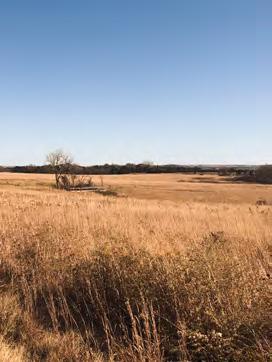
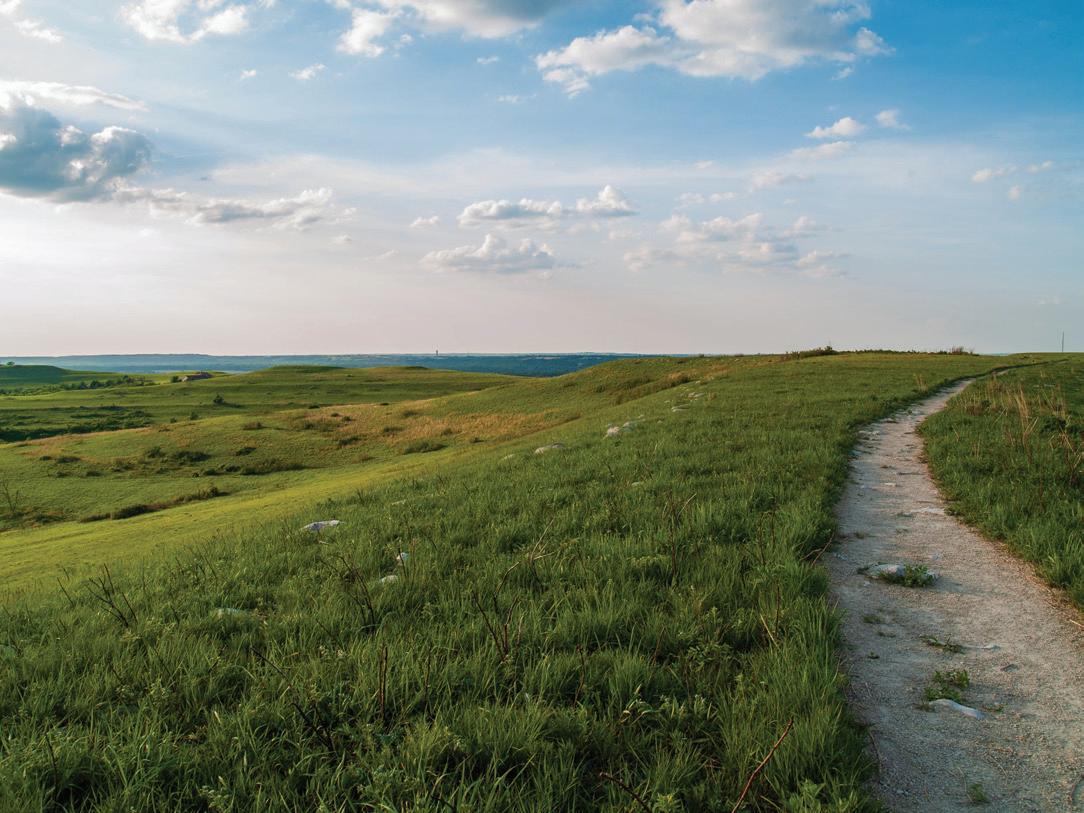
Scenic trails, Konza Prairie sunsets, and endless opportunities for outdoor adventure remind us daily that we live in one of the most beautiful regions in the country. Add to that a growing arts scene, championship sports, and welcoming people—and you’ll quickly see why so many choose Manhattan as home.
The Manhattan Area Chamber of Commerce is proud to champion this remarkable community. We invite you to discover for yourself the warmth, energy, and opportunity that make Manhattan truly special.
We’re glad you’re here. Welcome home.
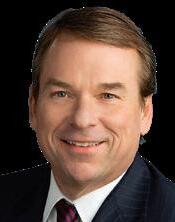
Jason Smith President & CEO
Manhattan Area Chamber of Commerce
The strongest foundations are built on connection, generosity, and a commitment to something bigger. At SPS, we invest in the future by investing in our communities.
When I moved to Manhattan from South Dakota eight years ago, I didn’t have any real ties to the community. I wasn’t connected through family, Kansas State University, or other long-established roots. Like many newcomers, I arrived feeling excited but had no clear picture of what my life here would become.
Through my career at Middle, a local marketing agency, I had the opportunity early on to develop a campaign for the Chamber of Commerce aimed at recruiting professionals to our community. I was intimidated because I thought, “How could an outsider like me know Manhattan well enough to convince others to live here?”
The answer wasn’t mine alone to figure out. Much like the process of creating this issue, I spoke with various community members to truly understand why Manhattan is so compelling and beloved.
What I’ve heard during conversations time and time again, is that people often describe Manhattan as having a certain je ne sais quoi , which isn’t helpful when you’re a marketer trying to distill Manhattan’s entire culture into a tagline.
Over time, I’ve come to understand that Manhattan’s contagious spirit is forged by those who have “stuck
their flag in the ground” and taken ownership of the community, whether they moved here by choice or by circumstance.
If there’s an injustice, they act. If support is needed, they show up. If there’s an idea worth chasing, they bring it to life. That mindset has turned Manhattan into a vibrant town that defies preconceptions and reshapes what people expect from the Midwest.
Our shared sense of purpose is what makes Manhattan special. We’re not only investing in our livelihoods through local businesses and nonprofits, we’re creating a community we’re proud and delighted to call home.
That spirit comes through in every featured story, and no matter what brought you here, I hope reading this inspires you to discover how you’re “Made for Manhattan” just like us.
Thank you for reading, and welcome to Manhattan!
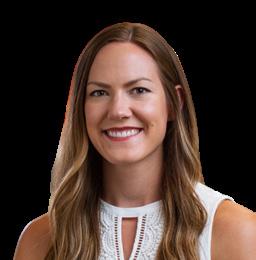
Ashley Fuhrman Editor-in-Chief & Writer




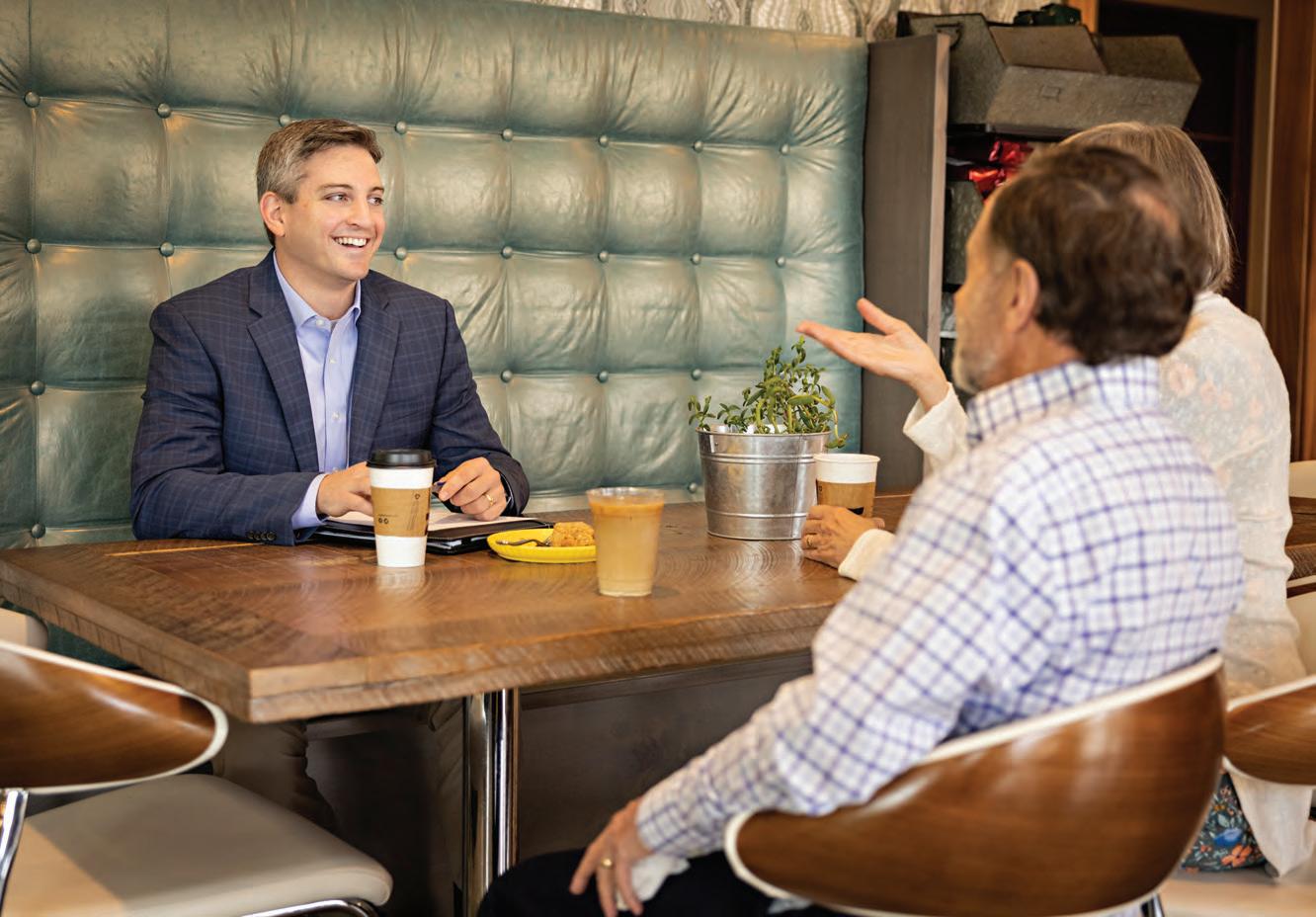

Don’t Just Land a Job.
It’s our people who make an impact. Be part of one of the fastest-growing companies in gov tech.

Thousands of high-performing civic leaders rely on CivicPlus® as their trusted partner for impact-led government. With CivicPlus, leaders can finally overcome the perpetual tradeoff between the demand for better services and the realities of resource constraints, leveraging the unique Civic Impact Platform to deliver both unmatched end-to-end automated efficiency and truly unified, delightful residence experiences.
Backed by over 25 years of experience and leveraging the insights of more than 900 team members, our solutions are chosen by over 10,000 organizations and are used daily by over 340 million people in the U.S. and Canada.


CivicPlus is more than just a workplace—we’re a community of team players and innovative problem-solvers, united by a shared purpose: impact-led government.
We strive to bring our company vision to life through innovation and collaboration. Supported by approachable leadership and transparent communication, we're empowered to make an impact on local government and the residents they serve. Grow your career alongside great people, where authenticity is welcome, successes are celebrated, and potential is nurtured.

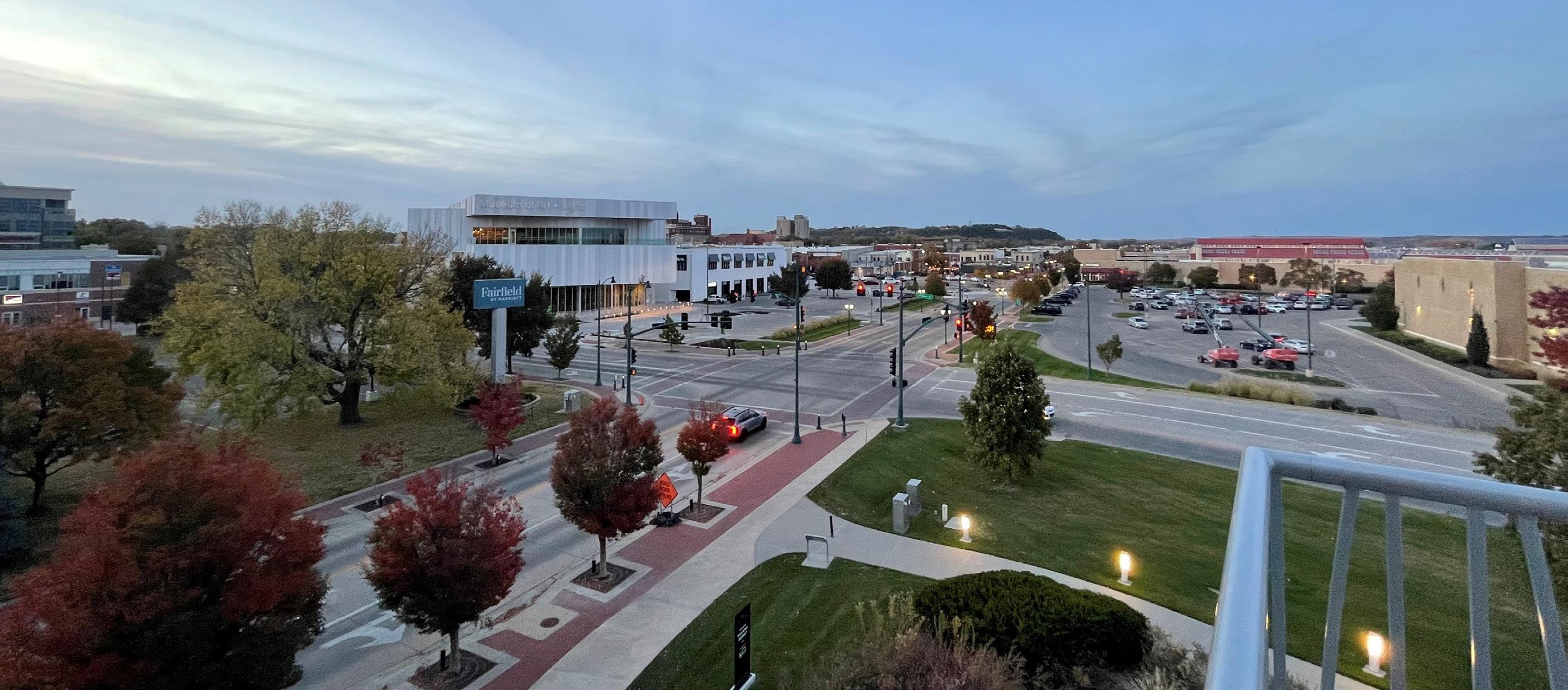
Welcome to Manhattan, Kansas— a true gem nestled in the heart of the Flint Hills . We call it “The Little Apple ® ,” because it’s the perfect mix of small-town charm and big-city opportunities.
We’re consistently ranked as one of the best places to live due to our affordable housing, excellent schools, and thriving local economy. Life here is as vibrant as it is welcoming, with beautiful trails, parks, and a variety of local events to enjoy.
Whether you’re catching a K-State game, exploring the dynamic food and arts scene, or meeting friendly neighbors, there’s a strong sense of community that makes it easy to call this place home.
54,700
*Percent of persons age 25 years



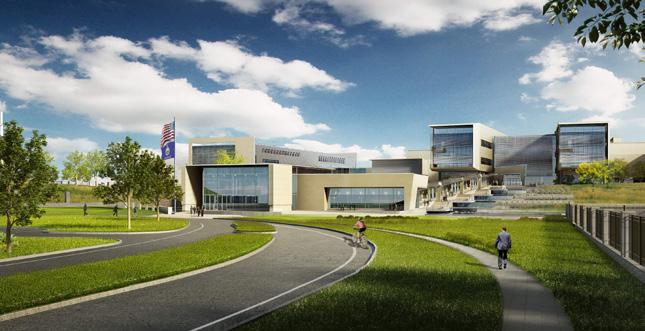
Kansas State University is the leading employer in Manhattan, with more than 6,000 employees on campus that serve more than 20,000 students. It boasts top athletic programs that attract large crowds to the Manhattan area.
Fort Riley is home to the 1st Infantry Division, known as the “Big Red One,” and employs more than 13,500 military personnel and 4,800 civilian personnel, including contractors.
Opened in 2023, the National Bio and Agro-Defense Facility is a biosafety level 4 research laboratory in Manhattan operated by the U.S. Department of Agriculture. The facility is designed to combat biological threats involving human, zoonotic, and foreign animal diseases.
Founded in 1998, CivicPlus is headquartered in Manhattan, Kansas, and has grown into a leading government-technology firm. CivicPlus builds software tools used by over 12,000 municipalities and serves more than 340 million residents across the U.S. and Canada.
Manhattan’s Agro-Defense and Bio-Industry has earned its reputation as the “Silicon Valley of Biodefense” due to its strategic location near key industries and resources. Protecting our nation’s food supply from biological threats is both a vital and challenging mission, and Manhattan is the ideal place to make a meaningful impact in this important field.
The construction, design, and architecture industries play a pivotal role in enhancing Manhattan’s quality of life. As you help shape the community, you’ll find abundant respect, opportunity, and room for career growth. Manhattan is a city driven by continuous improvement, innovation, and a forward-thinking spirit, where citizens are dedicated to making it an even better place to live and work.
Healthcare is the second-highest earning category in Manhattan, and jobs are in high demand here. Whether you’re starting a career in healthcare or looking to relocate, Manhattan offers the perfect place to thrive. With abundant opportunities, a welcoming community, and a focus on well-being, it’s a city where you can care for others while enjoying a fulfilling life yourself.
By 2030, an estimated 4 million manufacturing jobs will be needed. Many of Manhattan’s manufacturing companies operate as vertical integrators, leveraging innovative ideas, talented individuals, and cuttingedge products to drive efficiency and productivity on a regional, state, and global scale.
Top Employers: Corteva Agriculture, Deibel Laboratories, Heartland Plant Innovations, Kansas Department of Agriculture, Kansas State University, MSBiotec, National Bio and AgroDefense Facility (NBAF), National Ecological Observatory Network
Top Employers: Anderson Knight Architects, Bayer Construction, BBN Architects, BHS Construction, Foley Equipment, Hi-Tech Interiors, Inc., McCownGordon Construction, Midwest Concrete Materials, Olsson, Shilling Construction
Top Employers: Ascension Via Christi, Freedom Behavioral Health Solutions, Irwin Army Community Hospital, Manhattan Medical Center, Manhattan Surgical Hospital, Meadowlark, Pawnee Mental Health Services, Pediatric Associates, Stonecreek Family Physicians, StoneyBrook Retirement Community, Stormont Vail Health
Top Employers: Abbott Workholding, BevHub, Farrar Corporation, Florence Corporation, Manko Window Systems Inc., Parker, PTMW, RDT, Solar Turbines, The Krusteaz Company, Ultra Electronics

Anthony Middle School receives students from:
• Amanda Arnold Elementary
• Frank V. Bergman Elementary
• Marlatt Elementary
• Ogden Elementary
• Woodrow Wilson Elementary
College Hill Early Learning
All USD 383 9th-12th grade students attend
High School.
Elementary
Woodrow Wilson Elementary
Catholic School (K-8)
• Bluemont Elementary
• Lee Elementary
• Northview Elementary
• Oliver Brown Elementary
• Theodore Roosevelt Elementary
Green Valley Area
The easiest way to determine the school zone you live in is by viewing the Riley County GIS, selecting Layers, expanding the Voting Districts layer, and selecting:
• USD 383 Early Learning Center
To see whether your child will attend Eugene Field or College Hill
• School Attendance Zones
To see which elementary school your child will attend

Keats
Population: 129
Distance from Manhattan: 9 miles
Riley
Population: 955
Distance from Manhattan: 20 miles
Families have chosen to make Riley home because of the excellent school district, safe atmosphere, and friendly neighborhoods. The community PRIDE group also hosts events year-round to bring residents together.
Fort Riley
Population: 8,595
Distance from Manhattan: 16 miles
Fort Riley is home to the U.S. Army 1st Infantry Division members and their families. There are numerous schools, parks, fitness centers, pools, and other amenities on post for people to enjoy.
Keats is a close-knit community just west of Manhattan. The 14-acre Keats Park is adjacent to the town and offers a variety of activities and facilities for outdoor recreation. Residents describe the neighborhood as quiet, peaceful, and private. Ogden
Population: 1,656
Distance from Manhattan: 10 miles
Ogden is located at the gates to Fort Riley and only three miles from the Manhattan Regional Airport. Its elementary school is a part of Manhattan’s school district.
Denotes the community's school district, not where the schools are located
Population: 1,150
Distance from Manhattan: 9 miles
Nestled along the banks of the Kansas River, St. George has many amenities and ample charm. It’s a great place for the whole family with an award-winning elementary school, new housing, and plenty of river recreation and city events. The annual KAWnsas Fest in August is a community favorite and includes a street dance, car show, live music, art, and food.
Population: 4,888
Distance from Manhattan: 16 miles
Wamego has a beautiful downtown, historic landmarks, a gorgeous City Park, Oz-themed attractions, and multiple festivals that showcase Wamego’s great community spirit, partnerships, and citizen participation.






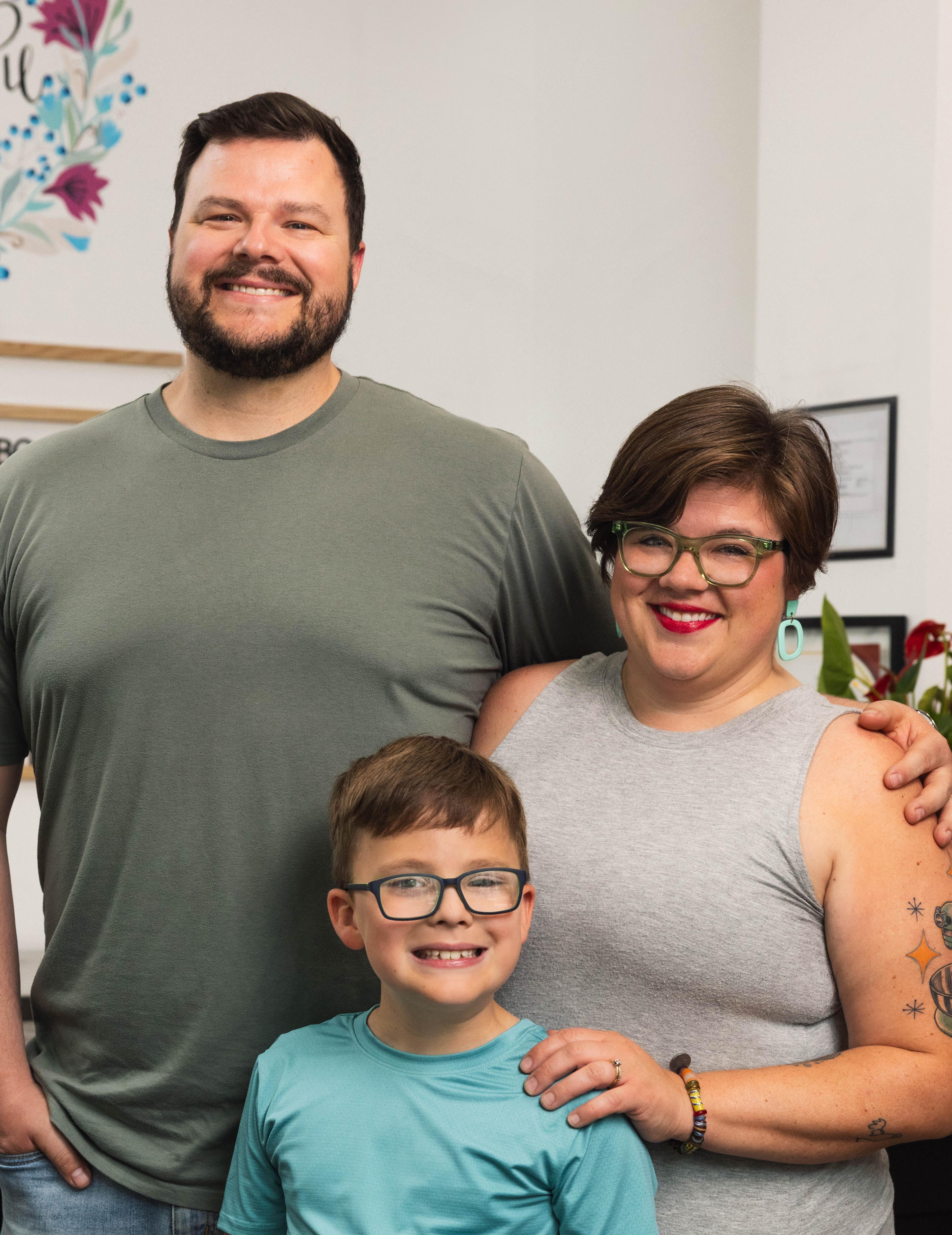
For Peter and Tiffany Oppelt, what began as a reluctant first date grew into a life built with intention and purpose in Manhattan, Kansas.
Peter, the youngest of four, grew up in Colorado Springs and describes his younger self as if he were a titular character plucked from a ‘90s film.
“In high school, I thought I was really cool because I was in a band—I played the drums. I exclusively wore classic rock T-shirts from Hot Topic and hemp necklaces that I made myself. I had really long, curly hair.”
Tiffany’s experience growing up was quite a bit different.
“I’m from southeast Kansas—in the McCune area. I moved around a lot as a kid because my dad was working his way up the corporate ladder. About every year and a half, I went to a different school, so I was always the new kid. I was very shy and would turn red when people talked to me. Yeah, I was kind of a nerd.”
It wasn’t until her family moved to Parsons, Kansas, that she chose to come out of her shell.
“I decided to try to be an extrovert to make friends. I tried out for Annie with no choir experience and got the role of Miss Hannigan. In high school, I was in show choir; I was really into forensics, winning state a couple of times. I really came out of my shell. I even got to be prom queen during my senior year.”
After graduating high school in 2006, Peter joined the Army while Tiffany attended community college to save money for Kansas State University.
For Peter, joining the Army was a purposeful stepping stone. He had just watched one of his brothers spend six years getting his bachelor’s degree and didn’t want to waste time trying to figure out his career path. Peter’s first duty station was Fort Carson, right by Colorado Springs, where he became an ammunition specialist.
“I deployed once to Iraq. Then, I moved to Virginia in 2009. After the earthquake in Haiti, I provided some humanitarian support.”
Peter continues, “Then I went to Korea for a year and Florida for a year. In 2012, I came to Fort Riley and became an Explosive Ordnance Disposal Team Leader. We would render safe and dispose of explosive devices anywhere on military installations and/or the battlefield.”
Meanwhile, Tiffany transferred to K-State and completed her degree in hospitality management. Immediately after graduation, she moved to Columbia, South Carolina, to work for Darden Restaurants, specifically for the Longhorn Steakhouse brand. She quickly climbed the ranks.
“Eventually, I asked for a transfer to Kansas City because I was feeling a little homesick. While in KC, I was working in several of Darden’s restaurants and then got promoted to general manager in Manhattan, Kansas—one of the youngest in Darden Restaurants’ history.”
With Tiffany back in her college town and Peter newly stationed at Fort Riley, their paths were about to cross.
“In 2013, I was going to a CrossFit gym in Manhattan, and there was a couple that I met,” Peter says. “He was in the Army, and she was going to K-State. She had actually gone to high school with Tiffany.”
Tiffany shares her side of the story: “The couple kept telling me, ‘You’ve got to meet our friend Pete. You two have a very similar sense of humor. I think you’d really get along.’”

However, it took over a month for Tiffany to agree to meet Peter.
“I finally went to the CrossFit gym to meet our mutual friend for dinner. But as soon as I walk in, she’s like, ‘Pete! This is Tiffany.’ And then she left us there.”
“It was really awkward,” Peter laughs.
What started as Tiffany meeting up with her friend quickly became an impromptu double date.
“There was no going home and showering after the gym—it was not exactly romantic,” Tiffany adds. “He says I was trying too hard, but I didn’t think I was trying at all.”
“But, at the end of the week, it was agreed upon that we would be exclusively dating,” Peter says—an abrupt turn given their less-than-ideal first impressions.
Over the next several months, their relationship deepened, and they began making bigger decisions about the future they wanted to build together.
In 2015, Peter chose to retire from the military after nine years of service and enroll at K-State. Peter and Tiffany were newly married and eager to start a family, but with Tiffany’s childhood experiences of constant moving, they both knew they wanted to put down permanent roots.
We got married in May. I left the Army in August and began my first college semester that same month. And then we found out Tiffany was pregnant in October.”
Their son, Finn, arrived much earlier than expected.
“He was a micro-preemie. I was rushed to Topeka in an ambulance and was able to make it 18 more days before Finn was born at 27 weeks. We stayed in the hospital with him for 94 more days and were able to take him home a few days after my original due date. He’s our miracle baby,” Tiffany says.
After enduring a tumultuous year, everything began to settle. Finn was healthy. Tiffany was enjoying her new role as the culinary operations manager at K-State’s
Kramer Dining Center, and Peter was wrapping up his economics degree.
“I ended up getting a job offer in Kansas City. Plus, a lot of our friends lived there, so it was appealing to go in that direction,” Peter says.
“But, we made a very conscious decision that this is where we want to be. I would much rather raise a child here than somewhere else,” Tiffany adds.
They stayed in Manhattan to raise their son, balancing full-time careers and the demands of new parenthood. Looking back, it’s clear that once their lives found a rhythm, something else began to stir beneath the surface.
“My job [at Kramer Dining Center] was awesome, but it was stressful, and I needed a hobby. So, I started baking,” Tiffany says.
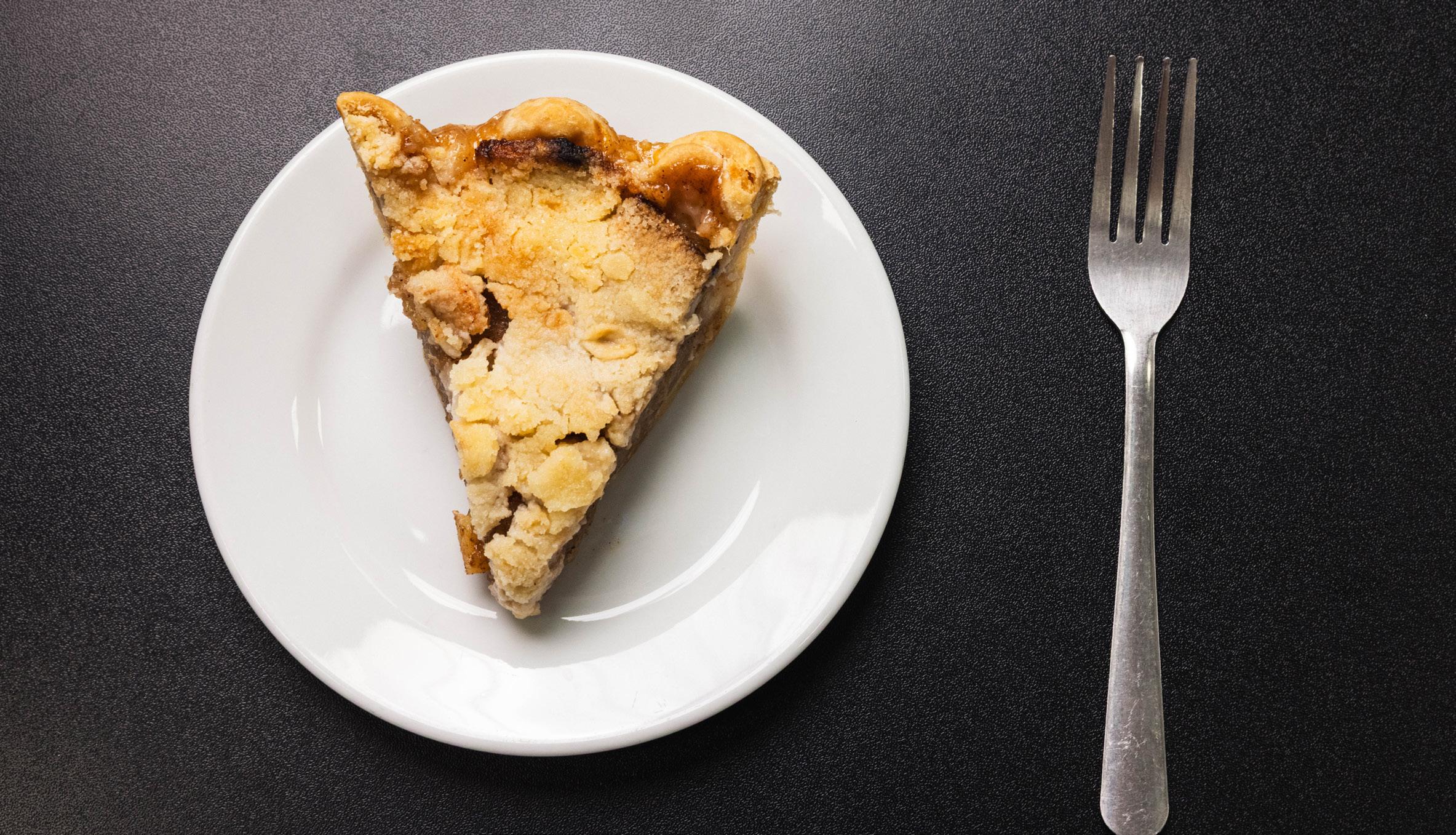
Tiffany’s grandma Thera, an excellent baker, taught her how to make pie as a child. After she passed away in 2017, Tiffany felt a deep need to preserve and perfect the recipes they had once shared.
After mastering her grandmother’s pie crust and apple pie recipe, Tiffany’s creativity took over.
“My repertoire of recipes was growing like crazy, and I’m a foodie, so I went down a deep rabbit hole and started following every pie bakery in the world on Instagram and looking for good places in Manhattan to eat pie.”
What she discovered wasn’t just a gap—it was an opportunity to create something that didn’t yet exist in Manhattan.
That realization inspired what would eventually become Therapie: a name that honors both her grandmother Thera and the comfort she found in baking during stressful times.
In 2019, Peter and Tiffany moved into a new home with one specific goal: to build a commercial kitchen in the basement and increase production. They received their food license in March of 2020—just as the COVID-19 pandemic began.
At the same time, Tiffany was furloughed from K-State, which gave her the time and urgency to grow Therapie more seriously.
She quickly pivoted to offer no-contact pickup and delivery, reaching customers at a time when supporting local businesses mattered more than ever.
“People were picking up pies at all hours of the day and night. The business grew incredibly fast, and I quit my job in 2021 to run Therapie full-time,” Tiffany says.
Opening a storefront had always been a goal for Tiffany, and as demand grew, it became clear it was time to take the next step. She opened Therapie’s first downtown location on Pi Day—March 14, 2023.
Now, Therapie boasts over 120 sweet and savory pie recipes, a team of 10 employees, and a newly constructed commercial kitchen located above the shop, officially relocating production from their home.
Therapie has grown into something more than a pie shop—it’s a space where Tiffany brings her values to life through partnerships, shared spaces, and local support.
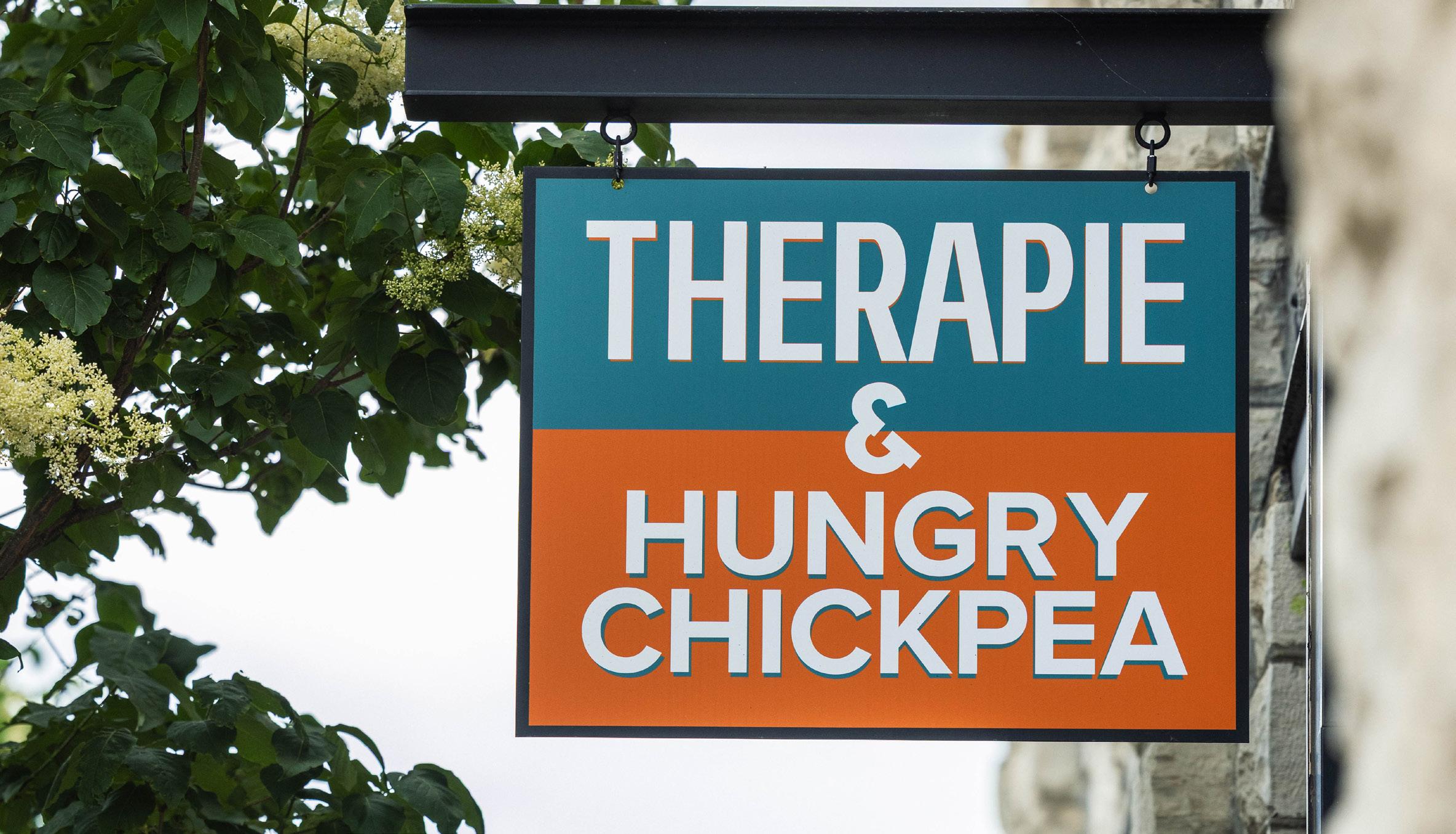
She intentionally partners with other small businesses, including Hungry Chickpea, with whom she shares the storefront.
WE MADE A VERY CONSCIOUS DECISION THAT THIS IS WHERE WE WANT TO BE. I WOULD MUCH RATHER RAISE A CHILD HERE THAN SOMEWHERE ELSE.
She also uses the store to highlight local vendors, artists, and makers—many from underrepresented or historically marginalized backgrounds—offering them a platform to reach new audiences.
The business itself continues to evolve as well. In addition to rotating weekly pie offerings, Therapie launched a Pie of the Month Club in early 2025 and regularly hosts sold-out pie and cocktail pairing events at Auntie Mae’s.
From seasonal flavors to savory creations, the business has become a reflection of Tiffany’s creativity, hospitality roots, and deep connection to the community around her.
While Therapie grew, Peter’s career and commitment to the community evolved too. Today, he works remotely as an Agile Product Owner for Travelers Insurance and is a city commissioner.
His experience in the military, combined with his time navigating local government as a citizen, influenced his pragmatic and empathetic approach to leadership.
“Getting to work with so many different people [in the military] gave me a lot of great perspectives and made me more empathetic towards others with different lived experiences than my own. Acknowledging that people can hold two completely different realities simultaneously, and both are valid, is crucial when serving on the city commission. You’ve got to be able to balance those things and try to make the best decisions.”
The Oppelts are fully immersed in Manhattan life, raising their son, building a thriving small business, and helping to shape the future of their city. It’s clear they’re here to stay for the long haul.
“We have very much created a community here and take pride in where we live,” Tiffany says.
Peter pauses, his eyes welling up slightly as he reflects, “What’s special about Manhattan is that it shows up for people. This is a community that believes in supporting
one another. There are really nice people here. And there are nice people everywhere, but in Manhattan, it’s different. Once you’ve lived in other places, you realize just how rare and special that is.”
Learn more about Therapie by visiting therapiellc.com
Favorite Pie: Grandma’s Apple— Thera’s original recipe!
Favorite Attraction: Sunset Zoo
Favorite Outdoor Activity : Disc Golf
Favorite Dinner Spot: Wine Dive—try the burger!
Favorite Cocktail: Arrow Cocktail Lounge’s Espresso Martini
Finn’s Favorites: Pho Viet’s Kid’s Bowl (with White Meat)
Vista Burger’s Strawberry Milkshake
Convenient options that can help you
Checking | Savings | CDs | Money Markets
Personal and Residential Loans | Online and Mobile Banking
Innovative solutions designed to fuel business growth and help you succeed.
Checking | CDs | Money Markets
Tailored Lending Solutions | Treasury Management Services
Learn more about our products and services at ksstate.bank and open a KS StateBank account online, anytime!
Westloop | Downtown | Highway 24 | Junction City
DOWNTOWN:
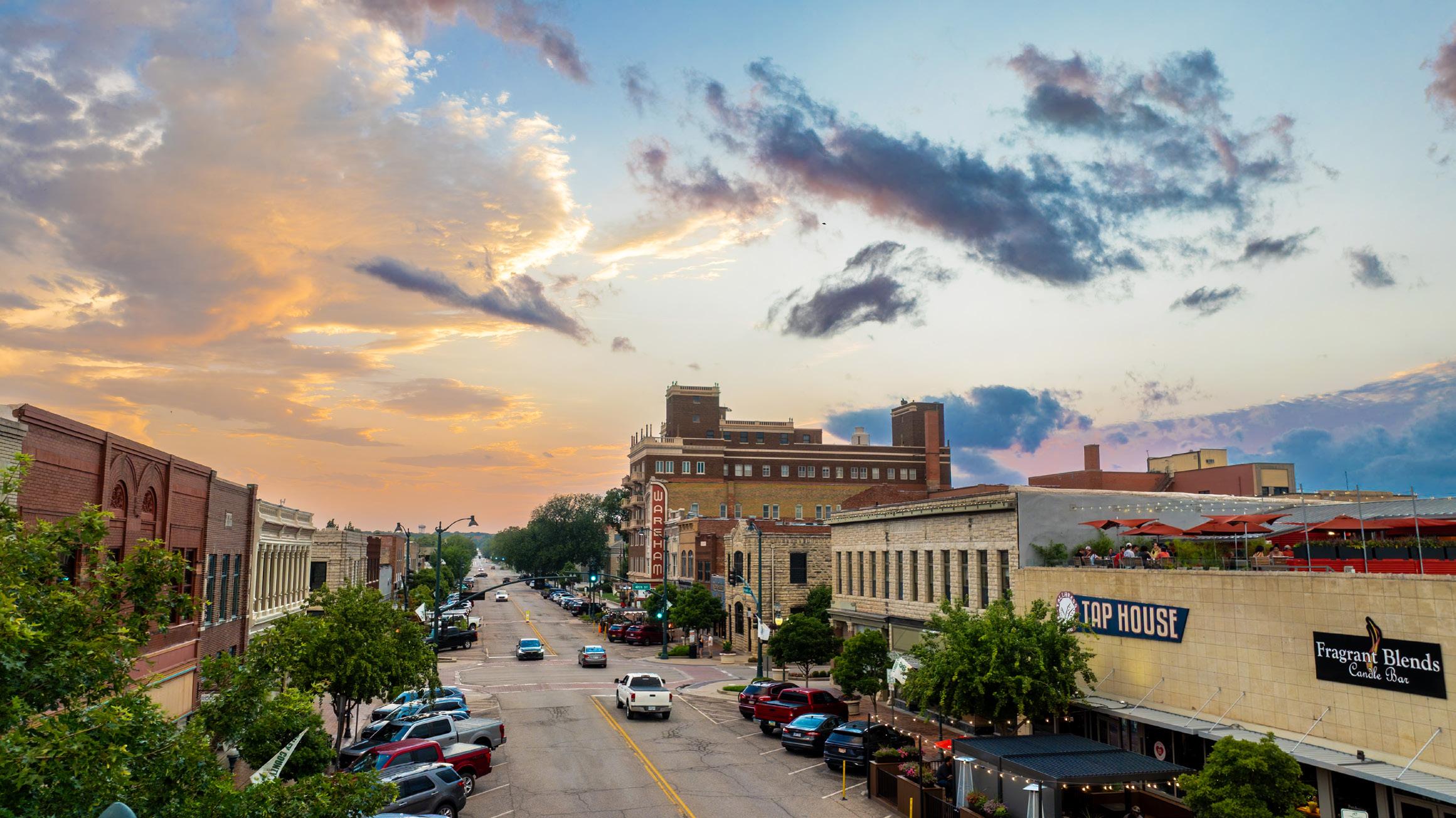
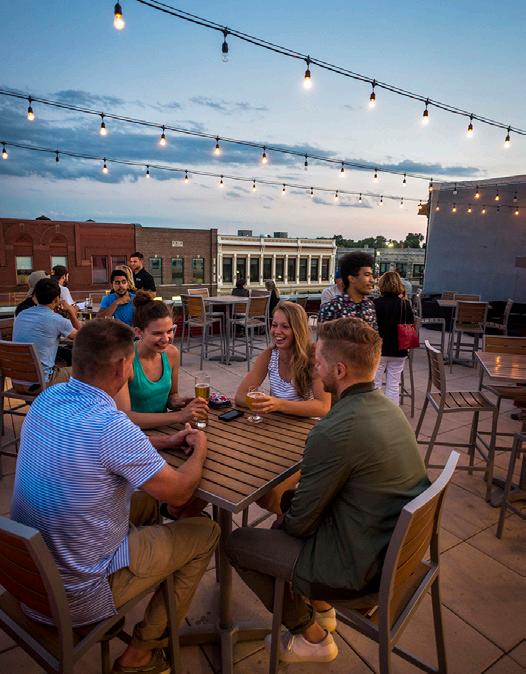
Discover a blend of arts, shopping, cuisine, and community in Manhattan’s thriving, historic downtown.
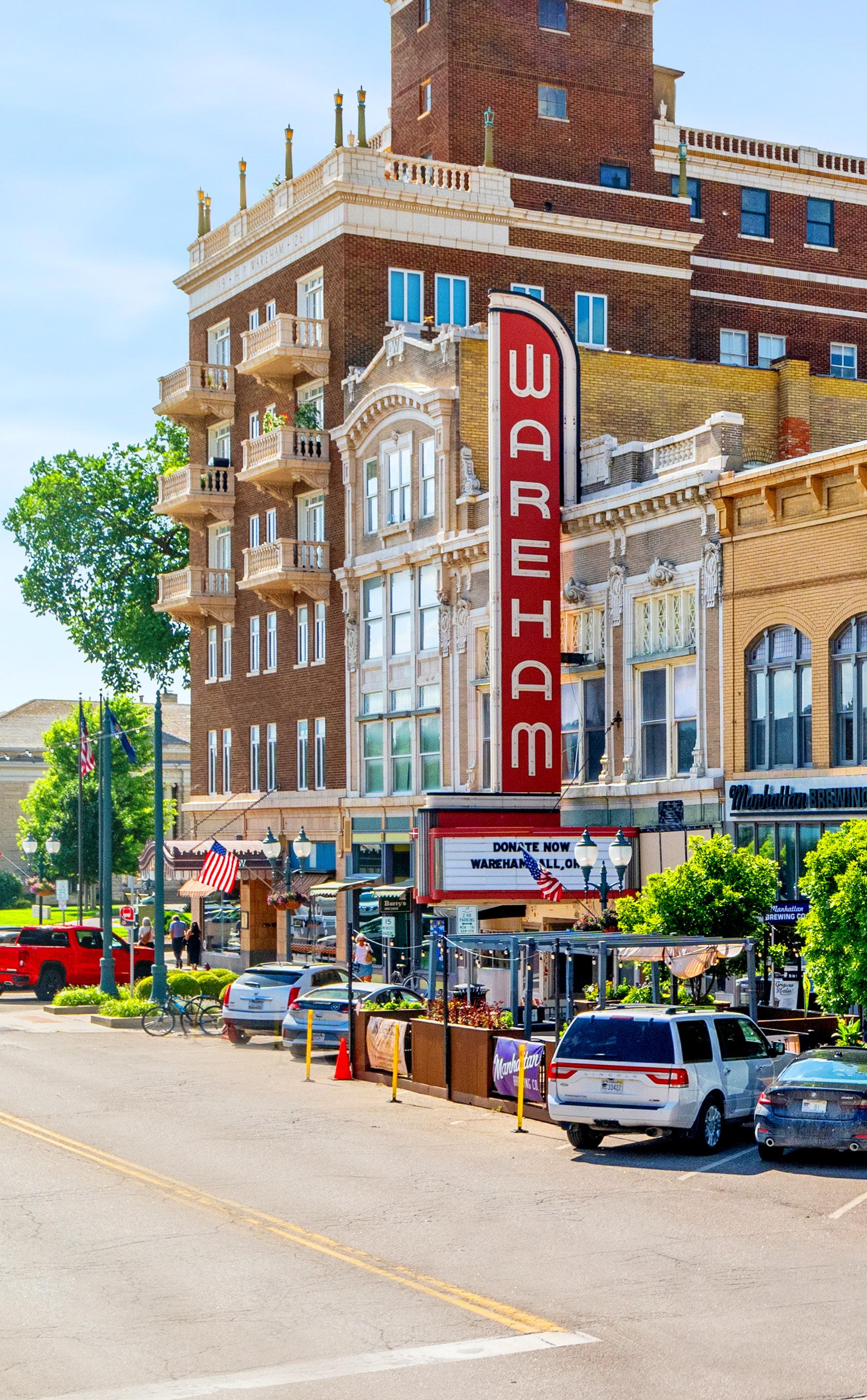
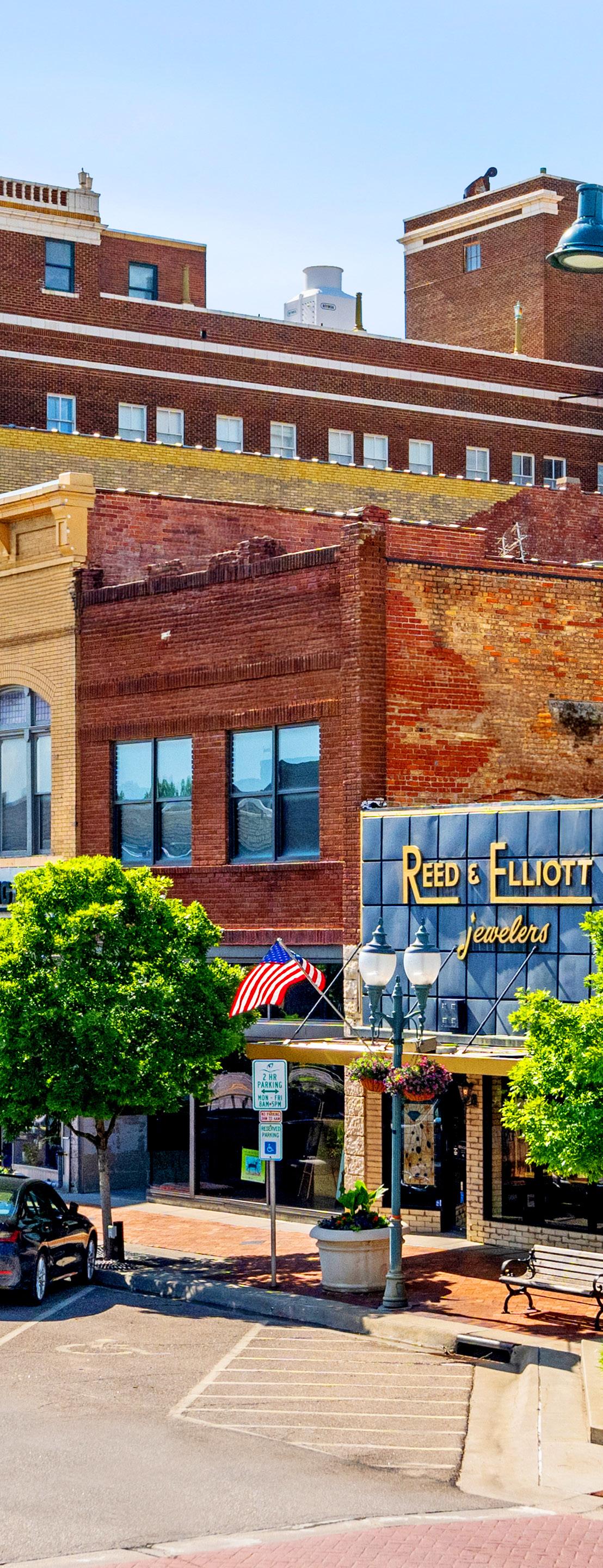
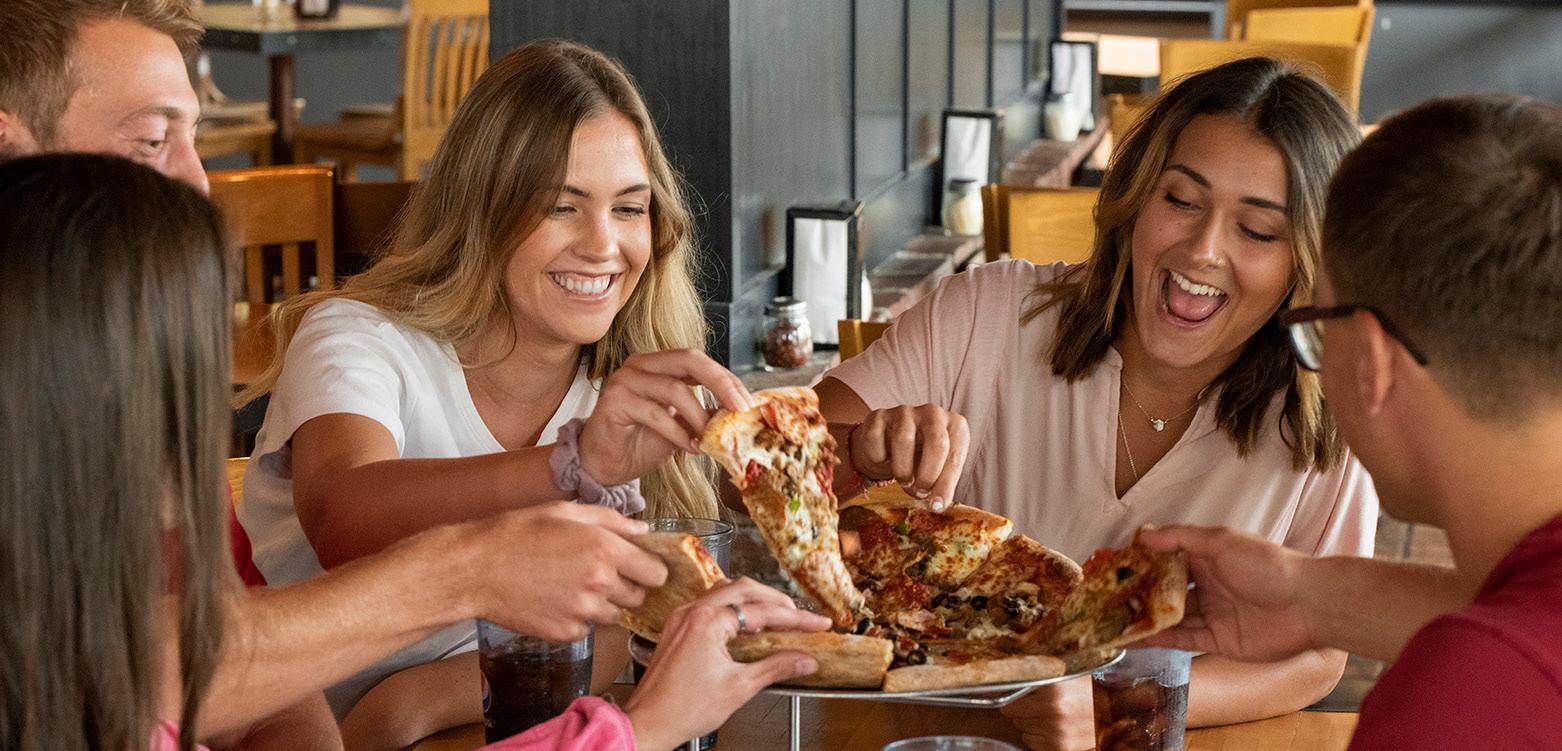
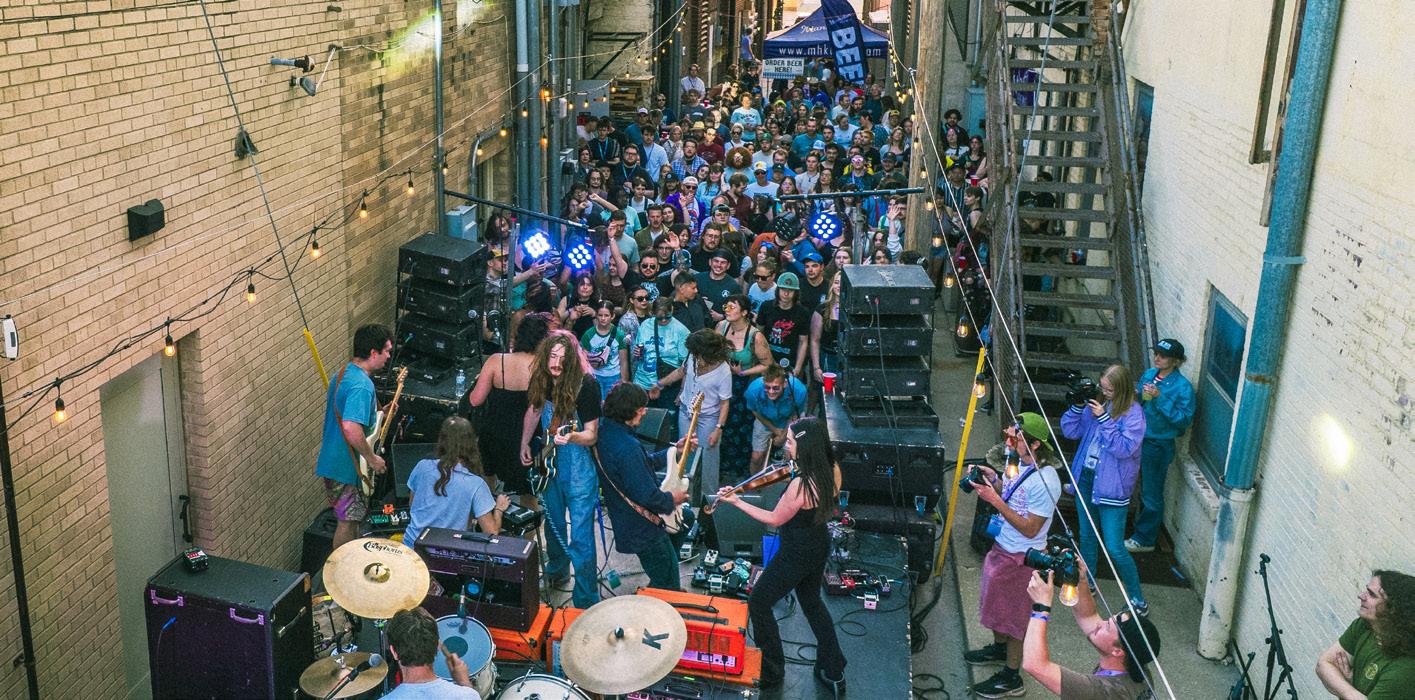
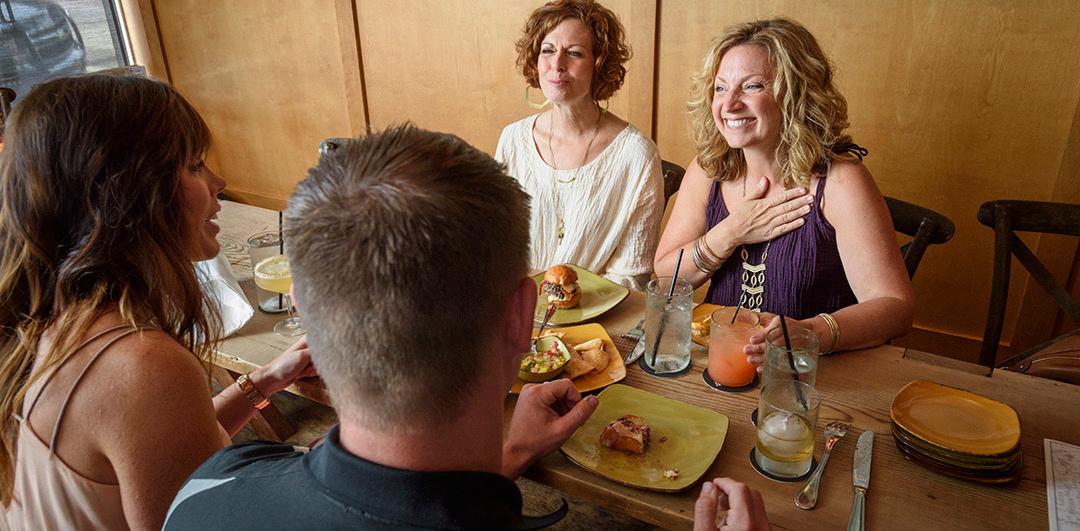

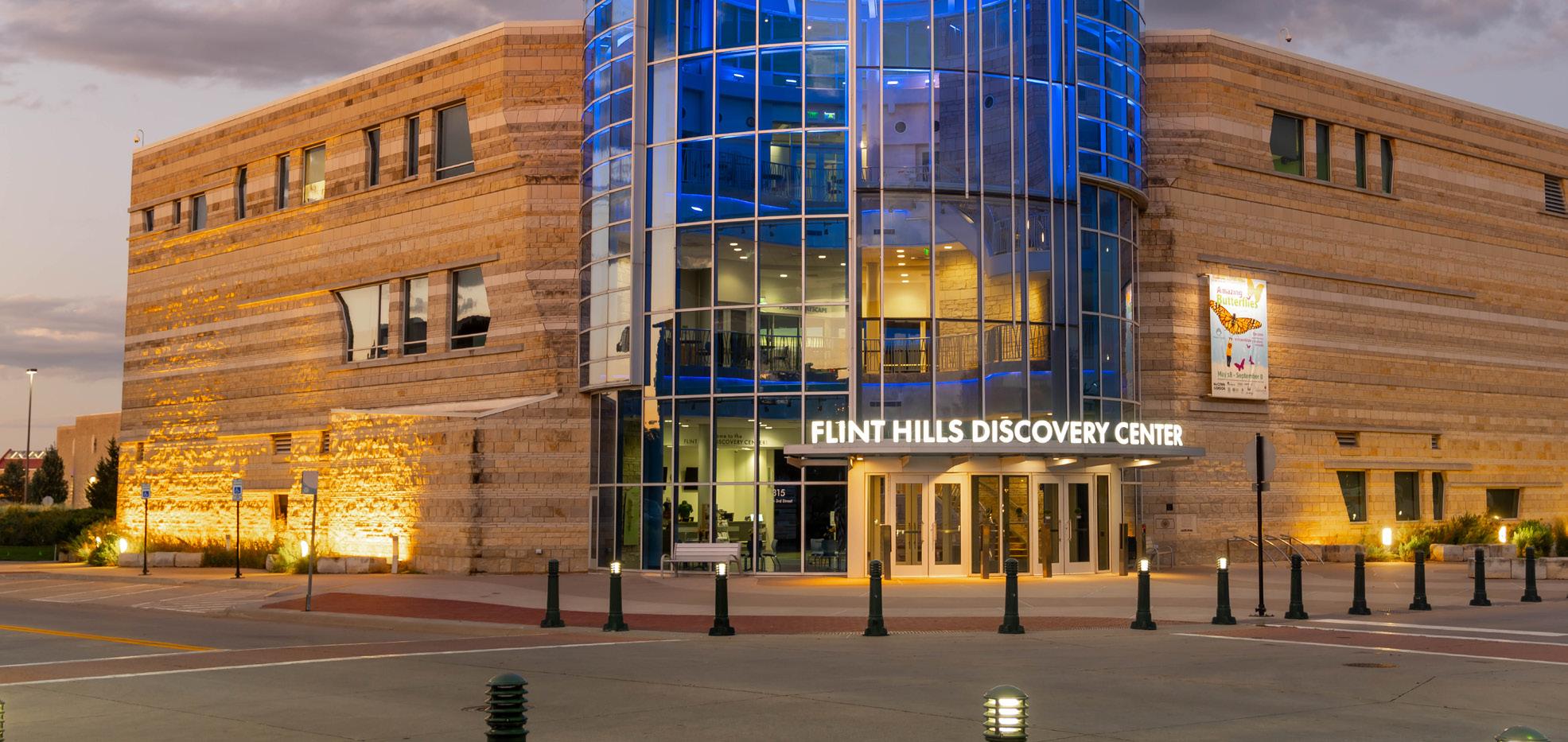
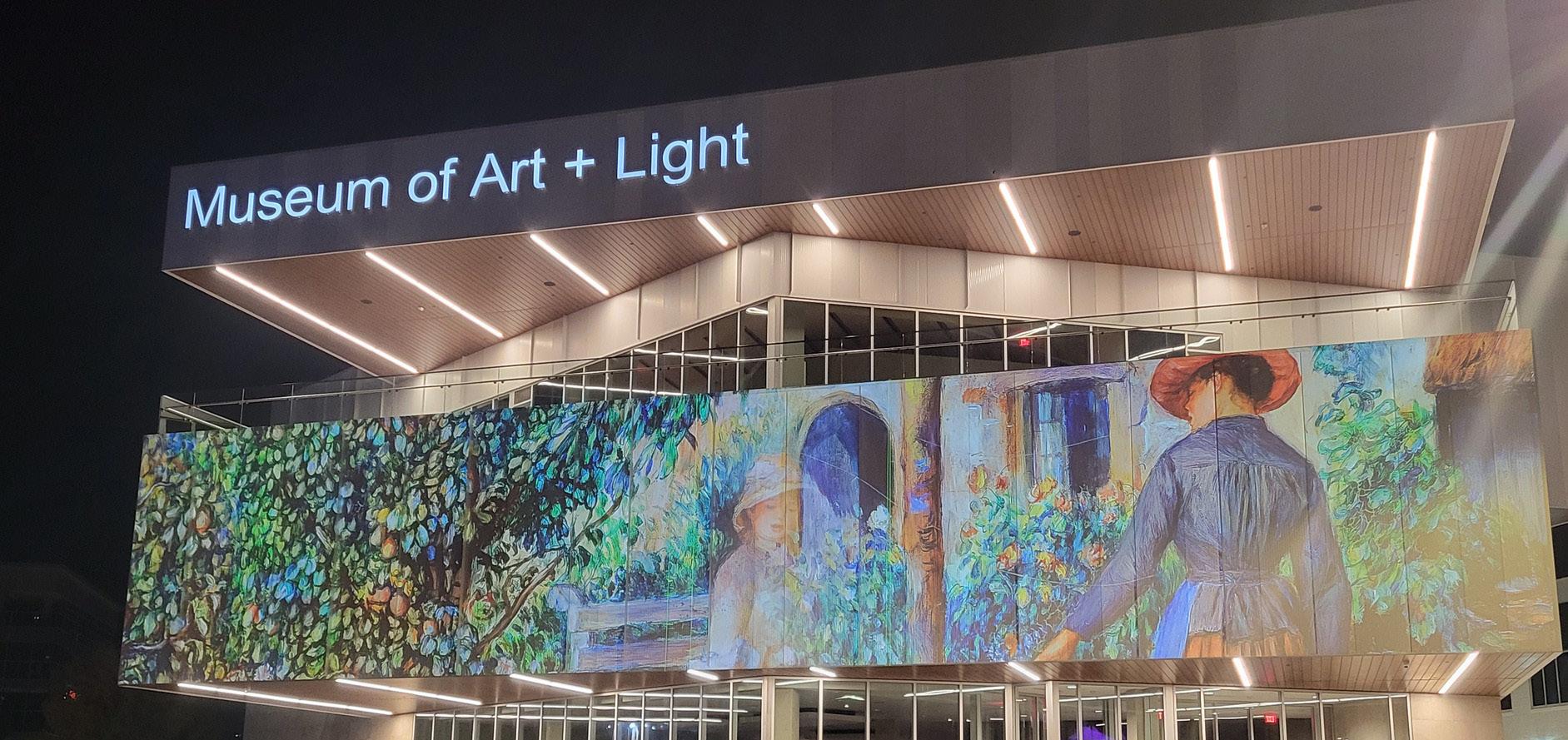
Downtown is a hub of culture and activity, featuring attractions like the Flint Hills Discovery Center, Museum of Art + Light, and Manhattan Town Center. It also hosts popular events such as plein air painting competitions, printmaking festivals, air guitar contests, outdoor symphony performances, and StoryWalks.
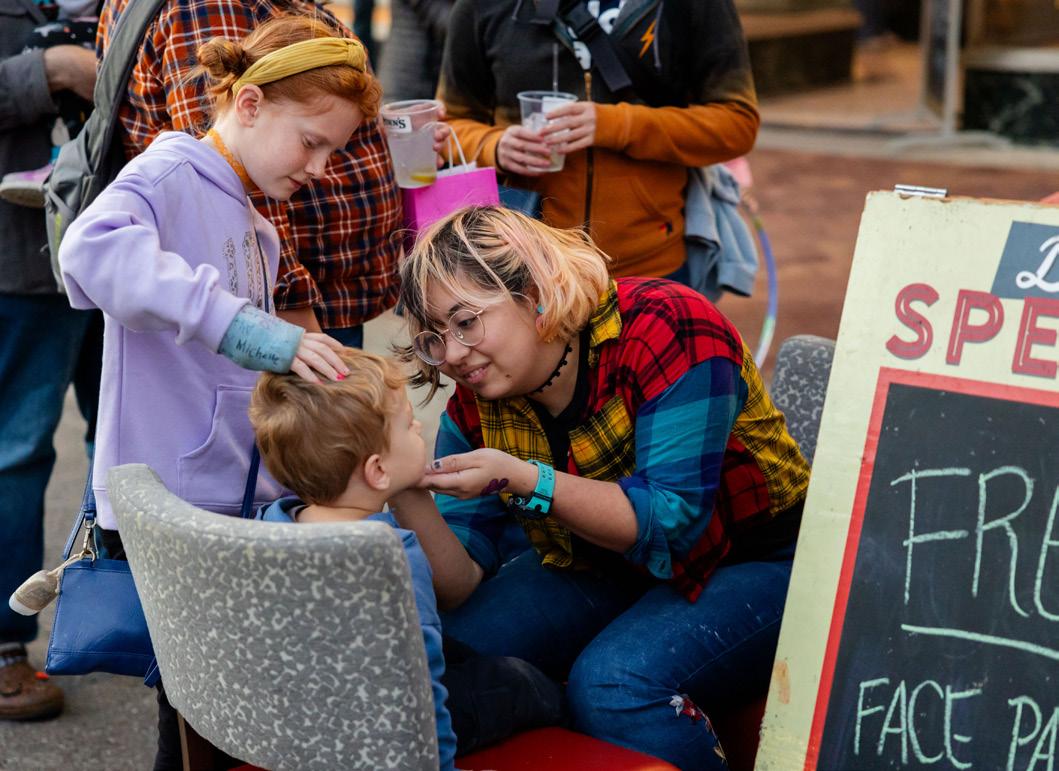
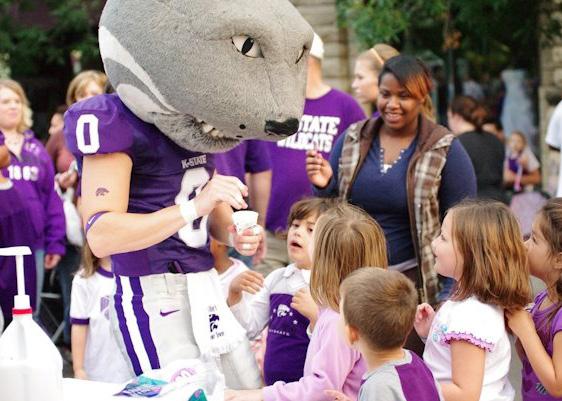
Purple Power Play, held on the Friday before the first home football game, is an event you won’t want to miss! With live entertainment, food trucks, inflatables, a beer garden, and plenty more, it’s a fun-filled celebration for the whole family.
Downtown businesses play an integral role in creating memorable experiences, with lively alley parties behind Manhattan Brewing Company, jazz nights at Arrow Cocktail Lounge or Union Hall, and karaoke at Finn’s Pub, offering something for everyone to enjoy.
On every Third Thursday, local vendors line the sidewalks with their creations, and a variety of family-friendly activities are available for everyone to enjoy. The biggest event is in October when the streets are closed to traffic so live music, karaoke, fashion shows, and other performances can fill the streets.
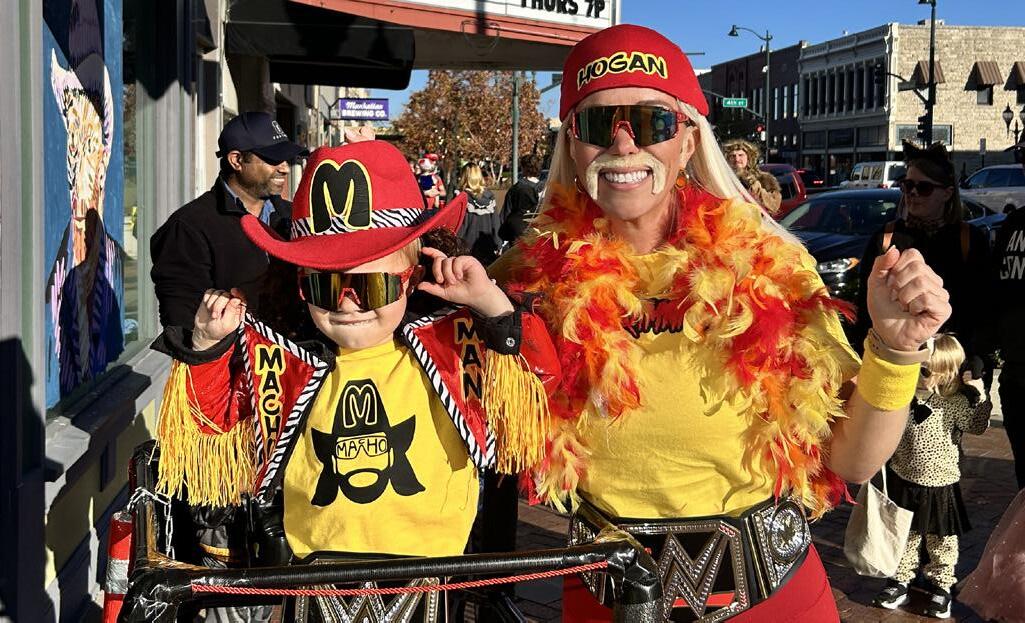
Downtown is absolutely beautiful during the holidays! The Festival of Lights in Blue Earth Plaza begins the Friday after Thanksgiving, followed by the Spirit of the Holidays Lighted Parade in early December. Enjoy a scenic horse-drawn carriage ride through Downtown, take advantage of local deals during the Holiday Open House, or indulge in festive cocktails at participating spots for the 12 Drinks of Christmas event.
On or near Halloween, participating businesses hand out candy to trick-ortreaters. It’s one of the most anticipated, family-friendly events of the year.

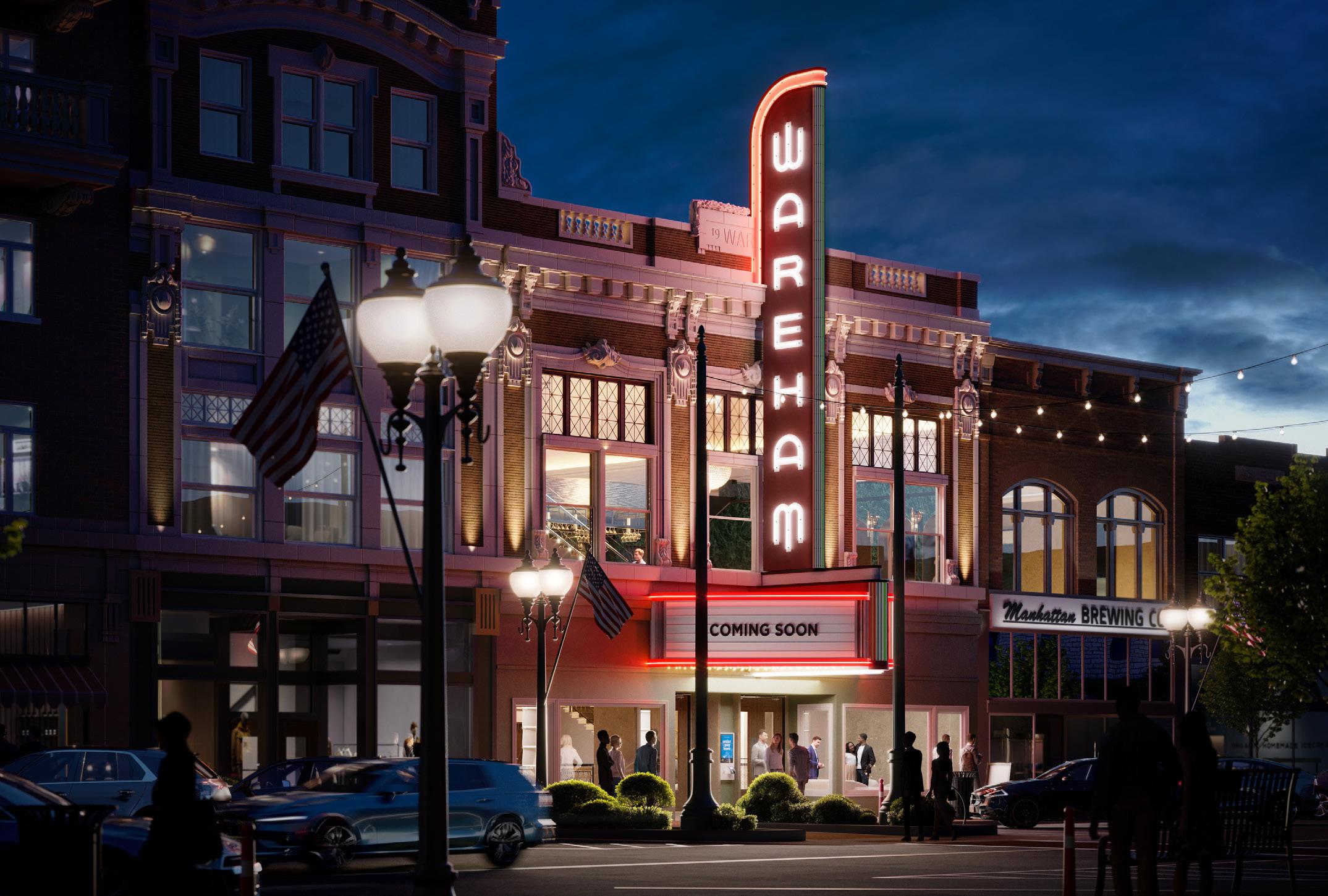
FOR OVER 145 YEARS, WE HAVE BEEN THE CULTURAL CENTER OF MANHATTAN.
We’re ushering in a new era of arts and entertainment and embarking on a $40 million transformation to revive this historical icon in our downtown.
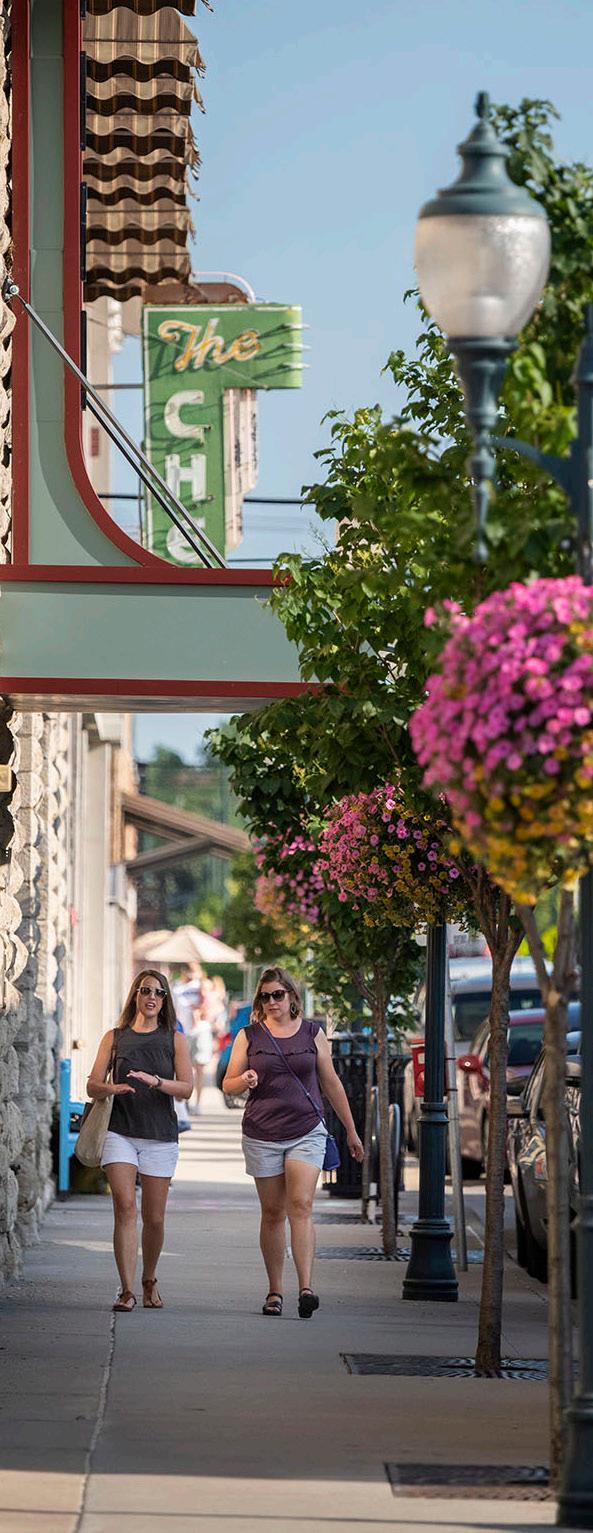
The Beyond Tomorrow Downtown Plan is a forward-thinking roadmap designed to enhance the vibrancy, functionality, and sustainability of Downtown Manhattan while preserving its historic charm.
The plan proposes innovative concepts such as improving pedestrian connectivity, expanding public green spaces, and encouraging mixed-use developments that blend residential, retail, and office spaces. It also prioritizes diverse housing options, enhanced transportation and parking solutions, and a cohesive downtown branding strategy.
With a focus on economic growth and fostering community engagement, the plan aims to position Downtown Manhattan as a dynamic, inclusive hub that meets the needs of residents, businesses, and visitors alike, ensuring it thrives well into the future.








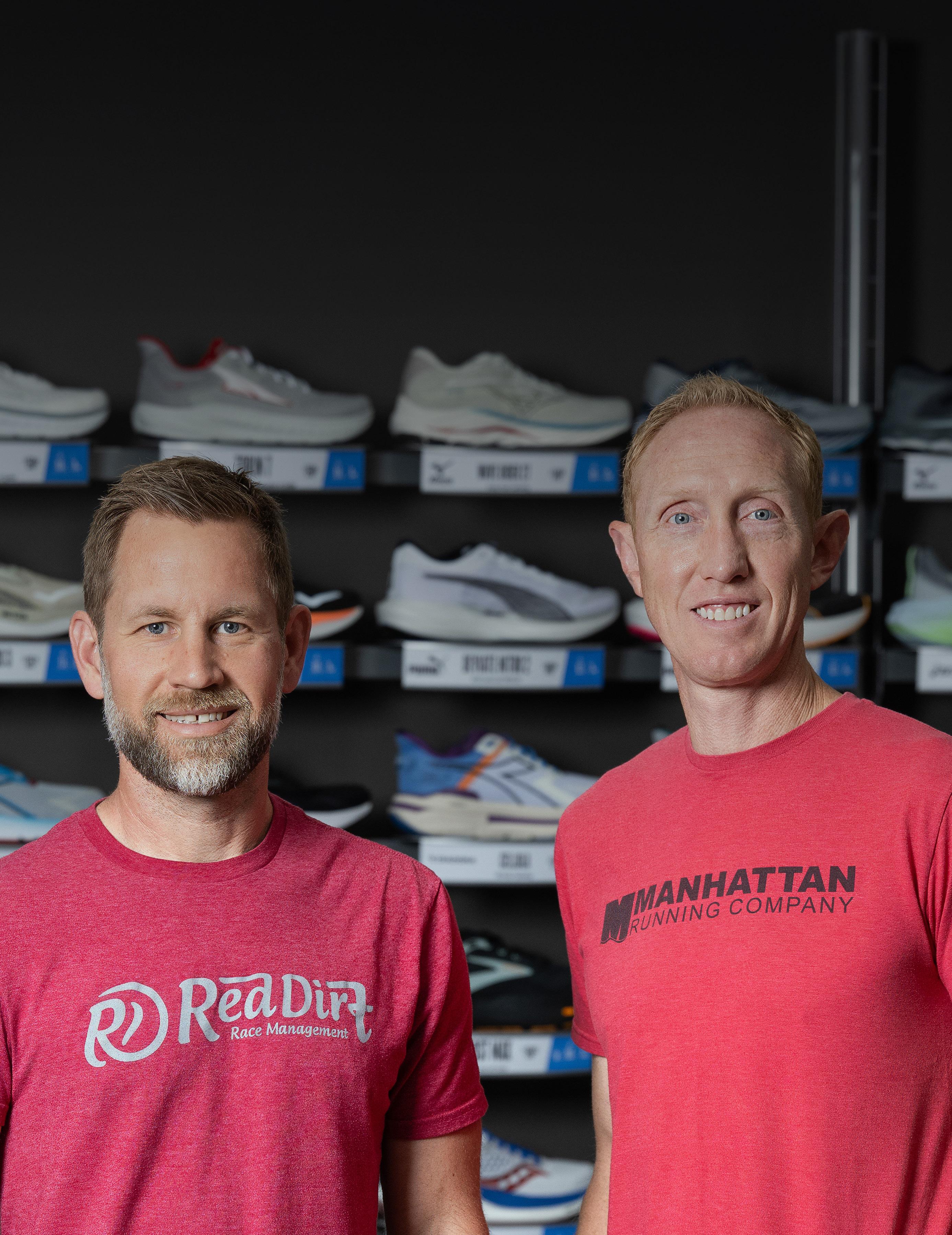
Ben Sigle and Trey Vernon turned a shared passion for running into one of Manhattan’s most popular and trusted specialty stores.
Some businesses start with a lightning-bolt idea; others take shape slowly, over miles and years. For Ben and Trey, owners of Manhattan Running Company, it was a little bit of both.
The two met on a college recruiting visit, became roommates and cross-country teammates at Oklahoma State University, and shared a love for running that eventually planted the idea for their business. After graduation, they went their separate ways—Ben working in marketing for a local concrete company, Trey working for a large corporation in Kansas City—but both realized they needed a change.
“Ben called me up one day and said, ‘Hey, remember when we talked about opening a running store? I kind of want to do that now. Are you in?’” Trey says.
Trey continues, “I was like, ‘Yeah, I’m in. I don’t really like my job anyway and don’t want to get stuck behind a desk for the rest of my career.’”
At the time, they were choosing between Stillwater, Oklahoma, and Manhattan, Kansas, for the store’s location.
“When we ran the numbers, Manhattan had such a bigger draw because of the military. And we both lived in Stillwater for college, and we called it a suitcase town. Every weekend, people would disperse to either Oklahoma City or Tulsa because they’re only one hour away. Whereas here, people don’t seem to leave as frequently because Kansas City is two hours away,” Trey says.
“Plus, Manhattan’s smaller size was an advantage. In a bigger city, it’s easy to get overlooked and lost in
the shuffle. Growing up around this area, I knew that wouldn’t happen here. Customers notice when you work hard and give back to the community, and they support local businesses because of that,” Ben shares.
By 2008, they opened Manhattan Running Company with almost no retail experience between them. The early days weren’t glamorous. The original store was much larger than what they needed at the time, and they hung a black curtain made by Ben’s grandma to section off the store and make the space look fuller.
“If you saw pictures of our first store, you’d think, ‘Nobody would want to walk in there,’” Ben laughs.
Those first few months were like a rollercoaster ride. Sales were strong when the store opened but started dropping month after month through the fall.
Ben nearly signed up to substitute teach just to help cover the bills. However, by December, business picked up, and it has continued to grow ever since.
Over time, Ben and Trey opened additional locations in Salina and Omaha, eventually selling those to refocus their energy on the Manhattan market. They also launched a race timing business called Red Dirt Race Management.
The race timing business grew organically, starting with a small 5K they organized in 2008. As word spread, other local races asked them to manage timing. What began with hand-timed races evolved into a technologically advanced chip-timing service and event management for some of the region’s largest races.
“We get to help people reach their goals—whether it’s selling them their first pair of running shoes or seeing them cross the finish line at one of our races,” Ben says.
Trey adds, “We get to do all of it, so it’s a full circle experience that makes what we do that much more fulfilling.”
Looking back, both agree that Manhattan has been the perfect place to build their business and their lives.
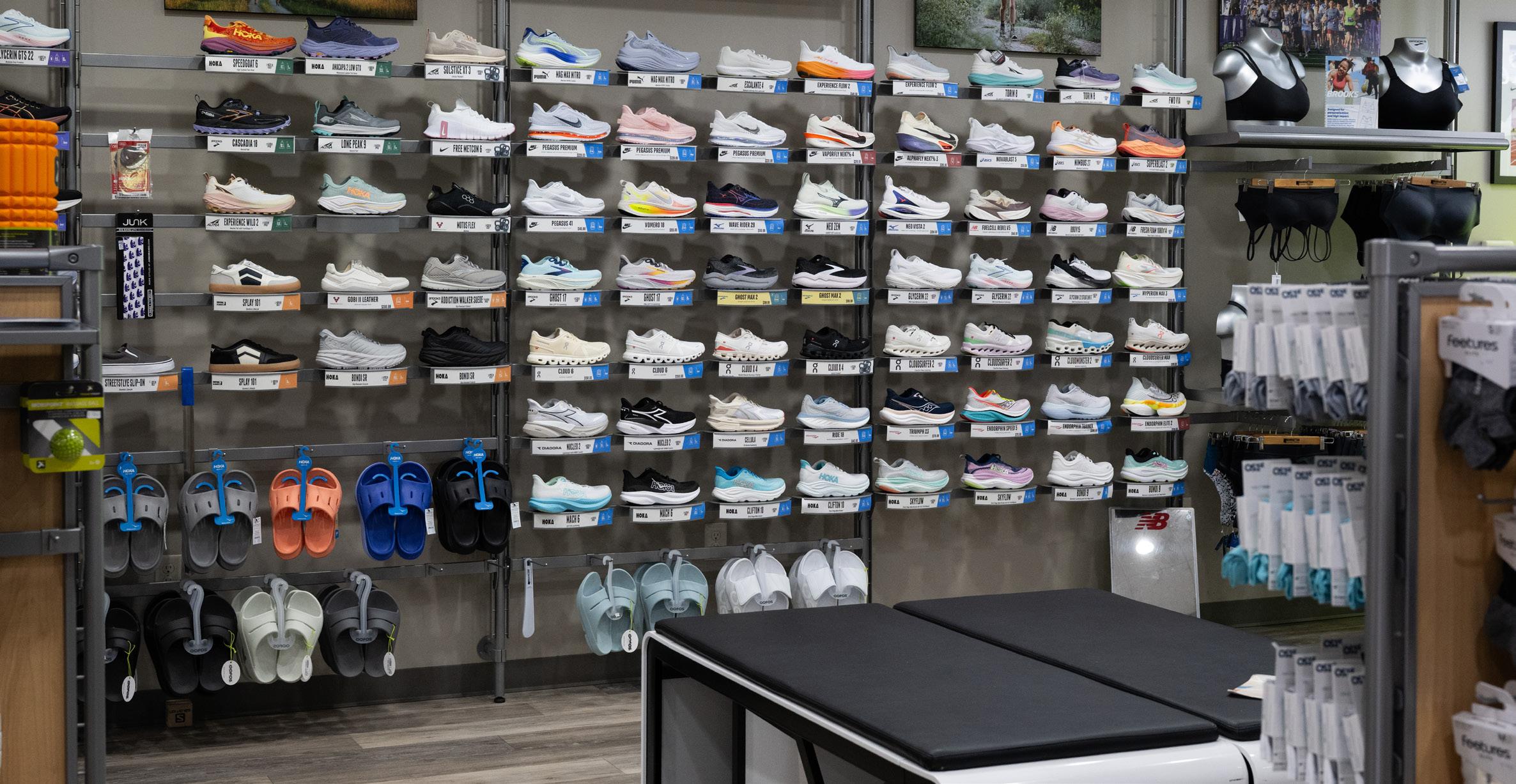
“It just feels like home,” Trey says. “It has the people I love, plenty of stuff to do, and it’s not the crazy traffic of a big city. I’ve lived in London, Kansas City, and Tulsa, but all that hustle and bustle isn’t for me. Manhattan is the kind of place you can spend forever in.”
Ben notes, “The people here deeply care about Manhattan and local businesses. During COVID, the way the community supported us and other local businesses was unbelievable. It made us realize just how special this place is and how amazing our customer base is.”
Today, Manhattan Running Company remains a trusted resource for the local running community, offering expert advice, personalized service, and a genuine passion for the sport that’s been at the heart of their business from its inception.
As Ben says, “It really is true when people say, ‘when you love what you do, you don’t work a day in your life.’”
Learn more about Manhattan Running Company and Red Dirt Race Management by visiting: manhattanrunningco.com and reddirtrunning.com
MANHATTAN IS THE KIND OF PLACE YOU CAN SPEND FOREVER IN.
Favorite Running Trail: Konza Prairie
Favorite Food: Taco Lucha
Favorite Hangout Spot: Aggieville Brewing Company’s Patio
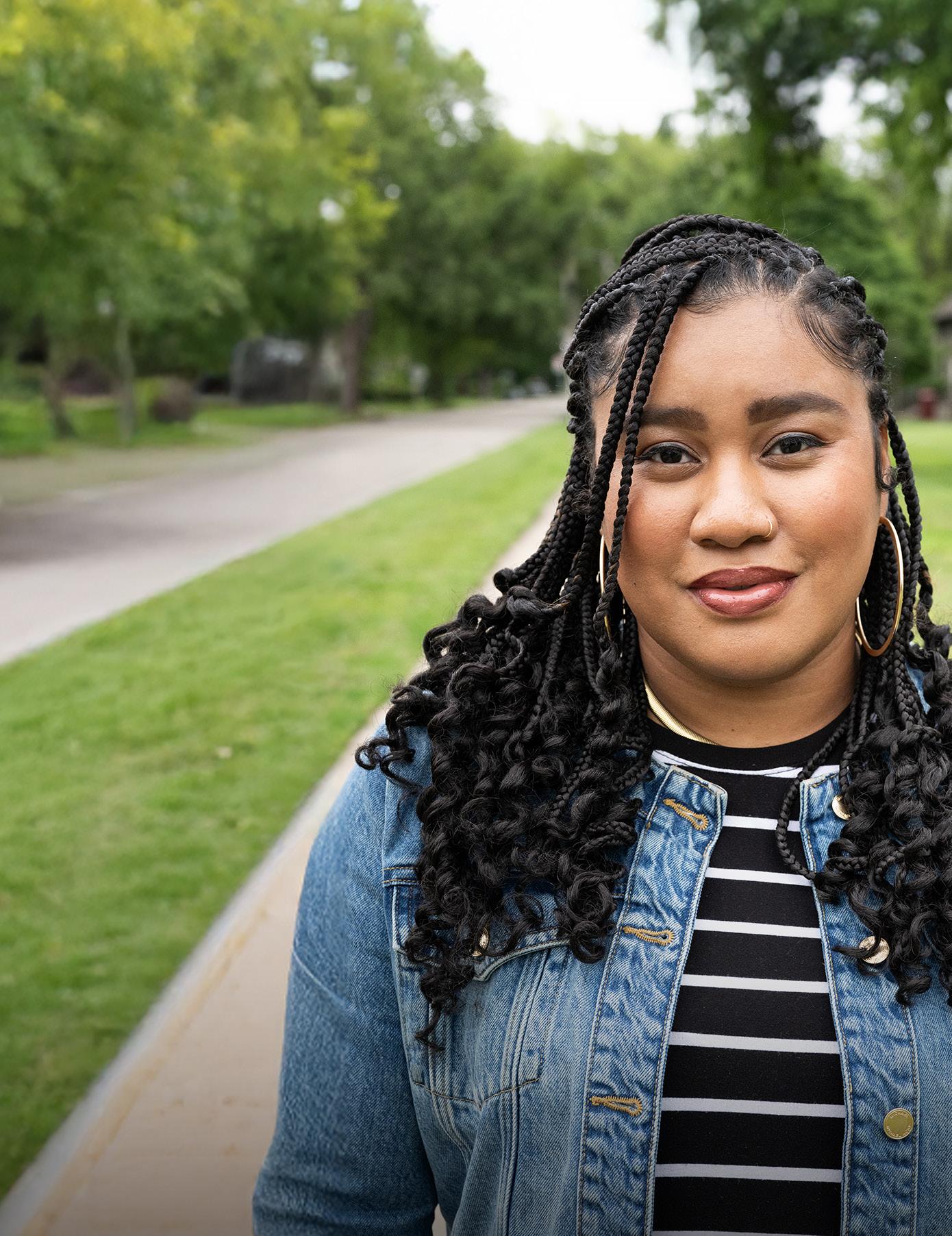
Sheila Ellis-Glasper was a young journalism student taking a news and feature writing class at Kansas State University when she was tasked to find someone to write an article about.
She chose long-term Manhattan resident and Yuma Street historian Rosa Hickman.
Sheila spent a month with Mrs. Hickman, sitting on her porch and learning about the evolution of Yuma Street through her eyes—from its roots as a self-sufficient Black neighborhood when Manhattan was segregated to the generational changes that followed.
Sheila’s piece made such an impression that her professor submitted it to The Manhattan Mercury, where it landed on the front page.
“I’ll never forget the title: ‘ The Face of Yuma,’” Sheila recalls.
Sheila grew up in Topeka, Kansas, and moved to Manhattan in 2005 to attend Kansas State University. She chose K-State’s journalism program because she could work on student publications as a freshman and gain years of experience before applying for internships. This strategy paid off, as she earned a highly competitive internship at the Associated Press in her junior year and received a job offer as a night crime reporter in Roanoke, Virginia, immediately following graduation.
Sheila was ready for new experiences in a new location and was “on the first train out of Manhattan,” as she puts it. During her first week in Virginia, she met Jermain, and they got married eight months later. Shortly thereafter, they had their first son, Tre, and Sheila had to balance being a first-time mom with the demands of her schedule as a night crime reporter.
She was considering a career change when her dad was diagnosed with cancer, so it made sense for her family to move back to Kansas. However, Sheila made it clear that she didn’t want to move to Manhattan.
“I had just left there about two years prior and didn’t want to go back. I kept trying to tell Jermain, who grew up in Roanoke where the Black population is around 29%, ‘I don’t think you understand. You feel a difference when you go from 29% to 5%.’”
As fate would have it, Jermain received an IT specialist job offer at K-State, and Sheila came “kicking and screaming” back to Manhattan.
When Sheila and Jermain arrived in Manhattan, they chose to rent a home on Yuma Street largely because of what Sheila had learned about the neighborhood from Mrs. Hickman. Around the same time, Sheila also began working at K-State, first editing K-State Today and then transitioning into a social media specialist role and eventually becoming the university’s social media manager.
“When I came to Manhattan, the very first thing I did was go over to Mrs. Hickman’s house. She was still there, and she remembered me. She had the whole article framed in her house, so I loved reconnecting with her.”
However, that warm welcome and personal connection starkly contrasted with what Sheila and Jermain heard from others.
“There was this saying around town that you shouldn’t move south of Poyntz. When coworkers asked us where we were living, and we told them about our house on Yuma, it was met with this negativity that you could hear in their voices. They’d say, ‘Oh, you guys moved on Yuma?’”
Even back then, Sheila and Jermain took these conversations as opportunities to educate people about Yuma Street’s history because the stereotypical comments about Yuma often came from people who didn’t understand its significance.
“We were honored to live on that street, and we found our community there,” she says. “We would have purchased that home if our landlord had been selling.”
As Sheila settled into life in Manhattan, she left K-State to start her social media and branding agency, SEG Media Collective. Her experience quickly revealed how difficult it was to find support as a Black entrepreneur. Opportunities for mentorship, funding, and local client work were surprisingly limited.
“I was constantly driving to Topeka and Kansas City to find resources,” she says. “There was no clear ecosystem here for people like me.”
That frustration—and the absence of culturally relevant support—nearly pushed her to leave. Instead, she chose to stay and confront those equity gaps head-on, developing solutions that could empower her and other Black entrepreneurs.
Sheila co-founded Black Entrepreneurs of the Flint Hills (BEFH) with Jermain in 2020 with a clear mission: to narrow the racial wealth gap by engaging, empowering, and equipping entrepreneurs to build sustainable businesses and generational wealth. What began as a small peer support group has grown into a comprehensive nonprofit serving minority business owners throughout the region.
BEFH focuses on one of the most persistent barriers to entrepreneurship: access to capital.
“We kept hearing from business owners who said they didn’t need a huge loan—they just needed a few thousand dollars to get to the next step. That’s the gap we try to fill.”
Through its Circle of Community Grant Program, the organization has distributed over $100,000 in funding to nearly 60 small businesses in the region. These grants help cover everything from startup costs to marketing, inventory, and professional services.
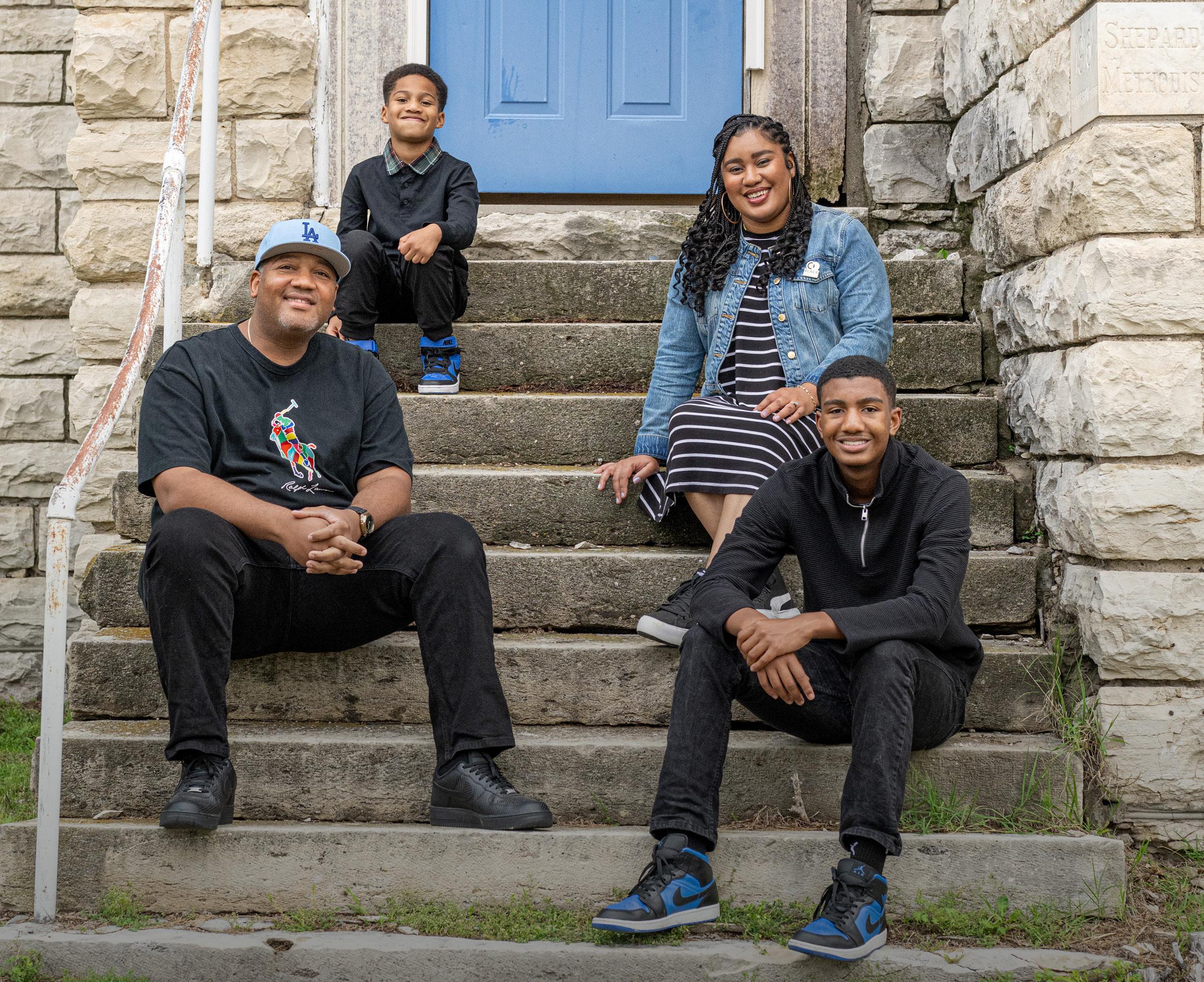
BEFH offers a range of services that reflect both the practical and cultural realities of Black entrepreneurship. One of its cornerstone offerings is the CommerceUplift Program, a 12-week training series that helps entrepreneurs refine their business model and plan.
Additionally, the Grind & Growth Series is a yearlong program designed to equip entrepreneurs with essential skills, financial literacy, marketing expertise, and more.
Beyond funding and training, BEFH prioritizes entrepreneurs’ mental health. The Black Joy Mental Wellness Program includes access to a
trusted network of mental health providers, panel discussions, and other events focused on mental wellbeing.
The organization also invests in future entrepreneurs through its Sankofa Scholarship Program, which provides financial support to outstanding students within K-State’s Black Student Union. It’s one more way BEFH reinforces the long-term pipeline of minority business leaders in the region.
“Our work isn’t just about business,” she says. “It’s about building systems that allow Black entrepreneurs to thrive right here in the Flint Hills.”
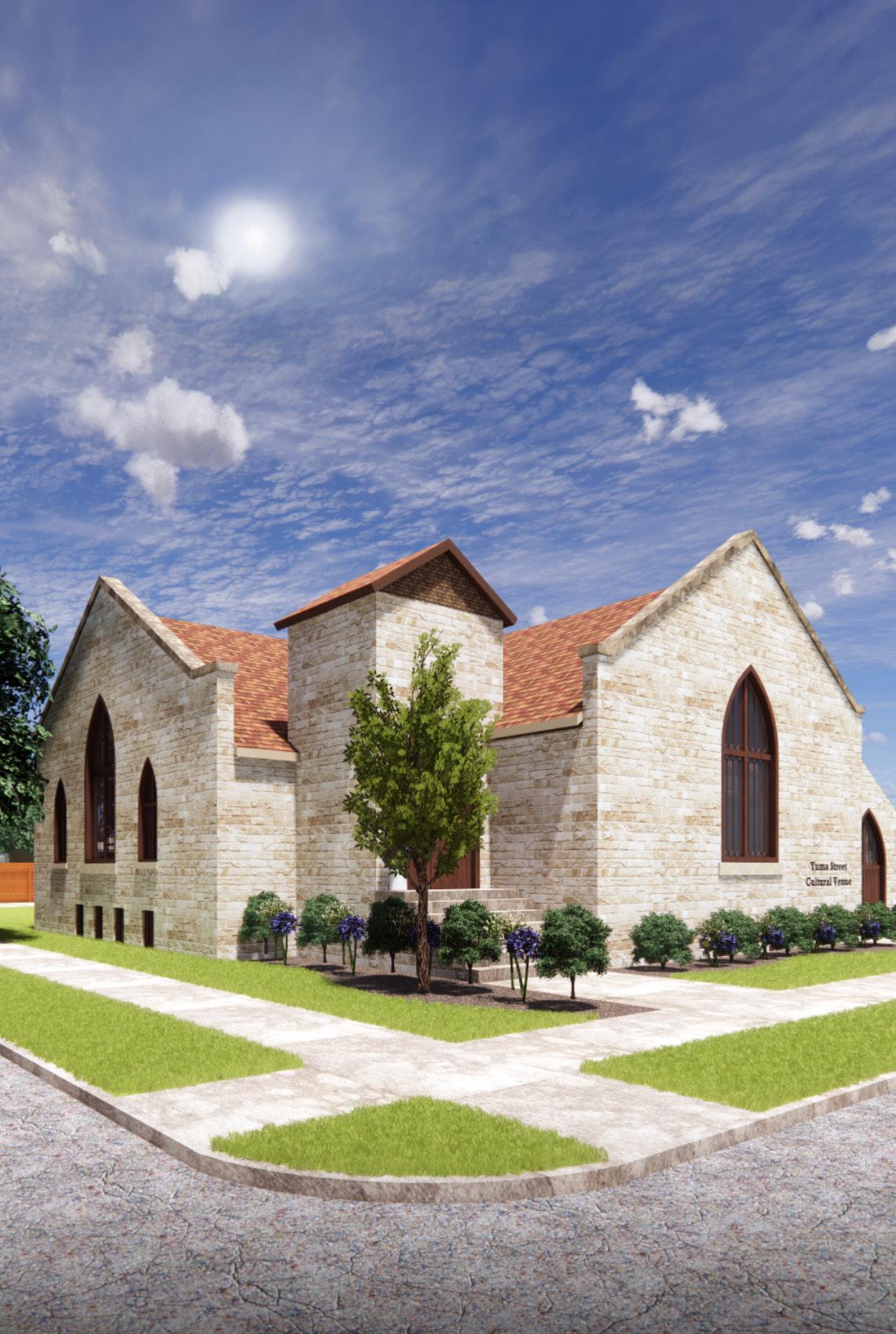
As BEFH has grown, so has the need for a dedicated space to house its expanding programs and operations. That’s why a $1.7 million capital campaign is underway to transform Shepherd’s Chapel, the last standing historical building in the Yuma Street Historic District, into the Yuma Street Cultural Center. The Center will serve as BEFH’s future headquarters and become a magnet for tourism.
“There’s so much rich Black history in our area that’s not honored in a tangible way that someone visiting could learn about. Not only will we honor that history, but we will push BEFH’s mission forward by providing resources our community needs to thrive,” she says.
In addition to housing BEFH’s core programming, a state-of-the-art catering kitchen and culinary incubator will support food entrepreneurs who need space to
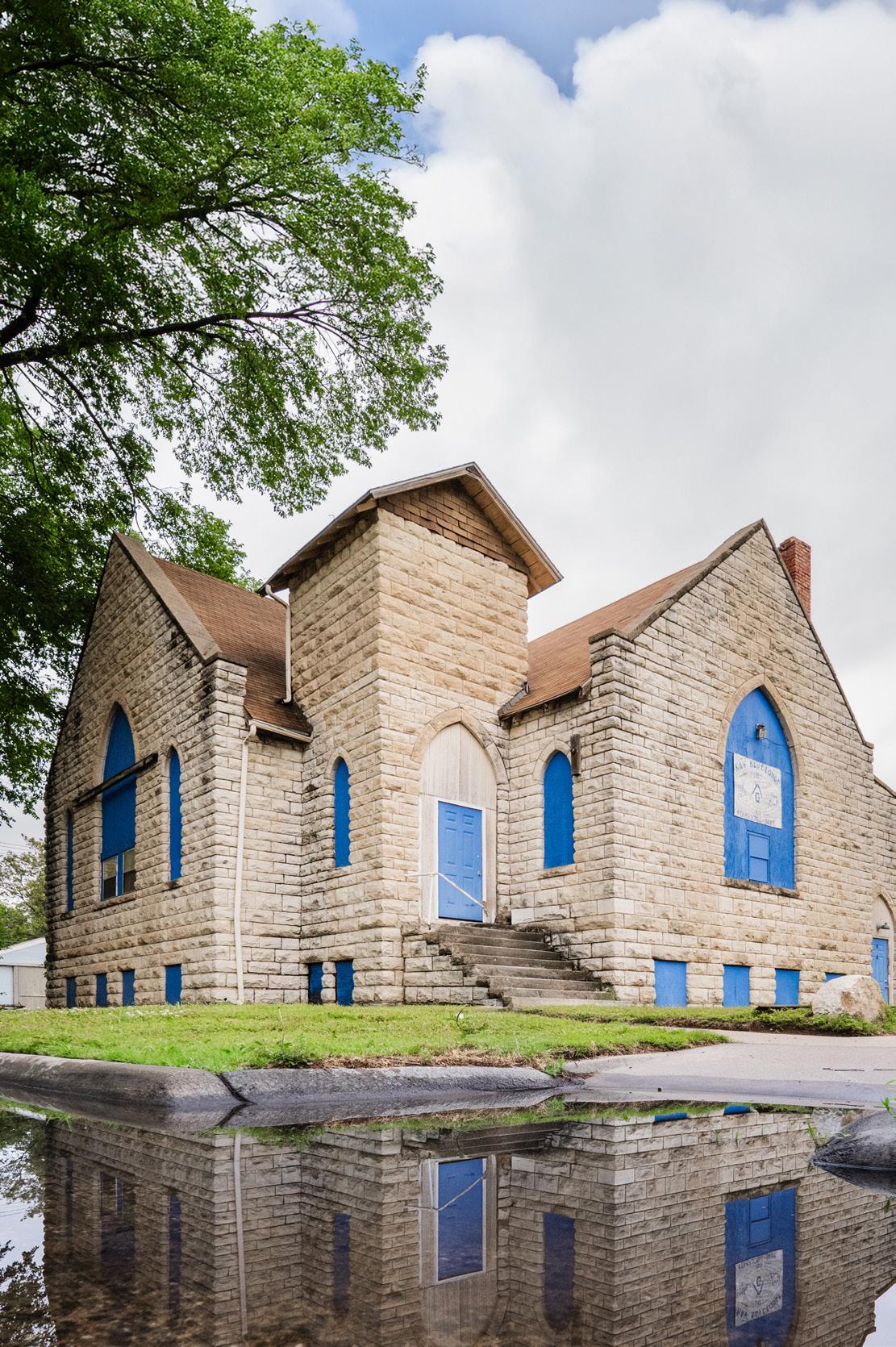
grow. The Center will also host regular outdoor events and markets, allowing local vendors to showcase their work, generate income, and share their culture with the broader community.
Another vital feature of the Center will be the Digital Equity and Tech Access Hub. It will offer affordable laptop, tablet, and WiFi hotspot rentals, which are especially helpful for students, families, and small business owners.
“My hope for the Manhattan community is that we truly can back up what we say when we say we’re a welcoming community. That includes quality of life— having the resources and safe spaces in our community to feel included and have a sense of belonging. That’s exactly what we’re doing here with the Yuma Street Cultural Center.”
When Sheila sat on Mrs. Hickman’s porch nearly 20 years ago, she couldn’t fathom a life for herself in Manhattan, let alone shaping its entrepreneurial ecosystem and safeguarding its Black history. Reflecting on Sheila’s journey, it seems her return to Yuma Street was destined to be.
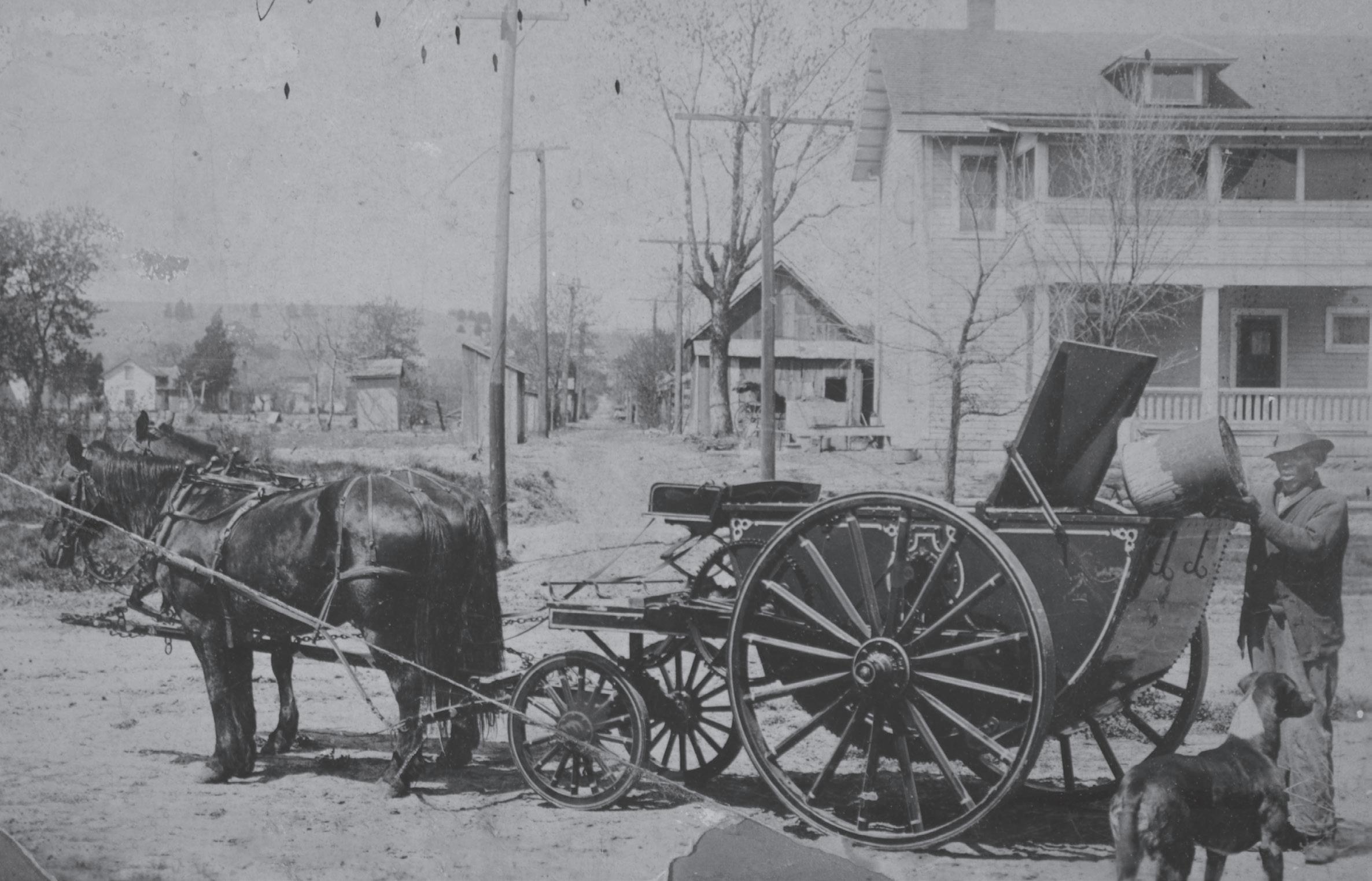
“Years later, after I wrote the article, I learned Mrs. Hickman’s grandfather was Jeremiah Mitchell. He was the first Black entrepreneur on record here in Manhattan. There’s this iconic photo of him with his horse-drawn trash-collecting rig. His horses dug the foundation of Shepherd’s Chapel, which is what we’re turning into the Yuma Street Cultural Center. Moments like that are why I say this work is truly a calling.”
From Sheila’s college reporting to her present-day revitalization efforts, she’s been a steward of Yuma Street and what Yuma Street represents—resilience,
legacy, and ownership. Her work has dismantled barriers, expanded access, and re-imagined systems, and she’s just getting started.
For all these reasons, Sheila is more than deserving of the title: “The New Face of Yuma.”
Learn more about Black Entrepreneurs of the Flint Hills and the Yuma Street Cultural Center by visiting blackflinthills.com
MY HOPE FOR THE MANHATTAN COMMUNITY IS THAT WE HAVE THE RESOURCES AND SAFE SPACES IN OUR COMMUNITY TO FEEL INCLUDED AND HAVE A SENSE OF BELONGING.
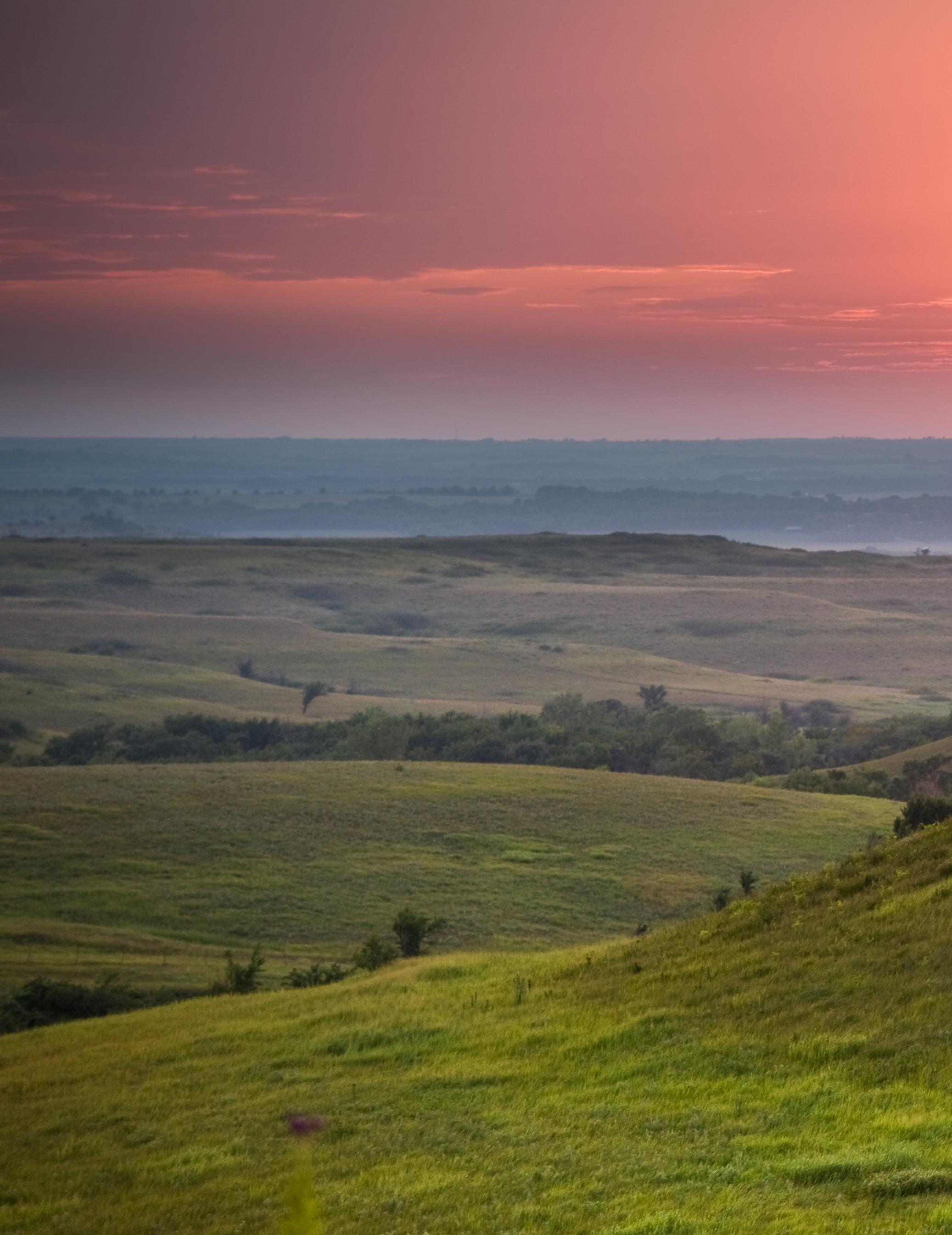
A FEELING
Forget the stereotypes—life in the Flint Hills is full of stunning views and unexpected adventures.
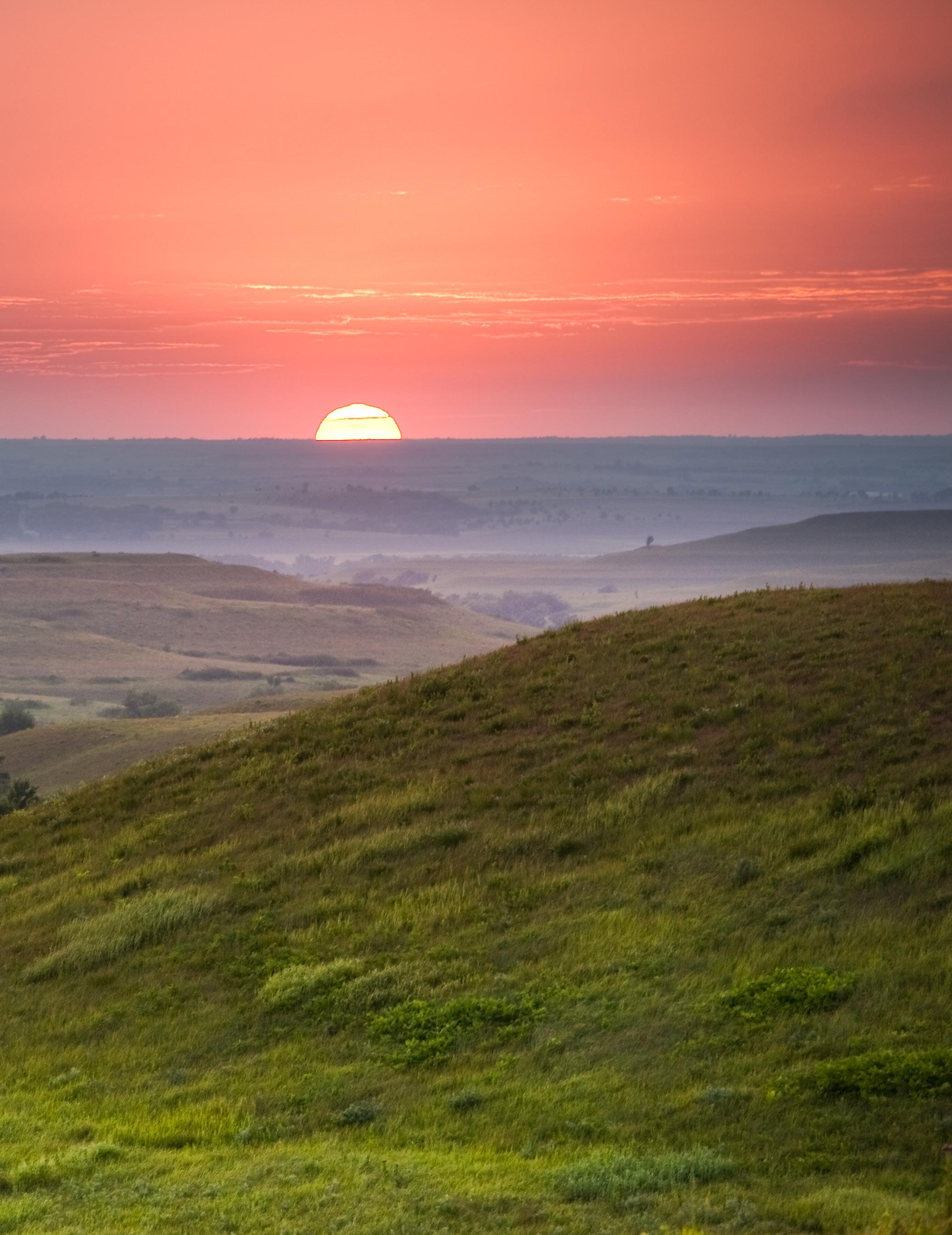

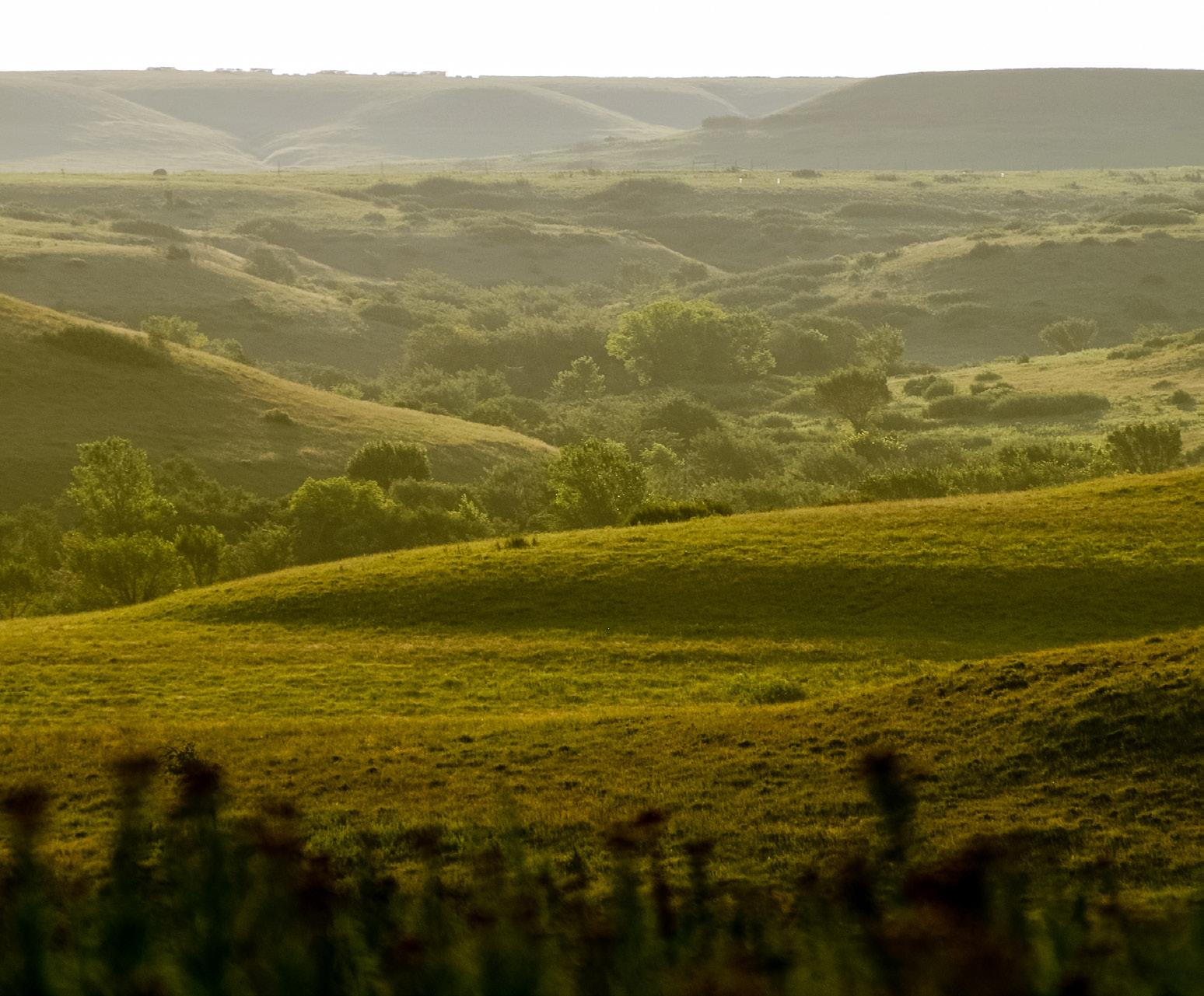
The Konza Prairie Biological Station (KPBS) is a 3,487-hectare native tallgrass prairie preserve jointly managed by The Nature Conservancy and Kansas State University. Most of KPBS and the surrounding land has never been plowed, preserving much of its natural state.
The Konza Prairie offers three hiking trails that pass through lowland gallery forests, cross Kings Creek, and climb ancient limestone ledges into the expansive tallgrass prairie, with breathtaking views of the Flint Hills and Kansas River Valley from the highest points.
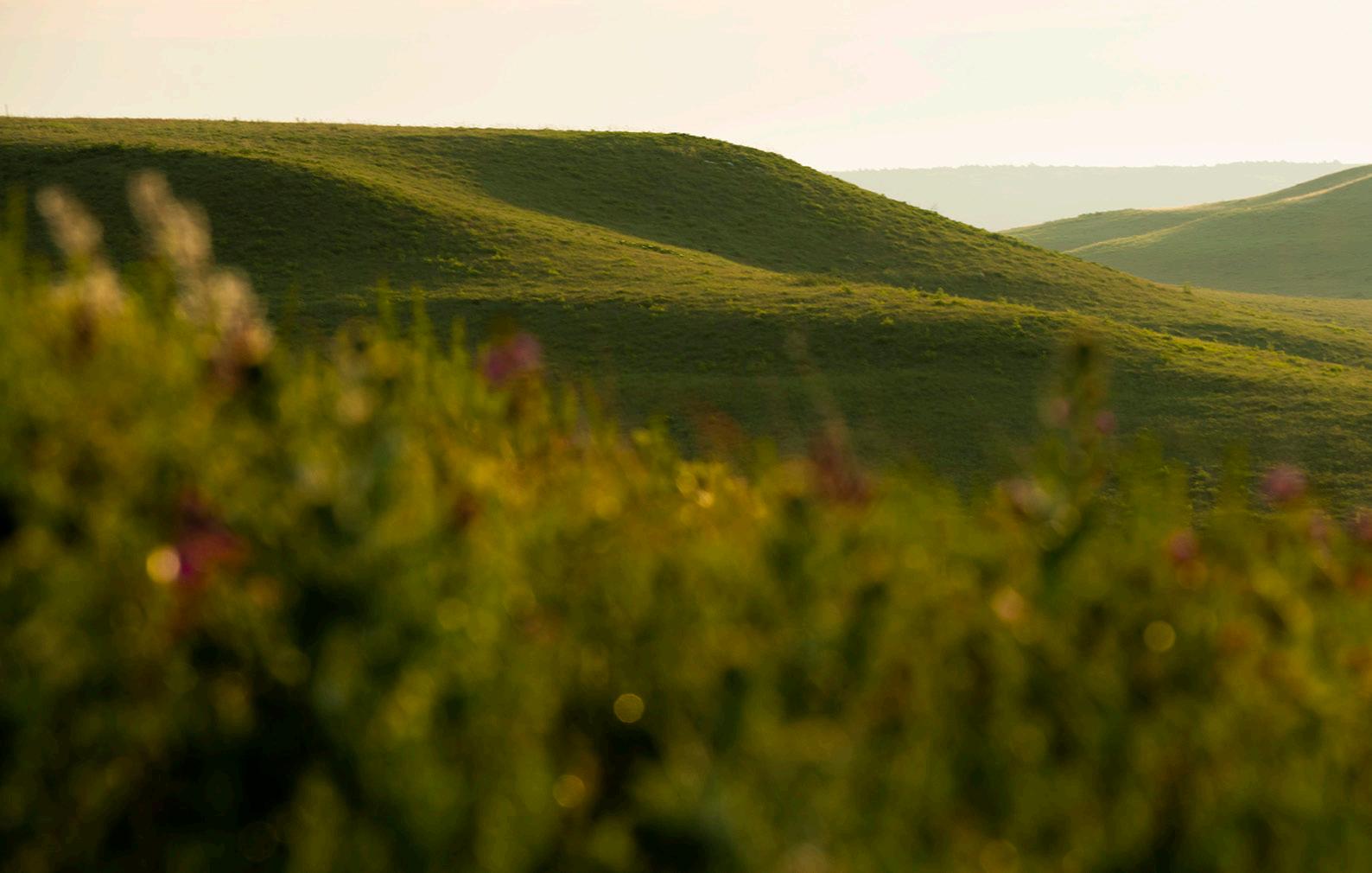

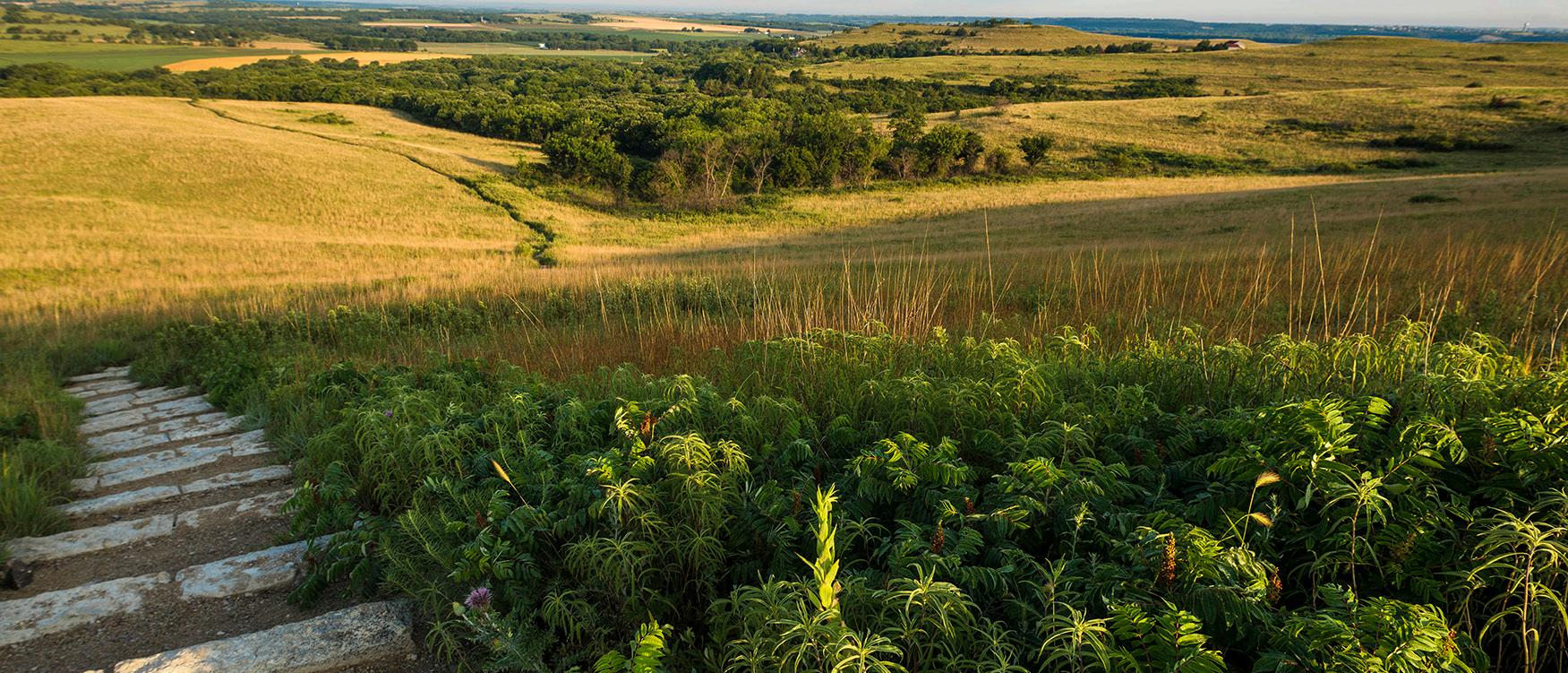


Tuttle Creek State Park spans 1,200 acres and consists of five units: River Pond, Rocky Ford, Cedar Ridge, Fancy Creek, and Randolph.
The park offers a variety of nature trails, a mountain biking trail, and a scenic equestrian trail for exploring the beautiful Flint Hills. Visitors can also enjoy picnic areas, an 18-hole disc golf course, volleyball courts, horseshoe pits, and more.

Milford State Park is situated on the southeast shore of Milford Reservoir, Kansas’ largest lake, which covers about 15,700 acres of water and 163 miles of shoreline.
Spanning 1,084 acres, Milford State Park offers a wide range of activities, catering to campers, boaters, fishermen, hunters, water lovers, wildlife watchers, picnickers, and trail users.
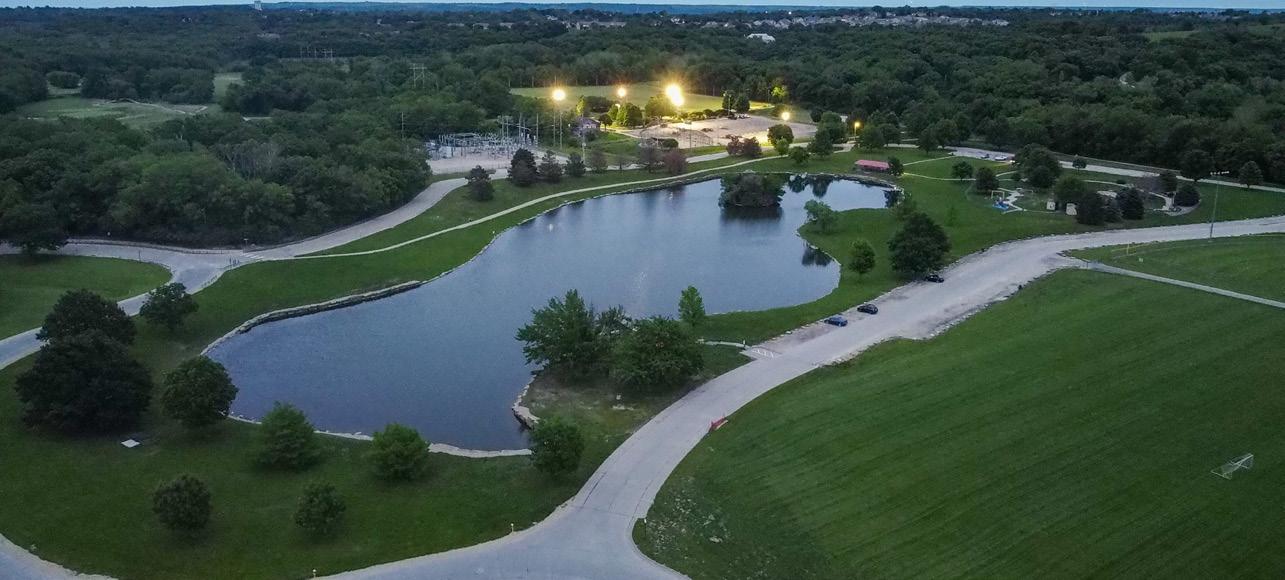
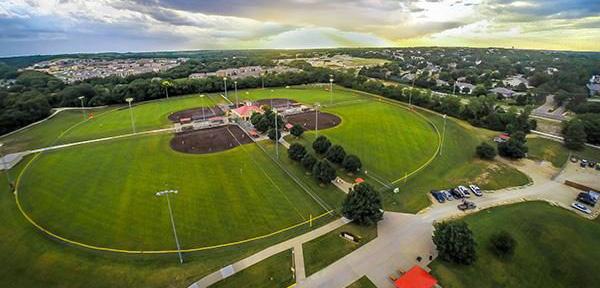
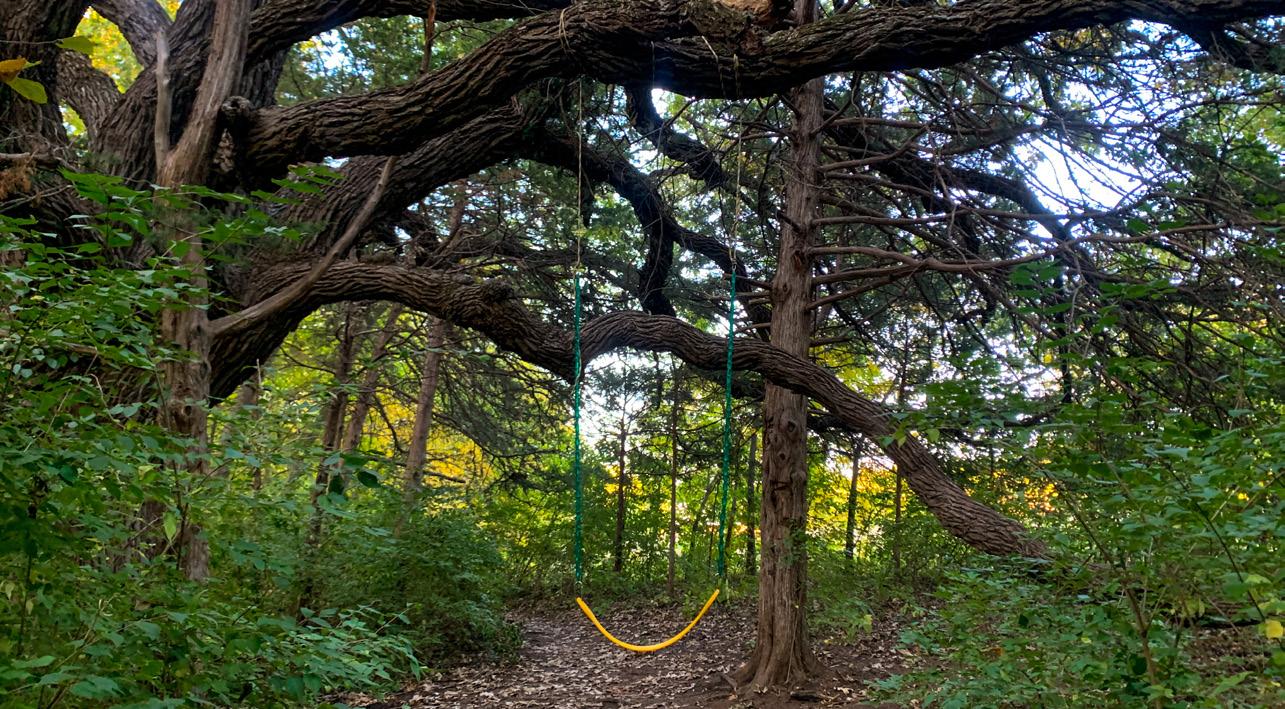
Manhattan boasts a variety of trails for hiking, biking, and horseback riding.
Anneberg Park Perimeter Trail
Bluemont Scenic Overlook
Carnahan Creek Trails
Cico Park Trail
Clarenburg Trail
Fairmont Park
Fancy Creek Mountain Bike Trail
Hudson Trails
Konza Prairie Trails
Linear Park
Northeast Community Park Trail
Randolph State Park
Warner Park Trails
Washington Marlatt Park Trails
Western Heritage Trails

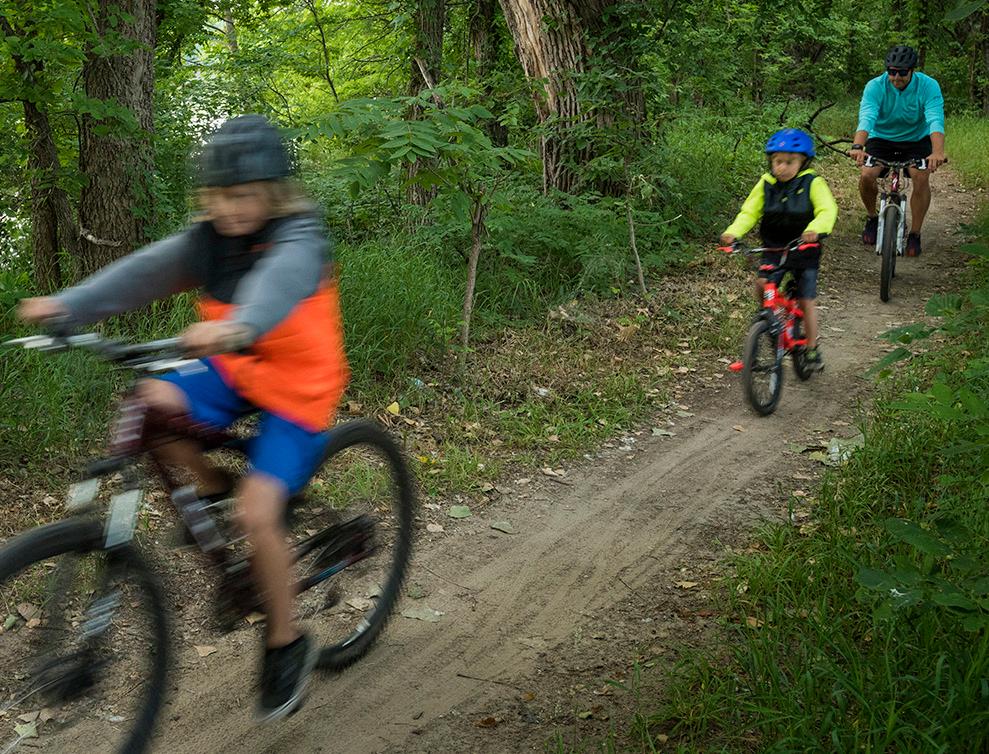
Manhattan and Kansas State University have earned bronze-level recognition as a bicycle-friendly community and university from the League of American Bicyclists.
The city offers a growing network of bike lanes, boulevards, and trails for recreation, relaxation, and exercise. Popular routes include the Big Blue River Trail, Fancy Creek State Park, Hudson Trail, and Linear Trail.
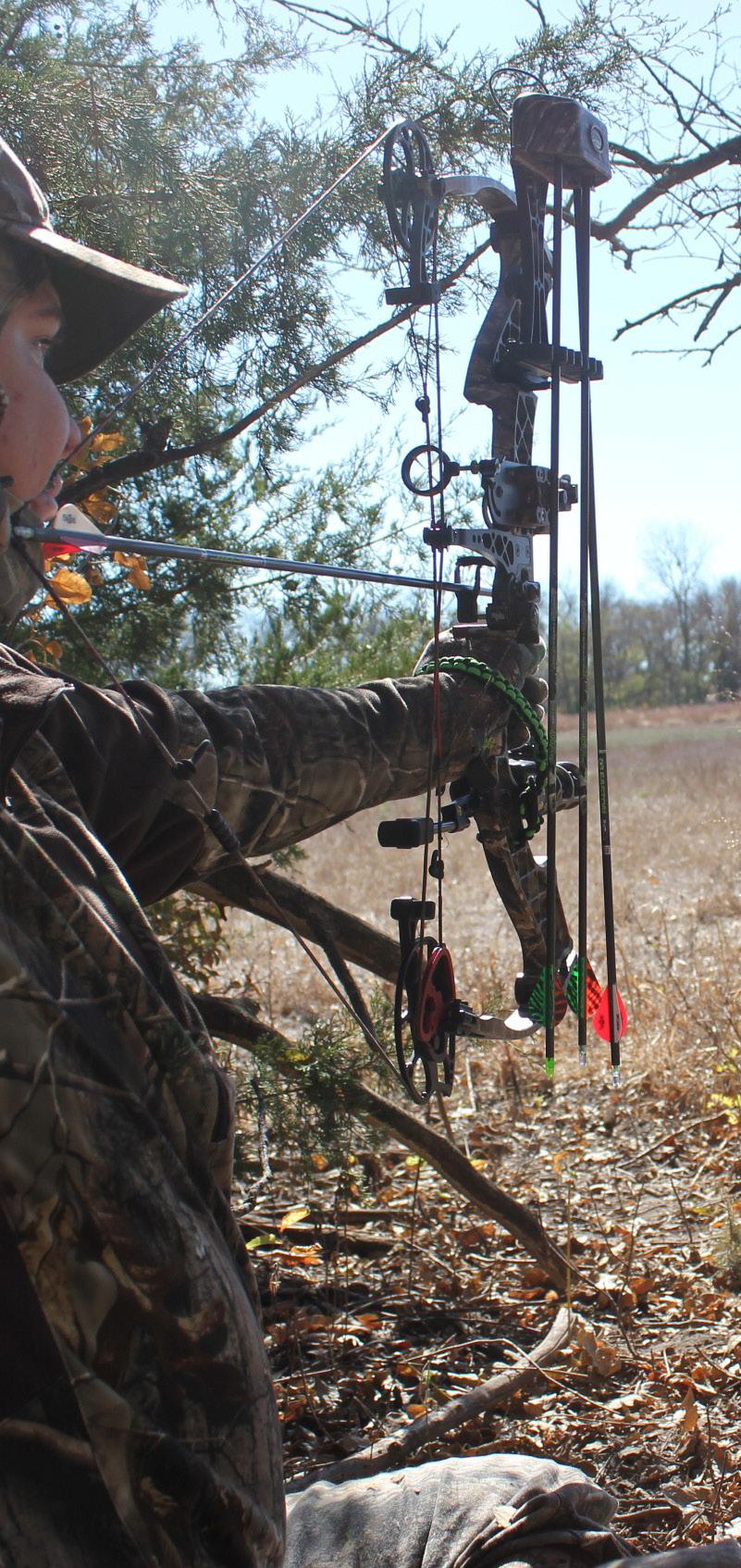
Manhattan offers over 108,000 acres of public hunting land, open to licensed hunters during regular game seasons.
Most land in Kansas is private and requires permission to access, but the state’s 350,000 acres of water make it a hidden gem for fishing.

Wildwood Adventure Park features a 7-line zipline tour with a 40-foot freefall and lines up to 1,400 feet long, offering stunning views of the Flint Hills.

Experienced paddlers can take on the 173-mile Kansas River, with two access points just three miles apart in Manhattan.
For easier outings, Tuttle Creek offers options for all levels—from the calm River Pond for beginners to multiple launch spots on the lake. Pottawatomie County State Lake also provides a peaceful paddling experience.

The stunning terrain of the Flint Hills provides an engaging experience for golfers of all skill levels, from casual players to seasoned pros. Manhattan is home to four unique courses, including a PGA-licensed course and a par-3 executive course.
» Colbert Hills Golf Course
» Manhattan Country Club
» Stagg Hill Golf Course
» Wildcat Fitness & Fun
Manhattan has five prominent disc golf courses that vary in layout and length.
» Fairmont Park
» Tuttle Creek State Park
» University Park
» Warner Park






K-State grads stand out to national and international employers for their technical expertise and hands-on experiences. 96% of 2023-2024 K-State graduates are employed or pursuing further education, with 74% finding employment in Kansas or in surrounding states.
The network of support and applied learning opportunities at K-State are creating top-tier leaders and innovators, such as Thane Meadows. A May 2024 graduate, Meadows discovered his passion for human resources through a series of internships and launched his career in employee benefits.
“Faculty went beyond textbook learning to share real-world insights and teach essential skills employers seek, while staff provided valuable mentorship and connections that shaped my career,” Meadows said.
Doing good in Kansas means doing good for the world.
k-state.edu/admissions
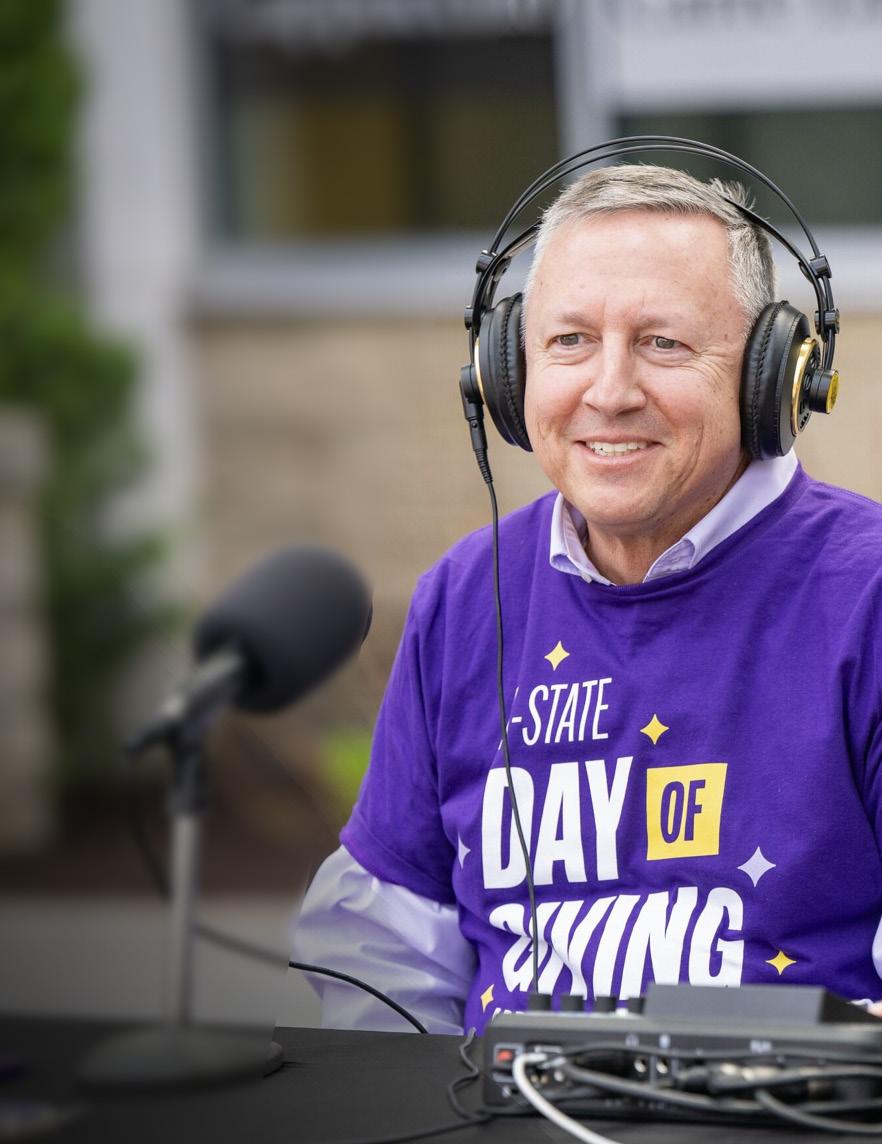
With
an impressive resume and even more impressive pizzamaking skills, President Linton’s approachable, relationshipfocused leadership style is shaping the next generation of Kansas State University.
President Richard Linton describes his career path to becoming the 15th president of Kansas State University as the result of years of planning, critical mentorships, and a little bit of luck. It all started in Wilmington, Delaware, where he grew up in a family that valued education. His father was a chemist, and his mother was a teacher—early influences that shaped both his academic and personal values.
“I always wanted to be like my dad. He was a firstgeneration college student who earned a PhD in chemistry, so a PhD was somehow always in my future,” Linton says.
Linton received his bachelor’s degree in biology, master’s in food science, and PhD in food science from Virginia Tech University. There, he met Professor Merle Pierson, who played a pivotal role in his career choice.
“When I was finishing my PhD program, other students would have voted me most likely to go and work for a company within the food industry. Ironically, Professor Pierson, whom I was teaching a food microbiology lab for, took me aside and said, ‘You’re an incredible teacher, and you should seriously consider going into academia.’”
That guidance was enough to change Linton’s mind and career trajectory.
Linton spent 18 years at Purdue University, climbing the ranks from assistant professor to associate professor to full professor. Next, he became the department chair of food science and technology at
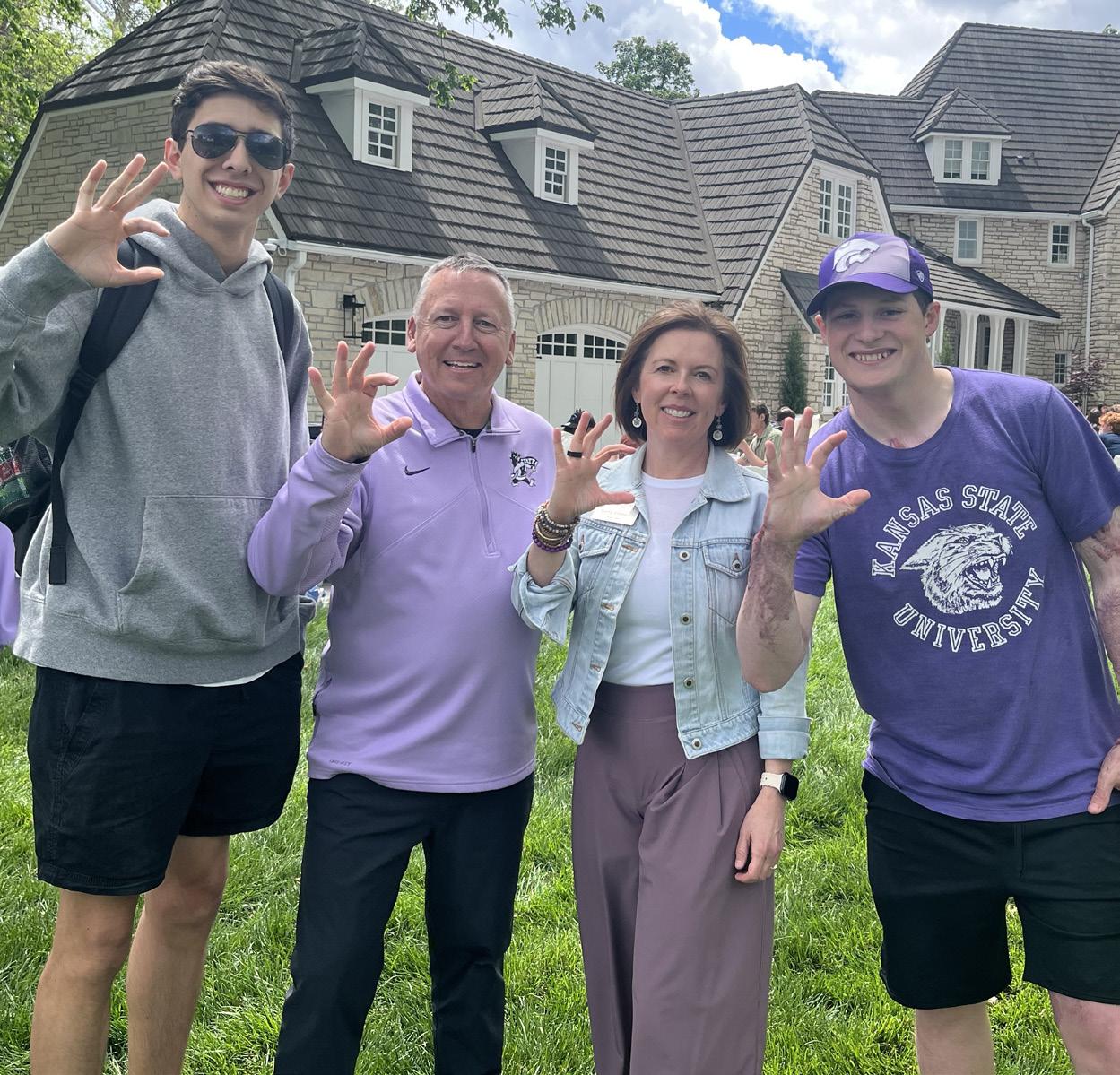
Ohio State University, then dean of the College of Agriculture and Life Sciences at North Carolina State University.
Each role was a natural stepping stone to becoming a university president someday, but Linton recalls two key moments where luck struck.
“The first was when I was at Purdue early in my career. They wanted me to develop a university-wide project called the Center for Food Safety Engineering, which would bring experts from five schools together to work on food safety and quality problems. It was my first real shot at administration. When they interviewed me, they asked, ‘Can you get excited about the success of other people?’ I realized very early on that it would give me more joy to see other people succeed and be a part of that.”
I REALIZED VERY EARLY ON THAT IT WOULD GIVE ME MORE JOY TO SEE OTHER PEOPLE SUCCEED AND BE A PART OF THAT.
When K-State came knocking, Linton turned down the presidential search committee three times. Herein lies the next stroke of luck.
“I was trying to finish the new plant science building project at North Carolina State University and wasn’t ready to leave. I then received a phone call from Senator Pat Roberts because he was on K-State’s presidential search committee. I hadn’t spoken to him since we met 20 years ago in D.C. When we had met, he asked me, ‘What do you want to do when you grow up?’ I had told him I wanted to be a university president.”
Linton continues, “On the call, Pat told me that he was cleaning out files at home, dropped one, and out came a picture of him and me in D.C. all those years ago. He remembered our conversation and called to convince me to apply for the job.”
After three interviews over the course of three weeks, Linton was named president.
“Through that process, I learned the importance of building relationships with people,” he says. “Even the smallest of conversations can be life-changing.”
When Linton started at K-State in February 2022, he faced a serious issue: declining enrollment. University student enrollment fell nearly 25% between 2014 and 2022, and all eyes were on Linton to see what he would do next.
One of Linton’s first significant actions was prioritizing relationship-building. Over several months, he and his team visited all 105 counties in Kansas to understand what people needed from their land-grant university, not just now but in the future.
The listening tour helped shape Next-Gen K-State, the university’s new strategic plan that reimagines what a modern land-grant university can be. In addition to strengthening the university’s academic, research, and extension programs, the plan focuses on enrollment growth, increased student retention and graduation rates, applied learning experiences, interdisciplinary research and partnerships, and statewide economic development.
Projects like the National Bio and Agro-Defense Facility (NBAF), Kansas Water Institute, Agricultural Innovation Initiative, Edge District, and expanded non-degree credentialing opportunities exemplify the university’s long-term strategy in motion.
“The thinking is to bring industry to campus and develop these public-private partnerships where industry, faculty, and students work hand in hand. One example is the Edge District and strengthening the animal health corridor in our region. You’re taking all the advantages of a renowned veterinary program, a fast-growing Department of Animal Sciences and Industry, and NBAF, which is the nation’s only large animal biosafety level 4 facility. “
Linton continues, “These partnerships that develop a highly skilled workforce and provide a career pipeline for students are how we can attract industry to Manhattan and grow our economy.”
Early signs of momentum are already visible—K-State exceeded its enrollment target in 2024 with 20,295 students, and more than $500 million in capital investment is underway across campus.
“We’ve been working hard to grow our student numbers, help make the economy more vibrant, and build the best relationships with the community,” he says. “Not only does that benefit K-State, it benefits Manhattan and our state as a whole.”
Long before stepping into the role and embarking on Next-Gen K-State, Linton and his wife Sally spent a few days in Manhattan to get a feel for the community.
“No one knew who we were, and nobody knew I was interviewing to be the president. When we were first walking around campus with a map, we didn’t have to ask for help—people came up to us, offered directions, walked us to our destinations, and held the doors open for us.”
He continues, “That’s the special nature of K-State, and I’ve not seen anything like it anywhere else. I wish we could bottle it and sell it as we’re trying to recruit people, because unless you come here, you don’t feel it. I had to convince Sally to come to a state she had never been to. So, the last night in town, I asked her,
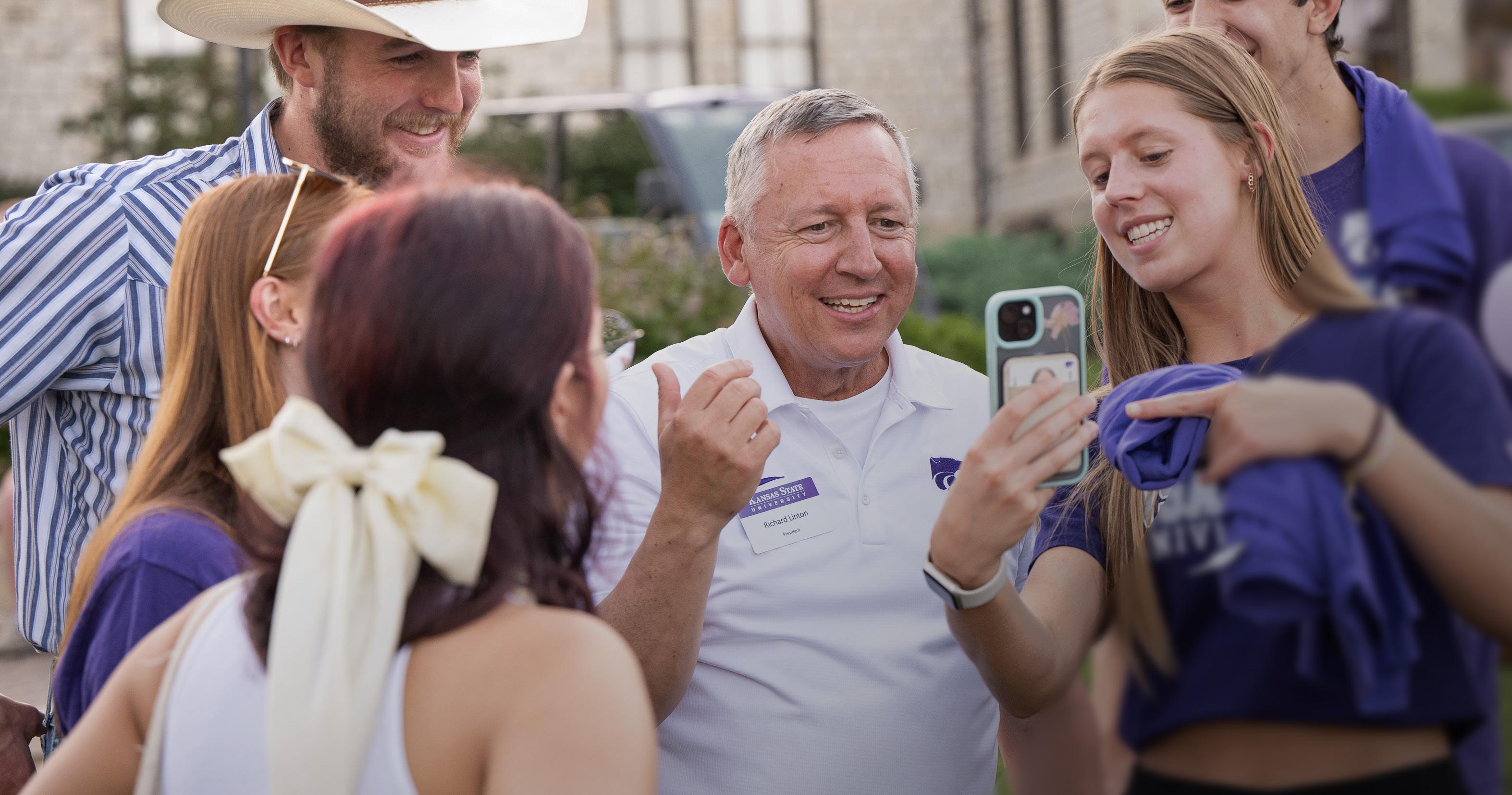
‘Well, what did you think?’ And she said, ‘I’ve never met a place that’s more authentic, real, and genuine.’”
Linton describes Manhattan’s culture as an equation of authenticity, realness, and connectedness—a fitting description for someone whose leadership style mirrors these traits.
“Every single thing that I do in leadership is build relationships. If you work with other people and you establish trust, there is absolutely nothing you can’t accomplish. It’s the only way to make the impossible possible.”
In case anyone doubts Linton’s commitment to relationship-building, he and the First Lady host nearly 200 events at their home during the academic year.
“Our philosophy is to engage with faculty, staff, students, legislators, donors, alumni, friends, and community members to discuss where we want the university to go. But more importantly, I’ve got two ears and one mouth for a reason—to listen twice as much as I speak. That’s who we are and how we’ve been successful.”
The Lintons host everything from small dinners with donors to major events like Lunch with the Lintons, where over 3,500 students, faculty, and staff stop by the“Prez Rez” for lunch.
“The great thing about the students is they’re not just grabbing food and leaving. They’re coming and sitting at tables, engaging with each other. They’re playing with our dogs and talking with us. As the President and First Lady, we want people to know we’re approachable and here to listen to their ideas.”
While Linton’s schedule doesn’t leave much free time, he makes room for the things he loves: quality family time with Sally and their two children, hiking or skiing in Colorado, cheering on the Phillies, and yes— making pizza.
“Everybody has their thing, and my thing is making pizza. I do it for my family and for donor events to support the university. I used to make pizza on the boardwalk in Ocean City, New Jersey, and would make up to 1,300 pizzas a day. If there were only one thing left in life to do, I would make pizza for other people,” he laughs.
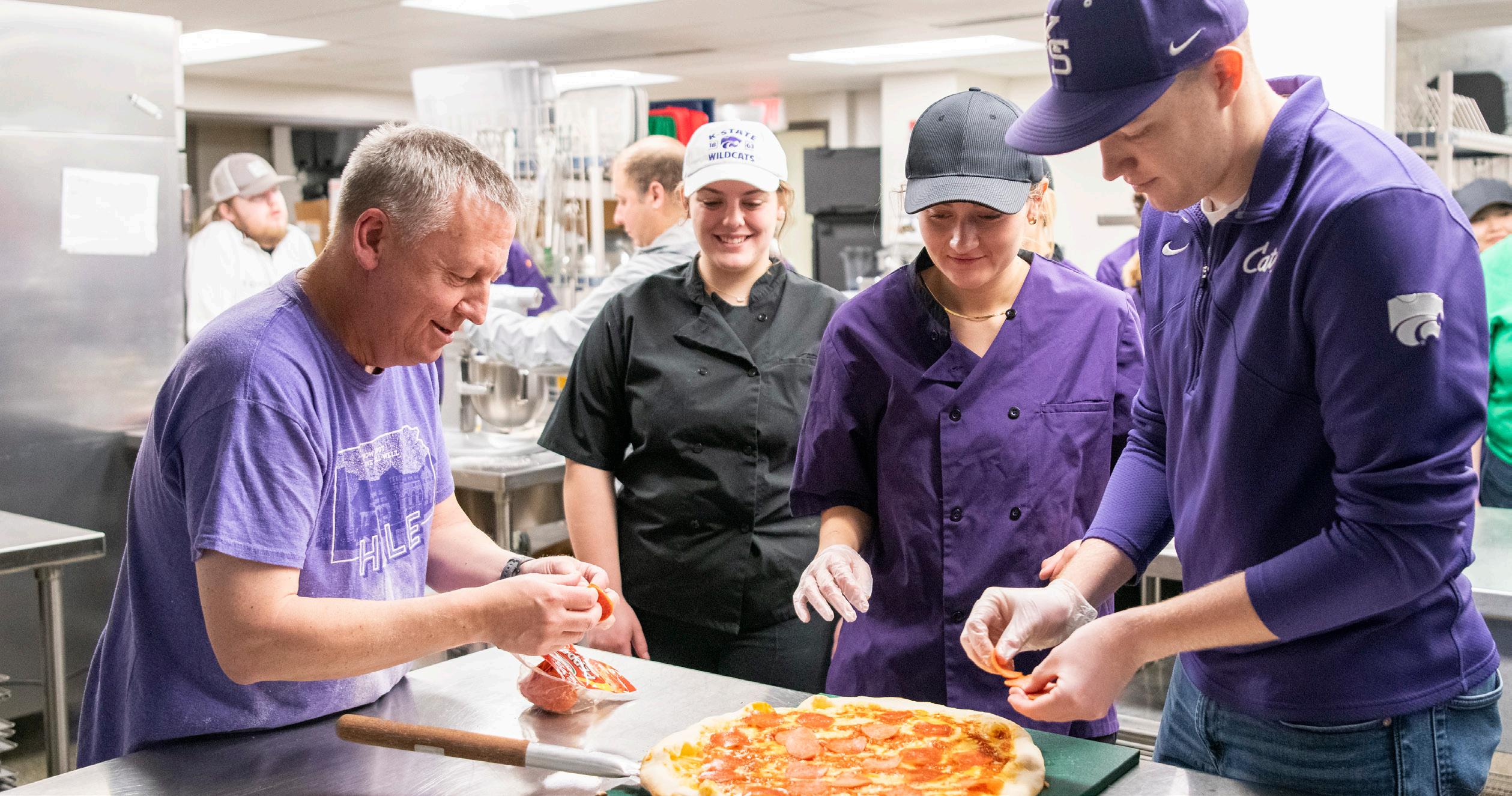
Now that President Linton has had a few years to settle into his new role and life in Manhattan, it’s clear he’s guiding K-State in a way that reflects the community’s innate spirit—choosing connection over authority, curiosity over assumption, and trust over ego.
“One of my mentors once asked me, ‘Do you need to be the person center stage, or are you willing to hold the door for others and stand quietly in the back of the room?’”
Turns out, he’ll be listening and serving others from wherever he’s needed—especially if it involves tossing pizza dough in the back of his kitchen.
I’VE NEVER MET A PLACE THAT’S MORE AUTHENTIC, REAL, AND GENUINE.
Although you won’t be able to recreate President Linton’s famous homemade crust at home, you can use these toppings to spice up your next pizzas.
Broccoli Pie
• Frozen Broccoli
• Aged Vermont White Cheddar Cheese
• Parmesan Cheese
The President’s Special
• Sun-Dried Tomatoes
• Shrimp
• Aged Vermont White Cheddar Cheese
• Parmesan Cheese
Aggieville got its name from the Kansas State Agricultural College “Aggies” mascot. While it may be the oldest shopping district in Kansas, it’s undergoing major changes to make it a beautiful, vibrant, and pedestrian-friendly destination.
It’s located across the street from Kansas State University and offers both family-friendly establishments and late-night entertainment.

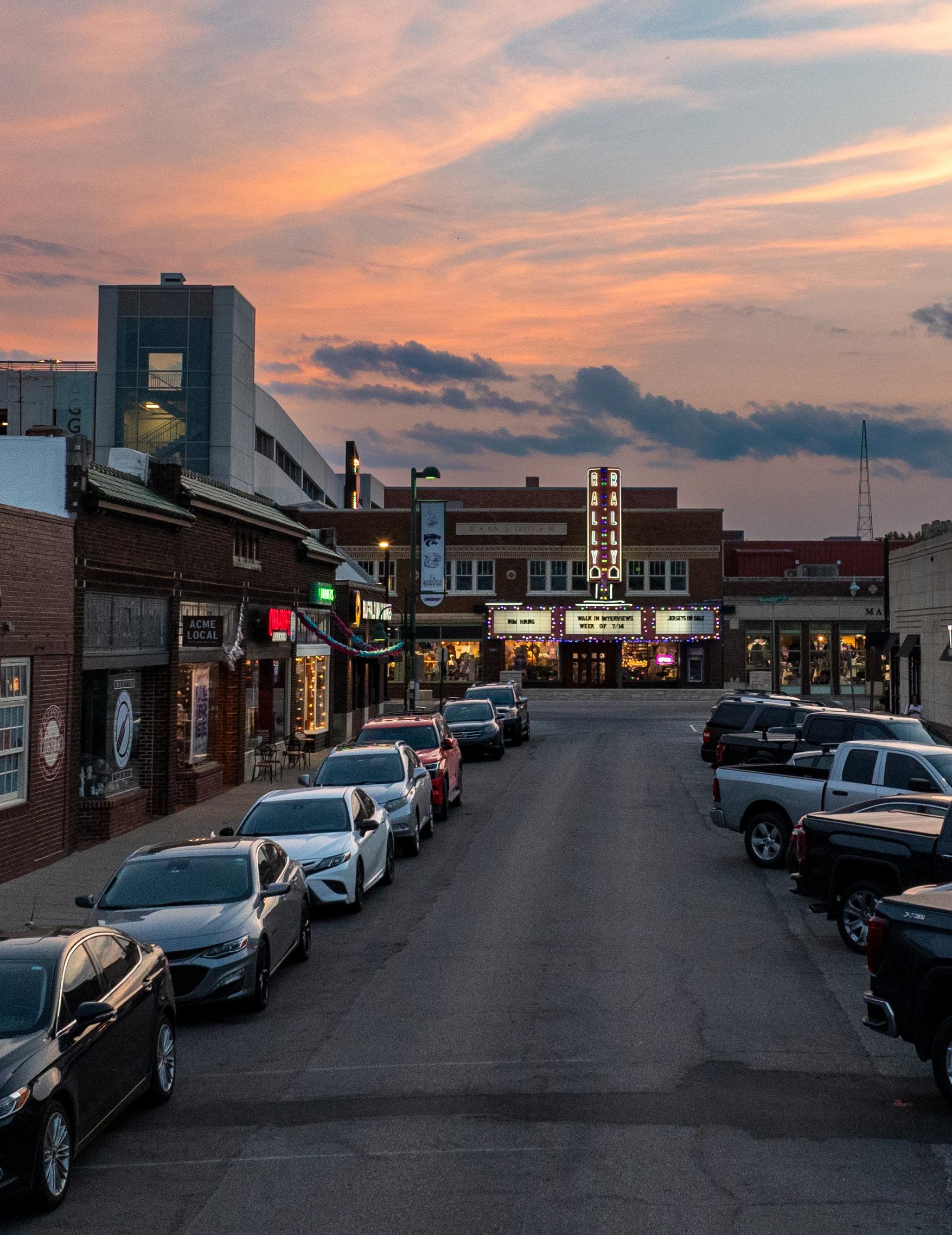
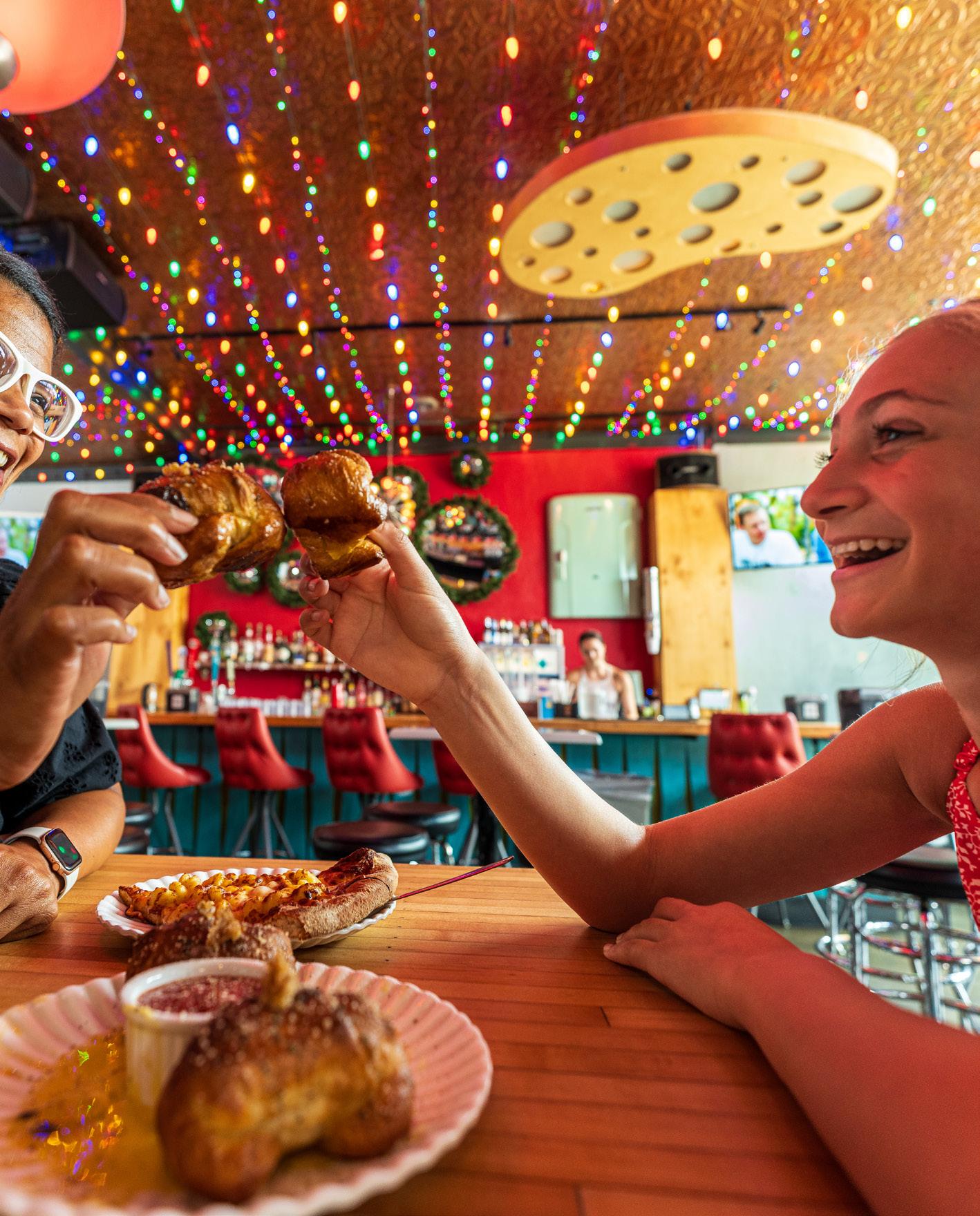

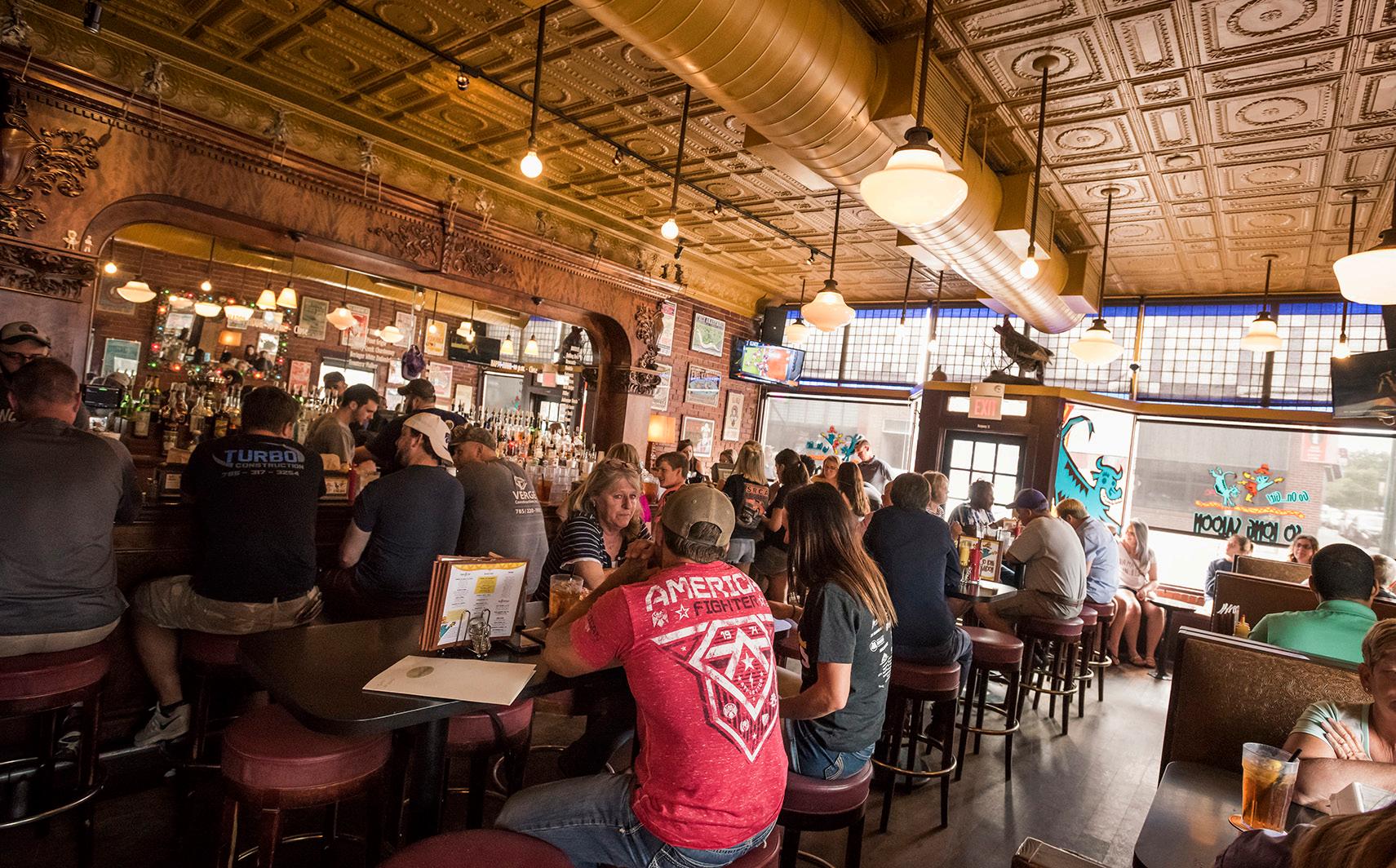
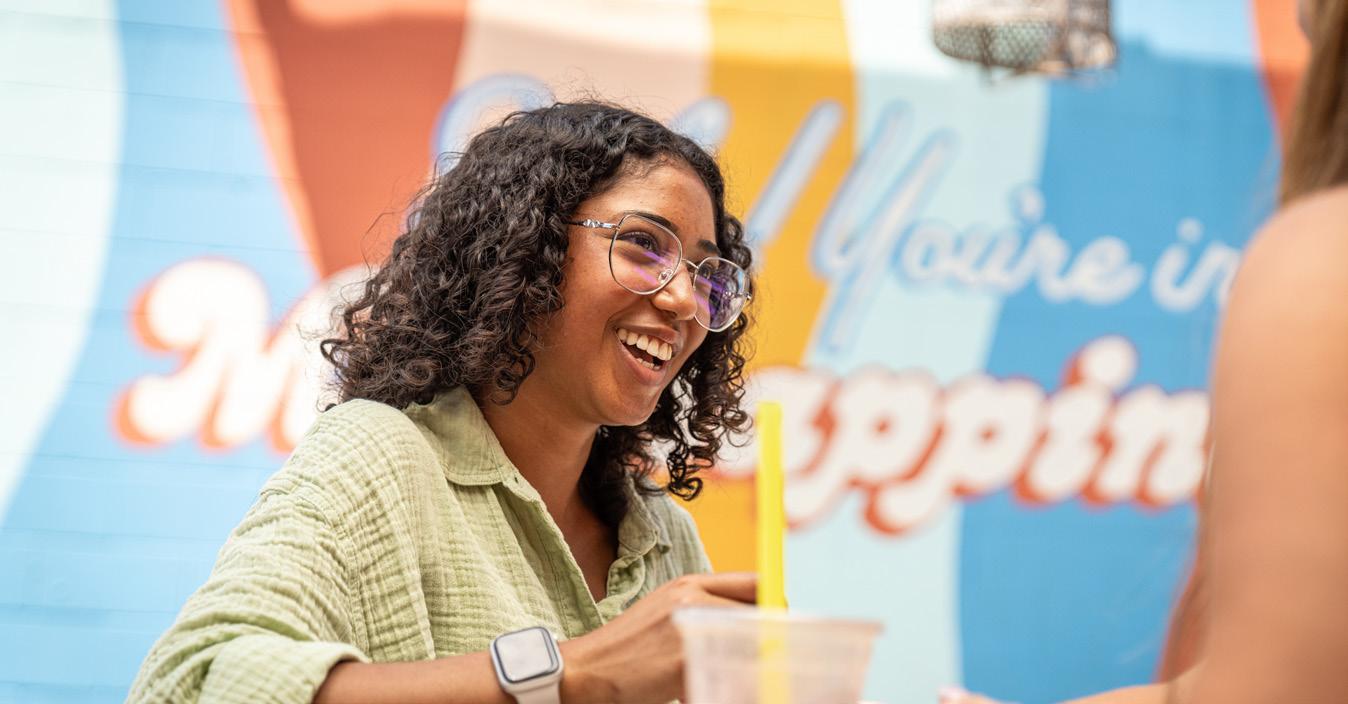
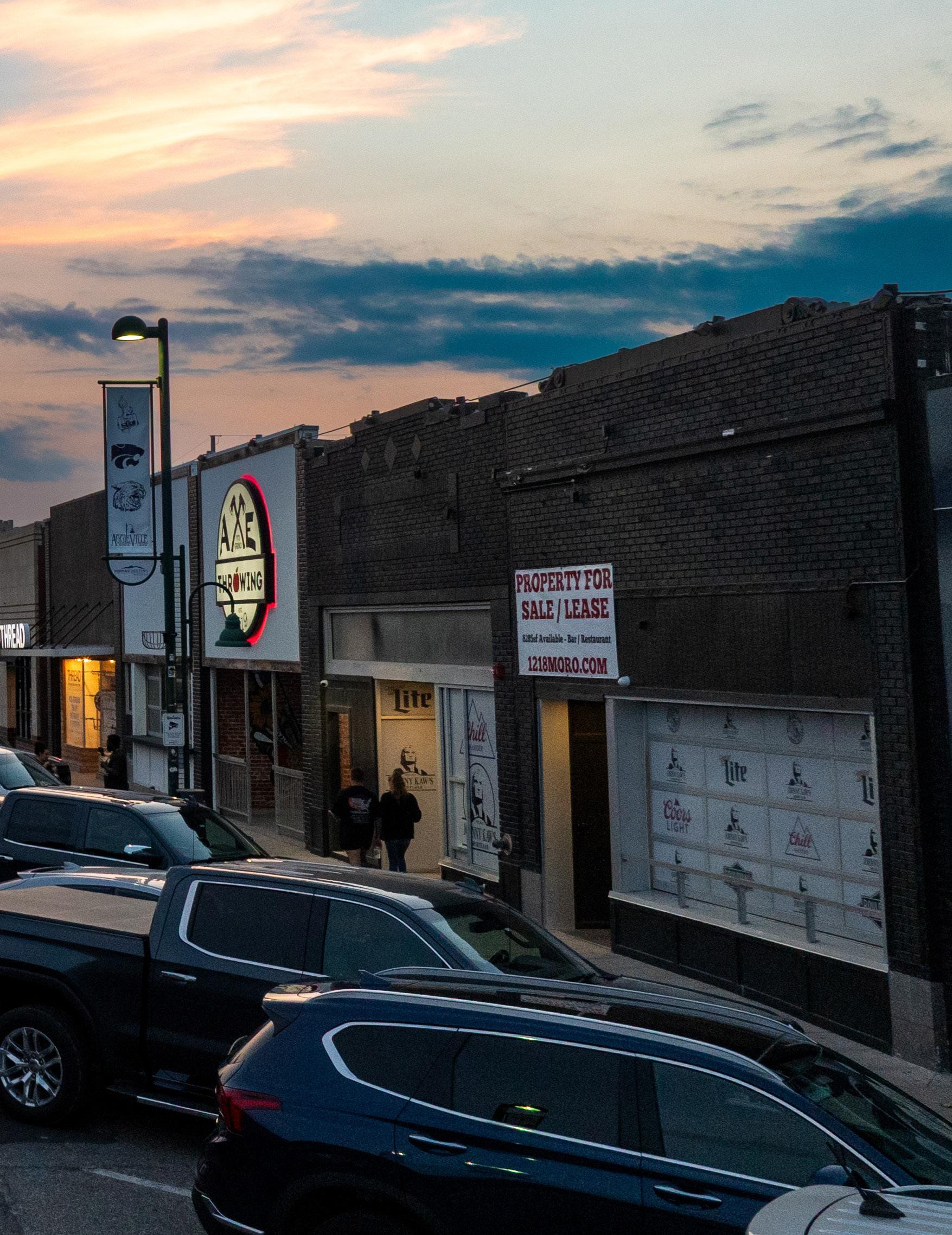

You can have a relaxed morning at Happy Hippie, Bluestem Bistro, and Full Circle, or a late-night party at Tubby’s, Yard Bar, and Dirty Dawg Saloon. You can attend everything from country or rock concerts at The Hat and poetry readings or acoustic sets at The Dusty Bookshelf, to comedy
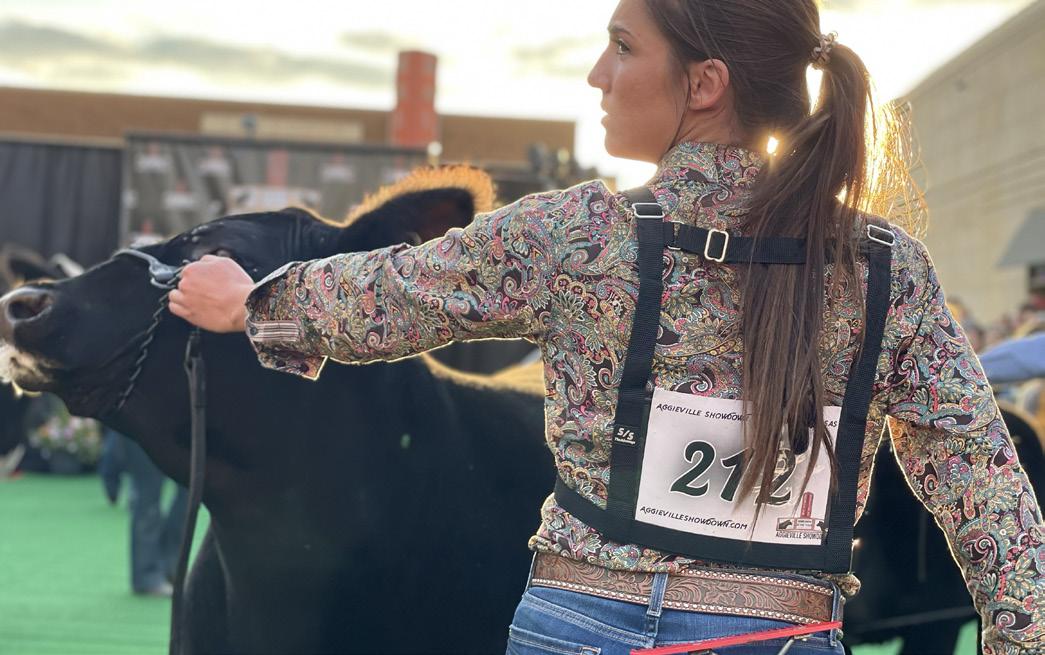
Moro Street shuts down for a Grand Drive cattle show, fashion show, live music, and various vendors. It’s the exact form of entertainment you’d expect from an agricultural college town!
or drag show nights at Auntie Mae’s. There’s a wide range of stores to shop at and places to grab a bite to eat—cuisine options include Mexican, Japanese, Italian, American, and more!
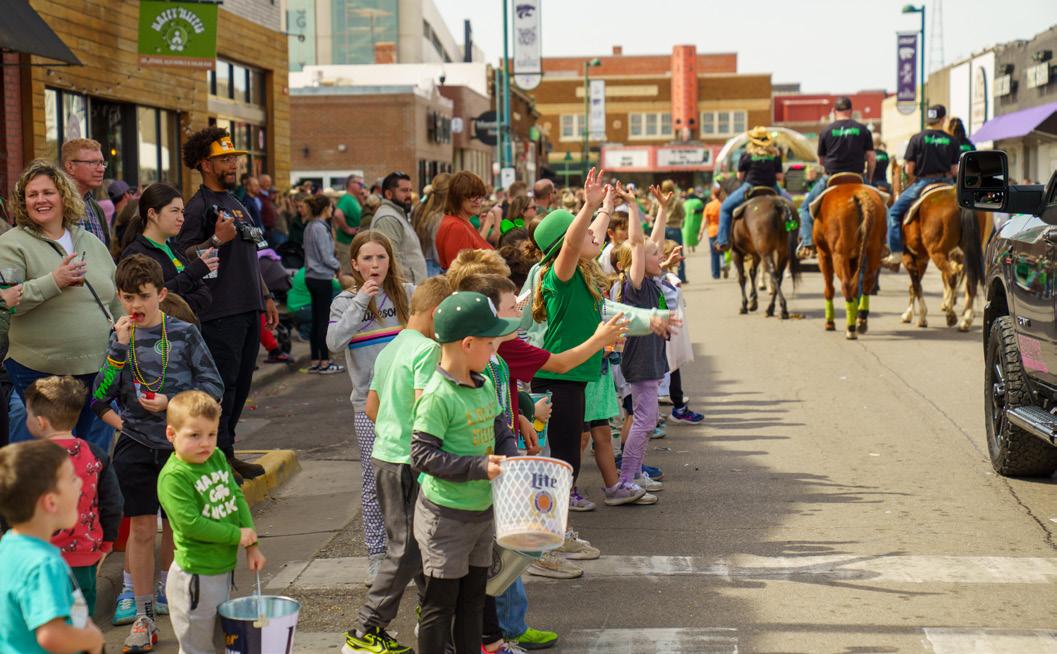
Manhattan loves a reason to have a parade. If we’re lucky, typically this is the first event of the year where spring temperatures motivate everyone to throw on their best green outfit and get out of the house.
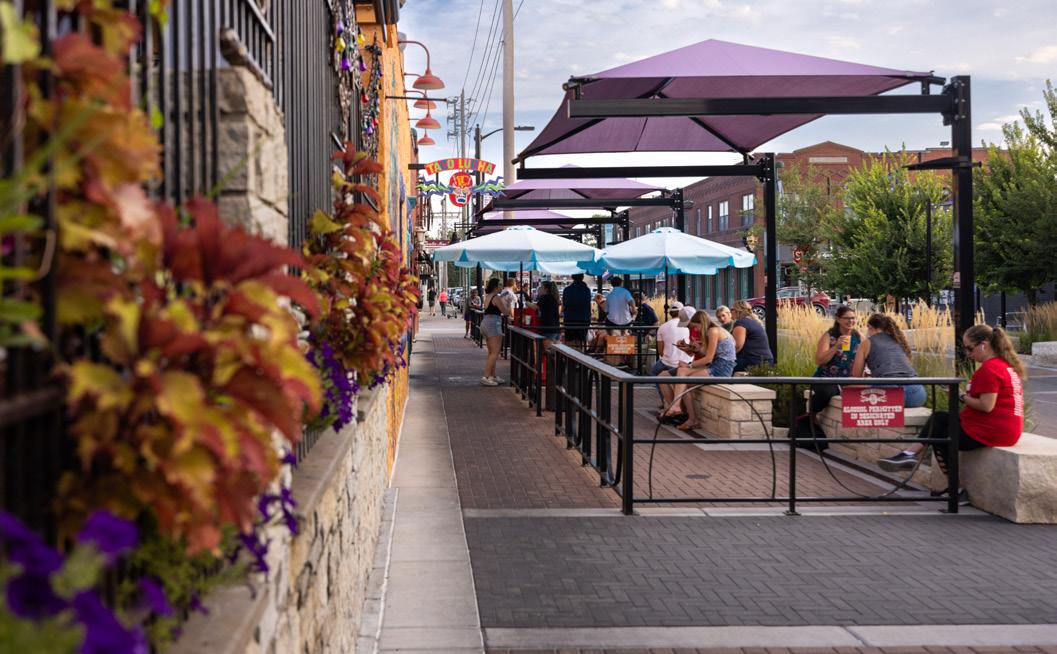
After college students leave for the summer, Aggieville becomes a townie paradise. Multiple bars and restaurants have amazing patios to relax and enjoy the weather with friends and family.
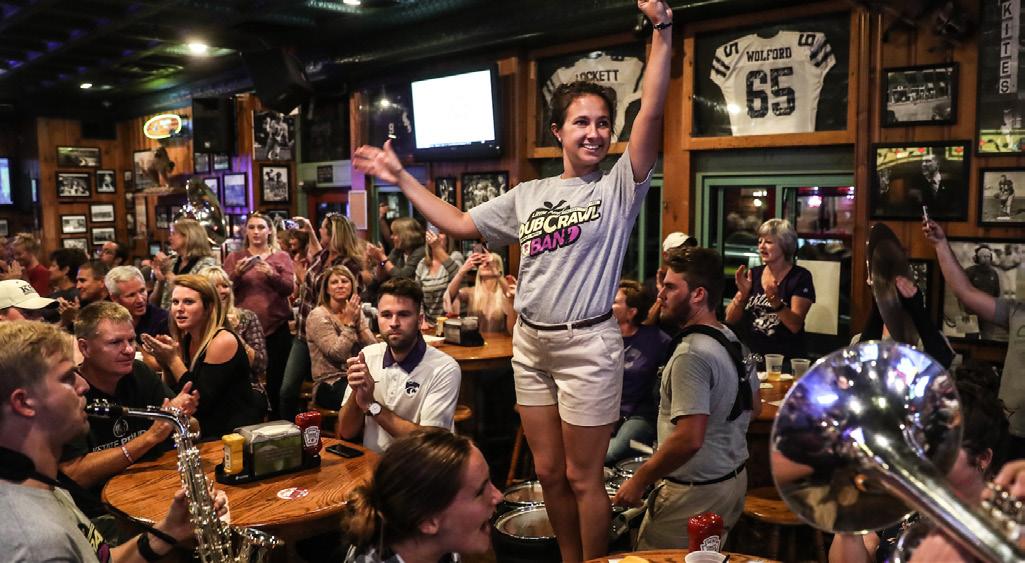
Aggieville comes alive when students return and football season kicks off. There’s an annual pep rally in August and a homecoming parade in October. Every Friday before a home game, the K-State band goes from bar to bar and plays the Wabash Cannonball to get everyone in the game day spirit!
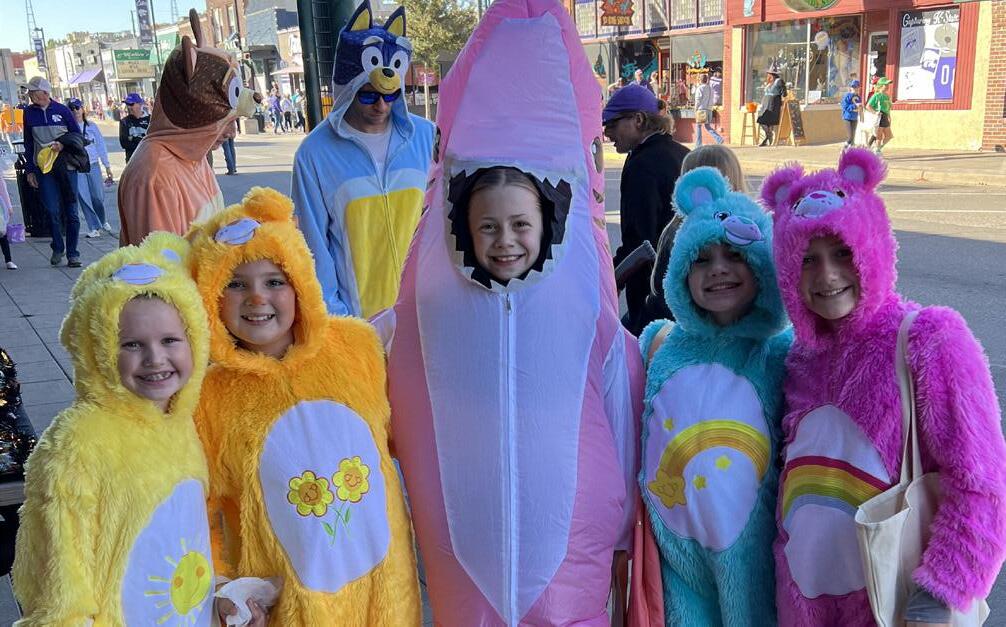
People fill the streets to see live entertainment and watch the “Little Apple” ball drop!
Each year, participating businesses hand out candy to trick-or-treaters. It’s always scheduled right before the K-State Homecoming Parade and is one of the most exciting family-friendly events of the year.
The Aggieville Community Vision Plan outlines a strategic approach to transform the district into a more vibrant, accessible, and diverse urban space. The plan focuses on enhancing pedestrian connectivity, creating inviting public spaces, and encouraging mixed-use development to foster a lively, 24/7 environment.
Key components of the plan include expanding outdoor seating areas, improving streetscapes, and adding green spaces that encourage community interaction.
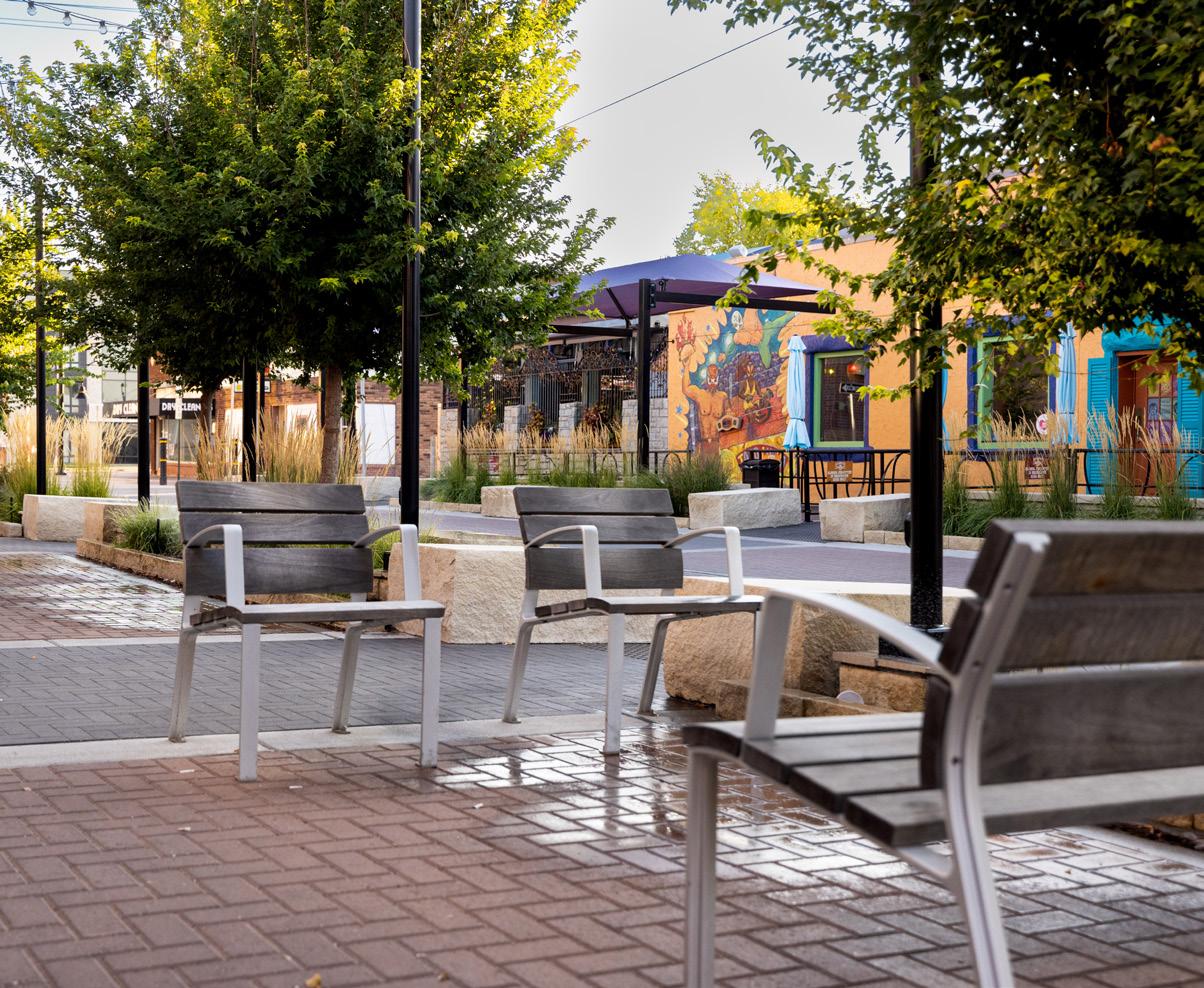
The vision also emphasizes enhancing the district’s appeal through improved infrastructure, safer walkways, and more diverse dining, retail, and entertainment options.
By focusing on sustainable growth and fostering a strong sense of place, the plan aims to ensure Aggieville remains a dynamic and welcoming destination for both students and the broader Manhattan community.
View the Plan

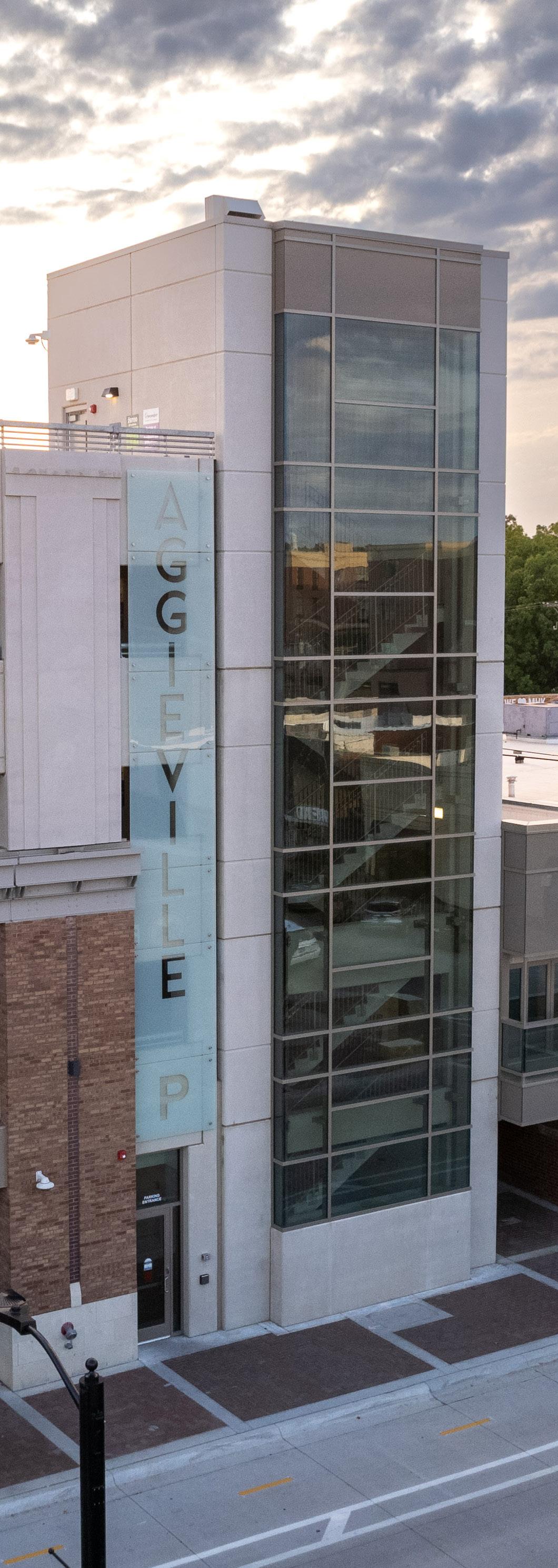
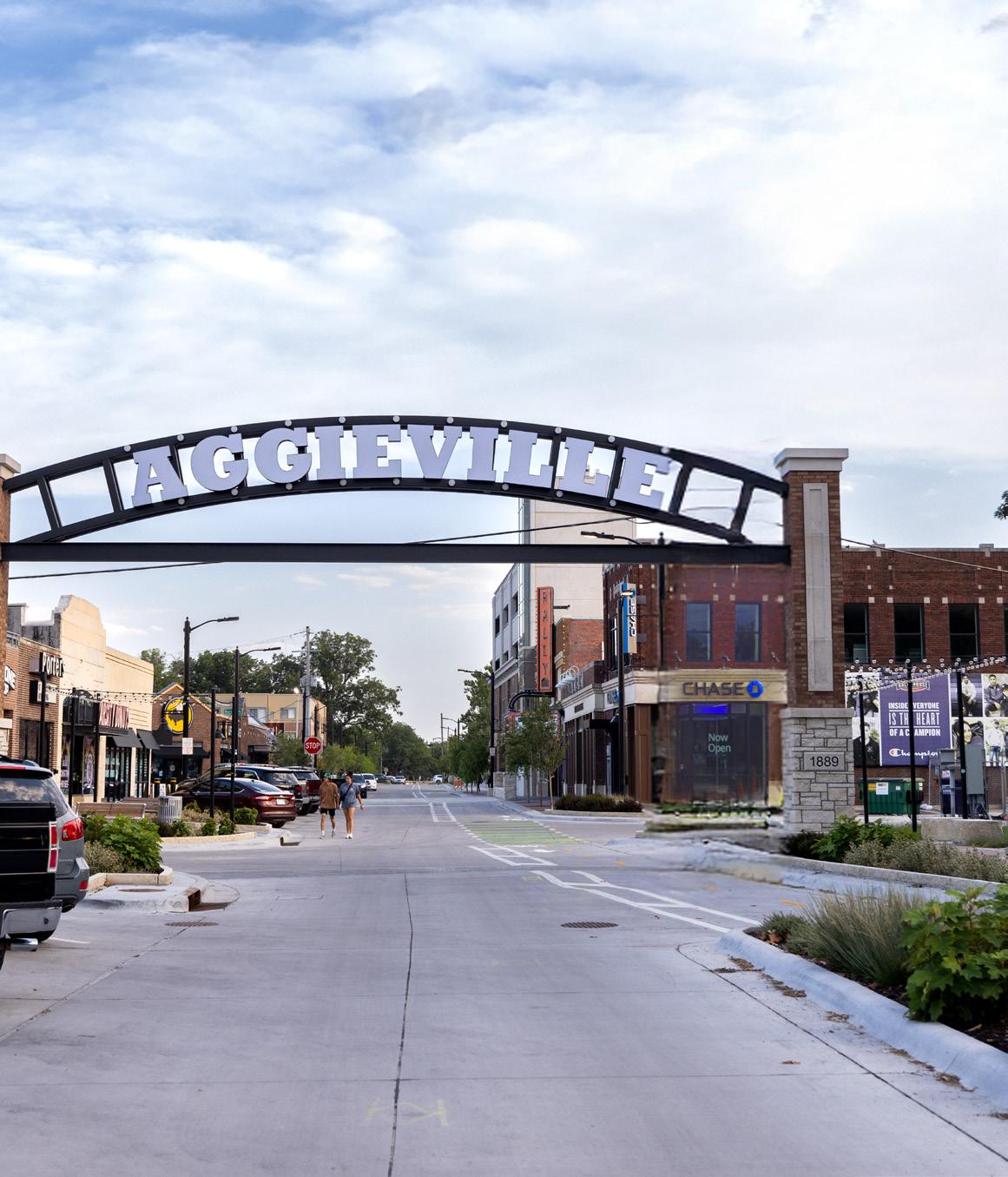
Over the past several years, Aggieville has undergone numerous improvements including a new parking garage, hotel, and streetscapes, and more work will be done in the coming years.
AccessAggieville.com has been created to help community members and visitors understand upcoming construction projects and travel impacts so that travel in and out of the district is as easy as possible.
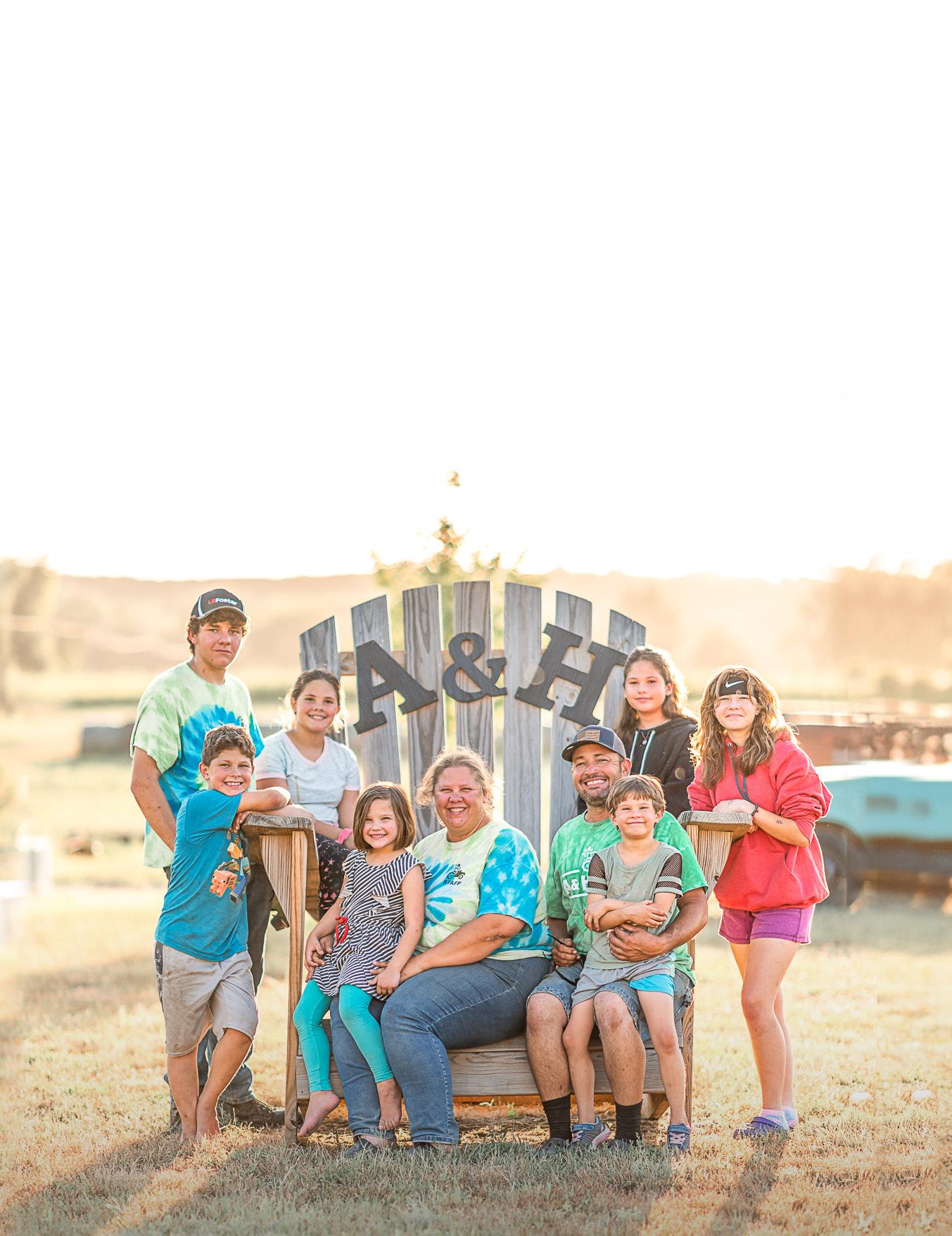
After growing up on her family’s farm, Andrea DeJesus swore she’d never return to that lifestyle after graduating from high school. Today, she owns and operates one of the region’s most popular agritourism destinations—and loves every minute of it.
Andrea was raised in Manhattan, Kansas, where her childhood was filled with early mornings at farmers’ markets, tending to fruits and vegetables, raising animals, and working alongside her parents in every part of the operation.
“I never got to watch cartoons because they were only on Saturday mornings, and we were always at the farmers’ market,” Andrea says. “As a child, that was disappointing. But, I learned the value of hard work, how to talk to people, and how to sell things, and it was tremendously helpful to learn those skills at such a young age.”
By the time she was a teenager, she was ready for a different lifestyle. She enrolled at Kansas State University and earned both her bachelor’s and master’s degrees in business administration and accounting. While at K-State, she met her husband, who was stationed at Fort Riley. His next duty station was Fort Benning in Georgia, and Andrea was eager to move south, start her career as a Certified Public Accountant, and leave the family farm behind.
After living in Georgia for about a year and a half, Andrea and her husband relocated to Alabama for her new job. They enjoyed their “white picket fence” life in the South and had built a community there, but once their family began to grow, their perspective shifted.
“Anytime we visited Kansas, our kids loved visiting Grandma and Grandpa’s place, where I grew up. I just realized that raising them on a farm was very important to me because the things I learned had set me up for success in my life.”
Six years after Andrea left Manhattan, she returned in 2008 with her family and purchased a piece of land from her mother to begin what would eventually become A&H Farm. It started with a familiar formula: tending to fruits, vegetables, a small amount of livestock, and row crops, and spending weekends at farmers’ markets.
After two difficult years of production, reality finally caught up.
“I realized in the fall of 2010, I wasn’t going to be able to make our farm payments. So, we opened the farm to the public for four weekends that October. We set up a tent at the end of a gravel road with no electricity. We had a small petting zoo and sold pumpkins and apple cider, and the public came to support us. After being open just those eight days, we were able to make our farm payments.”
By 2012, A&H Farm expanded by building a new store with a home attached, just in time for the arrival of Andrea’s fifth child. Until then, Andrea, her husband, and four children had been living in an RV on the farm. The new space allowed them to continue growing the business while finally settling into a more permanent home.
Every aspect of A&H Farm has grown in size and scope since those early years. The farm is now open seven days a week and welcomes thousands of
visitors a year. It staffs up to 13 full-time and 20 parttime employees depending on the season.
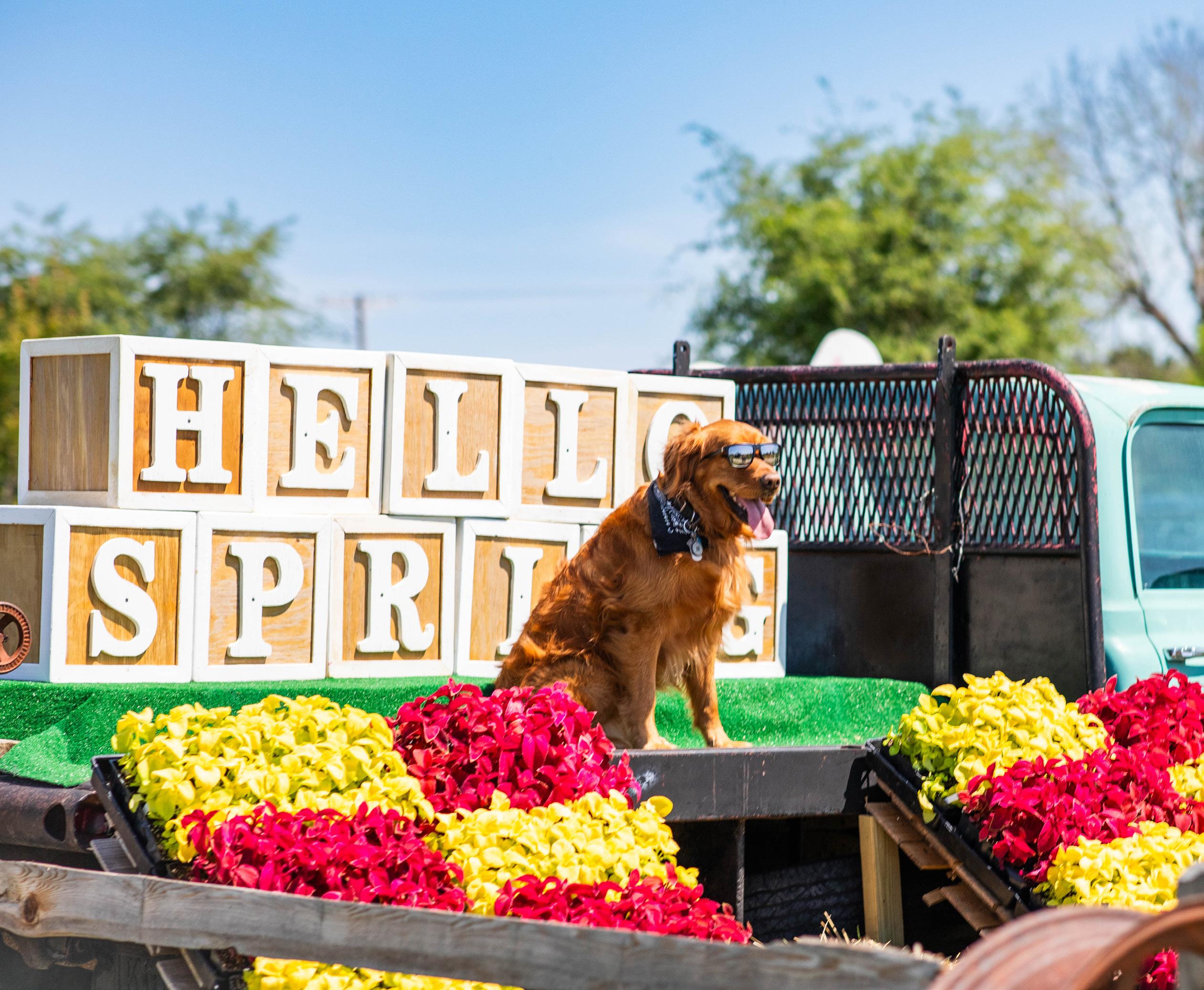
Each season brings something new. January features Puerto Rican food events to celebrate her husband’s culture and traditions. Spring features themed weekends centered on flowers, baby animals, and strawberries.
Summer is packed with more themed weekends for pickles, lavender, peaches, watermelon, and sweet corn. Fall festival season runs from September to October and offers pumpkins, apples, hayrides, and all the other fall activities you’d expect. The holiday season wraps up the year with product sampling events to inspire curated gifts from local producers.
Creativity is at the core of every theme, and the farm’s on-site commercial kitchen produces unique treats tailored to each event.
I REALLY LIKE TAKING OWNERSHIP OF THINGS. I CAN CHANGE AND DEVELOP AND EXPERIMENT, AND I CAN BE MUCH MORE CREATIVE.
“For example, with our pickle festival, we have pickle margaritas, pickle cotton candy, pickle lemonade, pickle popcorn—we go all in,” Andrea laughs.
While hosting family-friendly events is the farm’s primary focus, education is at the core of Andrea’s mission. She recognizes that not everyone grows up understanding how food systems function, and she has found purpose in helping to bridge that gap.
“We frequently host field trips for young students. One year, we showed them kohlrabi, because they had no idea what it was. All the kids got to pick one to take home, and we told them how to prepare and eat it.“
She continues, “Then, that Saturday at the farmers’ market, one of the kids came and brought his parents to our stall to purchase kohlrabi because he loved it so
much. I’m really proud of moments like that because here’s someone who had never heard of this vegetable before, came to our farm, got to pick it, eat it, and ended up loving it.”
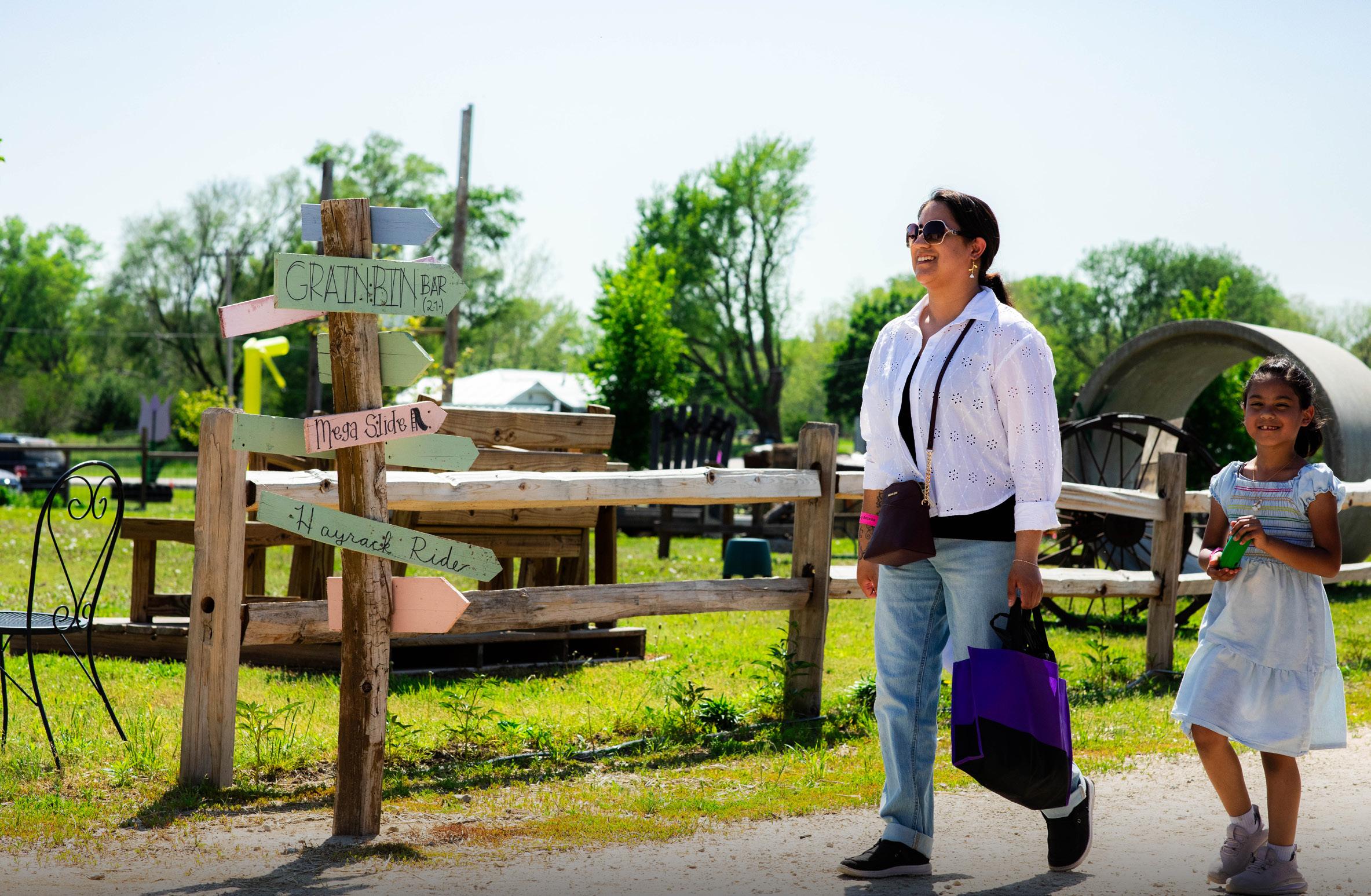
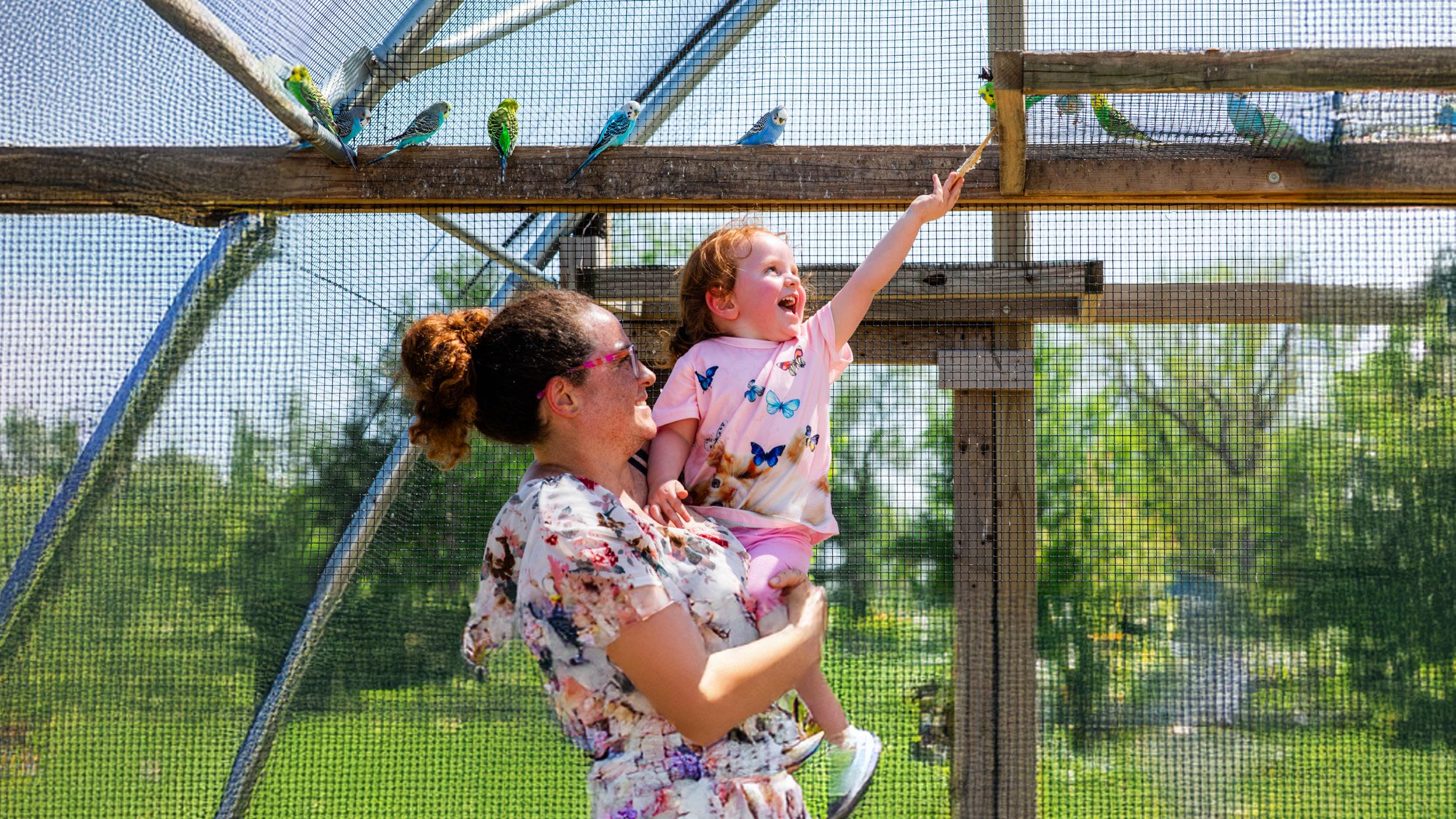
Even if there’s not an exciting event or field trip scheduled, A&H Farm is open to the public every day from 10 AM-6 PM. Guests can visit the store to purchase freshly picked produce from the farm, as well as other local products, including milk, meats, cheeses, jams, salsas, honey, and more. They can tour the farm, meet the animals, or simply enjoy a cup of coffee while their kids explore the play areas.
It truly is a place where people of all ages can reconnect with the land, experience something new, and support a business that’s shaping the way people engage with agriculture.

In hindsight, becoming an entrepreneur and building a thriving business wasn’t something Andrea planned, but it’s been one of the most challenging and fulfilling journeys she and her family have taken together.
“I think I have more stress now than when I was working in the corporate world, but I can handle it better because it’s something I love and am passionate about. I love what I did before, but it wasn’t mine. And I really like taking ownership of things. I can change and develop and experiment, and I can be much more creative.”
She credits the Manhattan community for being instrumental in the farm’s evolution.
“This community is loyal. They show up, and there is a genuine spirit of collaboration among businesses. If I had to give someone one reason to move here, it’s the community—they become family, and they will support you.”
Learn more about A&H Farm by visiting ahfarmks.com
IF I HAD TO GIVE SOMEONE ONE REASON TO MOVE HERE, IT’S THE COMMUNITY—THEY BECOME FAMILY, AND THEY WILL SUPPORT YOU.
DeJesus Family Favorites
Favorite Restaurant: The Little Grill
Favorite Bakery: Little Batch Company
Favorite Park: Tuttle Creek State Park
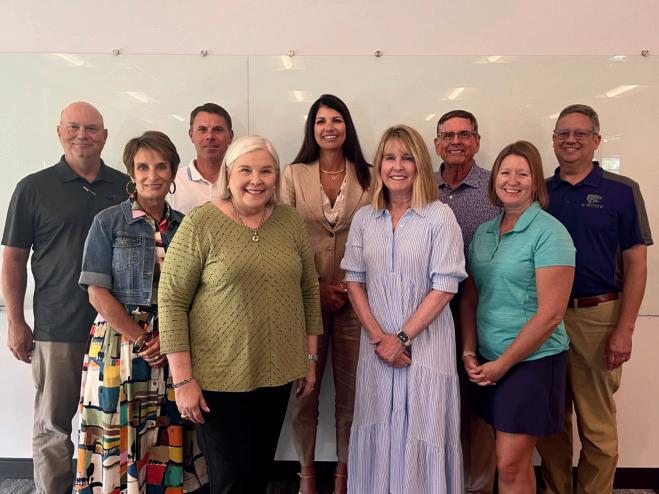
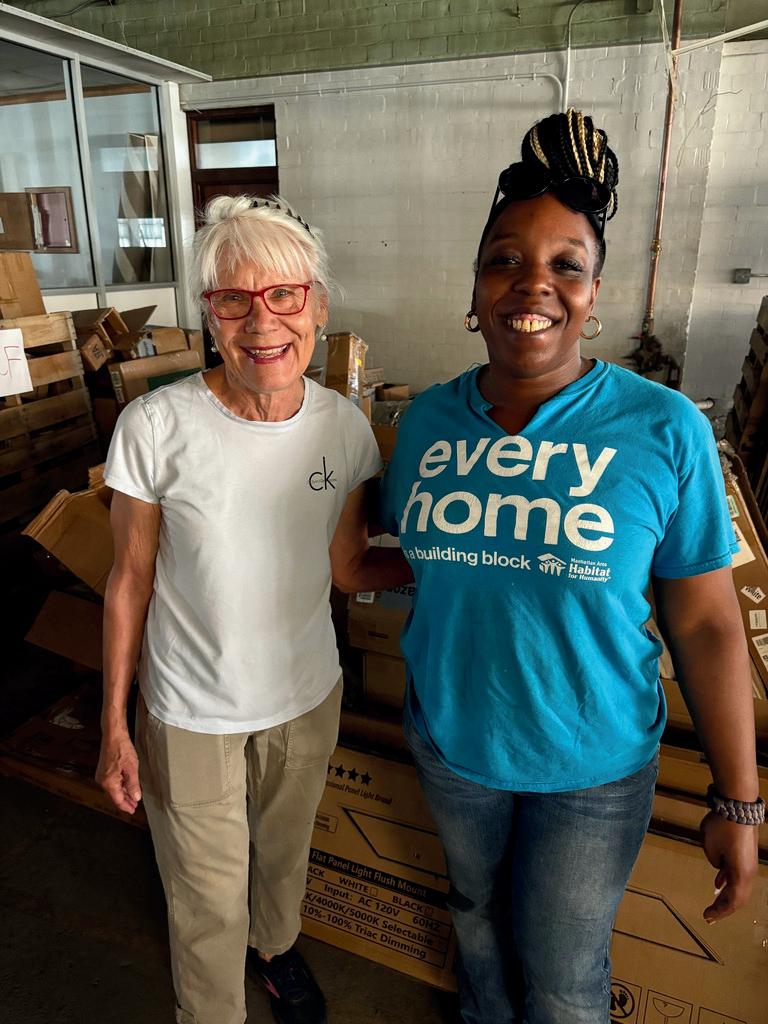
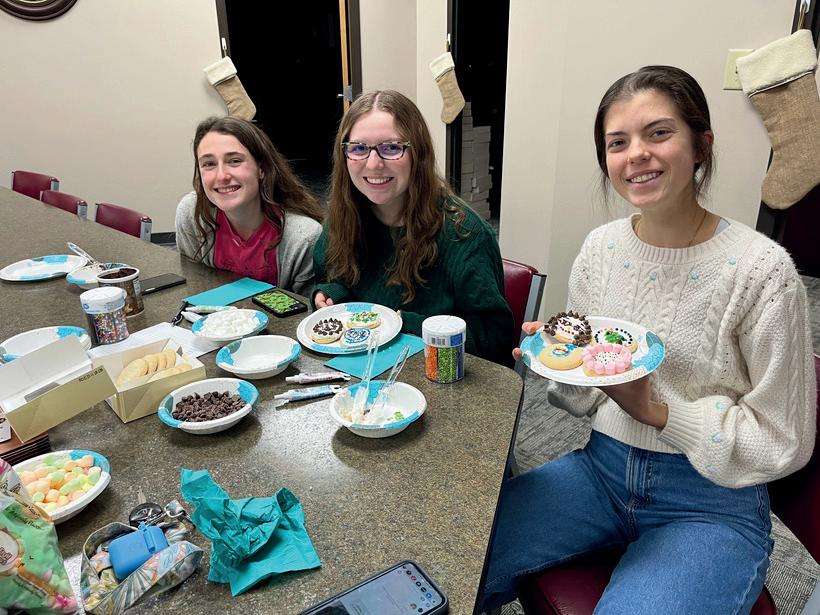

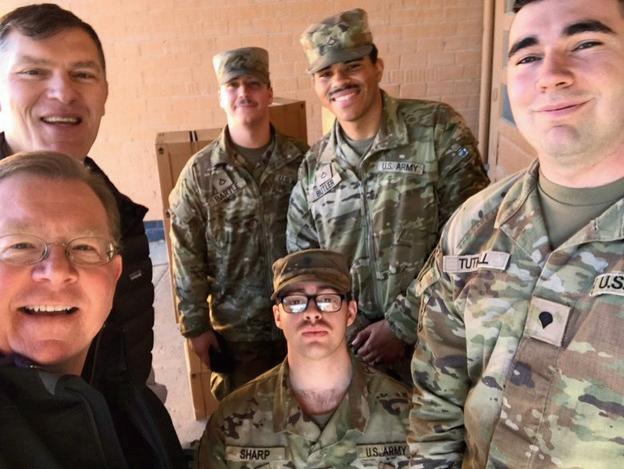
For over 25 years, the Greater Manhattan Community Foundation (GMCF) has connected donors to local needs, empowering nonprofits and transforming countless lives throughout Manhattan and the greater Flint Hills region.
When you give through GMCF, you invest in a brighter future for our community. Through Donor-Advised Funds (DAFs) and other giving options, we ensure that your contributions go where they’re needed most.




What sets RDT apart isn’t just its tech— it’s
the team-oriented culture and Midwest work ethic behind it.
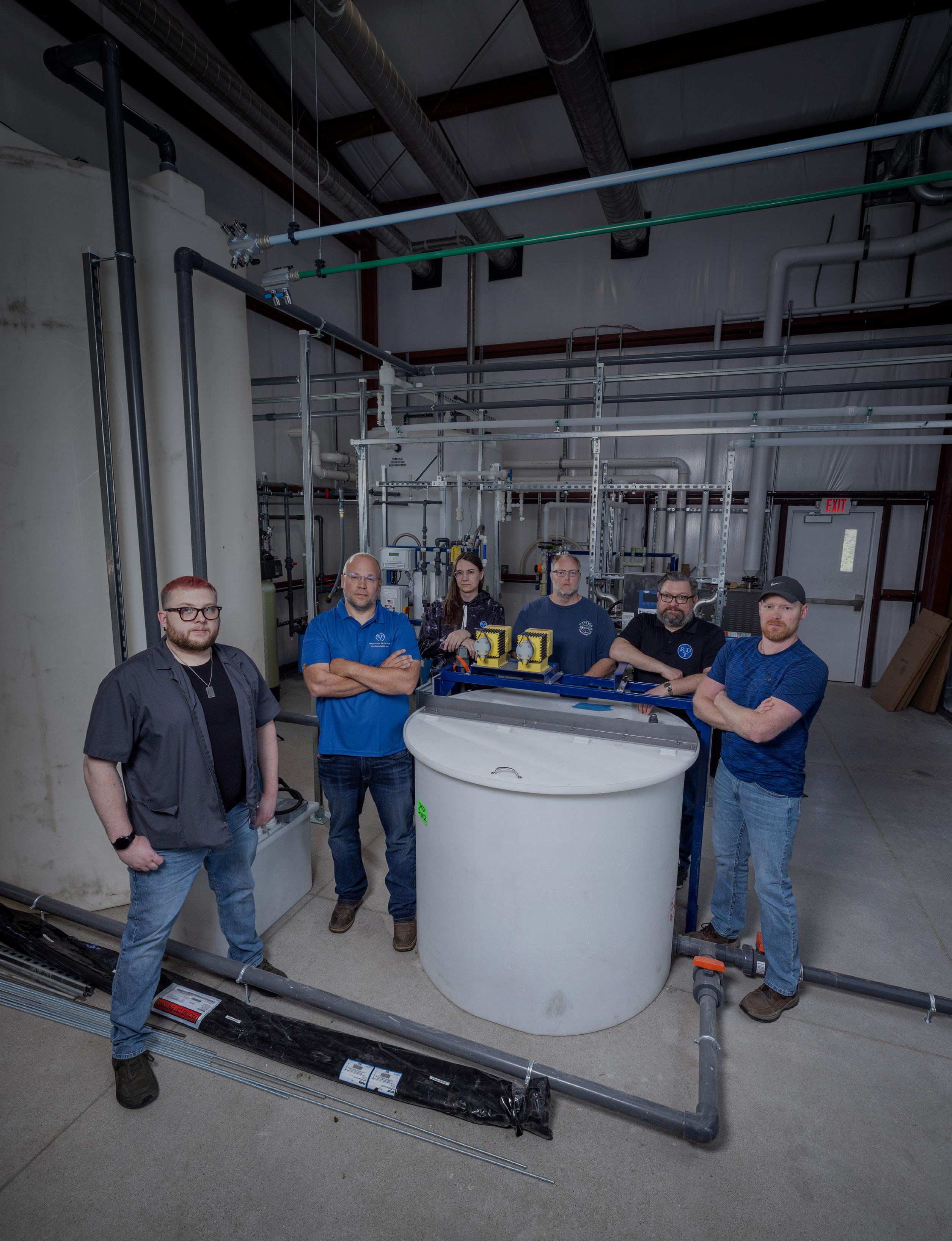
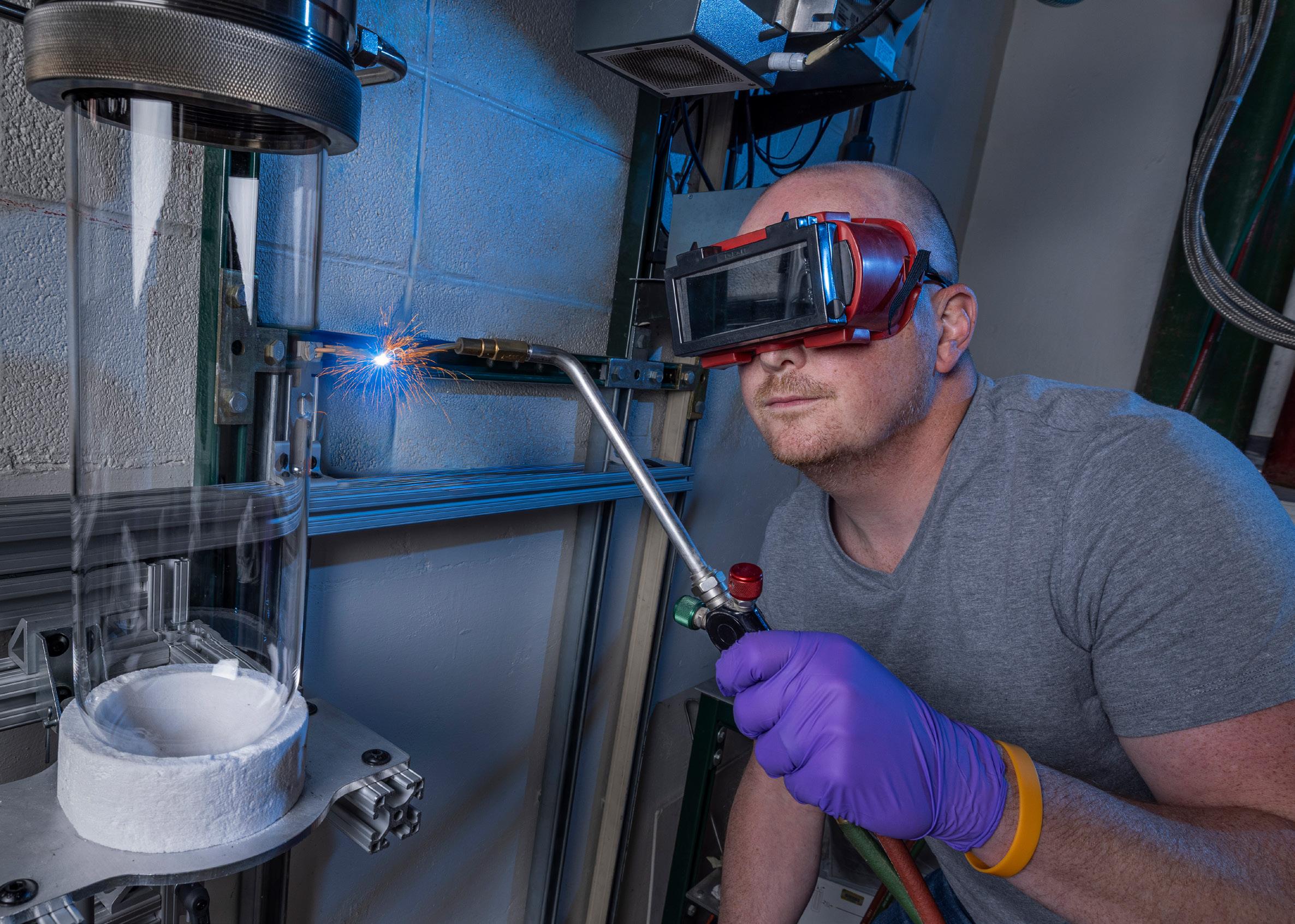
Radiation Detection Technologies (RDT) might seem like a company you’d expect to find in a large metro area—cuttingedge semiconductor devices, a multi-national customer base, and partnerships with labs and universities across the country. However, RDT is based in Manhattan, Kansas, where founder and CEO Dr. Steve Bellinger chose to build his business and team.
Steve grew up on a farm right outside of Manhattan. His experience working with farm machinery and equipment led him to pursue mechanical engineering and mathematics degrees at Kansas State University. From there, he received his PhD in nuclear engineering.
After graduation, Steve had the opportunity to work at larger companies in Ohio and even Japan, but he chose to stay in Manhattan and start his own company.
“In 2011, I started RDT for two main reasons. First, I wanted to manufacture innovative technologies being developed at K-State that I had researched, and second, I liked the entrepreneurship opportunity. Growing up on a farm, you essentially run your own business, so that mindset has always been a part of my life,” Steve says.
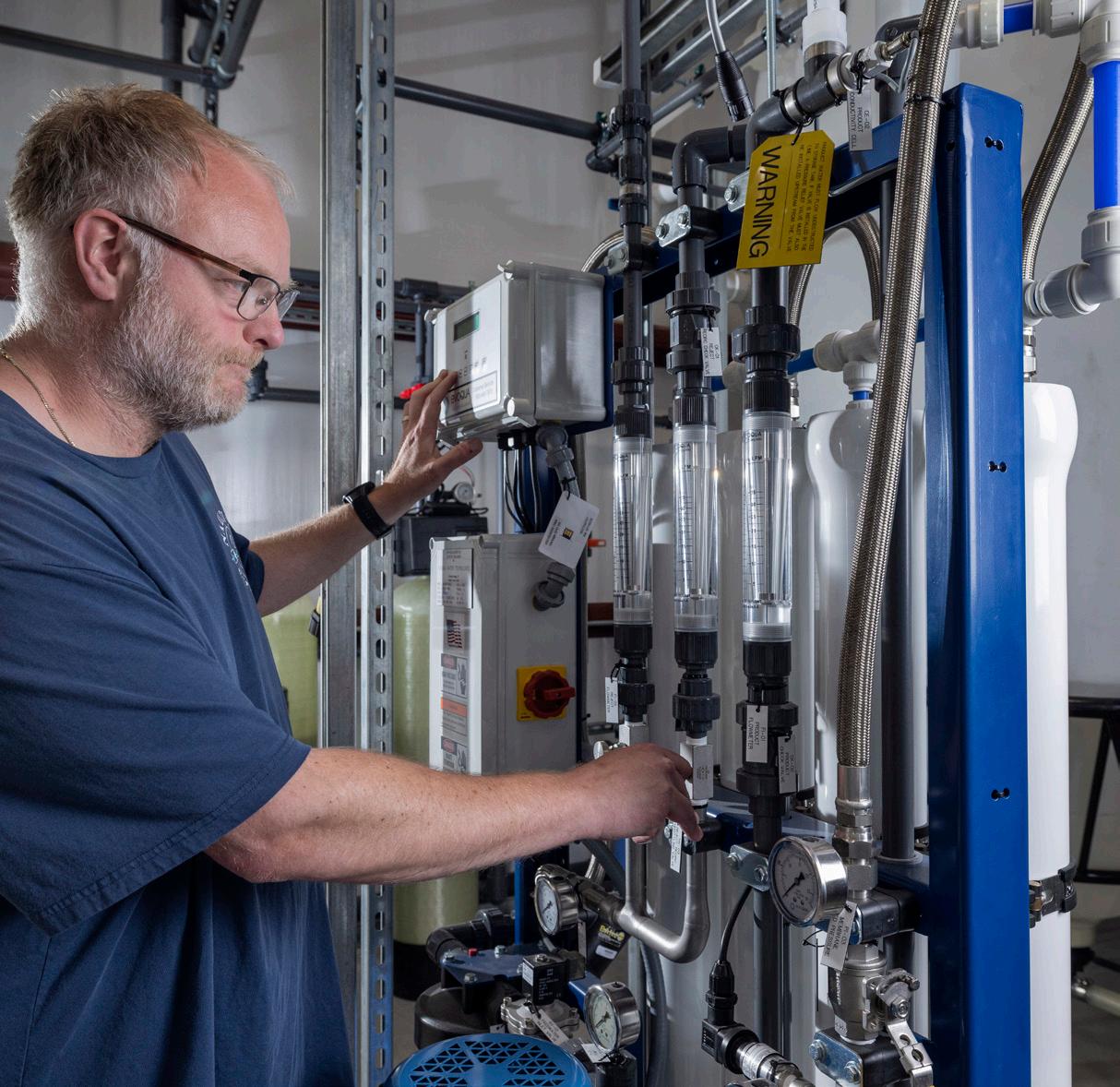
RDT started by manufacturing state-of-the-art neutron sensors and has expanded to develop various semiconductor-based devices, power diodes, and other radiation detectors used in everything from precision agriculture to medical imaging to national defense.
When asked to explain this in terms an eighth grader would understand, Steve says, “We manufacture and create the electronic devices that go into various technologies you’d see in
the doctor’s office, like a CT scanner, to sensors you would find in a nuclear power plant, to military weapons Essentially, RDT is a cog in the machine. We supply innovative technologies that companies can’t get anywhere else in the world, and our technologies get incorporated into a larger, overall system.”
While Steve was getting RDT off the ground, he recalls a long period where he didn’t pay himself and worked part-time as a research associate at K-State to make ends meet.
“I lived meagerly for a long time, but I was able to grow the company until it was sustainable enough for me to start taking a paycheck. That’s pretty normal for entrepreneurs, but my motivation during those early days was having the freedom to manufacture new and innovative technologies and being on the forefront of technological discoveries, which is both exciting and stressful.”
Since launching over 13 years ago, RDT has steadily grown into a 25-person team, but Steve says the most important thing he’s cultivated is the company’s culture.
“While working on the farm, you work with every family member, and I really enjoyed that. But when I was interviewing at different corporations, it felt like you come to work, do what you’re told, and leave. I wanted to create a company that felt more like family, where we succeed and fail together.”
The RDT team frequently engages in activities like bowling, watching movies, Christmas tree hunting, fishing, and grabbing after-work beers—all designed to help people get to know each other and build trust.
While many business owners around the country struggle with hiring and retention, Steve says RDT has never had a problem finding high-quality candidates, primarily because of the workplace culture he’s worked diligently to maintain and Manhattan’s culture as a whole.
“Some of our recent hires were interns but had moved to Kansas City and Oklahoma, and when we reengaged with them, they were overjoyed to come back.
They missed the culture here, not just at RDT, but in Manhattan. The work-life balance and the calmer, more relaxed lifestyle here is something you can’t get in those larger cities.”
Additionally, RDT regularly hires students and graduates from K-State, Manhattan Area Technical College, and other nearby institutions, such as the University of Kansas or Wichita State University. Steve sees Manhattan and the local area as a talent-rich environment many companies overlook.
“One of the biggest concerns for business owners is access to human capital. I’d say 95% of the people we hire, we train on the job. We don’t need someone from the East or West Coast with a specific degree. We’re looking for people with a tremendous work ethic, who take pride in their work, and are willing to learn. That Midwest mentality is hard to find unless you’re right here.”
Starting RDT in Manhattan was a no-brainer for Steve because of all these advantages, yet many of his multinational customers are surprised to learn his location when planning a visit.
“We’ve definitely had folks visit us and say how they never expected to find this type of technology and manufacturing facility in a smaller city, but they are impressed by our community and the people who live here. They always leave and look forward to the next time they can return.”
When asked what makes Manhattan such an impressive and compelling place, not only to visitors but also to lifelong residents like himself, Steve doesn’t hesitate to answer.
“I feel incredibly fortunate to have spent my entire life in Manhattan and the surrounding area. At every stage of my life, this community has offered something special.
Growing up, I benefited from the excellent public and private schools that laid a strong foundation for my future. My college years at K-State were filled with meaningful experiences, both in the classroom and around campus—including the vibrant energy of Aggieville.”
He continues, “Now, as I raise my own family here, I’m reminded daily of how family-friendly this town truly is. My children love participating in the Manhattan Parks and Recreation programs and exploring local treasures like Sunset Zoo and the Flint Hills Discovery Center.”
“Through every chapter of my life, one thing has remained constant: my deep appreciation for the natural beauty of the Flint Hills. It’s a timeless backdrop that continues to inspire and ground me, while motivating me to always do better and do more.”
Learn more about Radiation Detection Technologies at radectech.com
WE’RE LOOKING FOR PEOPLE WITH A TREMENDOUS WORK ETHIC, WHO TAKE PRIDE IN THEIR WORK, AND ARE WILLING TO LEARN. THAT MIDWEST MENTALITY IS HARD TO FIND UNLESS YOU’RE RIGHT HERE.
Steve’s Local Favorites
Favorite Watering Holes:
• Aggieville Brewing Company
• Liquid Art Winery
• Prairie Fire Winery
Favorite Outdoor Activities & Locations:
• Fossil Hunting
• Kayaking
• Linear Trail
• Milford Lake
• Tuttle Creek Lake
• Tuttle Creek Off-Road Vehicle Area
Favorite Parks:
• City Park
• Konza Prairie

•
•
•



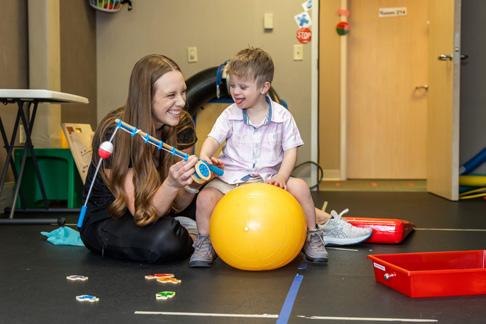
Missing Developmental Milestones
Improve Coordination & Balance
Gain Range of Motion
Improve Strength & Mobility
Muscle Tone Management
Orthotics & Prosthetics
Gait Abnormalities
Posture & Positioning

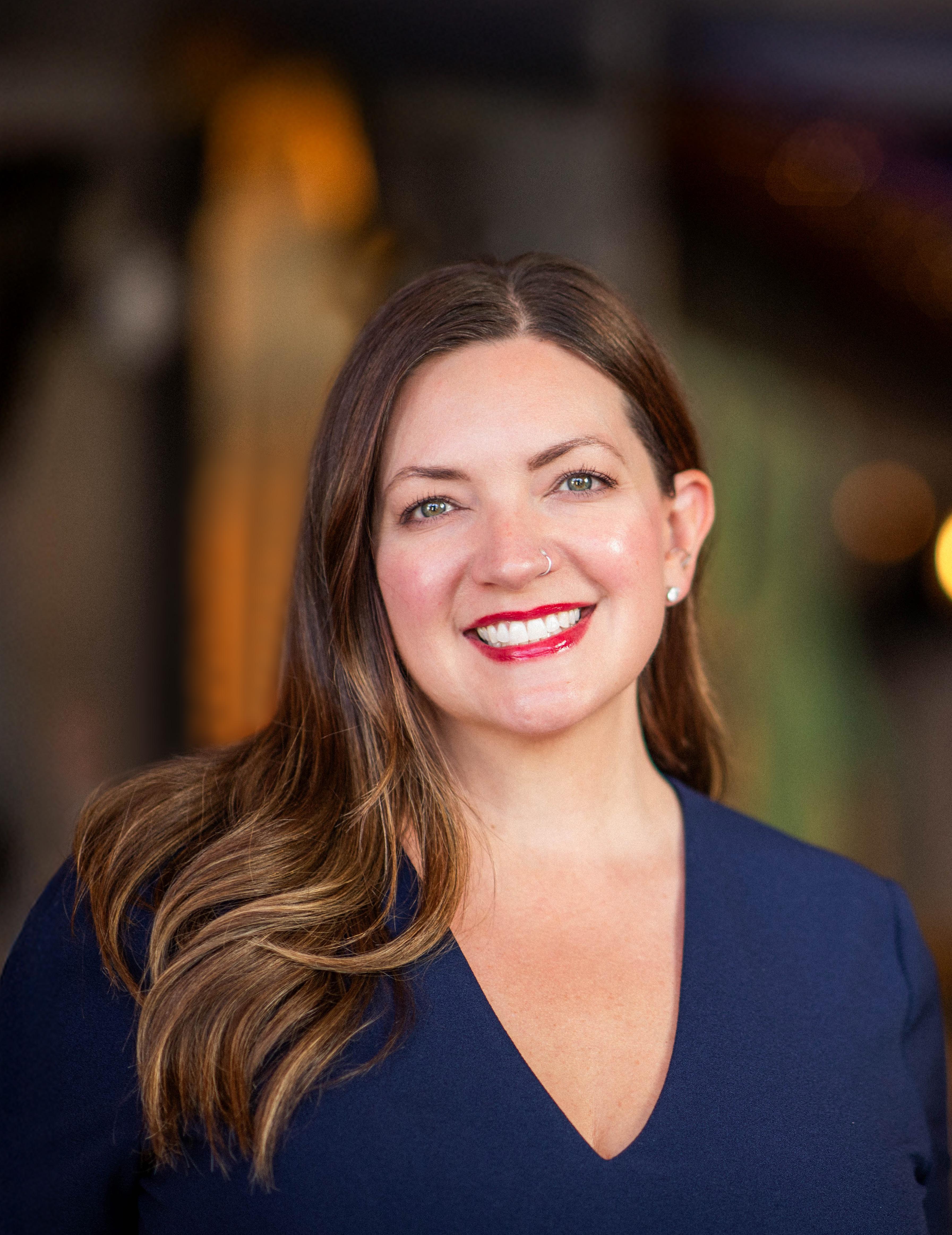
After two decades away, Danielle Dulin is back in Manhattan—this time, she’s not just calling it home; she’s shaping its future.
Tell me a little bit about your background and what led you to pursue this career.
Danielle: I was born and raised on a farm in western Kansas. I really loved growing up in a small town and certainly appreciated the ability to be a very wellrounded individual. I played sports; I was in the band; I was in forensics and quiz bowl—all those things.
I always tell people that where I’m from, there’s only one college, and it was always kind of understood that I would go to Kansas State University. So, coming to Manhattan was undoubtedly the first city I ever lived in.
I tried some different majors but landed in economics. After graduating, I moved to Kansas City and worked at the Federal Reserve Bank for a couple of years.
I quickly learned that that would not be a fulfilling career for me because it did not involve nearly enough people.
So, when I was reflecting on my life experiences at just 25 years old and figuring out what was next for me, I kept thinking about my public finance class that I had at K-State.
Manhattan’s mayor, finance director, and city planner came to talk to our class about how they were going to fund the downtown redevelopment. Because when I was here, all of the downtown stores were pretty much vacant, and there weren’t any streetscapes in the district. So I thought, “That’s what I want to do.”
I really want to focus on local economies and communities and create places that actually impact people’s day-to-day lives and quality of life. From there, I went to the University of Kansas for my master’s in public administration.
What did you do after you received your master’s degree, and how did you make it back to Manhattan?
Danielle: I worked at Johnson County government and then for a few suburbs outside of the Kansas City metro area. However, I always knew I wanted to be in a community with a college. I just think there’s a certain feel and vibe about a college town that I enjoy and am drawn to.
In 2020, I moved to Warrensburg, Missouri, a small college town similar to Manhattan, to be the assistant city manager. I was quickly named interim city manager in December of that same year and named city manager in September of 2021.
When I saw Manhattan’s city manager job open in 2024, I knew I had to at least put my name in the hat and try to make a run for it. Once that decision was made, all the wheels were in motion, and everything fell into place. Since I left Manhattan, I’ve been trying to find a way to get back, so I’m thrilled to be back here.
What drew you to Manhattan, and what excites you most about serving as our city manager?
Danielle: I’ve been gone for 20 years, and coming back and seeing how much Manhattan has changed and how much it has grown is amazing to me. What I think is exciting is that there are challenges ahead of us, but Manhattan has great bones, just like an old house.
It’s got great bones, and it’s got great character. That character is absolutely not by accident; it’s intentional, and it’s because of the amazing community partners and the people here. It’s definitely a community that’s worth reinvesting in and working on to make it a really beautiful, prosperous place.
Since you spent 20 years in other communities like Kansas City, Lawrence, and Warrensburg, what’s unique about Manhattan?
Danielle: I think the vibrancy of Manhattan is unique compared to all those other places. I think we have more of a sense of community, and we are still very tight-knit, even though we have our differences.
What’s something people would be surprised by about life in Manhattan?
Danielle: The quality of these small business owners and the entrepreneurial spirit these folks have. You really get a taste of that eclectic personality across town.
For example, the quality of locally brewed beer you can get at Tallgrass Taphouse, Manhattan Brewing Company, or Aggieville Brewing Company. The different experiences you get dining at Parkside Station, El Patron, or So Long Saloon. Or all the local shops that sell books, records, gifts, clothing—I could go on and on. I do think people would be surprised that a town in the middle of Kansas could have such a diverse feel and be as accepting and inclusive as it is.
What does a city manager do, and how does your role support our community?
Danielle: I am the city commission’s only employee and am very much like the chief executive officer. It’s my job to help the commission create a vision for the community, design policies and take policy direction from them, and then execute those policies and figure out how to administer all the various things they want to accomplish for the city.
I am responsible for the day-to-day leadership and operations of the City of Manhattan’s departments. So, I make decisions regarding everything from personnel to budgeting for all departments, such as public works, fire, community development, etc.
It’s a heavy lift, but fortunately, I have many great, dedicated, committed folks who work for the City of Manhattan. They all do an amazing job serving our community, and I feel very fortunate to be a part of that team.
Describe our city commission and how it works with city staff to govern our community.
Danielle: Our city commission is unique. It’s not completely unique, but it is certainly different from how many governing bodies work in Kansas. We have five commissioners. Three of them are up for election every two years.
The top two vote-getters get a four-year term. The third top vote-getter receives a two-year term. Then, the commissioners elect the mayor amongst themselves, so we don’t have a mayor who is elected at large by the community.
Since I’m the city commission’s only employee, they provide direction. Then, it’s my job to work with the City of Manhattan’s department directors and figure out how to secure the resources that they need to execute policies or projects. I’m that liaison between the commissioners and the City of Manhattan’s department directors.
What are some key concerns Manhattan residents have, and how is the City working to address those concerns?
Danielle: Balancing high-quality community services and amenities with reasonable taxes and the cost of living is important to our residents. One thing to keep in mind is that if our community desires higher-quality services, then we need to grow our tax base in a sensible, sustainable way. We also need to understand that, to avoid raising taxes to pay for those services, we’re going to have to be open to growth and change.
It’s about being intentional and maintaining our sense of self while also growing in a way that makes sense for us in the long term, and I’m excited about it. We all want Manhattan to be better, even though we might have different ideas of how to get there. That’s why establishing a shared community vision is critical. It allows us to make confident decisions that point us in a clear direction.
How can residents best get involved in local government and community initiatives to help shape the city’s future?
Danielle: One of my short-term goals is to change how we engage with our community, because I’m passionate about meeting people where they’re at.
I want more opportunities for folks to attend public forums or meetings, not just commission meetings where you have three minutes to speak during public comment. I’d like to have more direct engagement where people can share feedback on big initiatives the City is doing and ask questions to staff.
I hope folks will look for those meaningful opportunities to provide feedback. I would also suggest serving on a board and eventually running for city commission. I know that’s a major time commitment, but it’s worth it, and I think people
would find it very rewarding to weigh in on decisions regarding how their community is being shaped and developed.
What are your long-term goals for Manhattan, and where do you see our community in 10 years?
Danielle: My long-term goal is that we are seen as a hub of cultural experiences and opportunities. Why can’t we truly be “The Little Apple”—like New York City, but right here in the middle of Kansas?
Where Manhattan is seen as a great place to invest your capital dollars, start a business, access a quality workforce, or participate in entertainment opportunities. I want Manhattan to be seen as an ideal place to live and start a family, whatever “family” means to you.
The Lightning Round
What do you do in your free time?
Danielle: Hiking and kayaking. I love to get outside. I picked up quilting in 2022, and now I’m all in. I also like going out to visit local businesses and attending all the events happening around town.
Are you a cat or a dog person?
Danielle: I have both, but I have to go with cats. I love their independence, and I think you have to be a cat owner to truly appreciate their personalities.
What kind of music do you like to listen to?
Danielle: I listen to all genres of music, and I have a very eclectic playlist that I would be embarrassed to put on shuffle at a party.
What shows are you watching now that you really like, or what are some of those comforting shows that are your go-tos?
Danielle: My emotional support show is Futurama . Yellowstone , 1883 —I love all those shows. I binged Stranger Things . I’m watching Yellowjackets right now. I like a good, light-hearted show too, like Loot with Maya Rudolph.
Let’s pretend you’re planning your next vacation. Where are you going?
Danielle: Costa Rica! I want to go back. What’s fascinating about Costa Rica is that it has beaches, cities, mountains, and rainforests. It’s a very lovely country with a great culture and great people.
Visit cityofmhk.com to learn more about the City of Manhattan or to contact staff.
SINCE I LEFT MANHATTAN, I’VE BEEN TRYING TO FIND A WAY TO GET BACK, SO I’M THRILLED TO BE BACK HERE.
For over 15 years, we've been Manhattan's one-stop shop for residential real estate services. We offer a wide range of property management, cleaning, remodeling, design, and construction services to fit your needs.

Advanced Audiology
Ascension Via Christi
Home Medical Supply
Ascension Via Christi Imaging
Ascension Via Christi Women's Imaging
Associated Audiologists
Associated Urologists
Central Kansas Cancer Center
Dental Associates of Manhattan
Evolve Family Dentistry
Flint Hills Dialysis
Flint Hills Endodontics
Freedom Behavioral Health Solutions
Heartland Pain Management
Lab Corp
Little Apple Pediatric Dentistry
Little Apple Podiatry
Manhattan Kansas Vet Center
Manhattan Radiology
Mathis Physical Therapy & Hand Center
My Kidney Center
Pediatric Associates
Peterson Laboratory Services
Surgical Associates
Witt Eye Center
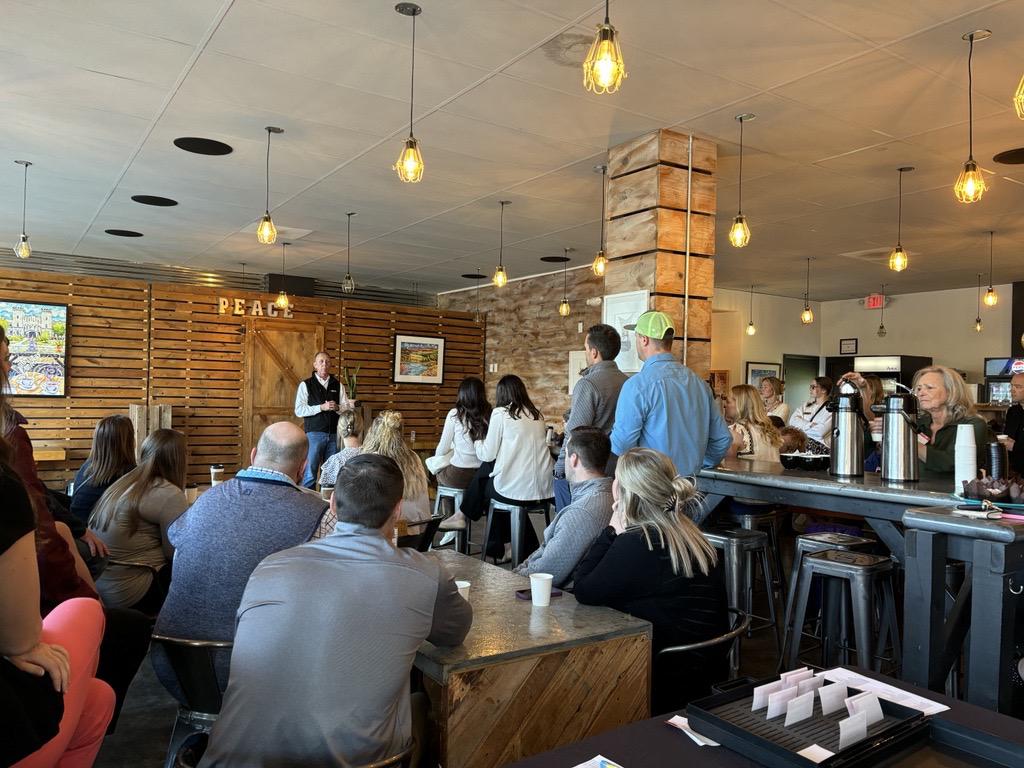
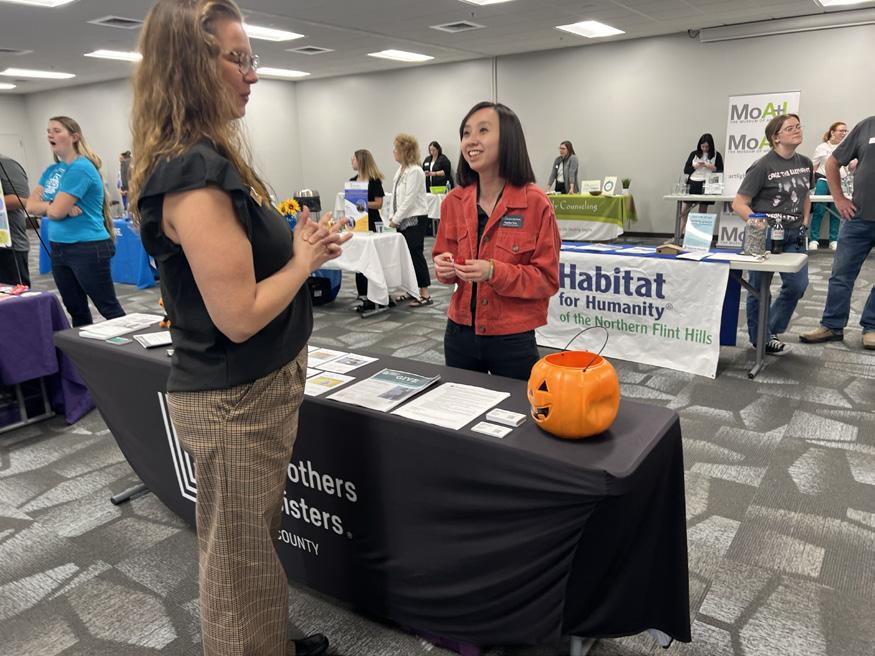
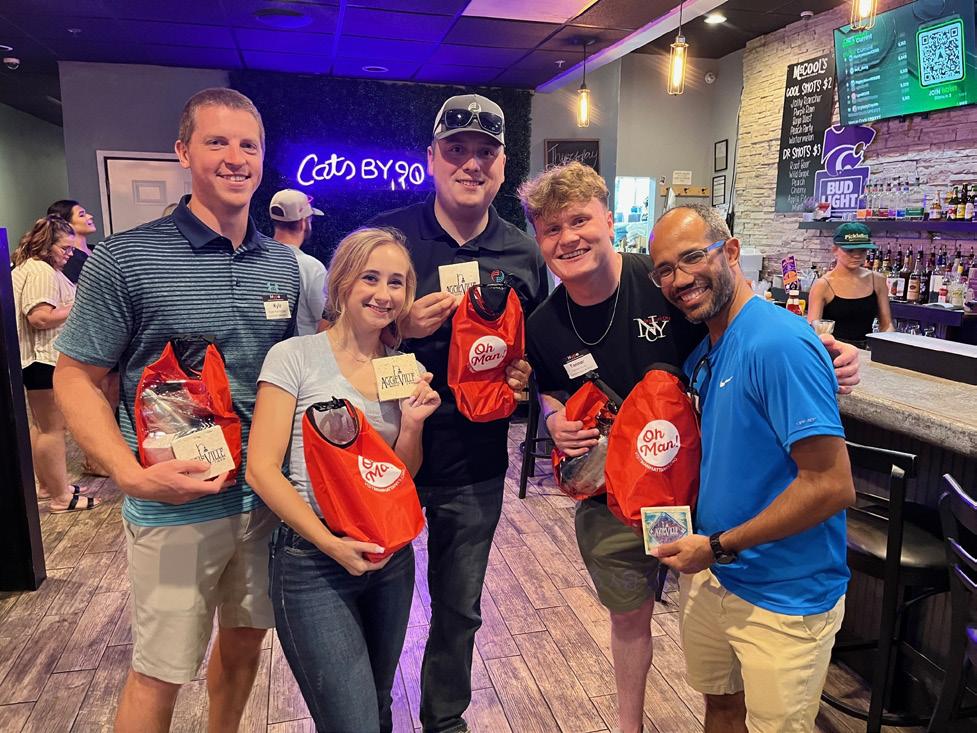
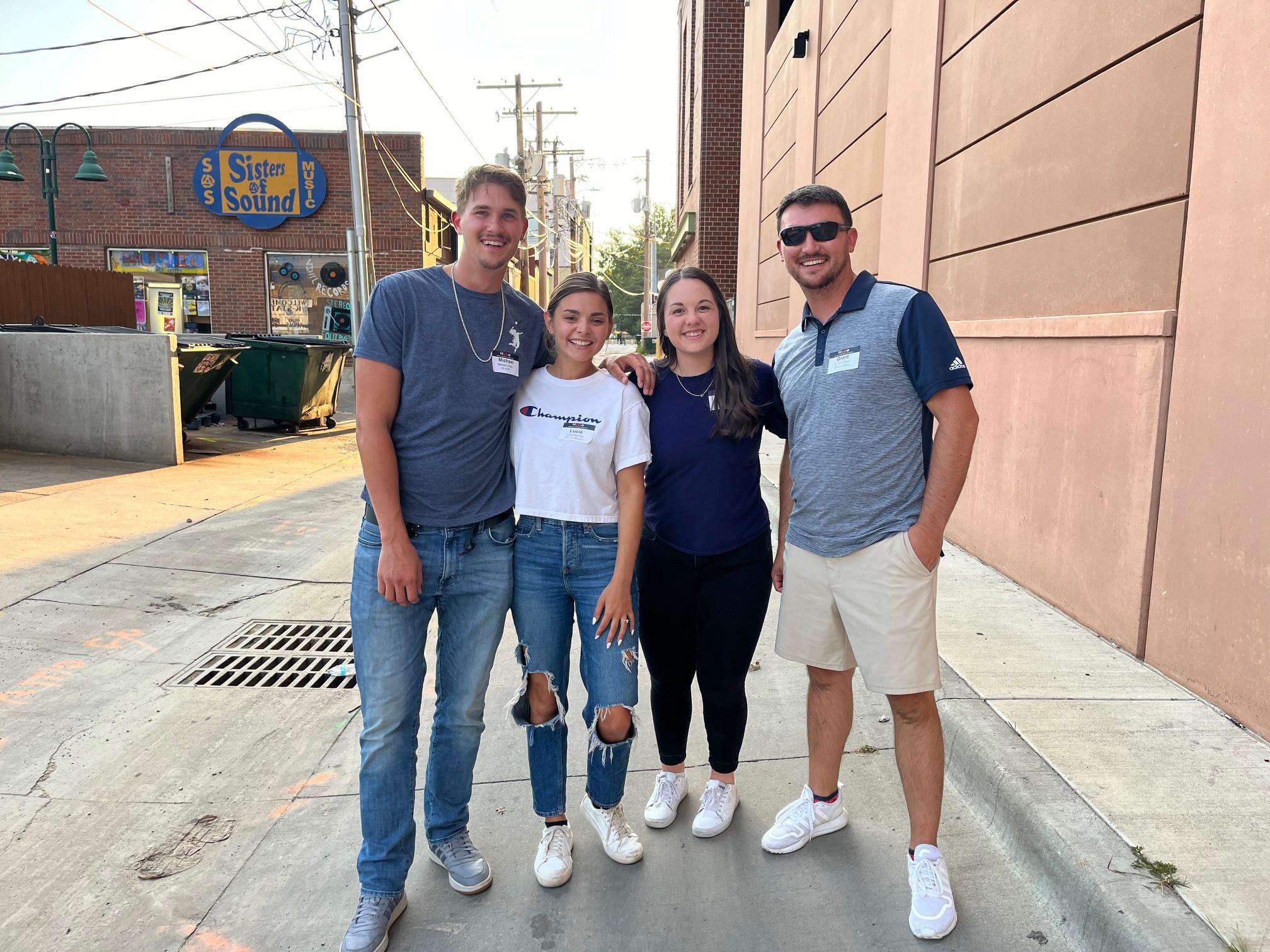

Achy cold or sprained ankle? K+Stat is still your choice for minor illness and injury, but we’re now connected to the Via Christi network. That means if you need 24/7 ER care, other hospital services or advanced imaging like a CT scan or ultrasound, you can find care right away. Even better, we’re open as early as 9 a.m. and as late as 6 p.m. on weekends. And it’s all right here in Manhattan, close to home.
Walk in or scan the QR code to get in line
K+Stat Urgent Care 930 Hayes Drive