





It’s go time.
Time to get yourself out of bed and get going, because the day belongs to those who claim it.
It’s go time.
Time to live, love, learn, teach, work and play on SA’s Bozza Network.
It’s go time.
Time to rewrite your story, stake your claim, or start that start-up.
Time to slay, make your moves, and add your own unique flavour to the world.
It’s go time.
The time for waiting is over.
The time for going is here.
While the US celebrates the 250th anniversary of its Declaration of Independence, leaders in the States and around the world have realized that their organizations’ relationship with the US government is changing fast.
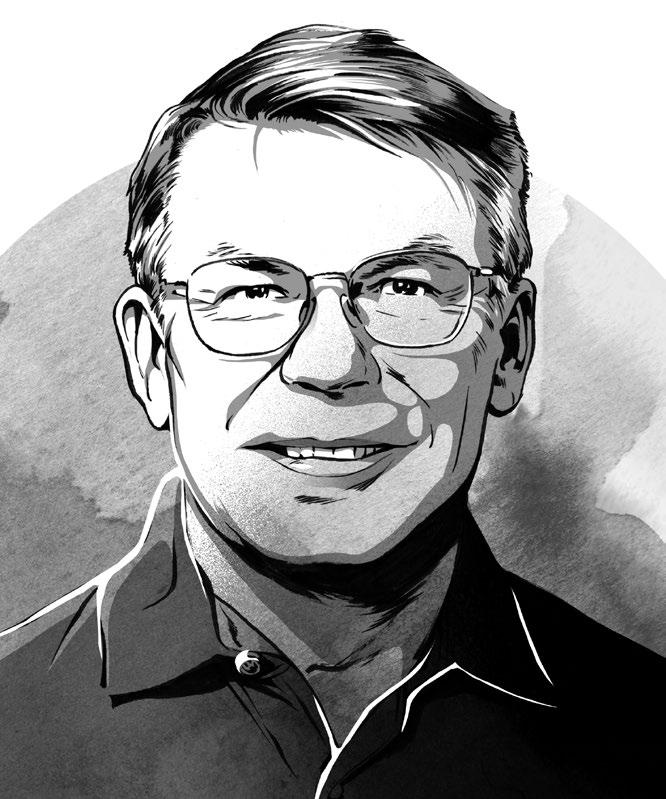
In his cover article, Simon J Evenett, IMD Professor of Geopolitics and Strategy, argues that we should not ask what the current White House wants. Instead, we need to understand which traditions gain durable institutional power, and which are transient.
This matters because America has always argued with itself. Six philosophical traditions have contested the meaning of the republic since 1776, and the operating environment for business at any one moment is simply the provisional balance among them.
What's different about 2026 is that the contest has moved from policy within agreed rules to the rules themselves – judicial independence, acceptance of electoral outcomes, and federalism. This introduces a distinct political risk premium to long-term capital allocation, directly threatening contract enforceability, the cost of capital, and the credibility of long-dated, dollar-denominated commitments.
It’s tempting to assume that the winners will be the organizations that adapt fast to the changing policies. However, as Simon explains, the winners will likely be those who have built the organizational capacity to read the traditions as they evolve, utilizing a practical risk-tracking framework to act before the argument hardens into law.
Driven by your suggestions to make I by IMD more interactive, this July edition debuts three exciting new features. On page 33, our new “Locker Room” feature bridges the worlds of sports and business strategy. Then, we kick off our “Do You Know?” brainteaser on page 57. Finally, on page 66, you’ll find our very first cartoon case – a complex leadership challenge with no simple solution. Read “The Rainmaker,” share your take with us, and let’s learn from each other.
Stefan Michel, Professor of Management, Dean of Faculty and Research
04 Geopolitics
Ideological conflict has always shaped America. Rather than dismissing today's discord as mere dysfunction, business leaders must understand the six competing creeds vying for dominance and learn how to identify who is poised to take control.
Simon J Evenett
18 Skills
High-profile whistleblowers capture headlines, but everyday workplace courage happens in smaller steps. Using a ‘Ladder of Courage’ can help you conquer fear, speak up, and achieve your professional goals.
Jim Detert
24 CEO dialogue
Ipsen CEO David Loew tells Jean-François Manzoni how a sense of fun, bold bets, and laser focus fueled a dash for growth.
27 10 leading questions
From air force corporal to underwater archaeologist, Marc Carena, Global President of Mars Petcare, reveals what motivates and drives him as a leader.
28 Diplomacy
International sports stars have redefined the art of diplomacy. Find out how you can adopt similar tactics.
Lindsay Sarah Krasnoff
33 The locker room
In the first of a new series, we look at how a baseball team perfected the art of finding talent without paying over the odds.

34 Strategy
In China, homegrown brands are overtaking once-prestigious multinationals. Global players need to find ways to respond.
Winter Nie, Yunfei Feng, and Marco Gadola
44 Energy
With ambition and unwavering commitment, Europe can build a competitive and efficient green energy system. Explore our visual guide to find out what must be done.
46 Social impact
No fancy job title is required for employees to become valuable social and environmental change agents. Leaders must first identify and then support them.
Elisa Alt, Katrin Heucher, and Sara Soderstrom
52 Technology
AI puts a company’s actions under scrutiny like never before. Will your AI be a witness for the defense or the prosecution?
Hongze Abraham Lu
57 Do you know?
The first in a series tests your knowledge of key economic data.
58 Well-being
Feeling stressed? Evidence suggests that taking micro breaks can lead to maximum benefits.
Conscious breathing is a good place to start.
Alyson Meister
63 Brain circuits
Do you want to cure your smartphone addiction?
Substitution, not suppression, may hold the key.
Francesca-Giulia Mereu
64 Coching corner
A corporate high-flyer is earmarked for the CEO role, but his lack of empathy is holding him back.
Graham Clark
66 Cartoon case
The Rainmaker is the first in an innovative new series that focuses on a complex leadership challenge with no simple solution.
68 Board’s eye view
If your board members look diverse on paper but always agree in practice, then it’s probably time for a rethink.
Parminder Kohli

14 In good company
Jerry Davis asks whether the SpaceX IPO heralds a new era of corporate dictatorship and what that would mean for investors and democracy.

70 The forecaster
Businesses must stop selling billable hours and start delivering a five-star personal service, writes Howard Yu.
73 The human factor
Leaders must become ‘conscious disruptors’ to avoid alienating and exhausting their employees, suggests Shelley Zalis.
75 P.S. The president’s soliloquy
David Bach celebrates the success of a unique gathering of business leaders to discuss their biggest challenges.

Simon J Evenett explores 250 years of contested American identity, and explains why tracking these deep philosophical battles is crucial for managing corporate risk

On 4 July 2026, the United States of America marked its 250th anniversary with two competing official commemorations. One emphasized civilizational pride, national industry, and providential destiny. The other, the gap between the founding promise (toward a more perfect union) and the lived reality. Both cite the republic’s founding documents. Both claim to represent the real America. Neither is entirely wrong, as both can claim to represent a historical tradition. The resulting discord should not be read only as a sign of dysfunction. It is the oldest American tradition: the argument about what America means has been running continuously since 1776. What makes the 250th anniversary different from the 100th, the 150th, and the 200th is not that the argument is louder. For the first time, the argument has moved into the rules that have always contained power: judicial independence, the acceptance of electoral outcomes, and the public’s capacity to perceive threats to both.
The instinct of many busy executives is to treat this as noise: normal political turbulence that will pass once an election settles things. The historical pattern argues otherwise, but not in an alarmist direction. The argument itself never ends – it has run continuously for 250 years and will outlast this anniversary too.
What matters is how each noisy era ends. The post-1971 settlement that followed the Powell Memorandum governed the commercial environment for 40 years before the traditions it suppressed found new vehicles. The right question for 2026 is therefore not whether the drama passes, but what settlement is being locked in this time, and on what terms.
That shift bears on the commercial environment directly, not metaphorically: it is what underwrites contract enforceability, the cost of capital, and the credibility of dollar-denominated long-term commitments that any firm with US exposure relies on, American or otherwise. The business leader who wants to understand where that environment is going needs to understand the arguments that got the US to its 250th anniversary: its cast of characters, its historical pattern, and the positions gaining and losing ground.
The argument that follows has a single thread. It introduces the six traditions that have contested the idea of America since the founding and shows, across four anniversaries, which combinations of them have prevailed, what each combination has demanded of capitalism, and which priorities were deferred. It then turns to how commercial arrangements feed back into which
traditions gain political ground, before asking what is genuinely different about the institutional position in 2026. It closes with the factors a business leader can track in real time, and what the analysis implies for decisions made today.
Six distinct philosophical traditions have contested the idea of America since the founding. Their proponents do not take turns; they argue simultaneously, with varying intensity. The operating environment for business at any one moment reflects the provisional balance among them. The skill required to track the ensuing drama is recognizing which tradition is ascendant and what the historical record says it tends to do when it is victorious. The following labels are mine.
THE FOUNDING CREED, given its canonical form by Thomas Jefferson in the Declaration of Independence (1776) and restated by Abraham Lincoln at Gettysburg (1863), holds that America is a proposition. Any person from any background can become an American by embracing the principles of liberty, equality, and self-government. Gunnar Myrdal's An American Dilemma (1944) named this position the American creed and documented the gap between the creed and the practice. The creedal tradition provides the justification for open markets, the rule of law, meritocratic access to opportunity, and the international order on which American commercial dominance has rested since 1945.
THE PROVIDENTIAL MISSION tradition runs from John Winthrop's A Model of Christian Charity (1630), the city on a hill sermon traditionally said to have been delivered aboard the Arbella (though historians dispute both the location and Winthrop's sole authorship), through to Jonathan Edwards and into the political rhetoric of the 20th century. Ronald Reagan invoked the city on a hill image in his farewell address of 11 January 1989. This tradition holds that America has a world-historical role assigned by Providence, and that its economic power is the material expression of that mission. In its current political form, it fuels the economic nationalism that is rewriting the commercial framework: tariff walls as civilizational self-protection, immigration restrictions as cultural preservation.
THE REPUBLICAN VIRTUE tradition holds that self-government requires citizens capable of civic participation, and that concentrated private power destroys the conditions in which that participation is possible. Alexis de Tocqueville's Democracy in America (1835) gave this its most penetrating expression: the danger to democracy was not tyranny but atomization, citizens retreating into private consumption and losing the civic capacity that self-government requires. Louis Brandeis translated this into commercial terms in The Curse of Bigness (1934): concentrated economic power, regardless of its efficiency, corrupts the civic conditions on which democratic self-government and durable market legitimacy depend. The tradition draws on Aristotle's