The Shift: AI
How foodservice is adapting to a new era of intelligence





How foodservice is adapting to a new era of intelligence

AI is growing up. For foodservice operators, the question has evolved — it’s no longer just about the possibilities AI presents, but how to put it into action to deliver measurable value, without disrupting the heart of the business: humans and hospitality.
In an industry facing its fair share of challenges, including tight margins, staffing challenges and constant unpredictability, technology can’t be adopted for novelty’s sake. The most effective uses of AI today are practical, measurable and already at work in many foodservice kitchens, large and small.
That’s the lens we used to create this issue, and why each story is built around one question: How can this tool create tangible business impact and practical wins? Because the difference between an AI success story and an expensive experiment often comes down to planning and people.
AI won’t replace the chef’s palate, the manager’s instincts or the hospitality that keeps guests coming back. But used thoughtfully, the hope is that it will empower teams to innovate, adapt and focus more of their energy on the human experiences that define this industry.
As an industry, and as humans, here’s to evolving wisely, innovating responsibly and connecting meaningfully.
Best, AmySung
Director of Content
SmartBrief Food &Travel












































Adaptive training platforms can now personalize onboarding to individual learning speeds and are available on mobile and on-demand. For multi-unit operators, the bigger promise is standardization: the same quality of training, regardless of which manager is available that day. Three in four operators say their restaurants are more efficient than before the pandemic, with better technology and streamlined processes allowing many to keep service running smoothly with leaner teams, according to the National Restaurant Association’s 2026 State of the Restaurant Industry report. The sticking point remains the human element. Technology can deliver information efficiently, and in a format that resonates, but it can’t replicate the mentorship, culture-setting and judgment-modeling that experienced managers provide.

Labor and scheduling are some of the industry’s most complex and costly variables. Scheduling mistakes, like overstaffing slow shifts and understaffing rushes, ripple quickly into guest experience, employee morale and the bottom line. AI scheduling tools are pulling in data that humans simply can’t process manually: historical sales trends, weather forecasts, local events, even daypart-level traffic patterns. The result is a schedule built on actual demand rather than intuition and habit. The National Restaurant Association’s 2026 State of the Restaurant Industry report found that employee scheduling ranked among the top areas where technology has had a significant impact, cited by roughly half of both full-service and limited-service operators. About 7% of operators say AI tools are now directly impacting their scheduling processes — a number that is still early but growing as the tools mature and prove ROI.
R&D in foodservice has always been labor-intensive and in an industry where trend cycles move quickly, tightening the research and ideation process can help operators innovate more efficiently. But AI’s role here is meant to support – the chefs and operators embracing these tools most effectively are using them to generate ideas and surface insights while still relying on human judgment, technique and cultural understanding to shape what ultimately reaches the plate.






































Marketing has emerged as a top area where US operators report AI having a direct impact, with 19% of full-service and 15% of limited-service operators saying they use AI-driven tools as a part of their marketing efforts, according to the National Restaurant Association’s 2026 State of the Restaurant Industry report. AI is enabling more targeted promotional campaigns, automating email and social outreach and helping operators analyze customer data to identify when and how to reach guests most effectively. Among operators currently using AI, marketing automation ranks as the leading application, according to Toast’s 2025 Voice of the Restaurant Industry Survey. For many operators, marketing may be one of the lowest-friction entry points into AI adoption — the tools are widely available, the ROI is relatively measurable and the risk of a failed experiment is lower than in operational areas.







Overproduction remains one of the largest drivers of surplus food in foodservice, generating roughly 1.5 million tons in 2024, according to ReFED. Foodservice operators are starting to turn to artificial intelligence to reduce food waste and associated costs, leveraging AI-powered forecasting, machine learning and real-time kitchen analytics, making the gap between what kitchens produce and what guests actually order visible and, increasingly, manageable. Restaurants are now able to adjust production levels more accurately, reducing the risk of overproduction and unnecessary waste. The sustainability case is substantial — but for most operators, it’s the margin case that moves the needle first.
Voice AI at the drive-thru has matured significantly in recent years, with accuracy rates improving, customization handling becoming more sophisticated and customer resistance largely fading — particularly among younger guests. Only 39% of consumers currently say they’d place an order with an AI-generated persona on a video screen — but that number climbs to nearly half among Gen Z adults, according to the National Restaurant Association’s 2026 State of the Industry report, pointing to where the technology is headed as younger consumers become a larger share of the customer base. Looking ahead, how voice AI connects to the rest of a brand’s guest experience stack will be interesting to watch.
Loyalty programs have existed in foodservice for decades, but AI is enabling something more sophisticated than the punch cards and emails of years past. Instead of generic discounts, operators can now deliver offers based on ordering habits, timing and guest behavior in real time. For brands with large customer datasets, AI can help identify lapsed guests, recommend menu items and tailor promotions by location, daypart or customer segment. The challenge is infrastructure. Personalization at scale depends on connected data across POS systems, loyalty platforms and ordering channels — something many operators are still building toward.


26%











28% 29% of restaurant operators are already using AI-related tools1
80% of restaurant executives expect to increase their AI investment in the next fiscal year3 of independent restaurants use four or more technology systems2 of independent restaurants use only a single technology system

86% of operators say they are comfortable using AI4 81% say they plan to use it more in the future4

AI is helping foodservice operators cut waste, sharpen forecasting and protect margins.
By Amy Sung
Would you rather have too much or too little?
For decades, foodservice operators have viewed overproduction as the safer trade-off. But as food costs remain elevated and margins stay under pressure, that calculation is beginning to change. Operators are increasingly using AI-powered forecasting, machine learning and real-time kitchen analytics to better predict demand, adjust production and identify waste before it occurs – a shift toward getting it closer to just right.
The stakes are substantial. Restaurants are still navigating inflation, labor shortages and ongoing supply chain volatility, while food waste remains a persistent drain on profitability. In 2024, foodservice operators generated 12.5 million tons of surplus food, accounting for 17.9% of all surplus food generated in the US, according to ReFED. More than 85% ultimately went to landfill or incineration, and the surplus food was valued at approximately $156 billion that year.
The hidden cost of overproduction In restaurant kitchens, overproduction remains one of the largest drivers of food waste, said Angela Veza, director of innovation initiatives at ReFED.
“Roughly 1.5 million tons of surplus food were generated from overproduction in 2024, often due to inaccurate demand forecasting, but also because restaurants understandably want to avoid running out of food during service,” Veza said.
Waste varies by format. Quick-service restaurants frequently overproduce in the wake of speed and consistency during peak periods, while full-service restaurants tend to see more plate waste. In fine dining kitchens, prep trim and byproducts can become a substantial source of loss, Veza explained.
“One common misconception is that food waste is simply unavoidable in restaurants,” Veza said. “For many years, food waste has been seen as a necessary cost of doing business, largely because restaurants would rather risk waste than risk running out of food.”
Several operators are using AI-driven waste tracking systems to quantify those losses and establish benchmarks for improvement.
At Four Seasons Resorts Lanai, the culinary team found, through its use of Winnow AI to identify and weigh food waste, that it was averaging 1,900 pounds of food waste per month. The team established a waste-per-cover benchmark to better understand performance.
“A realistic goal would be to focus on the amount of food waste per person,” Dennis O’Leary, project manager, engineering, Four Seasons Lanai, said. “We began with an average of 4.32 oz of food waste per cover in 2023; today, our average waste per cover is 2.09 oz. This ‘every little bit adds up’ approach
For many years, food waste has been seen as a necessary cost of doing business, largely because restaurants would rather risk waste than risk running out of food.
— ANGELA VEZA, DIRECTOR OF INNOVATION INITIATIVES AT REFED
has shown more than a 50% reduction in food waste from just one of our venues.”
Reshaping planning and production
While waste-tracking tools help operators understand where losses are happening, demand forecasting represents a more upstream intervention – preventing overproduction before it happens rather than managing it after the fact.
“AI-powered demand forecasting helps restaurants make more precise decisions about how much food to prepare,” Veza said. “These systems analyze historical sales data, menu information, seasonality, weather patterns and other contextual signals to predict demand and provide actionable guidance on how much food to prep ahead of service. In many ways, AI acts like a crystal ball for kitchen planning.”
Early pilot programs suggest the operational impact can be substantial: One restaurant chain that bakes 100% of its bread in-house implemented an AI-powered forecasting solution and achieved a 53% reduction in bread waste, while also reducing labor hours, Veza said.
In a separate Chicago pilot, a similar solution identified roughly $2,500 in potential monthly revenue upside through tighter demand planning alone.
As adoption grows, the challenge is shifting from what AI can do to whether operators are able and willing to use it effectively.
“AI forecasting tools can be powerful,
but for many operators, the biggest hurdle is knowing where to start and recognizing the potential value,” said Chad Moutray, chief economist at the National Restaurant Association. “Most platforms can work with the data operators already collect – such as historical sales, inventory levels and purchasing patterns – but success often begins with buy-in and comfort with the technology.”
For institutional foodservice, even small improvements can have a significant operational impact.
At Yale Hospitality, which prepares and serves more than 16,000 meals daily across 27 dining locations, AI has become part of a broader sustainability strategy.
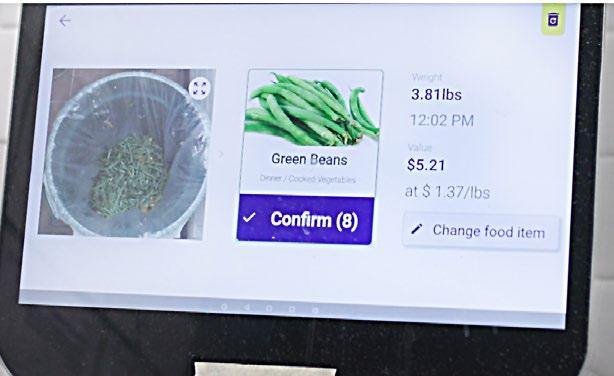
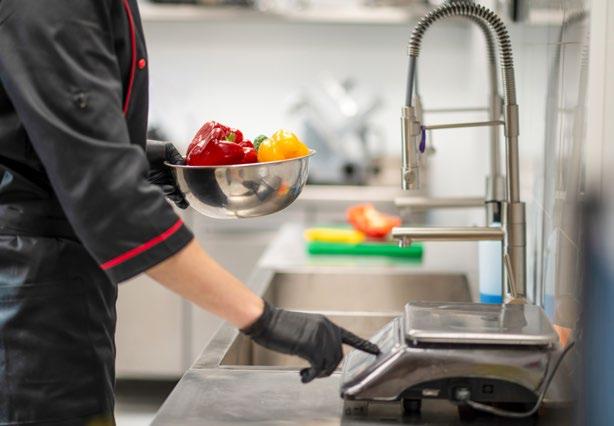
“In March 2024, Yale Hospitality outfitted its production kitchens with an AI system,” said Jodi Smith Westwater, assistant vice president of Yale Hospitality. “It uses cameras and digital scales to monitor and measure food waste in real time, providing instant insights.”
The system tracks spoilage and overproduction, helping teams better understand where waste is occurring and how production decisions can be adjusted.
“Machine learning helps predict what we’ll need, analyzes kitchen data and highlights where waste is happening,” Westwater said. “Yale has seen a significant reduction in food waste since this tool was introduced.”
The data is also shaping workforce training

When we understand where waste is happening – from how food is produced to what’s left over from our menus – we can make smarter decisions to reduce it in a meaningful way.
— JODI SMITH WESTWATER, ASSISTANT VICE PRESIDENT OF YALE HOSPITALITY
and kitchen practices.
“Chefs use those insights to plan more effectively, and we tailor training – like knife skills – based on the types of pre- and post-production scraps we’re seeing,” she said.
For Westwater, the broader value extends beyond the technology itself.
“Awareness is key to reducing food waste,” she said. “When we understand where waste is happening – from how food is produced to what’s left over from our menus – we can make smarter decisions to reduce it in a meaningful way.”
Even as forecasting systems become more sophisticated, the organizations seeing the strongest results are pairing better data with training and operational discipline.
“Technology alone isn’t enough,” Veza said. “Operators need to consistently use the tools and act on the recommendations.”
In many cases, that requires operators to rethink habits that have defined kitchen culture for years and build greater trust in data-driven decision-making.
“Any project’s success depends on effective goal setting, committed leadership and consistent staff discipline,” O’Leary of the Four Seasons Lanai said. “During the first year, efforts were concentrated on developing strong habits, implementing property-level standards of practice and learning to convert data insights into actionable objectives.”
At Chipotle, waste prevention is built into production itself rather than addressed after the fact, said Laurie Schalow, the chain’s chief corporate affairs and food safety officer.
“Employees are trained to prepare fresh
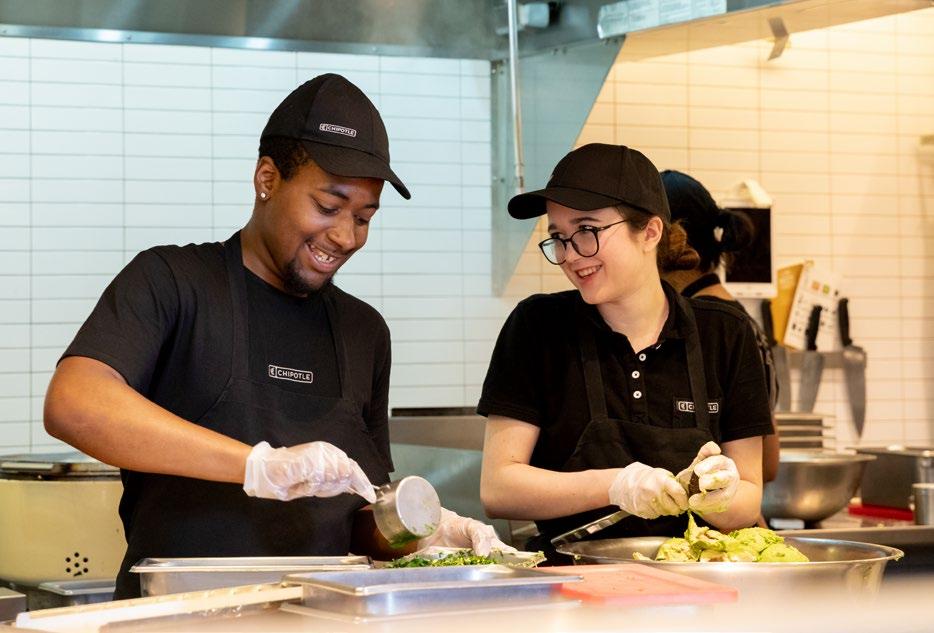
food in small batches throughout the day, ensuring optimal quality while minimizing overproduction,” Schalow said. “In addition, precise inventory management and meticulous forecasting help us purchase only what is needed for each restaurant.”
Chipotle also uses food donation programs to divert edible food from landfills.
“Through our Harvest Program, we divert edible food from landfills by partnering with local charities to donate food from our restaurants and distribution centers,” Schalow said. “In 2025, we donated more than 418,000 pounds of food through the Harvest Program.”
O’Leary also acknowledged that sometimes diverting waste is the only option – The Four Seasons Sensei Lanai currently diverts 100% of its food waste to a local pig farm.
For operators considering AI tools, experts recommend starting with focused pilot programs rather than sweeping transformation efforts.
“Operators should start small and build from there, incorporating employee and customer feedback along the way,” said Moutray of the National Restaurant Association. “If a pilot proves successful, it can expand gradually, with ongoing adjustments as needed.”
Consistency, O’Leary added, is critical.
“Monitor, adjust, update and analyze the data daily,” he said. “Communicate. Talk about the metrics in staff meetings, present trends to leadership and make your goals known throughout the organization.”
In an industry defined by thin margins and unpredictable demand, AI’s most immediate contribution may not be automation or robotics. It may be something more fundamental: helping operators make better decisions about what to buy, prepare and serve.
For many kitchens, the payoff is both measurable and meaningful: less waste, less want. ●
Any project’s success depends on effective goal setting, committed leadership and consistent staff discipline.
— DENNIS O’LEARY, PROJECT MANAGER, ENGINEERING, FOUR SEASONS LANAI
How real-time kitchen data helps operators reduce overproduction.
By SmartBrief Content Studio
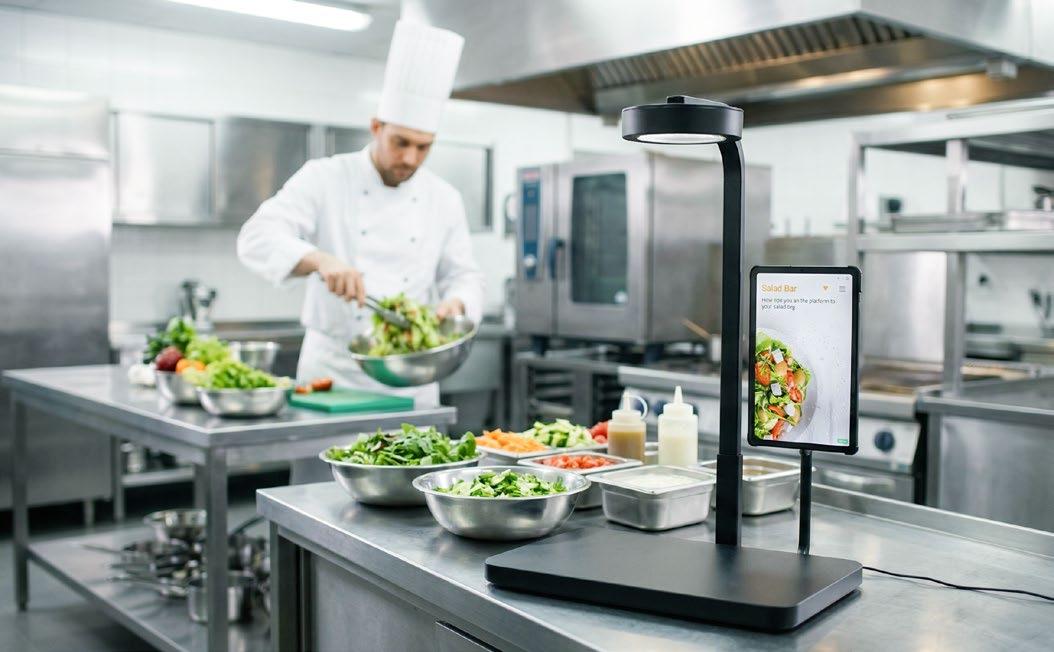
Despite significant technological updates to equipment and services in foodservice kitchens today, many establishments still lack real-time visibility into food consumption, resulting in overproduction and waste. Operators typically know what was purchased and what is thrown out, but lose sight of what occurs during service, especially in high-volume settings such as buffets.
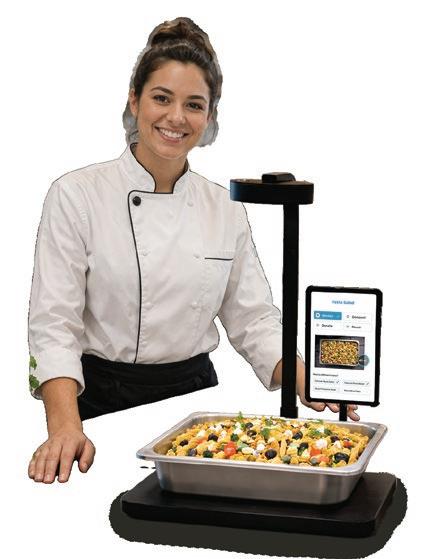
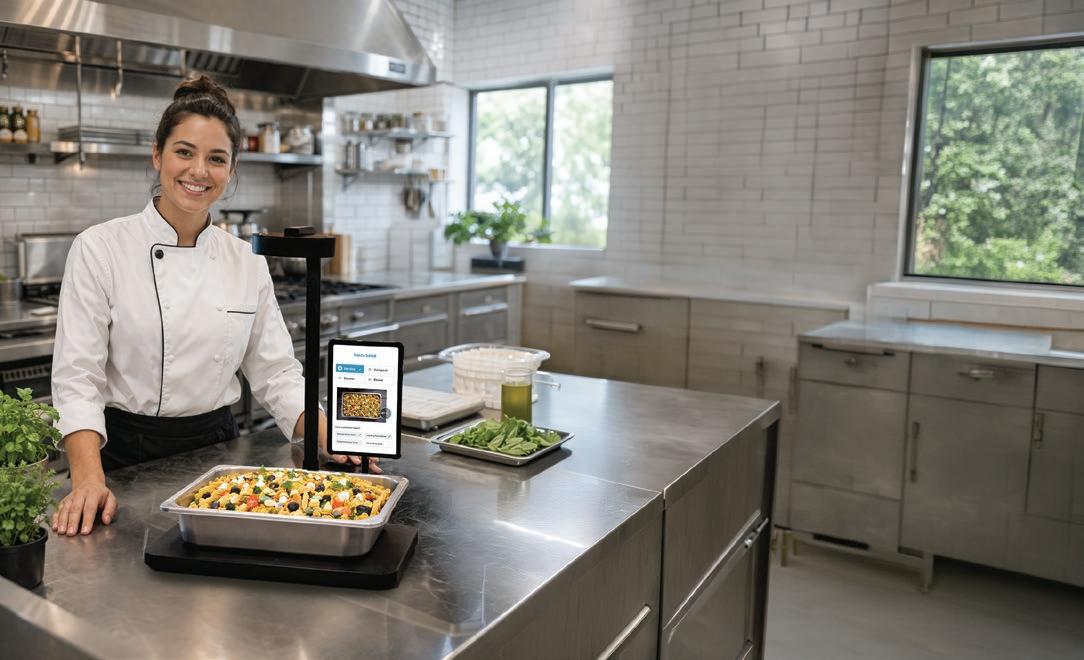
This data gap means decisions are based on instinct or historical averages, rather than on actual, current demand. By providing live feedback on which dishes are being consumed and how much food remains, kitchens can adjust production on the fly, reducing waste before it happens, rather than reacting after the fact, explains Dr. Fengmin Gong, CEO and co-founder of AI food operations
platform provider Metafoodx. Here, Gong offers insight into how commercial kitchens, restaurants and foodservice operators can reduce waste, optimize production and lower costs.
SB: What are most kitchens still missing when it comes to understanding food waste today?
FG: Most kitchens still don’t have real-time visibility into what’s actually being consumed. They know what they purchased, and sometimes what ended up in the trash, but they don’t see the operational gap in between. That’s where most overproduction happens.
The industry has spent years treating food waste as a disposal problem, when in reality it’s a data problem. Kitchens are still relying on instinct, static spreadsheets, or historical av-

Dr. Fengmin Gong
erages to make production decisions in highly dynamic environments. Without real-time, item-level consumption data, teams are forced to overproduce just to avoid running out of food. What’s missing is the ‘ground-truth layer’ of operations: understanding exactly what dishes are popular, how demand changes hour by hour and how much food is actually left in service containers before another batch is prepared. Once operators can see that clearly, they can prevent waste before it happens instead of measuring it afterward.
SB: In high-volume environments like buffets or dining halls, where does visibility typically break down?
FG: Visibility usually breaks down during live service. Once food leaves the kitchen and hits the buffet line or serving station, most operators lose accurate insight into what’s happening in real time. Kitchen teams often don’t know how much food is actually left in a pan, which dishes are moving quickly or which items are consistently untouched until after service is over. By then, the waste has already happened. Operators have long been aware that the actual menu lineup affects how people consume each item, they simply cannot keep accurate track of it without effective tools. That disconnect becomes especially expensive in high-volume environments because operators are making dozens of production decisions per shift. If there’s no live feedback loop between consumption and production, the default behavior is always to cook more ‘just in case.’
What’s interesting is that the biggest overproduced items are often everyday staples, not luxury foods. Across the millions of pounds of food we’ve tracked, some of the most wasted items include scrambled eggs, rice, beans, potatoes, salad bar ingredients and grilled proteins. These are foods kitchens prepare in large quantities because they’re considered safe choices operationally, but without visibility into actual demand, small forecasting errors scale very quickly.
SB: What does your system capture that manual tracking can’t?
FG: By simply laying a food container on our scanner for less than two seconds, it captures the food item, identifies what it is, calculates the net food weight, tracks food temperature and logs the exact time and location automatically. What makes the system different is that it captures operational data passively and consistently without interrupting kitchen workflows. Manual tracking usually depends on staff estimating leftovers visually, writing things down on paper, or weighing containers separately. That process is time-consuming, inconsistent, and difficult to scale across a busy operation. In a short two years of deployment, we’ve automatically tracked more than 30,000 menu items and processed over 1 million touchless scans. The key is that we’re not just measuring waste. We’re measuring the relationship between production and
The industry has spent years treating food waste as a disposal problem, when in reality it’s a data problem.
— FENGMIN GONG, CEO AND CO-FOUNDER, METAFOODX
actual consumption continuously throughout service. Our data is distilled into operation intelligence for adjusting menu lineup and production per menu to realize direct savings.
SB: Across the millions of pounds of food you’ve tracked, what patterns or surprises stand out?
FG: A major insight is that overproduction patterns are incredibly specific. Demand changes by day of week, weather, guest mix, event schedules and even serving time windows. Today’s forecasting models simply ignore many variables or just can’t adapt fast enough.
We’ve now tracked more than 4.4 million pounds of food consumption data, and what it shows very clearly is that kitchens don’t have a labor problem or a skill problem. They have a visibility problem. Once teams can see accurate operational data in real time, decision-making improves very quickly.
SB: Where do operators see the fastest return on investment?
FG: The fastest ROI usually comes from reducing overproduction immediately. Once kitchens can see which items are consistently left over and by how much, they can start adjusting batch sizes and prep schedules almost right away. Menu lineup can be adjusted to improve nutritional value and minimize waste as well. We’ve seen operators reduce overproduction by up to 90%, with many organizations achieving ROI within months through food cost reduction alone. In many large-scale operations, that translates into six-figure annual savings.
The impact goes beyond just reducing food waste. What we’re seeing is that kitchens are gaining better control over production, reducing unnecessary prep, and spending less time on manual tracking. At the same time, organizations are able to better understand the environmental impact tied to their operations.
That’s a big reason why we built the Metafoodx Sustainability Report. It gives teams a clearer way to track overproduction, CO₂e emissions, projected annual impact, and sustainability equivalents like water conserved or vehicle miles avoided. For many organizations, it helps connect what’s happening in the kitchen to larger ESG goals and sustainability reporting initiatives.The report turns kitchen activity into measurable environmental impact data that leadership teams can actually act on.
SB: What will separate operators who act now from those who don’t?
FG: The biggest shift will be moving from reactive waste tracking to predictive operational planning.
The operators who act now are going to build a massive data advantage. Every scan, every service period and every consumption pattern helps improve forecasting accuracy over time. Kitchens that start building those feedback loops today will become significantly more efficient operationally over the next few years. The operators who wait will continue managing increasingly complex foodservice environments with incomplete information. Ultimately, the kitchens that win will be the ones operating with real-time intelligence. The industry is moving toward continuous intelligence, and food waste reduction is just the lowest-hanging fruit. ●
About Metafoodx: Based in San Jose, Calif., Metafoodx is a patented AI-powered kitchen intelligence platform that tracks food production, consumption and temperature in real time to reduce waste, improve operations and support sustainabilitythrough data and automation.The company has received multiple honors, including the 2025 FoodTech 500 finalist, 2025 Kitchen Innovations Award, 2025 AI forGood Award, 2025 Next BigThings in Tech Award and recognition from Food &Beverage Magazine and the CityofSanJosé.

Restaurant brands are finding new ways to use conversational AI to drive sales and loyalty.
By Janet Forgrieve
Two years ago, AI’s role in voice ordering at the drive-thru and on the phone was in its infancy and just starting to make a splash in the food world. Quickserves and fast-casual chains and their tech vendor partners were beginning to educate customers on the technology while at the same time continuing to improve its performance with plenty of human backup.
Flash forward to today, and voice AI has become one of the most widely adopted and rapidly evolving technologies in the restaurant
industry, moving from experimental pilot to operational standard at thousands of locations across the country.
The shift reflects both improved technology and changed expectations. As the AI has gotten better – more accurate, more conversational and better at handling customizations and edge cases – customer resistance has largely faded. What’s emerging now is a second wave of development: voice AI that doesn’t just take orders, but personalizes them, drives revenue and connects seamlessly across every channel a guest might use.
Major players in restaurant voice AI, such as SoundHound, ConverseNow and Presto, have each been growing aggressively through acquisitions and strategic partnerships, racing to expand capabilities as demand accelerates.
ConverseNow recently partnered with Deliverect, integrating its voice ordering technology into Deliverect’s unified order management ecosystem.
“Together, we’re helping brands increase revenue, optimize labor and adopt AI in a practical, scalable way,” said ConverseNow
CEO Vinay Shukla in a release.
Also this year, Presto expanded its partnership with Dairy Queen to expand voice ordering to more DQ drive-thrus in the US and Canada.
Along with the wider acceptance and demand for AI voice technology comes greater competition and the need to keep innovating.
SoundHound has been on a roll since 2024, expanding its tech capabilities through at least four acquisitions and growing its presence from about 9,000 restaurants to more than 16,000 today, with big-name chains including White Castle and Jersey Mike’s. The company’s service has been deployed across several continents in a number of languages, and while it’s still primarily deployed for call-in and drive-thru orders, it’s also increasingly available on any consumer-facing device, including a brand’s app and kiosks.
“I think there are more players who ultimately are leaning in to use LLMs, and I would argue that has leveled the playing field to a degree,” said Ben Bellettini, the company’s senior vice president of sales for restaurants.
As the technology matures, operators are discovering that voice AI’s value extends well beyond labor efficiency. The same systems
that handle ordering can analyze guest data in real time to serve up personalized upsell suggestions, targeted offers and dynamic pricing – deals designed to bring more customers in during slow dayparts.
“Voice truly is the new interface that consumers want to use to most conveniently interact with brands they love,” Bellettini said.
SoundHound is pushing that idea further. From its early days, SoundHound has worked on technology to support original equipment manufacturers, especially in auto and television manufacturing. Later, it added the restaurant ordering services, and new innovations coming out later this year will tie that all together. The company is working with those manufacturers on software updates that will allow voice ordering from their car or couch – connecting the drive-thru experience with the living room.
It’s a move that takes voice AI beyond being a point solution, and evolves it into an ambient layer that’s woven into wherever guests already are.
What operators should watch Voice AI is no longer an emerging technology in restaurant operations – it’s an available one, with a growing track record and an expanding range of applications. For operators evaluating where to start, the drive-thru and phone ordering channels remain the most
Along with the wider acceptance and demand for AI voice technology comes greater competition and the need to keep innovating.
mature and lowest-friction entry points.
The more interesting strategic question is what comes next: how voice interfaces connect with loyalty programs, personalization engines and ordering platforms to create a more unified guest experience across every touchpoint. That integration work is already underway at the leading vendors, and the operators who get there first will have a meaningful advantage in both efficiency, guest retention and revenue growth. ●
Voice AI’s most visible impact is on the customer side of the counter. But some operators are now exploring how similar technology can support the employees behind it. While AI and automation are designed to drive efficiency and improve service without eliminating jobs, the broader goal is to help restaurants cope with chronic labor shortages and free up staff for higher-touch work – the moments that require warmth, judgment and genuine hospitality that no AI system replicates well. For operators navigating tight labor markets and persistent turnover, that reframing matters. Voice AI handling routine orders at the drive-thru or on the phone is one less constraint on a team that’s already stretched.
That thinking is also influencing how some operators are deploying AI on the employee side of the drive-thru window, not just the customer-facing one.
In February, Burger King began testing “Patty,” an AI chatbot powered by OpenAI that communicates with employees through
their headsets. The system has rolled out across 500 Burger King units, monitoring customer interactions for service indicators – tracking language cues like “please” and “thank you” to help managers identify patterns in how guests are being treated. From the moment a customer arrives at the window, Patty tracks the interaction and provides managers and employees with real-time feedback on service quality. The bot is also designed to notify managers when menu items run out and give employees quick access to ingredient information. Burger King expects to roll out Patty nationwide as part of its broader BK Assistant platform.
It’s an early indication of where AI’s many roles in restaurant operations may be heading – not just automating transactions, but helping teams deliver more consistent, higher-quality hospitality at scale. For operators, the key question will be how to introduce these tools in a way that supports staff rather than surveils them, and builds trust rather than eroding it. ●

As restaurants adopt AI to streamline staffing, training and operations, leaders face a new challenge: preserving culture, trust and guest connection.
By Lindsey Feth
AI may operate quietly behind the scenes, but its impact on restaurant labor, training and culture is already beginning to reshape how kitchens function – and how teams work together. As operators continue to navigate labor shortages, rising costs and employee turnover, many are turning to AI to automate repetitive administrative work, improve staffing decisions and streamline onboarding.
According to the National Restaurant Association’s recent Hiring & Staffing: How Onboarding, Managers & Technology Drive Restaurant ROI report, restaurant managers spend substantial time on scheduling, hiring coordination and onboarding — areas increasingly being supported by AI-powered systems.
As of February 2026, 26% of restaurant operators reported using AI-related tools, according to the National Restaurant Association’s State of the Restaurant Industry 2026 report.
“We’ve seen these tools dramatically accelerate the hiring process, reducing understaffing and freeing managers to focus on what they were hired to do – running their restaurants,” said Chad Moutray, chief economist for the National Restaurant Association. For operators, the appeal is increasingly practical rather than experimental.
“In general, I am super excited over AI and its applications,” said Judy Joo, Korean-American chef, restaurateur and television personality. “When I look at an AI tool, I’m asking: Does it solve a real bottleneck, eliminate time-consuming tasks or improve efficiency? What happens when it’s wrong, and does it give my team back time with the guest?”
Training has long been one of the restaurant industry’s most persistent operational challenges. High turnover, limited manager bandwidth and compressed onboarding timelines often force operators into inconsistent training practices that vary significantly by location and shift.
The National Restaurant Association’s staffing research found that strong onboarding and manager support directly influence retention and employee engagement, particularly among hourly workers. Yet many operators continue to struggle with maintaining consistency across locations while balancing labor pressures.
“One of the biggest gaps I’ve seen in
traditional training is that it often prioritizes repetition over understanding,” said Adrianne Calvo, award-winning Miami-based restaurateur, best-selling cookbook author, Emmy-nominated YouTube show host, podcaster and founder of Chef Adrianne’s Vineyard Restaurant and Bar. “We train people on what to do, but not always why it matters. In a high-performance restaurant, that distinction is everything because true excellence comes from instinct, not memorization.”
AI-powered training systems are increasingly being positioned as a solution to that inconsistency. Many platforms can adapt training modules to individual learning speeds, identify knowledge gaps in real time and deliver scenario-based coaching designed to reinforce decision-making under pressure.
Today’s AI-driven training platforms can:
■ Adapt to individual learning speeds and styles
■ Identify skill gaps in real time
■ Deliver interactive modules, quizzes and simulations
■ Provide virtual coaching through chatbots
■ Track performance across locations for consistency
For multi-unit operators, this consistency is especially critical. AI can ensure that a new hire in one location is trained to the same standard as another across the country, reducing variability in both food quality and guest experience.
“AI has the potential to bridge that gap beautifully,” Calvo explained. “It can create dynamic, adaptive training systems that respond to how someone learns and reinforce knowledge in real time, and even simulate high-pressure scenarios before someone ever steps onto the floor. That’s powerful.”
Industry data supports the growing role of AI in training. The Hospitality Training 360 Report 2025 found that 72% of restaurant learning and development professionals say AI has improved work quality, even as the time spent on ongoing training for hourly employees continues to shrink.
Still, Calvo and Joo both cautioned against overreliance.
“What AI can’t teach is the feel of the room, the polite, friendly customer interaction that’s professional and not invasive, elegant conflict resolution and emotional intelligence – when to
approach a table and when to disappear. That still takes a mentor and experience,” Joo said.
Beyond onboarding, labor scheduling has emerged as another major area where AI is reshaping operations.
Scheduling remains one of the industry’s most time-intensive management functions, requiring operators to balance labor budgets, employee preferences, compliance requirements and fluctuating customer demand.
Done manually, it’s time-consuming and usually vague. Schedulers find themselves buried in multiple spreadsheets that rely on intuition and best guesses. AI changes that.
Staffing needs can be AI-generated with exceptional accuracy by analyzing various factors such as past sales performance, customer volume, weather conditions and regional events.
This enables operators to:
■ Avoid understaffing during peak hours
■ Reduce unnecessary labor during slow periods
■ Minimize overtime costs
■ Distribute shifts more fairly
The operational impact extends beyond labor cost savings alone.
Gallup’s ongoing meta-analysis of workplace culture and business performance has surveyed 64 million employees over 25 years, highlighting the impact of management on employee engagement. The research consistently finds that teams with superior management not only achieve higher engagement but also deliver stronger business outcomes, such as 23% higher profitability, reduced absenteeism, lower turnover and increased customer satisfaction.
For restaurants, where turnover remains one of the industry’s most expensive challenges, reducing manager administrative burden can have a measurable impact on retention and employee engagement.
Joo said the distinction between earlier restaurant technology waves and AI is that AI increasingly performs operational work itself.
“I’ve lived through a few ‘this changes everything’ moments – OpenTable, Toast, delivery apps, ghost kitchens,” Joo said. “They were
real, but they mostly digitized transactions that were already happening. AI is the first wave I’ve seen that can actually do work: write a prep list, draft a schedule, flag a cost spike, model a business forecast. That’s an extra pair of hands in an industry where labor has been the hardest constraint for a decade.”
As AI adoption accelerates, operators are also confronting growing questions around employee trust, transparency and workplace culture.
For Calvo, building that trust starts with clear, proactive communication.
“If your team thinks AI is there to replace them, you’ve already lost them,” she said. “But
if they understand it’s there to support them… you create buy-in.”
Joo emphasized that the way AI is introduced can shape how it’s ultimately received by staff, and that involving employees early in the process can help reduce skepticism and improve adoption.
“The conversation has to start differently: ‘We’re doing this to eliminate the parts of your shift that take up too much time’...the menial but necessary tasks like paperwork, repeated inventory counts, equipment checks and scheduling,” she said. “Then bring staff into that process. Let them tell you what’s wearing them down; they’ll know. When that happens, retention should improve, because the job becomes more about what they actually love: hospitality.”
In addition to honesty and inclusion,

Staff training
Before AI:
Training is often rushed and inconsistent, shaped by whoever is available to lead it. New hires are expected to adapt quickly in high-pressure environments, which can lead to early mistakes and unexpected exits.

Scheduling and the burnout that follows
Before AI:
Scheduling is a constant balancing act, often managed through spreadsheets and vague intuition. The result is familiar: overstaffed slow shifts, understaffed rushes and employees stretched thin by unpredictable hours.

Hospitality and culture
Before AI:
Managers and staff are often pulled into administrative tasks and operational decision-making, leaving less time for meaningful guest interaction. The human element of hospitality can be diluted as teams focus on meeting day-to-day demands.
Gartner encourages organizations to take a flexible, case-by-case approach to AI ethics. Rather than applying rigid rules, companies are advised to monitor systems for fairness, transparency and bias continuously. Gartner also points to the importance of broader industry collaboration in shaping standardized ethical frameworks, efforts that will be key to reinforcing accountability and maintaining trust as AI expands.
As AI takes on more operational decisions, restaurant leaders must be intentional about what remains human.
“A great restaurant leader knows what not to automate,” Calvo stated. “The winners will use AI for efficiency but still trust their instinct, palate and connection to the guest. Hospitality isn’t a transaction – it’s a feeling, and leaders protect that.” ●
After AI:
AI-powered training platforms introduce structure and personalization. Interactive modules, real-time feedback and adaptive learning paths allow employees to build confidence faster, while operators gain visibility into performance and skill gaps across locations.
Takeaway:
Use AI to standardize training but keep human mentorship in place. Bring digital onboarding and in-person coaching to the table to reinforce culture and connection.
After AI:
AI forecasting tools analyze historical sales, traffic patterns, weather and local events to predict staffing needs with far greater accuracy. Schedules become more balanced, labor costs are more controlled and workloads are more sustainable.
Takeaway:
Use AI to make informed decisions, but leave room for flexibility, empathy and reallife context.
After AI:
As AI takes on more operational decisions, it creates space for teams to refocus on what matters most: people. Managers can spend more time on the floor, and staff can prioritize genuine guest engagement rather than being weighed down by behind-the-scenes tasks.
Takeaway:
Be intentional about what stays human. Use AI to remove operational friction, but double down on the personal connections that define great hospitality.

Better data — and knowing how to use it.

Product and Menu Innovation: How Data Is Shaping the Next Big Hits in Food
ASmartPanel presented bySmartBrief | On Demand Now
From prepared foods and private label to menu development and emerging flavor trends, this on-demand webinar explores how foodservice and retail brands are using data to take the guesswork out of innovation.


Reach out to Kenneth Clemmer, kenneth.clemmer@futurenet.com about opportunities to be featured in future webinars.
■ How leading brands use data to inform product and menu innovation
■ The role of consumer insights and trend forecasting in identifying what’s next
Presented by: In this session, you’ll learn:
■ How to turn data into actionable strategies across foodservice and retail

The Culinary Institute of America is testing how AI can support menu innovation and culinary education without replacing the instincts, judgment and creativity that define great chefs.
By Amy Sung
For 80 years, the Culinary Institute of America has trained the chefs, restaurateurs and food professionals who define American cuisine. That legacy was on full display at the 2026 Menus of Change, where CIA President Michiel Bakker’s keynote discussed how AI can be a thought partner, one that can amplify and accelerate ideas without diminishing the irreplaceable role of the chef in the art and craft of food, beverage and hospitality.
It’s a framing that shows that the CIA isn’t resisting AI — it’s navigating it carefully, asking how to prepare students for a future in which the technology is part of the creative process without letting it replace the instincts that make great cooking possible.
To explore that question in a practical way, the CIA is piloting MattsonIQ, an AI-powered platform developed by Mattson, a food and beverage innovation consultancy. The tool is designed to support product development
and menu innovation by surfacing trend data, identifying flavor patterns and helping R&D teams move through early ideation more efficiently.
The CIA’s pilot is intentionally small – CIA Provost Jeroen Greven, with Vice President of Academic Affairs Dr. Michael Sperling, leads the Mattson AI Lab @ the Culinary Institute of America, a focused group of faculty, students and alumni testing how the tool fits within a culinary education context. The goal isn’t to automate creativity; it’s to understand where AI genuinely strengthens learning and development, and where the irreplaceable work of a trained chef still needs to lead.
We spoke to Greven about what the pilot is teaching them, how they’re thinking about the balance between AI assistance and culinary instinct and what they believe the technology can — and cannot — do for the next generation of food professionals.
SB: What made now the right moment for the Culinary Institute of America to introduce a platform like MattsonIQ to students and faculty?
Greven: At CIA, we’re seeing signals the industry is shifting toward faster, more data-informed decision making, particularly in product development and menu innovation. Our responsibility is to prepare students for that environment without overcorrecting. That’s why we’re treating this as a focused pilot with a small group of faculty, students, and alumni input. The goal is to understand where a tool like MattsonIQ genuinely strengthens learning in our culinary community.
SB: How do you envision culinary students and professional chefs using AI as a creative partner rather than relying on it to generate ideas for them?
Greven: The way we frame it with our students and faculty is simple: AI should expand


and challenge your thinking, not replace it. It can help generate options, suggest combinations, or push you out of a creative rut. But the chef still defines what belongs on the plate. At CIA, we expect students to bring their own judgment, technique, and palate to the final outcome.
SB: How could tools like MattsonIQ change the way chefs approach research and development when creating new menu items or products?
Greven: In many kitchens and product teams, early R&D is time intensive and, often, repetitive. Tools like this can shorten that front end by organizing insights and surfacing patterns more quickly. For CIA students and industry partners, that means less time searching and more time testing, refining, and improving what actually ends up being served.
SB: How do you balance the speed of AI-generated insights with the intuition, experience and cultural context that chefs bring to recipe development?
Greven: Speed is useful, but it’s not the metric we optimize for. In our classrooms and kitchens, AI outputs are treated as one input among many. Students are still expected to rely on their training, their cultural awareness, their technical skills, and, ultimately, their ability to taste and adjust. That balance is essential if we want to graduate chefs who can think independently.
SB: How might AI help chefs identify emerging flavor or ingredient trends earlier than traditional methods like travel, research or customer feedback?
Greven: It can bring together signals from different sources and make patterns visible sooner than traditional methods. That has value. At the same time, our alumni will tell you that some of the most important insights still come from being in kitchens, traveling, and engaging directly with food cultures. AI can highlight trends, but it does not explain them or make them come to life.
SB: Could AI tools help chefs analyze menus and identify opportunities for innovation — such as underserved flavor profiles, dietary needs or regional preferences?
Greven: There’s real potential there. It can point to gaps in areas like dietary needs, ingredient diversity, or underrepresented cuisines. For restaurant groups and CIA graduates working in development roles, that can be a useful starting point. The challenge is turning those observations into something that feels intentional and well executed.
SB: How could AI tools help chefs discover ingredients or culinary techniques from other regions while still respecting cultural authenticity?
Greven: Exposure is where AI can help. It can introduce chefs and students to ingredients or techniques they might not encounter otherwise. But authenticity requires deeper understanding. At CIA, we emphasize that cultural context, technique, and respect for origin cannot be outsourced to a tool. That has to be learned and practiced.
SB: How do you plan to teach students when to rely on AI — and when to trust their own instincts and culinary training?
Greven: We don’t separate the two completely. Instead, we ask students to show their process. How did they use the tool, what did they accept or reject, and why. Over time, they develop a sense of when AI is helpful and when it adds noise. That judgment is part of their training, just like knife skills or flavor development.
SB: What are the biggest risks of chefs relying too heavily on AI tools during recipe development or menu planning?
Greven: If overused, it can lead to overly predictable outcomes and a weaker understanding of fundamentals. That’s a real concern for us. CIA has always been about developing craft, discipline and a strong point of view. If chefs rely too heavily on generated ideas, they risk losing those differentiators.
SB: How could AI platforms help restaurant groups prototype menu ideas faster and adapt them for different markets or customer preferences?
Greven: It can accelerate early concept development by generating variations quickly and allowing teams to test ideas more efficiently. For alumni working in multi-unit operations, that can reduce time to market. That said, success still depends on execution, consistency and how well a concept resonates with guests.
SB: Looking ahead five or ten years, how do you think AI will reshape the way chefs discover ingredients, develop recipes and innovate in the kitchen?
Greven: It will likely become part of the standard toolkit, particularly in larger organizations and R&D environments. It will help chefs explore more options and move faster at the early stages. But the fundamentals will not change. At CIA, we believe taste, technique and cultural understanding will continue to define the best chefs. Technology will support that, not replace it. ●
As culinary technology grows increasingly sophisticated, the human hands guiding it remain vital to food innovation.
By Janet Forgrieve
From stand mixers and gas stoves to microwaves and sous vide cookers, tech innovation has always had a place in the kitchen, and the same is proving true with AI. While increased efficiency can be a byproduct of introducing cutting-edge kitchen technology, the mission is always to perfect the food and improve the dining experience, a goal that requires humans as the main ingredient. With every new innovation, tech tools work in tandem with the human culinary talent. Machinery, software and even automation can’t stand alone in a field that depends on delighting people’s palates and creating extraordinary dining experiences. Layering in flavors to build complex dishes and tasting while you go is a distinctly human art and practice that can’t be completely replicated by technology.
That said, the combination of human culinary innovation and cutting-edge technology is playing out in new and diverse ways in restaurants, CPG companies and tech startups across the globe.
Woohoo, a new eatery in downtown Dubai, is promoting its use of AI to create a “dining experience [that] uses data and creativity to shape flavors, textures, and balance. In an artificial intelligence restaurant, chefs and systems work together, not to replace skill, but to refine it.”
On its website, Woohoo explains how AI works with the restaurant’s chefs to gain a greater understanding of how ingredients meld to create balanced flavors, “how textures feel, and how each element complements the next.”
It’s one of the latest examples of the ongoing evolution of kitchen technology.
More than a decade ago, IBM was heavily promoting “Chef Watson,” a cognitive computing system that was fed a steady diet of recipes and food data for three years and ultimately collaborated with human chefs to create a cookbook with quirky recipes like a beef burrito accented with chocolate and edamame.
“Watson amplifies human creativity,” IBM engineer Steve Abrams told the Washington Post in 2015. “It’s a collaboration that allows Watson and the chef to discover more than
Machinery, software and even automation can’t stand alone in a field that depends on delighting people’s palates and creating extraordinary dining experiences.

either of them could independently.”
The development of large language models and AI has accelerated in the past few years, fueling transformation across just about every area of business and life, including the kitchen. Still, the collaboration between people and technology remains key when it comes to food.
While companies like Nosh Robotics, which earlier this year at CES touted its robotic “chef” that can prepare more than 500 recipes from ingredients loaded by humans, and other smart kitchen tech tools are growing increasingly sophisticated, pleasing human palates still requires human hands.
At Spokane, Wash.-based spice maker Spiceology, AI has a name – REMI. REMI, an acronym for “recipe experimentation and menu inspiration,” is an AI chatbot that’s trained on the company’s recipe database and shares suggestions for new and

delicious ways to use the brand’s signature spices. There’s also a second, behind-thescenes meaning to the name, says Chief Marketing Officer Eric Anderson – Remy was the name of the rat that sits hidden in the chef’s hat and guides his hand in the film “Ratatouille.”
Spiceology was created in 2013 by chef Pete Taylor and food blogger Heather Scholten, and, compared to older, more traditional spice companies, it often operates more like a tech startup, says Anderson. And, like a startup, the business model bets on customer involvement, feedback and testing to ensure ongoing improvement.
In addition to some basics like smoked paprika, peppercorns and oregano, Spiceology’s catalog of more than 300 products also features spice blends with quirky names like Maui Wowee Hawaiian Teriyaki Rub, Greek Freak Mediterranean Seasoning and Cowboy Crust Espresso Chile Rub.
REMI’s recipe suggestions include “buy” buttons next to the Spiceology spices
needed to make the dish, but selling more product isn’t REMI’s top mission, Anderson says. From the beginning, Spiceology has felt responsible for offering consumers an array of recipes and ideas for using its products to delight people with new dishes. The result – a roster of more than 900 recipes and counting that grew increasingly difficult for human employees to quickly sift through to help customers find the specific information they were seeking.
“No one in our organization could possibly know all the recipes and information,” Anderson says. “That’s where the idea for REMI came about.”
AI offers the ability to delve into those information troves and contextualize it in a way that chefs and home cooks can use to create something delicious.
REMI launched last year after a lengthy, thoughtful process that built on the company’s existing crowdsourcing practices. Spiceology’s Test Kitchen feature seeks customer feedback on proposed new products, making
users part of the process. Each time the company’s product developers create a new spice blend, users can “back” it by agreeing to buy it at the posted price. The product only becomes a reality if enough “backers” sign up to buy within a given time.
That practice, along with recipe sharing and other feedback mechanisms, is part of the brand’s DNA, and REMI builds on that.
Spiceology built REMI in-house using Pickaxe AI, a software-as-a-service tool, setting strict parameters. REMI can only explore the company’s proprietary databases; it can’t search the web. It can only share recipes that the company has tested and approved, both to ensure customer satisfaction and avoid the liability issues that can come with suggesting untried recipes. REMI also doesn’t share information on allergens, because the company doesn’t want to appear to be giving medical advice, Anderson says.
As it does with other customer interactions, Spiceology monitors REMI’s activity daily to keep a finger on the pulse of what customers are looking for and continually improve its performance.
Currently, REMI gets about 50 queries a day, Anderson says.
During the creation of REMI, the team addressed concerns that AI would take away the human element by ensuring the chatbot “operates within the strict structure of human-created knowledge,” Anderson says. “He has to work within certain content restrictions imposed upon him.”
It was also important to train REMI on the brand’s voice, which is playful, quirky, and empowering.
The team also assumed that REMI would have two main use cases: customers starting with a recipe concept or with the ingredients on hand in their kitchens, and people starting with a Spiceology blend and seeking ideas for using it.
More often than not, it’s the second group that’s exploring with REMI, Anderson said. “People want to start with the idea of the product and go from there; that’s been very interesting to us.”
Feedback from those customers has been overwhelmingly positive, he added. REMI serves a role that humans can’t easily replicate, helping customers make the most of the products they’re buying. ●
In foodservice, AI is accelerating insight generation — but the real competitive edge lies in knowing which signals are grounded in structured, industry-specific data and which are just noise.
By Raji Behniwal
In foodservice, the challenge has never been access to ideas. It’s knowing which ones will actually work.
Operators, manufacturers and suppliers are flooded with signals — social media trends, consumer preferences, emerging foods, flavors and ingredients, shifting dayparts. The hard part isn’t spotting what’s new. It’s determining
what will scale, what will stick, and what is worth investing in. Because in this industry, knowing what’s trending isn’t enough. Knowing what’s actually happening on menus, and whether it will scale, is what drives decisions.
That’s where AI has entered the conversation.
AI is accelerating how quickly teams can generate insights, compressing what once took weeks of research into seconds. But in foodservice, speed isn’t the advantage. Accuracy
is. And increasingly, the gap between the two is where many teams are getting into trouble.
The real risk: Confident answers, wrong inputs
AI adoption is moving quickly across the industry. Sales teams are using it to prepare for meetings. Innovation teams are using it to generate menu ideas. Insights teams are
asking questions that previously required significant research.
But many of these use cases rely on general-purpose AI tools trained on the open web. That creates a fundamental problem.
When AI pulls from sources like Reddit, Wikipedia and broad web content, it reflects what people are talking about, not what is actually happening on menus. In foodservice, that distinction matters. A trend gaining traction online is not the same as a trend that is operationally viable, scalable or relevant across segments.
The result is a growing number of teams making decisions based on outputs that sound credible but lack grounding in real food and beverage industry data.
AI doesn’t just amplify good insights. It amplifies whatever data it’s trained on, which can be sourced from everything from art projects to unrelated ads, and can result in inaccurate or irrelevant answers for foodservice applications, as well as lacking the specific expertise from expert analysis. And in foodservice, acting on the wrong signal doesn’t just waste time; it impacts menu performance, product development and revenue.
Not all industries have this problem to the same degree.
In foodservice, trends are fragmented, localized and highly contextual. What works in fast casual may not translate to fine dining. What resonates with Gen Z in urban markets may not scale nationally. Even ingredients behave differently depending on format, price point and operational constraints.
This makes foodservice one of the hardest industries to model with generalized data, because trends don’t behave uniformly, they scale unevenly across segments, geographies and formats.
Understanding what is actually happening requires more than broad signals. It requires structured, longitudinal data: menus tracked over time, consumer behavior measured consistently and trends analyzed within the context of how food is bought, prepared and sold. Without that foundation, AI is guessing.
The teams seeing real value from AI aren’t just adopting new tools. They’re being more disci-
plined about what those tools are built on. At a high level, the difference comes down to data, but not all data is interchangeable. The ability to track trends accurately depends on datasets that are consistently collected, structured and maintained over long periods of time. Building this kind of dataset is not a short-term effort; it requires years of granular filtering, standardized classification, continuous updates and a consistent methodology to ensure trends can be compared meaningfully over time. For example, food and beverage intelligence companies like Datassential have industry experts who know how to differentiate multiple cuisines or item types or nuanced keywords like “truffle” on menus, which can mean something very different when on potatoes than in a coffee drink. Or provide more accurate analysis for broad terms like categories (soup/seafood), adult beverages (bourbon, sparkling wine) and themes (nostalgic, spicy).
AI trained on unstructured, open-web content can generate ideas quickly, but it cannot reliably validate whether those ideas reflect real-world behavior. Without that level of structure, AI outputs may be directionally interesting, but they lack the consistency required to support high-confidence decisions. AI trained on structured, industry-specific datasets can.
That distinction is becoming increasingly important as AI moves from experimentation into decision-making.
For example, identifying an emerging ingredient is not the same as understanding whether it is gaining traction on menus, which segments are adopting it, how quickly it is growing, and whether it has the potential to scale nationally. Those are fundamentally different questions, and they require fundamentally different data.
The ability to track trends over time, across segments and geographies, is what turns signal into strategy. One example of this in practice is how emerging restaurant concepts are identified and tracked. Rather than relying on buzz alone, structured menu and performance data can reveal which brands are actually gaining traction and expanding across markets. Recent analyses of top emerging restaurant chains highlight how early signals translate into measurable growth, offering a clearer view of what is likely to scale versus what is simply generating attention.
AI as an accelerator, not a shortcut
The most effective teams are not treating AI as a replacement for research. They are using it to accelerate it.
AI can surface patterns faster, reduce manual work and make data more accessible across organizations. But faster access to information only creates value if the underlying information is reliable; it does not replace the need for judgment, context or high-quality inputs.
In practice, this means being clear about when speed is sufficient and when precision is required.
■ Drafting and brainstorming? General AI tools can be highly effective.
■ Validating trends, informing innovation or shaping go-to-market strategy? The underlying data matters significantly more.
As AI becomes more embedded in workflows, this distinction will separate teams that move faster from those that move smarter.
The competitive advantage isn’t AI — it’s knowing what to trust
AI is quickly becoming table stakes. Most teams will have access to similar tools. The advantage will not come from using AI; it will come from understanding its limitations. In foodservice, the most important question is no longer “Are we using AI?” It’s “What is this AI actually built on?”
■ Where does the data come from?
■ Is it structured and consistent?
■ Can the insight be traced and validated?
■ Is it grounded in how the foodservice industry actually operates or in how the internet talks about it?
Teams that can answer those questions and act on them will be better positioned to make decisions with confidence.
As AI becomes more widely adopted, access to tools will become commoditized. Access to high-quality, proprietary, industry-specific data will not.
In foodservice, being early is helpful. Being right is what drives revenue. ●
Raji Behniwal is the chief marketing officer at Datassential, a food and beverage intelligence platform providing guidance on trends, competitive benchmarking and sales intelligence.
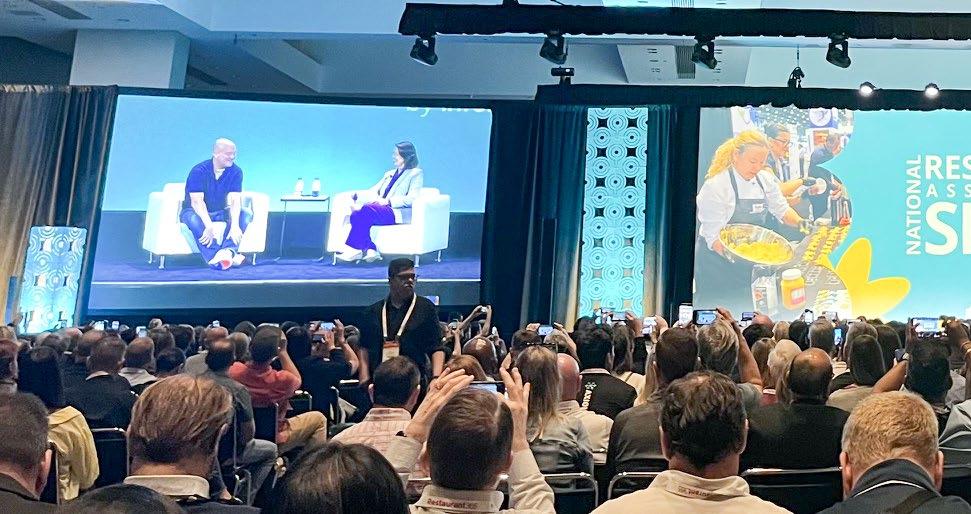
A note from the editor: The 2026 National Restaurant Association Show wrapped in Chicago just as this eBook was going to press, making it a fitting final word. We were there, and what we found in the educational sessions mirrors what you’ve read throughout these pages: An industry where the conversation has shifted from “should we?” to “how do we?” — and the answers are starting to come in.
This year’s show revealed an industry shifting from experimentation to execution, using technology to solve real business challenges without losing sight of hospitality.
By Amy Sung
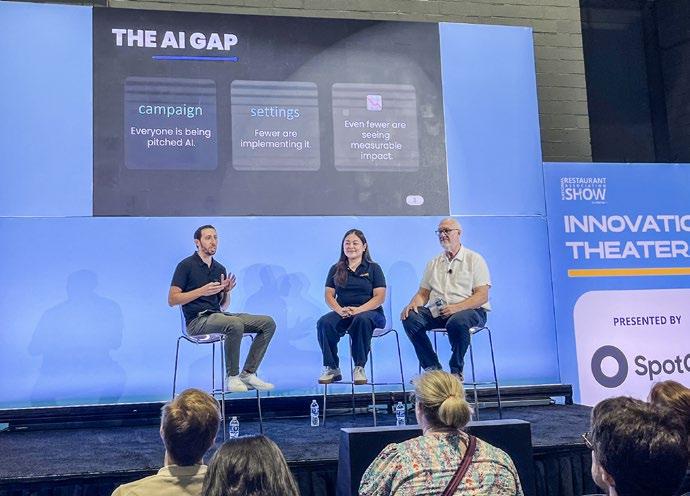
This year’s National Restaurant Association Show drew more than 55,000 foodservice professionals from 112 countries to Chicago’s McCormick Place for four days of innovation, conversation and a closer look at what technology actually means for the people running restaurants. If previous shows were defined by possibility, this year’s was defined by proof. Artificial intelligence remained a dominant theme, but the conversations surrounding it have evolved. The focus has shifted toward implementation: how to deploy it across large restaurant networks, integrate it into day-
to-day operations and generate measurable business results without compromising hospitality – all while confronting a difficult operating environment shaped by labor shortages, rising costs and increasingly selective consumers.
AI’s scaling problem
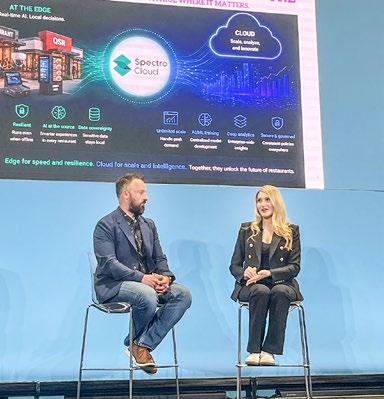
Rather than emphasizing futuristic concepts, the session “The rise of the agentic restaurant: From hype to reality” centered on a practical issue many operators are now facing: most restaurant and retail edge AI initiatives struggle to move beyond pilot programs.
According to Deborah Matteliano Simeoni, global head of restaurants and food tech at AWS, and Justin Swagler, global director of industries at Spectro Cloud, many brands continue treating each restaurant location as a separate environment instead of building standardized systems capable of supporting AI deployments across entire networks. The result is a fragmented infrastructure that becomes difficult to manage at scale.
“Why not build this kind of infrastructure into your new locations from the very beginning, so that you can start deploying these AI use cases at scale?” Matteliano Simeoni said, encouraging operators to think about edge

infrastructure earlier in their growth cycles rather than waiting until systems become difficult to standardize.
Yum Brands served as a case study during the discussion. Managing AI-enabled systems across more than 45,000 locations globally requires a centralized operational infrastructure that many restaurant companies are still struggling to build.
“If you don’t have a governance structure, you’re going to stumble on how you scale AI use cases across your entire network,” Swagler told attendees, adding that having that structure is critical to enable repeatable deployment processes.
The broader takeaway reflected a recurring theme throughout the show: Operators seeing the most traction with AI are typically those that already have strong operational foundations in place.
While the agentic restaurant session focused on infrastructure, the session “Data that leads: Turning restaurant signals into daily decisions,” featuring Black Rock Coffee Bar and Restaurant365, focused on execution at the operator level.
Jaclyn Nesemann, business intelligence senior manager of the 190-unit coffee
chain with headquarters in Scottsdale, Ariz., detailed the company’s transition away from reactive monthly financial reporting toward a weekly reporting cadence designed to help operators identify issues earlier.
Under the previous system, financial data often arrived weeks after operational problems had already developed, Nesemann said. By shifting toward weekly reporting and more consistent performance monitoring, the company was able to identify variances earlier and make adjustments faster.
The conversation focused less on the technology itself and more on how information is communicated and acted upon. Rather than just distributing reports, Nesemann emphasized simplifying the data and helping operators understand the operational drivers behind the numbers — why labor costs shifted, why food costs changed and what actions should follow.
“I’m not just telling them a number. I’m telling them a story,” Nesemann said. “There’s normally something, and there’s normally a reason, and if you’re on top of things, you can
kind of pull that out of people and help them understand that context.”
Marc Cohen, solutions architect at Restaurant365, agreed.
“For any of you who have done this, there’s sort of that order of operation,” he said. “I find, you start to distill the why and then they start asking better questions, then you know it’s working right, then they start answering the questions for themselves, then you know it’s really working.”
Emphasis was also placed on involving the right partners and people from the start to
ensure long-term success, whether you’re building the technology internally or bringing in a vendor.
“I think the important part here is that your team is part of this process, right?” Cohen said. “You’re not just managing from the top down, and I also think figuring out where to manage these levels of information is critical. Not everything can come from corporate. Some of it has to be managed at a store level, at a GM level, and they’re part of this weekly process, right? You’re getting feedback from them on what they feel is important and how they can move the needle – that feedback is super critical.”
Several sessions also highlighted how operators are using AI for smaller operational efficiencies rather than large-scale automation.
During the panel discussion “AI that works: Real operators, real wins,” restaurant operators described AI primarily as a support layer that helps surface issues more quickly inside existing workflows.
Khara Mangiduyos, co-founder and head of marketing and customer experience of Kalei’s Kitchenette in San Diego, described how a proactive AI alert flagging a questionable HR line item in her P&L saved her $2,000 within weeks – money she immediately reinvested in marketing.
Bruce Nelson, founder and CFO at Tempo Hospitality Group, described AI’s value as
identifying small inconsistencies across multiple P&L statements that might otherwise go unnoticed during manual review.
However, operational utility still requires oversight, and the value of human judgment cannot be replaced, the panel agreed.
“AI doesn’t innovate, it just imitates,” Nelson said.
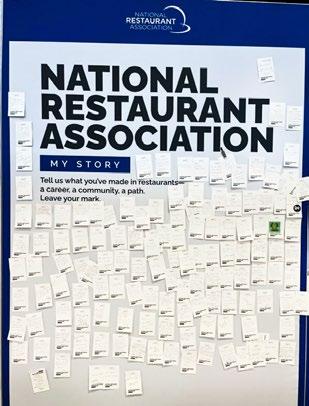
National Restaurant Association President and CEO Michelle Korsmo’s keynote returned to a theme that isn’t new, but carried more weight than a year ago: the restaurant industry’s greatest asset — and most pressing challenge — is its people.
With 15.7 million workers employed across the industry and the percentage of young workers in the US workforce projected to shrink further by 2034, according to Technomic, the labor pipeline is narrowing. Over one-third of operators cite staffing and skill shortages as their biggest barrier to adopting a meaningful data strategy.
Eight out of ten restaurant owners started in entry-level positions – the industry grows its own leaders, she said. The association’s focus going forward centers on investing in that pipeline deliberately: developing frontline managers, building digital literacy and cultivating cultures people want to stay in.
The keynote conversation with tennis champion and entrepreneur Andre Agas-
si extended those themes in unexpected ways. He reflected on building the right team, leading with vulnerability, understanding how each person learns differently and trusting the coaches who help you grow. Whether on the court or in the kitchen, the team reflects its leadership.
“Andre Agassi’s journey reflects so many of the qualities that define success in our industry — discipline, resilience and the importance of mentorship and championing the next generation,” Korsmo told SmartBrief ahead of the show. “I hope attendees walk away thinking about what they can do as leaders to have a positive impact on the people around them. Agassi’s experience underscores that finding happiness in your success isn’t always linear, and that the drive to keep striving to find your own definition of success is what ultimately allows you to make a positive impact on the people around you.”
What this year’s show ultimately revealed is that restaurant technology is growing up. The industry is becoming more disciplined, more skeptical and more focused on measurable operational outcomes.
The sessions showed us that those who will get the most out of technology aren’t the ones with the most data or the most AI tools. They’re the ones who do the harder work: building a trustworthy data foundation, involving their teams in the process and knowing exactly which story they were trying to tell.
“If you can care enough about the details in everything you do, I don’t think you’re going to recognize pressure moments as pressure moments,” Agassi said. “I think you’re going to recognize that you’re just more prepared to be the best of yourself, whatever that moment calls for.” ●

Did you know that SmartBrief has more than 7 million subscribers for its 250 newsletters — and over a dozen newsletters for food and beverage alone? Want to learn more about the foodservice or food retail industry? We have you covered.
We curate and edit ultra-niche news roundups for food and beverage industry associations such as the National Restaurant Association, Culinary Institute of America, American Culinary Federation, FMI — The Food Industry Association, School Nutrition Association, National Confectioners Association, Consumer Brands Association, Specialty Foods Association and many more.
Did you know that we also write articles on SmartBrief’s Food and Beverage website? We are selective about the topics we cover and experts who contribute. If you’d like to be a part of this elite group, reach out to us by putting EBOOK in the subject line. ●